Adios Spain, Ciao Italy

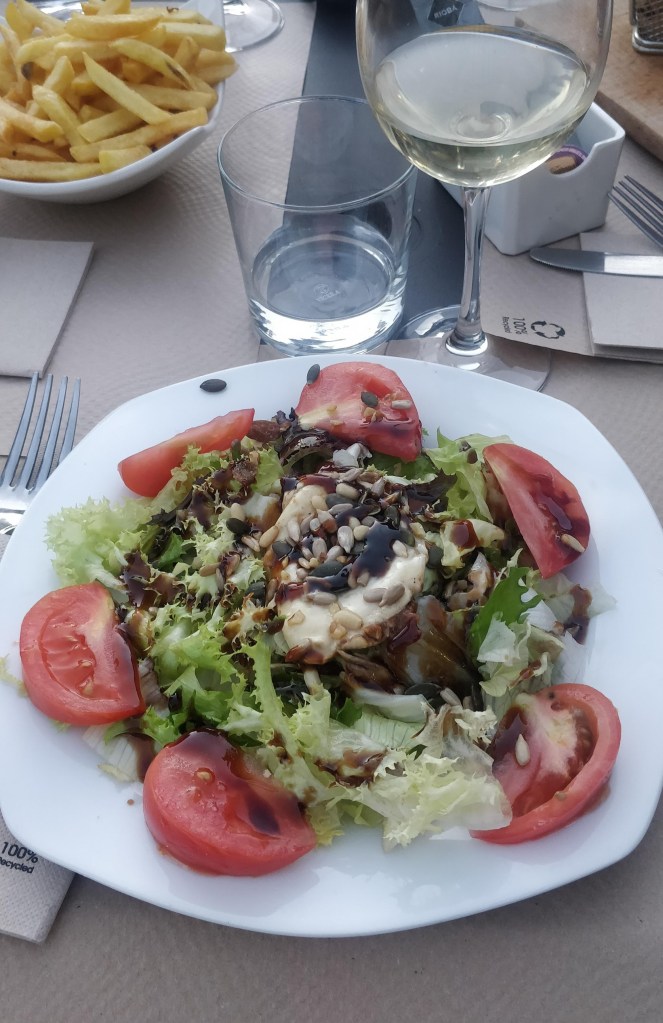
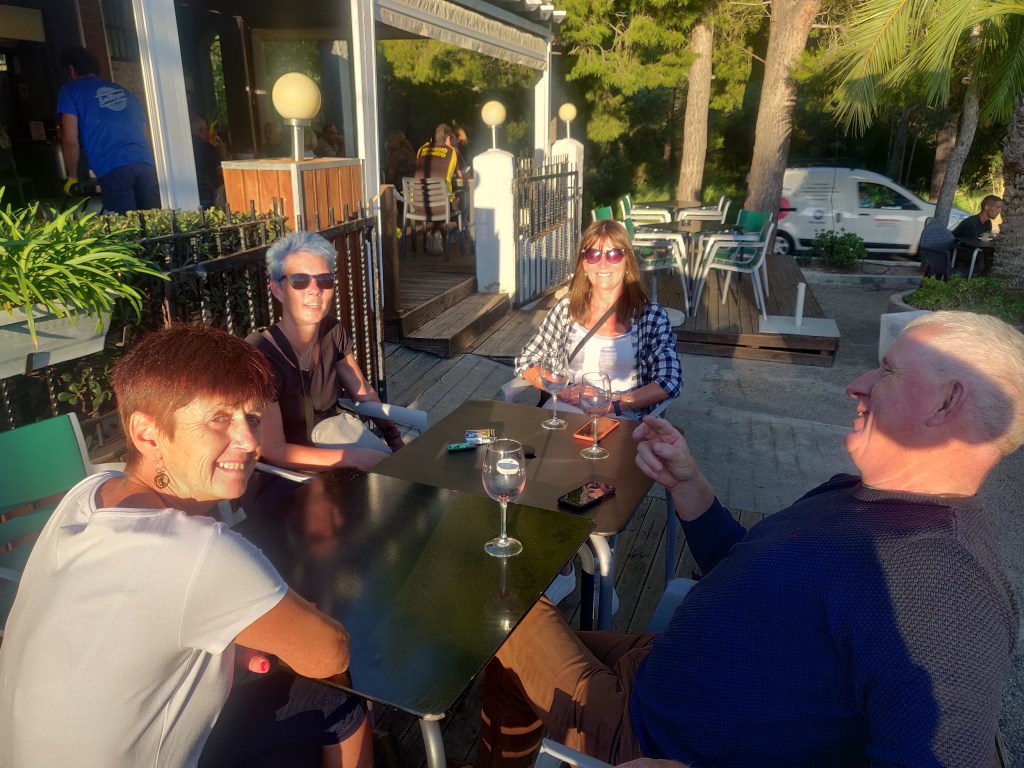
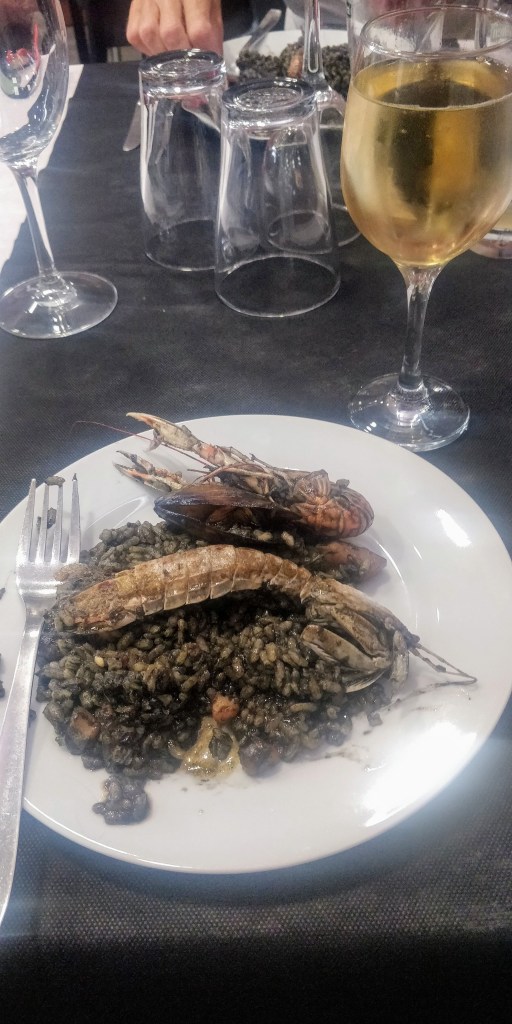
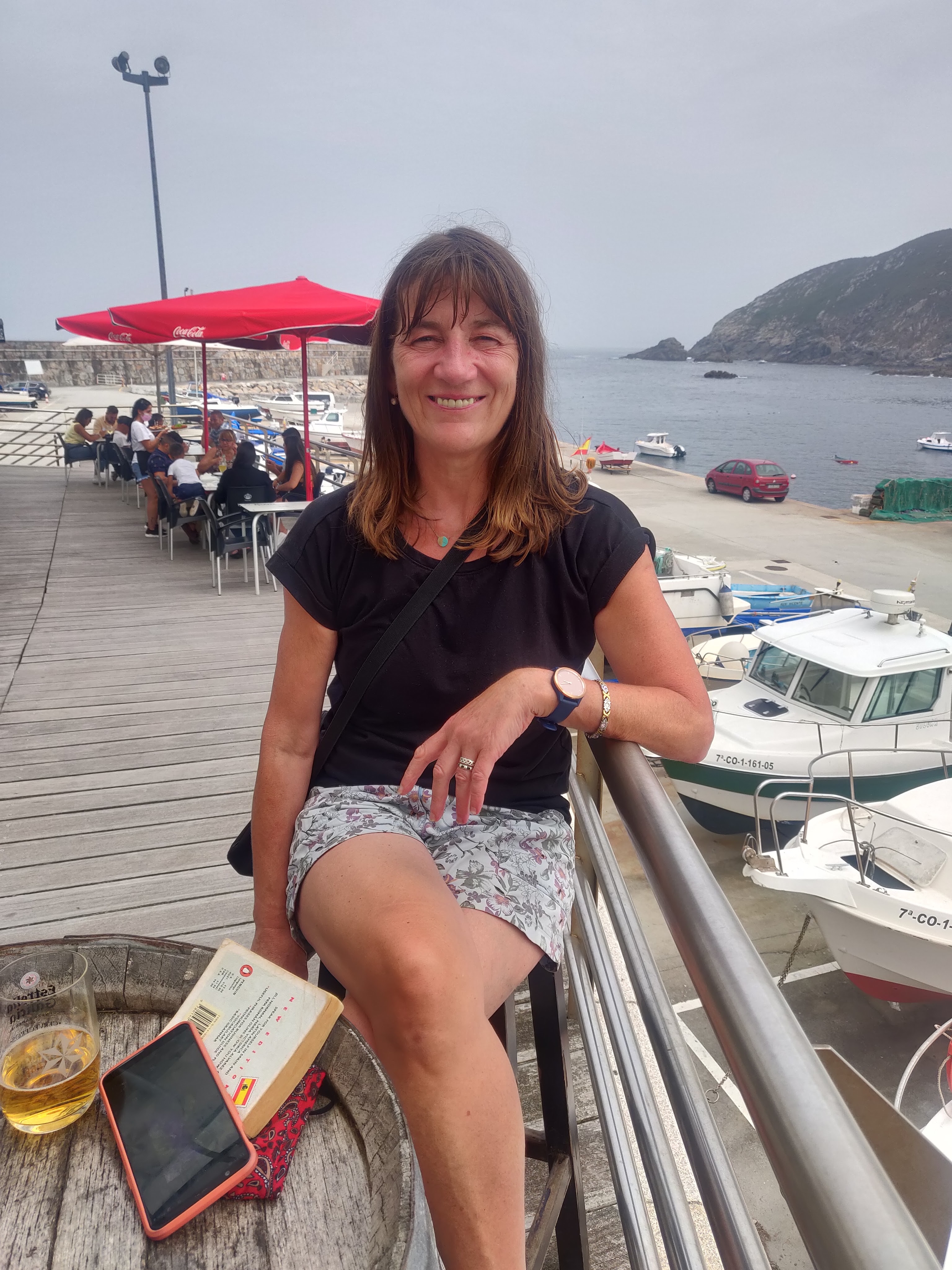
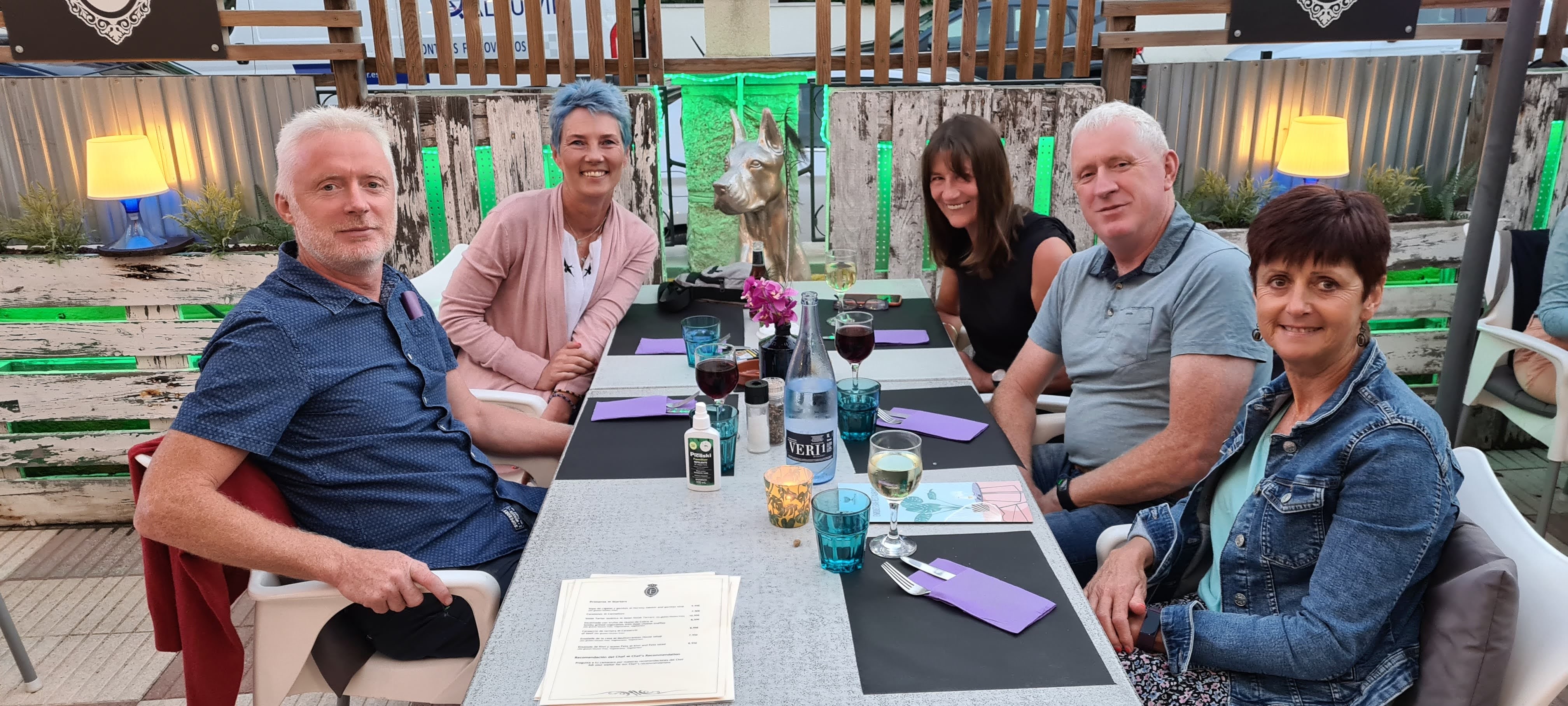
Last Meal out in Enrique’s, Miami Platja, Spain – fantastico!!

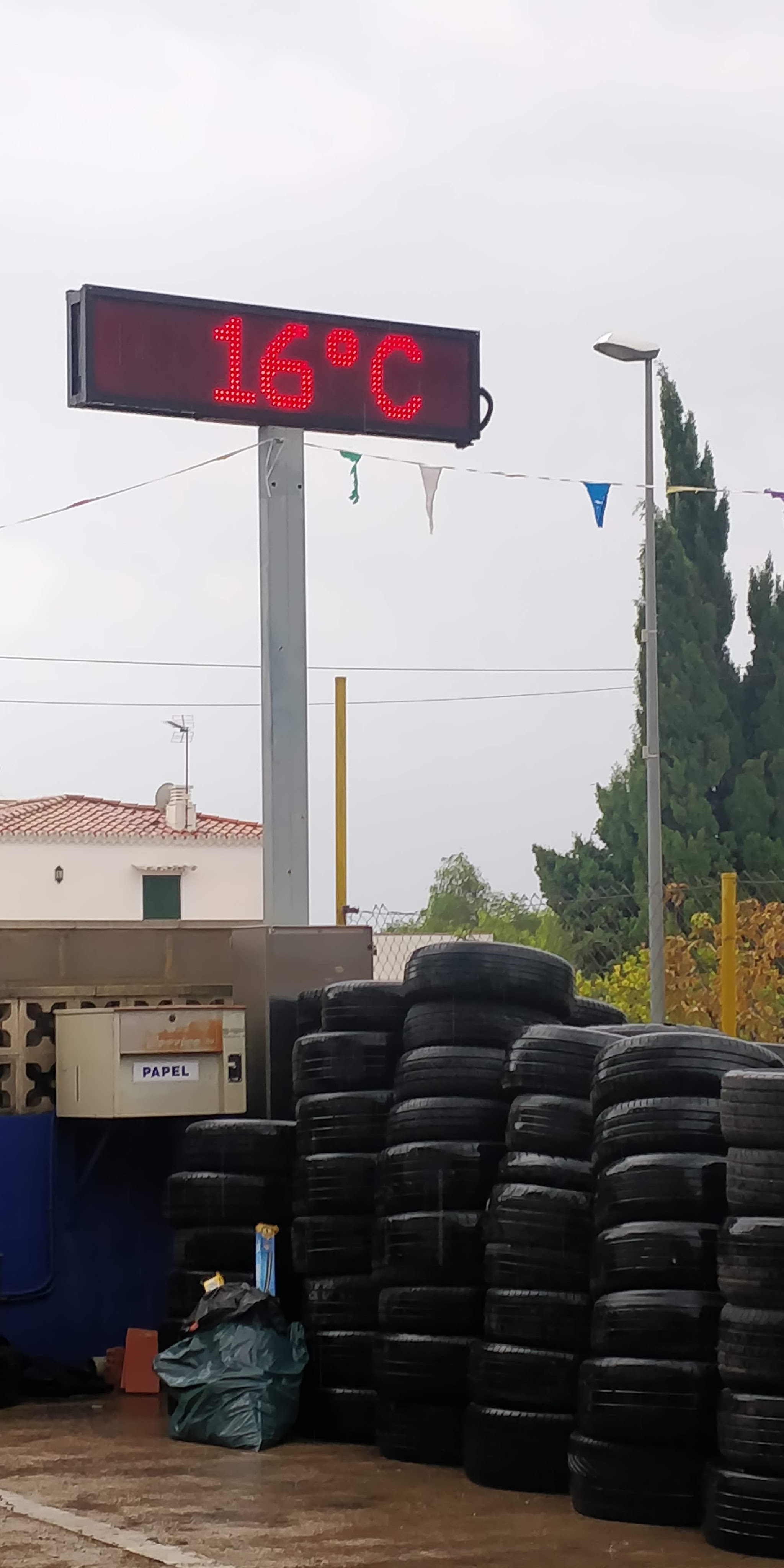
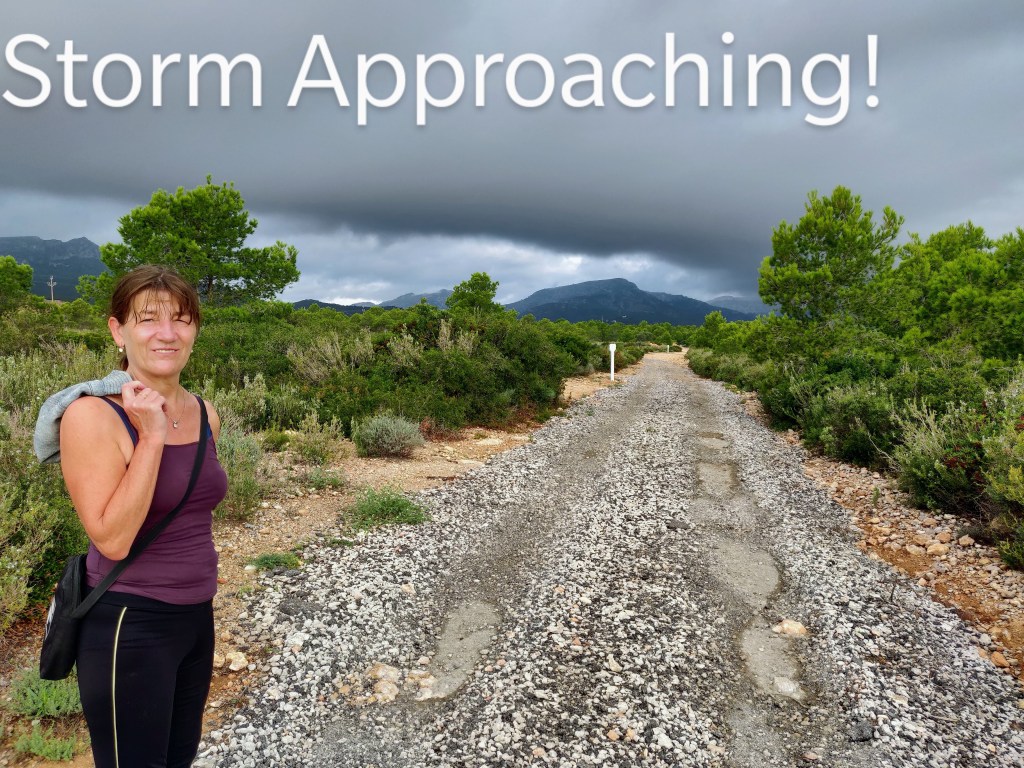
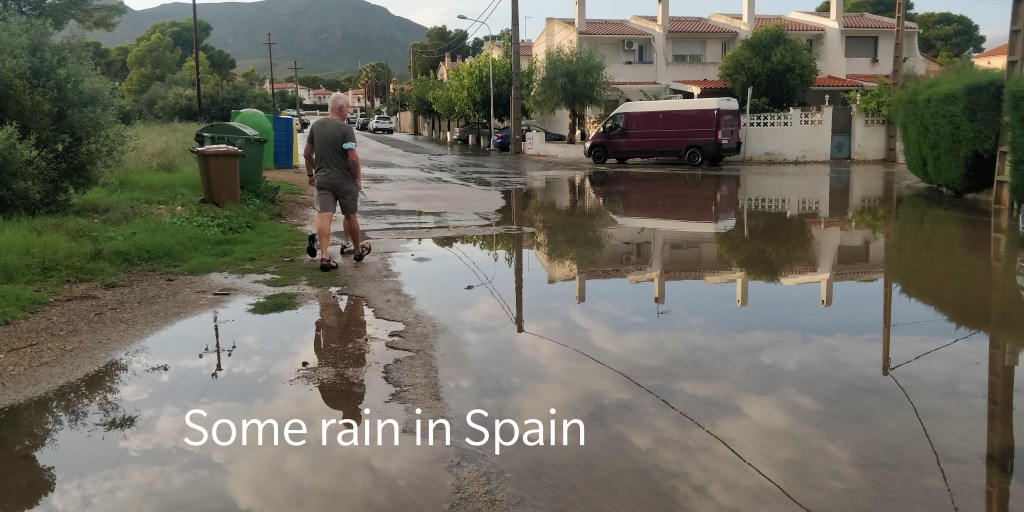
Our last days in Spain were wet and the temperatures which up to then had rarely dropped below 23 degrees even at night, plummeted to 15 degrees during the day. It rained for hours (not the short, furious thunderstorms that we had earlier) but continuous heavy rain for three consecutive mornings until 2pm each afternoon when (like clockwork) the rain stopped, the sun came out and the temperatures increased…perfect for sunbathing and eating out.
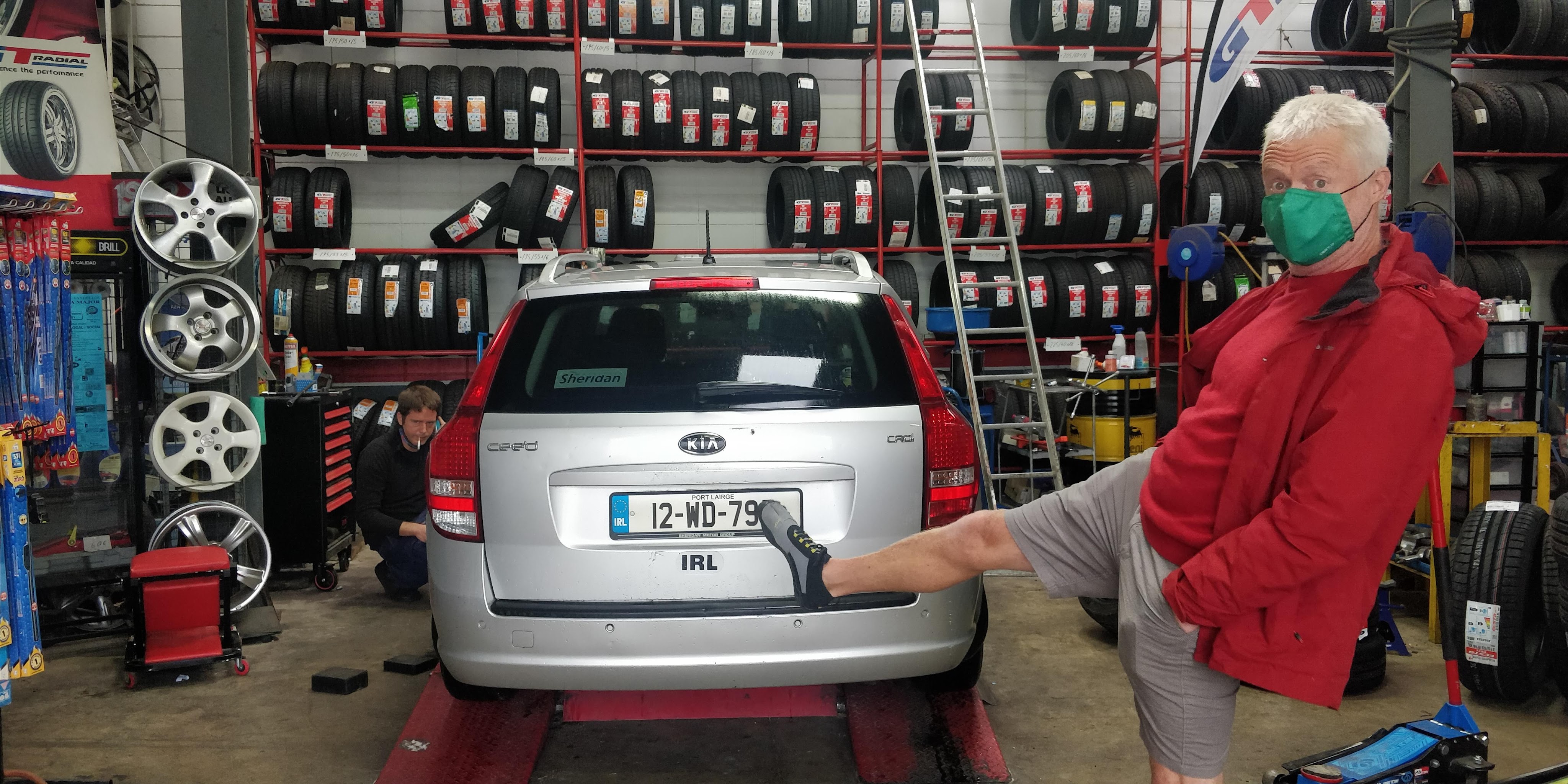
The Guzzler required new tyres (the thread on the front tyres were just about legal) and we have many miles to go (we hope)… so we got 2 tyres in a garage down the road and of course, they cost less than at home. Virtually everything is cheaper in Spain. So now we were all set for onward journeys.

The others (Ciaran, Christina & Louise) headed off on Friday morning, Sept 24, to catch their flight back to Dublin. We waved them off and although we will miss them, we couldn’t stop smiling – we didn’t have to head home to work and responsibilities, we simply had to catch a ferry to Italy that Friday night at 11.30 pm. How lucky were we!
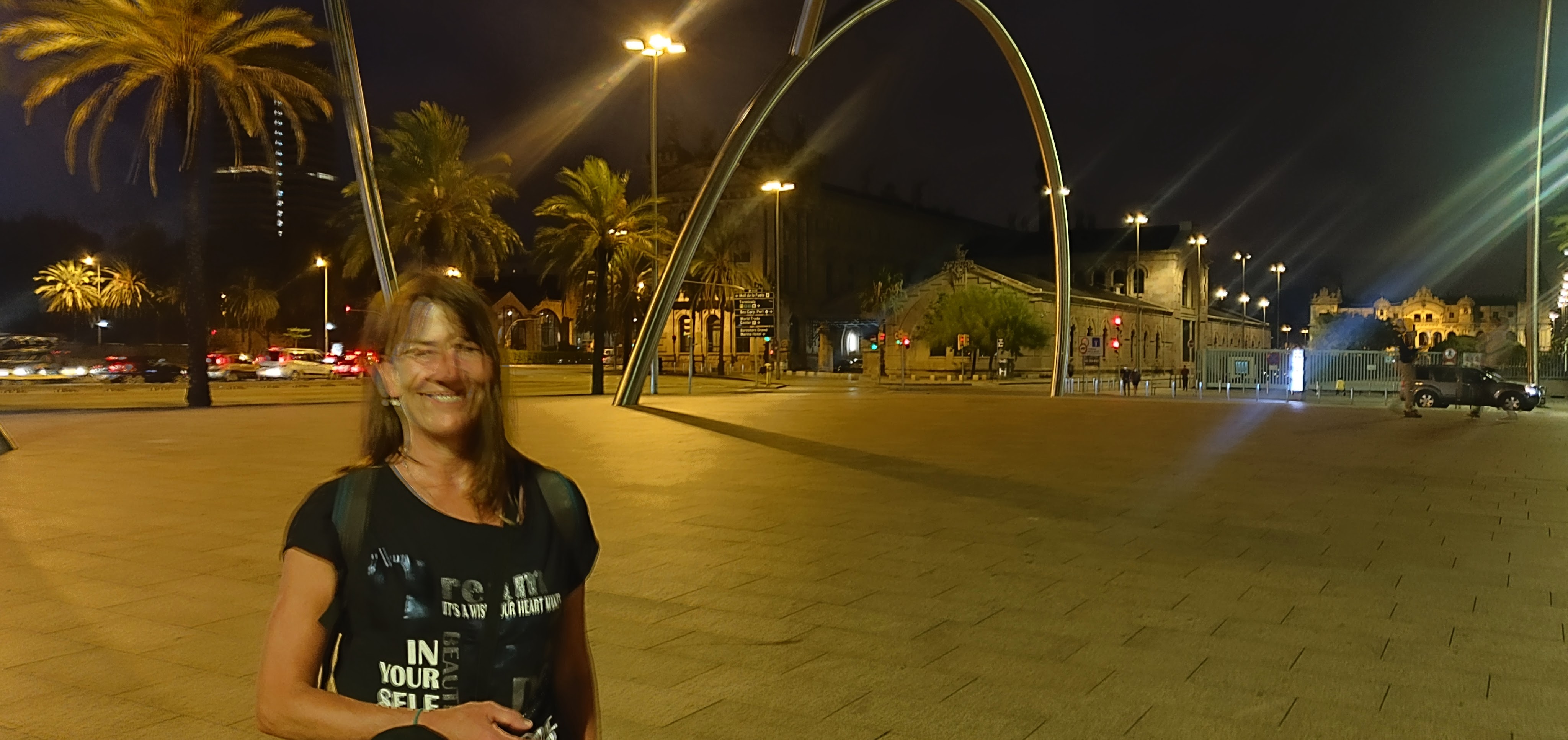
We had booked the ferry a few days previously to go from Barcelona to Civitavecchi (north of Rome – we had to google it to see where it was). The basic price for the twenty hour crossing for a car and 2 adults was €155 but we decided to treat ourselves to some comfort and booked a cabin with outside windows which added another €100. The ferry was late, very late. The first text beeped in on Caoimhin’s phone telling us that the ferry was delayed by two hours and the new departure time was 01.30. We headed on to the port -we had to check out of the holiday house anyway – to the Grimaldi Lines Office where we found we could check-in, park the car in the queue and were given card keys for our ferry cabin and a voucher for a huge ham/cheese/fish roll as compensation for the delays. The only documentation required was a passport – no Covid certs or proof of vaccination. The port was buzzing on a Friday night with container traffic and other ships _ transporting goods is such a huge industry. We strolled into Barcelona (about a 35 minute walk) for a last tapas and copa de vino in a little place with tables on the street. There was jazz music playing and lots of cool-looking people wandering around, the night was warm but breezy and we knew in our hearts that we would miss Spain.
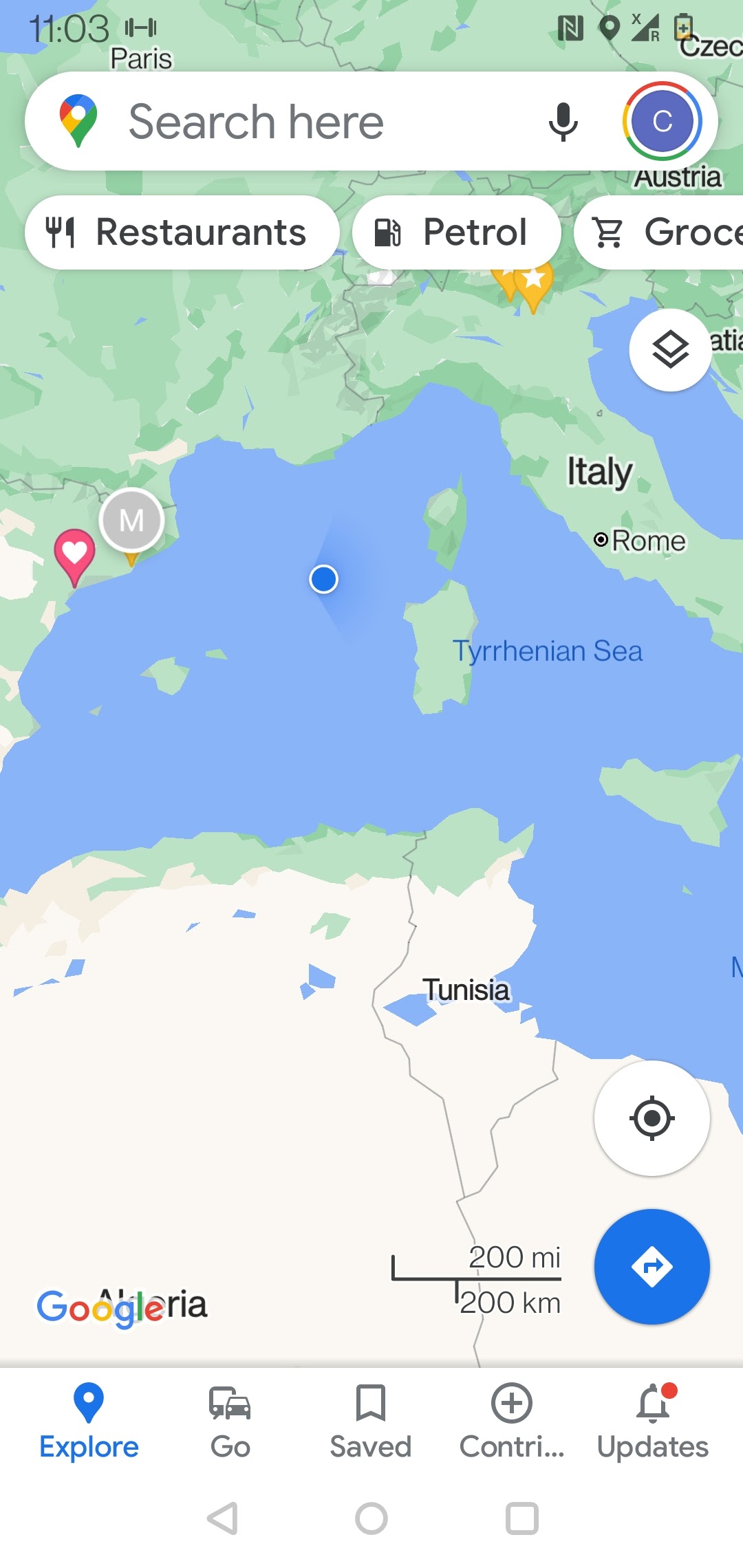
The Blue Dot

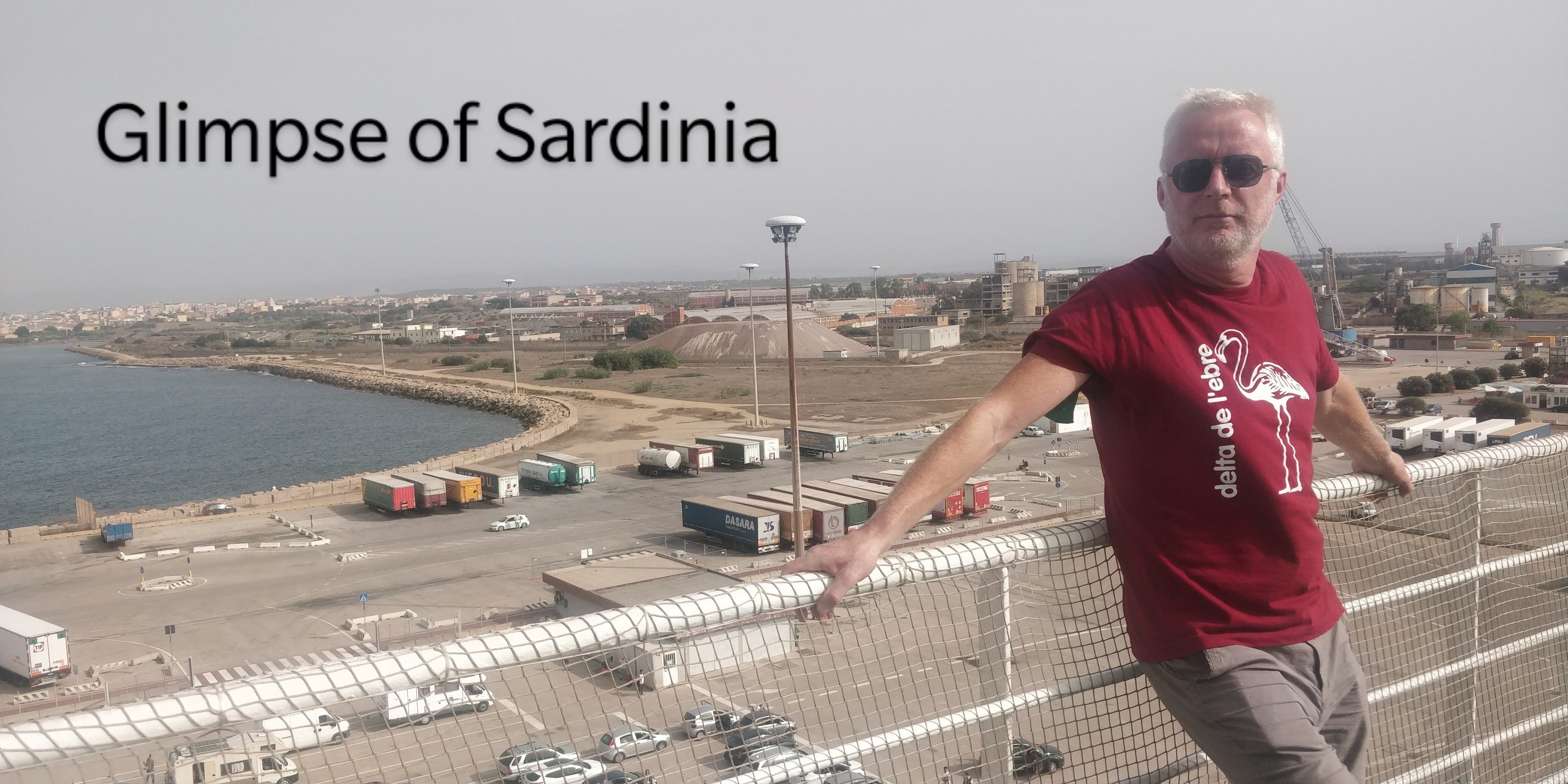
Departure time for the ferry was delayed again – another text – but we were able to board so when we finally departed at about 3 am , we were asleep in our cabin although we had some difficulty finding the cabin -the ferry was enormous with maybe 1000 cabins and was apparently the longest cruise ferry in the world at one time. The ferry had a casino(closed), swimming pool(no water in it) cinema (closed) ice-cream parlour (closed) but the restaurants and bars were open. Many passengers were travelling with their dogs but really the ship was almost empty apart from the truckies _ transporting goods is the main business. We spent a lot of the day wandering around the decks getting up our steps and watching the blue dot on our phones go very slowly across the Mediterranean Sea. We sail between Corsica and Sardinia and stop at Porto Torres in northern Sardinia where more passengers, cars and trucks embark. This type of travel does wonders for your geography.

At about 8pm when we should have been arriving in Civitavecchi, there’s an announcement that because of the delays, every passenger can get a meal in the restaurant for €6 consisting of first course (pasta dish), second course(burger, chicken, chips veg,) bread and water. As a little bottle of water was 2 euros onboard, this was really amazing value – and there was a stampede. The boat was actually fuller than we thought as people came from all corners to avail of the ‘special’ offer.
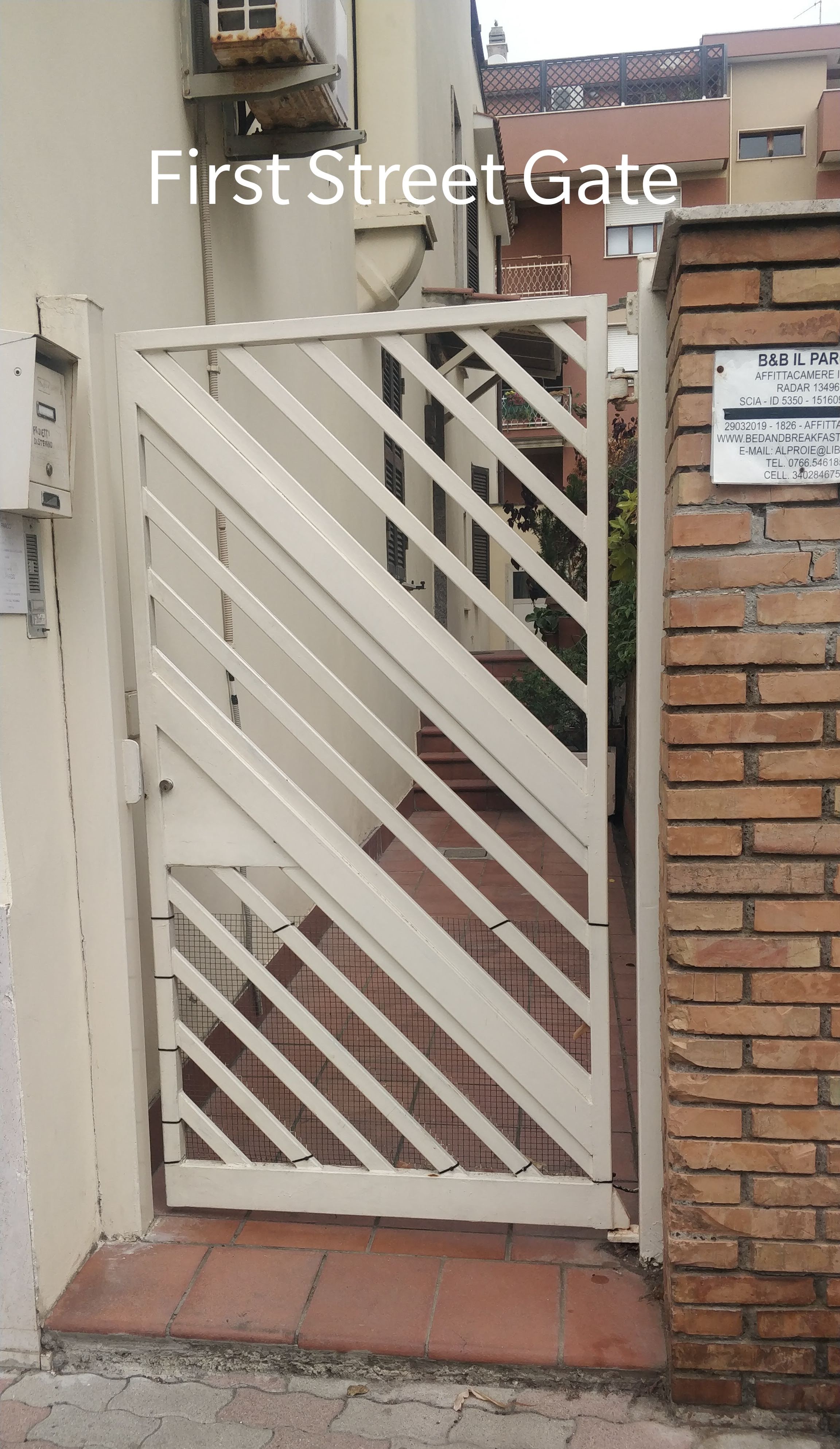
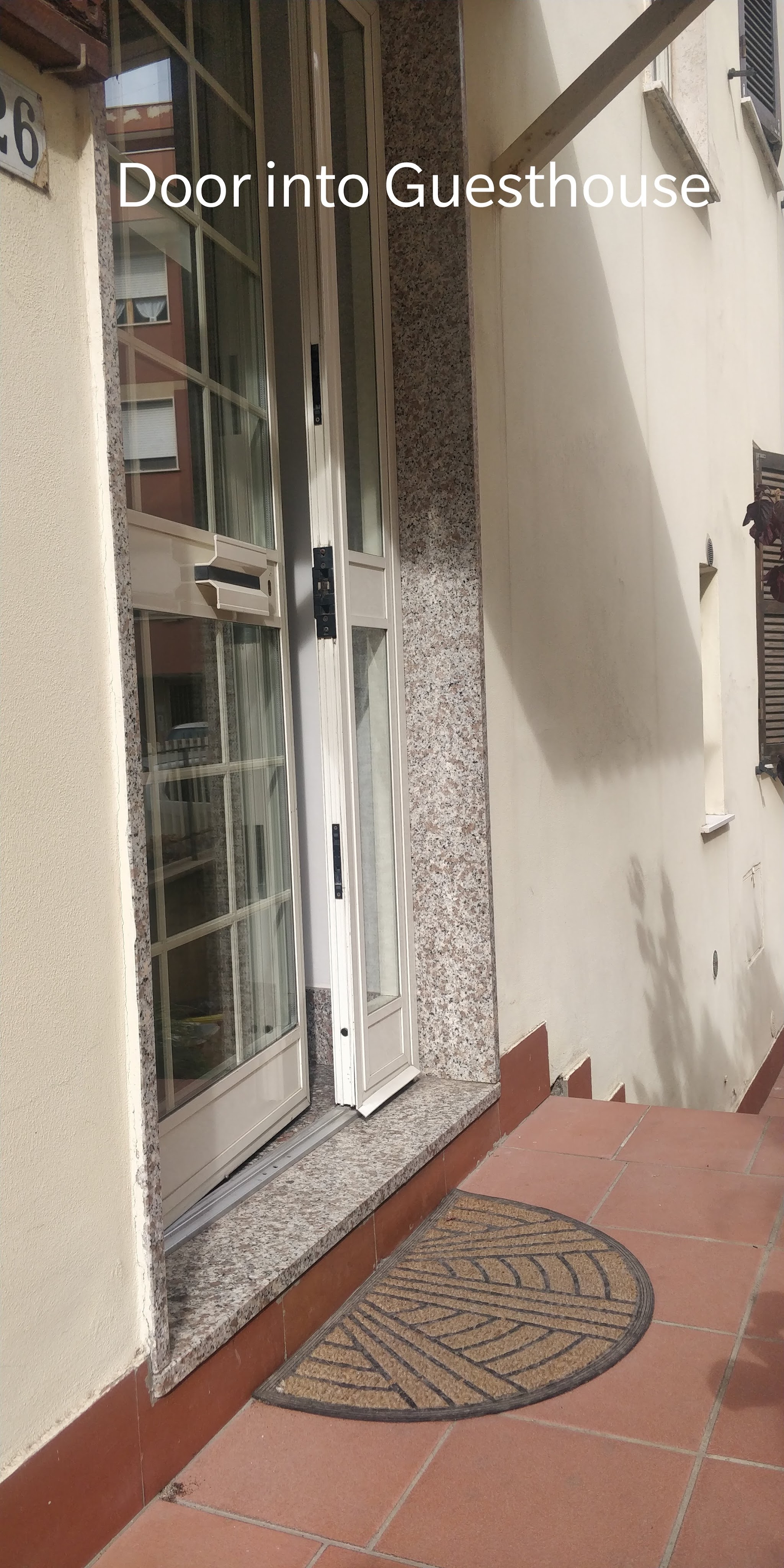
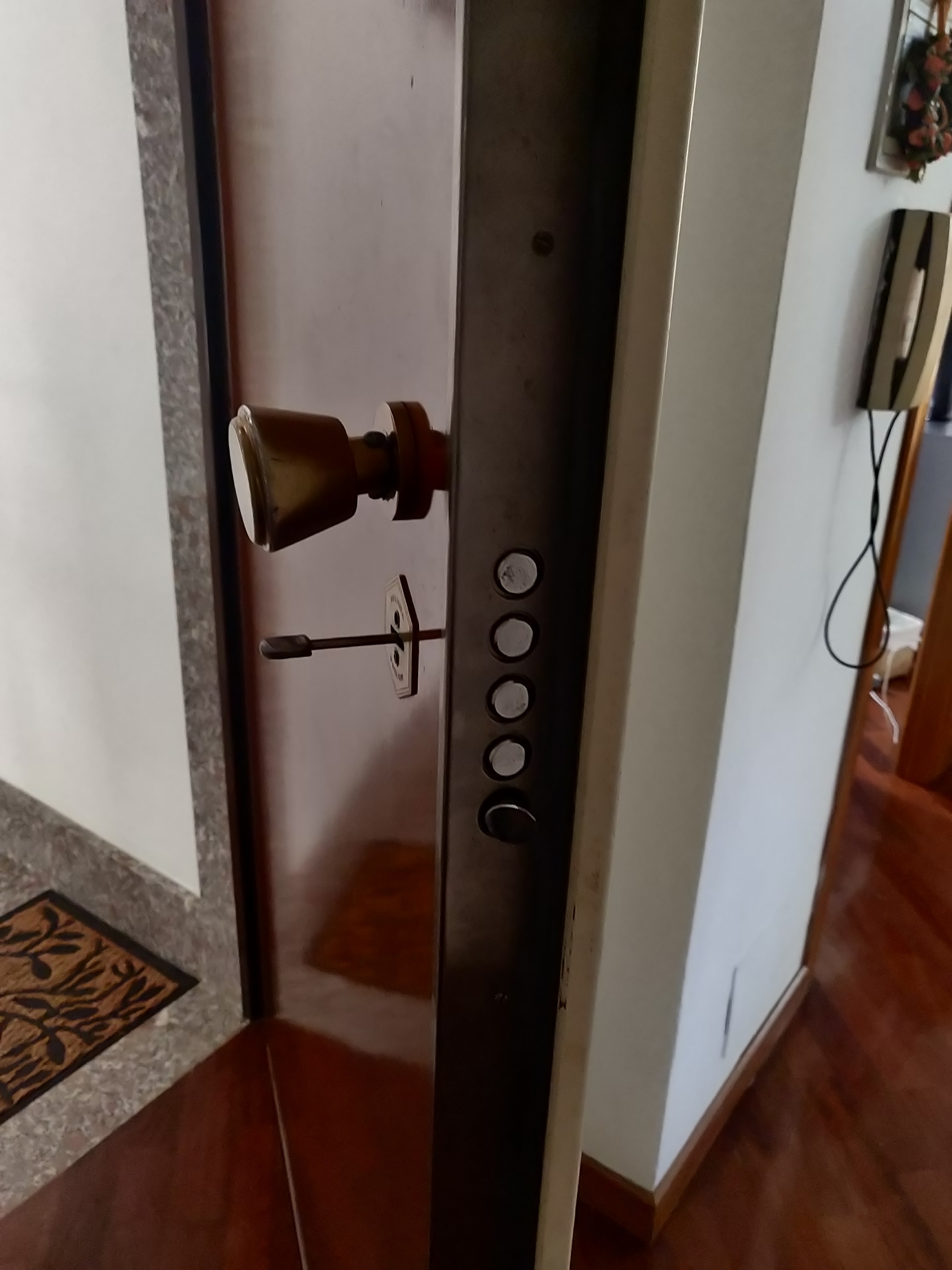
The doors of the ferry finally opened in Civitavecchi at 1.45 am – there was a huge cheer when the doors opened allowing people to drive off. We expected some checking of documents and Passenger Locator Forms but there was none, we simply drove off into the night. Luckily the guesthouse was only 7 minutes away according to Google. The streets of Civitevecchi were quiet_ no Saturday night revelers. Small parking spots and it was hard to fit our Guzzler into the street parking. The guesthouse was also quiet_ there are some bells outside a security gate. While we are deciding which bell to ring, Caoimhin pushed the gate and it opened, we entered a narrow courtyard and there was another door that opened when we turned the handle. We went in, crept up the stairs and found a stout 5-point lock door with a key on the outside. We opened this and it seemed like we were in someone’s house. To the right, there was a sitting room and kitchen, to the left was a corridor that led to 4 closed doors. One had a key on the outside _ so we went in. It had a double bed that we fall into, totally exhausted I dreamed that we are in the wrong house but was too tired to care.

The following morning, when we bumped into Aldo, the homeowner, in the corridor, he wondered who we were. He had already reported us to booking.com as a ‘no show’ and said that some of the other guests must have left the doors open…they weren’t deliberately left open for us. He couldn’t believe that we had just walked in during the night past all the security doors. But he fed us pastries from the bakery next door and made us cups of strong Italian coffee which blew any lingering cobwebs away – the coffee in Italy is so much better than Spain.

It was Sunday morning, 27 degrees and cloudy when we headed off across the country with no particular place in mind but hoping to find a place to camp. Aldo was intrigued that we had no ‘plan’ (but would probably believe us capable of anything after we had ‘broken in’) and said that Spoleto was nice if we wanted to go inland. We listened to Pavarotti, driving by dusty fields_ it hadn’t rained for months according to Aldo. Roads were worse than in Spain, cars were smaller, drivers were more inpatient (in reality, maniacs behind a wheel), some shops were open on Sunday and we stocked up at the first supermarket we saw in case we didn’t find another one. The bakeries were fantastic (I can see a weight gain happening) and everywhere we stopped, the people were friendly although we find that our heads are now full of Spanish words – ironic when we struggled in Spain.
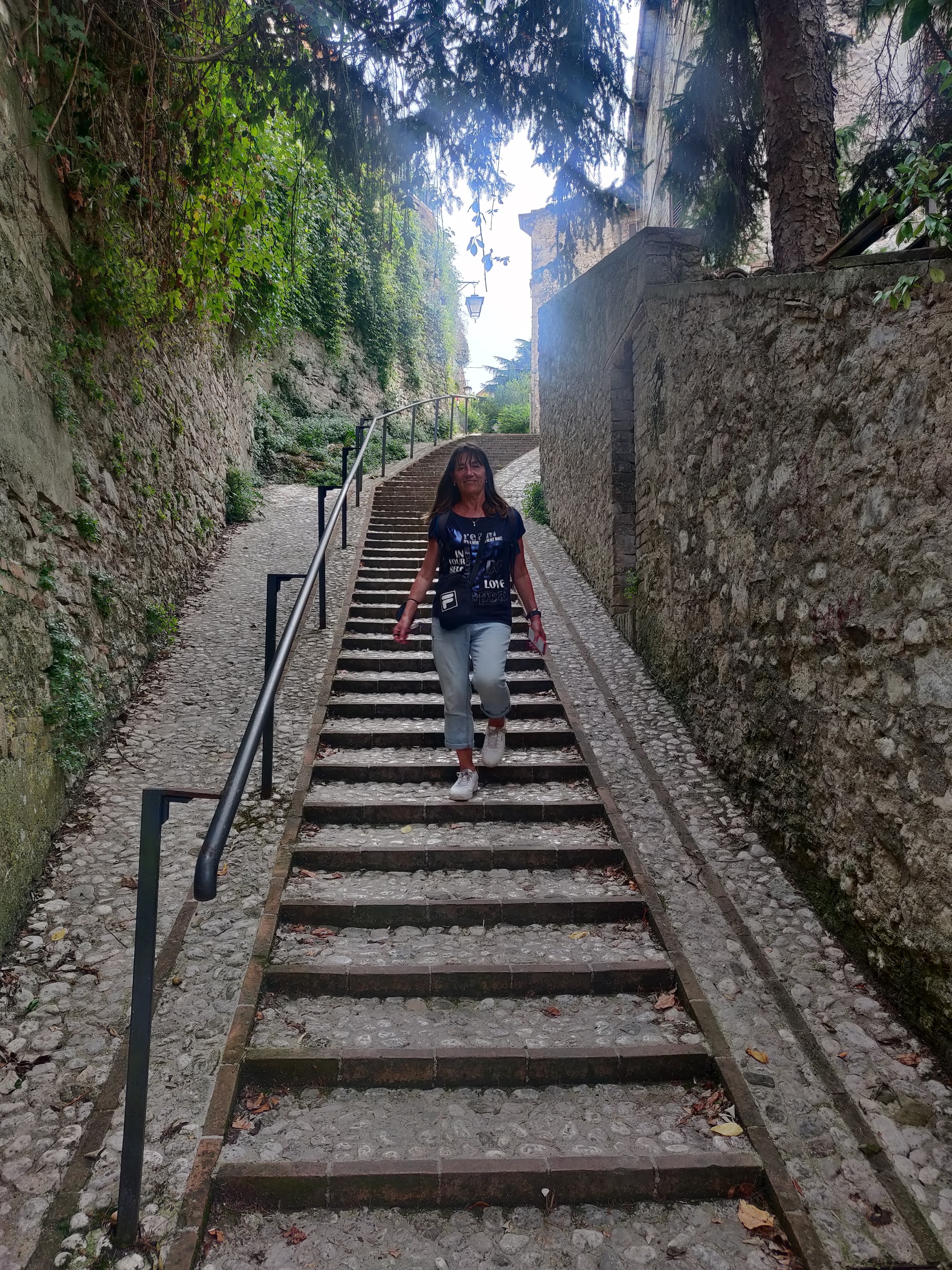
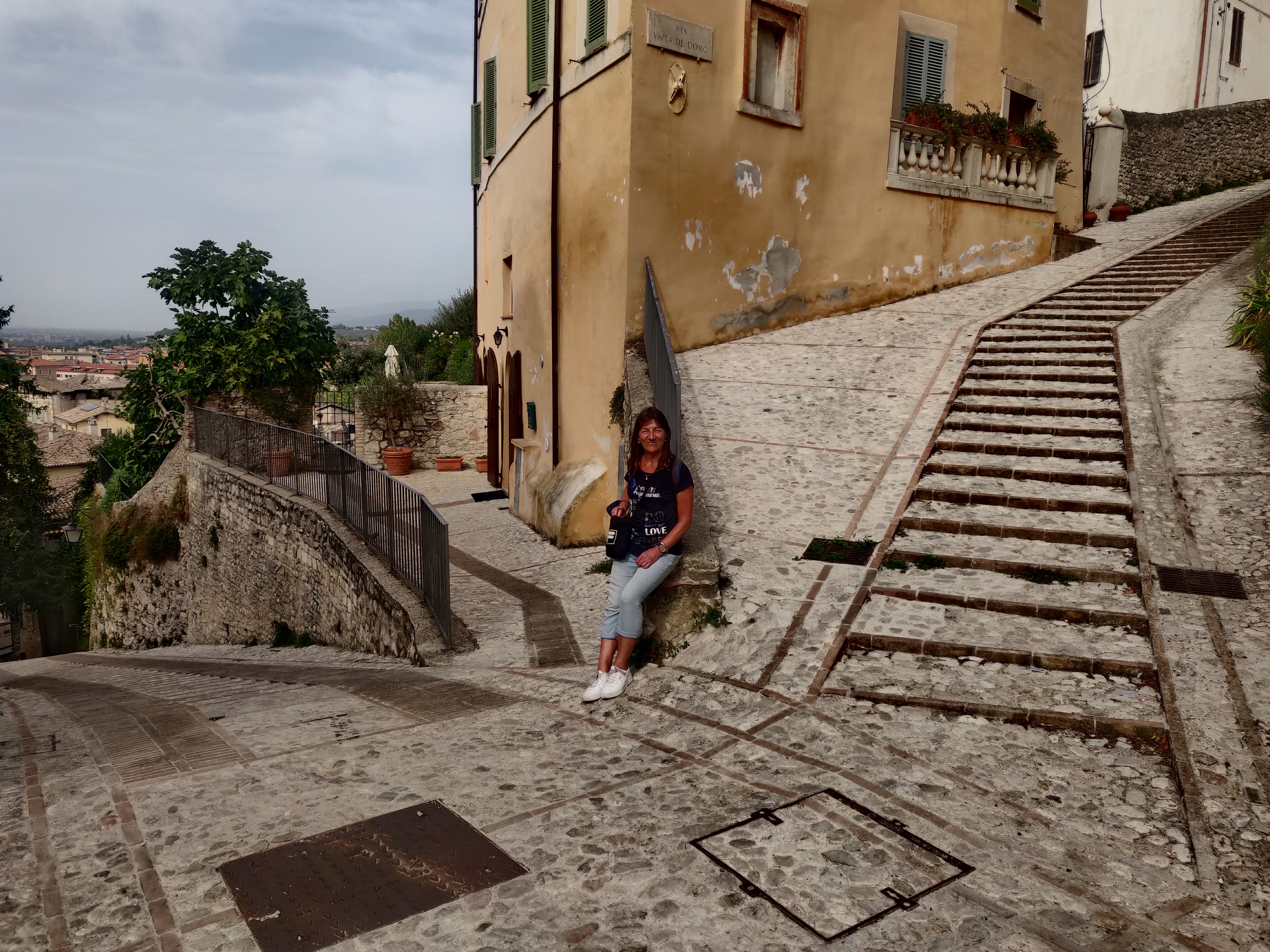
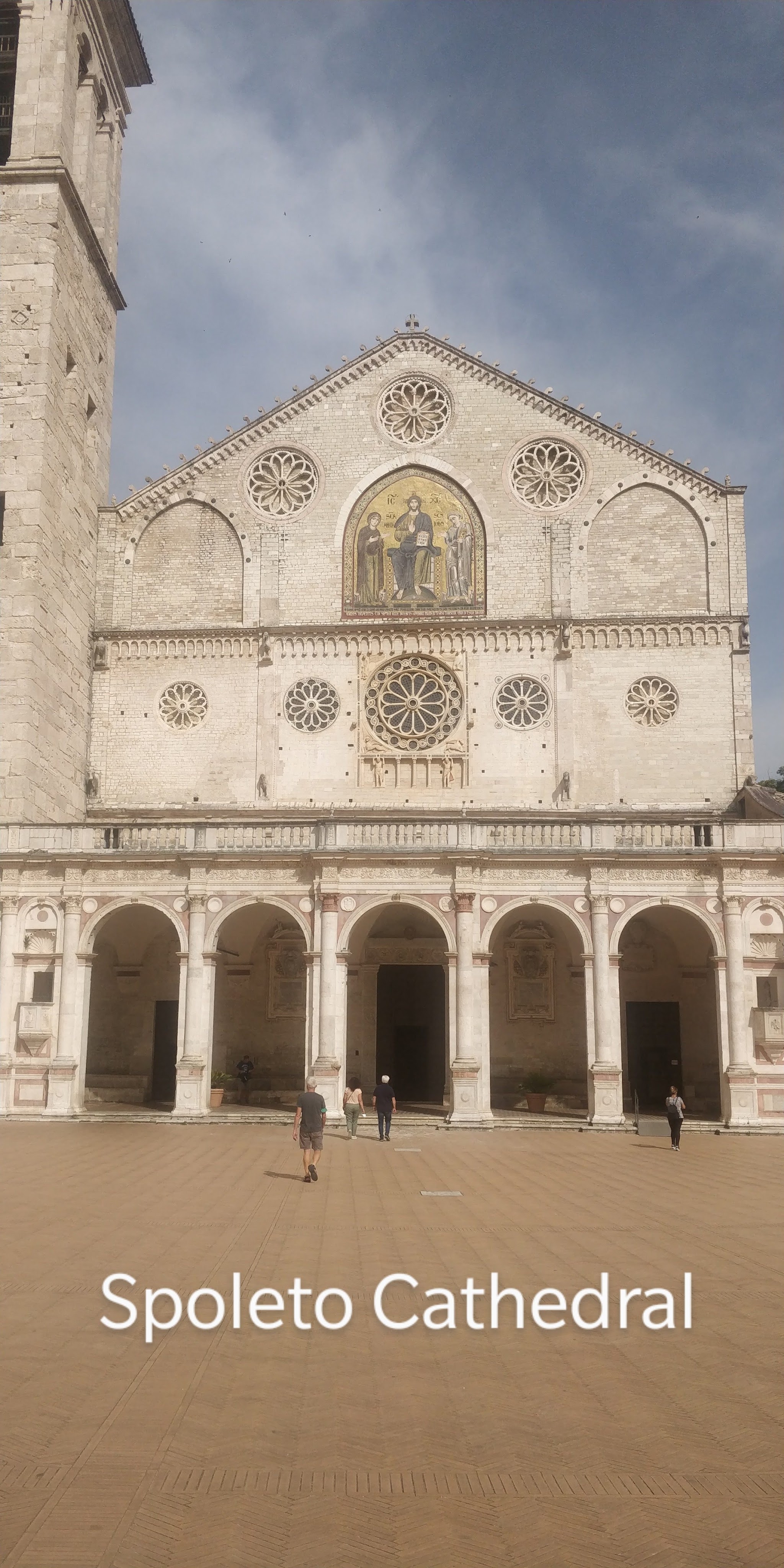
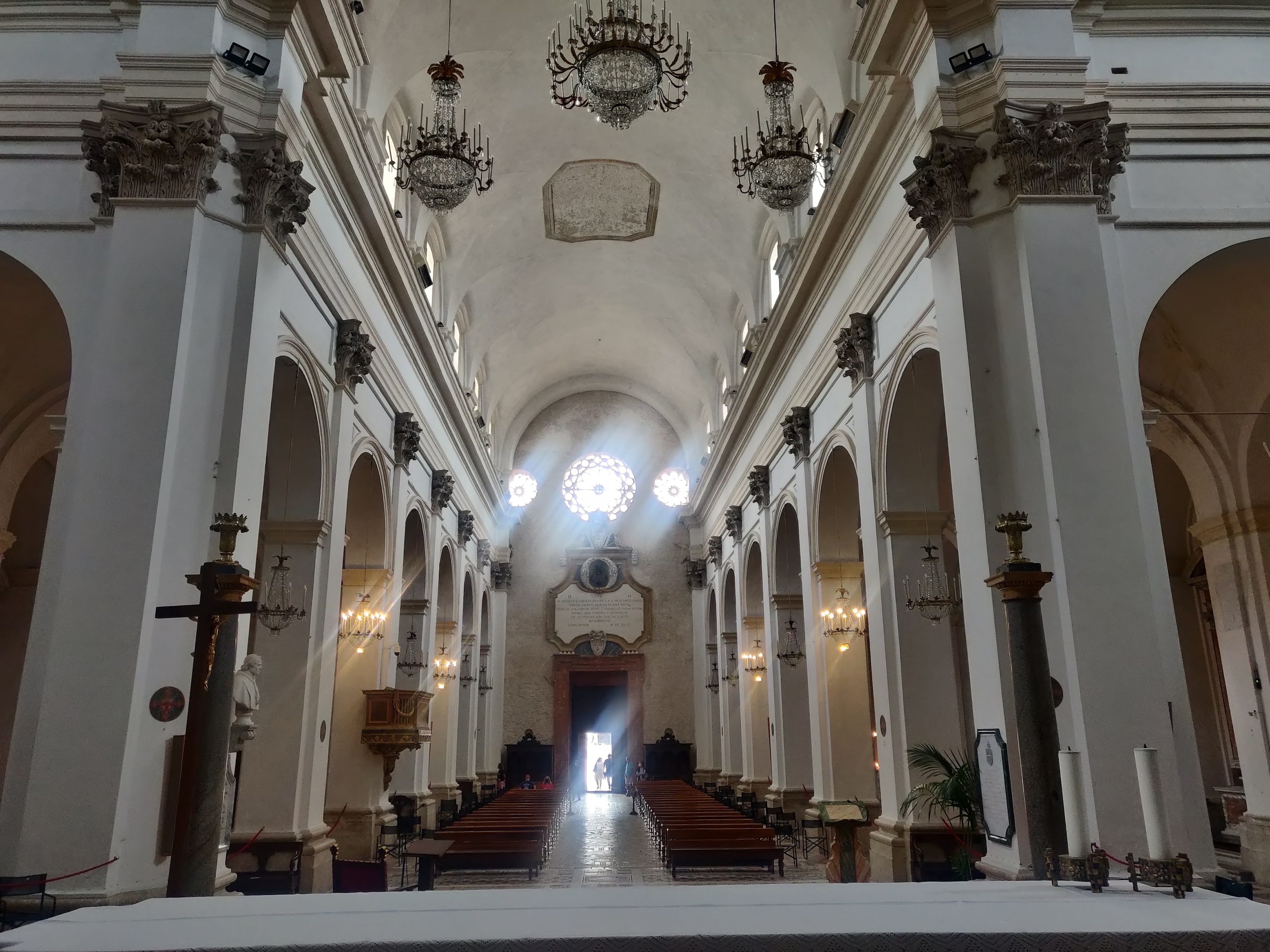
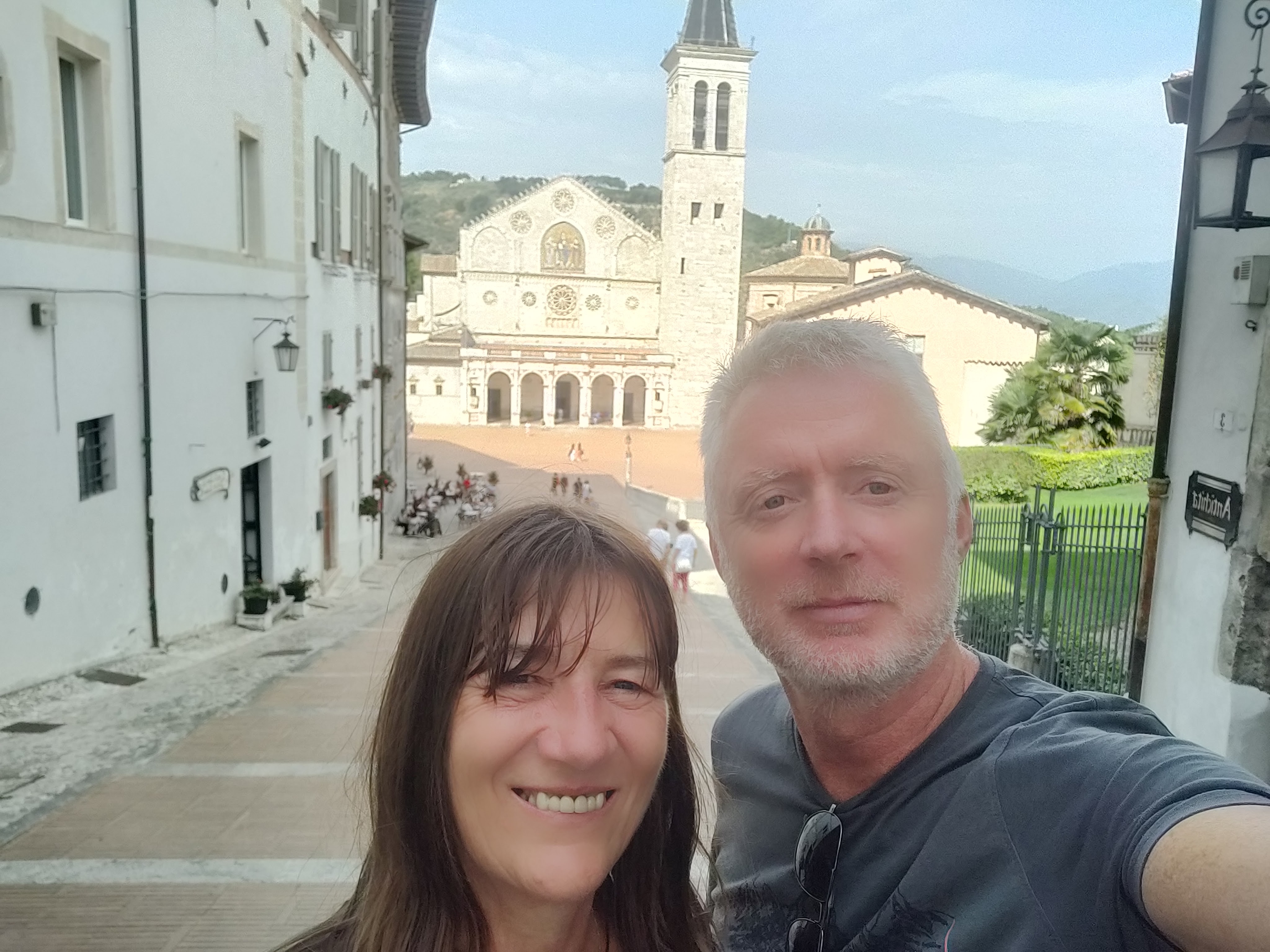
We made it to Spoleto, a town in Umbria that we had never heard of it until that morning. There was music in the Square and we were delighted until we found it was a political rally☹️. Avoiding the speeches (they sound the same in any language…the promises), we walked uphill into the charming old town, most people sat outside on cobbled streets, doing what Italians do best, eating and talking! The 12 century cathedral was amazing and the fresco on the outside was stunning (from 1108 by an artist called Solsternus who described himself as ‘ahead of his time’ but nothing else is known about him..
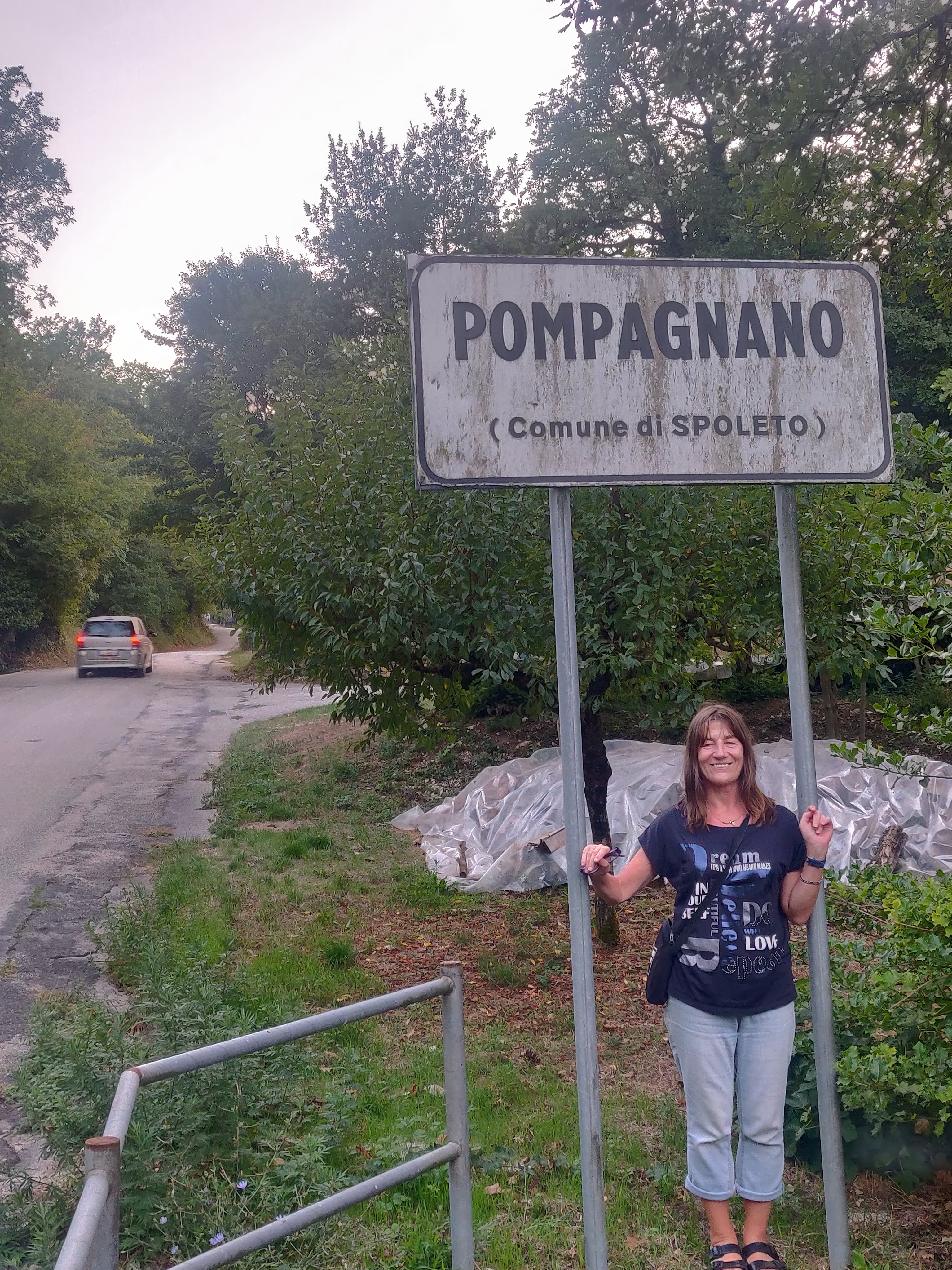
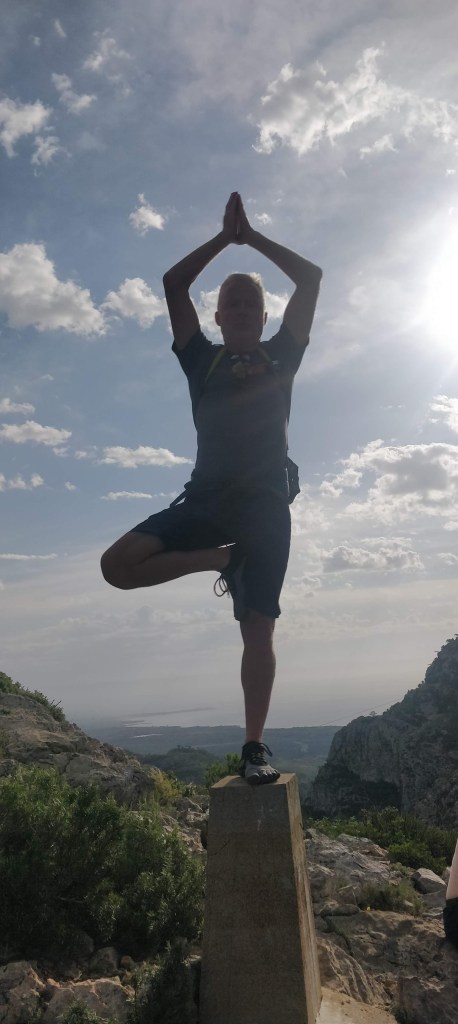
Took the photo so that we know where we are!!!
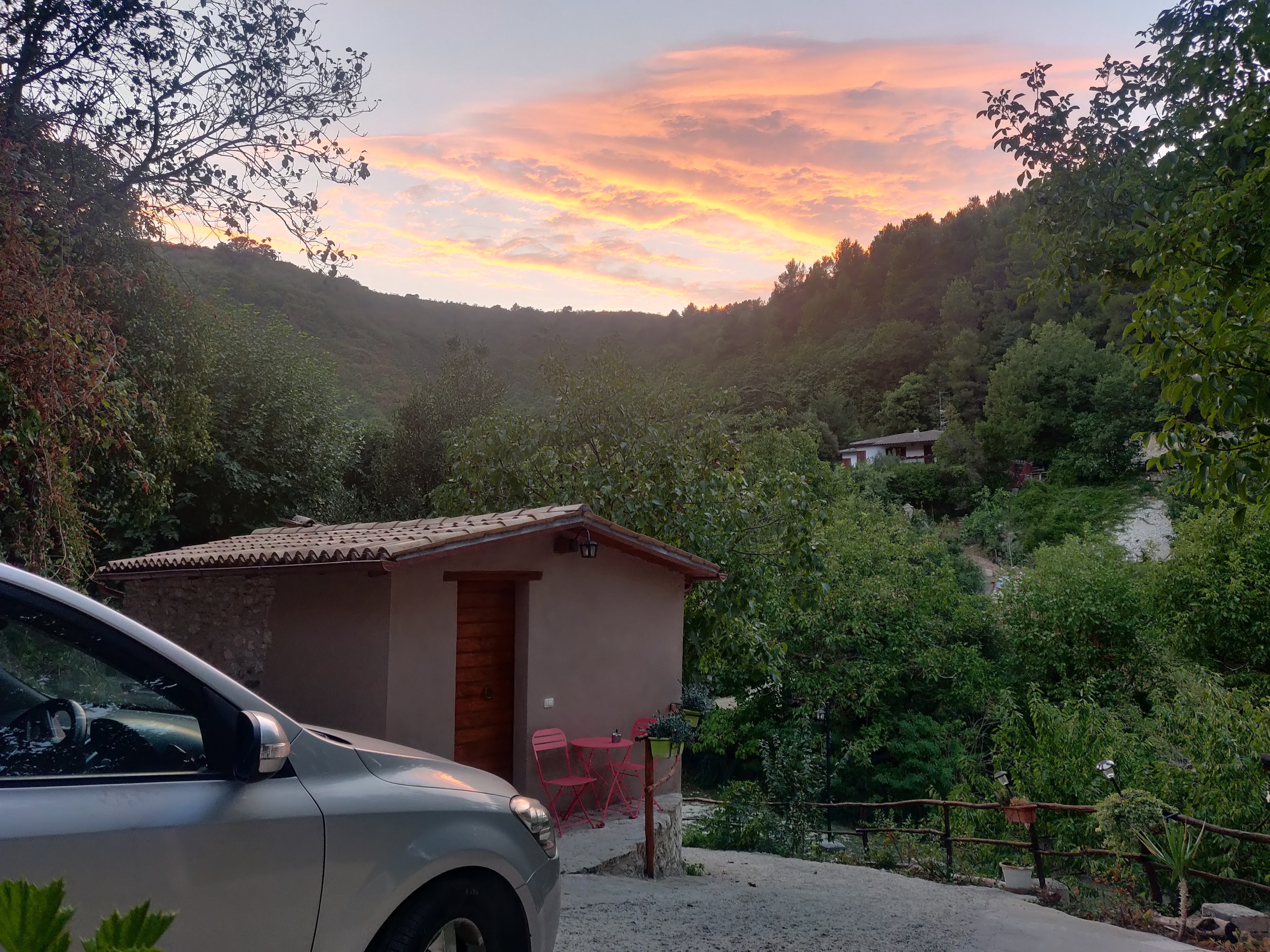
Sunset outside our chalet in Pompagnano

We tried a campsite outside Spoleto but it was closed for the season, we Googled and found an apartment in a little village in the green hills. This was so gorgeous and the people so nice that we would have stayed for another night but it was already.booked. The owners daughter had studied English in Dublin for a month a few years ago. The owners wife brought us a plate of homemade buns, so delicious that there will definitely be a weight gain😋

We reluctantly headed off…we use Google again and book the cheapest place we can find in the a south easterly direction _ a whole house in a village in the mountains in Abruzzo for €35. What a bargain!

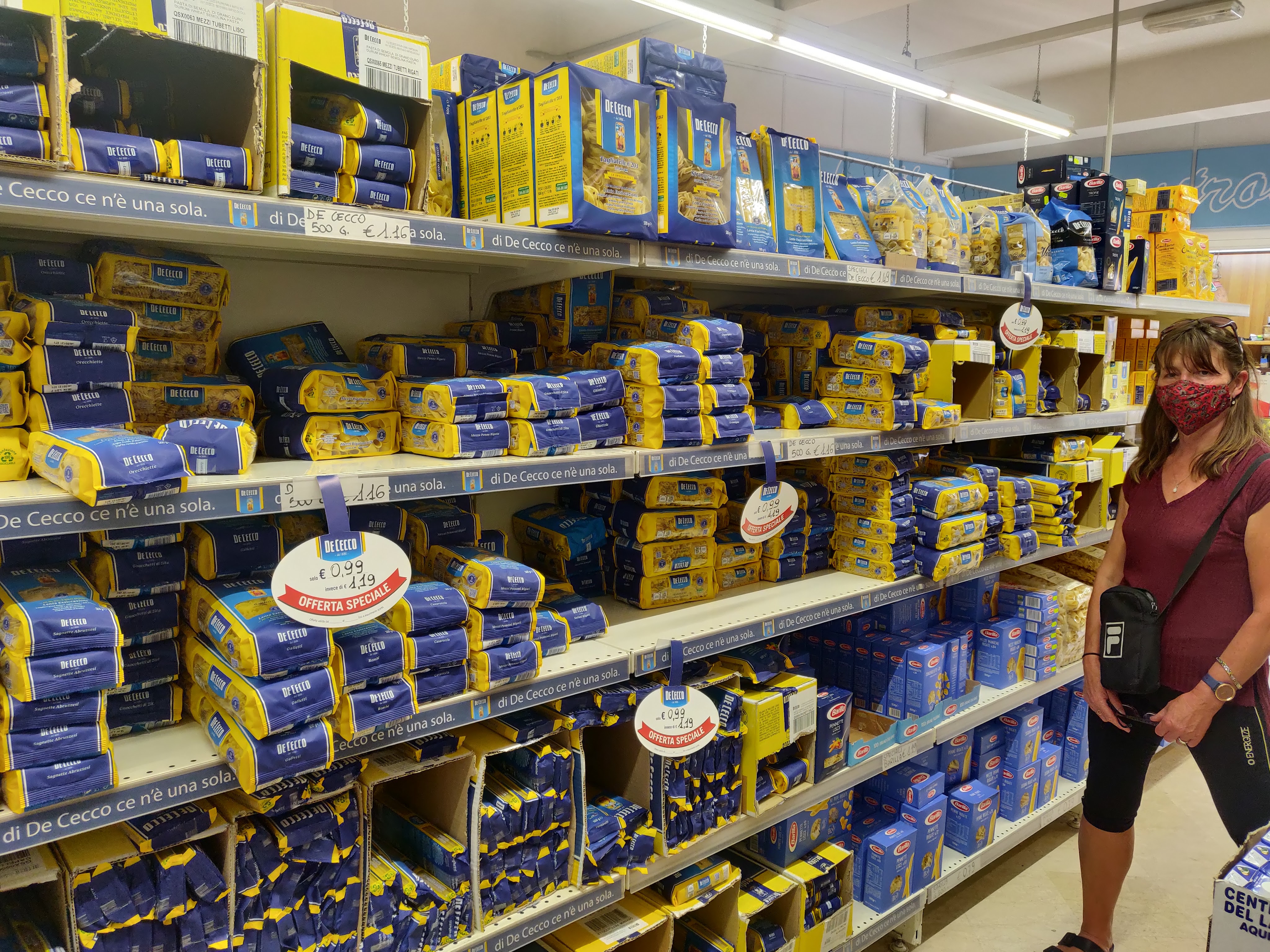
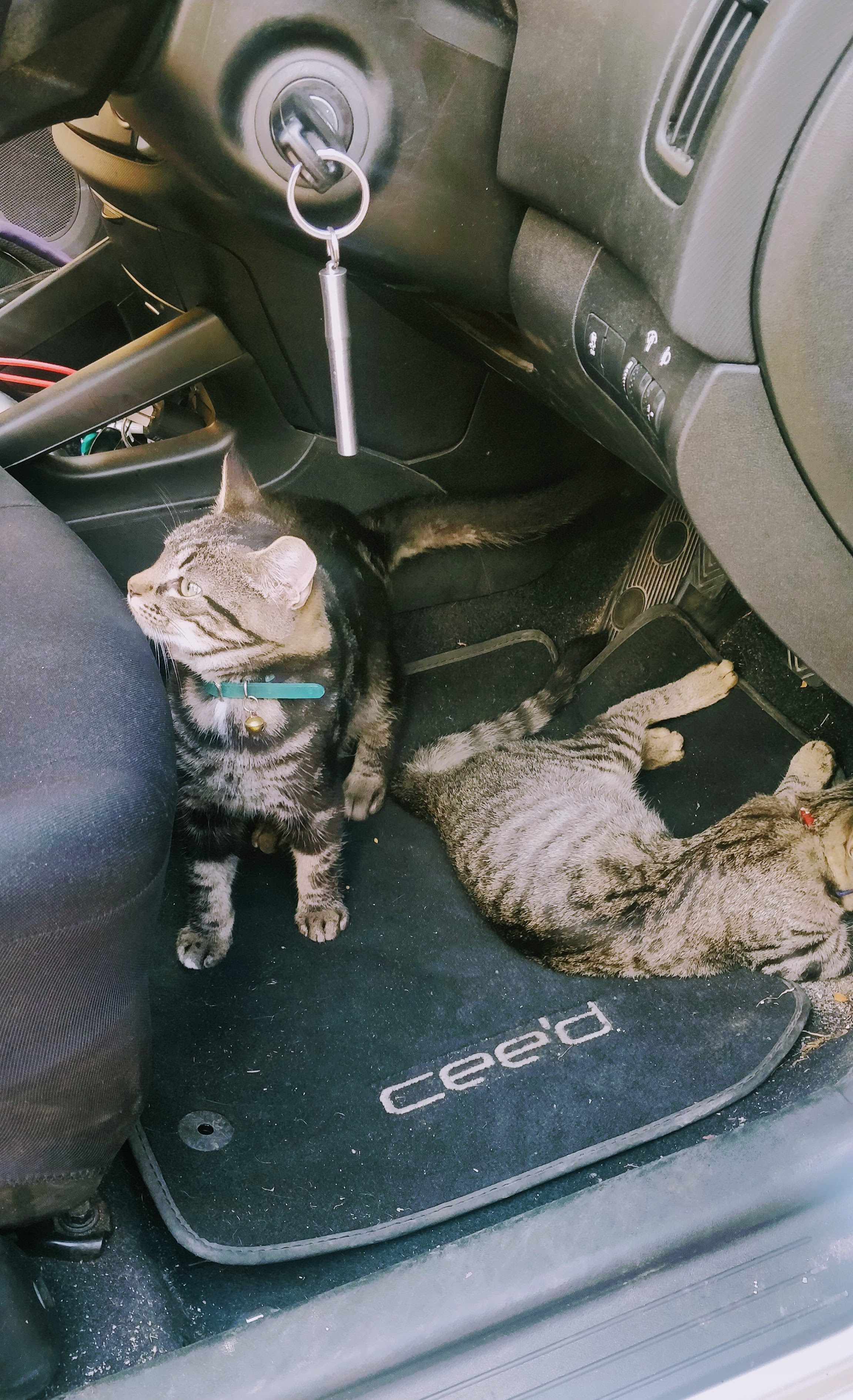
We get a whole house in a village, San Lorenzo, plus a couple of cats that really wanted to leave with us- we had difficulty getting them out of the car. The key was in the door for us – deliberately this time – and we didn’t meet a single person in the town or find a restaurant or bar. The local supermarket which only opened for a few hours a day was well stocked with pasta. The area was stunning – very near L’Aquila which had several earthquakes , the last in 2009 which left 350 people dead – but we left the following morning heading on towards for the Adriatic coast.
Adios Spain, Ciao Italy

Catalonia – here we come

The threat of thunderstorms followed us over the mountains as we headed from our dusty campsite by the reservoir on the river Ebro to the Catalan Coast. But it wasn’t until Google brought us to the door of our holiday house in El Casalot that the heavens opened in earnest, the skies darkened and then blazed with lightening. We tried to understand the woman who explained the running of the house to us in a mixture of Spanish and French while the rain hammering on the windows drowned out her voice and the thunder banged overhead. The house seemed palatial after our tiny tent and we were giddy with excitement at having our own bathroom and shower (I know, it really is the simple things!!) Four houses shared a communal pool and all had individual barbecue areas – luxury indeed.The beach which was a couple of kms away was deserted that first day (Sept 1) – the Med looked angry with churning waves and after a short dip we felt like we had been tumbled in a washing machine.
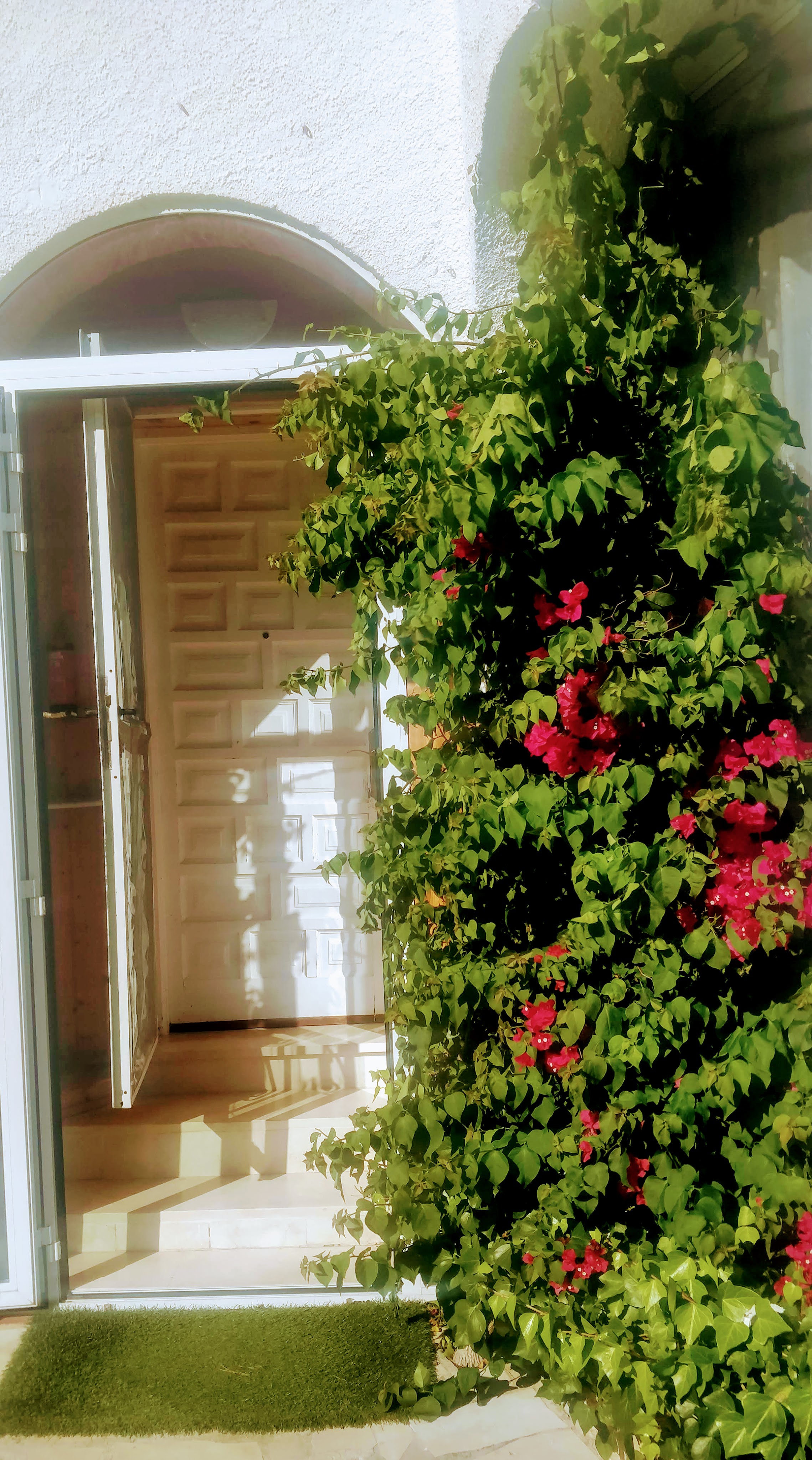
Entrance to Holiday House in El Casalot (That gorgeous bougainvillea was also the snake hangout)

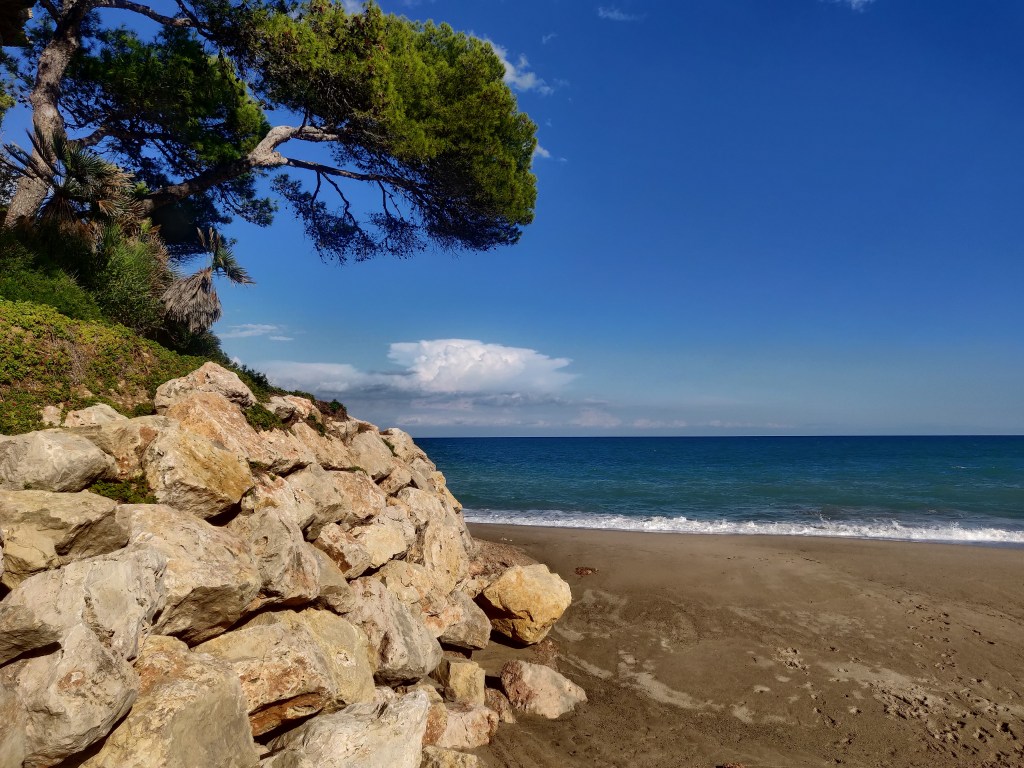
But soon the sun was shining again, the sea was that gorgeous turquoise bluey-green of holiday brochures and the temperatures were hovering about the 30 degrees most days. But I can say with certainty that it DOES rain in Spain and we had several spectacular thunderstorms, usually in the evening. The Costa Duarada is a long stretch of golden sand interspersed with small shady coves surrounded by pine trees and with with steep steps leading down to them. There were some high -rise holiday apartments along part of the beach but also lots of bungalows, villas, boardwalks and cycle paths and the beaches were quiet.

The locals loved us, particularly the mosquitoes who cuddled up a bit too closely after rain but we were also welcomed at the nearest bar/restaurant/supermarket which was called Papaya and who served the most delicious goats cheese salad and being away from the tourist strip, was mainly frequented by Spaniards living locally.

We almost had an extra guest in the house (there were 5 of us staying,- Caoimhin and I, Caoimhin’s brother and wife and Louise, a South African friend). On the second evening, Louise spotted a snake slithering across the patio and into the bougainvillea growing up around the front door (see photo). Major consternation. The owner of the property was called and she arrived with two men with big sticks. Snake charmers, they were not! The snake had disappeared or maybe hidden in the walls (sometimes we can understand Spanish). That night, I woke to hear a soft hissing- I sat upright in bed thinking that the snake was in the bedroom – thankfully it was the whirring of the fan but the mind plays tricks. We haven’t seen the snake since….or at least not so far.

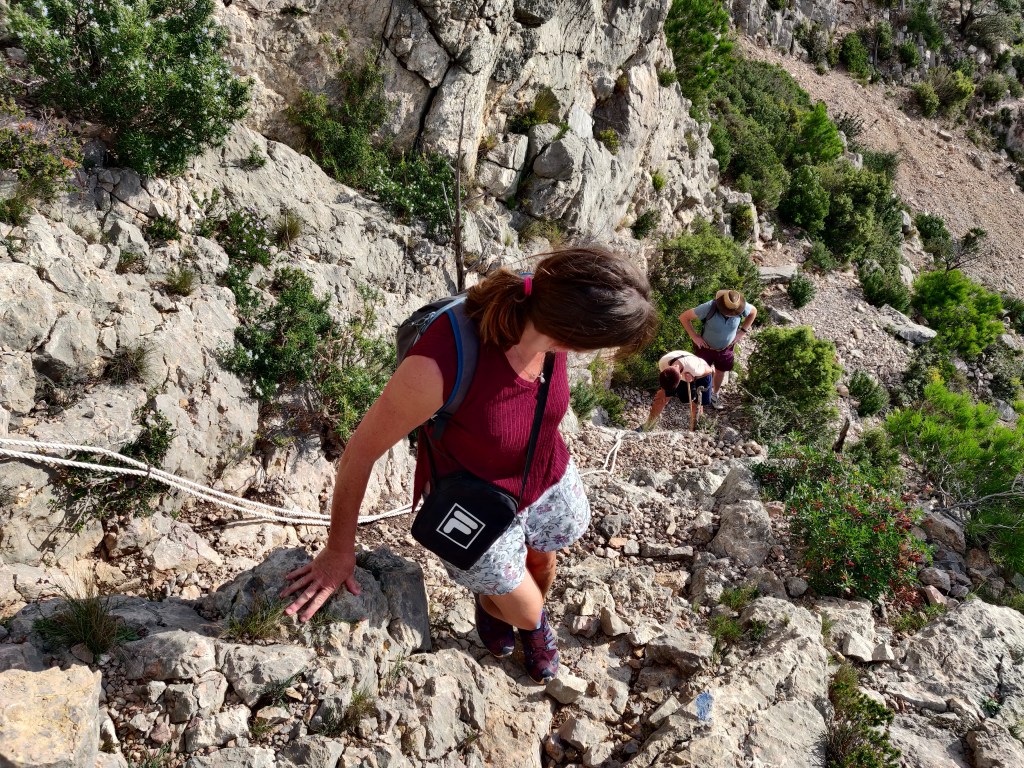
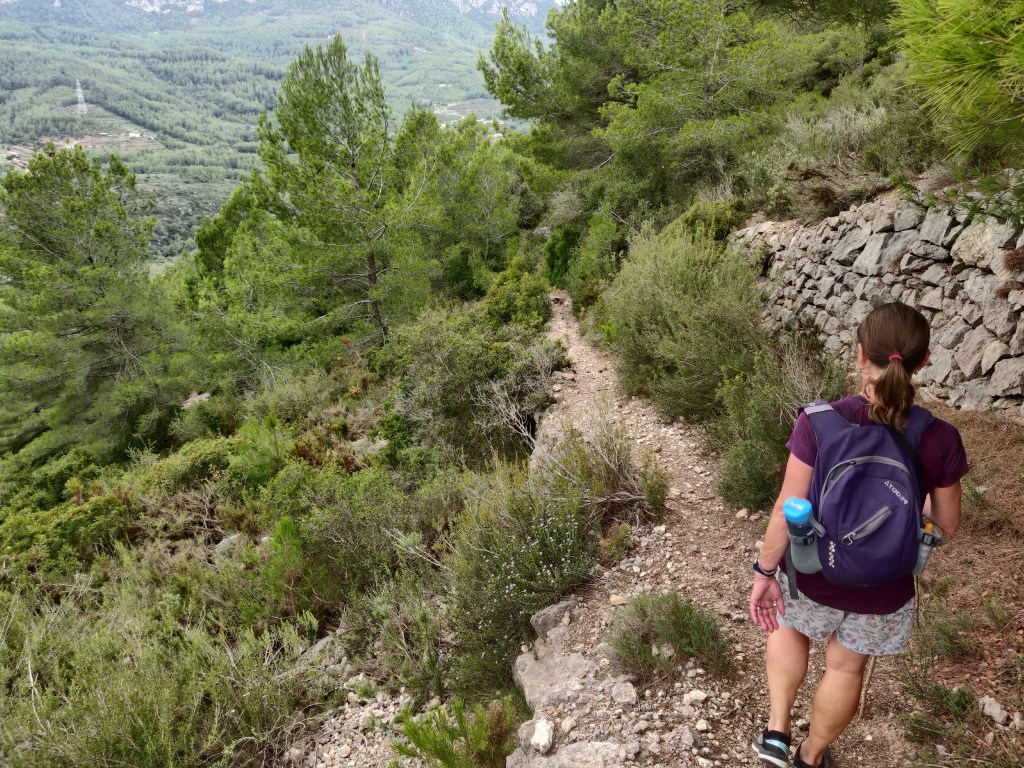
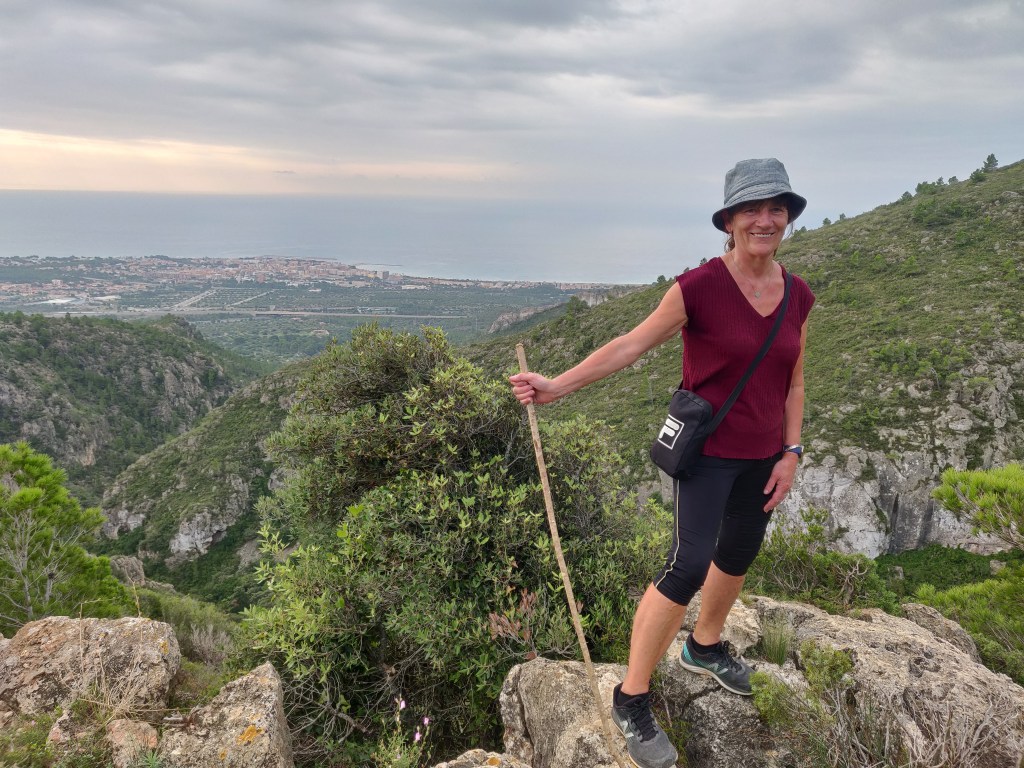
The beaches were gorgeous but the surrounding mountains and villages of the interior were amazing. There were lots of hikes, most signposted or marked by colour-coded flags painted on rocks or trees. Some were ancient paths linking villages, others scaled peaks to hermitages and churches or descended into valleys only to rise again. We walked through olive grooves, pine and oak forests, almond trees and usually the air was filled with the scent of rosemary and thyme which seemed to grow everywhere even on the higher slopes. We spent hours identifying plants using the SEEK app (highly recommended – can be used for birds and butterflies and presumably snakes if they stay still enough to get a photo). And there was the sound of the church bells ringing out from the villages perched on hilltops with their red-tiled roofs. The colour-coding of walks was sometimes a bit confusing and I must admit that there were times when we found ourselves on longer trails trails than we had planned – being lost is nothing new to us. (But the All Trails app on our phone usually came to the rescue)

Nearby Villages

Most of our hikes started and ended in many of the small villages which were not far from our holiday house -Pratdip, Vandellos, Mont Roig, L’argenterra. Many of these villages look like museum pieces with their narrow, winding cobbled streets, wrought iron balconies and windows shuttered from the sun. But they are very much alive – the farmers that till the land live in the villages, not on their farms. There was the chatter of voices and the sound of radio and TV coming from the shuttered houses although we rarely saw anyone.

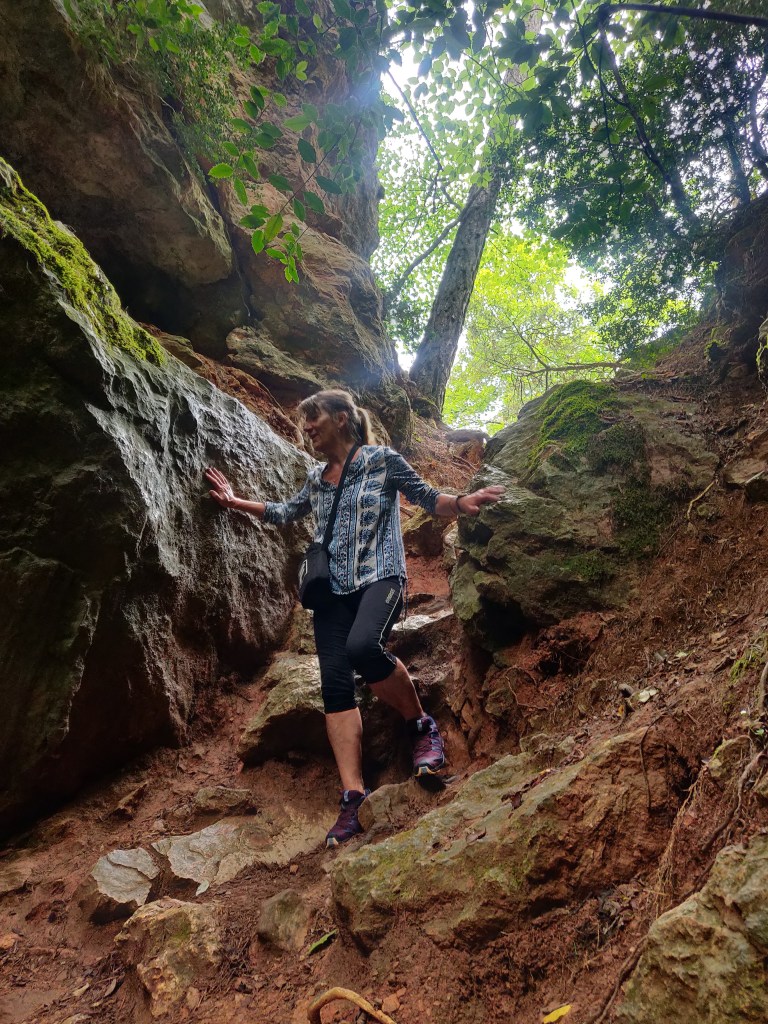
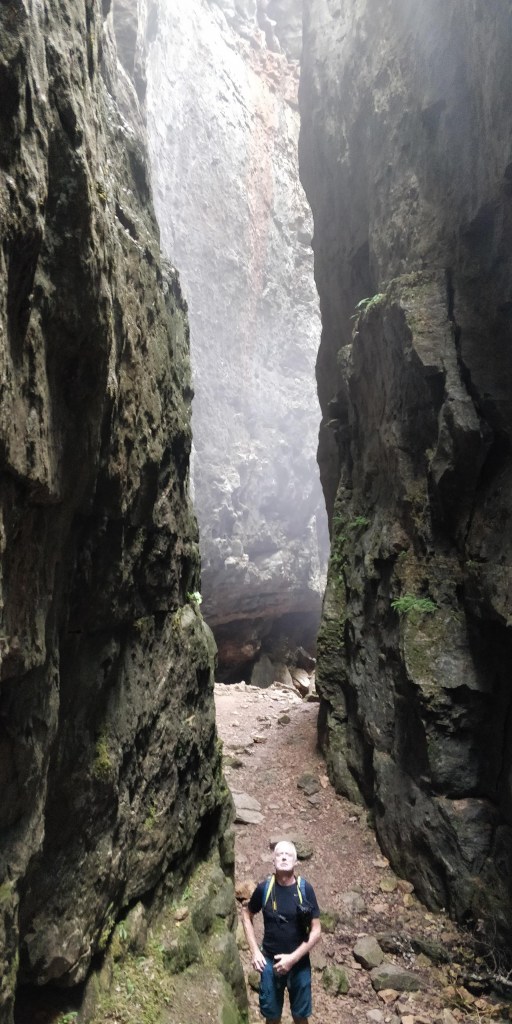
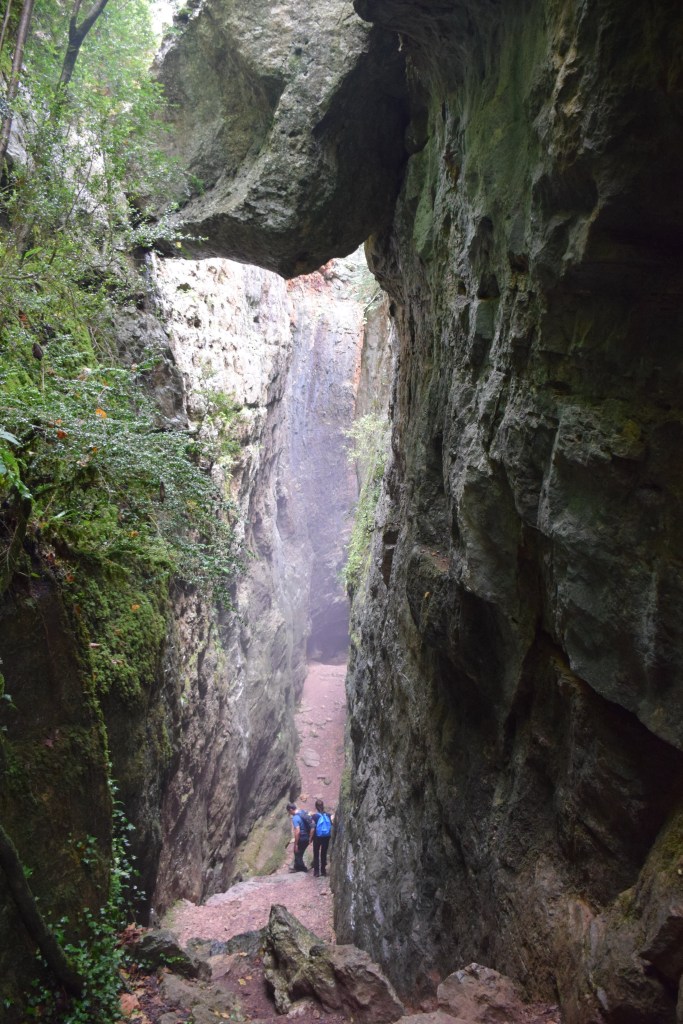
We visited a local tourist office and met the most knowledgeable and enthusiastic woman that we have ever met anywhere – she gave us information on hikes, natural wonders, towns and places not to be missed such as the spectacularly deep crevasses at Avens de La Febro, the thermal pools at Font Calde and the Ebro delta. Her favorite word was ‘fantastico and that became our catchphrase as well when we visited. It took us two attempts on two separate days to find Avens de La Febro – no signage and it was very well camouflaged (a real hidden gem) but the deep crevasse was a special place -with a ferny dampness, an air of coolness where even our whispers bounced off the high rocks.

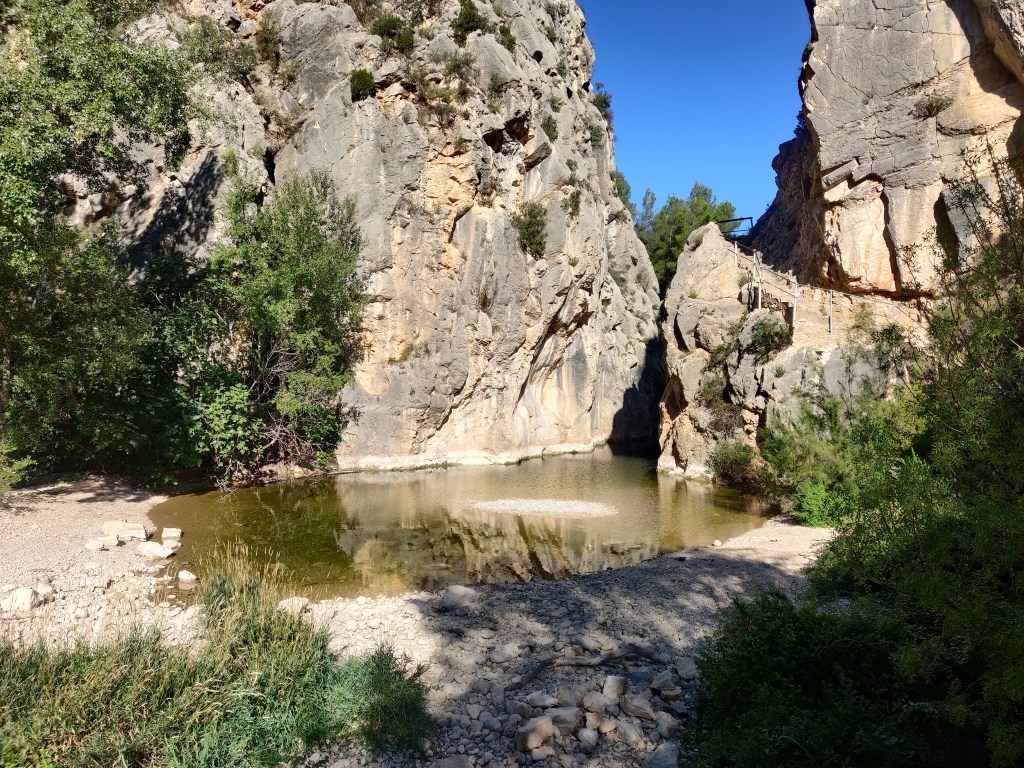
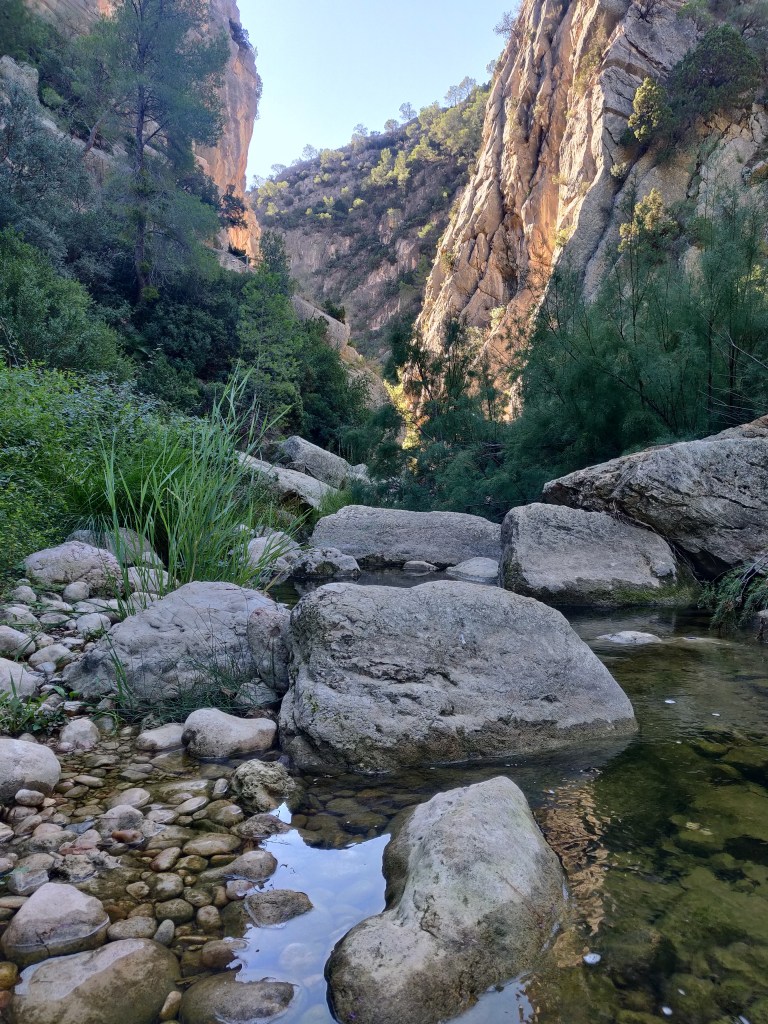
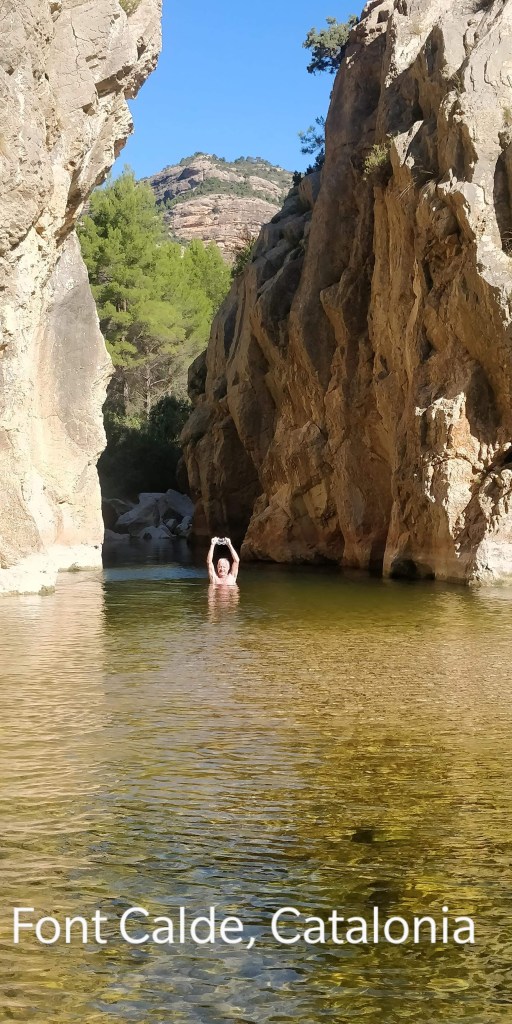
We had a really spine tingling drive to a sanctuary with hot springs (Font Calde). The narrow road corkscrewed around the mountains with sheer drops and no barriers. Thankfully we didn’t meet any other cars because we couldn’t have passed and there was nowhere to pull in between a hard rock-face ….and fresh air and reversing was an unthinkable option. I haven’t any photos for evidence – my hands were shaking too much. We needed a de-stressing dip in the thermal pools with their super clear waters after that drive. We discovered that there was another road out that involved driving across a stream (not a good start) onto a dirt road but after a few bends and driving through three rock tunnels, we were on a decent road that we would have called spectacular(but tame in comparison to the road we came in on.

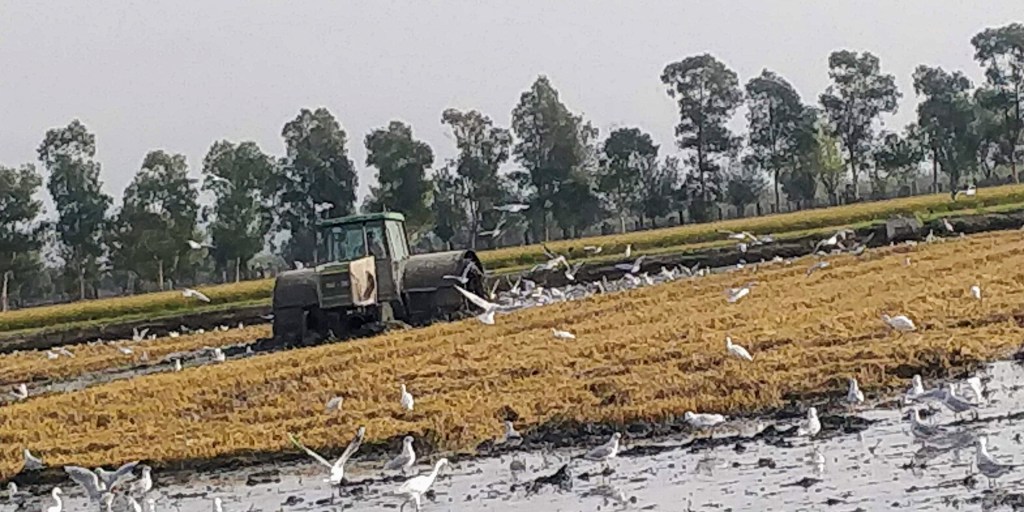
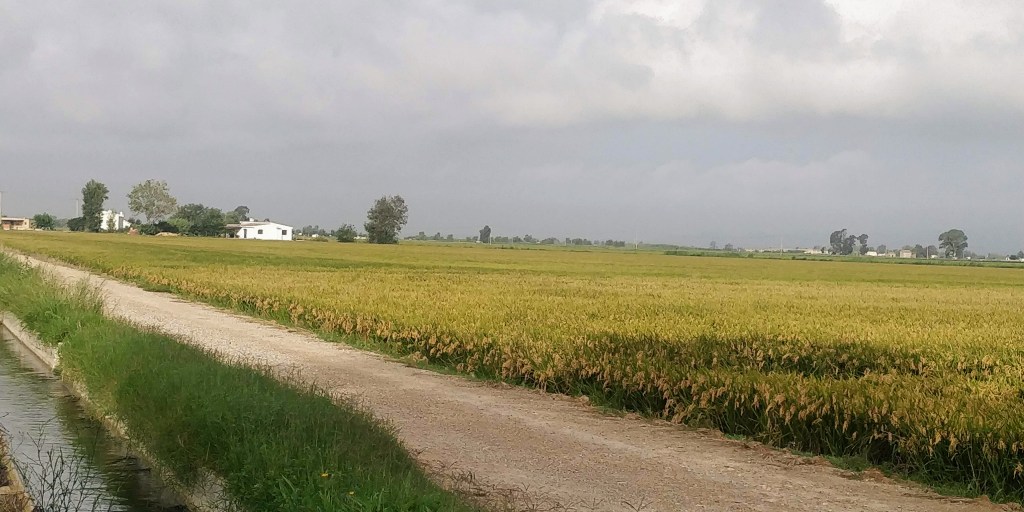
A day on the Delta D’Ebro was educational, who knew that rice was grown in Spain? The mighty Ebro flowing to the sea creates wetlands, canals and lagoons, a haven for wildlife and birds including pink(ish) flamingos. We seem to be linked to the Ebro – it’s the same river that we had camped beside near the Riba Roja reservoir and the hydroelectric plant. Lots of signs on the delta say that the Ebro river that gives so much life and biodiversity is dying because the delta is disappearing. The building of several large dams upstream is blamed – less sediment is brought down, the erosion action of the sea washes away the coastal sand and wears it away and with less sediment to replace it, the delta shrinks. Unintended consequences.

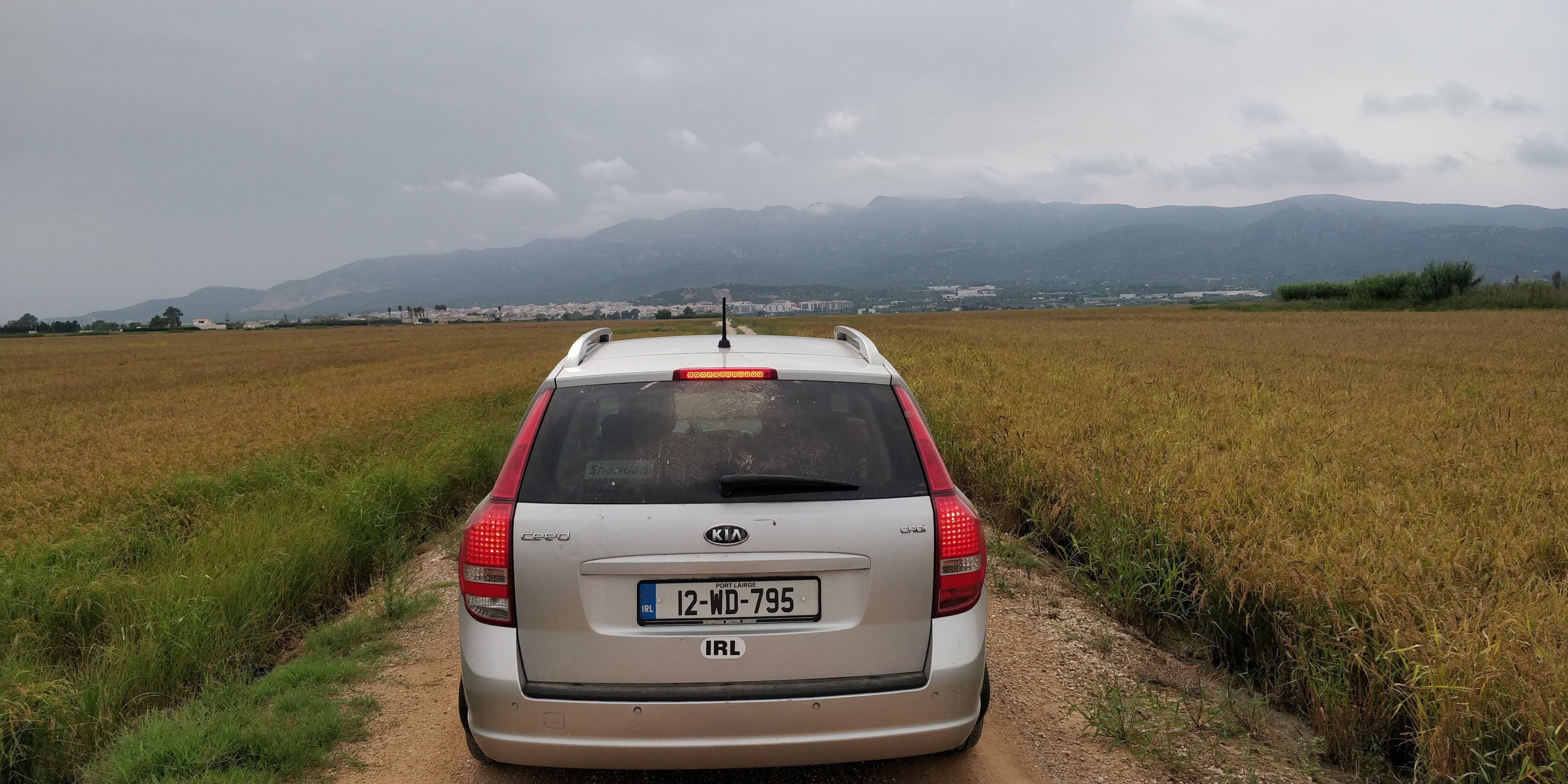
The Paddys driving through the paddy fields in Spain

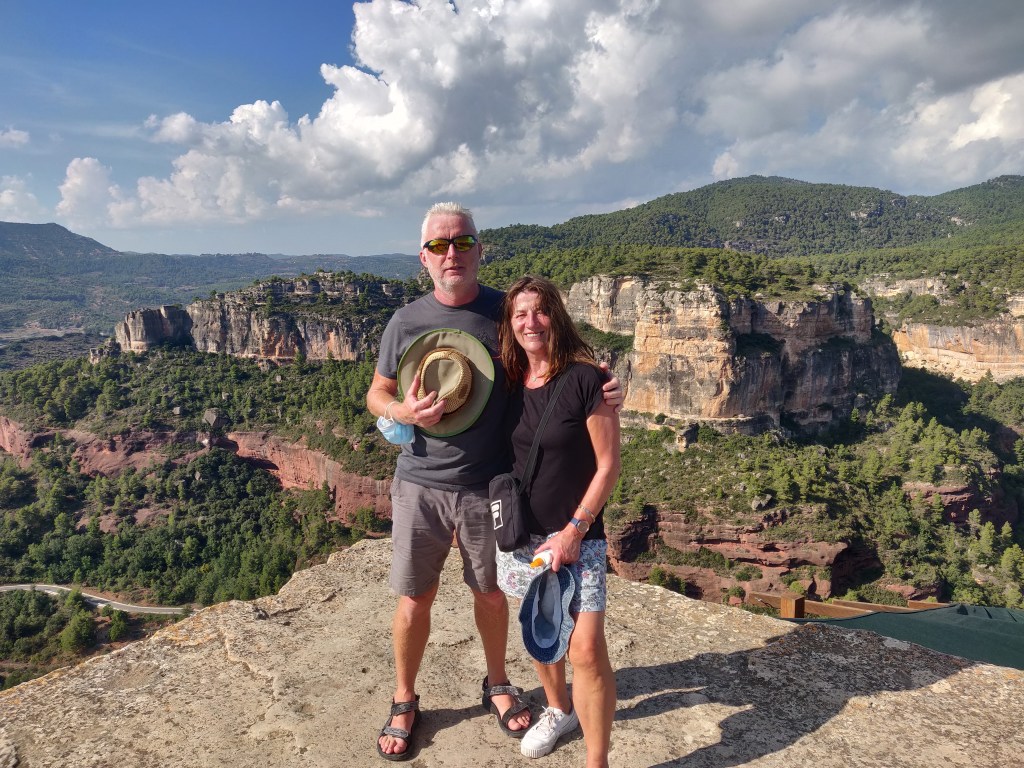
Soon it will be time to say Adios to Catalonia and Spain and Ciao to Italy. Spain has been a revelation with its natural beauty, gorgeous villages, history and good food……..in short, Spain is simply fantastico!!!!

We haven’t booked the ferry yet but hope to sail from Barcelona to Italy this Friday, Sept 24…..better get cracking

Catalonia – here we come

Moving in

It was time to move inland – it was already August 27 – and make our way to the other side of Spain to Catalonia where we had rented a holiday house with Ciaran and Christina, Caoimhin’s brother and wife and Louise, a South African friend of theirs for most of September.

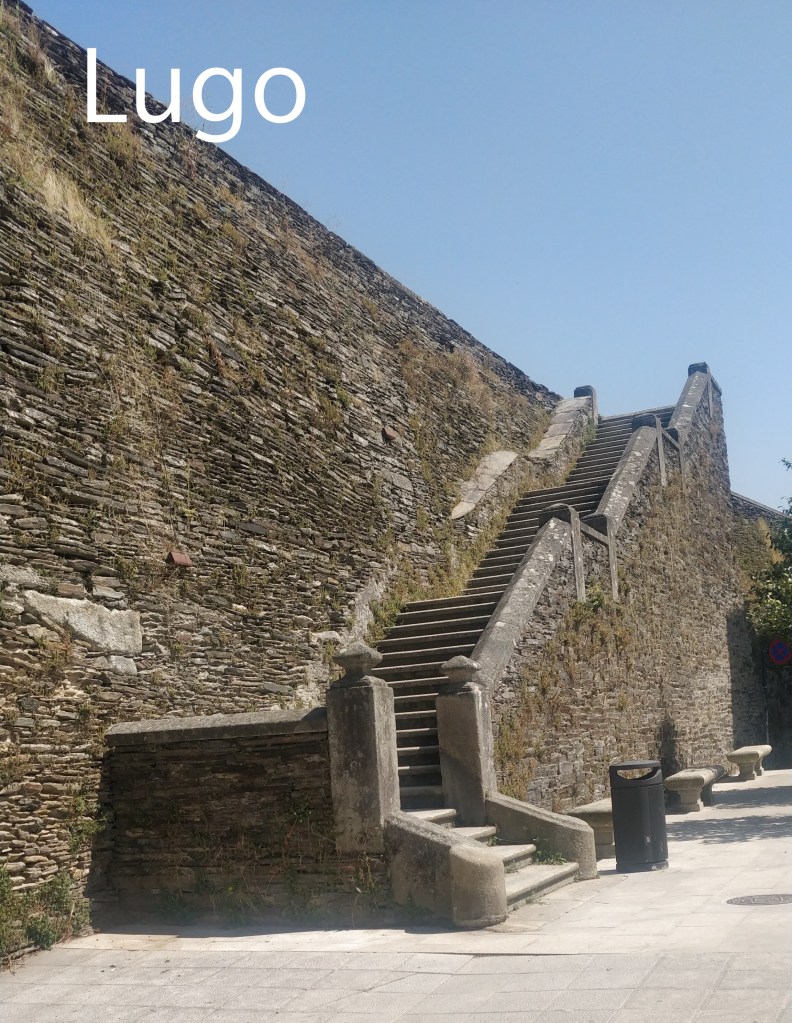
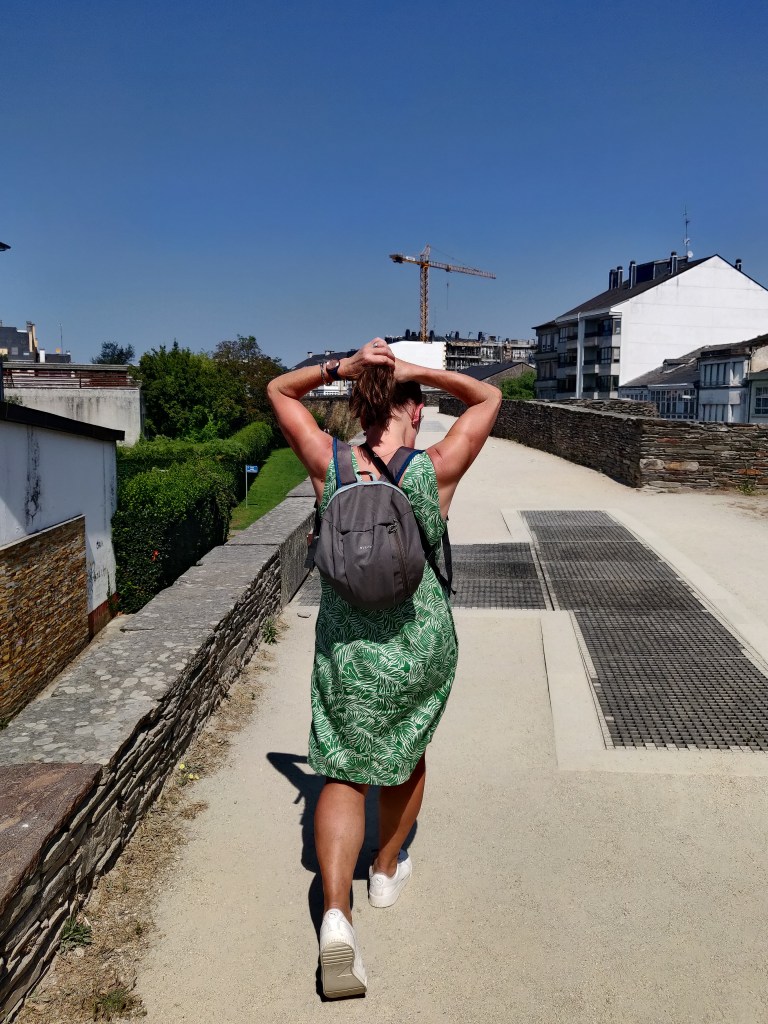
The morning in Galicia was grey and hazy – sea and sky were one – unlike the vivid blues and greens that we were used to and the temperature was a cool (almost goose bumpy) 18 degrees. We packed up the tent and decided to head inland. We stopped in Lugo to look at the impressive Roman walls. We climbed the steps and walked the 2 kms on top of the walls. It would have been a lovely walk at dusk or early morning but at 1 pm in 33 degrees, it was a walk for mad dogs only…..

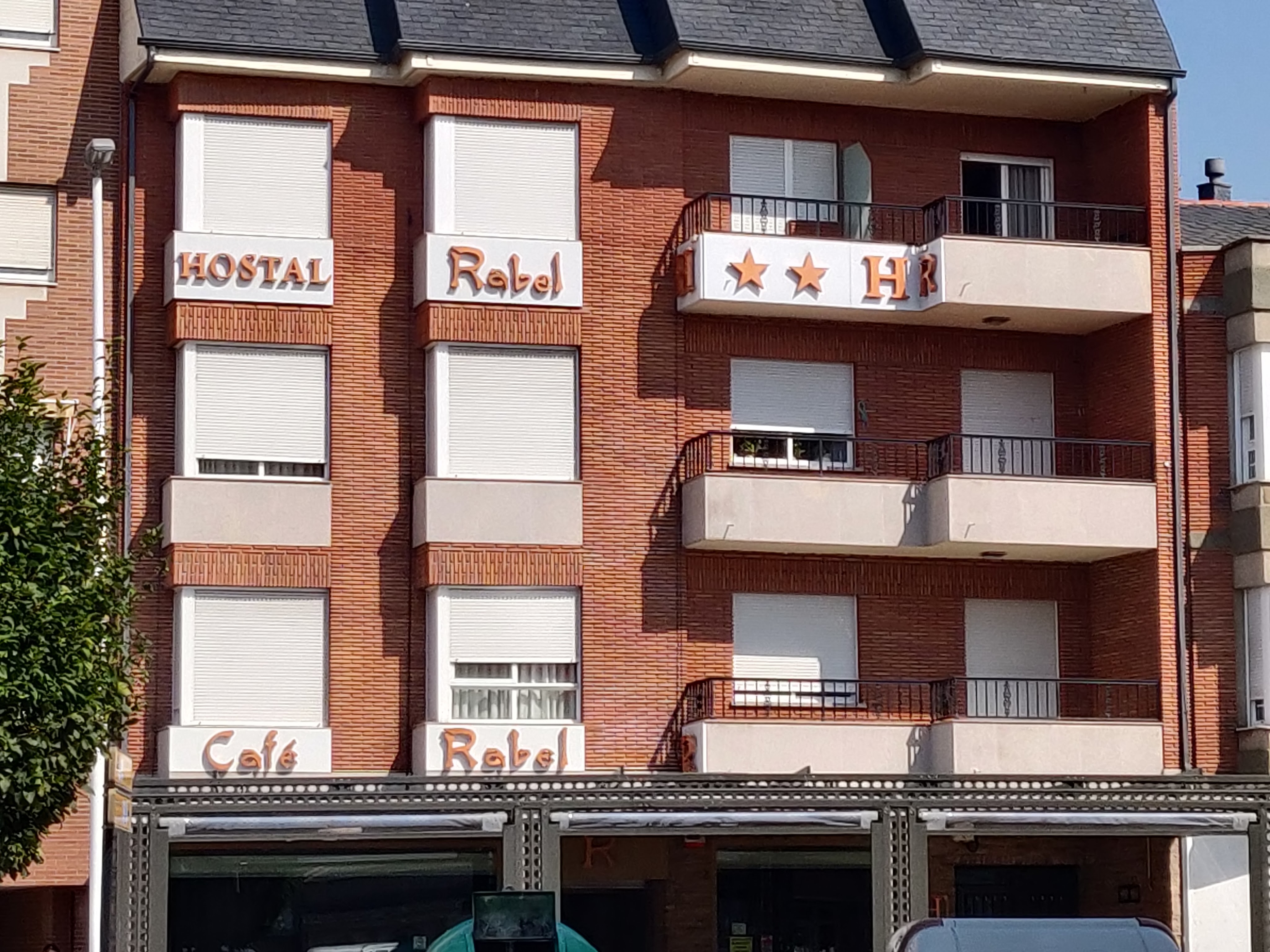
Afterwards while we were hydrating indoors in an air con café in the old town with good WiFi, we decided to give the camping a break. We booked a hostal there and then in Ponteferrada, a town about an hour and a bit away. (Hostals are different to hostels, they are cheap hotels usually two star).It was €50 for an en-suite room including breakfast and free parking so we weren’t sure what to expect. Hostal Rabel didn’t look very promising from the street and was over a little cafe/bar. But we were very pleasantly surprised – it was spotlessly clean inside with thick shutter blinds, crisp white sheets, bedside lamps (a luxury after camping) and wooden floors. It was bliss -cool and quiet with a fantastic shower and oodles of hot water and even complimentary toiletries. It was only a short walk from the old town. and there was even a good vegan restaurant (La Marmita Verde) up the street – we were the only customers in this meat obsessed country.

Hostal Rabel, Ponteferrada

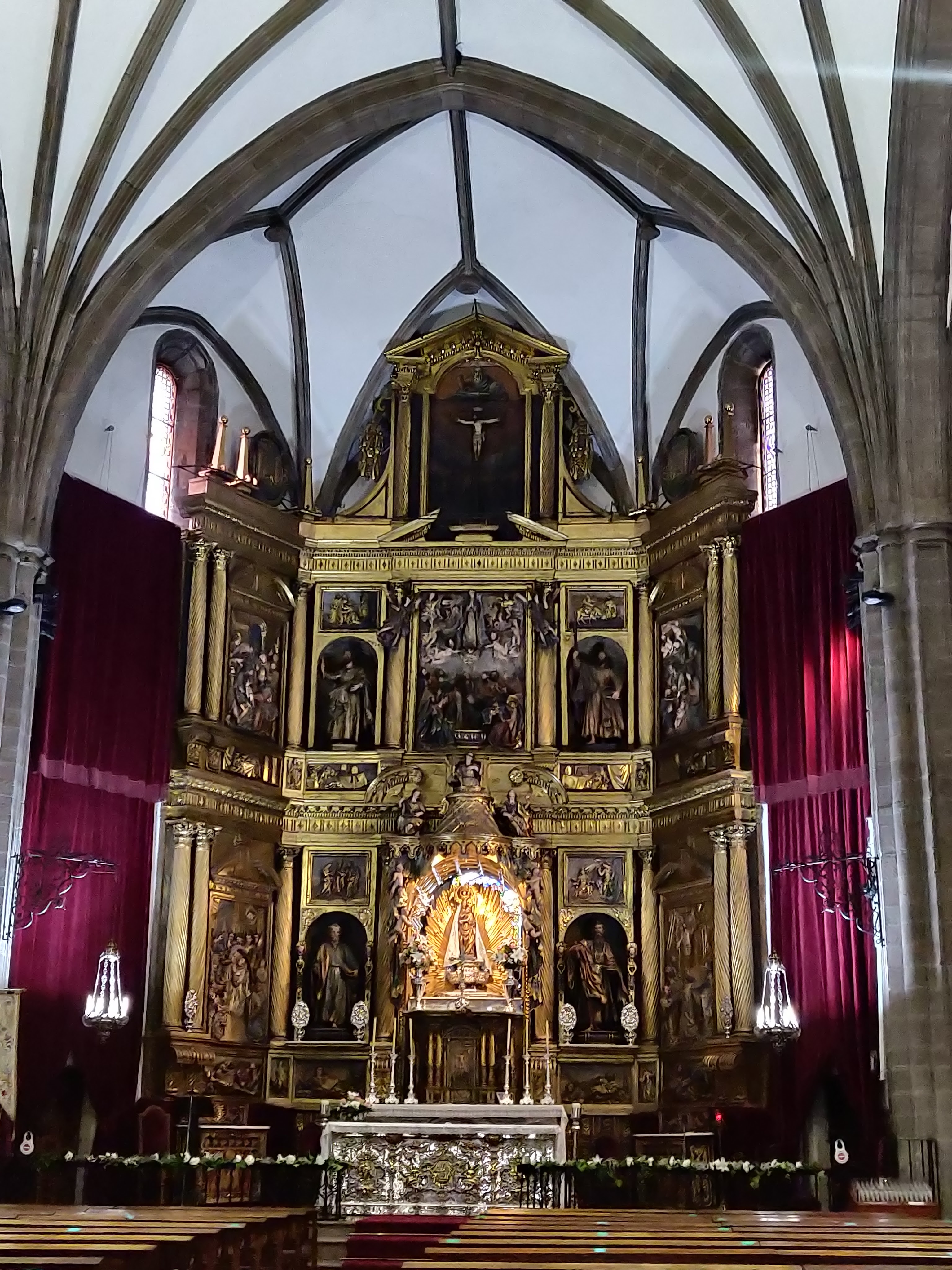
Ponteferrada is a medium sized town in the province of Leon surrounded by mountains and was a major stop for centuries on the French Camino. The old quarter of the town sits below a very imposing castle built by the Knights Templar near the iron bridge crossing the river Sil to protect passing pilgrims on their way to Santiago de Compostela. There were also several churches in the old town. We popped into the Basilica de la Encina where Gregorian chant music was being piped and were awed by the beauty of the building, the ornateness of the decor and the music. The building exuded power. It was actually spine tingling – the pilgrims who walked this route for salvation must have felt the urge to prostate themselves on the ground.

This image has an empty alt attribute; its file name is img_20210828_091304.jpg
Bascilica de la Encina, Pontferrada
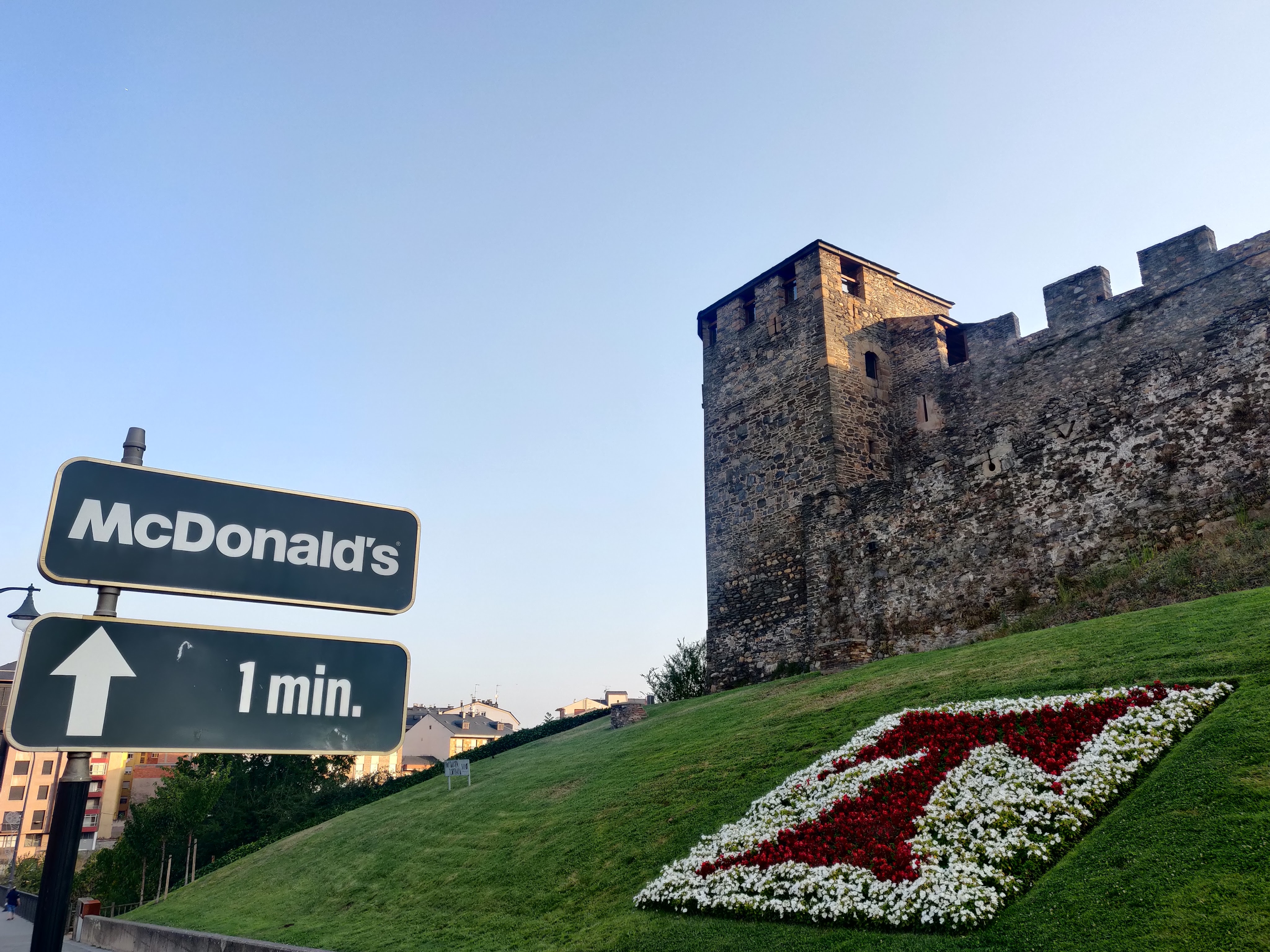
The Castle of the Knights Templar, Ponteferrada (and the big ‘M’ – One chain to another))

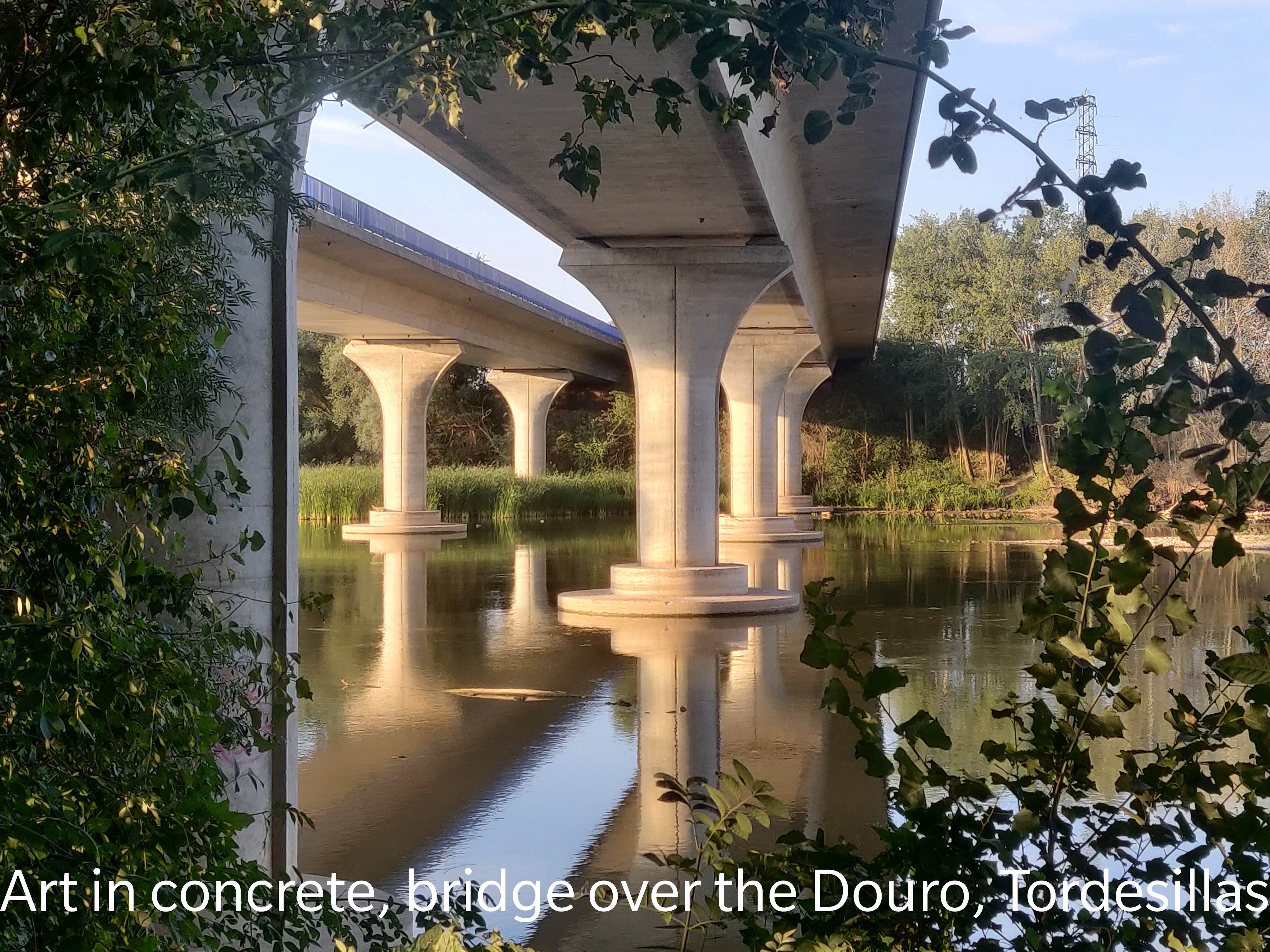
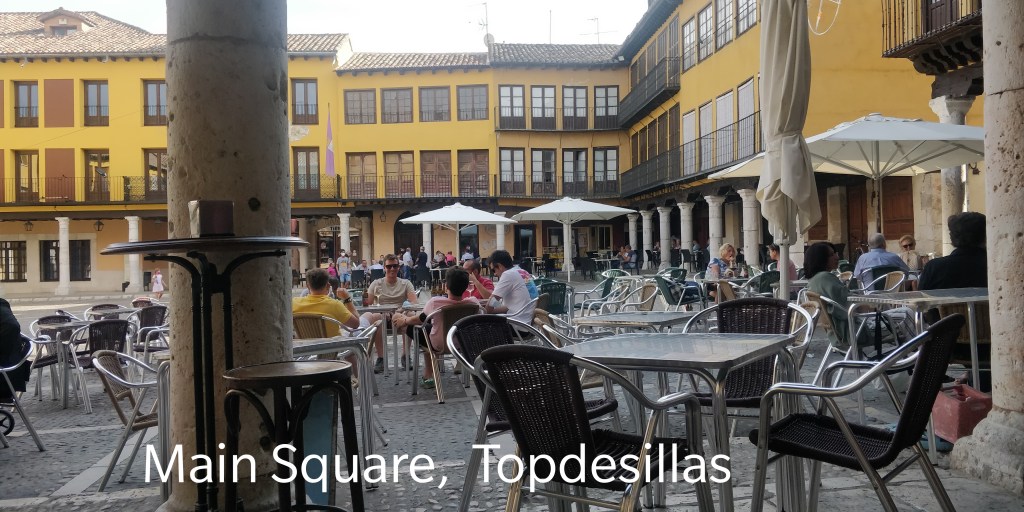
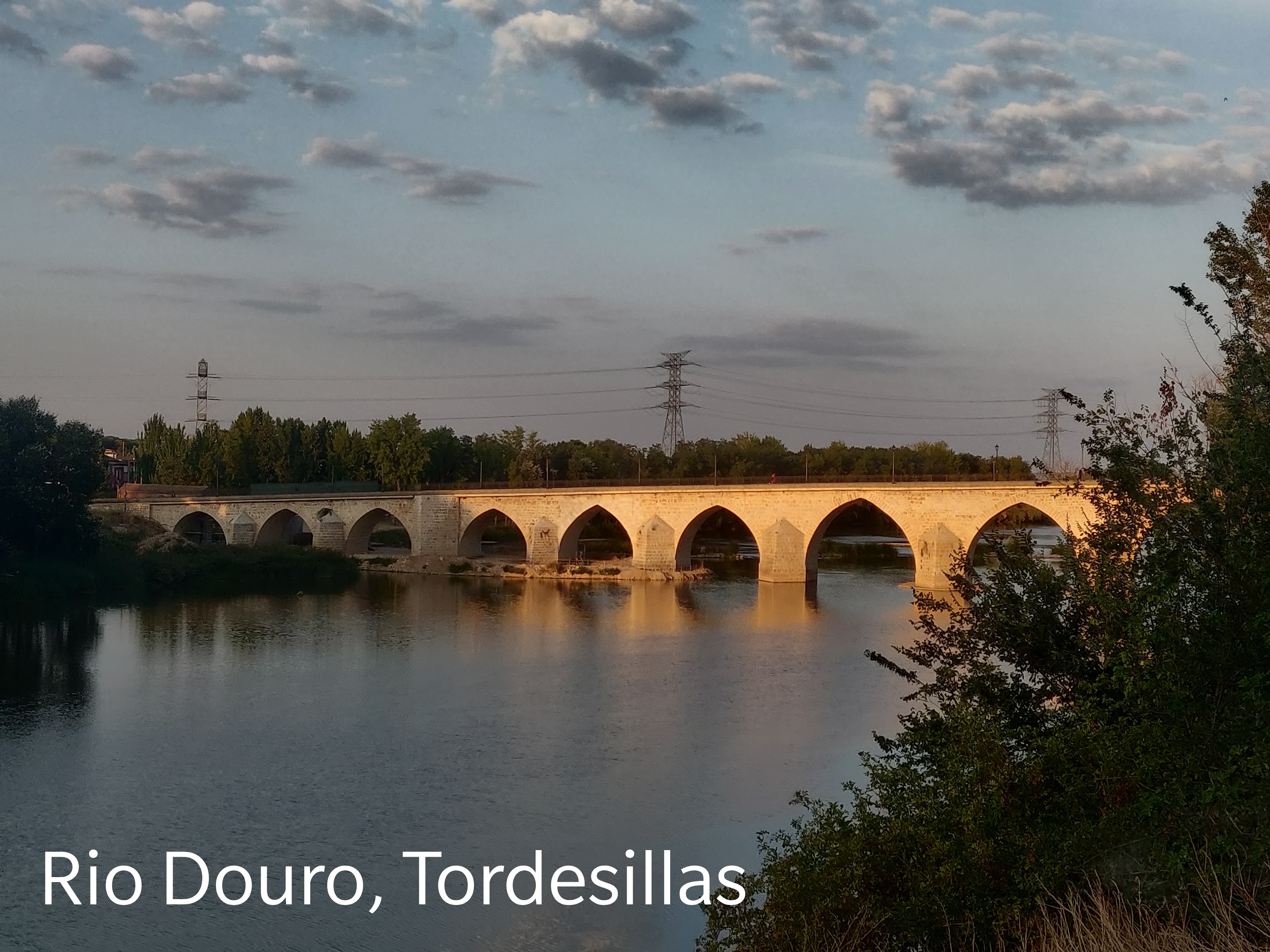
After our very pleasant stop in Ponteferrada, we headed southeast and drove for a couple of hours over dry flat landscape under a baking sun until we got to Tordesillas, a little town with a campsite that had good reviews online. The town didn’t look like much, the camping cost almost as much as our stay in the hostal the night before (€44)and had lots of rules, it was hot and dusty and as we pitched our tent, sweating in the dirt, we were regretting our decision to go there. But that changed when we crossed the bridge over the Douro and climbed the cobble streets of the old town. We had no hint of the treasures waiting up the hill – convents, monasteries, a palace going back to the twelfth century and a beautiful town square. Heat radiated from the stone walls but there was also a cooling breeze and birdsong, hundreds of doves and pigeons flying and an evening wedding in one of the old churches. We people-watched under the vaulted arches of the Square and drank cold beer in the shade. It was like walking through history and what history here – google the Treaty of Tordesillas where the American continent (most yet to be discovered at the time) was carved up between Portugal and Castille to avoid war on the Iberian Peninsula.. And the story of Joan the Mad, daughter of Isabel and Ferdinand who was banished here….who wasn’t ‘mad’ at all.

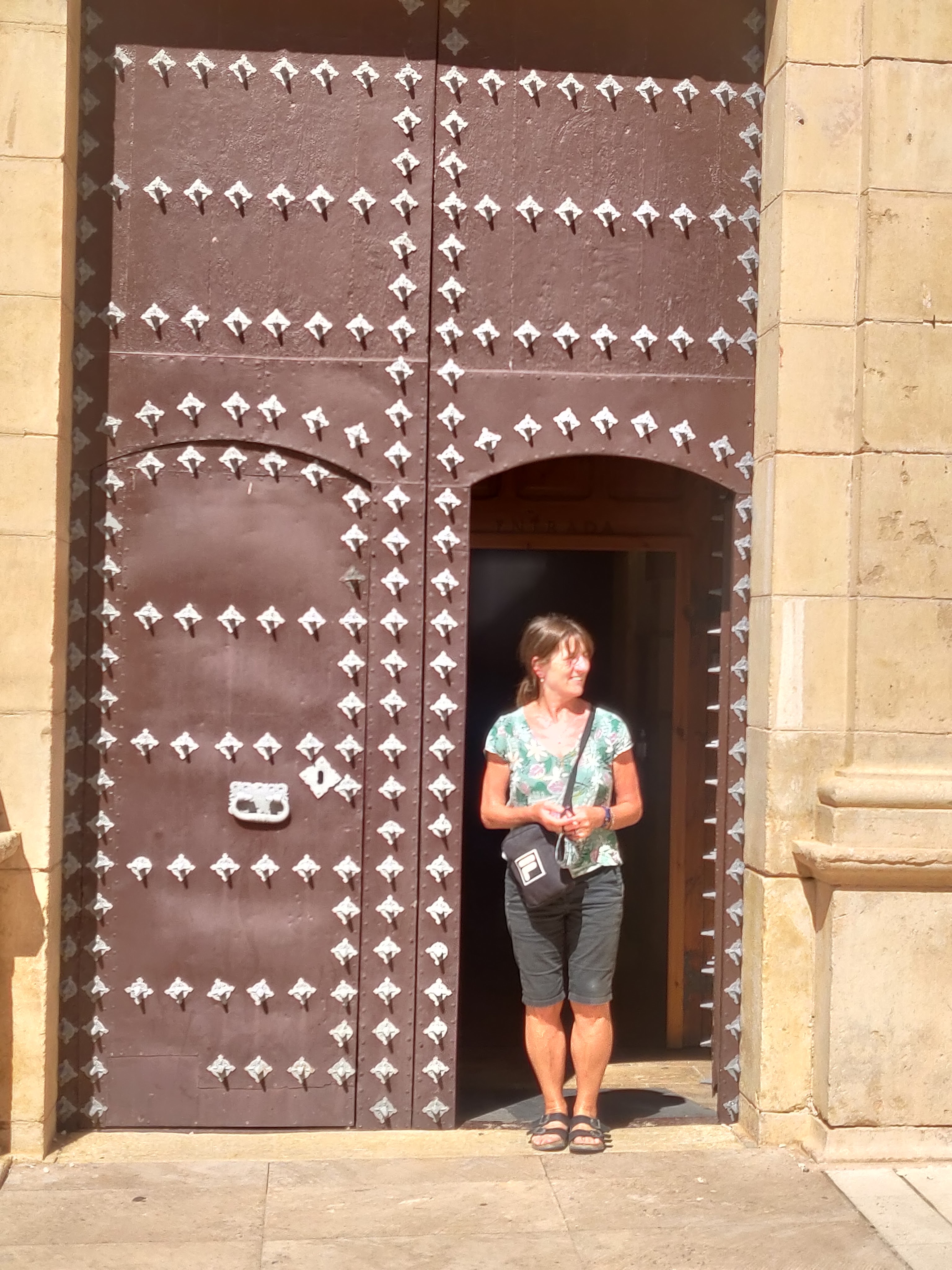
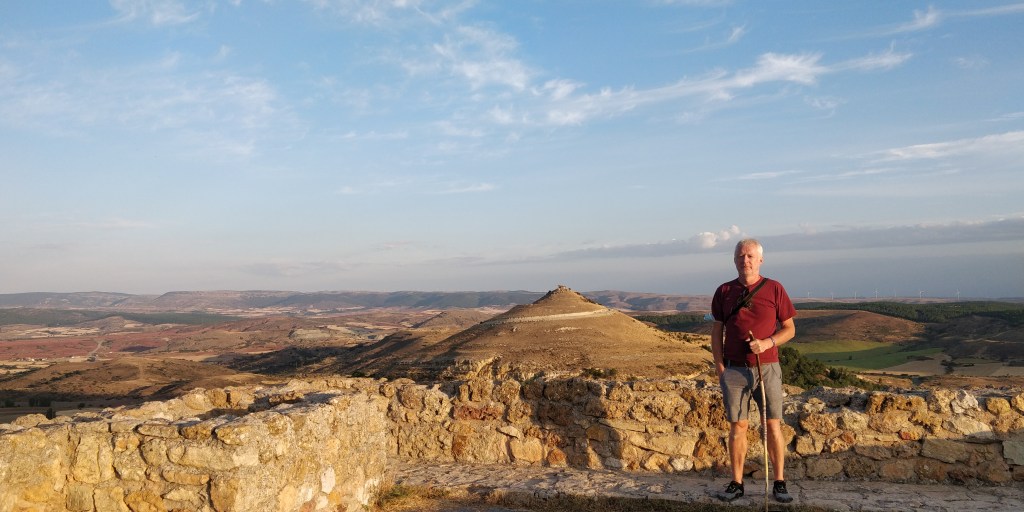
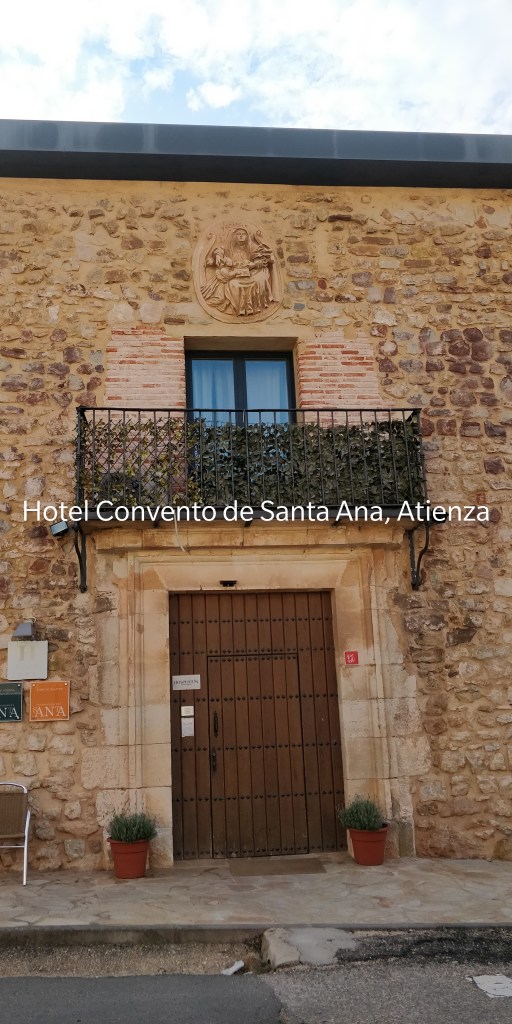
After a morning walk along the Douro under the shade of poplar trees, we drove off still heading east along the fertile Douro valley with its vineyards in the direction of Siguenza where we had booked a parador a few days previously for Monday night. It was now Sunday and we weren’t sure where we would break the journey or if we would camp overnight. We kept driving until we arrived in Atienza, a small village in Guadalajara with a ruined castle on the hilltop overlooking the village and knocked on the stout wooden door of Hotel Convento Santo Ana, a door that looked like it had admitted travelers for centuries. There were rooms available for €49 a night and we were stunned both by the price and by the beauty of the interior design, all muted colours with large sofas and lamps. Incredible value in a beautiful place. We wandered up to the village square where at 7.30 pm, we are too early for dinner anywhere ( a common problem as most restaurants don’t open until 9 pm) and make do with tapas, olives, bread, tortilla, crisps and wine.

Early the following morning, the smell of baking bread from the village bakery followed us up the hill to the ruins of the castle on the rock, once a very important seat of power and the interface between Christians and Muslims, frequently changing hands between the two. Atienza was part of the Ruta de El Cid (and even Don Quixote)but is now a mere hamlet of a couple of hundred people

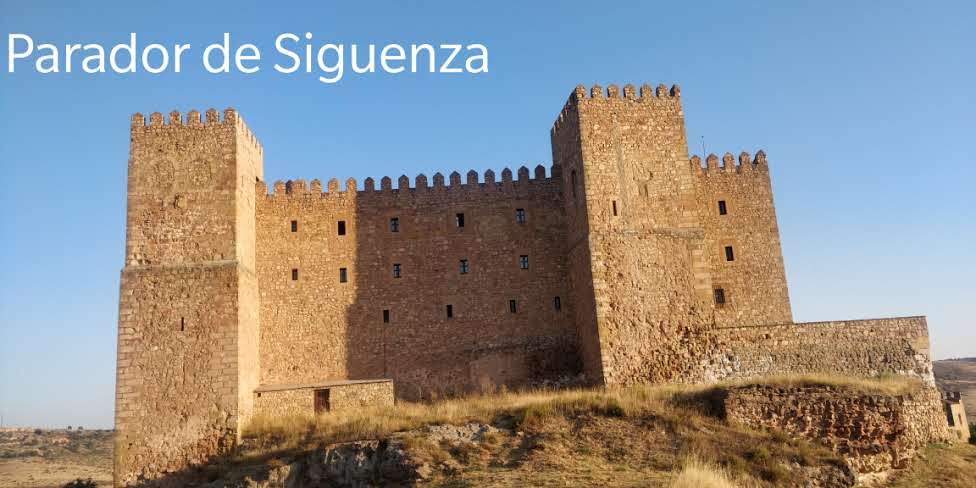
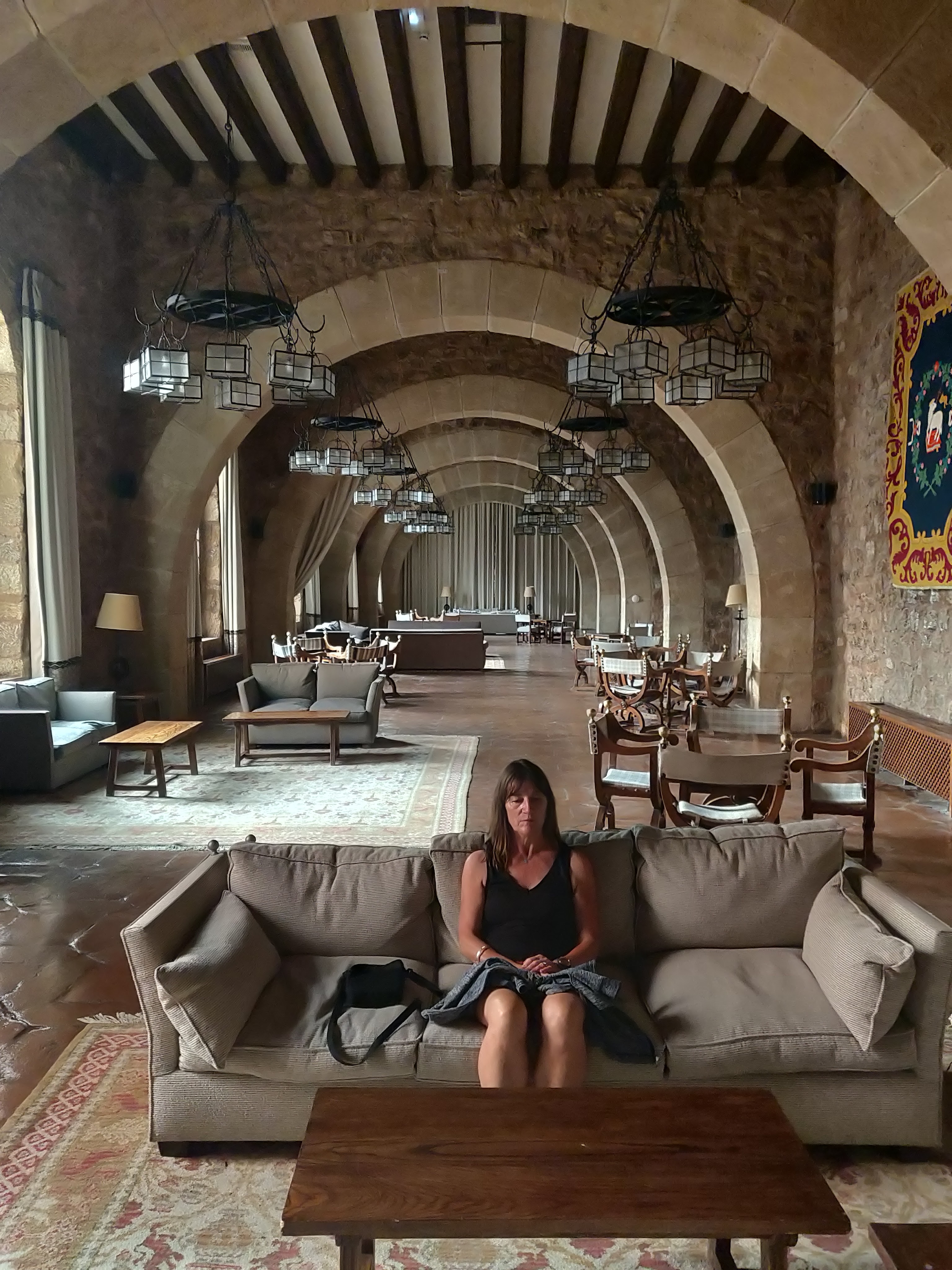
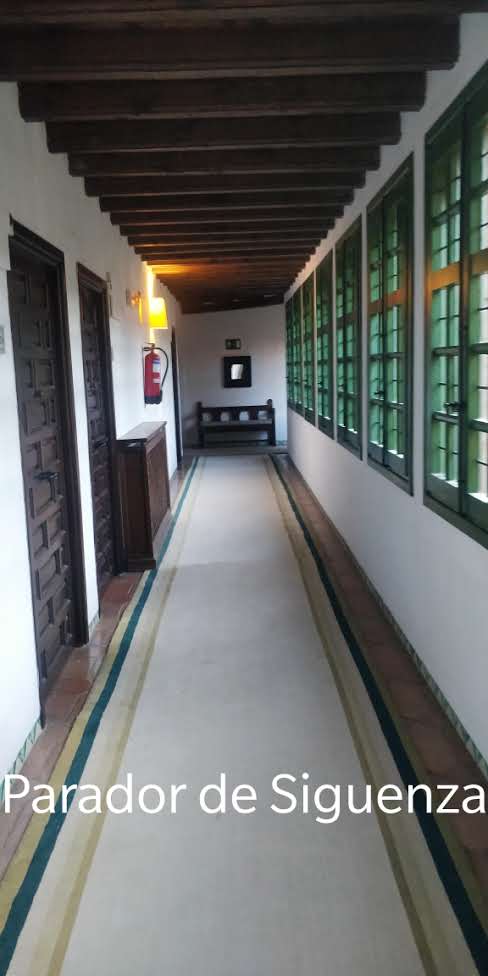
Then it was onward to Siguenza and luxury at the Parador of Siguenza, the Castle of the Bishops, a medieval castle with foundations dating back to the fifth century. Paradores are a group of historical buildings that are state owned and run as upmarket hotels at affordable prices. How could we resist staying in a castle for €140 for the night including a fabulous buffet breakfast? Siguenza is a beautiful little town with a stunning cathedral, narrow cobbled streets where the walls store up the heat of the day and release it in the balmy evening, where the barber was an ex-matador and the walls of his shop were covered with triumphant photos of himself in his heyday and the TV was tuned to some bullfighting event. But he did an excellent job of cutting Caoimhin’s hair. As we creep down the staircase for an early morning walk, the following day we notice lots of birds flying past a window at the end of one of the long corridors. We investigated and opened the window to see thousands of little swallows clinging to the castle walls like leaves and then flying off and landing again. It was a truly remarkable sight.

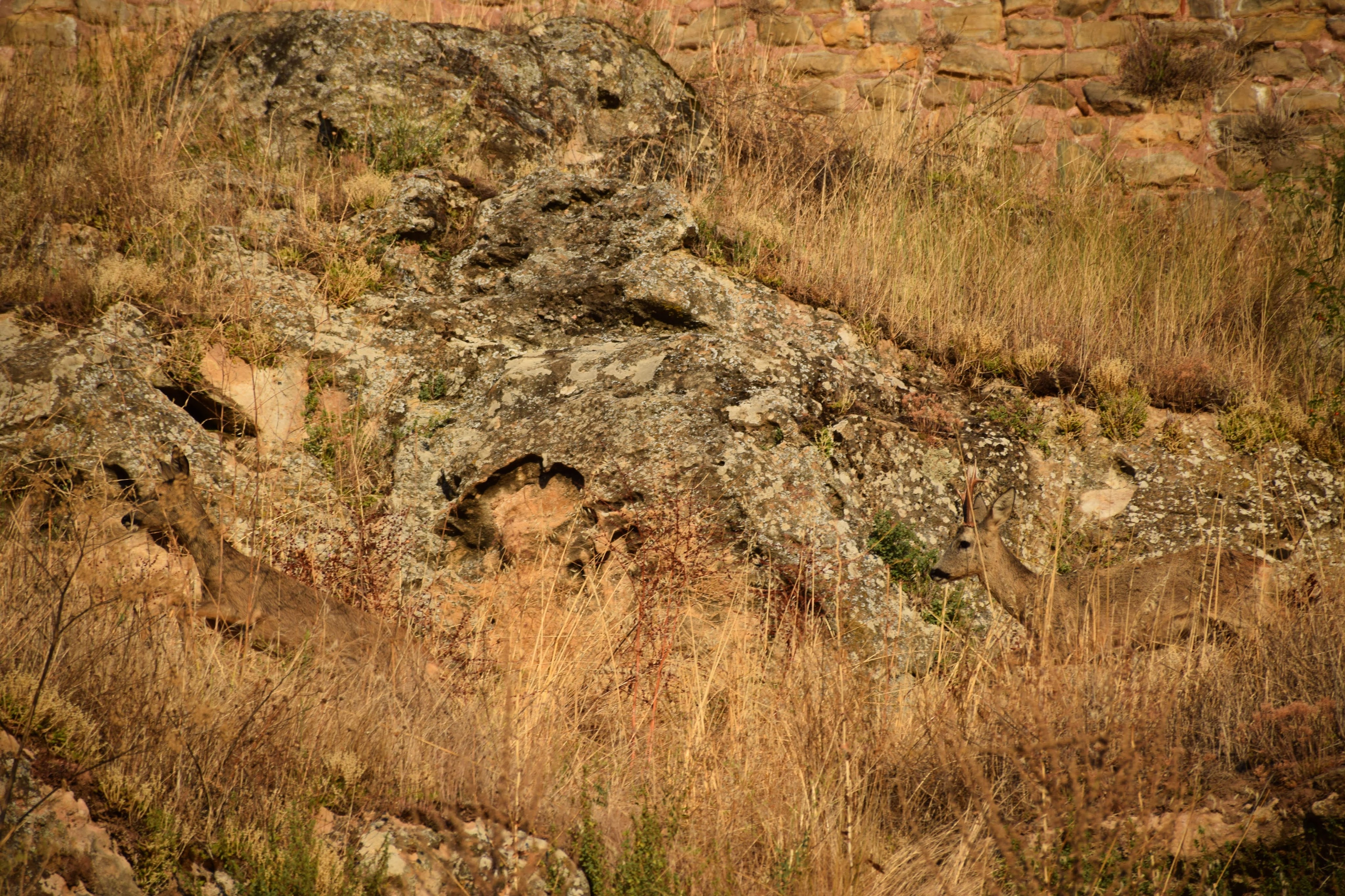
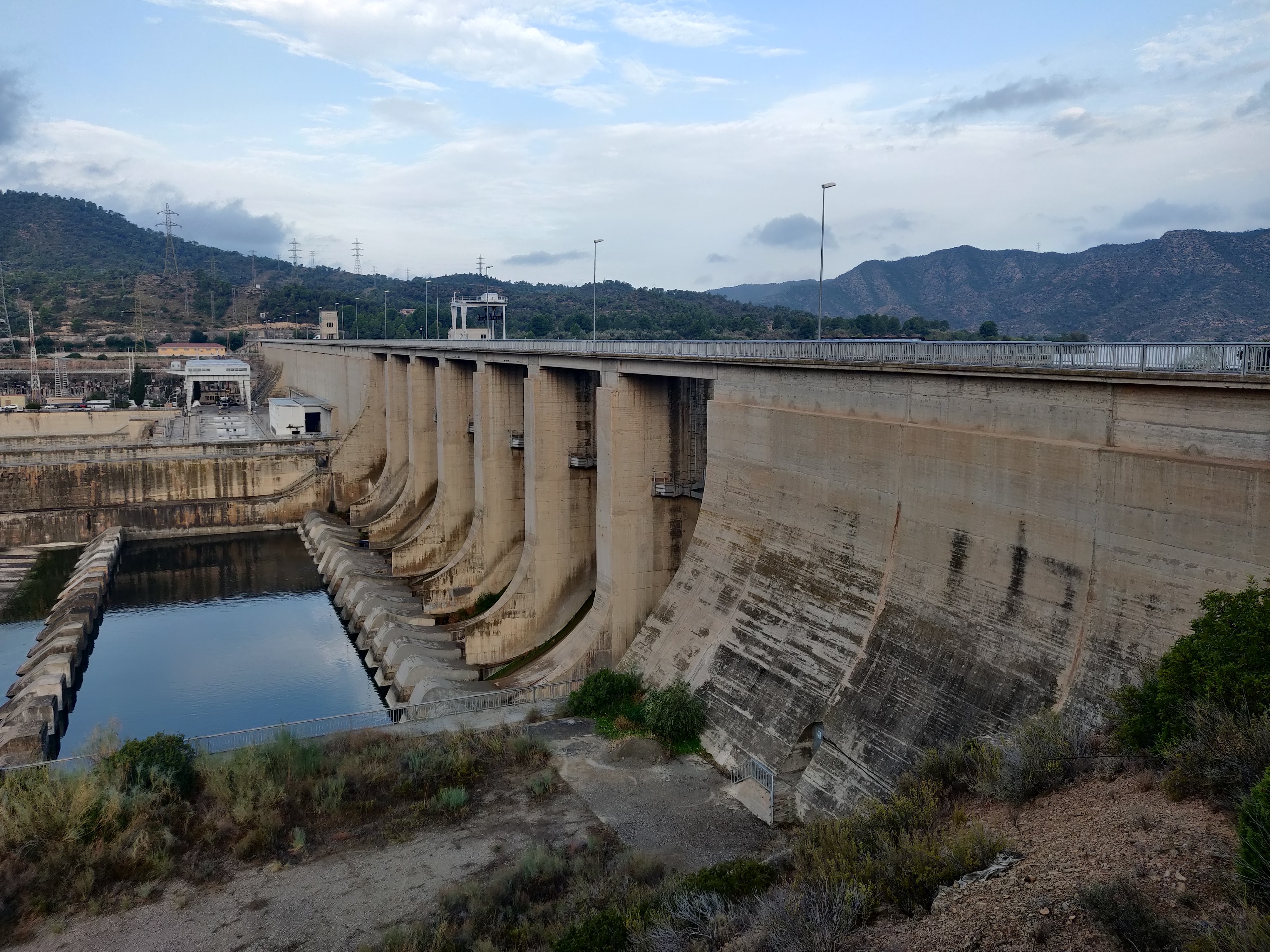
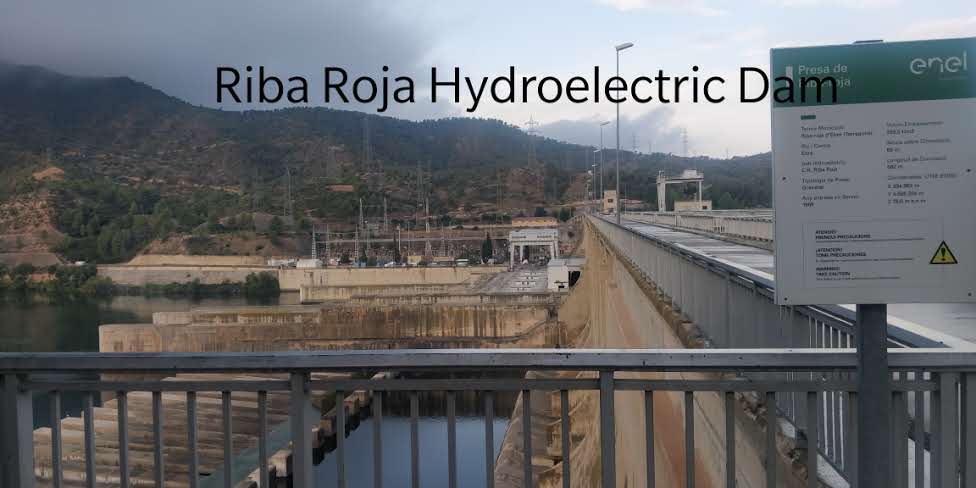
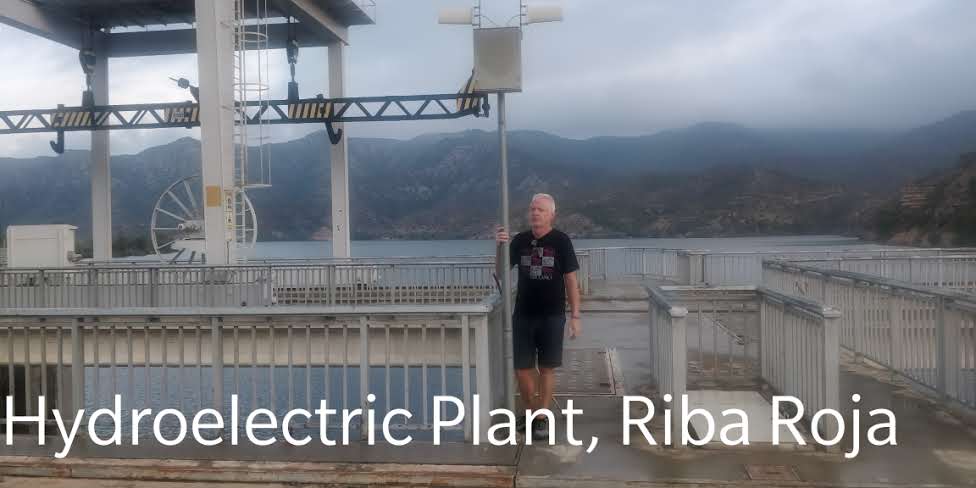
After the luxury of the parador, we come down to earth with a bang. A deer rant out in front of he car and we missed him by a hair’s breath. We had seen some deer in the long pale grasses beneath the castle walls but this was a closer encounter than we wanted. The amount of truck traffic after Zaragoza is incredible – trucks outnumber cars at least ten to one. We cross the border into Catalonia and camp at the Riba Roja campsite which has a disheveled air, dusty and wilted by the heat and with lots of flies. But there were no rules here about where to park or pitch your tent or wash your dishes which is refreshing. It was on the banks of a reservoir made by the impressive dam on the river Ebro for the Riba Roja hydroelectric plant. But there were also thunderstorm warnings and the access road to the campsite was along a narrow road cut into high cliffs which made us (I mean me!) a bit nervous. The pitter- patter of rain on the tent in the early morning had us scrambling to pack up. But the rain which was very light stopped almost as soon as it began so we walked up the road to have a look at the dam and the hydroelectric plant and heading to the Costa Duarada.

Travelling across Spain through the interior has been a revelation – we picked our stopovers at random and without research and could easily have stayed in different places but we were completely awed by the living history, beauty of the old towns and the quality of the accommodation. We traveled all the way on non-toll roads and thankfully no car issues to report!!

Can you see it? There’s a deer or two in this photo!! Great camouflage

Moving in

Galicia – Following the Light

Chasing Lighthouses

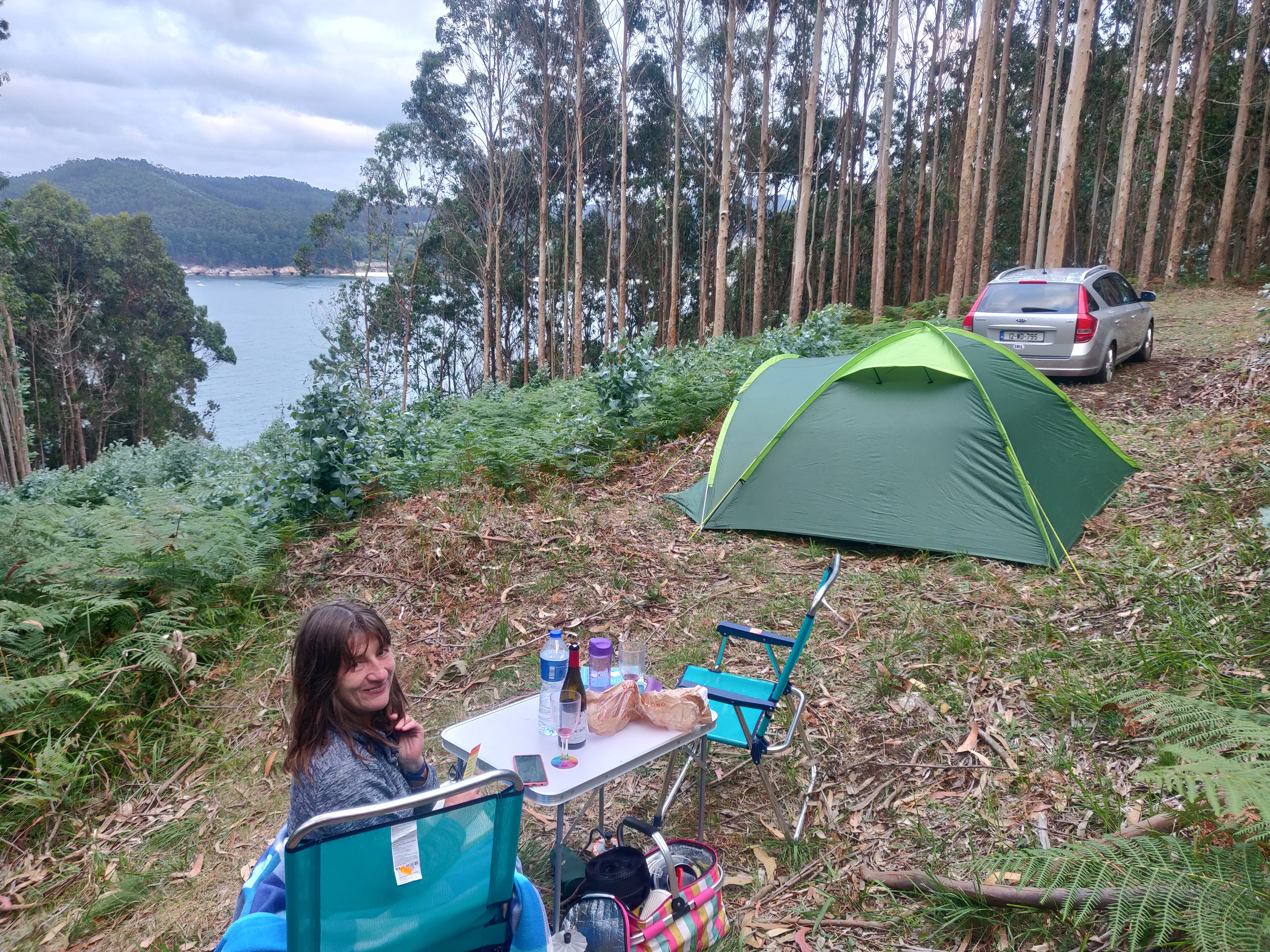
After inland Vilalba with a new car battery and some camping chairs and a camping table, we headed to the coast and the most northerly point in Spain. We went here on the advice of a English woman that we met in Vilalba (the tourist office was really unhelpful here but this woman overheard our queries) who told us that there were some wonderful hikes in this region, and it was sound advice. It’s a beautiful area of winding roads, forests, and little, sand-sand beaches but maybe we should have done more research because there weren’t any campsites – so we ‘wild’ camped in the forest among the eucalyptus trees and ferns.

The high swaying branches of the eucalyptus overhead sounded like waves crashing on the sea. It was soothing until some twigs and leaves landed on the tent during the second night when it became windy….and then I hardly slept, my imagination in overdrive….. while Caoimhin snored beside me.  

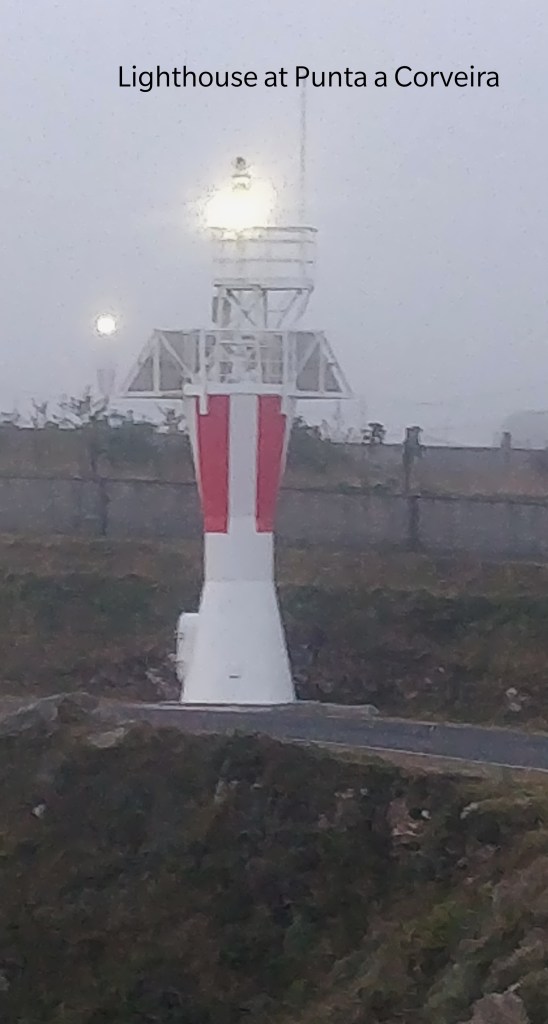
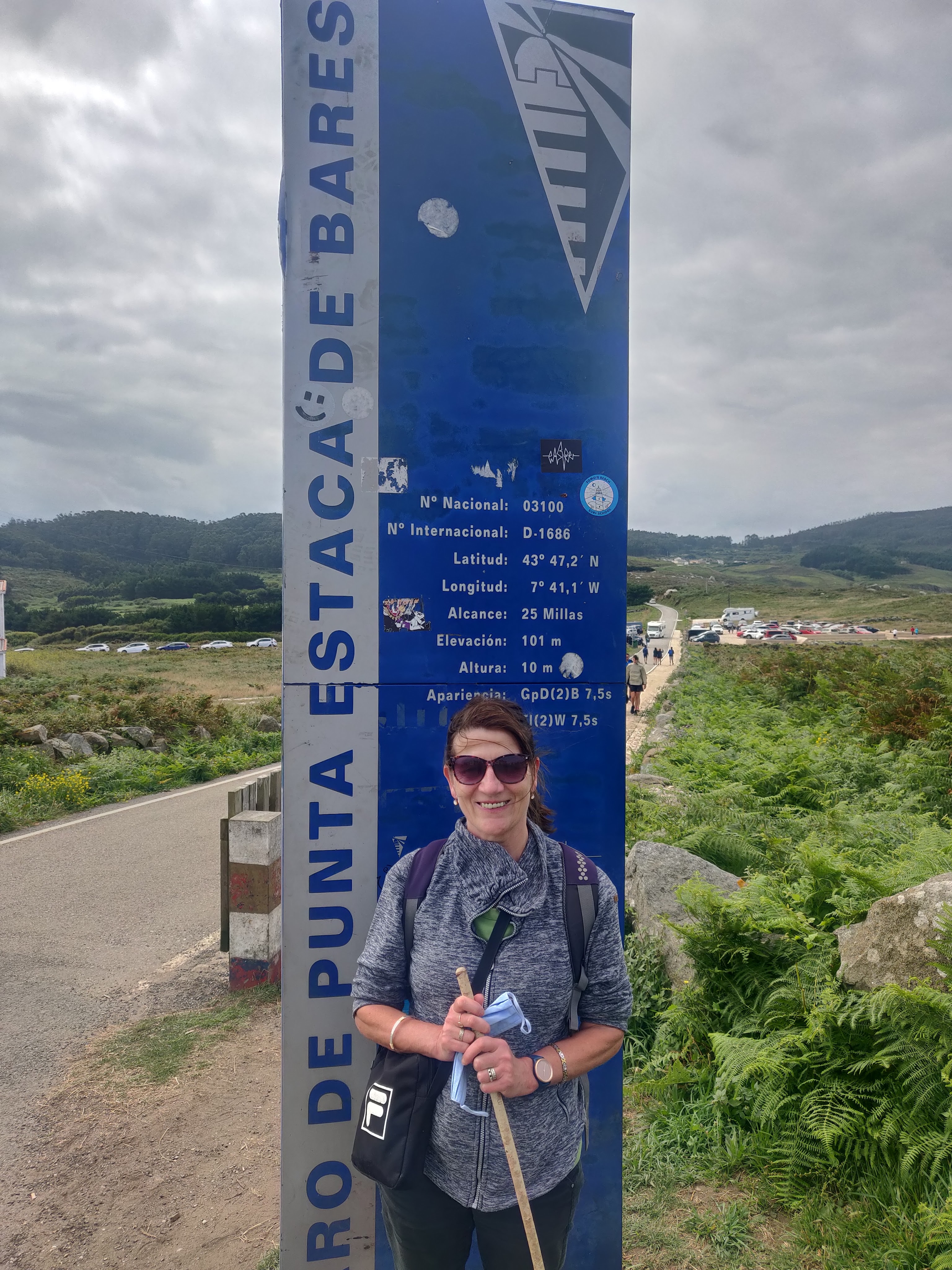
On a bright, breezy day, we walked out to the lighthouse, Faro de Punta Estaco de Bares at the most northly point of the Bares peninsula. The lighthouse was small and ugly with unpainted concrete, but the area was wild and beautiful with pods of dolphins in the rough sea

After two nights in the forest, we packed up and headed west (with no set destination apart from the need for a campsite and a shower) until we came to Valdovino, a small, hilly town with a long sweeping beach and a lagoon which was a protected area for wildlife and biodiversity (a bit like Tramore). We liked the feel of the place straight away, looked for a campsite and found A Laguna with views of the sea and hot showers (aah, the simple pleasures).

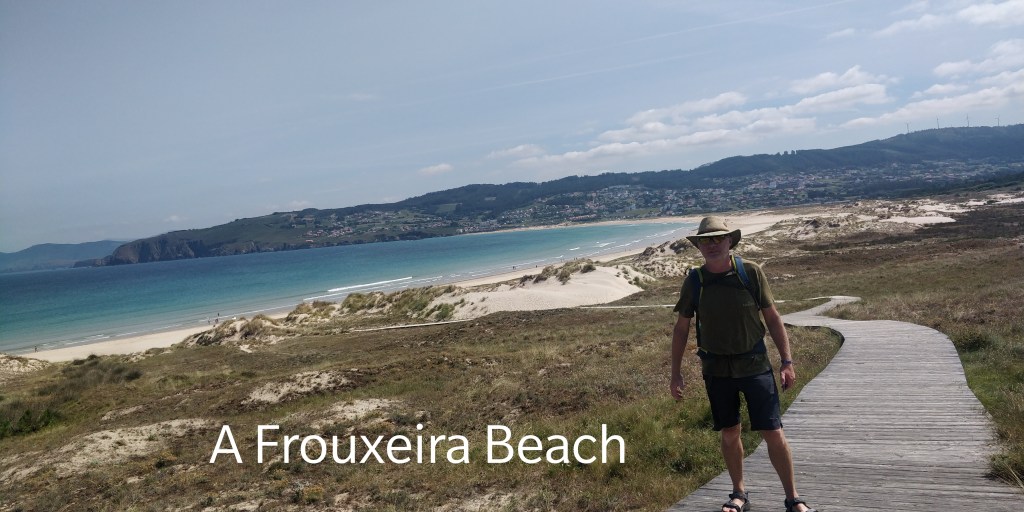
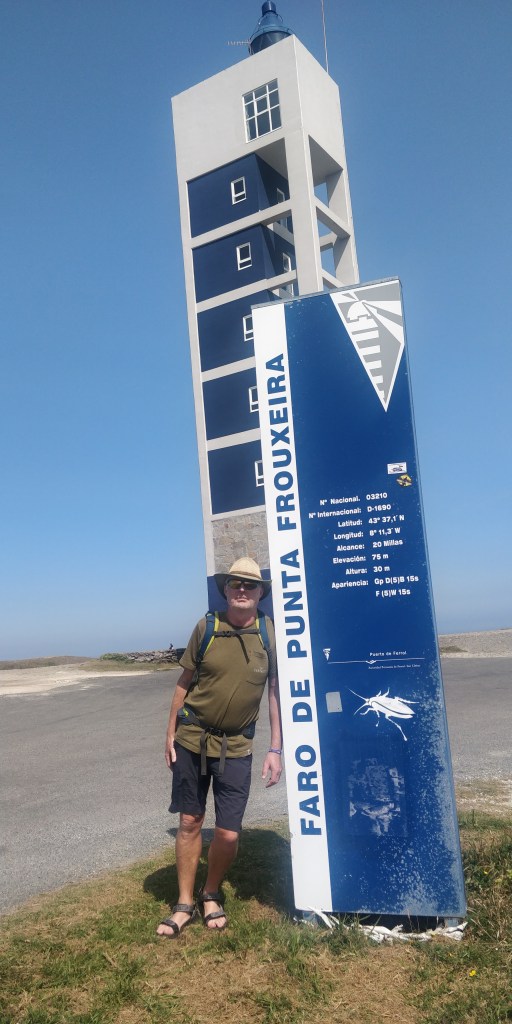
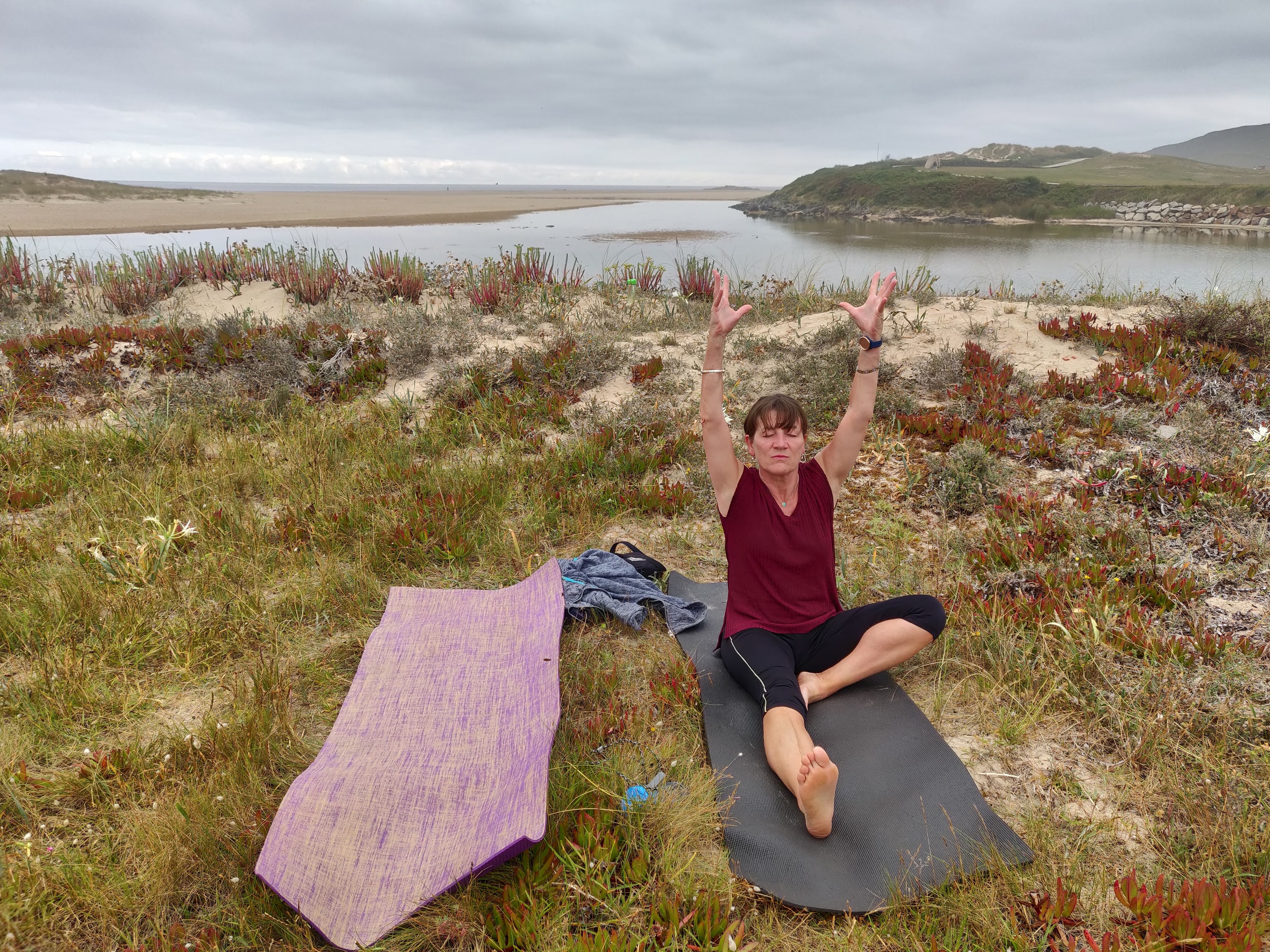
We liked it so much – and the weather was a glorious, sunny 28C every day – that we stayed for three nights. We did some yoga sessions on the beach and we hiked lots of coastal paths and cultivated the art of doing very little(not as easy as you’d think). We trekked to another lighthouse along beaches and trail paths, Faro de Punta Frouxeira, a very modern rectangular building of blue and white blocks in a stunningly beautiful area. Honestly, we got tired of saying ‘Wow!!’ as we rounded another corner.

Yoga by the Lagoon

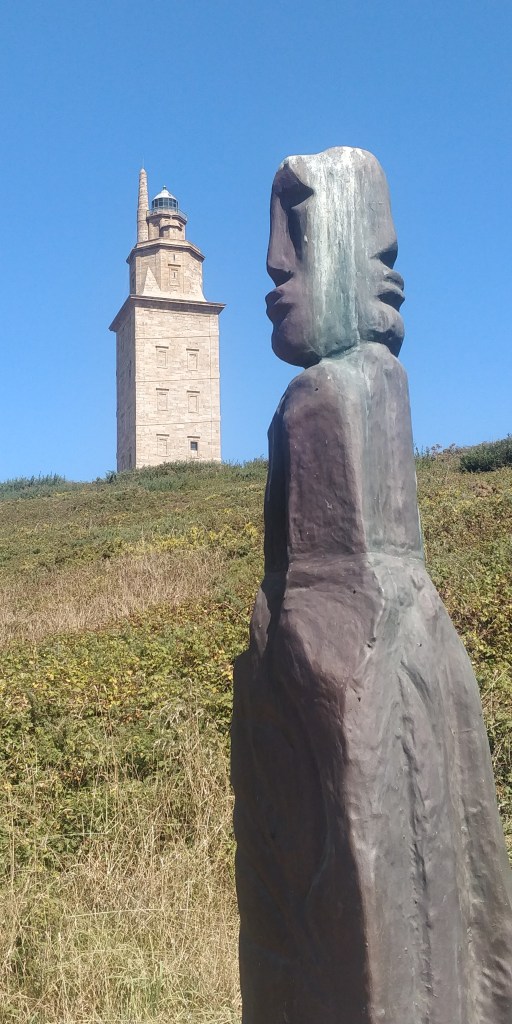
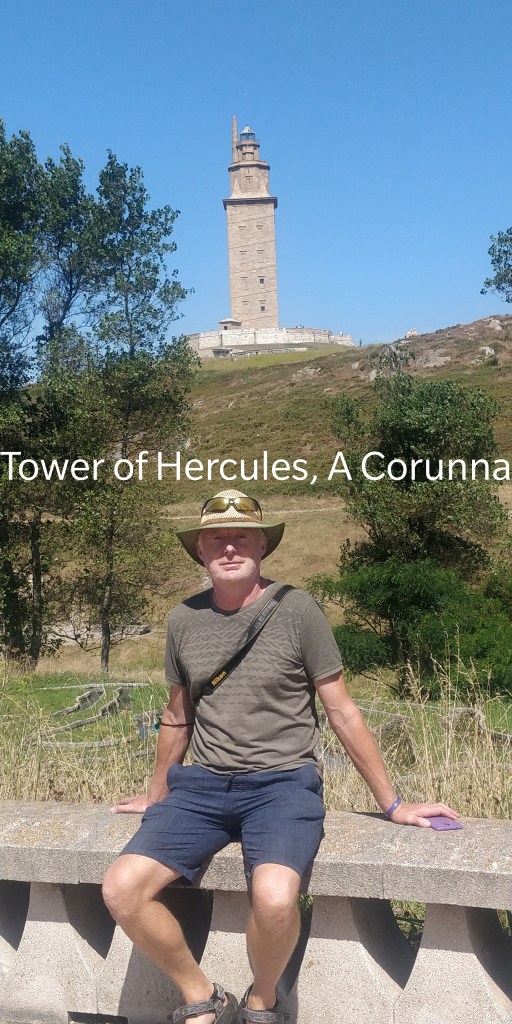
A few days later, we were in A Coruna to look at a very different lighthouse, the Roman lighthouse known as the Tower of Hercules which sits on a headland just at the edge of the city.  This is the oldest surviving lighthouse – it was magnificent both for the building, the location, and the sculptures on the paths leading up to it. I don’t think that it would have the same appeal if it had simply been called the Roman lighthouse instead of the Tower of Hercules. It was so popular an attraction that we had problems finding parking – for a while it seemed that the closest we would get was a distant view from the car window as we drove round and round the streets but eventually we found a parking space. There are some great walks here along the headland near Hercules.

After admiring Hercules, we headed off to another campsite still going west….or we tried to… but Google, usually our reliable friend, kept rerouting us around the streets of A Coruna, round and round we went along one-way streets, missing our turn-offs.  We were hot, tired, hungry and a bit frazzled – so much so that we pull over at a Burger King. Junk food never tasted so good or so restorative! And we found our way with ease after that.

We keep acquiring things, a clothesline and pegs, a fly swatter, a cool box bought in Ferrol, the birthplace of Franco (his statue is no longer on public display but is confined to a military barracks in the port area). The cool box had a 12-volt socket so that it can be plugged into the back of the car which is great for keeping things chilled – especially the white wine. But we discovered how hard this was on the car battery especially if left plugged in for most of the day and night when we were camping at Camping Balcoba, a hilly campsite shaded by sycamore trees overlooking the sea.  The car battery was dead as a dodo and the car was facing the wrong way – it would need to be pushed uphill first. We looked around – our nearest neighbours were a helpful young couple in a van but they were slight and we needed more muscle and fortunately another couple down the hill spotted our predicament and lent a hand. They were travelling with two dogs (something like pitbulls) and a set of dumbbells and bench press – I think the woman could have pushed the car uphill on her own. Despite the pushing, the engine simply coughed down the hill and refused to turn over – it required jump leads. Hopefully, this will be the end of the car trouble.
 Camping in Galicia was great – we camped in three different campsites – all shady – along this stretch of the Galician coast from Fares to Paia Vilcovo, west of A Coruna. We hadn’t booked any of them in advance, but we had no problem finding a site to camp. Prices averaged around €22 euro a night for 2 people, a tent and a car.

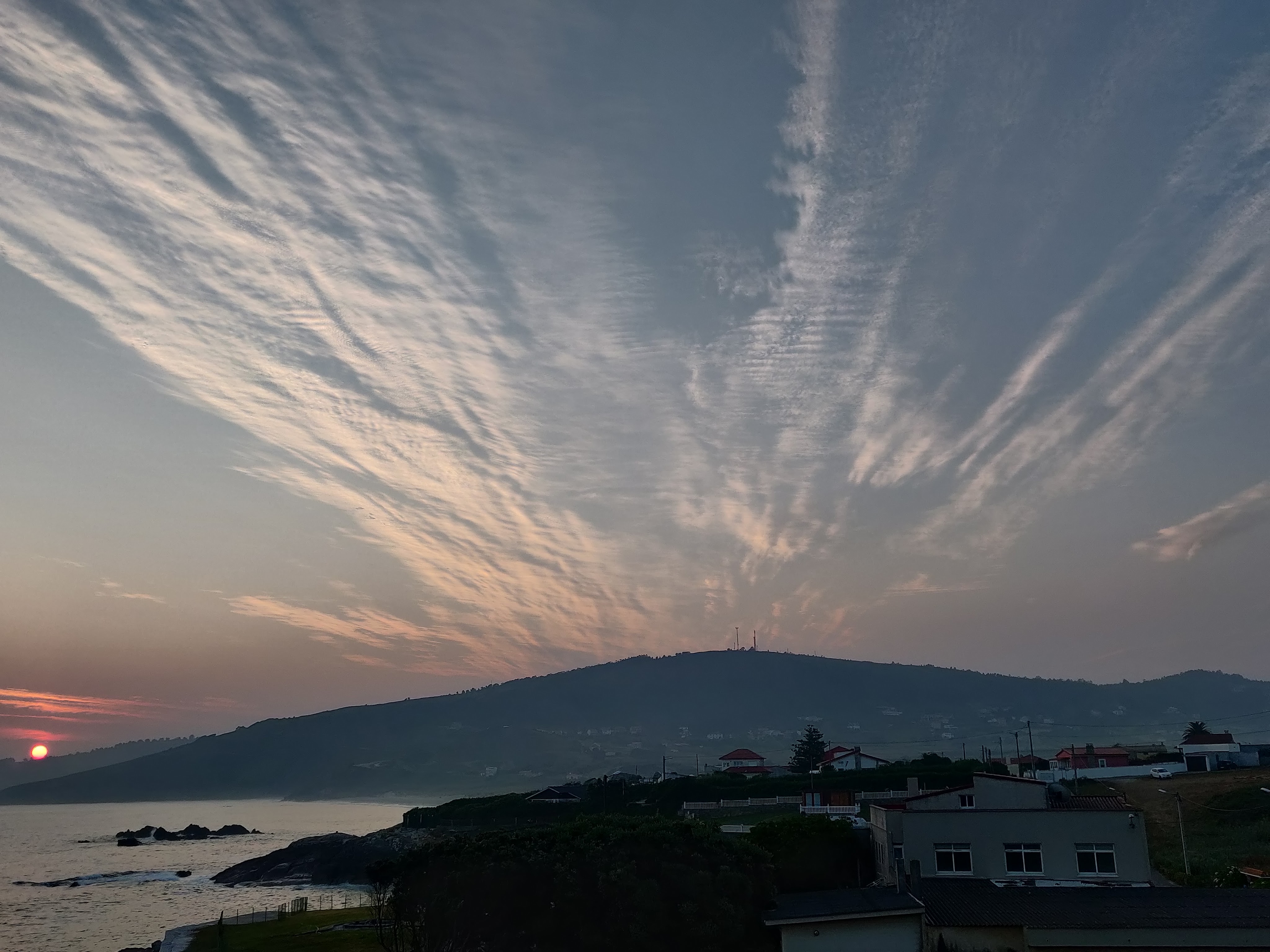
Life is good – chilling by the sea

Walking in Galicia is wonderful – suitable for everyone even those with dodgy knees.  The coastal paths are really amazing with signs, maps, good surfaces, boardwalks, and lots of picnic benches. Most of the beaches have showers, toilets and foot wash taps. In the early mornings, the beaches are raked smooth with tractors and all the rubbish bins are emptied. We didn’t do any established walks but merely walked for two or three hours along the coast from wherever we happened to be.

Although we followed our own version of a Lighthouse Camino, there is an established walk called The Lighthouse Way (Camino de Faros), a 200 km hike along the Costa del Morte section of the Galician coast which sounds really interesting – a walk from lighthouse to lighthouse along the coast of death. It begins a little further west from where we were …. And is worth googling. I think that we will have to come back this way again.

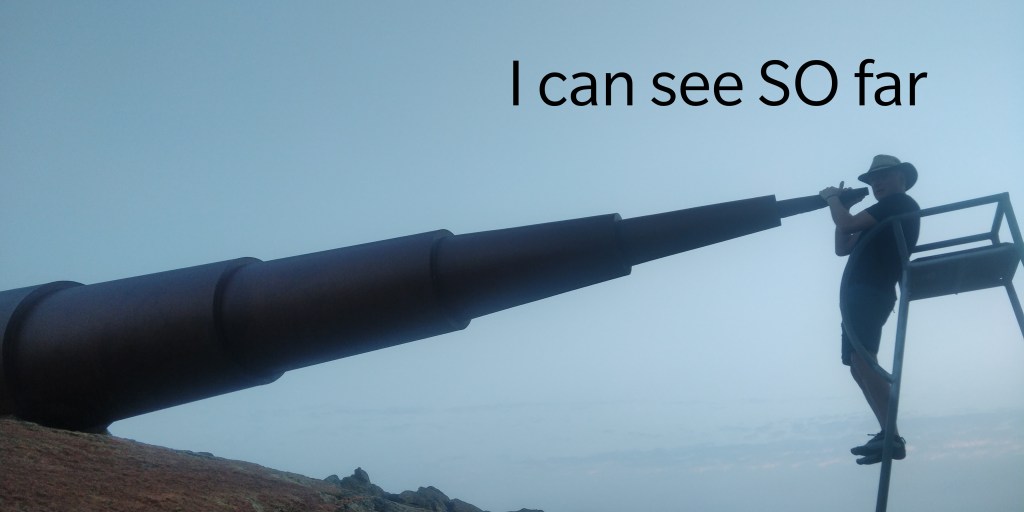
Giant Telescope on the coastal path near Valcova, Galicia.
Caion, a beautiful fishing village in Galicia.

Galicia – Following the Light

Beyond Bilbao

After a few days in Bilbao, it was time to hit the road west and what a road.

Jaw-dropping scenery from Bilbao to Santander to Gijon and beyond. The road is high with sea and white sand beaches to the right and forests and mountains to the left. We drove from Basque country through Cantabria to the region of Asturius. The infrastructure was amazing with viaducts, beautiful bridges, long tunnels and best of all, no tolls, on this route – a truly wonderful drive …..and the car kept going although we have taken to parking on hills in case we have a repeat of the episode getting when we were getting on the ferry.
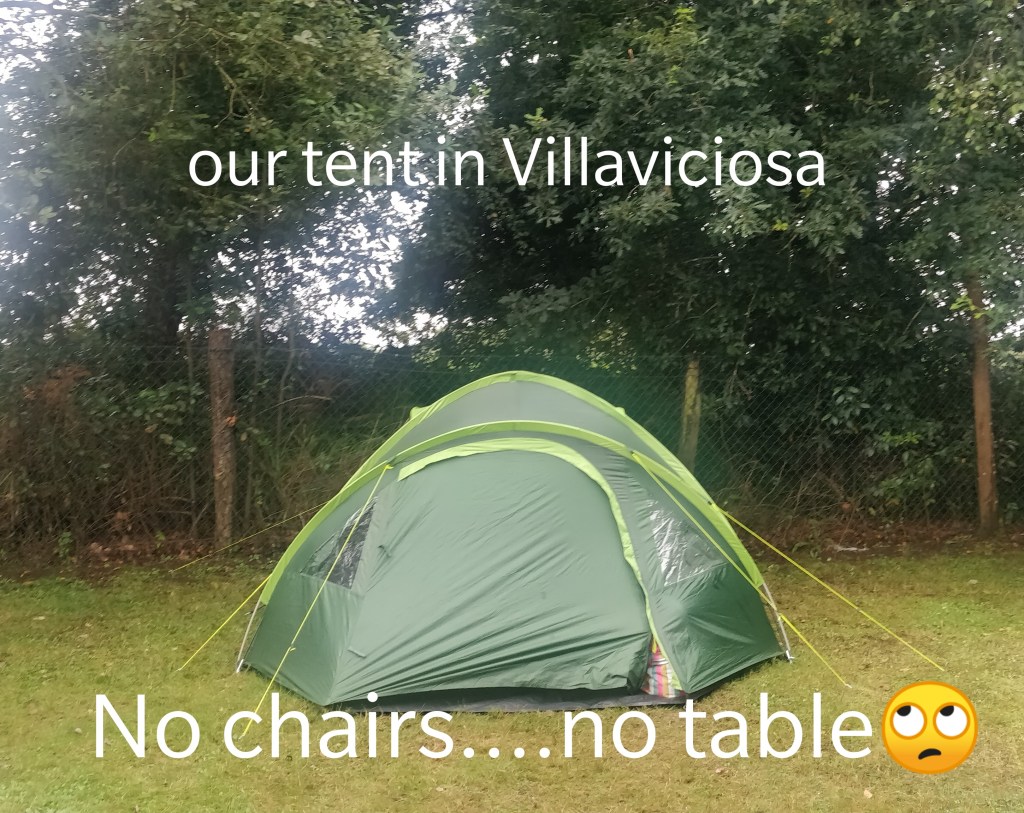
We set up camp for the night outside Villaviciousa in Asturias – some other campsites nearer the sea were full and when I say full, I mean jammed – barely room to walk between tents although they would probably have squeezed us in somewhere. It was mid-August and a holiday weekend. We put up the tent under the trees and then discover that we have forgotten to bring the camping chairs and table – we have left them in our garden shed. We had been complimenting ourselves about how well we had packed. Now we knew why everything fitted so well into the car!

After one night camping and sitting on the wet grass (it rained all night – the only rain for weeks), we moved on, still following the coast with the blues of sea and sky to our right and the greys and greens of mountains to our left with a mist blowing over the Picos. There were tiny coves with towering cliffs and red tiled houses clinging to sloping mountainsides.

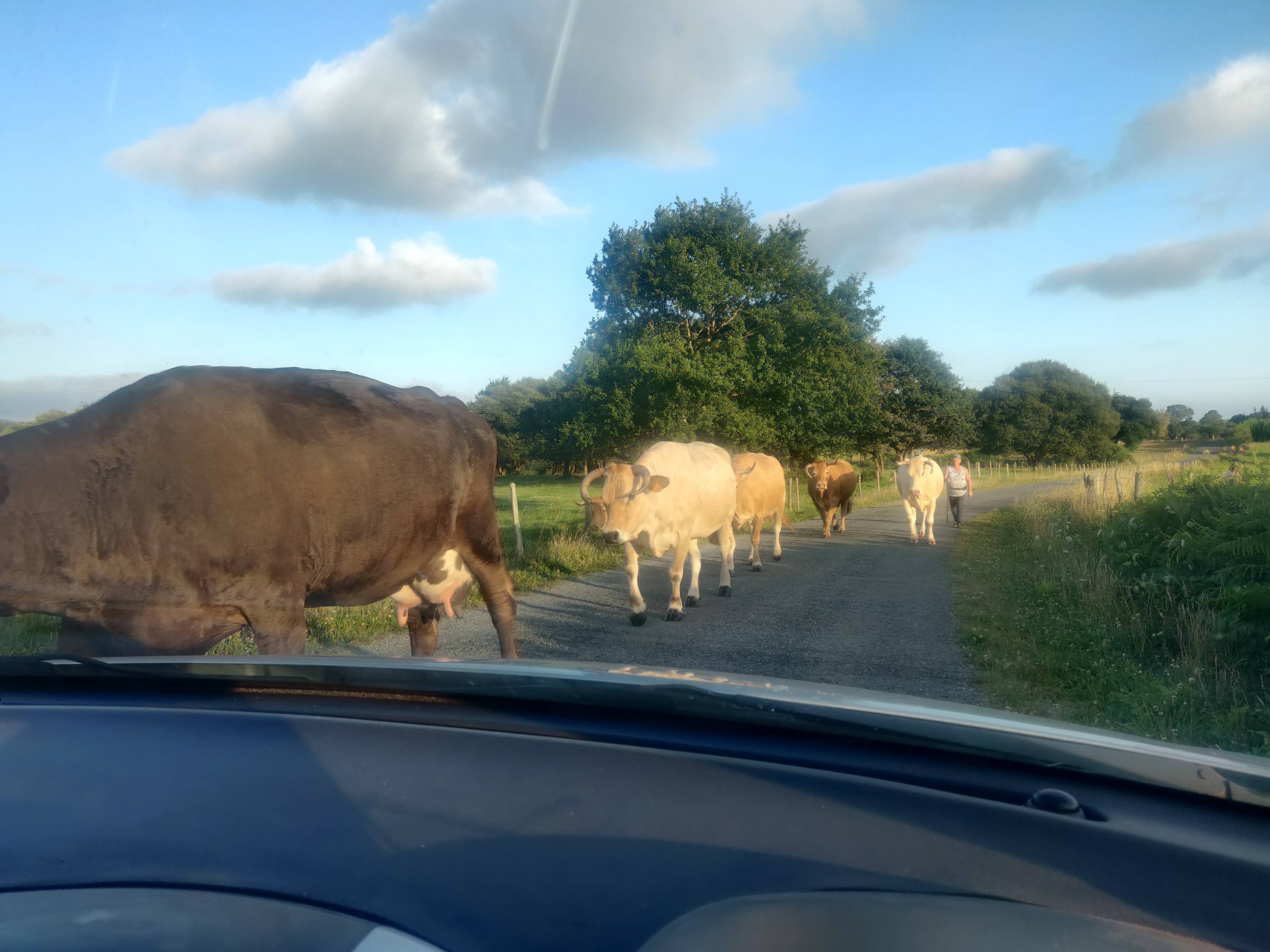
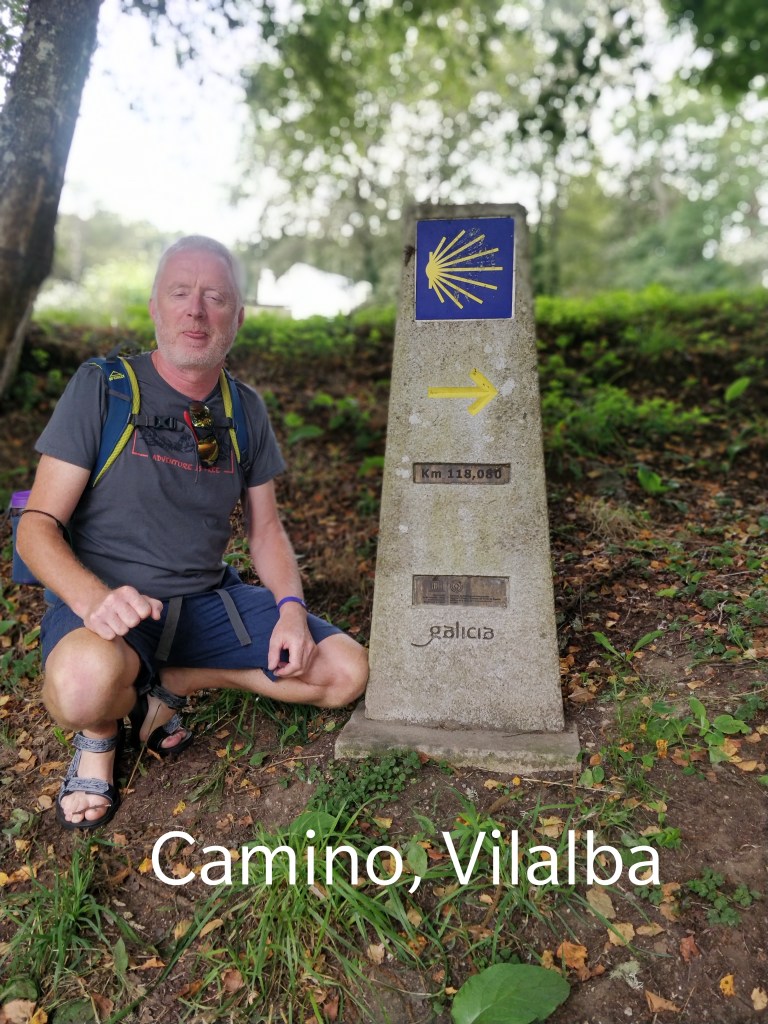
We stayed with a relative – my brother in law’s mother, Luz – for a couple of nights in her house about 10kms outside Villalba, an inland town in Galicia but which is on the Camino del Norte. The countryside around here was green with hedgerows of wildflowers (very similar to home) and small farm holdings with a few cows (with enormous horns) and farmers driving old tractors. There were rows of windmills on the horizon and mixed forestry plantations. But the countryside was also dotted with lots of large, deserted houses – substantial buildings with peeling paint. Sometimes there were several clustered together in small, deserted villages. Fine houses that would be habitable with a little TLC are left to crumble and decay where their (usually) elderly inhabitants die.

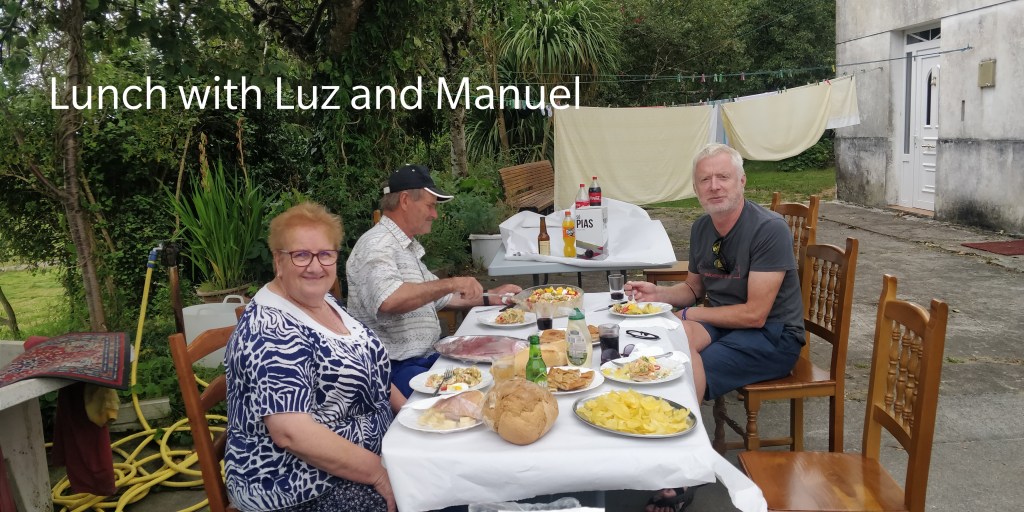
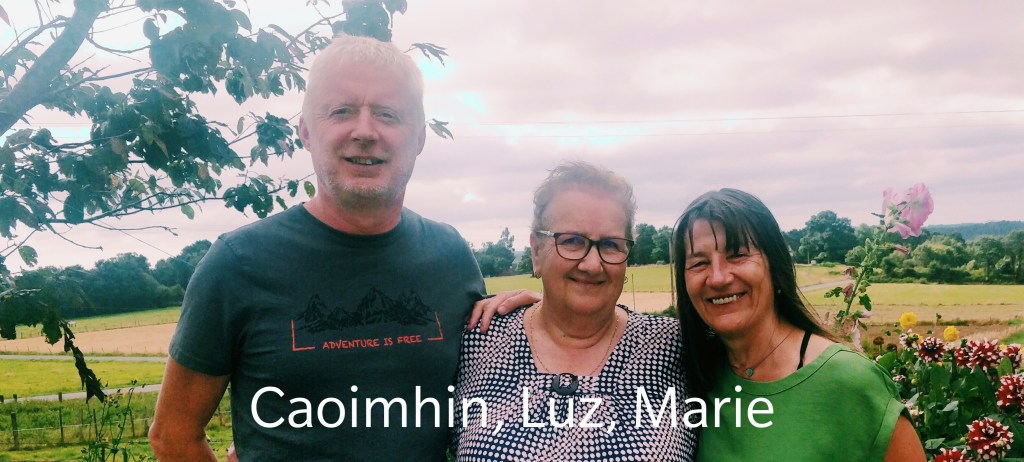
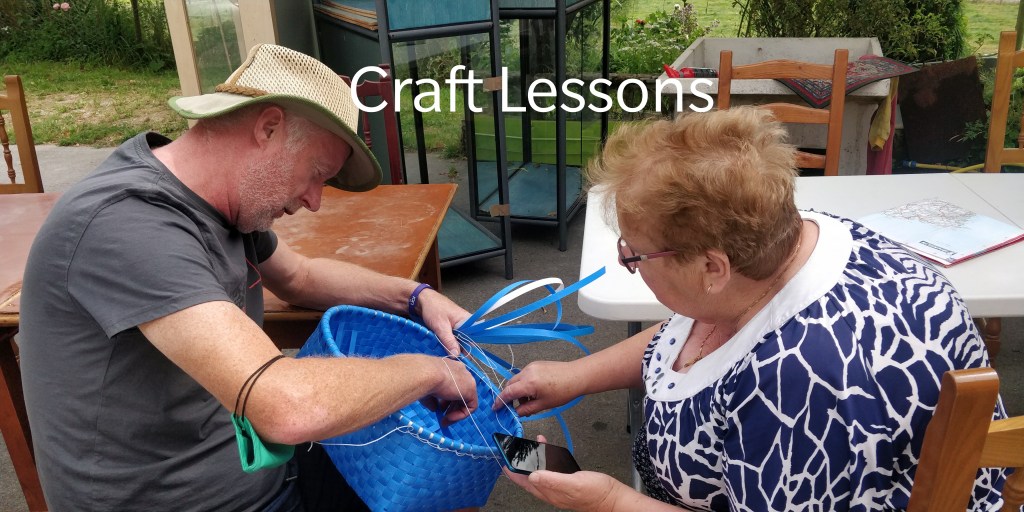
Luz and her partner, Manuel were so welcoming to us. Luz lived in England for about twenty years and has excellent English. She fed us, did our washing (we were travelling fairly lightly and may have packed too few clothes!) and helped us get a new car battery in Villalba, bargaining with gusto so that we got a good price – fingers crossed we won’t need to park on hills any longer and worry about the battery dying. We also bought camping chairs and a table, so the car boot was full again and so we were all set to camp in relative comfort.

Beyond Bilbao