We arrived in Gran Canaria on March 16 and our first impressions weren’t good. It was very windy (even by Canarian standards) with a damp drizzle in the air. Our ground floor apartment was comfortable but the only window had opaque glass so we had to have lights on all the time, There was no outside space except for a small roof terrace that was a wind tunnel with fake grass and no sun. We had picked the apartment in Playa Burrero on the east coast because it was near the beach in a little seaside town -we didn’t want to stay in the a big holiday resort. The price was reasonable and we had booked it for a week – so unlike our usual nomadic approach where we move on every couple of days.
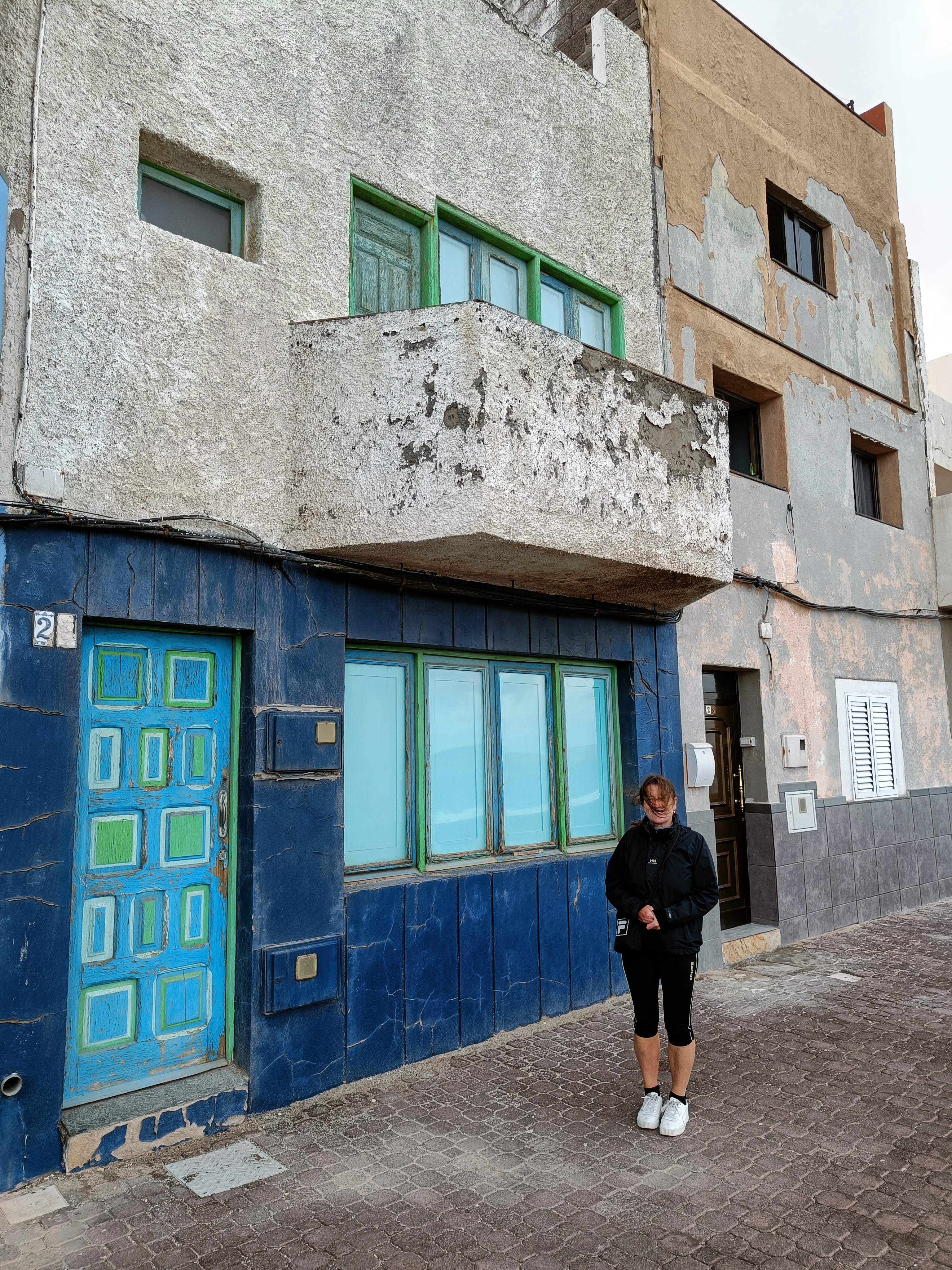
We strolled around Playa Burrero in the dusky damp that first evening. The beach was rough, stony and deserted, the seafront was a row of dilapidated buildings with peeling paint and boarded up windows. There were no seaside cafes, no bars, no shops -there was a Spar up the street where the alcohol and chocolate were kept behind the counter and our backpack also had to be handed in behind the counter before we were allowed into the shop. Just when we thought that things couldn’t get worse, there was this deafening noise from the sky, a roaring that had my heart thudding. We were near the airport but this was something entirely different. We looked upwards and couldn’t see anything but we could smell and even taste jet fuel in the air. It was petrifying – I had never heard anything like it. Our landlady told us later that they were fighter jets from the nearby Spanish airbase on manoeuvres in preparation for possible escalation of the war in Ukraine – which brought the war very close indeed and gave us a little taste of what it might be like if the jets over our heads had sinister intent. These manoeuvres with their ferocious ‘surround-sound’ became a regular feature of our stay at Playa Burrero.
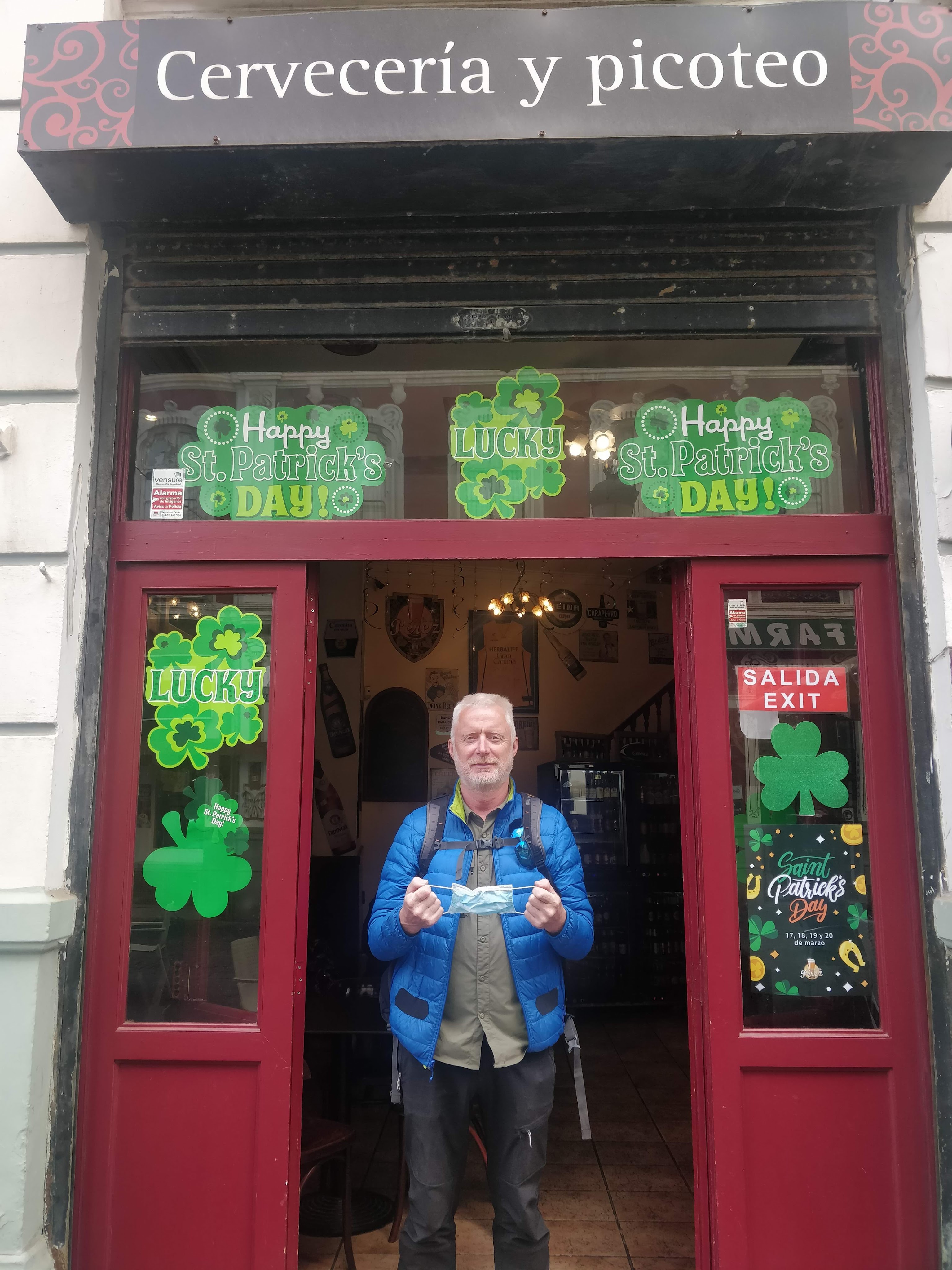
There wasn’t a shamrock to the found in Playa Burrero so we got a bus to Las Palmas, the capital city of Gran Canaria. The bus service in Gran Canaria, like all the other Canary islands that we have visited, was excellent, efficient and cheap. Though the bus windows, we noticed that there was a weird haze over both the mountains and the sea. This was due to calima, a layer of Saharan dust that sometimes blows in affecting visibility and air quality.
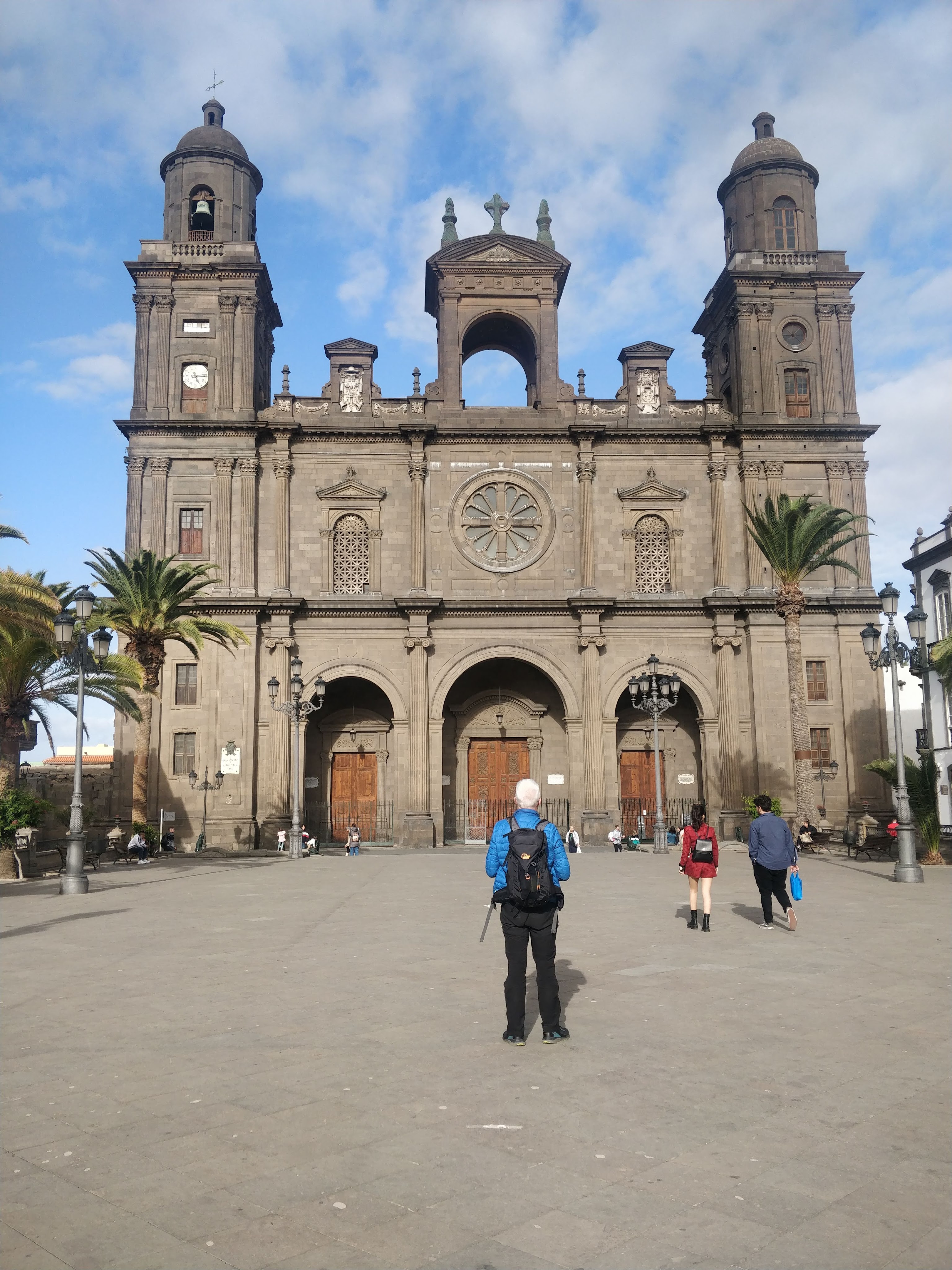
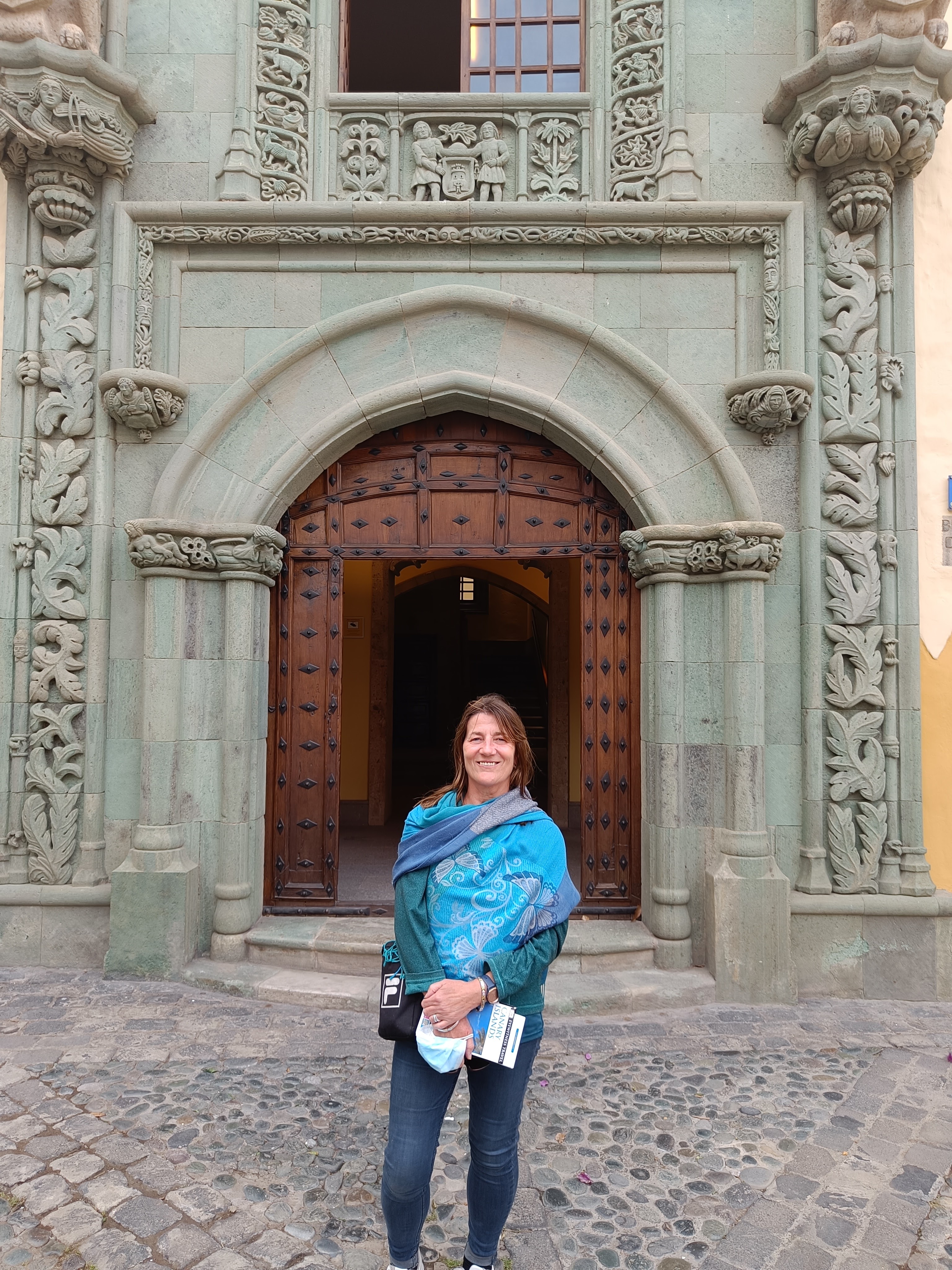
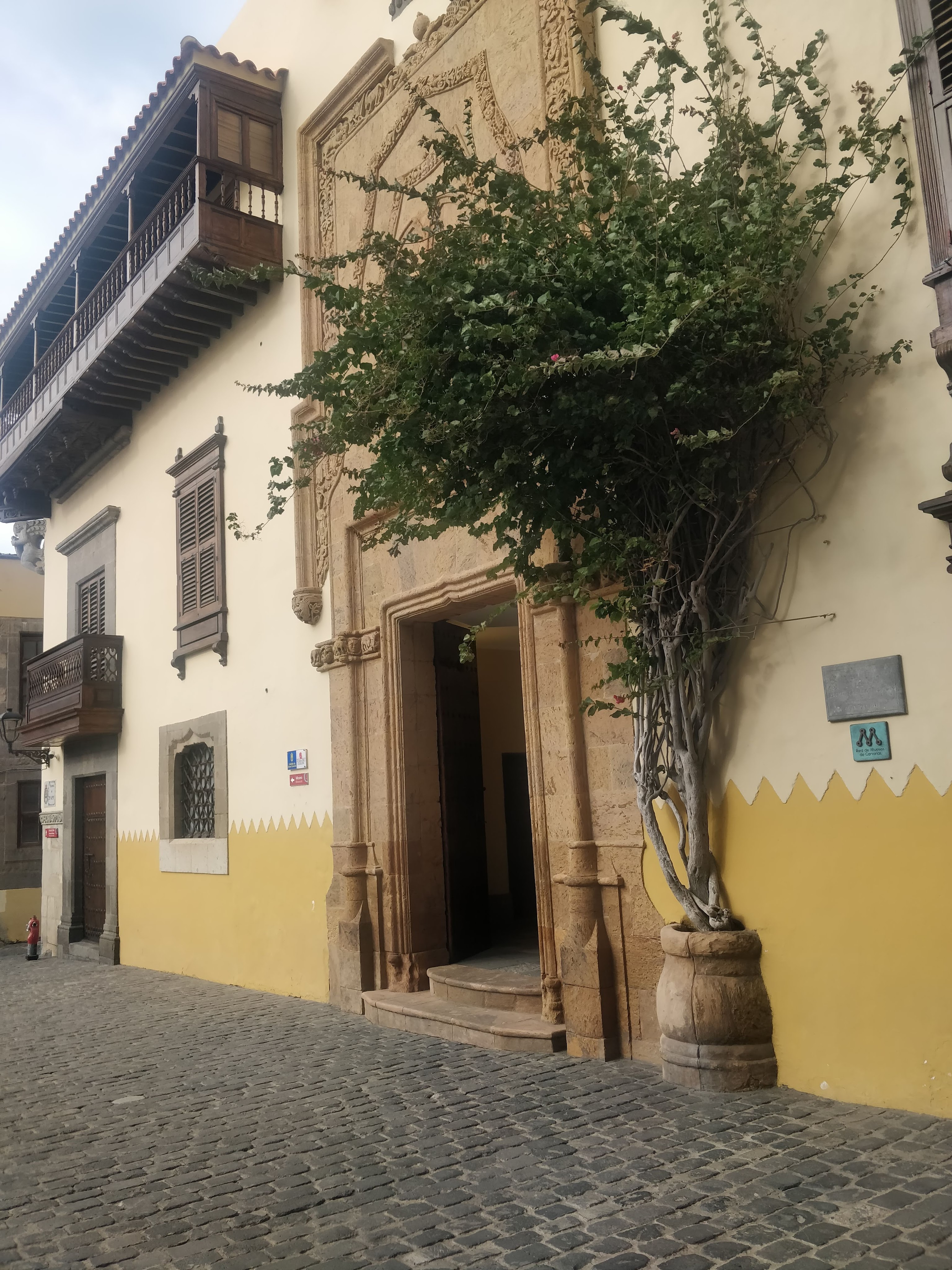
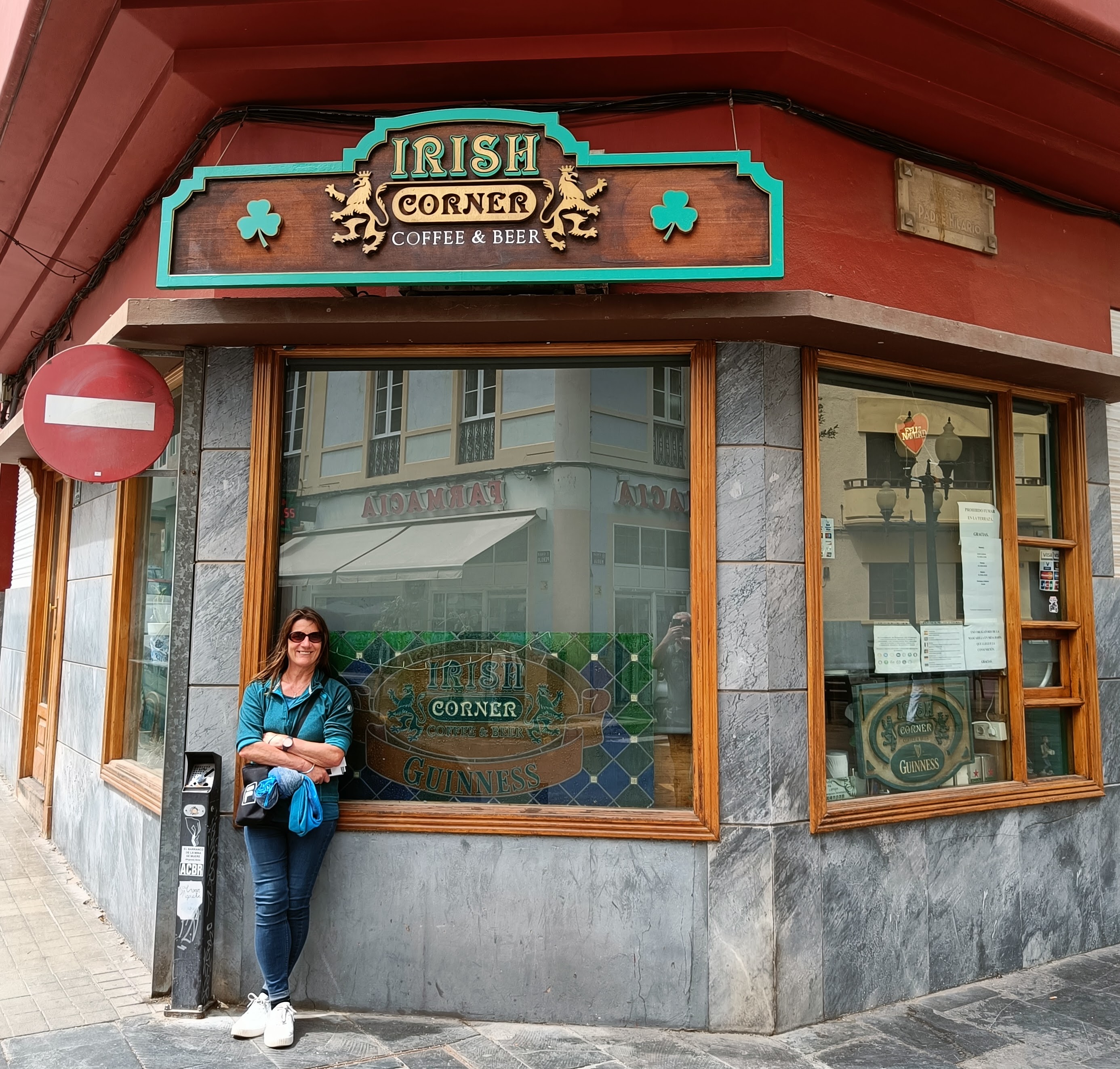
The beauty of Las Palmas took us by surprise. its a gorgeous city and far bigger than we expected – it’s the largest city in the archipelago and has an air of wealth and history. It was ‘founded’ in 1478 by the Spanish conquistadors (after they had wiped out the native Guanche) We made our way to a pub called the Irish Corner, thinking that was a good place to start, given the day that was in it. The pub was closed with a dusty, sun-wizened sign saying that it would open at 7pm (on Paddy’s Day!) We eventually found a bar decorated with shamrocks and staffed by young guys wearing leprechaun hats where a can of Guinness was €5. After that we decided it was better (and cheaper) to drown the shamrock with local wine or beer. The old district (Vegueta) was charming and perfect for wandering with its narrow cobbled streets, decorated balconies and fine architecture. There was Casa Colon (yes, Christopher Columbus was here as well) and the imposing Santa Ana Cathedral. It was a thoroughly enjoyable day meandering around, having wine and tapas in one place, coffee and sweets in another, beer and almonds in another. Getting on the bus for home, we had some difficulty pronouncing our destination, El Burrero (no, we were NOT slurring our words). The bus driver gave us lessons on the correct pronunciation so the whole bus knew where we were going and several passengers shouted El Burrero to make sure we got off at the right stop😁
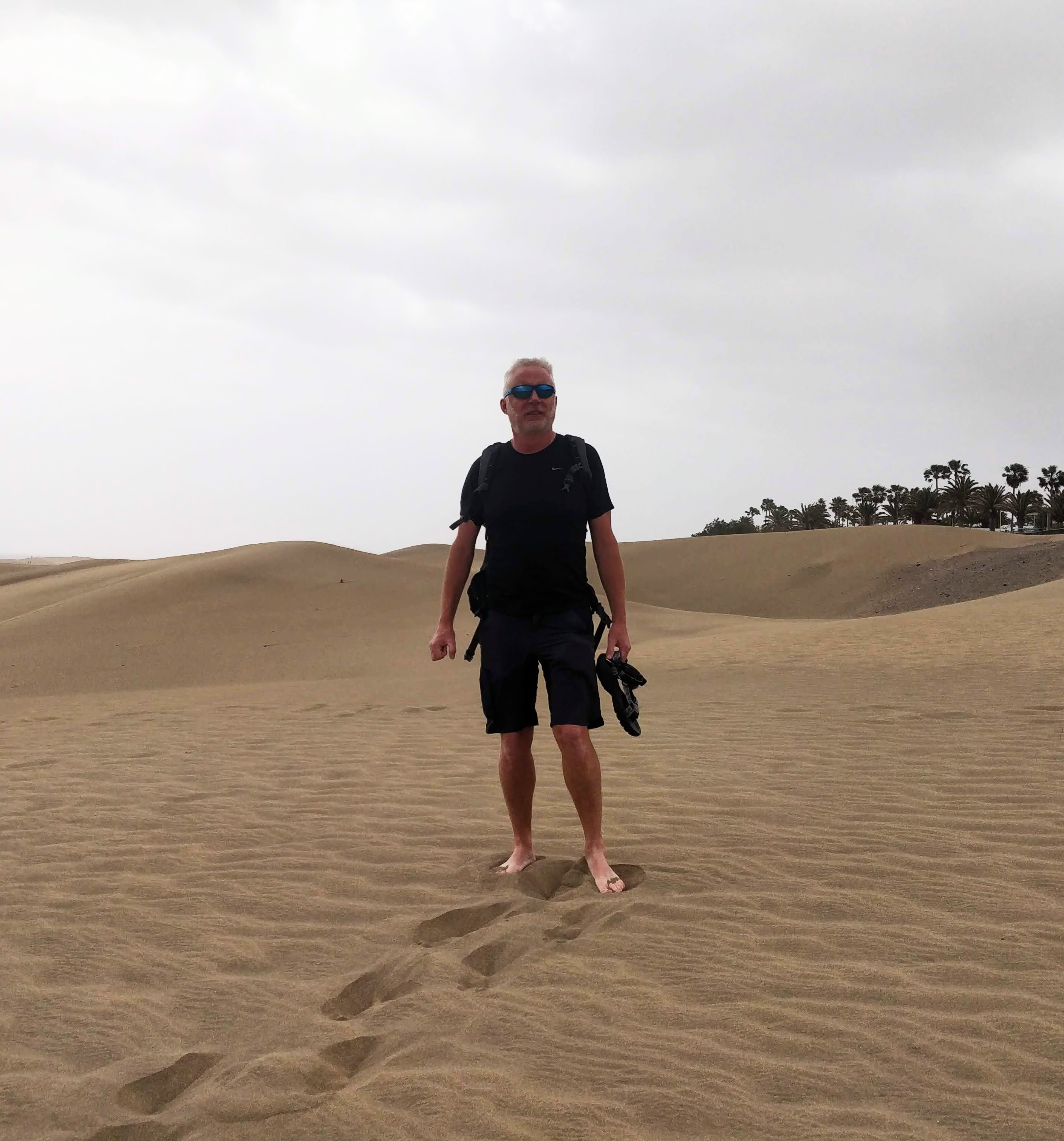
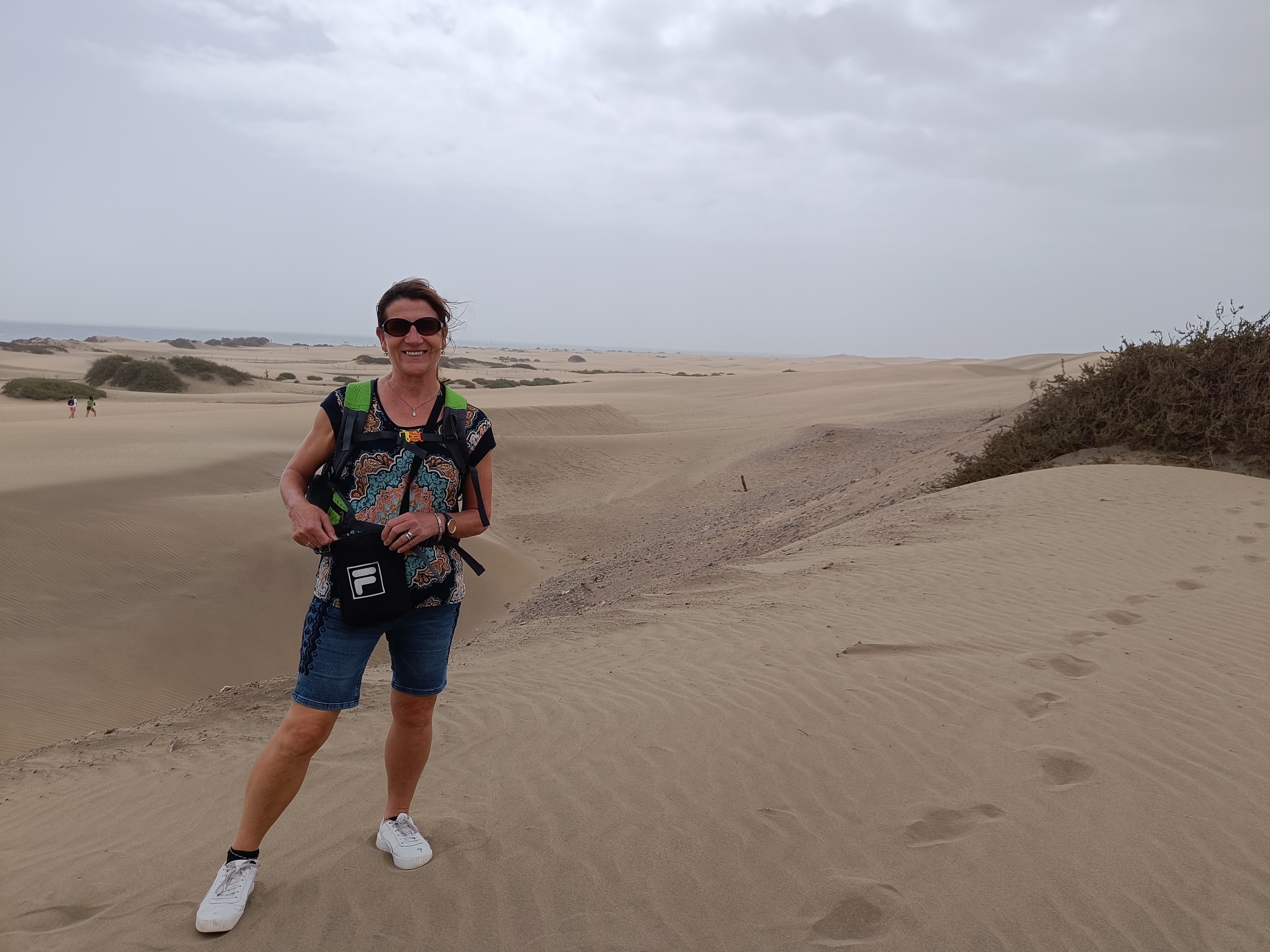
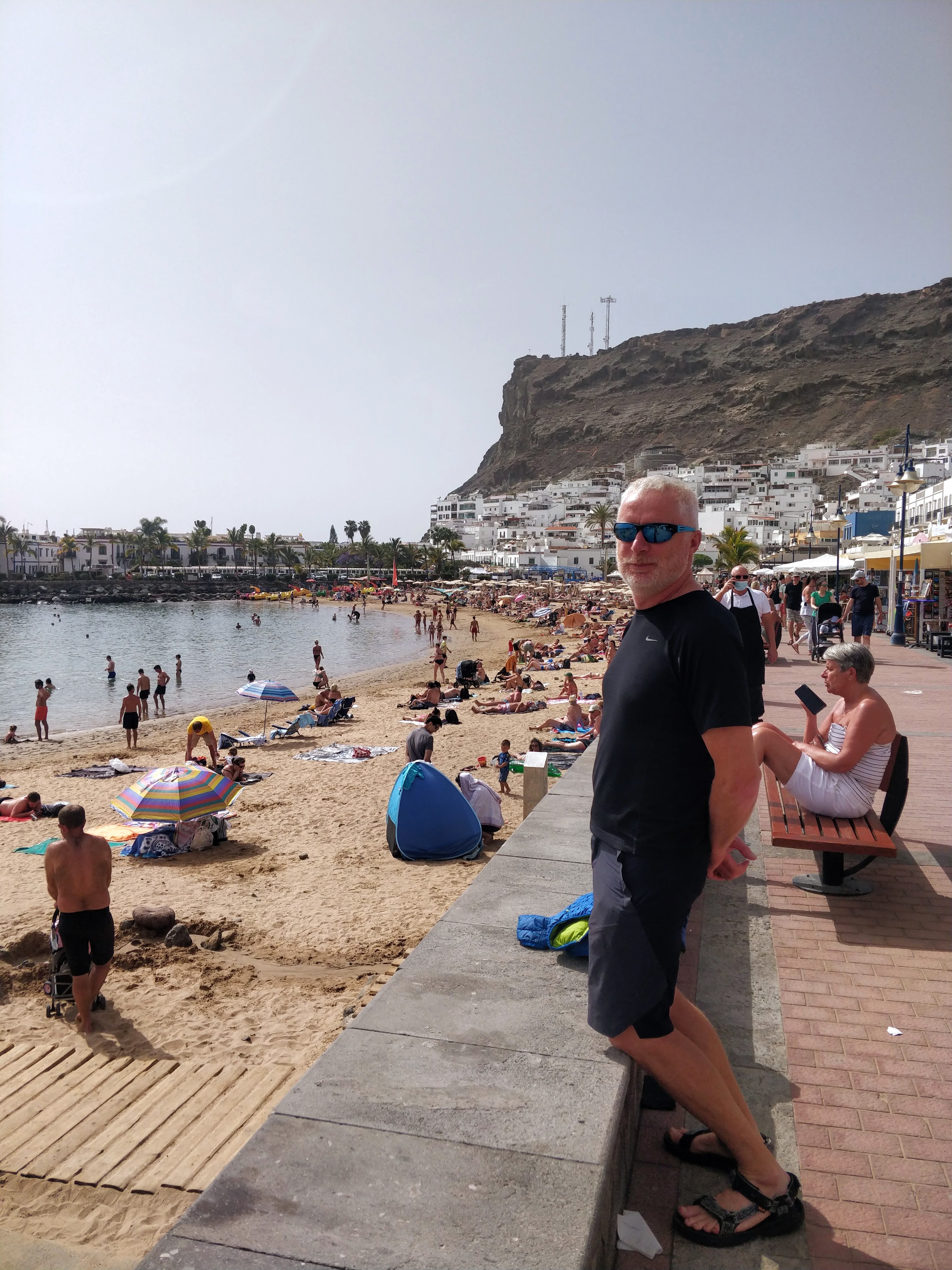
Most tourists arrive in Gran Canaria and go south to the big resorts. Gran Canaria gets a lot of visitors, well over 4 million people visited in 2019, the last ‘normal’ year. So when we hired a car for a few days, mainly to get out of Playa Burrero, we first headed south for a look. We had no problem with car hire here unlike our exploits in La Gomera and La Palma and we hired from Auto Reisen, €30 a day. A motorway runs most of the way along the coast (excluding the western part) but the countryside near the motorway is not pretty – its very rocky, flat and barren with distant mountains but lacking the ‘wow’ factor of the other islands. Maspalomas in the south is a huge sprawl of holiday complexes, the largest purpose built resort in all of Spain and can accommodate more than 300,000 visitors at a time, according to DK Canary Island Guide As soon as we parked the car, we heard ‘Its a long way to Tipperary’ being belted out from one of the beachside cafes. The afternoon was cloudy, the sangria was flowing, the cafes and bars were bustling, the waiters were hustling for business, the stall owners were touting for sales. It was such a contrast to where we were staying in Playa Burrero or anything we had experienced so far, that we were a little overwhelmed….we could have been on a different planet. But what profitable use of barren land that was unsuitable for growing anything else but tourists. A blustery cool wind ensured that the beach was nearly empty and there was only a couple of hardy souls in the water. The famous dunes of Maspalomas were really beautiful, golden sand undulating for miles and miles….a fantastic amenity so close to the resort and a place to escape. We drove on to Puerta de Mogan, a small sheltered cove at the end of a green fertile valley. With protection from the wind, the beach was packed with sun worshipers with lots of people swimming and a much less frantic atmosphere than Masapolomas. We also got a parking ticket despite having searched for signs about parking violations when we parked- the parking warden had a bonanza as a string of cars all got fines. The wind that can be the enemy of beach goers is a blessing for the renewable energy sector. In Gran Canaria, there are windmills everywhere, in the sea, on the mountains, near towns and villages – we even saw one in the forecourt of a petrol station. The island is well on its way to overturning its dependence on imported fossil fuels.
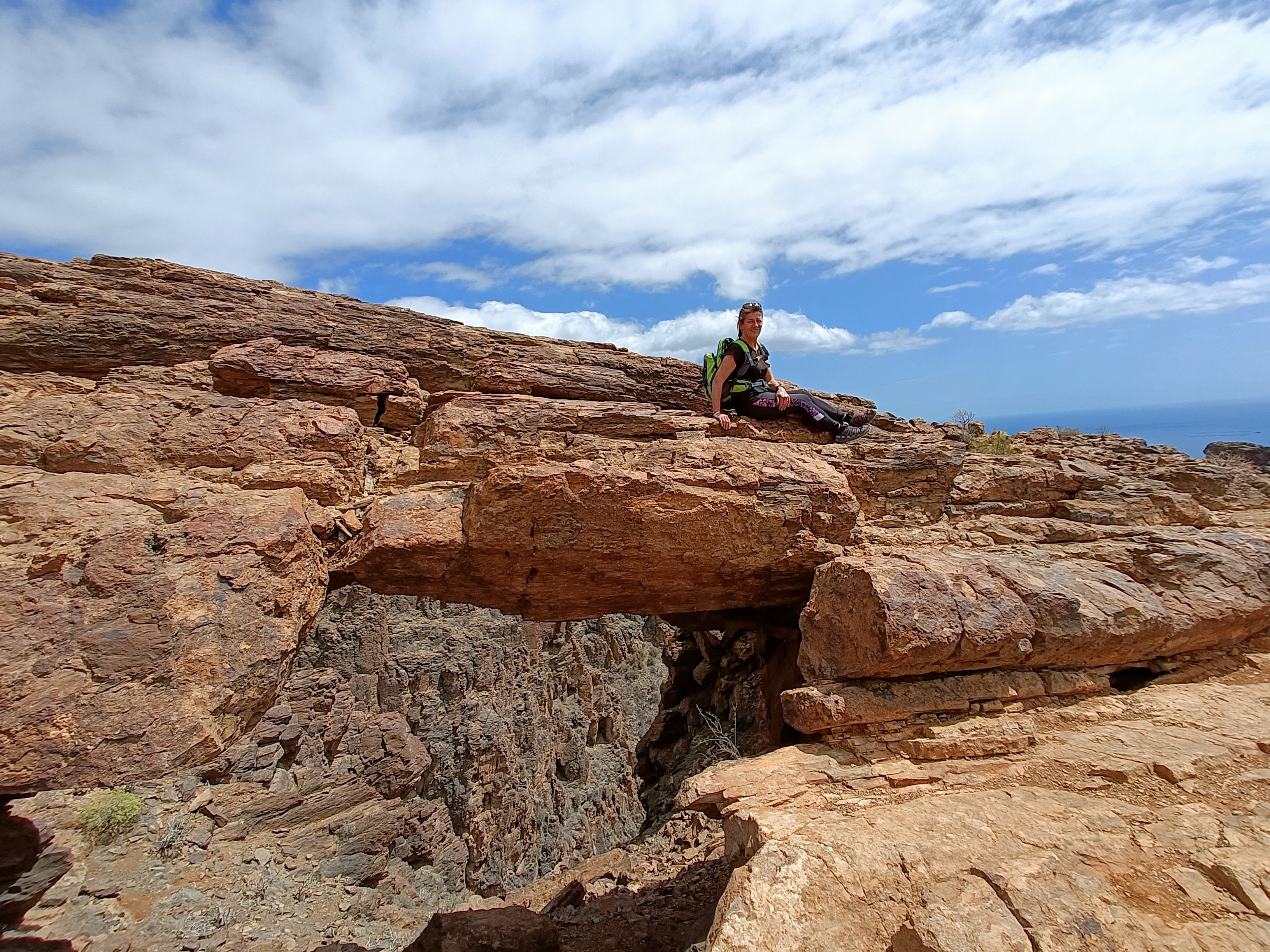
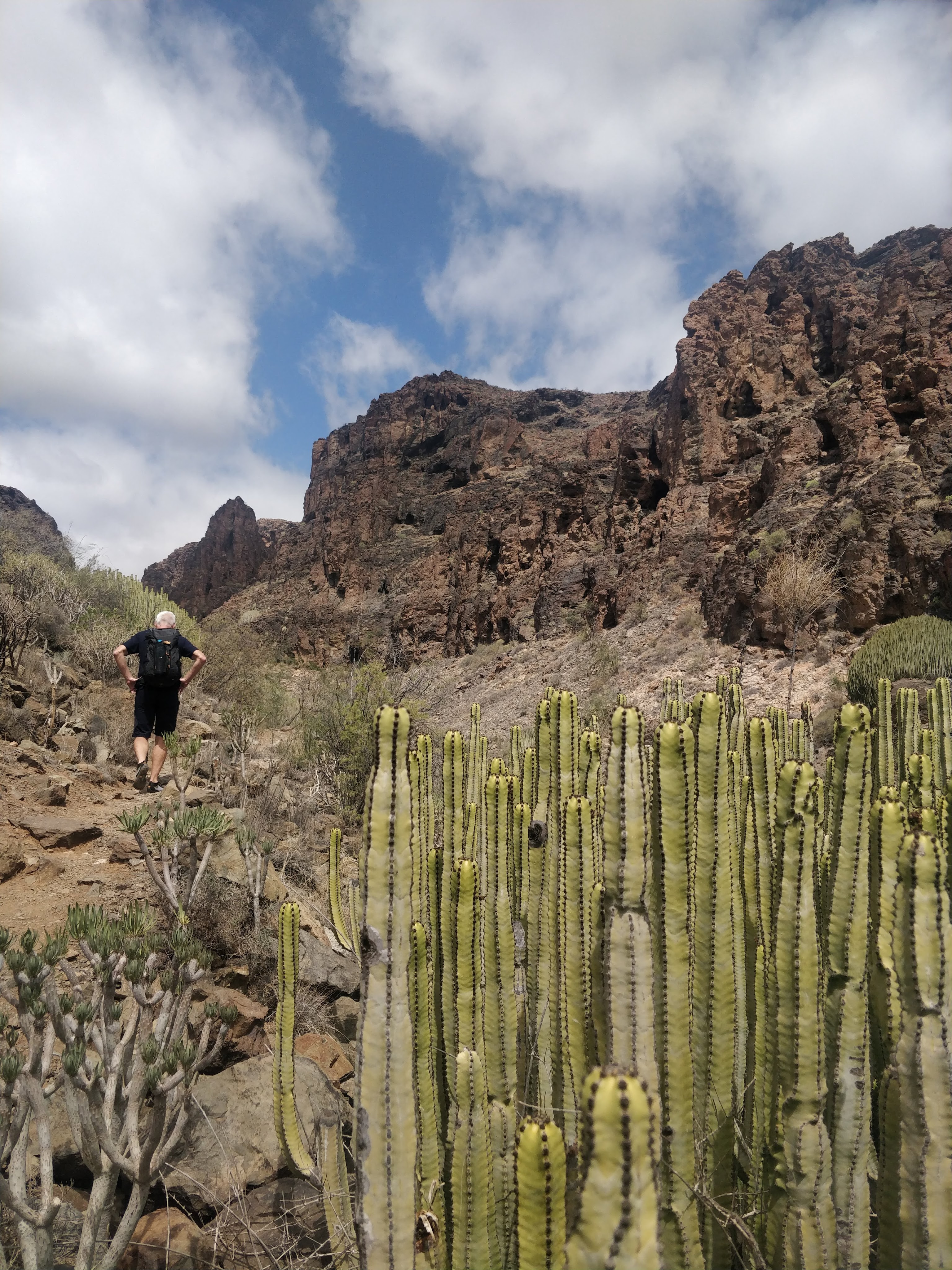
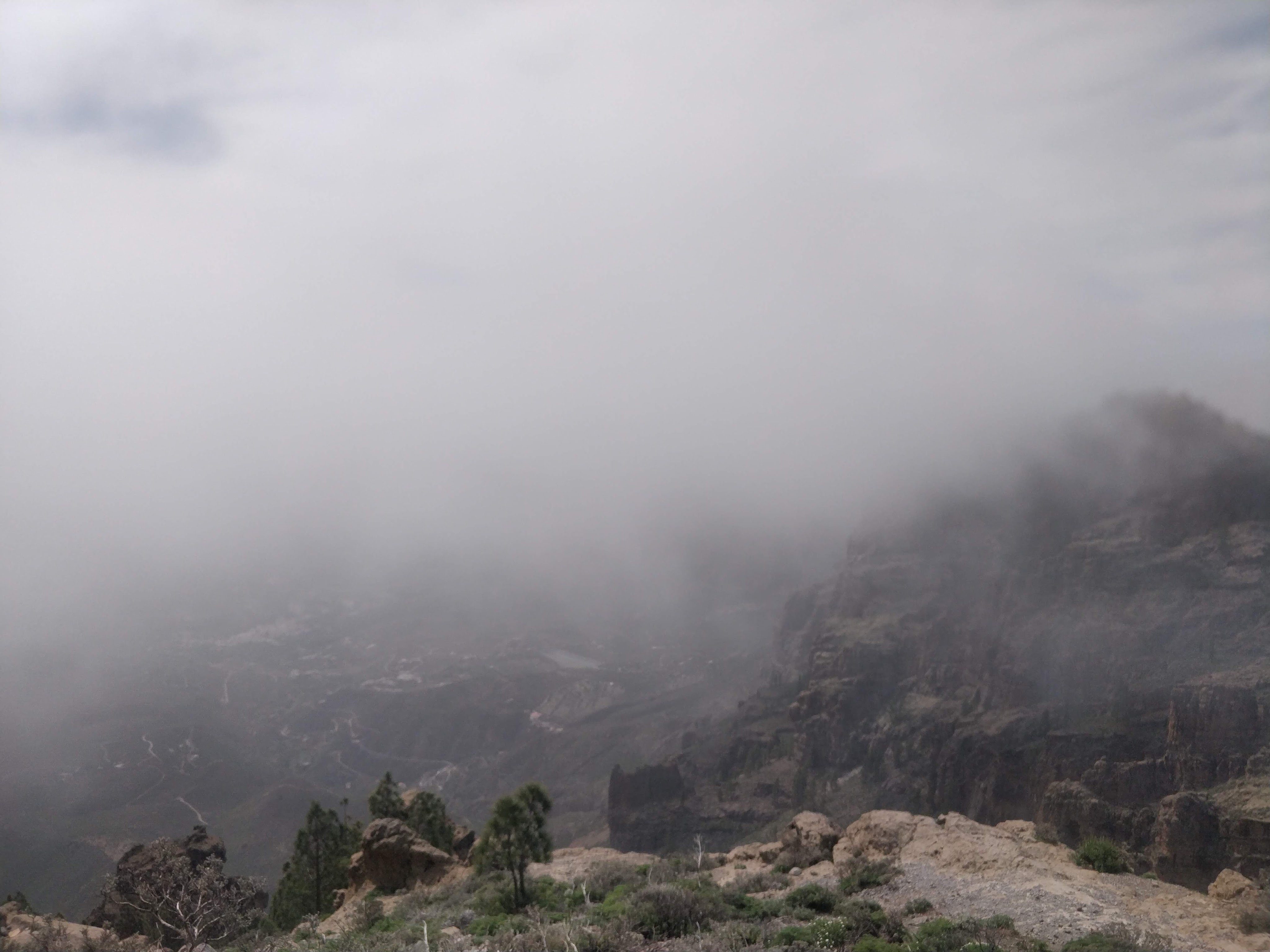
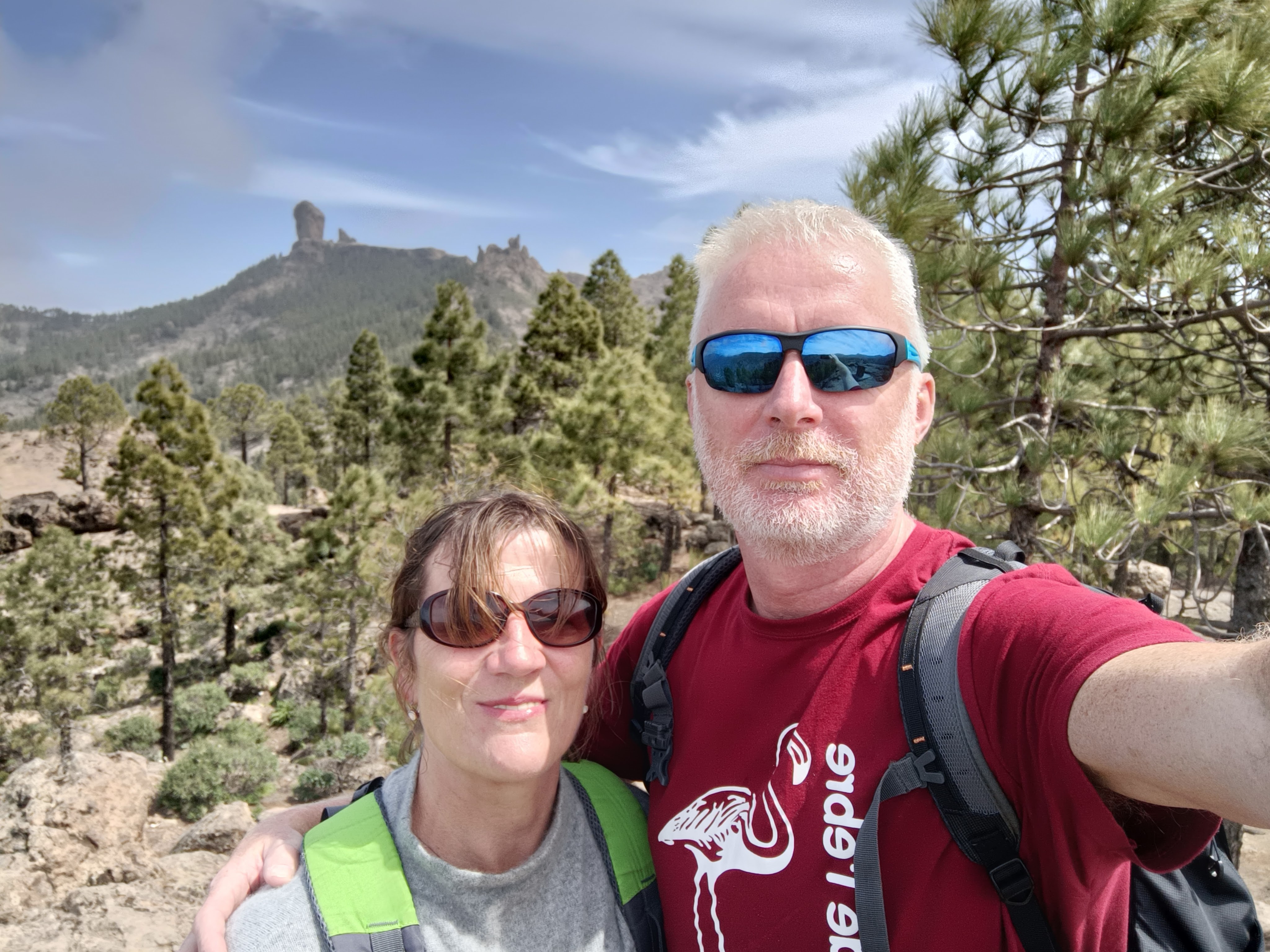
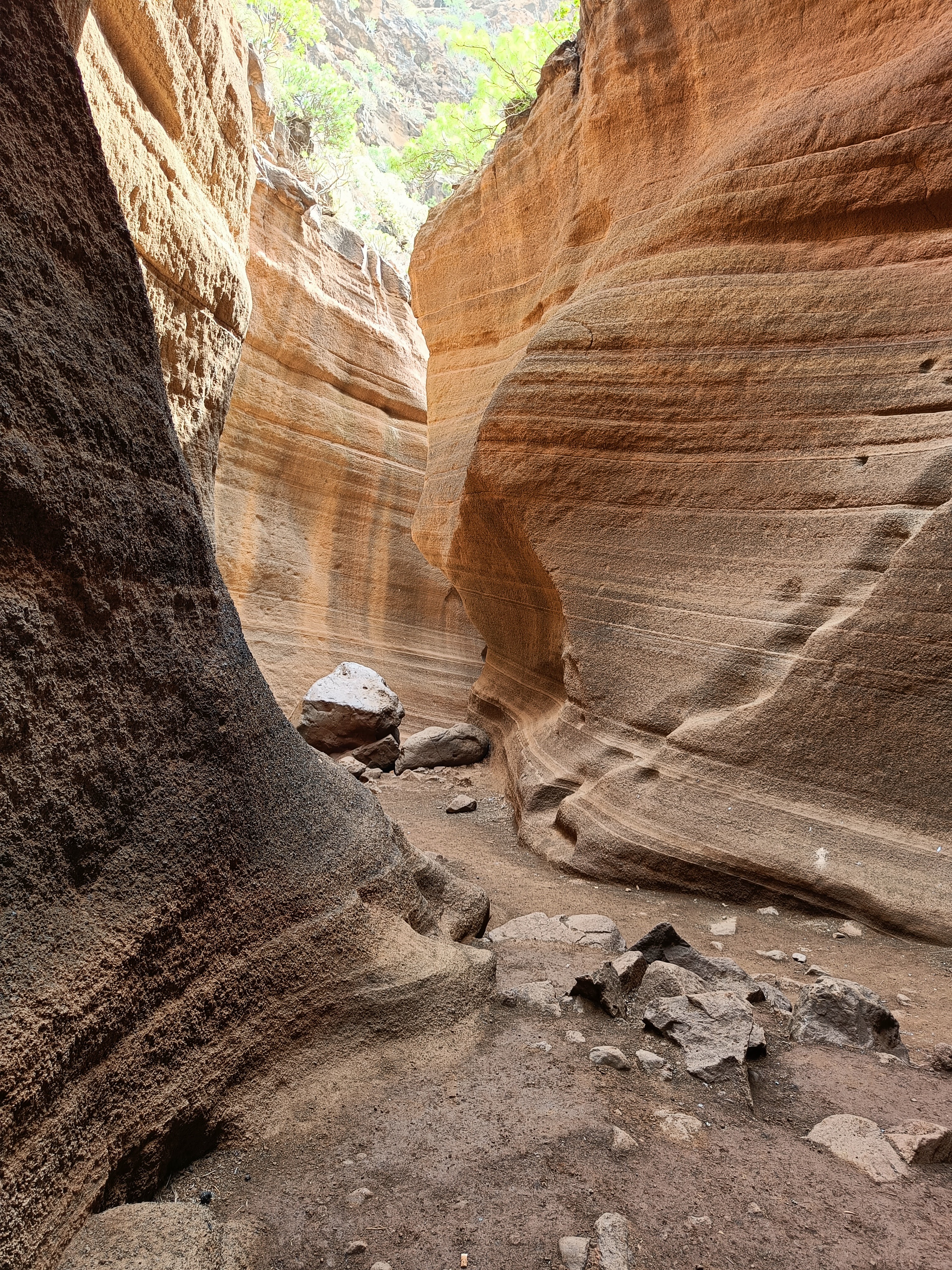
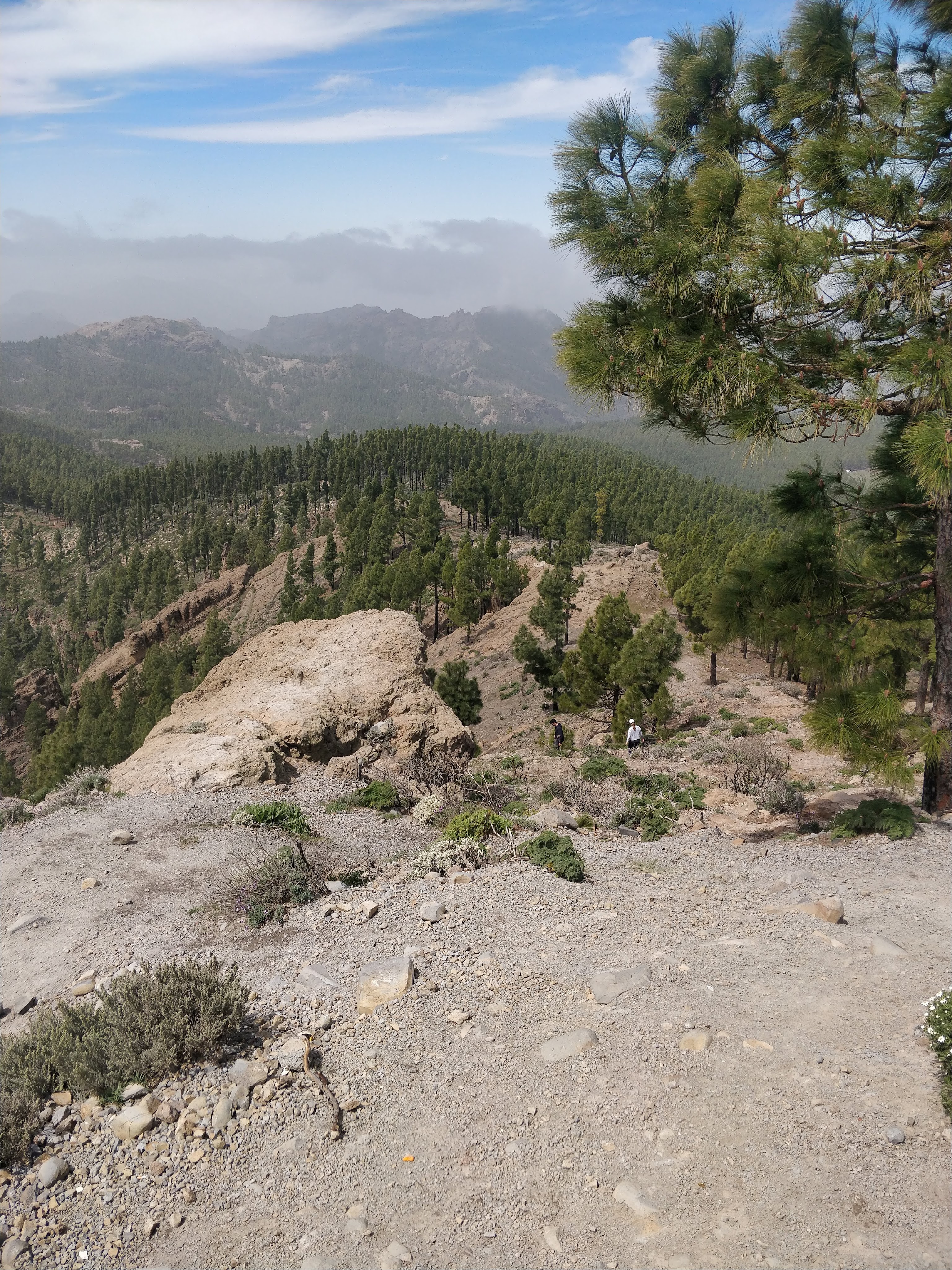
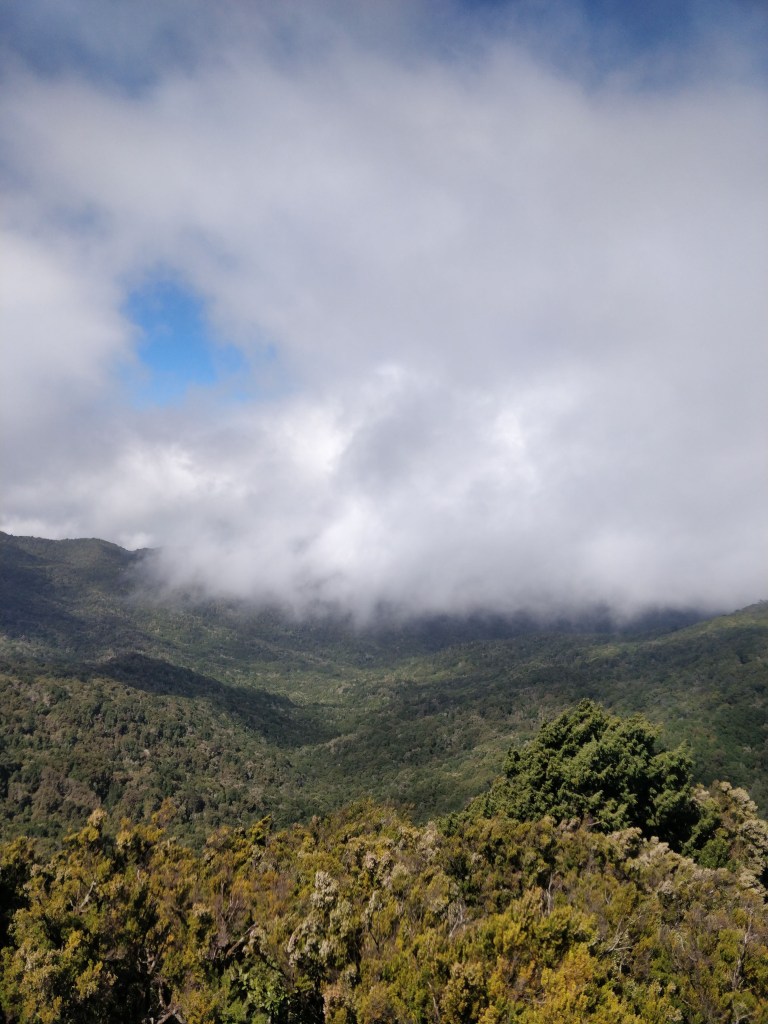
When we ventured into the interior of the island, we discovered that it was spectacular with mountains, deep canyons, craters and calderas It had a varied landscape with pine forests, terraced mountain sides, lush valleys cultivated with fields of bananas, papayas and avocados and all interspersed with incredible rock formations. It was also extremely busy with tour buses and lots of cyclists on narrow roads that wound around the mountains. The ‘must-see’ spots, such as the mirador at Pico de las Nieves, the highest point on the island was basically a parking lot. On a clear day, the views are reputed to be stunning but when we visited, clouds were drifting across and the main entertainment was watching the manoeuvring of tour buses, campers, cars and motorbikes as they tried to do U turns in tight spots. The impressive Roque Nublo, a volcanic rock about 80 metres high, is considered one of the largest natural crags in the world and was a place of worship and sacred to the Guanche people. Now it is the National Monument of Gran Canaria and a beacon for tourists and hikers.
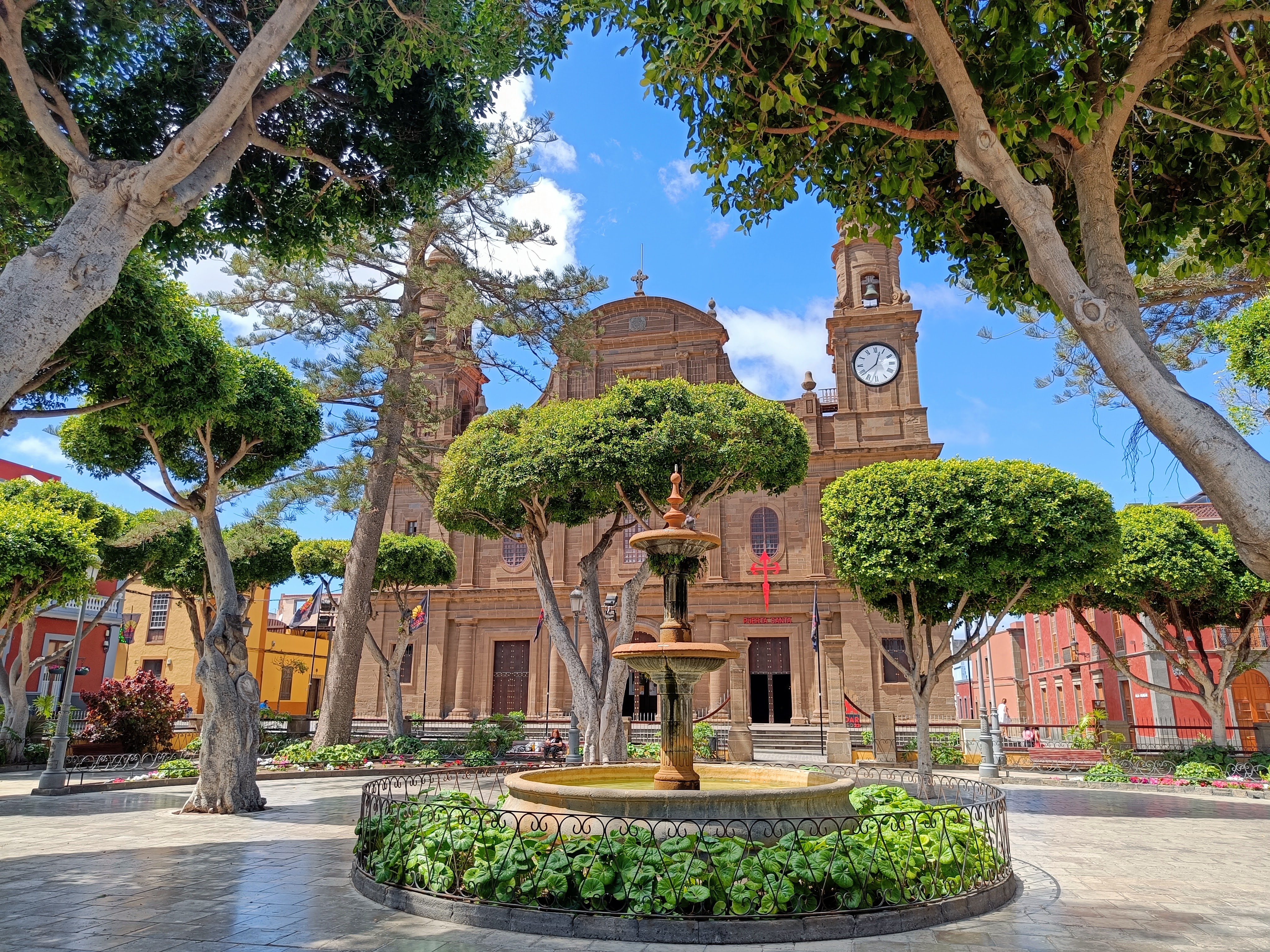
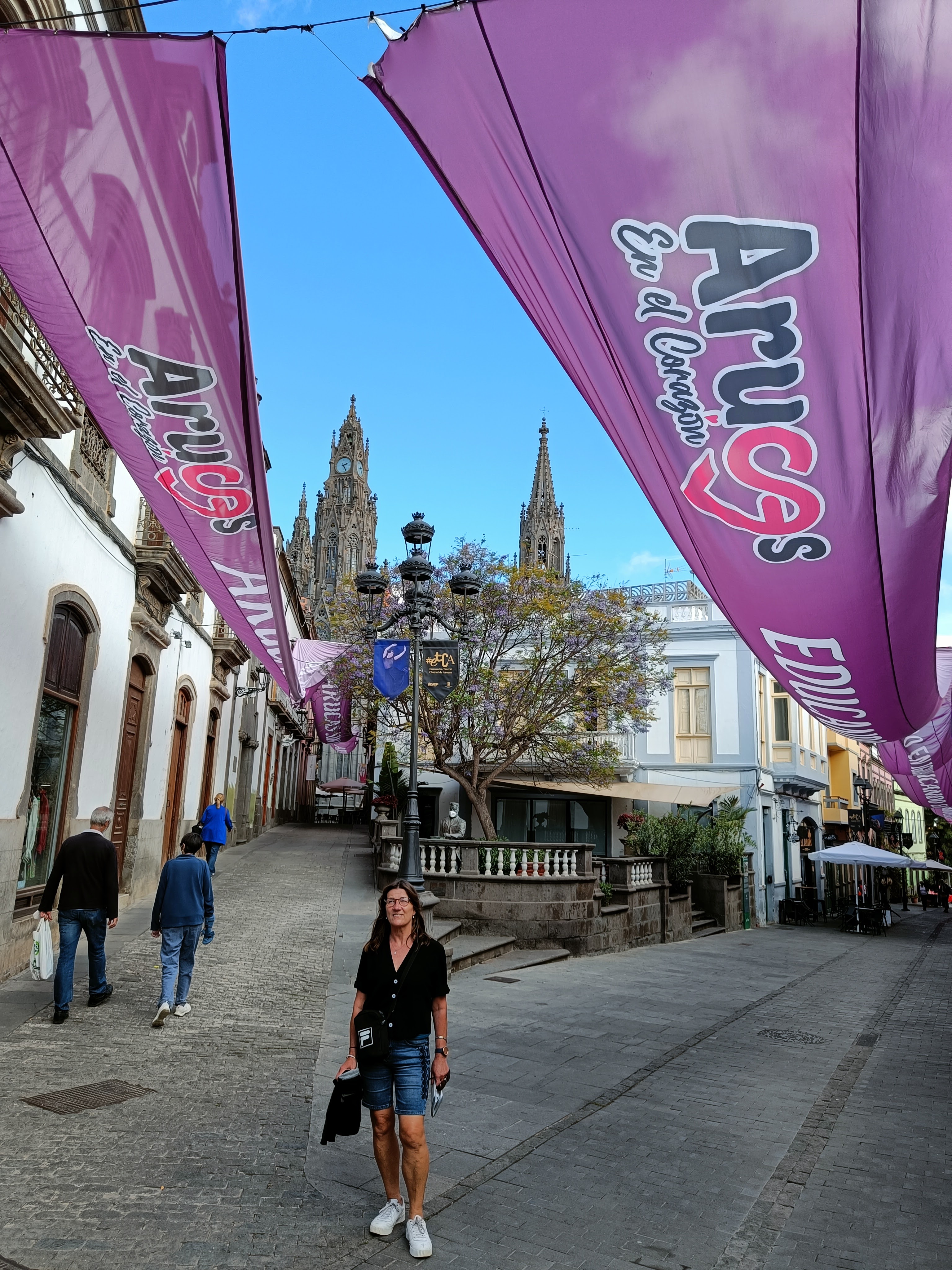
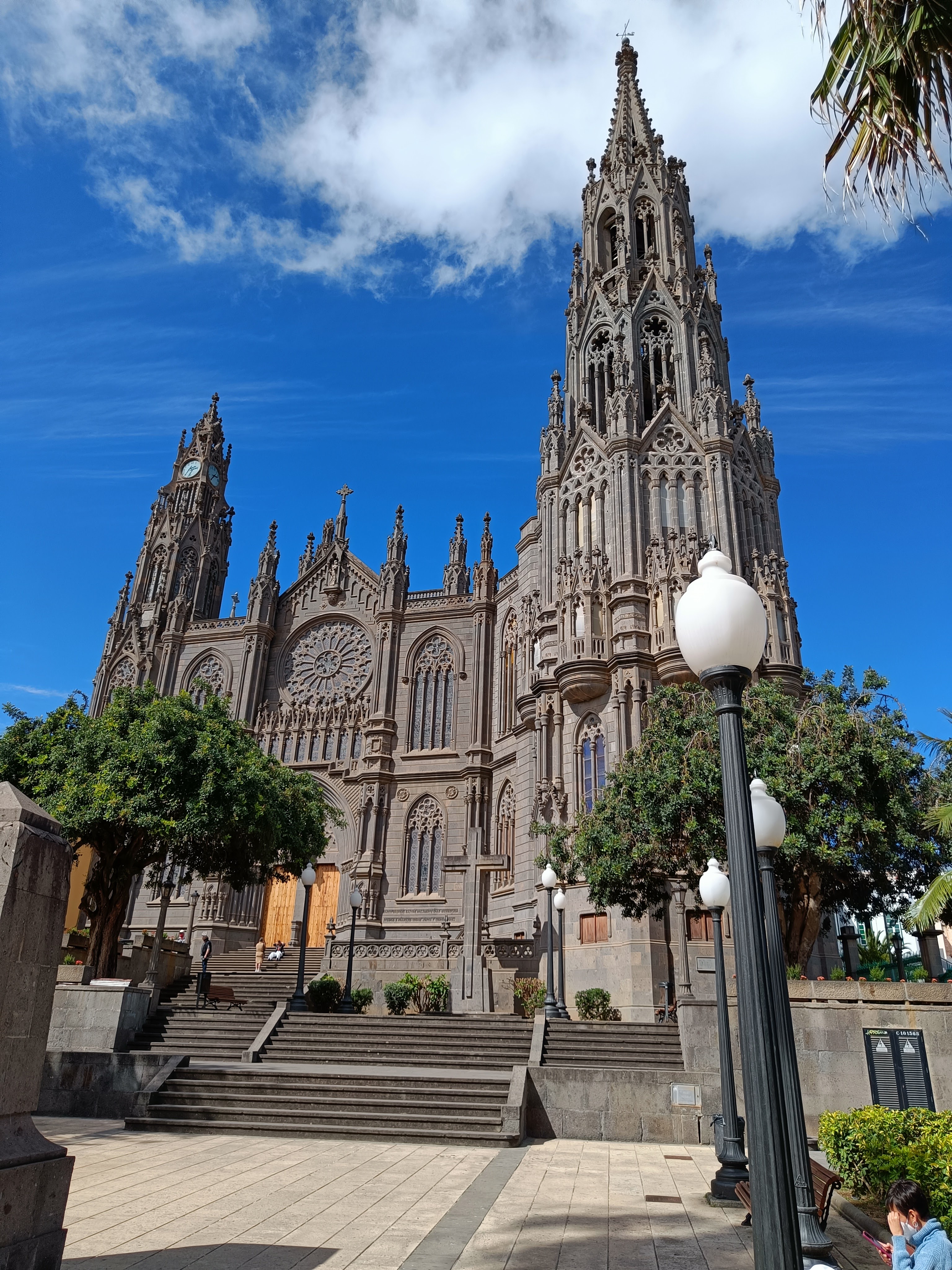
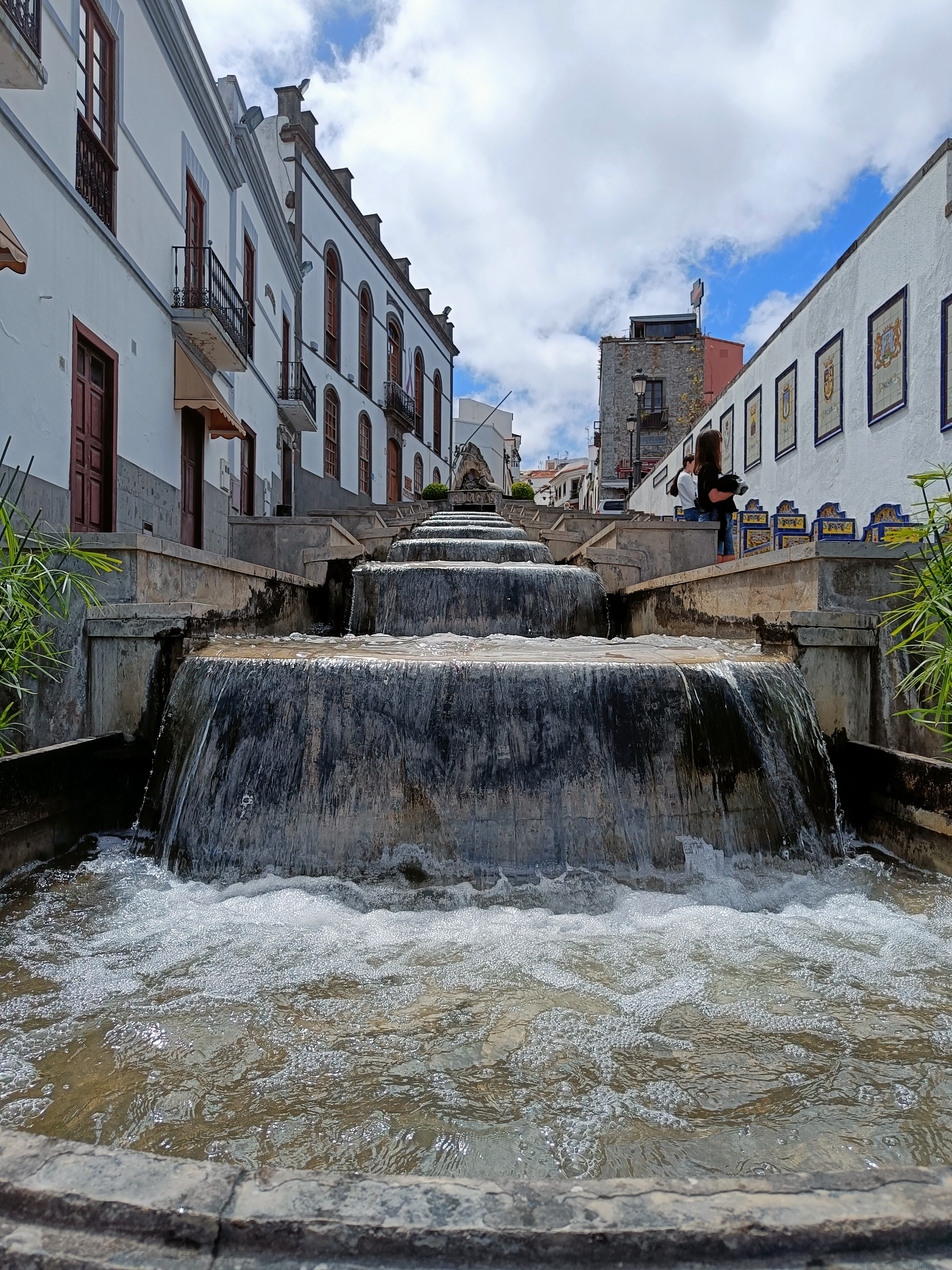
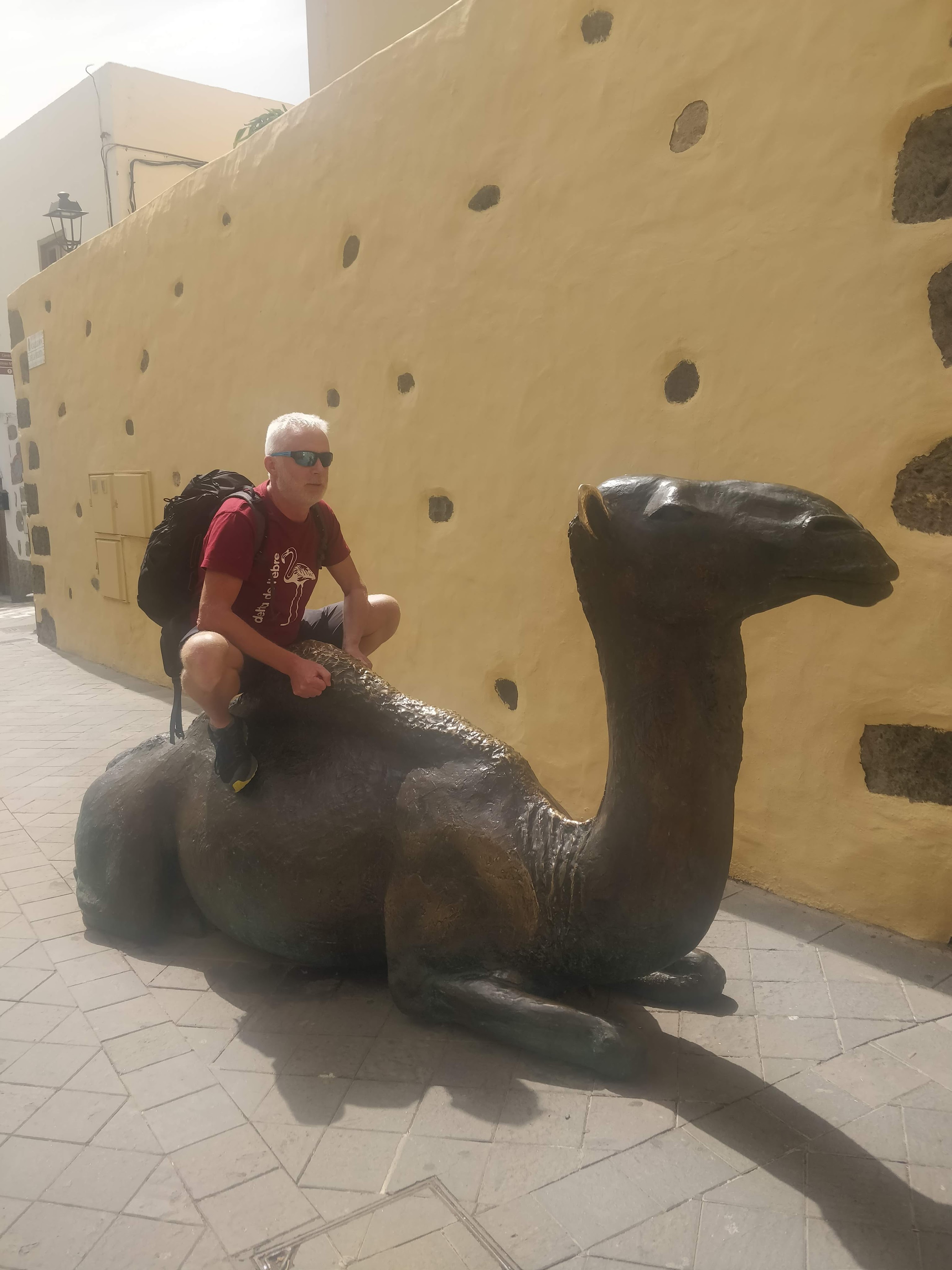
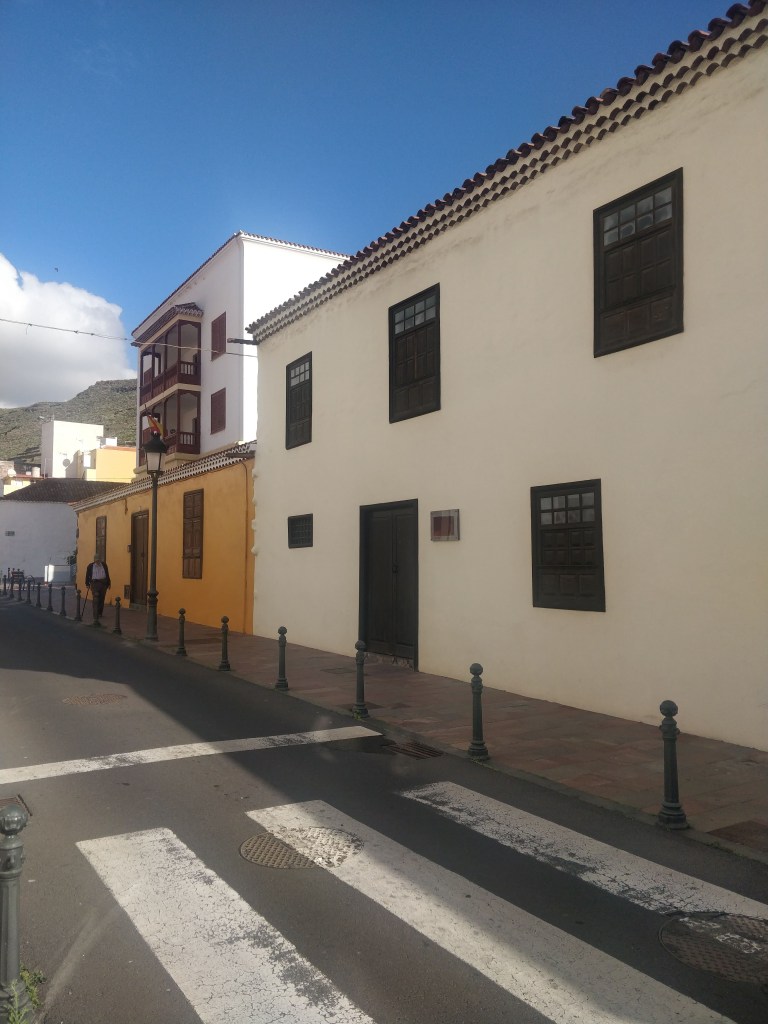
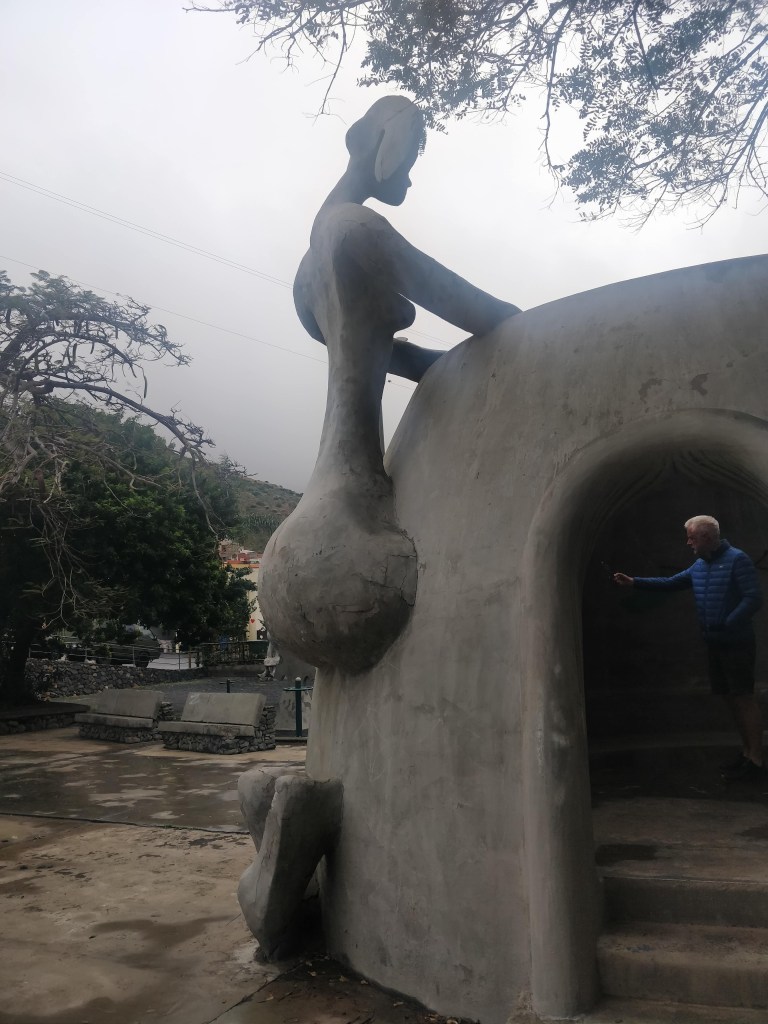
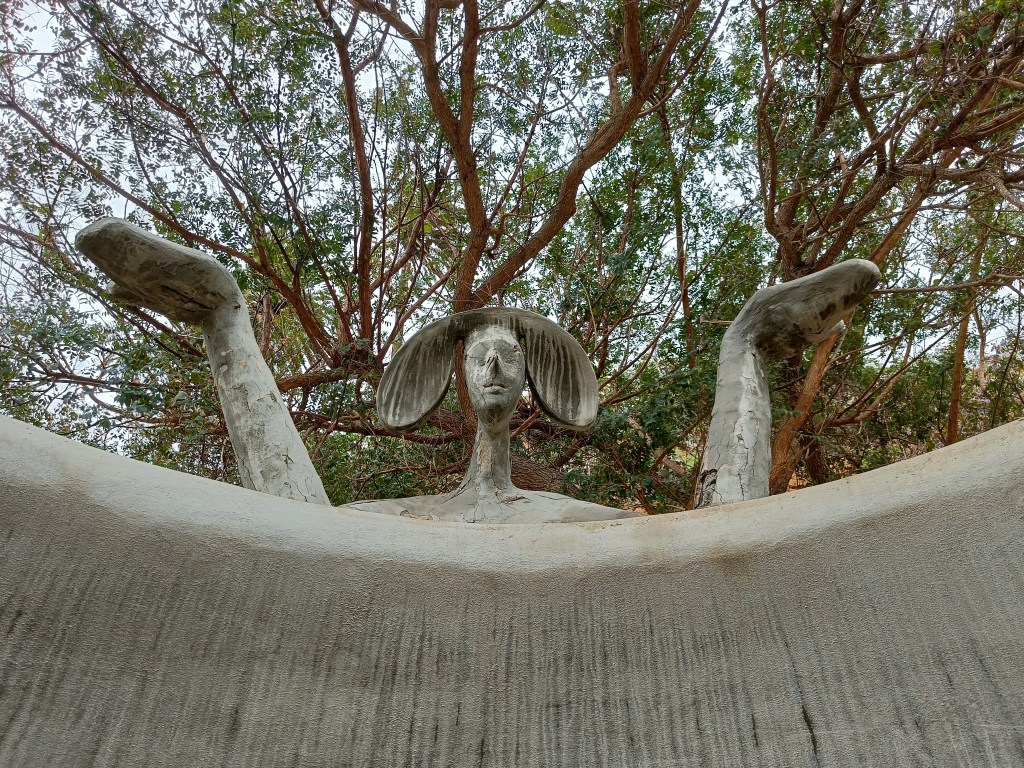
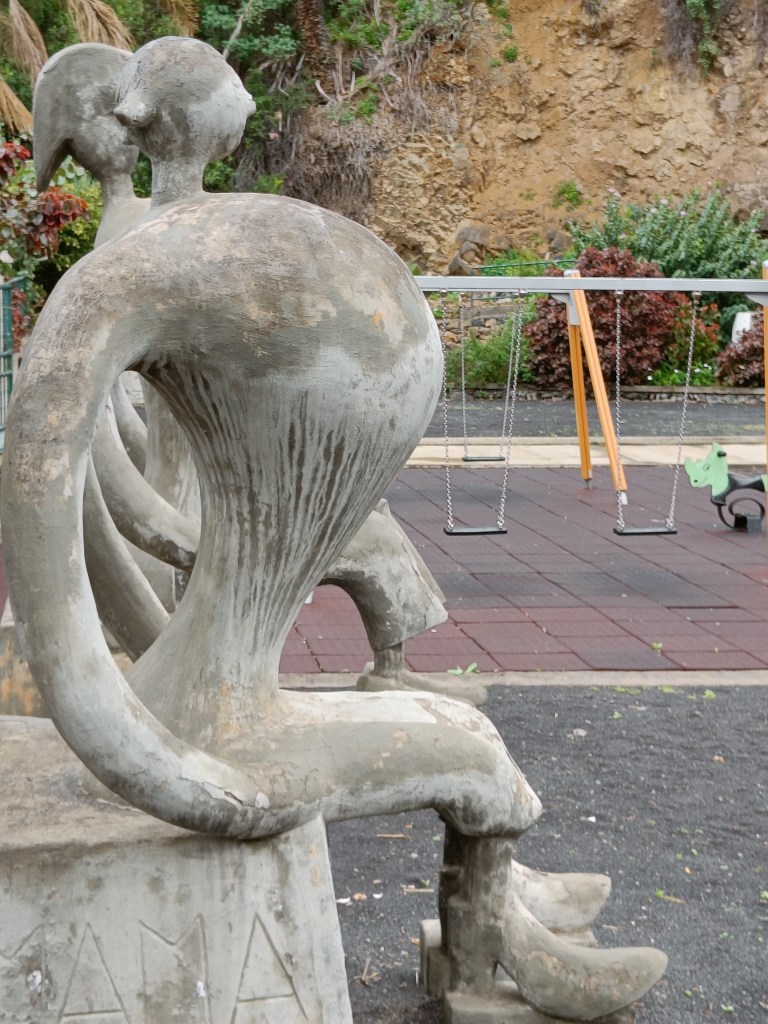
There are some gorgeous charming towns in Gran Canaria. We loved Aguimes with its cobbled streets, old houses, shady church square where an art exhibition was going on. A whole population of sculptures decorated the streets and parks. Camels may no longer walk the streets here but there was a fine specimen lying down in one of the alleys. It is said that life is art in Aguimes. In the north of the island, colourful Galdar lies at the base of a perfect conical hill. It was once the centre of Guanche civilisation but there is no trace left of the ancient court of their ruler, Guanarteme. It was razed to make way for the construction of the church of Santiago de los Cabelleros. Churches are at the centre of most towns and and one of the most spectacular is the neo Gothic structure in Arucas, sculped by local craftsmen. Firgas is famous for its spring water and its main tourist attraction is a water feature where water cascades down steps in an entire street.
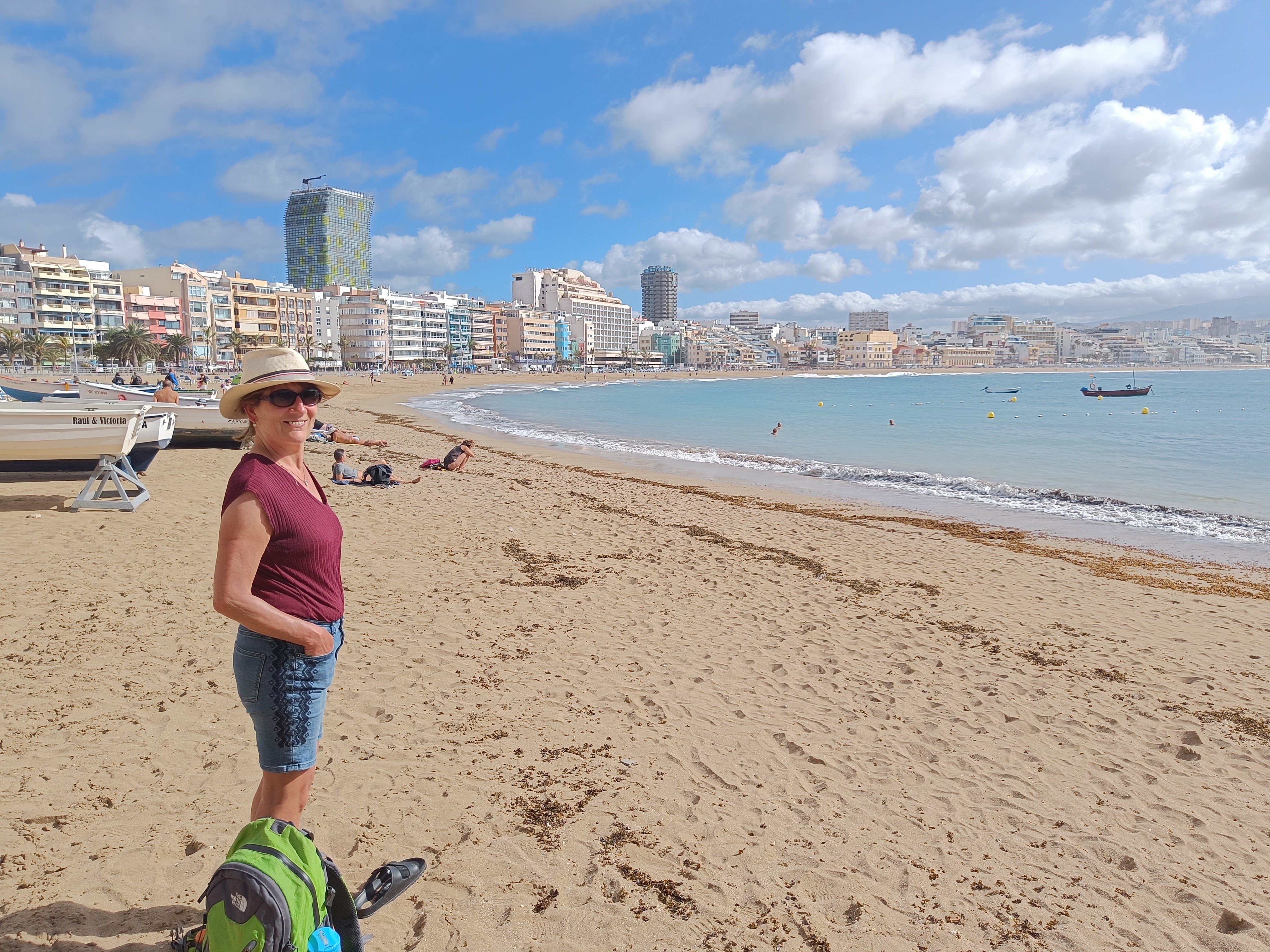
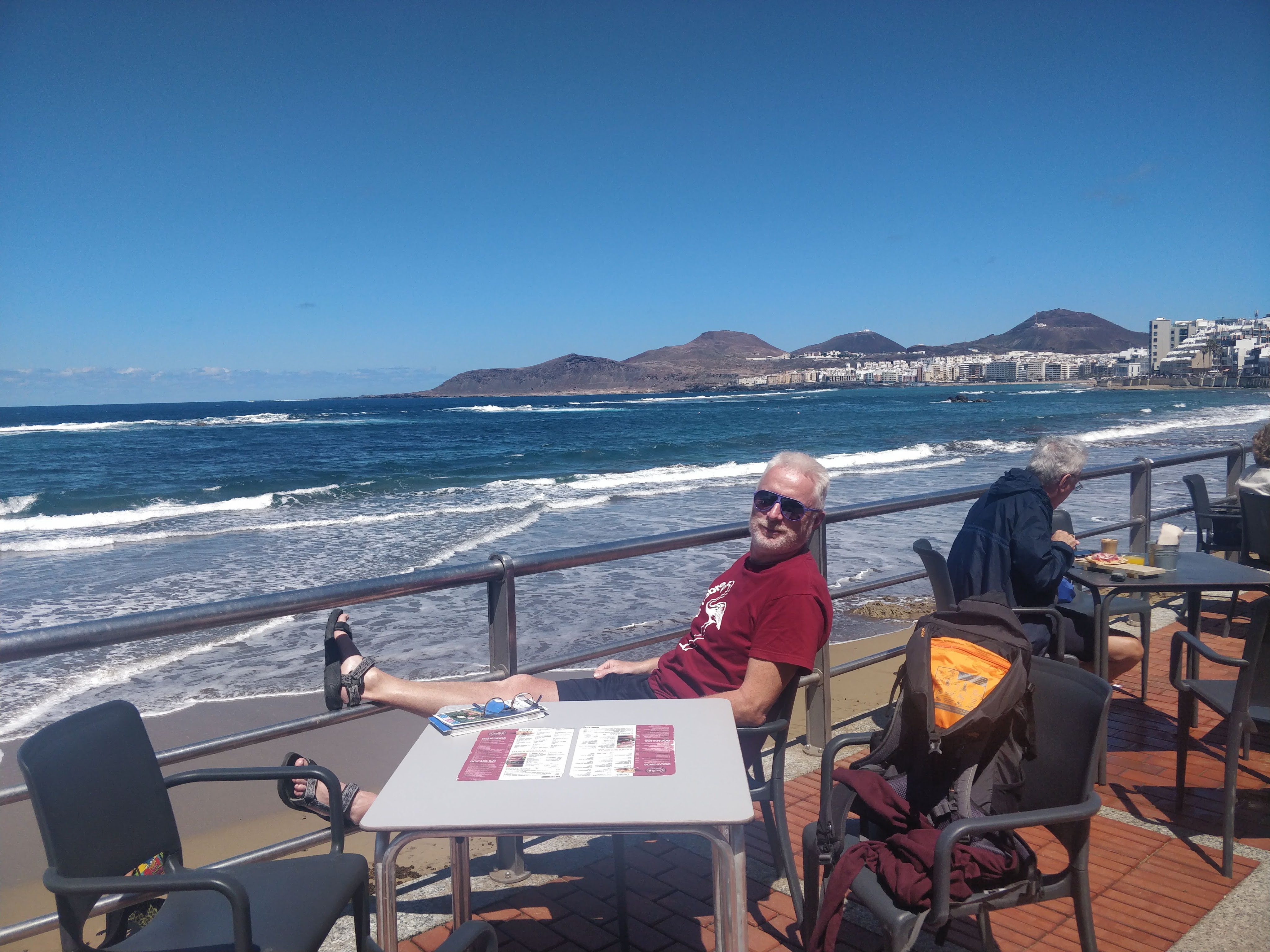
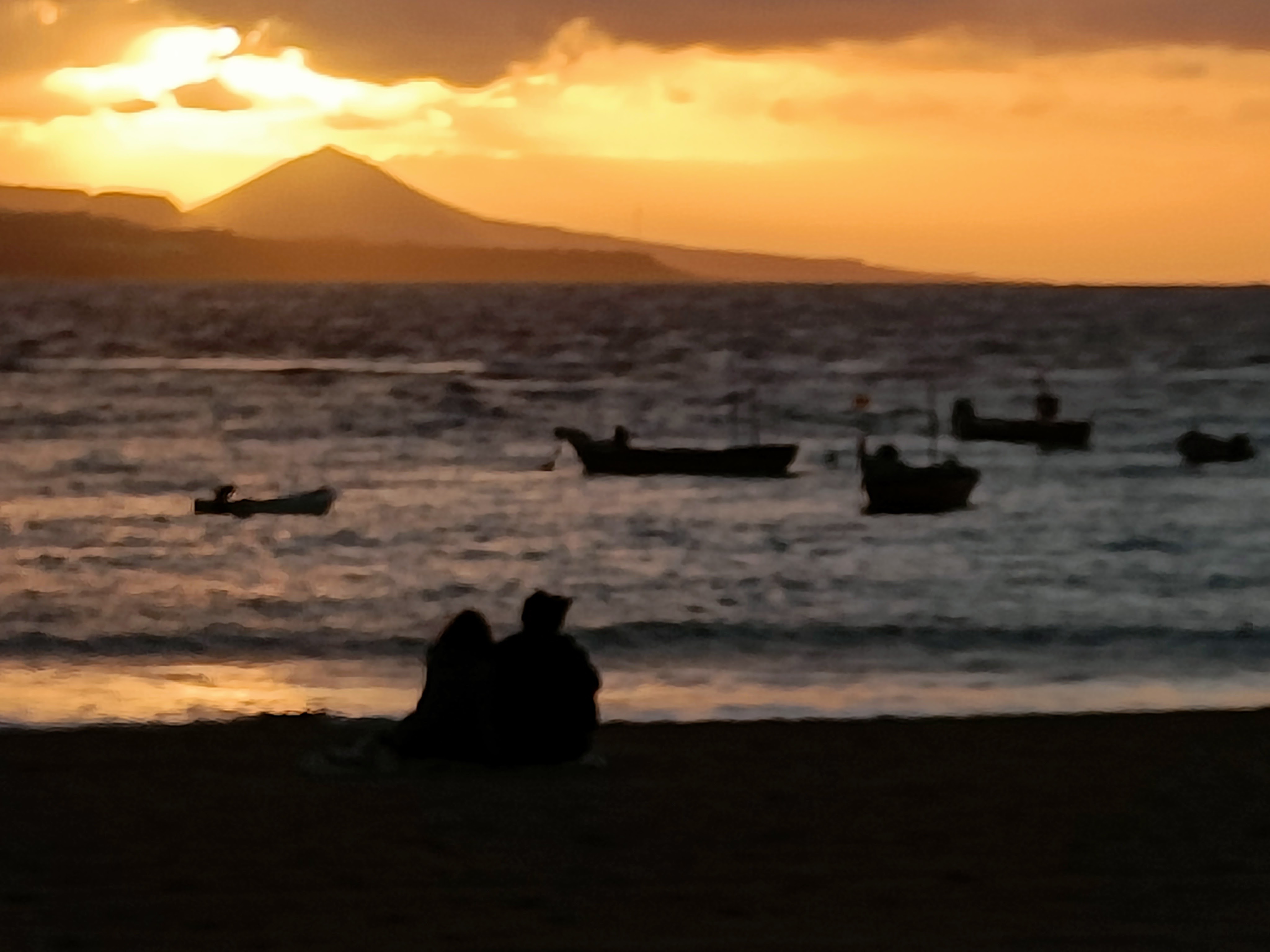
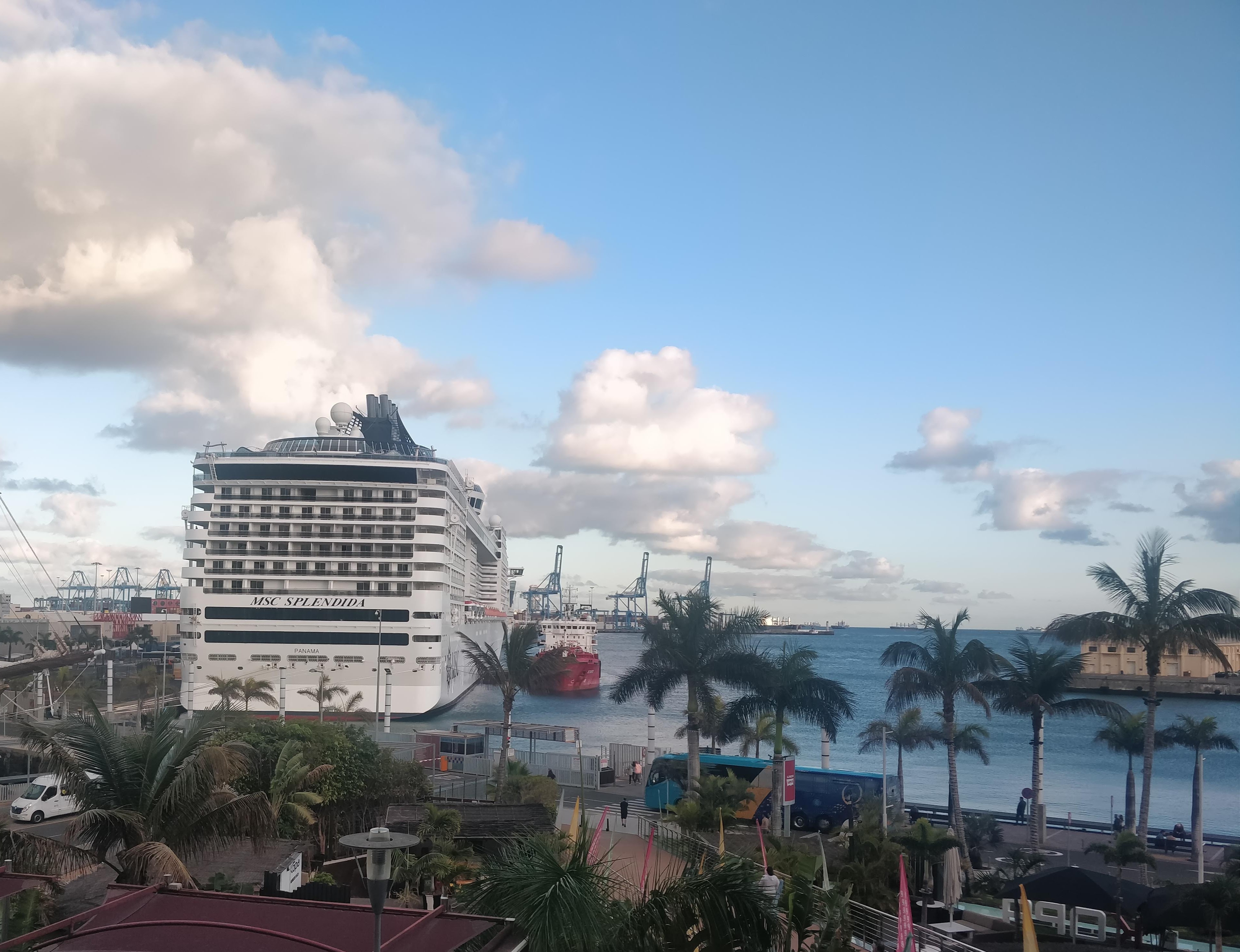
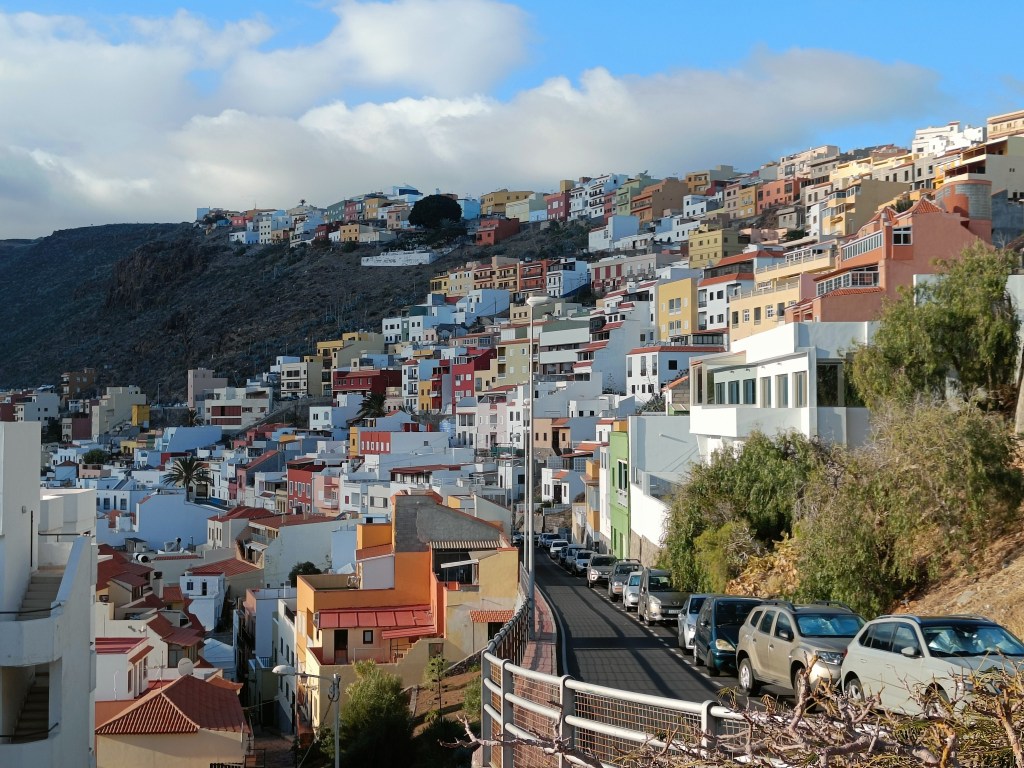
The city of Las Palmas captivated us so much that we returned and stayed for four days in the Santa Catalina district near the beach. It is a city on a narrow peninsula in the north-eastern corner of the island and so is almost surrounded by water. It has everything – a nice climate, a large marina, busy port, historical districts, fabulous architecture, good shopping(duty-free) and to top it all, gorgeous palm fringed beaches. The most famous of the beaches is Playa de las Canteras, a long stretch (3 kms) of golden sand with crystal clear waters teeming with fish, which has won global awards for the best city beach. And then there is the long promenade by the beach, lined with cafes and restaurants perfect for strolling, people watching or just watching the sun go down.
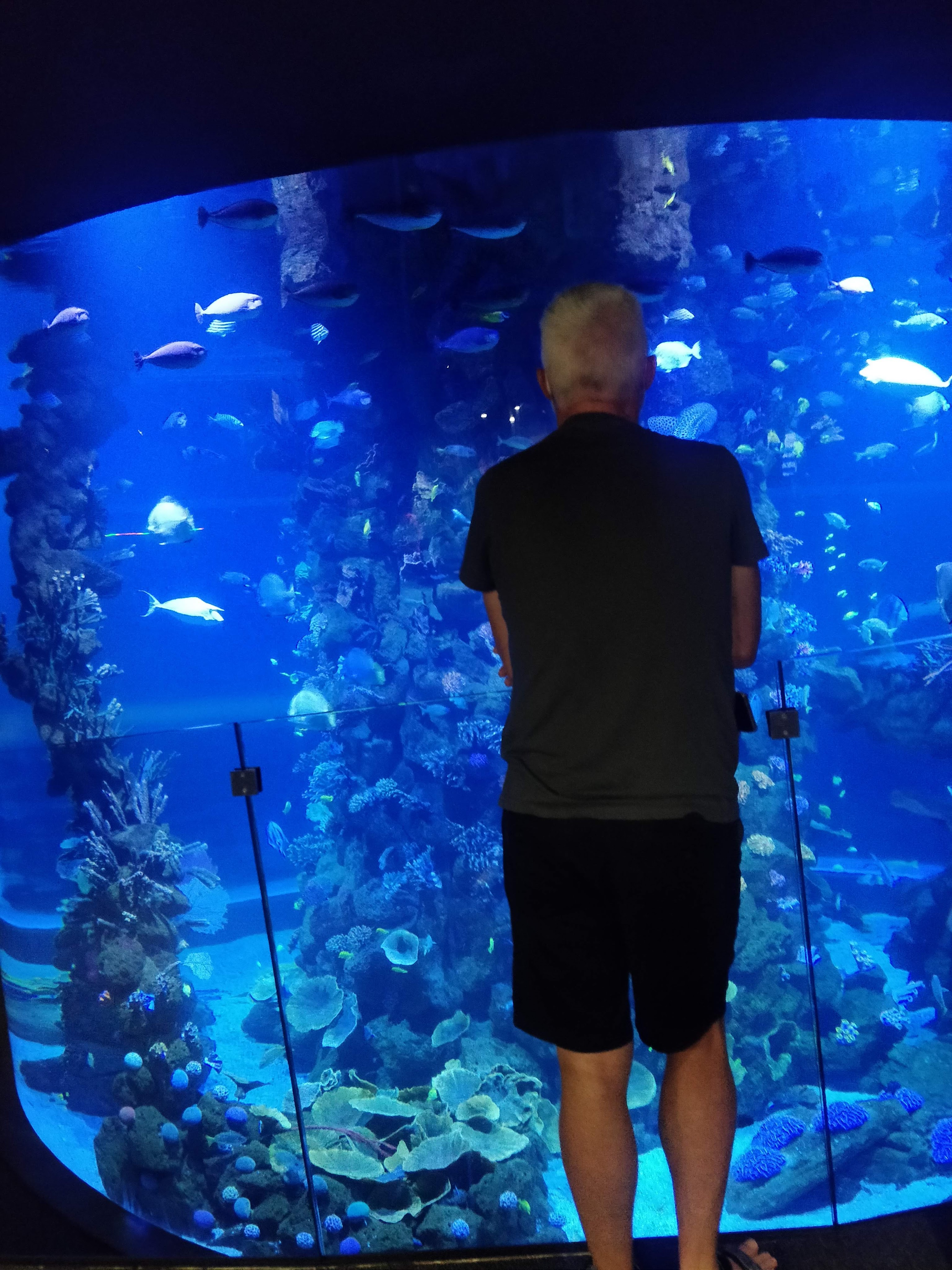
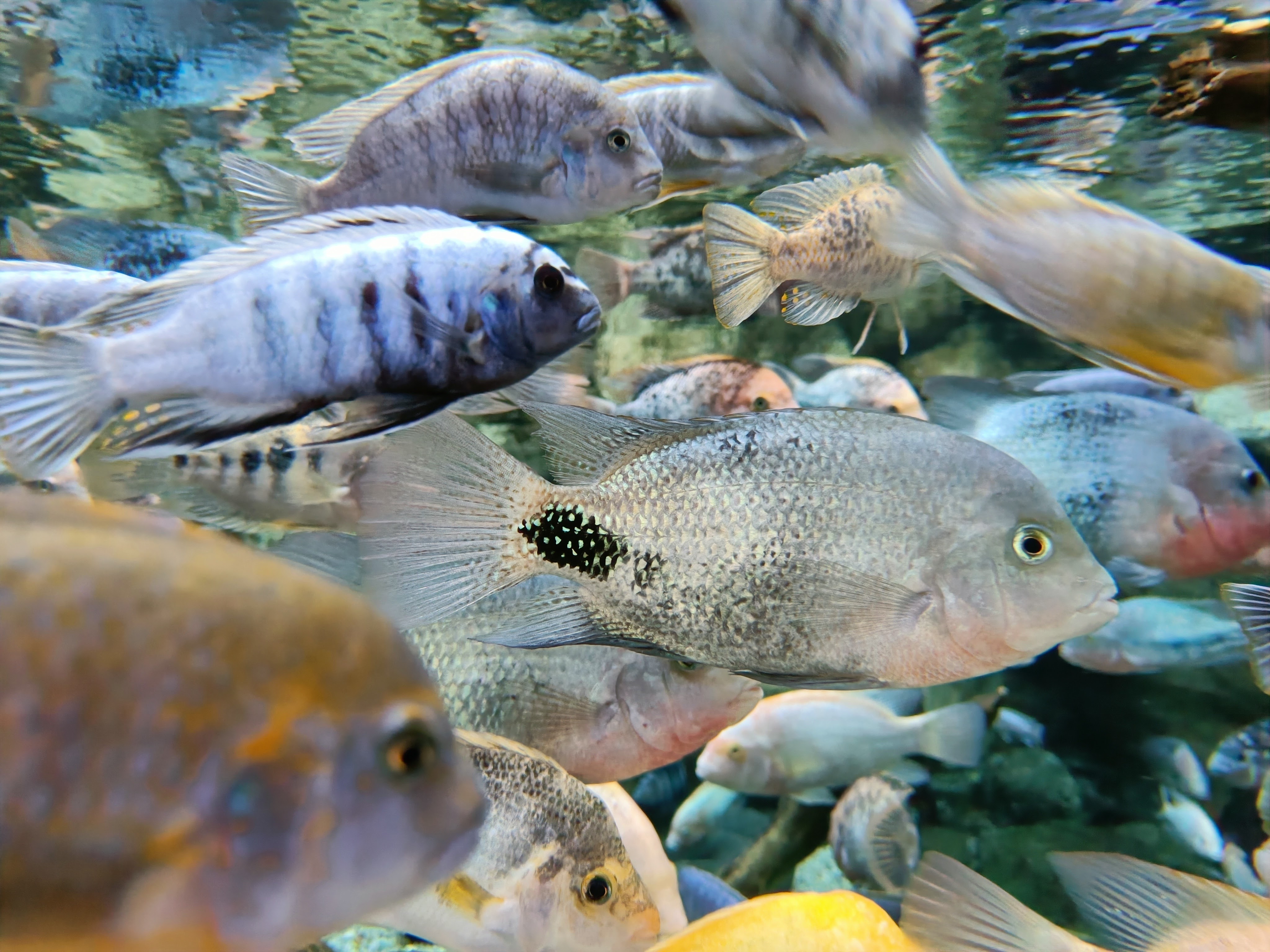
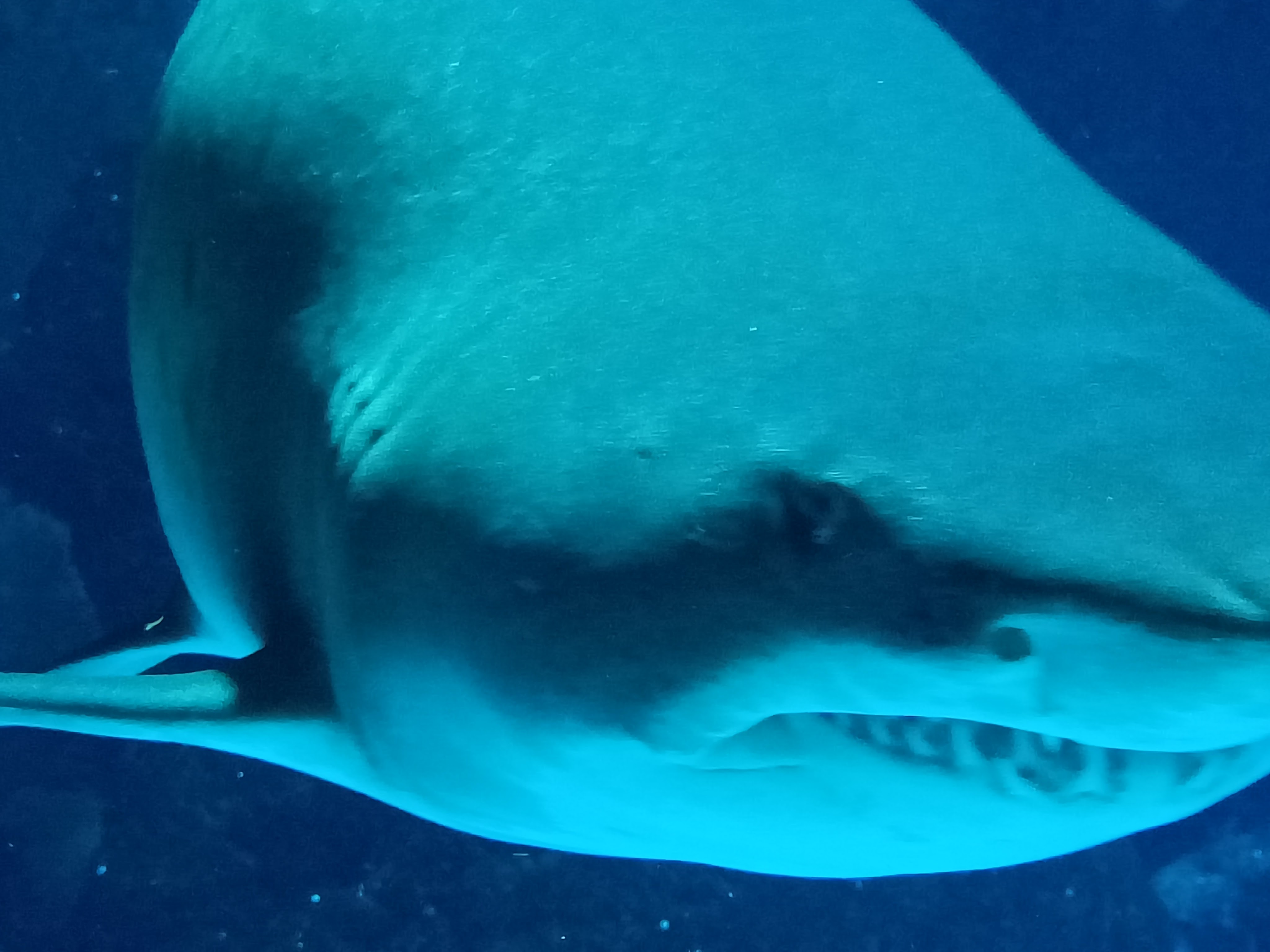
We visited the Aquarium called Poema del Mar in Las Palmas. The entrance fee was €25 each which we thought was a bit steep but it turned out to be a remarkable experience. The highlight was the darkened auditorium where chairs and benches were arranged in front of an enormous fish tank made of the biggest curved acrylic glass in the world (almost 8 metres high and 36 metres wide.) It was like being underwater, watching a mesmerising ballet of the deep sea. Classical music played in the background and a huge array of exotic species swam in front of our eyes. It was both exhilarating and soothing. There was the slow sweep of the manta rays, the languid floating of the medusa jellyfish, the prowling of the sharks, the shoals and the loners. In a separate tank, there was the frenzied dance of the piranhas and the bobbing of sea horses and so much more. Poema del Mar translates as the poem of the sea and it was truly poetic. But there were also ominous signs and disturbing facts about the effects of our plastic culture on marine life and habitats. The truth is that if we don’t reduce our use of plastics, a more apt name in the near future may be the lament of the sea.
In many ways, Gran Canaria has been our least favourite island so far. The weather was incredibly windy everywhere – good for the windmills – and rain bookended our stay with a damp arrival and a wet departure. Our choice of places of stay for the first week was unfortunate and the island was far more crowded than the other islands especially El Hierro, La Gomera and La Palma. But we fell in love with the capital city of Las Palmas, the city that has everything 😍
Onwards to Fuerteventura on the Fred Olsen ferry this evening to see what we will find there.
Thanks for reading



 marienoonanblog