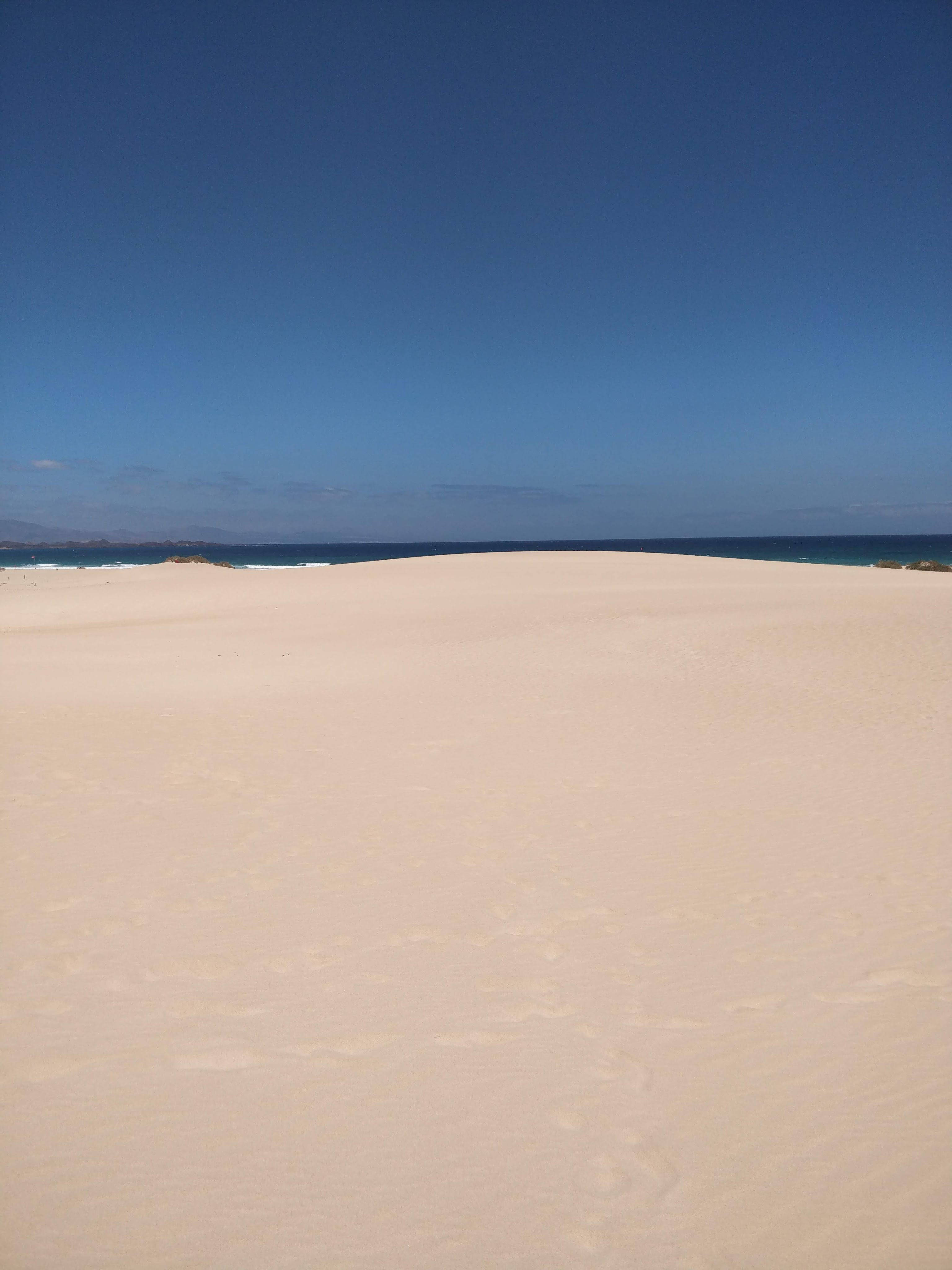
La Graciosa, the Blondest Island

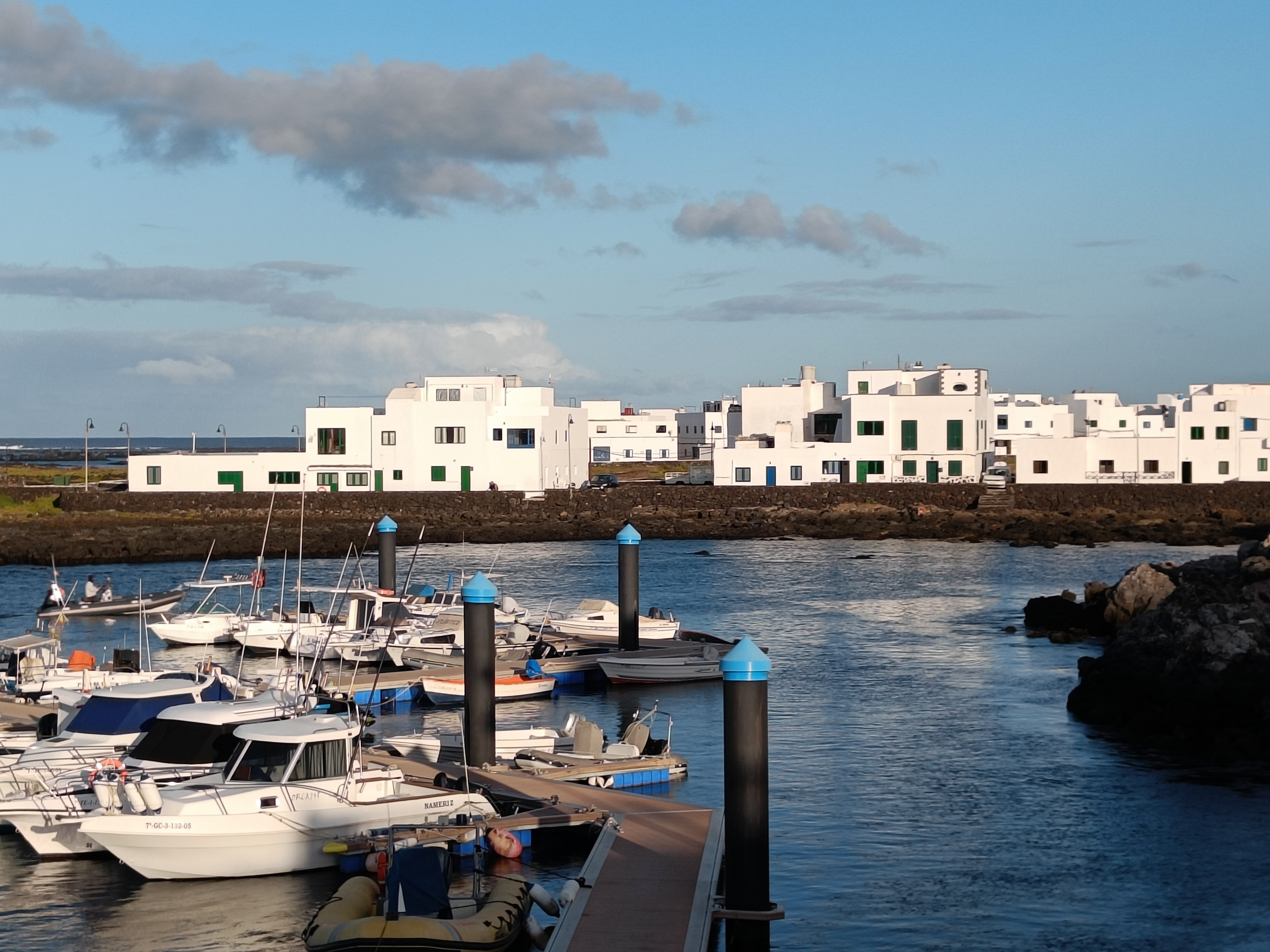
Blue morning in Orzola, Lanzarote

It was one of those stunningly blue mornings with blue sea and blue sky. We waited for the ferry in Ozsola (pronounced Ursula) in Northern Lanzarote with the sun warming our backs and a light breeze…..a real ‘good to be alive’ day. Black coffee and sugary doughnuts (the ones that just dissolve in your mouth) never tasted better. It felt even more special because we were nearly at the end of our three month trip around the Canaries. We were about to visit La Graciosa, our eight and final island.
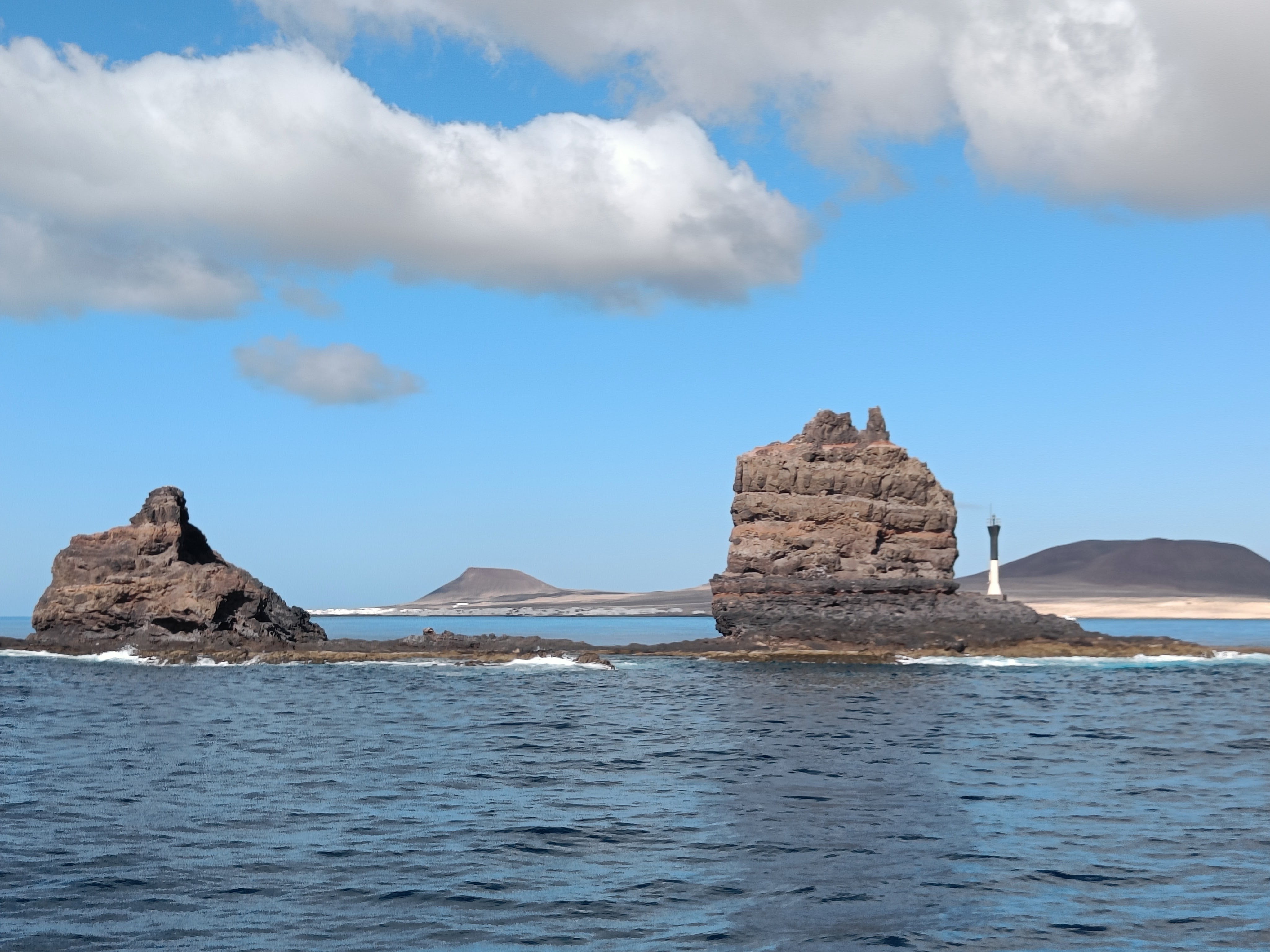
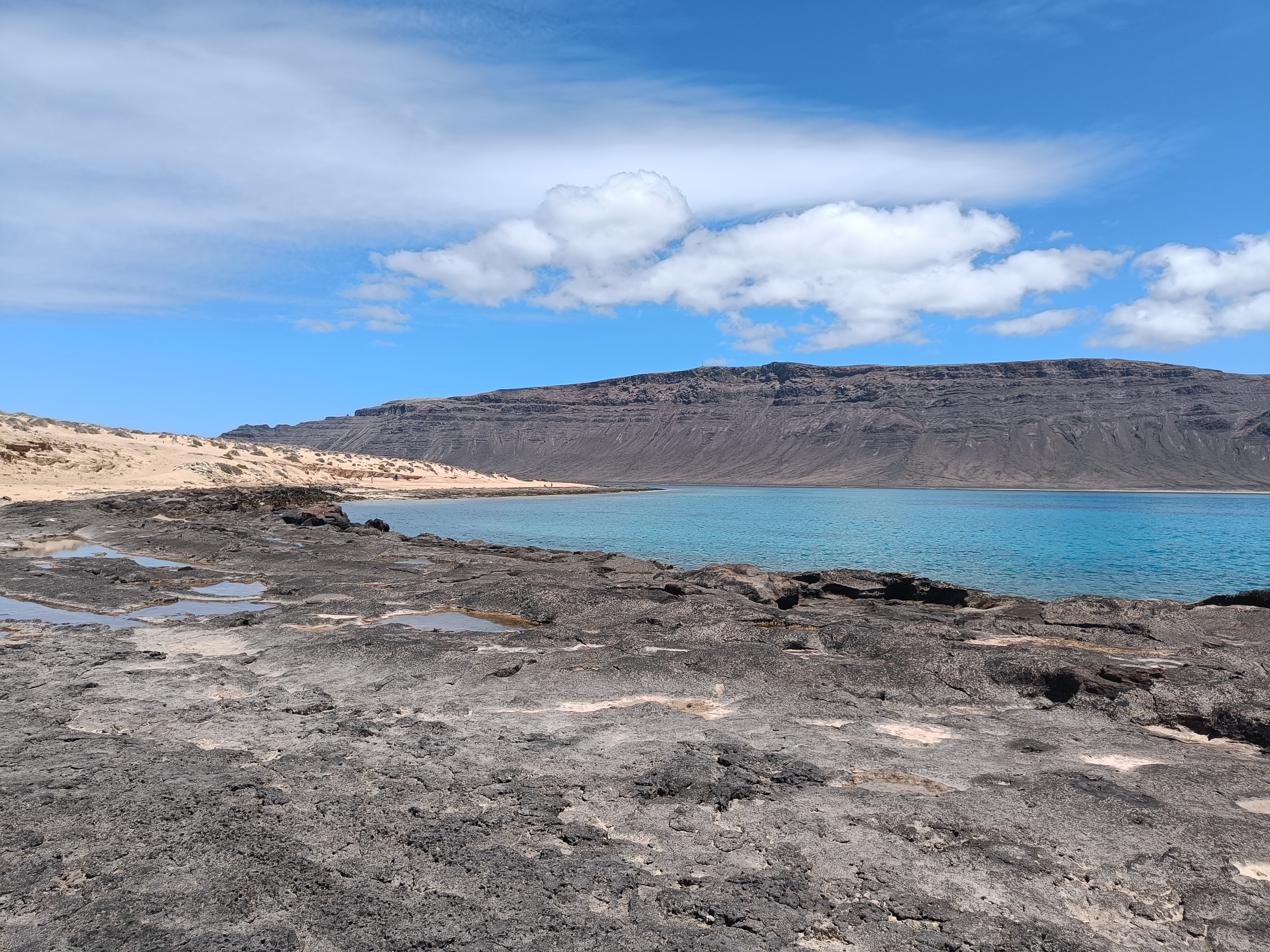
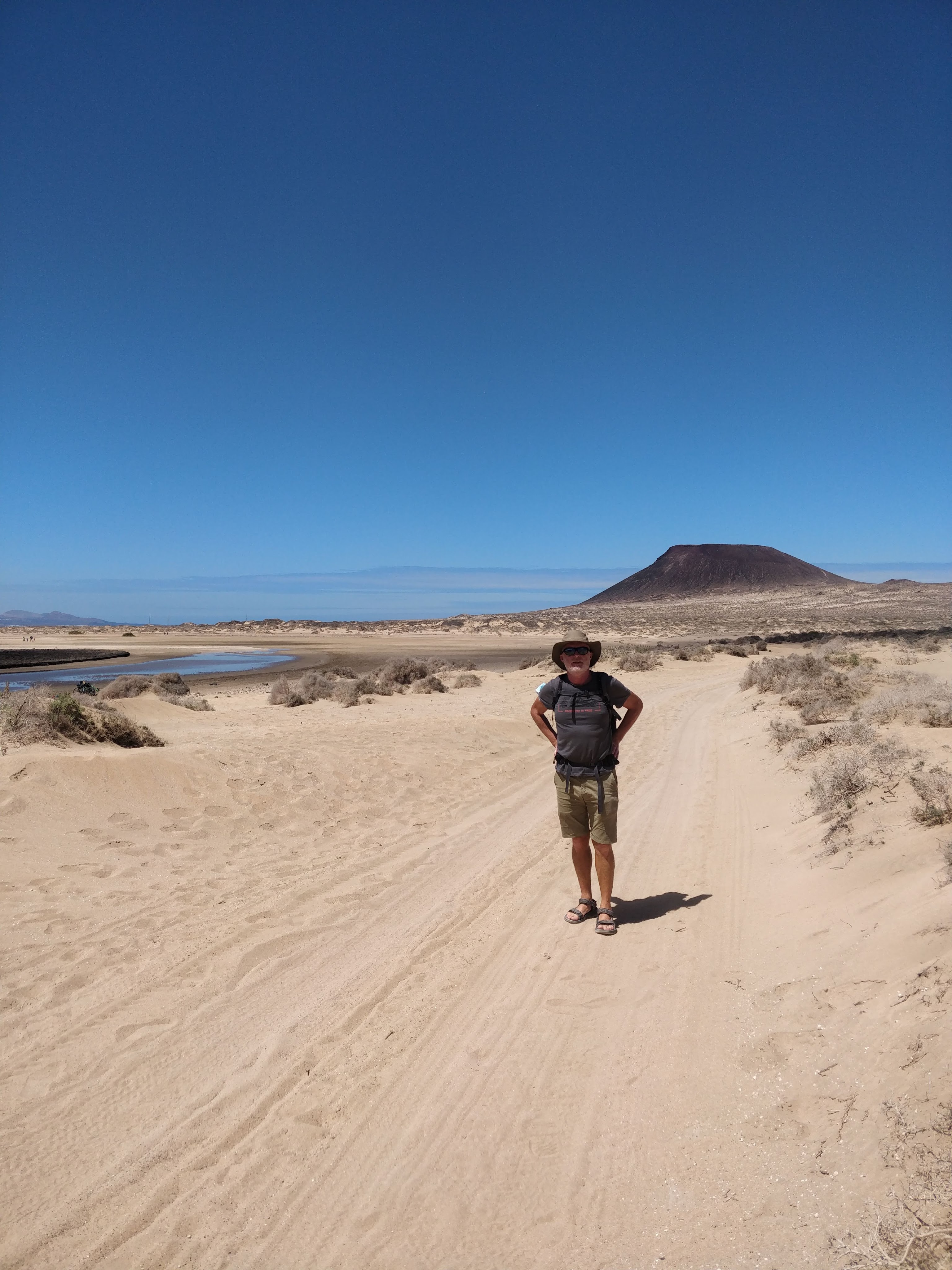
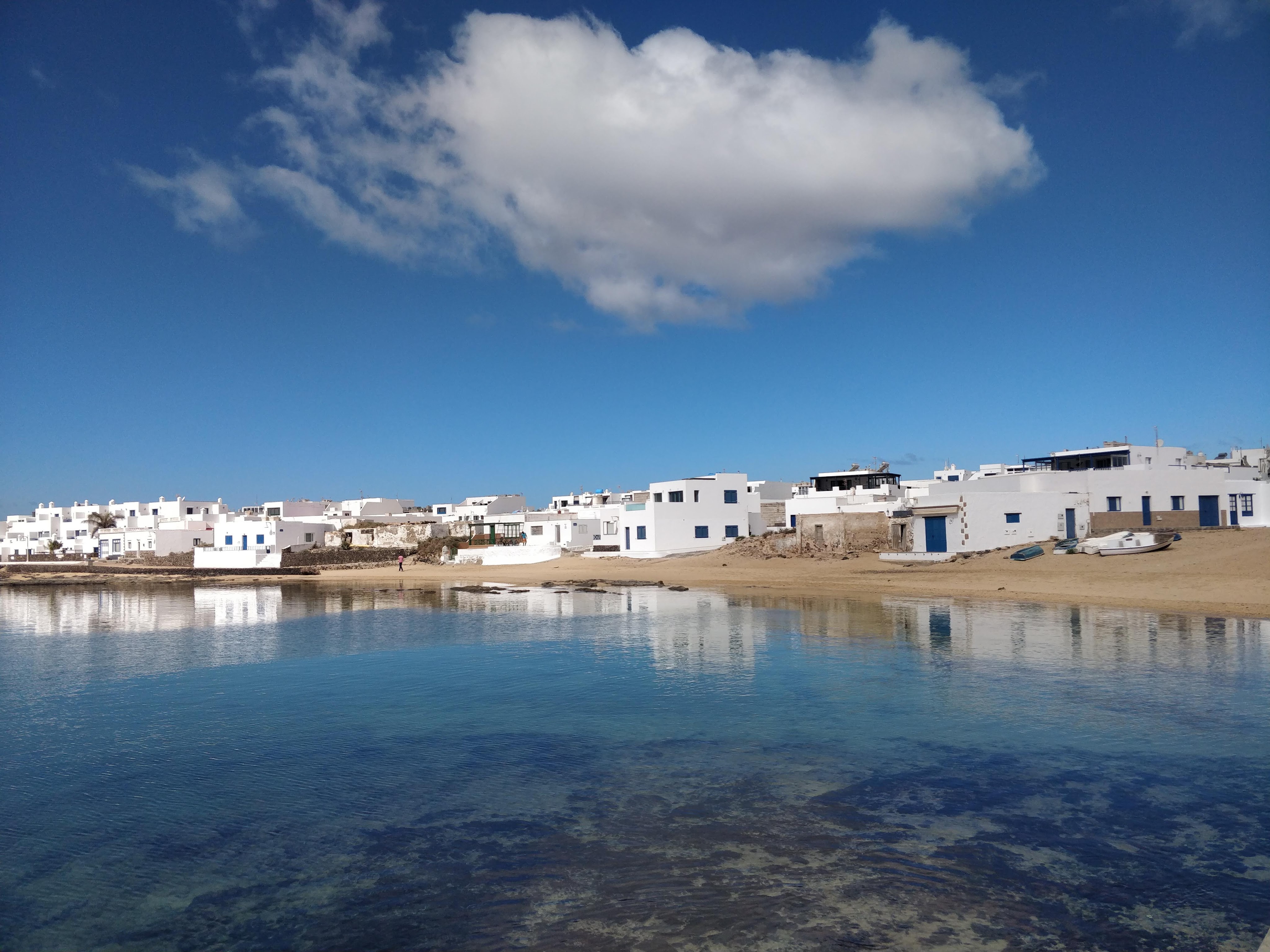
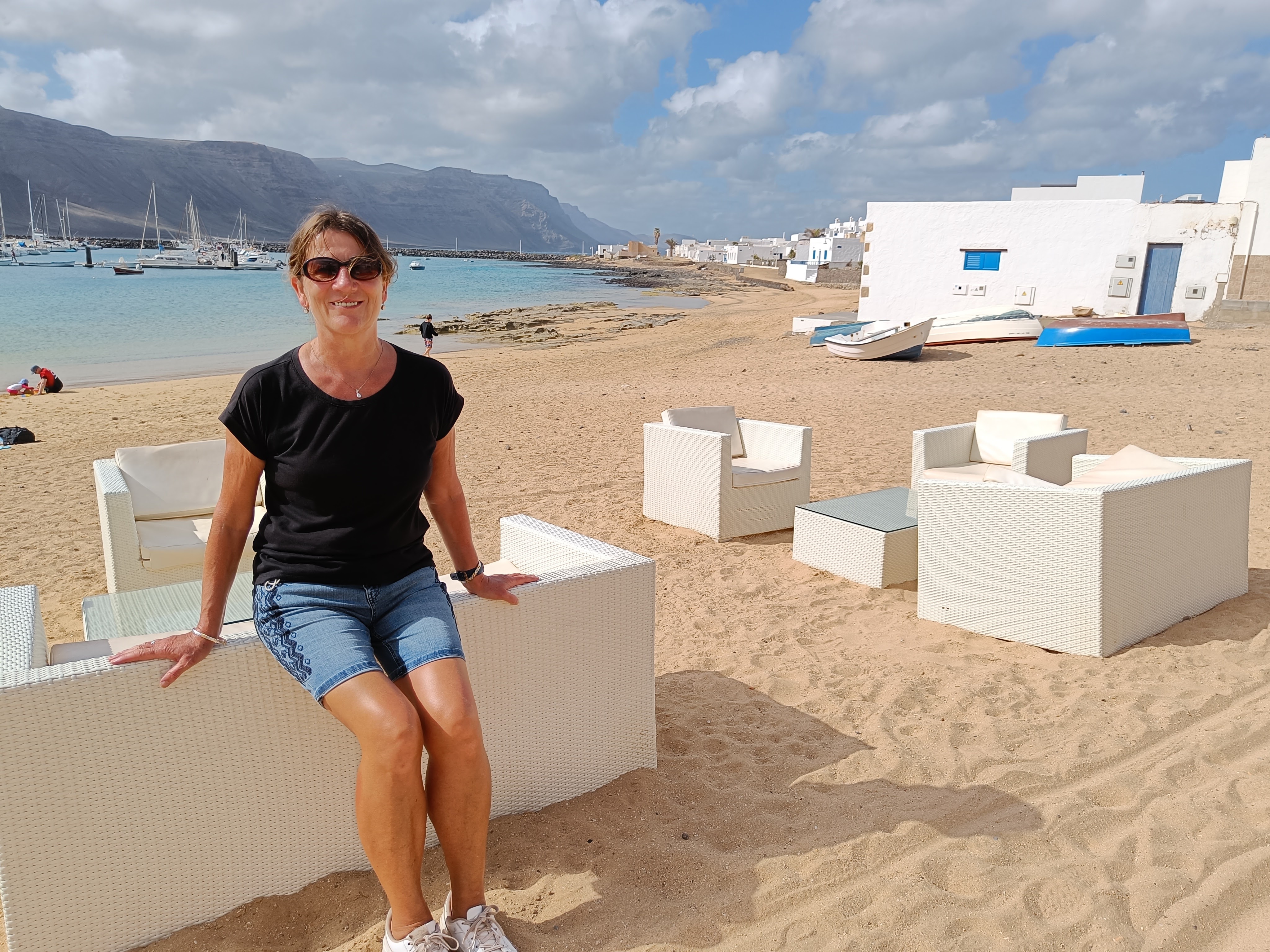
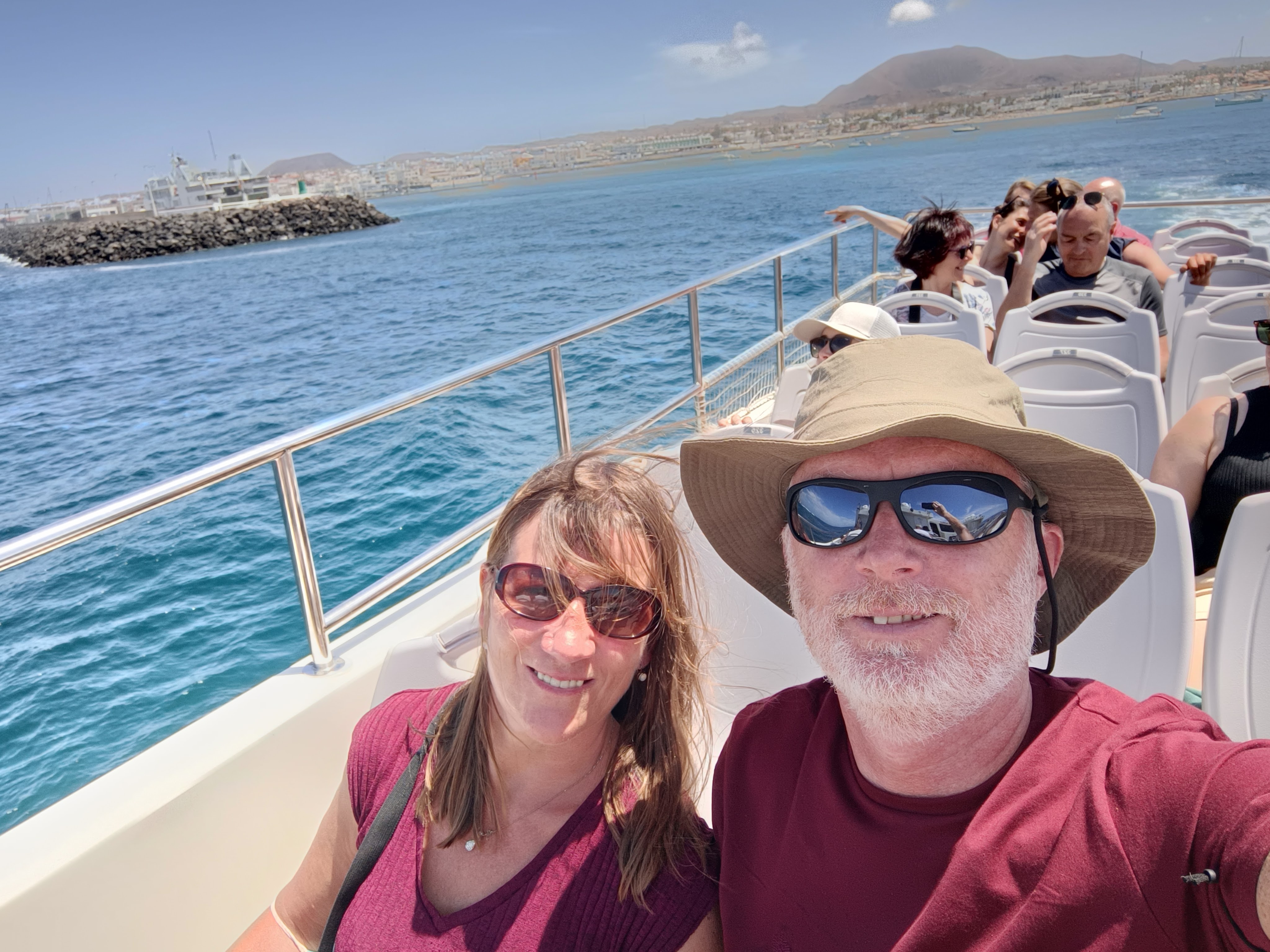
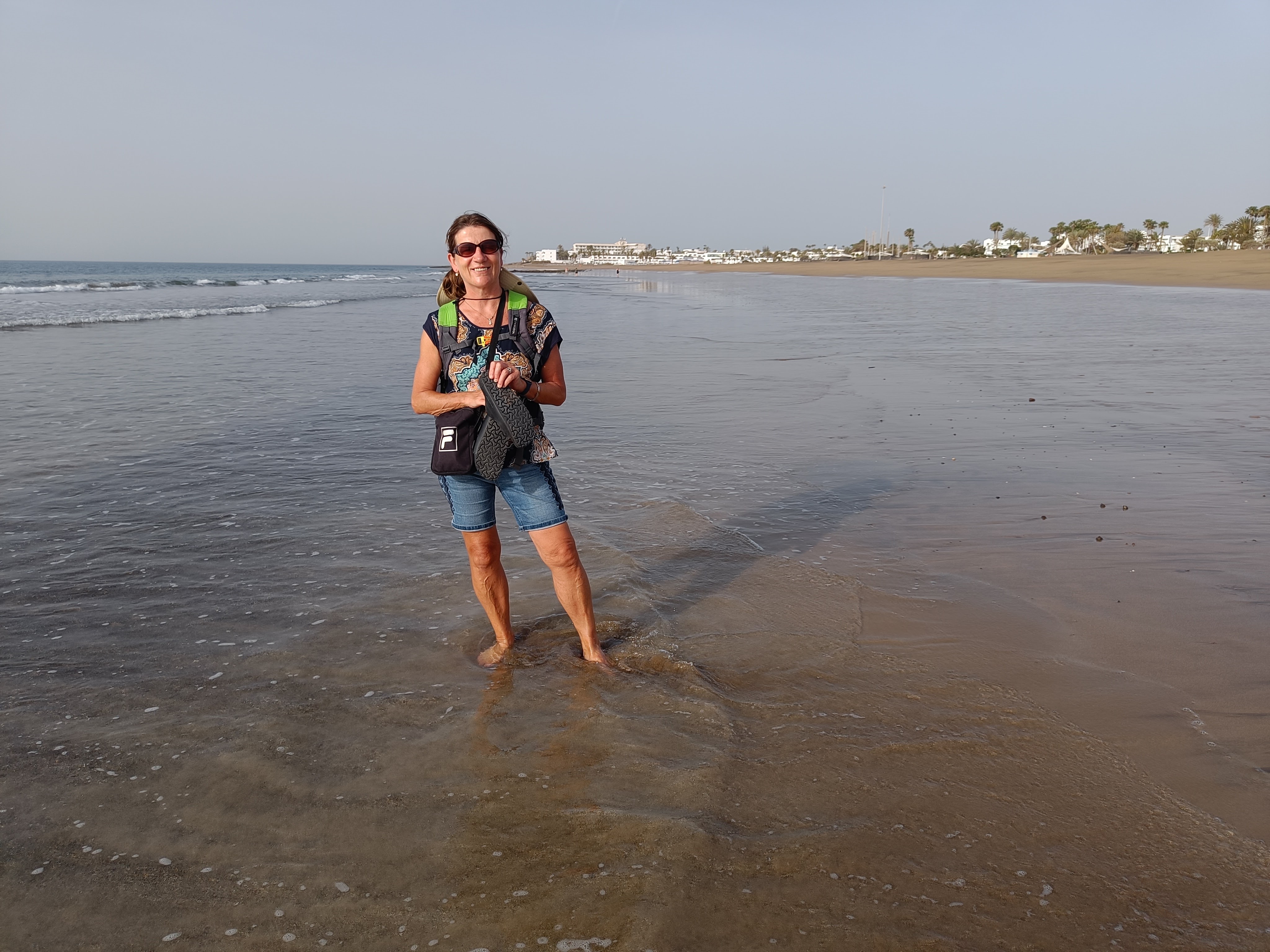
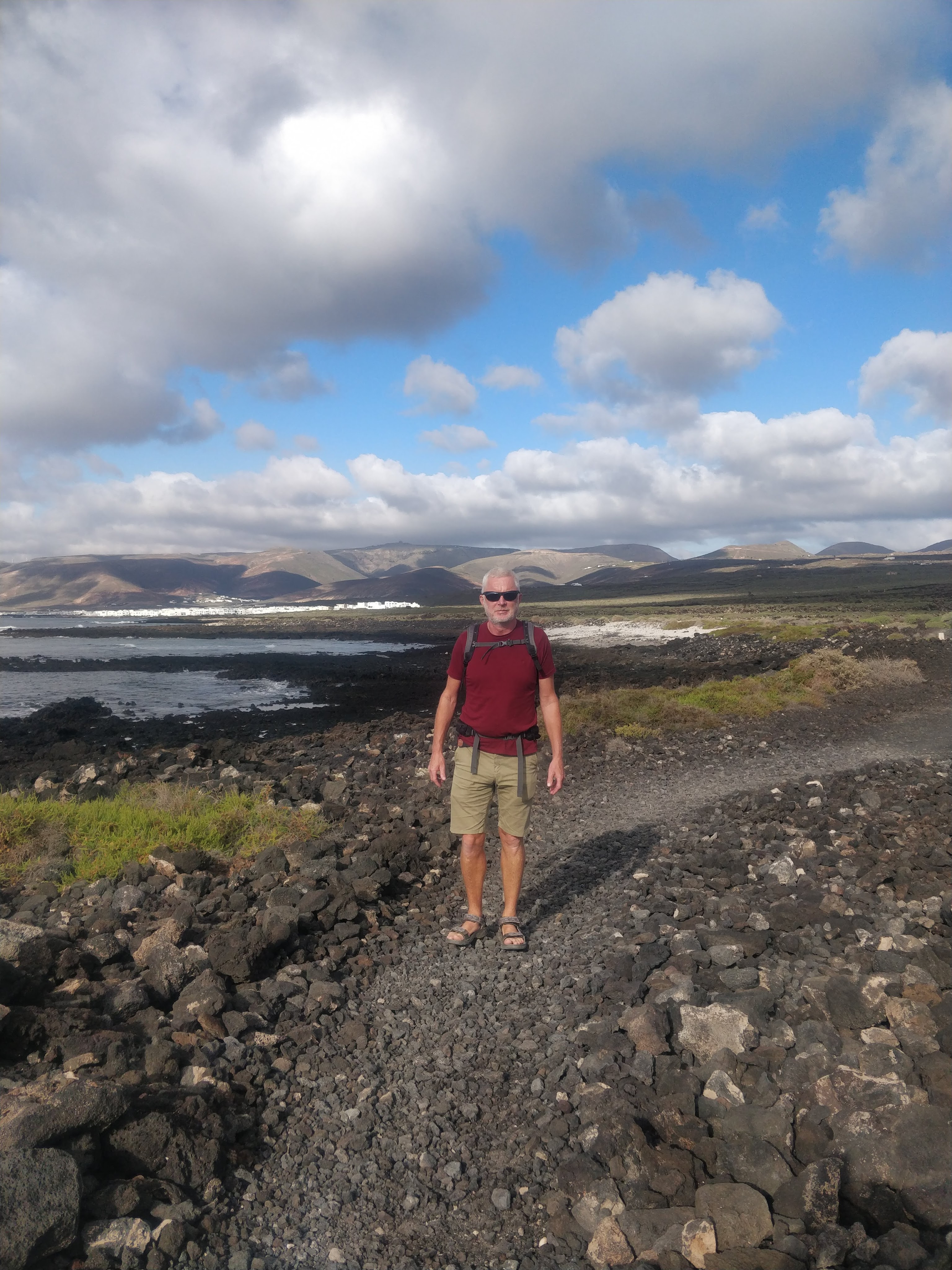
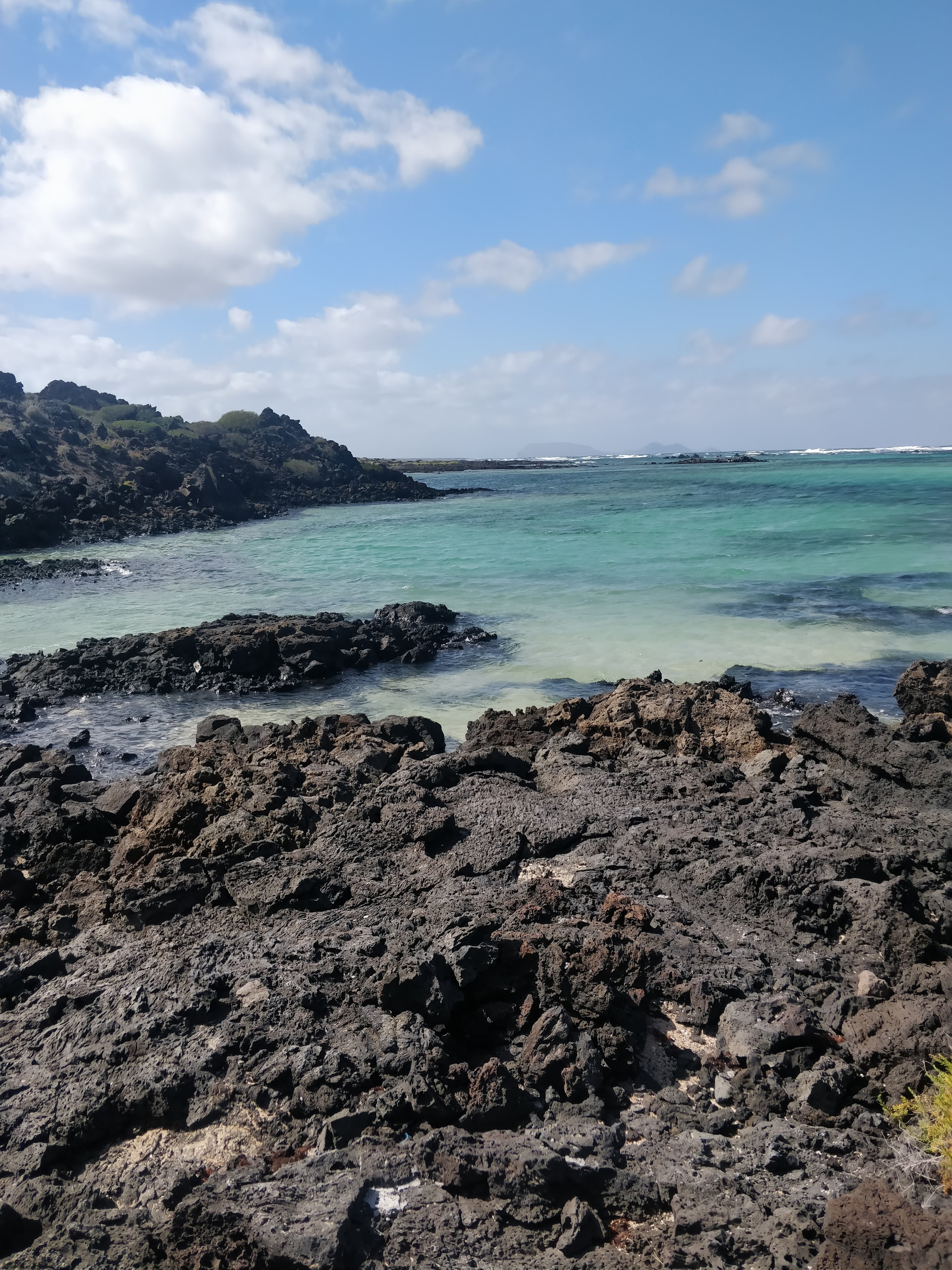
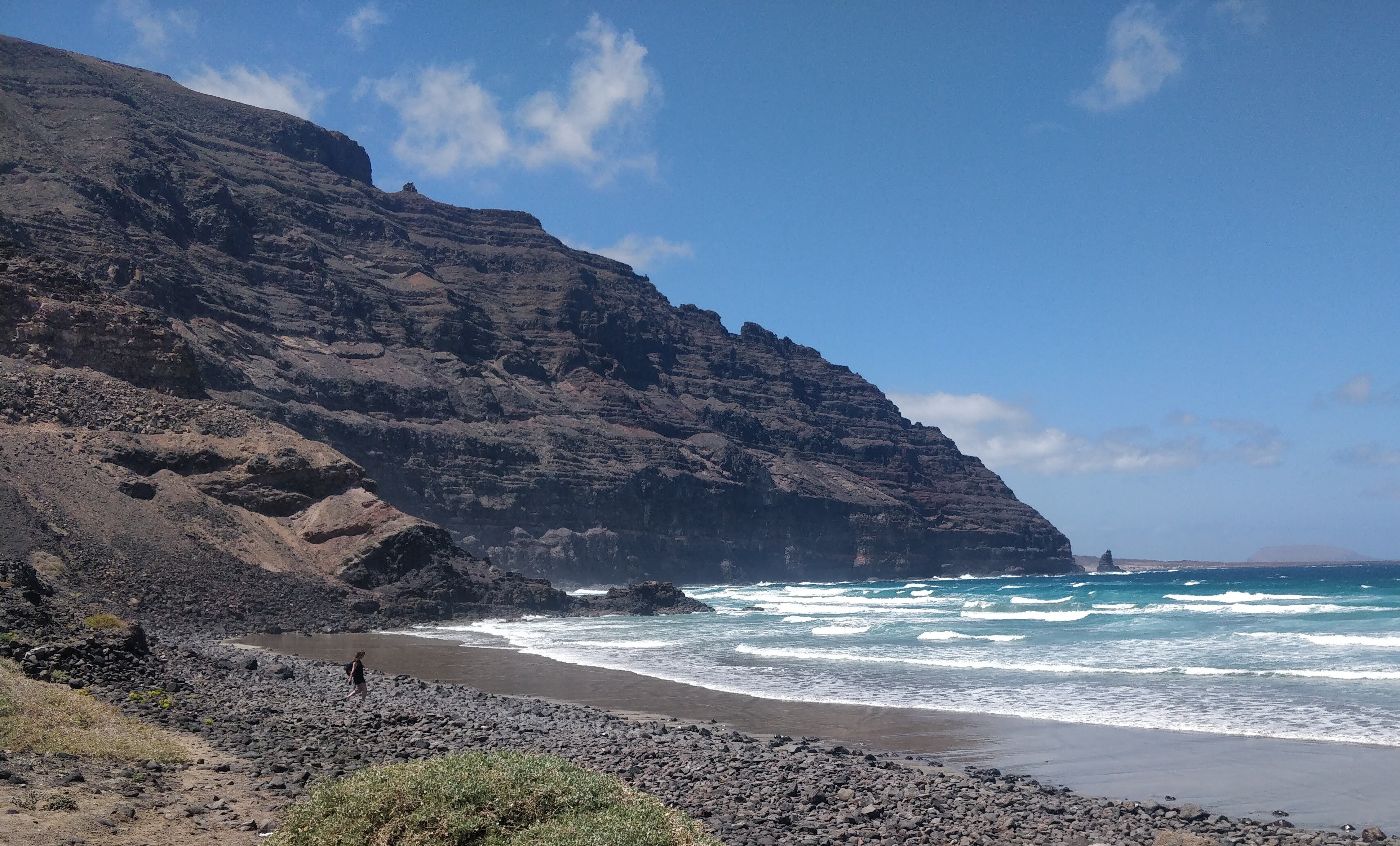
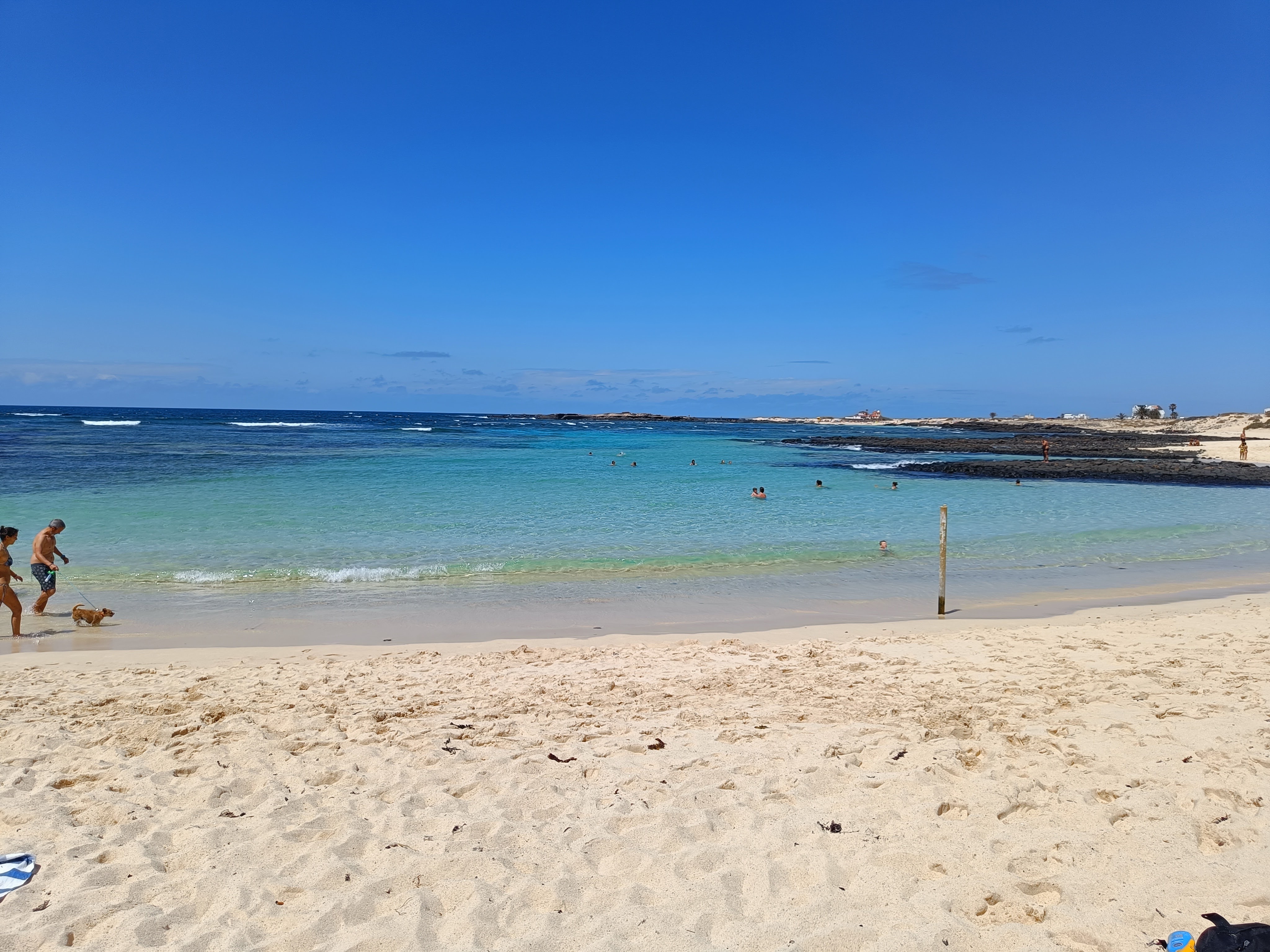
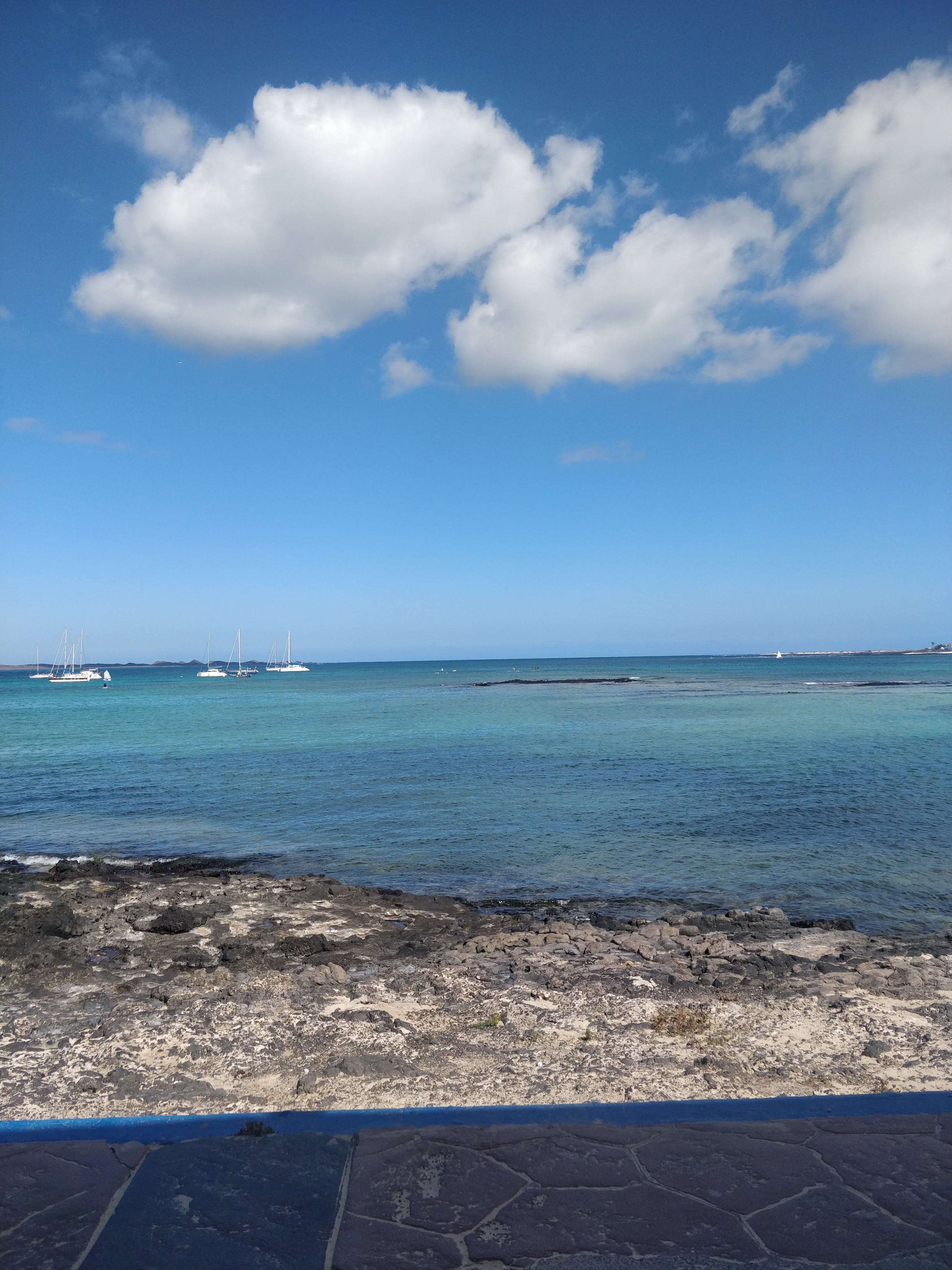
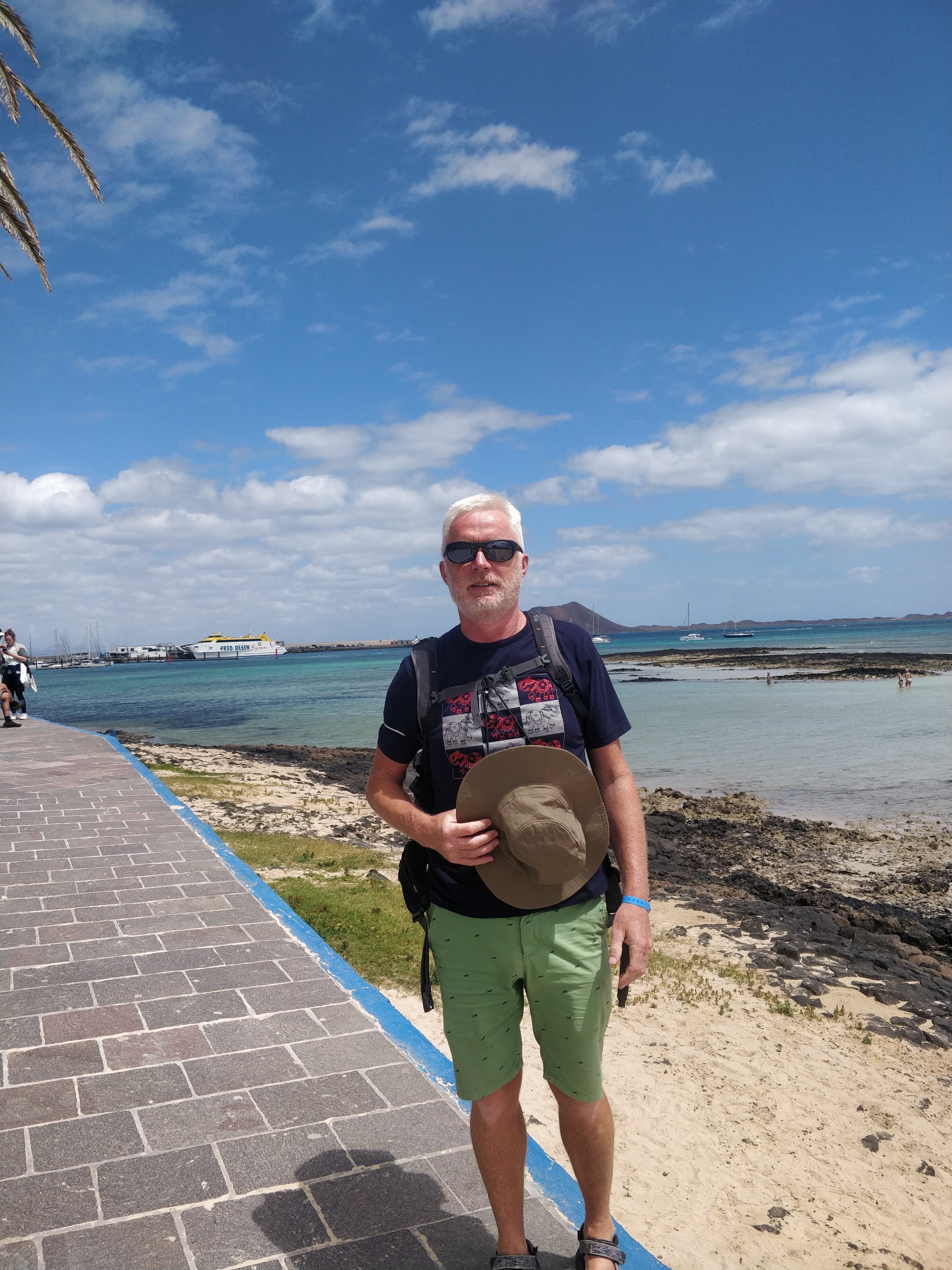
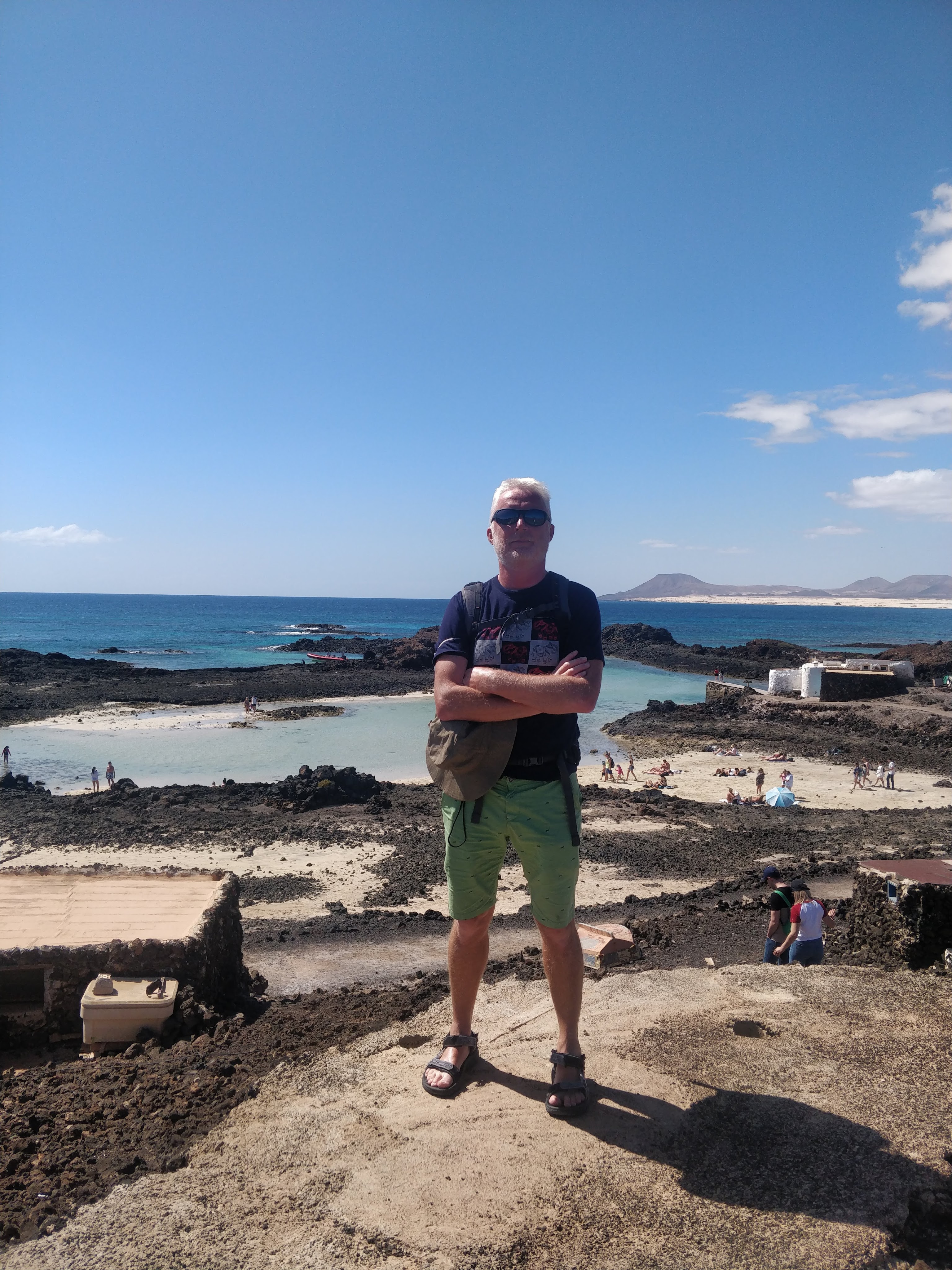
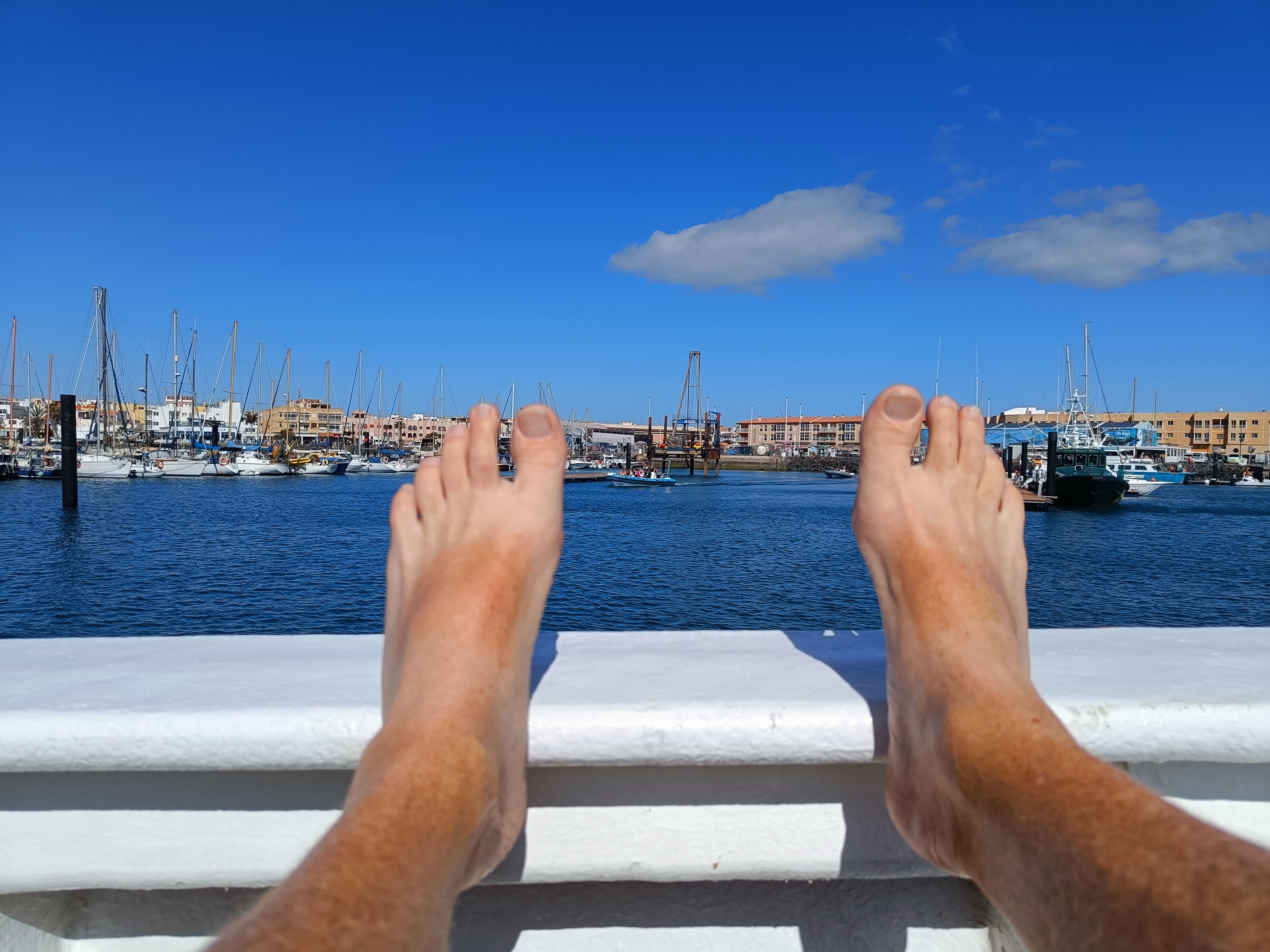
During the thirty-minutes ferry ride across the Strait of El Rio, the Bueno Vista Social Club played through the speakers on deck and the sea shimmered in time to the music. Caleta del Sebo, the only town on the tiny island gleamed white against the yellow of the sand and the tan of the hills. Seagulls circled over the small fishing boats which all seemed to be painted blue. We wondered if Cesar Manrique’s decree on colour extended to the boats on aesthetic grounds😀. The town was spread out, long and low, all the houses painted the obligatory white and blue. Most people on the boat were day trippers and were soon sucked into the many cafes, beaches and bike rentals places. We dragged our suitcases (the 10kgs plane cases) along the sand to our beachfront apartment, which was gorgeous, decorated in soft greys with a splash of yellow, and at €80 a night was significantly more expensive than our usual budget. We hiked to the south of the island, walking along blond beaches and rock pools teeming with life to swim in cool turquoise waters and watch clouds float by. The joy of retirement☺
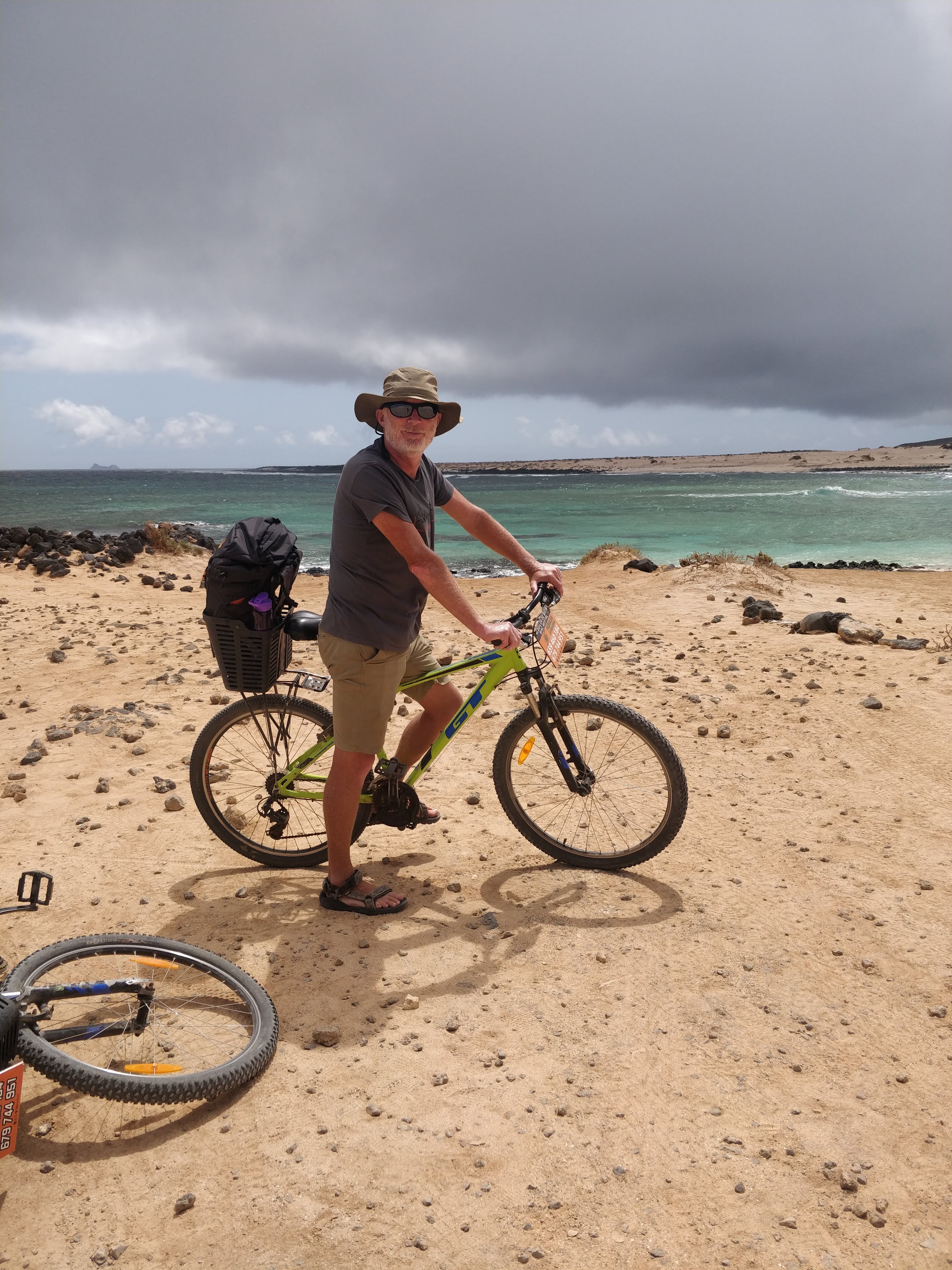
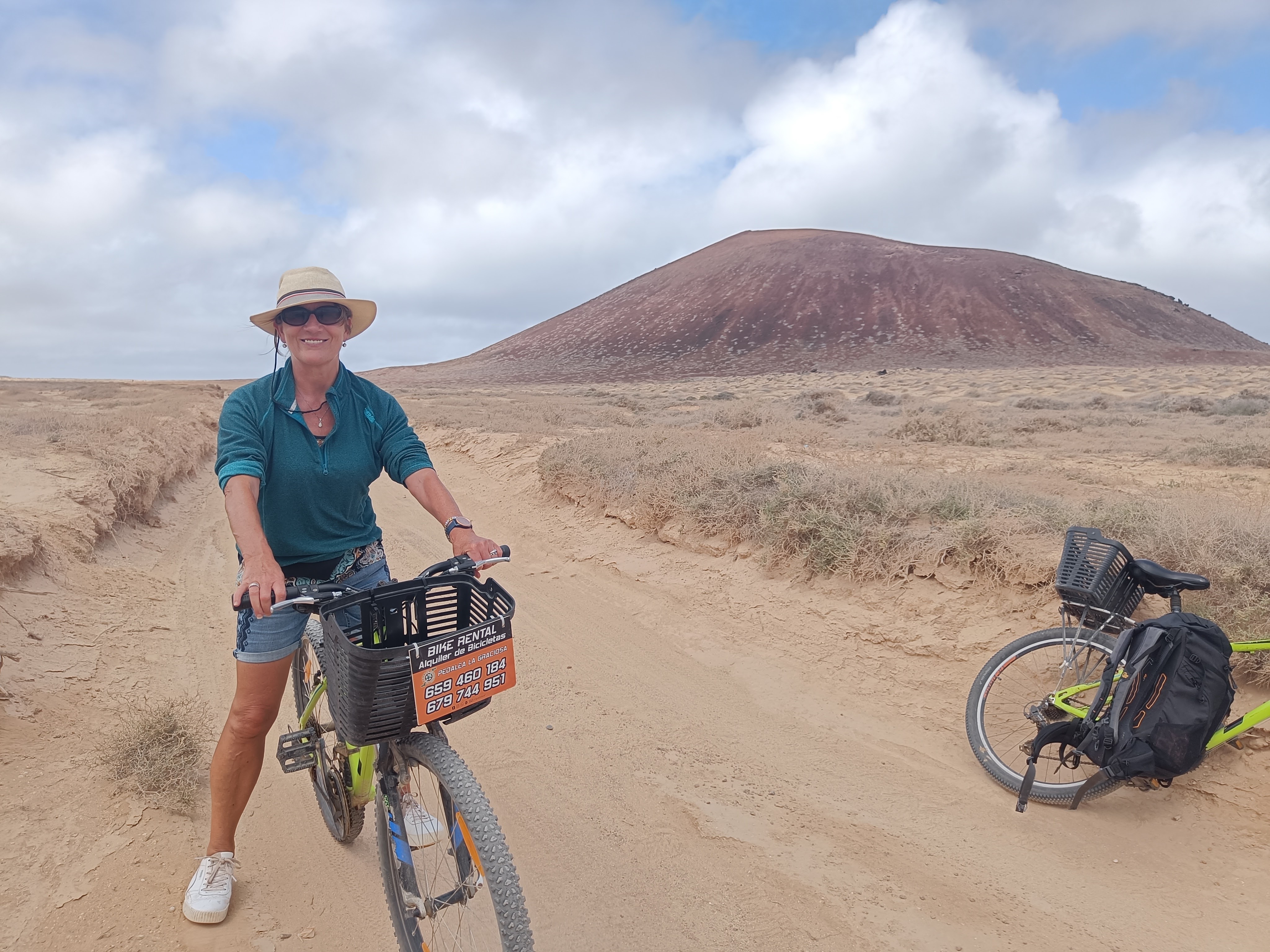
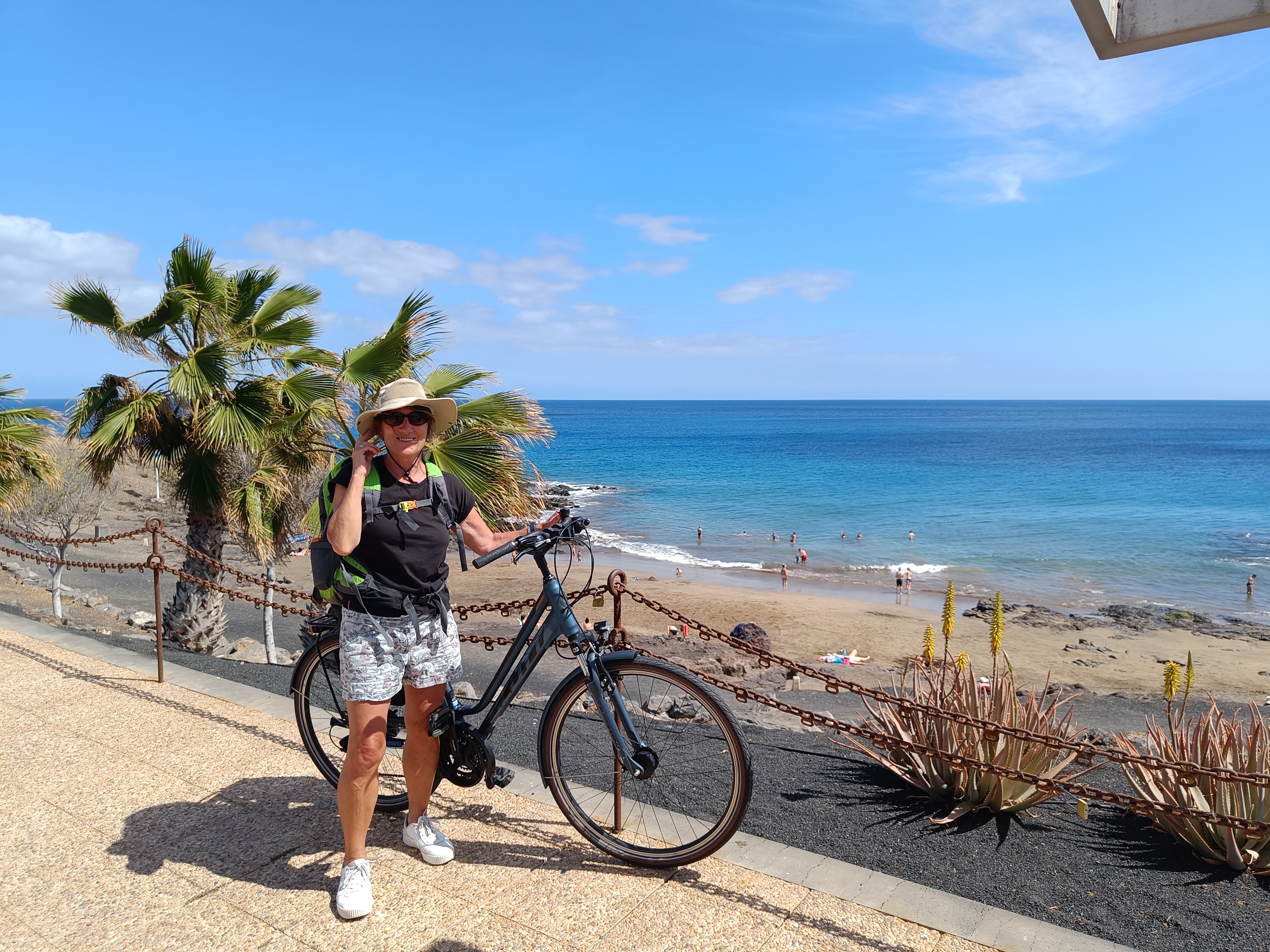
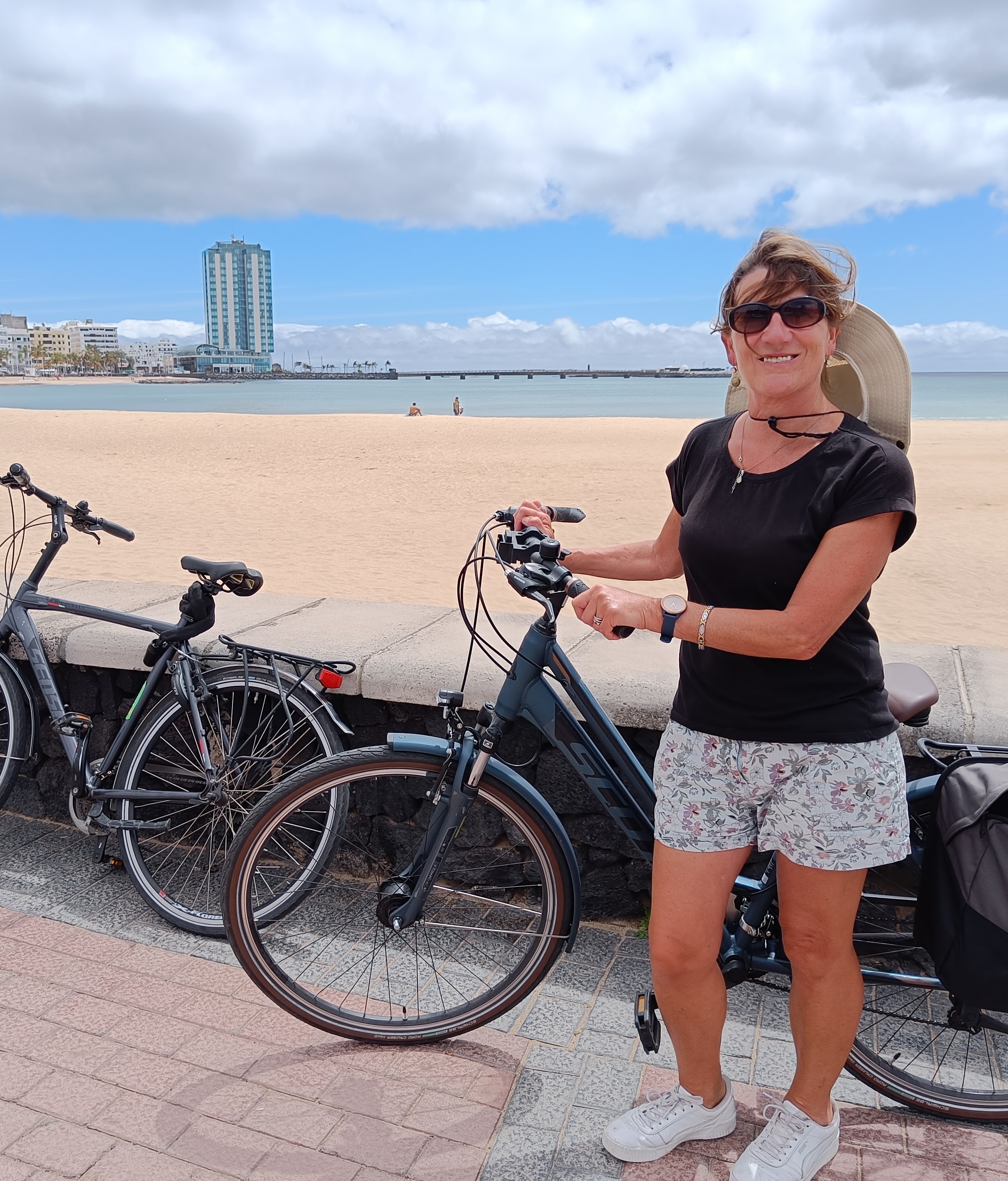
Most visitors came off the ferries and hired bikes to tour around the island and most didn’t realise what they were letting themselves in for…us included. Paved roads were non-existent anywhere on La Graciosa so vehicles were limited to a few dusty jeeps- really charming- but the rough surfaces also made cycling quite challenging. The island had an arid beauty with no trees in the interior but that meant no shade or shelter. But we were gobsmacked by the beauty – the surfing beach of Las Conchas, the basalt arches of Arco de Los Caletones and the area around Pedro Barba with its summer houses. The sun was intermittent with spotty rain on a strong crosswind and mists rolled down over the hills of Lanzarote so we didn’t have to deal with the intensity of strong sunshine. We cycled through soft sand in sections or shuddered on very rough terrain in others. It was tough going although we considered ourselves reasonably fit. On our return loop, we had sympathy for the sweating people starting out who were already struggling on the easy bits. But it was worth it!
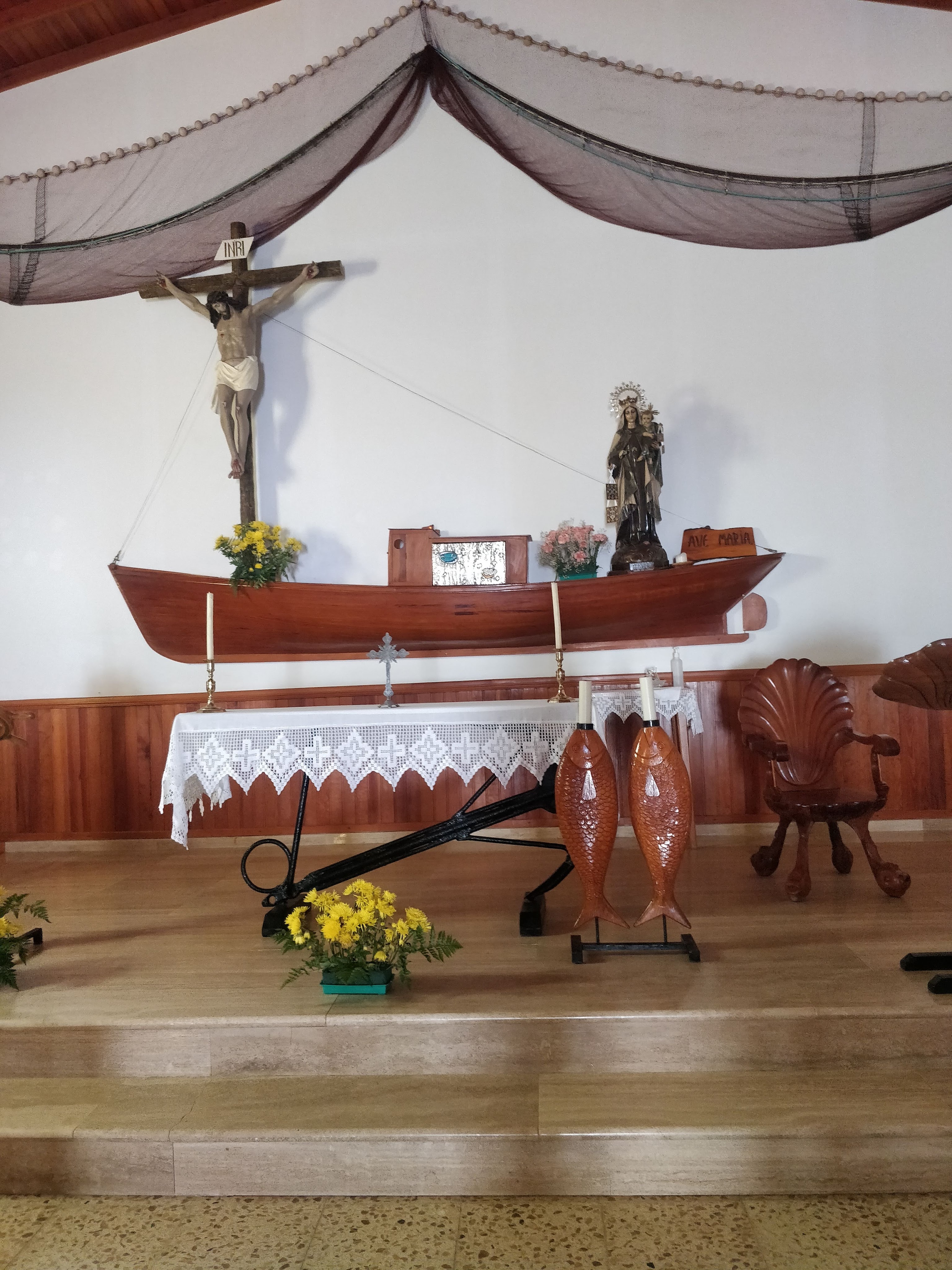
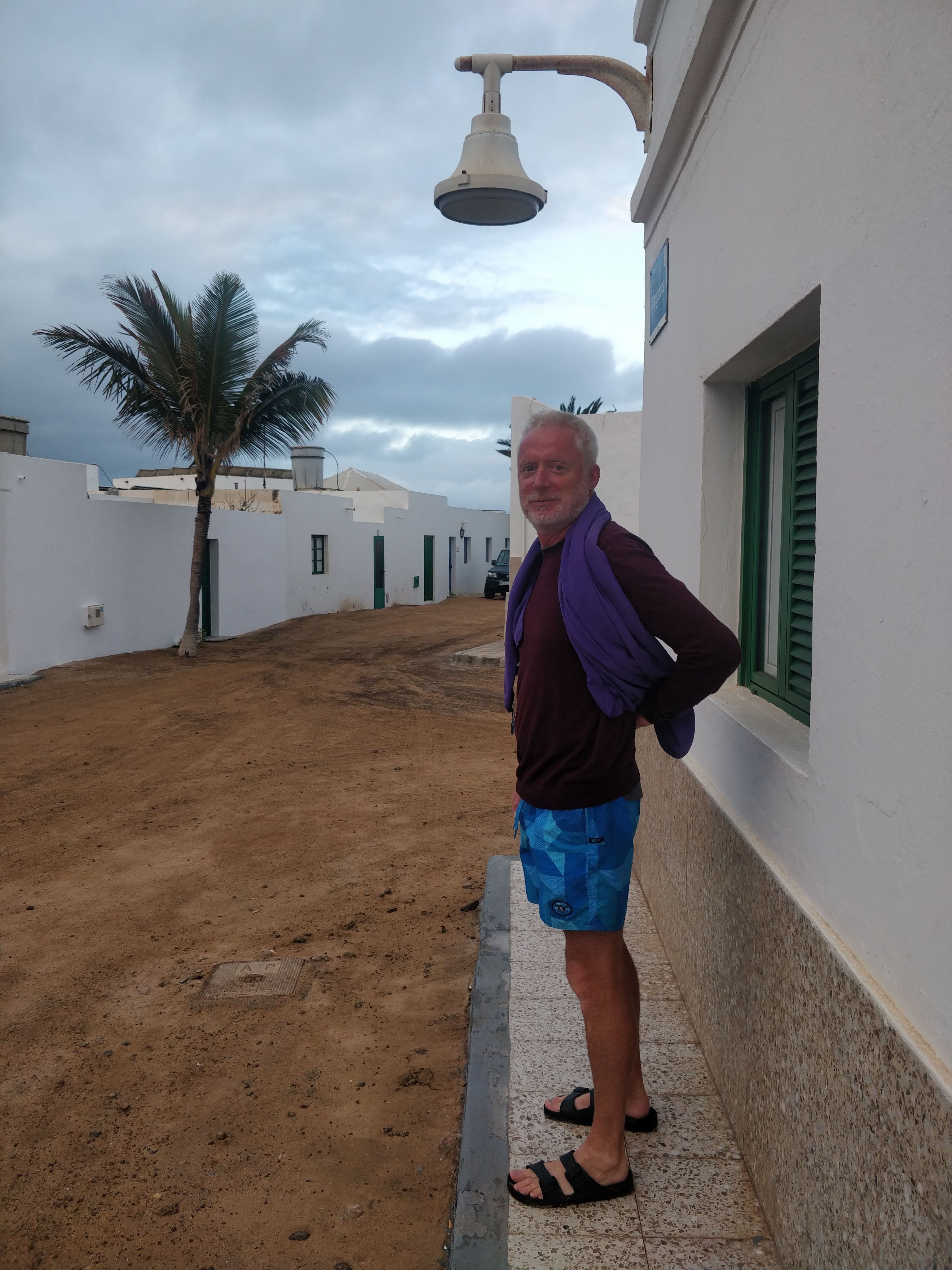
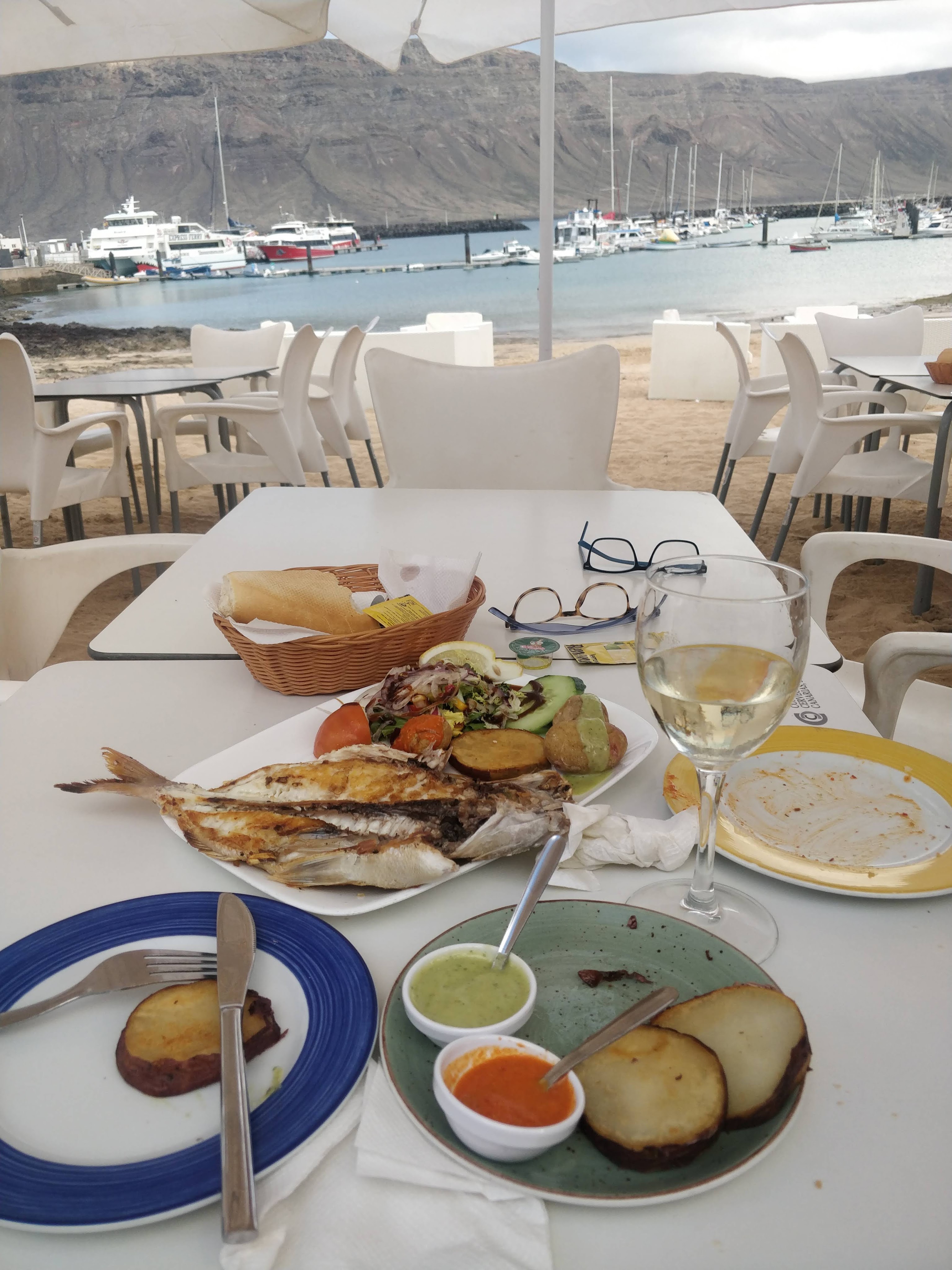
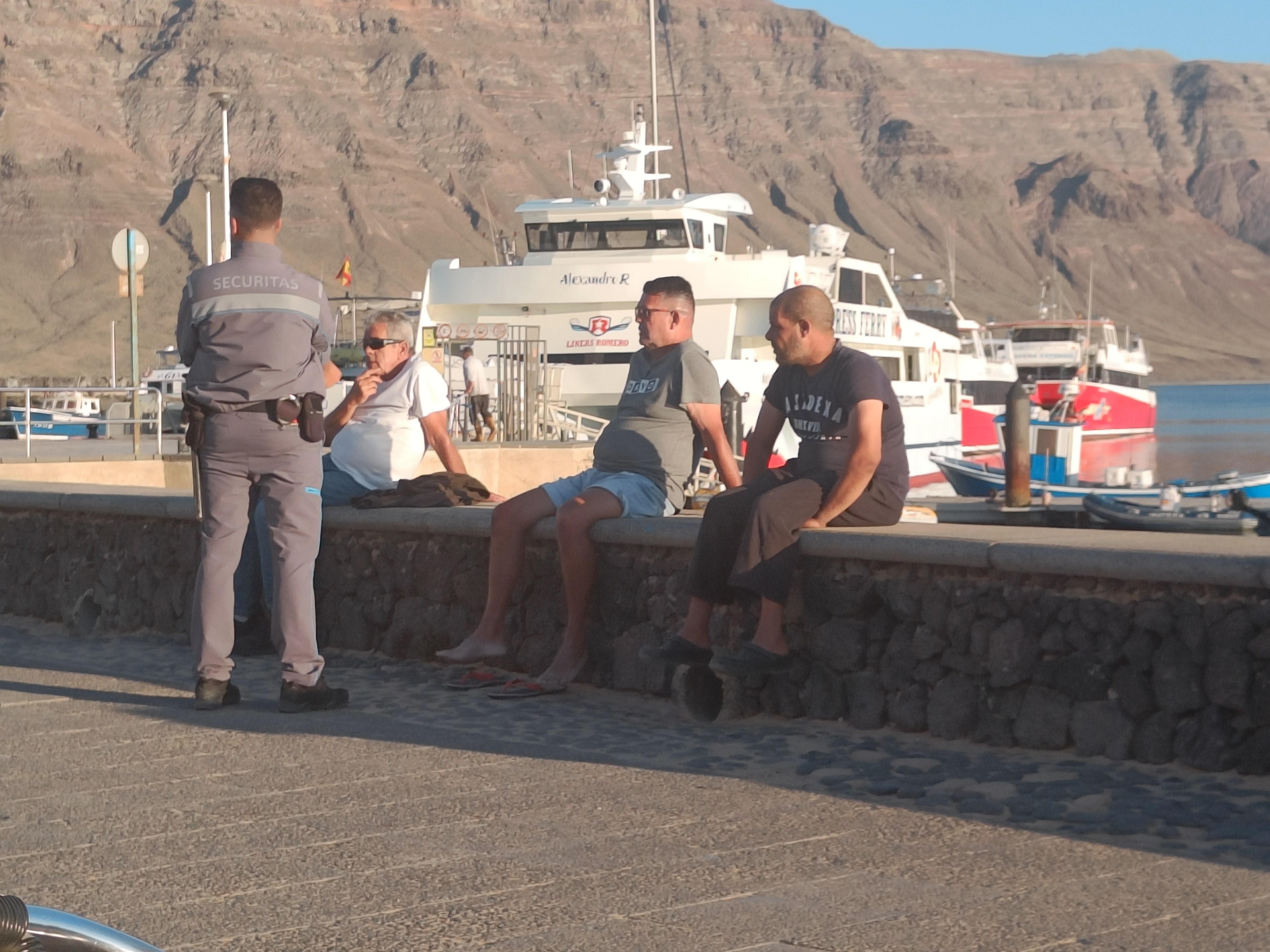
Caleto del Sebo hums all days with the constant rhythm of hourly ferry arrivals and departures from two different ferry companies but in the evening, the island goes back to the locals with only a handful of tourists staying on. We watched children playing soccer on the beach and old men sitting on the harbour walls with their masks and their walking sticks and the local policeman chin-wagging about football. The women in the eco-tourism shop recognised us and gave us a big wave. We ate delicious seafood overlooking the sea, watching the colour of the water deepen and darken to inky blue. We visited the white-washed church with a boat and anchor on the alter. We watched a local man with a creased face and baggy trousers silently drink a tumbler of vodka in twenty seconds, walk the beach and repeat the whole process several times. We listened to the guy outside the beach bar talk incessantly to nobody and the off-key opera singer under the tree who sang his heart out until he was told by the waiter to save it for karaoke night. That’s the thing about islands – they attract and accommodate marginalised characters and make all feel at home, that conundrum where everyone is hiding something although everybody knows everything,😎 and the obvious is only the tip of the iceberg. La Graciosa is a little island off the coast of another island, a Spanish island within touching distance of Africa. It has the ‘island vibe’ in spades.

In the early mornings we strolled around and met many of the same characters queueing for the panaderia (bakery). The rhythm of the day started again with the fishermen gathering their nets and heading towards their blue boats and the ferry crews getting ready to start up and the smell of bread and diesel in the air. Later the barges came in carrying essential supplies and even a pile of Amazon packages with their tell-tale logo….so even islanders need retail therapy… and maybe more so on an island without any resources where all water has to be pumped across from Lanzarote. After three days and two nights, we felt almost local ourselves and it was a wrench to drag ourselves away from this blond island but we can hear the call of home ….. so its a ferry back to Ozsola, a bus to Arrecife (the capital of Lanzarote) a flight to Tenerife and then onwards to Dublin on May 1.

Hopefully you can join me next time when I pick out the highlights of our island hopping trip around the eight Canary islands, a trip that happened because of Covid restrictions when more far-flung destinations were off limits.

Thanks for reading😎

Why do you stay in prison, when the door is wide open?” Rumi
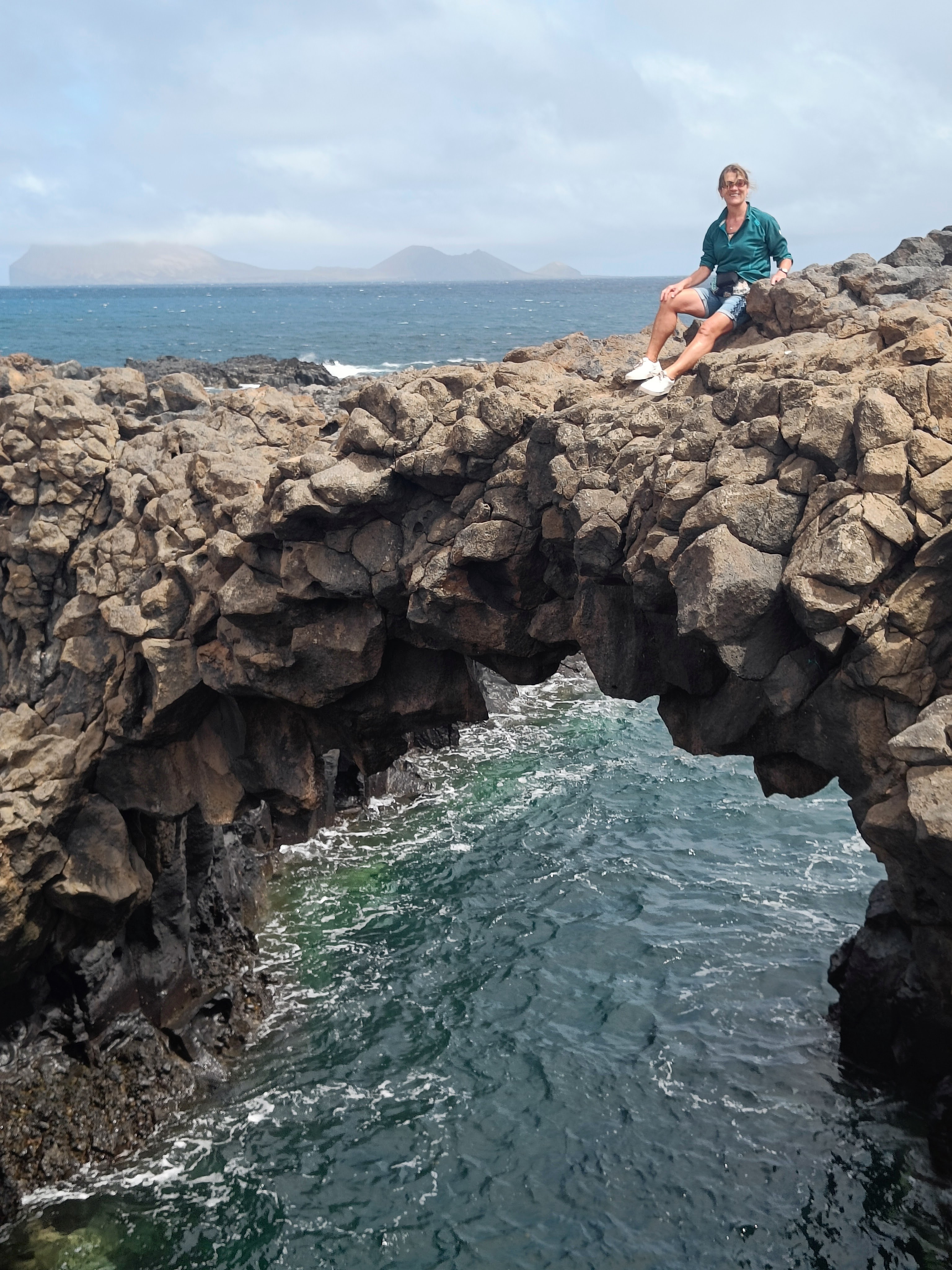
Arco de Los Caletones, La Graciosa
La Graciosa, the Blondest Island

Lanzarote, the Final Leg😎

Lanzarote, here we come😎

We were on the final leg of our three month ‘island hop’ around the Canaries Thirty minutes on the ferry brought us from Corralejo in Fuerteventura to Playa Blanca in Lanzarote, our seventh island, The ferries between the two islands are very regular and its a popular day trip. The port of Playa Blanca in Lanzarote, was teeming with diggers and cranes as a new terminal building was being constructed. Coffee was calling us so we stopped at a café just opposite the port for our first taste of Lanzarote where we were surrounded by British voices. Not only were all the customers on the terrace British, but so were all all staff. Dolly Parton was belting out the song, 9 to 5, over the speakers while we tucked into a British fry-up and it was hard to believe that we were on a little island, a 100 kilometres off the coast of Africa. Like all the Canary Islands, the bus service in Lanzarote was cheap, efficient with frequent buses to the all the main tourist centres.

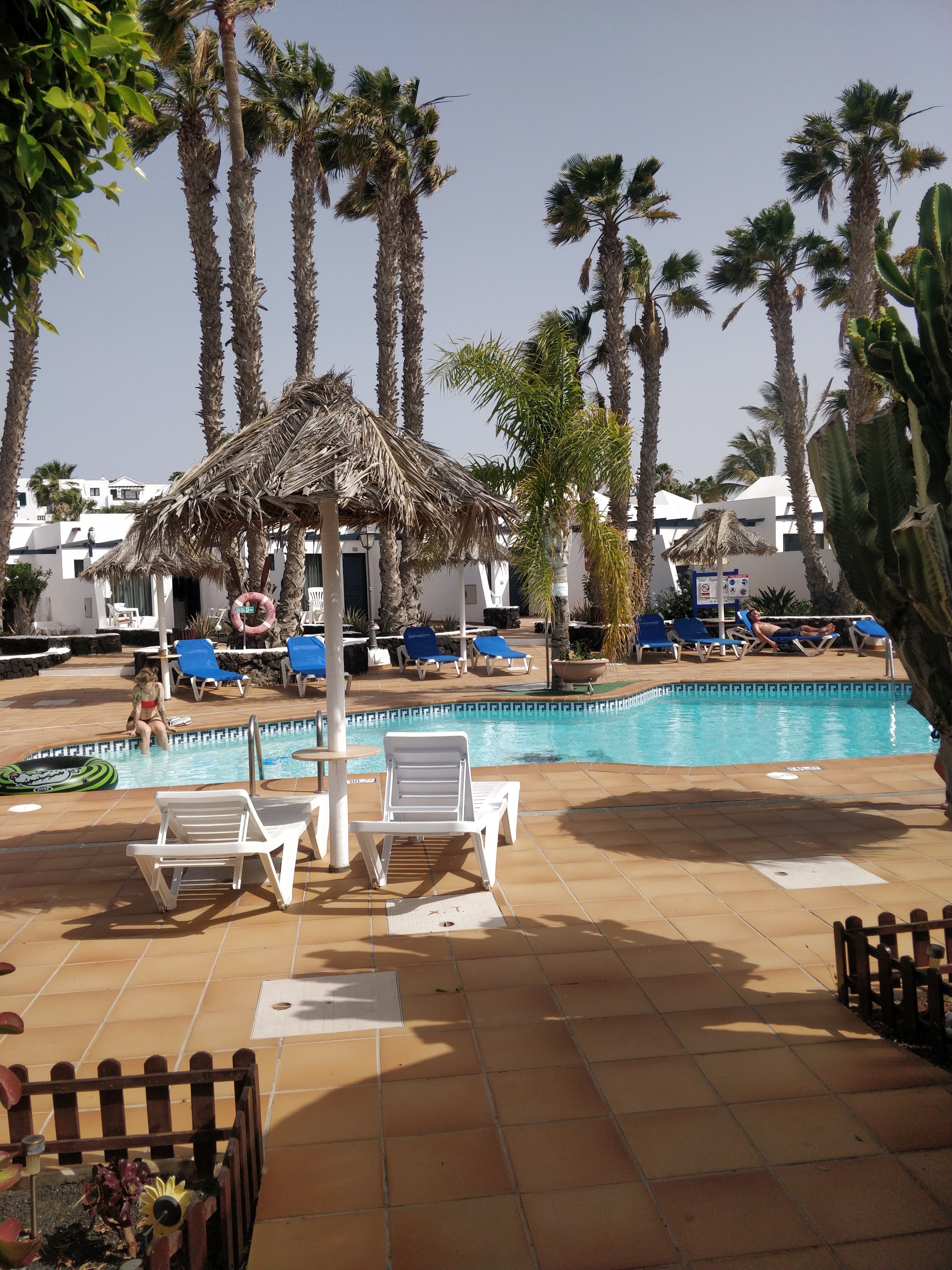
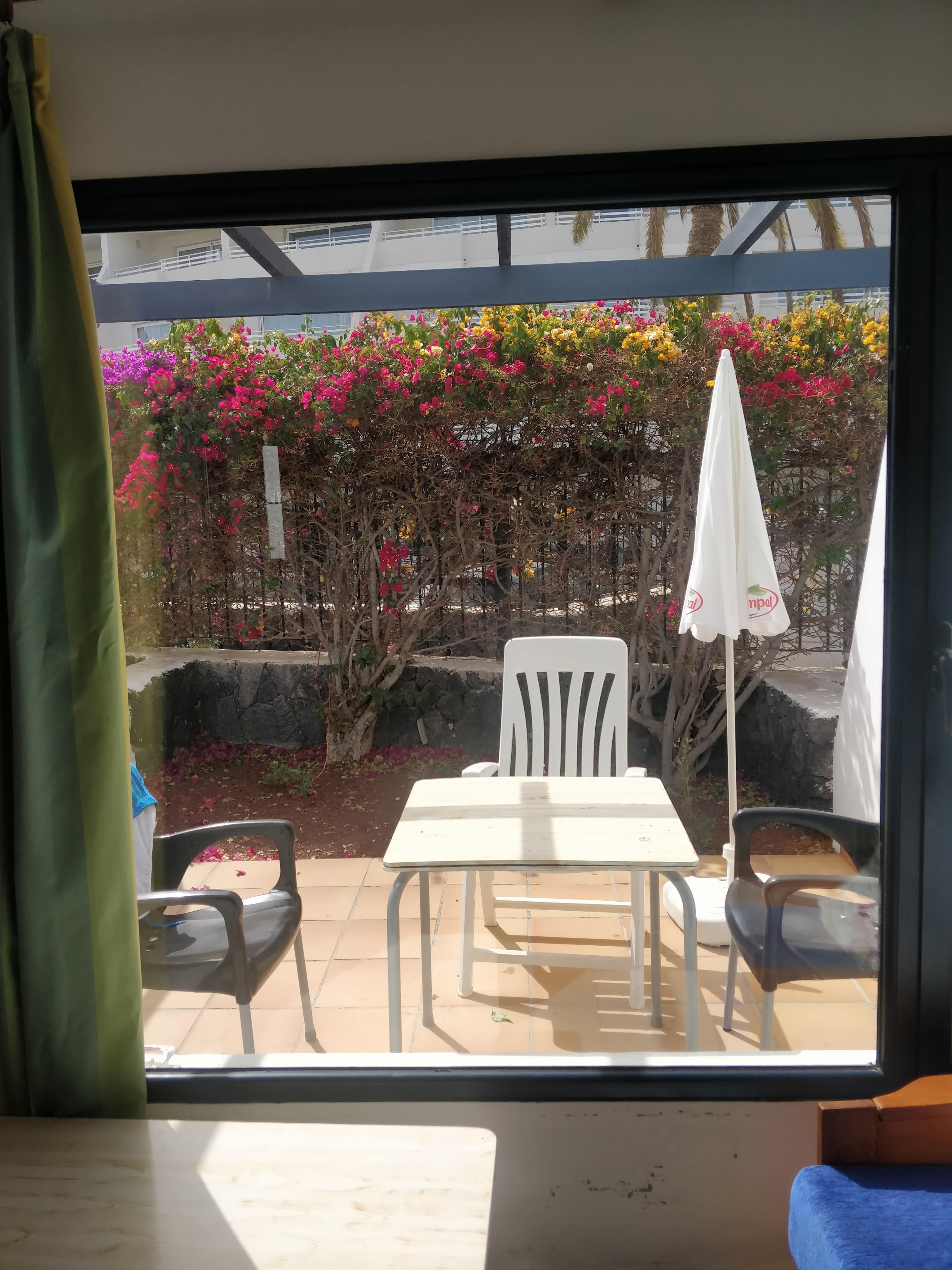
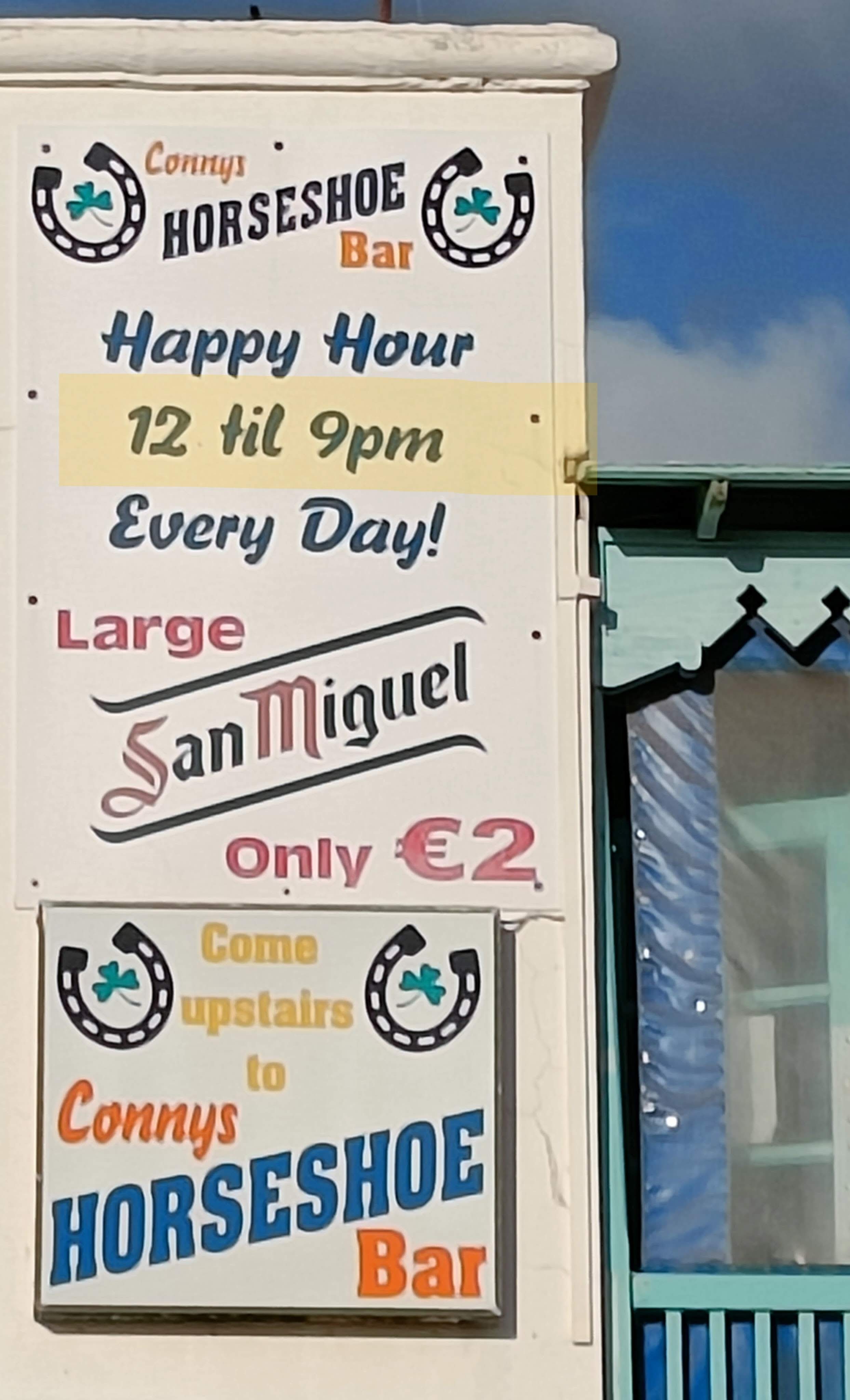
The bus dropped us at Playa Matagorda, just north of Puerta del Carmen and here we found ourselves catapulted back to Ireland- but with sunshine. The majority of accents on the street were Irish and there was a mind boggling selection of Irish bars. The Auld Triangle, Horseshoe Bar, Peggy’s Snug and O’Shea’s were all within a hundred metres of our accommodation, Mar Azul Playa. This was a quiet complex of 25 little bungalows arranged around a small swimming pool with a pool bar. Each bungalow has a private outside area, most with bougainvillea on the trellises. We paid €310 for a bungalow for a week – superb value, booked just two days before we arrived. The TV even had BBC and ITV channels. Many of the occupants were Irish, many repeat visitors, The beach was only a two-minute walk away. It didn’t have the white sands of Fuerteventura but it was long, golden brown and palm fringed with a paved promenade and cycle lanes. It was also flanked by cafes, cocktail bars, restaurants, tourist shops and hotels but no high rise buildings, thanks to the influence of one man, Cesar Manrique.

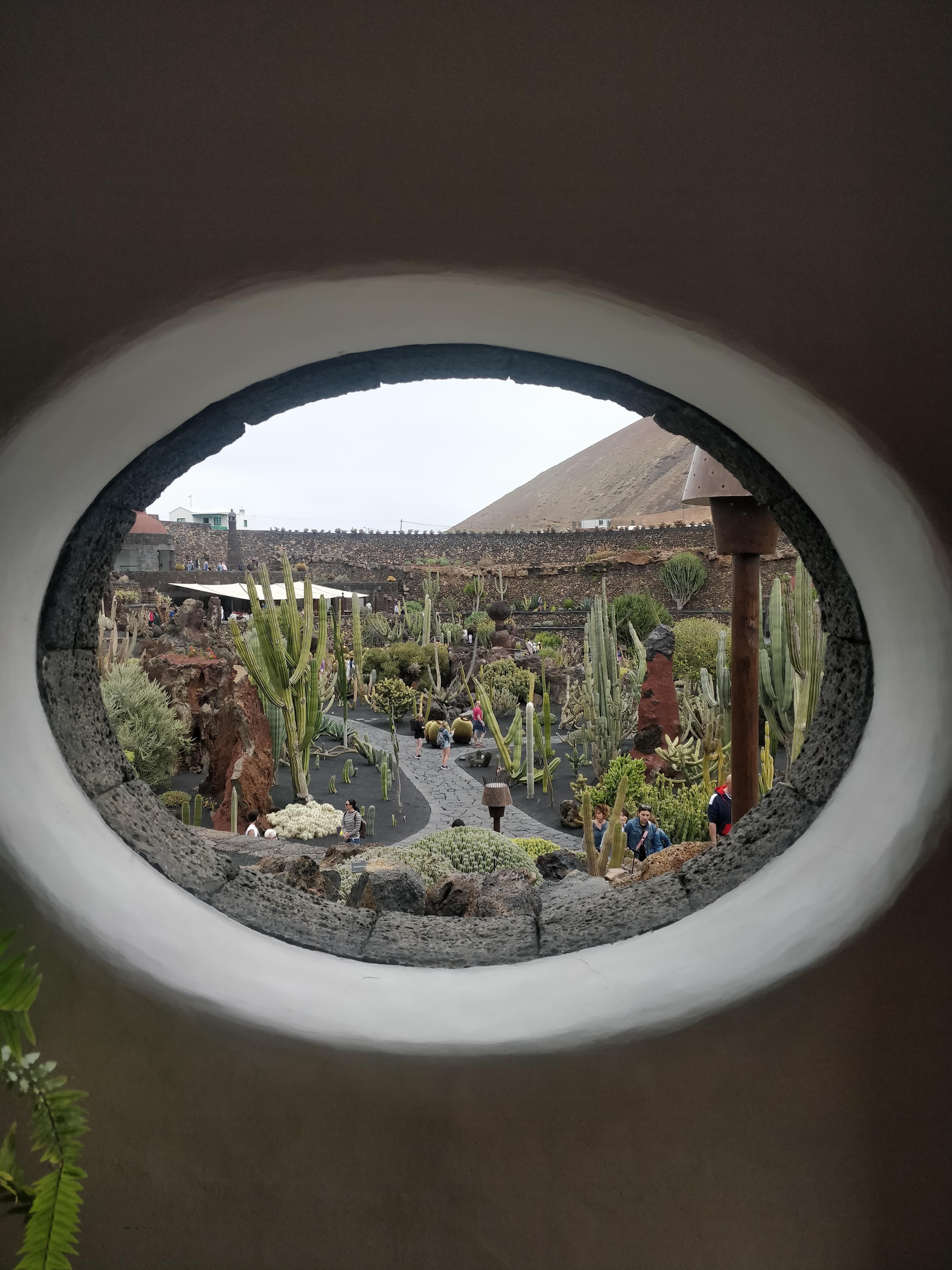
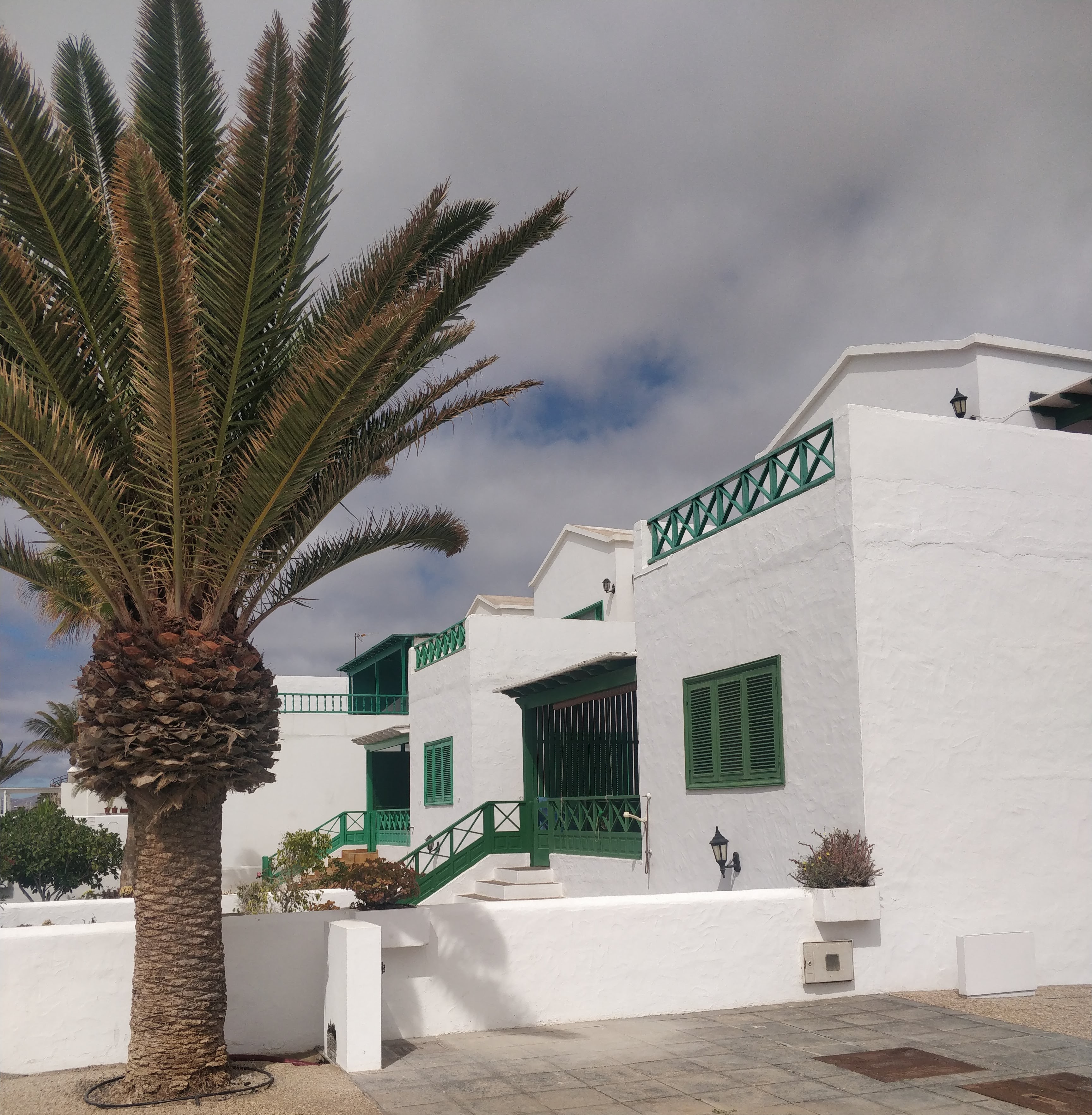
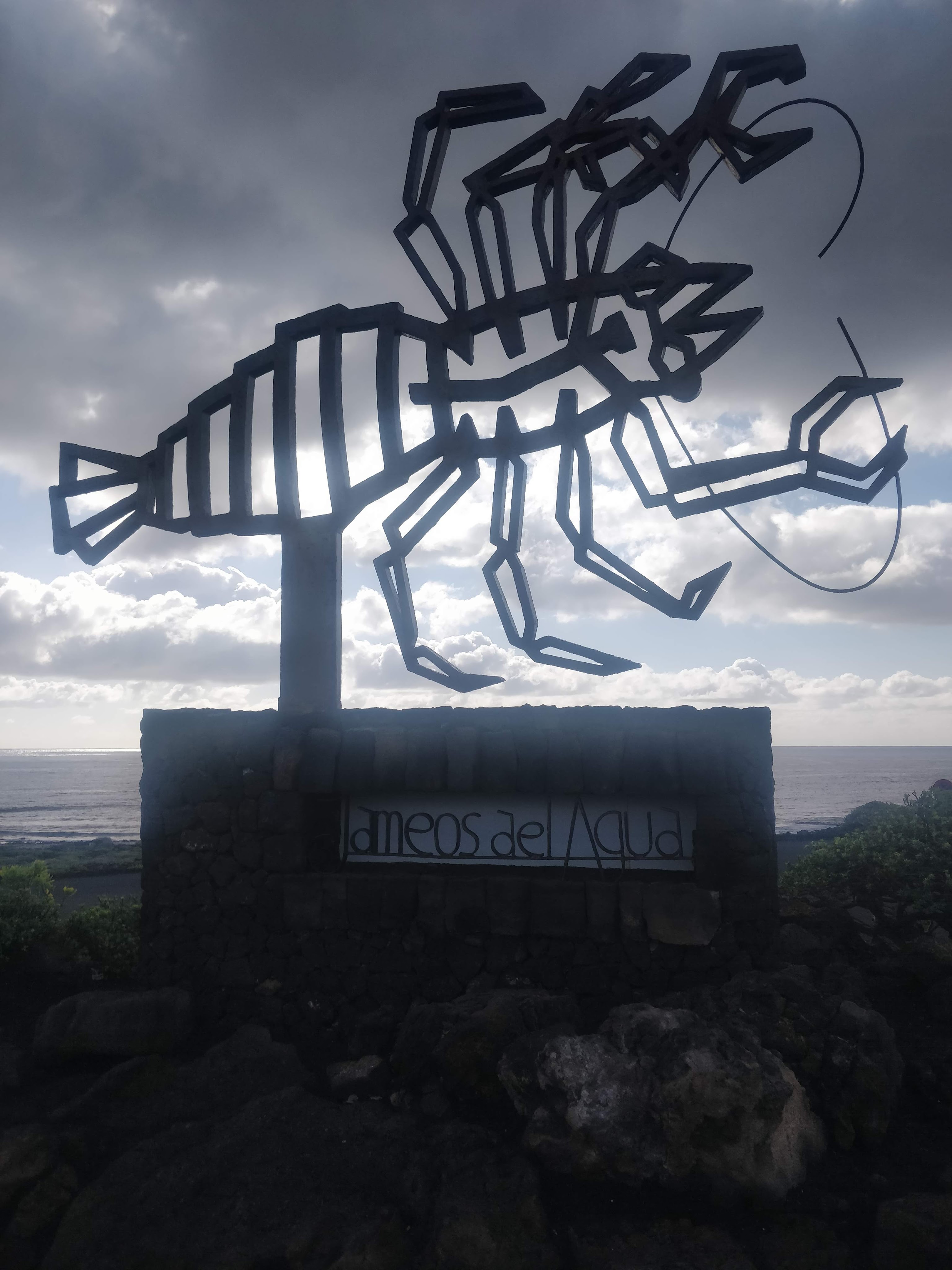
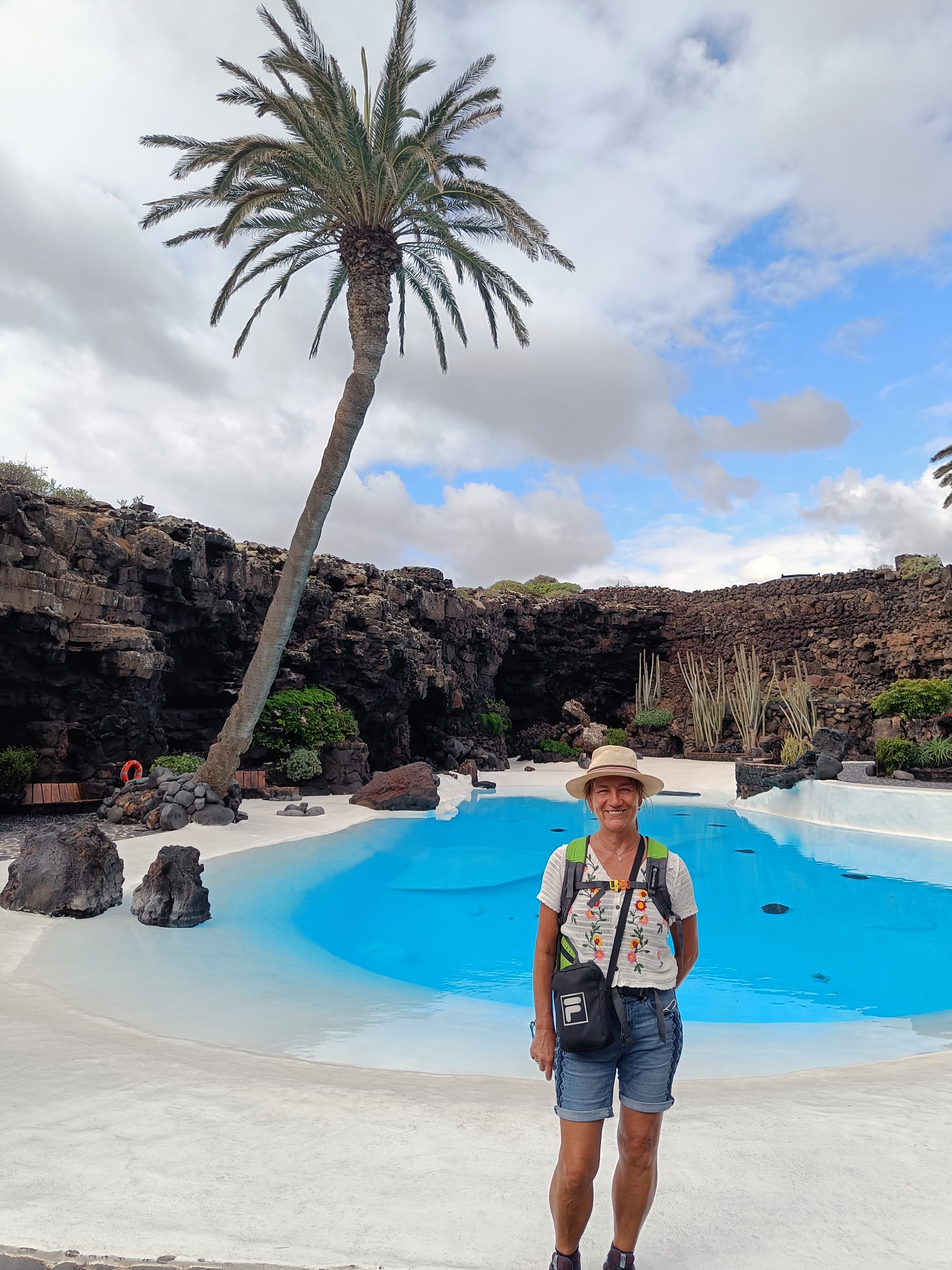
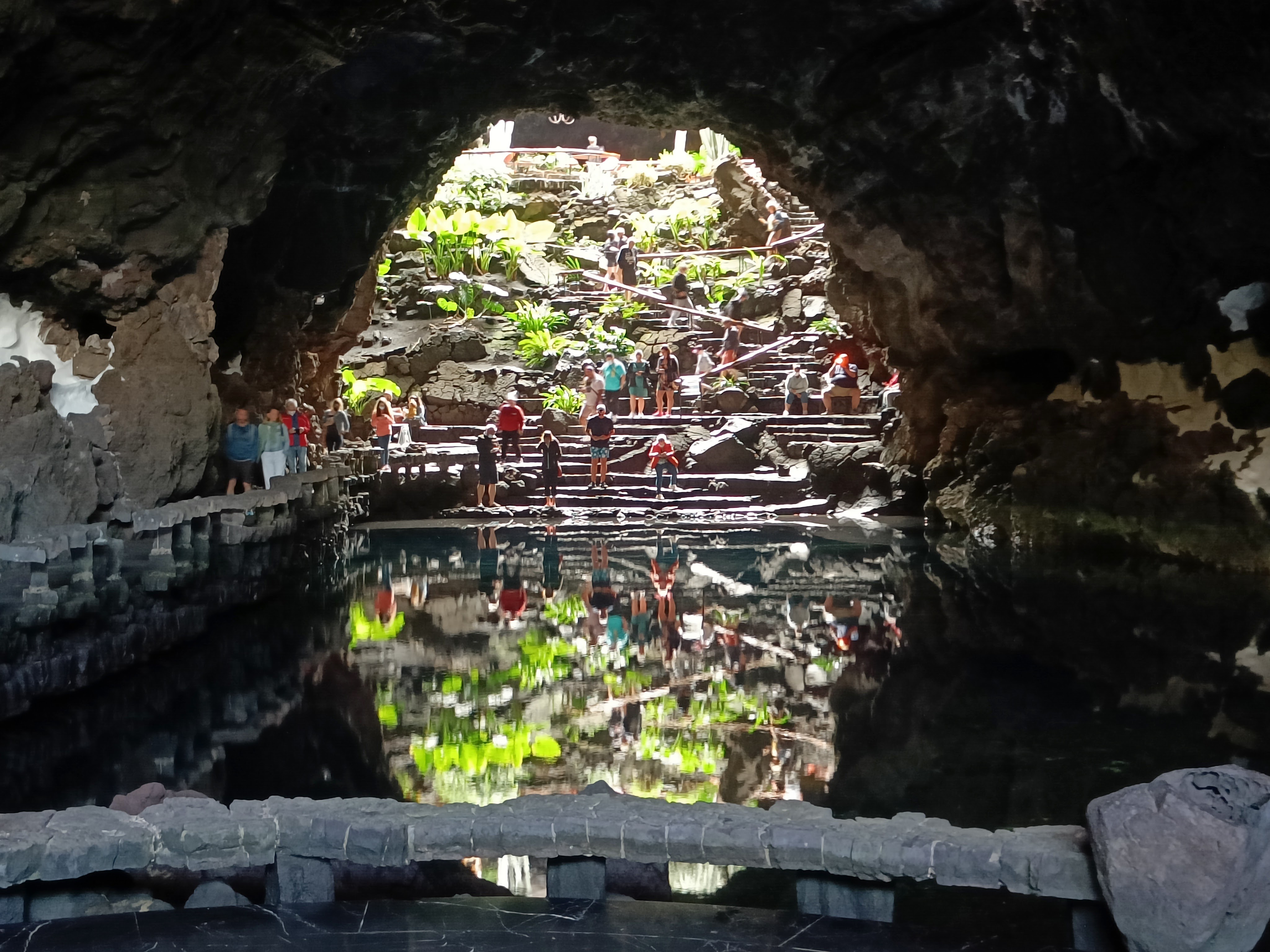
Cesar Manrique was an internationally renowned artist and architect with a deep love for his native Lanzarote. He died in a car accident thirty years ago but his influence shaped the island to this day. His creations are everywhere; wind chimes on roundabouts, stunning sculptures using volcanic rocks and his artwork is on display all over. Many public buildings were transformed by him using glass and lava stone designs with curving walls and oval windows that always draw the eye to the landscape outside. He designed a cactus garden, built a concert hall in a lava tube and an underground nightclub. The man was a genius! He had incredible influence on the regional council and was responsible for some pretty autocratic, aesthetic laws. These dictated that buildings in Lanzarote must be low-rise, could only be painted white and windows/doors could only be painted green with an occasional blue or brown by the coast. Billboards and roadside advertising were banned, electricity cables had to be buried underground and major tourist development was confined to three areas, Puerta del Carmen, Playa Blanca and Costa Teguise. But the result is charming where the blinding whiteness of the buildings contrasts with the volcanic hues of the landscape.

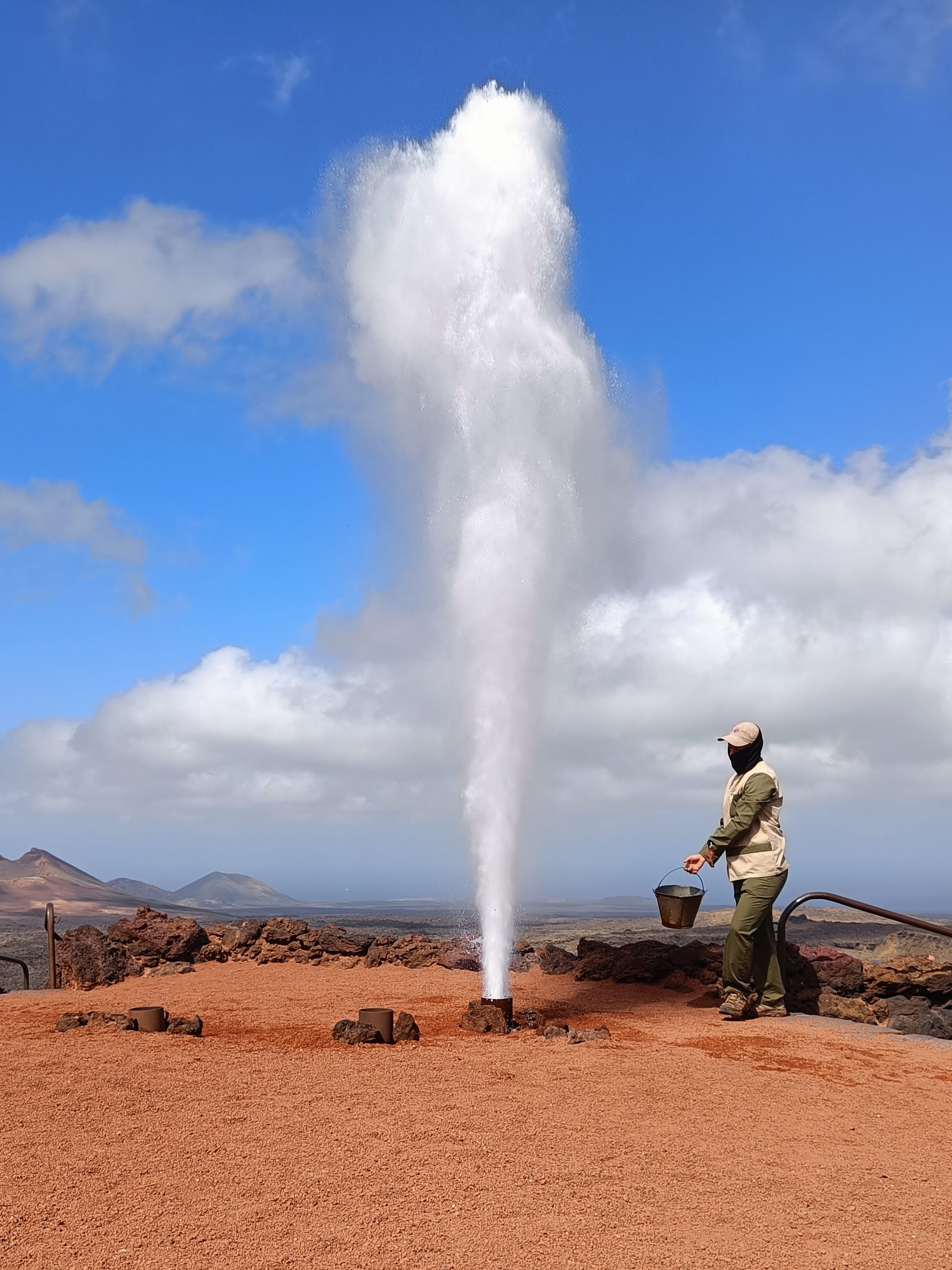
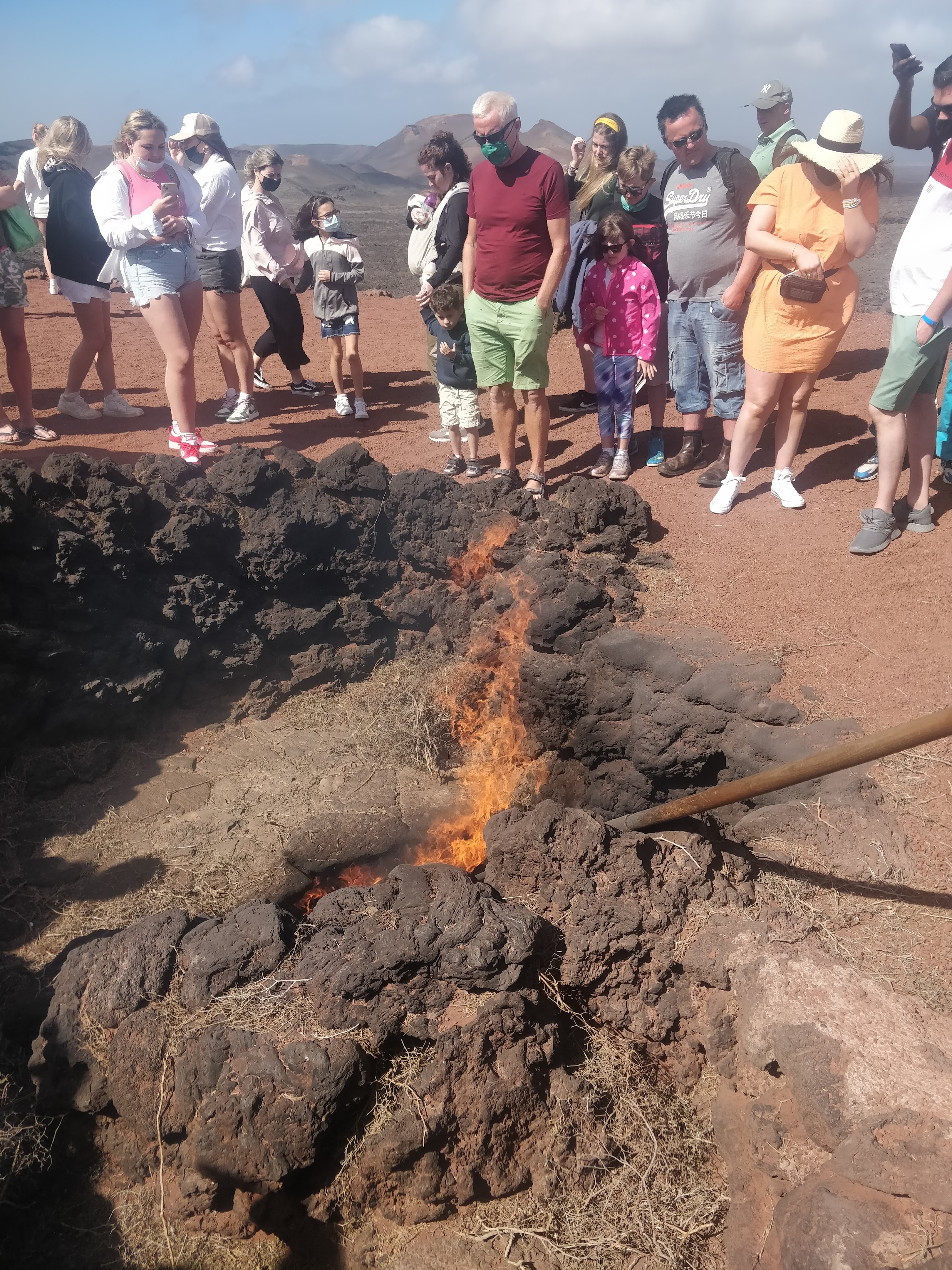
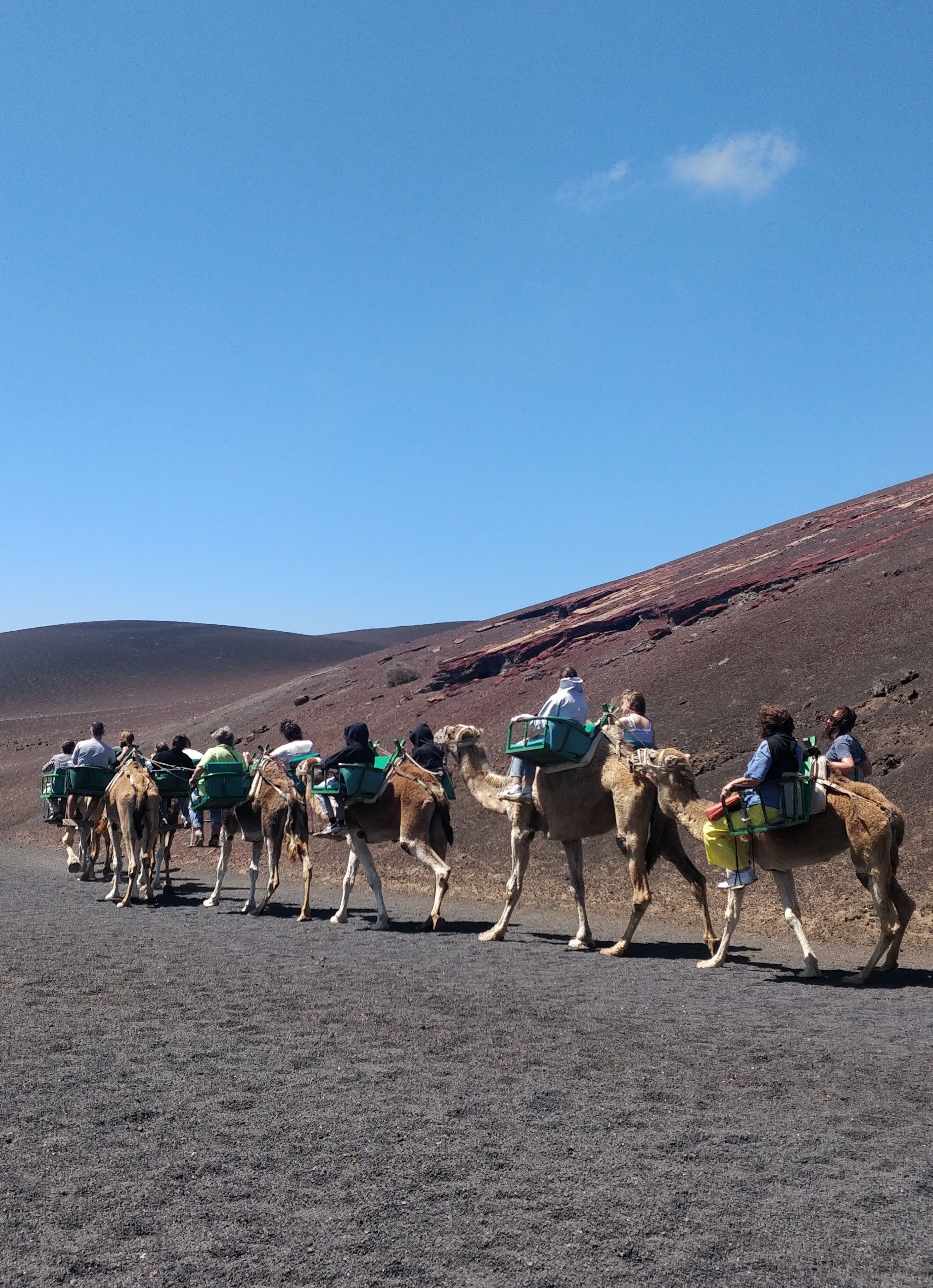
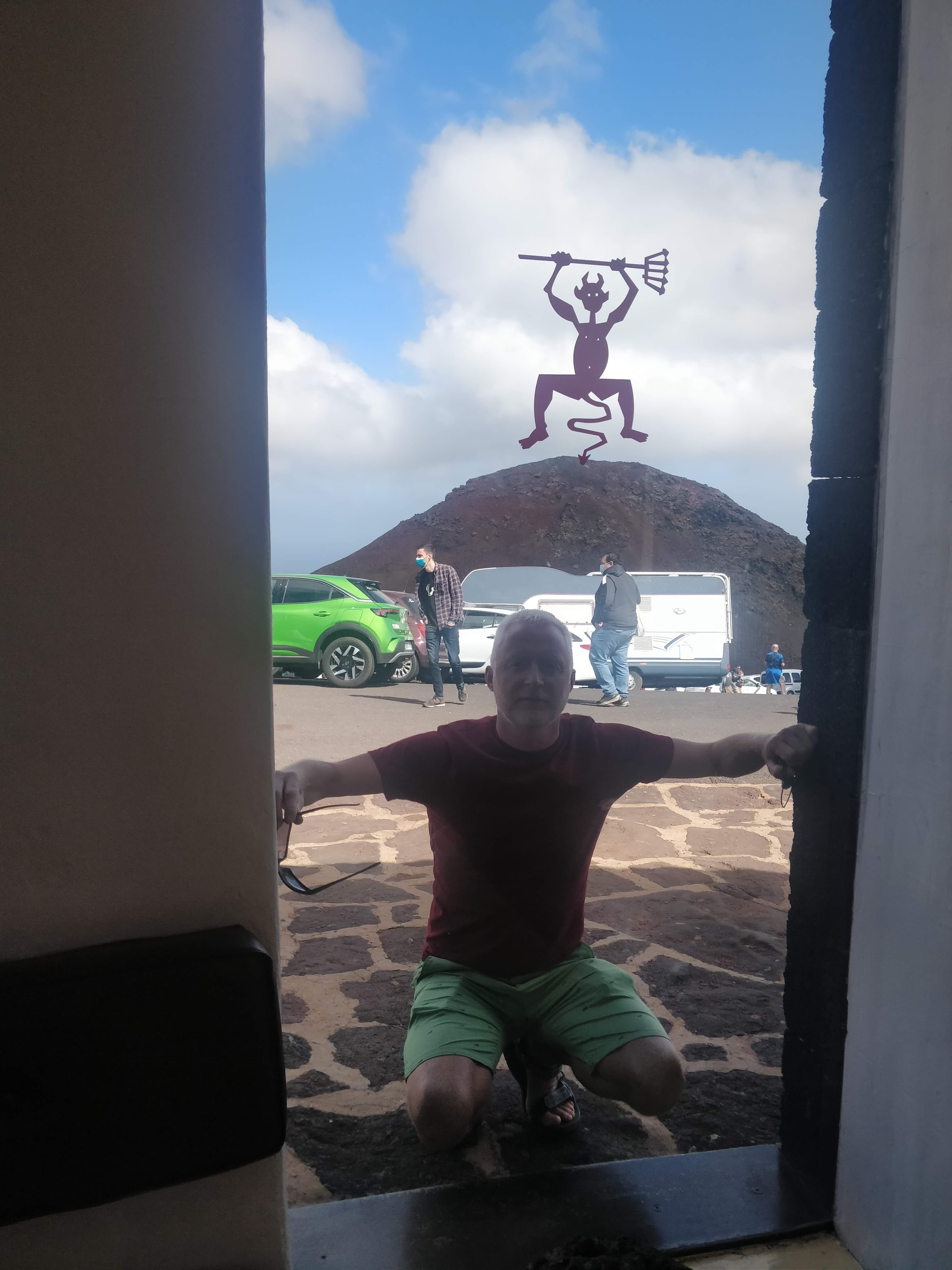
All the Canary Islands are volcanic but Lanzarote is called the Isla del Fuego, the Island of Fire and for good reason. Between 1730 and 1736, the Montanas del Fuego belched out molten lava, rocks and smoke turning day into a continuous night, burying entire villages and sending the population fleeing to the coast and to other islands. The region is now the Timanfaya National Park, symbolised by a dancing devil figure – designed by Cesar Manrique. The lava fields are one of the ‘must-see’ sights so we booked a bus tour for a half-day trip to Timanfaya National Park. We weren’t alone. It was Easter weekend and three cruise ships were docked in Lanzarote and it felt that every visitor on the island was headed in the same direction. Queues of buses and cars snaked along trying to get into the National Park where parking was limited. Thankfully buses got priority so after about a 30-minute wait, we were waved in and the tourism conveyor belt swung into action. We were shepherded in groups – no dawdling- to watch three ‘experiments’ that demonstrated the intense heat that lurked just below the surface. A woman dug up some small stones and placed them in our outstretched hands and they were almost too hot to hold, we watched a bundle of dried grass spontaneously ignite and when a man poured a bucket of water into a hole, it boiled instantly and the pressure sent it skywards with a loud bang accompanied by screams (including mine) from the crowd. The heat meant that the restaurant designed by Cesar Manrique can serve chicken, cooked using natural volcanic heat by placing a grill tray over a hole. Now could this be used to solve the energy crisis?🤔 So there’s still fire in Montanas del Fuego and a strange eerie beauty with hues of red and gold, brown and grey in a Martian landscape. Then like a mirage, camels appeared lumbering along sandy paths. The camels carry tourists now but were important farm animals in the past before tourism became a well-oiled profitable juggernaut.

But there was discontent in paradise, One morning, we were woken before 7am to the sound of sirens, loud hailers and blaring horns outside our complex. It was a march by the workers in the hotels and holiday complexes who were protesting about their low wages and abysmal working conditions where they get no paid breaks in a twelve hour shifts. There’s a whole army of people working long hours cooking, cleaning, gardening and serving us in bars and restaurants, making sure that we are taken care off and that we have an enjoyable holiday. It seems only fair that they too should be treated properly.

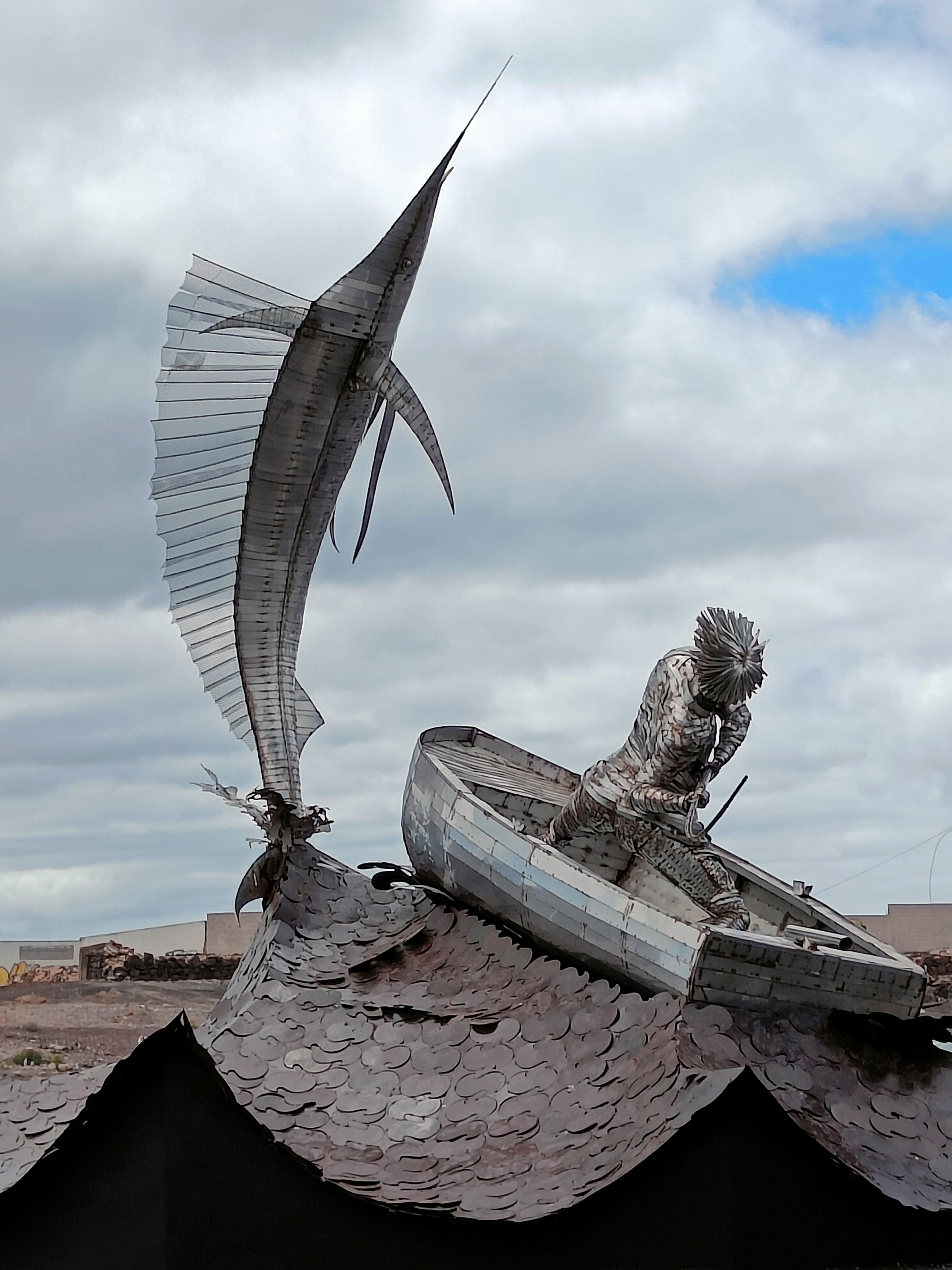
Arrecife, the capital of the island is a pleasant town on the coast with a harbour, marina and beaches. It boasts the only high-rise on the island which was already there before the building regulations came into existence. Cesar Manrique said it should be allowed to stay to show people the ugliness and folly of high rise 😀There’s a glorious sculpture of a fisherman fishing a marlin , in homage to Hemenway’s Old Man and the Sea (one of my favourite books). The old man in the novel is believed to based on Gregorio Fuentes who was born in Arrecife but left when he was six with his father in search of a better life in Cuba. His father died on the way to Cuba and the unfortunate child had to rely on charity when he arrived. But he lived until he was 104.

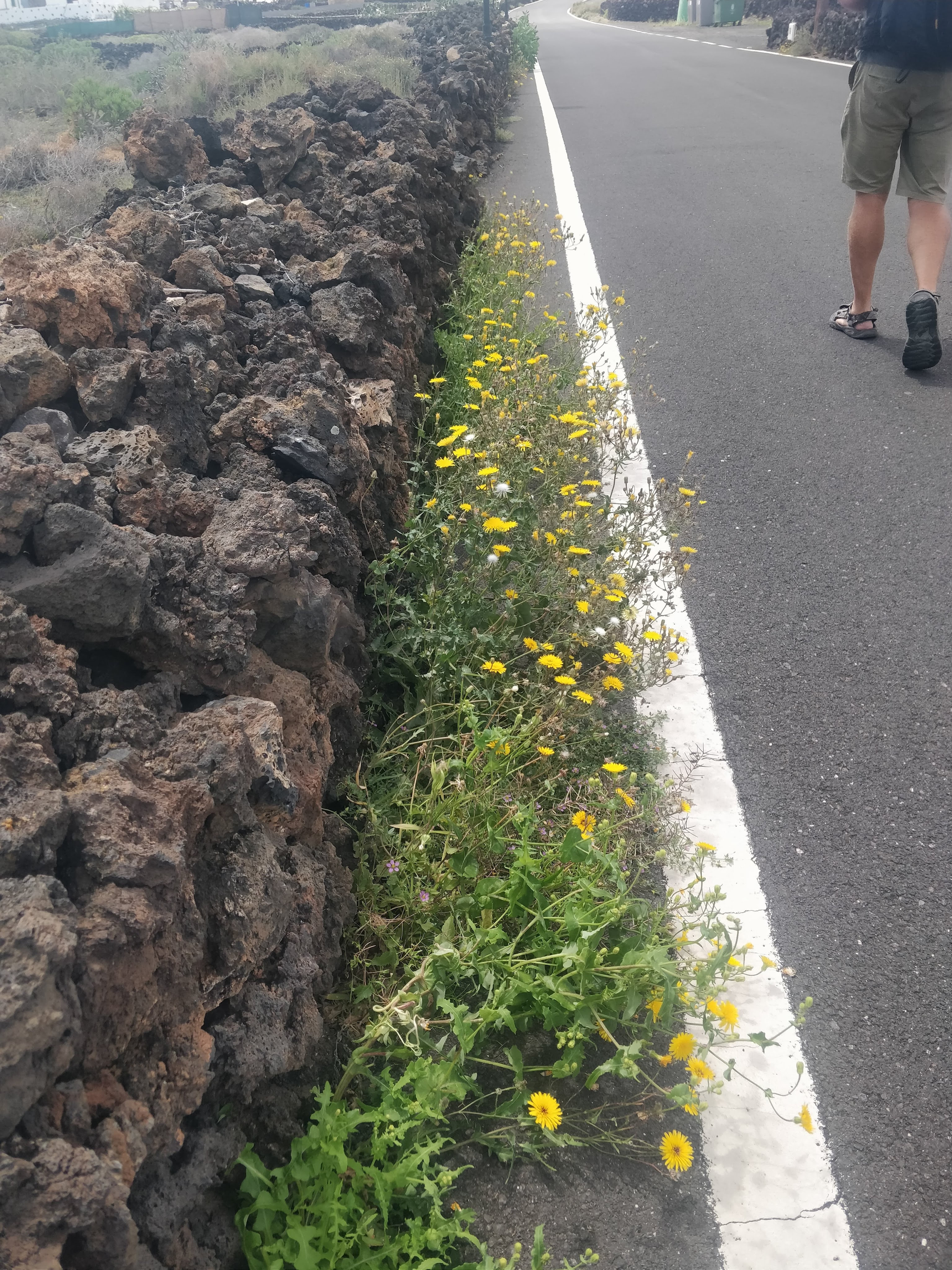
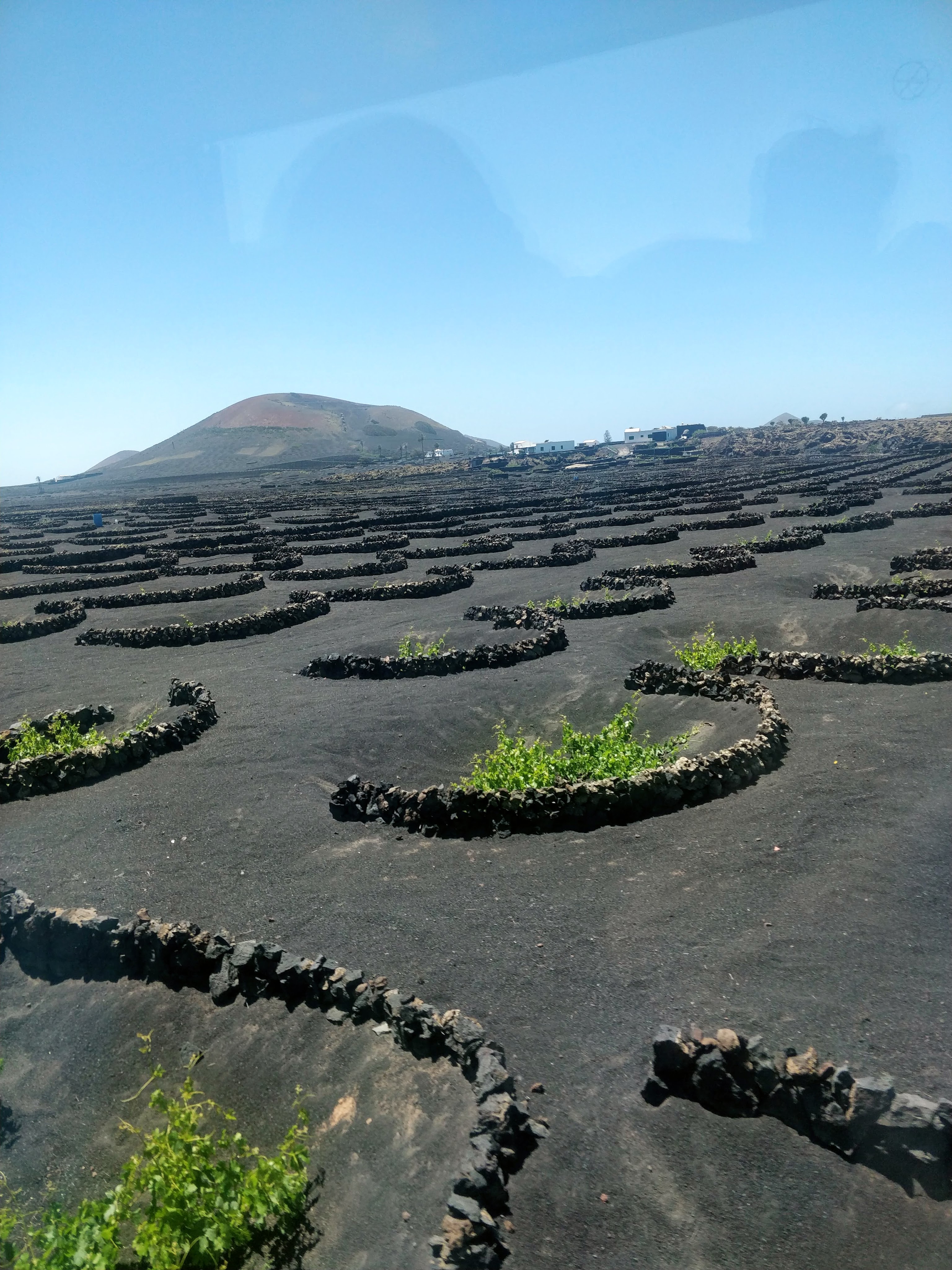
We would have called Lanzarote barren if we hadn’t just come from Fuerteventura – there was far more cultivation in Lanzarote by comparison mainly Aloe Vera, cacti and of course potatoes for the wrinkled potatoes and sauces served everywhere (papas arrugadas). There are vineyards around Timanfaya where the vines are grown in small holes protected by stone lava walls from the wind…..obviously small scale productions but some very good Malvasia whites. But the north of the island has more vegetation than the south -we even saw wildflowers growing at the side of the road, a lovely splash of colour.
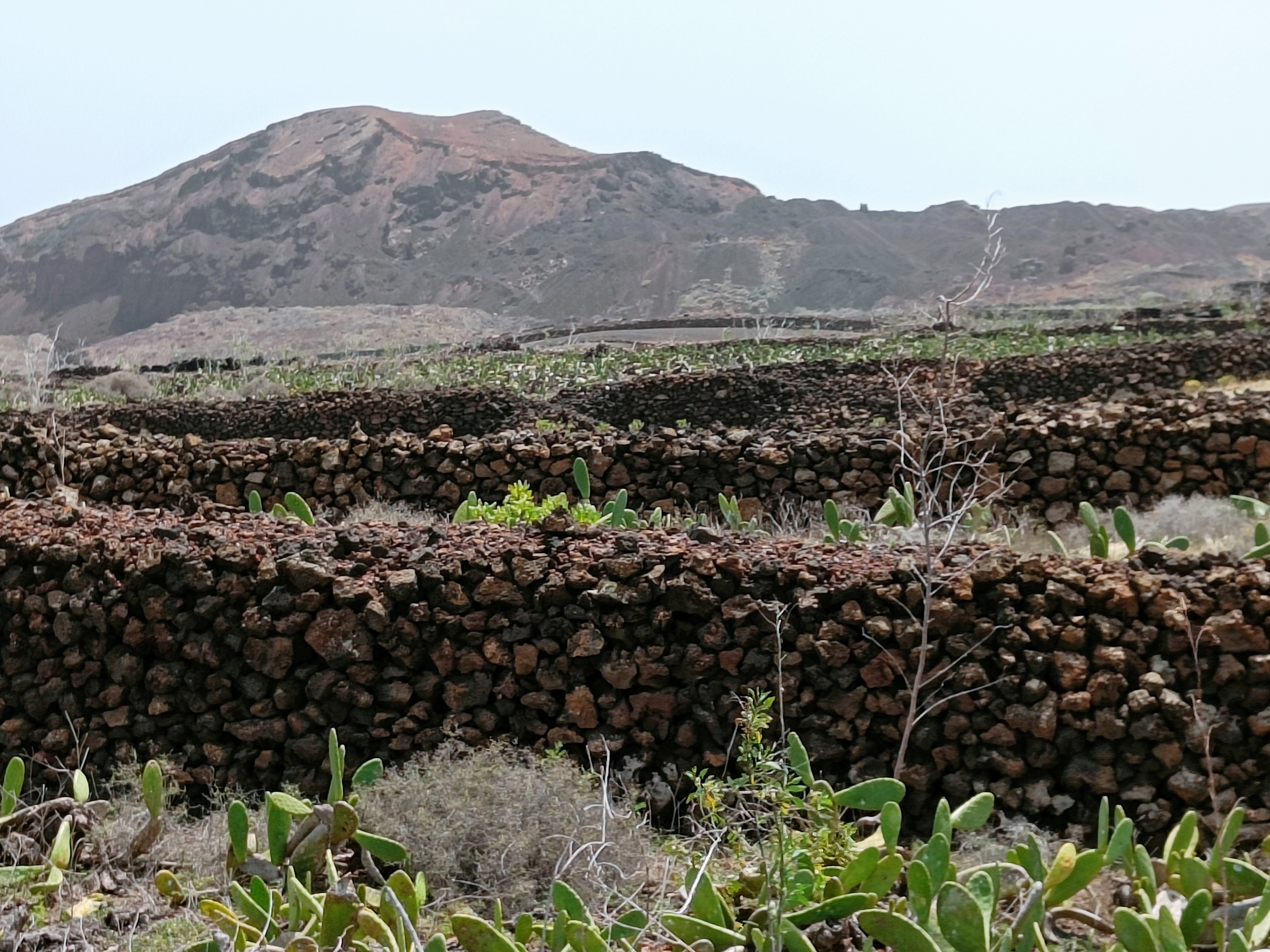
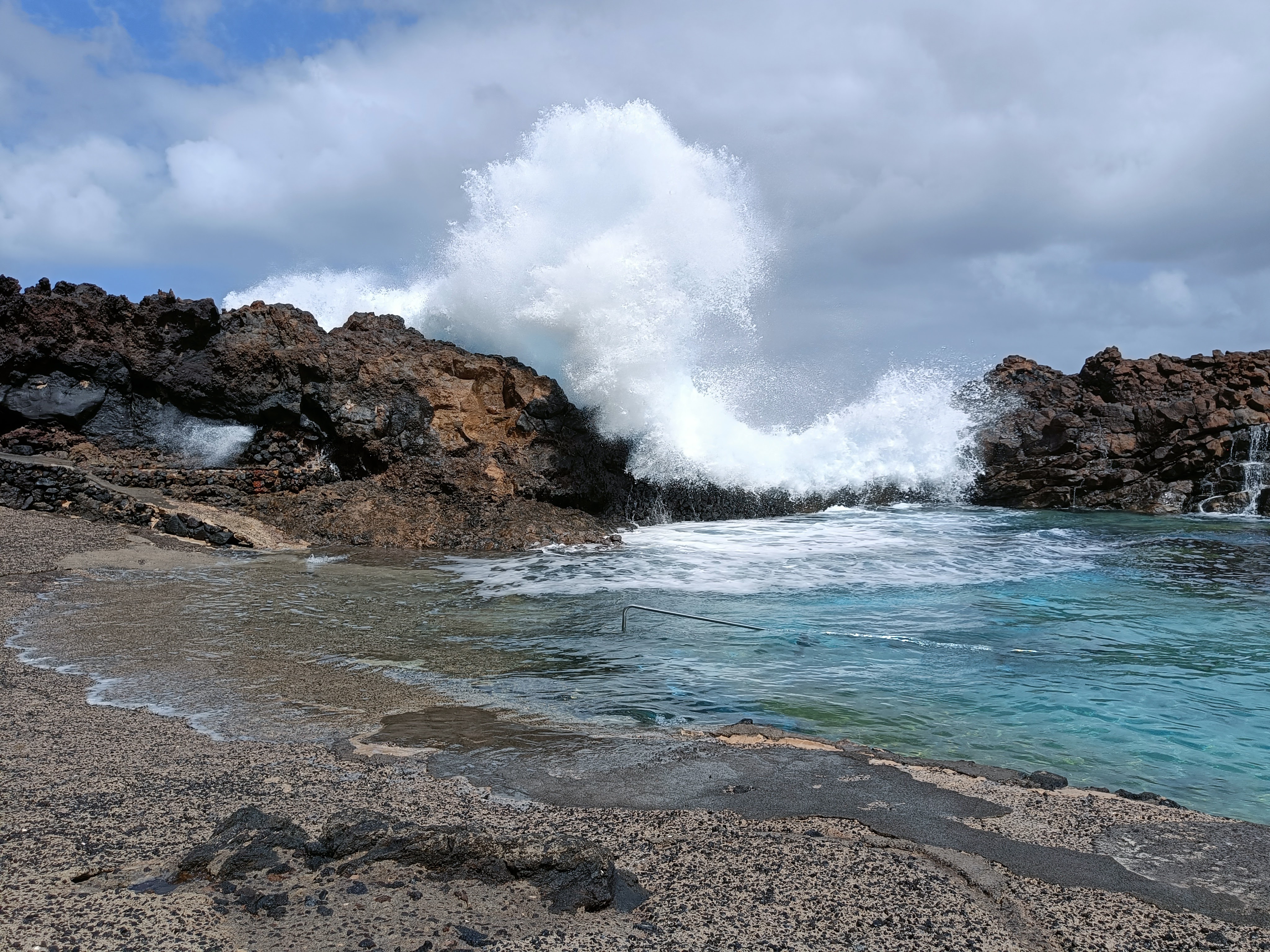
The main resort areas are busy with lots of restaurants and nightlife but it is possible to get away from the crowds. There are also quiet fishing villages, such as Arrieta, Punta Mujeres and Orzola where ‘real life’ goes on. Playa Honda is a lovely place near the airport with just a few beachfront cafes. We headed north and spent a few nights in Mala, a little village without even a grocery shop – but with a tapas bar and a restaurant – which was surrounded by fields of prickly pears and dry stone walls. These plants were used to raise the cochineal insect which made the carmine, the dye used in food, cloth, cosmetics and a drinks such as Campari. Carmine is now mostly synthetically produced – easier that the back breaking work of harvesting cochineal insects. On the north and west of the island, the beaches attract surfers and swimming is mainly confined to rocky pools. We visited Charco de Palo, a calm turquoise saltwater pool – usually -but when we were there, there were strong winds and high tides and enormous waves crashing in. Most of the villages are connected by coastal paths which make for some easy hiking.

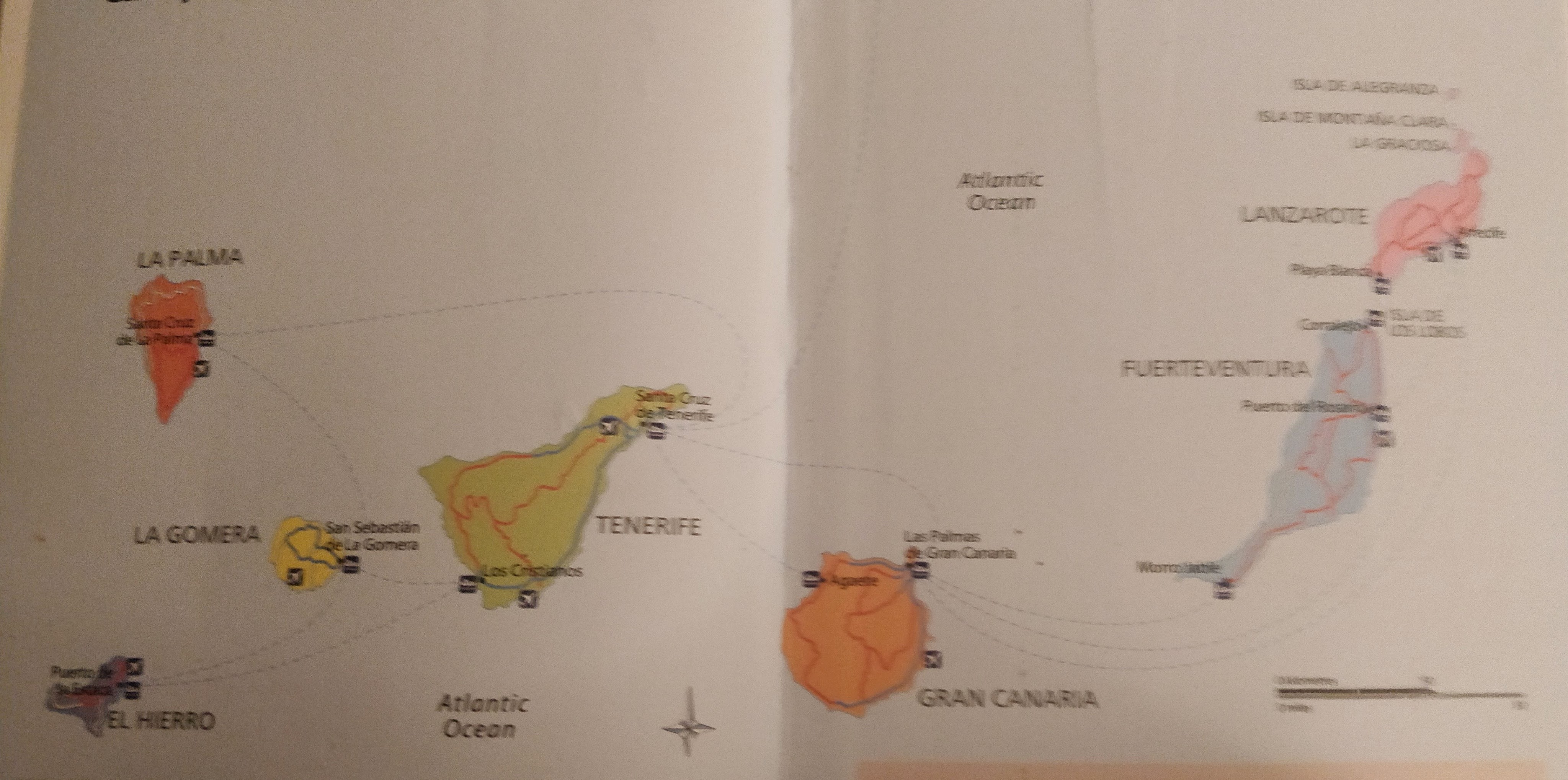
Map of the Canaries

The Canaries have been a revelation to us. We hadn’t visited any of them previously apart from a short visit to Tenerife six years ago. They weren’t our first choice of places to explore but Covid was still causing problems for more exotic destinations. Each of the islands has its own character but Lanzarote is special with its Martian landscape, low buildings and that combination of art and nature, thanks to the enduring legacy of one man, Cesar Manrique. Although I called this post Our Last Leg, we discovered that there is one more island, La Graciosa which became the eighth island in the archipelago in 2018 – before that it had the status of islet. It has no paved roads and its name translates as Graceful. We are getting the ferry there tomorrow for a few days. So I’ll keep you updated next time and give a rundown on the highs and lows of each island.

Thanks for reading😎

Lanzarote, the Final Leg😎

Fuerteventura, Life’s a Beach⛱.

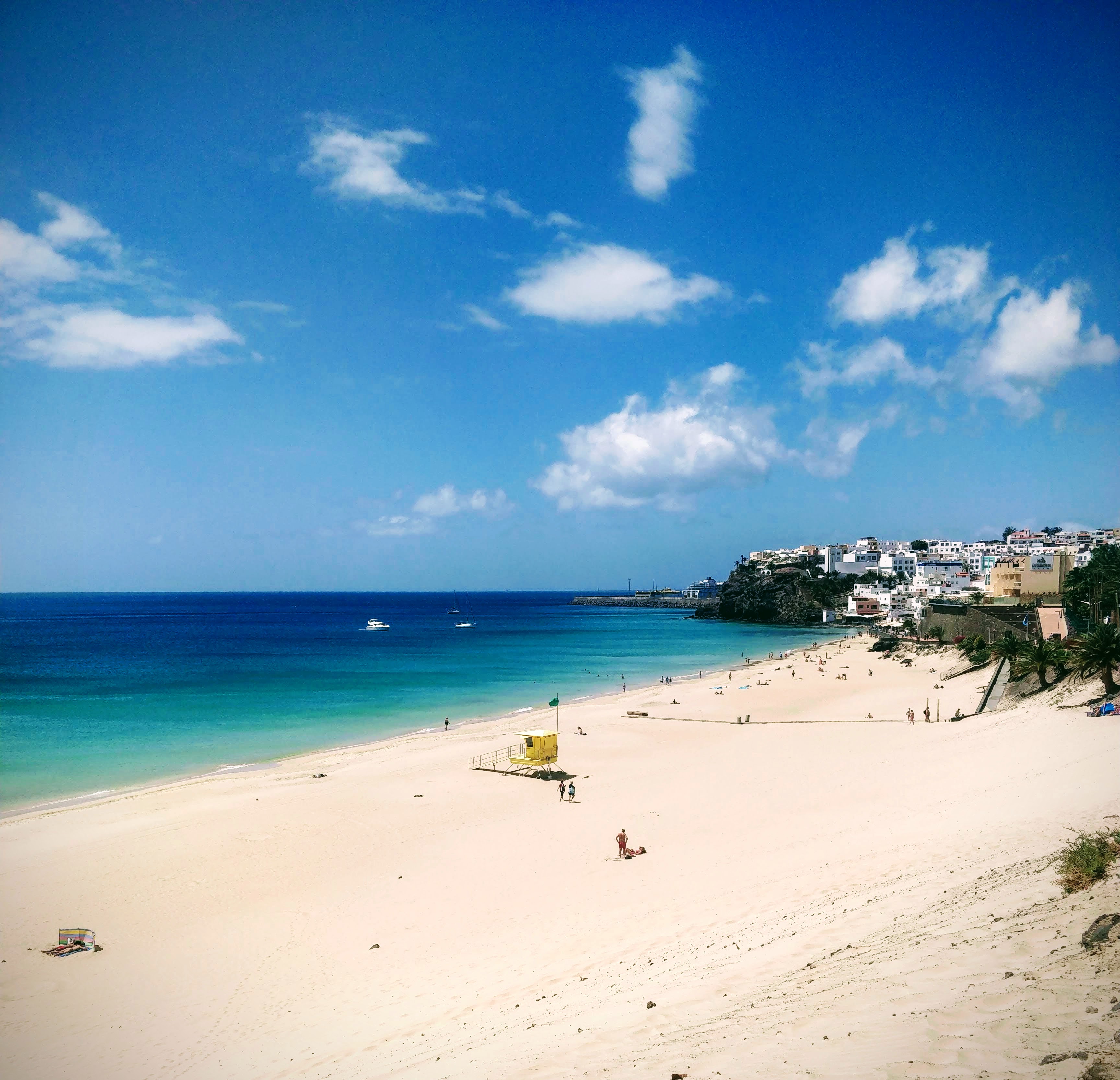
Morro Jable Beach, Fuerteventura

In Fuerteventura, life is certainly a beach. We have never seen so many gorgeous beaches with pale-white sands lapped by turquoise emerald waters under dazzlingly blue skies… or so many bare bottoms. We got the Fred Olsen Ferry from Las Palmas in Gran Canaria to Morro Jable in the south of the island. We left a (unusually) rainy Las Palmas and in just under two hours we were disembarking in Fuerteventura, our sixth island on our island hop around the Canaries.

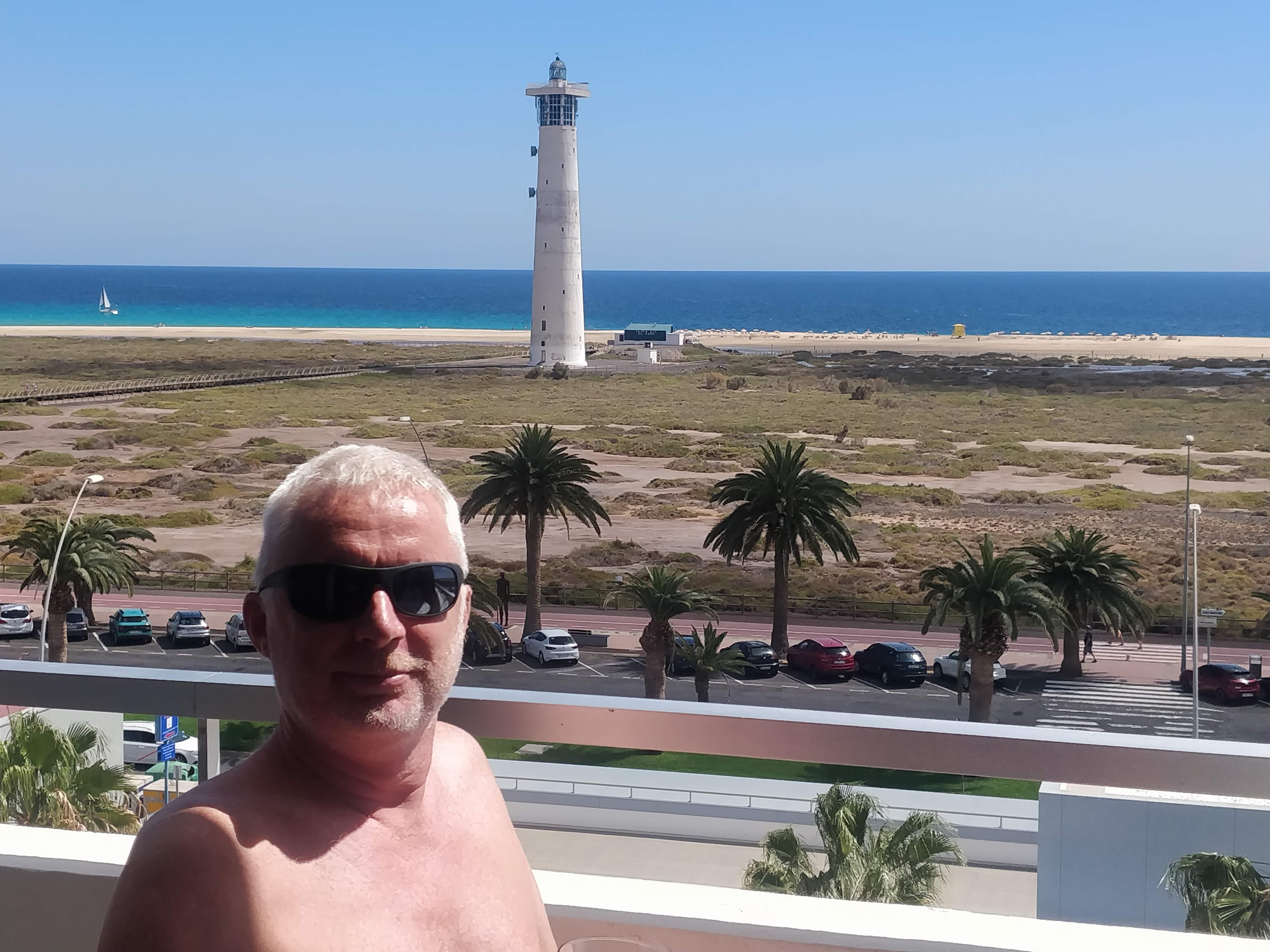
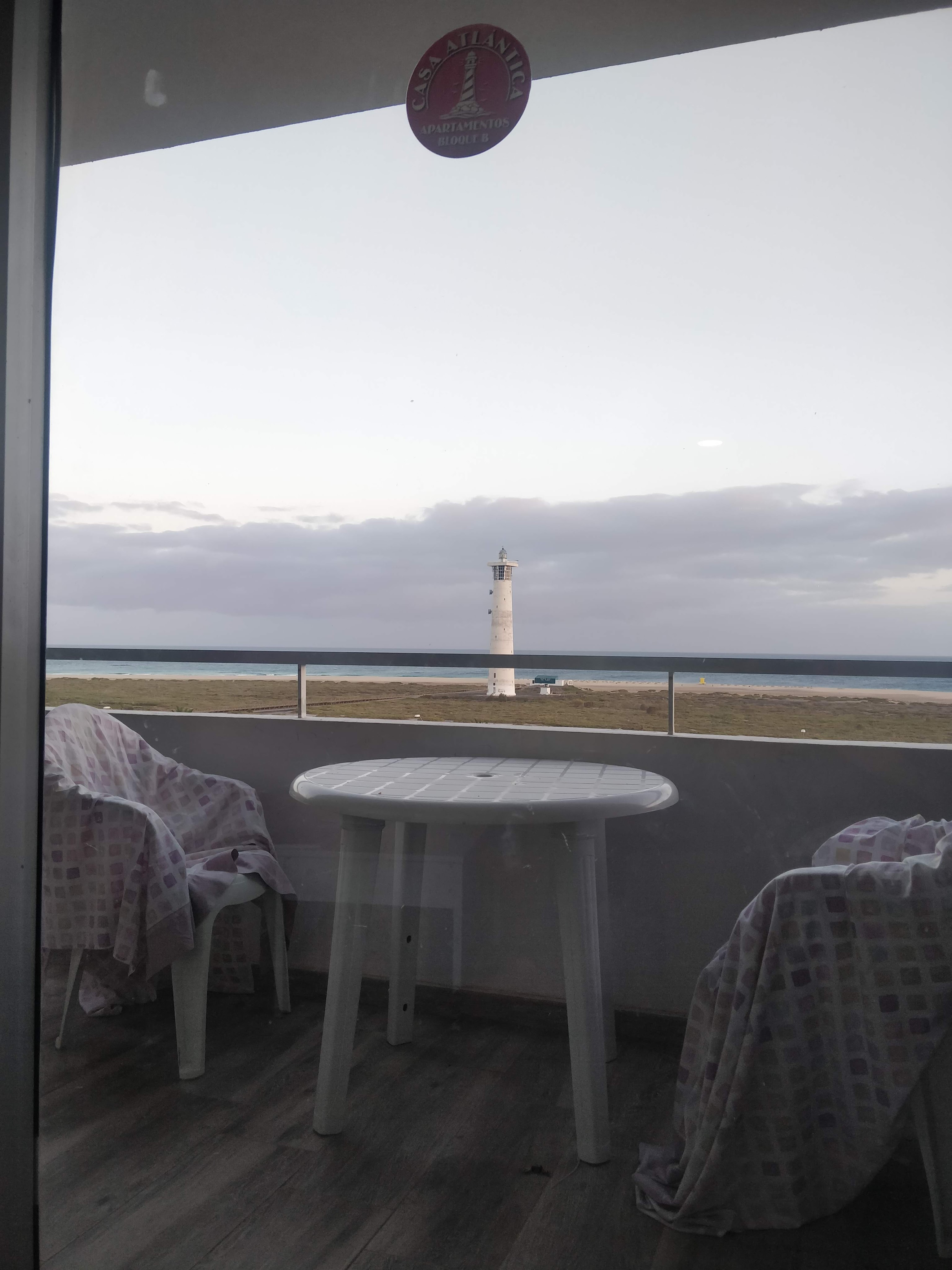
We had booked an apartment outside the village of Morro Jable overlooking Playa del Matorral. Our initial impressions were worrying – the apartment entrance was behind a row of unfinished retail units, the foyer was gloomy and not very clean. There was no reception desk but we were messaged instructions and a passcode for the key-box. The lift shuddered up to the fifth floor but when we opened the apartment door, it was light, bright and dominated by the view of the lighthouse which entranced us for the week. Morro Jable was once a quiet fishing village and has retained that village feel with tourist development stretching away from it to the north along miles of seemingly endless golden sands. There is also nature conservation with a broad strip of protected salt marsh between the beach and the avenue of hotels, duty-free shops and restaurants. So most accommodation here is back from the beach with boardwalks across the salt marshes to allow access to the fabulous beaches.

On all the Canary islands visited so far (we haven’t been to Lanzarote yet), the interior of the islands was spectacular with steep ravines, winding mountain roads, deep gorges and cloud forests. Not so on Fuerteventura.

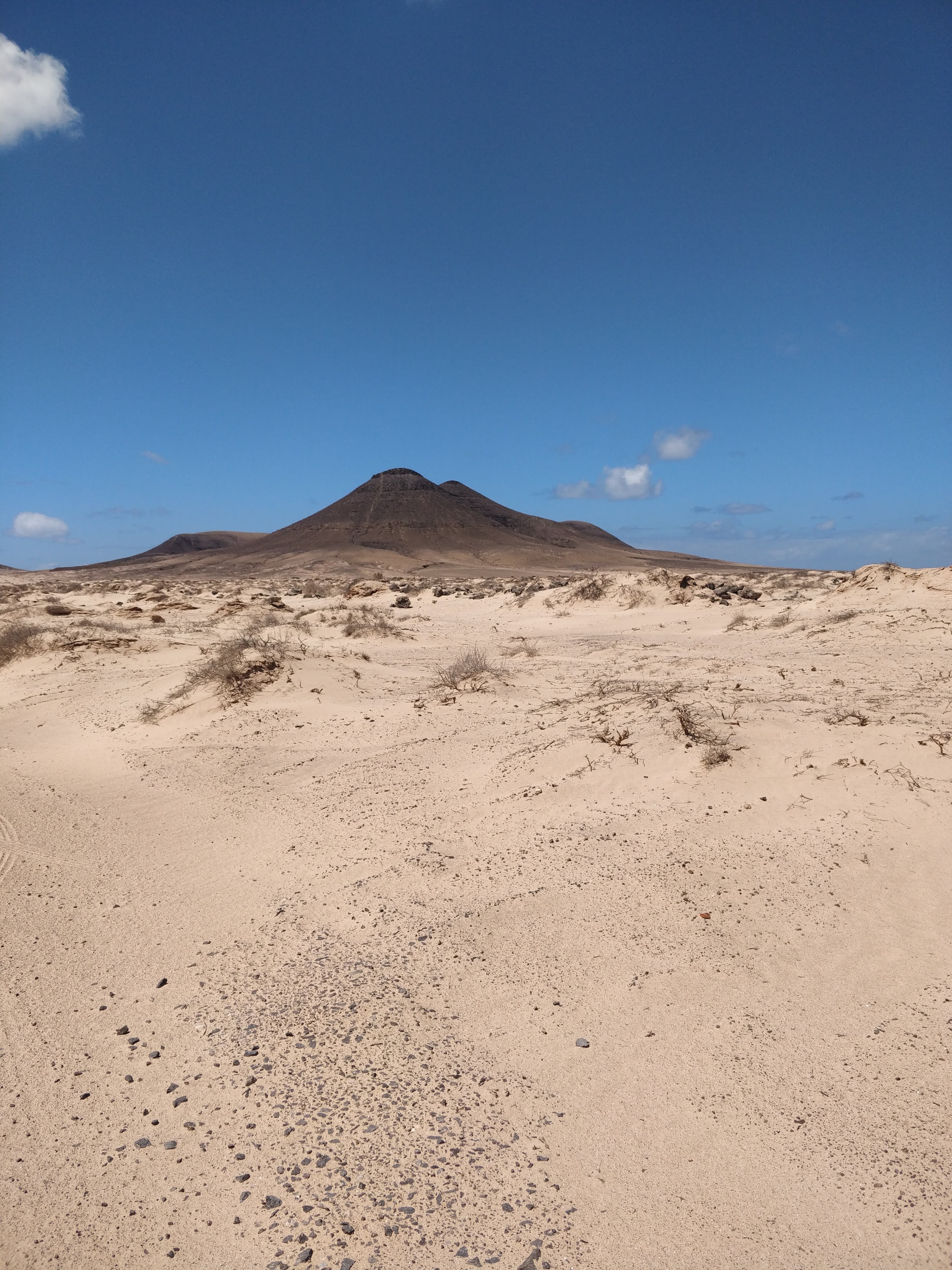
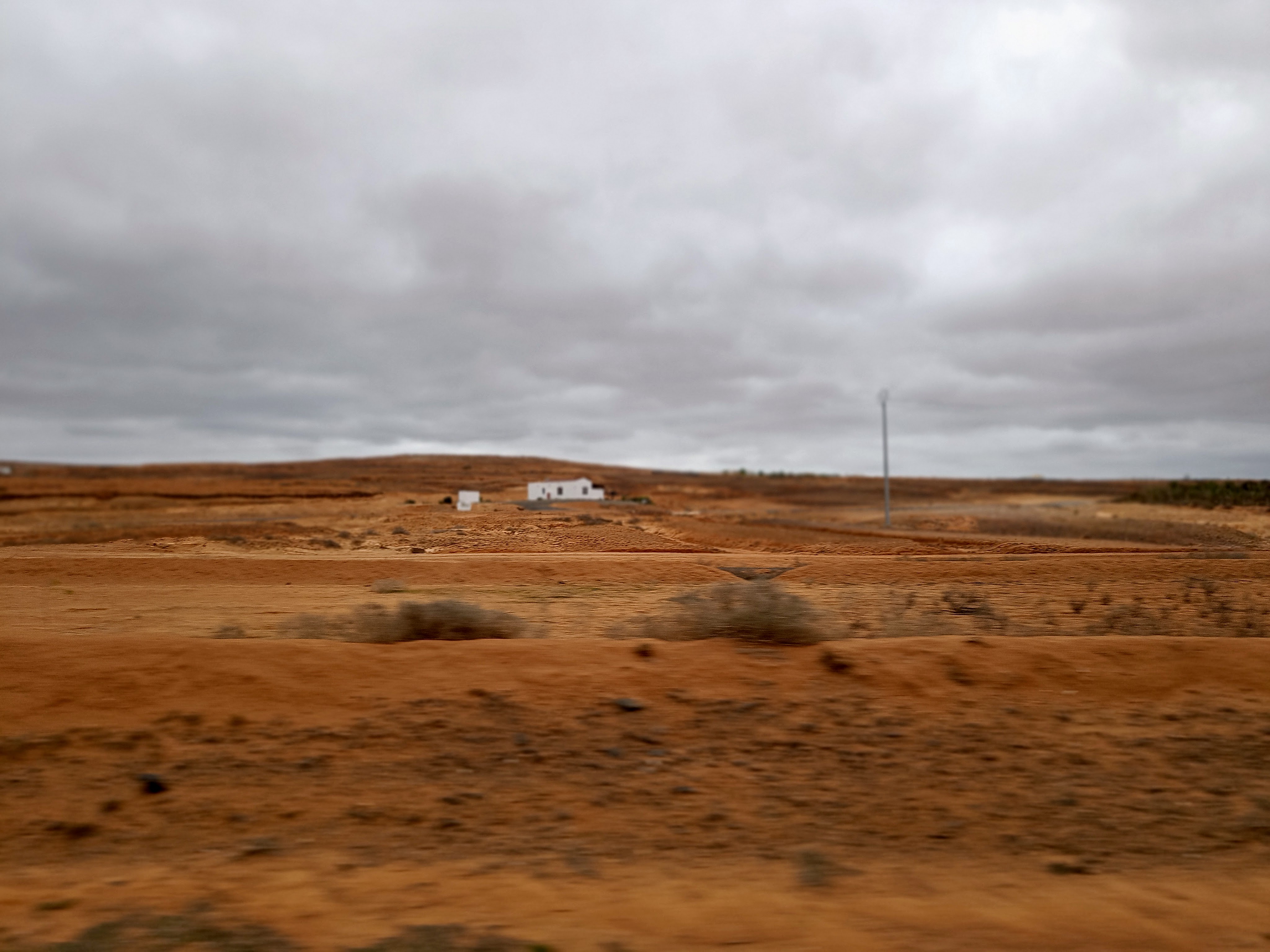
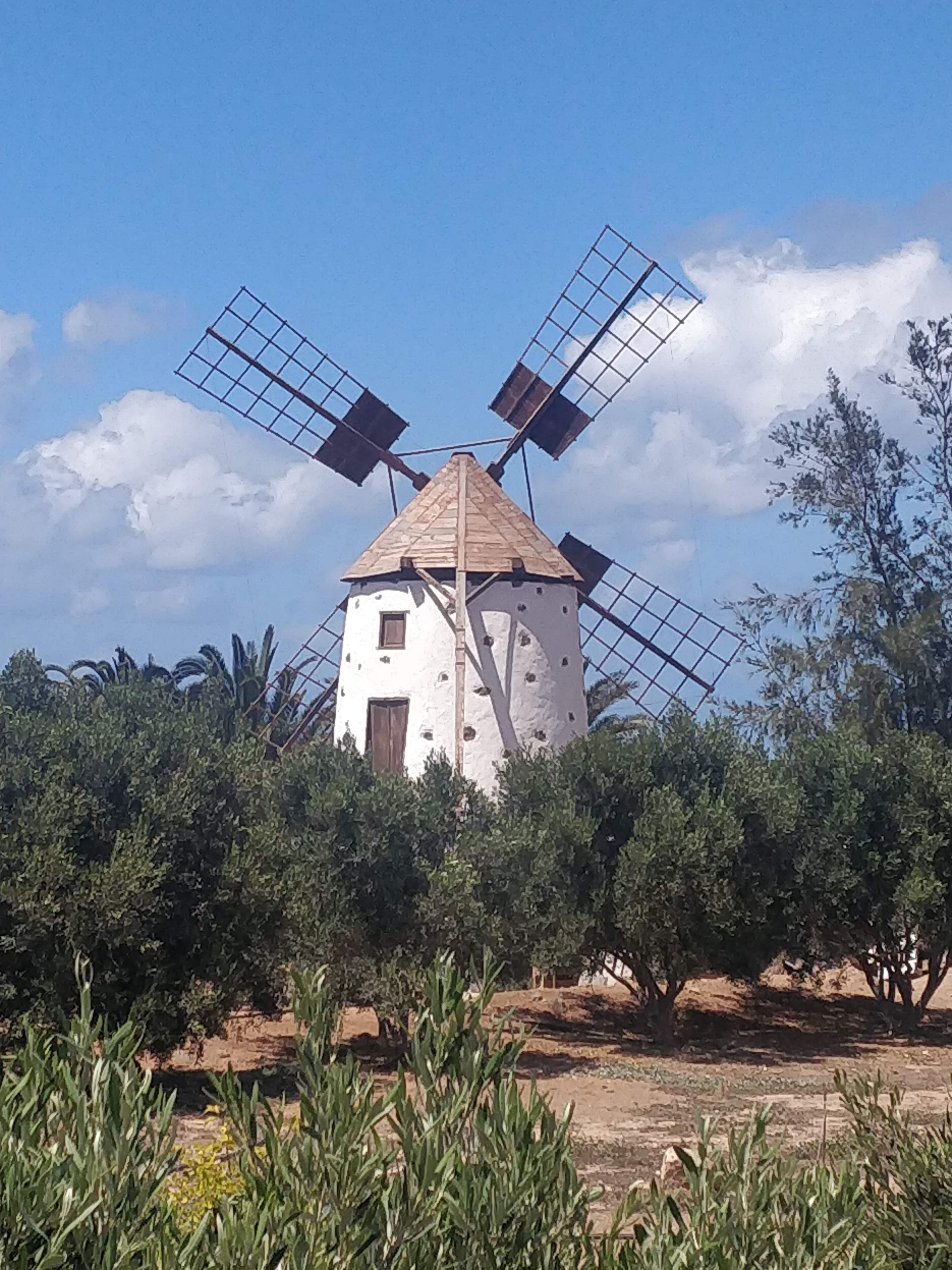
We travelled the whole island by bus and although the coast is certainly a ‘rhapsody in blue’, the interior is mainly brown stony earth dotted with low bare volcanic hills, little white towns, windmills and the occasional goat farm. The island is famous for its goats cheese. There was a stark beauty to the arid landscape but it was difficult to imagine that Fuerteventura once supplied grain to the other islands. Water has always been an issue here and there was still evidence of irrigation channels in barren fields that once made use of every drop that fell. However, livestock and clearing of native vegetation have taken a heavy toll on the land. All water in Fuerteventura now comes from the sea and is desalinated in a number of desalination plants around the island. We got a few heavy rain showers and it was sad to see such a precious resource just running down the street.

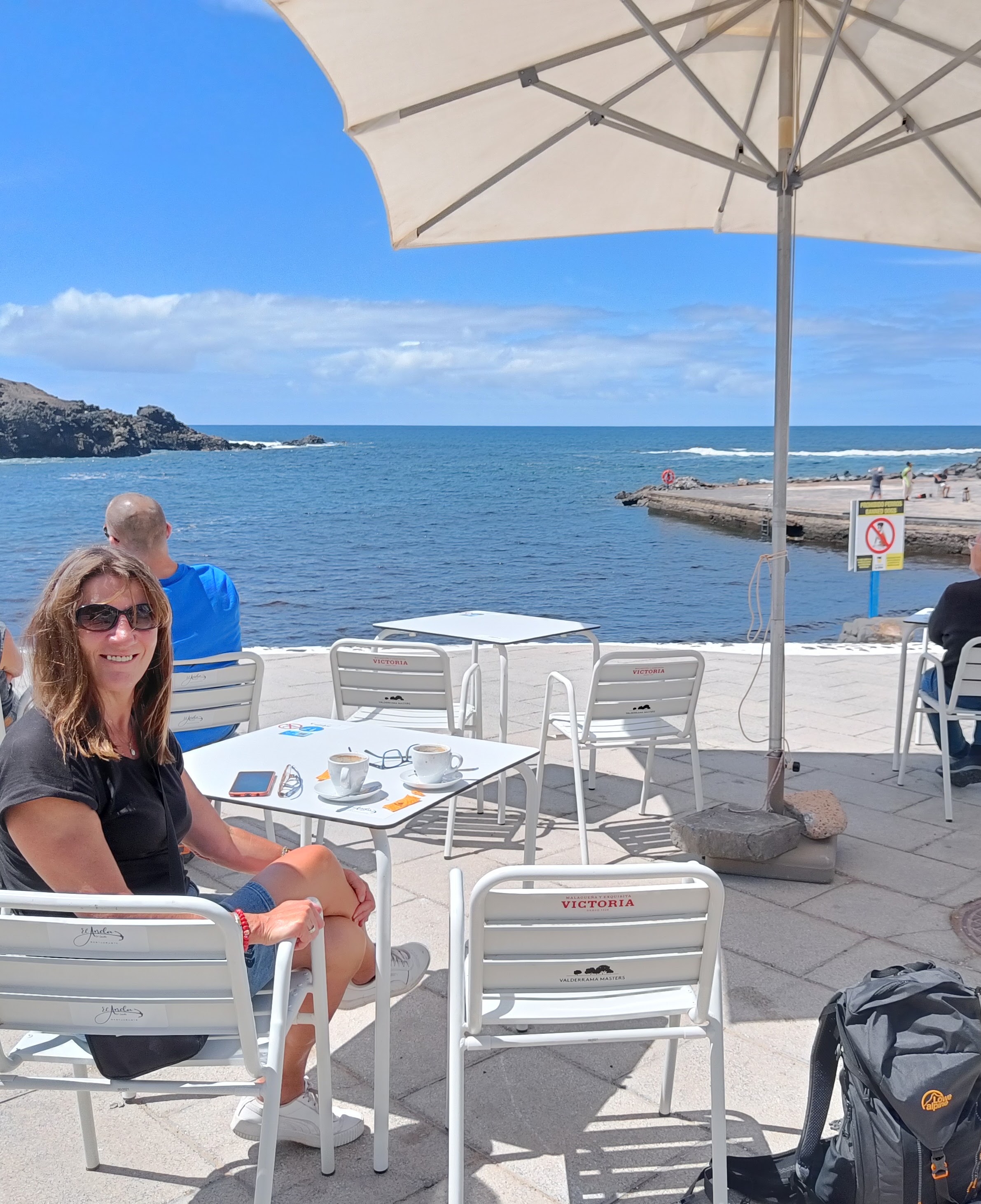
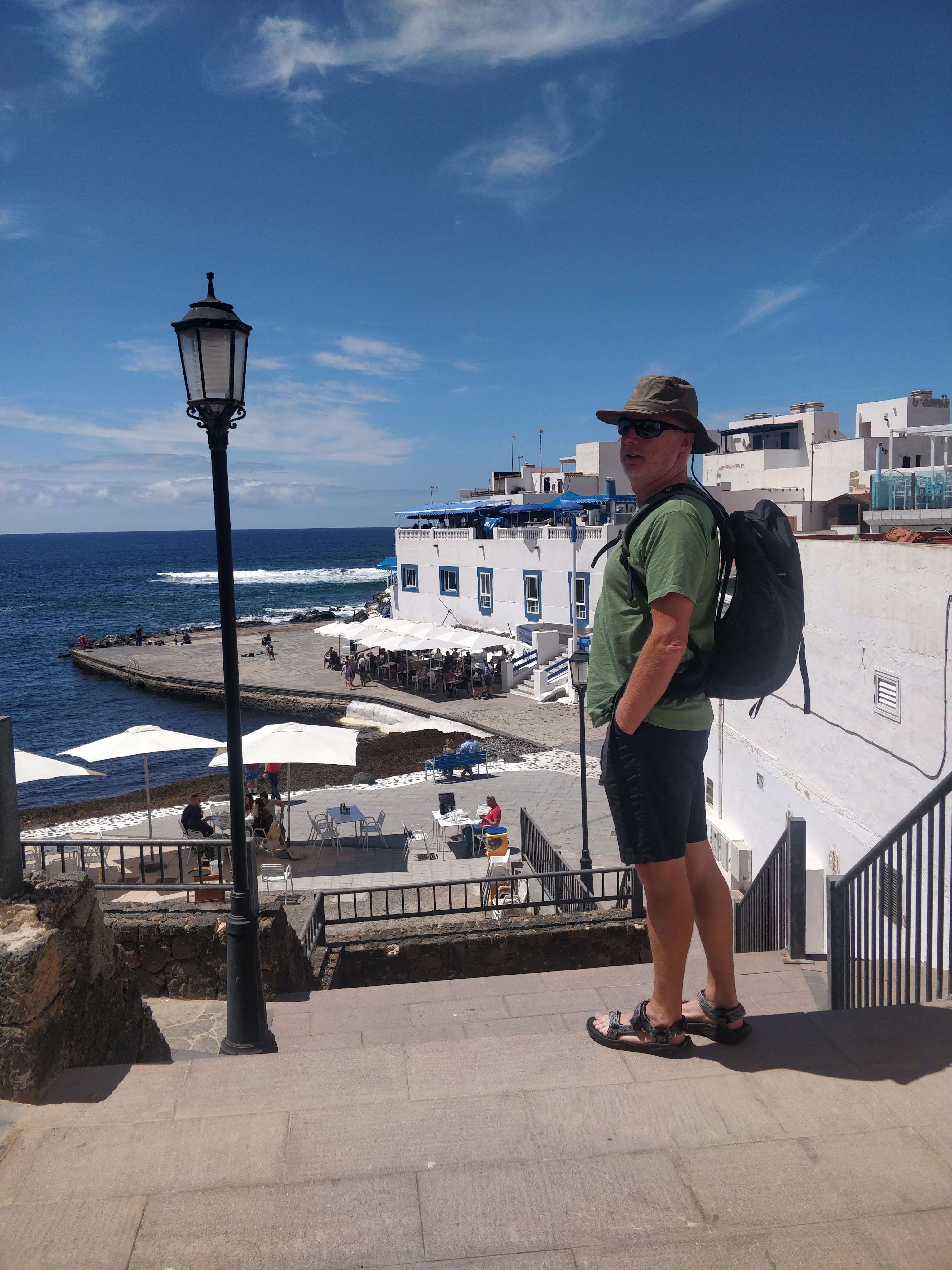
On April 1, we headed north and arrived outside the apartment building in El Cotillo that we had booked on Booking.com, surprised that we hadn’t got any details for checking in. We phoned the contact number to find that we had booked online for May 1….instead of April 1. It seemed appropriate that it was Fool’s day🤣 but we got sorted – eventually. El Cotillo has a beach to suit everyone, beaches with big rollers for windsurfers and kite surfers, tranquil lagoons for swimming, a pebble beach with rocks for snorkelling and beaches in either direction for walking. With the turquoise waters and the blue and white houses, we were reminded of the Greek islands. On a sunny Saturday April lunchtime, buskers sang Mumford and Sons down by the harbour while around the corner, a three piece band played Beatle classics with Spanish lyrics. But there was a lot of building work and expansion going on in El Cotillo and hopefully it will retain its charming, laid-back vibe.

We moved on to Corralejo, the major tourist centre in the north of the island which is much bigger and livelier than El Cotillo. This is a party town with loads of bars, restaurants and clubs in a gorgeous setting with beaches and sand-dunes stretching south of the town and a long path by the coast for walking. But the sea can sometimes be quite rough here and it lacks the tranquil lagoons of El Cotillo. After so many key boxes where we checked in without any human interaction, we were delighted that there was a receptionist in Hesperia Bristol Playa, our accommodation in Corralejo. But she was coldly efficient, dismissing our efforts at speaking Spanish, demanded to see our Covid certs (the first request in months) She slapped wristbands on our wrists for identification purposes, swatted us away like an inconvenience and told us we were too early to check in. Caoimhin cut off his wristband within an hour, objecting to being branded😁

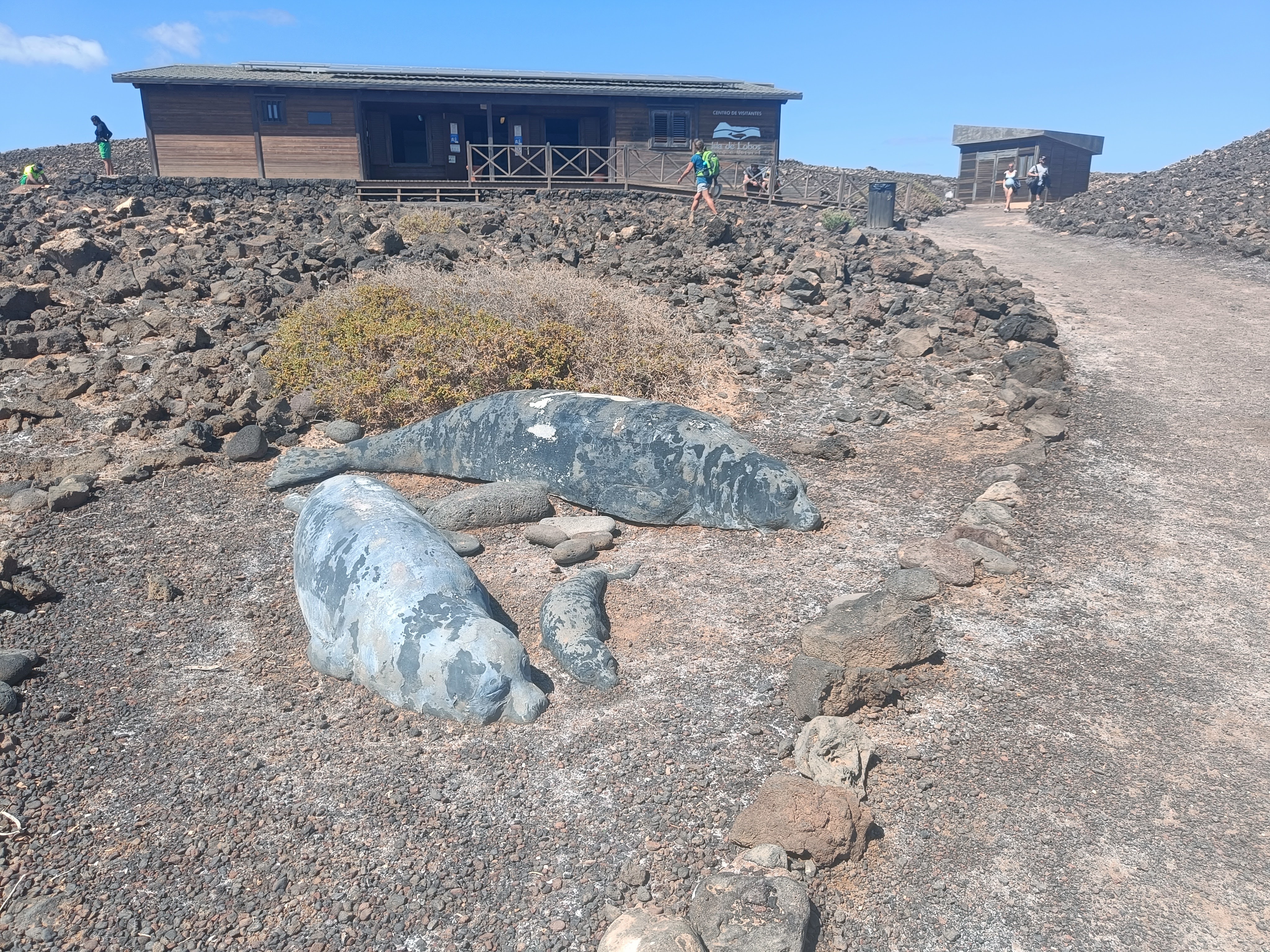
Los Lobos is a small island between Lanzarote and Fuerteventura and is a popular day trip. In the past it has been a hang-out for pirates and a centre for the slave trade but is now a Nature Reserve, a bird sanctuary and a pit stop for migrating birds. It takes its name from the seals that used to frequent its shores in great numbers. Jose de Viera y Clavijo, a Spanish historian wrote around 1800 ‘These animals are highly intelligent and capable of great education…..if you catch them sleeping, you can kill them by hitting them around the snout with a club, since this is the most sensitive part of the their body.’ Obviously lots of people took this advice as the seals have been extinct in the region for a hundred years. The island has some lovely sandy beaches, one restaurant and no accommodation. Its volcanic, stark and barren but there is life especially the constant flicker of lizards and salamanders – one even joined us on the rocks when we were eating lunch hoping for some crumbs. In an effort to combat human effects in this fragile landscape, visitor numbers are limited and a permit has to obtained from the National Park authorities. Its free and available online. But nobody asked us for our permit and there were a lot of people on the island…most didn’t venture far from shore but just headed straight for the beach for a swim in crystal clear waters but the interior is worth a hike.

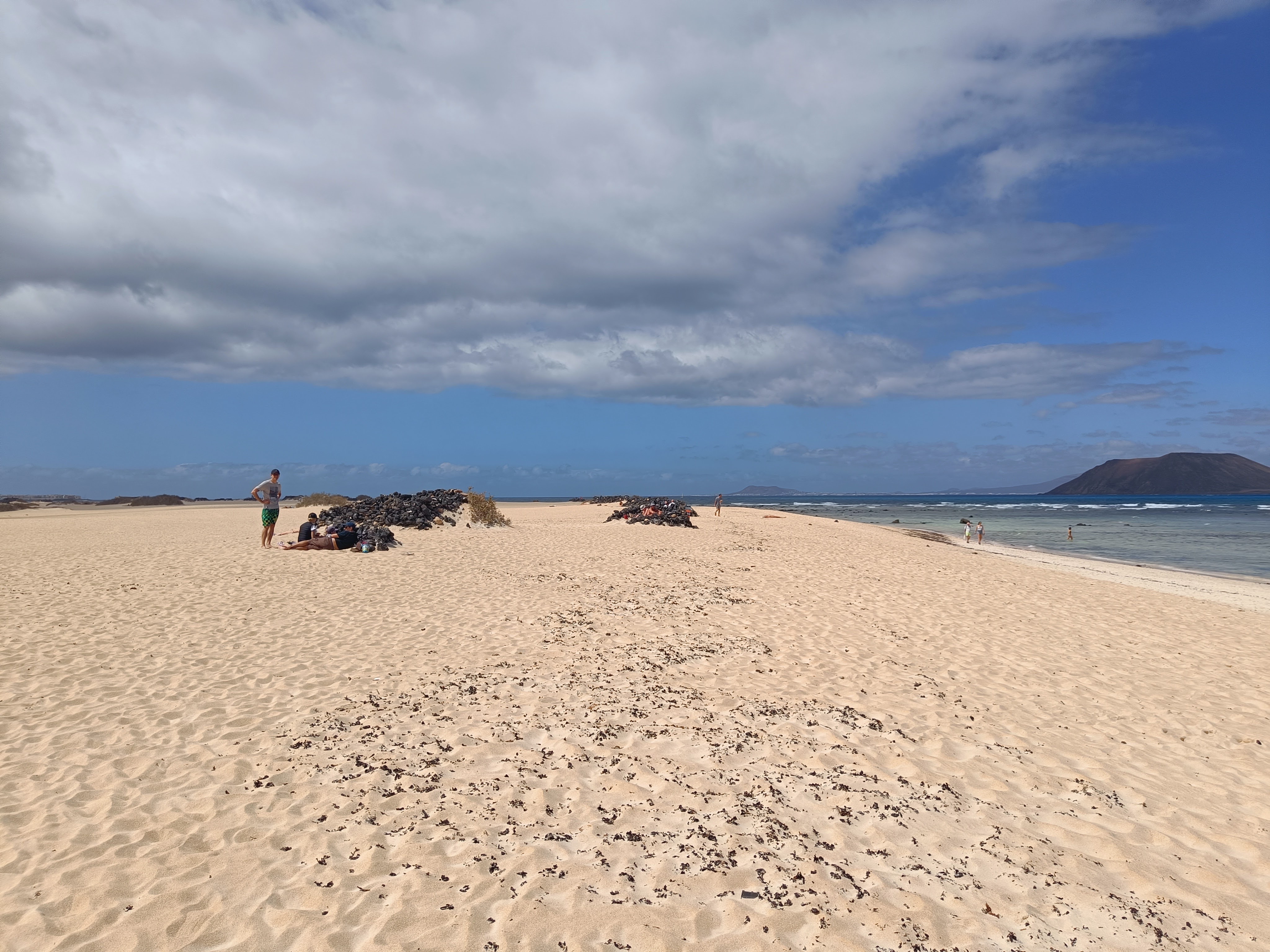
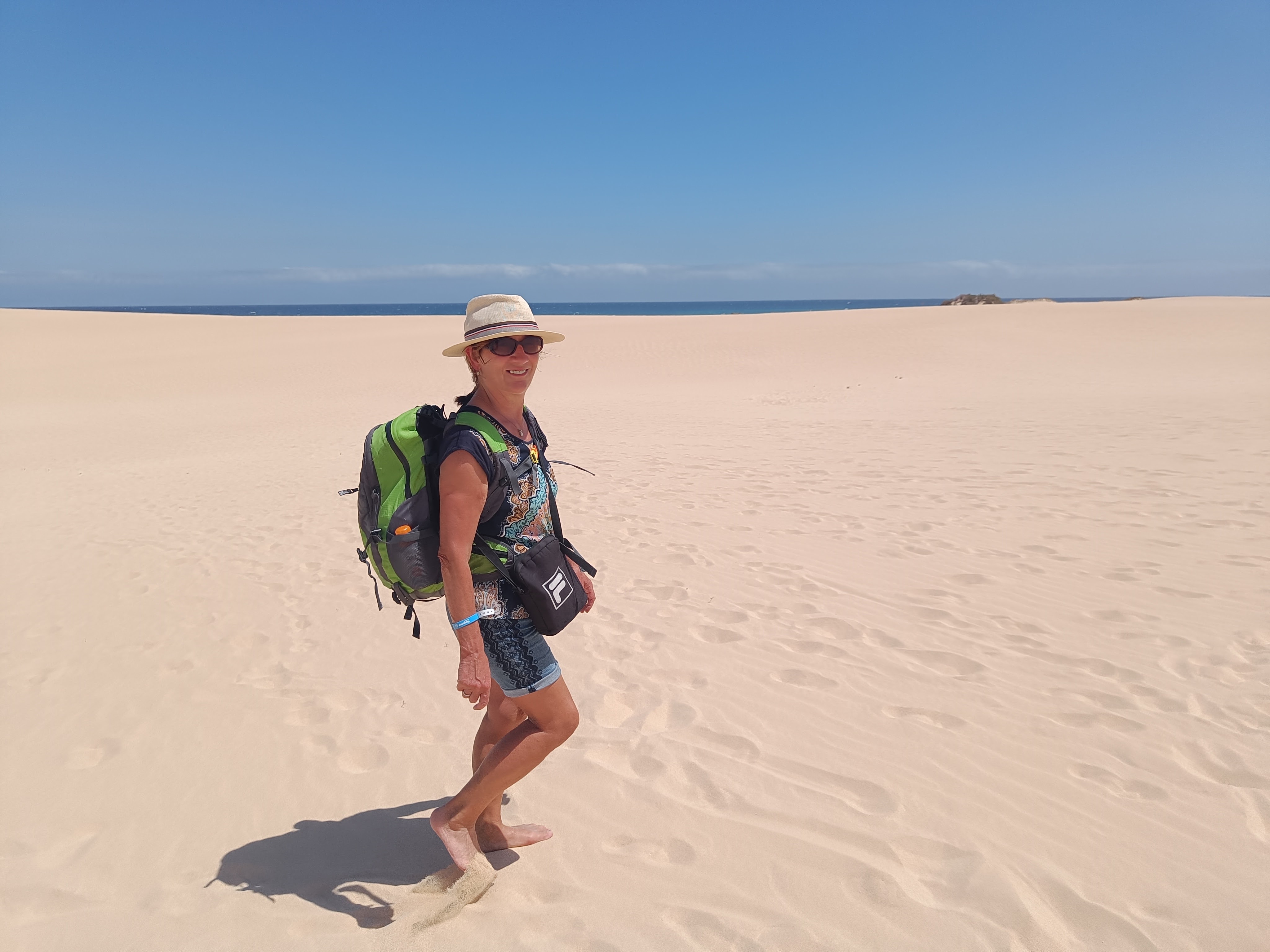
The wind was a force to be reckoned with in Fuerteventura. Temperatures were in the low to mid twenties with lots of sunshine but it felt much cooler unless you could find shelter from the breeze. We were puzzled by the stone circles on many of the beaches – they almost looked Celtic – until we realised that they were windbreaks made by gathering volcanic rocks, often sheltering bronzed naked bodies. Nudity is widely accepted and not confined to any particular beaches on the island so a naked body (usually male and middle-aged) could appear from any direction. But the winds were fabulous for sailing and wind surfing and the sky over the beaches was usually full of brightly coloured sails.

Colours of Fuerteventura, sand and sky(similar to flag of Ukraine)

The colours of Fuerteventura are like block paintings -maybe even a Sean Scully – vivid swathes of bright colours of blue and gold and brown. Here we are only 97 kilometres from the African coast although there is very little evidence of African influence. But that proximity is tantalisingly appealing to migrants, many of whom made the perilous journey in small ill-equipped boats in an attempt to reach Europe. The tragedy is that many drown (41 people rescued and 17 drowned on Feb 4 last when their dingy capsized)

Tomorrow, April 11, we get a ferry to Lanzarote, a short 30 minute boat ride away. We can even see it in the distance when we look north from Corralejo. All the Canary Islands are quite different but Fuerteventura is blessed with sun and sand, the whitest sand that we have seen on any of the islands. Elsewhere black sand beaches from lava dust and volcanic rocks were more common. Apparently, the sand in Fuerteventura is formed when tropical fish eat coral which is crushed in their intestines and discarded in the form of sand. So in other words, fish pooh! Isn’t science wonderful?🤣🤣

Until next time…..thanks for reading

Fuerteventura, Life’s a Beach⛱.