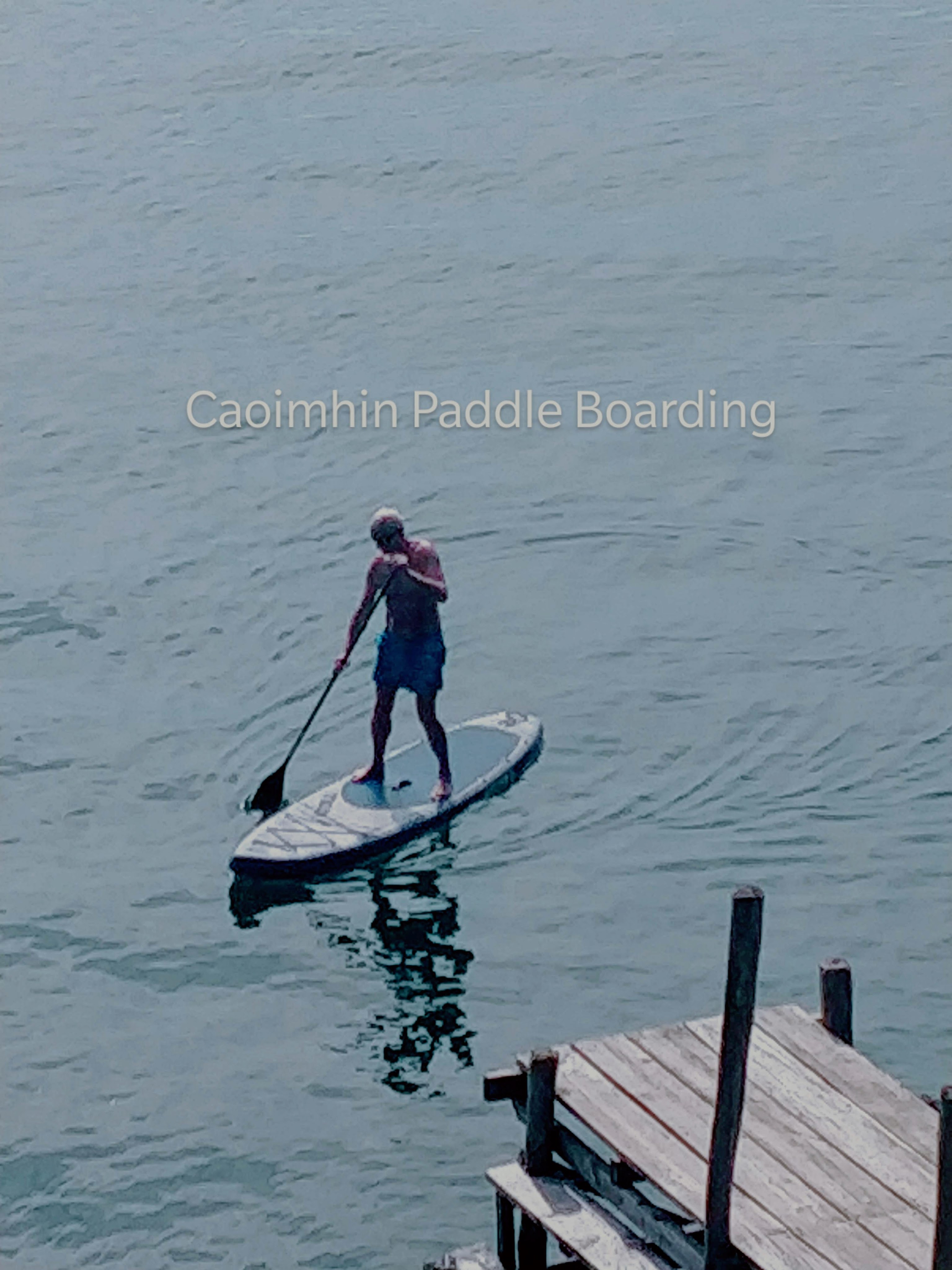
Lakes and Lost Cities in Guatemala

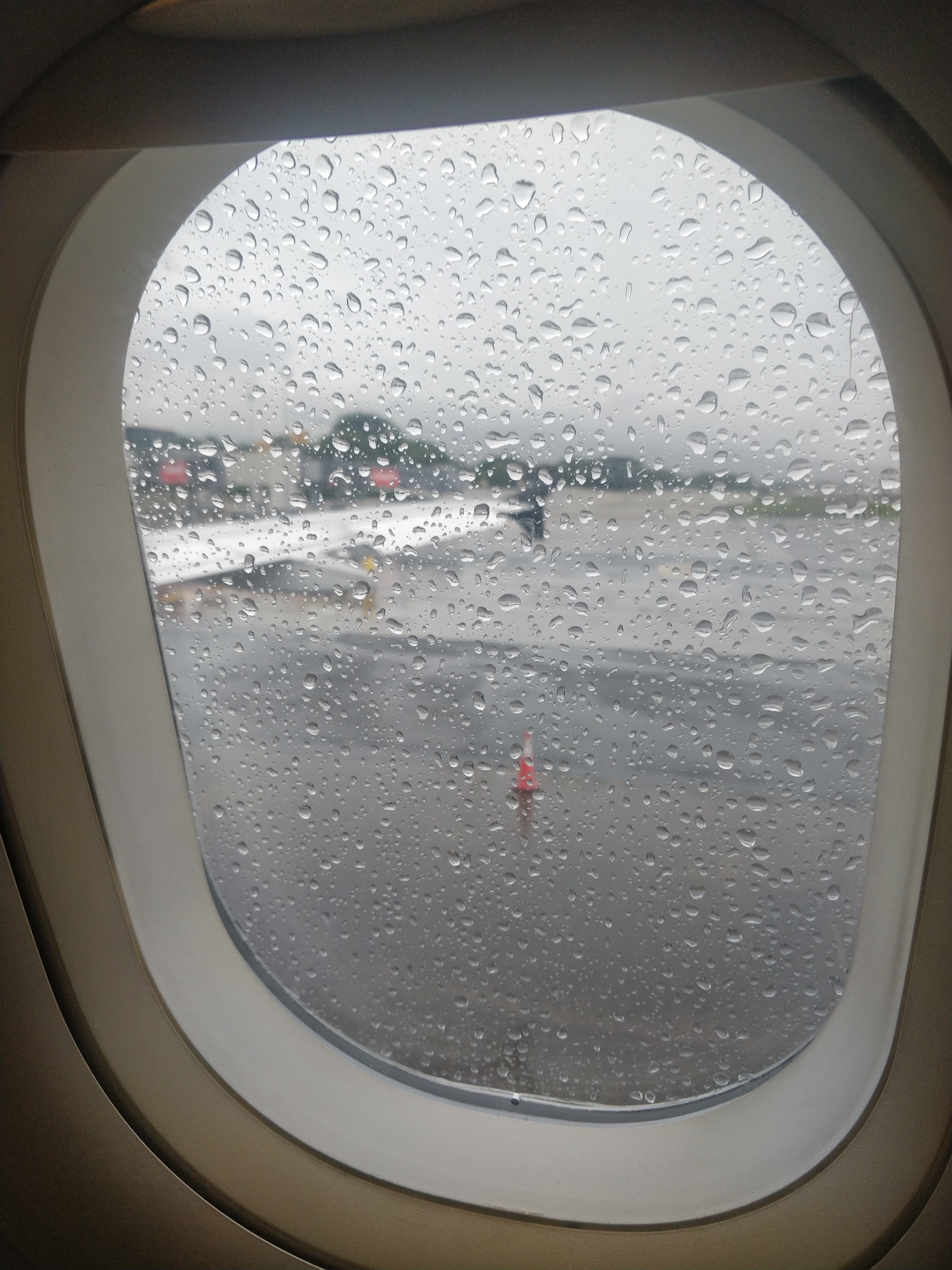
The bus creaked, stalled and missed a gear on the first hill outside Panajachel – not a good start on a nine-hour journey that would take us from the shores of gorgeous Lake Atitlan through the mountainous highlands to Lanquin. We drove through small villages with tiny shops selling everything from crisps to plastic basins, along by tree-clad mountains, fields of cabbages and rows of onions drying on sackcloth outside humble shacks. Everywhere there were chickens crossing the road 🤣and docile dogs that looked half-starved. The road was twisty but the surface was resonable most of the time except where there were mini-landslides and rough patches that five months of rains had worn away. About halfway through the journey, we began driving through mist and cloud that turned to heavy rain.The journey stretched to eleven hours with a few stops along the way, one at McDonalds in Coban, the most modern town that we have seen so far in Guatemala with a shoppping centre and traffic lights. The bus stopped outside Lanquin in the dark and pouring rain at a garage forecourt, very much like the Applegreen service stations at home. The bus couldnt go into Lanquin because there was major roadworks going on. We were picked up at the garage by David from the accommodation we had booked. Despite the rain and darkness, it was quite warm, maybe 23C.
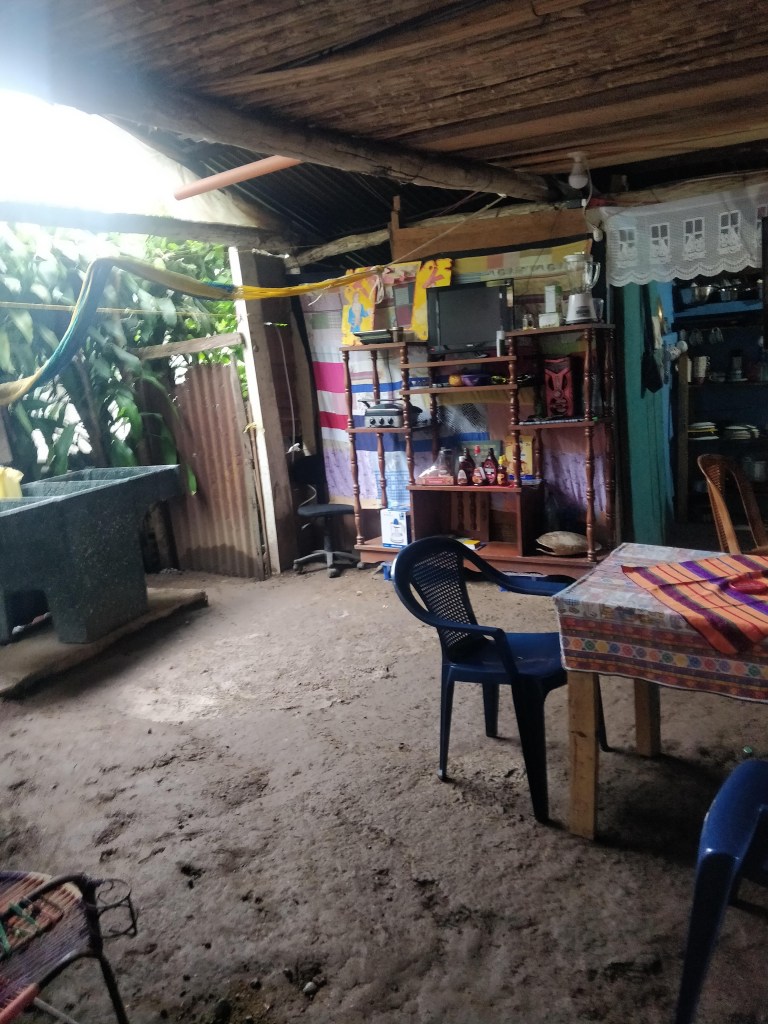
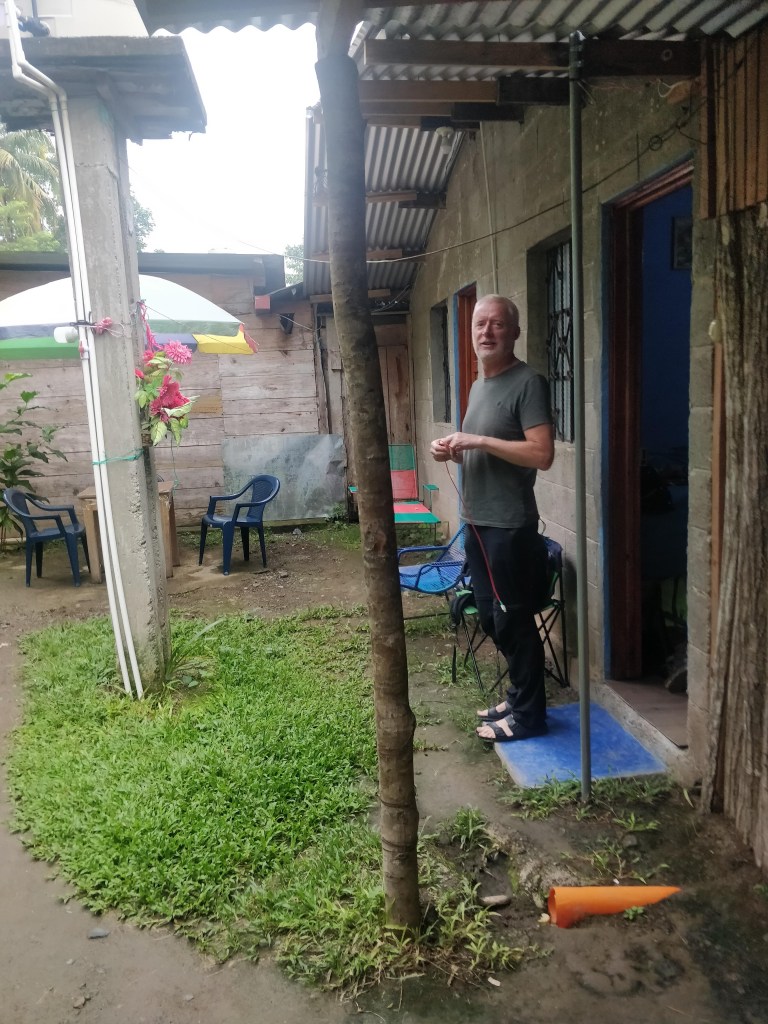
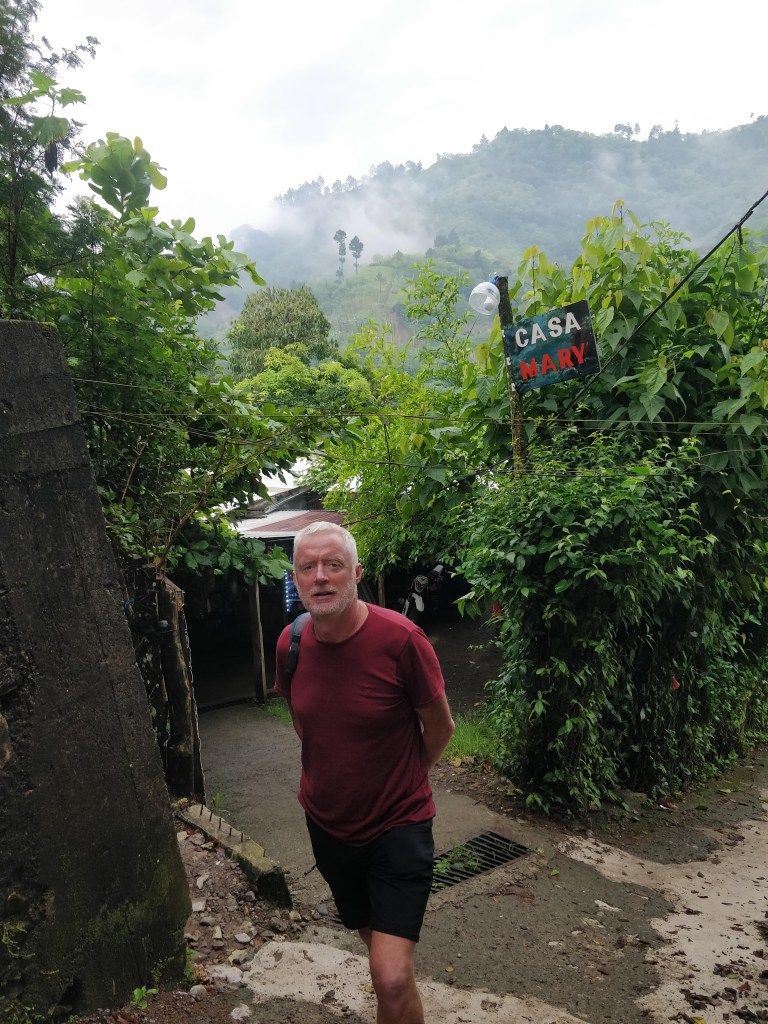
Casa Mary was a family run establishment on a narrowalleyway that rented out four of five rooms to guests, mainly foreign tourists and had a small shop attached. The ‘reception’ area had a mud floor and galvanised roof. The dining area was also mud floor and open on one side and the small garden had bananas and avocado trees and bright umbrellas for shade but which were handy shelter for rain as well. Our small bedroom had a fan, a concrete floor with a large beautifully tiled ensuite bathroom …and not a scorpian in sight. We have taken to checking shoes, bedclothes and shaking out towels at this stage…just to be on the safe side. Our accommodation cost about €23 a night and dinner of quasadillas, salad and chips was about €4. But the welcome and friendliness of the family, especially Mama Mary, was priceless.
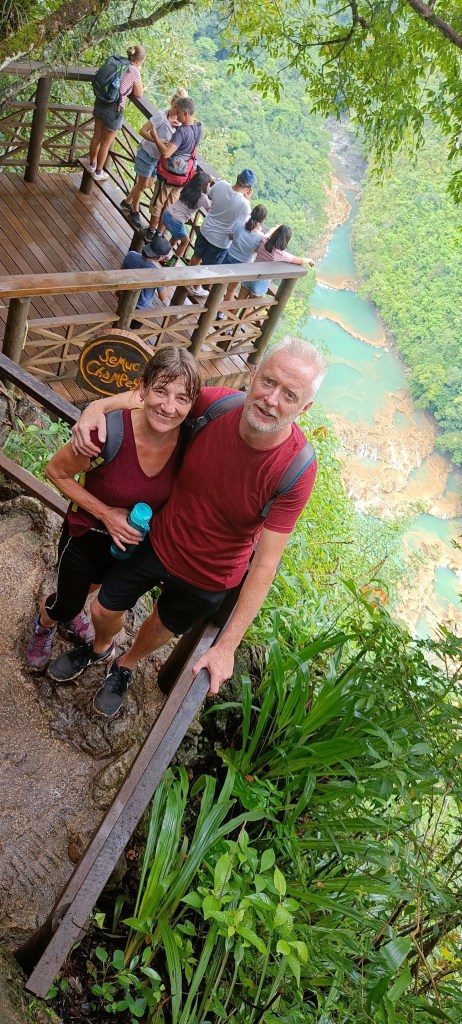
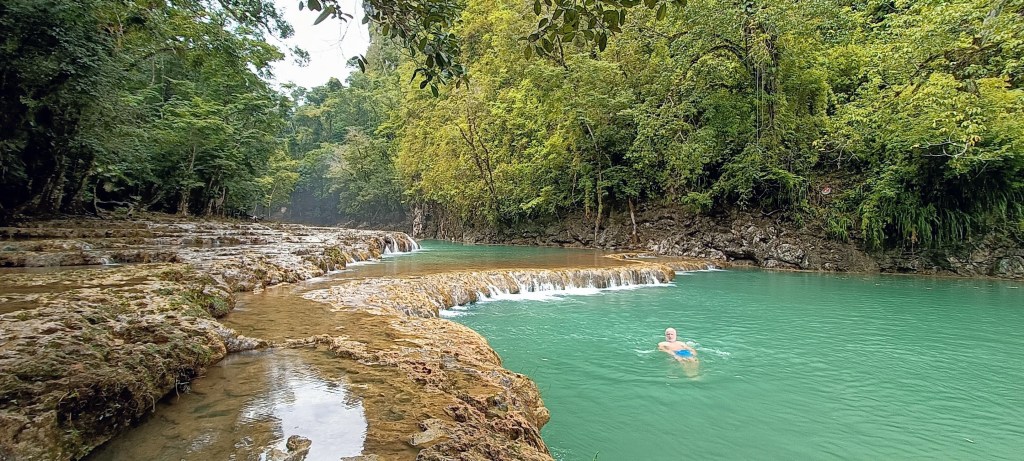
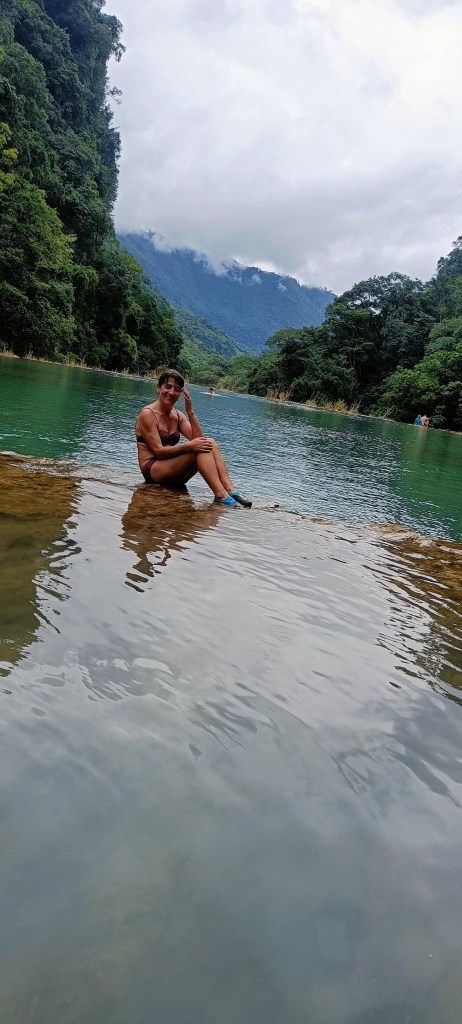
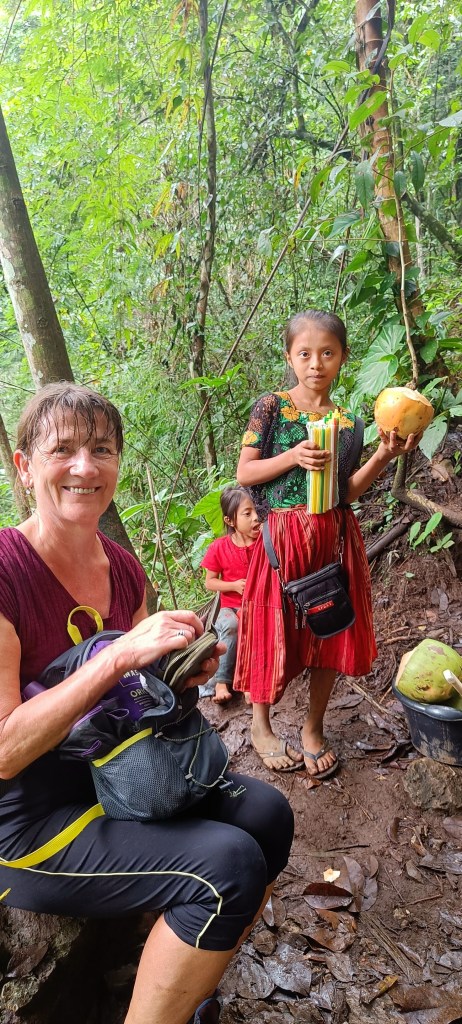
Our main reason for going to Lanquin was its proximity to Semuc Champey, a nature reserve with a limestone bridge and a series of stepped pools of the most stunning turquoise. Half the fun was getting to Semuc Champey from Lanquin and back . The road was narrow, unpaved, rough with huge boulders and the only way to get there (apart from hiring a 4×4 and driver) was standing up in the back of a pick-up truck. The views were incredible of the churning brown-water rivers, the jungle, the ramshackle houses….yes, it was rough and we had to hang on tightly to the bars and duck to avoid being slapped by overhanging branches, but it was also incredibly exerhilating. The pools were every bit as turqoiuse and photogenic as the pictures we had seen on the brochures. We hiked up to El Mirador, a hot sweaty jungle hike, to see the pools in all their glory from a height, stopping on the way down to buy cocunut milk from a little girl, who wielded the axe to behead the cocunut with impressive but slightly alarming dexterity. Then we swam in the waters and dipped under waterfalls, listening to the screeching of birds in the trees and the falling of leaves into the water….truly a special place. Back in Lanquin, we visited a cave outside the town at dusk to watch thousands of bats emerging to feed on the insects and not one got caught in our hair…..a fear that an aunt of mine had and passed onto me. I passed it on to Claudia, a German woman who was tucking her hair inside her sweatshirt in the cave.
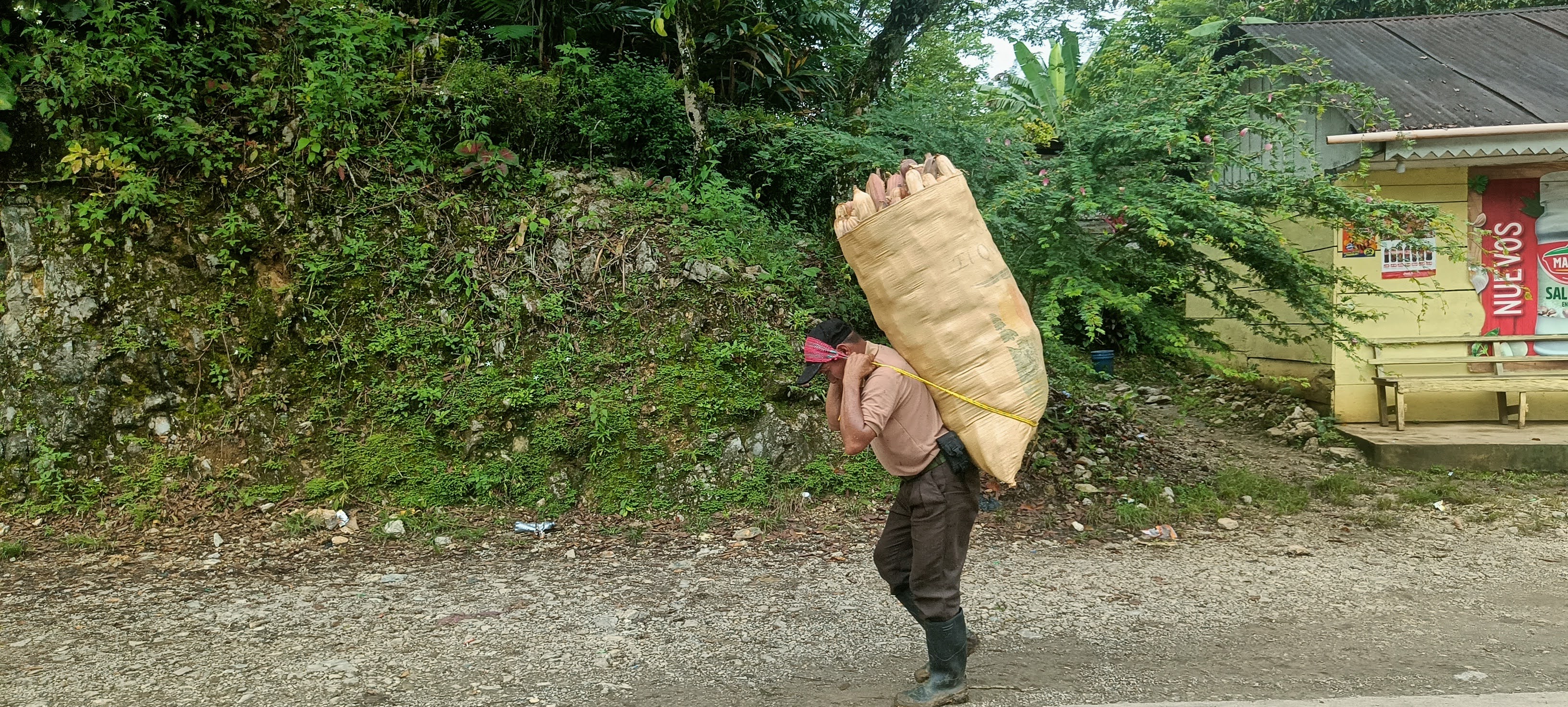
Another long bus journey beckoned to take us from Lanquin to Flores, the island of Flowers which is connected to the mainland by a causeway. The journey started late and stretched to ten hours over hills and into humid lowlands. We crossed the river Rio de la Pasion at Sayaxche on a flimsy ferry, no more than a few planks strapped together and numerous ferry operators clamouring for business. Queues and chaos but eveyone crossed safely. Through the bus window, we watched men carrying incredible burdens on their backs, building materials, sticks and sacks. We didn’t see any mules or donkeys anywhere in Guatemala so far.
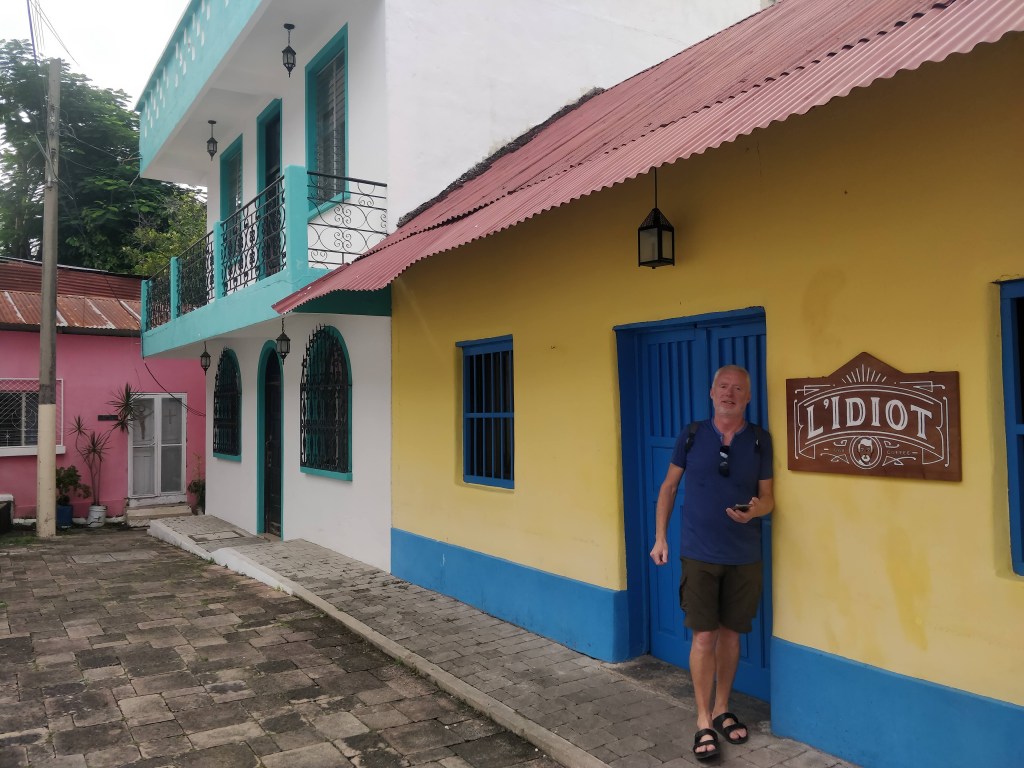
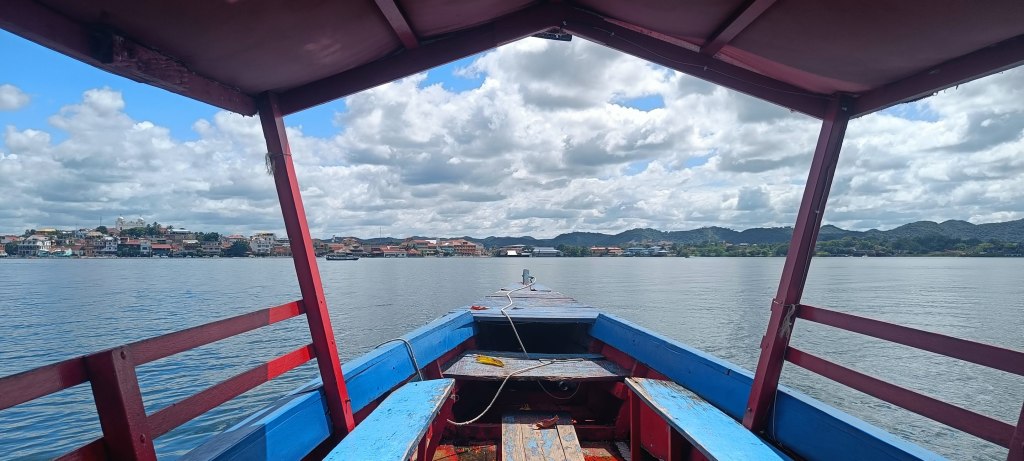
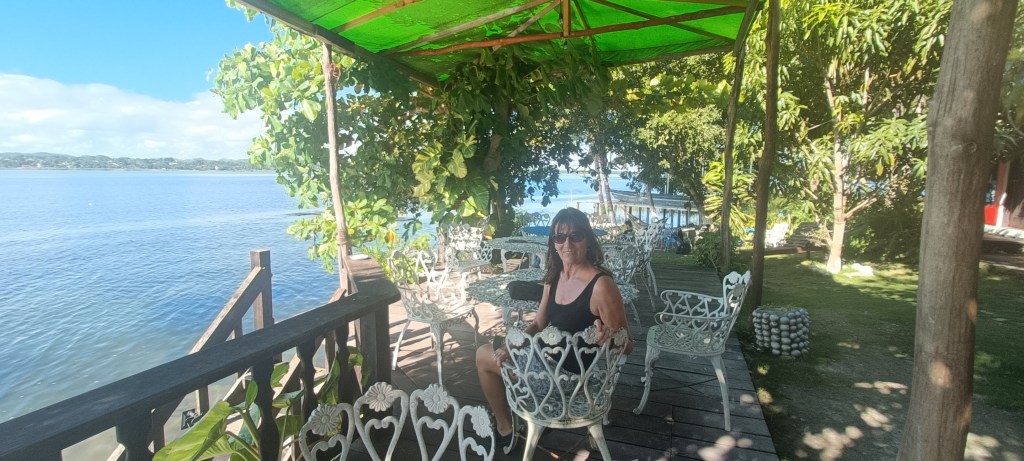
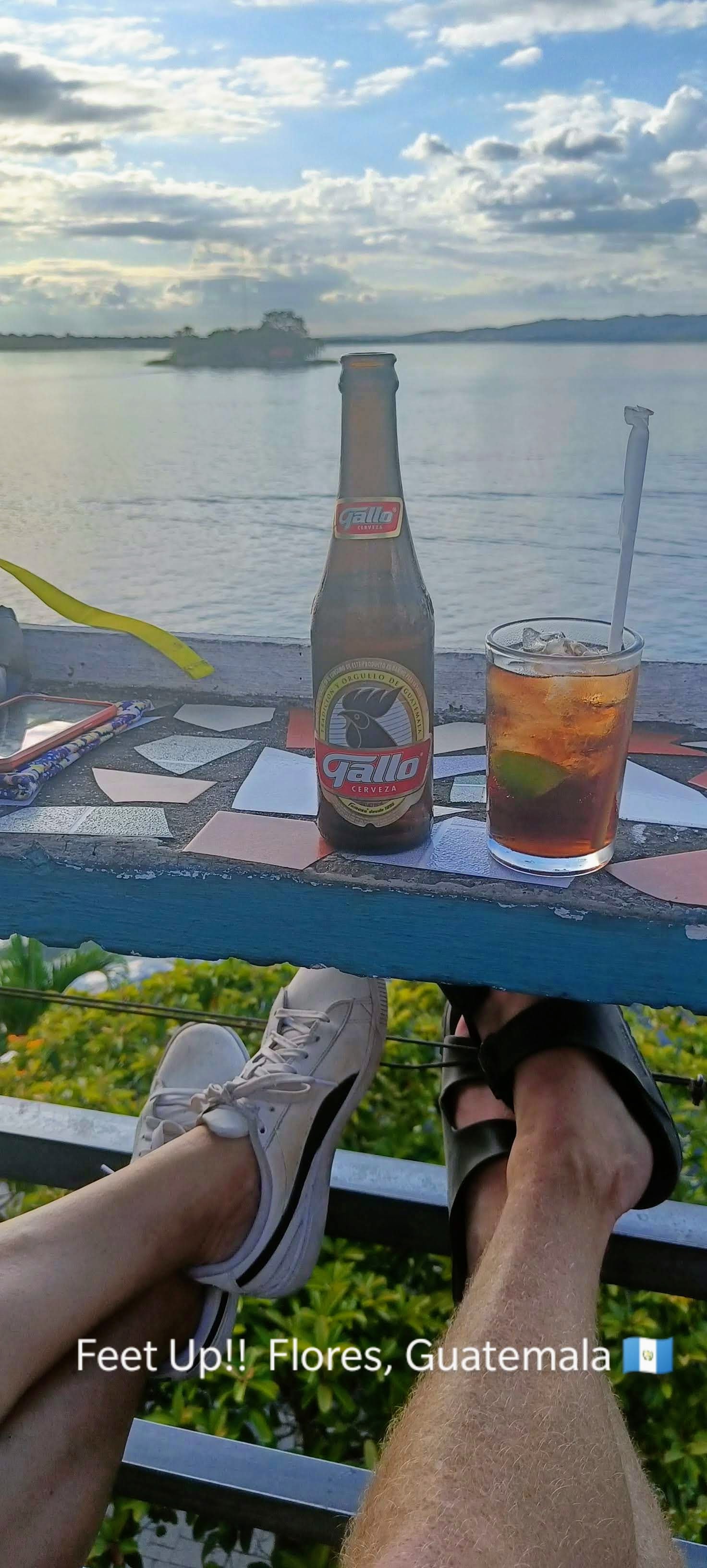
In Flores, we spent a few nights on the far shore of Lago Peten Itza, not on the island proper. There was a courtesy boat to take us to the island anytime we wanted. Flores was a former Mayan capital and the Maya state that held out longest aginst the Spainish invaders. But it was finally conquered and destroyed in 1697. It was peaceful on the edge of the lake, not as dramatic as Lake Atitlan in the south with its towering mountains but here it was all hills, rampant growth and humidity and a heavy sleepiness in the buzzing heat of the afternoon. Flores was a pictureque little town with brightly coloured buildings and with rising lake waters, it was also sinking at the northern end with submerged streets. It is also the gateway to nearby Mayan ruins. The biggest and the most visited of these ruins is Tikal, one of the reasons we wanted to visit Guatemala.
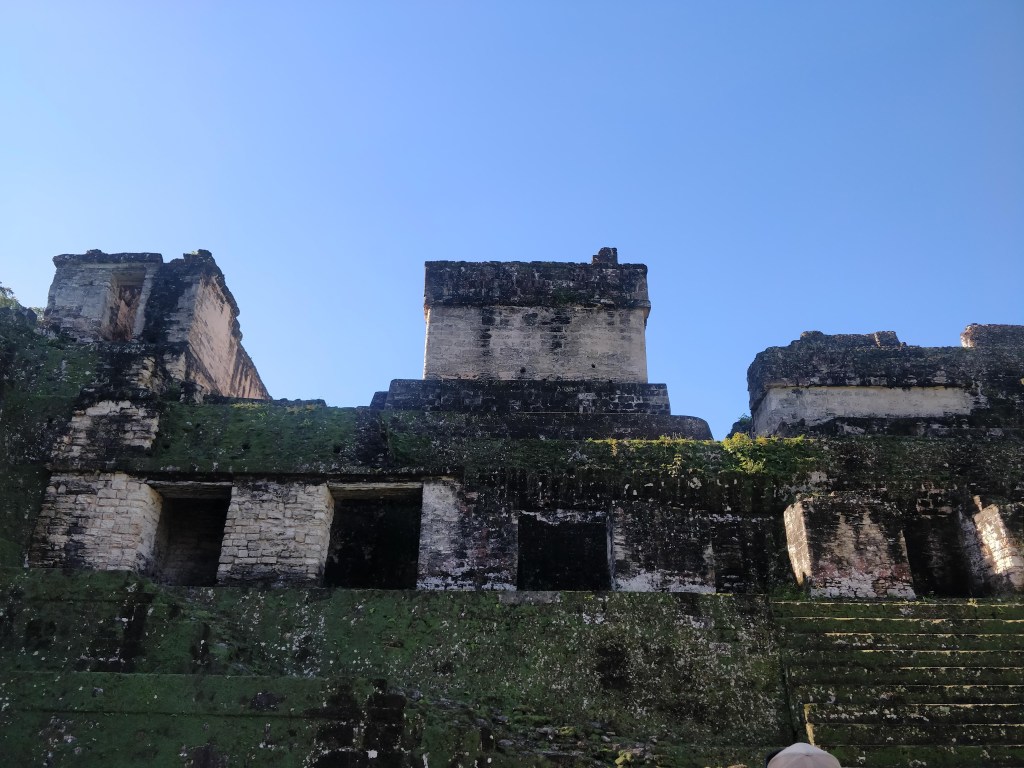
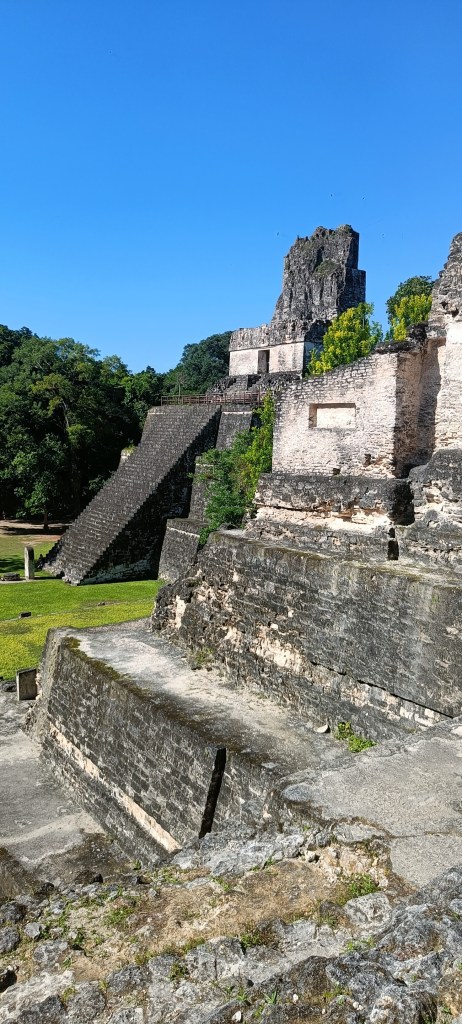
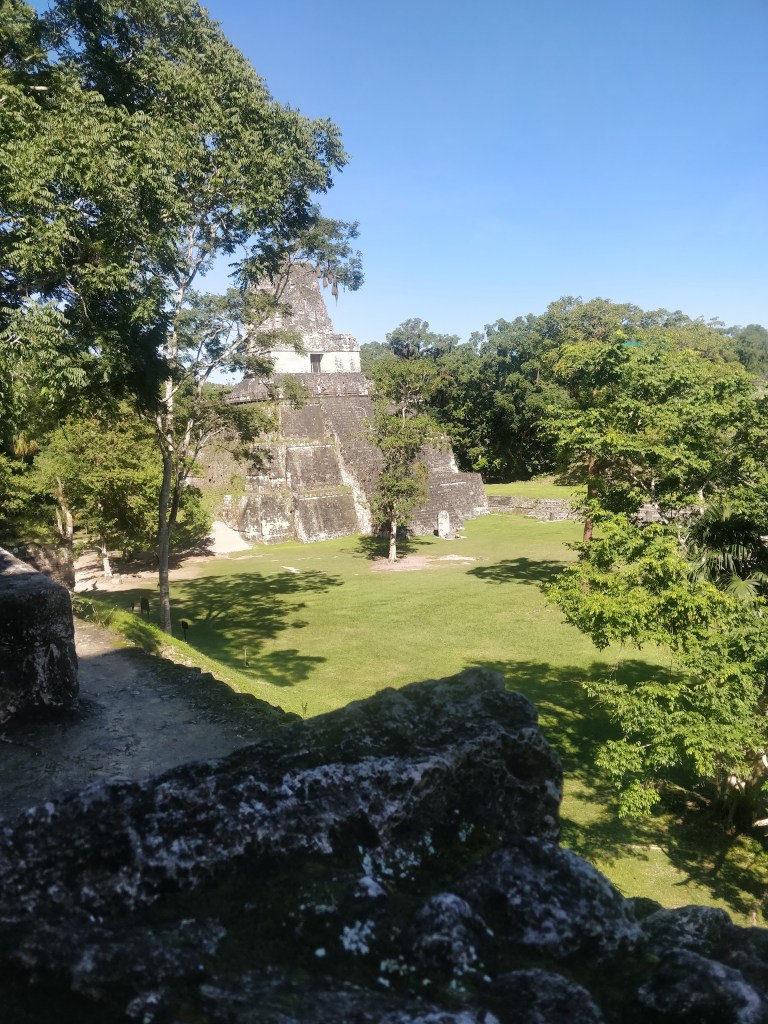
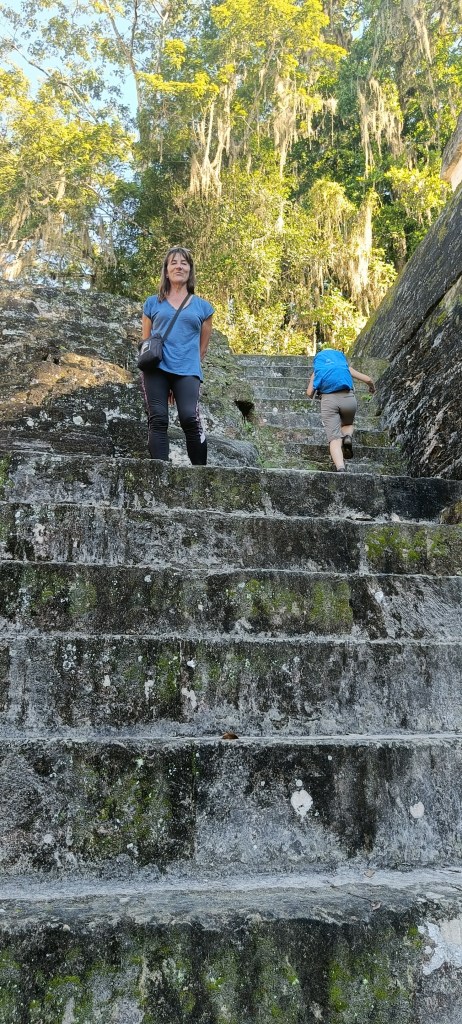
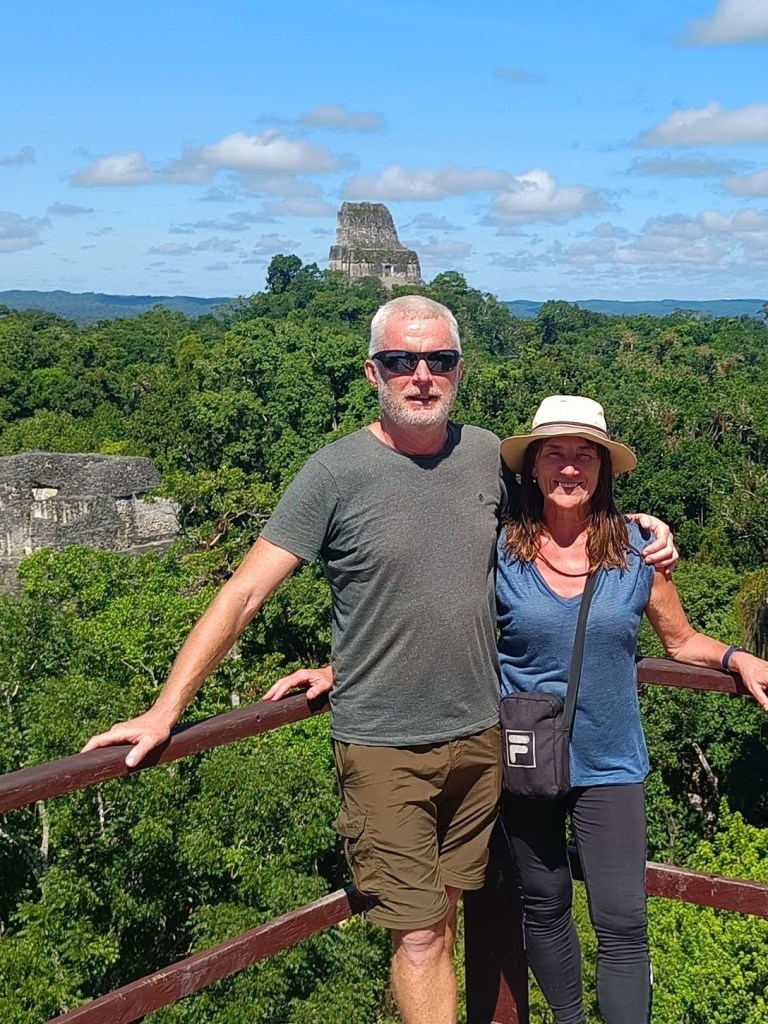
It had seemed like a good idea to start our journey to Tikal at 4.30am, to get there early before the human crowds, when the birds and animals in the park were at their most active and the air was at its freshest. So our alarm went off before 4am. The son of the owner of the hostal was sleeping on an old sofa inside the door but he got up and gave us bread, peanut butter and bananas at that ungodly hour. Walking through silent Flores to get the bus, we thought that we should get up this early in the morning more often – the air was warm, about 24C, but it was soft and energizing, once we had wiped the sleep from our eyes. We arrived at the entrance to Tikal at about 5.45, the office didnt open until 6 am so we were first in the queue. This was just as well as it was a slow process, involving having our passports scutinised, entries made in a big book and tickets issued by a dot matrix printer – the sound sounding like the chattering of some prehistoric bird. We drank black bitter coffee with swirling sediment – only drinkable by dissolving a lot of sugar in it. There was a slight early-morning haze hanging over the jungle, adding to the mystery of Tikal, a Mayan city of pyramids, temples and palaces abandoned around 900AD after 1500 years of habitation. It was swallowed by the jungle until it was ‘discoveded in the 1840s by men climbing tall sapodilla trees to extract gum and glimpsing the tip of stone buildings among the treetops. The grass was damp with dew and the Howler monkeys were doing their thing – howling🤣. A family of wild turkeys, with extraordinaryly iridescent feathers, ran among the trees and pisotes (a type of racoon) ambled about, completely unconcerned by our presence. We clamboured to the top of the temples that we were allowed to climb with the smell of age, dust and damp stone, some of it covered in green moss. The heat and humidity was rising by the minute until we were wet with sweat before 9pm. Nobody knows for sure why this vast complex was abandoned, there are theories of droughts and famine, deforestation and war but all this is conjecture. Human sacrifice was probable and it’s thought that the people to be sacrificed were chosen by competitive ball games where the winner was given the honour of being sacrified. The gods deserved only the best! The towering ruins – some 60 metres high – in such a jungle setting, the effort involved in building them and their abandonment speak poignantly of man’s ability – and folly- and the power of nature to reclaim its territority. What other lost worlds, once full of self-importance, lie hidden in jungles and mountains and beneath the seas?

We had considered visiting Belize, where English is the offical language but we changed our minds deciding that as we will visit El Salvador and Nicaraguay on our way back to Costa Rica, that would be enough countries and border crossings for us on this trip. But we heard such good reports about Belize from other tourists and it seemed very easy to get a bus there from Flores that we changed our minds again. So……… next stop Belize.

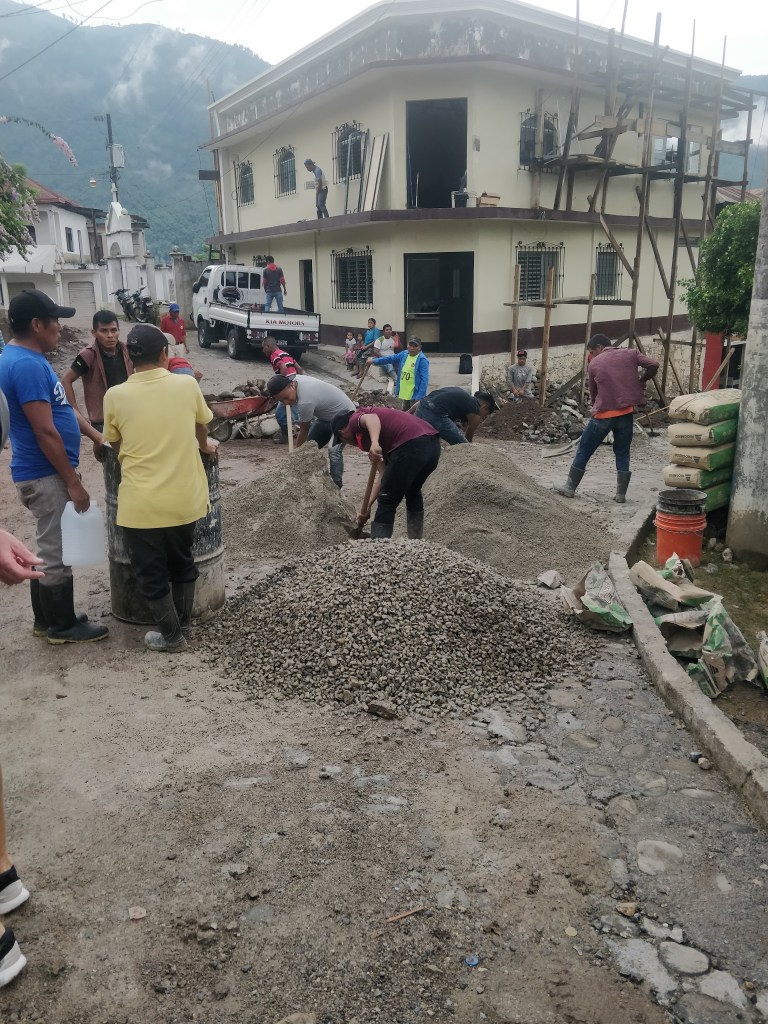
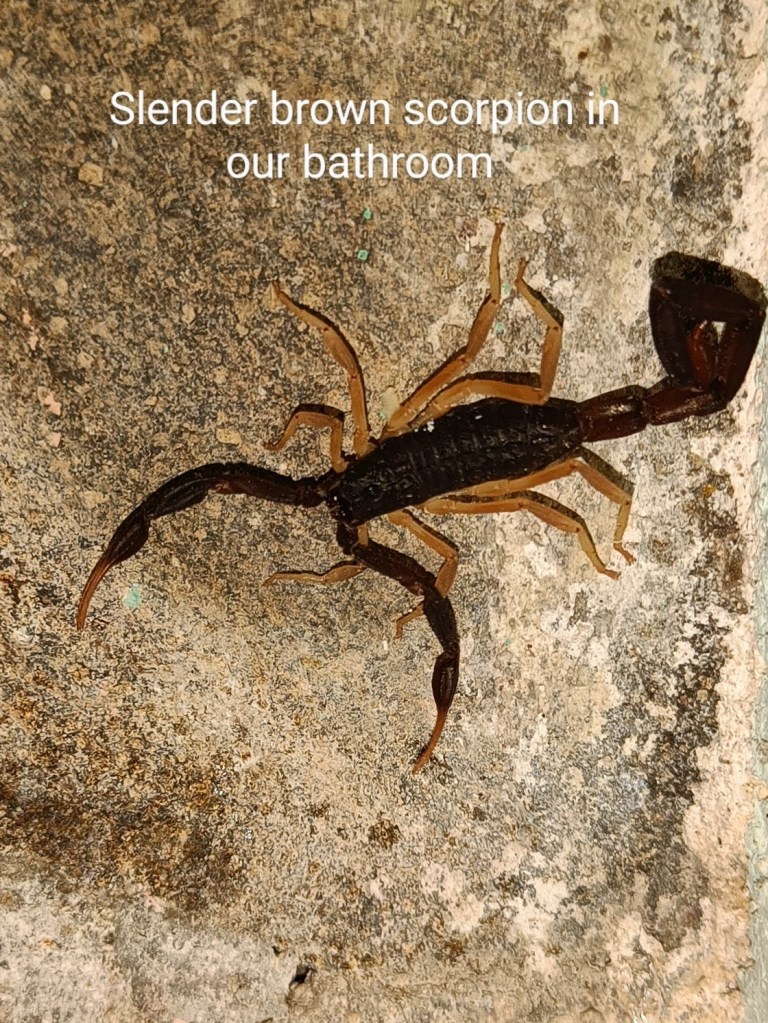
We may return to Guatemala again or we might get a boat to Honduras. But as we are about to leave, just a few thoughts on Guatemala. It is a small country (Ireland is about 2/3 the size of Guatemala) but its diverse landscapes from Pacific to Carribean coasts with mountain ranges, active volcanos, highlands, lakes and jungles makes it seem much larger…..and of course at the tail end of the wet season, getting about by road is more difficult. The people have an incredible work ethic and are always busy with practically all tasks – farming, road-building and construction done my hand. We stayed in a lot of modest family-run accomodations and in people’s homes with little sound-proofing and never once did we hear a raised voice, an angry word. I’m sure that people argue – just like anywhere else – but we never witnessed it. Despite our trepidation at the beginning, we never felt unsafe at any point – well, maybe the scorpian in the bathroom gave me a shiver😁 – but in the tourist areas, there was no evidence of corruption, drug mafia or gang brutality nor did we meet anyone that had been robbed or harmed in any way. Everywhere we stayed supplied drinking water in large plastic reusable drums free of charge – this is a fantastic inititive in the fight against the use of single-use plastic bottles. So adios for now but hasta luego, gorgeous Guatemala.

Bienvenido a Belize and until next time, Happy Halloween👻👻👽
Lakes and Lost Cities in Guatemala

Lolling by the Lake

The last time I posted, we had booked transport to take us from historic Antigua to the shores of Lake Atitlan. The transport was a ‘shared shuttle’, a minibus that picks you up and drops you door to door. It was a bit more expensive than public transport but was more comfortable and widely used by visitors to get around the popular areas in Guatamala. The downside was that we spent about an hour driving in the pouring rain around Antigua’s one-way system on rough cobbled stones to pick up passengers.

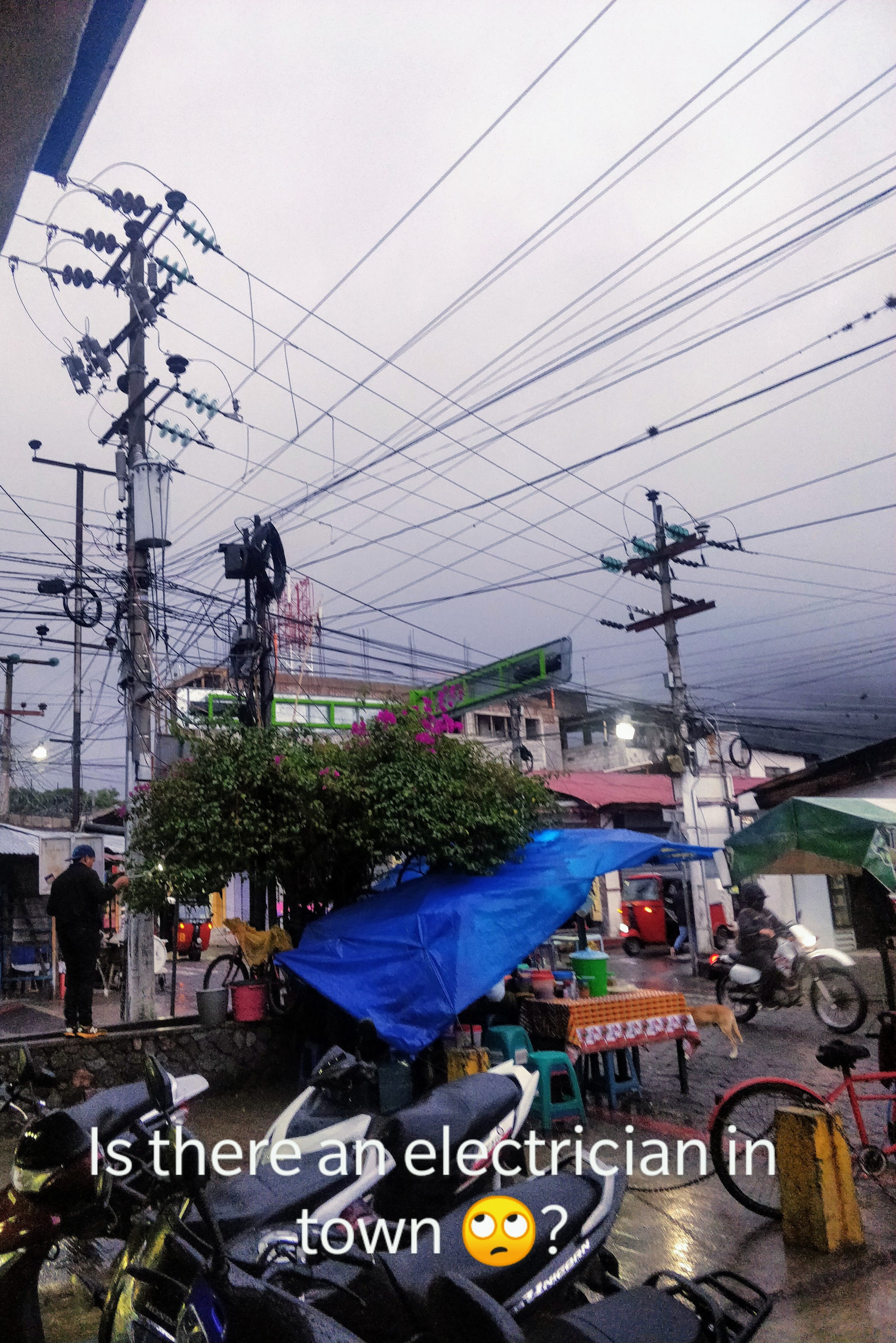
When we arrived in Panajachel, the largest of the lakeside towns, the driver shouted the name of our accomodation and we clambered out- he pointed to a blue padlocked gate and drove off. We wandered around looking for a way in but it was obviously derelict. Google was also telling us that we had arrived☹️ but when we followed the link in booking.com, it told us the accomodation was about a kilometre away. Not far..but not pleasant in the driving rain and sloshing through puddles but at least we weren’t dragging heavy bags. The most useful thing that I brought from home was a folding umbrella. There was an impressive (and worrying) spaghetti junction of electricity wires strung across the streets. Hostel Buenos Suenos, when we found it was ok, a bit scruffy but the bedroom was large and the location was central with lots of restaurants nearby to choose from. We ate in an Uruguayan restaunant where the chefs were local native women. Bowls of tufu/rice soup served with chips and garlic bread were delicious even if the tofu did taste suspiciously like chicken.

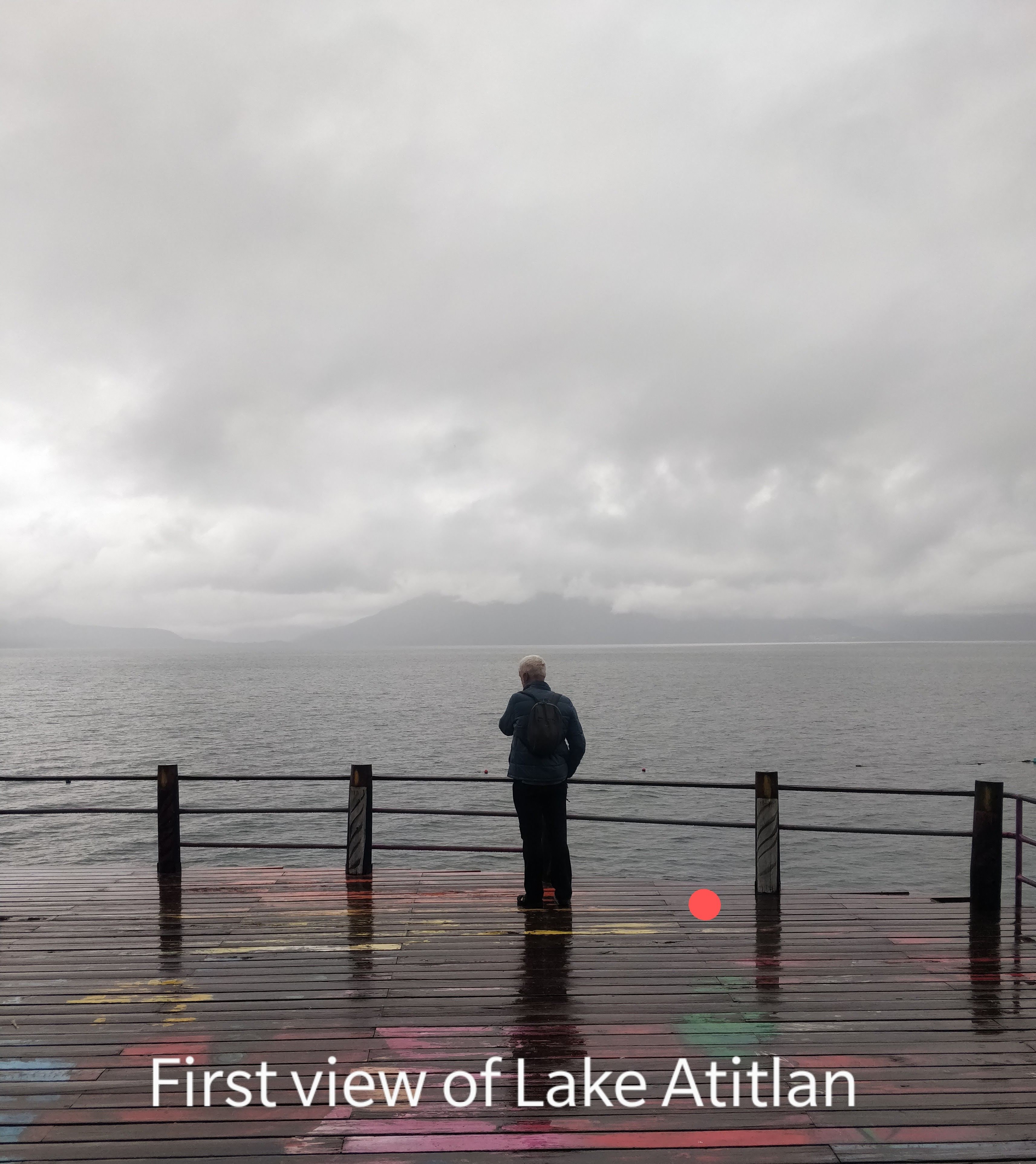
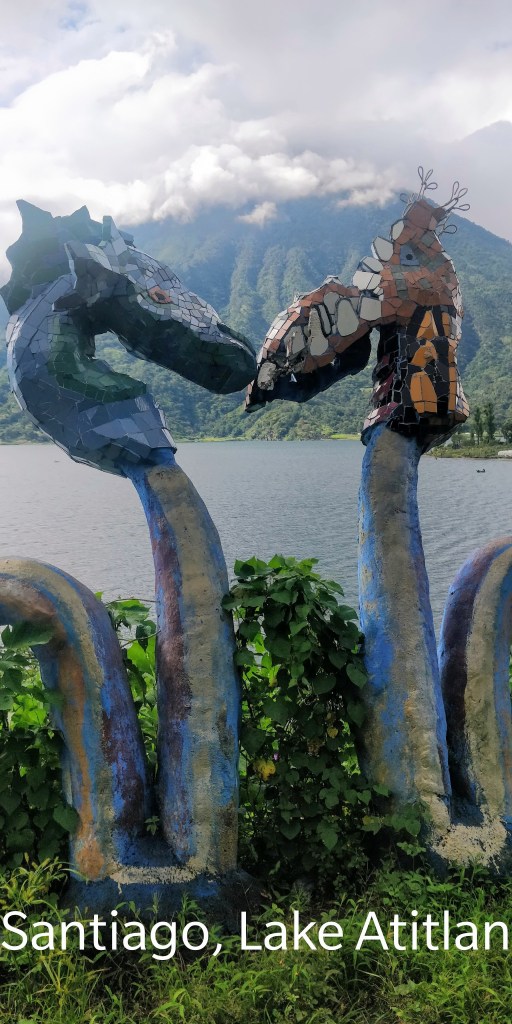
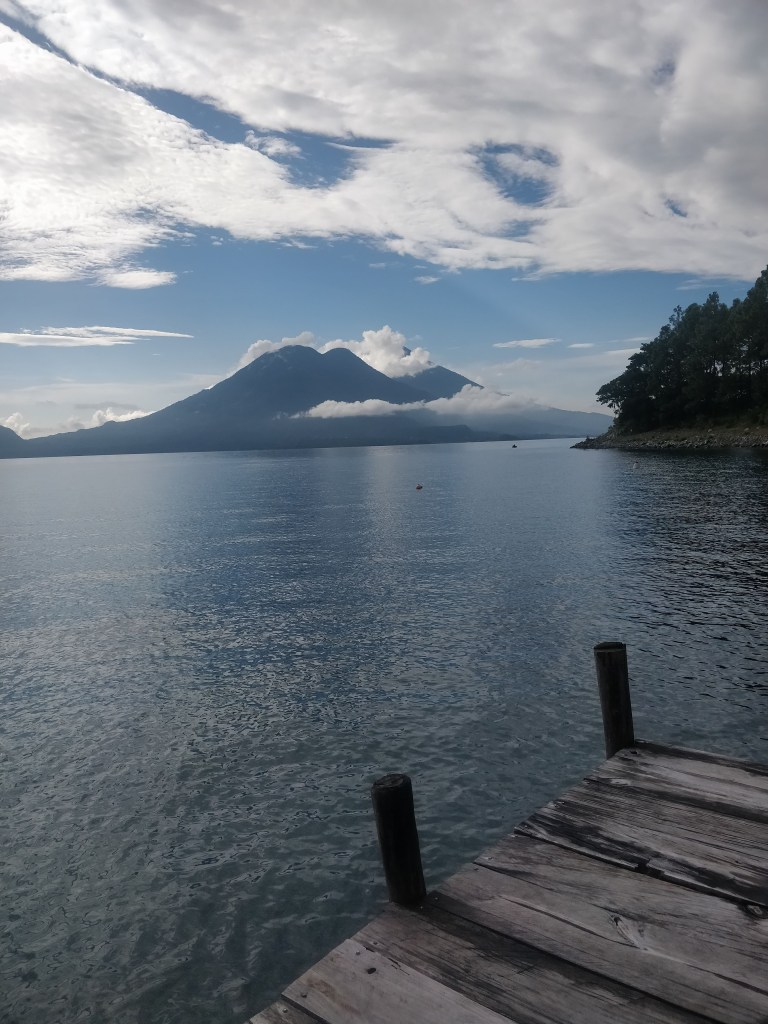
Our first views of the lake were disappointing, rain-logged grey and it looked like the grey sky had fallen into the grey lake. But the following morning, all had changed, the lake was spread before us in all its brooding glory ringed by mountains most of them wearing hats of cloud. ‘Taxi, Taxi,’ shouted the boatmen leading us to the docks where small boats departed for the various villages around the lake. We stepped into a small blue boat and sat in the bow, the only other passengers were a Mayaan couple. The boat set off across the lake, which was a little choppy, with such thumping, spine-crashing speed that all of us including the Mayans moved to the stern of the boat. My legs were wobbly when we disembarked at Santiago Atitlan where guides, women selling native crafts and tuk-tuks mobbed us. They were so tenacious that we ran up the street(as quickly as wobbly legs would allow) to get away and ducked into a cafe for some delicious Guatemalan coffee. Here, the owner and a few customers were glued to a live soccer match on the TV, Man City and Copenhagen and ignored us apart from serving us coffee

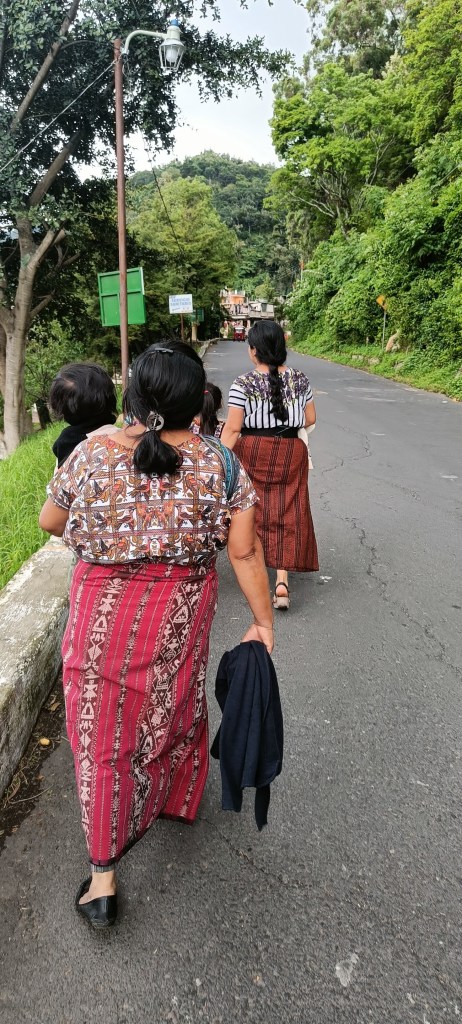
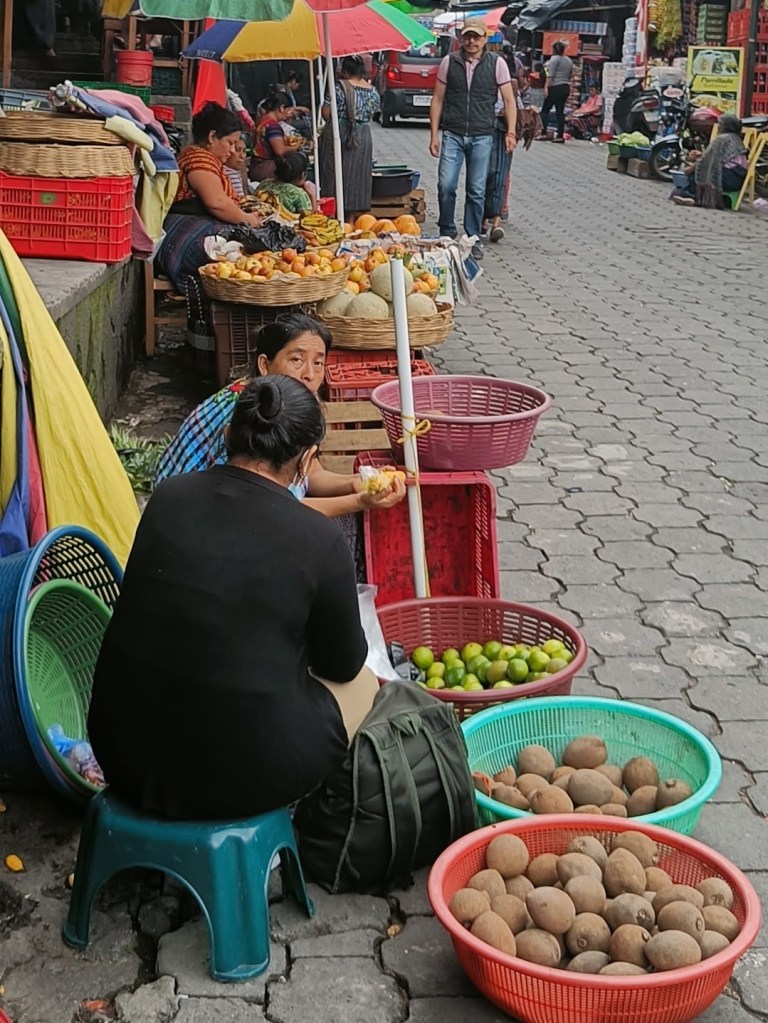
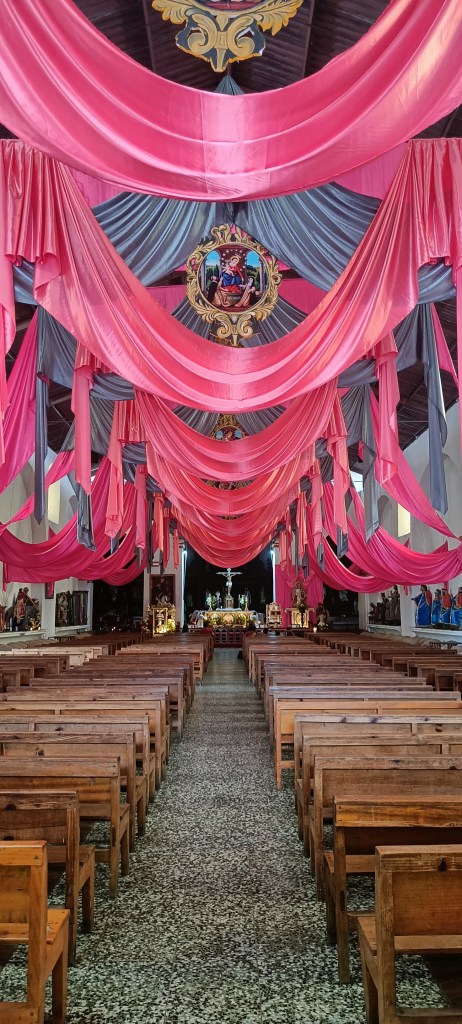
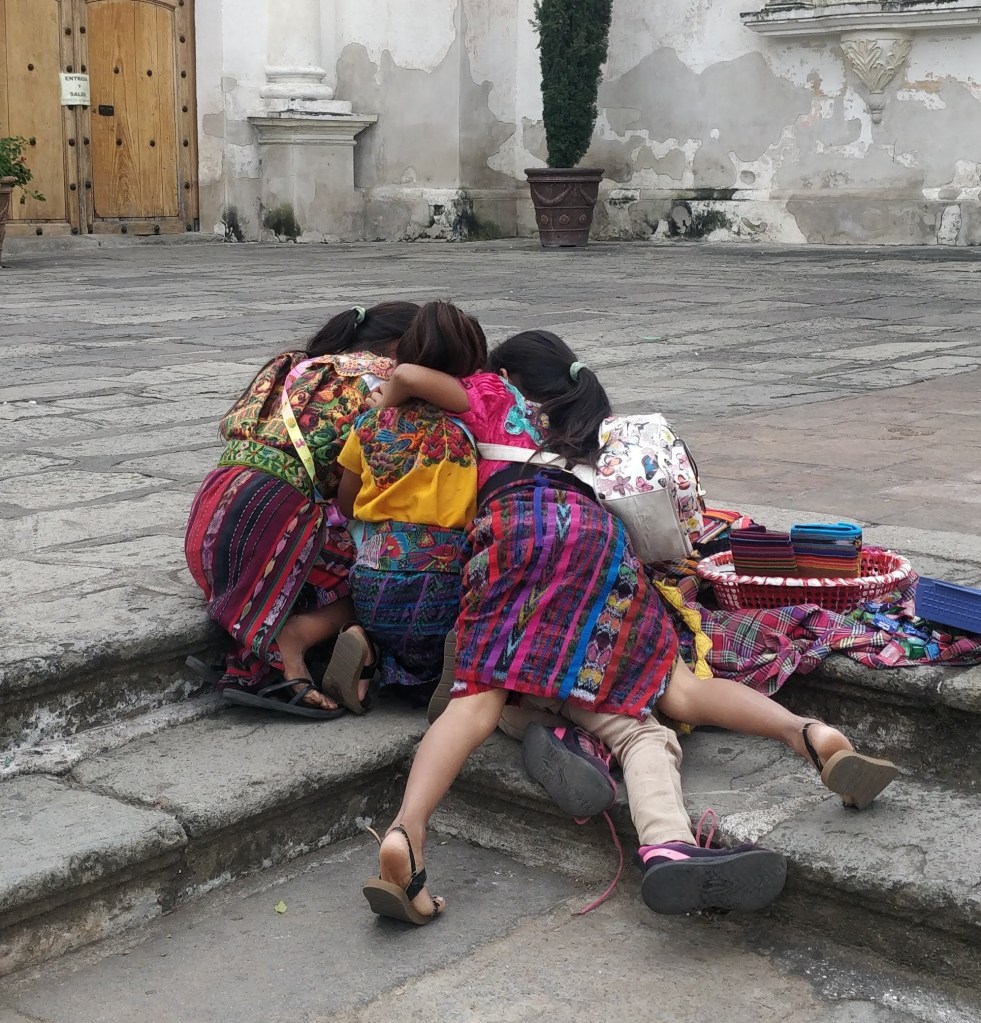
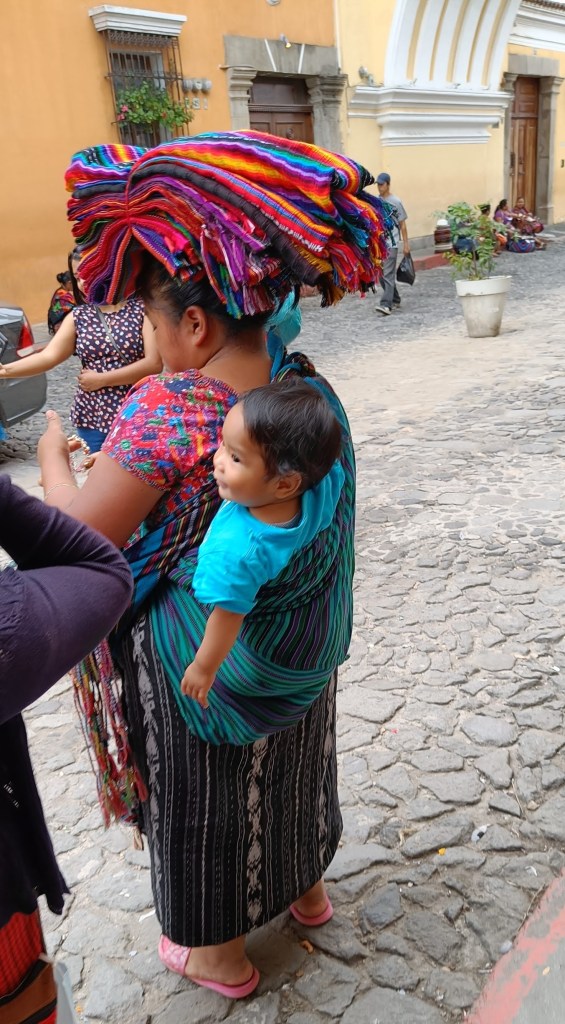
We wandered around the town where there was a colourful market going on, most of the women in traditional Mayan dress, beautiful woven textiles.with different colours and patterns identifying various tribes and families. We passed signs for weaving classes and the women were always busy weaving, knitting and embroidering. On a sunny October day, bloodshed seemed far away but this village has seen its share since the time of the Conquisadores when the natives were subjugated by the Spanish and literally worked to death, freedom brought a string of dictators, poverty and corruption. The village was a stonghold of left wing guerillas in the 1980s and hundreds of villagers were ‘dissappeared’. A missionary priest was murdered in the local Church, a large simple structure where the ceiling and the statues were brightly decorated. During the civil war, Santiago became the first village in the country to oust the army following the brutal massacre of 14 local men. There’s a Peace Park commemorating the massacre- a bit mossy and neglected now but we trudged a couple of kilometres out of town to see it. Then we ate in a local establishment where the policemen were also tucking-in, – rice, beans and scrambled eggs and drank a beer at half the usual price.

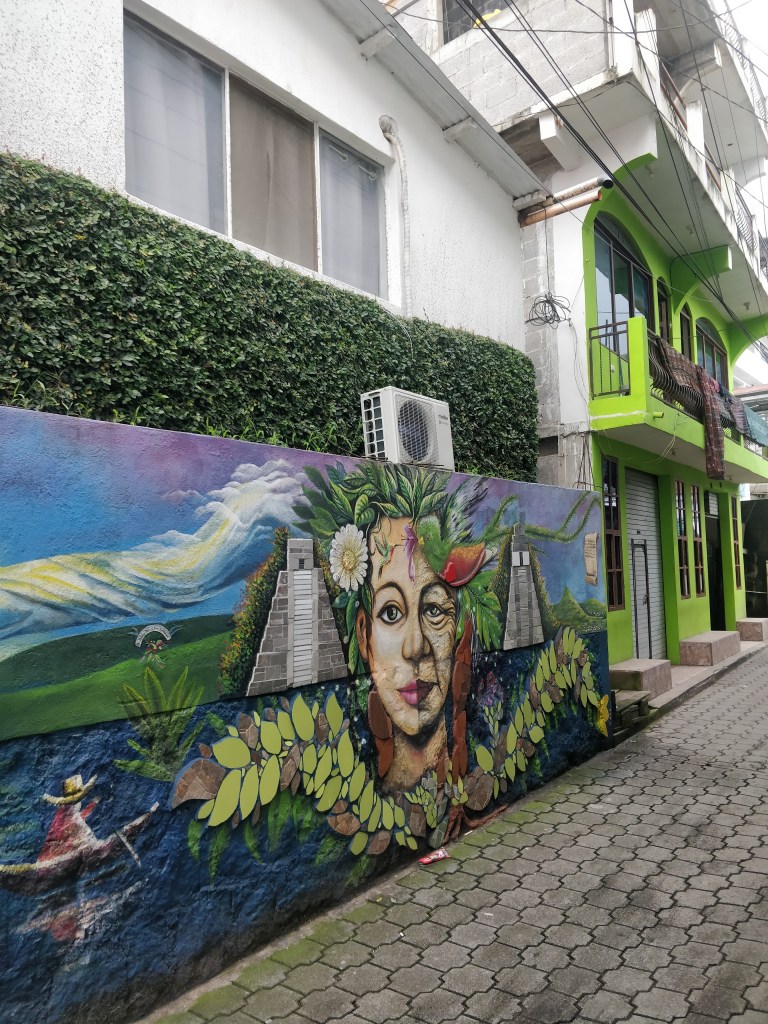
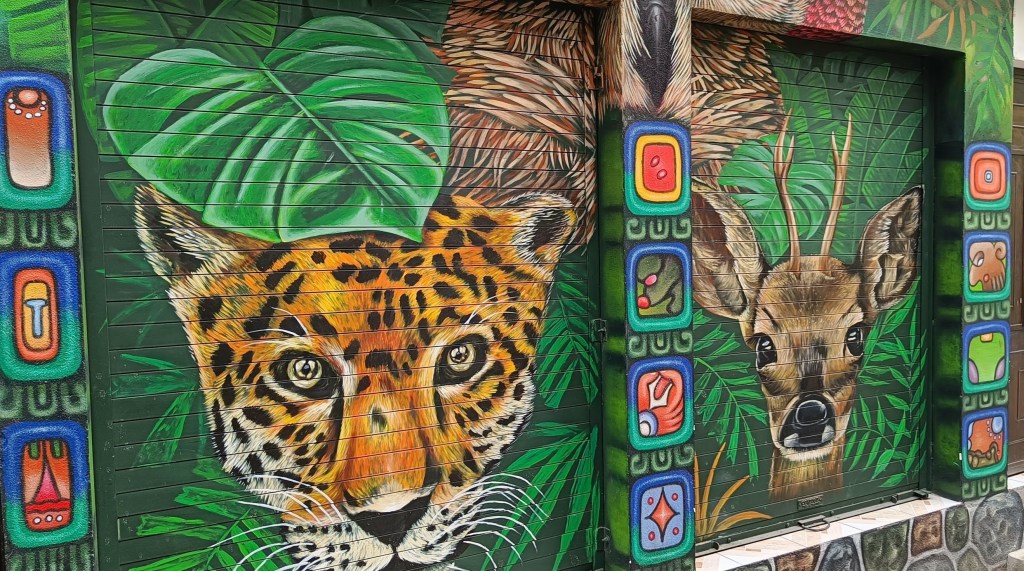
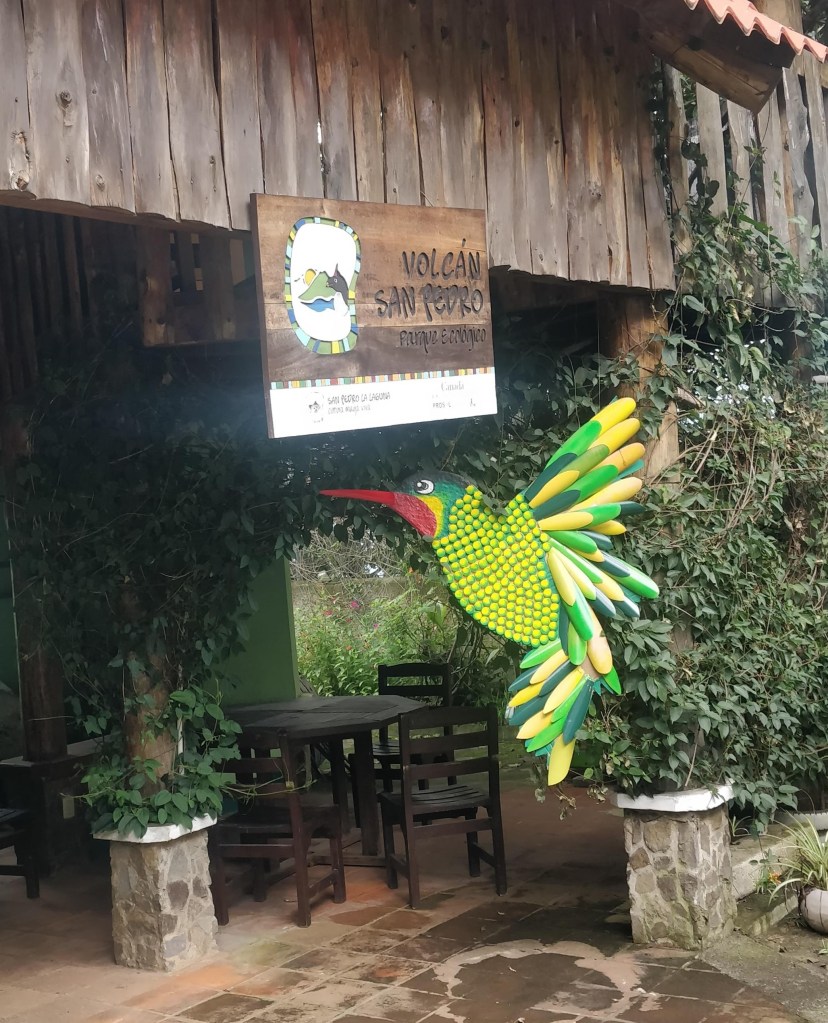
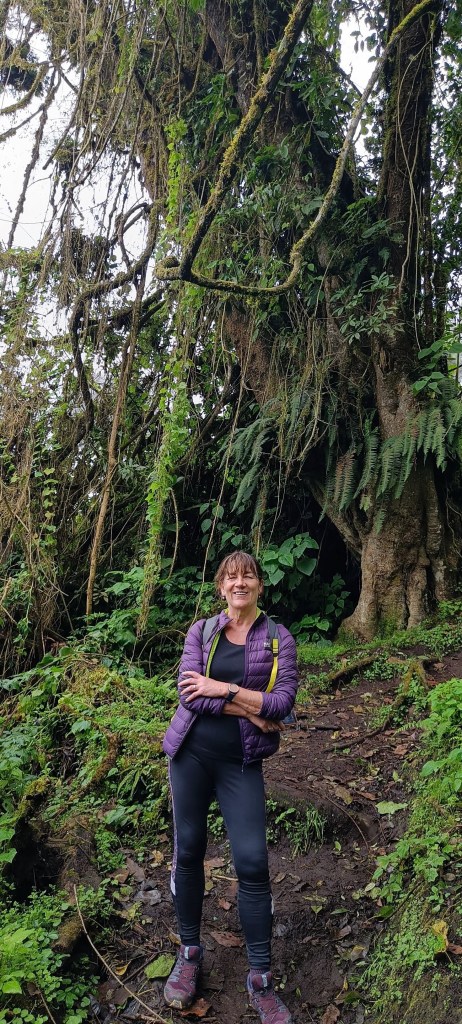
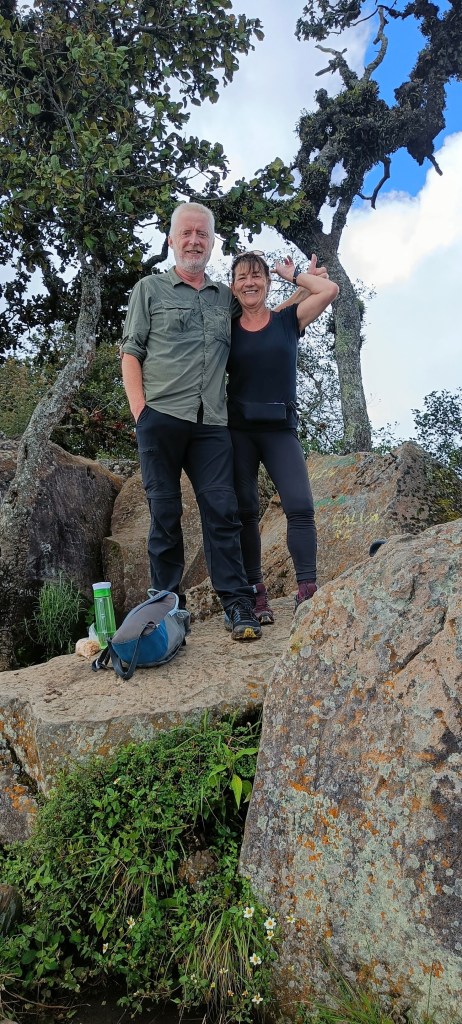
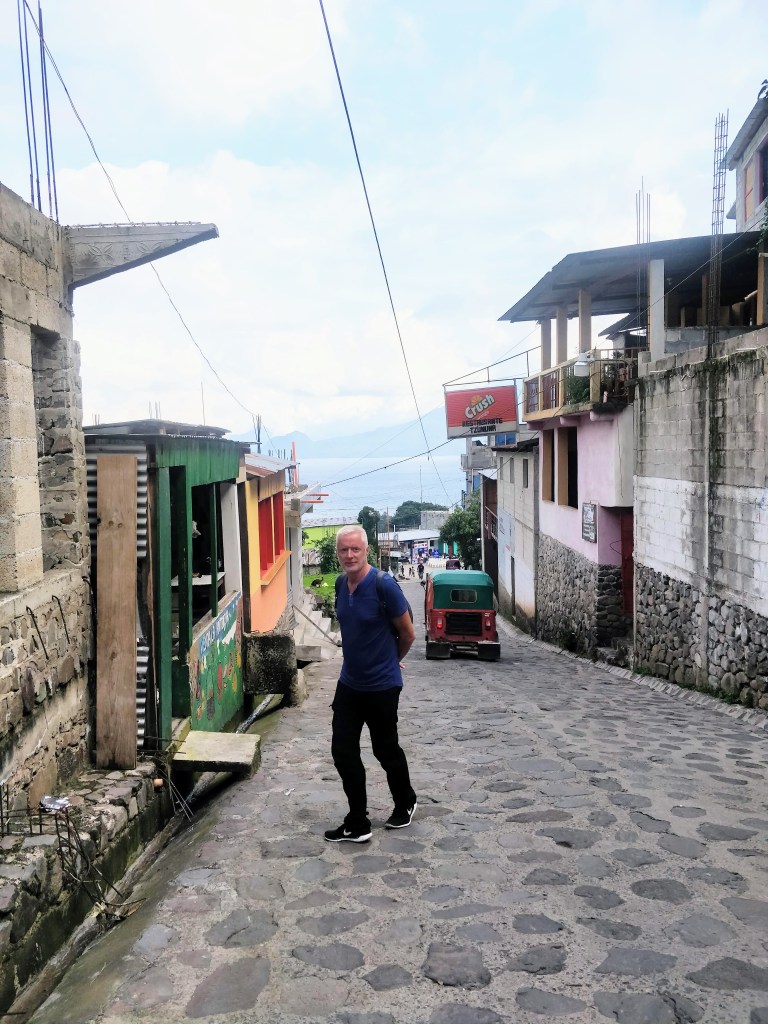
Looking at the mountains around the lake, one stood out – Volcan San Pedro, its in most of the photos, a dormant volcano with reputedly amazing views from the top. So we took another boat to San Pedro, a colouful village at the base of the mountain. This has a reputation as a party town and a backpackers mecca but it also had some stunning wall art (reminded us of the Waterford Walls). We stayed in the more traditional part of town up the hill at Casa Imelda. Imelda was a small talkative laughing Mayan woman whose son, daughter in law and three grandchildren lived with her. The room was spotless with a view of the lake and cost about €12 a night😀. Our clock went off before 6am, it was already bright with a gorgeous light on the lake but the Imelda household was still sleeping. We crept out onto a quiet street, just a few squat men in cowboys hats and machetes heading to the fields. Then a tuk tuk rounded the corner – there’s always a tuk tuk when you need one – and took us to the park entrance where we paid our fee of Q100 (about €13) and although we had heard reports that a guide was mandatory we set off without one on a path among avocado and coffee plantations(these grow incredibly well together). Up and up we went on winding paths until we were in cloud forest, among 400 year old trees. We came out of the forest and clambered on big blocks of rock. We had arrived at the top, 3200m……but the clouds were packed so tightly down below us that there was no view of the lake although there was patches of blue behind us. We hung around at the top, hoping for a break but after an hour we gave up and slithered down the path, which was slippery after all the rain. It was dissappointing after a three hour slog to the top and a two hour descent. I was beginning to feel unwell, tireder than I should have been and my stomach was going haywire😫

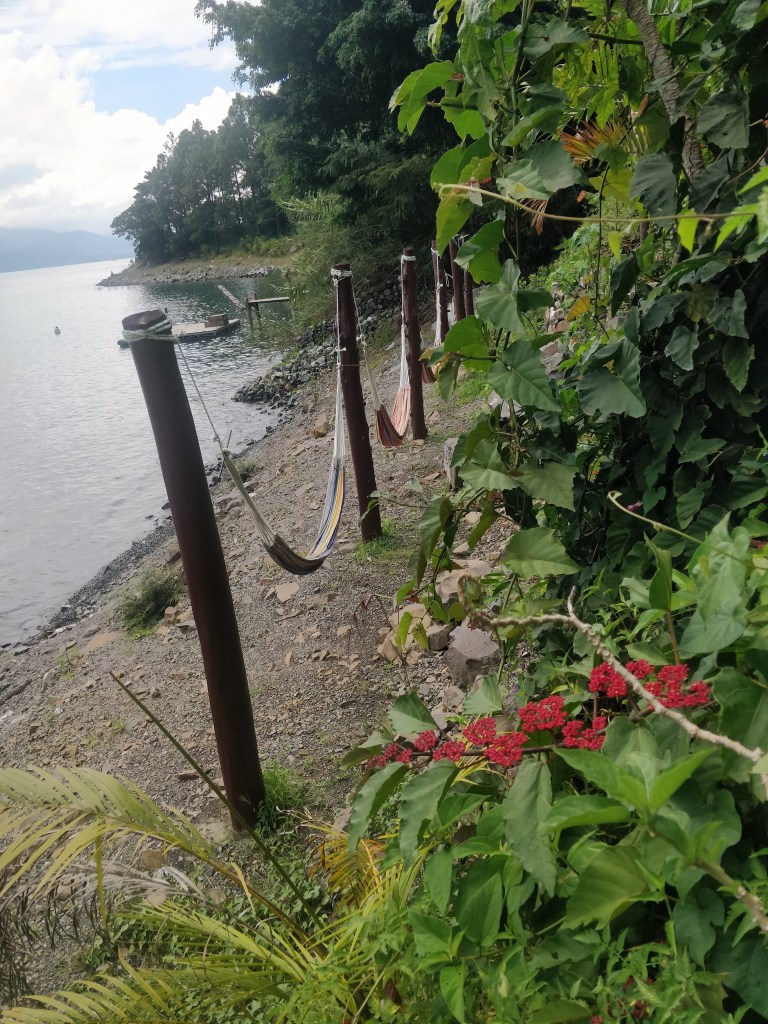
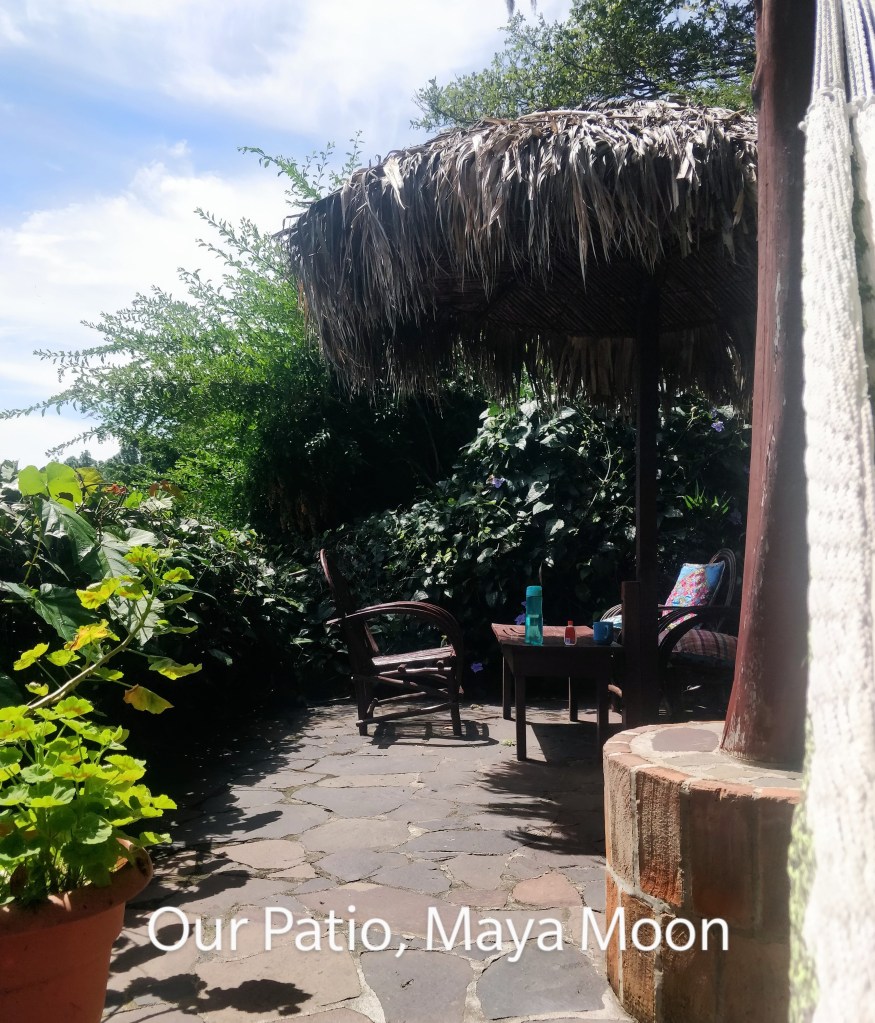
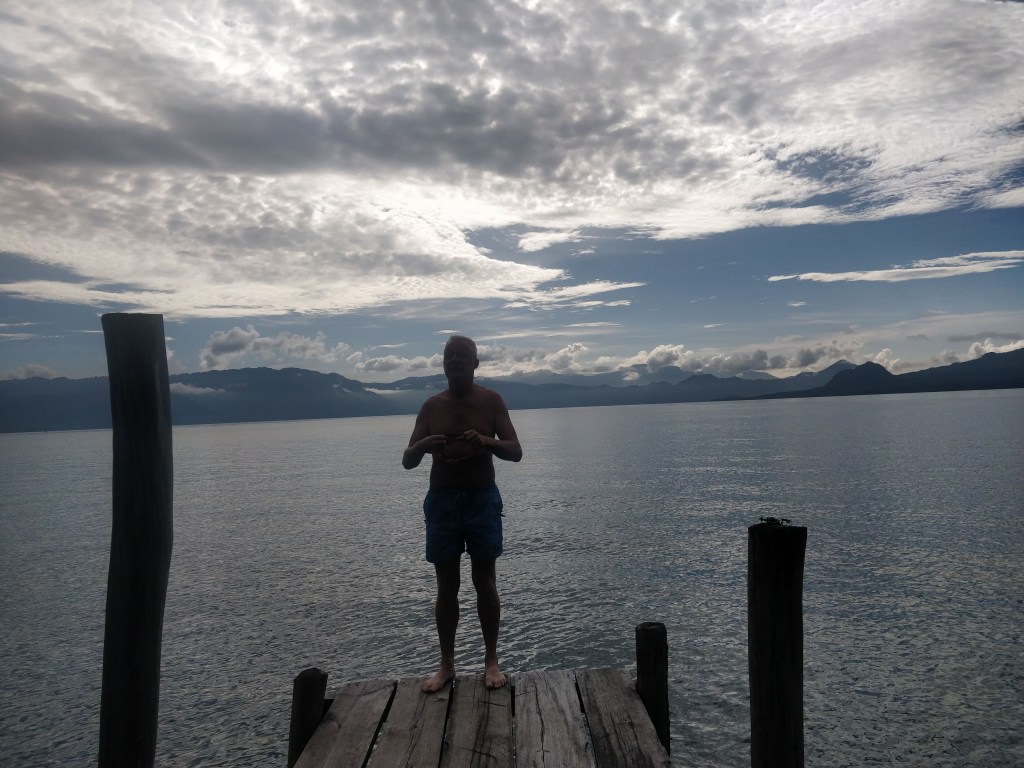
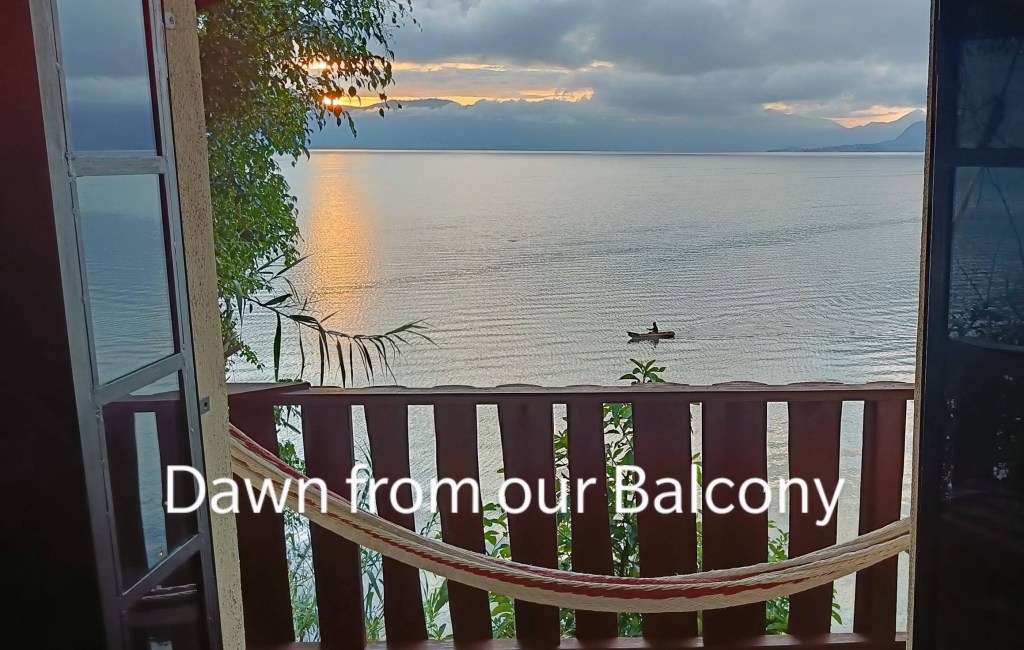
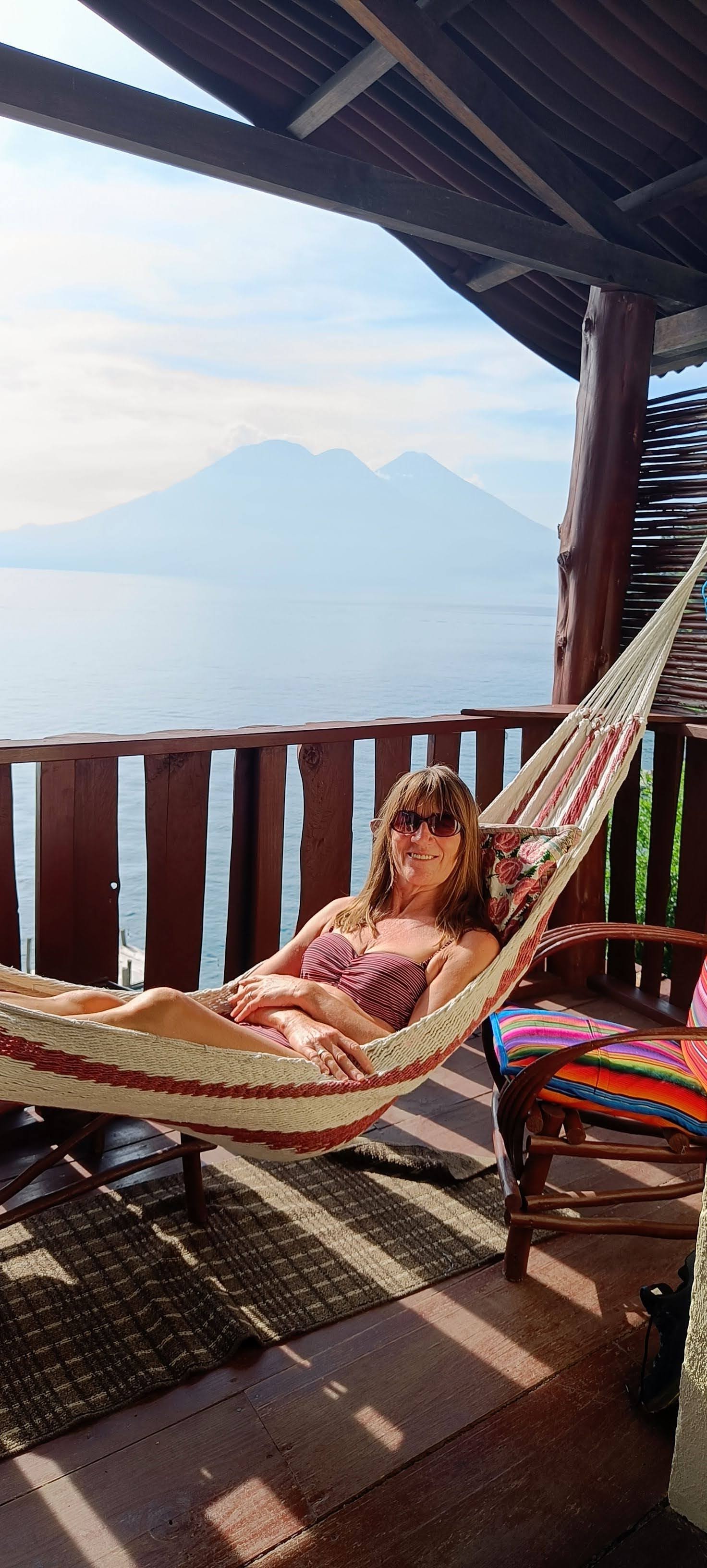
We had booked a ‘treat’ place to stay for five nights outside the village of San Marcos, our own 2 storey cabana with garden, kitchen, hammocks and balcony. It was about €48 a night (not too much but still significantly above our usual budget). The plan was to shop at the market and cook up our own meals, jump in the lake and maybe do some yoga. This area is very New Age with meditation, yoga, spiritual healing and all sorts of things. But unfortunately, for most of our stay, I neednt to be in close proximity to a loo and for a few days, I could barely get out of the hammock. But there could be worse places to rest and recuperate than Maya Moon, the name of our accomodation. It wasn’t really like being in Guatemala at all. It was run by a British couple, the bar people were American and it attracted lots of expats so english language ruled supreme. I existed for a few days on black tea and dry toast …like the Lough Derg pilgrimage rations. But swaying in a hammock watching the lake change colour and the mist roll over the mountains with the lapping of lake water and the sound of the boats moving back and forth was so soothing. The light on the water was ever-changing and mesmerising. . Most nights, thunder rumbled in the distance and lightening moved in sheets across the sky usually without rain. At night, there were clouds and moonlight and a necklace of lights joined villages and lit up single houses dotted up the mountainsides. All building is done by hand and building materials must be hauled up the mountainsides on the people’s backs so each light on the slope represented incredible human toil.

But we were sharing this paradise. Bright yellow butterflies fluttered over the plants, a hummingbird visited our balcony, a large lizard flicked his tongue in the bushes. Thats the good bit….. there were giant spiders crawling across the bedroom walls, slugs in the bathroom and one night, a scorpian walked across the bathroom mirror while I was brushing my teeth🙄which, I must admit, freaked me out a bit.

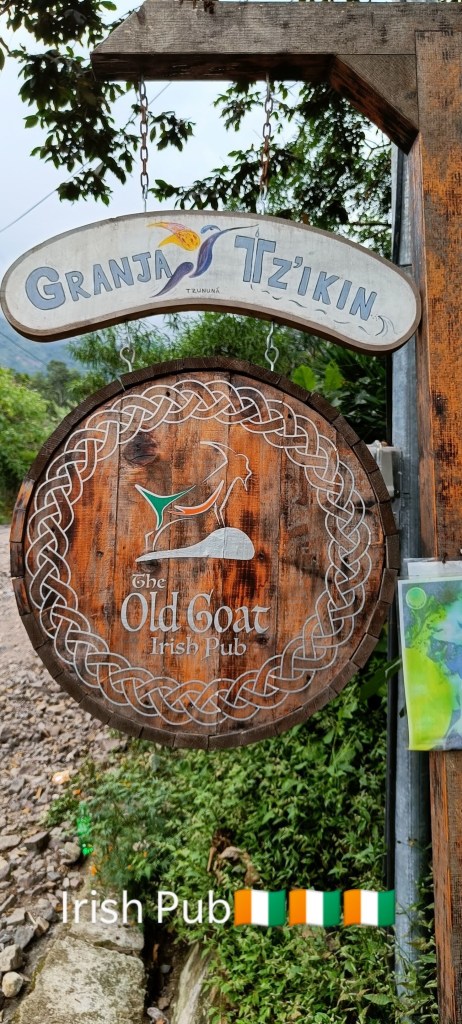
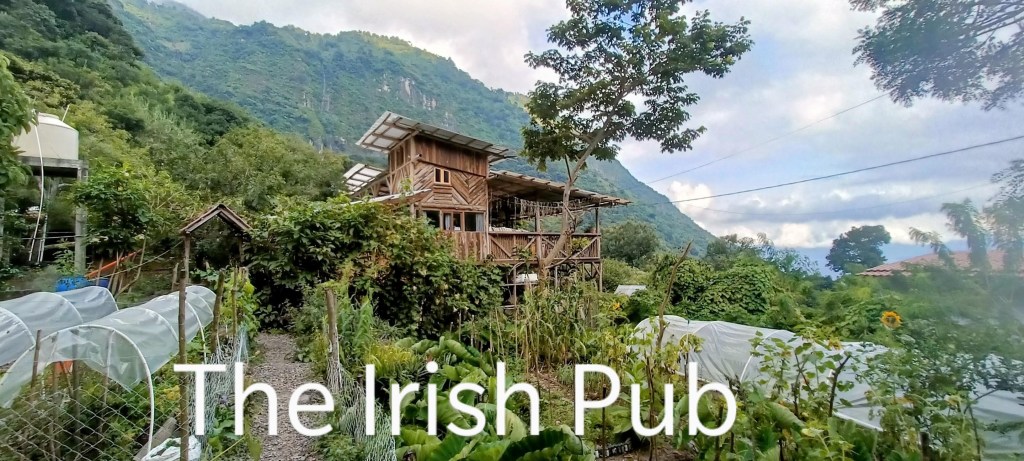
We walked from our cabins to the next village called Tzunzuna which translates from Mayan as the Hummingbird of the Water.…such an appealing poetic name for a little village that was quite dirty with rubbish strewn about and poor houses. But Guatemala is a country without even a postal service, so refuse collection is certainly not available. We climbed up through the village until we came to a worn sign The Old Goat, Irish Bar…..nothing was more unlikely. We opened a gate, walked past a sign that there were eggs for sale (in Spanish) …it looked like a farm but we kept going up some more stairs and at the top, the Irish flag was flying and the views were amazing. It was more a restaurant than a pub but the guy behind the bar told us that the owner was Irish but that he was on holidays in Columbia. The Irish get everywhere.

So now that I’m feeling better, we are getting ready to move north. Caoimhin also had a dose but much milder than mine. He claims that drinking rum is both a prevention and a cure so maybe I should develop a taste for rum?

Until next time, thanks for reading😎

Lolling by the Lake

A Tale of Two Countries

The last time I posted, we were in Puerta Viejo on the southern Caribbean coast of Costa Rica with all its steamy lushness and its tropical air, dense with humidity. We had brainfog from fitful sleeping under noisy fans and insistent mosquitoes buzzing around the bedroom who became silent when we decided to ‘get them’ but started up again as soon as we lay down😫. But in reality, there were surprisingly few bugs which – in spite of my moaning – is not a good thing in an environmental context.

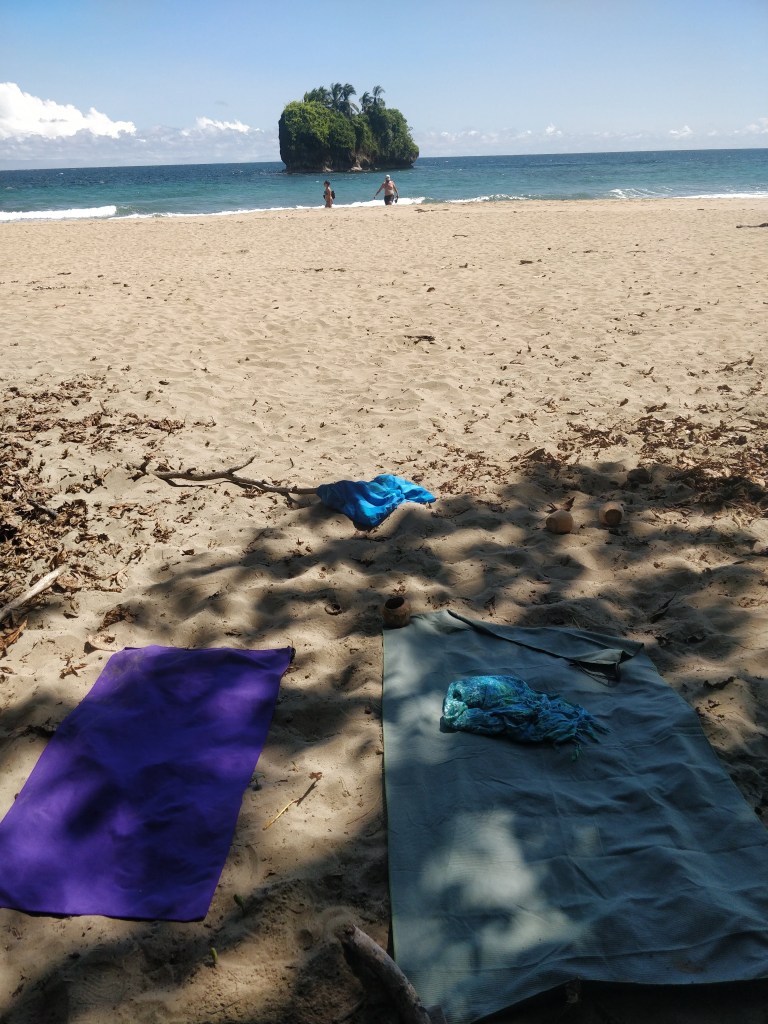
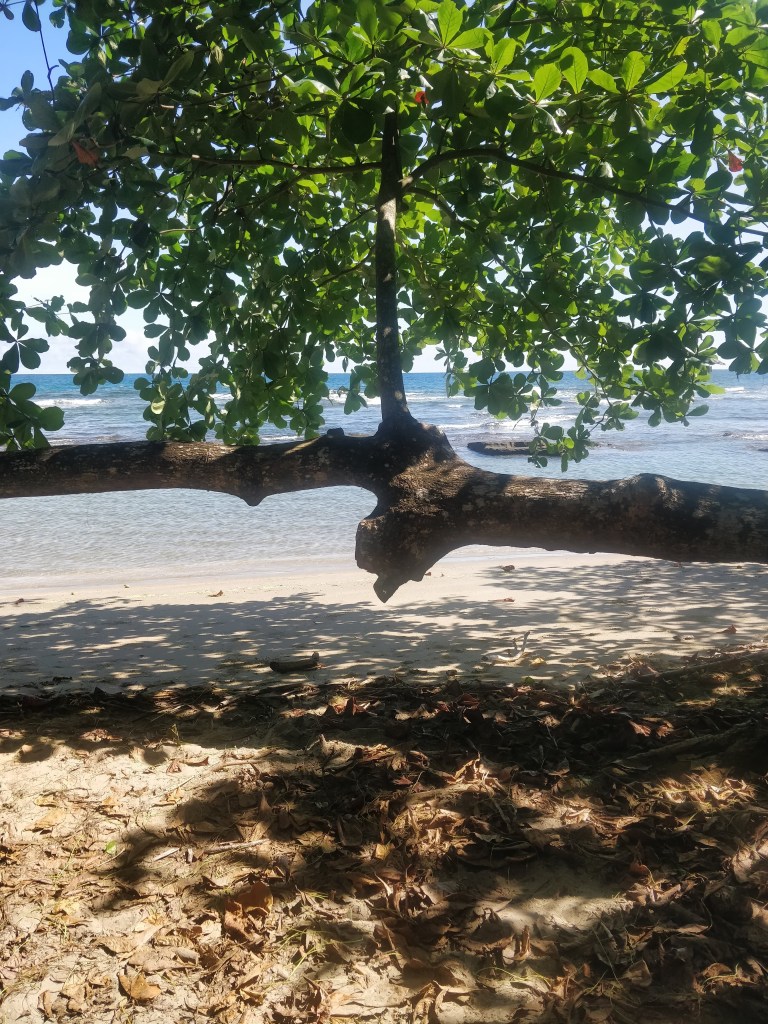
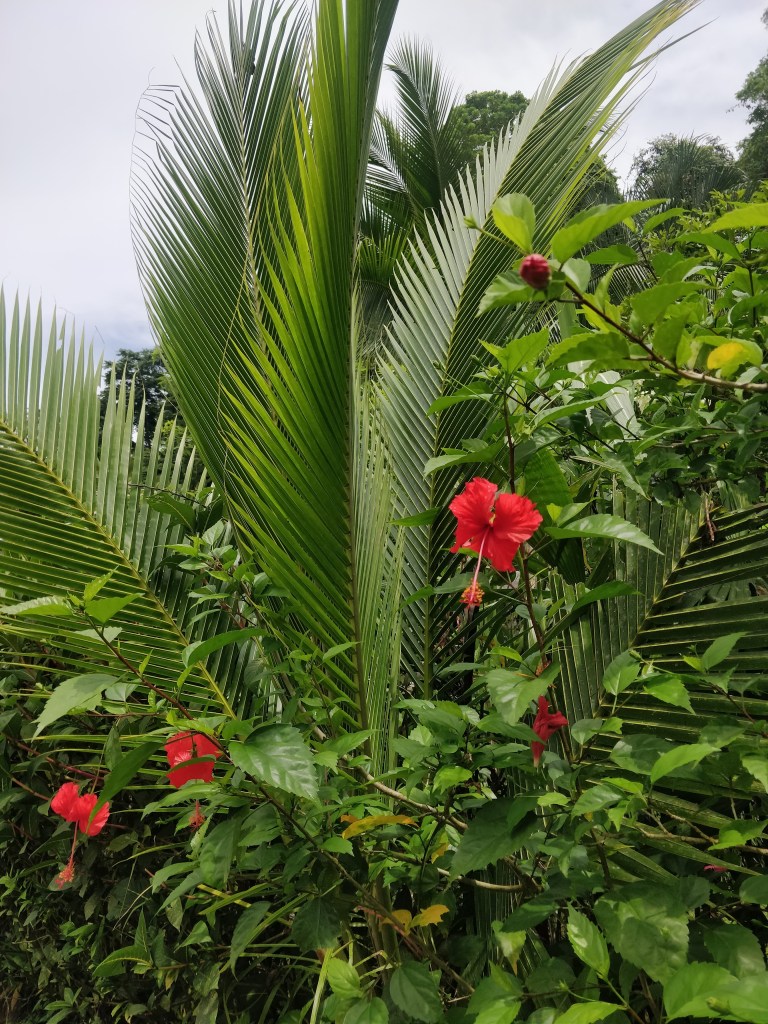
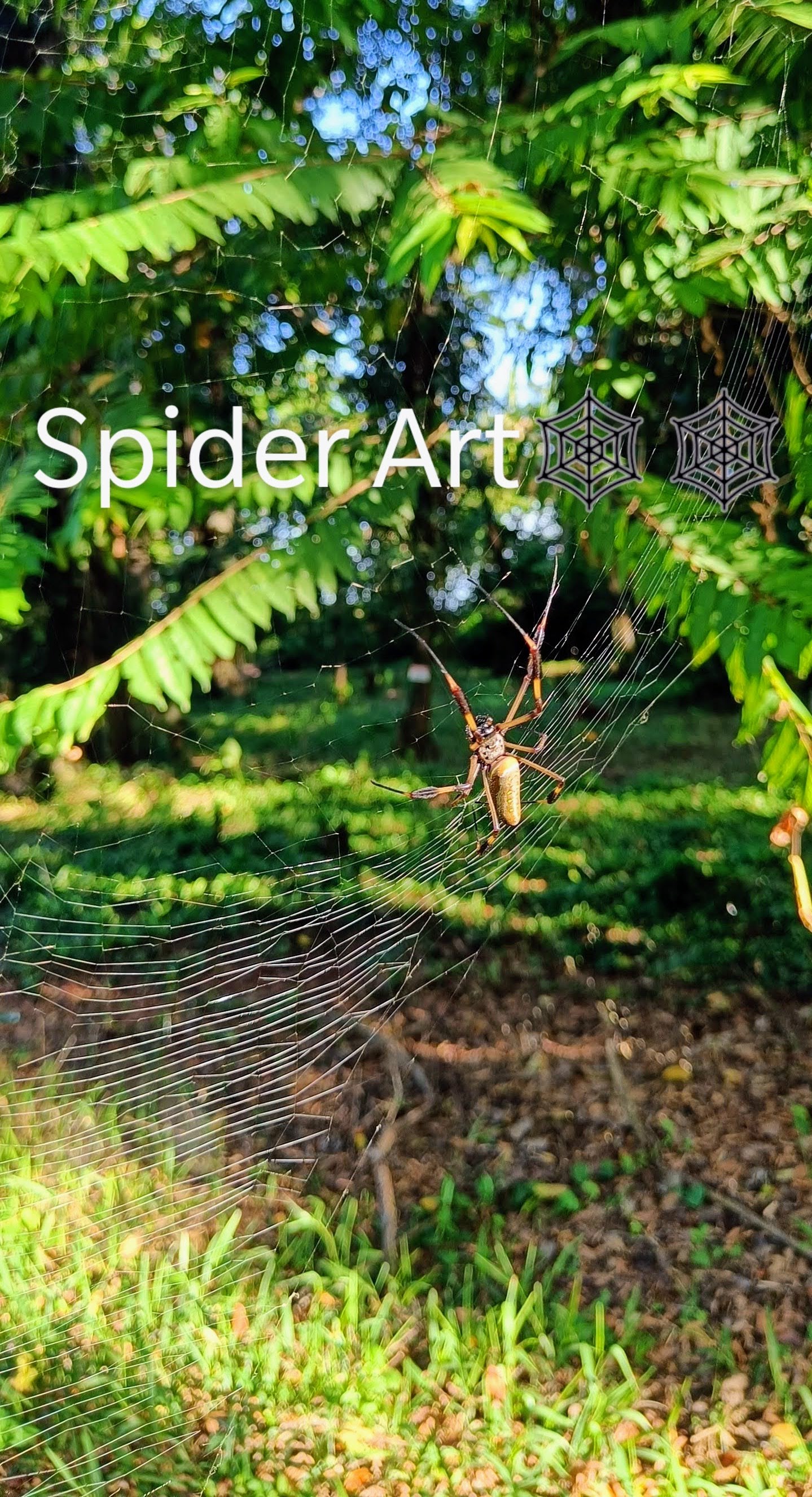
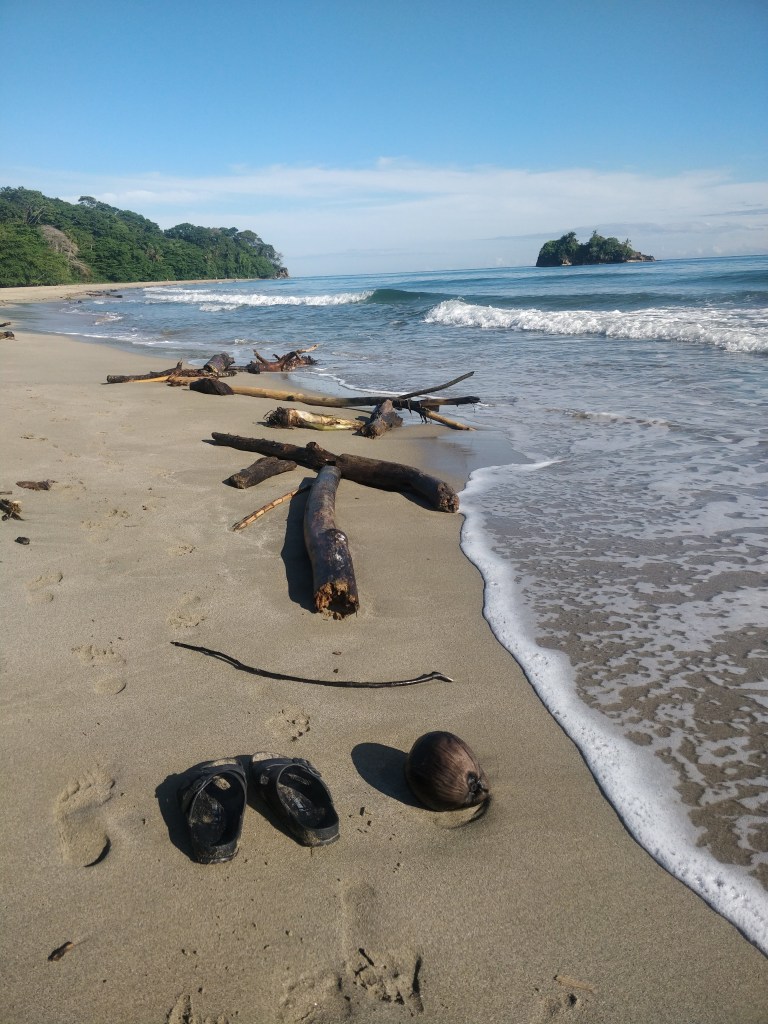
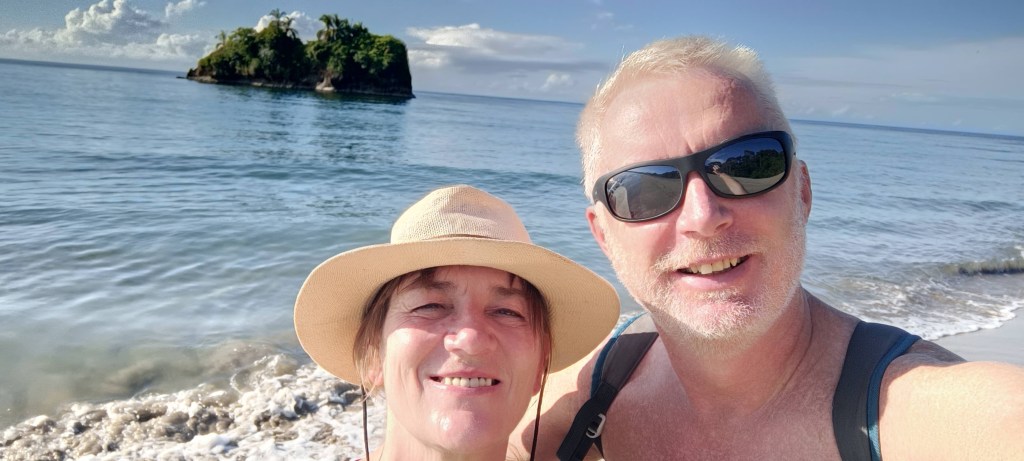
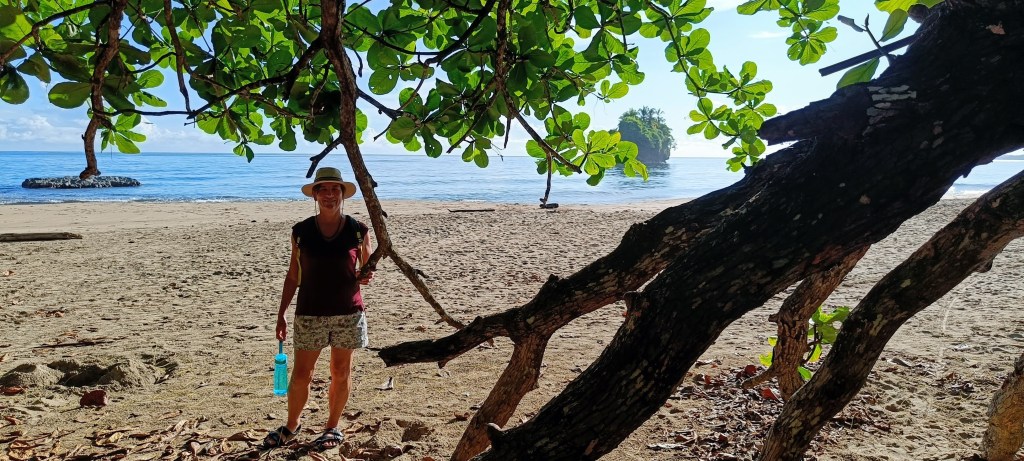
There were enormous spiders creating their art in the trees and we were fascinated by the leaf cutter ants that cut fragments from leaves high in the canopy and then brought them down the trunk back to the nest – truly an epic journey of skill and co-operation. In the nest, the leaves are chewed to a pulpy mush which triggers the growth of fungus that feeds the colony. Swimming in the Carribean was like immersing in a warm bath but with little fish – we loved walking through the forest to Cocles Beach with its drifwood and cocunuts freckling the golden sand and its backdrop of mixed forest providing dappled shade and welcome coolness. Anywhere in Europe, the driftwood would have been collected for fuel, especially in this approaching winter but here, cold is never an issue. Lying on the sand under the trees, we discovered that they were never silent, swaying in the light breeze, dropping leaves and branches which scattered unseen birds. So much abundance with everything growing to extraordinary heights and brightly coloured flowers weaving through bushes.

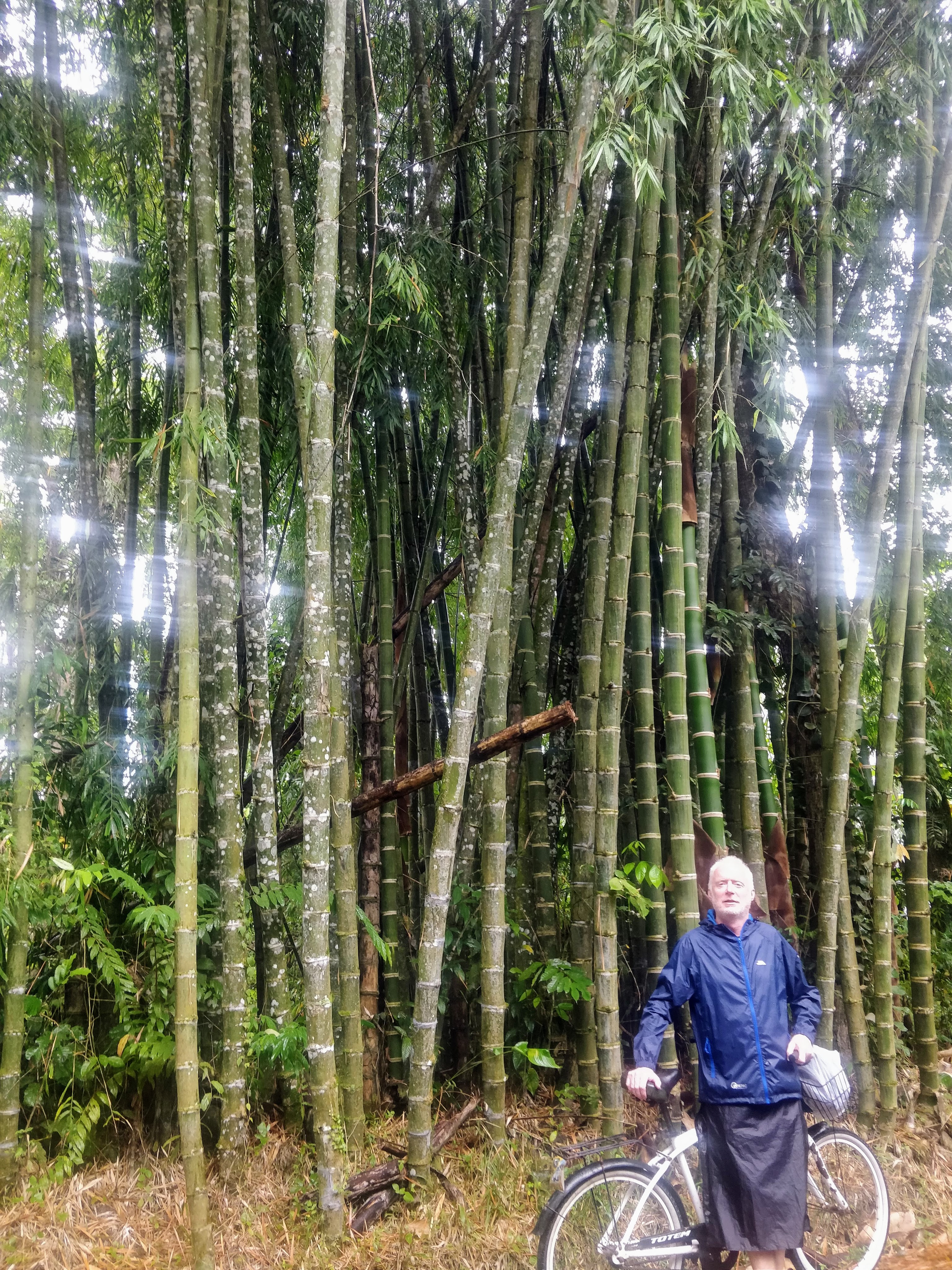
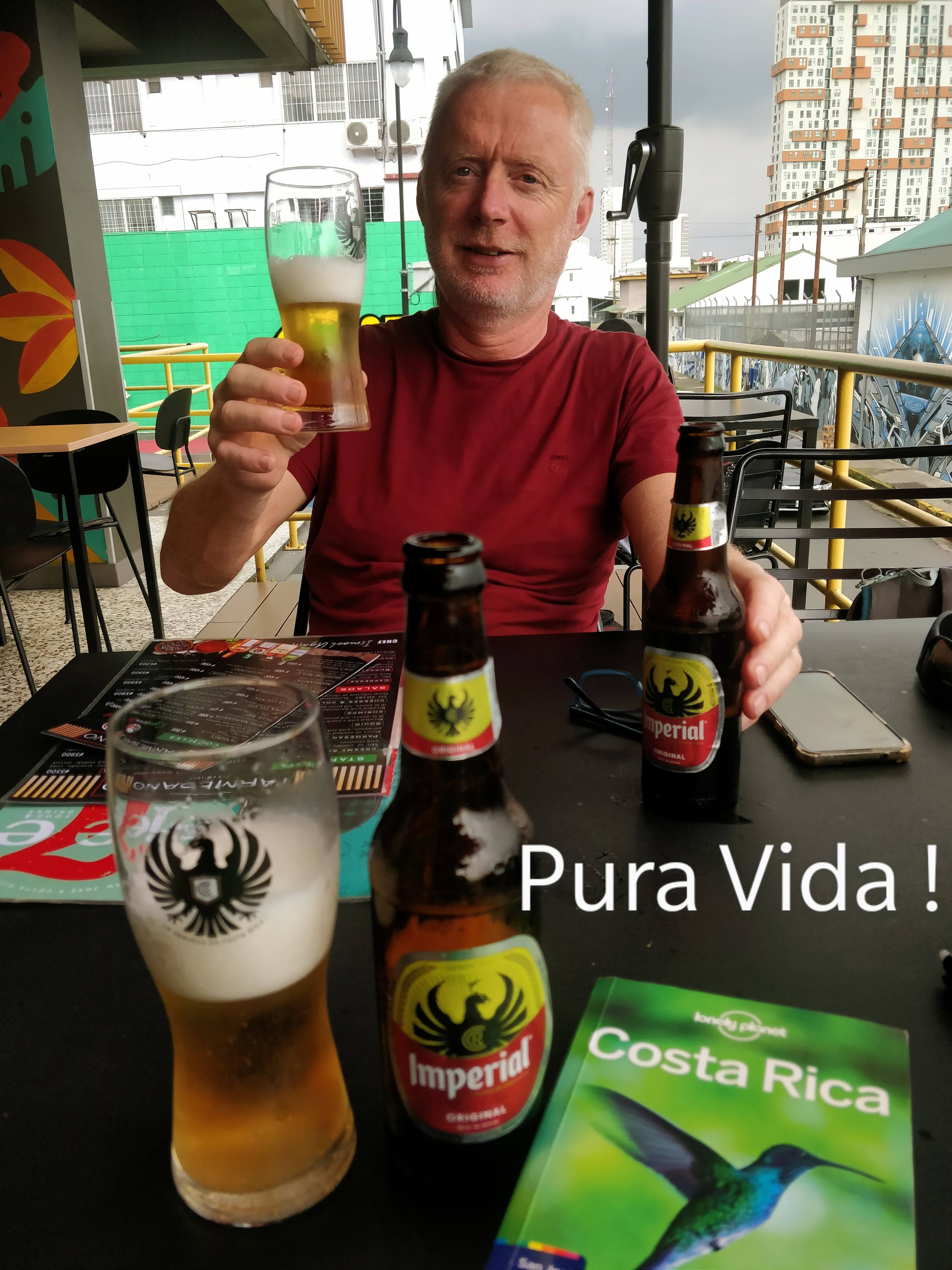
When we arrived in the small town of Puerta Viejo, we were stunned by the noise and fumes of the traffic – buses, 4×4 s, moterbikes and the cyclists peddling along amongst the mayhem, risking their lives or so it seemed. But it was amazing how quickly what looked so dangerous became routine and soon we acquired bikes with no gears and which we had to pedal backwards to brake. We were cycling over narrow bridges without barriers and weaving among the jeeps and tourist buses like locals. The bikes were perfect because the terrain was flat and there’s no hurry to get anywhere in the tropics….pura vida. We cycled to Playa Uva, another beautiful beach in the south with crystal clear water. We had plans to cycle to the border with Panama but heavy rain and thunderstorms thwarted us…..our apps telling us that the weather was only going to get wetter

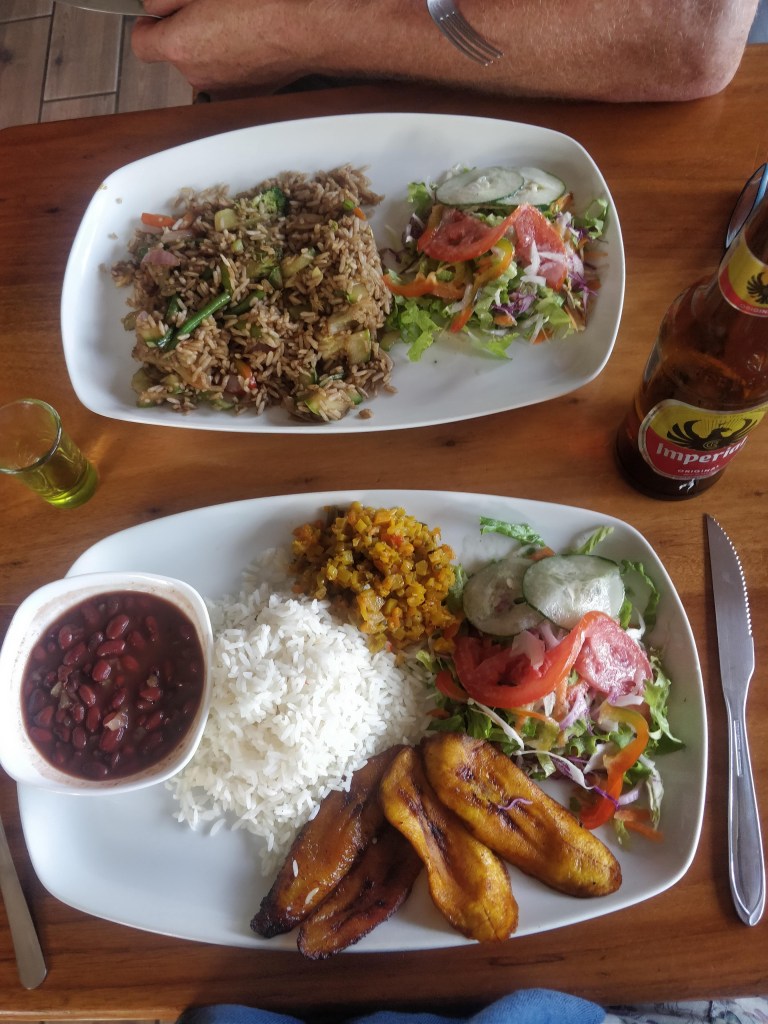
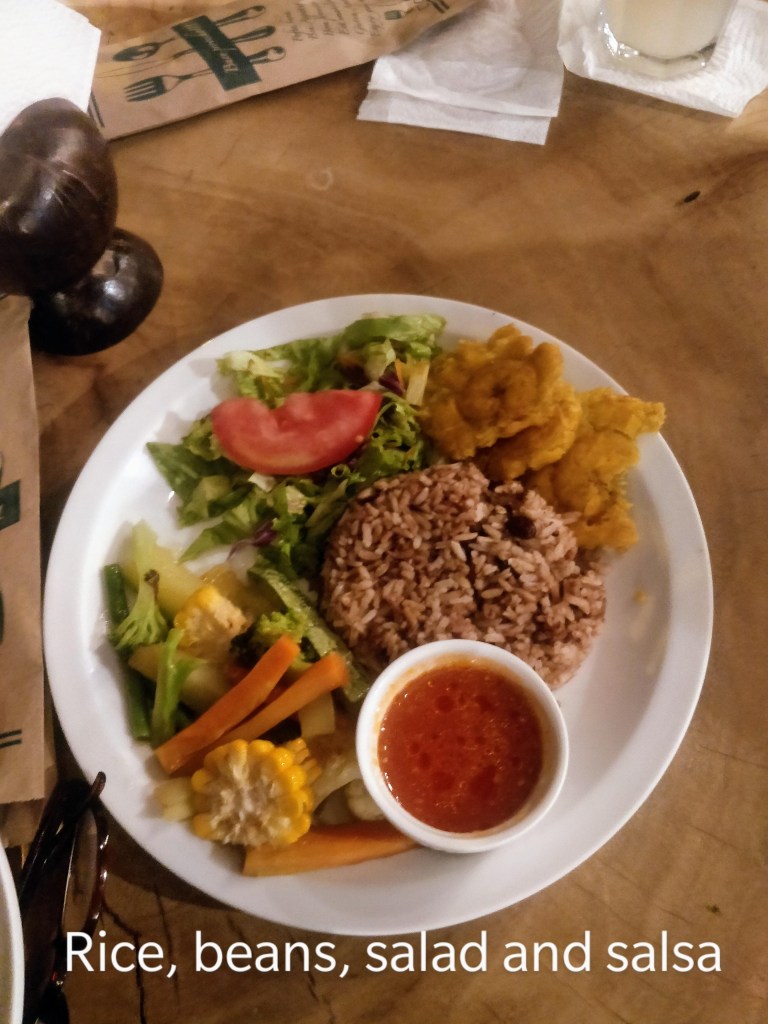
We ate rice and beans and the MOST delicious pinapples that we have ever eaten but in Puerta Viejo, it was possible to eat anything from sushi to Indian curry to hamburgers. Although the beaches just a little out of town were almost deserted, the town itself was really touristy with lots of bars, noise and flashing lights. Great for a few days but we prefer the quiet life. So we had decisions to make – where to go next?

Outside our little apartment, the rain fell from the sky in straight lines, running down the cocunut leaves and dripping off the tip of each individual leaf like an outdoor shower. We could almost see the jungle plants stretching and growing. High in the trees over the fence, monkeys screeched and played – our landlady told us that they loved the rain. Unlike us! The wet season in Costa Rica was proving wetter than we expected. As our return flights to Dublin in December are from Costa Rica, we decided to head north to Guatemala and explore more of Costa Rica on the way back. We investigated going overland but buses that usually took about 24 hours were now 35 hours or more because of landslides, road closures and diversions due to the heavy rains. . So although we didnt really want to fly, we booked flights to Guatemala City and bus tickets back to San Jose, the capital of Guatemala, to catch the flight.

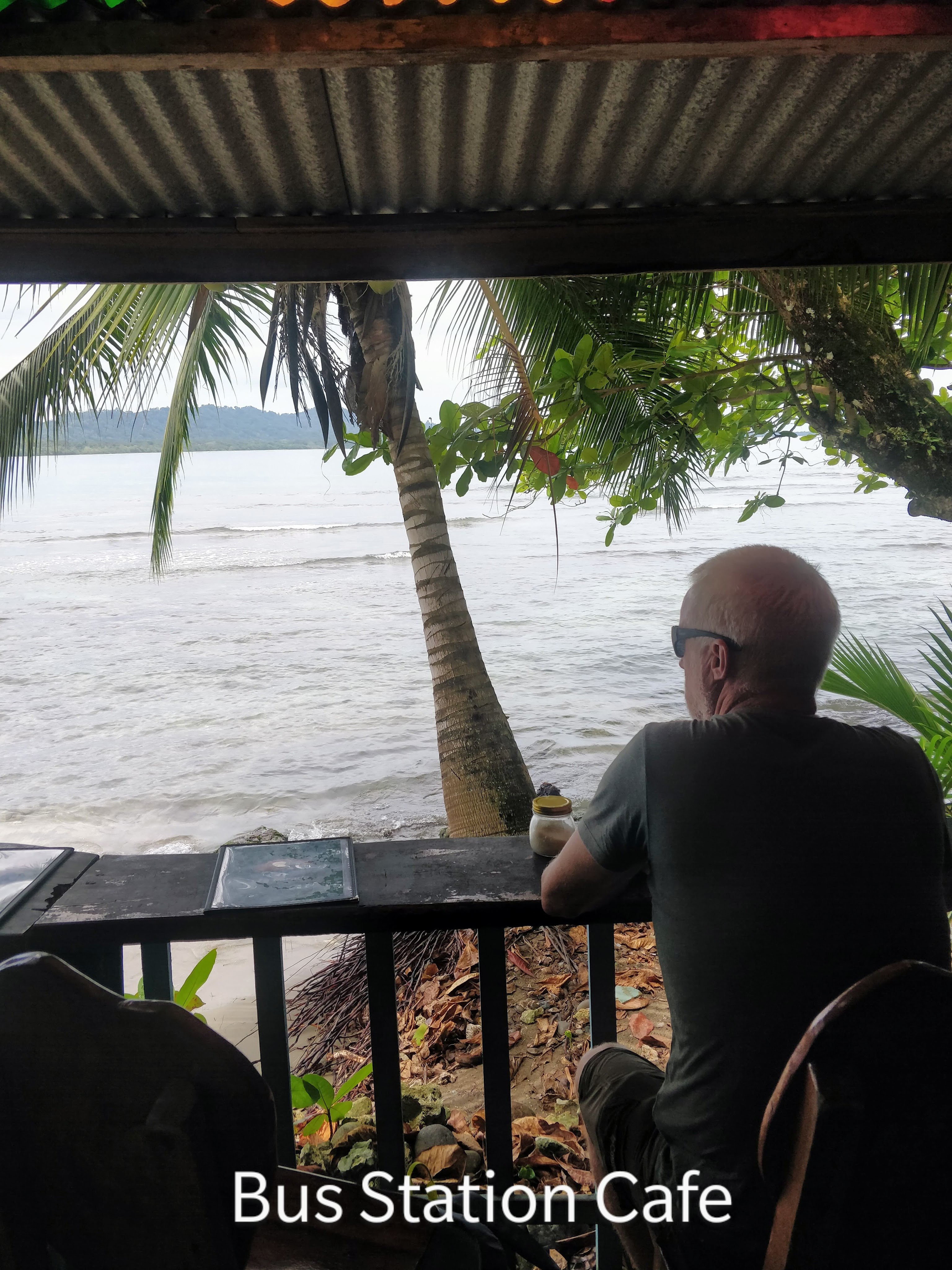
At the bus station , which had the most scenic cafe I have ever been in, we were met with bad news. There has also been landslides on the road back to San Jose so that the 5 hour bus journey would now be at least 7 hours because of a long detour AND we have to pay extra. The bus stopped in Limon, about 2 hours up the coast, for a welcome pit stop and then the bus driver announced that the landslides have been cleared and the road has reopened. Good news but there was a catch. We could go by the reopened road but wouldn’t get our money back or we could still take the detour to get our moneys worth. Of course, everyone on the bus opted to go on the reopened route. Truth or scam? Although Costa Rica is not a cheap country to travel around, bus transport is economical (A 5 hour journey costs about €10 on a reasonably comfortable bus…a bit more if you have to pay extra for detours🤣). We spent the night in a little apartment near the airport with padlocked gates, numerous locks – even two chairs on the little concrete patio were chained to the ground -and a landlady who couldnt wait to get rid of us. Conversely, all this security made us feel a little uneasy and unfriendliness is not the norm in Costa Rice

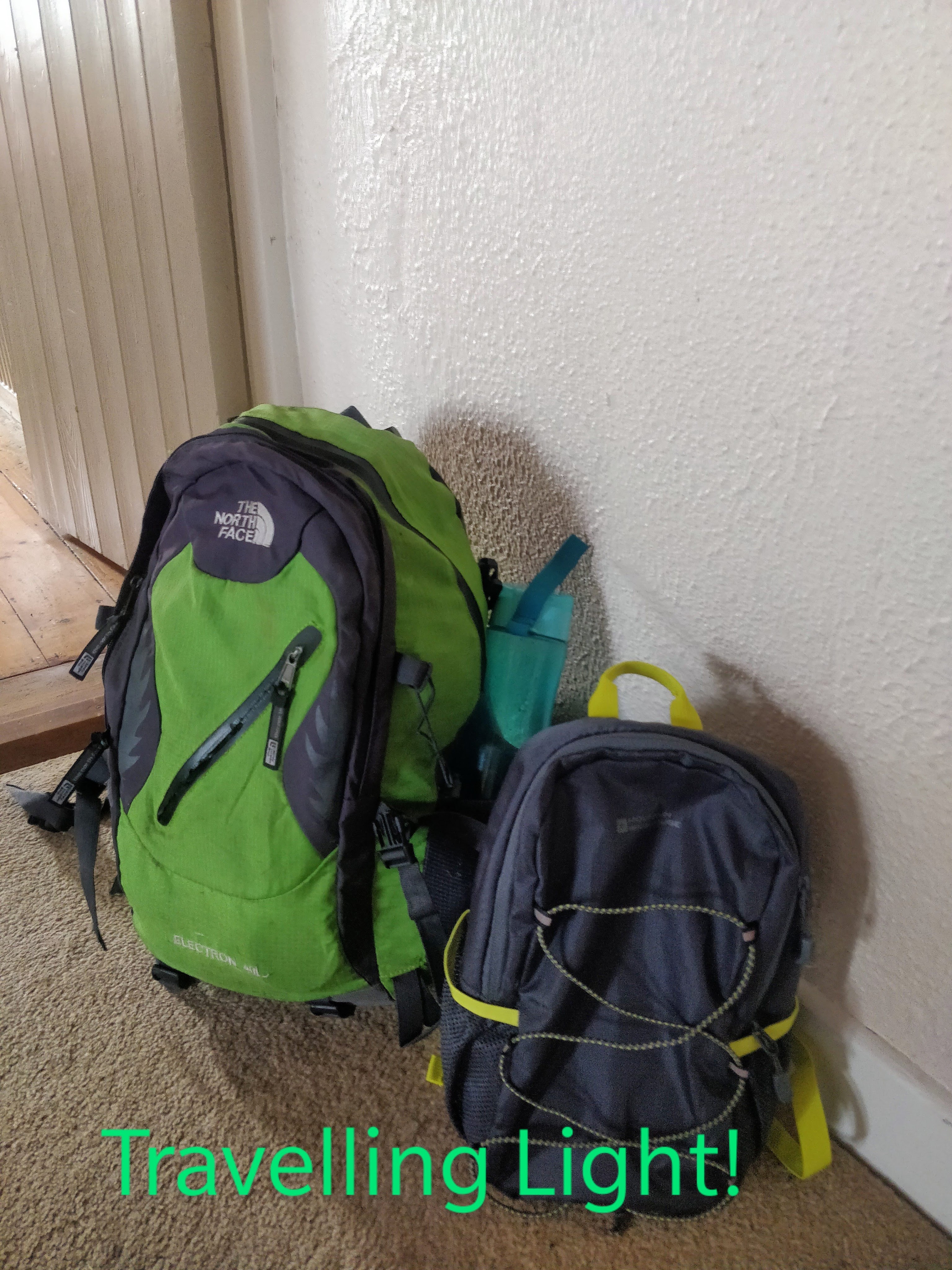
Our uber driver dropped us to the airport in a clapped-out Chevrolet Spark blaring the Bee Gees Staying Alive just as the rains started again. Costa Rica is an amazing country with incredible biodiversity and a laid back attitude(Pura Vida is the slodan everywhere). It is also a country without an army. In the mid twentieth century, Figueres, a farmer philosopher came to power and absolished the army, quoting HG Wells ‘The future of mankind cannot include the armed forces’ and laid the foundation for Costa Rica’s unarmed democracy. We look forward to returning …..when its drier. The San Jose airport was very relaxed with an incredible number of staff in the gift shop eager to sell us stuffed parrots and sloths – they didnt know we are travelling very lightly😀.

While waiting for our flight, we browsed the Guatemalan newspapers on our phones – big mistake. There were reports of murders, drug violence and mayhem on every page. Guatemala City has a really bad reputation and is often described as big, dirty and dangerous. We were too nervous to stay there and booked accomodation in Antigua, an historical town about an hour from the airport. We weren’t sure what to expect when we walked out of the arrivals terminal building in Guatemala but it was a surprising oasis of calm – a few taxi drivers in crisp white shirts ignored us and a few business types with briefcases waited for their company pick-up. Honestly, arriving at Dublin Airport can be more intimidating. The temperature was pleasantly cool without the oppessive humidity of San Jose. The guy in the tourist booth was very helpful, told us about taxi prices and shared shuttles and put the WiFi password into our phones (we didnt have any mobile data/local SIM). Armed with connectivity, we booked an Uber on the airport WiFi – it was cheaper than the airport taxis. and we could pay online as we didnt have any quetzels yet, the currency of Guatemala. Then we waited and…….. waited ….as darkness slowly fell. The first Uber cancelled, so did the next one but finally Diego, our third attempt came to pick us up, playing Saturday Night Fever (do all Uber guys have the similar taste in music?) It was Friday evening rushhour so traffic was appalling and probably why the Ubers cancelled. The 50 minute journey took about 2 hours crawling past shopping malls, factories and enormous billboards advertising fast food and Pepsi. Diego dropped us in Antigua at the door of our accomodation, a B’nB called Casa Ela in a quiet cul de sac, where we were welcomed by Alvaro and Lupita who spoke excellent English and told us to make ourselves at home. ‘Out house is your house’.

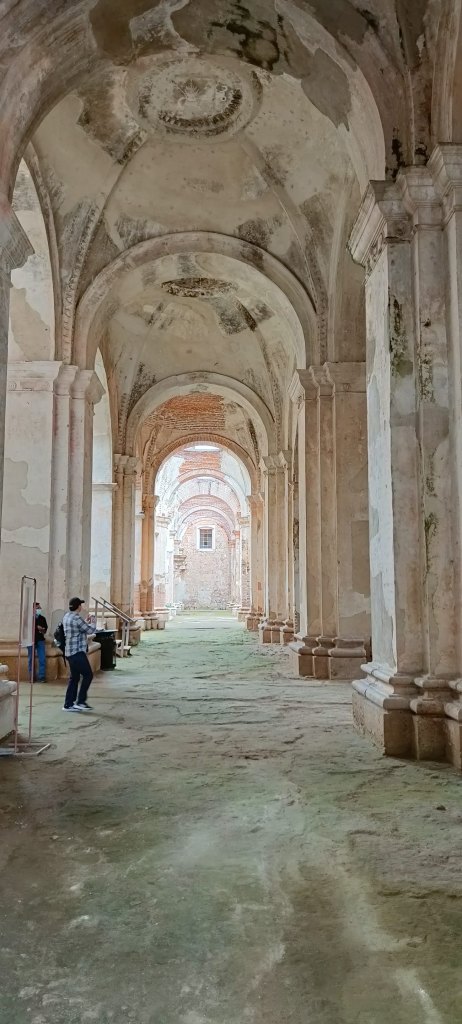
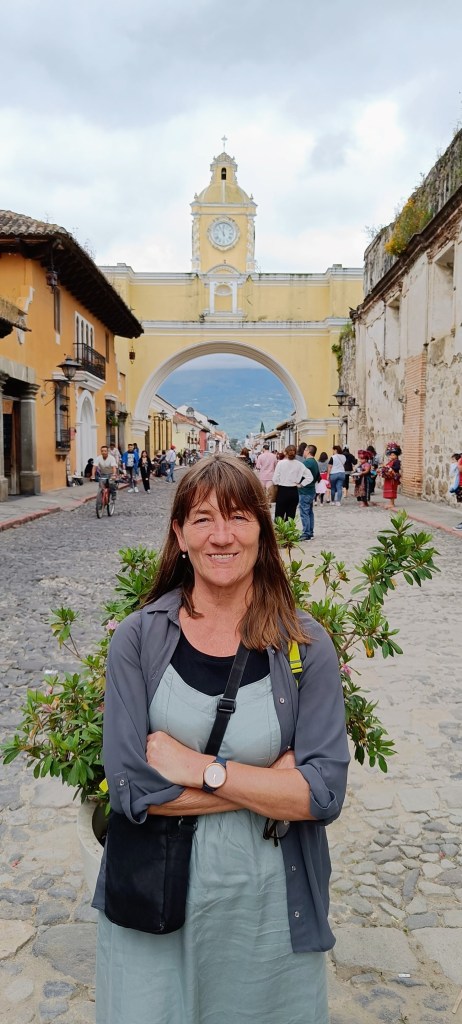
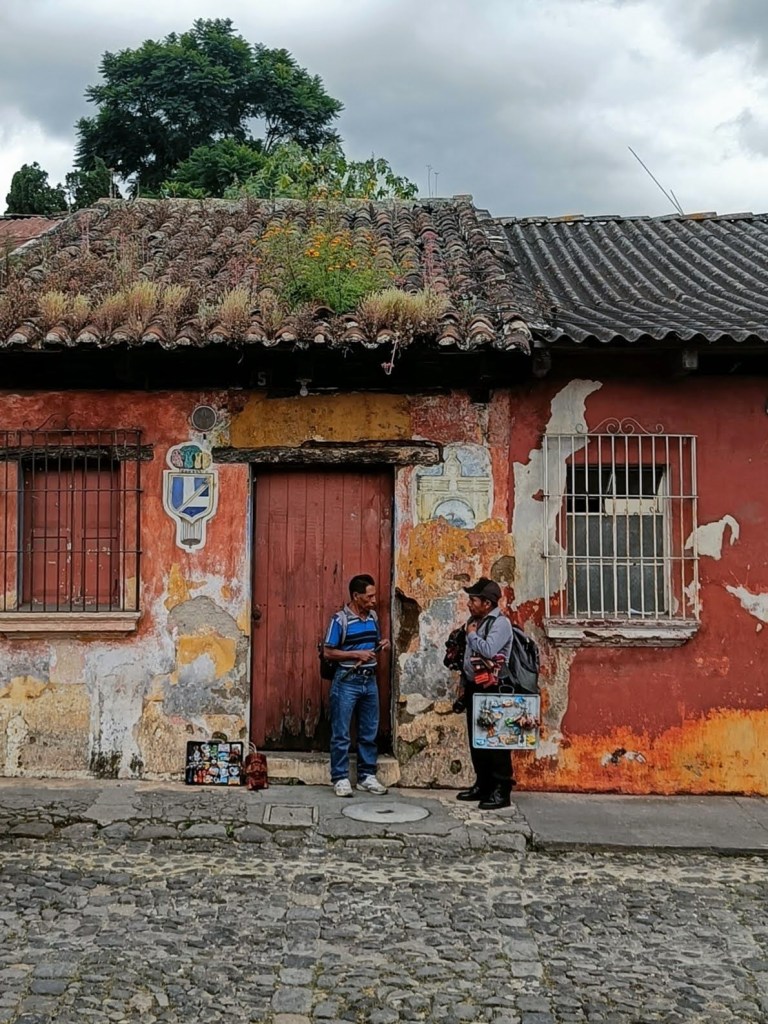
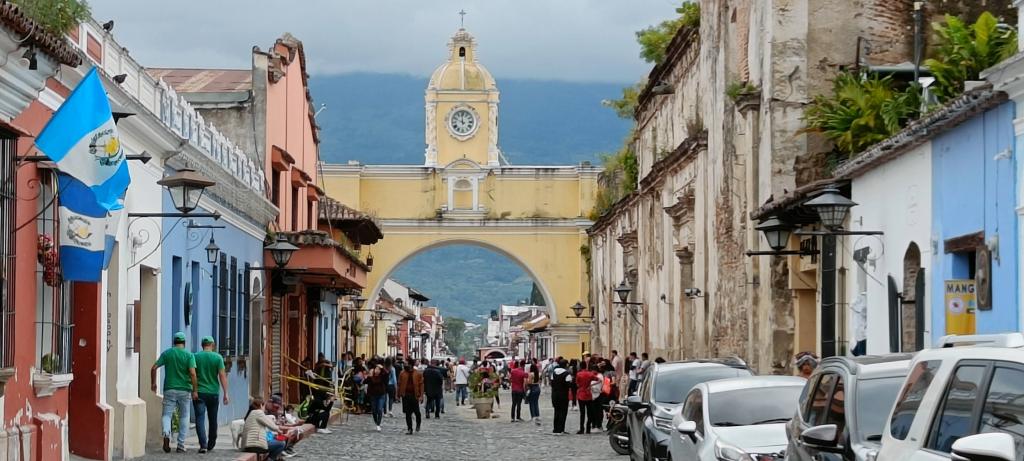
Right from the start, we were charmed by Antigua, with its cobbled streets, pastel facades, and old beautiful buildings, -even the ruins here are picturesque -and its gorgeous setting, surrounded by mountains and a ring of conical volcanoes. This was the old colonial capital of Guatemalais, a town that has seen earthquakes, floods, hurricanes, been abandoned on more than one occasion but has risen to become the number one tourist destination in Guatemala. Behind some modest facades were luxury hotels with fountains, gardens and polished wooden floors. There were no garish billboards or flashy lights, its an UNESCO Heritage town. We had trouble finding an ATM as it was hidden under an old church colonade. The streets and plazas were full of locals and visitors wandering about amongst indiginous people hawking handcrafts.

Rooftop view

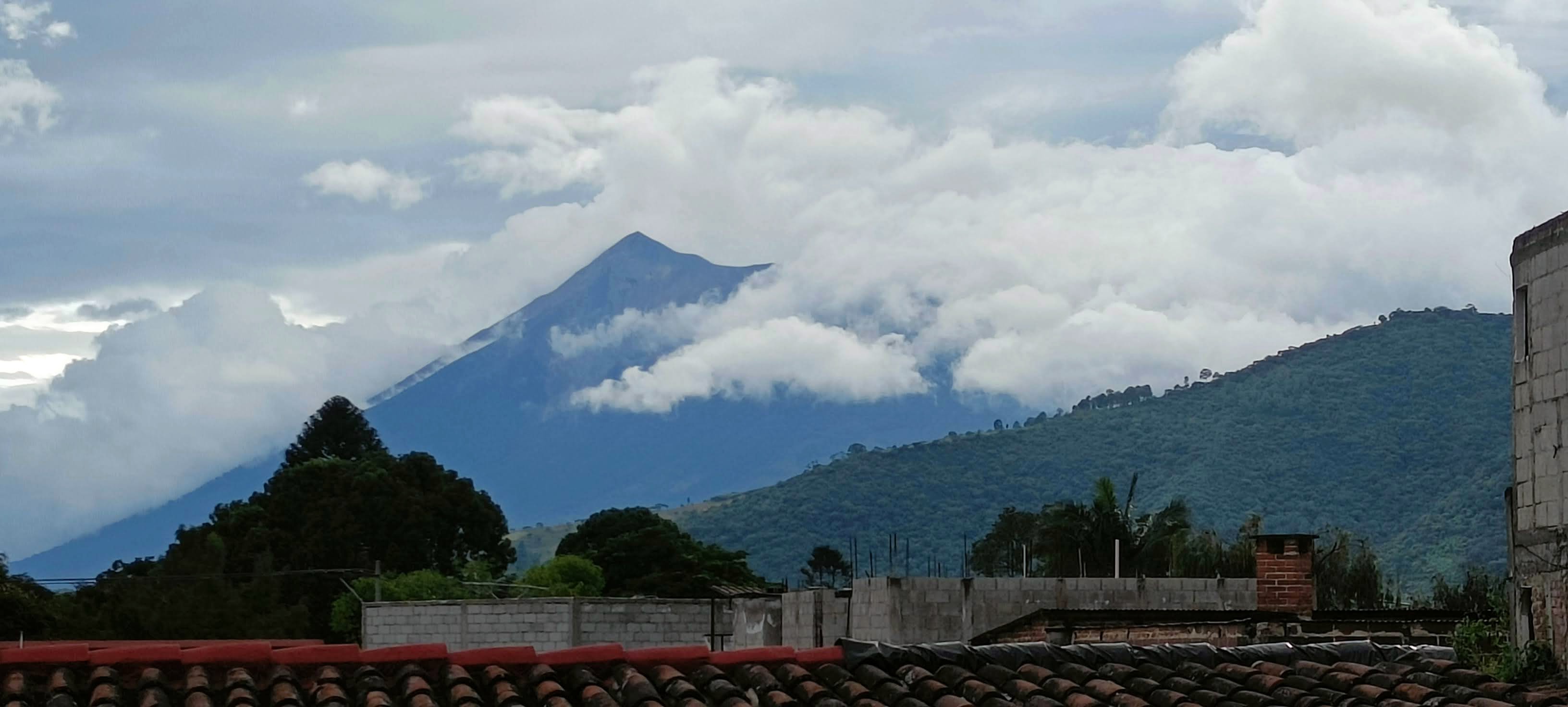
Looking at the mountains for the rooftop of our accomodation and watching Volcano Fuego blowing plumes of smoke and fire into the night sky, we knew that we had to get out there and hike. Volcana Pacaya was the closest and easiest to climb so we booked a tour online for the following day.

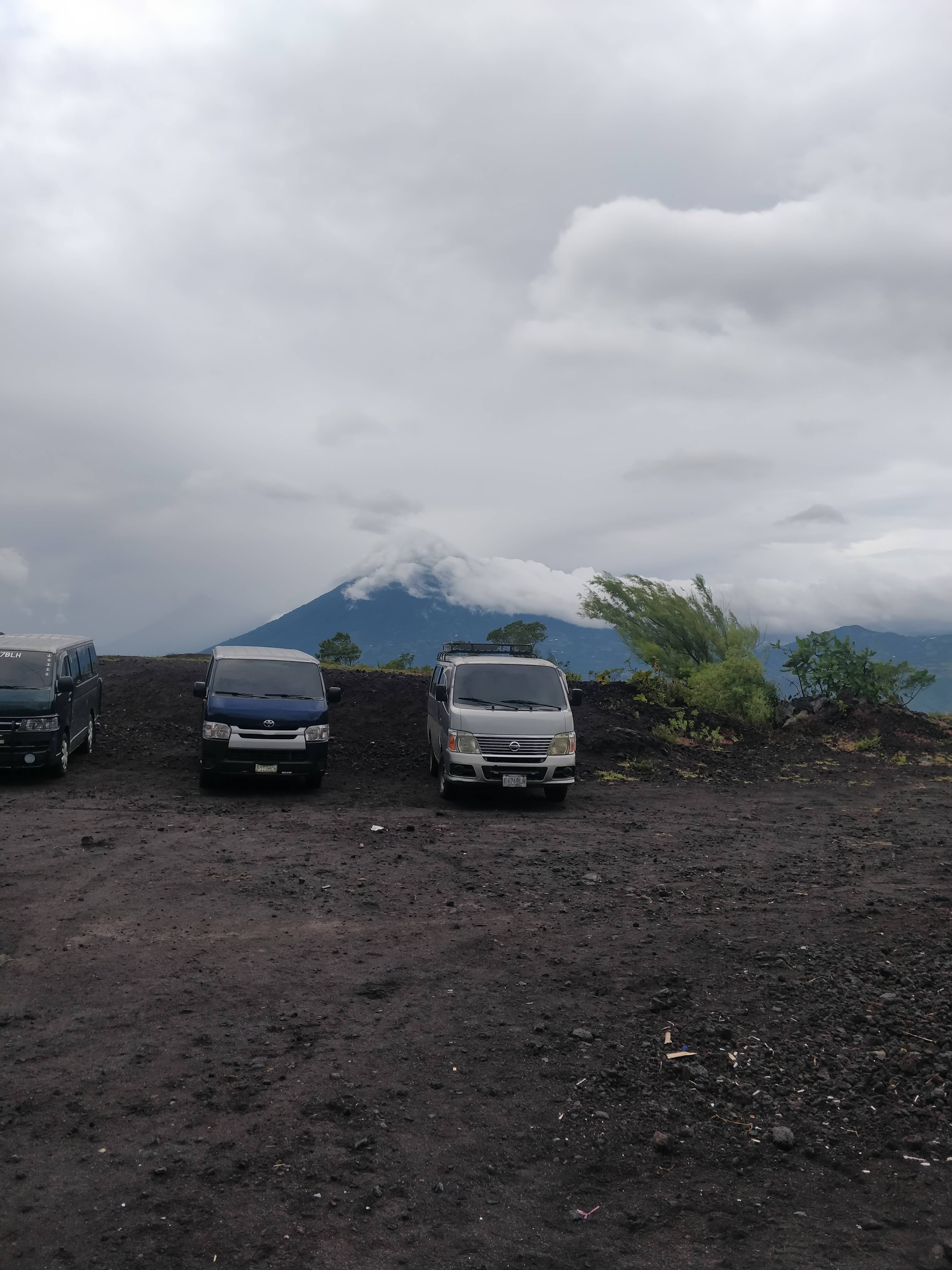
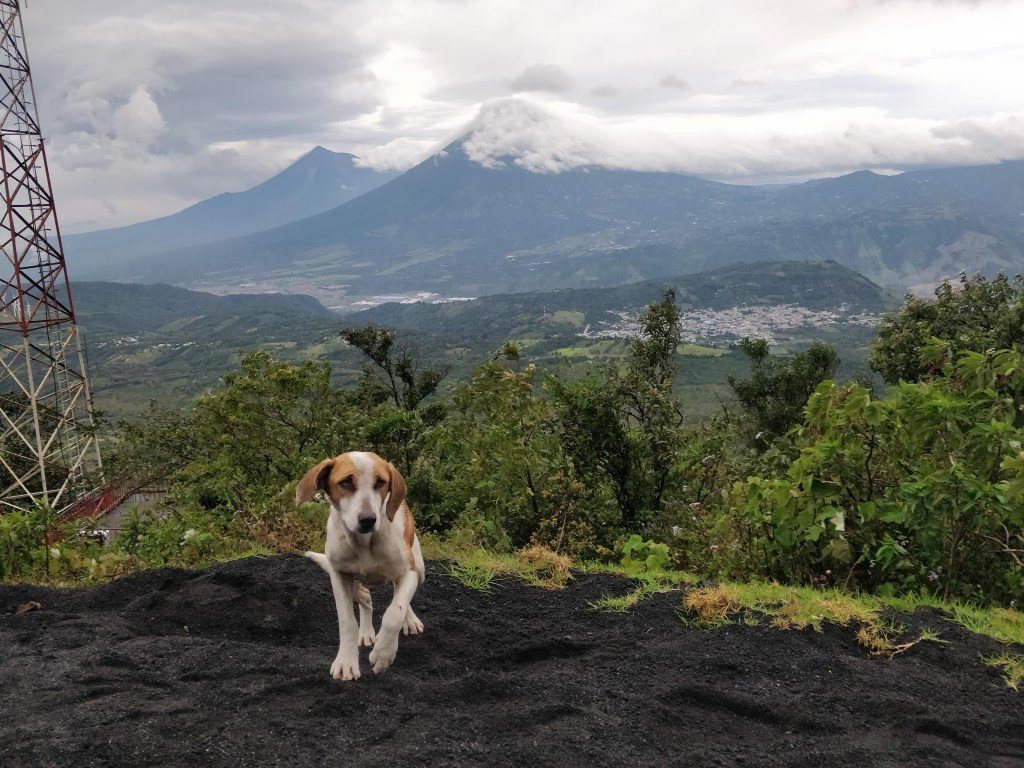
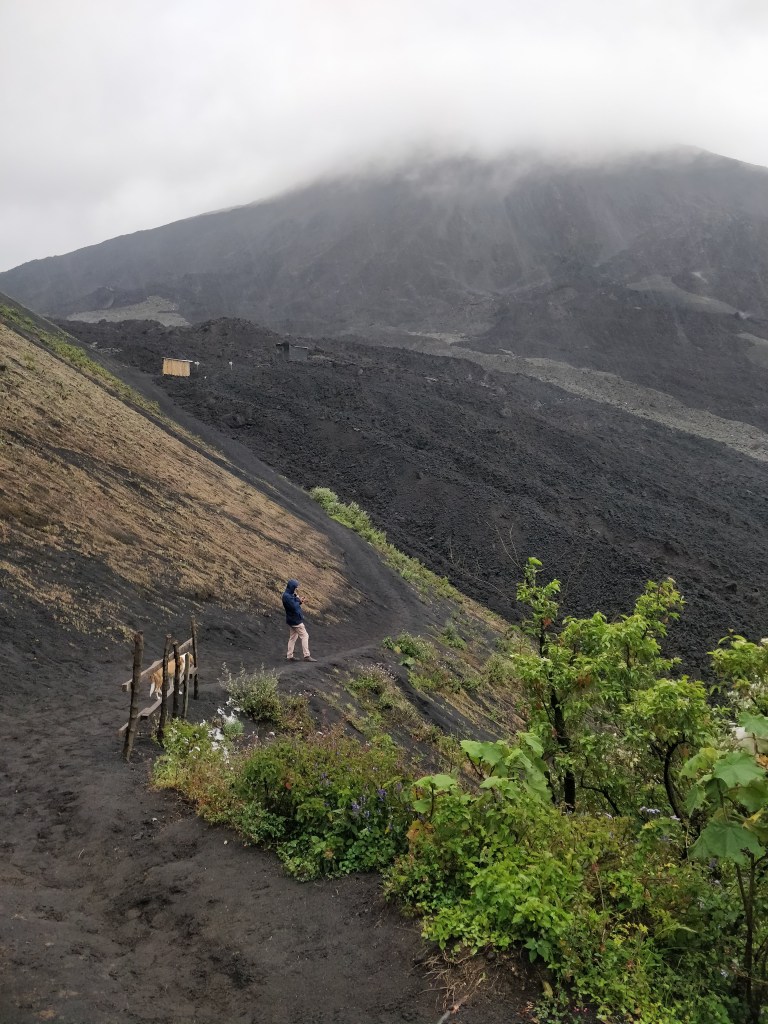
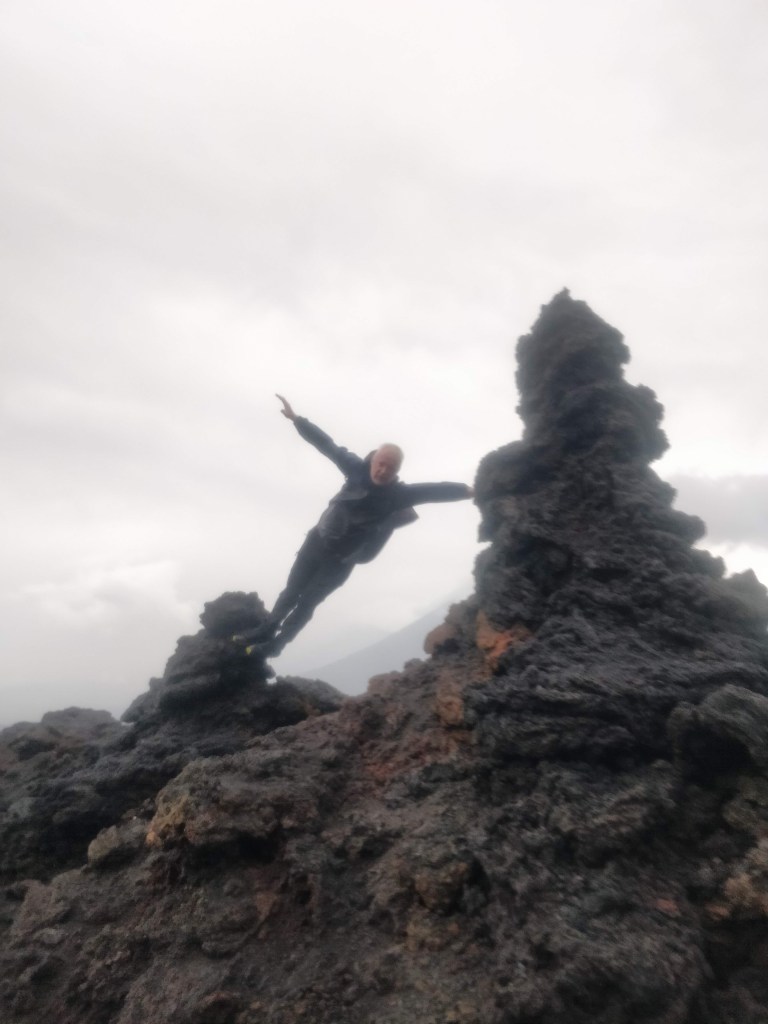
The minibus to pick us up was late – so late that we thought we had been scamed but finally it arrived….time is elastic here. We were jolted around the cobbled streets in the back of the minibus – the cobbles look gorgeous but are a nightmare for both the car and our body suspensions. We left the city and meandered uphill for about an hour and a half past villages and green, incredibly fertile countryside to the National Park entrance where we were greeted by a row of taxis – horses to rent. We watched the horsemen watching us as we creaked out of the minibus, calculating who wouid likely succumb to altitude and tiredness and rent a horse. The horsemen followed us uphill on shaly lava dust, constantly asking ‘Taxi, you want taxi’ with the horses breathing on our bums, hurrying us along. Eventually they gave up and returned to base although a dog with begging eyes followed us all the way. Pacaya stands at 8,373 feet and the height gain on the hike was about 1,500 feet but the path was clearly marked. Our main issue was the wind and heavy rainshowers. Hurricane Julia had battered Nicaragua and although, it veered away from most of Guatemala, we were still experiencing the tail of it. The wind screamed through the telecommunications mast on the mountain and flapped Caoimhin’s wet gear (a wraparound skirt made of black nylon material) like a drum. But the views were breathtaking and for the last section we walked, bent over in the wind, beside the most recent lava flow from an eruption a year ago which stopped just 400 metres from a village that was directly in its path. Access wasn’t allowed to the very top but we got to a high point where the lava glowed red-hot and it was possible to toast marchmallows in the glowing embers. We trudged down, watching wispy clouds and the tinge of pink as the sun set over the greys and blues of the mountains and arrived back to the minibus in near total darkness. The hike was fairly short, about an hour and a half up and an hour down. If the photos look a lit blurry, blame it on the gale that nearly whipped the cameras from our hands

As I type this, we are listening to the rain, hammering on the roof of our BnB. Alvaro tells us that bridges have been washed away in the north of the country, many roads are impassable and all schools are closed today. Alvaro also tells us that it is only once every five years that Guatemala gets a rainy season that is as intense as this one. Hurricane Julia has turned into a tropical depression but the weather is set to improve in two days with no more rain until next May😎. We have booked a shuttle bus to take us to Lake Atitlan which a travel writer in the nineteenth century described as ‘the most marvelous spectacle we ever saw‘ and he had been around a bit.

So we will let you know…….if we get there. So from the steamy jungles of Southern Costa Rica to the lofty heights of Pacaya Volcano in Guatemala, thanks for reading and coming along with us.

A Tale of Two Countries

Costa Rica….getting there

We left home in the dead early hours of Thursday, Sept 29 – at about 4 am. The first leg of our journey to Costa Rica was a lift into Waterford (Thanks, Aonghus👏) to get the airport bus. The road was dark and eerily quiet without a car or person to be seen until we got into town. The airport bus dropped us on schedule at 07.50 for our Air Canada 10.45 flight. Dublin Airport had an alarming number of holding pens outside the building (which were thankfully empty)but lots of people in high vis vests were shouting instructions (that were hard to understand). It could be very stressful if time was tight🙄 As we only had carry-on luggage, we went straight to security which was very busy but the staff were friendly and efficient…one bag-checker told us that it had been manic all morning.

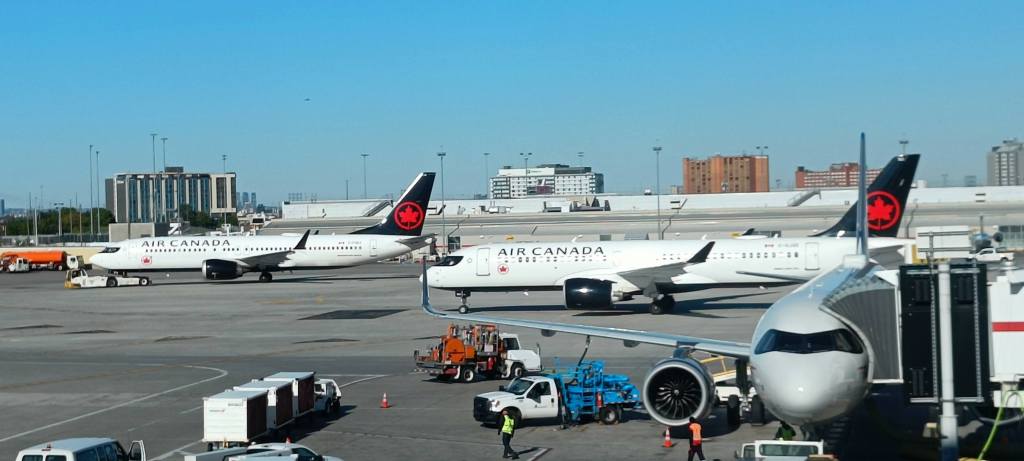
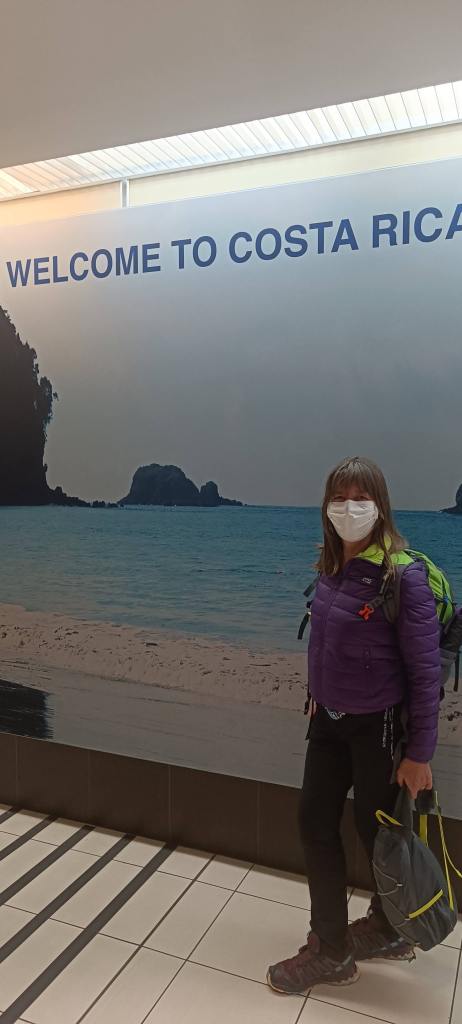
The 7 hour flight to Toronto was uneventful but quite relaxing although mask wearing was mandatory. We got a hot meal and a snack of a veggie wrap, ‘free’ drinks, pillows and blankets. There was a delay in landing in Toronto because of a coyote on the runway – seriously🤣. After a wait of about 4 hours in Toronto, we boarded our second flight to San Jose in Costa Rica. This was a different story – 5 hours of uncomfortable squashed seats, cold air, no ‘free’ anything, strange creaking from the plane and some turbulence over the Gulf of Mexico from the aftermath of Hurricane Ian✈️💨. We were SO relieved to get off.

Money, Glorious Money!!

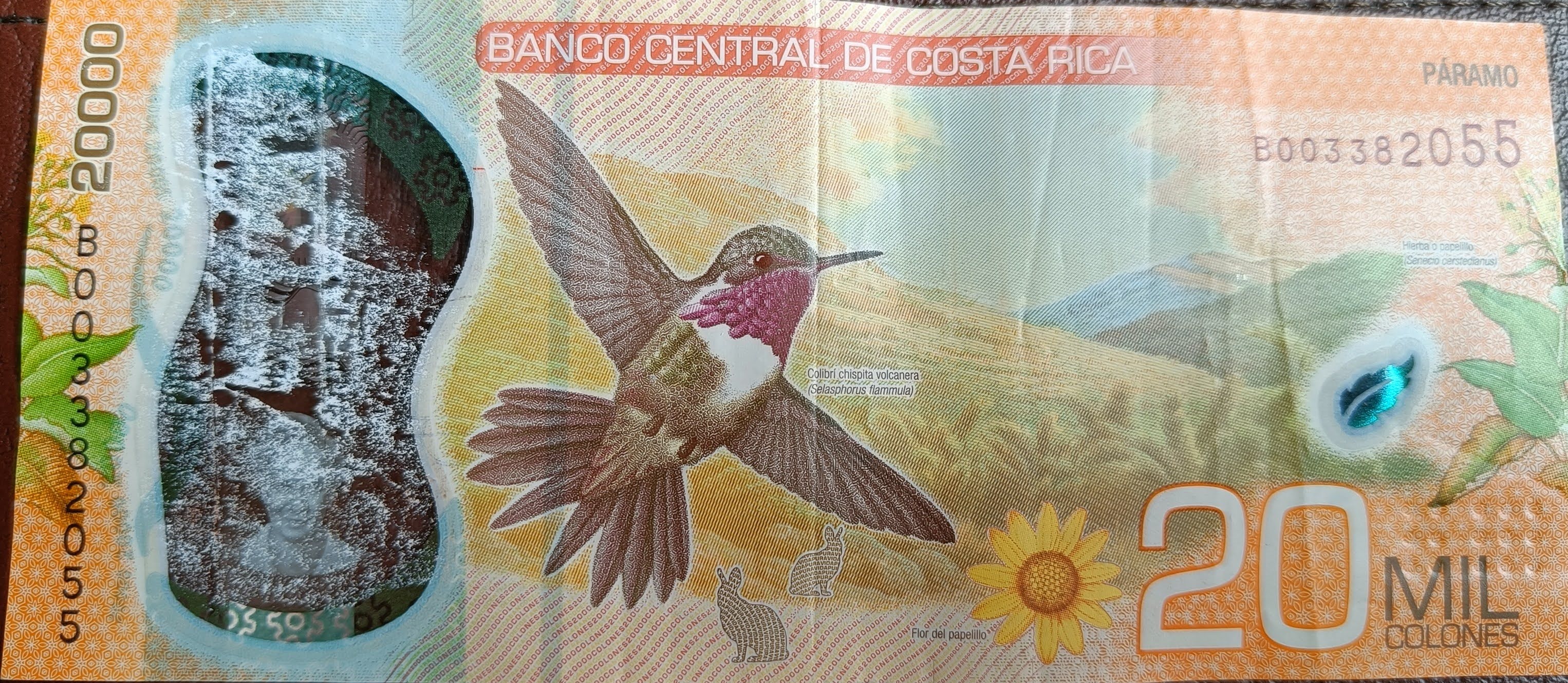
It was 10pm local time in San Jose, it wasn’t raining but was warm (about 20 degrees) and muggy with high humidity. With the 7 hour time difference, our jet lagged bodies yawned and only wanted sleep The taxi driver who brought us to our accomodation had been to Europe several times and told us that Costa Rica was the safest country in Central America…..but also the most expensive. The local currency is the colón (plural colónes), very colourful notes with animals and hummingbirds. 1000 colónes convert to about €1.60. But a lot of things are quoted in $US and the euro is worth less than the dollar at the moment. We are still getting our heads around colónes, dollars and Euros but our brains were really fuddled that first night. The price quoted for accommodation and on menues was not the price you actually pay as taxes and service charges are slapped on to that price.

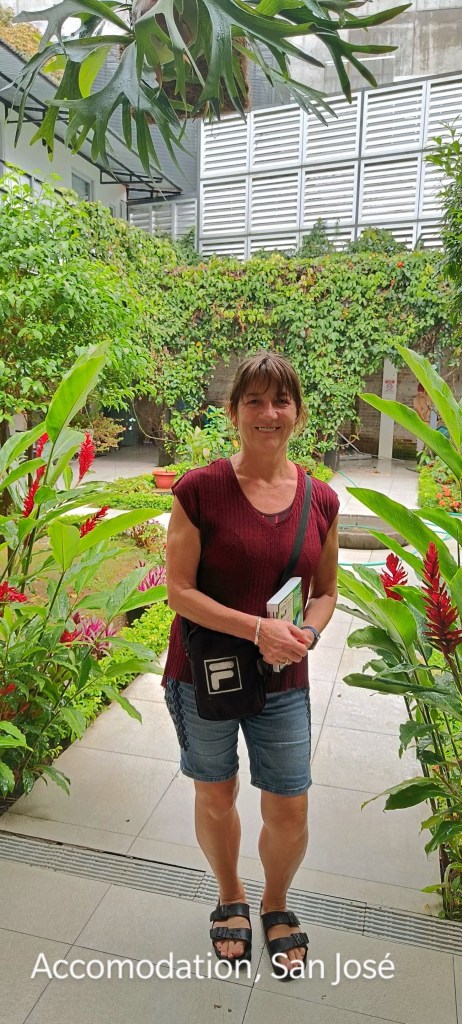
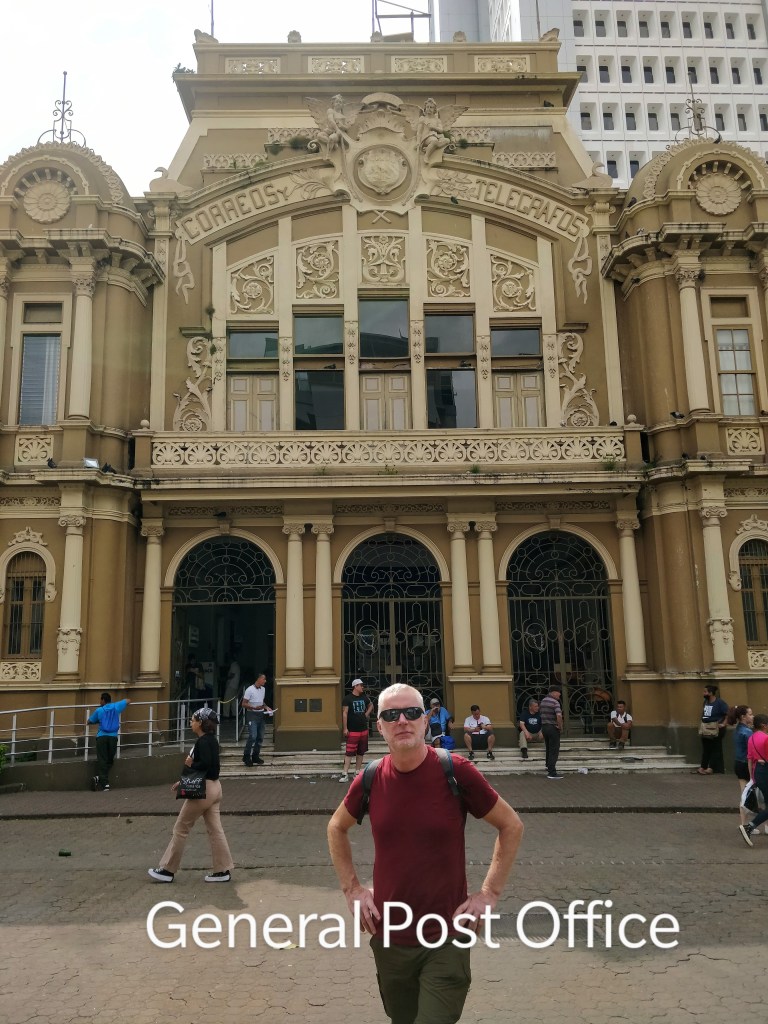
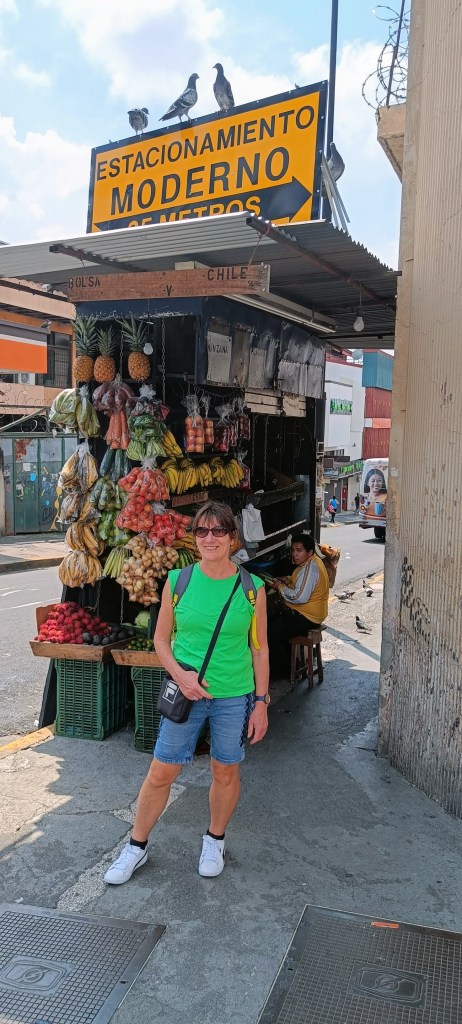
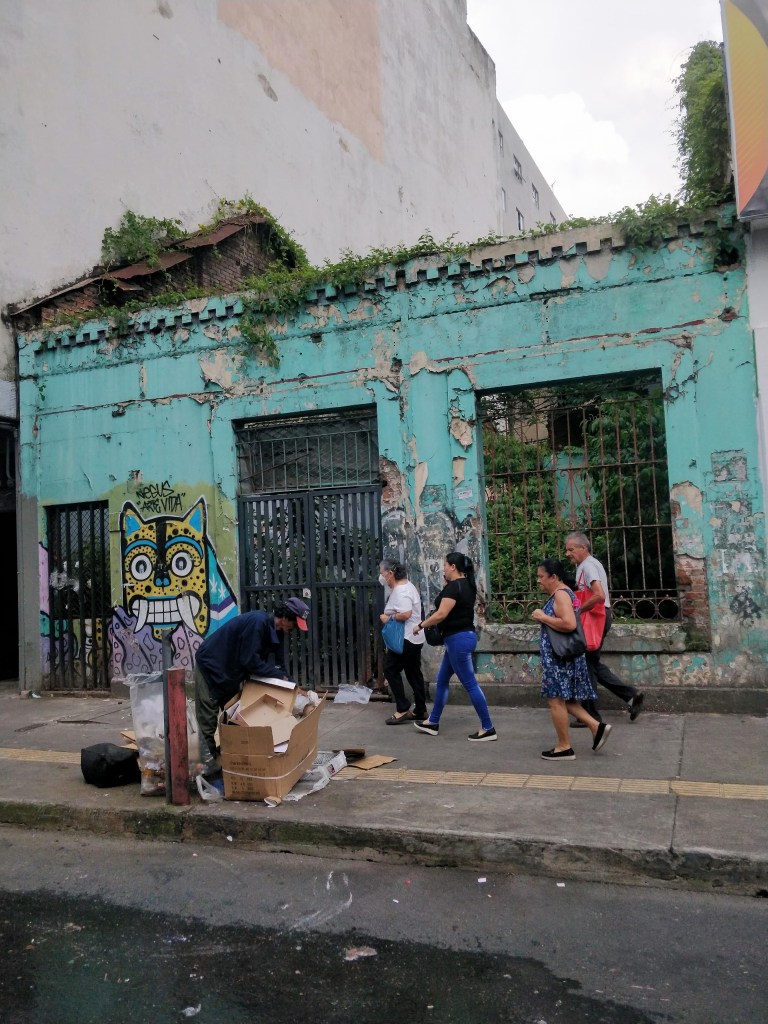
Our accomodation in San Jose was basic but good, a first floor apartment with an inner tranquil courtyard ($40 a night). San Jose is quite small and we spent our first day wandering around in a jet-lagged haze- the streets felt relatively safe and noboby hassled us or tried to sell us anything or practise their English on us. The city is in a depression surrounded by mountains all shrouded in mist. Although it has some lovely buildings – the National Theatre with its murals, the Central Post Office and the ultra modern Legislative Assembly building, it isn’t a particularly beautiful city. There was a more edgy feel about the areas around the Mercado Central (the Market) with congested streets, music blaring and lots of people sleeping rough amougst mounds of rubbish. Many of these were Venezuelan migrants and sometimes entire families existed in an air of resigned desperation. Costa Rica in the wet season is no place to be sleeping on the streets.

We knew that we were near the equator when day and night were the same length, Costa Rica is about 10 degrees north of the equator. Sunrise was shortly after 5am -jet lag meant we were awake for lots of them. The sun went down shortly after 5pm, not that we saw much sun the first couple of days. The first day, we had distant thunder and lightening in the afternoon and a heavy shower in the evening( not too bad for the rainy season) but on the second day, there was a torrential downpour at 11am, it eased for a few minutes and then resumed in earnest – a real deluge ALL day. We pitied the people living rough. We decided to get out of San Jose and asked at the reception desk about getting buses to the Carribean coast and that’s how we met our friend, Yourly.

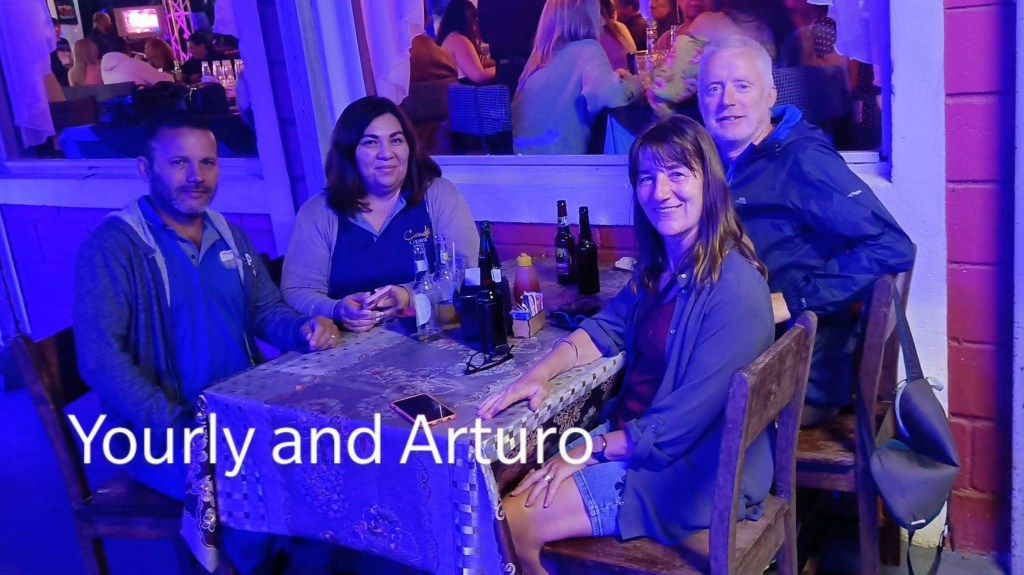
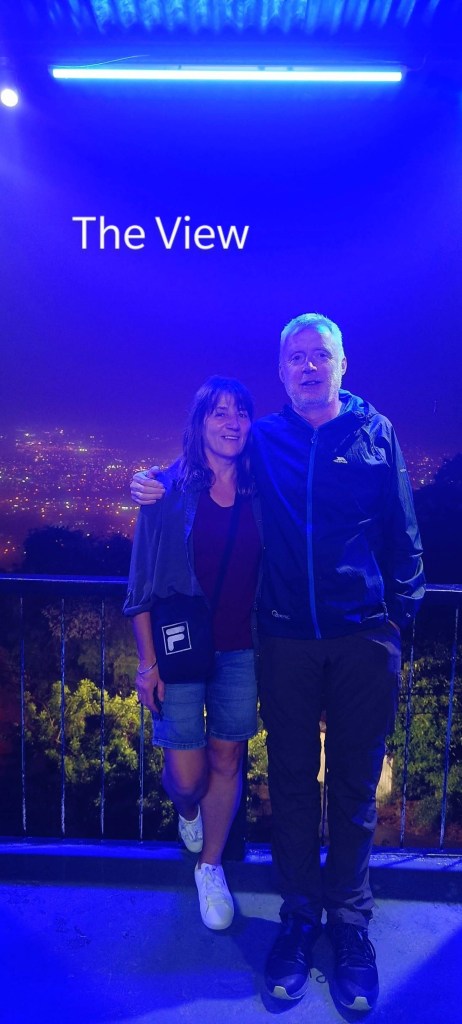
San Jose has a bewildering number of bus stations and bus companies and no Central Bus Station.Yourly was apalled that we were going to walk to the bus terminal to buy our tickets…too dangerous, she said. She insisted on driving us there. She was about to finish her shift and her husband was waiting outside to collect her so they drove us to 2 different bus terminals before we found the right one. Yourly had a little English, Arthuro had none but this didnt stop him cracking jokes in Spanish all the time. They invited us to Cartago, the old historical capital of Costa Rica so we drove in appalling traffic and torrential rain to ‘beautiful’ Cartago. When we got there, we had a coffee and a beer, saw nothing with the rain and darkness and headed back to San Jose. But all any of us had to say was ‘Cartago…beautiful, bueno’ for everyone to roar laughing! They were determined to show us something so they drove high into the hills outside San Jose to a restaurant with a viewing point and karioke (except the mist and rain shrouded any view) and insisted on buying us dinner. For a few brief minutes before we left the restaurant, the clouds parted, the rain stopped and the twinkling lights of San Jose were spread before us. Yourly and Arthuro dropped us back at our accomadation and warned us to get a taxi to the bus terminal the following morning.

The problem was that we weren’t sure of the name of the bus terminal so the taxi driver took us to the wrong bus terminal, we recognised nothing from the day before. There were queues everywhere, nobody spoke English and we found ourselves stumbling around the ‘dangerous’ area with Yourly’s warnings ringing in our ears and our bags clutched tightly but at least it wasn’t raining. Eventually we stumbled on the correct terminal with about seven mintes to spare before our bus to Porto Vieje departed. We were never more delighted to sit into cramped seats. At least half of the passengers were gringos……most trying to escape the rainy season in San Jose and find some Carribbean sunshine.

The bus to the Carribbean travelled out of San Jose on narrow roads between walls of greenery, enormous trees and ferns, leading on to coffee and banana plantation (Costa Rica is the fourth largest producer of bananas in the world). We reached the coast at Limōn, a large port and then the bus continued south towards Panama, crossing many single-lane iron bridges over brownish rivers in a lush tropical landscape. After 5 hours, we arrived in Puerta Vieje, a small touristy town near lots of beaches where most of the gringos got out. The atmostphere was laid back, (welcome, man) but the sweat was dripping off us in the heat (about 30 degrees) and humidity (about 90%). The overcast weather made my first glimpse of the Caribbean a disappointing shade of dark blue but it was definitely the warmest water we had swam in for a long time.

We had ‘cold water immersion’ at our accomadation where the showers only had cold water.  Our little bedroom was shaded by lush overgrown plants growing outside. In the treetop communal kitchen, we watched birds flitting by…..we even got a fleeting glimpse of a hummingbird.💚. We slept with the noise of the rotating fan masking the call of the birds and the thud of cocunuts falling. We are definitely in the tropics, the gorgeous velvety evenings with the smell of flowers, the clamour of the cicadas and of course, the whiff of sewage. Today, Monday, October 3, the sun has shone all day and the Caribbean in the early morning light looked exactly as I had dreamed it would……and all the sweeter because of the effort in getting here

Until, next time…….😎😘

Costa Rica….getting there