Nicaragua – Covid and Contradictions

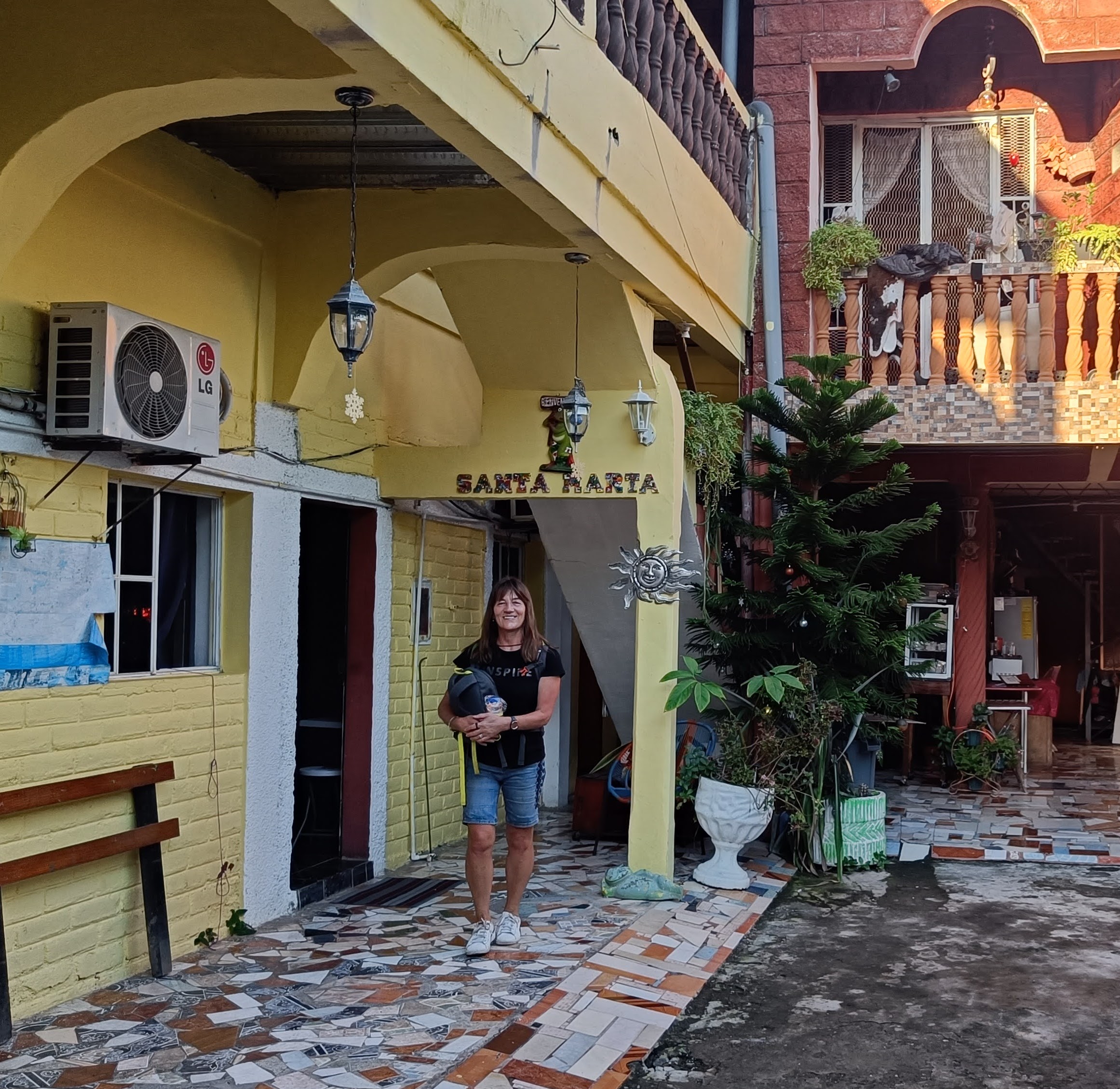
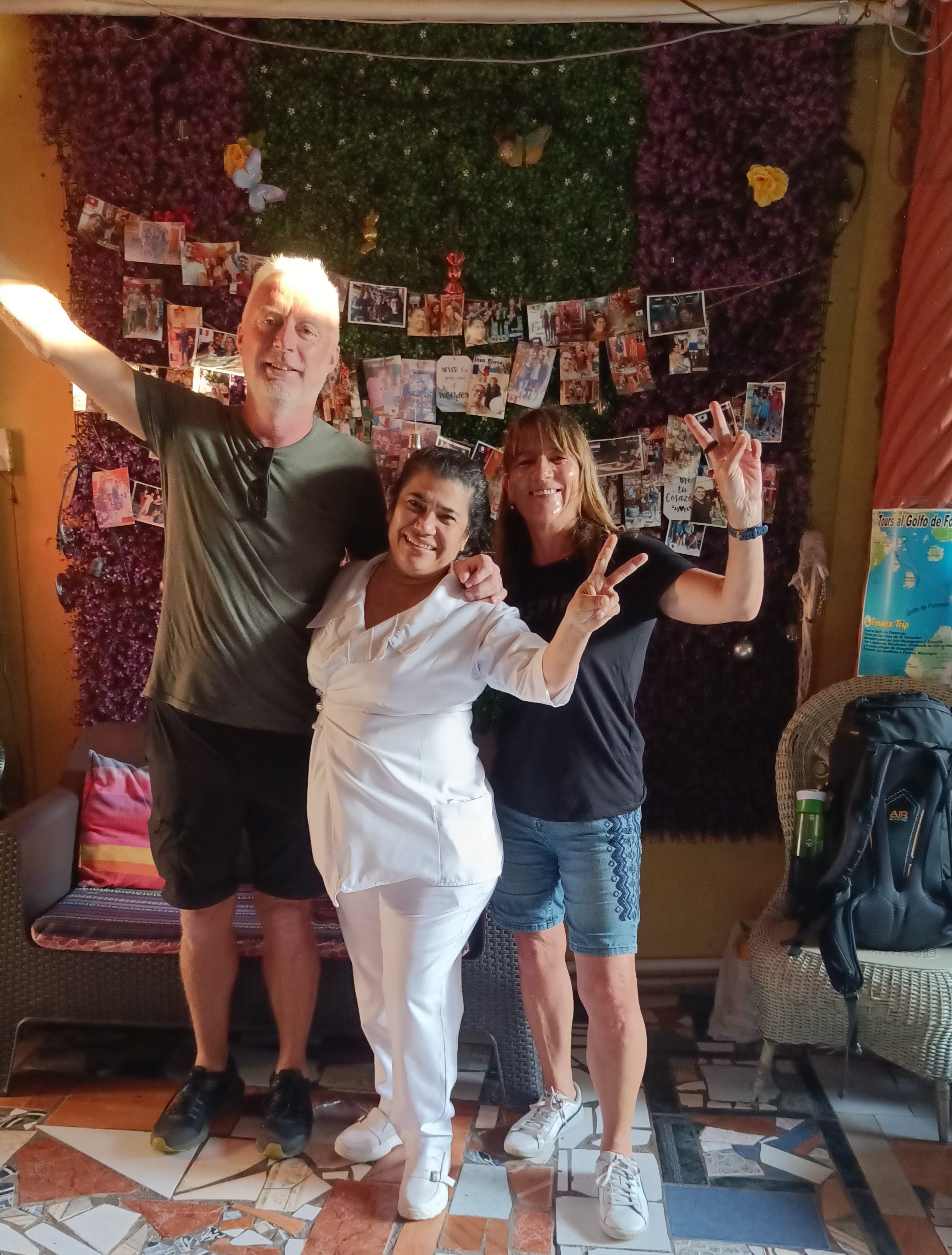
It was our last morning in El Salvador before heading to Nicaragua by boat. As we hoisted our bags onto our backs at about 6.30am, the sun was already hot. The caged parrot who had talked and mumbled outside our door for much of the night, seemed to be glad to be rid of us, squawking what sounded like curses. Martha, our landlady, called us for a photo before she left for work at the local hospital. She was a small good-humoured dynamo who worked as a nurse, made bracelets and craftworks in the evening and ran the guest house called Santa Marta (Saint Marta😀 after herself presumably)
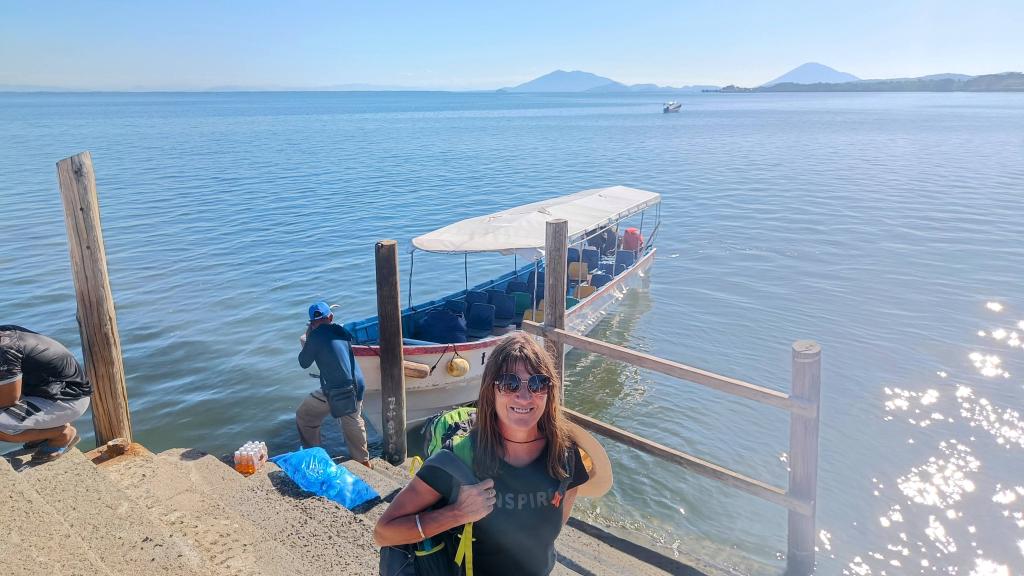
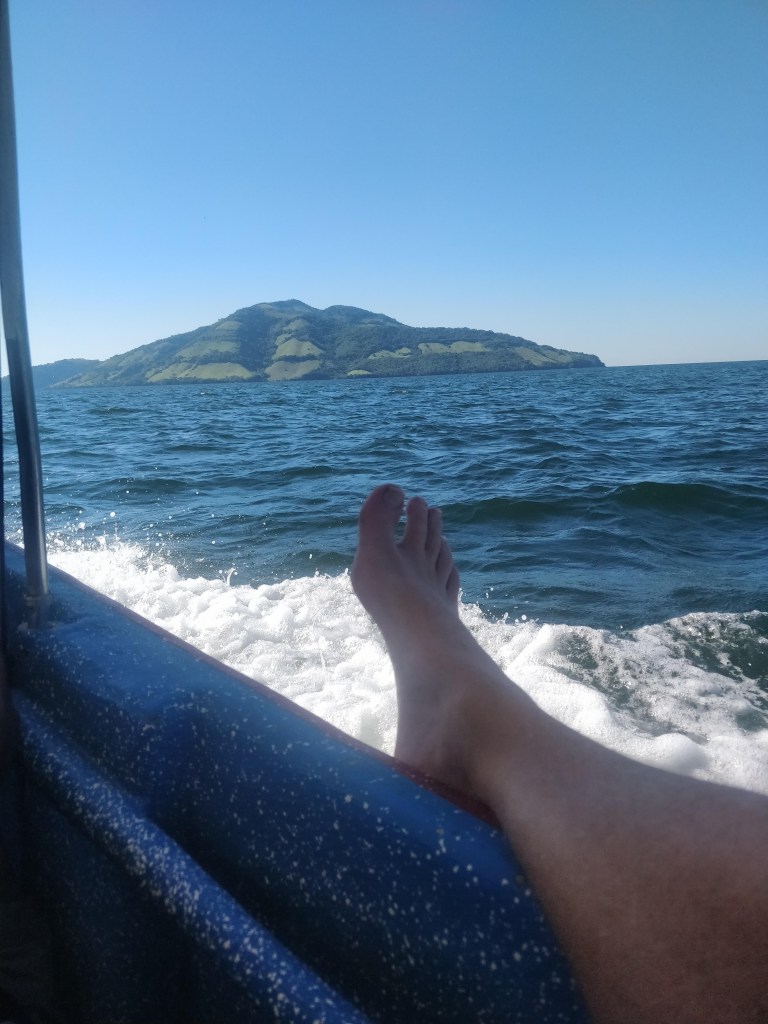
Mario, the captain of the little boat to take us to Nicaragua, was a small wiry man. He met us outside the immigration office in La Union at 7 am when it opened but it was still almost 8.30 am before our passports were stamped. Mario then sheparded his nine passengers to the jetty where we donned lifevests and set off across the Gulf of Fonseca. But about 100 metres from shore we stopped suddenly and Mario and his sidekick poured petrol into the engine tank from two big drums. The engine then coughed and spluttered, the boat bobbed, the sun blazed and we wondered if we had made a mistake but no money had changed hands yet. After nearly choking us with fumes, the engine caught and we were on our way. The journey should have taken less than 2 hours but it took more than three….as one of the two engines never worked. It was a very pleasent way to travel in calm seas -very relaxing and scenic, almost hypnotic with the engine drone. It was also relatively expensive at US$55 each
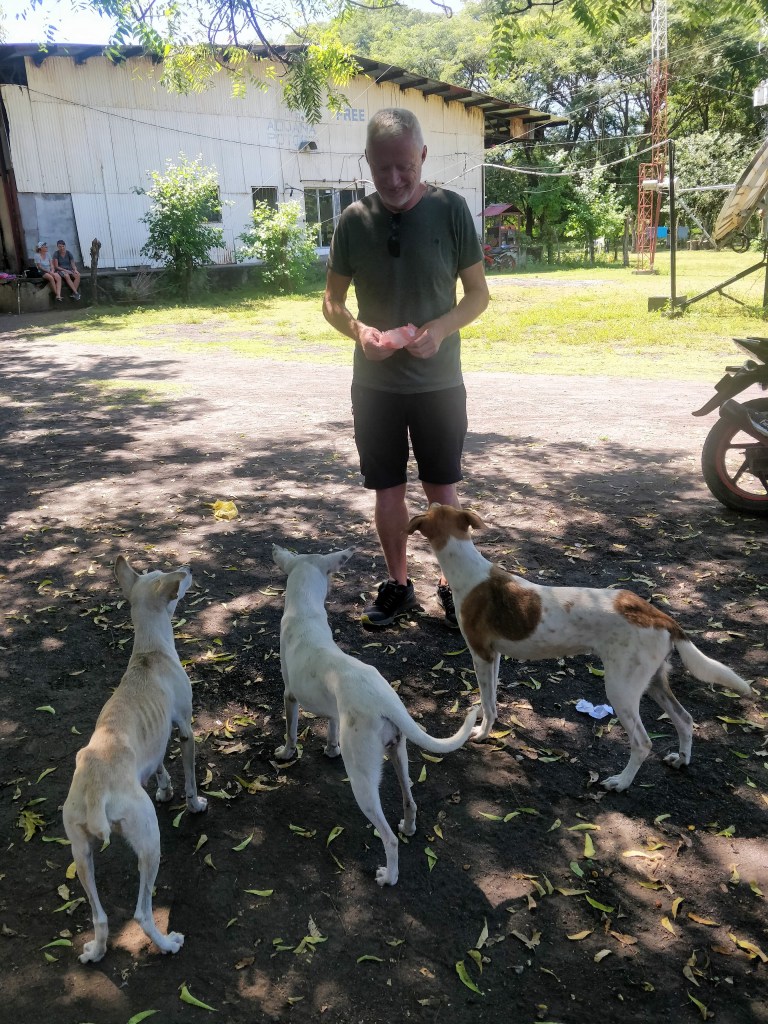
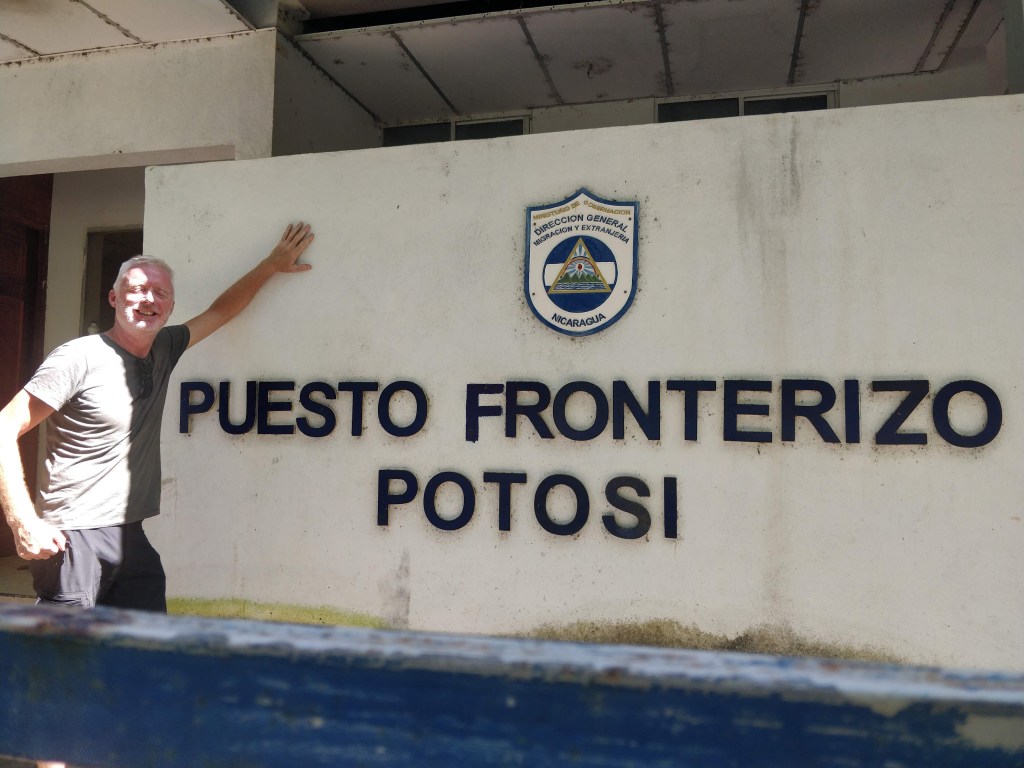
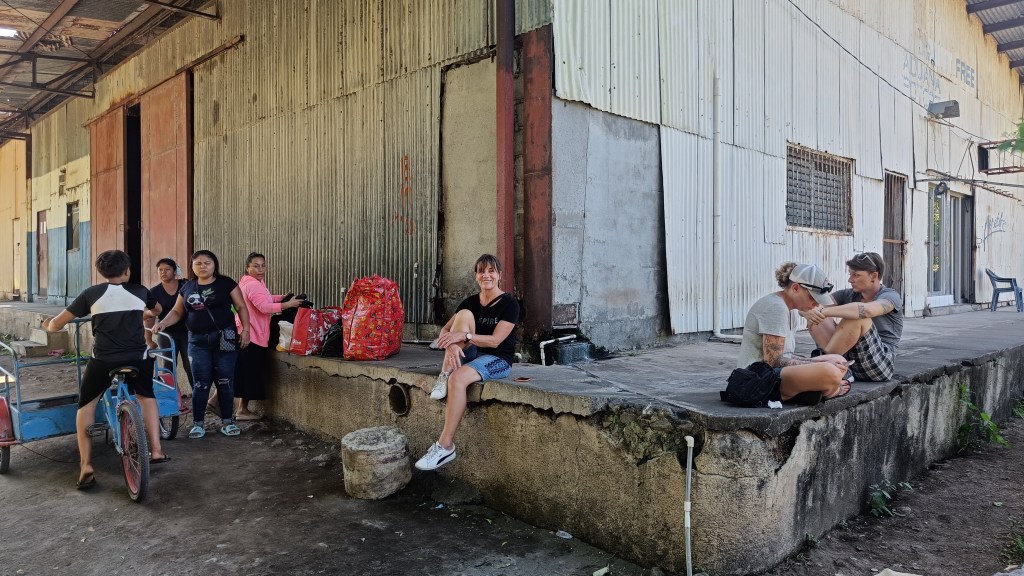
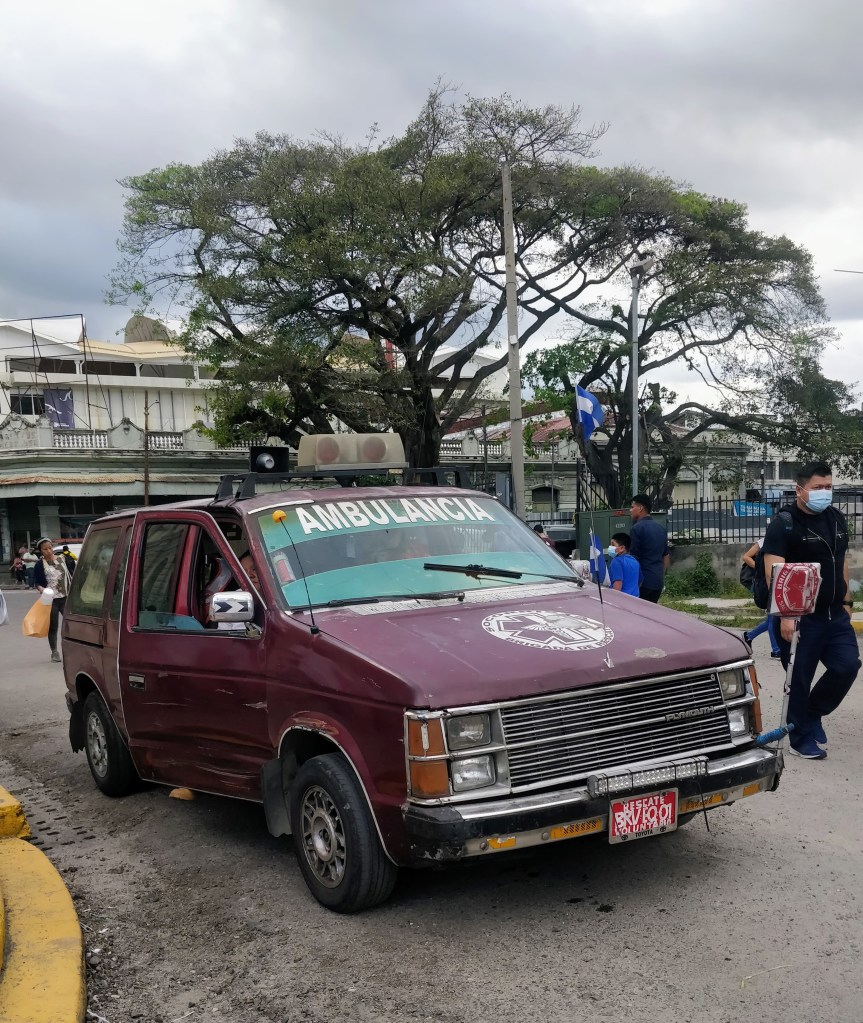
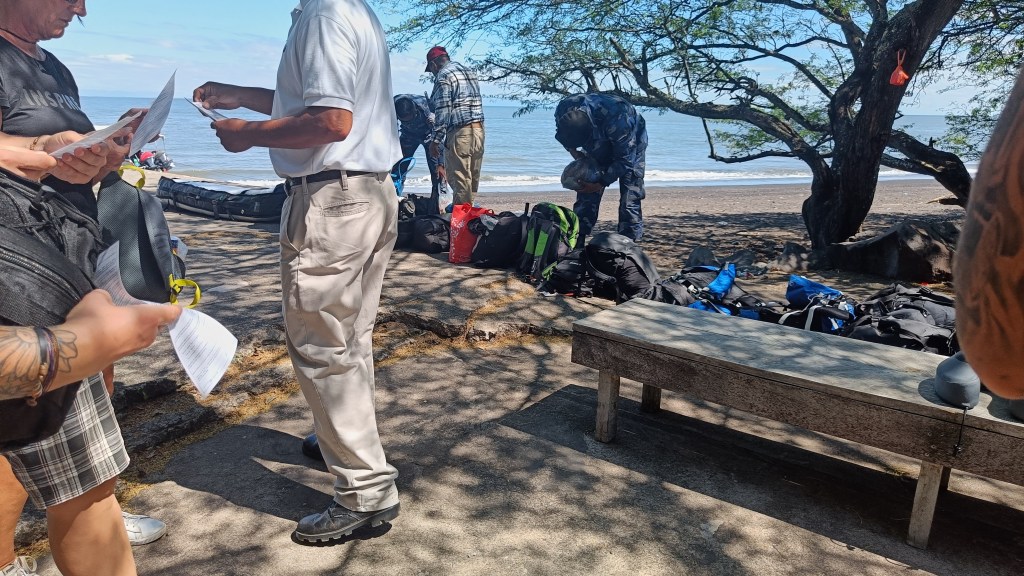
As we neared Nicaragua, another small boat flagged us down. They had run out of fuel and needed a top-up and some help with their engine. Mario went to their rescue in the helpful spirit of the seas and a curious pelican came over to investigate. Our boat finally reached Nicaraguan soil, well almost….we had to take off our shoes and wade ashore for the last metre or two to a pebbly beach with a little pier in tiny Potosi. There was a welcoming party – the Nicaraguan army was waiting for us with guns. They ordered us to put our bags on the ground in a line – a straight line! – in the dirt. We were told to open them, a soldier pulled out some of the contents and a sniffer dog did his sniffing. It was all quite intimidating. we were too afraid to take proper photos. We were given the usual forms to fill out and told to go to a dirty office, about a hundred metres from the beach where we handed in our actual passports plus three passport copies and three copies of our Covid Certs (Mario had already told us that we needed the copies of our passport and Covid certs). If anyone didnt have vaccination certs, they had to have proof of a recent negative PCR test, And we waited, looking for shade under the trees outside the office for about two hours while half starved dogs begged us for food. This was the first time in all our the border crossings that we have had our luggage checked or had to produce evidence of Covid vaccination or had to wait SO long for clearance. And apparently, we were lucky, the process can often take four or five hours. Nicaragua never went into any Covid lockdowns, had a very low vaccination rate but still had a strict Covid policy for entry tto he country. We found out that masks were mandatory in a lot of supermarkets but not on crowded public transport and the contradictions kept on coming.
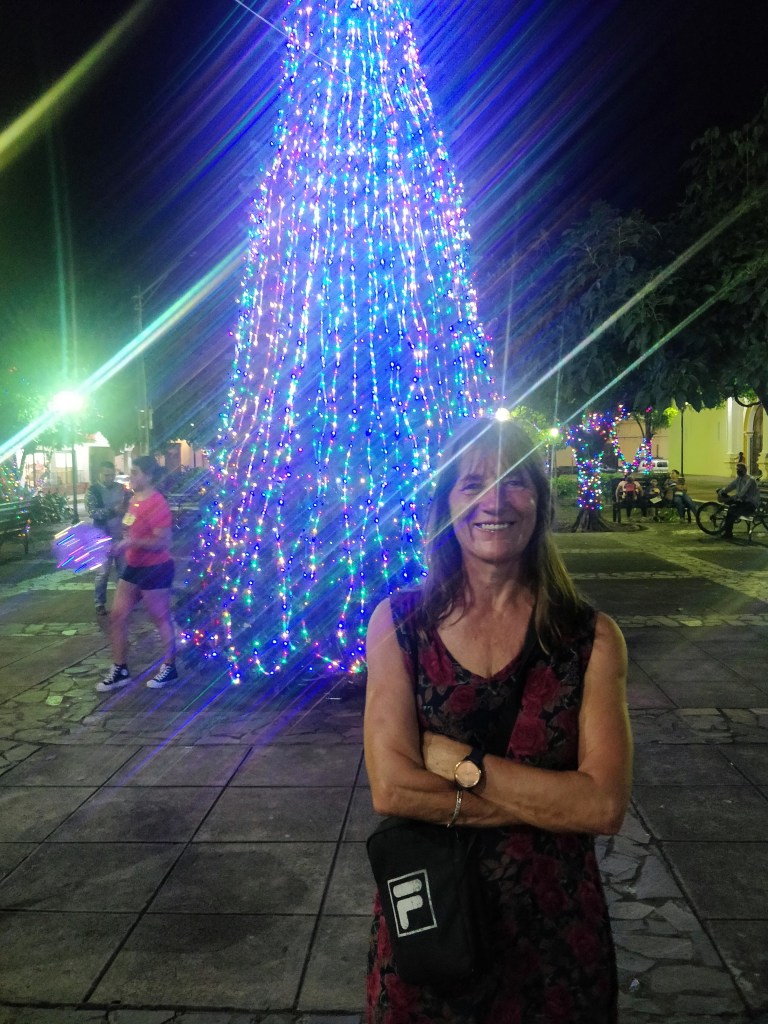
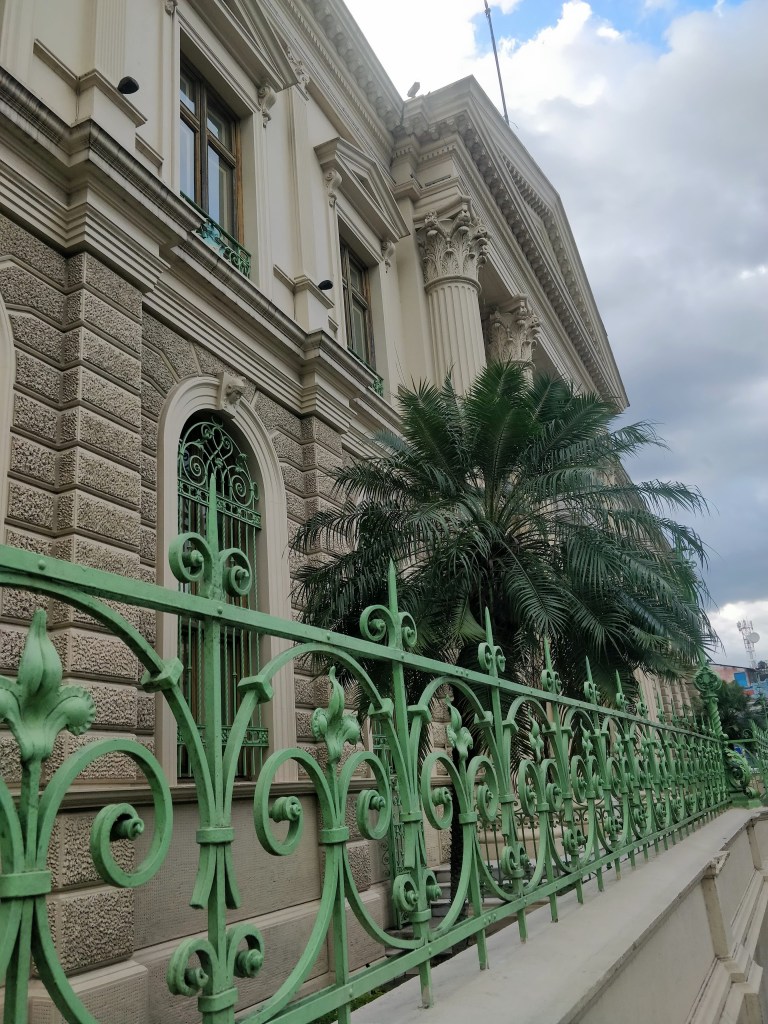
Nicaragua is the second poorest country in Central America(after Honduras) and about 50% of people live below the poverty line. It also has appallingly low literacy rates but the mini-bus that took us to Leon drove on excellent roads with horses grazing in the fields and although there were some horses and carts on the road but our first impression of Nicaragua was of a prosperous country. We loved the feel of Leon as soon as we arrived. Our accommodation was gorgeous, an old colonial house with high ceilings, an inner courtyard, a huge bedroom with wooden floors, a plant-filled balcony and a breakfast of granola, fruit and yogurt or a rice and scrambled eggs ….and it was inexpensive (€23 in total per night). I also found that I was missing two T-shirts when we unpacked, probably left in the dirt in the confusion of the border… thats half my wardrobe🙄. On the Friday evening that we arrived, there were kids dance classes going on across the street and karate classes next door. The plaza was festoomed with Christmas trees, lights and decorations. Bicycle rickshaws pedalled past along the flat streets – the only place that we have seen bicycle rickshaws so far in Central America. A woman outside our accommodation cooked up delicious street food – gallo pinto (rice and kidney beans soaked in garlic and herbs), breaded chicken and pork, rice balls, potato cakes, meats wrapped in banana leaves and tortillas. She gave us a real plate and proper cutlery and said that we could eat it in our accommadation and return- she had already spotted where we were staying.
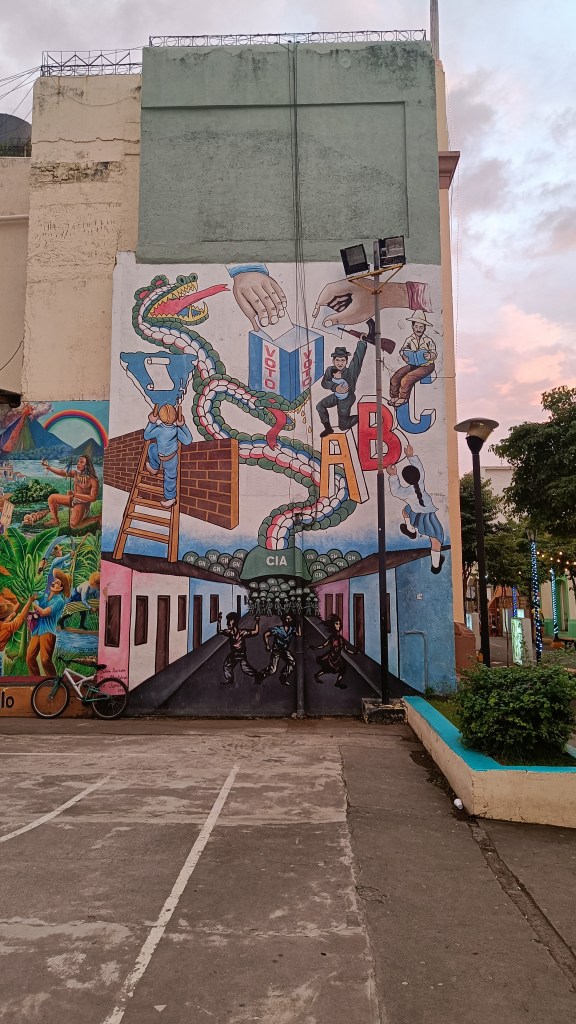
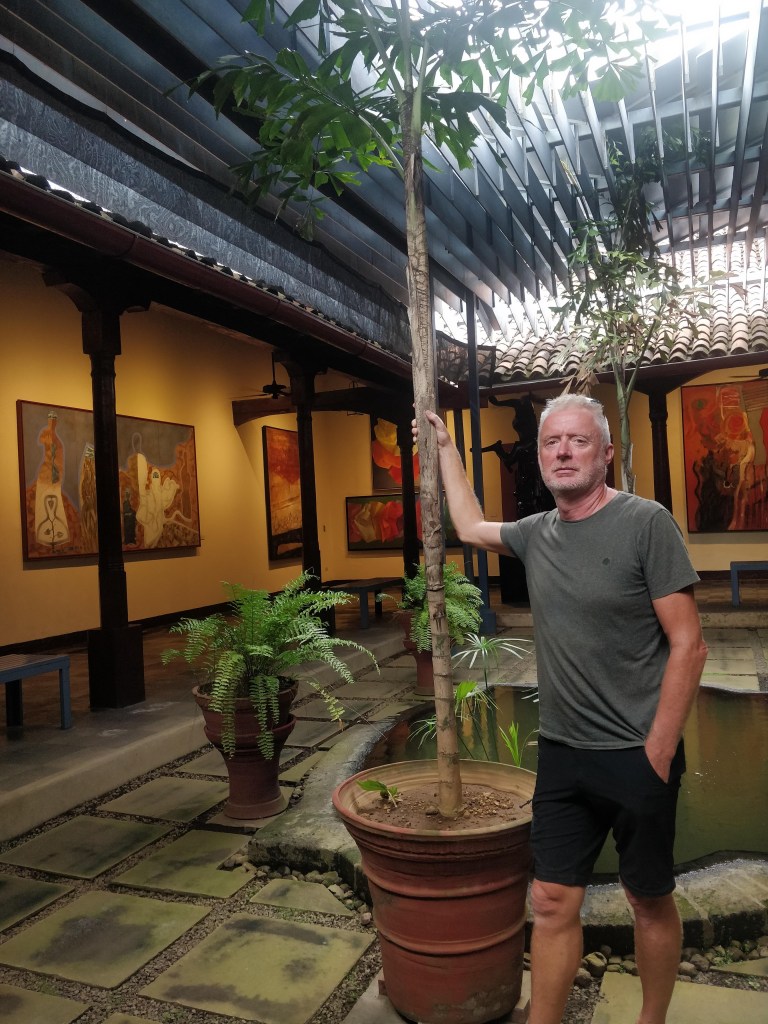
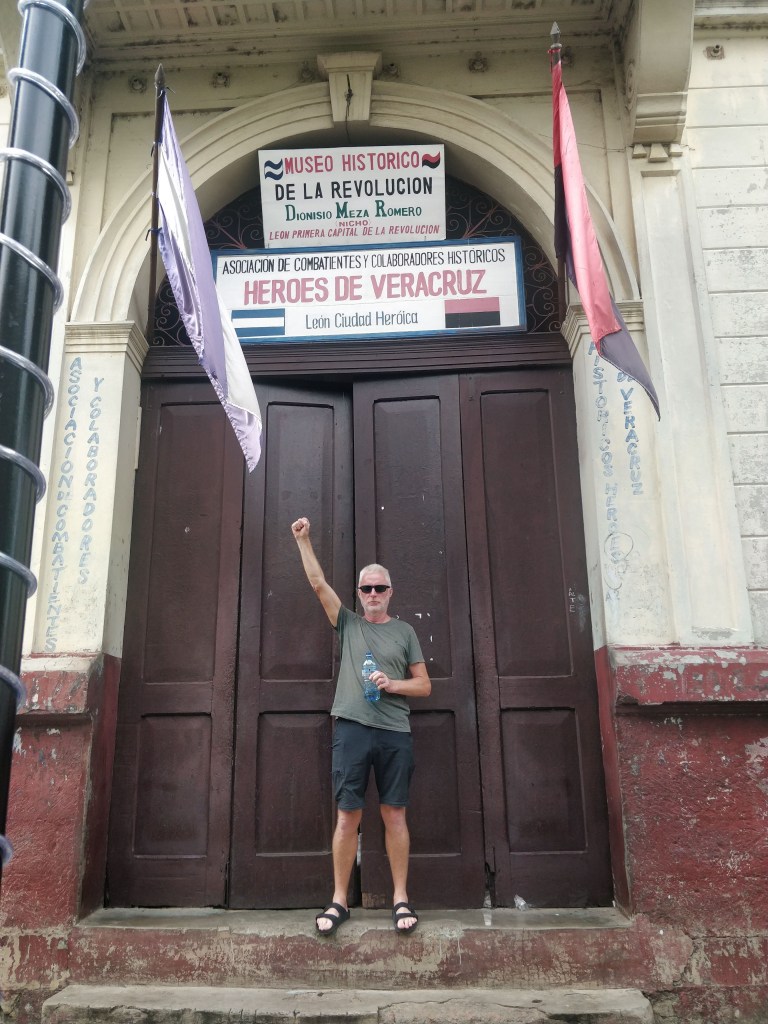
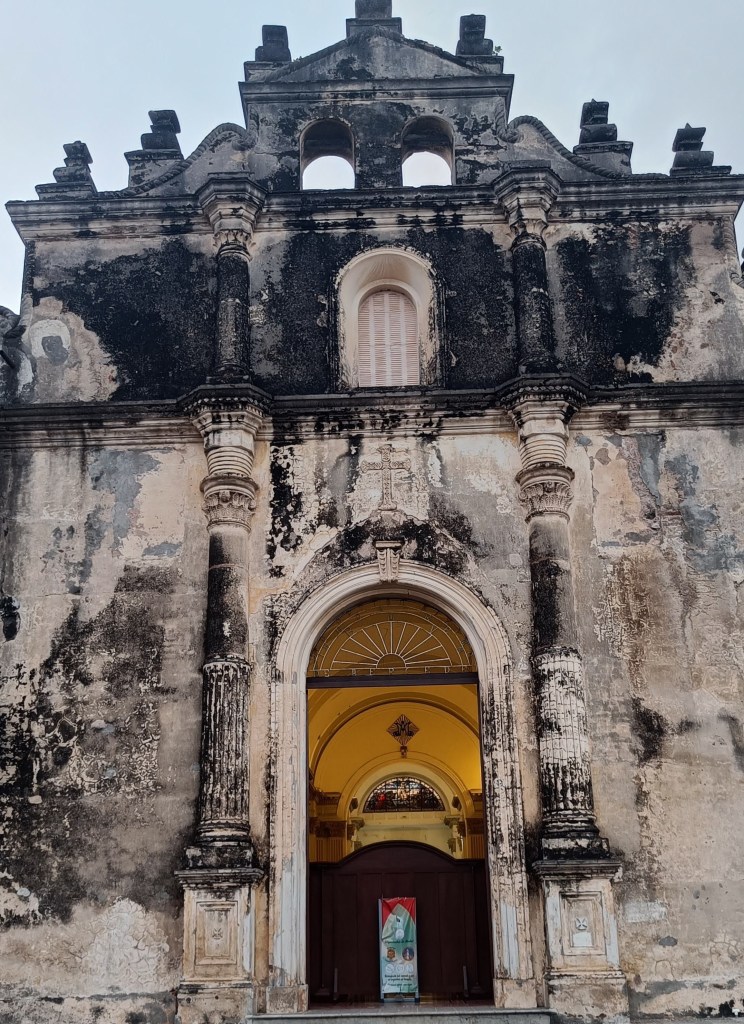
Leon was a gorgeous city with churches, museums and a fabulous art gallery in a beautiful colonial house with courtyards, turtles swimming in tranquil pools, water fountains, fabulous art- even a few Picasso’s. It’ wasn’t far from beaches and was surrounded by mountains, Leon was also known as the revolutionery heart of Nicaragua. Revolution was never far from the Nica psyche – the latest protests were those in 2018 when hundreds of people died and many more were imprisioned. On a walking tour of the city, our young guide said that Nicaragua was a country of lakes and volcanoes. He told us that the people were also like volcanoes but with a poetic soul, erupting into protest and violence and then writing romantic poetry about it….a bit like Ireland! Daniel Ortega, the president was a complicated man who had gone from revolutionary figure with cult status in the 1980s to someone who wanted to hold onto power at all costs. And the costs were high….ruthless crackdown on rivals and reduced freedoms of the press and the universities. Many said that he had come to resemble the Somaza dictator he despised and deposed. He made changes to the constitution that allowed him to run for a second, then a third consecutive term in office and more changes so that he could rule for life, sparking the 2018 riots. People told us that crime was low in Nicaragua with no big organised drug gangs here, unlike their neighbours. There was a belief that everyone was watching everyone else and that there were informants everywhere. But for us, it was the easiest country to travel around with a wonderful standard of accommodation, great food and interesting people. But maybe we were travelling in a ‘gringa bubble.’
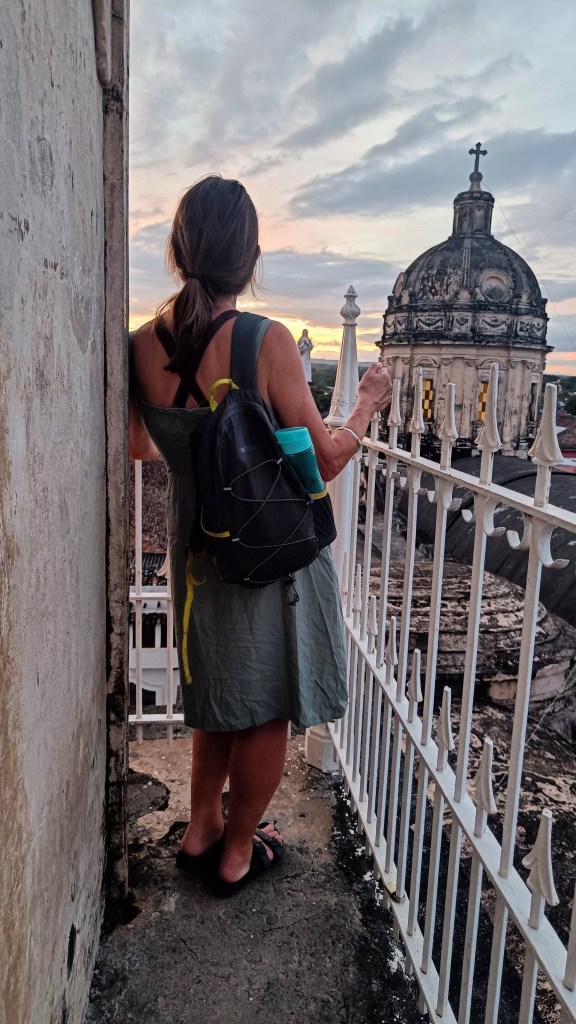
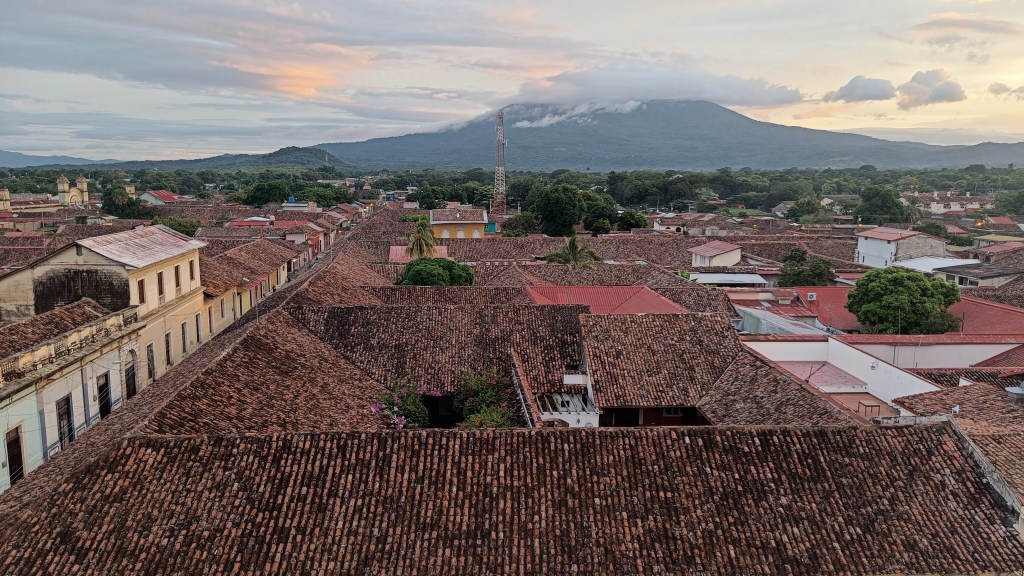
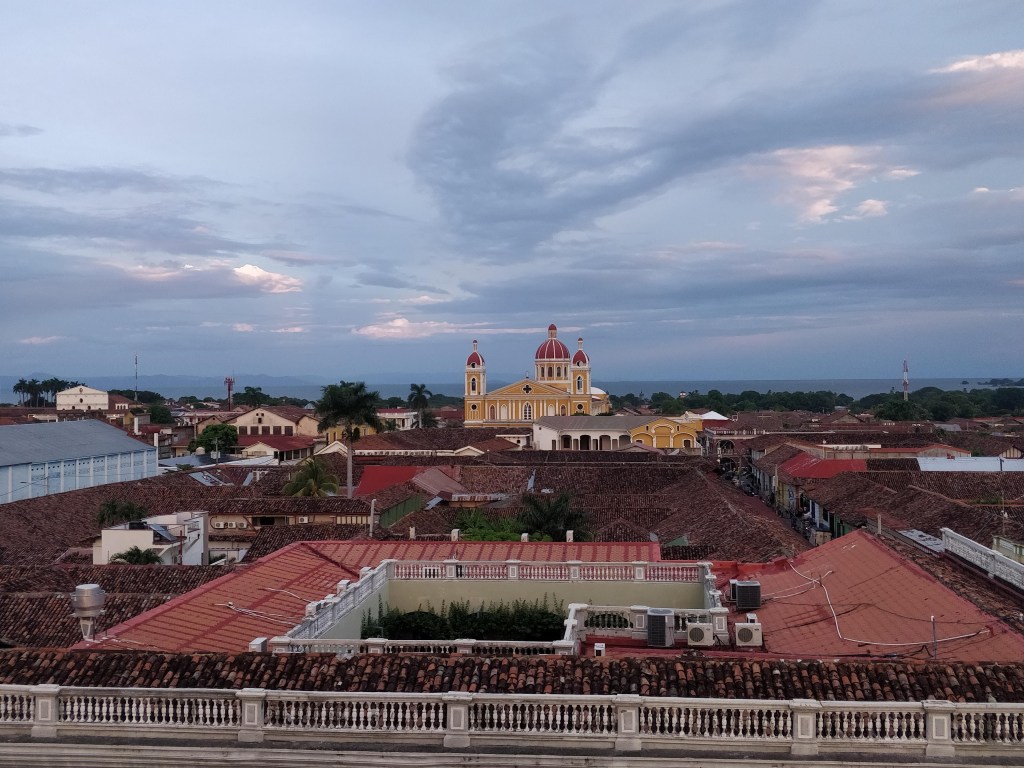
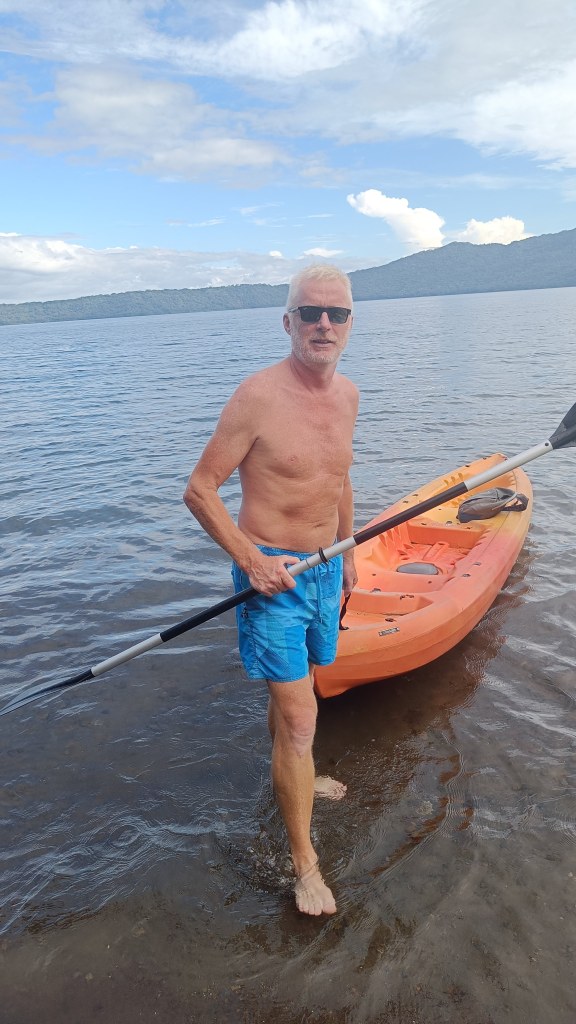
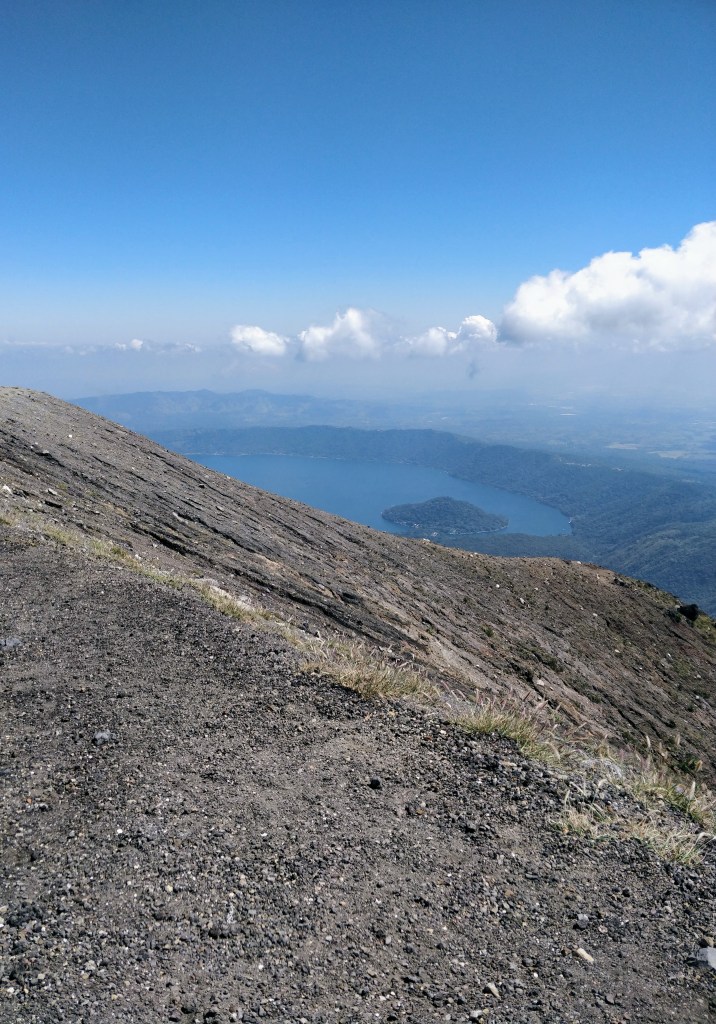
Leaving Leon for Granada, we didn’t think that we would find another city we liked as much. We were wrong. Managua was the capital city but we skirted around it and just changed bus there, It was the capital only as a compromise solution because the intense rivalry between Leon and Granada (both felt they should be the capital) nearly destroyed them both. Granada was grander with a huge central plaza, old churches, tree lined streets and horse-drawn carriages (a bit like the jaunting cars in Kilarney.) I also had another gastro bout which kept me incapitated for 24 hours. Caoimhin was fine so thats it – I’m just going to have to develop a taste for rum for health reasons. Nicaragua has a reputation for the best rum in the world (Flor de Cana). But sitting outside at 8pm on a warm November evening (26 degrees) on a cobbled street, listening to Latin music and watching the world go by, life felt good. We took a day trip to nearby Apuya Lake, the largest volcanic crater in Nicaragua in a Nature Reserve. The famed blue waters were a dull grey and blustery when we arrived but they soon became calm and we kayaked on the deep blue waters. 
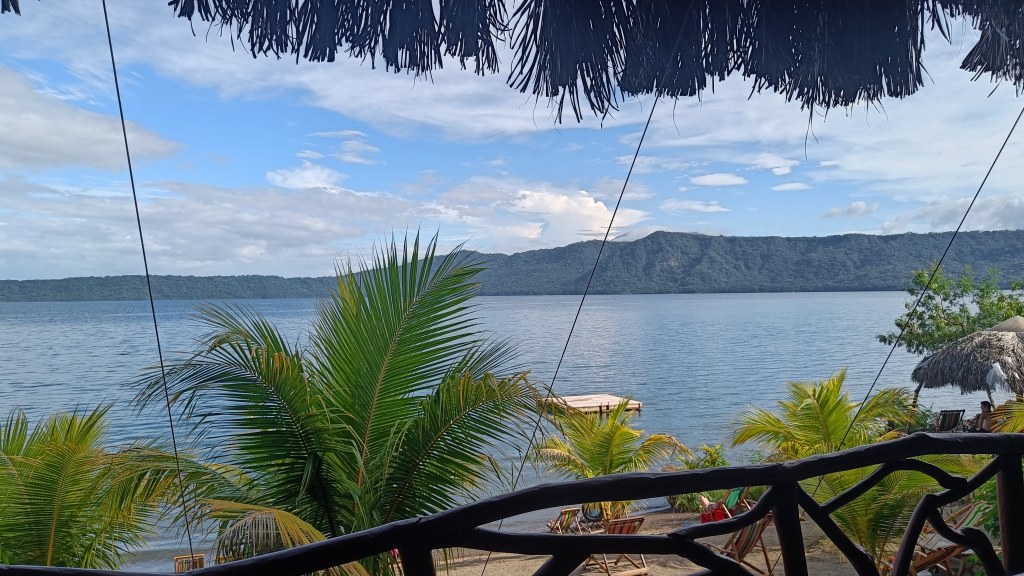
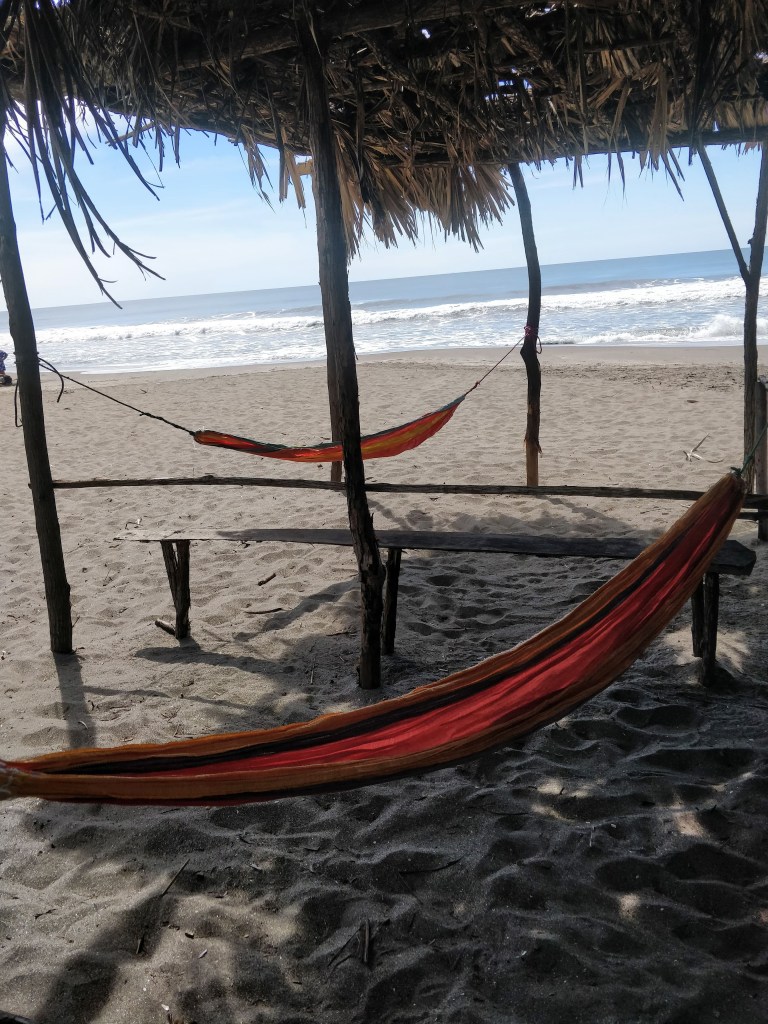
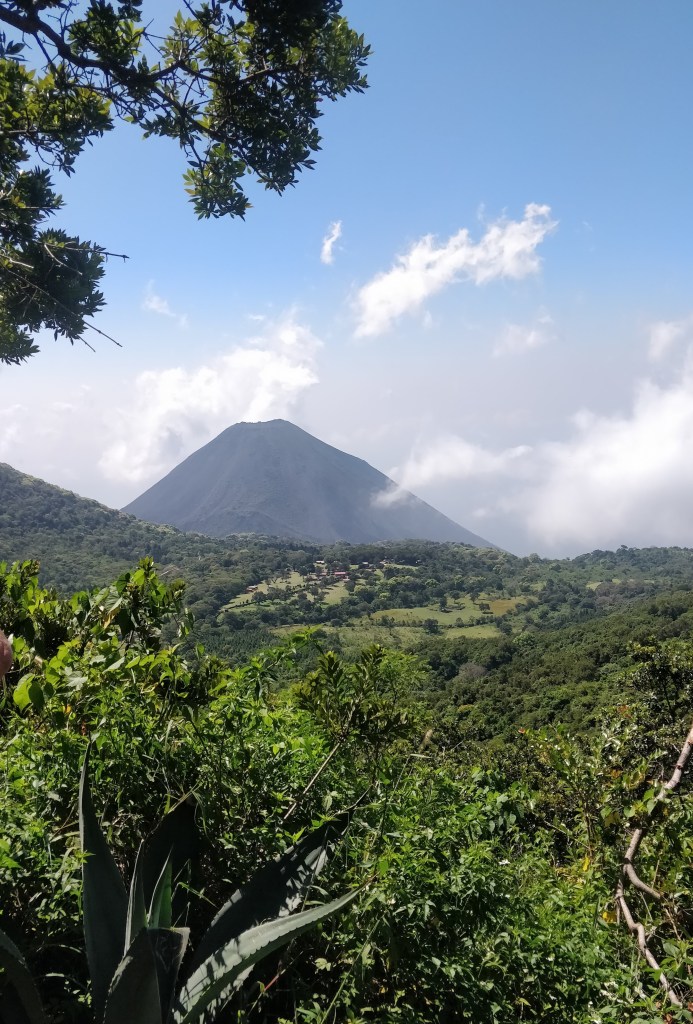
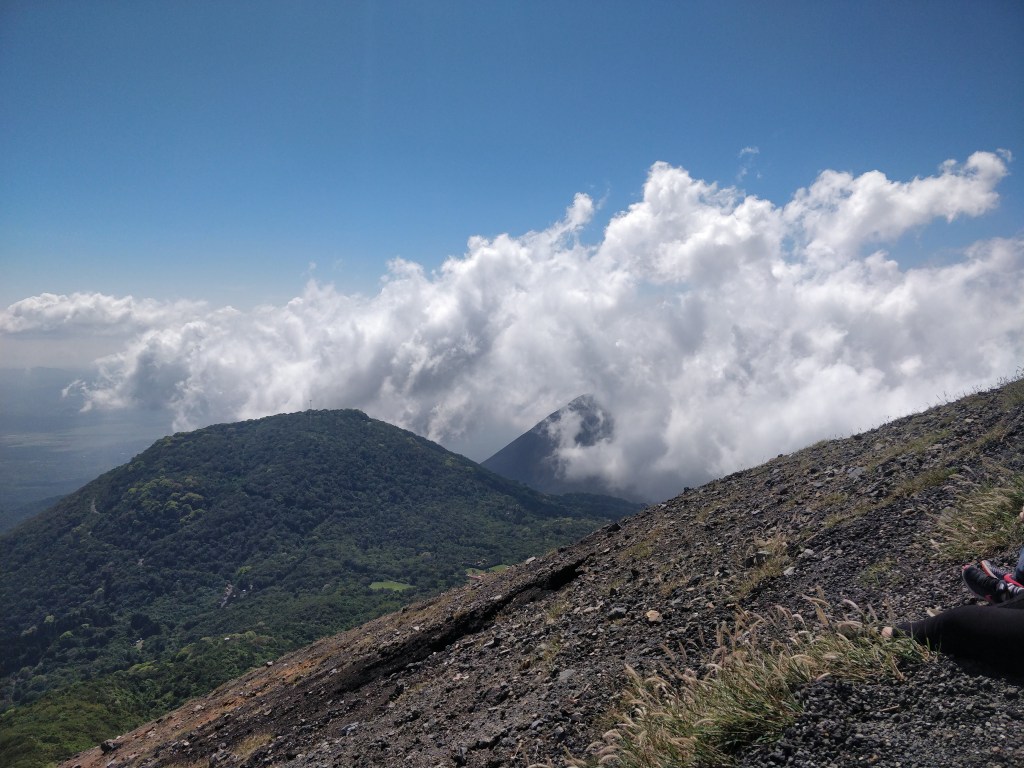
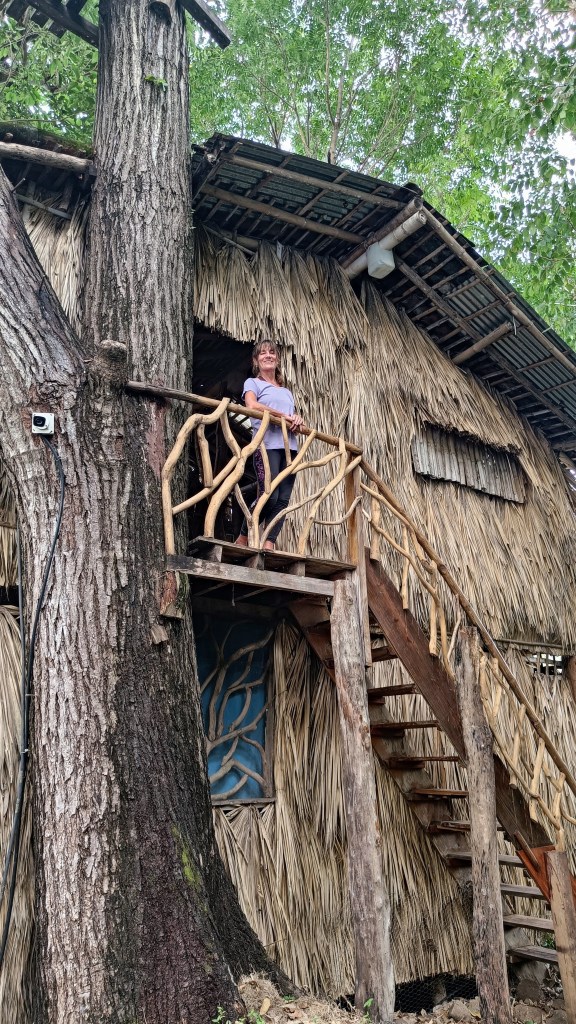
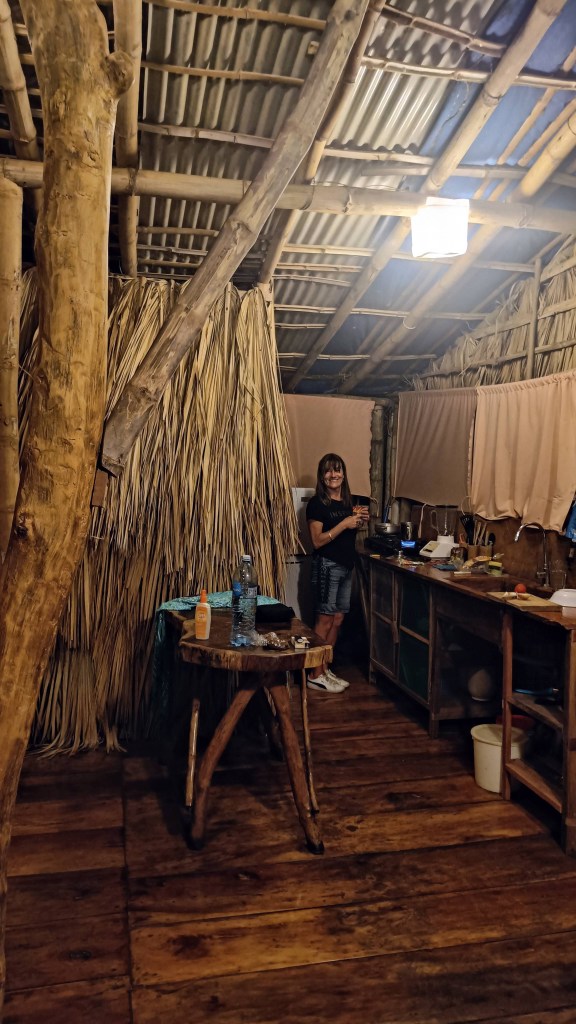
Nicaragua continued to delight as we made our way south to the island of Ometepe in Lake Nicaragua, a tropical island with twin volcanoes, lush jungle and lots of monkeys. Nicaragua truly lived up to its promise of a land of lakes and volcanoes  We rented a bamboo cabin by the lake, made entirely of wood and bamboo by an almost blind Argentine man called Che (believe it or not)…even the shower and sinks  were made of wood in a very rustic jungle setting. Che roasted his own coffee beans(gave us some to try), had two rescue dogs(a bit temperamental) and a fondness for wine and recyclying. He took us on a tour of the jungle surrounding the cabin with all the fruits and herbs growing wild there. He was a eccentric lovely man whose next project was to make a bath from a tree felled by one of the hurricanes this year. The cabin had no windows, was open to let the breeze through – and insects and possums and the occasional monkey so all food had to be kept in sealed containers. It was lovely lying under a mosquita net listening to the night sounds outside, the rustlings and creepingsof leaves and critters and we slept really well.
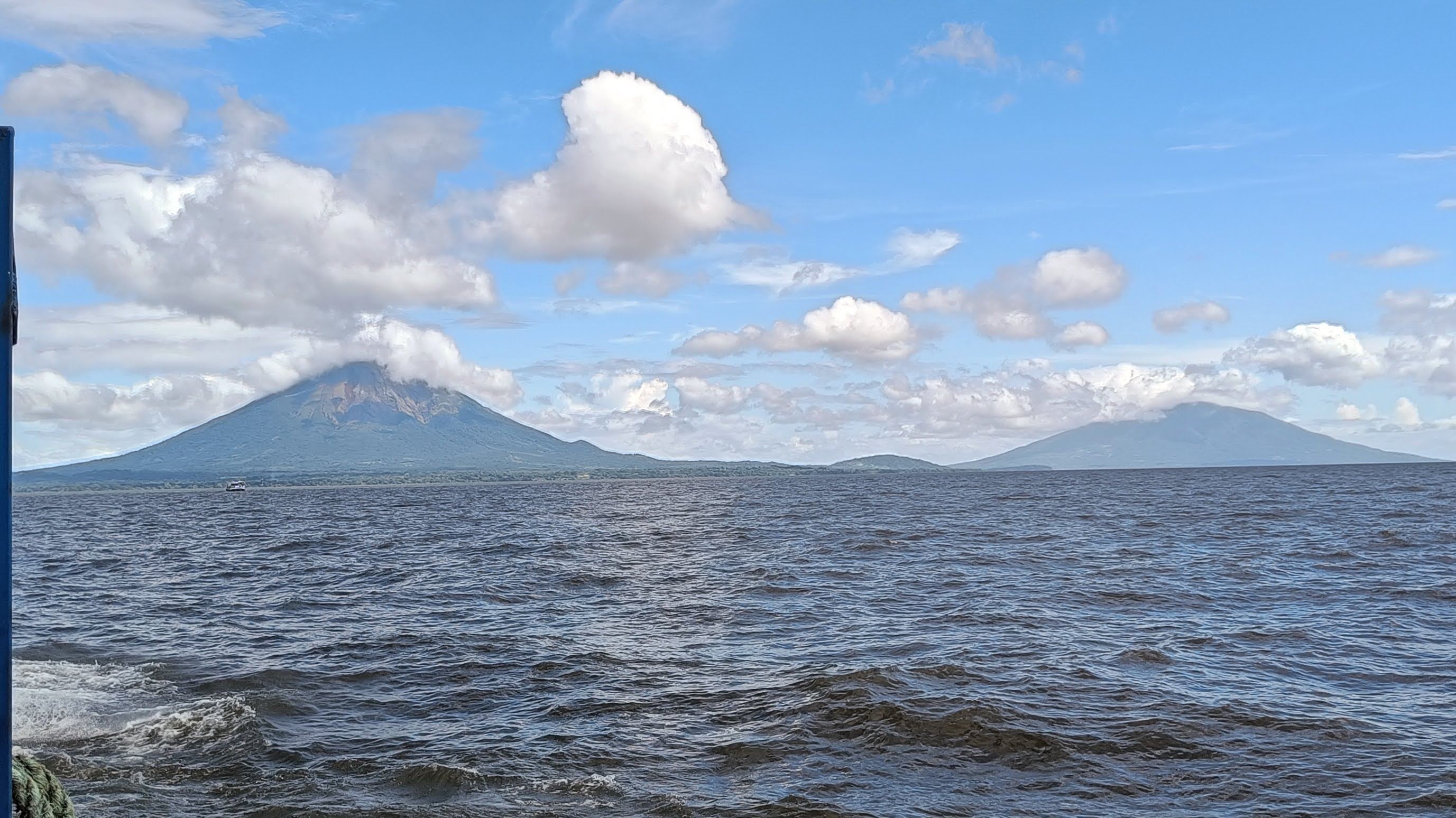
Tomorrow we plan to hike up one of the twin volcanoes, through cloud forests where there are lots of monkeys and parrots and down to the crater lake, if we have the energy. I’ll let you know how we get on…we are setting out at 5am before dawn. The rainy season should be over but there has been really heavy showers today and we have been told that the going will be slippery and tough. So far, despite a shaky start and against all expectation, Nicaragus is becoming one of our favourite countries in Central America with all its beauty and contradictions🐵🐵
Nicaragua – Covid and Contradictions

Macaws, Mountains and Men with Guns

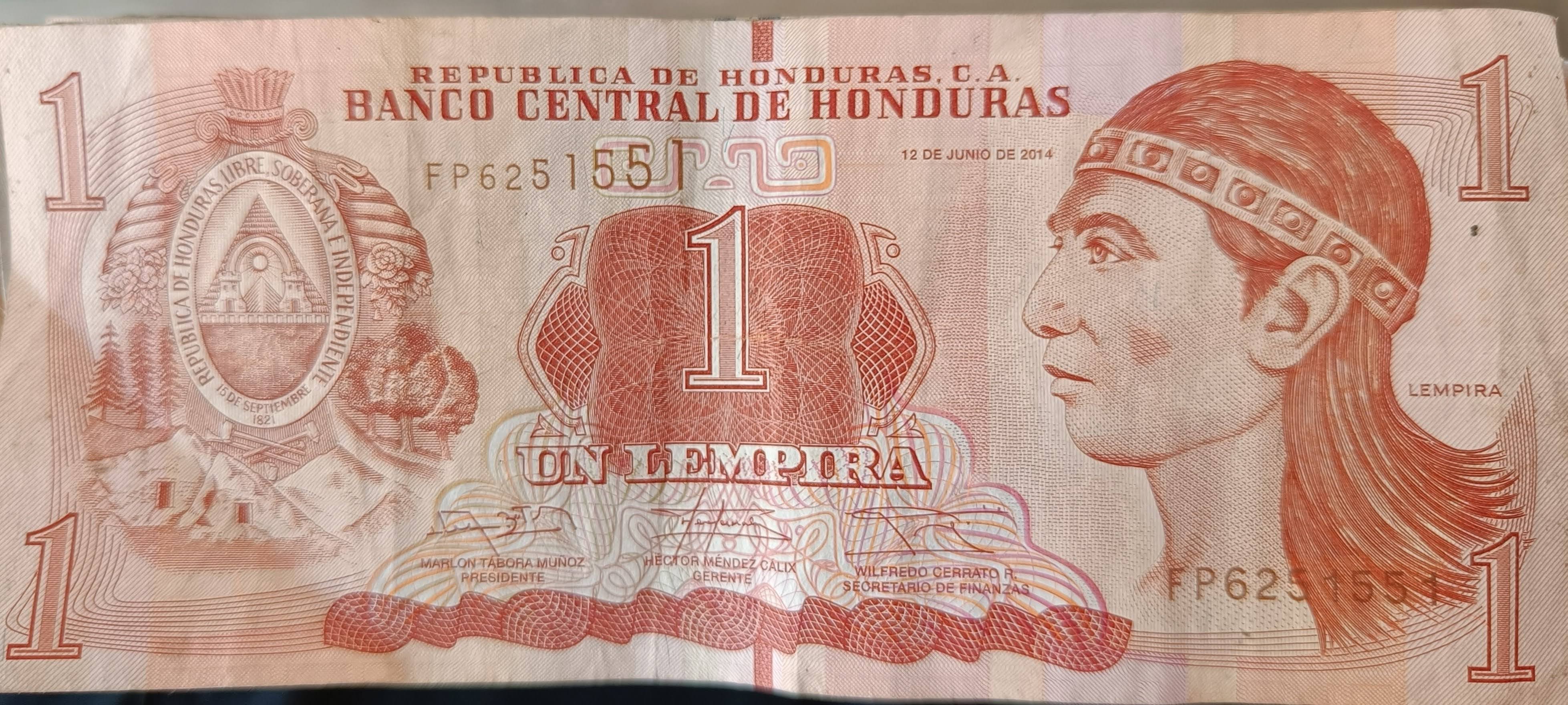
Honduras has been the ‘bad boy’ of Central America for a long time, topping the tables for all the wrong reasons – murders, poverty, corruption and extortion. After the crowds and chaos at the borders with queues of people leaving Honduras, we walked up the hill and found a clapped-out minibus which was going to Copan Ruinas, our destination. We had a wad of lempera in our sweaty hands, changed at the border on the black market – i.e.men with satchels of cash giving a very competitive rate. The currency of Honduras was named after Lempera, a national hero because of the resistance he put up against the Spanish. The countryside didn’t feel any different to Guatemala but the first surprise was the driver putting on a seat-belt – we hadn’t seen any bus drivers using seatbelts in Guatemala or Belize. He didnt read the paper whilst driving either…..always a good sign😁

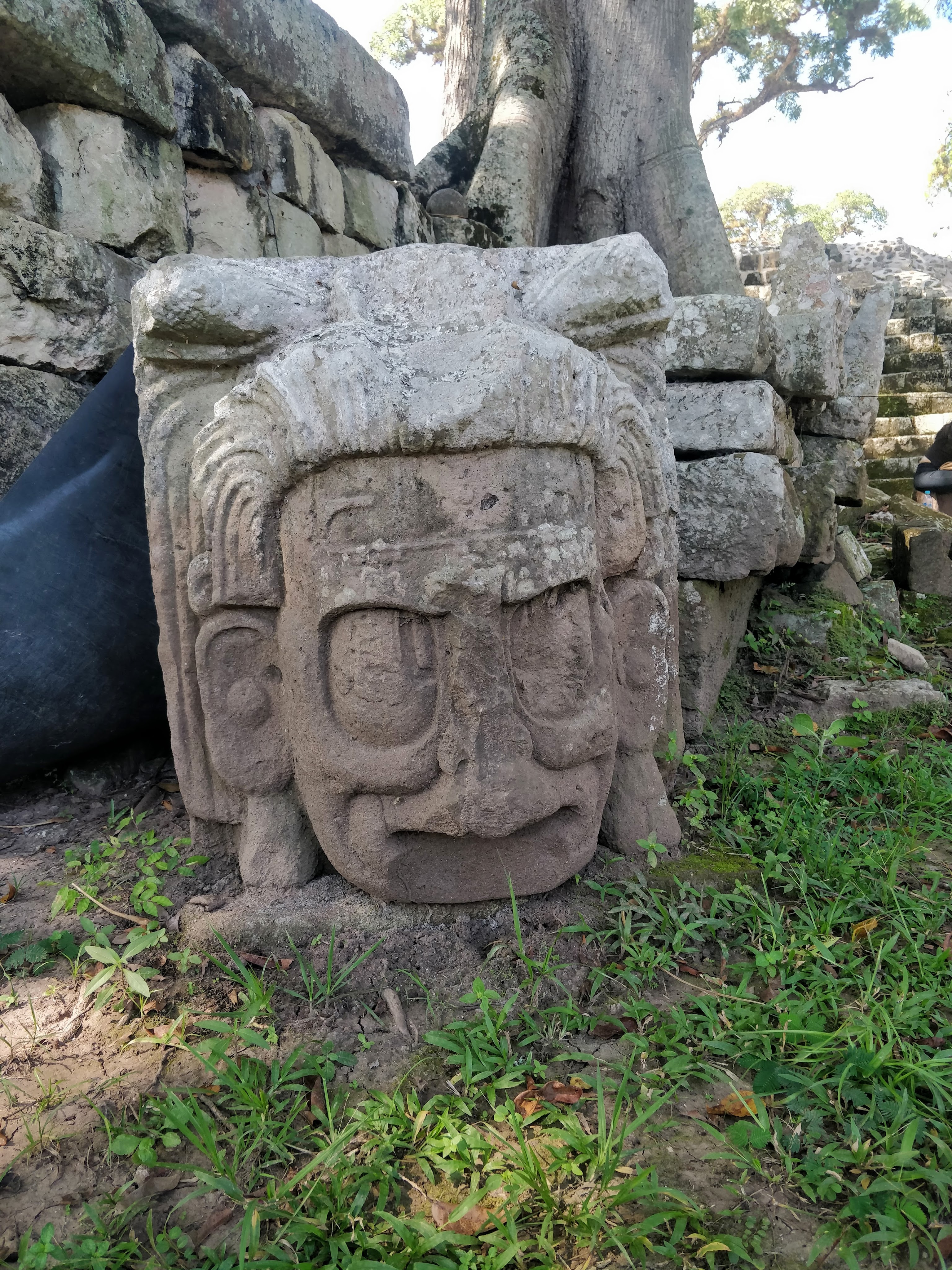
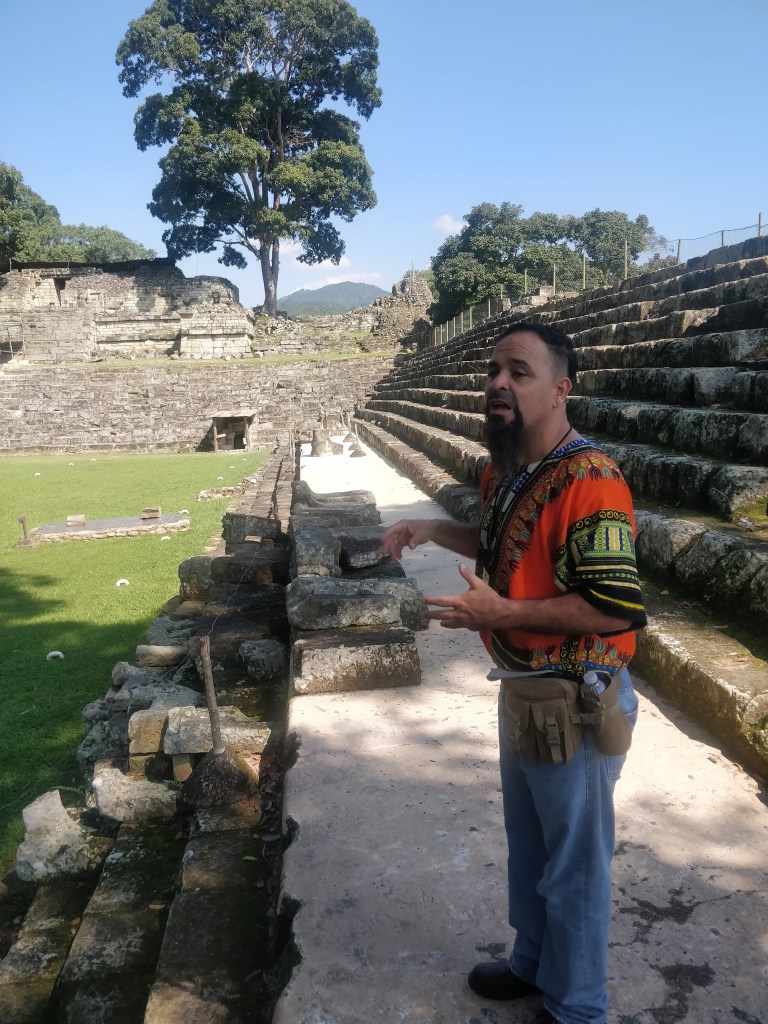
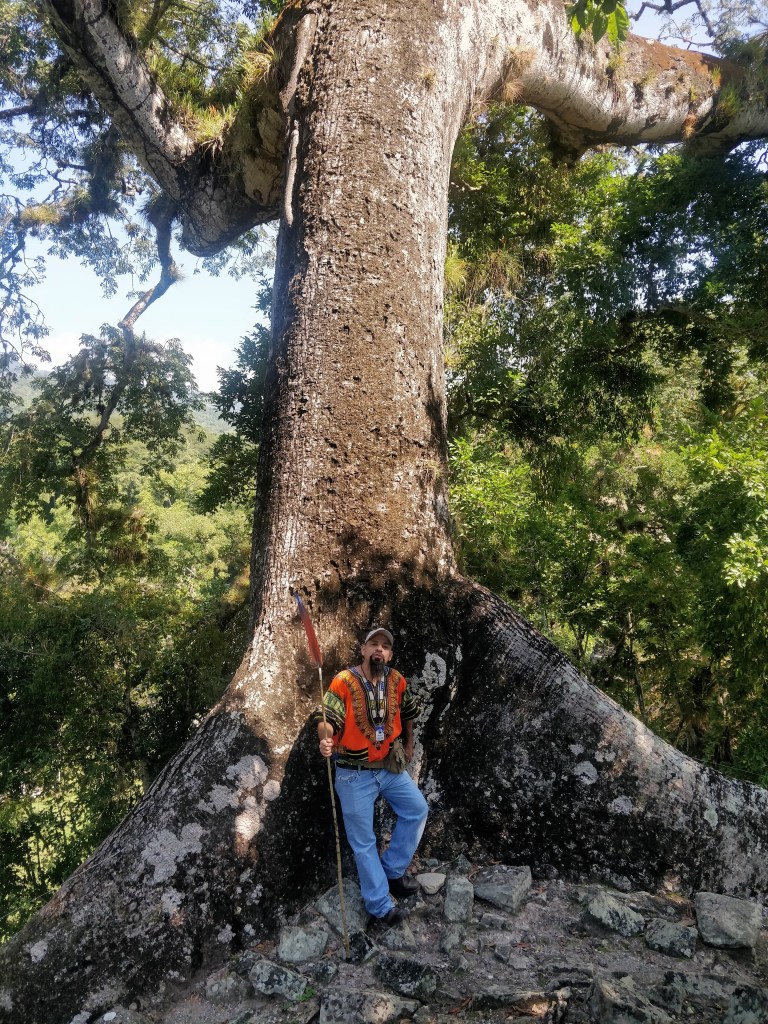
Copan Ruinas was a small town with cobbled streets, a lovely central plaza and lots of flowers. It was also very hilly, some of the streets were almost vertical and we struggled and sweated up to our accommodation in the dense afternoon heat. The big attraction in Copan Ruinas was the Mayan site just outside the town. The scarlet macaws flitted about the entrance, enteraining everyone who walked through the gates – loud, raucous and brillantly coloured. These birds were sacred to the Mayans who saw the fire and power of the rising sun in their feathers. While the site was not as big as Tikal in Guatemala and the excavated structures were not as large, it had very impressive hieraglyphics, stellae and stone carvings. Our guide, Francisco, who was dressed in a brightly cpoloured shirt (like a macaw) had lived in Canada for about six years and really missed the cold Canadian winters and scampered under the shady trees as much as possible. Archeologists found layers built on layers here, as the Mayana had a tendency of destroying existing buildings when a new ruler took over and they building on top of the past. Some of the history of the site had been pieced together by the deciphering of the complex hieroglyphics but like all good mysteries, the reasons for the abandonment of the site was still conjecture. Deforestation with consequent erosion, severe flooding and crop failure were the likely reasons. Worryingly, this is not very different to what is happening now and the Mayans, who were very clever and advanced in mathematics and astronomy, believed that life was cyclical and that history repeated itself😮. Without a doubt. the Mayan Copan dynasty from the second to ninth centuryAD was the heady glory days of Honduras, Since then Spanish invasions, British pirates, American interference, corrupt governments and severe weather events have all taken a toll.

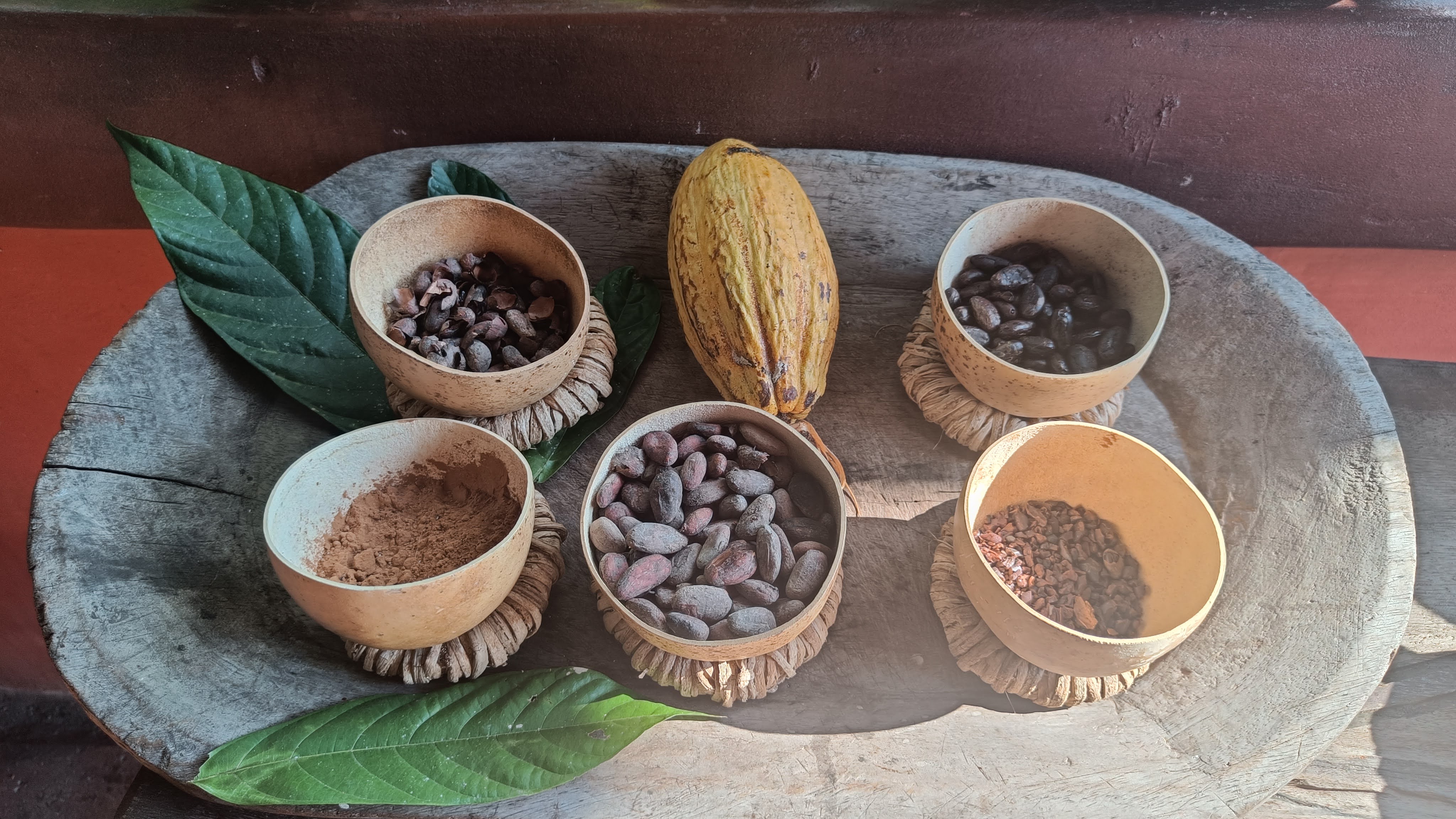
Cacao beans were also grown around Hondorus and that meant one thing – chocolate😊. Our trip was turning into a chocolate tasting one. We met a Belgium man living in Copan who made delicious chocolate and visited a Tea and Chocolate Place which specialised in selling an incredible variety of tea and chocolate, set in a garden with a large verandah with views over the trees and a welcome breeze. Bliss!

Chocolate Beans to Powder

After a couple of days in Copan, we had decisions to make. We felt that our time was running out (although we had about a month left but we wanted to visit El Salvador and Nicaragua on the way to Costa Rica to fly home). Hondurus was temping with a lot to offer, fabulous islands in the Carribbean and mountains in the interior. We met an elderly Canadian couple who winter every year in the Bay Islands of Hondurus but travel was slow because of the poor infrastructure. Hondurus has a woman president (Xiomara Castro) since January 2022 and people told us that they were optimistic that things would change for the better. Lets hope that’s true – the human capacity for hope is powerful – but the crowds exiting the country was a worrying sign. In recent years, Honduras ceded the mantle for the country with the most murders per capita to El Salvador, the country that was next on our list 😮.

We decided to get to Santa Ana in El Salvador by shared shuttle ( a minivan). It cost about $50 each ( a lot of monney in these parts) but it was worth it especially as we were the only two in the van. We felt really privileged as we bypassed queues at the border back into Guatemala (just as crowded and chaotic and confusing as crossing in the opposite direction) and drove through Guatamala to the border with El Salvador, a quiet organised crossing. The countries are quite small – San Salvador is about a third the size of Ireland. The journey took little more than 4 hours including the two border crossings.

In El Salvador, the roads were straighter with a blue haze on distant hills. We drove past lakes and green forested hills. Our shuttle dropped us at the door of our accommodation in Santa Ana and thats where the luxury ended. Our room was very cheap (about €12 a night) but it was like a prison cell, windowless with a tin roof that trapped heat and a swirling fan which rotated the hot air and there was a padlock on the door. Lily on ‘reception’ – a chair and small bench inside the door – was friendly although we struggled to understand her rapidfire Spanish. We didnt meet anyone in Santa Ana who spoke English. There was a restaurant on one side that blared music (torture by noise) on the first evening but thankfully was closed for the next two nights. The basic Mexican restaurant on the other side had a friendly man with a gun as security. But then men (and some women}with big guns were very common. The cleaner in the bus station had a sweeping brush in one hand and a gun in the other, the bus driver had a gun, most shops and all bars had men with guns outside. Most of the litte grocery shops(corner shops) have huge iron grids pulled down and sold their produce through a small hatch.

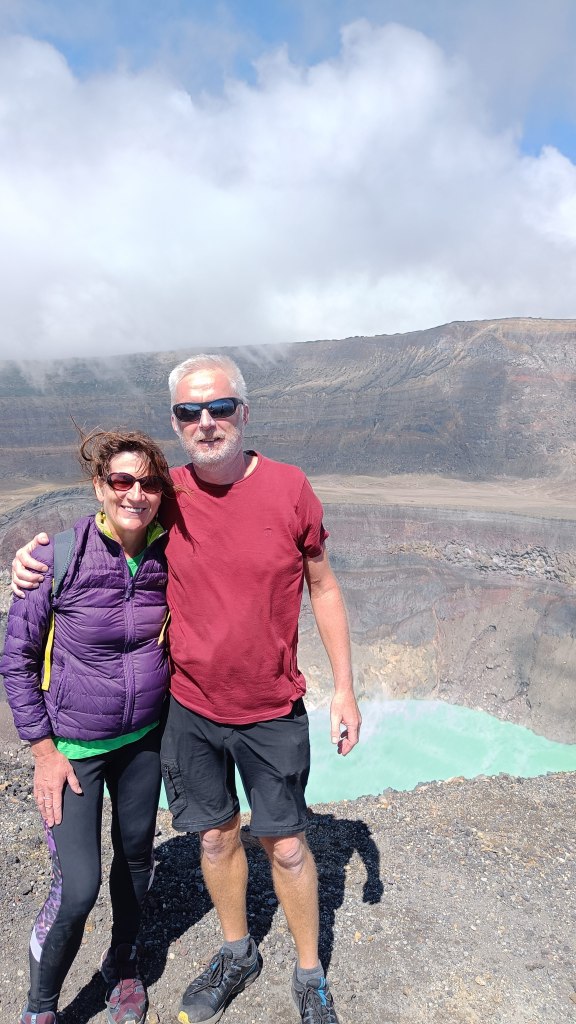
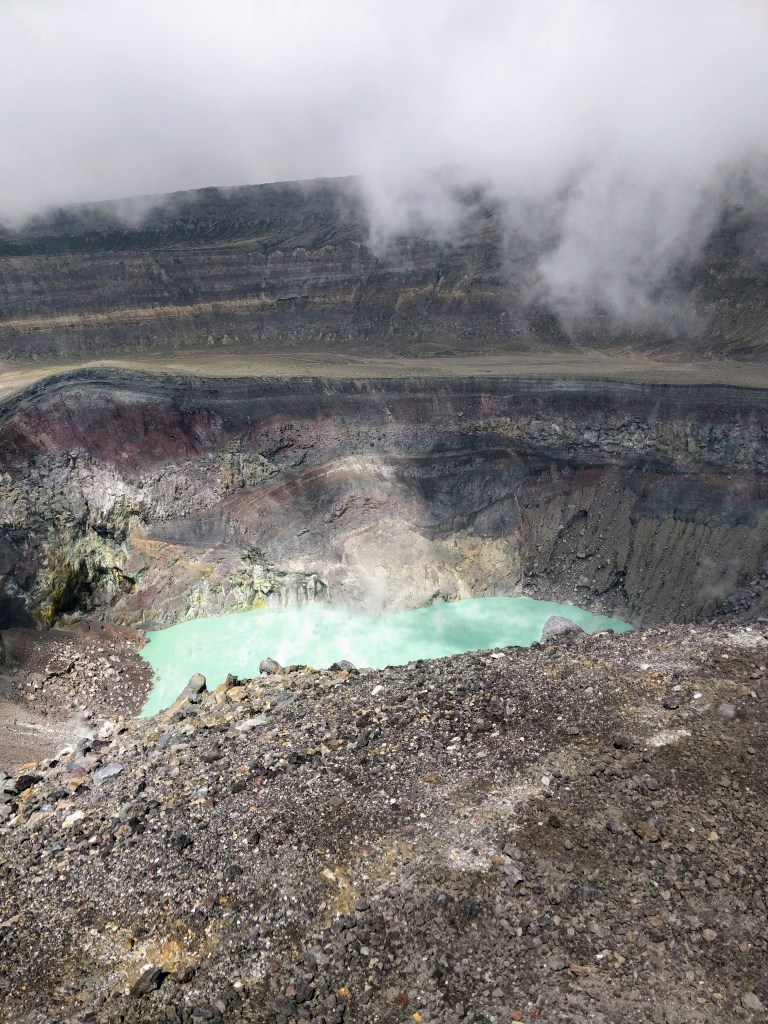
We got a local bus to the National Park Cerro Verde to climb the Santa Ana Volcano. This was a gorgeous hike through forests up to the top of the volcano. When we peered over the rim, there was a lake of the most exquisite turquoise and views over the countryside and i kept thinking that El Salvador was a beautiful country with such a bruised and battered past.

The longer we stayed in Santa Ana, the more we liked it..although we never quite adjusted to the sweatbox conditions of our accommodation (Hostel Casa Luna). We became accustomed to the level of security and guns. There was wealth too, evident in the shiny new shopping malls with Christmas trees and designer shops at the southern end of town. The central plaza towards the north, had seen  better days but retained some old grandour with fine faded buildings, street vendors and park benches. In between these two areas were the markets selling everything, a riot of colour with the smell of poverty. Here, everything was repaired and reused, from TVs and electric fans to clothes and bicycles and all this among a pile of rotting veg, blowing plastic bags, discarded styrafoam cups, broken footpaths and unpaved roads. But going through the market one early morning to catch a bus to take us to the mountains, the street vendor wouldn’t take any money for two bananas…that El Salvadorean welcome that we experienced over and over.

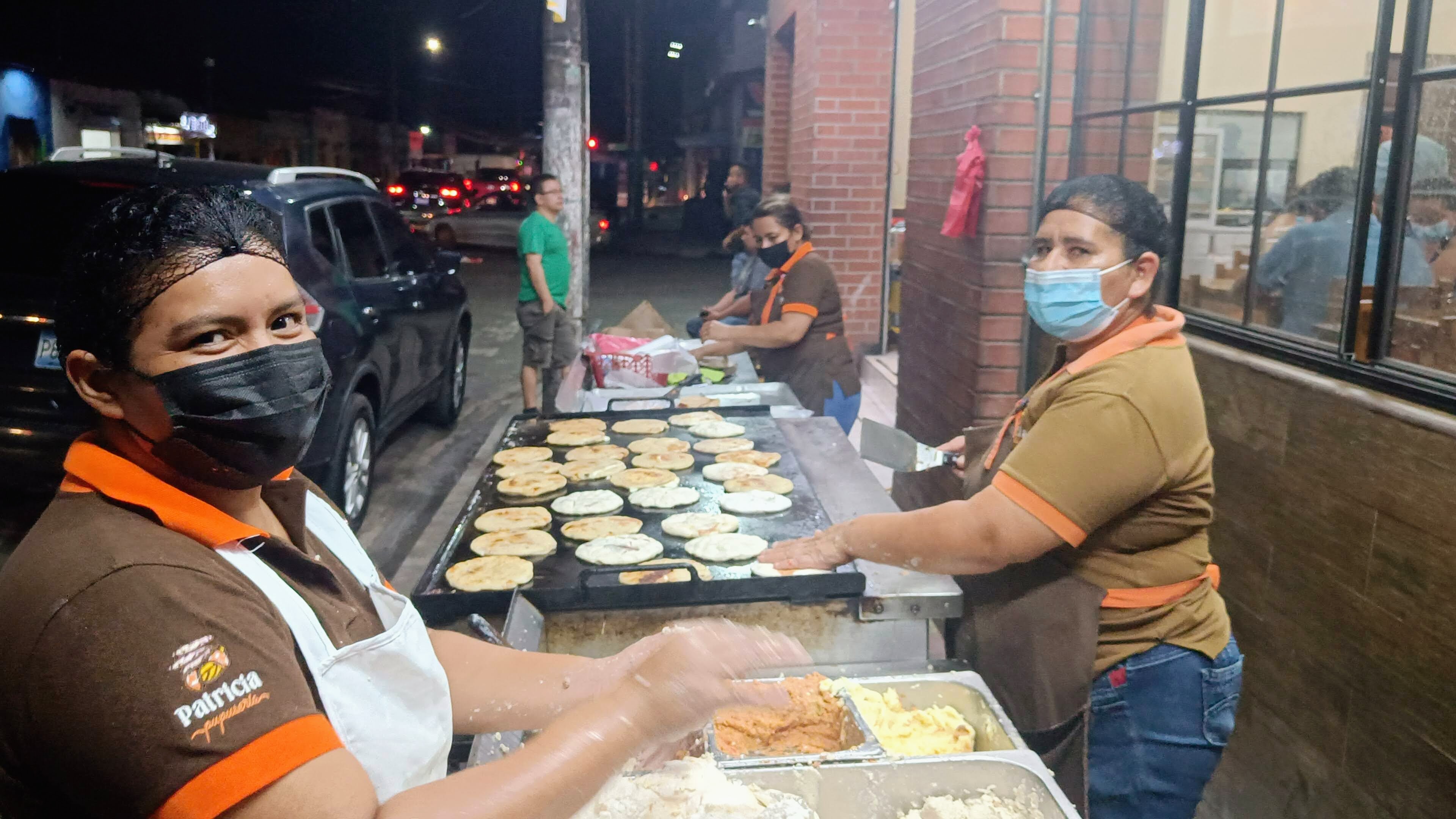
We ate pineapples so sweet and golden, it was like eating sunshine🌞. The snack food of El Salvador wass the pupusa. …a ball of maize or rice dough slapped into shape by women with large biceps,  stuffed with fillings of your choice, flattened into a circle, cooked over a hot plate and eaten with a spoonful of fermented peppers and onion, hot enough to make you cry and reach for water. We ate ears of corn barbecued over smoky fire and doused with of fresh lime juice and a sprinkling of salt Fried chicken was  popular and VERY fresh… chickens ran around pecking the ground under the fryers without realising that their days were numbered.  Of course, chips (patas fritas) were everywhere, cooked in vats of oil at the side of road and eaten with grated cheese, ketchup and a few jalapenos. We also visited Bam Bam, a confectionery cafe selling the most delicious chocolate tartlets and flaky pastry puffs. Bam Bam was a chain that originated in Santa Ana and much as we searched in other places, we never found another one in El Salvador. Breakfast was similar in all of Central America – scrambled eggs, refried beans, rice or tortillas, fried bananas or fried yucca. It wasn’t really a surprise that a significant number of the population of Central America were so very generously proportioned.

Puposa Women

The bus service was really good in El Salvador. We got a local bus. which was comfortable and cheap, from Santa Ana to San Salvador, the capital city for a dollar, a journey of one and half hours on good roads. The currency of El Salvador was the US dollar.

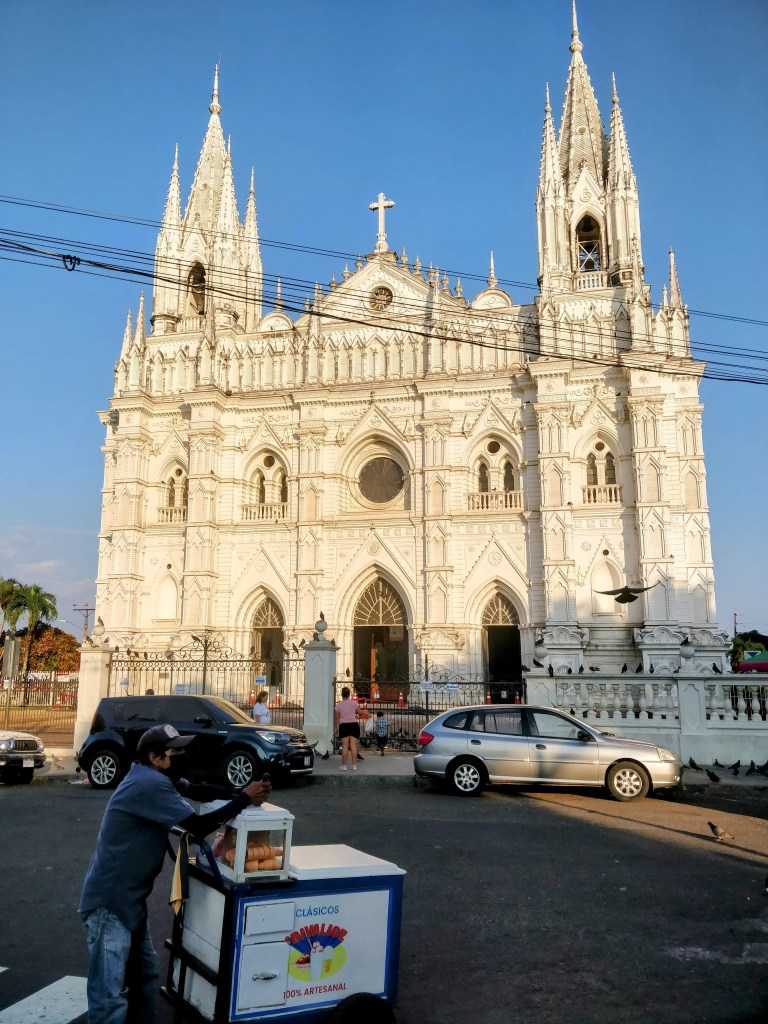
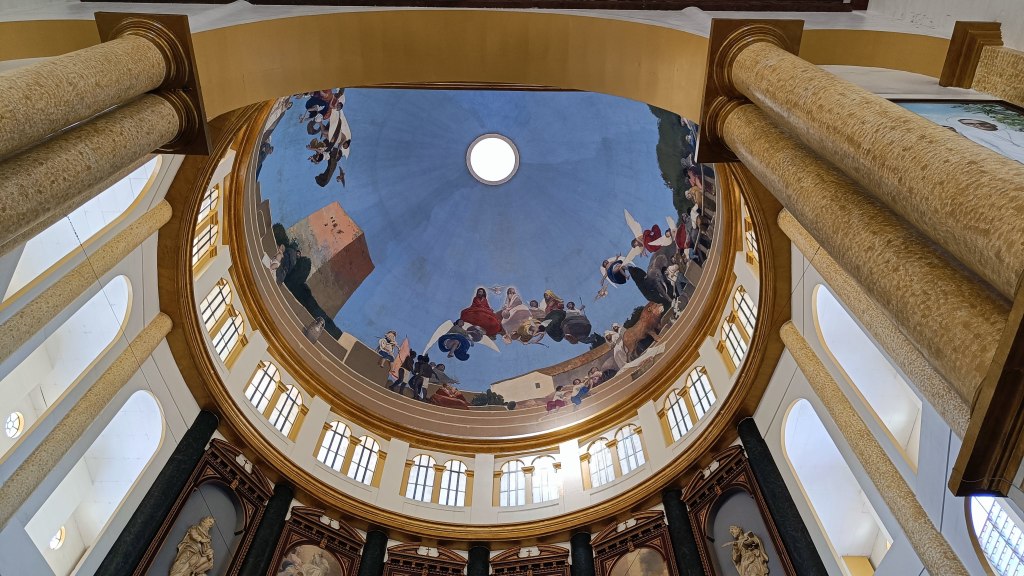
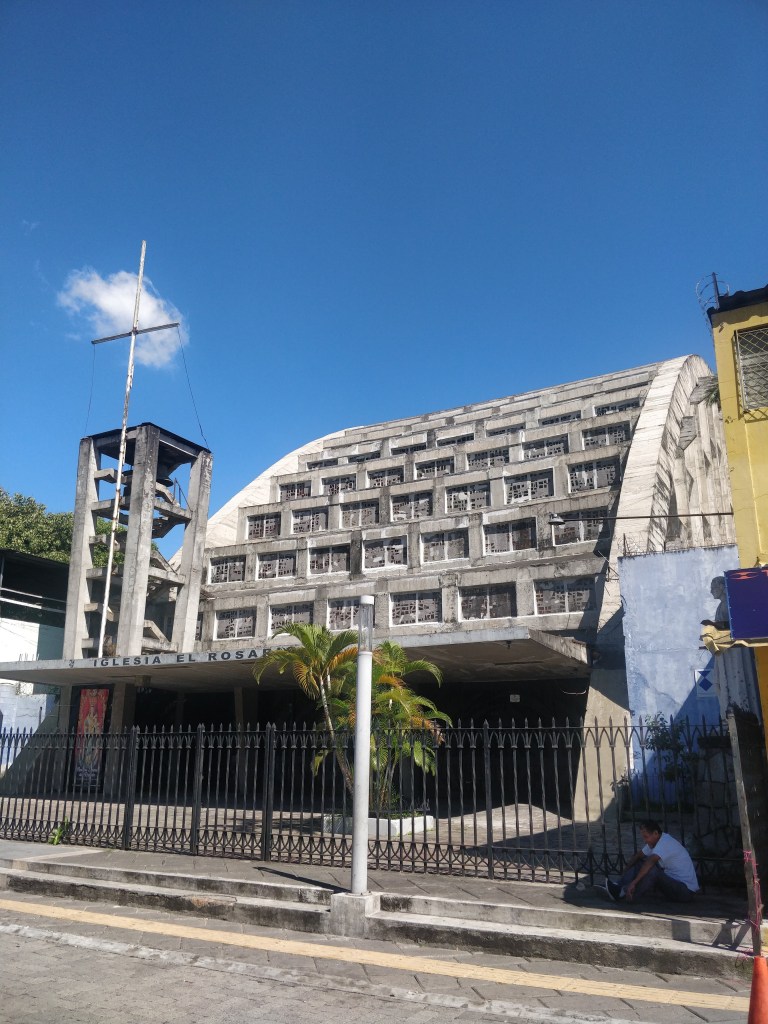
San Salvador with its noise and fumes had us reeling.  Certain streets looked like they had been bombed…last week. To be fair, there were lots of roadworks going on. But the heat was intense enough to  make us dissolve…even the pigeons were seeking shade. Music blared at full volume from all the shops as we dodged belching buses, forced to walk on the road because of broken footpaths and street vendors. We didn’t like it much and realised why it was often avoided by visitors. The church (Iglesia de Rosario), reputed to be the most spectacular in all of Central America  and our reason for visiting the city was closed when we got there although Google was saying that it was open😮.  A man on the plaza told us that it only opened  at the weekend. I found the Facebook page of the church and sent them a message,  Disappointed, we sweated back to our hotel to rest but as soon as we hit the WiFi, I saw that I had a message , the church was opened between 2.30 and 4.30pm. It was now 3 pm so out we trudged out again and this time we had a totally different experience. We avoided some of the more congested streets, the heat had abated and the afternoon was a little cloudy  There was music and dancing in the Plaza, lots of noise with competing bands of musicians but wonderful ambience. Old men shook our hands and welcomed us. Christmas was coming and a team of workmen were putting up  lights and Christmas trees in another plaza outside the Metropolitan Cathedral. This contained the crypt of Monsenor Romero who was assassinated in 1980 for speaking out against the government. 

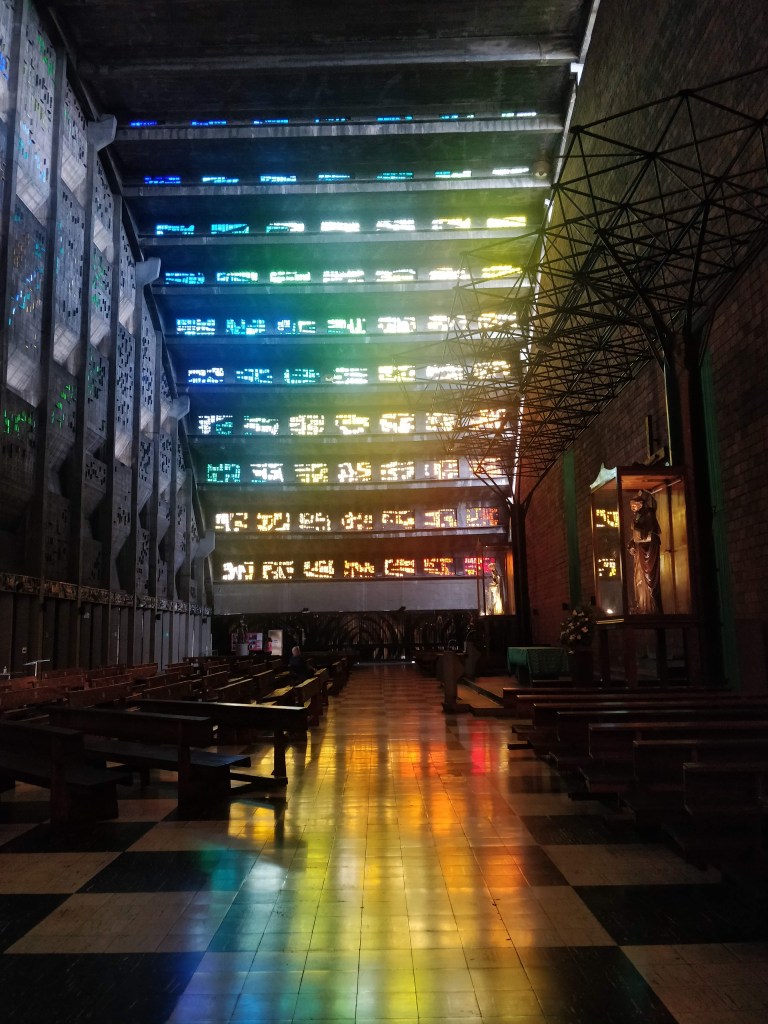
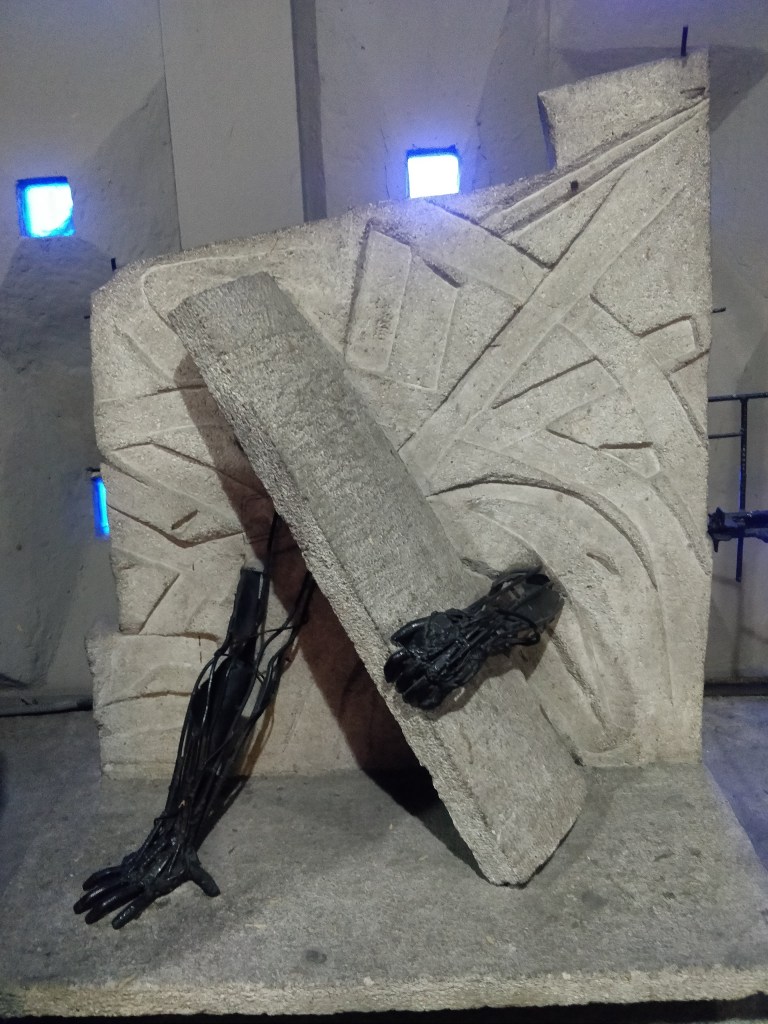
The church of the Rosary was incredibly spectacular. From the outside, it looked like a utilitarian concrete building in need of maintenance but inside the interplay of light from the coloured stained glass in the domed concrete walls was sublime.  It sent a rainbow of colour across the floor. The light gave the illusion of steps up the walls and has been called a staircase to the heavensl. Unique understated simplicity and awe inspiring creativity.. The stations of the cross were simple structures using leftover concrete and iron from the building as the budget was tight. We stopped into a lively bar – more like a barn really – near our hotel where customers greeted us and welcomed us, pleased that we were visiting their country.

But few tourists meant that there was little traveller infrastructure for people like us ( that is, backpackers who want to travel relatively cheaply) All the accommodation websites. Booking.com, Airbnb, Hostelworld were quoting crazy prices for accommodation on the coast or in the mountains, much higher than we could afford so we had no choice but to leave ….ironic when El Salvador was an inexpensive country.  There was a ferry departing from La Union in eastern El Salvador to Potosi in Nicaragua so we booked that online and asked the ferryman to recommend accomodation in La Union as there was very little online. We messaged his recommendation and they had rooms, $15 a night with a fan and $25 with A/C😀. So accommodation was available but not on the accommadation websites. Our guidebook described La Union as an unattractive place where even the dogs on the street whimper at noon with the heat….so we reserved the room with A/C, not really knowing what to expect.

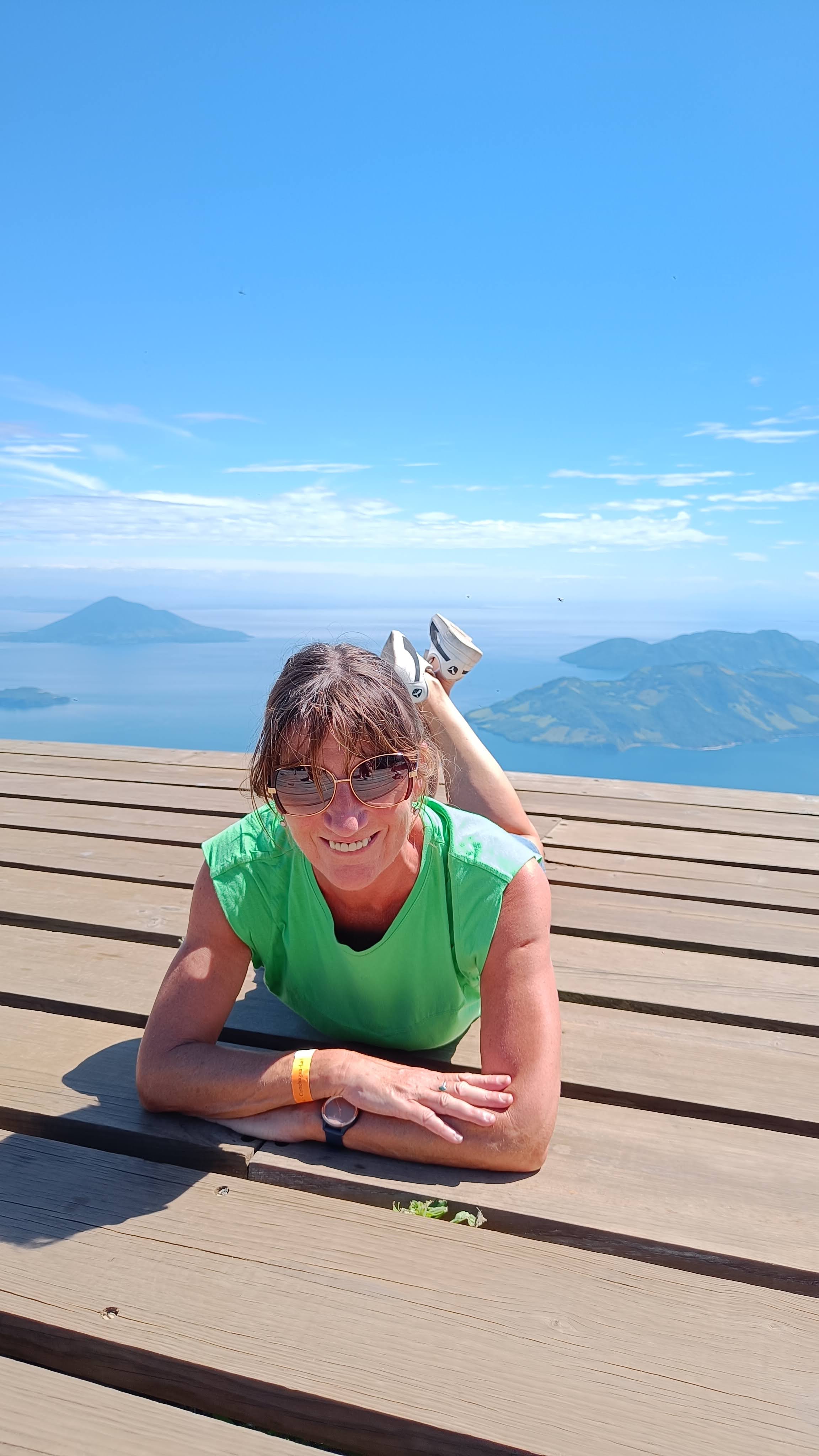
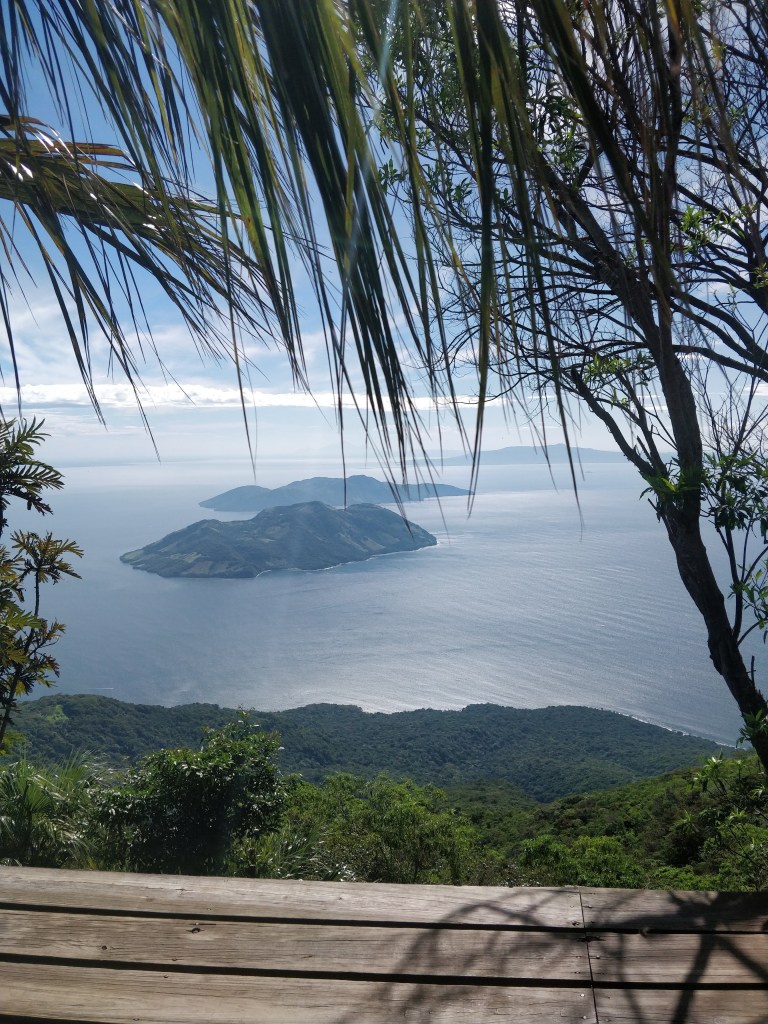
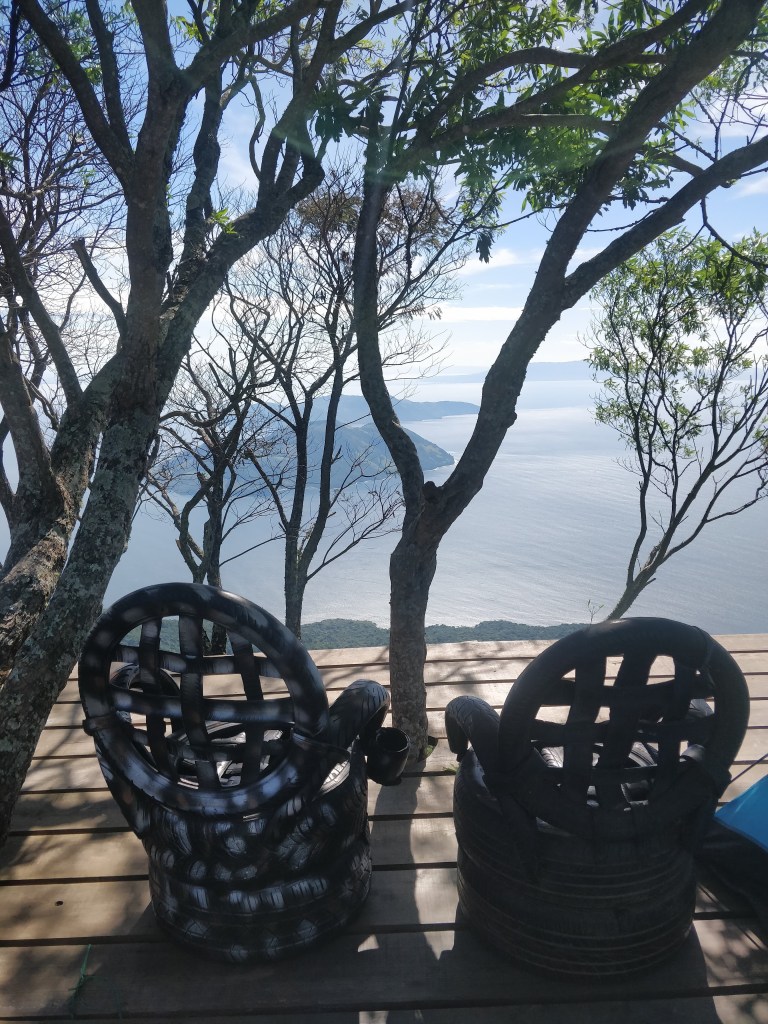
Although La Union was hot as hell, it’s location was unexpectedly heavenly, looking out at the Golfo de Fonseca where three countries meet – Honduras, Nicaragua and El Salvador. We took a trip in the back of an old army truck up to Volcan Conchagua -a bit surreal when you consider the stories that such a vehicle might tell. The views over the Gulf and all the islands scattered in it were breathtaking and the air was cooler and fragrant with pine. The area was called the L’Espirit de Montana, the spirit of the mountain and some university students told us that if you had belief, the spirit might reveal herself to you as a white butterfly or maybe an eagle and might even provide you with solace and peace. We met a family who were holidaying in El Salvador, the parents were born in El Salvador but emigrated in the early 1980s as teenagers to the United States to escape the fear and the death squads. The woman kept repeating that El Salvador deserved to experience peace after all the suffering the people had endured not only from the civil war but also the drug gangs, She was also hopeful for the future and a white butterfly fluttered past as she spoke.

So after three days in Hondurus and six days in El Salvador, we hope to cross the Gulf of Fonseca in a small boat to Nicaragua tomorrow.Thanks for staying with us ….its been a bit hectic….we hardly know what country we’re in but we plan to spend two weeks or more in Nicaragua, the largest of the countries in Central America.

L’esprit de montana
Macaws, Mountains and Men with Guns

Leaving Belize – Crossings

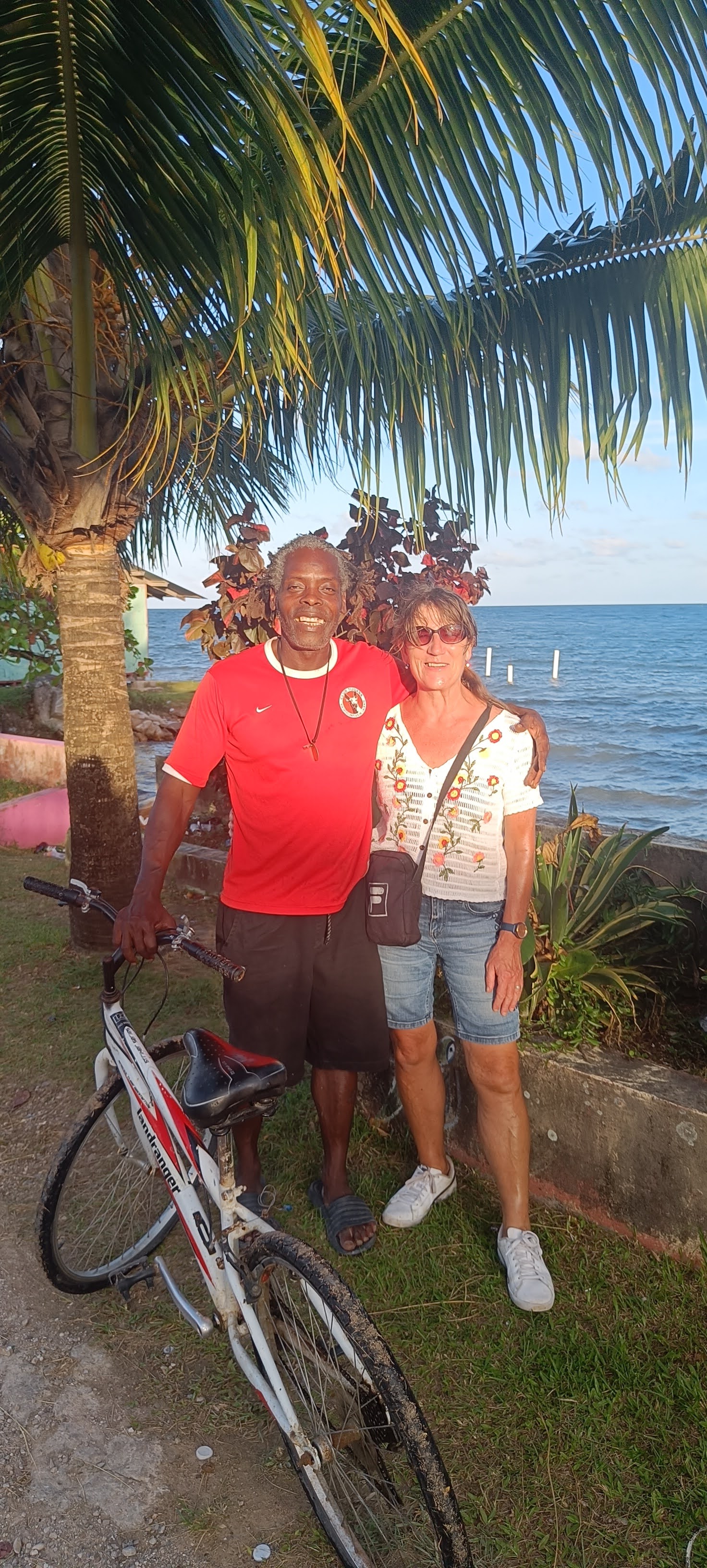
The first person we met in Punta Gorda, a small, rambling port town in Southern Belize, was Delphin, a Garifuna man who swore  that Queen Elizabeth appeared to him on the day she died. Queen Elizabeth seemed to be universally loved in Belize but this was ‘devotion’ at a higher level. He even showed us the very spot by the sea where this event happened.The Garifuna are descendents of kidnapped West Africans brought to the New World on slave ships and Punta Gorda had a high density of Garifunas. Punta Gorda was a town at the end of the road- literally, the road ran out here. It was surrounded by jungle and had a reputation for more rainfall than anywhere else in Belize.

Delfin and me at the spot

We arrived on Friday afternoon after two bus journeys, one  from San Ignacia (where we were holed-up from Hurricane Lisa) to Belmopan, the capital. Ten minutes into that journey, the bus broke down with rear wheel axle trouble but a replacement soon arrived. Then a 5 hour journey south by the beautifully named Hummingbird Highway. The buses were crowded especially as movement had been suspended for 2 days due to hurricane fears. Our bus had a large number of army personnel passengers who were on leave and in high spirits….empty coke bottles (possibly laced with rum) moved up and down under the seats like a tide depending on gradient and the army got noisier as the journey progressed. Our intention was to leave Punta Gorda the morning after we got there on a ferry to Guatemala or maybe Honduras.

That was before we found out that the ferries didn’t run at the weekend and that  the next ferry was on Monday morning at 9am. 😮 so we had an unexpected weekend in Punta Gorda. It lived up to its weather reputation with torrential rain, thunder and lightning all night and well into Saturday and again on Sunday but the days were hot and very humid.

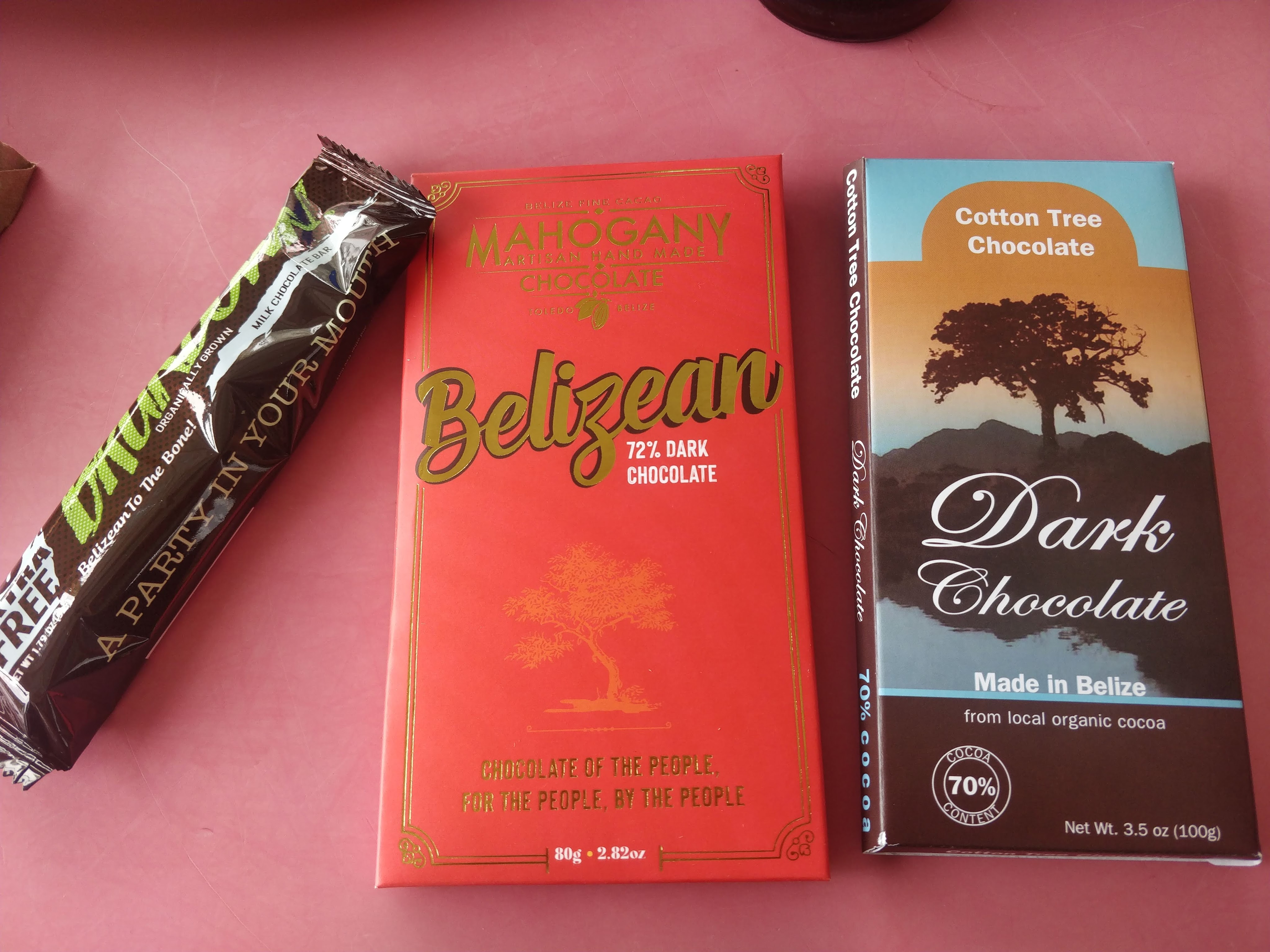
The Mayans believed that chocolate was a gift from the gods😀 and it was usually reserved for the elite. Much of the chocolate making process remained unchanged to this day.The seeds — or beans — were first harvested from cacao trees, fermented, dried, roasted, removed from their shells and ground into paste. The region around Punto Gordo was a prime cacao growing region and the town had two small family-run chocolate-making factories which we visited. We really enjoyed their delicious samples …..and of course bought some….and had to eat them before they melted. I agree with the Mayans – chocolate is truly a gift from the gods and so glad that it’s no longer reserved for the elite.🎁

The ancient Mayan idea of beauty was interesting – a cross-eyed person with a long sloping forehead. They sometimes pressed a baby’s head between two planks of wood trying to achieve this ‘perfection’ which might even result in death. They also dangled a piece of wood between the baby’s eyes to induce cross-eyedness, an early form of plastic surgery. The quest for perfection is not just a twenty first century phenomenon 🤣🤣

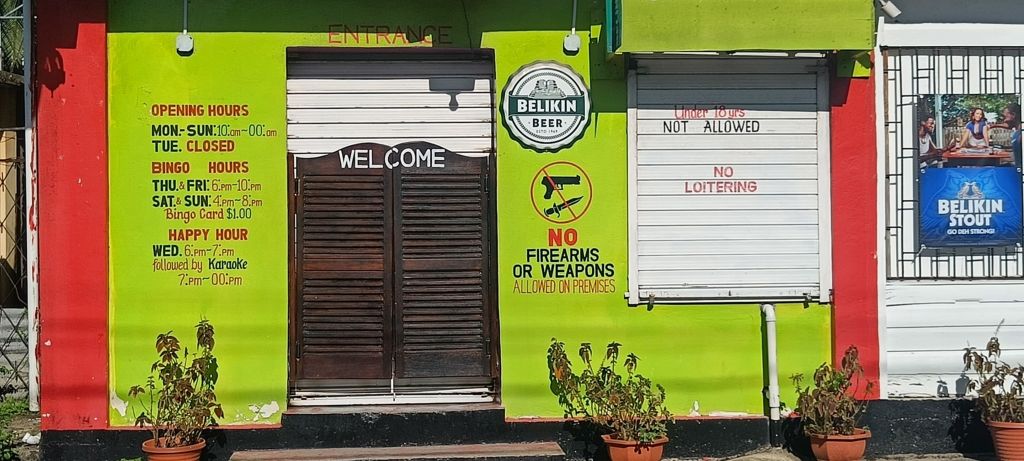
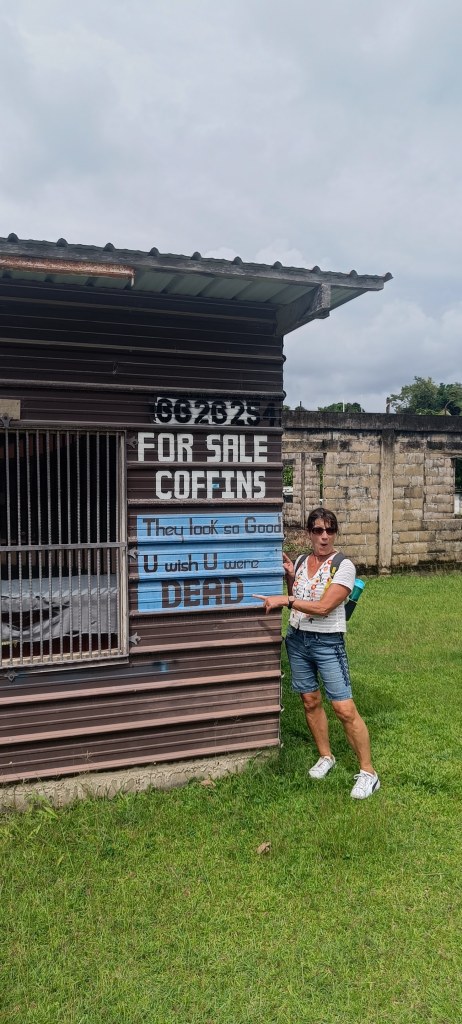
Our hostel was empty apart from us. We ate by ourselves in the upstairs restaurant with its cooling breezes and they ran out of beer…..after we had just one each. We spent our time wandering around town- lots of bars and restaurants were shut down and were being reclaimed by the jungle…..covid has hit the town hard with many businesses not surviving.. There was a clean-up going on with lots of chopping and strimming for a major festival, the Battle of the Drums at the end of the month when there will be crowds, dancing and drumming all weekend. Plenty of drumming practice going on in the meantime. We got a laugh from some of the signs, especially the one advertising coffins (see photo above).

Leaving Belize

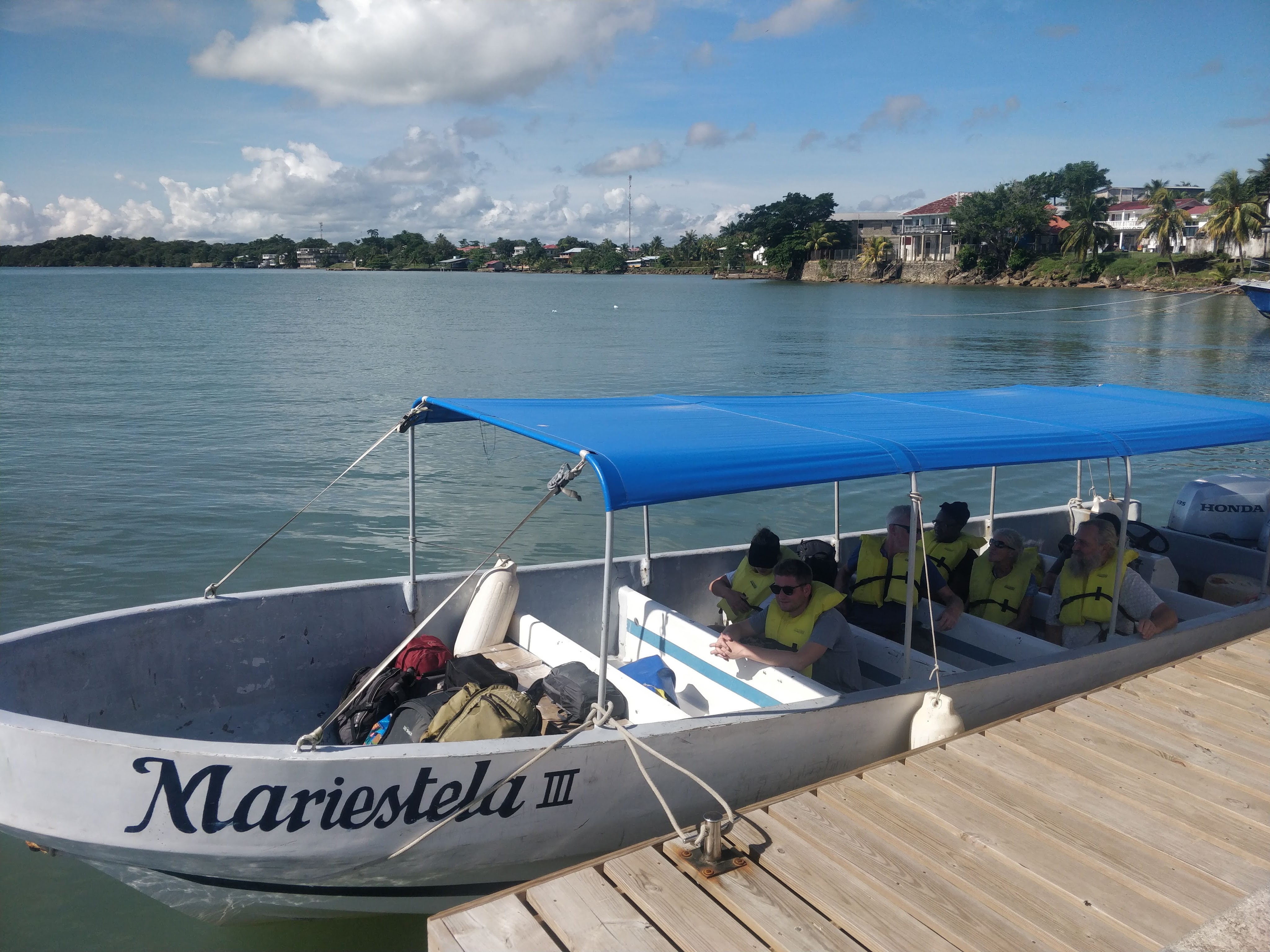
On Monday morning, there was more of a buzz about PG with children going to school and more people out and about. The small boat ride to Livingston in Guatemala across the Gulf of Honduras took less than an hour. Belize is a beautiful laid-back country with some gorgeous beaches, turquoise waters and wild jungle but the thing that struck us most was the diversity of the people and how they seemed to get by without racial tensions. Waiting at the bus station in Belmopan, there was two Mennonites, (tall, spare and bearded with trouser-braces and straw hats), a man with an African headdress that looked like Madge Simpson’s hair, petite Asian women, a blue black man in a singlet with a huge silver cross hanging down his chest, men that could be sumo-wrestlers, a glamorous woman with two toddlers whose hair was in corn plaits. All local, all Belizean, incredible diversity without tension

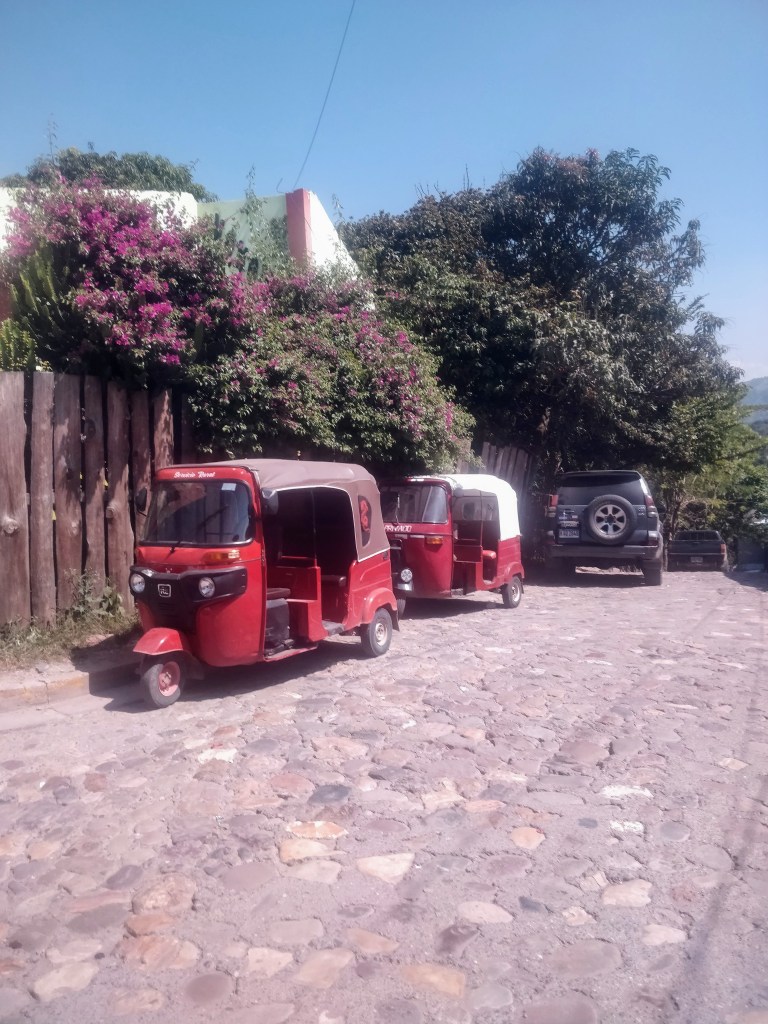
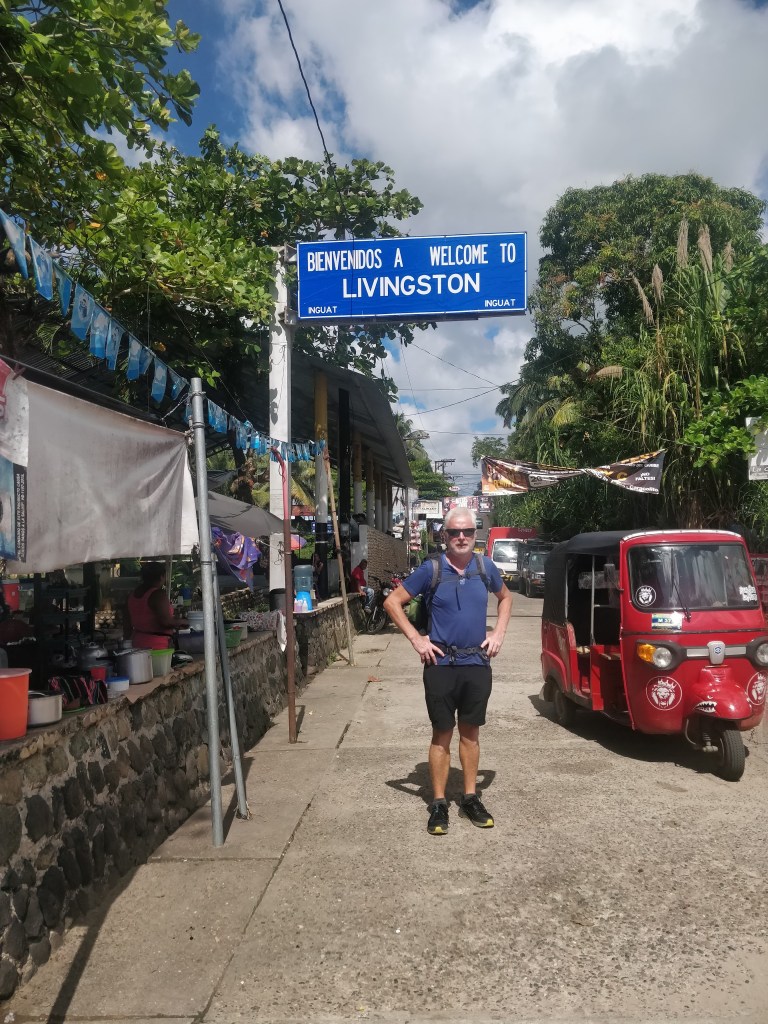
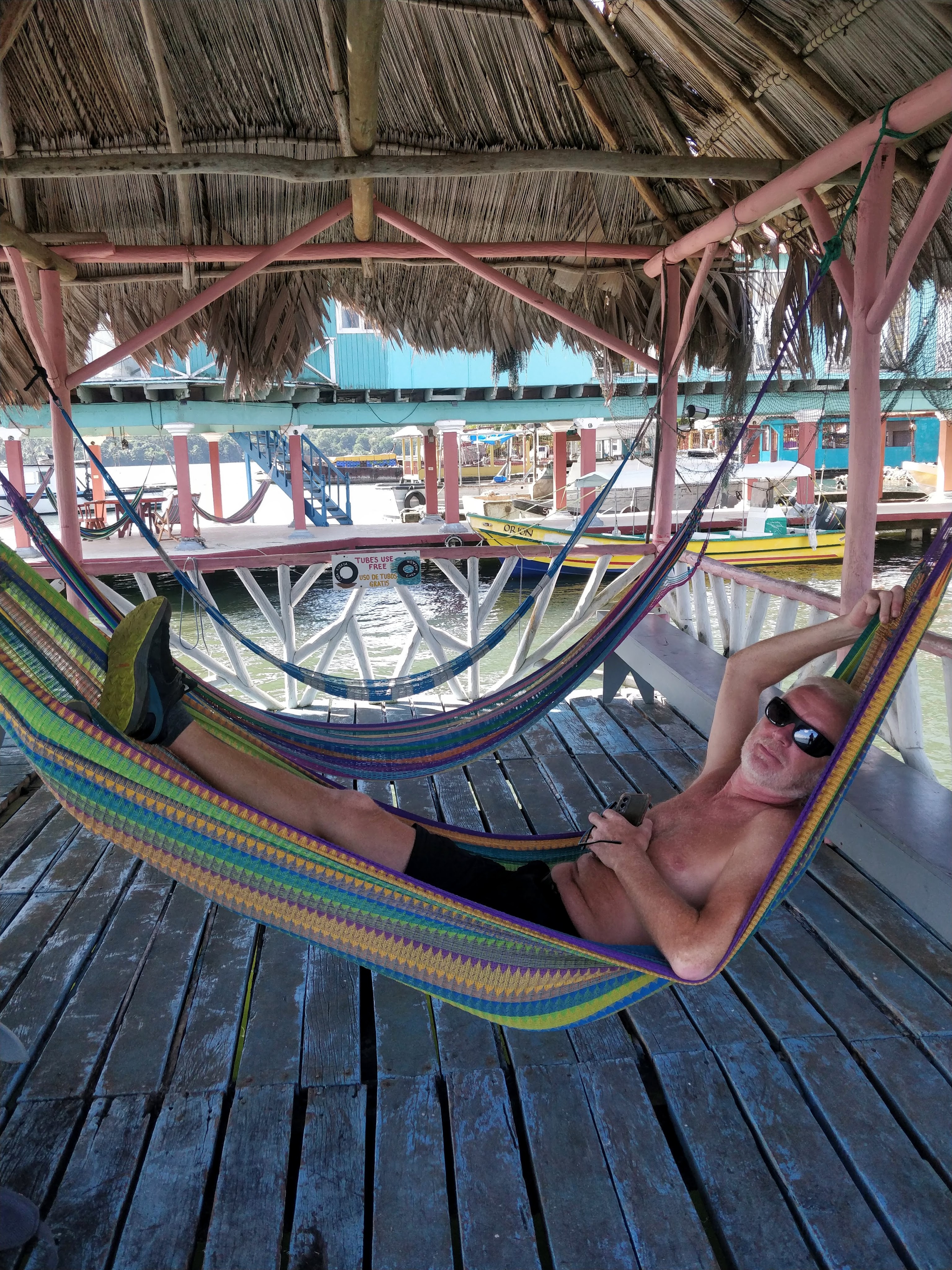
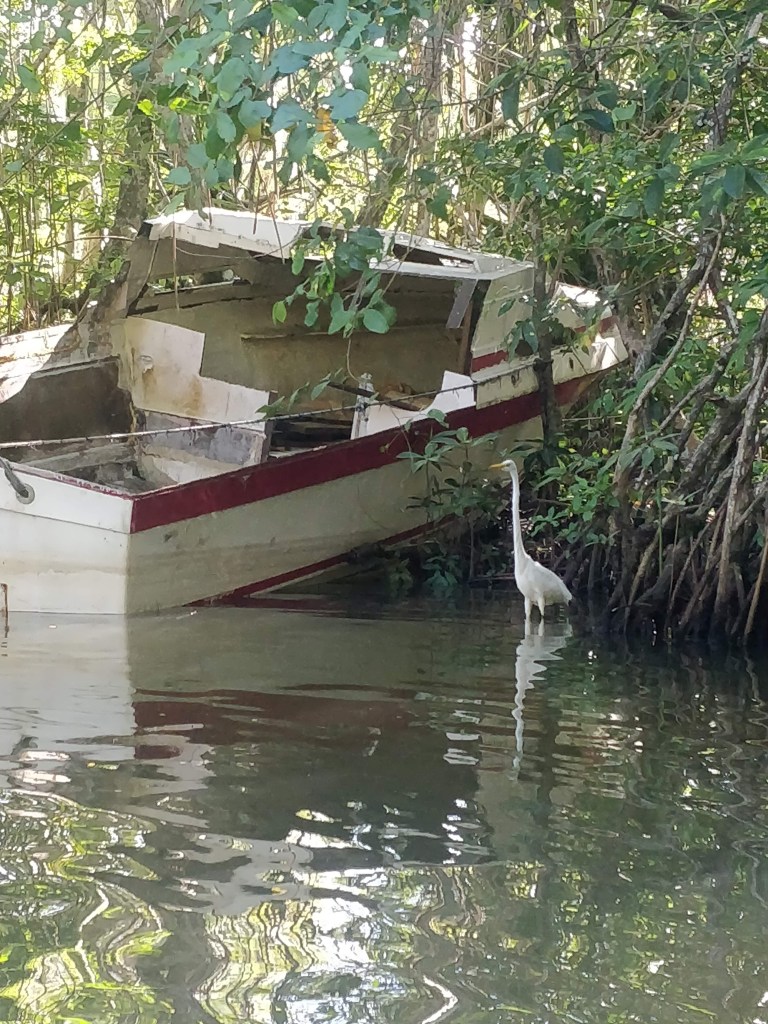
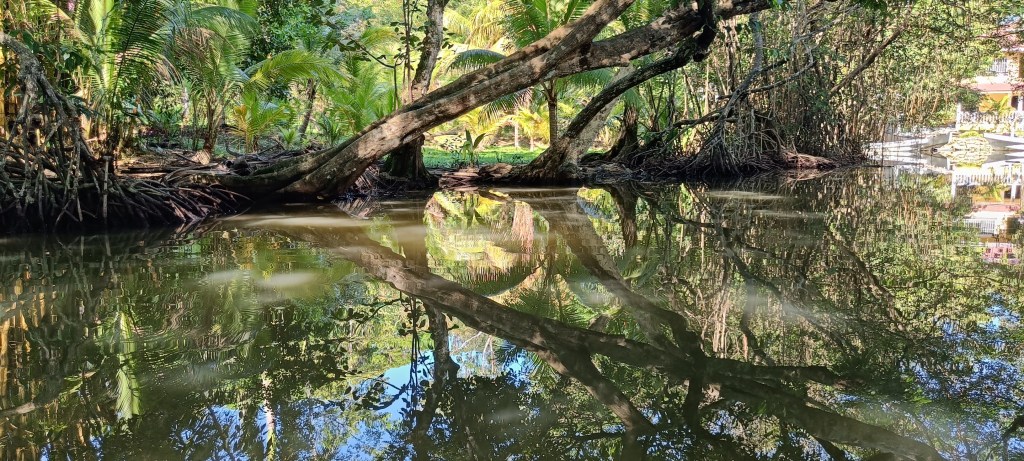
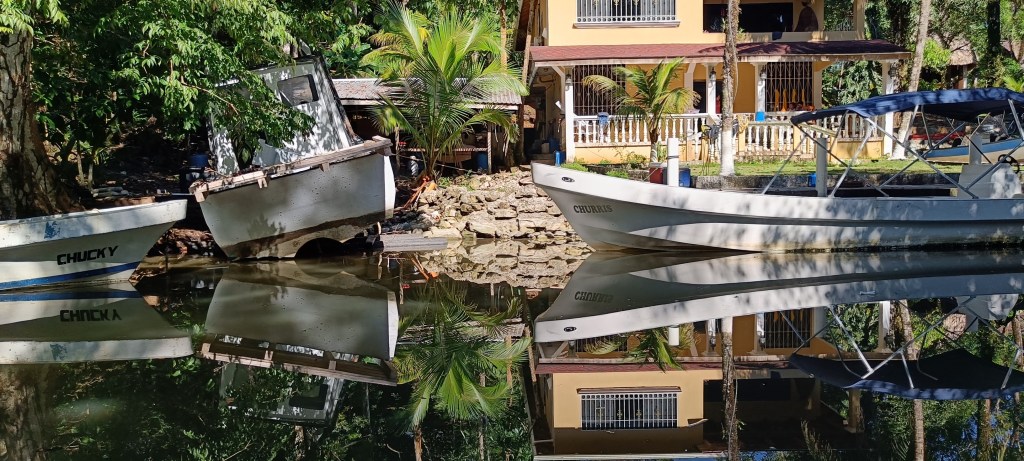
As soon as the boat docked in Guatemala at Livingston, a town on the Caribbean coast at the mouth of the Rio Dulce, we were bombarded by taxis, tuk-tuks and people wanting to help us. We had our passports stamped by a man wearing a singlet in an office in the fruit market in the middle of town. Guatemala seemed a nation of shopkeepers where everyone was selling something and practically every house was a shop. In Belize, most (or maybe all) grocery shops were run by Chinese. Our hostel in Livingston – Casa Rosada- was amazing. It was like an oasis as soon as we stepped off the busy street through the wooden door painted with butterflies and toucans. It was situated by the water on a long pier with a garden and hammocks. We slept under mosquito nets which always felt exotic especially when there didn’t seem to be anything flying about. It was basic but comfortable and about €20 a night, significantly less than we paid anywhere in Belize. We rented a 2-person kayak to go upriver on the Rio Dulce (sweet river). The river was beautiful and wide but busy with motor boats zooming by. The real magic was the little side tributaries which were dim and shaded with white egrets, birdsong and the interplay of light and reflection on the trees and the water surface. We drifted past a boat graveyard where rusting hulks rested in peace. Honestly, it was like being under a magic spell of tranquillity and beauty. It reminded me of an Mary Oliver poem

The dream of my life is to lie down by a slow river And stare at the light in the trees, to learn something by being nothing Mary Oliver

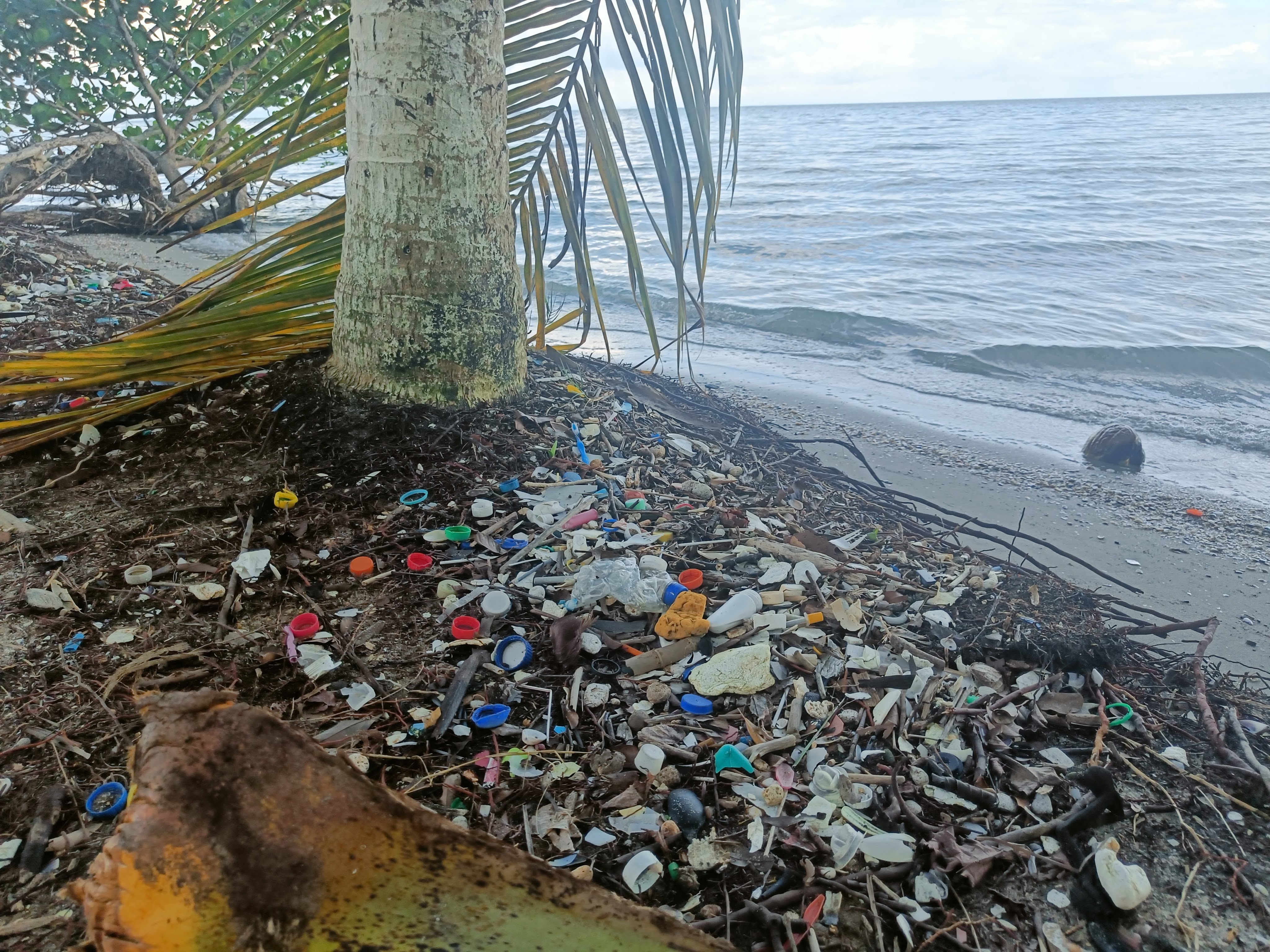
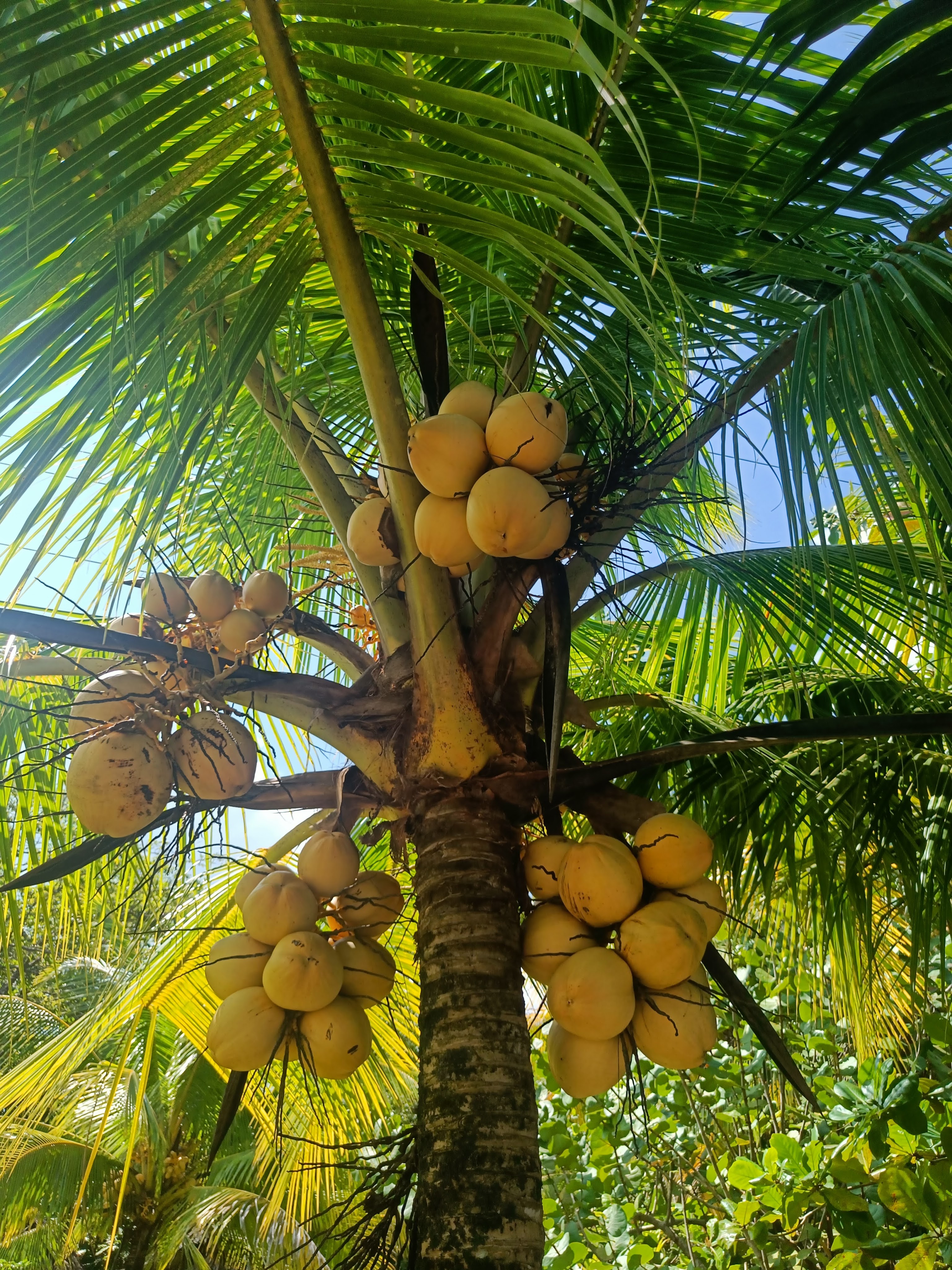
The following day we walked along some beachrs outside the town. Cononuts and driftwood weren’t the only things washed up on the white sands. There were broken shells and a kalidescope of bottlecaps like smarties, plastic shoes, fibreglass shrads, plastic bags and bottles, plastic everything. Some of the rubbish was being burnt on bonfires on the beach with black acrid smoke billowing among the coconut trees.

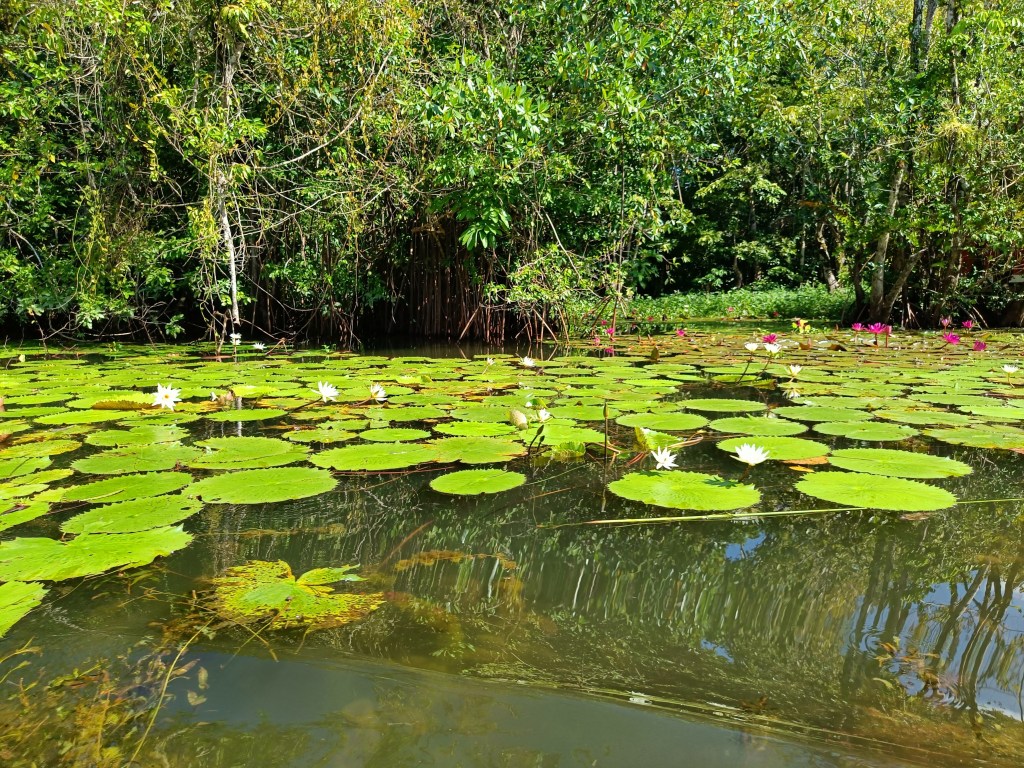
Leaving Livingston, we travelled upriver on the Rio Dulce on a small motorised boat to the town of Rio Dulce. Apart from the constant drone of the engine, this was a gorgeous trip on green silk waters with walls of towering trees on both sides. There were houses on stilts along the shoreline and lines of washing blowing in the breeze. The boat made some diversions along the way to deliver some packages to houses in some small tributaries where there were water lilies, white and shocking pink. There’s no postal service in Guatemala but there’s always a way. The river widened into a lake, the water turning silvery blue.

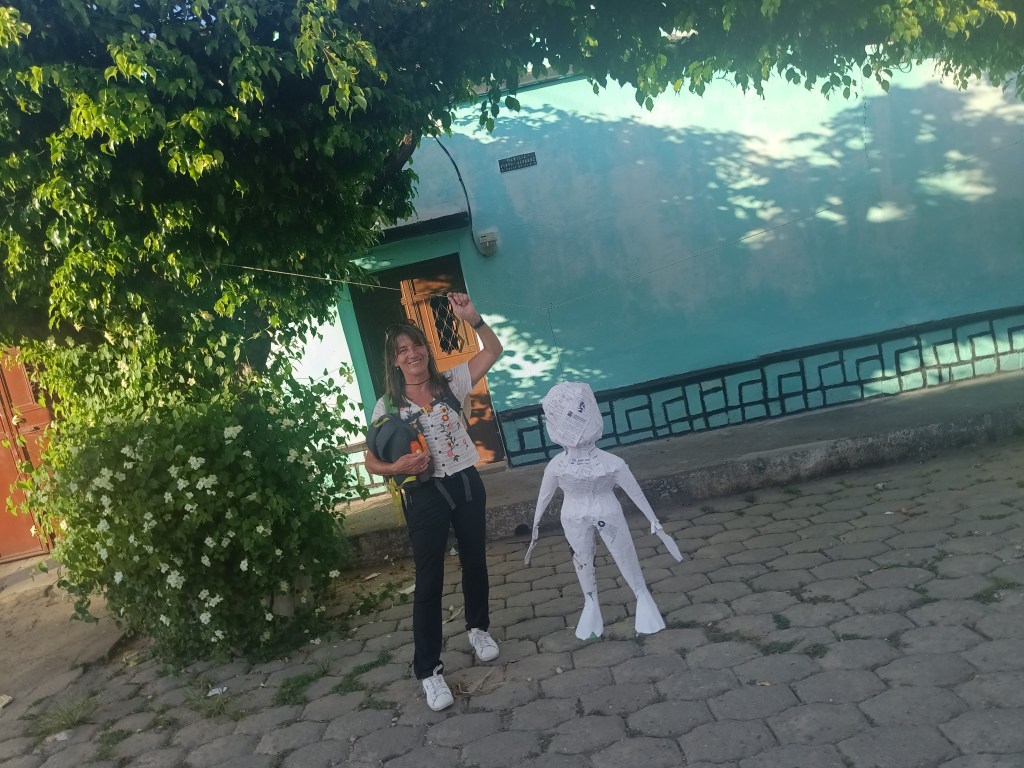
In the town of Rio Dulce we caught a minibus to Morales and a bigger bus to Chiqimula, a town about an hour from the border with Honduras. We had decided not to go all the way to the border with Honduras in case we arrived after dark. The minibus section of the journey was the scariest section mainly because we were sitting up front beside the driver and could see what he was doing – reading the paper as he drove on the wrong side of the road, coughing and spitting out the window, talking and texting on his phone and turning around to look at the passengers in the back😮. There was also some malfunction with the heating system and I thought that my shoes would melt onto my feet. The second leg was better because we were at the back but the traffic was appalling and there was constant roadworks causing delays. We passed by green pasture fields and lorries transporting cattle presumably to slaughterhouses. Shops by the roadside sold saddles and fruit stalls had bags of lychees and oranges. We finally reached Chiqimula at about 4pm and we were glad we weren’t going any further. Chiqimula is known as La Perla del Oriente and was surrounded by forested hills. Some of the streets specialised in making pinatas and there were strange paper mache figures that looked like aliens. We stayed in a friendly airbnb with a dog called Ringo and 11 cats and an enormous breakfast. Juan even walked us to the busstop the following morning to make sure that we got the correct bus to the border.

So onwards to Honduras which has a terrible reputation for corruption and violence-even worse than Guatemala but Guatemala has turned out really well and we have enjoyed our stay. We had a puncture on the way to the border and had to change buses because of another malfunction but we got there.

I can only use one word to describe the border crossing at El Florida between Guatemala and Hondurus – CHAOTIC. There was constant noise and fumes from huge lorries leaving their engines running, little shade from the sun and huge crowds. Hundreds of people were in haphazard queues but we couldn’t figure out whether they were queueing to exit Guatemala and enter Hondurous or the other way around. Usually this is very obvious with separate buildings, flags and all the signs that countries use to identify themselves. Here, emmigrations and immigration for both countries were in the same small building with the same personnel. We thought that we were going to be stuck for hours but when we asked an official, we were told to bypass all queues and go straight to the desks and after being electronically fingerprinted and photographed, we were through in twenty minutes.

I think Hondurus is going to be interesting. Thanks for reading. Until next time…….

Leaving Belize – Crossings

Beautiful Belize – Waiting for a Hurricane

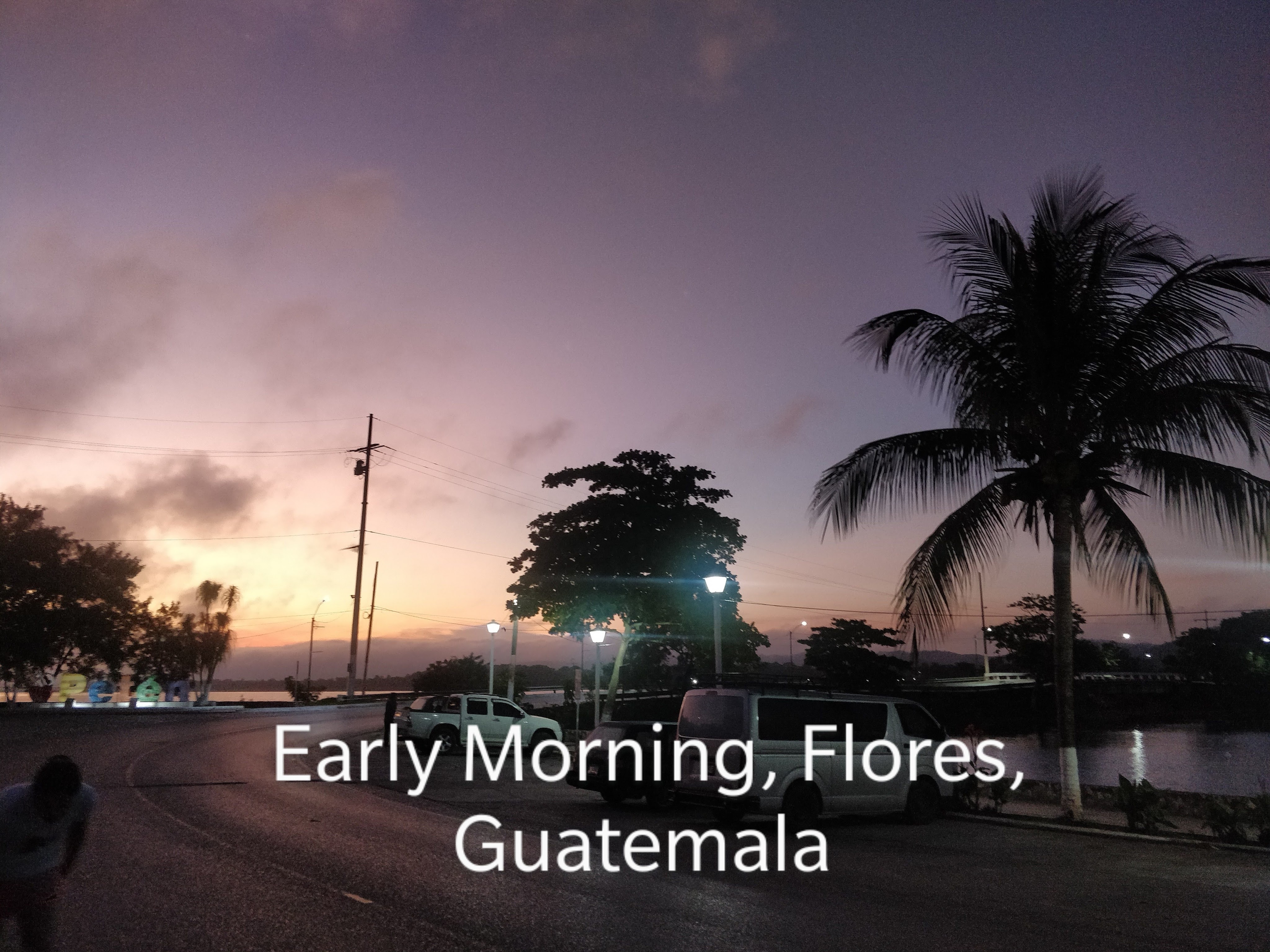
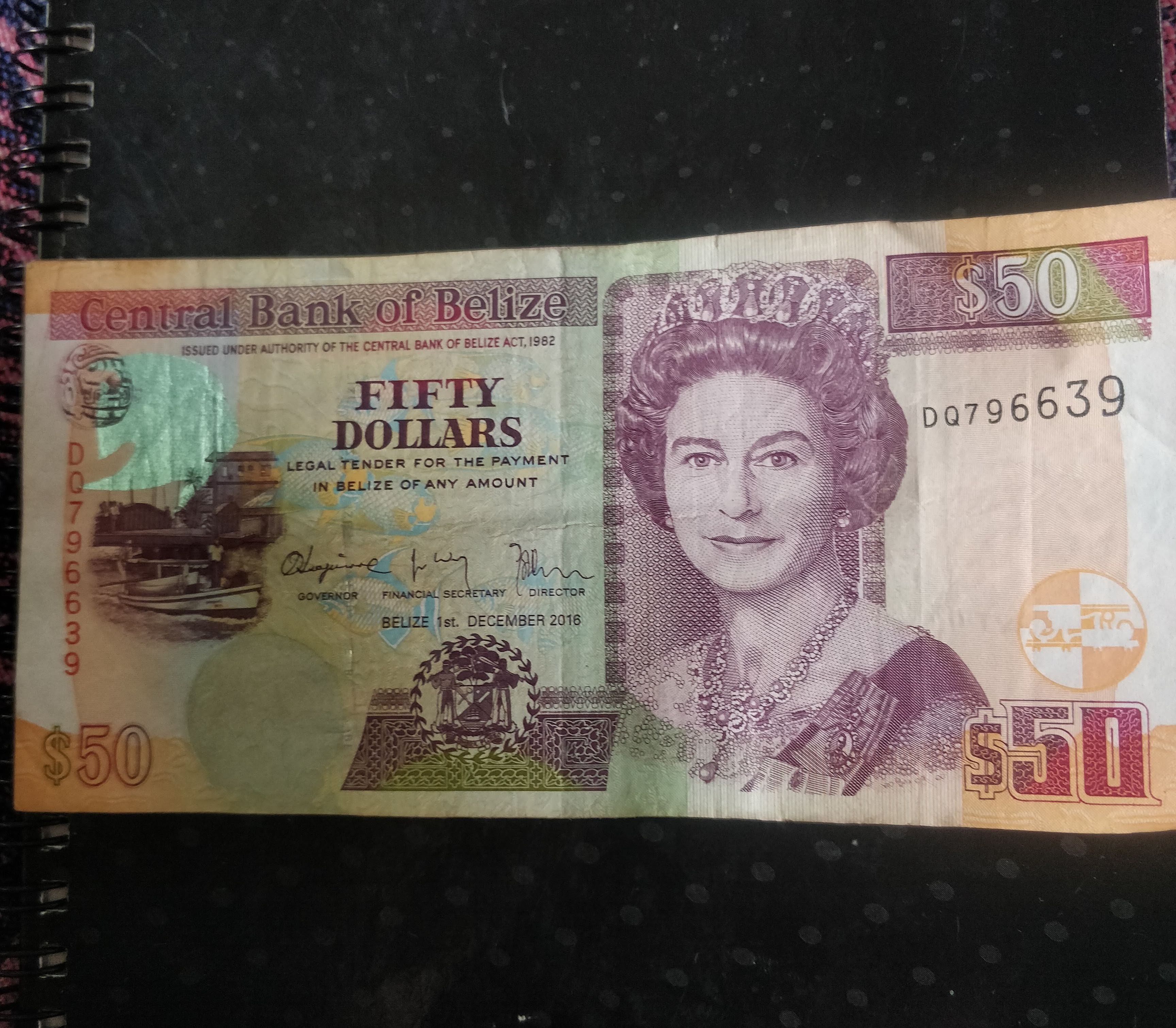
Another early morning when we were up before dawn in Flores to get the bus to take us to Belize. It was 5.30am but the town was anything but quiet. There was a ferocious racket coming from the trees on the causeway side of the island, this wasn’t a tuneful dawn chorus but an ear-splitting, raucous party that make the trees shake and ensured that all windows in the area were firmly shut. We couldn’t see the birds in the dense foliage, but it was probably Grackles, slender, long tailed black birds who are loud and raucous most of the time. We arrived at the border at about 8am, exited from Guatemala and walked into Belize. We weren’t the only ones crossing – there were lots of children dressed in school uniforms crossing as well. School buses were waiting to take them to school on the other side in Belize. At first, there was little change in countryside, hot scrubby jungle but flatter than Guatemala. Several women were walking along holding umbrellas for shade which we hadn’t seen before but an umbrella was certainly useful for both rain and shade. When we stopped for a loo break at a little garage, we found that American dollars were accepted just as readily as Belizean dollars (2 Belizean dollars to one $US. When we bought a tub of Pringles (something about the early mornings made us want to eat junk food), they had no change and made up the balance in tiny packets of biscuits -which were stale- instead of our change of 50cents. The Belizean banknotes had Queen Elizabeth on them and English is the main language. Belize was known as British Honduras until 1973 and was the last British colony on the American mainland. Most Belizeans liked their close association with Britain. It offered them a sense of security especially as Guatemala was long making claims on their territory. The British army even have a base for training in the Belizean jungles.

Our bus took us to the ferry terminal in Belize City where we got a ferry to Caye Caulker. Belize City was small, full of low buildings and more like a dusty town than a city. It used to be the capital but after being ravaged by a hurricane in 1961, the capital was moved to Belmopan. As we waited for the ferry, we were surrounded by voices speaking English with a lyrical Caribbean lilt and there was a much more multi-cultural mix than in Guatemala with lots of different ethnic groups, Garifunas, Blacks, Creolos, Mayans, European, Asians and more.

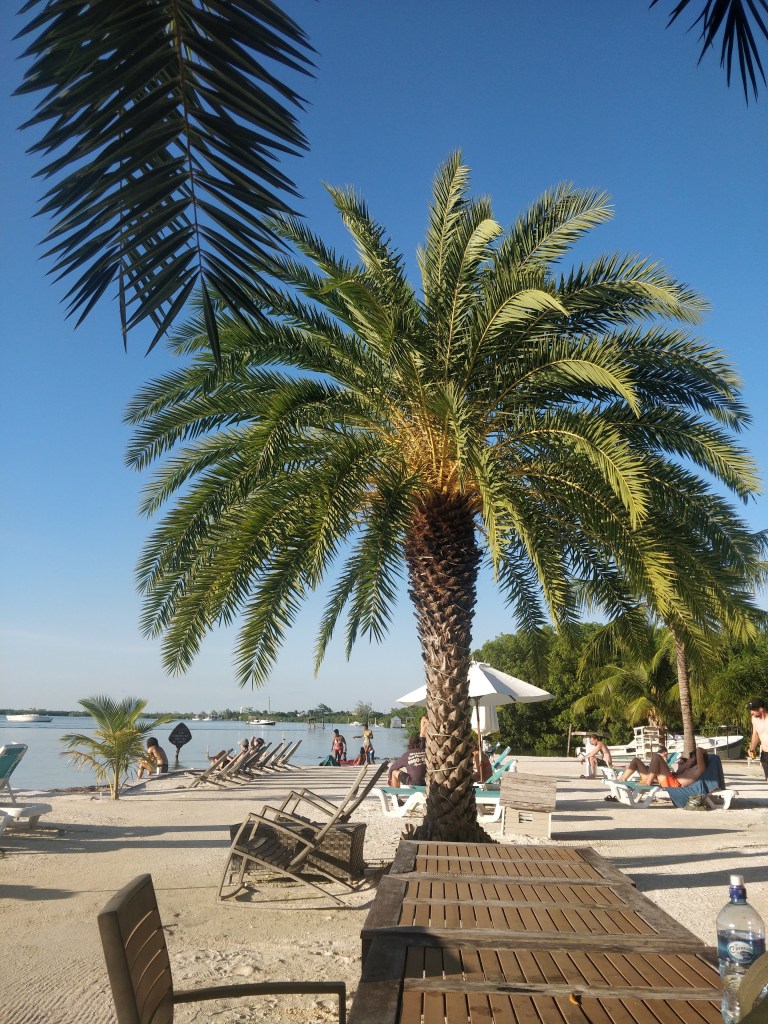
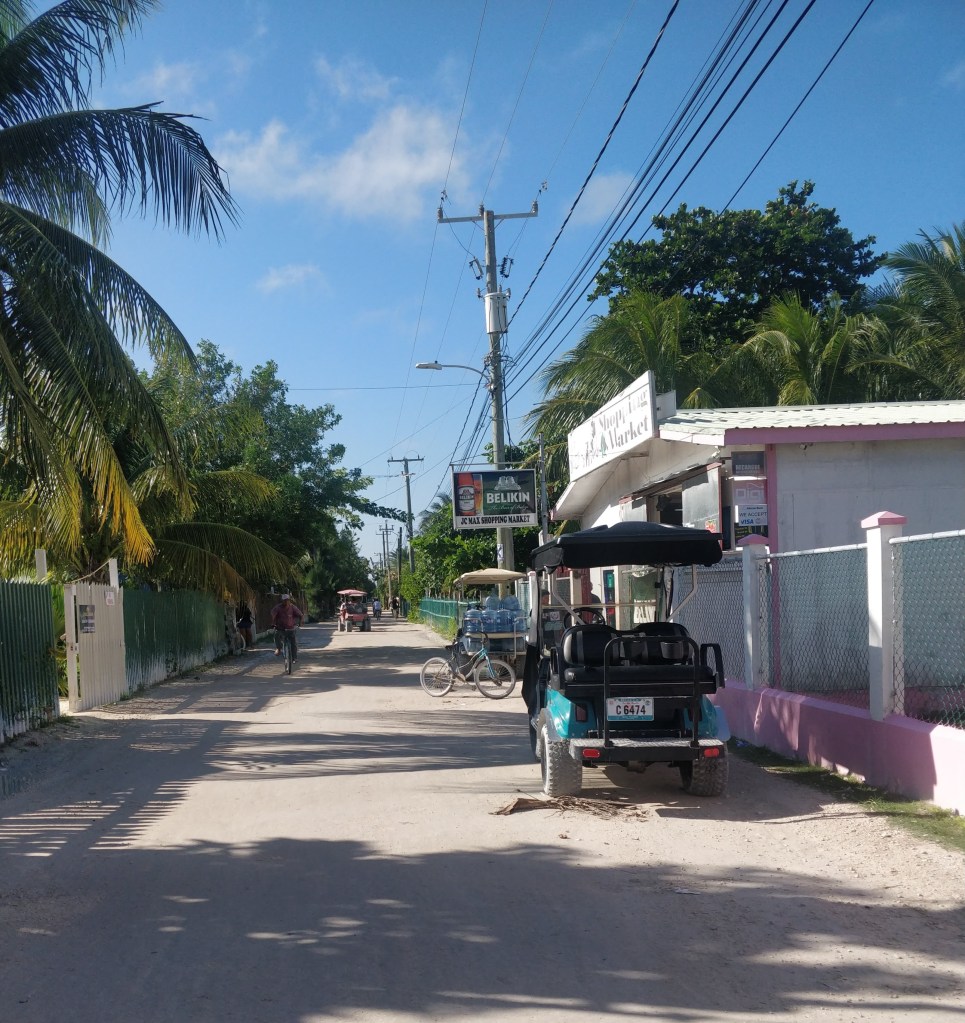
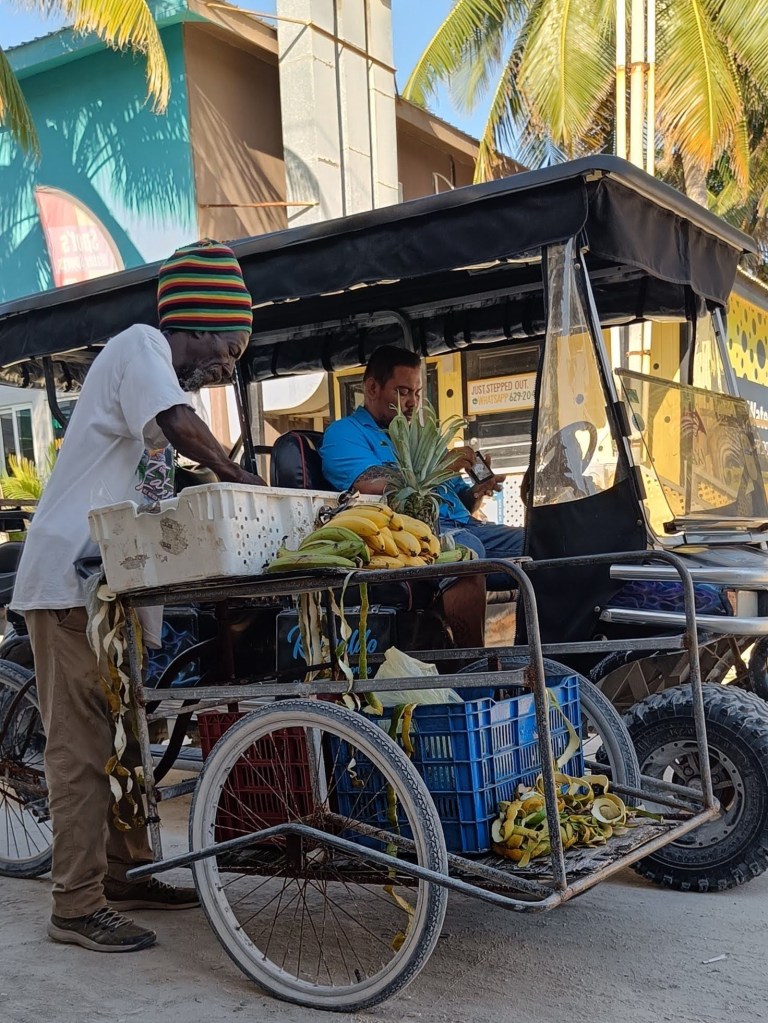
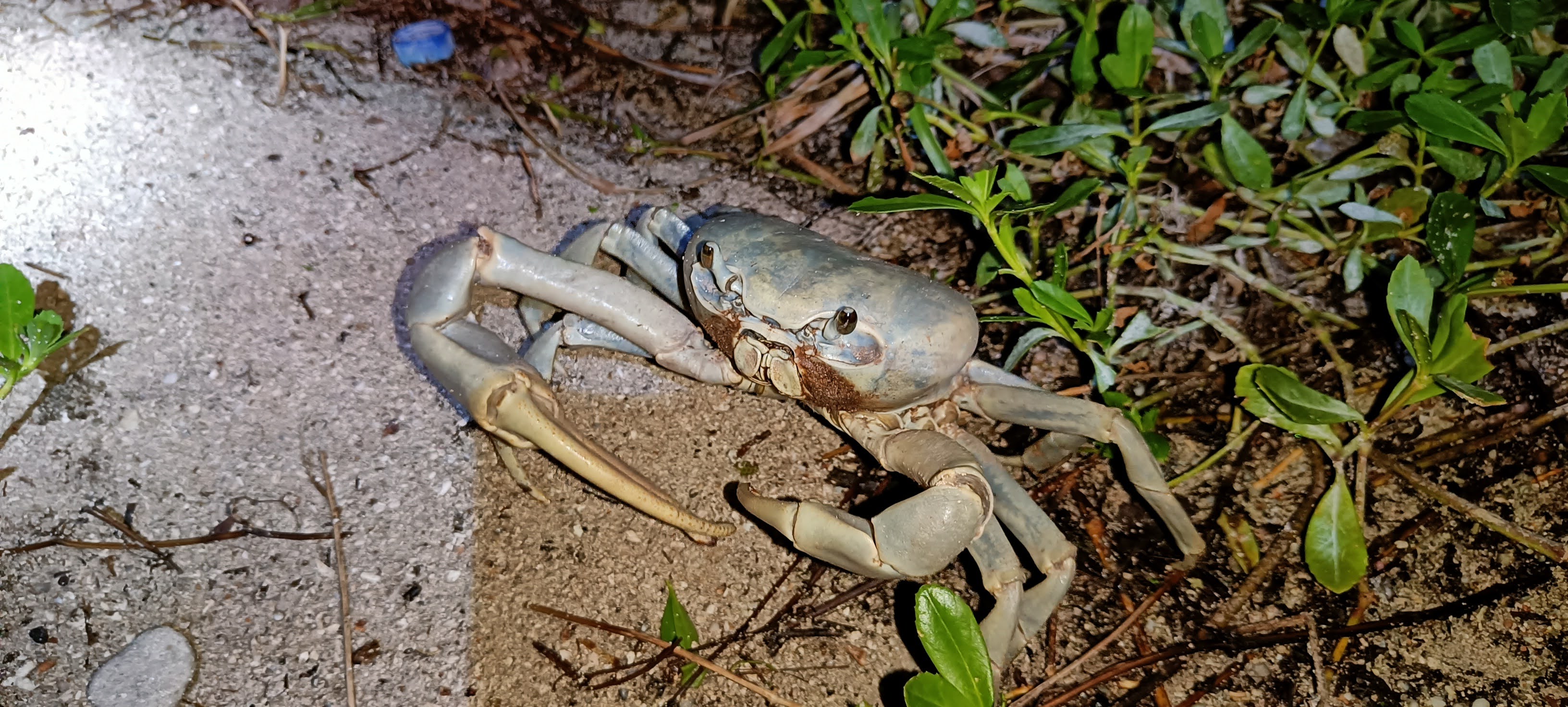
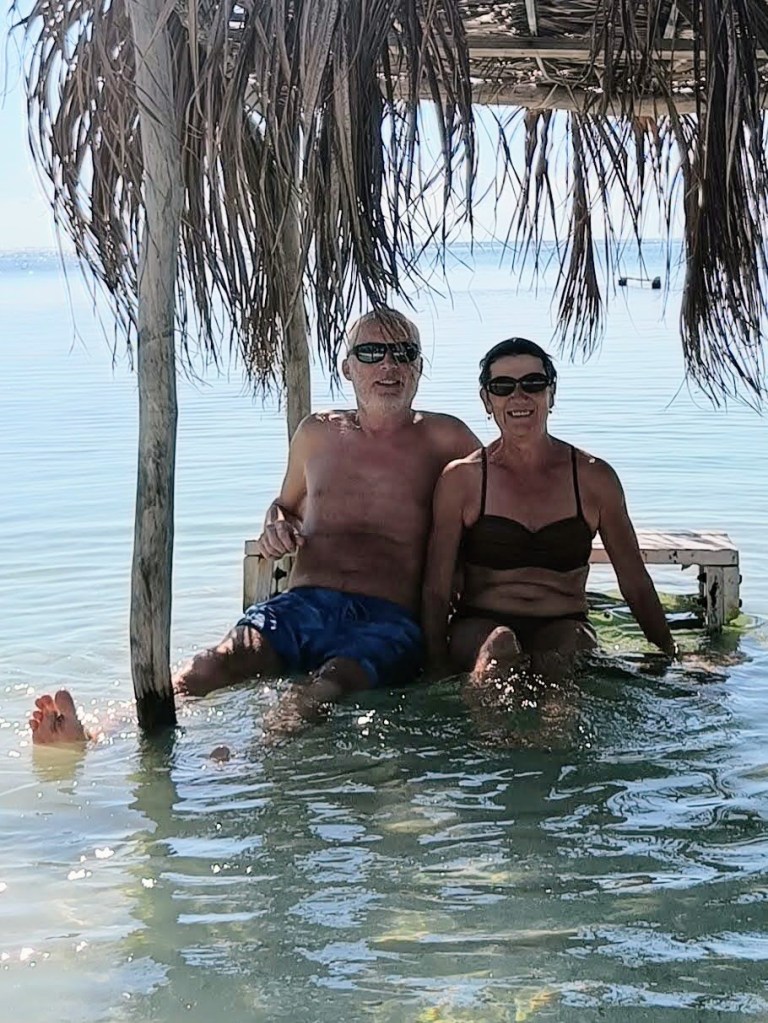
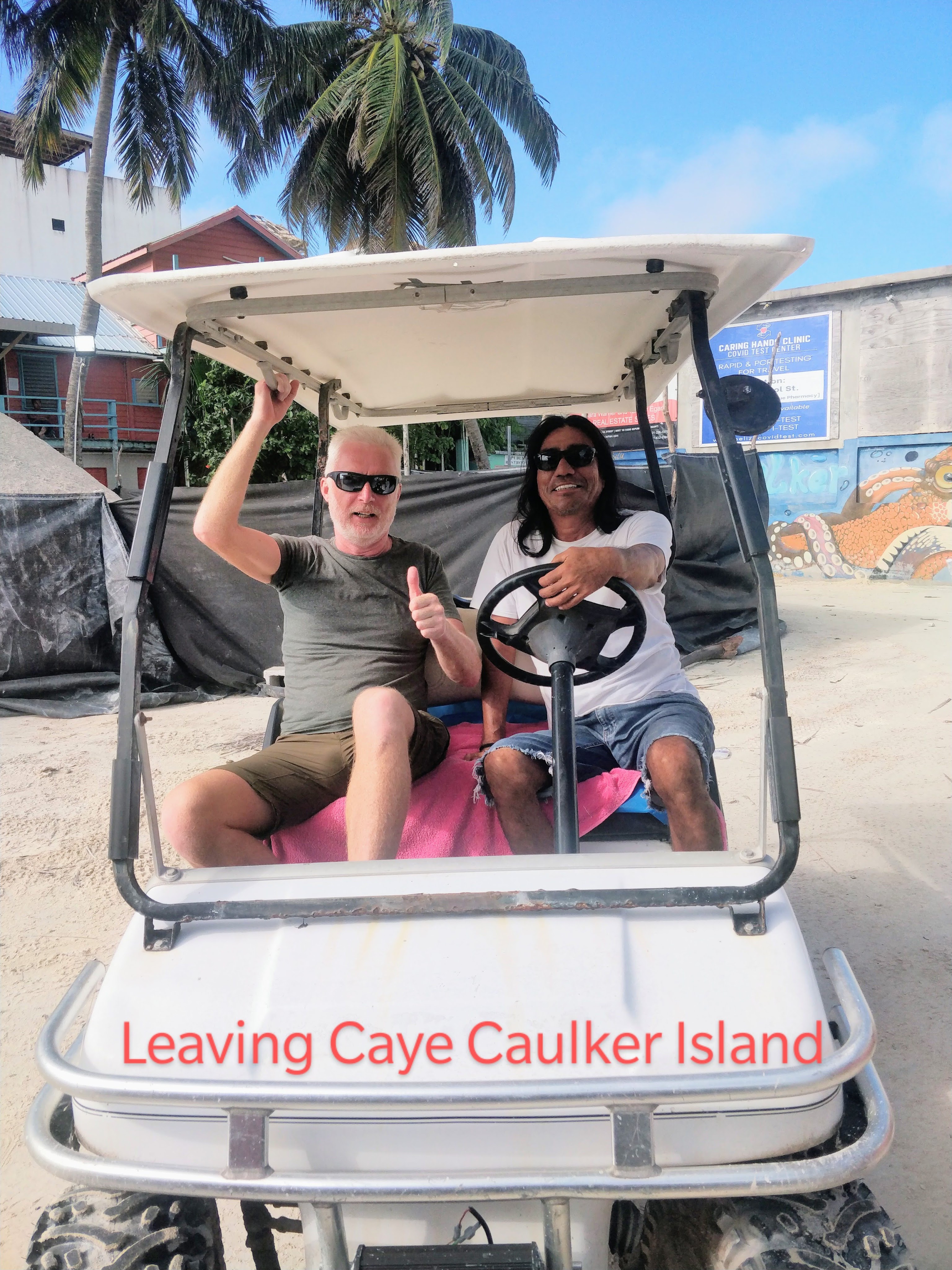
We sat on deck on the small passenger ferry to Caye Caulker , a small island off the coast. The trip on calm turquoise waters took about a leisurely hour. Everything about Caye Caulker was leisurely. There were signs No Shoes, No Shirt, No Problem but there was a caveat No Money, Big Problem. The staff at a popular cafe wore t-shirts with GO SLOW on the back. Arriving at about 1pm, the whole place had a sleepy air, and the heat was energy-sapping. We walked -slowly- along the white sand of the beachfront and through paths by mangroves where lizards and large iguanas rested, some were still as statues with only their eyes moving. Our accommodation was in the south end of the island, about a kilometre and a half from the village. There are no cars on the island, so most people get around on golf-buggies or on bikes, the ones with no gears and that you pedal backwards to stop. Our lodgings provided us with bikes and we also had use of a 2 man kayak. On the first evening, we cycled into the village which was quite small with unpaved streets, lots of low timber housing, palm trees and sandflies, lots of sandflies which became the bane of our stay on this paradise island. Cycling back in the dark through the rough mangrove paths with only weak beams from our headtorches to light our way, we heard loud rustlings coming from the bushes on both sides. We caught glimpses of enormous crabs, white ghostly creatures about the size of a man’s hand, crossing the path on their nightly excursions to the lagoon. Spooky and not shy. They stood upright on their hind claws with front claws ready to attack when our wheels touched them….although we did our best to avaoid them.

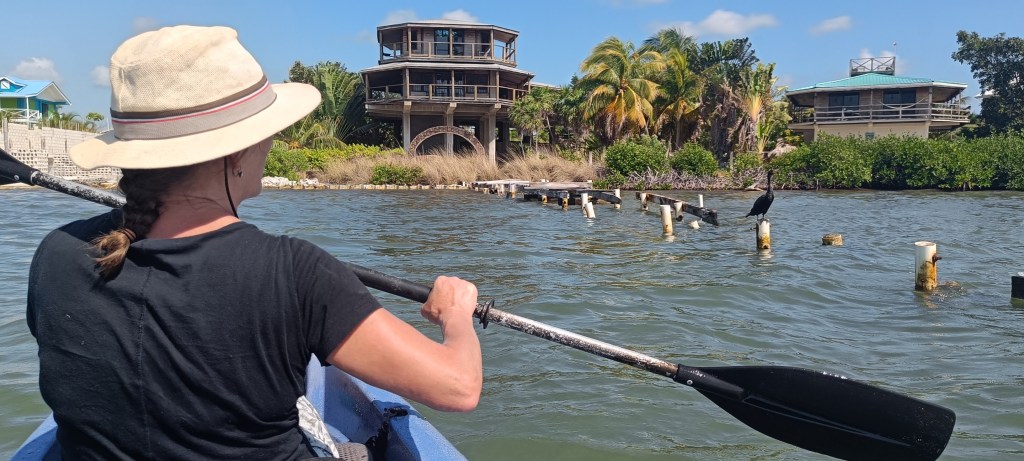
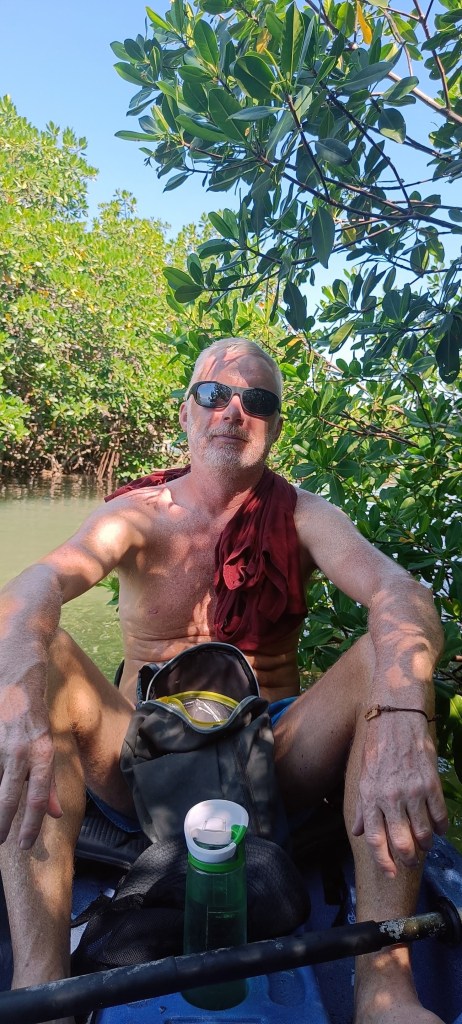
In the early mornings, we kayaked around the island a few times. At the southern end, paddling through the mangroves with the stench of swamp, the flicker of fish in the water and the shimmer of leaves reflected on the surface, truly it was like being transported to the book/movie Where the Crawdads Sing. We stopped for a while in the shade in the bobbing kayak and listened to the silence which of course wasn’t silent at all, plops and ripples, the sounds of nature and occasional almighty splashes as pelicans divebombed for fish near us.

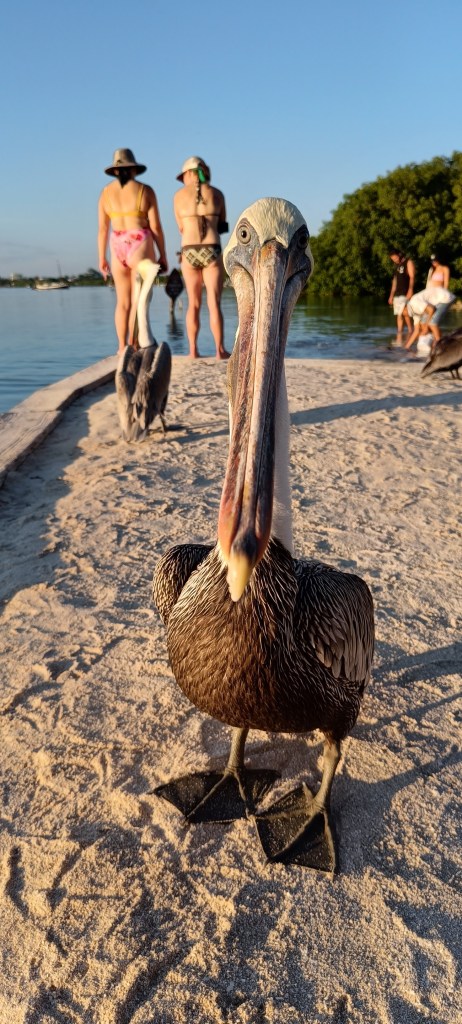
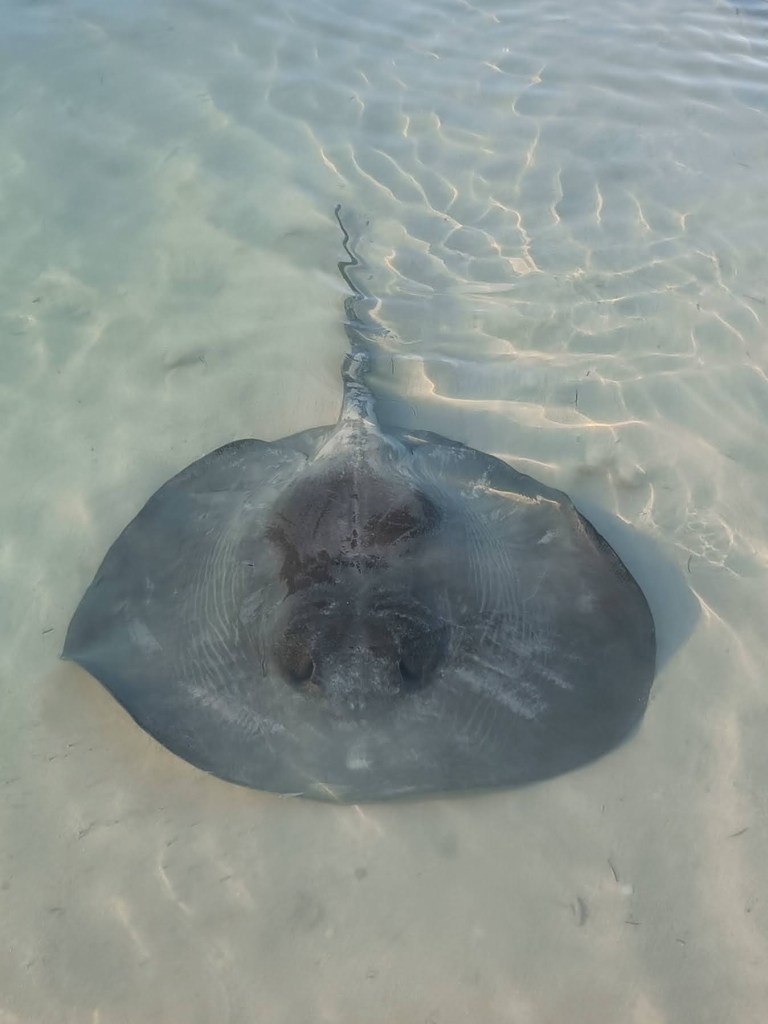
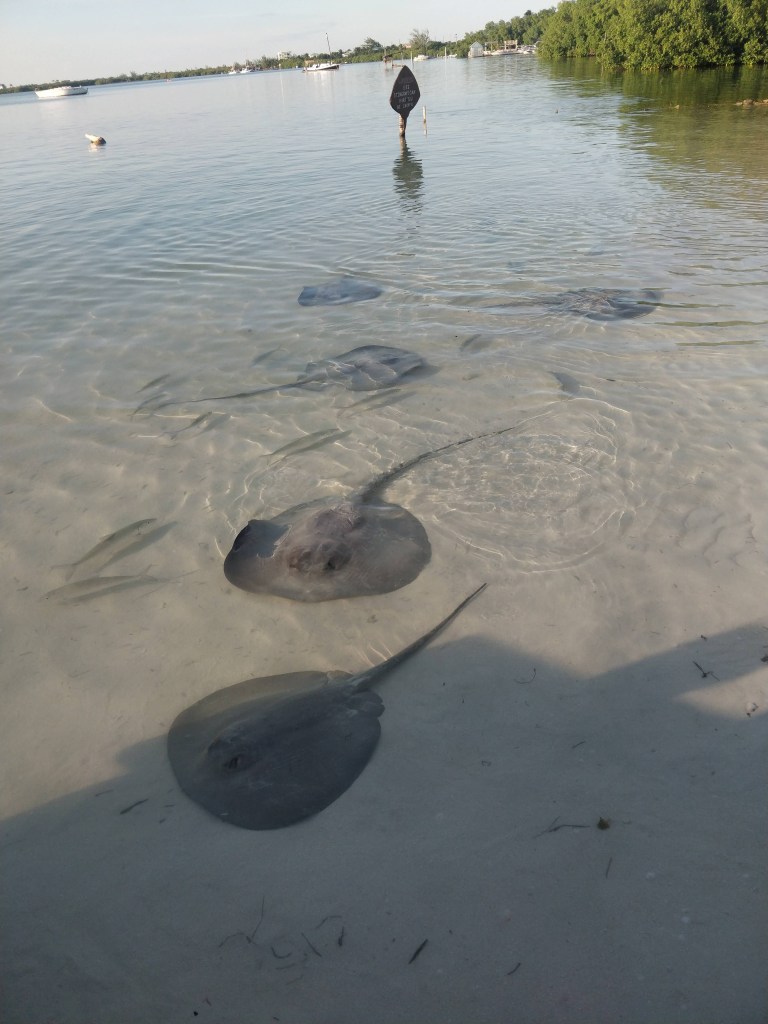
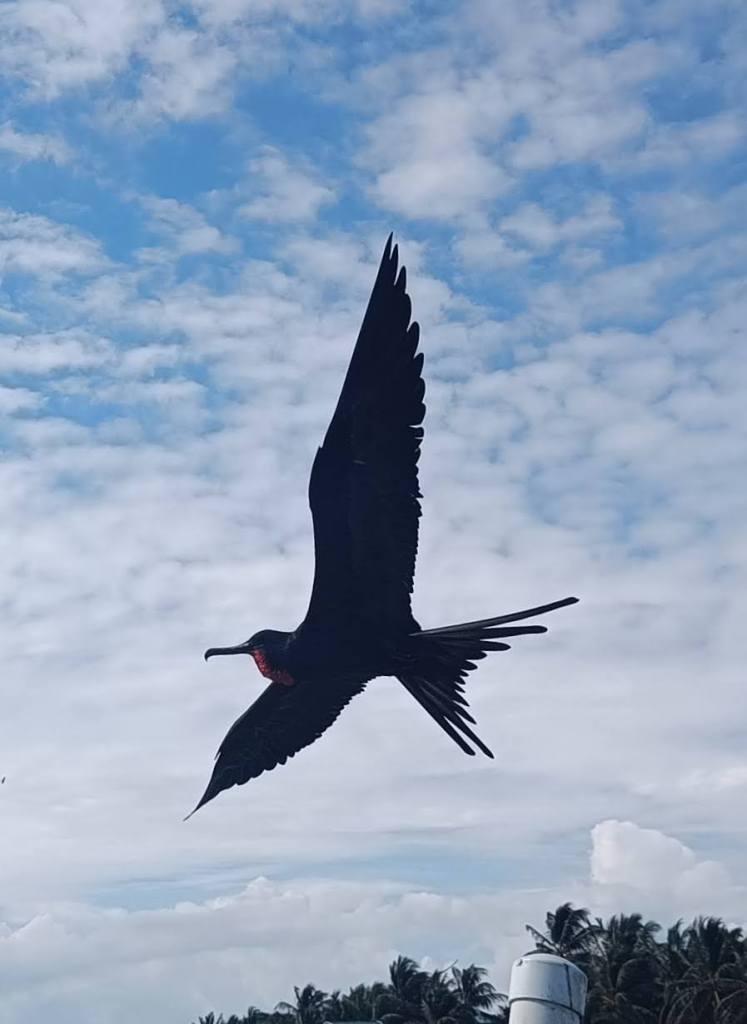
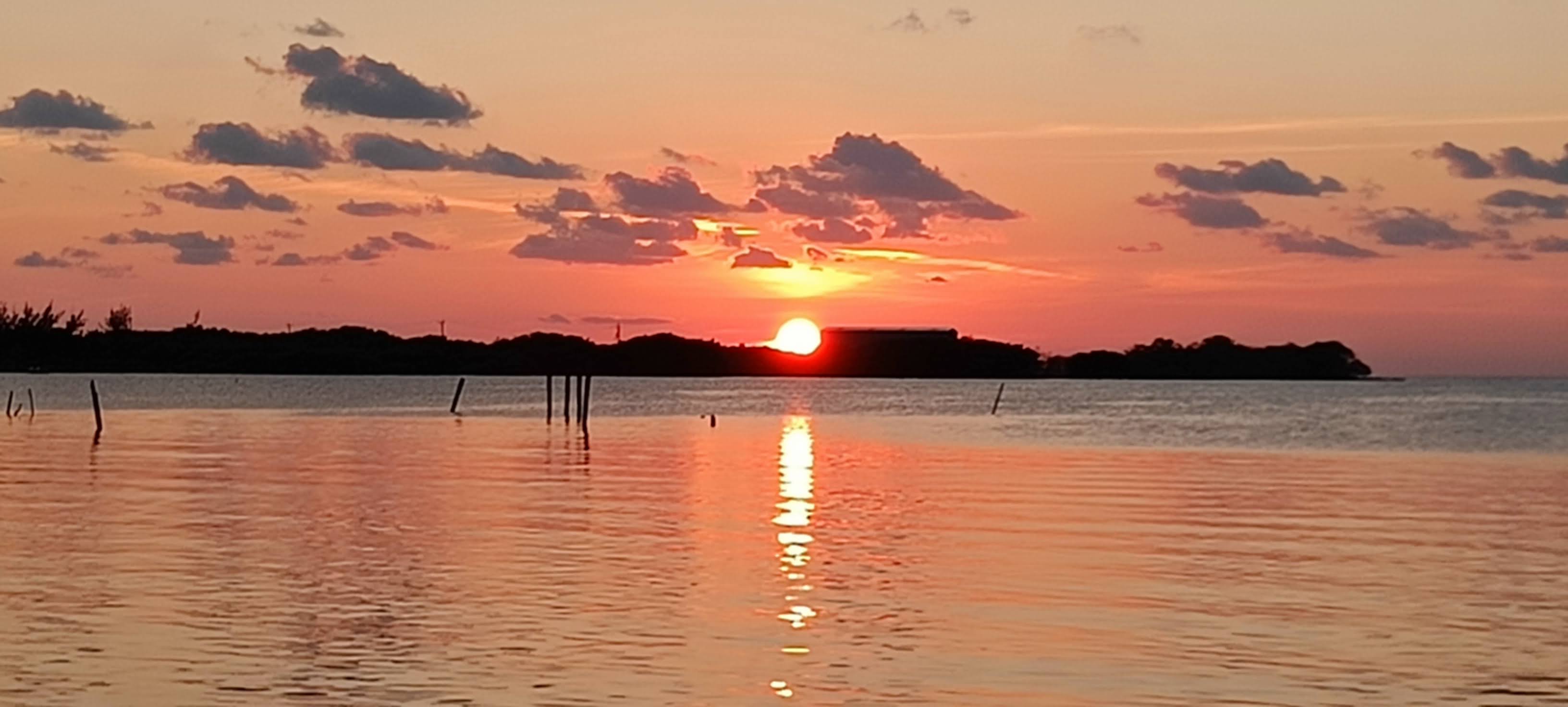
Pelicans also showed up at the Iguana bar most days at about 5pm. They waddled from the water purposefully to a young man with a white bucket. They opened their great beaks, wide in expectation and followed him to the waters edge where he threw them some fish. But the pelicans, imposing and entertaining as they were, were not the main attraction for the gathering crowds with theit phones on camera and video mode. The main event were the stringrays that circled in the shallow waters in increasing numbers, flapping and curling their large flat bodies. They, too, knew that 5pm was feeding time – some of them were hand fed by the man with the bucket of fish. The pelicans, frigate birds and seagulls all hovered, waiting to grab some dinner. And then the sun went down in a blaze of glory on a perfect day ……..apart from those pesky sandflies which were turning my legs into a pin cushion and even getting through my clothes.

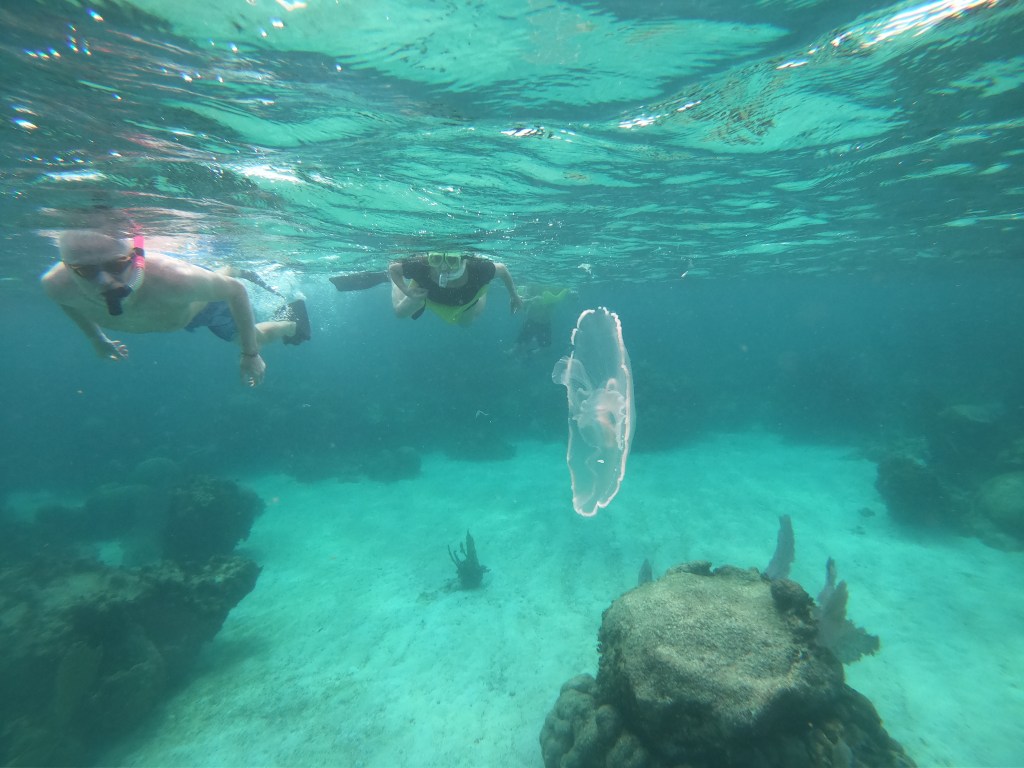
Although we thought that this spectacle would be the highlight of our stay in Caye Caulker, it wasn’t. That came when we took a snokelling trip to the barrier reef, a short way from shore. The weaving coral was spectacular, an underwater garden with speckled and striped fish swimming about us and beautiful jelly fish floating past. But in one section, the buzz of the boats engine acted like a dinner bell and soon we were surrounded by a fever of stingrays and a shiver of sharks (I had to look up the collective names for a group of stingrays/sharks but SO appropriate). The sharks were young nurse sharks, small and curious. We swam amongst both species. I will never forget the velvety feel of a stingray brushing against my leg while a nurse shark glided under my stomach. We also fed some large silver fish called tarpons from the boat. I held a sardine in my hand over the water and got a shock when a tarpon leapt from the water and the grabbed the sardine. Although we enjoyed it all, the feeding of wild animals, fish and birds in their natural environment gave me an uncomfortable feeling because it must interfere with their behaviour…..although the guides insist that it doesn’t and that they are not dependent on humans for their food.

Caye Caulker was once just one island but a hurricane in the sixties caused a rift and opened up a small channel that it was possible to walk across but which separated it into two. The only gas station was on the west of the island and as most people lived on the east, the fisherman thought it would be a good idea to further dredge the small channel so that the fishing boats could pass through and save themselves from having to go the long way around the island, So the channel was dredged and has become wider with every season due to erosion, hurricanes and the strong currents that developed. The island is very low lying and even at king tides, the southern end of the island is often under water. We cycled the bike trails wading through through knee-high muddy waters. The seas are extremeely salty here, great for staying afloat but the air was so salty that much of the cutlery in our lodgings were rusty.

On Monday, the day before we were due to leave the island, we were trying to decide where to go next, looking at buses/ferries to take us further south in Belize and maybe onto Hondurus. There was a knock on our door and it was Abel, our landlord, calling in to warn us that a tropical storm and possibly a hurricane was approaching and due to make landfall in Southern Belize. Buses, water ferries and other transport would not be running for two or three days. He said that going south was not an option. Caoimhin was keen to stay put, to wait it out in a boarded up house but I preferred to leave as planned and head inland instead. Abel dropped us to the ferry terminal in his golf buggy on a beautiful calm sunny blue-skyed morning. There were long queues with people trying to get off the island and a siren blaring as a warning to either get out or get ready to batten down the hatches.

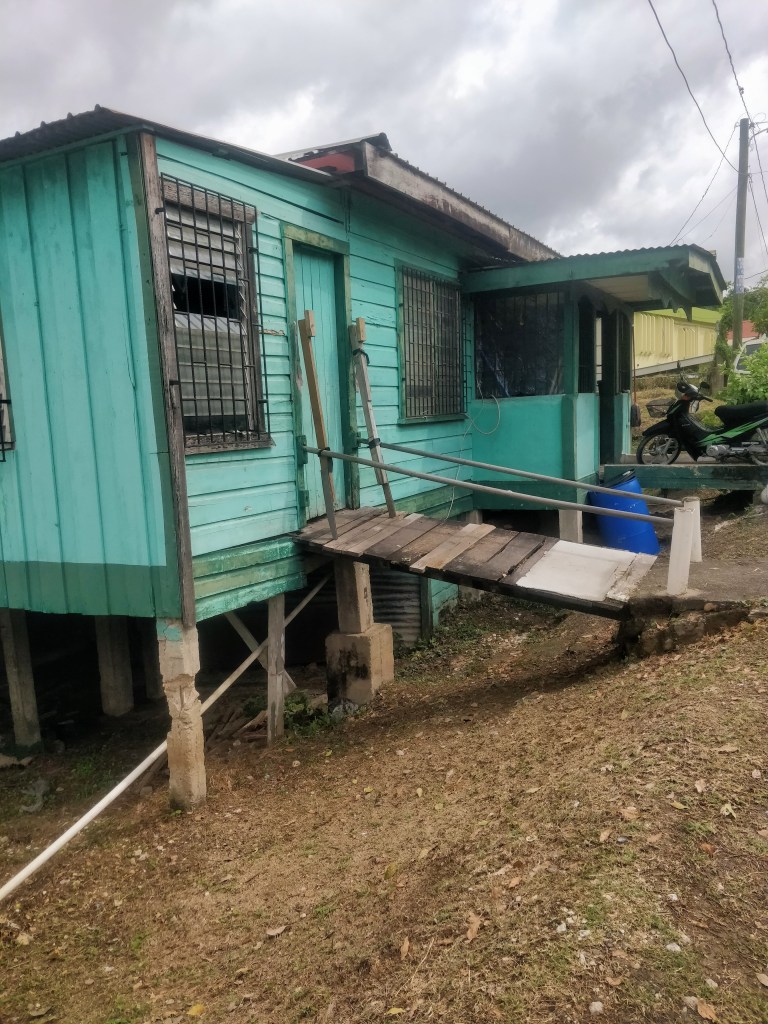
We ended up in San Ignacio, a little town about two and half hours inland from Belize City. We took a local bus there which stopped everywhere picking up schoolkids and dropping the old boys who were sipping rum and coke in the back of the bus at their doors(this was morning, before midday). We had booked a cabin on the edge of San Ignacio in a lovely camping spot where there were parrots in the trees. We arrived in stifling heat and tranquil conditions and were delighted with our new lodgings until the owner said that we had to move to higher ground the following morning. There was the danger of flooding from the nearby river, ironic when we had moved inland to avoid possible sea flooding. So we packed again and found ourselves on the second floor of a hotel waiting..

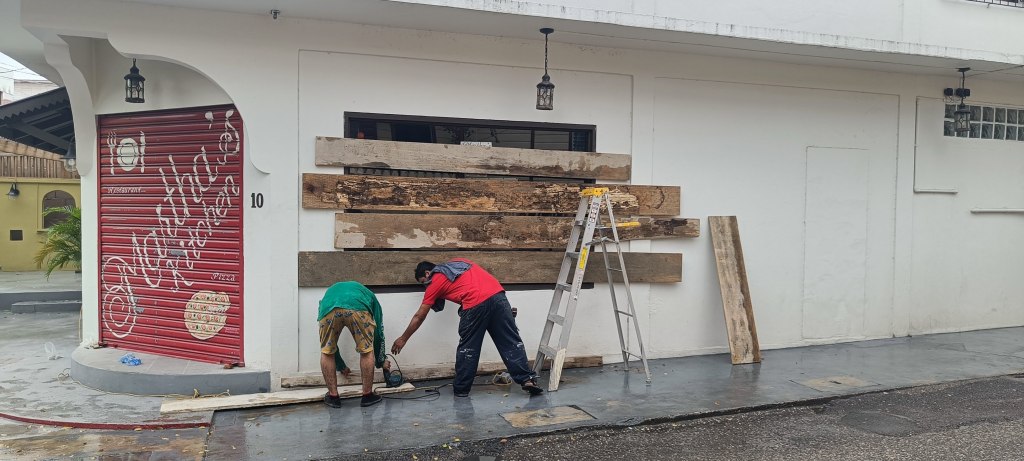
We were waiting, waiting for the hurricane in a hotel room in Belize. There was the sound of hammering as windows were bordered up and the squeal of metal as iron grids were pulled down on shop fronts. Lots of house didn’t look like they would withstand a light breeze, never mind a hurricane. But all was calm. We had been running from Hurricane Lisa for two days, but it had almost caught up with us on Wedneday, November 2. The schools were closed, the shops and restaurants were all closed. All public transport was suspended. The streets were desserted. The whole of Belize was in a state of anticipation ….and trepidation. We tracked the hurricane on our phone as it came near Belize city on the coast, blew inland and unexpectedly veered more north. The rains started at 3pm, the internet were down at 5.30 pm (no more tracking on our phones) and the power went out at 6.30 just after we had got some hot water from reception for our Pot Noodles (dinner). The wind picked up about 8pm and the rain continued on and on. The silence woke me at about 2am – the rain had stopped and the wind had died.

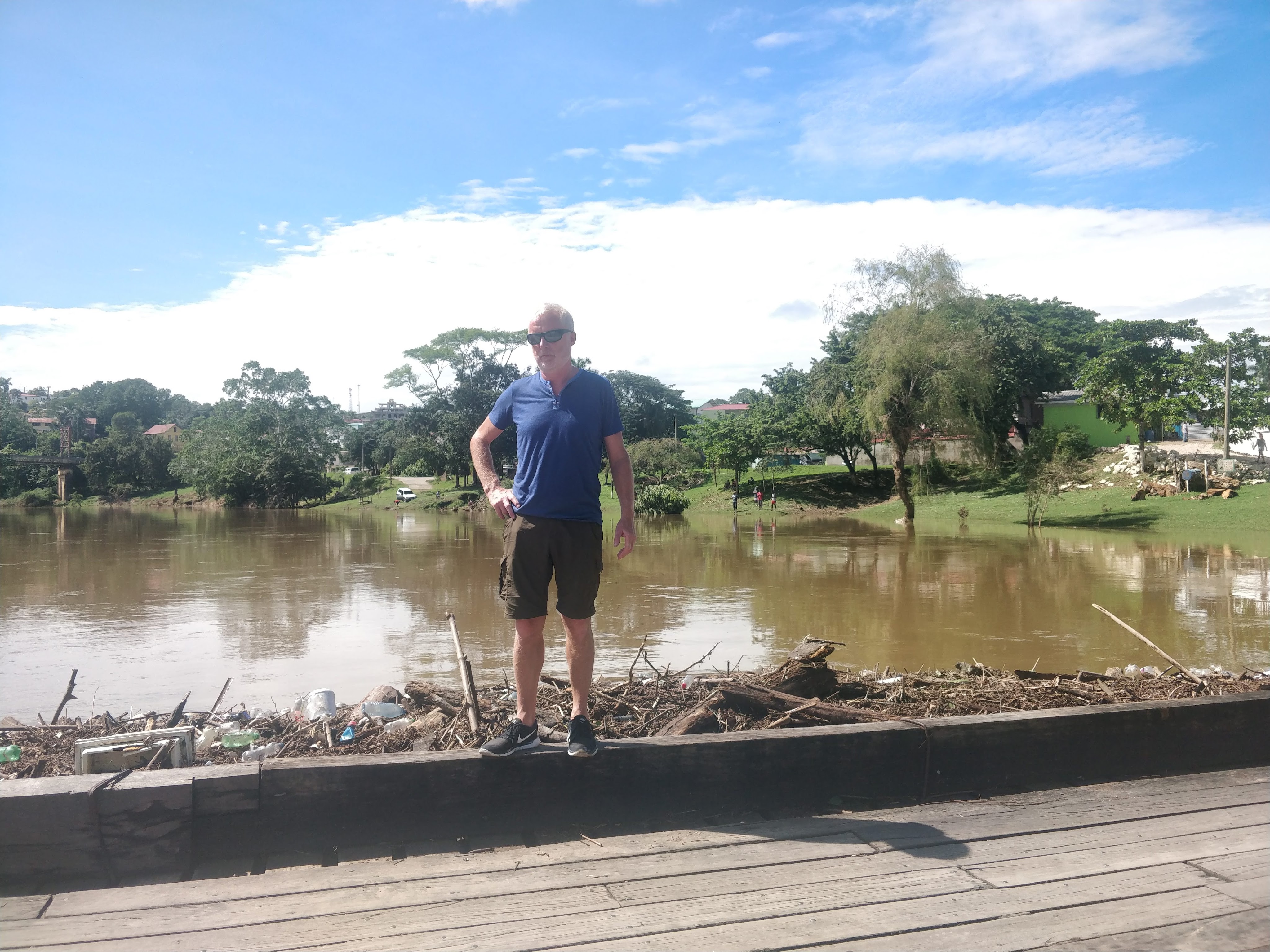
It was over. Hurricane Lisa was less intense than predicted. There was damage to houses in Belize City, there were trees down, damage to bridges and some flooding but the general concensus was that Belize had escaped……..this time. Welcome to life in the tropics where hurricanes are a threat for six months every year. Public Transport was still not operational on Thursday so we had another day in our hotel with some other ‘refugees’ – an English couple who were trying to get to Caye Caulker, a Belizean from Belize City who came here because he didn’t want to go to the shelters, an eccentricAmerican who walked around barefoot all the time because he only sweated through his feet and a receptionist/manager who worked 48 hours straight because another member of staff couldnt get to work. But thankfully a few restaurants opened in the late afternoon just when we thought we might have to resort to Pot Noodle again.

Thanks for reading……see you next time from whereever the buses and ferries take us…..undecided yet😎😎⛱

Chillin’ after the Storm
Beautiful Belize – Waiting for a Hurricane