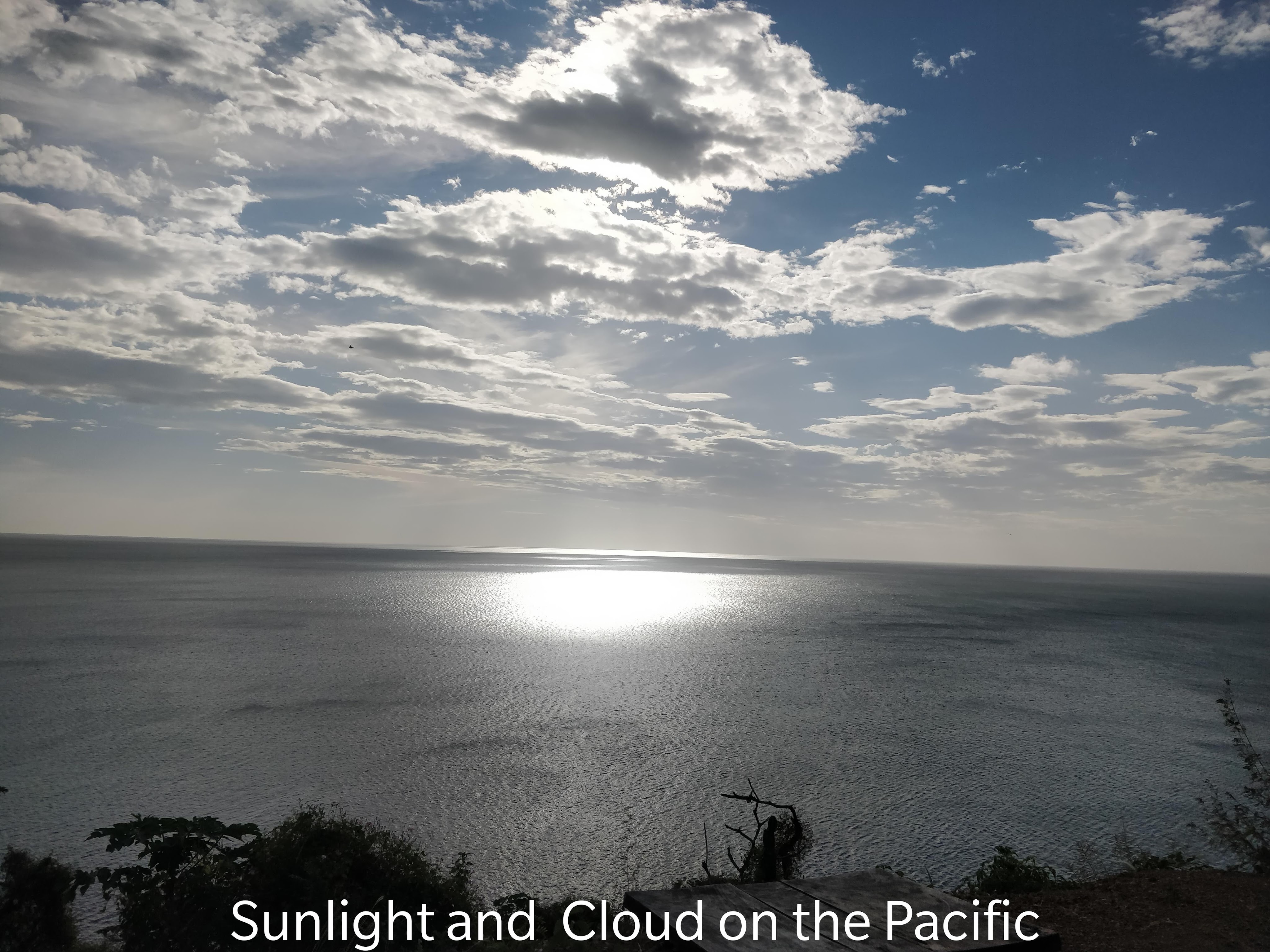
We couldn’t drag ourselves away from Nicaragua so we lingered for another day in San Juan del Sur before heading to Costa Rica and home. The joys of flexibility when traveling😎.
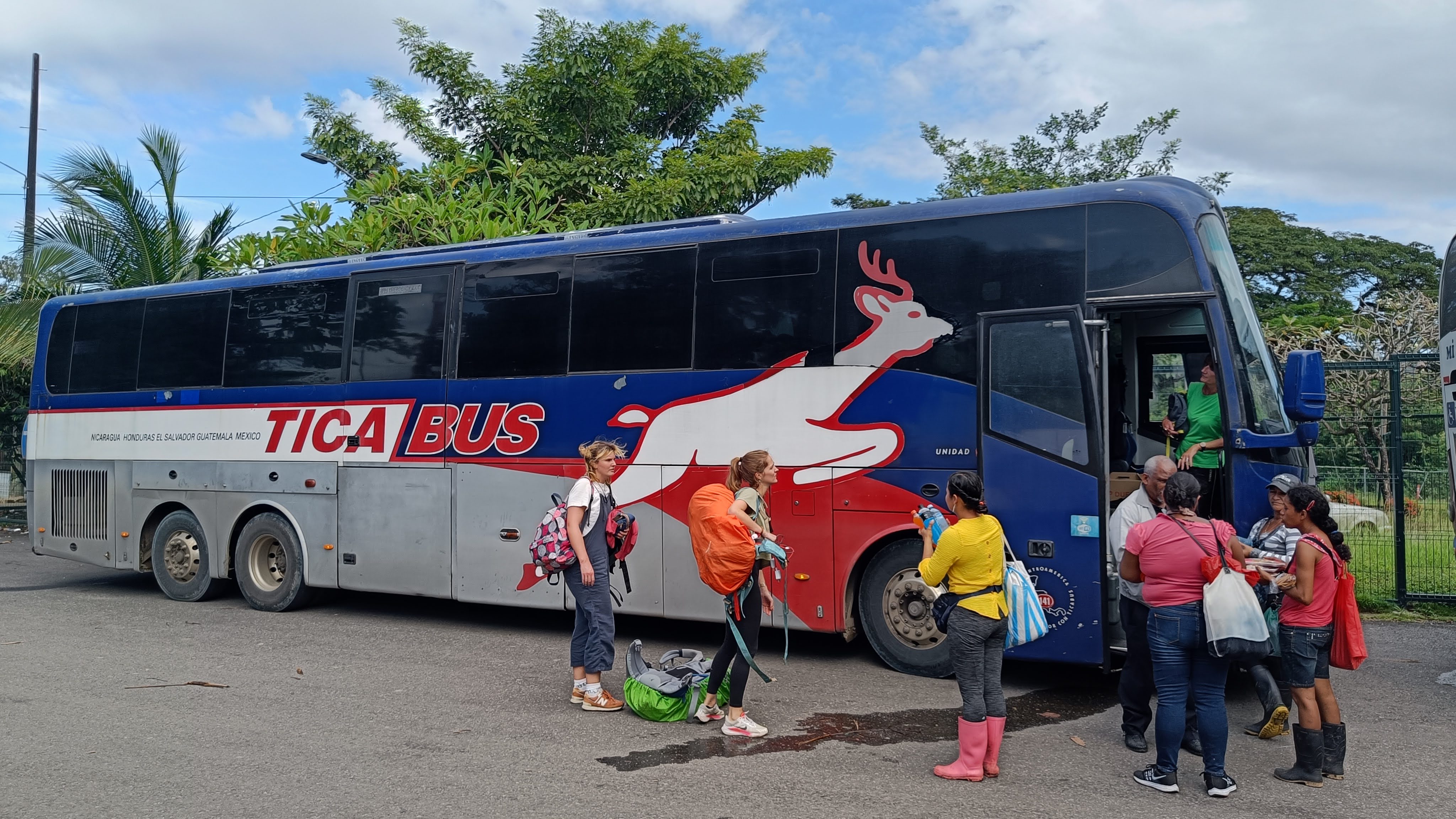
After our experiences entering Nicaragua (army searches, long delays, forensic scrutiny), we booked a shuttle bus to take us to Liberia in Costa Rica from a lovely young man in an office in San Juan. A shuttle was usually a small minibus that took passengers (mainly tourists) door to door but not this time. It started well enough -a taxi collected us at our accomodation in San Juan and then drove through town to collect an Australian girl. There was just the three of us so it was a car instead of a minibus. The driver stopped twice on the way to have a look under the aging bonnet, pretty normal for Nicaragua. He dropped us about a kilometre from the border where he told us to wait for our shuttle and he zoomed off. After 40 anxious minutes(when we could have walked across the border ourselves), two big Tica buses rolled up and we pushed onboard. We had to stand as there were no seats available. The bus drove the short distance to the border where the luggage of the 70 passengers on each bus was unloaded from the hold and all seventy collected their bags and dragged them to the customs office. A Tica representative took our passports because we weren’t on her list and told us to join the queue for exiting Nicaragua..but when we finally reached the top of queue, we couldn’t get into the building because we didn’t have passports. Eventually our passports were returned, and then we queued to pay departure tax ($3 dollars) and our exiting stamp. All 70 passengers were loaded back onto the bus and their copious luggage put back in the hold, We drove 200 metres to the Costa Rican side where the process was repeated, all luggage off, all people off, queue up to enter Costa Rica, then waited for everyone to get through and of course three people were missing and had to be found before we could set off. A lesson in frustration and patience. We were gritting our teeth by the time we finally left the border, still standing as we had no seats all the way to Liberia. We had been well and truly hoodwinked. We should have done what we usually did, got a local bus to the border, walked across and then board a local bus on the other side. Beware of charming smiling salesmen!
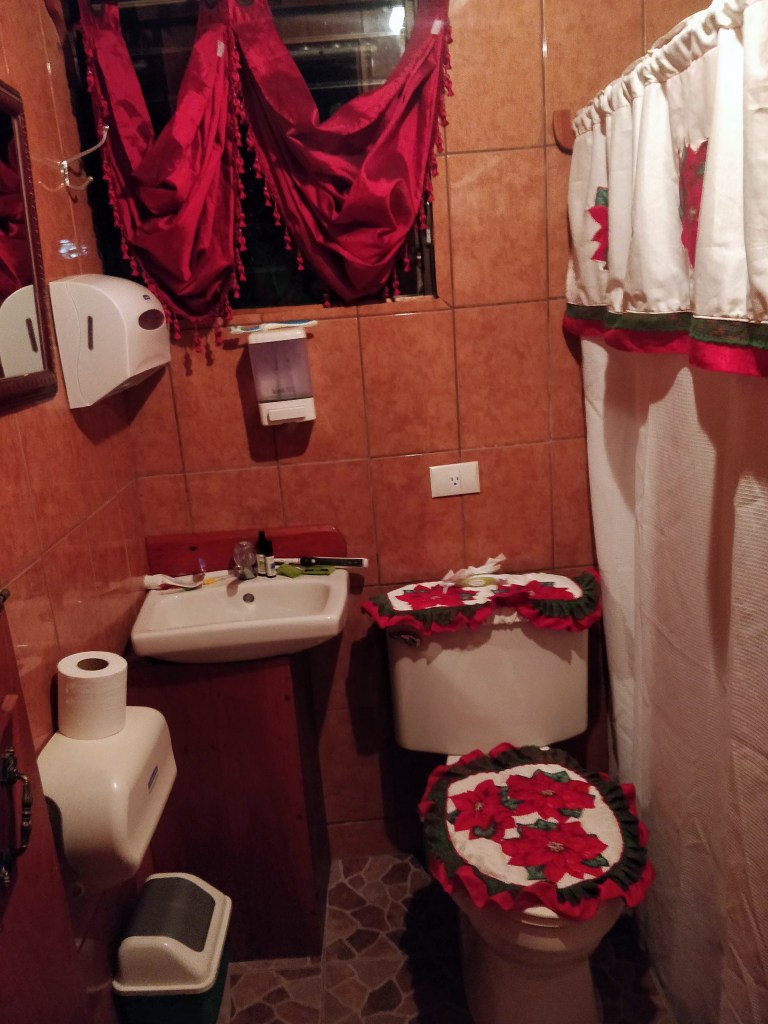
Although we hadnt hired a car anywhere on this trip, we decided to do so for our last six days in Costa Rica. The prices quoted on the Payless website were very attractive until we got to the office and found that insurance, taxes and charges tripled the quoted price. Payless may be spectacularly misnamed😁. Between the delays at the border and delays at the car-rental office(most customers were argueing about the price), it was almost 5pm before we set off in our silver Suzuki Celorio. But it felt like freedom to have our own wheels. We were seduced by good roads for the first hour but then we headed for the hills towards Monteverde, a popular tourist destination. Darkness descended, there was a beautiful full moon until we climbed into mist and fog. It was hard to know if the poor visibilitity was from the fog or dust from the road which were unpaved for the last two hours – narrow, twisty with huge rocks and potholes big enough to swallow our little car. We dodged the craters by erratically driving from side to side. Thankfully, there was very little traffic, it wasn’t advisable to drive in Costa Rica after dark and it seemed that most people heeded this advice. The roads reminded me of the back strand in Tramore beyond the offical car park but with bigger pot holes and we are doing this in the dark with mist and fog. By the time we arrived in Monteverde (elevation 1330m), we needed a stiff drink and jackets and raincoats (and a woolly hat would have been nice) The wind was fierce and howled around the town and our chilly guesthouse where the windows didn’t close properly. We needed blankets on the bed – for the first time in months….which would have been cosy if they hadn’t smelled of damp. Every surface was covered with Christmas decorations, cushions, wall hangings and tablecloths. I even had difficulty finding the flush handle in the bathroom😆. But dampness and wind was part of life in Monteverde, home to cloud forests,shrouded in swirling mists. The Continental Divide passes through here – its a geographical line drawn over the earth, marking the boundary between two hydrographic watersheds i.e rain falling on one side will flow into the Pacific and on the other side of the line into the Atlantic.

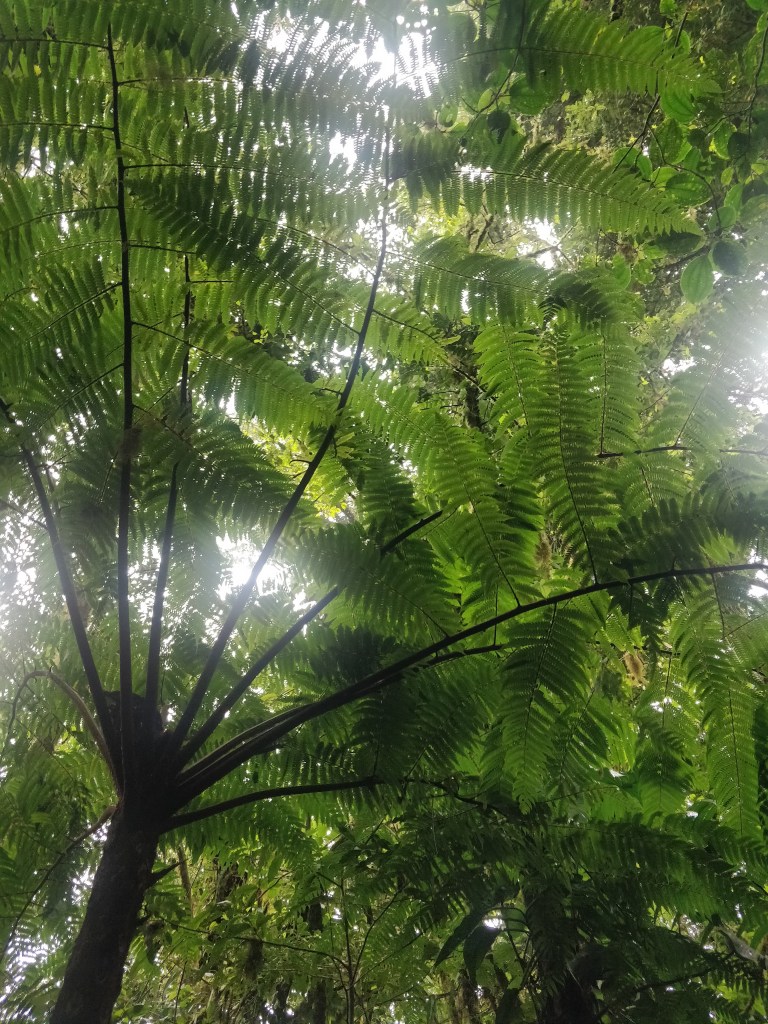
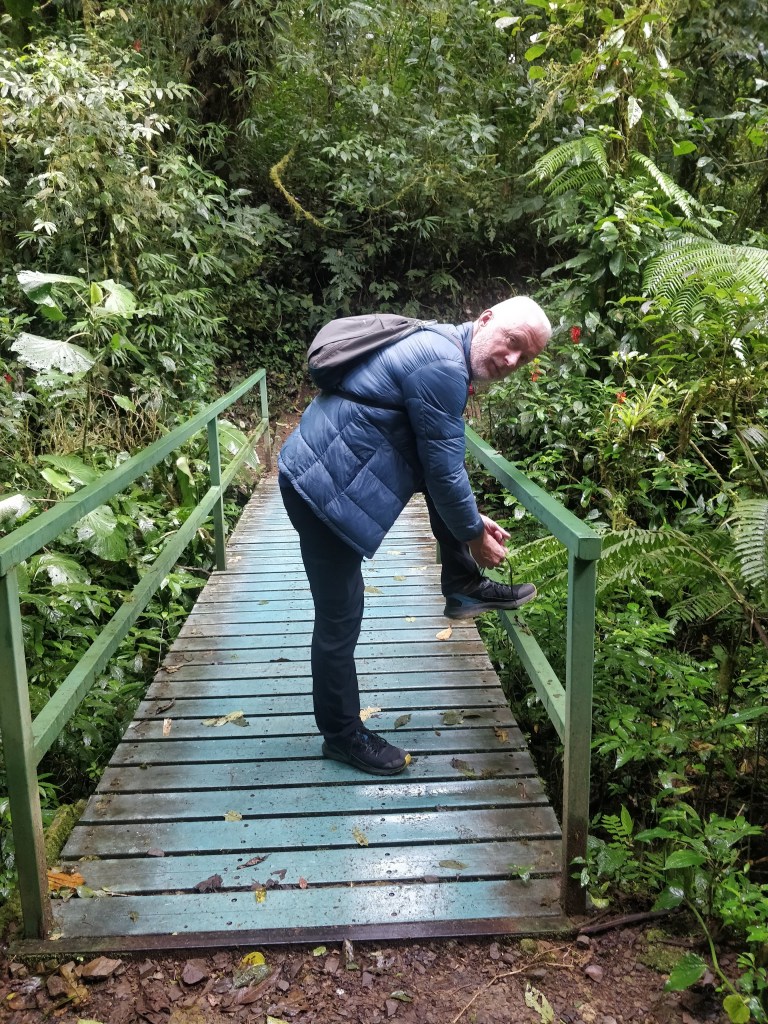
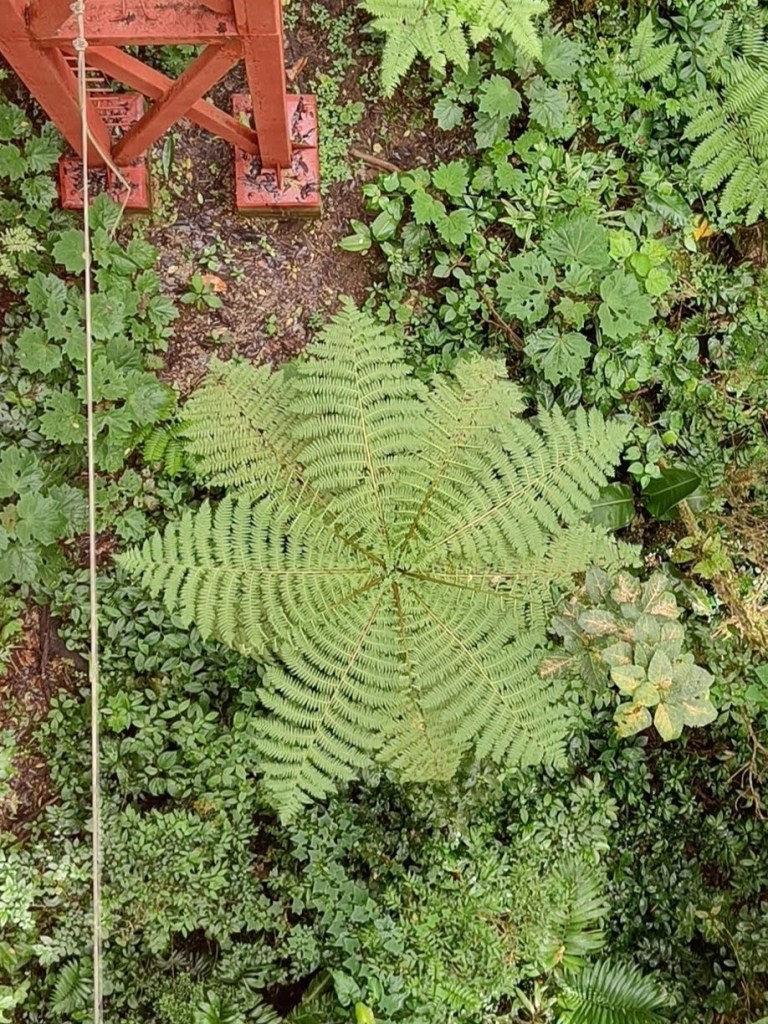
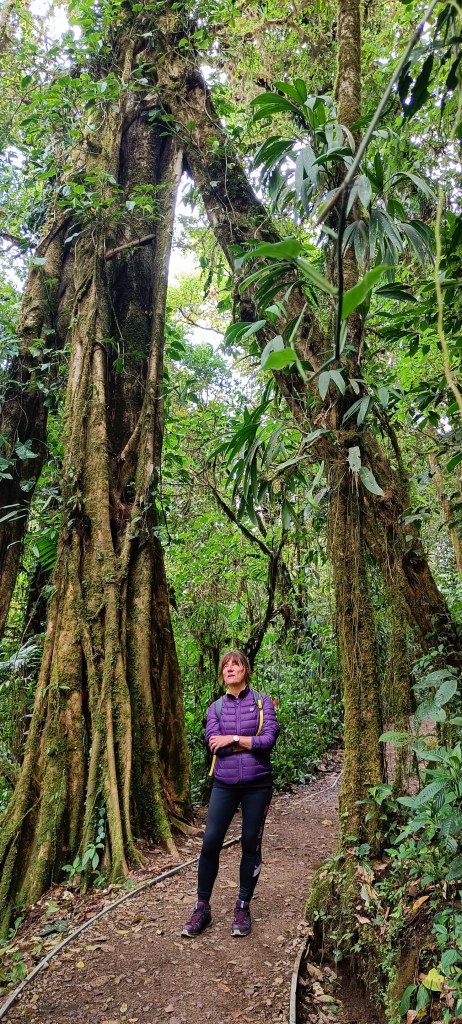
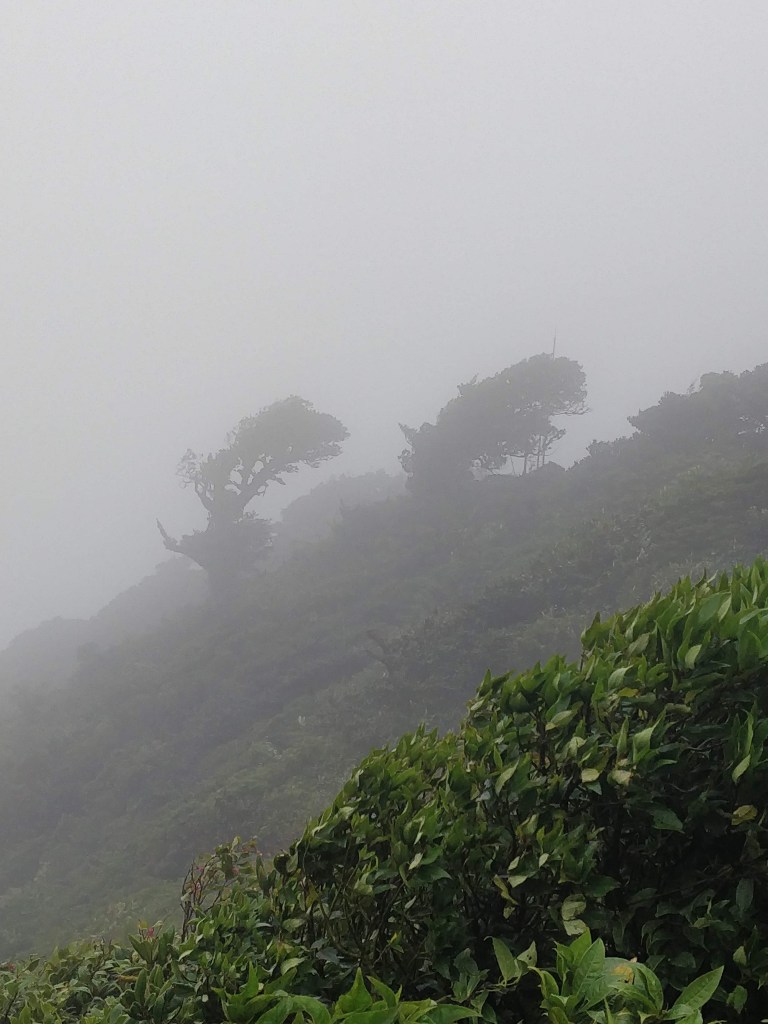
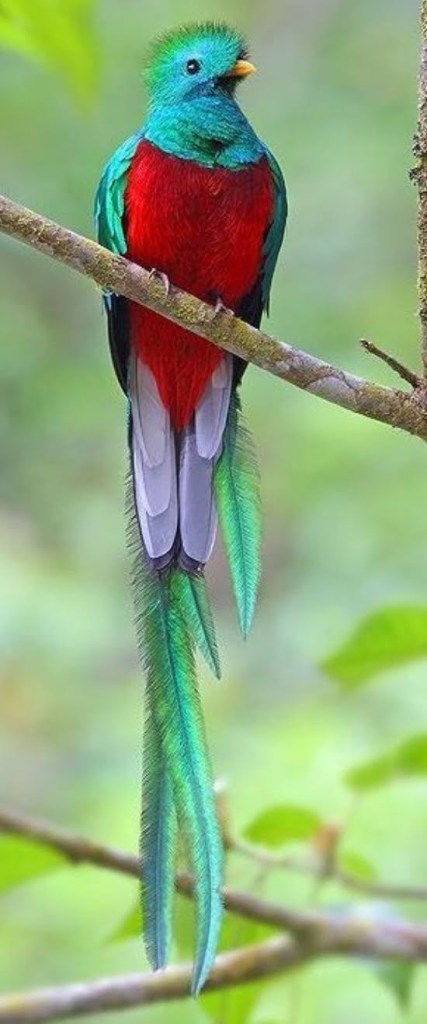
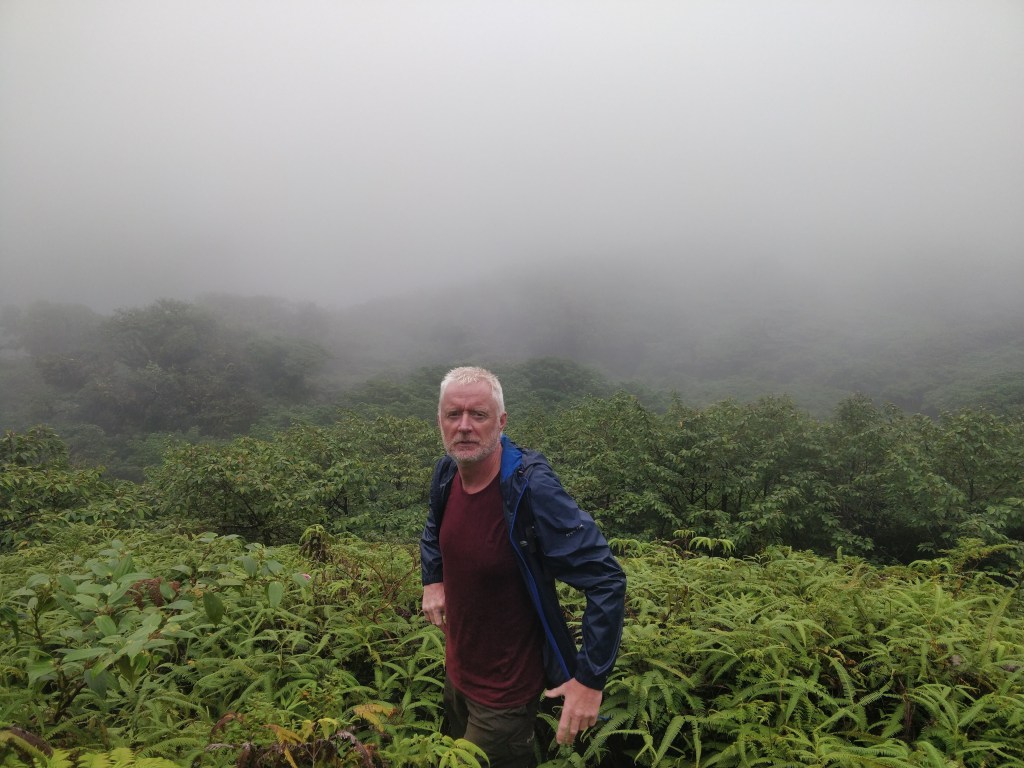
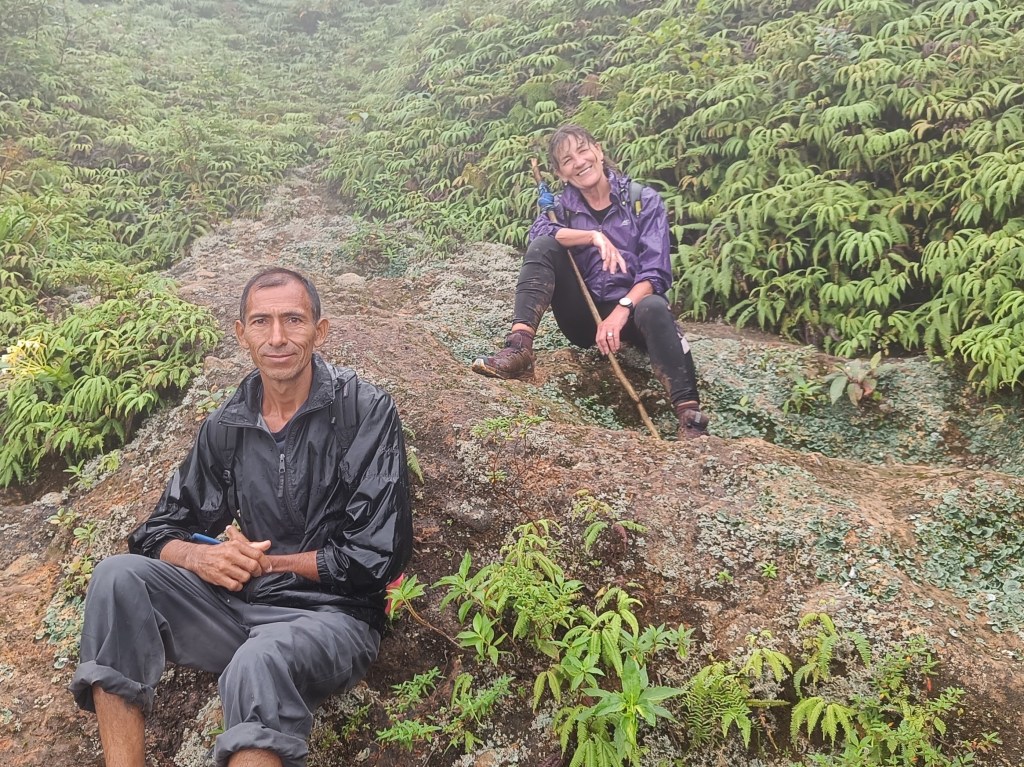
Walking in the Monteverde Cloud Forest was wonderful, lots of trails with a huge variety of plants that seemed to grow even as we watched them – more biodiversity here than anywhere eles on the planet. It was relatively uncrowded so we had the privilege of silence – human silence. We had the rare opportunity to be still and really listen, to almost feel the forest breathing, to hear the wind in the canopy and the swaying of leaves. Such tranquility, beauty and abundant life. We caught a glimpse of the rare quetzal bird – resplendent is the most appropriate word to describe it – and a better look through a long lens telecamera of one of the guides. Coatis (a type of racoon) ambled around with their pointed snouts and long tails waving in the air like flags. At the highest point was the Elfin Forest, windblown dwarf trees and views of the Continental Divide but right on cue, the mists rolled in.
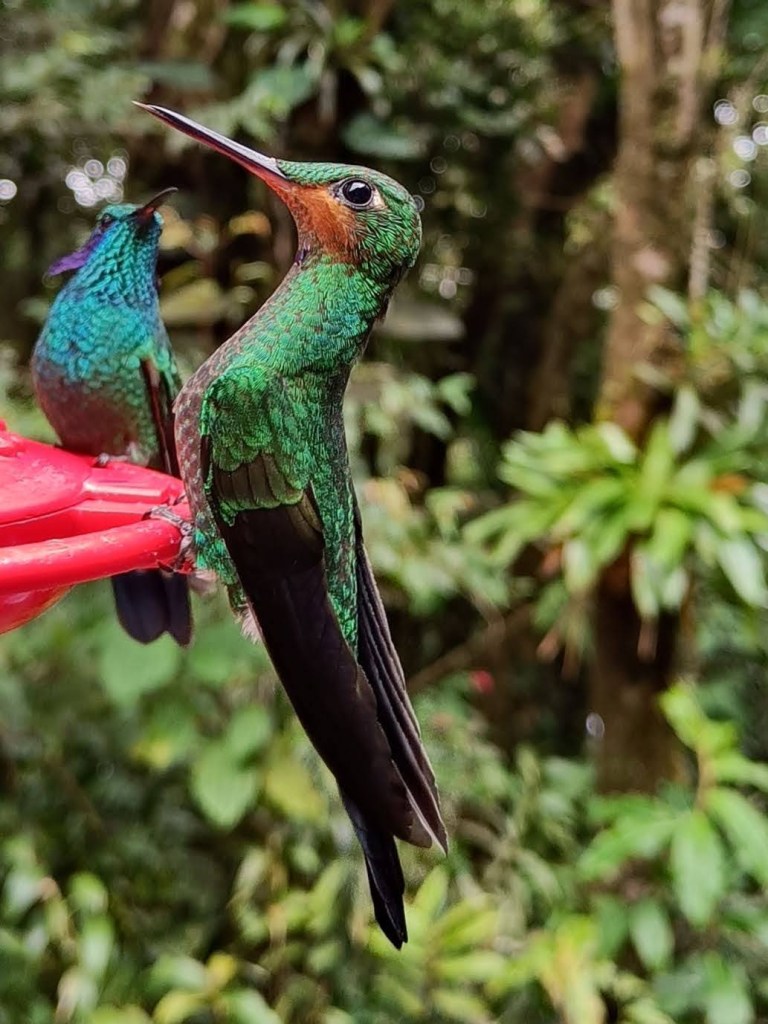
Perhaps the highlight of our day in the clouds was a visit to the Hummingbird Café at the Park entrance. Despite the name, we didn’t expect to see a charm of hummingbirds dipping their beaks into the feeders on the garden deck of the cafe. (A charm is the name for a collection of hummingbirds😍)We were certainly charmed. Theres just something about these tiny birds and their ceaseless activity that was so captivating. So many varieties, so many colours, such constant motion, their survival against all odds. They need to eat constantly to maintain their high metabolic rate – that means eating the equivelent of half their body weight in nector or small insects every day. One of these tiny birds flew past my ear, a swift whirring movement of air and I knew why they were called hummingbirds. Enchanting.

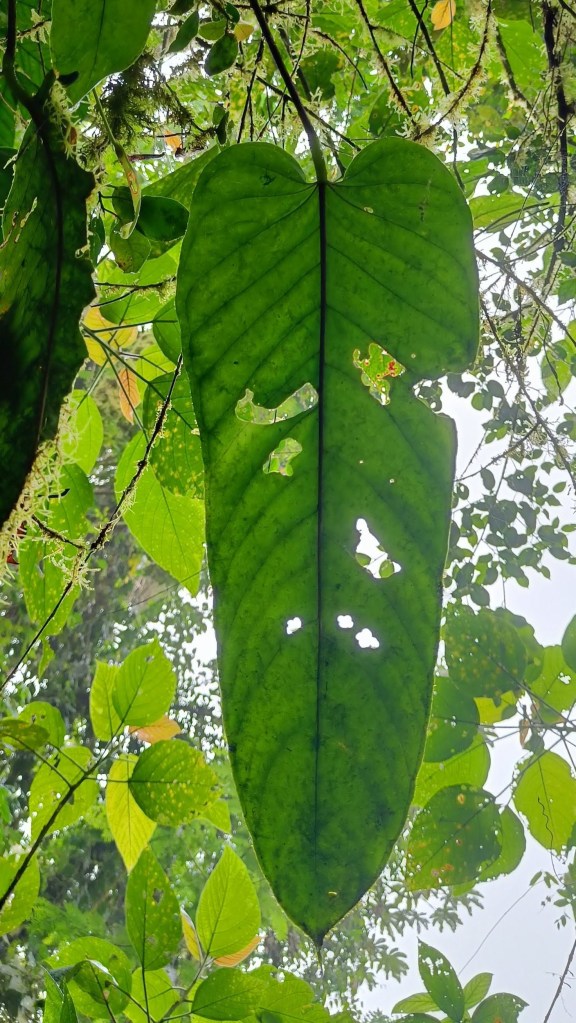
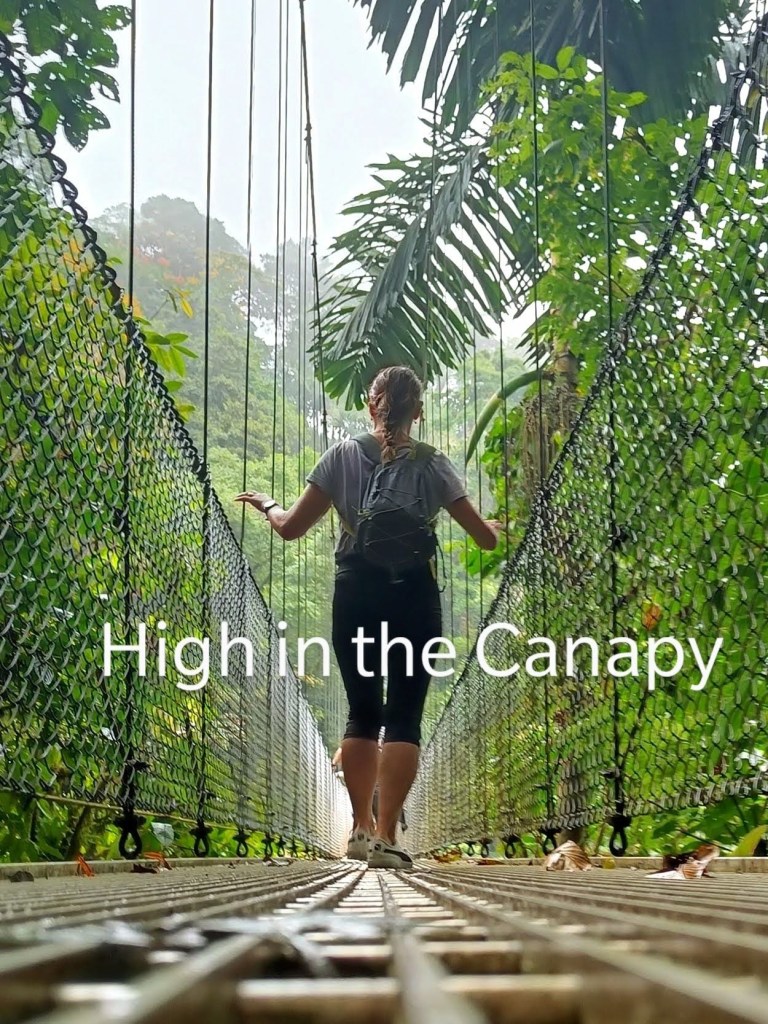
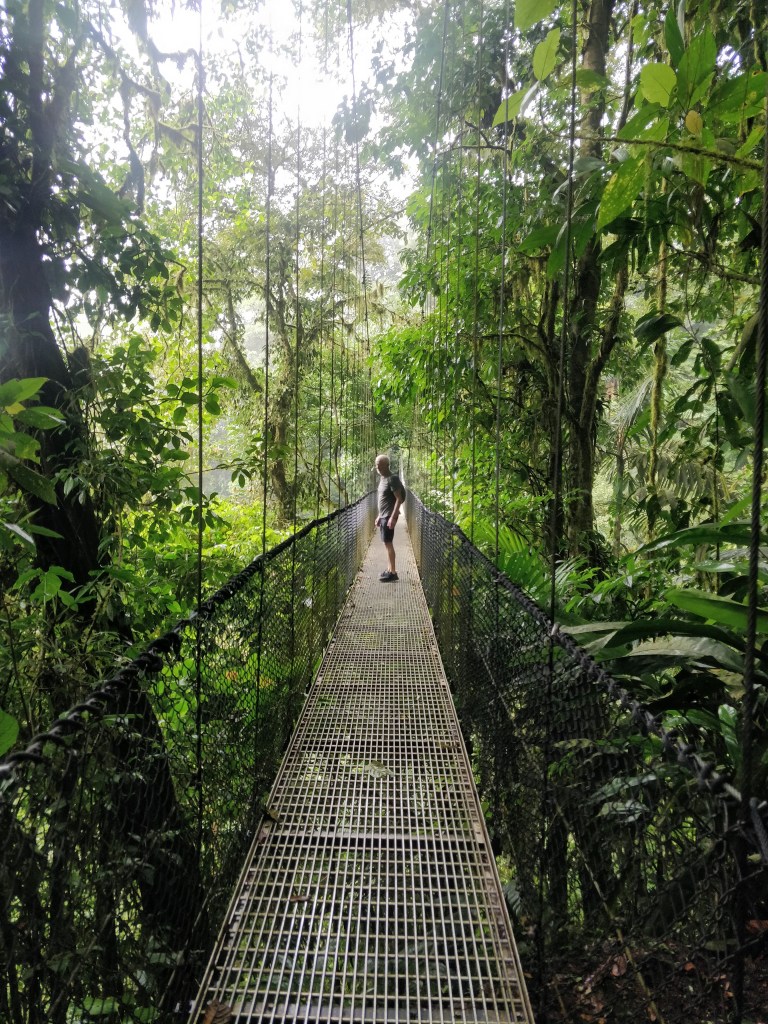
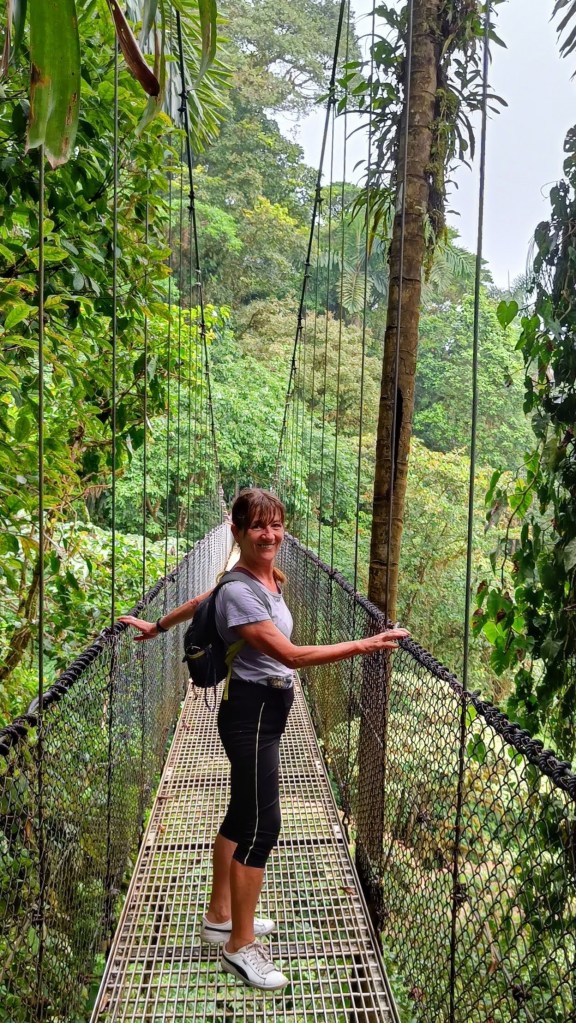
One of the main attractions in La Fortuna were the hanging bridges, suspended walkways high in the canopy giving a birds eye view. The bridges swayed in the breeze and tilted a bit when more people walked on them or when Caoimhin jumped up and down to make them shake and vibrate. We could see where ants and insects had eaten holes in the leaves so that they resembled lace and light poured through the patchwork. There were ants and monkeys, wild boar and toucans but the real stars were the living breathing trees, which provided an anchor for the earth as well as a refuge, a restaurant and a hotel for so many creatures. Everything connected in the ecosystem….including us humans
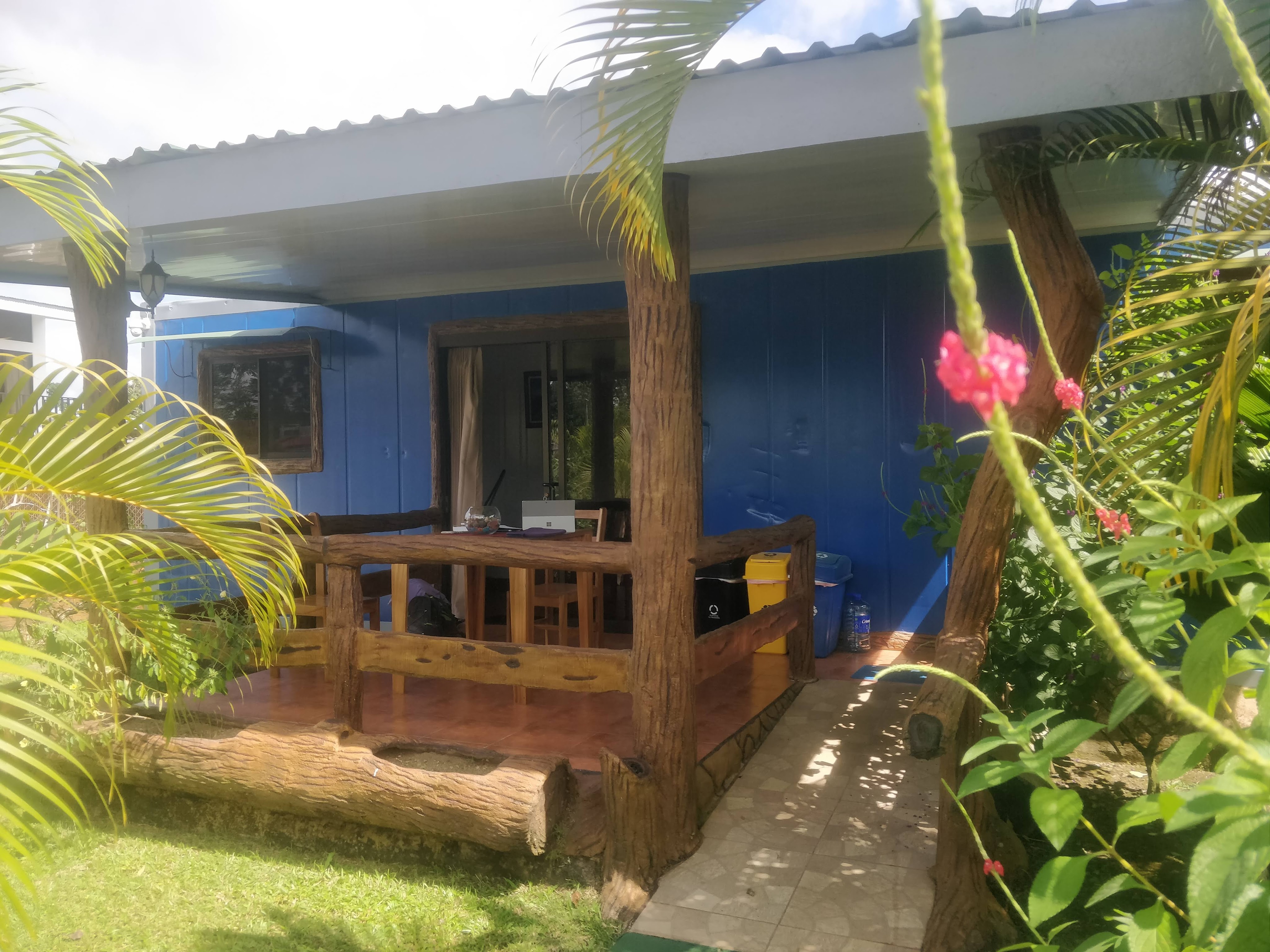
When we moved on to La Fontuna, a town near the Arenal Volcano that reupted in 1968 and 1992, we had a little resident hummingbird in the garden outside our container apartment (yes, it was a container that had been converted into a really lovely living space.) Sitting on the patio watching this tiny creature defending his territority was pure entertainment. He drove off any other hummingbirds that came into his patch, these flowers were his…sharing scarce resources could mean starvation.
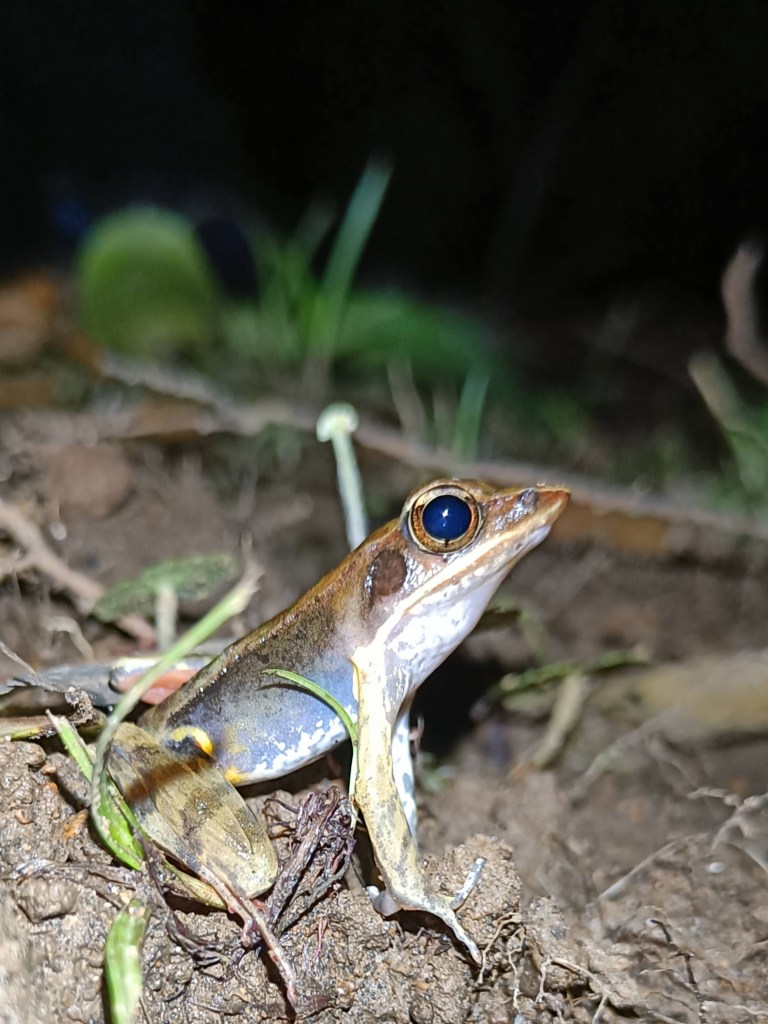
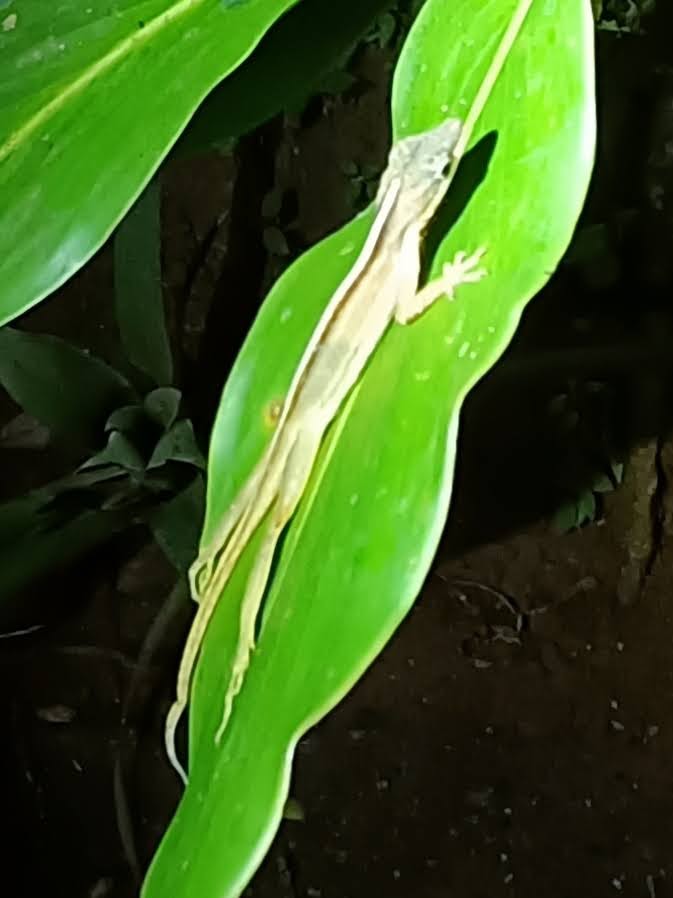
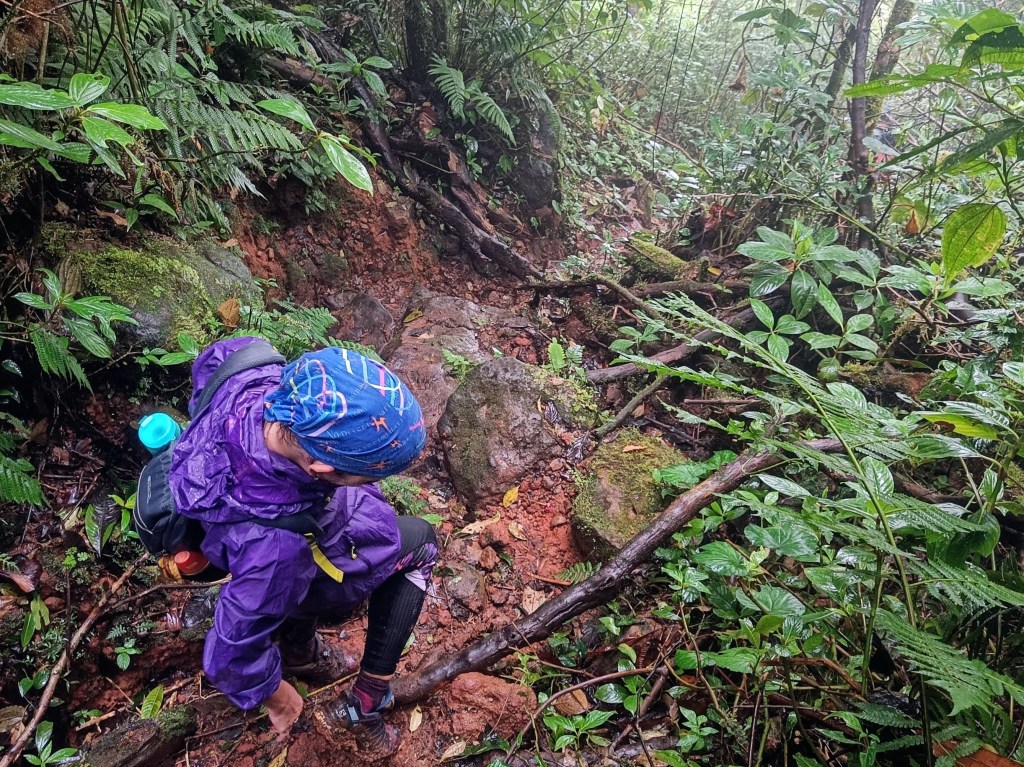
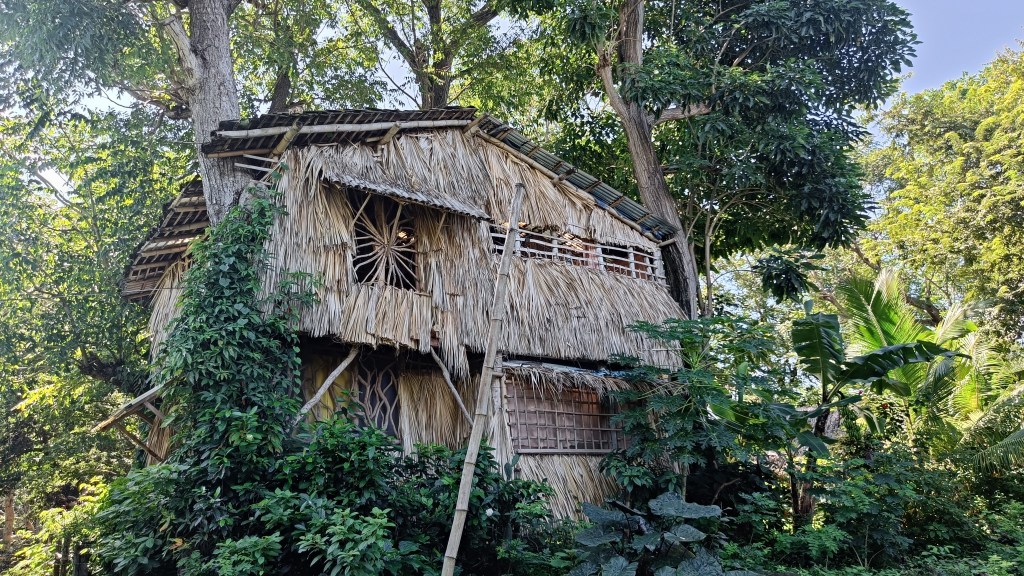
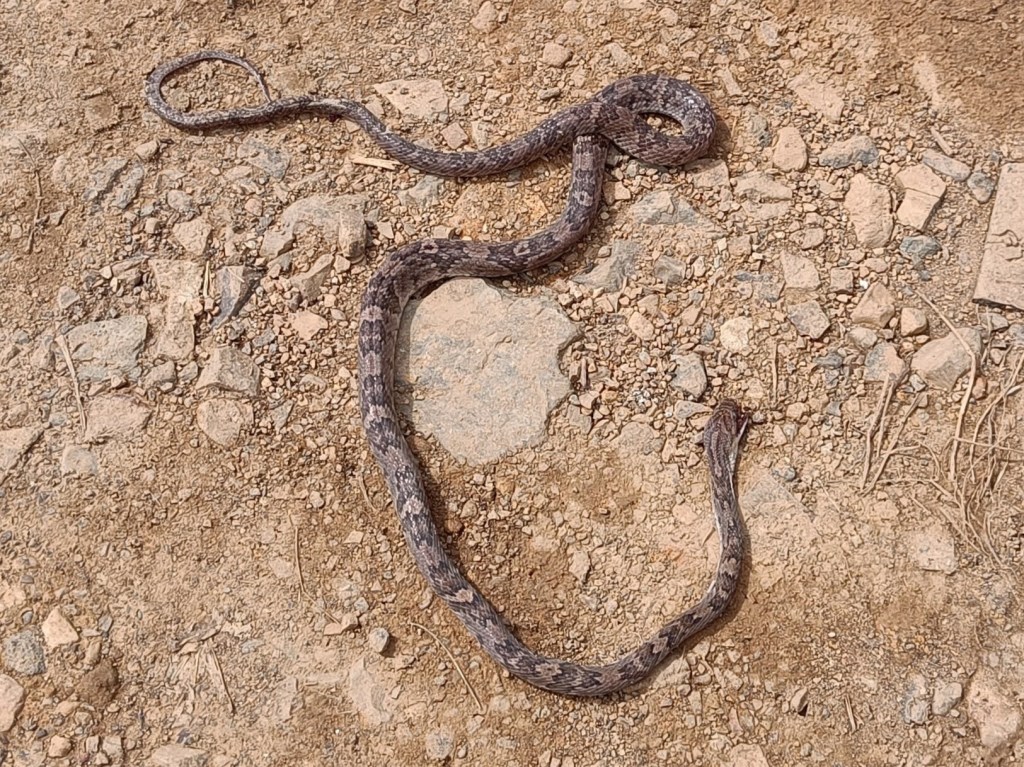
We may have kept the best till last. We booked a simple eco- lodge, called Cecropia – in the mountains, run by a young Costa Rican couple. Our little rented car shuddered up the unpaved road and came to a stop outside a cabin surrounded by an exotic wilderness of flowers, with bird feeders, binoculars and telephoto lens aimed at the rainforest. We knew that we were somewhere special. There was the constant sound of insects and birds, falling twigs and giant leaves tapped on our cabin window. We went on a night hike …..if you thought that darkness was the natural time for sleep, think again. There were bats and owls, snakes waking up to slither in the undergrowth. But there were also red-eyed frogs, and a large frog devouring a smaller one(the victim’s still squirming outside the predators mouth while the rest of it was being eaten). There were hunting lizards. mating moths, colonies of leaf-cutter ants still working hard and a sleeping hummingbird in the trees- they go into a torpor to sleep reducing their temperature and metabolic rate to a minimum. All this under clear starry skies without any light pollution.

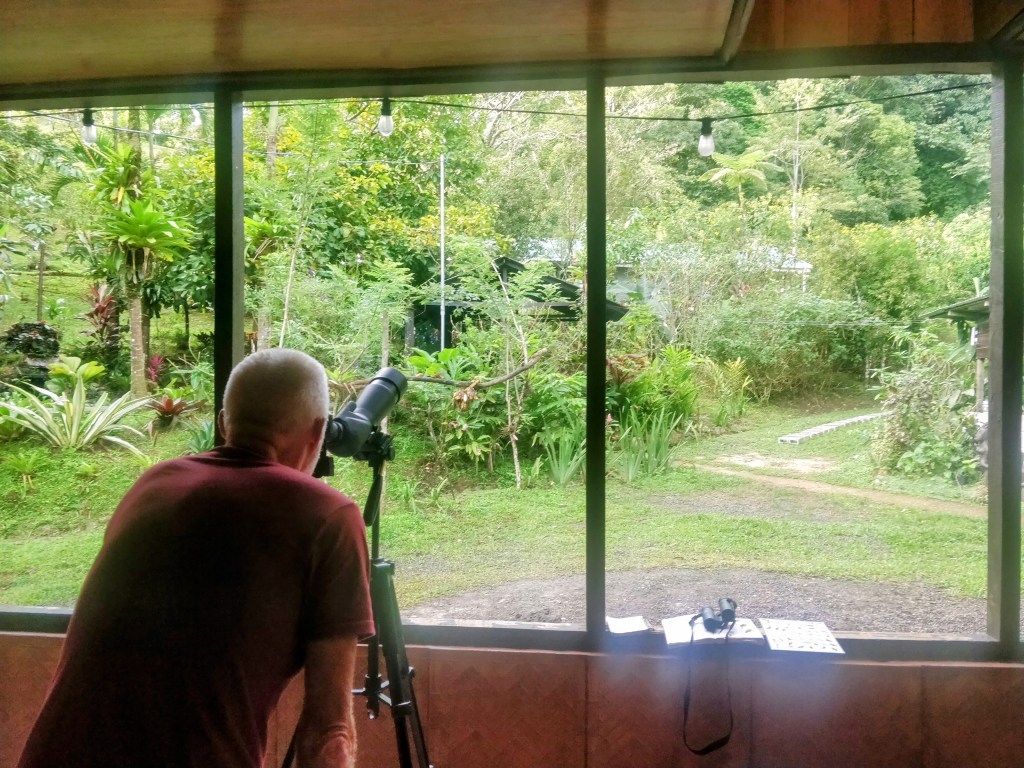
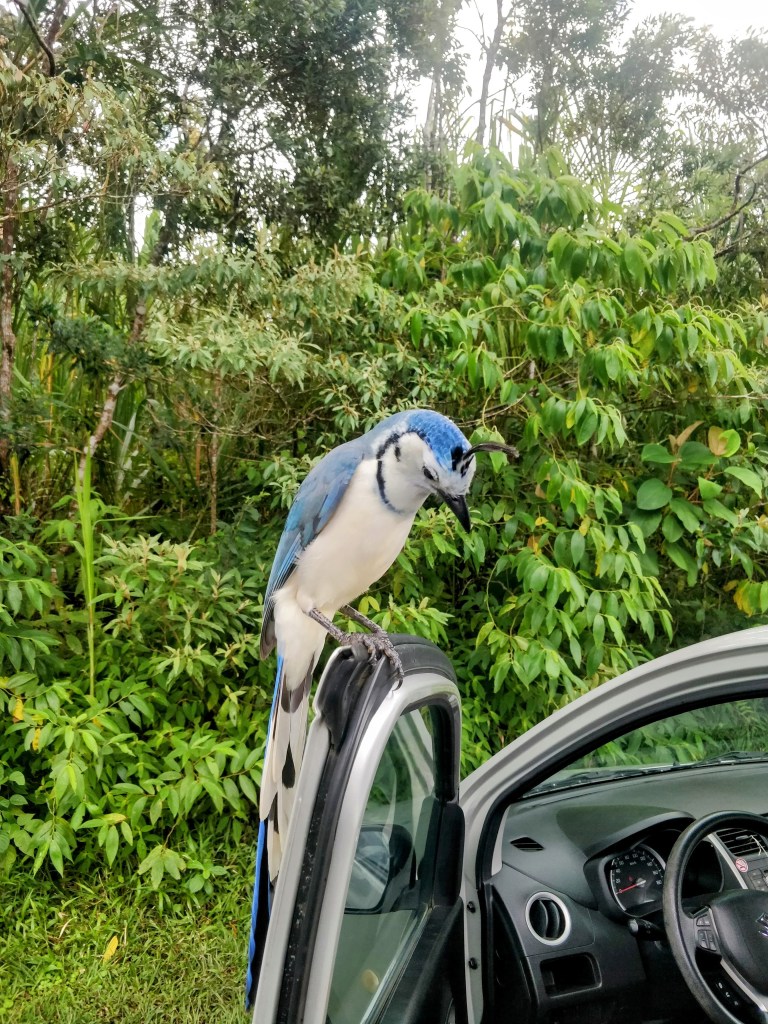
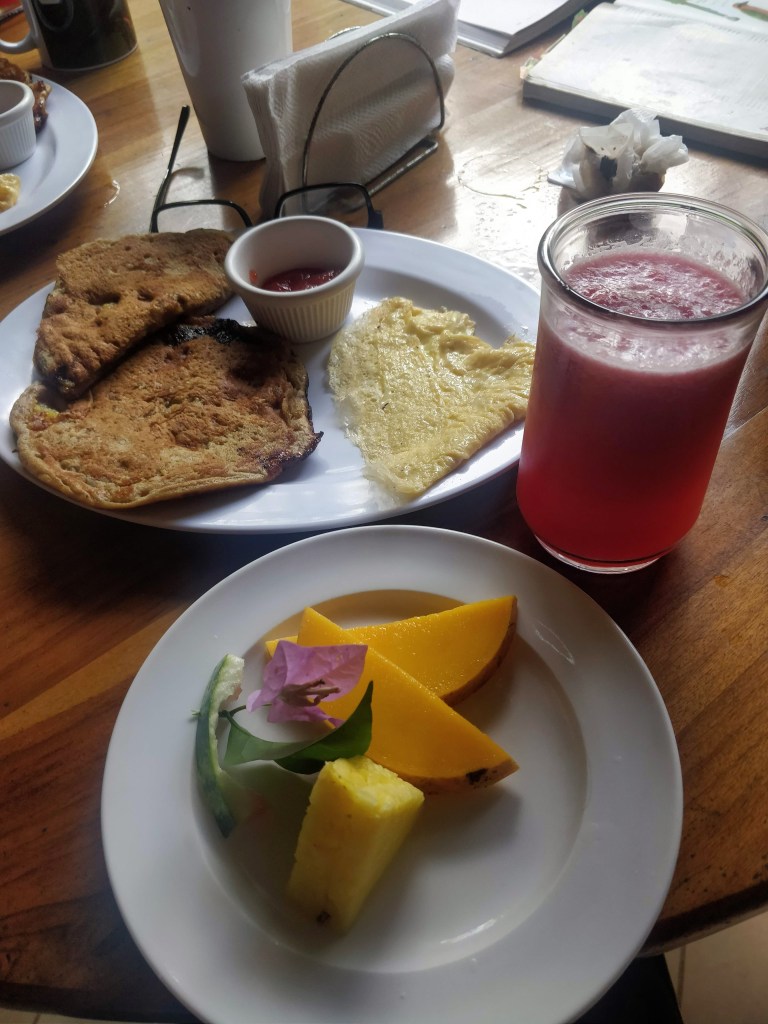
We had a bird watching breakfast, munching on cinnamon pancakes with homemade guava jam and drinking watermelon juice while birds squabbled over bananas a few metres away. And what a variety of birds – toucans, honeycreepers, mottmotts and so many more. Even the magpies were more colourful in Costa Rica than home but just as curious – one perched on our car door and refused to move. With such an enormous choice of exotic birds, we were surprised that the national bird is an unremarkable -looking brown (clay-coloured) thrush, but this was chosen for its melodious voice. So looks ain’t everything🙂 But if it was up to me, the hummingbird would be the national bird❤️.
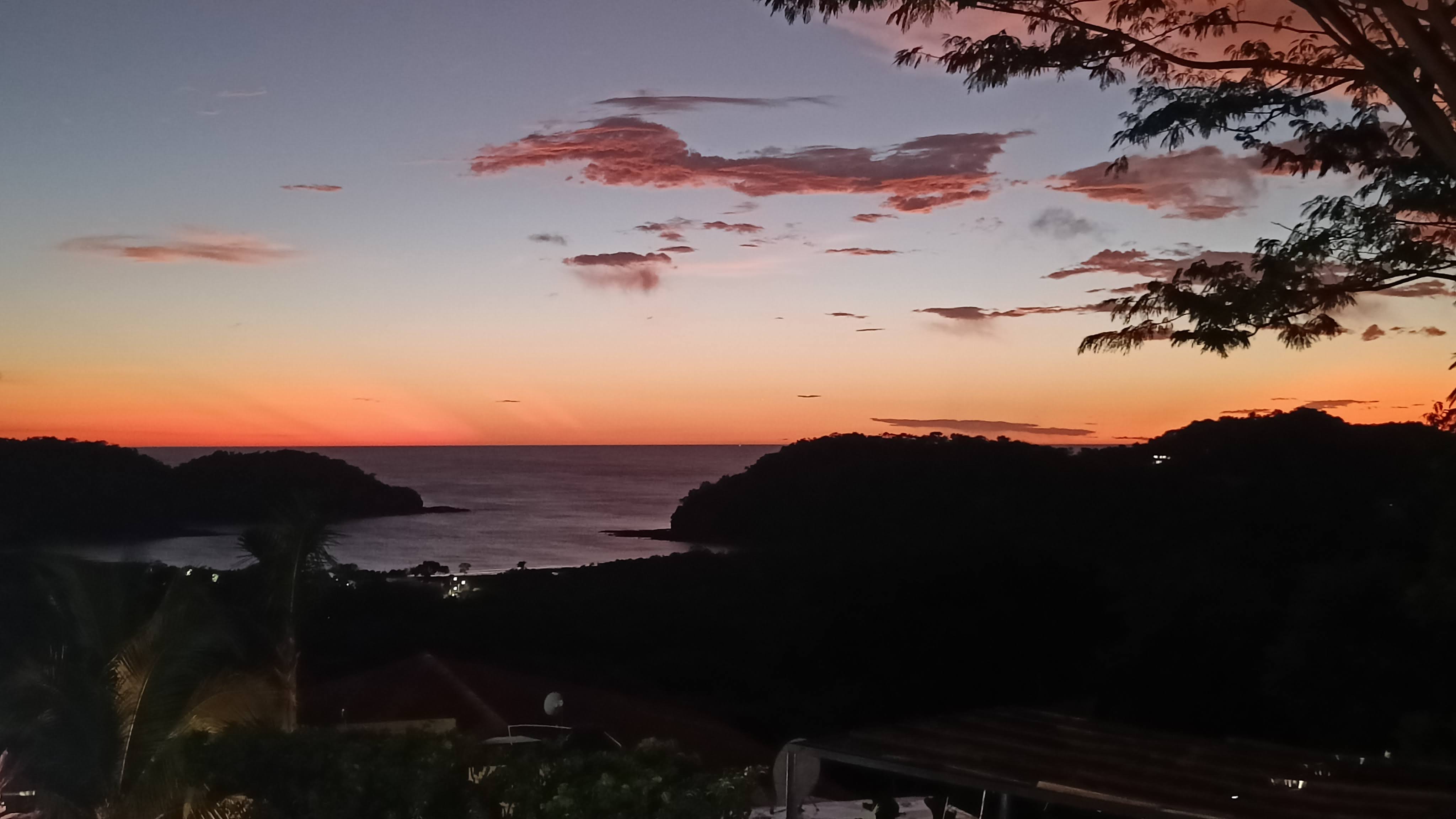
Costa Rica is different to the other countries in the area – more affluent and politically far more stable but also far more expensive than its neighbours. Remarkably, it is also a country without an army, astonishing especially in this region, known for violence, dictators, protests and unrest. Although it was conquered by the Spanish, they considered it a backwater with little strategic value and with no exploitable resources and largely ignored it. There’s little old colonial architecture here…the emphasis is on nature and the Great Outdoors. There is dedication to environmental protection and mind boogling biodiversity. In many way, this little country was.saved by not having riches of gold and silver. Its natural resources are priceless.
We are about to go to San Jose International airport now, leave the heat of Costa Rica (it’s 7am and already 28C) and head into an Irish winter with the shortest day of the year fast approaching. It’s been a fabulous jaunt around Central America – eleven weeks, six countries(Costa Rica, Guatemala, Belize, Honduras, El Salvador, Nicaragua), two hurricanes, lots of boat trips, two international ferries and numerous buses. It’s been too short …..we have barely skimmed the surface of this turbulent, fascinating region.In my next post I’ll give a summary with highlights and favourite bits.
But until then, thanks for coming with us on the journey, it’s been a pleasure to have your company
Have a great Christmas. or as they say here in Central America Felix Navidad 🤶🎁🎁🎀🎀🎀

 marienoonanblog