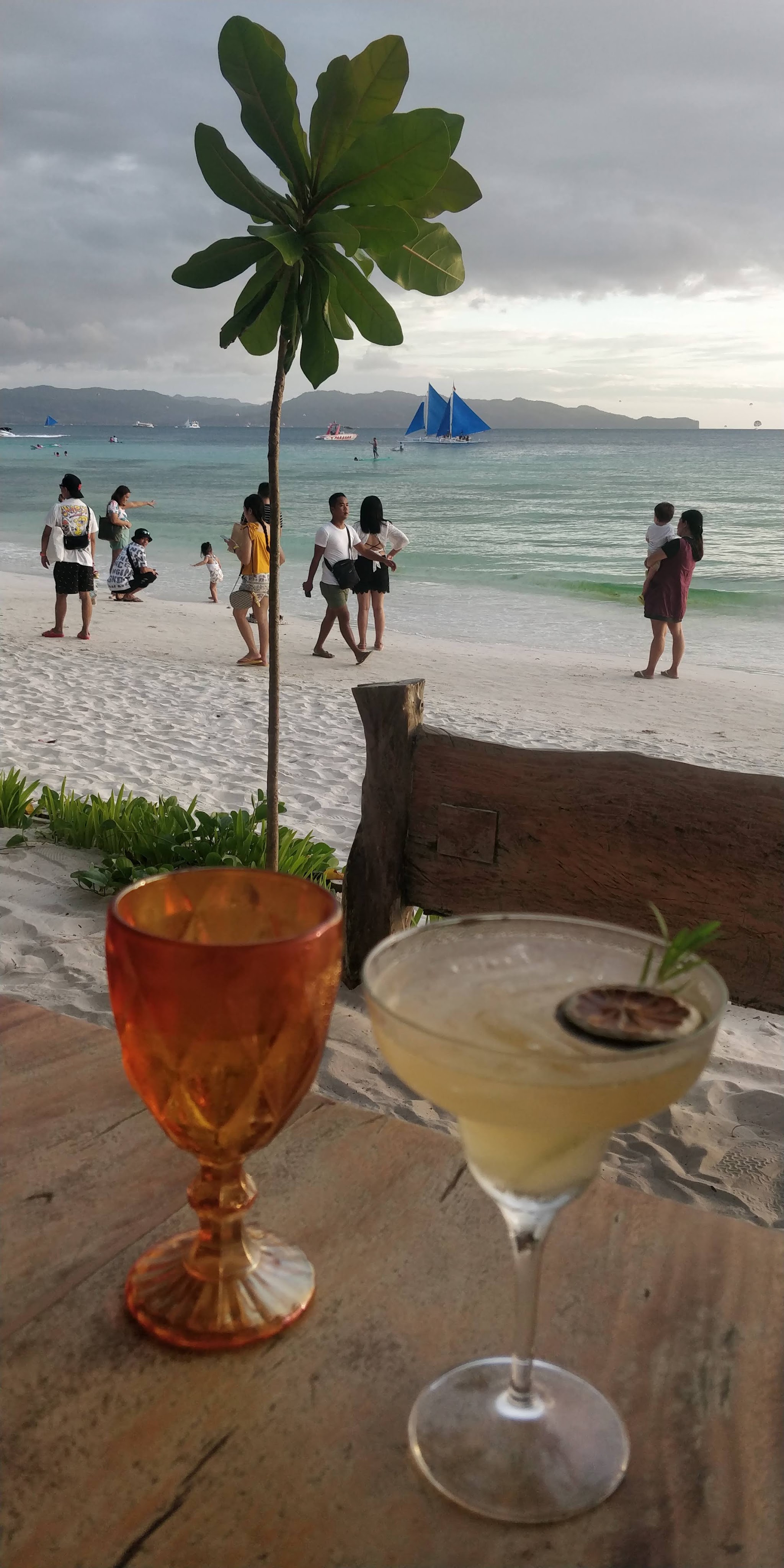
Just the whisper of some place-names is like a promise of paradise. One such place is the island of Boracay in the Western Visayas in the Philippines, which has been called one of the most perfect islands in the world on many ‘must-visit’ lists , the pinnacle of white- sand, palm fringed beaches where the waters are warm and teeming with fish. But there was trouble in paradise. Lured by photogenic beauty and the quest for perfection, so many people flocked to this tiny island (15kilometres long and less than a kilometre wide at its narrowest) that the delicate balance of nature tipped towards destruction. The people who came to marvel at its beauty devoured it, their voracious appetites demanding food, shelter, transport, water and sanitation. Hotels were built that violated planning and environmental laws. Sewage and waste management were enormous problems. In 2018, the President of the Philippines visited the island and declared it both a ‘cesspit’ and a health hazard – a paradise almost lost. So the pearly gates of Boracay were locked to tourists for a year so that the island could recover…..which of course meant economic hardship for the residents who relied on tourists for income. The restrictions of the pandemic provided further opportunity for renewal and recovery. Boracay, version 2, opened for business with improved infrastructure and strict enforcement of development rules.
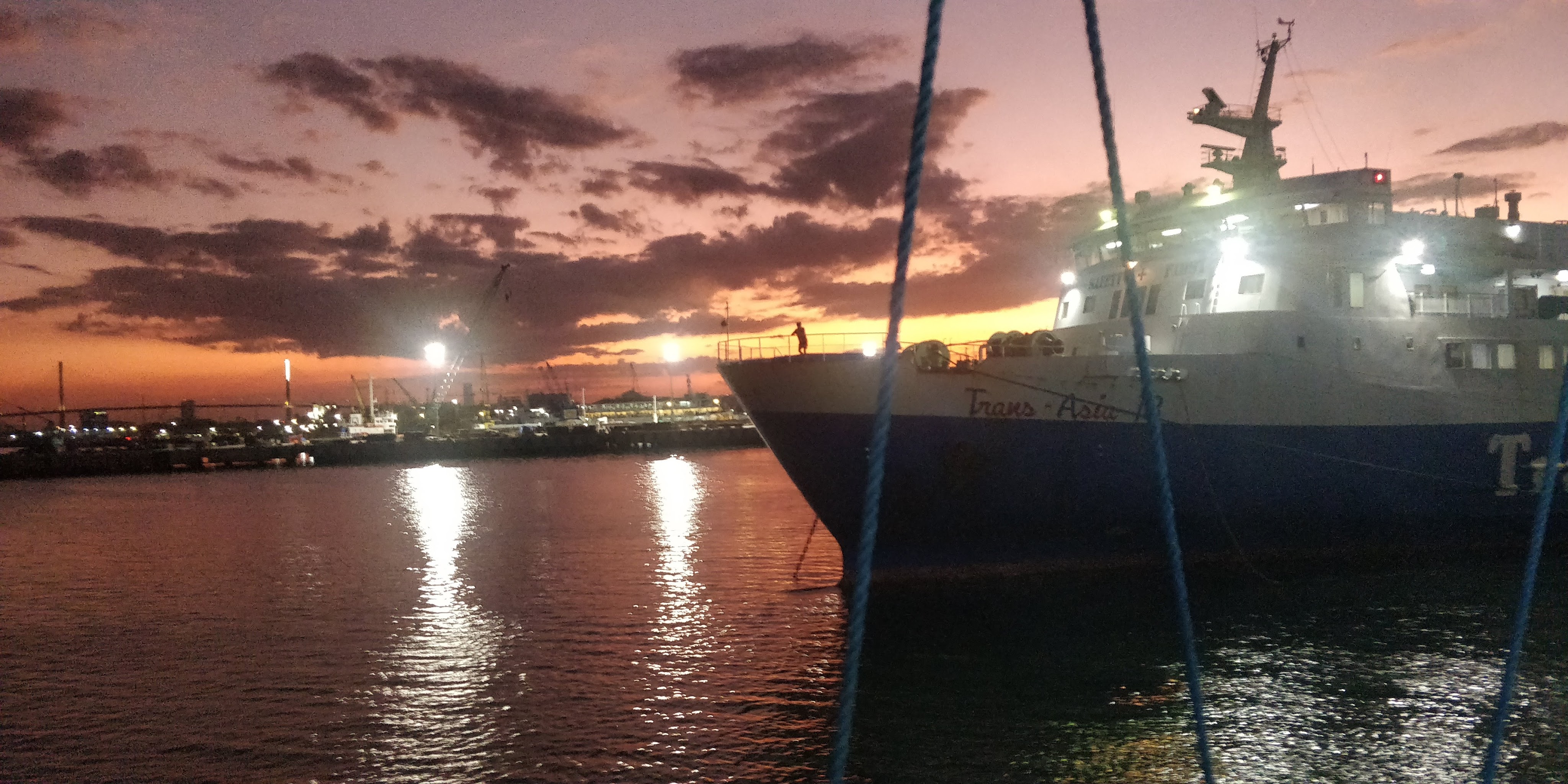
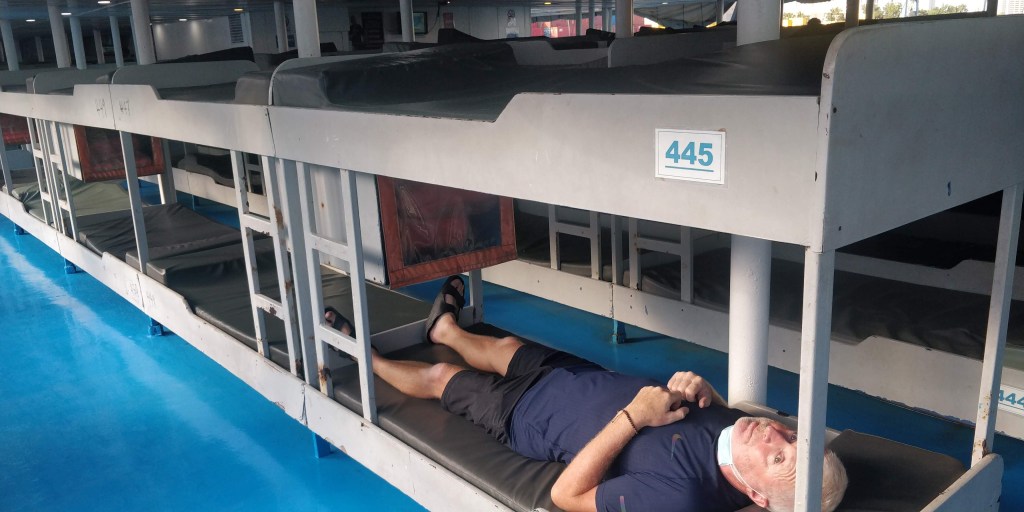
The appeal of Boracay was like a magnet, pulling us in that direction. We were curious to find out why this little island was so special in a country with over seven thousand and six hundred islands, many of the ones we had visited so far were undeniably beautiful. But our road to paradise was long and arduous. It began with a fourteen hour ferry from Cebu, the Philippines second city after Manila, to Iloilo, the capital of Panay Island. We sailed from Cebu at dusk when the beauty of the setting sun masked both the frenzied activity in the port and the squalor of the nearby streets – hanging telephone wires, broken pavements, fumes and gut-wrenching smells. The overnight journey cost about €20 each but the ferry was a rust-bucket, probably a charitable description. The steward told us that they were in the process of renovation but we weren’t sure we believed him. On the positive side, there were beds for everyone in two different classes, economy class was 5 long rows of bunk beds on deck with canvas sheeting pulled down for shelter from the (warm) winds. Tourist class had air-con and eight bed cabins, four sets of bunk beds. There were no flushing toilets for anyone, just a huge vat of water with a water scooper to put water down the bowl. No water in the taps either. Two large white lumps of air fresheners placed beside the sinks didn’t mask the smell but added a layer of cloying floral something. The restaurant was merely a counter that served Pot Noodles and cold rice &chicken in a white styrofoam tray. But the worst part was the huge number of stowaways – whole families of cockroaches were everywhere. Most of the human passengers simply crawled onto their bunks, turned over and stayed there for the duration of the journey. When we saw that we had a baby in our cabin, our hearts sank but he was a gorgeous little 7 month old and although he was very good, of course he cried during the night. I slept surprisingly well, barely aware of the baby or the alarm clock going off in someone’s bag at 4am. The fourteen hour journey stretched to fifteen and a half and by the time we reached Iloilo, we swayed down the plank on sea-legs and growling stomachs. Iloilo was by far the cleanest city that we have visited in the Philippines but we went straight to the bus station to catch a bus to Caticlan. We had about 5 minutes to spare before the bus departed. While the ferry was a disappointment, the bus was clean, efficient and surprisingly roomy but we were glad to reach our destination after 6 hours on the bus mainly along by rice fields with a welcome stop at a local restaurant where we gobbled plates of noodles, rice and delicious fried fish.
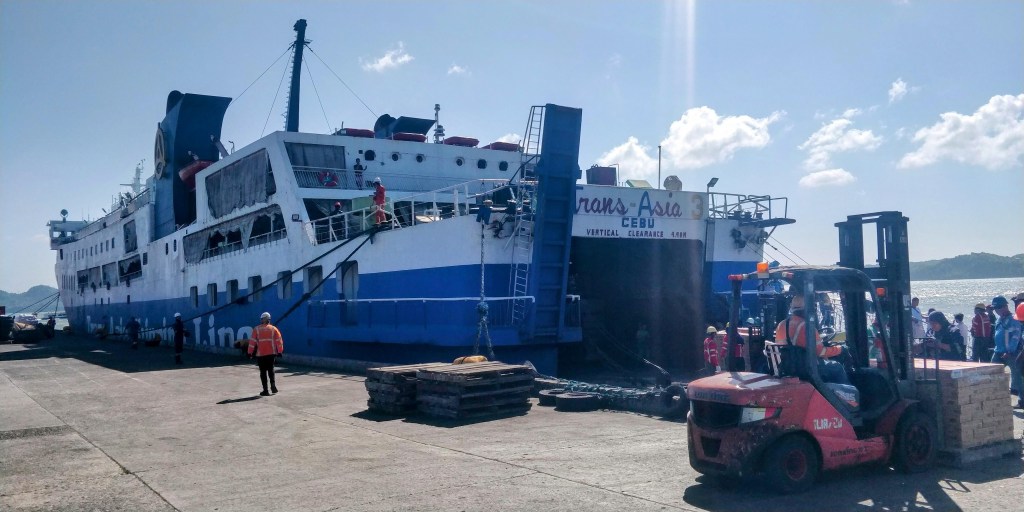
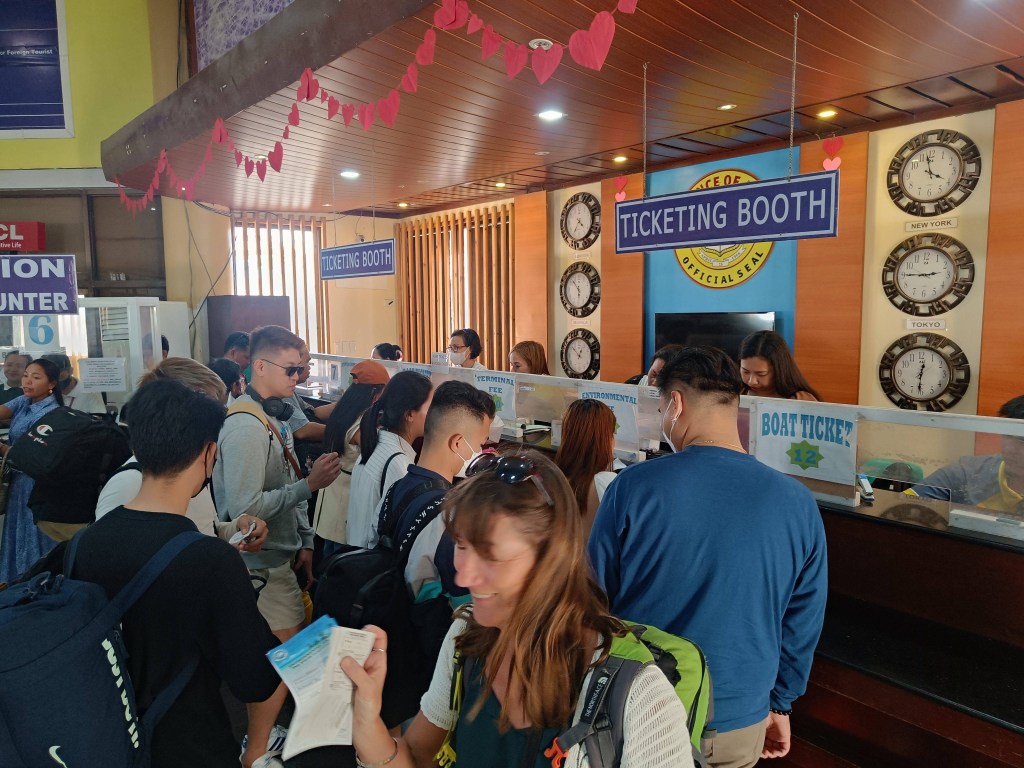
Caticlan was a small port that served the ferry to Boracay Island, visible in the distance. The port building was crowded with tourists, officials and bag handlers moving mounds of suitcases. The noise was reverberating off the tin roof and falling back down on our heads. We had a few more hoops to jump through before we could get on the ferry. First we had to queue to show proof of accommodation on the island….this may be a way of restricting numbers on the island but nobody was allowed on the ferry unless they had pre-booked accommodation. We were given a slip of paper which we had to hand in at another counter and pay our environmental tax (about €5), then armed with proof of that payment, we moved on to pay our port tax (€2.50 at another window) and then finally the boat fare (€1 at yet another window). We marvelled at the vast number of people employed just to get passengers on a boat. The process had to be done in that precise order which wasn’t obvious so people were queuing in the wrong place, changing lines and getting a bit excited. But at last, we were seated on hard yellow planks in a small ferryboat on the way to the paradise island of Boracay.
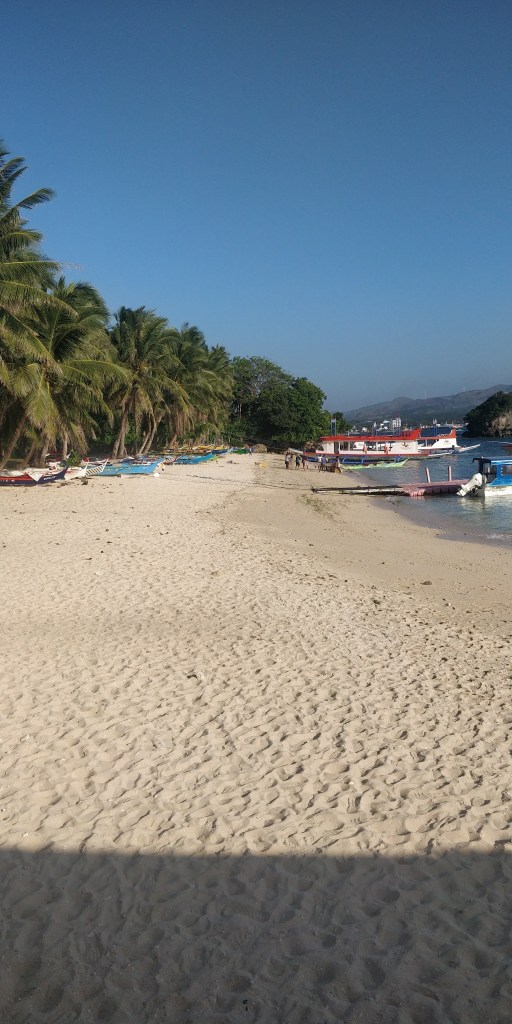
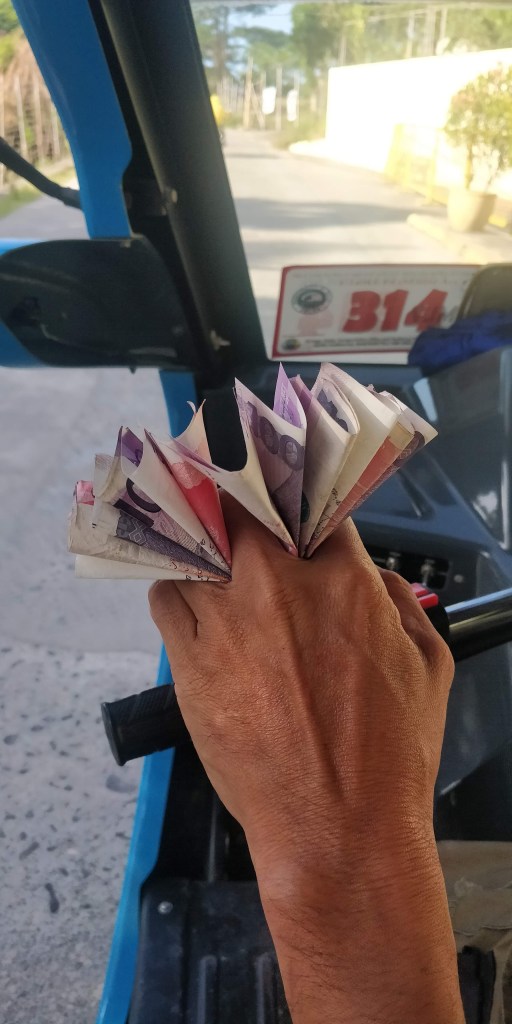
The pier was tranquil in Boracay, turquoise waters lapping on white sand and a strong refreshing breeze swaying the palm trees. The most popular area on the island was the famed White Beach, 3 or 4 kilometres of talcum-powder fine sand but we didn’t stay there – we were on the other side. The rick-shaw guy that took us there had the peso notes arranged between his fingers that made us think that money was king on Boracay. At Happys Homestay in a large but basic room, metres from a small beach where the neighbourhood children played and a few locals (plus the odd tourist) sat on plastic red chairs outside the shop. There was the smell of paint as fishermen painted their boats under the swaying coconut palms. It was beautiful but was it special?
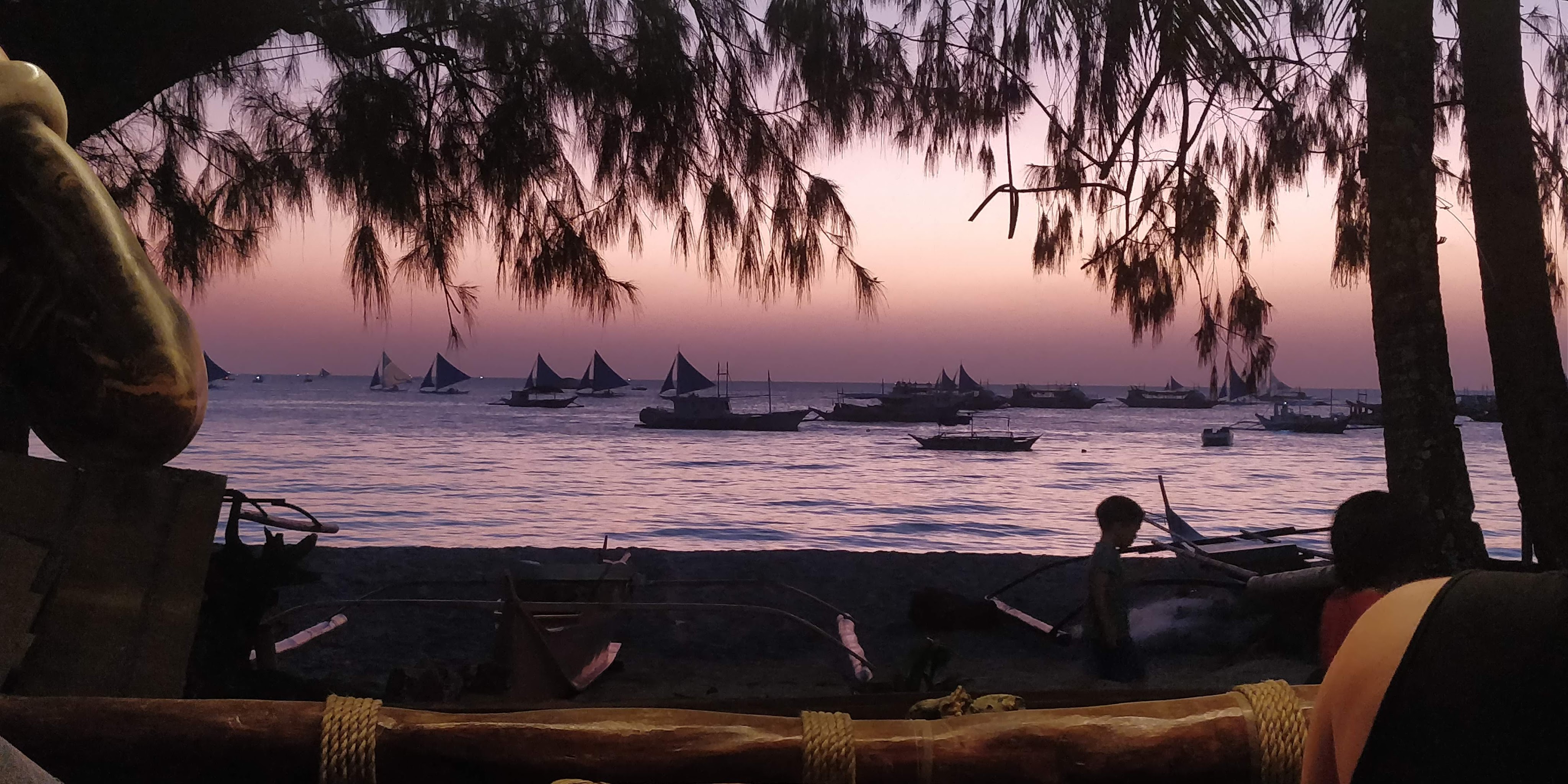
The 40 minute walk to white beach took us by back streets, ramshackle houses, teeming with children, interspersed with tiny shops selling an assortment of sachets – everything from shampoo to ketchup to biscuits is sold in tiny quantities. When I asked about buying teabags, the shopkeeper opened the box of twenty Lipton teabags and asked how many I wanted. We arrived at White Beach by sunset and sat in a beach-bar looking at the sailing boats gliding past like giant moths with folded wings as the sky darkened and the world went crimson. Sounds idyllic? It wasn’t … a bald, fat German was having a drunken argument – loud and raucous – with his equally inebriated Filipino wife and there was competing pop music blaring from several establishments. The whole white beach was a continuous strip of cafes, restaurants, hotels and souvenir shops, becoming more crowded the longer we walked until we could barely find space for our feet. People put laminated cards in front of us, asking (no, imploring) us to eat in their restaurant, take their tour, have a massage, buy the T-shirt. Maybe it was the tiredness but we were overwhelmed and a bit appalled. One street back from the beach was even more crowded with hotels, designer shops, shopping malls, motorbikes, and tourist vans. Remember this is just a tiny island. Thankfully, a lot of the tricycle rickshaws were electric which at least cut down on the fumes and noise levels. We scurried back to the peace at the ‘local’ side of the island which would be perfect except that there weren’t any restaurants. It was also the blustery side at this time of year…but that also kept the temperatures very pleasant. The winds change direction in June when it becomes calm on this side and wind-ruffled on the White Beach side.
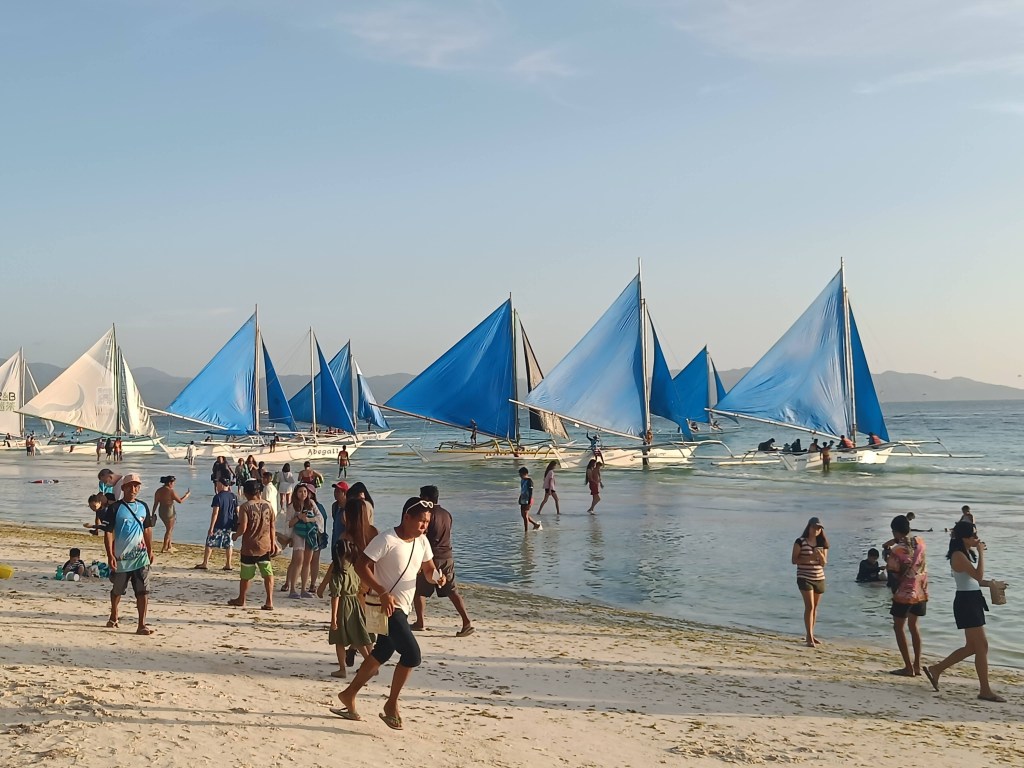
The majority of the visitors were Asian package tour groups, only a tiny fraction of the visitors were backpackers but that meant that there was an incredible variety of food available. We ate Japanese food, Korean ice-cream (surprisingly delicious), Thai dinners and even found some French pastries. One morning we rose at dawn (about 6am) in an attempt to enjoy the beauty of White Beach without the hordes of tourists and touts. The air was soft and fresh and it felt as if the island had been reclaimed by the locals, going about their business without tourists. ferrying children to school – many schools here start at 6.30 am, sweeping and cleaning. But as soon as we stepped on White Beach, we found that we weren’t the only early risers, the place was packed with tourists, mainly Asians posing in search of the perfect Instagram shot which required lots of time, infinite patience, numerous retakes and rejections until acceptable perfection was reached. At first we stopped so that we weren’t photobombing their shots but there was no end in sight so we just kept walking. It was laughable – young women (mainly) lying in glass bottomed boats, trailing fingers in the water creating the illusion that they were in the middle of the ocean instead of half a metre from shore. But maybe we could learn from them…if only we weren’t too busy enjoying the moment to capture it.
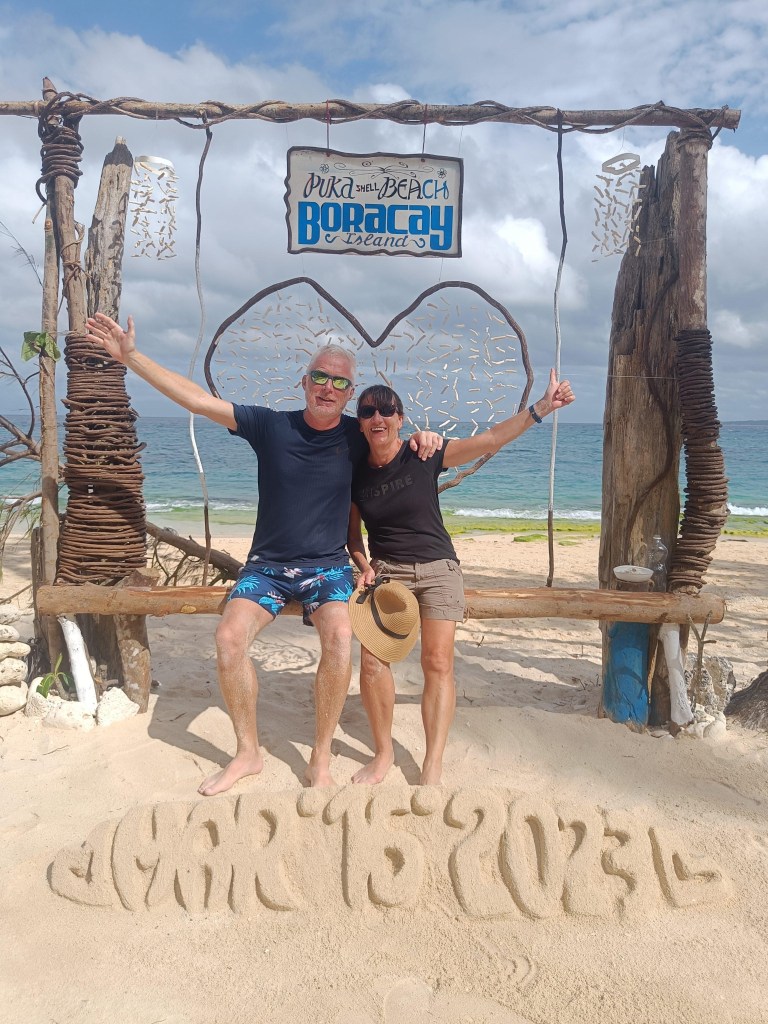
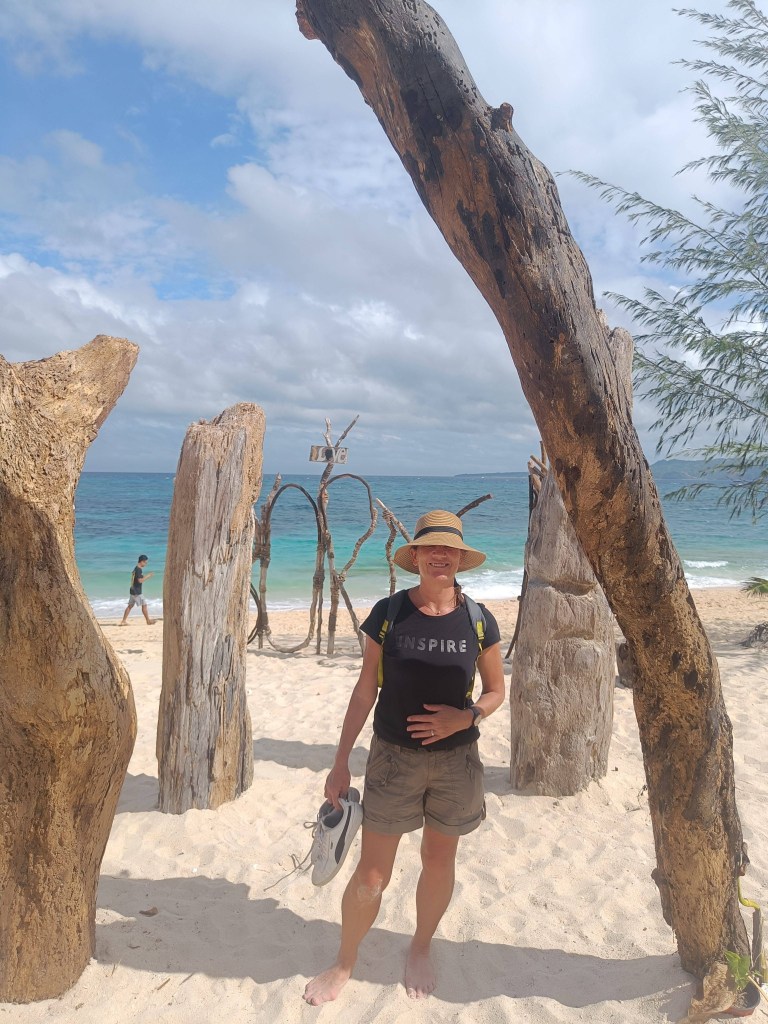
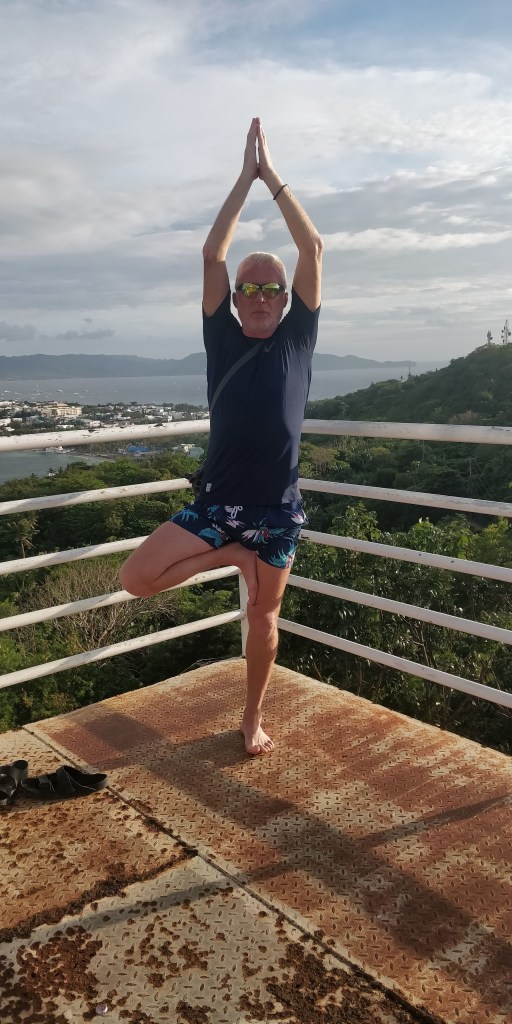
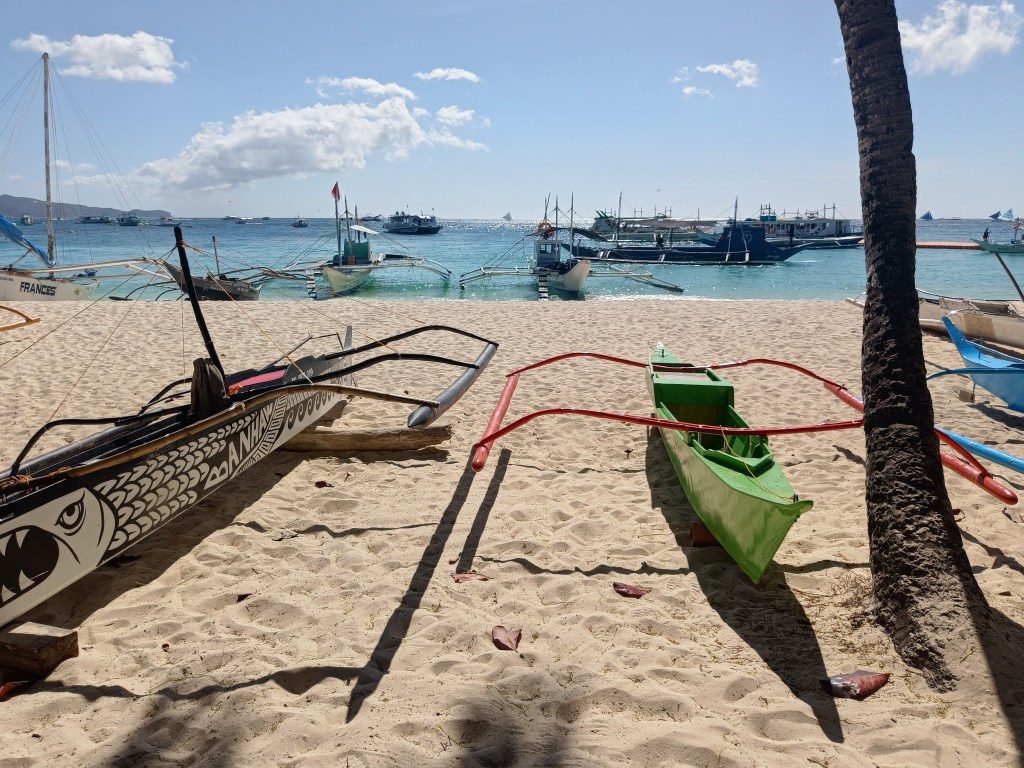
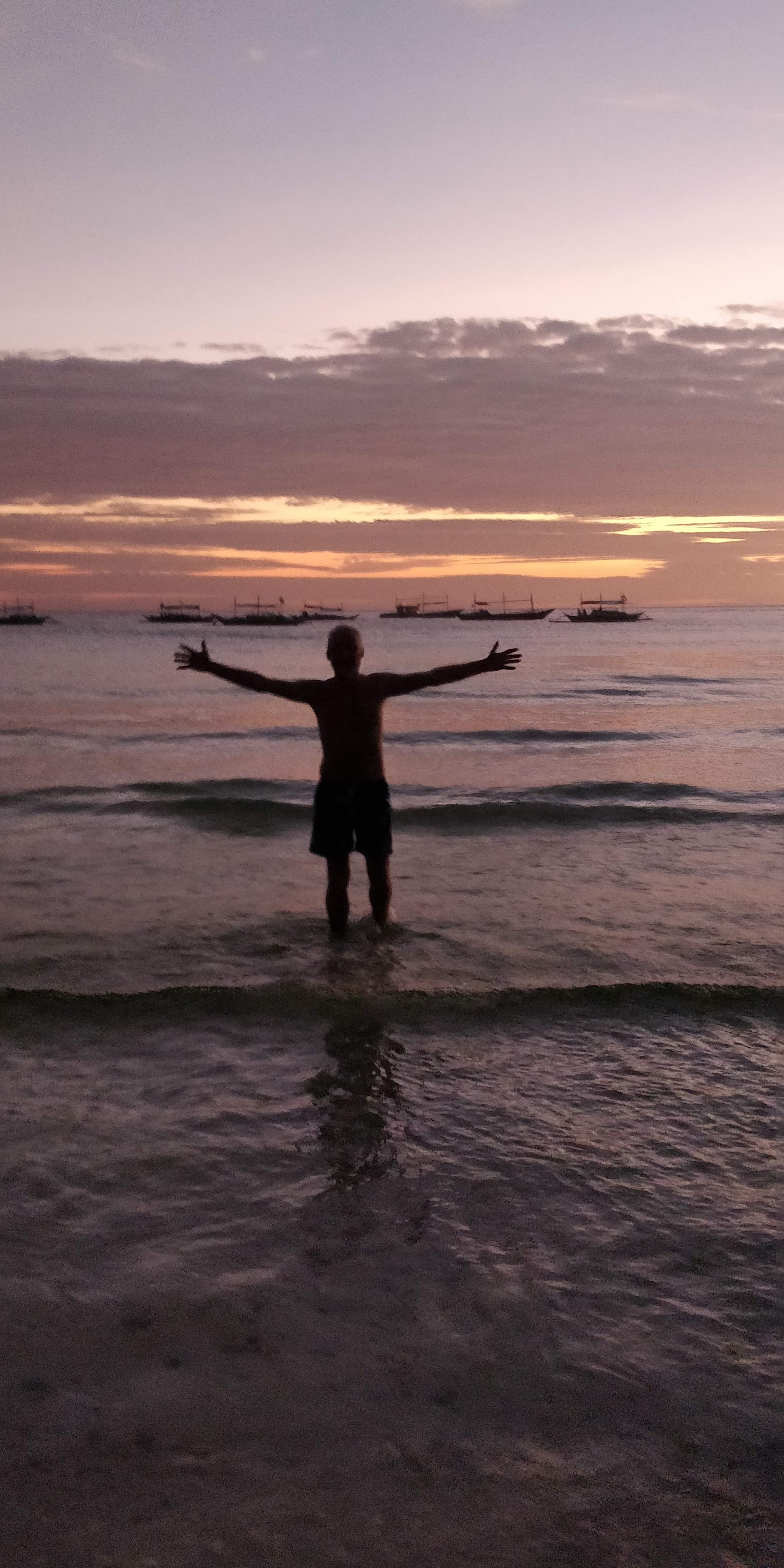
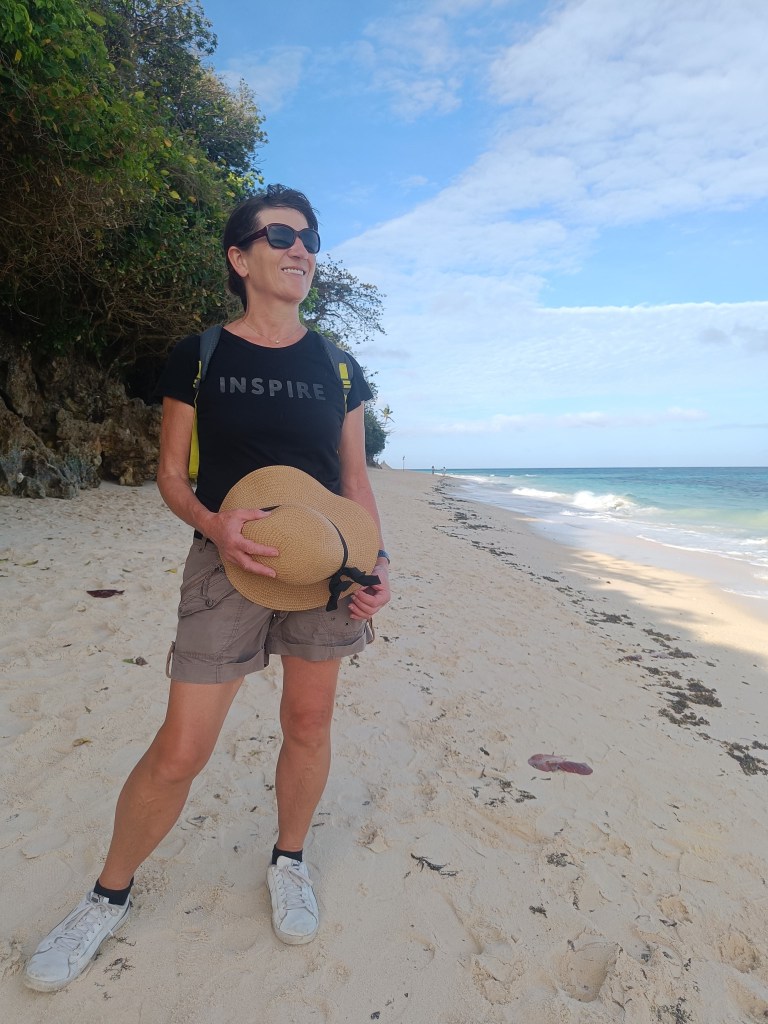
Boracay is beautiful. Lying on that silky white sand looking up at the swaying palms overhead, it was possible to zone out the crowds. Swimming at dusk in the calm clear waters at the very Northern end of White Beach while watching a phenomenal sunset, was truly enriching. We walked to the highest point, Mt Luho with views of secluded coves, the golf course and the shells of several derelict hotels, abandoned through economic hardship or through contravening planning regulations. We hiked to Puka Beach, famous for its shells where a lovely local man took photos of us (the cheesy ones with the hearts) while his twelve year old daughter danced on the beach, making a TikTok video. He hoped that some wilderness would be left on the island for nature and home for the monkeys, the pythons and the flying foxes. The longer we stayed, the more beauty we found on the island and in the seas around it..
Boracay is a cautionary tale about the fragility of the environment and what can happen if rampart tourism is left unchecked. It is very difficult to blame the locals, they are trying to make a living in what is a relatively poor country. It seems to have bounced back since 2018 but we certainly found the tourist numbers alarming albeit mainly concentrated in the White Beach area. Sustainable tourism is a buzzword but not that easy to implement. Environmental taxes are a good idea – as long as there is accountability. We are fully aware that we (Caoimhin and I) are part of the problem. We try to stay in small places, as local as possible, eat what the locals are eating, travel on buses and ferries but we are still showering and flushing toilets.
As a penance or maybe as a salve to our conscience, we are heading onwards on Saturday to the island of Palawan on a slow ferry, a very slow ferry. Details are sketchy and it seems to depend on winds and tides but it could take us thirty- six hours…. or more. Let’s hope it’s a bit better than our last slow ferry. But this St Patricks morning, we are about to Leave Boracay and take a six and a half hour bus journey back to Iloilo, which seems to be the only city in the world with an Irish pub.
Thanks for reading. Wishing everyone the rub of the green and a great weekend ☘️☘️☘️
 marienoonanblog
Really love the description of the sailboats like moths. Wow! Beautiful. Shocking blog though. Gosh we have an awful lot to answer for. May the wind be behind ye for this next leg and look forward to the next installment. Happy St Patrick’s day from a wet foggy Ireland!!! Xx
LikeLike