Some place-names exert a kind of magnetic pull and the Isle of Skye in the Inner Hebrides in Scotland is one of them, hinting at a wild and romantic remoteness. It has been on our list of places to visit for a while so when some friends rented a cottage there and suggested that we join them for a few days, we jumped at the chance.
On a rainy August Saturday, we set off on the four hour journey from Waterford for Larne with Storm Anthony buffeting the car along the motorway and rain lashing the windscreen. The only real indication that we had crossed the seamless border into Northern Ireland was that the road signs had changed from kilometres to miles. Despite the wind, the sailing to Cairnryan was surprisingly smooth, the P&O ferry was comfortable and the trip took less than the scheduled two hours (no car battery failures this time when getting on the ferry unlike our trip to Greece two years ago)
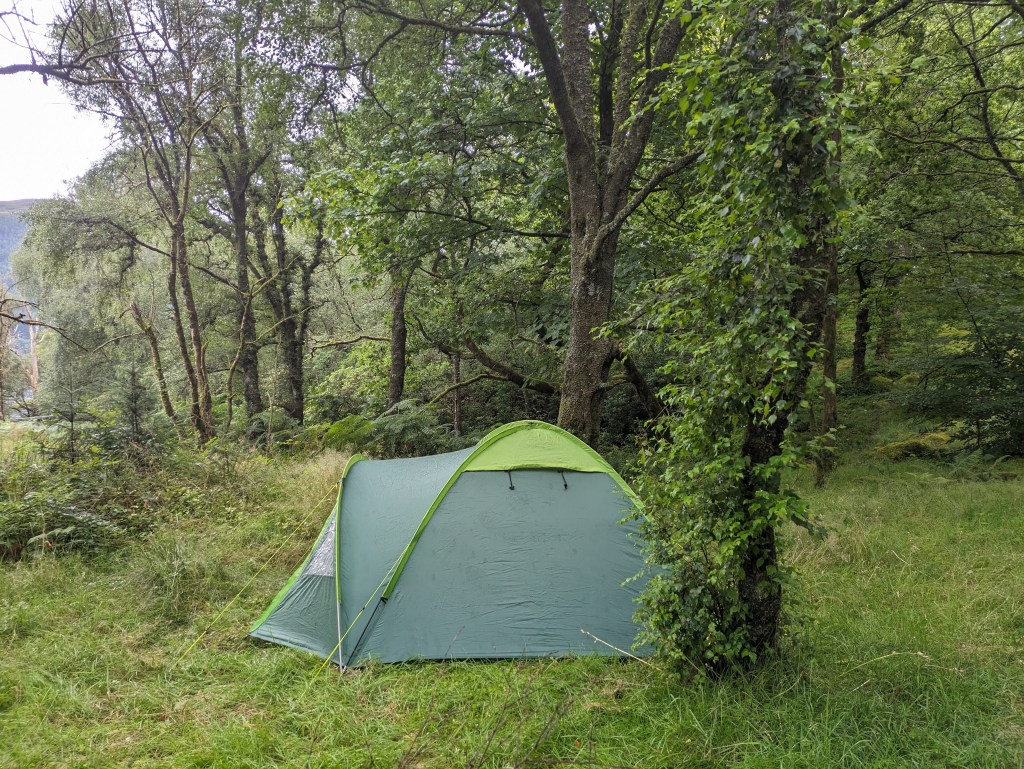
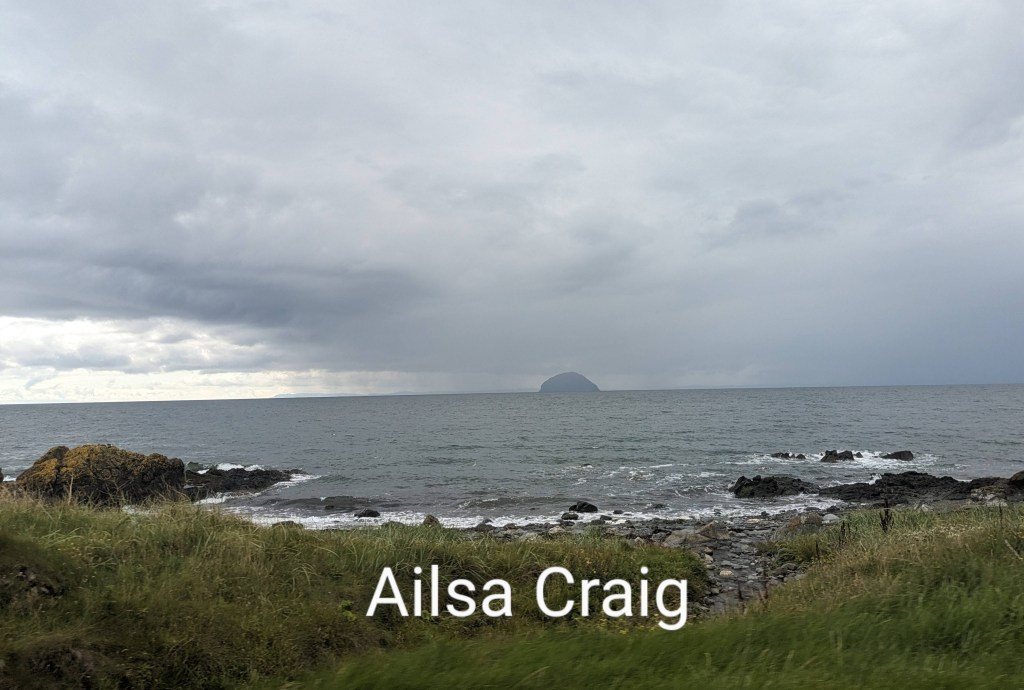
The car windows were opaque with crystals of salt when we disembarked in Scotland but the temperature at 4pm was 18C and the sun was shining….at least for the first ten minutes until grey clouds rolled in. As we drove we watched the clouds roll in over Ailsa Craig, an unmissable landmark island in the Firth of Clyde. Our journey to Skye was leisurely, skirting by Glasgow and camping the first night in a little wood by an abandoned building near the shores of Loch Lomond. We set up camp there in damp mist with a blizzard of midges for company. The tent was comfortable, dry and well-camouflaged among the trees but the area was so damp that big juicy slugs crawled up the outside of the tent in the morning, silhouetted against the light. Wild camping is permitted in most places in Scotland although there are some restrictions in popular areas and permits may be required at certain times of the year but nobody bothered us (apart from the midges!).
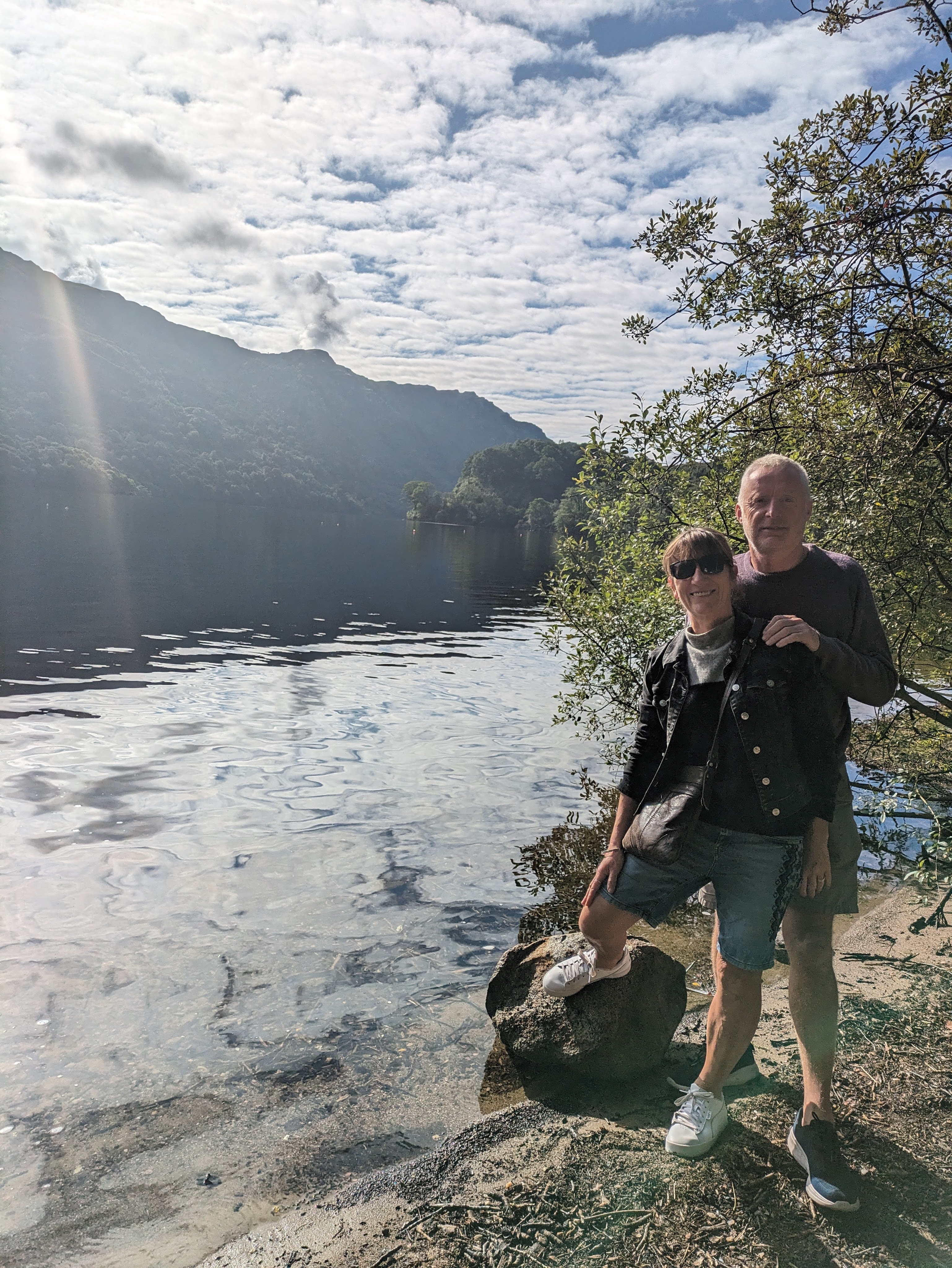
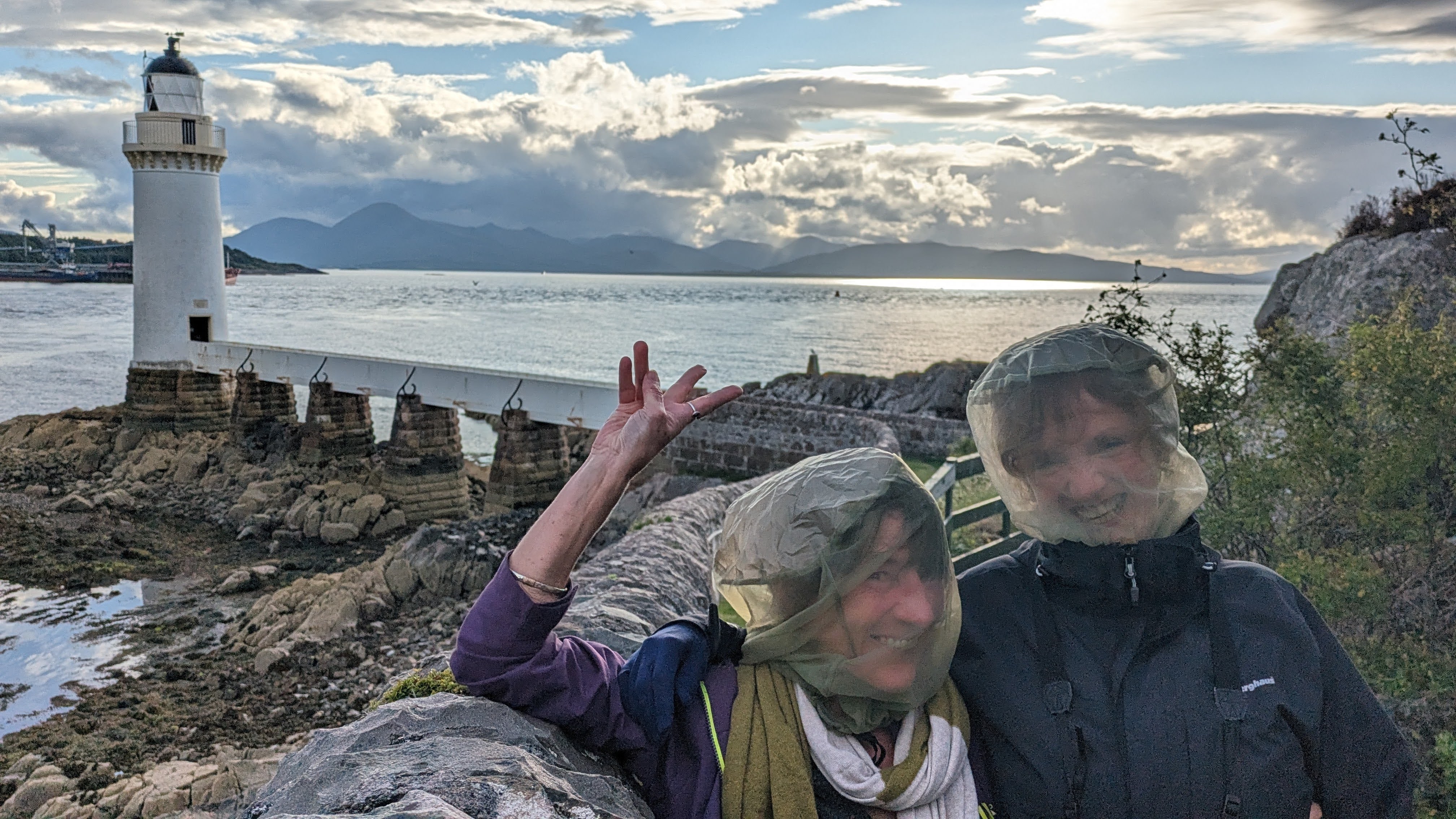
Sunshine sparkled off the silvery loch in the Sunday morning light and the midges retreated…a bit. We stopped in Crianlarich, a pretty little touristy village north of Loch Lomond to do a short hike – lots of hiking trails here and a shop doing a roaring trade in insect repellent and gauzy head &face nets – the ‘bank robber’ look was all the rage. This little place is the Gateway to the Highlands and has long been a junction for road and railway lines, in the past twenty two trains stopped here daily.
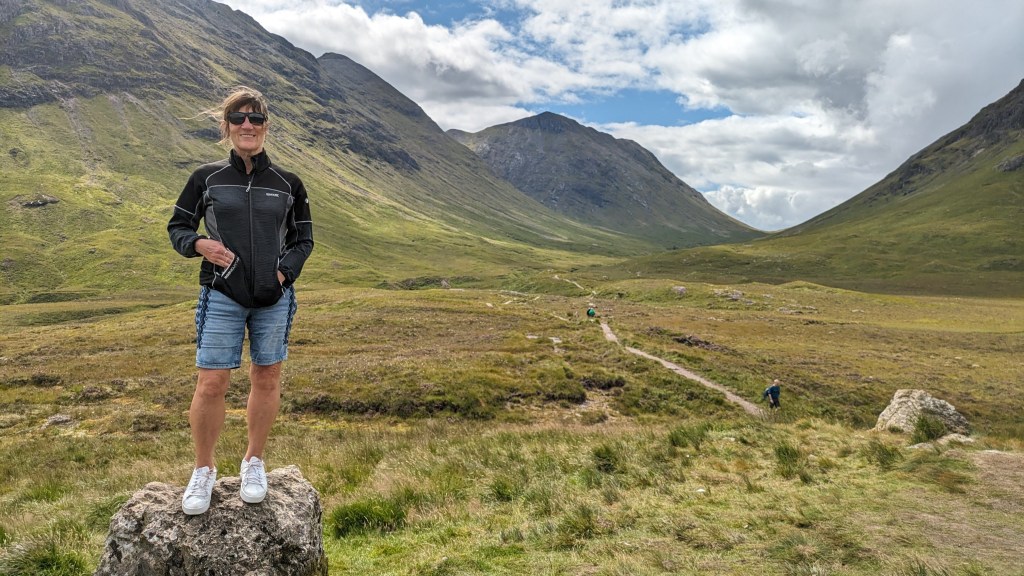
The drive north through the highlands was spectacular with water, water everywhere – in the lochs, rivers and tumbling down the mountainsides but thankfully not falling from the sky. The steep-sided Glencoe Valley was really stunning – no wonder it appears in so many movies (No time to Die, Skyfall, Outlaw King, Harry Potter and lots more) and the Glencoe Visitor’s Centre was worth a visit. We were definitely in campervan territory with the vast majority of traffic being some type of RV. The roads were relatively good in the highlands but there weren’t very many of them and the few side roads tended to be private with barriers leading to estates. The campervans could pull over in lay-bys for the night but trying to find a bit of level dry ground near a road to pitch a tent was more problematic. We began to suffer from a severe case of the green-eyed monster…campervan envy😁
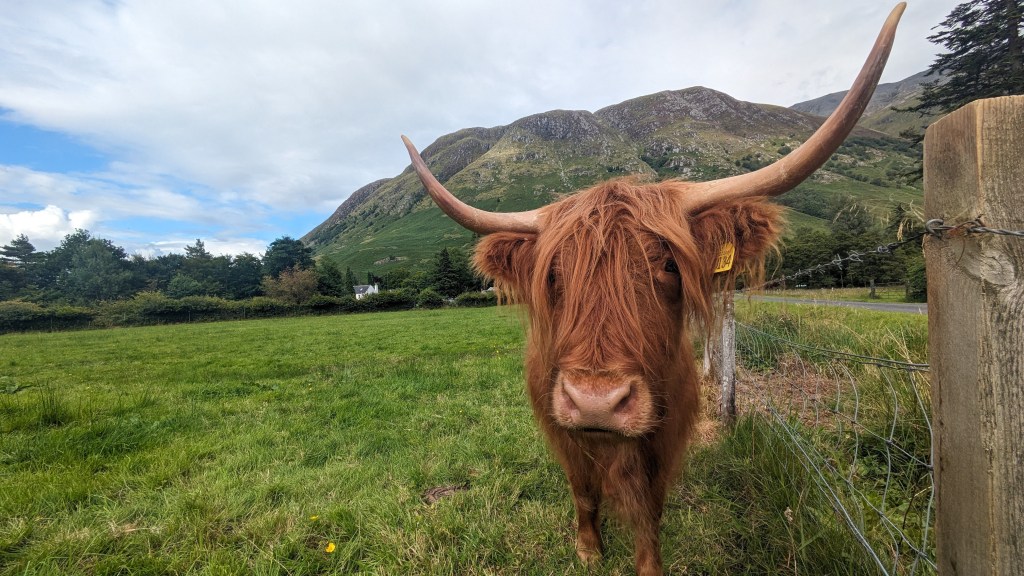
In Fort William, we camped in the established Glen Nevis campsite, surrounded by Highland scenery at the foot of Ben Nevis with flush toilets hot showers, a kitchen and even a restaurant and takeaway…and very few midges. We wandered around, debating the merits of the various tents and campervans. The cute Highland Cattle in a nearby field charmed us when we passed them on the way for a few beers and even posed for photos. The next day, the clouds descended again and we took the tent down in about three minutes flat. We deliberated about climbing Ben Nevis but as we had both climbed it before, we opted for a 4 hour loop hike by the Nevis River, past ancient burial grounds, a waterfall and forest.
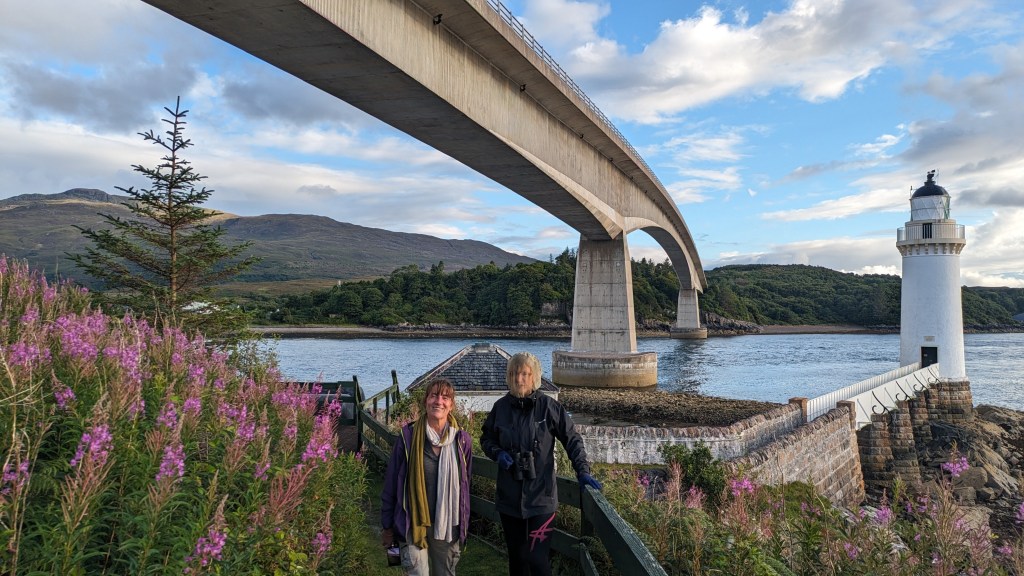
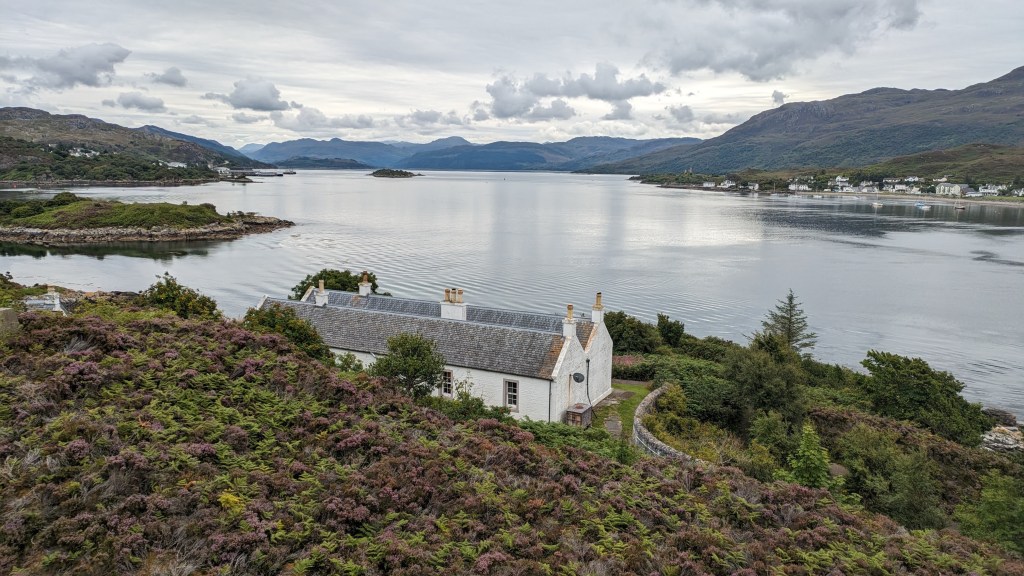
North of Fort William, the air of isolation was palpable, we travelled miles without a house or cabin with only sheep on the hillsides and a dead deer on the side of the road. Although the Isle of Skye is an island, it is connected to the mainland by a bridge since 1995. It is a large island (50 miles long) but seemed much bigger with rugged scenery, austere castles and winding roads that hug coastal indentations and skirt around mountains and lakeshores. We didn’t stay in Skye proper but in a cottage on Eilean Ban, a small island under the Skye Bridge which was once home to the nature writer Gavin Maxwell, whose most famous work was A Ring of Bright Water about living with otters on the wild west coast of Scotland. Eilean Ban was truly a magical place, a private island to ourselves with a lighthouse at one end, trails through the waist-high bracken, a hide for bird and animal watching, the chance of glimpsing otters swimming in their natural habitat, a really comfortable place to unwind and relax. There was a little museum on the island – part of the cottage – run by the Eilean Ban Trust, a volunteer group dedicated to the memory of Gavin Maxwell.
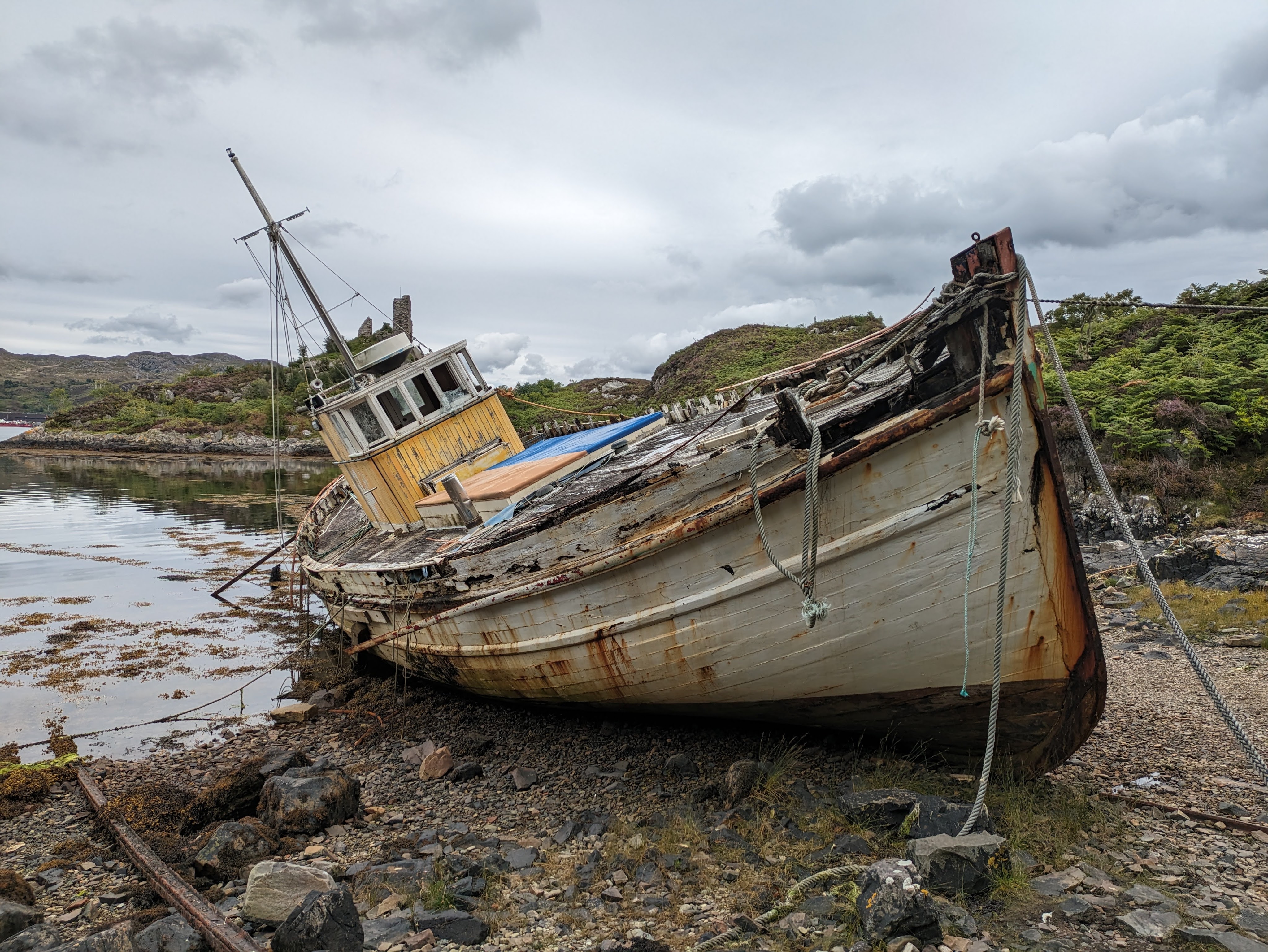
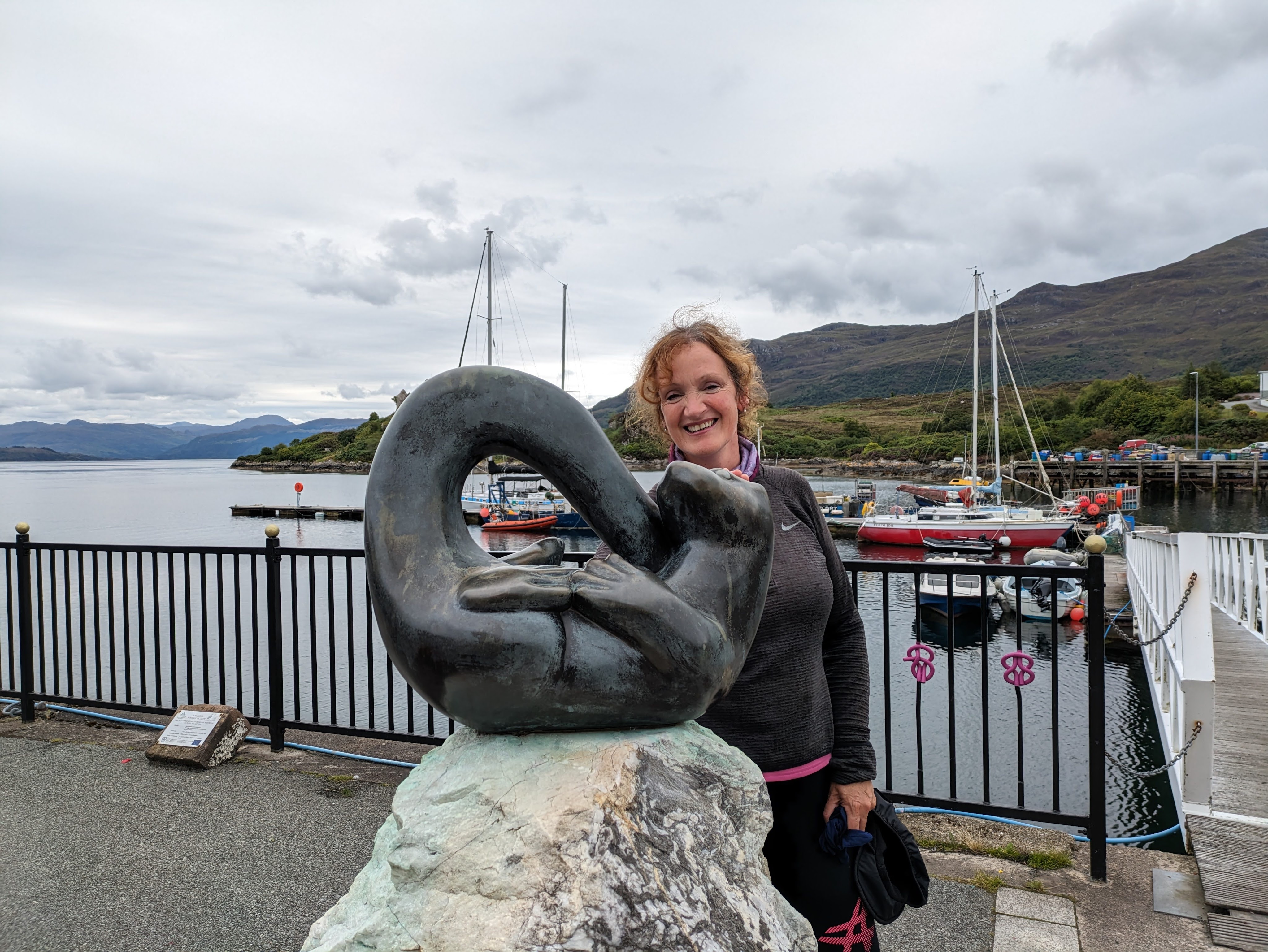
From our kitchen window, we had views of the village of Kyleakin on Skye with the ruined castle of Saucy Mary, a Norwegian princess who once controlled the straits of Kyle Akin and levied taxes on every boat that passed. There are still echoes of Scandinavia in the place names, language, history and especially in the landscape. The name Skye comes from the old Norse word sky-a meaning ‘cloud island’, so apt when the clouds here had a life of their own, constantly on the move. Kyleakin had the feel of a faded stranded place. It was once a thriving village where ferries docked several times a day but the building of the bridge changed things and it was now largely bypassed by people on their way to Portree, the main town in Skye.
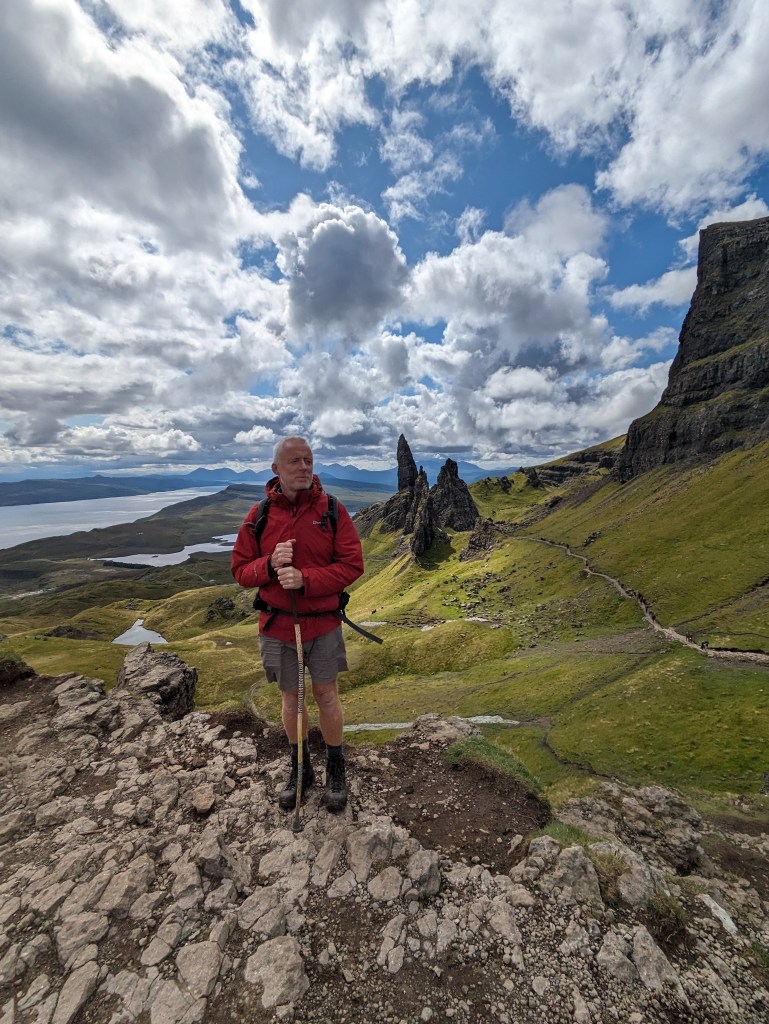
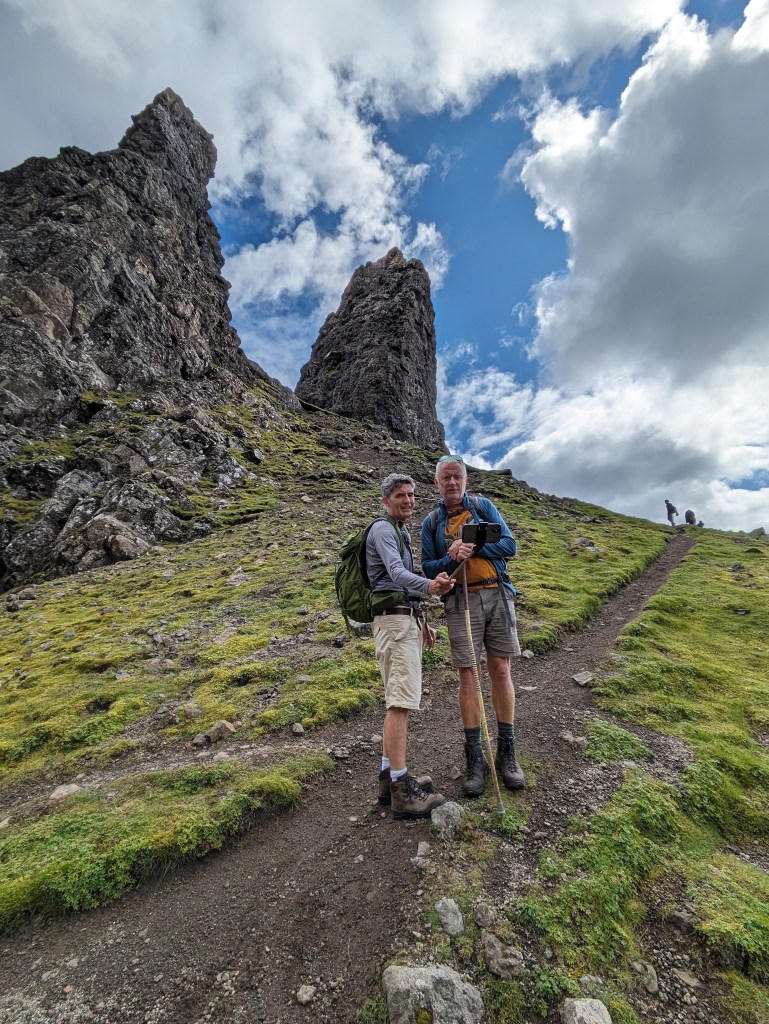
One of the most photographed landscapes on the Isle of Skye is the iconic Man Of Storr on the Trotternish peninsula, a rocky hill with spikey pinnacles of rock set against a backdrop of rolling green hills. On a blustery sunny day, it was so busy that we had difficulty in getting parking but the views from the top were worth the moderately strenuous hike. Quirang was another rock formation on the same peninsula, rocks shaped and sculped by ice and fire, weather and time into other-worldly landscapes. Although both these rock formations were key tourist destinations, there wasn’t a toilet or a portable loo to be found. It was interesting to see the number of people with red faces emerging from behind rocks who refused to make any eye contact.
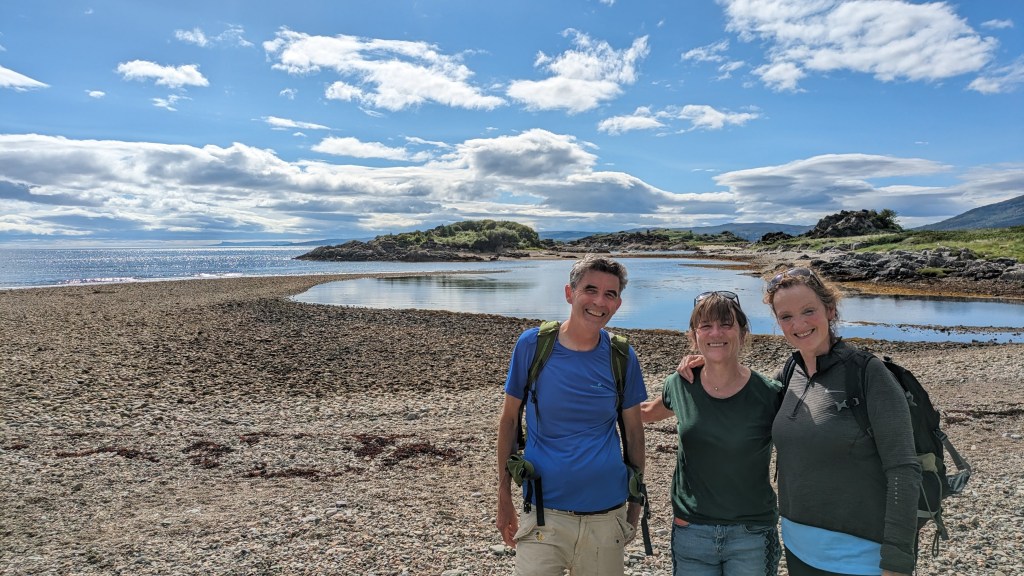
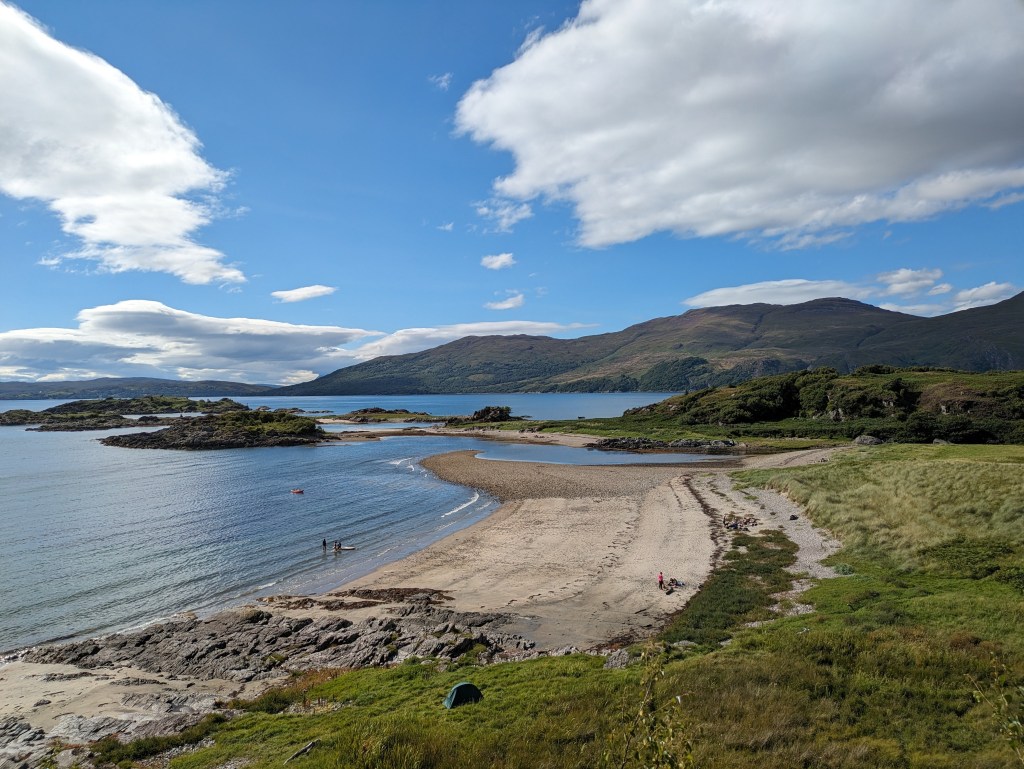
As we were staying in Gavin Maxwell’s house, we went on a sort of pilgrimage to Sandaig Bay on the mainland where he had lived before moving to Eilean Ban and which was also the setting for his book, Ring of Bright Water. We travelled along twisting coastal roads, past Glenelg village and then hiked a winding path for about forty minutes to the beach and the site of his house which was destroyed by fire while he was living there, a fire where the only casualty was one of his beloved otters who was buried under a nearby rowan tree. We swam in the crystal clear waters on the almost deserted inlets. It was truly a place ringed by bright water as you can see from photos above
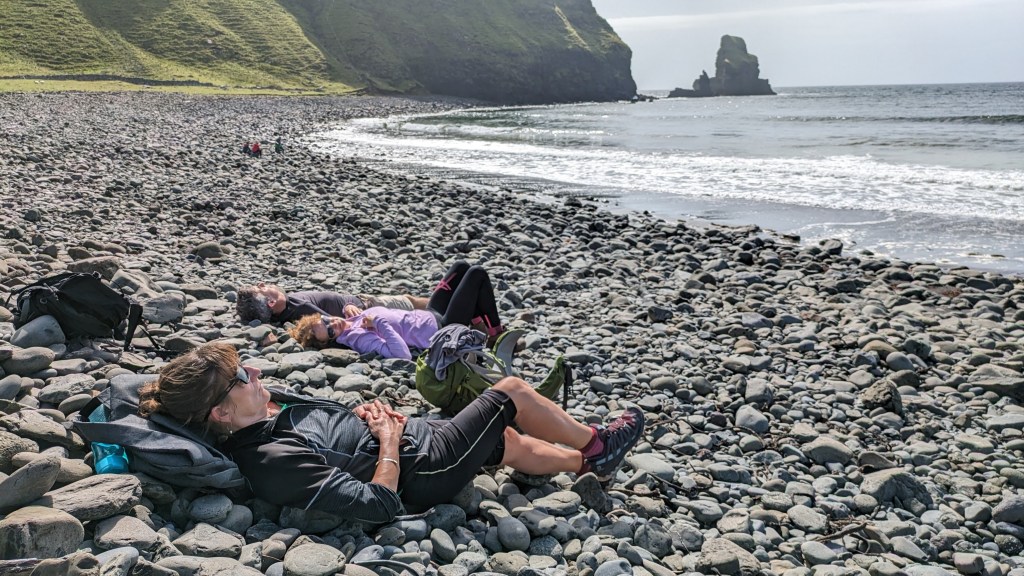
Scotland is famous for its whiskey and there was a distillery on Skye making Talisker Whiskey, famous for its smokiness and coastal spice flavour. While we didn’t visit the distillery, we went to nearby Talisker Bay on wild the west coast, haven of peace and quiet, a place to lie on stones and listen to the crashing waves and the lonesome cries of seabirds.
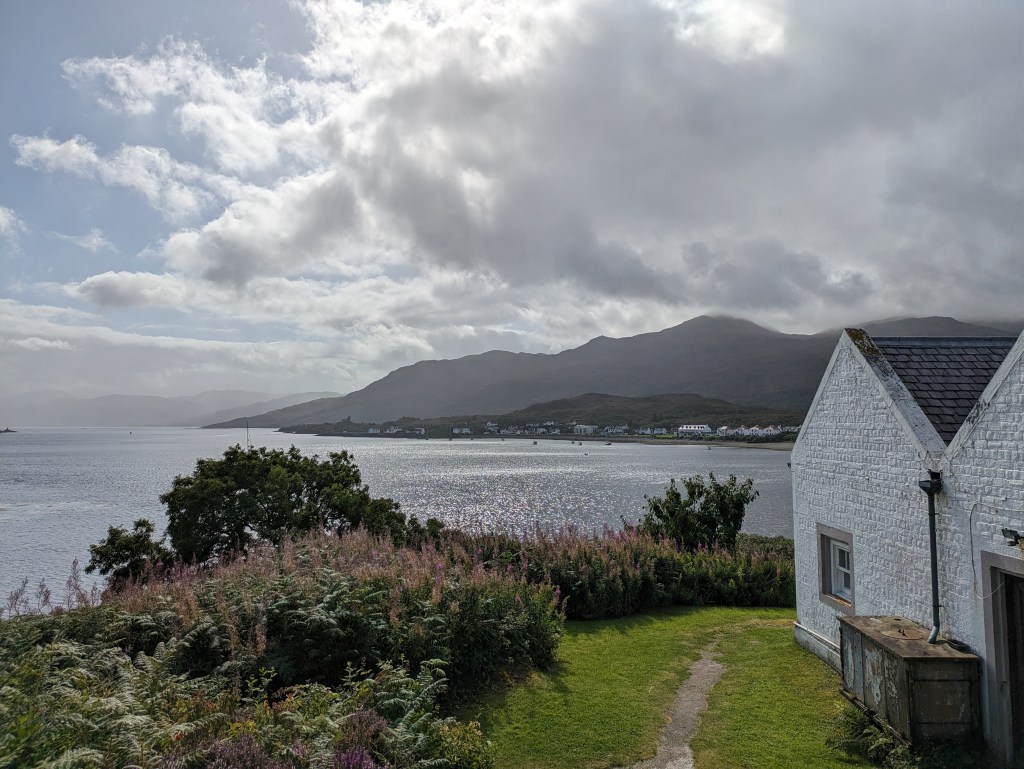
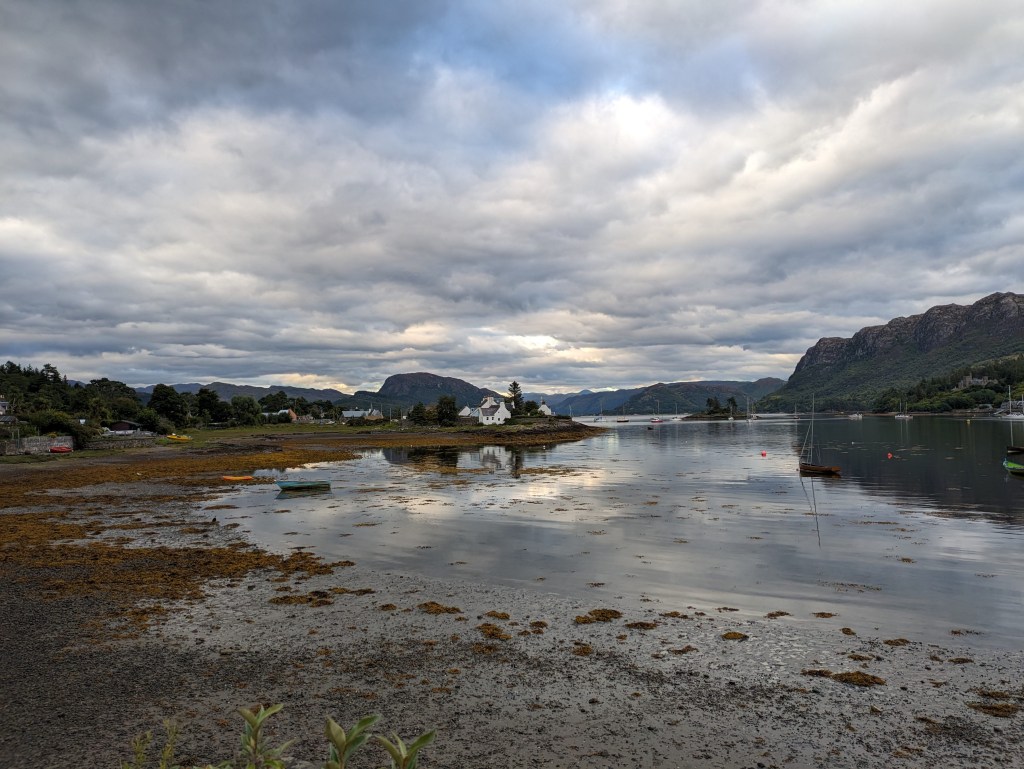
The weather in Scotland was quite good while we were there but it could be indecisive and moody, changing from hour to hour, sometimes from minute to minute. The quality of the light was mesmerising, especially the interplay of light and shadow on the lochs and bays casting a spell in a hundred hues of silver and grey. We left the Isle of Skye and Eilean Ban on a rainy Saturday and drove through the Highlands back to where we had started – the sky was leaking, the heather was crying and our wipers were working overtime. It seemed that every weekend this summer was wet whilst the weekdays were blessed with sunshine (or at least better weather). We camped for our last night in a little coastal village, Maidens about an hour north of the ferry, Our visit to Scotland was brief but we hope to be back and to explore more of the Isle of Sky and even further north.
A huge thank you to Maurice and Tracy for giving us the opportunity to visit Skye, for such great company and for introducing us to Gavin Maxwell, such an interesting and complex man. I’m off now to read the Ring of Bright Water.
 marienoonanblog