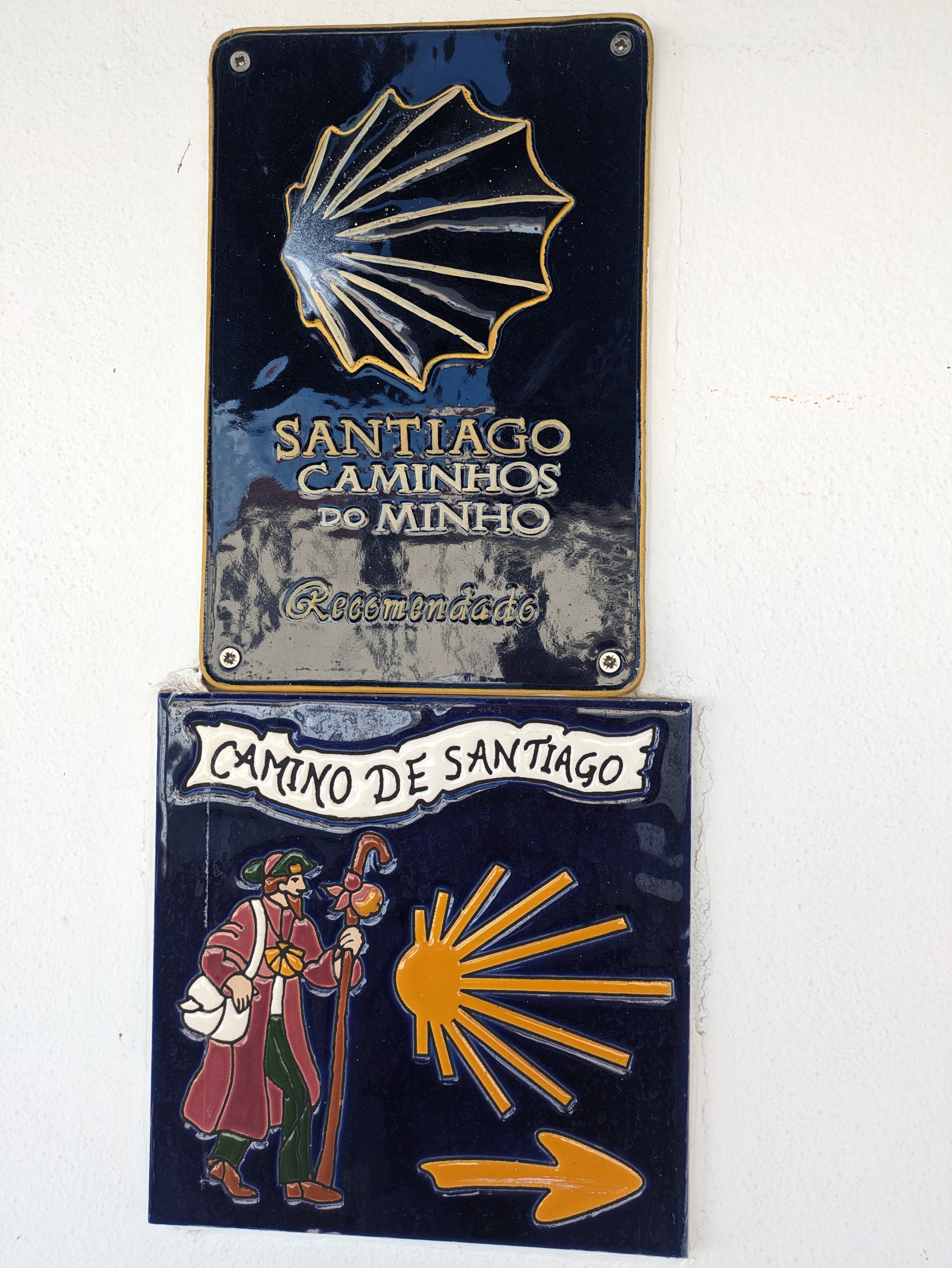
All Caminos seem to lead to Santiago de Compostela. Three Portuguese Caminos – the Coastal Route, the Central Route and the Liturgical Route – all travel through Portugal towards Santiago and all three routes converge in Tui, a Spanish town on the border with Portugal, separated by the Mino River which forms a natural boundary between the two countries.
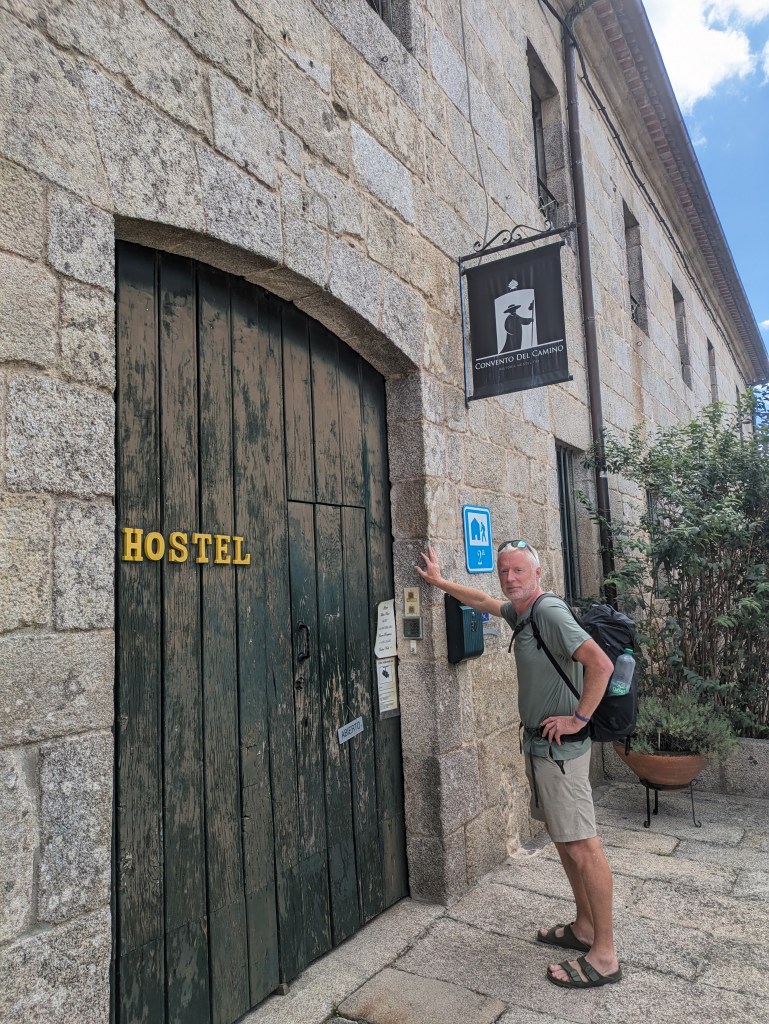
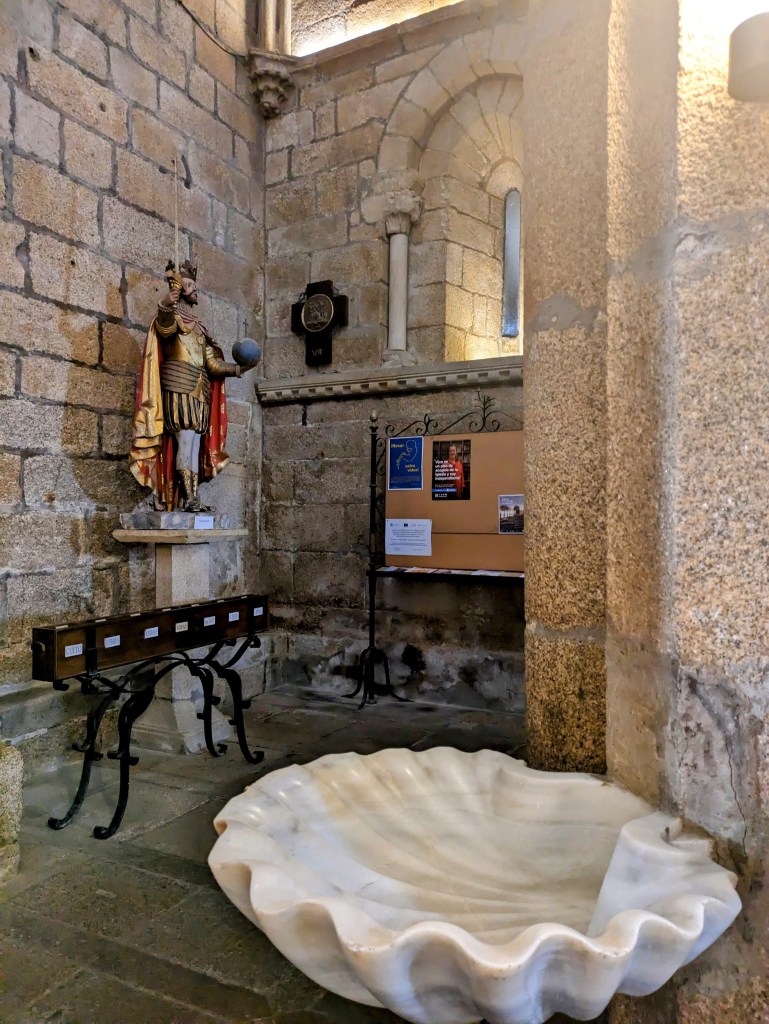
After our spectacular Camino del Faro along the Galician Coast in Spain (https://marienoonan.website/2023/09/17/camino-del-faro-the-lighthouse-way/), we wanted to hike some more before flying back home from Lisbon. The Portuguese Central Route seemed interesting although we would be trekking in the ‘wrong’ direction, away from Santiago del Compostela. We travelled by bus from Finisterre (where we ended the Camino del Faro) to Tui which took three buses but our packs were light and almost welded to our backs now after carrying them along the Galician Coast. We stayed in a lovely albergue in Tui, Convento del Camino, a former convent and a gorgeous building from the 16th century which oozed history with thick walls, a beautiful courtyard garden and a large kitchen. The place was full of character even if the plumbing was a bit whiffy at times. All accommodation was mixed dorms (€16 a head) and everyone staying was walking the Camino and heading north towards Santiago …except us who were going south. It was a very social place with lots of chat about blisters, band aids, foot pain and of course life. The majority of the guests, a good 70%, were women and most were over 50. In the 10 bed dorm, Caoimhín snored for the first few hours and kept the other nine people awake, including me. I slept after a while, cosy in my top bunk and might even have joined the snoring brigade.
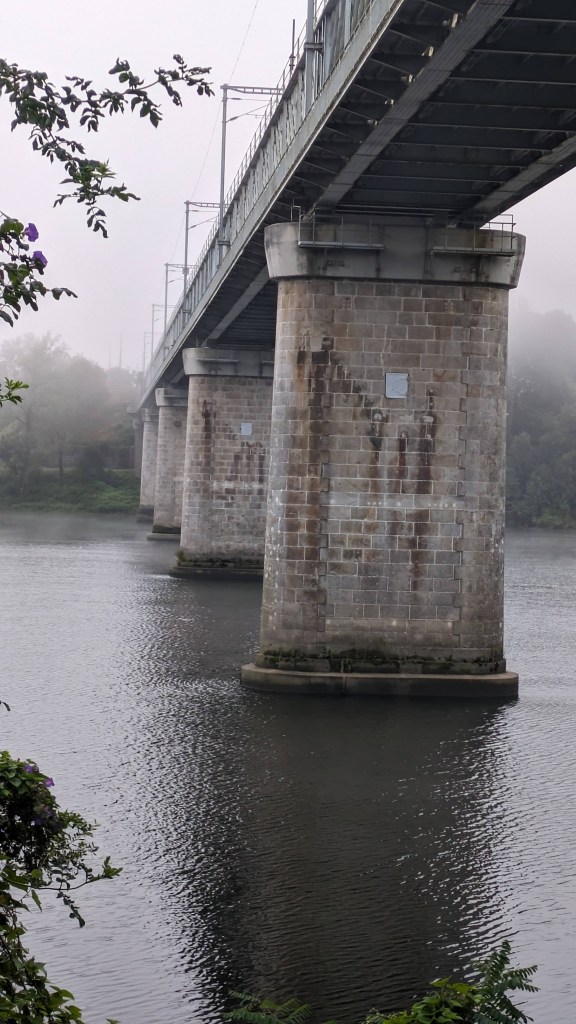
In the morning, there was lots of rustlings of bags and creaking of bodies as people descended from bunks and straightened upright. Breakfast was €2.50 – as much tea/coffee as you could drink, toast, butter, marmalade, juice, apples and little sweet buns. Most people were washed, fed and ready to leave before 8am. On the street pilgrims emerged from laneways and thick hostel doors and joined a flow of people, hatted with boots and backpacks, all walking against us. There was a mist rising from the river as we make our way to the bridge to cross into Portugal where 8am became 7am – Portugal was one hour behind Spain and the same time as Ireland. The iron bridge was very impressive especially with the mist rising from the river, shrouding everything in wispy serenity. The trees had that deep green with pale curling edges, whispering that autumn had arrived. We walked along laneways and cobbled paths, by vineyards and little towns with manicured gardens and church-bells that rang out the hours. At one intersection, a man in a car gestured to us that we were walking in the wrong direction, another man trimming a hedge told us that Santiago was the other way and pilgrims coming towards us were bemused, baffled or even concerned that they might be going in the wrong direction when they saw us approaching them.
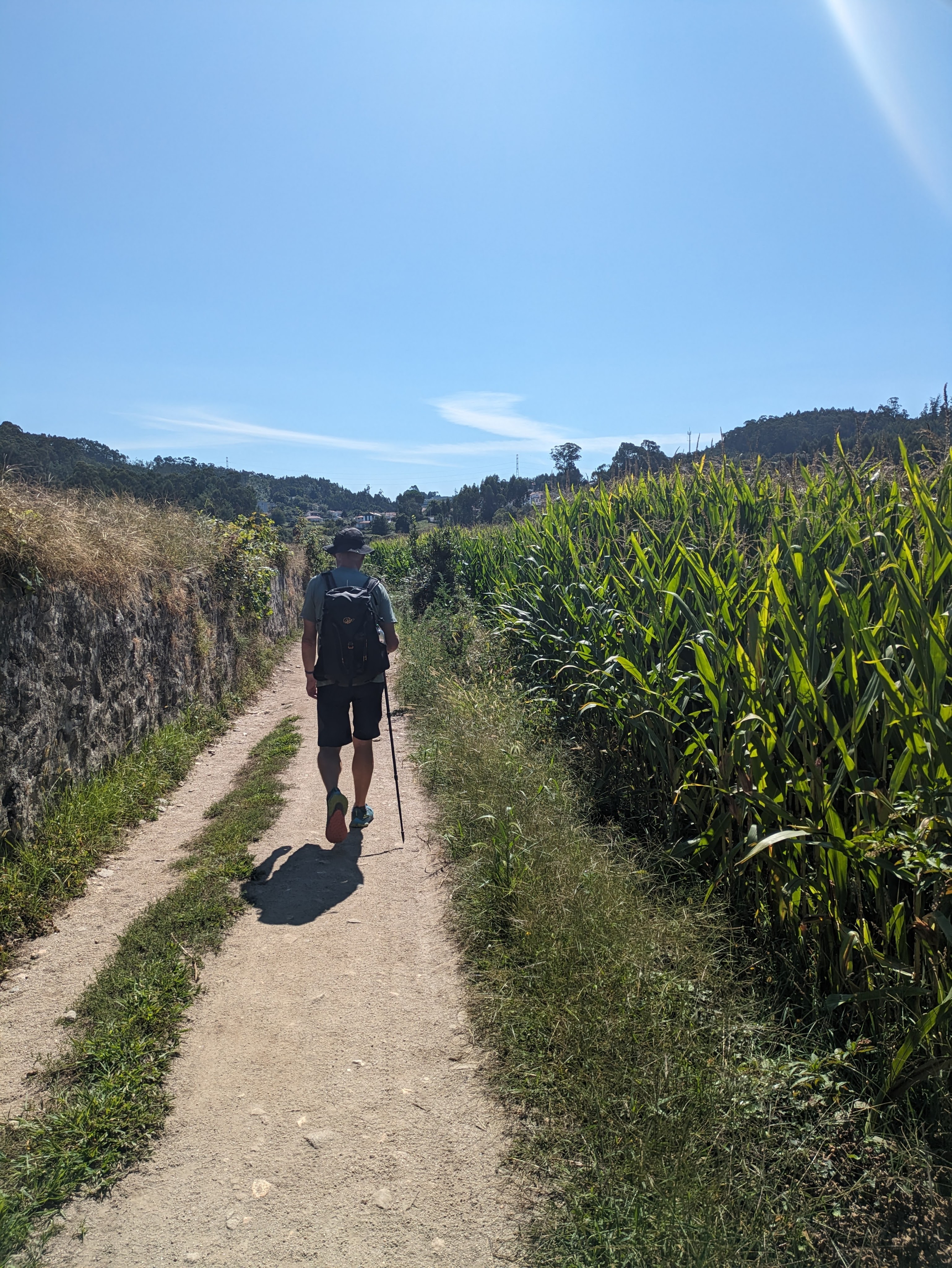
Coming from the south, the camino was well marked with the shell symbols but we kept having to turn around to find them to make sure we were going in the opposite but right direction for us. We were vaguely following blue arrows which seemed to point us in the right direction, totally clueless as to where they were leading, until we discovered that the blue arrows led to Fatima. So from then on, when people asked where we were going, we just said ‘Fatima’. Of course, people, especially Americans wanted to know how far was Fatima, how long was it going to take us and why we wanted to go there. The morning became hot and we welcomed the shady parts along by rivers and streams, crossed by small roman cobblestoned bridges over the river Coura. We reached Rubiaes, a small one-horse town which was like a mirage in the dense heat (about 30degrees). We turned away from the Camino and stopped at the first restaurant we saw which didn’t look promising, dusty with one man sitting at a table outside. But it was a different story inside, noisy with TVs and the clatter of cutlery, the smell of garlic and onions, and teeming with people. We grabbed a shaded table outside and ordered fish &rice and chicken& chips and get enough food to feed a football team plus a basket of bread, a jug of wine, a large bottle of water, one chocolate mousse and one coffee (all for€18). Although Rubiaes was the end of the day’s stage, we thought that we might walk further but after that feed, all we wanted to do was lie down. We booked accommodation there and then, a private room with breakfast and ensuite bathroom for €40 and trudged with full stomachs the two kilometres to get there.
We listened to the tinkling bells around the necks of the sheep and goats in the field next to our accommodation in our blue bedroom – blue walls, blue sheets but with a sunny balcony where the clothes that we washed in the bathroom, dried in less than an hour. The enormous blister on my right big toe was becoming so huge that it seemed to have a life of its own but thankfully it wasn’t painful. The room was stuffy during the night and a couple of mosquitoes buzzed and feasted on my arms. The landlady was even crankier than I was in the morning, serving up the ‘orange juice’ with a neon glow, plastic cheese and stale bread. A couple of Irish women, a Dutch couple and a few Americans were also staying, all hiking towards Tui.
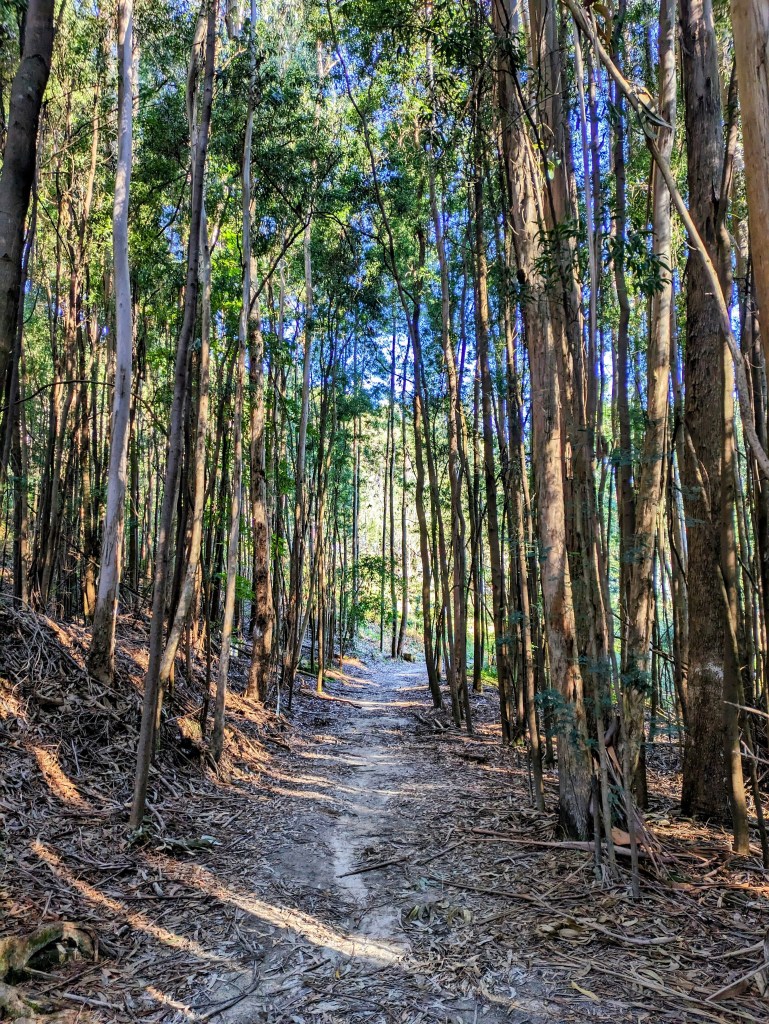
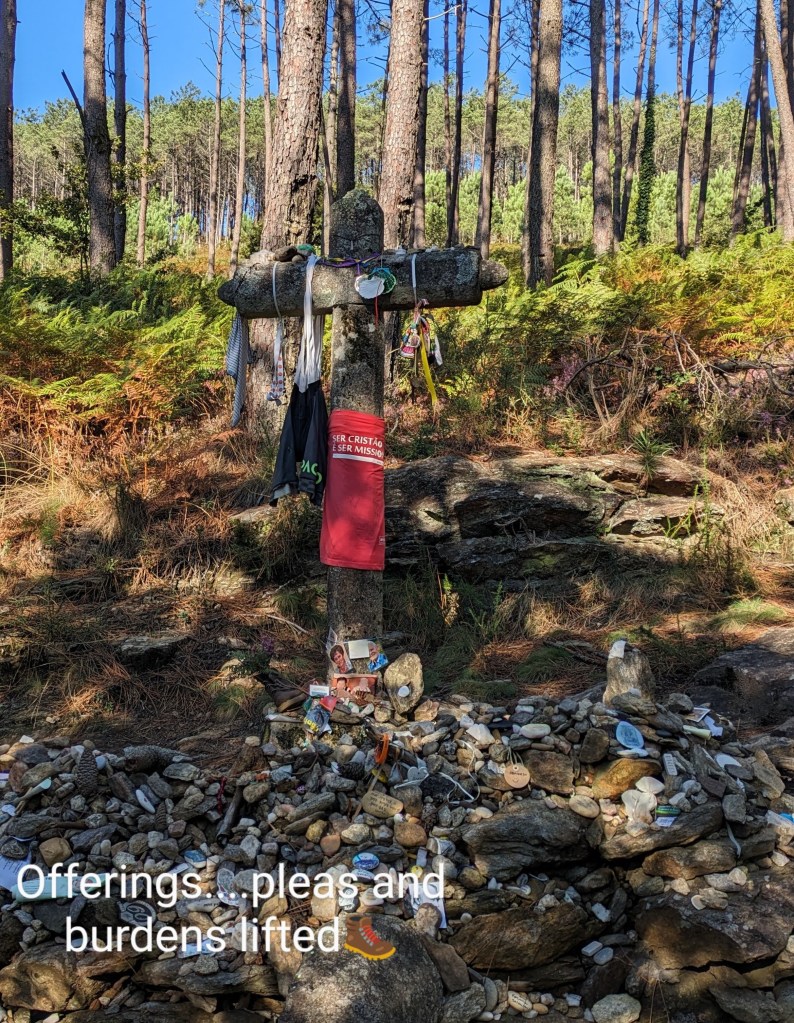
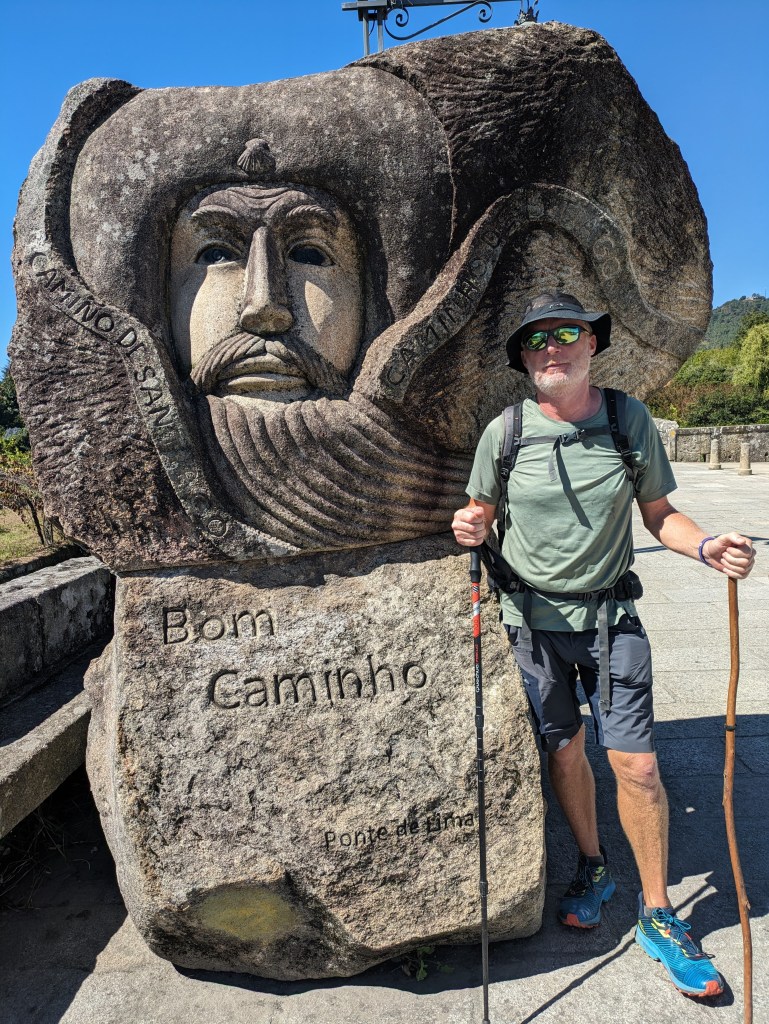
Our second day took us from Rubiaes to Ponte de Lima, a section with a steep climb if you were hiking in a northly direction but the path for us was stony, wooded for the first half and mainly downhill. There was dappled sunshine from the start and the church bells were ringing out as we walked along an ancient Roman road, so important in medieval times as a link between the two great rivers, the Mino in the north and the Lima in the south. There was a chainsaw vibrating somewhere in the woods but there was also stillness and birdsong. Near the highest point was a granite cross, strewn with stones, photos, notes and other offerings – a place to leave your burdens and worries and walk away lighter. Some of the pilgrims going in the opposite direction seemed weary and we didn’t tell them that their uphill struggle had only started. Walking through the pine and eucalyptus forests, I imagined for a moment, the horror of wildfires with exploding trees and devastation but the day was beautiful, warm and blue skied. By the time we got to Ponte de Lima at about 1 pm, the temperature was again about 30degrees and shade was limited. The town which was named after the long bridge over the river Lima, was really charming, full of old buildings and one of the oldest towns in Portugal. We stayed in the Old Village Hostel which had great facilities, kitchen and excellent staff with free tea, coffee and biscuits. It was again full of hikers and almost everyone was up for breakfast at 6.30am. The kettle had just boiled when there was a power cut and we were plunged into darkness. While the rest of us looked for the torchlight on our phones, a German oriental woman wearing a pair of silver pumps, because she had left her hiking boots in Lisbon with the rest of her luggage, went upstairs and came back with a scented candle from her bag. She was a very talkative woman and was thoroughly enjoying the camino, walking about 5 kms a day (in her silver shoes) and then getting a taxi or bus to the next stage. One of the huge attractions of this camino was its sociability, everyone had a shared purpose, something in common. As we were walking against the flow, we got a good look at the pilgrims. There were people of all nationalities, shapes, sizes and fitness levels, many elderly and some struggling. We wondered what compelled so many people to commit to trekking long distances, to enduring the hardship of calloused feet and hard beds. There was certainly a religious element for some but for most, it was a physical challenge with a spiritual element, a walking in nature, it was something that could be undertaken on your own or in a group.
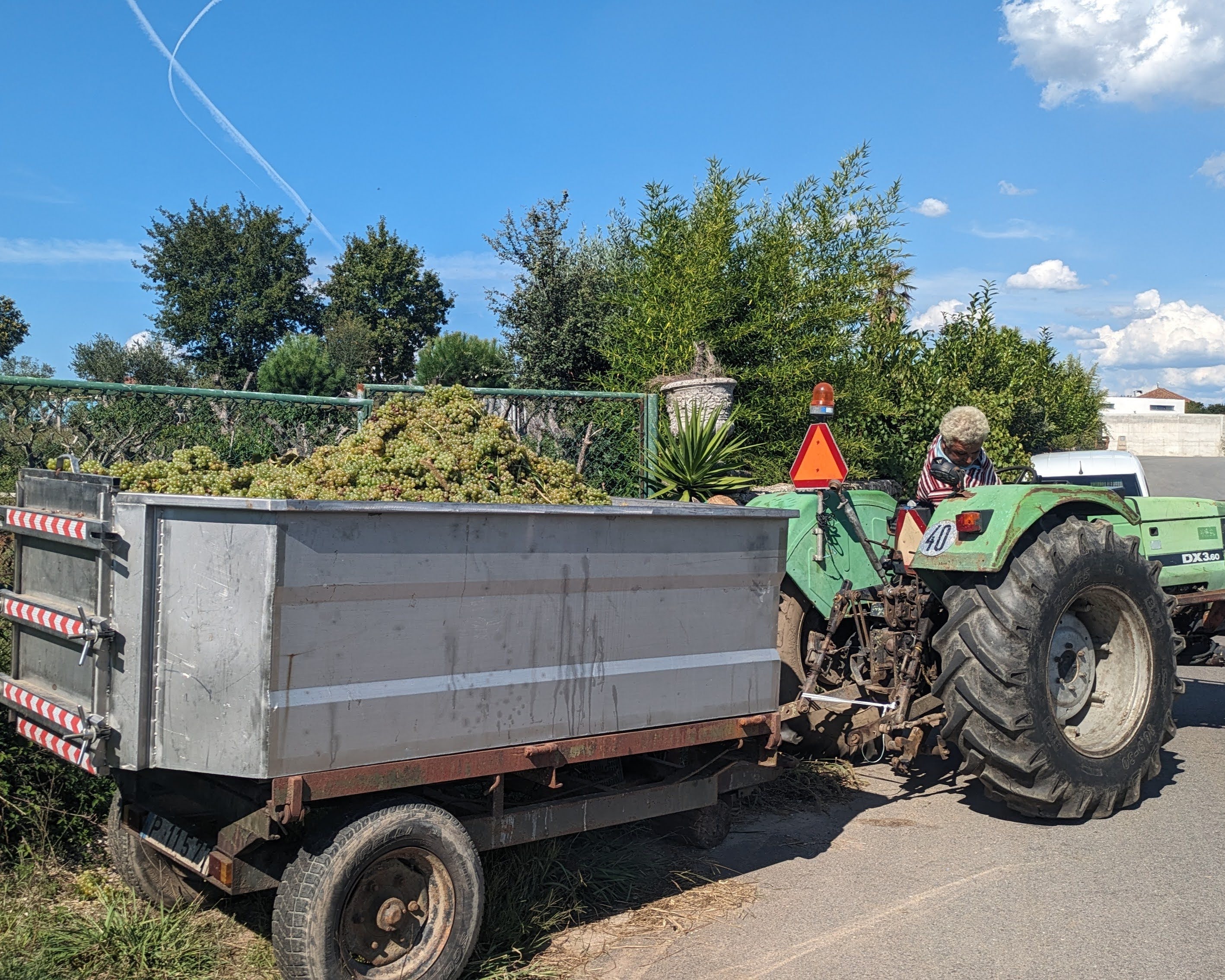
On our third stage, we were on the road before 7am with the gorgeous coolness of dawn. This was a long 35kms stage for us from Punte de Lima to Barcelos. The grape harvest was in full swing with tractors trundling along and lots of grape-pickers in the fields. There was a mixture of asphalt and cobblestones and again people wondered why we were walking in the wrong direction. There were signs of religion everywhere with little shrines outside houses and crosses at every intersection. When we stopped to eat egg sandwiches at the side of the road at about 9.30am, a dog followed us and then people coming from the opposite direction, started asking us if was our dog because a dog named Doris was missing and its owner was frantically searching for her. But before we could find the owner, the dog took off again, ignoring our calls of Doris, Doris. At some stage, we missed the Camino signs that we were following backwards and ended up ‘lost’ in a vineyard, then clambering over walls, sneaking through a couple of gardens and eventually picking up the trail. When we finally got to Barcelos, we were exhausted, as much from the heat as the trekking. Barcelos, an ancient city with a fourteenth century bridge, was known for being the cradle of the Rooster of Barcelos, the emblem of Portugal and symbol of good faith and justice. Thankfully there weren’t too many roosters crowing during the night and we slept the sleep of the just…and the tired.
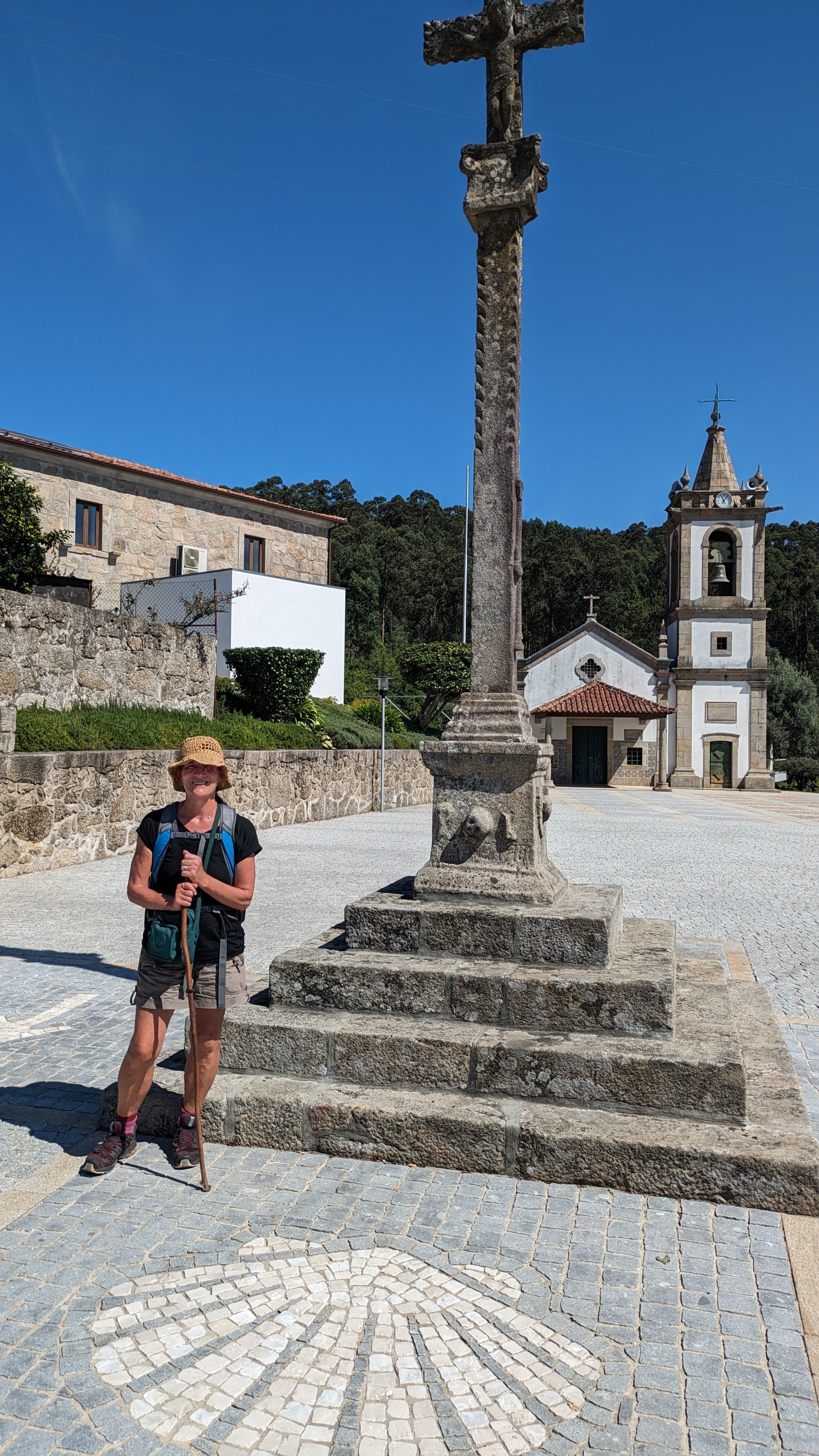
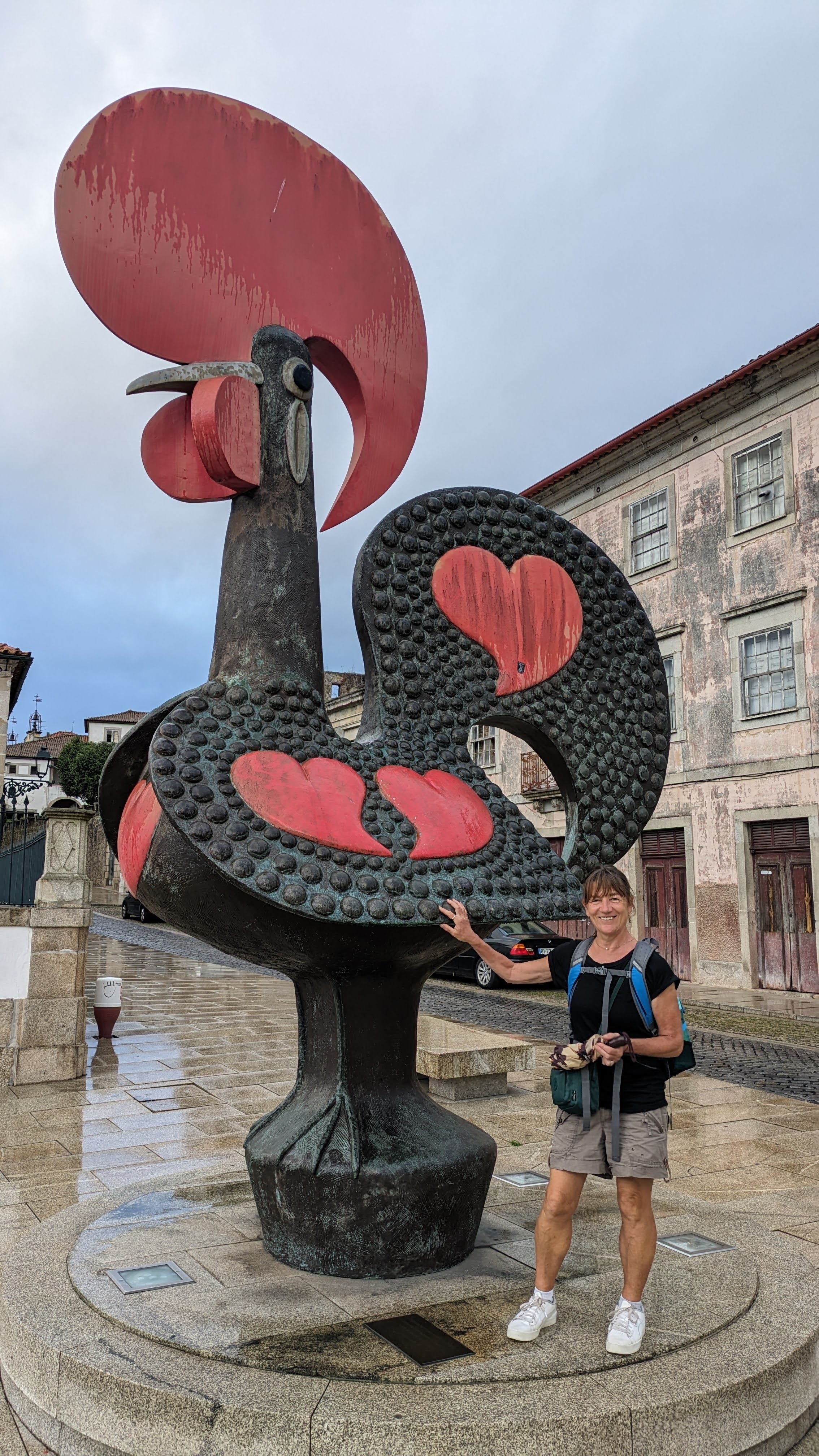
The Portuguese Camino was a lovely experience, trekking through charming farming countryside, forests and beautiful towns from Barcelos to Tui (Many said that this was the best section of the Central Portuguese Route as the section from Oporto to Barcelos follows a highway and industrial area) Although it couldn’t be called crowded, there were still lots of pilgrims on the route and it was very social especially in contrast to the Camino del Faro where we met a total of six other hikers in eight days of walking and where we trekked most days in solitude in dramatic isolation. Both caminos were gorgeous and rewarding but completely different.
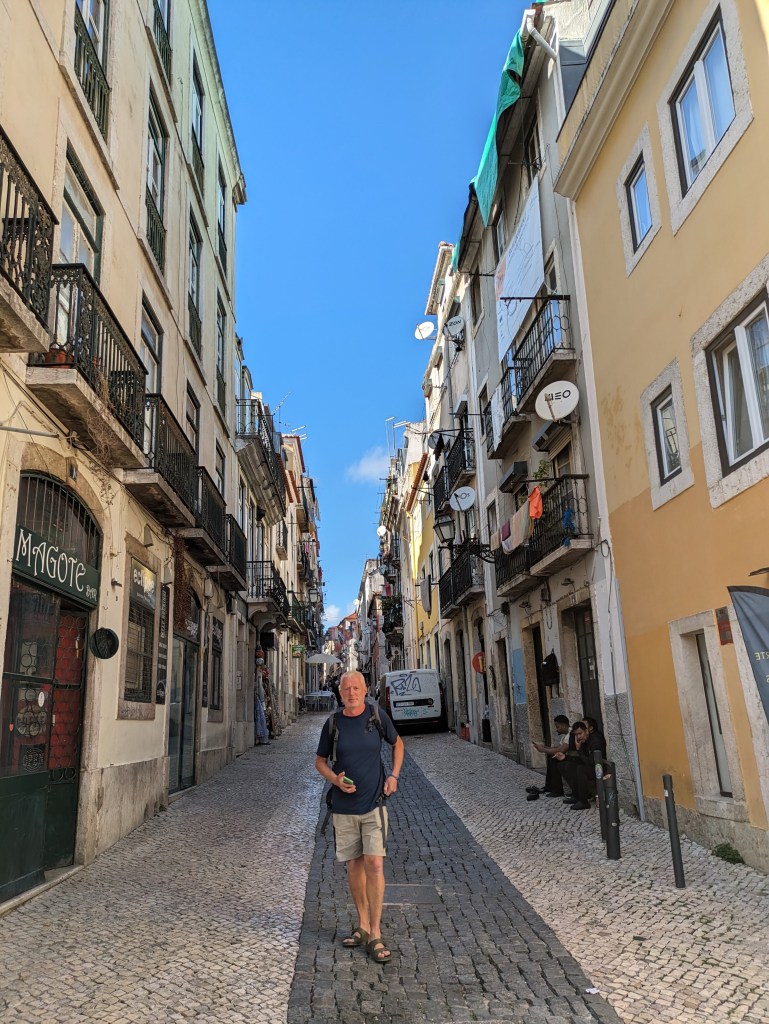
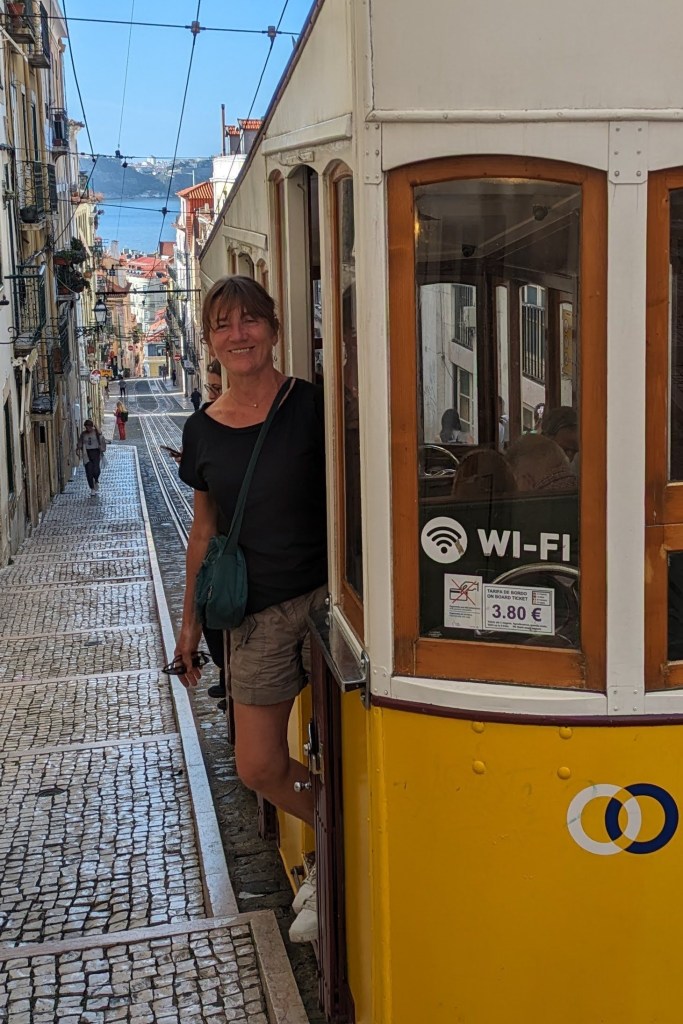
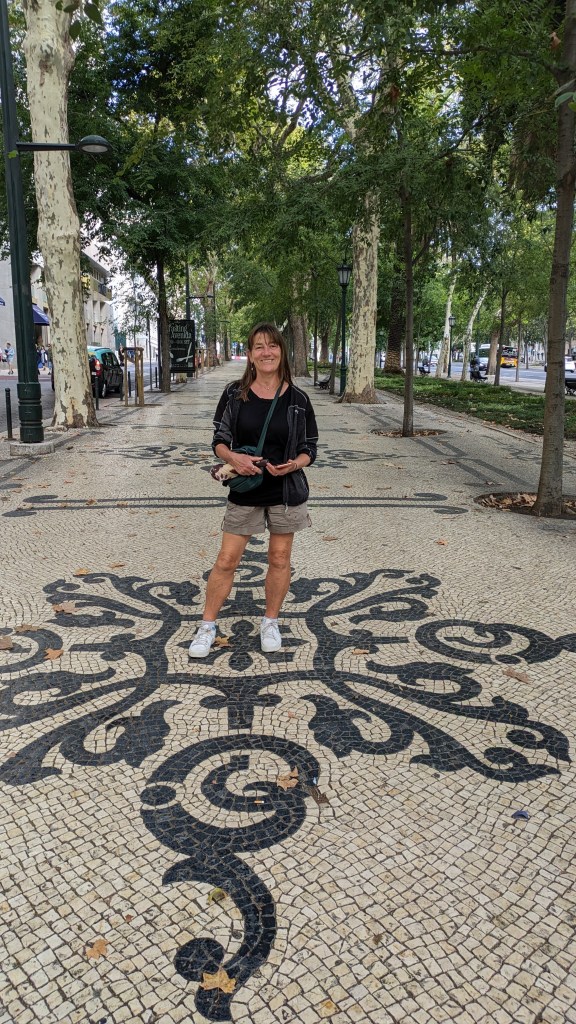
A train took us from Barcelos to Oporto and there we boarded another to Lisbon, a city that we visited for the first time with hills, yellow trams, tree lined squares and earthquake tales
 marienoonanblog