Colombia – Touring the Desert

The Desert meets the Ocean

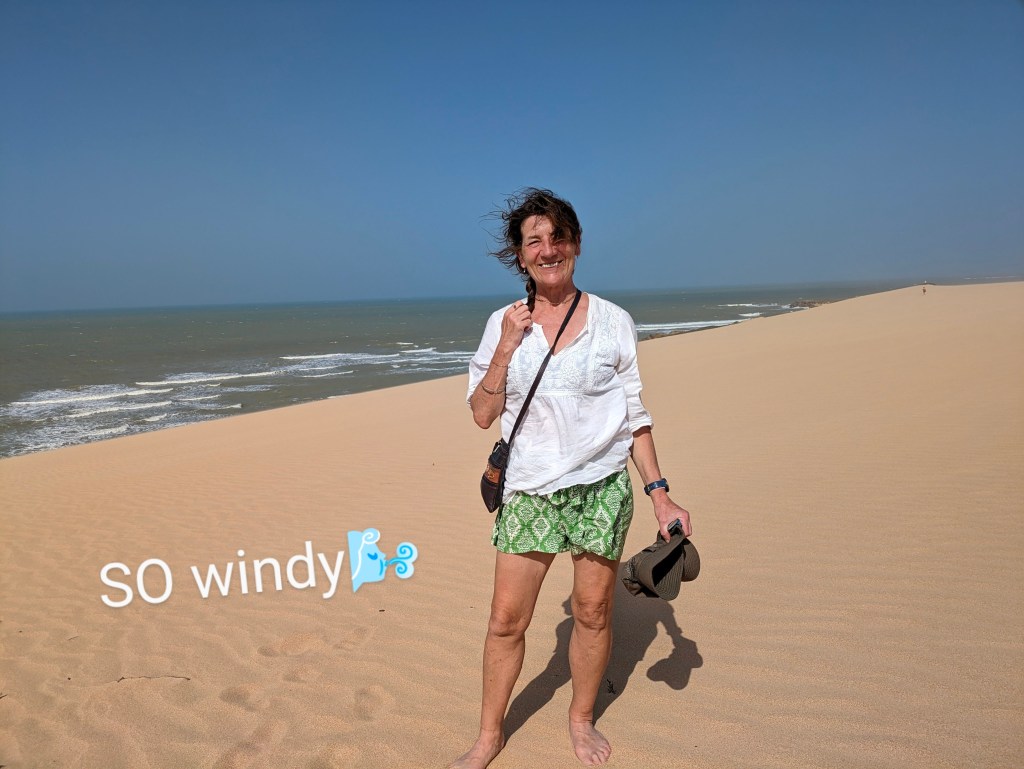
La Guajira is a remote area in the extreme north-east of Colombia, bordered by  the Caribbean Sea on one side and  Venezuela on the other. It is famous for its surreal desert landscapes, beautiful beaches, giant sand dunes and remote fishing villages of the indigenous Wayuu people.  It also boasts the most northerly point in South America, Punta Gallinas.  In Riohache, the capital of the region, we signed up for a 3-day, 2 night jeep tour to explore the area although we are not generally fans of organized tours but we thought it might be restful and educational.

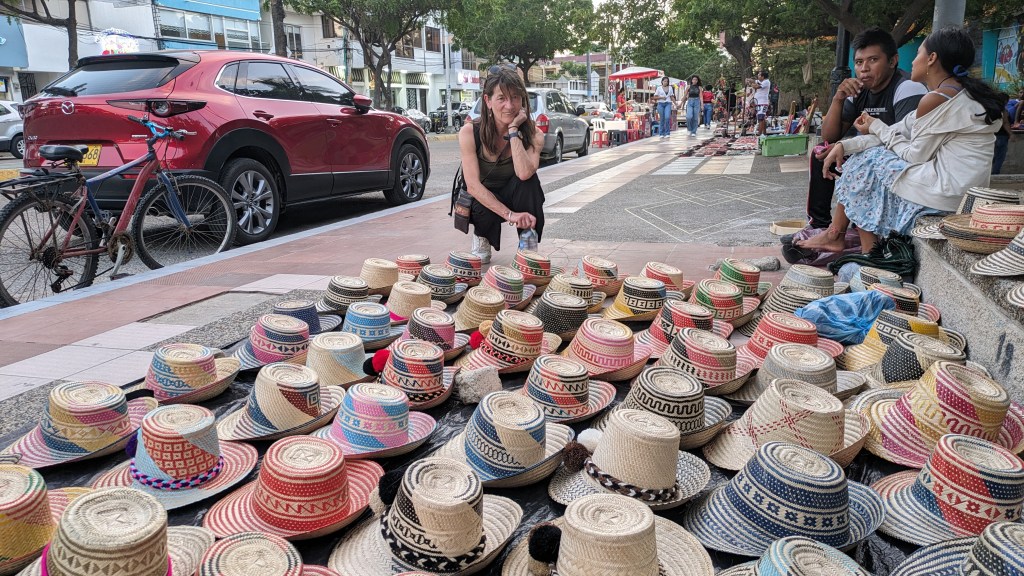
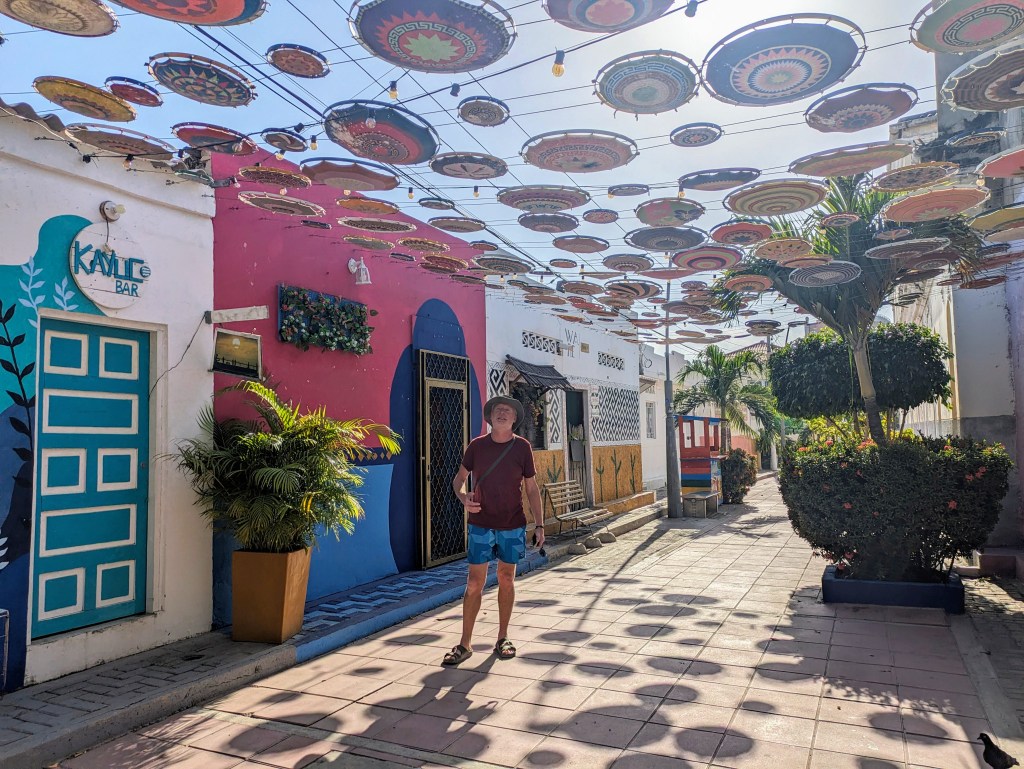
Although Riohache was a small town in the middle of nowhere on the edge of the desert, it was actually quite charming with vibrant murals to rival those of Bogota, a 5km beach and colourful handcraft markets along the promenade. Its climate is hot all year around. The sweet hours here are between 6 am and 8 am, when there was lots of action on the beach, soccer training and athletics, swimming classes and majestic low-flying pelicans, gliding over the water.
The jeep that picked us up at our accommodation was scratched and dented, none of the windows could be rolled down and the lock on the boot was broken. Our driver spoke no English and his t-shirt was fighting a losing battle to contain his ample belly. Our travelling companions were two Colombian couples  in their thirties who spoke only Spanish…..so we were forced to put our Spanish to the test.
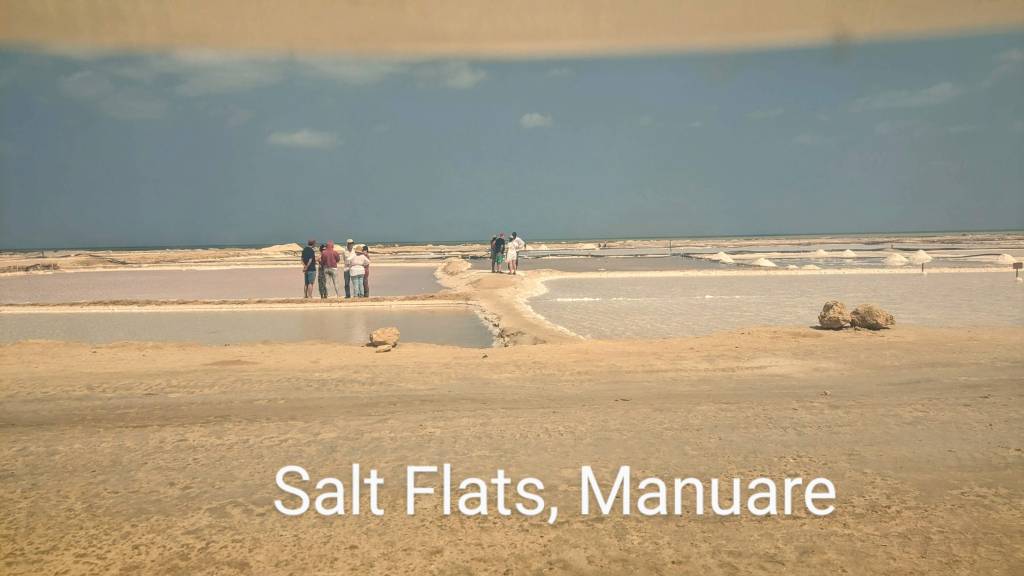
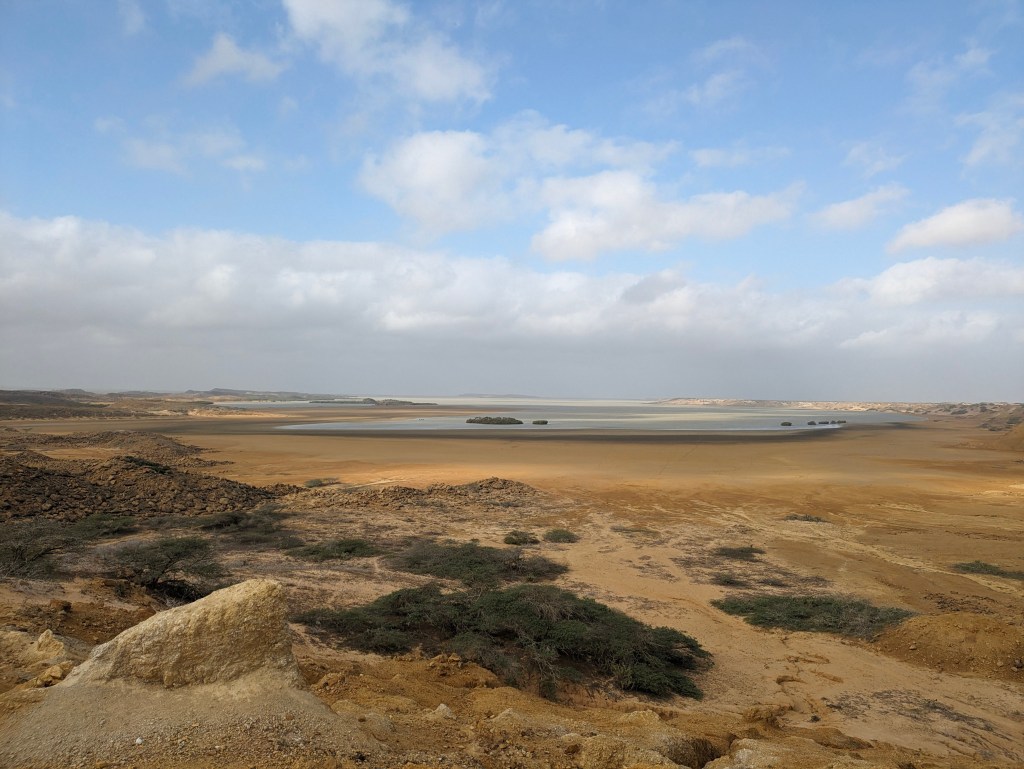
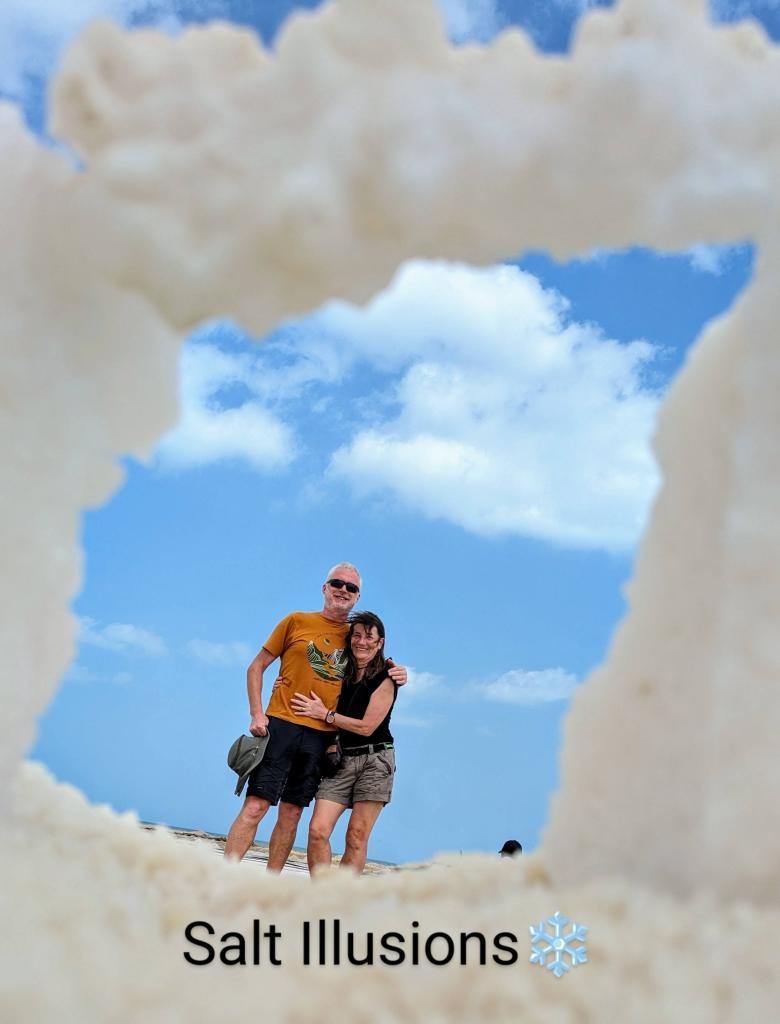
We travelled north, through dusty scrub with goats nibbling whatever they could and thousands of plastic bags stuck on the  low thorny bushes like fake flowers. Riohache began to seem like the centre of the universe. Our first stop was the Salt Flats of Manuare, which produces about 70% of Colombia’s salt. The tour was given by an extremely bored girl who delivered it in a rapid Spanish monotone, It wasn’t very enlightening – we got the gist but not the specifics. Yet there was something magical about the interplay of light, sun and wind on the silver crystals of the salt flats.
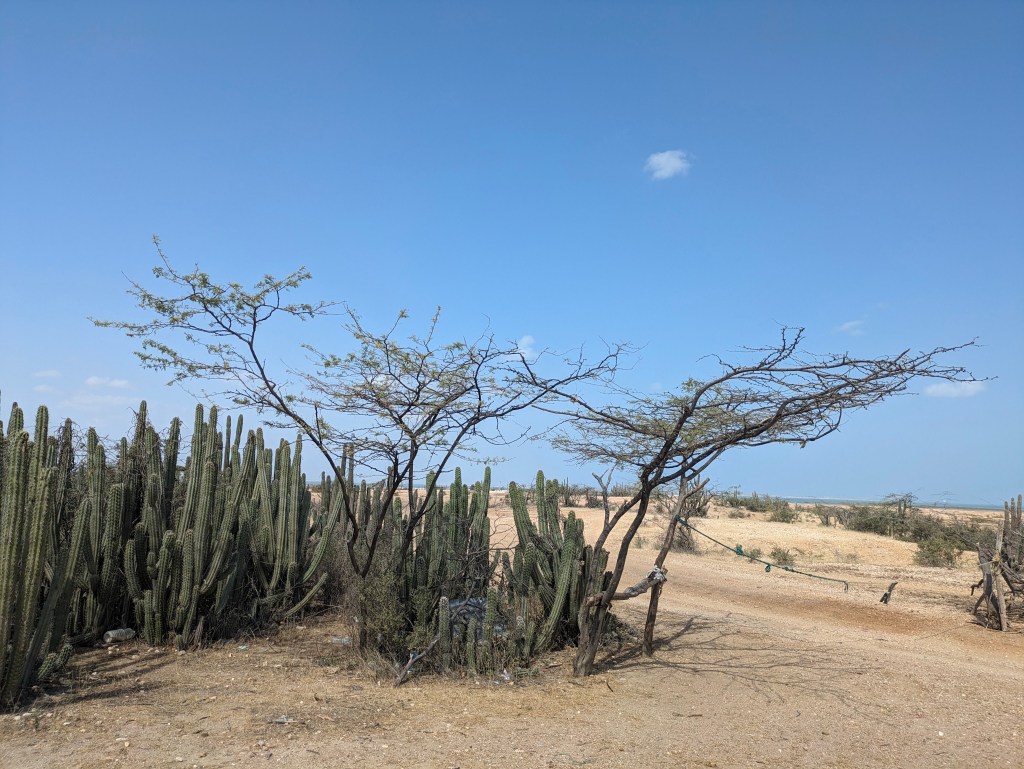
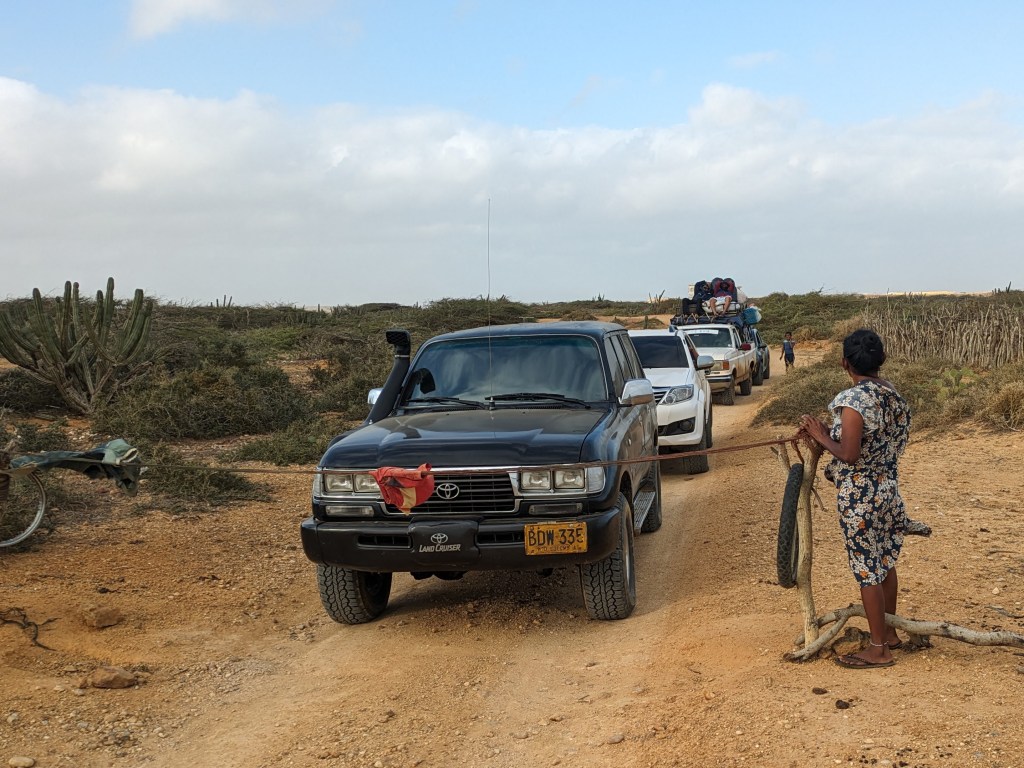
Onwards we went until the roads disappeared, became vague tracks in the sand and stones. The scenery was a  colour-palette of grey,  brown and ochre. Even the green of the cacti was dimmed by a coating of dust. There were frequent road-blocks, usually a rope strung across the road and manned by children. The ‘tax’ was a small packet of biscuits or  lumps of panela (natural cane juice that is dehydrated). We had also bought bags of rice which the driver doled out, which was a more healthy alternative to sweet things. We probably stopped at forty or fifty ‘roadblocks’ and drove through as many more with the driver aggressively driving at the rope until it was dropped or snatched from their fingers. When asked why he gave to some and not to others, he said that they were the same families and had already got their share. At each roadblock, the driver had to open his door to deliver the ‘tax’ because the window couldn’t be rolled down.
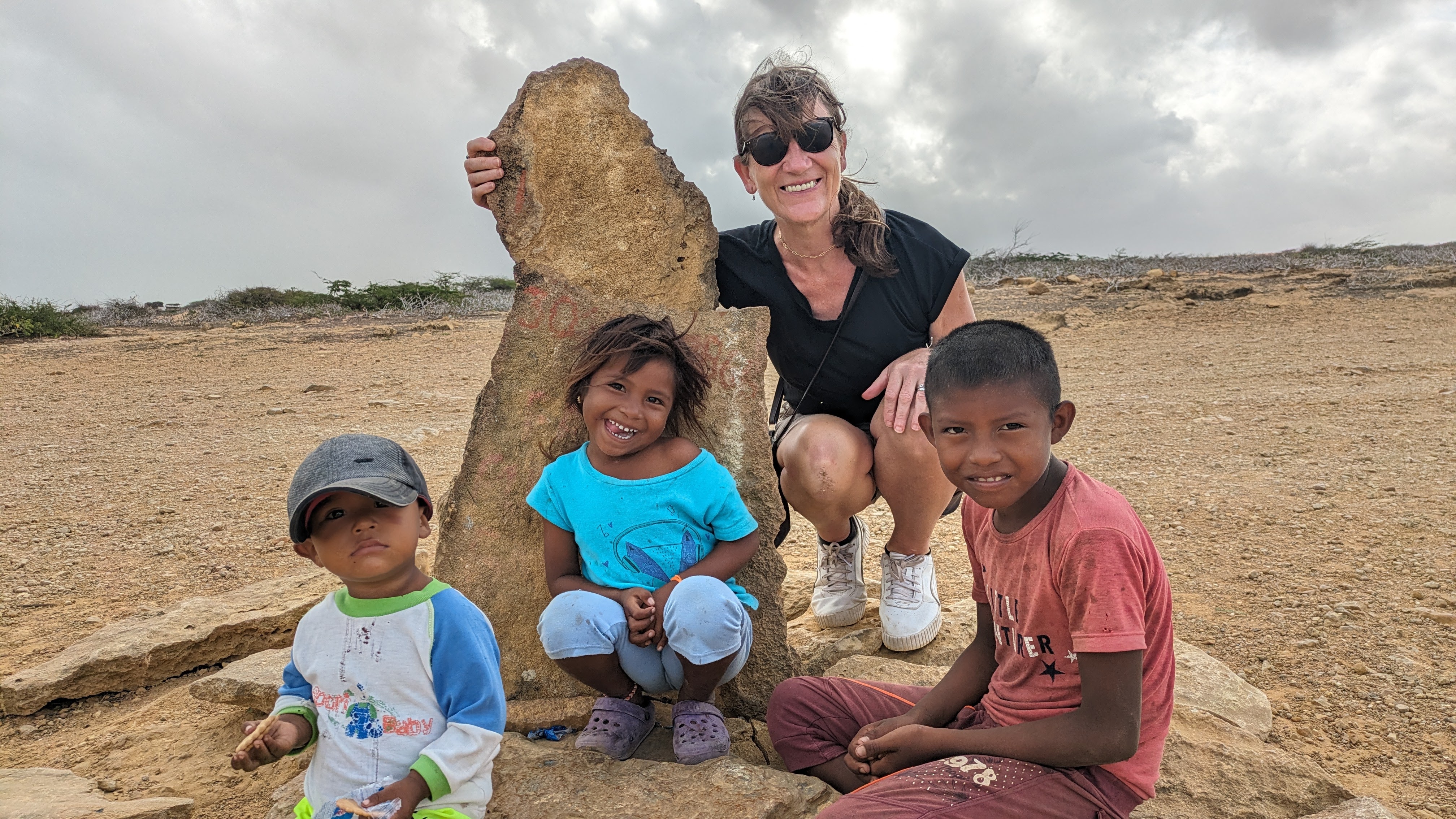
Wayuu Children

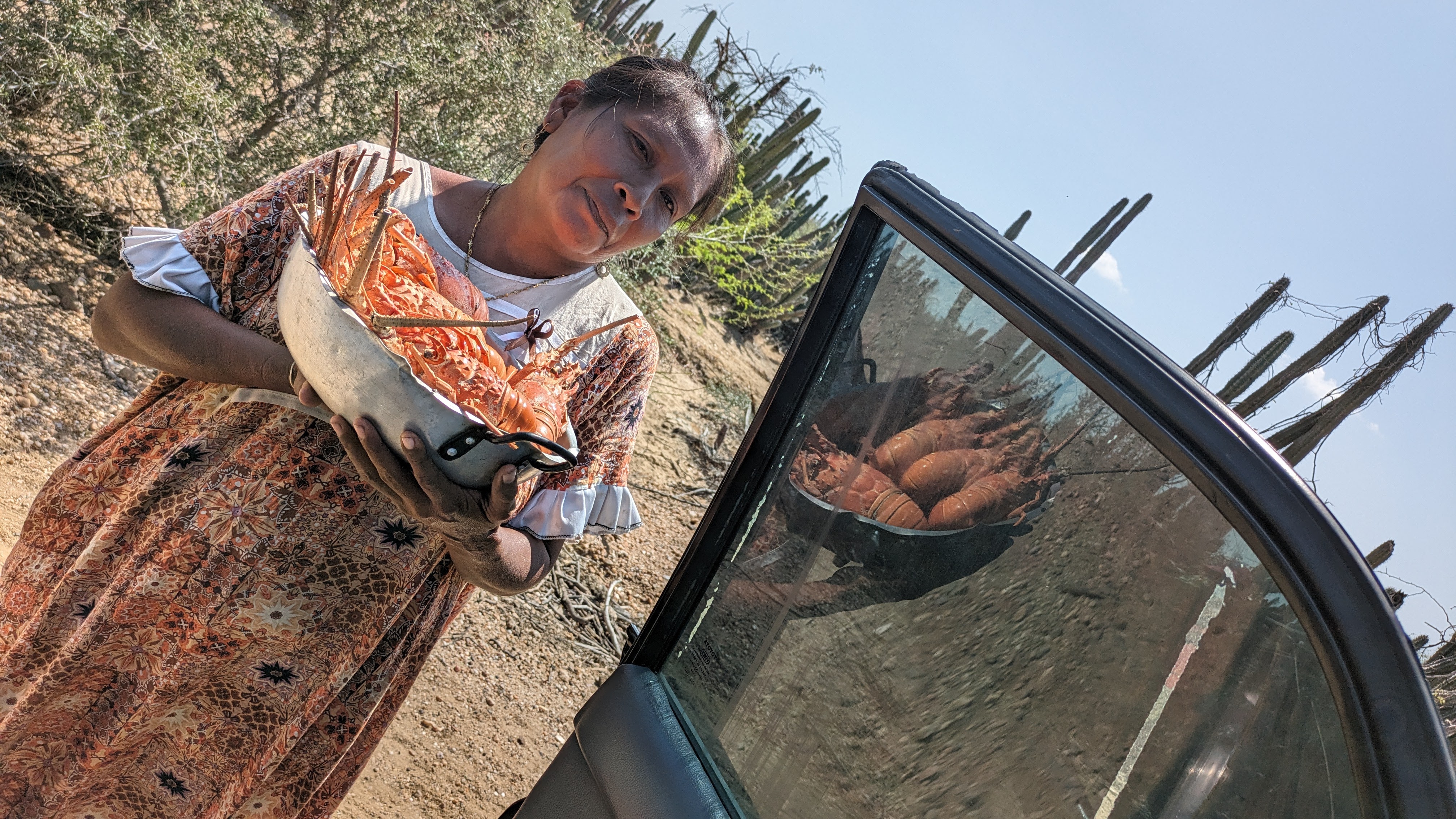
 The arid harshness of the environment makes cultivating anything difficult. The people herd goats and a few cattle and there was fishing on the coast with women selling baskets of prawns and lobsters by the roadside. There were many windswept stalls selling handcrafts, particularly woven bags in bright threads and bracelets, which were a splash of colour in the brown landscape. We bought lots of bracelets (the bags were too big to fit into our little backpacks although they were gorgeous and beautifully made. Tradition says that the weaver weaves part of herself and her view of the cosmos into the bag. The wild beauty of the area was mesmerizing but the undeniable poverty of the Wayuu people and the culture of begging (which is essentially what these road blocks are about) was very uncomfortable. It was distressing hearing the kids asking for drinking water. Water has always been a scarce and precious resource here even when the sparse rains were reliable and predictable. Prolonged drought over the past few years has greatly exacerbated the problem as well as the damming of a river in another area and the diversion of water for coal-mining. Then of course, there is the problem of smuggling in this wild frontier area on the edge of the South American continent.
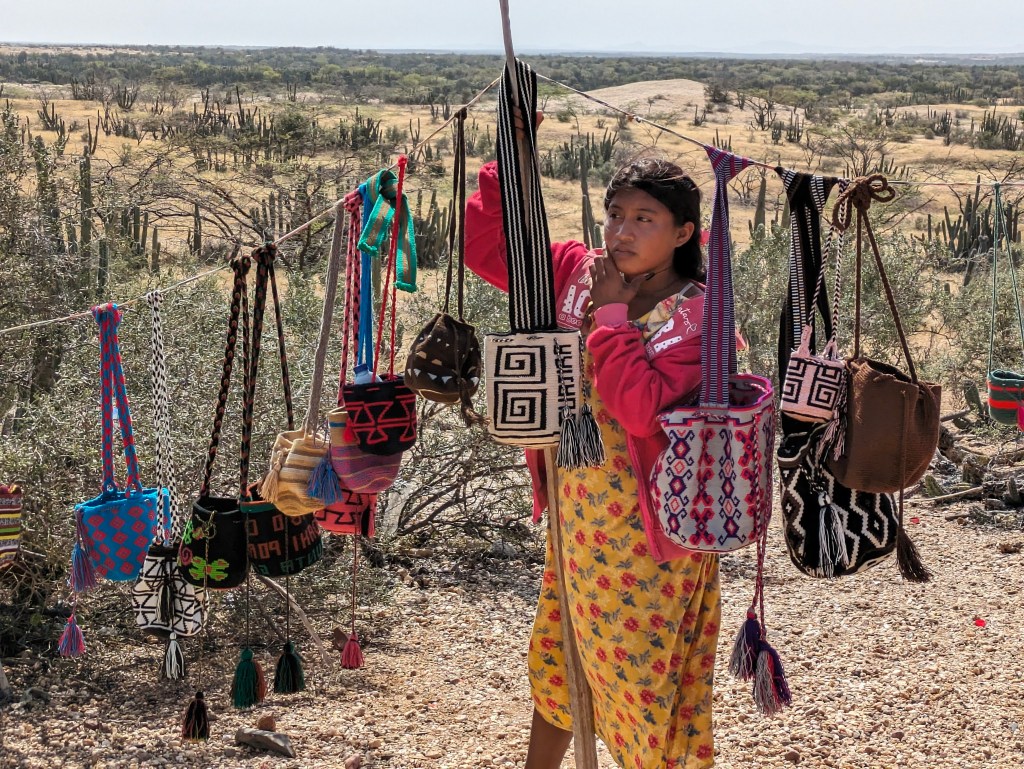
Selling Mochillas

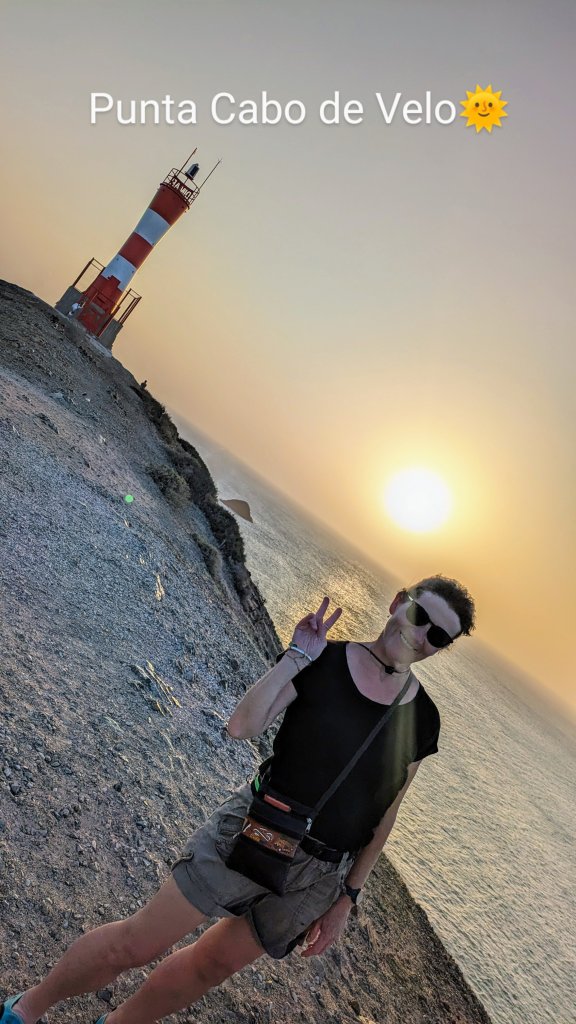
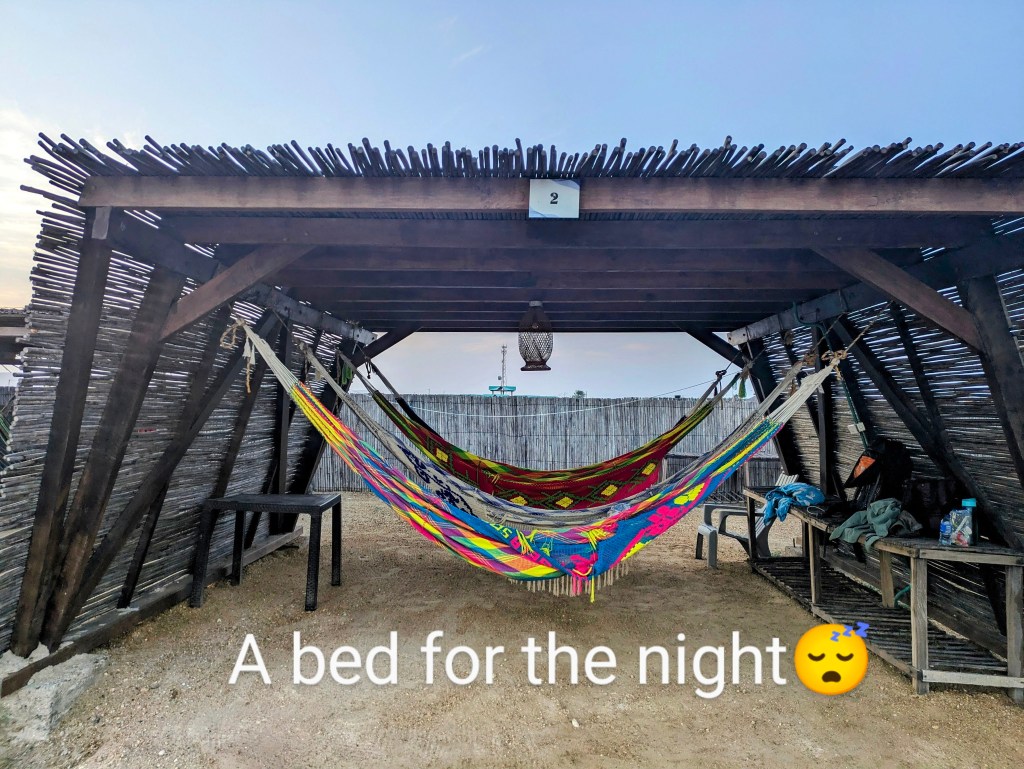
After a long day of sun drenched beaches without shade,  a sunset at Punto Cabo de la Velo and a dinner of fish and rice, we were ready for bed.  Caoimhin and I slept to the sound of the ocean  in hammocks, strung up in a breezy open-sided structure. I found it really comfortable and loved the novelty of it, out in the open-air but  wrapped up like a bug or hibernating crystalis. The wind blew strongly, swinging the hammocks and there was a desert chill at around 2am but no biting insects(the advantage of such a dry arid environment).
The second day was all about reaching Punta Gallinas, the northernmost point on the mainland of South America. We passed by whirring windmills, the first we had seen in Colombia and it was certainly windy enough to power a nation. The further north we went, the more ferocious the wind became and the more inhospitable the terrain. There were more road-blocks and more ‘tax’ paid.  We stopped near a beach for lunch and were sand-blasted without mercy, losing at least a layer of skin. We ran inside the small ‘restaurant’, just some tarpaulin pulled over plastic tables and plastic chairs that we soon sticking to. Soon we were  sharing the space with hundreds of flies😲 and eating enormous portions of rice and shrimp…..but at least we were out of the wind.
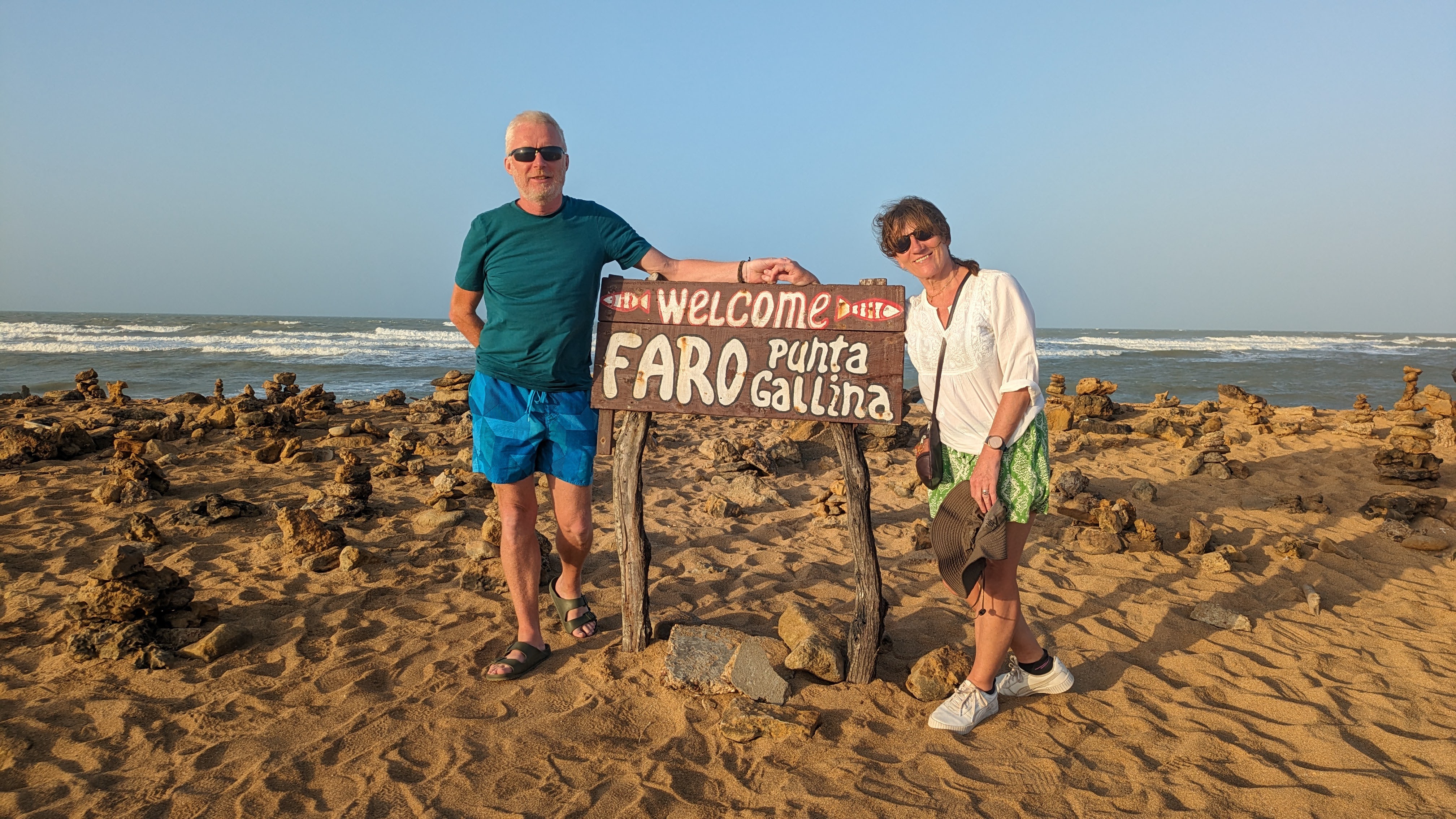
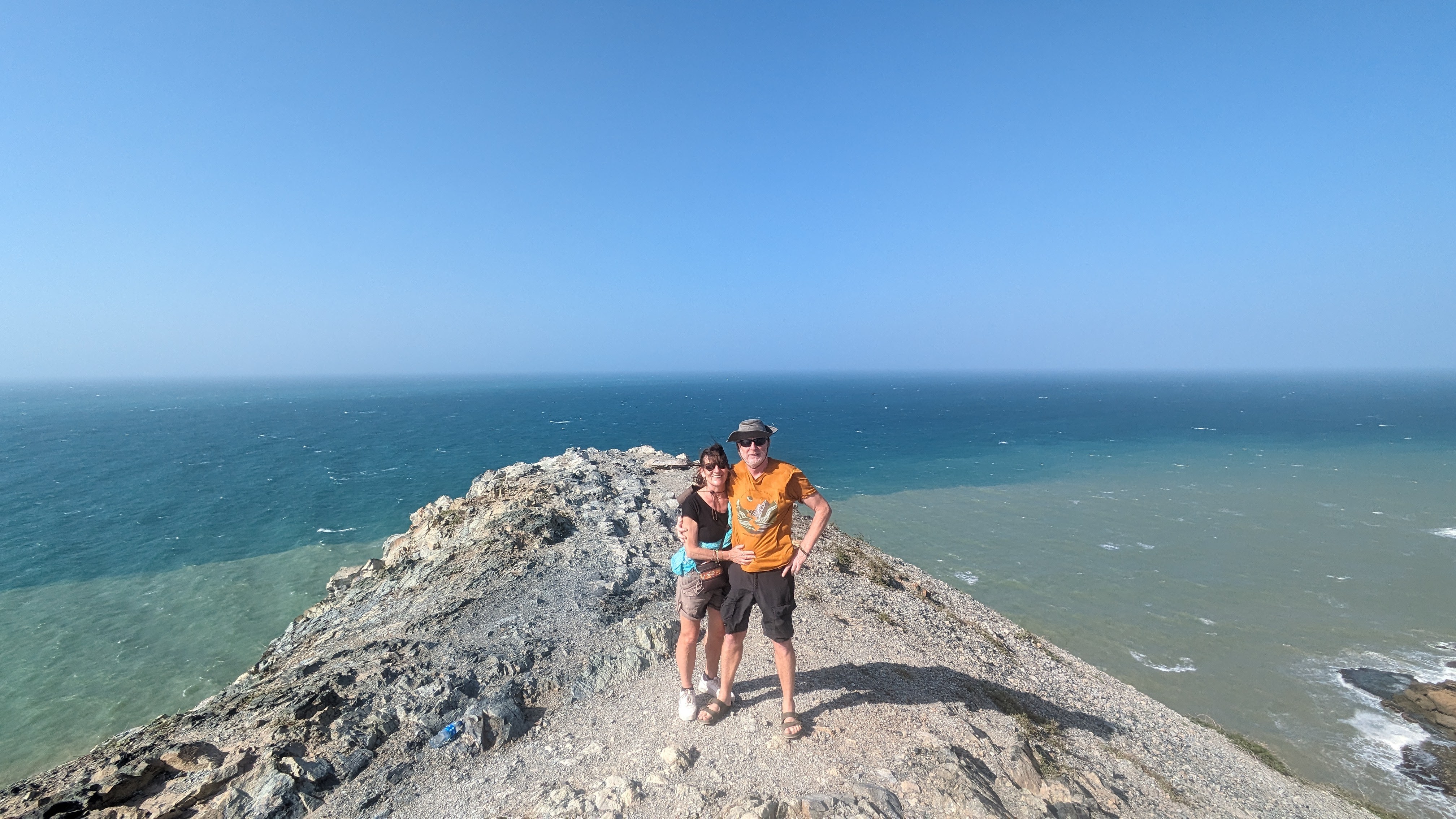
We reached Punta Gallinas at about 5pm. It consisted of a flat piece of land with a small concrete building, a pylon with a light on top, a rough sea and a shoreline littered with brown rocks, many stacked into little piles where people left their burdens behind or made wishes to fly into the ocean. It might be an iconic place but it was a bit disappointing, the culmination of two days driving. The most northerly ‘point’ was only really visible from aerial photos and not really evident from ground level.
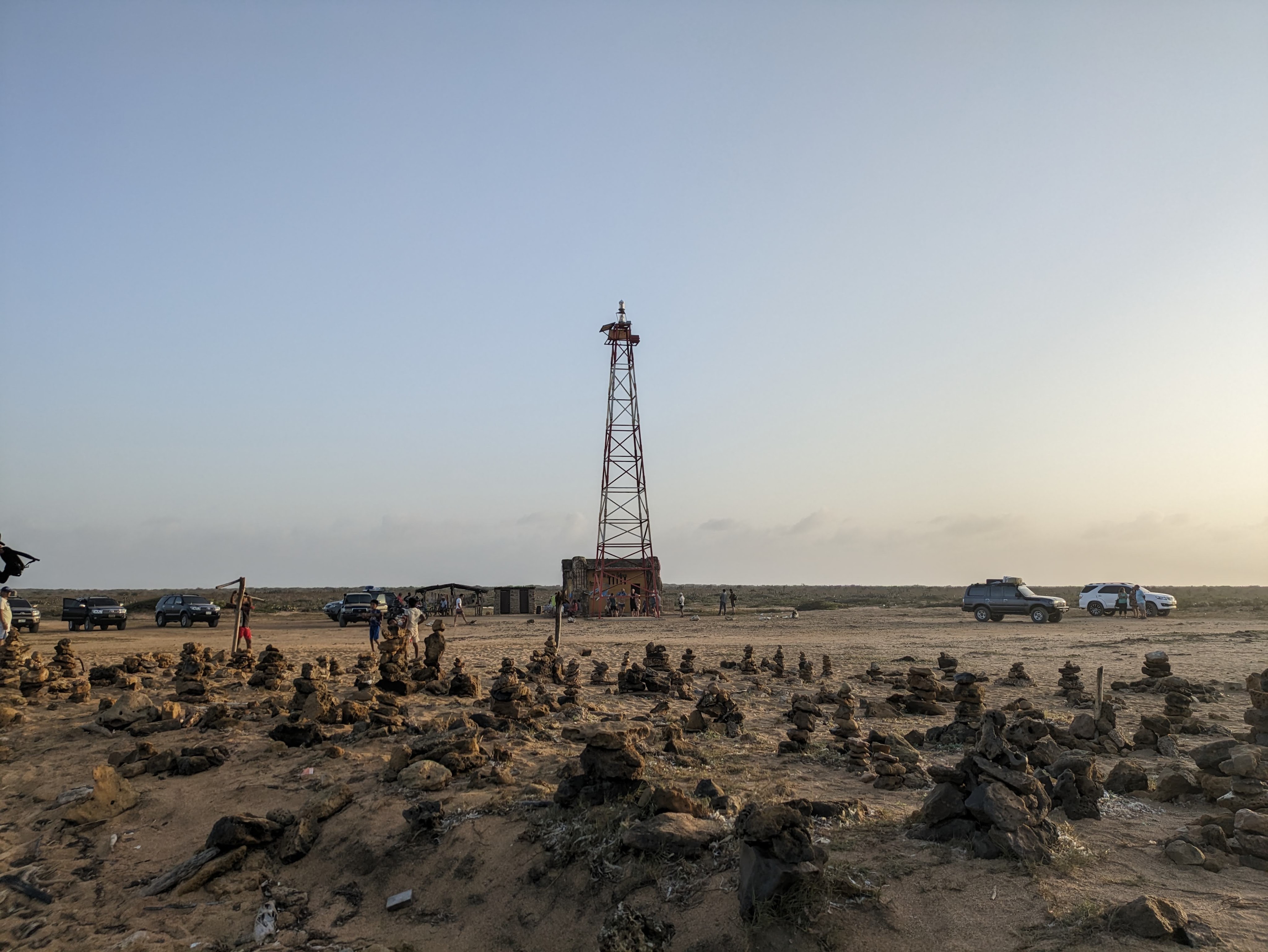
Iconic’ Punta Gallinas

Our second night was spent in a bed in a surprisingly large comfortable room with an en-suite bathroom. The shower was only salt water which didn’t help our wrinkles😄 but it was more than we expected. I was a little envious of the people sleeping in the hammocks with their views of the starry skies which were radiant with so little light pollution. But when we spoke to the bleary-eyed hammock-sleepers the following morning, a bed was definitely the better choice. The wind had howled around their hammocks all night and they were pelted by copious amounts of donkey dung that the wind had hardened into missiles and flung at them all night while the donkeys brayed nearby. A lucky escape for us!

The jeeps huddled together like herd animals and travelled in convey most of the time with all the tour companies plying a similar route. The passengers were deposited to take photos or to hike to a mirador(viewpoint) while the drivers sat in the shade ‘having the crack.’ There was very little effort made to convey the history, geography, geology or culture of the area….in any language. Sometimes, it felt like the paying passengers were an inconvenience to the drivers and we spent a lot of time waiting for our driver, who never seemed ready to leave at the time he told us and wondering where we were going. Our fellow passengers, the four Columbians were equally in the dark.
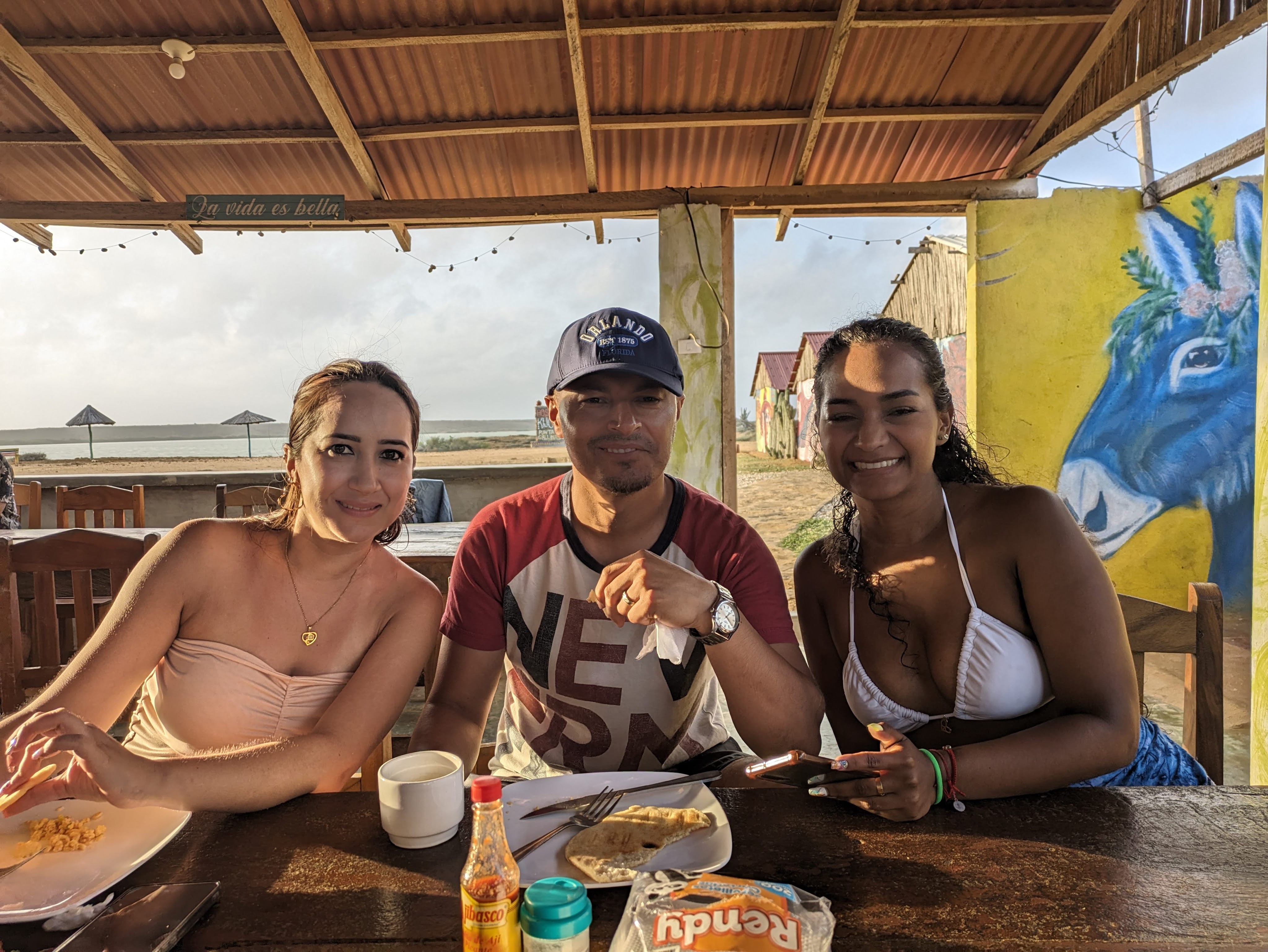
Three of our fellow Travelling Companions

On our third day, we sat into the jeep and drove for seven hours straight until we were almost back where we started. There were a few breakdowns, the rough terrain plus the sand and dust played havoc with the engines.  Our driver spent a bit of time under our jeep as there was some issue with a rear wheel but we kept going and even came to the rescue of a local man who was stranded in the sand and towed his jeep for a bumpy hour.

Our backsides were glad to finally get out of the jeep and we decided that we would be very cautious about taking another jeep tour, where everyone is shepherded along and you can leave your brain behind, having everything organized including meals and sleeping arrangements.  The harsh beauty of the landscapes was phenomenal, the Wayuu people were lovely but their precarious existence was very difficult to witness. We felt that we didn’t learn as much about the area or the people as we had hoped, mainly because there was no guide, the drivers only concern and expertise was driving.
As soon as we got back to Riohache, we headed off to Camarones, a tiny coastal village and a bird sanctuary about 30 minutes out of Riohache. This was an amazing place, very tranquil with a gorgeous beach but the highlight was the birds who put on a dazzling display in the early morning, fishing, feeding and fighting for scraps from the fishermen’s’ nets. The Scarlet Ibis was such a vibrant red that it didn’t look natural (see photo below for proof). Three American birdwatchers, who were staying in the same place as us, told us that the variety of birds in Colombia is the second most diverse in the world in terms of number of species.

We plan to stick to the Caribbean Coast for a while more. Next stop is Caragena, known as the ‘Crown Jewel of Colombia’ but I’ll let you know what glittering delights we find there.

Muchas Gracias por leer🥰
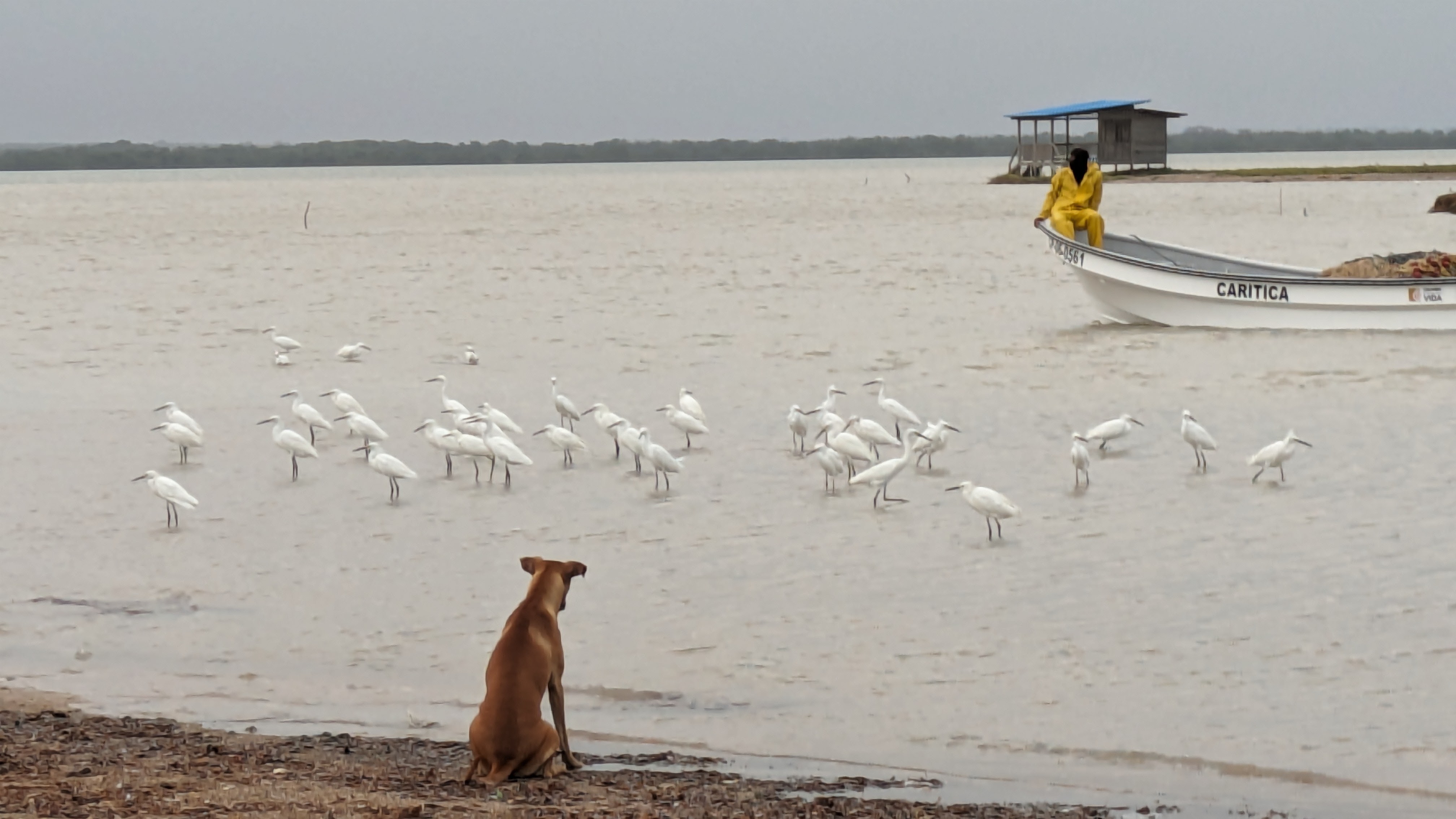
Bird Watcher, Camarones
Colombia – Touring the Desert

Colombia – Looking for Paradise

Palomino is a small town on the Colombian Caribbean coast, nestled between two rivers, Rio Palomino and the Rio Salvador. Both rivers flow from the Sierra Nevada mountains to the sea on both sides of the town. It has developed a reputation as a mecca for backpackers with lots of cheap accommodation and good restaurants. It sounded like an ideal spot for some relaxation after our exertions during the Lost City Trek.

The bus from Santa Marta (two hours away), dropped us on the main road, with roaring traffic, motorbikes, buses, fumes and deafening noise. Palomino itself was just off this paved main road, a series of dusty unpaved roads, lined with low ramshackle, unpretentious houses, a lot of greenery, a few dogs sleeping and hardly a person in sight.  It was early afternoon in a dense humming heat and Palomino did not seem like a mecca for backpackers…..or anybody else.😲

Palomino

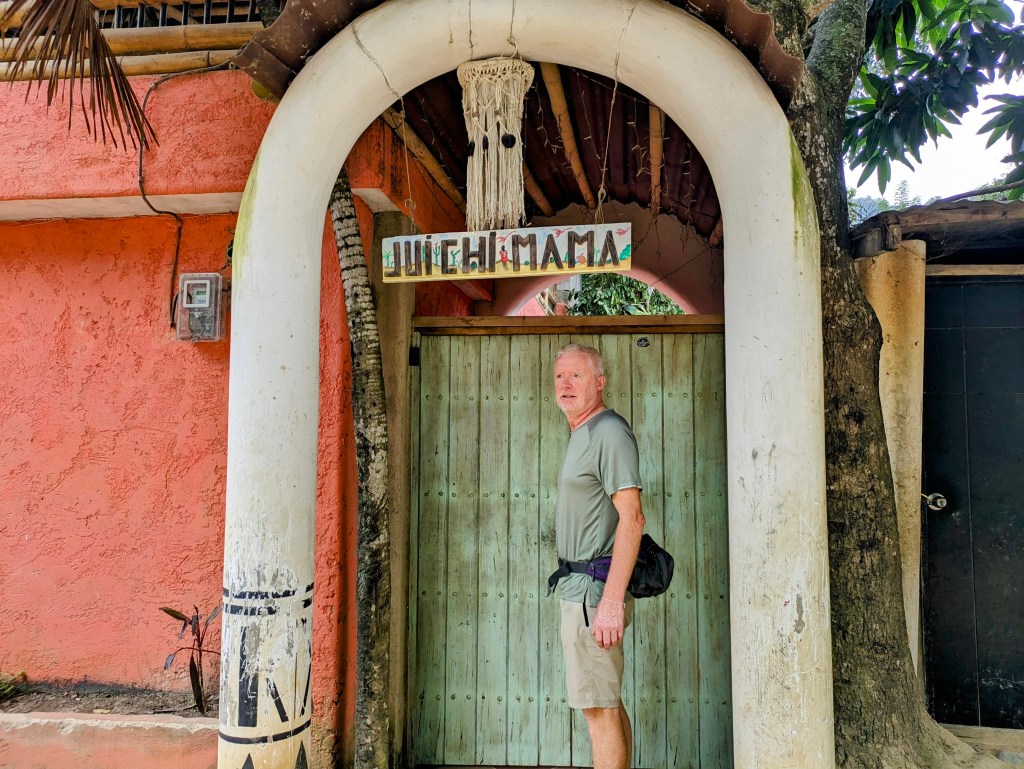
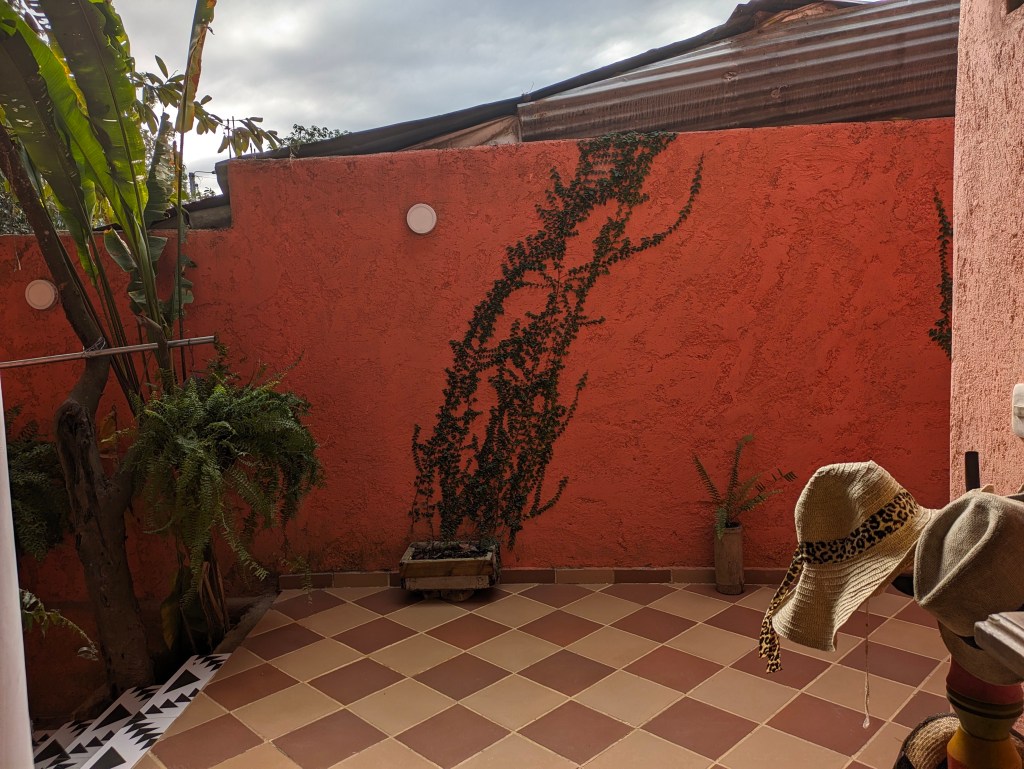
Our accommodation, Jui Chi Mama, was at the edge of the town, a 15-minute walk along more dusty streets. The outside door of our accommodation was faded dirty green, but inside was an oasis of calm and birdsong, an old house set in a huge, lush garden of huge tropical plants, an outdoor kitchen and lots of shady seating areas.

Jui Chi Mama was the sort of relaxing place that put a spell on its guests, a bit like Hotel California, you can check in but you can never leave.😄 Our initial booking was for four nights but we extended that by another four nights and then by another four nights. We weren’t the only ones…an English couple kept extending until they had spent three weeks, a Spanish girl was there for months and so was a German woman. We hope to check out tomorrow……if we can.

Palomino has the feel of a frontier town. Unreliable electricity supply is part of life here and power cuts are routine. A lot of guest houses and businesses have their own generator which unfortunately in our accommodation kept breaking down. We spent one long hot sticky night without a cooling fan, which was very unpleasant.  There are no connected sewage systems (houses have individual septic tanks) but there are plans to change this with diggers doing the preliminary work but not very consistently. Clean drinking water is also an issue and we were advised to use the filtered water available in the kitchen even for cooking.

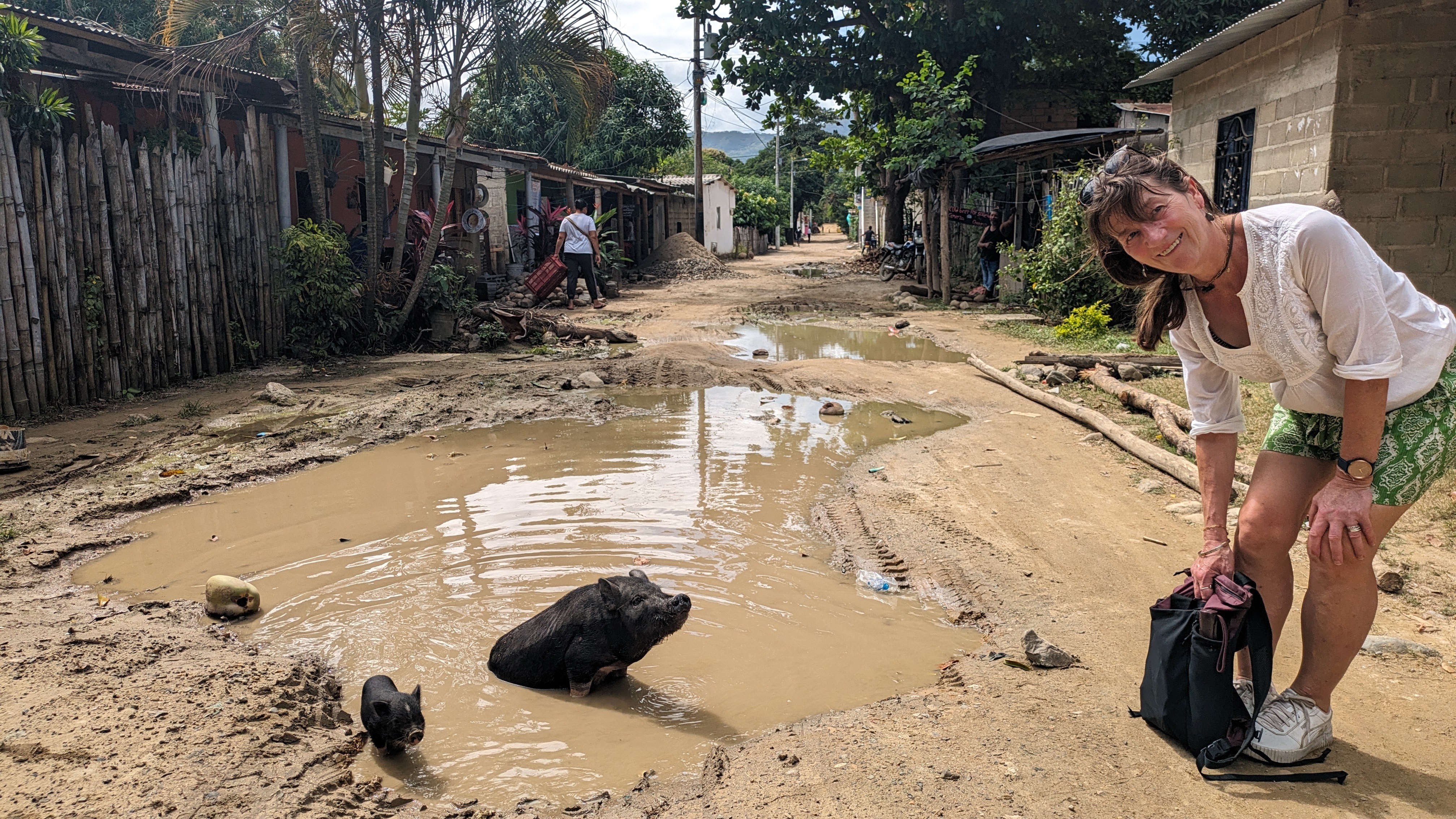
 Heat is also part of life in Palomino with it’s tropical climate.  It’s hot all the time, most days are well over 30C and nights are just under 30C.  When we first arrived and trudged along the dusty streets, we wondered how people got around in the wet season when the dust in the street must turn to mud. February is in the dry season, which runs for six months from December to May.  The weather was cloudy, overcast and very humid. We got a taste a few days later of what Palomino might be like in the wet.  It rained,  just a few showers at first, an afternoon of warm drizzle the next day and then a downpour that felt like it might never end, the skies emptied for about fourteen hours relentlessly. The streets were a quagmire, a slip-sliding mess of oche mud, flowing streams and floating rubbish. We were told that rain like that was very unusual, especially at this time of the year.

Loving the Mud

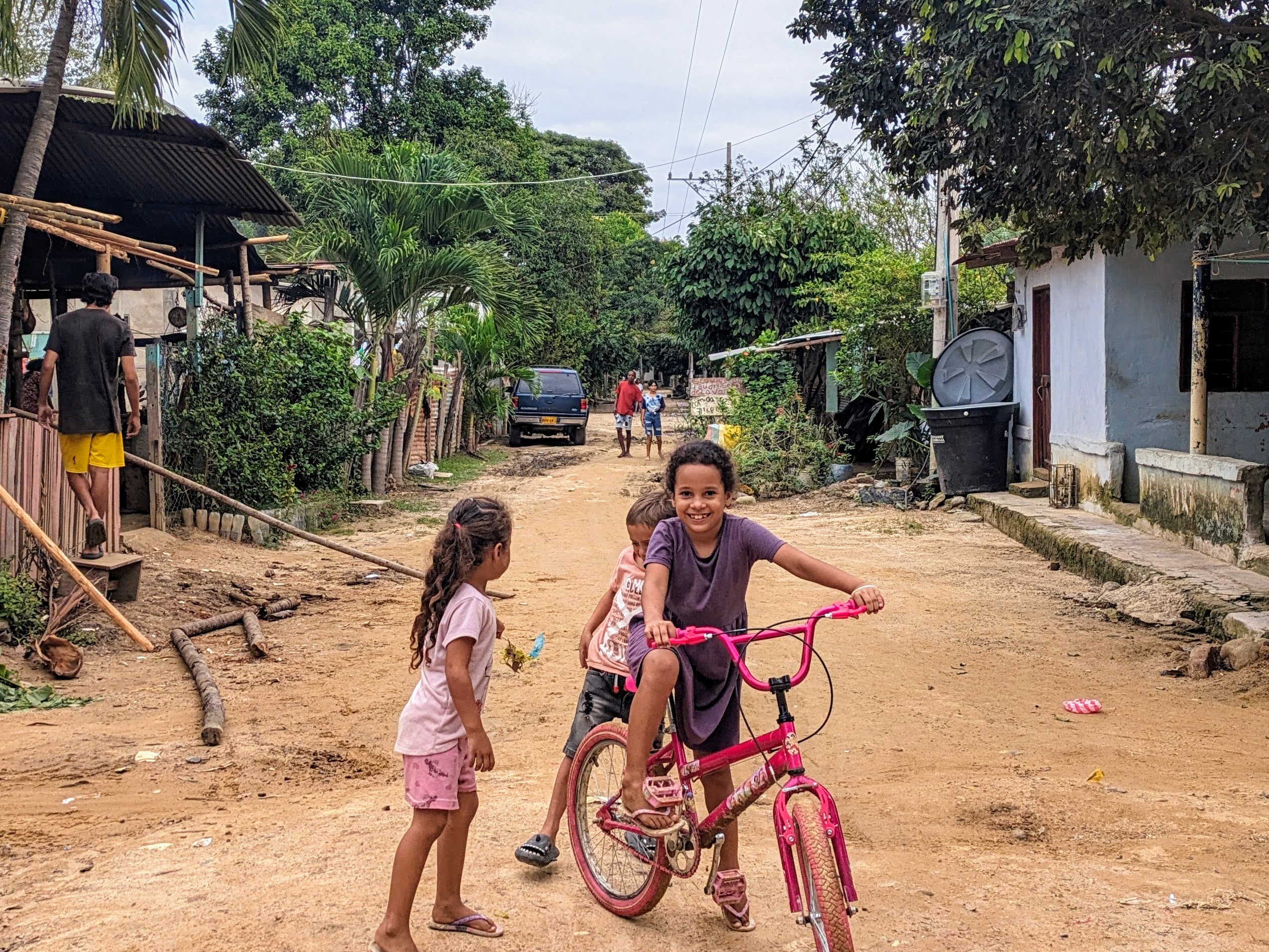
Palomino had the feel of two separate towns, there was the main strip, really just one street that led to the beach with lots of restaurants, tourist shops, tattoo places and tour operators. This was where most of the visitors hang out and then there was the rest of the town, where we were staying where the children played in the streets, where the front doors were open, where people sat outside their houses and gossiped, where the music coming from the snooker hall was seriously deafening at the weekends.

The Beach was long and sandy, bookended by the two rivers but the sea was surprisingly rough and quite dangerous in places for swimming. It was not the Caribbean of our dreams, the clear calm turquoise waters that we imagined. We dipped in it a couple of times,  like being in a washing machine on a warm cycle, and when it spat us out, we relaxed at one of the beach bars and restaurants,

The Caribbean

There were interesting trails into the mountains leading to indigenous villages, along paths that climbed high and then descended steeply and repeated over and over through thick vegetation.

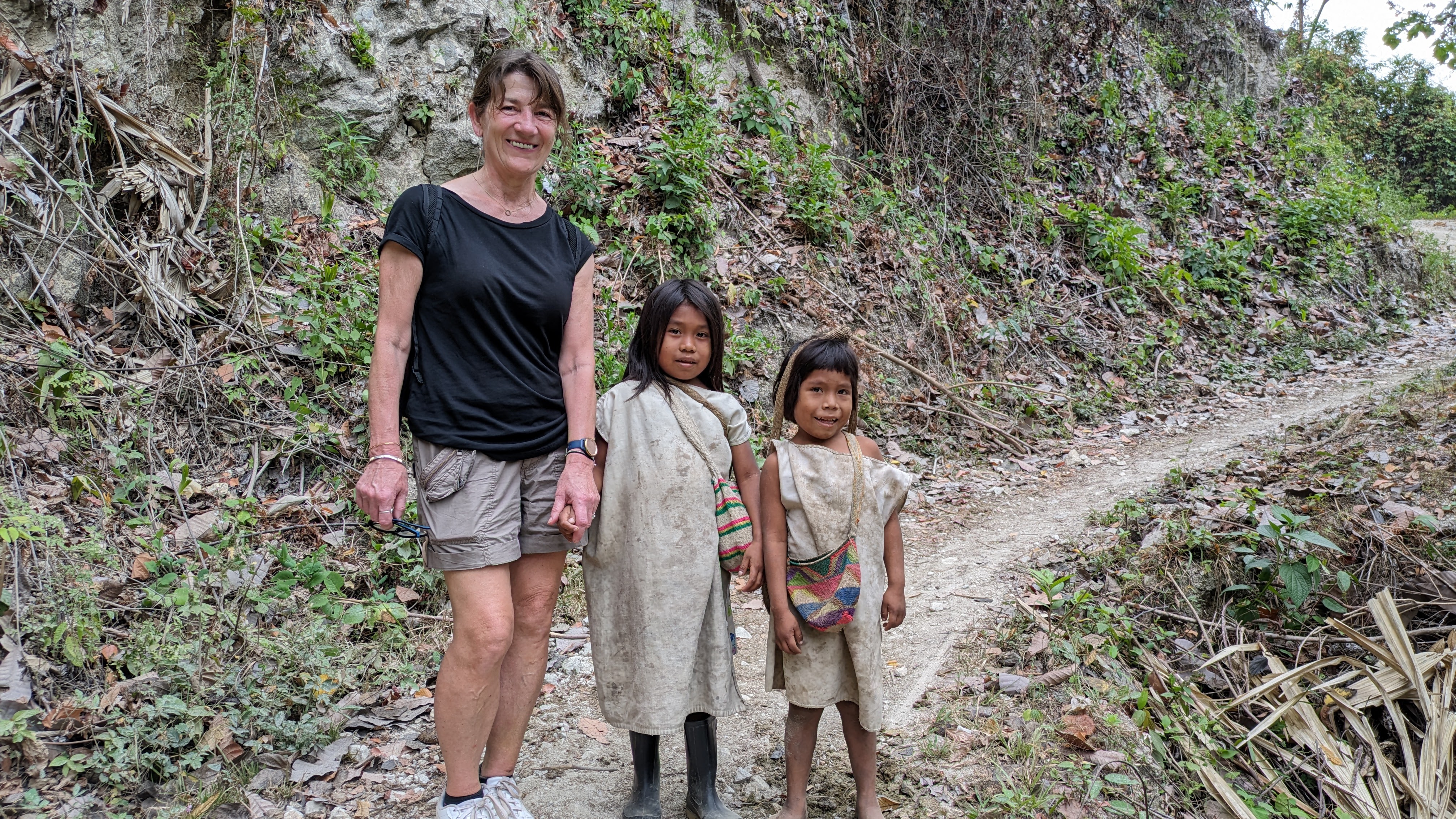
Meeting the Indigenous Children

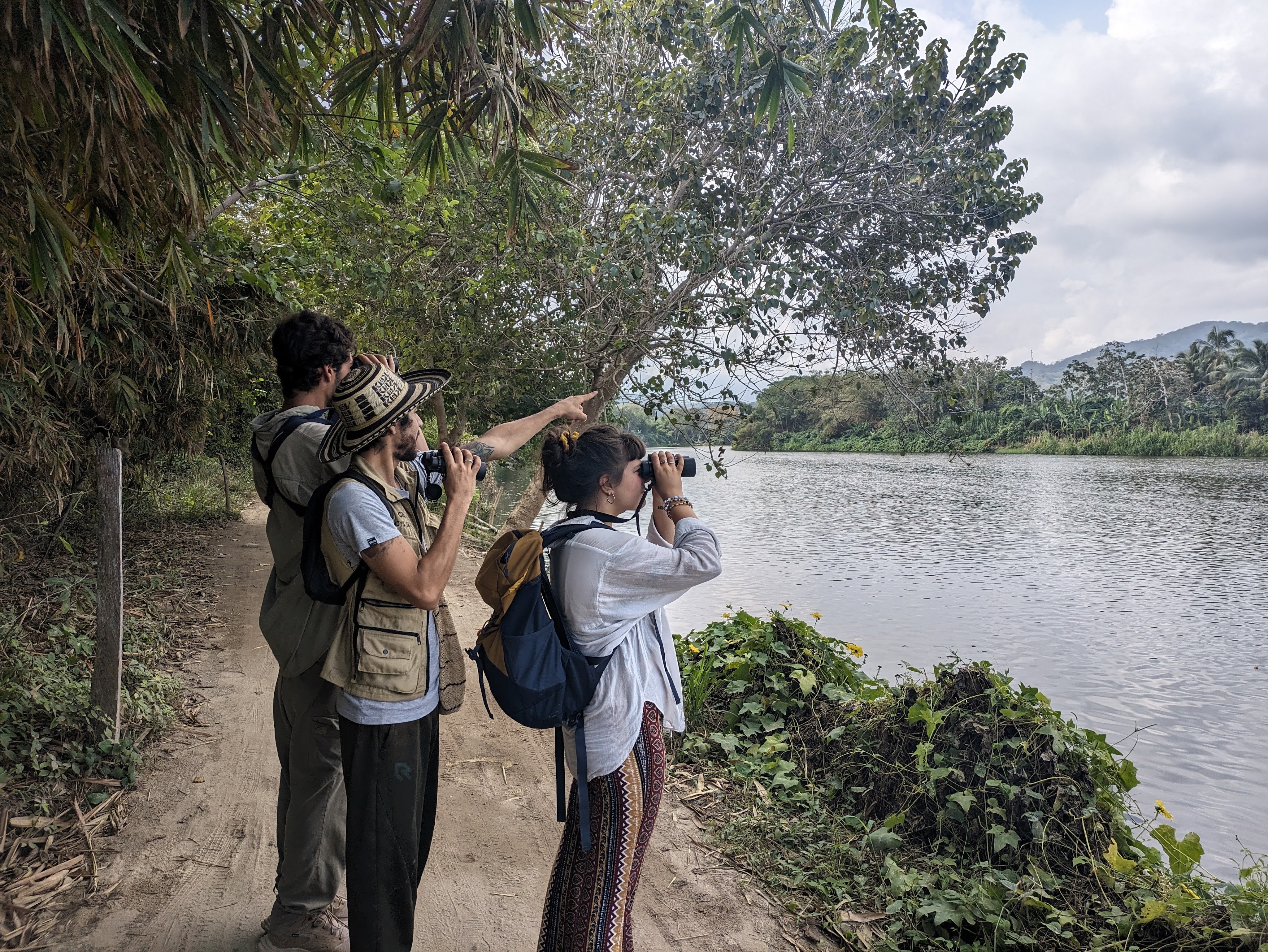
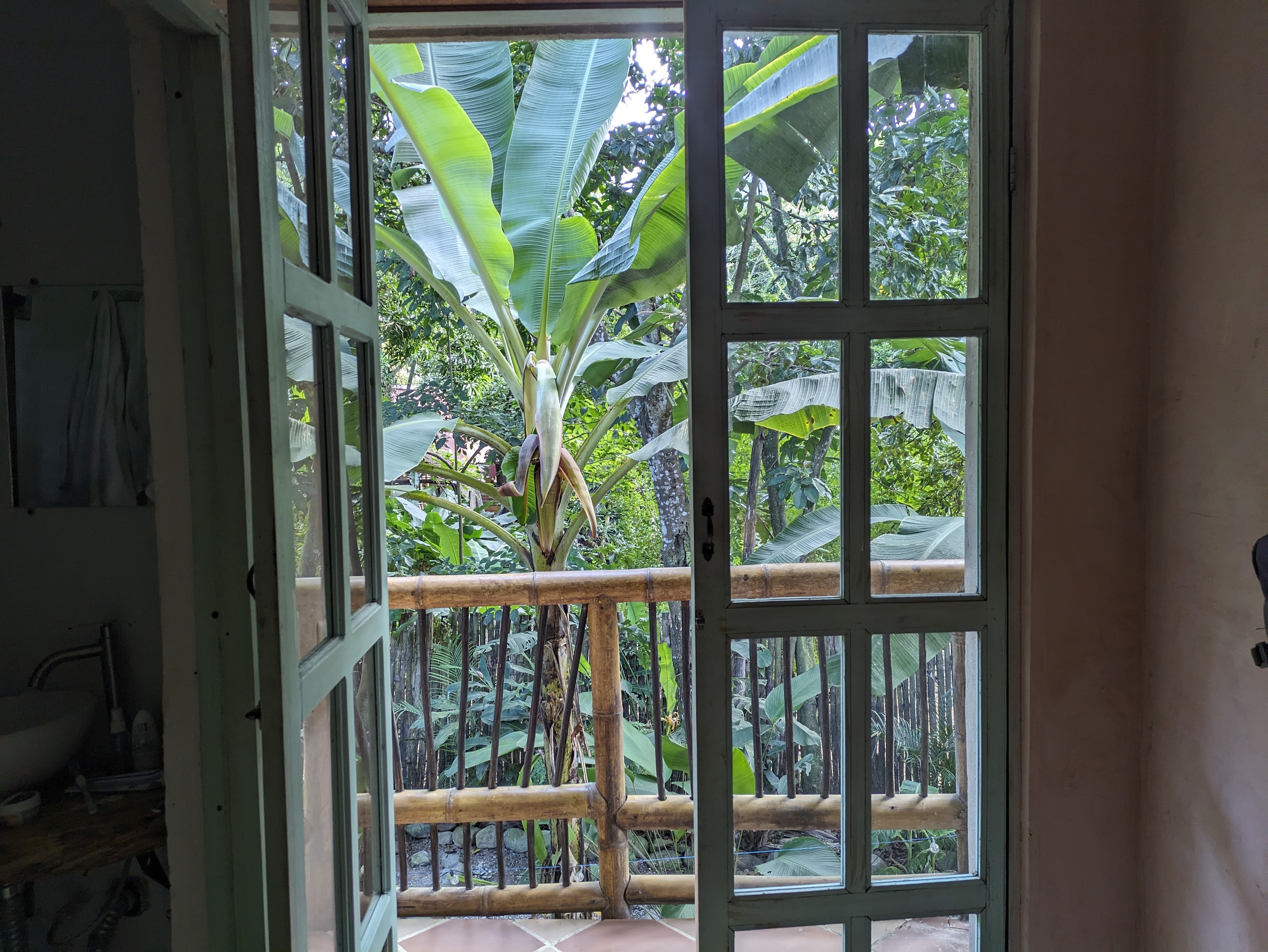
Herman, who runs our guesthouse, was a keen birdwatcher so we booked a birdwatching tour with him, a four-hour walk in the early morning though the town, along by the river and mangroves to the beach. There was a huge variety of birds from tanagers, flycatchers to eagles. Many of the birds were similar to our own but then there are the colourful parrots, the Macaws and the tiny hummingbirds. Over the last six or seven years, a large patch of ground on the edge of town that was used mainly as a dump has been cleared up and is being reclaimed by nature to form new habitats. The growth here is phenomenal….we have watched a bunch of bananas in the tree outside our balcony , increase in size by the hour.

Birdwatching by the Rio Palomino
Lush Growth outside our Balcony

For the last week, we have been taking Spanish classes with the wonderful Christina, just an hour a day, mainly concentrating on conversation. Christina is a native of Bogota who moved to Palomino many years ago and also spent a long time in America so her English is excellent. Our progress is slow but hopefully, one day, it will all fall into place….with perseverance and practice🤞

So tomorrow we check out -if we can- and head further into the La Guajira region towards the desert and the northernmost part of South America

Hasta luego, amigos🥰

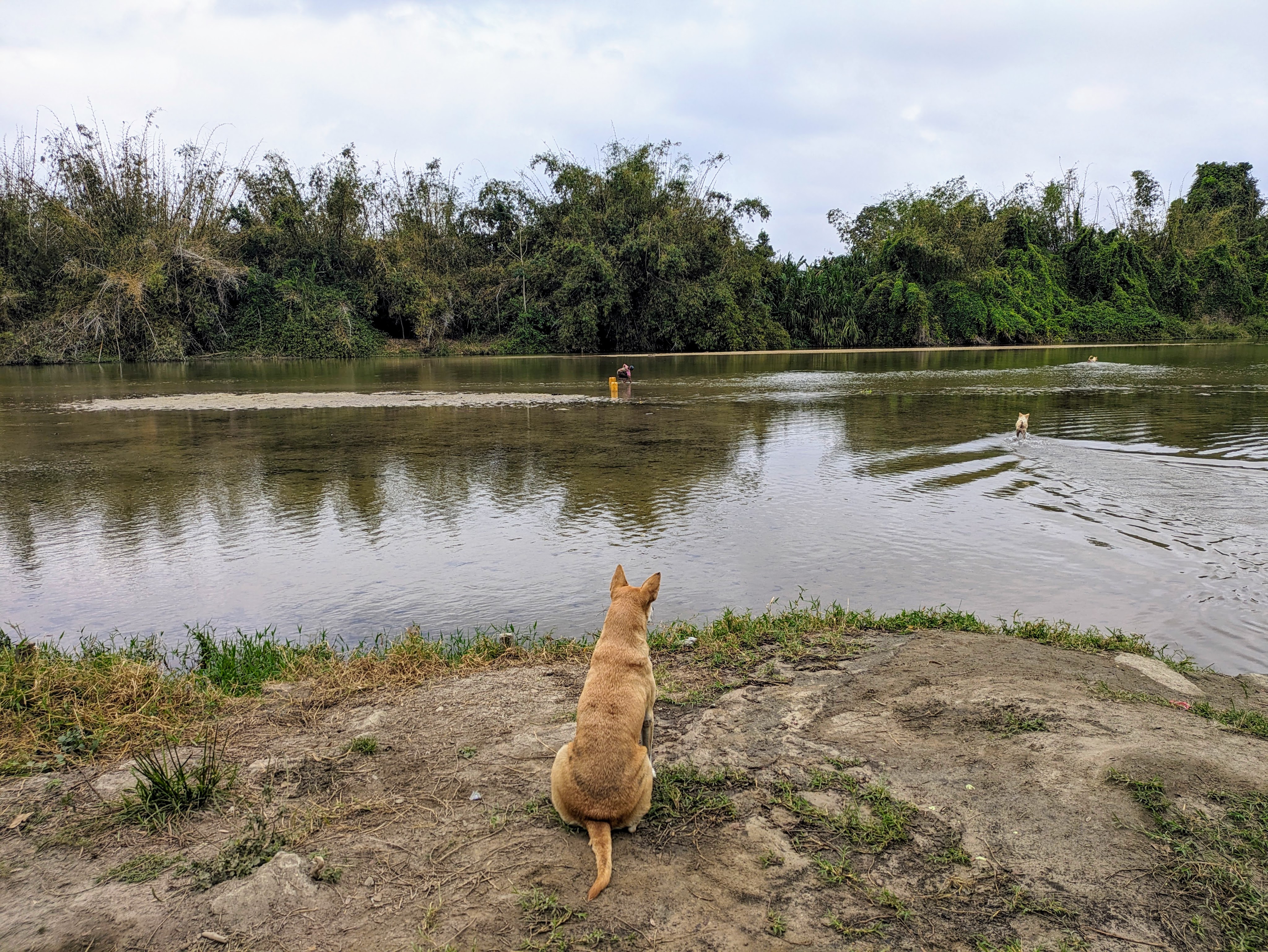
Chilling by the River
Colombia – Looking for Paradise

Colombia – The Lost City

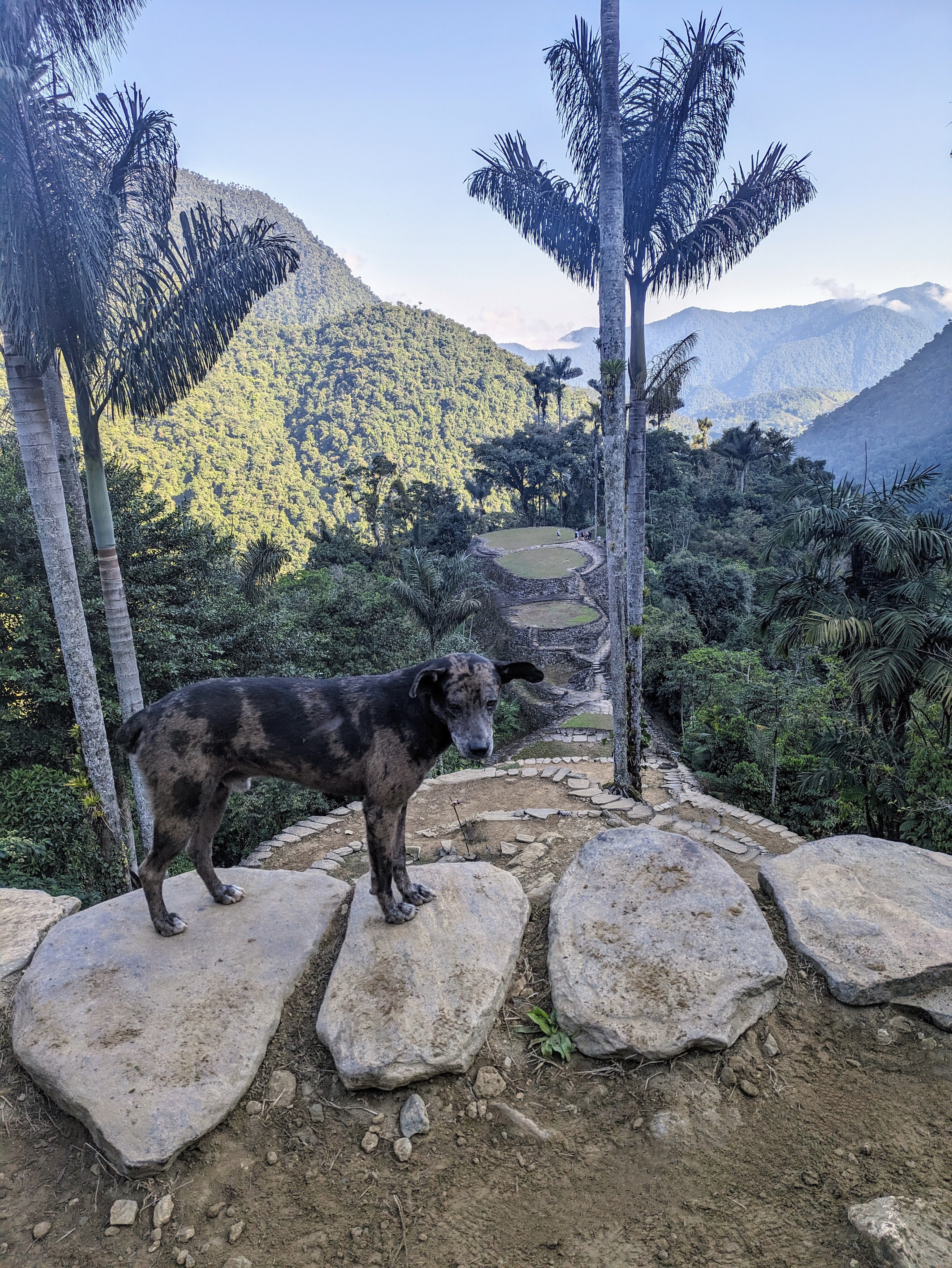
Guardian of the Lost City

Everyone has heard of Machu Picchu in Peru but Ciudad Perdida, the Lost City of Columbia is far less well known despite being 650 years older and also shrouded in mystery.

Unlike Machu  Picchu, Ciudad Perdida does not have a bustling town at the base of the mountain with hotels to suit every taste and a bevy of tour buses to ferry tourists to the entrance. There is only one way to get to the Lost City in Columbia……and that is, by foot on ancient paths and tracks hiking through protected indigenous land…and it can only be done as part of an organized guided group on a multiday hike, carrying your own luggage. You have to sweat to earn the privilege of visiting the Ciudad Perdida or Teyuna as it is called by the native people. The companies offering the trip are all based in Santa Marta, a town on the Caribbean Coast so we headed in that direction.

The temperature on the overnight bus to take us from San Gil to Santa Marta was icy especially when compared with the outside temperature of nudging 30 degrees. Some passengers were draped in blankets and one woman was wearing a wooly hat covering her ears. The journey was supposed to take fourteen and a half hours but although we left San Gill almost an hour behind schedule, we still reached Santa Marta an hour ahead of time😲We were tossed and tilted on our reclining seats and would have certainly landed in the aisle if we didn’t have seat belts especially for the first few hours. Maybe it was a blessing that it was  dark and we couldn’t see the road but overall it was a relatively comfortable if chilly journey at a cost of €25 each but we saved on a night’s accommodation.

Santa Marta is a ramshackle sort of place where the drivers were unusually courteous, stopping to let us cross the road unlike those in San Gil where crossing the street was an adrenaline-fueled adventure. It’s a beach town and a busy port with a huge basilica, the oldest colonial town in Columbia (founded in 1525) and  the place where Simon Bolivar, the Liberator of South America died in 1830 of tuberculosis (although his cause of death is controversial, as most things are in this part of the world). Santa Marta could also be called the windy city, a warm gusty wind blew up in the afternoons and evenings which was quite welcome although it stirred up the rubbish and swayed the trees.

But for us,  Santa Marta was mainly our gateway to the Lost City. There is no competition between the tour companies that organize trips to Ciudad Perdida. They have all got together to form a cartel of sorts, they have the same itinerary and charge the same prices, a whopping 2 million COP per person (€500 ), a price that has doubled in the last year. As the 4 day or 5 day tour cost the same price, we opted for 5 days (we have time on our hands😄), starting the following day. If you book online, its even more expensive.

In the office of Expotours at 8.30am, a motley group of strangers looked around, assessing the people they would share the next 4 or 5 days with.  Caoimhin and I were by far the oldest, most being in their twenties and thirties.

 There were Germans, Canadians, a French woman, two English girls, a Colombian couple with their thirteen year old son but surprisingly the largest representation of any nationality was ….the Irish. There were four lads from Galway who were at the start of a 5 month stint around South America, there was Joe from Belfast and the two of us, the Elder Lemons.

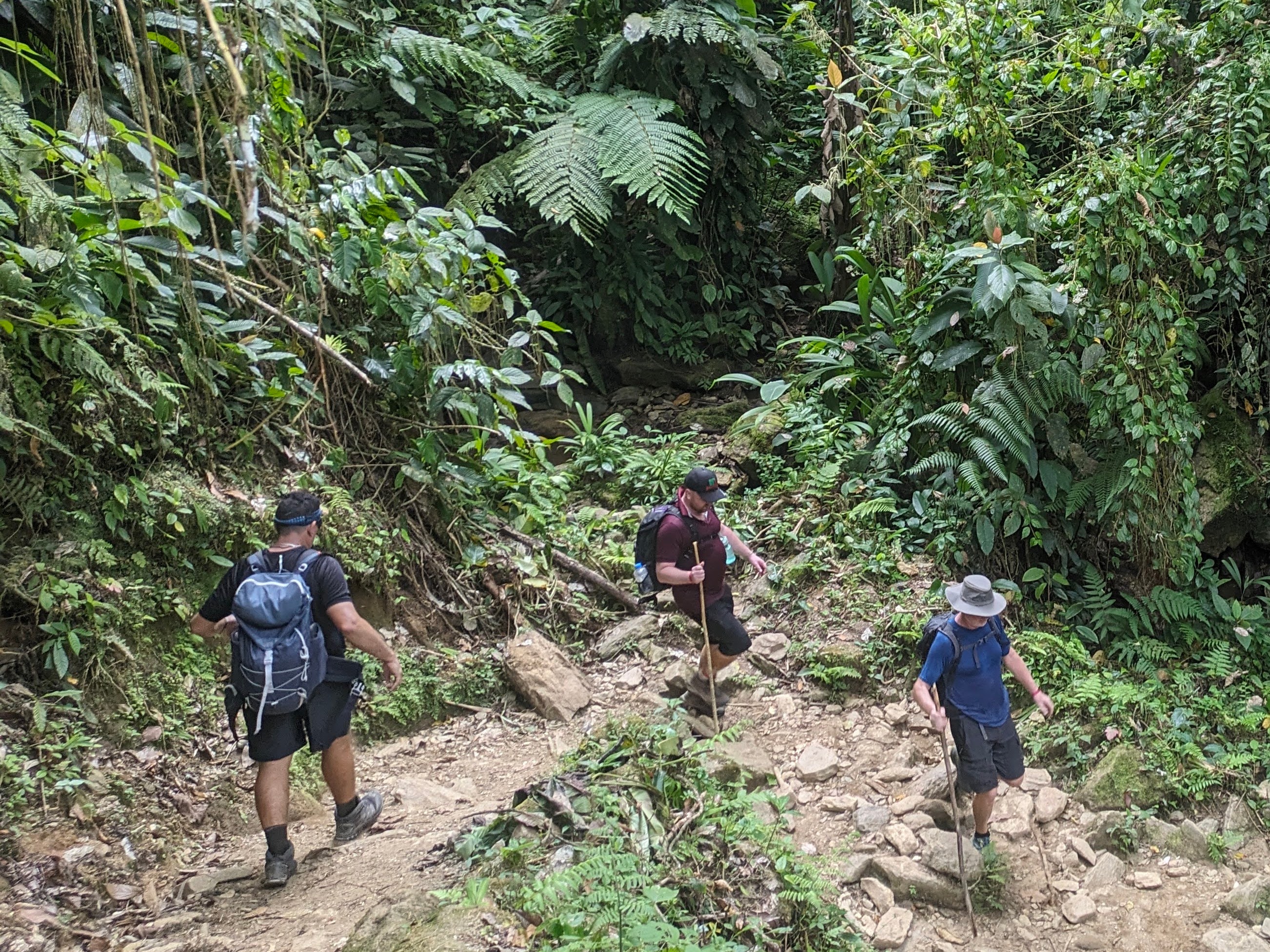
A couple of jeeps took us on a bumpy ride for a couple of hours into the Sierra Nevada de Santa Marta mountains to begin our trek. After a lunch of rice, salad, beans with natural juices and an orientation talk, we were on our way with Spanish speaking guides and English speaking translators. The midday sun beat down on us and  the trail was a mixture of exposed sections where the sweat dripped from us, drenching our t-shirts and welcome shady sections through forest and a canopy of trees where we encountered a dead snake on the path.

The Trail

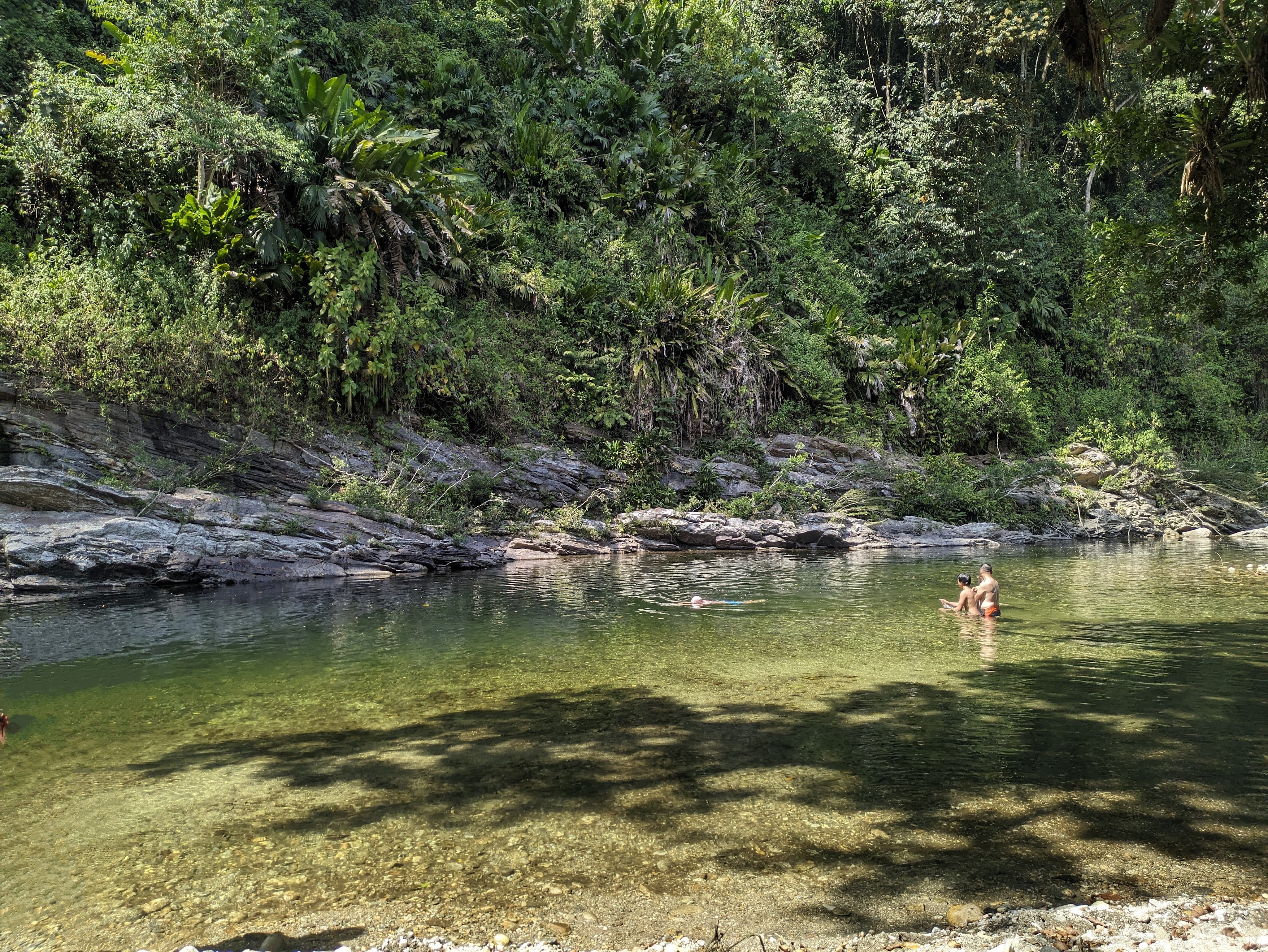
 The 7 Kms on the first afternoon took about three and a half hours including a stop for a swim and another to eat thick slices of  luscious watermelon, the stony paths mainly climbed upwards except the last section which was steeply downhill to our first campsite. This was an open-sided galvanized-roofed building  with a kitchen, rows of long tables for meals, rows of bunk beds, some cold water showers and flush toilets. The river, a faint gurgle from the camp was downhill where we had a swim in a refreshing deep pool before dinner and looked at the huge water spiders (apparently harmless ) which rested on the large mossy rocks.

On that first afternoon a pattern was set that would continue for the following days, the Galway lads who were all GAA players with bulging muscles, set a blistering pace, egging each other on until even the guide was a perspiring heap and the group was stretched across the trail.

Our second day began with a flickering of lights in the dorm at 5am and a lot of groaning. All the damp sweaty clothes from the day before were still wet. It had rained during the night and the air was humid. It was still dark outside and drizzly. Breakfast was papaya and melon, scrambled egg, arepas (a Colombian bread a bit like a Mexican tortilla) and sweet fruit bread.  The Galway lads were in flying form, messing and slagging each other, even at this early hour in pre-dawn darkness, woofing down any leftovers with gusto.

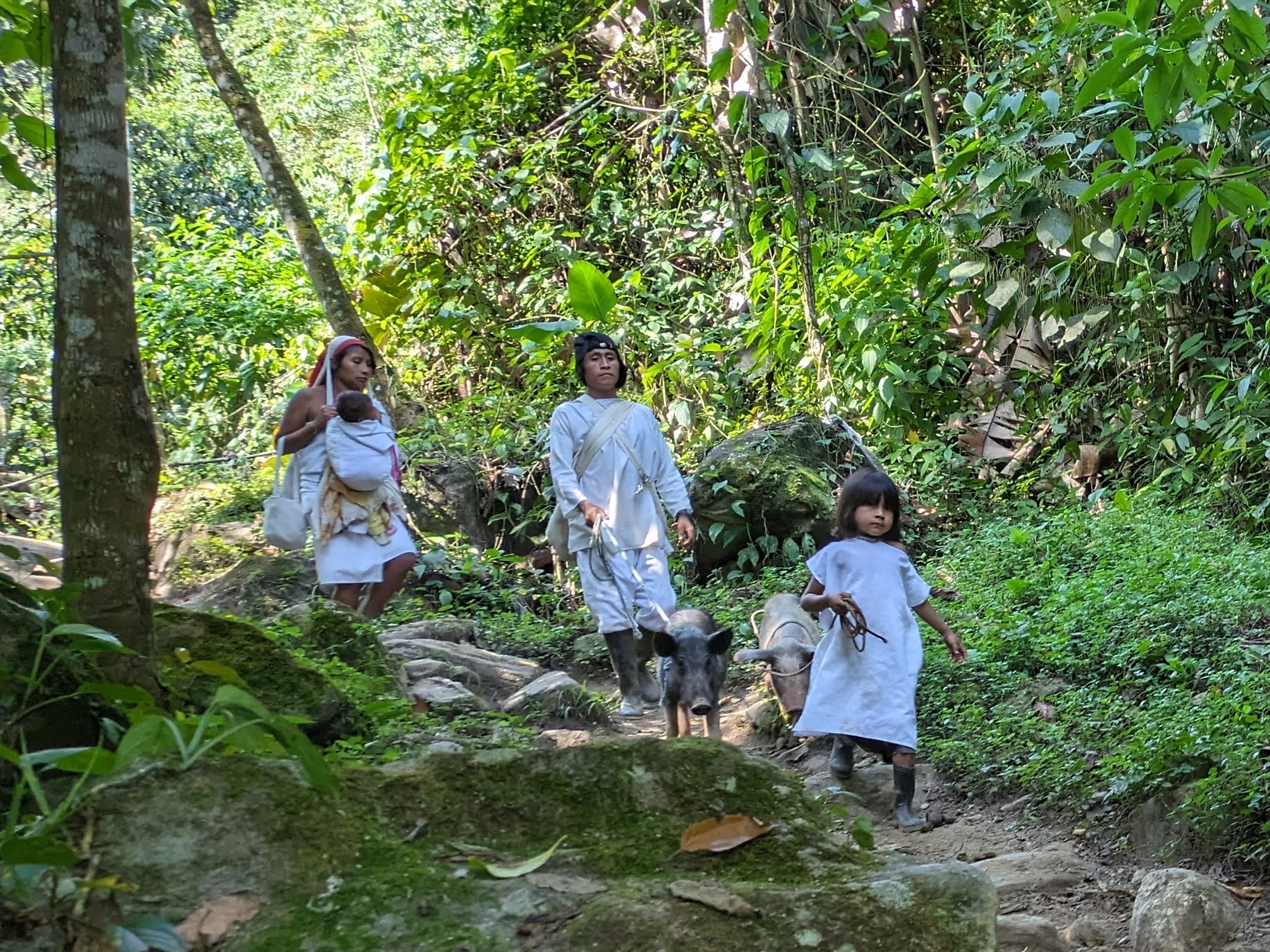
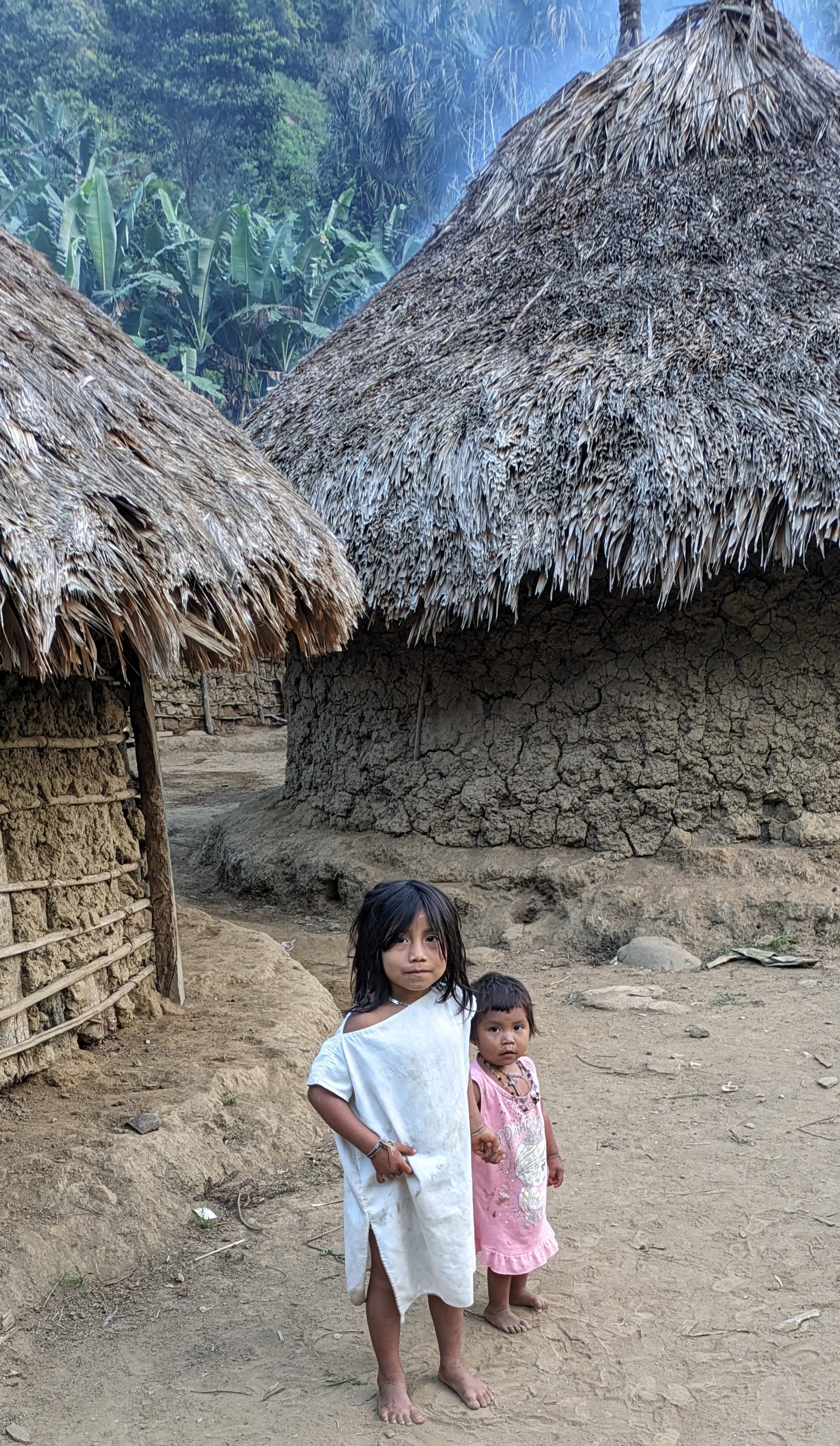
Indigenous People
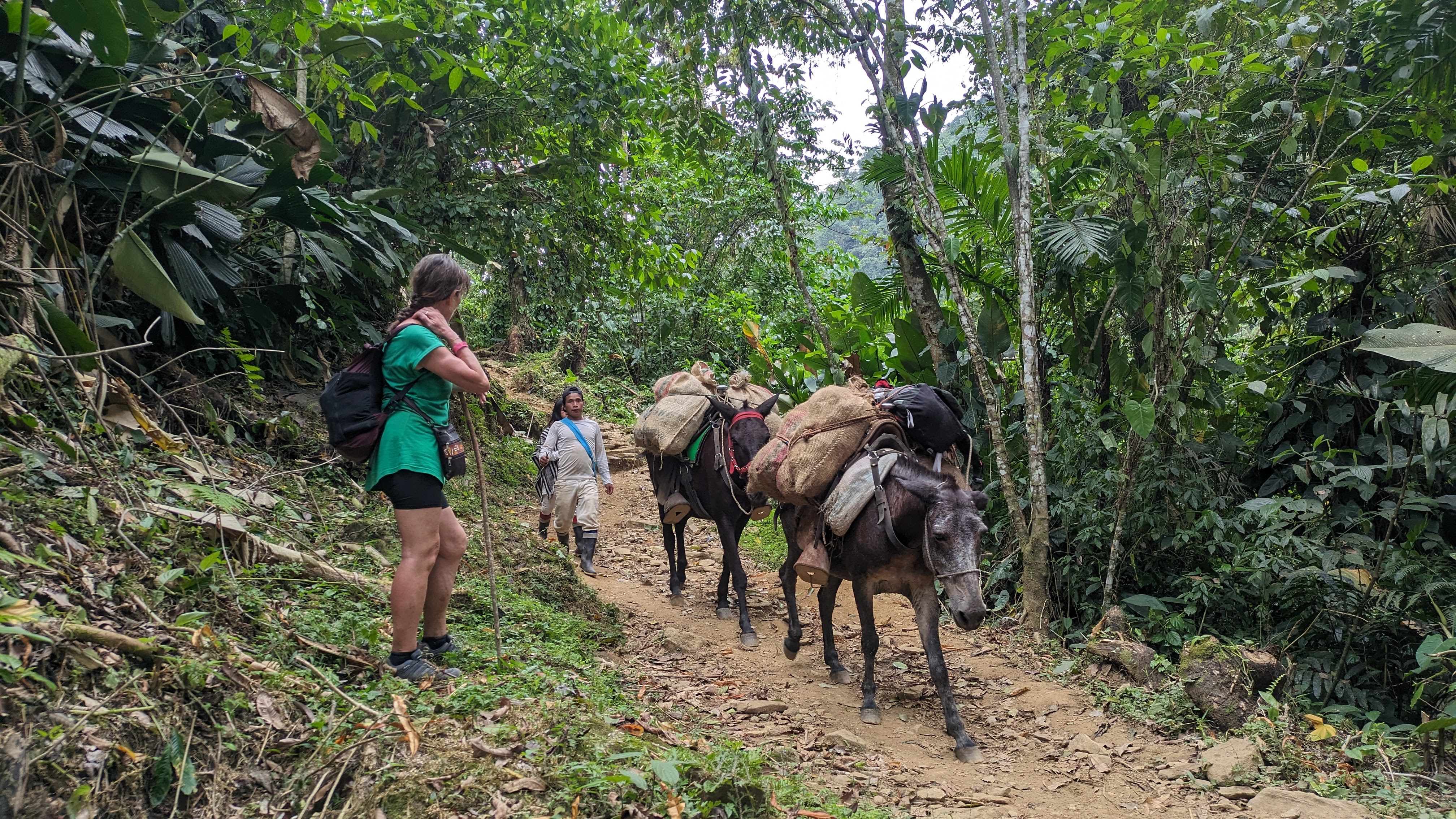
Jungle Etiquette – stand aside for mules

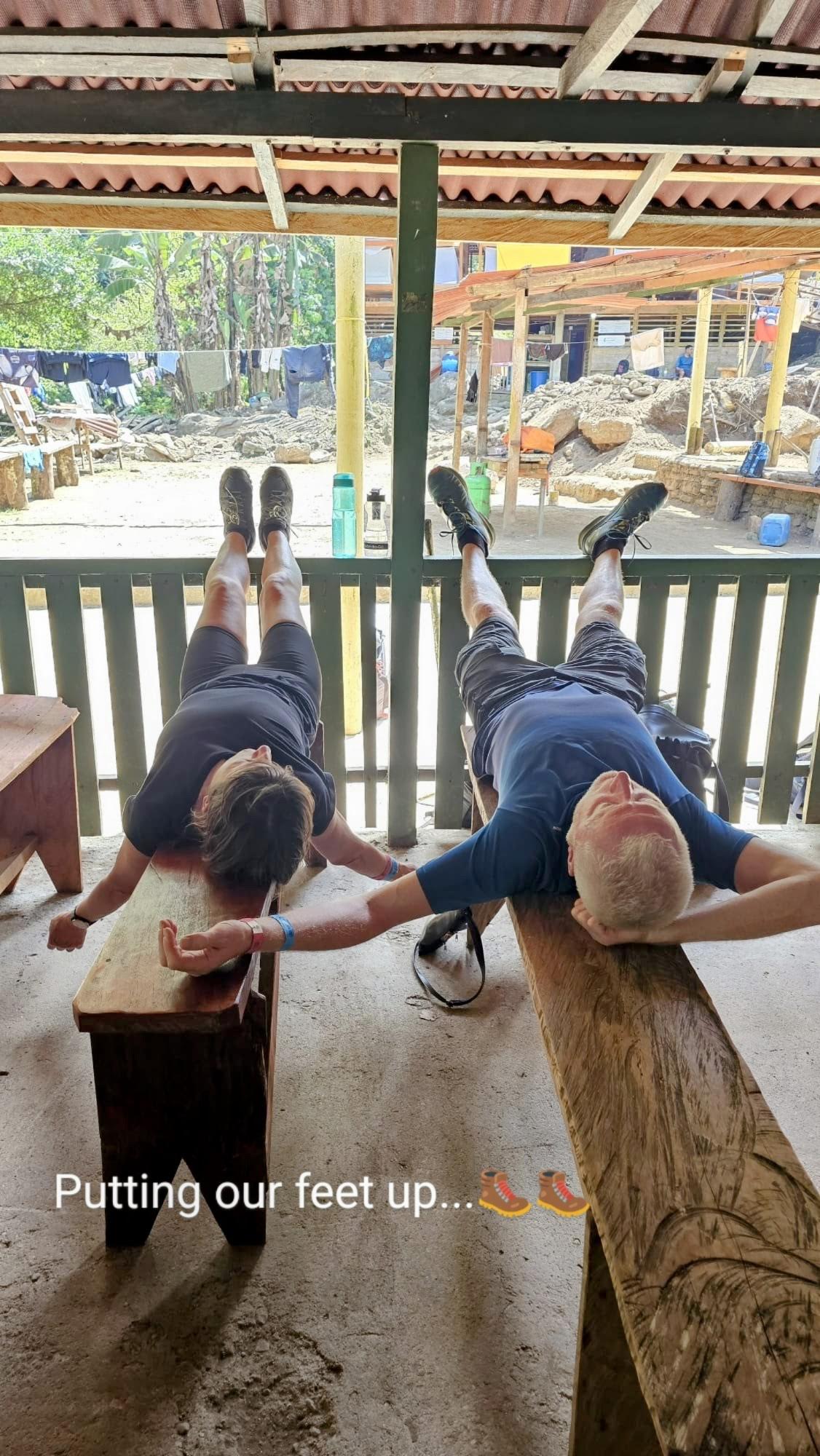
We crossed into indigenous land with thicker jungle and shared the trail with the natives wearing their white traditional dress, often herding a black pig on a leash or accompanied by laden mules. We jumped when a huge jackfruit dropped from a tree and split open with an almighty splat in front of us. We passed a small village of round thatched houses with black haired children playing outside, crossed rivers and streams, swam to cool off in dappled water with leaves constantly falling from the surrounding dense foliage. It felt almost like a different dimension, another world,  with no cell phone or internet coverage – the guides communicated with each other on walkie talkies. ‘Happy Hour’, the name that the guides gave to the intense uphill stretches, began that day after a huge lunch of lentil soup with lumps of corn on the cob floating in it, veg stew (or chicken stew for the carnivores), rice and salad, finished off with a small packet of oreo biscuits. We staggered into our small camp at about 3,30 pm after a long and pretty gruelling 17 kms to be greeted by reviving coffee and hot chocolate and enormous trays of salted popcorn. The food prepared freshly by our cook, Petrona, was tasty, filling, plentiful and very much appreciated.

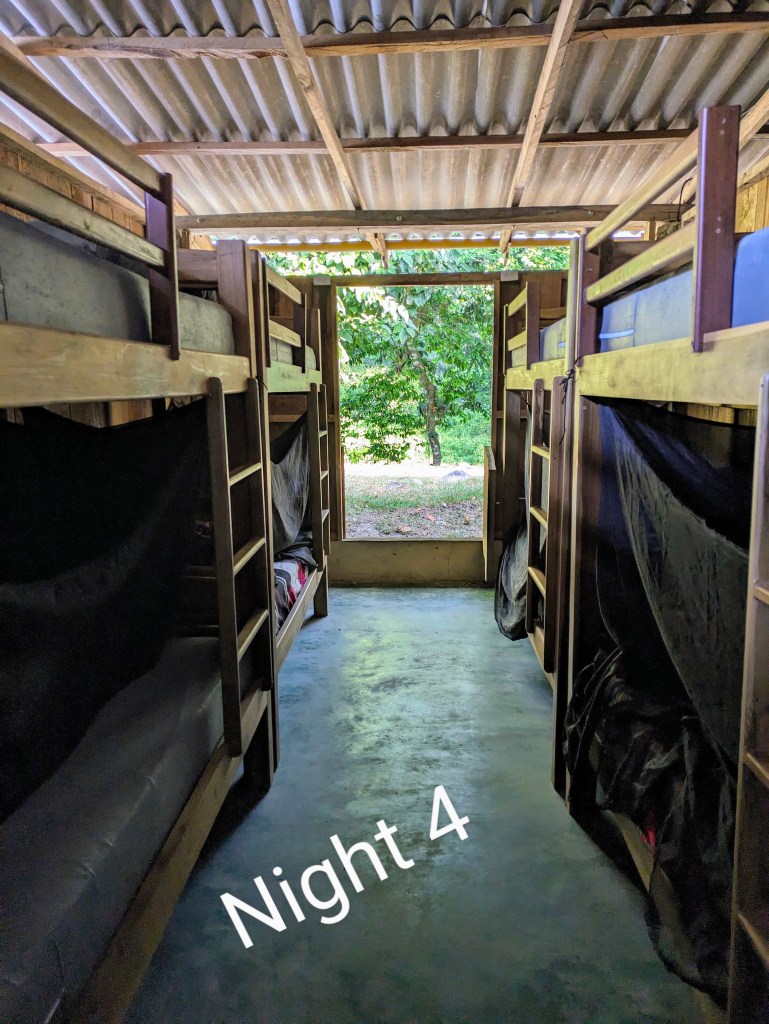
We slept that night in bunk beds under mosquito nets in another open-sided structure to the sound of gushing water from the river a few meters away. The guide had warned us to shake out all blankets and all clothes before putting them on……just in case. The just in case was left hanging tantalizingly in the air without further explanation.  The following morning, Joe who was in the bunk next to mine, felt something on his back when he was getting dressed. He brushed it away, but it was a scorpion which strung him on the finger. Everyone was shaking out their clothes and checking shoes after that and thankfully Joe was fine, with minor swelling and numbness.

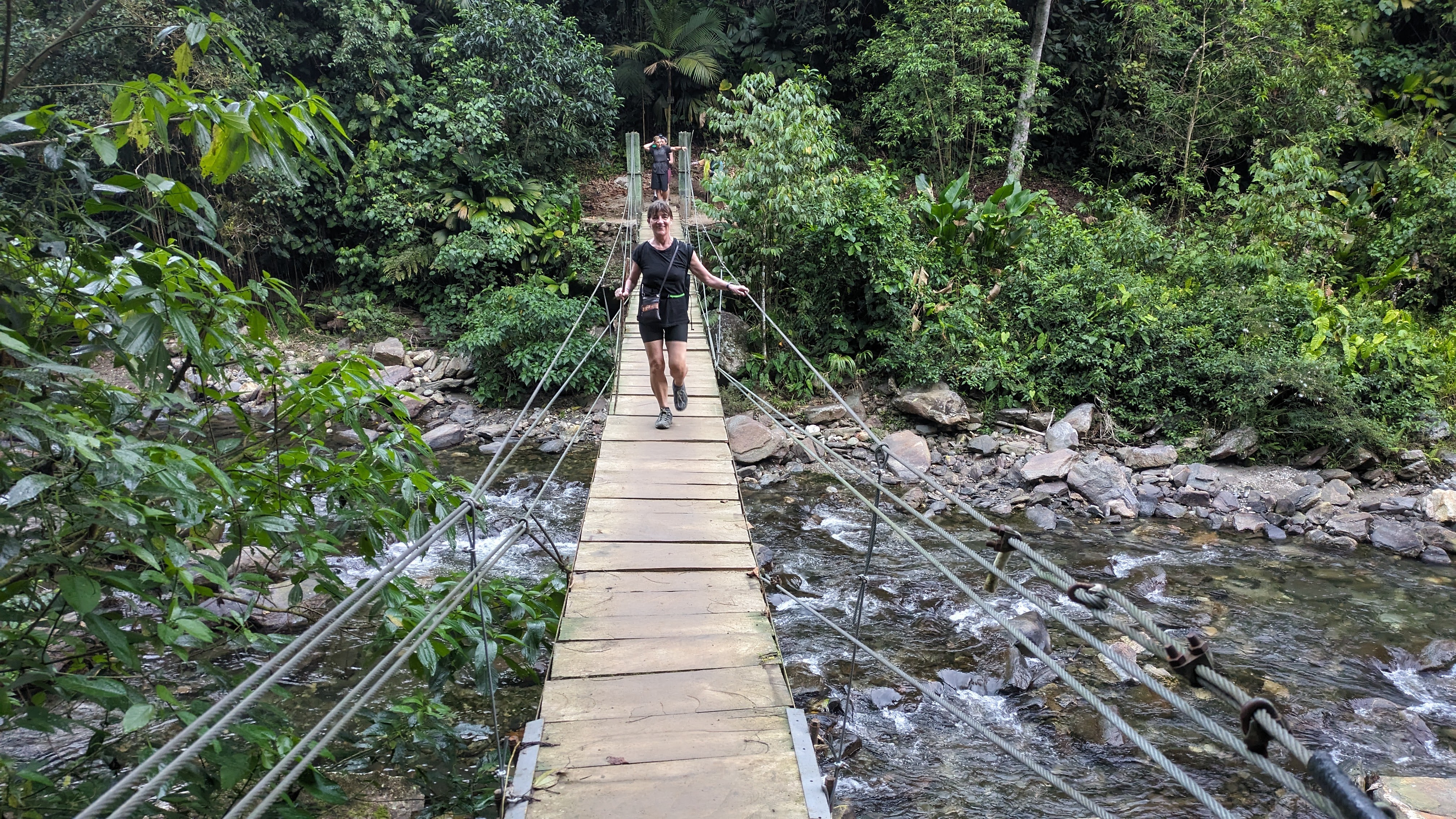
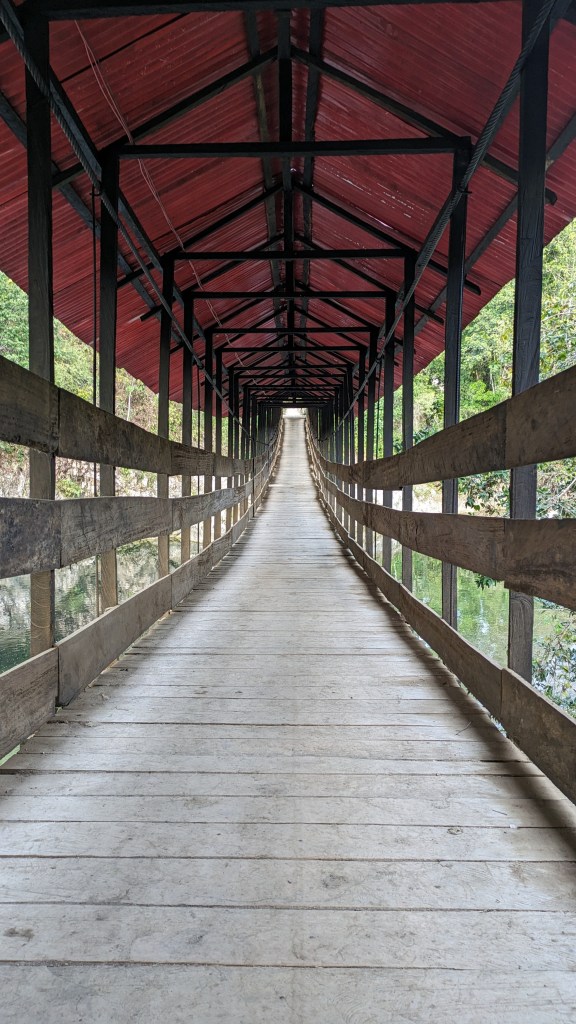
Another Bridge

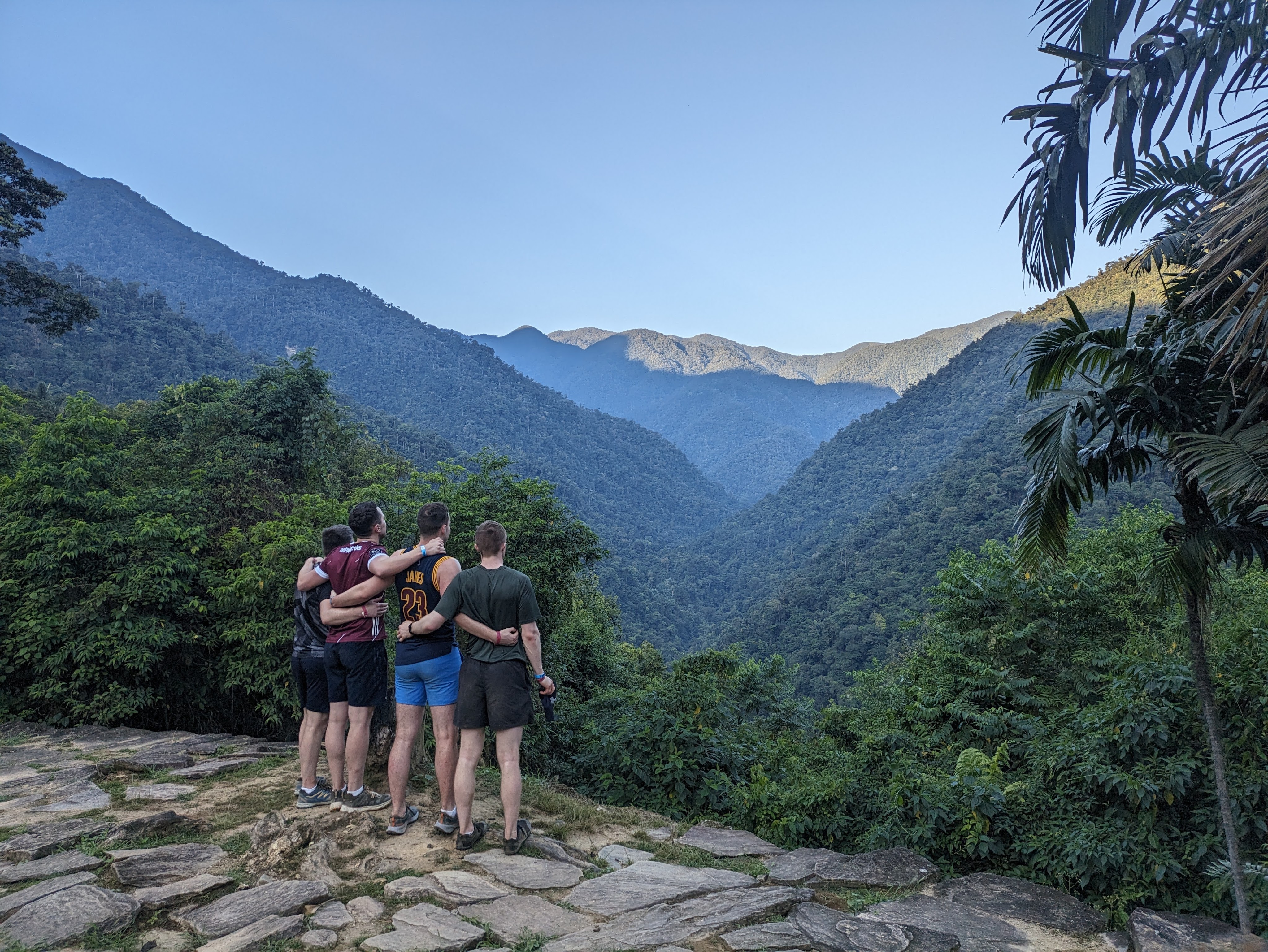
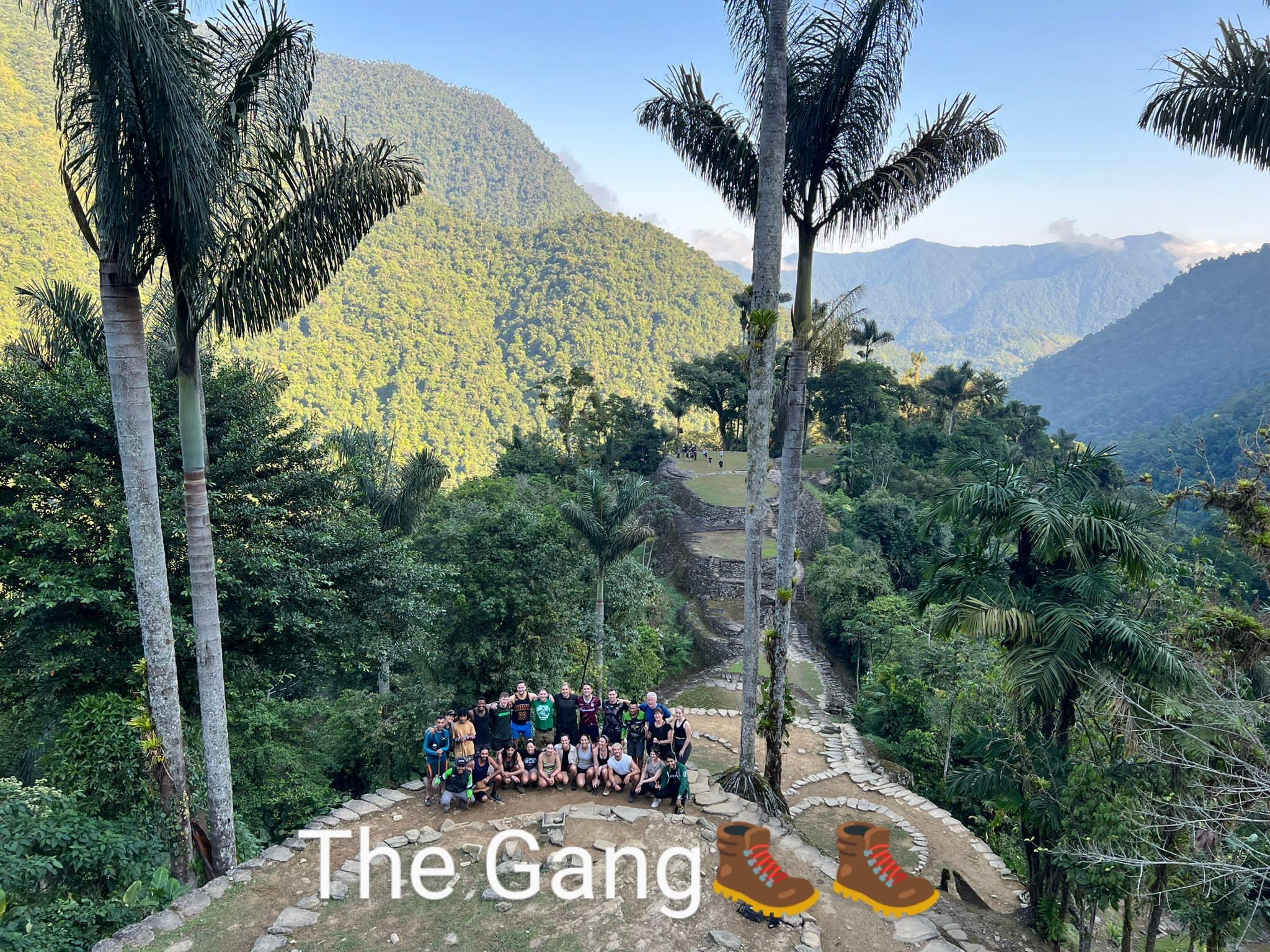
The third morning, we entered the Lost City after clambering over boulders by the river. crossing a rickety rope bridge and climbing 1200 steps to the site which is sacred to the indigenous tribes who close the site to visitors every September for the whole month to perform sacred rituals. It felt like an achievement to be there, a place that was ‘lost’ for so long, abandoned about 400 years ago and swallowed by the rampant growth of the jungle and rediscovered in the 1970s although the indigenous knew of its existence all the time. For many years after that, it was off limits for visitors, too dangerous to visit for this was drug country, an area that has known appalling bloodshed, ruthlessness, and greed. Tourism is an opportunity for change, for a new beginning and for a good livelihood not based on the cultivation and processing of drugs.

The Galway Men

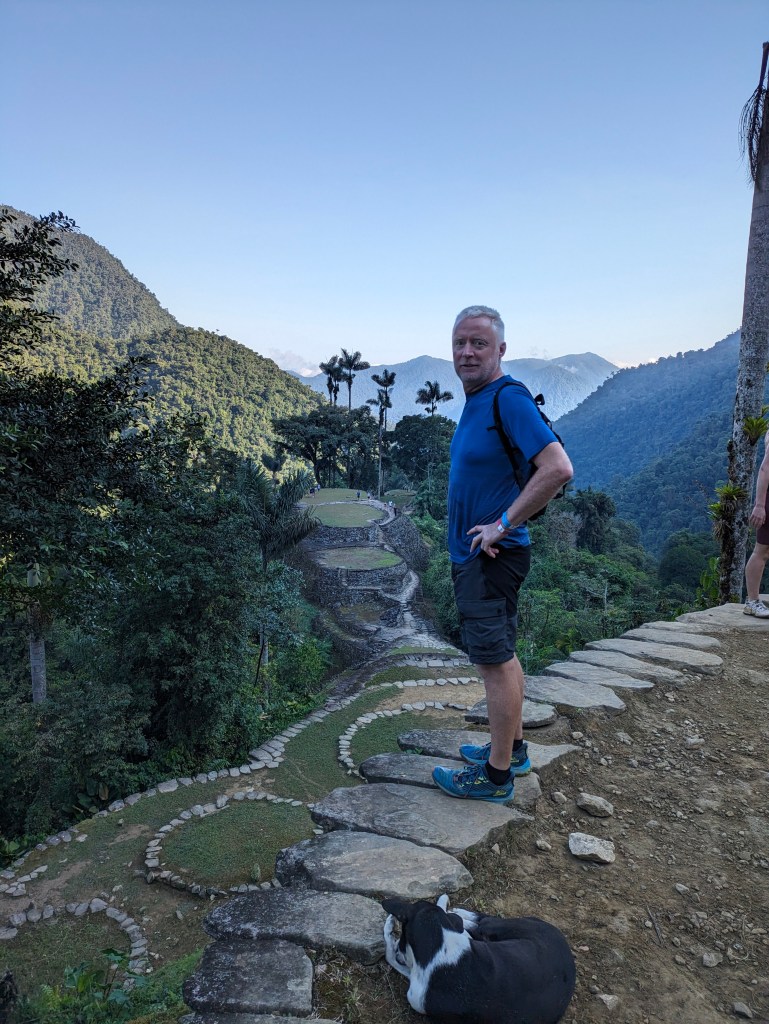
  At the top of the steps, we reached the initial settlement which consisted of several large stone circles with low stone walls and some towering trees reaching to the heavens. There was an air of tranquility in this majestic setting of misty tree-clad mountains, our group were the only people there, except for birds, a trio of dogs and an army of mosquitoes, intent on breakfasting on us despite the copious amount of repellent that wafted off everyone. The site kept unfolding, becoming more impressive the further we walked until we were in front of the giant terraced platforms, that climbed one above the other, concentric circles.  There was the shadow of a huge buzzard overhead, a bird that in indigenous folklore were messengers between the spirit and the human worlds.  The sun slowly rose to warm the site and bathe the stones in warm sunlight. Soon the heat intensified, and it was time to reluctantly retrace our steps. back the way we had come, navigating the 1200 steps which seemed even steeper on the descent.

Success

On the fourth morning, the 4-day and 5-day groups parted company. The Galway lads and an Englishman had signed up for the 5-day hike but changed their minds, deciding that they couldn’t take any more with sore muscles and blistered feet.  Caoimhin and I continued for another day with the Colombian family.Our young friends  awarded us ‘warrior status’ for our endurance but the old dog for the hard road.

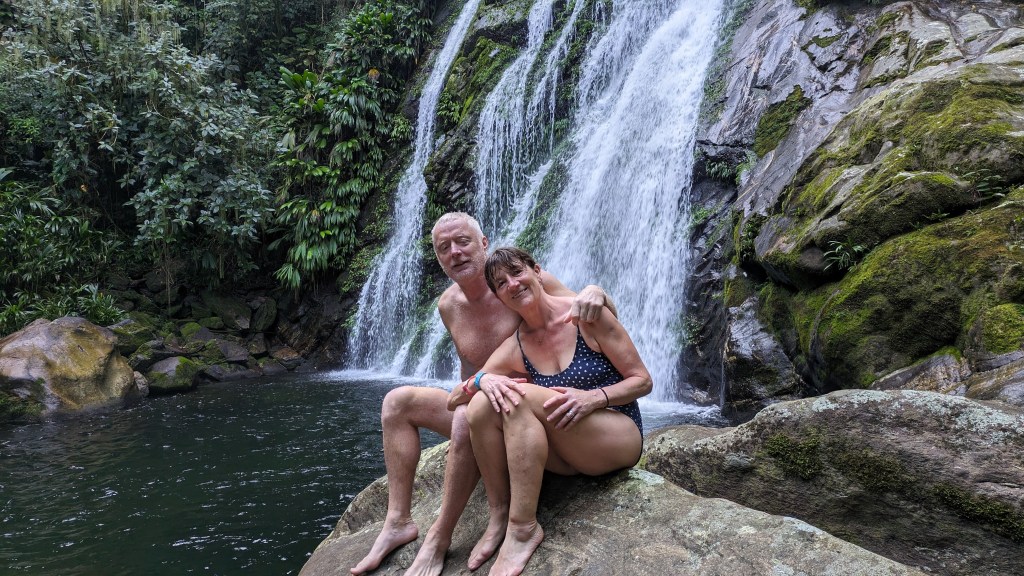
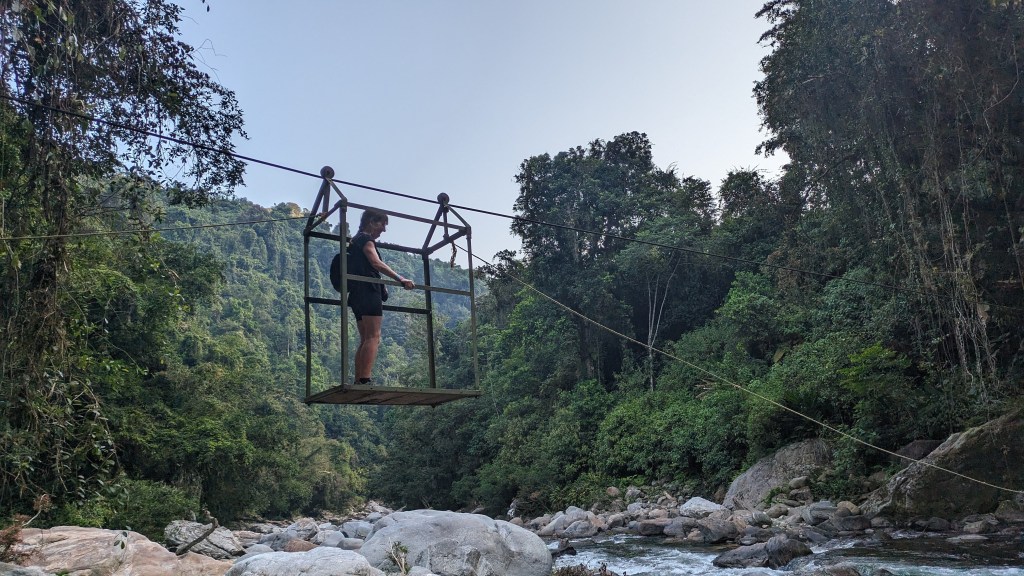
This fourth day with a smaller group was all about rivers and waterfalls of all types, gushing curtains of water, or water falling like gentle white rain watering a wall of exotic green plants. We crossed and recrossed the Rio Buritaca several times, more times than it seemed possible to cross the same river. We crossed with steping stones, rope bridges and once and best of all in a rope pulled ‘cable-car’, standing on a timber plank, swaying above the foaming water. The Columbian family and the guide chatted as we hiked. Although our Spanish is still not good, we can understand more than we can speak. When I couldn’t understand anything, I longed to earwig on conversations and know what people were talking about. We discovered that their chat was almost exclusively about food, what they ate and when and what they would eat again and we thought that we were missing out on deep meaningful conversations or at the very least, a bit of gossip.

On the fourth night and in a bunk bed in a camp by the Rio Buritaca (yes, that same river), we slept for a solid ten hours, both body and mind in need of rest. Our fifth day was easy, a two-hour hike through former coco plantations back to where we had started walking five days before, but we weren’t the same people, our muscles ached but our heads were full of memories of a mysterious city in the mountains that was lost and found.

What else might be out there waiting to be ‘found’?

Colombia – The Lost City