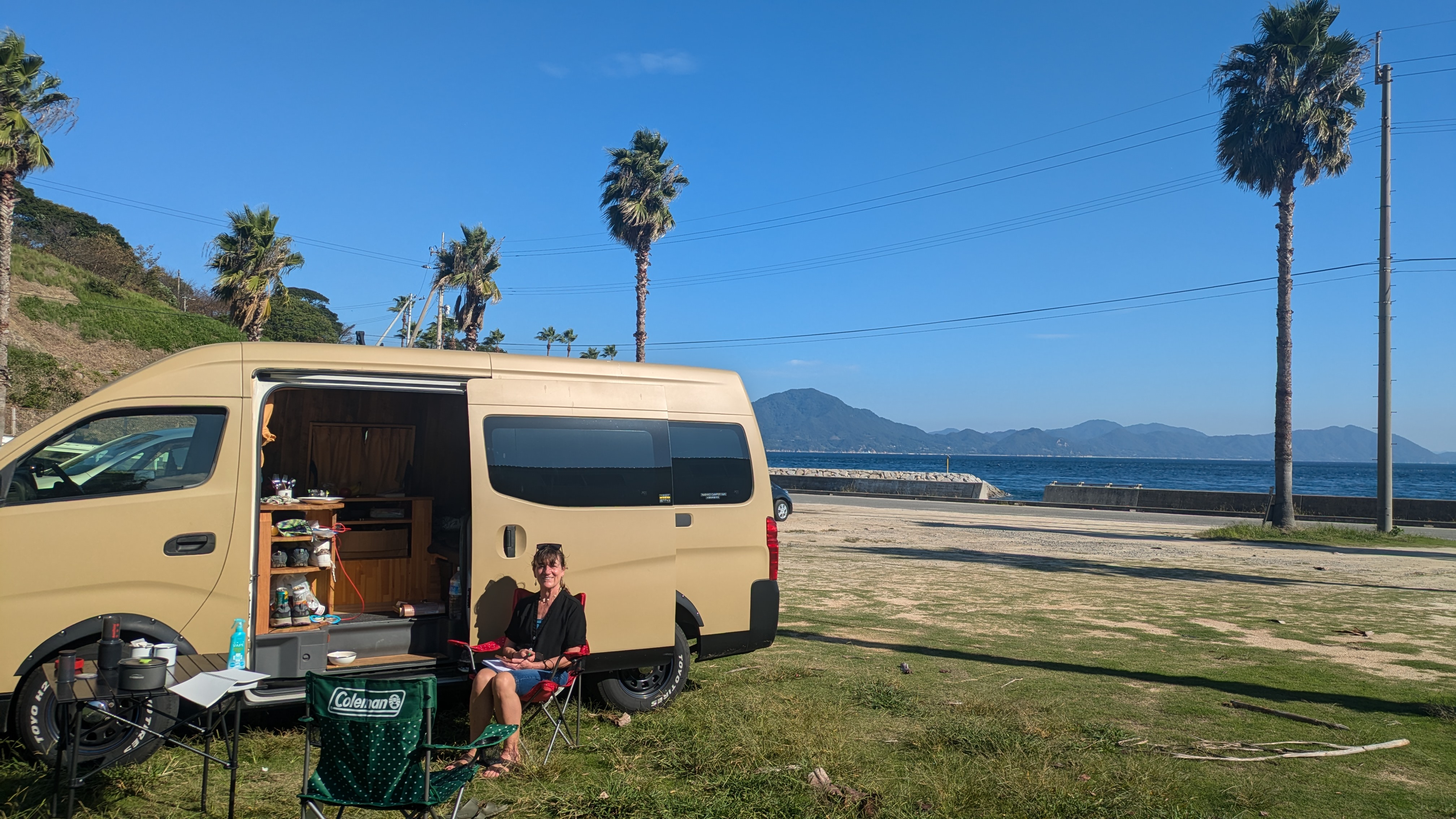
Japan is a country of surprises. We are enthralled by its natural beauty, the tree-clad mountains and the numerous Buddhist temples and Shinto shrines nestling among cedar trees above swirling clouds.
On a much more practical level, we are surprised by the impressive number of public toilets. This abundance of toilets is great for us because our ‘no frills’ camper does not come equipped with one. They are everywhere – in parks and beaches, by the roadside and in most of the ubiquitous, convenience stores (like 7Elevens and Lawsons.). All these toilets are free, open 24/7 and spotlessly clean. Many have a perplexing control panel to the side of the toilet bowl which is used to heat the toilet seat, tilt the angle of the seat, adjust the pressure of water to wash your bum and…..even simulate the sound of a flushing toilet for ‘privacy’ to camouflage any embarrassing noises🙃.
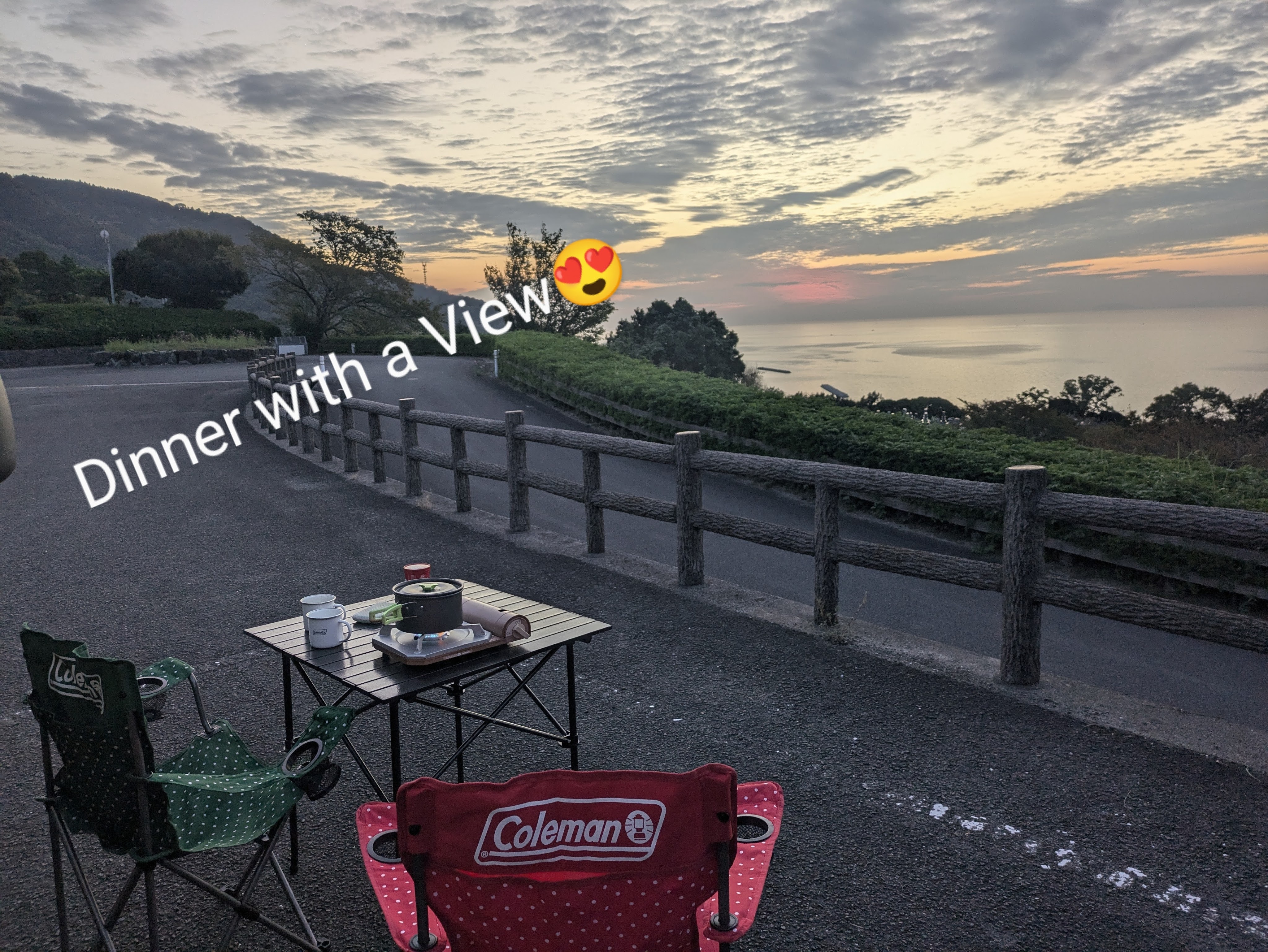
Travelling around Japan in a camper van is surprisingly easy with road signs in both English and Japanese and plentiful parking areas. There are three main types of places to stay in a van overnight. The first is paid campsites which have showers, toilets, laundry facilities, plug -in electricity points and trash disposal. Most of these also have bungalows for rent if you don’t have a tent or a van ( about €25 a night for two people in a tent or camper van) The second is Michi-No-Eki which are free carparks with access to toilets and usually a restaurant or shop. These are widespread throughout the country and there is an app to find their locations. There is no problem parking in them overnight but it is recommended that you are discreet and do not pull out camping chairs and start cooking on the gas stove. The third option is wild camping spots, usually found in very scenic areas by the coast or in the countryside . Here you can park and cook/ barbecue to your heart’s content and there is always access to toilets and perhaps even a shower.
We have used all these options on our journey through Shikoku island. Our night in the Michi-No-Eki was the least successful because it was so noisy. A bevy of large trucks parked near us and kept their engines running all night. They weren’t there when we went to sleep but we were surrounded by them in the morning. Our favourite option, and the one we have been using most often, is the free wild camping and we have stayed in some idyllic spots. One evening, when we parked by a beach in the pouring rain (our only rainy day so far ), we were intrigued by a tiny tent pitched beside a pick-up truck which had tarpaulin pulled over the back. In the morning, we chatted to the middle-aged occupant who told us that he was camping for a few nights because ‘he had trouble at home.’ This made us even more curious but language difficulties didn’t allow us to delve any deeper. He donated a bag of coffee to us, waved and drove off. We watched him go and hoped that his home troubles were resolved.
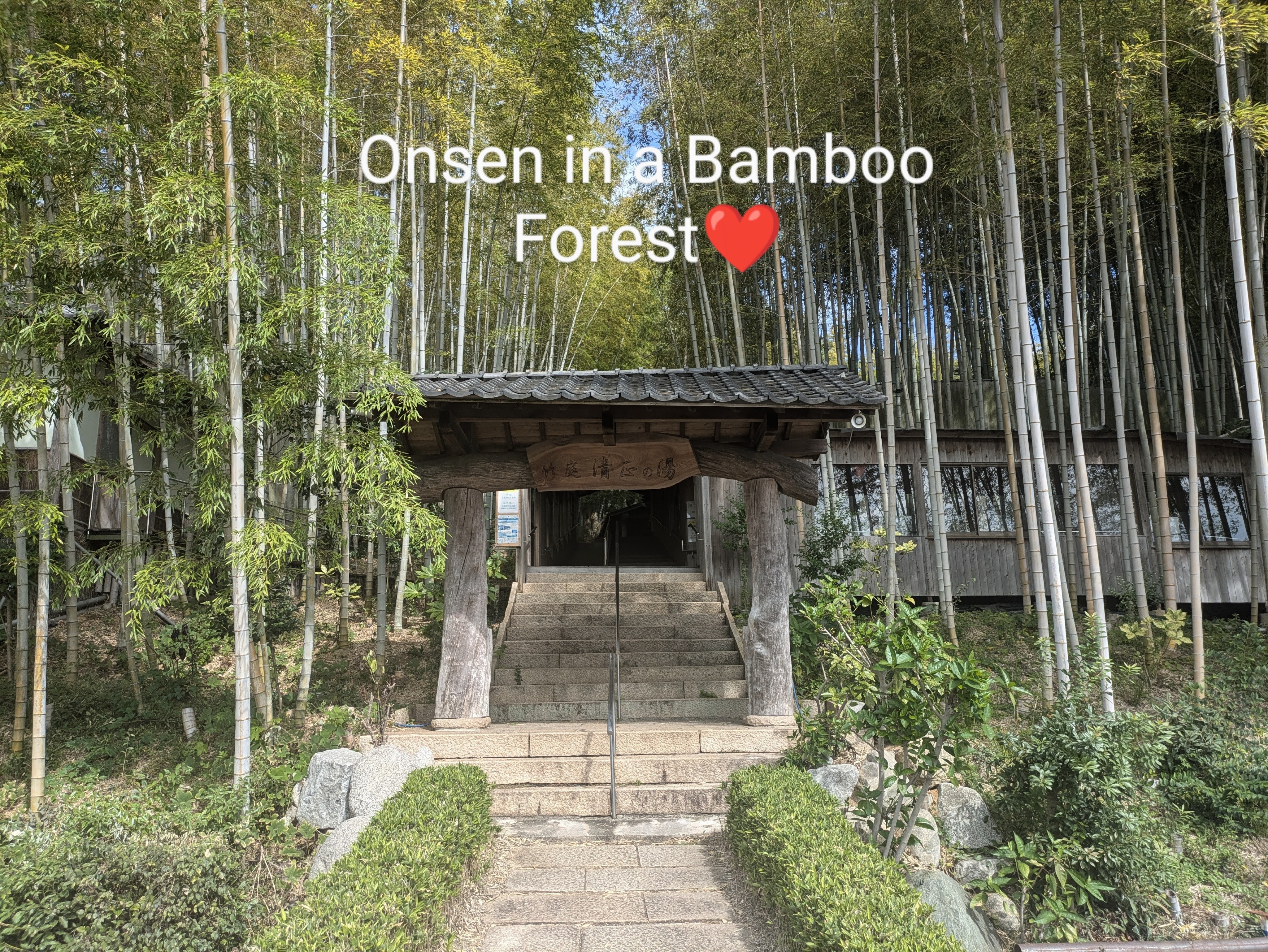
There are onsens, public thermal baths, for a good soak and a cultural experience and launderettes where we can wash and dry for clothes for less than a fiver.
Our only real problem with travelling around Japan in a van is the lack of rubbish bins. Despite this, the country is scrupulously clean with not even a sweet wrapper on the street. Our trash mounts up particularly as everything comes double wrapped in plastic -even carrots are individually wrapped. We were thrilled to find some bins for segregated waste in some of the convenience stores and so we have been getting into the habit of getting rid of our rubbish as we go along.
Eating while walking on the street is very much frowned upon. All takeaway food is eaten in the place where it is purchased and the containers disposed of on the premises. There are vending machines everywhere, even in the remotest of places, mainly selling soft drinks, green teas and plastic bottles of water. These is always a bin beside the machines for disposal of the empty plastic bottles but not for anything else. There is strict adherence to waste segregation, no Japanese person would even attempt to put a glass bottle in a bin for plastic.
In the rural parts of Shikoku island, we were so far off the beaten track that sometimes it felt that we were the only two people in Japan. We drove on narrow winding roads past deserted villages and through spectacular canyons with towering, green mountains in a landscape so awe-inspiring that we talked in whispers.
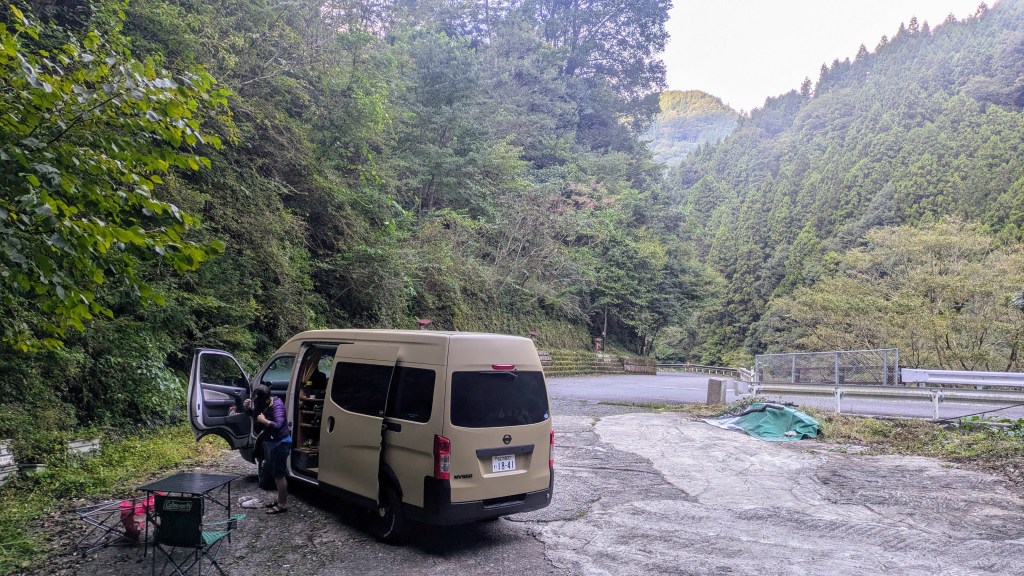
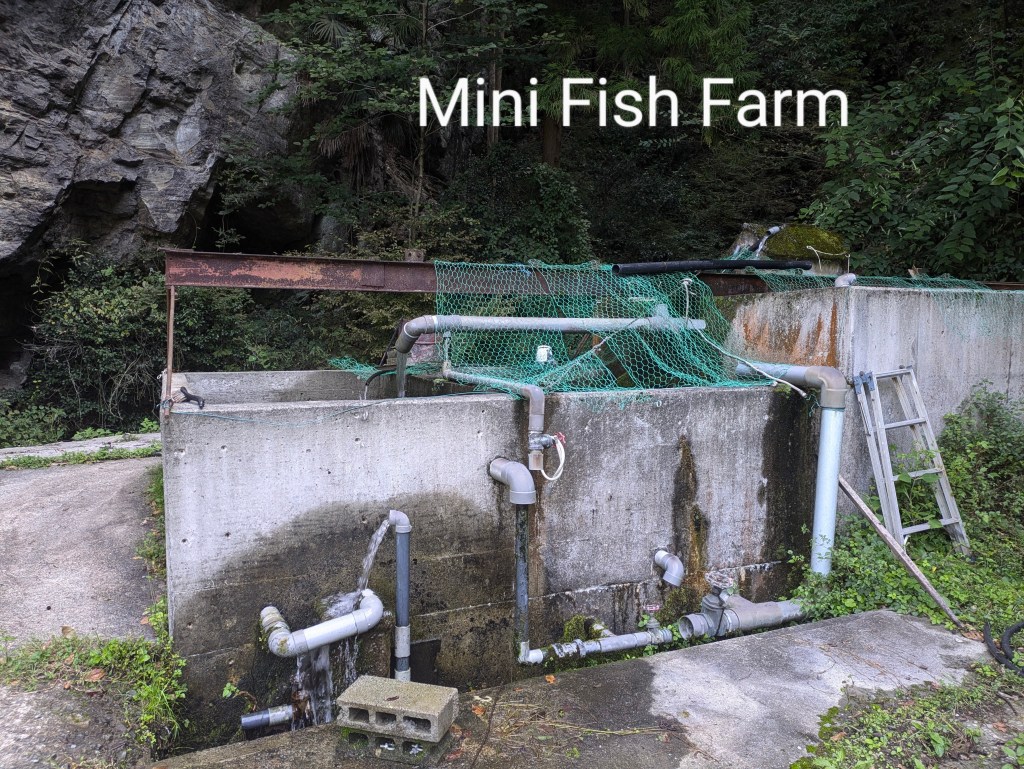
For a change, we decided to stay in a paid campsite that we found on Google maps but when we arrived, it was closed. It looked as if it hadn’t been in operation for a long time. It was wrapped in damp spongy moss and draped in an impressive array of spiders’ webs like something out of a fairytale.. There were signs everywhere warning of heavy fines for unauthorised camping so we retreated and found a spot nearby. We slept to the sound of gurgling water both from the river and from a running hose pipe attached to a couple of large troughs. The water from the pipe was convenient to fill our water bottles and wash our cooking utensils. Imagine our feelings the following morning when a man came along to feed his fish in the troughs. The clear mountain water that we drank was actually waste water from a mini fish farm. No ill effects although I keep smelling something fishy🤞
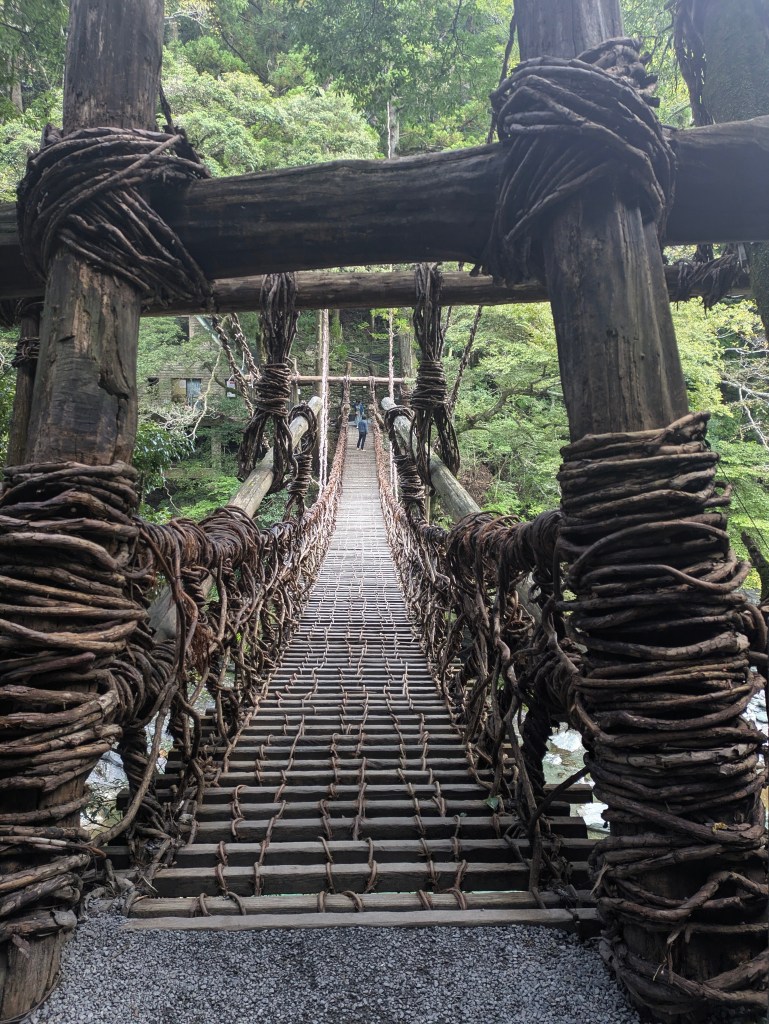
The Iya Valley in the mountainous centre of Shikoku Island was once so remote and inaccessible that defeated Samurai fled there to hide out and lick their wounds. It is known for vine bridges which have become a tourist attraction. As the name suggests, these bridges are made of thick plaited vines and were once the only way to cross the rivers. Although they looked sturdy, they were quite shaky to cross especially with a wind blowing, large gaps between the vines and a long drop to the rocks and river below. I crossed slowly on jelly legs😁.
Japan has two main religions, Shinto and Buddhism with a huge number of shrines and temples for both. There is no competition between them as most Japanese adopt a mixture of the two while professing to have no religion at all.
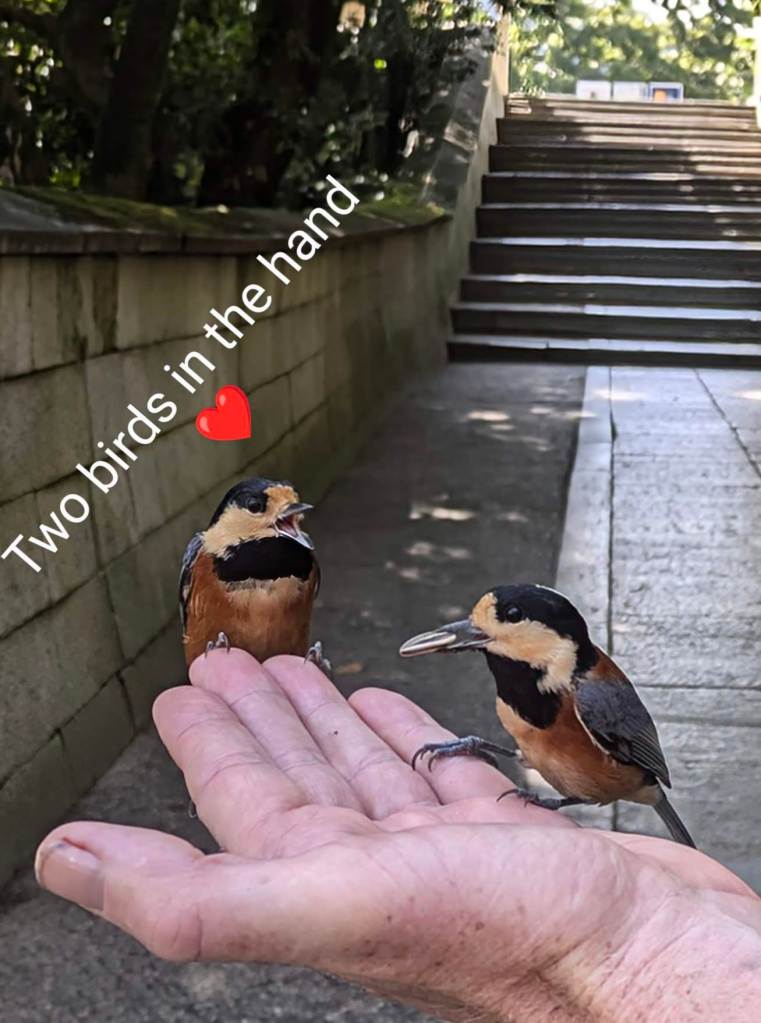
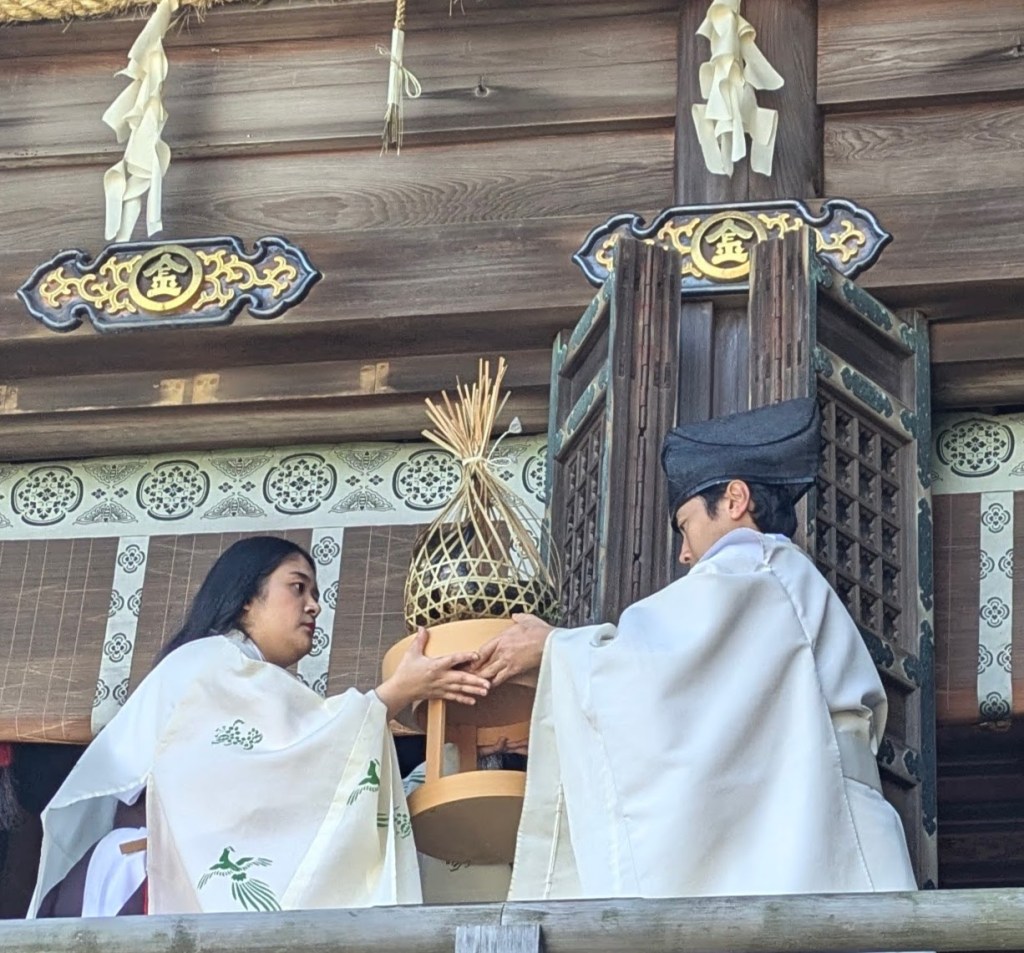
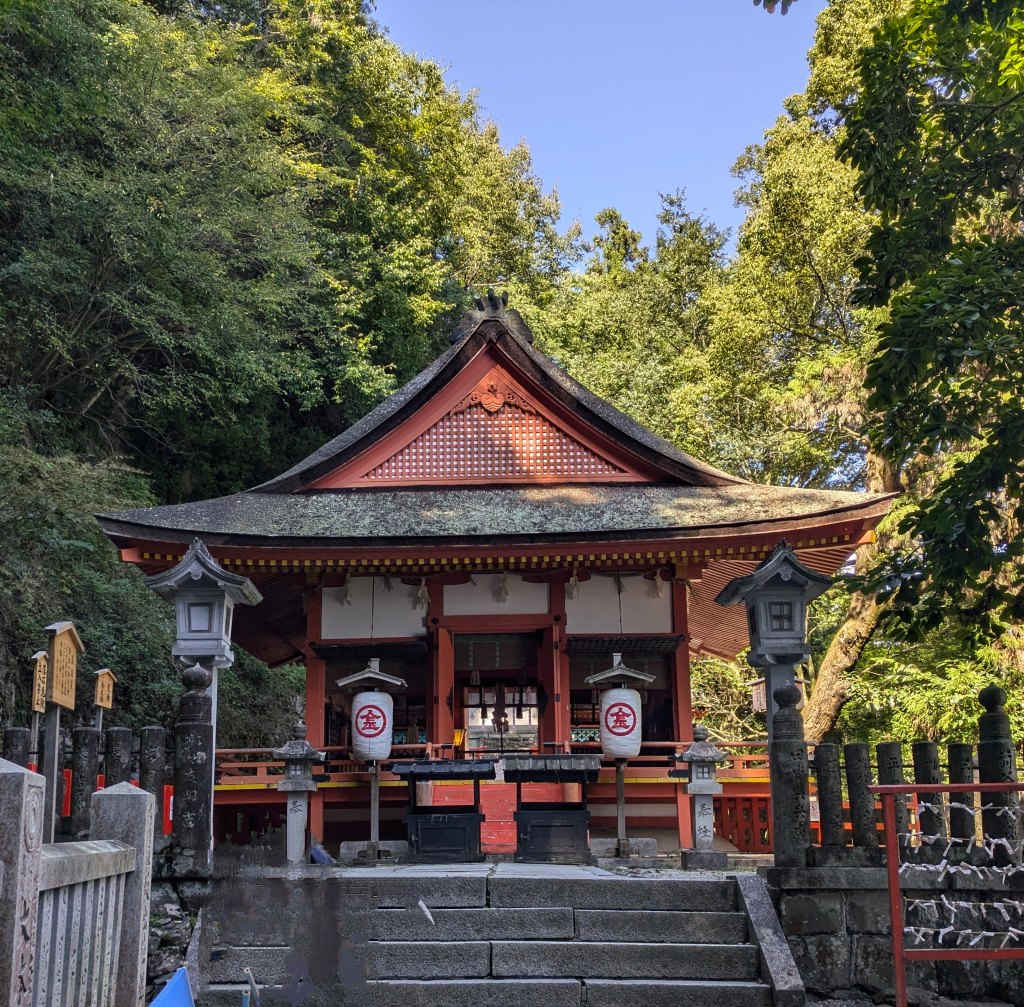
We visited the charming little town of Kotohira, famous for its proximity to the Shinto shrine, Konpira-san, which is dedicated to sea-farers. In a country of islands, this is a very popular shrine. It is nestled in the forests of Mt Zozu above the town and requires climbing a whooping 1340 steps. Arriving in the early morning, the numerous parking lots were empty and the souvenir shop were still shuttered. There was an air of serenity , broken only by the clattering on each step by a man wearing wooden clogs. Little birds chirped and landed on our outstretched hands looking for seeds. We passed a stable of beautiful white horses which are considered so divine that they can only be ridden by the gods. The path was adorned with so many shrines and stone carvings, that we hardly noticed the climb. We were lucky to witness an elaborate ceremony at the main shrine. By the time we descended, the car parks were full and the souvenir shops were doing a good business.
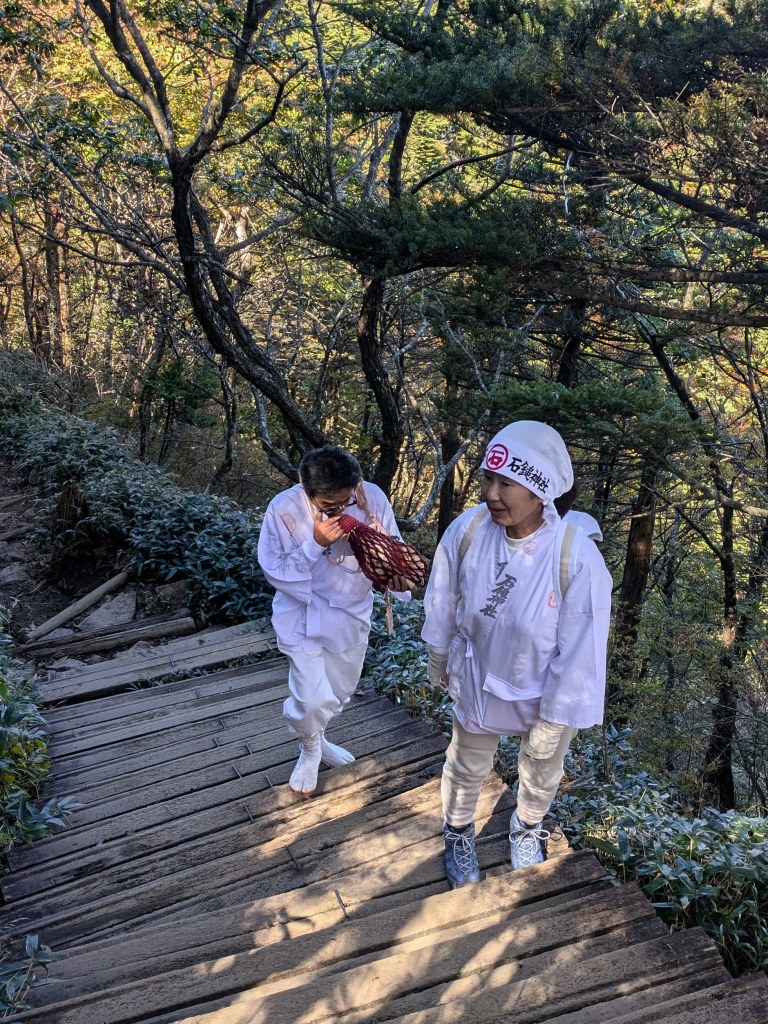
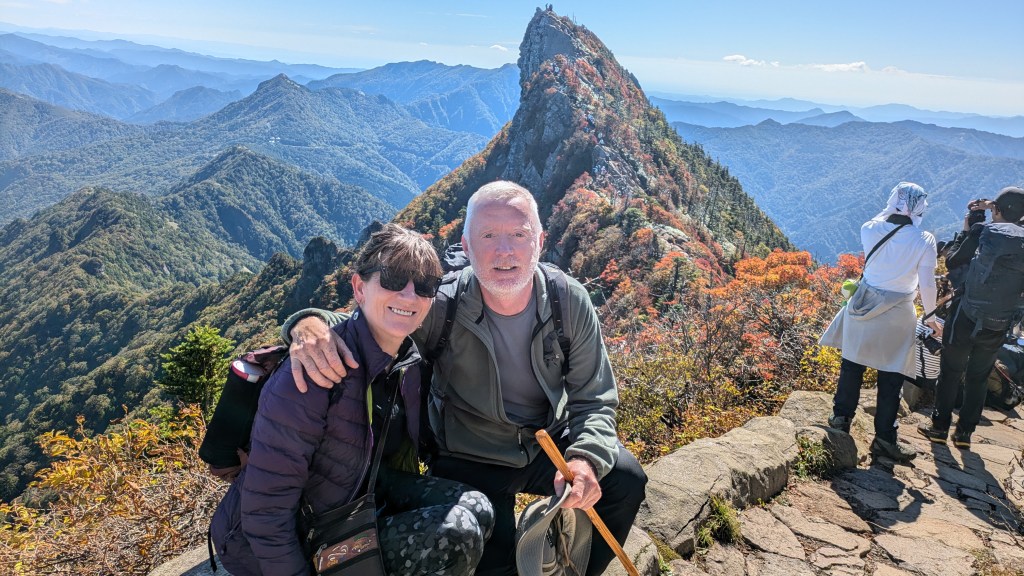
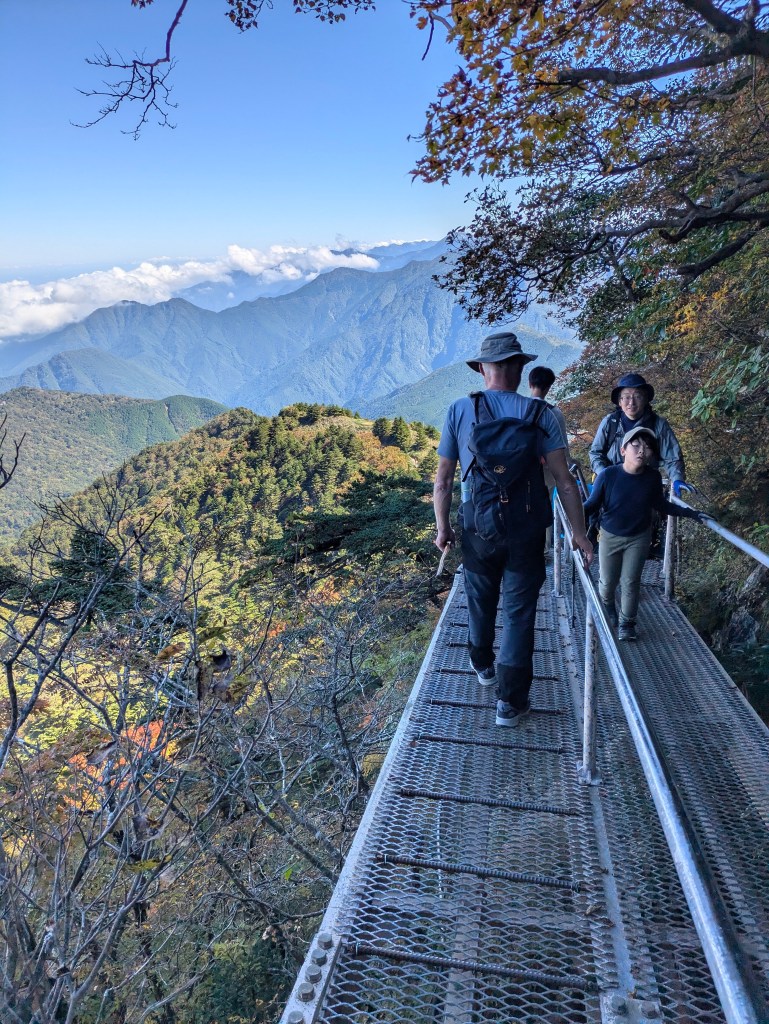
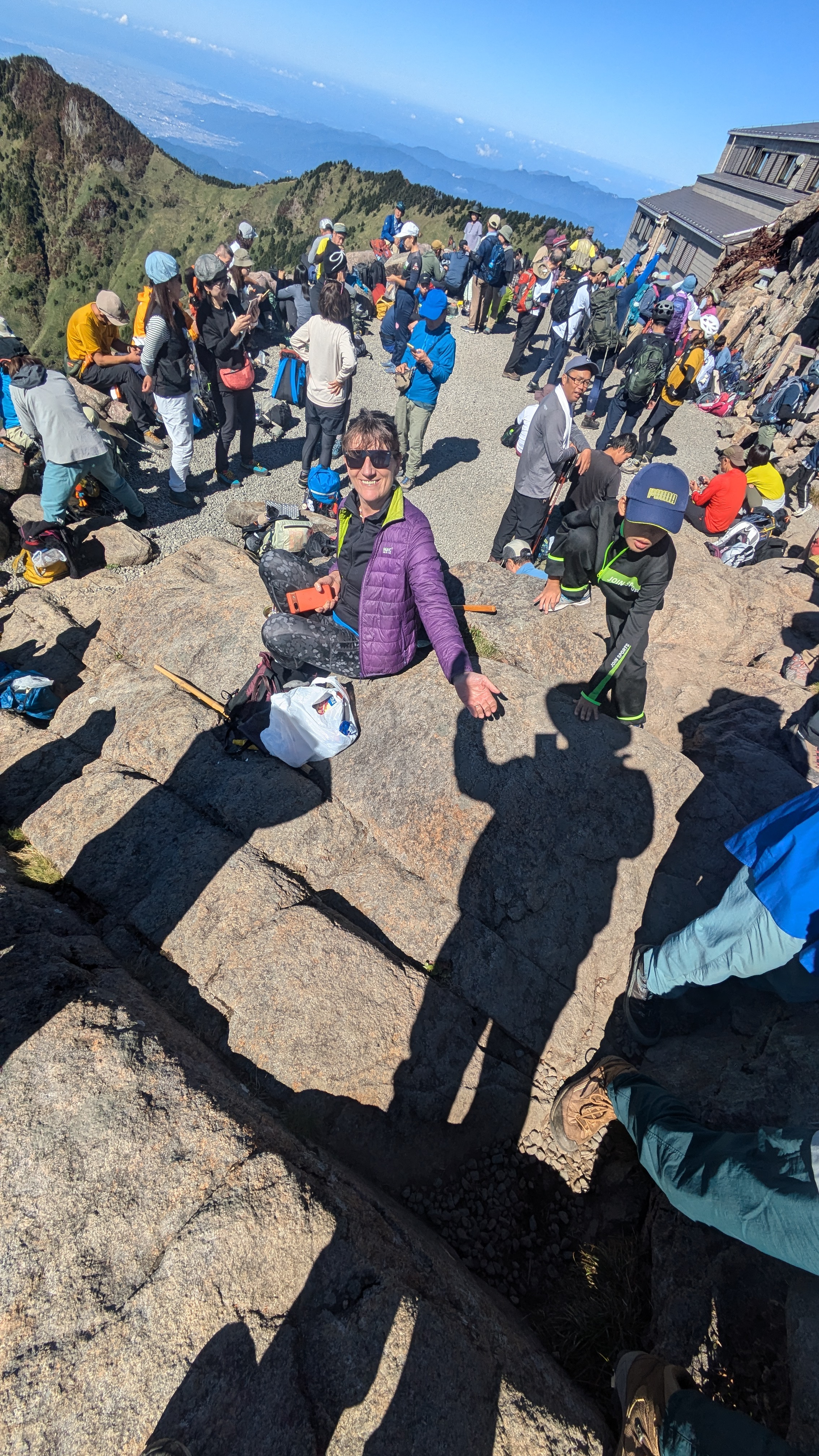
Mount Ishizuchi is the highest mountain on Shikoku Island at 1984m. It’s a popular hike so we weren’t alone when we climbed on a sunny Sunday morning. It was probably more crowded than usual as it was also a Public Holiday weekend, celebrating Sports Day which promotes an active lifestyle. There is a Shinto shrine at the top so it is also a pilgrimage route. We parked the van the night before in the car park at the base of the mountain where the parking fee (about €3 ) covered the use of showers and toilets.
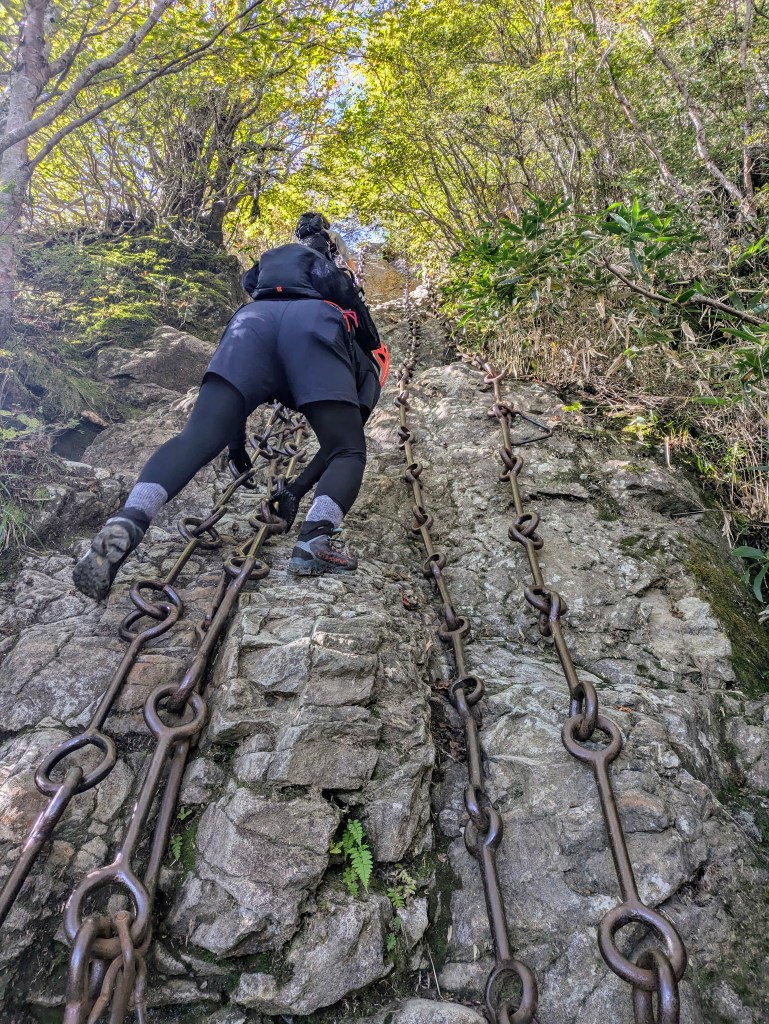
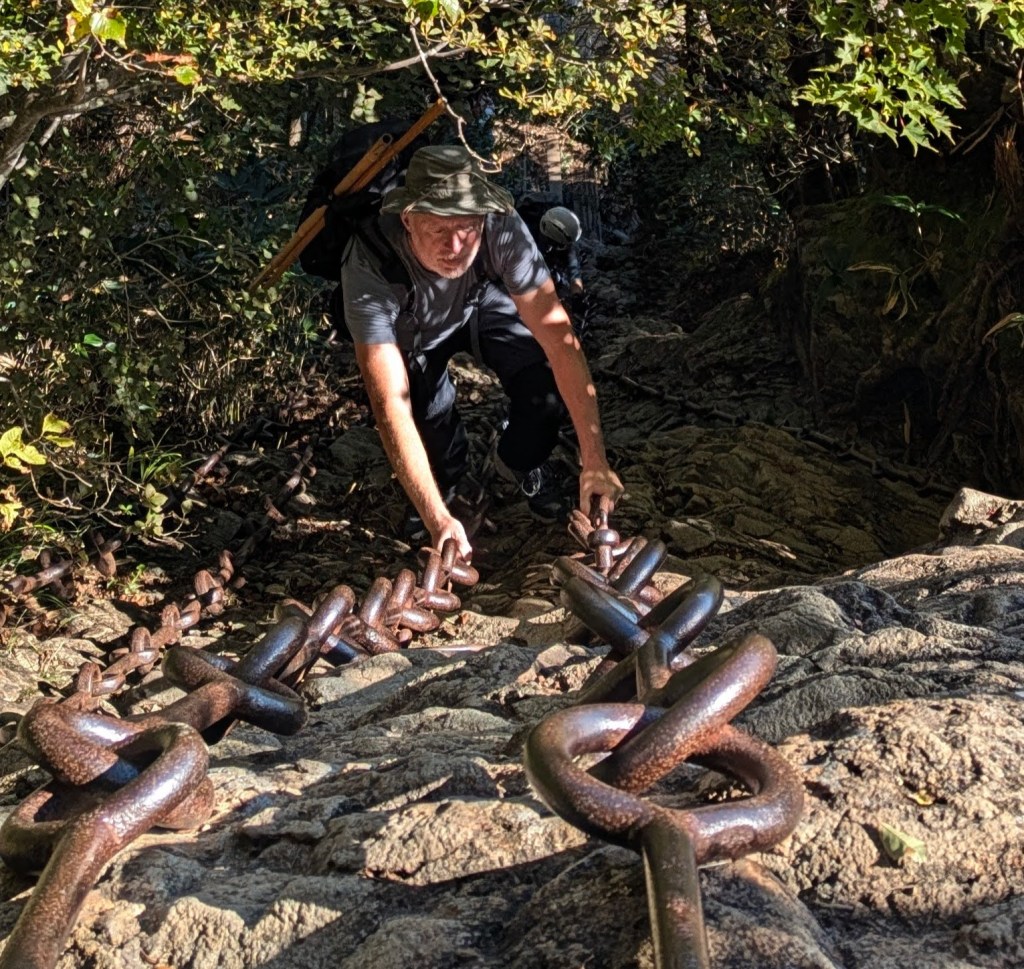
The hike was a six hour round trip, including a crammed ride in cable car for the first section. We hiked through maple and bamboo forests, up through cedar and pine with beautiful views of more trees whose leaves were just beginning to show autumn colours. It started on gradual paths that became steeper, much steeper. In certain almost vertical sections, steel chains were embedded into the rock as an aid to haul ourselves up . The summit was crowded. We munched on nuts and egg sandwiches and watched people pulling little stoves from their backpacks to boil up water for their Pot Noodles. We were probably the only Westerners on the mountain that day and everyone greeted us as if delighted to see us although no-one spoke any English. Soon our necks ached from bowing but we felt really welcome in this stunning country.
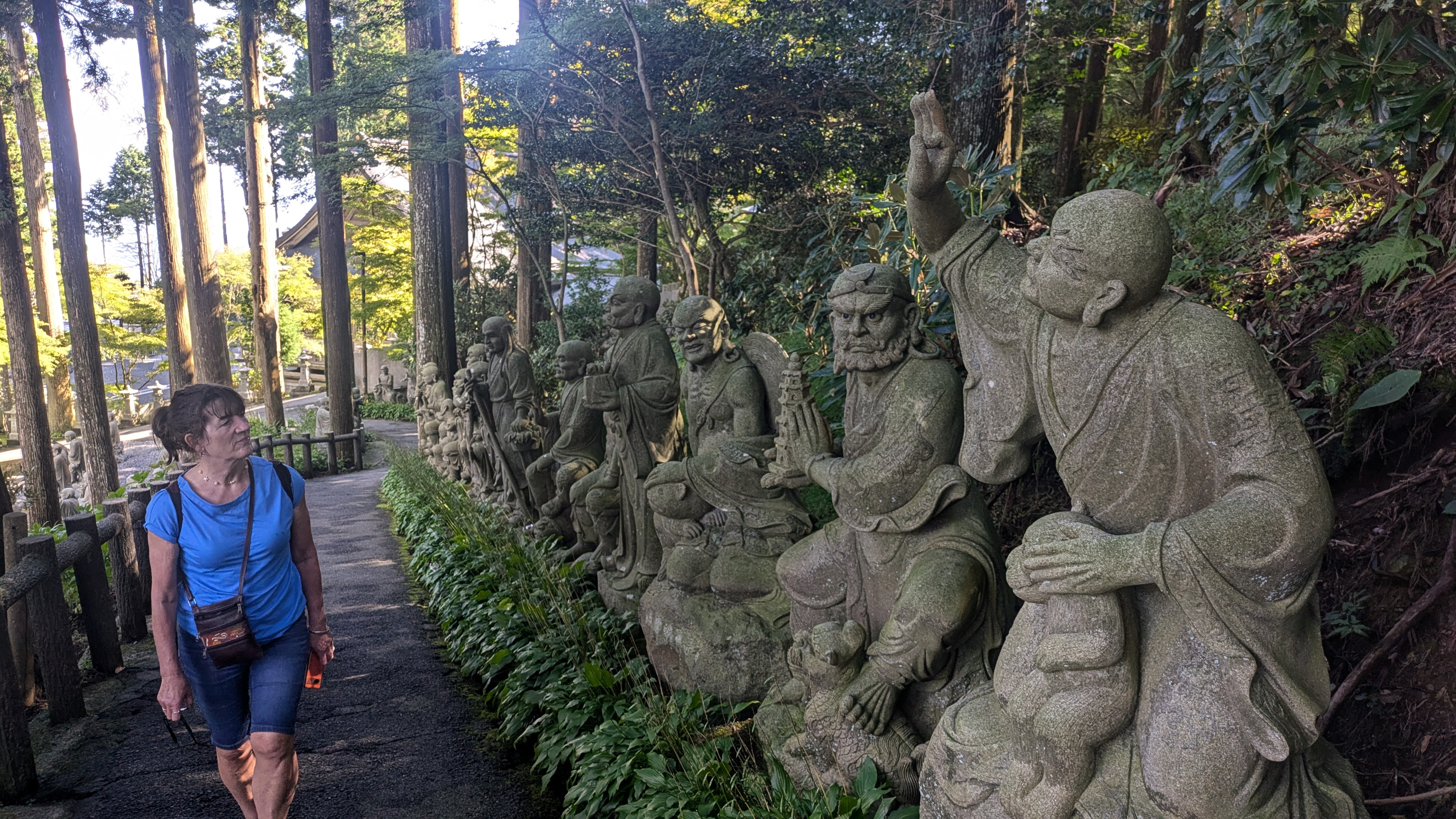
All over Shikoku, we saw pilgrims on the Pilgrimage Trail of the 88 Buddhist Temples. This is a long route, over a thousand kilometres, which circumnavigates the entire island of Shikoku. Most pilgrims do it in sections but we met a few who were devoting six to eight weeks to completing the entire pilgrimage in one go. Many had sore feet as the majority of the route is on hard road surfaces. Although we didn’t do the pilgrim’s trail, we visited several of the temples. Our favourite was Unpen-ji, the highest of the 88 temples and often called The Temple in the Clouds but for us, it was the Temple in the Sun. We welcomed the shade of the tall cedars on the approach. Hundreds of life-sized statues of Buddha’s disciplines lined the walkways. It’s said that if you look hard enough, you will find your likeness among them. Although I searched and searched, I couldn’t find mine
If you only do one thing in Southern Japan, cycle at least part of the Shimanami Cycleway and prepare to be wowed. The entire cycleway is 75kms. It links the town of Imbari in Shikoku Island with the town of Onomiche in Honshu across the inland Seton Sea. It is an island hopping adventure by bike as the route traverses several smaller islands which are linked by magnificent bridges. Cycling along the Kurushima Bridge which has a span of almost 5 Kms was a memorable experience. Ships passed in the turbulent waters beneath us while traffic whizzed by on the bridge but separated from us by a barrier. There were sublime views in every direction of mountains, islands, sea and of the bridge itself.
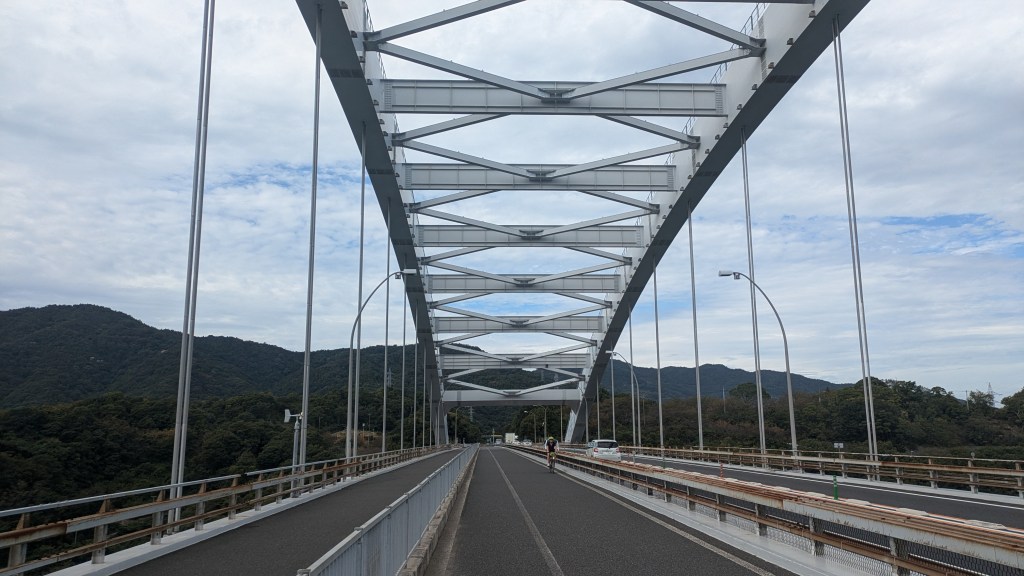
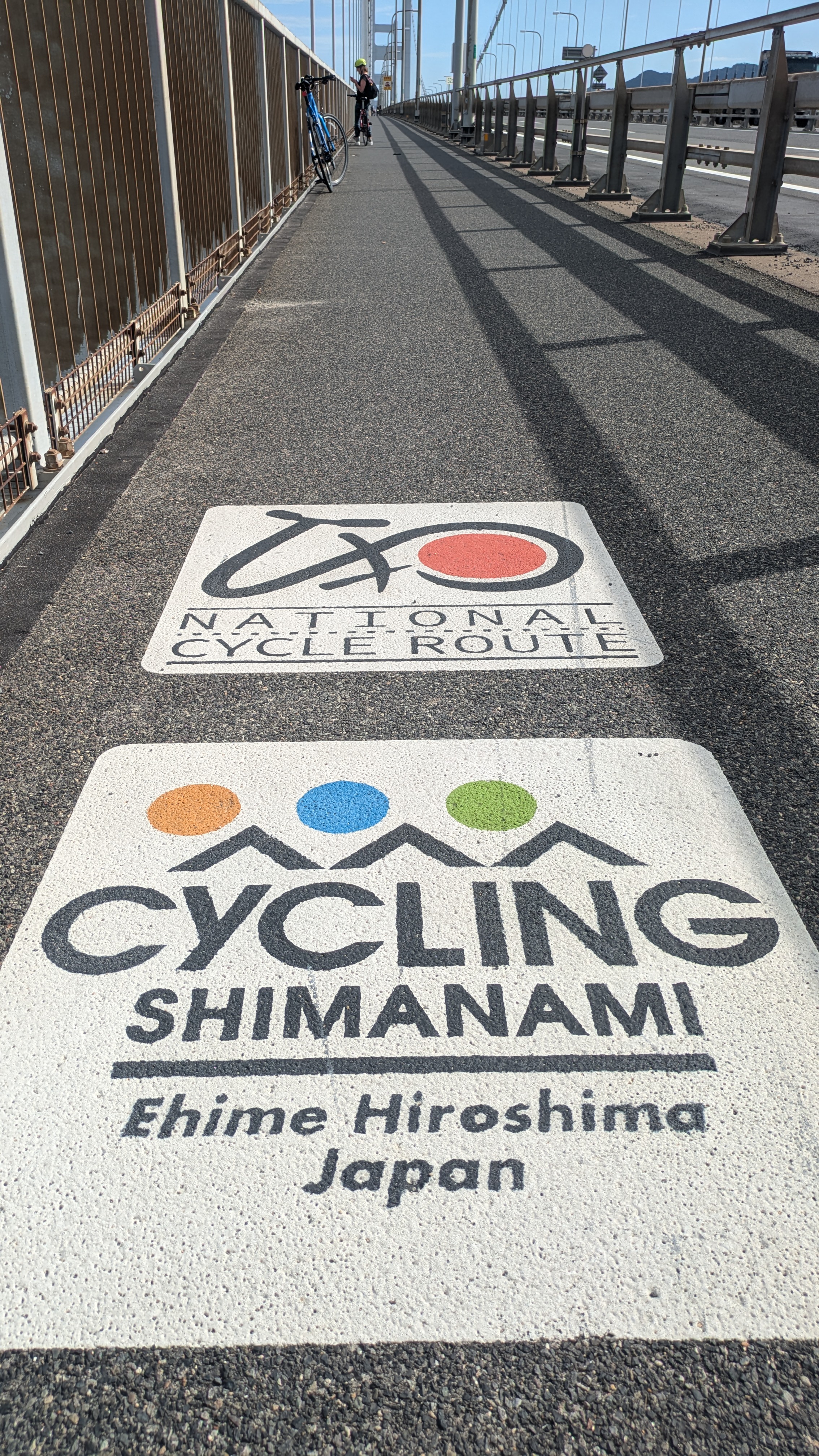
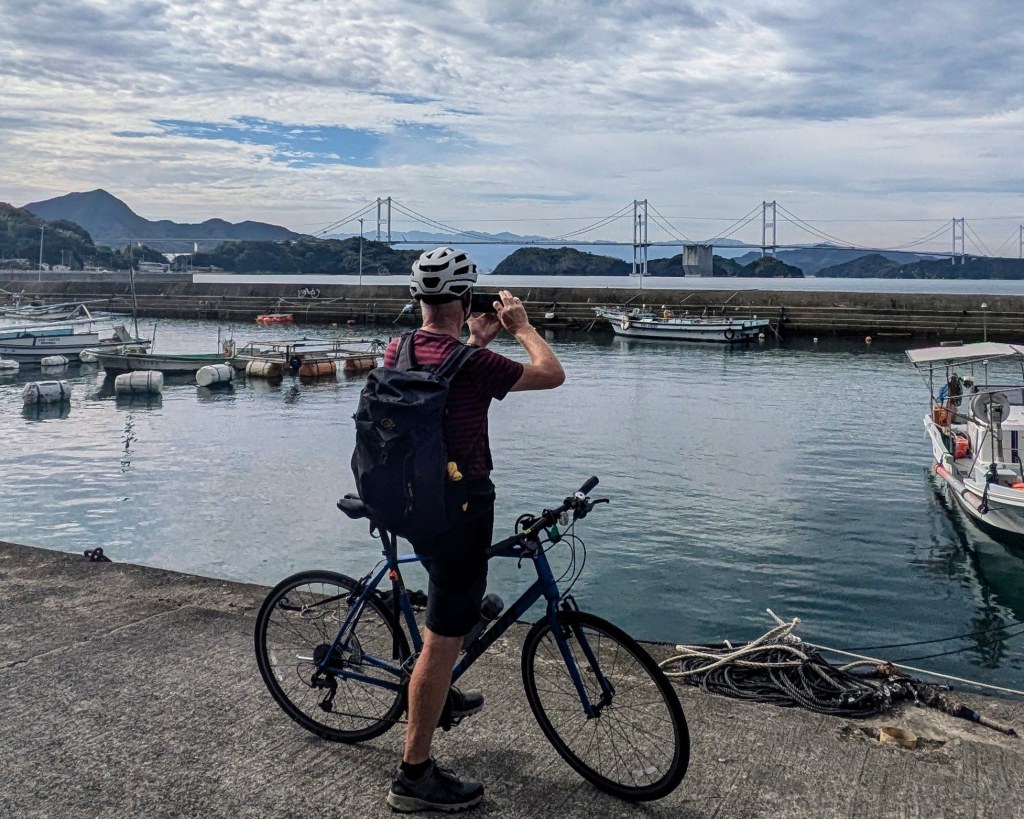
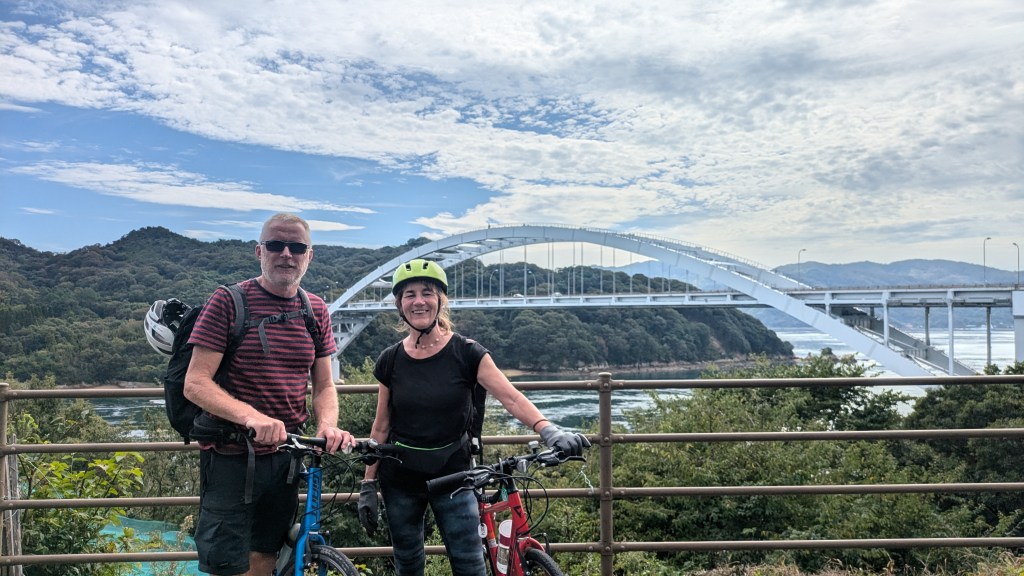
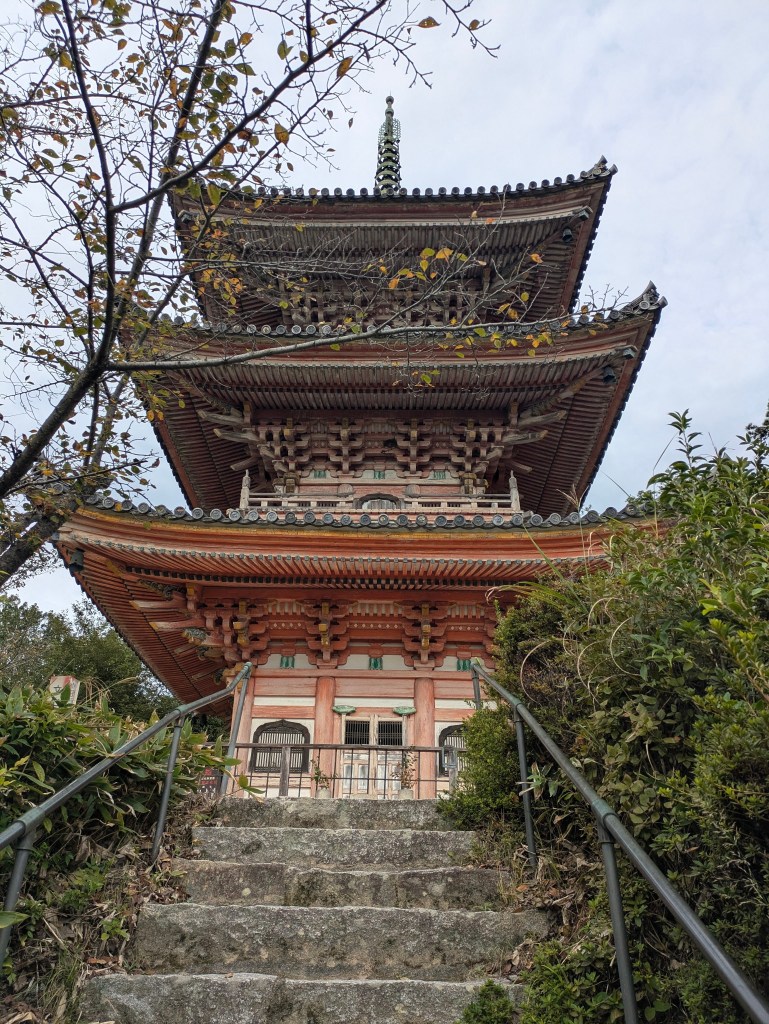
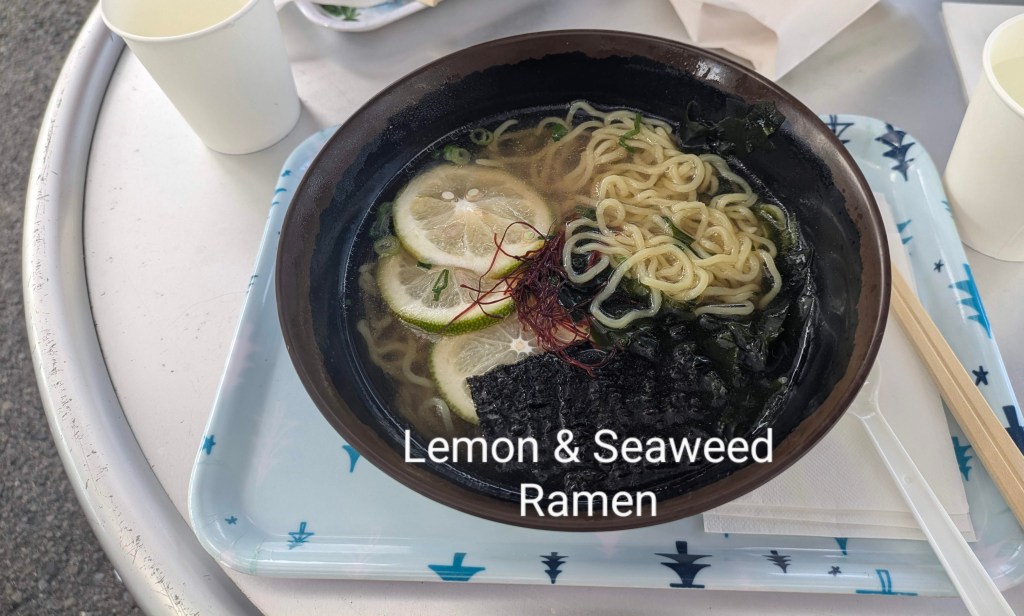
There are lots of bike rental places -we rented ours for two days from Sunrise Cycles in Imbari for €18 a day. Electric bikes were available for slightly more. It is possible to cycle the whole way or drop off the bikes at lots of points along the route. We left our van at Sunrise Cycles overnight and cycled about 50 Kms each day, taking some detours through sleepy villages with traditional houses, small cultivated gardens and fields of solar panels. The weather was a hot, sticky 28 degrees, feeling even hotter in sunshine with little wind. We stayed in a little guesthouse in Setoda on Ikuchijima Island, known for it’s lemon groves and a three tiered pagoda, which is regarded as a National Treasure although it looked a little tired and neglected. All things lemony were on the menu in the cafes, including a delicious lemon & seaweed ramen. For the first time since we arrived in Japan, we met lots of foreign tourists on the cycle trips and felt that we had returned to the tourist route.
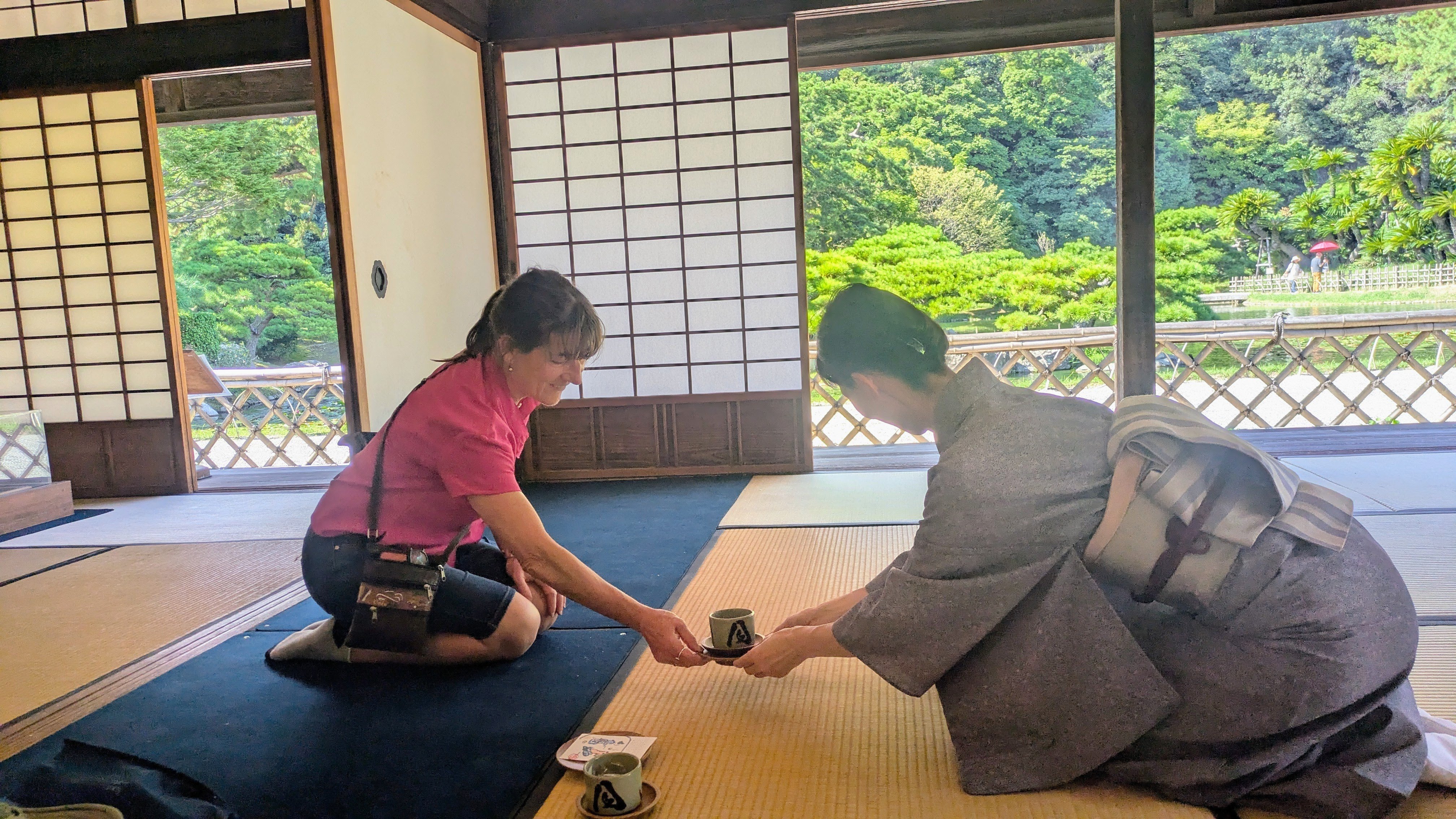
Its time for us to say goodbye to Shikoku. It may be the smallest of the four main islands in Japan but it has so much to offer – pilgrimage trails, cycling on water, scenery and shrines, outdoor adventures and gorgeous tearooms. We were charmed with a visit to Ritsurin Gardens in Takamatsu with it’s beautiful teahouse of bamboo, screens and cushions. The windows framed the outside view like serene paintings and we drank tea to the gentle sound of flowing water from the small waterfall outside. In the coolness of the teahouse, we began to appreciate the Japanese fascination with light, shade and symmetry and to understand the philosophy that ‘less is more’
We hope to get a ferry tomorrow to the island of Kyushu, which is less visited than other parts of Japan but seems to have a lot to offer. If our onward journey is half as rewarding and enjoyable as our time in Shikoku, we will be very happy.
Till next time…….Thanks for reading x
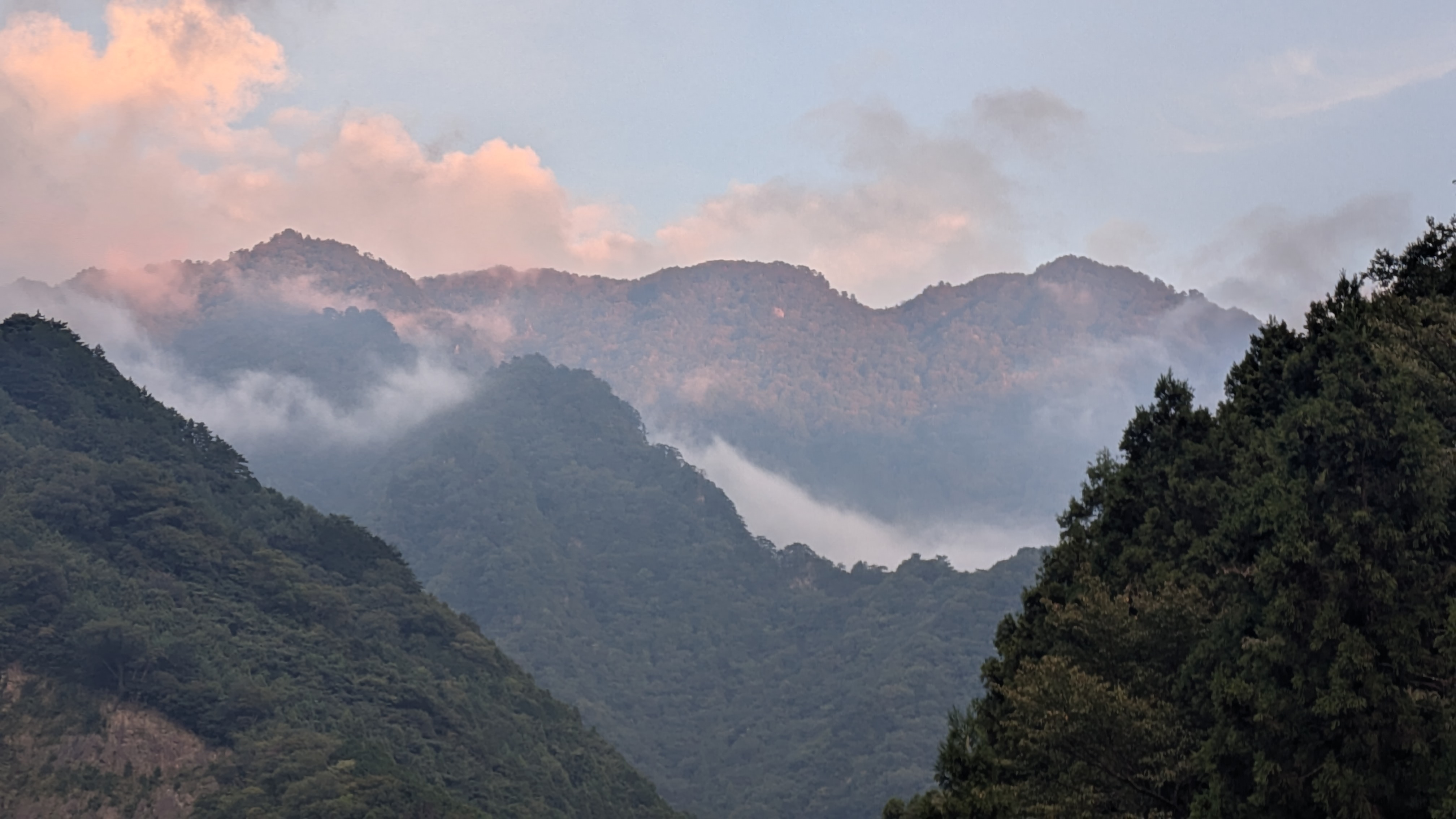
Sunrise in the Mountains, Shikoku
 marienoonanblog
absolutely jealous Marie !
LikeLiked by 1 person
that sunrise photo is absolutely beautiful Marie.i can’t even imagine what it was like doing that climb. Ye are incredible. Sounds like an incredible experience. Thanks for sharing xx
LikeLiked by 1 person
Marie,I am so happy you’re having a wonderful time in Japan. I’m in Sri lanka and loving it. Enjoy the next part of your trip.Xx
LikeLike
A great read Marie. What a wonderful experience.
LikeLike