Mexico: Gone to the Beach

It was the start of a long day, a very long day. It was barely ten degrees, a bright, chilly and pine-scented morning in the gorgeous, mountain-town of San Christobel de Las Casas. Leaving the town behind us with some regret, we travelled on a wide tolled road, the first toll road we have encountered so far.  Descending rapidly to the lowlands, the temperature ascended just as rapidly and we were reaching for the car air-con within forty minutes.    

We hadn’t a definite destination in mind, just headed in the general direction of the beaches on the Pacific coast of Oaxaca. A French woman we met on a tour of the archaeological ruins at Palenque had raved about  the small seaside town of Mazunte so we thought we might go there. The only problem was that it was at least  an eight and a half hour drive without breaks. So we drove on, seeing how far we would get.

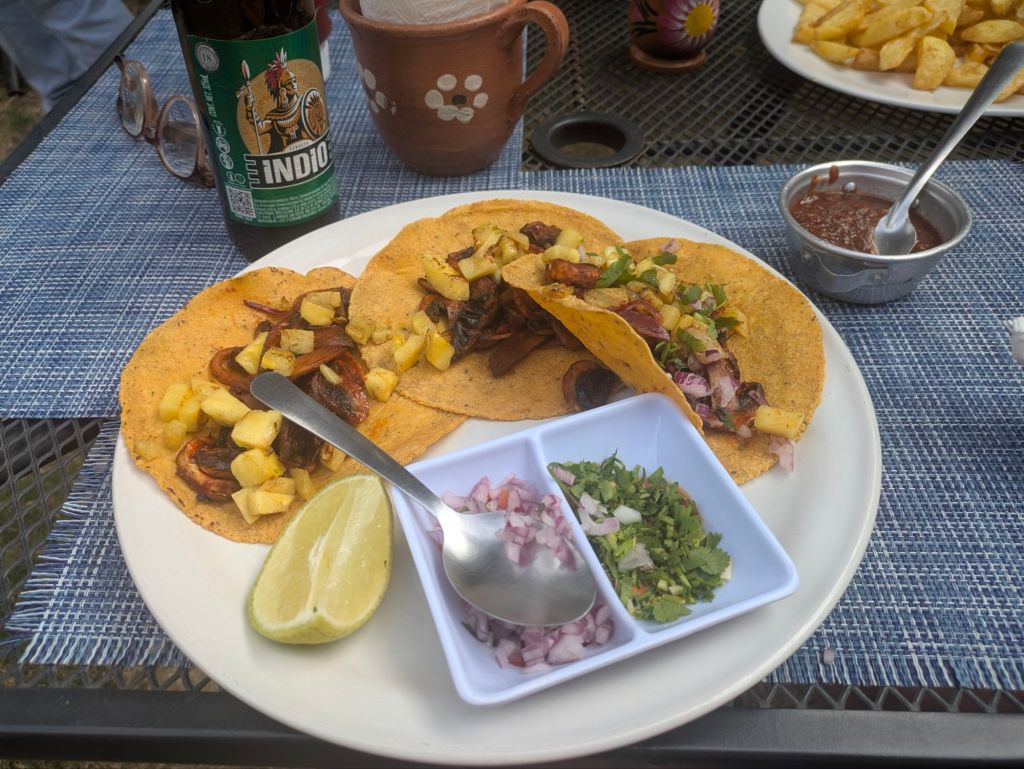
Stopping for something to eat in the middle of nowhere, the simple family-run restaurant was just a few tables covered in bright tablecloths.  An elderly man in a wheelchair and three women of various ages sat watching some soap on the TV when we poked our heads inside the door.  It wasn’t obvious whether it was open for business but they all sprang into action and produced a plate of scrambled eggs, some sort of creamed cheese accompanied by a basket of warm tortillas, a tongue-searingly hot sauce and mugs of black coffee.  

For the first time since we arrived in the country, the terrain became more typically ‘Mexican’, dry and dusty with scrubby red hills under a blindingly blue sky. Our main problem on this journey was not the speed bumps or the threat of protesters, this time it was the sheer number of pot-holes and craters in some sections. At one stage we were behind a police car which was swerving like a crazy drunk to avoid them with oncoming traffic doing the same dangerous dance.

It was well after 4pm and decision time. Mexico was not a country to be driving around in the dark. With no cafes in sight, we stopped at a  ramshackle, roadside shop in a stiflingly hot dusty town to discuss our options. An overweight teenager, swinging in a hammock and playing on his phone, could barely rouse himself  to take our money for a Coke and some chocolate. Mazunte was still at least two and half hours away but with sugar rushing through our veins, we decided to press on and booked a place to stay. The online reviews were good, claiming it was a quiet relaxing place between the two beaches on either side of the town.

Descending from the mountains that stretched almost to the coast, we arrived just after sunset. It was already dark and Mazunte was full of gringos, (many of them barefoot and scantily dressed) wandering in the middle of a narrow street full of cafes, restaurants and jewellery stalls. Turning up the unpaved road to our accommodation, pedestrians streamed down the hill and cars abandoned everywhere. The road was so narrow that we had to reverse to allow the traffic that was coming against us to pass.  We had arrived, not only at the busiest time of the evening but the busiest time of the week. Weekend crowds were returning  after viewing the sunset on the west-facing beach near our accommodation. Thankfully, calm returned within twenty minutes and the traffic disappeared.
Mazunte

 Our landlord wasn’t available because of the short notice and our room wasn’t ready either. We whiled away the time, sitting outside the shop next door and drinking cans of ice-cold beers ….probably the nicest and most welcome drink we’d ever had. It was after 7 pm and still thirty degrees.

Mazunte had a holiday, hippy vibe with many vegetarian and vegan eateries, full of ‘cool’ people of all ages…..our kind of place, at least for a few days. Hotels, bungalows and cabanas with thatched roofs stretched up into the hills, half-hidden among the coconut trees and the flowering shrubs. The pace of life was slow here, people ambled around in a heat haze. The cocktails were always on ‘special offer’, the coffee was strong and stands selling coco frio, cold coconut water drunk directly from the shell were everywhere.

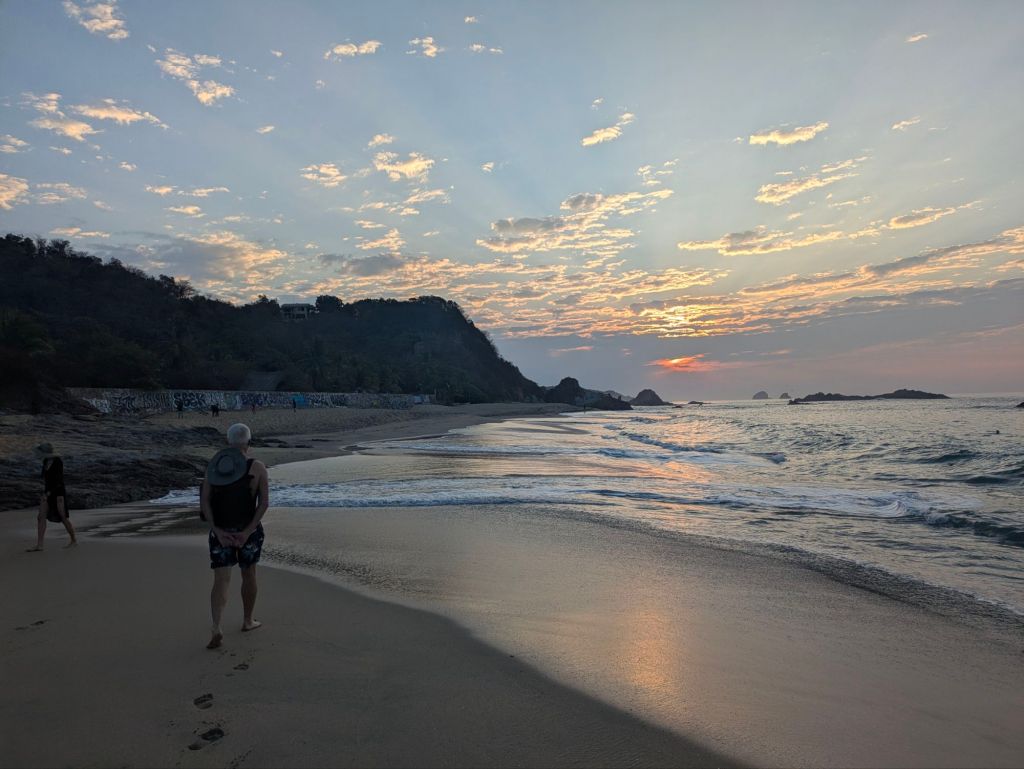
The sweet period in Mazunte was early morning from 6am to 9am. After that it was time to look for shade until the late afternoon. It was a few days of sunrise walks, sunset swims and yoga sessions. Practising  yoga  on a thatched veranda overlooking the beach was like’ hot’ yoga without the need for heaters. Sweat trickled down my face, my hands slipped on the mat and I tried to catch a breeze from the Pacific Ocean. It was 8.30 am and already 29 degrees. Paulo, our instructor was Mexican but had spent five years living in Dublin and still had lots of friends there. On this trip, we have met so many people of different nationalities who have visited Ireland and all have only good things to say about it.
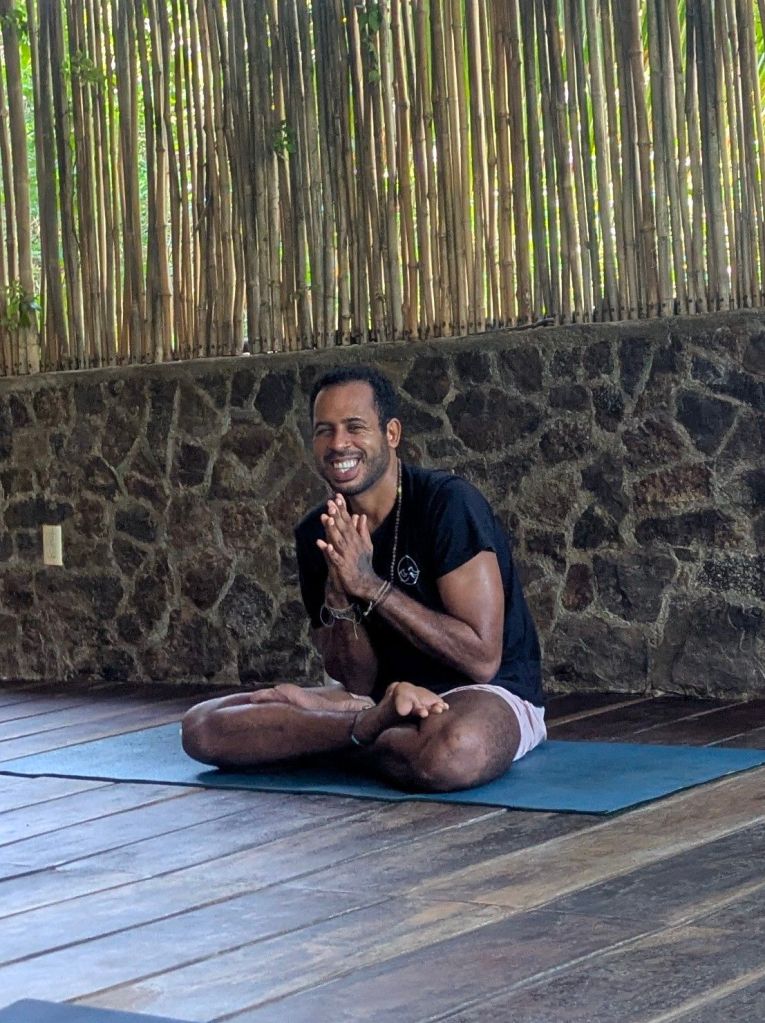
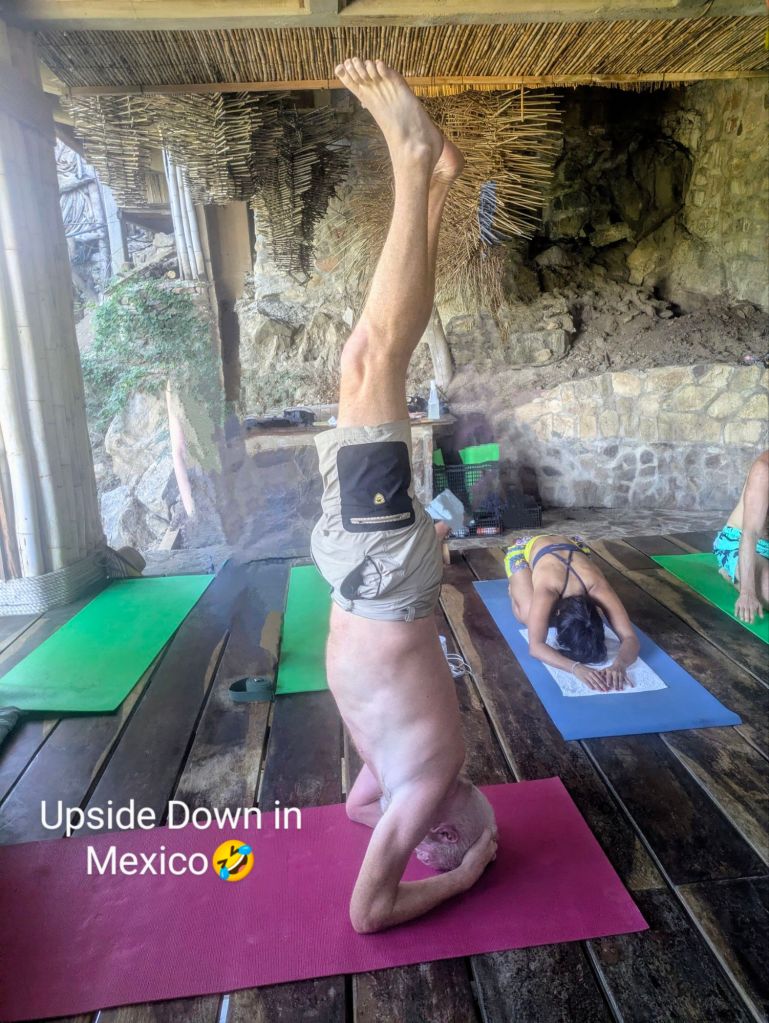
Paulo, Yoga Instructor

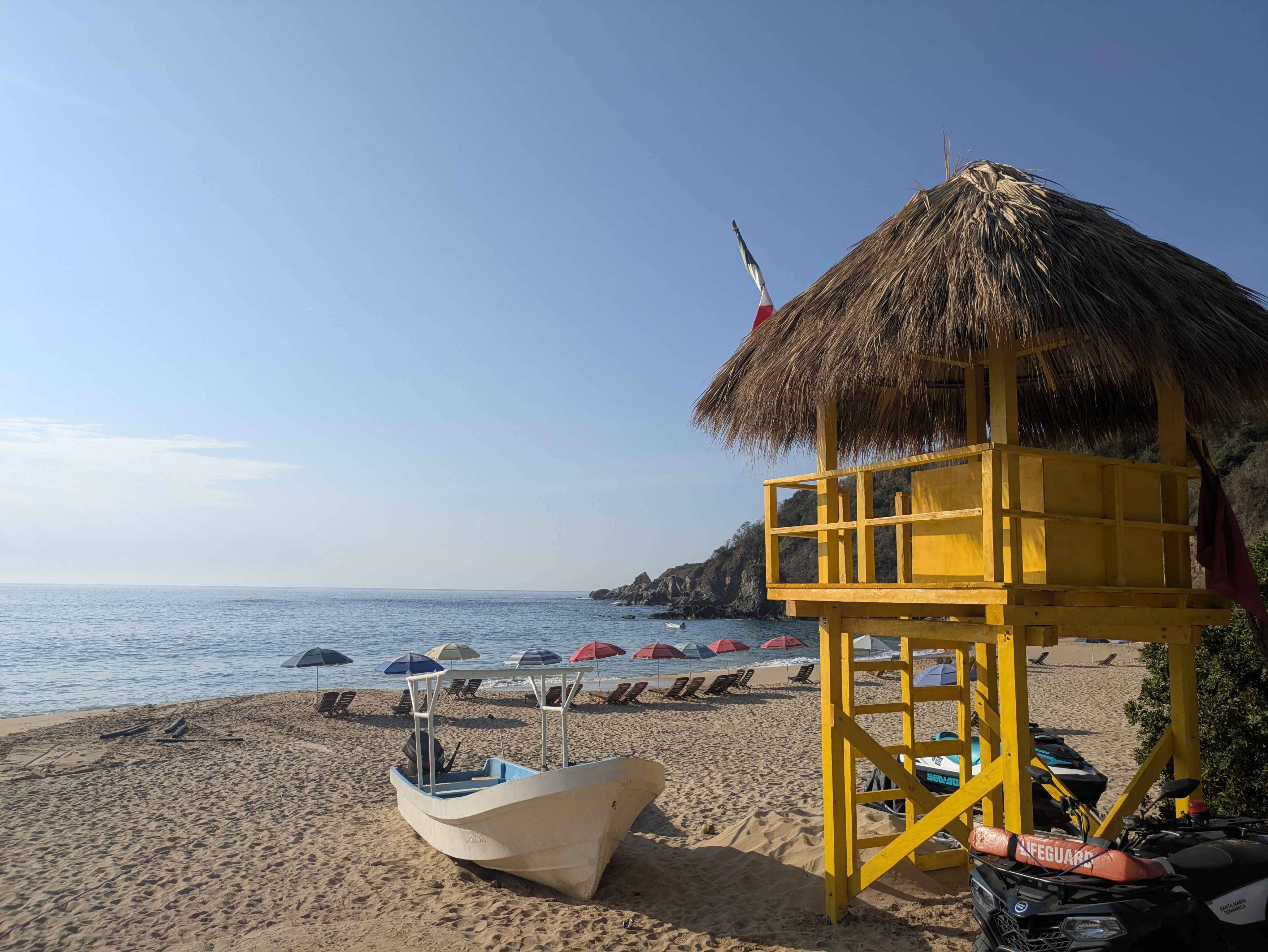
The coast to the east and west of Mazunte was gorgeous, full of beaches with something to suit everyone,  some were more suitable for surfing, others were perfect for swimming and snorkelling but all were ideal for lolling around.
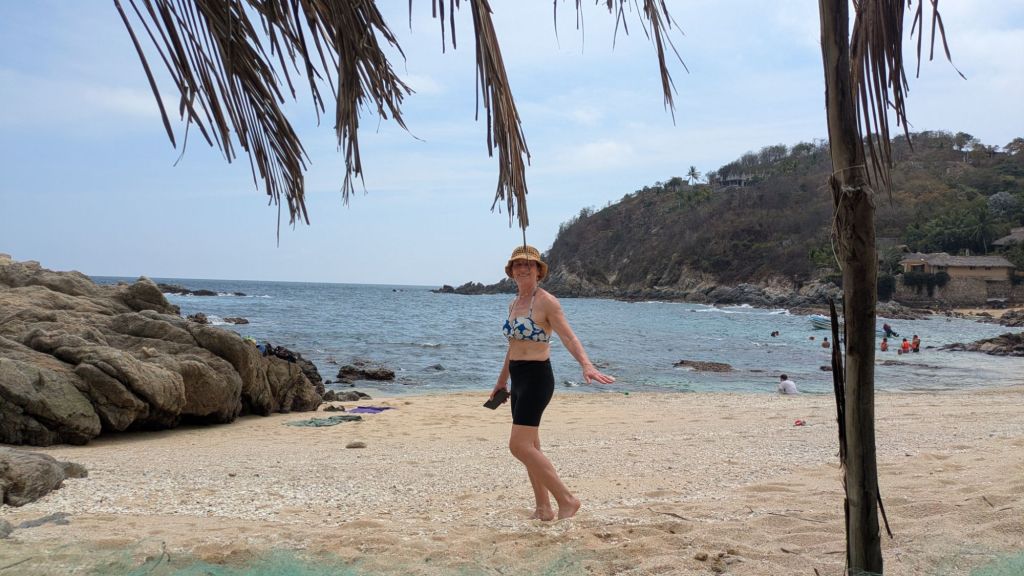
It wasn’t just humans that flocked to this dusty, sun-baked stretch of coast. Whales also made their way from the frigid waters of Northern Canada to the warm seas of Mexico’s Pacific coast to breed and nurse their young usually from December to March. Several varieties  of turtles laid their eggs on the sandy beaches and there were several turtle research stations in the area.

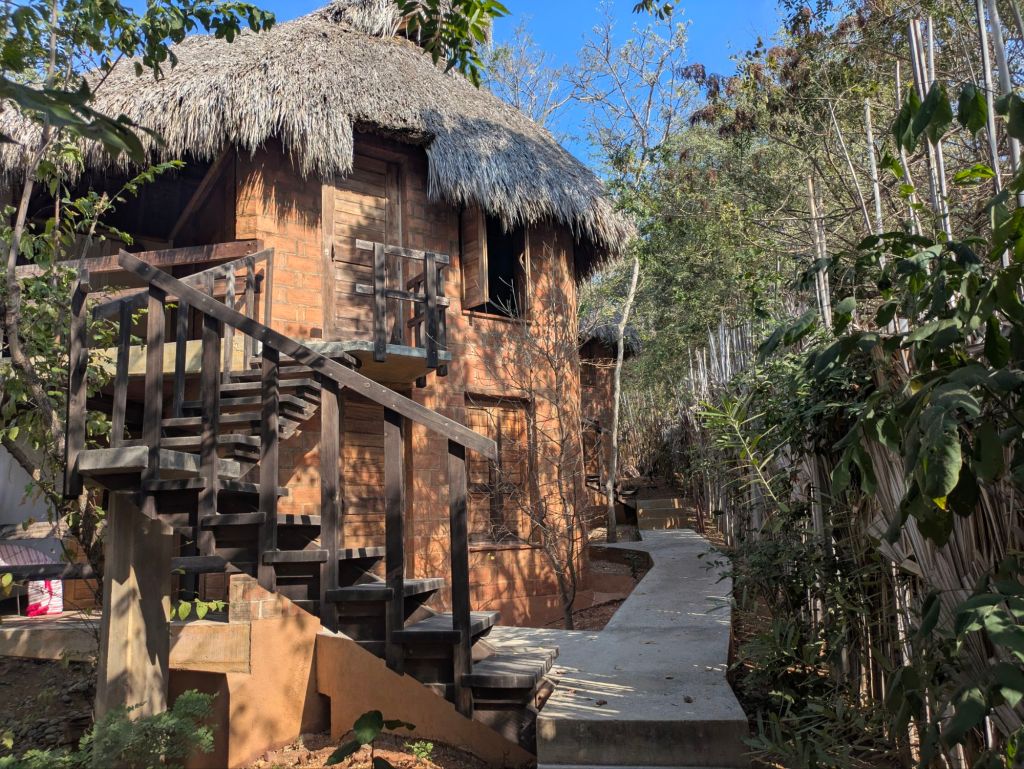
It was hard for us to believe but it was winter season here, the coolest  and driest time of the year. The rainy season is between May and October but the temperatures begins to creep up in March until forty degrees is fairly common.  Jonathon, our landlord, pointed out where water runs down the hill between the bungalows and the unpaved road becomes a river. We stayed in a very unusual place, an architecturally designed cabana, angled to catch the breeze and stay cool without air con. It had a series of sliding shutters but was open on all sides so we could hear the squirrels scampering in the trees outside and the sound on the waves breaking on the beach down the road,
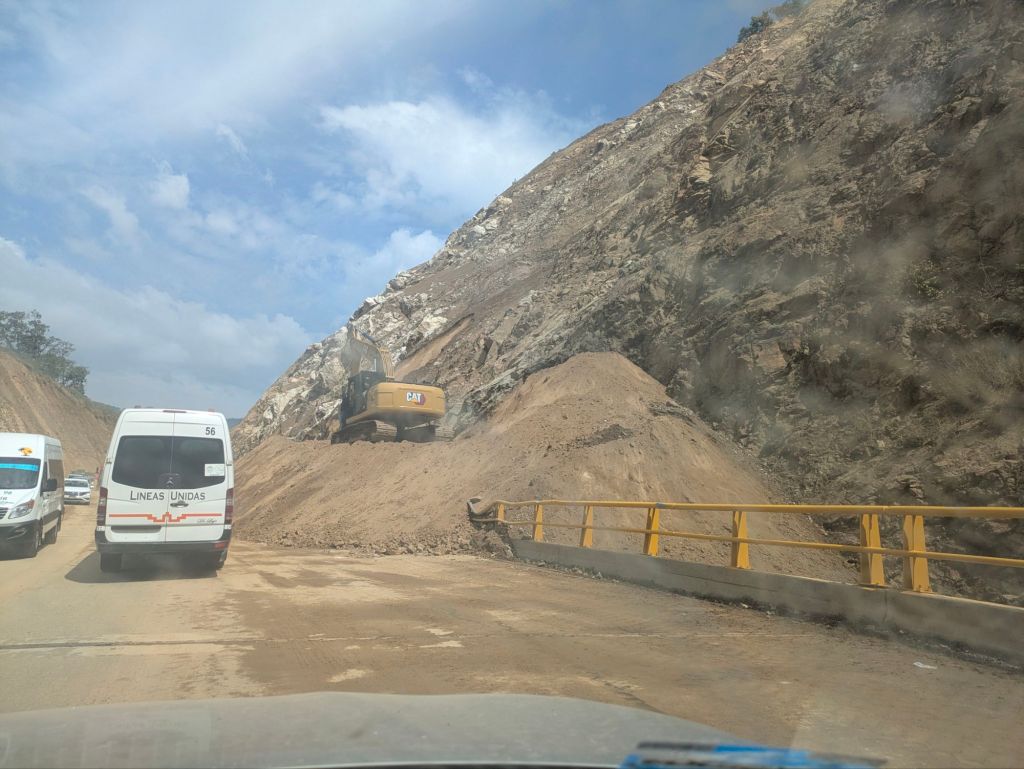
After four nights, it was time to go or we might never have left. The city of Oaxaca, about which we had heard so many good things, was calling us.  We travelled for about an hour on a highway going towards Acapulco with coconut stalls, cacti, flowering shrubs and bridges over (almost dry) river beds. The song Going Loco in Acapulco was going round and round in my head but soon we turned inland towards the hills, climbing again, ears popping and chewing on the dust that seeped into the car. Huge efforts were in progress to stop the steep mountains  from sliding onto the road, There are many  tailbacks as rock falls were being cleared. Road workers climbed like abseiling ants in high-vis jackets up the vertical rocky slopes, trying to secure the sides and prevent more erosion.
Oaxaca is in a central valley, at 1550m, ringed by mountains with brightly painted houses sprawling up the hills. The historic centre is an UNESCO World Heritage site, laid out on a grid system with handsome buildings, artisan craft shops and art galleries in sixteenth century buildings with stout walls, shady courtyards and subdued signage.
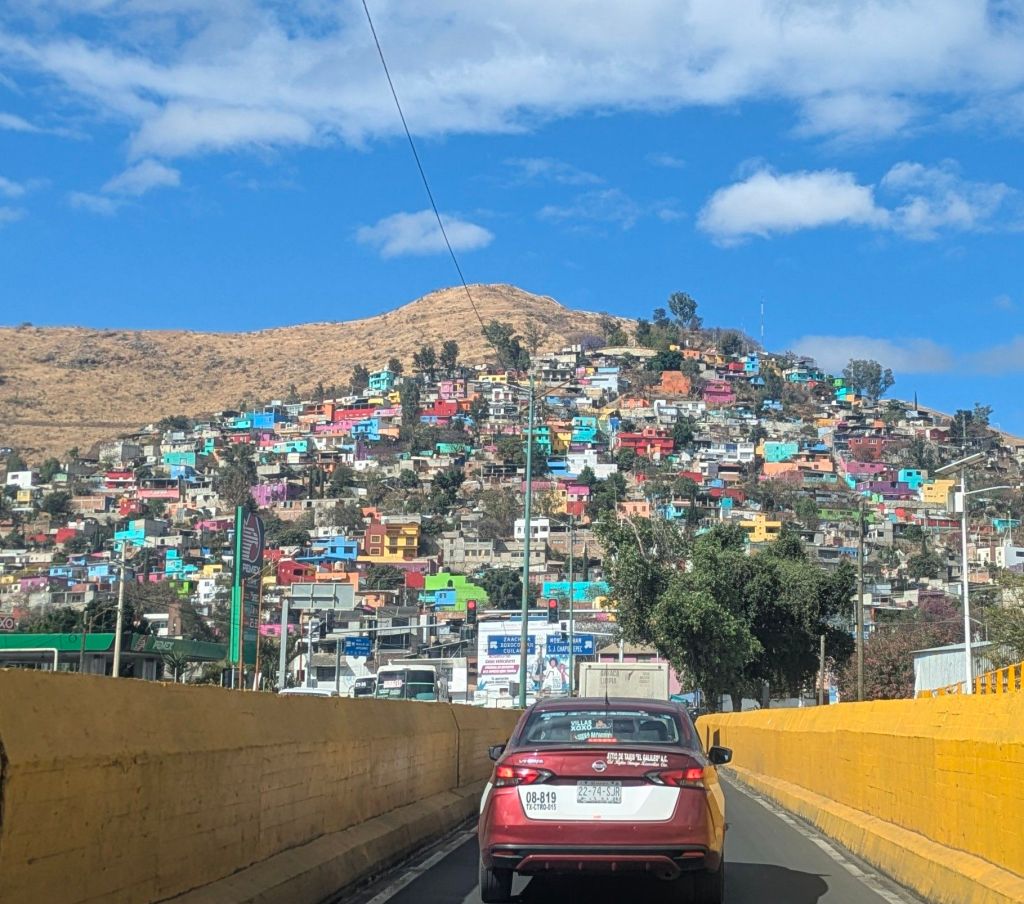
Approaching Oaxaca

The centre was full of tree-shaded plazas, a magnificent cathedral made of the local rock which has a green tinge. There were churches and monasteries on almost every corner. The church of San Domingo was the most splendid, a solid baroque exterior with a sumptuous interior of gold, gilt and bas reliefs.
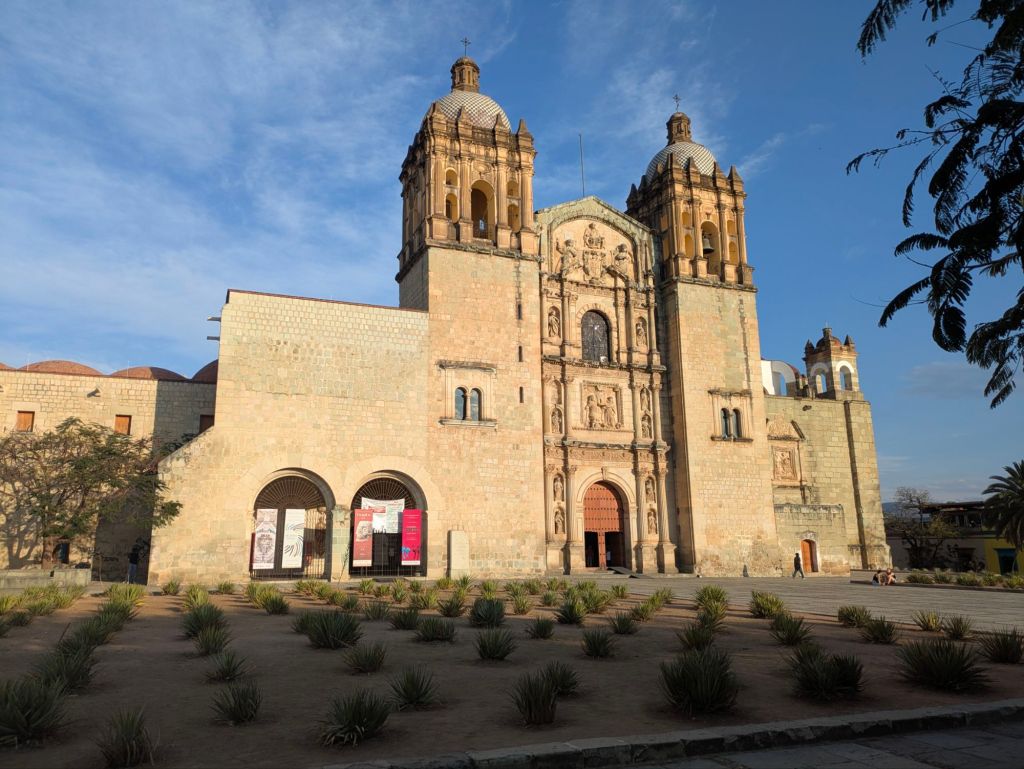
Santa Domingo

 As we wandered around the breezy, cobbled streets under festive buntings, homeless people thrust clinking cups under our noses, begging for change.  The stench of urine even in the main plazas was oppressive and one street away from the touristy centre, belching buses and honking taxis destroyed the peace. The shoe shine people, who were mainly weather beaten, middle-aged men, ignored us after glancing at our runners.  Oaxaca seemed a beautiful but complex place, with a significant underbelly of deprivation co-existing with the wealth and glamour.
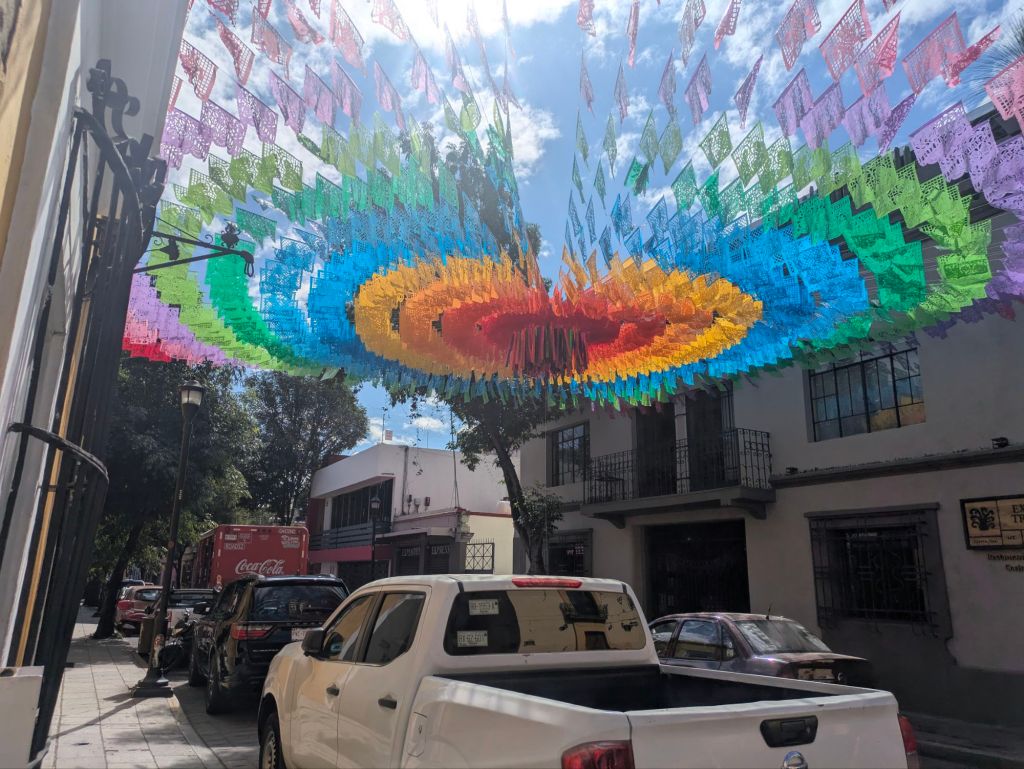
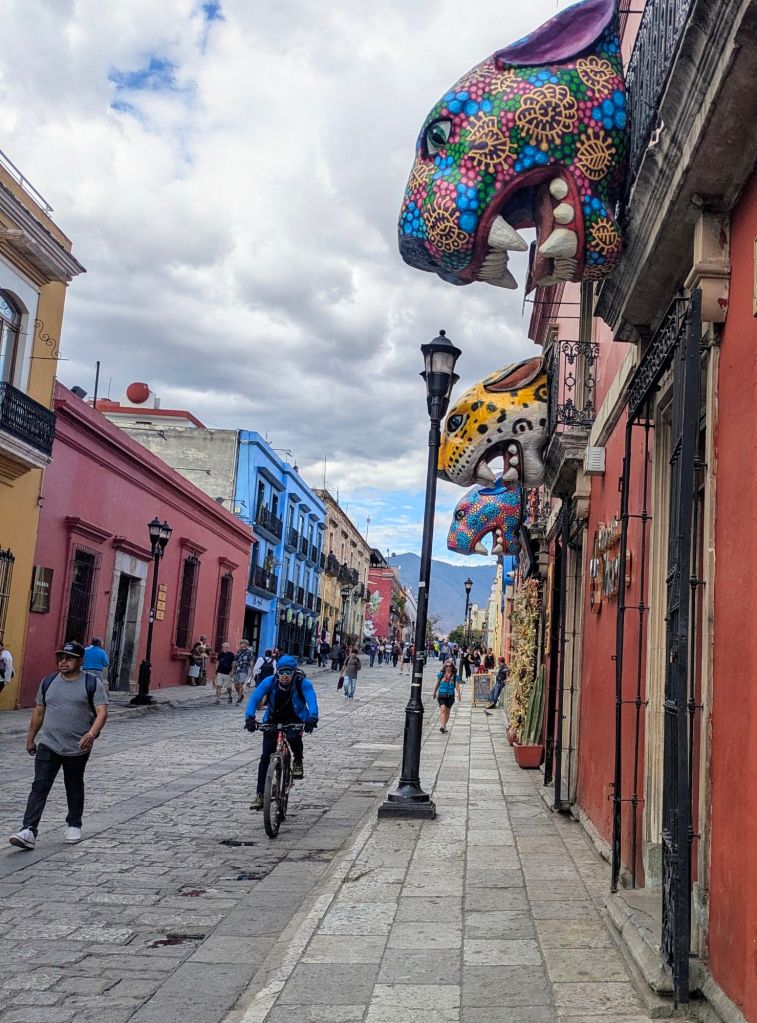
Oaxaca Street
Oaxaca

It was a city of music with buskers of every sort and ability, playing and singing all over the place. A small orchestra set up outside the Santa Domingo church and  we stumbled across a parade of women in swirling  long dresses, dancing to the drumming of a marching band.

Oaxaca is also the culinary capital of Mexico. One of the more unusual ingredients was roasted grasshoppers (chapulines) which were sold in big basins on every street corner and eaten as a snack or as garnish or topping on dishes. They were regarded as a fantastic source of protein and may actually become the food of the future,  at least according to our guide on our walking tour of the city. We haven’t tasted them…..yet.  
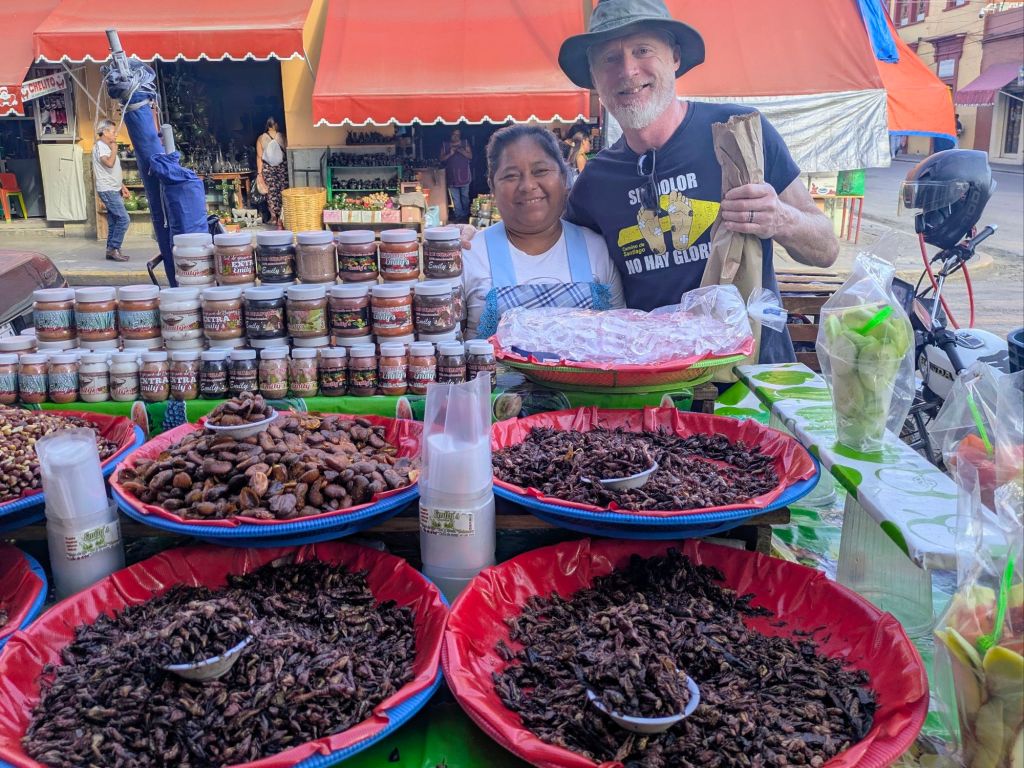
Basins of Roasted Grasshoppers

In the botanical gardens which is famous for its huge variety of cacti and local flora from the region, the only available tours were in Spanish as the tours in English had been discontinued.  This is admirable in one way but slightly baffling in a city whose income is almost totally derived from tourism. At least half the thirty people on the tour had difficulty understanding the guide. Although we followed some of what he was saying with our rudimentary Spanish, we would have appreciated being able to fully grasp the intricacies of the garden.
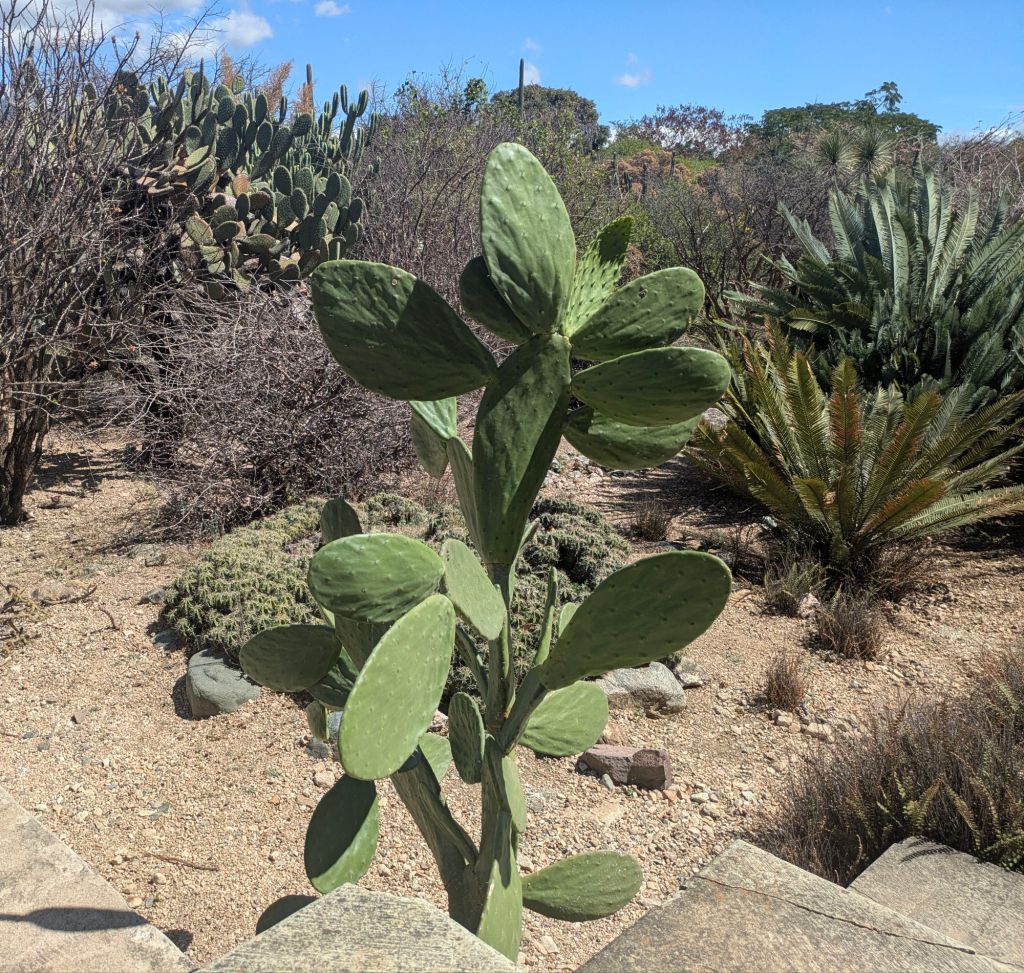
Botanical Garden

Located just a few kilometres from Oaxaca City lies Mount Alban, one of the most impressive archaeological sites in Mexico. It was founded around 500 BC and continued for almost one thousand, three hundred years. It became so influential that it has been called the Rome of the Americas.  
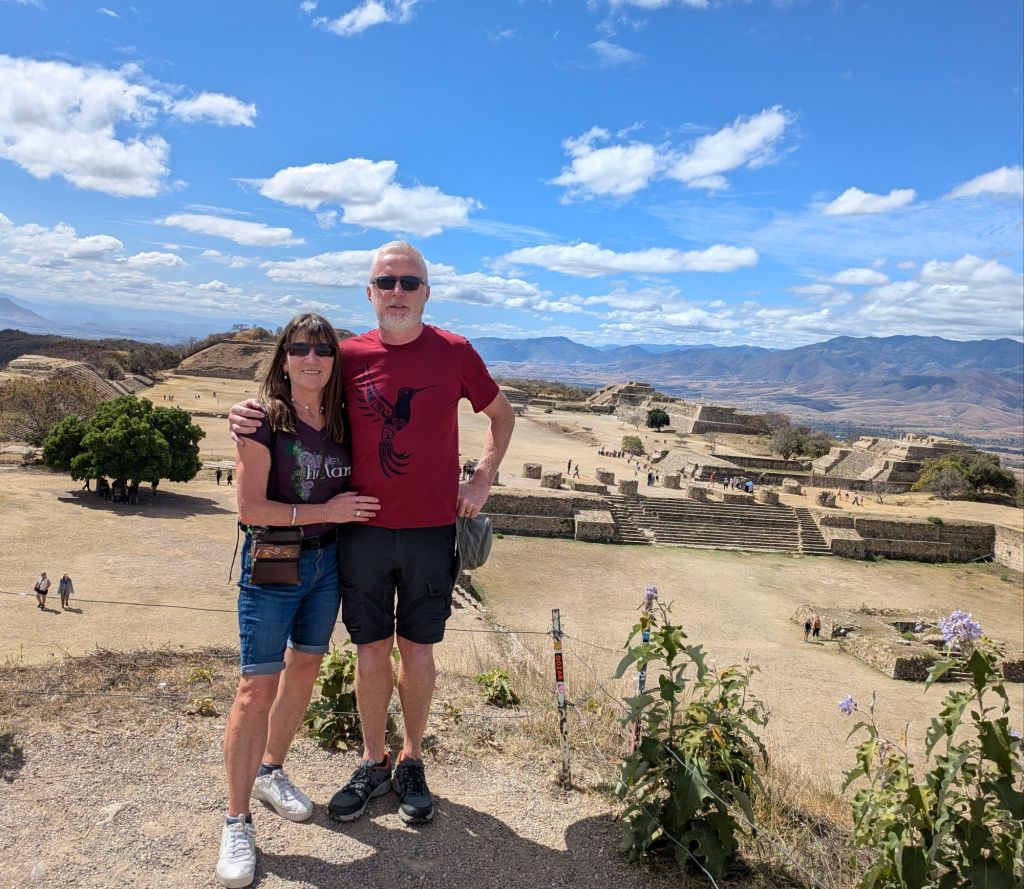
Mount Albán

The location of Mount Alban was spectacular with views of the valleys and surrounding mountains.  Oaxaca was spread out at our feet, looking much bigger than when we were in it. At this time of year, the site was sunbaked and dry with vast open areas between the temple complexes.  Shade was at a premium and people huddled under the occasional trees. Just as in Palenque, the museum was excellent in a beautiful modern building.
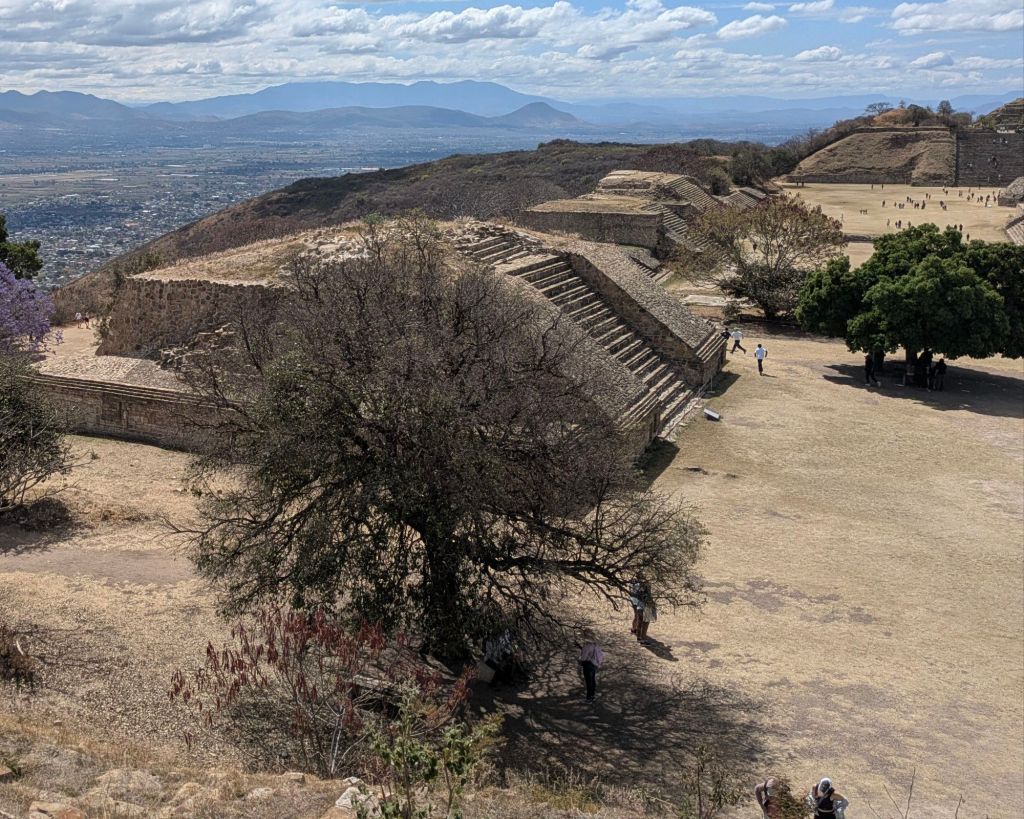
The ancient Zapotec built these complexes and ruled vast kingdoms.  They were known as ‘cloud people’ because they believed they originated from clouds and also because they lived at high altitude in areas that are often shrouded in clouds. Now the descendants of the Zapotec live in villages to the northeast of Oaxaca. It is possible to visit the area and hike from village to village.  

We organised a hiking trip in an office in Oaxaca, run entirely by women from the Zapotec. They were helpful and welcoming but drove a hard bargain. Eventually we settled on a price although no English speaking guides were available.

Tomorrow, we head  up into the clouds for some high altitude hiking as the villages are at 3200 m…..it should be an interesting breathless challenge

Thanks for reading

Hasta luego, amigos.
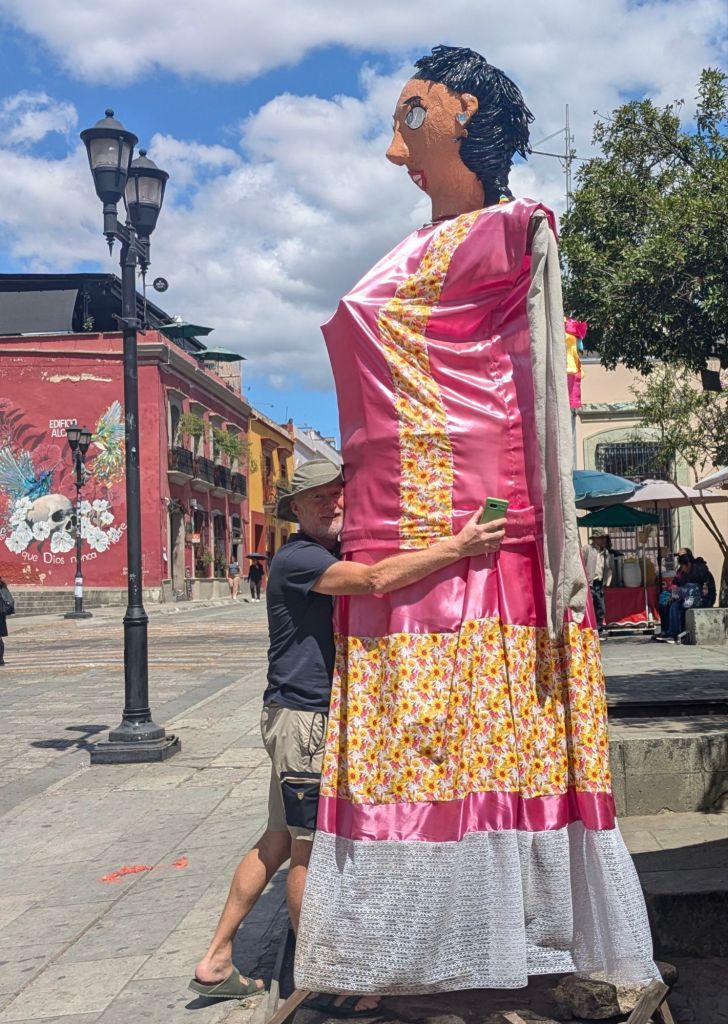
I NEED a hug💕
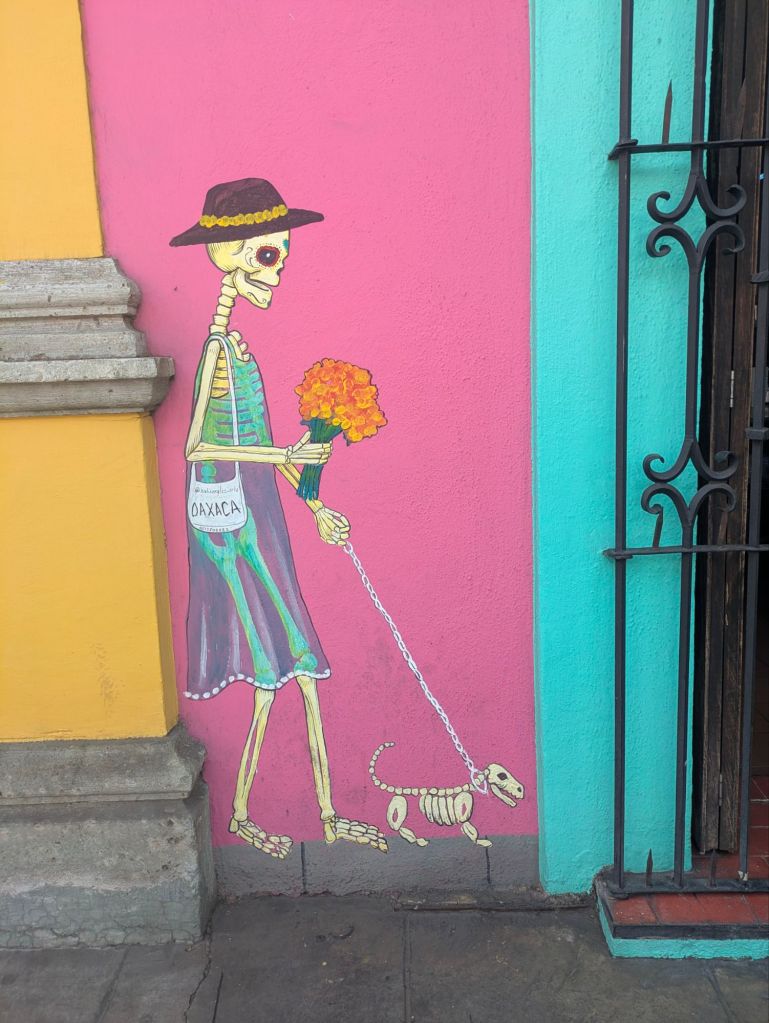
Street Art, Oaxaca

Mexico: Gone to the Beach

Mexico….Ruins and Ruinous Roads

The first rain came in a violent downpour just after Ireland had beaten Scotland in the rugby match which we watched on the laptop in our little apartment in Bacalar, a little town just shy of the Belize border.  It was still midmorning as Mexico is five hours behind Ireland. The morning had been warm, about 28odegrees, but cloudier than usual so we weren’t too surprised when the heavens opened. The rain didn’t last long but increased the humidity.

We love the temperatures here in the Southern Yucatan. Although it can get a little uncomfortable in the afternoon especially if the sun is out, the evenings are gorgeous, long, balmy and  perfect for eating outside. Most of the Mexicans especially in the ‘local’ area away from the lake where we were staying, had hammocks, plastic tables and chairs outside their houses, where they socialised in the evenings, usually with a few beers and some music….loud vibrant tunes.
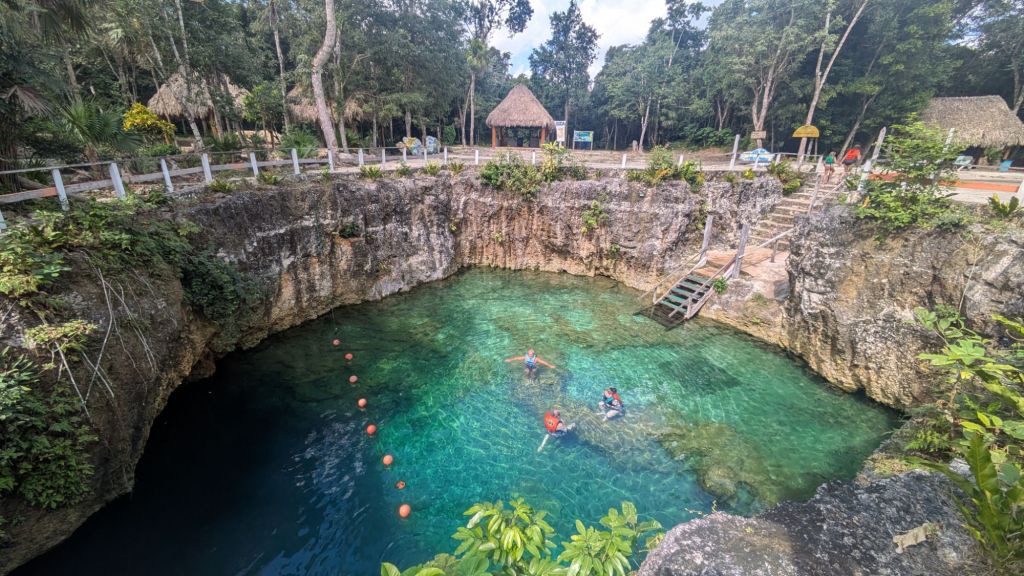
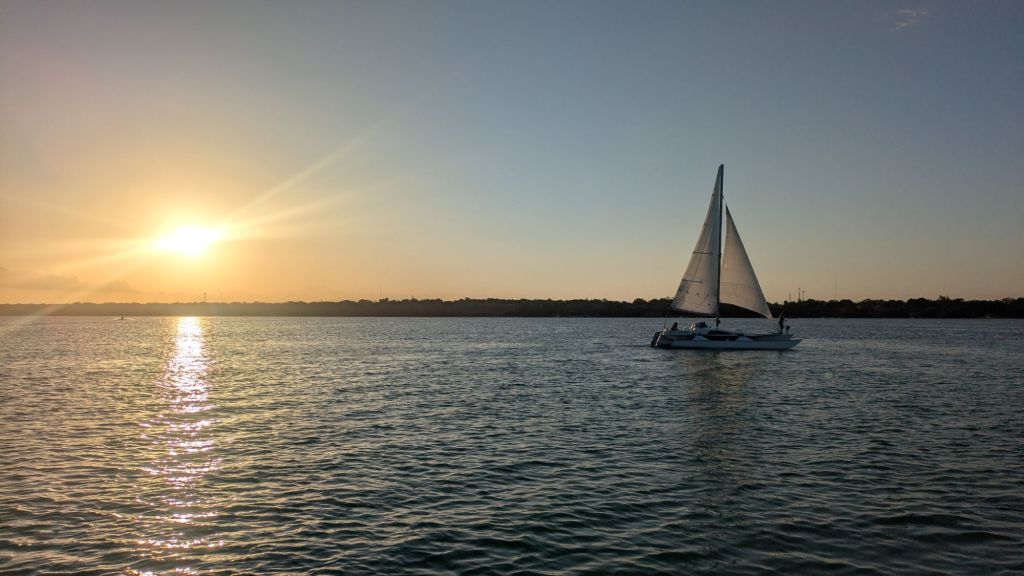
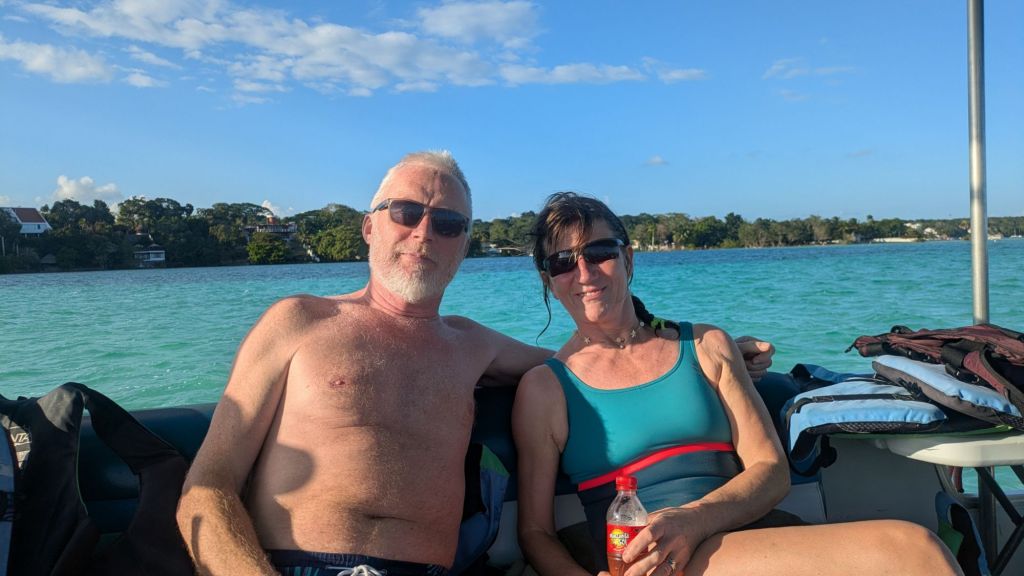
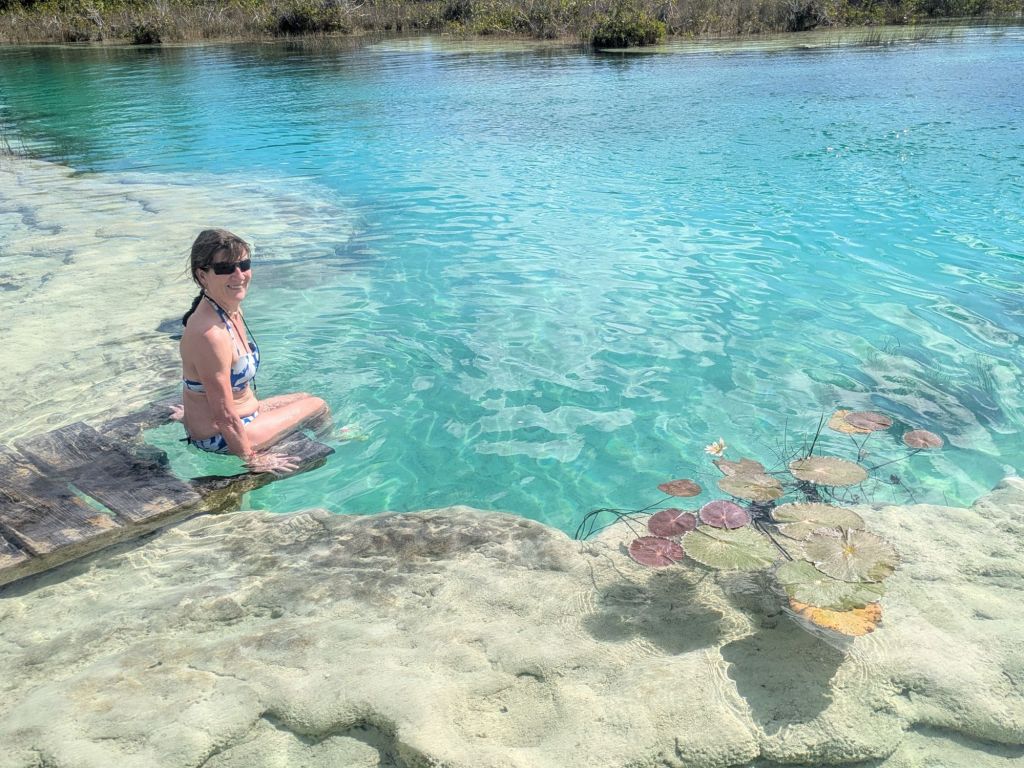
Bacalar Lake is known as the Lagoon of Seven Colours (La Laguna de Los Siete Colores). It’s almost mandatory to take a boat trip out on the lake to fully appreciate it. We chose the sunset tour which was 3 hours on the lake visiting the pirates path, the island of the birds, and cenotes (underwater sinkholes that dramatically changed the colour of the water depending on the depth.) The sun slipped down behind the town, turning the lake-water golden. On the tour, we met three German women in their early seventies who were driving around Mexico for a couple of weeks and having a ball. The only problem they had encountered was a puncture which they acquired when they hit one of those invisible speed bumps. They spent their time on the boat, giggling and trying to get the perfect photos of each other, almost like far younger Instagram influencers.
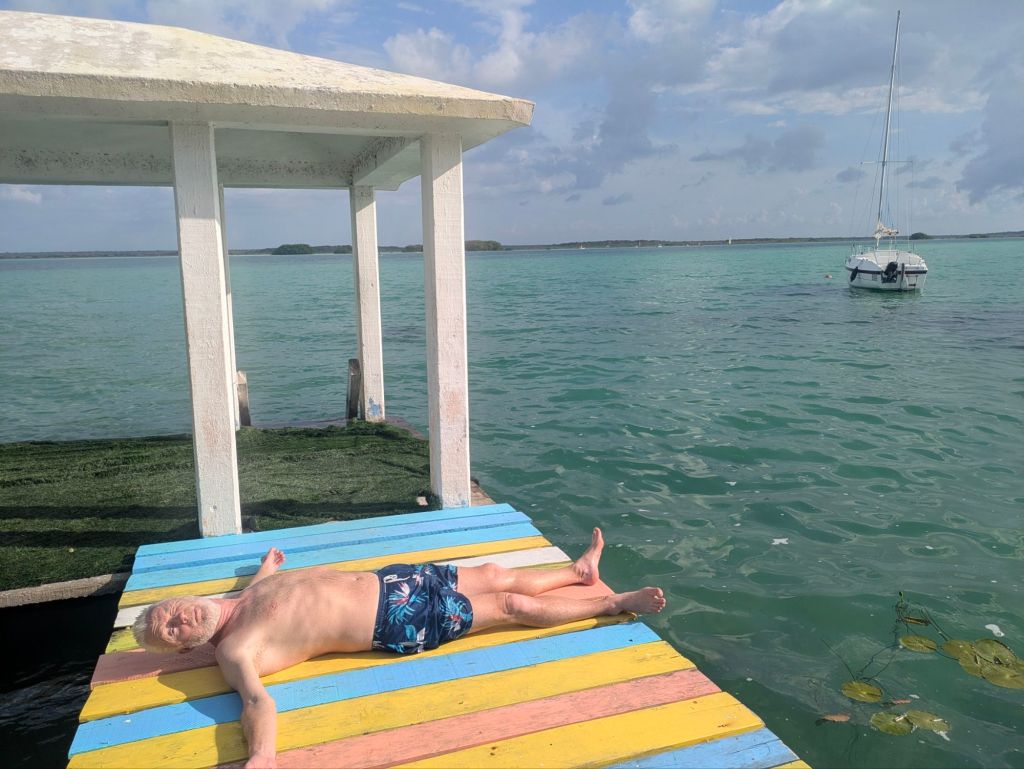
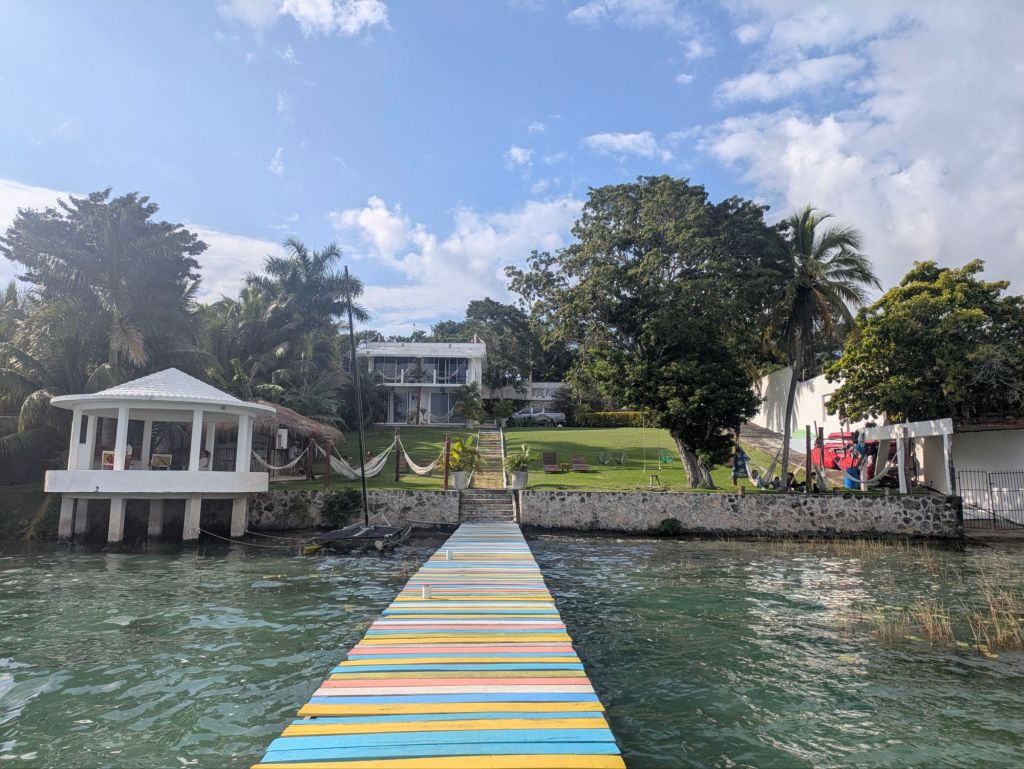
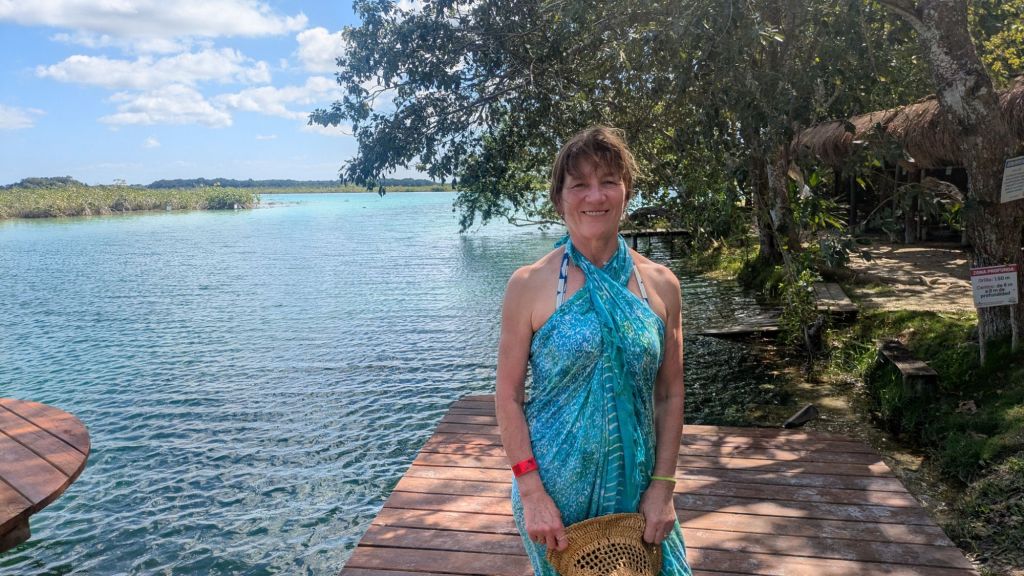
Although our apartment was in the non-touristy ‘local’ area and a twenty minute walk away from the lake, it included free access to the Bacalar Tropic Beach Club which was one of a series of lakefront hotels and houses on the southern end of town.  There was no ‘beach’ but there was a grassy area in front of the hotel with loungers, hammocks, swings and a multicoloured boardwalk – a great place to enjoy the lake.

Lounging by Lake Bacalar

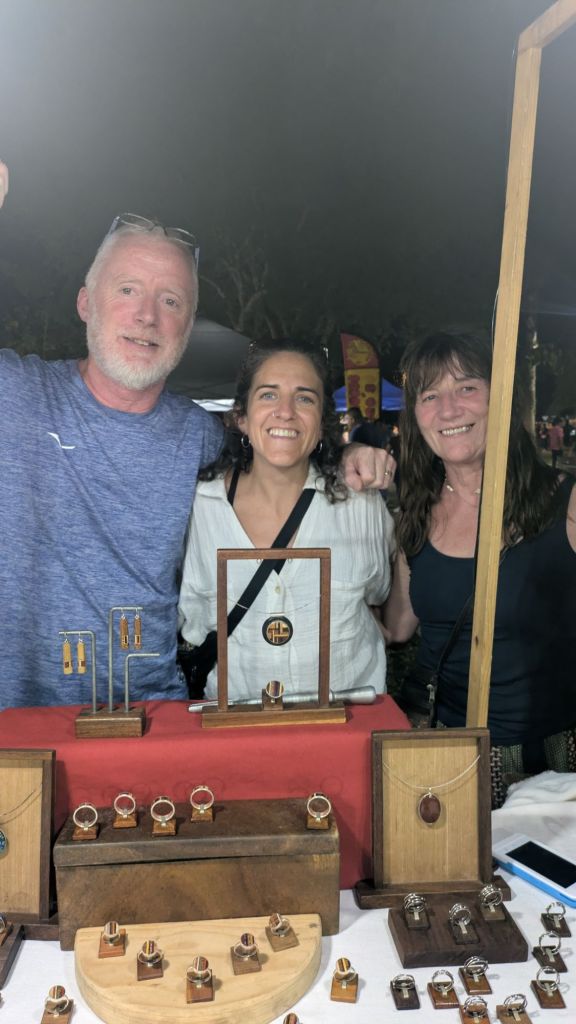
Both of us lost our wedding rings years ago, Caoimhin’s in a swimming pool in Peru  and mine in the sea in Tramore. We kept meaning to replace them but never got around to it. Wandering around the night market in Bacalar, we spotted rings that appealed to both of us, bands of various woods encased in silver. Although they weren’t typical wedding rings and we bought them from a market stall, Caoimhin says that he feels ‘really’ married again after more than thirty years of married life!!!. Our jeweller who was from Uruguay, but living in Mexico, recommended that we go to Palenque in Chiapas State for the scenery and the archaeological ruins. Our trip seemed to be evolving, based on recommendations from people along the way.

Buying Rings

So we travelled across the Yucatan Province almost from coast to coast passing numerous roadworks and not much else. Again the road was long, straight in almost completely flat terrain. It was strange to see so many cherry blossom trees in flower especially as it is so much hotter than home. We stopped for an ice-cream at a garage shop but it melted almost before we could eat it.

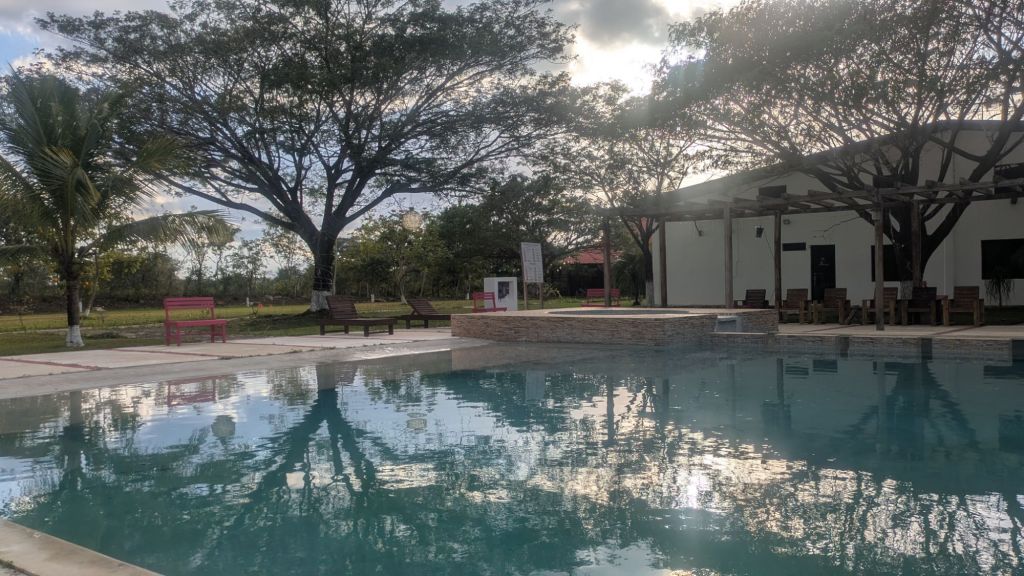
Hotel Real Primavera Campeste was relatively expensive  (€49 for the night) for a hotel that was really in the middle of nowhere but we needed somewhere to break the journey to Palenque. The hotel avenue was long and lined with trees, the gardens were landscaped and the rooms were spotlessly clean. It was a place that could accommodate a crowd but the only other residents were three men driving from Monterey in California to their home to Belize. They were also breaking their journey at the hotel. Apart from us,  a flock of long-tailed Grackles made good use of the pool, dipping and  diving at dusk

.

Swimming Pool, Hotel Real Primavera

The countryside was still really flat the following morning until we reached Palenque, with its backdrop of mountains and its hilly streets. This time we booked into a hostel, which had a large pool, an outdoor kitchen  and a ramshackle garden.  Although everything was a little shabby, Alex, the proprietor  and his father were friendly and welcomed us to Villas del Carmen Hostal. It was also pretty cheap at €22 a night for an ensuite room. Security seemed to be an issue in the area. We were a bit perplexed when the shop across the road, one of the Six convenience stores that were so common in Mexico, only served customers through shutters passing out the goods through vertical bars. We walked into town at dusk but the lighting was so bad and the pavements so cracked that we got a taxi back to prevent us from falling down a hole by the side of the road.

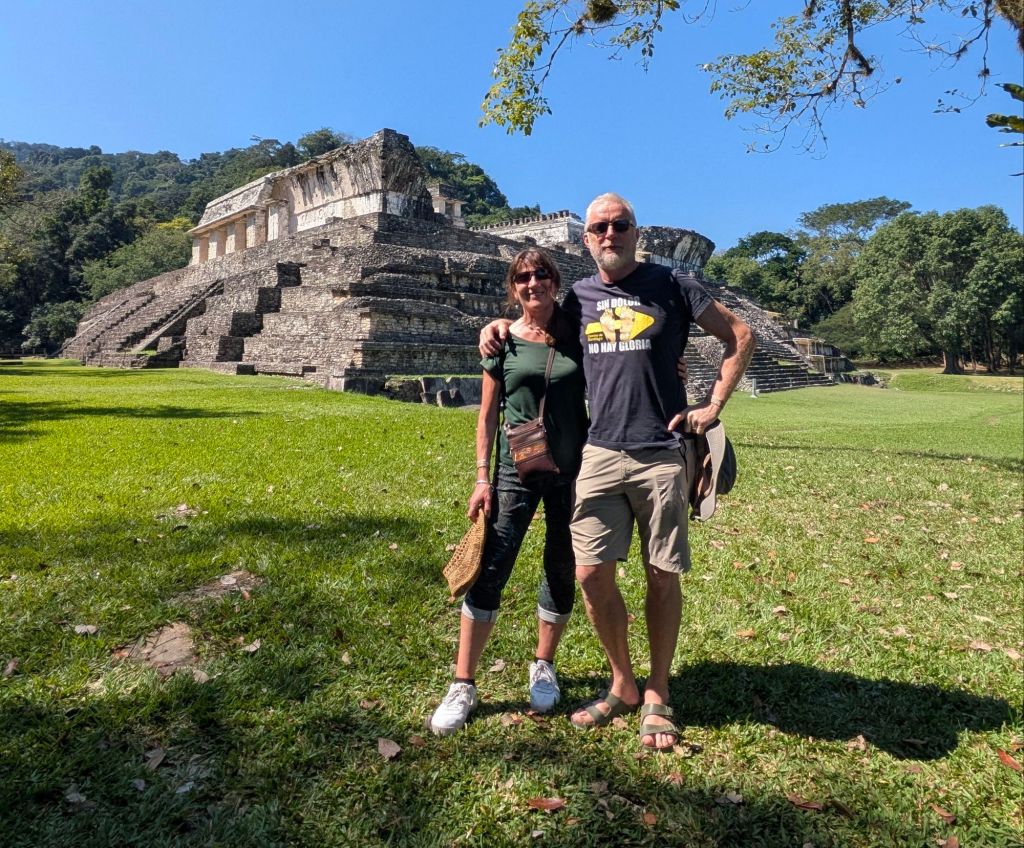
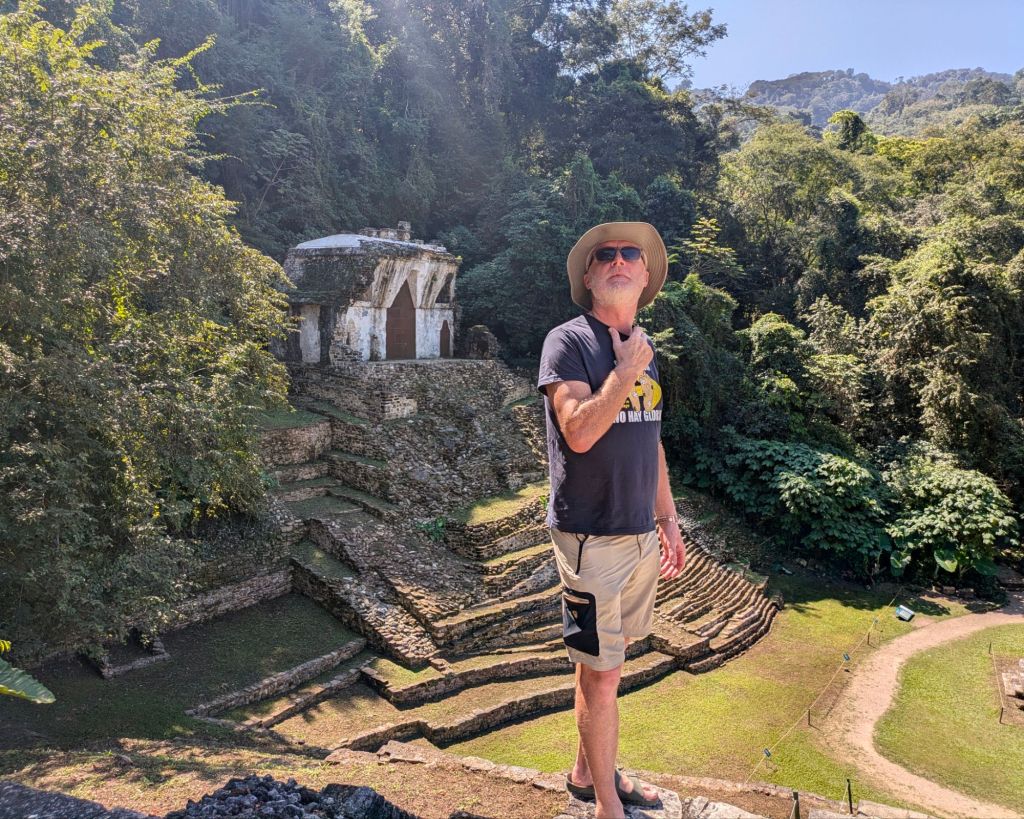
The Palenque Ruins opened at 8am and we were in the queue shortly afterwards. We paid a fee for the ruins and another to enter the National Park where the ruins were located.  English speaking guides were available, most vying for our attention, especially as the number of visitors was quite low.  The prices were fluid and bargaining was expected. We settled on Tito, a young Mayan who had good English and a nice manner teamed up with a  French mother and son duo who were also looking for an English speaking tour. 

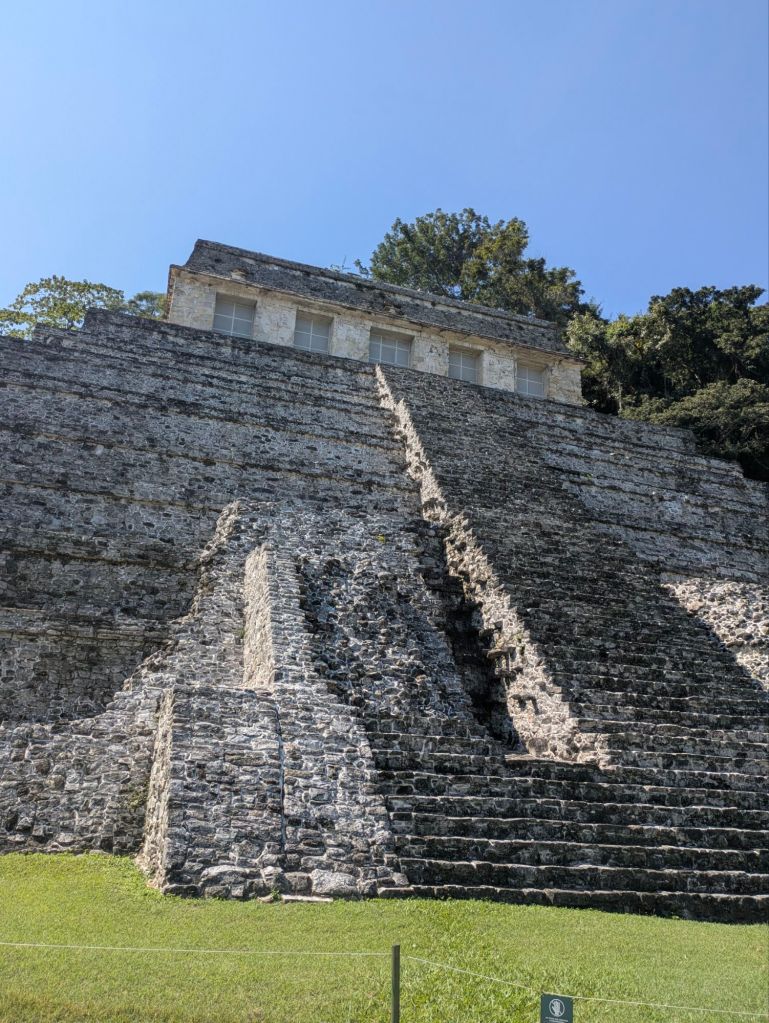
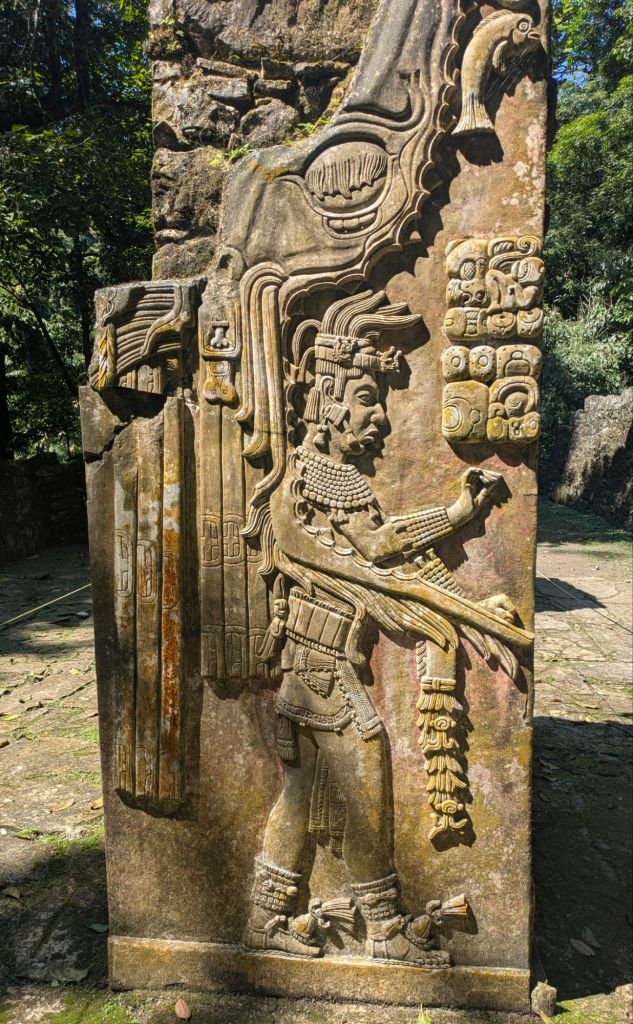
This was our first Mayan site in Mexico and it was really impressive, with several clusters of enormous buildings, most of them with almost vertical stairways. The complex was surrounded by cedar, mahogany and sapodilla trees which provided shade for visitors, the locals selling crafts and the many birds. In the jungle beyond, howler monkeys were living up to their names and creating a racket. The site was all the more impressive because all the structures were built about one thousand, five hundred years ago  with human sweat alone and without the use of the wheel or with machinery at all. The settlement flourished in the seventh century under the rule of Pakal, who lived until he was eighty years old which was a phenomenal age at the time. We walked around in sunshine listening to the monkeys, and tried to imagine the buildings as they would have been in Pakal’s time when they were painted a blood-red colour with elaborate red and blue stucco details. Magic mushrooms were reserved for the noble classes and we’re used in many Maya ceremonies  as a means of communing with the gods and ‘waking up the mind.’  Mayan idea of beauty was totally different to ours, they favoured an elongated head and cross-eyes.

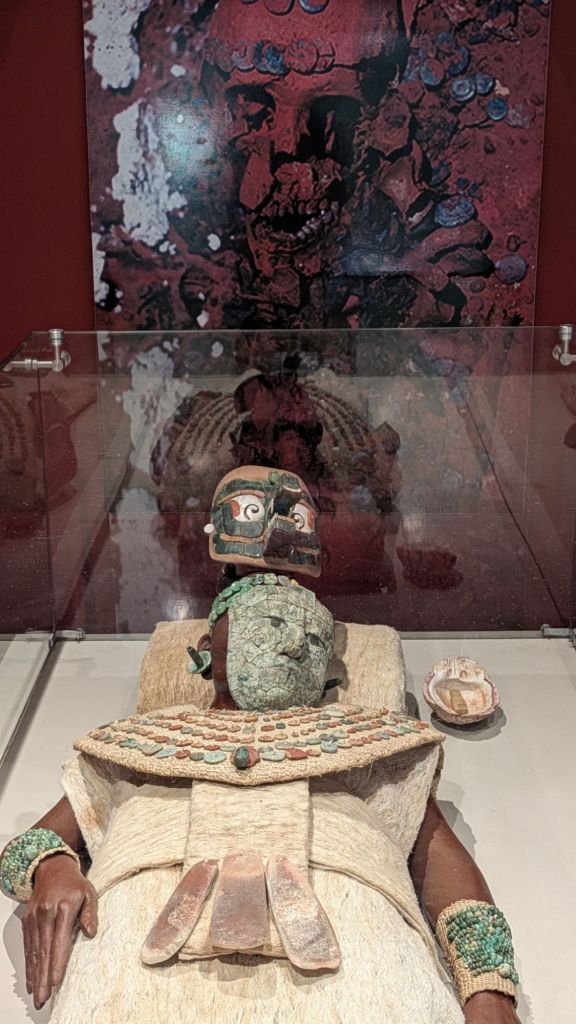
In the excellent museum, we saw a replica of the sarcophagus of the Red Queen which was only discovered in 1994 in a temple beside the large Temple of the Inscriptions where Pakal was laid to rest. The Red Queen is believed to be Pakal’s wife and she got her name because of the bright red dust made of cinnabar (a red mineral made of mercury and sulphur) that covered her skeleton when she was discovered.  She was also buried with two servants and copious amounts of jade and pearls. 

The Red Queen

Despite all the grandeur, the site was abandoned, possibly due to deforestation and feuds with neighbouring tribes, and soon swallowed by the jungle and concealed for centuries. It is entirely probable that many more buildings are  still hidden under the rampant growth.  In some places away from the main clusters, fallen walls were covered in moss, just like any abandoned cottage in Ireland.

Our next stop was problematic. We wanted to visit Saint Christobel de las Casas, a beautiful colonial town in the mountains about a five and a half hour drive from Palenque but there were  worrying reports about the safety of the roads leading to the town especially the Ruta 199 from Palenque. At the ruins, we met a young German couple who travelled in the opposite direction the day before without any hold-ups.  Locals also said that  the journey was quite safe as long as we drove during daylight hours and we gave ourselves plenty of time.  The main risk was road closures.   the Zapatistas, an indigenous political activist group in the state of Chiapas sometimes blocked roads to highlight their grievances to the government.

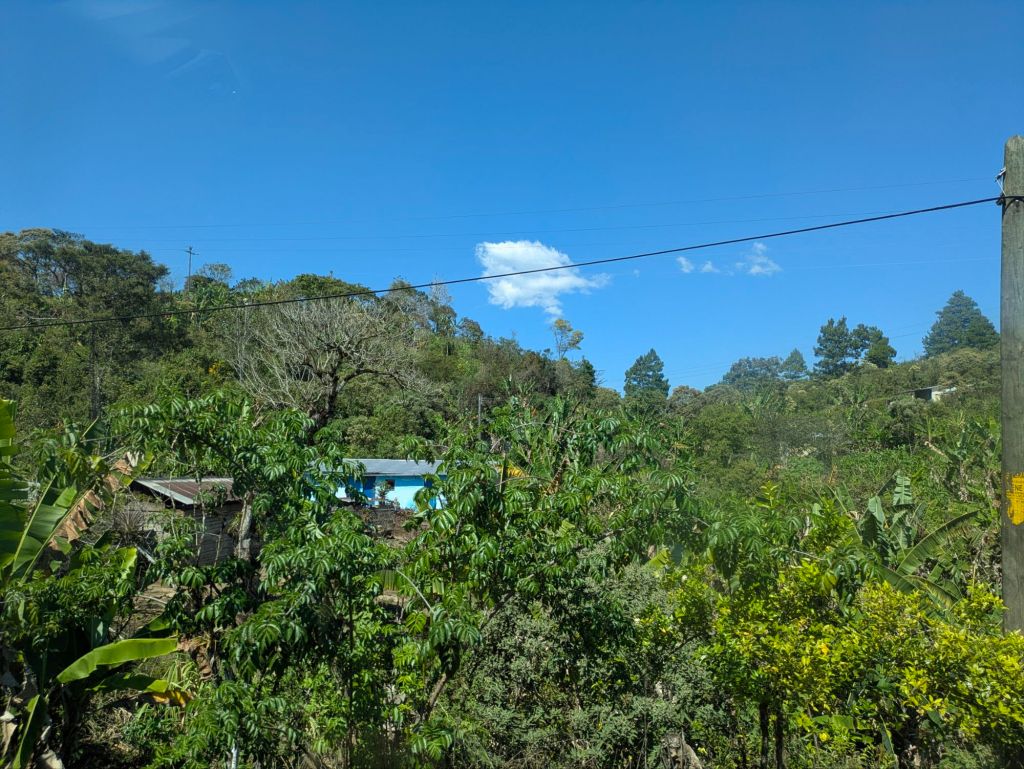
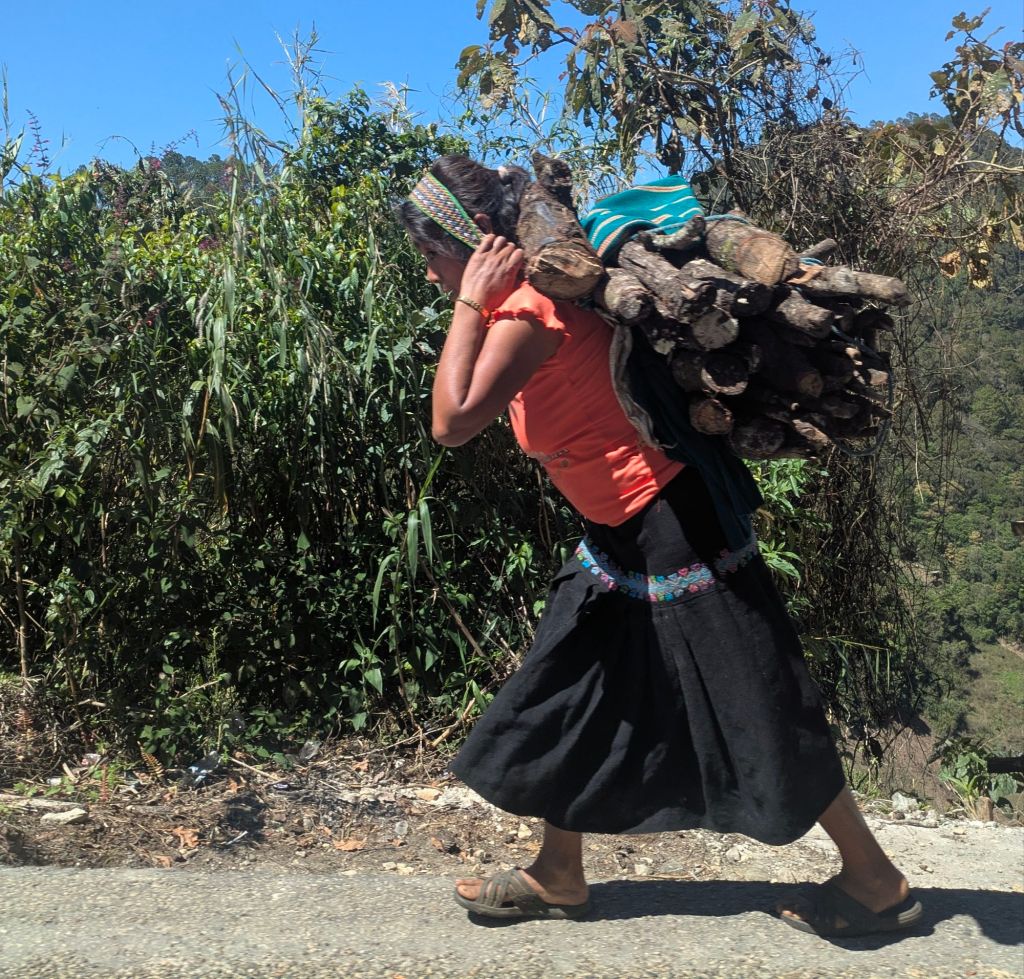
It was a beautiful, sunny morning as we packed up in Palenque and headed for the hills, feeling a little apprehensive. The distance between the towns of Palenque and San Christobell was only 210kms but Goggle Maps was giving us an estimated time of five hours and twenty minutes. At first traffic was heavy and soon we were climbing along winding steeps roads with curving bends in a convoy of trucks, minibuses and motorbikes. There were small herds of cattle grazing in the fields, maize growing everywhere, at the sides of the road and crawling  up the vertical mountain sides.  Children walked to school and women sat at roadside stalls, selling drums of diesel and petrol as there seemed to be no gas stations.  It all seemed very normal,  a beautiful drive with stupendous vistas of mountains, houses dotted in the valleys and pretty villages. Soon we relaxed although it was impossible to relax completely…but not because of bandits or protesters.

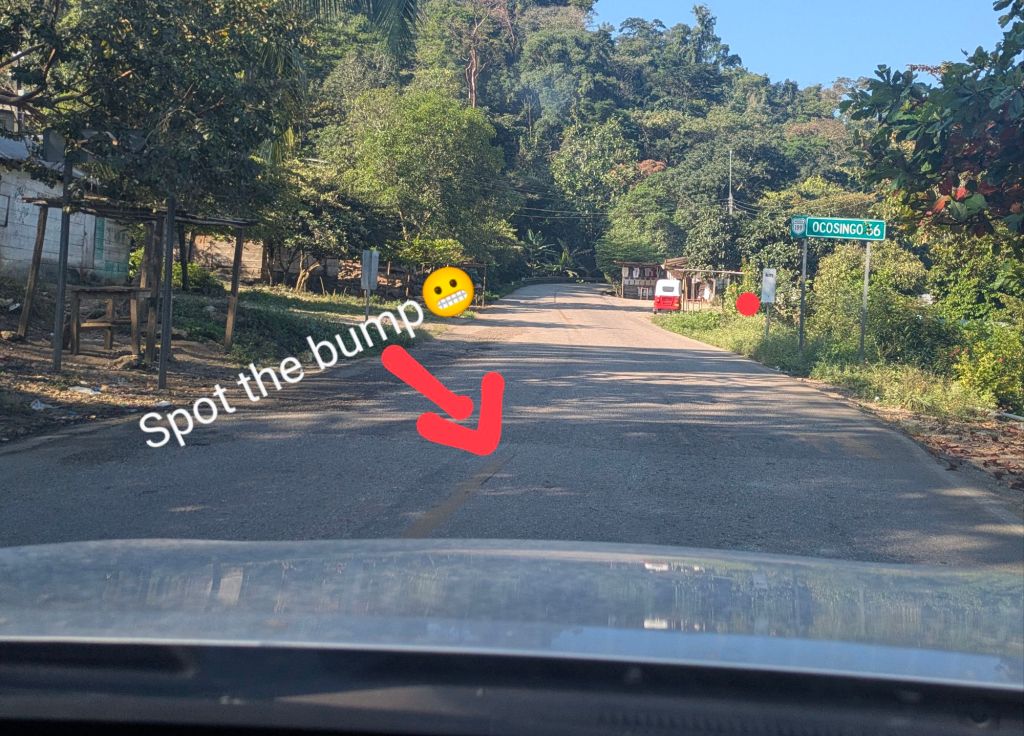
The biggest danger was the  huge number of speed bumps on the roads. The dappled sunlight through the trees cast shadows on the road making it almost impossible to see  them and there were very frequent and sometimes on blind bends. It was easier when we were travelling behind a vehicle as we had some warning as they braked.

Beware of the hidden Speed Bumps
Hard working Women on the Road

Soon there was the smell of pine in the air from the towering forests as we approached San Christobel de las Casas. The town sits in a valley in the highlands of Chiapas in the Los Altos region at an altitude of 2200 metres. It was sunny but there was a tinge of coolness in the breeze even in the mid-afternoon which soon had us reaching for our jackets which we haven’t needed since we arrived in Mexico.

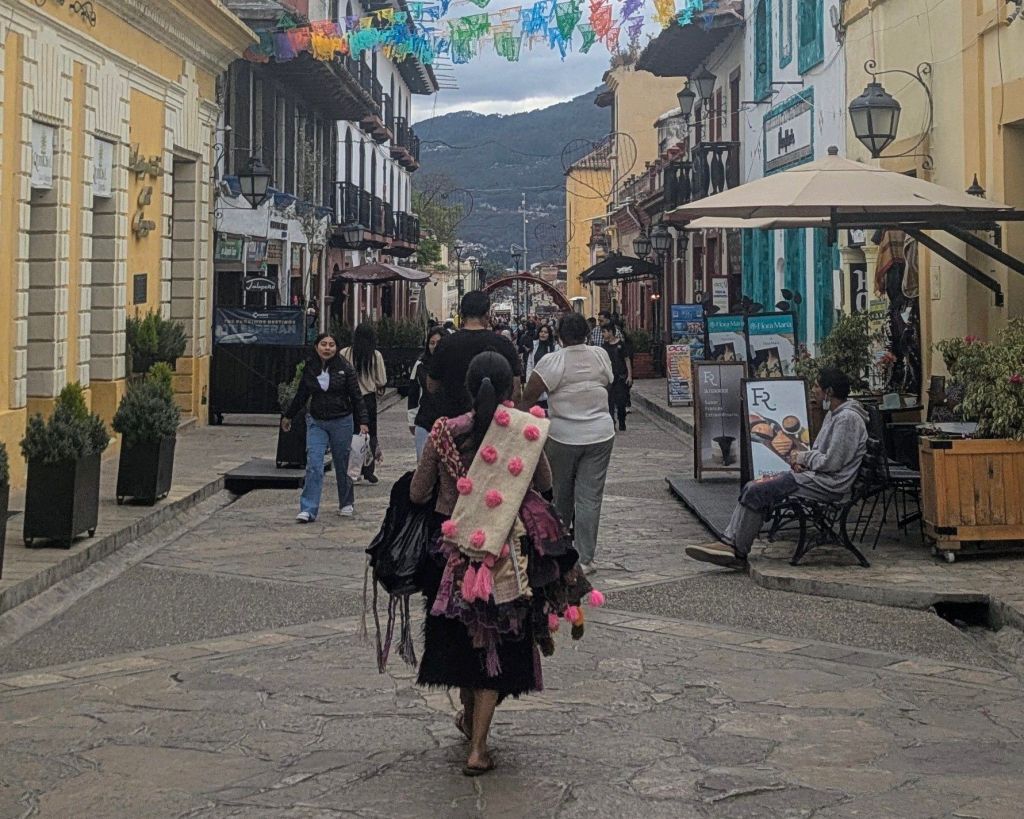
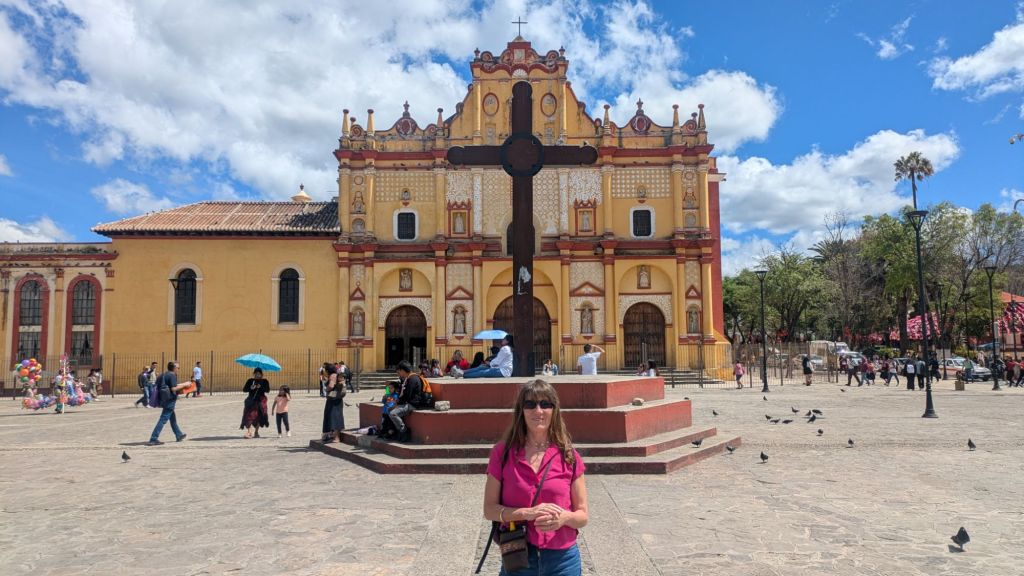
San Christobel was entirely different to any other Mexican town we have visited so far with its cobbled streets, pastel coloured houses and refreshing mountain air. There were churches on every corner, a baroque cathedral  that was damaged by flood and earthquake, (the most recent earthquake was in 2017). Several long pedestrianised street were full of cafes, restaurants and high-end shops with hardly a broken pavement or litter anywhere.

Chiapas is one of the poorest state in Mexico with the highest concentration of indigenous people, about 40 % of the population being indigenous. Despite their high numbers, they feel marginalized    The protests were about inequalities, discriminations, land rights and  destruction of the environment . Like most disputes, it was complicated. For example, Coca Cola have a large factory on the outskirts of town but some believe that the production is detrimental to the environment and uses so much water that it changes the natural landscape. But the state of Chiapas drinks more coke than anywhere else on the planet. It is even incorporated into many of the ceremonies and rituals of the indigenous people, taking the place of the local moonshine, a drink called pox (pronounced ‘push’ which means ‘medicine’ in the local language.)

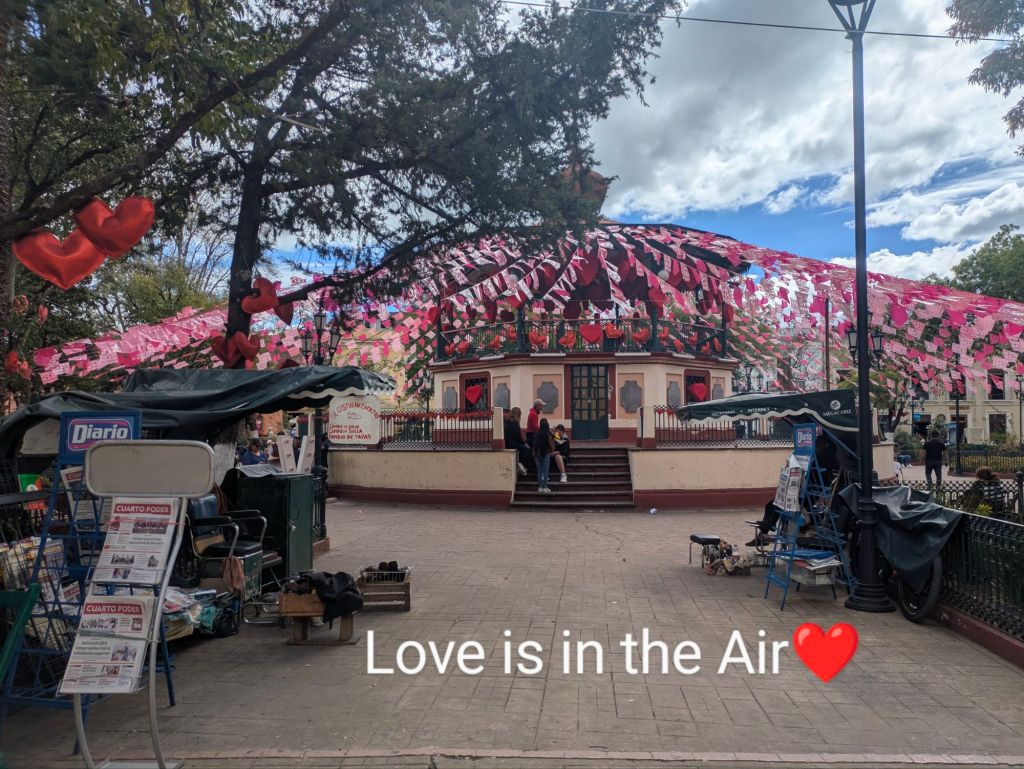
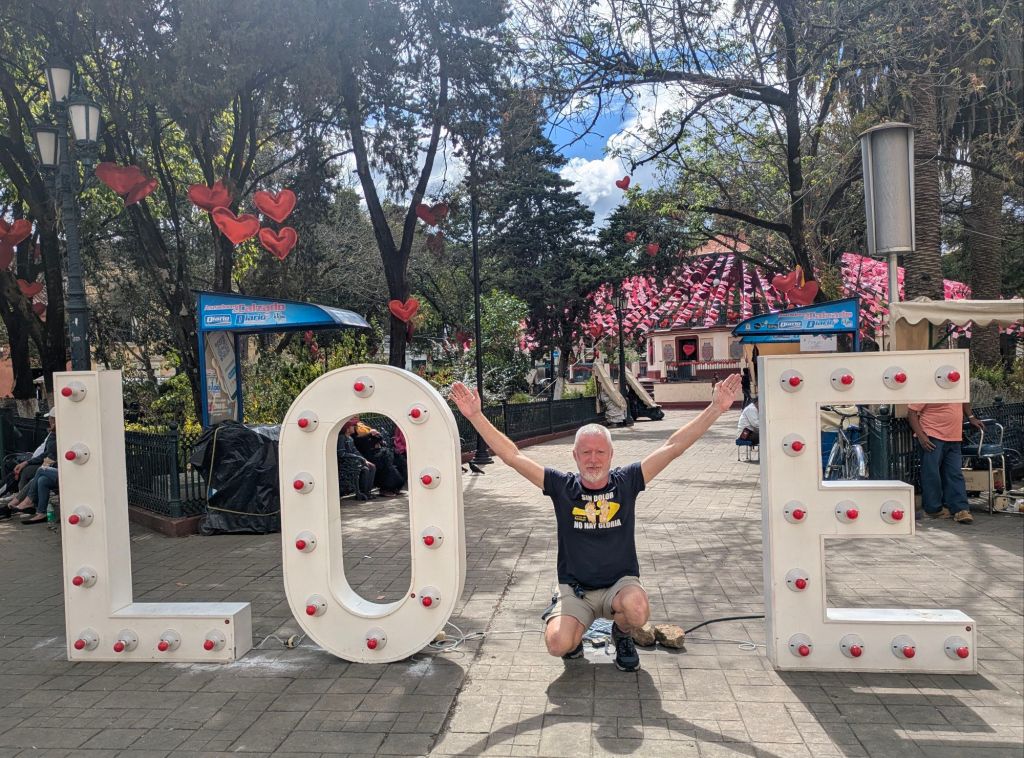
There was no sign of unrest or political activism  on Valentine’s day. Love was in the air in the Central Plaza which was festooned with ribbons and hearts to celebrate the day.

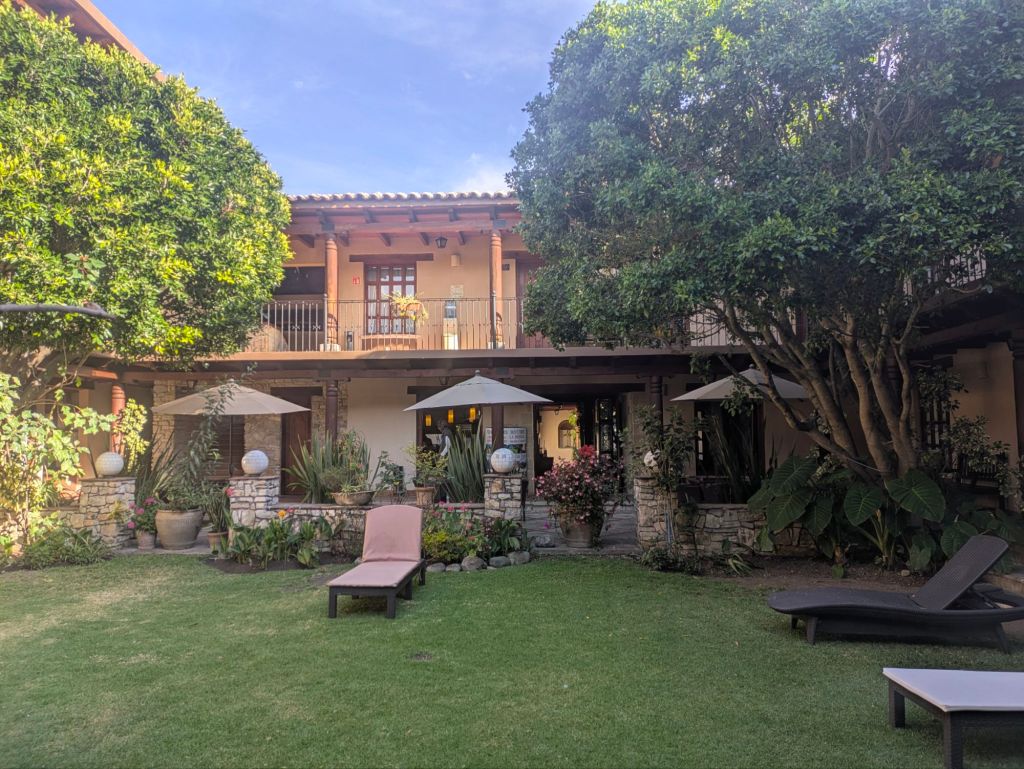
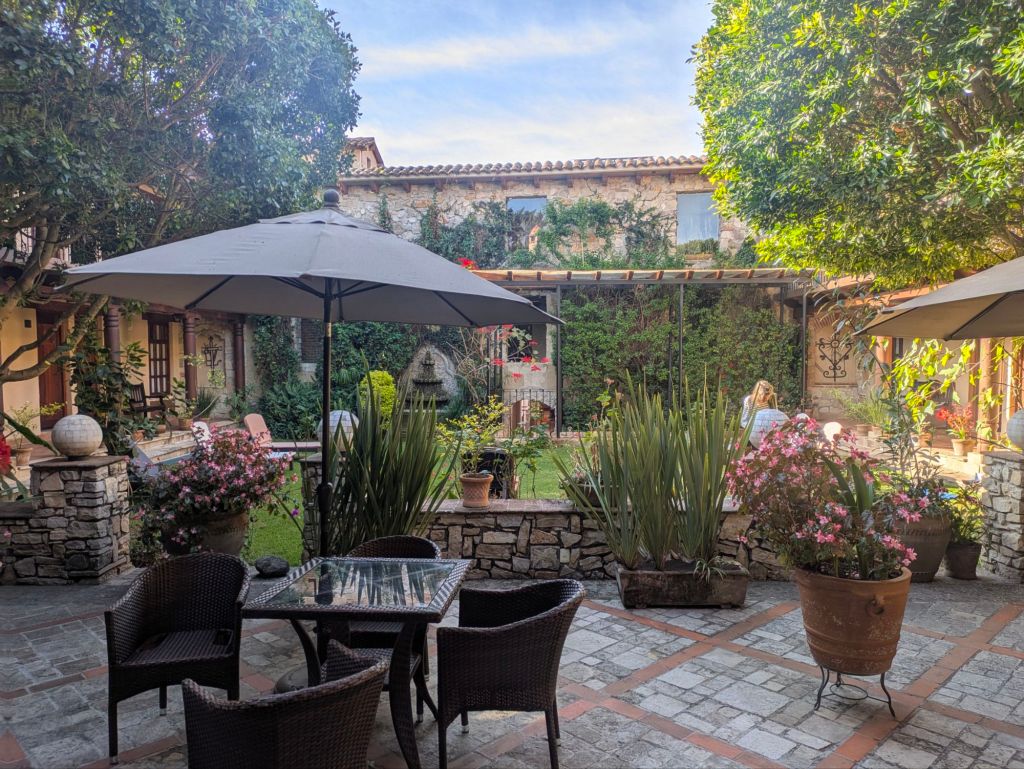
We booked into La Estancia, a hotel in a central location. It didn’t look much from the outside, a green door in a low single story building but inside, it opened up into a series of courtyards full of plants,  shady sitting areas and lots of rooms with balconies overlooking the courtyards. We were delighted with the luxury, 5 star accommodation at 2 star  prices (€40 a night). They also had an offer of 2 cocktails for 140 pesos (about€7) which was something we availed of seeing as it was Valentines Day and we were now wearing  matching wedding rings. There are tourists here but many are scared away by the simmering political tensions which probably explains the low prices.

Our Hotel, San Cristobal de Las Casas

Our next step will be to the  neighbouring region of Oaxaca with beaches, another colonial city and trekking between villages in the mountains, But that’s for tomorrow. In the meantime we are enjoying luxury in the romantic city of San Christobel de las Casas, or San Chris as it’s known locally.

Till next time, thanks for reading.

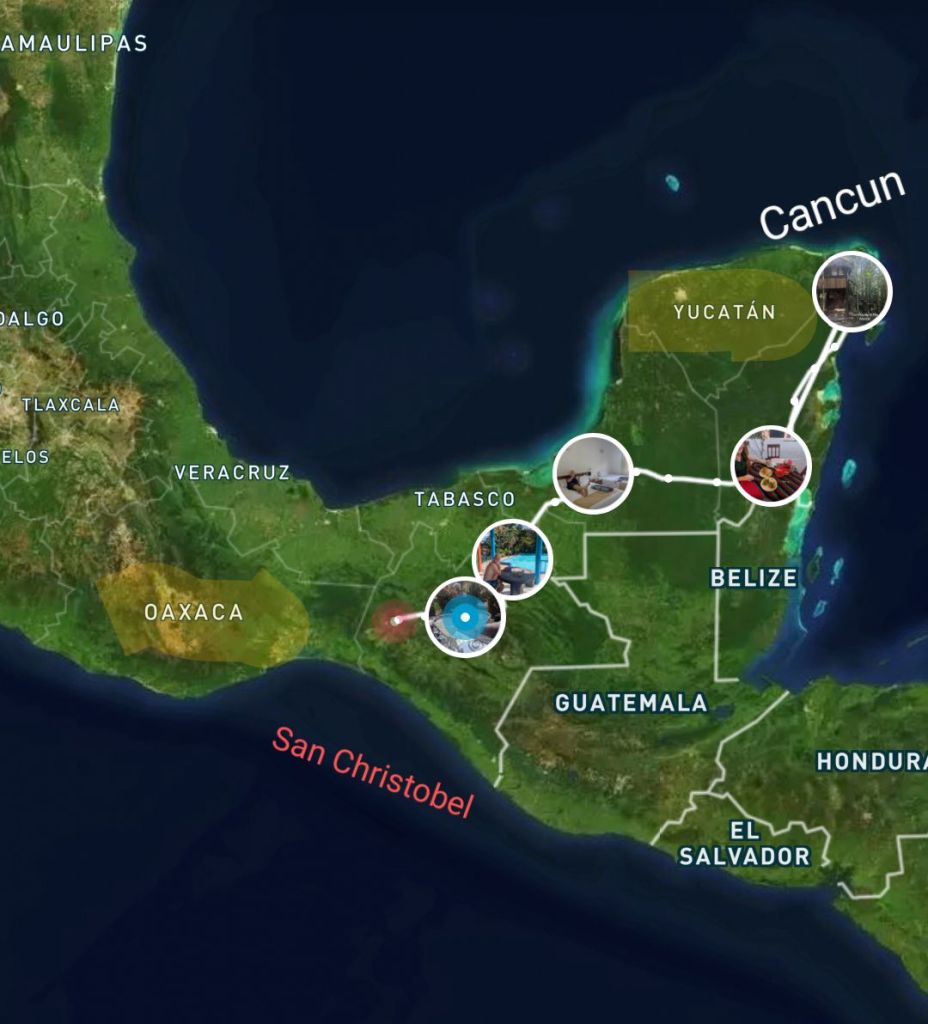
Our Journey so far
San Chris
Cathedral , San Christobel de Las Casas
Mexico….Ruins and Ruinous Roads

Hola, Mexico

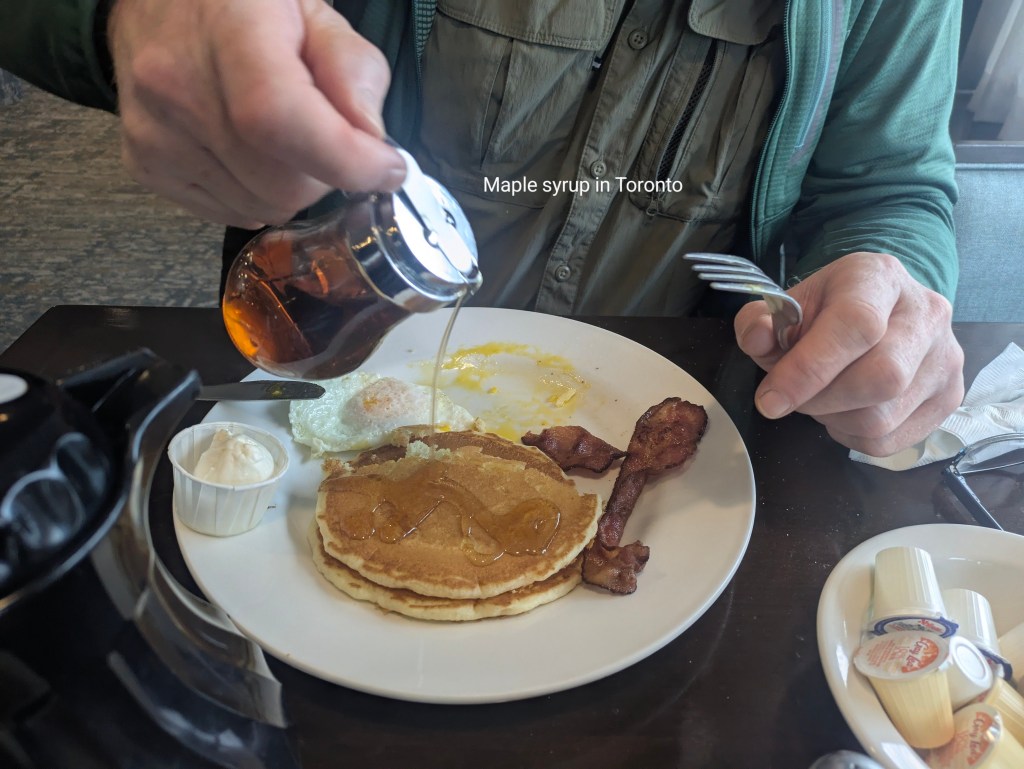
Our journey to Mexico was longer than expected…much longer. The first seven-hour leg from Dublin to Toronto was very pleasant. The Air Canada flight was more than half empty, leaving plenty of space to spread out, the food was good, the drinks were complimentary and there was an endless supply of chocolate biscuits and pretzels. ‘Take as many as you want,’ said the steward and we took her at her word.

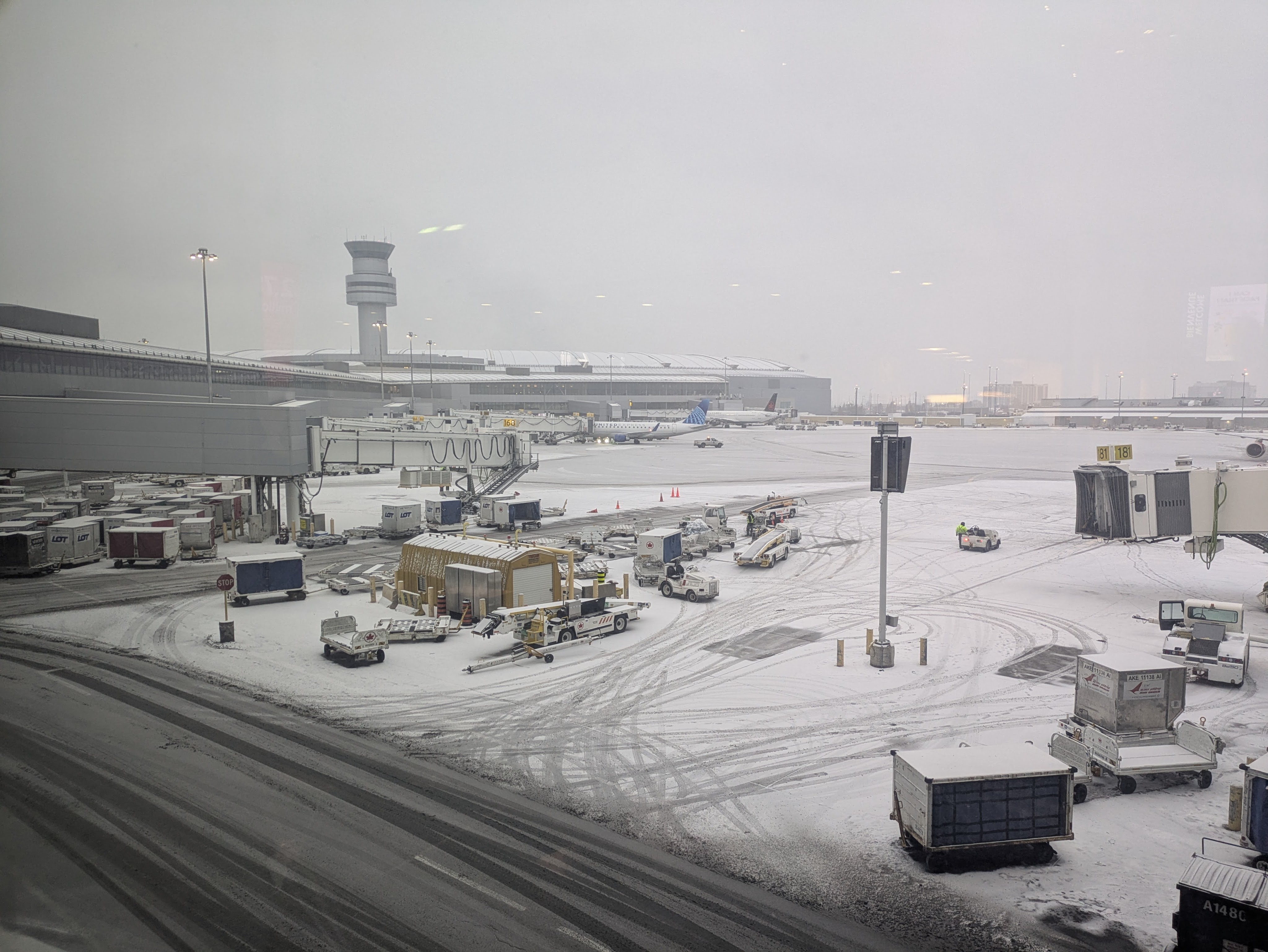
There was a long wait (about six hours) in Toronto for our connecting flight to Cancun in Mexico but this was scheduled, part of our cheap, last-minute flight deal and we had chocolate biscuits to nibble on. We entertained ourselves by reading our books, working on our laptops and watching an impressive fleet of snow ploughs spring into action to clear the runways that were turning white as the snow became heavier and the temperatures outside dipped to minus 4 degrees.

A snowy Toronto Airport

As we approached our departure gate, there was an announcement that the Air Canada flight to Cancun, Mexico was overbooked and they were looking for two volunteers to spend a night in an hotel near the airport with meals provided and a seat on the same plane the following day plus $1000 in travel vouchers with Air Canada. The inducements kept increasing until they were offering $2000 voucher to each of the volunteers. At that stage, Caoimhin and I looked at each other, both deciding that it was an offer we couldn’t refuse.

The flight left without us and shortly afterwards we had a heart-stopping moment when it seemed that we mightn’t get a seat on the flight the following day. The airline woman was very cranky, kept muttering under her breath about the guy who had made the deal with us. Eventually seats were found but we then had to argue with her to increase our allowance for meals while she sighed,  gave us fake smiles and acted as if our vouchers were coming out of her own pocket.

Standing outside the terminal, we inhaled ice-cold air and felt our fingers go numb while we waited for almost an hour for a shuttle bus to take us to our hotel. Although we were travelling with just carry-on luggage, we had some packable jackets and hats (in case we did some mountain hiking in Mexico).  These clothes were no match for the Canadian cold so we shivered and waited and wondered about the wisdom of our decision.

The Holiday Inn had a faded, tired look but the room was large, the bed was comfy, the shower was hot and it had a swimming pool. We didn’t do any sightseeing in Toronto, just walked in the snow around the Holiday Inn area  which was a pretty dreary strip of fast food joints, hotels and conference centres. We had some fun studying Air Canada flight destinations to see where we might go to on our next trip.

The flight from Toronto to Cancun was in complete contrast to the Dublin leg. It was crowded, there was a struggle to fit bags in the overhead lockers. The only thing complimentary was water and there wasn’t even a TV screen to watch a movie.  The good news was that the flight-time was only four hours.  It seems that everyone was escaping the Canadian cold. The woman next to us had flown in from Halifax and was on her way to a school reunion in a holiday complex in Cancun.

We were sweating even before we left the terminal building. It was 9.45pm and 27oC (Toronto and Cancun are in the same time-zone but with totally different climates). Passport Control was very smooth, we were given an automatic visa for 120 days which was far more than we needed and made our way to the Alamo office to pick up the car that we had hired online. Caoimhin had done quite a bit of research and this company seemed to offer the best deals. He had opted for the ‘mystery car’ in the compact range. The mystery turned out to be a very roomy Nissan X Trail.

Our accommodation, Closetotheairport was certainly near the airport but as there was a one-way road system, we did an extra lap before we were travelling in the right direction. The traffic was light but the roads were atrocious – even the fast lane on the highway was pot-holed. But that was nothing compared to the craters when we turned off onto the side roads near our accommodation. I had messaged Closetotheairport about our delay in Toronto and they had kindly changed the booking without any additional charge.

Outside the accommodation which was a series of white, double storey buildings, we studied the photos that Booking.com, had sent us, trying to locate our room. A tired-looking woman leaned over an upstairs balcony and asked what we were doing. When I said my name, she put her hands to her face and groaned. She had forgotten completely about the changed booking and there wasn’t a room ready for us. It was almost midnight at this point and I’m sure we looked as exhausted as our host who set about making up a bed and cleaning a room.

The room was fine but the intense smell of damp and mould that permeated the whole building was awful. We slept after turning off the aircon and opening the windows as wide as we could despite the warm temperature. Looking out the bedroom window in the morning, we could almost see the trees and plants growing, vines tendrils climbed telephone poles and weeds grew everywhere. I would not have been surprised if the car had disappeared overnight under a cloak of greenery. We left home with bare trees and little growth so the rampant green-ness and ‘jungle feel’ was almost a shock. After a surprisingly good shower in the huge bathroom, we googled accommodation, booked a spot  for two nights and  headed off in our rented car, travelling south.

 Driving in Mexico required some adjustment. We were on the ‘wrong side’ of the road, surrounded by some erratic drivers  and then there were the speed bumps, a huge number of them. These had no distinguishing road marks to alert drivers although there were some faded signs right at the speed bump (when it could be too late to brake). We soon found ourselves airborne over an invisible bump.  Thankfully no damage was done.

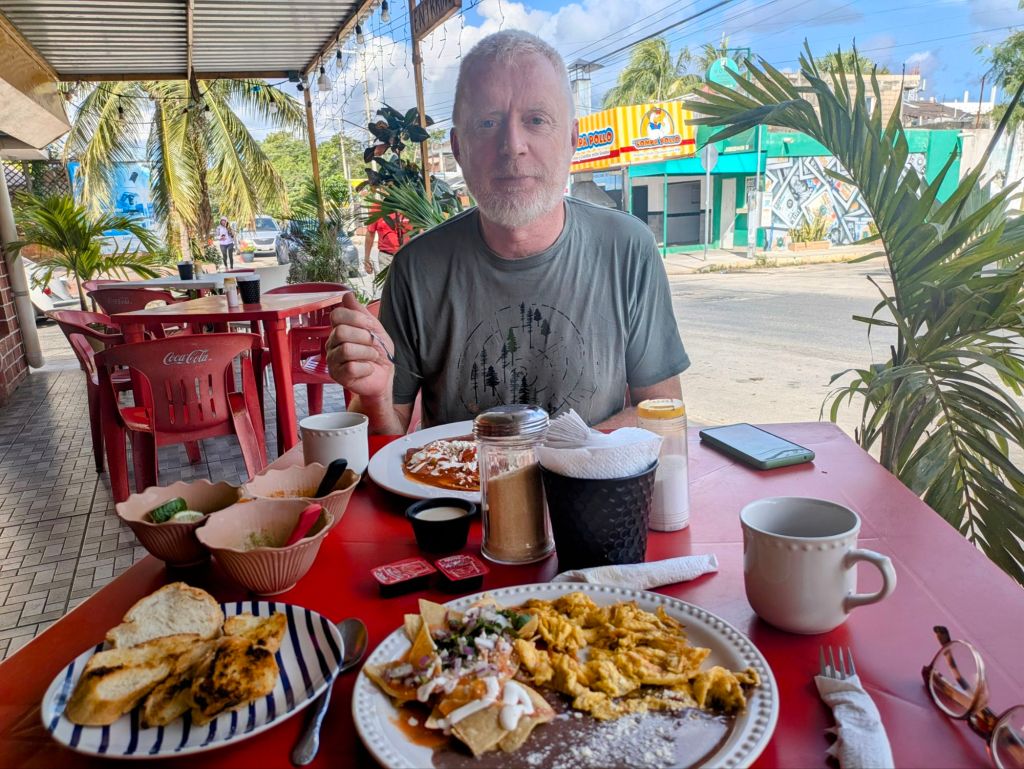
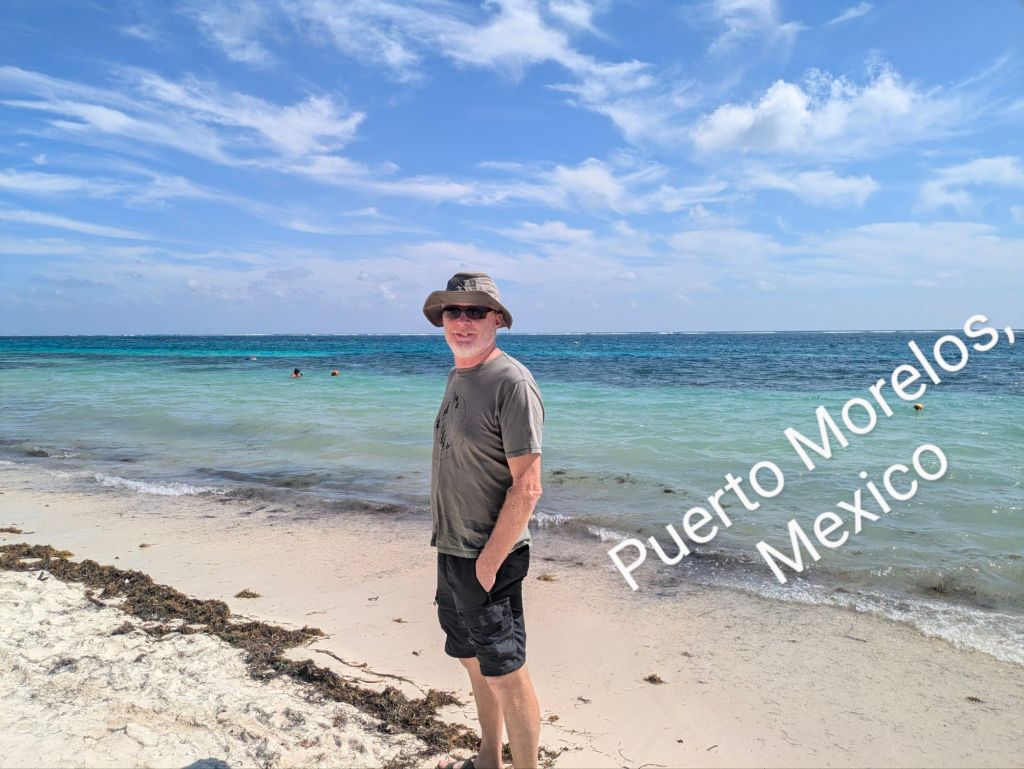
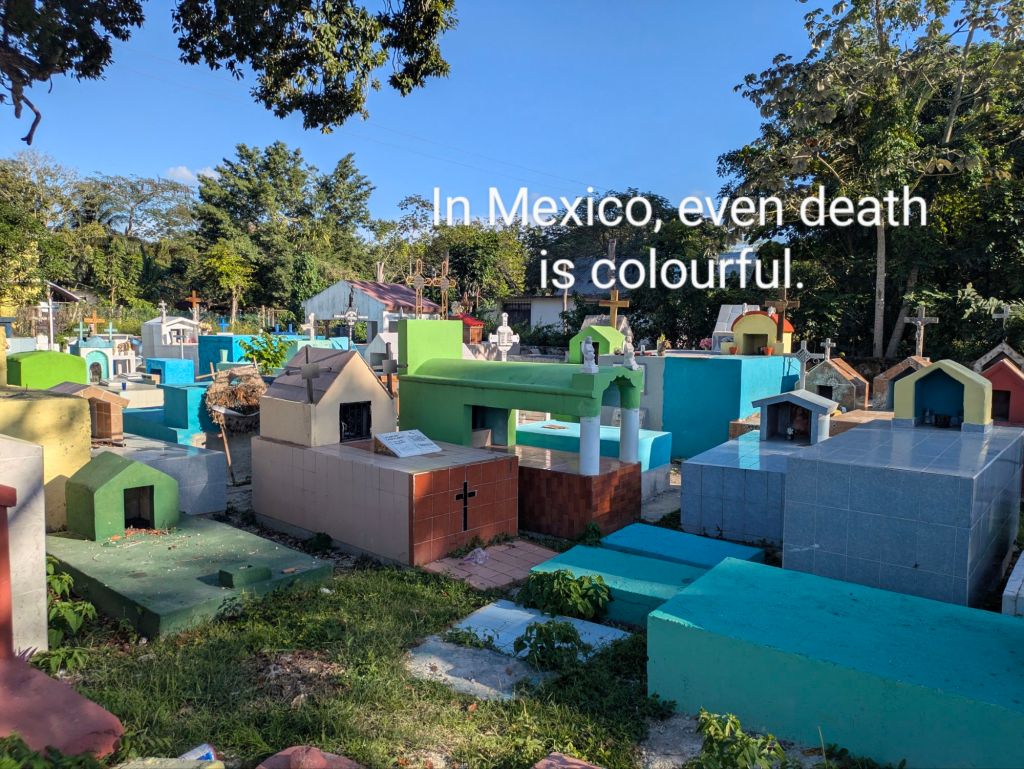
We made  a minor detour to Puerta Morelos to eat breakfast and to see the Caribbean, which was a gorgeous, shimmering turquoise. The intensity of colour in Mexico is mesmerising, not only in nature with the sea-blues,  the greens of the jungle, the multi-coloured flowering shrubs but the houses are also painted in vibrant shades. We even visited a cemetery which each crypt was painted in different colours, making it as colourful as a West Cork village.

Mexican Breakfast
Carribbean Sea💕
Mexican Cemetery

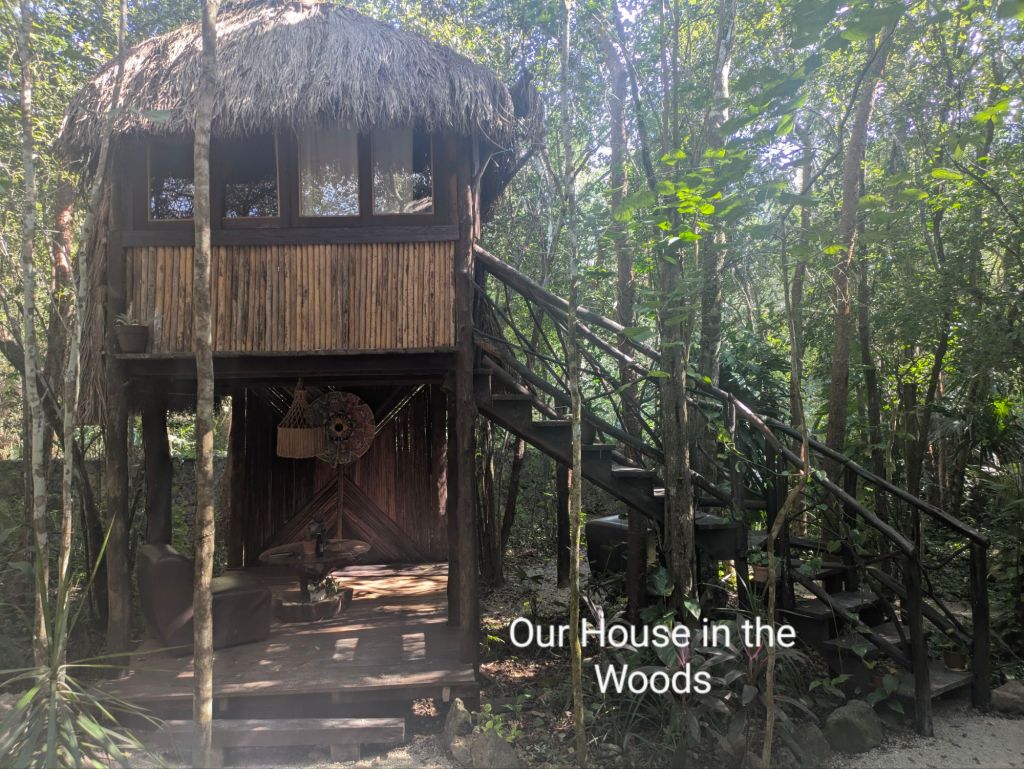
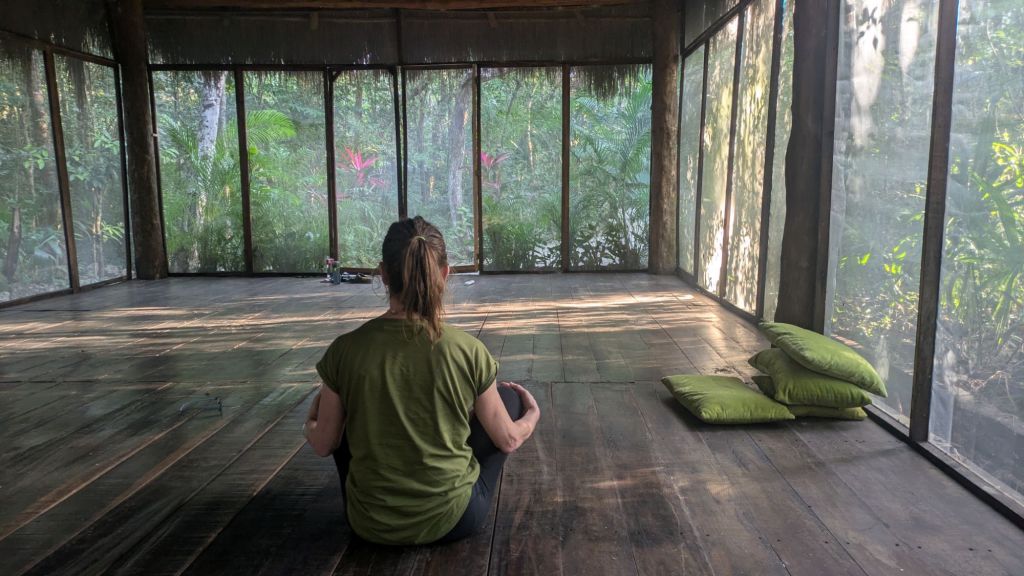
We turned inland to stay in a little wooden cabin in the jungle(Madre Tierre Eco) near the little town of Leona Vicario.The air was full of birdsong and the cabins were almost hidden by the tall trees. There was a yoga studio, an outdoor kitchen and very few guests. Birds flitted around the small pools , dipping to eat the insects floating on the surface. The only downside was that there was no fridge.

Jungle Yoga Studio

This area of Mexico is full of cenotes. We had never heard of the word until we came here but they are natural pools, formed when the limestone bedrock was dissolved by acidified rainwater and seawater. The rock sometimes collapsed in on itself, creating a system of caves and sinkholes. These provided a vital source of water but cenotes were more than a water supply to the ancient Maya who regarded them as sacred portals to the underworld.

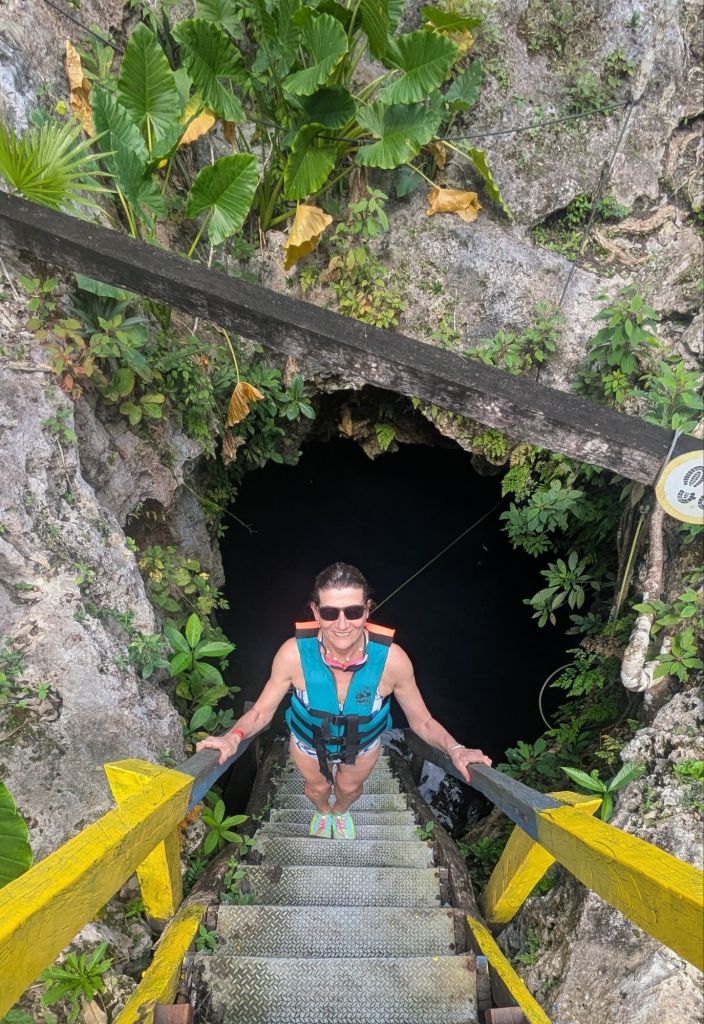
There was certainly something otherworldly about Cenote 7 Bocas (The Seven Mouths) which was  near our cabin and our first experience of a cenote. We drove down a rutted road, passing small thatched houses hidden in the tree thicket with black pigs snoozing outside. A large iguana blended seamlessly with a tree trunk until he blinked.  The cenote was a series of underground pools with seven different access points which allowed the light to enter. We swam in cool water from cave to cave as the first five caves were connected by tunnels. The  water was the most mesmerising shades of jade and turquoise, especially when the sunshine poured in from above, creating rippling shadows on the surface of the water, the roofs of the caves and the many stalagmites and stalactites. Magical.

Cenote, Boca 5
Into the Deep (Cenote Entrance)

In our cabin in the woods, we met up with a friendly guy from Liverpool, the only other resident during our two-night stay. Clark had lived in Mexico for a few years and gave us some suggestions on places to visit.  He loved  Bacalar, a town by a lake of the same name about four and a half hours further south near the border with Belize. It sounded as good a place as any to visit, even if  we had never heard of it before.

Ruta 307 was long and straight_ very straight. At one point, Google maps was showing a  straight line with the caption ‘ Turn right after 110 kms.’ Although the Caribbean was just to our left for a lot of the journey, we never caught even a glimpse of it. The road had high dense foliage on both sides with huge billboards for holiday complexes, popular for package holidays and of course, lots of speed bumps. This part of Mexico is almost completely flat so there’s no panoramic vistas on the crest of hills because there are no hills.

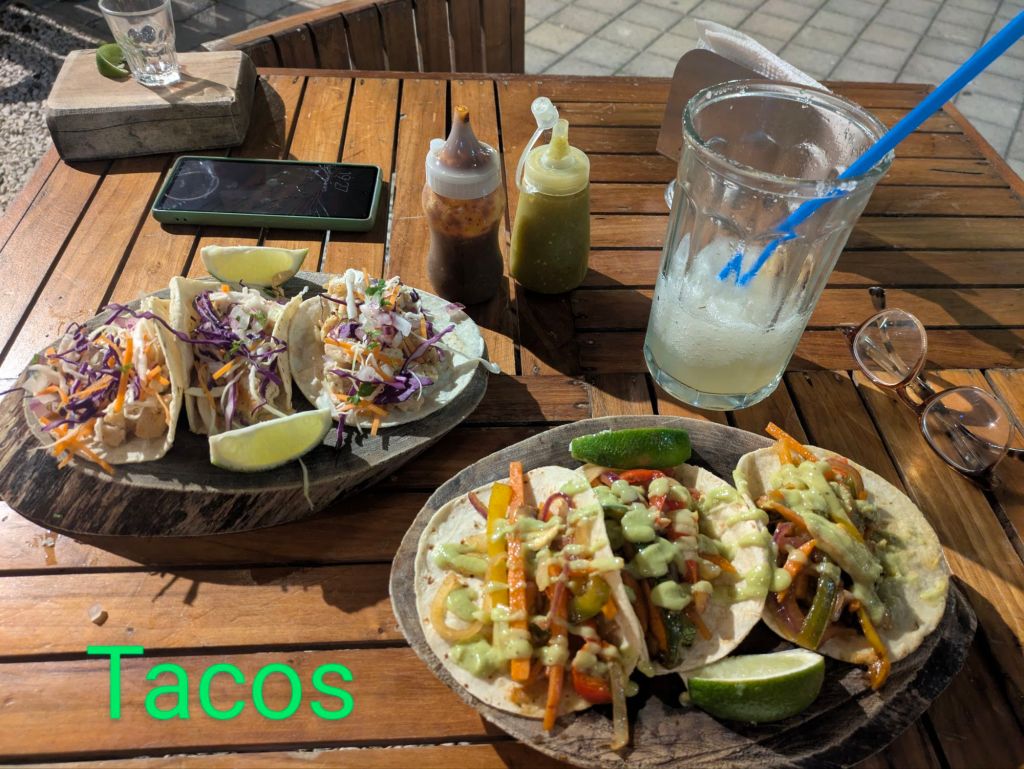
Our little apartment in Bacalar was on the far (but cheaper) side of town, away from the lake. Wandering downtown, we were a little underwhelmed by our first experience of Bacalar, the lake was hidden behind buildings, there was a dead rat on the cracked pavement opposite where we ate tacos and tortas (which were admittedly delicious) and we were (almost) attacked on the walk home by a series of growling dogs.

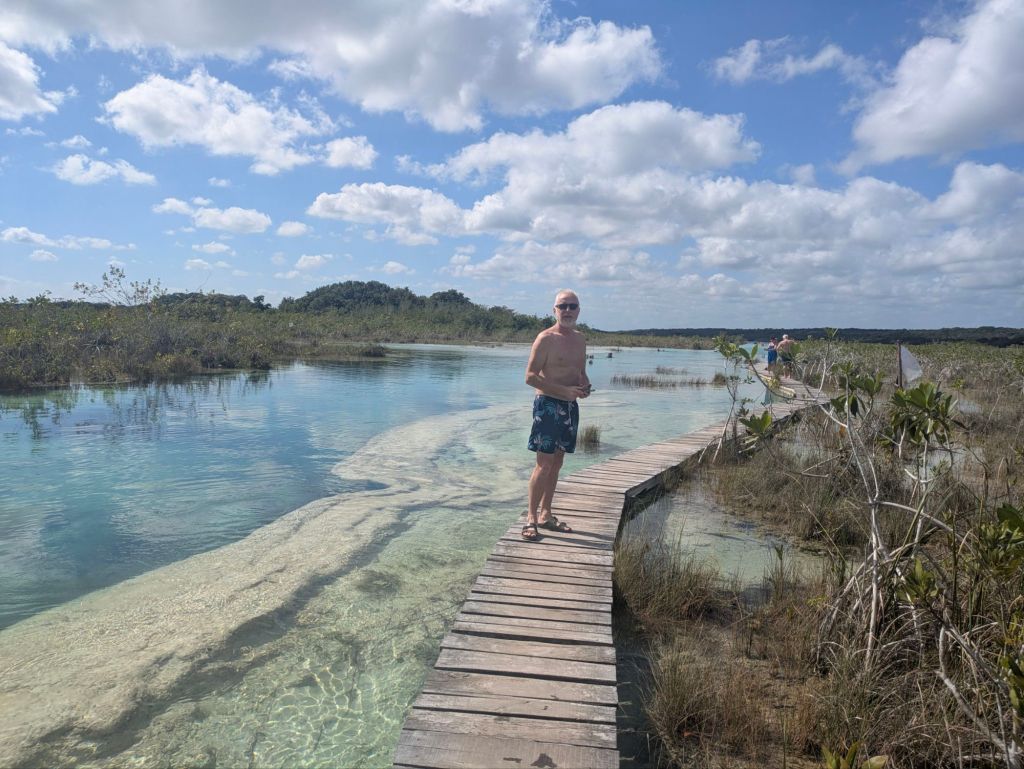
But this morning, we visited Los Rapidos Bacalar, a natural lazy river and floated effortlessly in crystal clear water along a narrow section of the lagoon lined with white, gleaming stromatolites and mangroves. (Stromatolites are layered sedimentary formations created mainly by photosynthetic microorganisms). We also visited Laguna Bonanza, which was a beautiful, quiet place to hang-out near a stunning section of the lake.

Bacalar, Mexico
Los Rapidos Bacalar

 So now, we have had a change of mind and have booked an additional two nights in Beautiful Bacalar.

Thanks for reading

Hasta Luego ,😘

Laguna Bonanza
Hola, Mexico