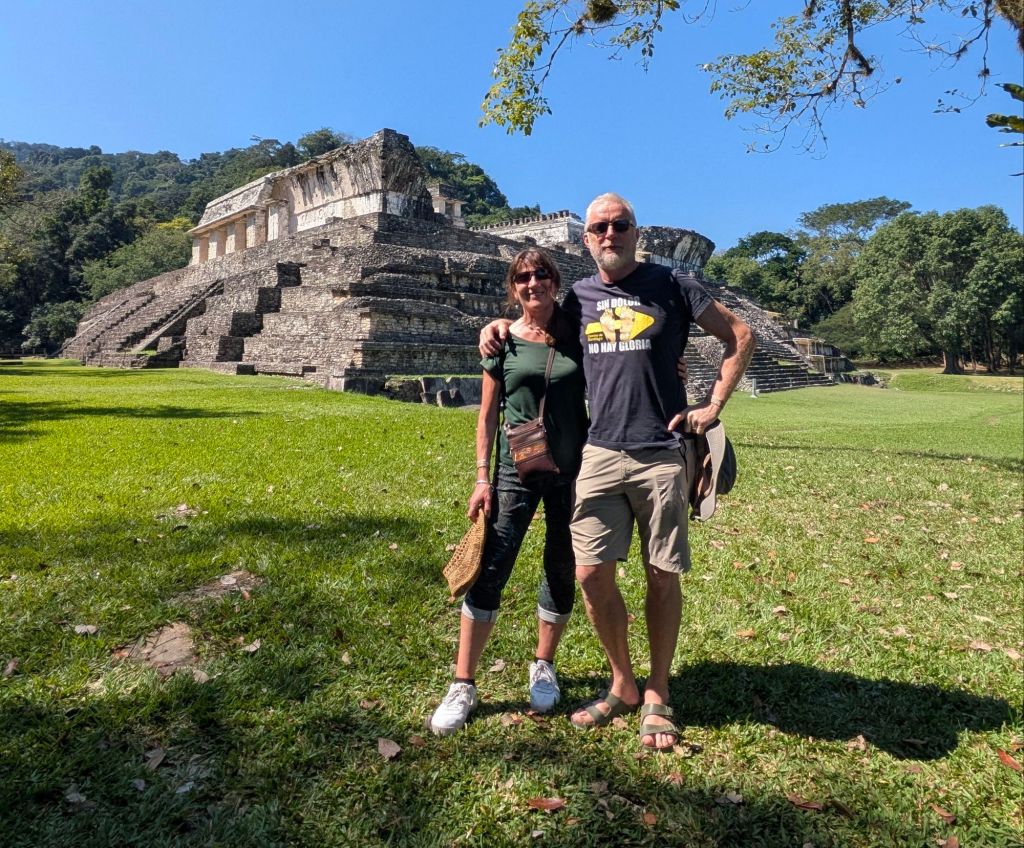
The first rain came in a violent downpour just after Ireland had beaten Scotland in the rugby match which we watched on the laptop in our little apartment in Bacalar, a little town just shy of the Belize border. It was still midmorning as Mexico is five hours behind Ireland. The morning had been warm, about 28odegrees, but cloudier than usual so we weren’t too surprised when the heavens opened. The rain didn’t last long but increased the humidity.
We love the temperatures here in the Southern Yucatan. Although it can get a little uncomfortable in the afternoon especially if the sun is out, the evenings are gorgeous, long, balmy and perfect for eating outside. Most of the Mexicans especially in the ‘local’ area away from the lake where we were staying, had hammocks, plastic tables and chairs outside their houses, where they socialised in the evenings, usually with a few beers and some music….loud vibrant tunes.
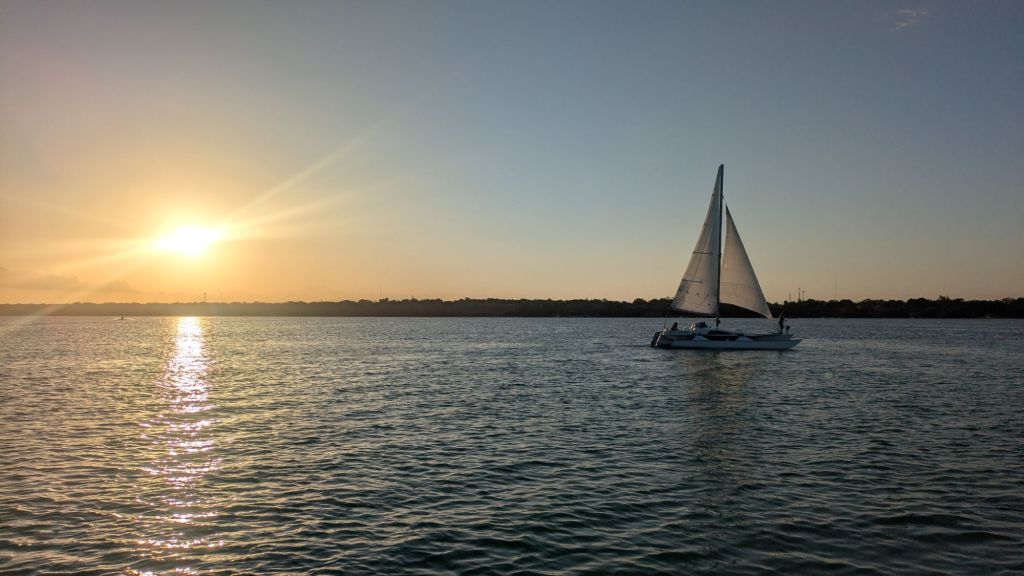
Bacalar Lake is known as the Lagoon of Seven Colours (La Laguna de Los Siete Colores). It’s almost mandatory to take a boat trip out on the lake to fully appreciate it. We chose the sunset tour which was 3 hours on the lake visiting the pirates path, the island of the birds, and cenotes (underwater sinkholes that dramatically changed the colour of the water depending on the depth.) The sun slipped down behind the town, turning the lake-water golden. On the tour, we met three German women in their early seventies who were driving around Mexico for a couple of weeks and having a ball. The only problem they had encountered was a puncture which they acquired when they hit one of those invisible speed bumps. They spent their time on the boat, giggling and trying to get the perfect photos of each other, almost like far younger Instagram influencers.
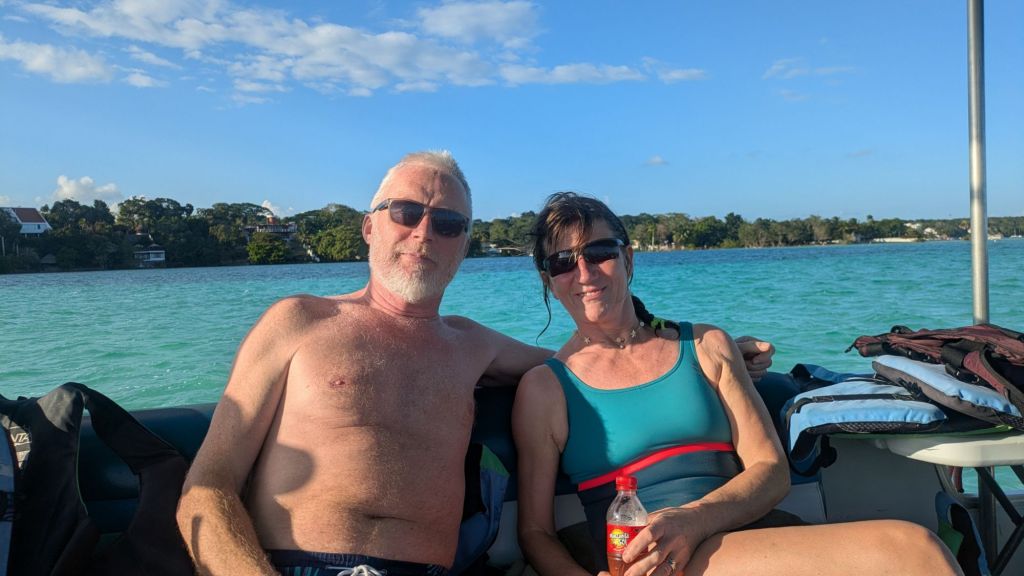
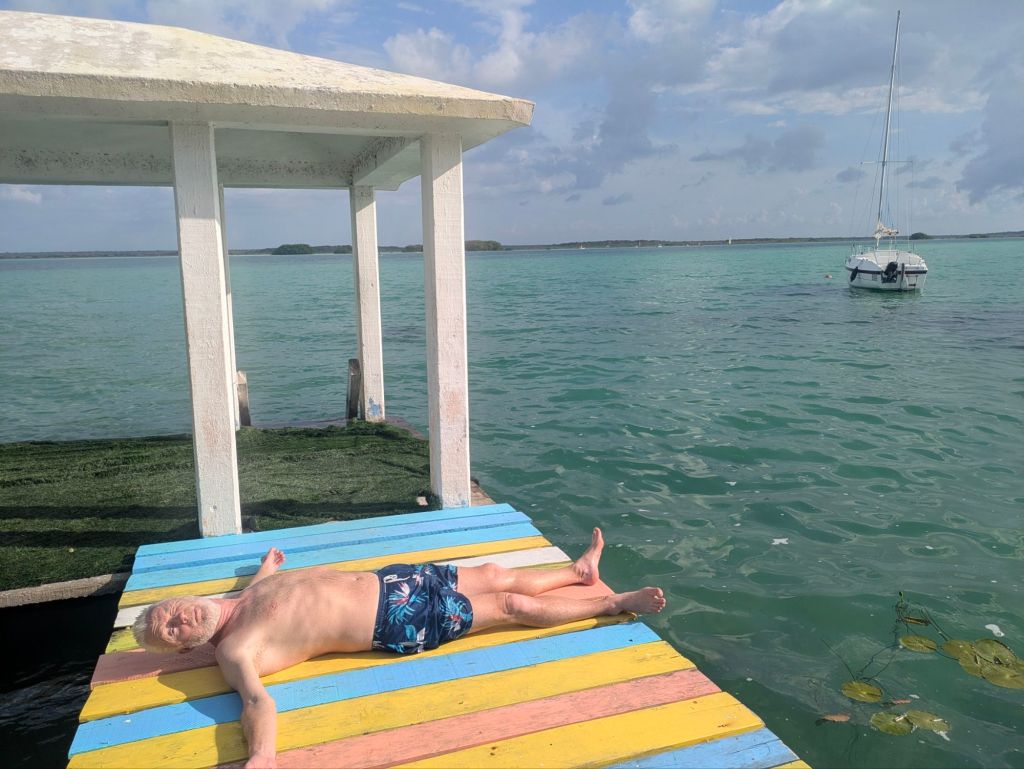
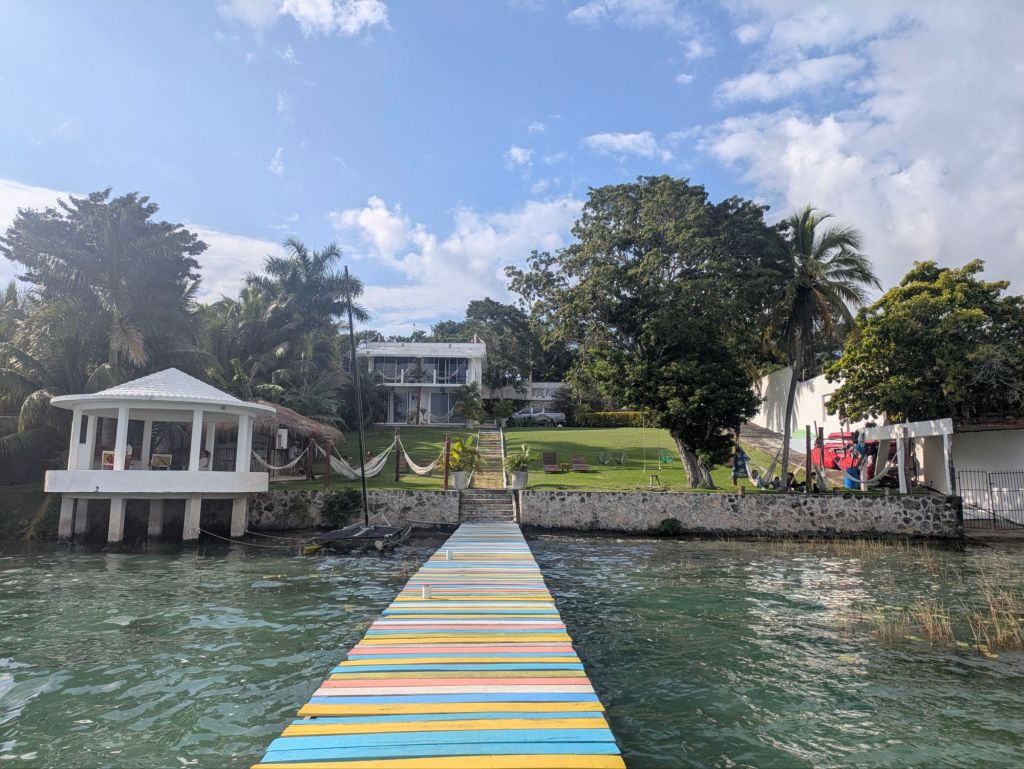
Although our apartment was in the non-touristy ‘local’ area and a twenty minute walk away from the lake, it included free access to the Bacalar Tropic Beach Club which was one of a series of lakefront hotels and houses on the southern end of town. There was no ‘beach’ but there was a grassy area in front of the hotel with loungers, hammocks, swings and a multicoloured boardwalk – a great place to enjoy the lake.
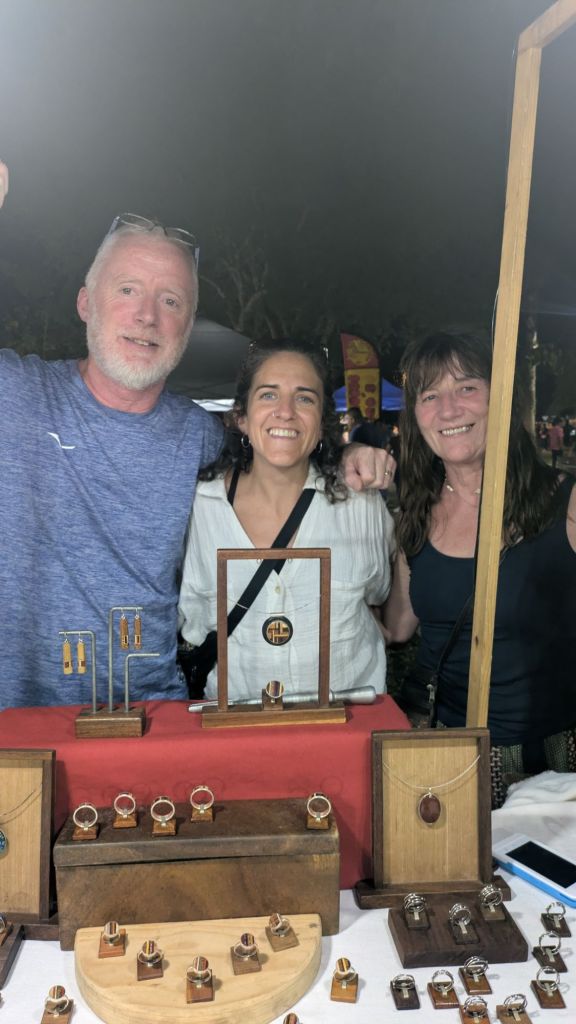
Both of us lost our wedding rings years ago, Caoimhin’s in a swimming pool in Peru and mine in the sea in Tramore. We kept meaning to replace them but never got around to it. Wandering around the night market in Bacalar, we spotted rings that appealed to both of us, bands of various woods encased in silver. Although they weren’t typical wedding rings and we bought them from a market stall, Caoimhin says that he feels ‘really’ married again after more than thirty years of married life!!!. Our jeweller who was from Uruguay, but living in Mexico, recommended that we go to Palenque in Chiapas State for the scenery and the archaeological ruins. Our trip seemed to be evolving, based on recommendations from people along the way.

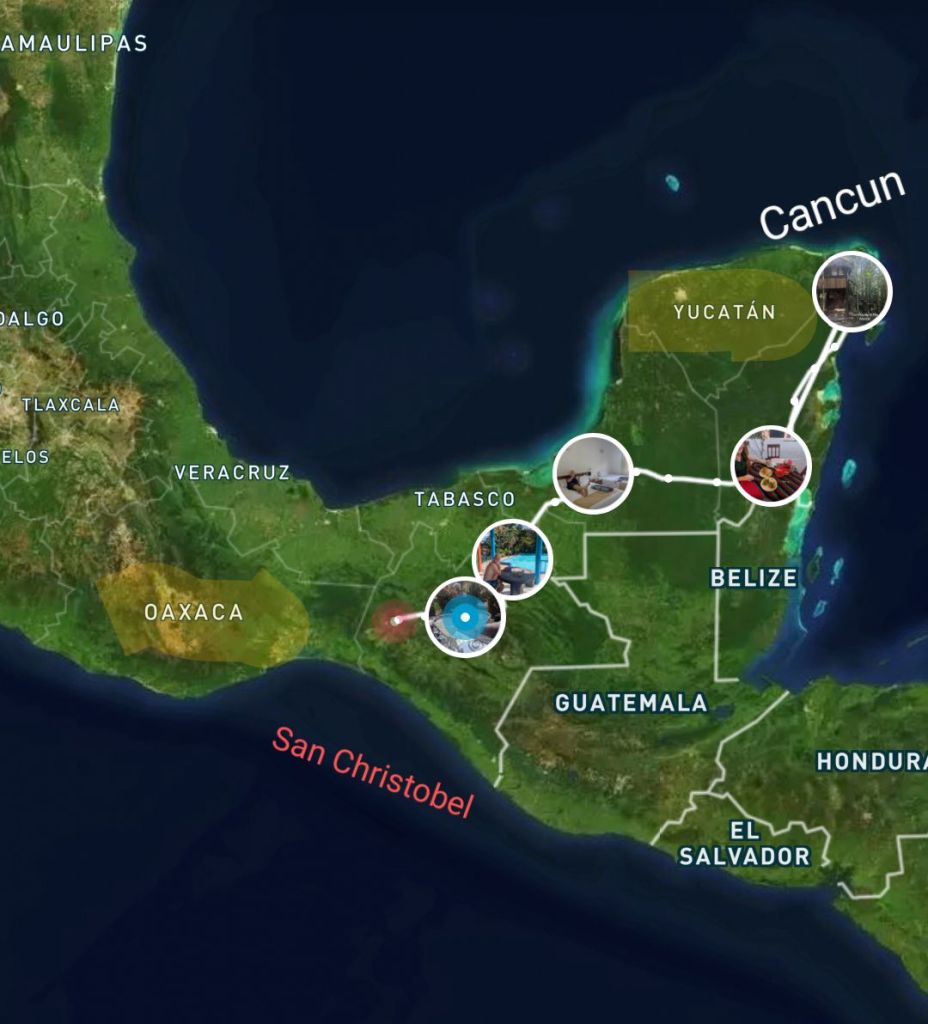
So we travelled across the Yucatan Province almost from coast to coast passing numerous roadworks and not much else. Again the road was long, straight in almost completely flat terrain. It was strange to see so many cherry blossom trees in flower especially as it is so much hotter than home. We stopped for an ice-cream at a garage shop but it melted almost before we could eat it.
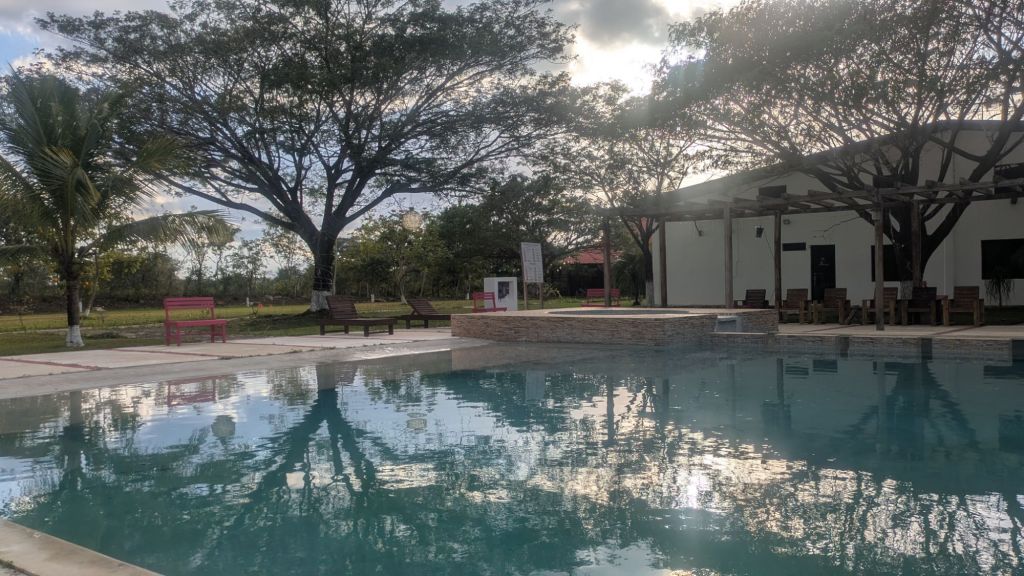
Hotel Real Primavera Campeste was relatively expensive (€49 for the night) for a hotel that was really in the middle of nowhere but we needed somewhere to break the journey to Palenque. The hotel avenue was long and lined with trees, the gardens were landscaped and the rooms were spotlessly clean. It was a place that could accommodate a crowd but the only other residents were three men driving from Monterey in California to their home to Belize. They were also breaking their journey at the hotel. Apart from us, a flock of long-tailed Grackles made good use of the pool, dipping and diving at dusk
.
The countryside was still really flat the following morning until we reached Palenque, with its backdrop of mountains and its hilly streets. This time we booked into a hostel, which had a large pool, an outdoor kitchen and a ramshackle garden. Although everything was a little shabby, Alex, the proprietor and his father were friendly and welcomed us to Villas del Carmen Hostal. It was also pretty cheap at €22 a night for an ensuite room. Security seemed to be an issue in the area. We were a bit perplexed when the shop across the road, one of the Six convenience stores that were so common in Mexico, only served customers through shutters passing out the goods through vertical bars. We walked into town at dusk but the lighting was so bad and the pavements so cracked that we got a taxi back to prevent us from falling down a hole by the side of the road.
The Palenque Ruins opened at 8am and we were in the queue shortly afterwards. We paid a fee for the ruins and another to enter the National Park where the ruins were located. English speaking guides were available, most vying for our attention, especially as the number of visitors was quite low. The prices were fluid and bargaining was expected. We settled on Tito, a young Mayan who had good English and a nice manner teamed up with a French mother and son duo who were also looking for an English speaking tour.
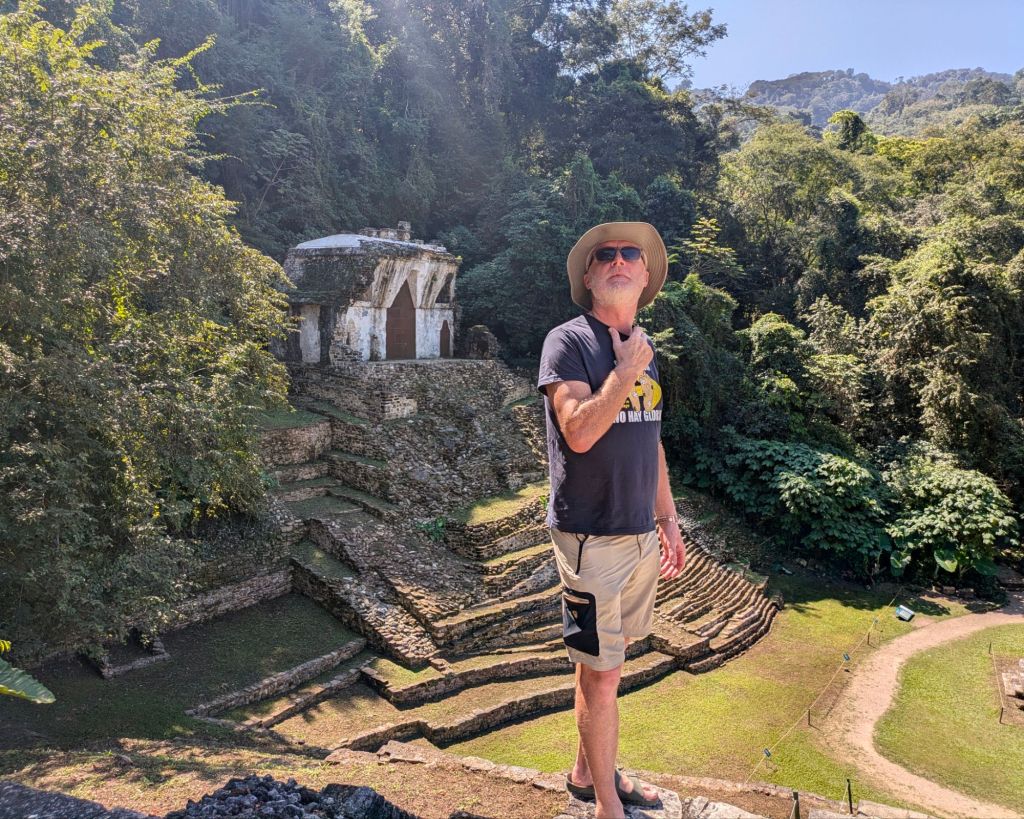
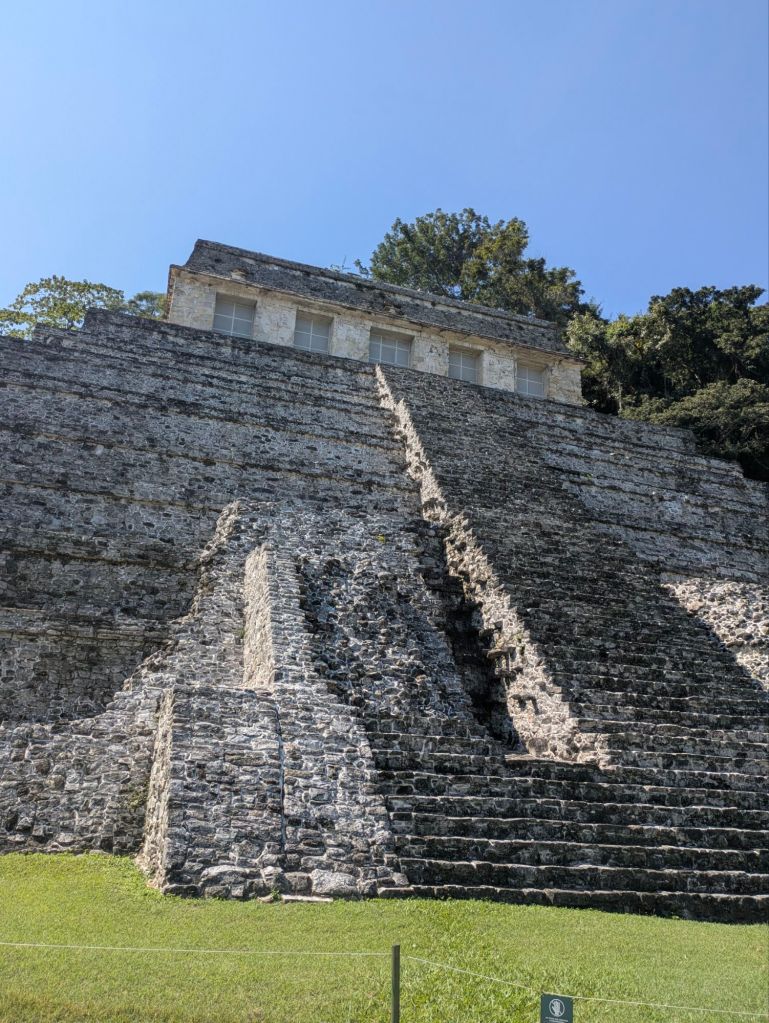
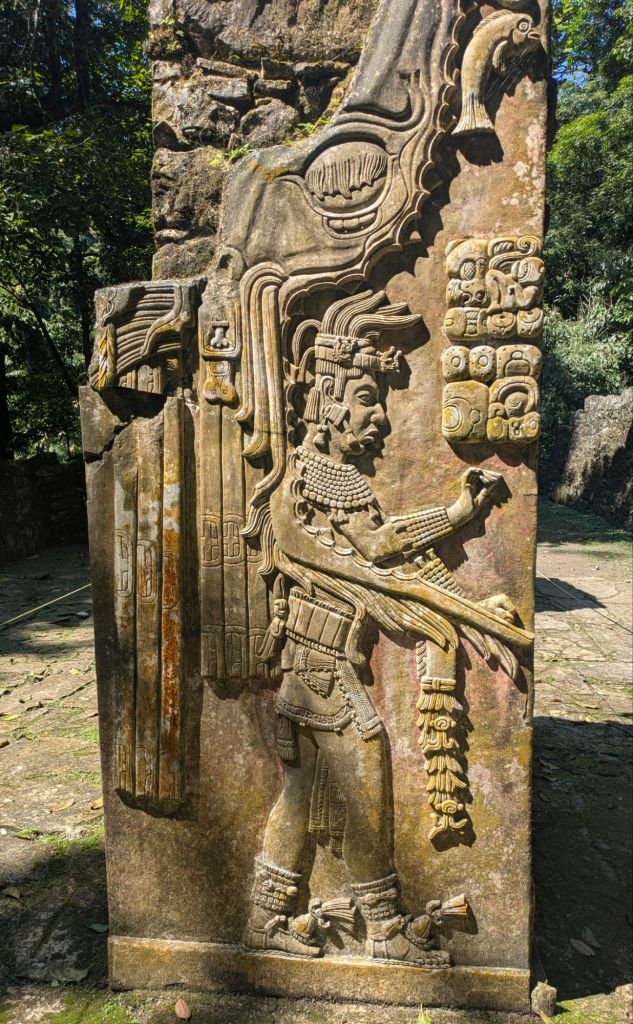
This was our first Mayan site in Mexico and it was really impressive, with several clusters of enormous buildings, most of them with almost vertical stairways. The complex was surrounded by cedar, mahogany and sapodilla trees which provided shade for visitors, the locals selling crafts and the many birds. In the jungle beyond, howler monkeys were living up to their names and creating a racket. The site was all the more impressive because all the structures were built about one thousand, five hundred years ago with human sweat alone and without the use of the wheel or with machinery at all. The settlement flourished in the seventh century under the rule of Pakal, who lived until he was eighty years old which was a phenomenal age at the time. We walked around in sunshine listening to the monkeys, and tried to imagine the buildings as they would have been in Pakal’s time when they were painted a blood-red colour with elaborate red and blue stucco details. Magic mushrooms were reserved for the noble classes and we’re used in many Maya ceremonies as a means of communing with the gods and ‘waking up the mind.’ Mayan idea of beauty was totally different to ours, they favoured an elongated head and cross-eyes.
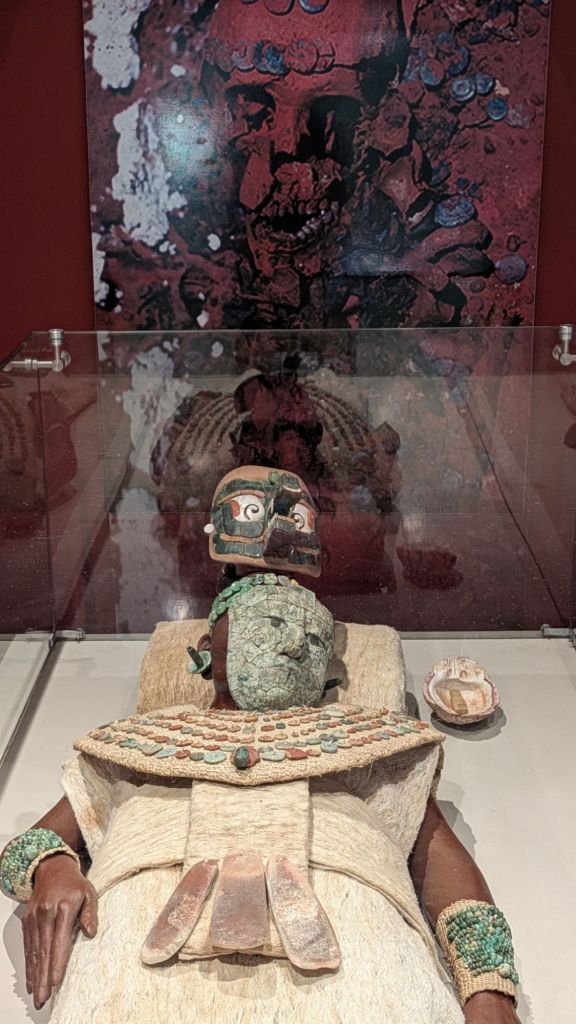
In the excellent museum, we saw a replica of the sarcophagus of the Red Queen which was only discovered in 1994 in a temple beside the large Temple of the Inscriptions where Pakal was laid to rest. The Red Queen is believed to be Pakal’s wife and she got her name because of the bright red dust made of cinnabar (a red mineral made of mercury and sulphur) that covered her skeleton when she was discovered. She was also buried with two servants and copious amounts of jade and pearls.
Despite all the grandeur, the site was abandoned, possibly due to deforestation and feuds with neighbouring tribes, and soon swallowed by the jungle and concealed for centuries. It is entirely probable that many more buildings are still hidden under the rampant growth. In some places away from the main clusters, fallen walls were covered in moss, just like any abandoned cottage in Ireland.
Our next stop was problematic. We wanted to visit Saint Christobel de las Casas, a beautiful colonial town in the mountains about a five and a half hour drive from Palenque but there were worrying reports about the safety of the roads leading to the town especially the Ruta 199 from Palenque. At the ruins, we met a young German couple who travelled in the opposite direction the day before without any hold-ups. Locals also said that the journey was quite safe as long as we drove during daylight hours and we gave ourselves plenty of time. The main risk was road closures. the Zapatistas, an indigenous political activist group in the state of Chiapas sometimes blocked roads to highlight their grievances to the government.
It was a beautiful, sunny morning as we packed up in Palenque and headed for the hills, feeling a little apprehensive. The distance between the towns of Palenque and San Christobell was only 210kms but Goggle Maps was giving us an estimated time of five hours and twenty minutes. At first traffic was heavy and soon we were climbing along winding steeps roads with curving bends in a convoy of trucks, minibuses and motorbikes. There were small herds of cattle grazing in the fields, maize growing everywhere, at the sides of the road and crawling up the vertical mountain sides. Children walked to school and women sat at roadside stalls, selling drums of diesel and petrol as there seemed to be no gas stations. It all seemed very normal, a beautiful drive with stupendous vistas of mountains, houses dotted in the valleys and pretty villages. Soon we relaxed although it was impossible to relax completely…but not because of bandits or protesters.
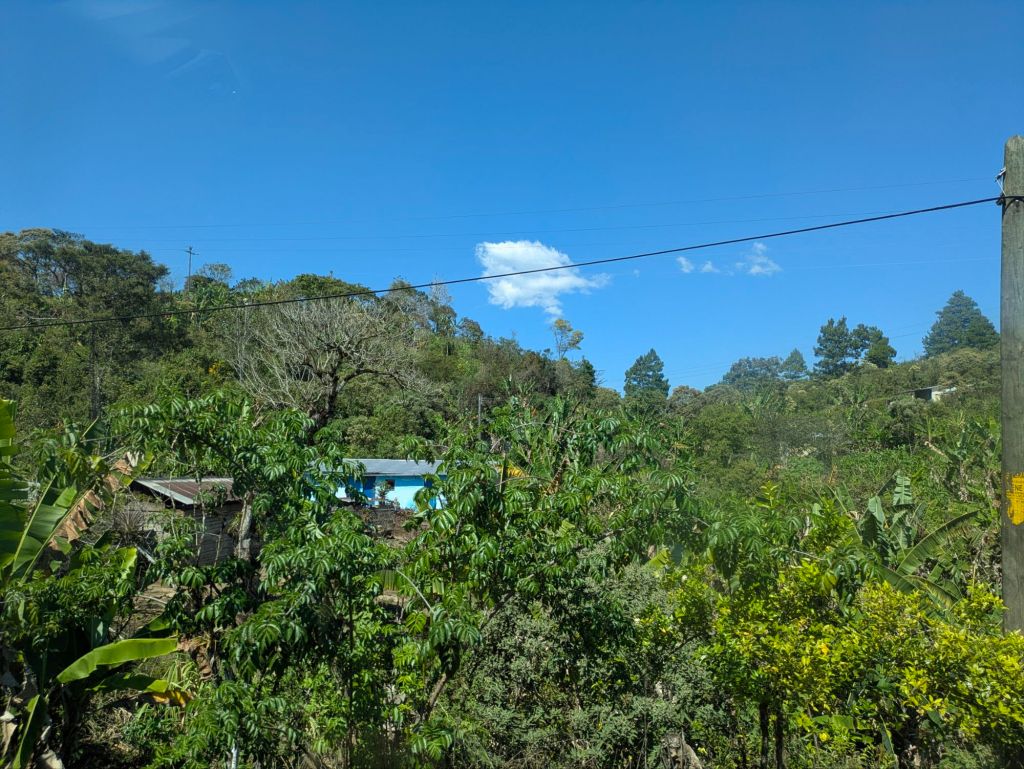
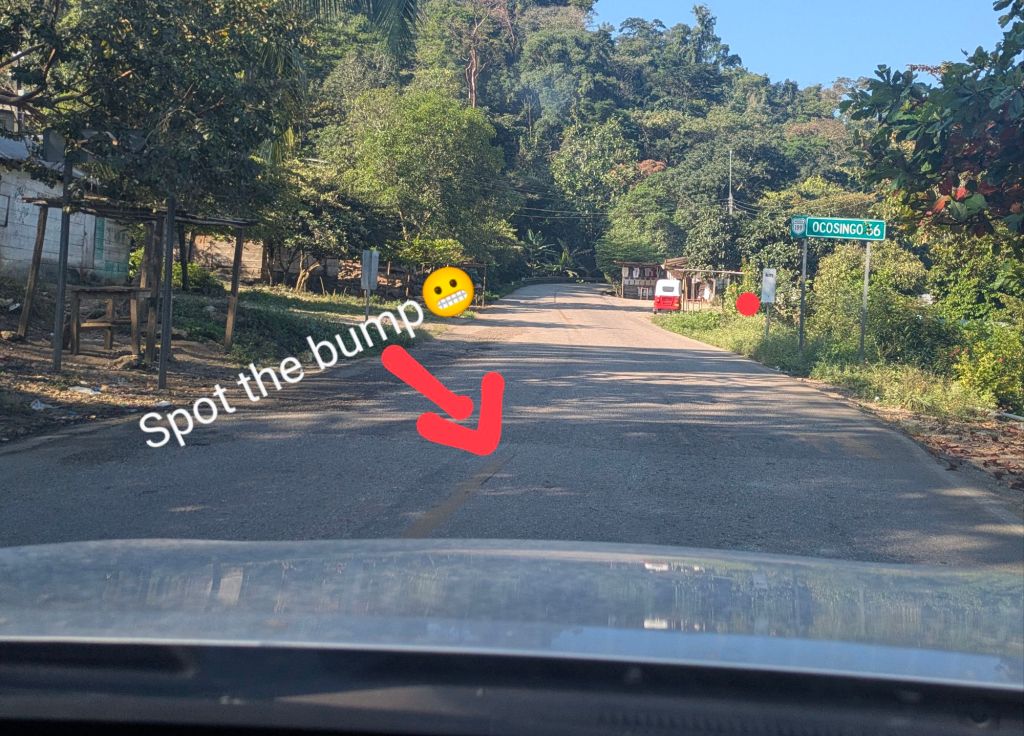
The biggest danger was the huge number of speed bumps on the roads. The dappled sunlight through the trees cast shadows on the road making it almost impossible to see them and there were very frequent and sometimes on blind bends. It was easier when we were travelling behind a vehicle as we had some warning as they braked.
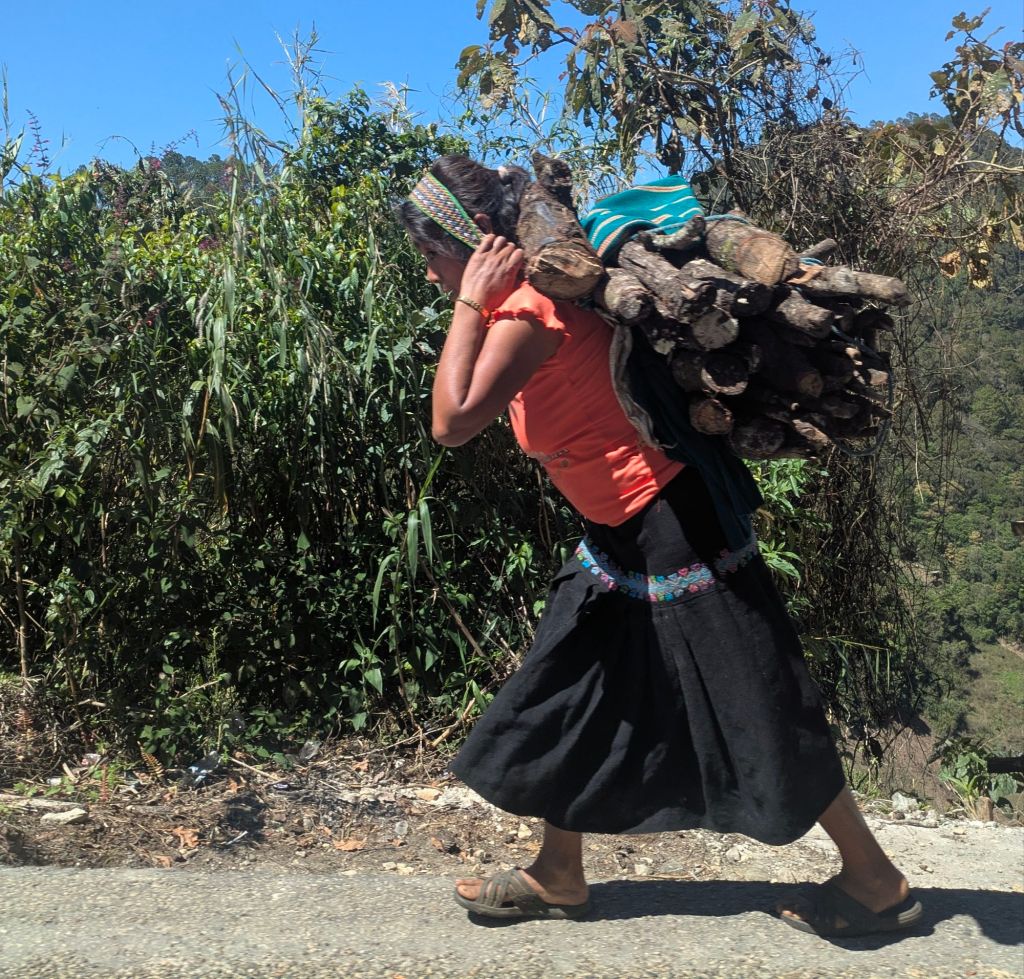
Soon there was the smell of pine in the air from the towering forests as we approached San Christobel de las Casas. The town sits in a valley in the highlands of Chiapas in the Los Altos region at an altitude of 2200 metres. It was sunny but there was a tinge of coolness in the breeze even in the mid-afternoon which soon had us reaching for our jackets which we haven’t needed since we arrived in Mexico.
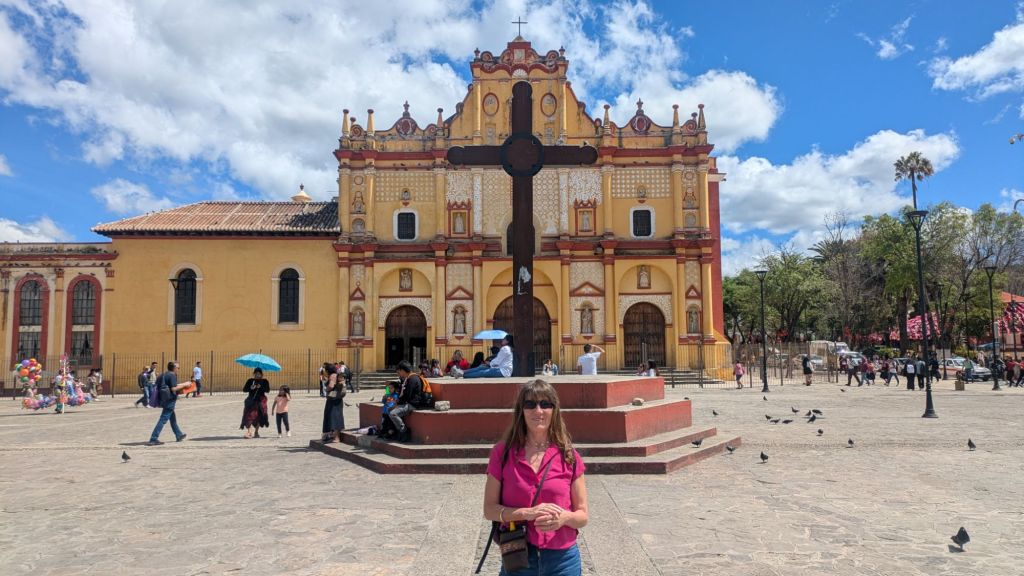
San Christobel was entirely different to any other Mexican town we have visited so far with its cobbled streets, pastel coloured houses and refreshing mountain air. There were churches on every corner, a baroque cathedral that was damaged by flood and earthquake, (the most recent earthquake was in 2017). Several long pedestrianised street were full of cafes, restaurants and high-end shops with hardly a broken pavement or litter anywhere.
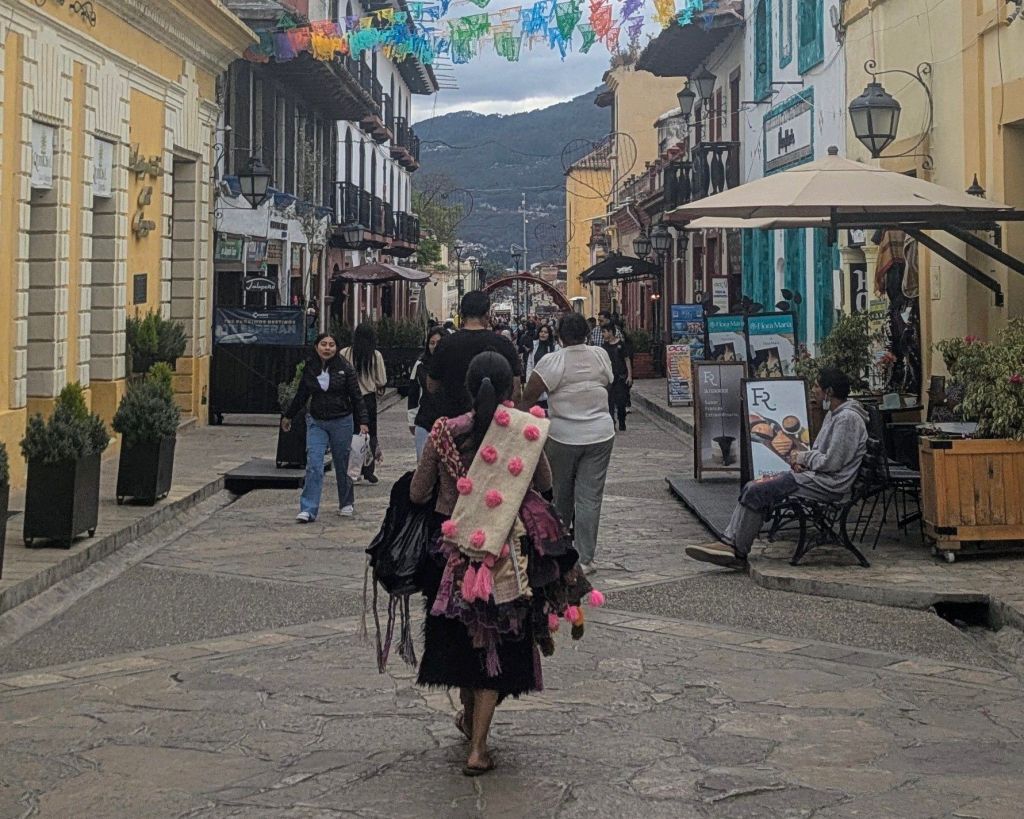
Chiapas is one of the poorest state in Mexico with the highest concentration of indigenous people, about 40 % of the population being indigenous. Despite their high numbers, they feel marginalized The protests were about inequalities, discriminations, land rights and destruction of the environment . Like most disputes, it was complicated. For example, Coca Cola have a large factory on the outskirts of town but some believe that the production is detrimental to the environment and uses so much water that it changes the natural landscape. But the state of Chiapas drinks more coke than anywhere else on the planet. It is even incorporated into many of the ceremonies and rituals of the indigenous people, taking the place of the local moonshine, a drink called pox (pronounced ‘push’ which means ‘medicine’ in the local language.)
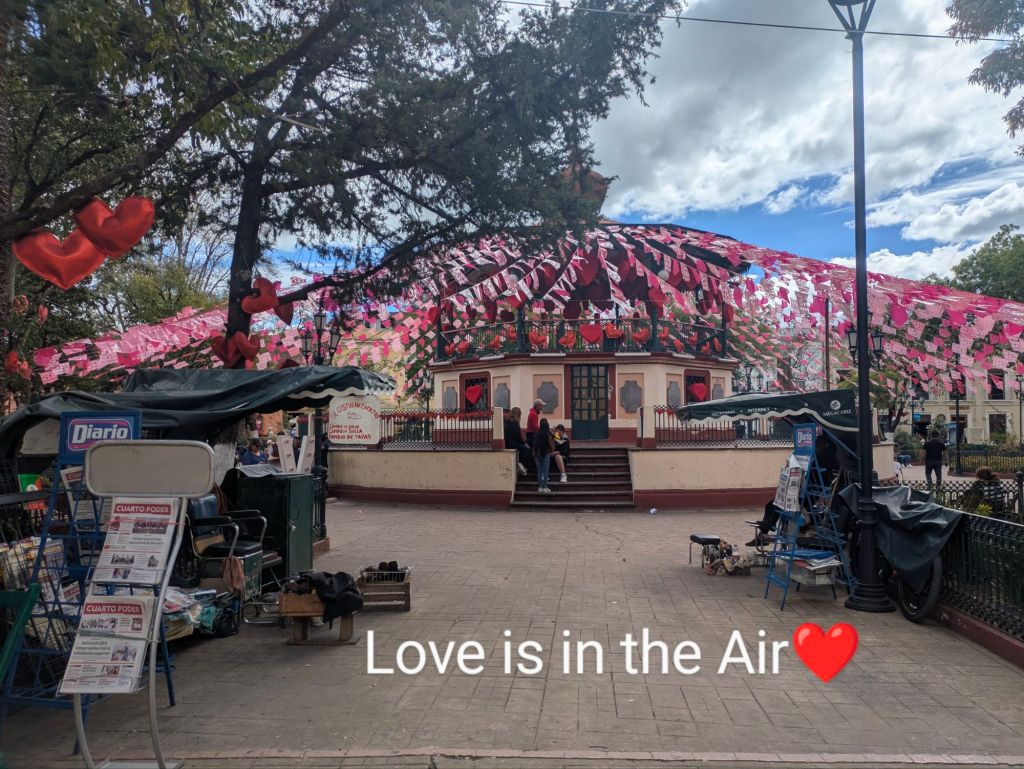
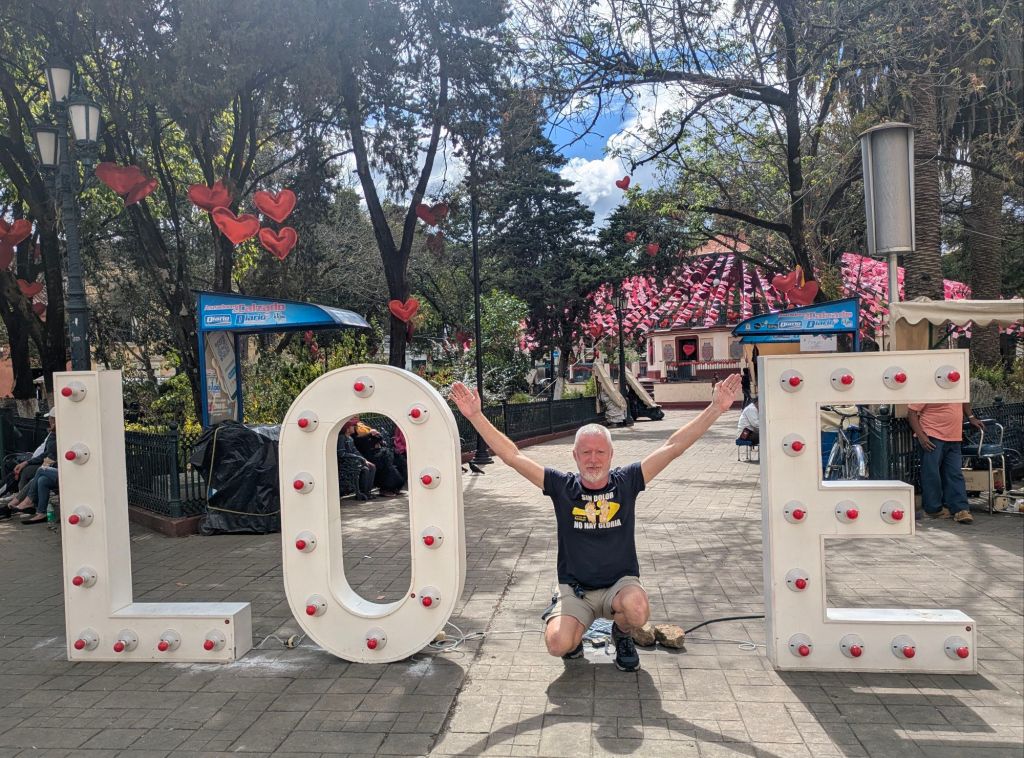
There was no sign of unrest or political activism on Valentine’s day. Love was in the air in the Central Plaza which was festooned with ribbons and hearts to celebrate the day.
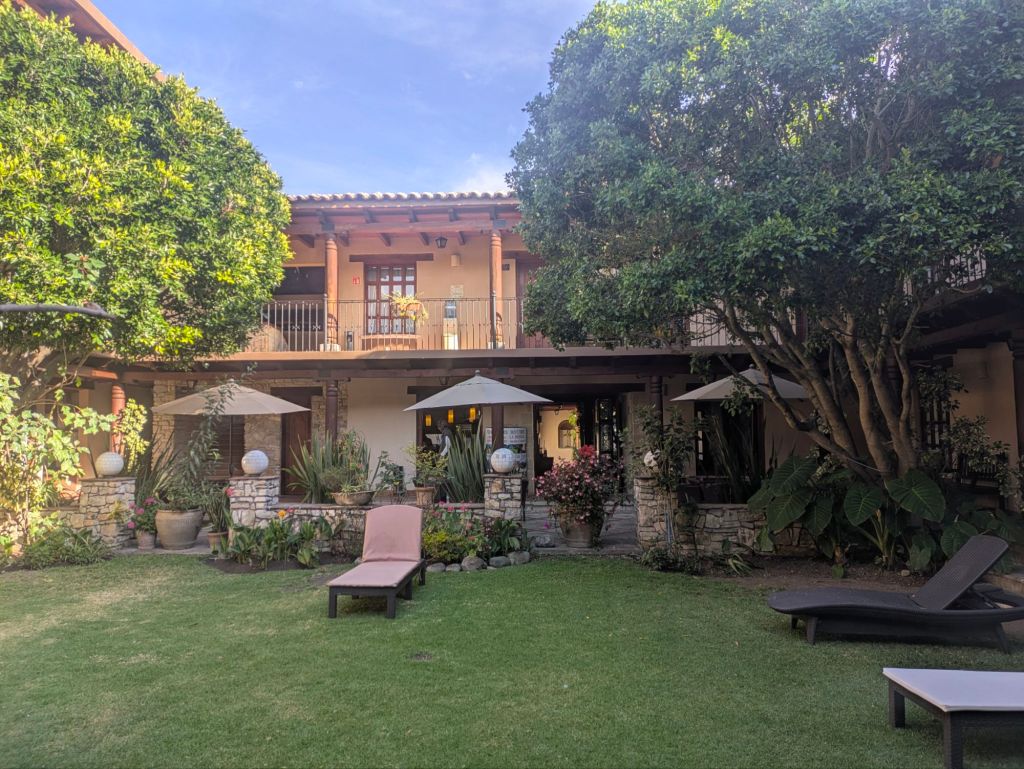
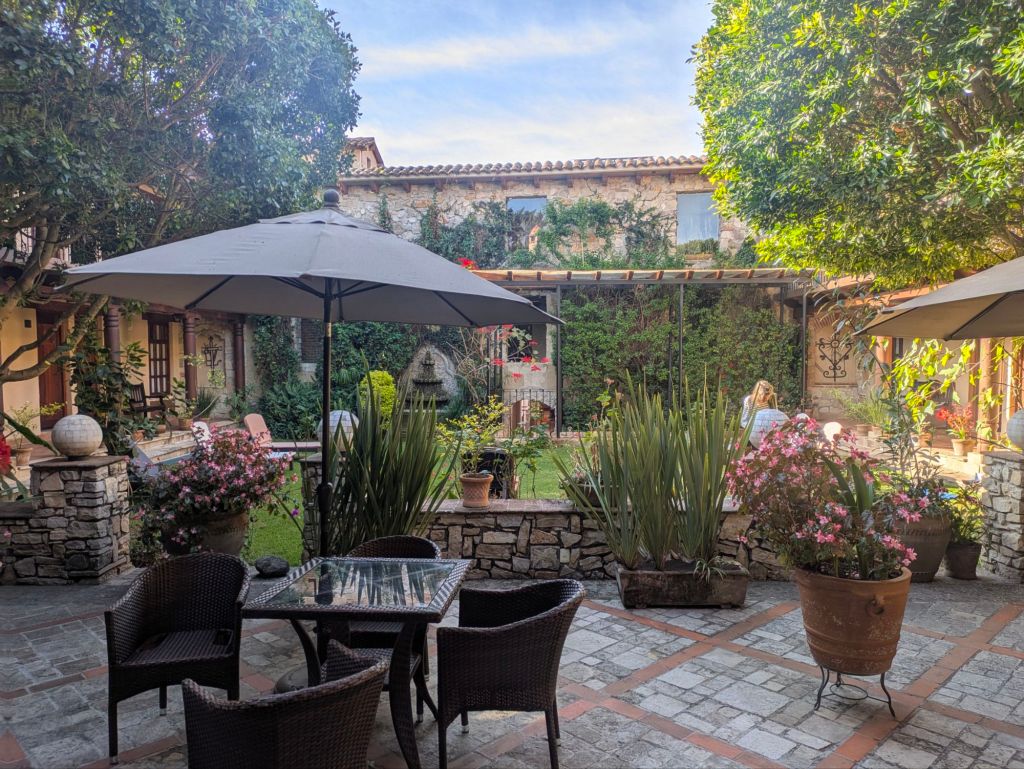
We booked into La Estancia, a hotel in a central location. It didn’t look much from the outside, a green door in a low single story building but inside, it opened up into a series of courtyards full of plants, shady sitting areas and lots of rooms with balconies overlooking the courtyards. We were delighted with the luxury, 5 star accommodation at 2 star prices (€40 a night). They also had an offer of 2 cocktails for 140 pesos (about€7) which was something we availed of seeing as it was Valentines Day and we were now wearing matching wedding rings. There are tourists here but many are scared away by the simmering political tensions which probably explains the low prices.
Our next step will be to the neighbouring region of Oaxaca with beaches, another colonial city and trekking between villages in the mountains, But that’s for tomorrow. In the meantime we are enjoying luxury in the romantic city of San Christobel de las Casas, or San Chris as it’s known locally.
Till next time, thanks for reading.


 marienoonanblog
The rings are just beautiful Marie and very ‘you’. 30 years deserves 2 beautiful rings and 2 cocktails!!! You can feel the tension in your piece so I can only imagine what it’s like there in real life and ye don’t get spooked easily. Amazing history too and awful present day politics. V interesting.
enjoy the last few weeks and happy anniversary! Xx
LikeLike