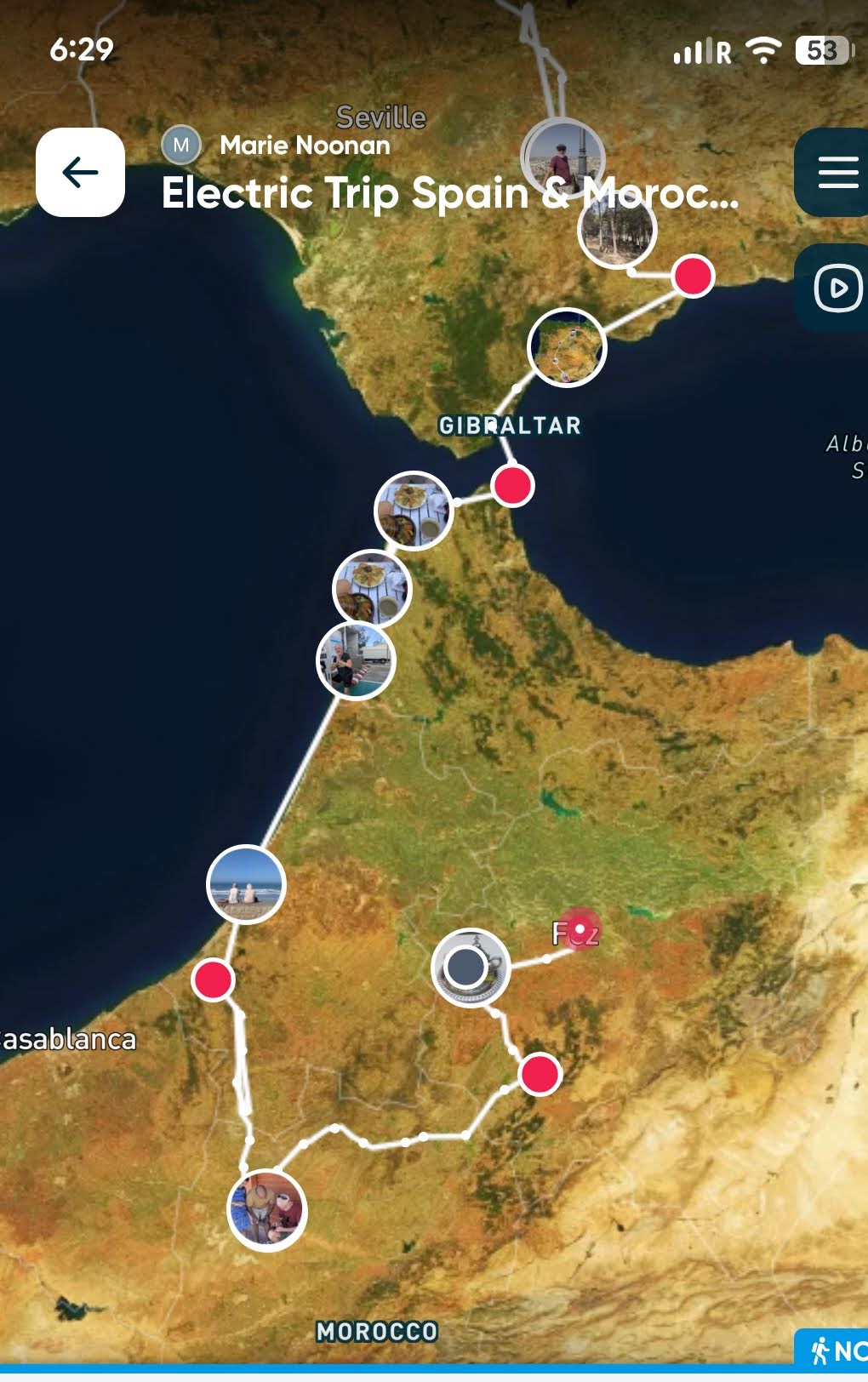
Electric Roadtrip: The Charging Saga

Leaving our camping cocoon in Tangier was hard but it had to be done. Waving goodbye to Said, the manager, we headed off in search of EV chargers, making a minor detour to Carrefour Supermarket (Socco Alto branch) to stock up on a few beers and a bottle of wine. Alcohol is not widely available in Morocco, but you can find it…. if you know where to look or have inside information from a walking tour guide.  It’s relatively expensive, especially compared to Spain.

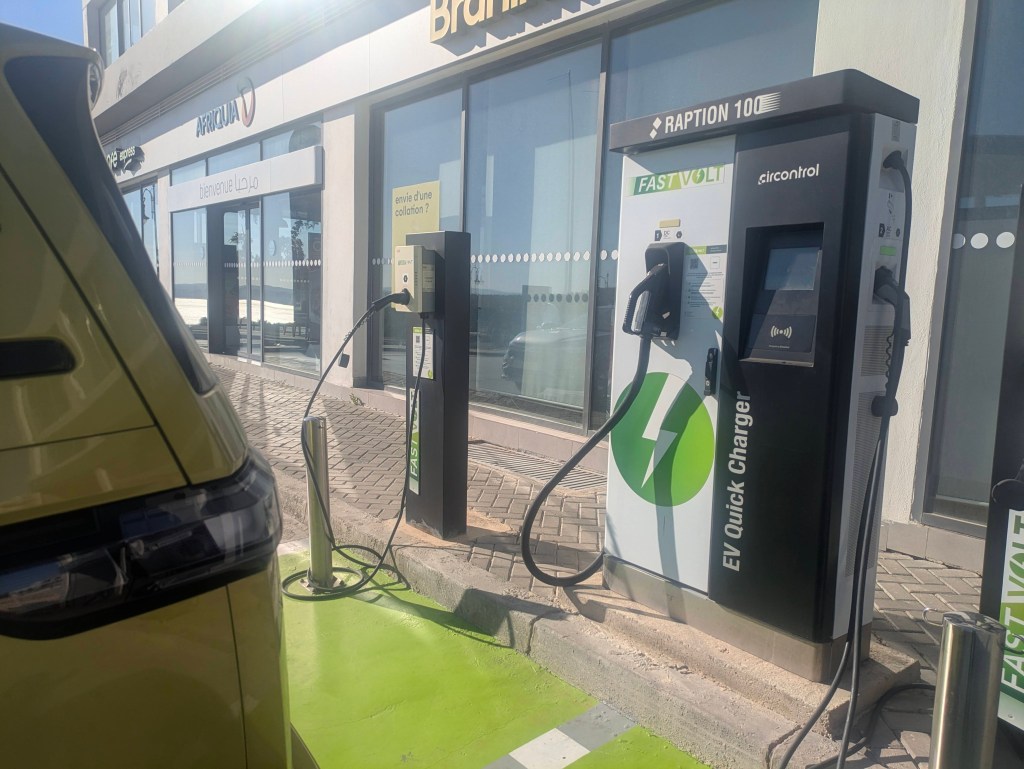
We stop at a fuel station which has Fast Volt Chargers, which again look well maintained. Caoimhin had contacted the company for help about our inability to download the app (essential for charging as there was no option to pay directly using a bank card) but we were still unable to download it despite following their instructions of using a VPN and selecting France.

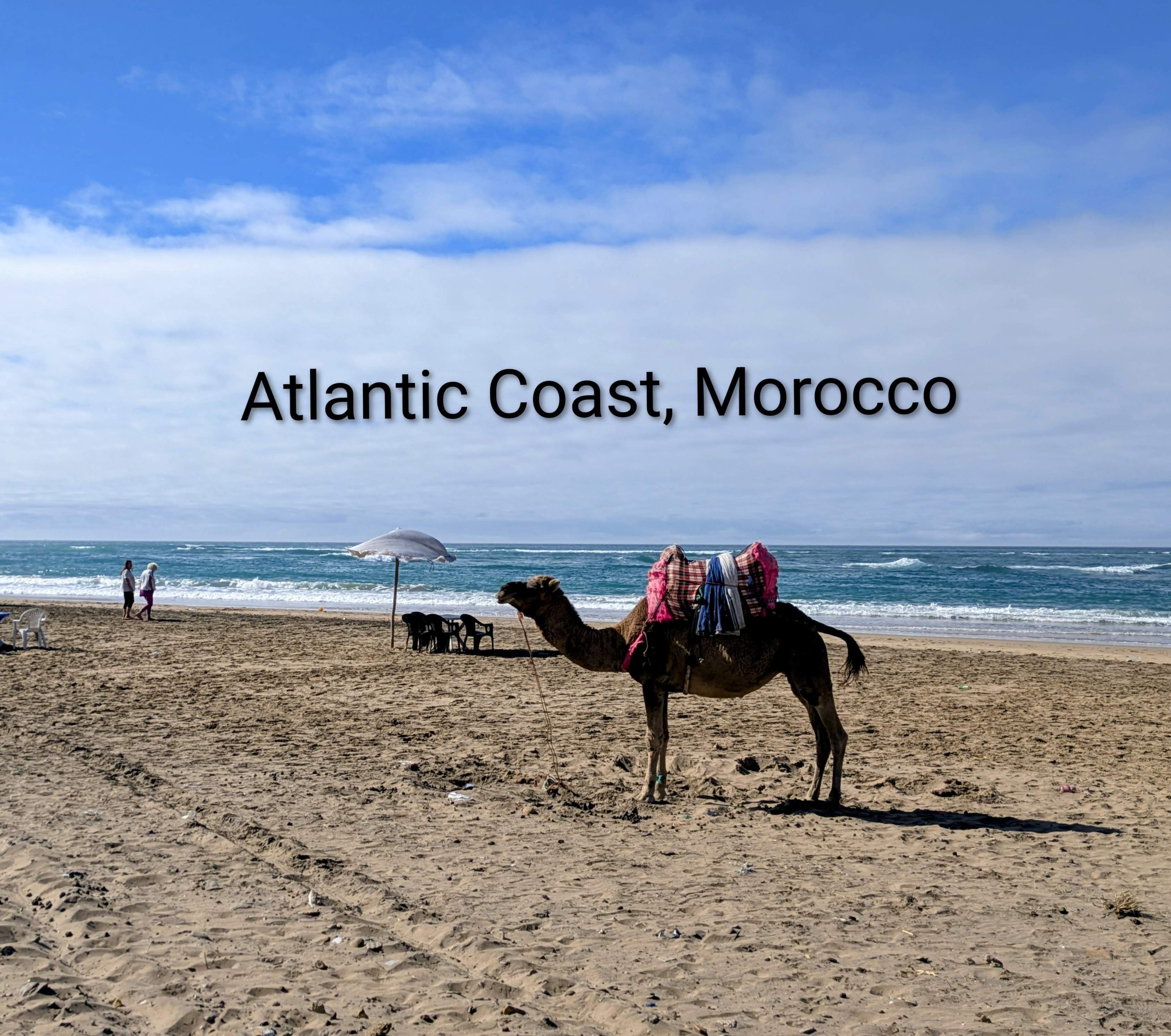
Google maps (but not Electro-maps) tells us that there’s an EV charger about 3 minutes away so we go in search but they aren’t there, and never were, according to a security guard who directs us back  to the Fast Volt chargers. We continue down the coast towards some Tesla Super chargers which appear to be in the middle of nowhere,. When we get there, we discover that they are part of the high-end Hilton Golf Resort. The guys on the gates were friendly and helpful but the Tesla chargers were only compatible with Tesla cars. The guys were offering us cables to slow-charge off a wall socket but that would have taken hours so we pushed on down the coast where the sight of camels relaxing on the beach made us smile.
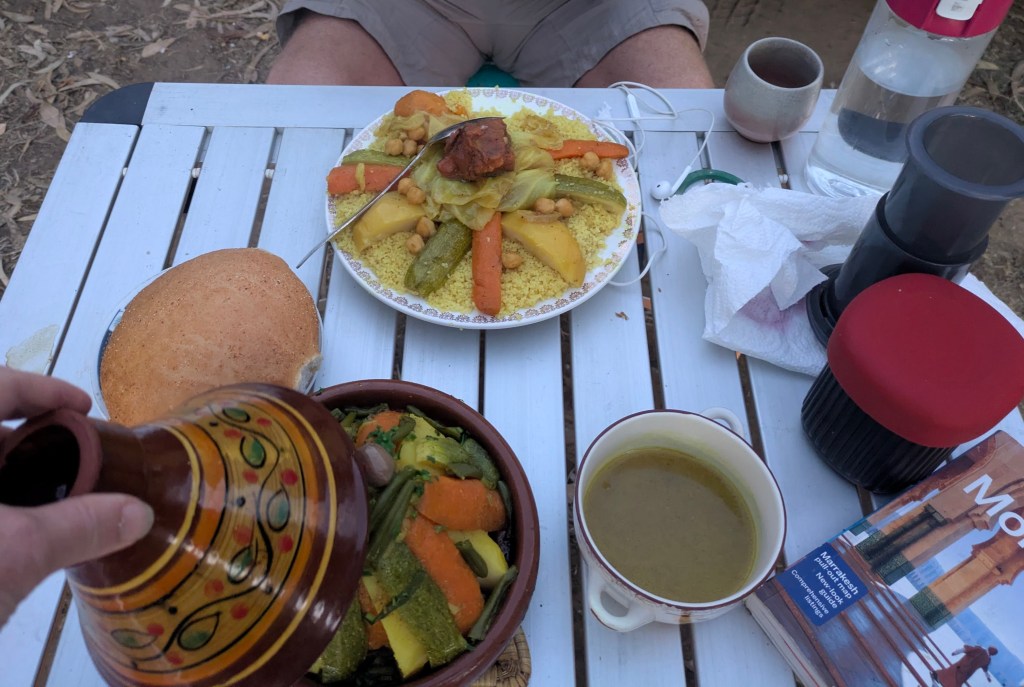
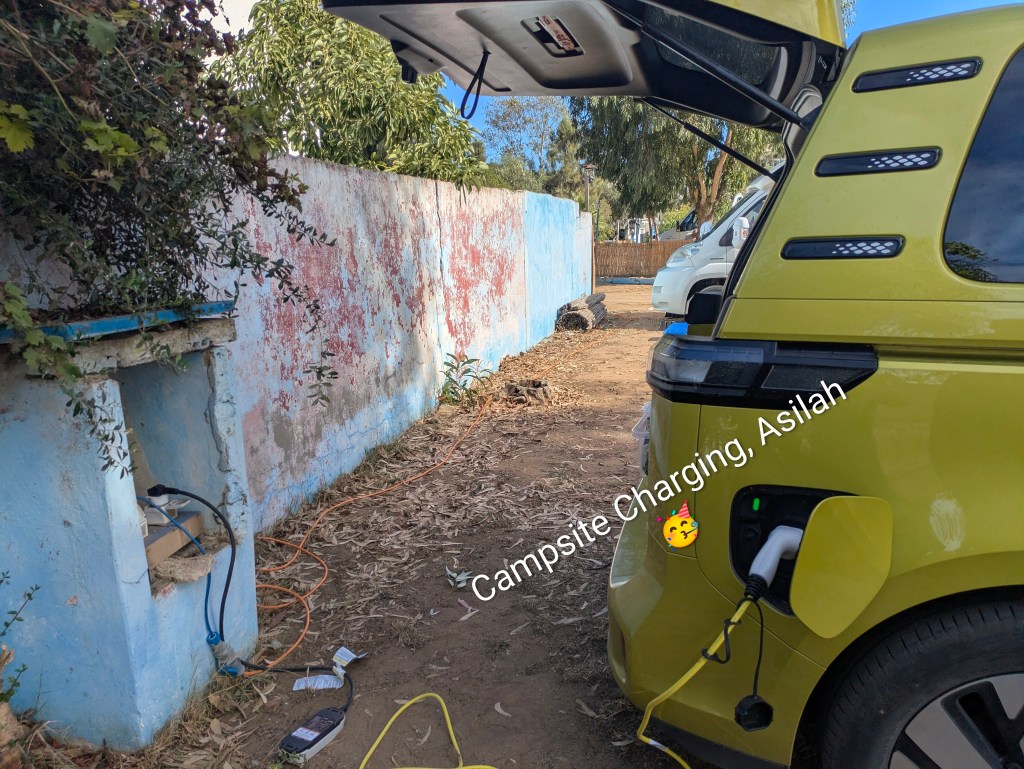
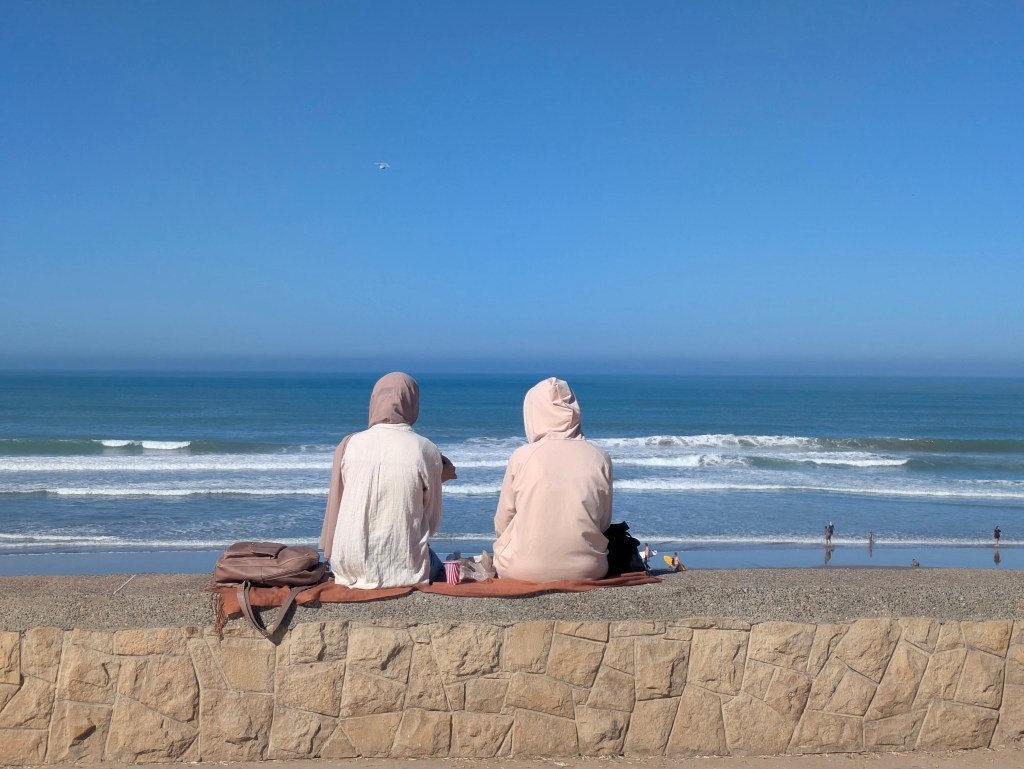
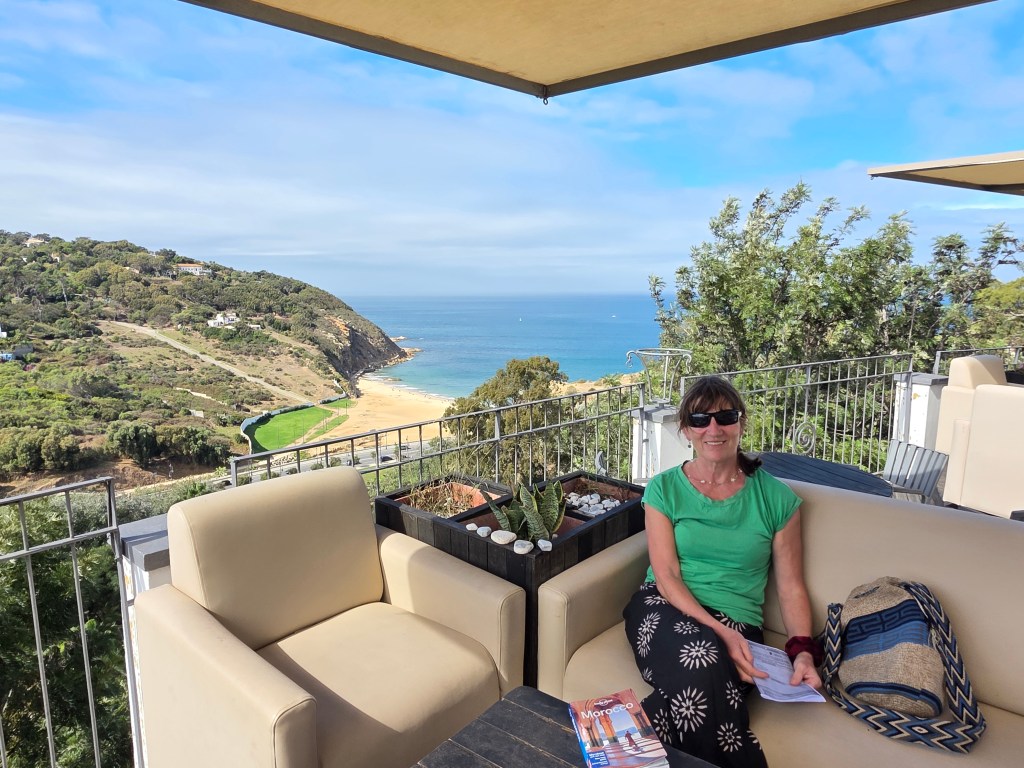
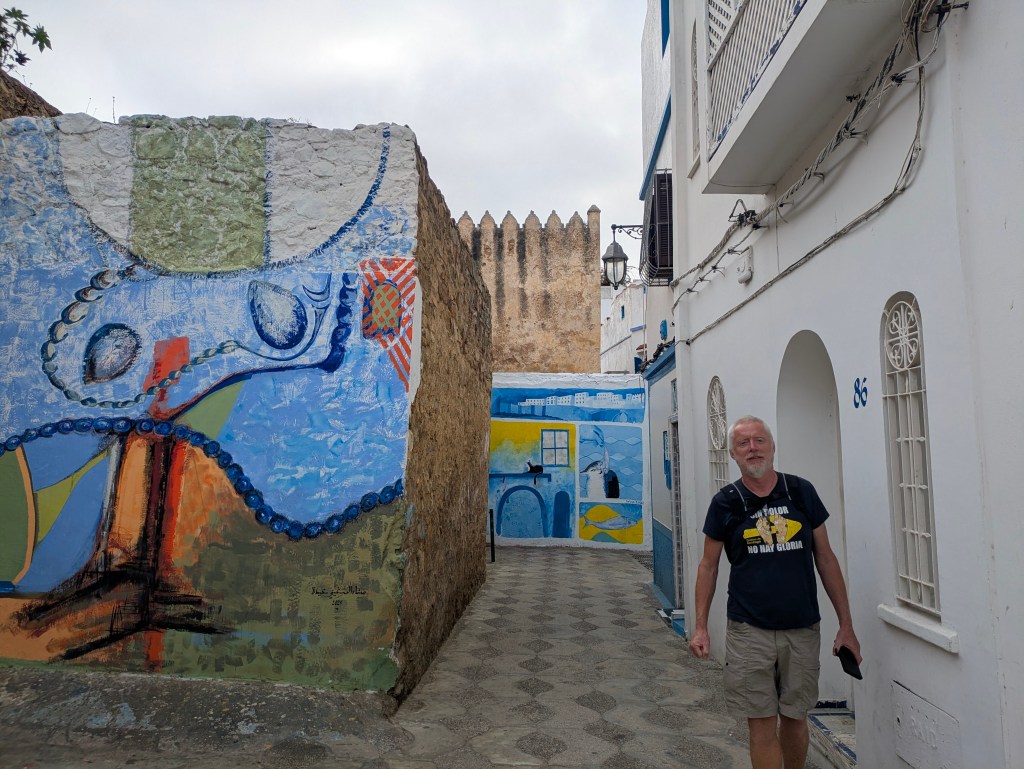
 We continued to a dusty, dishevelled campsite in Asilah, a windy town of murals, artists with a long promenade by the Atlantic and an interesting walled medina.  After checking in, we plugged into a socket with the blessing of the campsite owner who was saying Inshallah, and lo and behold, the charging light turned green and the Buzz slow-charged all night until it reached 100% by mid- morning the following day. Maybe it was the blessing – or the lack of safety features and circuit breakers – but we now had 450 kms to play around with. As well as that, the wife of the campsite owner made us a dinner of tagine and couscous/veg and delivered it to our van in the evening. Delicious. It rained heavily during the night, the first real rain that we have had since we left home on Oct 1,  but there was little evidence the next morning as the thirsty ground had soaked it up.
On down the Atlantic Coast, stopping at a Total Energies gas station in Lareche, we found  two working chargers, that were also free to use. We didn’t really need to recharge but we couldn’t pass up the free offer. Things were definitely looking up.  

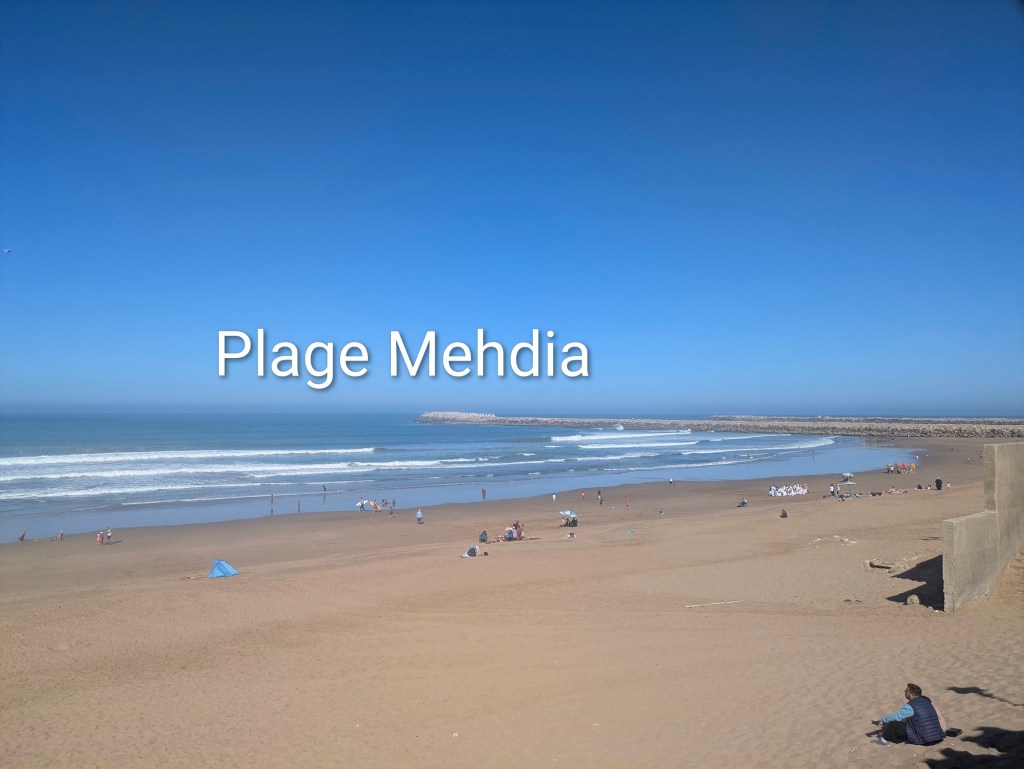
We continued  past acres of polytunnels gleaming silver in the sunshine, roadsides strewn with rubbish and towns that slide into each other until we reached Mehdia Campsite, a large campsite near an impressively long beach. It also had a large swimming pool, much favoured by seagulls who used it as a playground and a toilet. Two British bikers pitched a tent beside us and through the hedge, we heard them mention their longing for a cold beer. As we had a couple of cans in our little fridge, we passed them through the hedge to our grateful neighbours. They were heading north towards Tangier on their way home after two weeks in Morocco and told us of their favourite scenic rides. One of them produced a paper map with highlighted lines, marking their trip. This made me realize how much I miss the feel of paper maps, grubby from use, creased from folding ‘the wrong way’ but so easy to get a proper overview.  One of their routes looked suitable for us, provided we could charge (we were unable to charge at the seaside campsite although we tried).
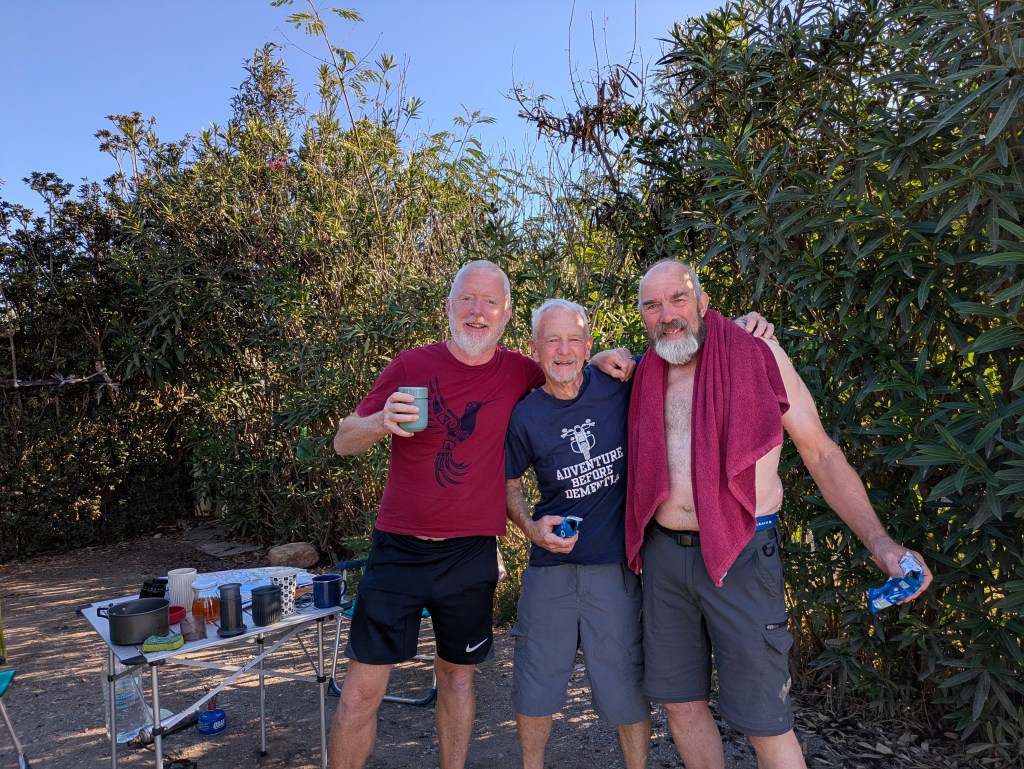
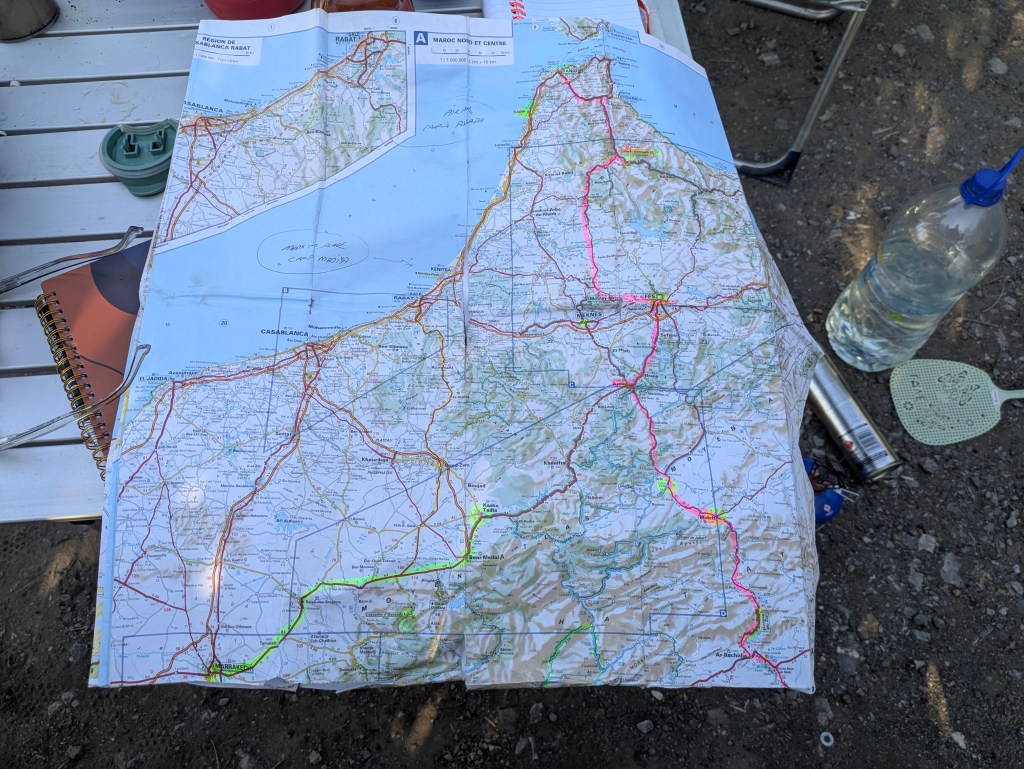
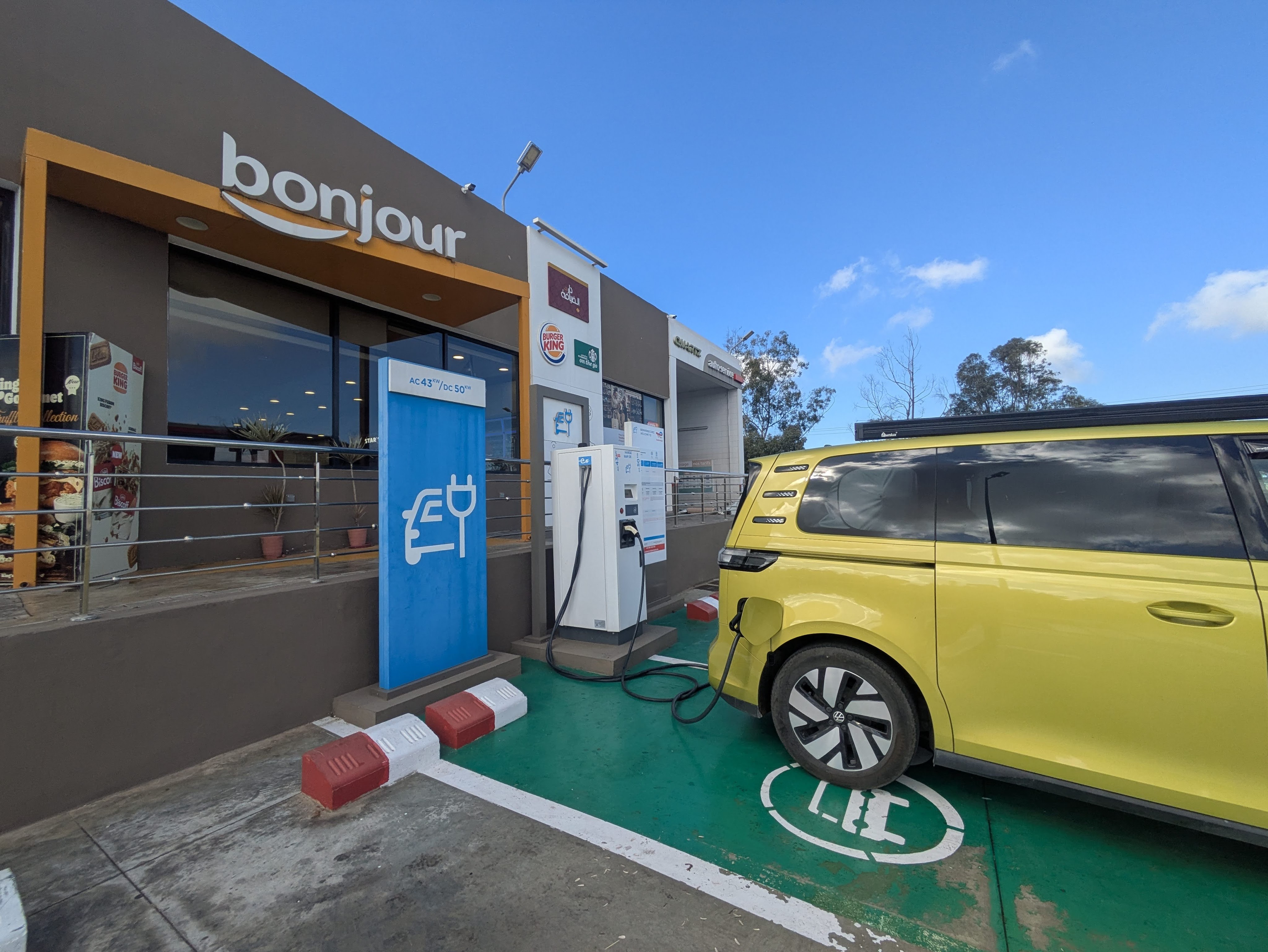
So we changed direction, abandoned the coast which was mostly dismal and dirty and ditched our plan of heading to Casablanca – it sounded alluring but many people told us that it was bustling, modern and quite miss-able. We managed to charge fully (for free) at another Total Energies fuel station on the motorway outside Rabat. These motorway stations were similar to home with Burger King, and shops that sell pastries/sandwiches and Pringles – generic places that could be anywhere on the planet. We chatted to two Norwegians who were driving to Gambia from Norway and who thought we were very brave (and quite mad) to be driving an electric van in Morocco. They actually went in search of us, curious about who could be driving the all-electric van with an Irish registration in the charging bay.
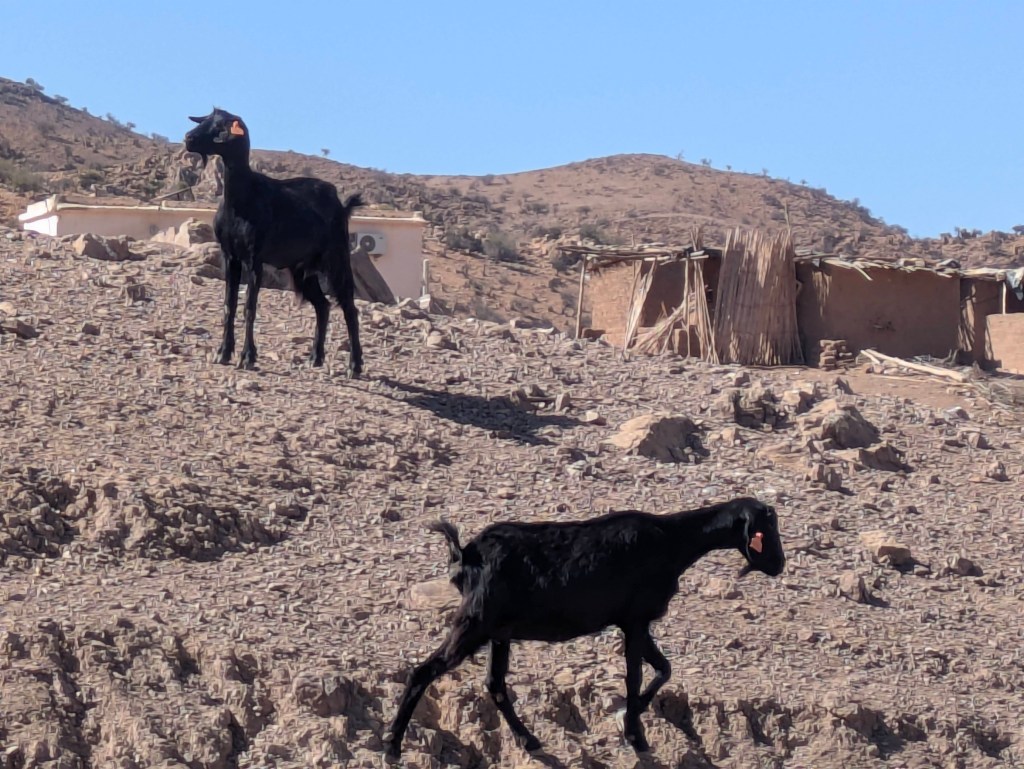
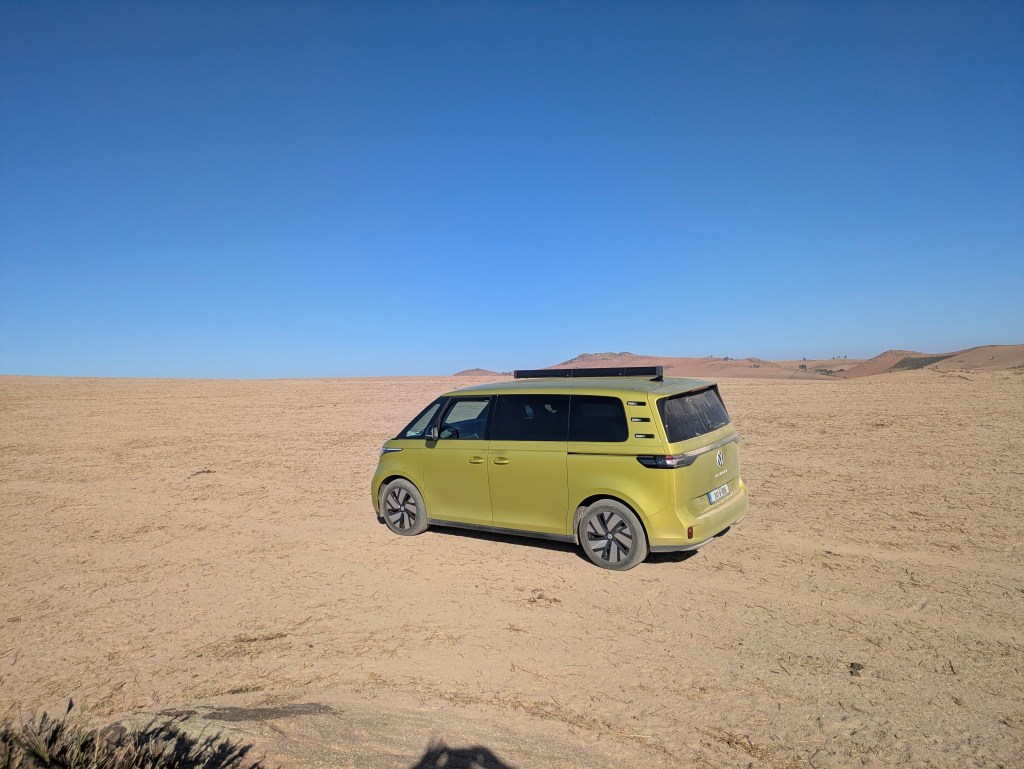
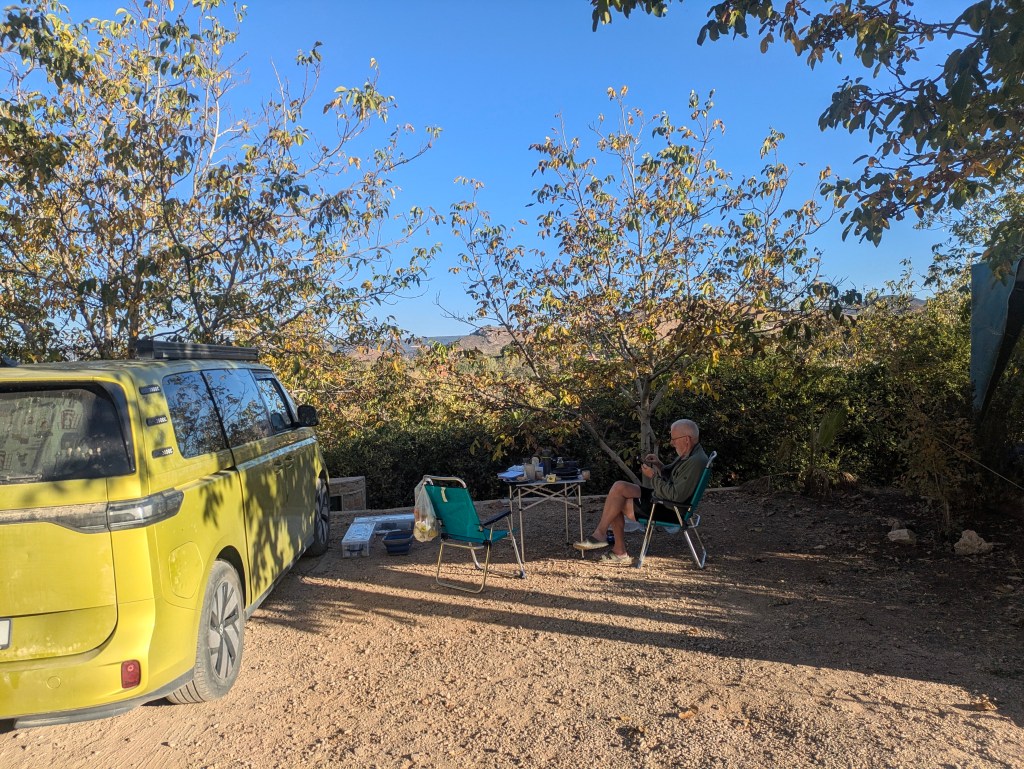
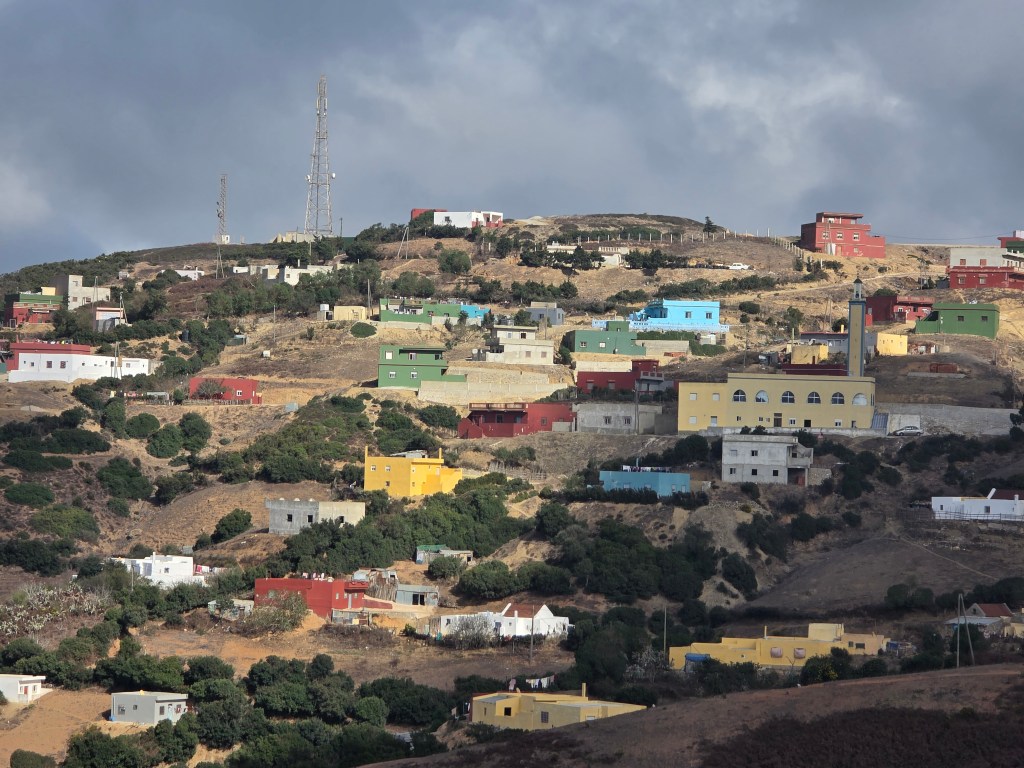
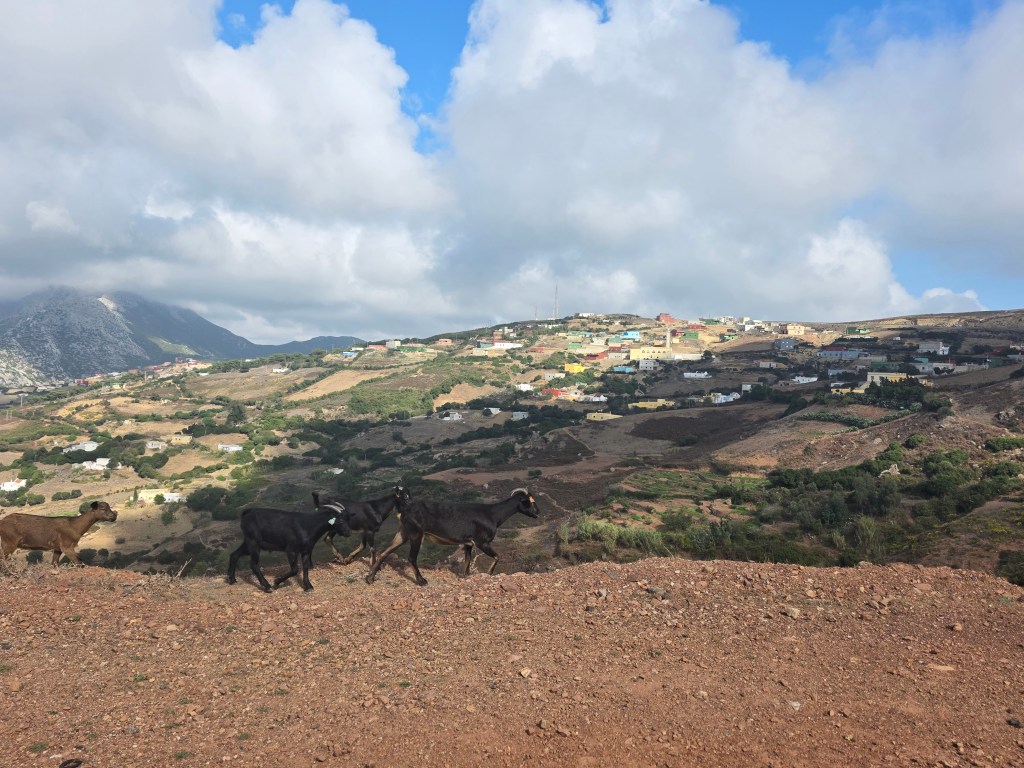
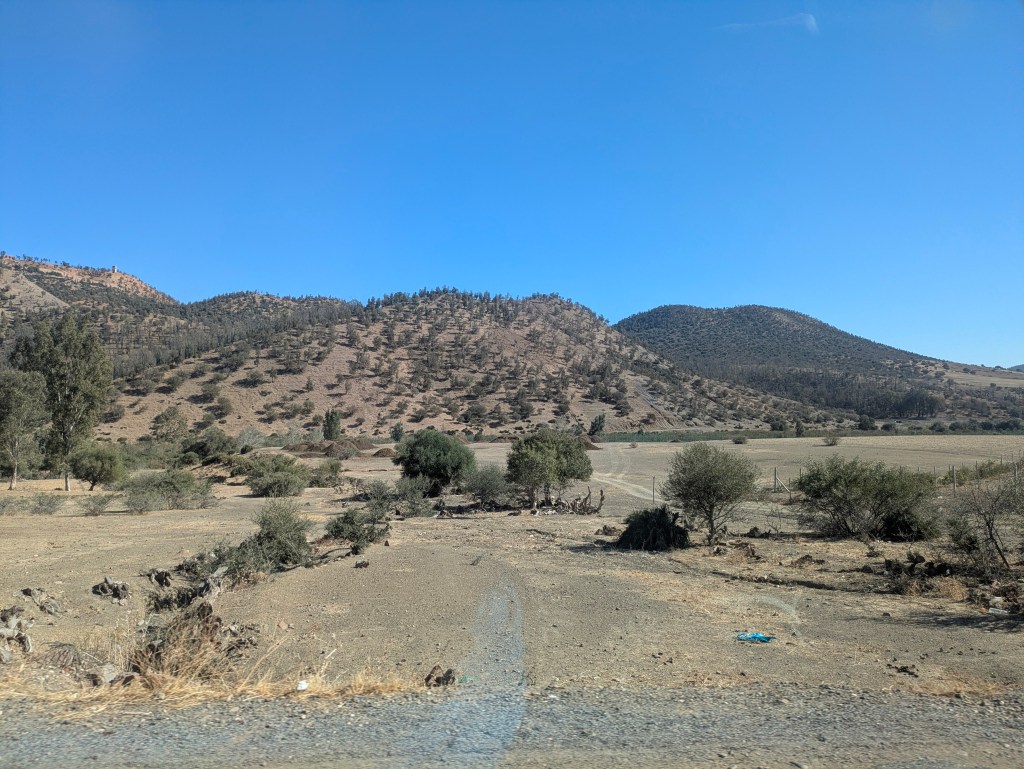
The inland journey was breathtaking, undulating and twisty, the countryside a palette of browns with the occasional green scrub, villages like mirages clung to hillsides and everywhere there were goats, mainly jet-black, like shadows. The temperature rose steadily until we hit 34 degrees. There was the bleating of the goats and the ‘call to prayer; from the village mosques but often there was miles of emptiness. We were in search of a farm campsite on Google maps which sounded like a place we might be able to charge the Buzz, plug it into a socket…..if there was a socket or even electricity. The trouble was that we couldn’t find the campsite. We left the tarmac and followed dusty tracks…. to nowhere. Eventually we turned around and  tried to retrace our tyre tracks back to the ‘main’ road which was not an easy feat.  A ragged boy appeared at our car window, offering us the bunch of grapes he held in his hand. He didn’t know anything about a campsite but knew the word for ‘money’ in several languages …and probably in a few more that we didn’t recognize. He wasn’t in the least bit aggressive but had a lovely charm about him.
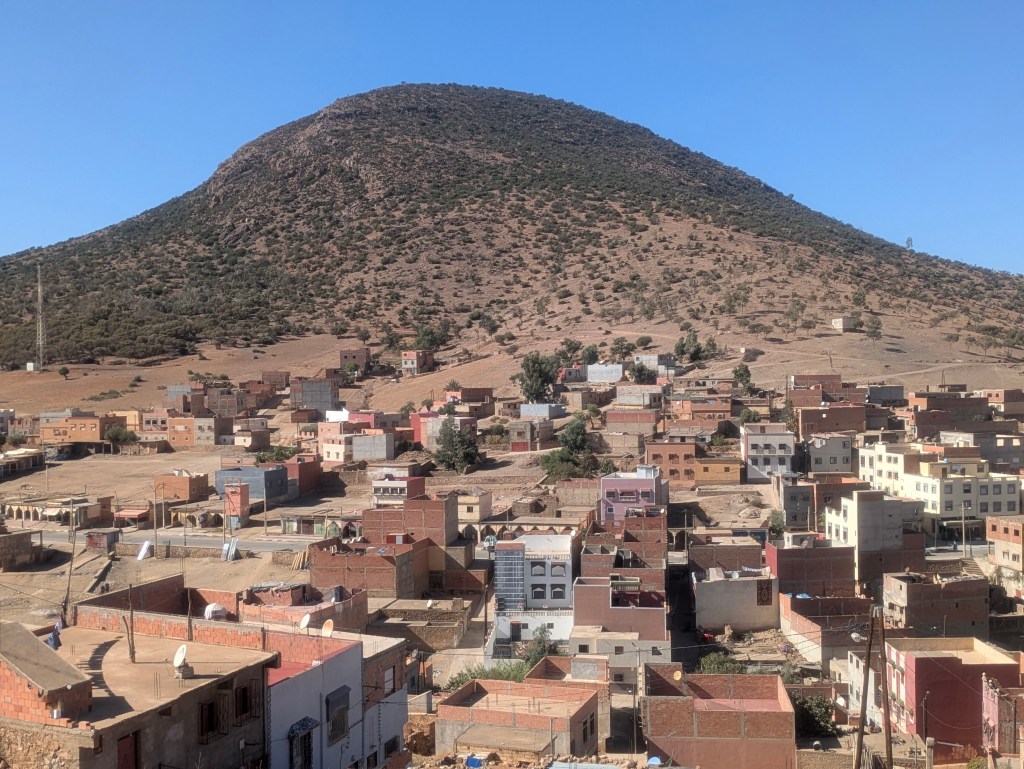
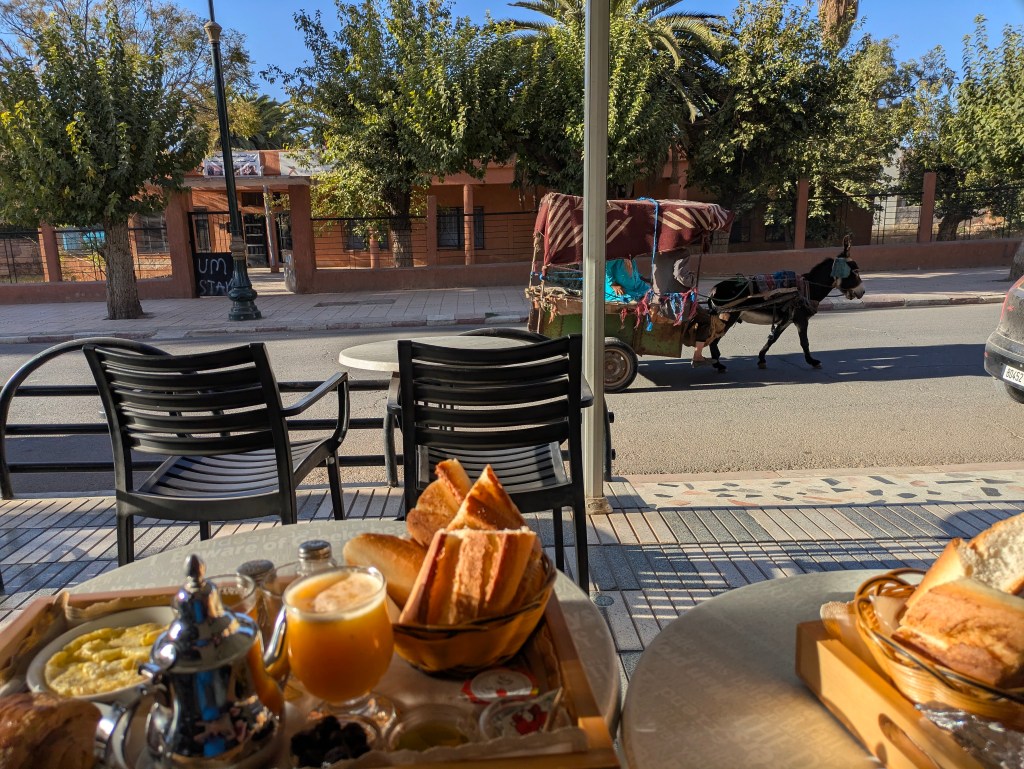
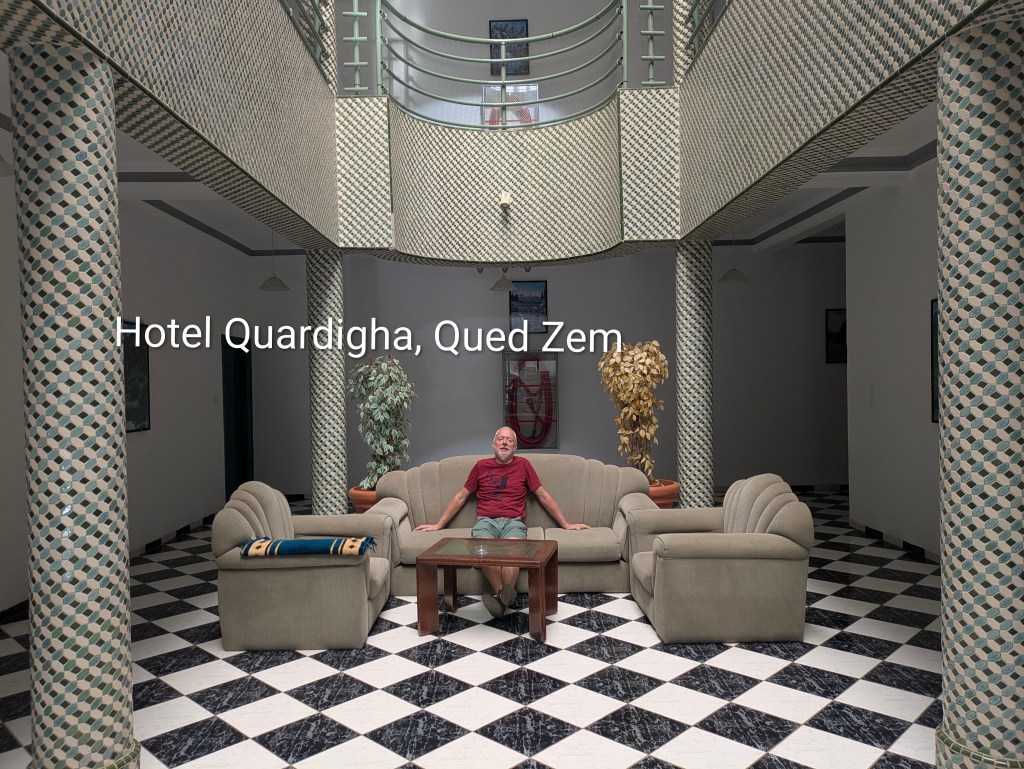
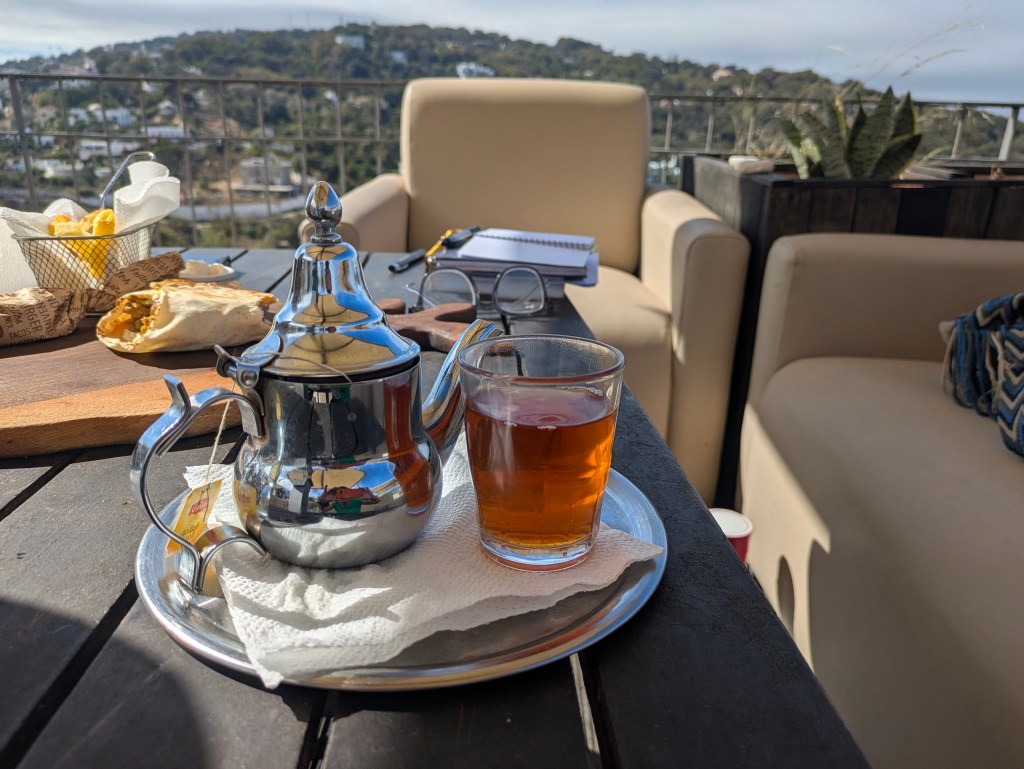
We pushed on to Qued Zem, a substantial town, which was once called ‘Little Paris,’ a title which left us scratching our heads. It was after six in the evening and still almost 30C so we went in search of a hotel. There weren’t many choices, the review for one read ‘don’t expect clean sheets’ so we went for the other, a fairly pricey option in a grand old mansion. This looked impressive but the bedroom aircon refused to go below 26C and the blocked shower tray flooded the bathroom but the sheets was clean and the breakfast on the veranda facing the street was delicious.  The quality of bread and pastries in Morocco was surprisingly superb, probably the French legacy, and juices were almost always freshly squeezed.  
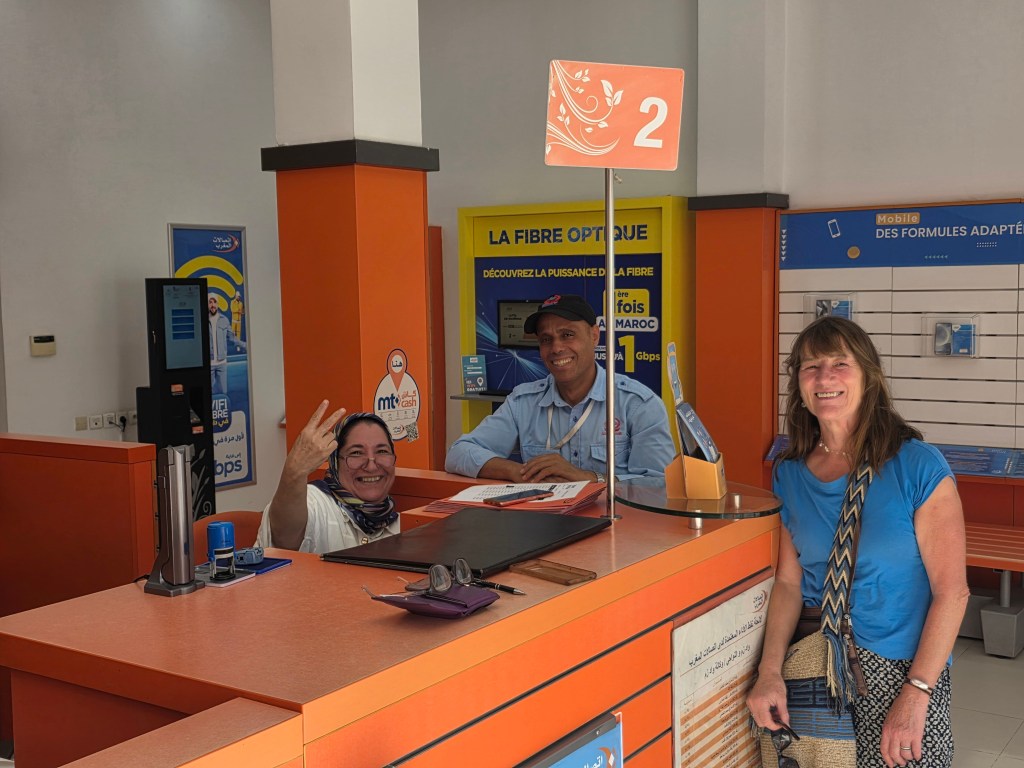
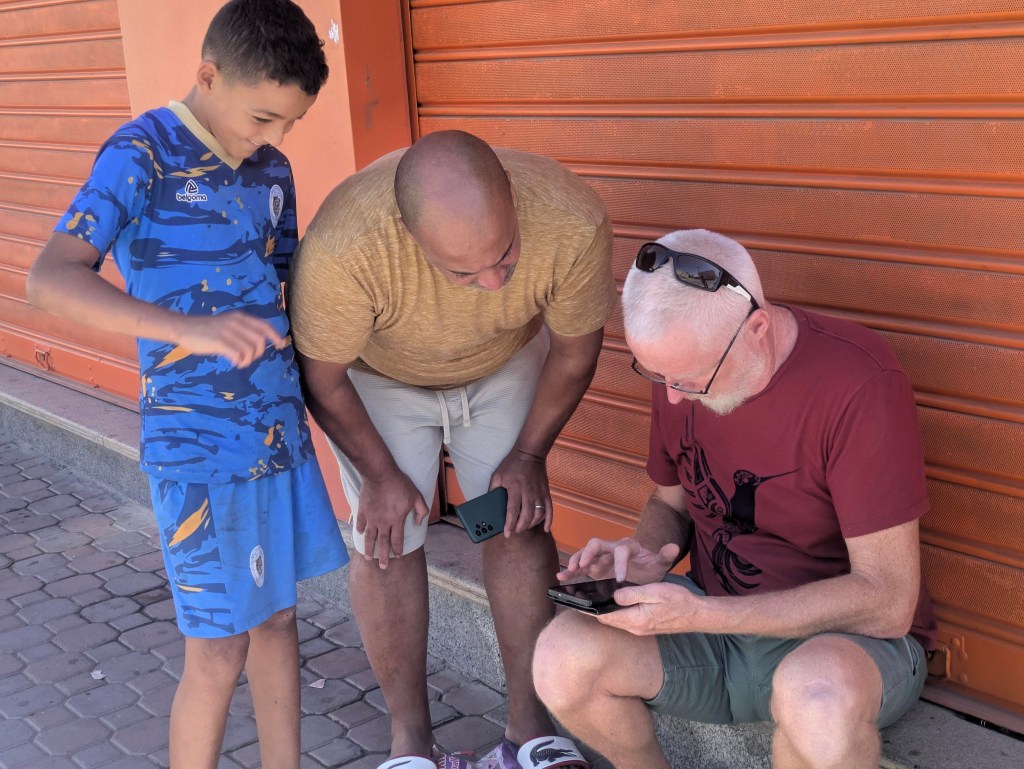
Although I had an e-sim from Revolut, I wanted to buy a Moroccan phone sim so we paid a visit to the Maroc Telecom office in the town where the lady behind the counter was extremely helpful but couldn’t understand why my Maroc Telecom sim in my phone worked for calls but not for mobile data. She eventually asked the doorman to take us to Hashim around the corner who was good at fixing things. Hashim was determined to find a solution but eventually had to give up….mainly because we wanted to get on the road. The Moroccan desire to help was truly amazing.

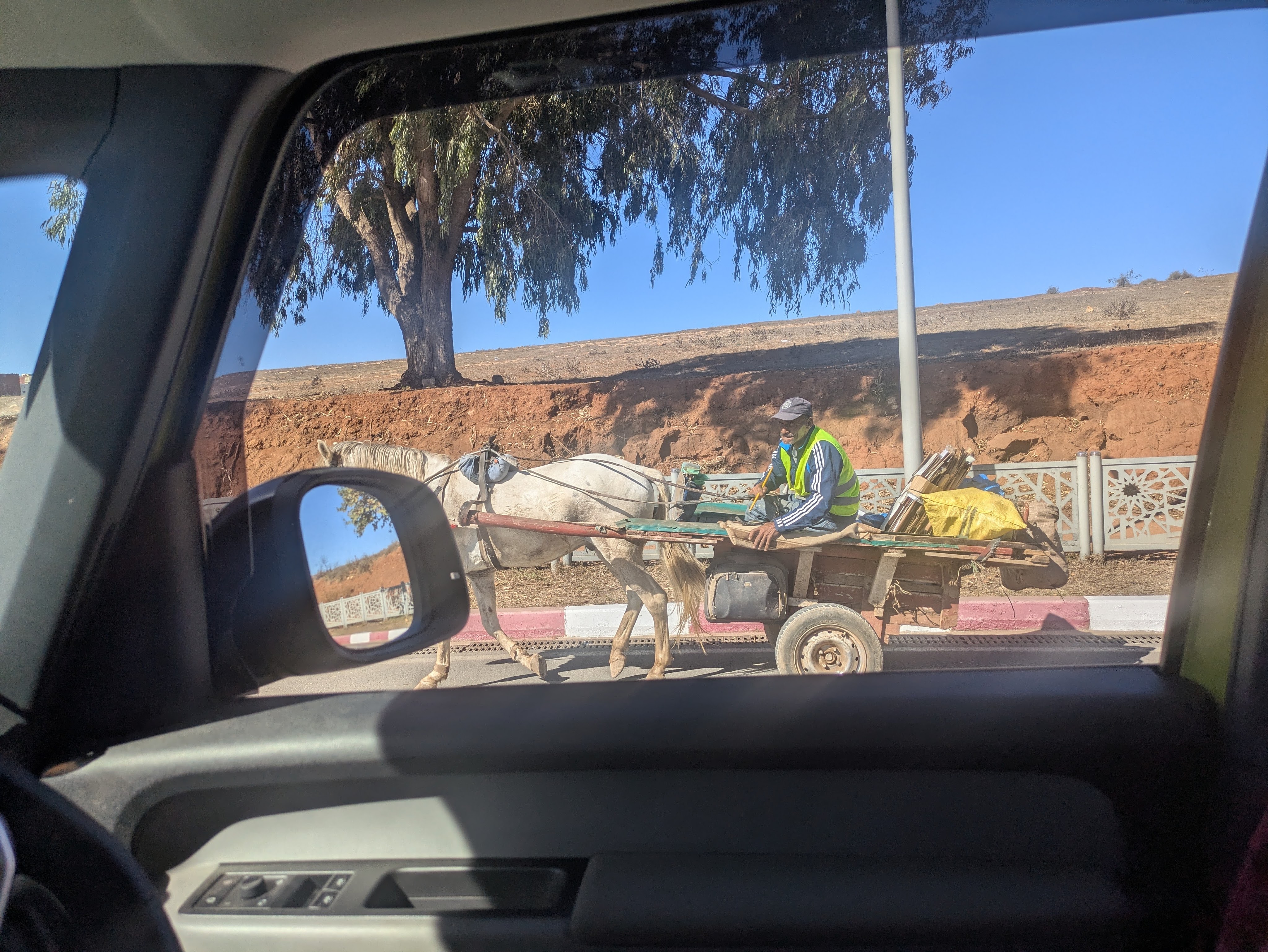
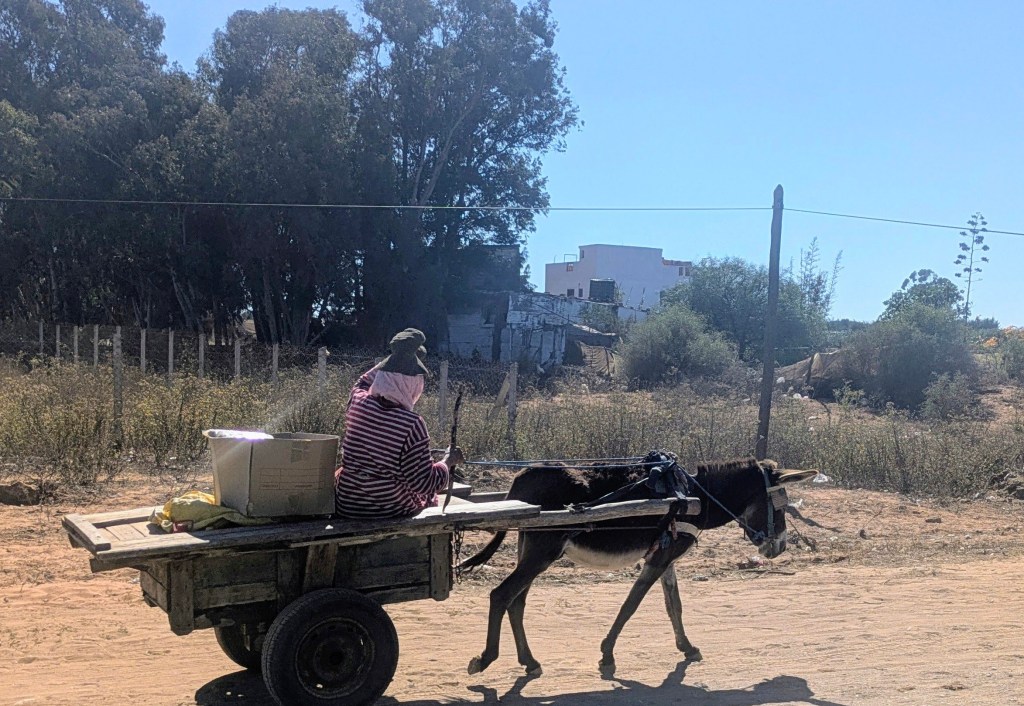
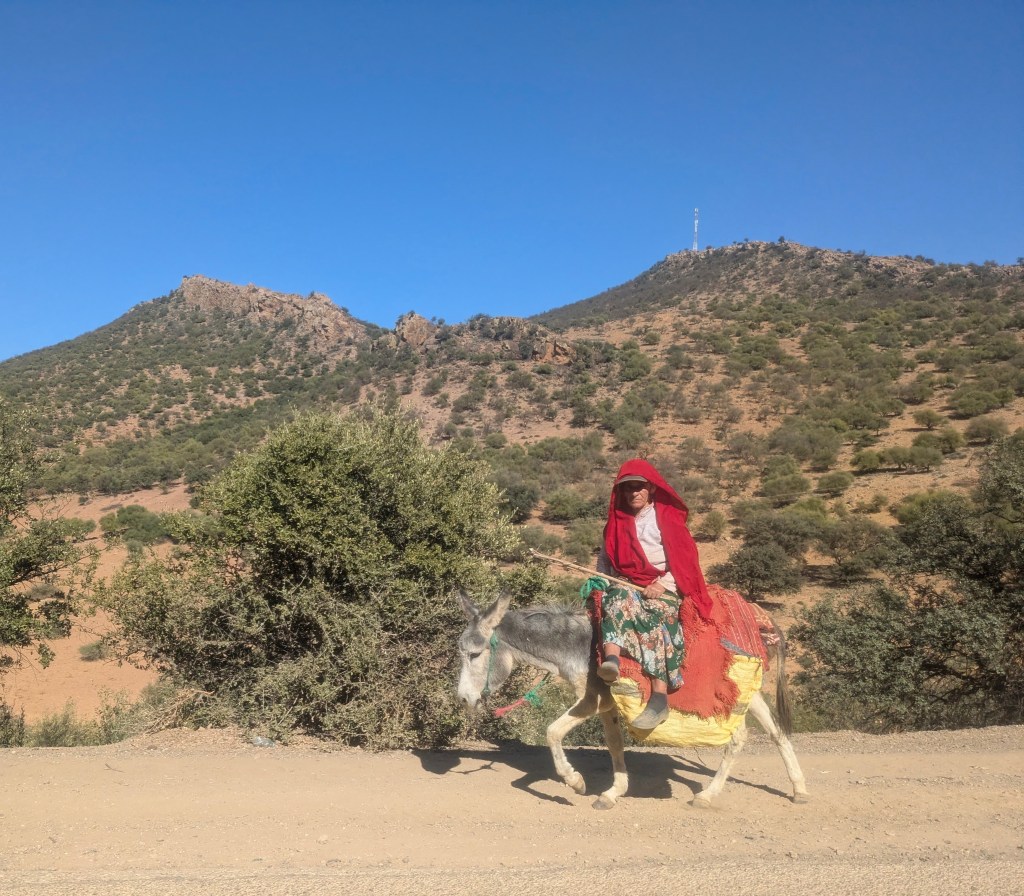
Although there were plenty of petrol stations in Qued Zem, there weren’t any EV-chargers  -most people didn’t know what we were talking about. Although we would have preferred to continue south to the High Atlas, the difficulty with charging made us head north although in reality, chargers were scarce in every direction. The drive north through the Middle Atlas to Azrou was again spectacular with a timeless, almost biblical feel.  It was Friday and in many of the villages, our passing coincided with people spilling out of the mosques and hopping on donkeys carts or bicycles. In many cases, the only evidence of modern living was that the man on the donkey had a mobile phone in his hand.
Surprisingly, there were lots of speed checks with police hiding behind bushes with speed guns. The advantage of trying to conserve fuel was that we were always within the limit and were waved on. Our charging issue was becoming critical, the kilometres ticked down and we mentally calculated how many we have left versus how many we needed to get to our destination. Morocco is a big country, more than ten times the size of Ireland. There were supposed to be EV-chargers in Azrou but we couldn’t find them and nobody knew anything about them. By the time we reached the Azrou campsite, Euro Camping Emerites (at least that existed), we had 62 kms left and we desperately hoped that we would be able to charge using a granny cable in a socket.

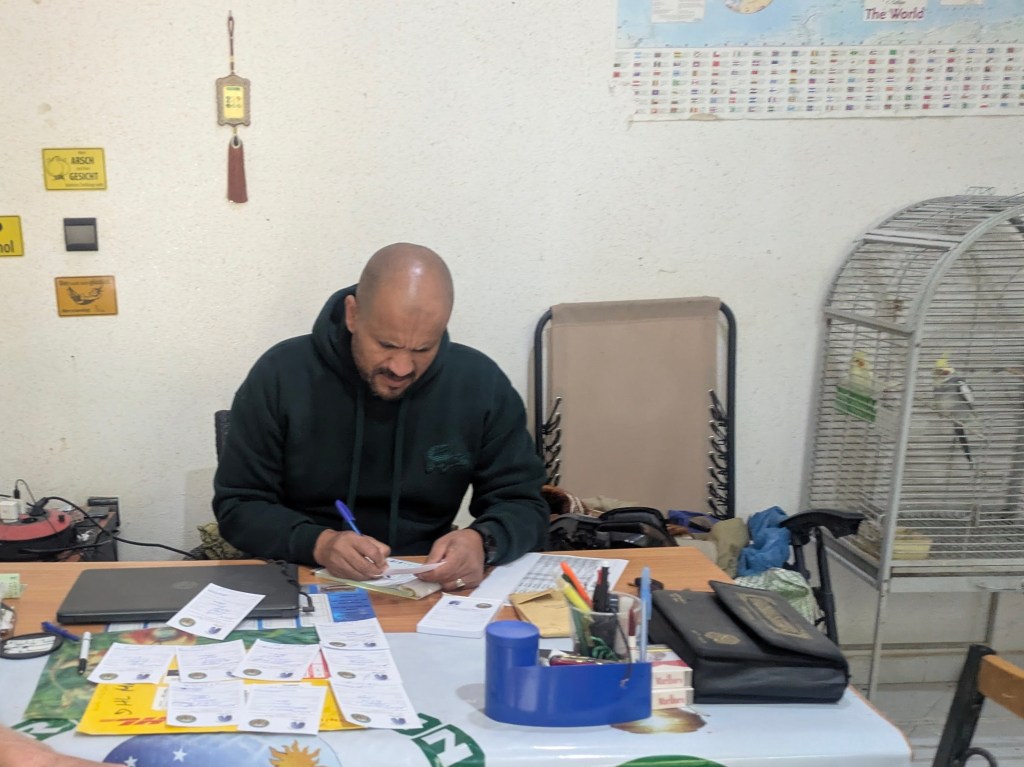
Azrou was charming, a Berber town surrounded by cedar and pine forests with many walking trails and home to troupes of monkeys in the woods. At about 1300 m, the days were warm and the nights were cool. The campsite was also lovely with lots of trees, a place where Khalid, the friendly manager, delivered free baguettes to everyone in the morning. It was exactly the type of tranquil place we liked, surrounded by nature BUT we had a big problem, we couldn’t charge the Buzz, We tried several sockets, Khalid allowed us to plug into the kitchen, he called a friend, brought us to a garage but the Buzz wasn’t buzzing.
 According to various (unreliable) maps, we thought there were chargers in Fez, which we had intended visiting, or Meknes, which we had never heard of before. Fez was 89kms but Meknes was closer at 65kms but we had a mere 62 kms in the tank.  Would either of them have chargers that worked……even if we got there? Our hope was that as we were in the Middle Atlas mountains, it should be all downhill to either destination. We decided on Meknes and drove slowly….Khalid gave us his phone number in case we got stuck and said that he would come and rescue us.

A wonderful thing happened.   A few kms outside the town, our available kilometres rose to 90 with 60kms to go. I began to breathe again, my stomach unclenched. The Buzz kilometres changed according to the terrain – going downhill, they zoomed up, any uphill, they went decreased but by the time we arrived in Meknes, we had an unbelievable 109 kilometres to spare. We headed to Carrefour Shopping Mall where there were supposed to be Kilowatt chargers and we had already downloaded the Kilowatt app. The good news was that the two chargers were working but the bad news was that they were in use. The friendly doorman suggested that we go for coffee and he would call us…which he did after about thirty minutes. Thankfully, the Buzz charging light turned green. As it was only a medium charger, we were only 50% charged after about three hours but we hated shopping centres and couldn’t bear to spend any more time there.

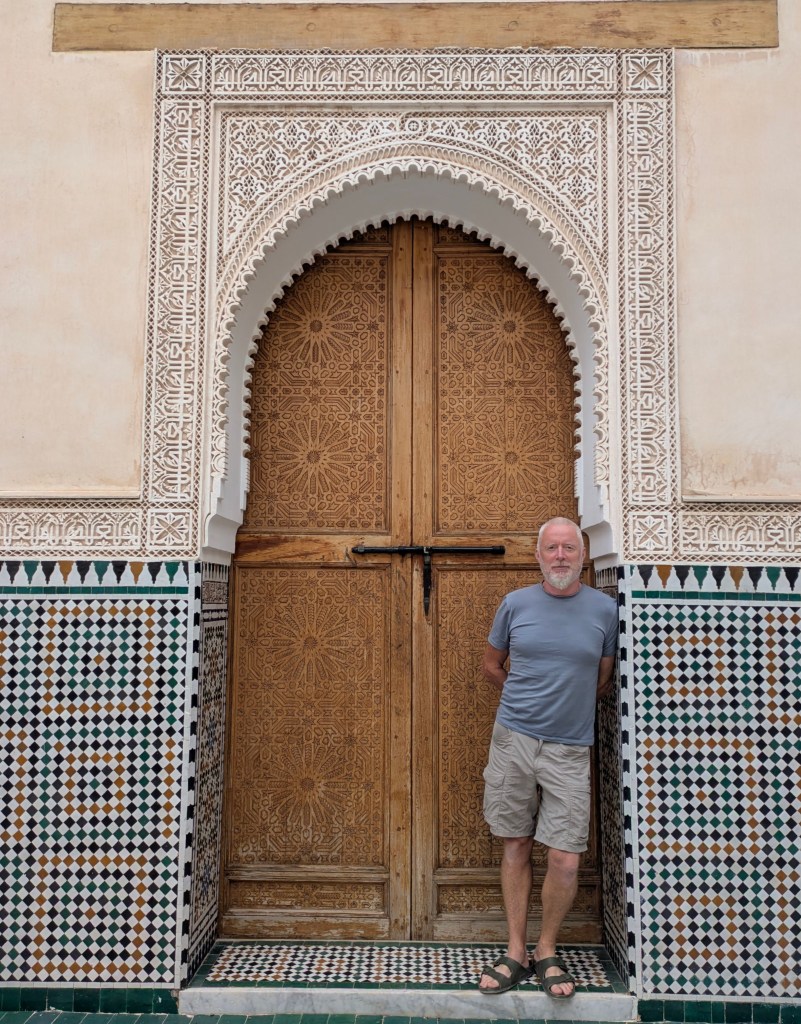
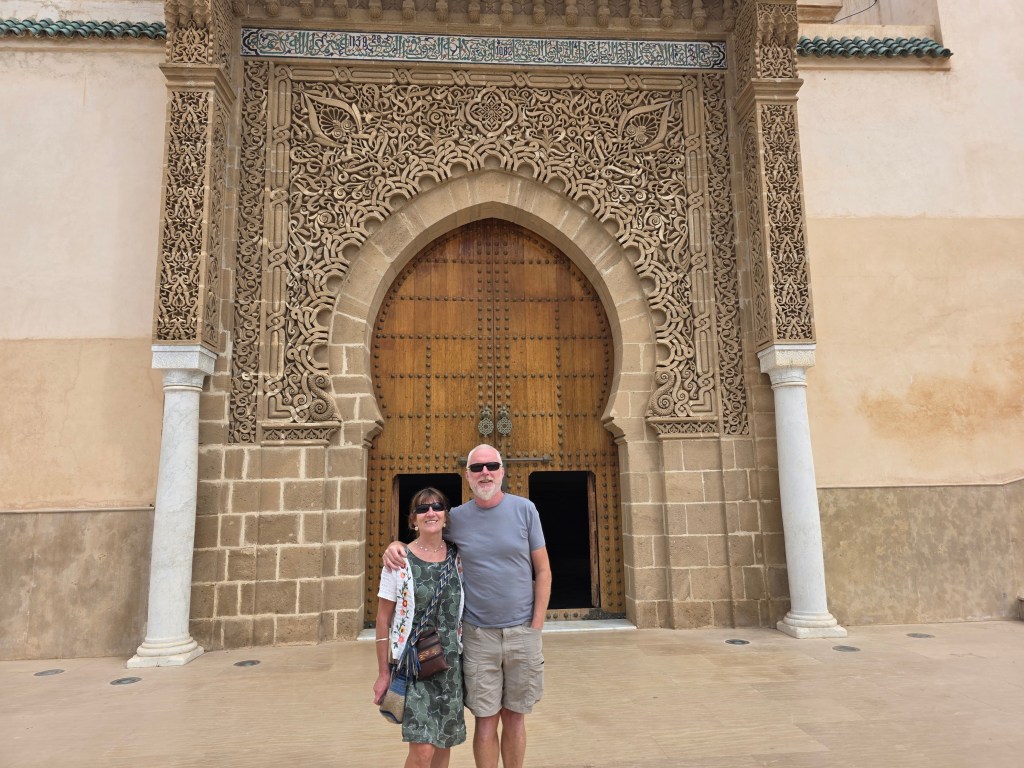
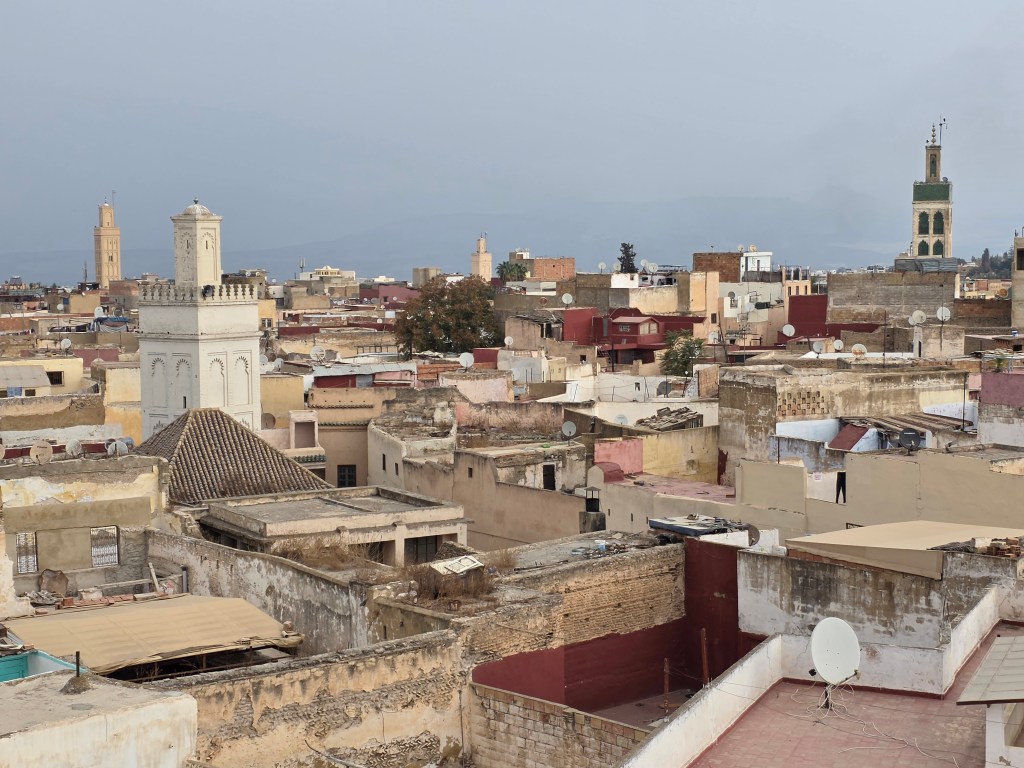
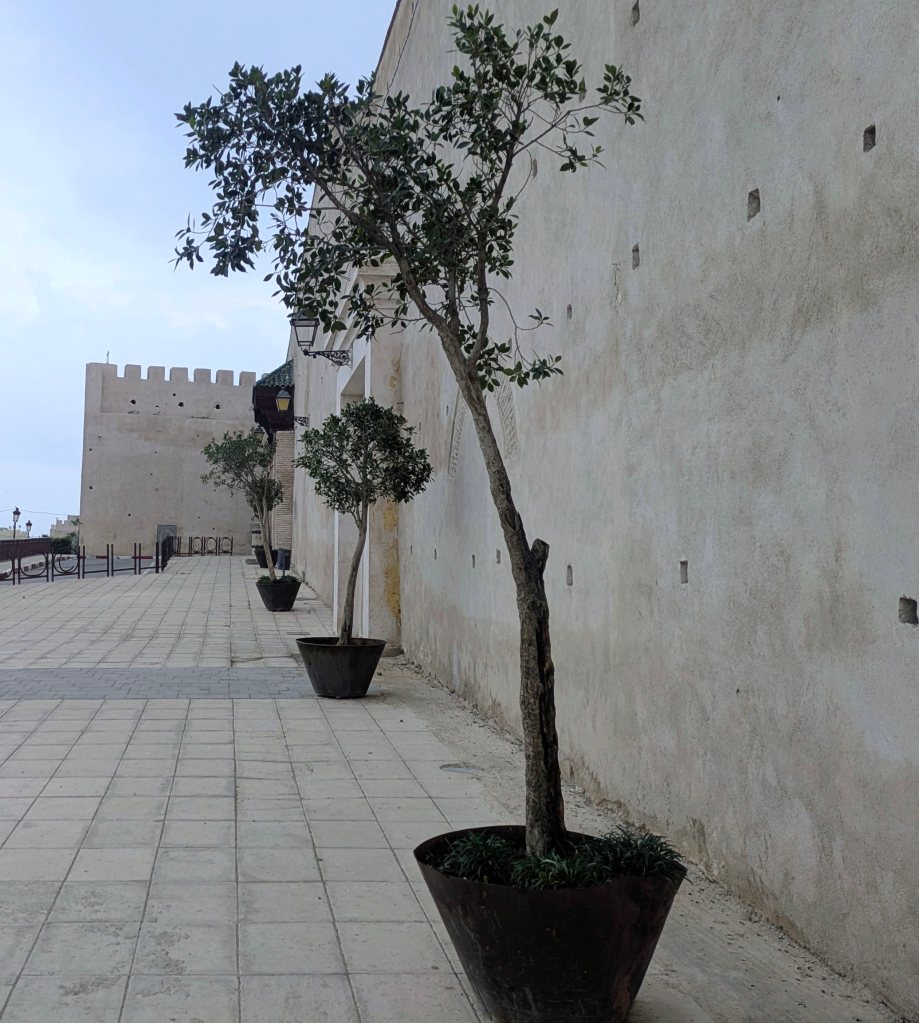
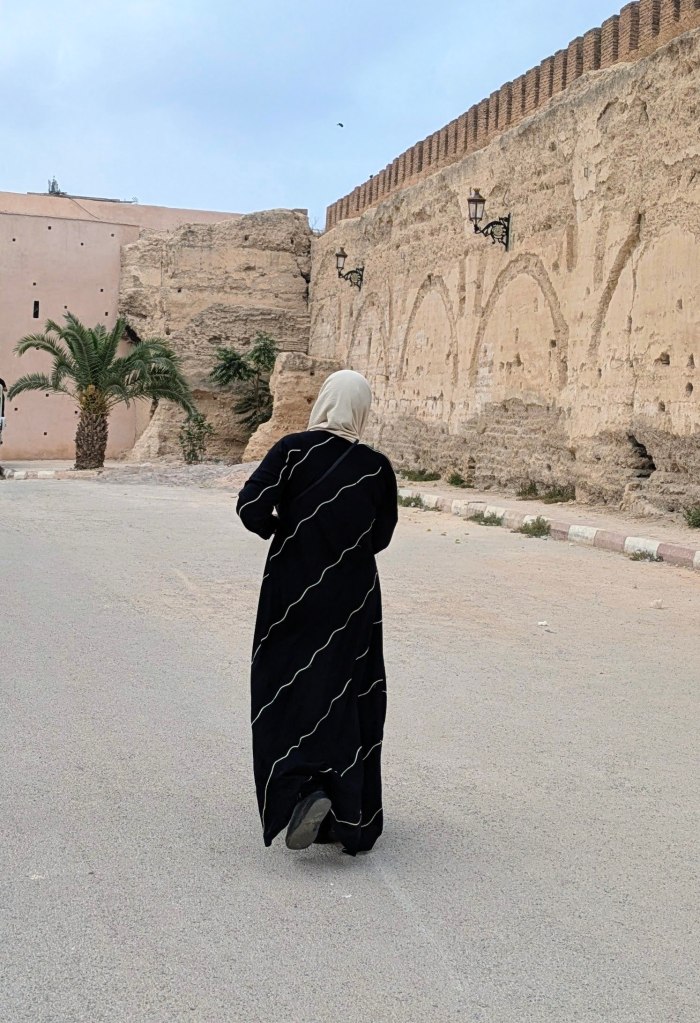
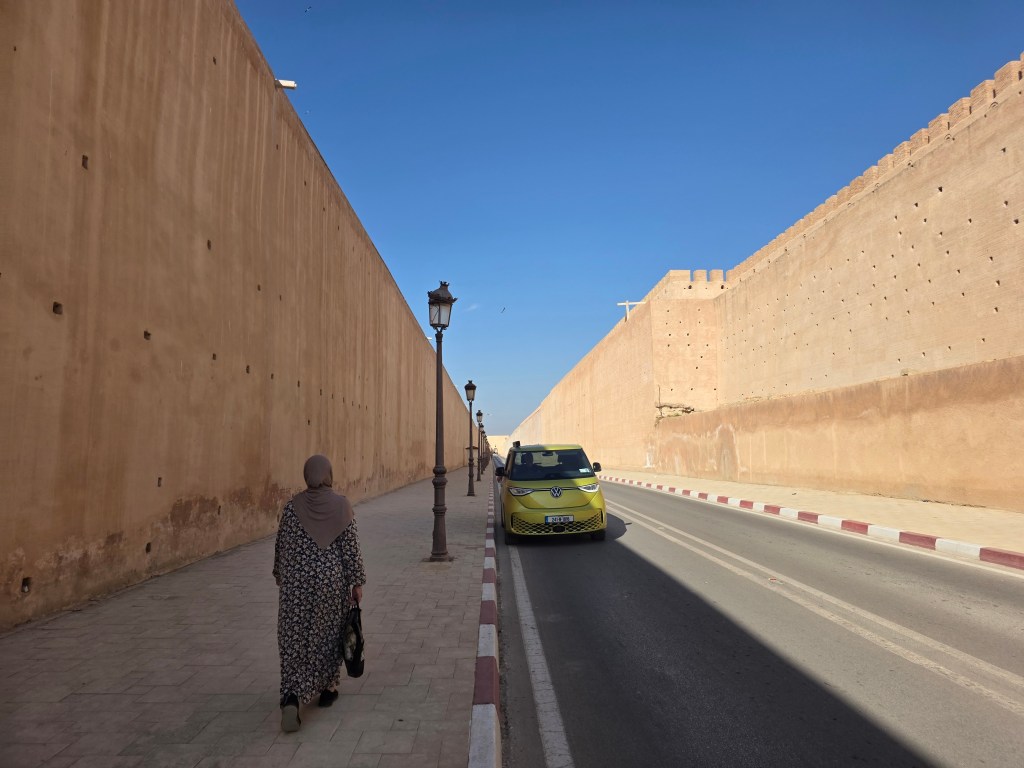
 Maybe our diversion to Meknes was meant to happen. It was a lovely city with impressive architecture, and although it was one of the four imperial cities of Morocco (the others are Fez, Marrakesh and Rabat), it wasn’t very touristy. Driving from the Carrefour Mall, we were wowed by the beauty of the old walls, built by Sultan Moulay Ismail in the mid seventeenth century. These impressive mud walls encircled the palace and old town and were home to hundreds of stocks nesting in the turrets. Sultan Moulay Ismail began the first day of his reign by murdering any of his 83 brothers and half-brothers who refused to bow to him. Despite that – or maybe because of it, he is much revered even to the present day. We visited his lavish mausoleum with a stunning mix of exquisite tiling and simple design.
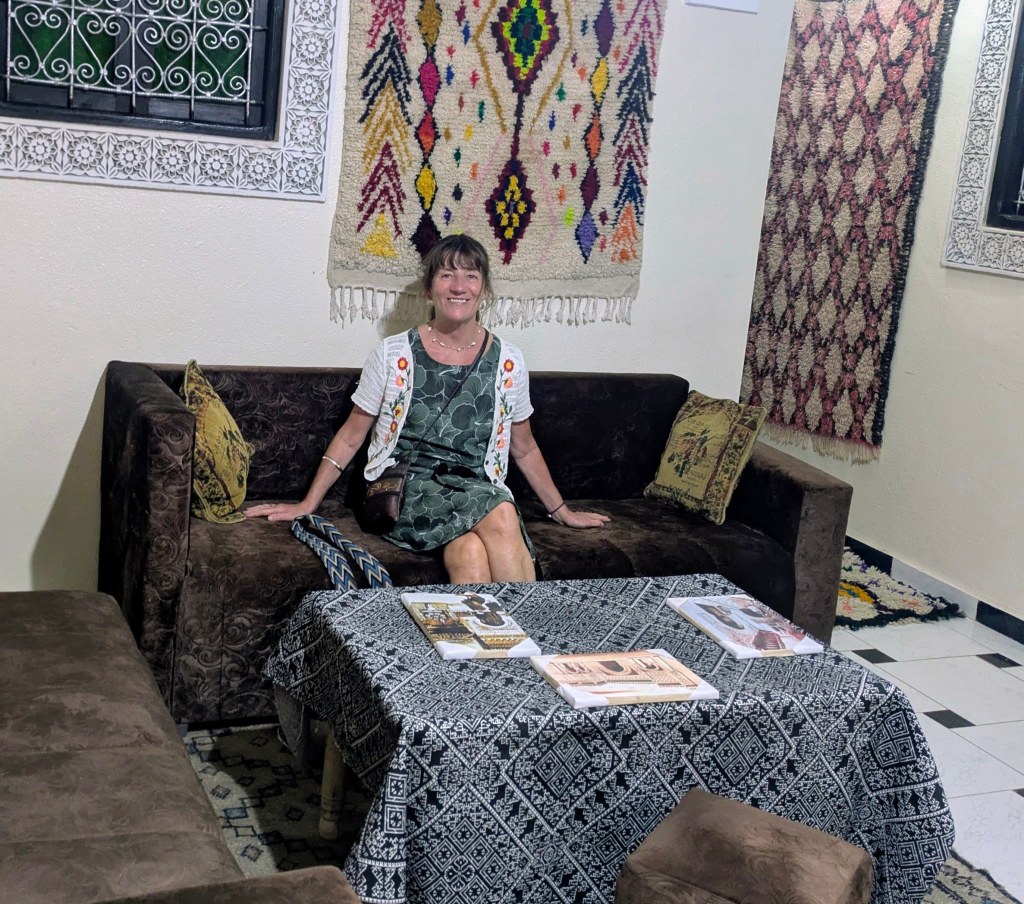
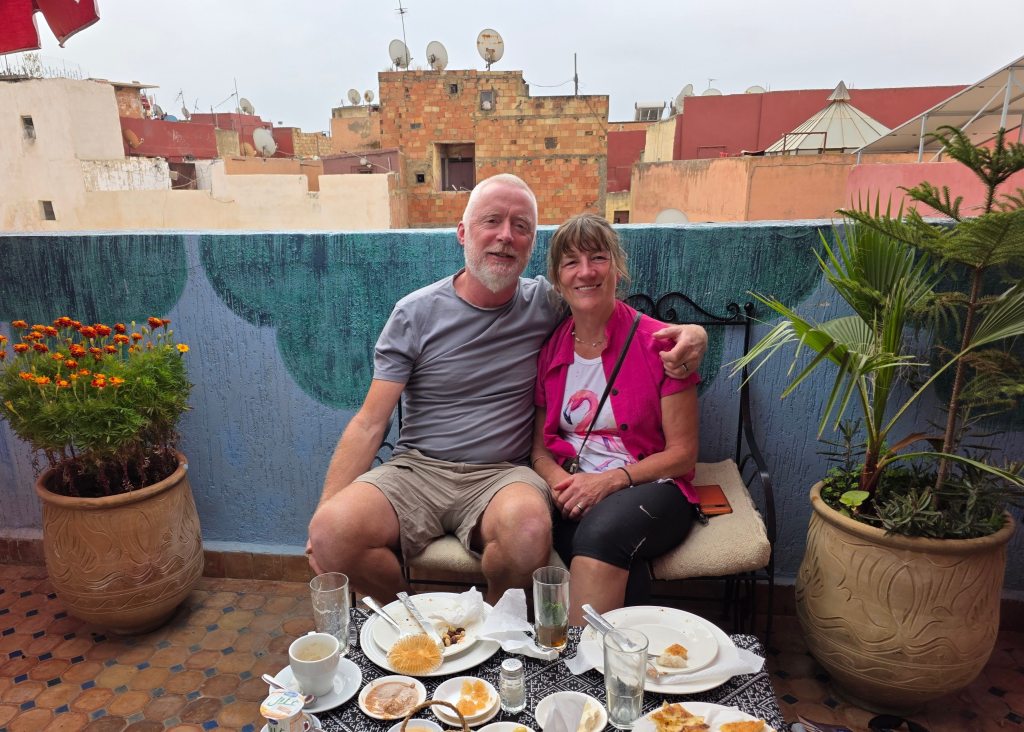
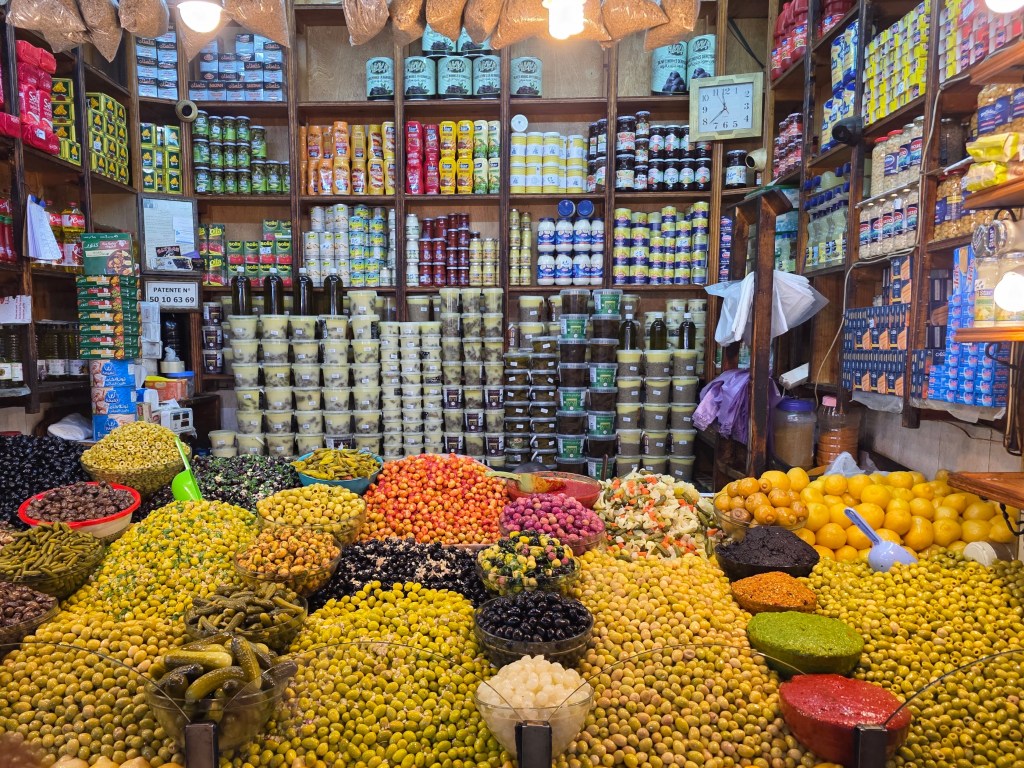
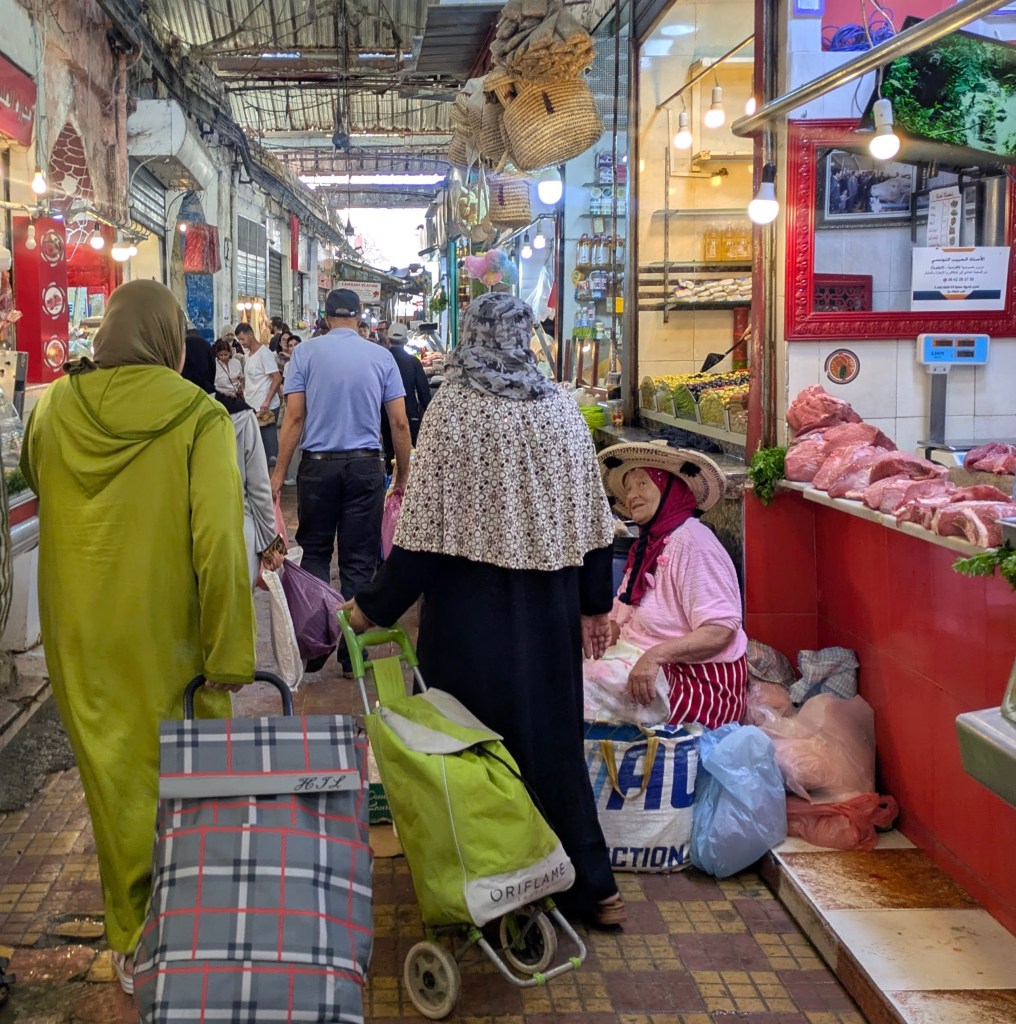
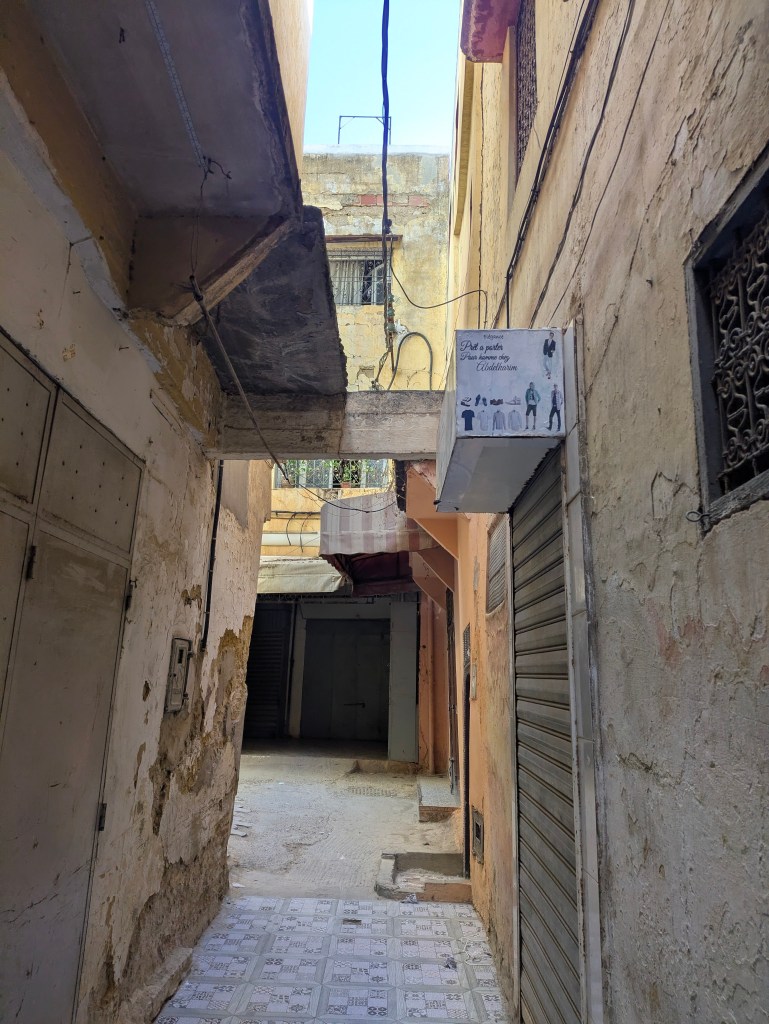
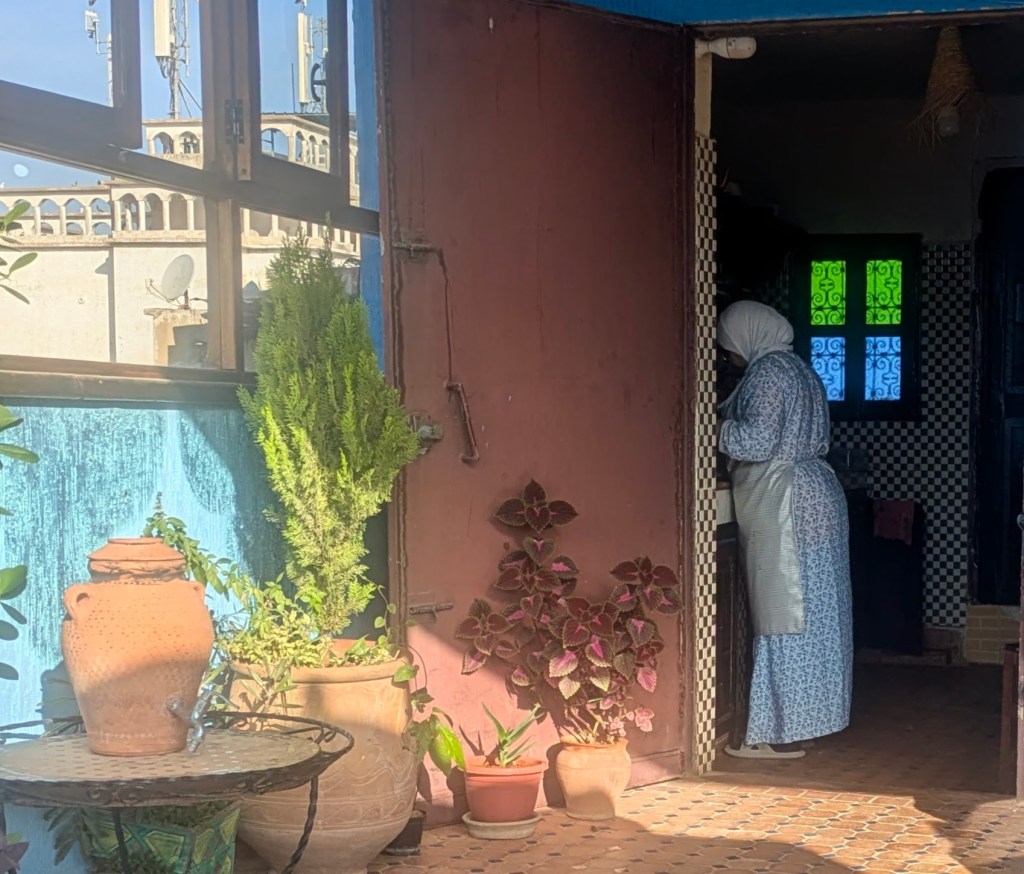
We stayed in a fabulous riad (Riad Andalous), hidden away in one of the alleys of the medina warren for two nights. Finding it was difficult, we walked  in baffling circles through stalls selling shoes, scarfs and food. Riads are traditional Moroccan houses and what a revelation when we climbed the stairs to enter Riad Andalous after a maze of dirty alleys. Secreted away high above the clamour of the medina stalls, it was an oasis of calm with tapestries on the walls, ornate ceilings, rug-strewn floors and a sunny rooftop terrace for relaxing breakfasts. It even had a little resident tortoise, who slowly followed the sun around the terrace.
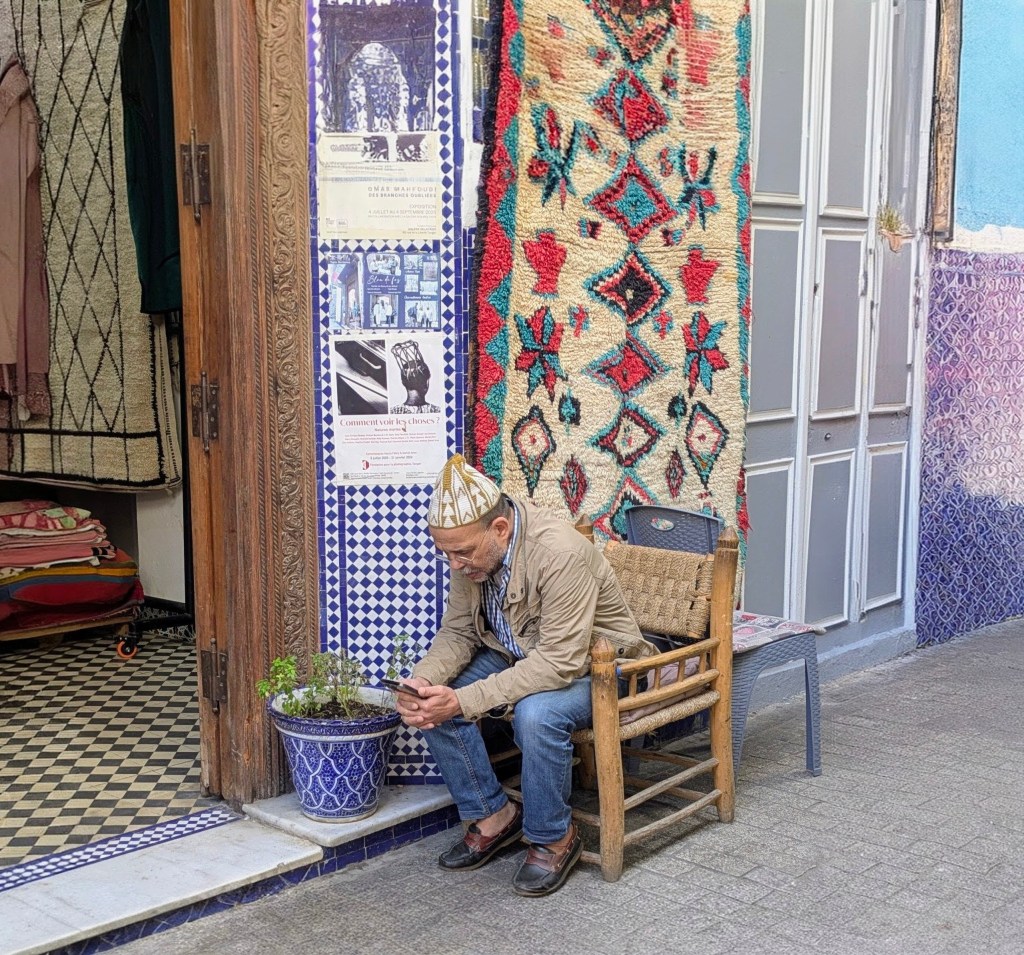
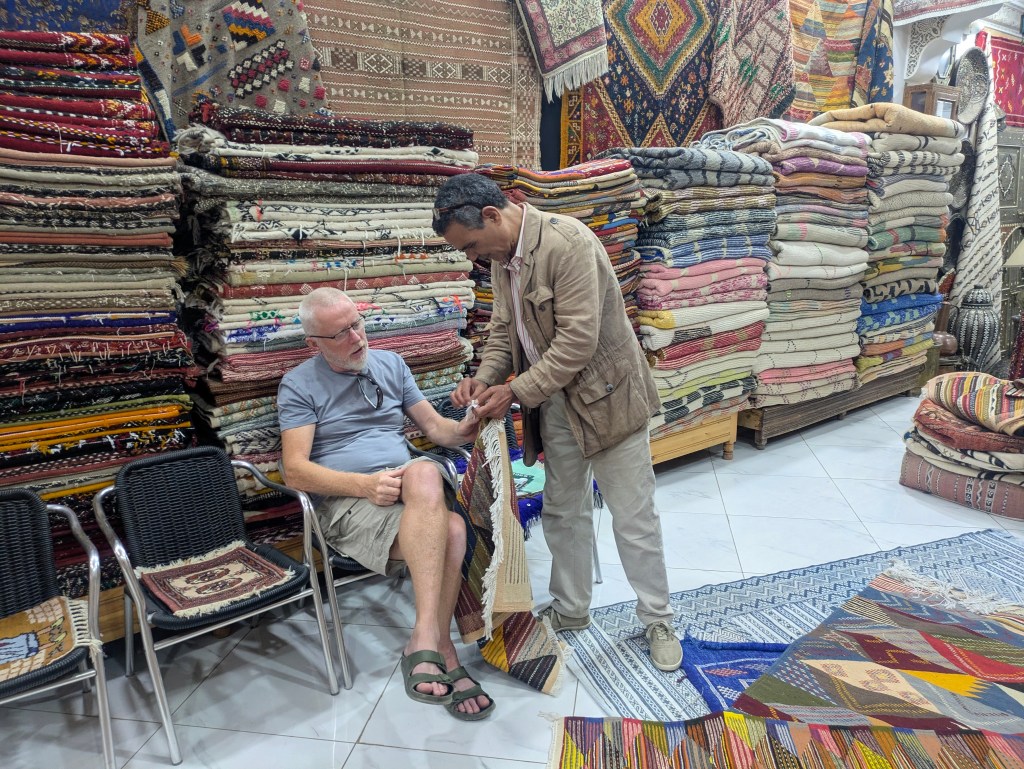
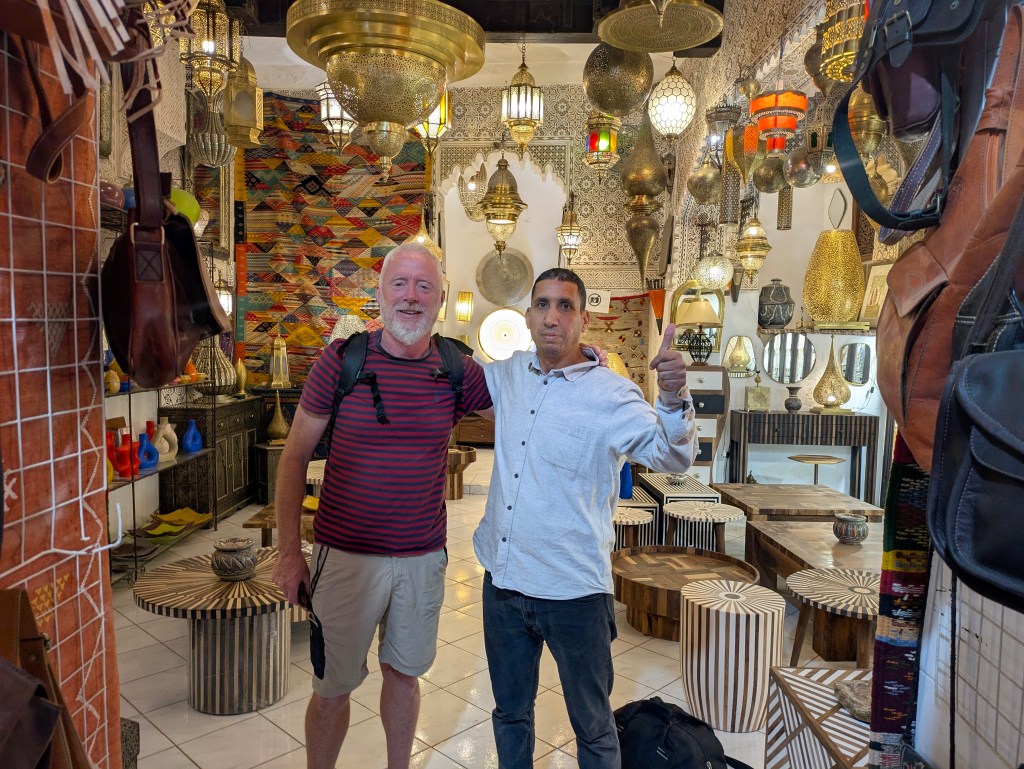
We visited a few carpet shops where eager salesmen pulled out rugs until the floor was strewn with them and our heads were swimming, so overwhelmed that we no longer knew what we liked. On the last morning, leaving our gorgeous accommodation, we turned into the alleyway to have one final look and this time we purchased after some hard bargaining.
It was time to head to Fes but as the Buzz tank was at 50%, we diverted by a motorway fuel station on the outskirts of Meknes that according to our maps had fast EV chargers but we were again disappointed. It will be absolutely essential that we charge in Fes which according to our (unreliable) maps has three chargers, one of which is a Tesla and so wont work for us (In Morocco, Tesla superchargers are only compatible with Tesla cars), so that leaves two medium chargers. Yikes!!!

On the bright side, we have really enjoyed our visit to Meknes, a city we would never have visited without charging issues.

Thanks for reading.

Till next time
Electric Roadtrip: The Charging Saga

Electric Travels: Onwards to Morocco

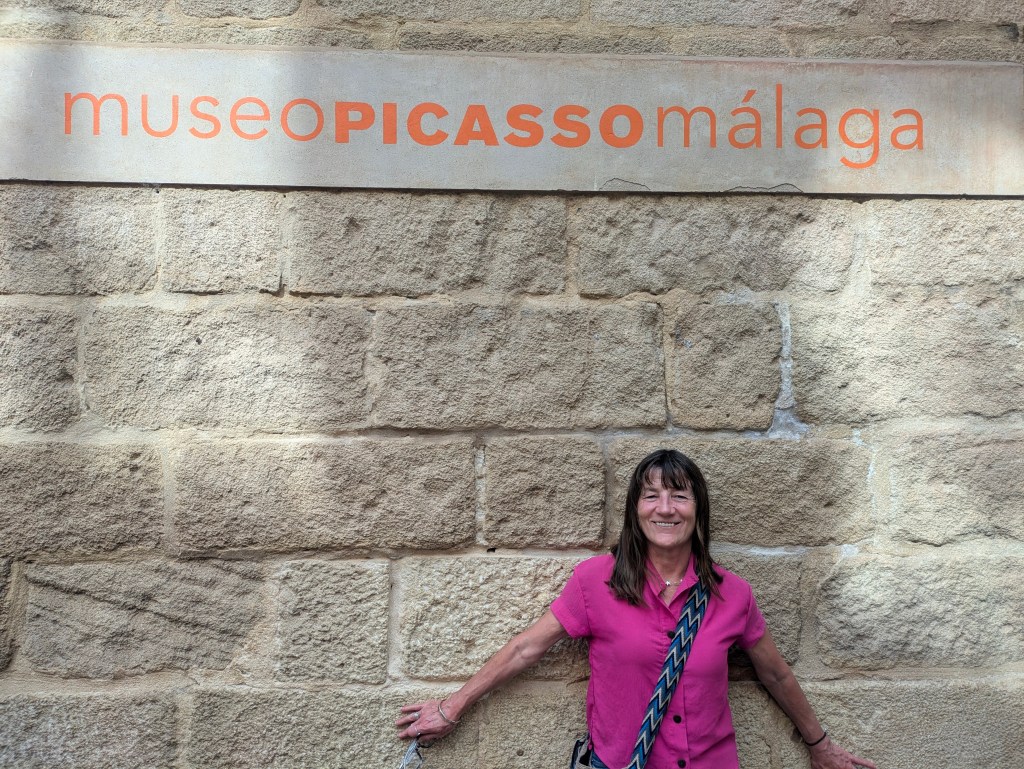
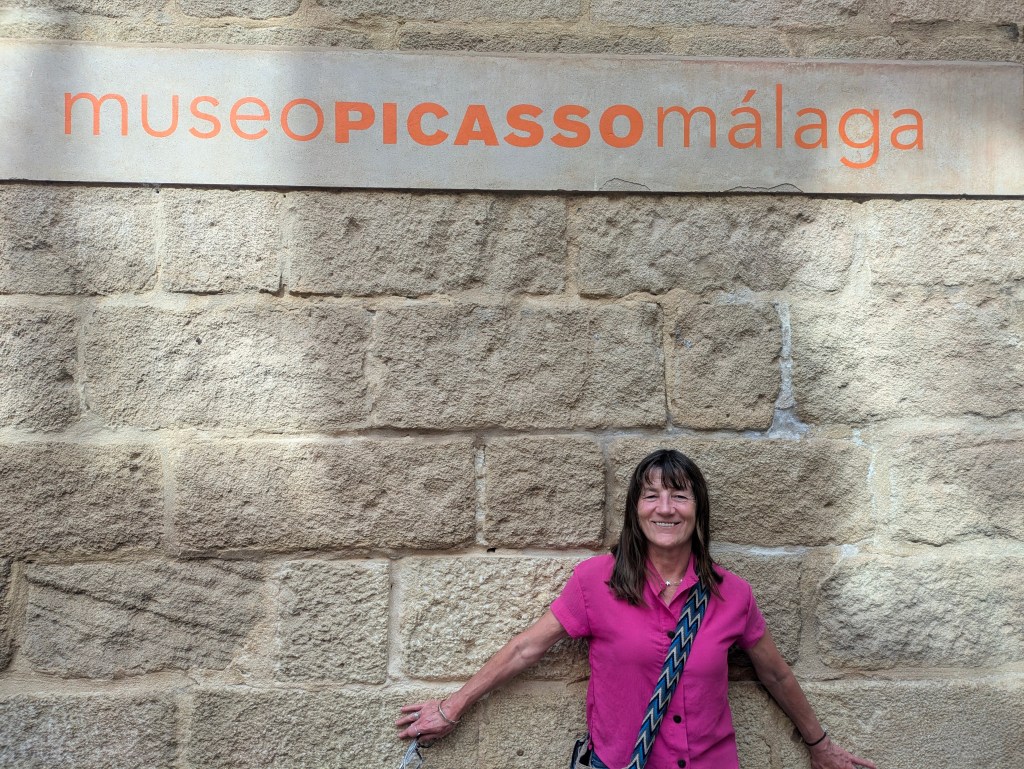
When I left you last, we were waiting to enter the Picasso Museum in Malaga. Picasso was truly a genius, could turn his hand at anything from pottery to sculpture to iron works and was constantly working. I love his quote ‘Everyone knows that art is not truth. Art is a lie that allows us to realize the truth. Definitely worth a visit.

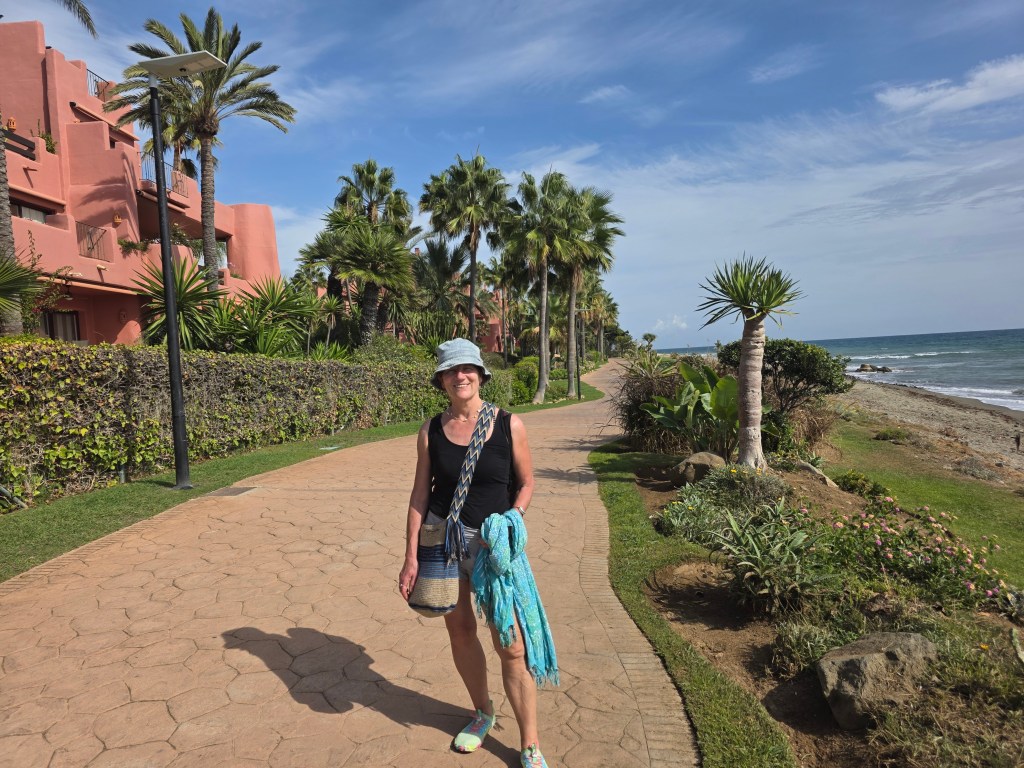
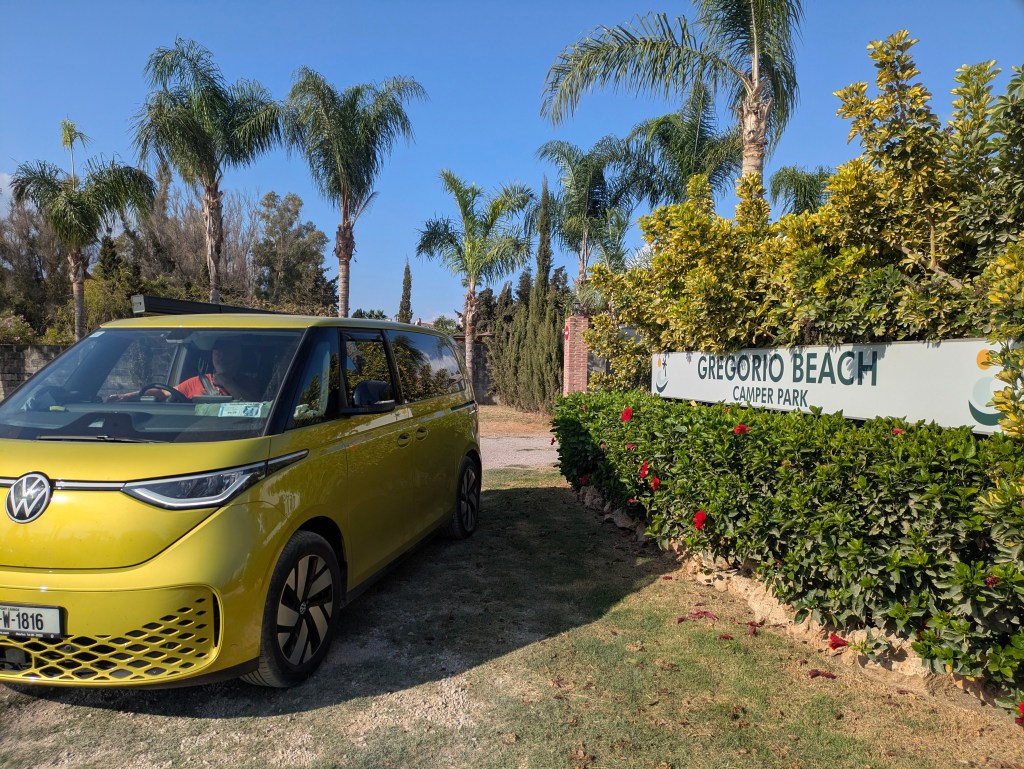
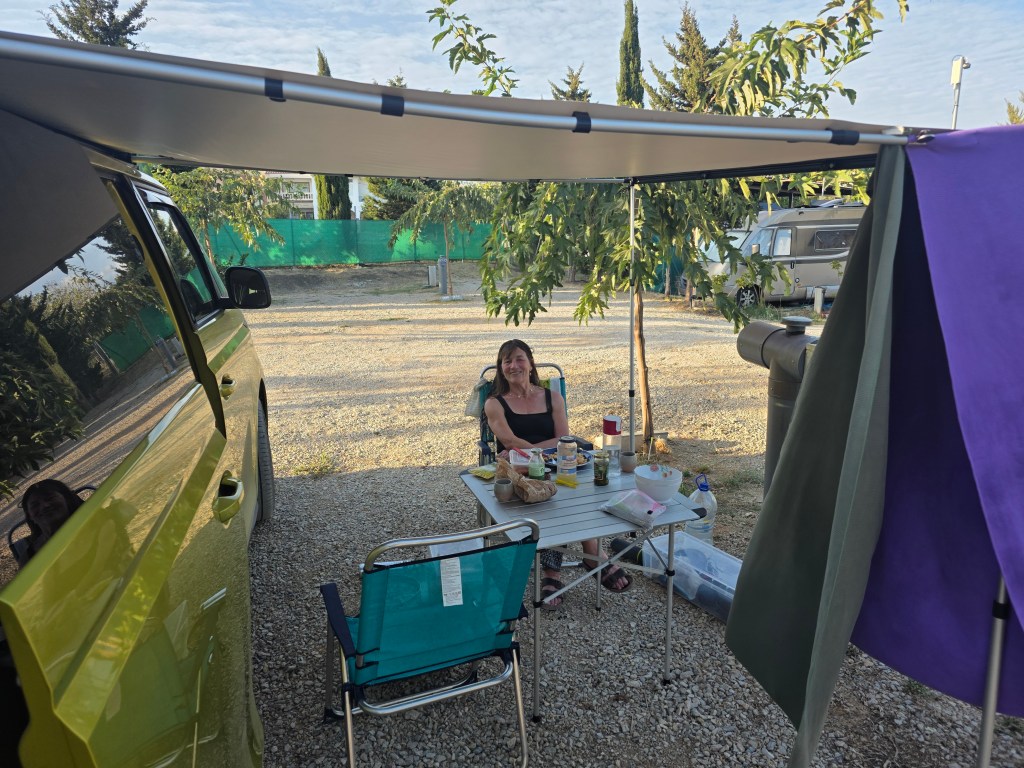
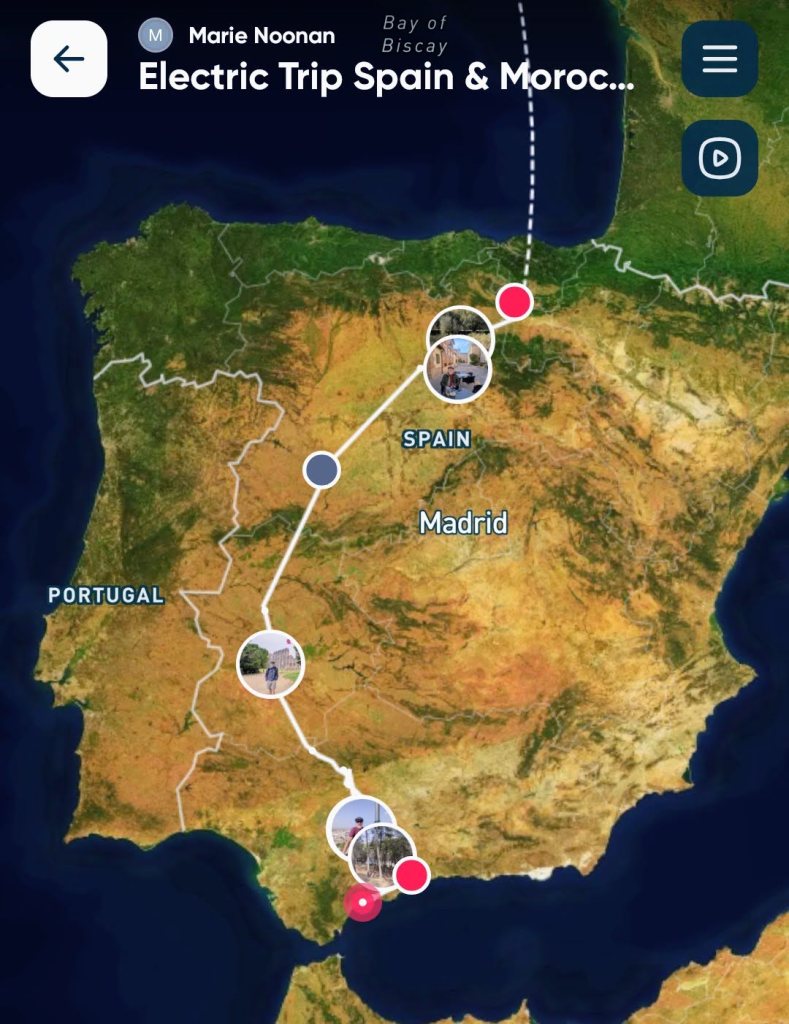
Malaga was gorgeous but too crowded and hectic for us so we continued along the Costa del Sol, past the high-rise holiday complexes to the western side of Marbella where we found a lovely campsite with good facilities, Gregorio Beach Camper Park , about a hundred meters from a quiet beach. The Wi-Fi was strong enough to upload photos and blog and it was cheaper, at €21 a night, than our hellish stay in the hills above Malaga the night before. We have never visited the Costa del Sol before but the beaches were not what we expected- no fine golden sand,  just long stretches of dun-beige but the sun shone and the October temperatures were a comfortable 24C, Ireland has far better beaches…..but maybe not the sun.  Spain was fabulous but Morocco was calling so we drove towards Algeciras, a port town with lots of ferries across the Strait of Gibraltar.

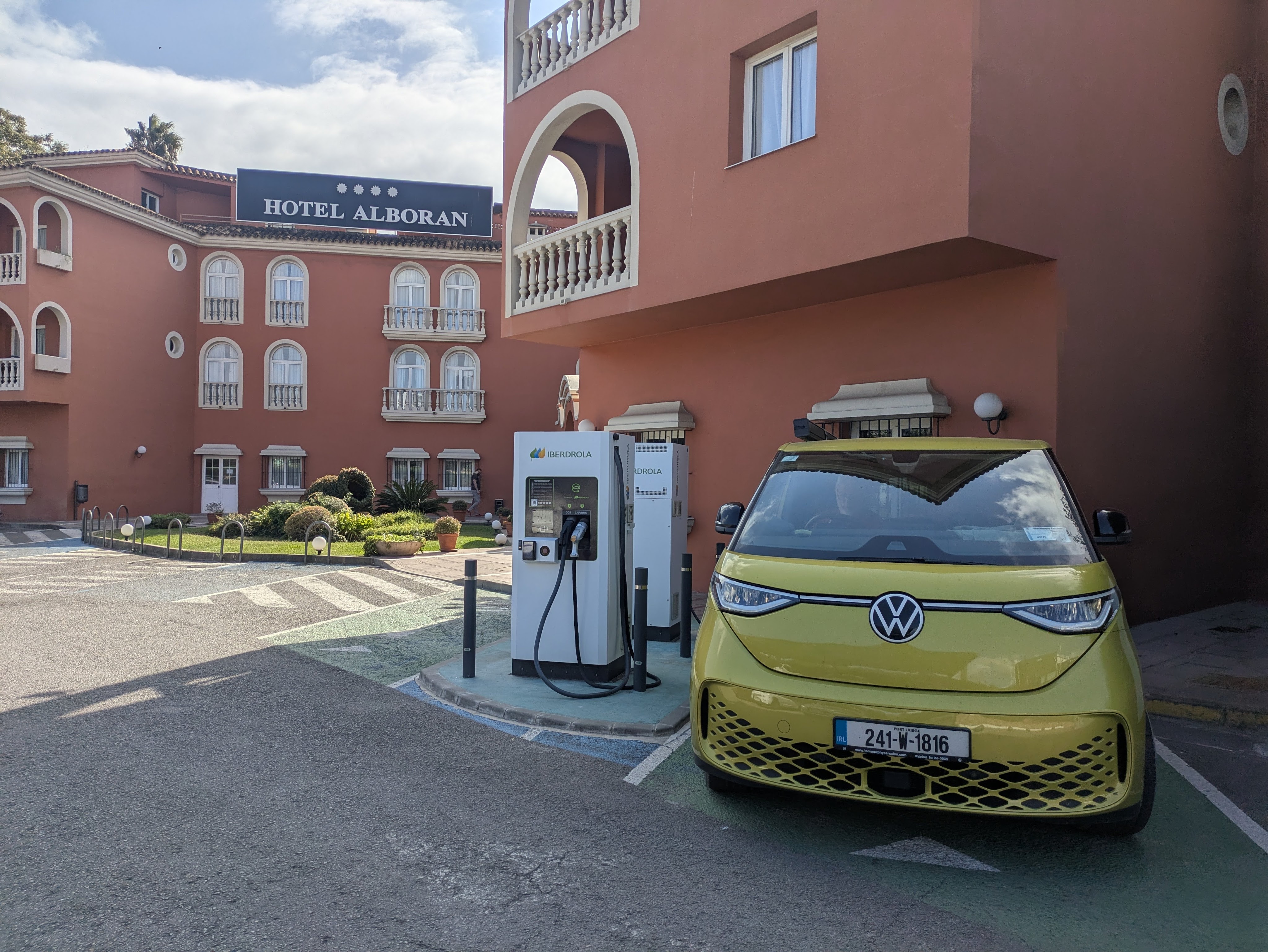
We tried to charge (Cepsa Chargers) in a garage forecourt near a Chino Shop where we bought camping gas canisters but the chargers were powered down and covered in dust. Then on to Ionity chargers down the road. Sun blazed on the screens making them opaque and impossible to read. Sweat dribbled off us and I searched for my umbrella to provide some shade and maybe make the instructions on the charger screen legible.  Although €40 was taken from Caoimhin’s bank card to validate it, we couldn’t get them to work. We next stopped along the road at a casino which had two Tesla chargers…these might have worked but they were only slow chargers so we pushed on and stopped at an Iberdrola charger outside a hotel on the outskirts of Algeciras. The Buzz charged to 100% here without issue and….best of all,  the charging seemed to be free (the cost hasn’t been deducted from my bank card…yet)

Free’ Charging, Algeciras, Spain

While we were charging, we booked the ferry to Morocco for the following morning. It was a little bit disquieting that the first time we had any charging issue in Spain (which has loads of EV chargers was the day before going to Morocco which has very few (41 chargers in the whole country according to one source and Morocco is about ten times larger than Ireland). Would our travels there be severely curtailed?
We could have sailed  from Algeciras–Tangier (Morocco) but Algeciras–Ceuta was cheaper and sounded interesting. Ceuta is not part of Morocco but is a Spanish coastal city on the African continent. A one-way ticket for two passengers and the van cost €183.

Then we checked into a hotel as there weren’t any campsites nearby– really splashing out at €60 a night. We read our guidebook on Morocco, feeling excited, until we made the disturbing discovery that we had forgotten to bring the Van Registration Documents with us! This hadn’t been a problem in Europe but it would likely be a real issue leaving Europe

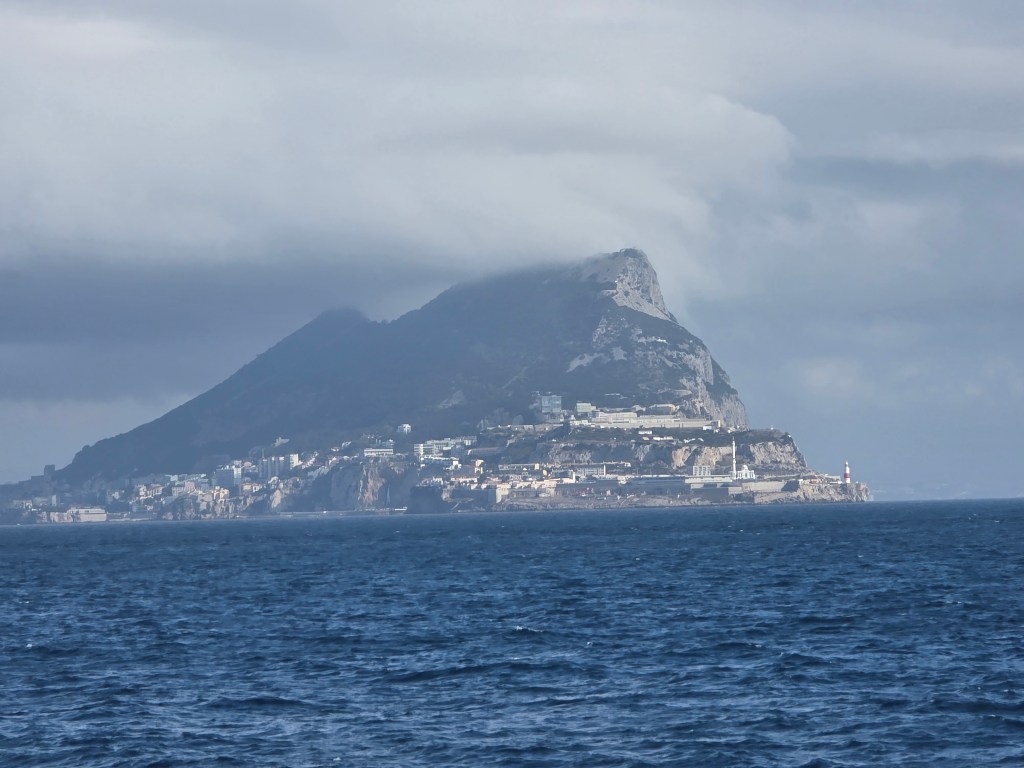
We were early. The woman in the ferry queue  in front of us wore a black burka and a beggar wandered down the row of cars with outstretched hand. The Med glittered in the morning light, although cloud obscured the Rock of Gibraltar  The African continent was tantalizingly close, …a mere 17 kms to Ceuta across the Strait.

There was a brief custom check in Algeciras port, just a cursory look in the back seats and in the booth, for everyone except for  us. We were waved onto the ferry with a smile. I guess the rationale was that nobody in such a neon-coloured van could possibly be smuggling anything. The crossing was smooth and shorter than expected, about an hour. The time difference gained us an hour so we arrived in Ceuta, at the same time we had left Algeciras.  It felt as if we had departed Spain, crossed the water, only to arrive back in Spain. The city has been ruled by Spanish princes, Moroccan sultans and Portuguese kings down the centuries. Now it is surrounded by high-security barricades to prevent smuggling and illegal immigration to Europe.
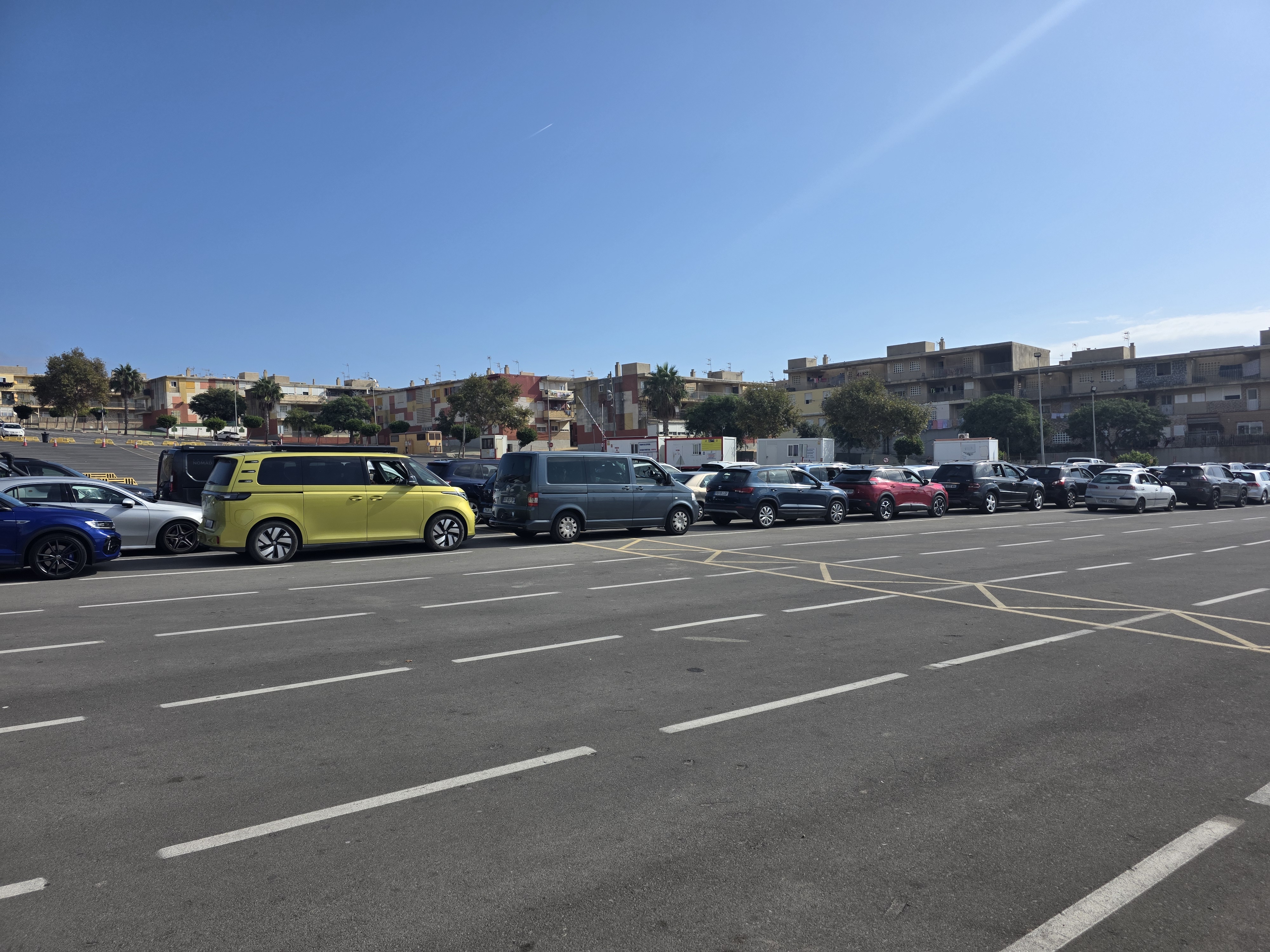
Corralled in Ceuta….border waiting

Ceuta was a handsome town with Spanish architecture, plazas, old city walls and sunshine, we didn’t stop, anxious to get to the border (La Frontera) and discover our fate. An official demanded to see our ‘ticket,’ we didn’t know what he meant but he directed us back into town and uphill to a huge parking lot, where cars wishing to cross into Morocco were corralled before being released in rows to prevent border congestion…..in theory at least. While waiting, we phoned our great neighbours, who hurried over to our house, photographed our van documents (thanks Donal and Anita) and Whatsapp’ed them to us.  After an hour of waiting in the carpark, we approached the border a second time to join snail-like queues of cars, vans and motorbikes.  A further two hours went by before we were at the top of the queue. Our passports were stamped without issue, we were welcomed to Morocco and proceeded to the vehicle window. Like all the vans (no exceptions for the Buzz this time), we were asked to drive to one side where it was searched and then we were asked for the van registration form …and the trouble really began. They needed paper documents, it wasn’t the right document, we wouldn’t be allowed in.
Alternative itineraries were dancing around my head, if we had to return to Spain, we could wander around Southern Portugal….it would be very disappointing but not a calamity. Eventually a senior official was called, an older man, slightly stooped but mild mannered. He agreed to give us a waiver and signed a piece of paper, necessary to enter Morocco. Four and a half hours after disembarking from the ferry, we were in Morocco….by the skin of our teeth.

A row of white taxis hovered around the border gates,  a couple of dogs barked and ran uphill after the van, while several head-scarfed women sold fruit, laid out on the ground on colourful blankets. We kept going, wanting to get away from the border as quickly as possible. Thankfully, the e-sim we purchased from Revolut for Morocco activated, so we had mobile data on our phones without the hassle of haggling for a physical sim.

The road surface was excellent and the scenery was ruggedly beautiful with brightly painted, flat-roofed houses with mountains casting light and shadows. Although we were fully charged, we wanted to check out the Moroccan EV chargers, just to see if charging would be an issue so we headed in the direction of Tangier. The drive from Ceuta to Tangier was spectacular with the backdrop of the Rif mountains with small towns and some beautiful white-sandy beaches.

The first chargers that showed up on our map were Fast Volt, the chargers were in a gleaming forecourt and looked impressive. We were hopeful. The instructions, in French, required us to download the Fast Volt App as charging was only available through the app (and not directly using a bank card). No problem, we thought, until we attempted to download the app and kept  getting the message ‘Unable to download as app not available in your region.’ Catch 22. The next chargers on our map were part of a Casino Hotel and their use (behind a manned barrier) was for hotel guests only and we were refused entry  Tangier seemed a modern city with palm lined boulevards, a wide esplanade along the sea-front and buildings on the steep slopes, a city of hills and hollows.
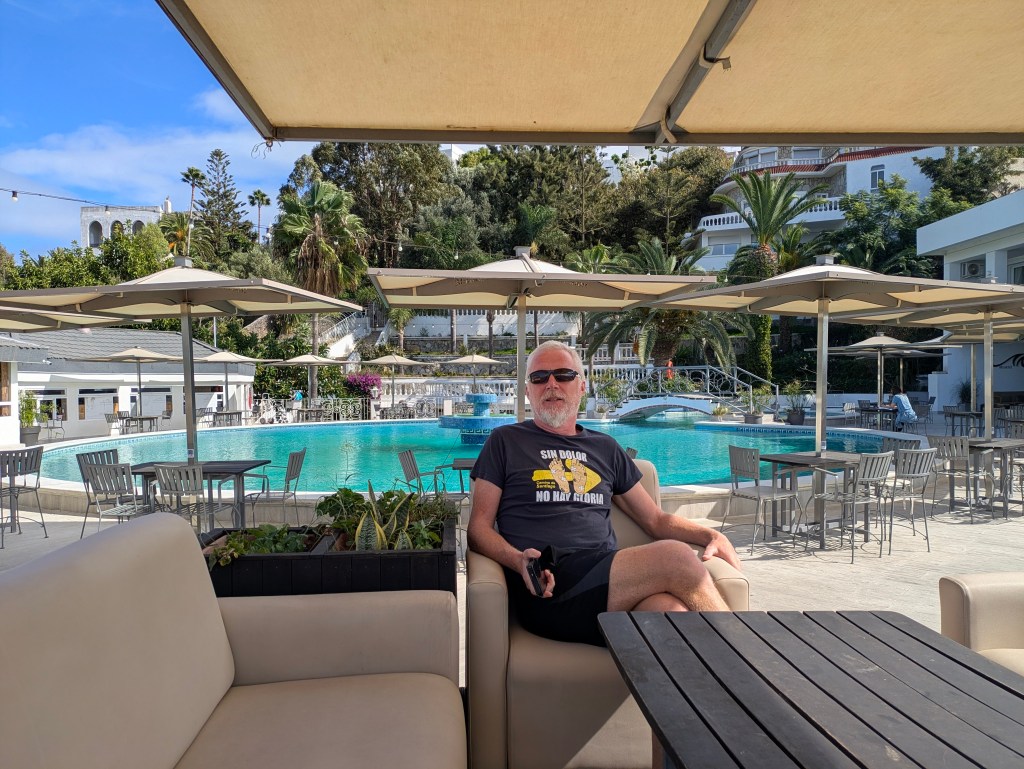
We headed to a Google campsite, Miramonte Camping, in need of a lie-down after the stress of the day and were welcomed by Said, in perfect English The campsite in a hilly location was really a resort complex with three swimming pools and stunning views of the Med. We feared it might be way above our budget but it was about €19,50 a night, which, although expensive for Morocco ,was excellent value for us.

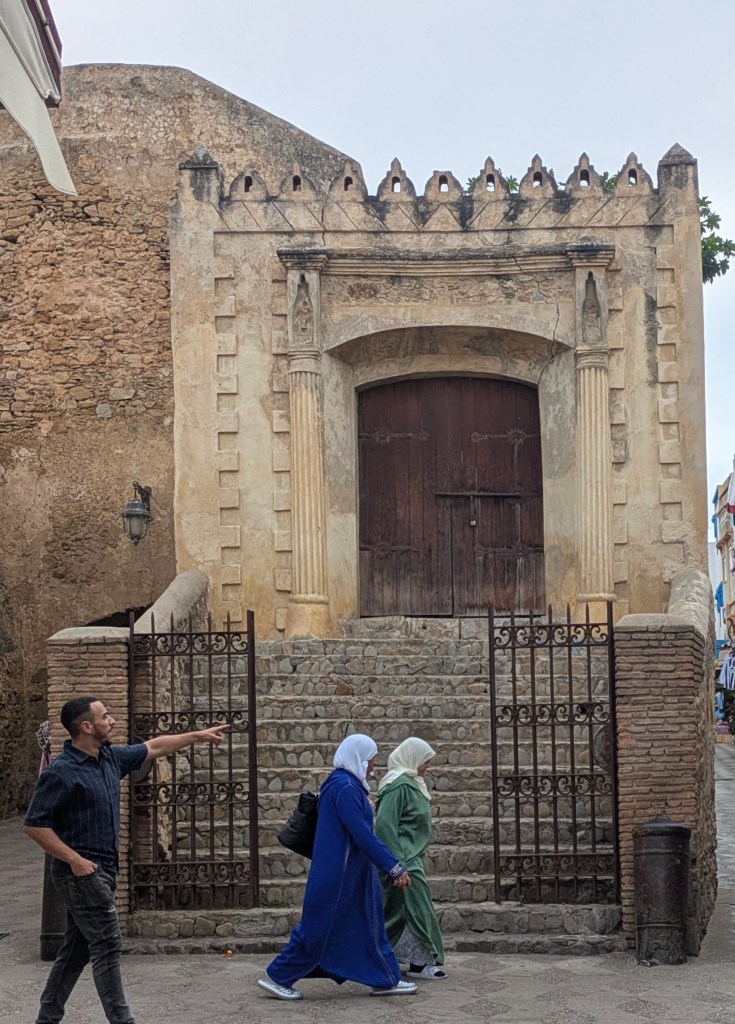
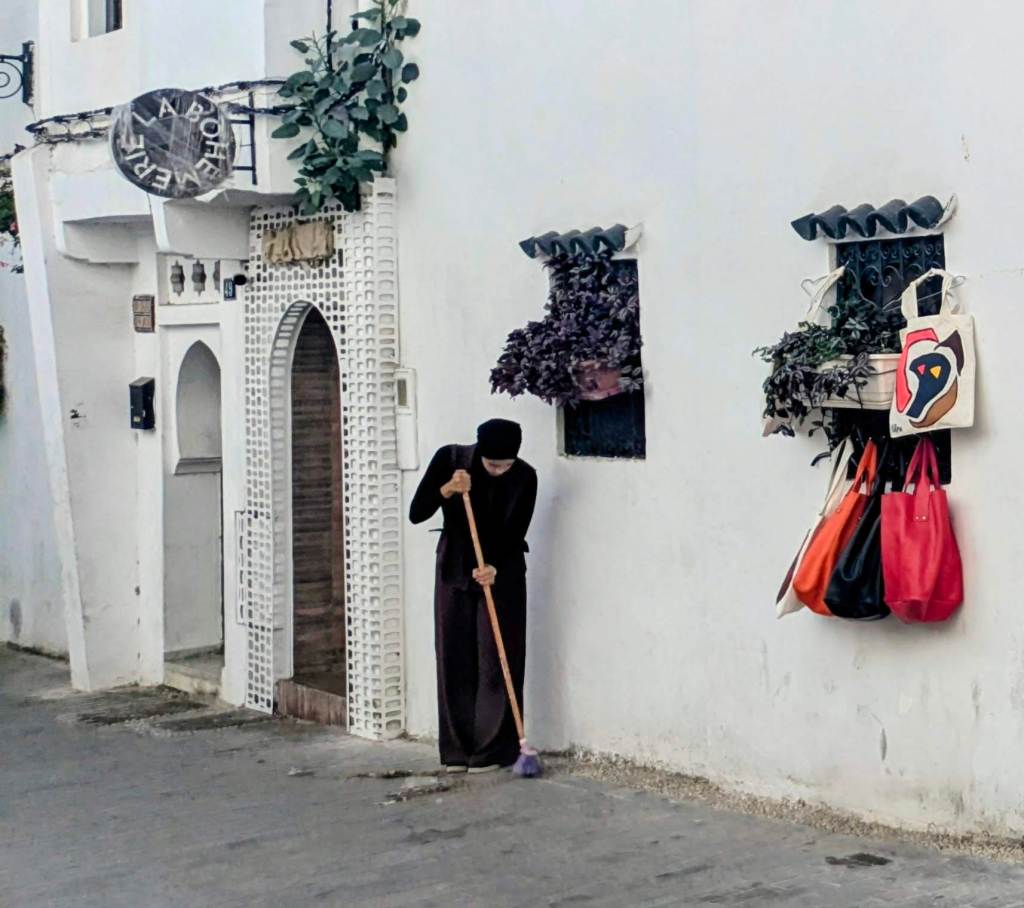
A walking tour of the medina and souk in the old town gave us a flavour of the city, a place where mosques became churches before changing back again, where being the ‘Gateway to the Mediterranean’ was both a blessing and a curse, a pawn and a prize, a strategic position to be coveted and fought over down the centuries.

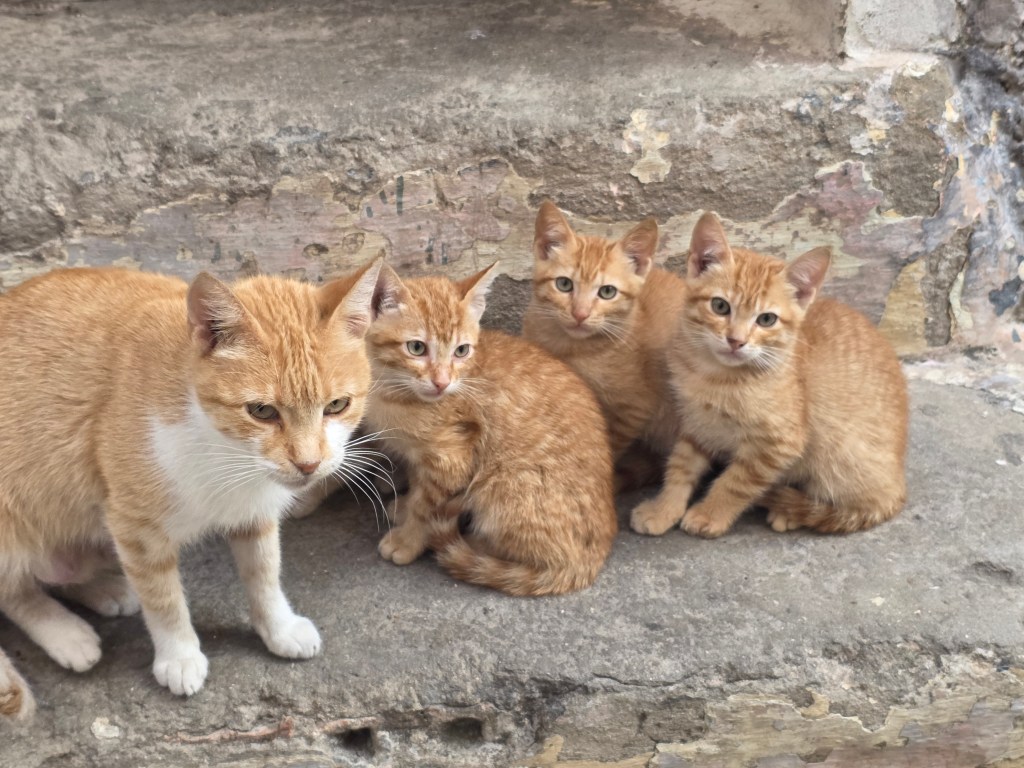
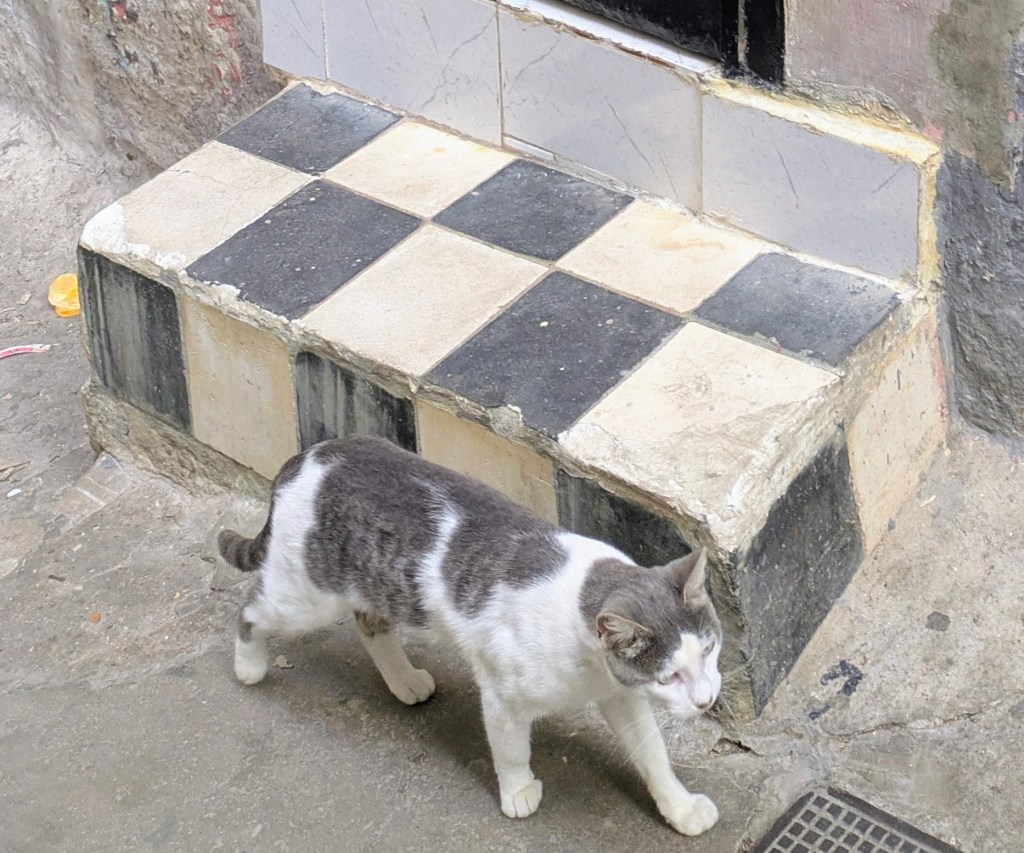
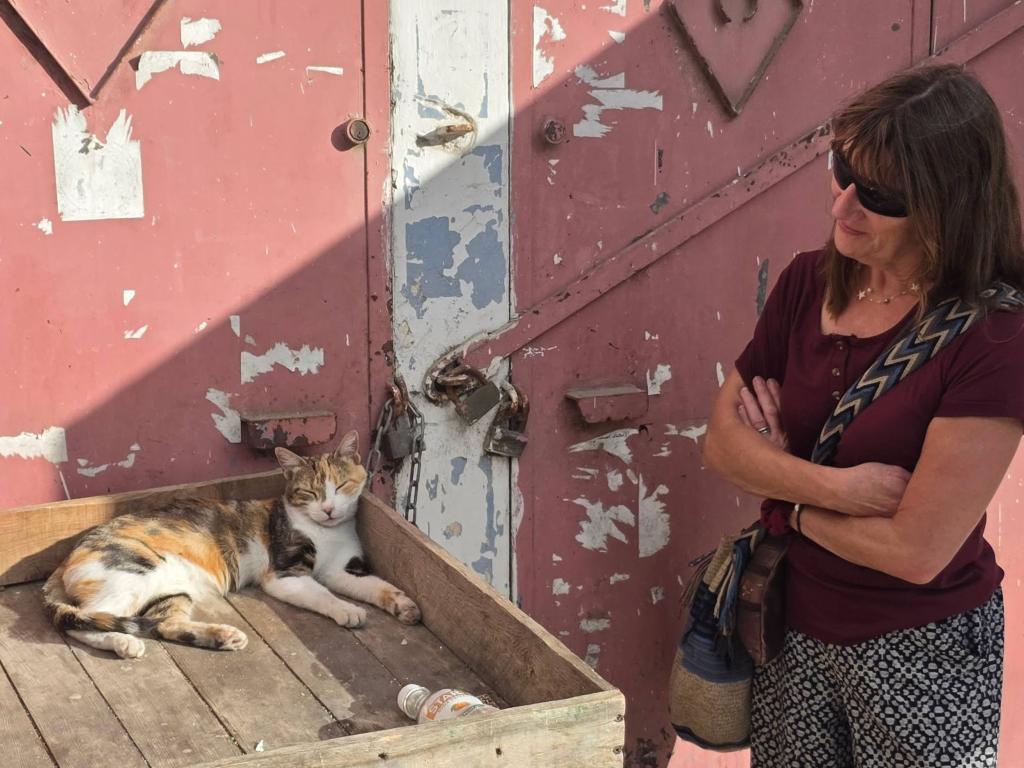
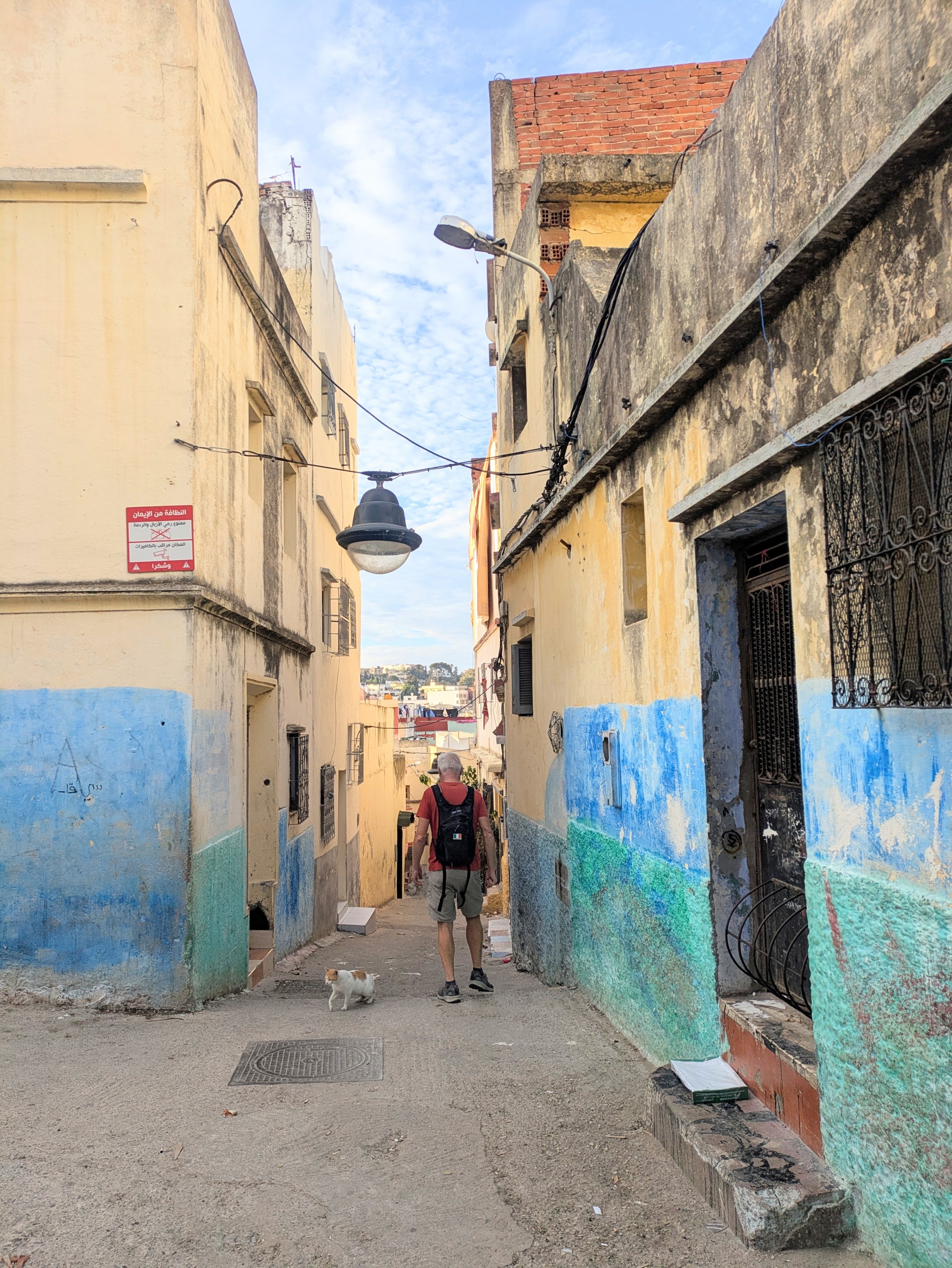
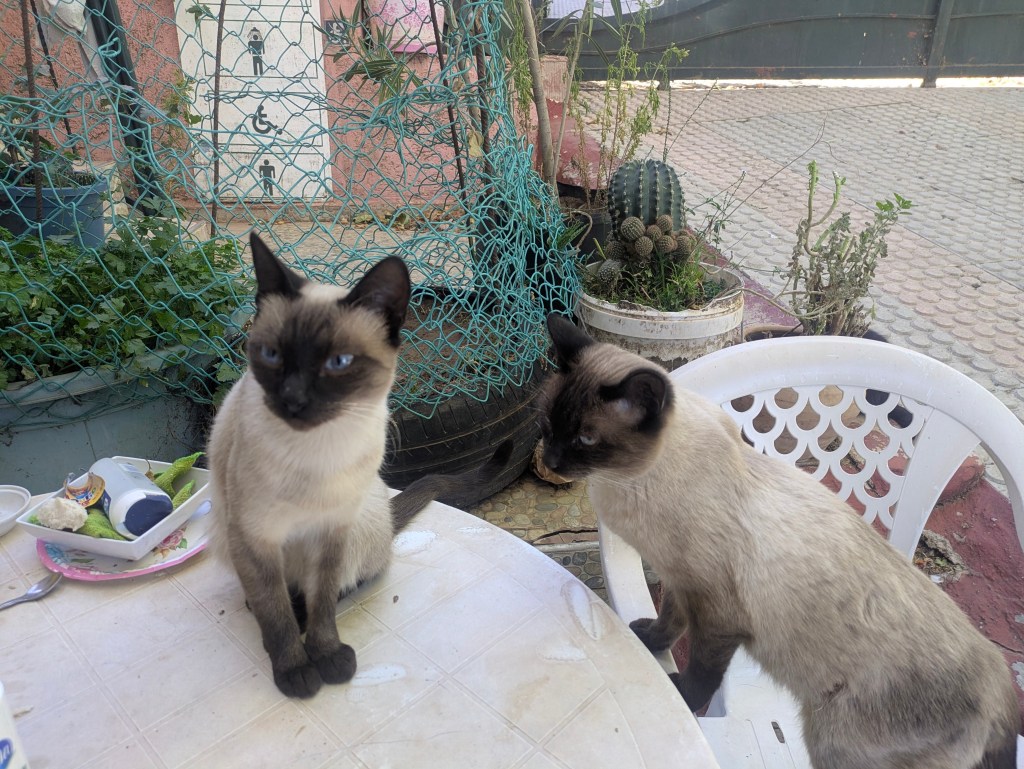
The sleepy back alleys were full of cats, all seemingly related, except for one tabby who blended so perfectly with the black and white tiled step.

We lingered at our luxury campsite for a couple of days. We still haven’t managed to charge the van……but as we have almost 400kms in the tank, we can always drive 200kms and then return if all else fails.

‘Till next time. Thanks for your company

Merci d’avoir lu

Electric Travels: Onwards to Morocco

Electric Travels: Into the Sun

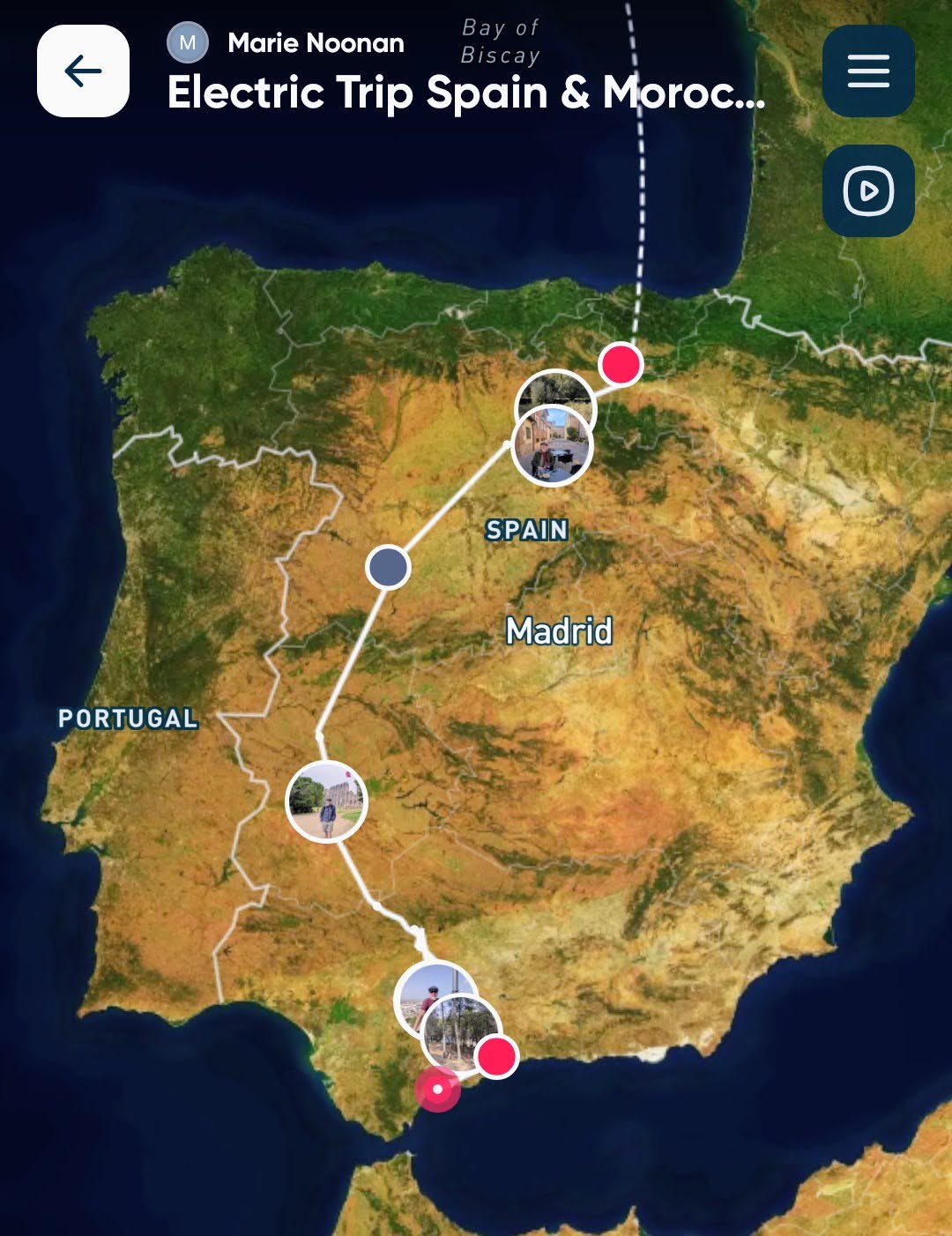
The days flew by, sun-drowsy, as we made our way south through Spain.

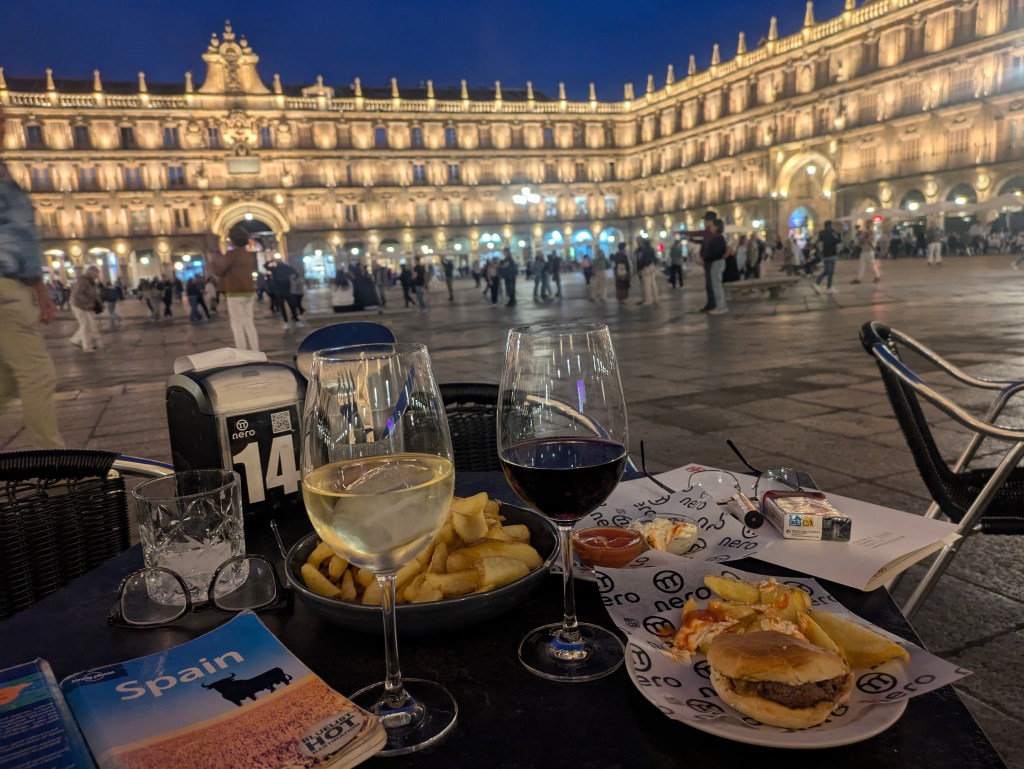
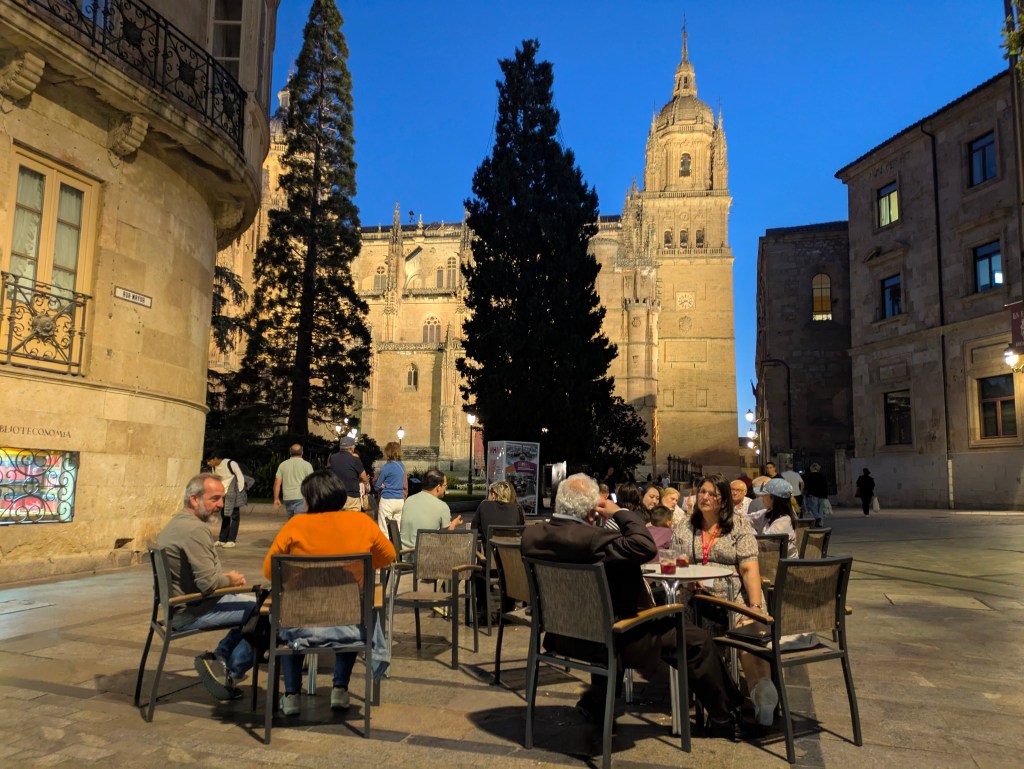
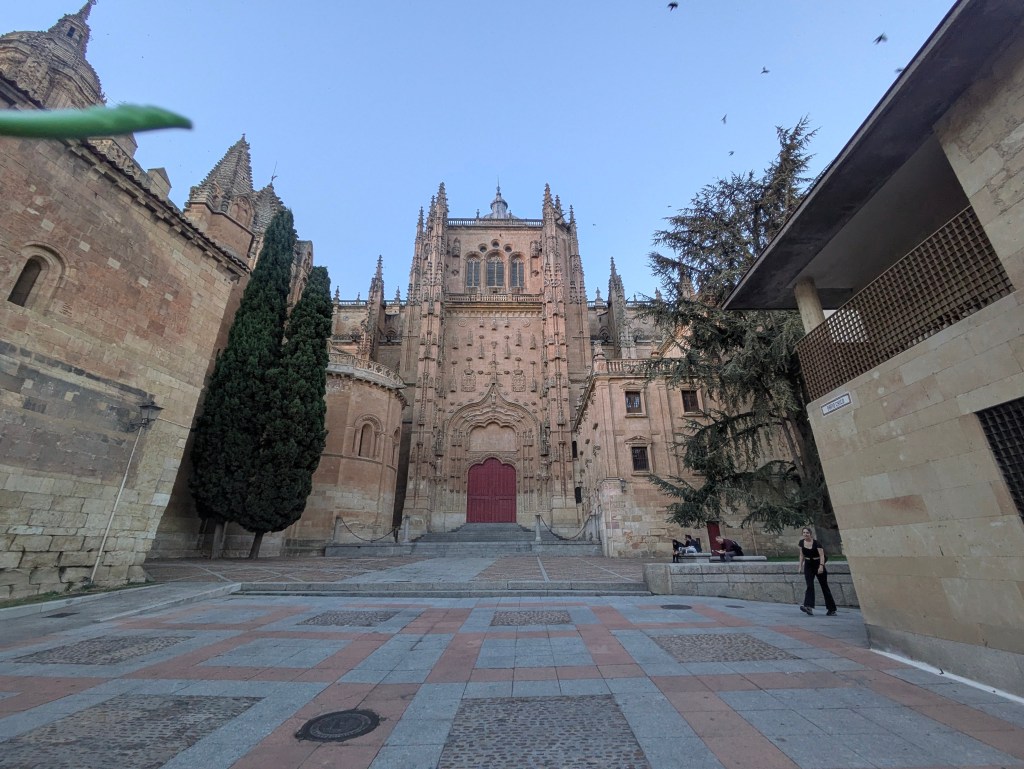
After leaving Salamanca, where we were dazzled by the town’s beauty, not just in the famed main plaza, regarded as the most magnificent in all of Spain, where visitors and locals alike burst into spontaneous applause at dusk when the lights were turned on.  Although the city was full of visitors, it was still possible to find shady corners and quiet courtyards where there was only the chirping of birds, which nested in the nooks and crannies of the sandstone facades of old buildings.

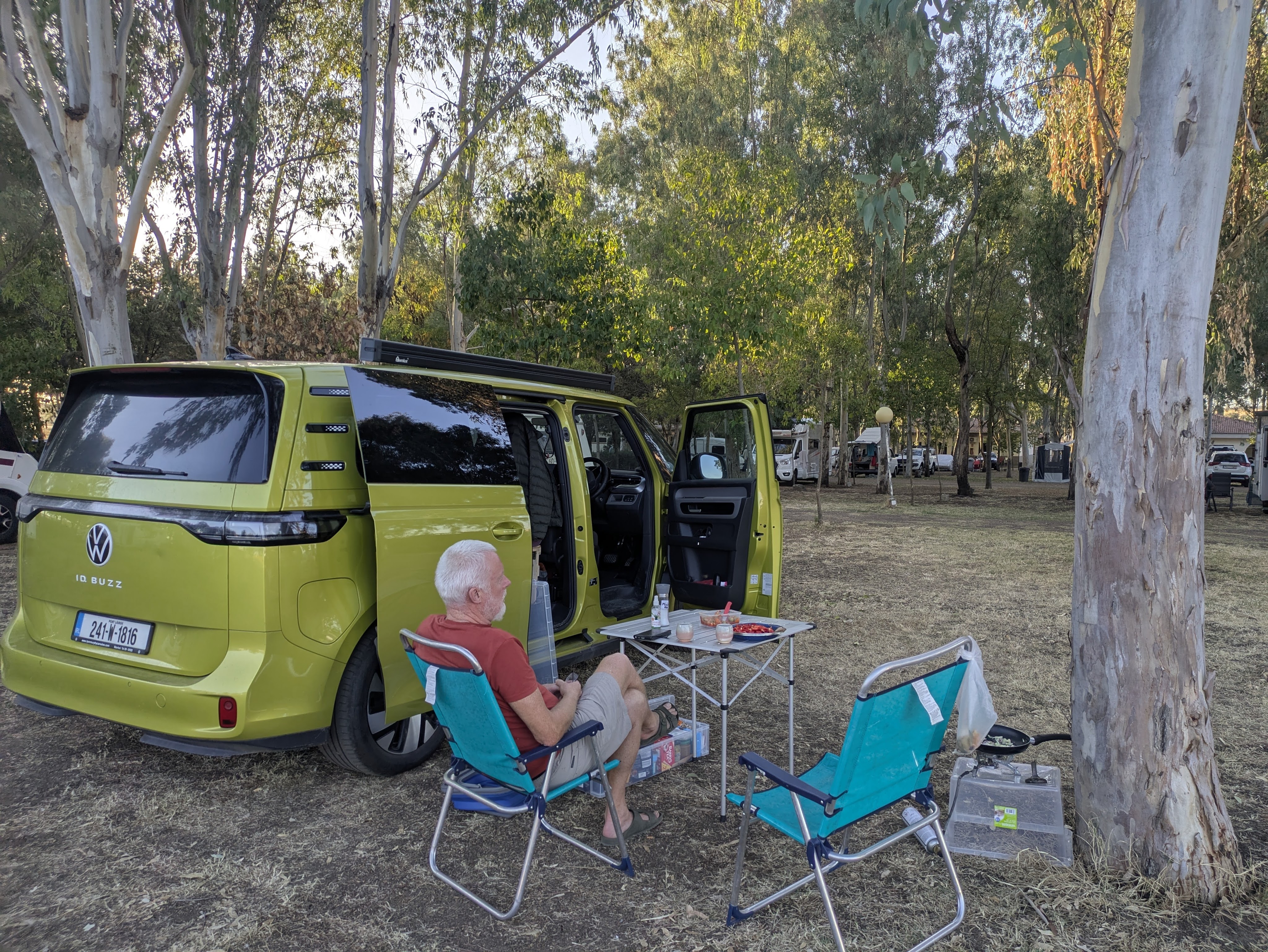
Driving through the Extramadura Region, with views of valleys and mountains, we reached the outskirts of Merida, which was founded by the Romans, two thousand years ago. We set up in the Merida Campsite about four kilometres outside town. It was a bit ramshackle, outdated and cheap (but that’s the way we like it, especially €15/night).  There were stables next door with white horses and a yard with all sorts of fowl, hissing geese, chickens, ducks and a raucous rooster who only crowed during the day. Occasionally all hell broke loose until the pecking order was re-established. There were falling leaves and shade under eucalyptus trees. The only downside was the flies. There weren’t that many but they were really attracted to the Buzz as if it was emitting some fly pheromone.

   A friendly British couple with a motorbike camped in a tiny tent beside us.  They were heading to Morocco, planning to do a huge loop of the country in just fifteen days and then a hurried ride back to Santander for a ferry home. Thankfully, we’re in no such hurry.

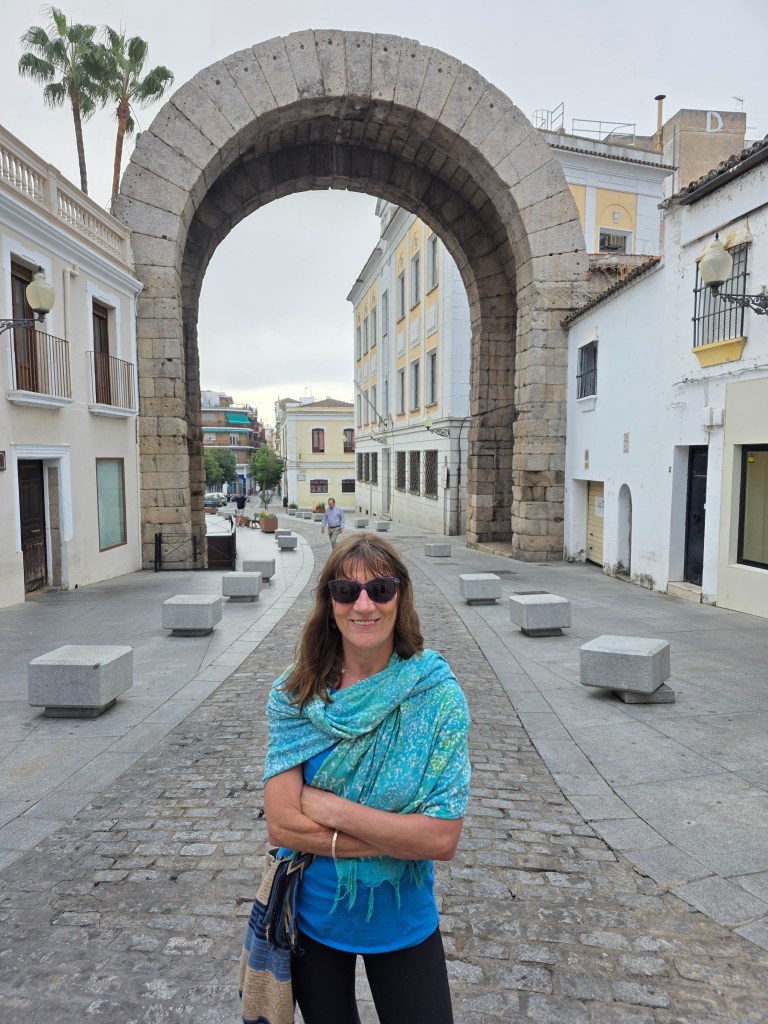
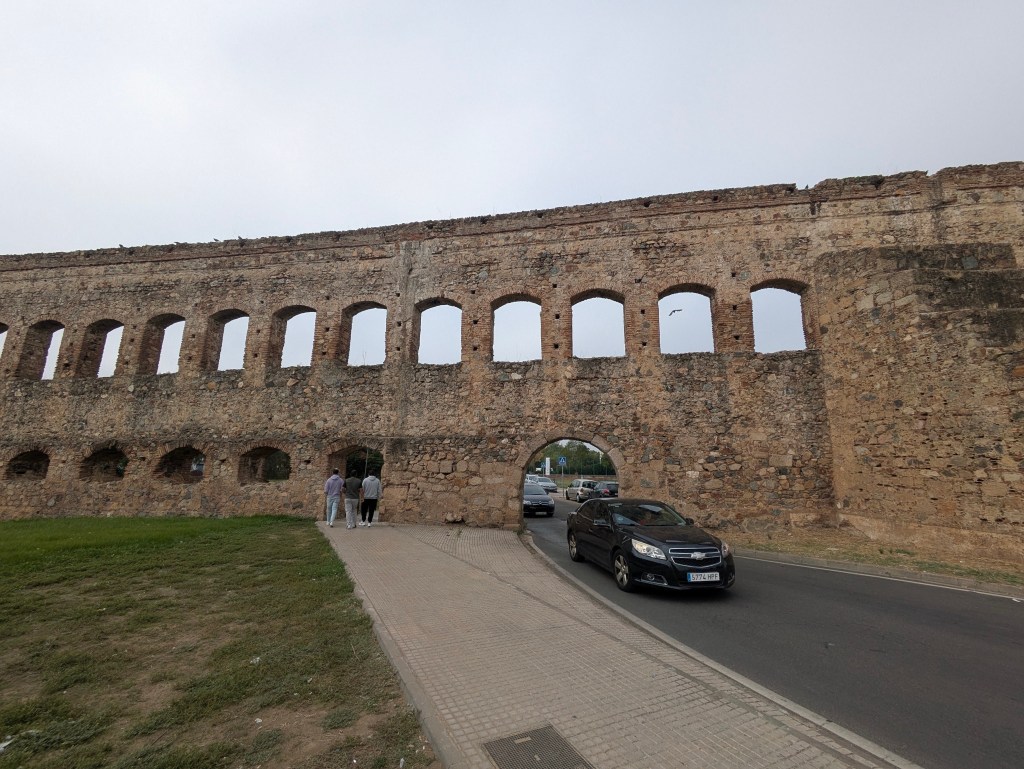
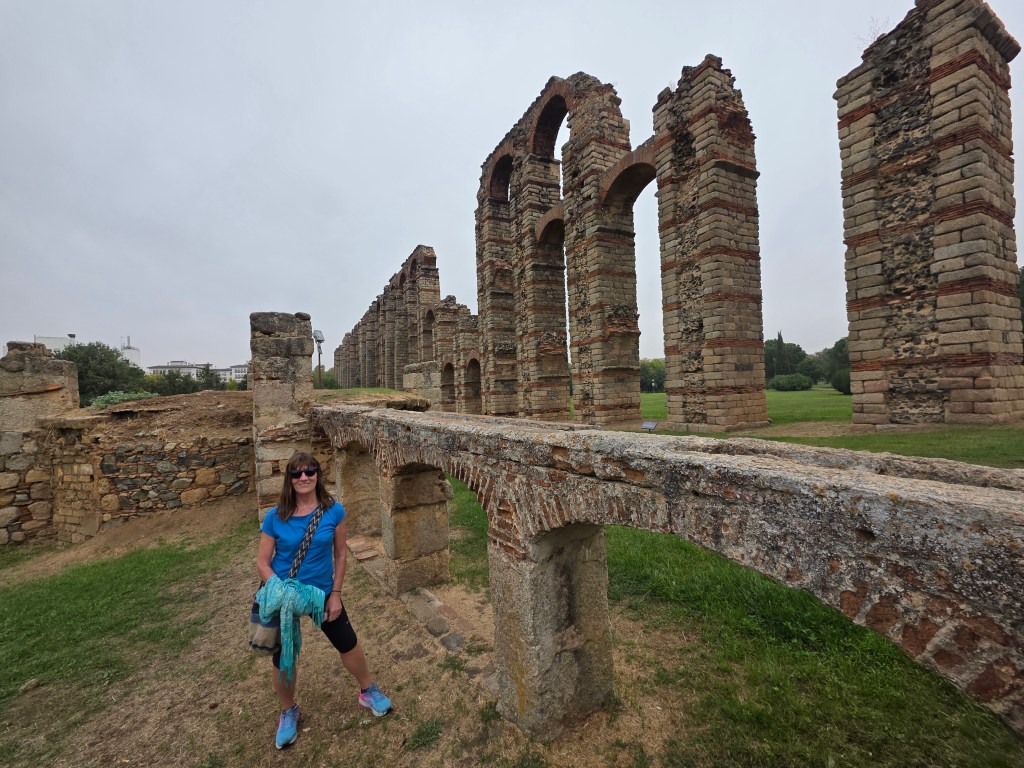
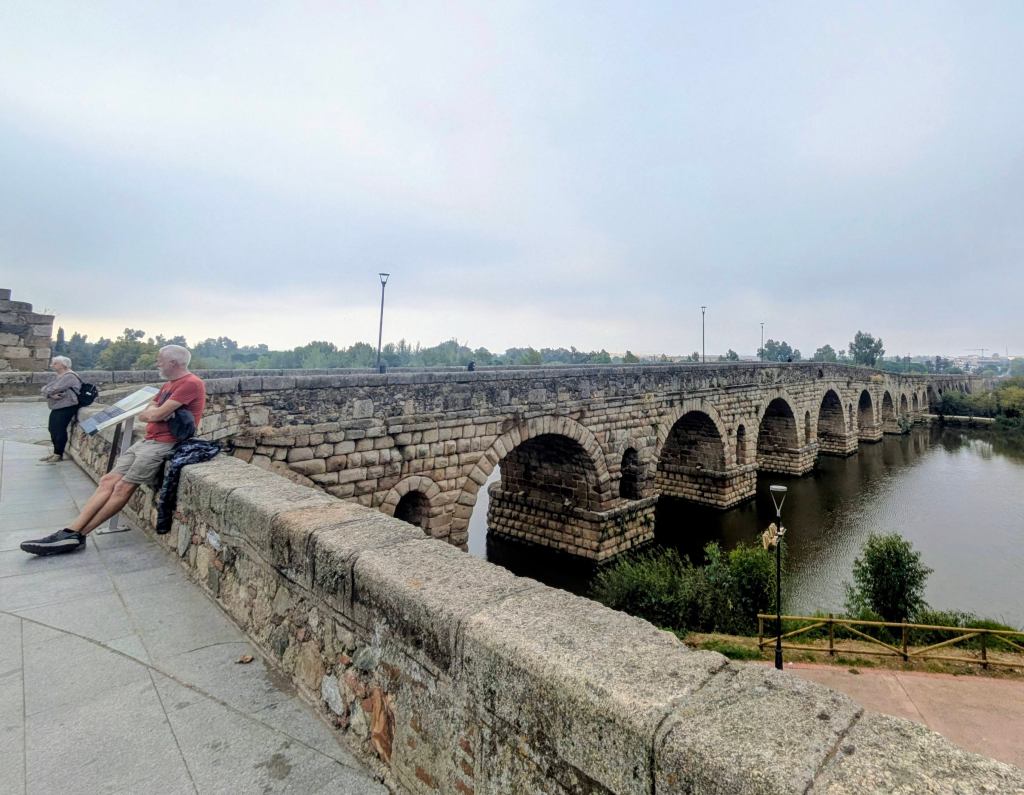
Merida town was also a little ramshackle but its Roman origins were evident in the arches, aqueducts and amphitheatre.  Many of the ancient structures incorporated into modern living – cars drove on paved roads under ancient arches and people strolled over the old Roman Bridge which linked the old town with the new. We found a packed café (Joplin Cafe), whose specially was ‘tostada,’ huge hunks of bread plastered with a savoury tomato paste, topped with thin slices of cured ham, or grilled aubergine, cheese and a fried egg. Two coffees, a tea and two enormous tostadas came to €8.40…no wonder it was packed.

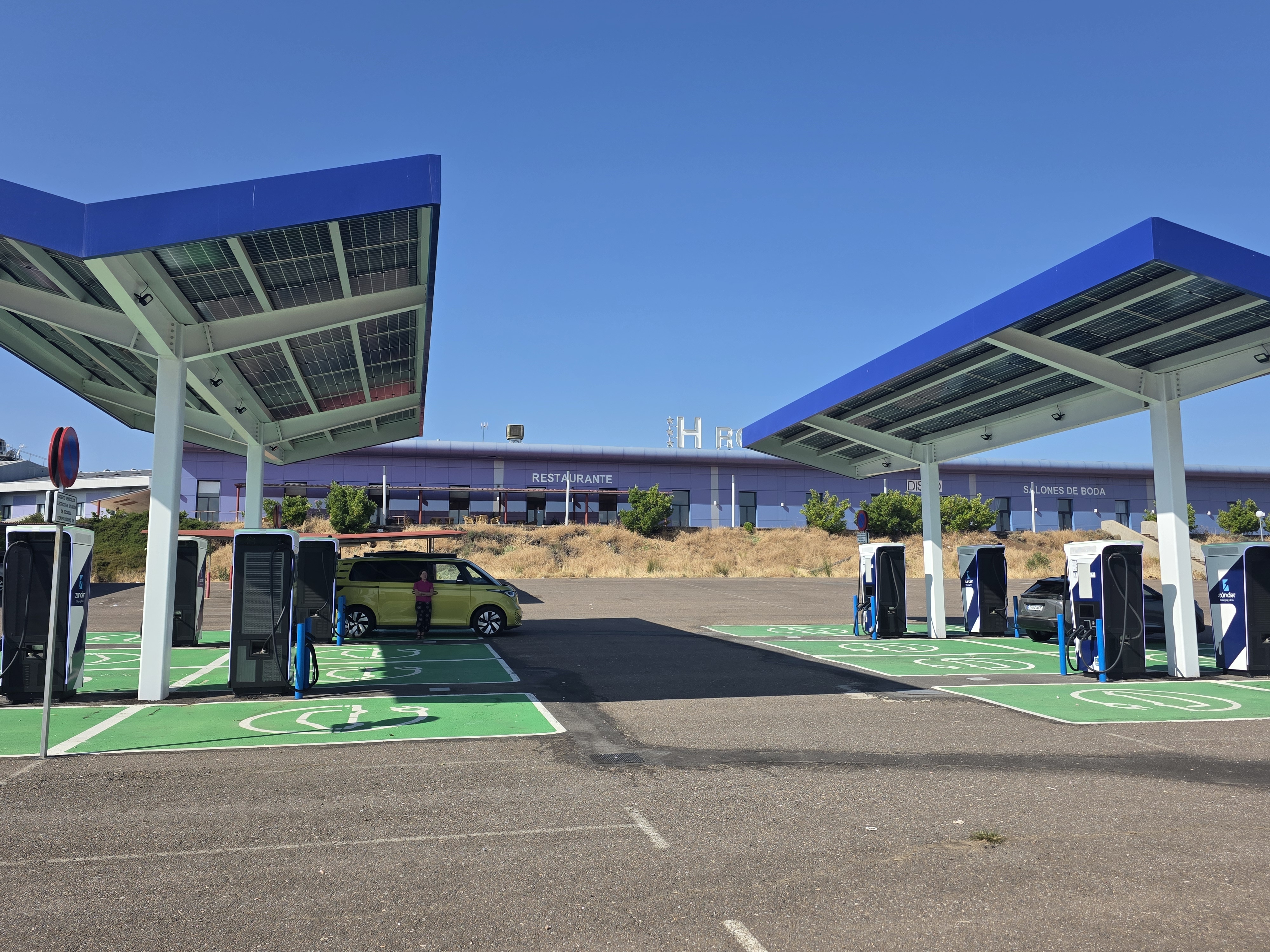
After charging the van at a Zunder EV charging station, where only one other of the sixteen spots available was occupied, we were on our way again. The huge number of charging stations and the lack of queues makes charging in Spain much easier and quicker than in Ireland.

EV Charging Station….no queues, no hassle.

We selected ‘no highways’ in Google maps so we drove through villages and small roads lined with vineyards and olive groves. The hills were topped by  ruined castles or villages of red-tiled white houses as we crossed into Andalusia.

In Alanis, a pretty whitewashed village in the Sierra Norte, surrounded by rivers and pine forests, a crowd of teenagers, disembarking from a school bus, were as mesmerised by the Buzz as the campsite flies.

Our next stop was Hornocuelas, a small town in the Sierra Morena in the province of Cordoba where we were welcomed by Luz, my brother in law’s mother and her partner, Andres.  We loved staying for a couple of nights in their comfortable, typically-Spanish townhouse with tiled floors throughout a shuttered windows to keep out the light because here, the sun is the enemy. Although, it was a pleasant 26C in October , the temperatures hit a melting 46 C last August. The town is surrounded by olives groves because olive oil is big business as well as almonds and fields of cotton, full of soft white balls, almost ready for harvesting.

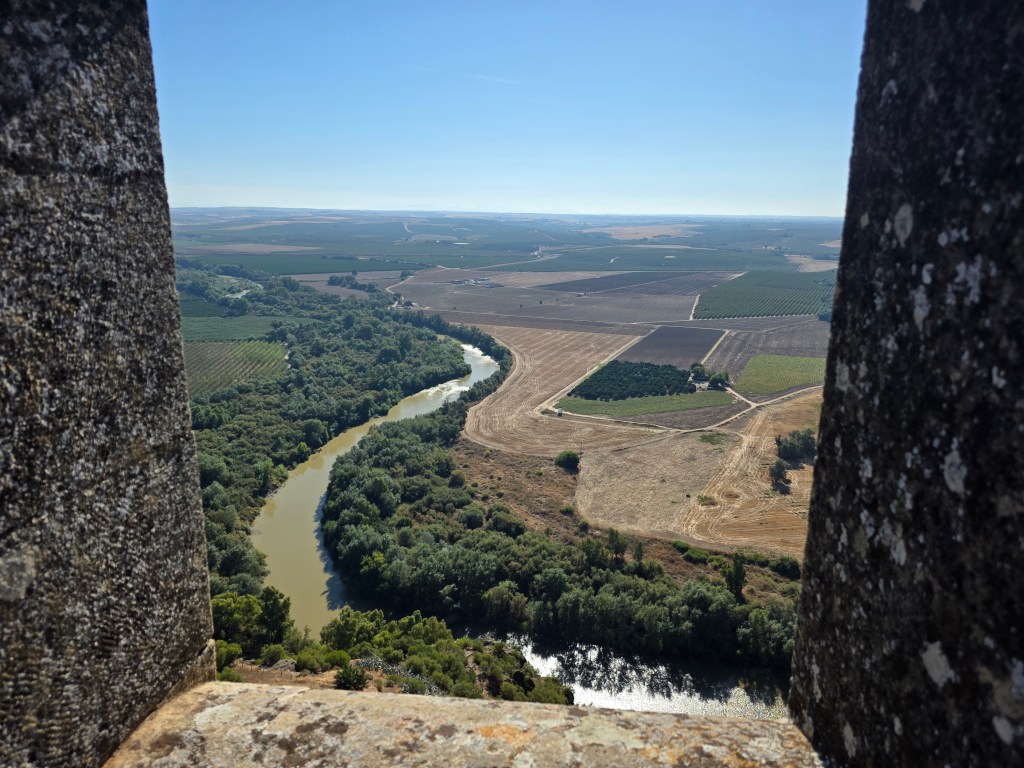
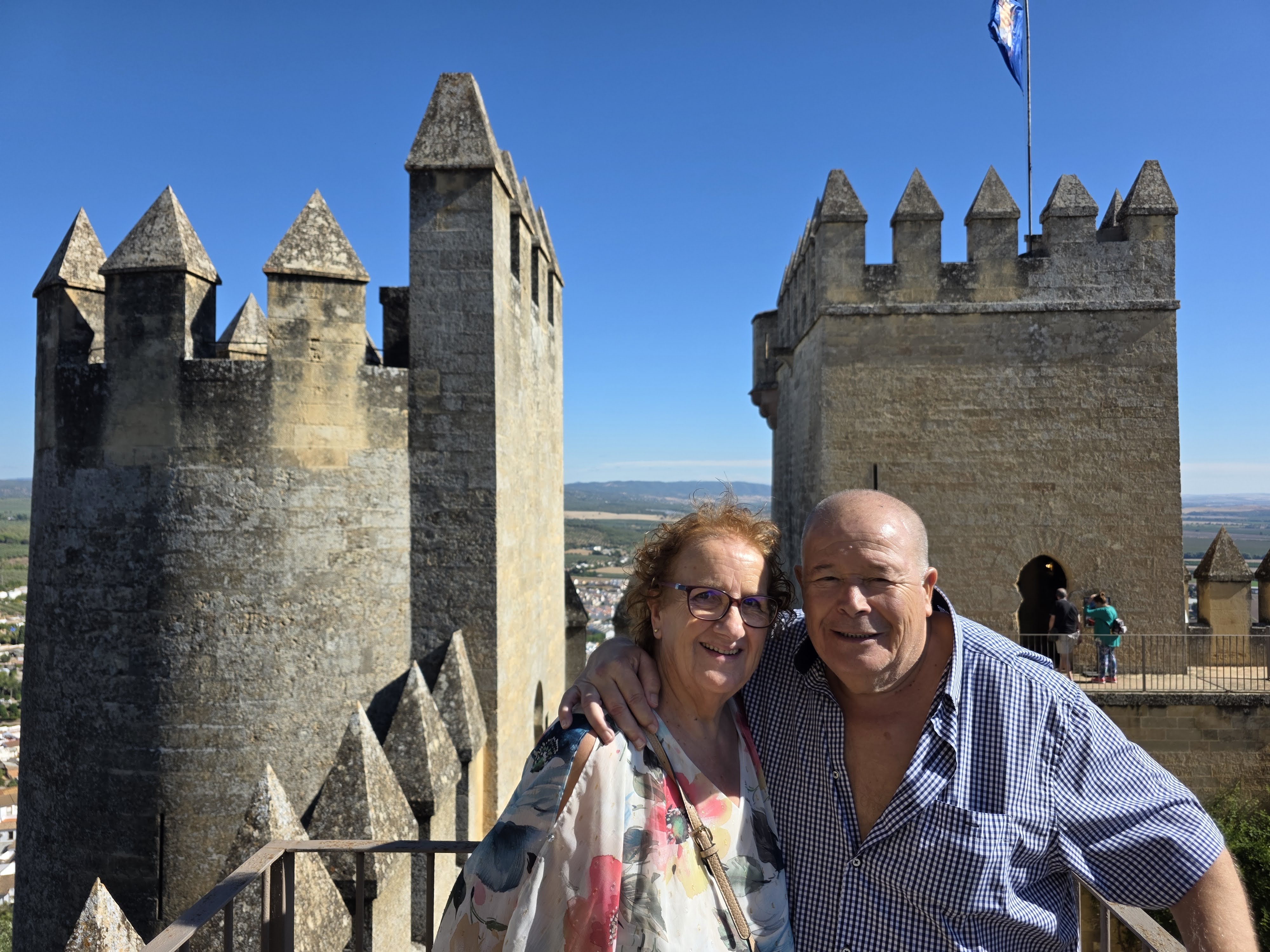
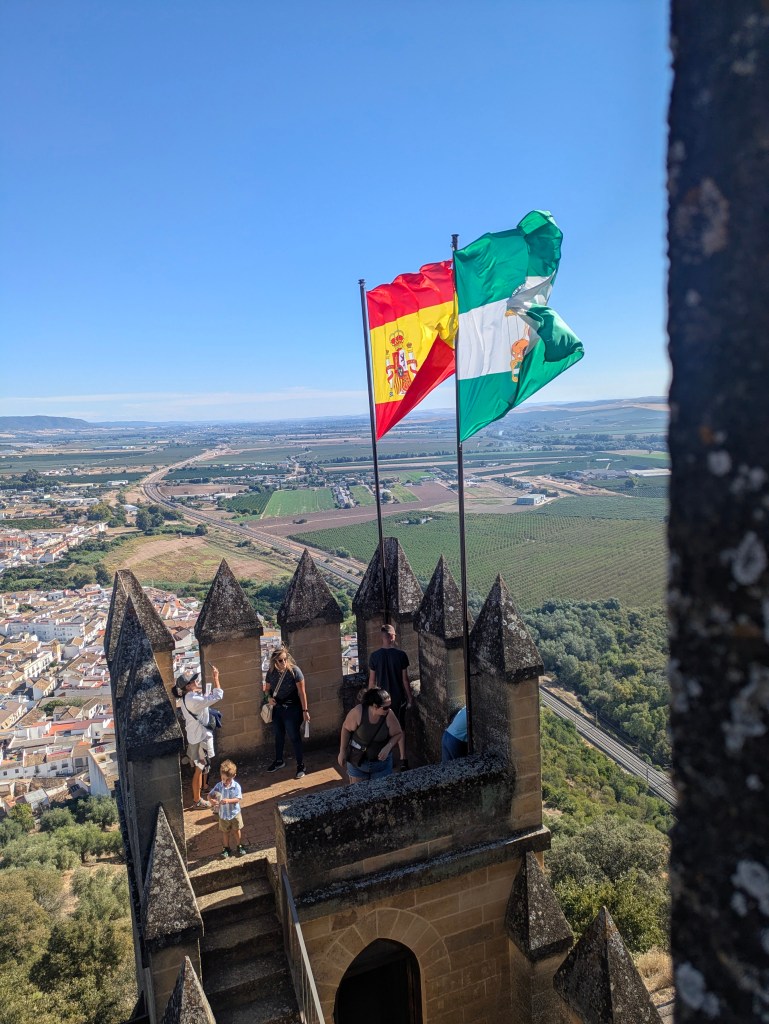
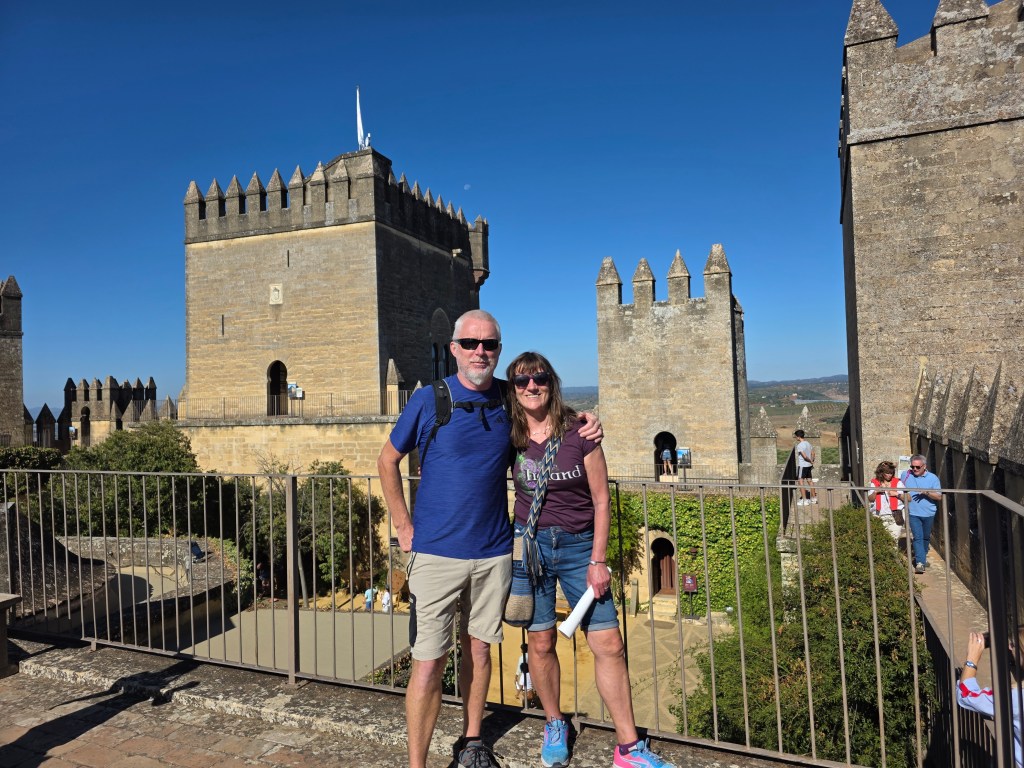
A visit to Almodovar Castle, setting for many Game of Thrones scenes, was a walk through the centuries.  Originally the site of a Roman fort,  a Moorish fortress was built here in the eight century, overlooking the Guadalquivir River, before being taken over by the Christians. It was extended and remodelled over the years with stories lingering between the cracks in the many towers, torture chambers and courtyards. It’s well worth a visit with an excellent audio-guide.

Saying ‘Adios‘ to Luz and Andres, we left loaded with gifts of cheese, honey, wine and homemade ‘angel hair’ pastries (muchas gracias🥰 ) and headed in the direction of the Caminita del Rey, which is a hike near Ardales in the province of Malaga. Numbers are restricted and it’s so popular that it has to be booked in advance. We reserved a spot two weeks ago (before we left home) and were fortunate to get a spot so soon, as it can be booked out months in advance.  

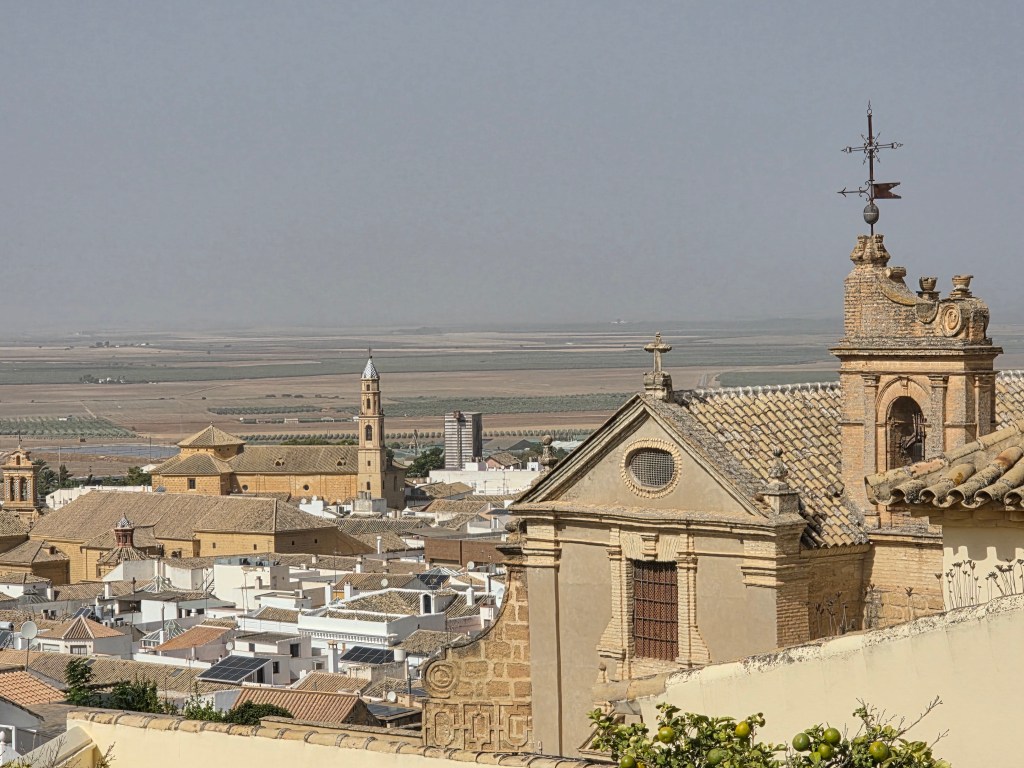
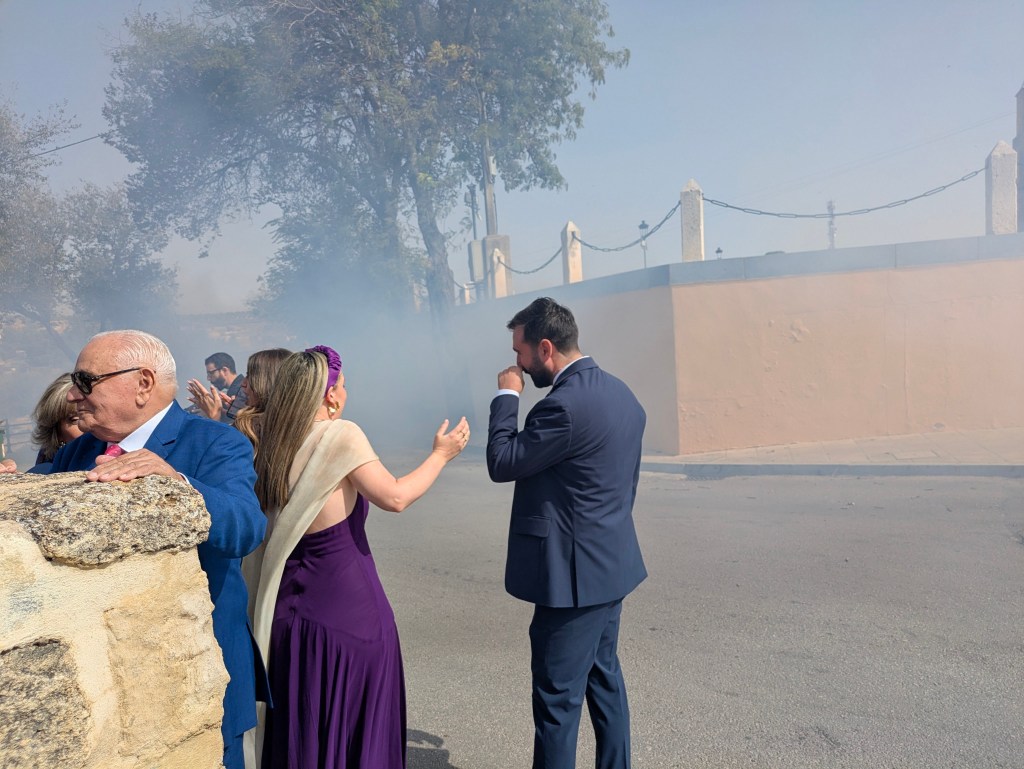
The two hour and a quarter journey from Hornocuelas was mainly through flat, empty countryside. Driving through Osuna, we spotted a large number of cars parked outside the hilltop church overlooking the town. Curiosity made us stop for a look. The church doors opened and wedding guests, as colourful as butterflies,  spilled out. When a vintage car carrying the bride and groom drove up the little side road, there was a lot of yelling before a series of ‘bangers,’ arranged in a long row by the edge of the pavement, detonated in sequence sending black smoke everywhere. This custom certainly starts married life with a bang.

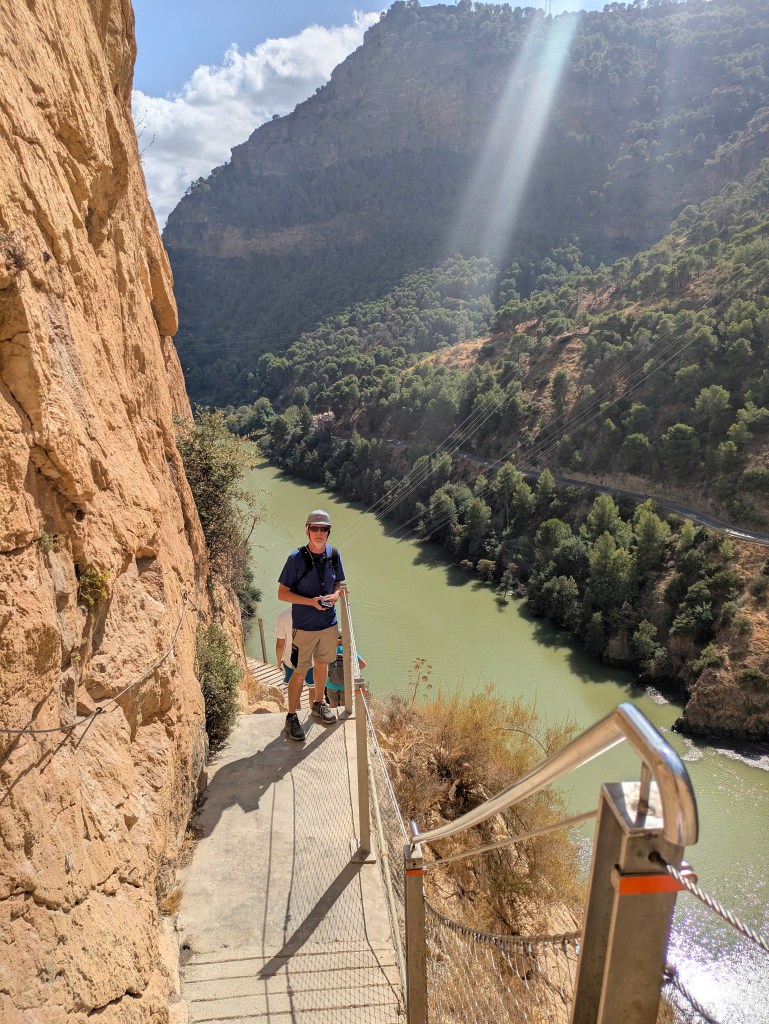
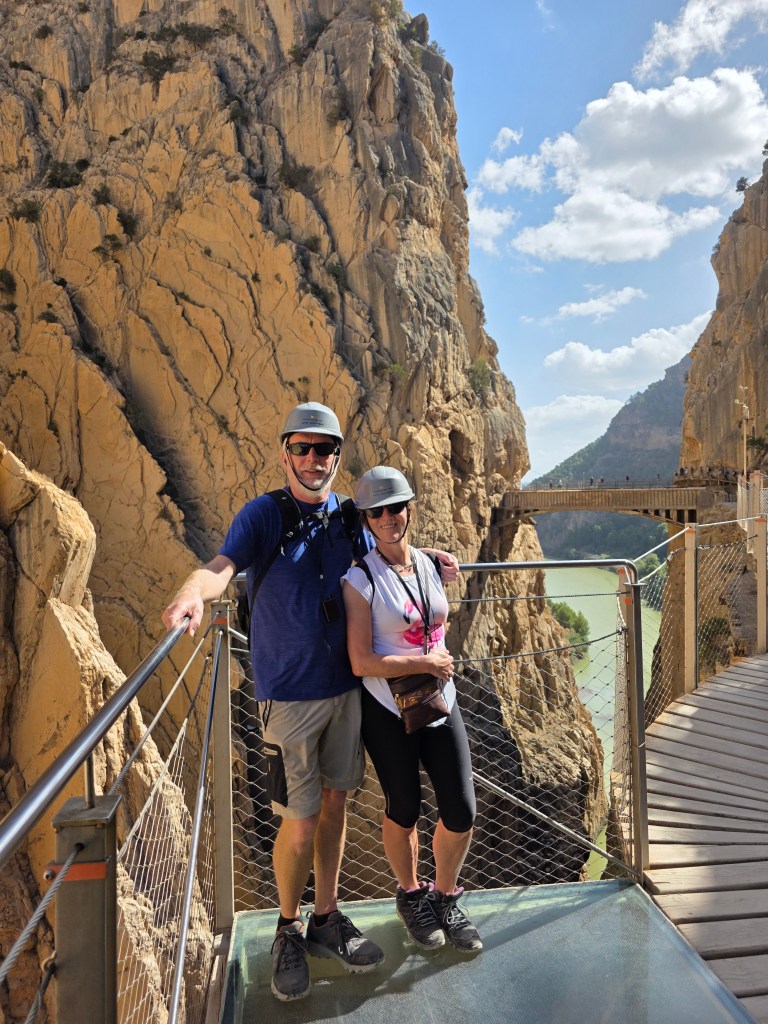
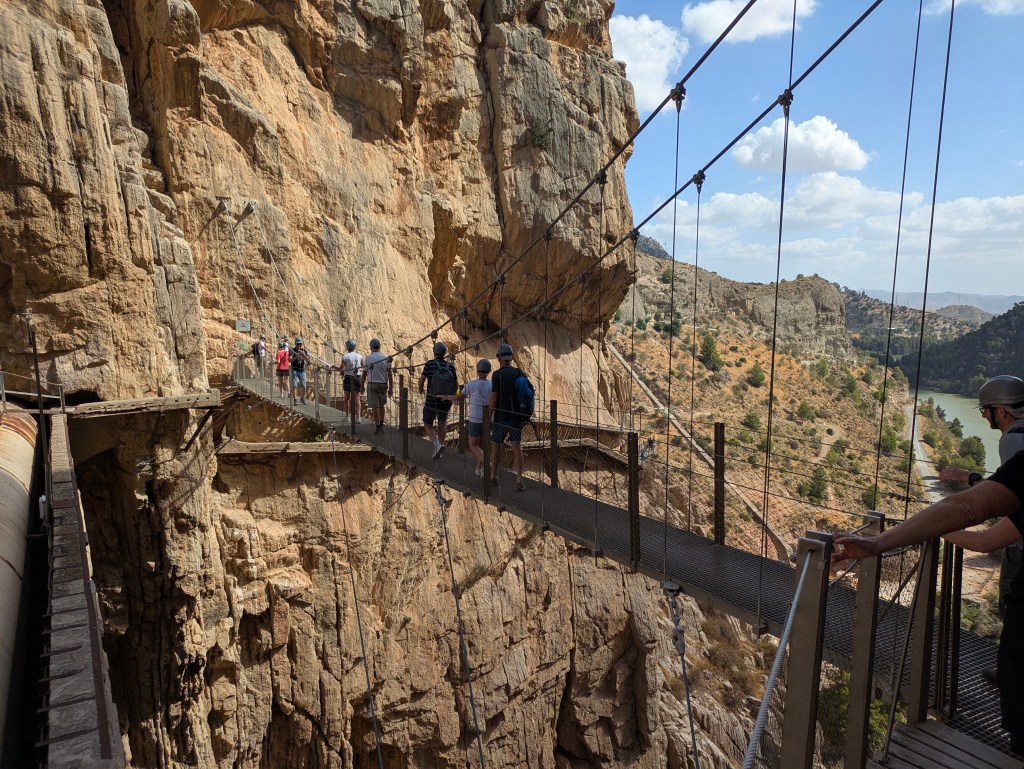
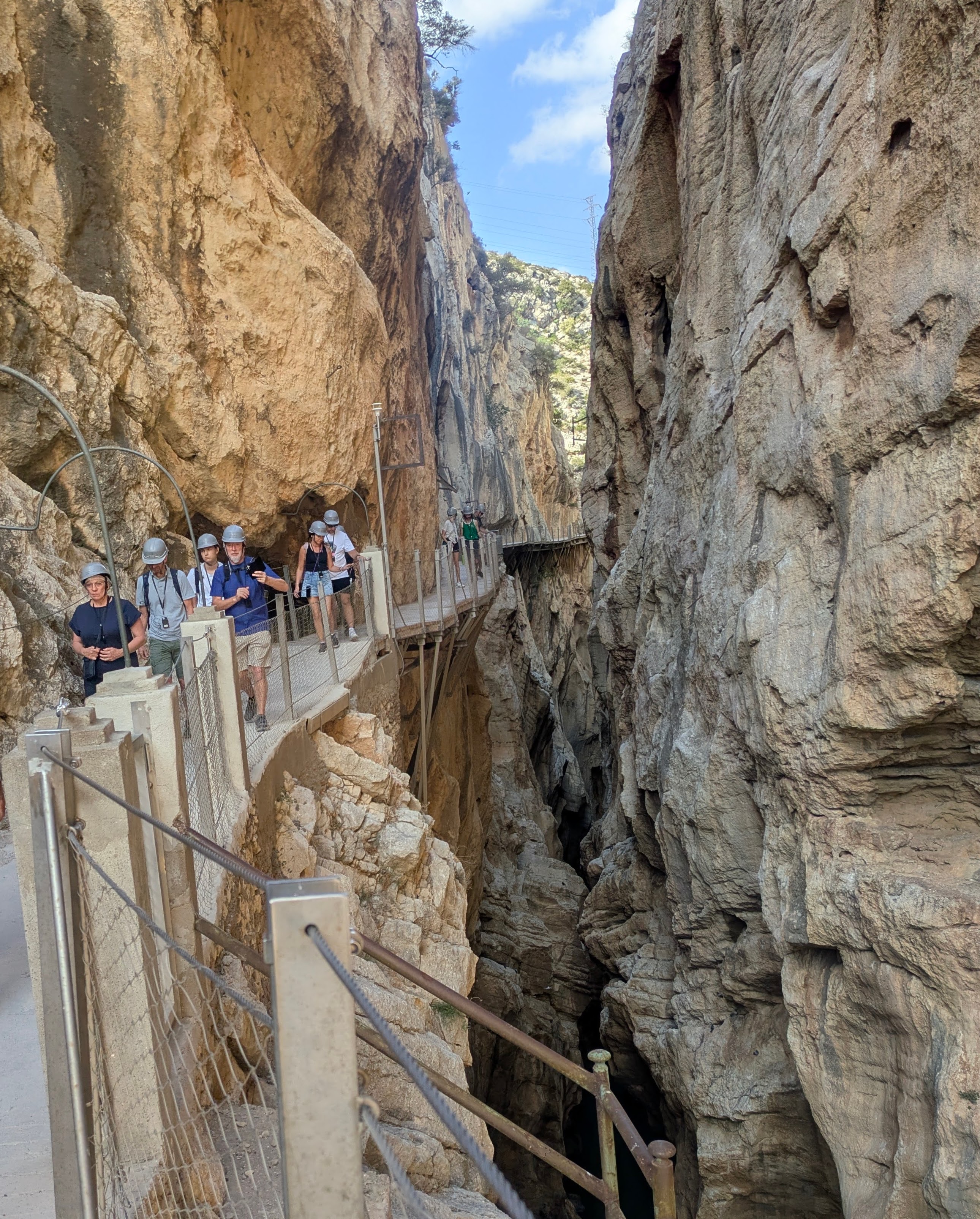
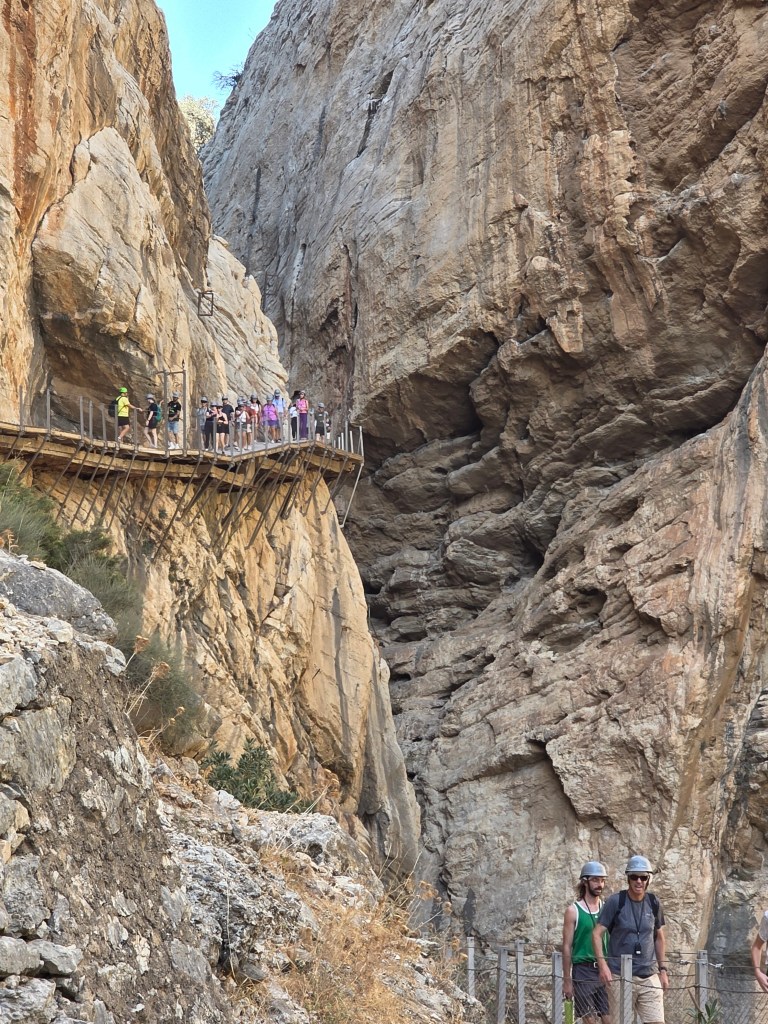
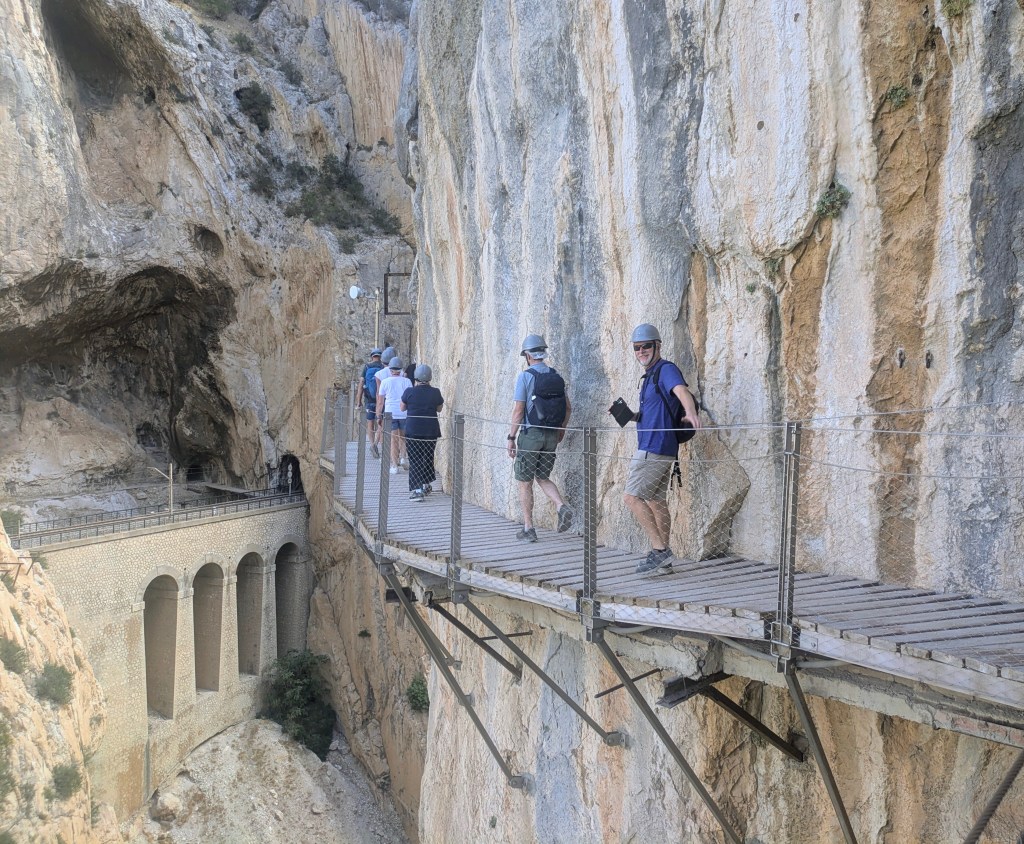
The Caminita del Rey is a trek along narrow walkways that are pinned along the steep walls of a spectacular gorge. These walkways were originally used by the workers in the construction of a hydroelectric power station about a hundred years ago. The company employed quite a few sailors with a head for heights from climbing ship’s masts. This is a spectacular walk with stunning views…..and not as scary as the photos might indicate as new reinforced walkways have replaced the original rickety ones….although not for anyone with vertigo. The actual portion of the hike along the gorge is quite short, about 3.5 kms with a couple of kilometres at either end to make up the total kilometres. Although there is no need for a guide (the path is self-evident), the number of unguided slots is very limited. The advantage of being in a guided group was the people we met, some Aussies and a lovely couple from Oregan, who we shared a cold drink with at the end.

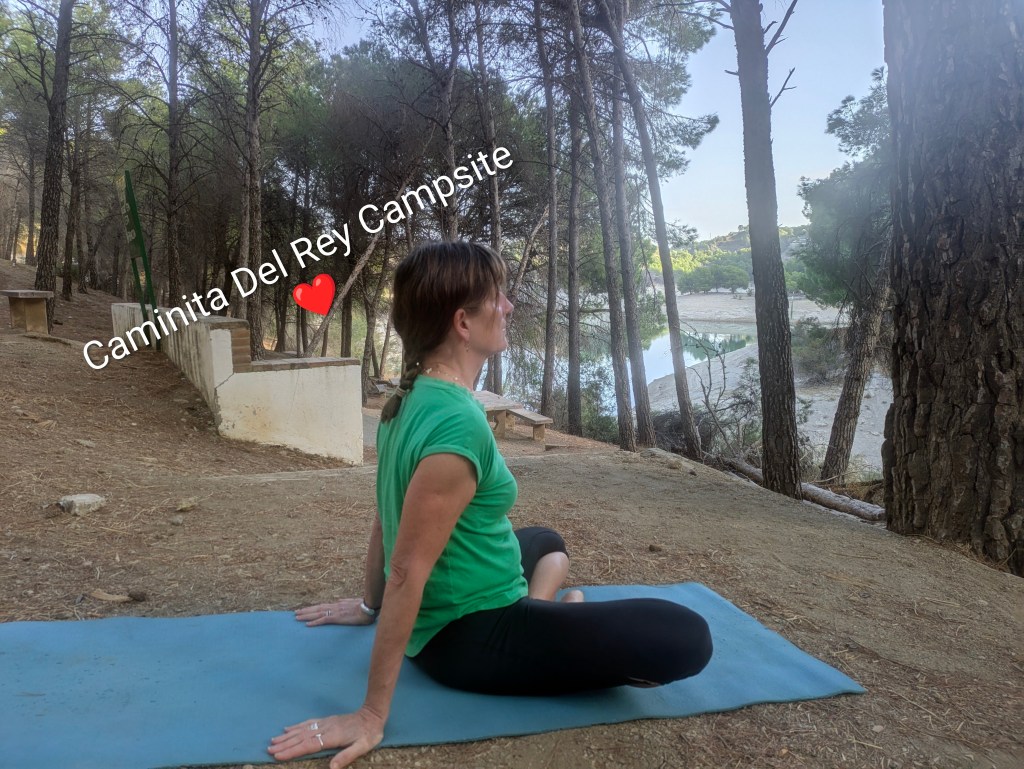
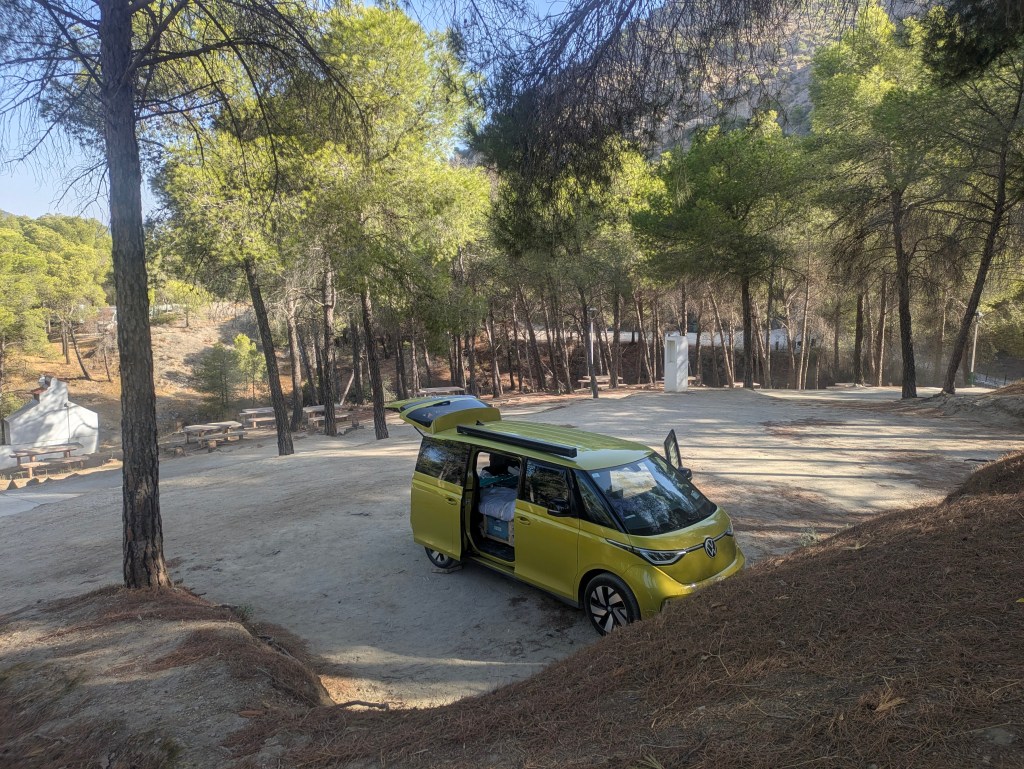
We stayed in a campsite at the northern end of the gorge (€19/night), which was a convenient 500 metres from the tunnel entrance to the starting point.  The 7.8kms hike is one-directional but there are buses at the El Chorro end (finishing point) to drop hikers back to the starting point or to one of the carparks along the route. This all sounds very logical but the website is quite poor and potential hikers found themselves at the wrong end without enough time to get to the start or at the starting end but thinking they should be at the other end. A lesson in confusion! If you are in the area and haven’t made a reservation, at 9am each morning, the first 150 people in the queue are allowed in without a booking…..or so we heard.

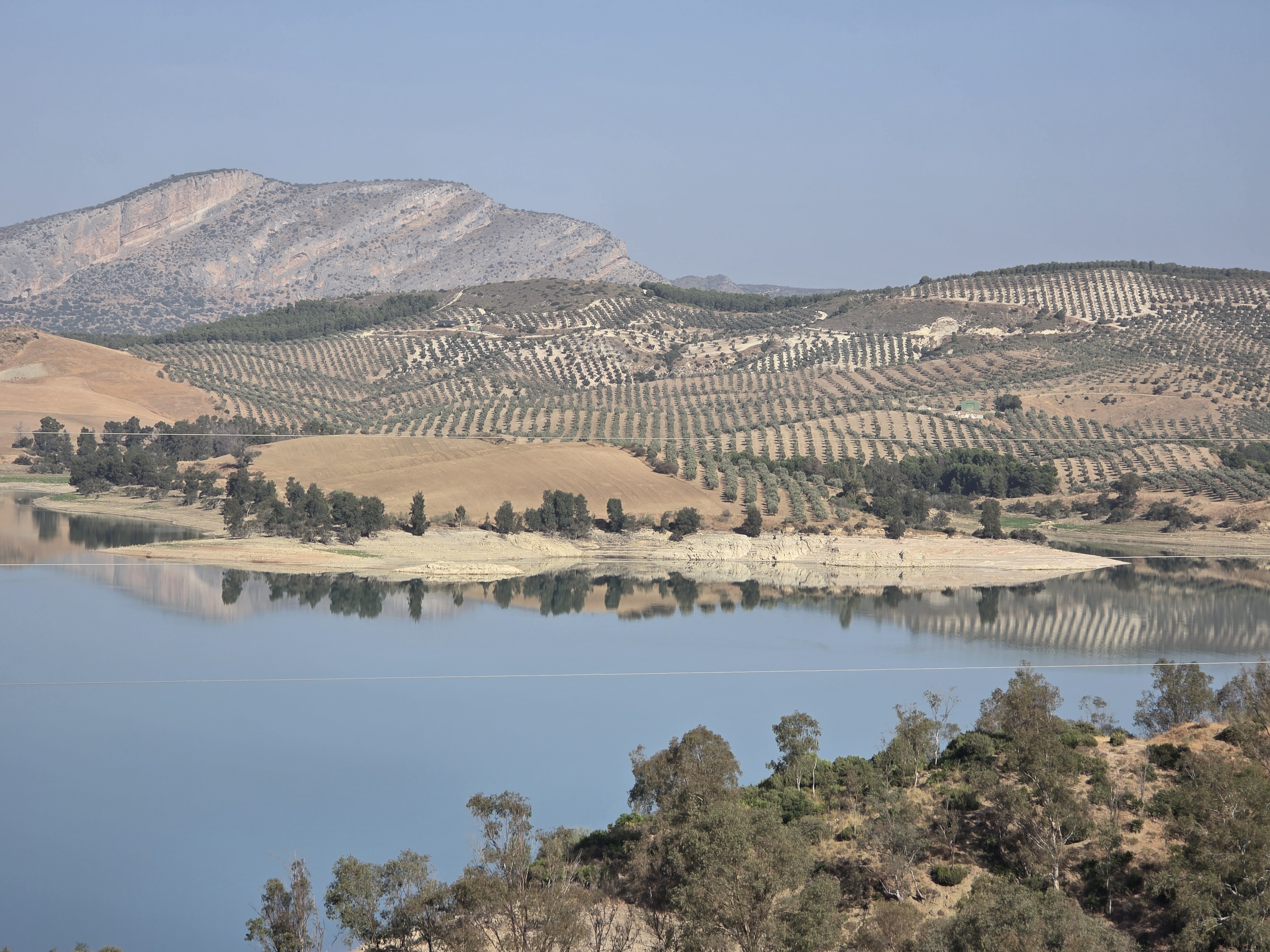
Countryside, north of Malaga, Sun-bleached and dusty, but not barren.

After relaxing in our shady hillside campsite, we journeyed to the city of Malaga through mountains and windmills, reservoirs and dry river beds. Traffic snarled around the city, all roads heading into town were so choked that we headed for a campsite in the hills which had good reviews, and arrived to a dustbowl with no shade, relentless sun, poor facilities (one women’s toilet and one men’s toilet for about forty camping cars) plus an occasional whiff of sewerage. The surprising thing was that it was full, we barely got a spot and it was relatively expensive (€25)….not a promising start to camping along the Costa del Sol.

The following morning, we were up and gone by sunrise……not very early as its dark here until about 8.15 am. We parked in an underground carpark on the edge of the Centro Historico which also had ten EV charging points, convenient for topping up the Buzz although we just made it under the 1.9m barrier, with barely a whisper to spare.

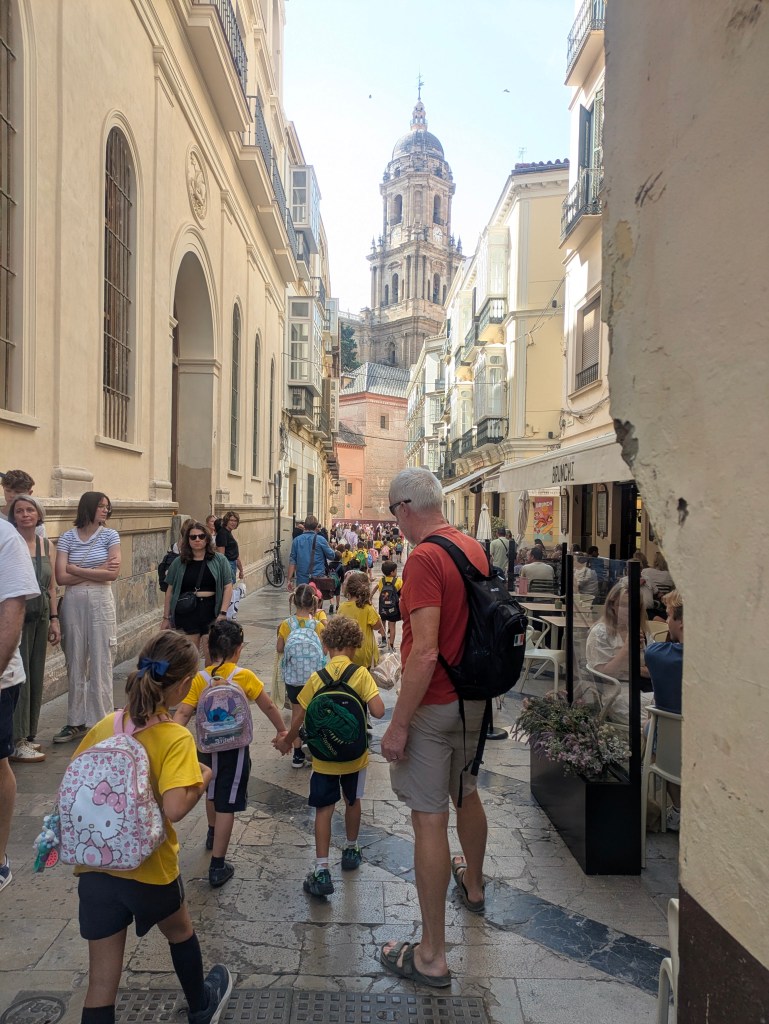
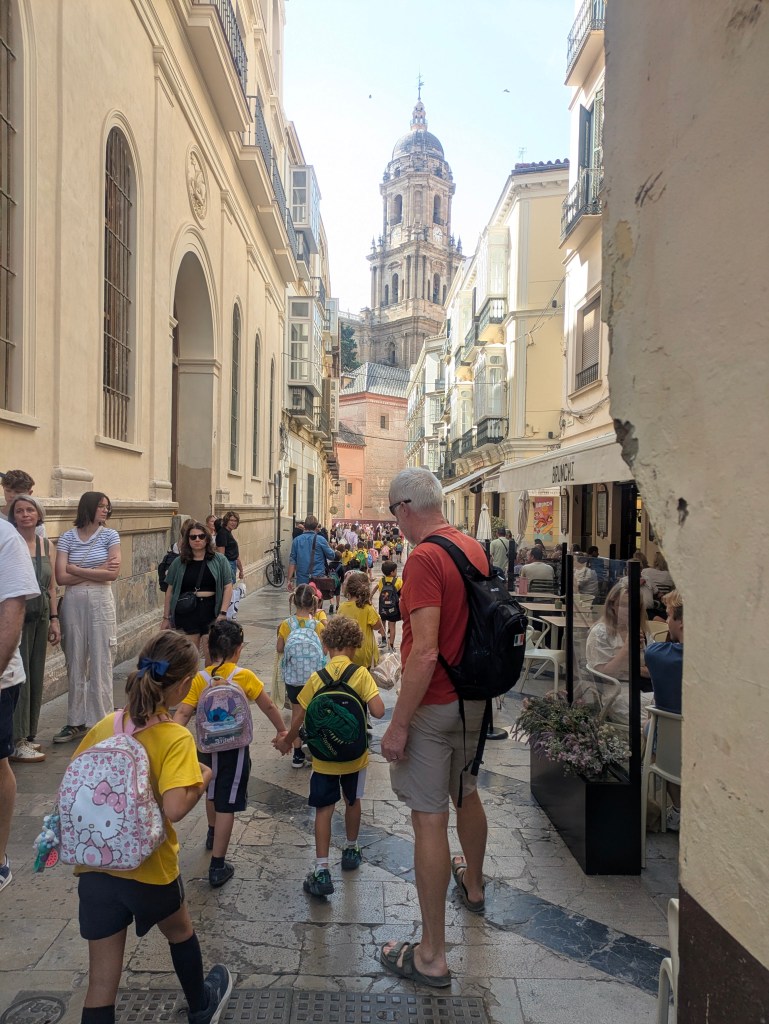
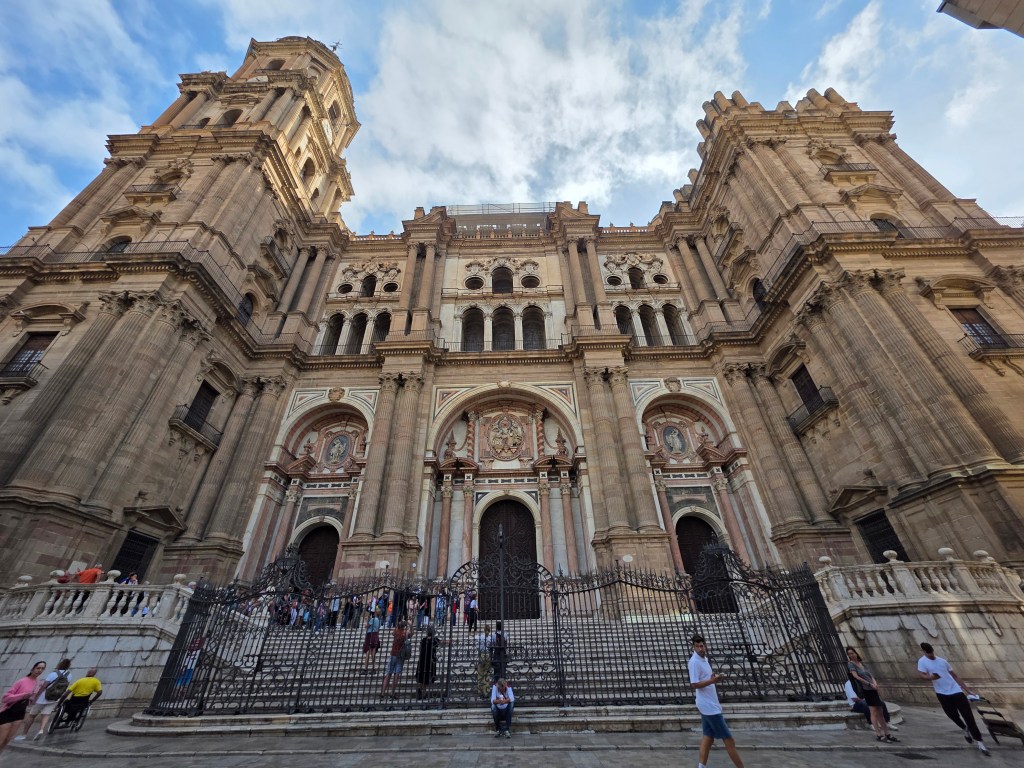
Malaga is truly a gorgeous city, teeming with tourists and with enough museums to rival Waterford. Deciding to go to the Picasso Museum, we discovered that the earliest slot we could get was at midday so we ate breakfast at one of the many cafes, people watching, enjoying the vibrant atmosphere and listening to the squeal of the tyres of delivery vans on the ceramic tiled streets.

Morocco is now firmly in our sights, just a few more hops.

Till next time….hasta luego.

Thanks for reading

Electric Travels: Into the Sun

Electric Road Trip: The Journey Begins

The night before we left home for our nine-week roadtrip from Ireland to Morocco in our all-electric van, I dreamt that camels were towing us through the desert because we had run out of charge. Range anxiety in my dreams…..hopefully not an omen.

Leaving Rosslare

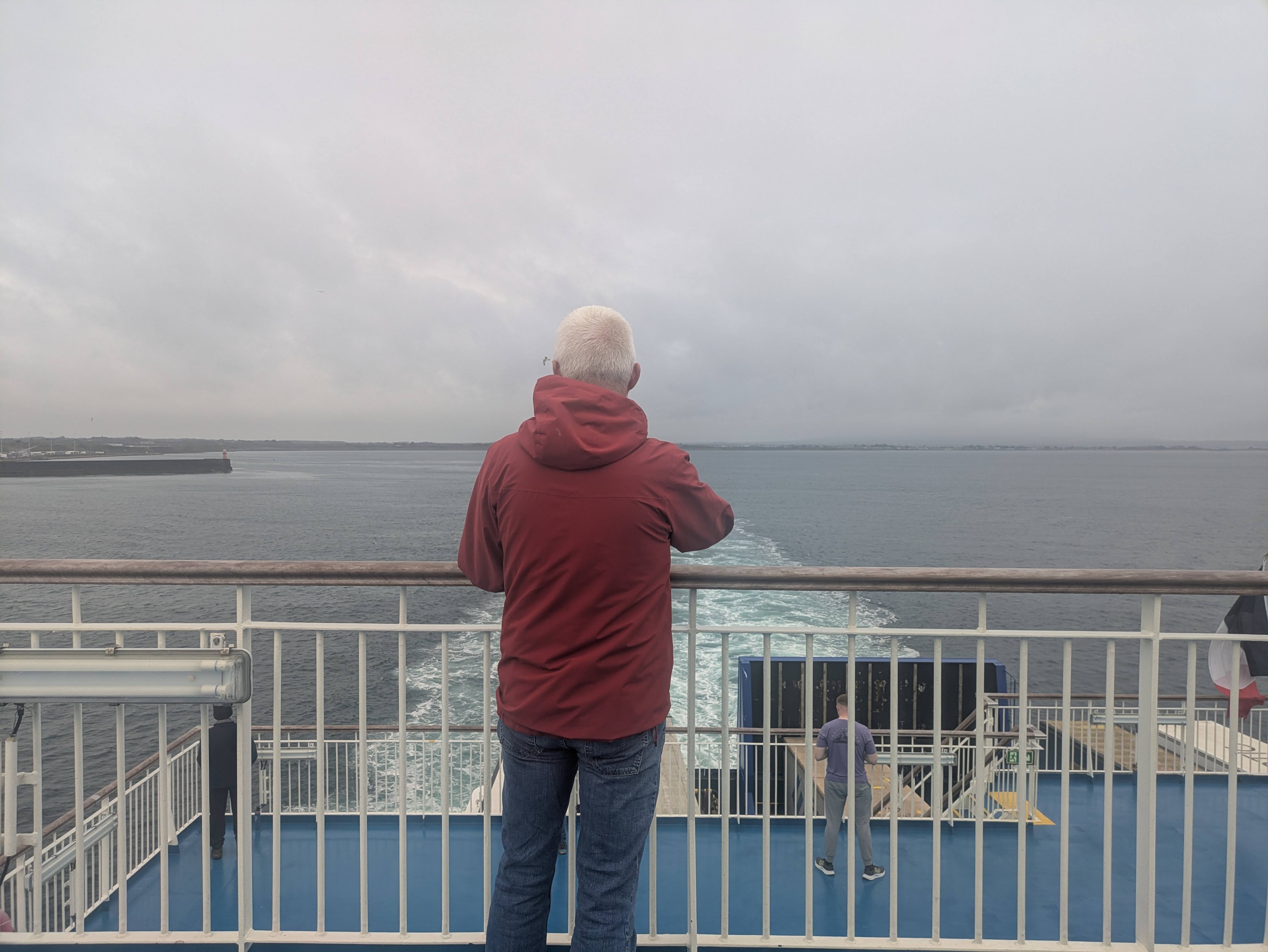
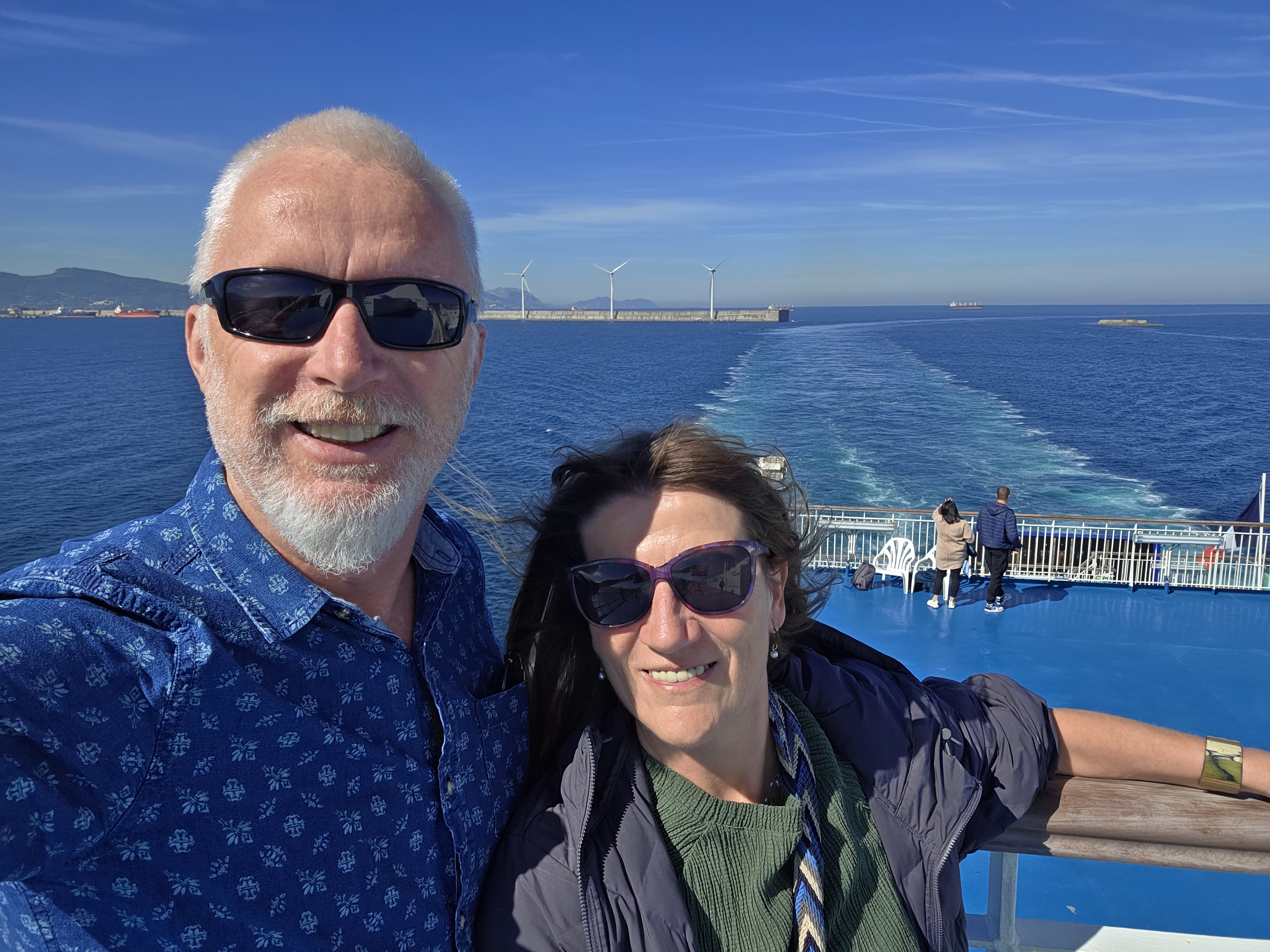
The journey to the ferry port in Rosslare was short and the crossing to Bilbao was smooth.  Taking the ferry was such a comfortable, relaxing way to travel, a slow transitioning to holiday mode. Wi-Fi was only available for a fee and our mobile data only kicked in briefly when we sailed near the tip of England and the French coast with a fleeting flurry of What’s App messages.  We were in a floating cocoon, out of contact with the world.

We were fortunate to sail on Wednesday morning (Oct1), well ahead of Storm Amy. Our original preference was for the Friday crossing but it was full when we tried to book it the previous week, so we opted for the earlier sailing. Sometimes it pays off to be ‘last-minute’ because that Friday evening sailing was cancelled due to the adverse weather conditions.

The thirty-hour journey flew by.  The talk given by the resident on-board conservationist (from the Ocra Charity) about whale identification was really informative and a good initiative on the part of Brittany Ferries.  The breeze on deck was brisk for the whale-watching session, and as the whales refused to turn up, we went down to the bar and marine-watched in comfort through the large windows, accompanied by live music followed by a quiz about French food and drink. It was multiple choice so we guessed most of the answers….. wrongly.   (Sample question: What is Roscoff famous for? Onions apparently.)

There was plenty of other entertainment, Caoimhin did a short course on rope-knots and the whiskey & chocolate tasting in the shop was very popular. There was bingo, more quizzes and dolphins appeared at dusk for a little sunset somersault.

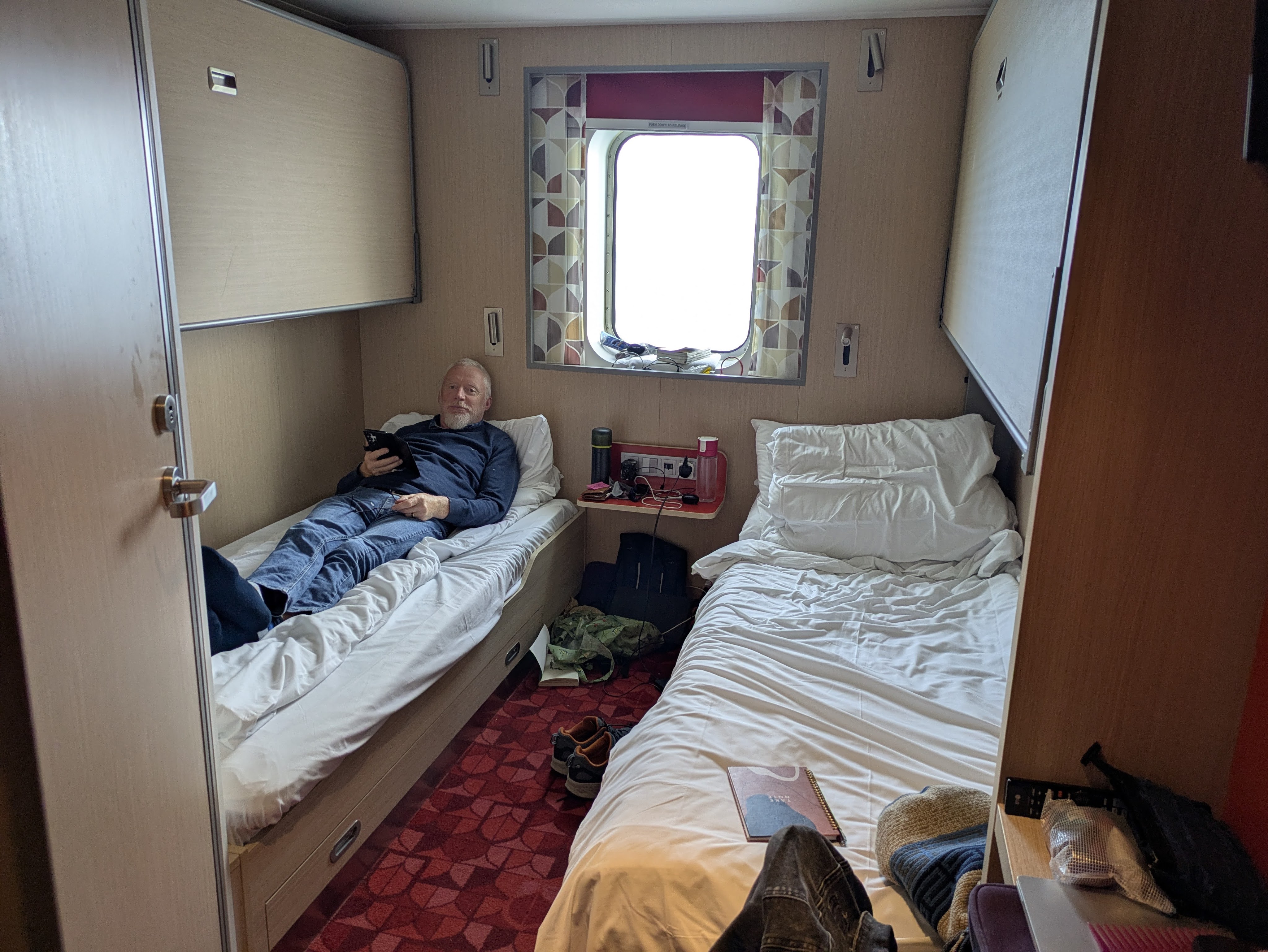
In the cabin, Caoimhin cut my hair, lopped off a couple of inches…. we had been so busy in the run up to our departure that I didn’t have time to visit a hairdresser… and did a good job. Our ensuite cabin was comfortable, the shower was hot and the hum of the engine was so soporific that I slept for ten hours straight, lulled by the gentle swaying motion.

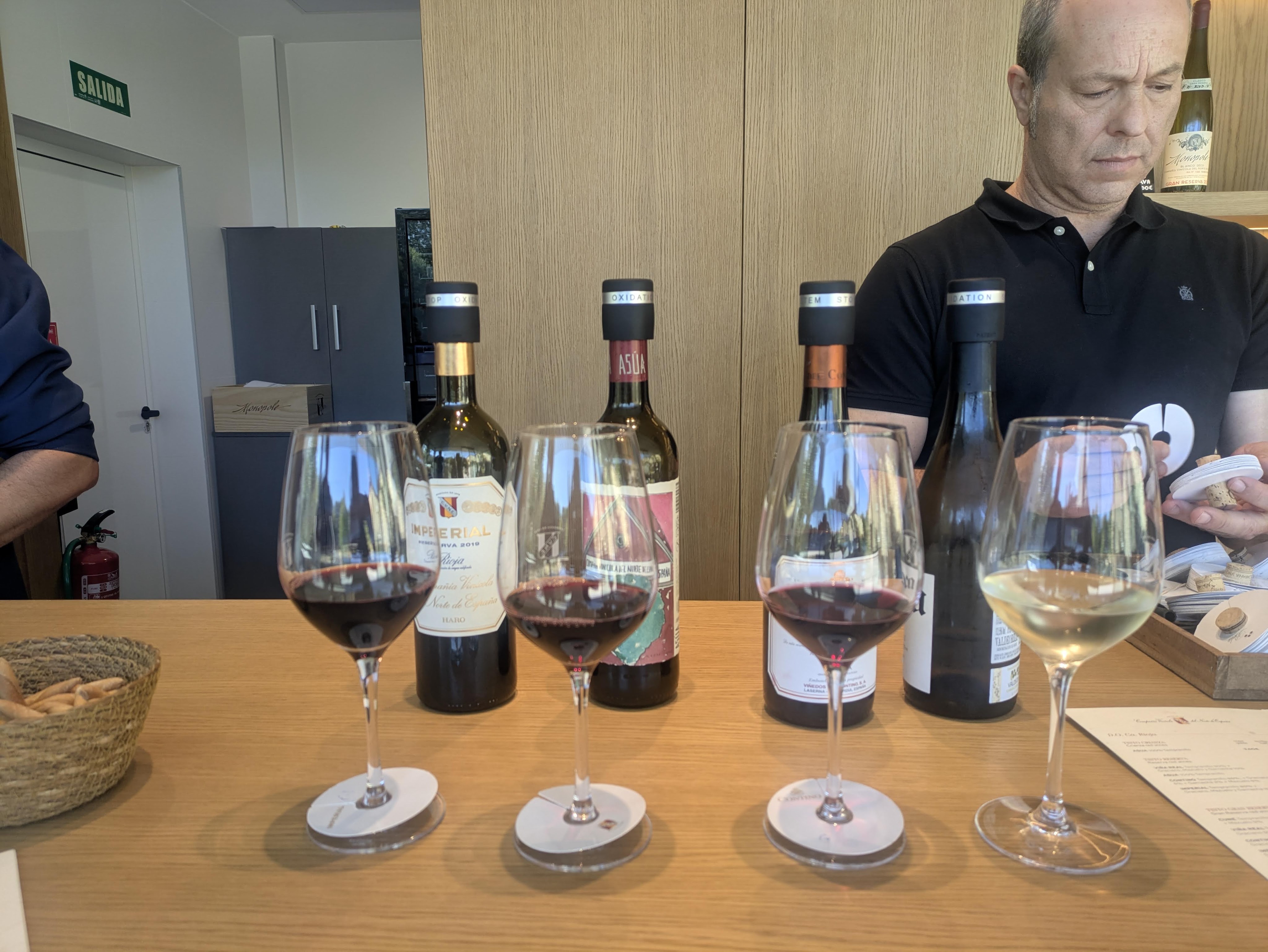
 It was a sunny 25C at 2pm in Bilbao when we emerged from our cocoon. There’s always a bit of tension when driving on the ‘wrong’ side of the road in a new place and trying to figure out Google’s instructions. Taking a wrong roundabout turning, we ended up back in the port where the officials looked at our Irish reg, and sighed before raising the barriers to let us loose …again. But soon we were driving south towards Haro and the Rioja region….this destination was only decided on the ferry when looking at the guidebook. We had never heard of Haro but we like wine and we wanted to head south.

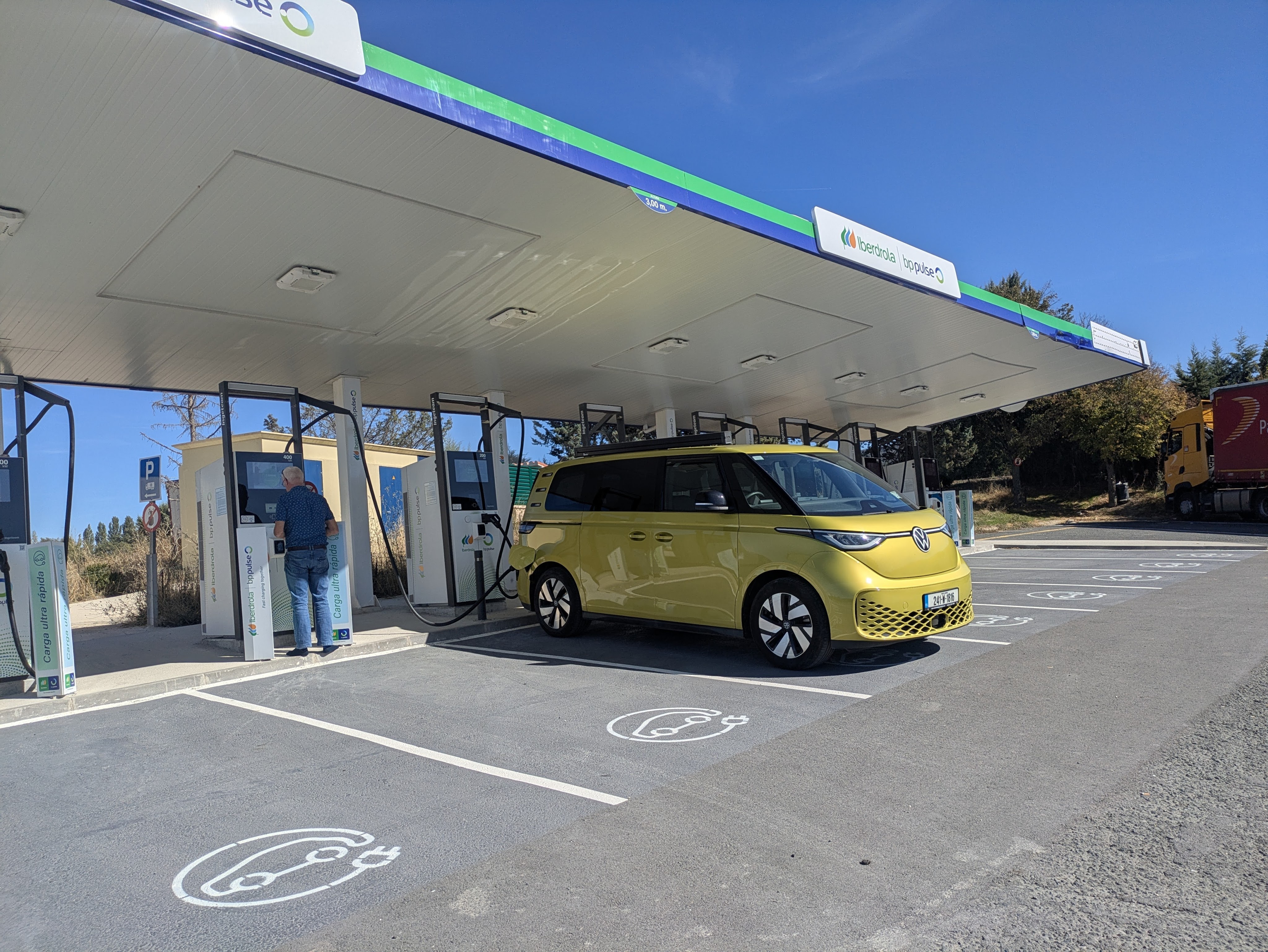
Our next task was to figure out EV charging in Spain before we reached the ‘range anxiety’ stage. Our maps indicated that EV charging stations were plentiful. Although we had 50% in the tank, we stopped at an Iberdrola charging area before any topping-up became critical. Our Buzz was the only vehicle charging at a whole bank of chargers, all fast chargers with a couple of  ultra-fast. It was possible to get instructions in English and pay by  bankcard. It was relatively expensive at 0.70 a Kw, more than we have paid at public chargers in Ireland but at least we know that charging is easy, at least with Iberdrola.

No Queues

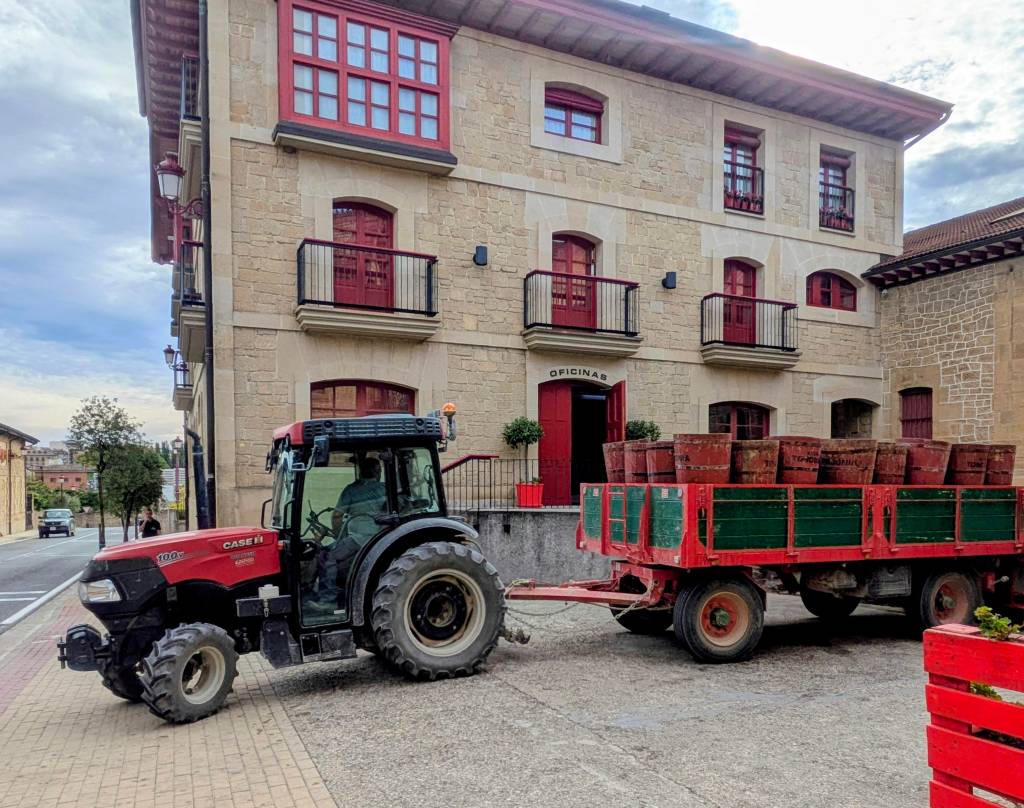
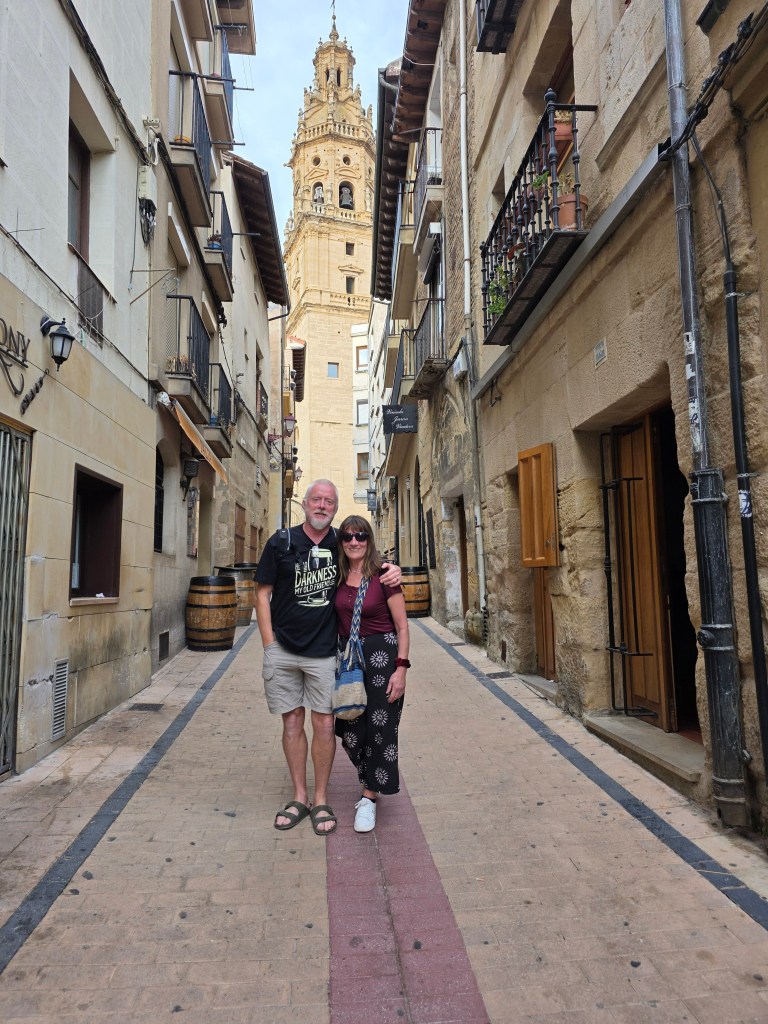
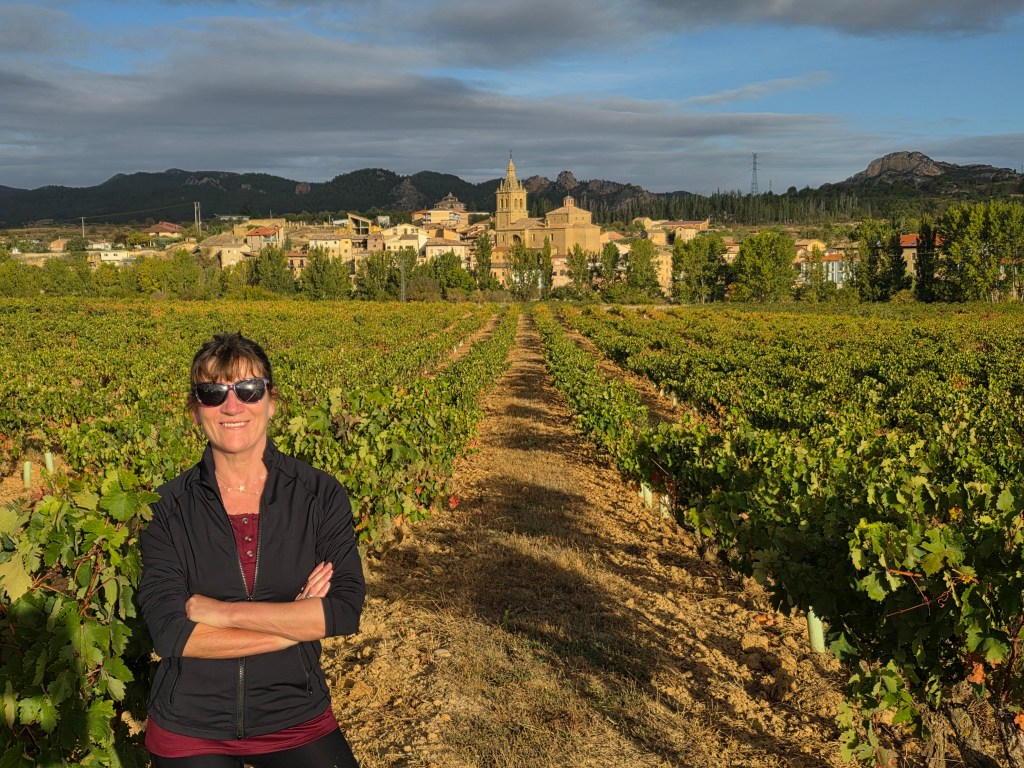
Haro proved to be a good choice. It was a town with the tang of fermenting grapes in the air and the hum of tractors pulling trailer-loads of grapes to the wineries; the building were old and made of a golden-yellow stone that glowed in the late afternoon….and the wine was cheap (starting from less than €2 a glass). A perfect combination.

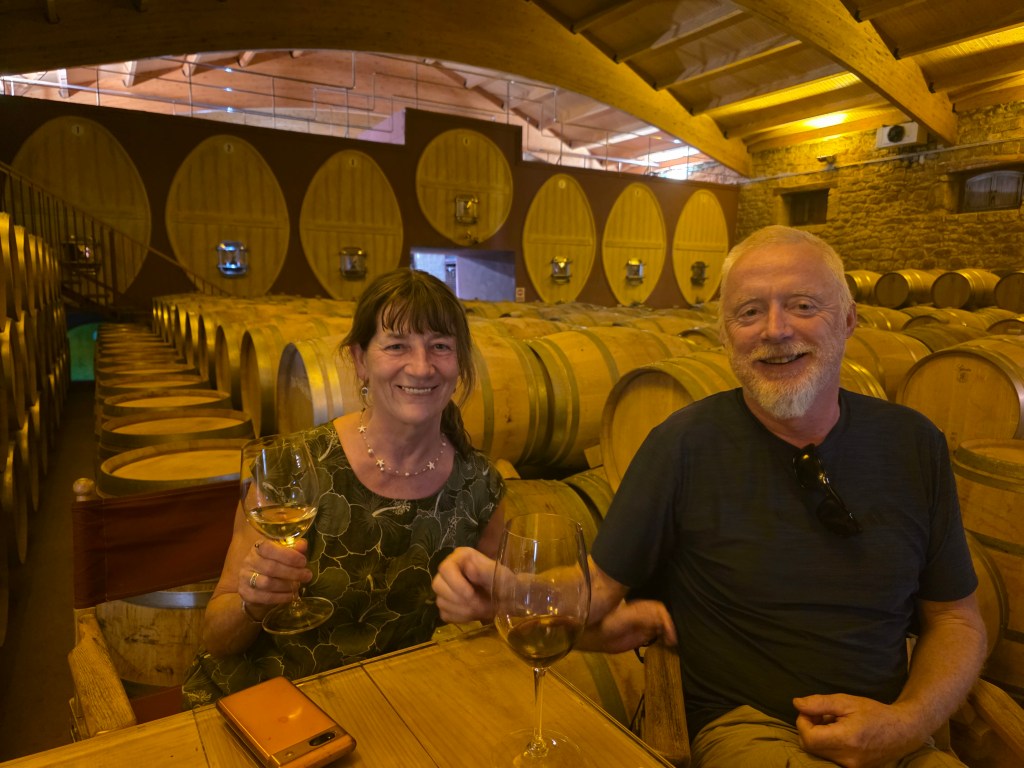
The bodegas opened at 10am, or before, for wine-tasting and closed in the early-afternoon. Sipping wine in a two hundred year old cellar, surrounded by hundreds of wooden casks which were slowly seeping alcohol into the dim air, was a wonderful way to enjoy a tipple even if it was barely midday.  This activity also meant that most of the visitors to this gorgeous little town were never entirely sober. Early morning walks along by the Rio Ebro and through the vineyards went some way to clearing our heads. The mornings were cool – about 10C- but by midday it was a gorgeous sunny 26C until the evenings required a light jacket.

Haro holds an annual festival in late June, Batalla de Vino (Battle of the Wine) where the attendees dress in white tunics and throw thousands of litres of wine at each other, staining their clothes red. A clock in the main plaza was already counting down the days and minutes to next year’s event.

Haro owes its wine success to a plague (phylloxera) in France which ruined the French vineyards in 1863. French wine producers set up storehouse in La Rioja and began to produce Riojan wine with their own techniques which the locals adopted and adapted. Never an ill wind and all that…

As we stayed in a campsite by the river (€28 a night with electricity), Caoimhin had high hopes that we might be able to slow-charge the van onsite using a ‘granny cable.’ When that wasn’t compatible, we dispensed with electricity, and the nightly charge dropped to €21. The campsite was very social and we met several Irish people who were having an unplanned extra week in Spain due to the ferry cancellations and disruptions.

After three days, we felt that we should depart Haro for our livers’ sake. The ‘Haro Effect,’  that continuous hazy, slightly inebriated state, was becoming too seductive so we packed up, with some regret.

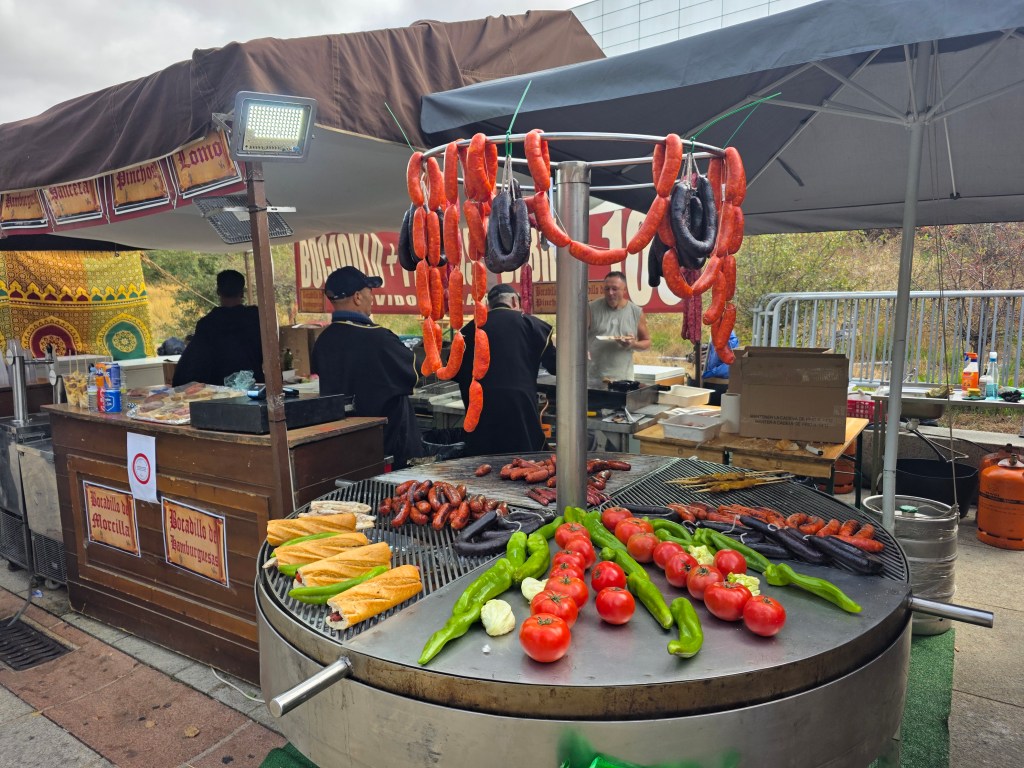
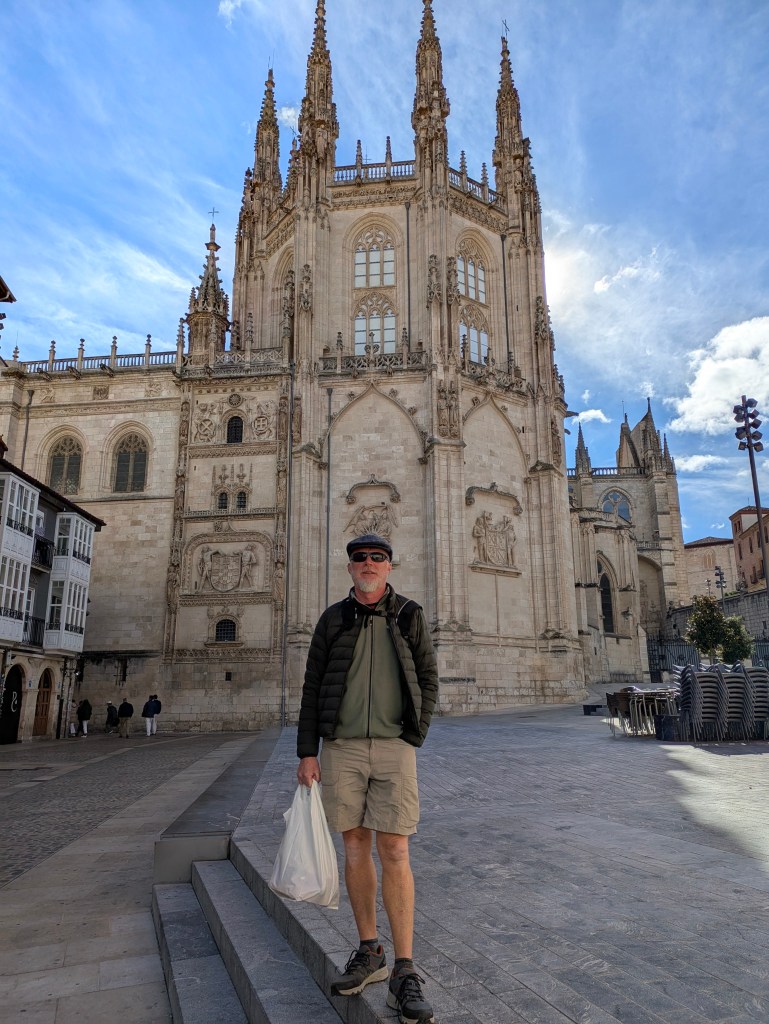
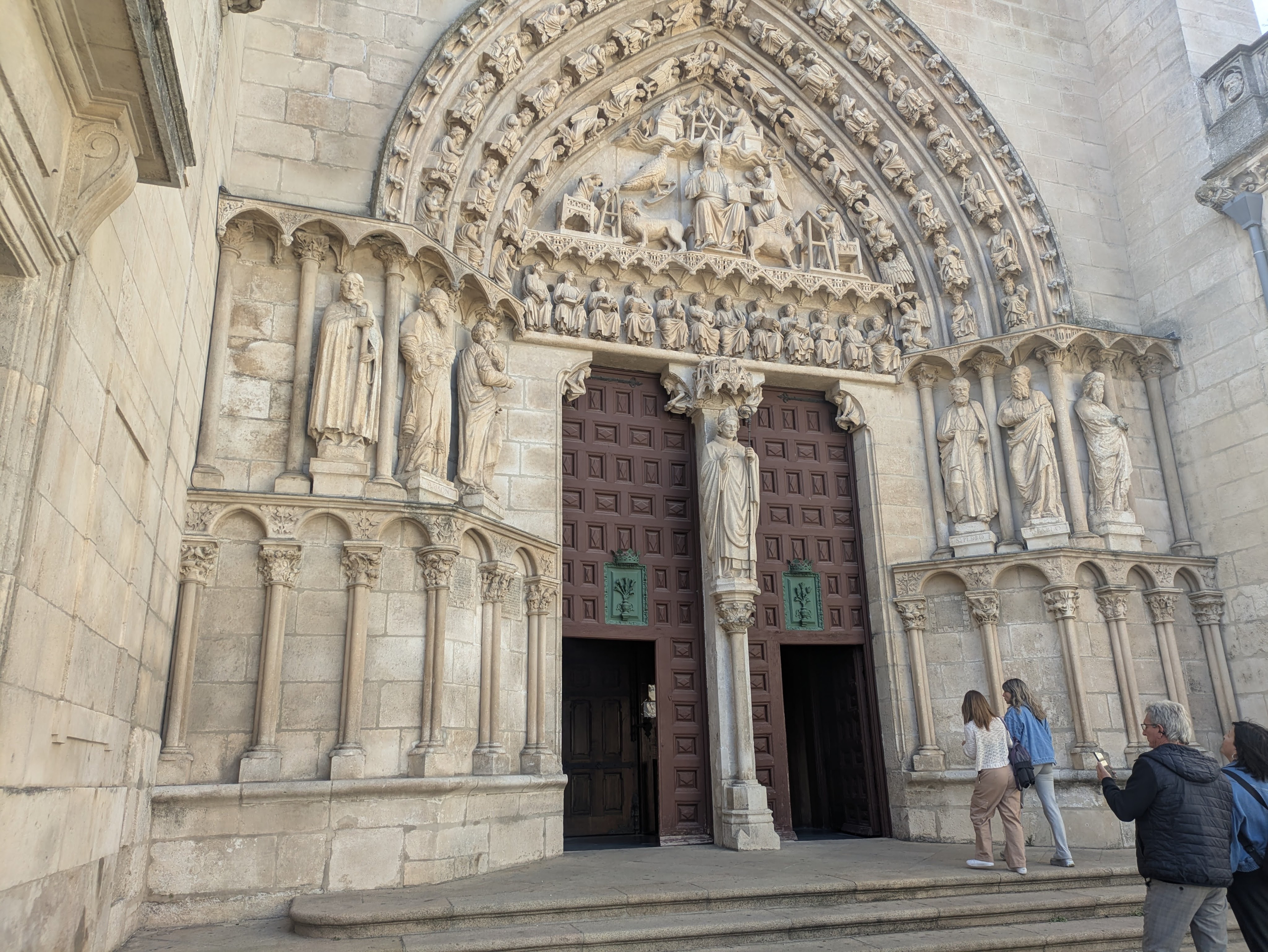
Heading south in the direction of Burgos,  the weather turned cool and cloudy with even a slight hint of rain. We drove by bare fields, shorn of corn and bleached white from the sun and fields of blackened sunflowers, withering on the stalk with drooping heads. The climate in Burgos, like most of central Spain, has been described as ‘nine months of winter and three months of hell(summer).’ It was sunny when we arrived with a stiff easterly breeze keeping the temperature a chilly 13 degrees although the streets were full with lots of people going around in medieval costume. The Cathedral was jaw-dropping, a Gothic Treasure where the concept of ‘Less is More’ was never considered, every available surface was crammed with ornate carvings. After charging in Burgos (Zunder Chargers@ €0.58/kW) and wandering around the Sunday market, we pushed on to Lerma, a pretty town, with a castle, convents and a big Plaza Mayor. We parked in a picnic area on the outskirts of town and settled for the night.

The cold woke us. The temperature had dipped to 1.5 degrees which was unexpected and the coldest it’s been so far. By 9am the following morning, the sun was shining but temperatures were still hovering about 2 degrees. We moved on, before we had to invest in blankets and woolly jumpers.

We are now in Salamanca, staying in a cheap guesthouse (Hispanica Hostal €38 a night) in a basic ensuite- room but it is clean, light-filled, central with free parking. The Plaza Mayor in Salamanca is considered the most beautiful in all of Spain and we believe that claim, having been in the Plaza last night when the lights came to spontaneous clapping. The plaza which was already gorgeous became even more magical when lit up and with a full moon rising over the splendid architecture.

Thanks for Reading

Hasta Luego

Electric Road Trip: The Journey Begins