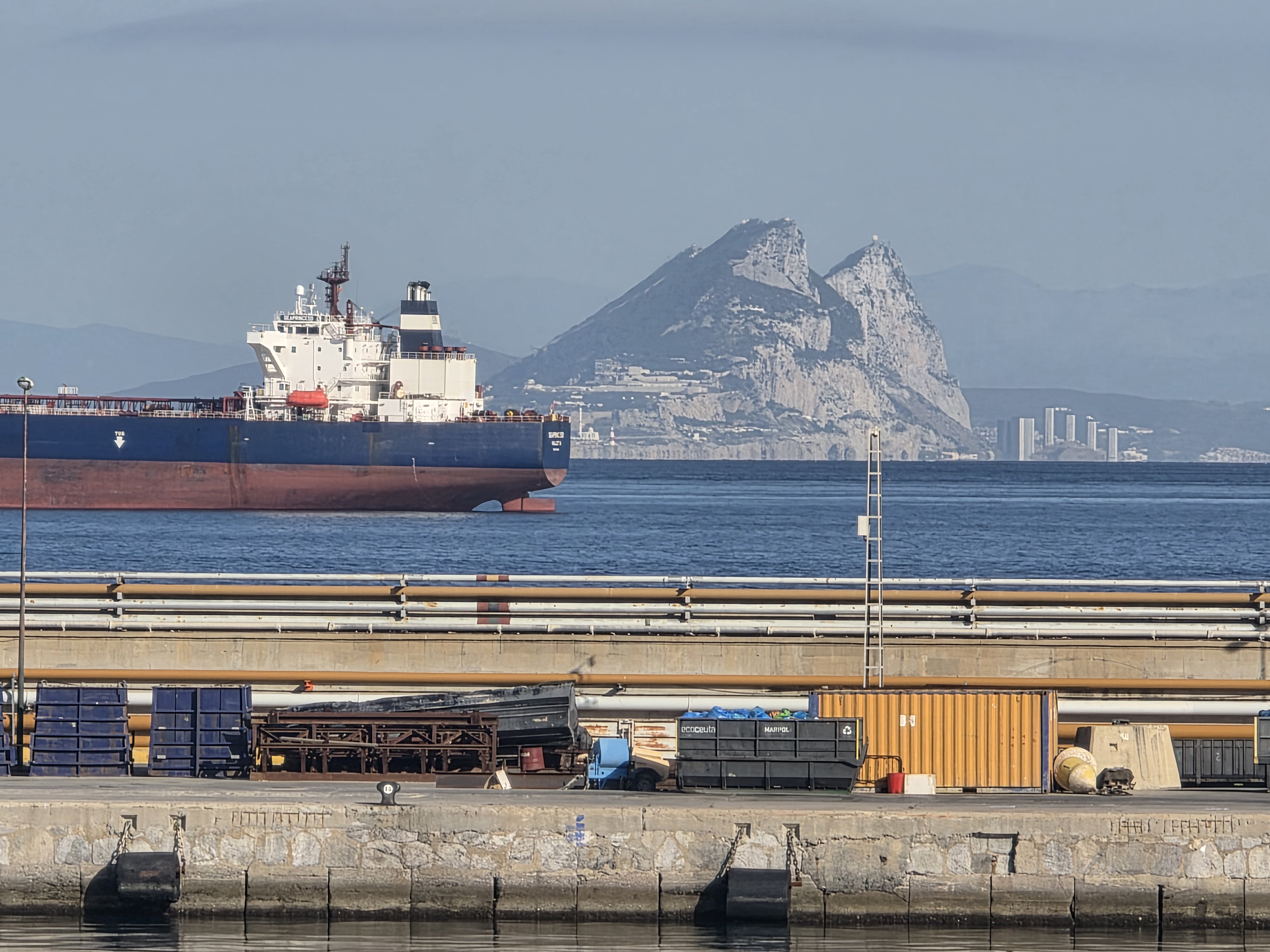
I was jittery, unable to eat anything. Caoimhin had no such qualms tucking into fried eggs and hunks of bread for breakfast in our little apartment in Cabo Negro, a little seaside town in Morocco on the Mediterranean coast, about thirty minutes from the border. Our entry into Morocco in the opposite direction three weeks previously had been dramatic. At first we were denied entry because we didn’t have the correct paperwork for the Buzz, entirely our fault. It was only after much pleading and several hours that we were allowed to enter by the skin of tour teeth and issued with a little white card with our vehicle details. We were grateful then, but would we be let out now without any more drama? Rationally, I knew that we wouldn’t, couldn’t be detained in Morocco, they had let us in, after all…..but still.
The road to the border passed a few seaside towns, M’diq and Frideq which looked nice, and far cleaner than other places. An army of litter pickers in hi-vis jackets were out in force, explaining the cleanliness. There has been a lot of investment in this area and a drive to promote tourism along this section of Mediterranean Coast with its pristine sandy beaches, hotels and cafés. Almost before we knew it, we were at the border, with zigzag of staggered barriers and a large police and army presence. The border was between Morocco and the city of Ceuta, a Spanish enclave although on the African Continent, the only land border between Africa and the EU.
Our passports were looked at and we were waved on with a smile to queue at customs. The sniffer dog sniffed, but didn’t find anything of interest, the officials were relaxed and even chatty, commenting on the electric van. There was more queueing to get our passports stamped with exit visas and phew, we were out of Morocco and nobody had looked for any car documents apart from the little white card we were given on entry. Now we just had to get into Spain. Five vehicle lanes shemozzled to get into the two lane track for the Spanish border. More passport checking, some fingerprinting (a new addition when entering Europe by land), a quick look inside the van and we were through, driving into Ceuta. The whole process took less than two hours unlike the almost five hours it had taken us to enter Morocco.
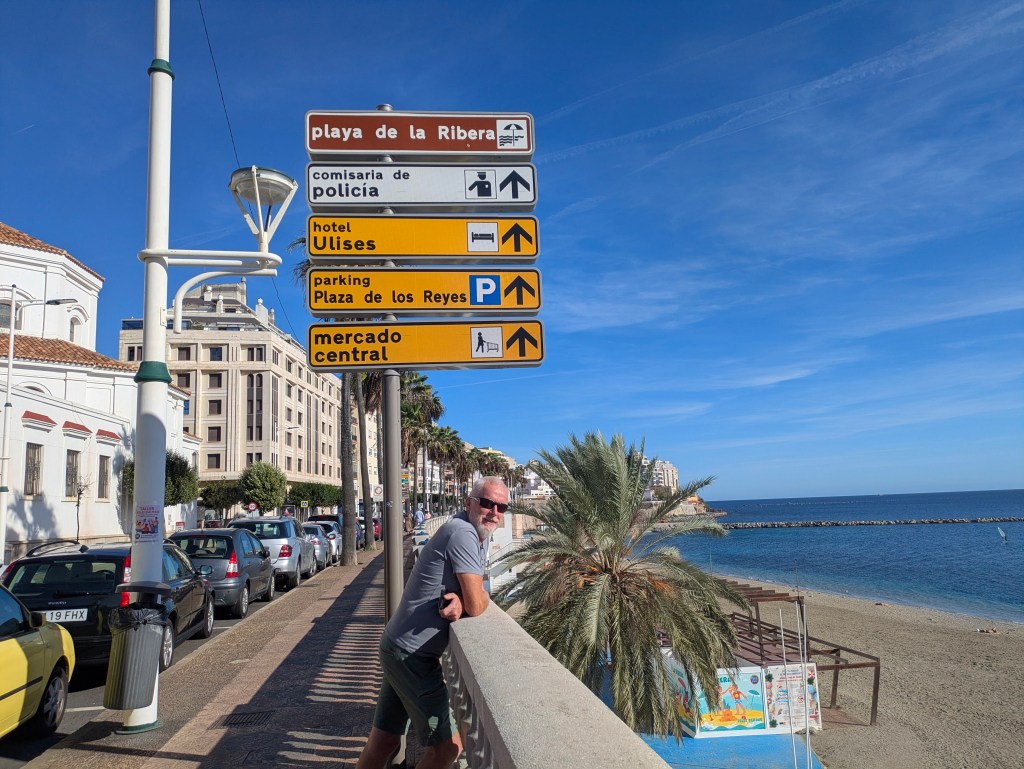
We had changed countries, that was obvious. Although Ceuta was unabashedly Spanish. The bells of a Catholic church rang out, a woman clutching a water bottle, jogged by the waterfront dressed in a tank top and shorts, a large poster outside a discount store brazenly advertised deals on liquor. All things so normal that we hadn’t even noticed on the way through three weeks ago but which now seemed strange and drew our attention. Ceuta was a handsome place, benefitting a city that was prized and fought over down the centuries. Now it was full of outlet stores, stout Roman fortifications that were beautifully restored, and views of the heavy ferry traffic crossing the Strait of Gibraltar. Lidl was as crowded as if its Christmas Eve with people piling everything from crisps to persimmons which were on offer. There’s no Lidl in Morocco but plenty in Spain so we were unsure of the clientele except that there were plenty of Muslim women,
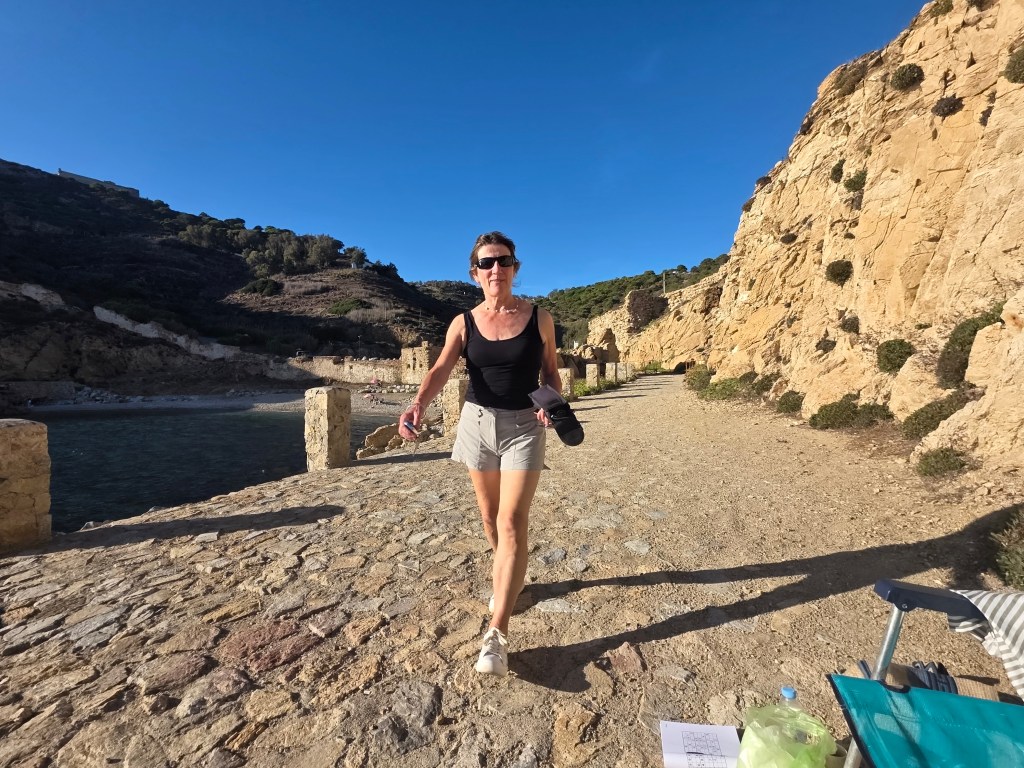
We had booked our ferry back to Algeciras in mainland Spain for the following morning, allowing plenty of time in case of border delays which thankfully hadn’t materialised. We climbed out of the city towards a cove on the northern end of the promontory, near the lighthouse. On the map it looked like a quiet spot for some wild camping but we had no idea how gorgeous it was until we got there. A winding steep road led down to the glittering sea. A few families sat on the stony beach, a couple of fishermen cast their lines from the rocks. I changed into shorts (which hadn’t even come out of my bag in Morocco) and we had a picnic of cheese and olive sandwiches and chilled white wine in the sunshine. simple pleasures in an idyllic spot.
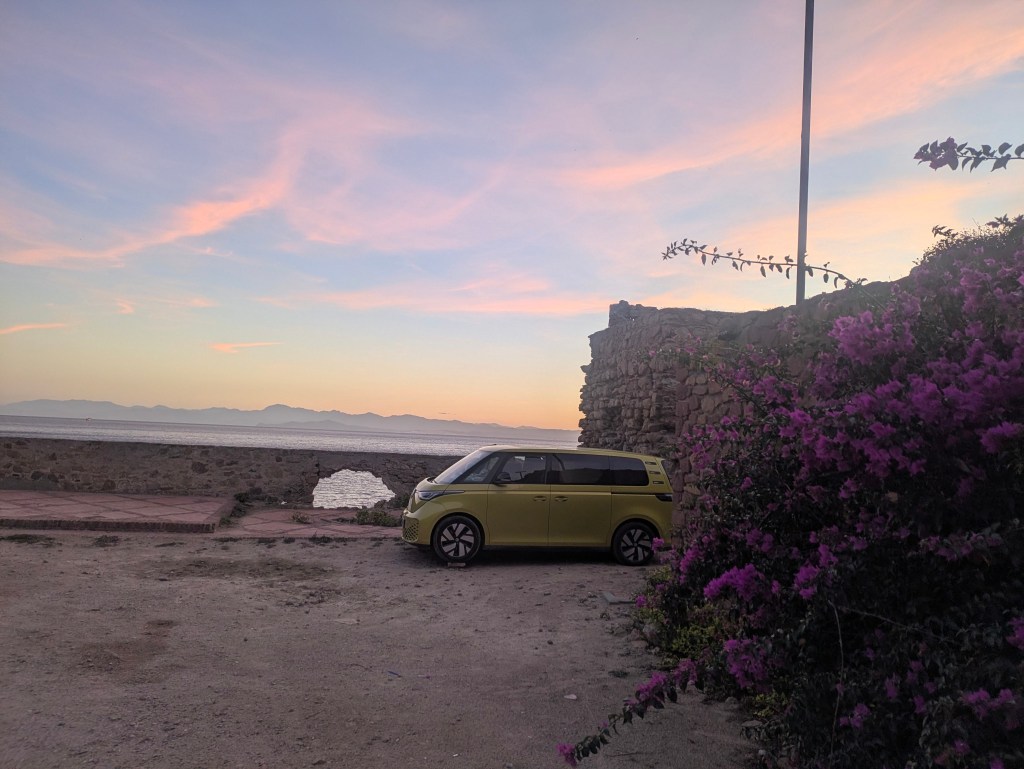
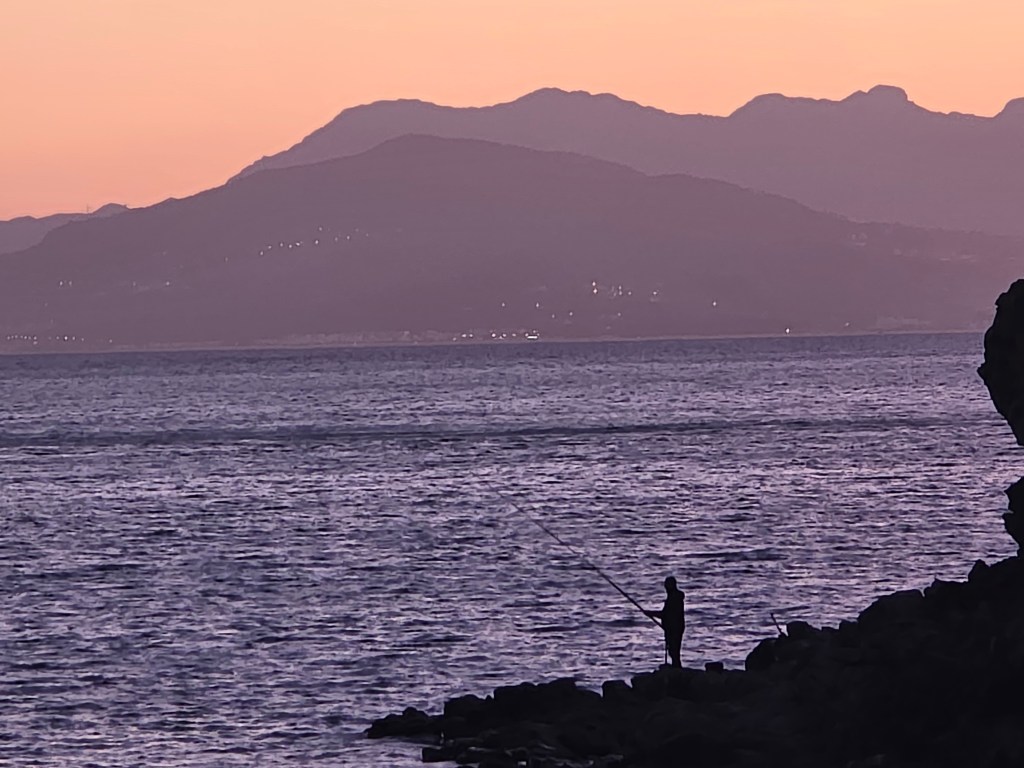
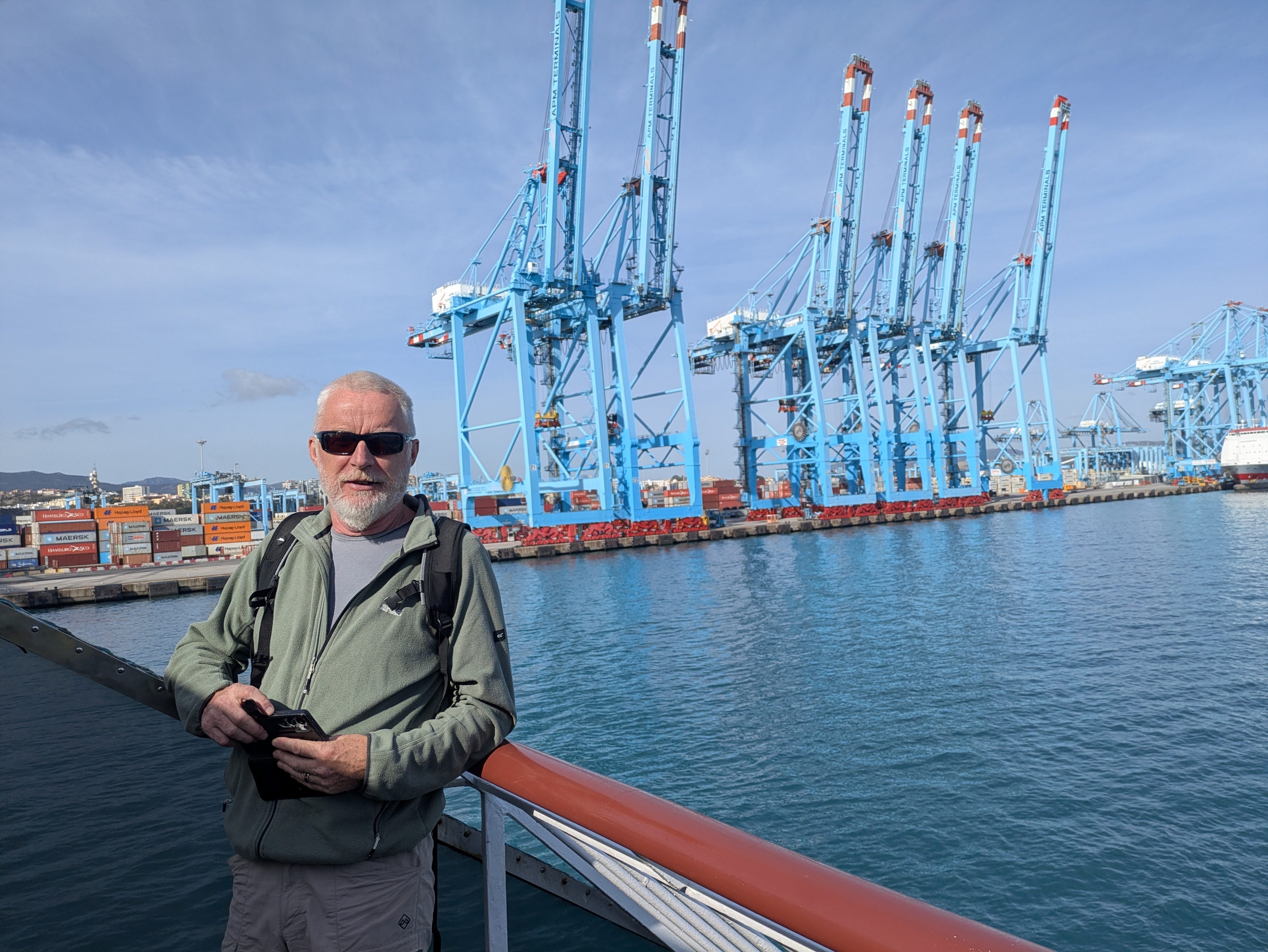
The following morning was cool, a few people came to watch dolphins out in the bay and a couple of spear fishing- guys got all their paraphernalia ready, donned wetsuits, while talking incessantly and headed into the water, armed with their spear guns. No-one disturbed us, the dog walkers waved at us. Our one-hour ferry was calm and uneventful. The port of Algeciras was busy, ports were always fascinating with their cranes for lifting, their lorries and container ships and the buzz of transporting goods.
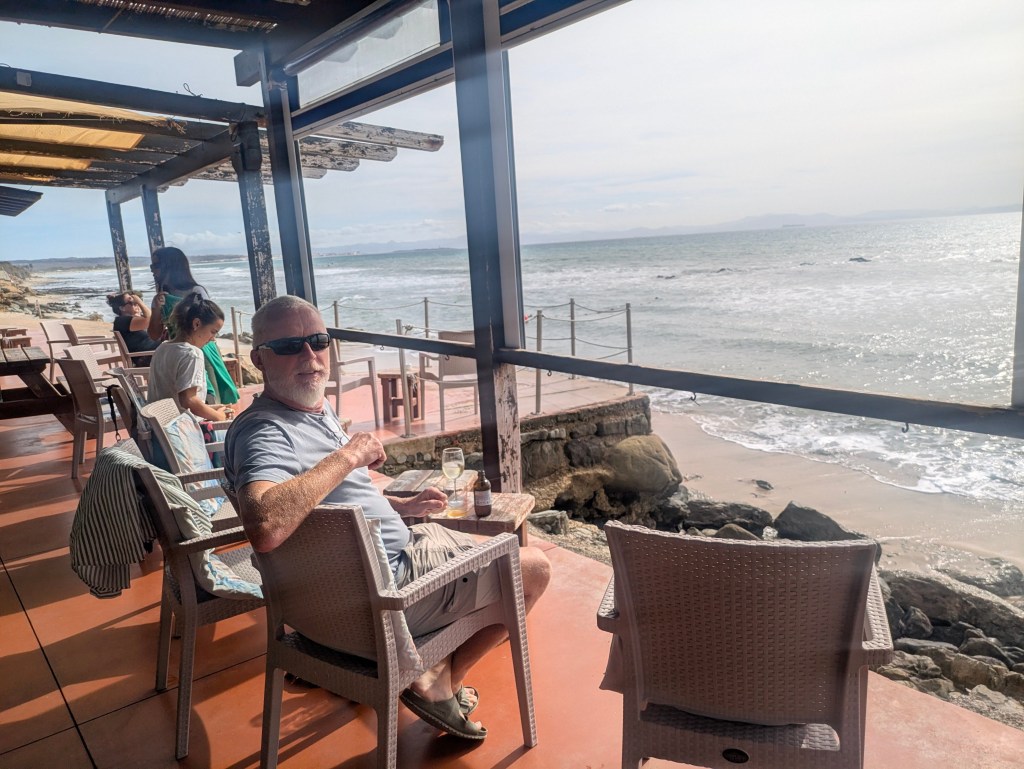
We headed west towards Tariffa and the Costa del Luz. The roads were winding, the countryside parched and at one stage, the blackened evidence of an old hillside fire. We picked a campsite at random – there were loads stretched along the coast but when a bored woman at reception told us it was €27 to park for one night, we were so shocked at the price that we continued on – must be the Morocco effect where everything was so much cheaper (apart from alcohol). We spent the night at another campsite overlooking the Atlantic with crashing waves, kite surfers and even a beach bar set up on the rocks. This was in danger of being washed away with the exceptionally high tides with the waves crashing over the veranda and foaming under the seats. The campsite was surprisingly busy, full of Germans, many with babies or toddlers or dogs or all three.
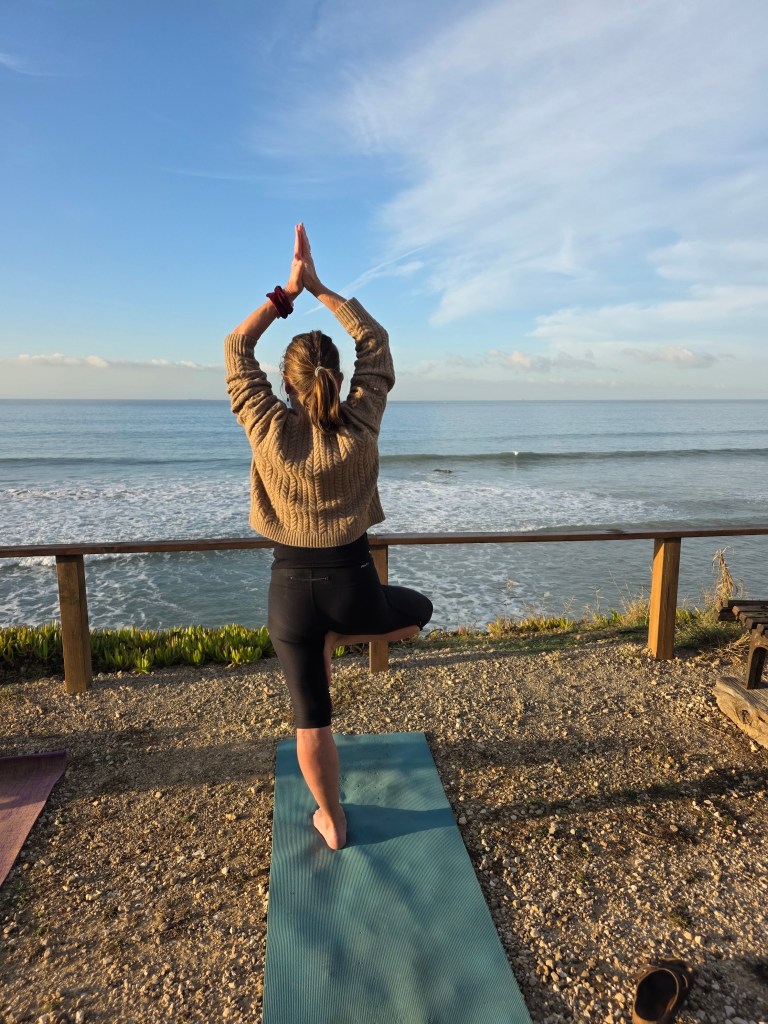
Onwards to Cadiz, a place that we had never visited before. The road was wide but bumpy – the road surface in Morocco was much better than Spain. White villages gleamed on the hilltops among pine forests. The approach to Cadiz was flat and marshy, a spaghetti junction of roads, underpasses and roundabouts before crossing over La Pepa Bridge, the longest bridge in Spain, five kilometres with three of those over water.
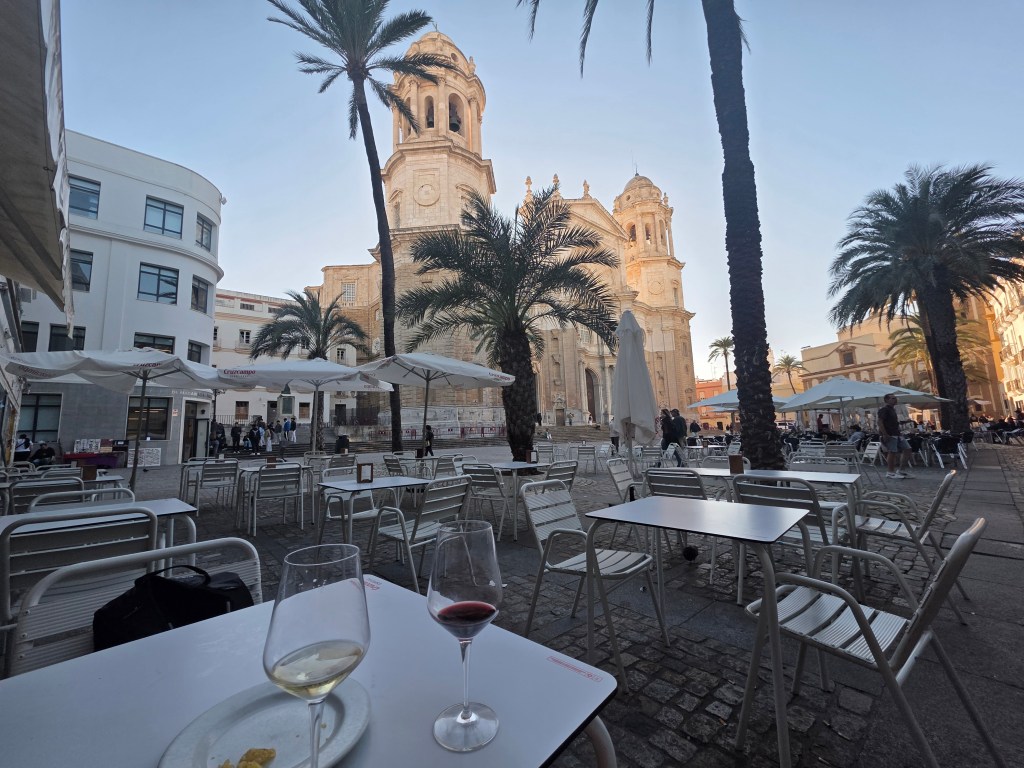
Cadiz itself is a relatively small oblong-shaped island, squashed in by the Atlantic Ocean. It was a bright sunny, blue-skied day although the port was cast into shadow by two enormous cruise ships, far higher than anything else in the harbour. Car -parking spaces were scarce and expensive.
It was also a place where history was heaped on history, the most ancient still-standing city in Europe, claiming to go back to 1100BC. The Phoenicians were here, so were the Romans, the Moors, the Spanish. Columbus sailed to the Americas from here on two of his voyages, Napoleon laid siege to the city. Rick Stein was even here on a weekend break,
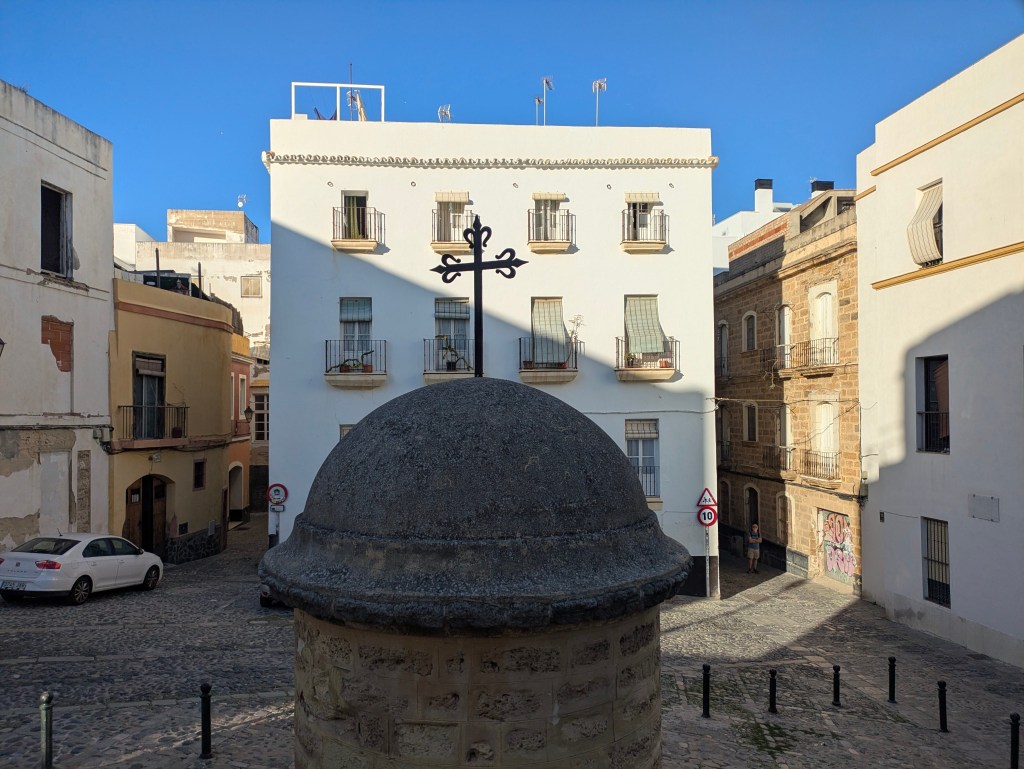
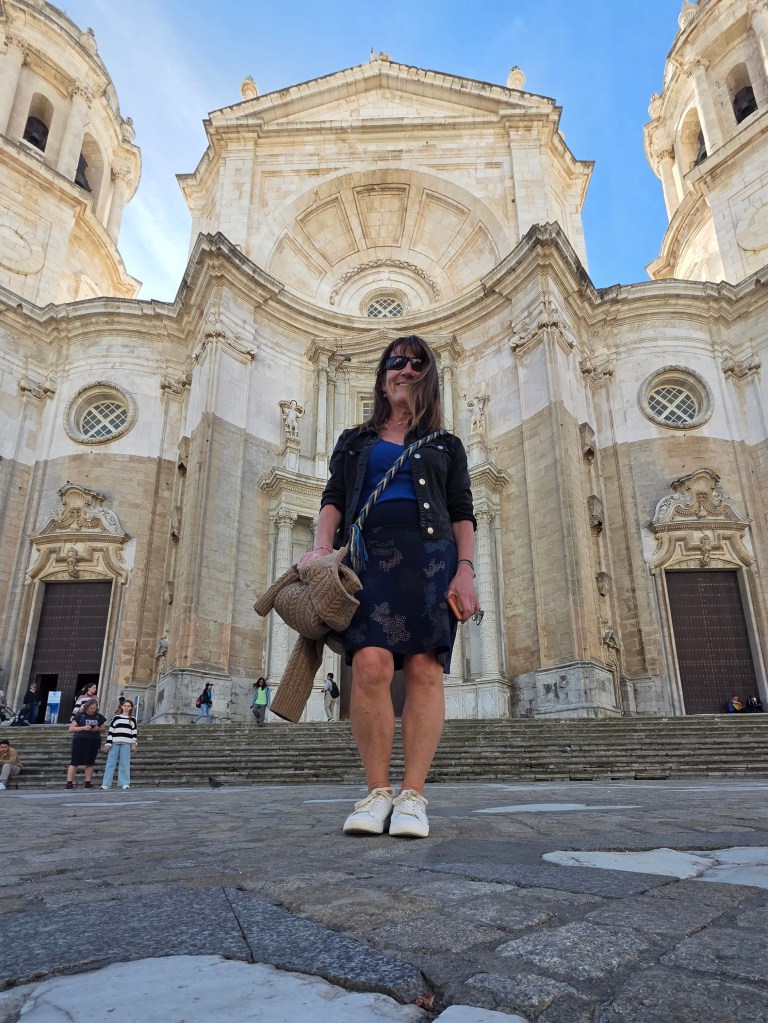
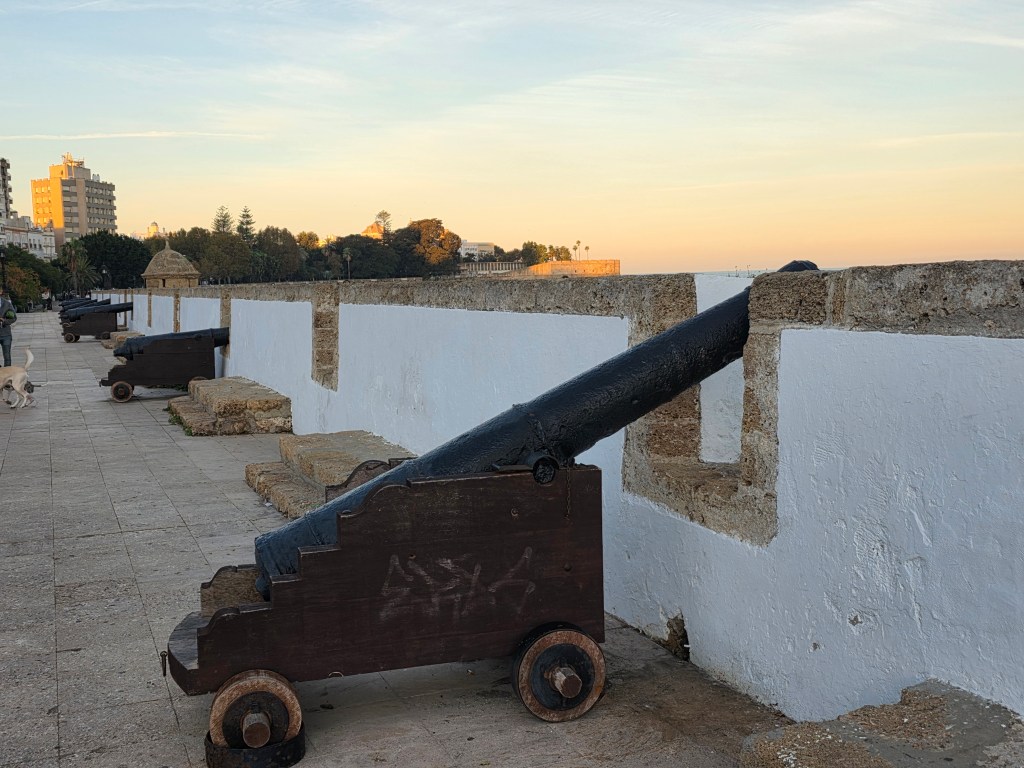
It was a place of narrow lanes, wide plazas, beaches, tapas bars with the aroma of frying fish and always the sound of the sea which was never far away. The waves crashed or lapped (depending on the wind and side) on the reinforcements that kept the whole place from eroding and dissolving into the sea.
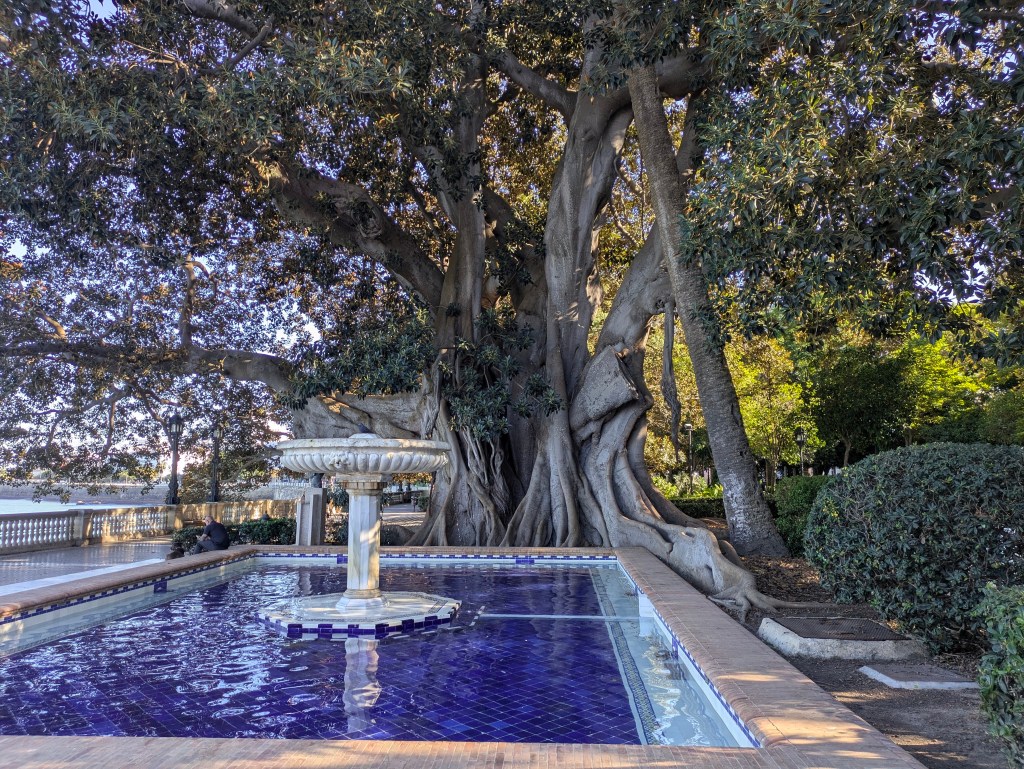
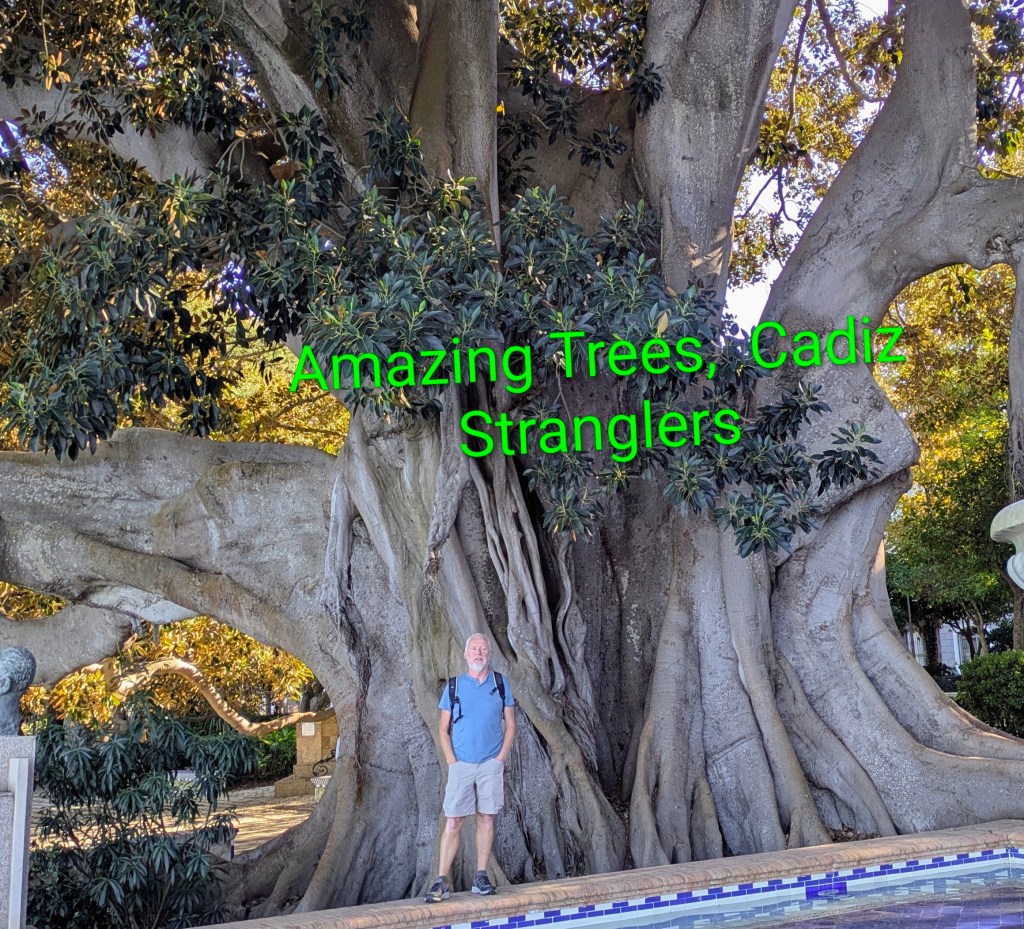
But what impressed us most were the trees – dramatic Strangler Figs with enormous umbrellas of leaves and trunks as wide as a city bus. These trees get their name from their rapid growth and expansive root systems. Under our feet the tenacious roots were probably playing havoc with the drainage systems while we were wowed by the beauty of what was above ground.
There were also a lot of people sleeping rough in the crevices of the Santa Catalina complex and in the shadows behind the magnificent cathedral. It was also a place that had known tragedy. On a summer evening in 1947, a series of mines and torpedoes, stored in a harbour depot, exploded for unknown reasons, killing 150 people, many of them children and injuring at least 5000. Smiling family photos of some of the victims lined the walls of the remembrance museum.
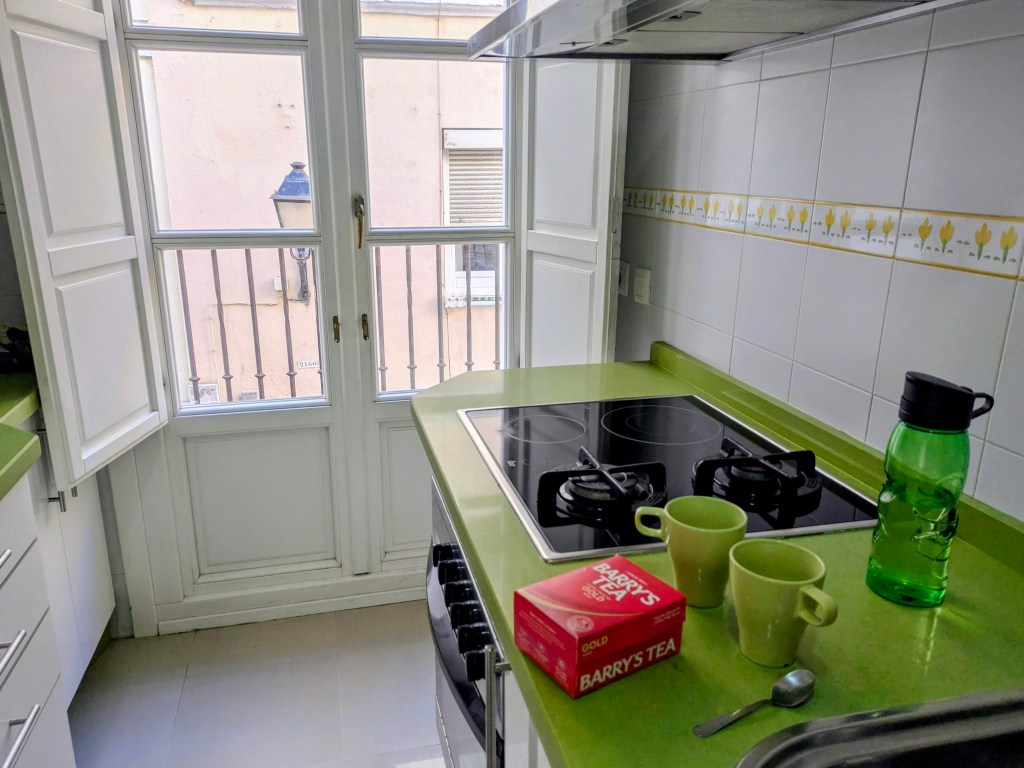
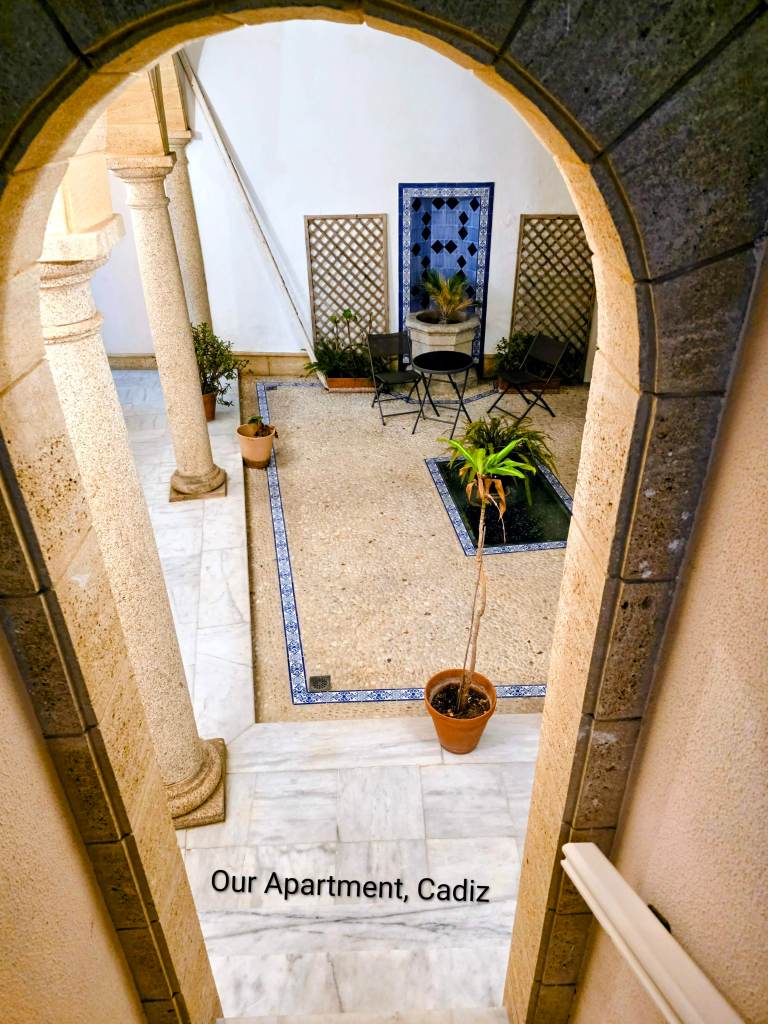
We had booked an apartment on the morning we arrived. It was in the old part of town along one of the many narrow streets and was far nicer and much bigger than expected with a roof terrace, an inner courtyard, a separate kitchen, sitting room and a couple of bedrooms. So much space…after the confinements of the van, it felt like luxury which was nice as we were also celebrating our wedding anniversary (thirty-one years❤️ ). There was even Barry’s tea in the kitchen cupboard, probably left behind from previous Irish visitors. This ‘luxury’ was €118 for two nights which we regarded a celebratatory bargain.
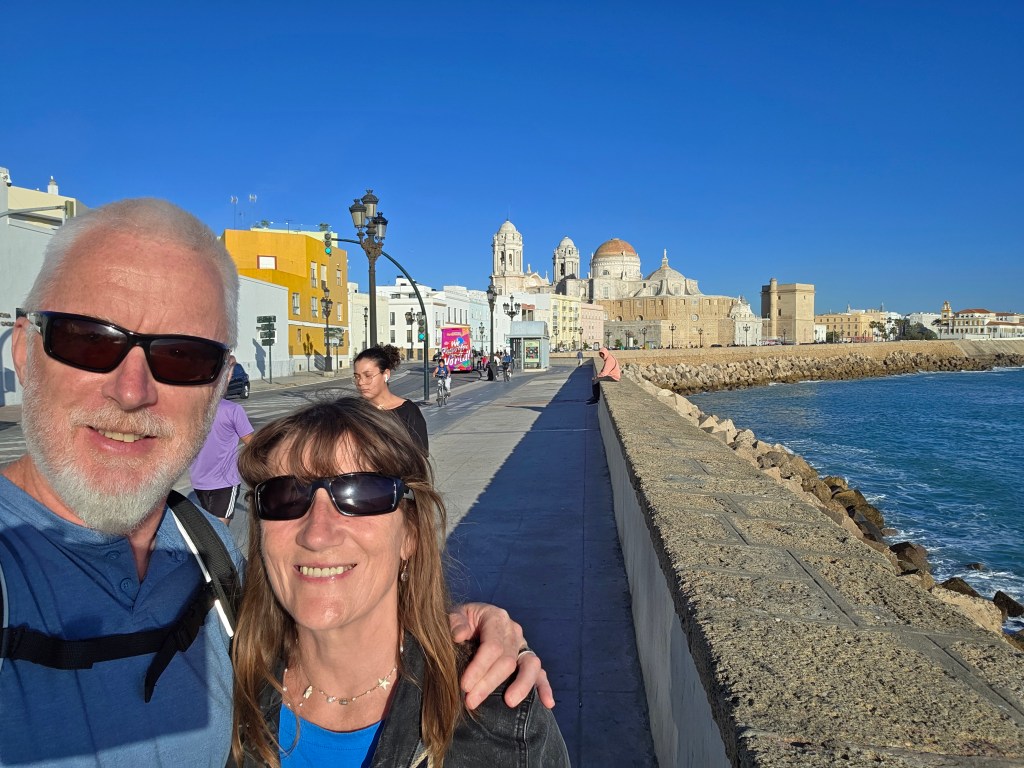
For a place surrounded by sea, there was a surprising lack of seagulls. We soon discovered the reason. The birds had become numerous and aggressive so the city council ordered that their breeding grounds be destroyed, their eggs removed and many were even shot. The pigeons in the plazas must have got the message because they were exceptionally docile and the sparrows kept a low profile.
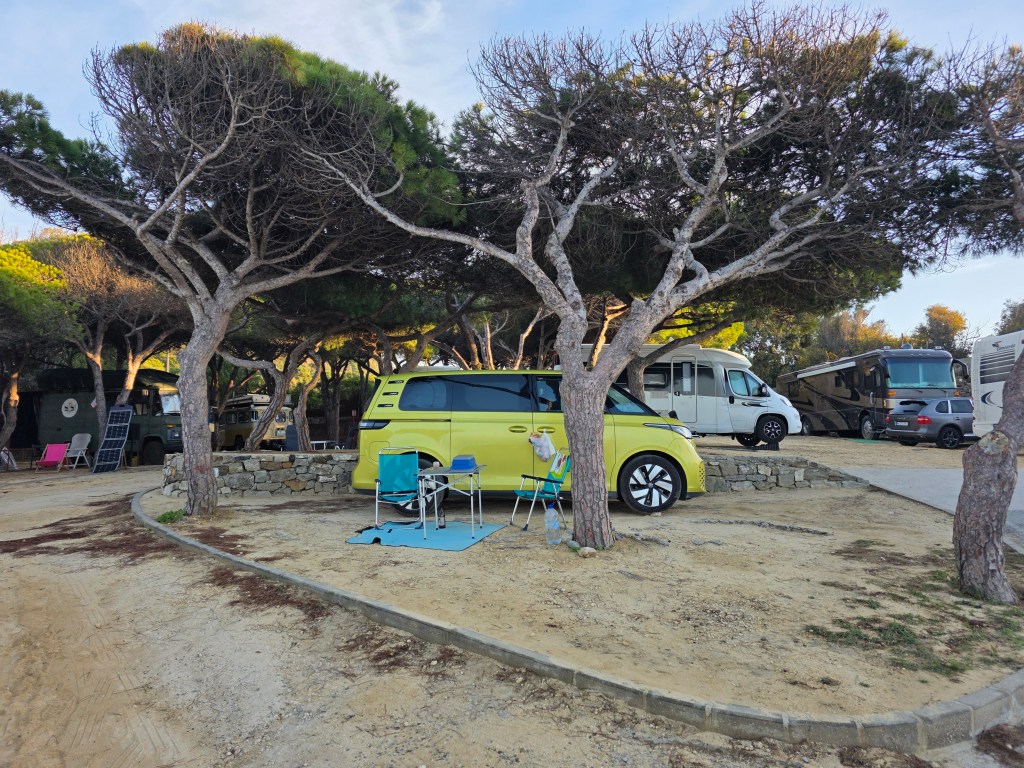
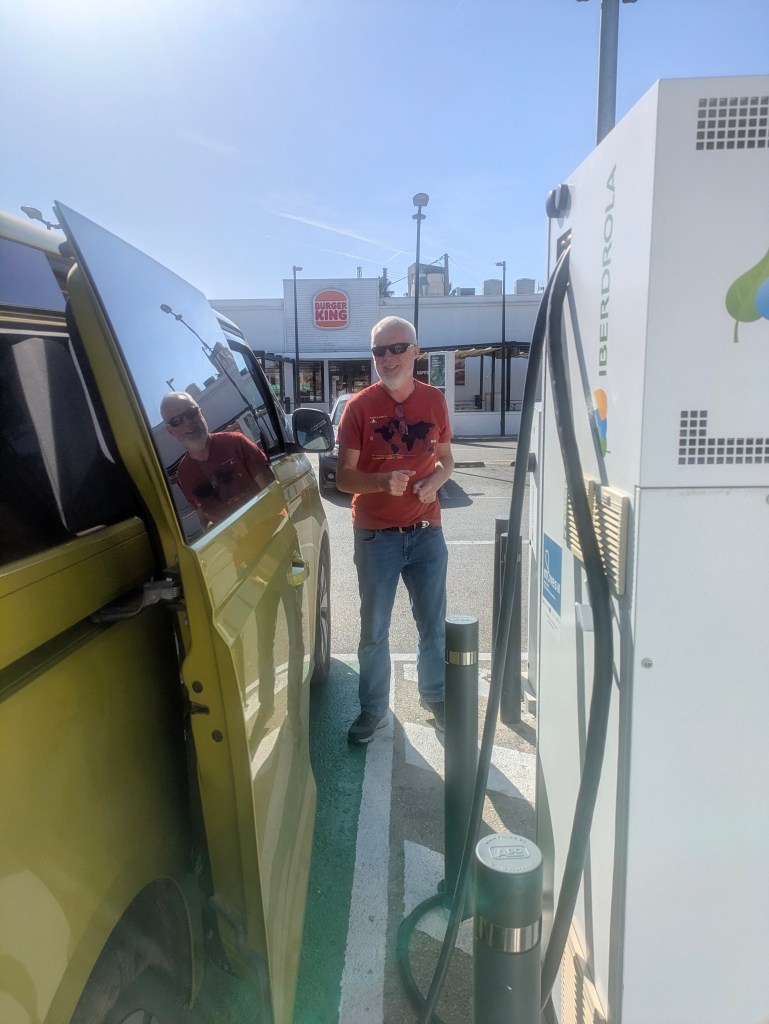
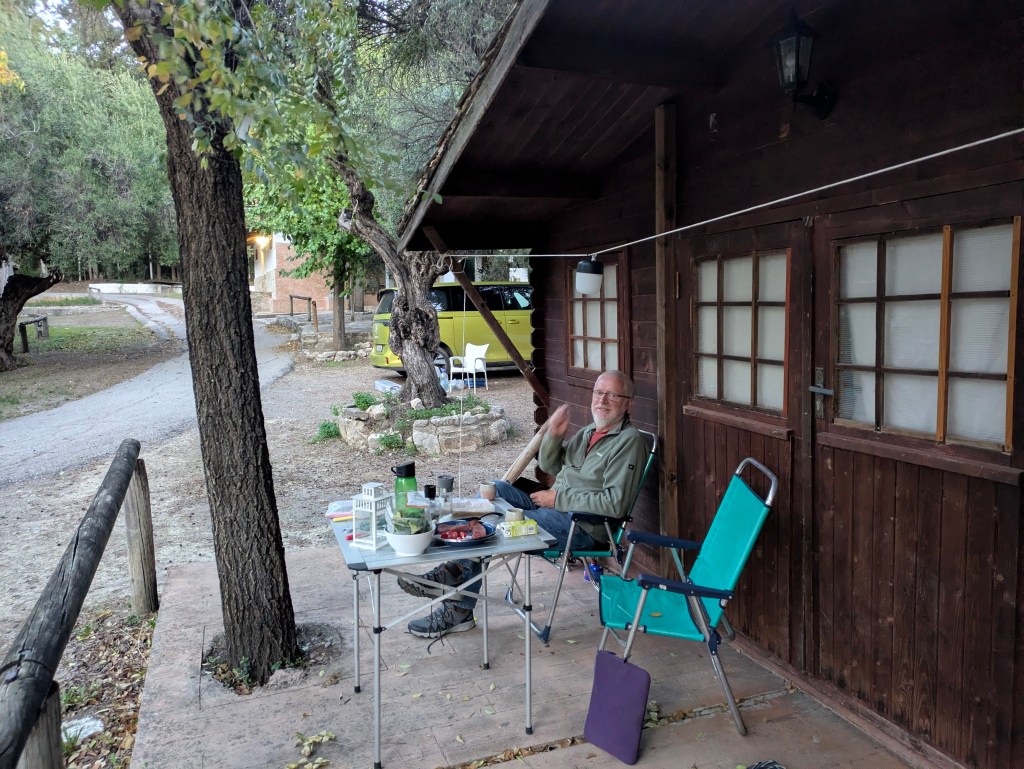
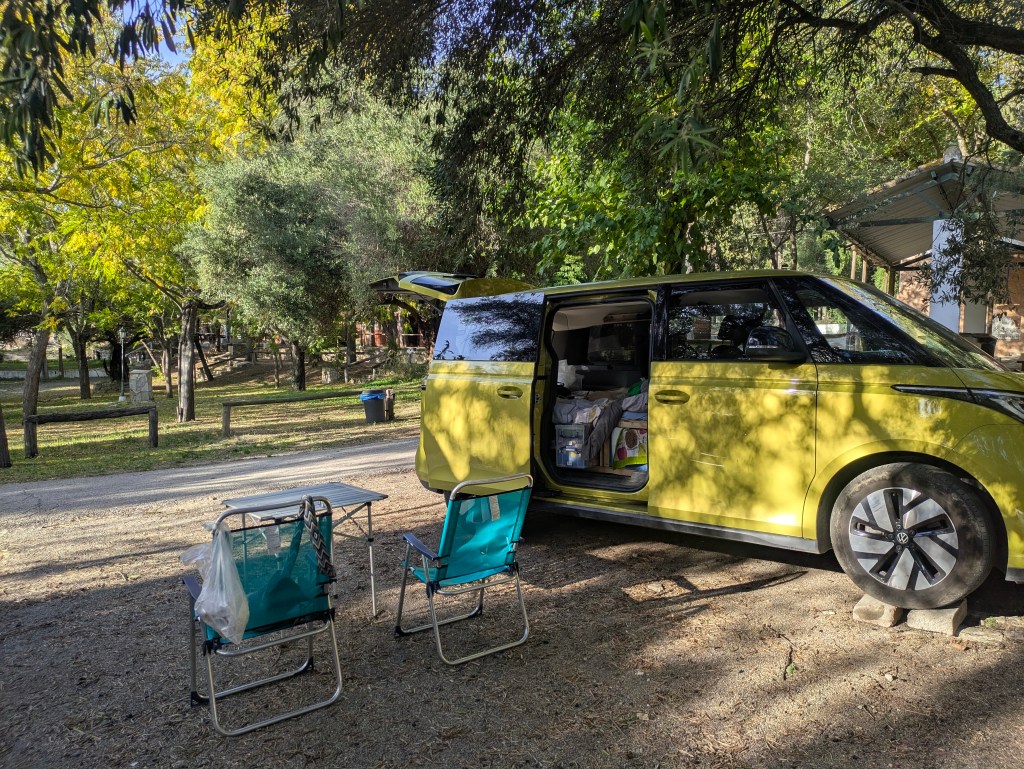
We charged the Buzz in Arcos de La Frontera, a white village, about forty minutes outside Cadiz, with an impressive hilltop castle. What bliss to have the choice of four different charging stations within three hundred metres of each other, but the downside was that we had to pay. After charging, we continued on to El Bosque , a village in the gorgeous Sierra de Grazelema in glorious sunshine although the area was reputed to have the highest rainfall in Spain. The Buzz blended in with the autumn colours in the campsite where we were the only visitors. The weather was dry although the wind became gusty, peppering the roof of the Buzz with leaves and twigs and sending us sheltering on the veranda of an empty cabin. The chomping of the naked sheep (very closely shorn) in the nearby field sounded like raindrops but the rain didn’t come until mid-morning, a persistent soft drizzle, reminiscent of the West of Island.
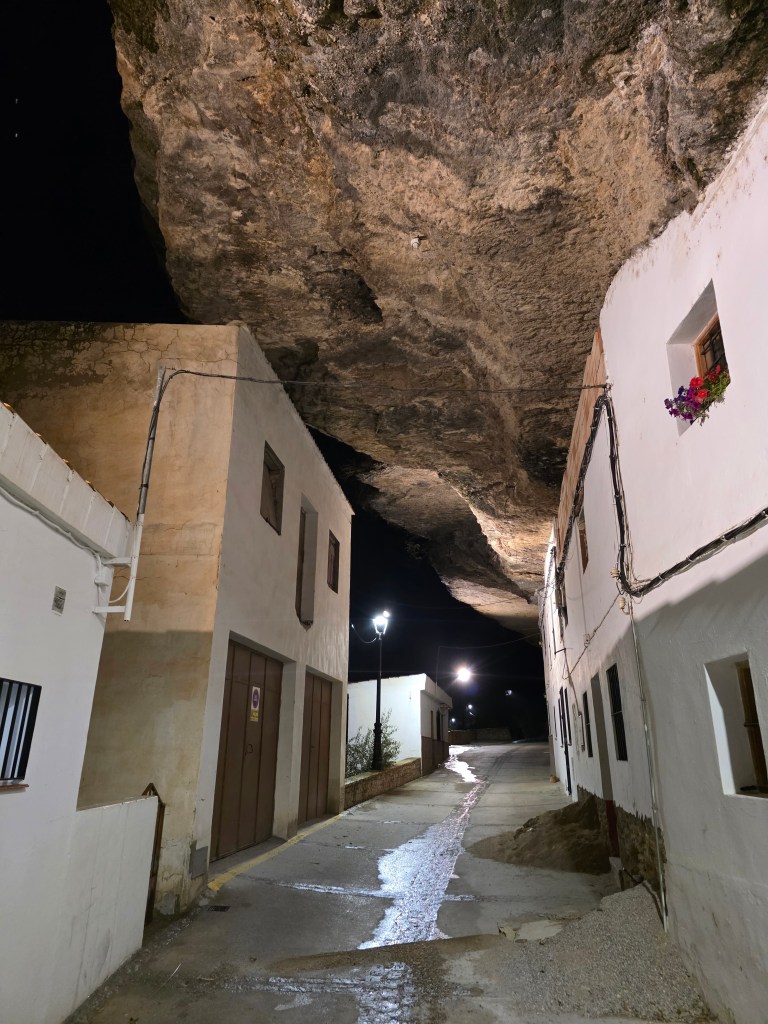
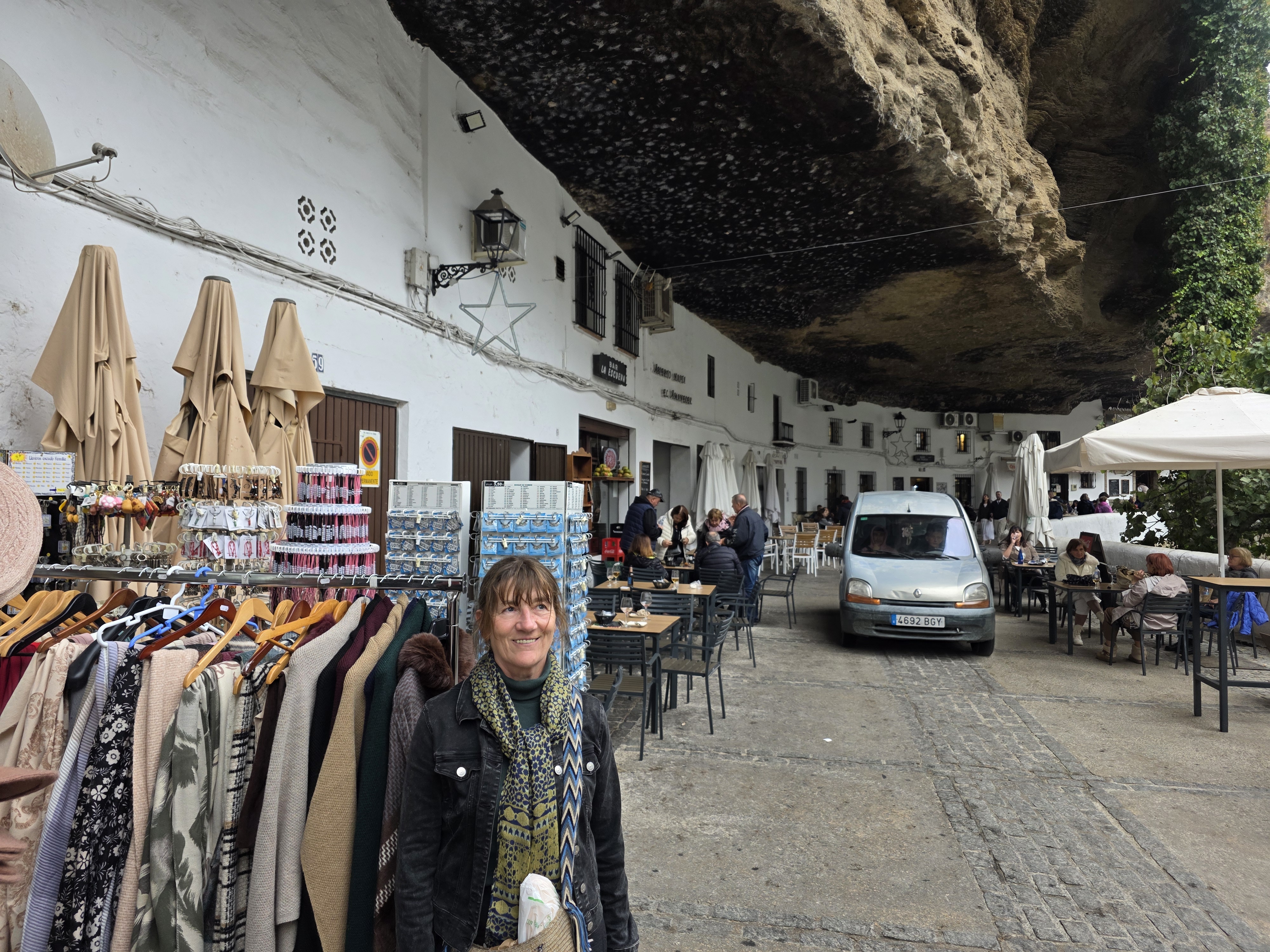
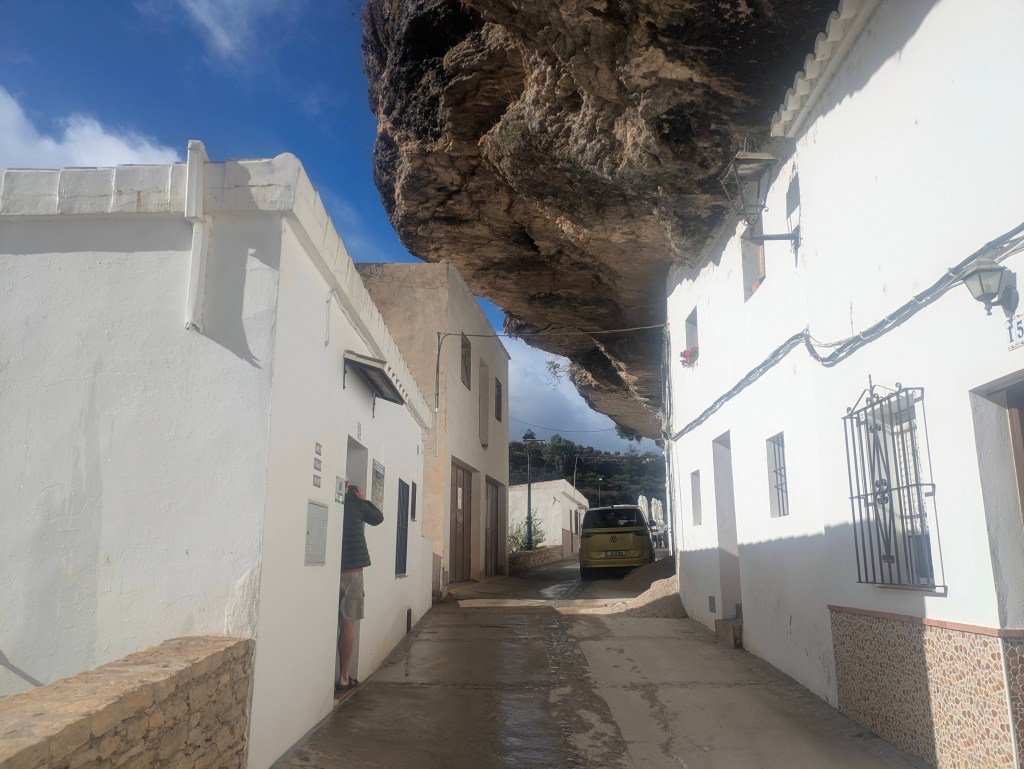
The rain became heavier as we headed to strange village, Sentinil de las Bodegas, where many of the houses were troglodyte, built from caves or snuggled under rocky overhangs and surrounded by olive and almond groves, These rocky overhangs were useful as a natural umbrella from the rain which bucketed down as if it would never stop. The wind tunnelled up the narrow laneways, sending locals and tourists running for shelter. The place has been inhabited for centuries and its topography made it difficult to conquer….it took seven sieges before it fell in Catholic hands in the fifteenth century. The following morning, there was a few blue-skied moments before the skies turned dark again.
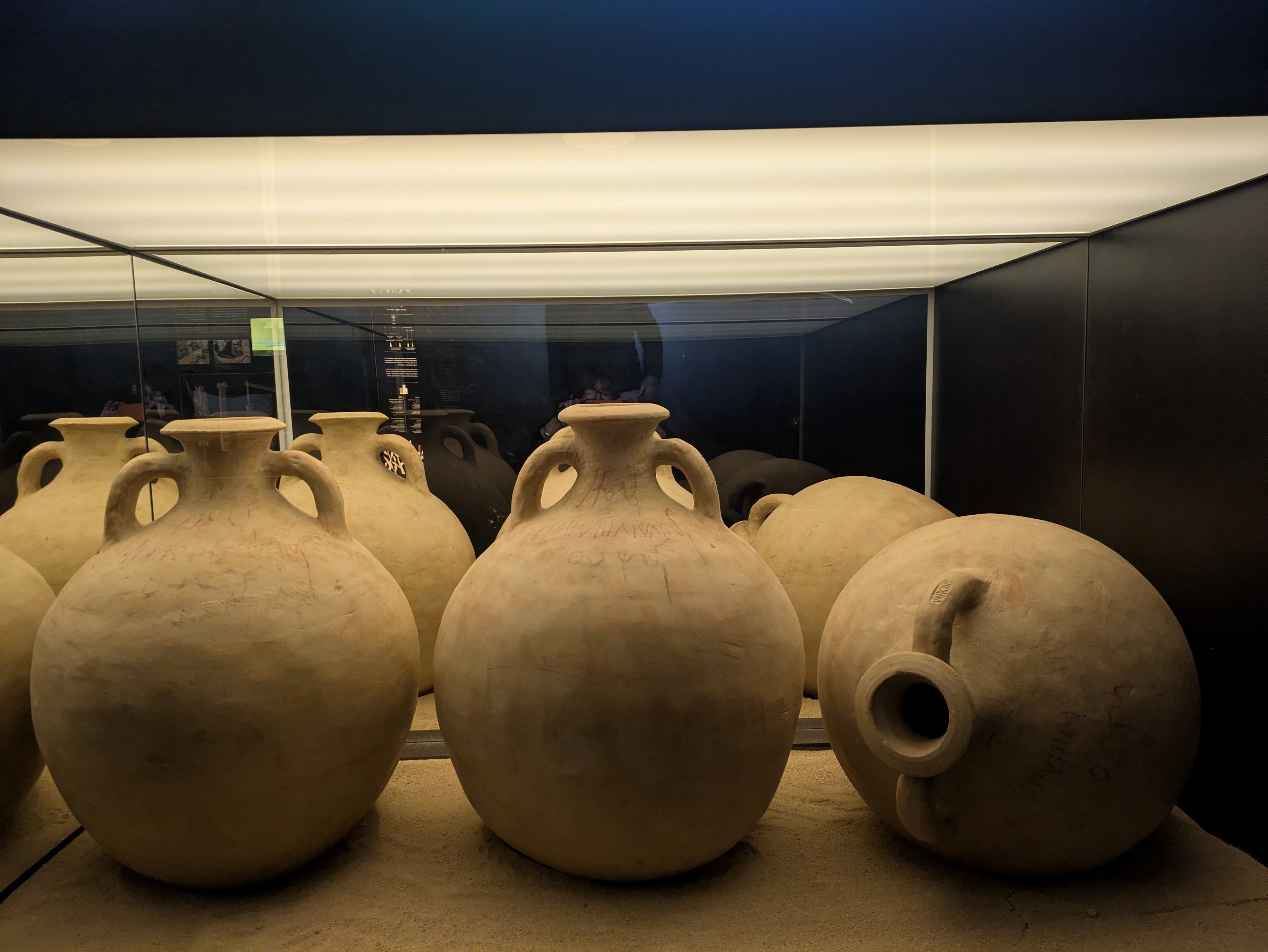
The road to Ronda was shrouded in mist – I’m sure the scenery was gorgeous – but we couldn’t see it, we could barely see the road. The mist and the fog cleared after a while but the rain continued. We diverted to La Almazara Olive Mill, an impressive, architecturally-designed building, just outside Ronda, to learn more about olive oil and the olive trees that we see everywhere. Spain is the world’s largest producer of olive oil but its strange thing that the olive oil in Spain, even in the supermarkets is far more expensive than at home.
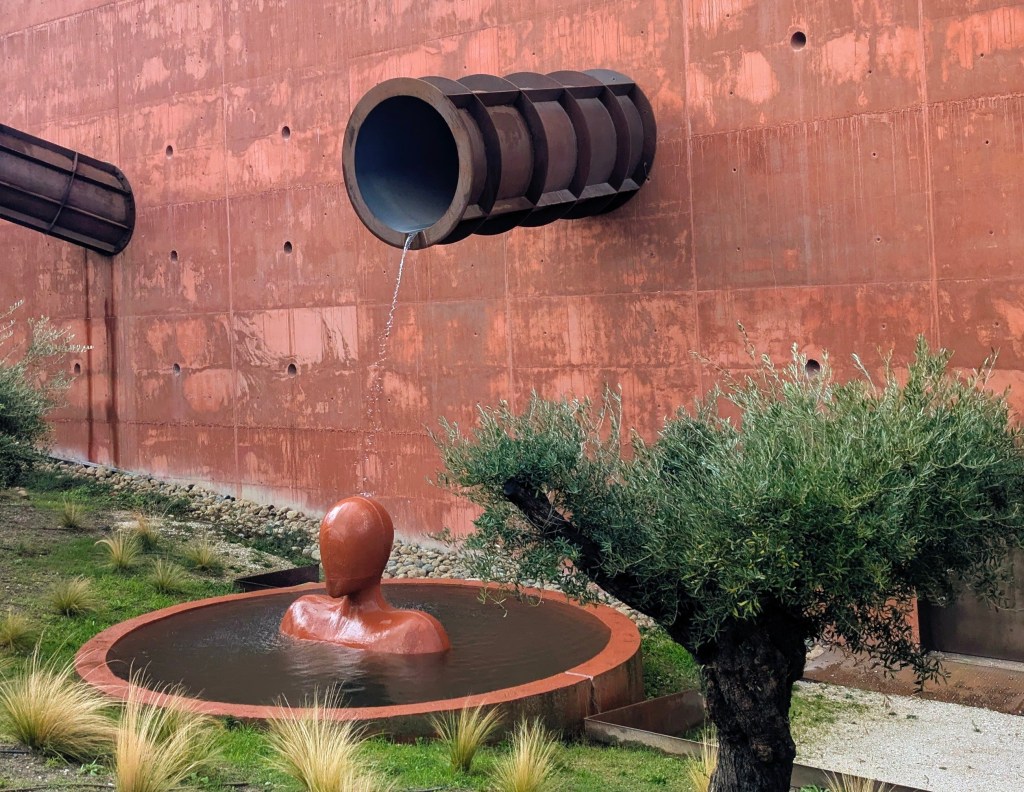
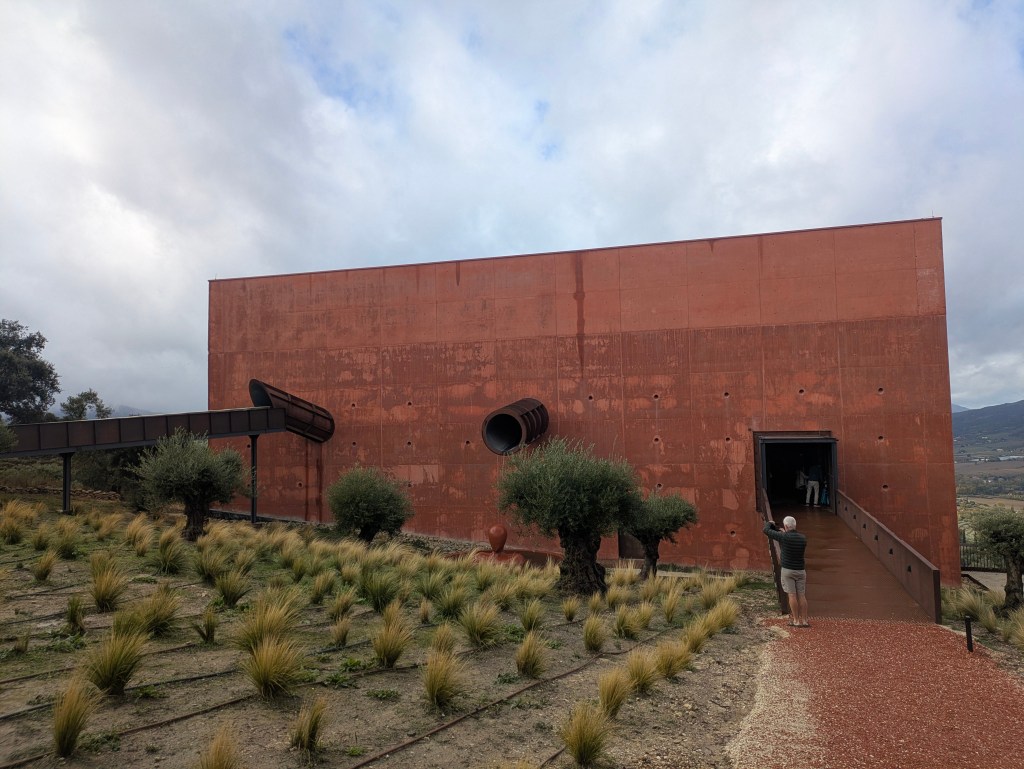
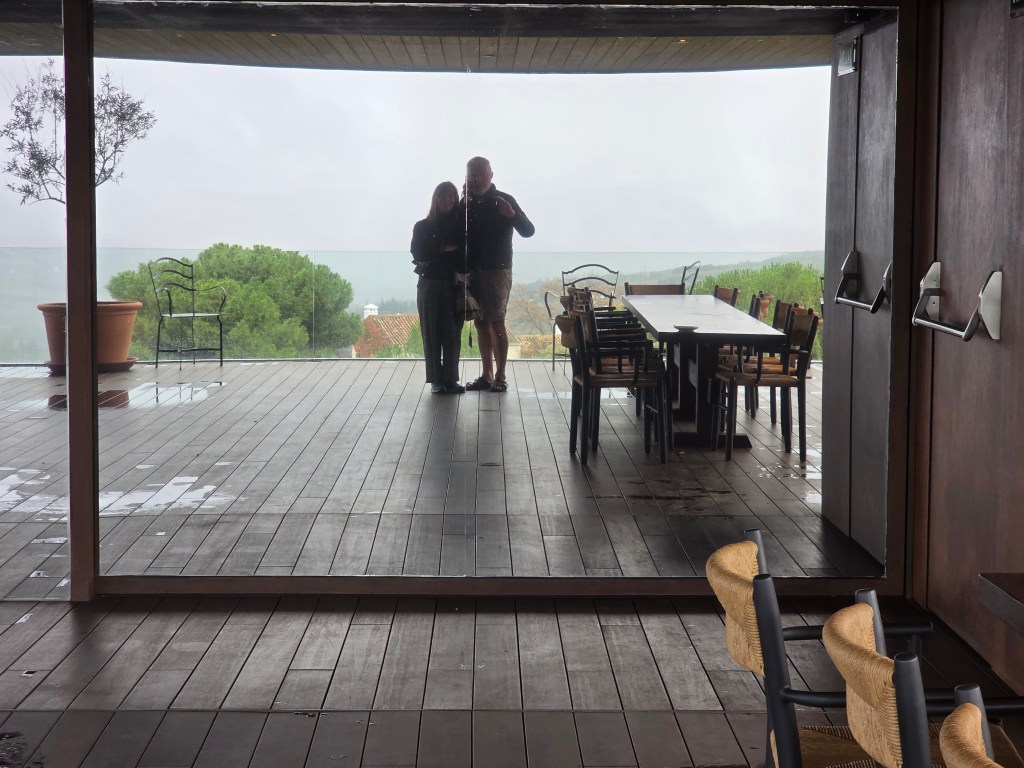
Rivers of water sloshed down the old cobbled streets of Ronda, soaking our shoes and socks, and seeping through my jacket. We splashed through winding streets, trying to find the mirador, the famous view of town, perched on the edge of a high cliff with a 100m chasm and misty views of the Serrania de Ronda. Despite the weather, Ronda looked impressive and we might return sometime.
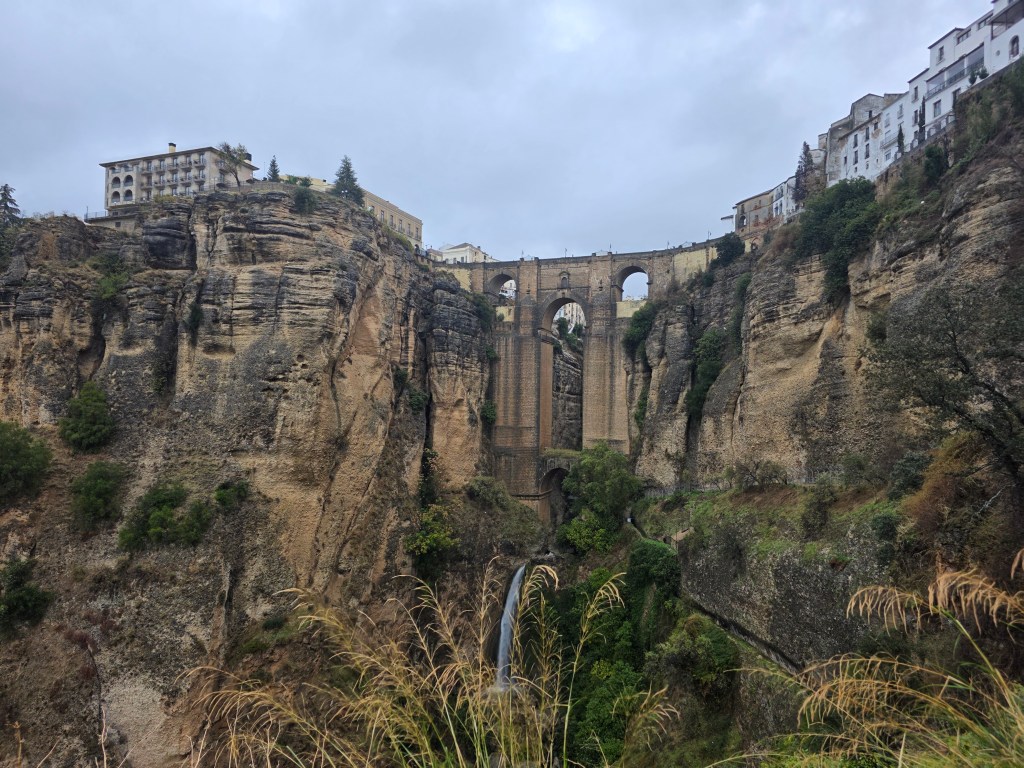
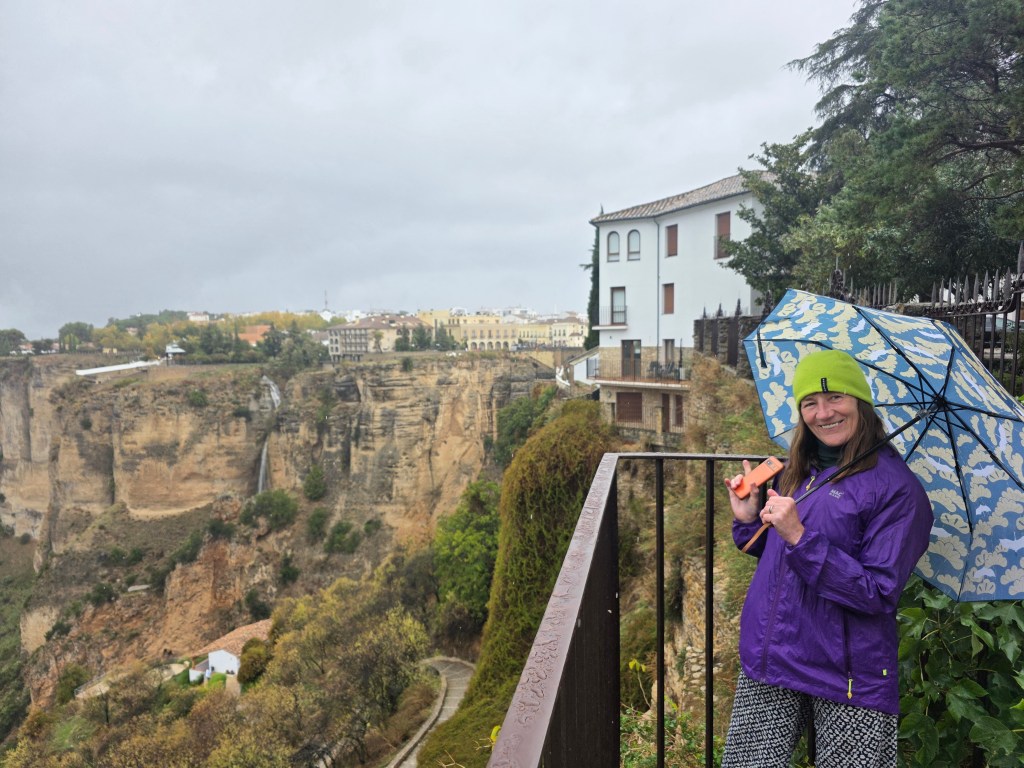
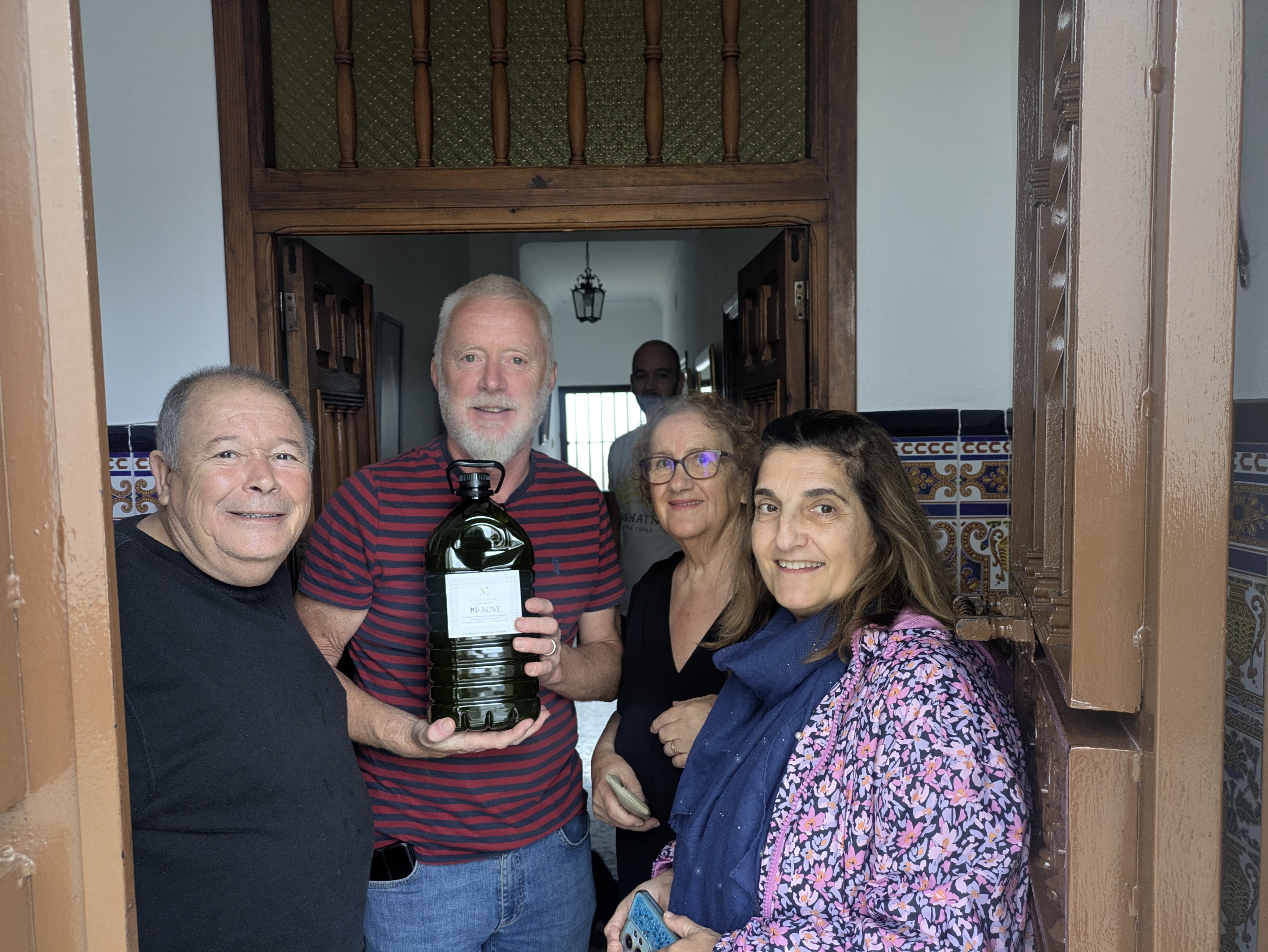
Storm Claudia has a long reach, sweeping from the Mediterranean and Southern Spain all the way to Britain and Ireland. On this very wet Saturday morning in Spain, we are now ensconced in the warmth of Luz and Andreas’s house in Hornochuelos, a little town northeast of Seville. Lucky us! They even managed to source olive oil for us from a lovely, local grower with a passion for olive oil production, producing small quantities of organic oil from her own farm which she delivered to our door with enthusiasm and even photos of the beloved trees. All this love and attention produces oil that tastes rich and creamy, totally superior to anything we buy at home.
Thanks for reading,
Till next time, keep dry…..
 marienoonanblog