Lolling by the Lake

The last time I posted, we had booked transport to take us from historic Antigua to the shores of Lake Atitlan. The transport was a ‘shared shuttle’, a minibus that picks you up and drops you door to door. It was a bit more expensive than public transport but was more comfortable and widely used by visitors to get around the popular areas in Guatamala. The downside was that we spent about an hour driving in the pouring rain around Antigua’s one-way system on rough cobbled stones to pick up passengers.
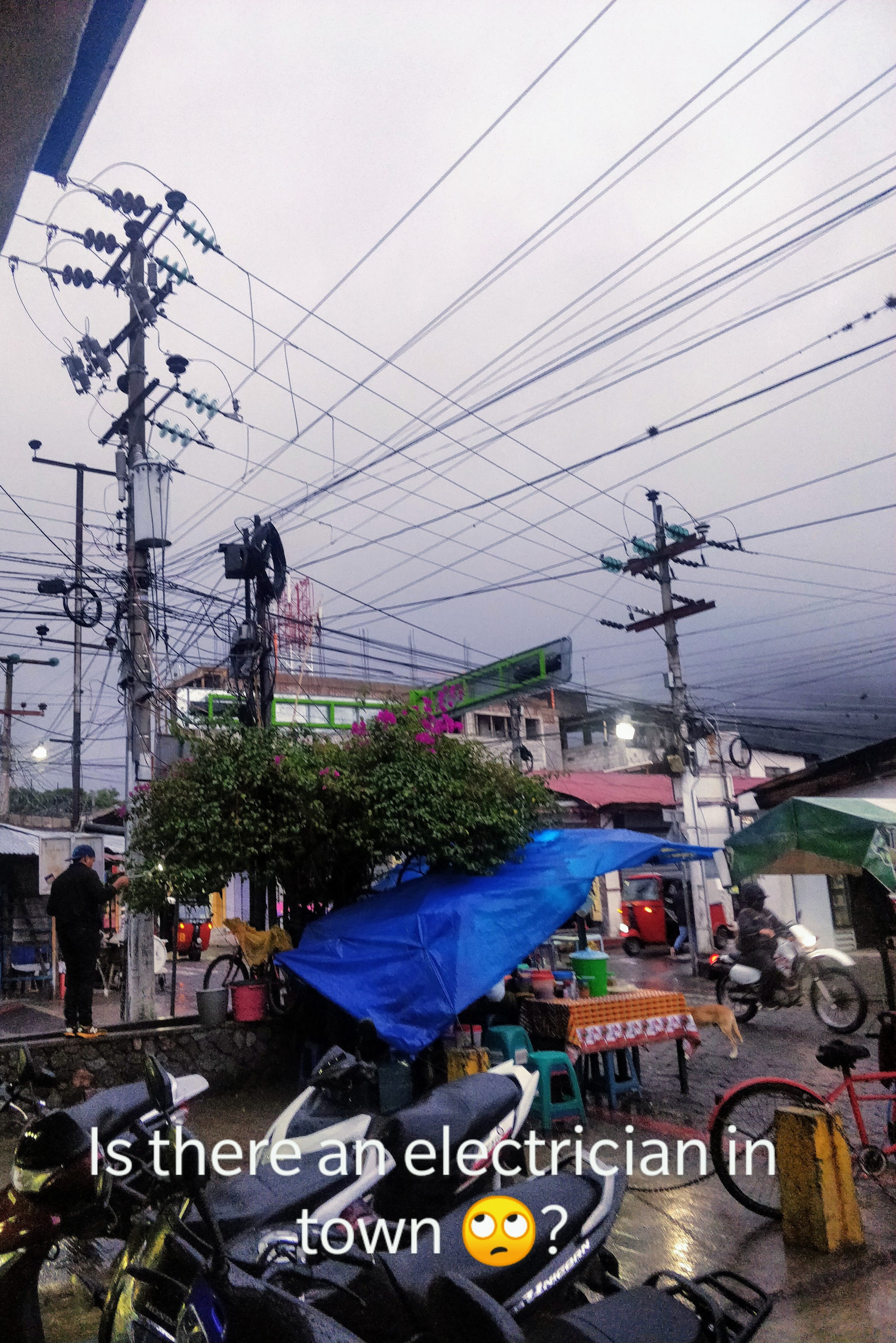
When we arrived in Panajachel, the largest of the lakeside towns, the driver shouted the name of our accomodation and we clambered out- he pointed to a blue padlocked gate and drove off. We wandered around looking for a way in but it was obviously derelict. Google was also telling us that we had arrived☹️ but when we followed the link in booking.com, it told us the accomodation was about a kilometre away. Not far..but not pleasant in the driving rain and sloshing through puddles but at least we weren’t dragging heavy bags. The most useful thing that I brought from home was a folding umbrella. There was an impressive (and worrying) spaghetti junction of electricity wires strung across the streets. Hostel Buenos Suenos, when we found it was ok, a bit scruffy but the bedroom was large and the location was central with lots of restaurants nearby to choose from. We ate in an Uruguayan restaunant where the chefs were local native women. Bowls of tufu/rice soup served with chips and garlic bread were delicious even if the tofu did taste suspiciously like chicken.
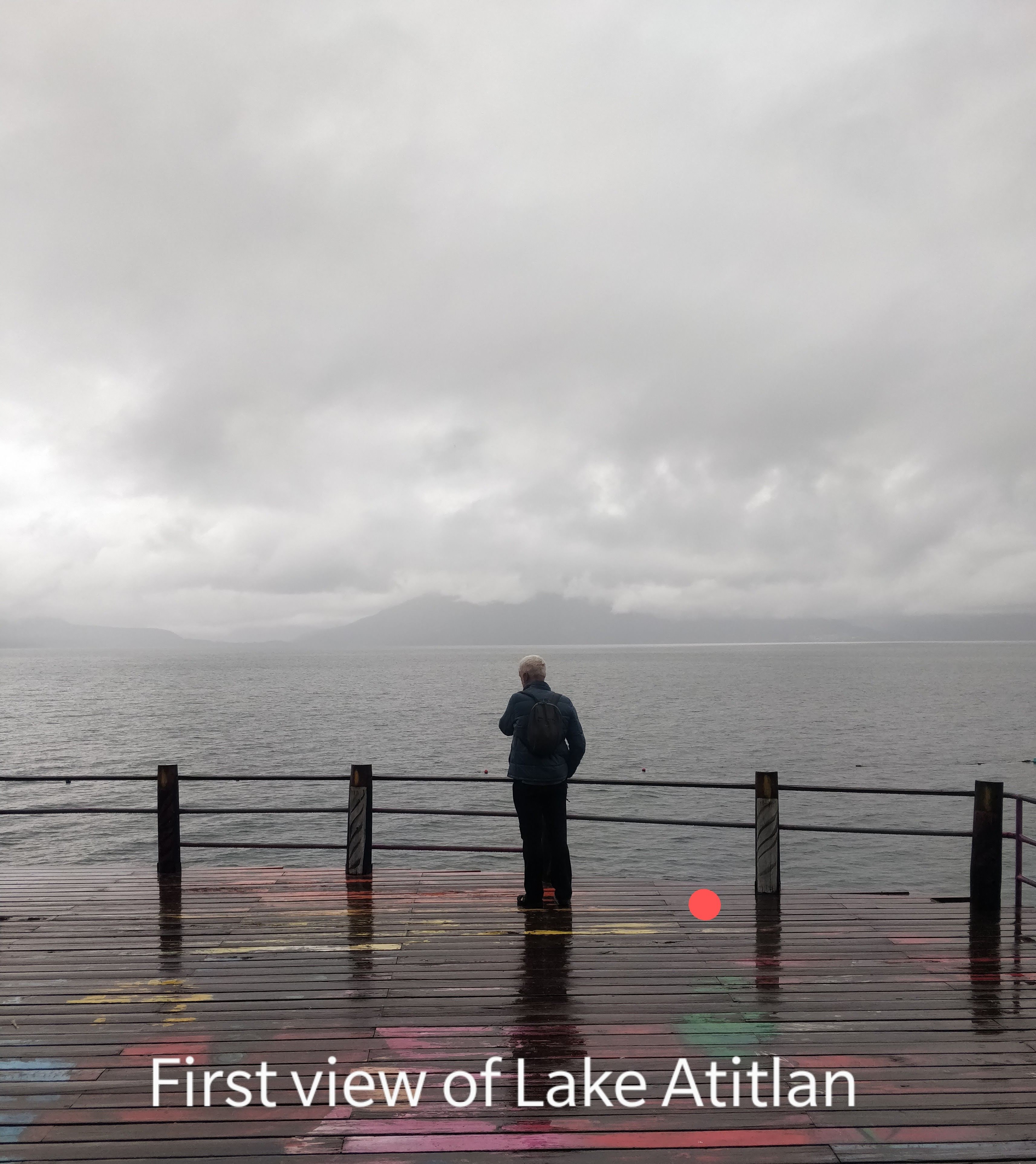
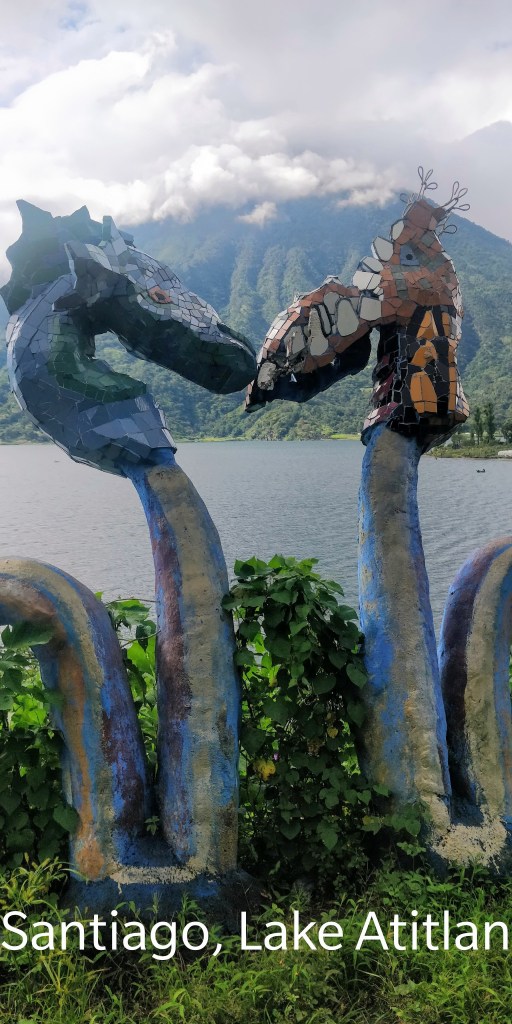
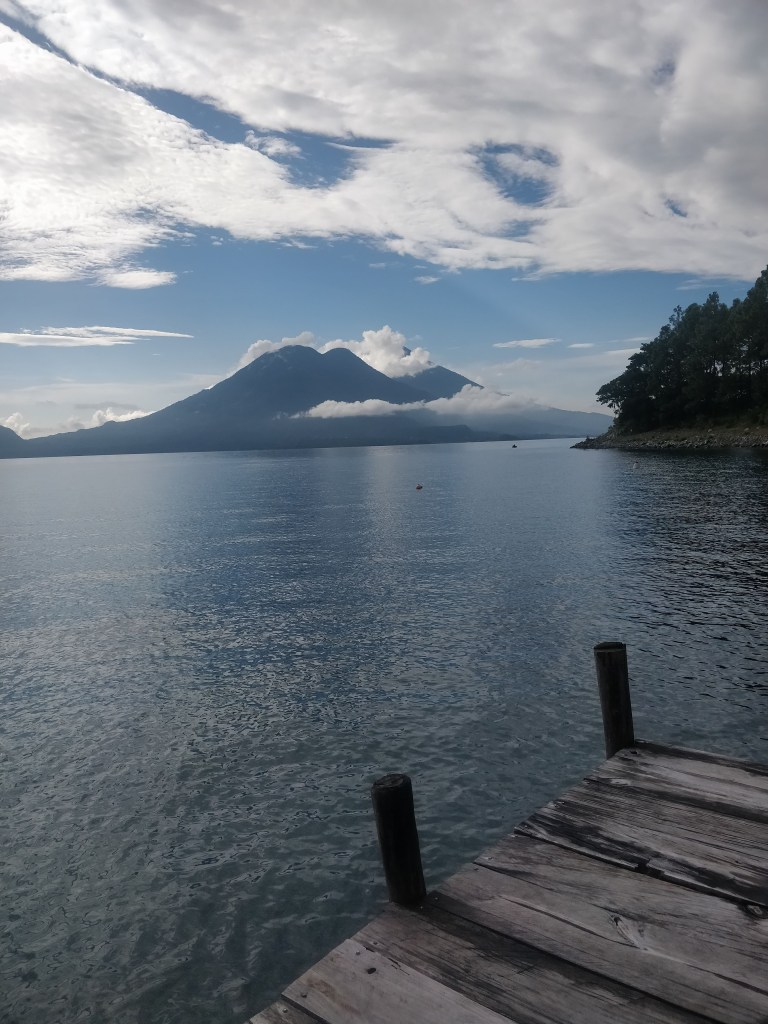
Our first views of the lake were disappointing, rain-logged grey and it looked like the grey sky had fallen into the grey lake. But the following morning, all had changed, the lake was spread before us in all its brooding glory ringed by mountains most of them wearing hats of cloud. ‘Taxi, Taxi,’ shouted the boatmen leading us to the docks where small boats departed for the various villages around the lake. We stepped into a small blue boat and sat in the bow, the only other passengers were a Mayaan couple. The boat set off across the lake, which was a little choppy, with such thumping, spine-crashing speed that all of us including the Mayans moved to the stern of the boat. My legs were wobbly when we disembarked at Santiago Atitlan where guides, women selling native crafts and tuk-tuks mobbed us. They were so tenacious that we ran up the street(as quickly as wobbly legs would allow) to get away and ducked into a cafe for some delicious Guatemalan coffee. Here, the owner and a few customers were glued to a live soccer match on the TV, Man City and Copenhagen and ignored us apart from serving us coffee
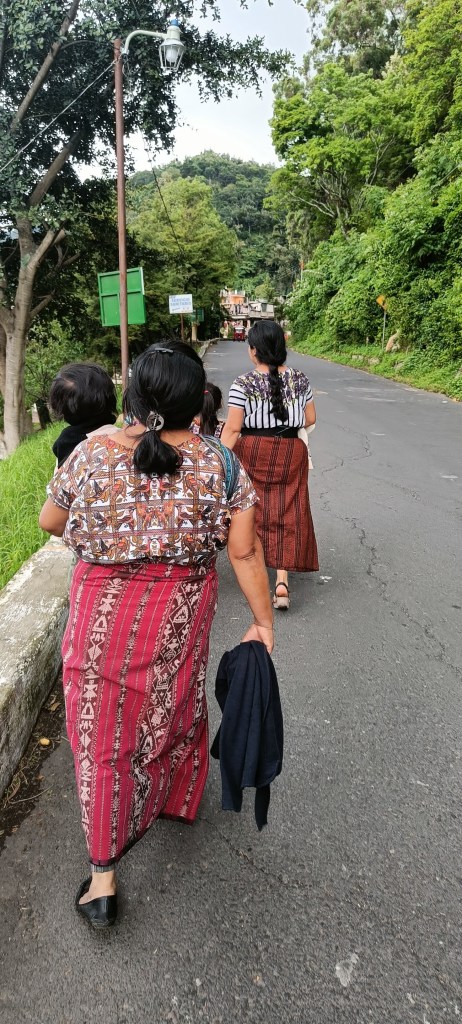
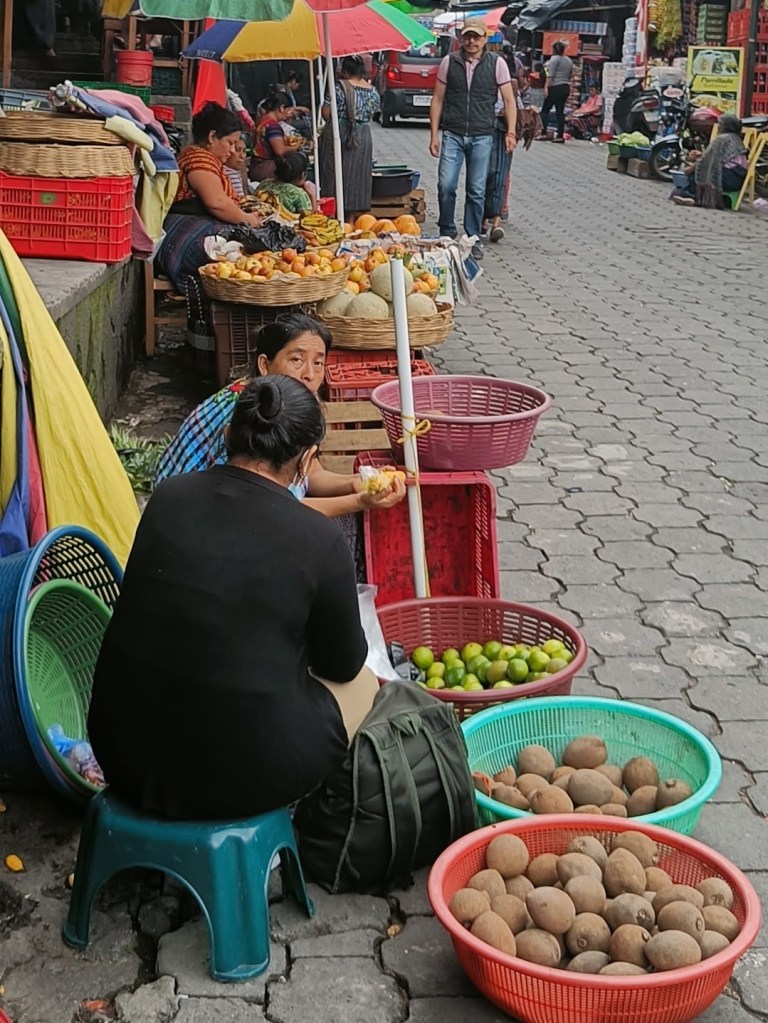
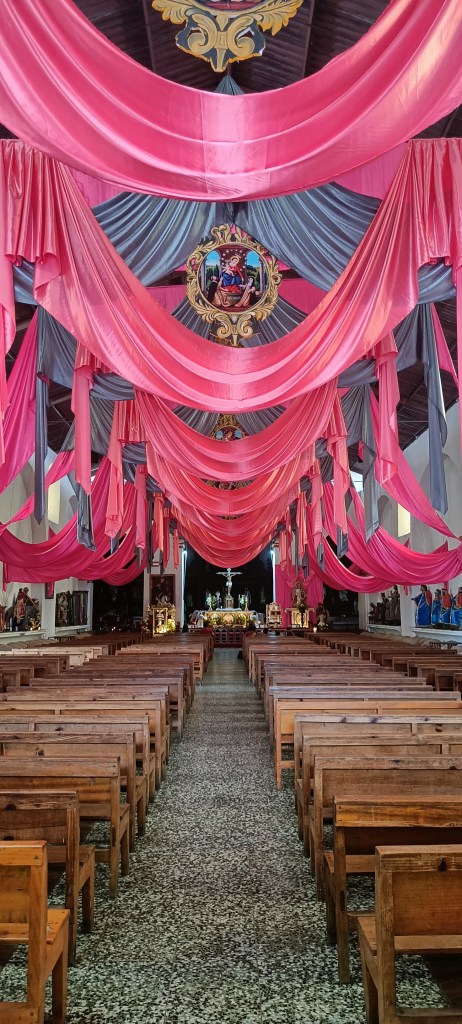
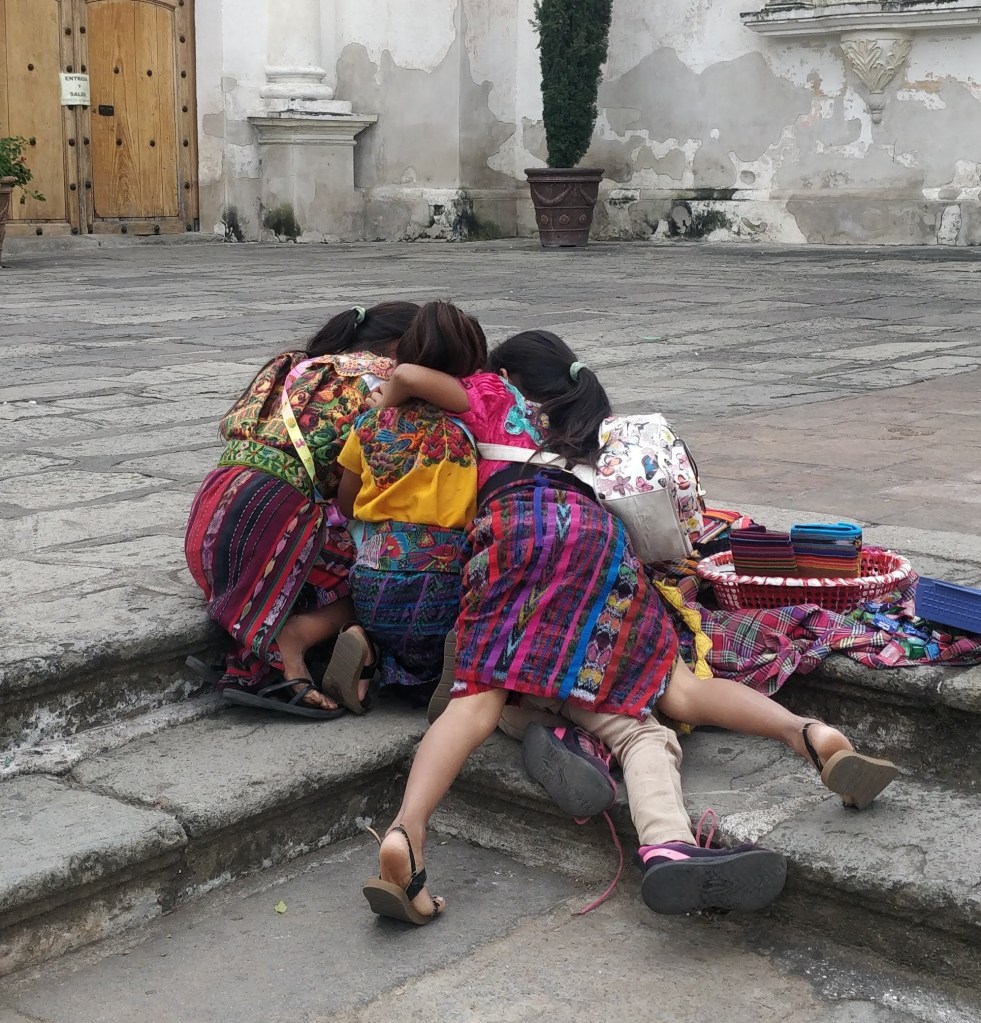
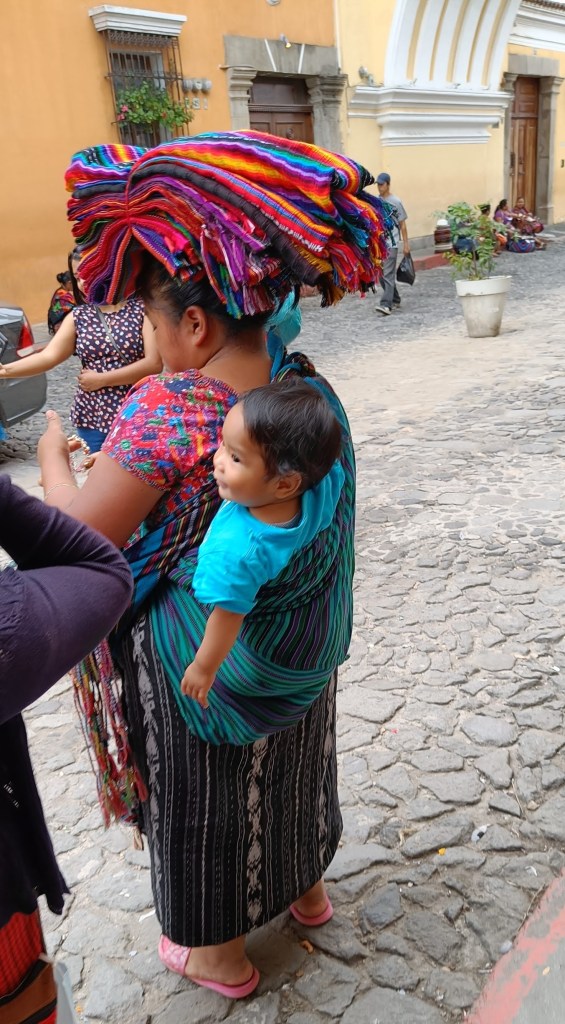
We wandered around the town where there was a colourful market going on, most of the women in traditional Mayan dress, beautiful woven textiles.with different colours and patterns identifying various tribes and families. We passed signs for weaving classes and the women were always busy weaving, knitting and embroidering. On a sunny October day, bloodshed seemed far away but this village has seen its share since the time of the Conquisadores when the natives were subjugated by the Spanish and literally worked to death, freedom brought a string of dictators, poverty and corruption. The village was a stonghold of left wing guerillas in the 1980s and hundreds of villagers were ‘dissappeared’. A missionary priest was murdered in the local Church, a large simple structure where the ceiling and the statues were brightly decorated. During the civil war, Santiago became the first village in the country to oust the army following the brutal massacre of 14 local men. There’s a Peace Park commemorating the massacre- a bit mossy and neglected now but we trudged a couple of kilometres out of town to see it. Then we ate in a local establishment where the policemen were also tucking-in, – rice, beans and scrambled eggs and drank a beer at half the usual price.
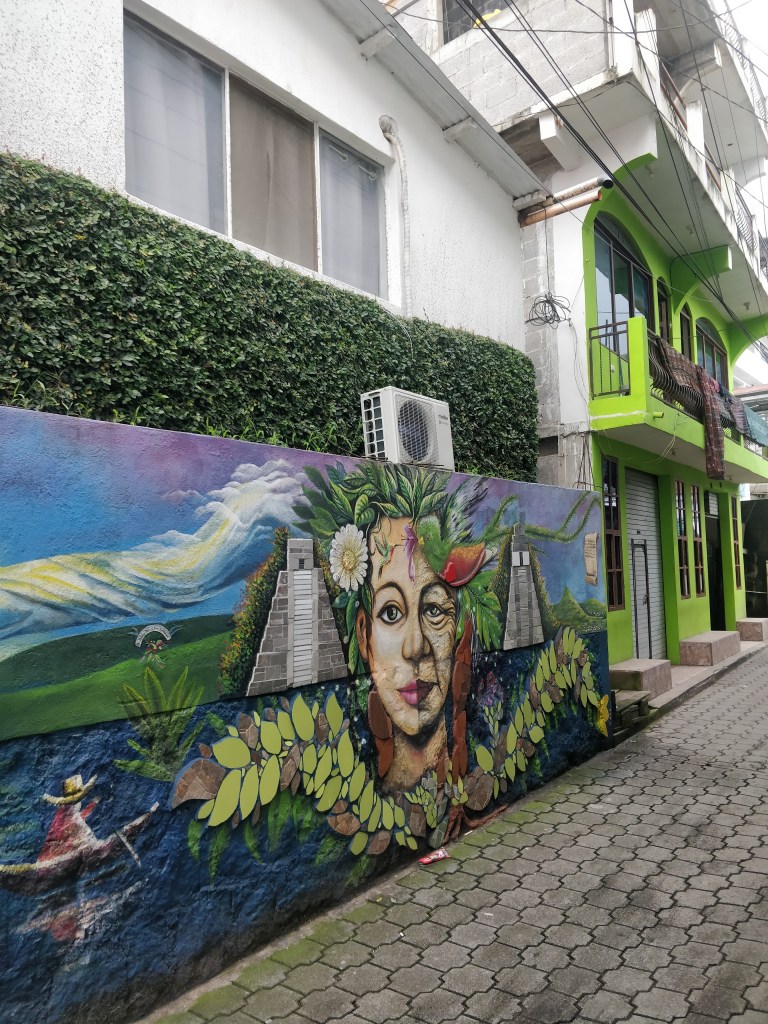
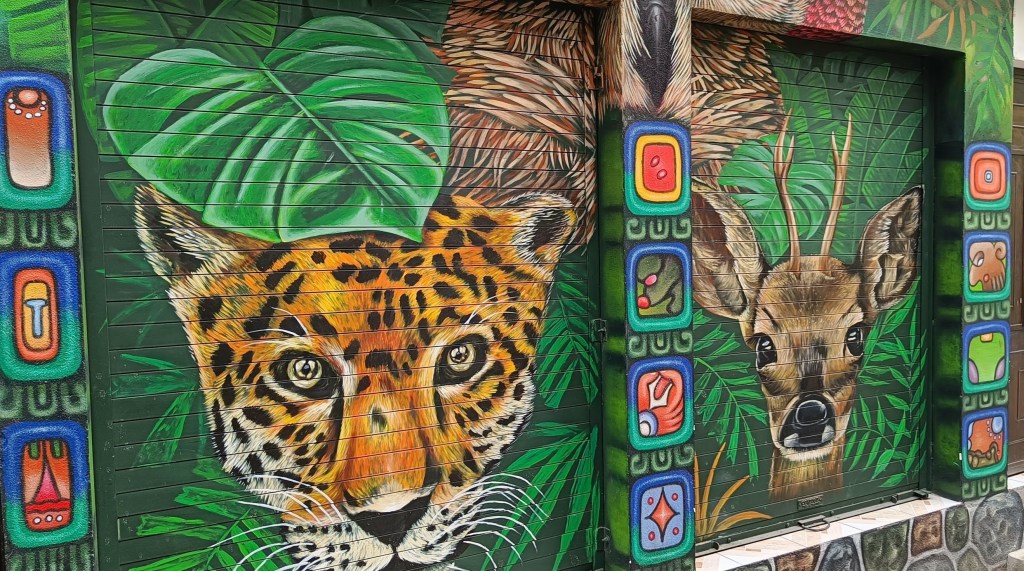
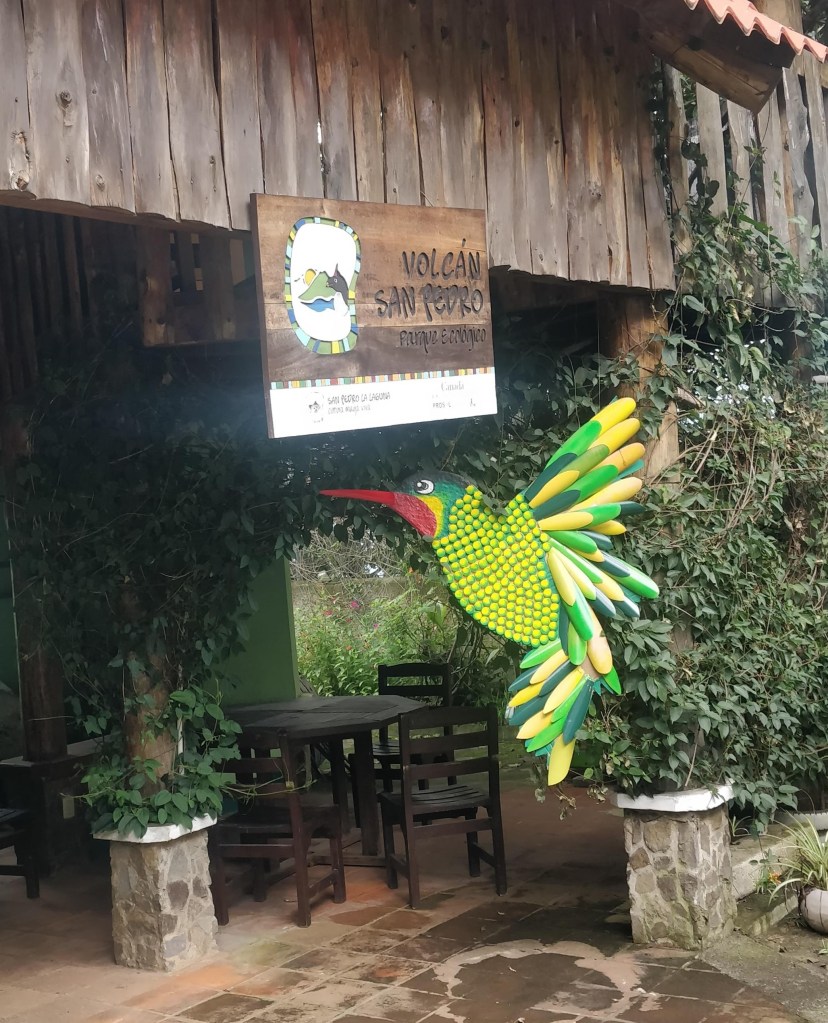
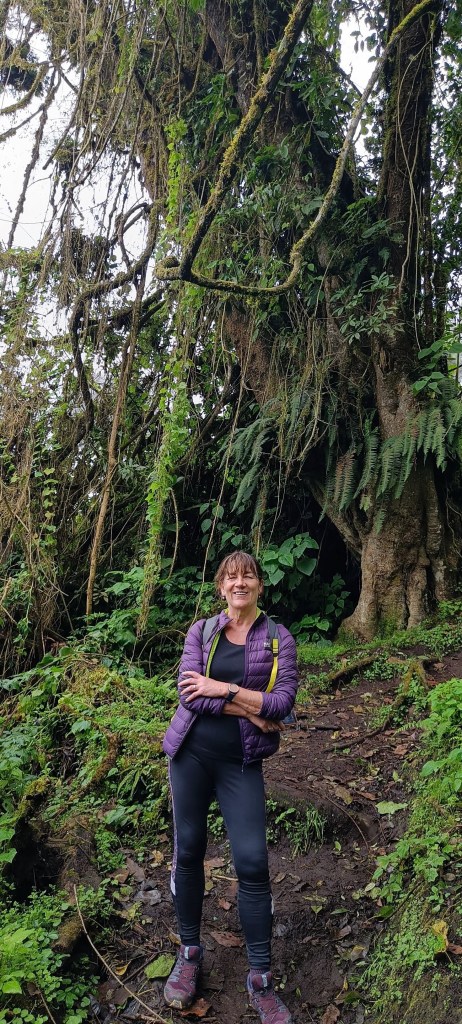
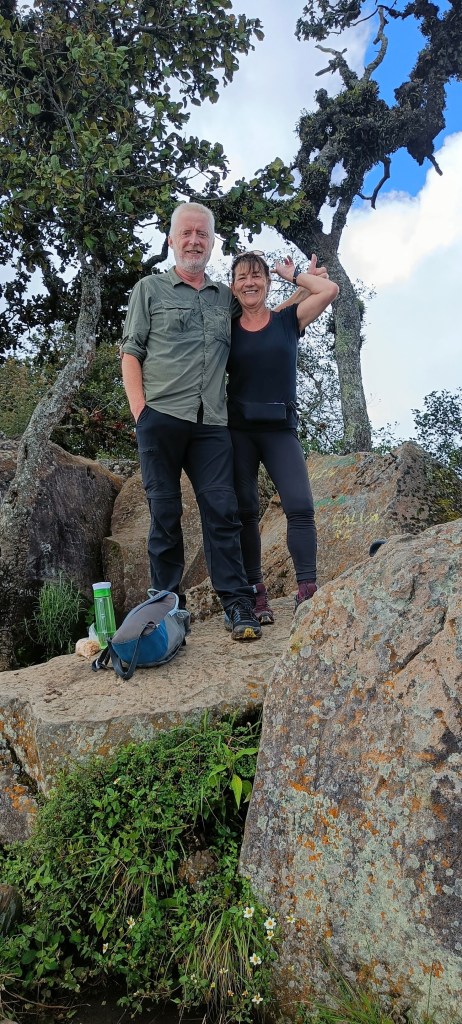
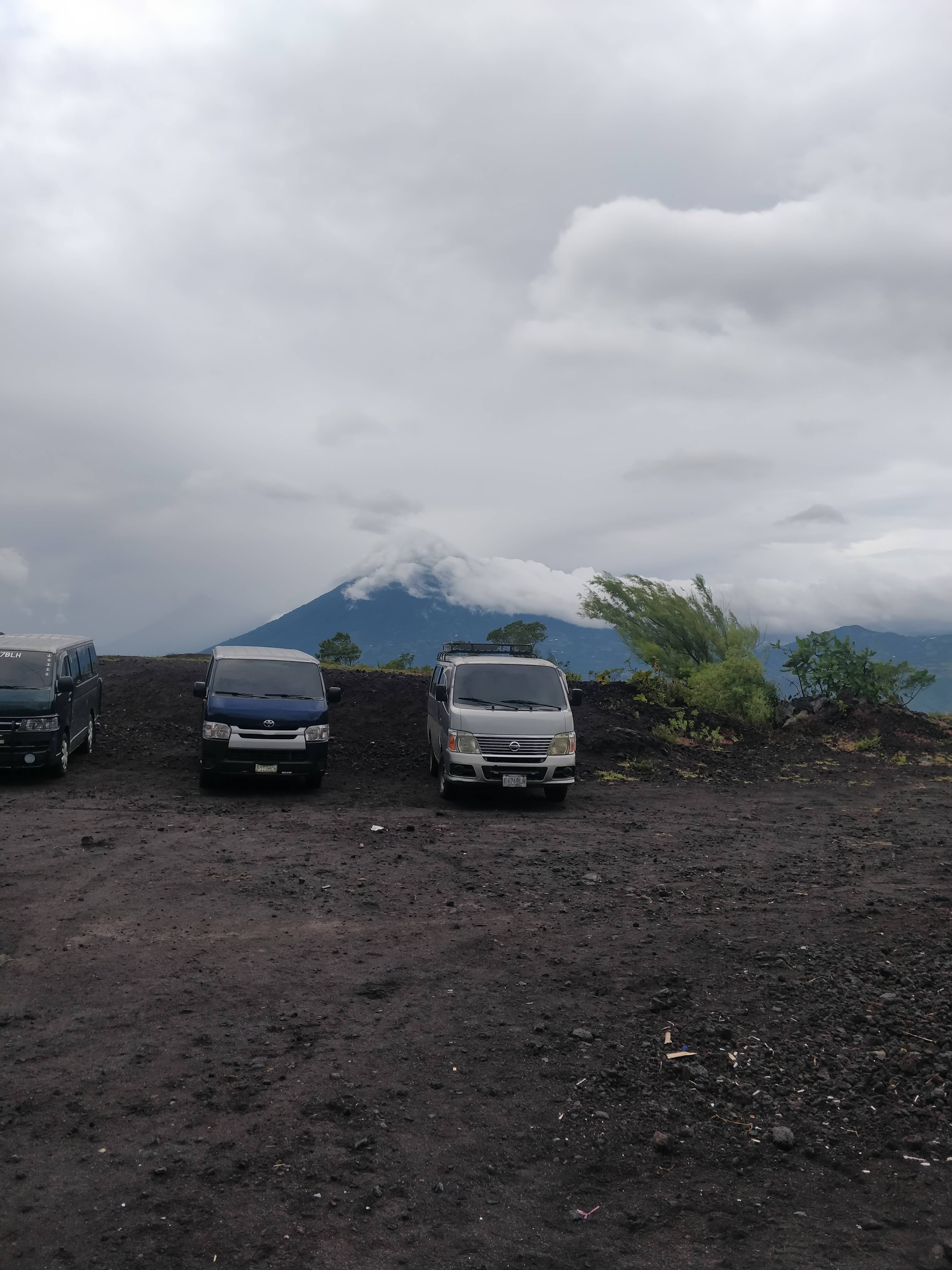
Looking at the mountains around the lake, one stood out – Volcan San Pedro, its in most of the photos, a dormant volcano with reputedly amazing views from the top. So we took another boat to San Pedro, a colouful village at the base of the mountain. This has a reputation as a party town and a backpackers mecca but it also had some stunning wall art (reminded us of the Waterford Walls). We stayed in the more traditional part of town up the hill at Casa Imelda. Imelda was a small talkative laughing Mayan woman whose son, daughter in law and three grandchildren lived with her. The room was spotless with a view of the lake and cost about €12 a night😀. Our clock went off before 6am, it was already bright with a gorgeous light on the lake but the Imelda household was still sleeping. We crept out onto a quiet street, just a few squat men in cowboys hats and machetes heading to the fields. Then a tuk tuk rounded the corner – there’s always a tuk tuk when you need one – and took us to the park entrance where we paid our fee of Q100 (about €13) and although we had heard reports that a guide was mandatory we set off without one on a path among avocado and coffee plantations(these grow incredibly well together). Up and up we went on winding paths until we were in cloud forest, among 400 year old trees. We came out of the forest and clambered on big blocks of rock. We had arrived at the top, 3200m……but the clouds were packed so tightly down below us that there was no view of the lake although there was patches of blue behind us. We hung around at the top, hoping for a break but after an hour we gave up and slithered down the path, which was slippery after all the rain. It was dissappointing after a three hour slog to the top and a two hour descent. I was beginning to feel unwell, tireder than I should have been and my stomach was going haywire😫
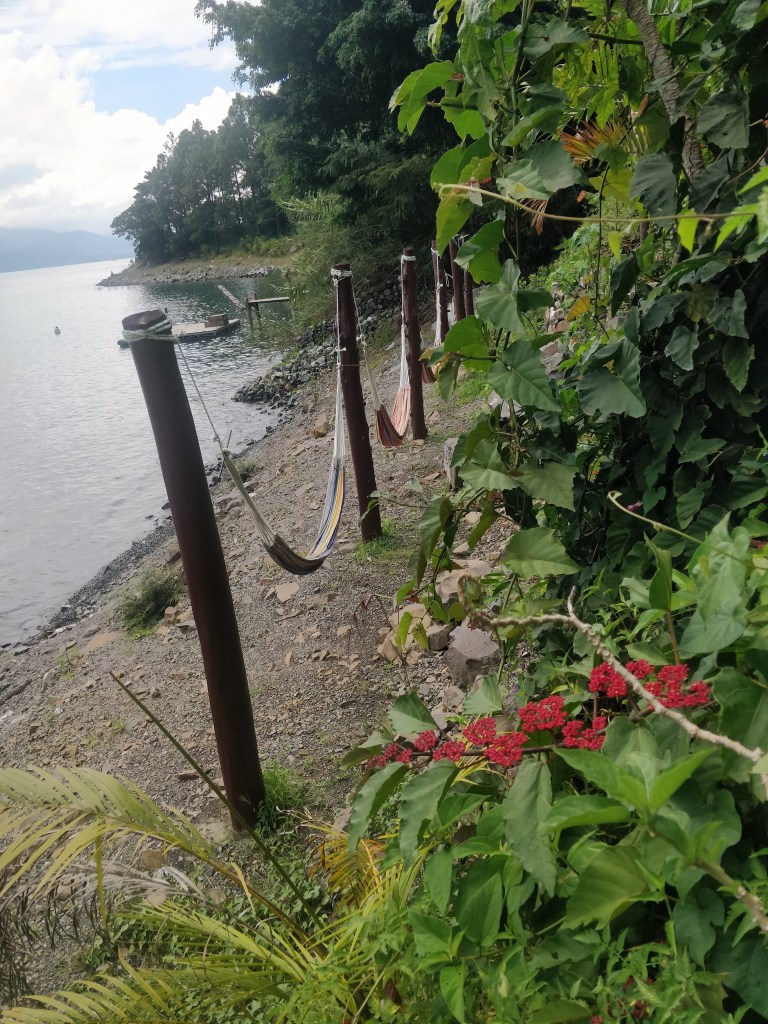
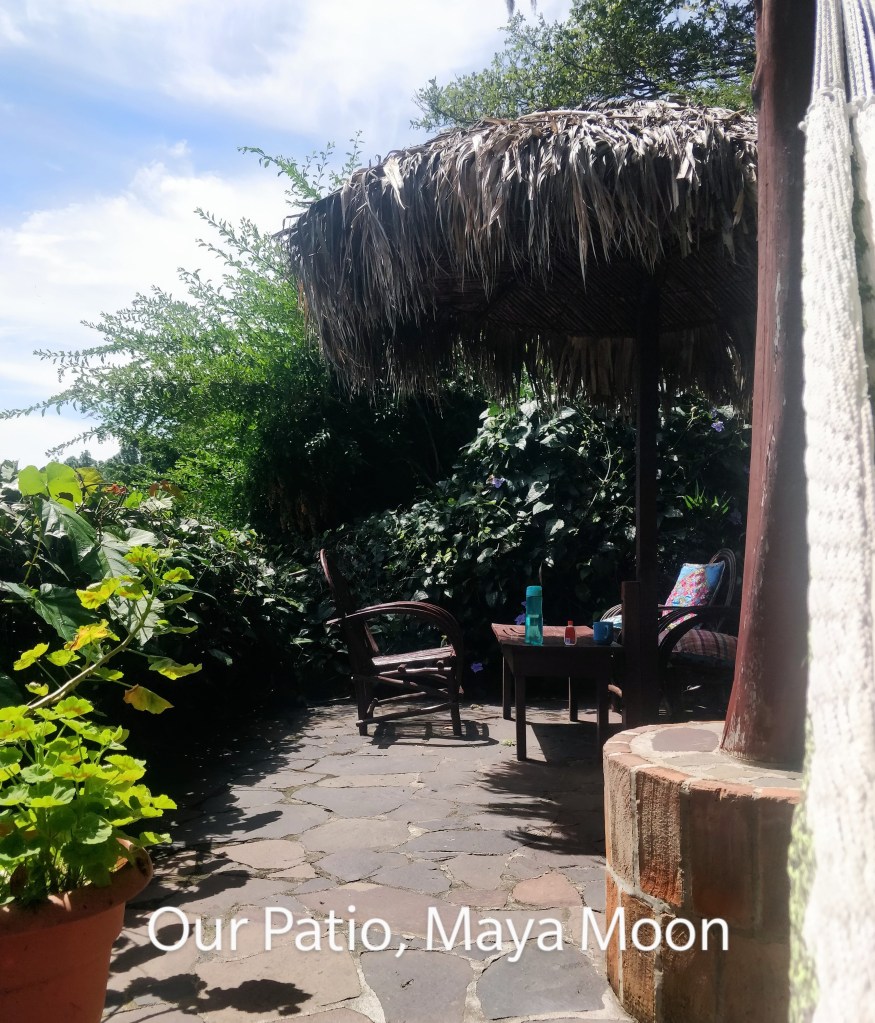
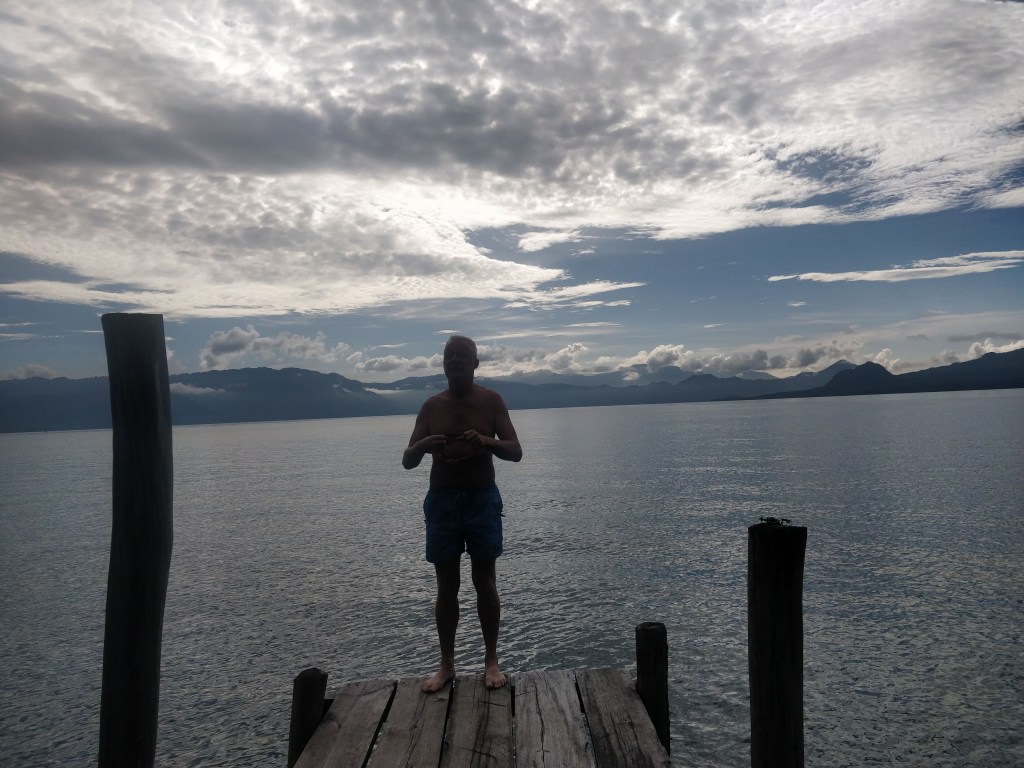
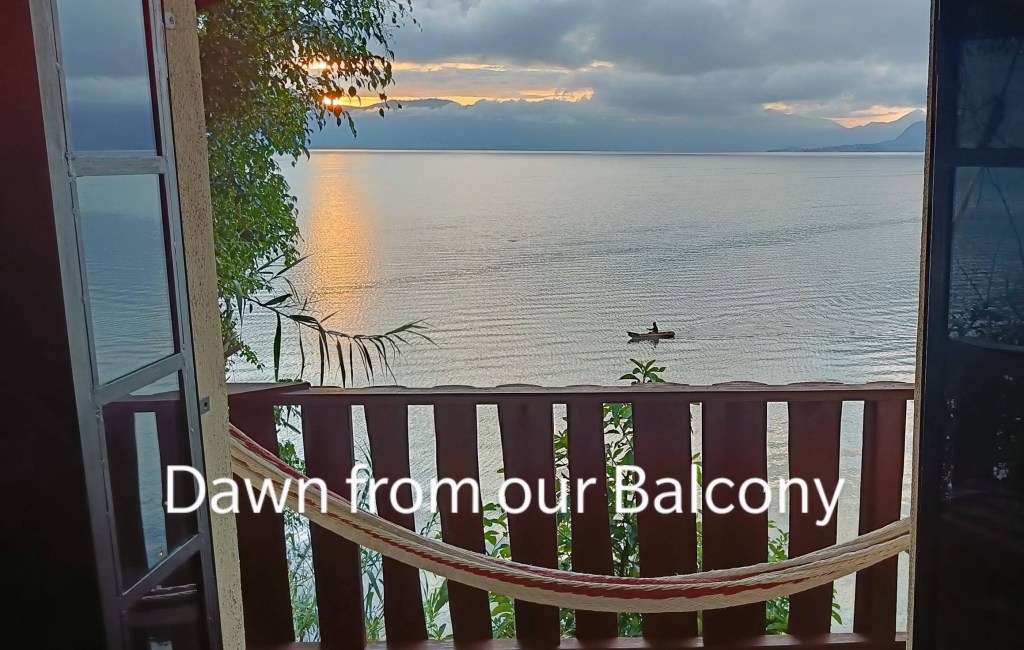
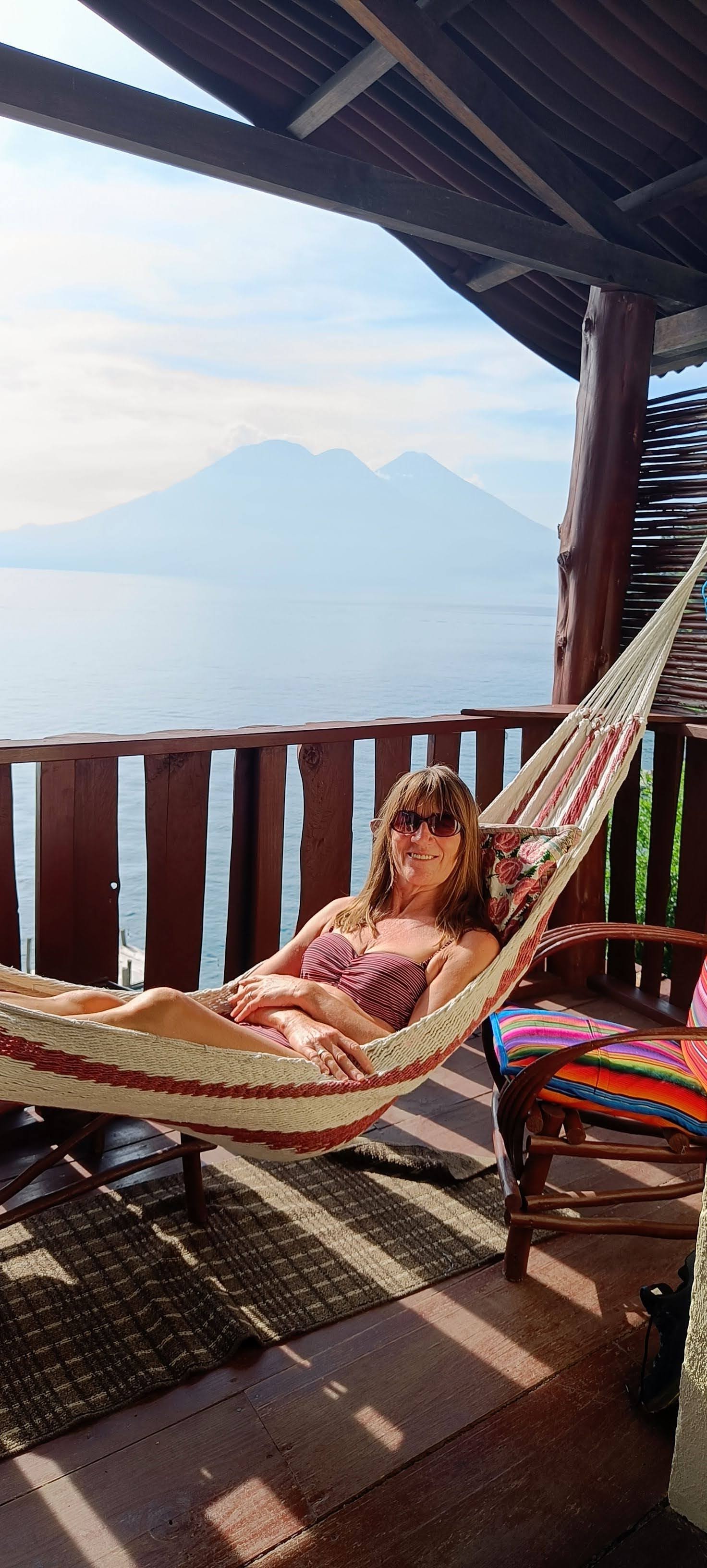
We had booked a ‘treat’ place to stay for five nights outside the village of San Marcos, our own 2 storey cabana with garden, kitchen, hammocks and balcony. It was about €48 a night (not too much but still significantly above our usual budget). The plan was to shop at the market and cook up our own meals, jump in the lake and maybe do some yoga. This area is very New Age with meditation, yoga, spiritual healing and all sorts of things. But unfortunately, for most of our stay, I neednt to be in close proximity to a loo and for a few days, I could barely get out of the hammock. But there could be worse places to rest and recuperate than Maya Moon, the name of our accomodation. It wasn’t really like being in Guatemala at all. It was run by a British couple, the bar people were American and it attracted lots of expats so english language ruled supreme. I existed for a few days on black tea and dry toast …like the Lough Derg pilgrimage rations. But swaying in a hammock watching the lake change colour and the mist roll over the mountains with the lapping of lake water and the sound of the boats moving back and forth was so soothing. The light on the water was ever-changing and mesmerising. . Most nights, thunder rumbled in the distance and lightening moved in sheets across the sky usually without rain. At night, there were clouds and moonlight and a necklace of lights joined villages and lit up single houses dotted up the mountainsides. All building is done by hand and building materials must be hauled up the mountainsides on the people’s backs so each light on the slope represented incredible human toil.
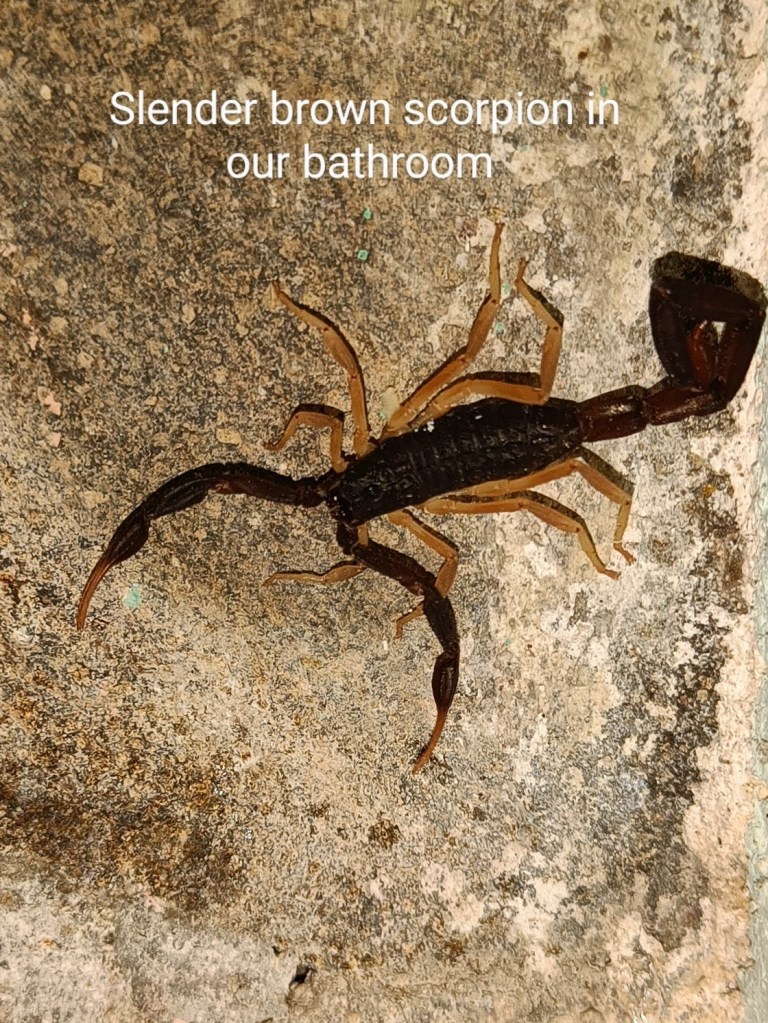

But we were sharing this paradise. Bright yellow butterflies fluttered over the plants, a hummingbird visited our balcony, a large lizard flicked his tongue in the bushes. Thats the good bit….. there were giant spiders crawling across the bedroom walls, slugs in the bathroom and one night, a scorpian walked across the bathroom mirror while I was brushing my teeth🙄which, I must admit, freaked me out a bit.
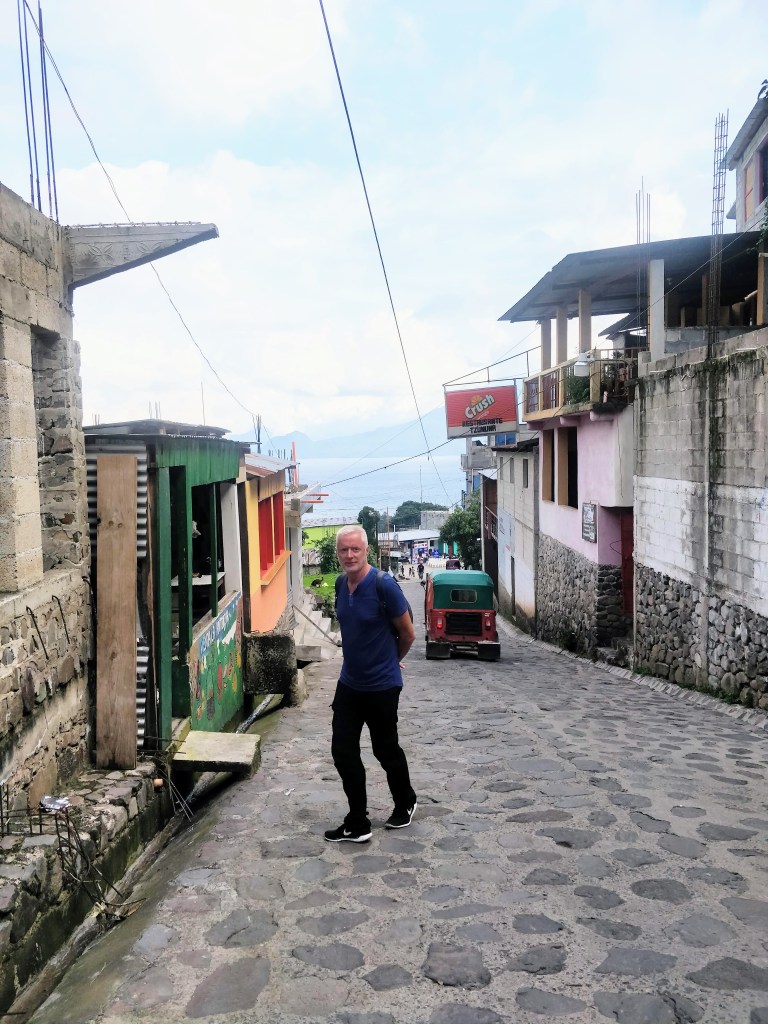
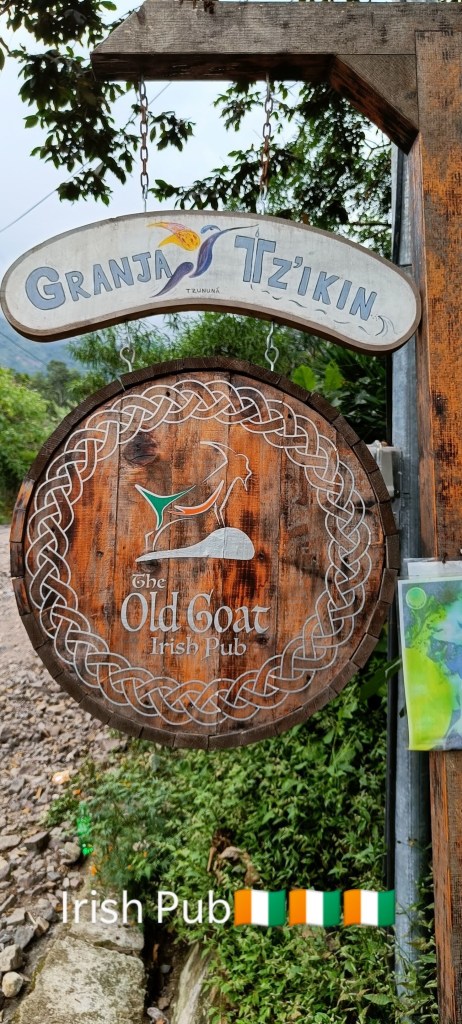
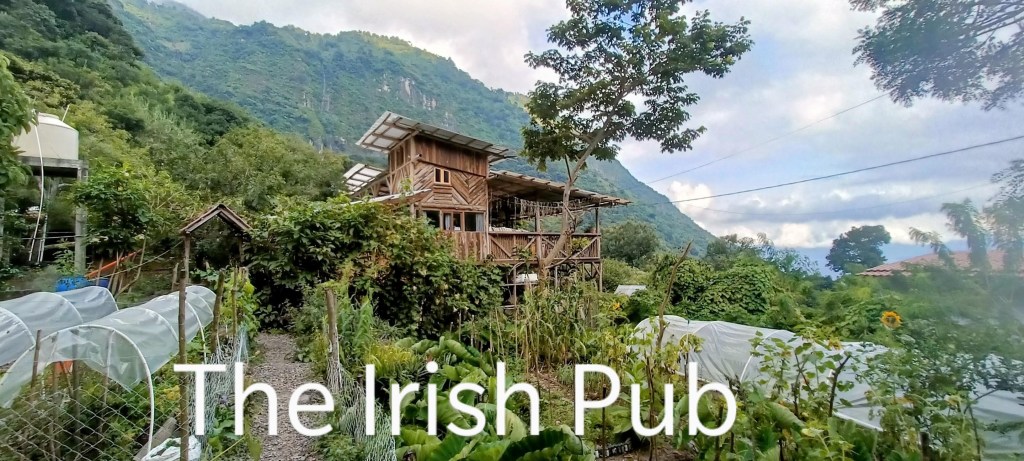
We walked from our cabins to the next village called Tzunzuna which translates from Mayan as the Hummingbird of the Water.…such an appealing poetic name for a little village that was quite dirty with rubbish strewn about and poor houses. But Guatemala is a country without even a postal service, so refuse collection is certainly not available. We climbed up through the village until we came to a worn sign The Old Goat, Irish Bar…..nothing was more unlikely. We opened a gate, walked past a sign that there were eggs for sale (in Spanish) …it looked like a farm but we kept going up some more stairs and at the top, the Irish flag was flying and the views were amazing. It was more a restaurant than a pub but the guy behind the bar told us that the owner was Irish but that he was on holidays in Columbia. The Irish get everywhere.
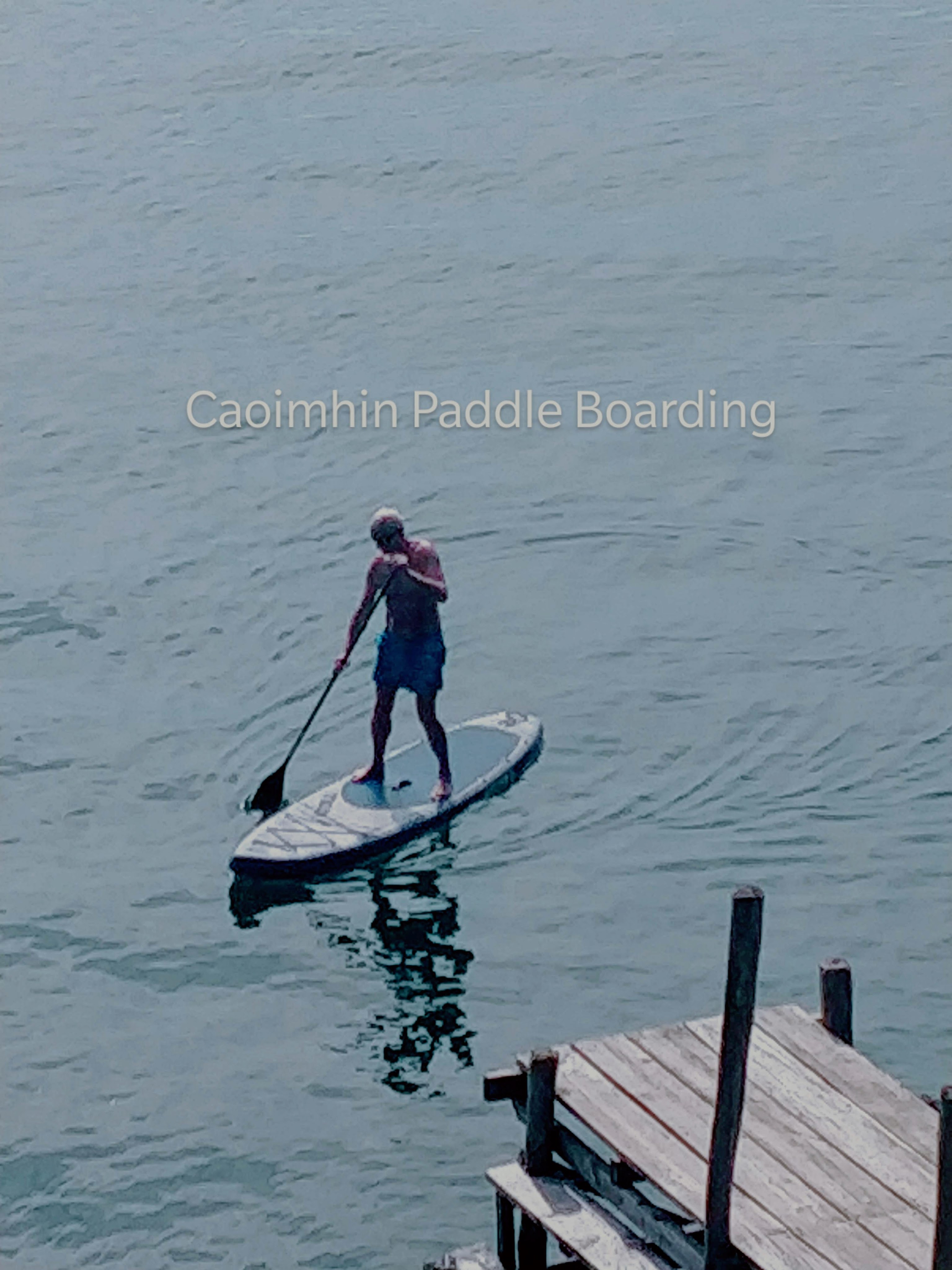
So now that I’m feeling better, we are getting ready to move north. Caoimhin also had a dose but much milder than mine. He claims that drinking rum is both a prevention and a cure so maybe I should develop a taste for rum?

Until next time, thanks for reading😎
Lolling by the Lake

A Tale of Two Countries

The last time I posted, we were in Puerta Viejo on the southern Caribbean coast of Costa Rica with all its steamy lushness and its tropical air, dense with humidity. We had brainfog from fitful sleeping under noisy fans and insistent mosquitoes buzzing around the bedroom who became silent when we decided to ‘get them’ but started up again as soon as we lay down😫. But in reality, there were surprisingly few bugs which – in spite of my moaning – is not a good thing in an environmental context.

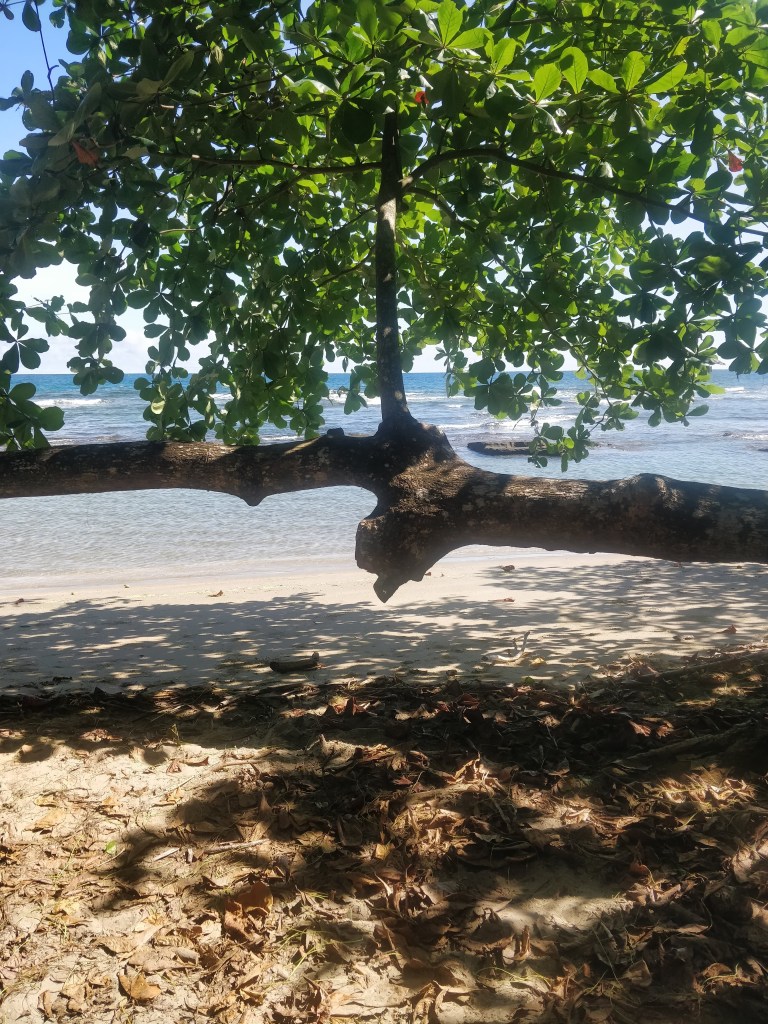
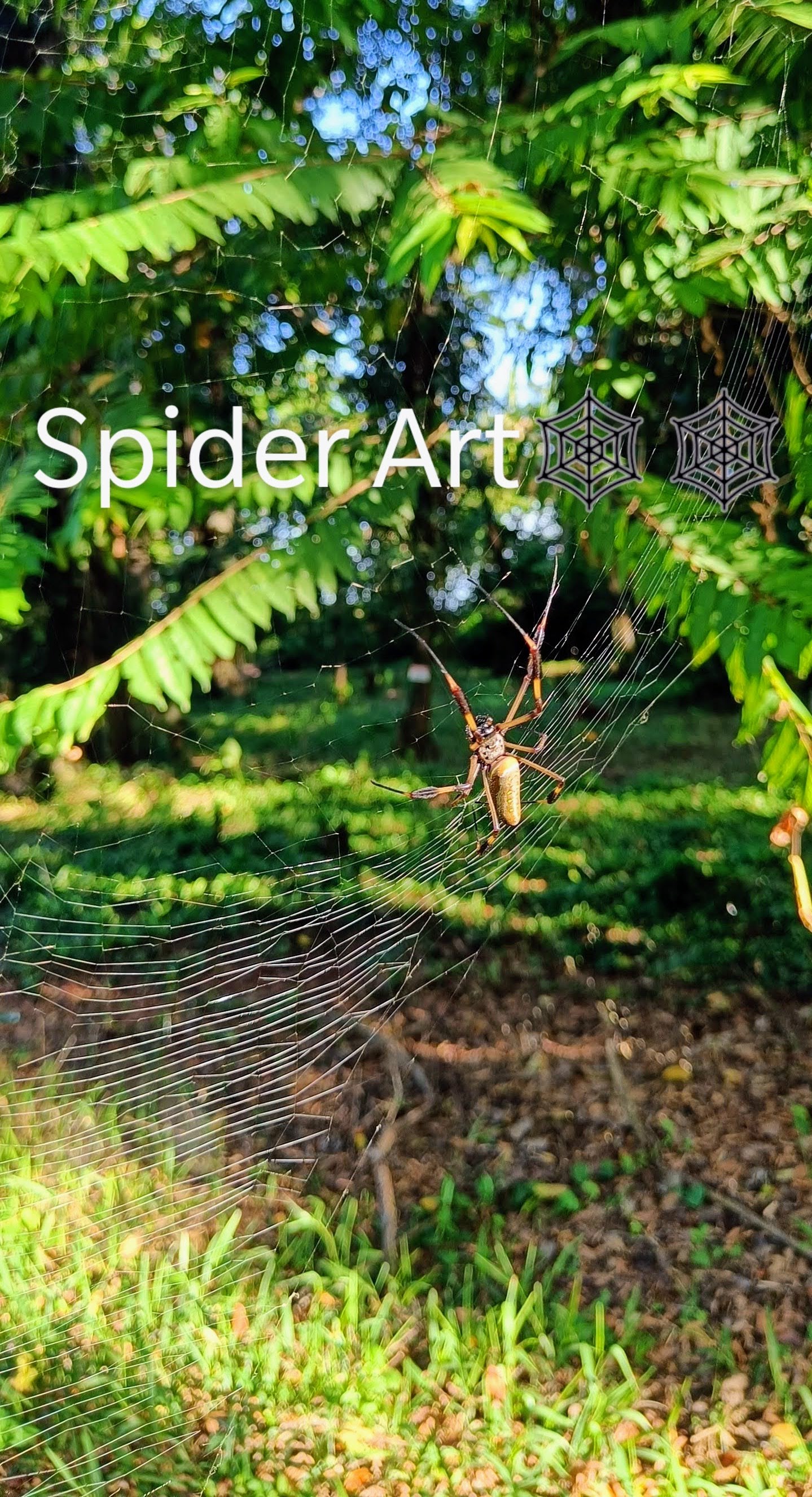
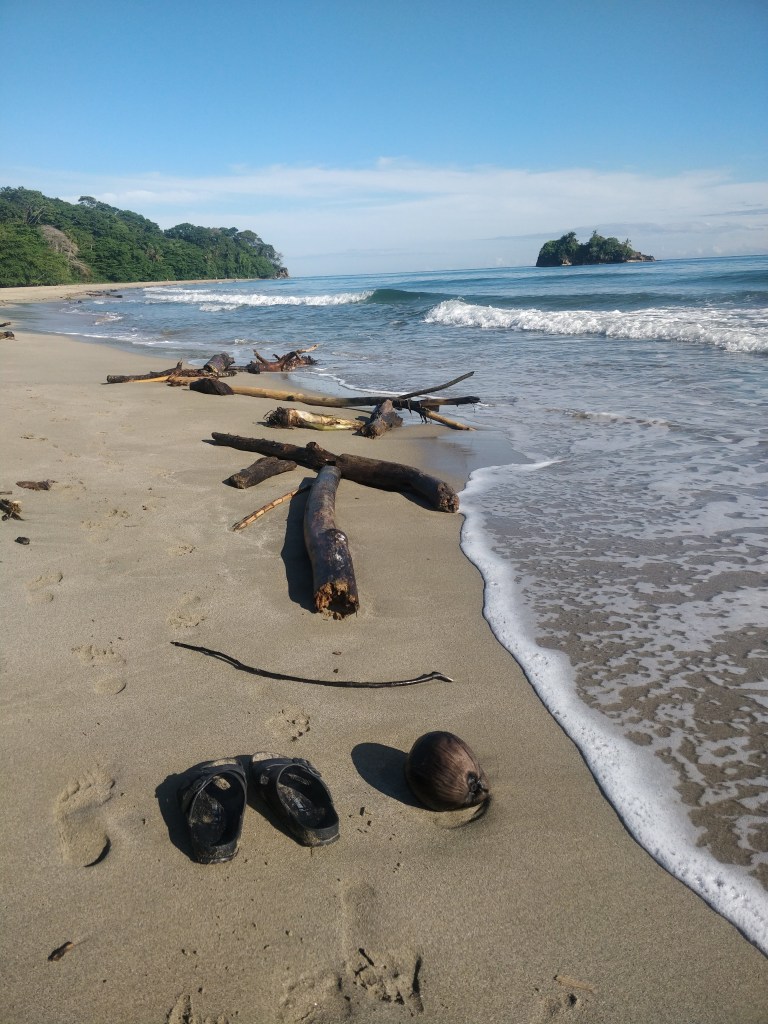
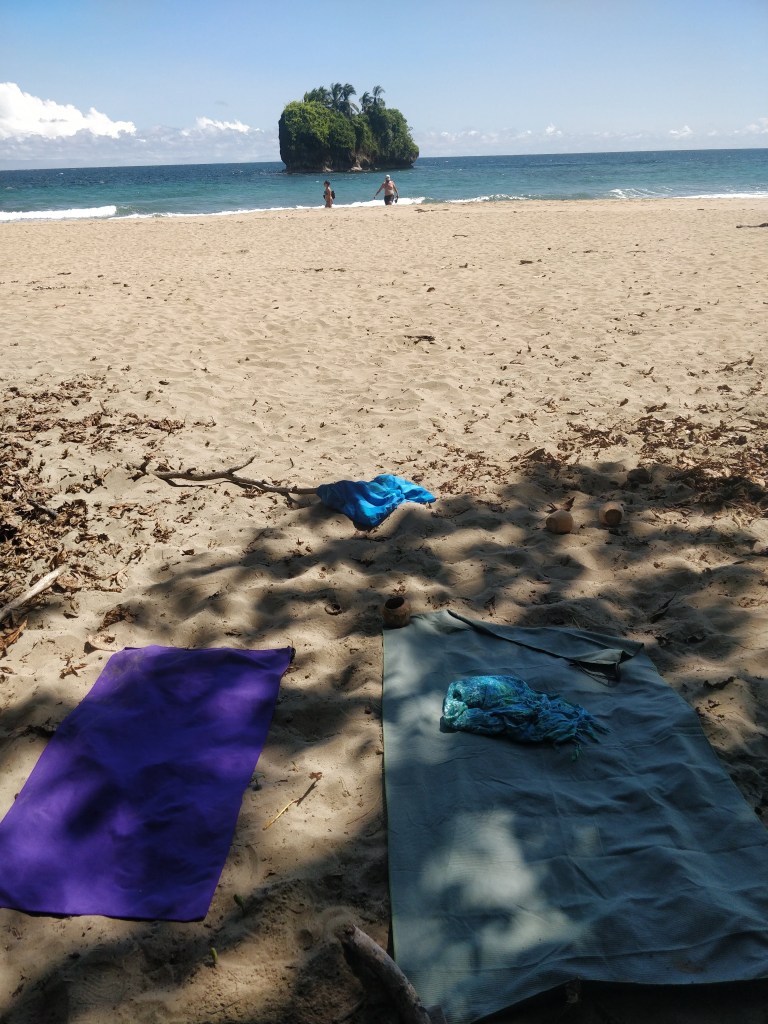
There were enormous spiders creating their art in the trees and we were fascinated by the leaf cutter ants that cut fragments from leaves high in the canopy and then brought them down the trunk back to the nest – truly an epic journey of skill and co-operation. In the nest, the leaves are chewed to a pulpy mush which triggers the growth of fungus that feeds the colony. Swimming in the Carribean was like immersing in a warm bath but with little fish – we loved walking through the forest to Cocles Beach with its drifwood and cocunuts freckling the golden sand and its backdrop of mixed forest providing dappled shade and welcome coolness. Anywhere in Europe, the driftwood would have been collected for fuel, especially in this approaching winter but here, cold is never an issue. Lying on the sand under the trees, we discovered that they were never silent, swaying in the light breeze, dropping leaves and branches which scattered unseen birds. So much abundance with everything growing to extraordinary heights and brightly coloured flowers weaving through bushes.

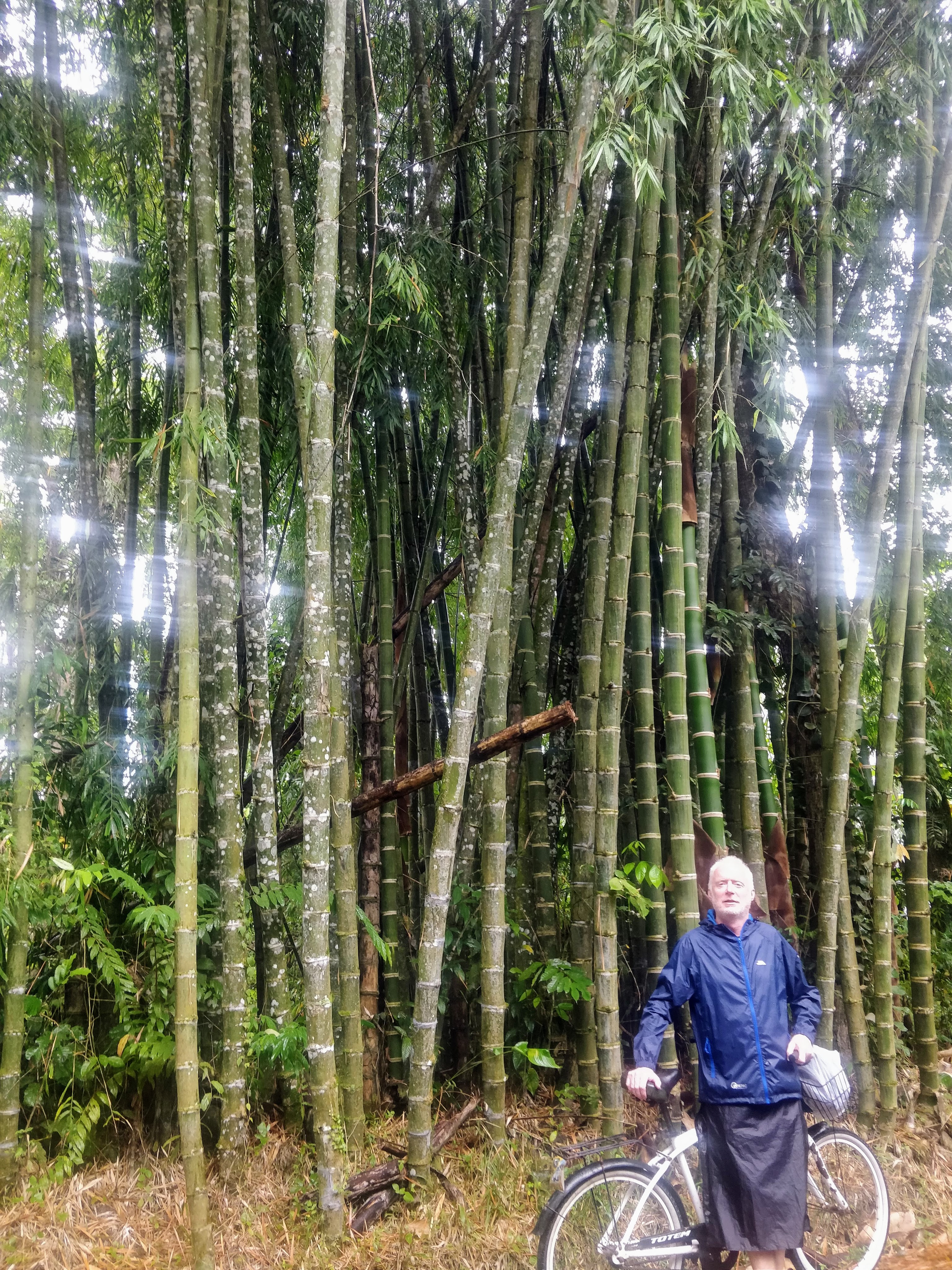
When we arrived in the small town of Puerta Viejo, we were stunned by the noise and fumes of the traffic – buses, 4×4 s, moterbikes and the cyclists peddling along amongst the mayhem, risking their lives or so it seemed. But it was amazing how quickly what looked so dangerous became routine and soon we acquired bikes with no gears and which we had to pedal backwards to brake. We were cycling over narrow bridges without barriers and weaving among the jeeps and tourist buses like locals. The bikes were perfect because the terrain was flat and there’s no hurry to get anywhere in the tropics….pura vida. We cycled to Playa Uva, another beautiful beach in the south with crystal clear water. We had plans to cycle to the border with Panama but heavy rain and thunderstorms thwarted us…..our apps telling us that the weather was only going to get wetter

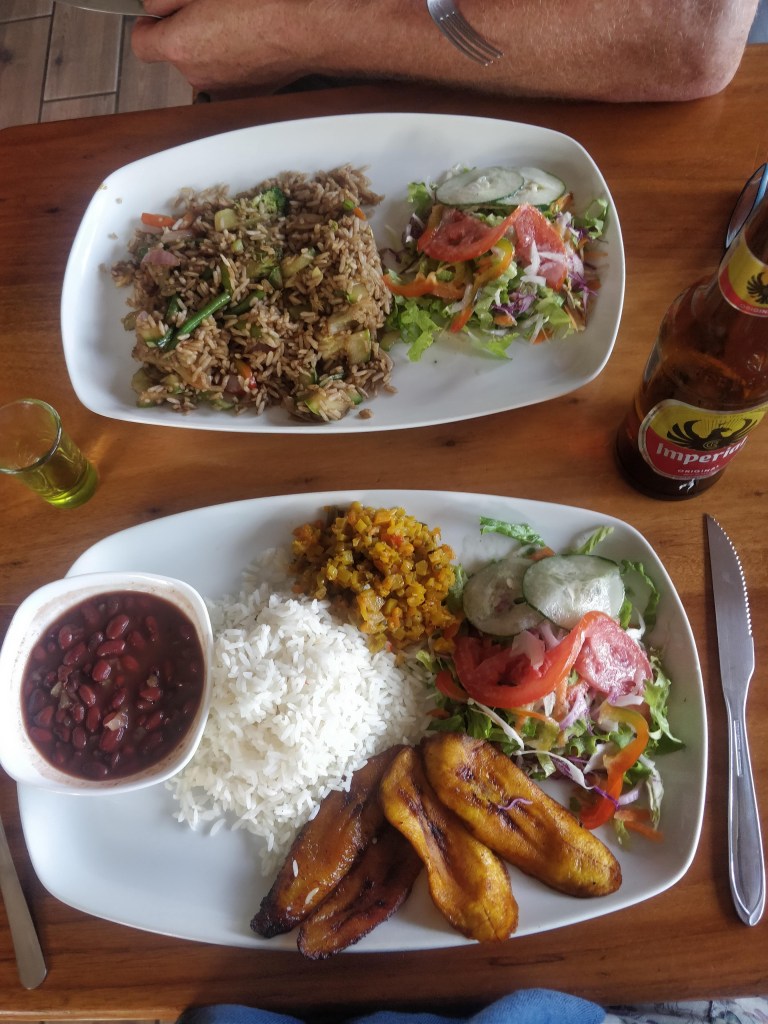
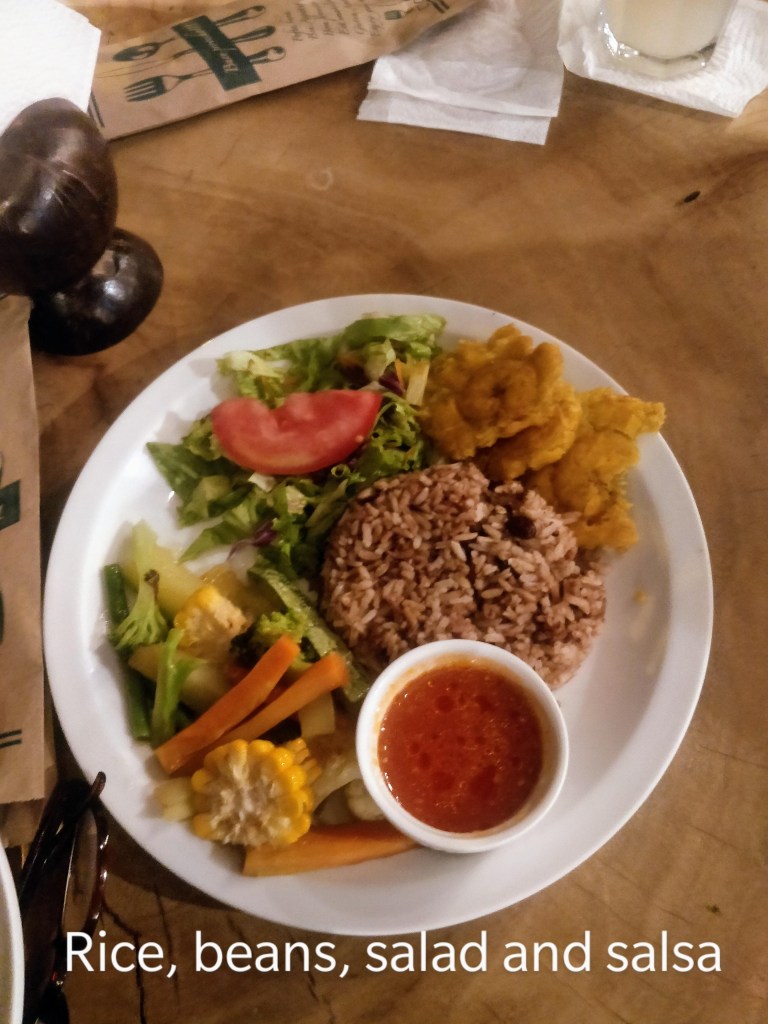
We ate rice and beans and the MOST delicious pinapples that we have ever eaten but in Puerta Viejo, it was possible to eat anything from sushi to Indian curry to hamburgers. Although the beaches just a little out of town were almost deserted, the town itself was really touristy with lots of bars, noise and flashing lights. Great for a few days but we prefer the quiet life. So we had decisions to make – where to go next?

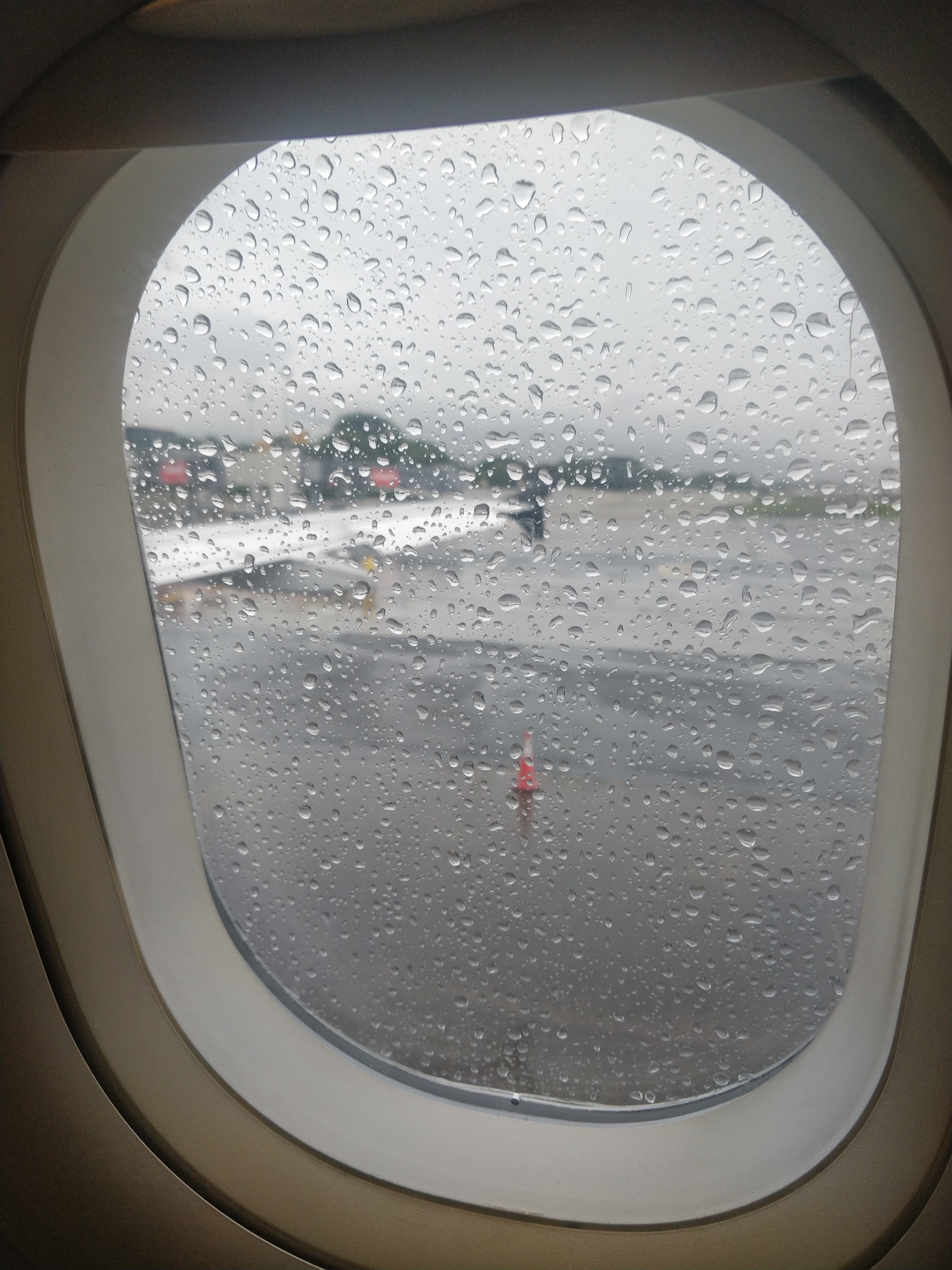
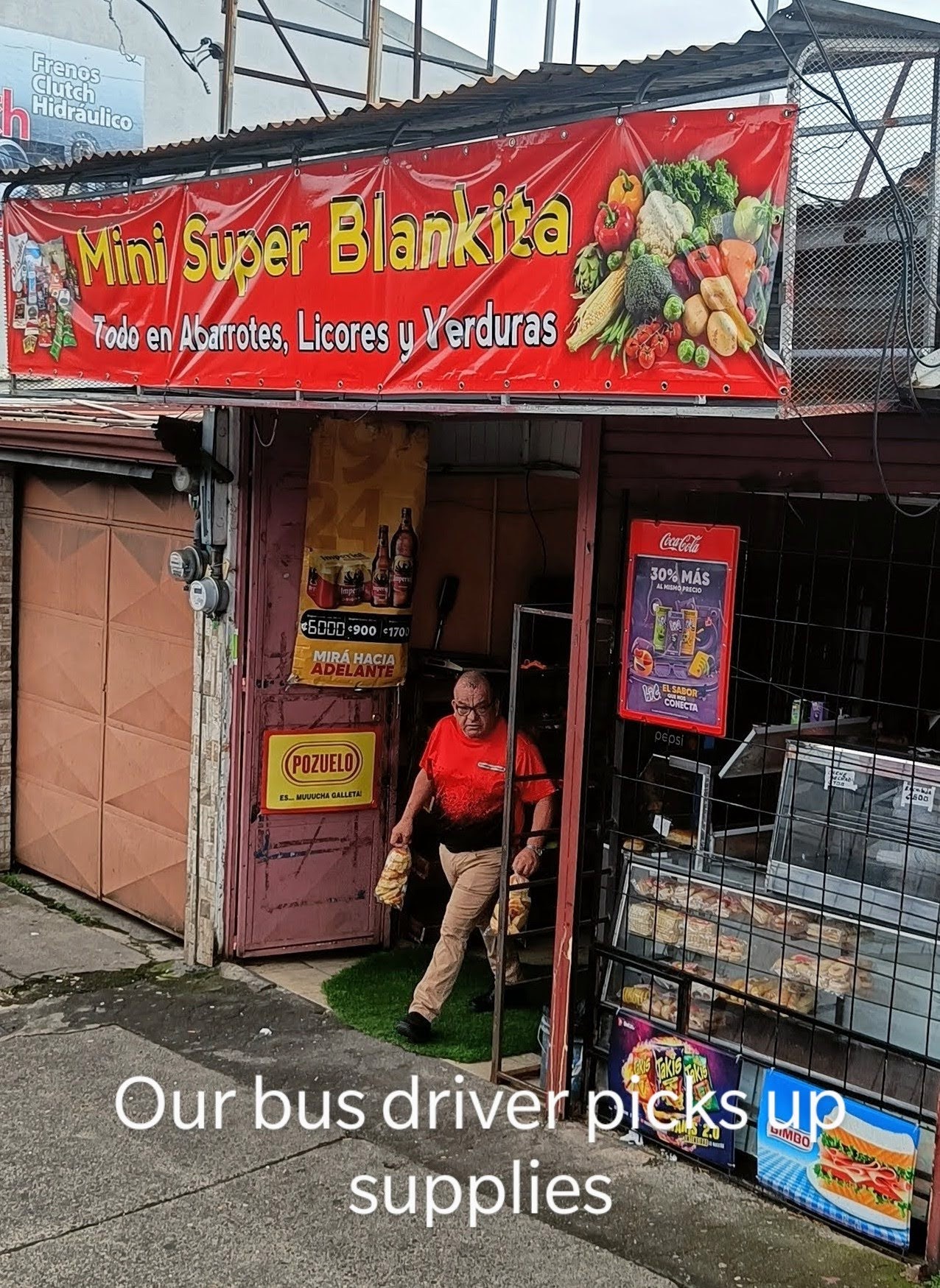
Outside our little apartment, the rain fell from the sky in straight lines, running down the cocunut leaves and dripping off the tip of each individual leaf like an outdoor shower. We could almost see the jungle plants stretching and growing. High in the trees over the fence, monkeys screeched and played – our landlady told us that they loved the rain. Unlike us! The wet season in Costa Rica was proving wetter than we expected. As our return flights to Dublin in December are from Costa Rica, we decided to head north to Guatemala and explore more of Costa Rica on the way back. We investigated going overland but buses that usually took about 24 hours were now 35 hours or more because of landslides, road closures and diversions due to the heavy rains. . So although we didnt really want to fly, we booked flights to Guatemala City and bus tickets back to San Jose, the capital of Guatemala, to catch the flight.

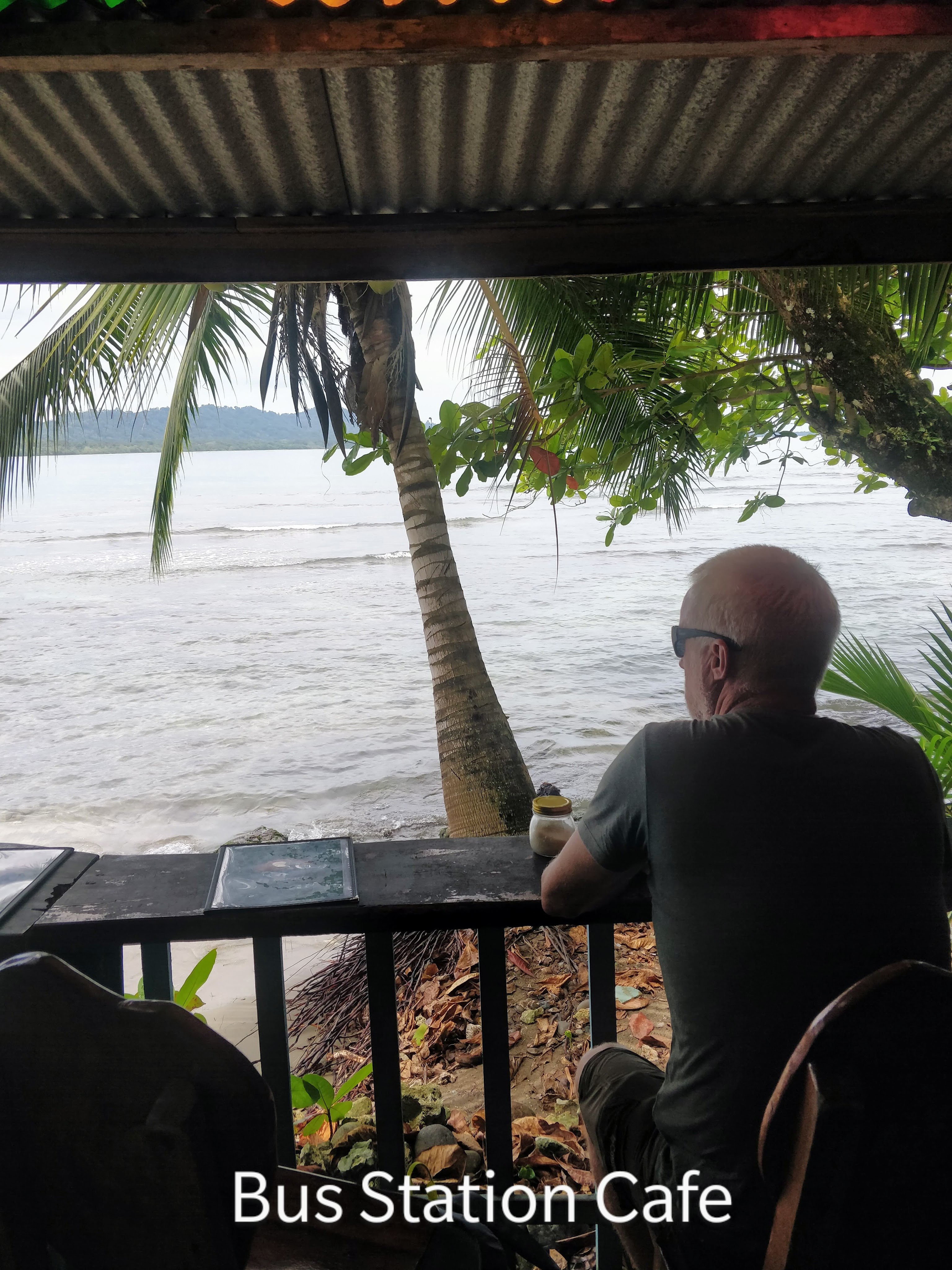
At the bus station , which had the most scenic cafe I have ever been in, we were met with bad news. There has also been landslides on the road back to San Jose so that the 5 hour bus journey would now be at least 7 hours because of a long detour AND we have to pay extra. The bus stopped in Limon, about 2 hours up the coast, for a welcome pit stop and then the bus driver announced that the landslides have been cleared and the road has reopened. Good news but there was a catch. We could go by the reopened road but wouldn’t get our money back or we could still take the detour to get our moneys worth. Of course, everyone on the bus opted to go on the reopened route. Truth or scam? Although Costa Rica is not a cheap country to travel around, bus transport is economical (A 5 hour journey costs about €10 on a reasonably comfortable bus…a bit more if you have to pay extra for detours🤣). We spent the night in a little apartment near the airport with padlocked gates, numerous locks – even two chairs on the little concrete patio were chained to the ground -and a landlady who couldnt wait to get rid of us. Conversely, all this security made us feel a little uneasy and unfriendliness is not the norm in Costa Rice

Our uber driver dropped us to the airport in a clapped-out Chevrolet Spark blaring the Bee Gees Staying Alive just as the rains started again. Costa Rica is an amazing country with incredible biodiversity and a laid back attitude(Pura Vida is the slodan everywhere). It is also a country without an army. In the mid twentieth century, Figueres, a farmer philosopher came to power and absolished the army, quoting HG Wells ‘The future of mankind cannot include the armed forces’ and laid the foundation for Costa Rica’s unarmed democracy. We look forward to returning …..when its drier. The San Jose airport was very relaxed with an incredible number of staff in the gift shop eager to sell us stuffed parrots and sloths – they didnt know we are travelling very lightly😀.

While waiting for our flight, we browsed the Guatemalan newspapers on our phones – big mistake. There were reports of murders, drug violence and mayhem on every page. Guatemala City has a really bad reputation and is often described as big, dirty and dangerous. We were too nervous to stay there and booked accomodation in Antigua, an historical town about an hour from the airport. We weren’t sure what to expect when we walked out of the arrivals terminal building in Guatemala but it was a surprising oasis of calm – a few taxi drivers in crisp white shirts ignored us and a few business types with briefcases waited for their company pick-up. Honestly, arriving at Dublin Airport can be more intimidating. The temperature was pleasantly cool without the oppessive humidity of San Jose. The guy in the tourist booth was very helpful, told us about taxi prices and shared shuttles and put the WiFi password into our phones (we didnt have any mobile data/local SIM). Armed with connectivity, we booked an Uber on the airport WiFi – it was cheaper than the airport taxis. and we could pay online as we didnt have any quetzels yet, the currency of Guatemala. Then we waited and…….. waited ….as darkness slowly fell. The first Uber cancelled, so did the next one but finally Diego, our third attempt came to pick us up, playing Saturday Night Fever (do all Uber guys have the similar taste in music?) It was Friday evening rushhour so traffic was appalling and probably why the Ubers cancelled. The 50 minute journey took about 2 hours crawling past shopping malls, factories and enormous billboards advertising fast food and Pepsi. Diego dropped us in Antigua at the door of our accomodation, a B’nB called Casa Ela in a quiet cul de sac, where we were welcomed by Alvaro and Lupita who spoke excellent English and told us to make ourselves at home. ‘Out house is your house’.

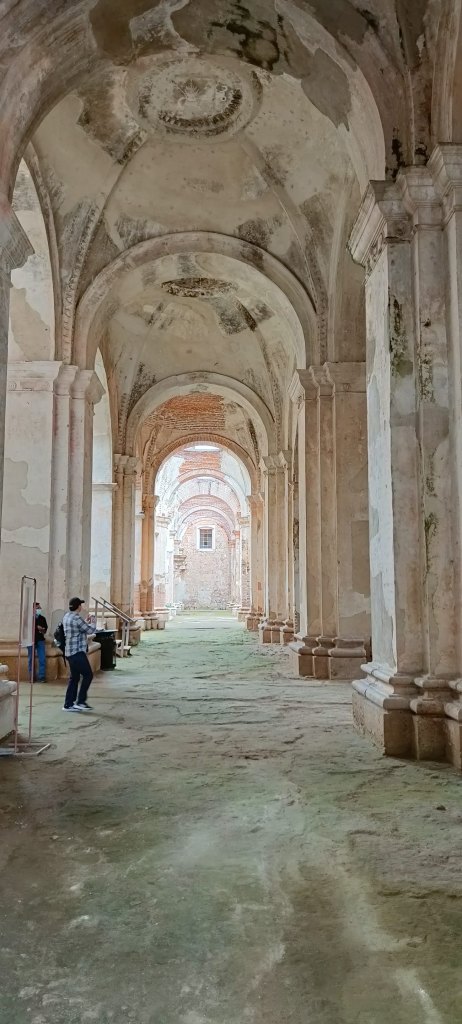
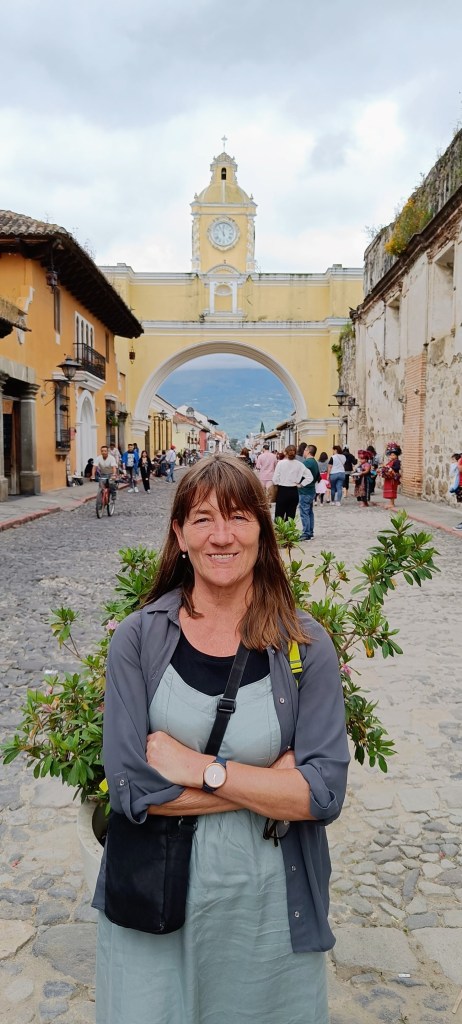
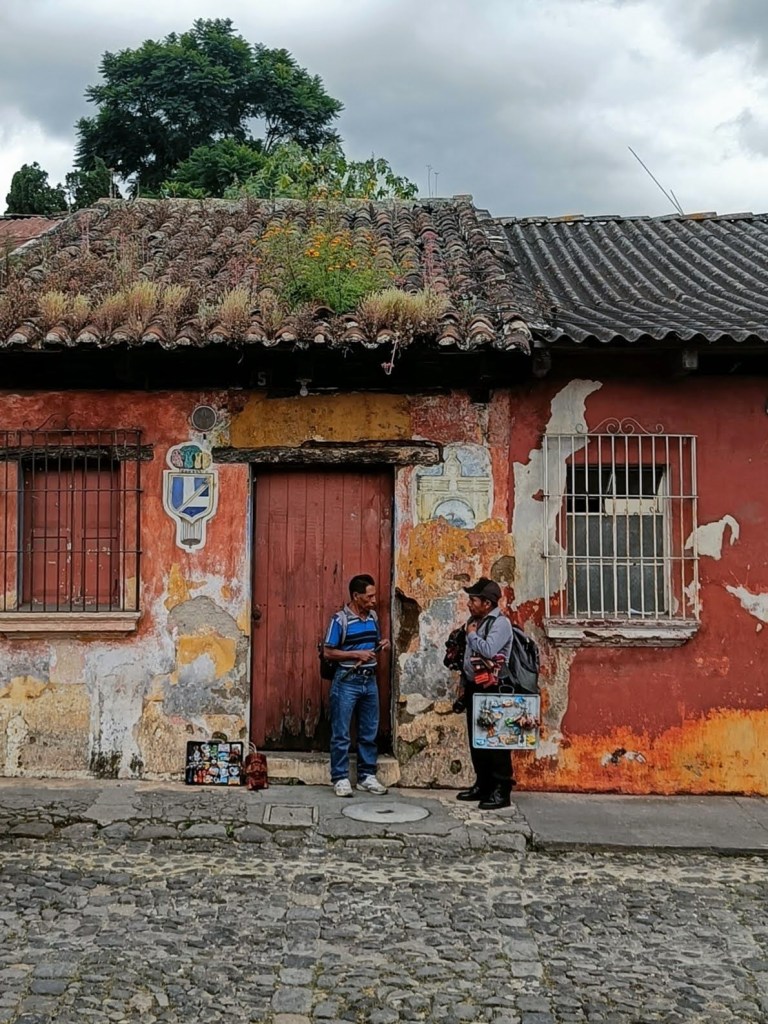
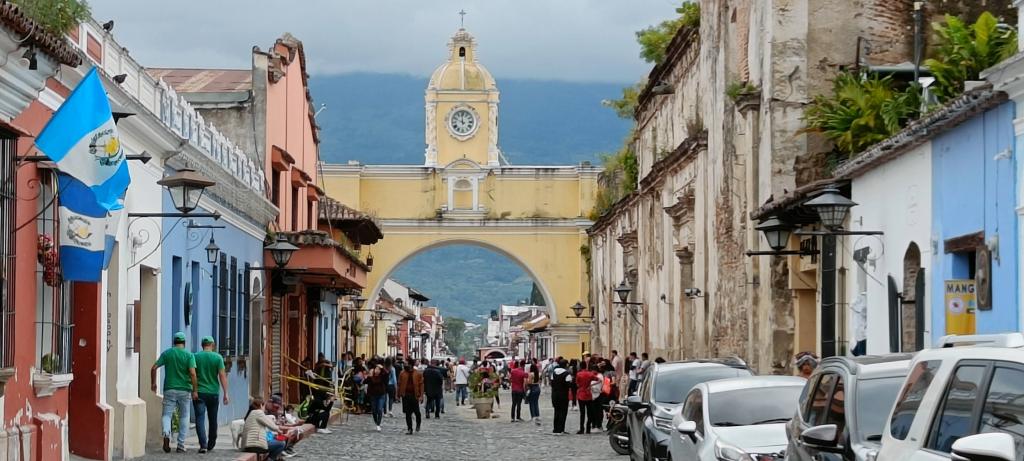
Right from the start, we were charmed by Antigua, with its cobbled streets, pastel facades, and old beautiful buildings, -even the ruins here are picturesque -and its gorgeous setting, surrounded by mountains and a ring of conical volcanoes. This was the old colonial capital of Guatemalais, a town that has seen earthquakes, floods, hurricanes, been abandoned on more than one occasion but has risen to become the number one tourist destination in Guatemala. Behind some modest facades were luxury hotels with fountains, gardens and polished wooden floors. There were no garish billboards or flashy lights, its an UNESCO Heritage town. We had trouble finding an ATM as it was hidden under an old church colonade. The streets and plazas were full of locals and visitors wandering about amongst indiginous people hawking handcrafts.

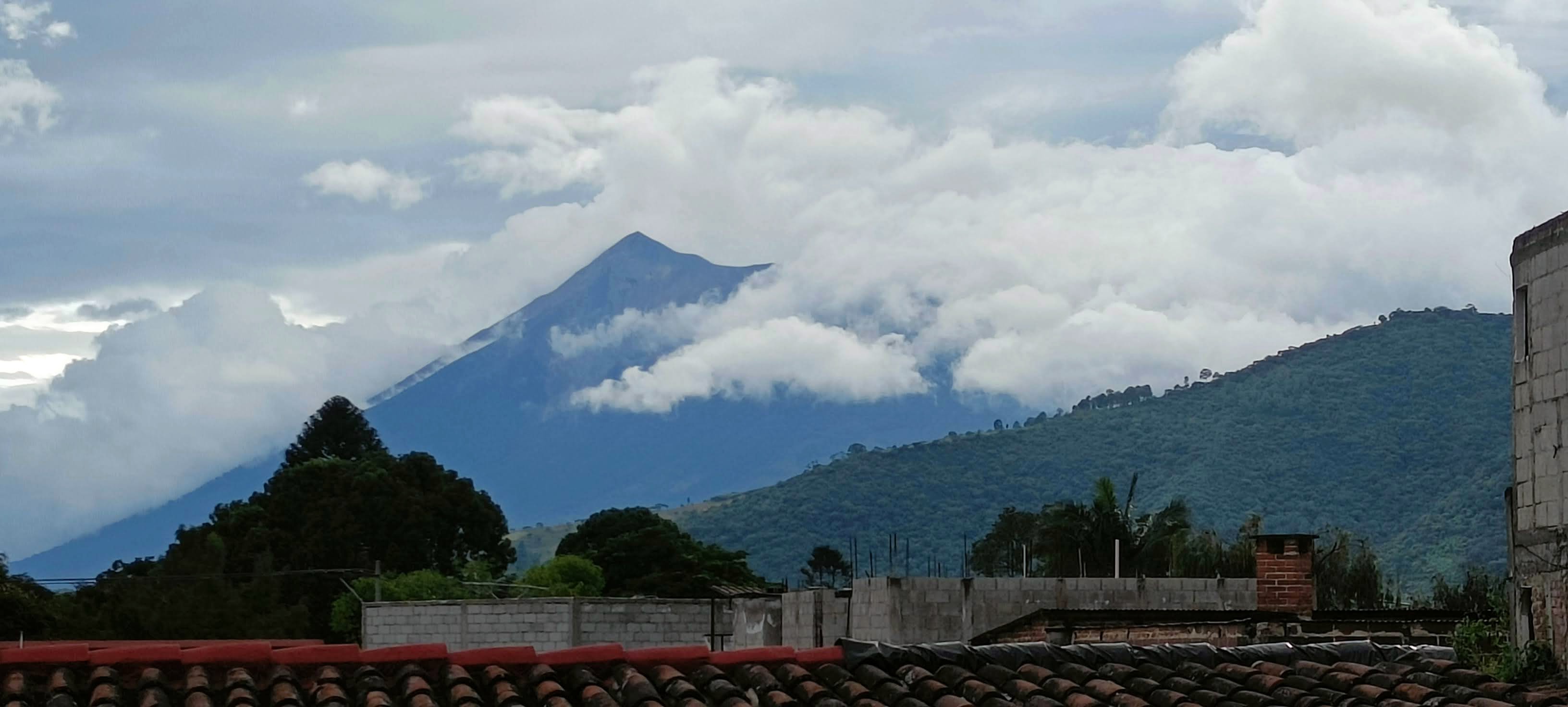
Rooftop view

Looking at the mountains for the rooftop of our accomodation and watching Volcano Fuego blowing plumes of smoke and fire into the night sky, we knew that we had to get out there and hike. Volcana Pacaya was the closest and easiest to climb so we booked a tour online for the following day.

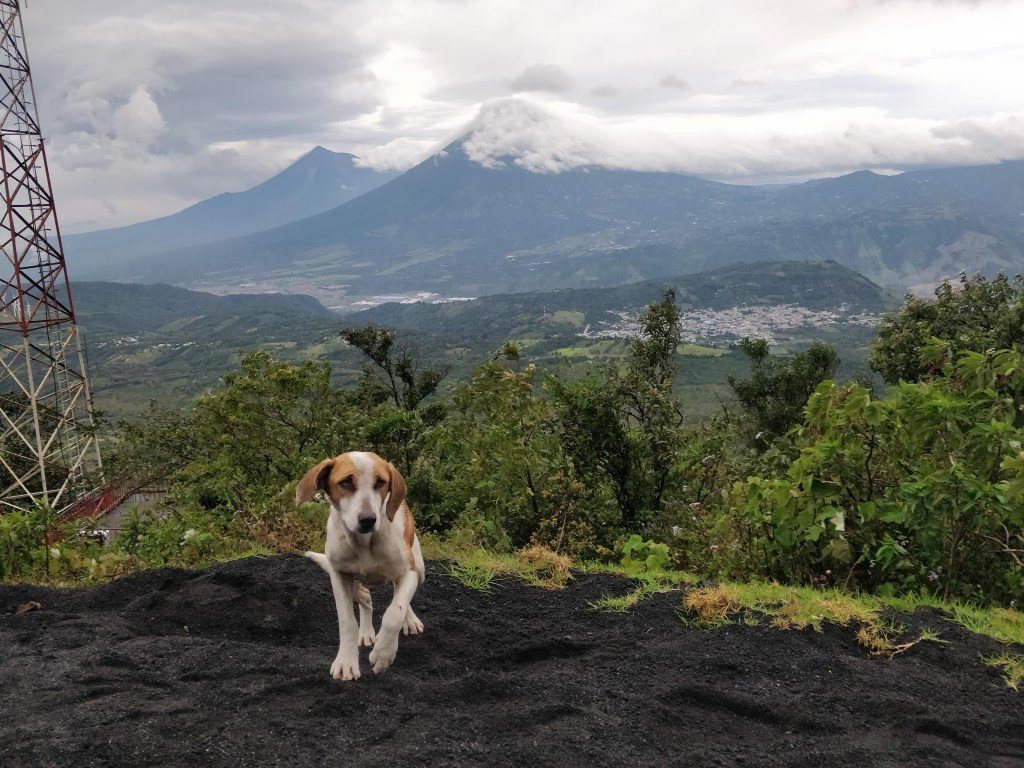
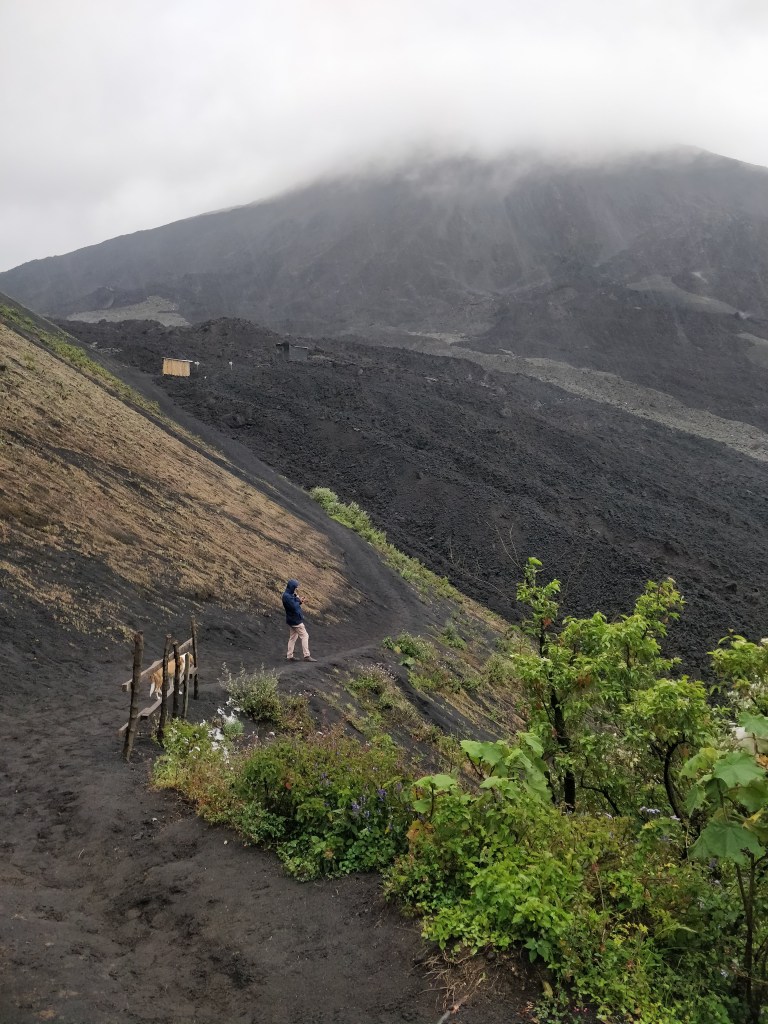
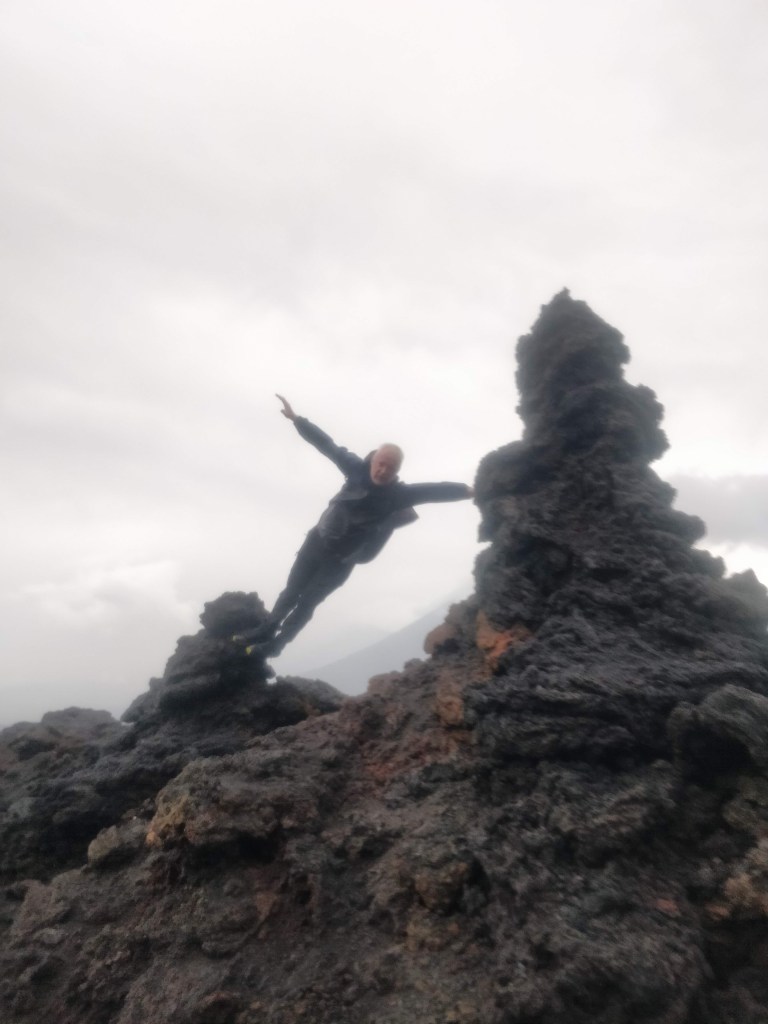
The minibus to pick us up was late – so late that we thought we had been scamed but finally it arrived….time is elastic here. We were jolted around the cobbled streets in the back of the minibus – the cobbles look gorgeous but are a nightmare for both the car and our body suspensions. We left the city and meandered uphill for about an hour and a half past villages and green, incredibly fertile countryside to the National Park entrance where we were greeted by a row of taxis – horses to rent. We watched the horsemen watching us as we creaked out of the minibus, calculating who wouid likely succumb to altitude and tiredness and rent a horse. The horsemen followed us uphill on shaly lava dust, constantly asking ‘Taxi, you want taxi’ with the horses breathing on our bums, hurrying us along. Eventually they gave up and returned to base although a dog with begging eyes followed us all the way. Pacaya stands at 8,373 feet and the height gain on the hike was about 1,500 feet but the path was clearly marked. Our main issue was the wind and heavy rainshowers. Hurricane Julia had battered Nicaragua and although, it veered away from most of Guatemala, we were still experiencing the tail of it. The wind screamed through the telecommunications mast on the mountain and flapped Caoimhin’s wet gear (a wraparound skirt made of black nylon material) like a drum. But the views were breathtaking and for the last section we walked, bent over in the wind, beside the most recent lava flow from an eruption a year ago which stopped just 400 metres from a village that was directly in its path. Access wasn’t allowed to the very top but we got to a high point where the lava glowed red-hot and it was possible to toast marchmallows in the glowing embers. We trudged down, watching wispy clouds and the tinge of pink as the sun set over the greys and blues of the mountains and arrived back to the minibus in near total darkness. The hike was fairly short, about an hour and a half up and an hour down. If the photos look a lit blurry, blame it on the gale that nearly whipped the cameras from our hands

As I type this, we are listening to the rain, hammering on the roof of our BnB. Alvaro tells us that bridges have been washed away in the north of the country, many roads are impassable and all schools are closed today. Alvaro also tells us that it is only once every five years that Guatemala gets a rainy season that is as intense as this one. Hurricane Julia has turned into a tropical depression but the weather is set to improve in two days with no more rain until next May😎. We have booked a shuttle bus to take us to Lake Atitlan which a travel writer in the nineteenth century described as ‘the most marvelous spectacle we ever saw‘ and he had been around a bit.

So we will let you know…….if we get there. So from the steamy jungles of Southern Costa Rica to the lofty heights of Pacaya Volcano in Guatemala, thanks for reading and coming along with us.

A Tale of Two Countries

Costa Rica….getting there

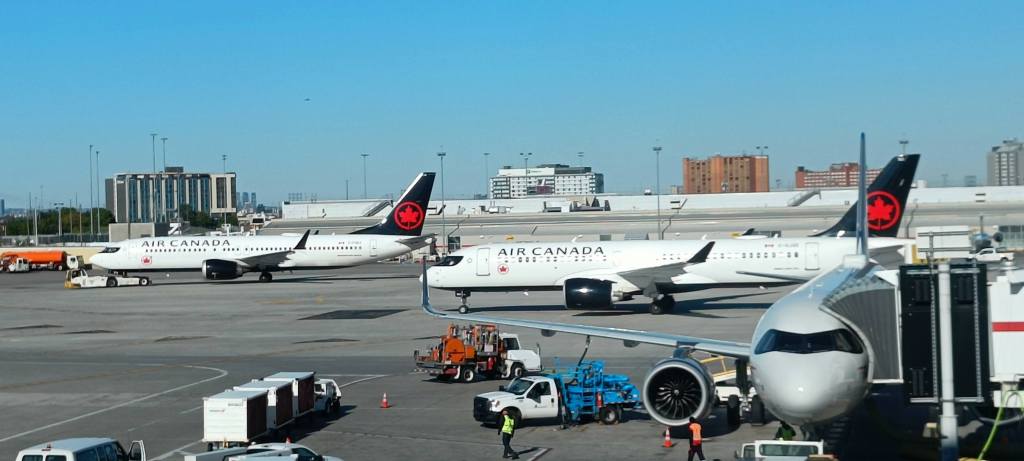
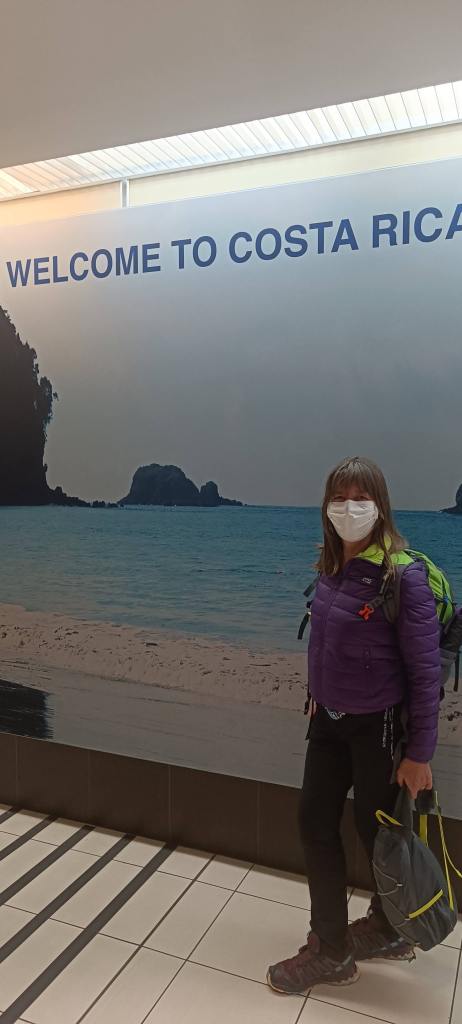
We left home in the dead early hours of Thursday, Sept 29 – at about 4 am. The first leg of our journey to Costa Rica was a lift into Waterford (Thanks, Aonghus👏) to get the airport bus. The road was dark and eerily quiet without a car or person to be seen until we got into town. The airport bus dropped us on schedule at 07.50 for our Air Canada 10.45 flight. Dublin Airport had an alarming number of holding pens outside the building (which were thankfully empty)but lots of people in high vis vests were shouting instructions (that were hard to understand). It could be very stressful if time was tight🙄 As we only had carry-on luggage, we went straight to security which was very busy but the staff were friendly and efficient…one bag-checker told us that it had been manic all morning.

The 7 hour flight to Toronto was uneventful but quite relaxing although mask wearing was mandatory. We got a hot meal and a snack of a veggie wrap, ‘free’ drinks, pillows and blankets. There was a delay in landing in Toronto because of a coyote on the runway – seriously🤣. After a wait of about 4 hours in Toronto, we boarded our second flight to San Jose in Costa Rica. This was a different story – 5 hours of uncomfortable squashed seats, cold air, no ‘free’ anything, strange creaking from the plane and some turbulence over the Gulf of Mexico from the aftermath of Hurricane Ian✈️💨. We were SO relieved to get off.

Money, Glorious Money!!

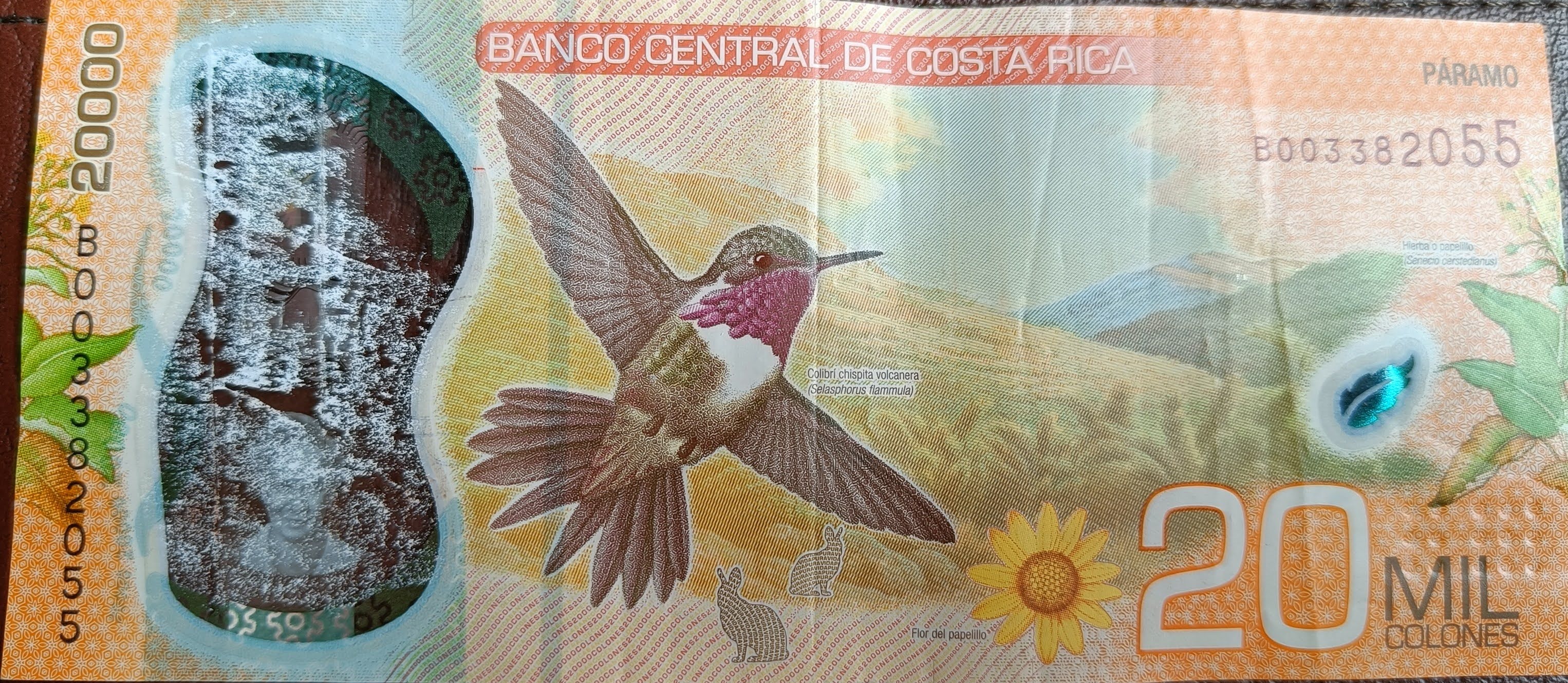
It was 10pm local time in San Jose, it wasn’t raining but was warm (about 20 degrees) and muggy with high humidity. With the 7 hour time difference, our jet lagged bodies yawned and only wanted sleep The taxi driver who brought us to our accomodation had been to Europe several times and told us that Costa Rica was the safest country in Central America…..but also the most expensive. The local currency is the colón (plural colónes), very colourful notes with animals and hummingbirds. 1000 colónes convert to about €1.60. But a lot of things are quoted in $US and the euro is worth less than the dollar at the moment. We are still getting our heads around colónes, dollars and Euros but our brains were really fuddled that first night. The price quoted for accommodation and on menues was not the price you actually pay as taxes and service charges are slapped on to that price.

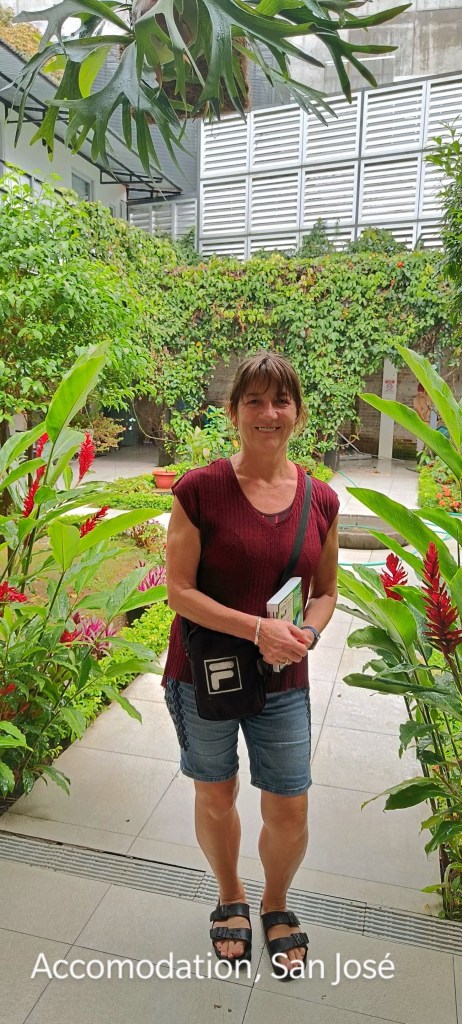
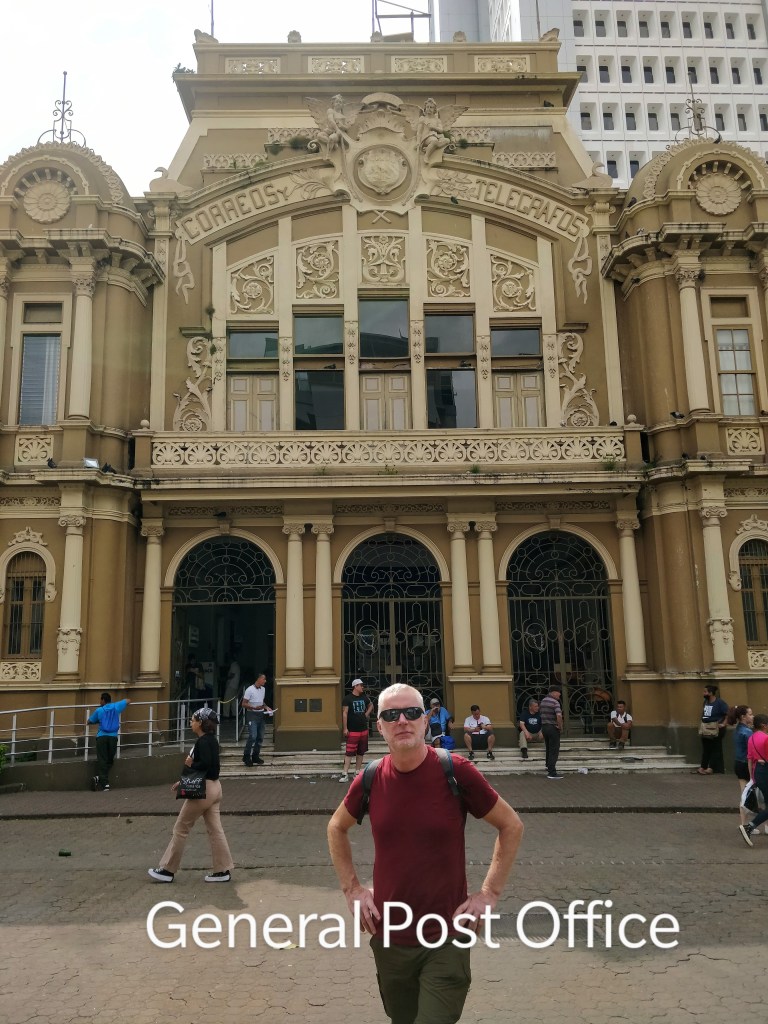
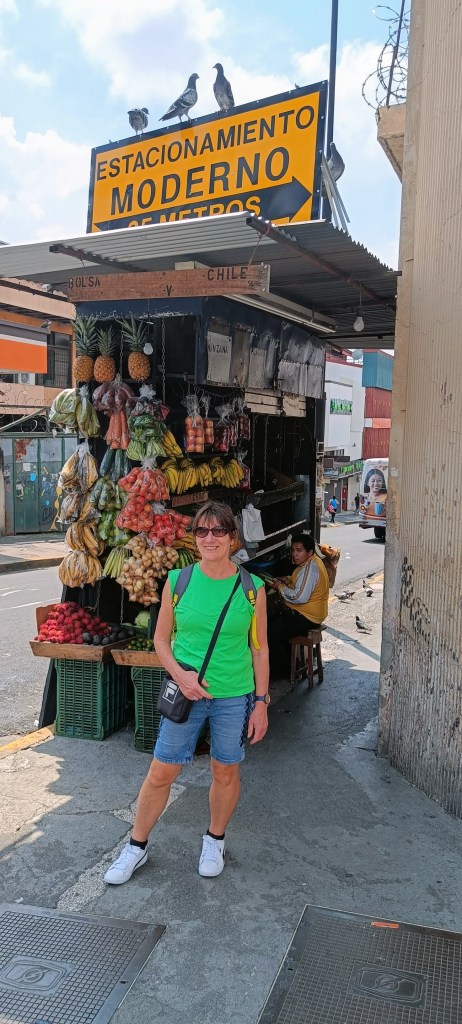
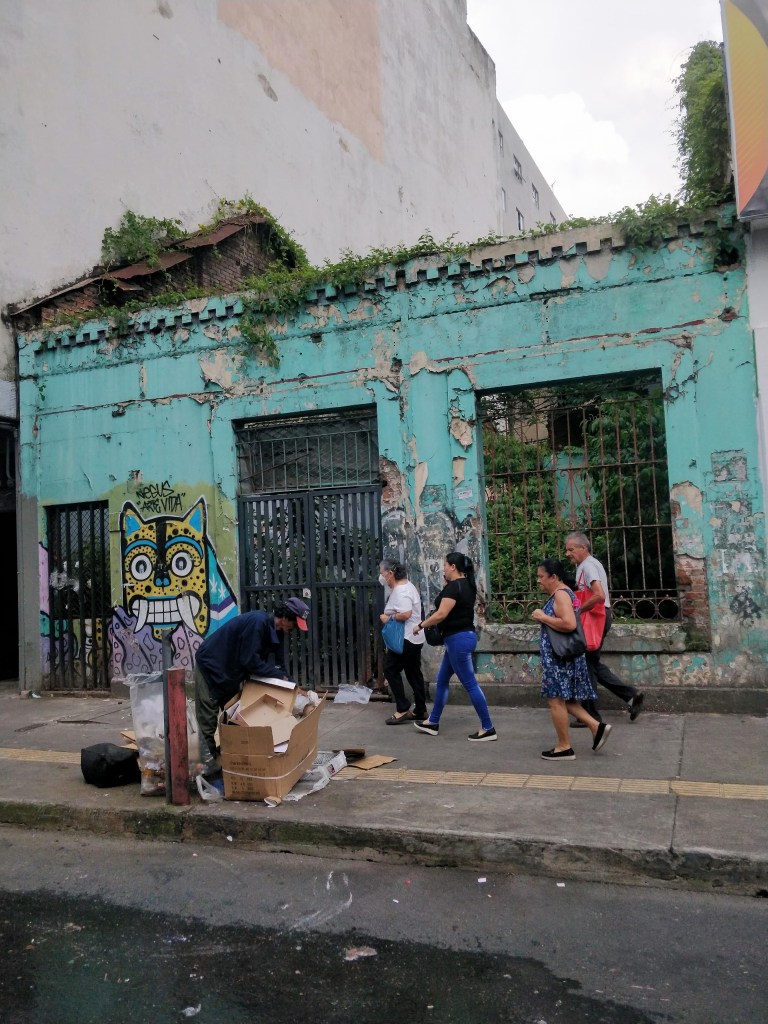
Our accomodation in San Jose was basic but good, a first floor apartment with an inner tranquil courtyard ($40 a night). San Jose is quite small and we spent our first day wandering around in a jet-lagged haze- the streets felt relatively safe and noboby hassled us or tried to sell us anything or practise their English on us. The city is in a depression surrounded by mountains all shrouded in mist. Although it has some lovely buildings – the National Theatre with its murals, the Central Post Office and the ultra modern Legislative Assembly building, it isn’t a particularly beautiful city. There was a more edgy feel about the areas around the Mercado Central (the Market) with congested streets, music blaring and lots of people sleeping rough amougst mounds of rubbish. Many of these were Venezuelan migrants and sometimes entire families existed in an air of resigned desperation. Costa Rica in the wet season is no place to be sleeping on the streets.

We knew that we were near the equator when day and night were the same length, Costa Rica is about 10 degrees north of the equator. Sunrise was shortly after 5am -jet lag meant we were awake for lots of them. The sun went down shortly after 5pm, not that we saw much sun the first couple of days. The first day, we had distant thunder and lightening in the afternoon and a heavy shower in the evening( not too bad for the rainy season) but on the second day, there was a torrential downpour at 11am, it eased for a few minutes and then resumed in earnest – a real deluge ALL day. We pitied the people living rough. We decided to get out of San Jose and asked at the reception desk about getting buses to the Carribean coast and that’s how we met our friend, Yourly.

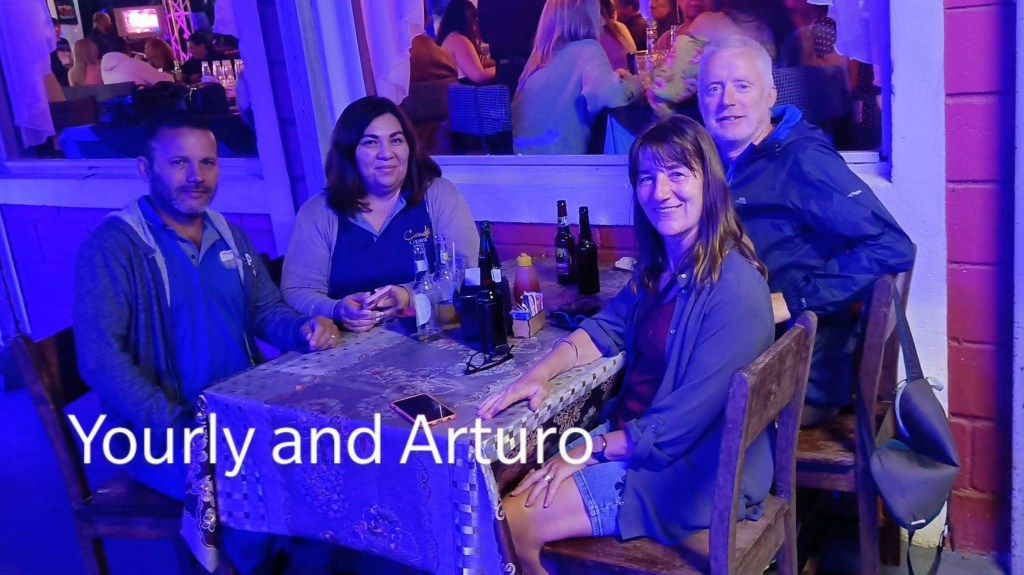
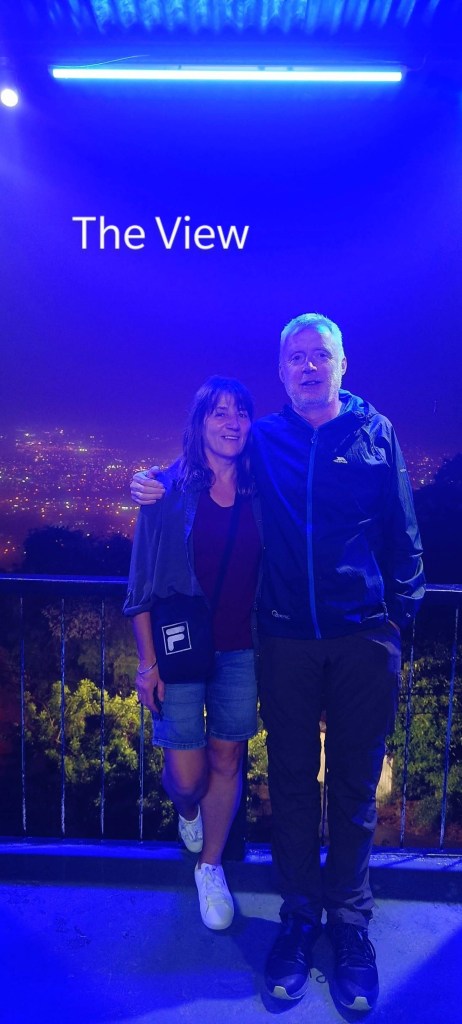
San Jose has a bewildering number of bus stations and bus companies and no Central Bus Station.Yourly was apalled that we were going to walk to the bus terminal to buy our tickets…too dangerous, she said. She insisted on driving us there. She was about to finish her shift and her husband was waiting outside to collect her so they drove us to 2 different bus terminals before we found the right one. Yourly had a little English, Arthuro had none but this didnt stop him cracking jokes in Spanish all the time. They invited us to Cartago, the old historical capital of Costa Rica so we drove in appalling traffic and torrential rain to ‘beautiful’ Cartago. When we got there, we had a coffee and a beer, saw nothing with the rain and darkness and headed back to San Jose. But all any of us had to say was ‘Cartago…beautiful, bueno’ for everyone to roar laughing! They were determined to show us something so they drove high into the hills outside San Jose to a restaurant with a viewing point and karioke (except the mist and rain shrouded any view) and insisted on buying us dinner. For a few brief minutes before we left the restaurant, the clouds parted, the rain stopped and the twinkling lights of San Jose were spread before us. Yourly and Arthuro dropped us back at our accomadation and warned us to get a taxi to the bus terminal the following morning.

The problem was that we weren’t sure of the name of the bus terminal so the taxi driver took us to the wrong bus terminal, we recognised nothing from the day before. There were queues everywhere, nobody spoke English and we found ourselves stumbling around the ‘dangerous’ area with Yourly’s warnings ringing in our ears and our bags clutched tightly but at least it wasn’t raining. Eventually we stumbled on the correct terminal with about seven mintes to spare before our bus to Porto Vieje departed. We were never more delighted to sit into cramped seats. At least half of the passengers were gringos……most trying to escape the rainy season in San Jose and find some Carribbean sunshine.

The bus to the Carribbean travelled out of San Jose on narrow roads between walls of greenery, enormous trees and ferns, leading on to coffee and banana plantation (Costa Rica is the fourth largest producer of bananas in the world). We reached the coast at Limōn, a large port and then the bus continued south towards Panama, crossing many single-lane iron bridges over brownish rivers in a lush tropical landscape. After 5 hours, we arrived in Puerta Vieje, a small touristy town near lots of beaches where most of the gringos got out. The atmostphere was laid back, (welcome, man) but the sweat was dripping off us in the heat (about 30 degrees) and humidity (about 90%). The overcast weather made my first glimpse of the Caribbean a disappointing shade of dark blue but it was definitely the warmest water we had swam in for a long time.

We had ‘cold water immersion’ at our accomadation where the showers only had cold water.  Our little bedroom was shaded by lush overgrown plants growing outside. In the treetop communal kitchen, we watched birds flitting by…..we even got a fleeting glimpse of a hummingbird.💚. We slept with the noise of the rotating fan masking the call of the birds and the thud of cocunuts falling. We are definitely in the tropics, the gorgeous velvety evenings with the smell of flowers, the clamour of the cicadas and of course, the whiff of sewage. Today, Monday, October 3, the sun has shone all day and the Caribbean in the early morning light looked exactly as I had dreamed it would……and all the sweeter because of the effort in getting here

Until, next time…….😎😘

Costa Rica….getting there

The Call of the Wild

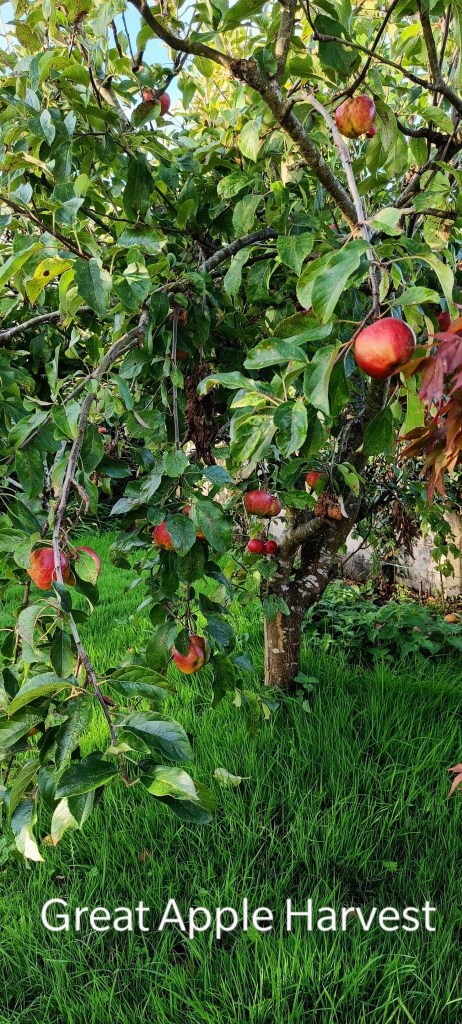
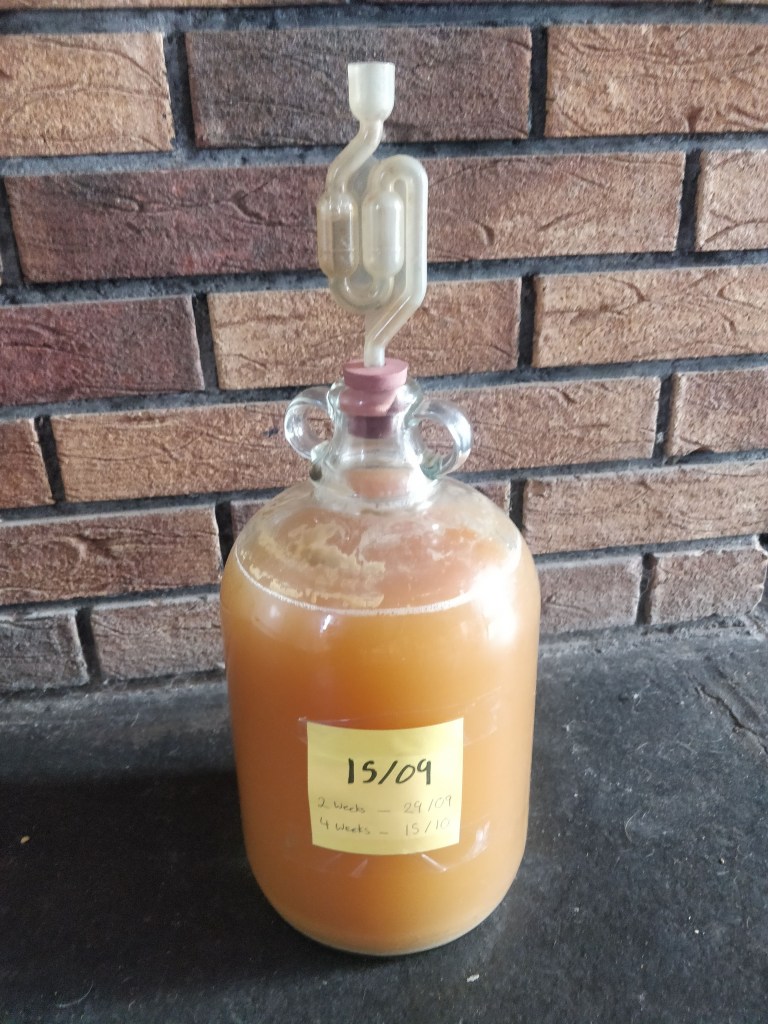
Just like the swallows and other migratory birds, it’s time for us to fly away. After a great summer at home (lots of sunshine, a minor knee op, campervan trips (in a borrowed van), a wedding and other celebrations), the cool mornings whisper that winter is coming. The apples are fermenting, the leaves are dropping …like the temperatures….and we are busy packing and getting ready to leave.

You might wonder where we are going? We didn’t really know ourselves until we booked our flights as we kept changing our minds -there are so many wonderful places in the world that we would love to visit. We decided on Central America because we had never been there and based our choice of starting country on price, fewest stopovers and using only one airline. So….we are flying to Costa Rica tomorrow with Air Canada via Toronto and we are coming back to Ireland on December 13 from Costa Rica. We get into San Jose, the capital, at about 10 pm local time tomorrow night (Costa Rica is 7 hours behind Ireland) and we have booked accommodation for the first three nights.

Our knowledge of Costa Rica is sketchy (we plan to read the guidebook on the plane🤣) but we know that it is a beautiful country with lots of biodiversity AND that it is the wet season there at the moment. The temperatures should be about 25C to 30C which is pleasant, but the humidity will be high. It’s far wetter at this time on the Pacific coast so we might head to the Caribbean Coast first. We know that there are buses that go to Guatemala through El Salvador – about a 24-hour journey – so we may head north first to escape the rain (and hurricanes) and then make our way slowly back down to Costa Rica. We really would love to visit the Mayan ruins in Guatemala and maybe snorkel in Belize which has the largest barrier reef in the Northern hemisphere. We hope to travel overland between countries using public transport but only time will tell what we actually do and what countries we visit on this trip.

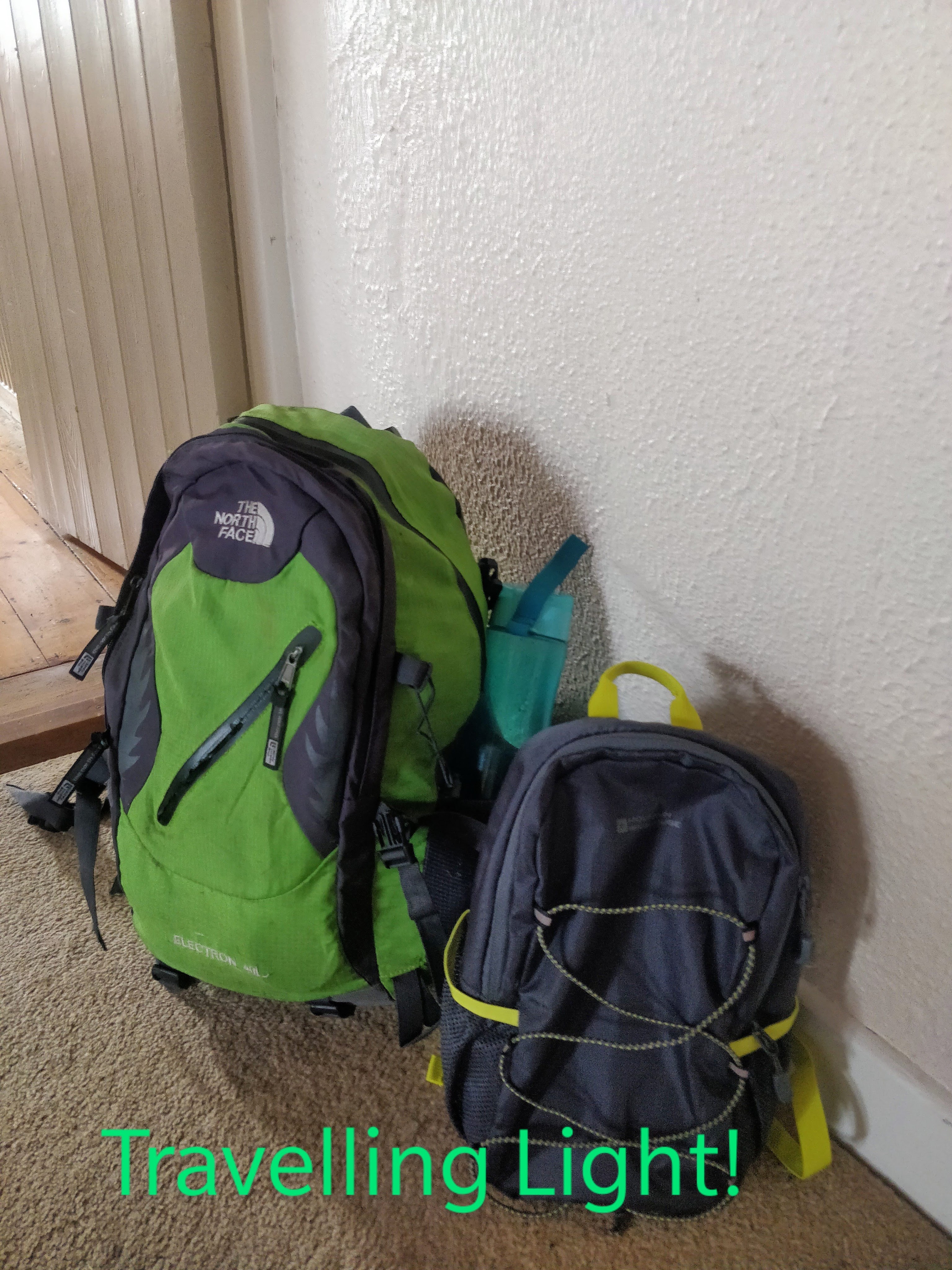
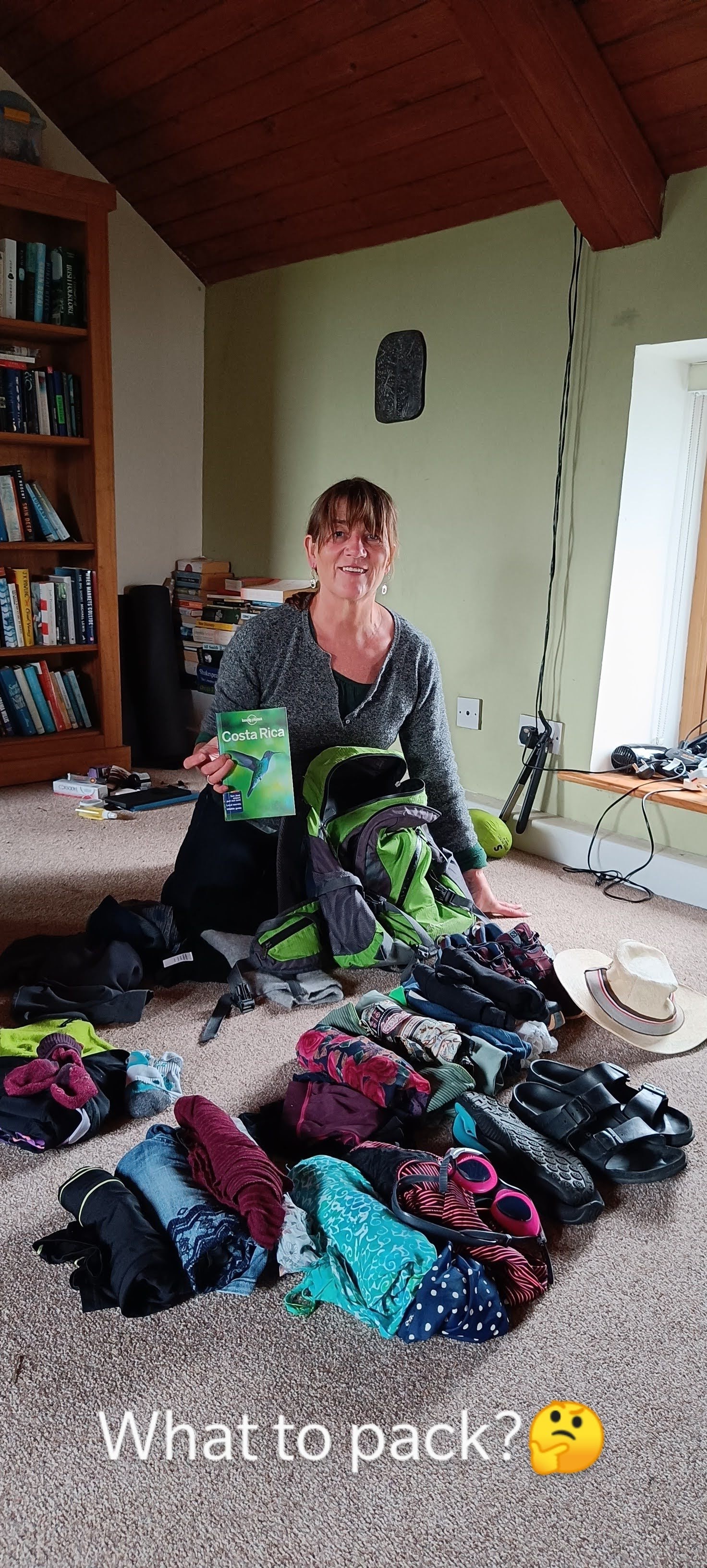
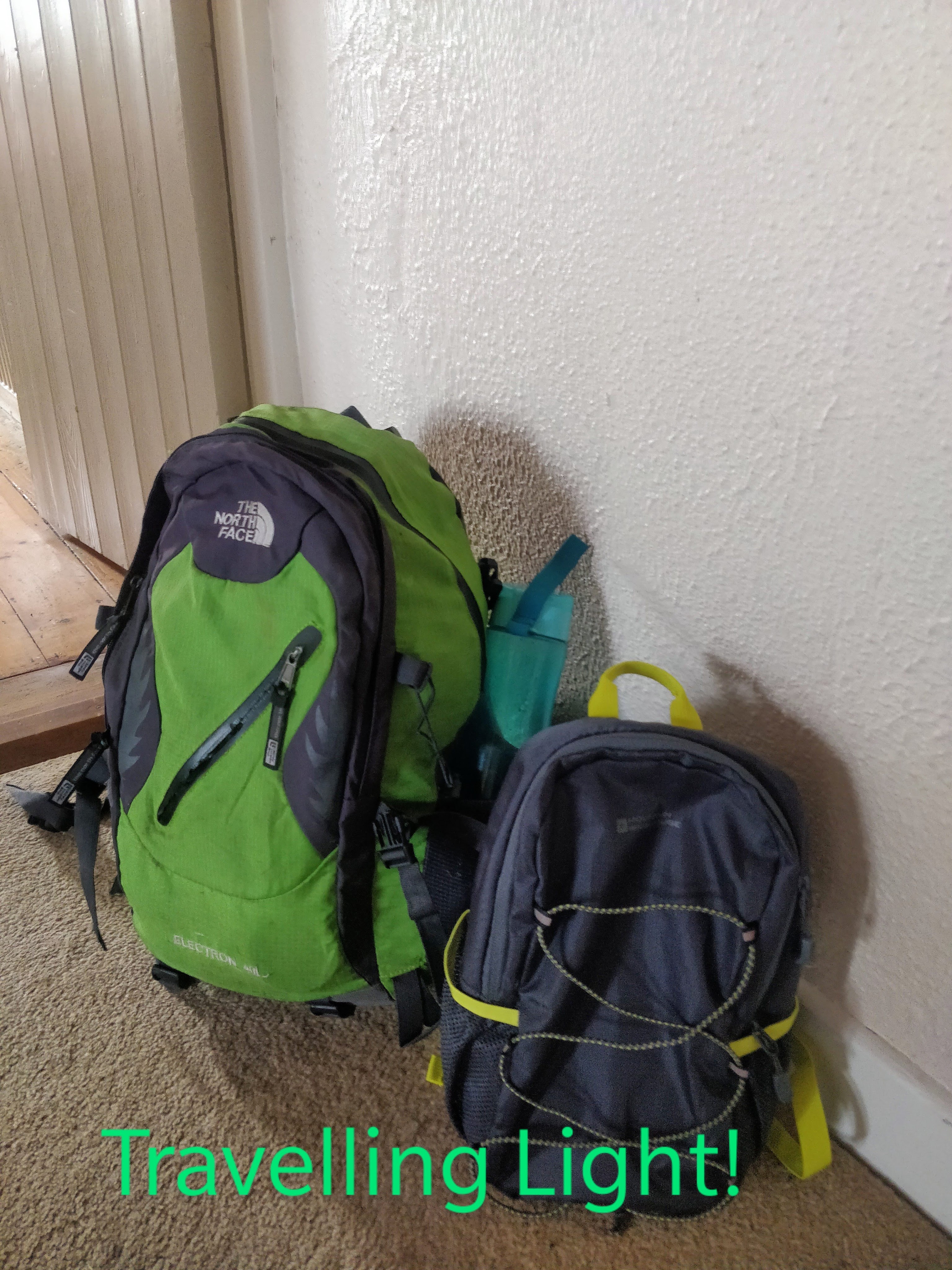
Its’ all very exciting and I have a little flutter in my stomach with anticipation – the last time we were outside Europe was in November 2019 when we visited Ethiopia for three and a half weeks (an amazing experience). Our bags are almost packed, we are travelling very lightly this time, even lighter than usual. We have opted for small carry-on backpacks so that we can move around easily.

You are welcome to come along with us…..we’d love to have your company and I’ll post here regularly. But never feel you have to read any of this.

Until next time…….hopefully posting from Costa Rica😎✈✈✈

The Call of the Wild

Copper Coast – Waterford ‘s Treasure

Spuds getting itchy to move

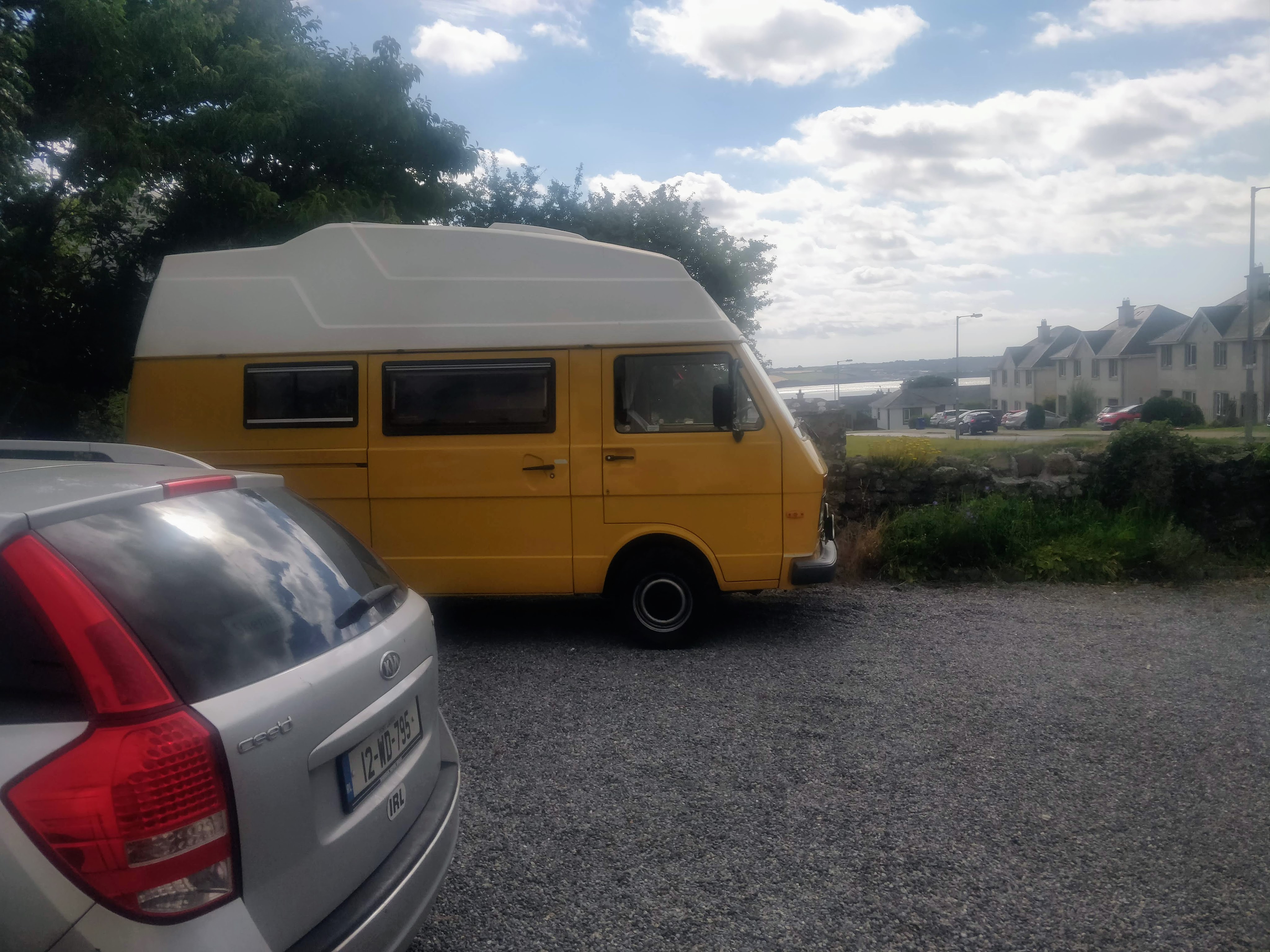
On the August Bank holiday, Spuds. (the campervan that we had borrowed to tour Mayo) was still parked outside our house waiting to be collected. It seemed such a waste not to use it again – it was almost begging us to go for a spin! So we set off on Saturday with Rolo, our dog, who has become a very enthusiastic campervanner, not really sure where to go. Waterford city was crowded with families enjoying Spraoi – we stopped for a wander around to look at the acrobats, the dancers and street entertainers. Great atmosphere but the sunshine disappeared, swallowed by drizzle so we bought an umbrella (which were selling like hot cakes or greasy burgers at a festival😁) and ran back to Spuds . We drove out of town towards the Copper Coast.

The Copper Coast lies between Tramore and Dungarvan with probably the most spectacular coastline in the country – stunning beaches, small secluded coves, winding coastal roads, amazing geology and a rich history. It got its name from the 19th century copper mines in the area and was designated an UNESCO Global Geopark in 2015. In the past, we have driven it, cycled it and walked sections of it and each time, we are wowed all other again. The question that we keep asking is why this area isn’t a ‘must see’ destination at the top of people’s lists.

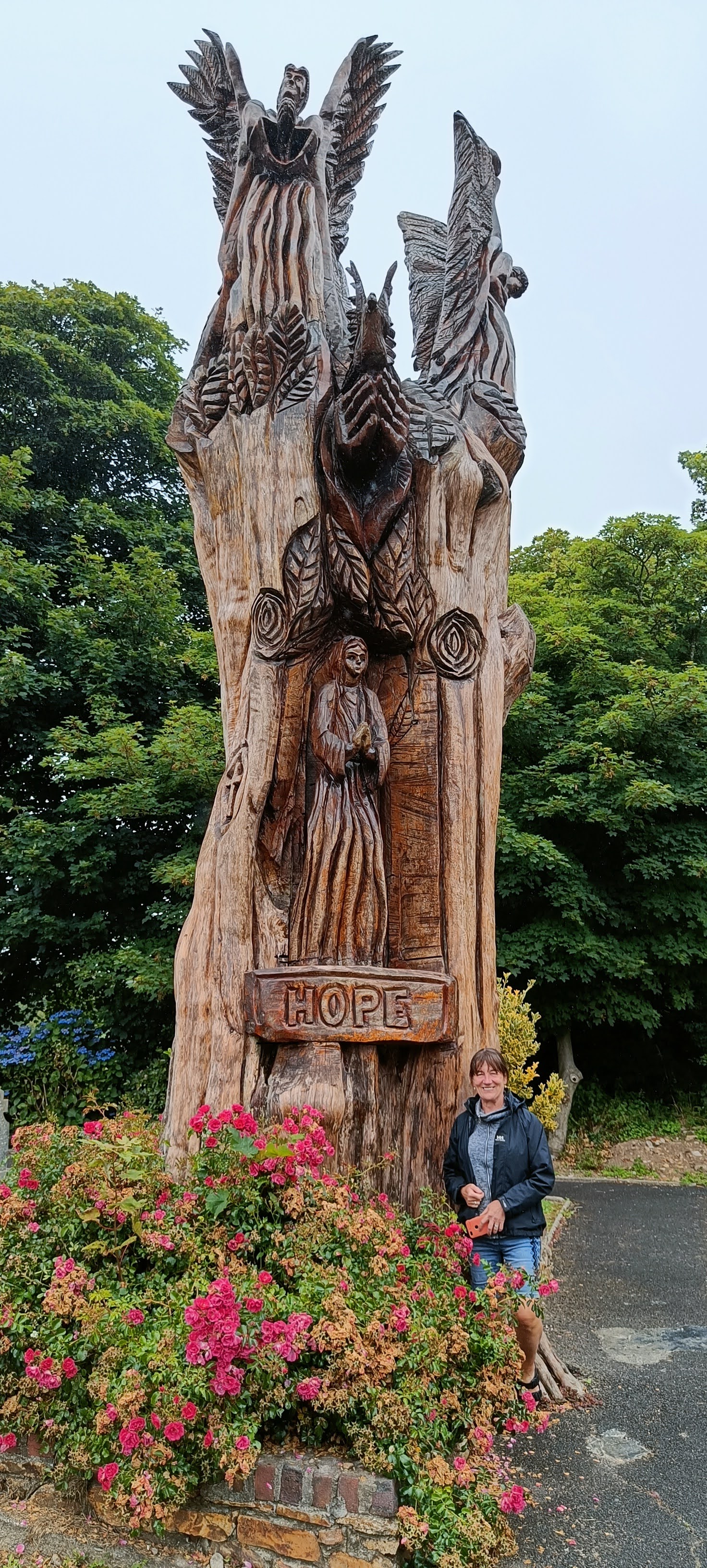
The Angel Of Fenor

Our first stop was Fenor, a small village known for its boardwalk bog walk (a naturally regenerating fen habitat and a haven for wildlife). There’s also an incredible wood sculpture in the church yard – The Angel of Fenor, carved from a tree trunk. We dodged the rain at Mother McHughs, a cosy traditional pub that was packed with a good-humoured stag party on a pub crawl. Although it was only about 5,30pm, it wasn’t their first stop of the day and the noise level was deafening – dropped dramatically when they left, leaving unfinished pints but their bus was leaving and they had another ten pubs to go.

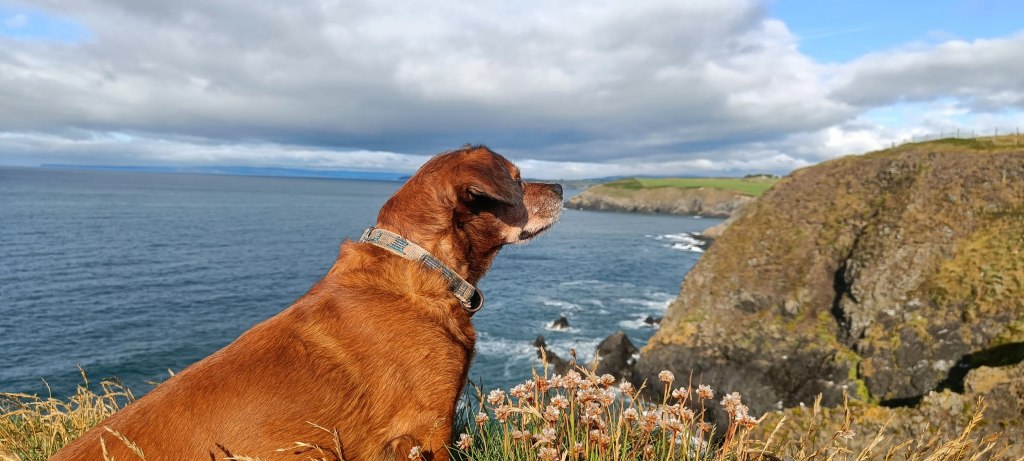
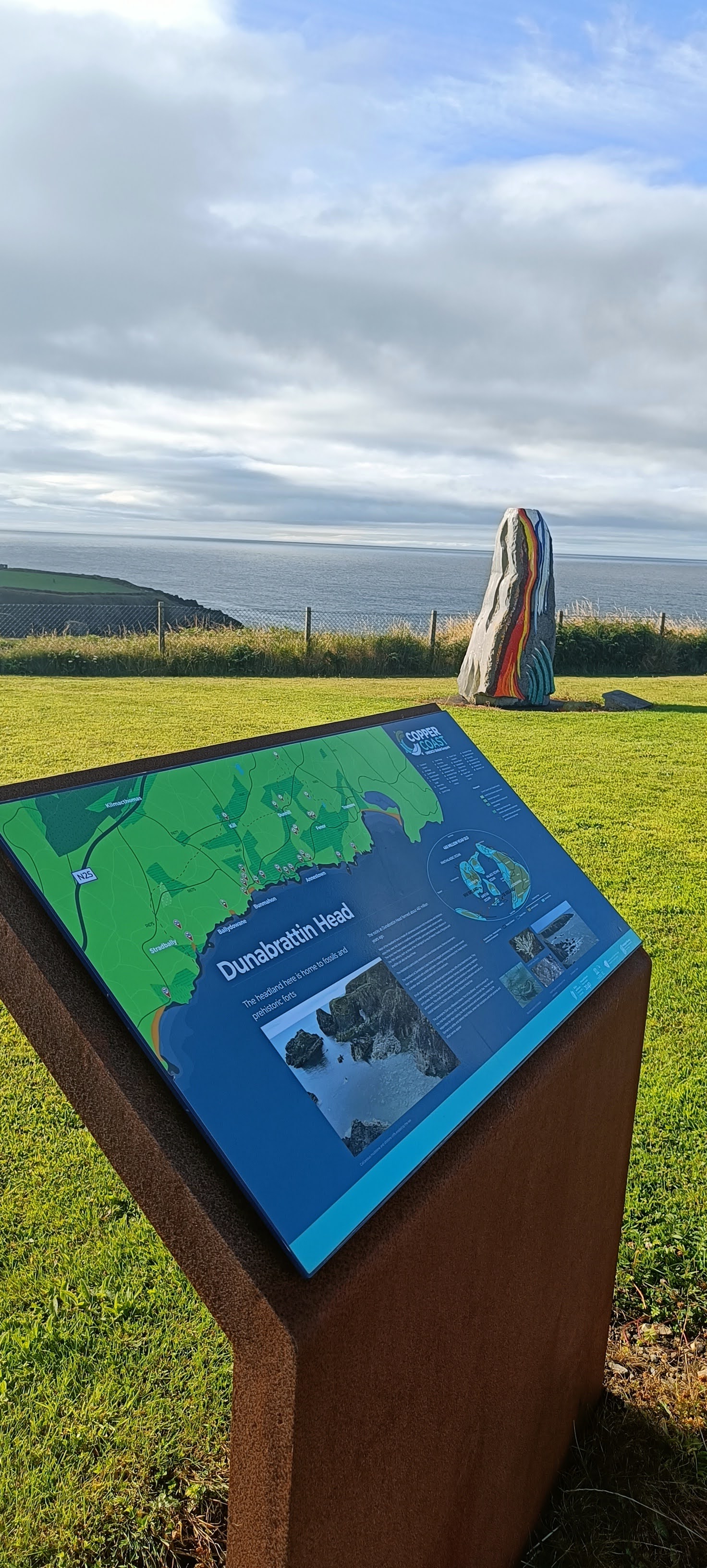
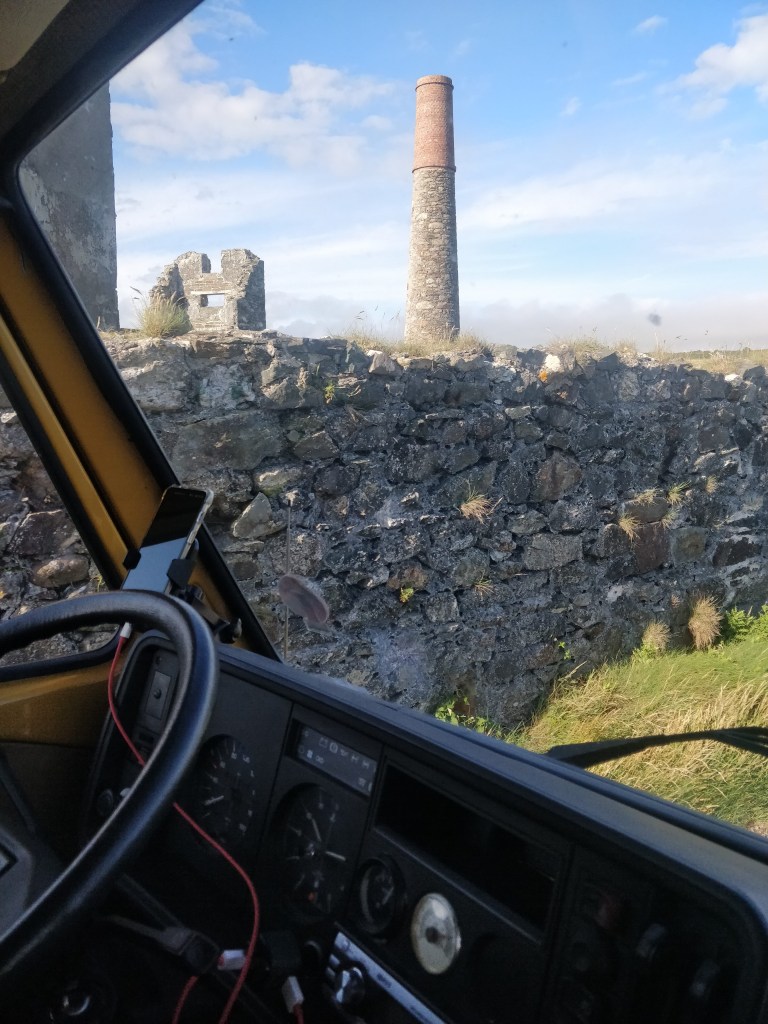
We parked for the night at the viewing point at Dunbrattin Head, a headland of fossils and prehistoric forts. There should have been stunning views but the rain was running down the windscreen and the wind was buffeting the campervan and it felt strangely like being in a boat out at sea. But it was somehow soothing, we slept well and in the morning (Sunday was a spectacularly beautiful day), the views were revealed as a landscape shaped by fire and ice and sea,

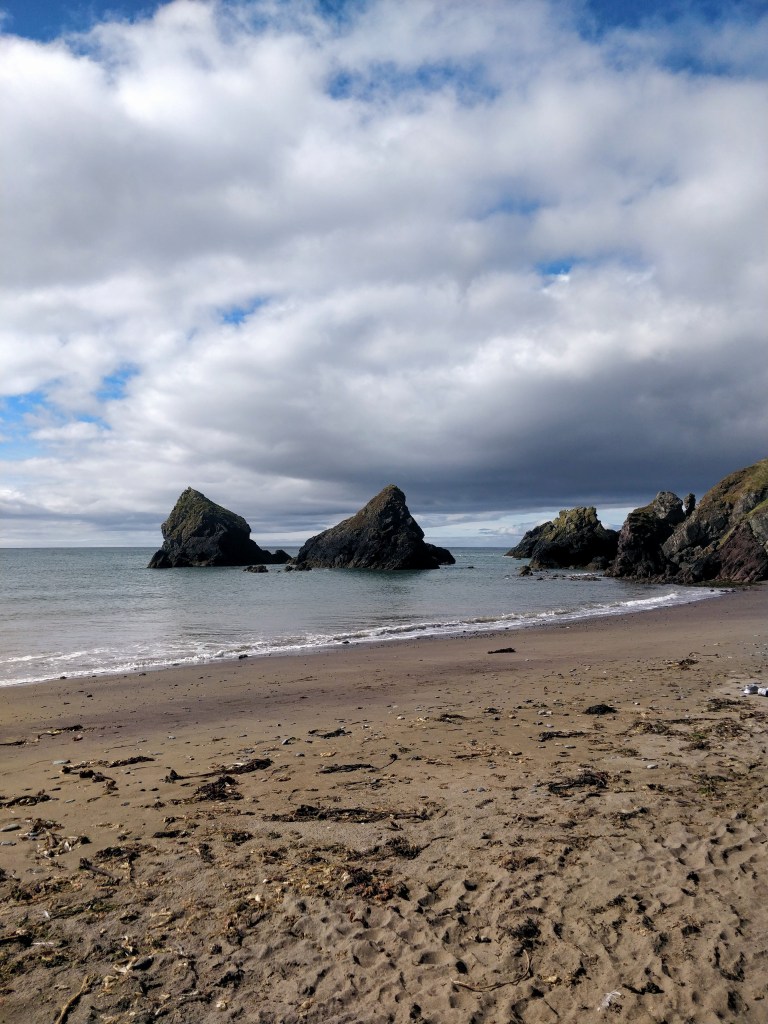
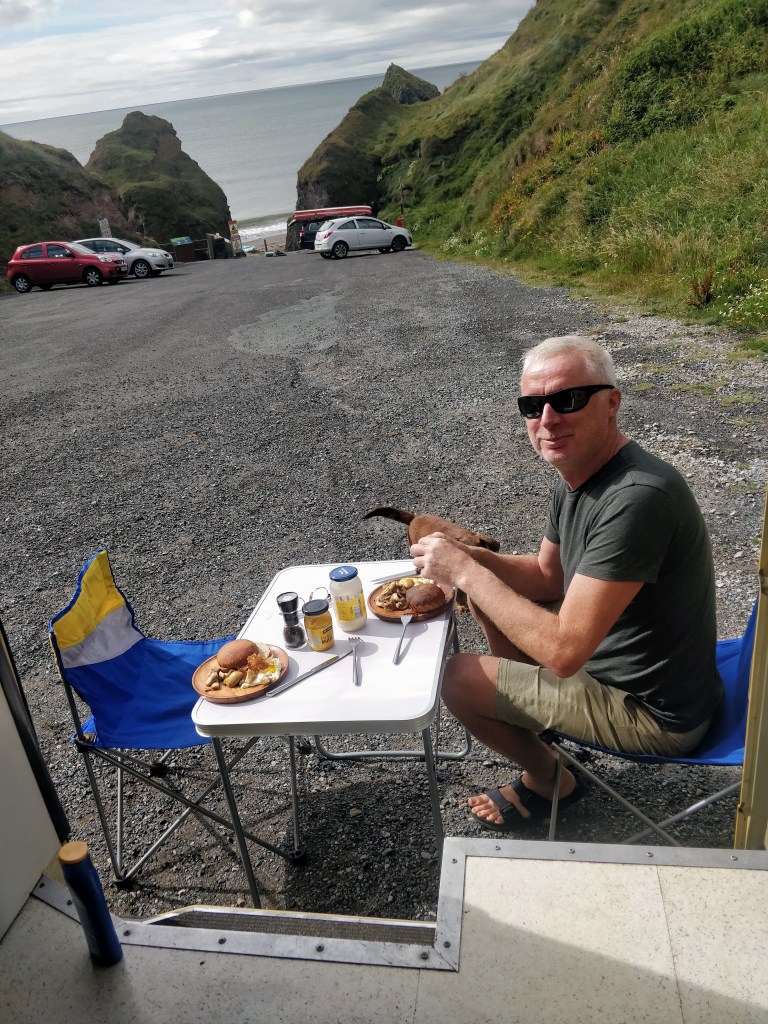
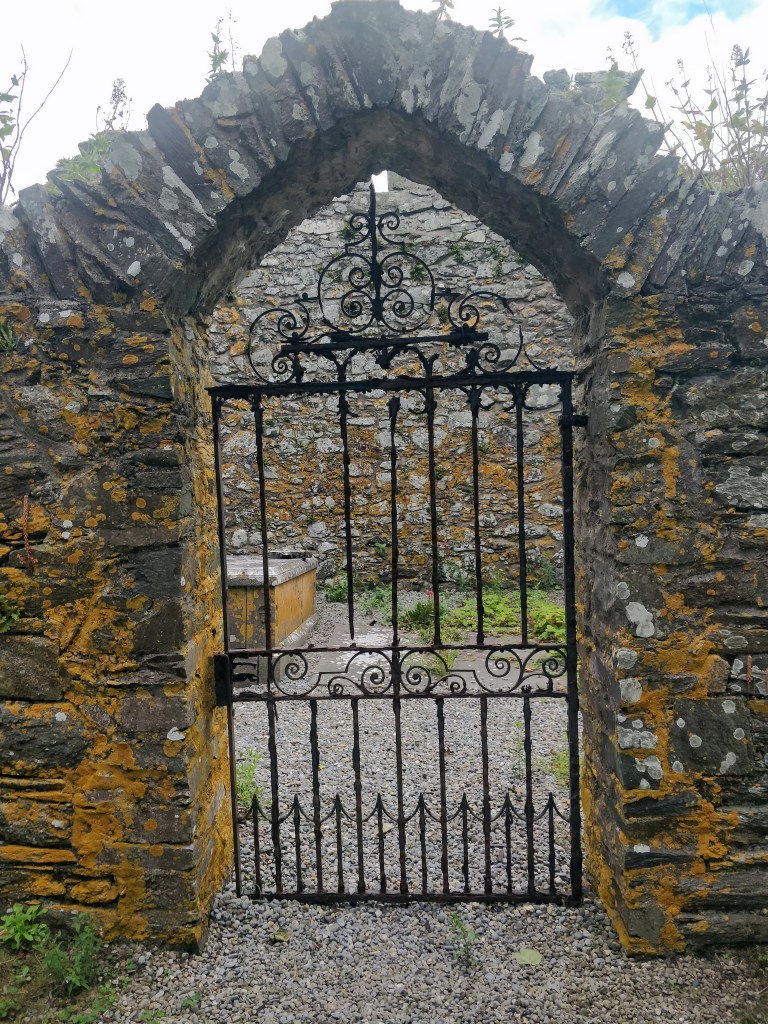
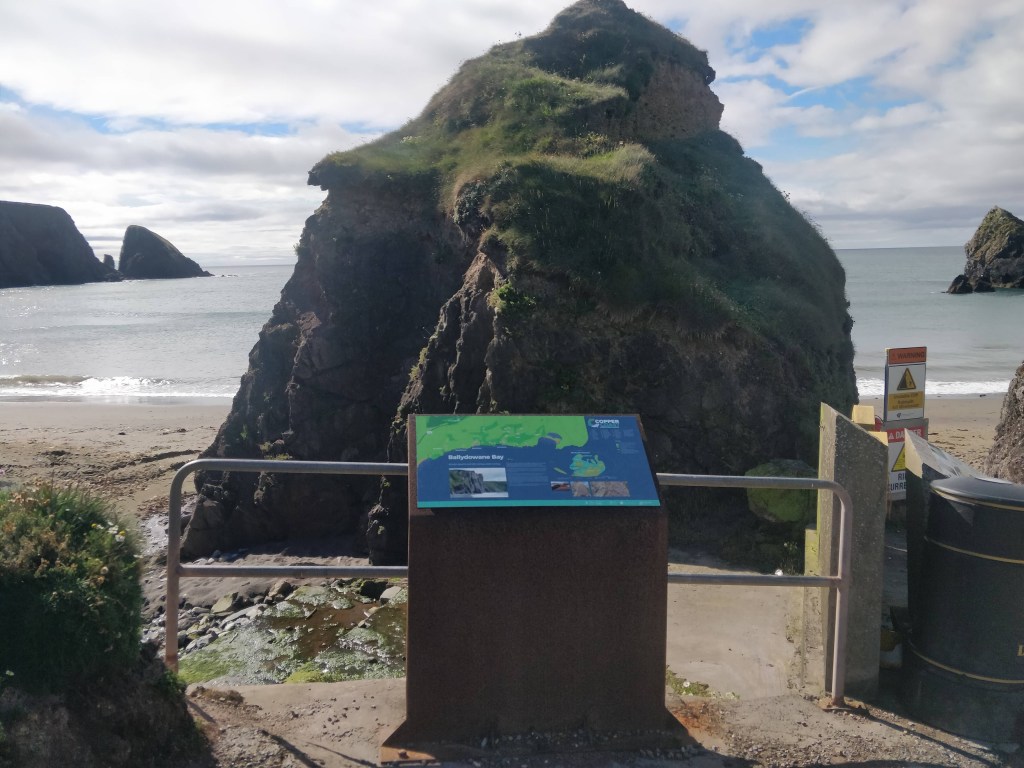
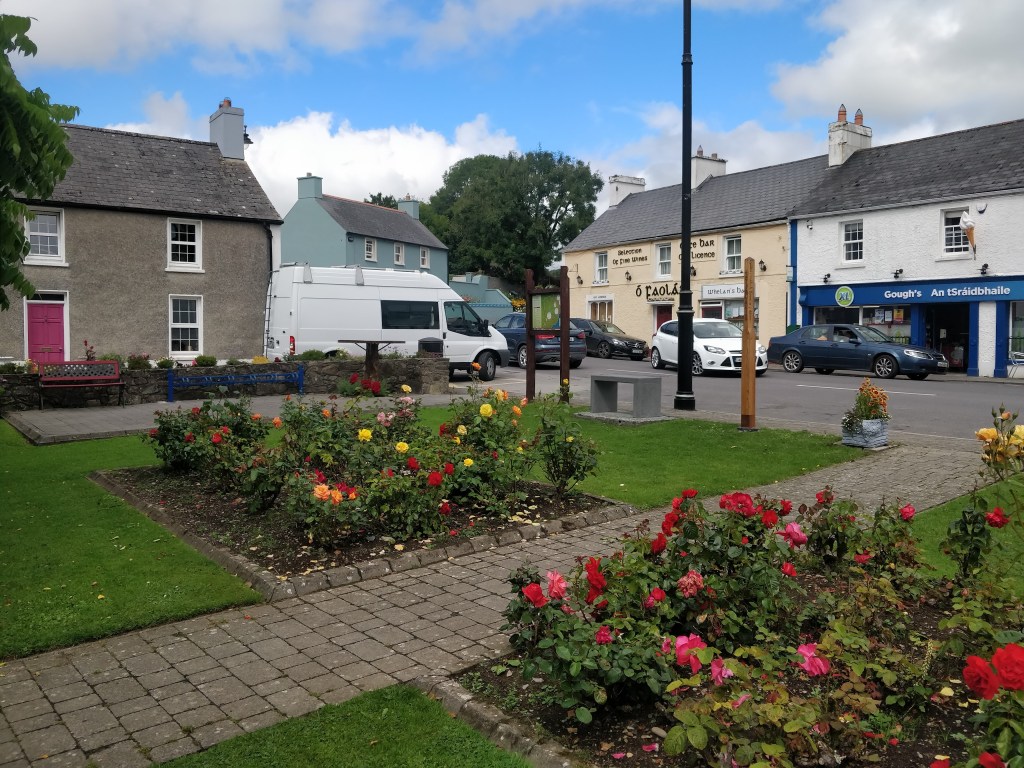
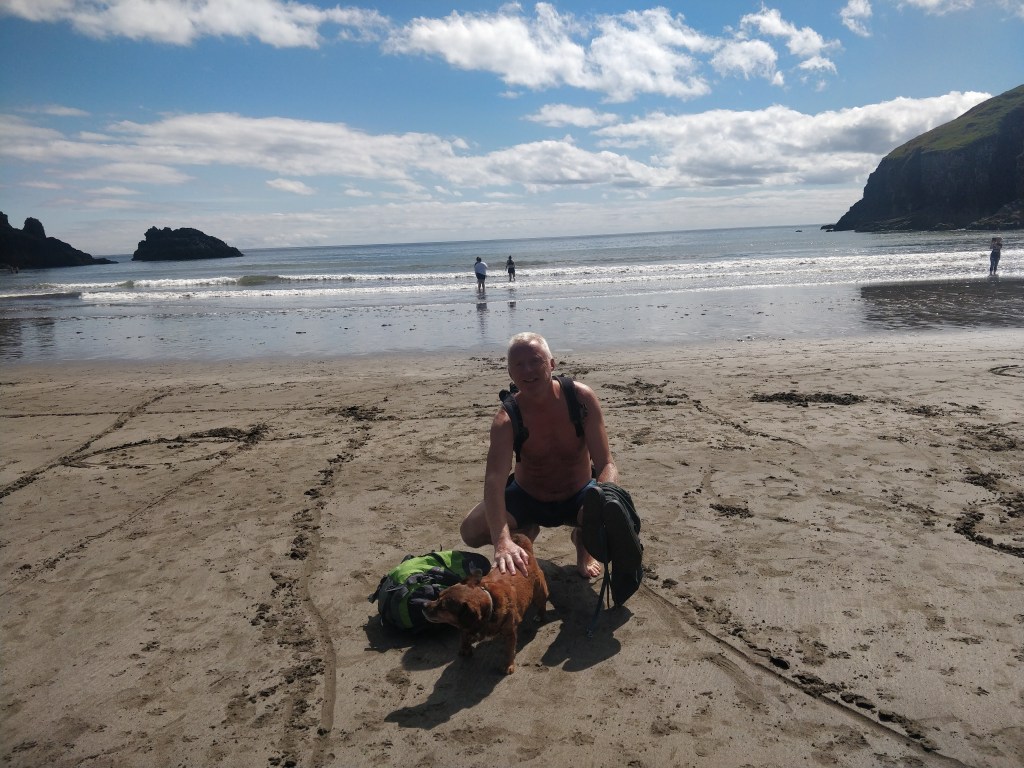
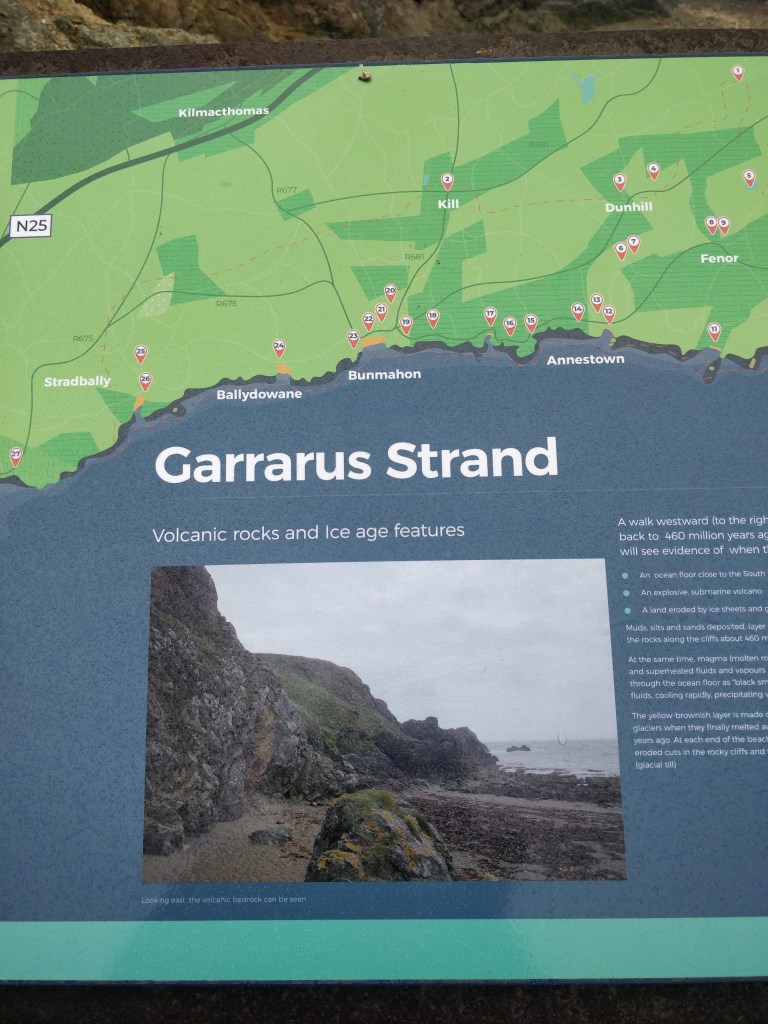
We drove to Ballydowane Bay and after a walk on the beach, we cooked up a breakfast and ate sitting outside the van in the sunshine. Fried eggs never tasted so good! There are wonderful storyboards at the beaches on the Copper Coast and the walk on Ballydowane was described as a ‘500m walk through 460 million years of Earth history when this part of Ireland was a volcano on a deep ocean floor, a dessert near the Equator, a land savaged by ice sheets and glaciers’. Sheer Magic We drove by rugged Ballyvooney Cove under a dramatic headland and on to Stradbally, a picturesque village with a lovely square, brightly painted houses and some thatched dwellings. We wandered around the old graveyard on the hill with the ruined church and ancient gravestones tiling forward – an air of tranquillity on a warm sleepy summer Sunday. The tide was way out in Stradbally Cove, a narrow sandy beach with steep wooded hills on either side and a river flowing at one side down to the sea – it was quite a walk to go for a swim. A field above the beach was full of tents and colourful flags with a big marquee and music playing – the Lithuania Irish Society were having a camping get-together .

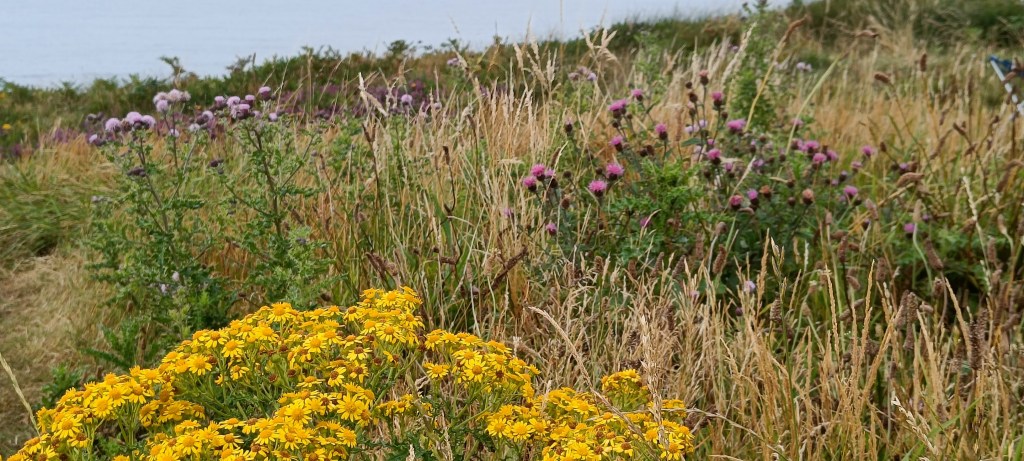
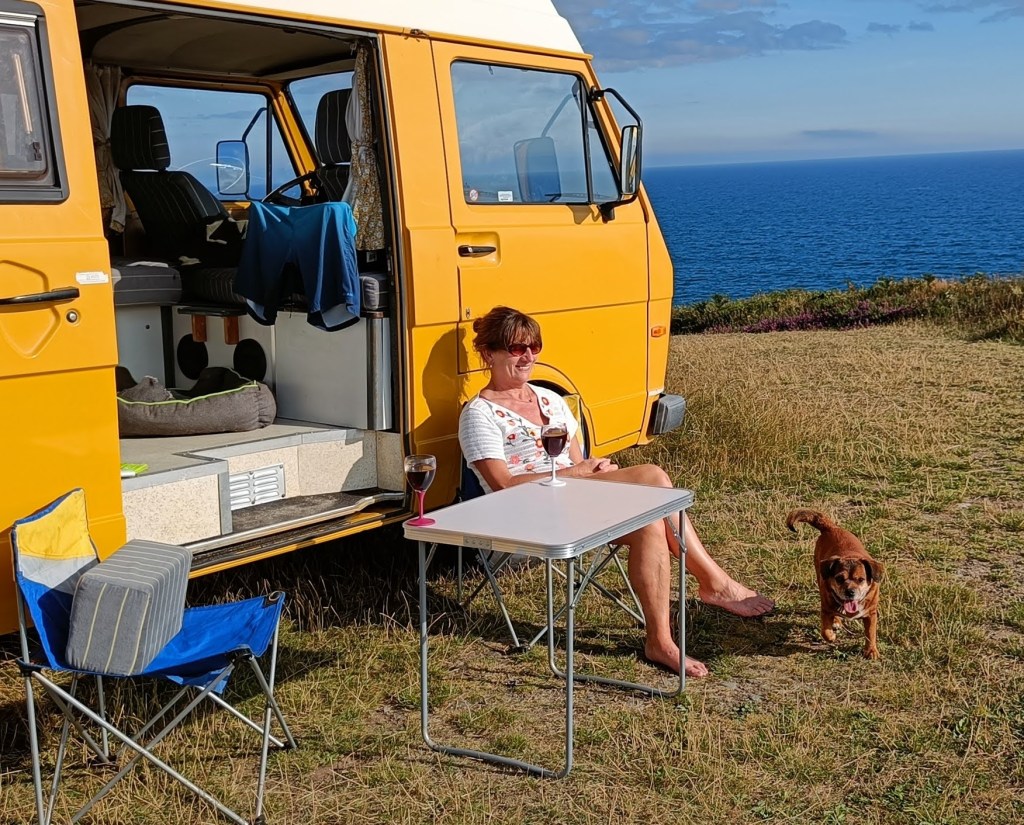
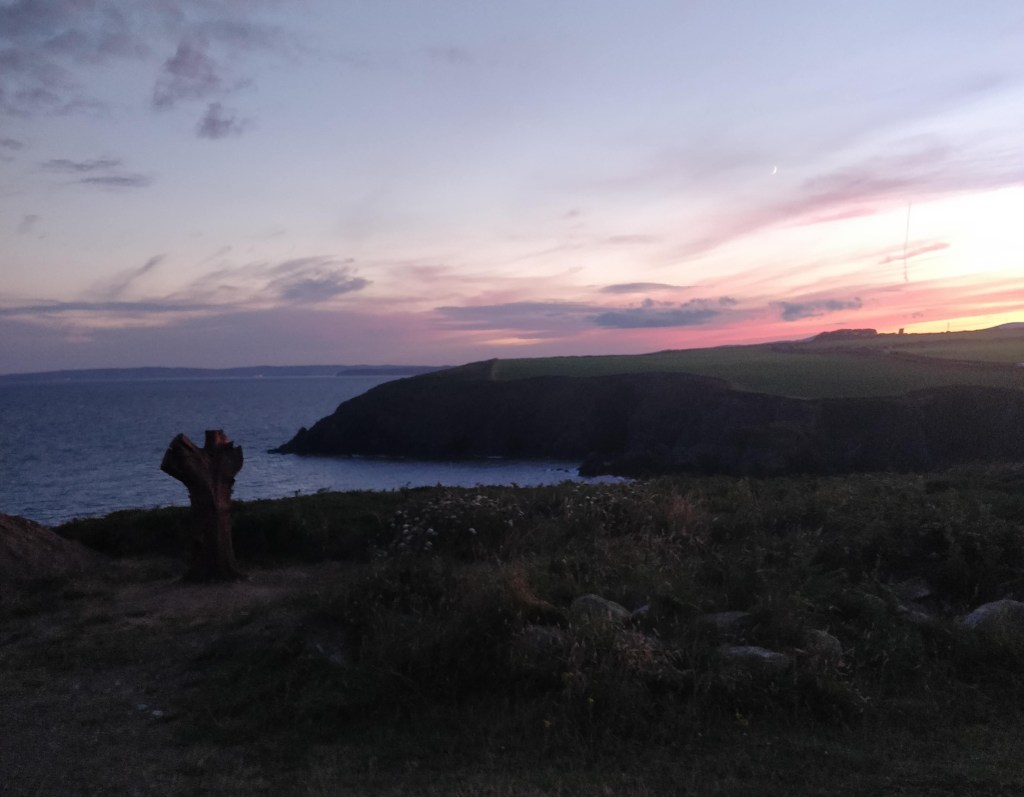
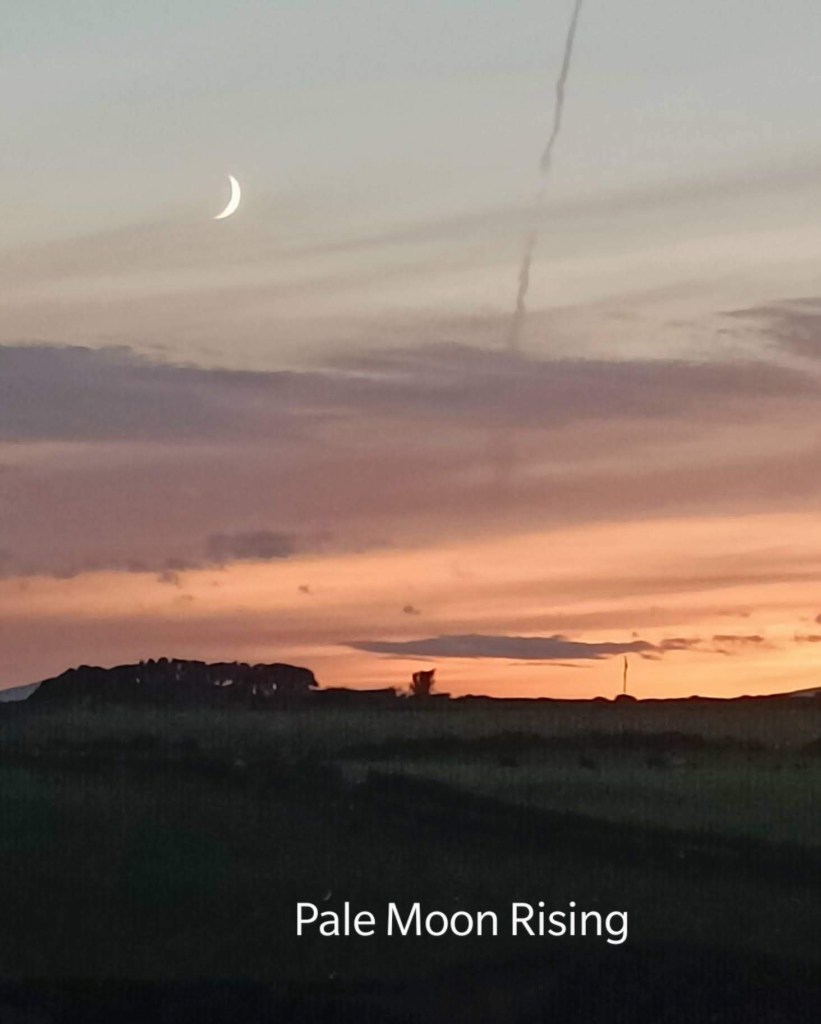
We could have headed on to Clonea Strand and Dungarvan but instead we turned back along the coast to Bunmahon. You get a different perspective when going in the opposite direction and the views were even more spectacular if anything. Bunmahon was the centre of the copper mining in the nineteenth century and has a really informative Geopark Visitor Century (we didn’t visit this time but have been there before) and a geopark garden where the rocks are arranged like a walk through time…which seems infinite here. The beach is long and lovely with a boardwalk over the dunes but its mainly a surfing beach – beware of dangerous rip currents. We relaxed in the beer garden in the Engine Room Bar/ Café in Bunmahon and after some food and a drink, we parked Spuds for the night on the hill among the wildflowers above Kilmurrin Strand, another gorgeous beach. We watched the sun go down and the moon come up and marvelled at the comfort and flexibility of travelling in a small campervan like Spuds, the ability to pull in almost anywhere and really enjoy nature -and a glass of wine- in stunning surroundings, truly a 5 star experience.

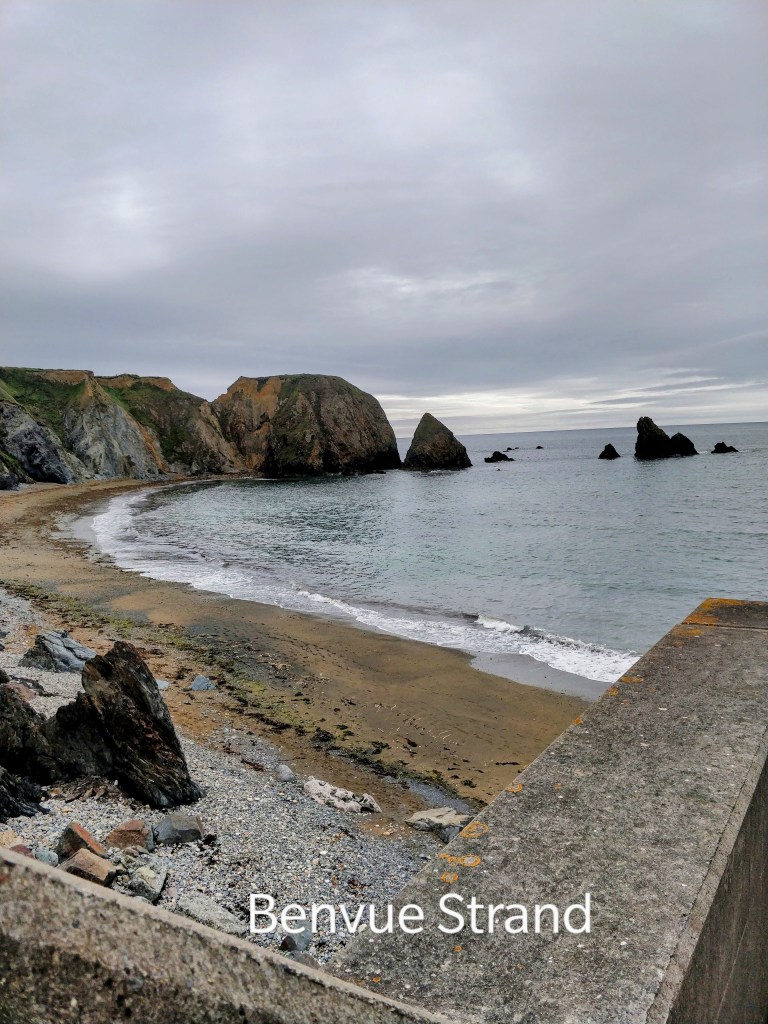
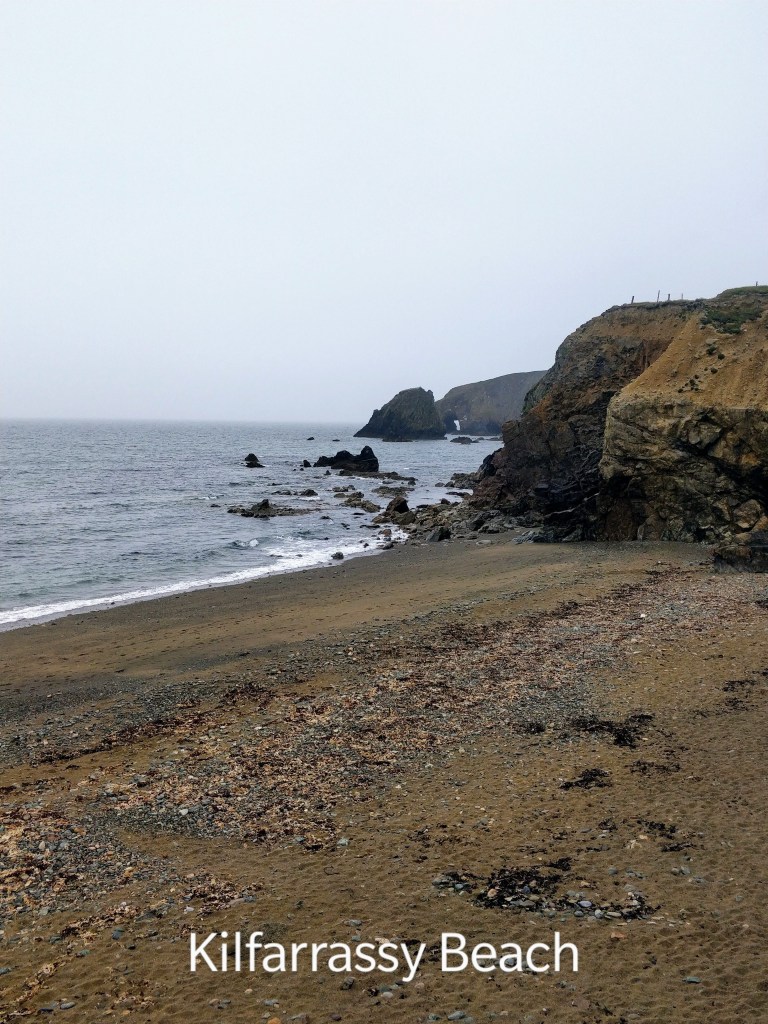
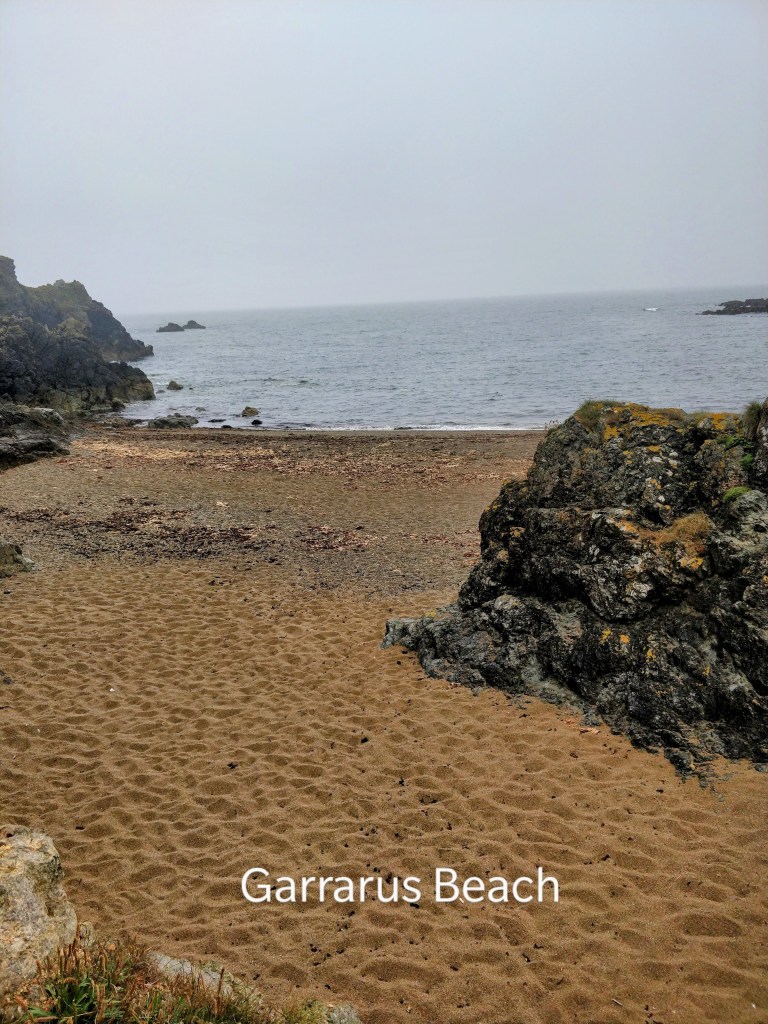
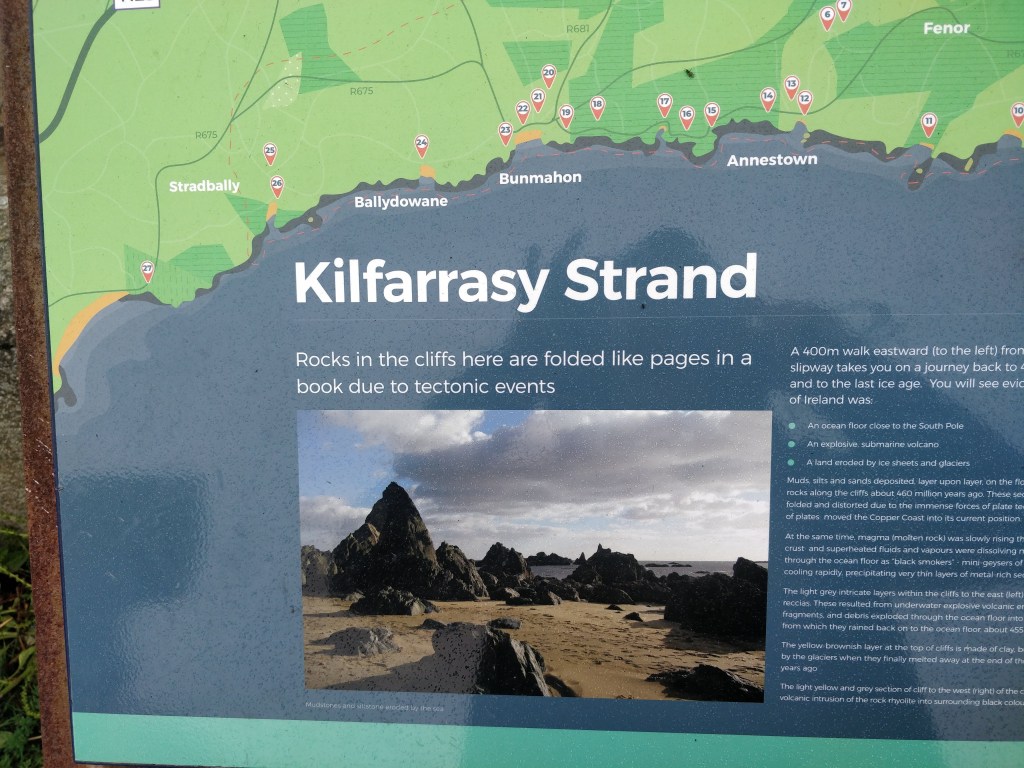
The following morning after a swim in Kilmurrin beach, we headed on to Benvue Strand, another beautiful beach and on to Kilfarrasy Strand where the storyboard says that ‘the rocks in the cliffs here are folded like pages in a book due to tectonic events’ The landscape is as poetic as the language of the storyboards in this unique area. We really enjoyed our slow, meandering 2 night trip along the Copper Coast. It shows that you don’t always have to travel far – sometimes the most amazing destinations are just down the road.

Copper Coast – Waterford ‘s Treasure

The Yellow Odyssey – Mayo by campervan

A Campervan called Spuds

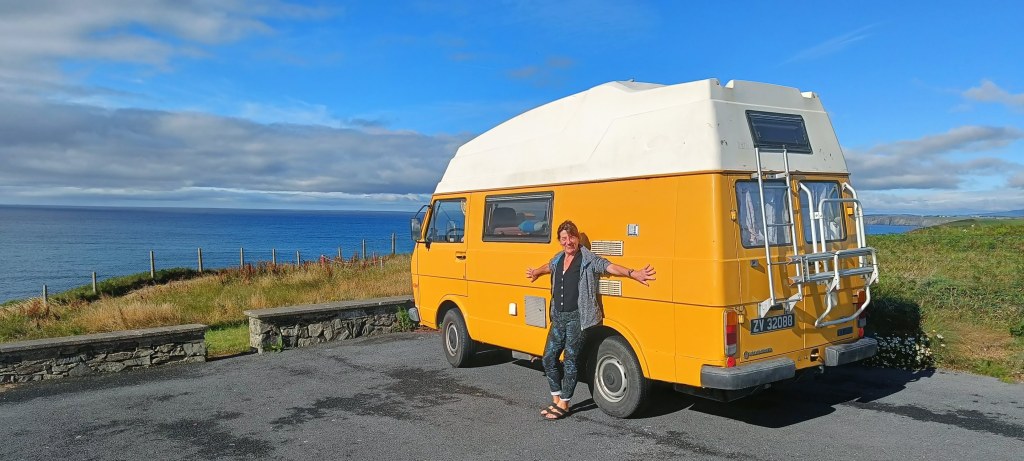
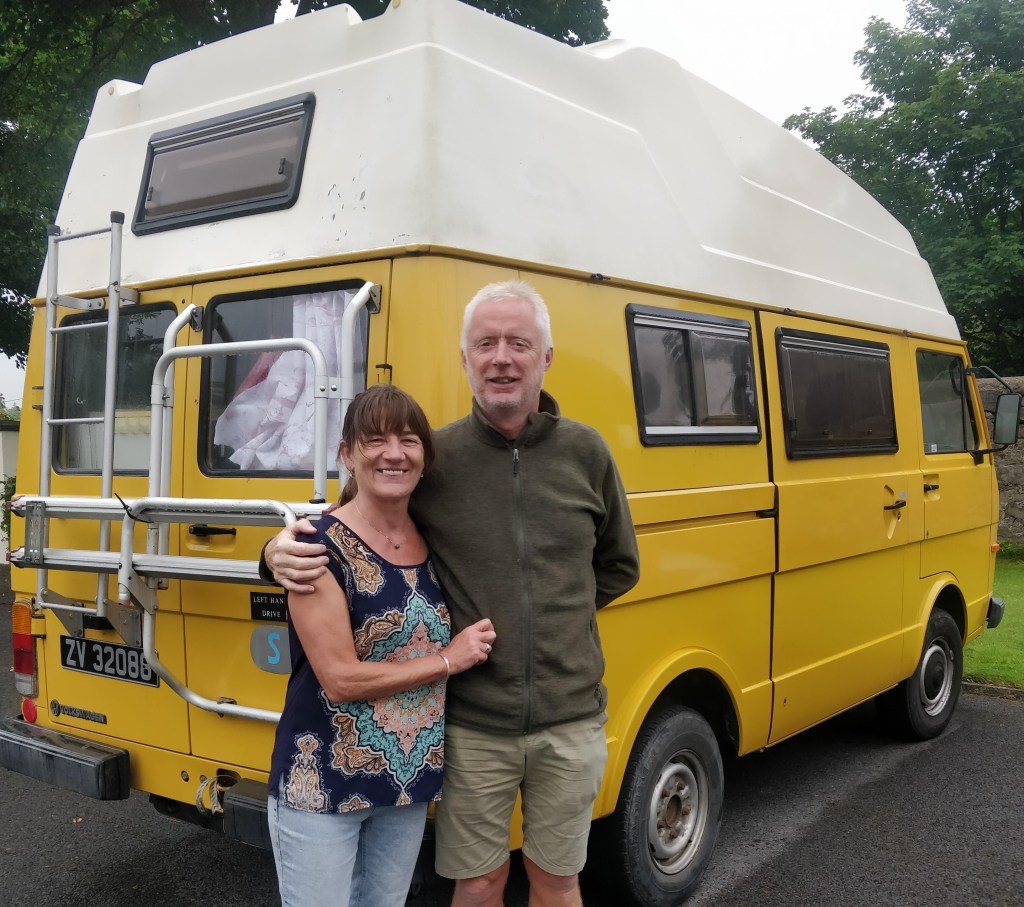
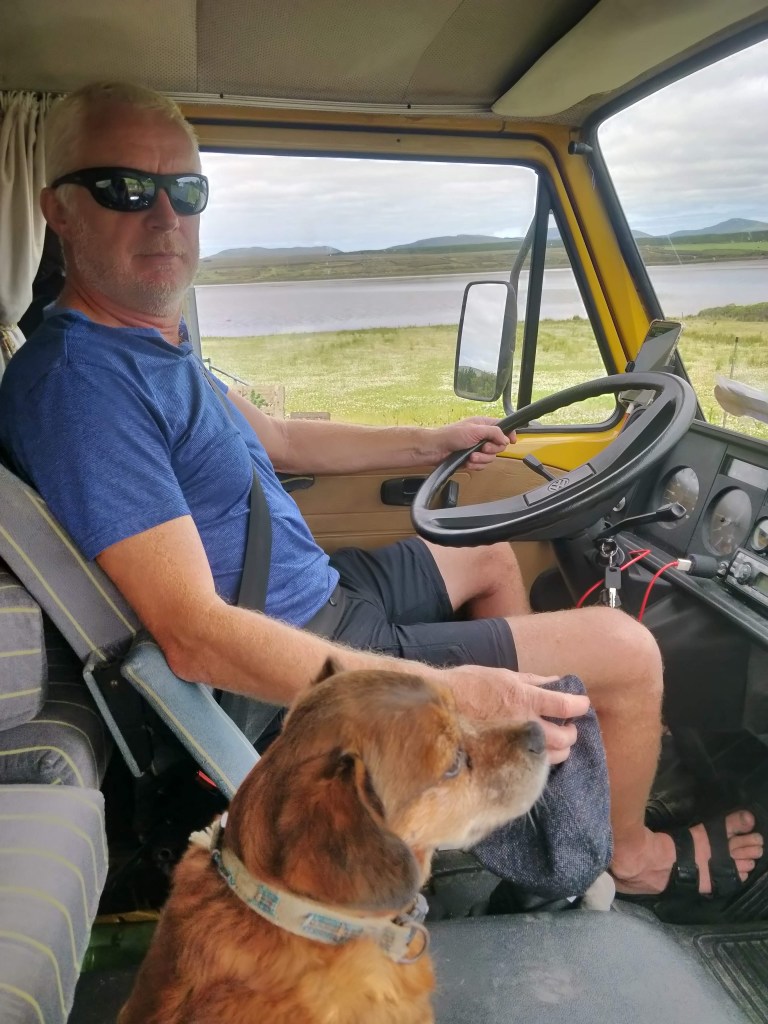
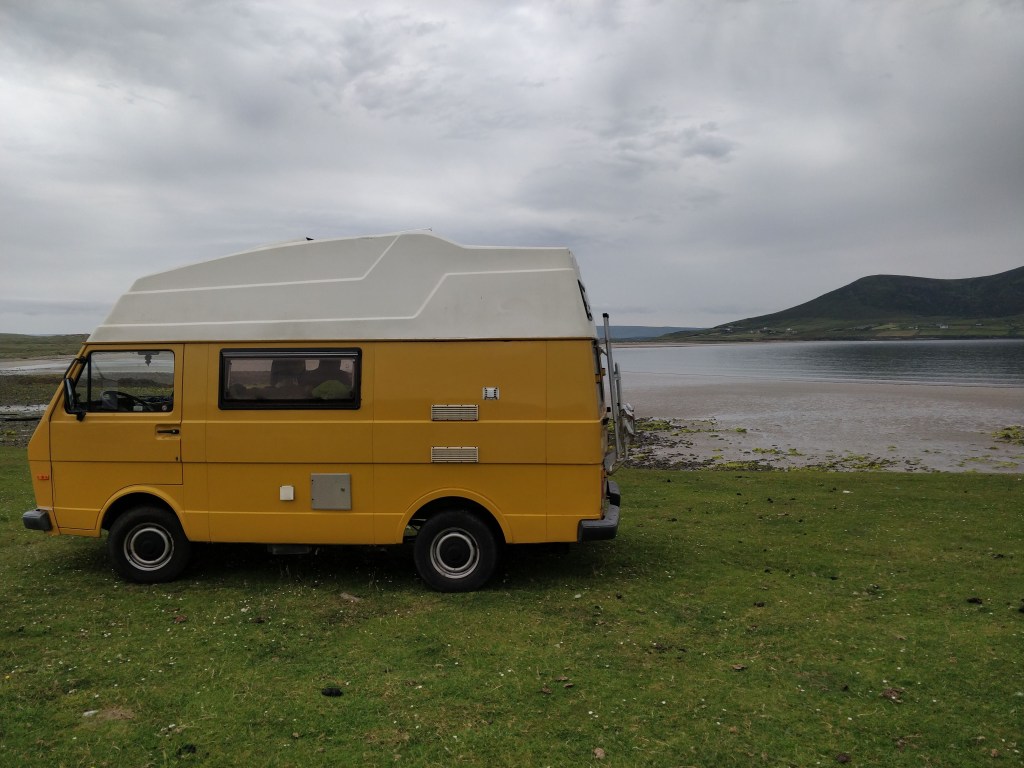
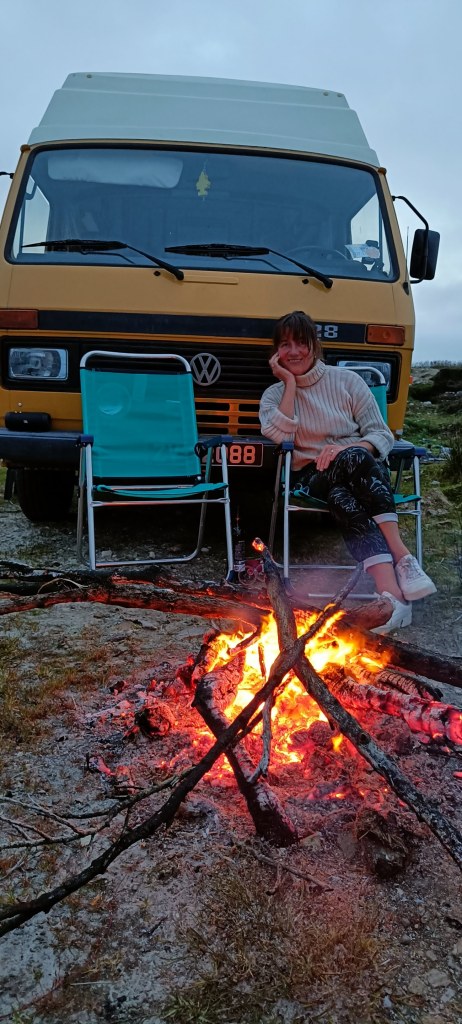
Have you ever wondered what it would be like to travel in a campervan? Although we have been long-time campers of the ‘pitch a tent’ variety, we had never toured in a campervan and we were curious. We were fortunate to borrow one (thanks, Alan), a 1991 left-hand drive VW model LT28 called Spuds, complete with cooker, fridge, pull-out bed, toilet and shower.

Spuds was parked in Ballyshannon where we were welcomed by Bernie and Michael (Alan’s parents). The following morning was atmospherically misty – damp with shades of grey as the three of us (Caoimhin, our dog, Rolo and I) set off in Spuds, our home for a week or so. We had camped in a tent around Donegal last year, dressed in jumpers and jackets whilst the rest of the country sweltered in a July heatwave, so this time, we pointed Spuds south towards Mayo with the hope of better weather and the lure of places that we had never visited before. Driving Spuds through Sligo and on westwards through Ballina, Caoimhin got acquainted with left hand driving. The views were great from such a high perch and the scenery unrolled in front of us like a painted canvas, from mountains and sea, through green and mainly flat farm fields with rivers and lakes.  At Crossmolina, the lampposts both coming into and leaving the village had posters on them with REPENT in large letters. We kept going on to Belmullet.

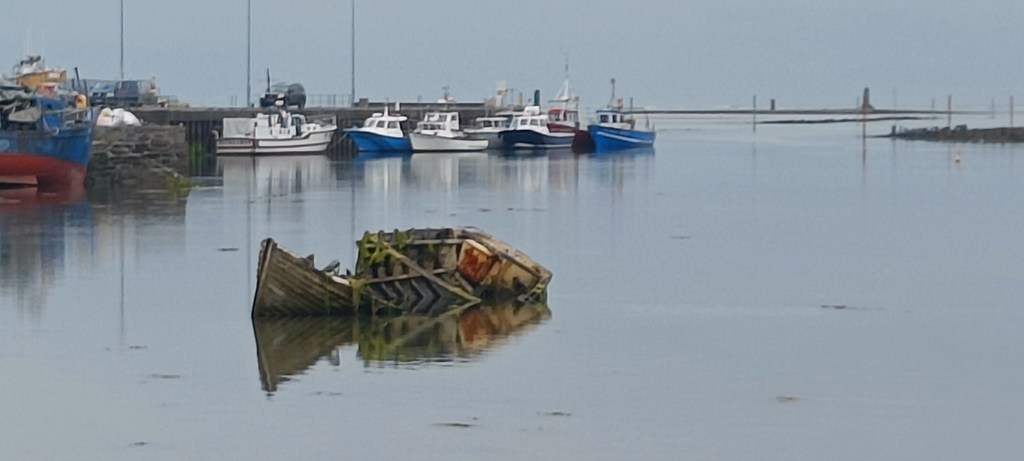
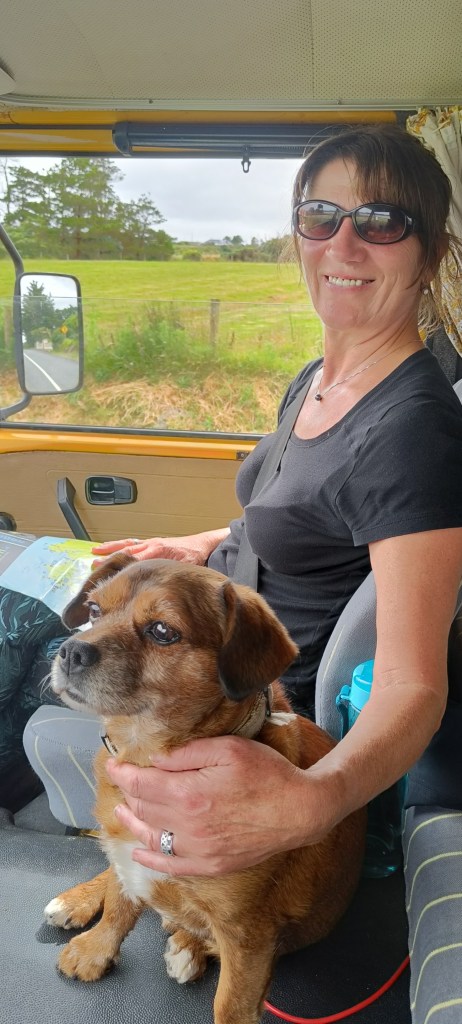
A visit to the tourist office in Belmullet left us armed with maps and advice from Christina, who was extremely helpful and enthusiastic. She recommended a swim in the tidal pools in the town but when we saw a couple of blue-tinged children shivering at the edge, we changed our minds about a dip in the wind ruffled waters. A phone app (Park4the night) told us of places to park the campervan overnight without issue. On our first night, we parked on the quays in Belmullet overlooking the water and some dry docked boats.. The bed in Spuds was extremely comfortable and we woke early to the cry of seabirds. Curiosity bought a fisherman over to chat in the morning – wondering where we were from, where we were going. He lamented the demise of Irish fishing and the rising price of everything.  Maybe it was the sunny yellow colour of Spuds or the left hand drive with Swedish plates or maybe it was the sight of Rolo bounding out of the back or looking out the window, but people smiled and laughed and waved at us all the time….or just the natural friendliness of Mayo people It was a happy van⭐

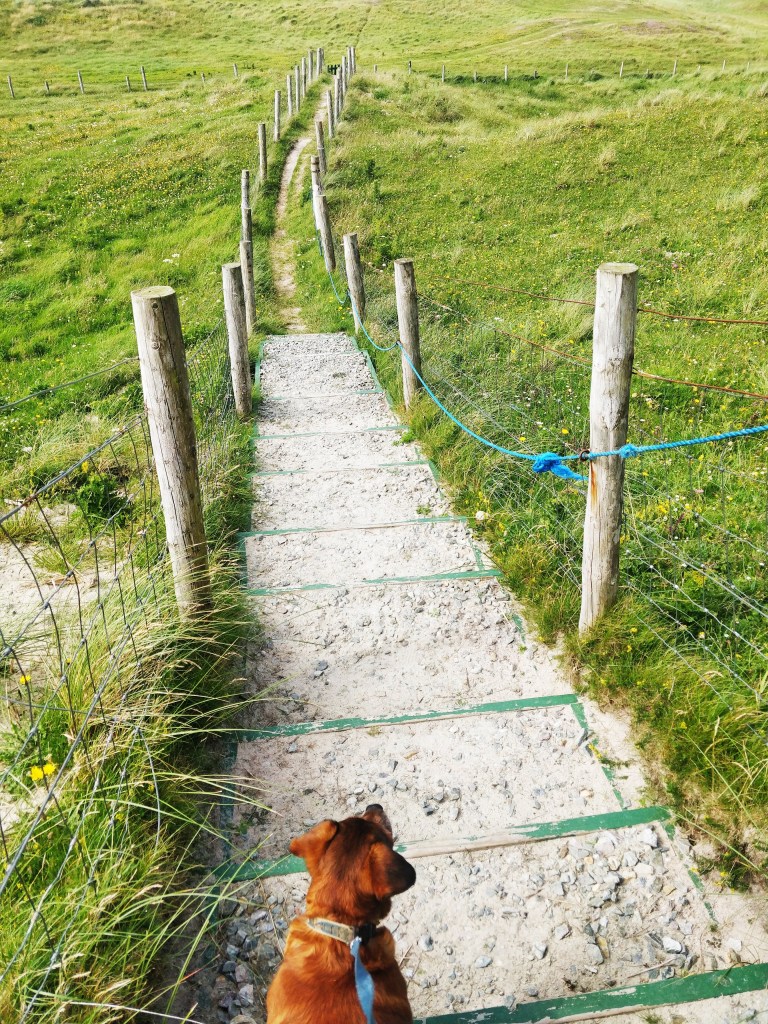
After a substantial breakfast at An Builin Blasta, where the small breakfast was a huge fry-up with pots of tea and plates of bread, we left Belmullet and headed around the Mullet peninsula. We trekked the Cross Loop, a glorious short walk where ‘scenery and legend meet’ according to the mayo tourist website and honestly, it was true. This was a mixture of beach walking, through sand dunes, past ancient graveyards, farmland and lakeside with carpets of wildflowers (the smell of the flowering thyme was gorgeous). There were views of Inishglora, the little island where legend has it that the bodies of the Children of Lir were buried. We camped by Cross Lake and watched swans drift by just before sunset (which was just a little surreal in the context of the Children of Lir who were turned into swans by their evil stepmother😮). Mayo County Council have done a wonderful job in installing public toilets (portaloos) along most of the walks/beaches and there were picnic tables even in fairly isolated places. Part of the Cross Loop trail was signed as ‘the most westerly parkrun’ – you know that you are on the edge.

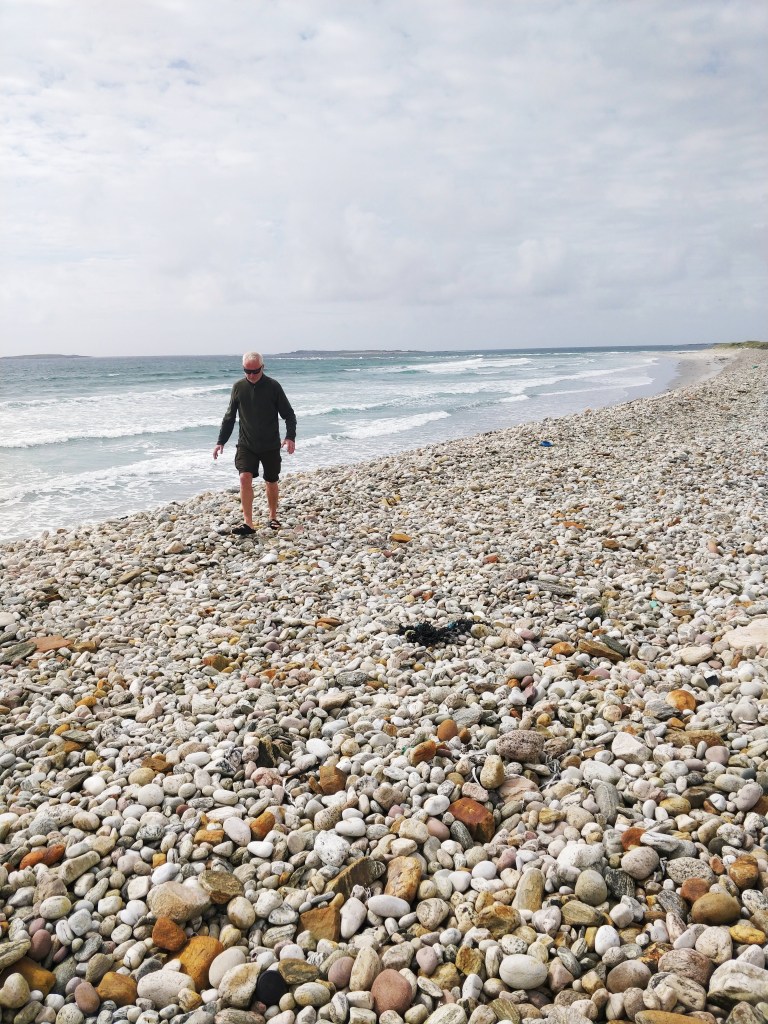
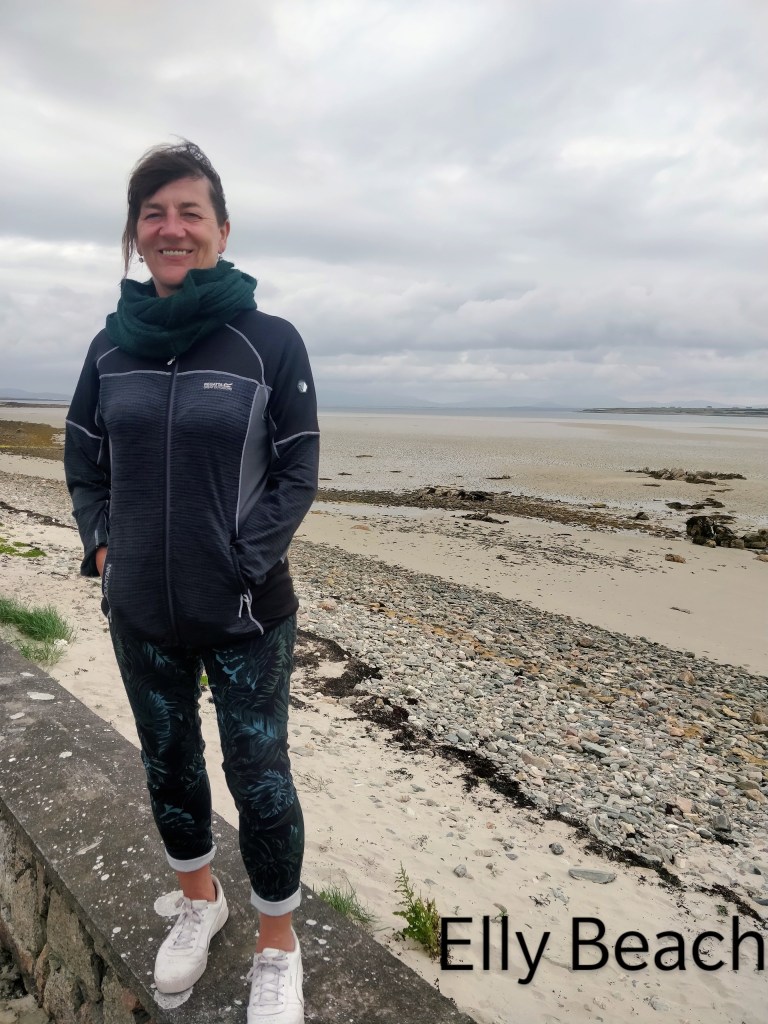
Blacksod Bay at the southern end of the Mullet Peninsula is synonymous with tragedy down the ages – lives lost from currachs, fishing boats, Armada ships and more recently, the rescue helicopter R116. So much tragedy in such a beautiful isolated place. After a tour of the lighthouse, we parked up the van and watched a dozen dolphins somersaulting in the water. When the tide came in, we were so close to the lapping water that it almost felt like we were on a boat. There were beautiful beaches on Mullet, Elly Bay was long and white and blue flagged and Tra Mullach Rua was also lovely. At the north end of the peninsula, we hiked the Erris Head Loop walk with its boardwalks, rough paths and stunning sea views. The wind was light on a benign July day, calm with the bleating of sheep – so different to most of the time when this area is battered by Atlantic storms.

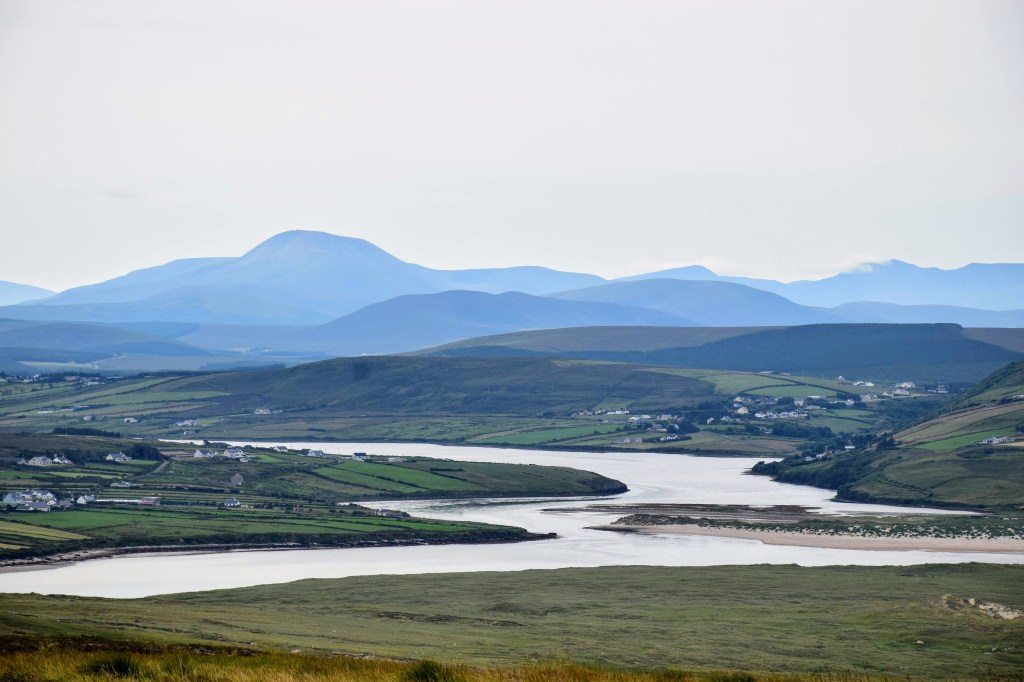
Sunshine was scarce (despite all talks of a heatwave) along the North Mayo coast but there was a beautiful quality to the light – the clouds on the water made so many shimmering shades of silver and grey – and the sand on the many beaches was so ghostly pale. We camped out high, on the bog on Benwee head with a mesmerising vista spread before us of sea and inlets and the interplay of light and shade. There were the piping pipits flying among the bog cotton and the back-breaking work of the bog- all just small holdings working by hand.

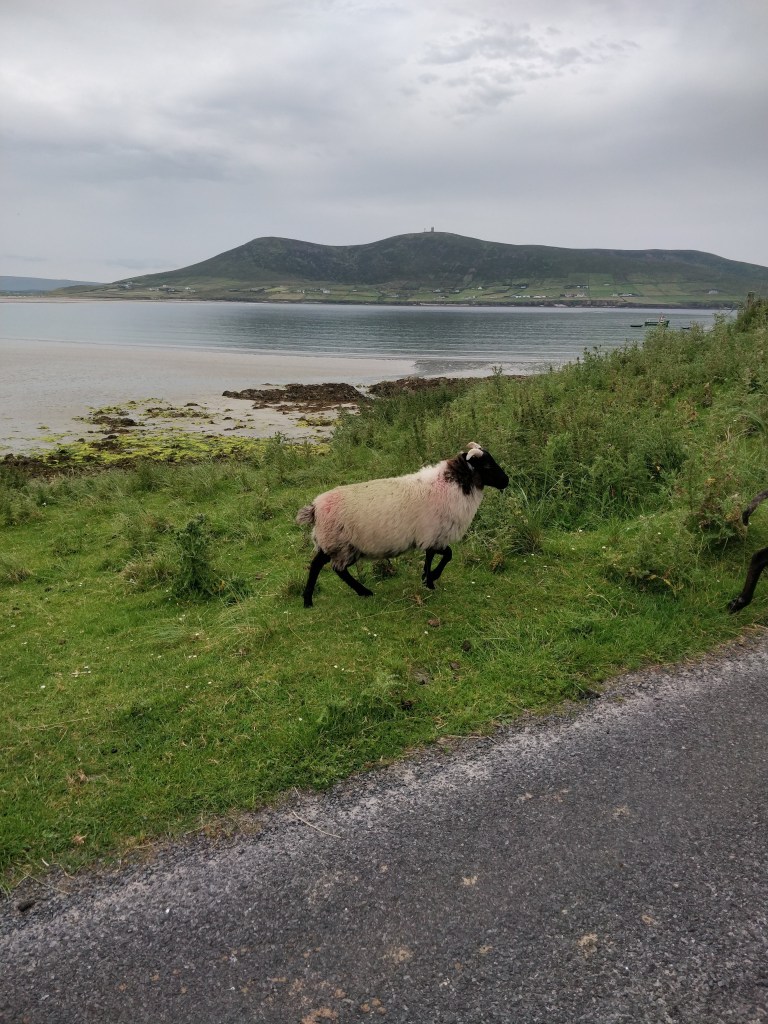
We swam in cold clear water at Rinroe Beach, a really beautiful spot with ample grassy patches for free camping and a dozen potable loos and lots of sheep ambling by…..but nothings else so come prepared with food and supplies. We drove on from there through remote wild countryside with bog and sheep and scarcely a person to be seen. At the Ceide Field centre, we were enthralled by the history hidden beneath our feet, the ancient world’s oldest and most extensive field system. The centre was very informative although the midges were out in force on the outdoor walking tour- it was difficult to concentrate when blizzards (no exaggeration) of insects were attacking any exposed skin.

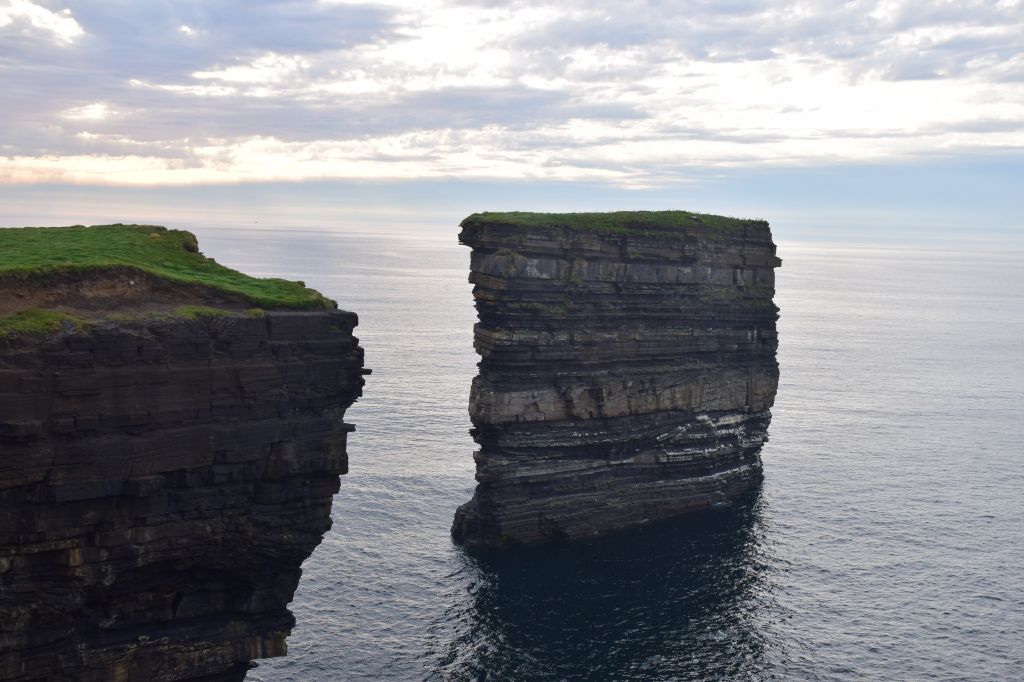
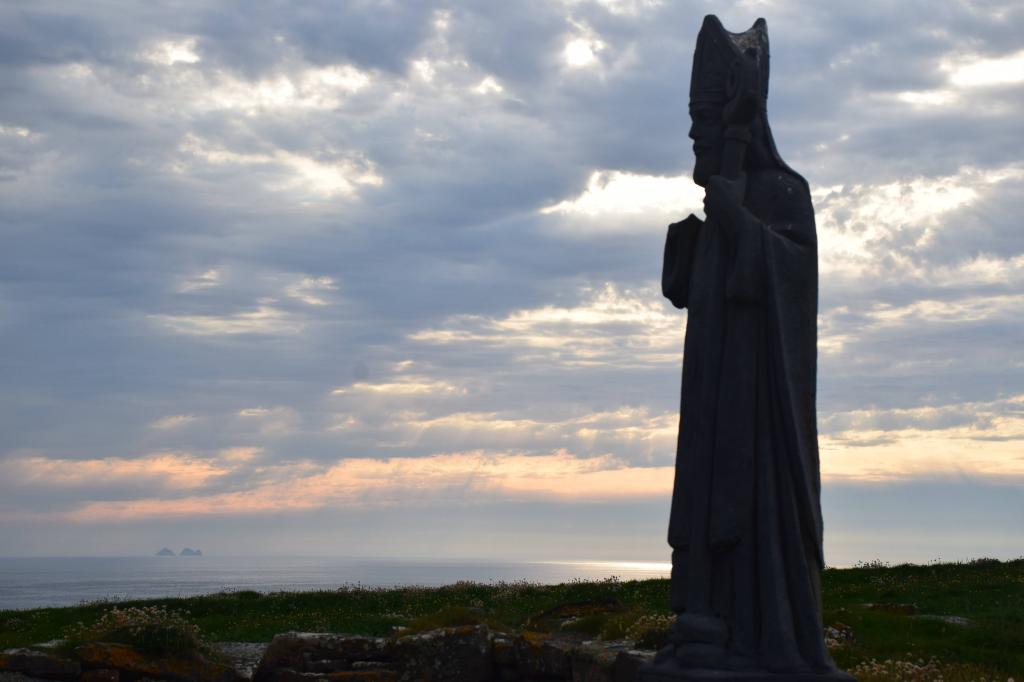
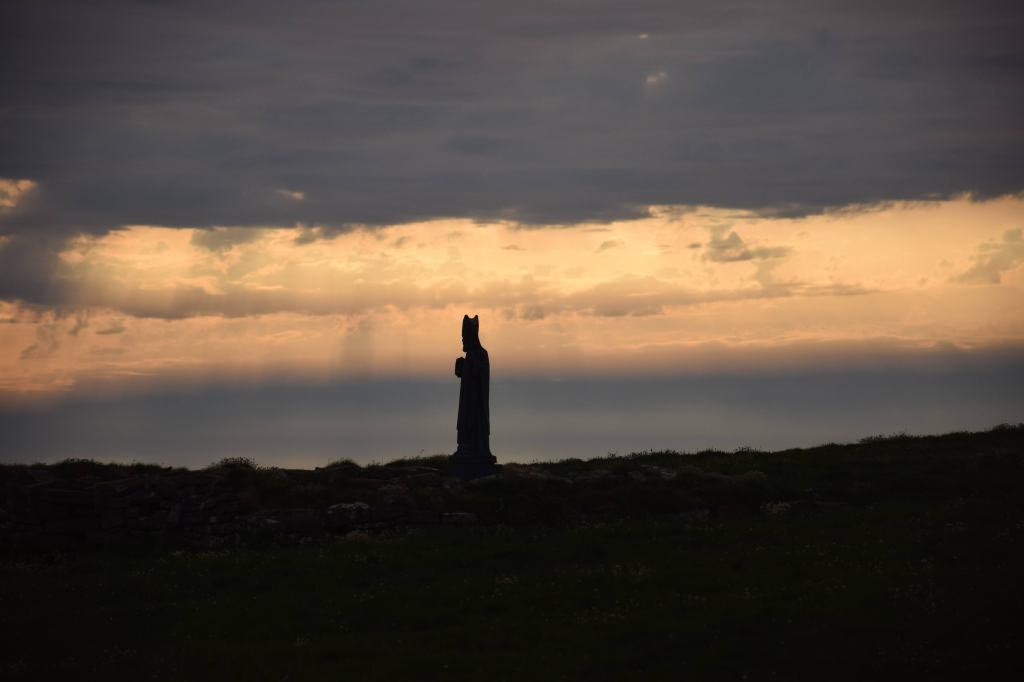
We parked up at Downpatrick Head, a turbulent spot with crashing waves and views of the impressive sea stack, Fort Briste (Broken Fort), the spot that St Patrick is supposed to have banished the snakes to(the only problem is that Fort Briste broke away from the land about eight hundred years after Patrick’s death!) We admired the the sculpture around the surging blowhole – the installation was a railing and effective safety barrier but made to look like organ pipes playing the symphony of the sea – innovative, effective and a great example of art and engineering. The clifftop was carpeted in spongy vivid green moss and when the sun went down, a statue of St Patrick was silhouetted against the darkening sky. Again it was the light, shade and the cloud that added to the mystery and beauty of the area.

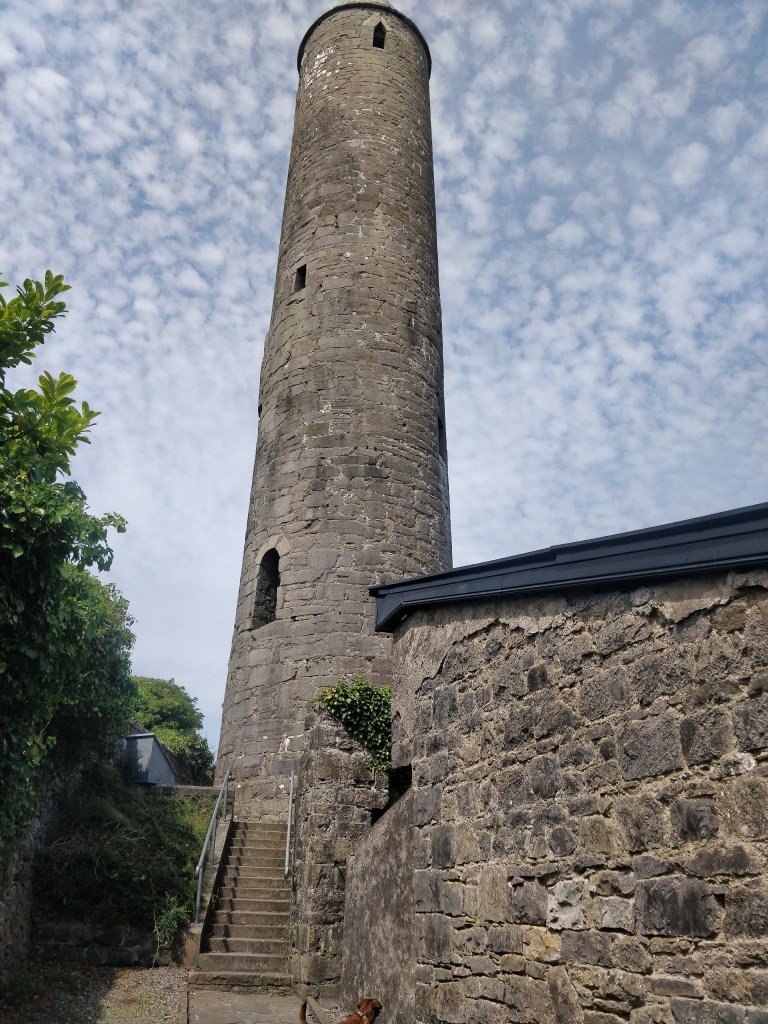
On Sunday, July 17 the sun shone for the first time all week and it was blissful. We visited Ross Beach, a blue flag beach near Kilala, and Kilcummin Back Strand, a huge expanse of sandy beach with cliff top views and crystal-clear water. The beach was almost empty(its so big) but the narrow roads and small parking area was pretty congested on this fine July Sunday. This area is also where the French landed in 1798. Then on to Kilala to watch the All Ireland hurling final in Johnny Lynn’s pub which was busy with people who seemed to be dodging the sun rather than interested in watching the match. After a few drinks (to celebrate Limerick’s win over the mighty Cats) and a tasty meal in The Arch, we stayed in Kilala parked by the quay. and that is the advantage of the campervan, having a comfortable place to sleep anywhere. Kilala is a picturesque little place with its round tower, harbour, quayside, cathedral and old stone buildings.

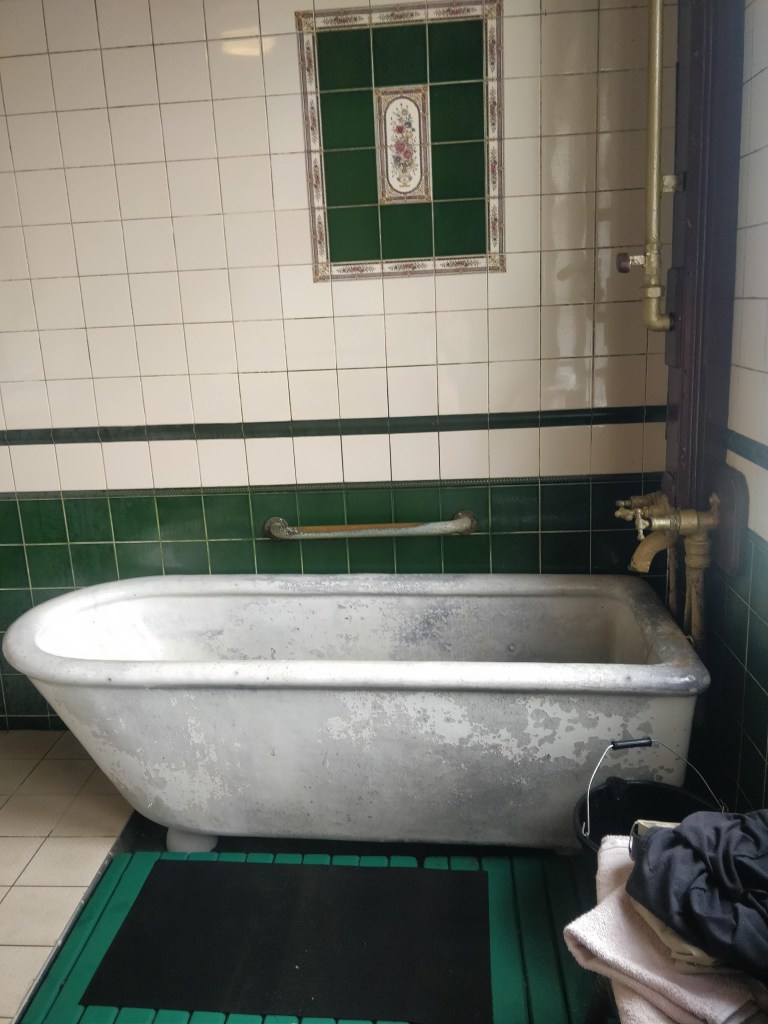
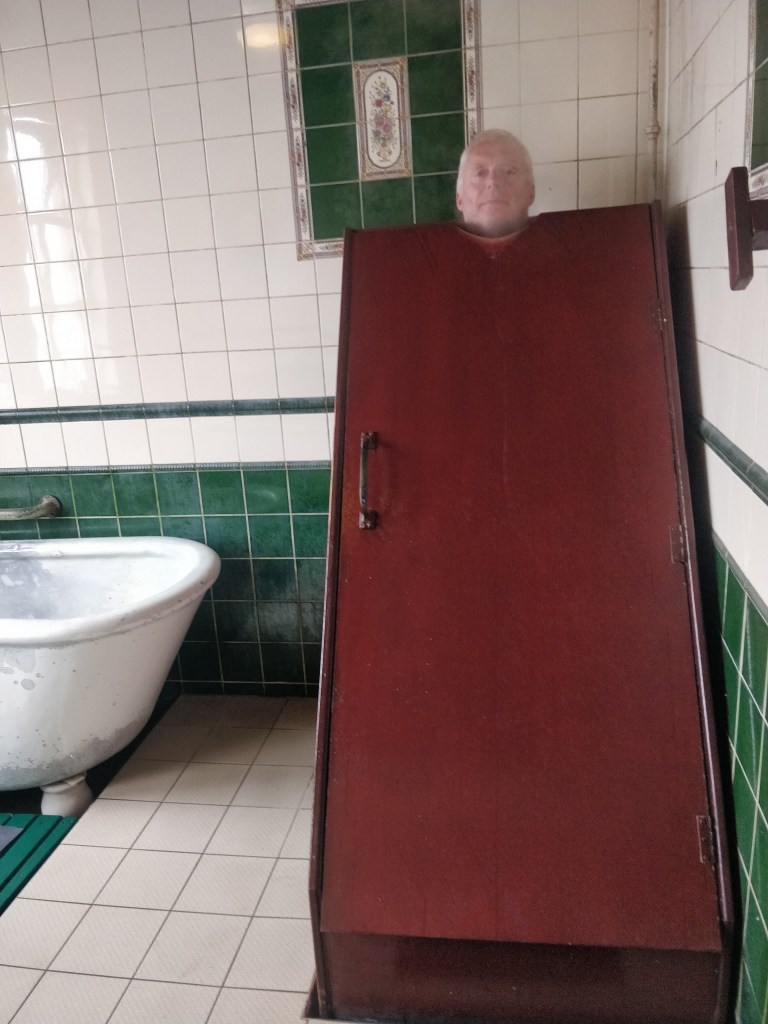
Our final night in the camper was spent in Enniscrone which was buzzing with holiday makers, surfers and kids getting swimming lessons, strollers and ice-cream eaters. What a beach with its long stretch of sand and dunes and stunning cliff walks. We booked a seaweed bath in the in the old Edwardian bathhouse with some original fittings and a wooden steam-box and were so relaxed afterwards that even walking was a challenge.

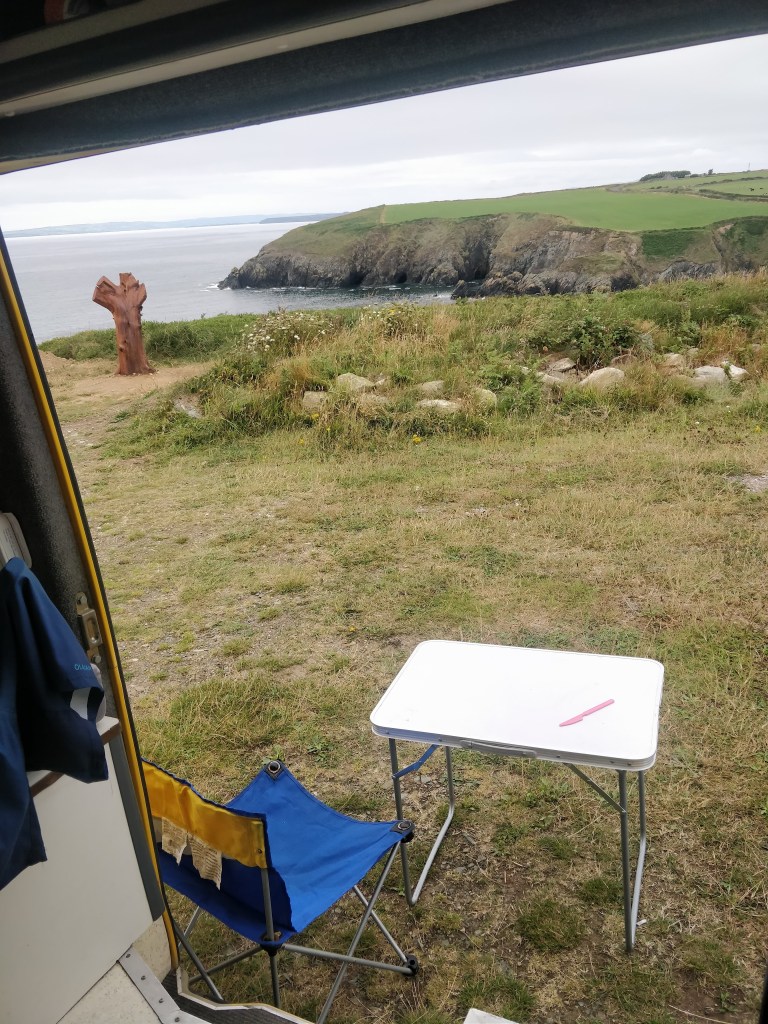
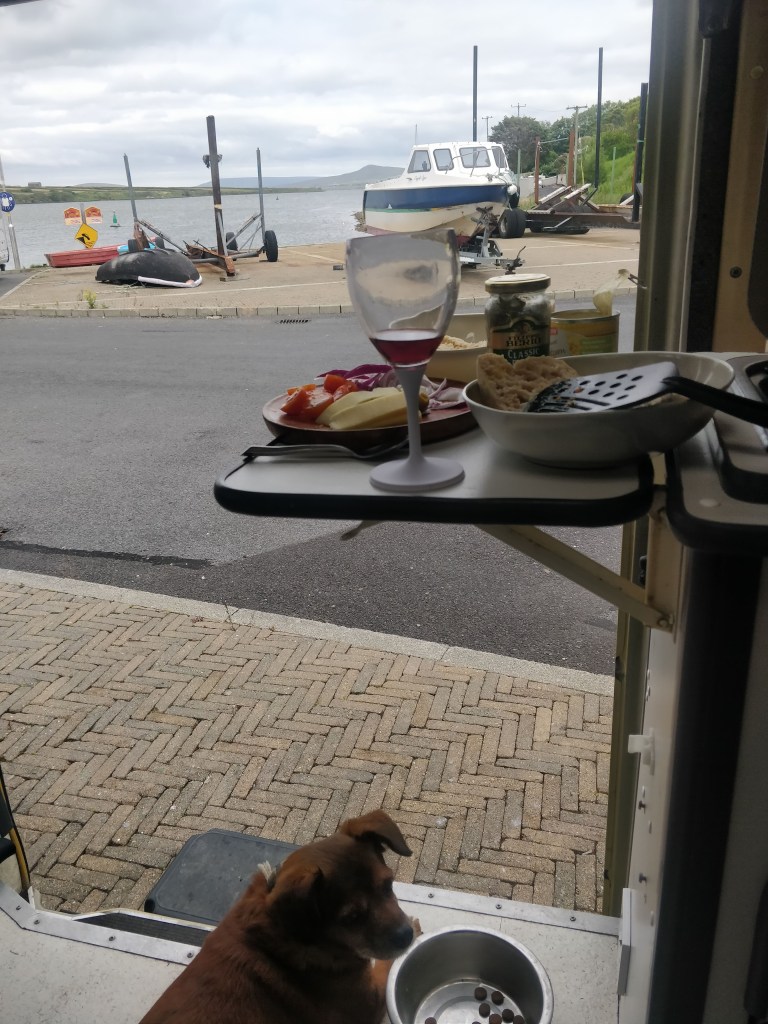
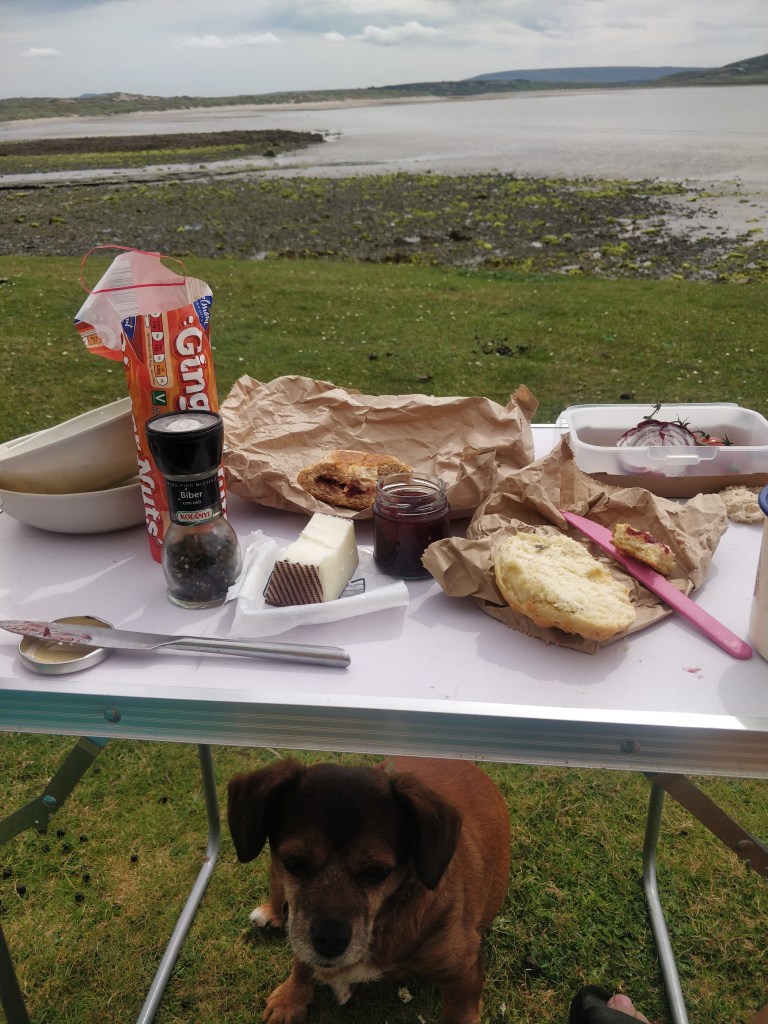
We thoroughly enjoyed our week in Spuds – and so did Rolo🐶. Its a fantastic way to travel – it offers comfort and flexibility and pets can be taken on hols as well. We stayed in a different place each night from beach to bog, to pier side, headland and lakeside, all free camping so easy on the pocket.. We might have stayed in a fee-paying campsite some of the nights but there weren’t any. It was so easy to move – unlike tent camping which involves a lot more work when packing up. We also found that sitting in the back of the van with the doors open, we had wonderful views and we could park the van at different angles to shelter from the wind or take advantage of the view. Sometimes, sitting in a tent can be claustrophobic but there was a great sense of light in the camper. There were curtains and blinds to pull down for privacy and/or to block the early morning light. The disadvantage is that if you want to just go to the shop or a small excursion, the camper comes with you but a lot of people travel in campervans with bicycles on board which is a good idea. Some of the campervans we saw were big and unwieldy and had everything in them. We’re sold on the idea of a campervan but we would like something small, nifty, not too expensive – and preferably electric! That’s the wish-list

But the real star of the Odyssey was North Mayo, such a stunning, unspoilt area of Ireland which deserves to be more visited.

With a bit of luck, we’ll be back😍

The Yellow Odyssey – Mayo by campervan

Stunning Saltees

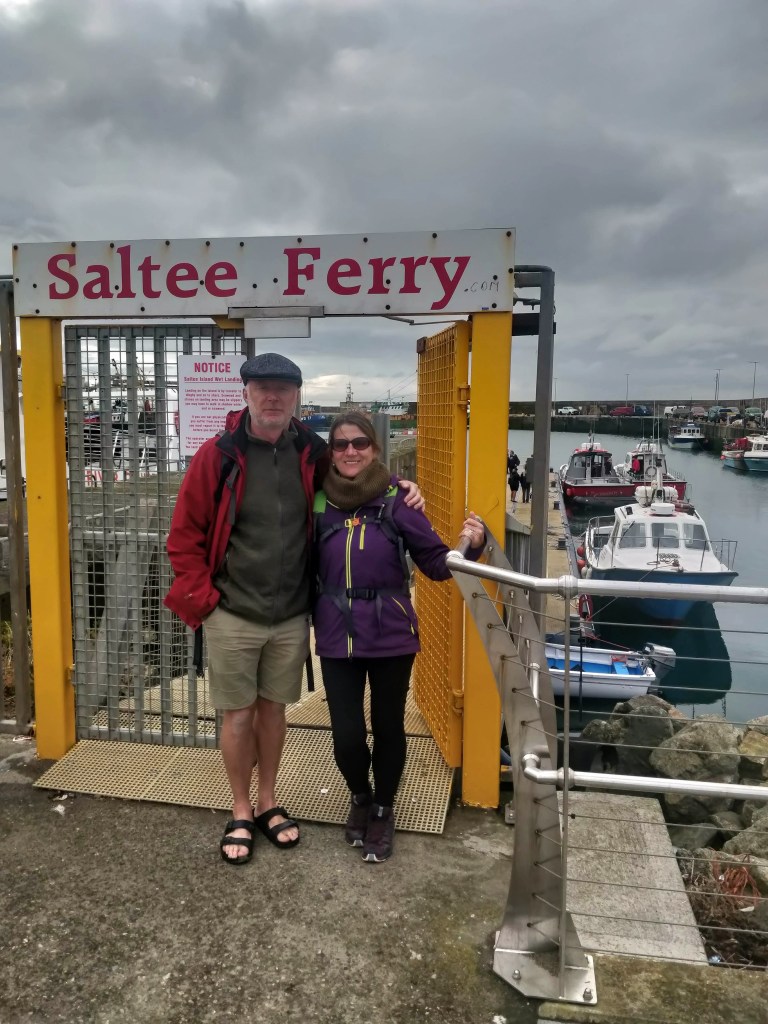
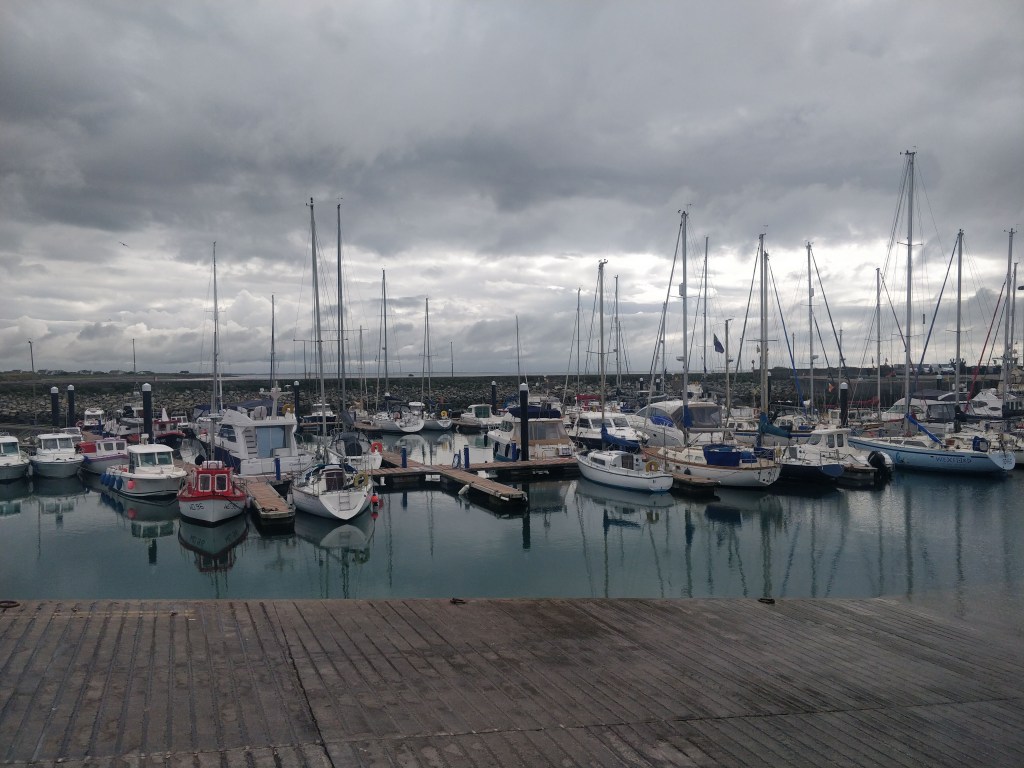
Last week on the last day of June, we waited on the pier in Kilmore Quay for the ferry to take us to Great Saltee Island, the bigger of two small islands off the Wexford coast known as the Saltees and a haven for birds. it didn’t feel like summer with no trace of blue amid the greys of the sky. This trip has become an annual summer pilgrimage for us and one of the highlights of our year (despite all our travels😀).

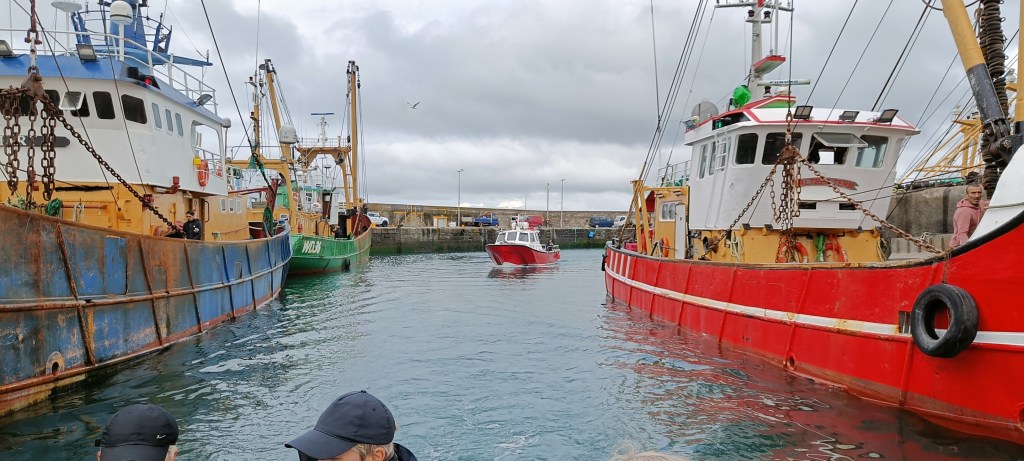
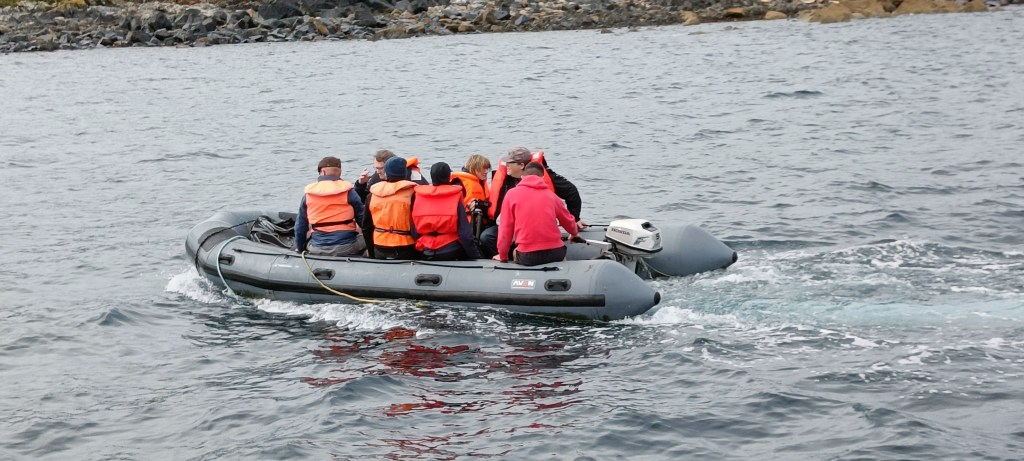
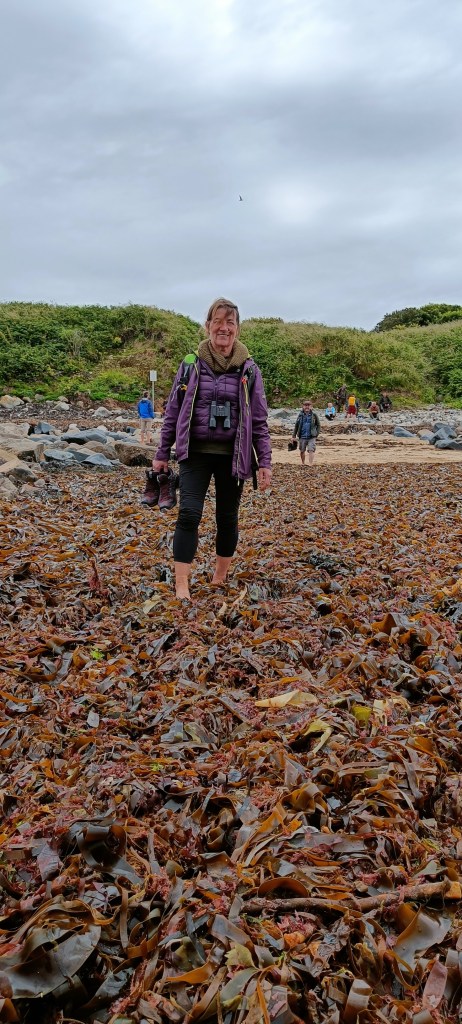
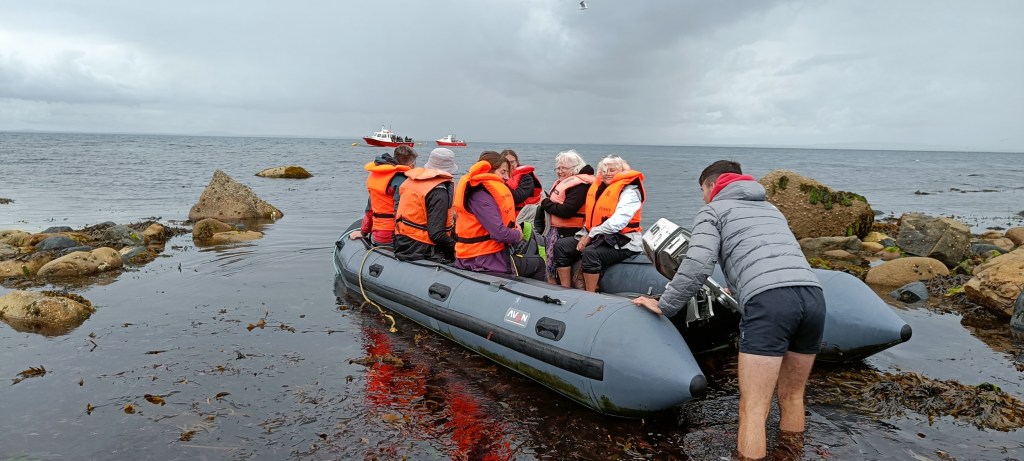
The small ferry boat had room for about a dozen passengers, some weighted down with large camera equipment but all squashed together with water splashing over the stern and pooling around our feet. There is no island pier or jetty so we had to transfer to a little dingy with an outboard motor to get onto the island. The morning was cool and the dingy motor was sluggish and slow to start. While the young crewman pulled the throttle, becoming more and more frustrated, a curious seal welcomed us by swimming and diving around the boat. A few meters away, gannets fell from the sky to catch wriggling fish in their beaks. Eventually the engine coughed and spluttered into life and getting from the dingy to land involved rolling up trousers, taking off shoes and wading through seaweed to the little beach.

The island is privately owned by the Neale family who have a holiday residence there – the only house on the island – but this is unoccupied for most of the year. A few steps up from the beach is a large marble plaque signed by the late Michael the First, Prince of the Saltees and a colourful character who bought the islands in the 1940’s, keeping a vow that he made to his mother as a ten year old that he would one day own the islands. There is even a large stone throne on the island dedicated to his mother. Day visitors are welcome but all visitors are requested to be off the island by 4pm.

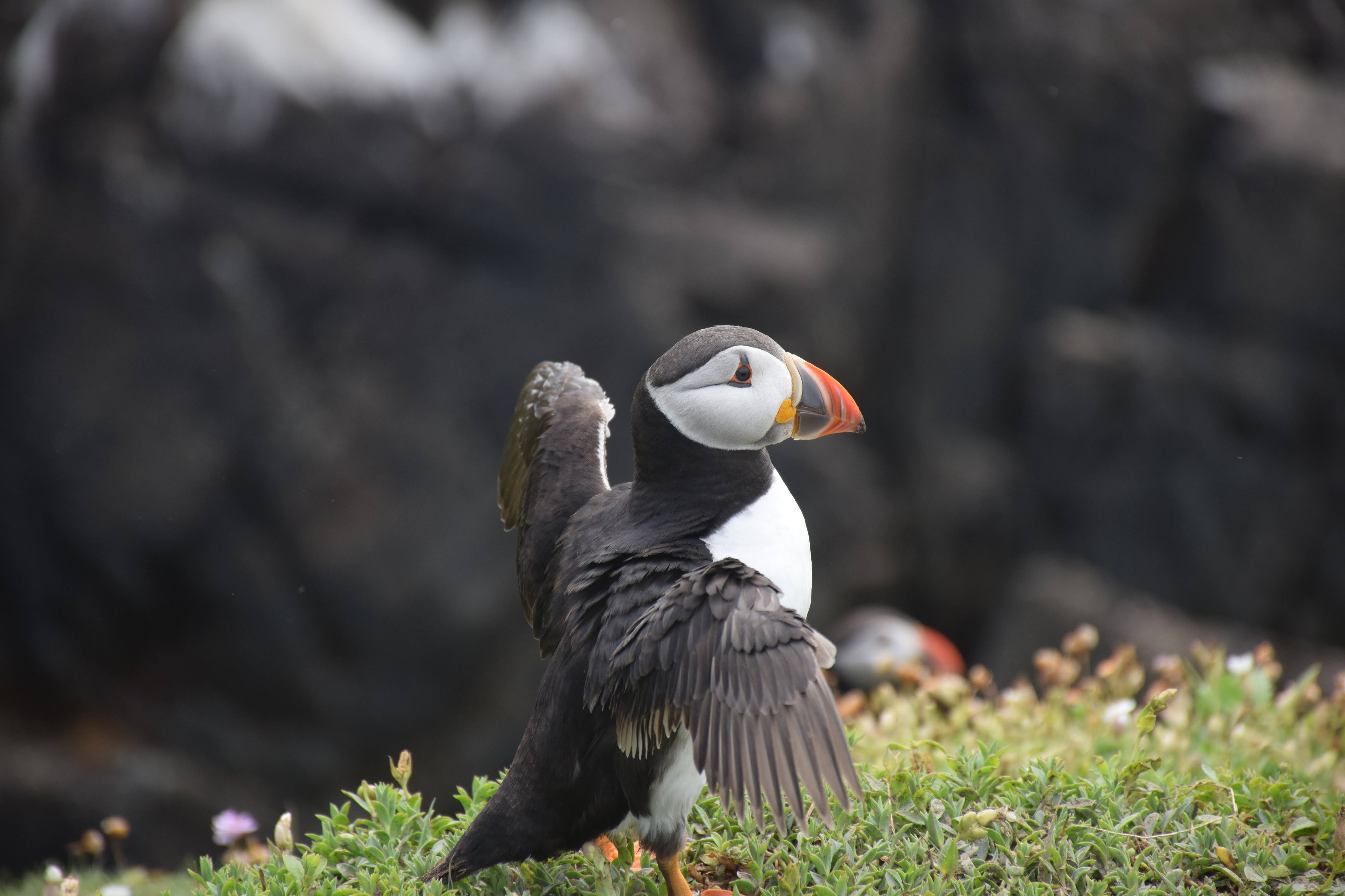
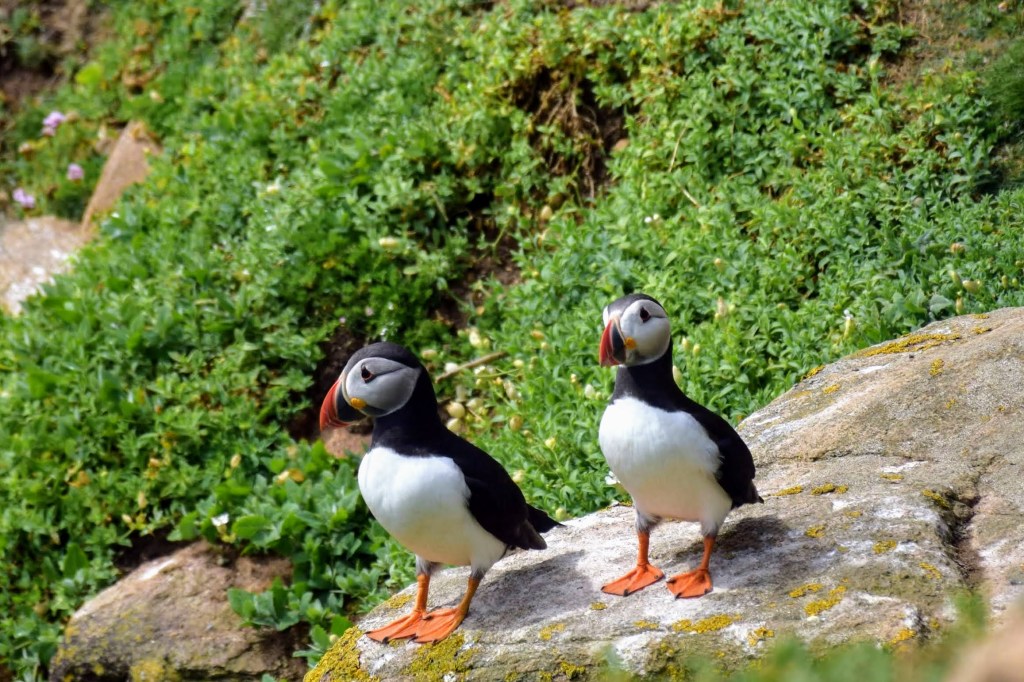
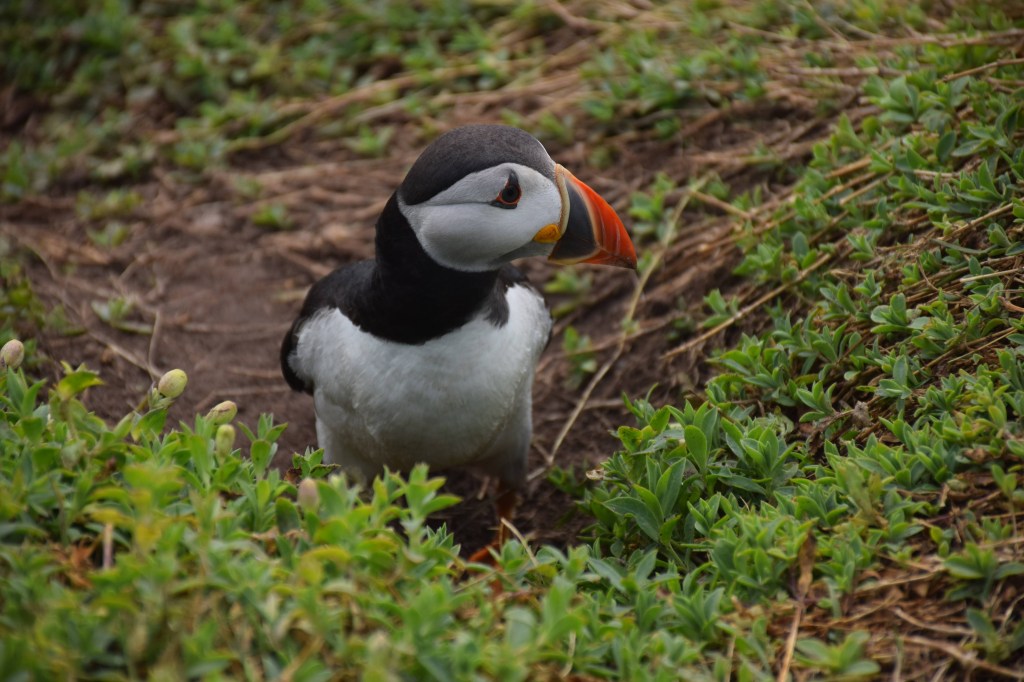
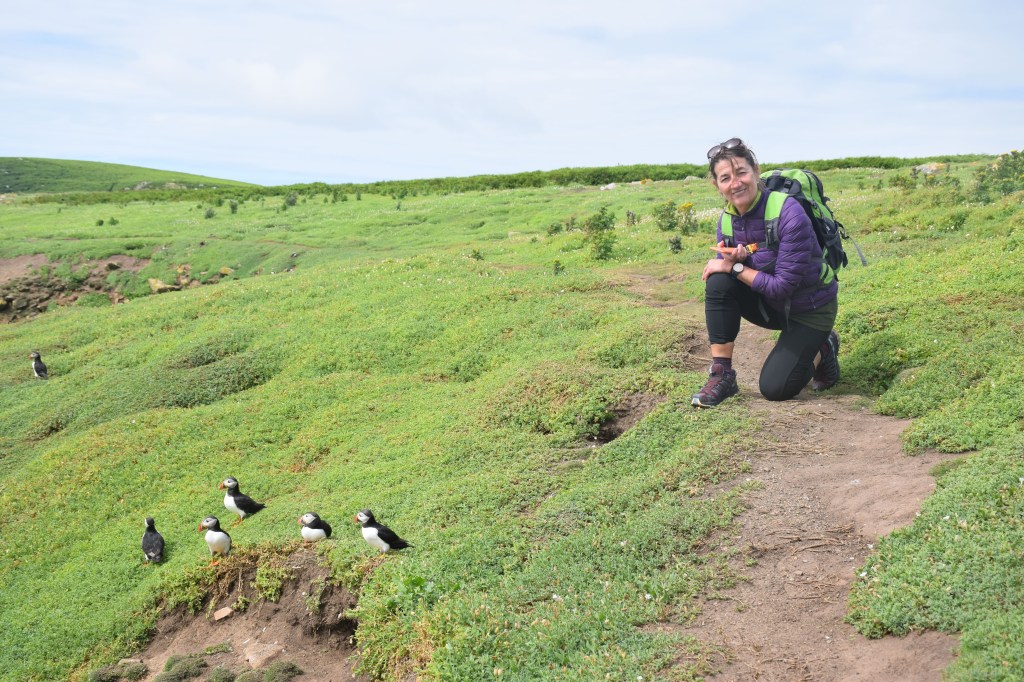
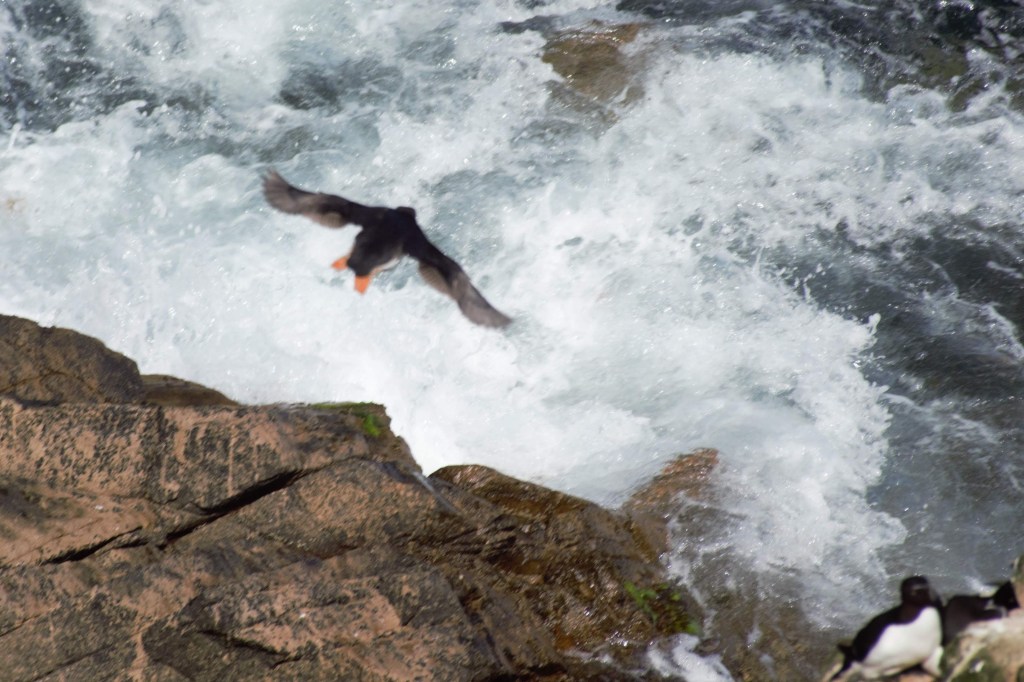
There’s a special atmosphere on this island, a wildness and a natural beauty with wildflowers, ferns and heathers and of course, the main attraction – the birds. These are breeding grounds for lots of species but there’s something about the puffins that makes them a star attraction – maybe its their brightly coloured beaks, or their comical padding as they stroll about or their curiosity. They were as interested in us as we were in them as they sat outside their burrows on the cliffs facing out to sea. The sandeels were plentiful and we watched the silvery flash in rainbow beaks as parent puffins returned to feed their young, their short wings flapping furiously. The puffins are mainly silent birds although there were hundreds of them on the cliff.

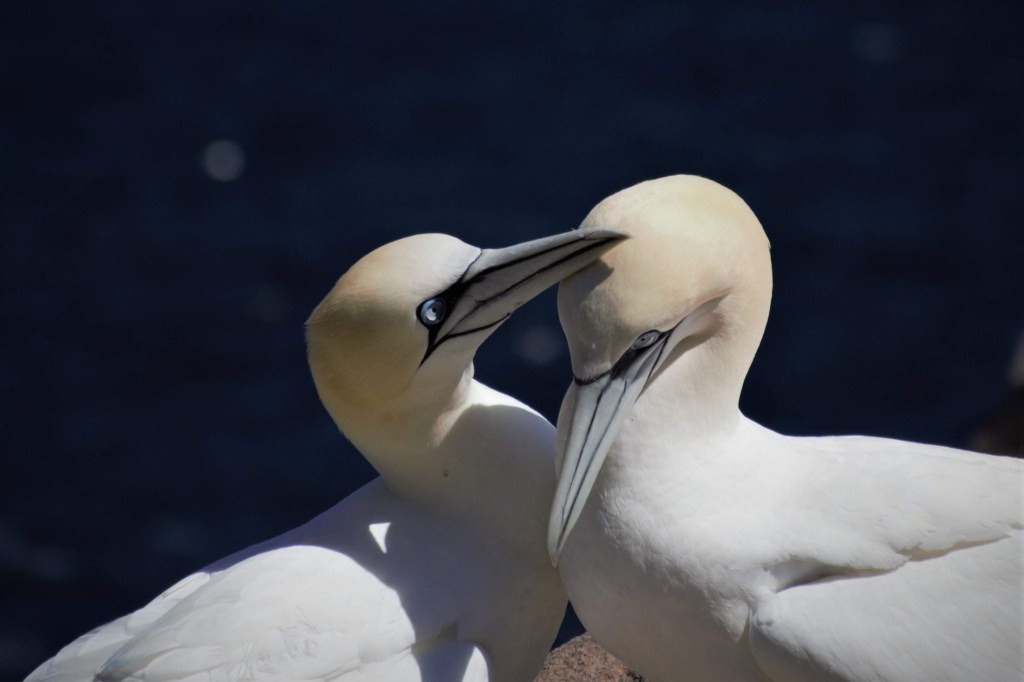
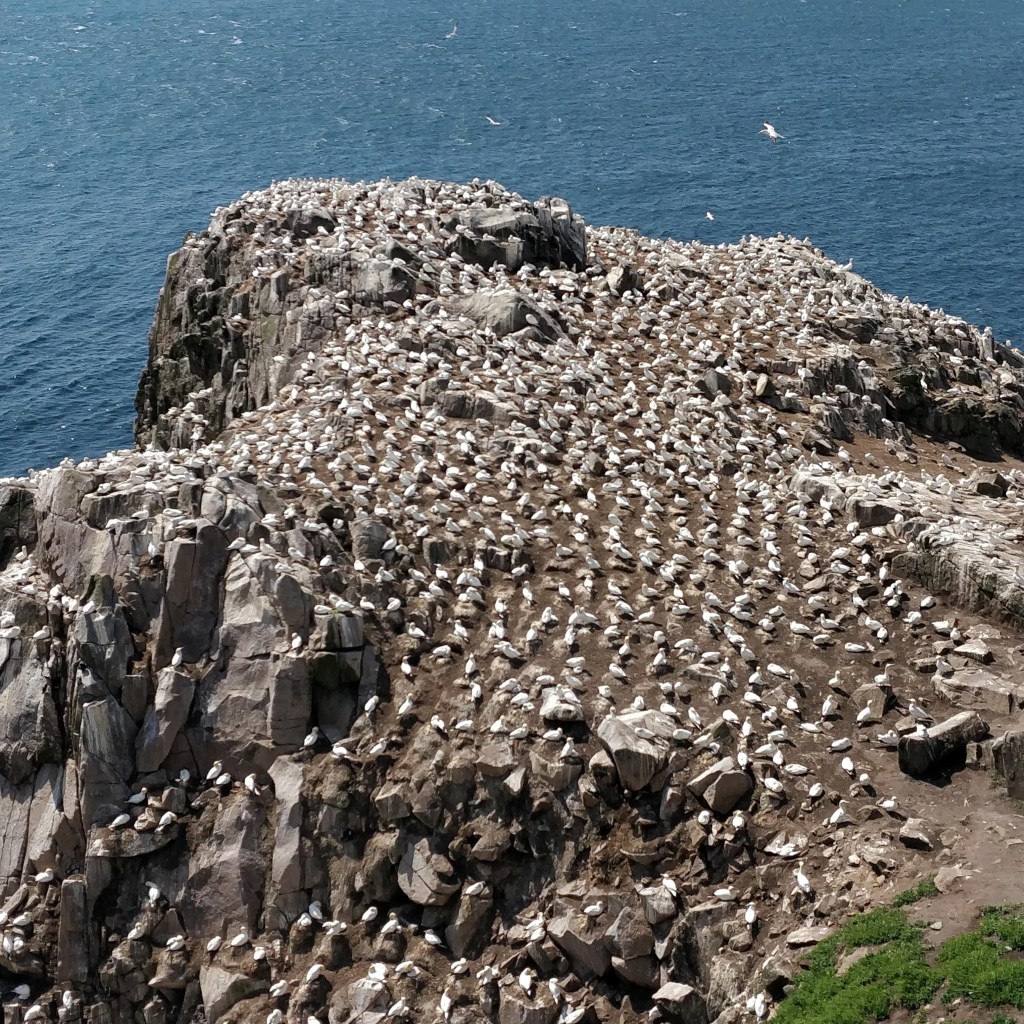
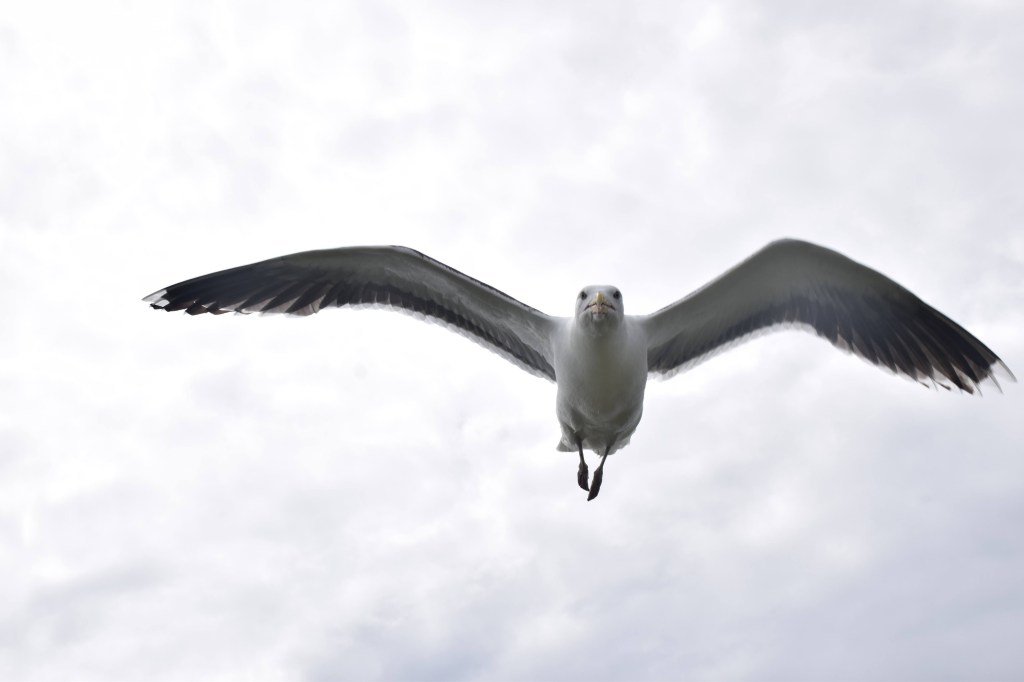
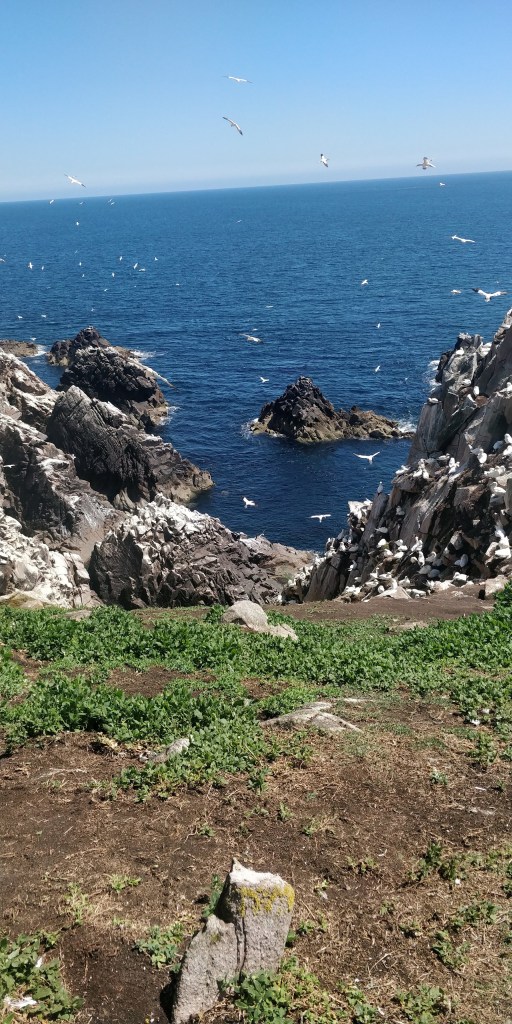
The same cannot be said of the Gannet colony. On bare cliff rocks with the heavy stench of sulphur from bird poop, thousands of Gannets squawked and fought for space and mates and family in a frenzied free-for-all. We watched two large birds lock beaks whilst bystanders screeched encouragement and then joined in like a pub brawl. Others ignored the melee and twined pale yellow necks in intimate embraces. A lone Shag stood still and tall, black against the rocks and sky, immune to the chaos and behind her, a baby shag peeped out beneath a rock.

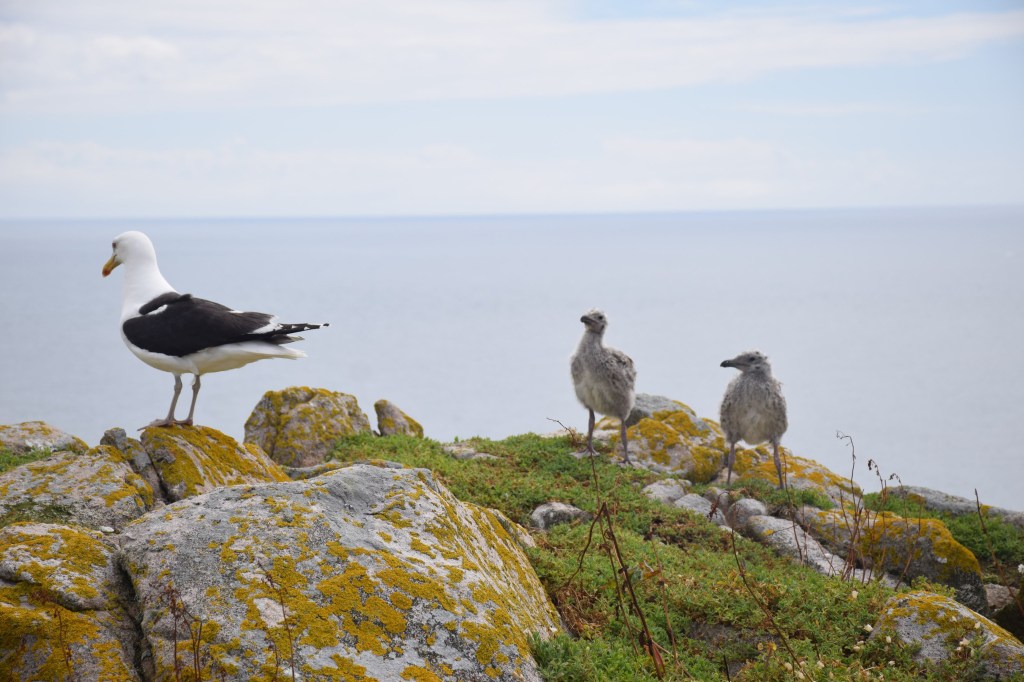
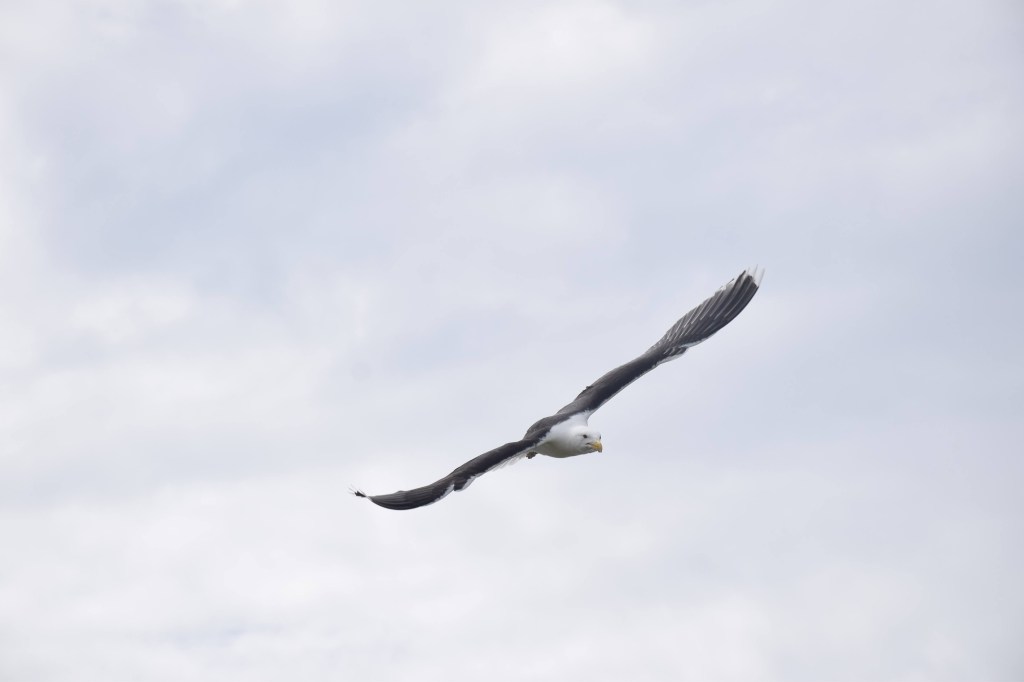
The chicks of the Black-Backed Gulls were adorable – speckled furry balls with black pebble eyes. They hopped along on lichen covered rocks among the swaying grasses. The Mother gulls stood nearby, super-alert, screeching at us with flapping wings. One swooped above my head almost touching my hair, warning me to stay away from a nest which was practically on the rough path. I obeyed the order and detoured quickly😮

Overhead the sky was dizzy with wings with gannets gliding, razorbills flapping, guillemots whirring, kittiwakes swooping. We sat on rocks and watched all the entertaining antics of these seabirds, munching our egg(!) sandwiches. All too soon, it was time to make our way back to the boat, to roll up out trousers and wade out to the dingy for the return trip to Kilmore Quay. The allotted time of four hours on the island had flown by as usual…..flown on wings🤣.

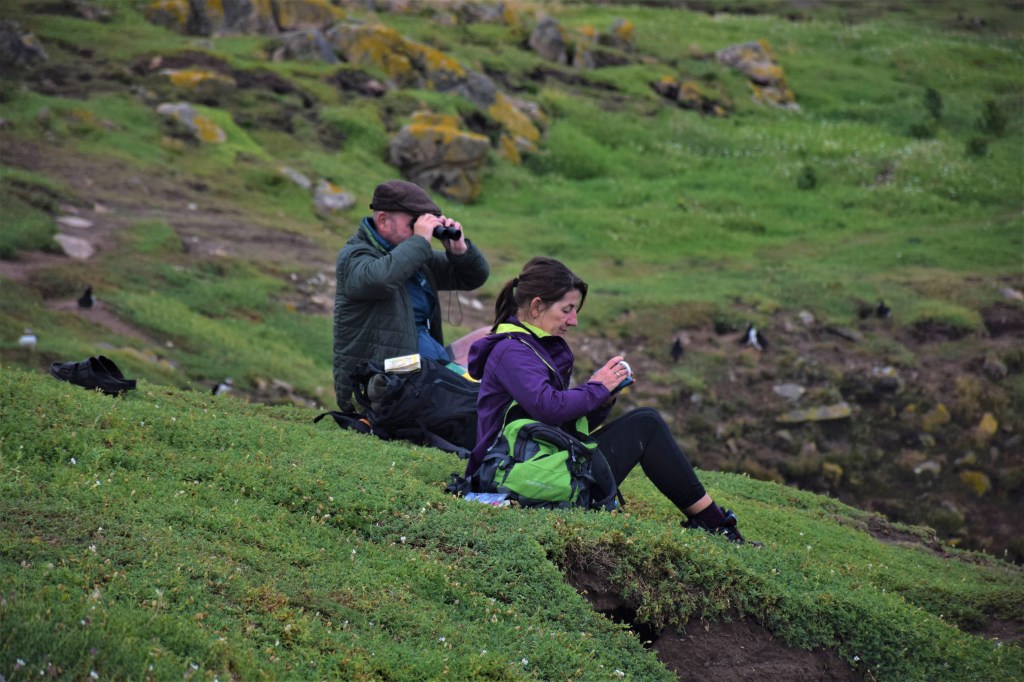
Even if you don’t know your razorbill from from guillemot, or your cormorant from your shag, this is a wonderful trip. The return boat trip costs €30 per person. There is no shelter, food or cafes on the island so it is essential to bring water, some food, some warm clothes, sunscreen and waterproofs. Bring a bird book and a pair of binoculars and prepare to be captivated, entertained and educated in this VERY special place,

Stunning Saltees

Cycling the Royal Canal

On a grey, drizzly July morning last year, Caoimhín and I drove towards Maynooth. We were on our way to cycle the Royal Canal Greenway, which had opened a few months before in March 2021, 130 kms of canal towpath from Maynooth to Longford We were wearing our padded cycling shorts; the bikes were in the boot and I had packed ‘deep heat’ and band-aids…. just in case…as we hadn’t been doing much cycling.  The rain just kept getting heavier as we drove along and the forecast on the radio wasn’t very promising. Maybe the rain would keep the crowds away…there had been a lot of publicity with a Nationwide programme about the opening of the Greenway and numerous newspaper articles. The canal links central Dublin with the River Shannon and was constructed more than 200 years ago for transport of freight and passengers but the advent of railways brought about its demise. The upgraded Greenway begins in Maynooth and ends in Longford.

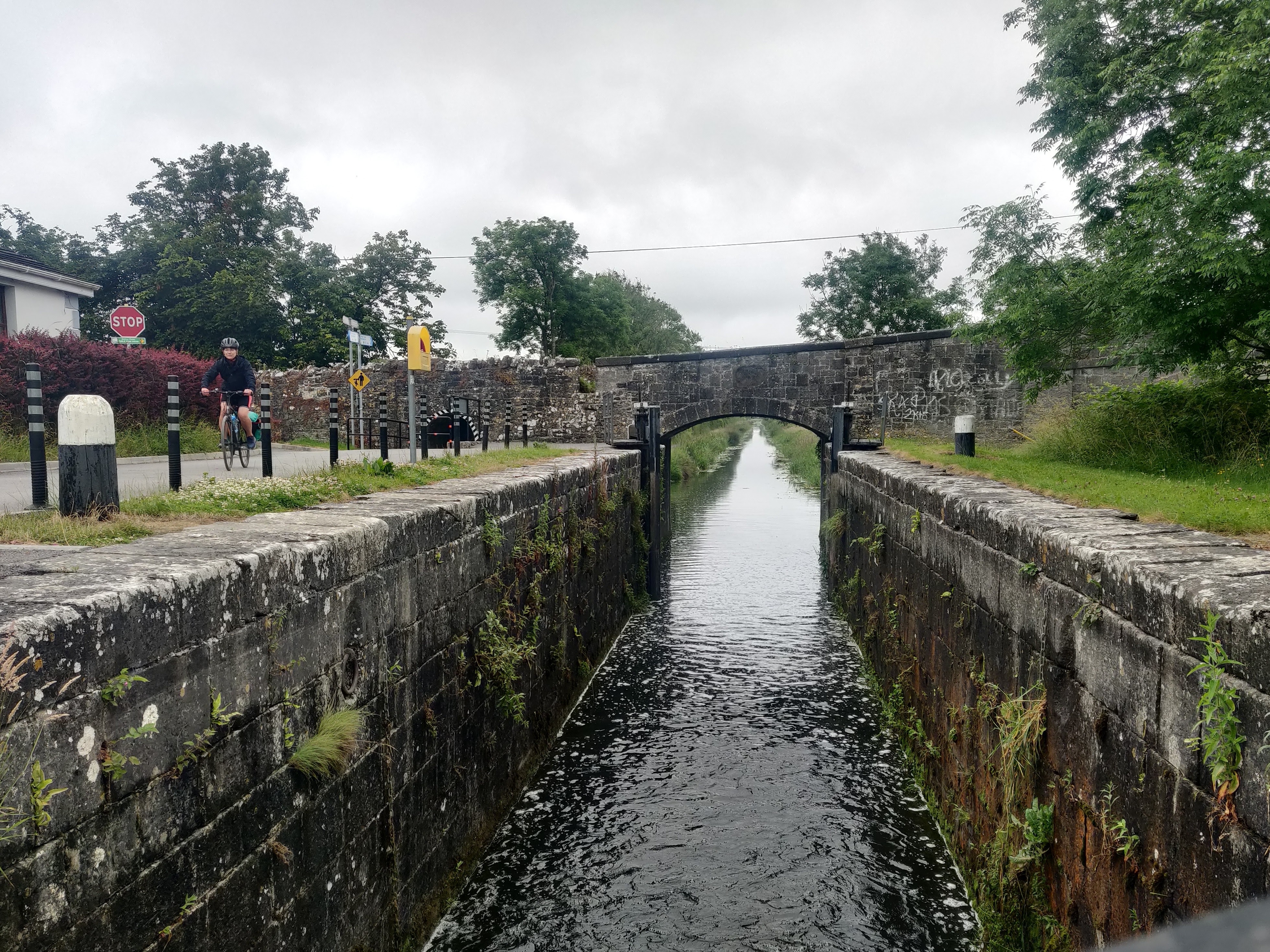
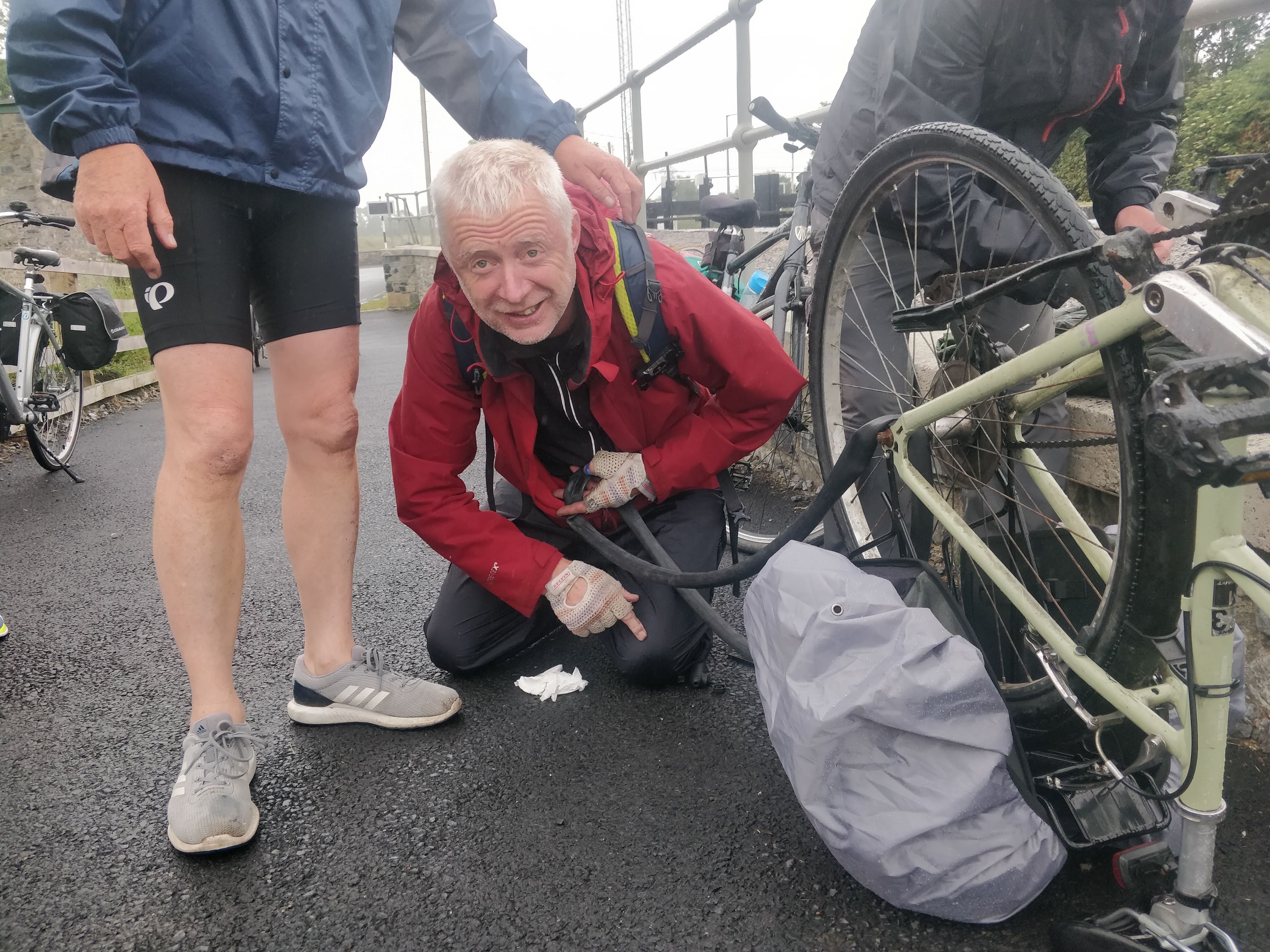
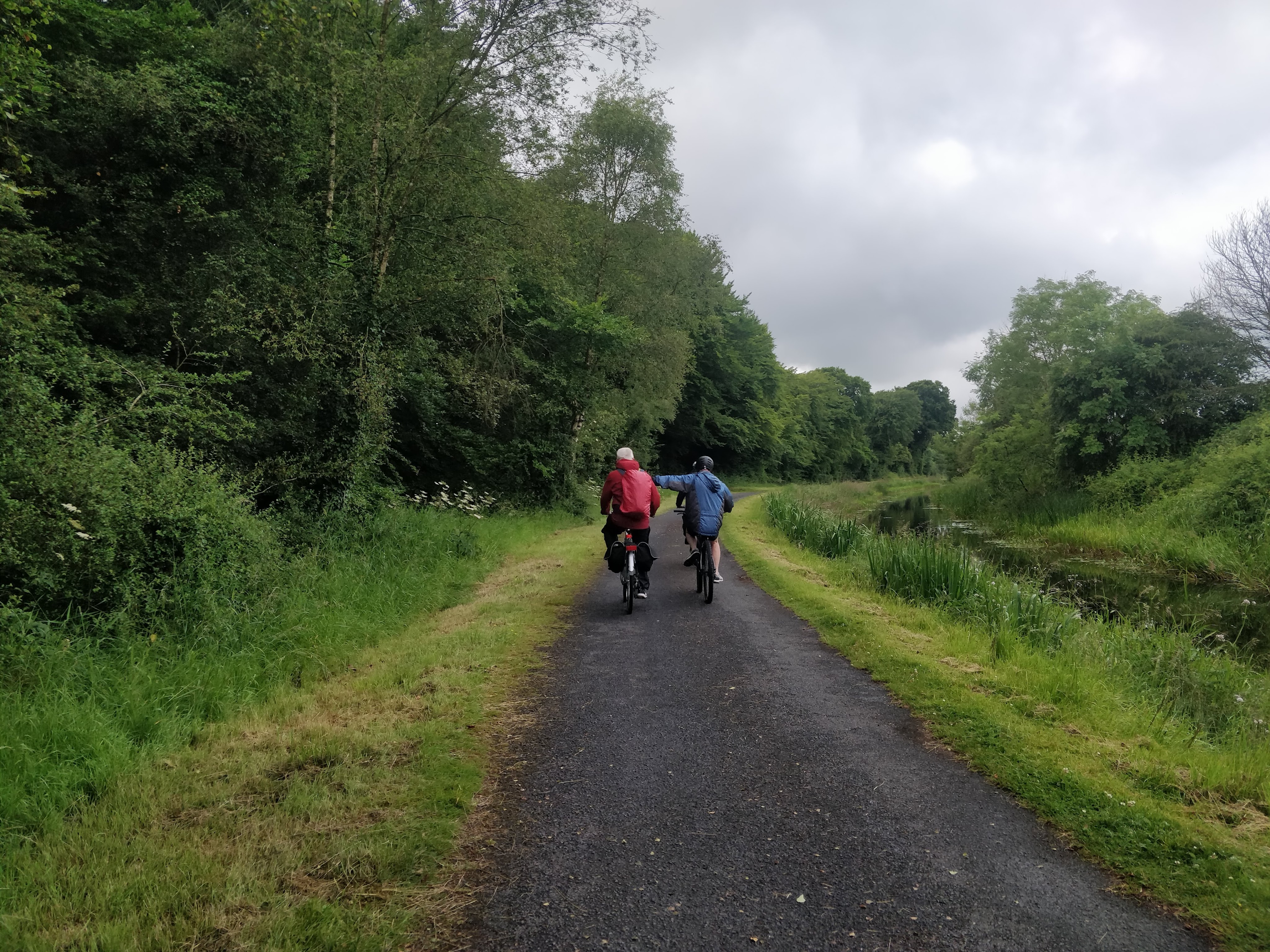
We parked the car in Celbridge at my brothers house (although there is parking available in Maynooth) and five of us left in single convoy towards Maynooth, cycling along an unpaved section of the canal along hedgerows white with bindweed. In Maynooth, there was a slight drizzle, a van with bikes for hire and a few walkers. There were also swans swimming around yellow lily pads and a family of ducks slithered into the water from the bank. Cycling past the first of the many locks, the air was full of the mossy smell of tumbling brown water. The path was level and easy but about four kilometres on from Kilcock, there was a hiss hiss from a back tyre – puncture – and we discovered that we didn’t have a pump between us although we have a puncture repair kit😁. There were very few cyclists on this damp Tuesday morning but eventually we borrowed a pump from a cyclist from Leixlip who joked that there was no punctures or rain on the Nationwide programme.

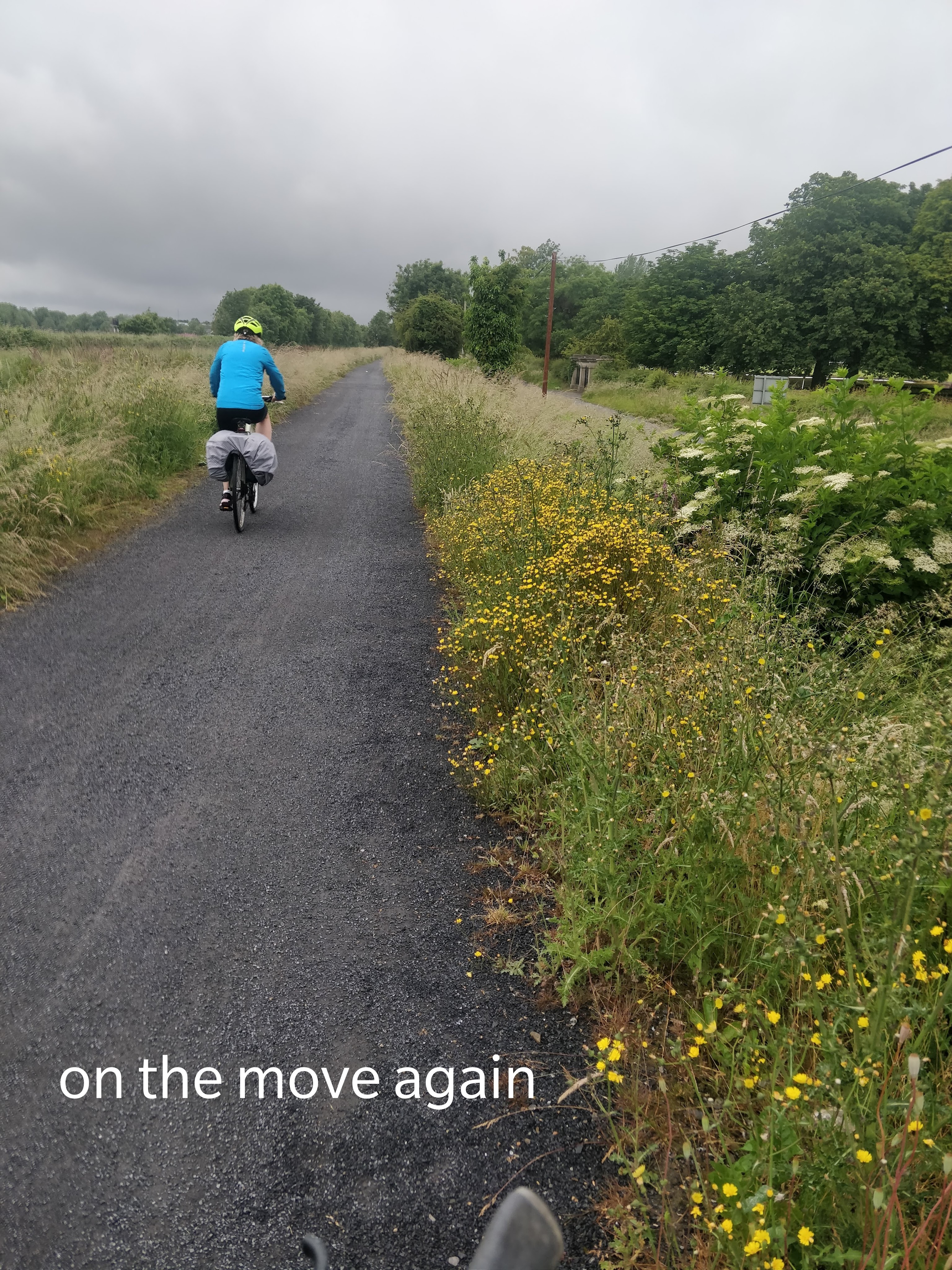
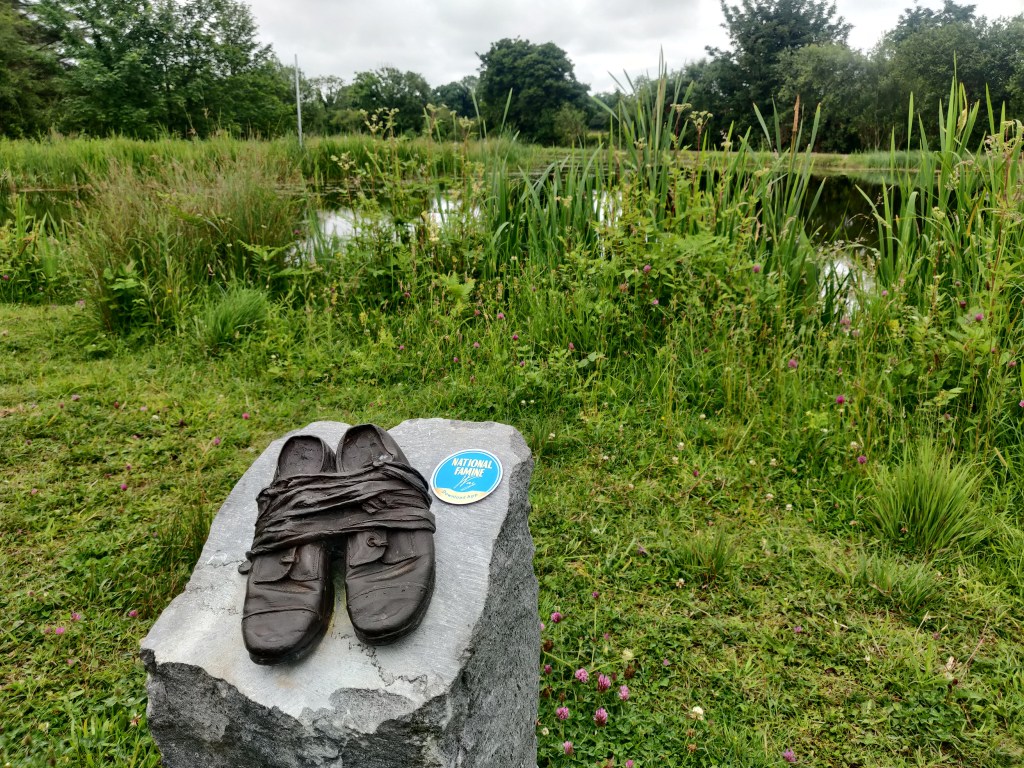
On the move again, we cycled by hedgerows of swaying grasses and gorgeous wildflowers and dripped our way to Enfield for a lovely lunch in the Bridge House – hot homemade soup and toasties. The friendly staff felt sorry for us and even offered us towels to help us dry off.  In Irish, Enfield is known as An Bóthar Buí (the yellow road) because the main street of was covered in yellow hay when cattle markets were held in the town in the past. We pedalled off through the rolling countryside of County Meath by Longwood and the Hill of Down. There were lots of picnic areas (empty), map-boards, storyboards and the odd barge. The Royal Canal Greenway also included part of the Famine Way which follows the tragic journey of 1400 emigrants who walked from Strokestown, Co Roscommon to Dublin. There journey was marked by bronze sculptures of children’s shoes along the route

Famine Way

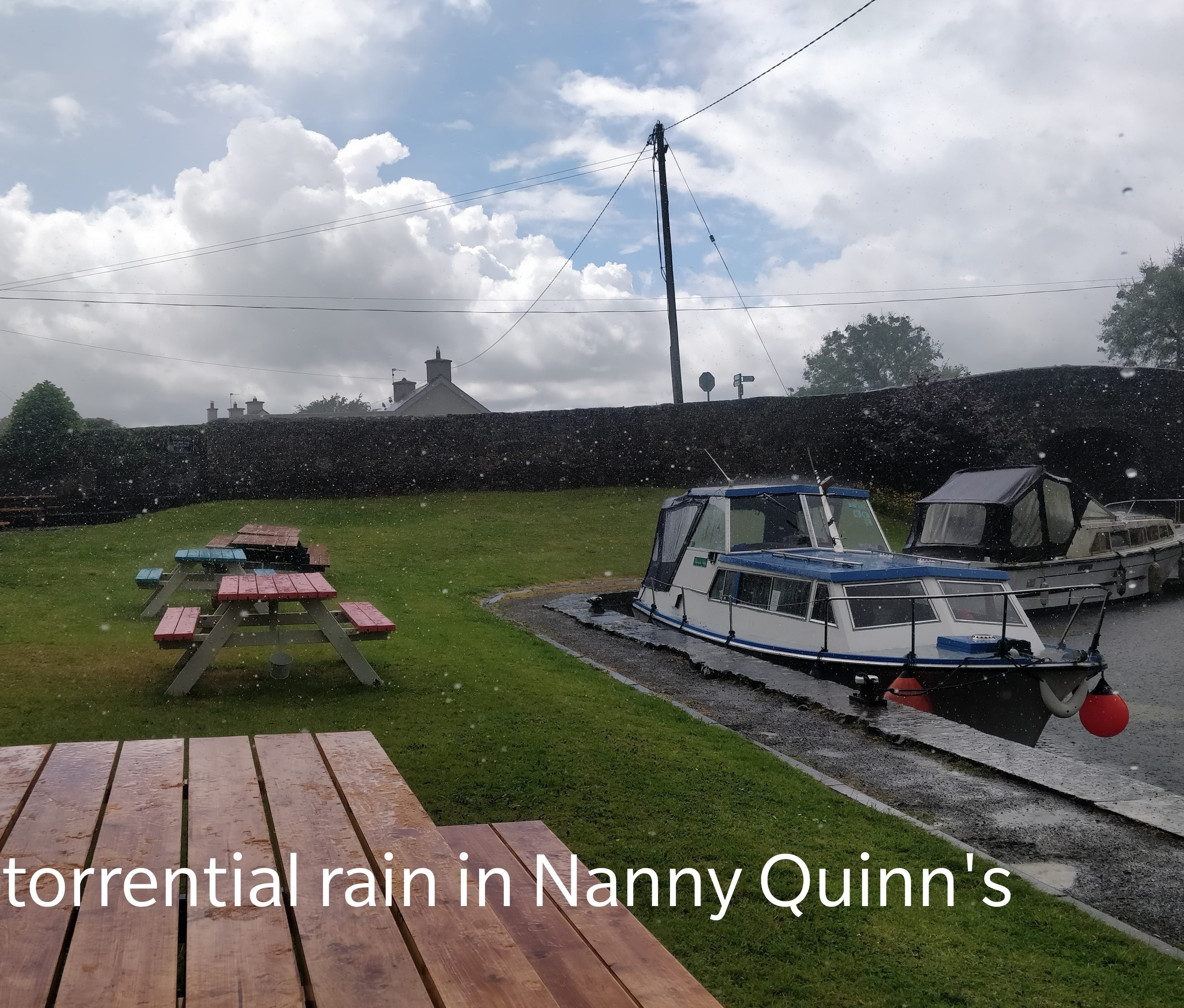
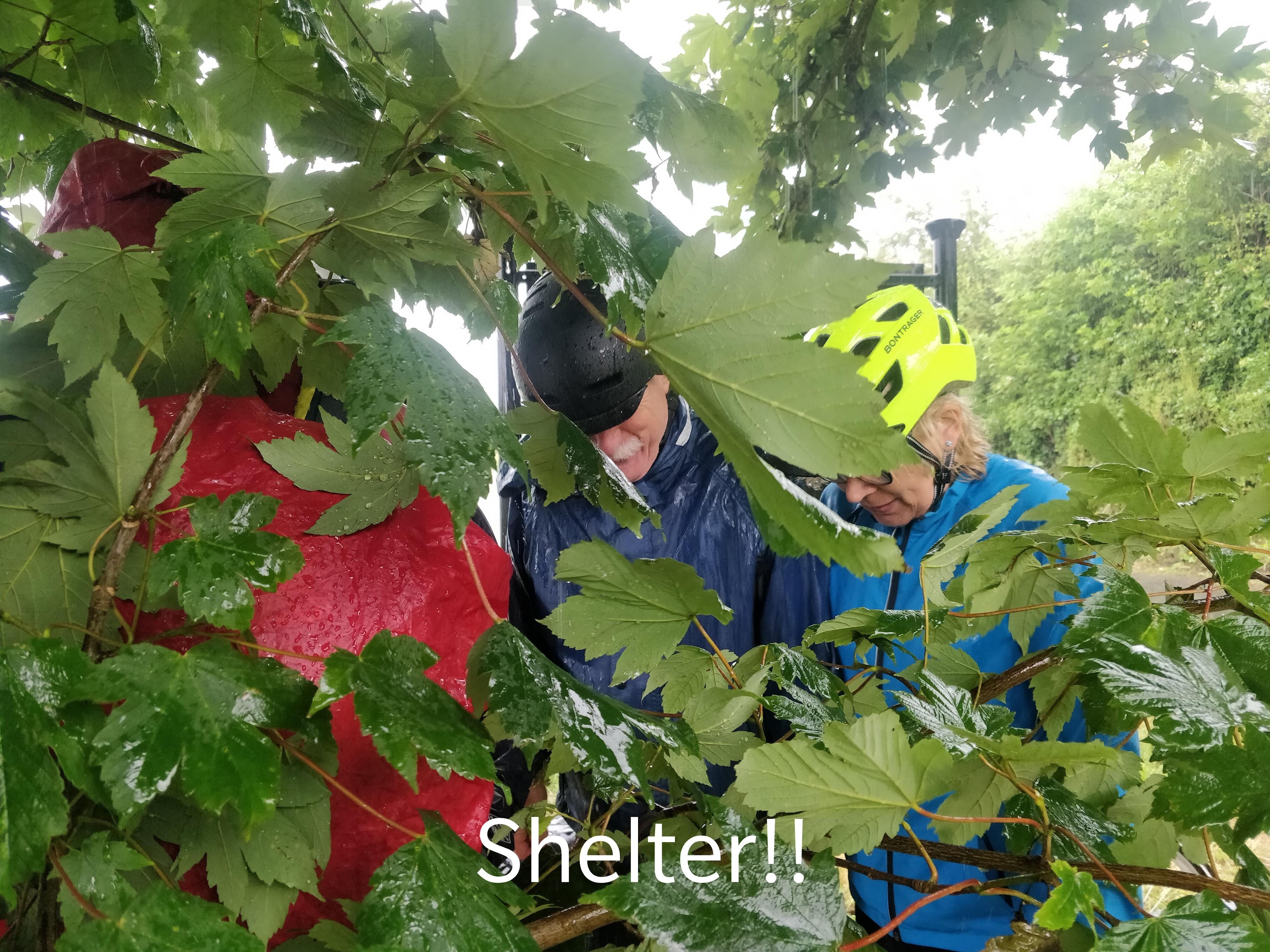
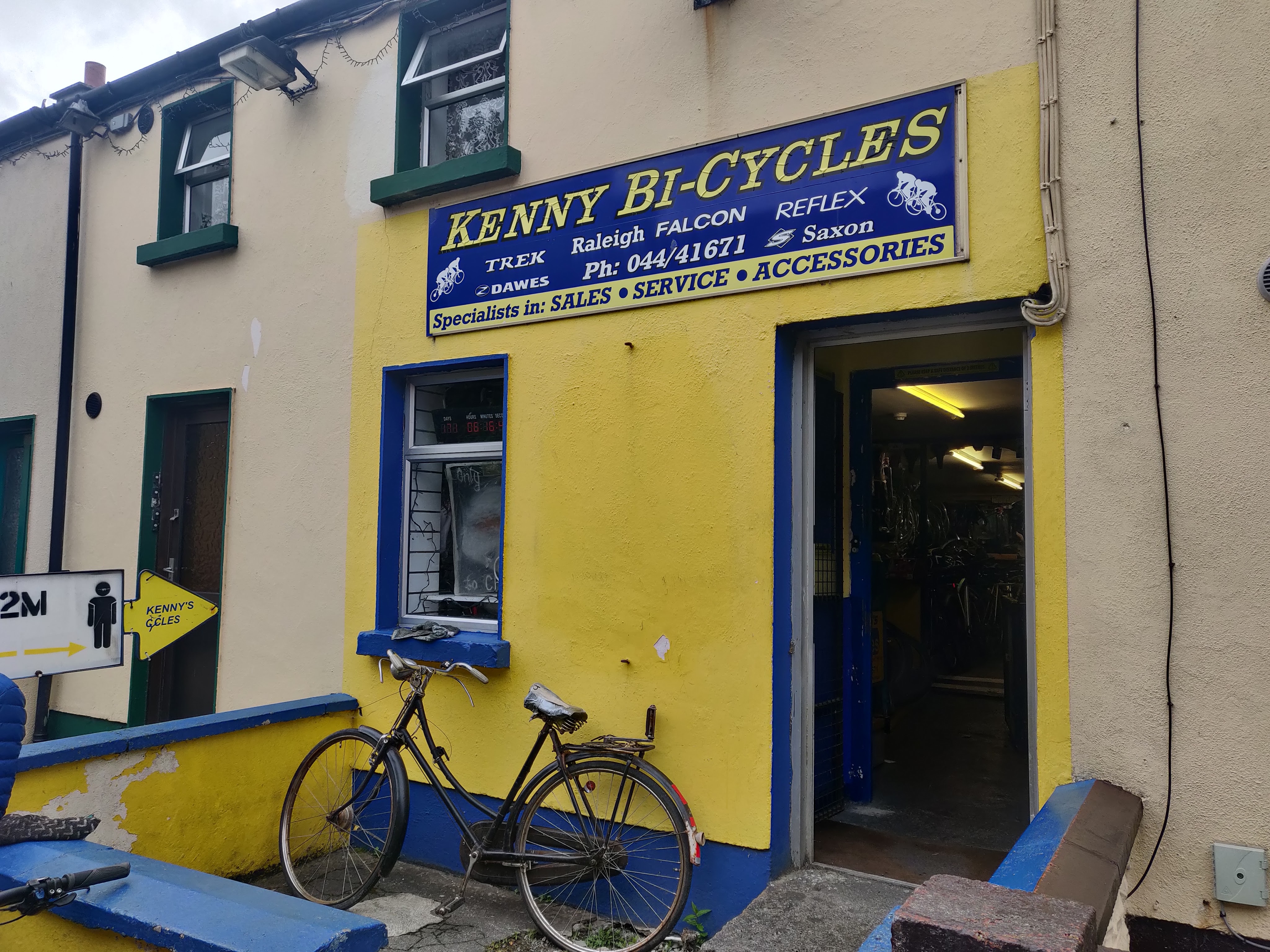
We stopped at Nanny Quinn’s outside Kilucan in Co Westmeath for coffee and chocolate cake. Its a lovely, busy spot with lots of outdoor seating looking over the canal. A local man told us about his prize winning dahlias while he downed pints of Guinness and the rain bounced off the picnic tables. He recommended the pints and although we were tempted, the weather app on our phones was telling us that there was a ‘dry window’ so we headed off. But we cursed the app as we sheltered under a tree a short time later in torrential rain, water running down our necks and soaking through our waterproofs.. Then as we cycled slightly uphill to the bridge in Killucan, there was a loud crack – no, not thunder, it was the sound of Caoimhin’s chain breaking. We diverted to Cunninghams in the village where our friend in Nanny Quinn’s had told us we could get anything we needed….he was wrong. No luck there in repairing the chain. It was 18 Kms to Mullingar with a strong westerly wind in our faces. Caoimhin sat on his bike, holding on to one of us to propel him forward. We were SO relieved to arrive in Mullingar. Caoimhin went to Kennys Cycle shop where the chain was fixed for a tiny fee even though it was after 6pm and he also got a history of Mullingar for free.

We stayed in the Newbury hotel near the train station in Mullingar which was a lovely, old fashioned place with large bedrooms, a room to store bikes and hot water for a bath to ease away the aches of the day. We had an exceptionally good takeaway from Wholefood Kitchen – mushroom linguini, veggie burgers and slabs of carrot cake. There were lots of Covid restrictions still in place last year so we ate our takeaways in the bar of the hotel where the barman was receptionist, doorman and waiter. We slept soundly with the bedroom windows open to try and dry out our clothes_ the smell of wet shoes was appalling😴😴

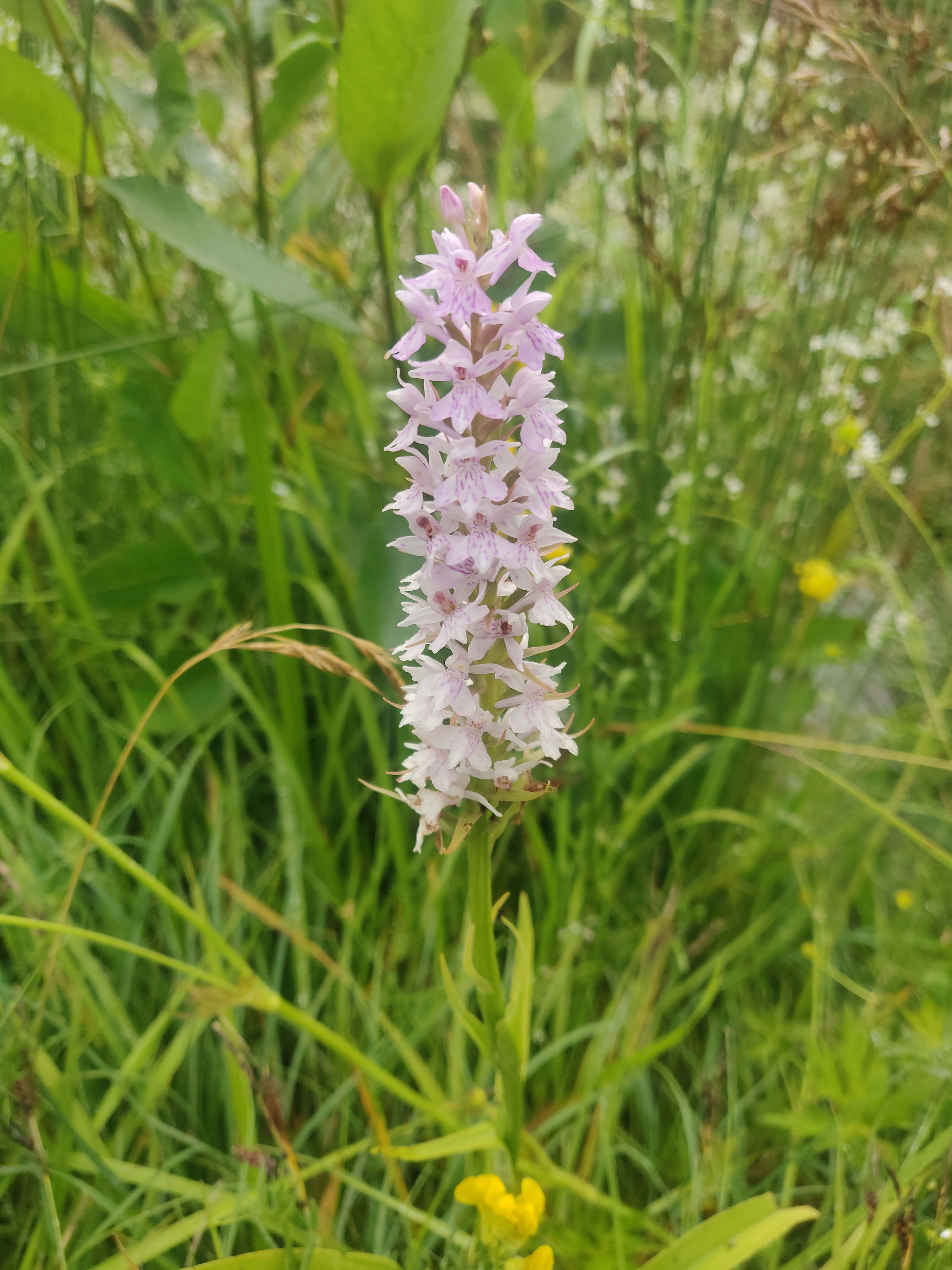
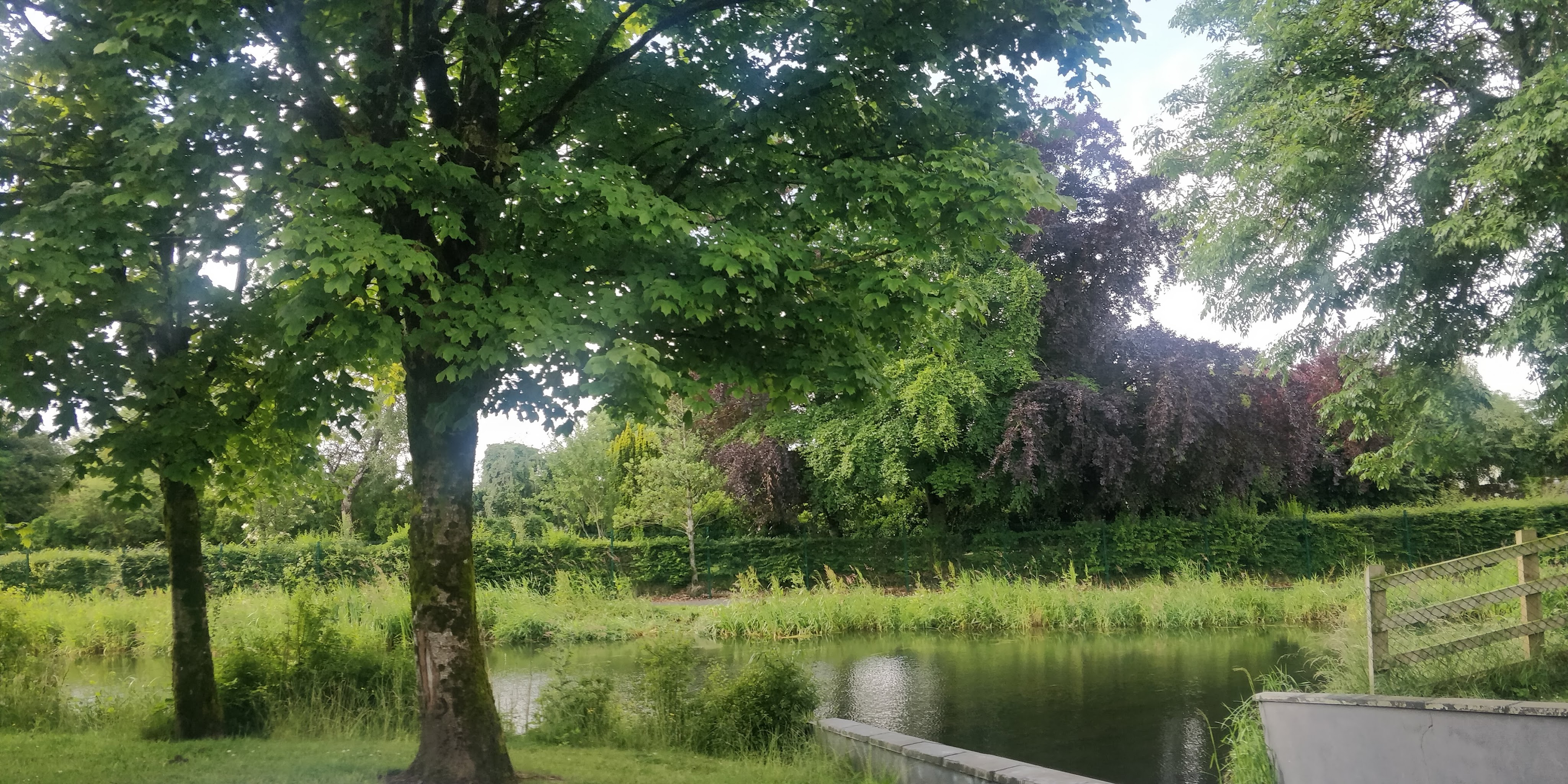
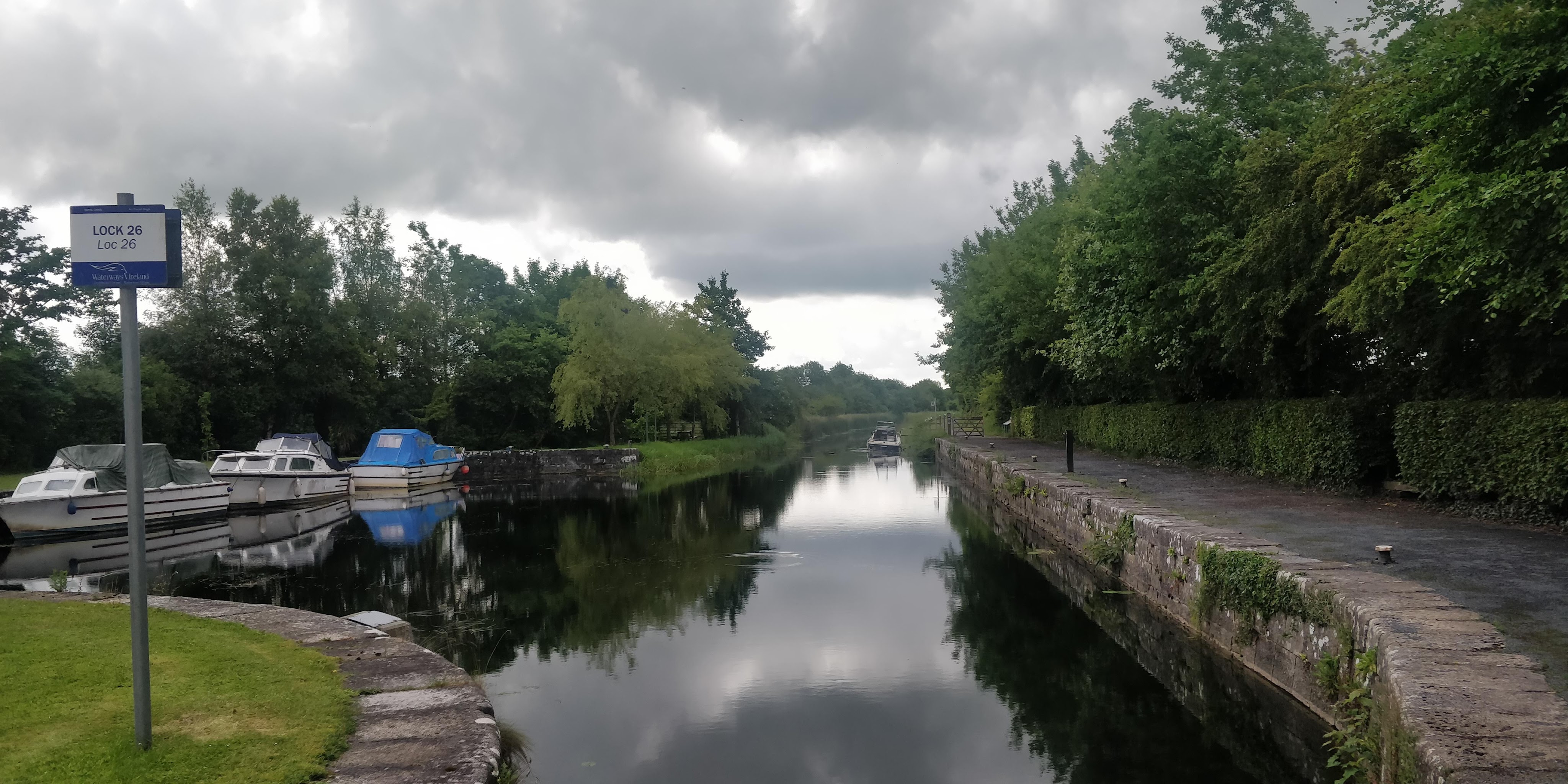
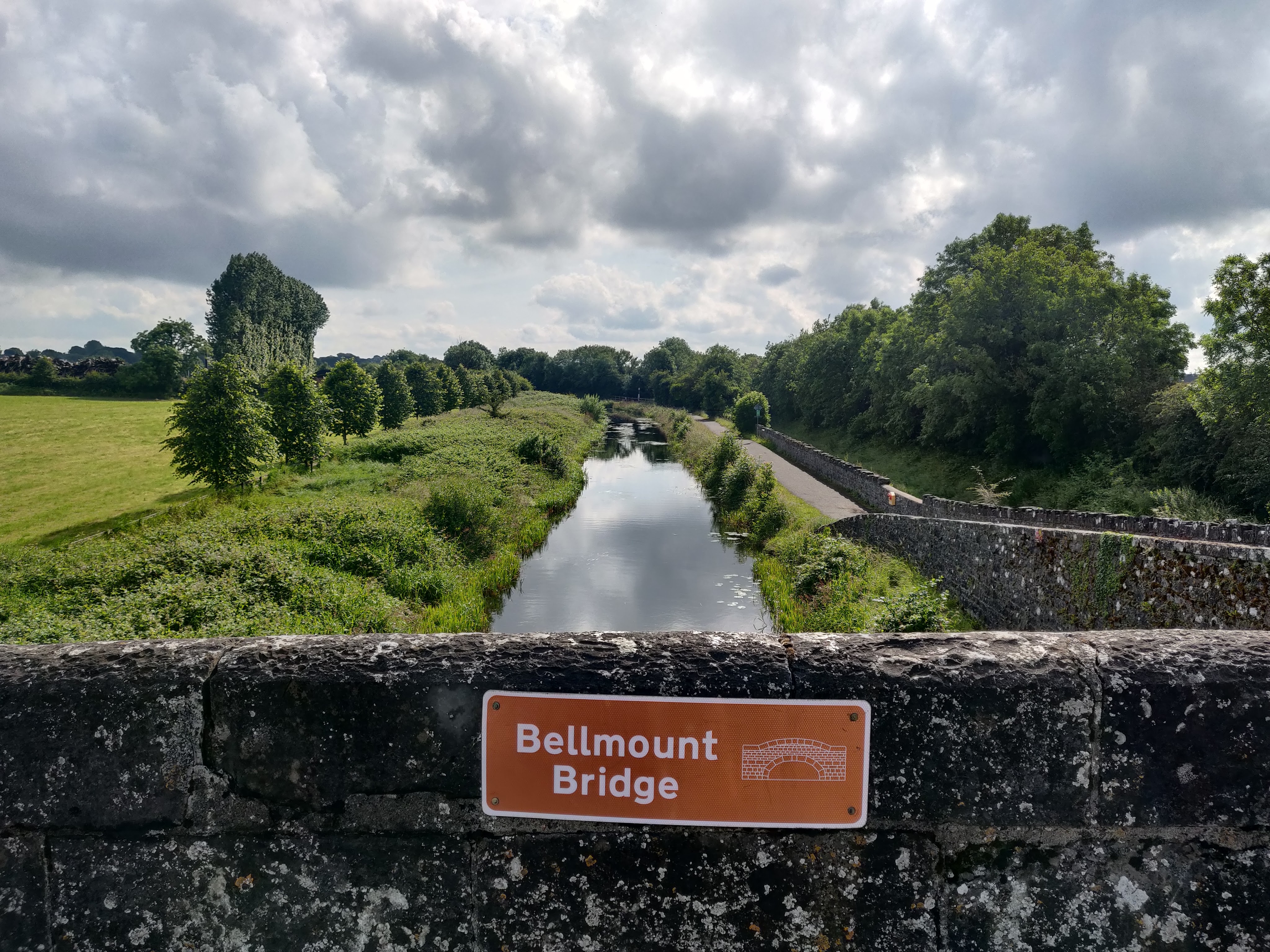
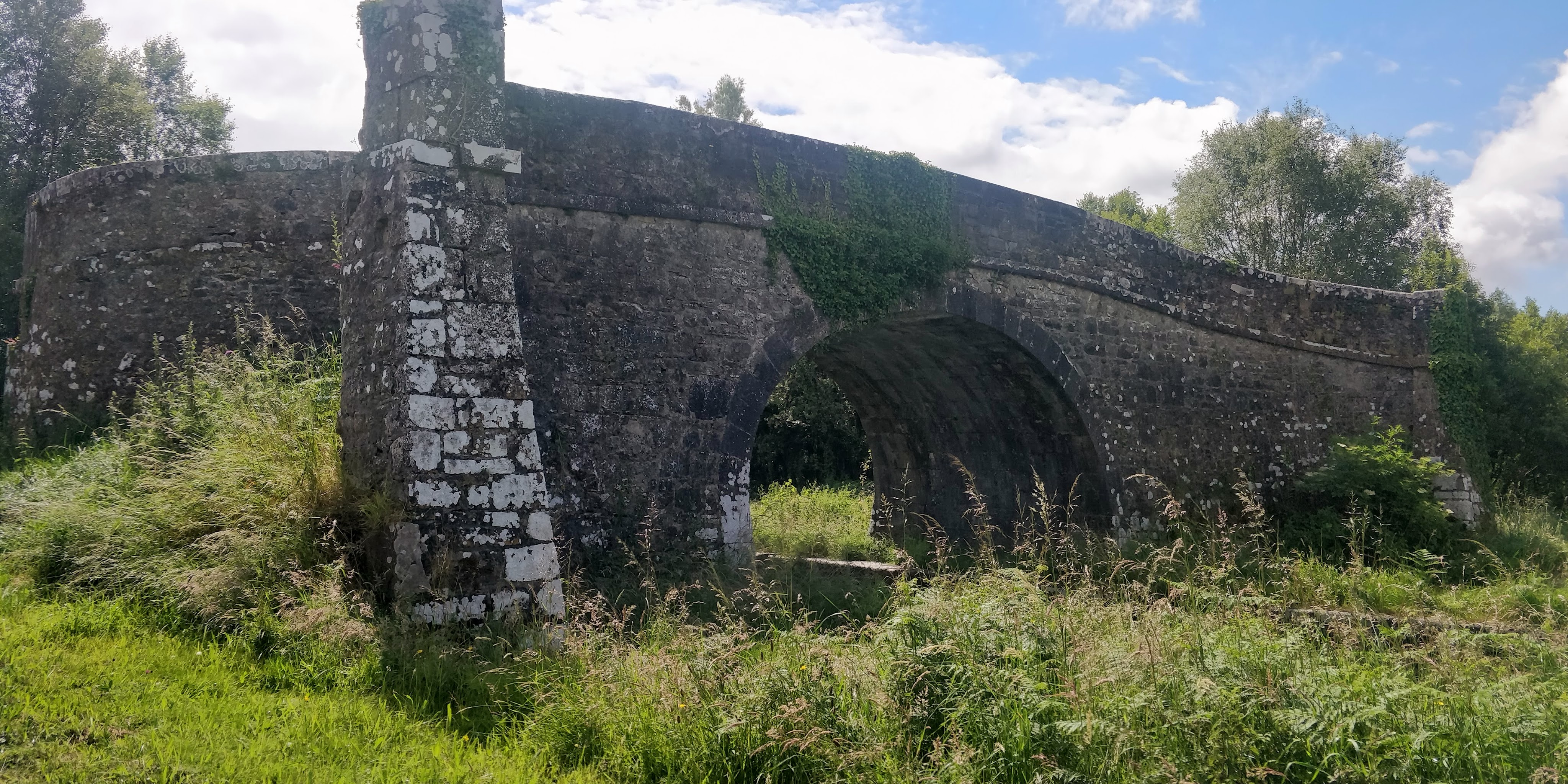
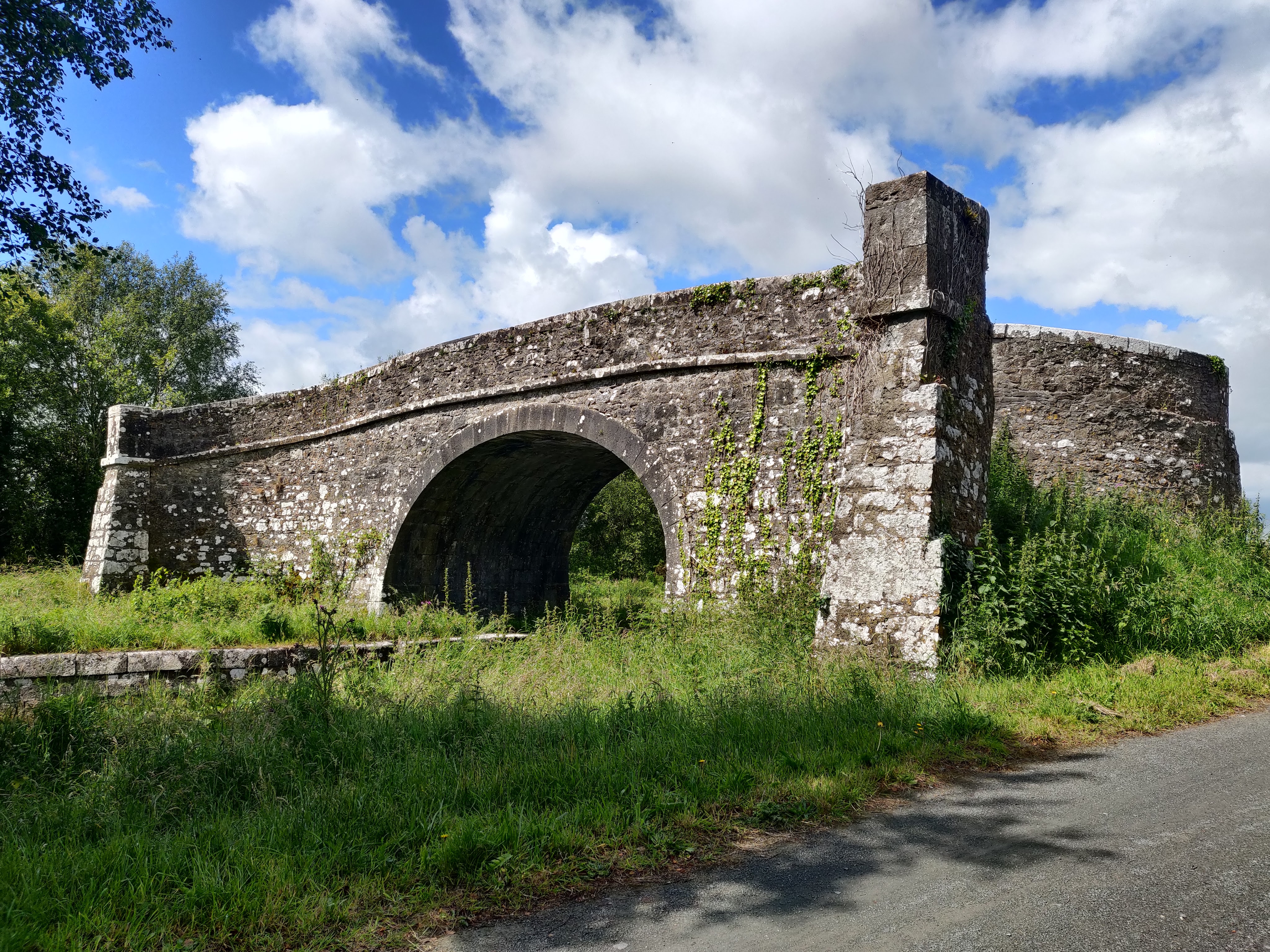
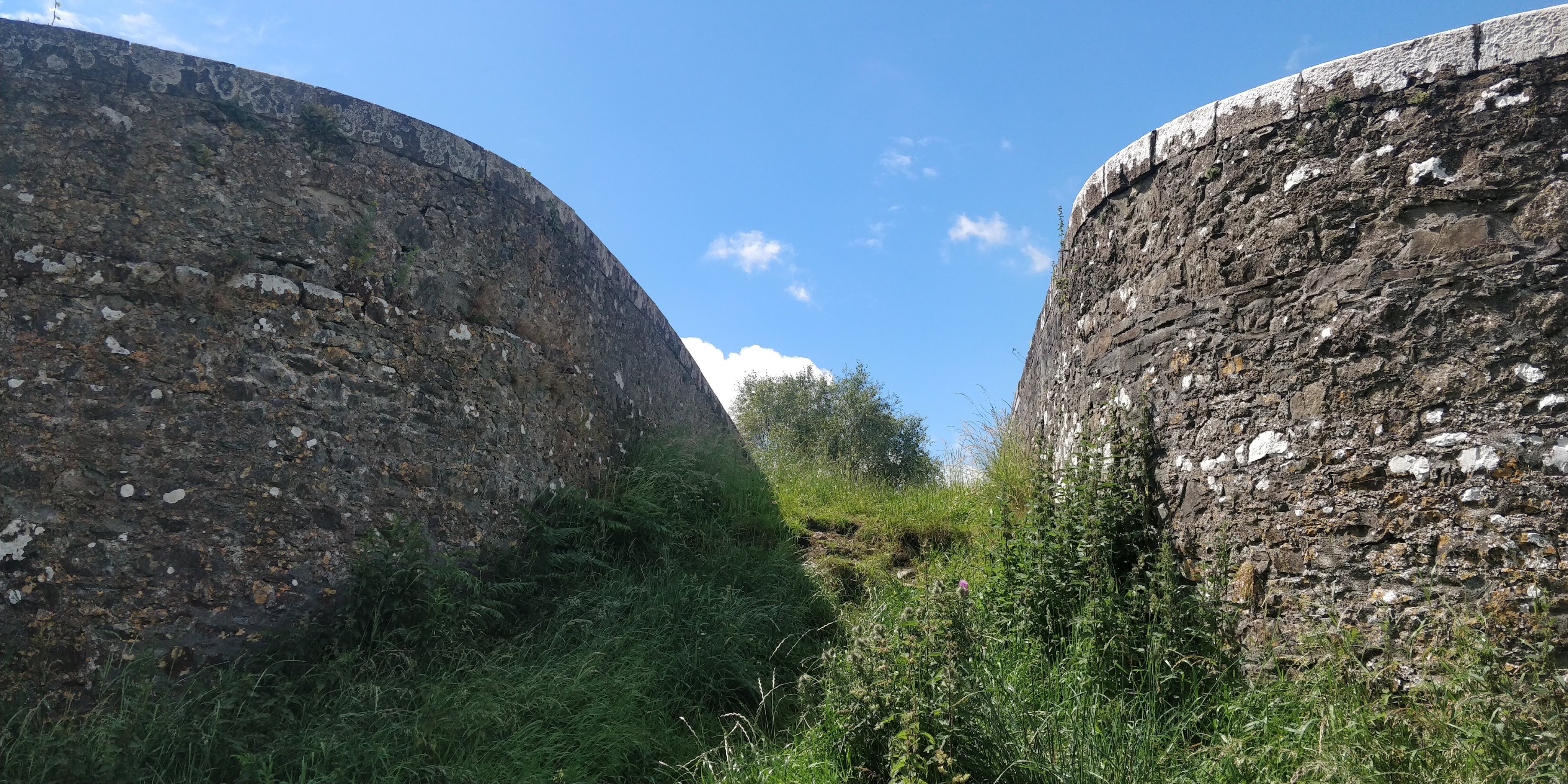
Our second morning was glorious and we set off in sunshine with a slight breeze after our reviving stay in Mullingar. This section was lovely – beautiful old trees lined the canal and there was th reflection of clouds in the still water. We stopped at lock 26 in Coolnahay Harbour at the lockkeeper’s cottage which had been turned into a café. There were boats moored and the sound of foaming water coming through the lock competed with birdsong…..so tranquil. The only people we saw along the greenway were workmen, dredging and clearing the canal, who waved to us. We then came along a boggy stretch with bog orchids, lots of flowering thistles and rushes. Another highlight of the Greenway were the spectacular bridges, old and sturdy, made with grey blocks that curved like open arms.

In Abbeyshrule in Co Longford we were ravenous and very disappointed there were no cafes or shops and the pub didn’t serve food at lunchtime. Caoimhin almost got bitten by a dog and someone else stepped in dogshit so we cycled away as fast as we could. We saw a sign that said that Keenagh was 11.5 kilometres away and hoped that we would get something to eat there. But before we got to Keenagh, we diverted to Ballymahon about two kilometre off the Greenway, on the advice of a man tending flowers by the side of the canal who could vouch that we’d get ‘a grand feed in’ Ballymahon.

He was right – the fried eggs and salad baps in Skellys in thriving Ballymahon were the nicest thing I’ve eaten…but I was ready to gnaw the table leg with hunger. Ballymahon was a busy market town with a hotel, several pubs and cafes and our little detour was worth it.

The Road to Nowhere

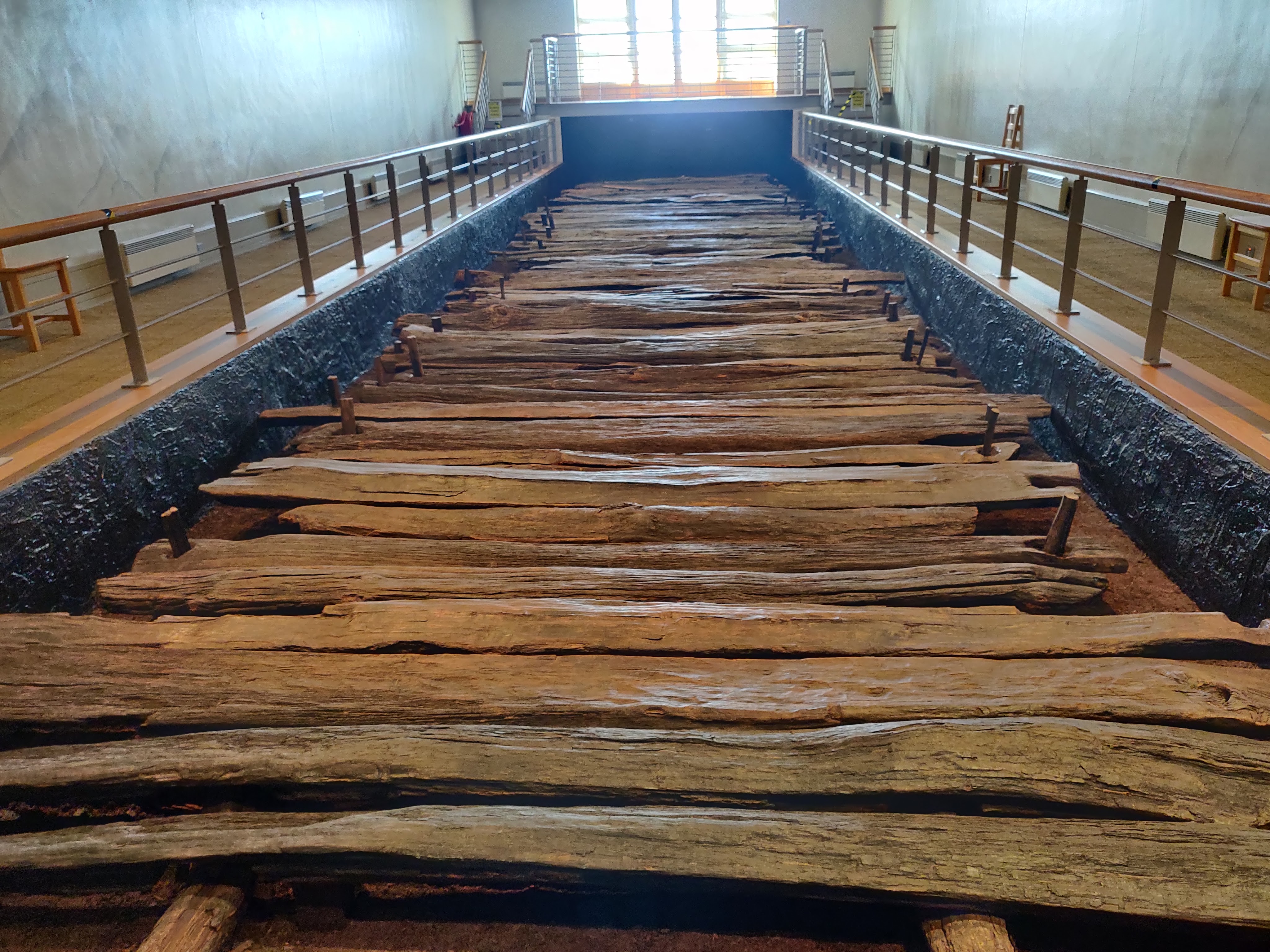
At Keenagh, we diverted from the canal to visit the Corlea Trackway Visitors Centre in the boglands of Longford. This holds a very impressive, prehistoric old Bog Road that is shrouded in mystery, built in the middle of nowhere at a time when the land was covered in oak trees – a path to the past. Nobody knows why it was built or where it was going.

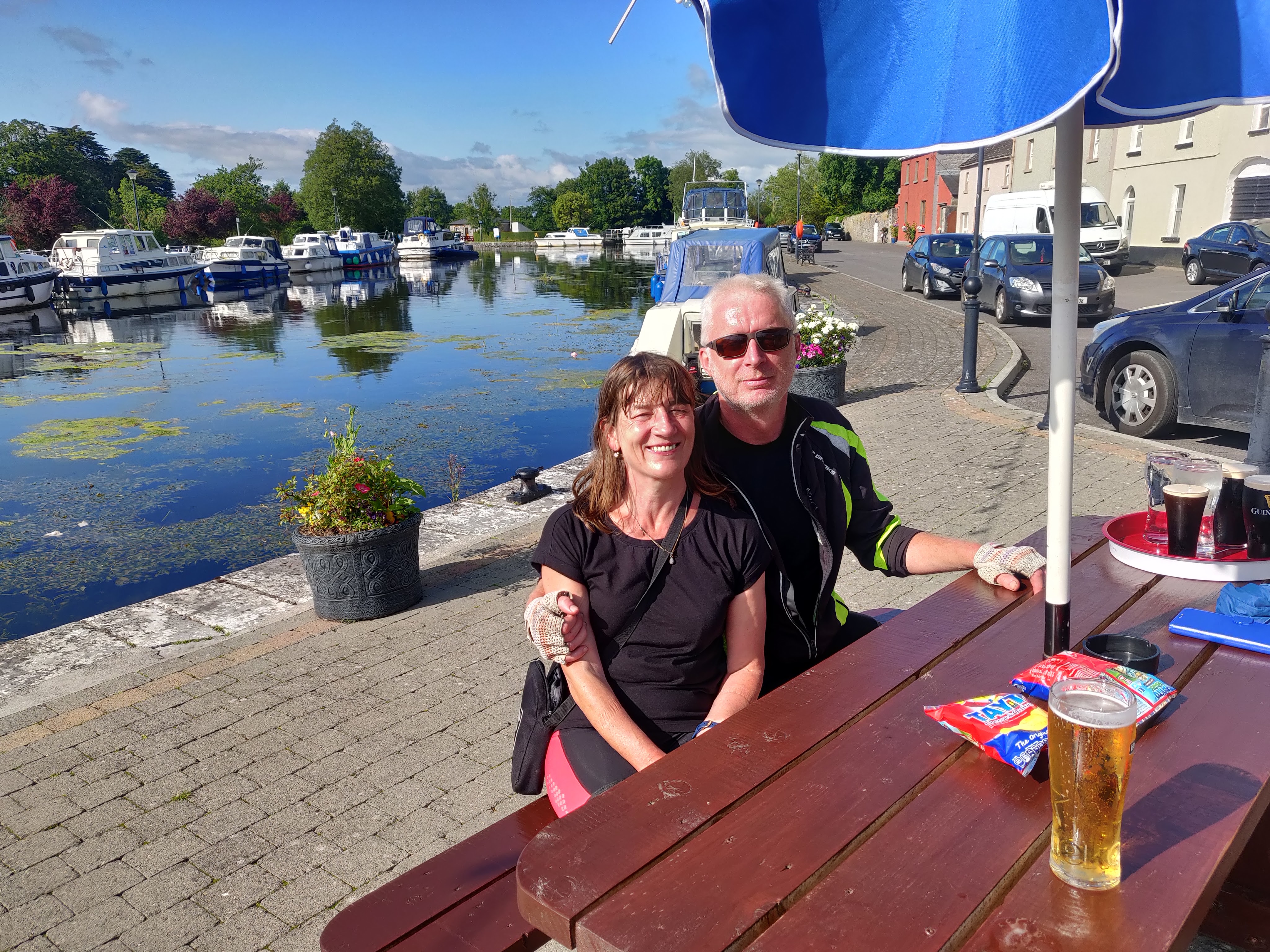
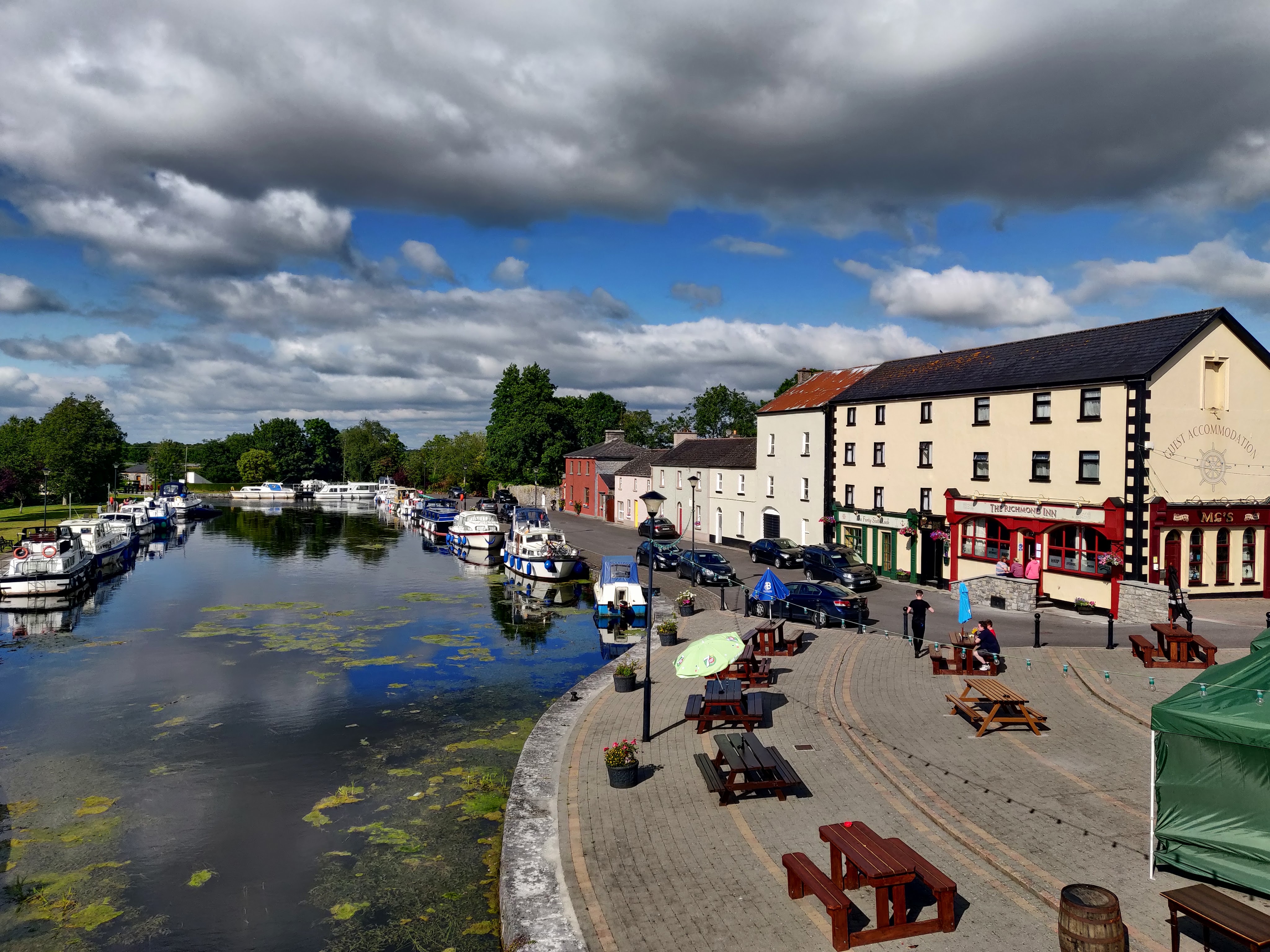
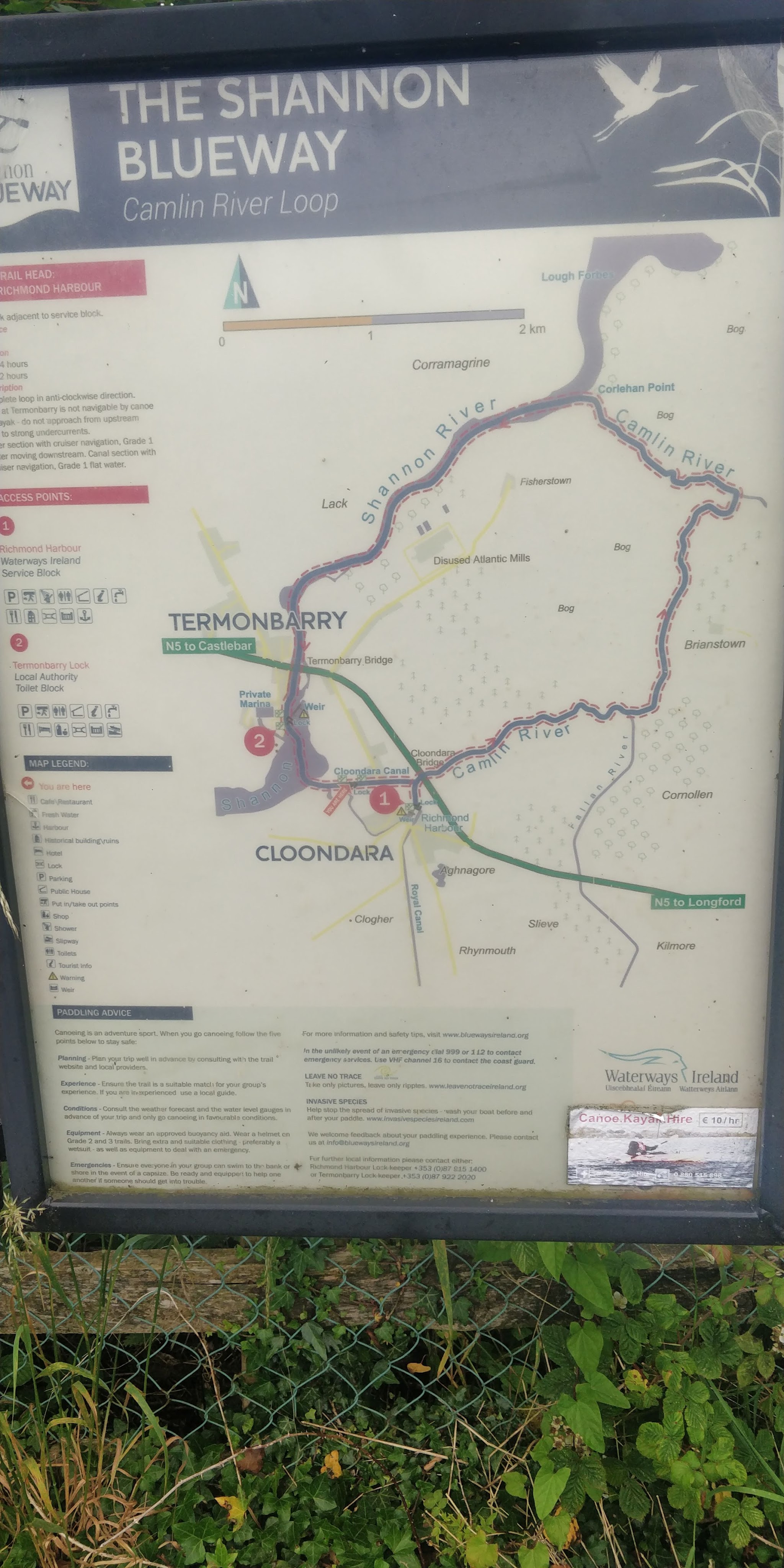
At Killashee, the Greenway diverged, one path to Longford town, the other to Cloondara and the Shannon. We were delighted to see the boats under the bridge and the big stone mill in Cloondara and soon we were sipping pints under the umbrellas in the shade by the water in this very scenic little village. We stayed in the Richmond Inn in the village with a view of the canal. This was really a village of water, water everywhere with the canal, a marina, two rivers, weirs and a reclaimed mill with a water wheel. An old man in the pub told us that the smell from the tannery up the road was terrible until it closed about 15 years ago. Before that it was a distillery and Cloondara was a thriving place with flax and coal from the Arigna Mines being transported by barge to Dublin and porter and grain brought back.

St Mels Cathedral, Longford

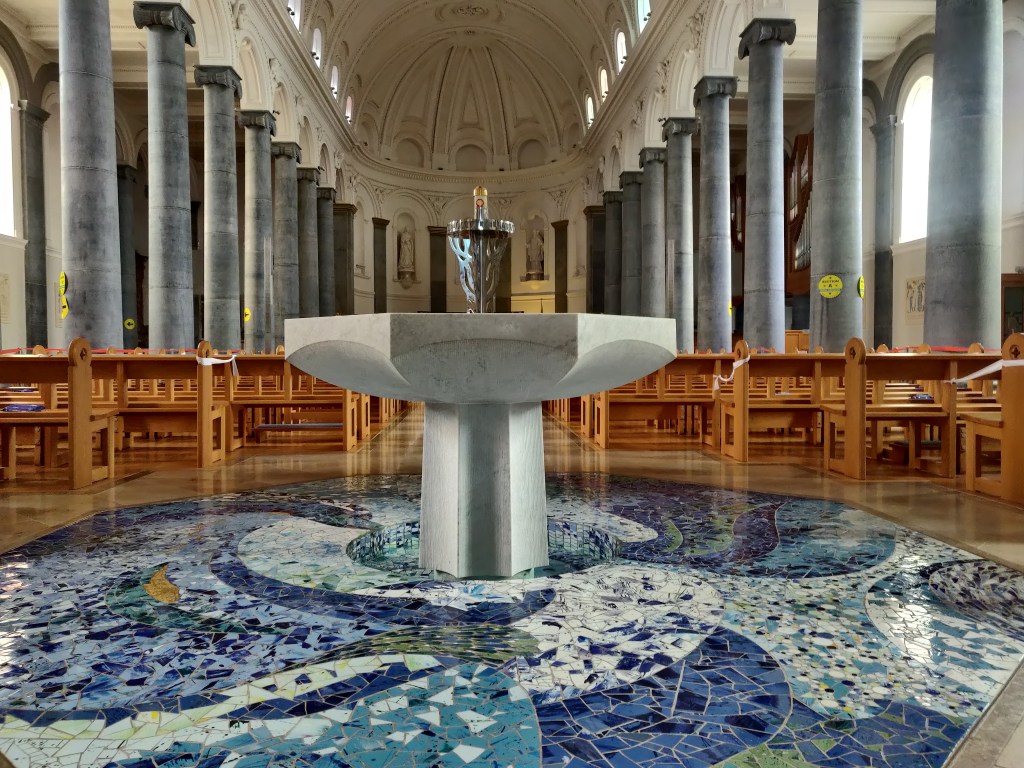
The following day, we retraced our cycle back to the Longford turn off. It was a pleasant cycle along the canal which was really overgrown on the section into Longford. We stopped along the way to identify more plants like Heal all and yellow rattle and nipplewort. There was nowhere to leave the bikes at the station in Longford so we wandered around town with the bikes. We visited Saint Mel’s cathedral which was the most beautiful cathedral I’ve ever seen…probably. The restoration after a devastating fire in 2009 was gorgeous – a stunningly beautiful font on a blue mosaic floor with pillars of grey-blue and a simple altar, just a white slab.

Our train tickets were €21 each back to Maynooth, no charge for the bikes but they had to be pre-booked as there were only two bike places on the train. The guy in the train station in Longford was spectacularly unhelpful but eventually gave us a phone number so that we could book on the bikes – it was too late to book online. When the train arrived, there was already one bike in place, but Caoimhin managed to squeeze our two bikes on. So book bikes online in advance if getting the train back and perhaps the trains will have lore bike slots as the Greenway gets more popular.

The weather could have been kinder on the first day but this was a fantastic trip – in spite of punctures and broken chains – in an area of Ireland that we were unfamiliar with, an area of scenic beauty, wildlife, steeped in history with bog roads and famine walks, with renovated lockkeeper houses like picture postcards, stone bridges and tranquil villages. The cycling was easy (ok, tell that to my bottom😅) with lots of interesting diversions. The advent of the railways brought about the demise of the canals and they slowly fell into disuse until the Royal was resurrected in the early 2000’s for leisure craft. Now the Royal Canal Greenway should bring more life and visitors to this beautiful area across the centre of Ireland.

But just a word of advice, come prepared and bring a pump…..just in case

Happy Cycling😍

Cycling the Royal Canal

Canary Islands, the Magical Eight

Leaving Ireland on February 2 2022, we had no fixed plans except a vague notion of island hopping around the Canaries for a few months. The Canaries were very much a second, compromise choice for us. We didn’t know anything about these islands except that they were popular holiday destinations with families during the summer and extremely popular with (mainly) old people during the winter who flee the cold winters of Northern Europe like migratory birds. They didn’t sound that exciting to be honest but Covid was still slamming shut borders in more exotic destinations. We returned home three months later on May 2, having visited all eight inhabited islands (we couldn’t even have named all the islands when we left home😊). What did we think? Read on for a brief description and a highlight from each island. Although all the islands are rugged and volcanic, they are actually very different.

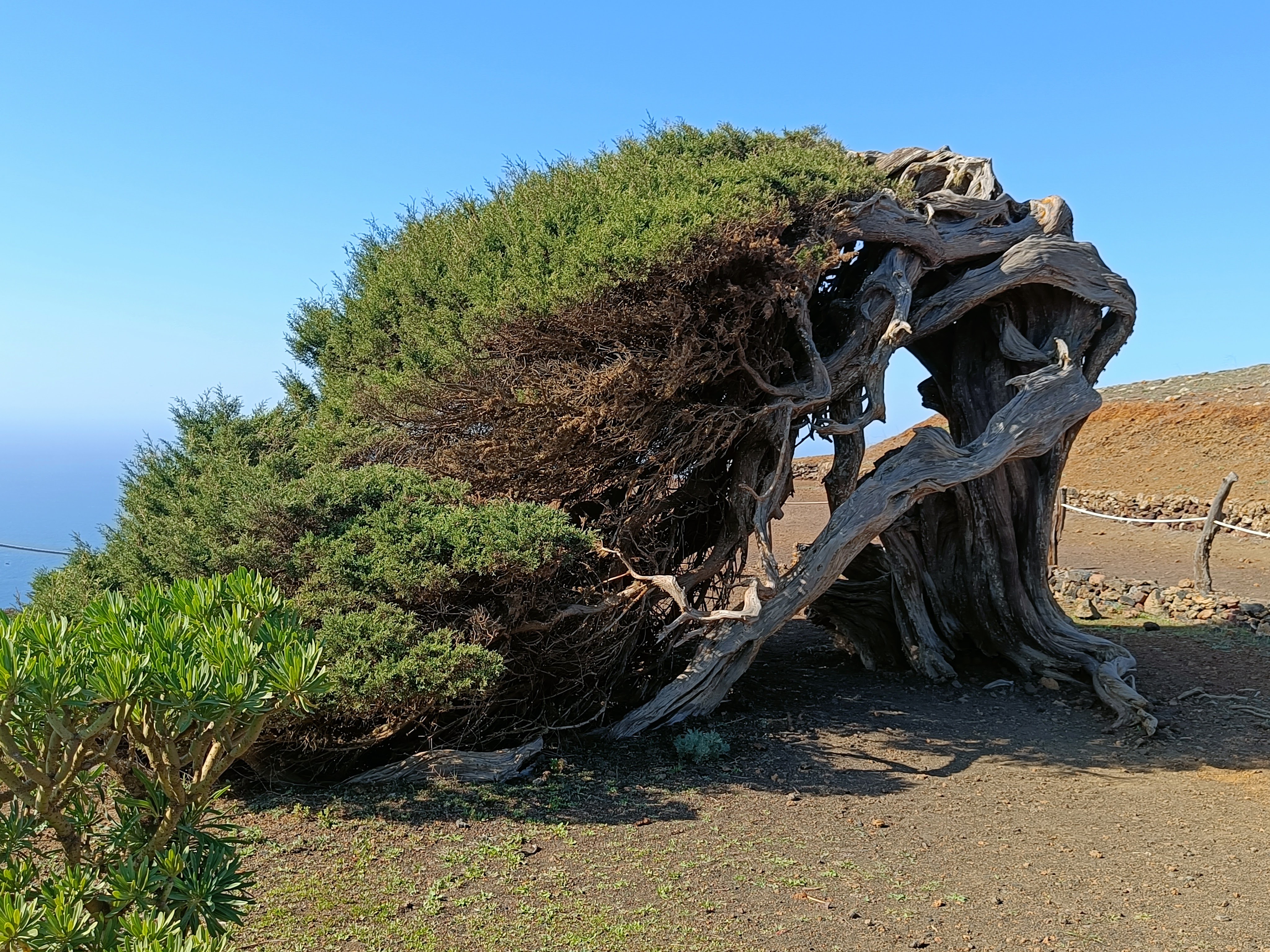
El Hierro, the island at the end of the earth whose symbol is a gnarled and twisted juniper tree in the south western part of the island. Bend, don’t break

This is the island with all the superlatives – wildest, remotest, smallest (or at least it was the smallest until La Graciosa was added as the eighth island in 2018). It was once considered the end of the known world and it still retains some of that ‘last frontier’ feel. If you don’t like crowds but like nature and magnificent scenery and want variety packed into a small space, this is the island for one. You could be shivering in Valverde, the capital, (probably the chilliest, foggiest place that we visited in all the islands) in the morning and sunbathing on the coast in La Restinga or Tamaduste within an hour. There are no sandy beaches on El Hierro but don’t let that put you off, there are lots of gorgeous salt water rock pools and a dramatic coastline. Its been a UNESCO Biosphere Reserve since 2000 and it has big plans for energy sustainability. We loved its romantic wildness, the friendliness of the people and its fascinating trees.

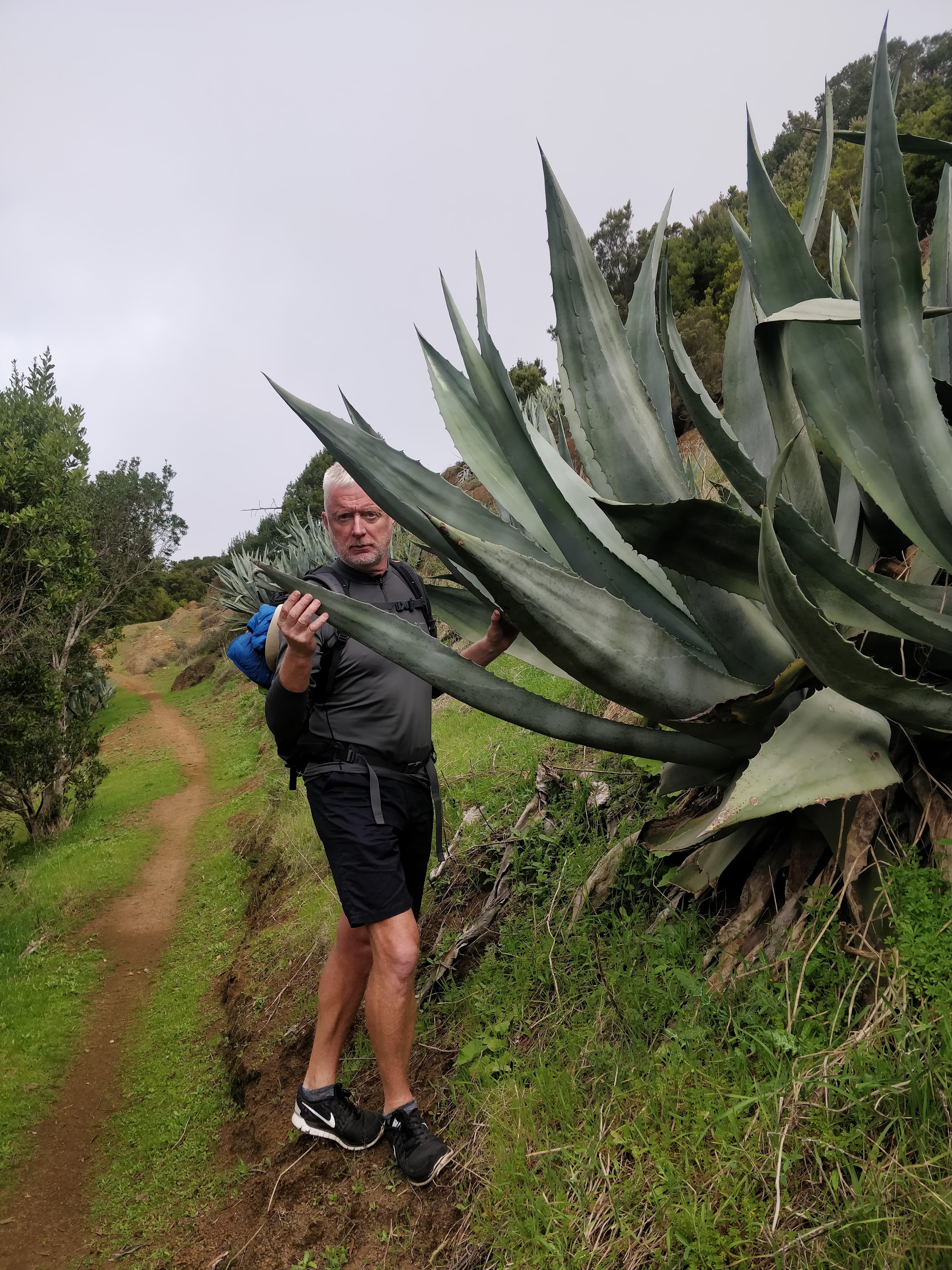
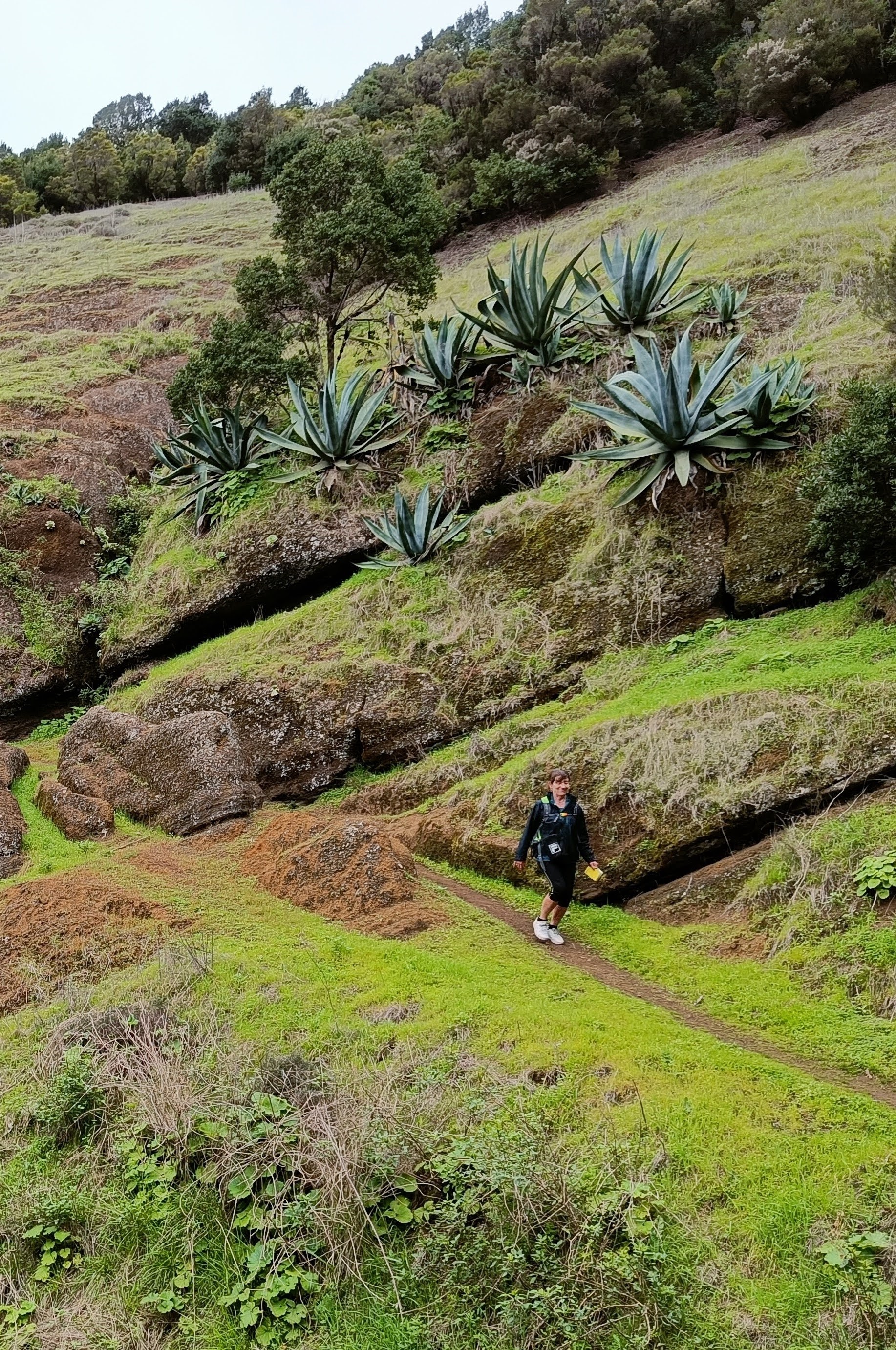
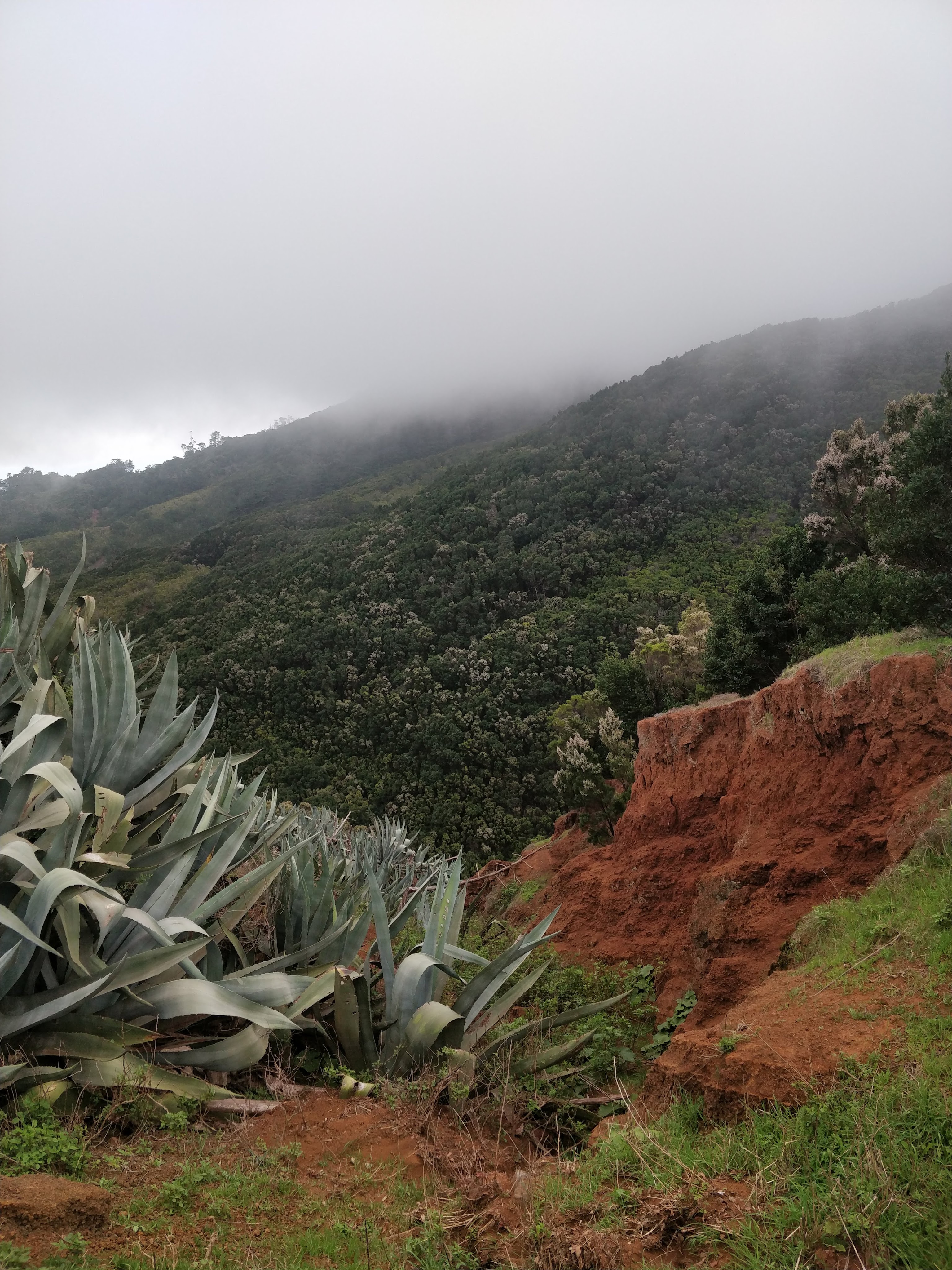
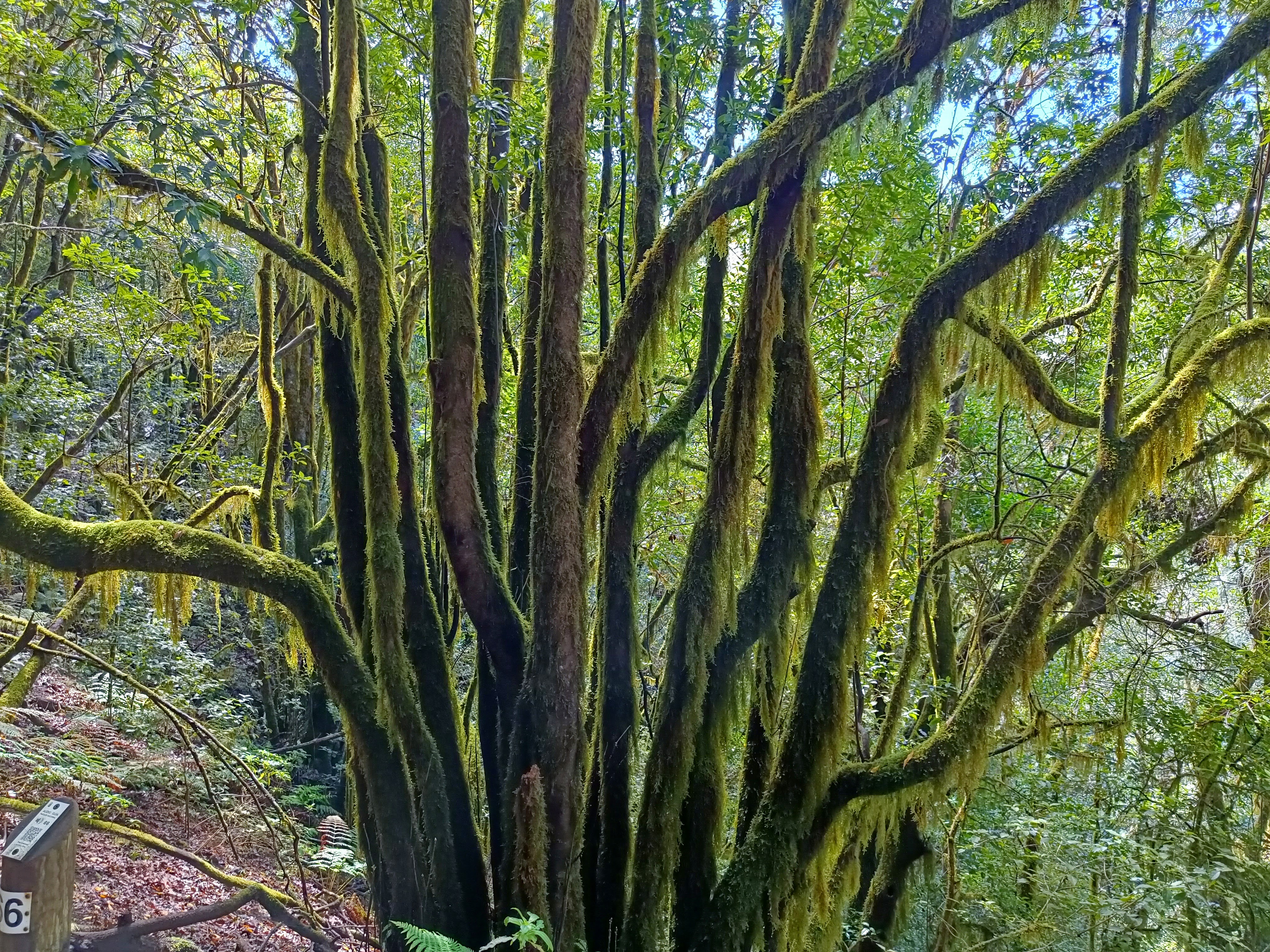
Highlight : Ruta del Agua. This 14 km hike around Saint Andres, the highest village on the island at 1100m, was stunning with moss wrapped trees, fragrant pines, giant Aloe Vera plants, fascinating history and a sacred tree.

La Gomera, the Hikers Paradise hiking

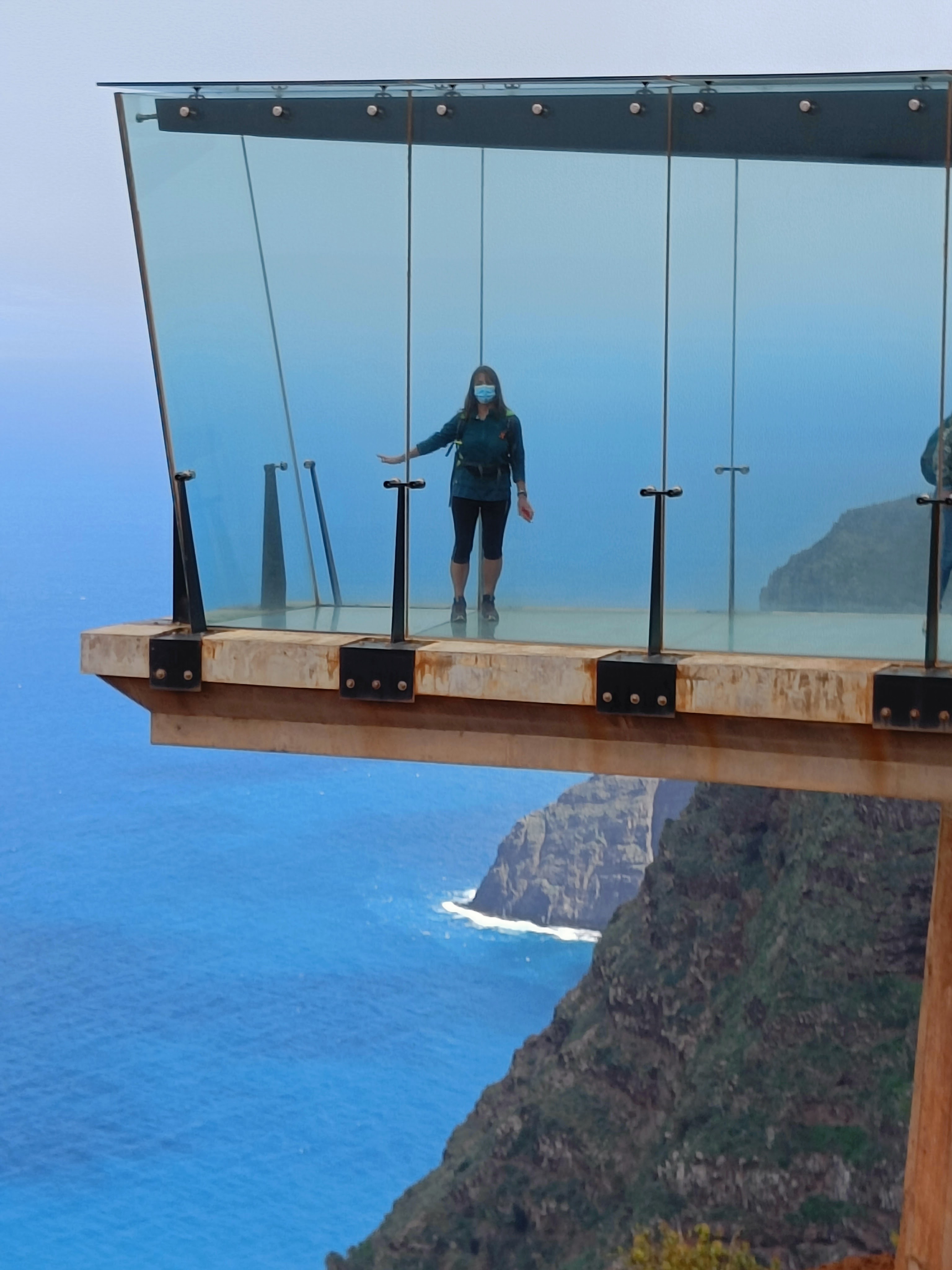
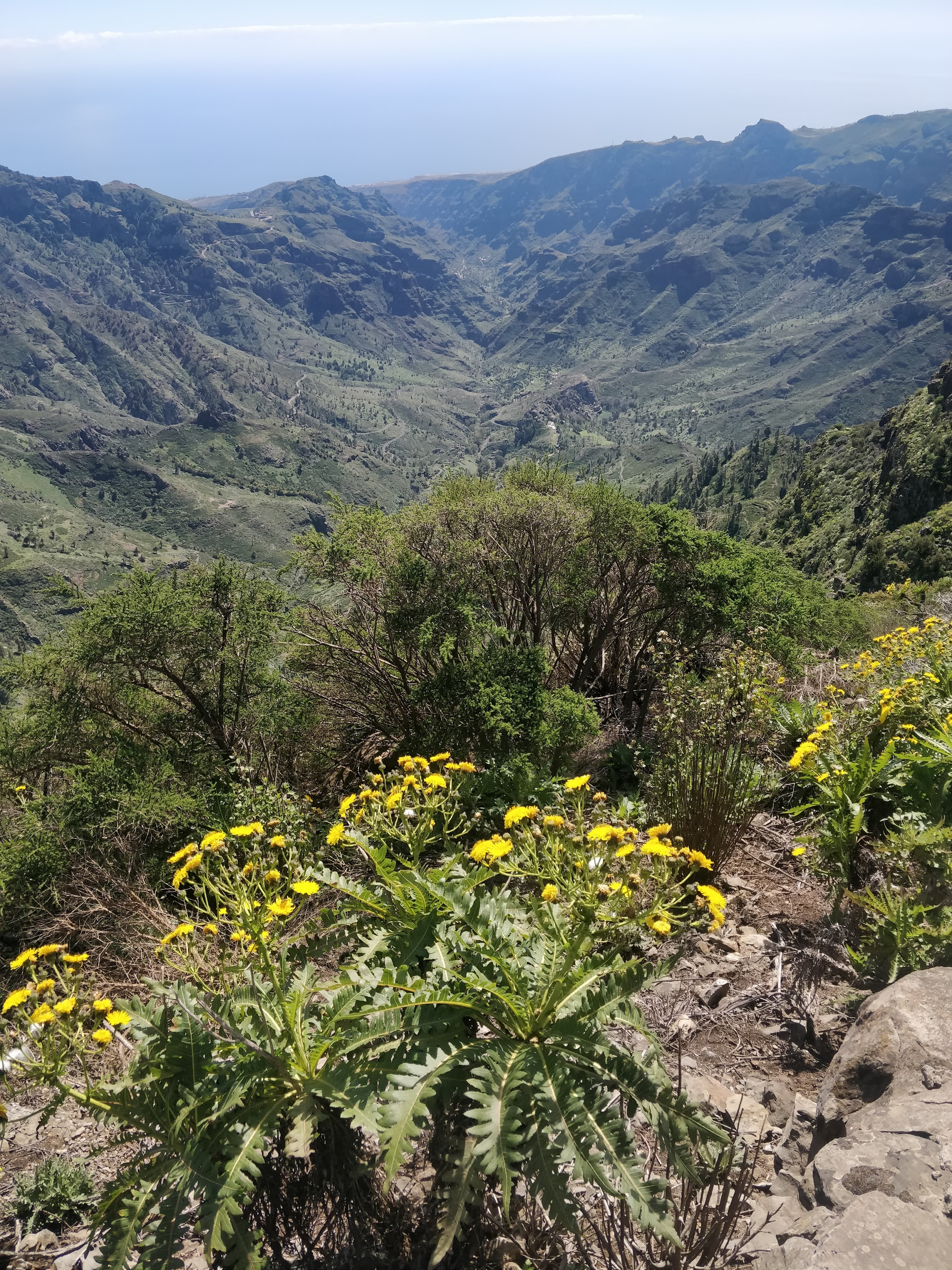
La Gomera is a round mountainous island with rocky summits, deep ravines and ancient forests. This stunning island is all about the hiking and there are trails to suit everyone from 30 minutes trails to all-day hikes. At its centre is the beautiful Parque Nacional de Garajonay with its cloud forest of laurel and juniper and a myriad of well marked trails. The Valley of the Great Kings – Valle Gran Rey – on the western side of the island is a long stunning valley with some sandy beaches. La Gomera is full of miradors, viewing points to admire the stunning landscapes, places to take a breather. This island is very popular with Germans, sometimes we felt that we could almost have been in Germany. There are numerous daily ferries from Tenerife so its a popular island for day trips from Los Cristianos in Tenerife to San Sebastian in La Gomera as the journey is only about an hour.

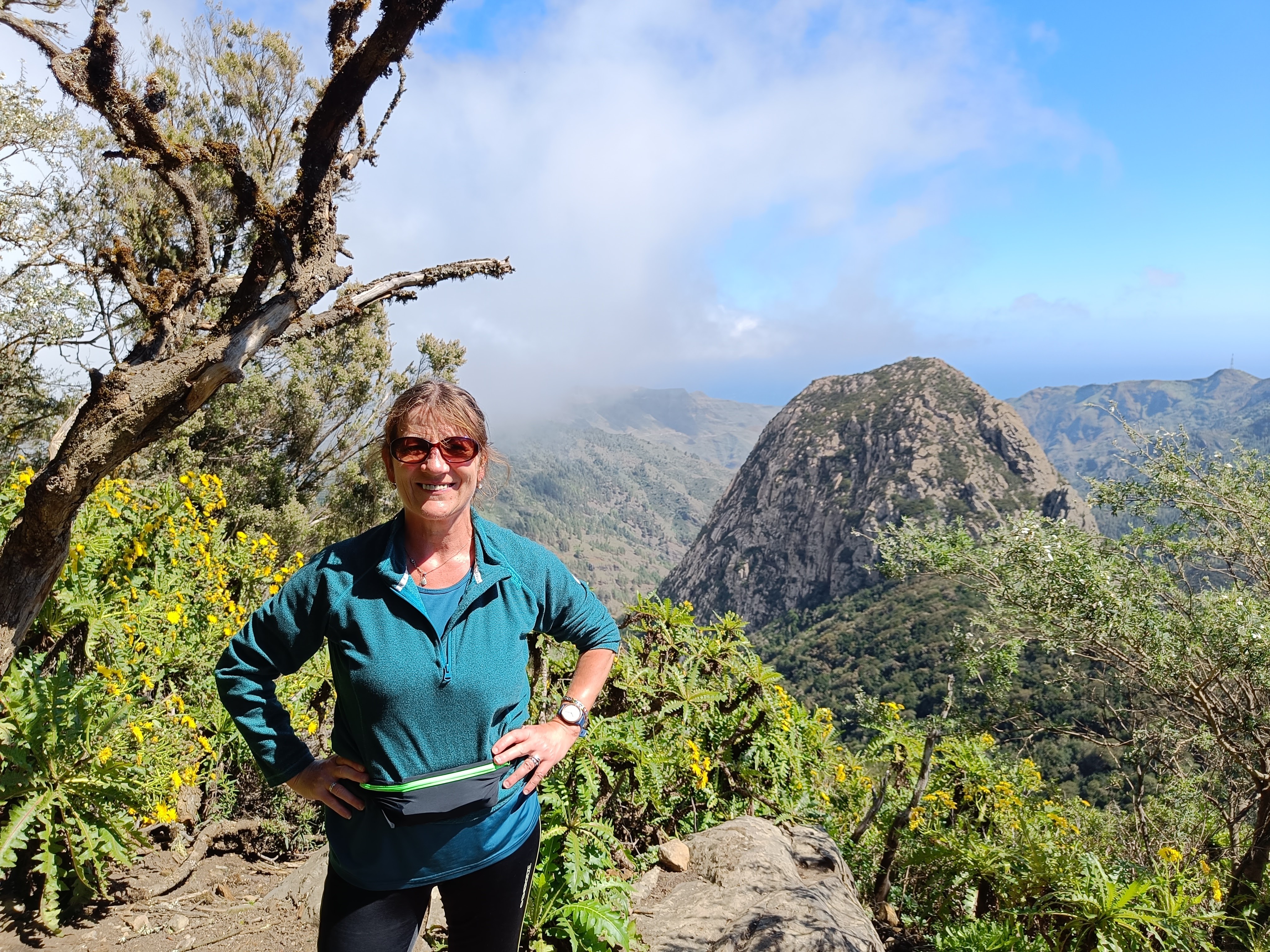
Highlight La Gomera: Hiking in the Parque Nacional de Garajonay in the ancient laurel forest.

La Palma, the Island of Fire and Starlight.

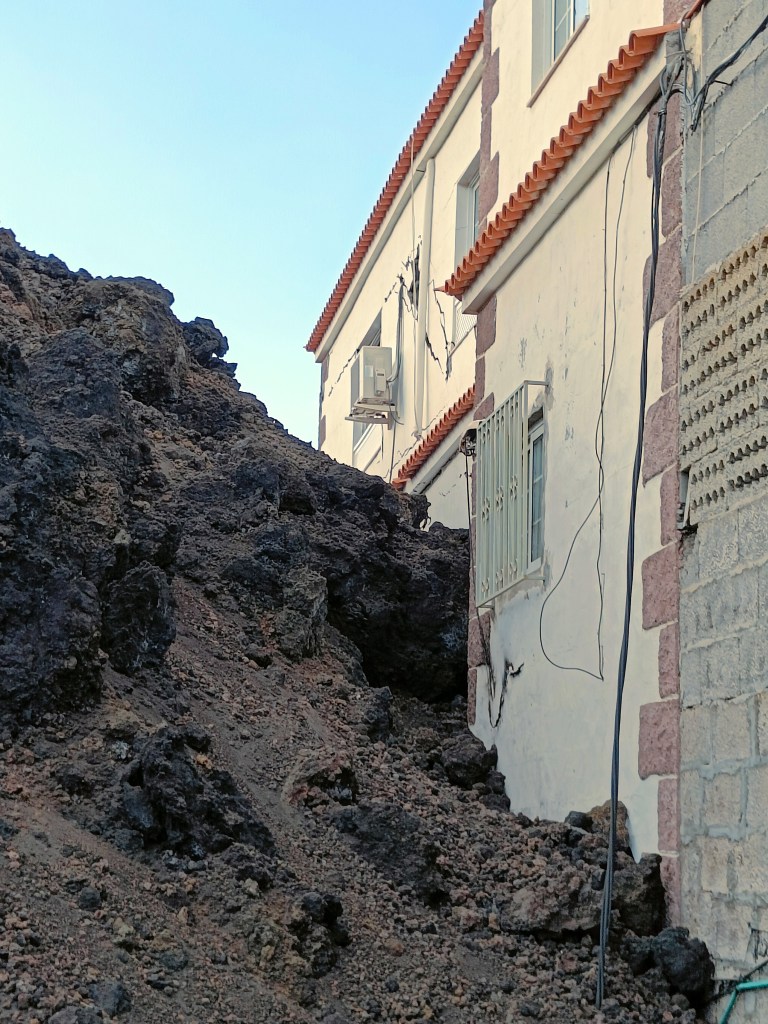
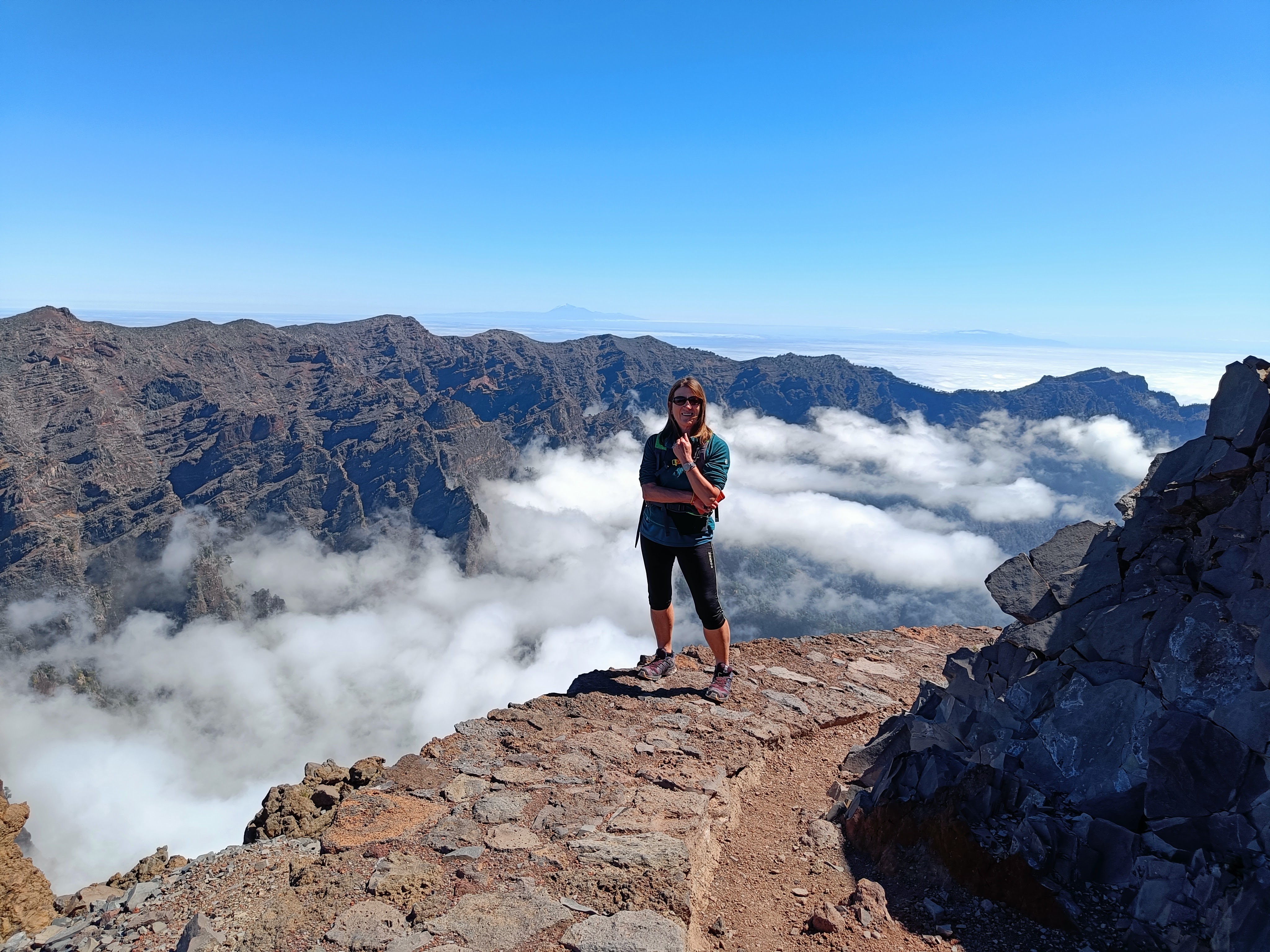
La Palma in the Canaries is known as Isla Bonita – the Beautiful Island. It has a lovely relaxed capital city, Santa Cruz de la Palma, green pine-clad mountains and lots of banana, avocado and almond plantations. The island has a line of active volcanoes, running down the central spine to the southern tip and one of these, the Cumbre Vieje volcano, erupted last year and unleashed its fury on the western part of the island for three months. Looking at the aftermath, we were sobered by the sheer volume of volcanic material and the scale of the destruction. La Palma has some beaches on the western coast but they are mainly black sanded and some are pebbly. All the Canary Islands boast of clear skies but La Palma has been designated a Starlight Zone for the study of the night sky. It also has about 15 astronomical viewpoints dotted around the island which are good spots for star gazing. So if you want your head above the clouds and stars in your eyes, La Palma is the place for you🤣

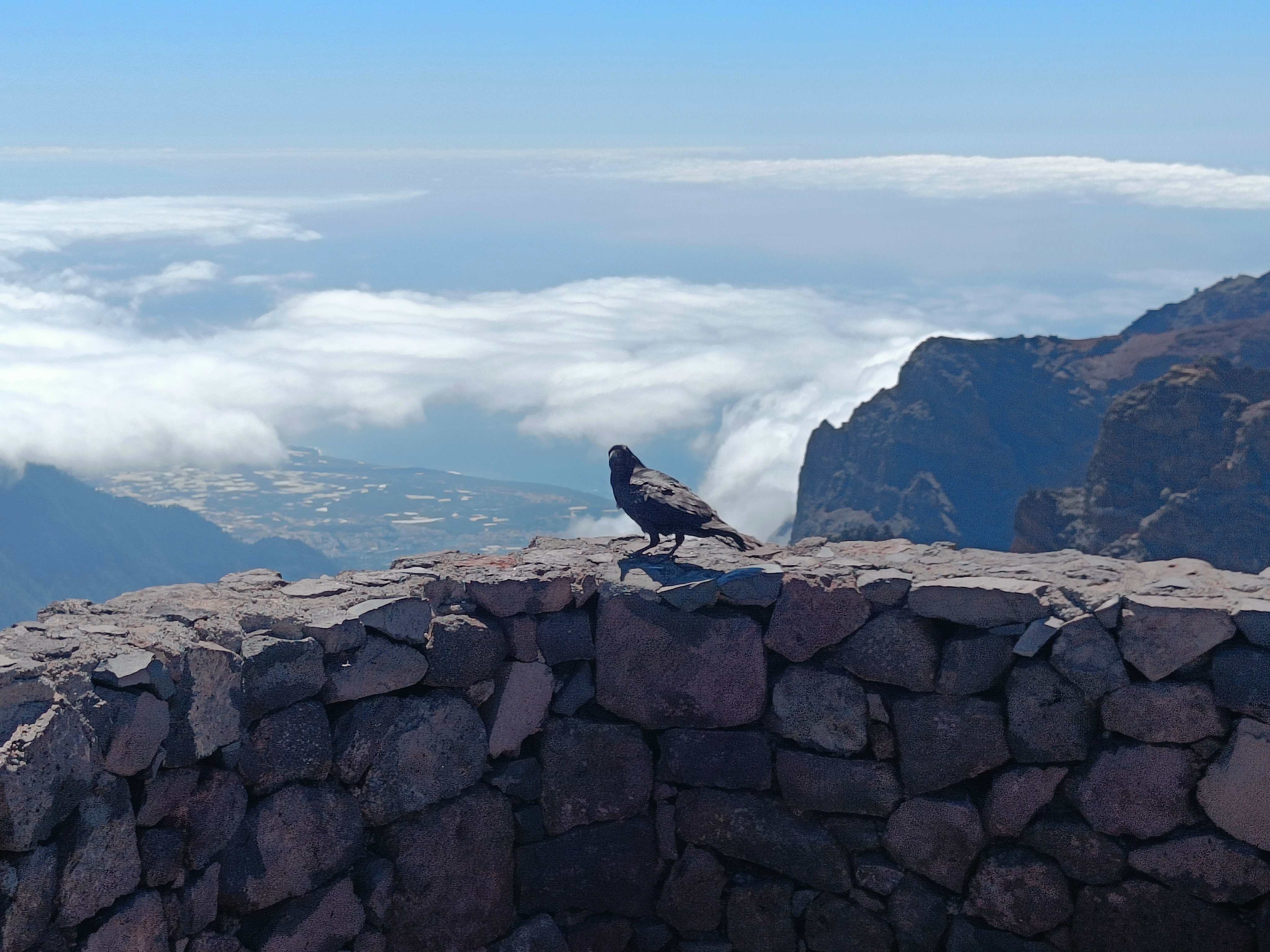
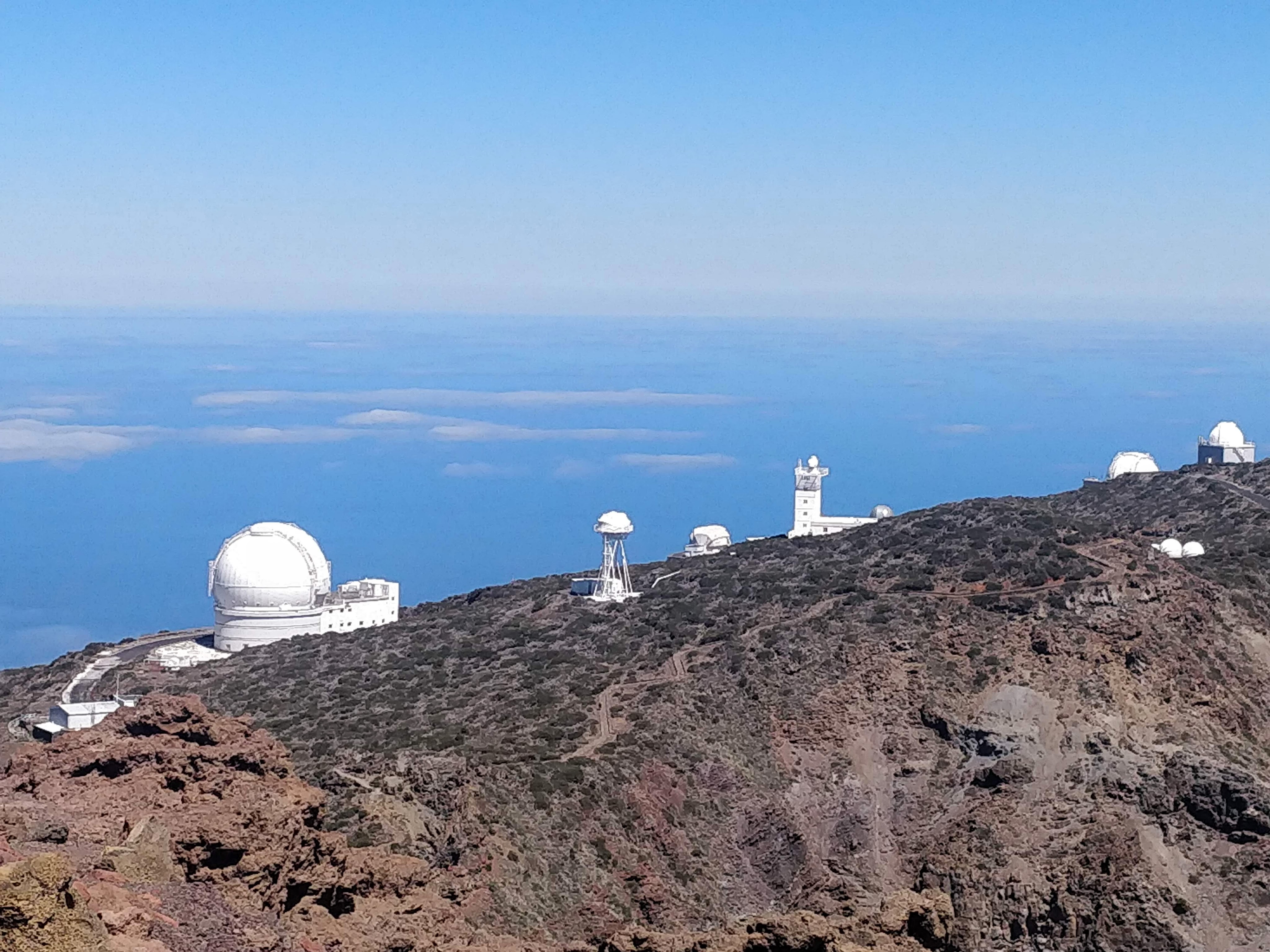
Highlight La Palma: Our visit to Roque de la Muchachos (2426m), where there are a whole host of observatories. This is a place where science, physics, natural beauty and the quest for knowledge all work together to give a totally mind-blowing combination.

Gran Canaria, Paradise Lost and Found

Gran Canaria is the island where tourism is spelt with a capital T. It gets more than four million visitors a year and Maspalomas in the south is the largest purpose built resort in all of Spain. The beaches, particularly in the south are good. If you like an island with lots of hotels, a buzzing nightlife, where English is widely spoken and the food is similar to home, you will love the resorts in Gran Canaria. The interior of the island is spectacular with mountains, deep canyons, craters and calderas – great for hiking. It was also extremely busy with tour buses, hire cars, motorbikes and lots of cyclists on narrow roads that wound around the mountains. Las Palmas, the capital is a charming place with its historical districts, fabulous architecture, good shopping(duty-free) and to top it all, gorgeous palm fringed beaches.

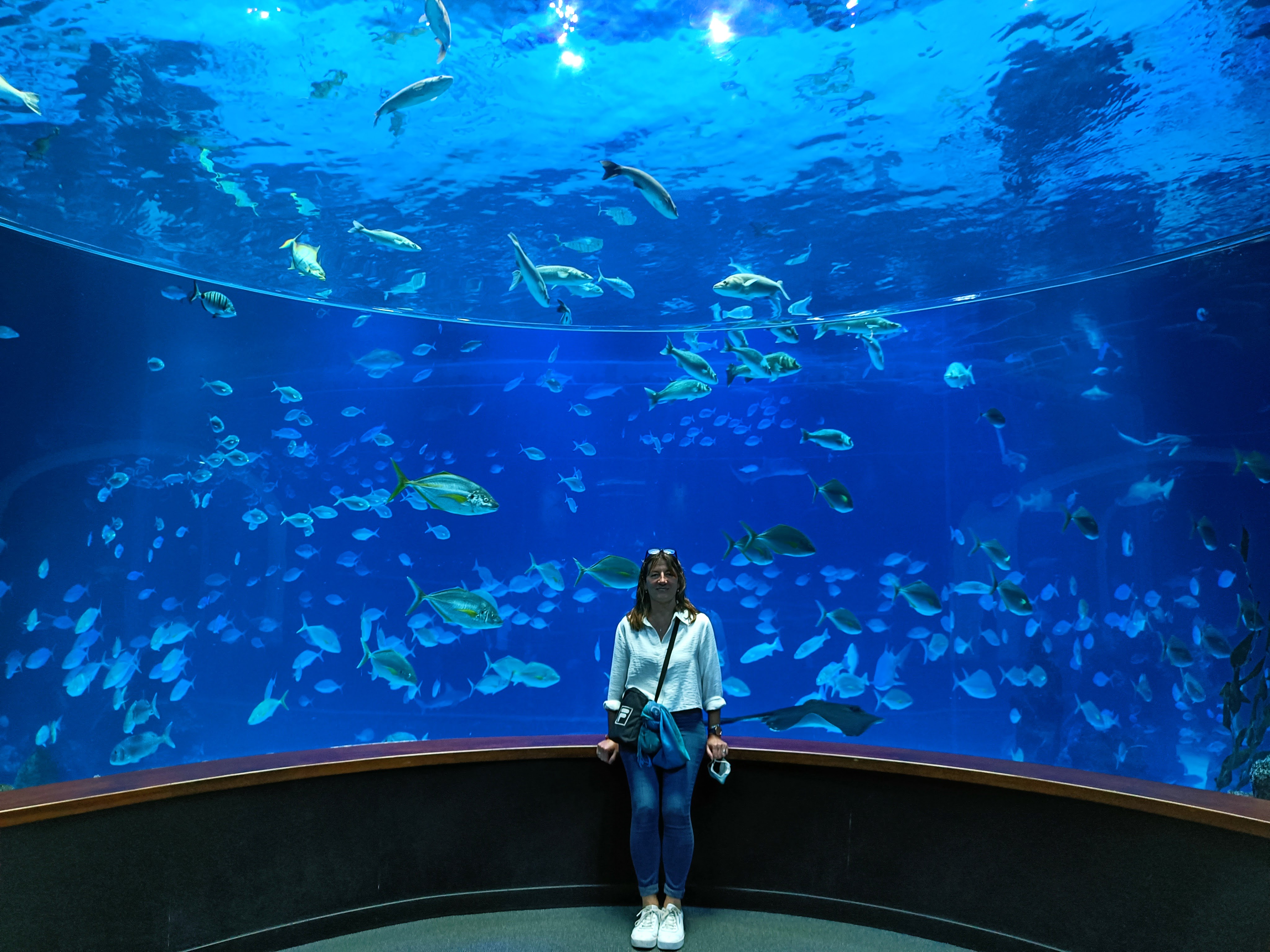
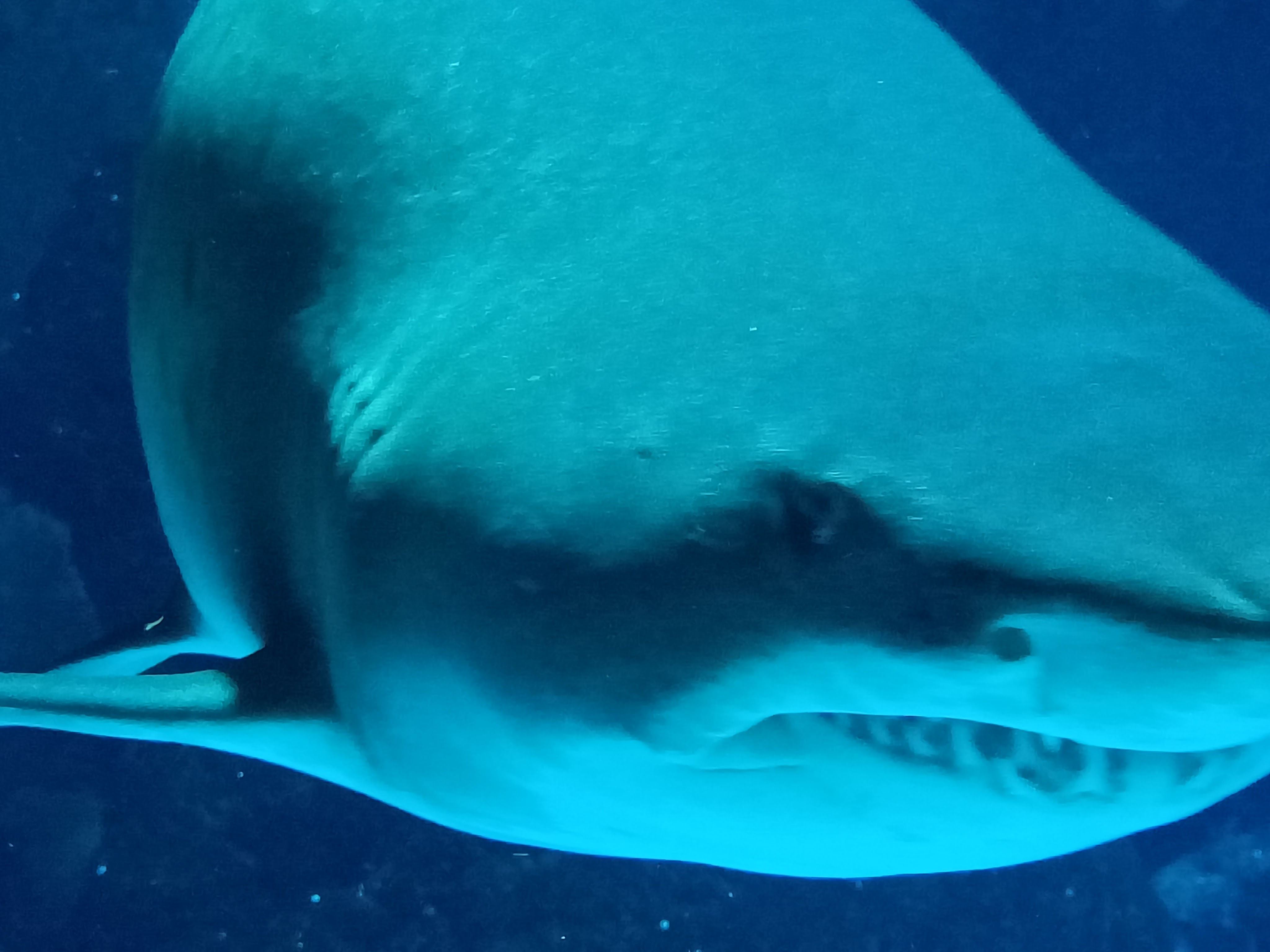
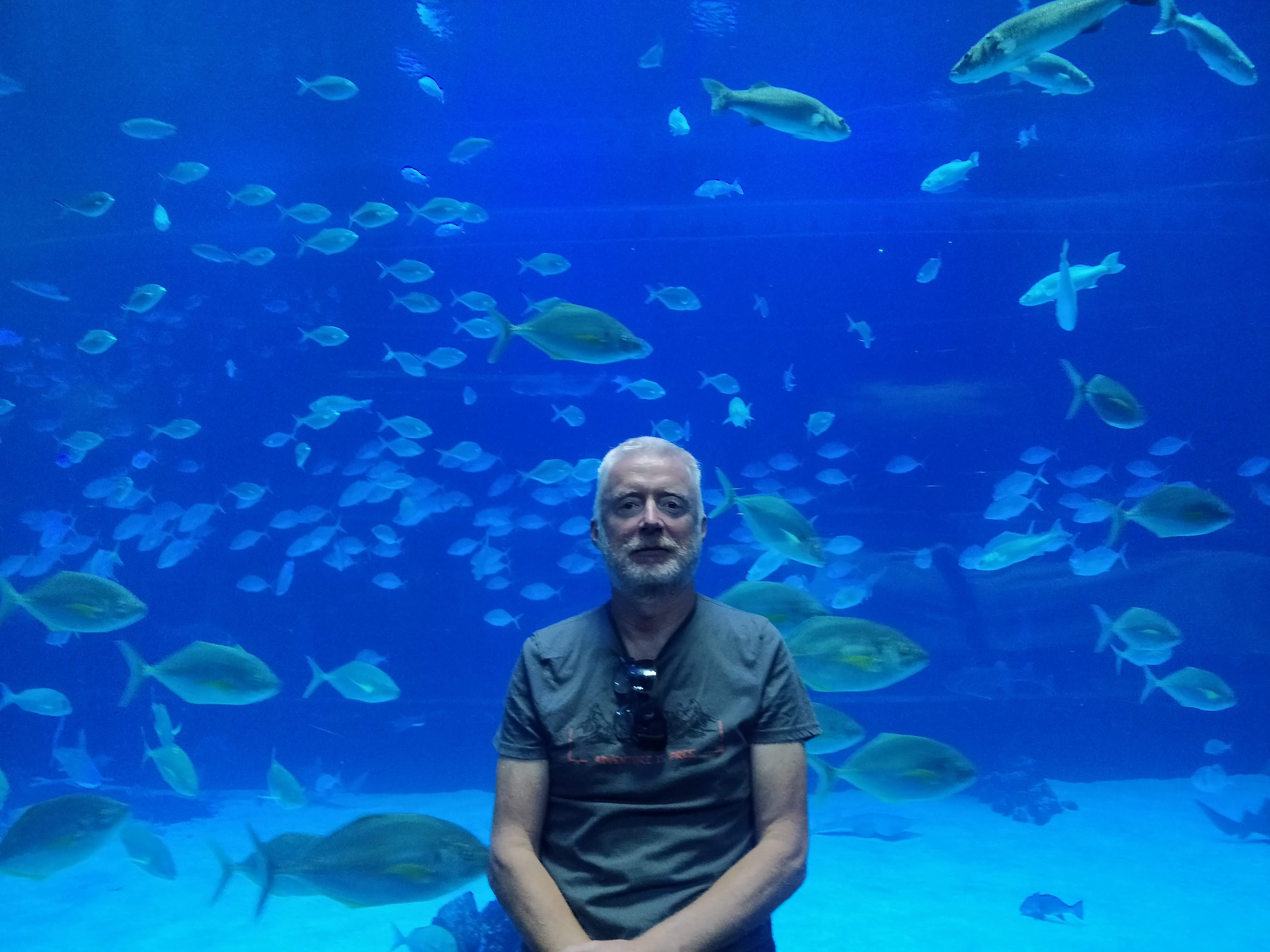
Highlight: Our visit to the Aquarium called Poema del Mar in the capital, Las Palmas. If you only ever visit one aquarium in your life, make sure that it is this one. In certain sections, t was like being underwater, watching a mesmerising ballet, hosted by the inhabitants of the deep sea.

Fuerteventura where Life is a Beach

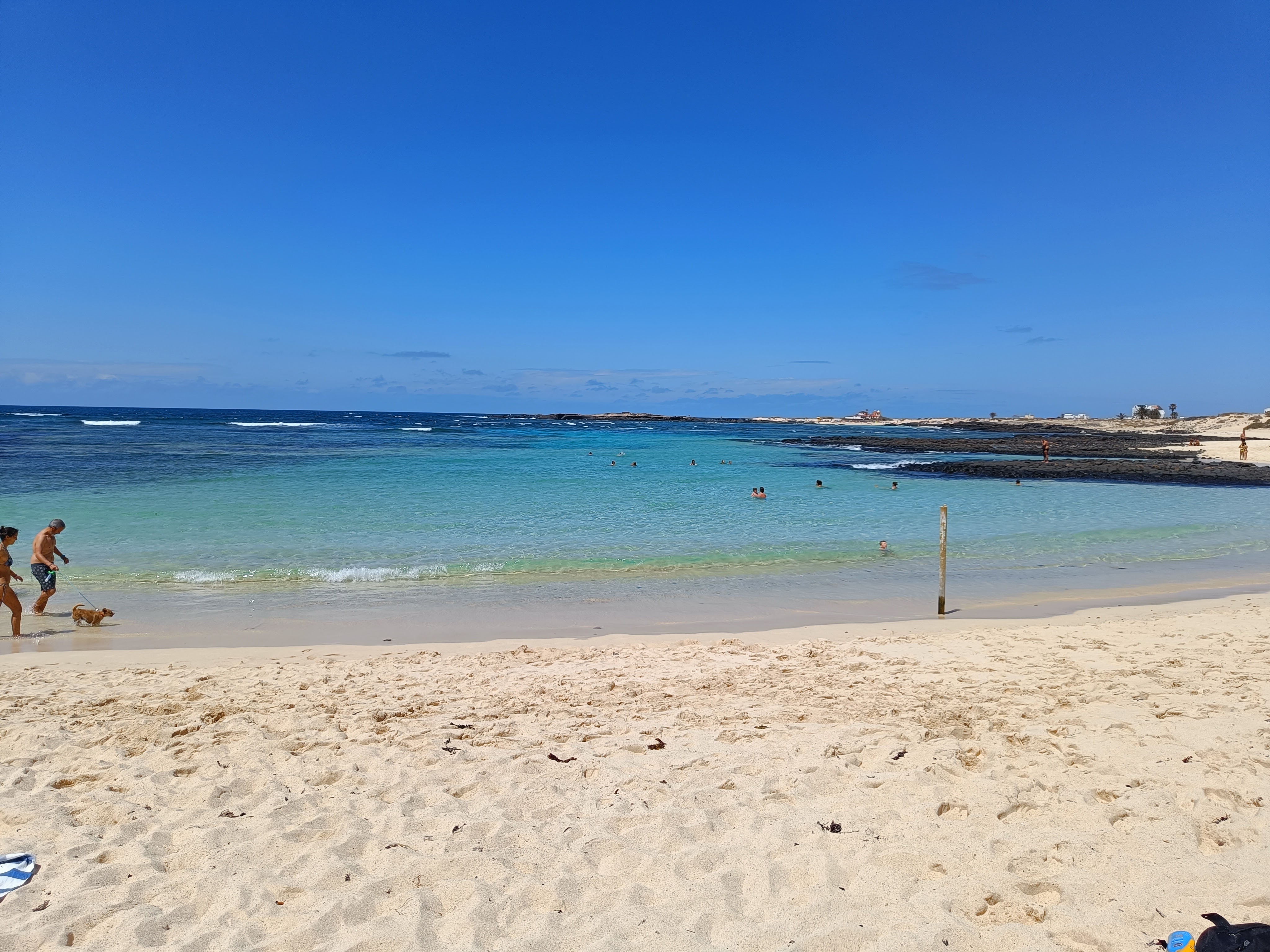
Fuerteventura is the second largest of the islands with a long, narrow shape and is also the nearest to Africa. The best beaches in the whole archipelago are here. These are the beaches of holiday brochures with pale-white sands lapped by turquoise emerald waters especially along the Jandia peninsula in the south and the northern coast around Coralejo and El Cotillo. The interior is mainly brown stony earth dotted with low bare volcanic hills, little white towns, windmills and the occasional goat farm. Its all about sun, sand and sea in Fuerteventura – and of course wind.

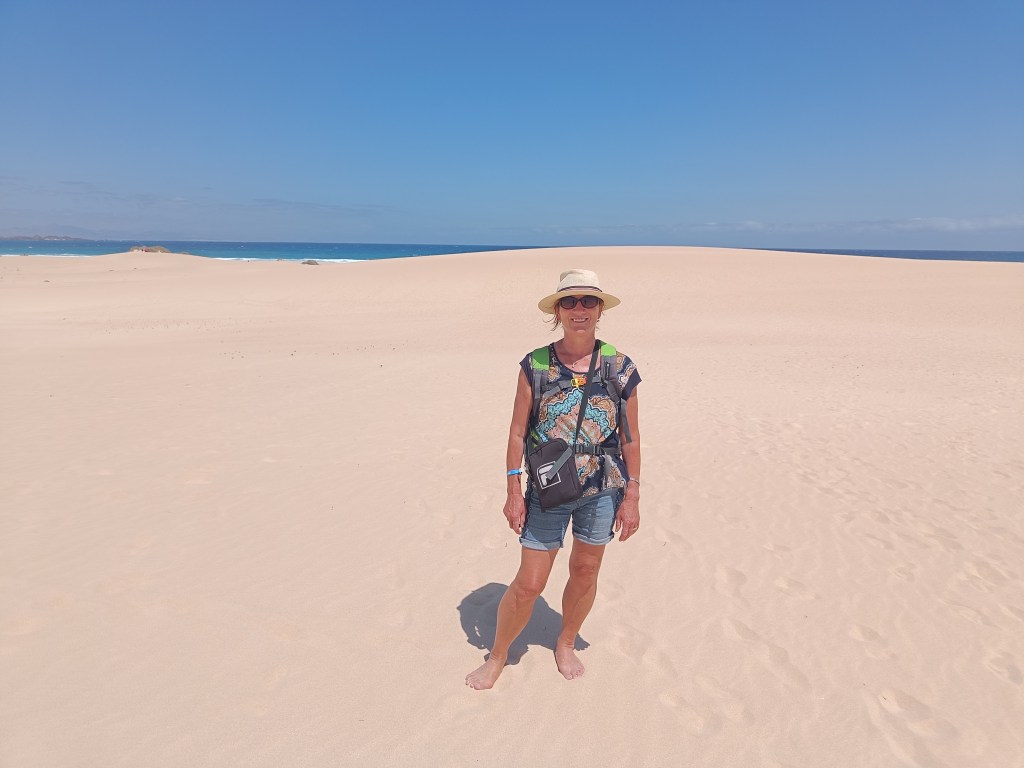
Highlight: Swimming in the lagoon in El Cotillo in clear calm turquoise waters in the company of shoals of fish in glorious sunshine.

Lanzarote, the Isla del Fuego (the Island of Fire)

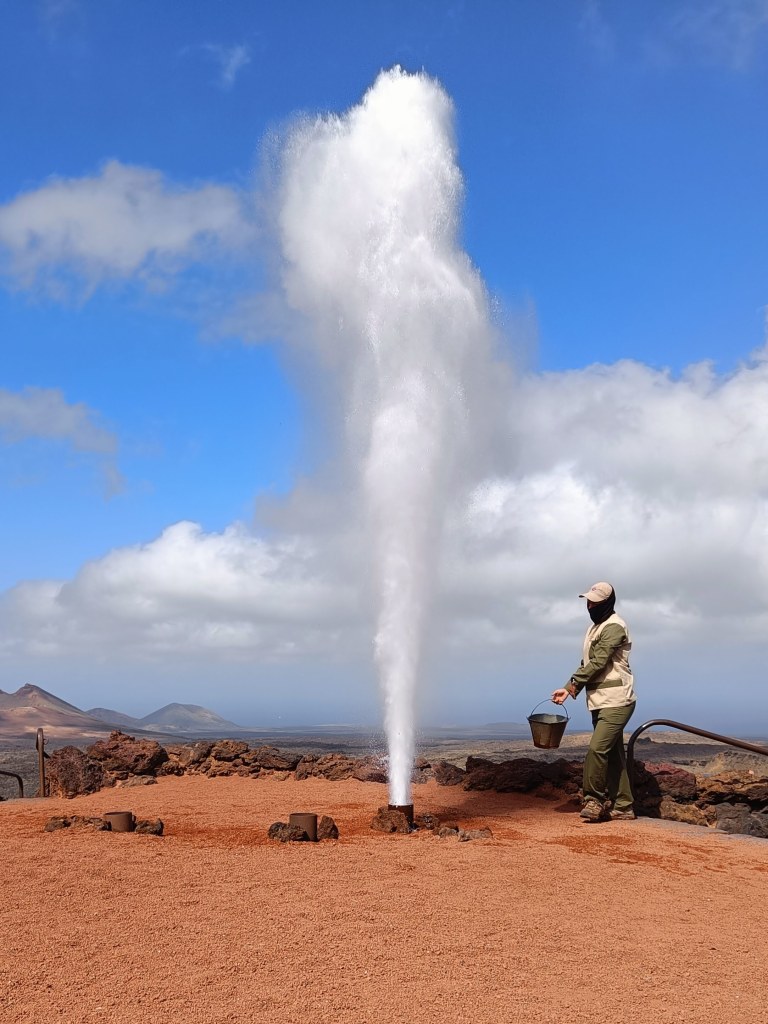
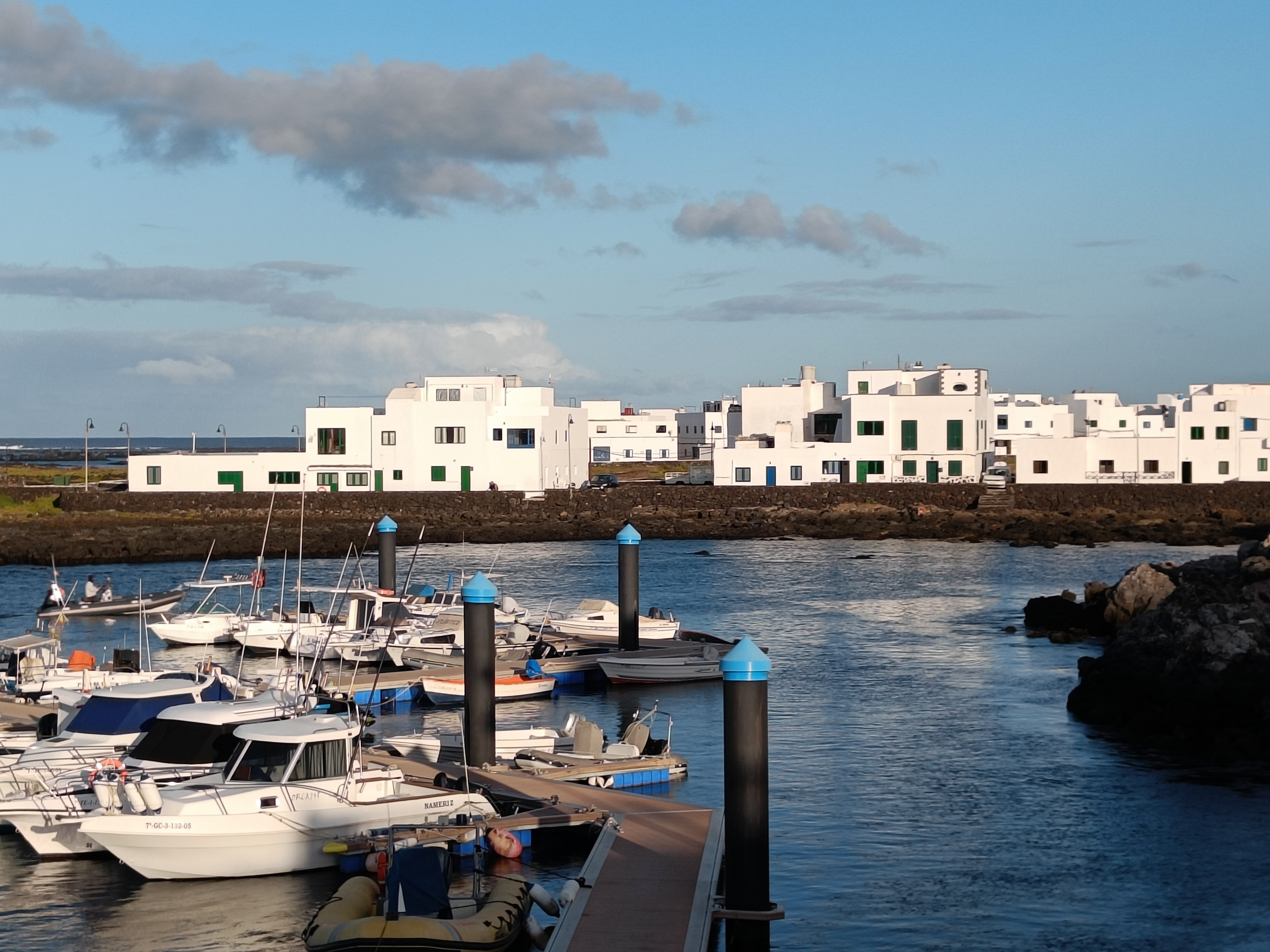
Lanzarote has good sandy beaches and a surreal harsh landscape created by many volcanic eruptions and powerful lava flows in the past, particularly in the 1700’s. The influence of one man, Cesar Manrique, is everywhere on the island. He was responsible for some pretty autocratic, aesthetic laws that dictated that buildings in Lanzarote must be low-rise, could only be painted white and windows/doors could only be painted green with an occasional blue or brown by the coast. Billboards and roadside advertising were banned, electricity cables had to be buried underground and major tourist development was confined to three areas, Puerta del Carmen, Playa Blanca and Costa Teguise. But the result is charming where buildings sit in harmony with the landscape. But it was was quite crowded with long queues to get into the Timanfaya National Park and many of the other attractions like Jameos del Agua and Cueva Verde. The little fishing villages in the north of the island were much quieter.

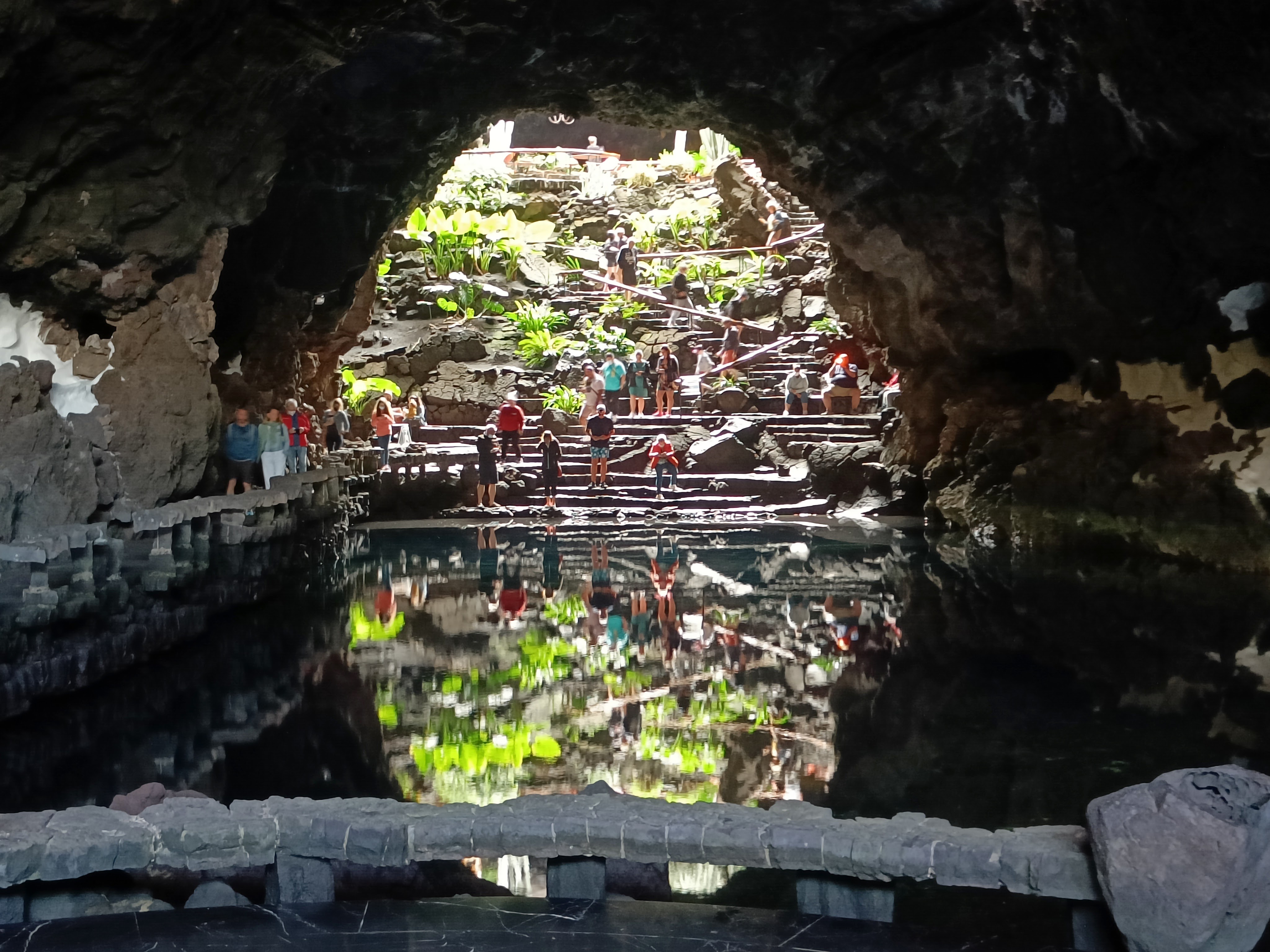
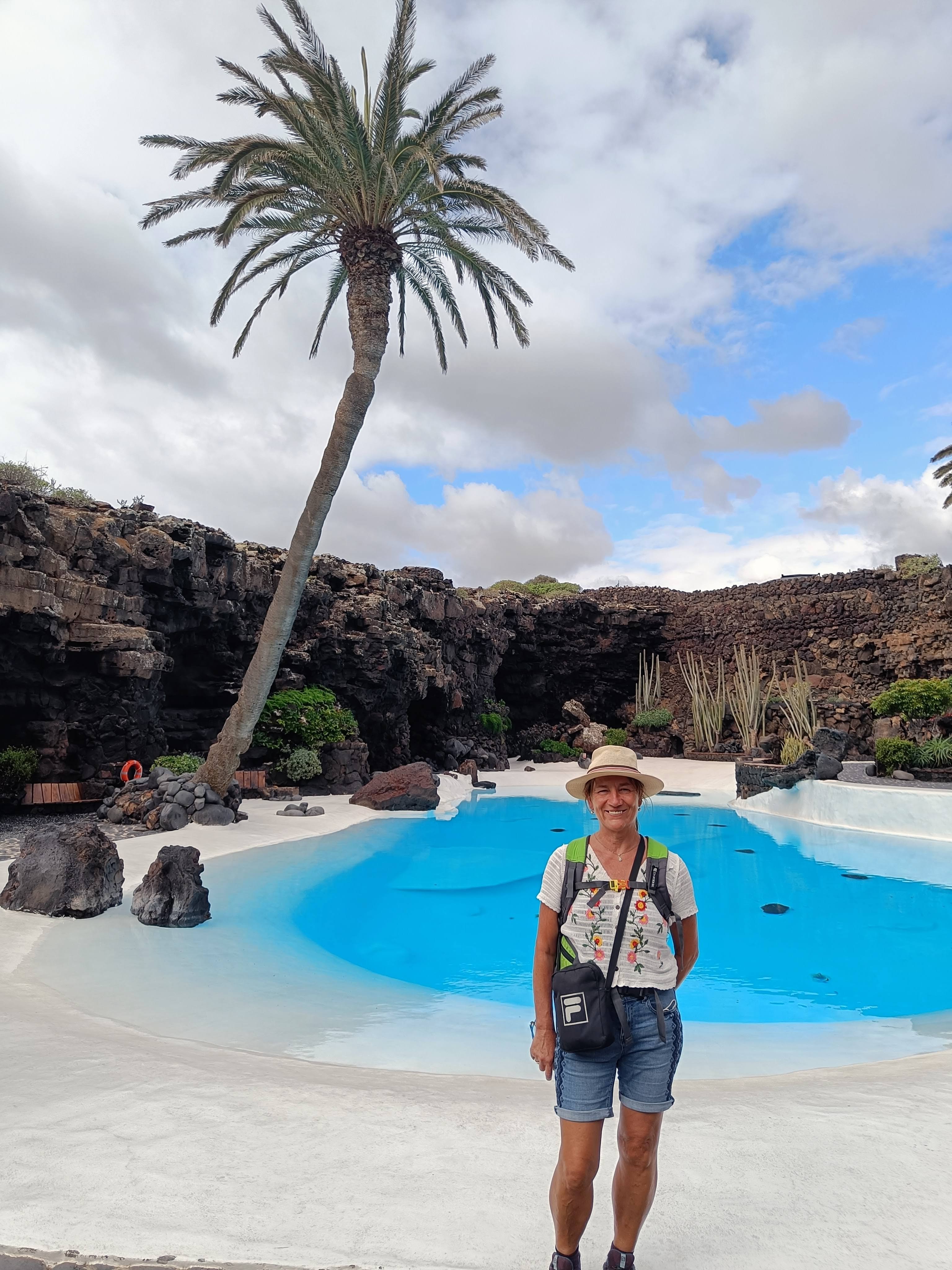
Highlight: Visit to Jameos del Agua, a lava tunnel with a massive green lake full of bizarre white crabs and an underground concert hall designed by Cesar Manrique. But go early – or late – to avoid the tour buses and appreciate the tranquillity.

La Graciosa, the Blond One

La Graciosa became the eighth island in the archipelago in 2018, before that it had the status of islet. It is by far the smallest islands and most visitors come for a day trip on the frequent ferries from Orzola in northern Lanzarote and hop on a bike to cycle around. It is one of the last places in Europe that has no asphalted roads, only sandy tracks. There is only one little town, Caleto del Sebo and the environment beyond the town is arid and without shade. The beaches are blond and beautiful, the rock pools teem with life and there’s a lovely laid-back tranquillity here😍

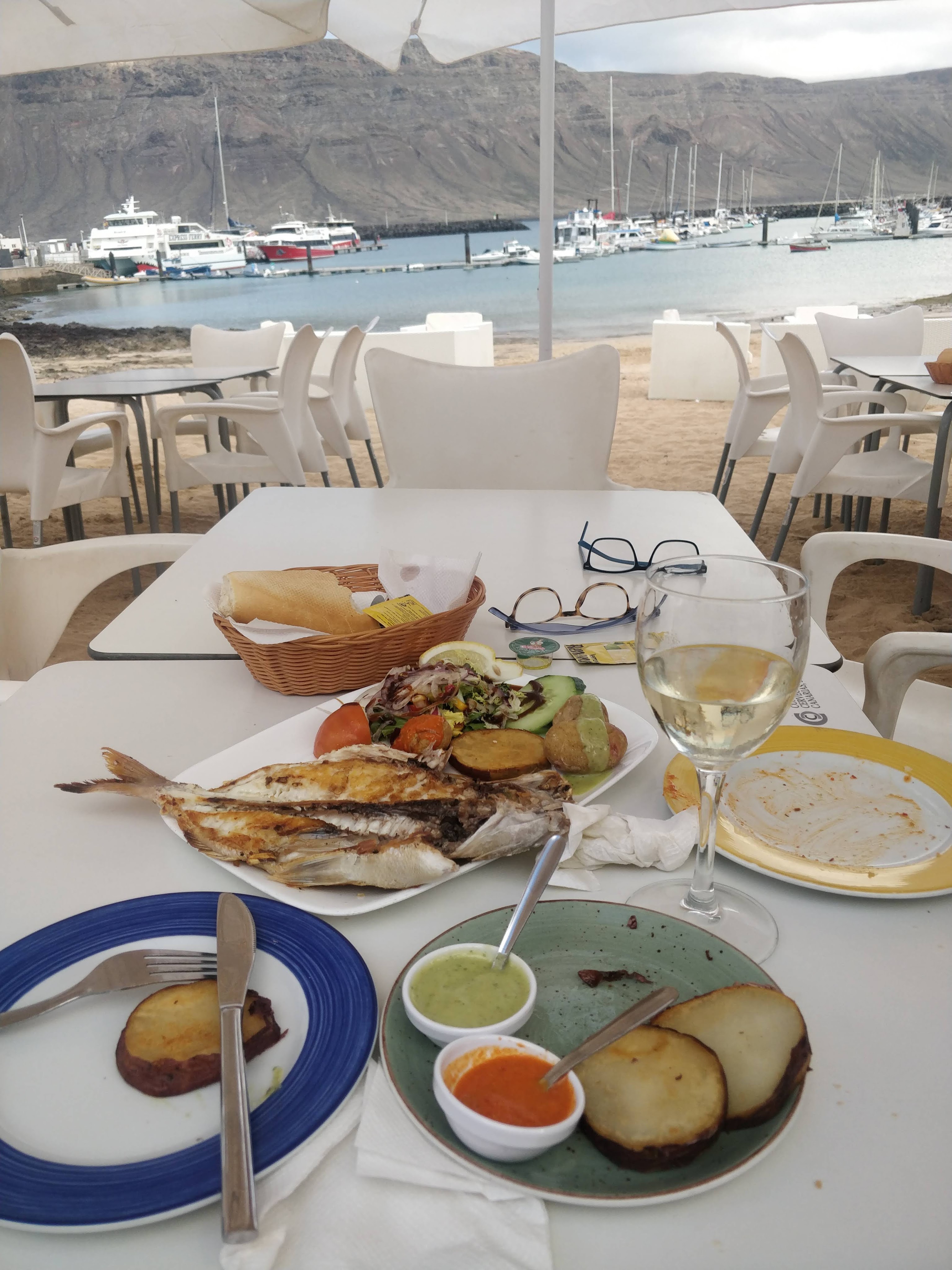
Highlight; Eating delicious seafood overlooking the sea, watching the colour of the water deepen and darken to inky blue in the evening when all the day trippers had left and the island was given back to the locals,

Tenerife, the Beginning and the End

Our trip was bookended by Tenerife, the largest island and the place where we started and ended. We even stayed in the same apartment complex on our first and last night, three months apart, Coral Teide Mar in Puerta del Cruz. This is a nice ‘no frills’ budget option with roomy studio apartments with balcony and a large pool. The name Tenerife in the Gaunches language means ‘white mountain’ and Mt Teide dominates, a looming presence although it was mostly smothered in cloud while we were there. The Teide National Park divides Tenerife into two zones: the north which is green and covered in lush tropical vegetation with lots of mountain villages and the south which is arid, hotter with sandy beaches and the holiday areas such as Playa Americanos and Los Cristianos, known for fun and sun😎. But Tenerife has something to suit everyone – golf courses (the greens need constant watering), hiking trails, pretty villages, star gazing observatories, a vibrant capital city, Santa Cruz. We also have family living in Puerta de la Cruz which also makes it special.

Highlight: Our stay in El Medano where the February sun shone all week. This, a little beach town and fishing village near the airport – much smaller and scruffier than Puerta de la Cruz but with a laid-back charm, very popular with surfers and water sport enthusiasts, families, walkers and sun worshippers.

The Canaries are often called the Islands of Eternal Spring because of their mild climate, pleasant temperatures with low rainfall. But the wind is a force to be reckoned with on all of the islands, brilliant for wind sports and windmills but not good when sand-blasted on a beach or blown sideways when cycling. Storm Celia battered the palm trees in La Palma so much, it was totally unnerving. The locals told us that the weather on the islands has been more unpredictable than usual in 2022 with more cloud, storms and even rain. For the most part, daytime temperatures for us were around 20C but in a stiff breeze and with cloudy conditions, it often felt far cooler than that. Of course, altitude will play a part and we shivered high on the mountains of some of the islands. The evenings were cool all the time and a jacket was definitely required when eating outside at night.

Water scarcity is a huge issue on all the islands with hardly any rainfall, most (if not all) water comes from the sea and has to be desalinated before use – a costly process in both money and energy. Although the water in the tap is safe to drink, in some places it is not very palatable and so people (including the locals) drink bottled water all the time leading to mountains of plastic bottles. When there is tourism on a large scale, this is an enormous problem. We had a little water filter with us and used this most of the time in a small effort to minimise our contribution to the problem.

We took ferries from island to island most of the time and its a lovely way to travel but its not cheap. Most ferry prices were €50 each for one way ticket for a two hour journey but there are significant discounts if you are a Canary resident. Many place names on the islands are so alike that you may end up somewhere other than where you intended. There is the island of La Palma, one of the Canary islands but then there is Las Palmas which is the capital city of Gran Canaria and Palma, a city in Mallorca. We hired a car online in La Palma – got a great deal – only to find that the car was actually in Palma (in Mallorca).

Many people ask us the same questions What was your favourite island? Truthfully, we liked them all for various reasons. If you force me to answer, I will say El Hierro….probably🤔. Would we go back? Yes, absolutely but usually we don’t return to places that we have already visited. I hear the Cape Verde Islands are interesting and we have never been to the Azores or what about the Philippines🤣?

But for now, its great to be home for the long evenings, the glorious bluebells and to watch the soft young green of the leaves change and deepen by the day. I also brought Covid back with me – discovered by chance during a pre-assessment for a minor knee procedure. So that’s why I was so tired😴😴 but all well.

Hope you are not too tired after reading all this…..thanks for the company

Canary Islands, the Magical Eight

La Graciosa, the Blondest Island

Blue morning in Orzola, Lanzarote

It was one of those stunningly blue mornings with blue sea and blue sky. We waited for the ferry in Ozsola (pronounced Ursula) in Northern Lanzarote with the sun warming our backs and a light breeze…..a real ‘good to be alive’ day. Black coffee and sugary doughnuts (the ones that just dissolve in your mouth) never tasted better. It felt even more special because we were nearly at the end of our three month trip around the Canaries. We were about to visit La Graciosa, our eight and final island.

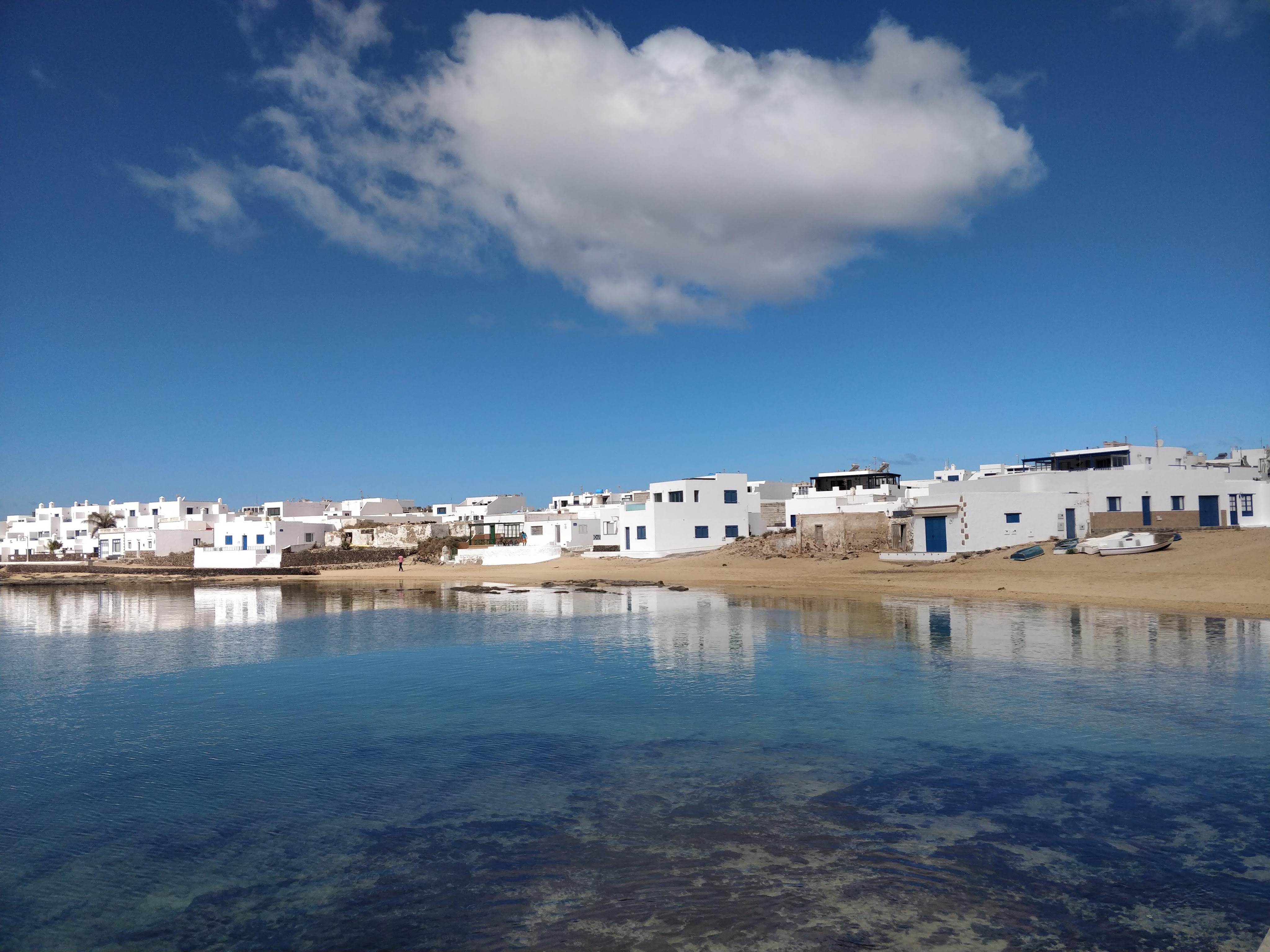
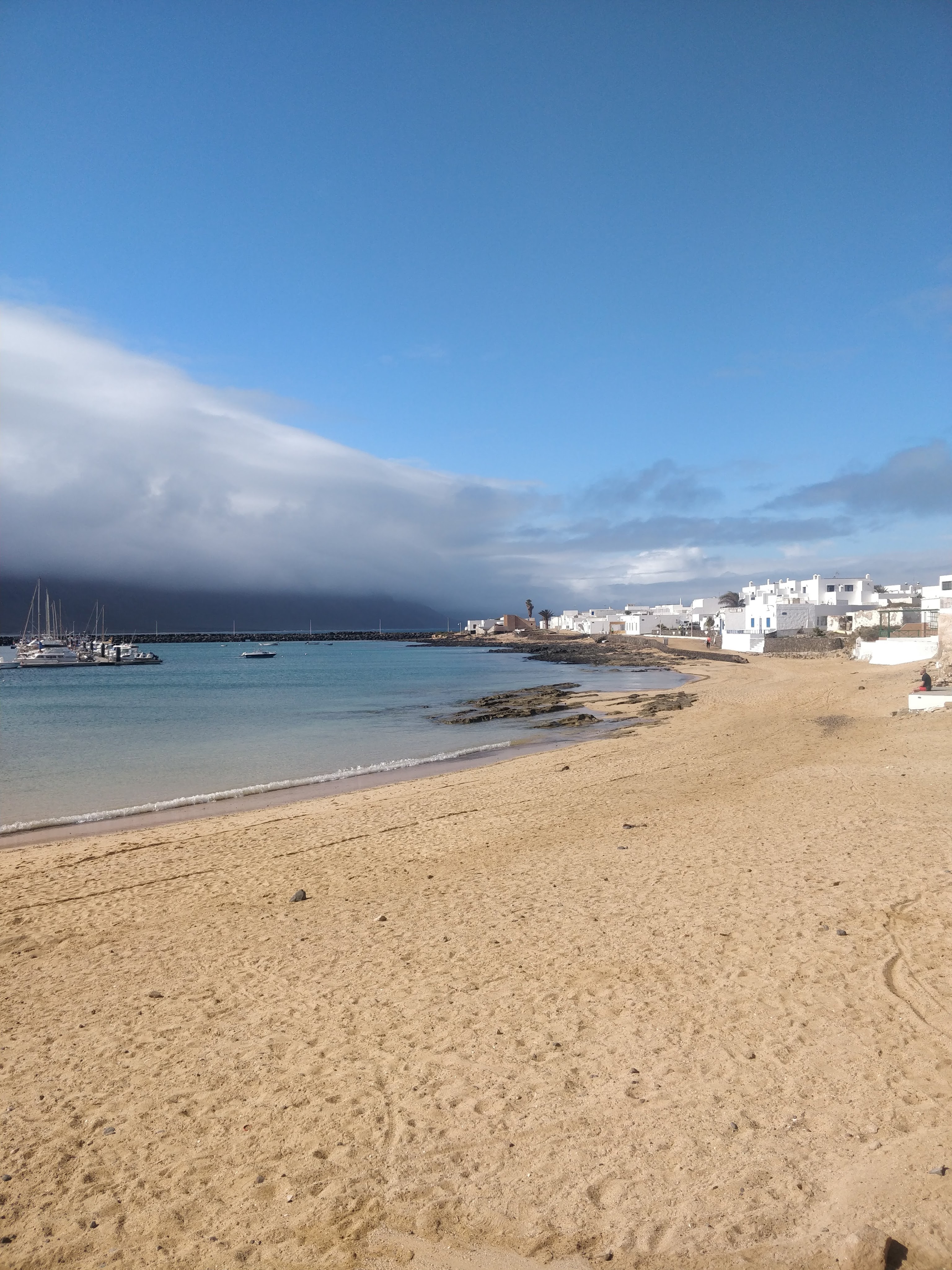
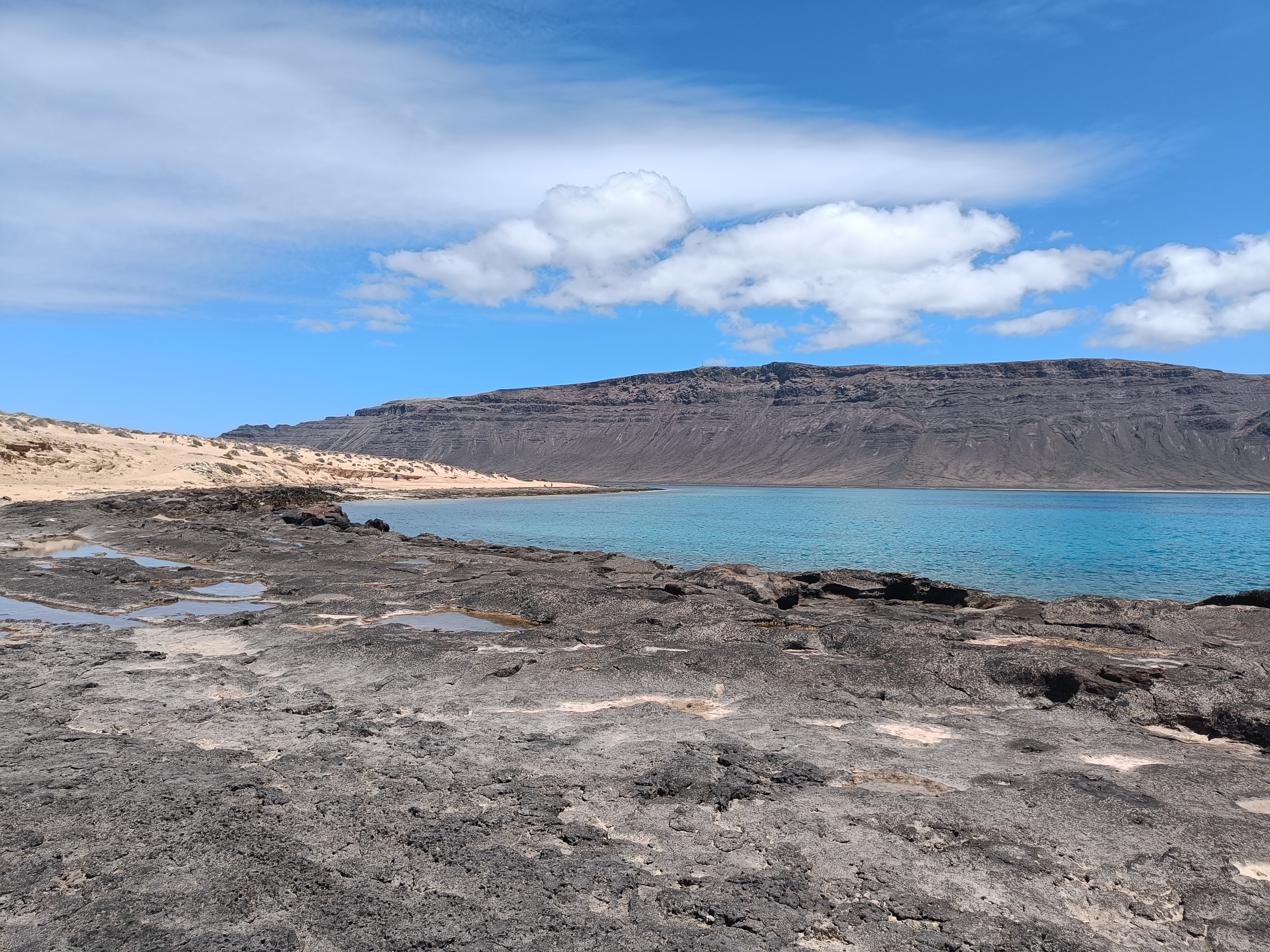
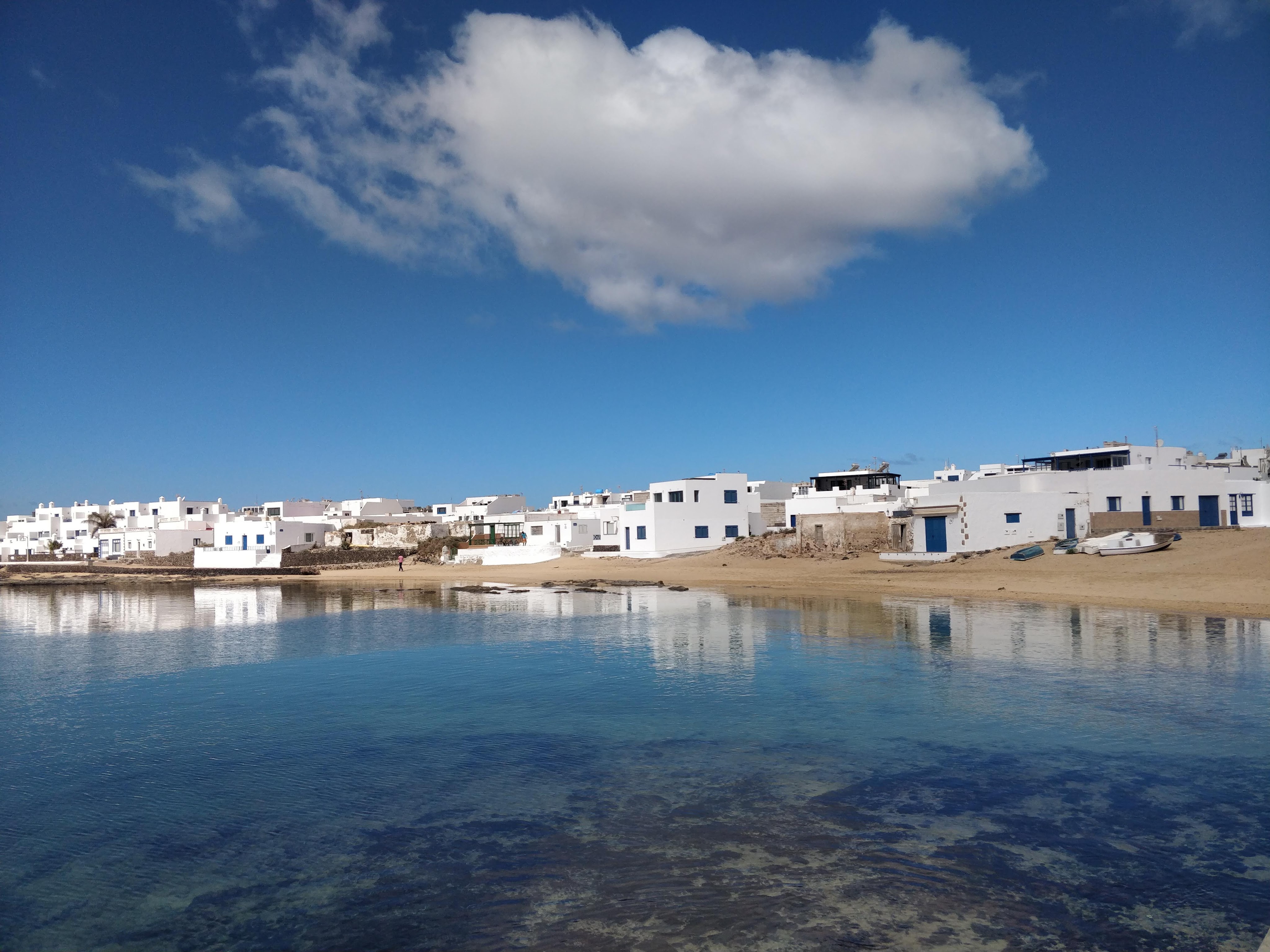
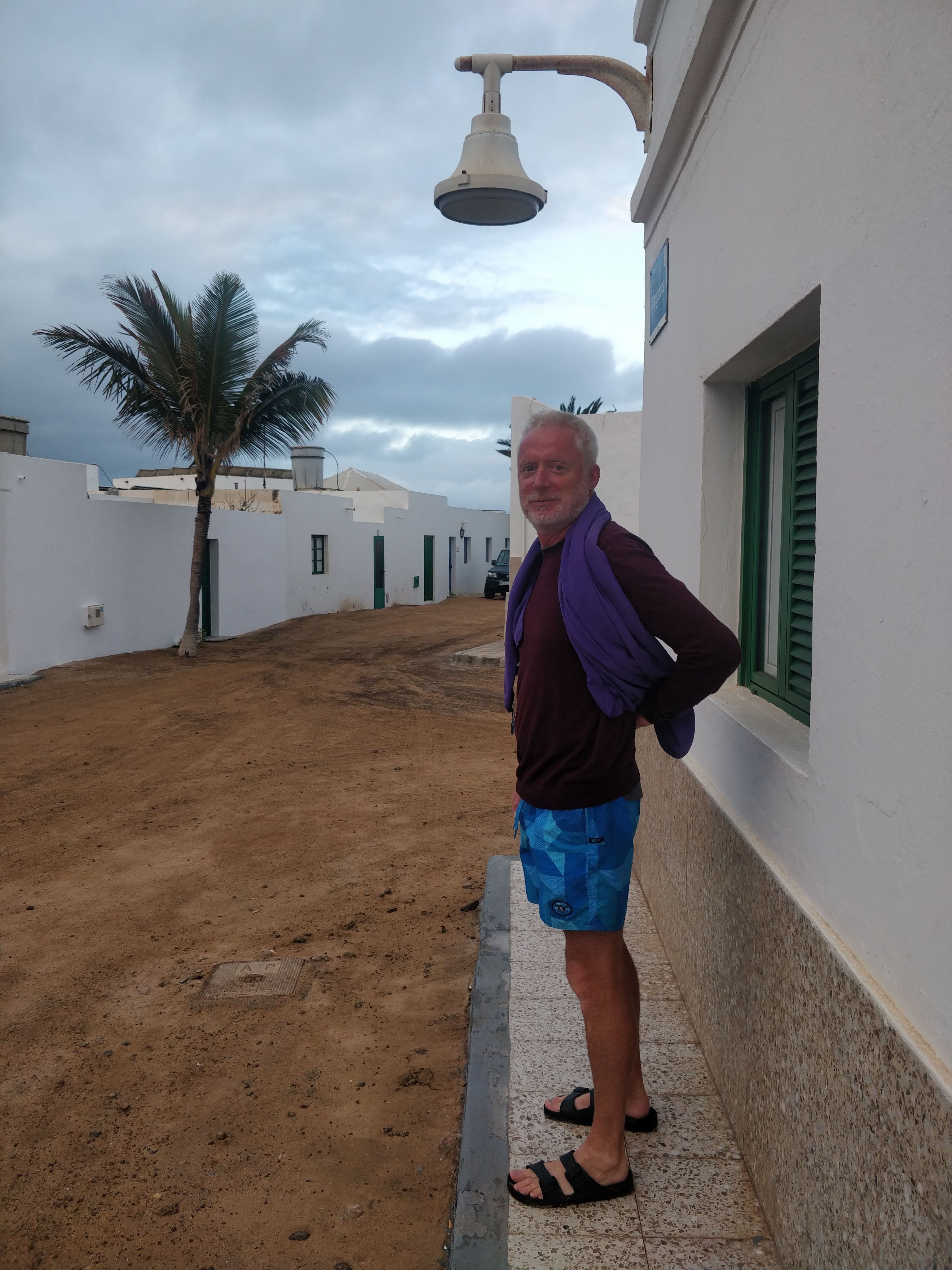
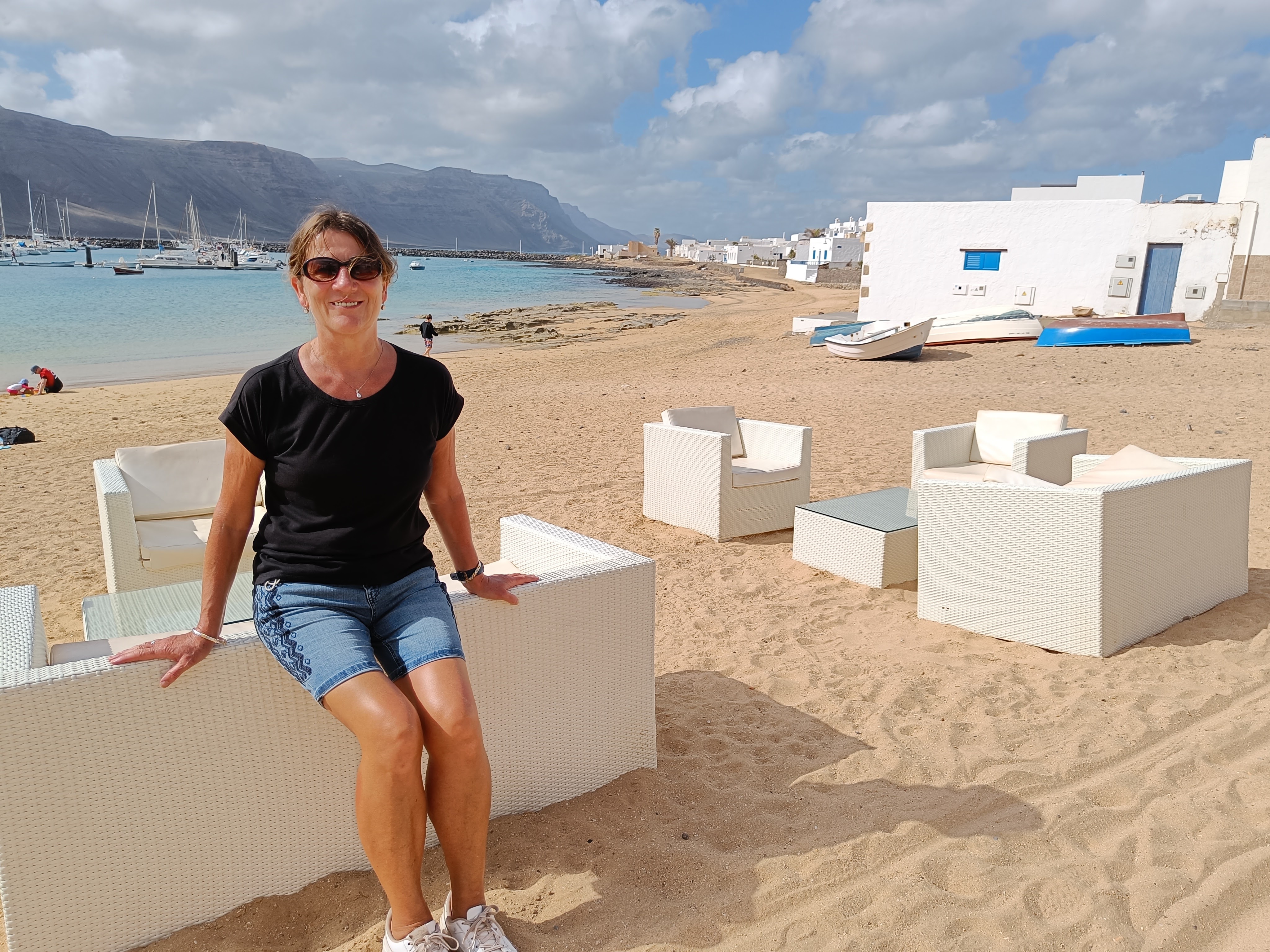
During the thirty-minutes ferry ride across the Strait of El Rio, the Bueno Vista Social Club played through the speakers on deck and the sea shimmered in time to the music. Caleta del Sebo, the only town on the tiny island gleamed white against the yellow of the sand and the tan of the hills. Seagulls circled over the small fishing boats which all seemed to be painted blue. We wondered if Cesar Manrique’s decree on colour extended to the boats on aesthetic grounds😀. The town was spread out, long and low, all the houses painted the obligatory white and blue. Most people on the boat were day trippers and were soon sucked into the many cafes, beaches and bike rentals places. We dragged our suitcases (the 10kgs plane cases) along the sand to our beachfront apartment, which was gorgeous, decorated in soft greys with a splash of yellow, and at €80 a night was significantly more expensive than our usual budget. We hiked to the south of the island, walking along blond beaches and rock pools teeming with life to swim in cool turquoise waters and watch clouds float by. The joy of retirement☺

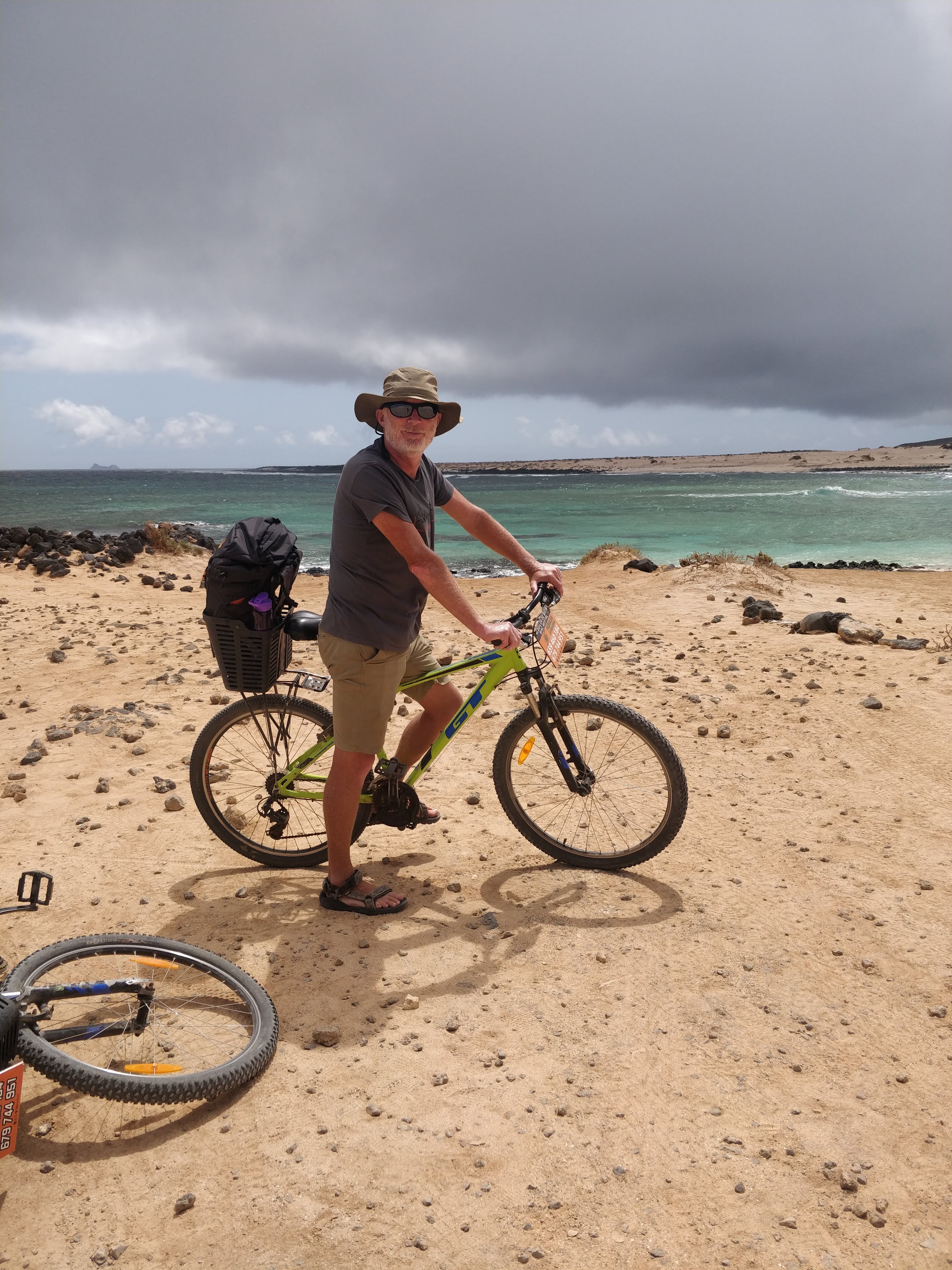
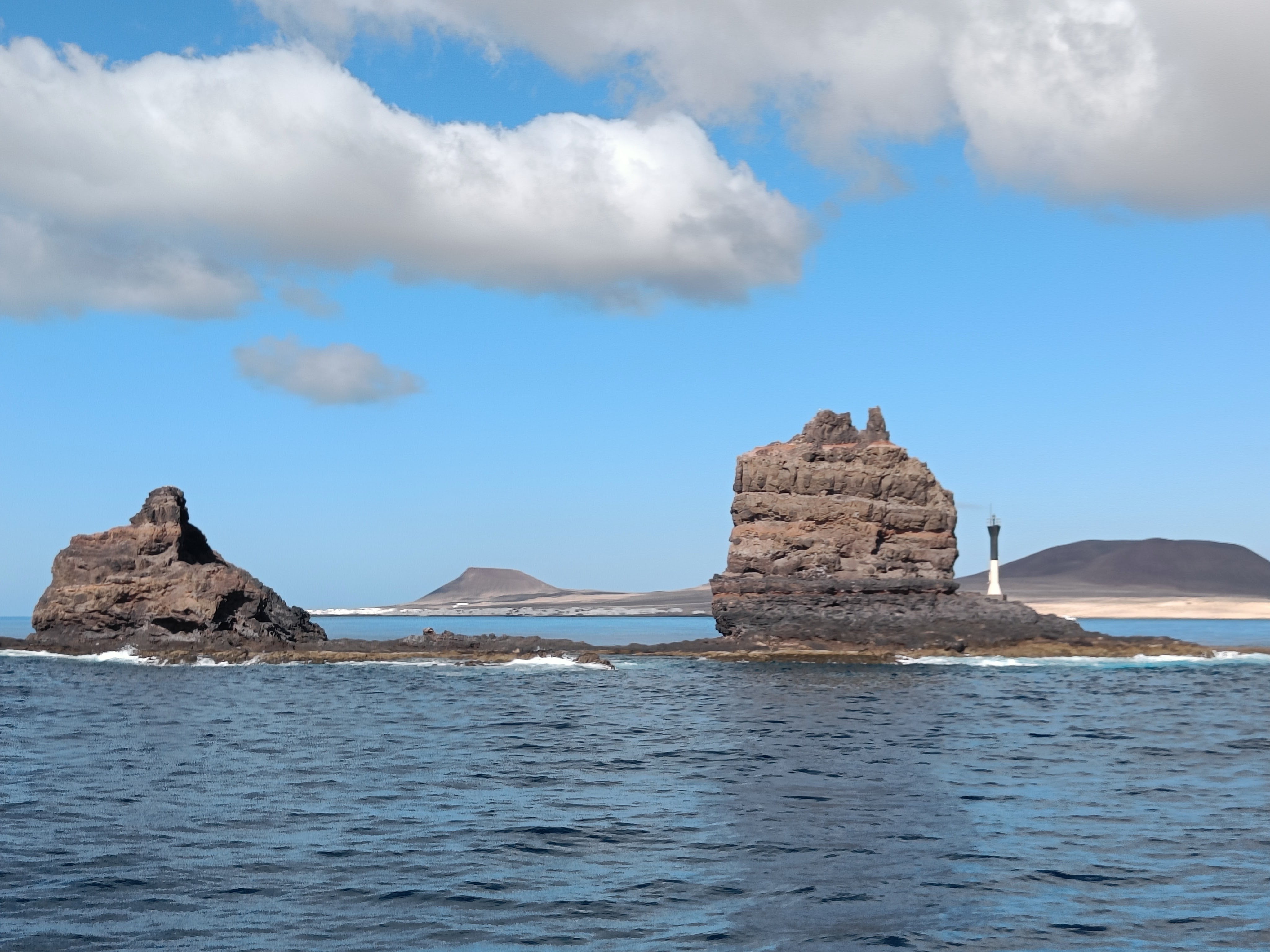
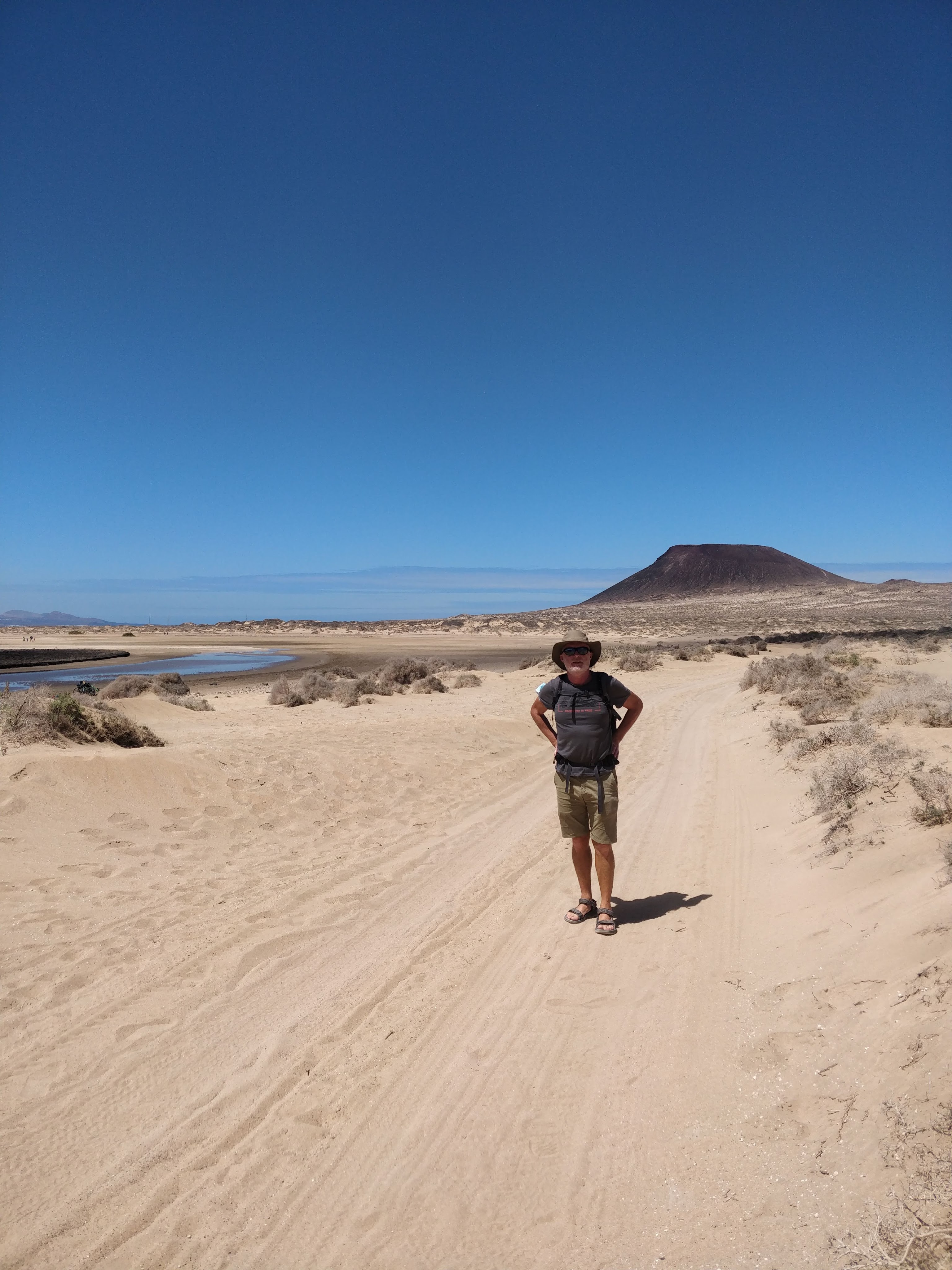
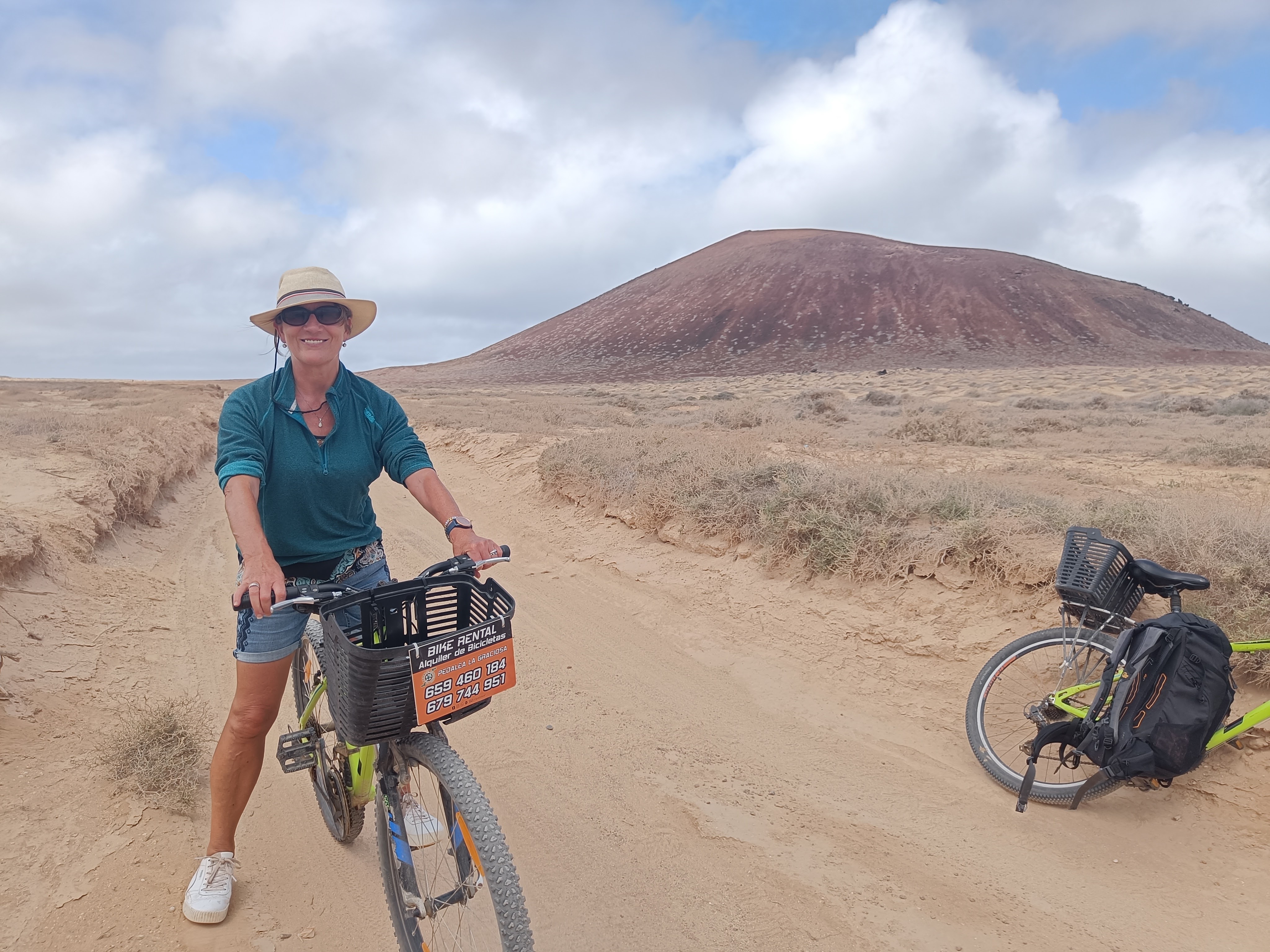
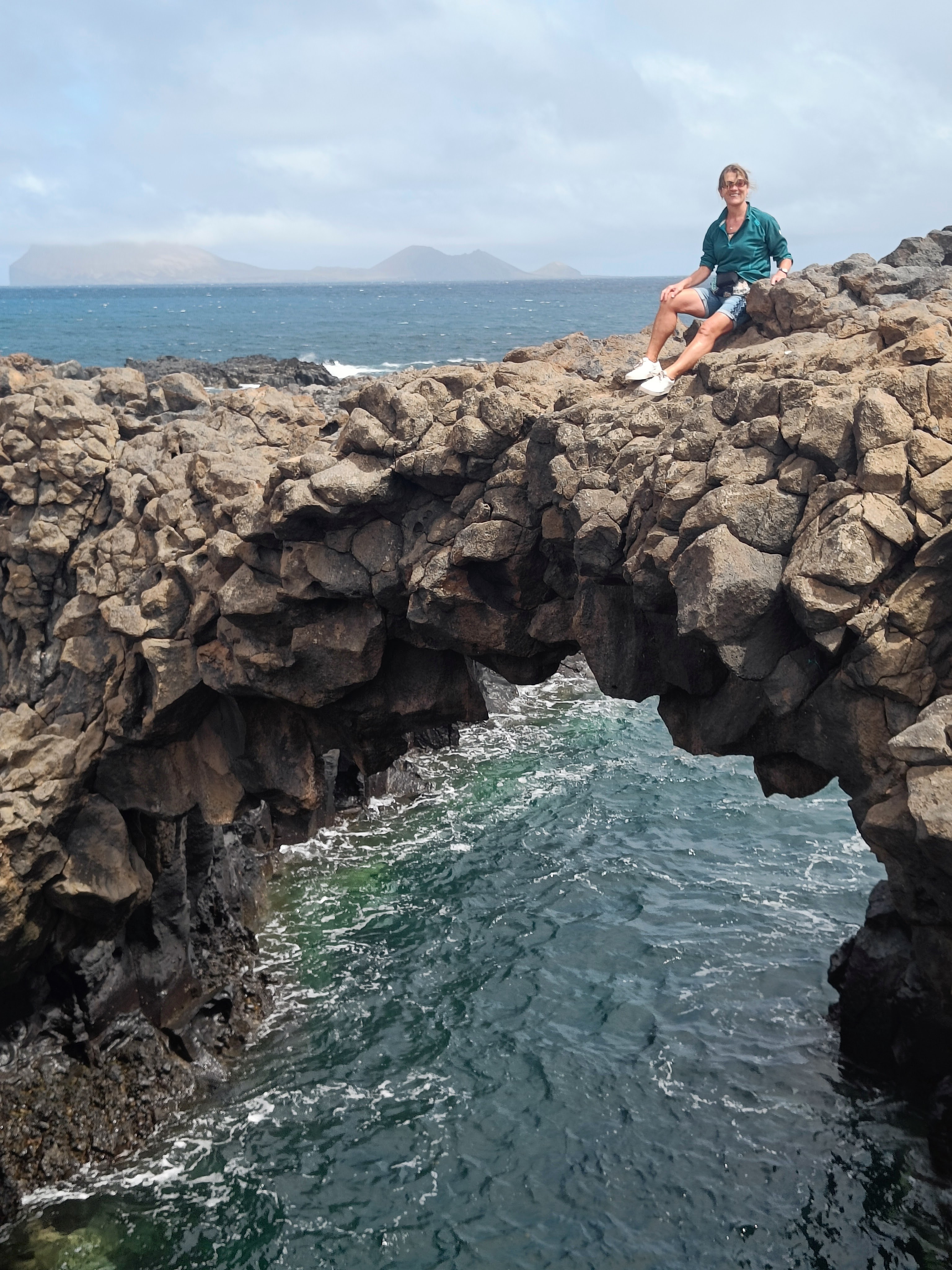
Most visitors came off the ferries and hired bikes to tour around the island and most didn’t realise what they were letting themselves in for…us included. Paved roads were non-existent anywhere on La Graciosa so vehicles were limited to a few dusty jeeps- really charming- but the rough surfaces also made cycling quite challenging. The island had an arid beauty with no trees in the interior but that meant no shade or shelter. But we were gobsmacked by the beauty – the surfing beach of Las Conchas, the basalt arches of Arco de Los Caletones and the area around Pedro Barba with its summer houses. The sun was intermittent with spotty rain on a strong crosswind and mists rolled down over the hills of Lanzarote so we didn’t have to deal with the intensity of strong sunshine. We cycled through soft sand in sections or shuddered on very rough terrain in others. It was tough going although we considered ourselves reasonably fit. On our return loop, we had sympathy for the sweating people starting out who were already struggling on the easy bits. But it was worth it!

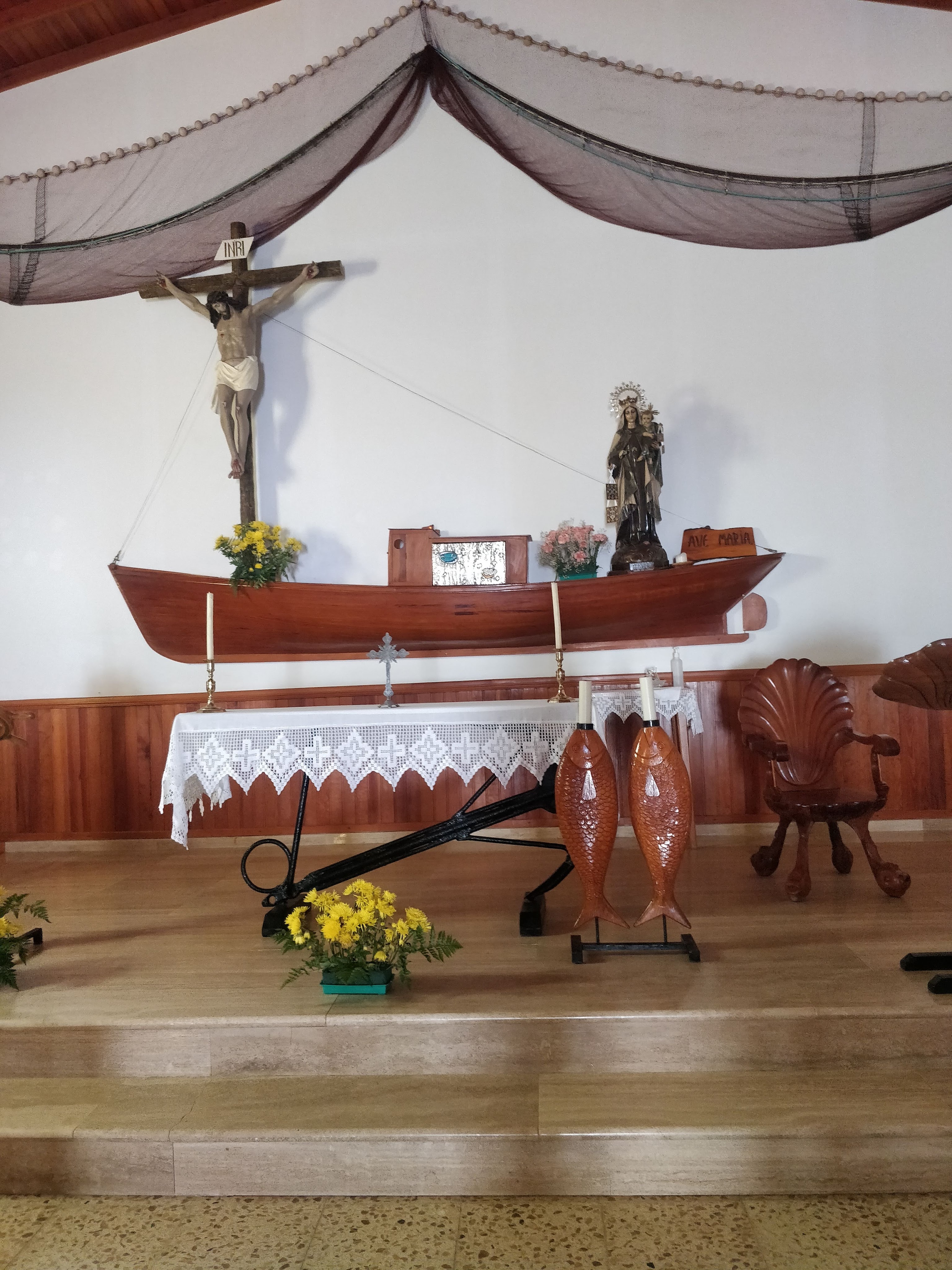
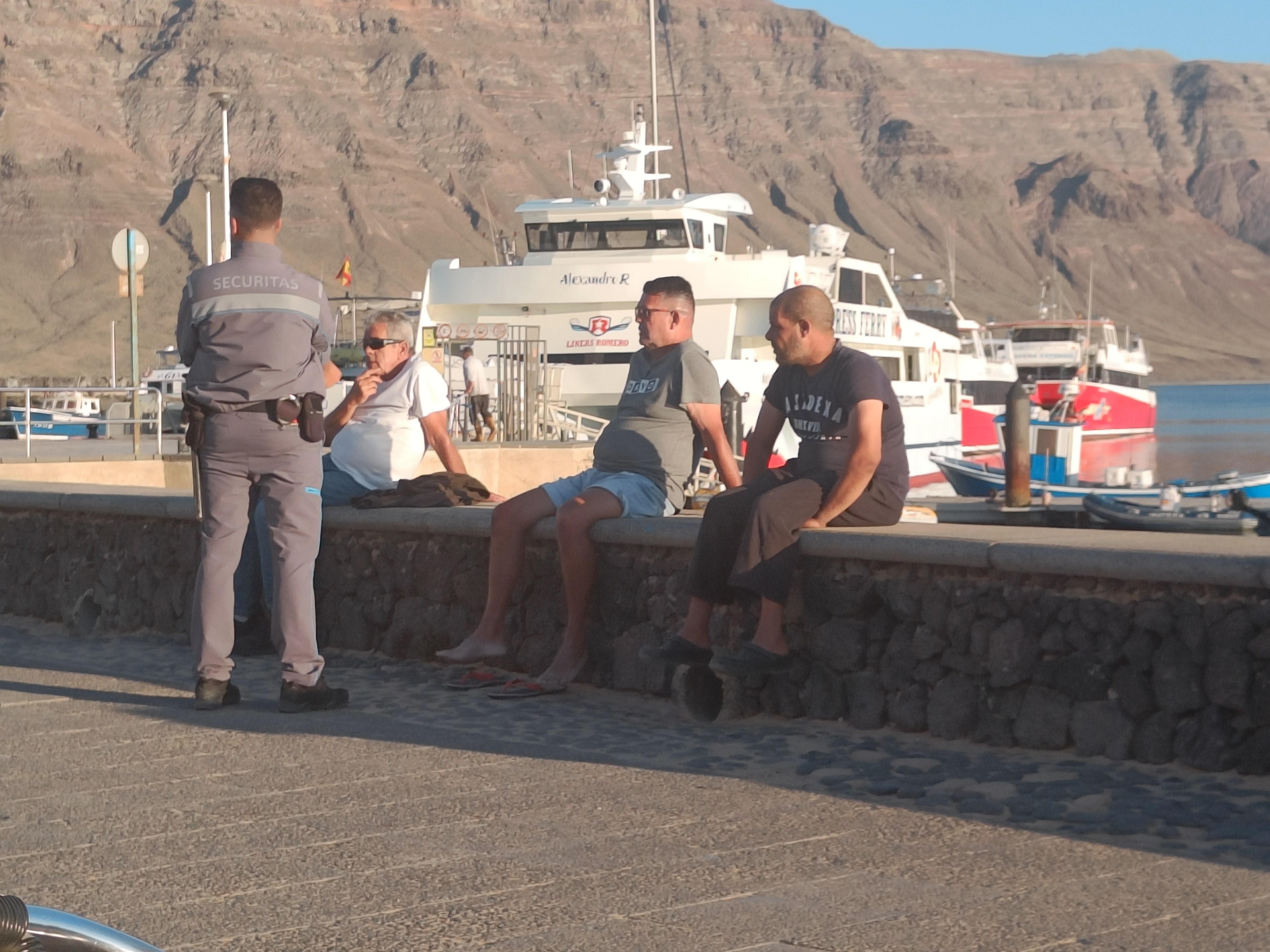
Caleto del Sebo hums all days with the constant rhythm of hourly ferry arrivals and departures from two different ferry companies but in the evening, the island goes back to the locals with only a handful of tourists staying on. We watched children playing soccer on the beach and old men sitting on the harbour walls with their masks and their walking sticks and the local policeman chin-wagging about football. The women in the eco-tourism shop recognised us and gave us a big wave. We ate delicious seafood overlooking the sea, watching the colour of the water deepen and darken to inky blue. We visited the white-washed church with a boat and anchor on the alter. We watched a local man with a creased face and baggy trousers silently drink a tumbler of vodka in twenty seconds, walk the beach and repeat the whole process several times. We listened to the guy outside the beach bar talk incessantly to nobody and the off-key opera singer under the tree who sang his heart out until he was told by the waiter to save it for karaoke night. That’s the thing about islands – they attract and accommodate marginalised characters and make all feel at home, that conundrum where everyone is hiding something although everybody knows everything,😎 and the obvious is only the tip of the iceberg. La Graciosa is a little island off the coast of another island, a Spanish island within touching distance of Africa. It has the ‘island vibe’ in spades.

In the early mornings we strolled around and met many of the same characters queueing for the panaderia (bakery). The rhythm of the day started again with the fishermen gathering their nets and heading towards their blue boats and the ferry crews getting ready to start up and the smell of bread and diesel in the air. Later the barges came in carrying essential supplies and even a pile of Amazon packages with their tell-tale logo….so even islanders need retail therapy… and maybe more so on an island without any resources where all water has to be pumped across from Lanzarote. After three days and two nights, we felt almost local ourselves and it was a wrench to drag ourselves away from this blond island but we can hear the call of home ….. so its a ferry back to Ozsola, a bus to Arrecife (the capital of Lanzarote) a flight to Tenerife and then onwards to Dublin on May 1.

Hopefully you can join me next time when I pick out the highlights of our island hopping trip around the eight Canary islands, a trip that happened because of Covid restrictions when more far-flung destinations were off limits.

Thanks for reading😎
Why do you stay in prison, when the door is wide open?” Rumi

Arco de Los Caletones, La Graciosa
La Graciosa, the Blondest Island