Montenegro and Beyond (Borders)

On the way to the border

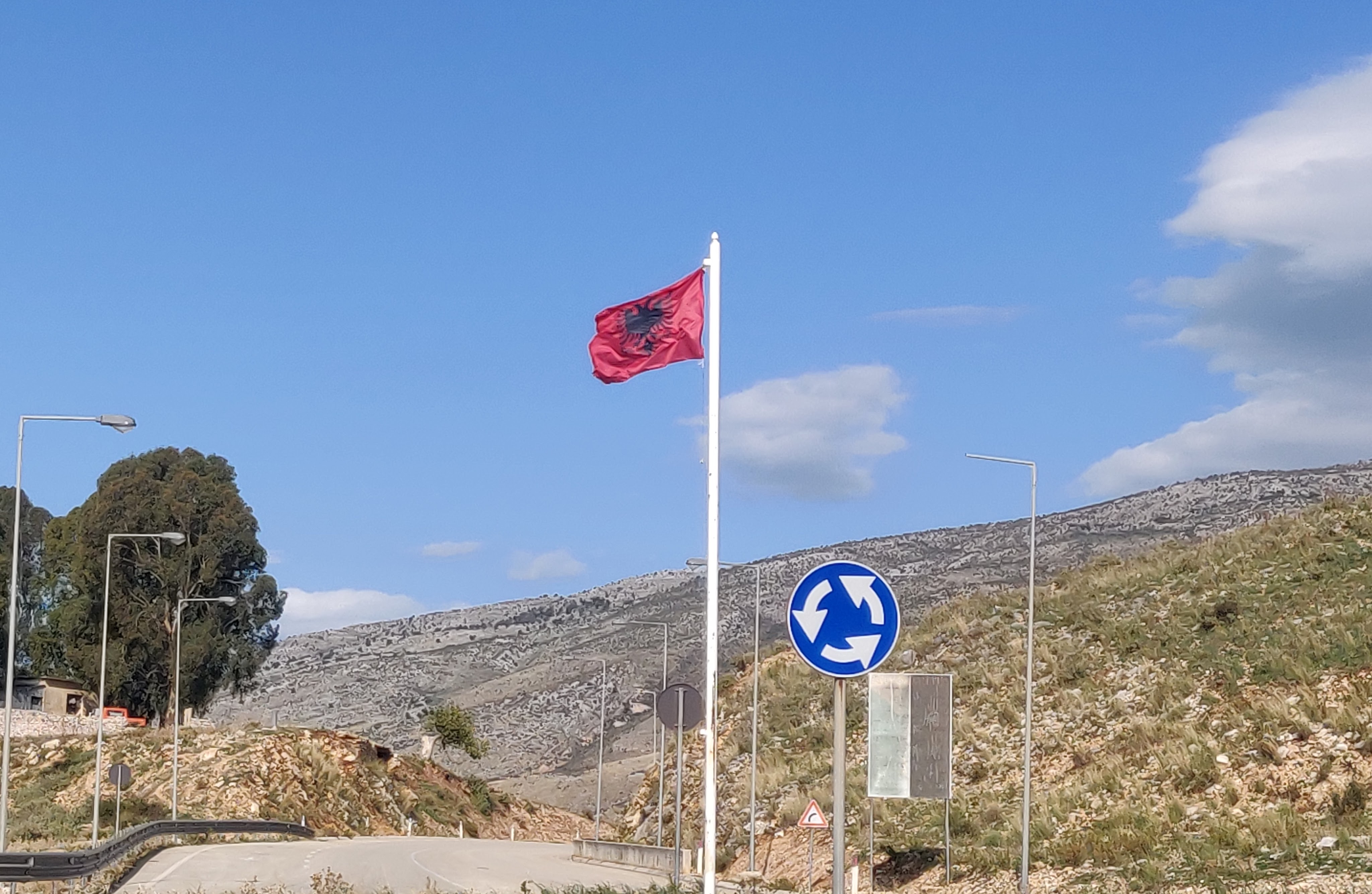
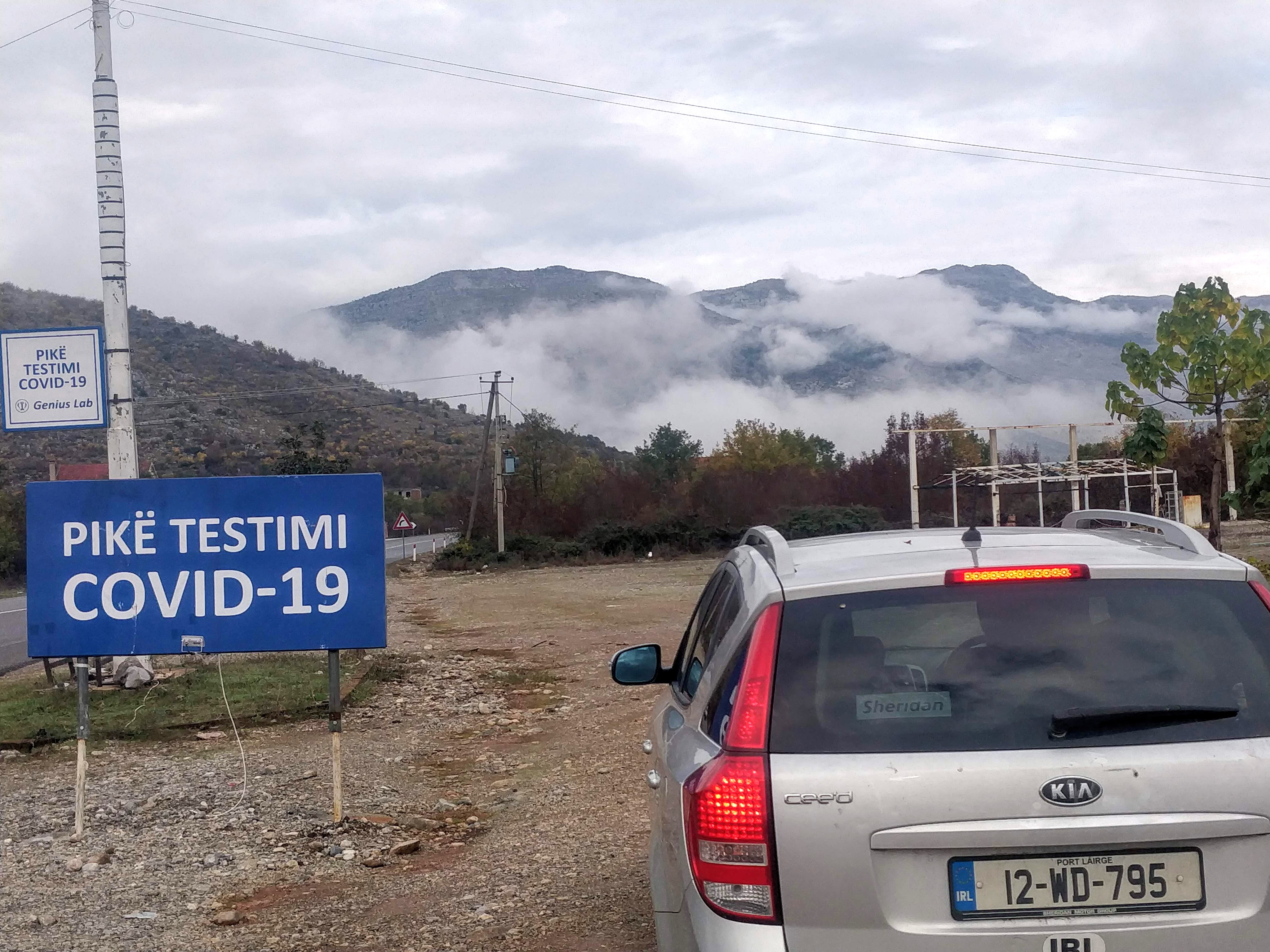
We spent out last Albanian night in Shkoder, an historic town about 40 minutes from the Montenegro border and although there was incessant rain for most of the time, we really liked the feel of the place with cobbled streets, nice restaurants and relaxed feel. Maybe the music being played everywhere had something to do with the good vibe – a mix of jazz, blues, light rock with some opera thrown in and Shkoder is also known as the Albanian capital of culture. We were feeling very positive about Albania and its great people when we were pulled over by two stern policemen – no handsome, smiling individuals this time. They wanted our passports, our insurance, our car registration (which we only had online on phone/laptop), our driving licence …they didn’t ask for Covid certs because there’s ‘no Covid in Albania’. They were quite intimidating…especially as we couldn’t understand what they were saying – but after about 10 minutes (which felt a lot longer), they let us go. Our cynical selves wondered if they were shaking us down for money but maybe it was just a power trip….still a sobering reminder of what it can be like to be at the mercy of officialdom. There was heavy fog and low cloud over the mountains with just the peaks visible as we approached the border having passed a Covid test centre, the first we had seen in Albania.

The border official wanted our car registration document – we were ready this time and showed him the document on the phone (and laptop). He frowned, called on his superior who was much younger, much louder with a pale thin face. I knew we were in trouble by the look of him. ‘I need paper document, original only,’ he barked. We showed him the document on the phone and all our other paper documents – our tax disc, our Irish car insurance, our Albanian car insurance, our NCT documents, everything we had. ‘This is not Europe. In my country, paper only,’ he was shouting at us. ‘NO, No entry.’ Stunned disbelief best describes our feelings. We wanted to argue that Montenegro is Europe, you stupid man and your country wants to join EU and even your currency is the euro but we didn’t say any of that. Instead we tried diplomacy and cajoling – yes, we are very sorry, very stupid, you are only doing your job but we have lots of documentation, please. But he kept repeating ‘This is not Europe…here paper, original’ his voice getting louder and louder. ‘Can we print out document here?’ we asked. Fat chance said his body language ‘you go back, back to Albania. No entry.’ He was spitting now. (I’d really love to know his background). So we had no option but to turn the Guzzler around. Now I admit that if I had mobile data on my phone, I would have been googling ferries from Albania to Italy but Caoimhin is made of sterner stuff, he wasn’t going to be diverted from our original plan so easily.
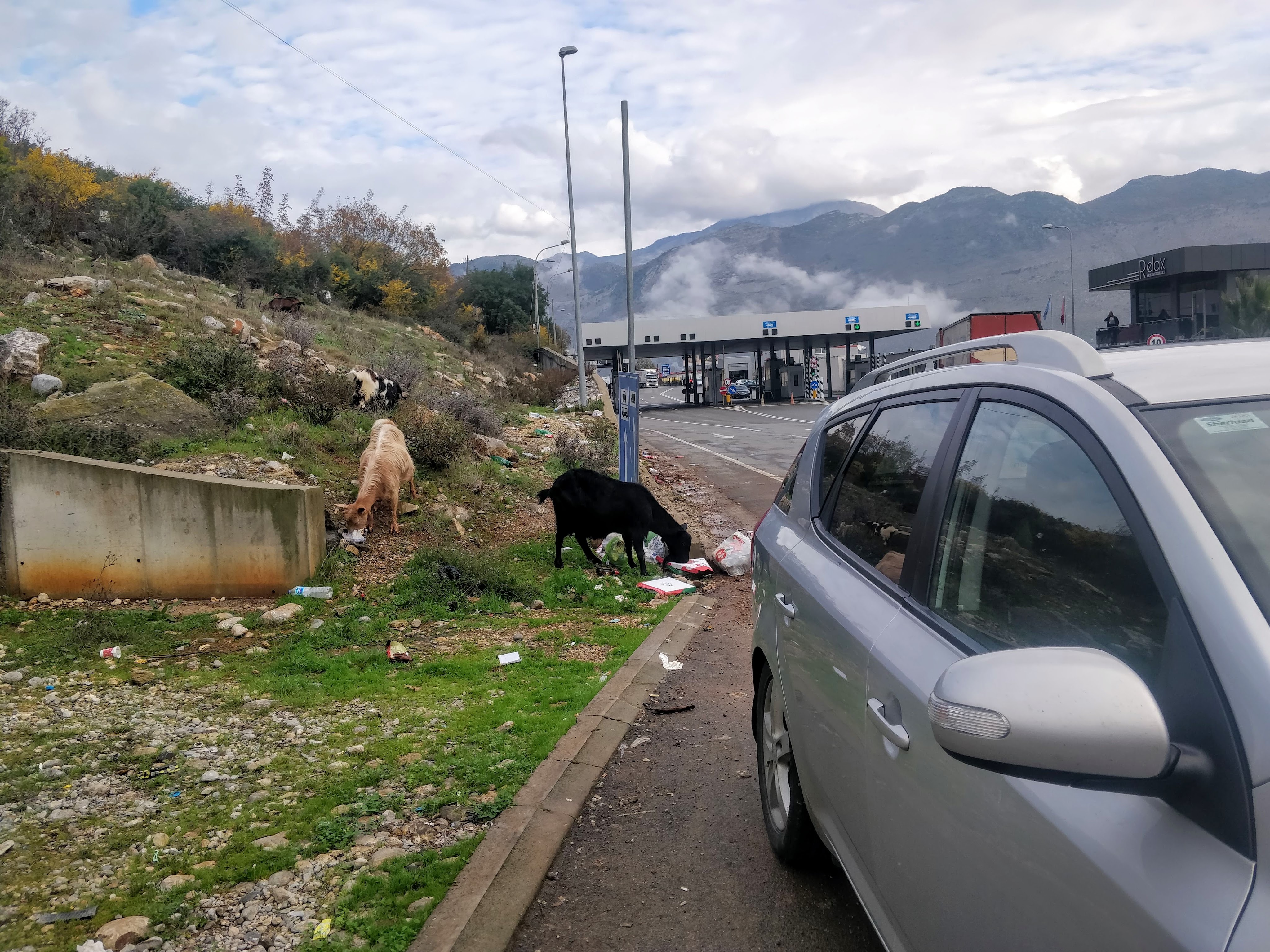
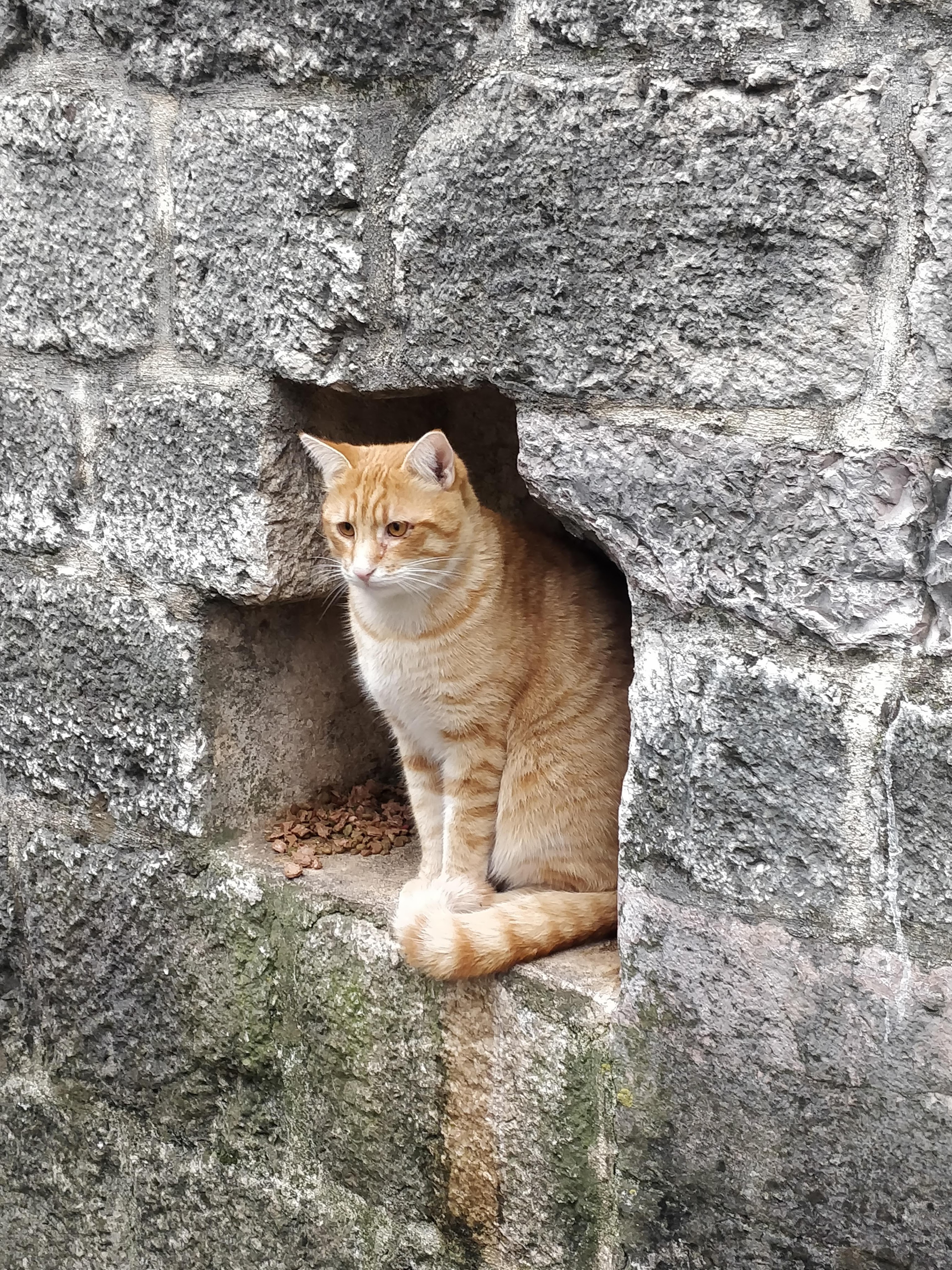
At least the border goats were friendly……

We parked behind some trucks where a few goats were eating from a discarded pizza box still within sight of the border kiosk. Caoimhin suggested we go to the car insurance kiosk and buy our car insurance for Montenegro anyway (which we knew was only €15). Maybe they would print out our car registration document for us and if we failed to get into Montenegro, we would only be €15 poorer. Ironically we needed the details from the car registration document on the phone to buy the car insurance in a dingy dimly-lit office. We explained to Albert, the insurance guy that the border police wouldn’t let us through. He was surprised that they wouldn’t let us print a document at the border when there was a printer available in another office. Albert crossed the border with Caoimhin (telling me to wait on the Albanian side , as collateral, I suppose) and they brought back a really bad copy of the registration document using an old doc-matrix printer – so grey that it was almost illegible. But it was accepted – maybe because the original guy that refused us was nowhere to be seen by then or maybe the border officials realised that anyone dodgy wouldn’t be still hanging around the border. But it was really all thanks to Albert. But we weren’t through yet, the car was pulled over for a customs check with four guys examining the underneath of the Guzzler with mirrors on long sticks, opening bags in the booth and moving stuff around the back seat. Phew! Welcome to Montenegro, indeed. .
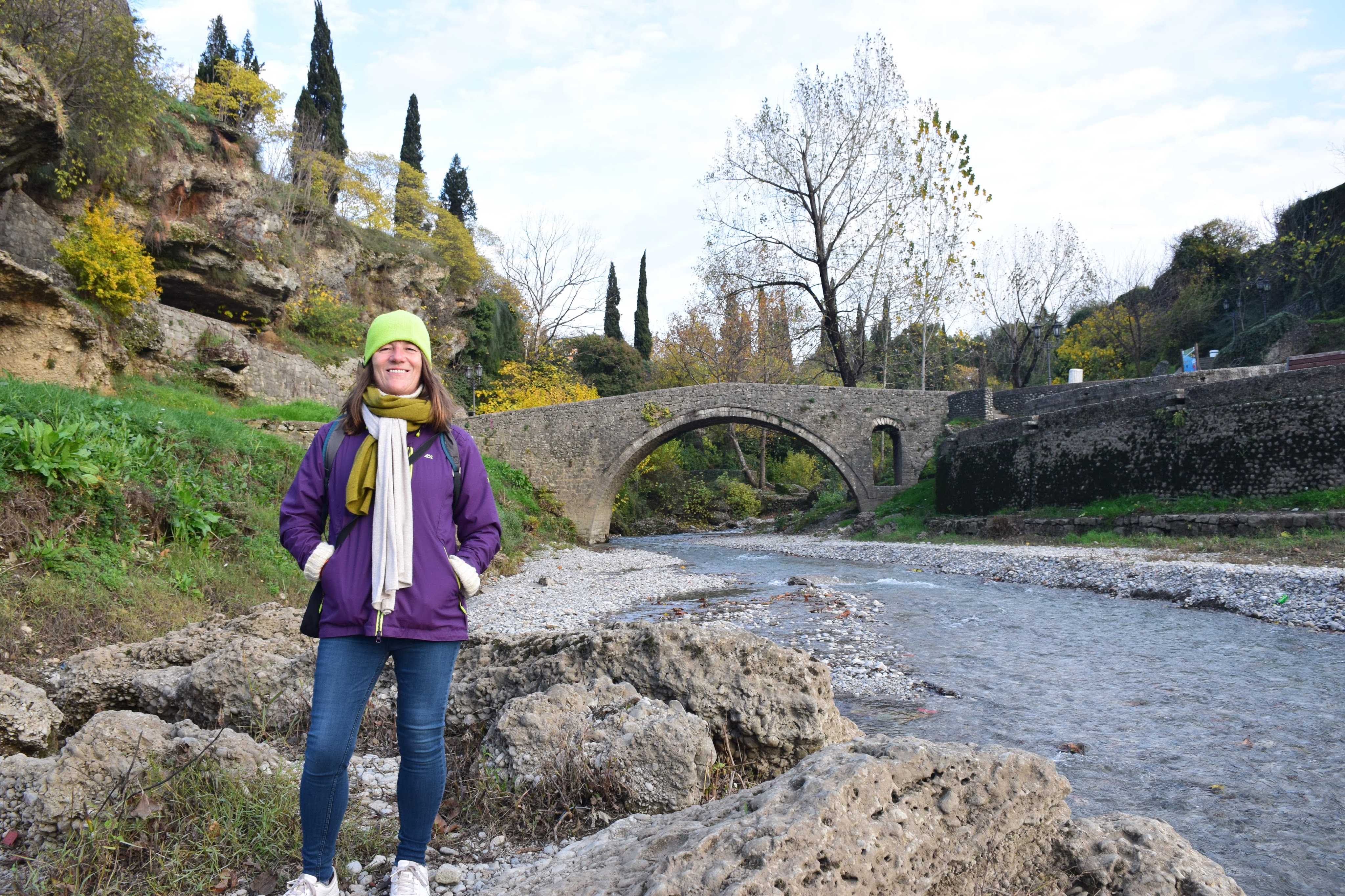
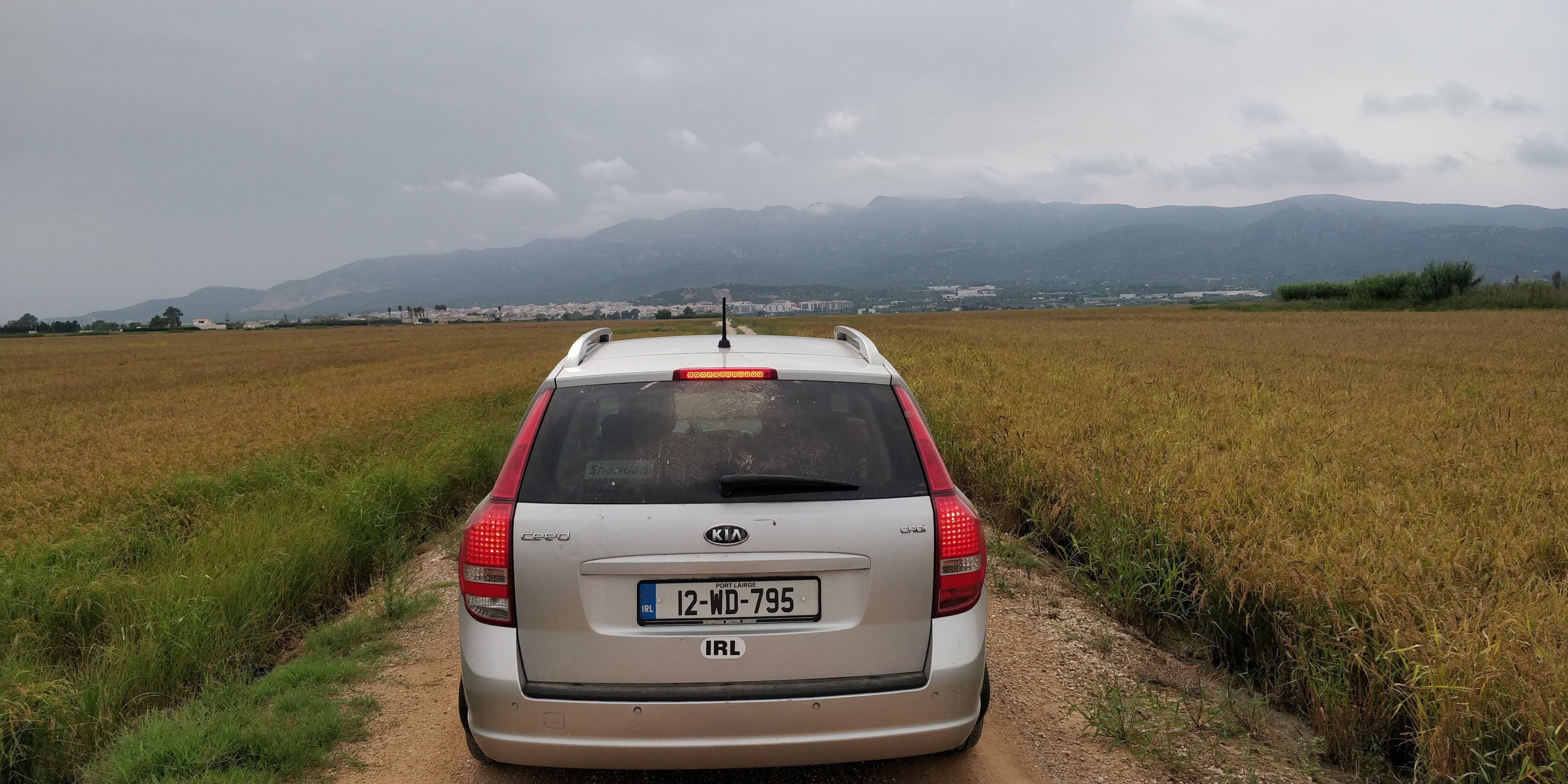
By the time we got to Podgorica, the capitol and a small city about 20 kms from the border, the whole episode seemed quite funny because although we have become fond of the Guzzler (we still prefer our electric car), the Guzzler is not anyone’s idea of vehicle to covet with its aged dents and scratches. We sat in comfy padded seats outside one of the many hip cafes in Podgorica trying to contact our landlady with the cafe-WiFi while listening to Amy Winehouse which was blasting on the cafe speakers. It was sunny but bitterly cold with a strong easterly breeze. The cafe awning was shaking and the patio heater was hissing and we couldn’t get our landlady to answer the phone to get proper directions. We had booked the accommodation the night before on Booking.com. Then a message beeped in on the phone ‘We are all diseased with covid, family isolate in apartment.’ So it seemed that unlike Albania, Covid was in Montenegro. Podgorica was a bit of an enigma -despite its obvious prosperity with its tree lined streets, we had been accosted by four different people begging as we sat outside the cafe. With the biting breeze whistling through the streets and a barefooted man begging at the traffic lights, maybe this wasn’t the best day of our trip.
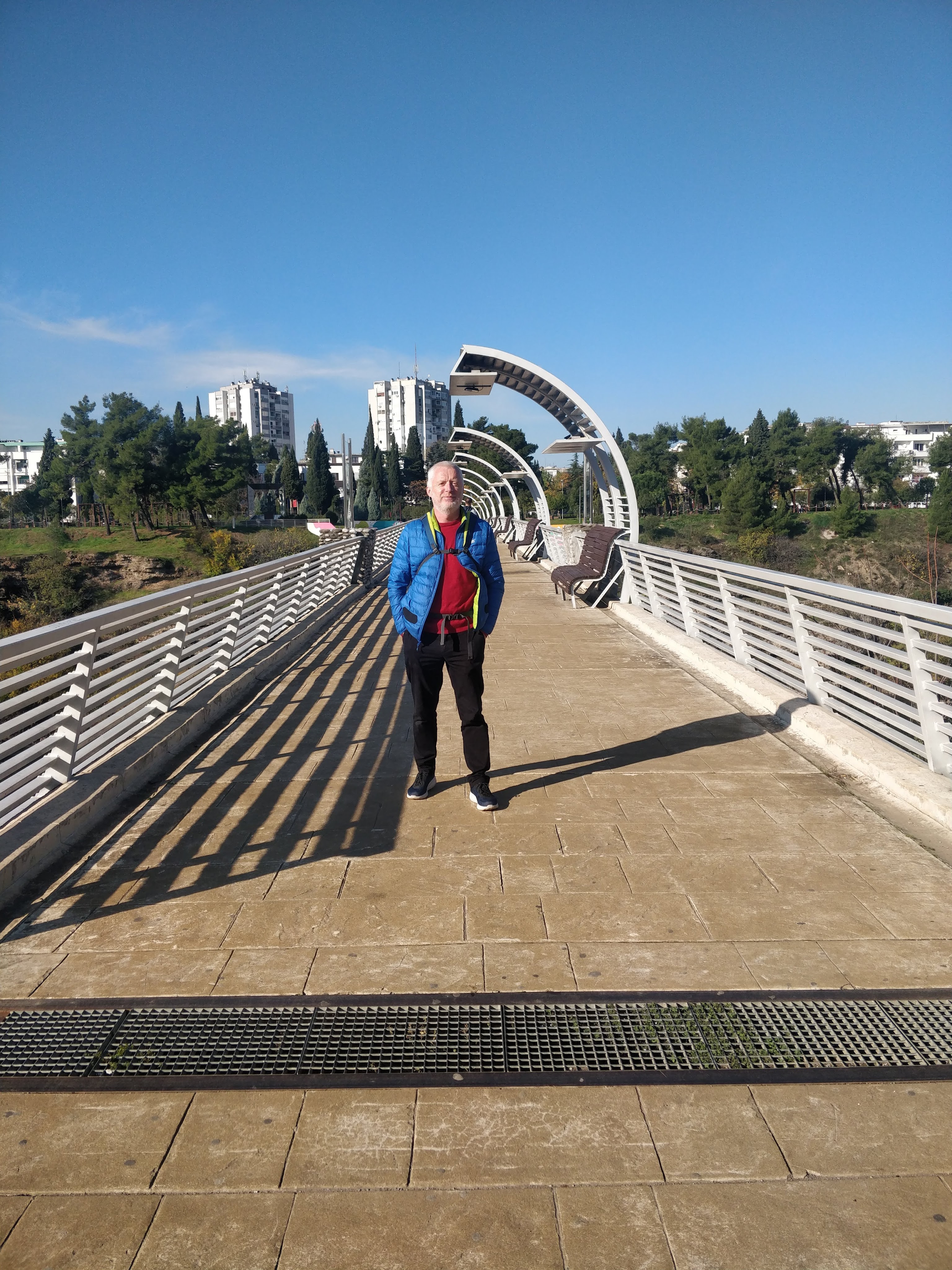
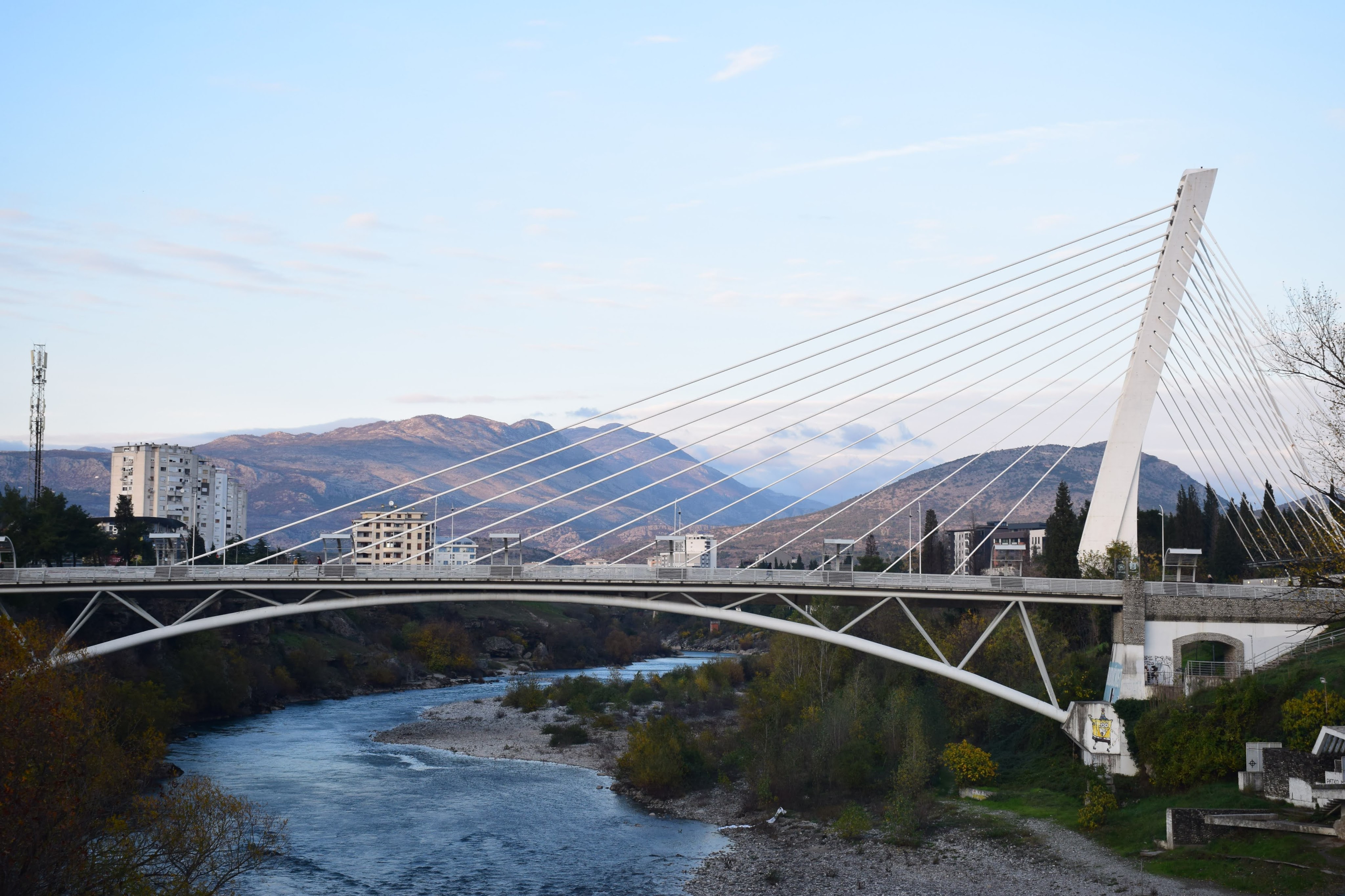
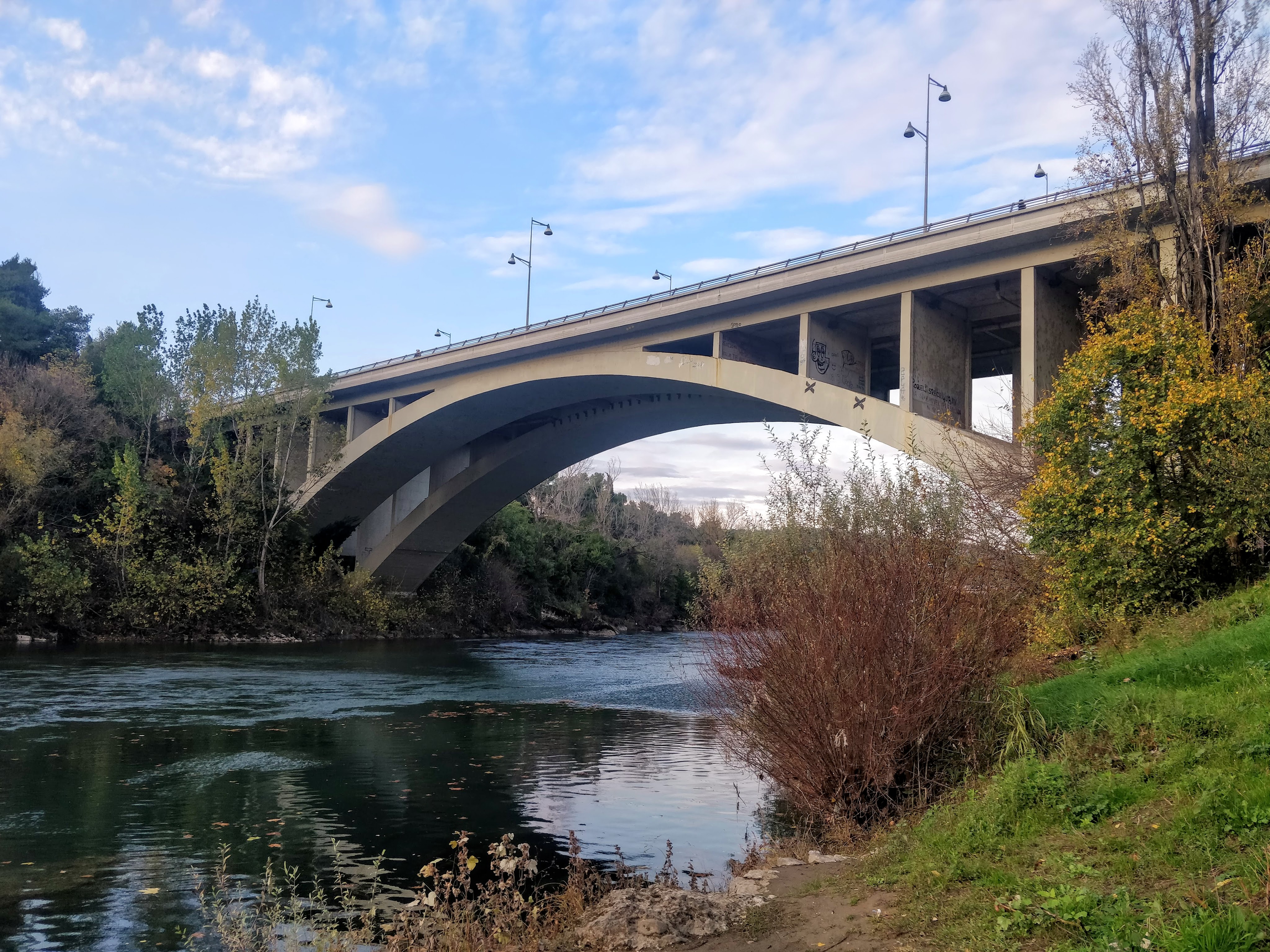
Podgorica for us was a city of beggars and bridges. For a mountainous country, the capital city was flat and didn’t have a lot of ‘must-see’ sights. One of its sights was its Millennium Bridge- but not a patch on Waterford’s suspension bridge over the River Suir. But then the city was heavily bombed and razed by Allied Forces during World War 2 and at least 4000 inhabitants were killed.

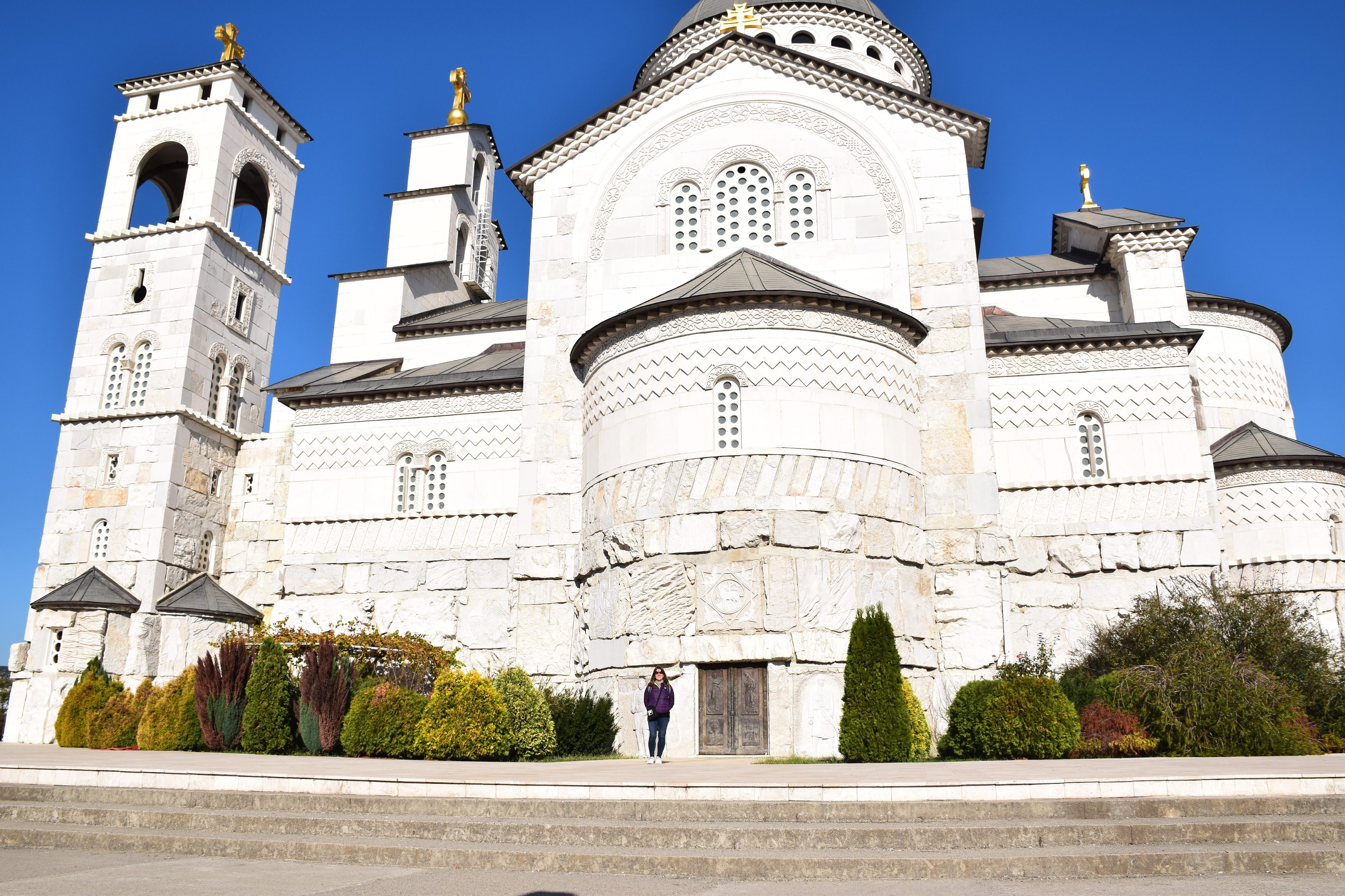
Our main mission in Podgorica was to find a colour photocopier for the car documents. We got a coloured copy of the car registration document that’s so good that I’d say it was better than the original…but only border crossings will tell! We visited the main Cathedral completed in 2013 which was Serbian Orthodox (a bone of contention as many feel it should be Montenegrin Orthodox but with shifting borders, changing alliances, so many things are potential sources of angst here). It was full of gold icons, every square inch covered with gilded frescoes, one very controversial one where Karl Marx, Friedrich Engels and Tito were depicted as burning in hell.
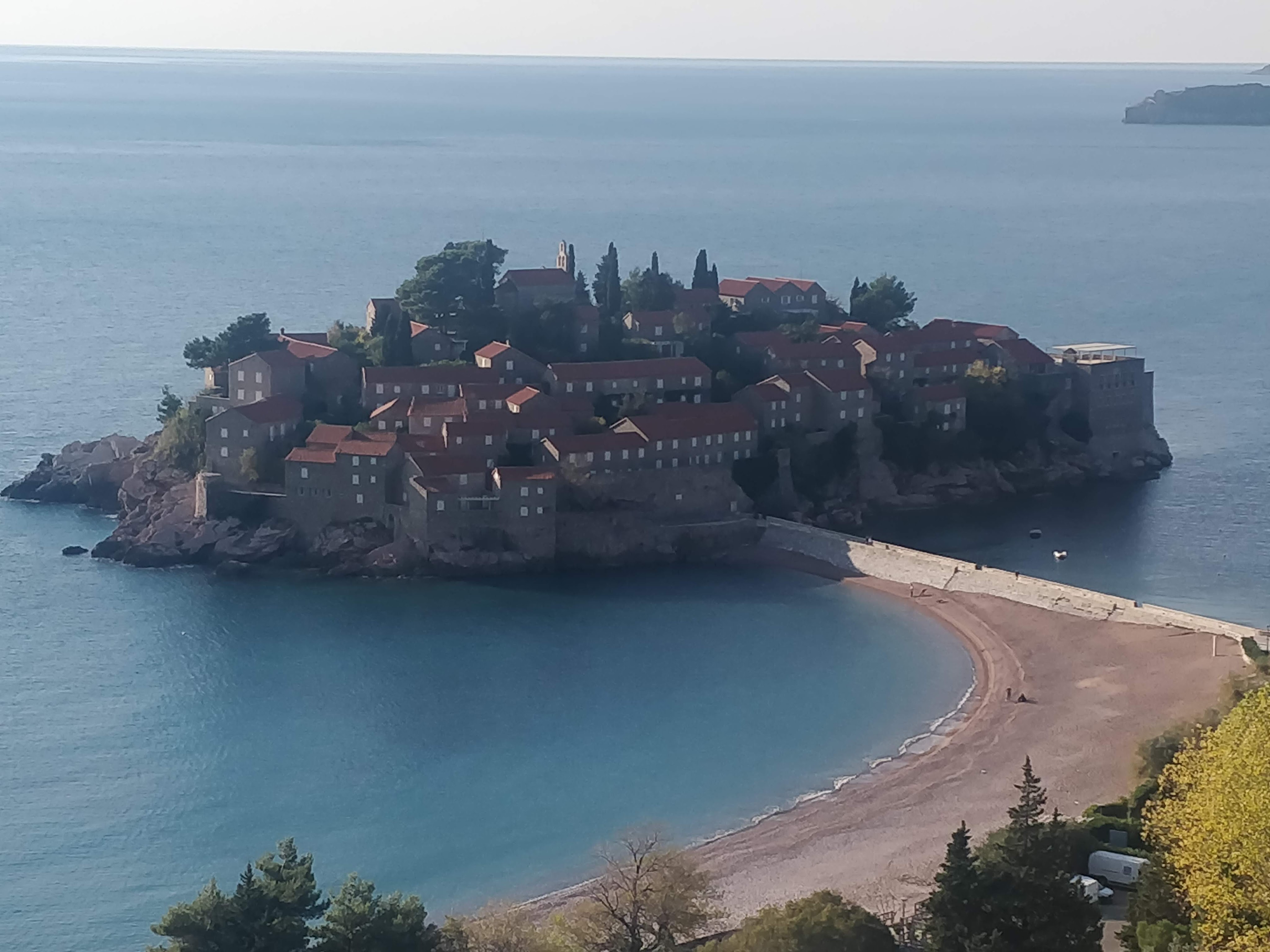
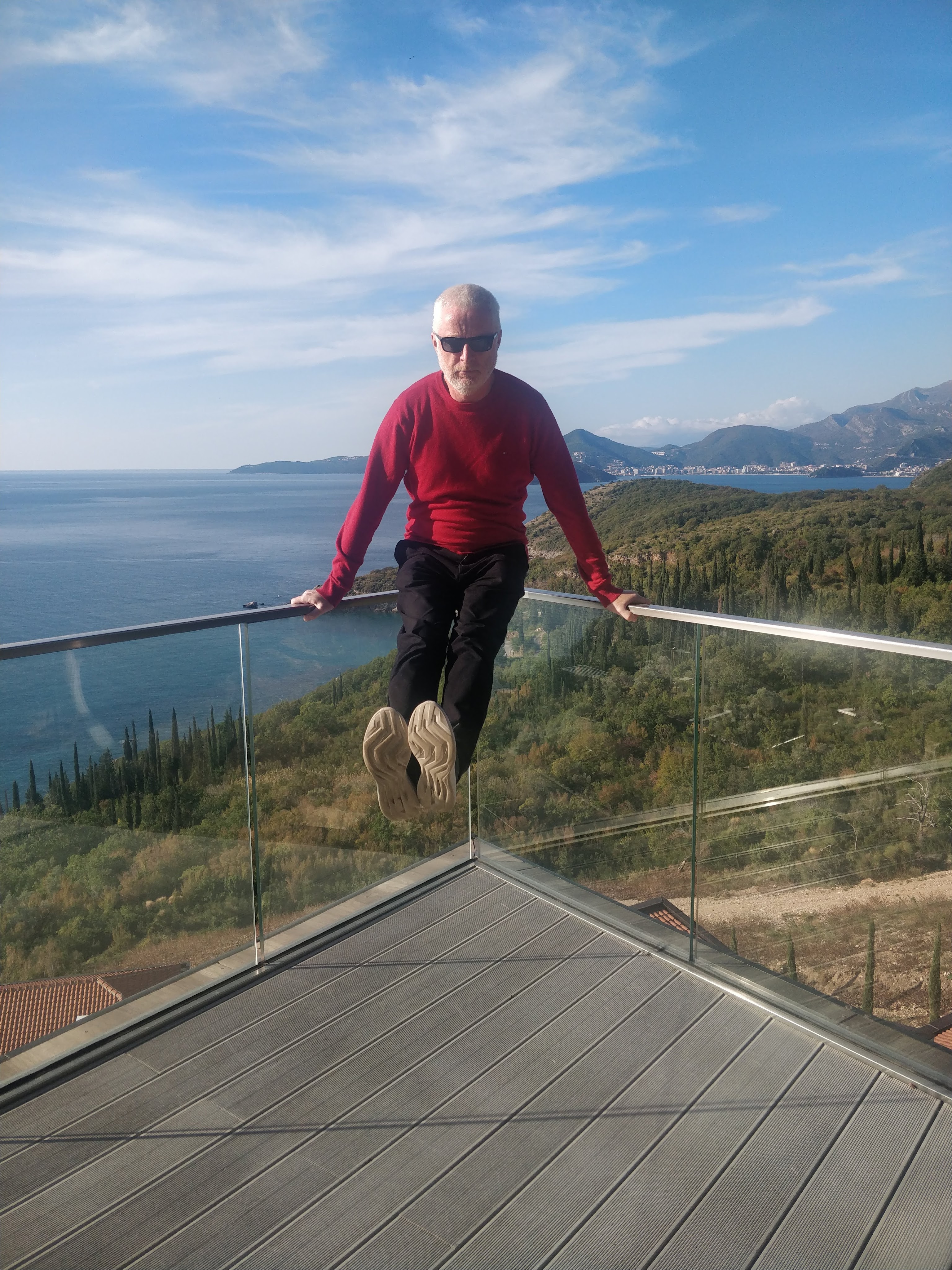
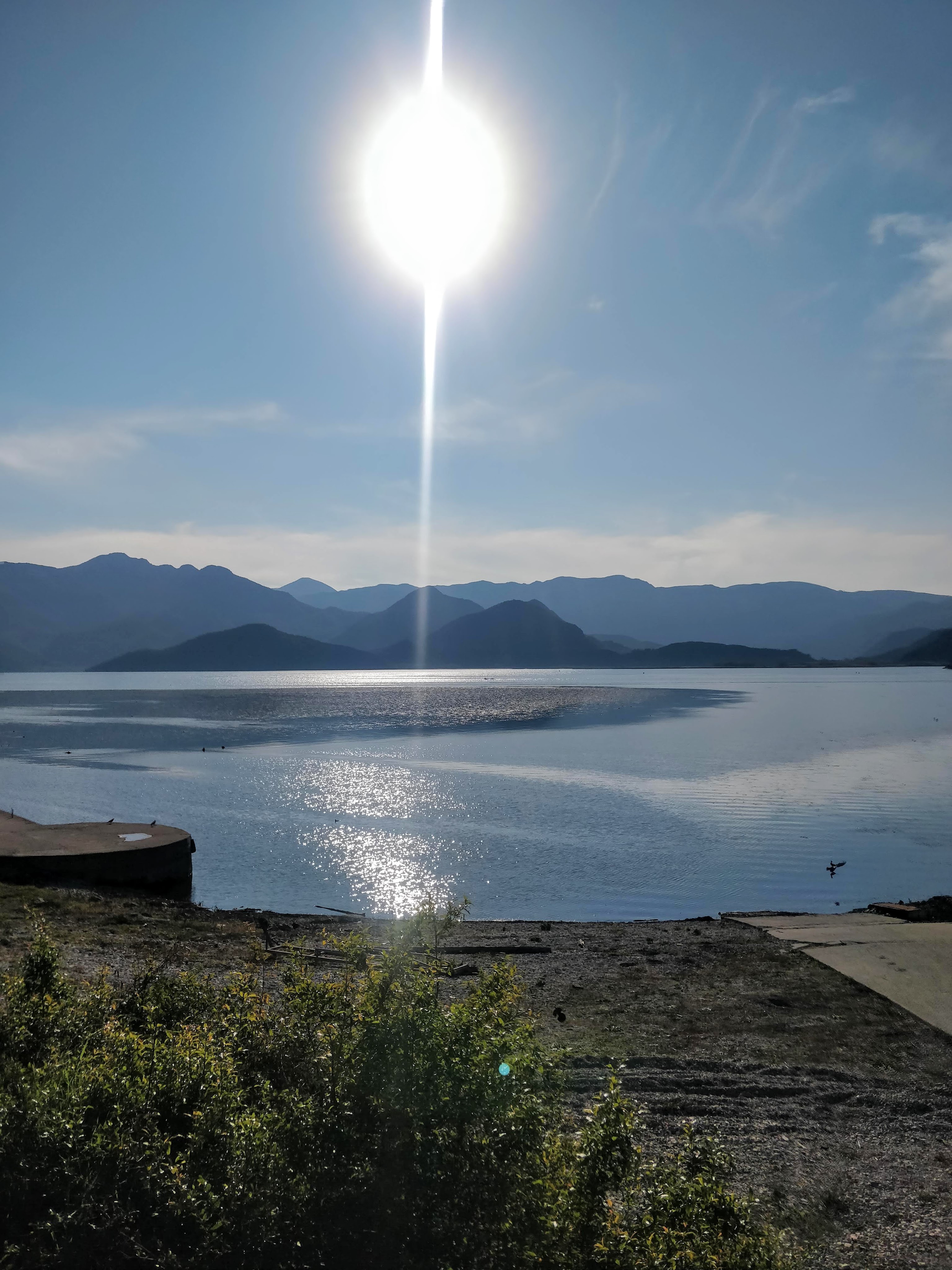
It was a perfect November day for a stunning sunshine drive along Lake Shaker, a large lake which straddles the border between Albania and Montenegro , its waters shining silver against the purple-black of the mountains – a bird watchers paradise. Lord Byron described the coast of Montenegro as ‘the most beautiful encounter between land and sea.’ It was hard to disagree – honestly, it was like driving through a photo-shopped film set. We should really have been in an open-top car with the wind in our hair and a silk scarf streaming behind me. We stopped at a hotel cafe to admire the view and by chance, we were overlooking a little island, Sveti Stefan, a 5 star resort which is popular with celebrities and the very rich. The cafe had coffee but no cakes (I guess that the beautiful people that frequent Montenegro didn’t eat them…… or maybe they had eaten them all.) We were missing the Furre Buke (bakeries) of Albania.
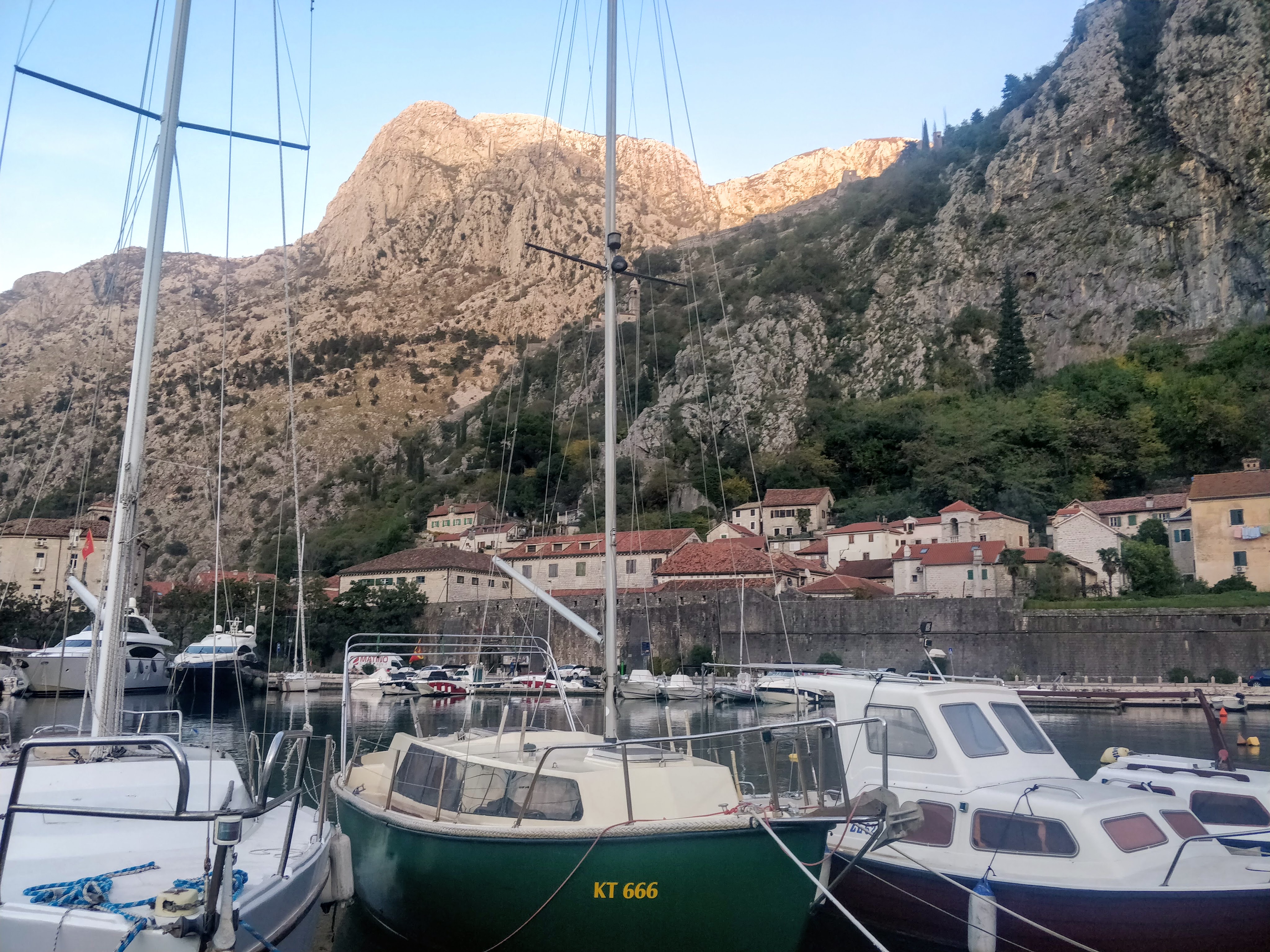
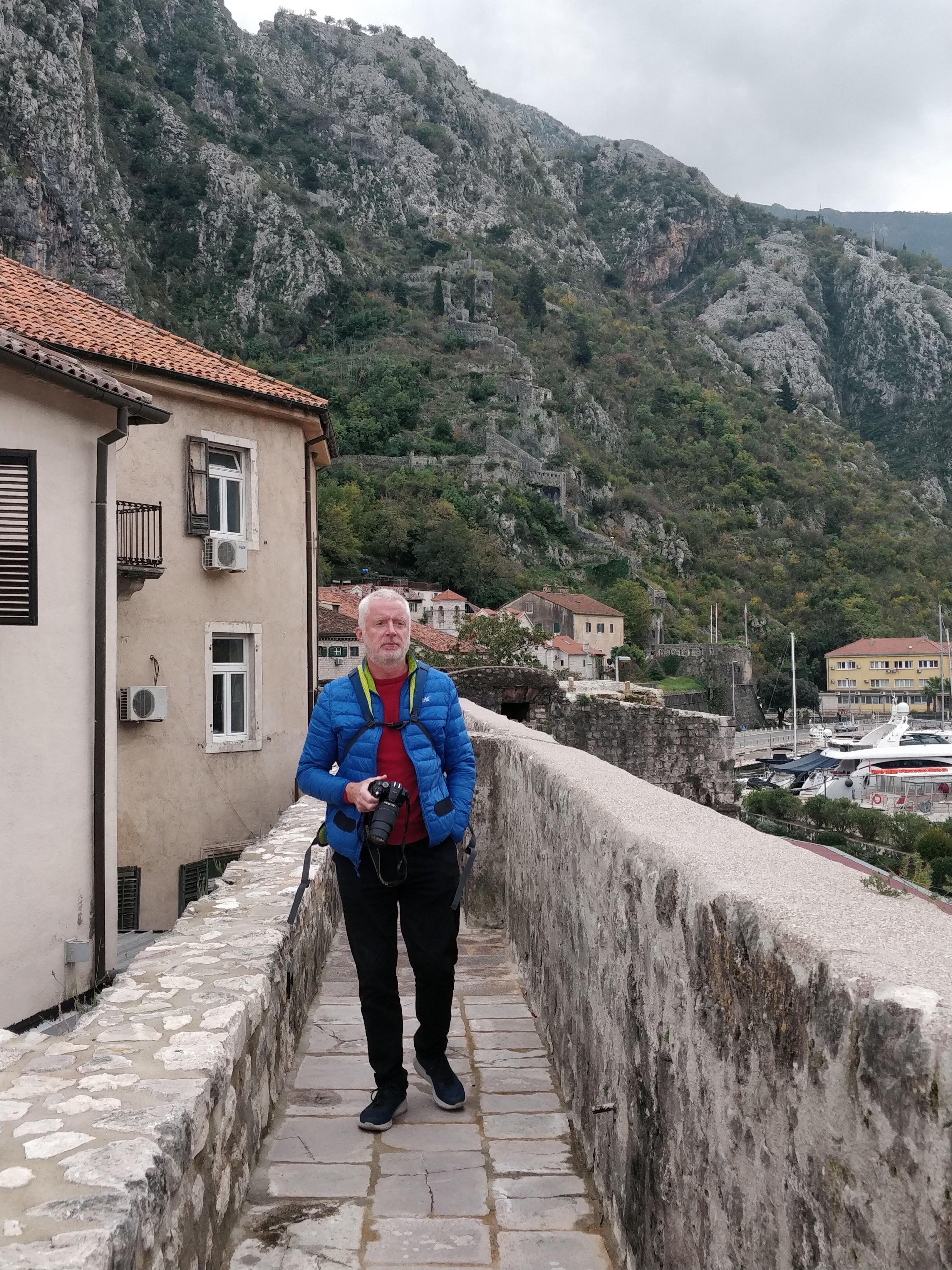
Kotor was so very beautiful, perched beside a submerged river canyon surrounded by dramatic-rising mountain cliffs. The stout walls of St Ivan’s fortress wrapped around the cobbled streets and stone walls of the old town. But there was a subdued air in the old town and most people were too fed-up to be friendly (or couldn’t be bothered, Montenegrins have a reputation for being very lazy). During the season, it’s full of tour groups and people from cruise ships so restaurant prices were high – just slightly cheaper than in Ireland but our accommodation was gorgeous and great value – €25 for a large apartment (big enough for 4) in the old town with wooden shutters and thick stone walls and steps…lots of steps.
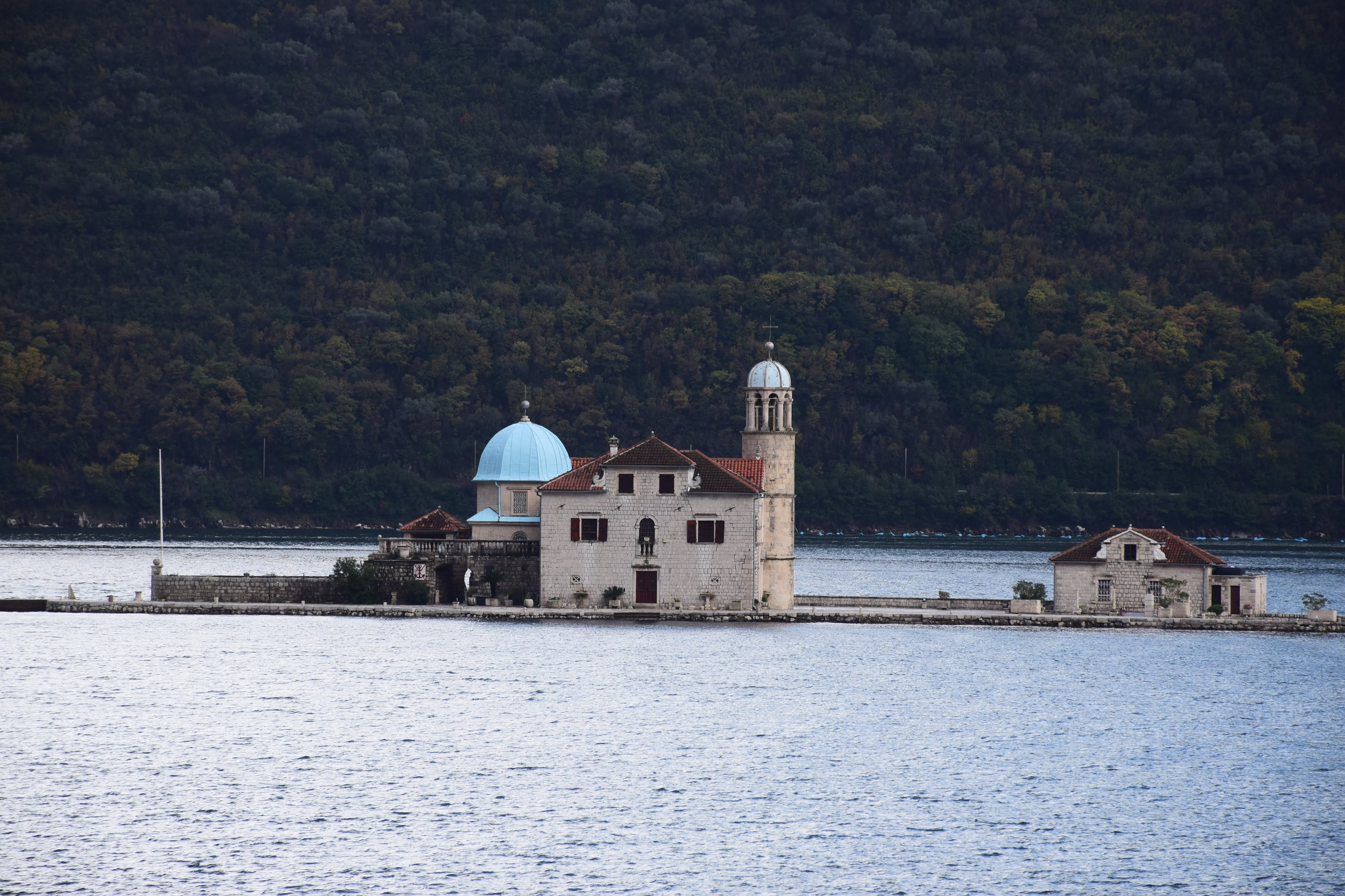
Our Lady of the Rocks, Montenegro

Montenegro was probably the most beautiful country we have ever been in but despite this – maybe our impressions were coloured by our experience at the border -after three nights on a drizzly morning we were happy to head to Croatia but with a little trepidation. We had got in, would they let us out?
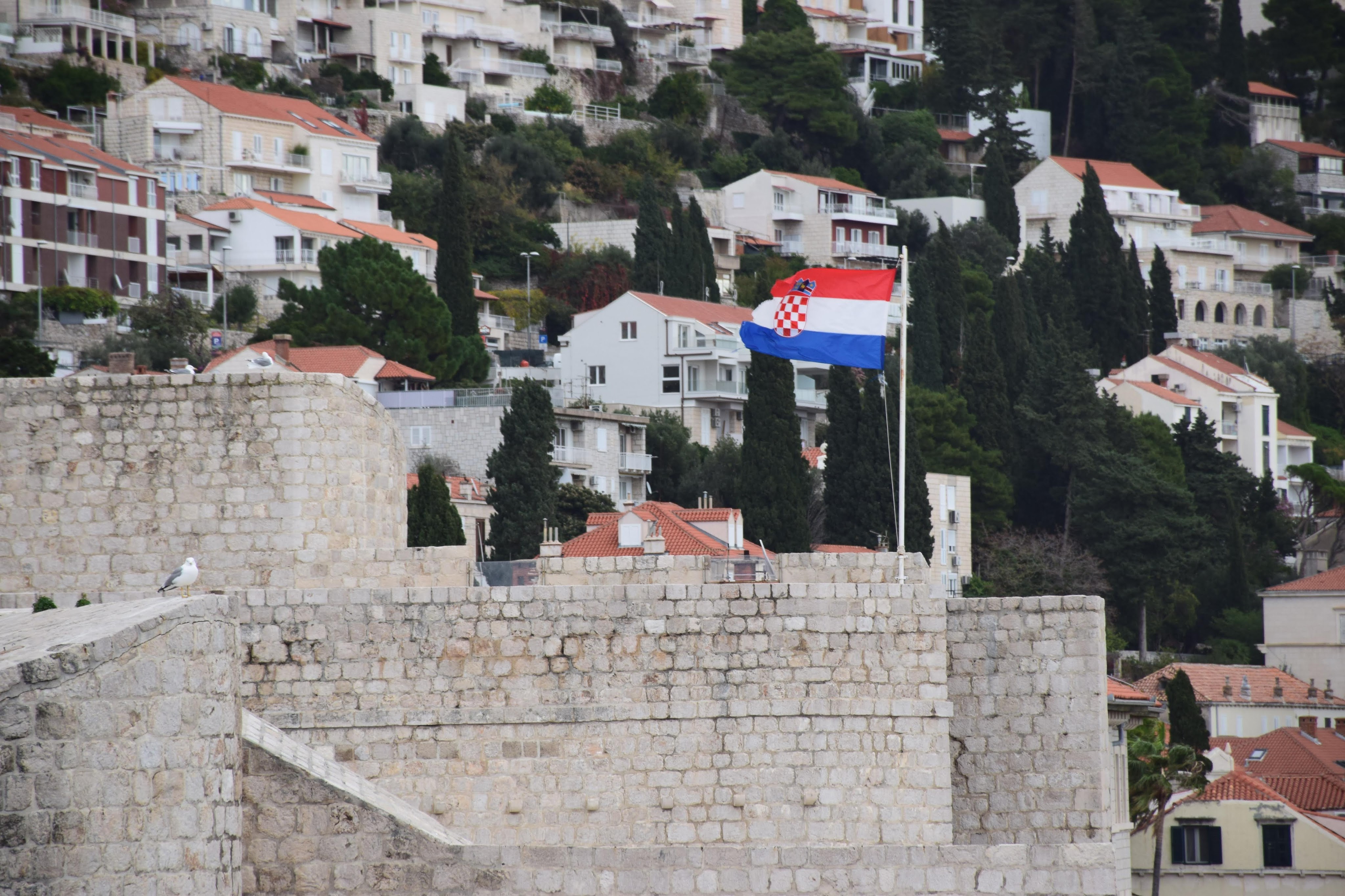
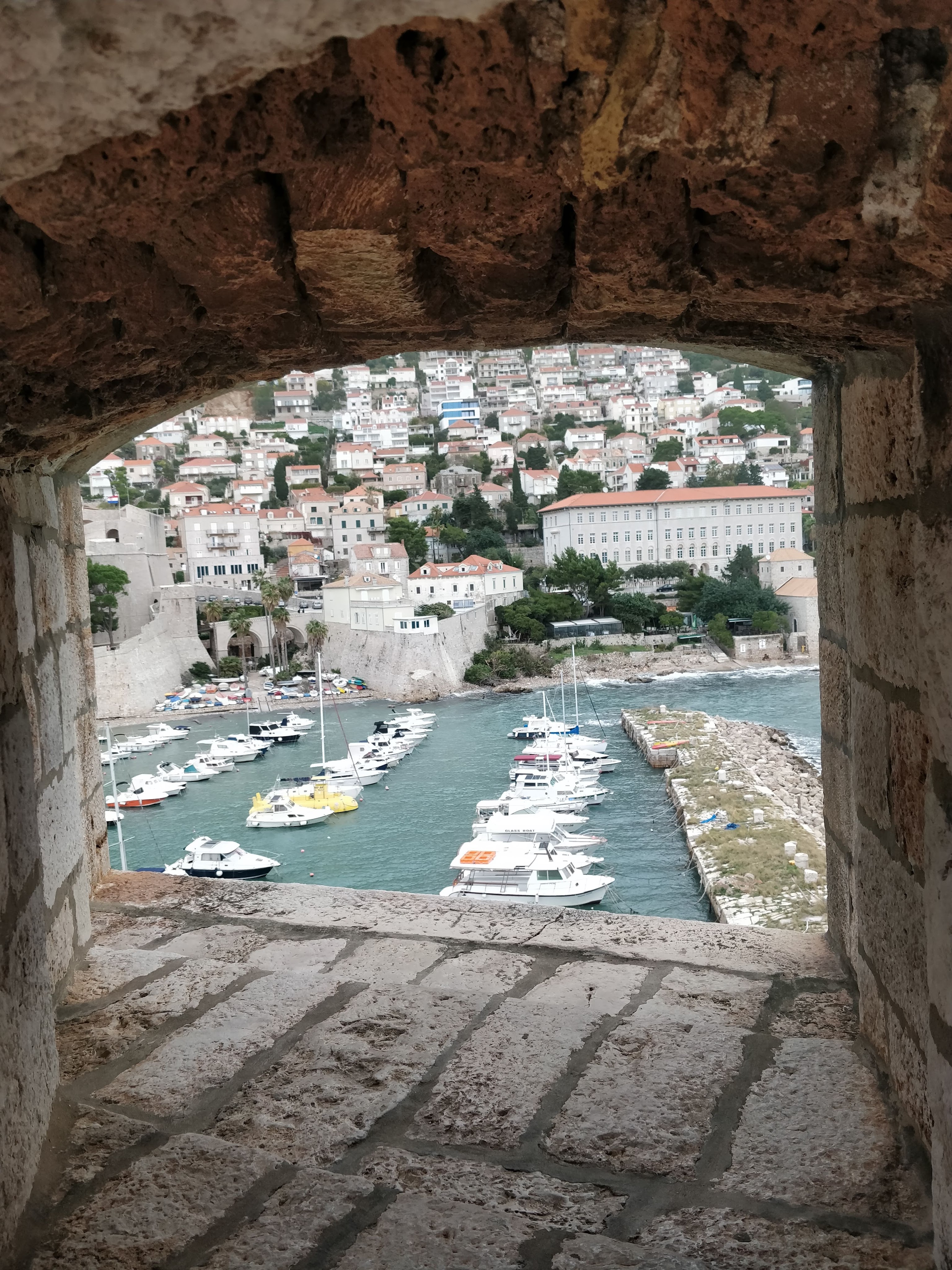
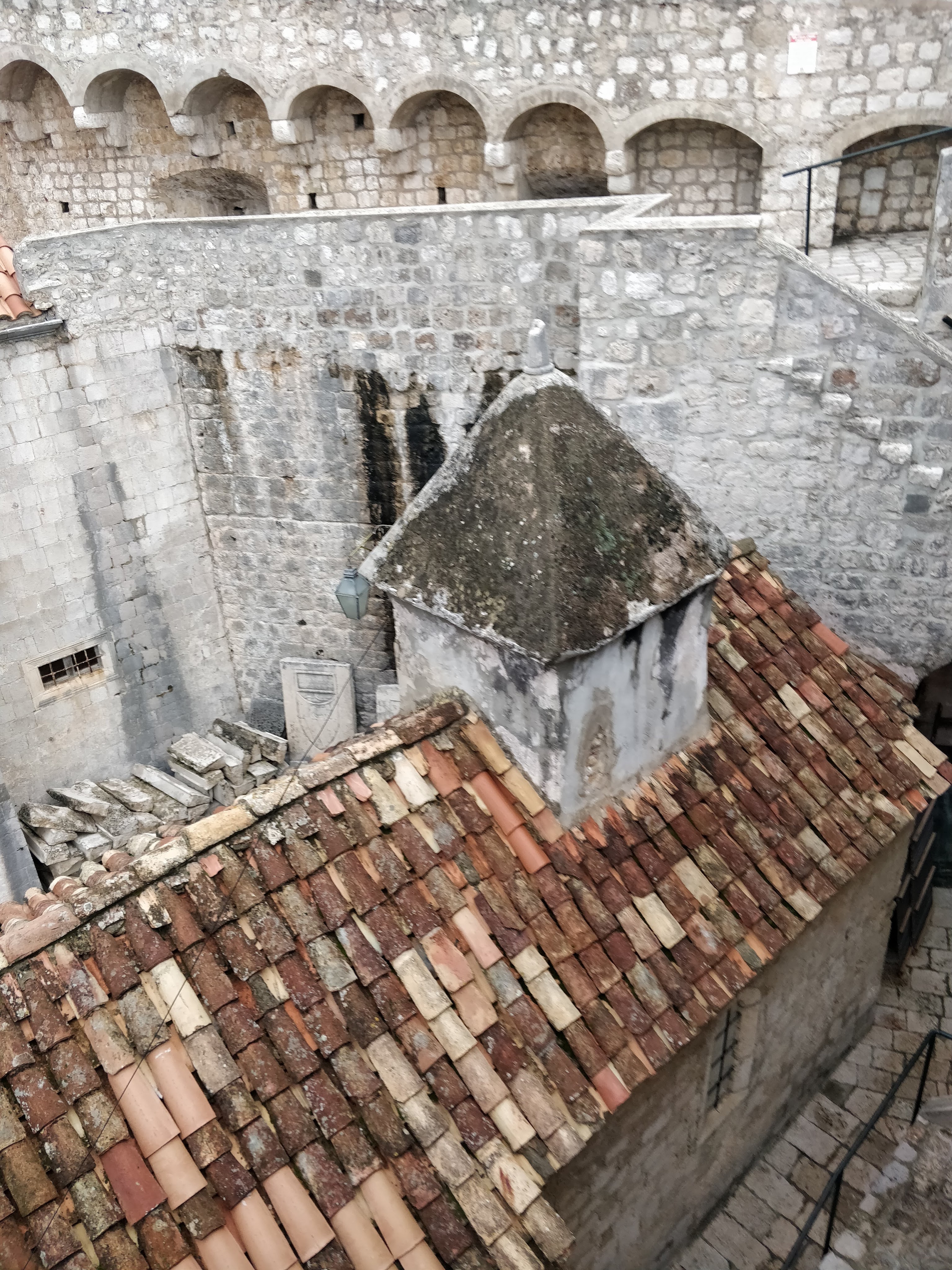
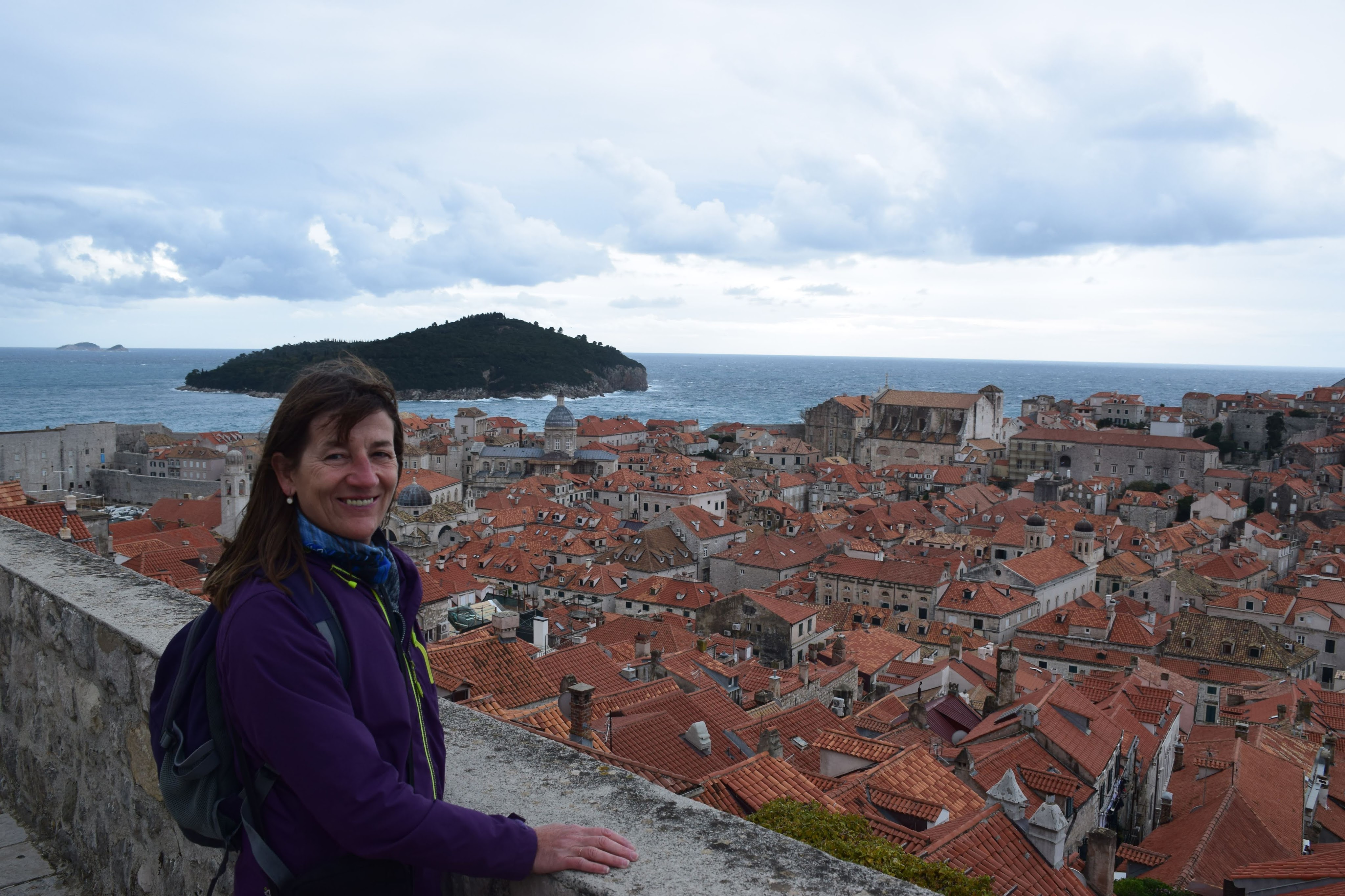
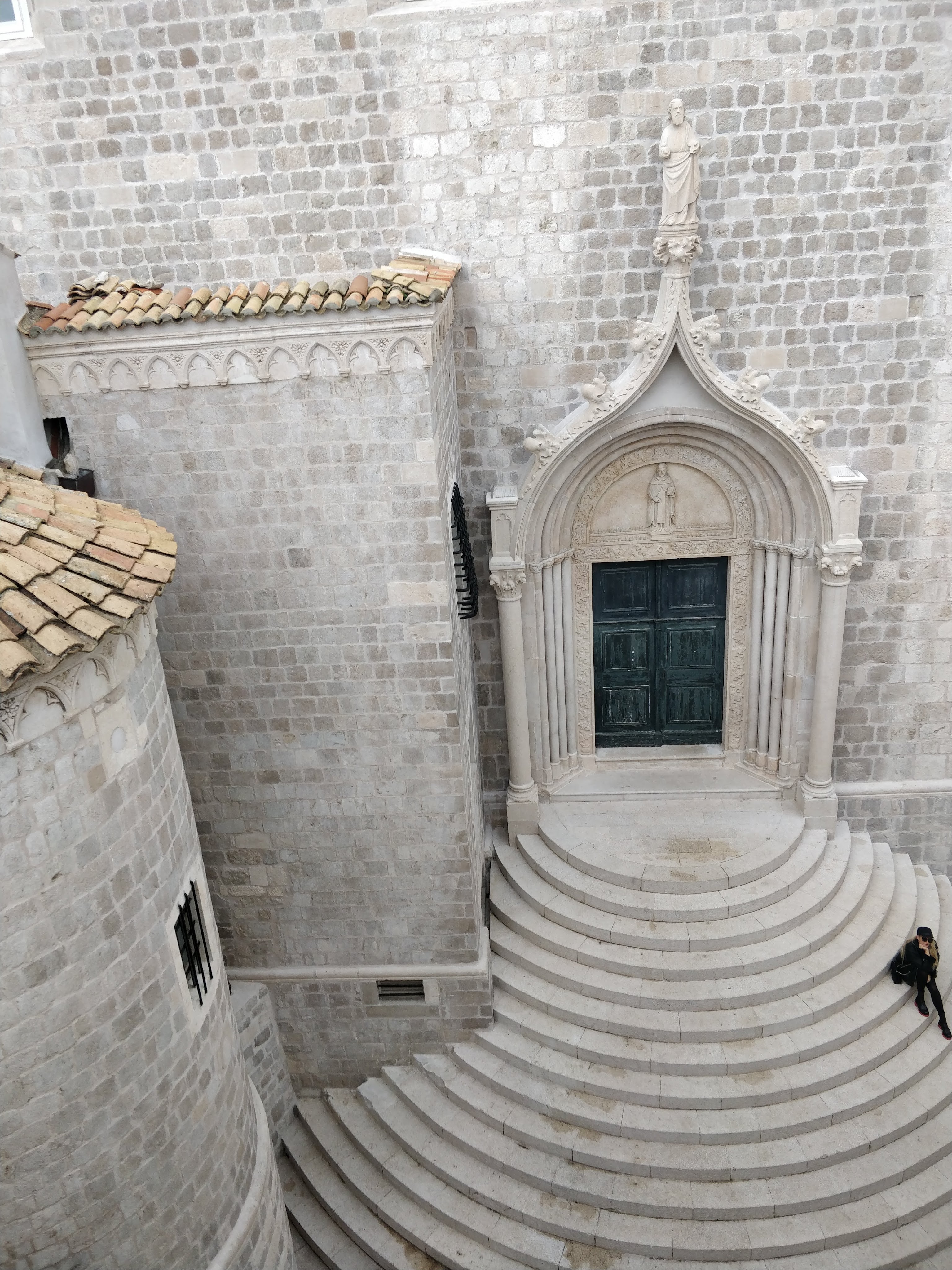
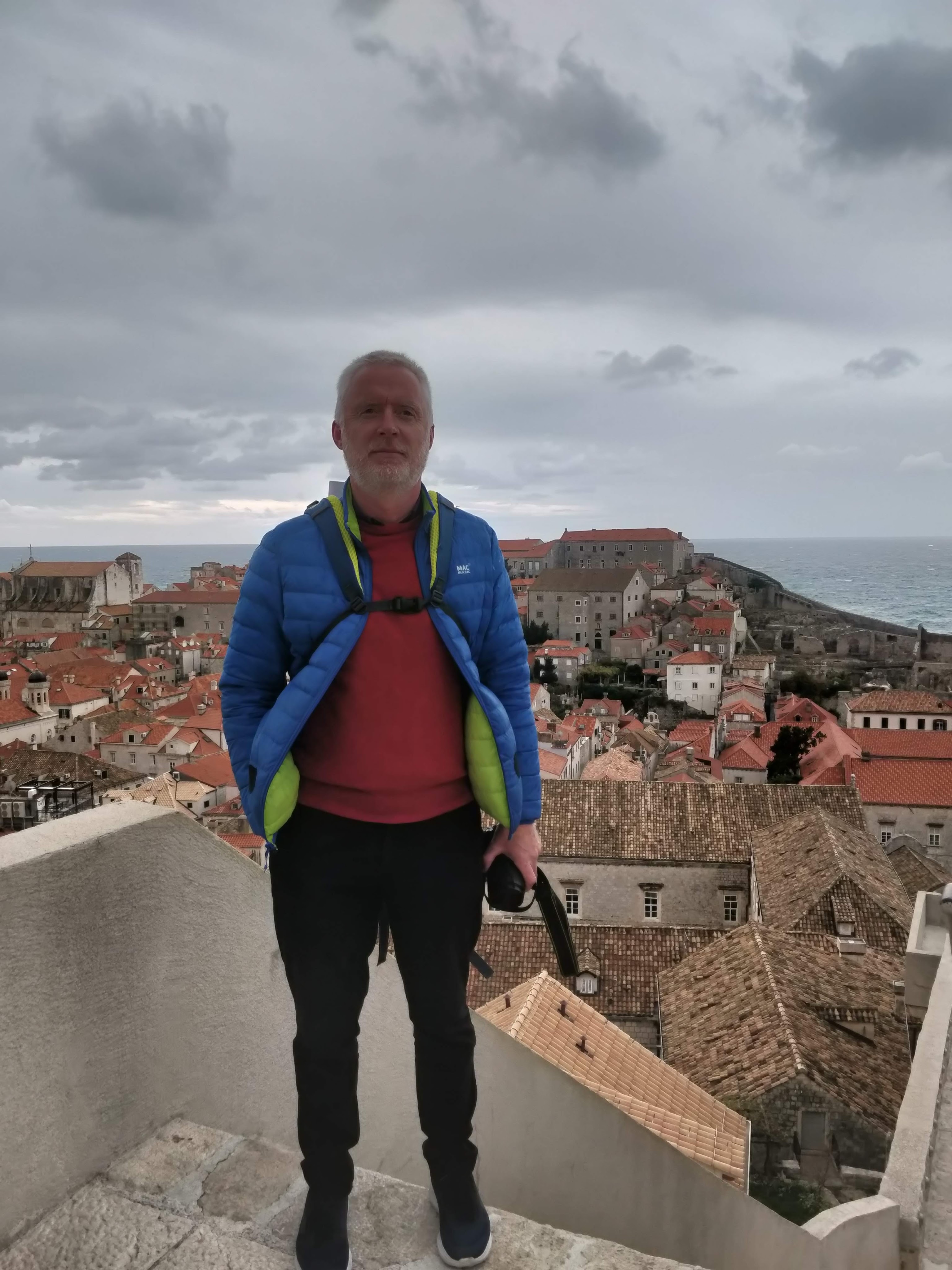
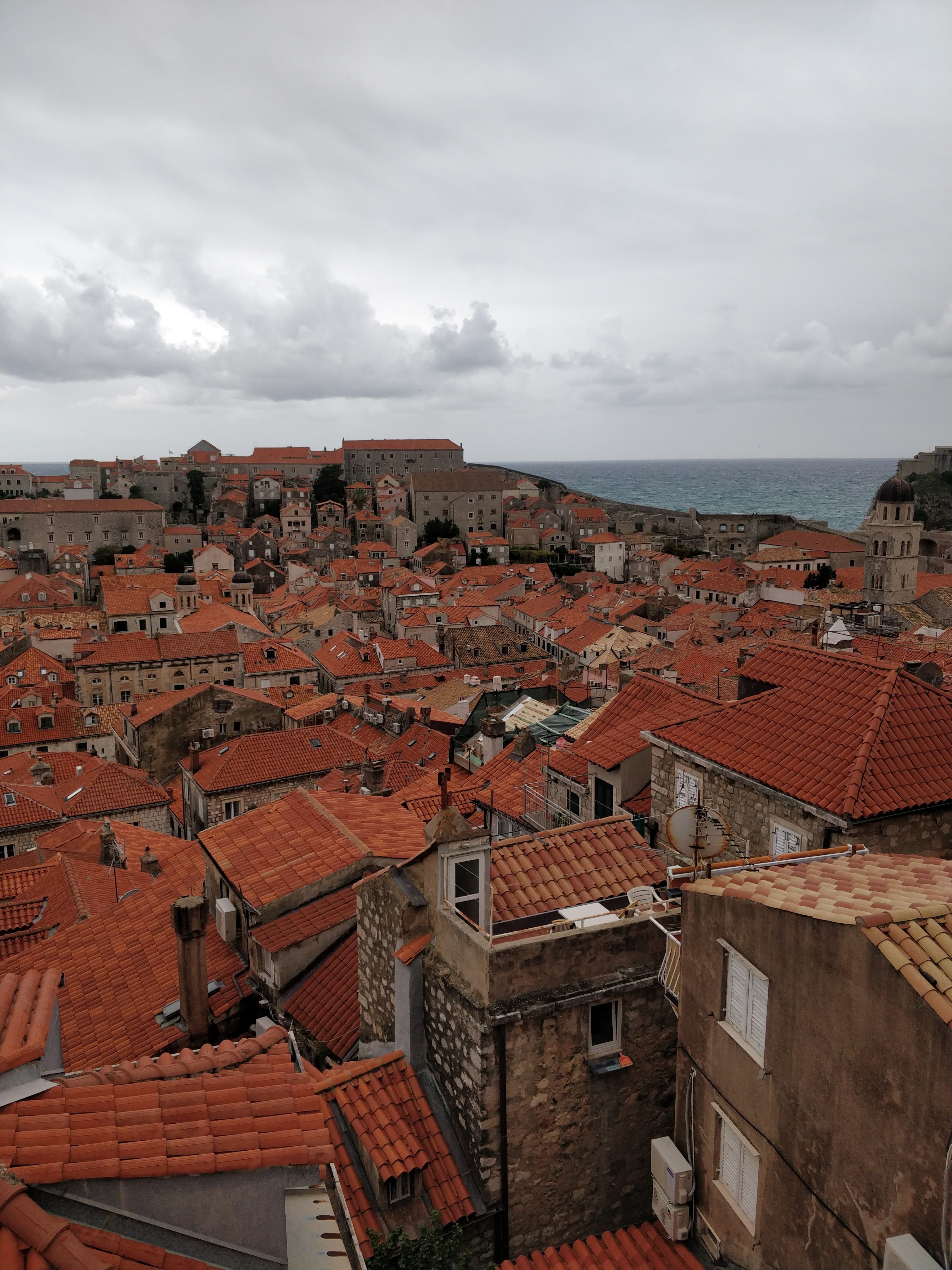
The border crossing went smoothly – although we will never take a border crossing for granted again – and we entered Croatia, another beautiful country that we had never visited. It seemed ironic that Croatia’s currency is the Kuna (7.5 kuna to €) although Croatia is in the EU while Montenegro uses Euro and is not in the EU. We made our way to Dubrovnik, its red roofs shining below us as we approached on the mountain road above. Its vulnerability was apparent even to us. Its stout medieval walls were built to withstand an attack from the sea not from the mountains behind or from the air. Nowadays, it costs to walk the walls of Dubrovnik’s old town – about €30 each – but then Dubrovnik was a tourist town and things were more expensive here than elsewhere in Croatia. Even in late November, there were lots of Americans and Game of Thrones fans.
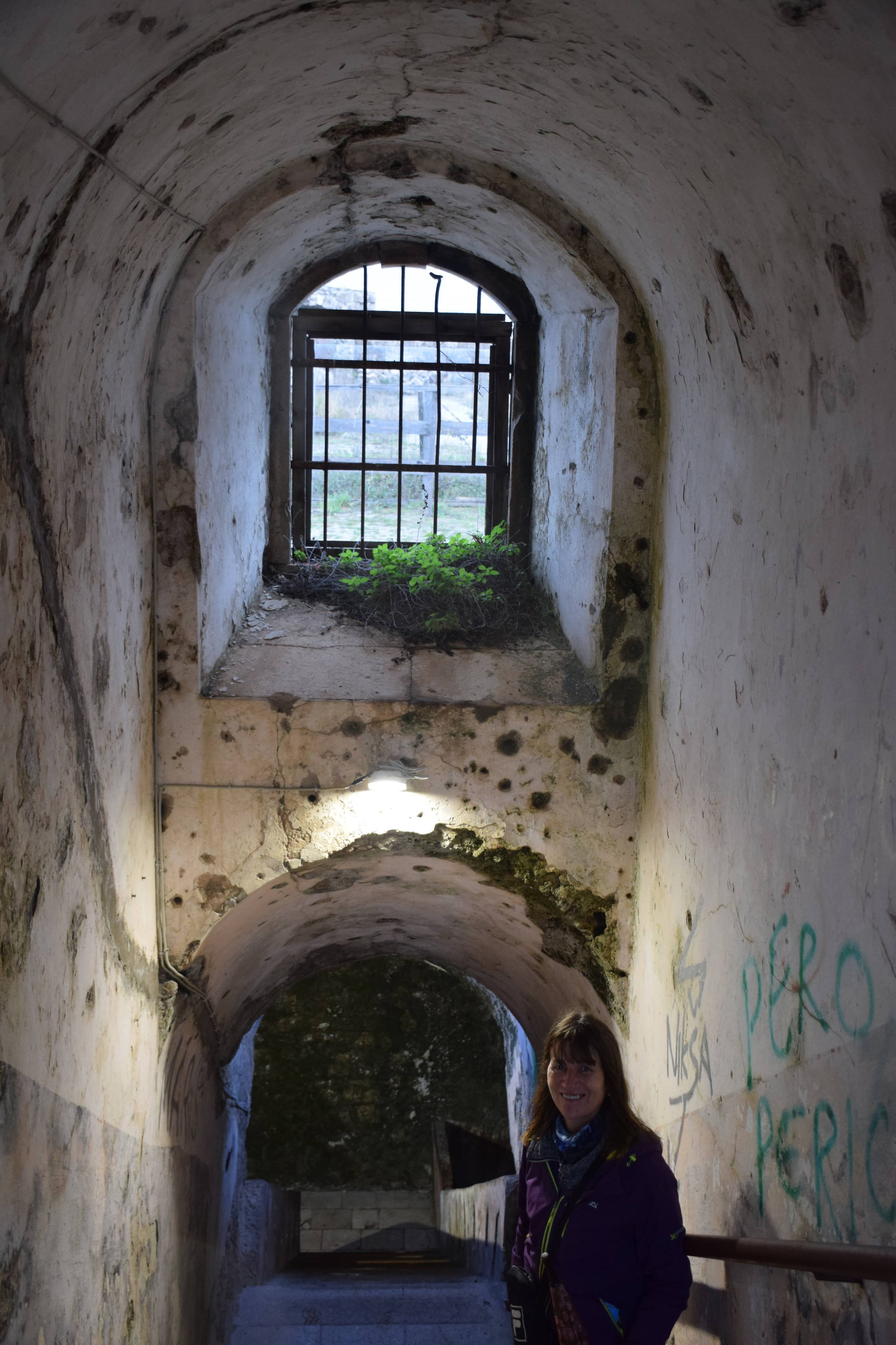
Dubrovnik was also a city of history – quarantine was invented here when the city council decreed in 1377 that all ships coming from infected plague areas had to submit to 30 days of isolation before entering the city. But for us the most poignant was the relatively recent history of the Balkan war of the 1990’s. Our accommodation was a room just outside the old town… it wasn’t fancy but it was clean and comfortable. Neven, our guitar-playing host, a man in his fifties sat in our bedsit drinking homemade wine with us, telling us how his cousin died in his arms during that conflict, how he fought and killed for his country. He showed us the spot where a Serbian shell (or Yugoslav army shell) hit the side of the house we were staying in. The seven people – including his parents and grandmother – sheltering in the basement- bathroom were lucky to survive. We had been to sites of so much ancient history on this trip but this was different…..very different.
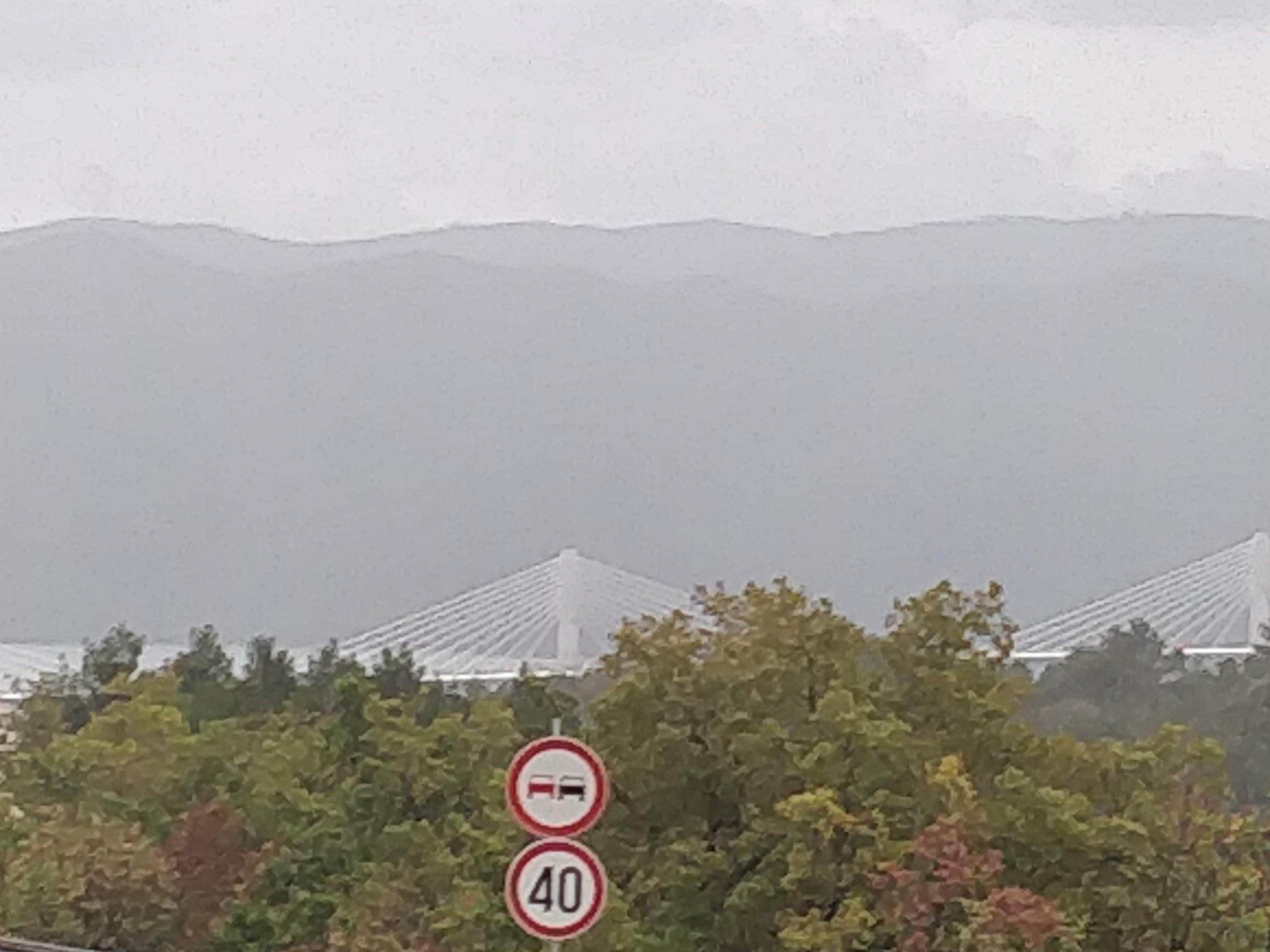
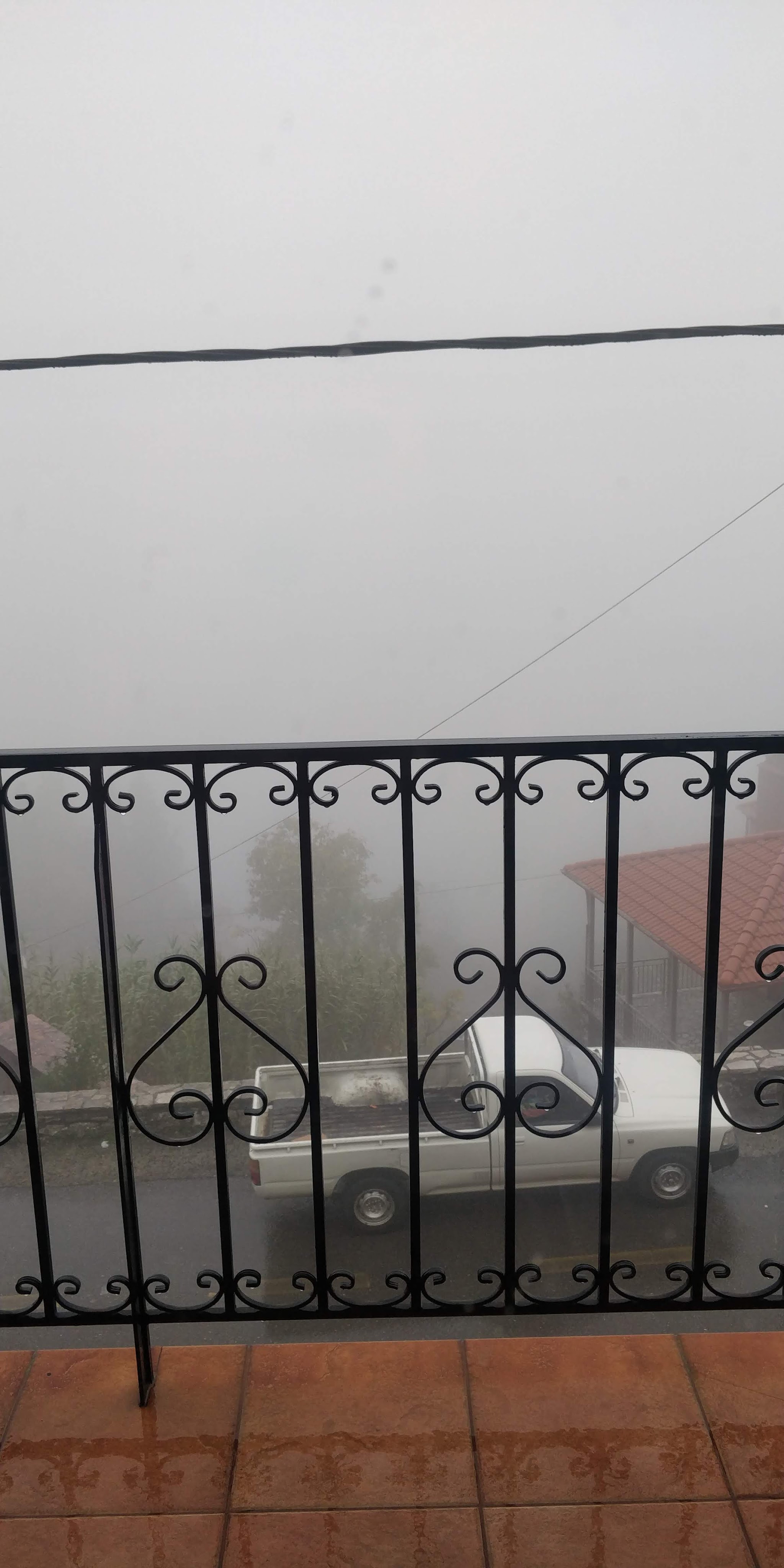
Croatian Bridge – barely visible in the mist

Travelling by car does wonders for your geography – we had to drive through Bosnia Herzegovina to get to northern Croatia because when Yugoslavia broke up in 1991, the Dubrovnik region was separated from the rest of the newly independent Croatia by twenty three kilometres of coast – a tiny coastline for Bosnia Herzegovina who must be envious of Croatia’s stunning coastline and many islands. So more border checks for us but we had to show only passports, there were no questions about the Guzzler’s documents although we were leaving and re-entering the EU. The Croats were building a bridge so that they won’t have to cross their neighbour’s country to reach their own.
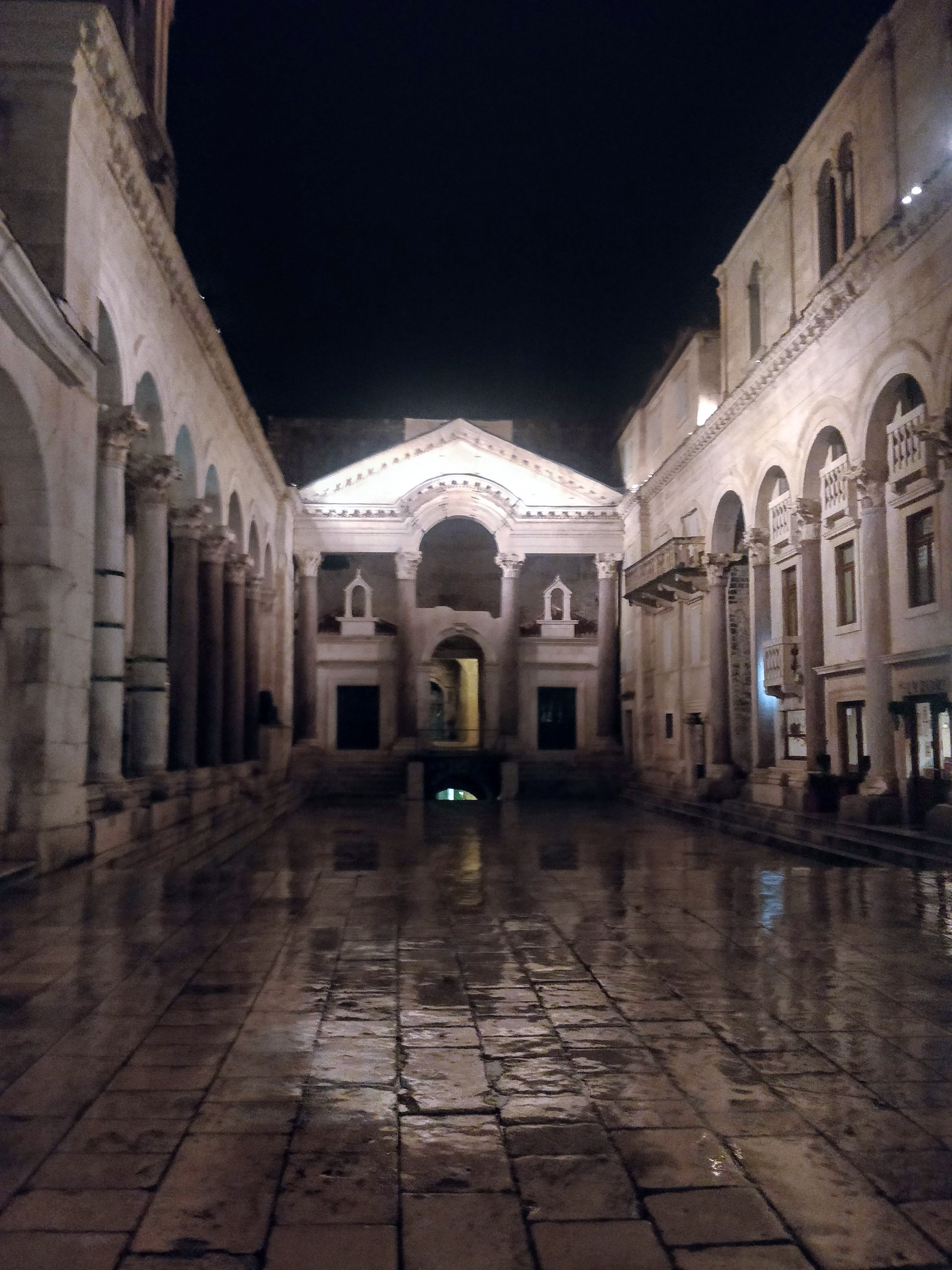
Old Town, Split …in the rain.

In Split, we stayed in a split-level apartment near the old town (what other kind of apartment would you stay in??). It rained and rained but despite the weather, we enjoyed the beauty of the old town and the friendliness of the people. Its also famous for its huge shopping malls and I admit we spent the afternoon in one of them…dodging the rain. We would have stayed longer in Split but the news is full of ominous rumblings about omicron and the possibility of borders slamming shut. So its time – unfortunately – to head in the direction of home with more haste than planned on the last days of November. Caoimhin is now singing ‘Driving Home for Christmas’ all the time so that will probably be the title of our final post. Thanks for reading
Montenegro and Beyond (Borders)

Hello from Albania

The Albanian Border

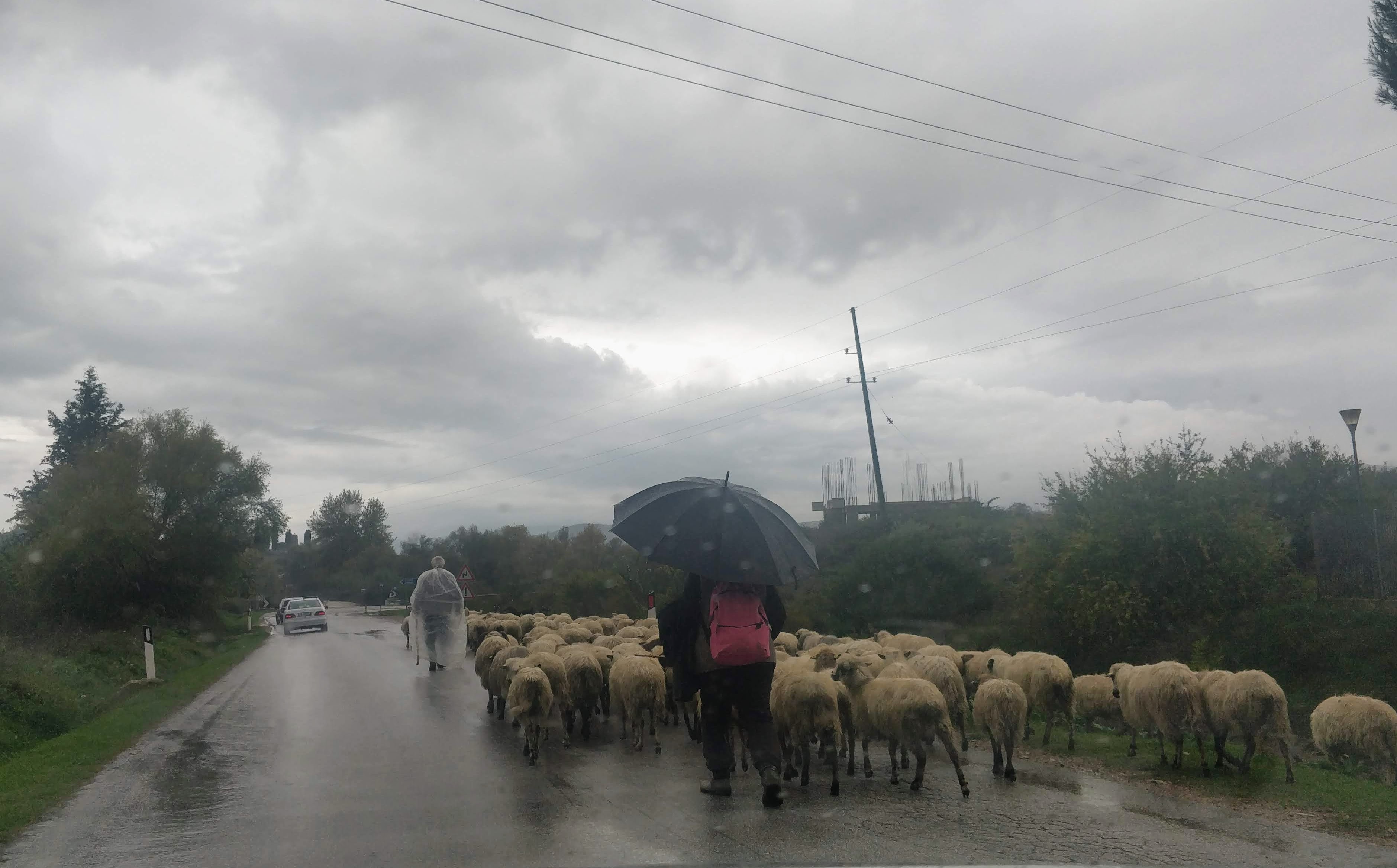
The morning was dirty and damp as we crossed the mountains in Northern Greece on our way to the Albanian border on Monday, November 15 – very like the weather on our arrival by ferry to Greece all those weeks ago(although we had storms, floods and gorgeous sunshine in between). The first border official looked at our passports, asked if the car was ours and waved us on. At the next check, we handed in our passports again and were asked for car documents,..we looked blankly….car registration, he said. Now we should have brought the car registration documents with us but we forgot, so we just gave him the car tax disc and he seemed happy enough with that. Did we have Covid vaccine? We nodded but weren’t asked to provide any proof. So we just drove into Albania with clear blue skies, gained an hour and the currency changed to lek (about 122 lek to €1). Our first impressions were that it was very like Greece – and indeed in this part of the world, borders have changed often – but within a few kilometres, we had encountered several flocks of sheep and goats being shepherded along the narrow pot-holed roads (rarely saw farm animals in Greece), the other road users were friendly and waved to us as they barreled around blind bends and there were lots of dogs in the villages (Greece was full of cats) But the most surprising thing of all was the large number of Mercedes and BMW cars – apparently Albania can import them cheaply from Germany, plus they are strong enough to withstand the appalling roads.

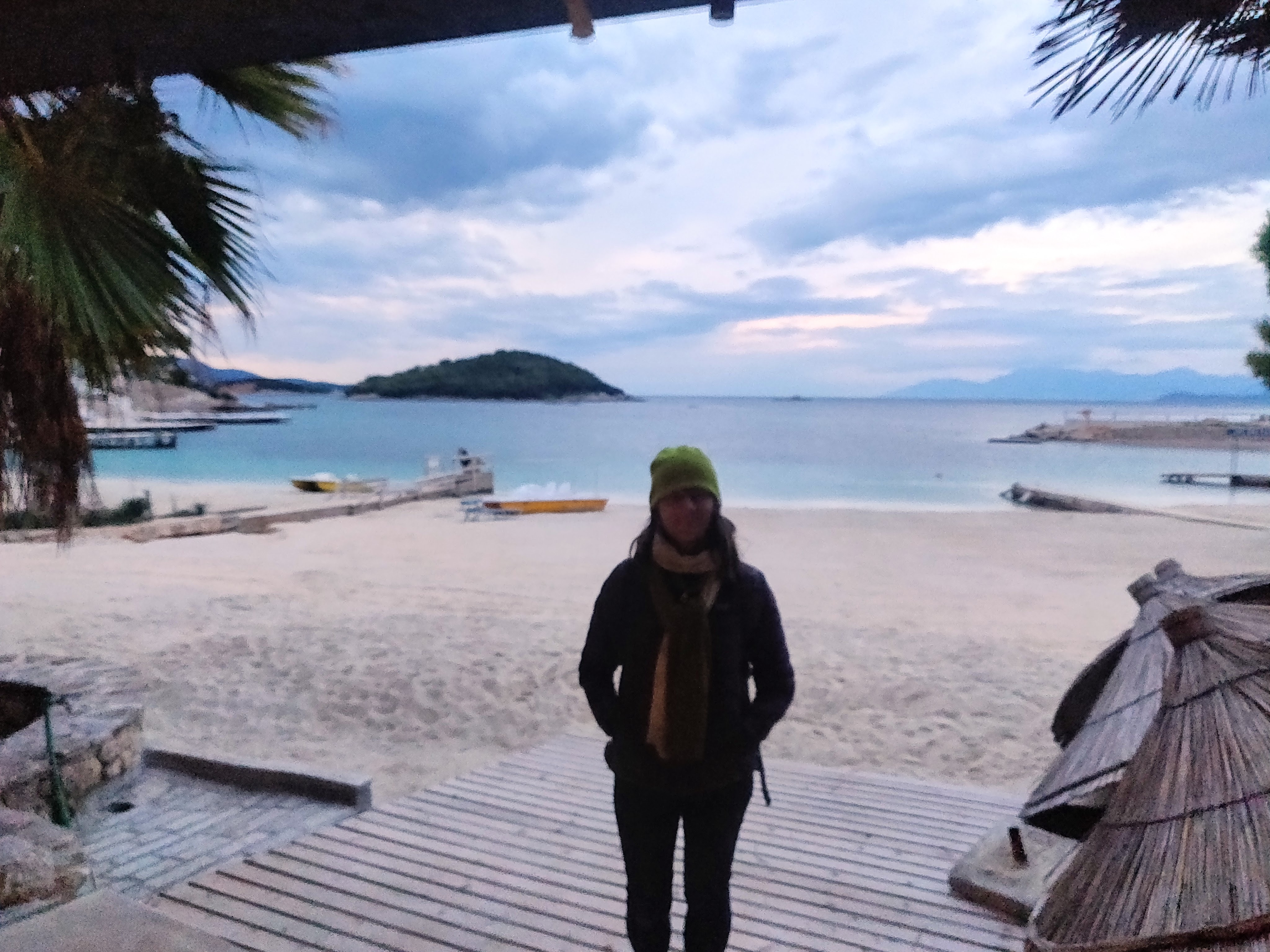
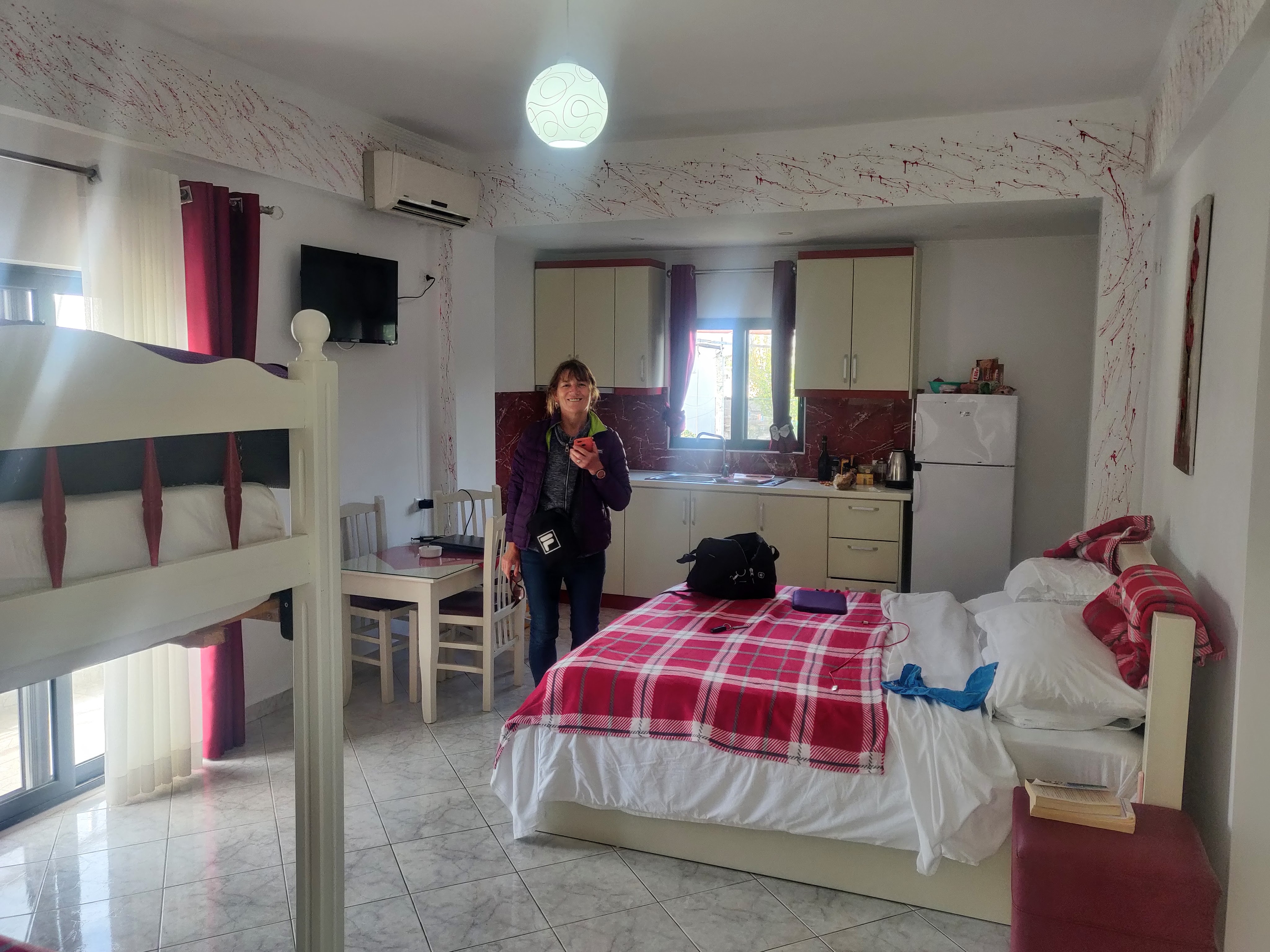
Our car insurance didn’t cover travel outside the EU(most car insurances don’t) but our research had told us that we could buy it at the border. The problem was that we couldn’t see anywhere to buy it….and because we were outside the EU, we had no mobile data on our phones🙄 to check anything. So we drove to Ksamil, a seaside town about an hour and a half away,  found a wonderful cafe with WiFi (great baklava and much better coffee than Greece) and googled madly. Temporary car insurance could not be bought online as we had hoped, but was only available at the border. So we decided to sleep on it and found a place to stay….a large bedsit with kitchen near the beach for €15 a night. Ksamil was beautiful with gorgeous beaches -its on the Albanian Riviera – with several uninhabited islands just offshore but it had that forlorn feel of a seaside town out of season with lots of the restaurants and hotels boarded up although there were several new hotels being built and lots of painting and hedge clipping going on in preparation for next year. With the clocks having gone back an hour at the border, it was black-dark before 5 pm and the temperatures which were over 20 degrees during the day dropped to less than 10. Corfu is very close – a 30 minute ferry ride away – and some tourists get cheap flights to Corfu and come to Albania that way.

Shepherds on the road in the rain

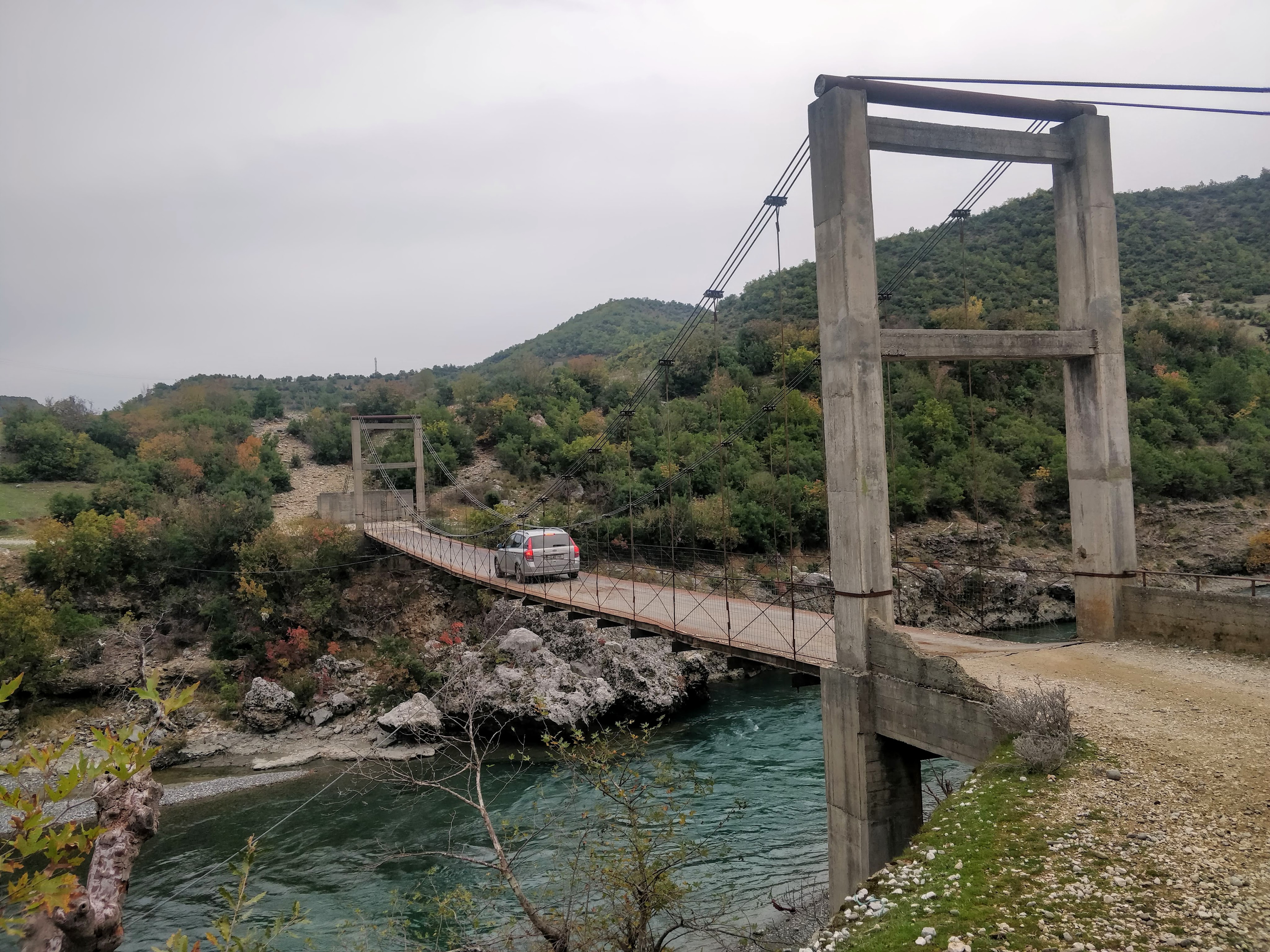
The following morning we headed back to the Greek border, a different border crossing this time, to try and buy car insurance. We had read stories online of police imposing hefty fines (or worse) on foreigners driving without insurance and of course there was the risk of accident especially as Albanians are notoriously erratic drivers _ the mountain road from the border was adorned with floral remembrances for the dead who had gone over the edge. On the way about 10 kilometres outside Ksamil, at an intersection we saw a police roadblock ahead. My heart was thumping as the police officer approached my side of the car – not because he was tall, dark-eyed, brown mustached and handsome (although he was.) I rolled down the window, the officer asked where we were from but then he asked where we were going. Tricky question! I just looked blankly, not wanting to say that we were driving without car insurance and were trying to buy it. He peeked at the jumbled back seat with camera, jackets, fold-up chairs and biscuit wrappers.  ‘Ah you go to Butrint, I think.'(Butrint is a National Park and has famous archaeological ruins.) I spluttered and nodded, yes. Butrint. The problem was that the road to Butrint was not the same as the one to the border and when Caoimhin tried to turn left, the very helpful police officer waved to us and made sure that we took the road to Butrint.  What could we do but continue on the ‘wrong’ road? But eventually after some meandering, we found ourselves on the road to the border.

At this border, we found a kiosk selling car insurance_ €49 euros for 15 days (minimum number of days). We needed the car registration documents to buy it but Aonghus, our son, had scanned them and sent them to us (Good man, Aonghus). So we now had a very official-looking insurance cert displayed on the car window of the Guzzler _ what a relief. I wouldn’t like to be making a claim with it but at least we could drive around without fear of being pulled over by the cops.

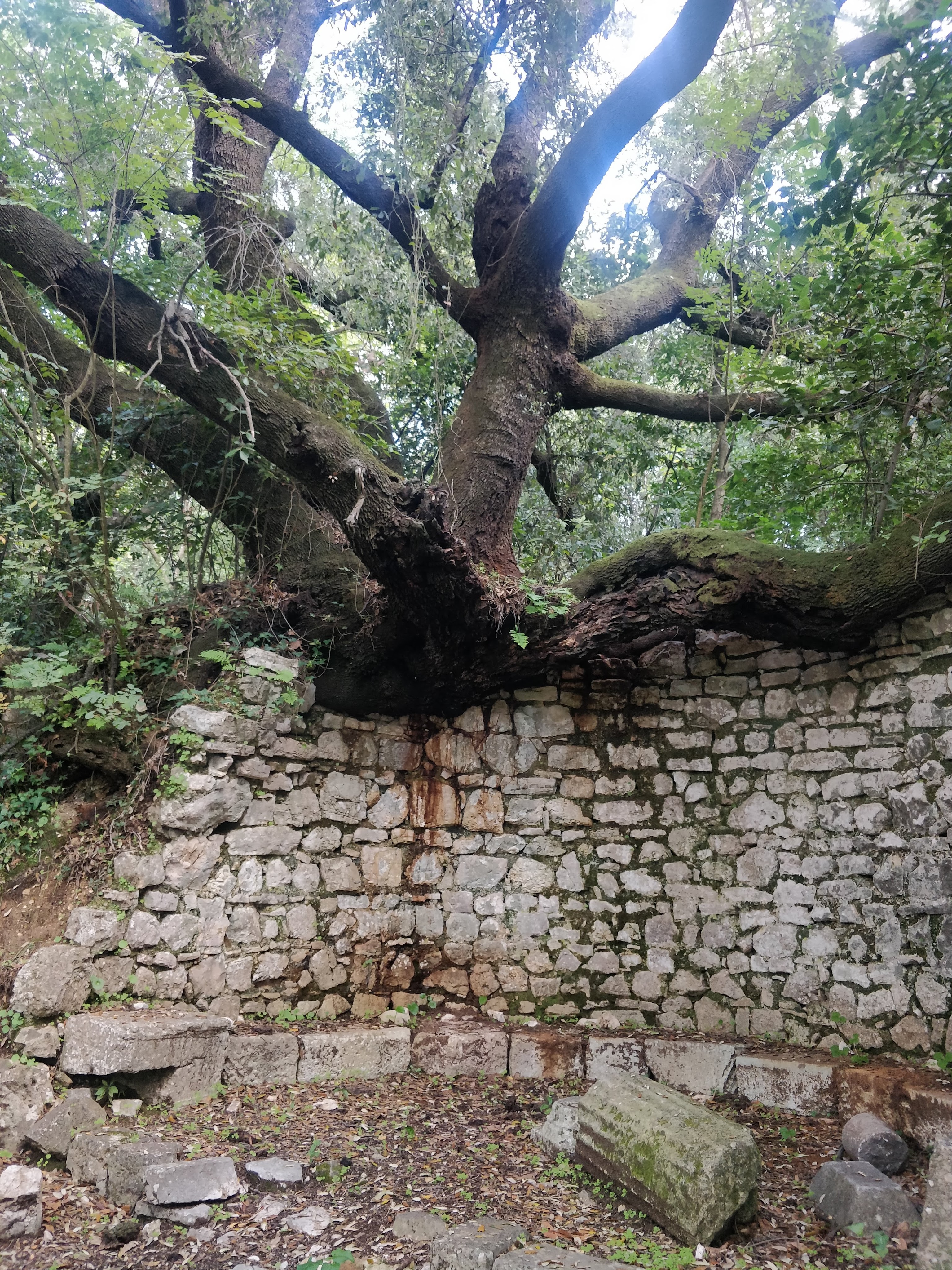
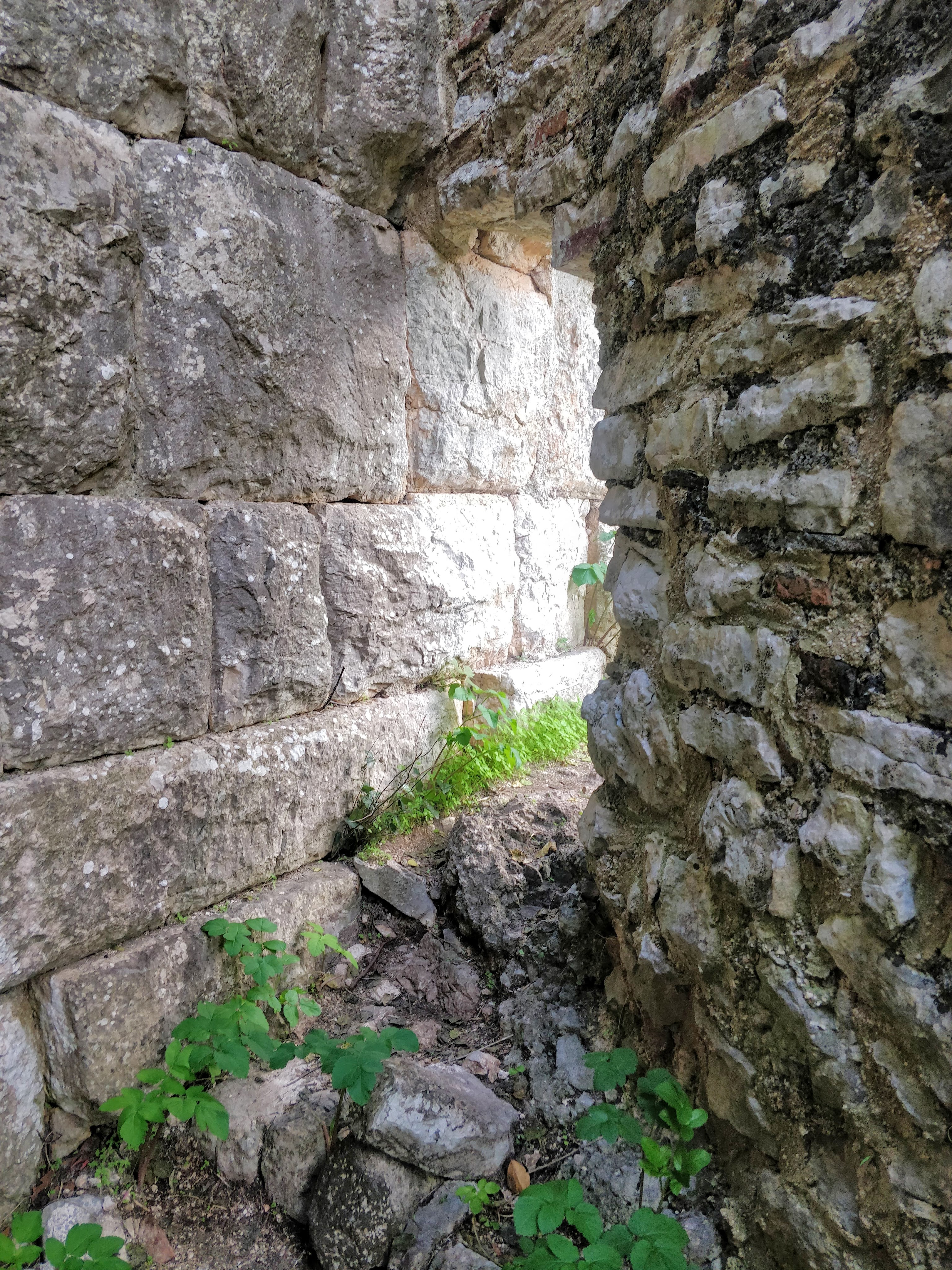
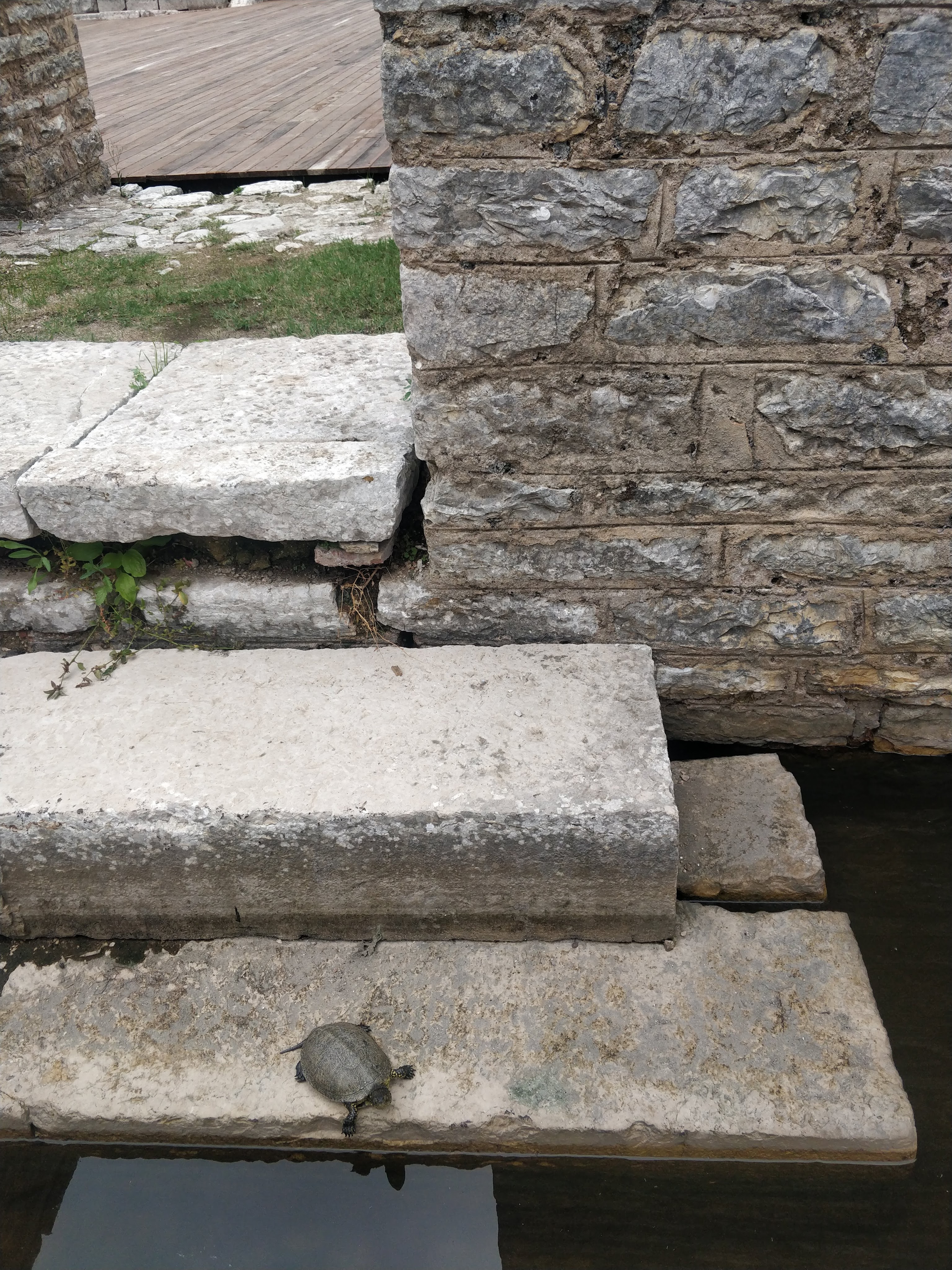
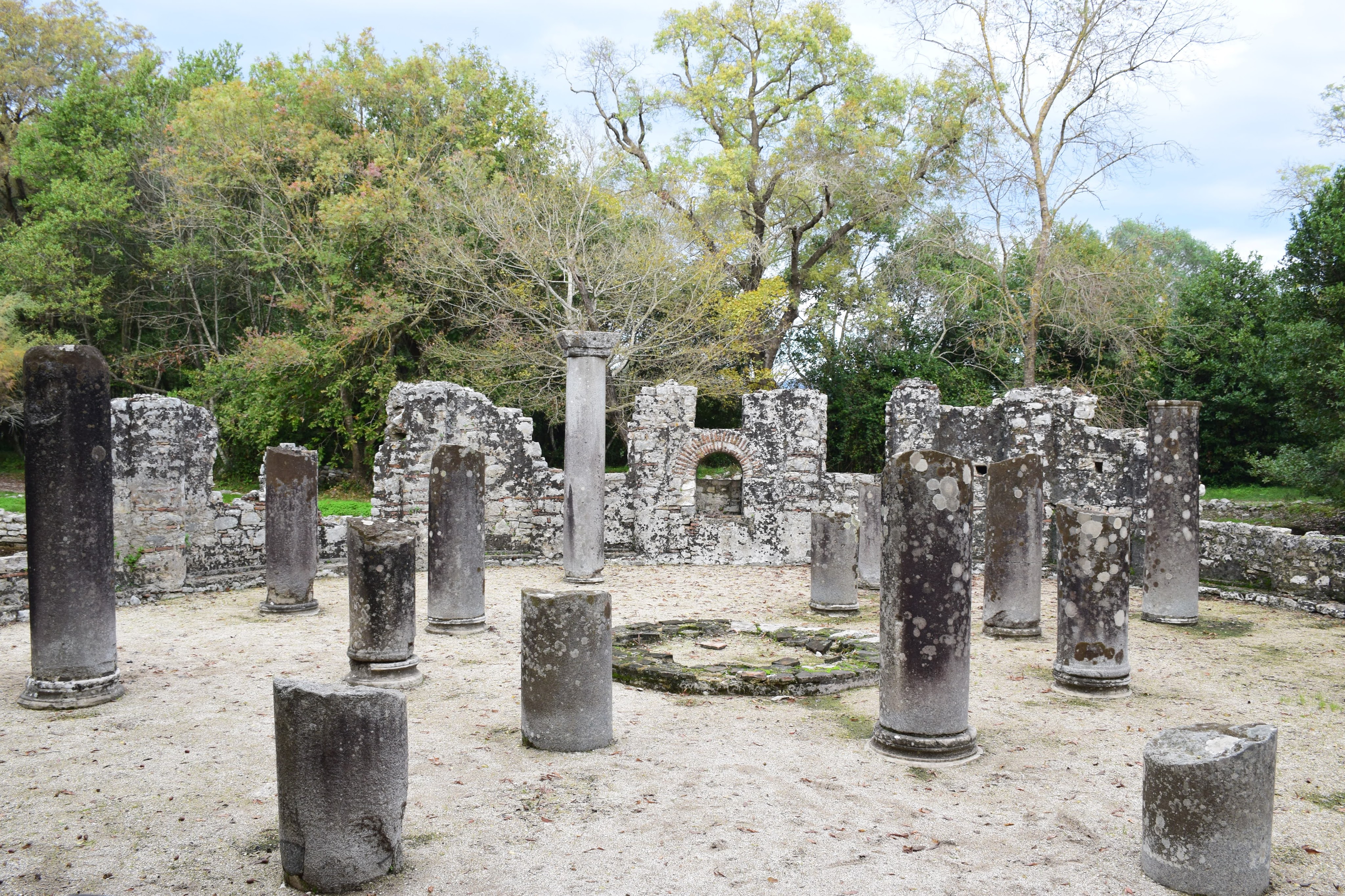
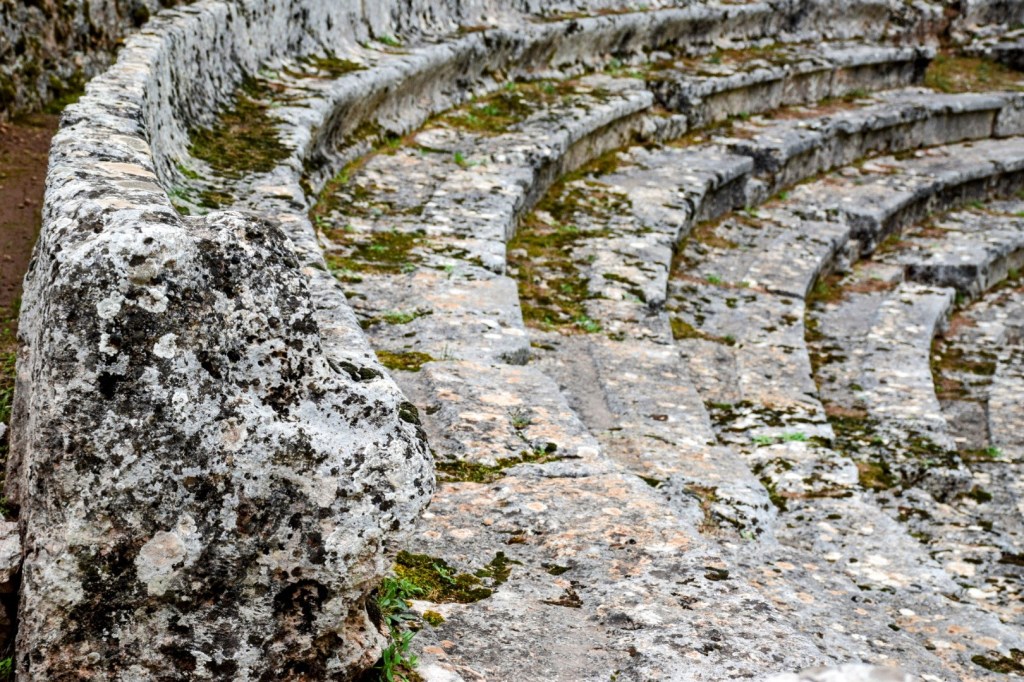
After all that excitement, there was one place we felt we should visit – Butrint, of course. We had been to lots of ruins and archaeological sites in Greece which were busy, very popular with tourists and policed by whistle-blowing women to ensure that rules were adhered to (no climbing, no deviation from the paths, no eating, no smoking, no dogs etc). This was completely different – and not because it wasn’t interesting. It was like a journey through the ages of history with Greek, Roman (Julius Caesar was here) and Venetian excavated ruins but it felt like nature was reclaiming it again with moss covering the stones, trees growing from some of the buildings, virtually no visitors and water from the surrounding lagoon seeping up underfoot because of changes in sea level and definitely no whistle blowers. Butrint was mentioned in Virgil’s Aenaid where Aeneas was given food on plates of gold. Even Caoimhin was impressed and his enthusiasm for archaeology sites was waning at this stage of our travels. (not more stones, he said…a lot)

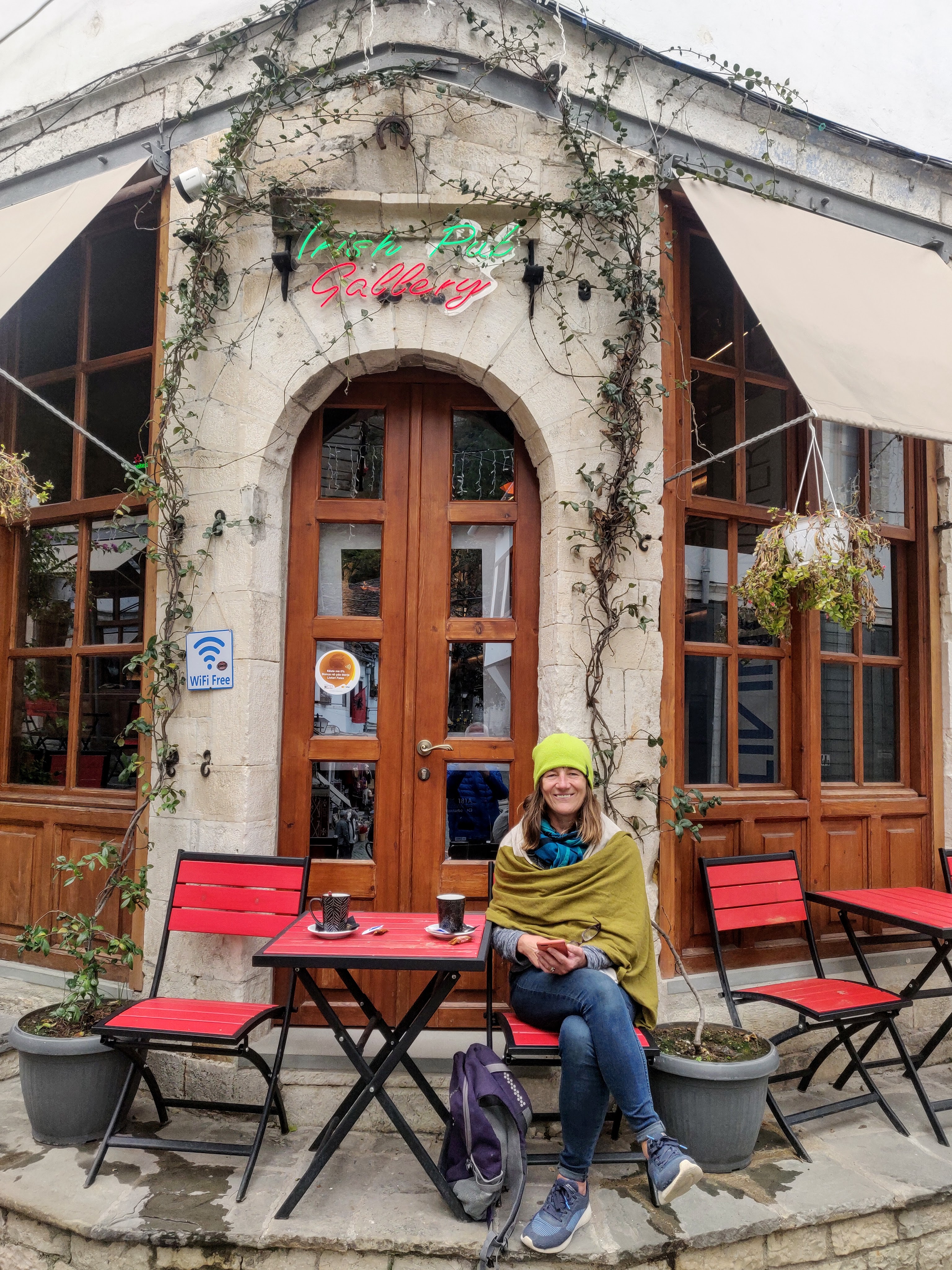
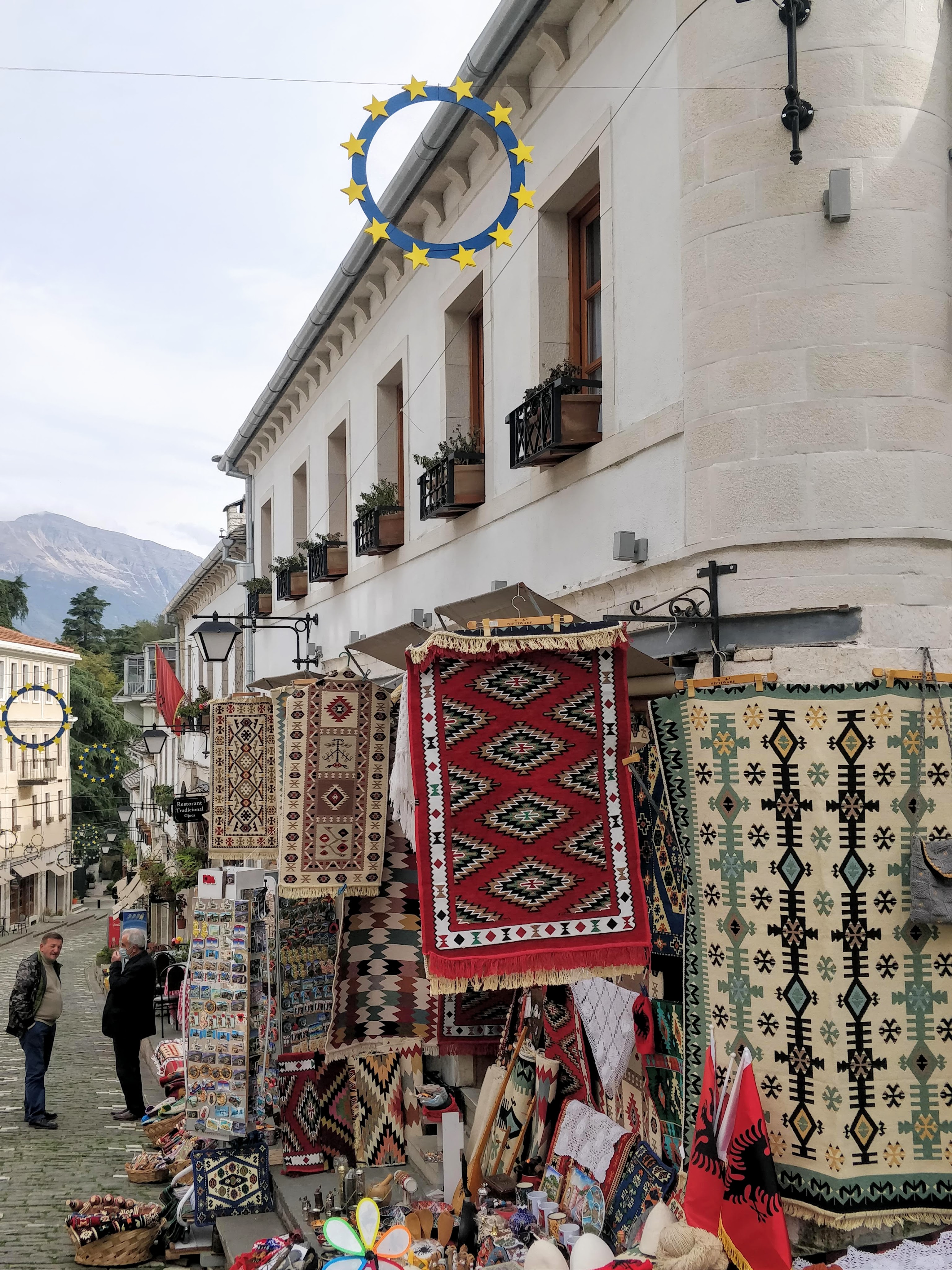
Albania is a mountainous country so we drove inland to a little town called Petran in the Vjose valley, which was close to thermal pools and good hiking trails. On the way, we diverted to see charming Gjirokaster, a UNESCO world heritage site famous for its stone houses, fortress on the hill and well-preserved Ottoman buildings. We found ourselves having a tea/coffee outside an Irish pub but when I went inside to the loo, the toilets were designed as red phone boxes and there were huge Paddington bears arranged on some of the stools! The local specialty was rice balls seasoned with fresh mint and herbs and deep fried – which was cooked for us by a local called Mr McDonnell (see his apron in photo)

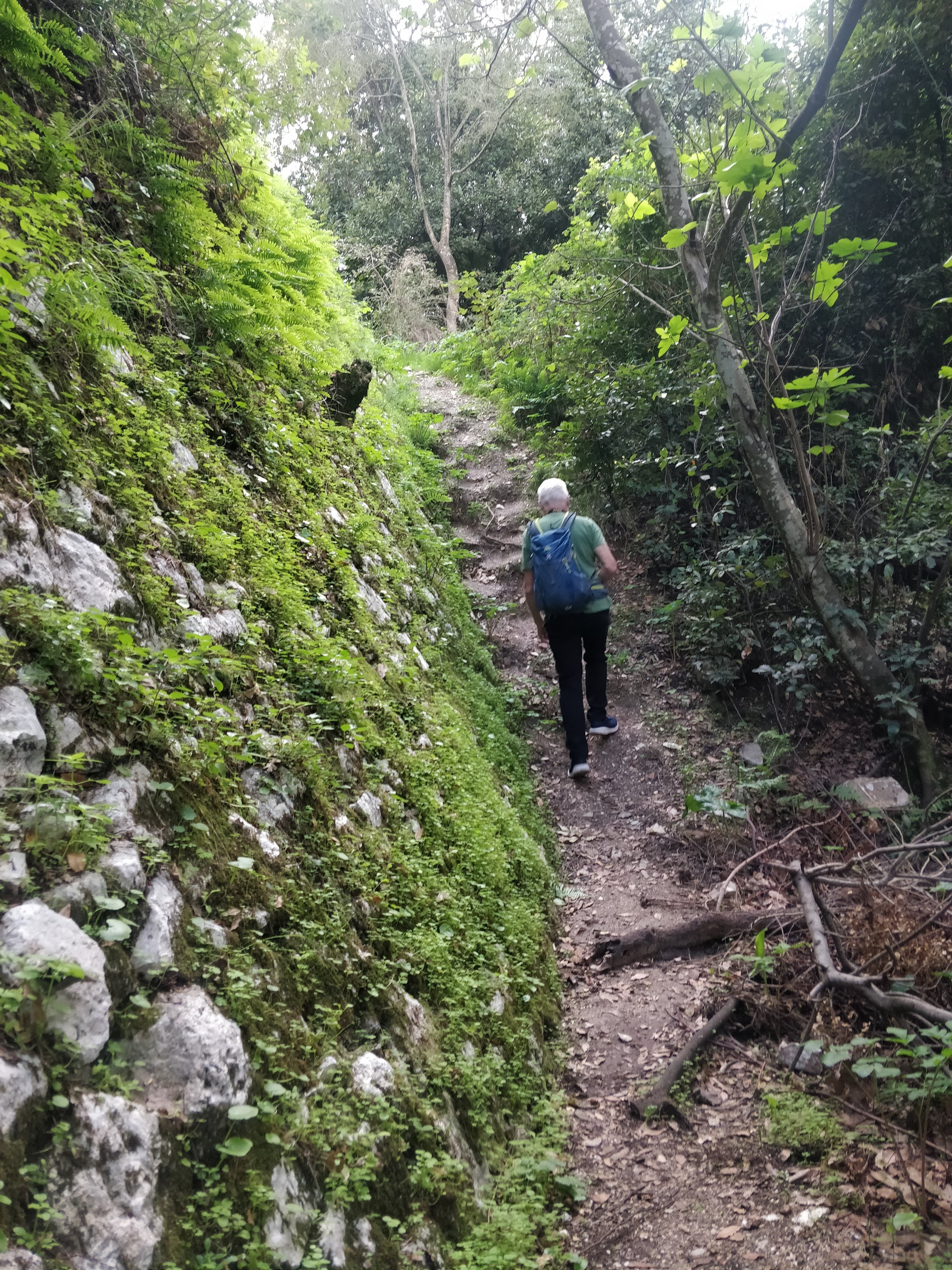
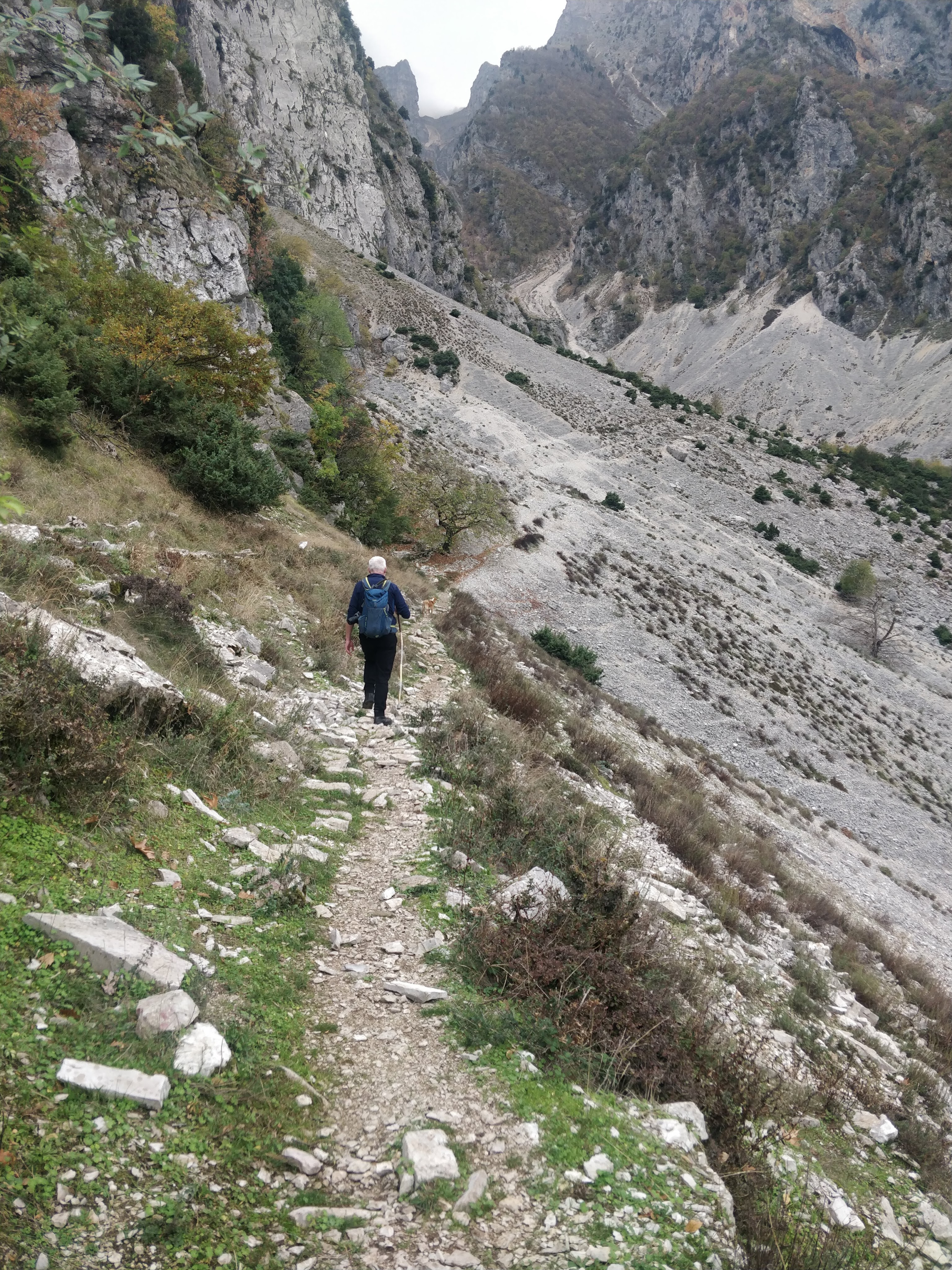
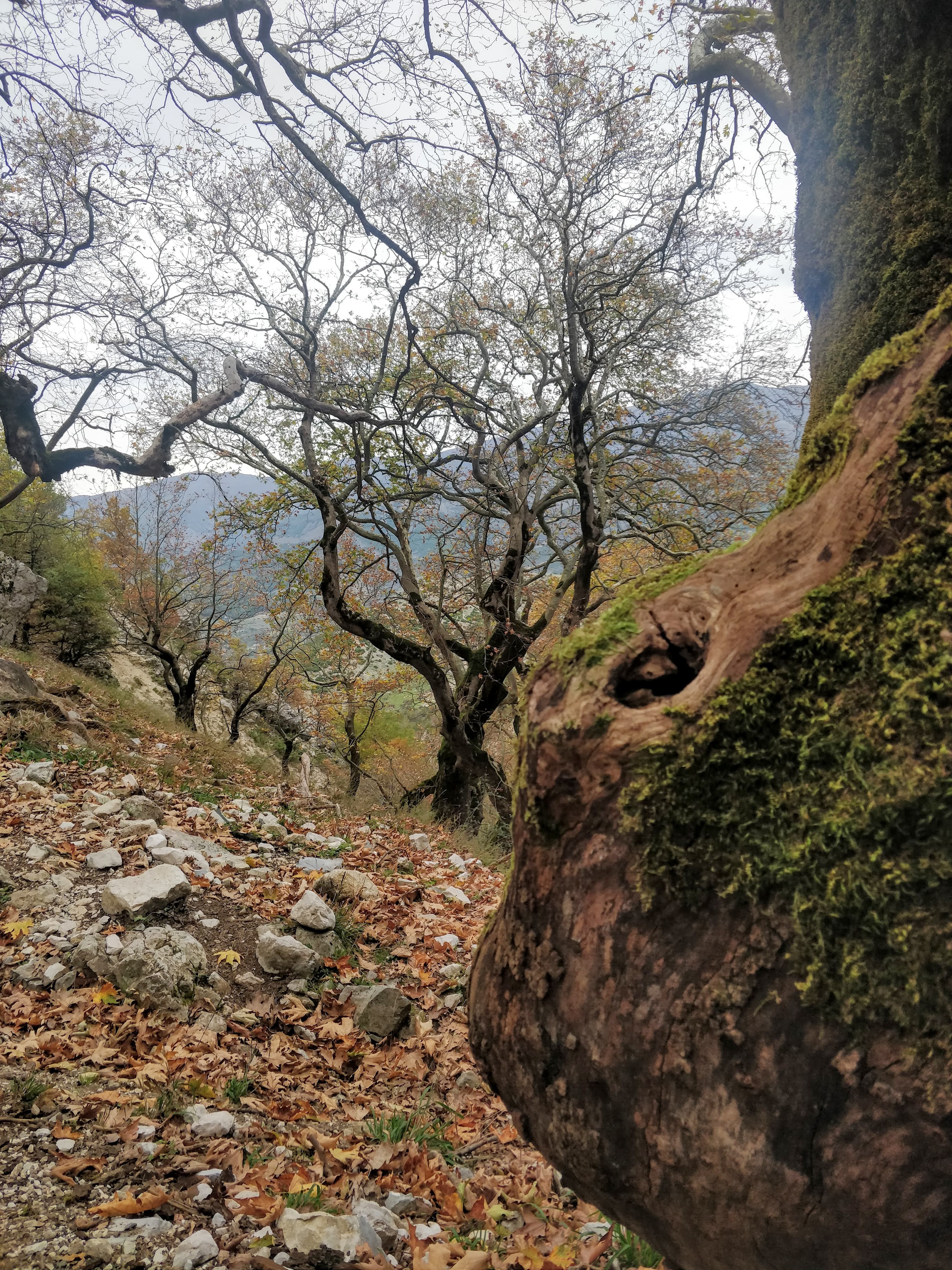
In Petran, we stayed in a small hotel in the central square called the Funky Hotel – we couldn’t resist the name – and although I’m not sure if it was really ‘funky’, it was clean, comfortable, really nicely decorated and cost €20 a night for the room and that included a substantial breakfast (eggs, cheese, pancakes, bread, juice, tea/coffee). We headed for the hills, driving along dirt tracks past stone houses that looked abandoned until we noticed wisps of smoke, to find the start of a looped trail around a glacial ridge. The area was wild, beautiful and part of the hike took us through woodland that was magnificent in its autumn finery. We had company on the walk – two dogs joined us from a little farmhouse, really good-natured animals who guided us along the proper track, running ahead and then waiting for us. They definitely deserved a share of our lunch (‘stolen’ from the big breakfast).

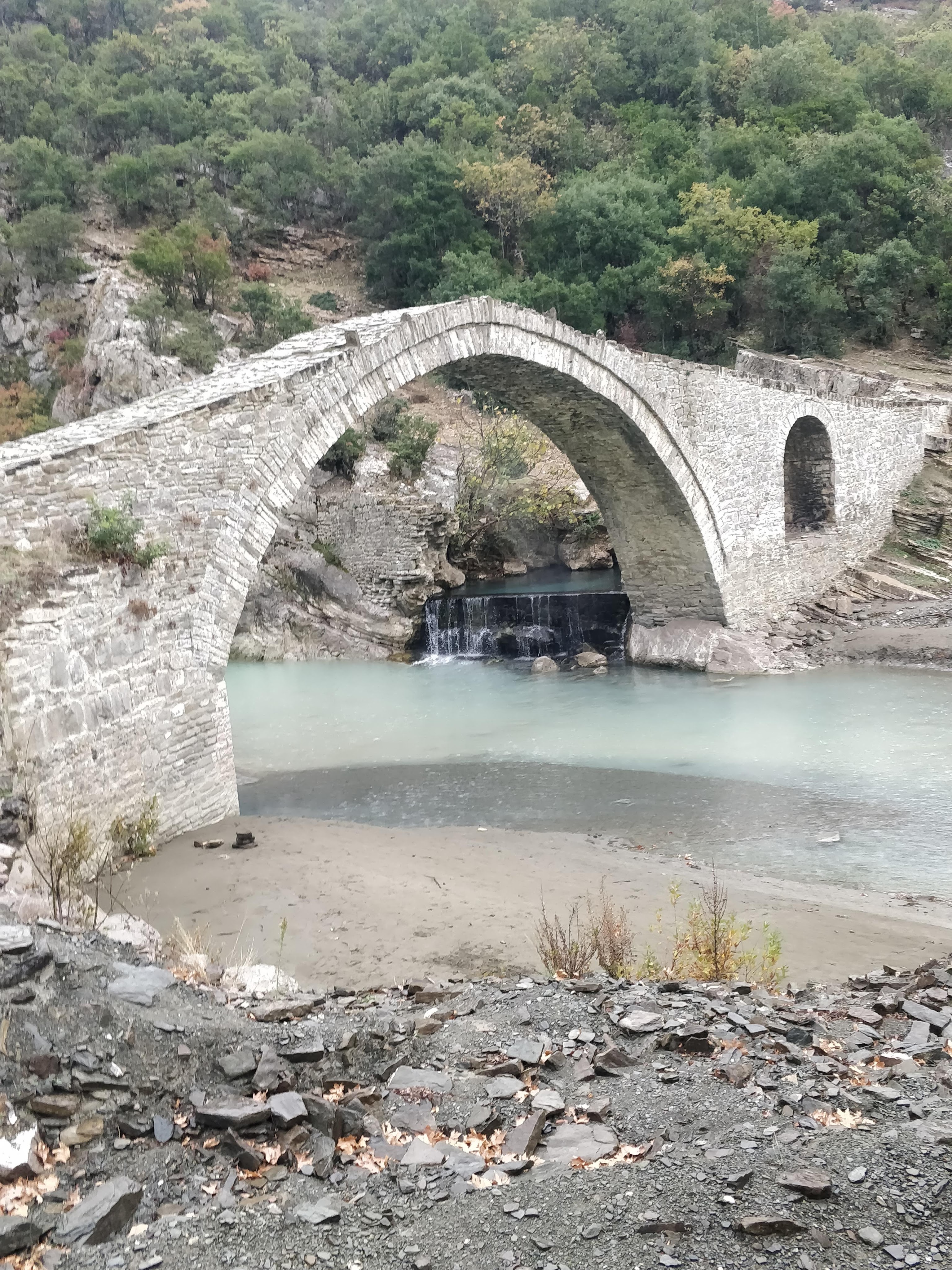
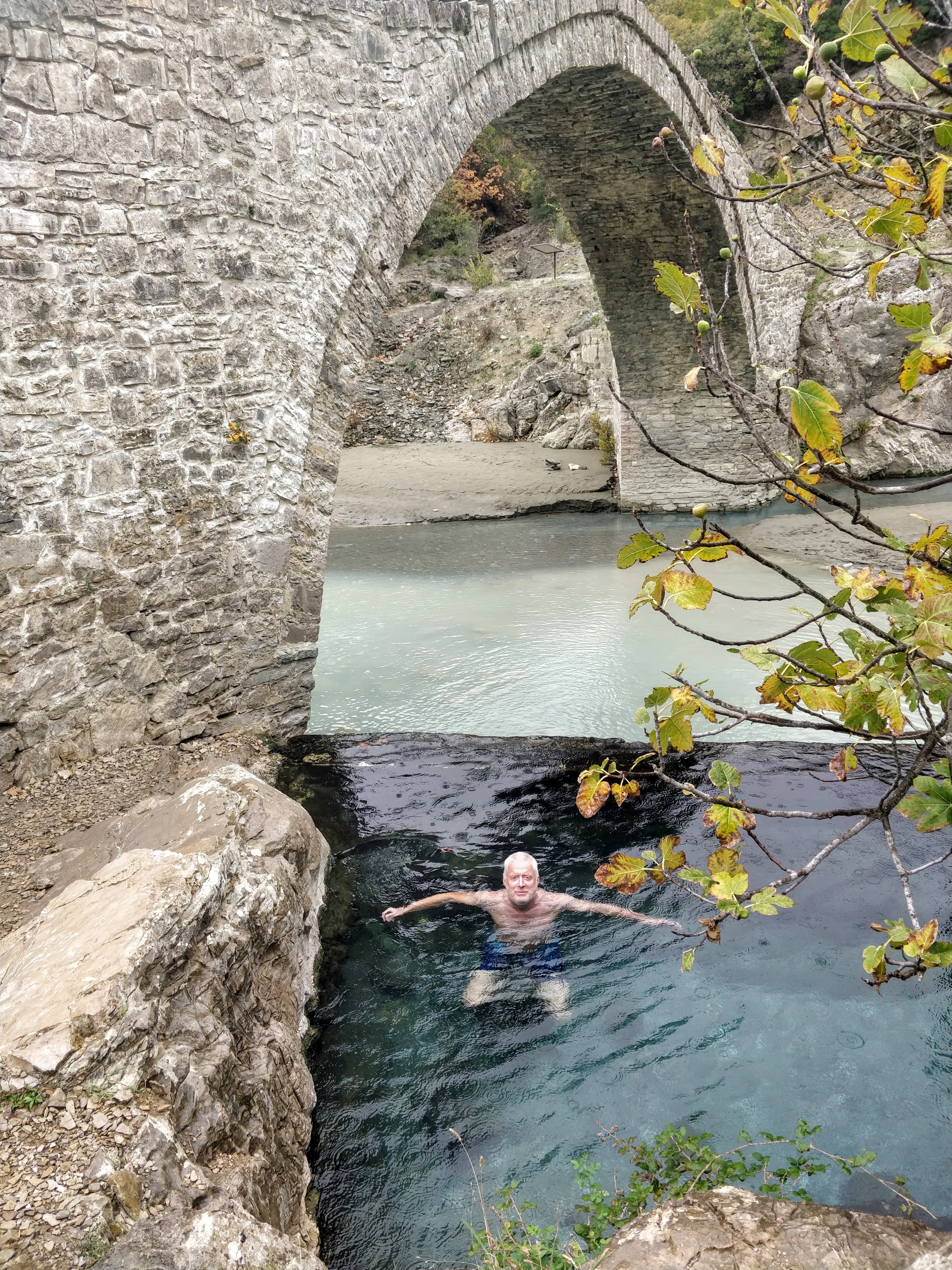
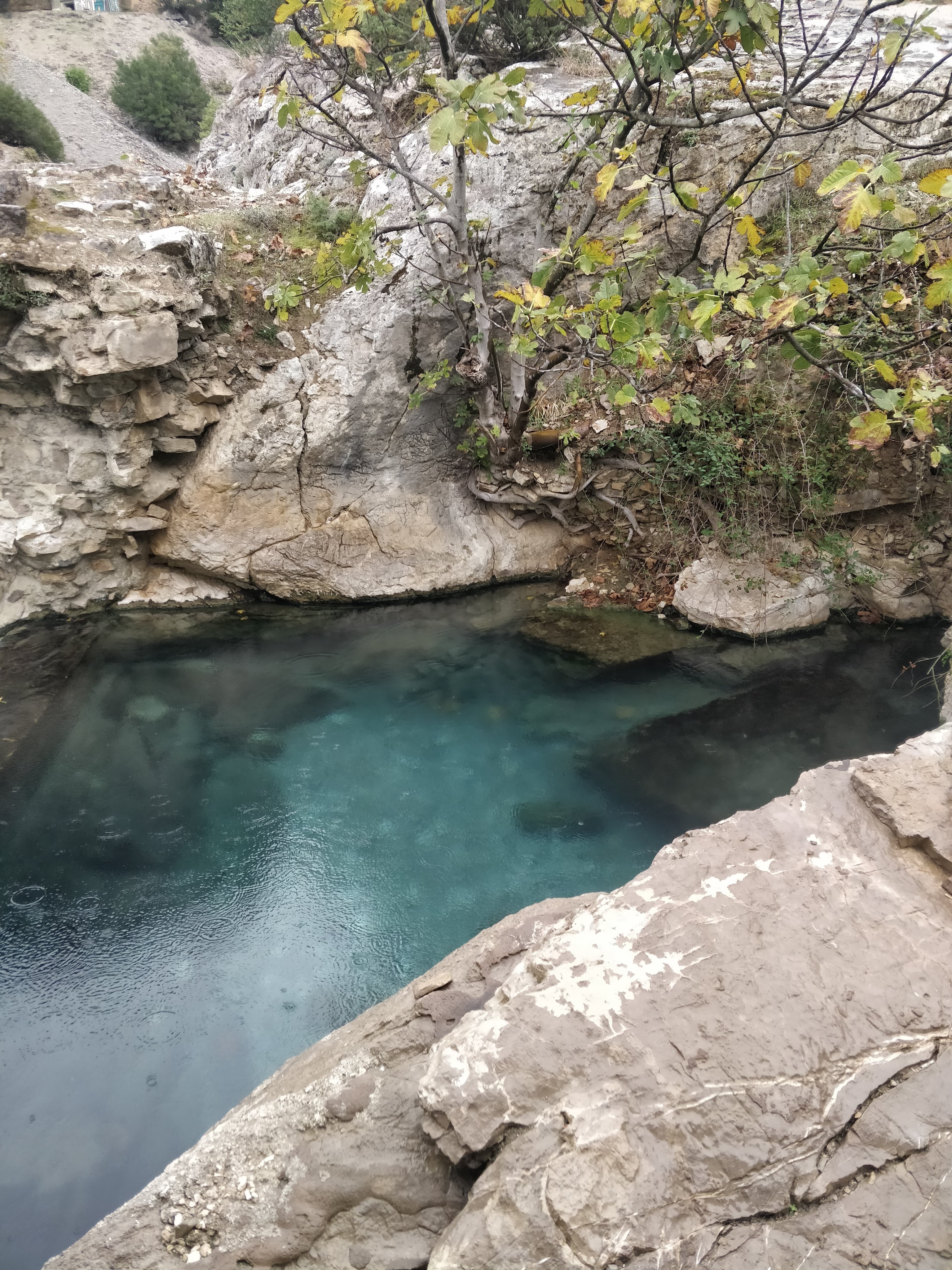
A soak in the Benja hot springs was called for – these are natural rock pools of warm water, out in the open air, surrounded by mountains, a gurgling river and waterfalls. It was so restorative immersing our goose-bumped skin in greeny-blue water with leaves falling into the pools from overhanging trees and steam rising into the cold air. Of course, there was the sulphur smell but we got used to that. It was totally undeveloped and free – the most difficult thing was finding them without signposts. Caoimhin took some fabulous photos – unfortunately I can’t show you any of them because his camera slid from a mossy rock into the healing waters and despite many attempts, all resuscitation efforts have failed to date.

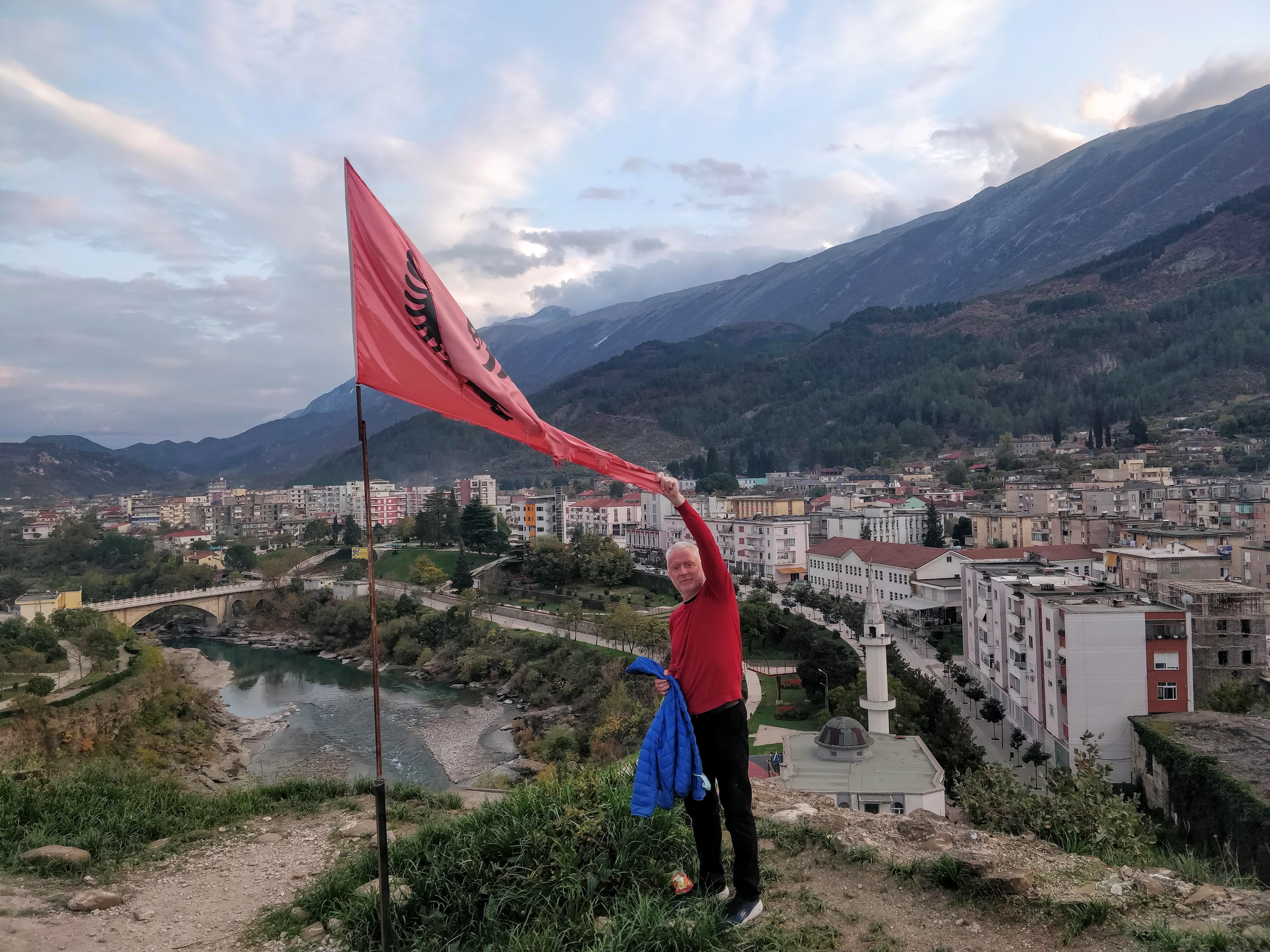
Caoimhin looking very Albanian wearing red/black in Petran

We said our goodbyes to the manager of the Funky, a friendly elderly man with a belly and a flat cap who had very little English but loved to talk to us. And the Guzzler wouldn’t start – not a peep out of it. Caoimhin was opening the bonnet to have a look with the help of a young chap who was trying to get into our parking spot in the Square. The problem was that a connection to the battery had come loose – probably from the shaking on the dirt roads the previous day – maybe we should have had a Merc.

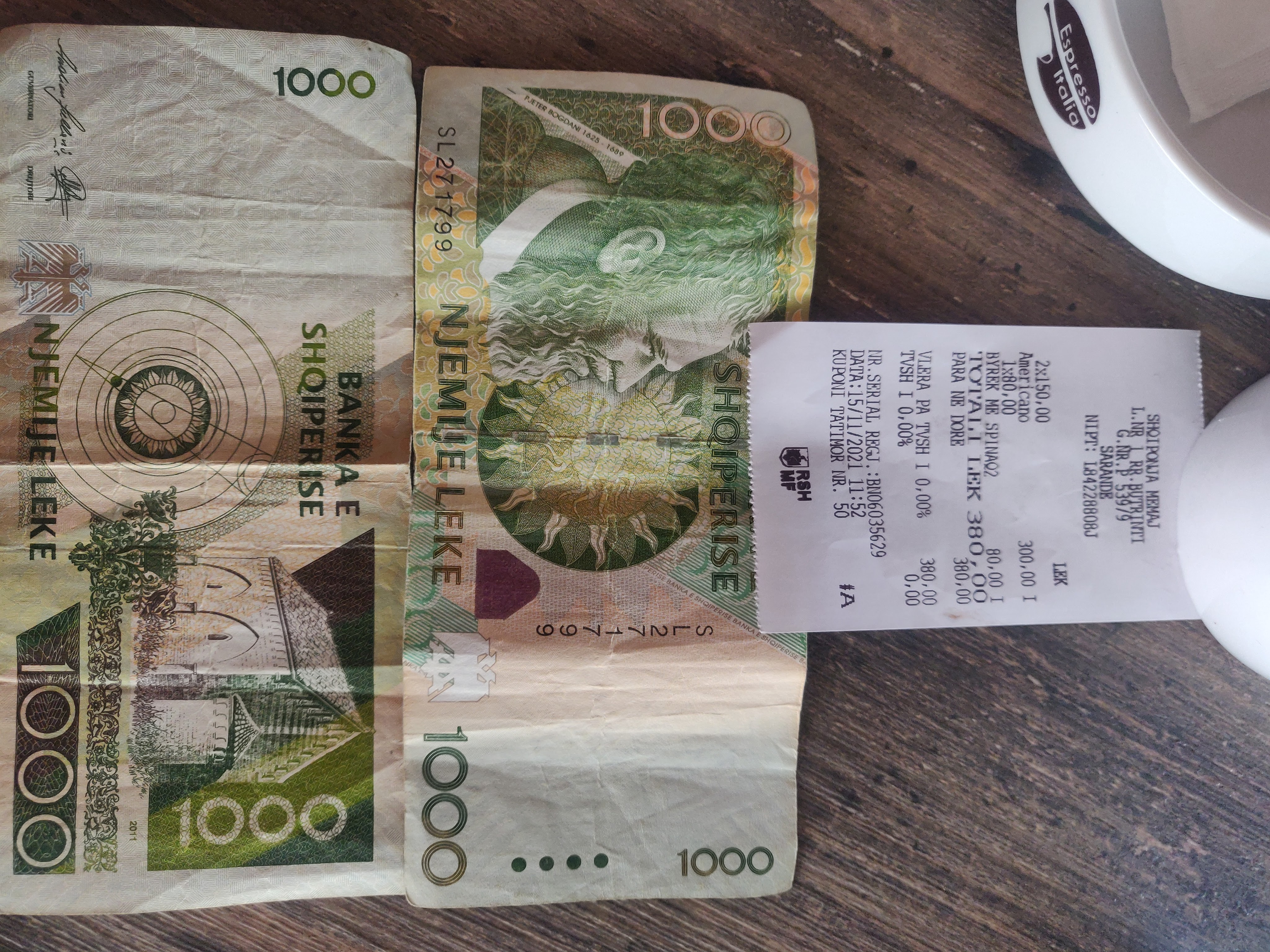
On the way to Tirana, the capitol city, we stopped for coffee in a little town off the beaten track, Levan. Have you ever tried to explain to someone – without words – what an Americano coffee is? Another customer who had a few words of English tried to help but as he didn’t know what an Americano was either, he confused things further. Everyone was in hysterics laughing by the time we got our Americanos …we really enjoyed that coffee and it showed how good-humoured most Albanians are. But then outside the cafe, the Guzzler wouldn’t start again and Caoimhin had to lift the bonnet and make the connection – at least seven locals waved us off…finally.

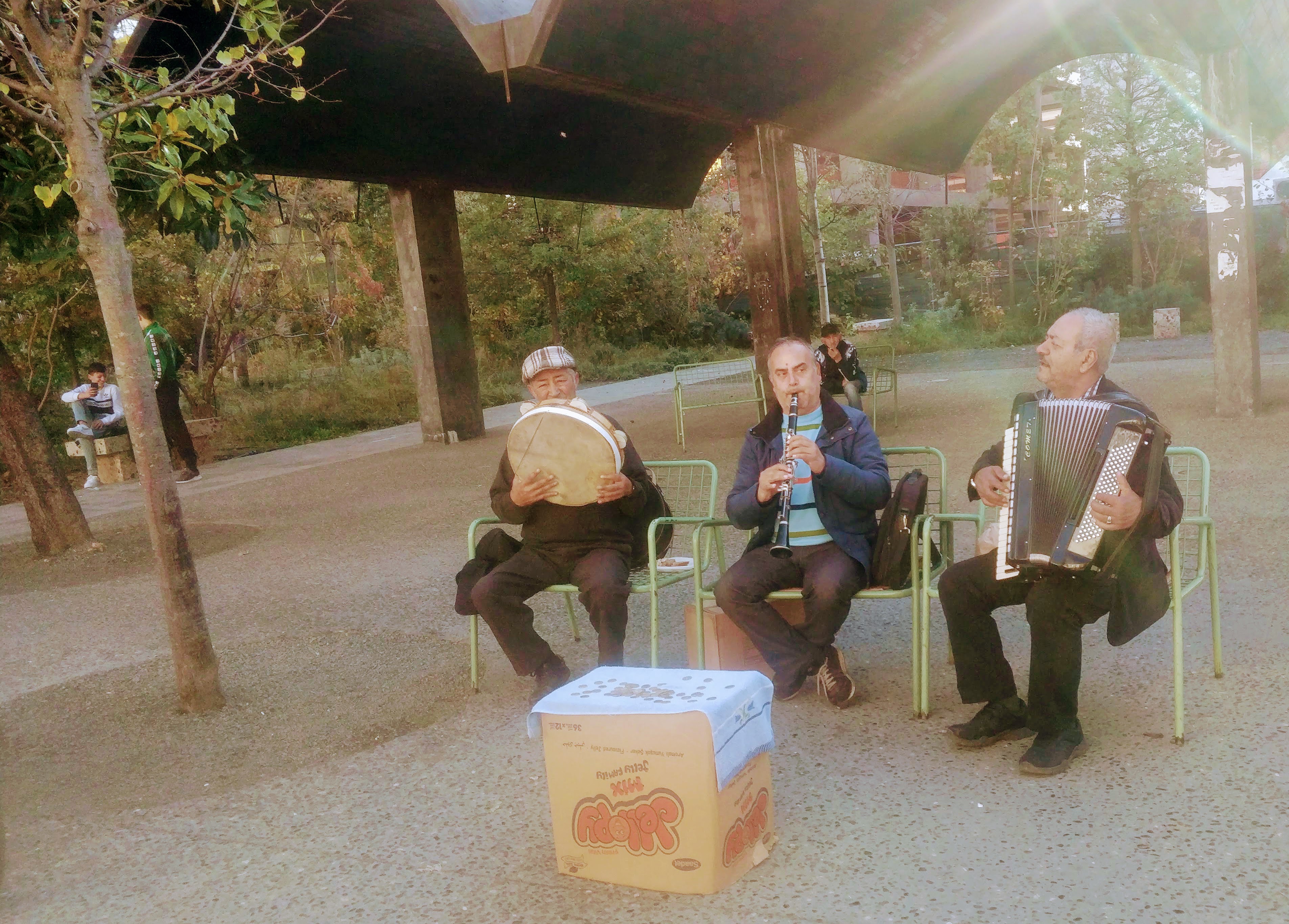
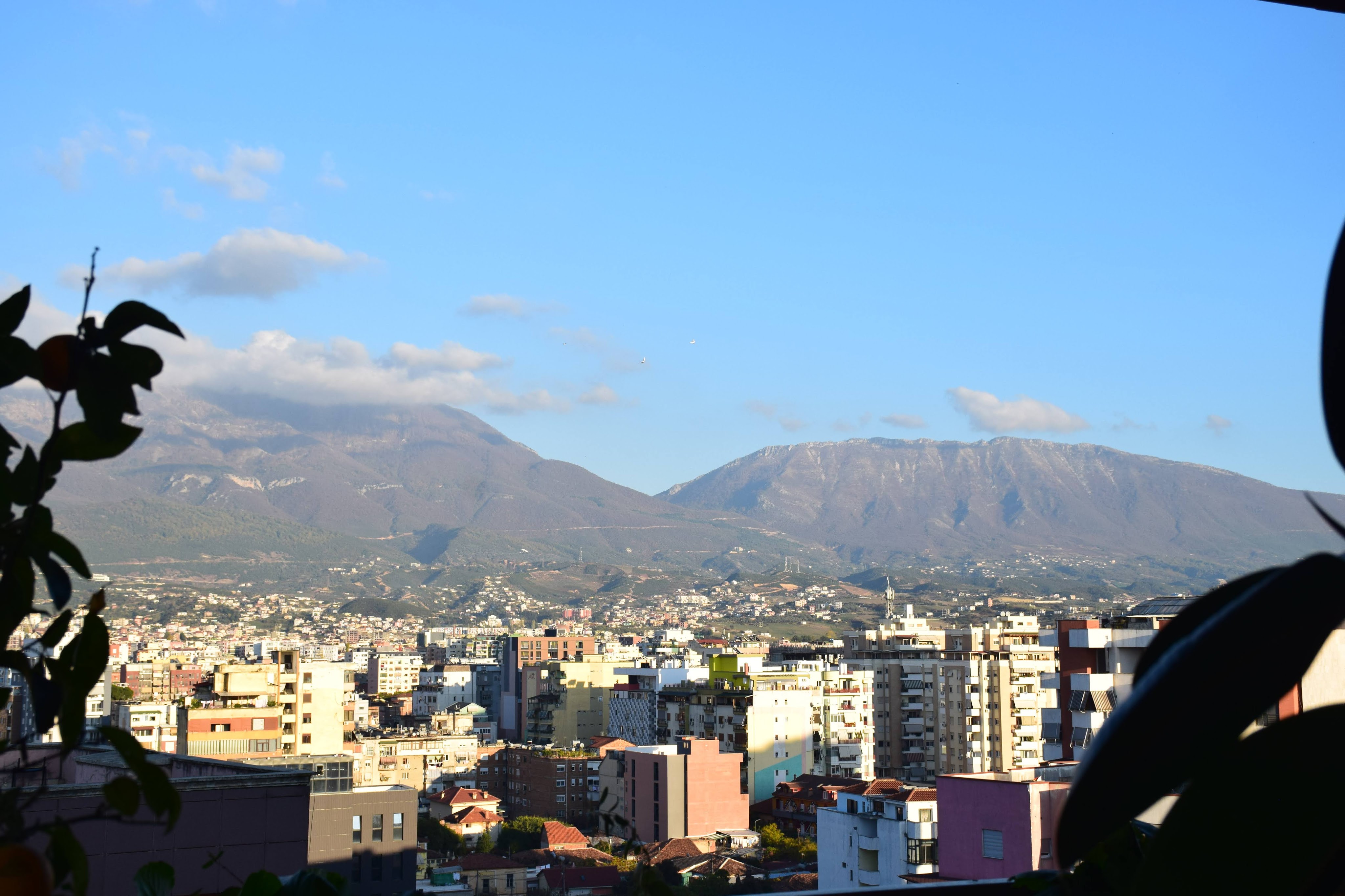
Tirana was a very lively buzzy city, probably because of all the caffeine that was running through the veins of the inhabitants. There were cafes everywhere, most of them packed with coffee drinkers. It doesn’t have beautiful buildings, a lot of the buildings are old style utilitarian concrete blocks but painted in vibrant colours and there are lots of parks, trees and great sculptures. Skanderbeg Square is the main piazza in the very centre of the city, a huge open space for concerts and events, mainly paved but also with grassy areas. On the sunny Saturday morning that we visited, the Culinary Dept of the University had set up tables there and were giving free offerings of cakes, bread and beer (and coffee) to everyone. Some buskers played music and a large group of cheerleaders practiced their moves in another section and skateboarders and cyclists whizzed past.

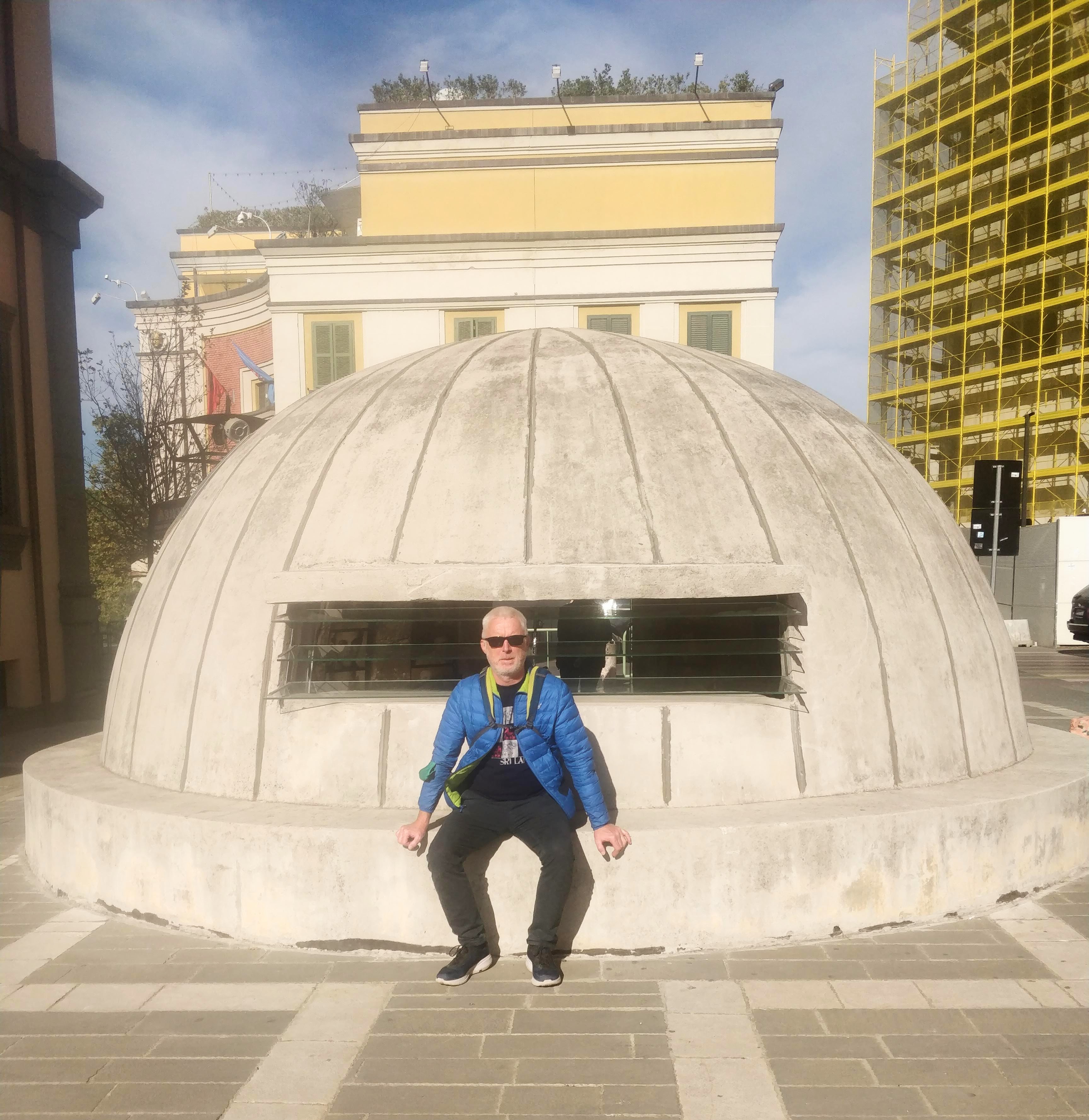
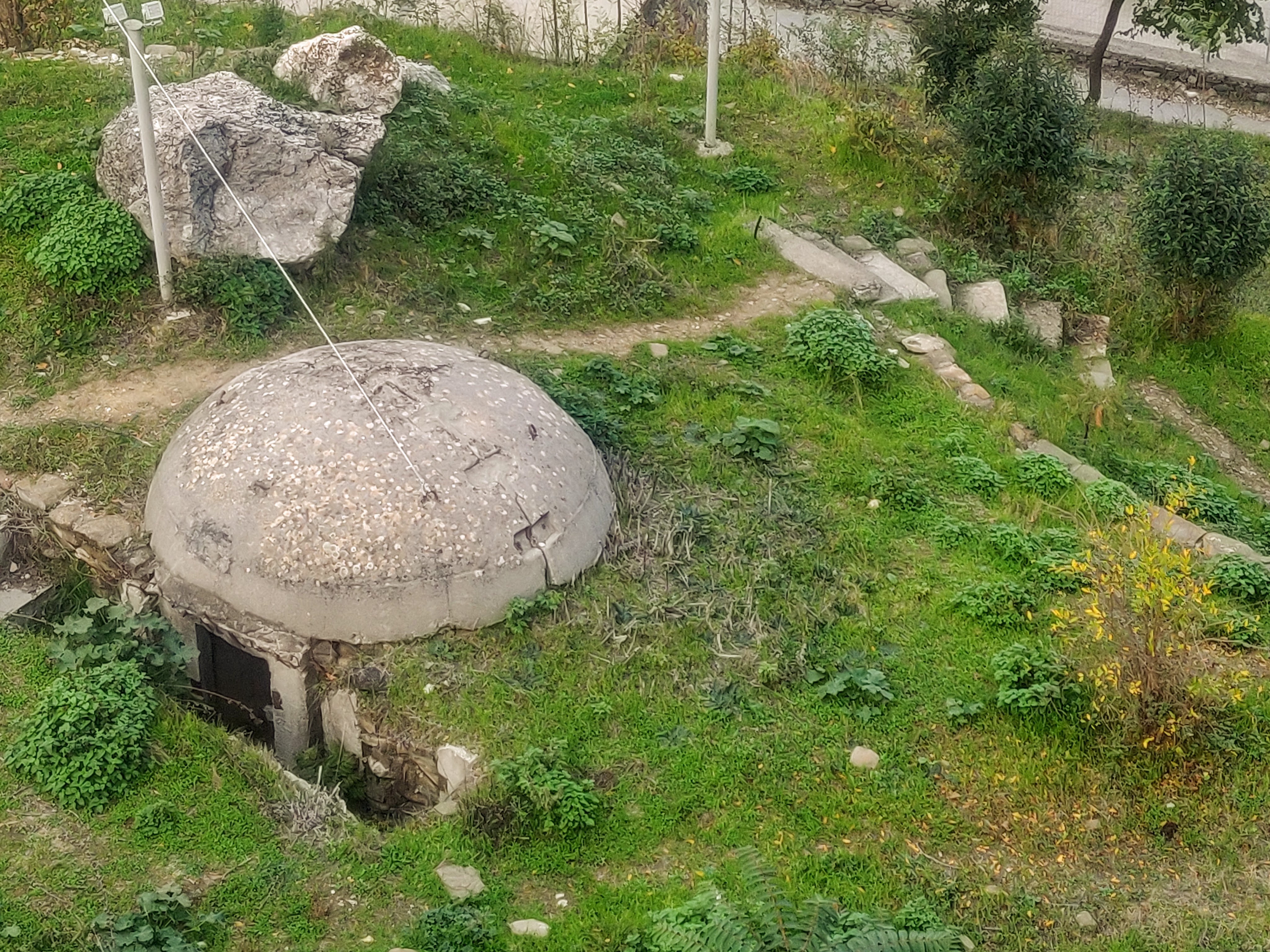
A bunker in the county side – definitely like concrete mushrooms

The countryside in Albania was littered with bunkers like concrete mushrooms or alien spaceships, we wondered what they were when we first noticed them…. they were everywhere Enver Howha, the former communist ruler from 1941 until his death in 1985, had 173,000 thousand of them built because of a paranoid fear of attack and invasion, an enterprise that almost bankrupt the country. One of these larger bunkers in the city has been converted into a history museum and what a brutal history – Albania was one of the most tightly controlled and closed counties in Europe until the fall of communism and any dissenters were imprisoned, executed or simply ‘disappeared’.

But there were no Covid concerns anywhere in Albania and this was most evident and really surprising in Tirana, a crowded city. We were probably the only people wearing masks and hand sanitizers were non existent. No one asked us to produce  a Covid cert anywhere _ in the last week in Greece, we had to continually show cert and on several occasions, the Covid cert details were checked against our passports. But hopefully , there won’t be an explosion of cases here but we’re eating outside and keeping our distance.

I googled Albania to get a few facts (instead of my usual waffle) and we were so surprised to read that Ireland is 2.4 times bigger than Albania – it feels a lot bigger than that but maybe that’s because of the variety of terrain from stunning beaches to mountain passes with river valleys and flat coastal plains – and it has a population of about 3 million. We are moving on to another border tomorrow – Montenegro. At the moment we don’t know anything about it either but if it is even half as interesting as Albania, it will be worthwhile. We would like to hike in the Accursed Mountains (also known as the Albanian Alps) which are just northeast of here in Shkoder, the town where we are spending our last Albanian night. The weather which had been a glorious sunny 23 degrees in Tirana for three days changed today to grey heavy rain with little visibility… so the Accursed Mountains will have to wait for another time……….if we dare.

I think and hope that we will return to Albania, the small country with the big heart and the fascinating past which is also light on the pocket.

Quote in the History Museum in Tirana – thought provoking


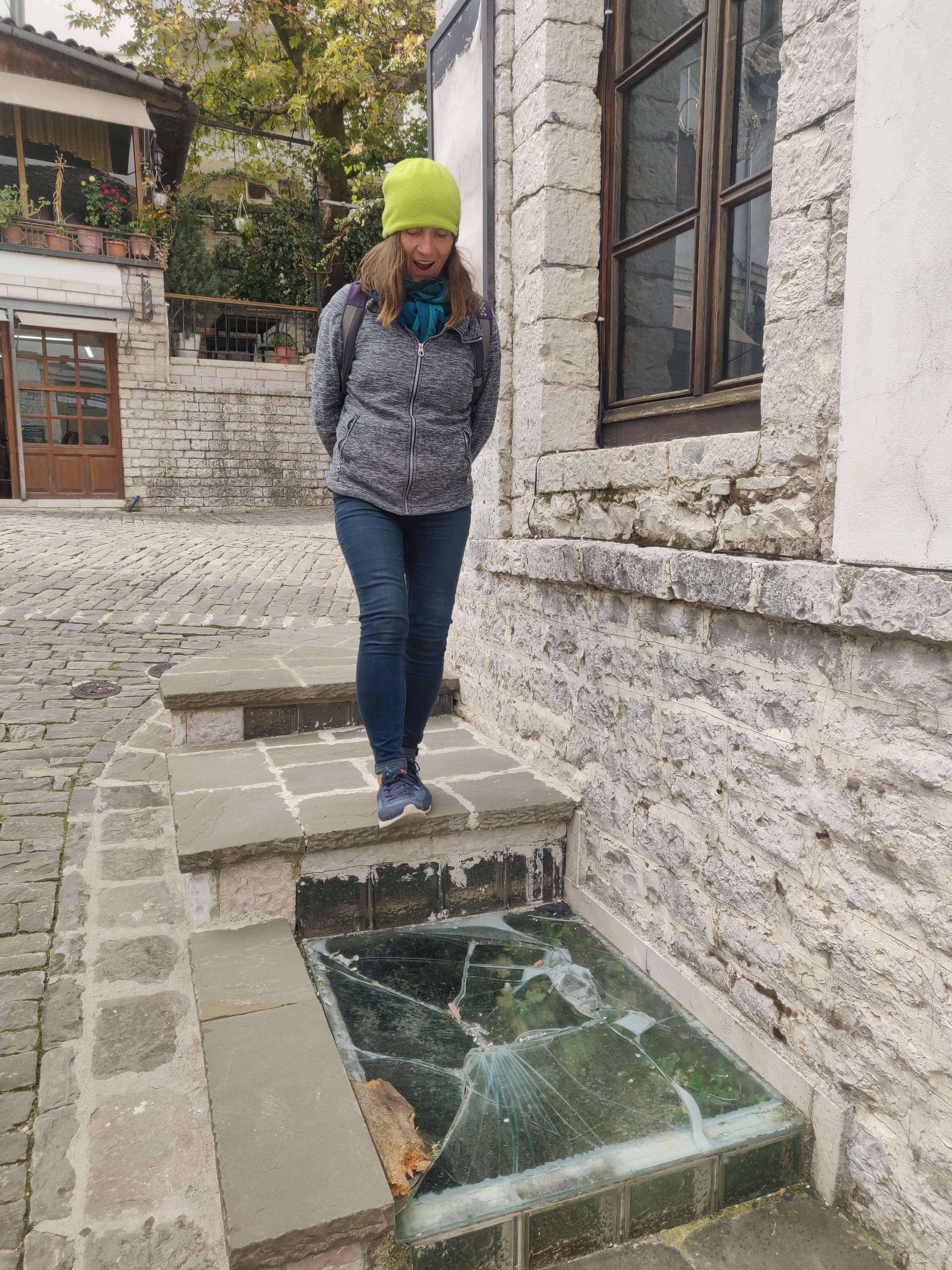
Walking is a dangerous pastime, Gjirokastor, Albania

Hello from Albania

The Oracle at Delphi said…..

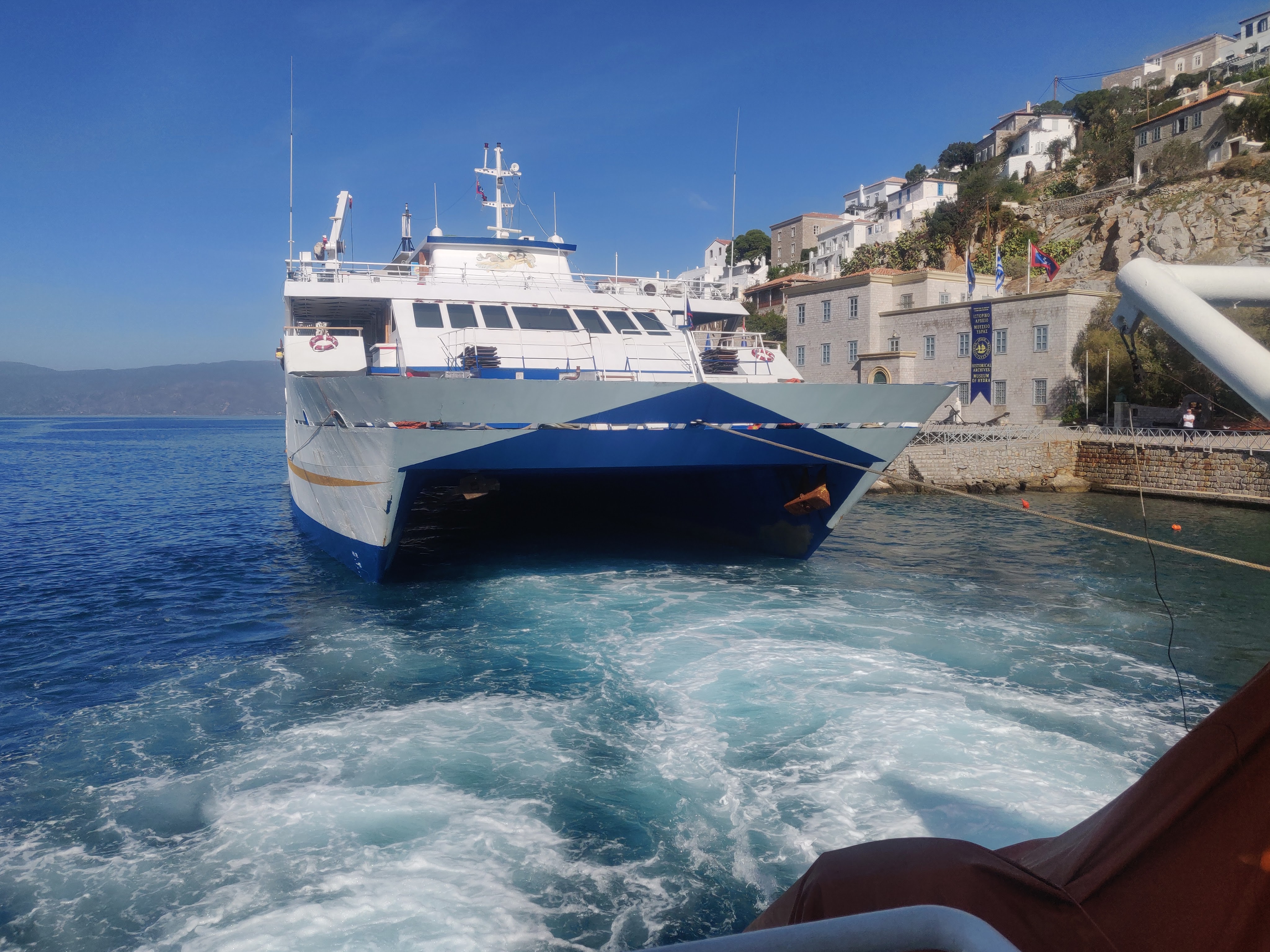
Dragging ourselves away from stunning Hydra wasn’t easy. We waited on the cobble-stoned port for the 7.20am ferry to Piraeus with a soft early-morning light over the water, the smell of bread wafting from the nearby bakeries and the sound of a donkey braying. It was a smooth two-hour crossing on a calm blue sea but after five days on Hydra, the blaring noise and belching fumes of traffic – cars, buses, lorries, taxis – as we walked up the streets in Piraeus to collect the Guzzler, was absolutely alarming. It was 21 degrees as we skirted around Athens heading north on our way to Delphi to see if the famed oracle had anything to prophecy. Soon we were in hills, burnt and blackened, dotted with the husks of houses from last August summer fires. It was shocking to see the extent of the damage, especially the shells of houses – people’s homes – and the proximity of the fire to huge sprawling Athens. As we climbed, the temperature dropped to 13 degrees and there was a thick fog lingering over the hills, like smoke (just shows you the power of suggestion). As we neared Delphi, we passed through Arahova, looking like a picture-postcard Alpine village with its ski- hire shops and chalets – yes, amazingly you can ski in Greece although no snow yet.
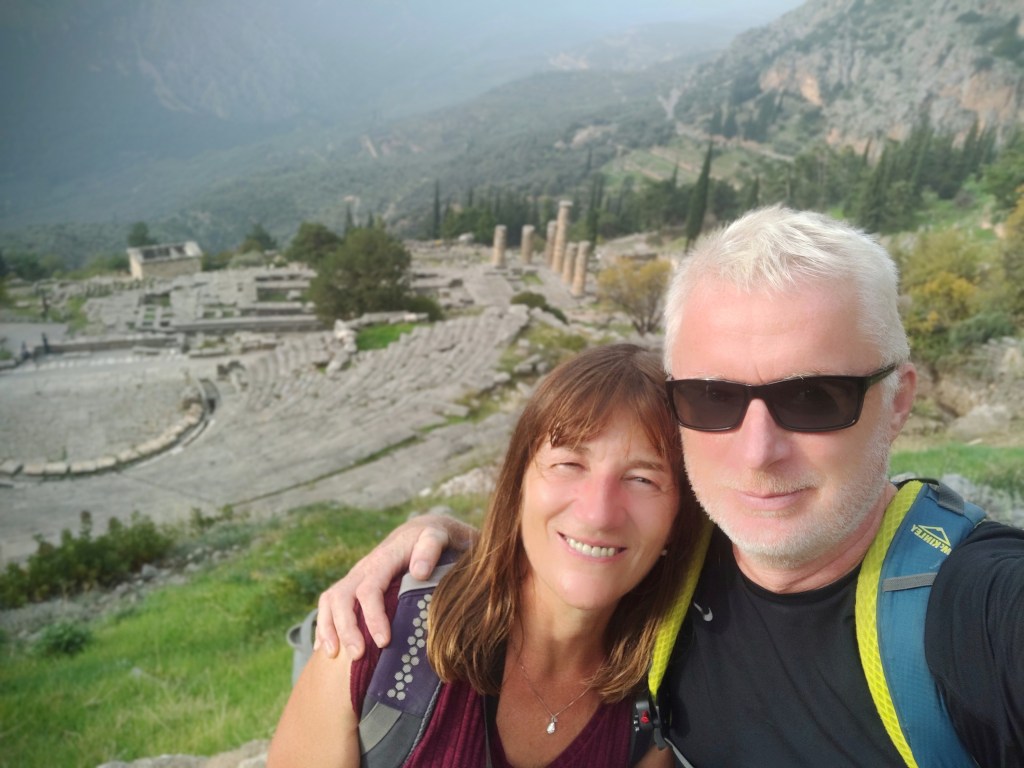
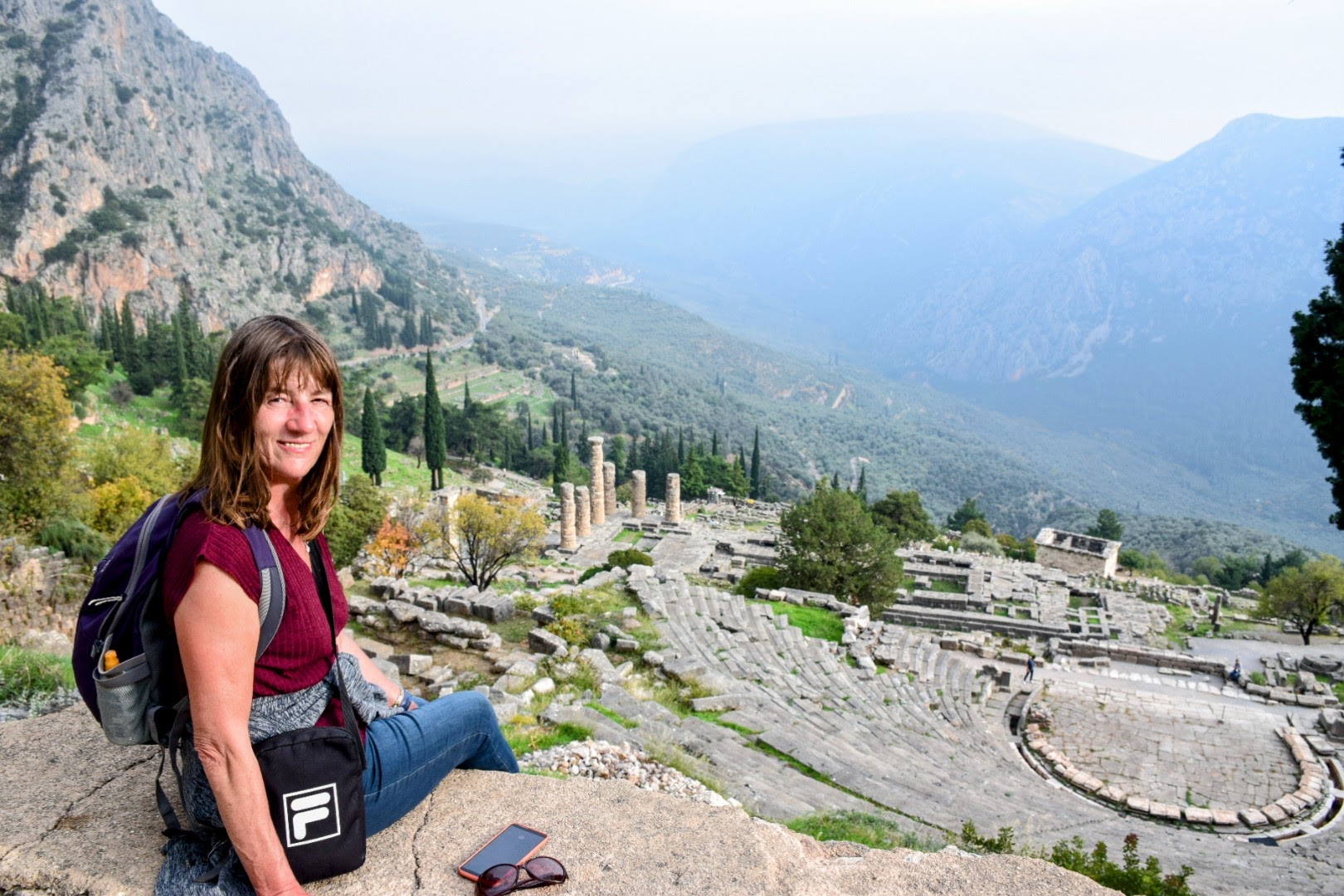
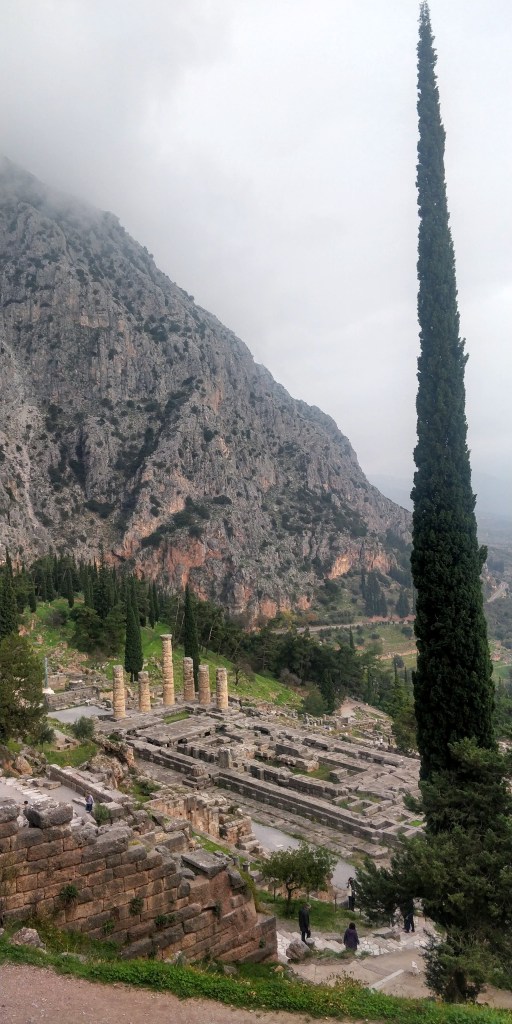
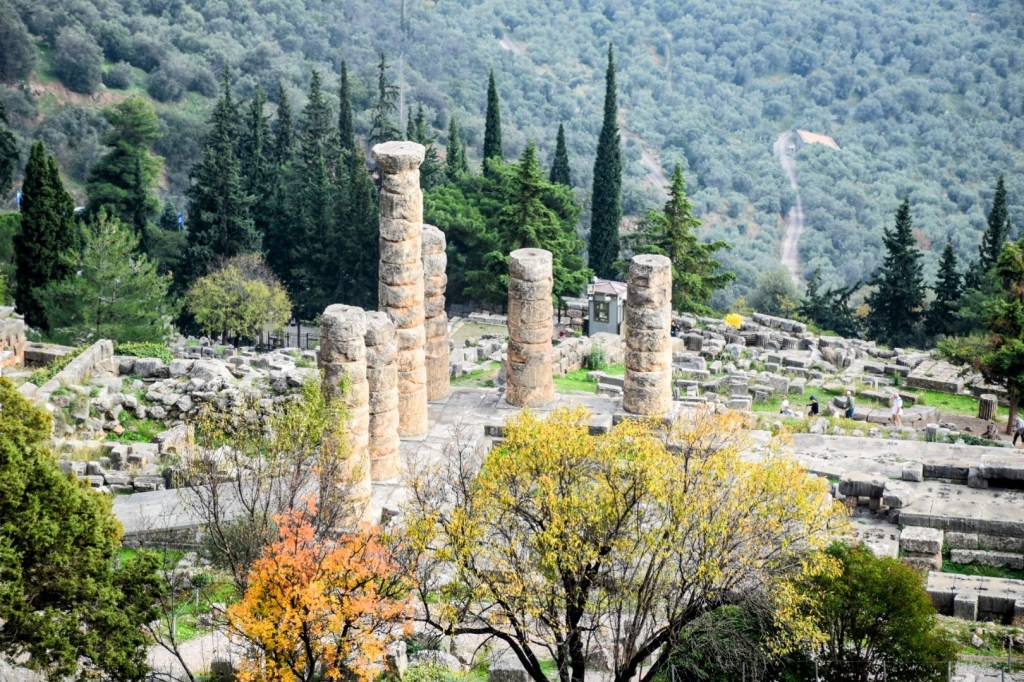
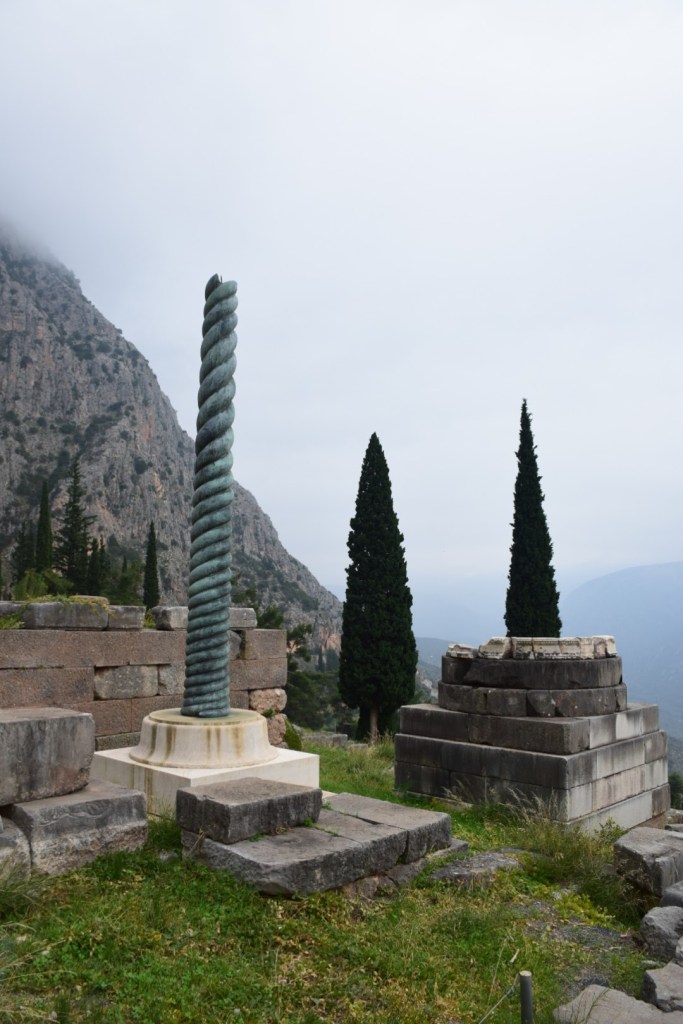
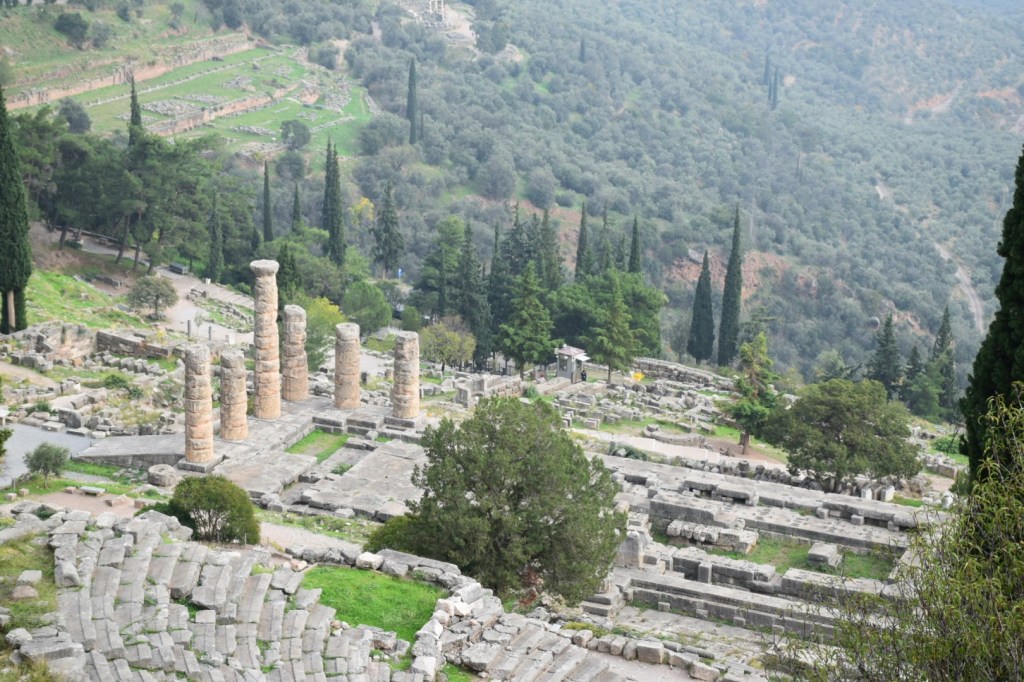
We were late. The archaeological ruins at Delphi closed at 3.30 and it was now after half past two. But the ticket office was empty. One of the four attendants standing around warned us that we didn’t have much time, but they couldn’t sell us a ticket and wouldn’t let us in without one. A queue built up behind us and eventually the ticket seller came back, wafting smoke. The Sanctuary at Delphi was once regarded as the centre of the world and a sacred place where humans could interact directly with the gods. The mighty flocked here seeking guidance although the sayings of the oracle were notoriously ambiguous. But the souvenir shops in Delphi sold T-shirts with old Delphic maxims that were found inscribed in the pillars of the temple of Apollo – Know Thyself and Nothing in excess– still relevant rules for life all the way from 2500 years ago. Wandering along the Sacred Path that wound around the ruins, a wonderfully atmospheric and majestic place set amid high mountains with the sea in the distance shrouded in mist, we waited for the oracle to speak to us. But all we heard was the chattering of the American tour group and the giggles of two Chinese women…but if we listened really intently, the breeze in the cypress trees seemed to whisper ‘life is good’ (I swear, hand on heart!).

The Delphi museum was interesting with great tales of wrath and vengeance of the gods. The faces of the ancient statues in the museum were very human_ whether mortal or god_ and also seemed to send a message that life is fleeting and everything passes.

High above Delphi

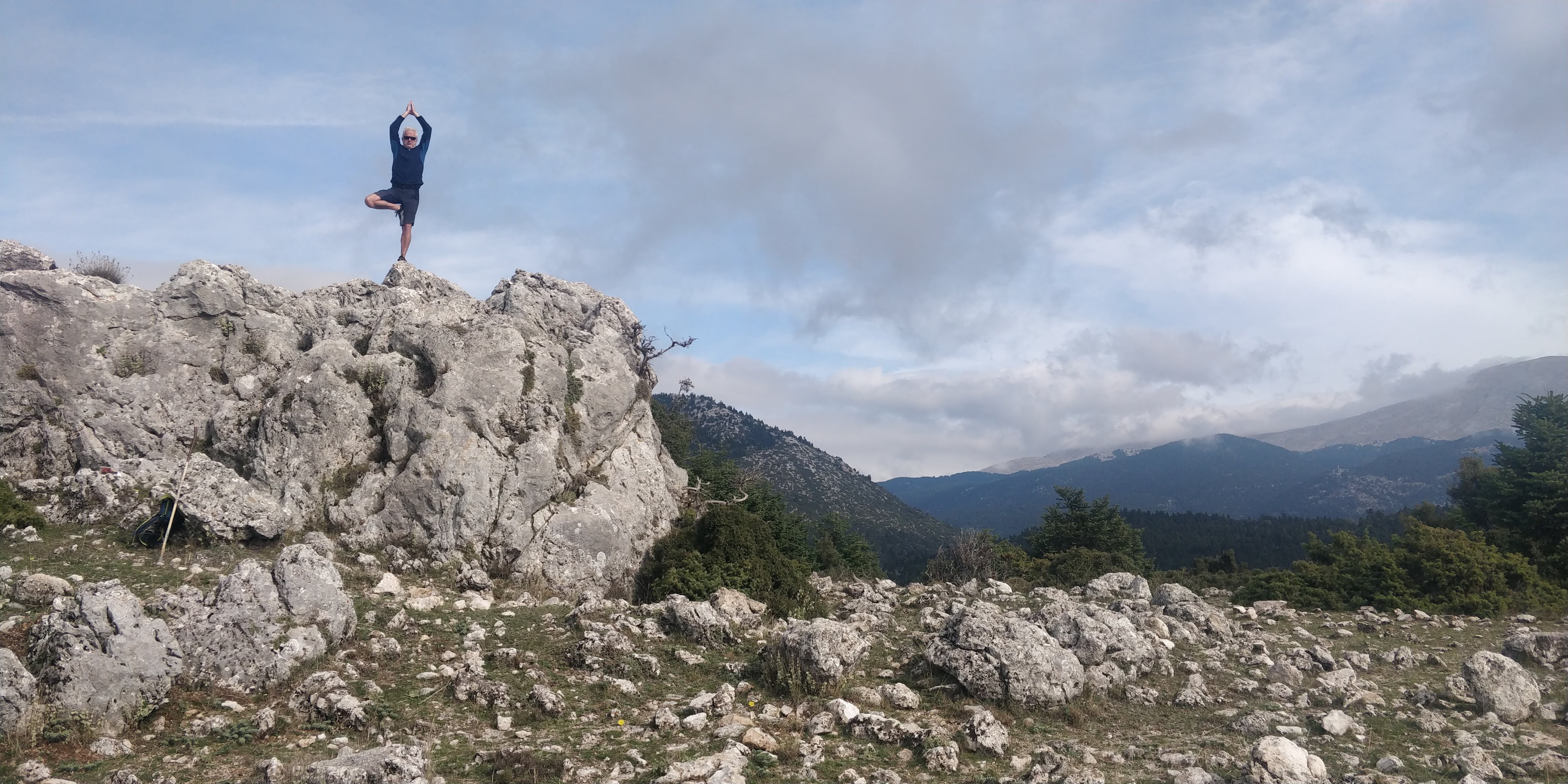
The following morning – bright, clear and cold – we hiked in the mountains above the sanctuary with black choughs gliding overhead us, wheeling and turning in the cold air, the sacred ruins spread below us and the largest olive grove in Greece spread far below that stretching the thirteen kilometres to the sea. And it was easy to understand why this was such a special place for both gods and humans.

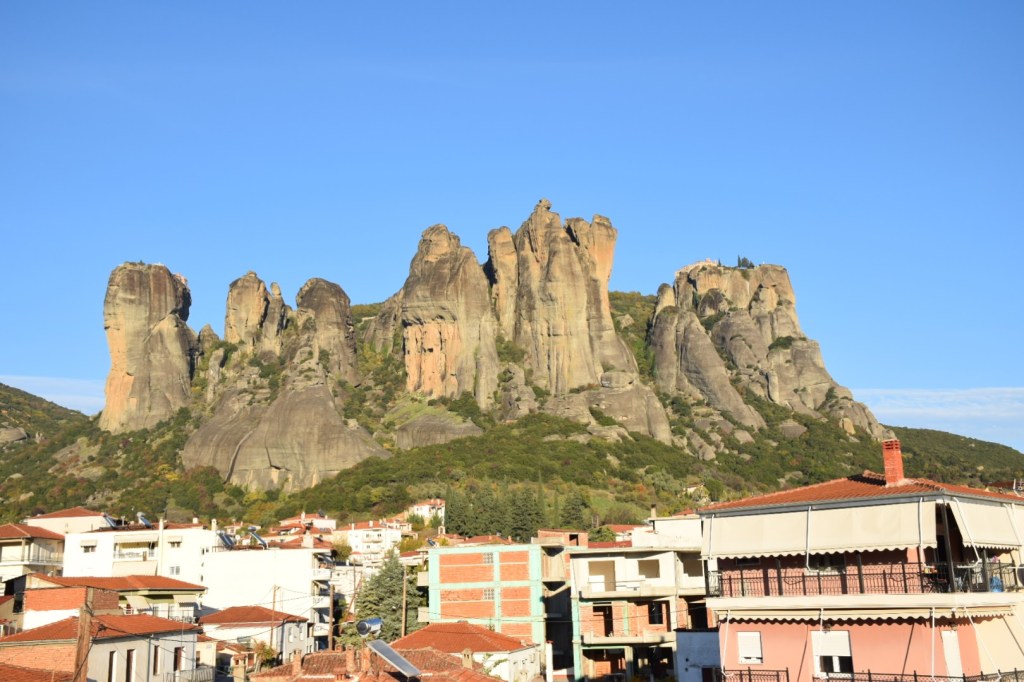
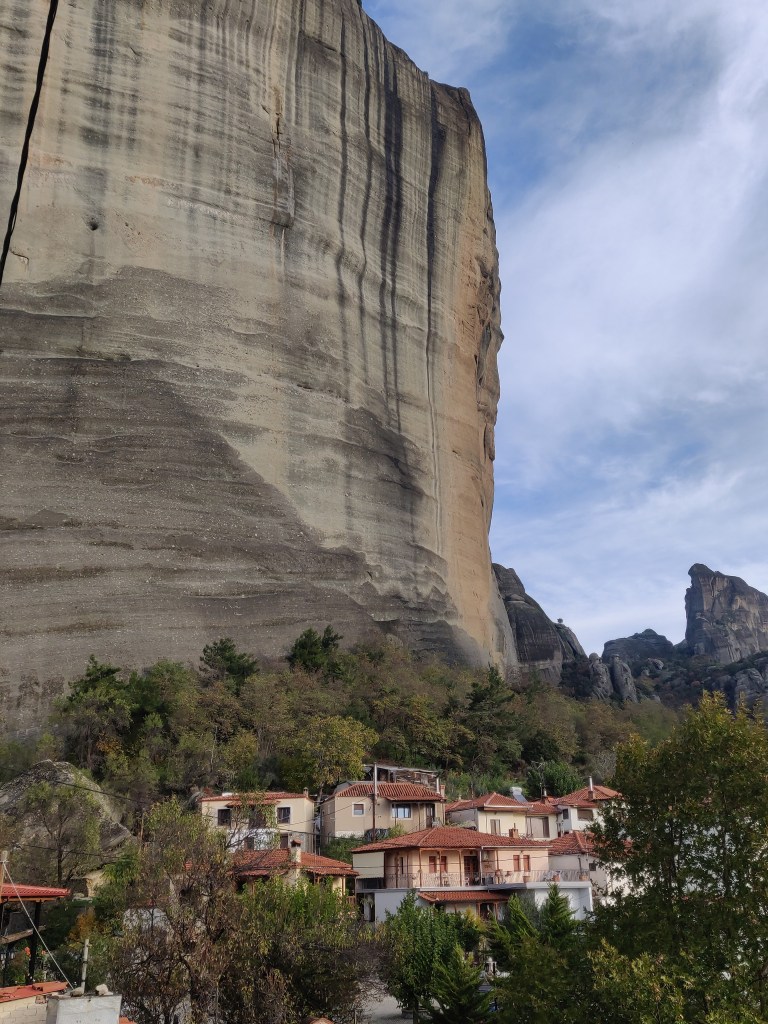
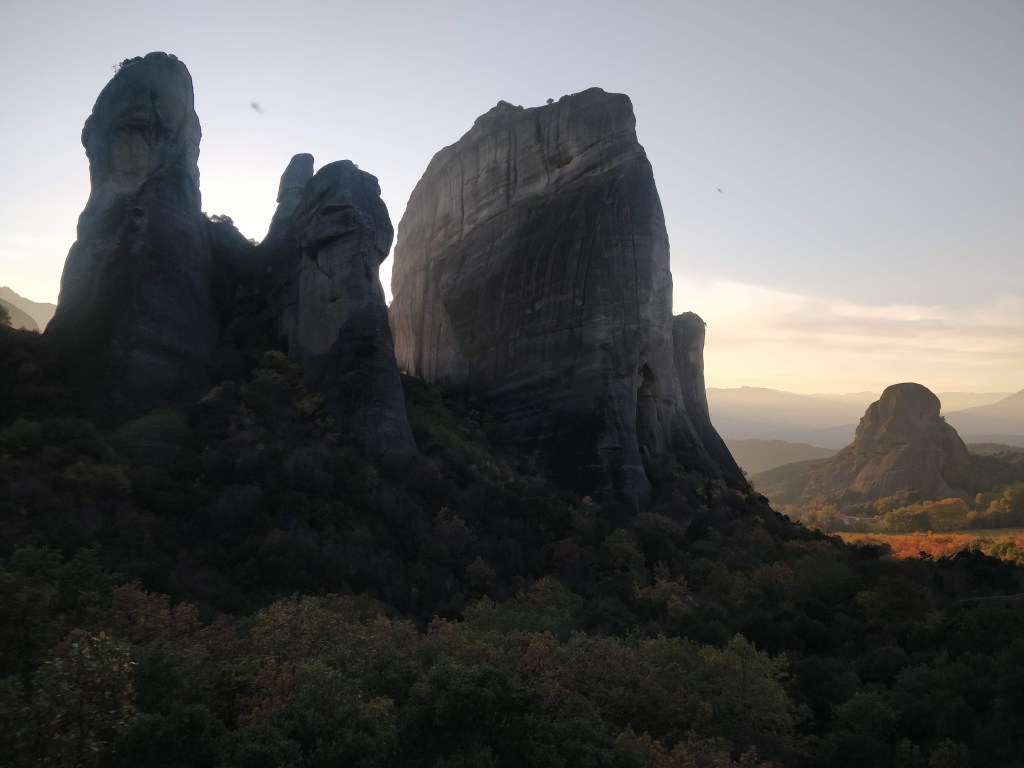
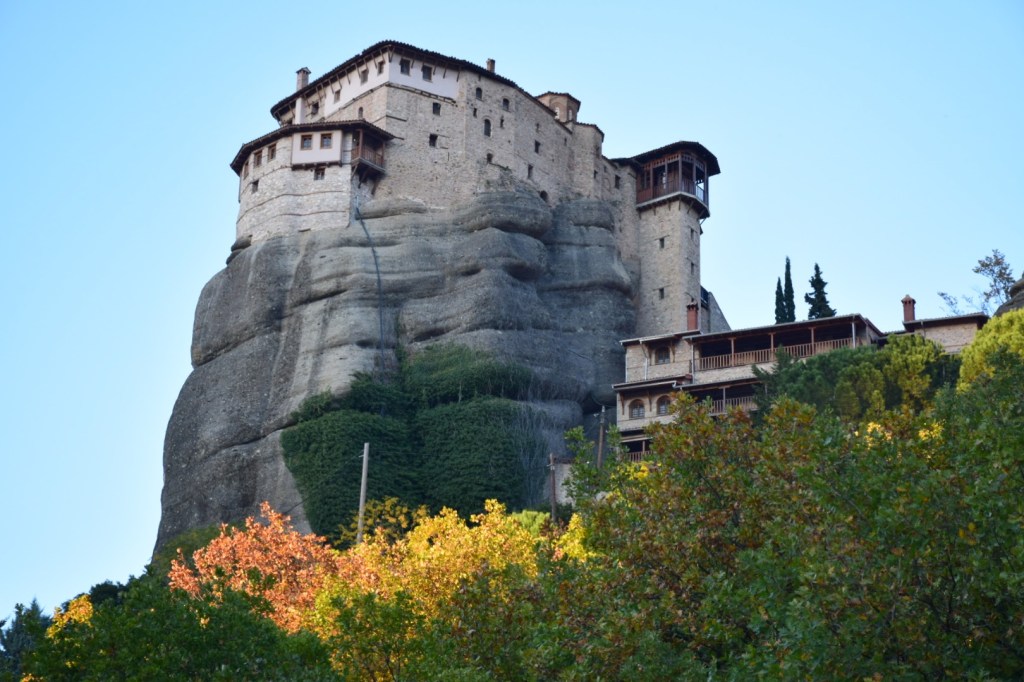
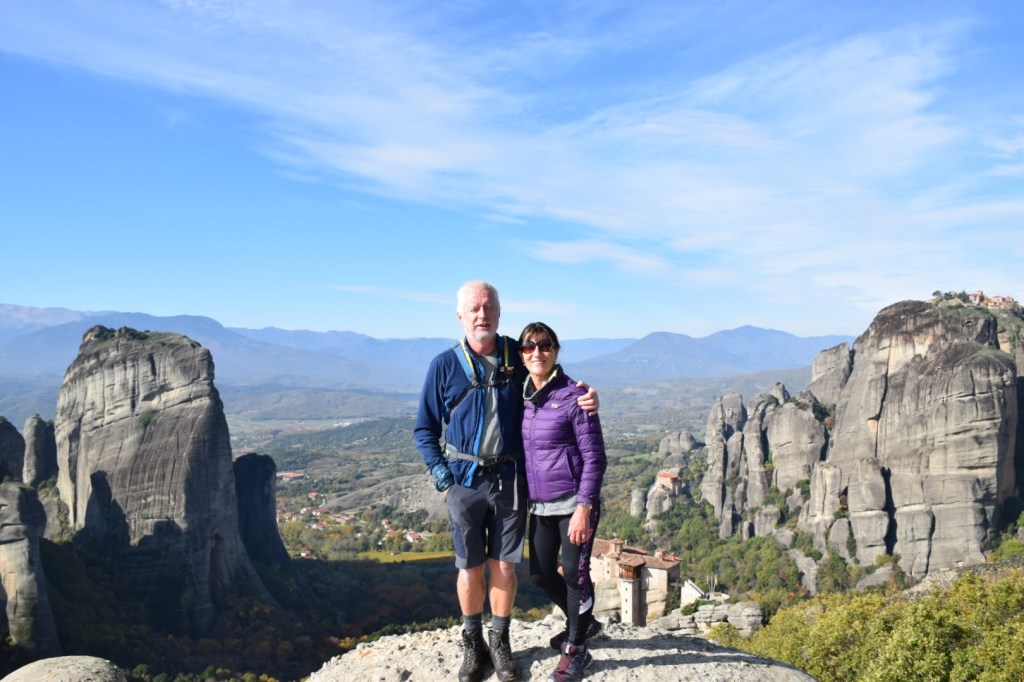
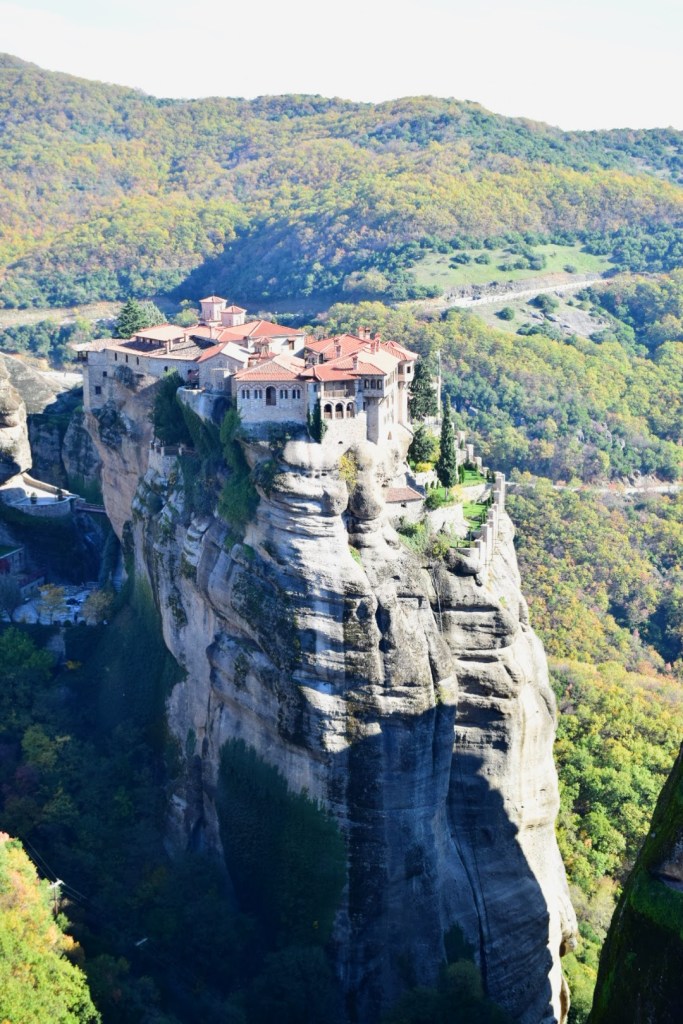
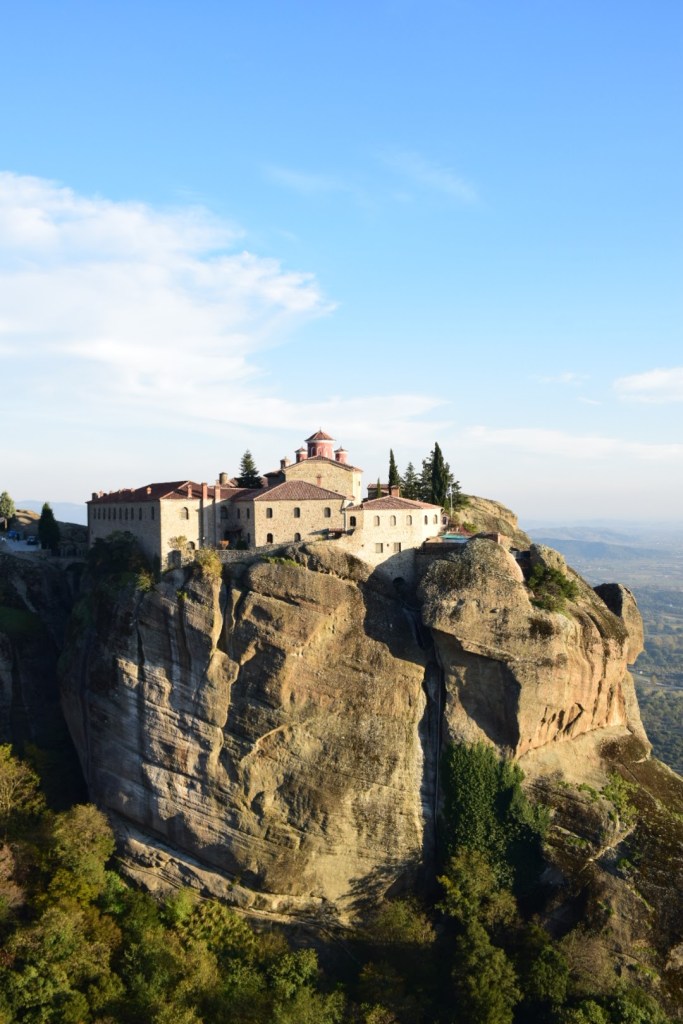
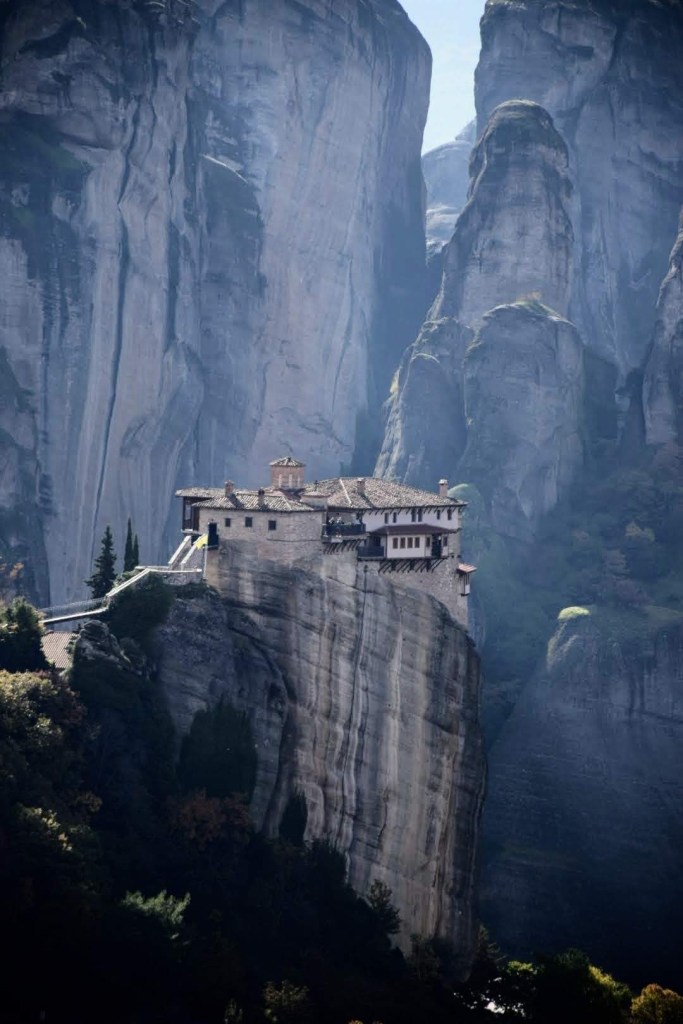
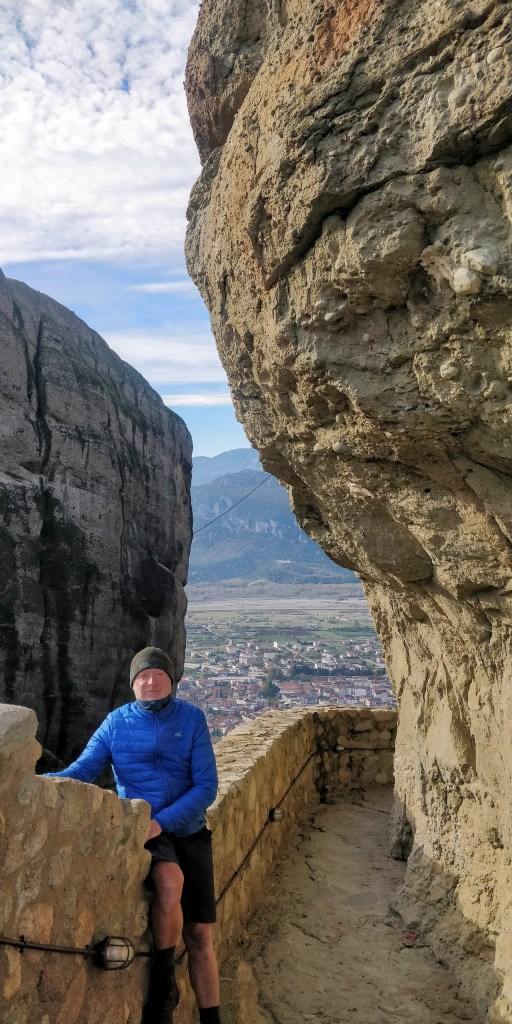
We had never heard of Meteora in Central Greece until a Swiss couple told us that it was their favorite place in all of Greece and so we put it on our list….so glad we did. The name Meteora means ‘suspended in the air’ and that’s such an apt description. The landscape of strange rock formations was very Lord of the Rings but then there were the monasteries that looked like they were glued to the tops of these bare pinnacles. We stayed in a gorgeous apartment with a rooftop terrace and a view that we never got tried of in three days – changing light and shade was mesmerizing and made many ghoulish faces in the rocks.

But why would anyone live up there on rock? The quest for solitude sent hermit monks up there more than a thousand years ago – the same urge that inhabited Skellig Michael or sent hermits into the caves in the Tigray region of Ethiopia. And then there was the fear of persecution as the Turks invaded and remote areas were an escape from the bloodshed. Only six monasteries were still active and inhabited now – two with nuns and four with monks (although all were called monasteries). Interestingly, there were far more women – 38 nuns and 9 men.

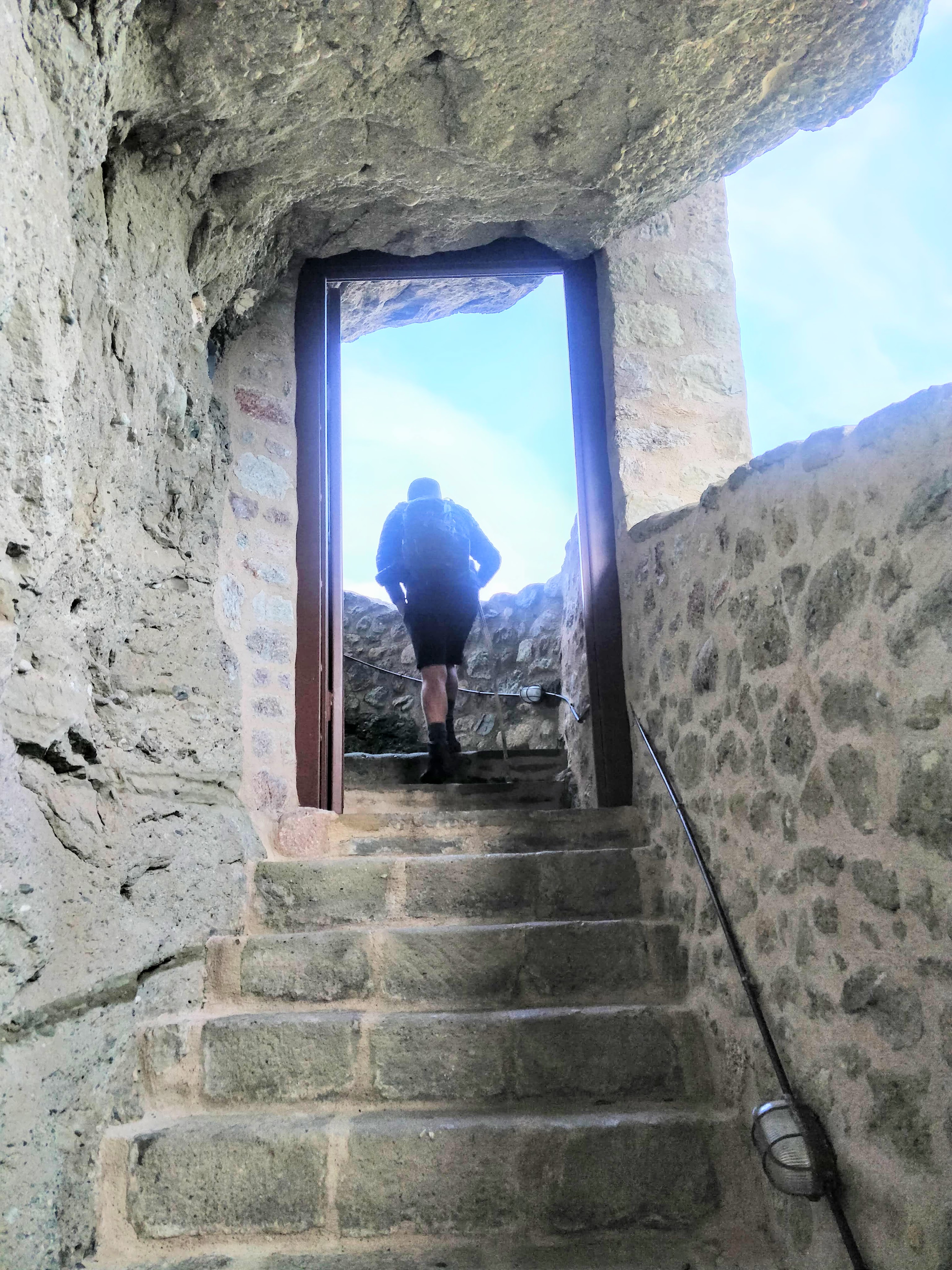
Into the Light

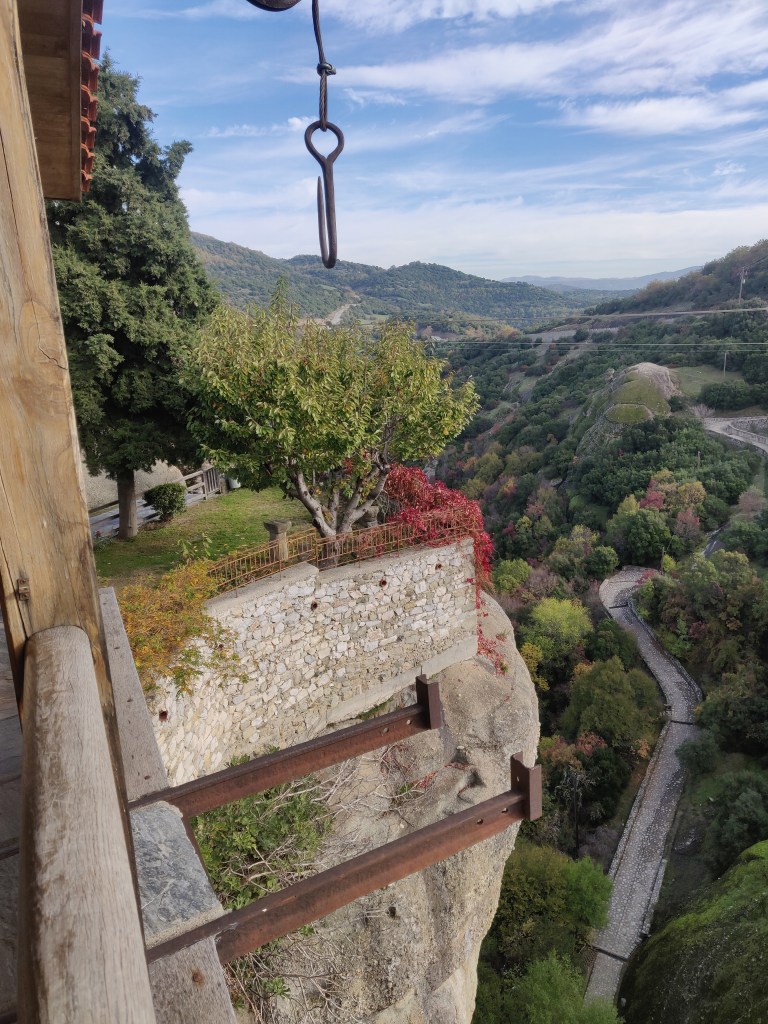
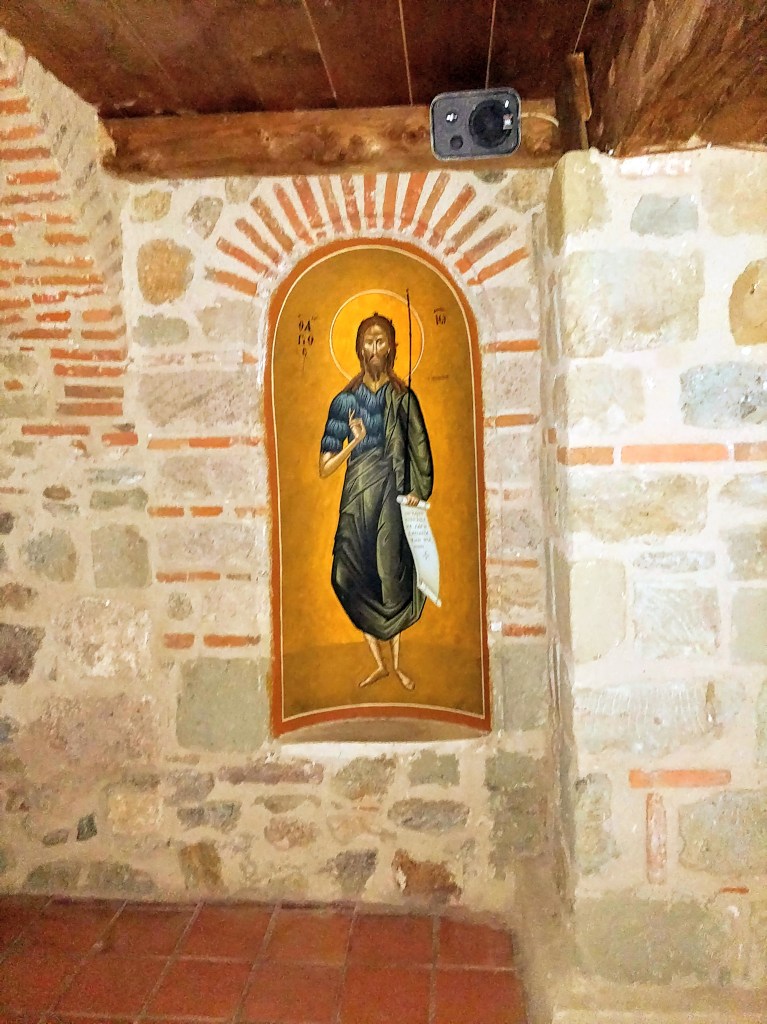
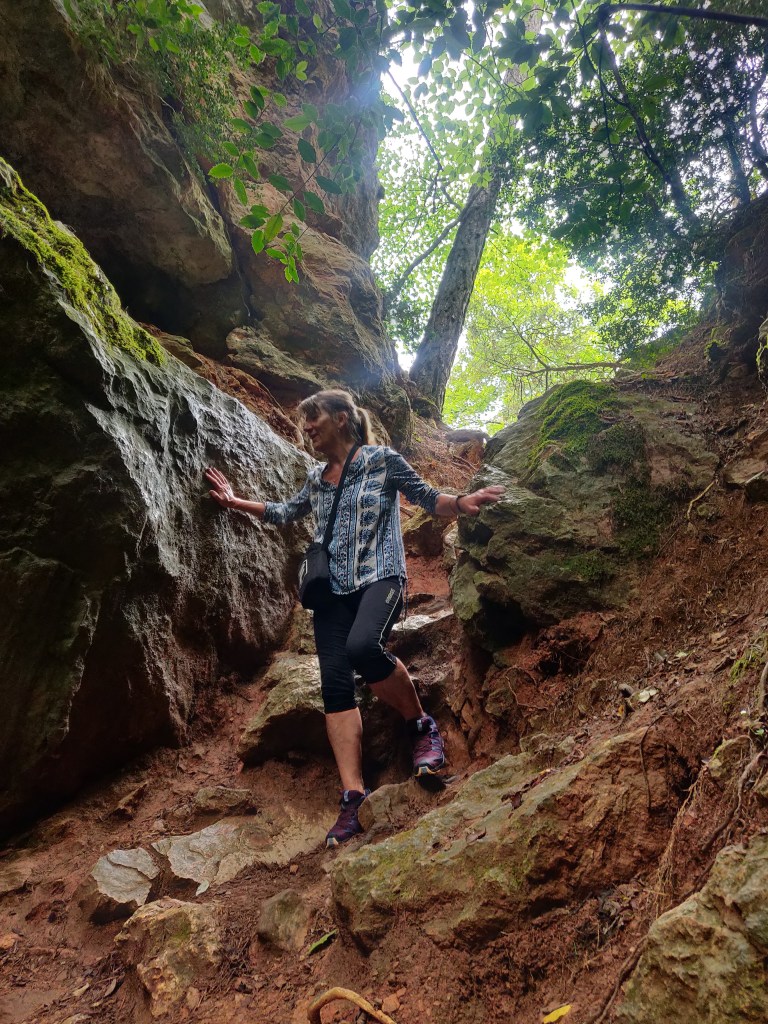
We trekked from our apartment in Kalambaku up the rocks by a winding path and walked from monastery to monastery – a 7 hour roundabout hike ( lengthened by a ‘shortcut’ that was anything but and which involved a precarious scramble down a steep gully) but it was worth it…..the buildings were even more spectacular up close. We were the first visitors to arrive at the Monastery of the Holy Trinity, so early that the thick wooden doors were still locked. This monastery featured in the James Bond movie For Your Eyes Only ( its on you tube, Meteora, James Bond). Inside the door, up more steps that wound around the barren rock, we found a large courtyard and a cheery monk sweeping the autumn leaves away, a herb garden and flower beds and a large hook dangling over a precipice that was used to haul up monks and supplies in a large net before steps were carved into the rock. And in all of the monasteries, there were small churches, stained glass windows, the smell of candle wax and incense, terracotta tiles, polished stone walls rubbed smooth over years, creaking timber floorboards and above all, simplicity. The nuns in both their places were also doing a thriving business selling honey, jams, healing beeswax balms and of course icon replicas and there was a three euros entrance fee for each monastery. I must confess that I was in need of a generous dollop of the nun’s healing balm by the time we got back to our apartment plus an even more generous drop of reviving white wine!!!.

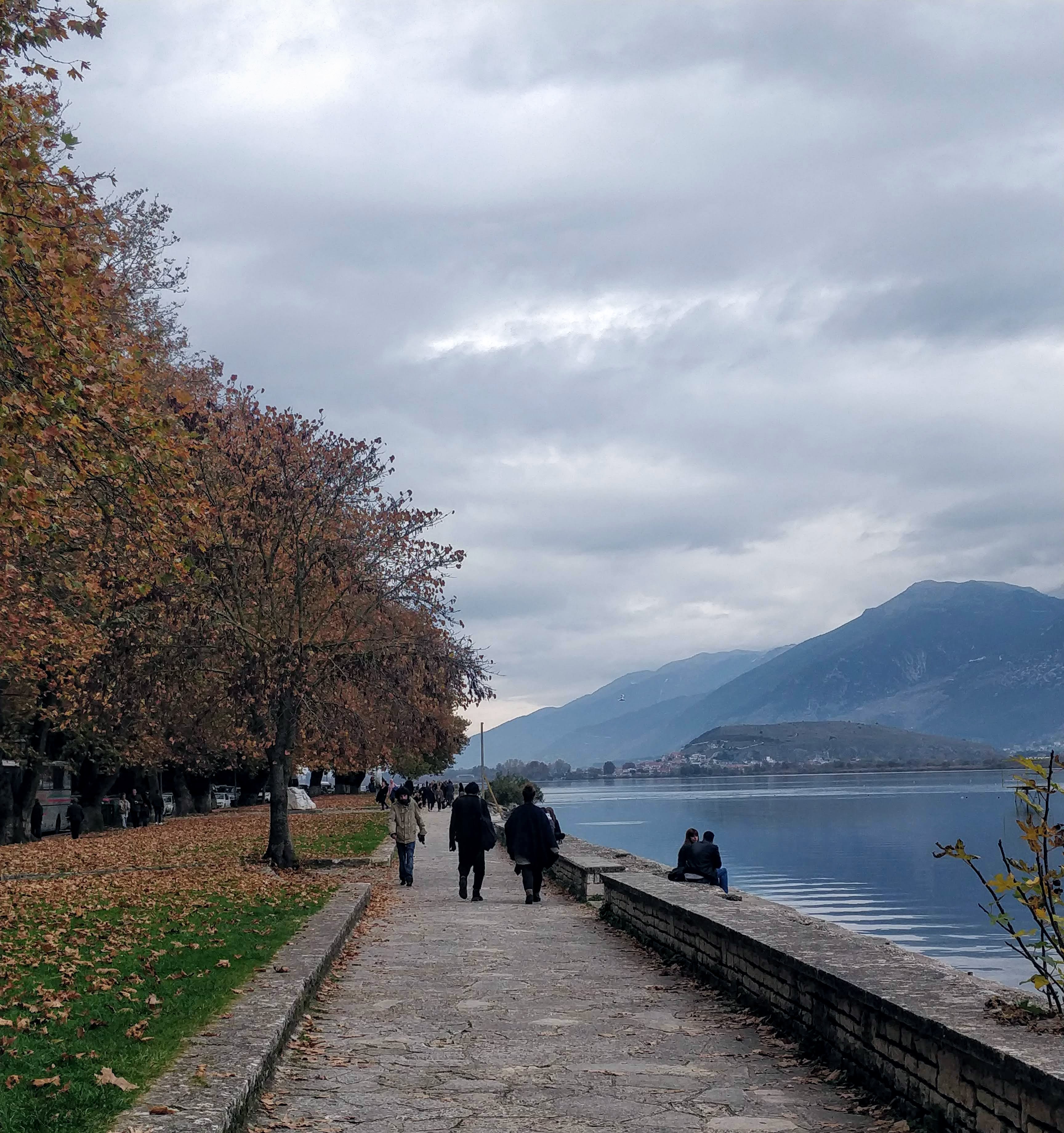
Lake Pamvotida, Ioannina

But our stay in Greece is running out and its time to go towards the Albanian border and in the general direction of home – we have decided to go through Albania, Montenegro, Croatia…if we can. So we packed up again and left the stunning Meteora region heading north. En-route, we booked a bed in a little village a few kms from Ioannina, a gorgeous city on Lake Pamvotida popular as a long weekend getaway from Athens and famed for its sunsets when the lake waters turn silver and the mountain backdrop turns lilac….we didn’t see any of of that. When we eventually got a parking spot…it was Sunday when all the Greeks dress up in smart casual gear, go for a little stroll and have a long lunch, the mountains clouded over and big fat raindrops had us running for the car. The rain didn’t last and the trees along the lake were truly beautiful….who knew that autumn in Greece could be so like home with the crunch of leaves?
Back at the accommodation, there were great bad clouds of a different sort billowing from the house next door and a very concerned woman running up the street, shouting. But a man stuck his head out a smoky window and said that he was only trying to light a fire….. and everyone laughed. Panic over. Another man on the street noticed the number-plate on the Guzzler and came over to chat …he was Albanian, very friendly – which may be a good omen for our next stretch of the journey. We hope to cross the border from Greece into Albania in the next day or so.

Hopefully the next post will be from Albania, a country that we know practically nothing about but that should soon change.

The Oracle at Delphi said…..

Glorious Greece – multi-faceted

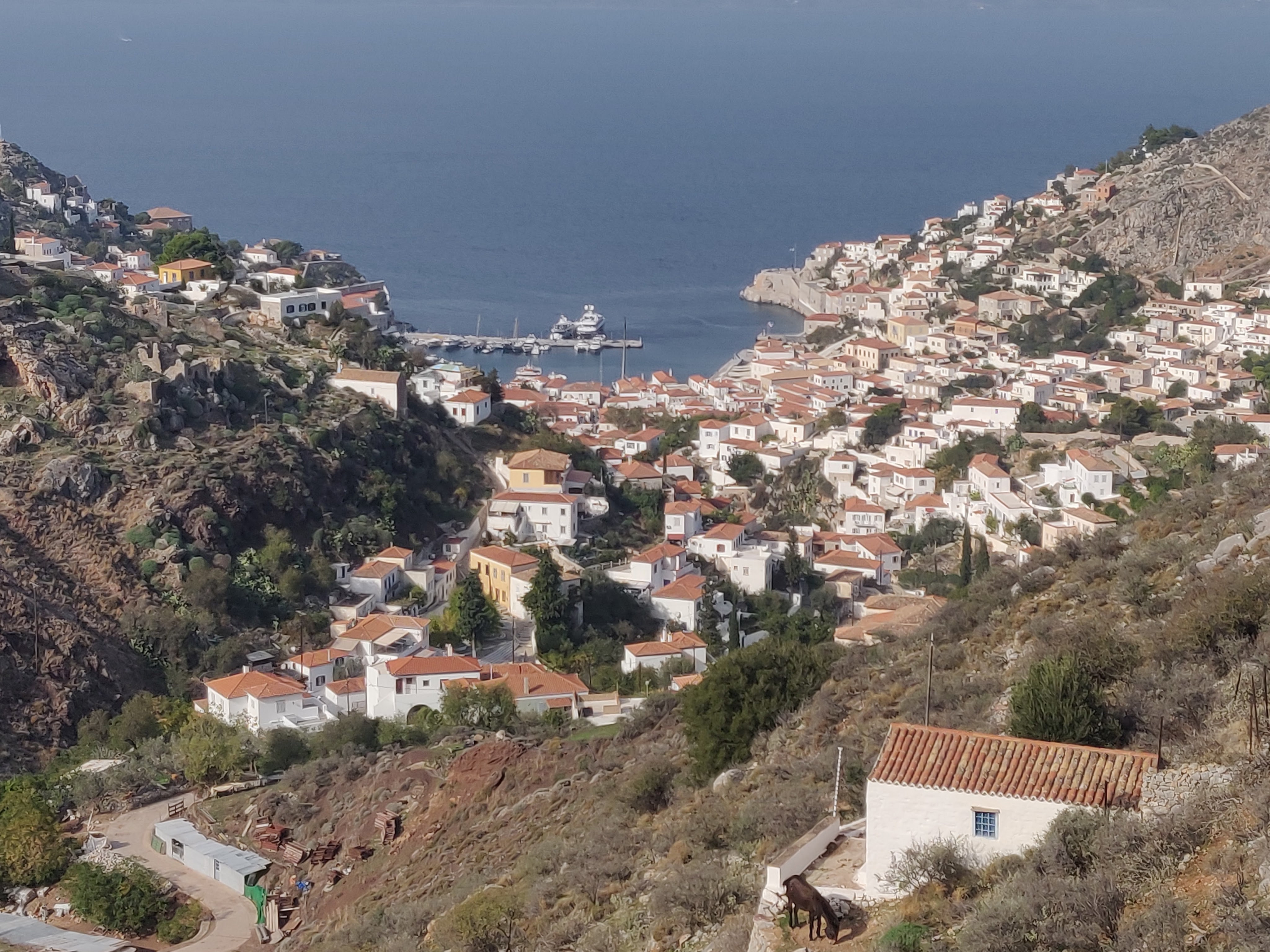
Hydra

Greetings from jaw-droppingly, beautiful Hydra, a small Greek island and adopted home of Leonard Cohen for many years.

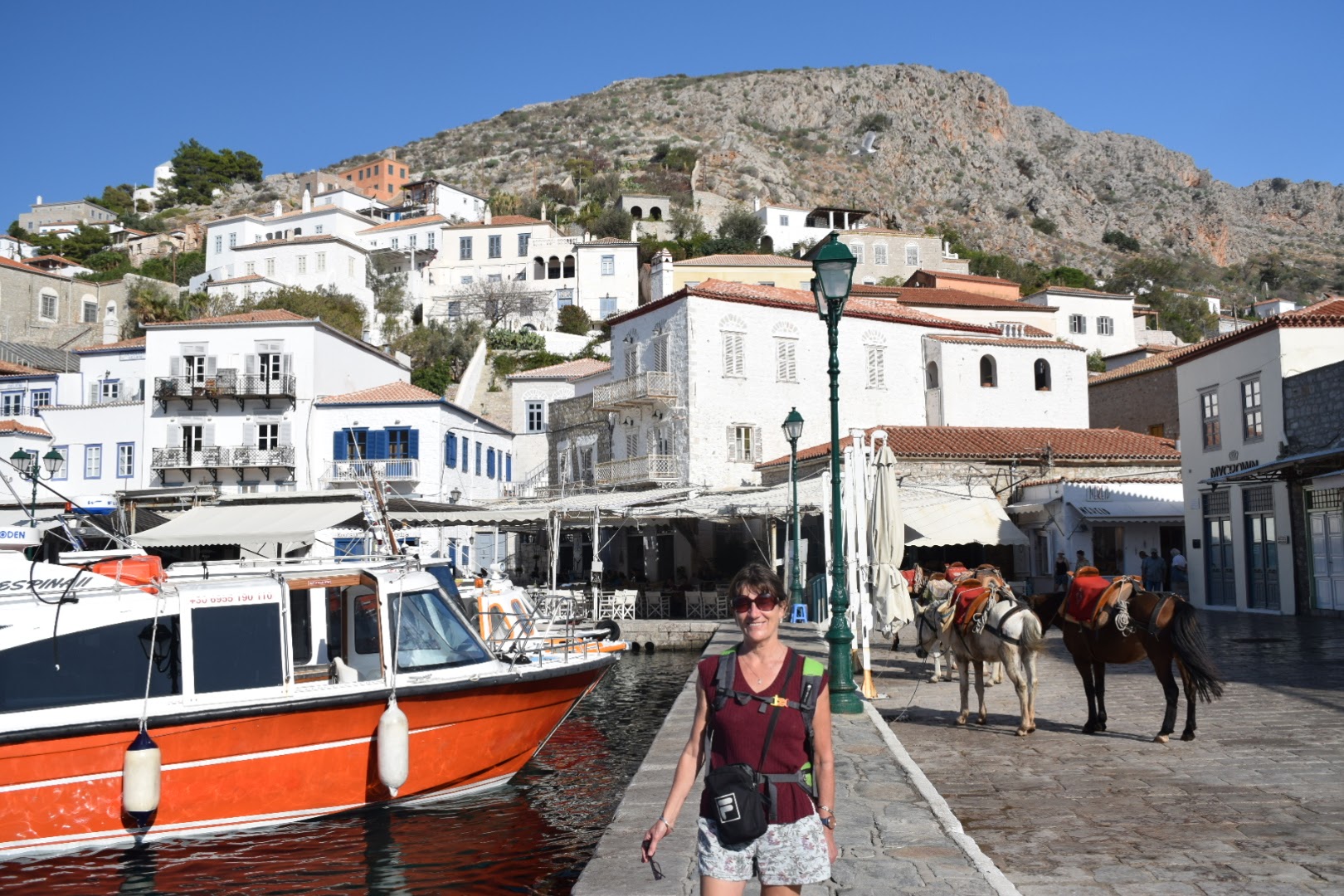
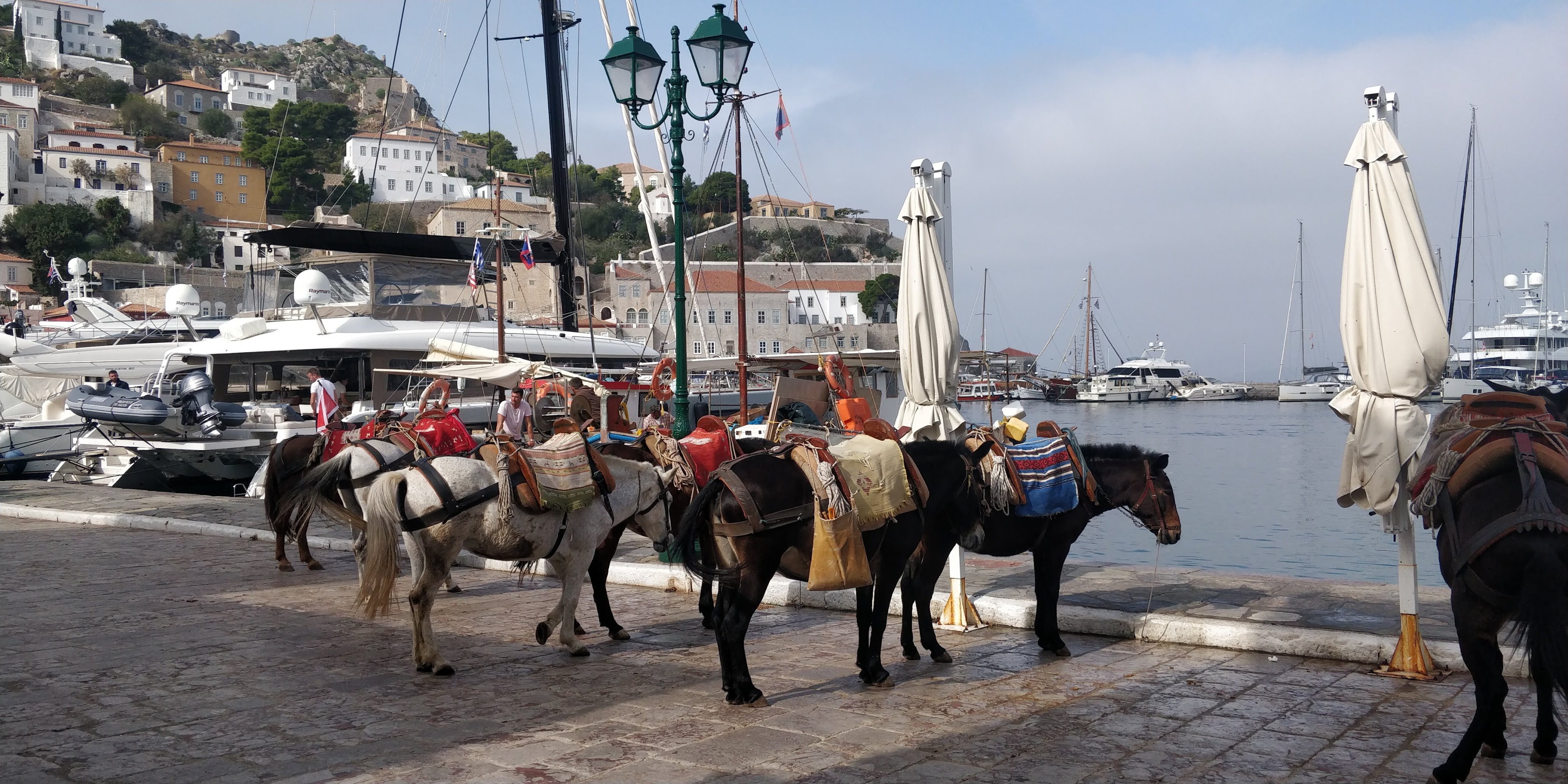
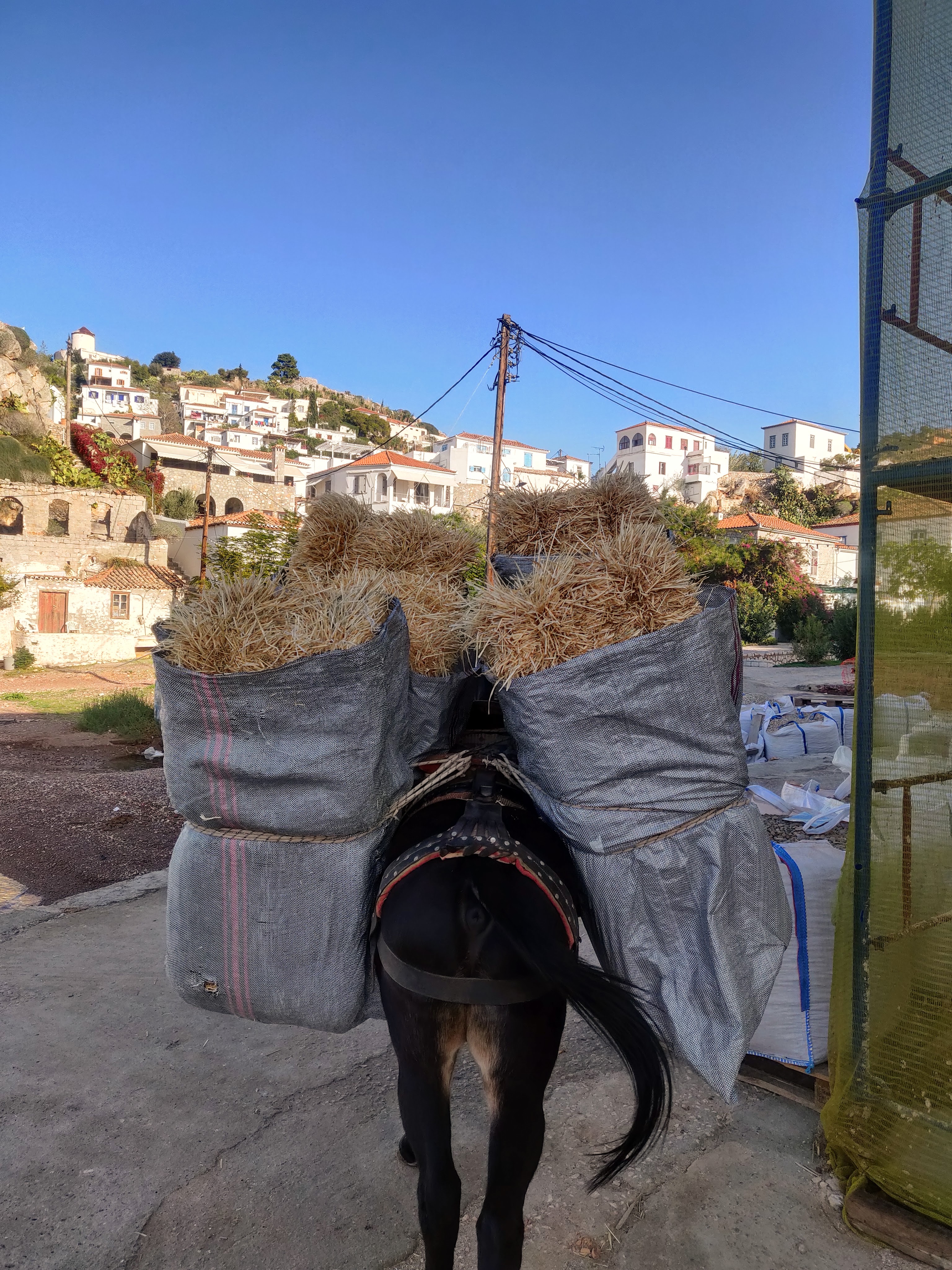
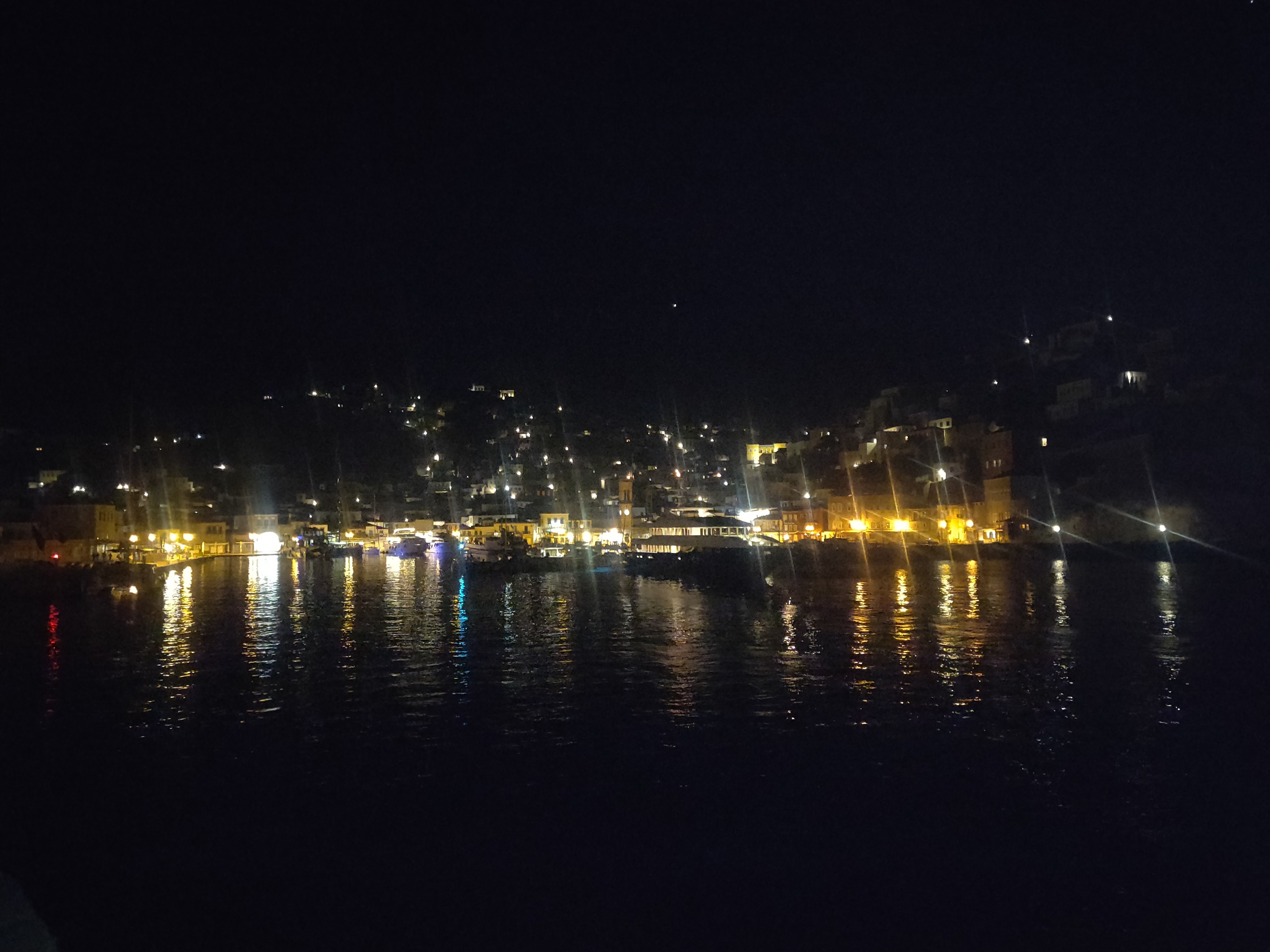
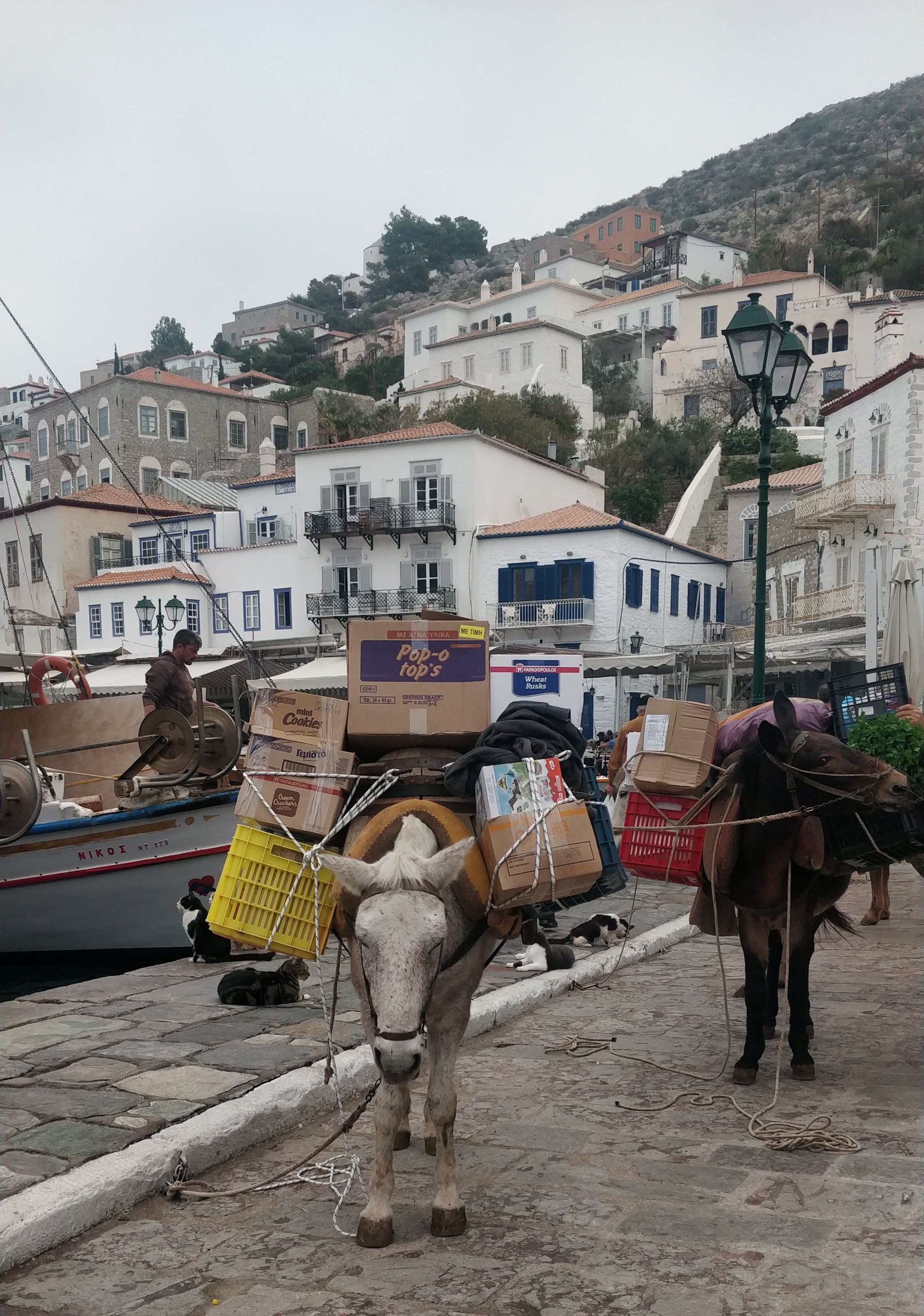
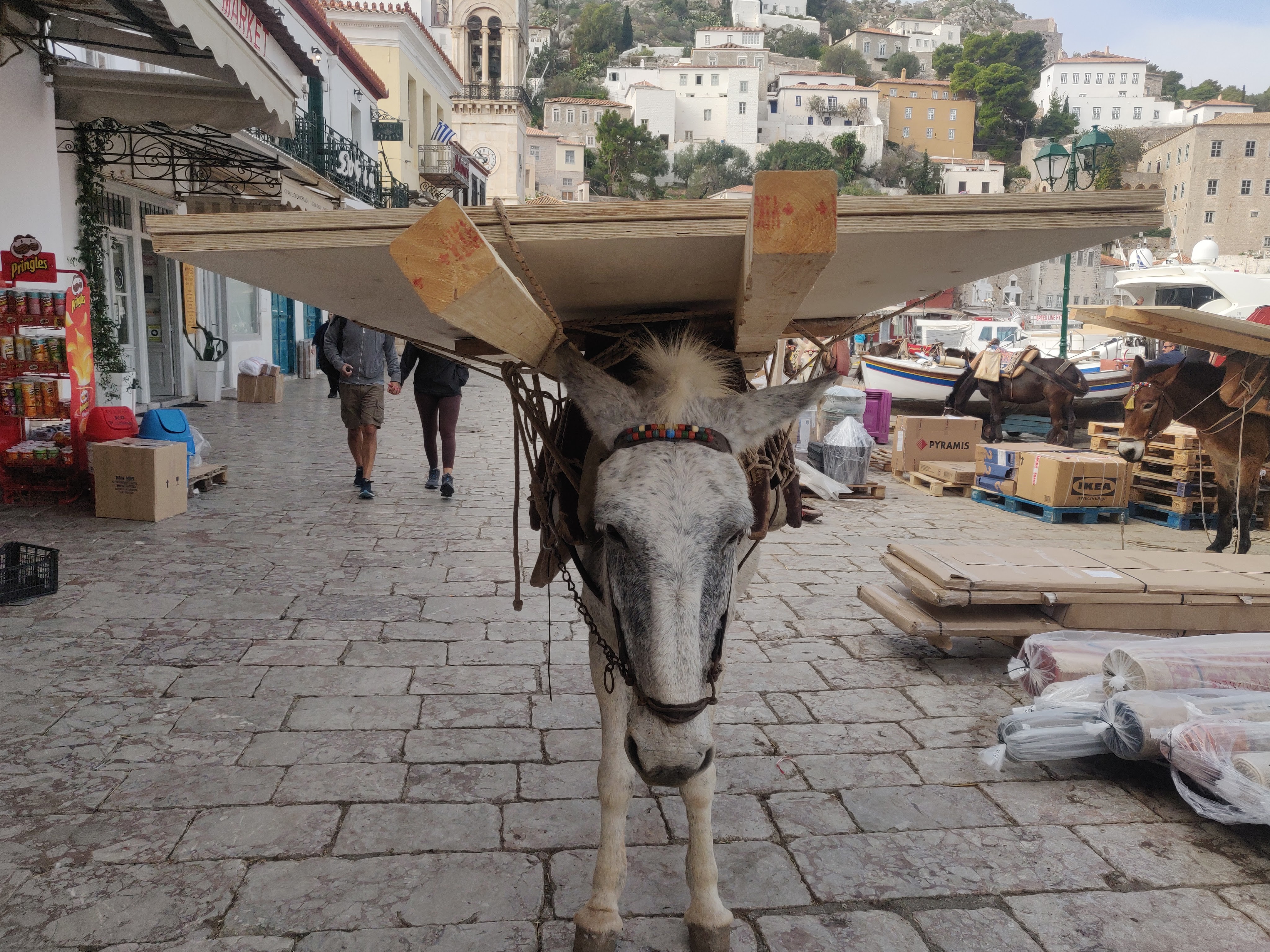
Our ferry from Pireaus (2 hours, €30 each one way) sailed in gorgeous sunshine into a crescent-shaped harbour with hills sloping upwards like an amphitheatre. As we waited to disembark, we could alreday smell the taxis that were waiting on the quayside, flicking flies with their tails -no vehicles or scotters are allowed on the island so the main mode of transport is donkey (and shank’s mare). We hoisted our small packs on our own backs and walked between donkeys, moored luxury yachts, water taxis (used to get around the island) and upmarket designer shops, in serach of somewhere to stay. We were almost spellbound by the beauty and soon breathless – there are steep steps everywhere, leading to a spider’s web of cobbled lanes with jasmine, bourganvilla spilling over balconies. We found a room with a little balcony in the Amyrilis Hotel which also had a large rooftop with 360o views of the sparkling sea, barren hills and a small communal kitchen on the roof and a friendly owner (€40 a night after bargaining). Perfection! – a little tired looking maybe but exactlywhat we wanted. And full of interesting people like Fred from Nashville, a retired maths teacher obsessed with cats (definitely in the right place) and volcanos.
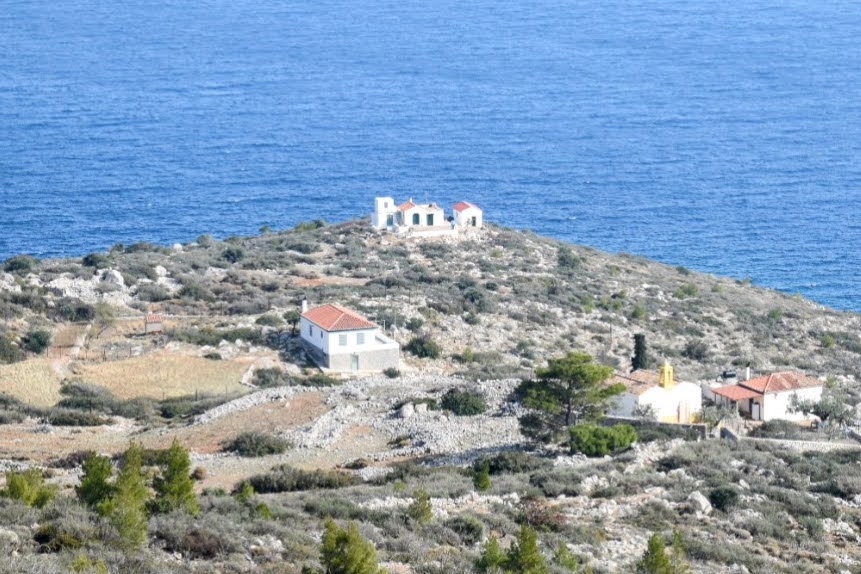
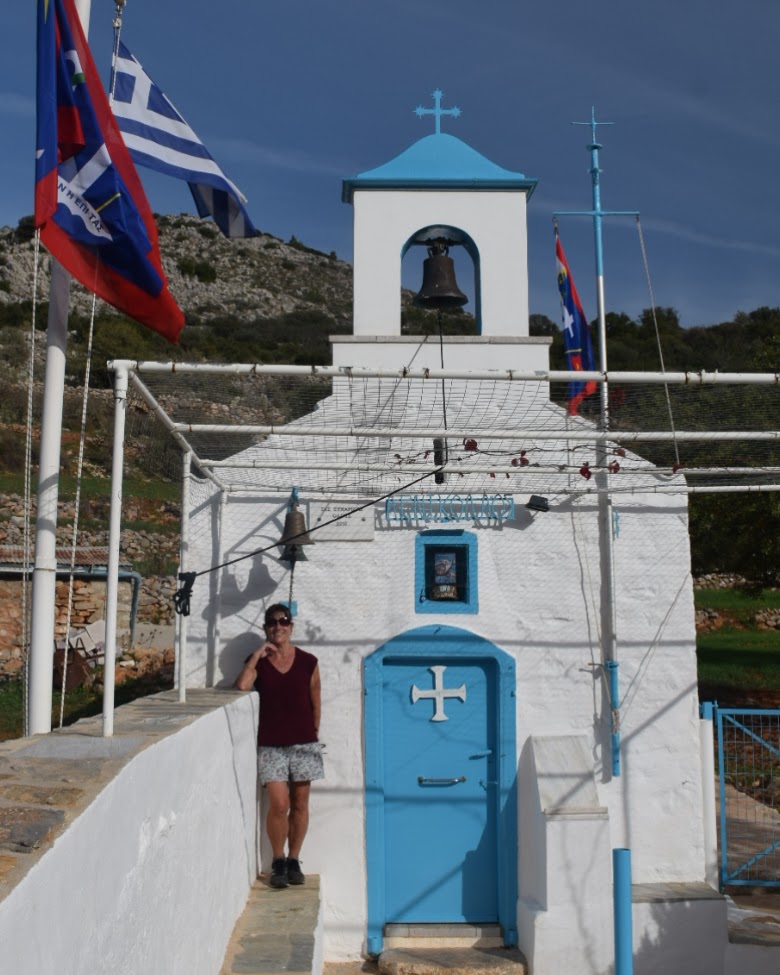
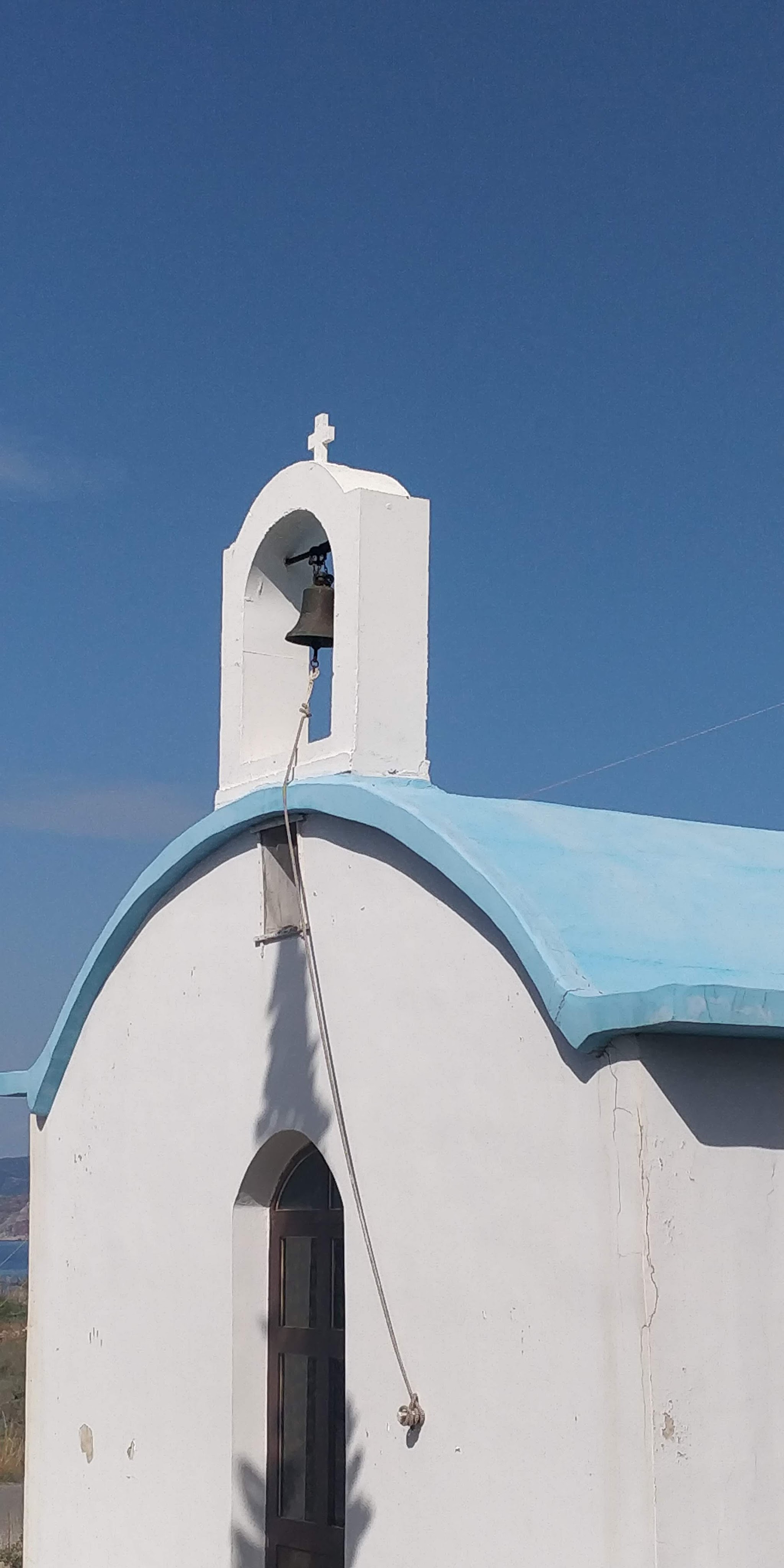
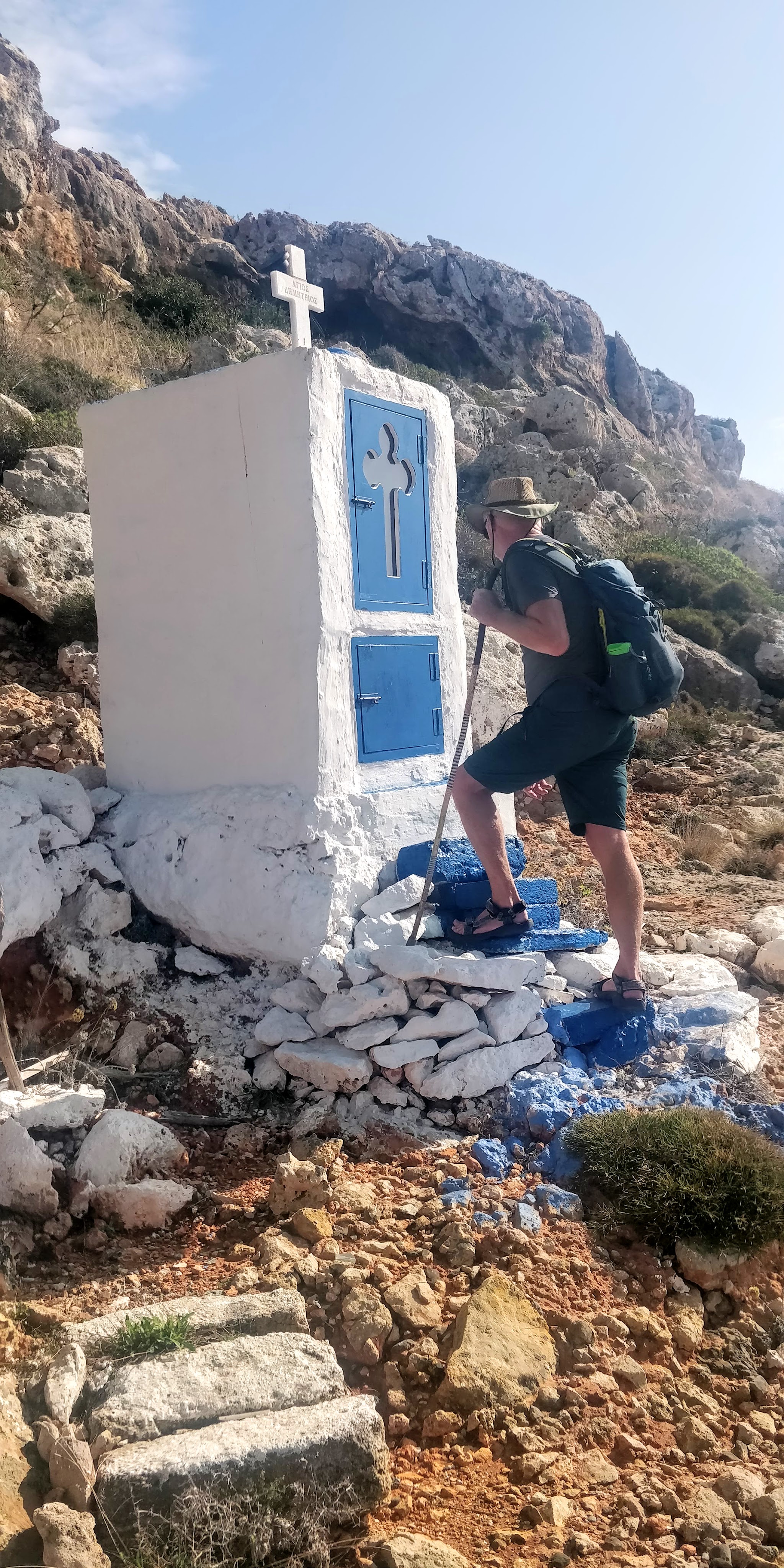
There were dozens of pebble beaches, great diving from the rocks into deep blue water but the real charm was wandering the back alleys where everyday life went on away from the tourists in the port, where old ladies gossiped and struggled uphill with their shopping, children screamed in the schoolyard and workmen hammered and repaired roofs Upwards into the hills along steps, mule trails and stony paths, there were monasteries on hilltops and little blue and white churches everywhere – I’m convinced that there must be a church for every resident. An old lady in a red cardigan sat sunning herself at the gablend of her remote house with chickens clucking around her and dogs at her feet waved to us as we clamboured up a rocky slope. One day, after a strenuous hour and a half uphill hike, we stopped at a tiny church, the green field surrounding it stood out amongst the grey rock and spiny plants – the only green field we saw on the whole island. Inside amongst the icons and holy pictures, there were bottles of water, juice, crackers and – wait for this – a half-empty bottle of Powers whiskey (we didn’t partake – honestly). I couldn’t resist lighting candles in such a little sanctuary in the mountains (I have been accused of becoming a right Holy Joe). And everywhere, the slow pace and the silence where the main sound was the tinkling of bells around the necks of the donkeys and mules and the sound of the sea – without traffic – and the soft November light and the smell of the salt sea, jasmine and donkey dung.

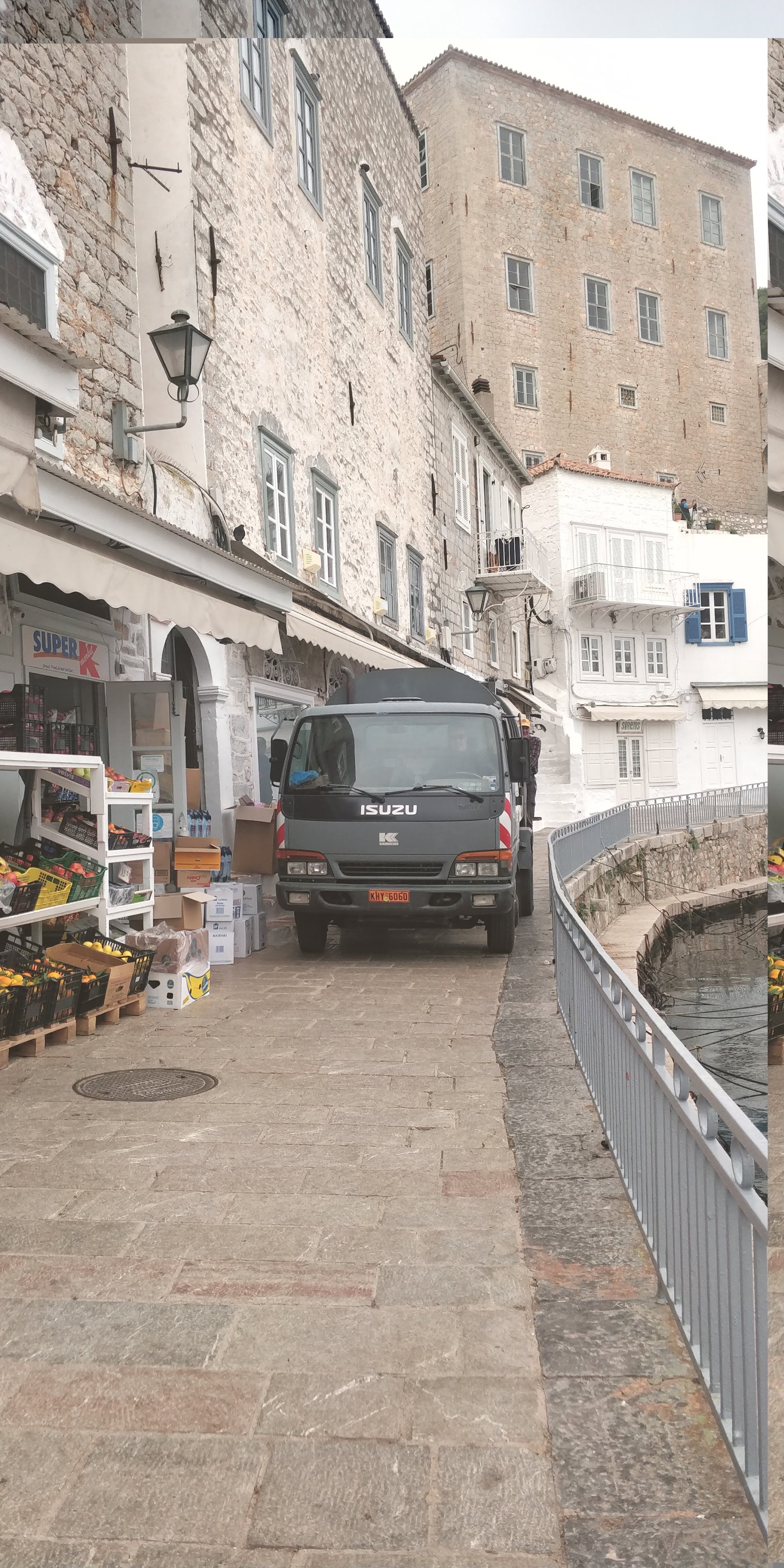
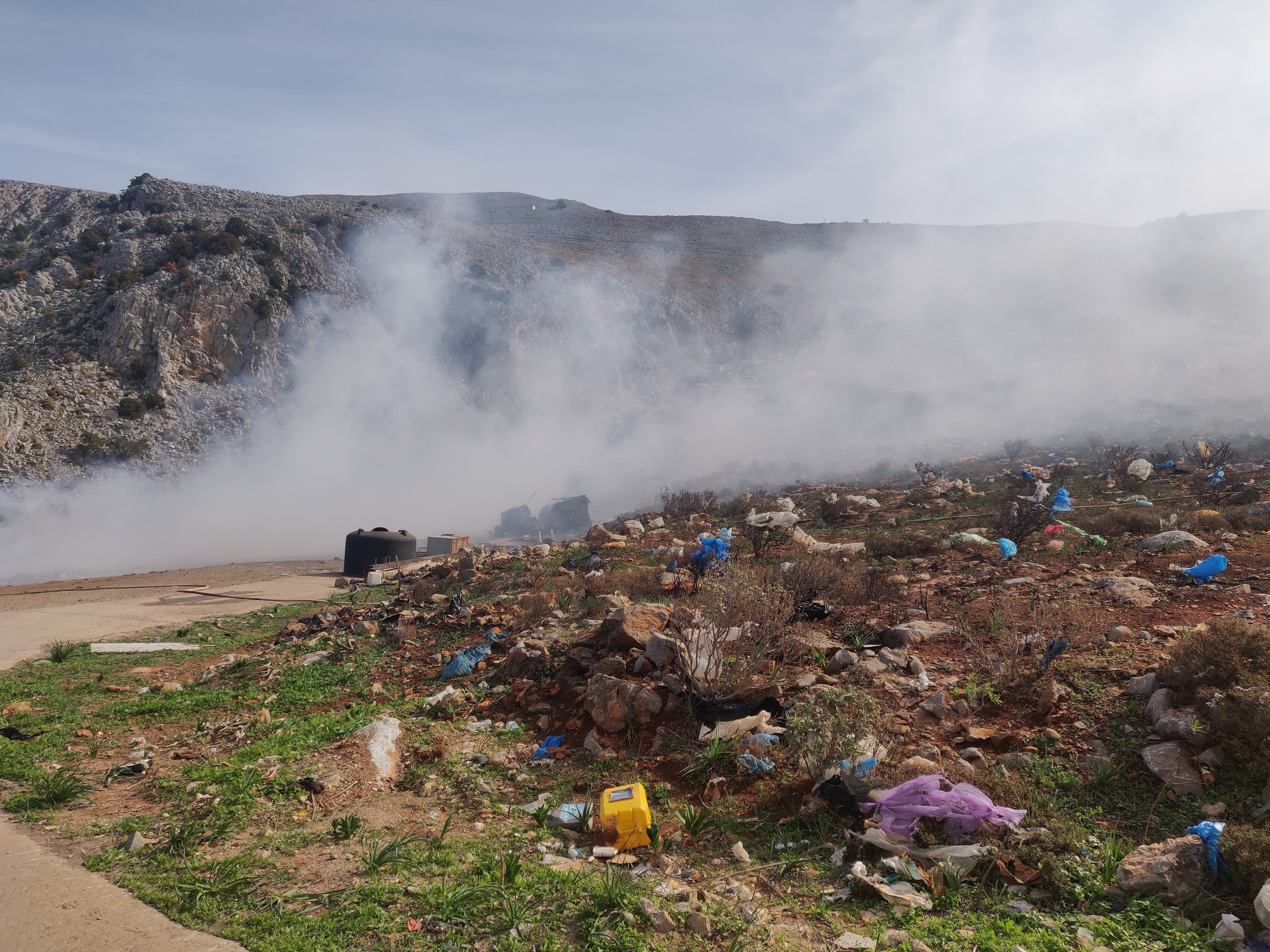
But as Leonard said ‘so you want it darker‘. There may be no vehicles on Hydra but there are exceptions – there are garbage trucks barelling along the port every morning taking rubbish to the dump in the east of the island and a fire truck -which was needed when a fire broke out in the dump on Saturday night sending ash and acrid smoke upwards. It was still burning and being sprayed by masked firemen on Sunday morning when we walked in that direction amid discarded plastic bottles and the coloured plastic bags blowing in the wind and caught on bushes like bloomimg fake flowers – many tourist mean more rubbish and oceans of plastic.. My new friend, a jeweler down the lane near our hotel and a fan of George Bernard Shaw, told me stories of greed and disputes amongst the islanders and cruelty to the overworked mules and donkeys. But she still bargained hard – admittedly with humour – when I bought a ring in her shop.

This week we have seen such diverse scenery in Greece from the rural idyll of Arcadia to the tourist throngs at the Acropolis. We spent three nights in Dimitisana, a beautiful medical village spread over two hills in Arcadia and on the Menalin Hiking Trail. We expected a sleepy hamlet but we arrived to a village heaving with Sunday daytrippers.It was almost impossible to drive through between parked cars, tour buses and pedestrians. We stayed in Sophia’s Stone House which was a cosy warm bedsit over a traditional restaurant (with wild boar burgers and rabbit stew on the menu) and with fabulous views over the mountain – at laest most of the time. In the evening when we had the place almost to ourselves.

The Mendalin Trail and we could have been in Ireland as we walked the section from Dimitsna to Stemitsana in bright cool weather with the golden autumn colours of the birch, oak and sycamore trees, the fallen leaves, moss -cloaked stones and peeping mushrooms but then there were the monasteries with black robed monks, the ruins of gunpowder mills that produced ammunition for the 1823 war of independence from the Turks. The following morning, our gorgeous bedsit view had dissappeared, hidden under a blanket of thick fog that didnt lift until nightfall (about 5.40 as the clocks went back here as well). No hiking for us that day although we dashed in full waterproof gear to probably the best bakery in Greece up the street and gorged on baklava, chocolate dipped shortbread and pitachio and lemon biscuits – so always a silver lining.

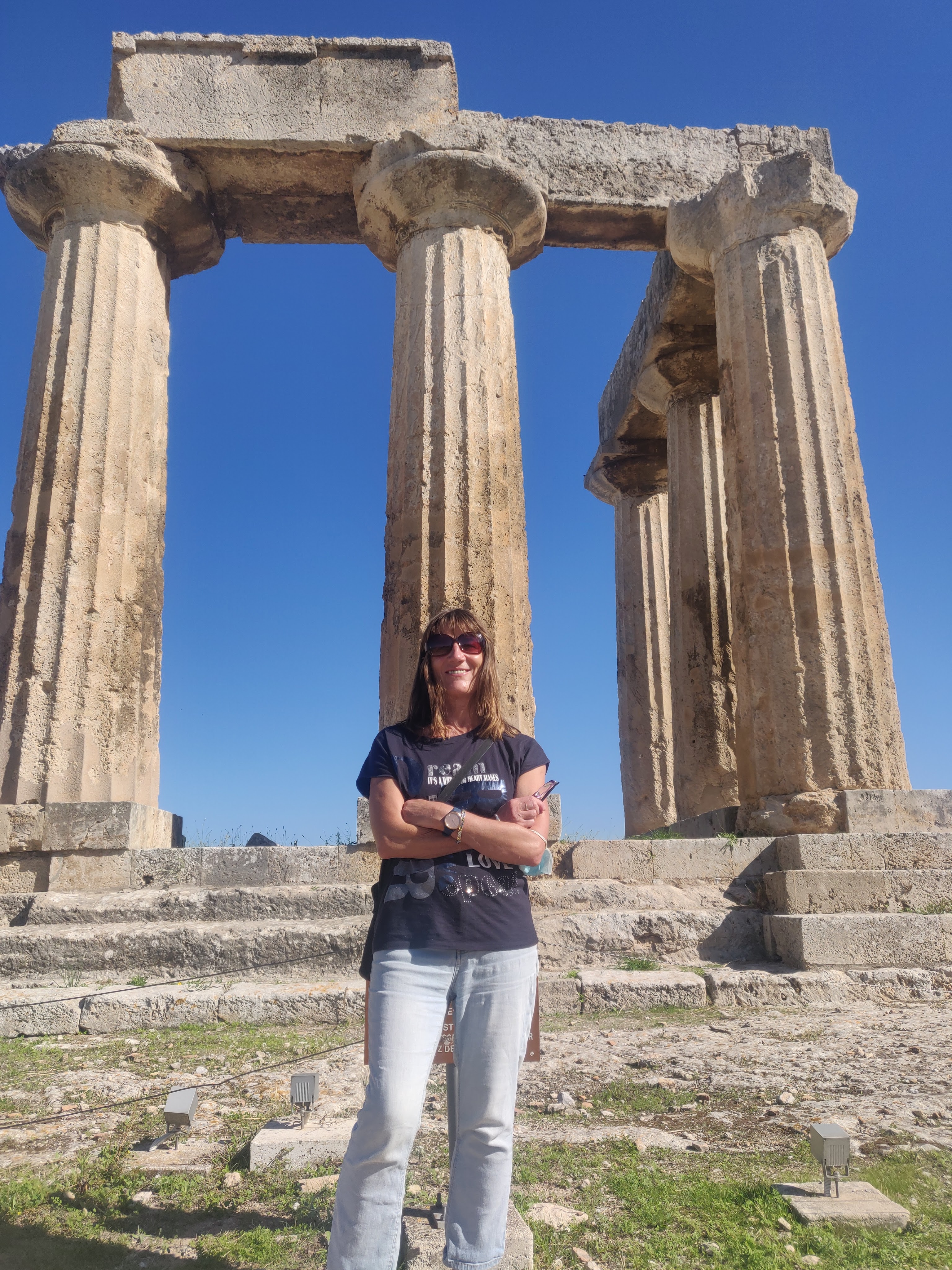
Leaving Dimitsana in 8 degrees sunshine, we followed our usual guidelines of avoiding toll roads on our way to Corinth. About halfway there as we zigzagged around another corkscrew, we realised that we had added an hour to our journeyand by avoiding tolls but it was spectacular even if I felt a little carsick going over the mountains. But we also passed by vineyards, ploughed fields and a countryside of splendid colour. Ancient Corinth was warm, compact and well organised with a good museum and an army of middle-aged women policing a well-marked one way system around the ruins. St Paul was here and wrote his many letters to the Corinthians and this is where he was tried – and acquited – for illicit preaching. We stayed in an apartment in the new city in a regular apartment block. The entrance and stairs was dirty- and smelly- but inside our front door was a well-equipped, clean apartment and a warm welcome from Elena, who gave us a carafe of red wine, pomogrannate liquer (disgusting but that’s beside the point), water, homemade fig jam and a fridge stocked with crackers, water and eggs. Elena had inherited the apartment from her grandmother and had installed a new bathroom. But it gave us an idea how most Greeks live – in small dark apartments with few windows as natural light – and heat – is the eneny for most of the year, The only window opened onto a tiny balcony that looked down on a rubbish strewn courtyard. But the residents were friendly, when we hit a doorbell instaed of the light switch in the dark corridor, the old lady who answered just laughed at us and waved off our apologies.

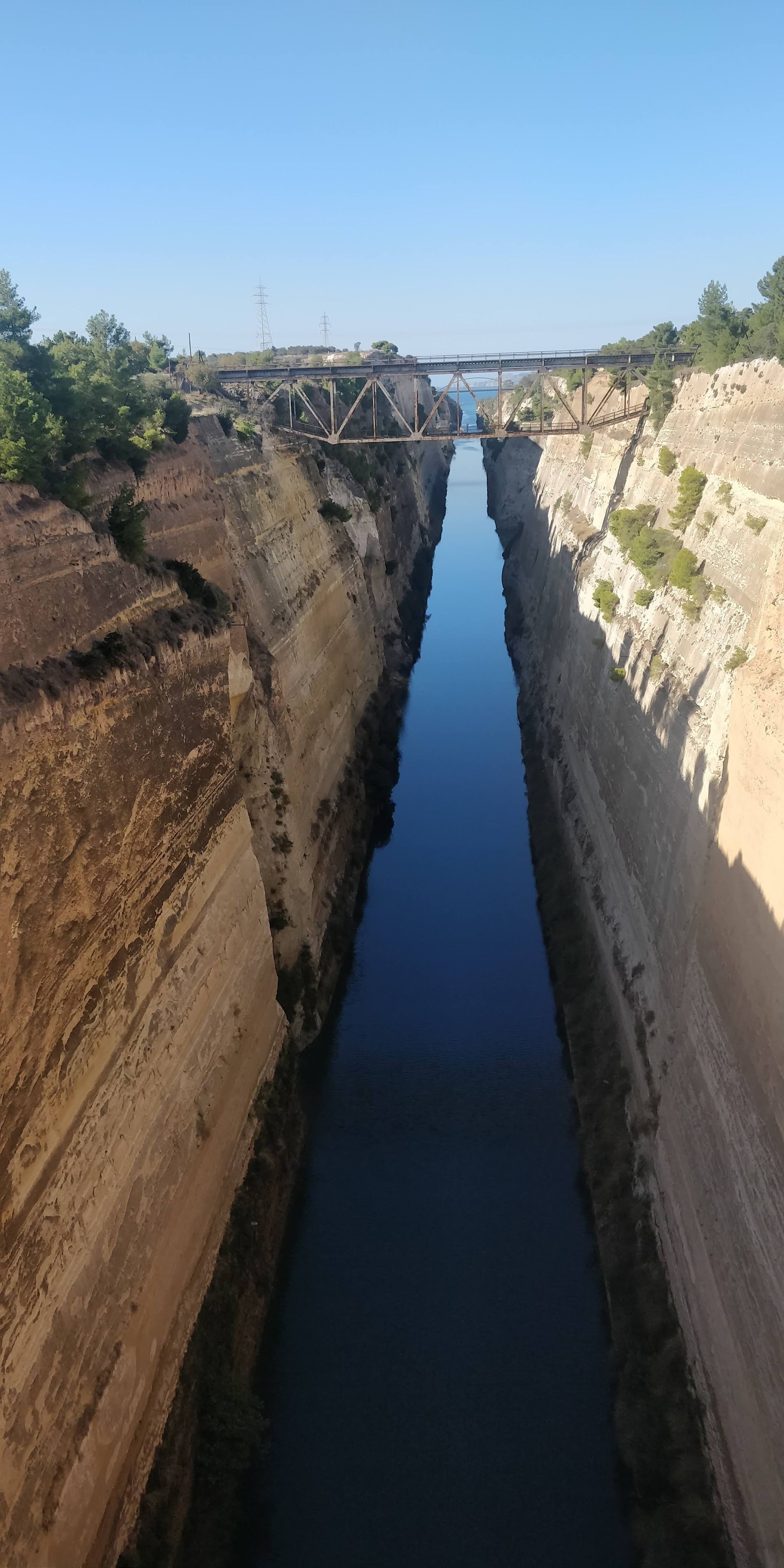
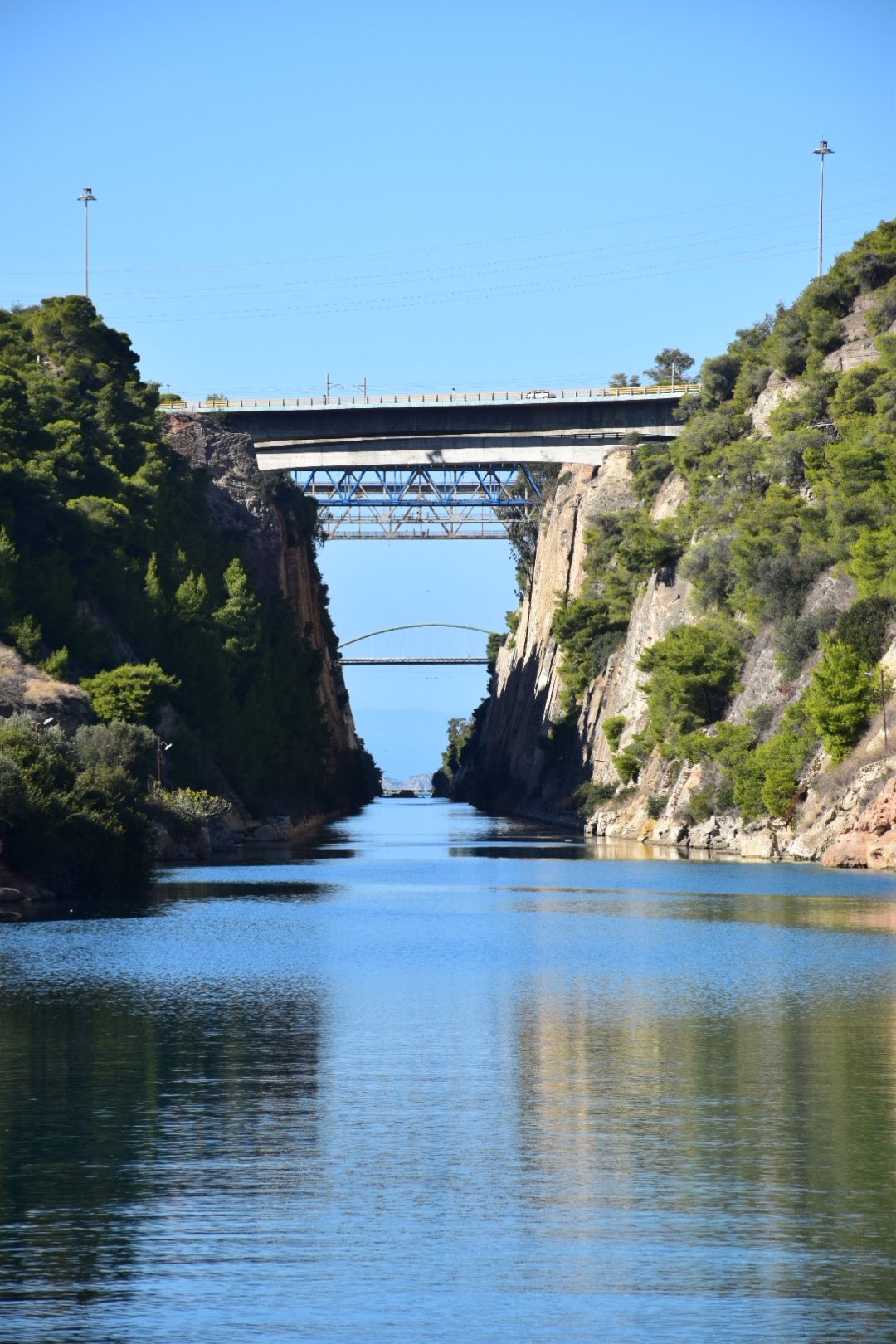
We couldn’t leave Corinth without visiting its number one attraction – the Corinth Canal, a true engineering feat. Although, there weren’t any ships going through while we dawdled on some of the bridges, it was still beautiful

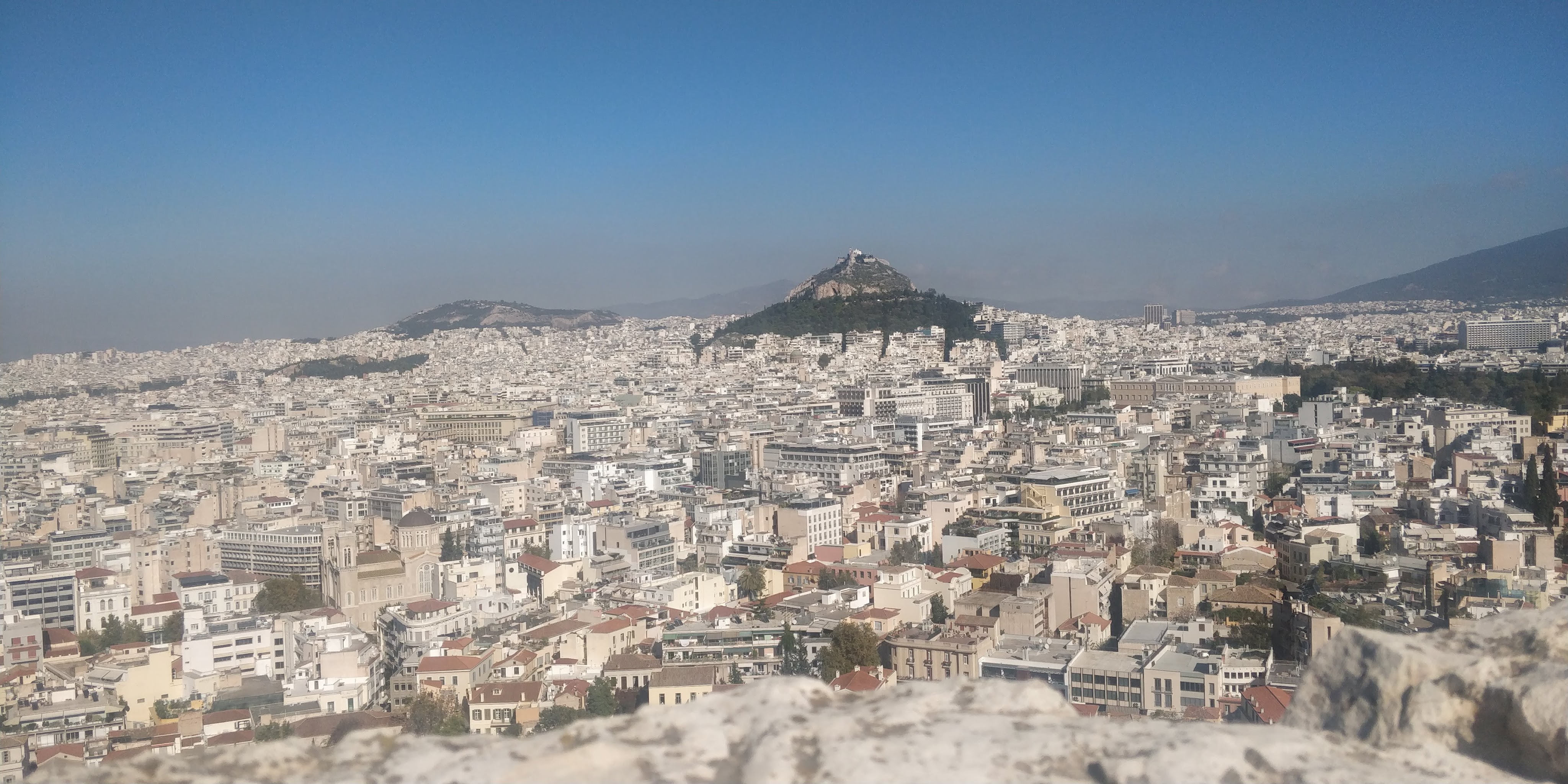
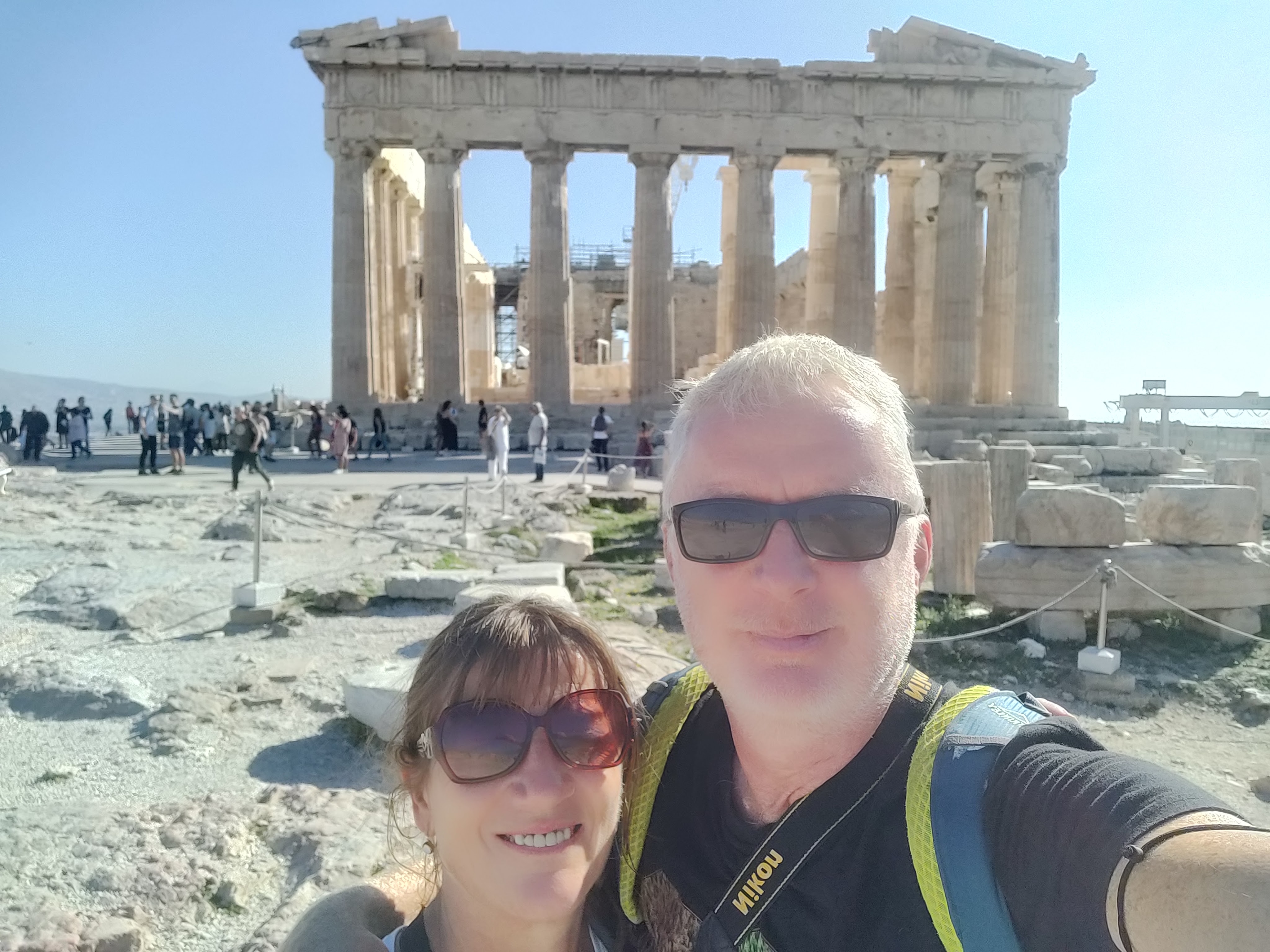
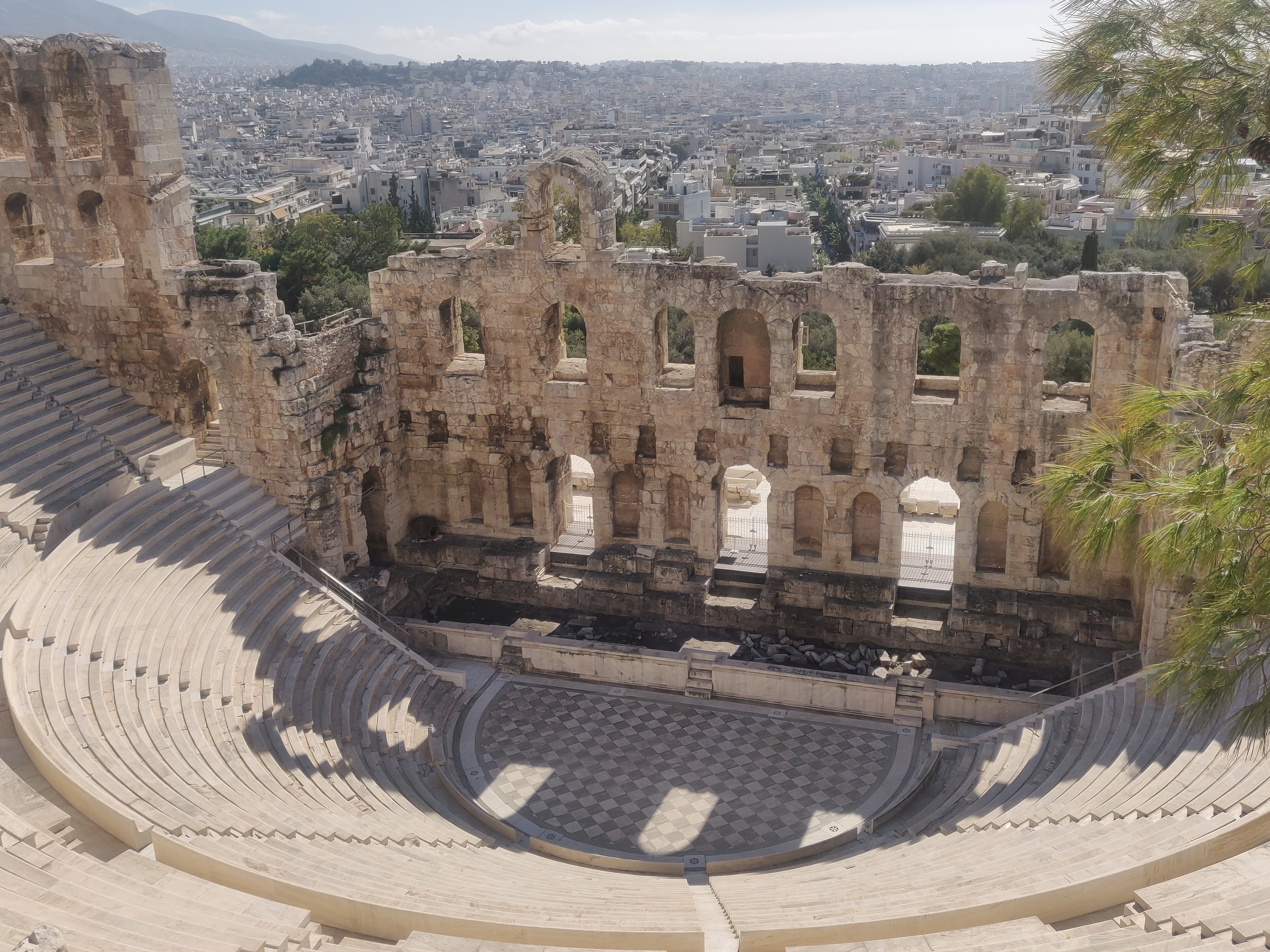
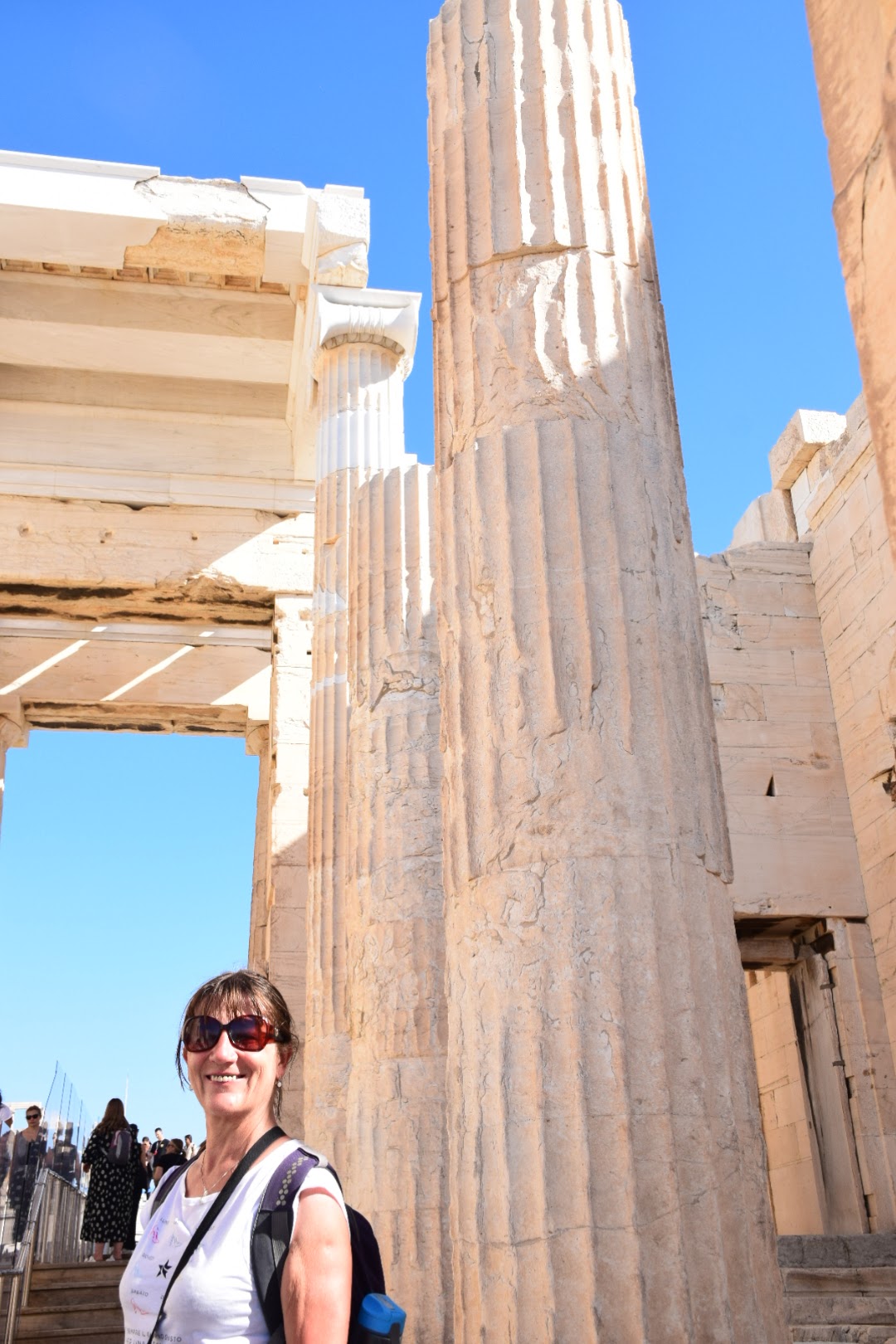
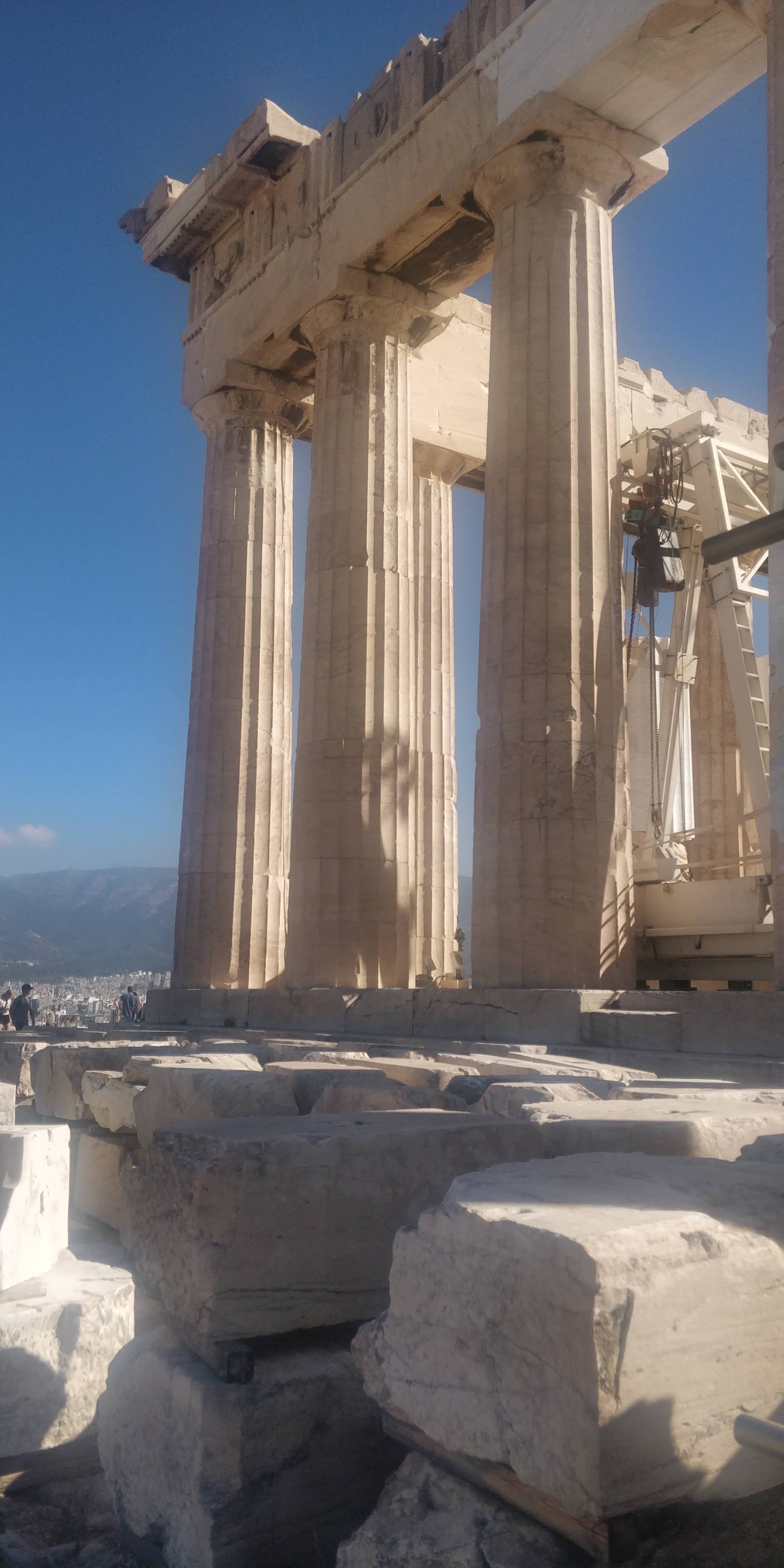
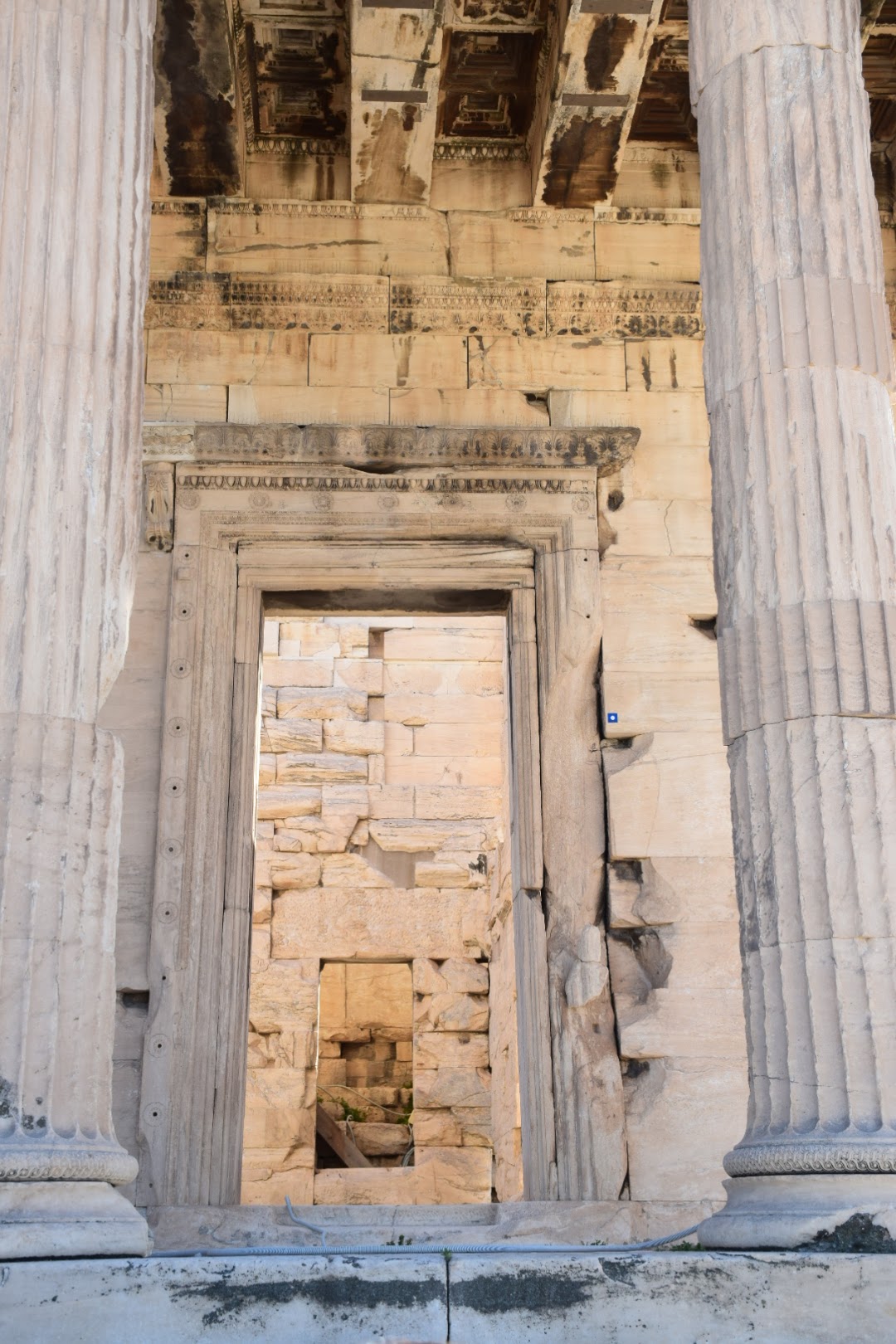
Onwards to sprawling Athens (we paid road tolls this time- a first for us) and what a surprising delight Athens was. This was our first visit and our expectations were low but in the November sunshine the city glowed. We parked in an underground carpark about 15 minutes walk from the Acropolis where the parking attendent was so helpful, I asked if he was a tour guide. I have wanted to visit theAcropolis for a long time and it didn’t disappoint – the photos describe it better than I ever could. The buzz of English speaking voices (British, American and Aussie)in the short queue was a novelty for us, we are usually surrounded by Greek voices (that shouldnt be a surprise in Greece). Outside the Pantheon, Caoimhin pulled a half bar of chocolate from his pocket, I had some in my mouth, when we heard a whistle blowing and a large middle-aged woman descended on us telling us that it was forbidden to eat. We apologised, swallowed our chocolate and laughter because as soon as we had entered the Acropolis, we had sat under a tree and happily munched on pasta salad and olives that we had brought with us without realising that we had transgressed any rules. But it entertained us to hear the frequent whistle and spot the latest culprit who had pulled out a sweet, a cigarette or gone the wrong way round although it wasn’t obvious which was the ‘right’ way. The markings on the votive pillars where almost three thousand years ago, people’s requests were carved in stone and offerings made for health or weath or the blessing of children. Little changes.

On the beach in Hydra

So now we will take the early morning ferry from here in Hydra back to Pireaus , pick up the Guzzler which we parked in a parking bay at the port and head towards Delphi to see if the oracle can tell us anything about the future. There has been an increase in Covid restrictions since Saturday (Nov 6) here in Greece and now a Covid cert must be produced even to sit outside a restaurant. Apparently some non vaccinated people can only eat by having their meals delived to their hotels according to my new friend, the jeweller down the road. So until next time, thanks for reading….congratulations if you made it to the end!

Ring the bells that still can ring

Forget your perfect offering

There is a crack in everthing

That’s how the light gets in

– Leonard Cohen

OutsideLeonard Cohen’s Gaff

Glorious Greece – multi-faceted

THIS is Greece

This post comes with a warning. STOP. Do not read further unless you want to turn green and feel compelled to jump on a plane (or ferry). Remember that when we first arrived in Greece, we had days (without end) of torrential rain, hailstones as big as fists, thunder and lightening storms when day was night, bedroom walls that wept water, rainwater that cascaded down electrical light fittings and leaky roofs. But all that is in the past.

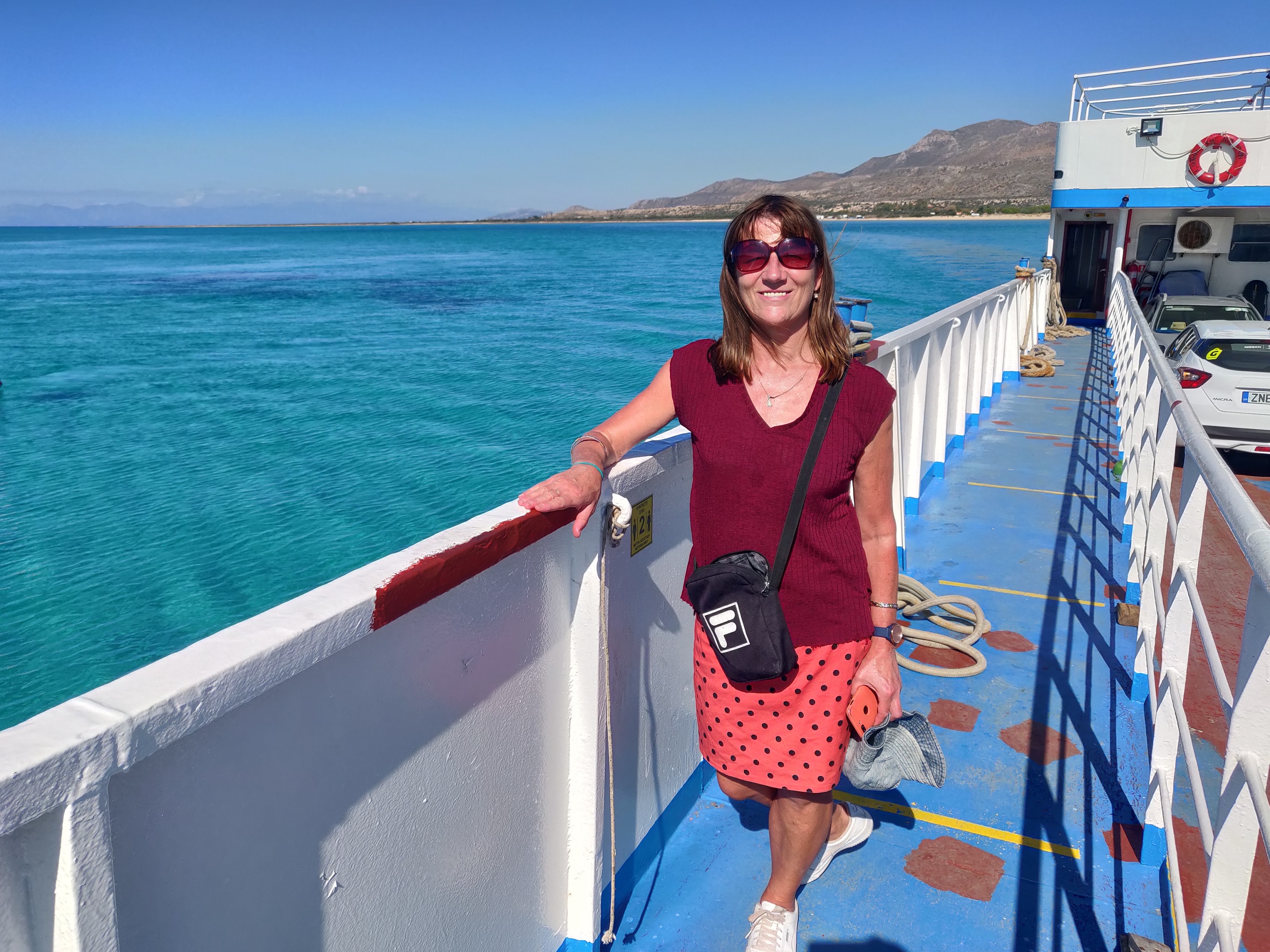
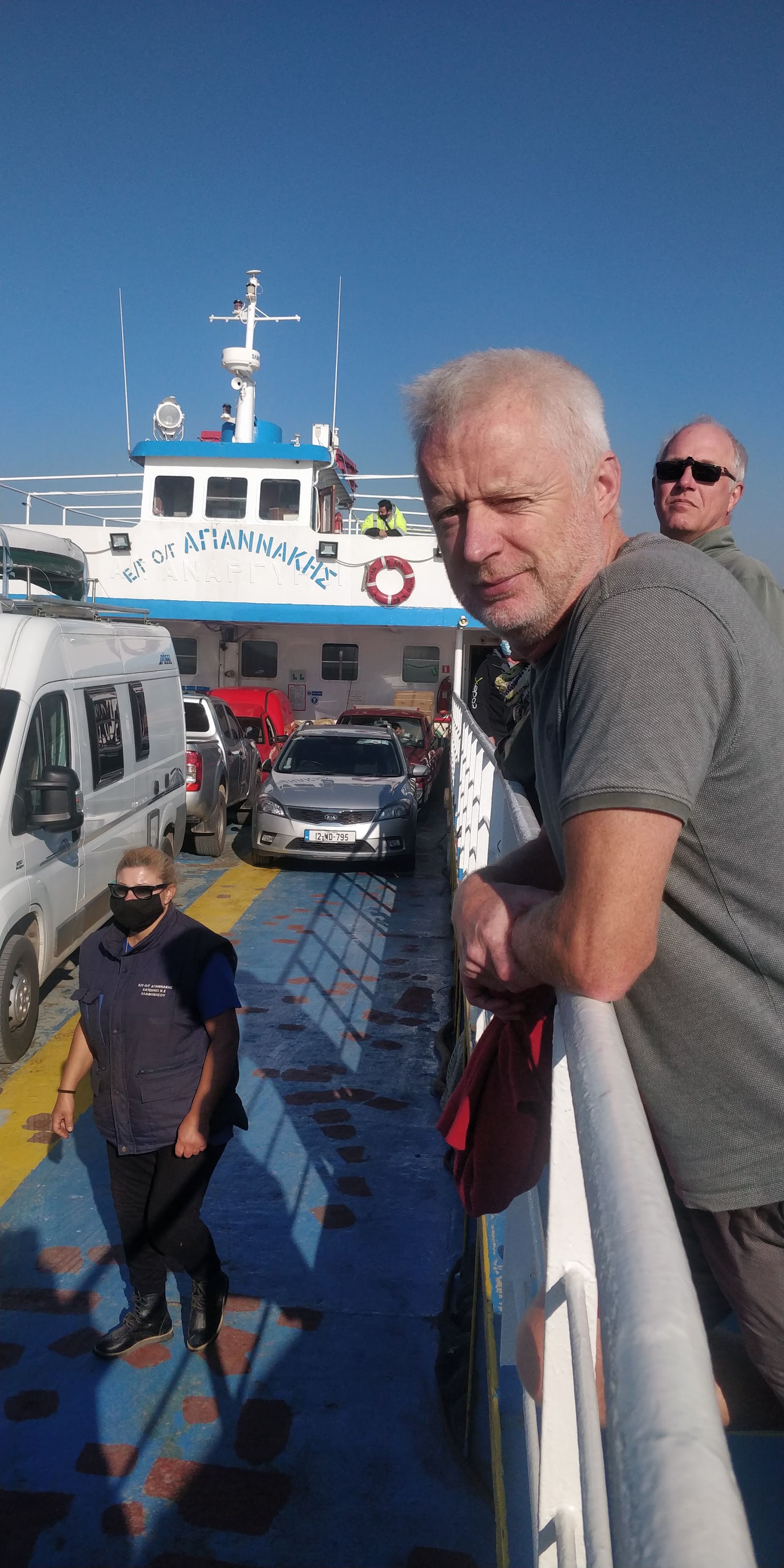
Elafonisis is a beautiful Greek island that lies off the coast of Malea – its small, less than 20km2 and only a short ferry ride from the mainland.We arrived on a sunny Friday morning at the tiny port village to see the ferry boat powering away in crystal clear waters – without us. We had missed it by two minutes. But we weren’t too upset – we pulled out our deckchairs and waited an hour for the next crossing watching fishing boats and seabirds and Caoimhin had a swim – a true advantage of not being in any hurry. The tranquility of the scene was broken when the ferry boat returned and chaos began. It was a small ferry with room for about 25 vehicles but you had to reverse onto it and the ferry operators – very impatient individuals- bellowed instructions. ‘Left, Left…I said left!!’ but really they meant right (or maybe their left) so confusion reigned especially among first-time visitors and non Greeks. One poor Swiss guy was shaking by the time he got his car onto the ferry amid a torrent of yelling and even banging on his drivers window. The ferry trip took about ten minutes and then we drove into….paradise.

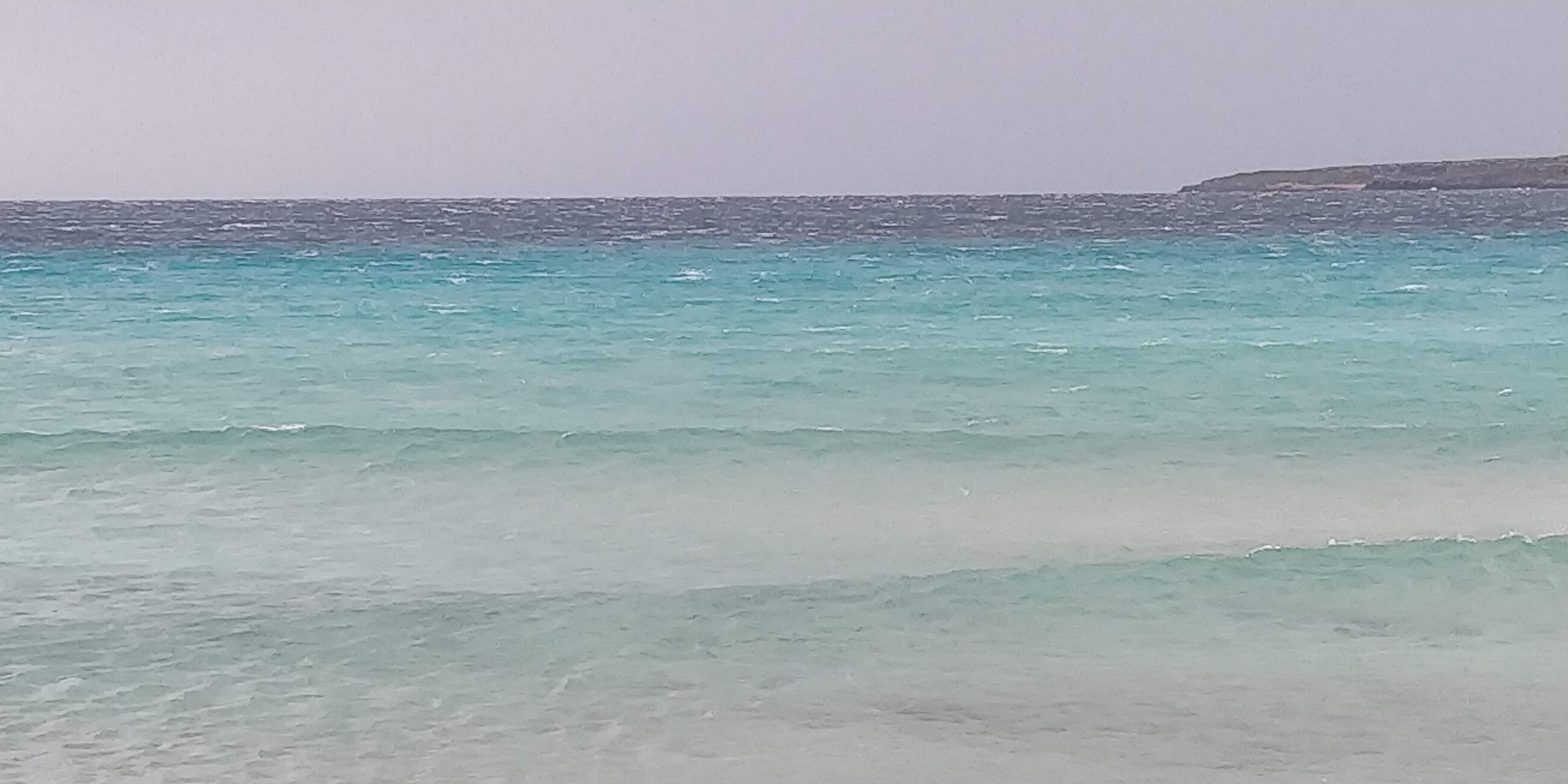
We stayed for four nights in a beautiful guest house (Corelli’s after Captain Corelli’s Mandolin) run by a chatty, blond-haired Romanian woman who came to Greece on holidays thirty years ago…and stayed. The guesthouse was ten metres from the turquoise shore with water so clear that we could see little glittering fish swimming with us. We moved from a room with a little balcony after the first night to the ‘penthouse’ for the rest of our stay (from €40 a night to €50 and worth every cent!). There were laid-back beach bars and restaurants beside fishing boats – where the fish was so fresh that it almost swam around the plate. We kept looking at each other and saying ‘Life is good’.

On Sunday morning, we were woken to the sound of bells from the beautiful church near our guesthouse at about 7am. When the Sunday service started at about 7.30am, the chanting of the liturgy was piped through loudspeaker into the clear morning air and was carried all around the little village – repetitive and vaguely hypnotic. Two mornings later, we were woken by the bells again and the chanting – we were surprised because it was a Tuesday but October 26 wasn’t an ordinary day for so many Greeks, it was Dimitri’s day where anyone whose name is Dimitri celebrates and there are a lot of Dimitri’s. In Greece. your name day is far more important than your birthday and as most people are named after saints, everyone has a name day and if you don’t – there is a specific day (All Saints Day) that covers everyone else so that they, too, can celebrate a name day. We left the island on that Tuesday and drove past crowded cafes on the mainland where the Dimitiris were celebrating by buying coffee and pastries for all their family and friends (Take note, all James, Jims and Jimmys as Dimitri is James in English)

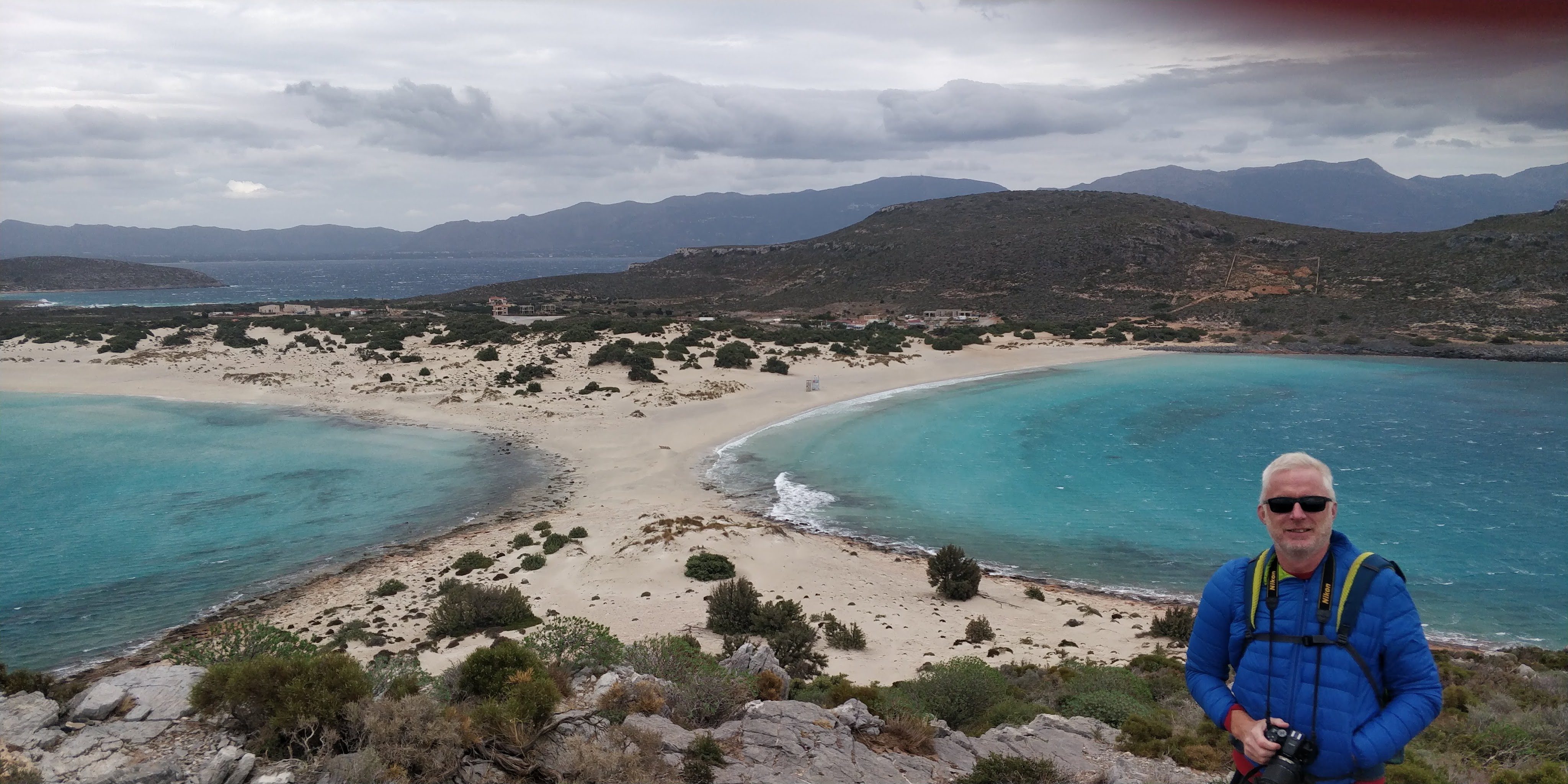
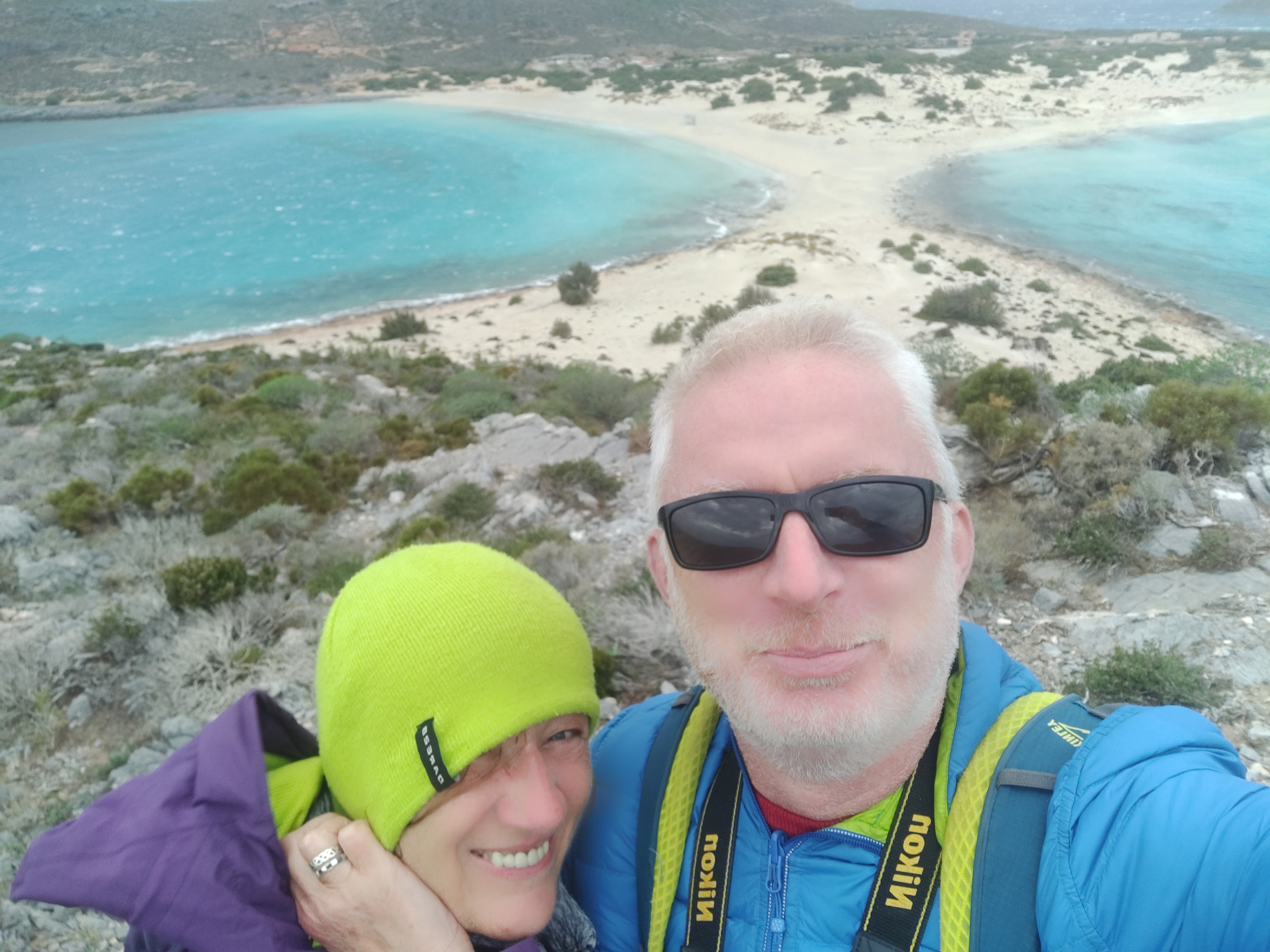
On our last day, the weather changed, the wind blew up and gushed around the wraparound balconies of our penthouse room but the sea colors were still mesmerizing – even more intense, if anything. Simos beach was the famous beach on the island – we had sunbathed and swam there on several days – but this was a day for wrapping up when the wind threw sand at us with such ferocity, it was exfoliating. We climbed a little hill overlooking the beach and had to take shelter behind the juniper trees growing there because we couldn’t stand up in the breeze and we were eating sand for the rest of the day. So we saw another side to Elafonisis. But still worth it – a very special place.

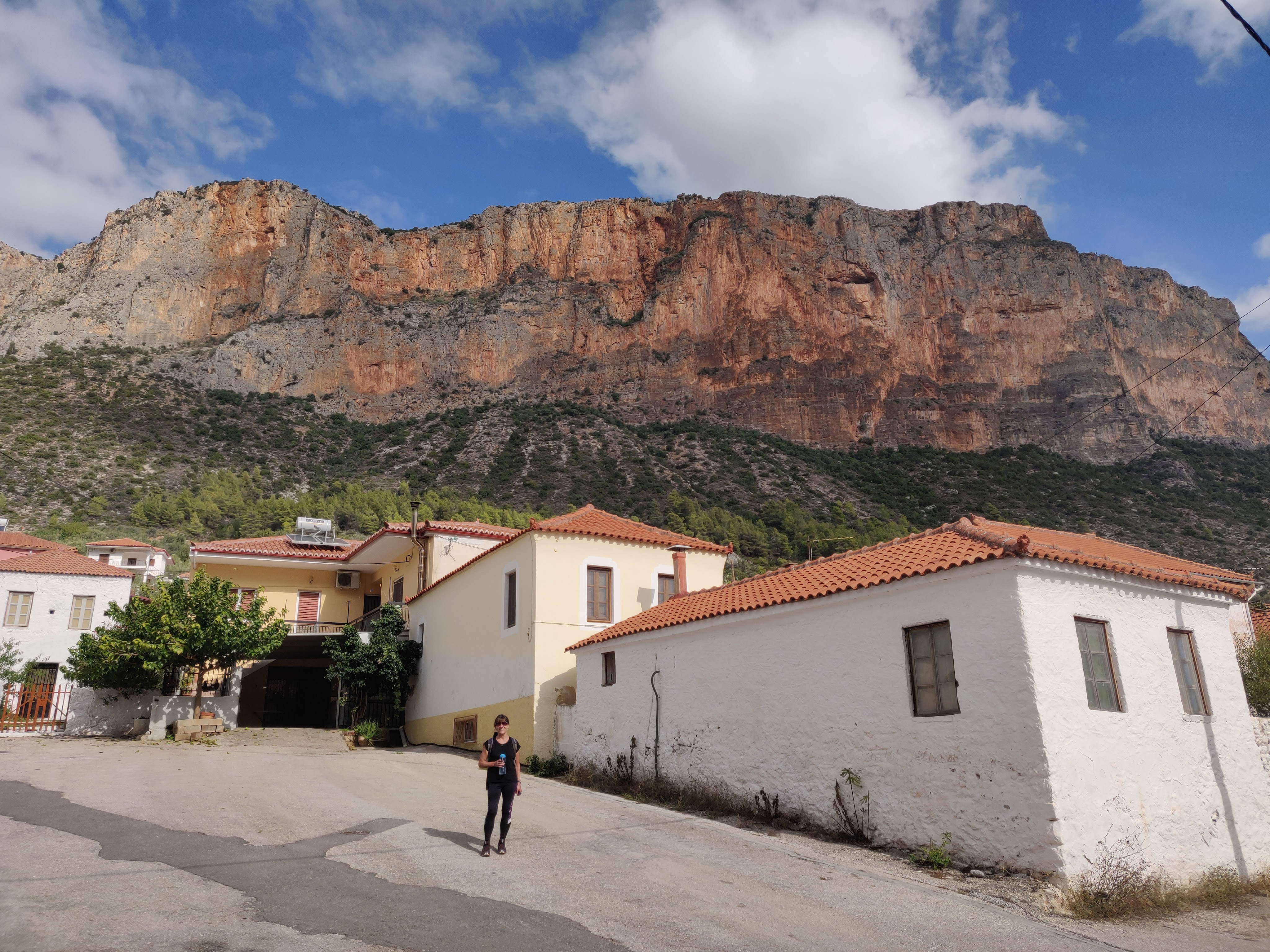
After a reluctant Goodbye to Elafonisis, we headed to Leonidio for no good reason except that it reminded us of the chocolates (which I have a great fondness for!). We might have gone there for the wrong reason, Leonidio was famous not for chocolates but for aubergines which are so special and unique in this region that they have been awarded a Protected Designation of Origin (They are long and thin with pale white stripes and were indeed very tasty). But Leonidio was a lovely little town in a stunning location surrounded by mountains, green and tree-clad on one side and bare glowing red rock on the other and the sea only a few kilometres away. There were monasteries high in the mountains with beautiful churches, carved into the rock. It was also a climbers’ mecca and we would have stayed longer than our two nights except that there wasn’t a bed to be got because of a climbing festival was just about to commence.

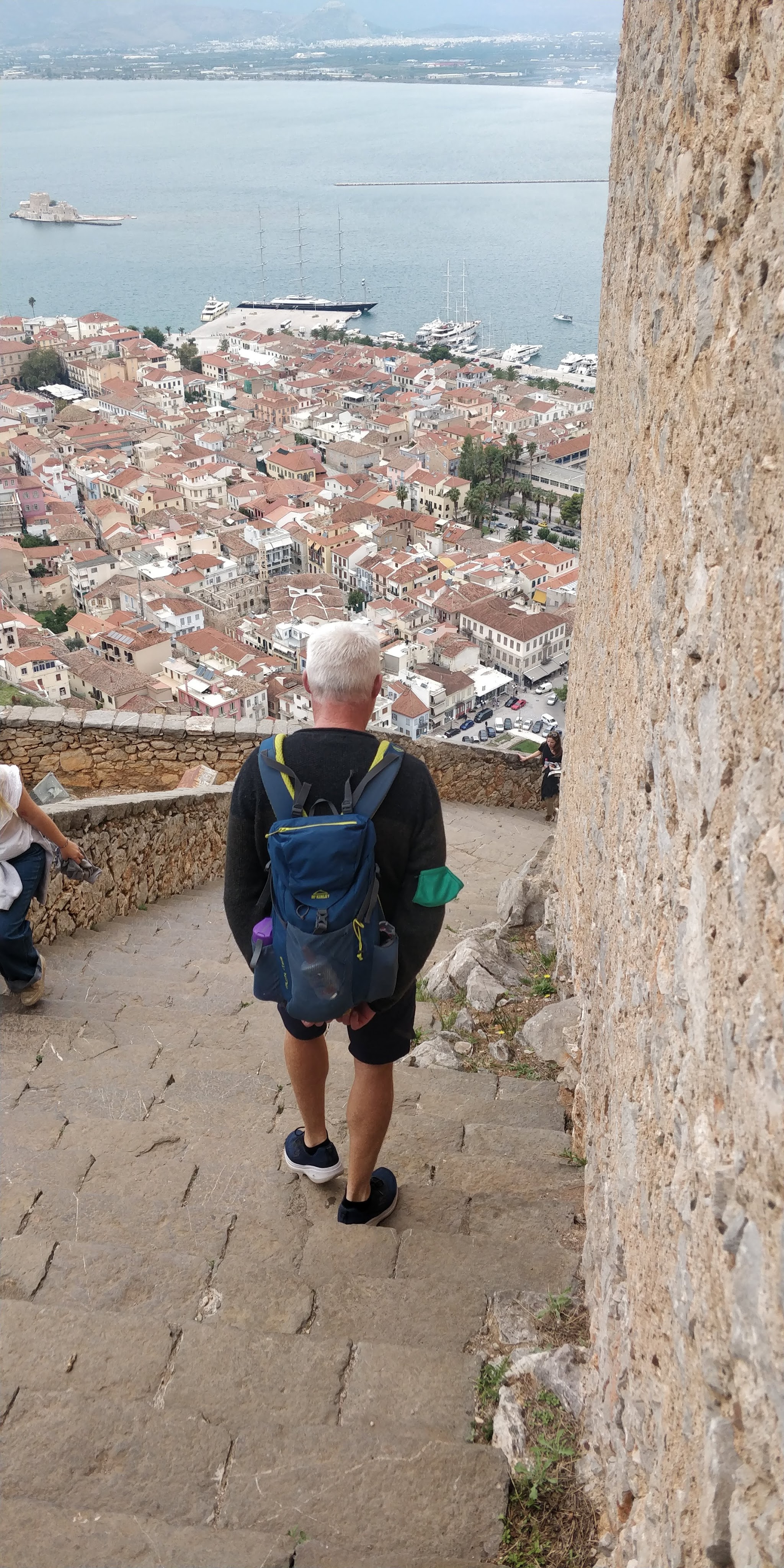
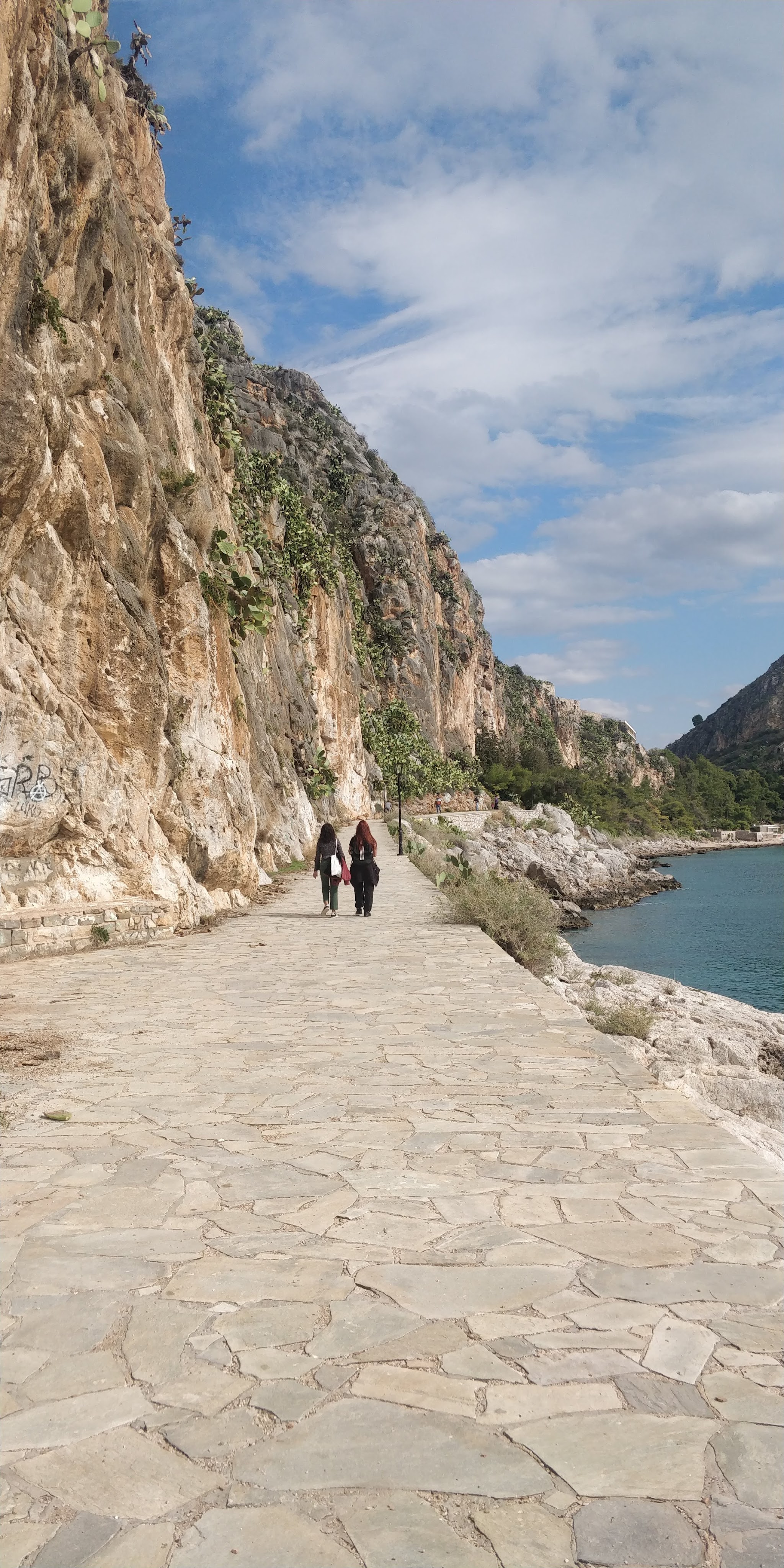
So we headed on to Nafplio, a town which is reputed to be the prettiest and most romantic in all of Greece and was the capital of Independent Greece for a few years from 1823 when it gained freedom from the Turks. Now I’m not sure how any town could possibly live up to such a moniker…and so inevitably with such a build-up we were a little disappointed to begin with. We have been to so many beautiful places whose beauty caught us completely unawares. (that line by Kavanagh was running through my head – through a chink too wide, there comes no wonder). It is touristy with lots of visitors – and proximity to Athens, a mere 2 hours away, helps – but its charms crept up on us, especially wandering around the old town, strolling by the port, sipping a glass of wine while people watching, climbing to the fortress of Palamidi on the hill (999 steps up) or walking along a cactus and pine paved path that wound along the coast to several beaches. And then there were the interesting people we met – Fred and Tanya from California and Evelyn, a Greek American – just random but meaningful connections which is part of what travelling is all about.

Happy Halloween to all…..as the witching hour approaches!!! (But not in Greece- we haven’t seen any evidence of Halloween here so far but maybe tomorrow…)

THIS is Greece

Hello Greece

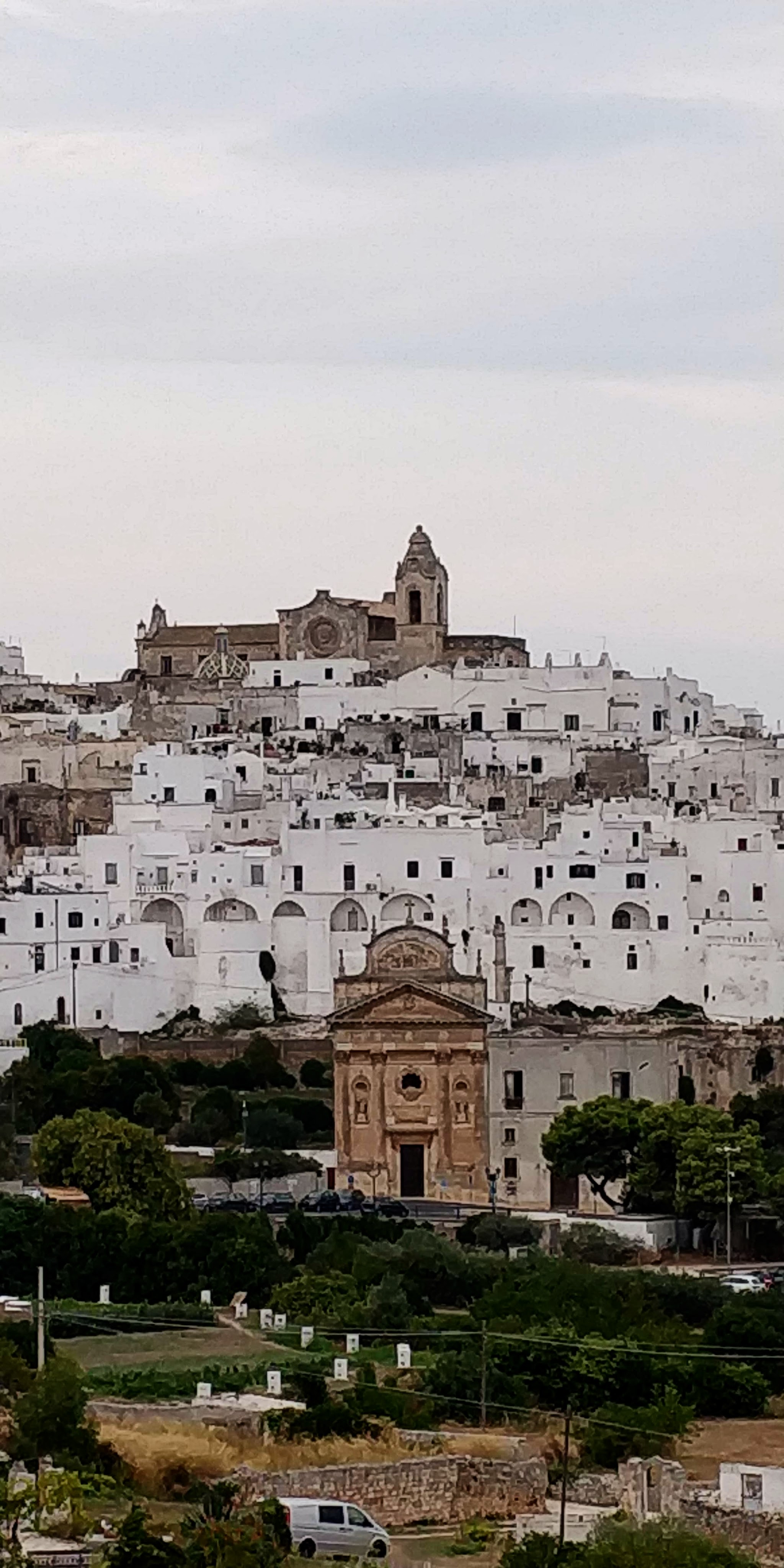
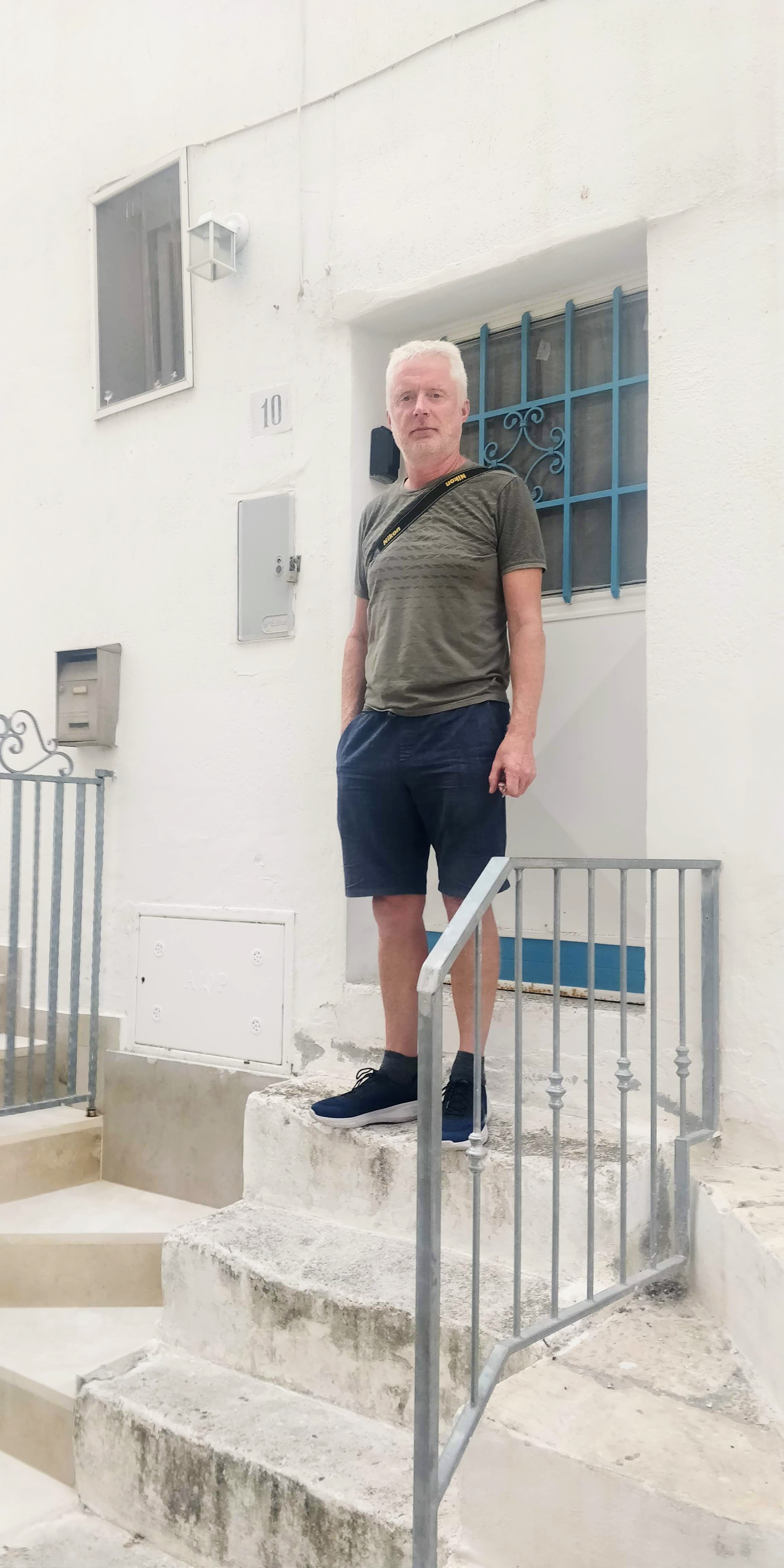
On our last night in Italy, we stayed in a tiny cute house in the very heart of Ostuni, usually called the White City as its white-washed buildings glow like beacons on a scrubby hillside about fifteen kilometres inland from the Adriatic Coast. It has acquired another name, SalentoShire, (Salento after the region) and shire because of the huge number of Brits who have moved there in the last 10 years. And the sound of English accents was everywhere…it almost felt that we had already left Italy. We were usually up and about early in the morning but as it was our last morning we decided to have a lie-in. But a banging and hammering started on the street outside our house well before 7am, the noise travelling through the old walls until it was almost inside our heads. A workman was renovating the steps and paving outside our house – he was so apologetic when we appeared as he hadn’t realised that anyone was staying in the house

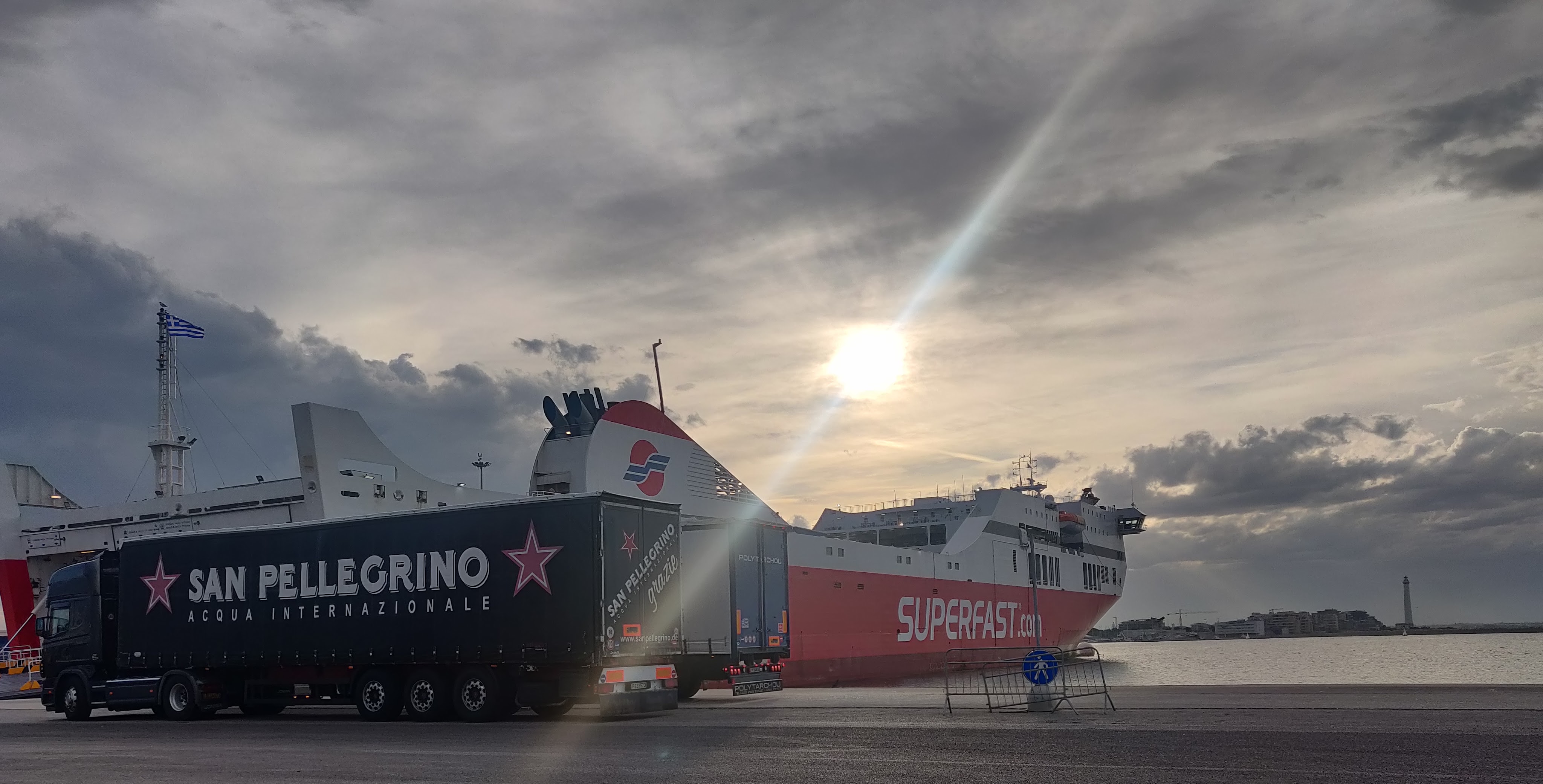
Ports are strange places, almost cities in their own right with bouts of frenzied activity interspersed with idle calmness, lots of chat and workers hanging around. At the Bari port there was signs for ferries to Albania, Croatia, Montenegro as well as Greece – so many possibilities. This ferry  to Greece was our third ferry crossing with the Guzzler. We arrived early and checked in – or tried to. A very officious woman scrutinized our Covid Certs and demanded to see our PLFs (passenger locator forms) which we didn’t have because we didn’t think we needed them. We had a mad scramble to fill them out – they are not difficult, just tedious. (We had filled out a PLF for Spain to Italy ferry leg but no-one had asked for it)

Our SUPERFAST Ferry

Although we had booked a cabin for all our other ferries, we didn’t for this one because it was so expensive – at least €150 extra for a basic cabin. We were due to depart at 19.30 from Bari and get into Patras at 13.30 the following day. Surely we could survive seventeen hours without a bed? As soon as we boarded, we bagged a long bench seat in the cafe area and spread ourselves out, making ourselves as big as possible. It was interesting, watching everyone else trying to outmaneuver each other for possession of seats/space. But it wasn’t funny when either of us went to the loo, the other was left defending ‘our territory’ from takeover which was quite stressful. A big Greek man nearby asked the steward to turn up the volume on the TV – which was just to the right of our heads – so that he could watch the Greek equivalent of Coronation Street. He pulled his chair closer and munched on an enormous bowl of crisps totally engrossed, spitting crisps in all directions. Instructions about social distancing were blared every fifteen minutes in five different languages – interestingly the English voice sounded something like Queen Elizabeth. A cabin began to seem really appealing so Caoimhin went to inquire about availability. The woman at the desk wouldn’t tell him the price (a fairly straightforward question, you’d think), he’d have to ask the captain. The captain, when asked, replied that a cabin was €150, Caoimhin said he had €50, the captain laughed but after some more back and forth, agreement was reached and we got a cabin for €80. It seems that things in Greece may be negotiable. We were more delighted with this cabin than any other – the sweetness of a ‘bargain’. I slept like a log – even if it was sea-tossed log with lots of banging – as our Superfast ferry groaned and creaked its way across a very choppy Ionian Sea. In the morning, we could barely push open the doors to get on deck because the wind was so fierce against it.

Greece, Here we come!

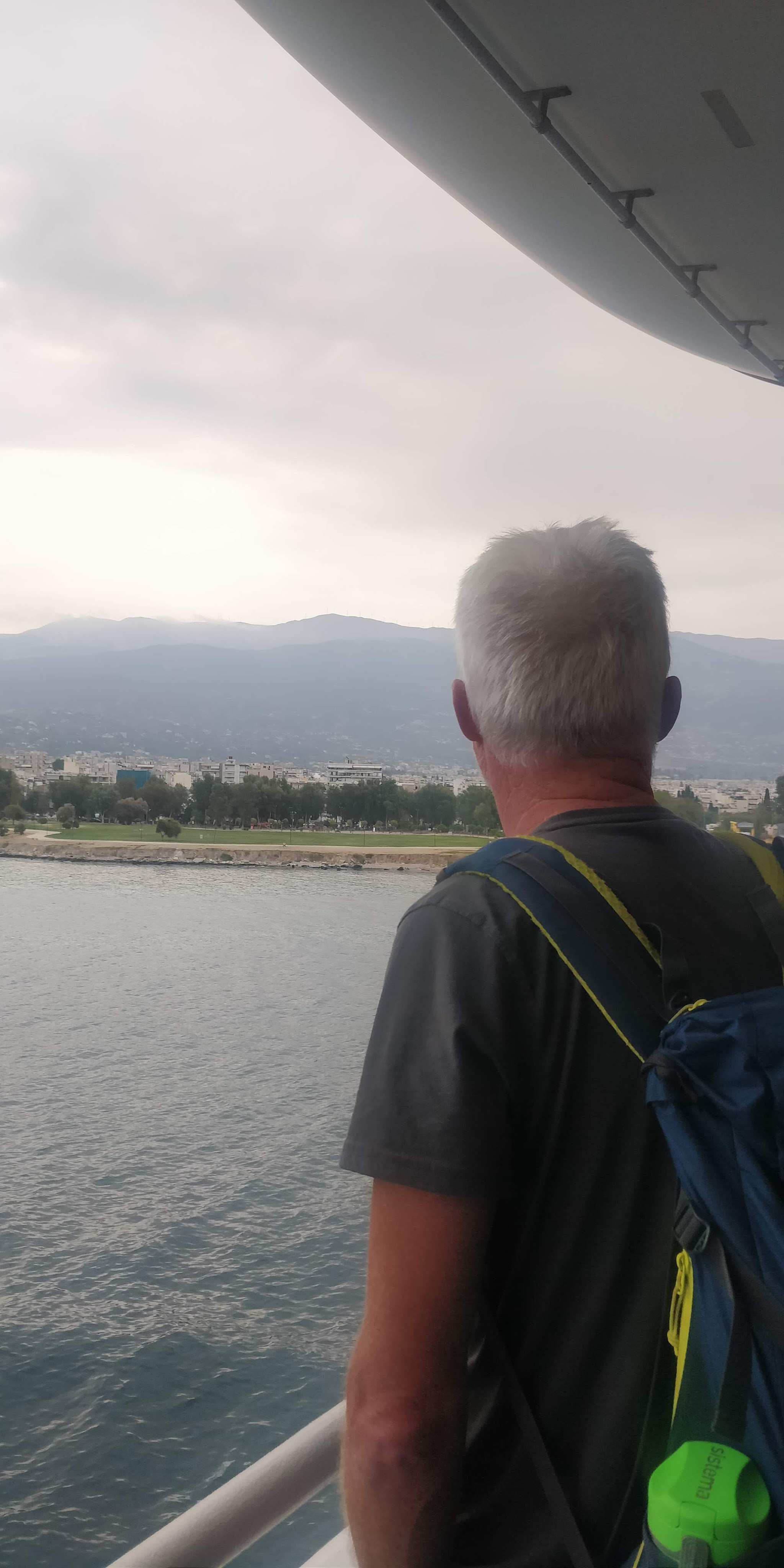
We arrived in Patras in mid afternoon, with dark storm-laden clouds overhead and a forecast for heavy rain- not the picture of Greece that we had envisaged. The apartment that we had booked (€32 a night) was OK – it was on a little side street not very far from the port but it was a bit dark and dreary. Later we wandered into town – there was a third world feel about the place which we couldn’t quite put our finger on. Admittedly, the cars were older, the pavements were cracked and uneven, there was lots of litter, the street lighting was poor but all these things were also in parts of Italy (and even Ireland) and then it dawned on us, it was the pervasive smell of sewage and drains. It was also raining and cool (about 18 degrees but feeling much cooler) – we had put on jumpers and raincoats, hauled out from the bottom of our packs. We found a pedestrianized area with lots of restaurants where people were huddled in coats under awnings and umbrellas, watching football (and soaps) on TVs. We couldn’t understand the Greek letters or the language – the pronunciation seemed very difficult so after some coffee and (one) beer, we were on the way back when Caoimhin slipped on the slick pavements. He wasn’t the only one – we saw a woman fall as well but Caoimhin’s slip was actually quite dramatic as he went down hard and even though he fell, I screamed causing a bit of a stir.

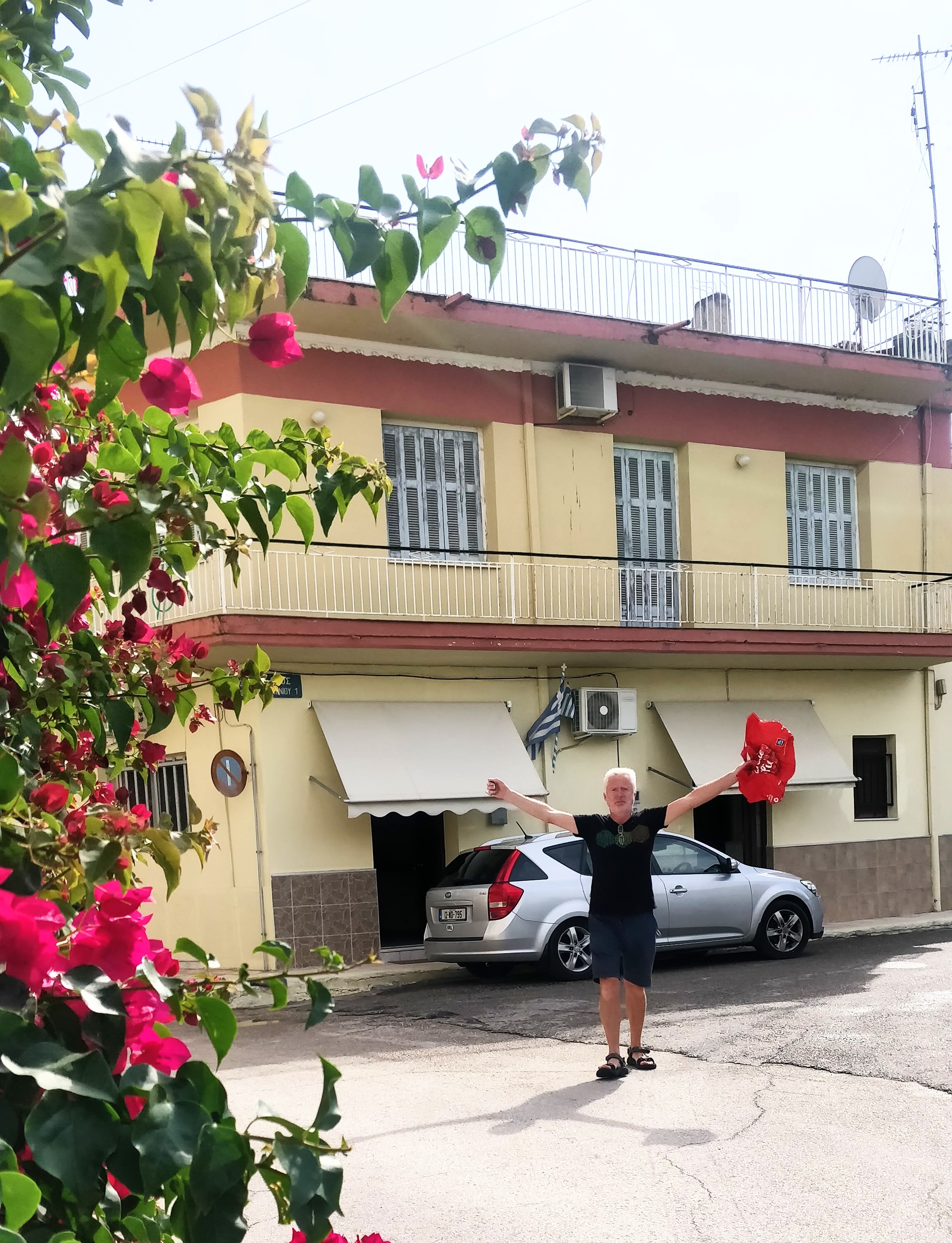
Caoimhin and the Guzzler outside our first Greek apartment, Patras (under awning)

The following morning – luckily Caoimhin was fine apart from a few bruises- we packed up, booked a place about an hour west called Kalogria, (which was near a beach with sand-dunes, forests and hills) and headed off in sunshine. We really didn’t give Patras a chance, apparently it has a wonderful old town and it has been rocked by earthquakes over the years. We may have to go back…..but no time soon.

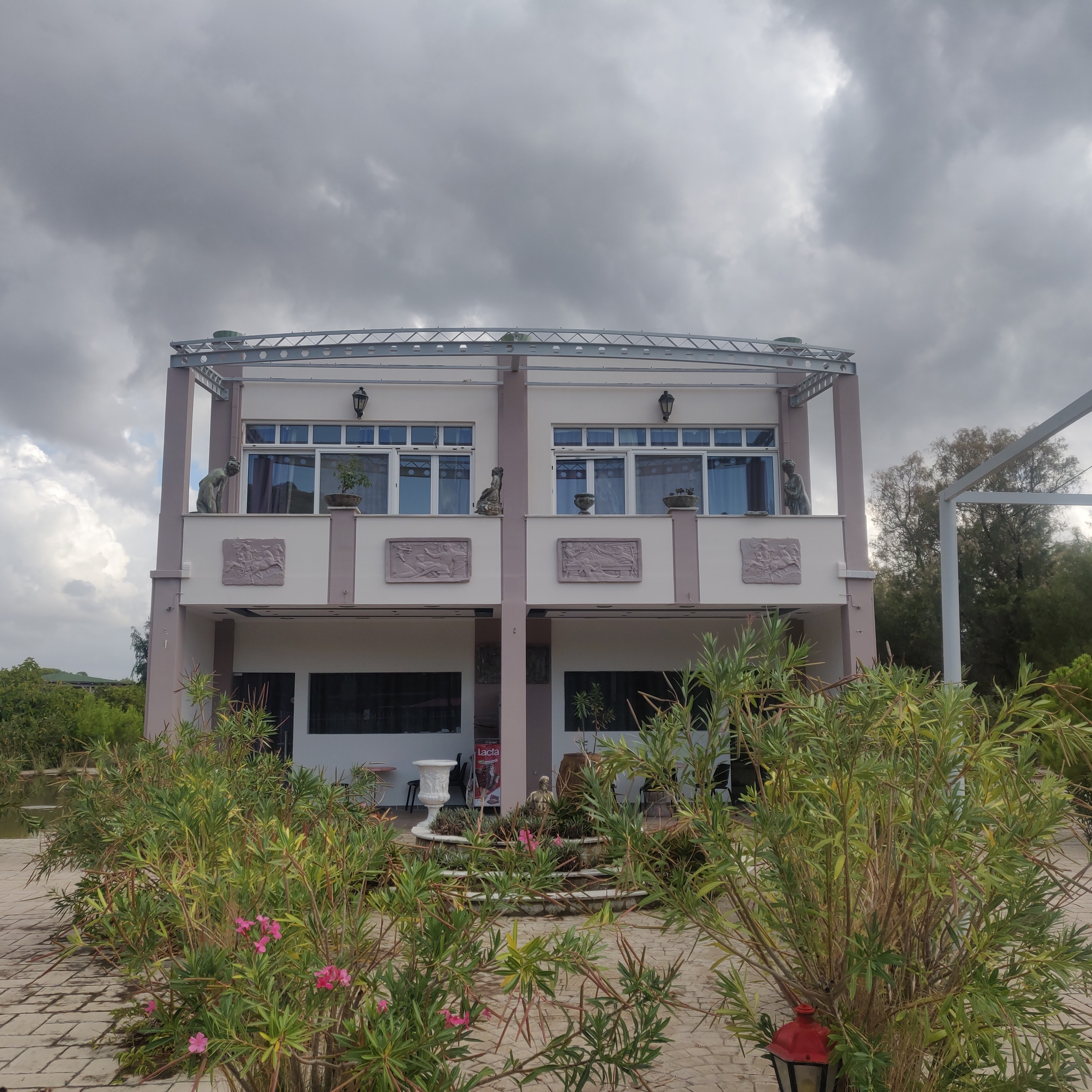
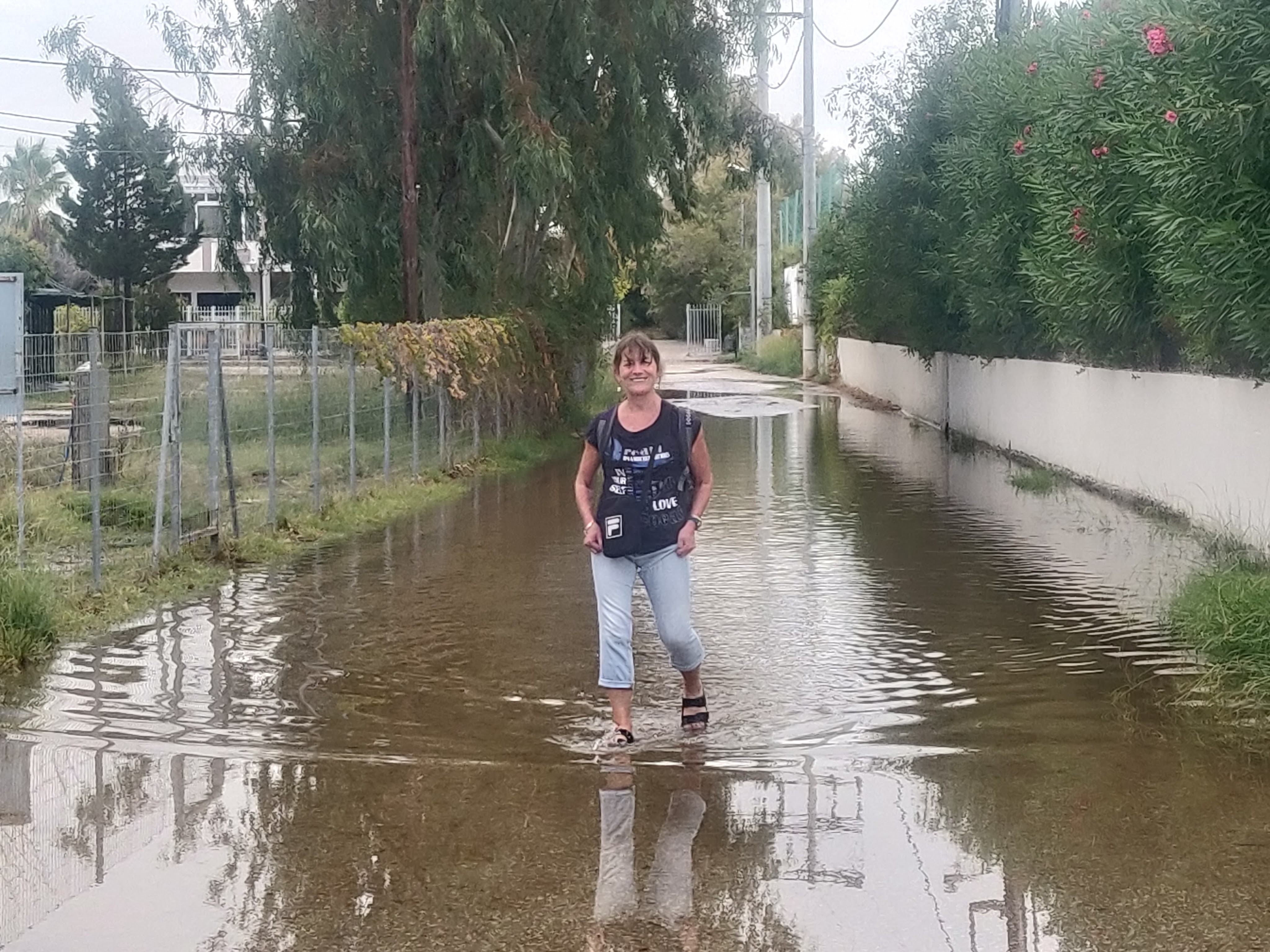
Kalogria – our first floor apartment and balcony, wading through the floods outside.

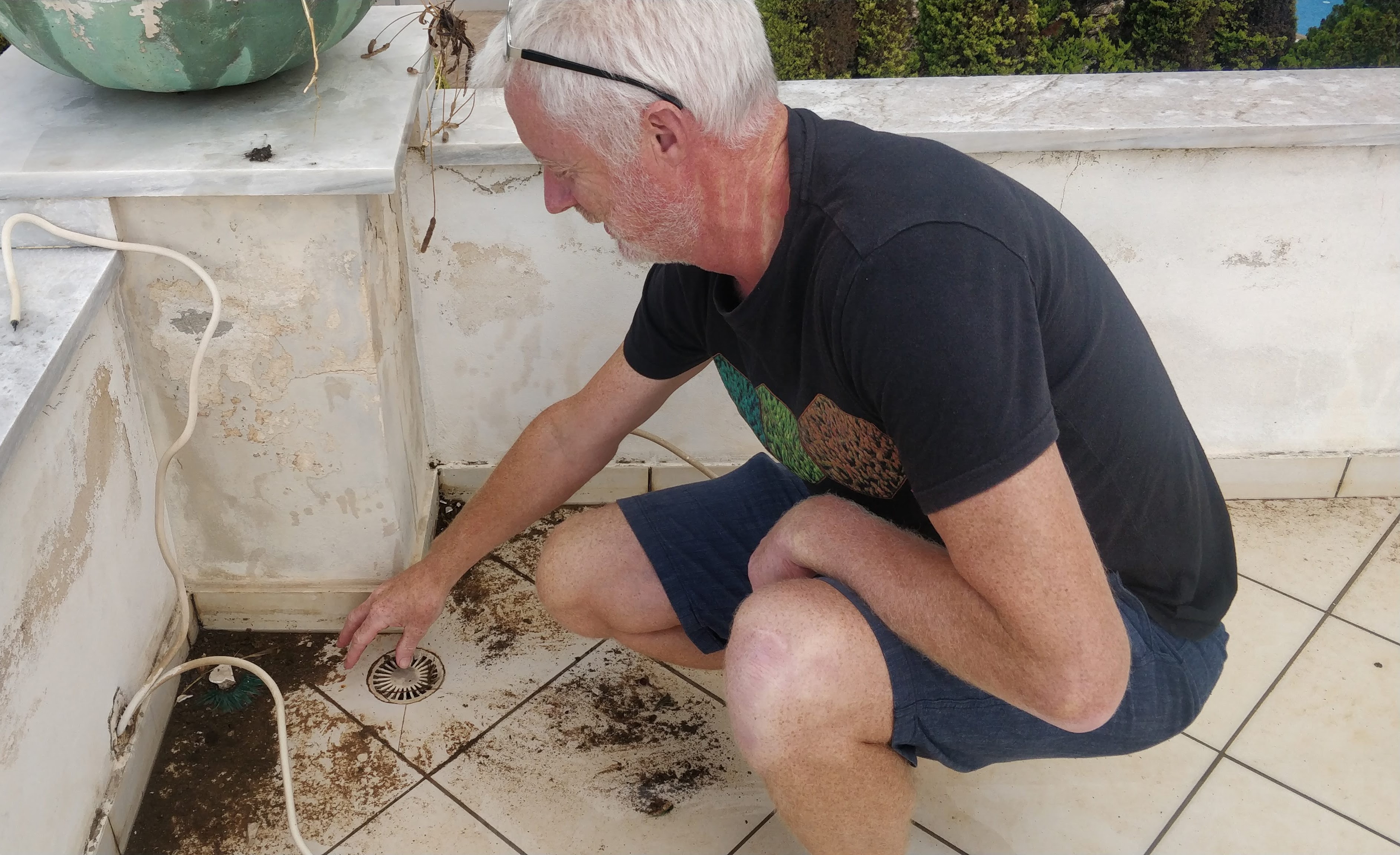
The sunshine didn’t last – the rain came down in buckets, lodged on the flat roof of the apartment, cascaded down the walls and windows in waterfalls and came in through the windowsills and under the doors. Caoimhin went onto the roof to investigate and saw all the blocked drains – the rainwater had no choice but to run down the walls. He set about unblocking the drains (about 10 minutes work) in exchange for a free nights accommodation! Looking around at the amount of minor repairs required , we may never leave!!!!

A Man at Work

We had some incredible weather in Kalogia….amazing rain, dramatic thunder and lightening (one storm went on continuously for twelve hours during the night and there were several smaller storms and (some) sunshine. The roads nearby were flooded but passable but when we took to the hills during an interval between storms,, we found that they were still dry and parched despite all the rain. The Greeks were delighted with the ferocity of these First Rains (as the rains in October are called) because in some parts, there has been no rain at all since early April and they credit us with bringing the rain with us to them – it arrived on the very same day we did.

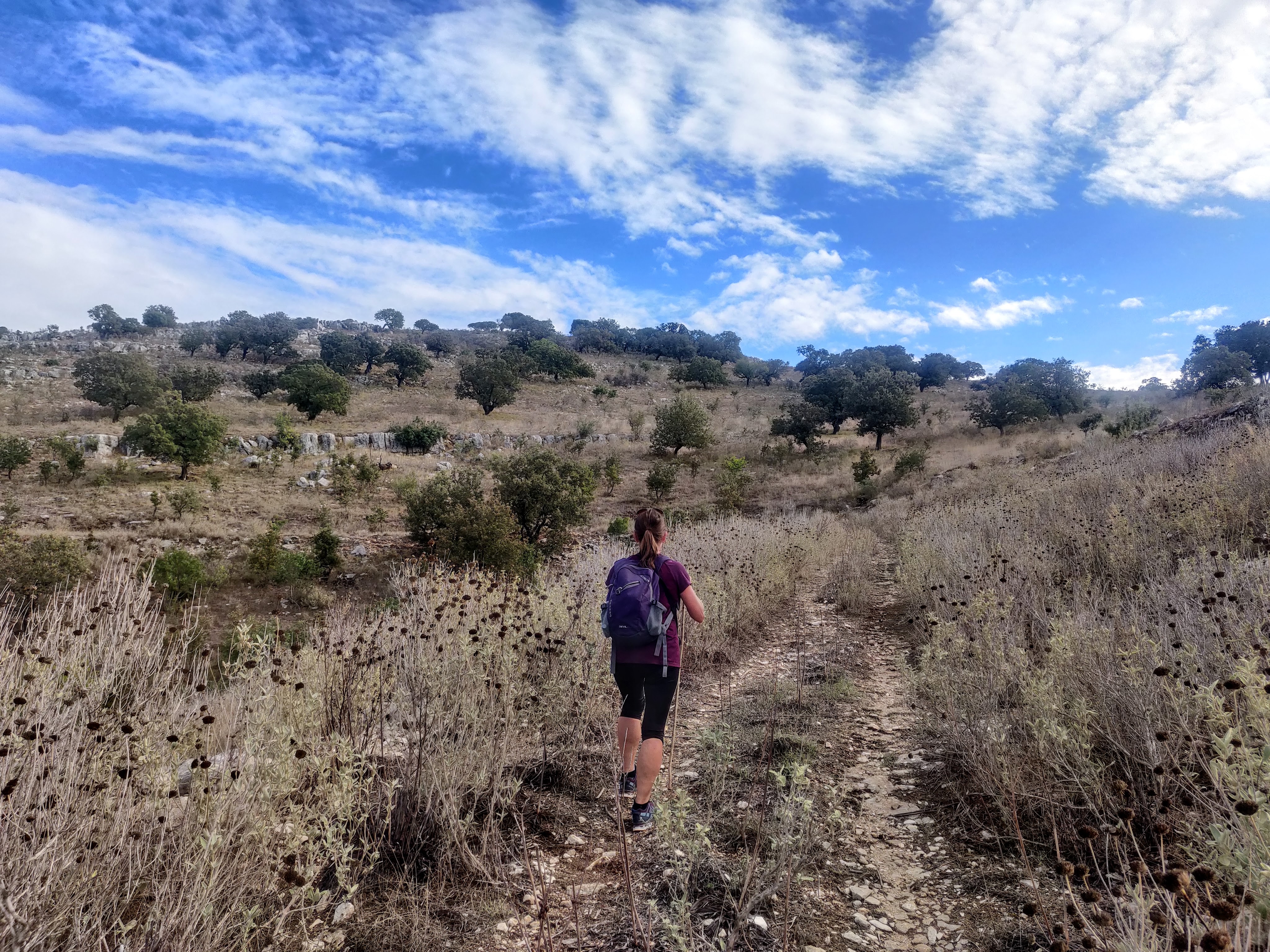
Walking into the Blue in Kalogria, Peloponnese, Greece

When the sun shone, Kalogria, Greece

We moved on to Olympia, a little town with a huge history in the Western Peloponnese. The windshield wipers worked overtime on the journey there (only about an hour and a half) almost drowning out the sound of Demis Roussos and the theme music from Captain Corelli’s Mandolin – we have switched from Pavarotti and Italian opera to Greek music (but may have to switch back or at least away from Demis) The rain stopped before we reached Olympia, which is set in a beautiful valley with pine covered mountains and fertile soil – no wonder it was beloved by the gods. The town itself was small and crammed full of hotels, restaurants and touristy shops with names like Hermes Cafe, Aphrodite’s Bar and menus in both Greek and English. There were rows of Greek and Chinese flags on both sides of the street – the Chinese flags were because the Winter Olympics are starting in Beijing soon. However when Google told us You have Arrived, we were outside a hotel that looked closed up -the hotel that we had booked the day before. We parked, walked around and tried a few doors – all locked. We weren’t too worried as it looked like we would have plenty of other accommodation to choose from (covid has played havoc with Greek tourism for 2 years). Alexander, a young chap in the cafe next door who sounded like he grew up in London (but didn’t) said that he would call the owner -he was best friends with her son – and sometimes she didn’t open the doors until later if it was quiet. So we checked into the Ilis Hotel. We thought we might be the only people staying in the hotel (which had about fifty rooms) but there were also a few Germans and a Greek couple.

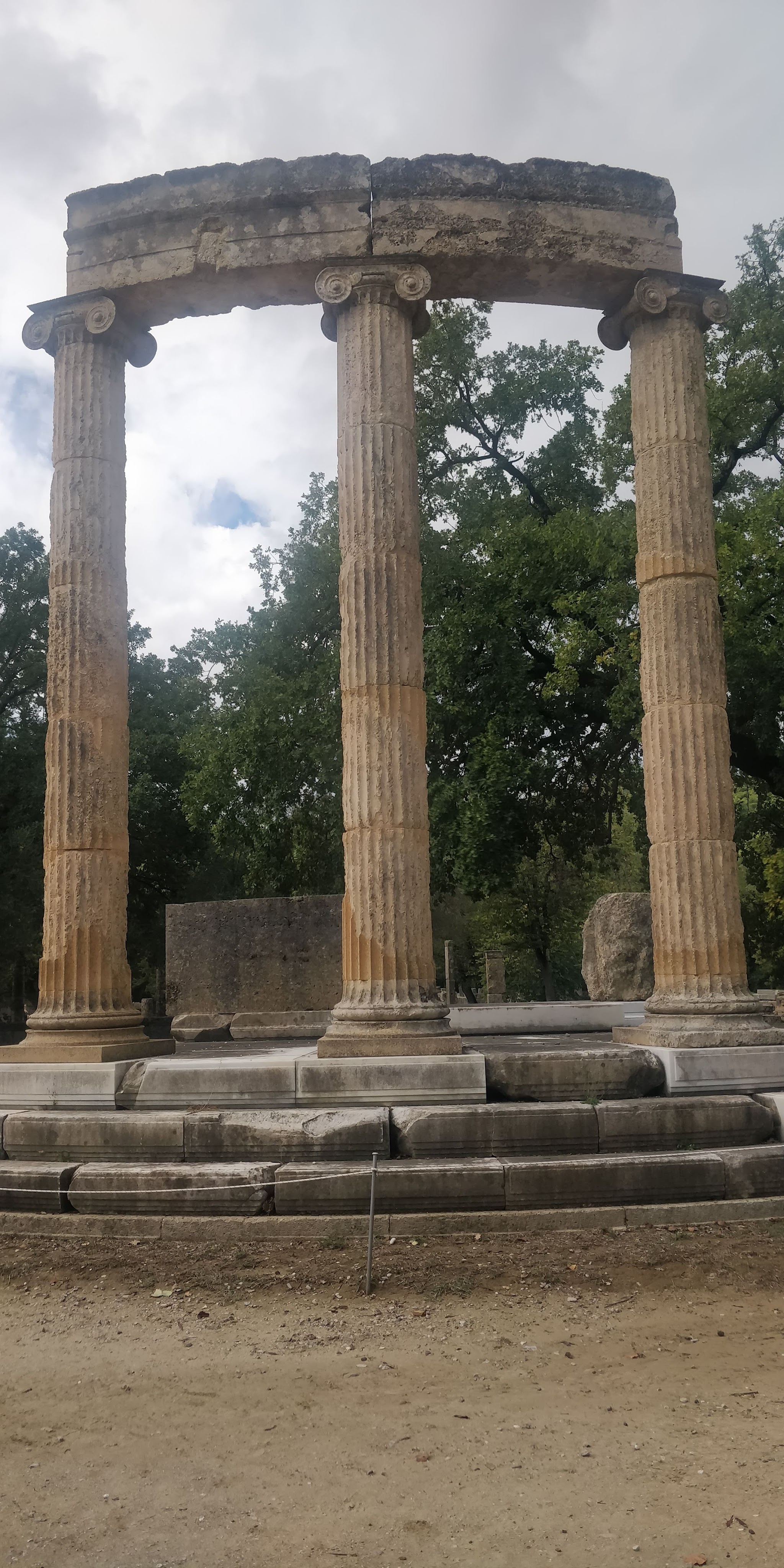
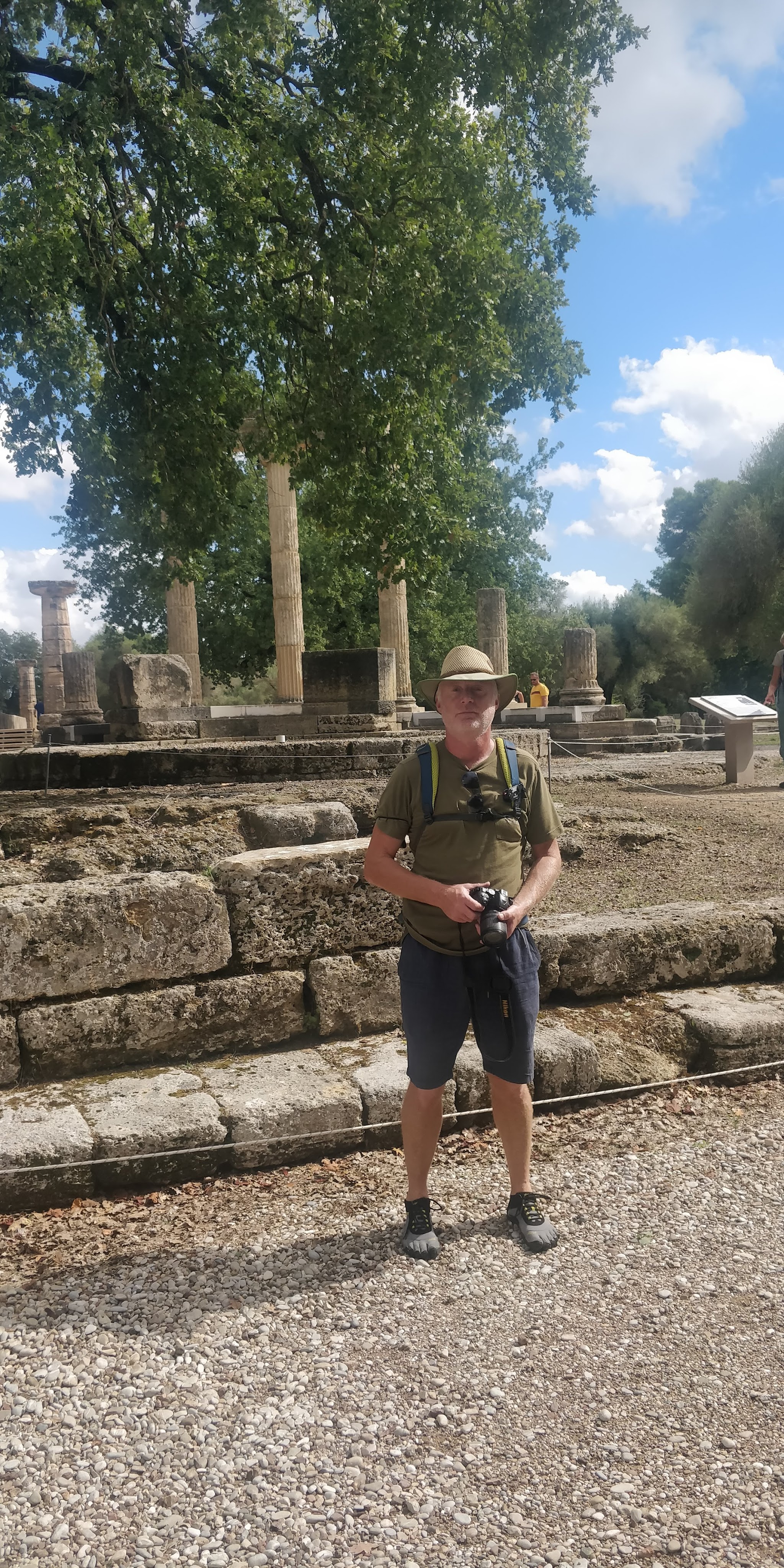
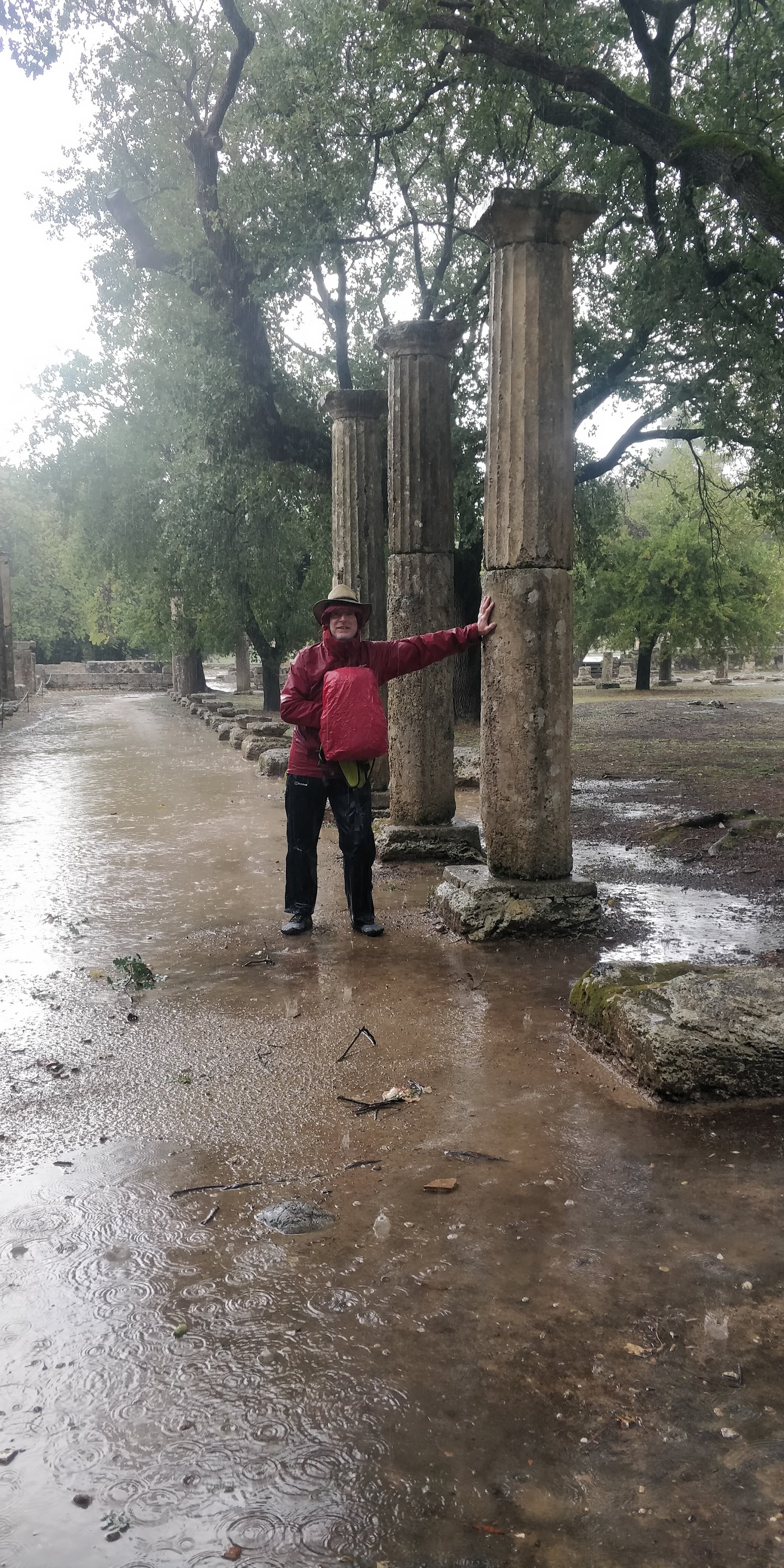
The Archaeological remains of Olympia were just a short walk from the village and are very well laid out with good information boards in Greek, English and German (we were surprised about the German until we realised that Germany had been hugely involved in the archaeological digs and preservation. Most of the other tourists were dressed in shorts and T-shirts and carried only water bottles. We, on the other hand, had backpacks with jumpers, raincoats, hats and even waterproof leggings. I thought we were mad to have so much stuff as we watched some young girls rehearsing a dance in the Stadium area under a warm sun. (Interestingly, women were banned from participating and even spectating from the Stadium in ancient times – if they were caught in the Stadium or sanctuary, they were thrown from the top of nearby Mount Kronios.) But within ten minutes, the first fat raindrops fell and soon the world went dark with cloud and lightening streaked across the sky. We quickly donned our waterproofs while others ran or huddled under trees for cover – no protection for the rain of these biblical proportions. The whole area emptied and we had the place virtually to ourselves, feeling quite smug. There was something really awesome (I cant think of a more appropriate word) about being in such a place of antiquity, sacrifice and endeavor amid ruined temples to the gods, (Zeus and Hera) whilst the heavens rained down on us.

The Greeks – and Google – tell us that the stormy weather is set to continue for another few days and maybe even a week before it will become like summer again, but better as not so hot. We had planned to go inland to the hill villages of Arcadia (the famed rural idyll of Arcadia) but the weather forecasts are dire for that region so we may go south. As I type this, we are looking for somewhere to ‘hole up’ for a few days and relax and are busy studying maps and weather charts.

I hope that the next post will be called After the Deluge….

Hello Greece

The Adriatic Coast

Travelling through the spine of Italy, we felt dwarfed by the majestic high mountains of the Apennines all about us and awed by the long tunnels that we drove  through – some a couple of kilometres -blinking back into the sunlight. There were fruit and veg roadside stalls as soon as we came down from the mountains selling plums, tomatoes, peppers and huge peaches. Our first glimpse of the Adriatic Sea was a gorgeous glittering  turquoise in the distance just south of Pescara.

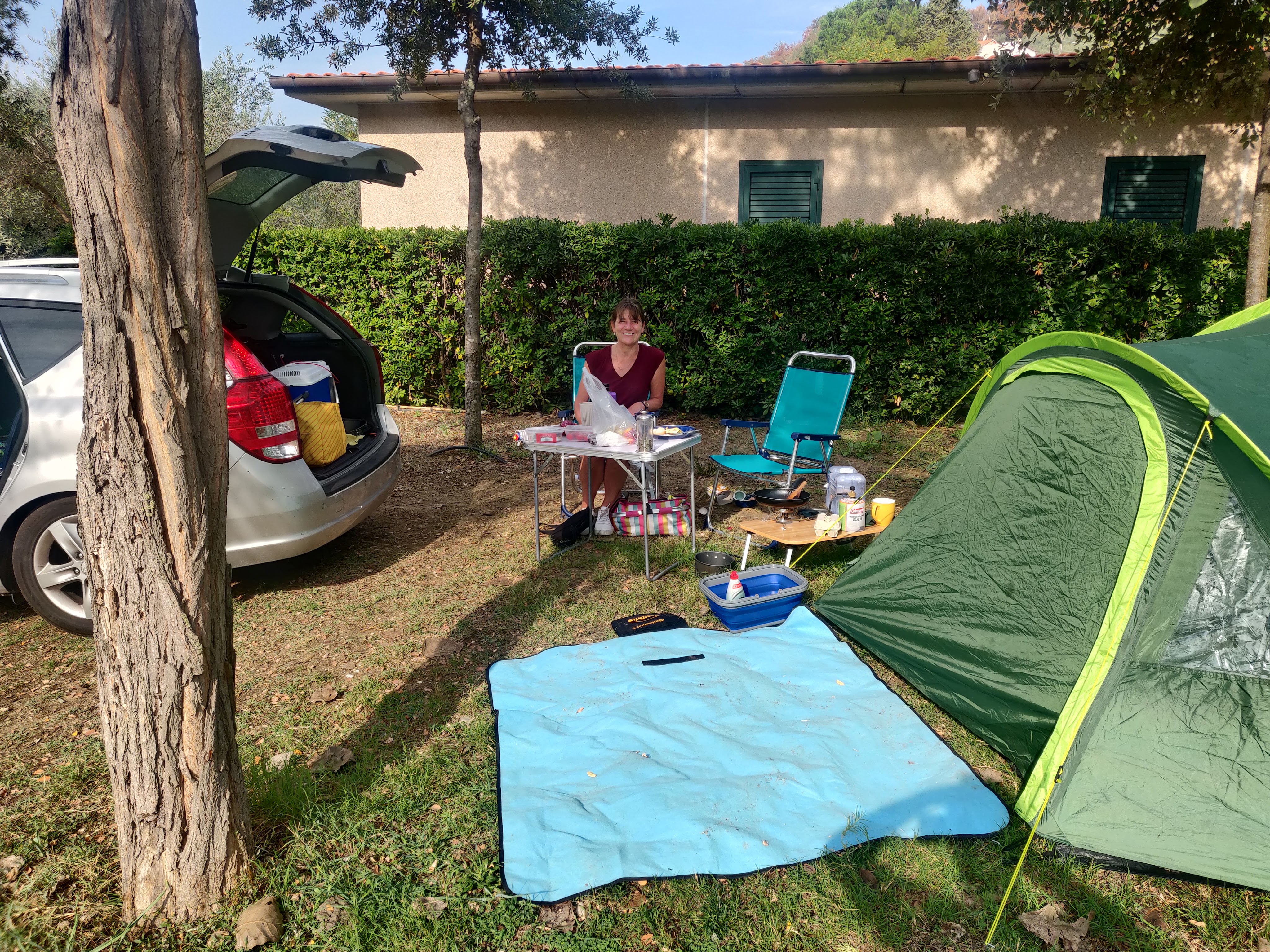
The road from here hugged the coast and we used Google search to find any campsites.  One looked promising, direct access to the beach, good reviews and not too far away as we were flagging despite the caffeine stops. La Foce campsite was a big shaded area – slightly dusty and run-down – but was deserted apart from two camper vans, a few cats asleep in the sun outside the office and pomegranates falling from a tree near the shower block. A woman finally appeared, welcomed us saying that we could put our tent wherever we liked -Italians are so expressive that we find ourselves understanding the language (in context at least). The campsite bar and pizzeria were closed for the season which didn’t bother us too much as we (meaning me) concocted a one-pot pasta dish using the fresh veg that we had bought by the roadside (feeling thrifty and healthy – we’re going to make this lump sum and pension last!!)

If you look at the map of Italy, there’s a pimple (or a spur) on the east coast called Promontorio de Gargano or just Gargano. We had heard great reports of this region so we went in that direction but as we drove along a flat soul-less area without villages or houses where prostitutes were on the road looking for business_ at noon_ from the many truckkies barreling along the road (at first we thought the women might be fruit sellers but their dancing to attract attention soon left us in no doubt).

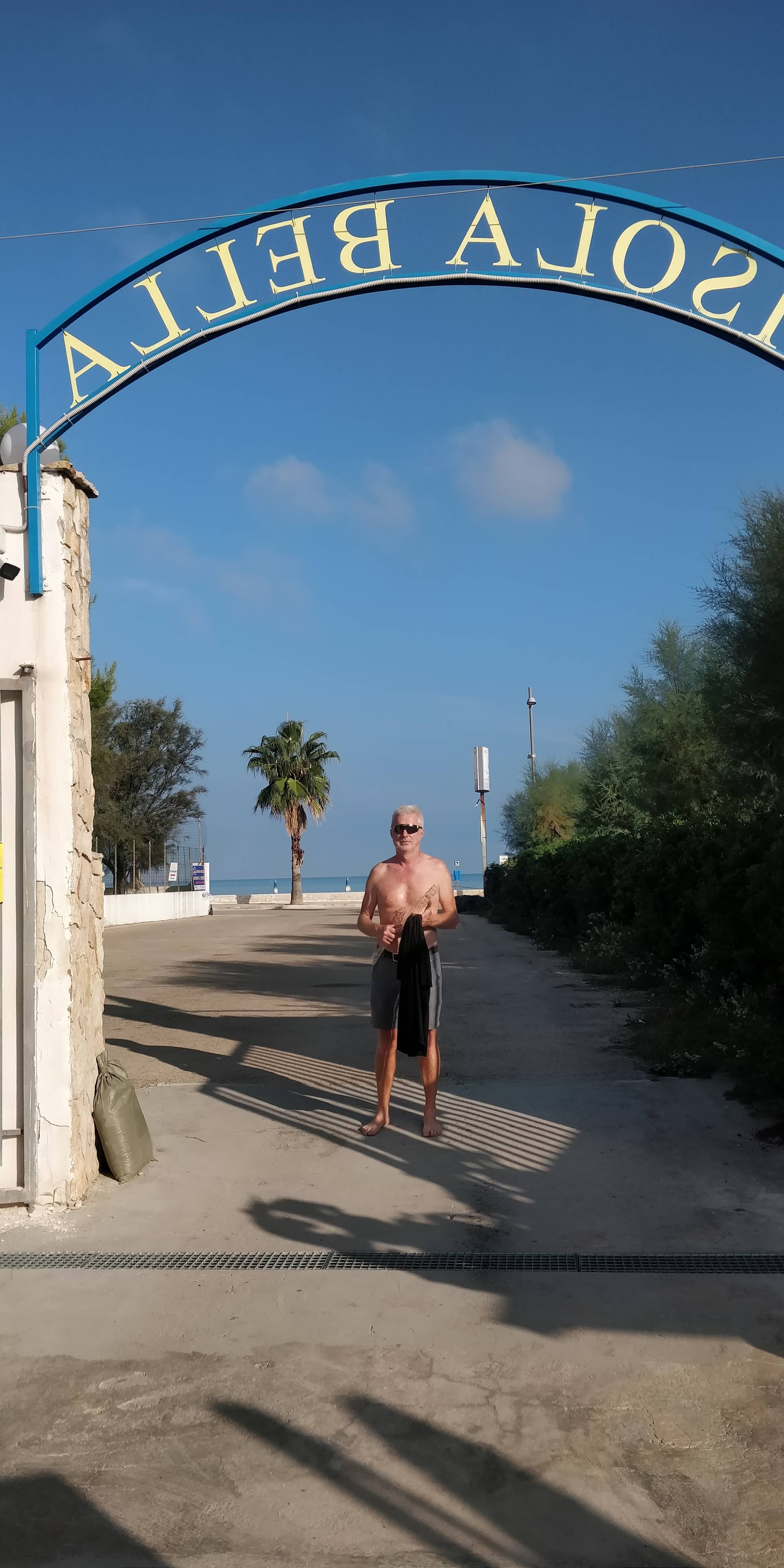
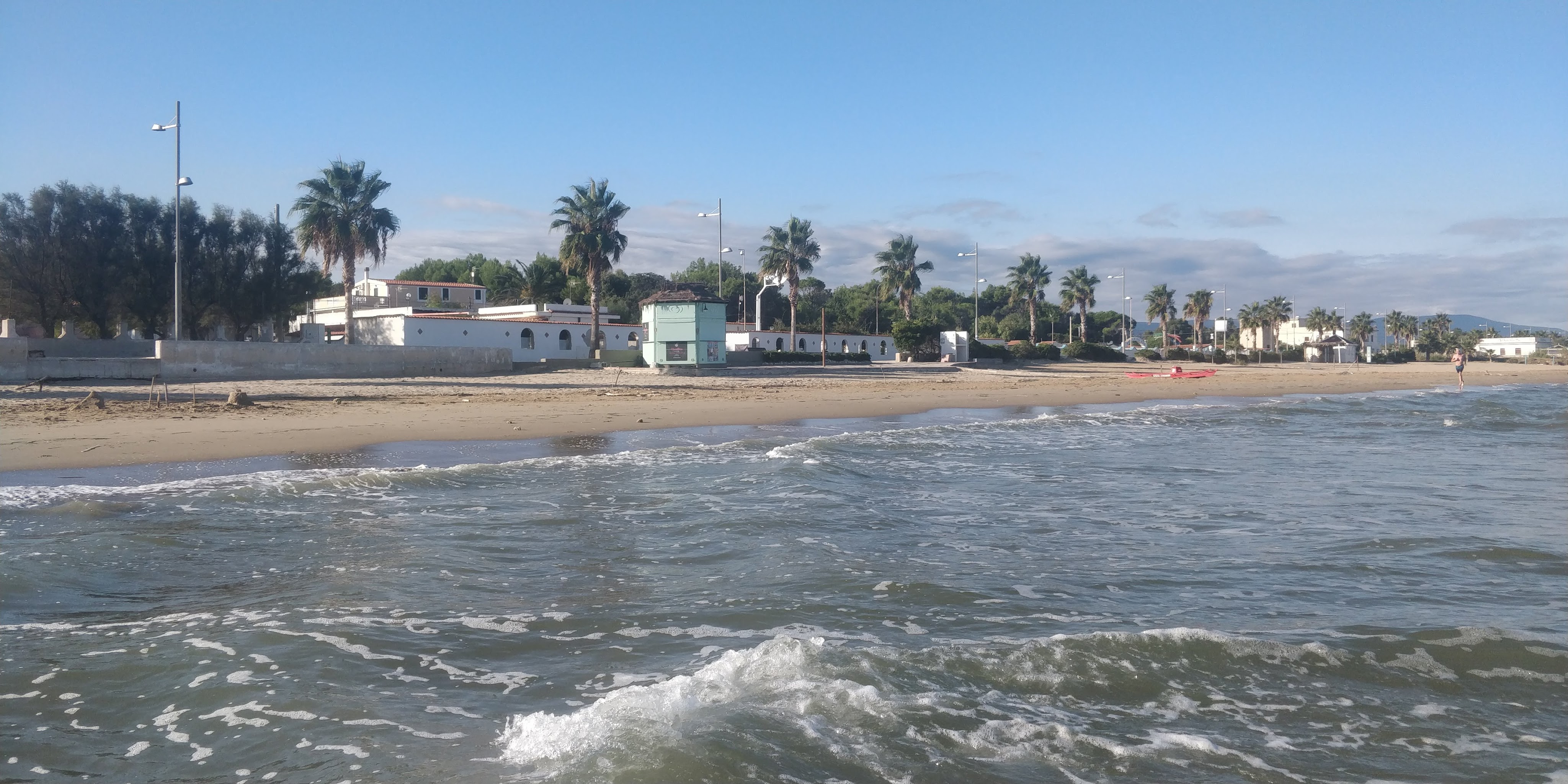
The scenery improved as we drove along the early northern part of the peninsula by the salt water lagoons with their pinky flamingos and olive groves and the mountain shadows of the interior. But on this gloriously sunny day in late September, it was like a ghost area  with hotels, campsites and holiday homes boarded up for the winter_ padlocked gates, shuttered windows, waterslides wrapped in tarpaulin. The few open campsitess we didn’t like – too deserted, too neat, too like a holiday park. We needed to get less fussy and luckily, that was when we found Isola Bella campsite. Caoimhin bargained so hard with Giuseppe, the manager that we even got a little bungalow for not much more than the price of camping😜 We went in search of somewhere to eat but everywhere in both directions were closed so no option but  to cook – how sad in a country renowned for its wonderful food🙄  In the campsite, we met a lovely Kiwi couple who were intrigued by the Irish number plates on the Guzzler. They were cycling around Europe with a tent (much madder than us) and were almost at the end of their three months. They would have to spend two weeks in a hotel isolating back home. They were actually lucky to get the hotel slot  – there was 2400 people on a waiting list looking for a hotel slot to get back into New Zealand.

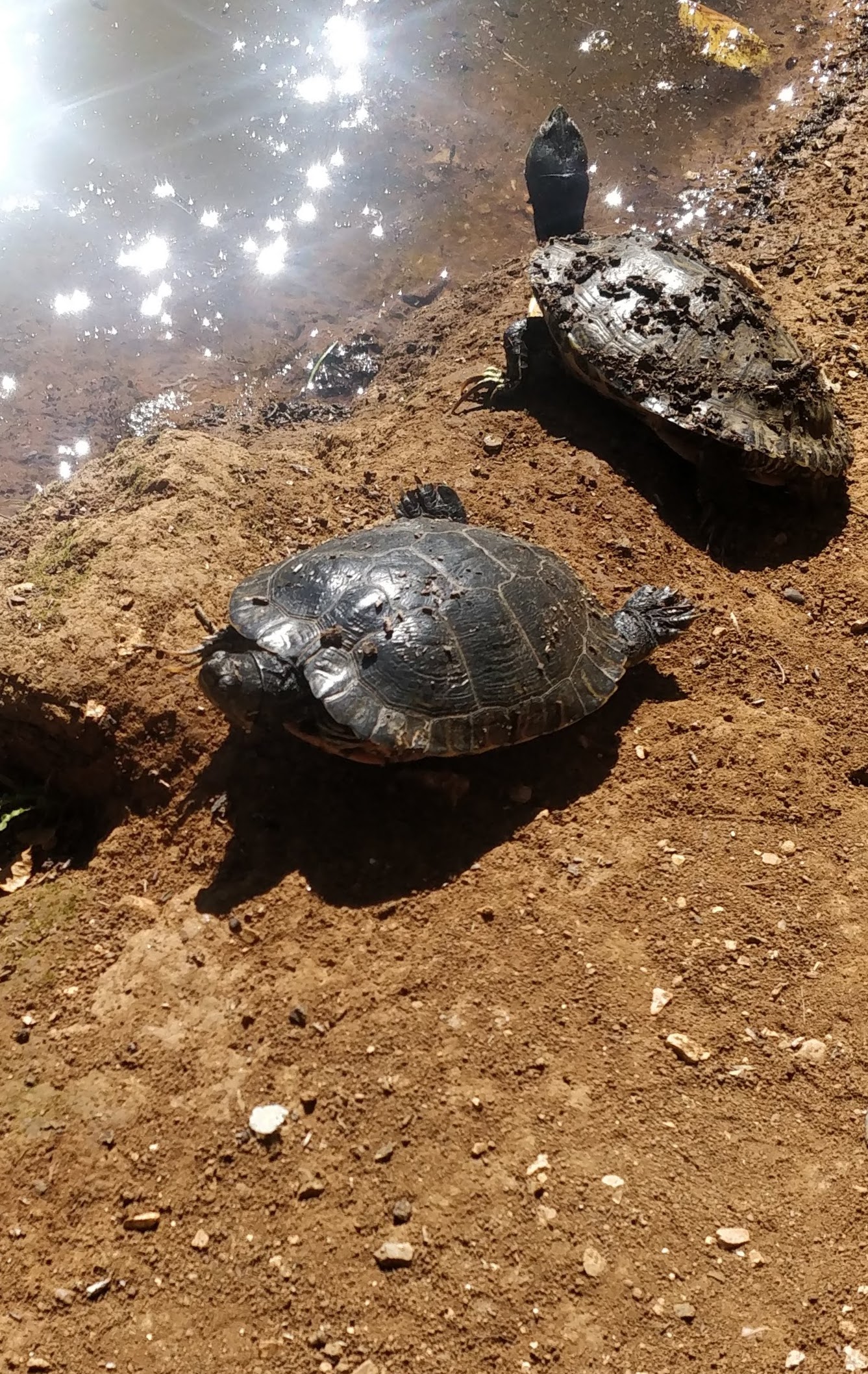
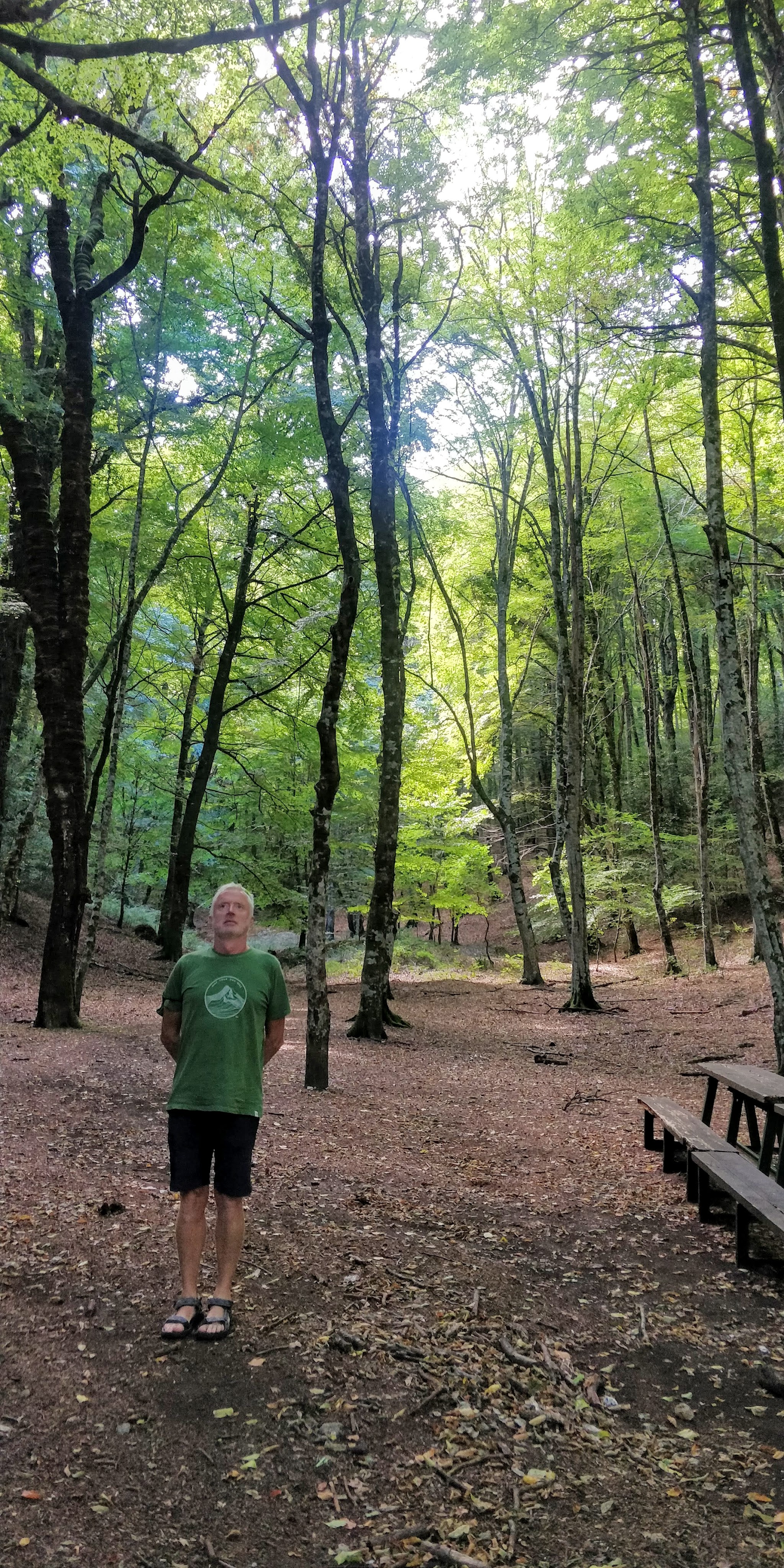
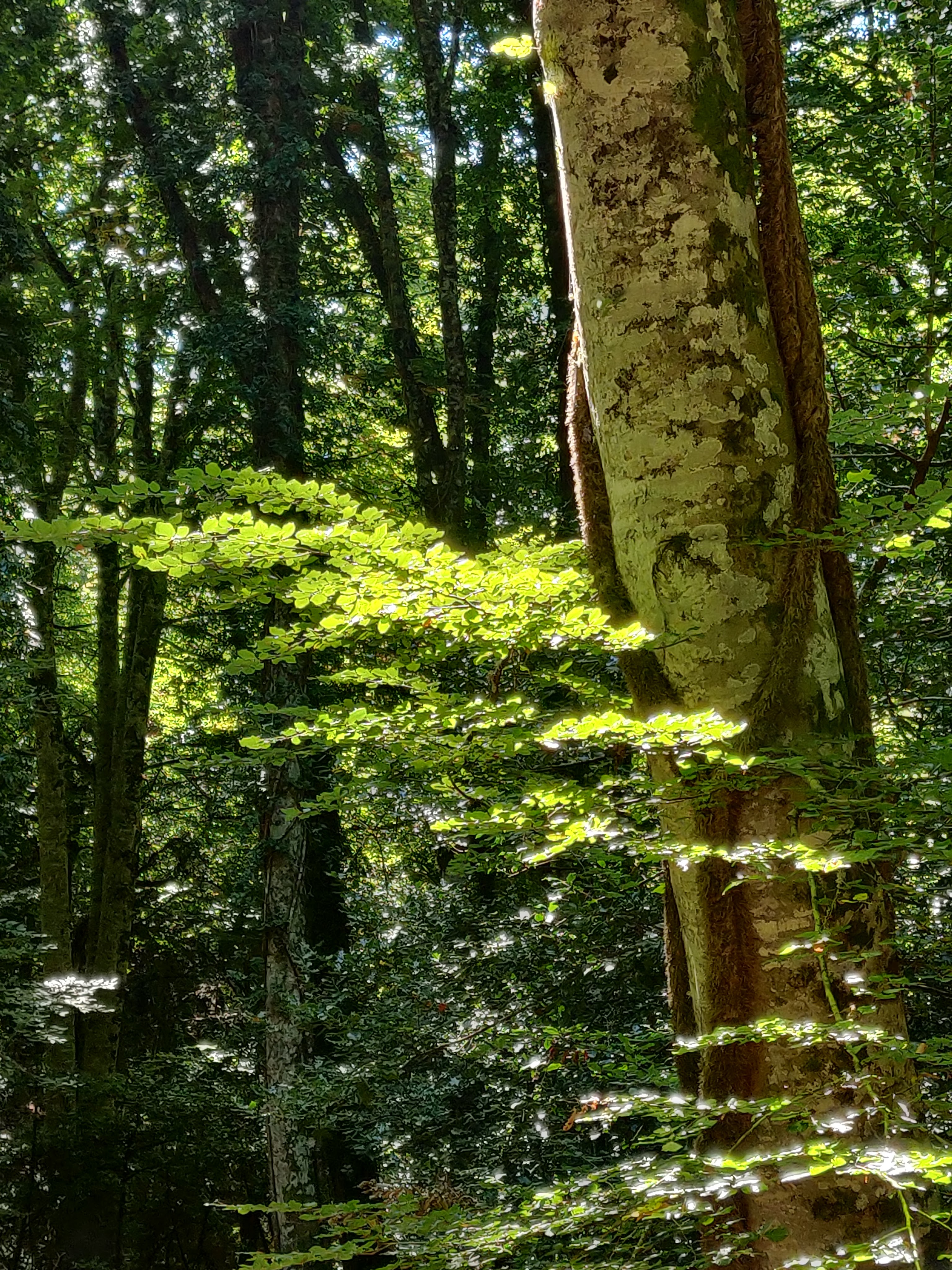
The Gargano lived up to its promise – we discovered gorgeous ‘proper’ towns further along the peninsula – San Manaio, Peschici and Vieste – with people and bustle and also  ATMs – everyone wanted cash in Italy (unlike Spain) and funnily enough, card machines were rarely working.  We turned inland, climbing high to the magical heart of the peninsula with its ancient forests spending a day, hiking in the  Foresta Umbra in woods of oak, beech and holly.   It was cooler than the coast but with gorgeous dappled light, silent except for birdsong, the crackling of twigs, leaves falling. There was a lake with little turtles sunning themselves on rocks, sliding into the lake waters with soft ripples when they sensed us  Honestly, a real  ‘Good for the soul’ place.

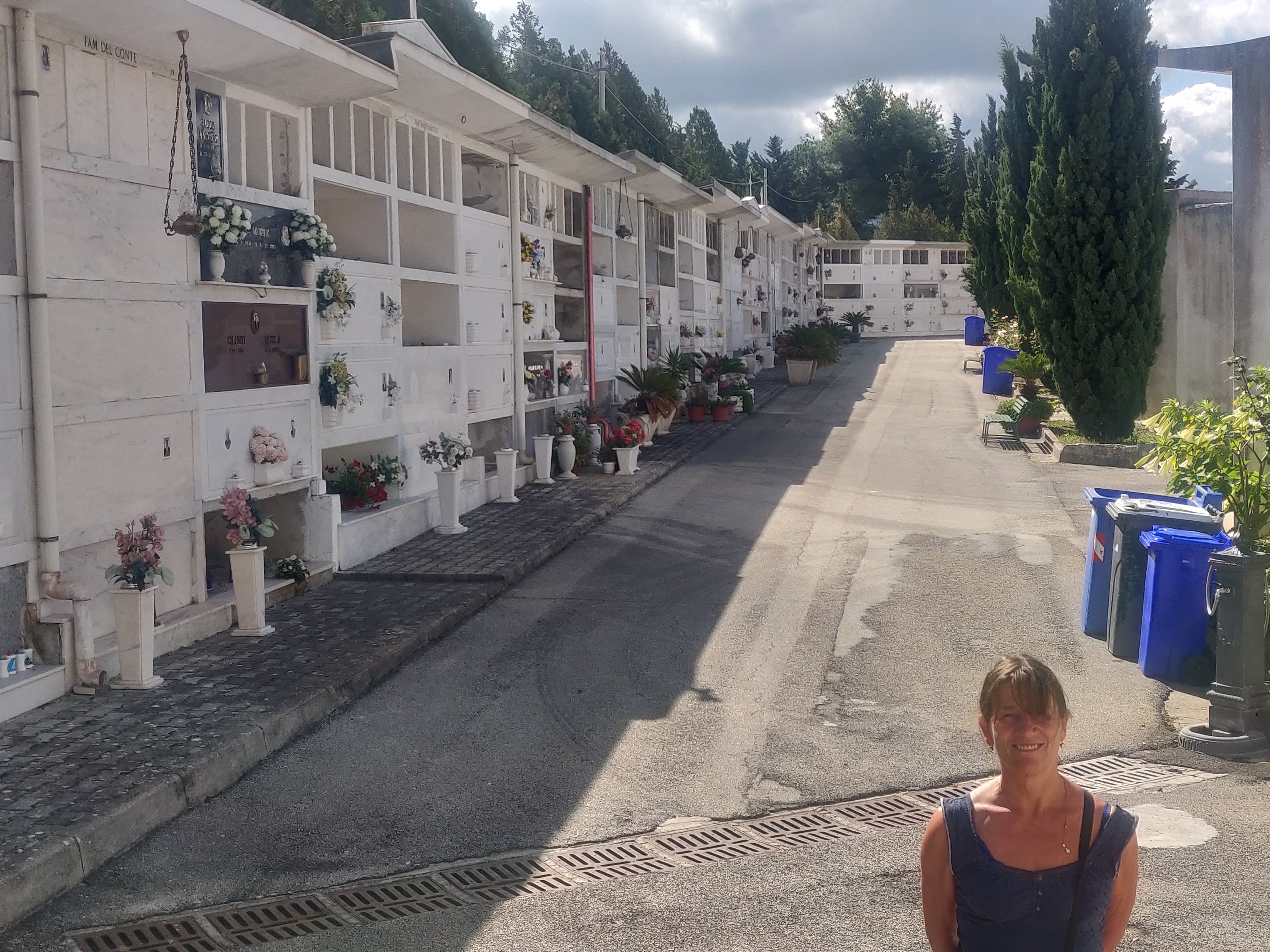
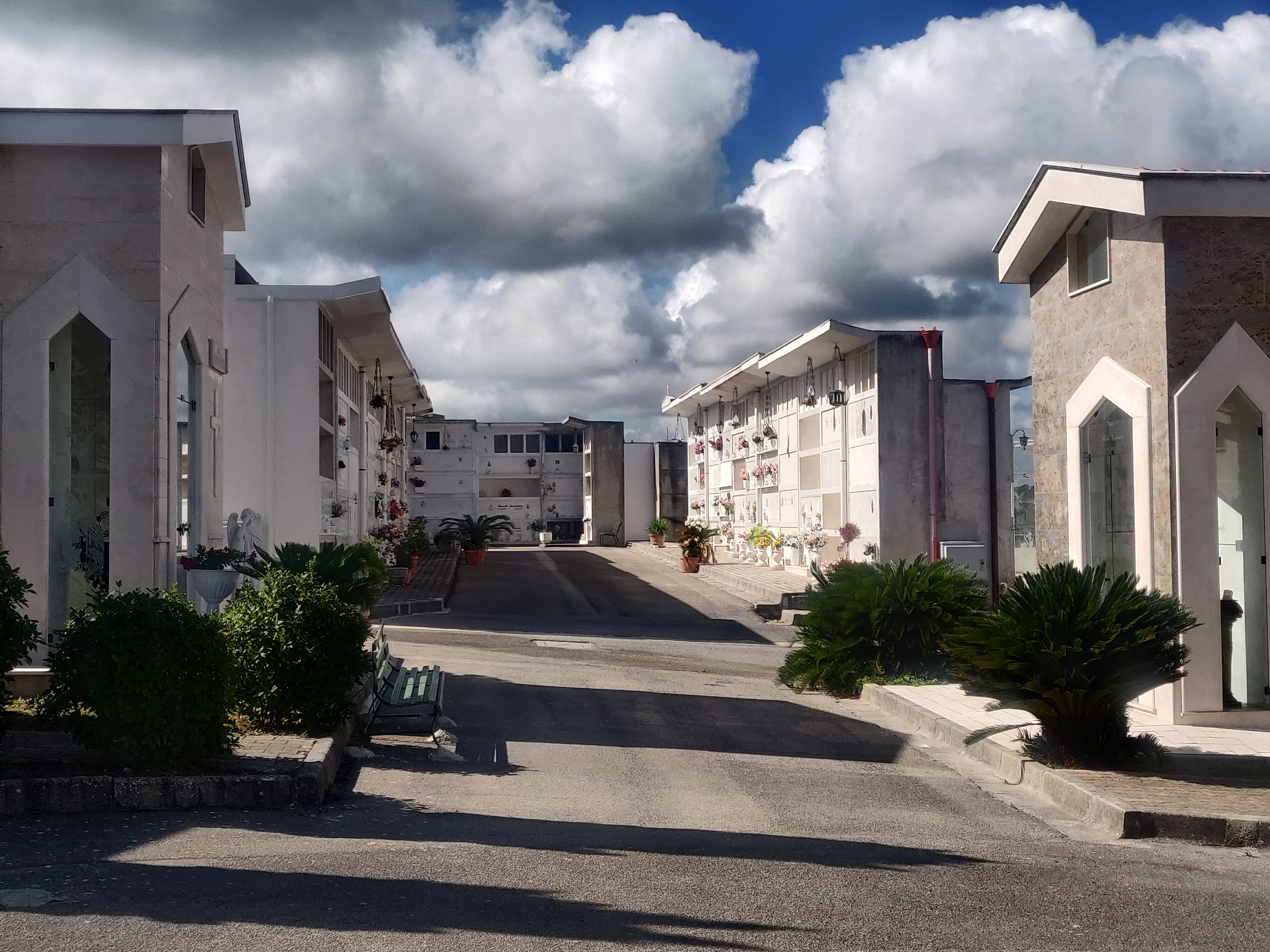
In the Village of the Dead

The ‘Uppity’ section of the cemetery

Talking of souls, we visited an amazing cemetery in the mountains – we had driven past cemeteries before but this one was so huge, we had to stop. It resembled a real town but with more flowers and no washing. Sometimes in the narrow streets of Italian towns, the predominant smell was the fabric softener/detergent from all the washing shrewrn over balconies. In the cemetery, the multi-story rows of concrete vaults were so like the apartments blocks that in life and death, Italians occupy similar buildings. Of course some vaults were bigger and more ornate than others and some had entire sections vaults dedicated to a particular family but dust to dust…

Before we left Gargano, we booked our ferry to Greece going from Bari to Patras in Greece _there were so many ferry routes from Italy to Greece that it was hard to decide. But booking six days in advance is very forward planning for us.

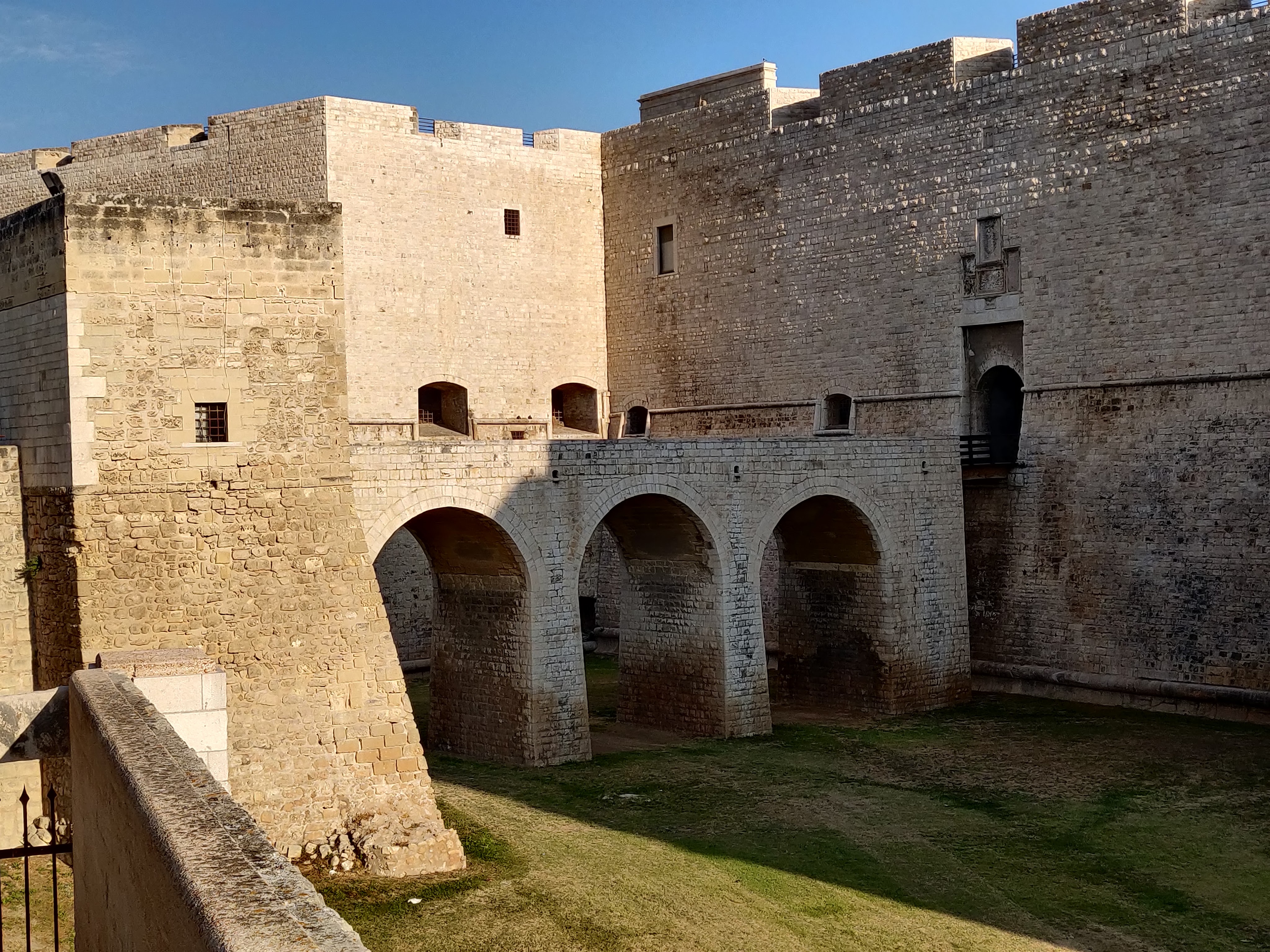
Down the coast Barletta  seemed like a convenient stop for one night.  We booked a room on Booking.com about an hour before we arrived – Villa Helios – and stayed in a very comfortable green room – even the clothes hangers were green. It was great to be staying in a town for a change and Barletta was full of restaurants and history – the Carthaginians and Romans did battle here (Hannibal emerged victorious), there’s a huge Norman Castle – had its heyday at the time of the crusades, and the last Protestants were burnt at the stake here in 1866 (we were shocked by the date).

  Breakfast was included – a token for a local cafe that got us a coffee and a cornetto (Cornetto in Italian is  a croissant -we thought we were getting ice cream!) Maybe not the healthiest way to start the day but when in Rome (or Barletta)….

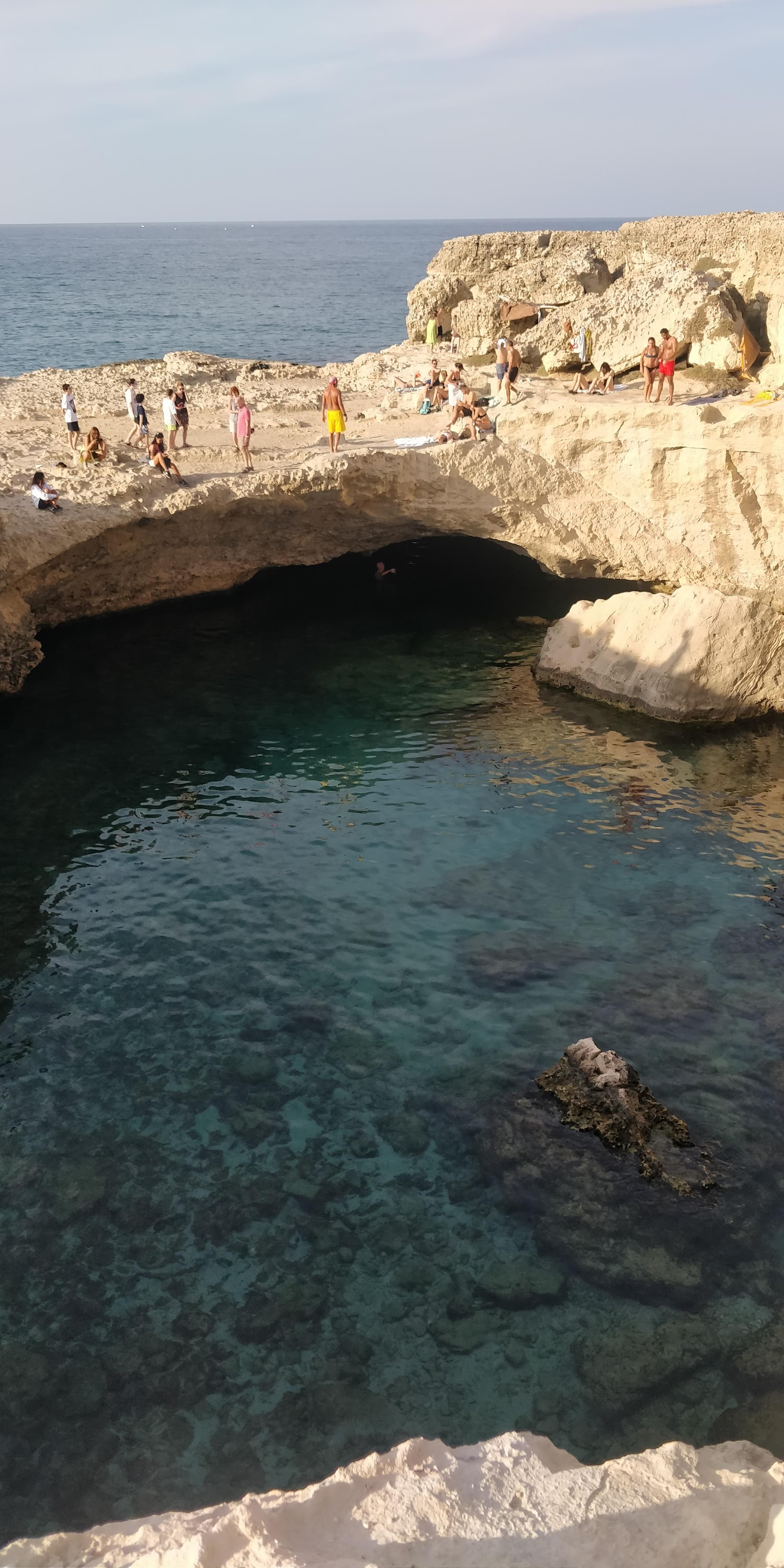
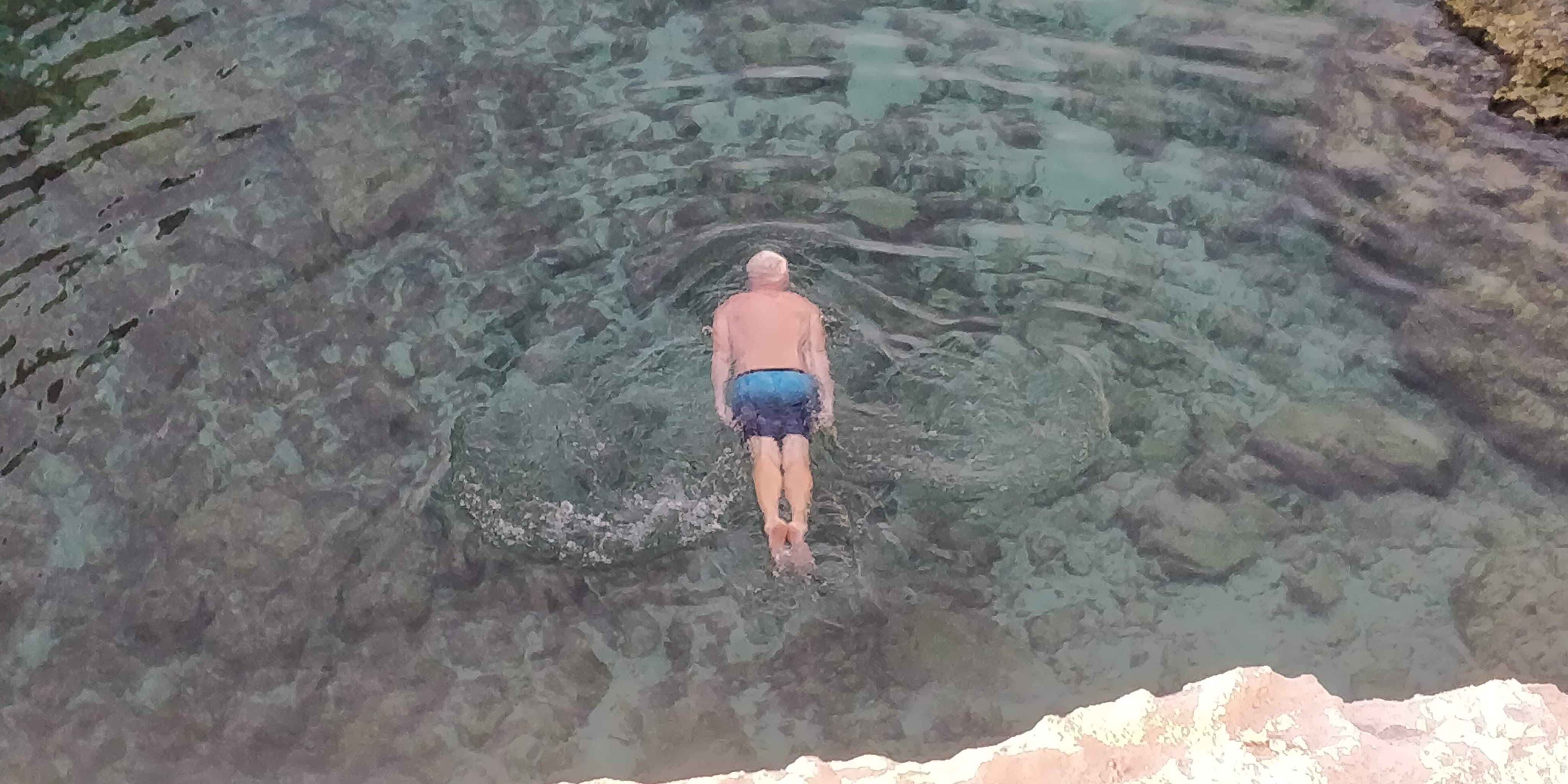
The power of a photograph lured us south (past Bari) almost to the heel of Italy to Grotto del Poesia  (translates as Poetry Cave), a natural swimming hole in a karst limestone region in the Salento Coast. How could we resist such a name? Caoimhin was determined to swim in its turquoise waters once he had seen its image online. The Poetry Cave was more than a swimming hole, it was also on an archaelogogy site – and there was a charge of €3 to go into the area. We had to produce a green pass – a first. The ironic thing was that the man asking us for the cert wasn’t even wearing a mask.

 Booking.com found us a place to stay nearby although it was a Saturday afternoon – a lovely one-bed apartment with a huge veranda on an olive farm. Fernando, the host, was so welcoming, gave us  tomatoes, chilli peppers and a bottle of his own olive oil. We used the complimentary bikes to cycle through the olive groves to the beaches and to the pub (well to the beach bar to watch the sun go down_ this is Italy after all).  

Challenging cycling through the potholes

The entire Selento coast was unexpectedly gorgeous with hundreds of little coves, fabulous coastal walking, the clearest water that I have ever seen and also the gentlest with only soft ripples. The water was also shallow – great for nervous nellies like me who get panicky when out of their depth. And there was good snorkeling.

Otranto and the macabre

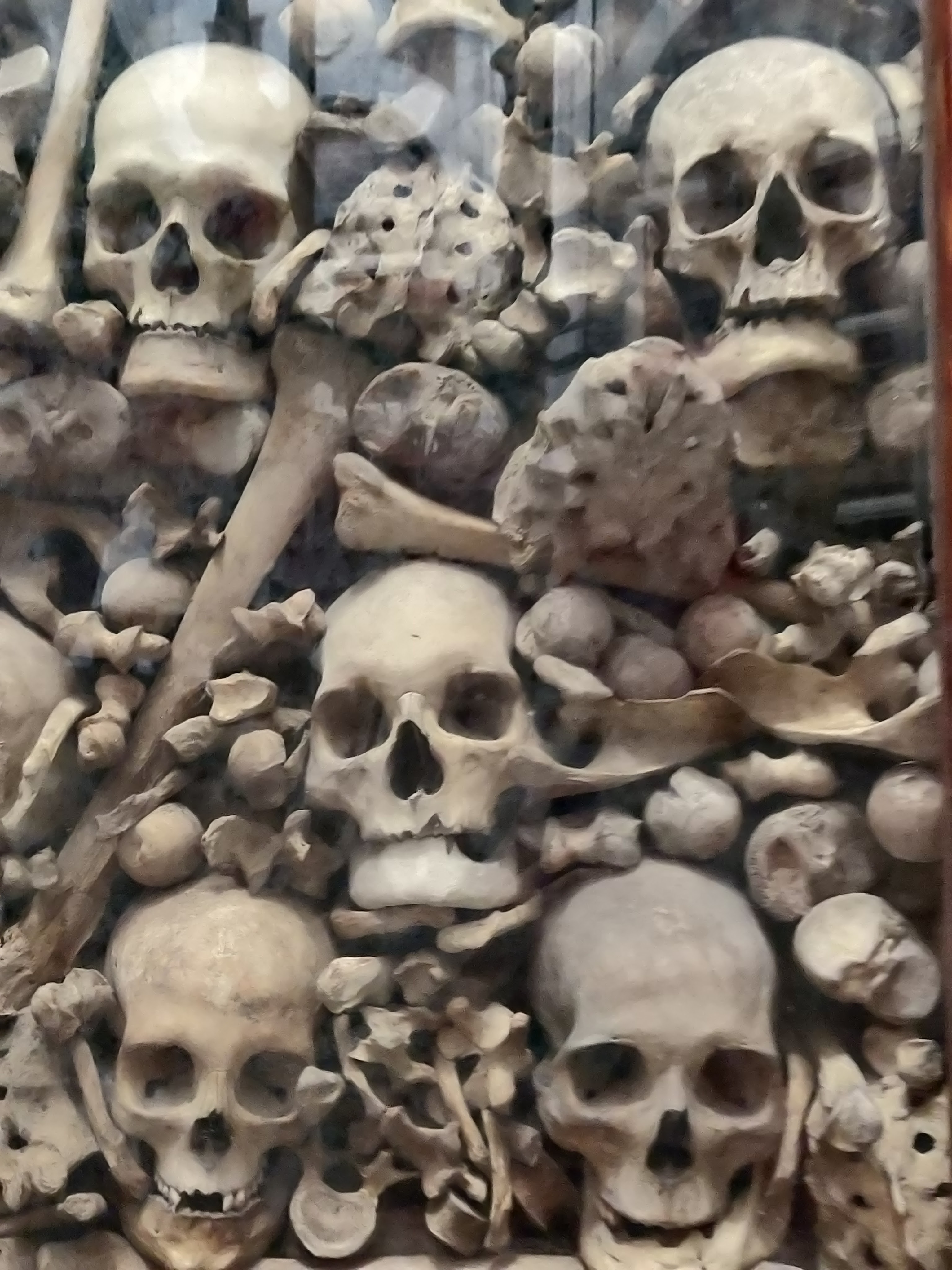
And the stunning coast wasn’t the only attraction. We stood outside the cathedral in Otranto in the blazing sun waiting for it to open…and we weren’t alone. The attraction? 800 skulls in glass cabinets behind the altar, martyrs who were beheaded by the Ottomans in 1480 for refusing to give up their Christian faith. 


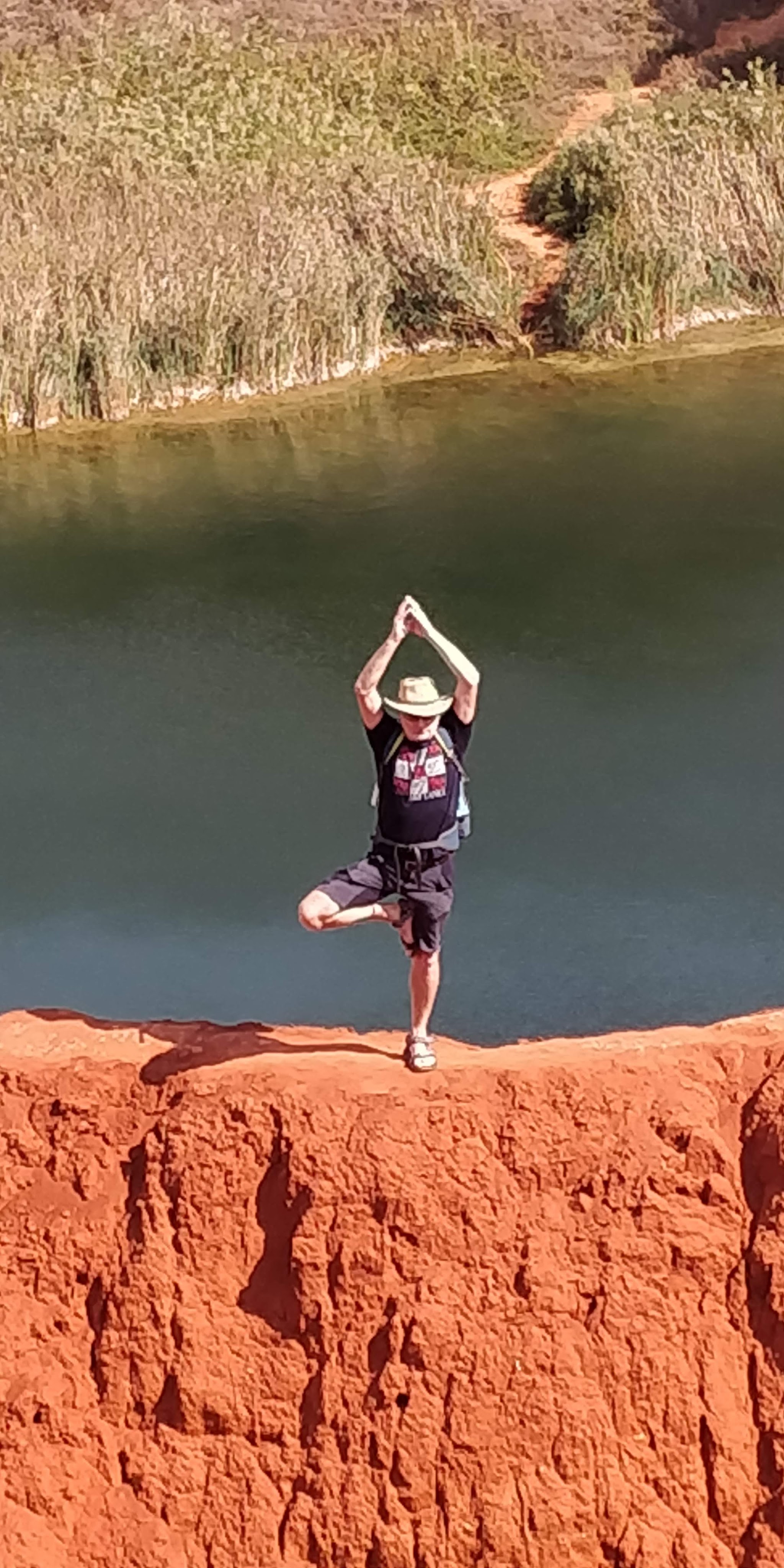
Caoimhin doing his thing at the Bauxite Mines

A visit to a disused bauxite mine with its ochre earth and emerald green water was a photo op that Caoimhin couldn’t resist🤣

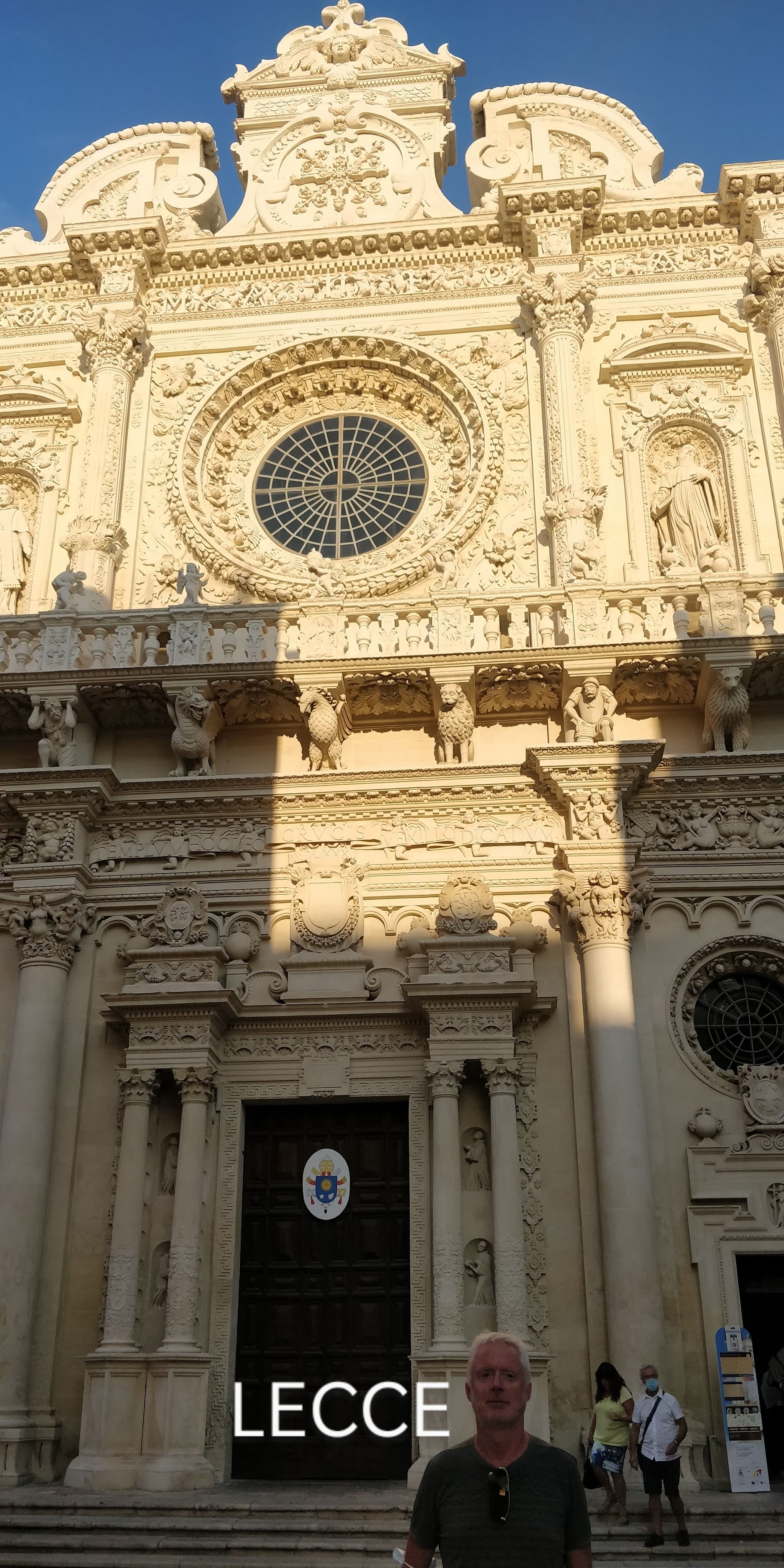
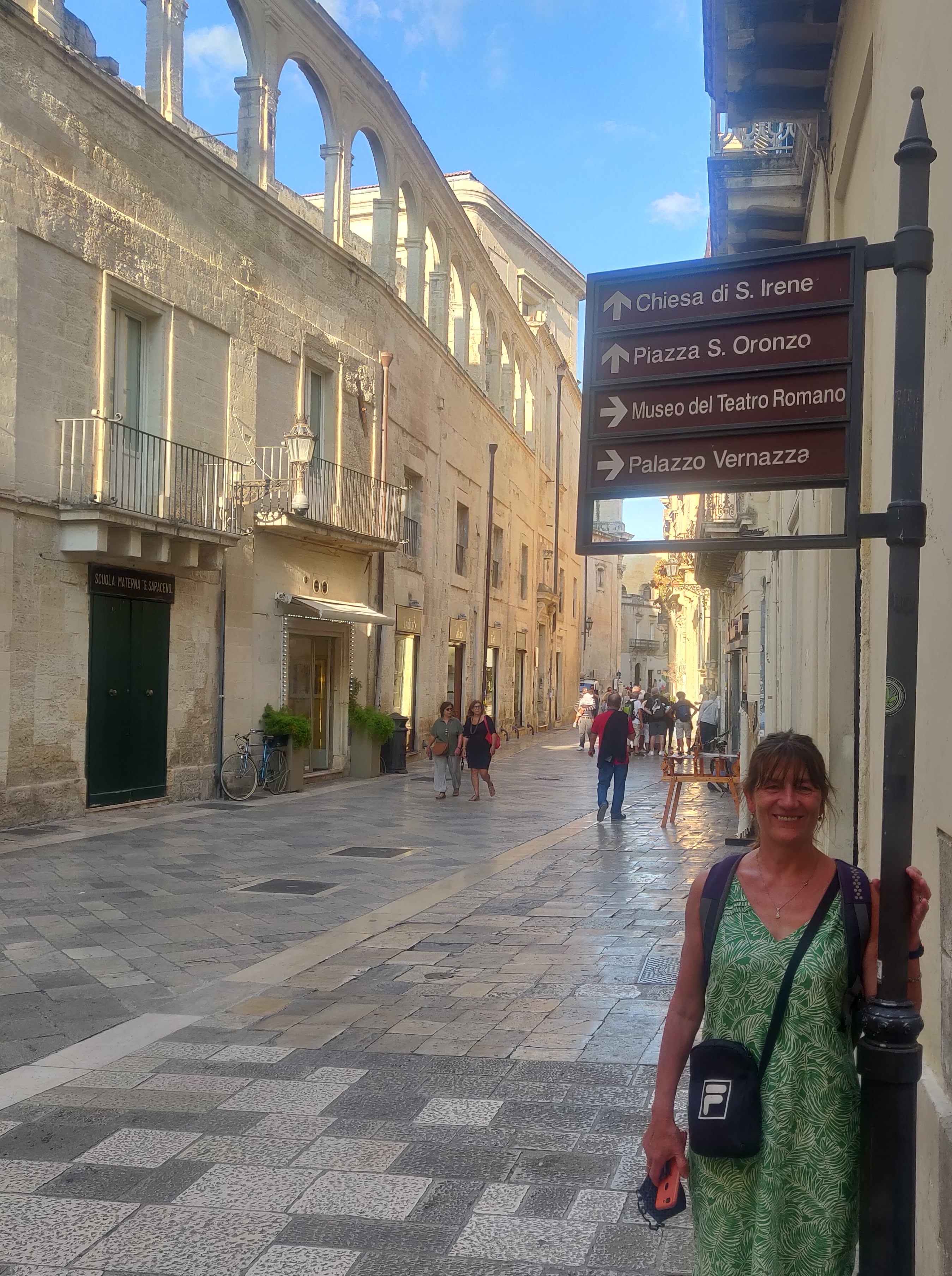
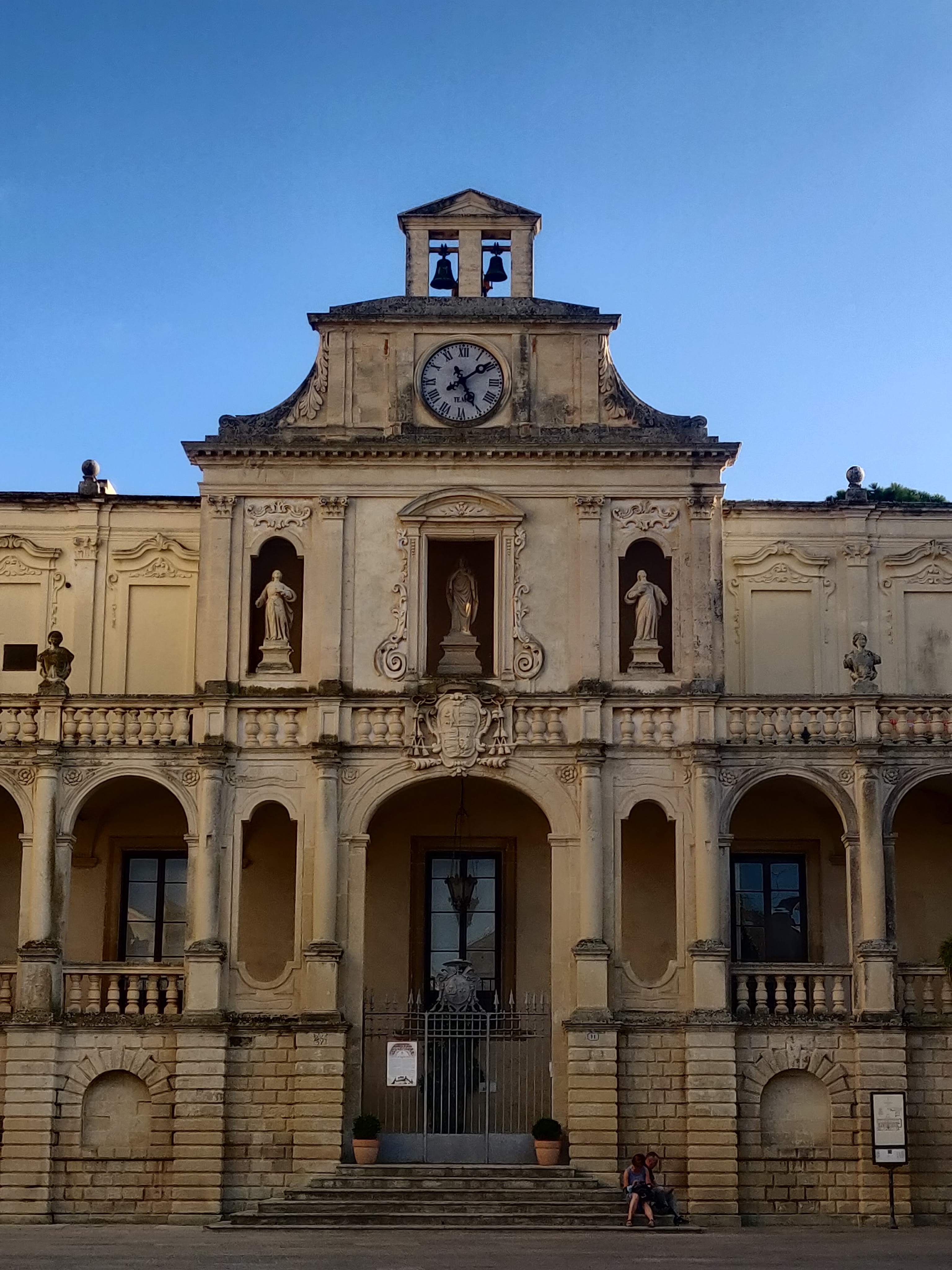
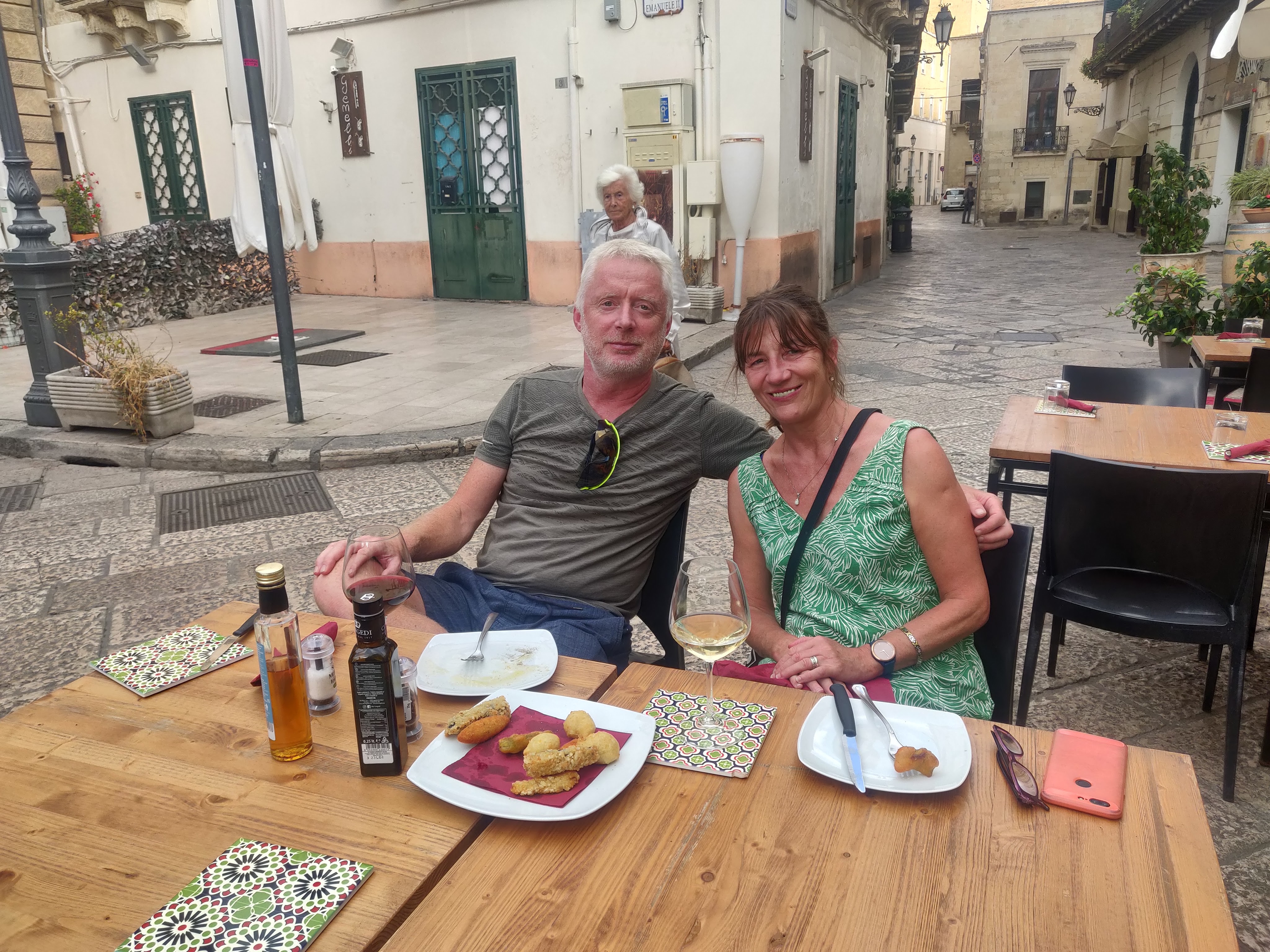
And then there was dazzling Lecce,  sometimes called the Florence of the south, a town that we had never heard of until this week.  This was a town  with  a spiders web of streets and a riot of extravagantly decorated  buildings (Baroque on steroids), made from the local soft creamy limestone. The town’s motto could have been – enough is never enough. And then there were the little old ladies of Lecce, local women who wanted to chat and welcome us. We asked a waitress to take a photo of us and a passing old lady stopped to wish us luck and chat about her life – see photo above.(I know that I’m almost a ‘little old lady’ myself but these women were a great template for sprightly, confident old age)

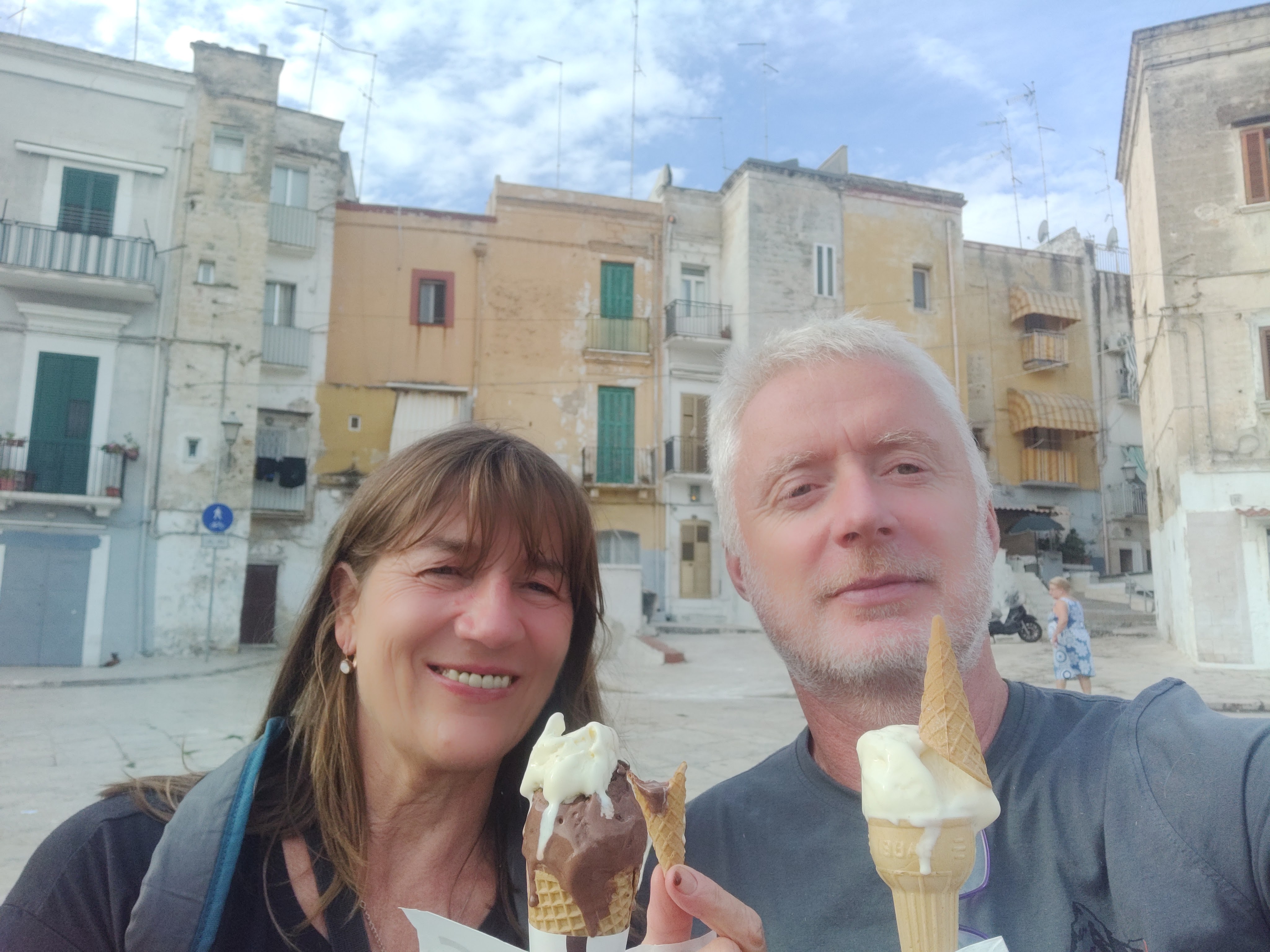
And almost before we wanted, it was time to leave Italy – our phones had already given us ‘Welcome to Greece’ messages even while we were still in Italy. We will miss it – the stunning scenery, the olive groves, the dusty sun baked-ness of the south, the warmth of the days but especially the warmth of the people. Just time for one more gelato (not to be confused with a cornetto)…..

The Adriatic Coast

Adios Spain, Ciao Italy

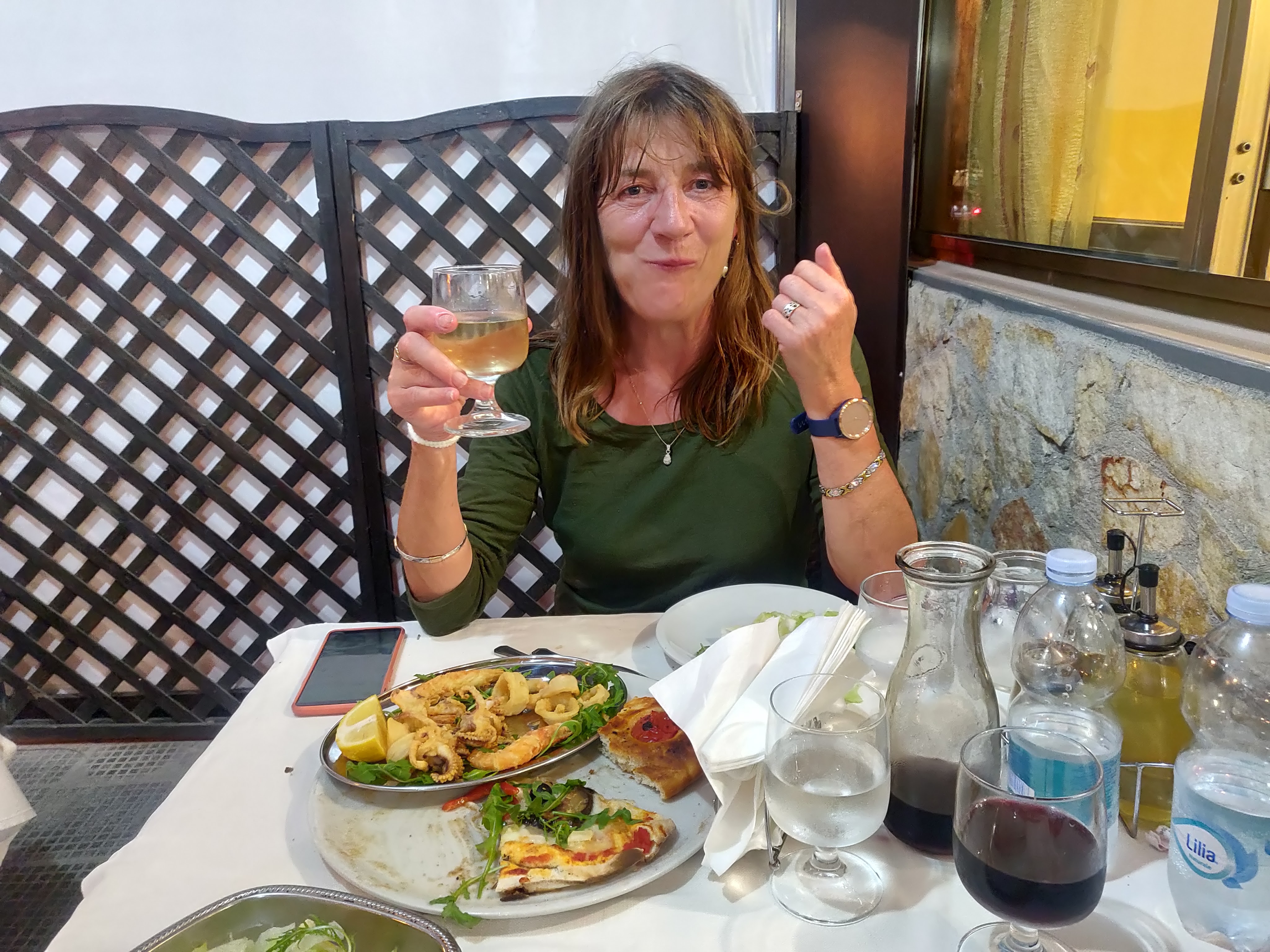
Last Meal out in Enrique’s, Miami Platja, Spain – fantastico!!

Our last days in Spain were wet and the temperatures which up to then had rarely dropped below 23 degrees even at night, plummeted to 15 degrees during the day. It rained for hours (not the short, furious thunderstorms that we had earlier) but continuous heavy rain for three consecutive mornings until 2pm each afternoon when (like clockwork) the rain stopped, the sun came out and the temperatures increased…perfect for sunbathing and eating out.

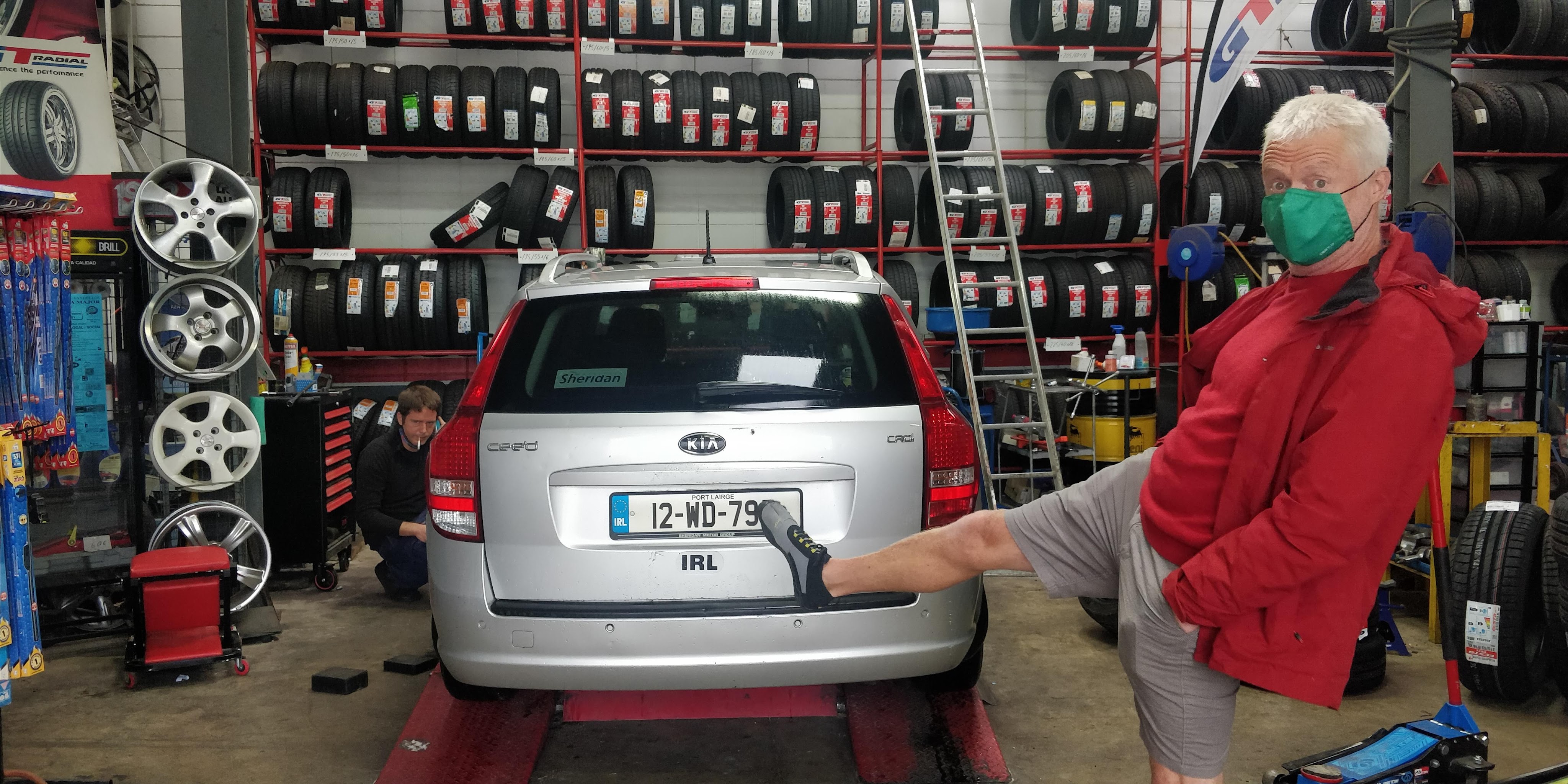
The Guzzler required new tyres (the thread on the front tyres were just about legal) and we have many miles to go (we hope)… so we got 2 tyres in a garage down the road and of course, they cost less than at home. Virtually everything is cheaper in Spain. So now we were all set for onward journeys.

The others (Ciaran, Christina & Louise) headed off on Friday morning, Sept 24, to catch their flight back to Dublin. We waved them off and although we will miss them, we couldn’t stop smiling – we didn’t have to head home to work and responsibilities, we simply had to catch a ferry to Italy that Friday night at 11.30 pm. How lucky were we!

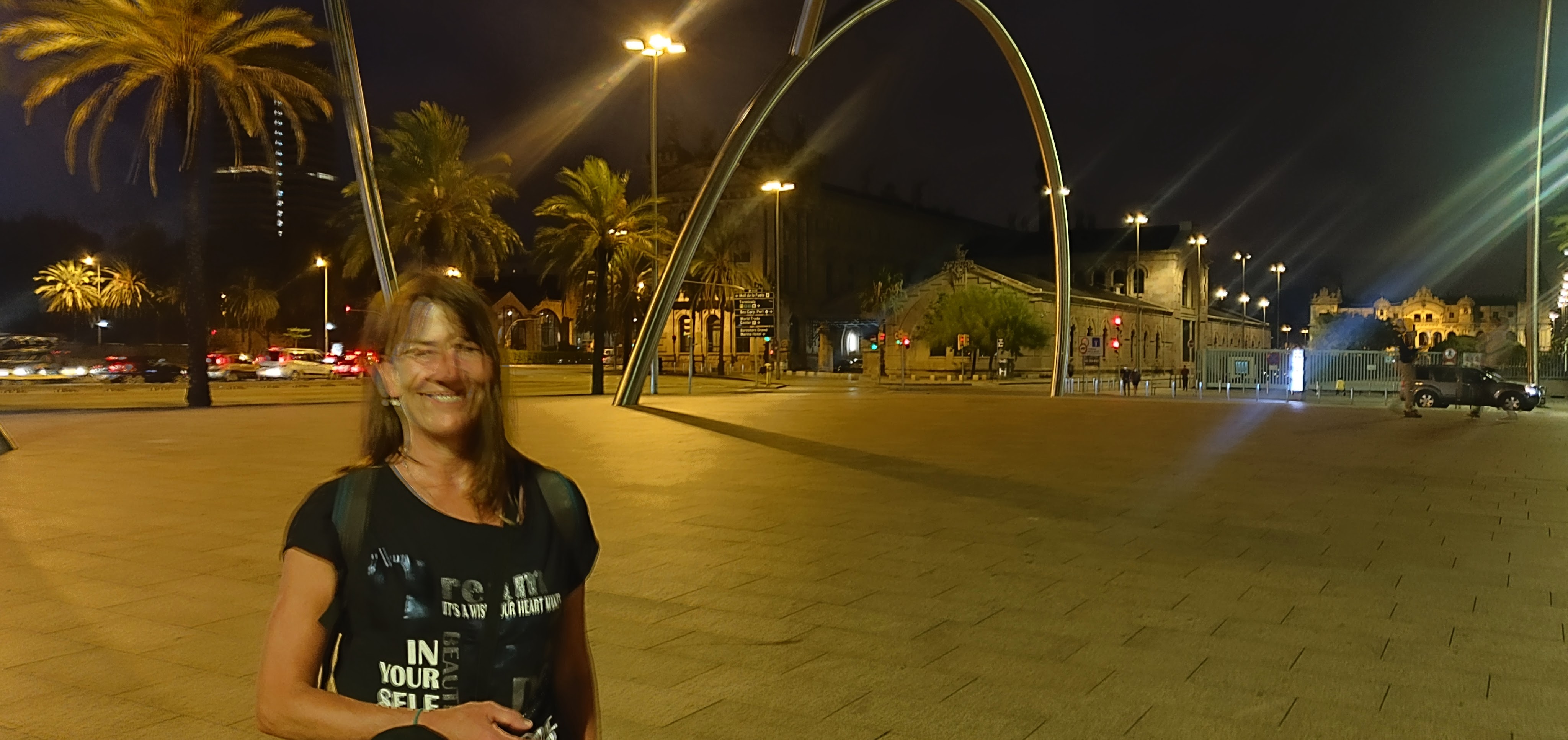
We had booked the ferry a few days previously to go from Barcelona to Civitavecchi (north of Rome – we had to google it to see where it was). The basic price for the twenty hour crossing for a car and 2 adults was €155 but we decided to treat ourselves to some comfort and booked a cabin with outside windows which added another €100. The ferry was late, very late. The first text beeped in on Caoimhin’s phone telling us that the ferry was delayed by two hours and the new departure time was 01.30. We headed on to the port -we had to check out of the holiday house anyway – to the Grimaldi Lines Office where we found we could check-in, park the car in the queue and were given card keys for our ferry cabin and a voucher for a huge ham/cheese/fish roll as compensation for the delays. The only documentation required was a passport – no Covid certs or proof of vaccination. The port was buzzing on a Friday night with container traffic and other ships _ transporting goods is such a huge industry. We strolled into Barcelona (about a 35 minute walk) for a last tapas and copa de vino in a little place with tables on the street. There was jazz music playing and lots of cool-looking people wandering around, the night was warm but breezy and we knew in our hearts that we would miss Spain.

The Blue Dot

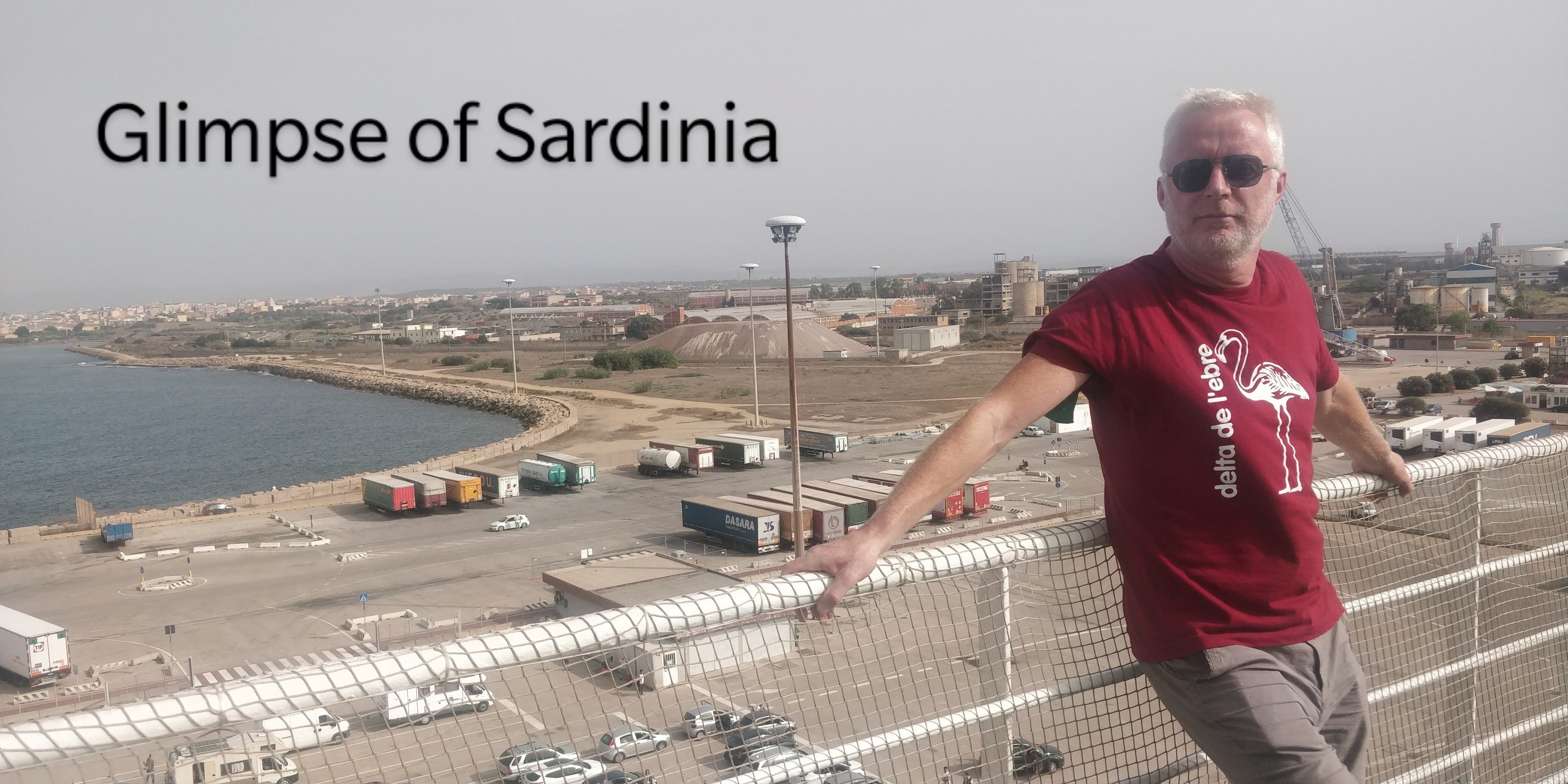
Departure time for the ferry was delayed again – another text – but we were able to board so when we finally departed at about 3 am , we were asleep in our cabin although we had some difficulty finding the cabin -the ferry was enormous with maybe 1000 cabins and was apparently the longest cruise ferry in the world at one time. The ferry had a casino(closed), swimming pool(no water in it) cinema (closed) ice-cream parlour (closed) but the restaurants and bars were open. Many passengers were travelling with their dogs but really the ship was almost empty apart from the truckies _ transporting goods is the main business. We spent a lot of the day wandering around the decks getting up our steps and watching the blue dot on our phones go very slowly across the Mediterranean Sea. We sail between Corsica and Sardinia and stop at Porto Torres in northern Sardinia where more passengers, cars and trucks embark. This type of travel does wonders for your geography.

At about 8pm when we should have been arriving in Civitavecchi, there’s an announcement that because of the delays, every passenger can get a meal in the restaurant for €6 consisting of first course (pasta dish), second course(burger, chicken, chips veg,) bread and water. As a little bottle of water was 2 euros onboard, this was really amazing value – and there was a stampede. The boat was actually fuller than we thought as people came from all corners to avail of the ‘special’ offer.

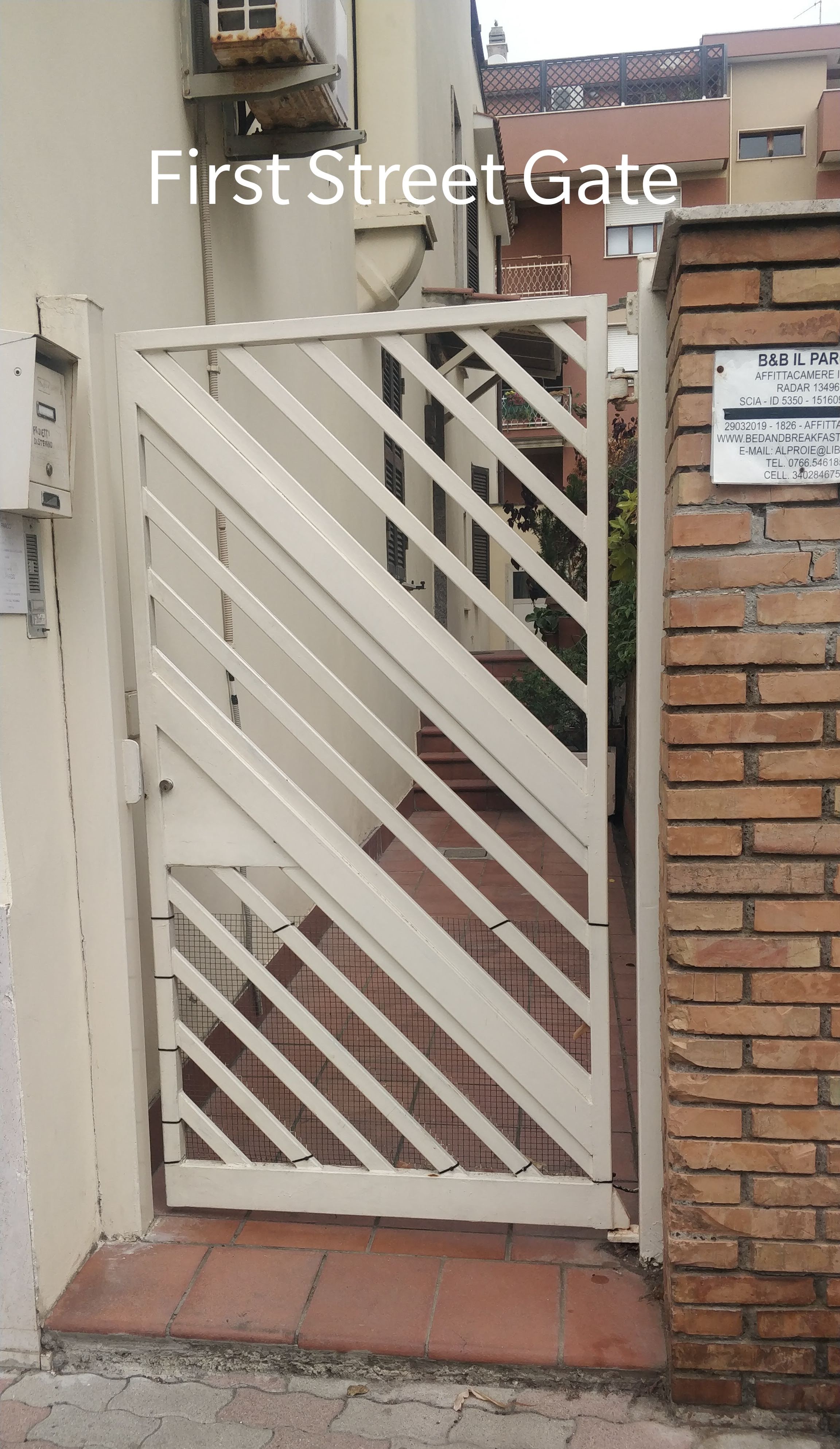
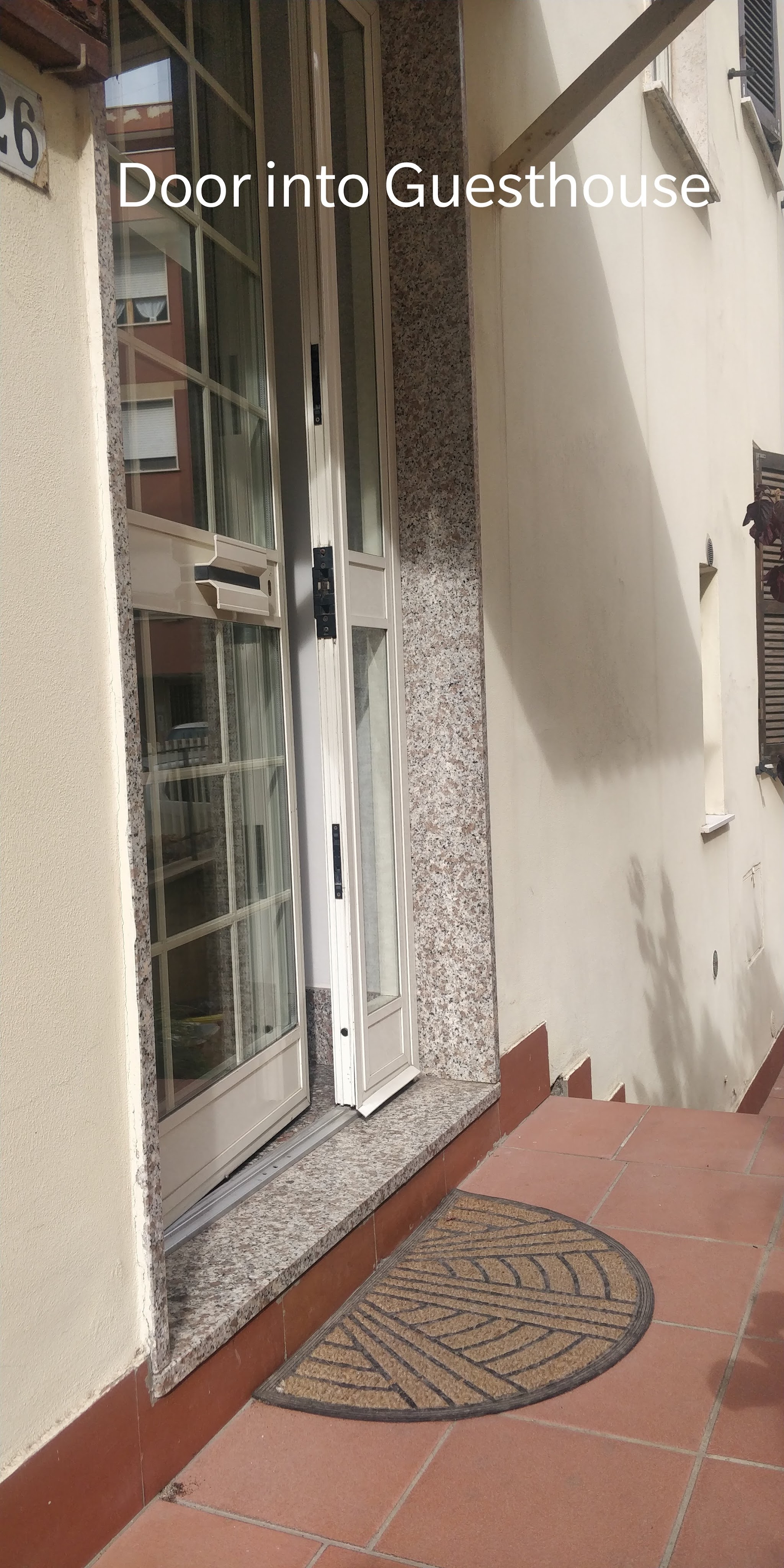
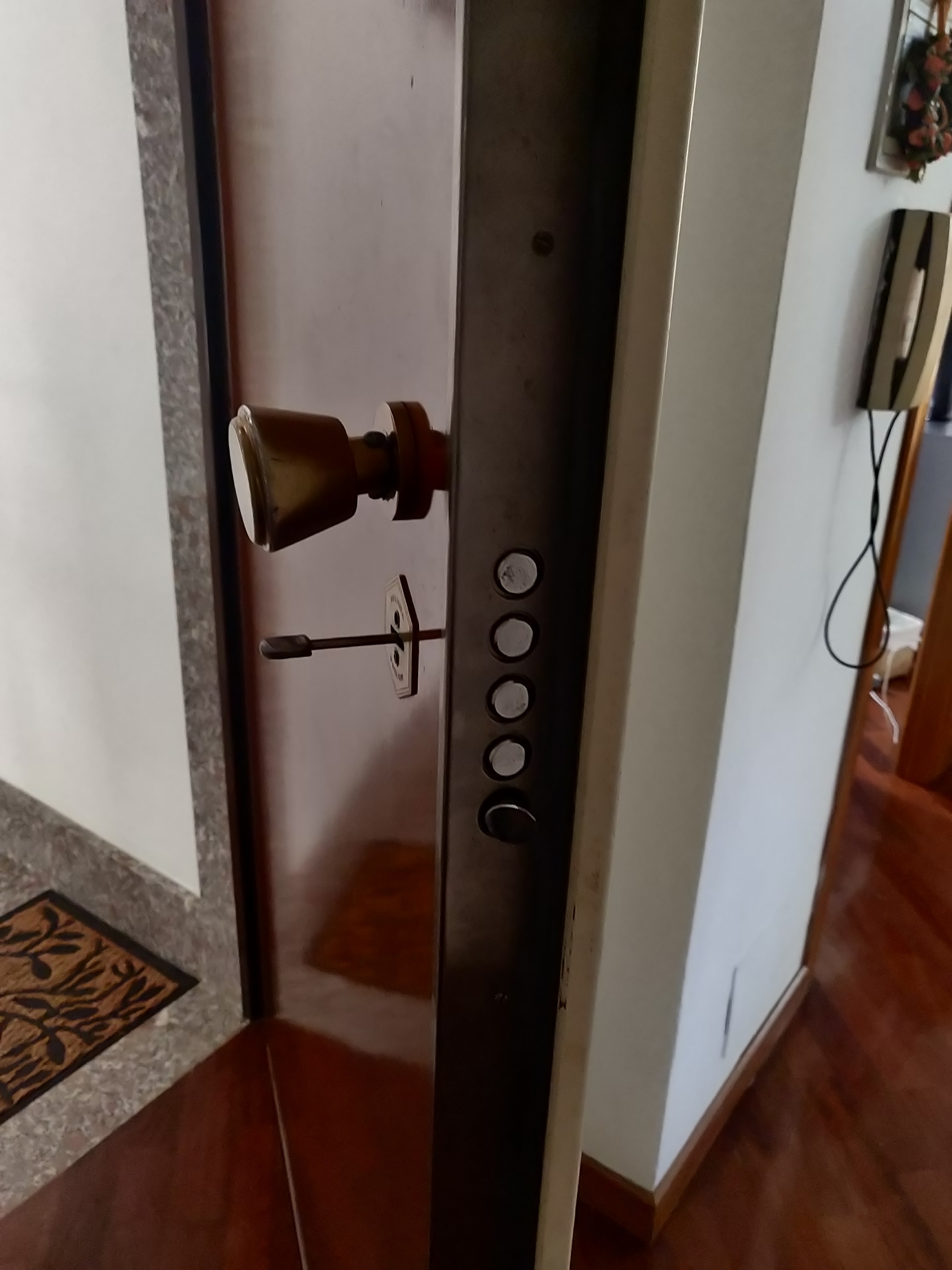
The doors of the ferry finally opened in Civitavecchi at 1.45 am – there was a huge cheer when the doors opened allowing people to drive off. We expected some checking of documents and Passenger Locator Forms but there was none, we simply drove off into the night. Luckily the guesthouse was only 7 minutes away according to Google. The streets of Civitevecchi were quiet_ no Saturday night revelers. Small parking spots and it was hard to fit our Guzzler into the street parking. The guesthouse was also quiet_ there are some bells outside a security gate. While we are deciding which bell to ring, Caoimhin pushed the gate and it opened, we entered a narrow courtyard and there was another door that opened when we turned the handle. We went in, crept up the stairs and found a stout 5-point lock door with a key on the outside. We opened this and it seemed like we were in someone’s house. To the right, there was a sitting room and kitchen, to the left was a corridor that led to 4 closed doors. One had a key on the outside _ so we went in. It had a double bed that we fall into, totally exhausted I dreamed that we are in the wrong house but was too tired to care.

The following morning, when we bumped into Aldo, the homeowner, in the corridor, he wondered who we were. He had already reported us to booking.com as a ‘no show’ and said that some of the other guests must have left the doors open…they weren’t deliberately left open for us. He couldn’t believe that we had just walked in during the night past all the security doors. But he fed us pastries from the bakery next door and made us cups of strong Italian coffee which blew any lingering cobwebs away – the coffee in Italy is so much better than Spain.

It was Sunday morning, 27 degrees and cloudy when we headed off across the country with no particular place in mind but hoping to find a place to camp. Aldo was intrigued that we had no ‘plan’ (but would probably believe us capable of anything after we had ‘broken in’) and said that Spoleto was nice if we wanted to go inland. We listened to Pavarotti, driving by dusty fields_ it hadn’t rained for months according to Aldo. Roads were worse than in Spain, cars were smaller, drivers were more inpatient (in reality, maniacs behind a wheel), some shops were open on Sunday and we stocked up at the first supermarket we saw in case we didn’t find another one. The bakeries were fantastic (I can see a weight gain happening) and everywhere we stopped, the people were friendly although we find that our heads are now full of Spanish words – ironic when we struggled in Spain.

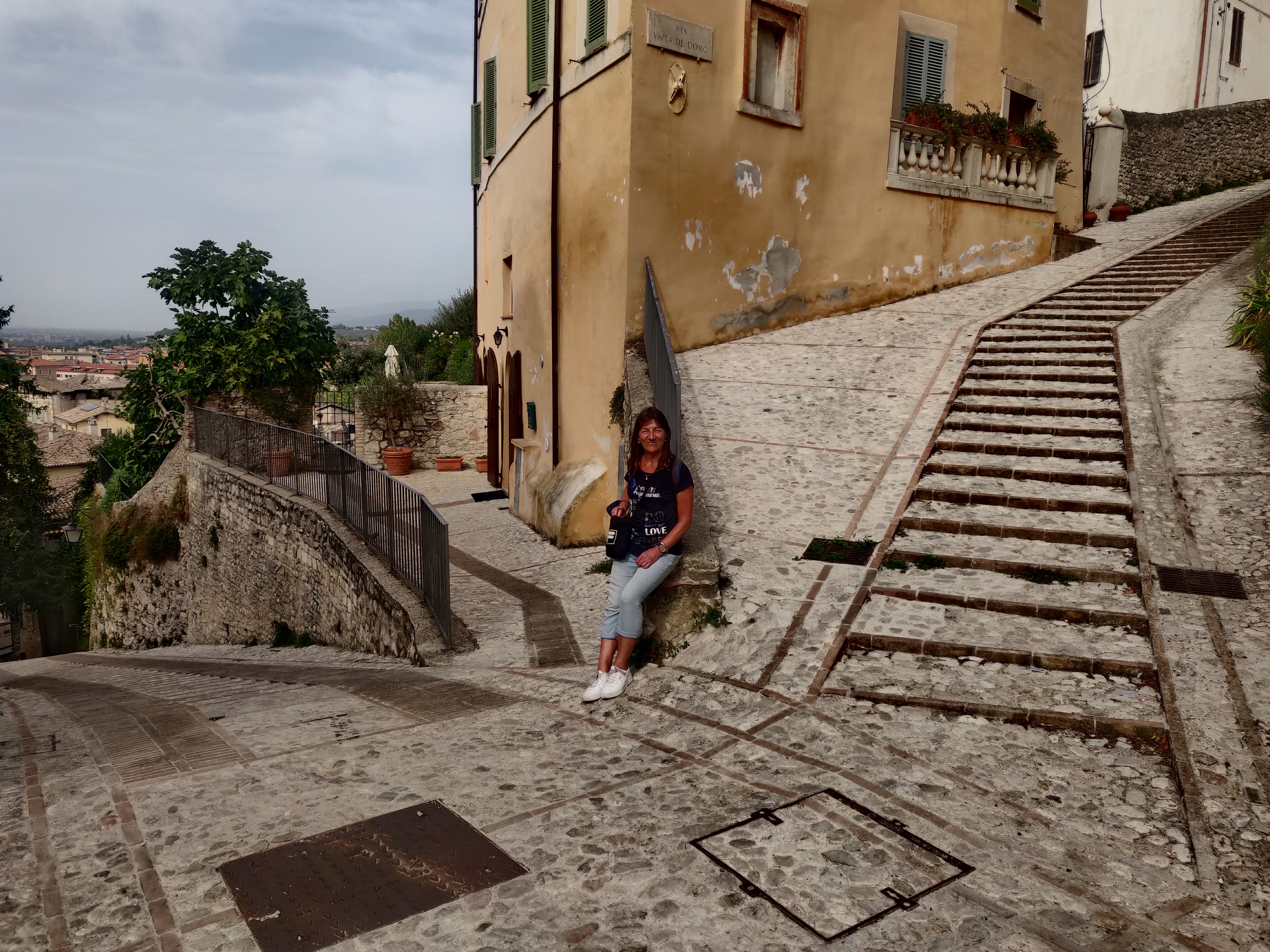
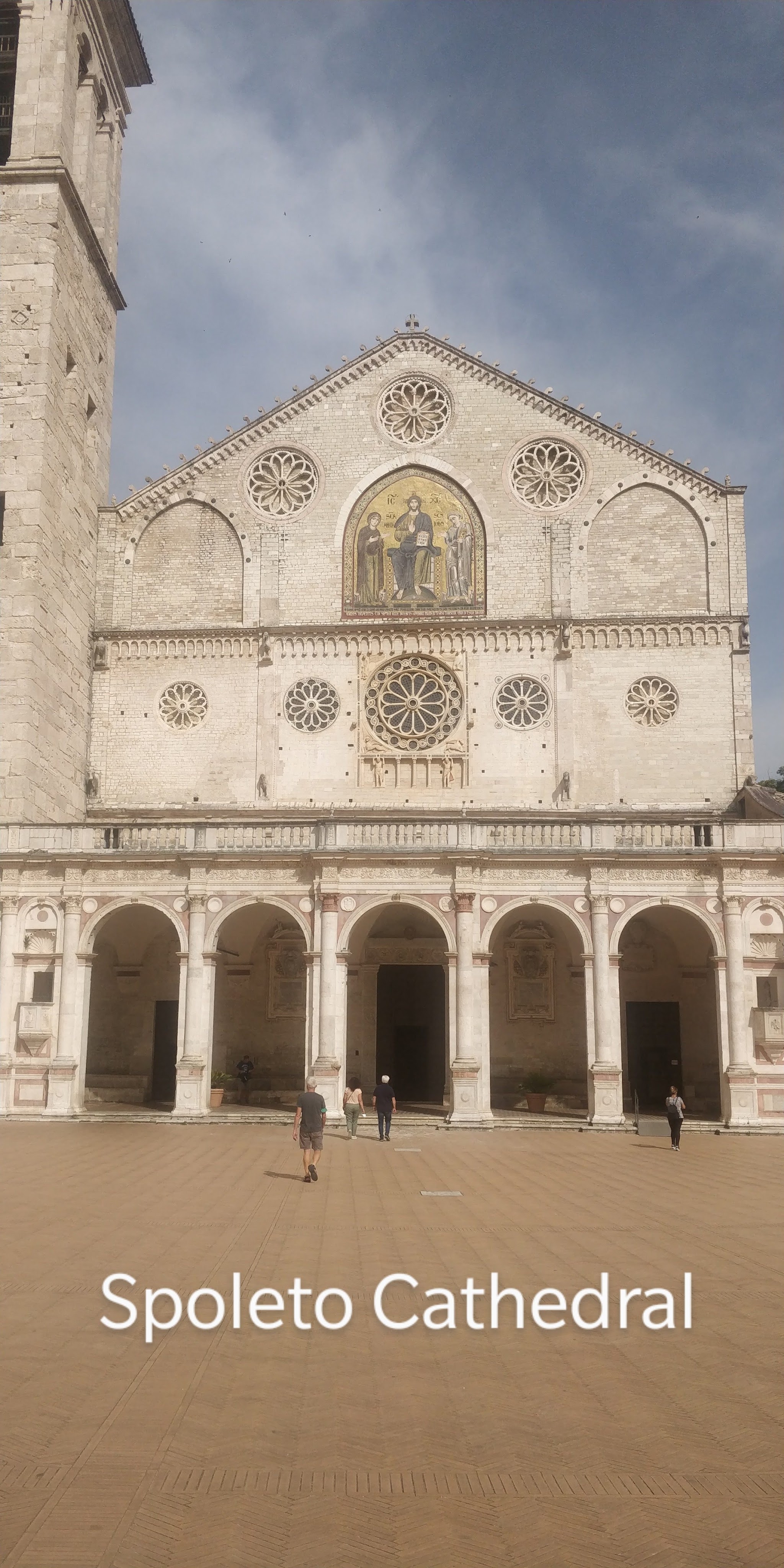
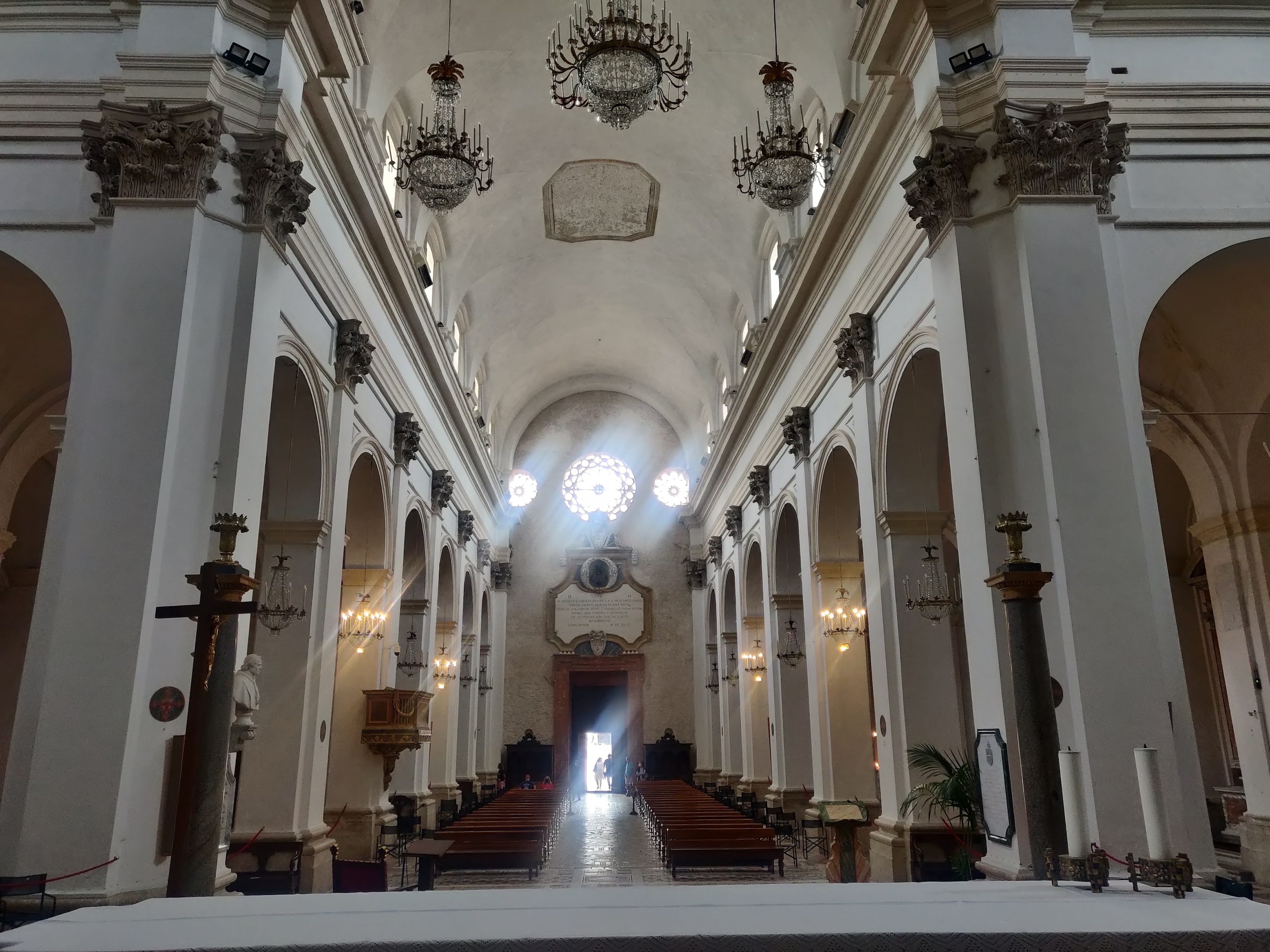
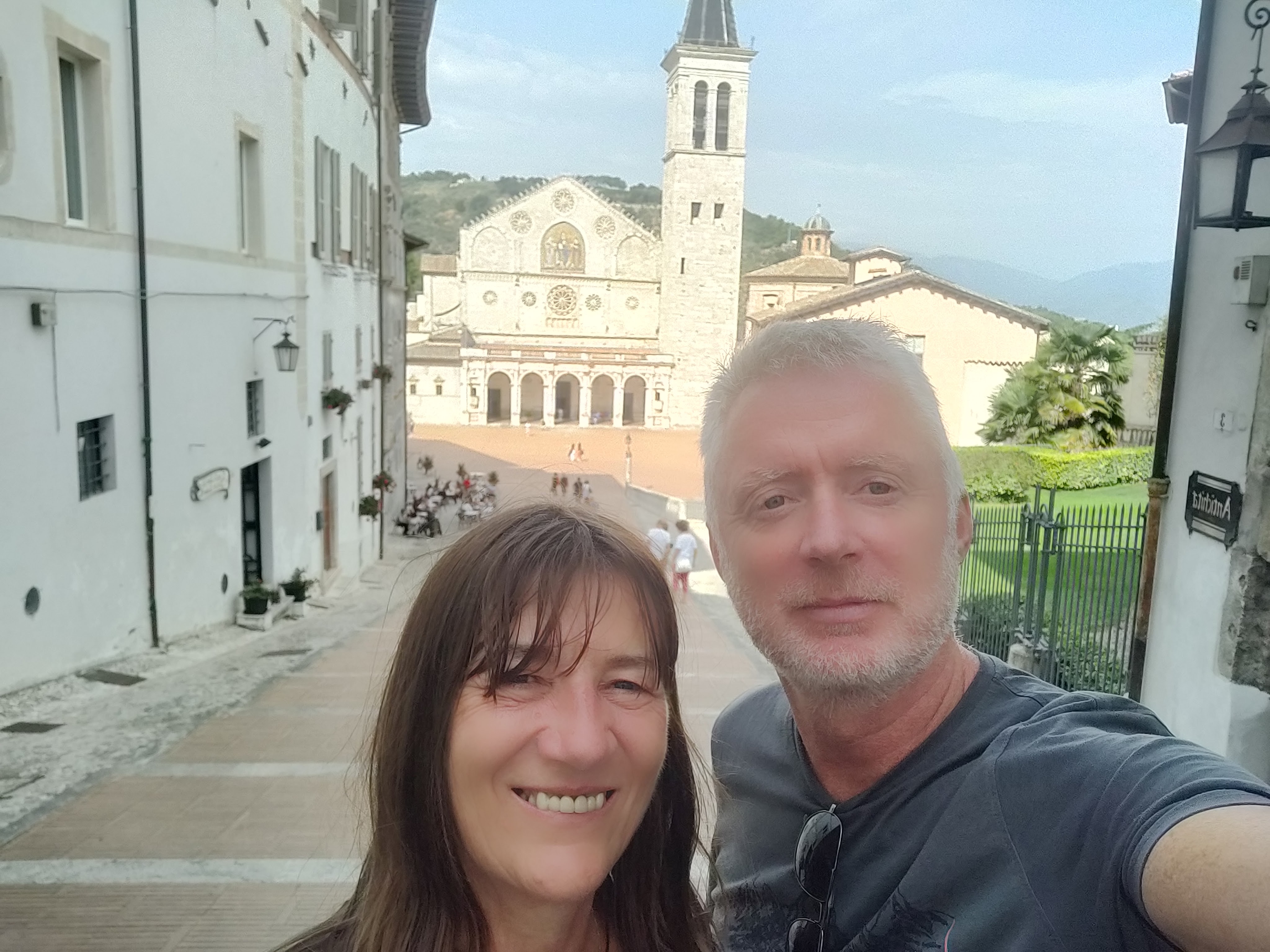
We made it to Spoleto, a town in Umbria that we had never heard of it until that morning. There was music in the Square and we were delighted until we found it was a political rally☹️. Avoiding the speeches (they sound the same in any language…the promises), we walked uphill into the charming old town, most people sat outside on cobbled streets, doing what Italians do best, eating and talking! The 12 century cathedral was amazing and the fresco on the outside was stunning (from 1108 by an artist called Solsternus who described himself as ‘ahead of his time’ but nothing else is known about him..

Took the photo so that we know where we are!!!
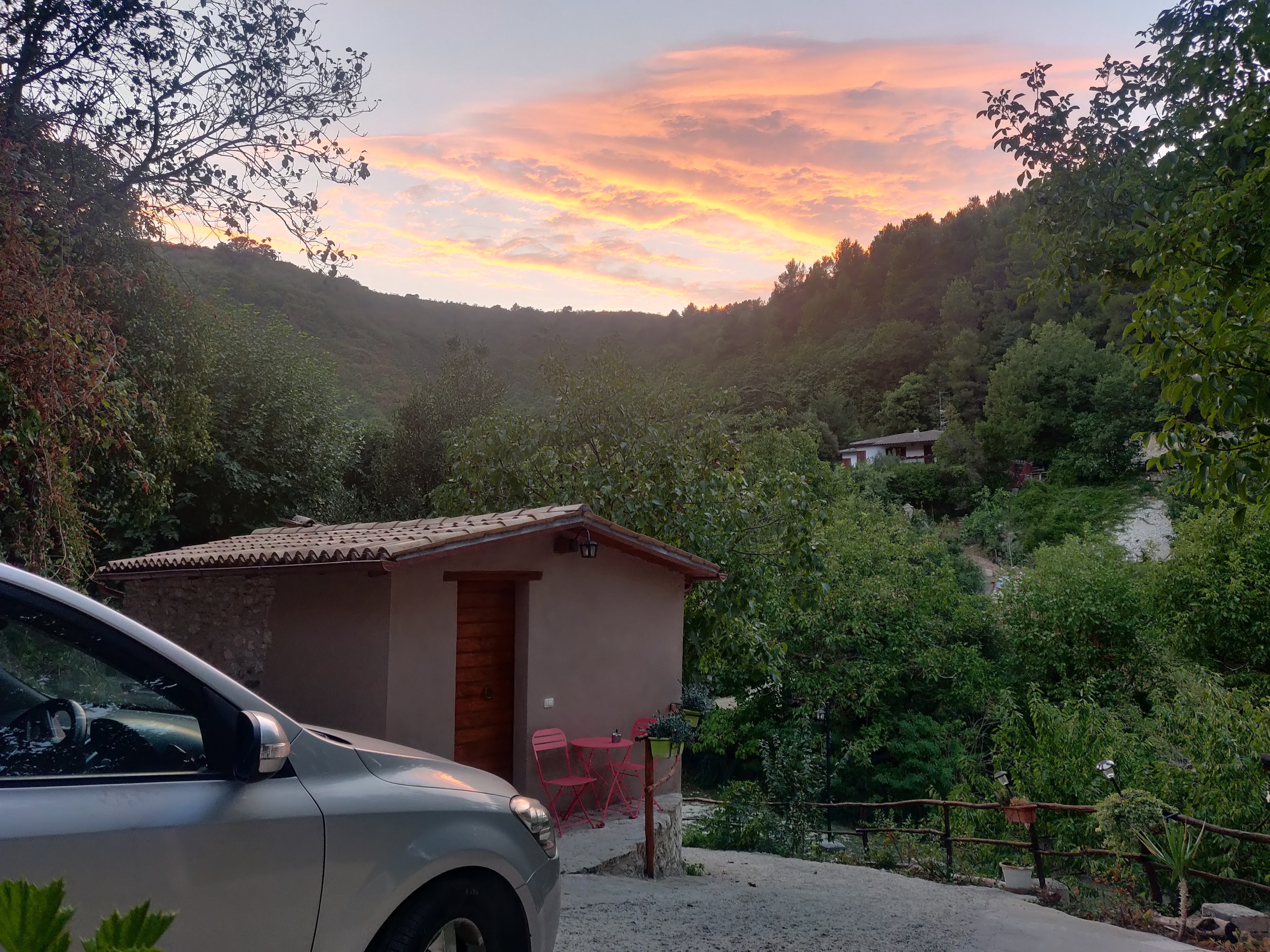
Sunset outside our chalet in Pompagnano

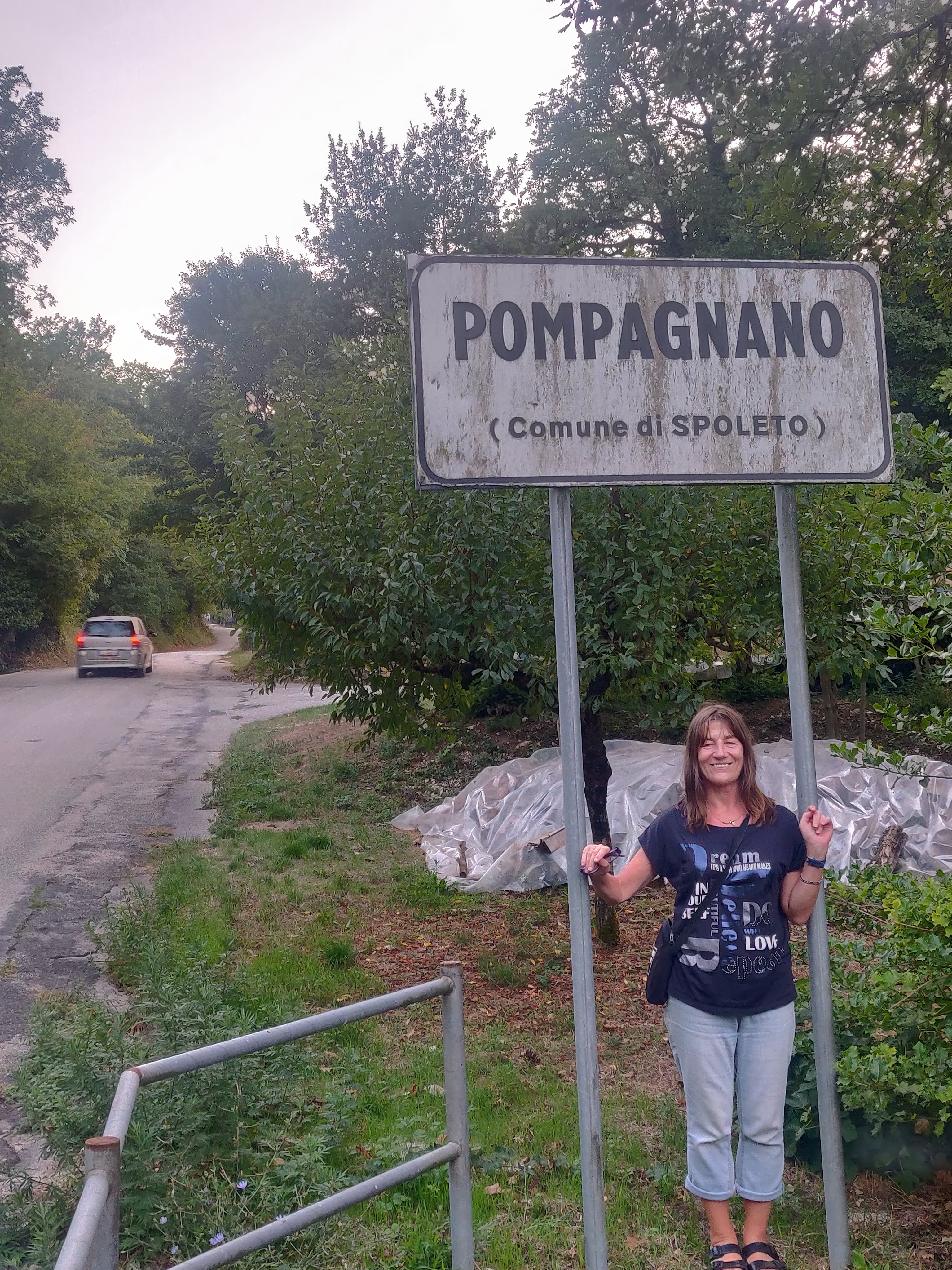
We tried a campsite outside Spoleto but it was closed for the season, we Googled and found an apartment in a little village in the green hills. This was so gorgeous and the people so nice that we would have stayed for another night but it was already.booked. The owners daughter had studied English in Dublin for a month a few years ago. The owners wife brought us a plate of homemade buns, so delicious that there will definitely be a weight gain😋

We reluctantly headed off…we use Google again and book the cheapest place we can find in the a south easterly direction _ a whole house in a village in the mountains in Abruzzo for €35. What a bargain!

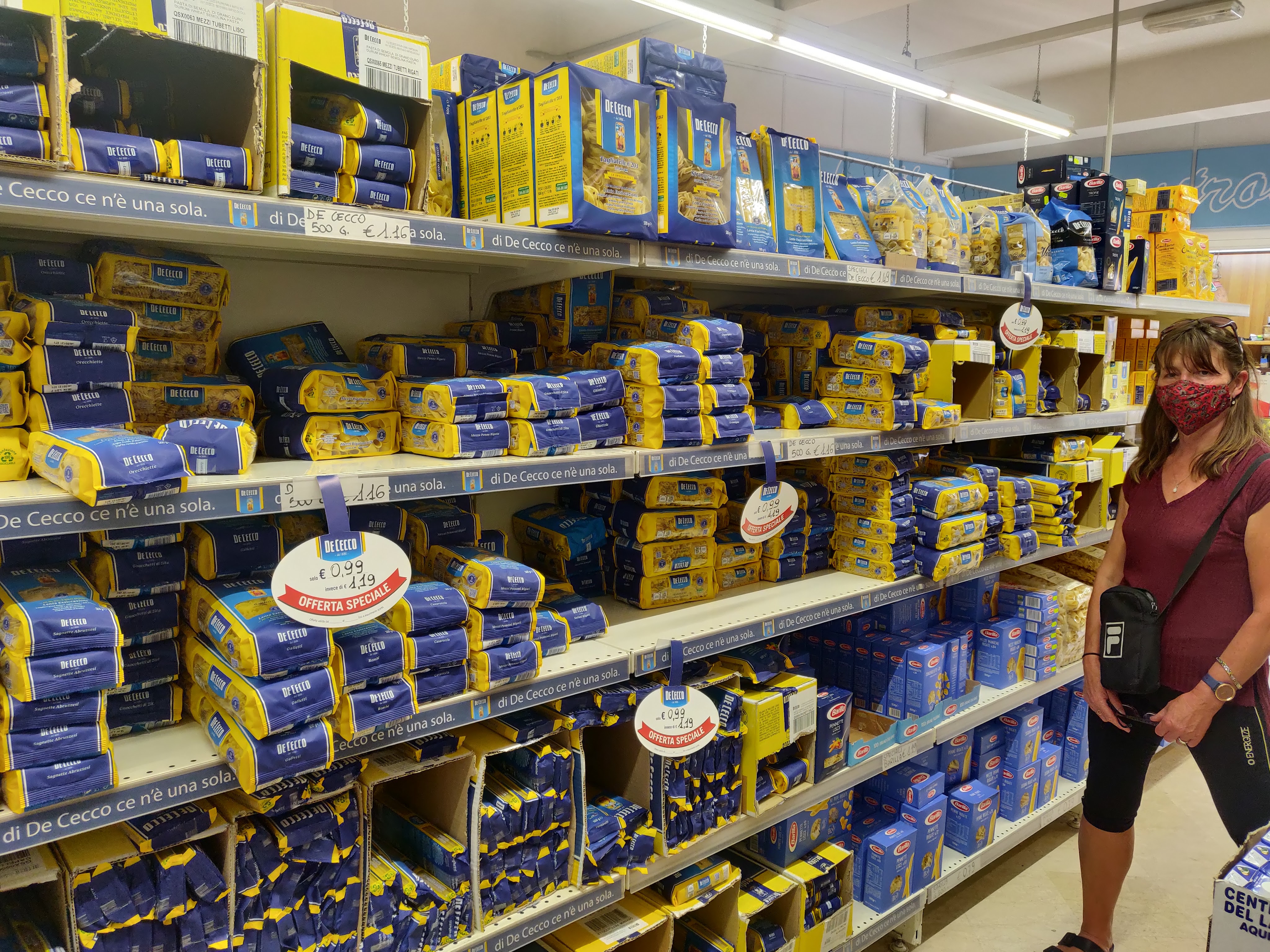
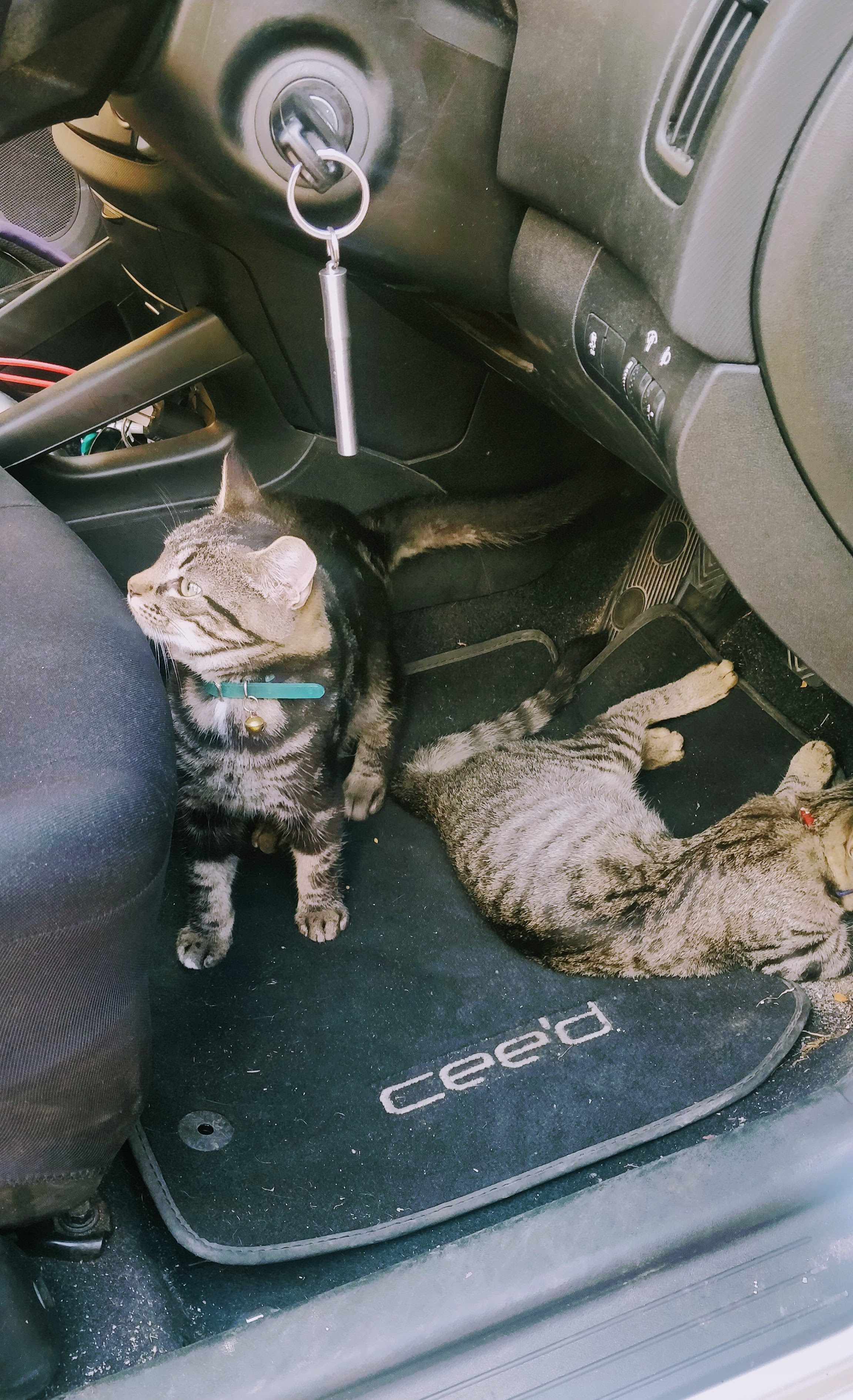
We get a whole house in a village, San Lorenzo, plus a couple of cats that really wanted to leave with us- we had difficulty getting them out of the car. The key was in the door for us – deliberately this time – and we didn’t meet a single person in the town or find a restaurant or bar. The local supermarket which only opened for a few hours a day was well stocked with pasta. The area was stunning – very near L’Aquila which had several earthquakes , the last in 2009 which left 350 people dead – but we left the following morning heading on towards for the Adriatic coast.
Adios Spain, Ciao Italy

Catalonia – here we come

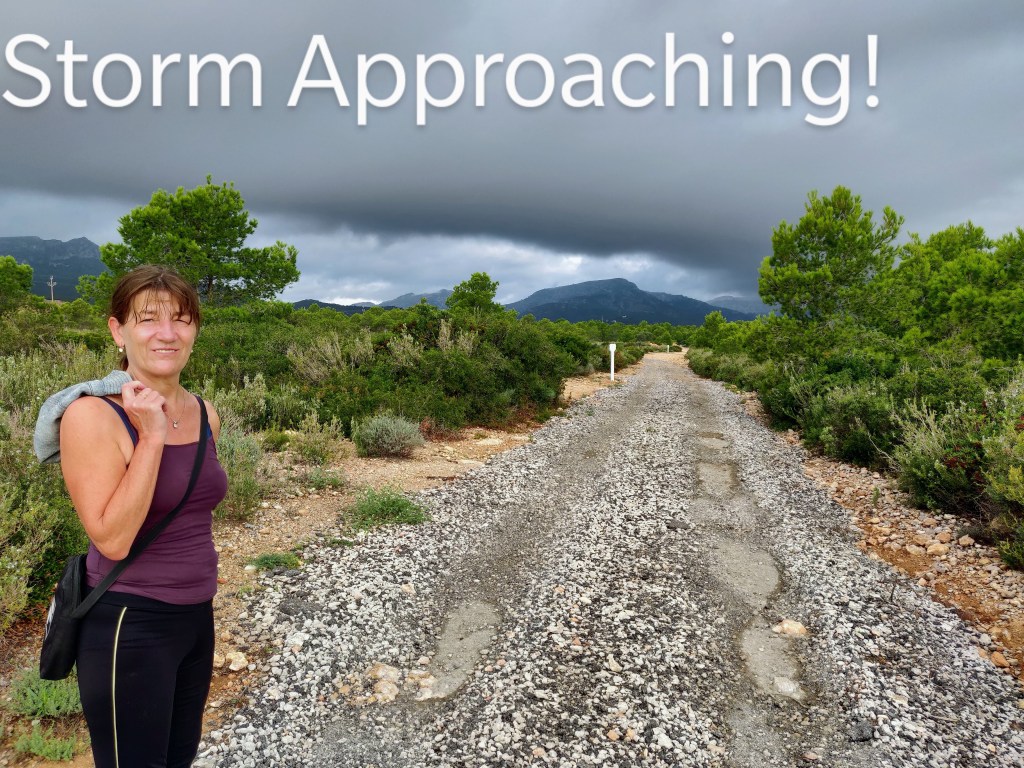
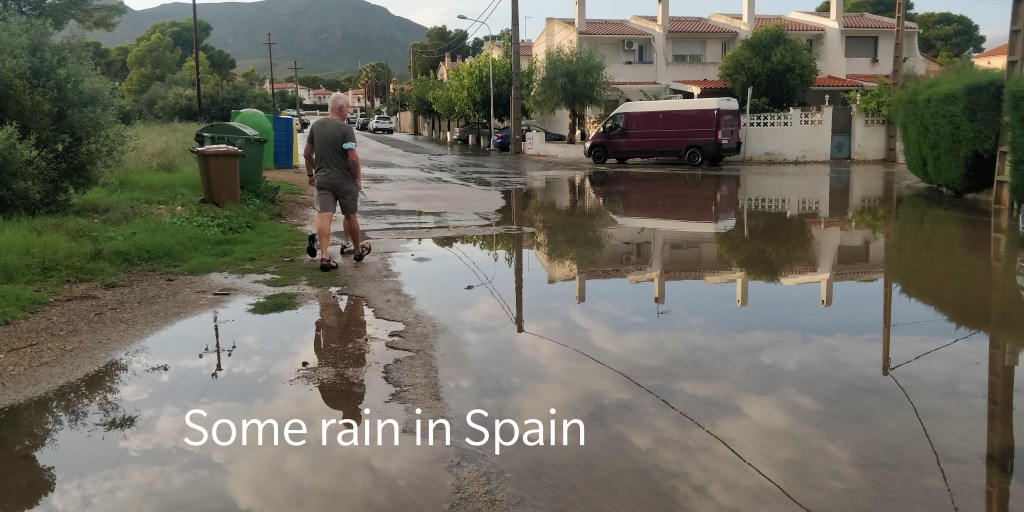
The threat of thunderstorms followed us over the mountains as we headed from our dusty campsite by the reservoir on the river Ebro to the Catalan Coast. But it wasn’t until Google brought us to the door of our holiday house in El Casalot that the heavens opened in earnest, the skies darkened and then blazed with lightening. We tried to understand the woman who explained the running of the house to us in a mixture of Spanish and French while the rain hammering on the windows drowned out her voice and the thunder banged overhead. The house seemed palatial after our tiny tent and we were giddy with excitement at having our own bathroom and shower (I know, it really is the simple things!!) Four houses shared a communal pool and all had individual barbecue areas – luxury indeed.The beach which was a couple of kms away was deserted that first day (Sept 1) – the Med looked angry with churning waves and after a short dip we felt like we had been tumbled in a washing machine.

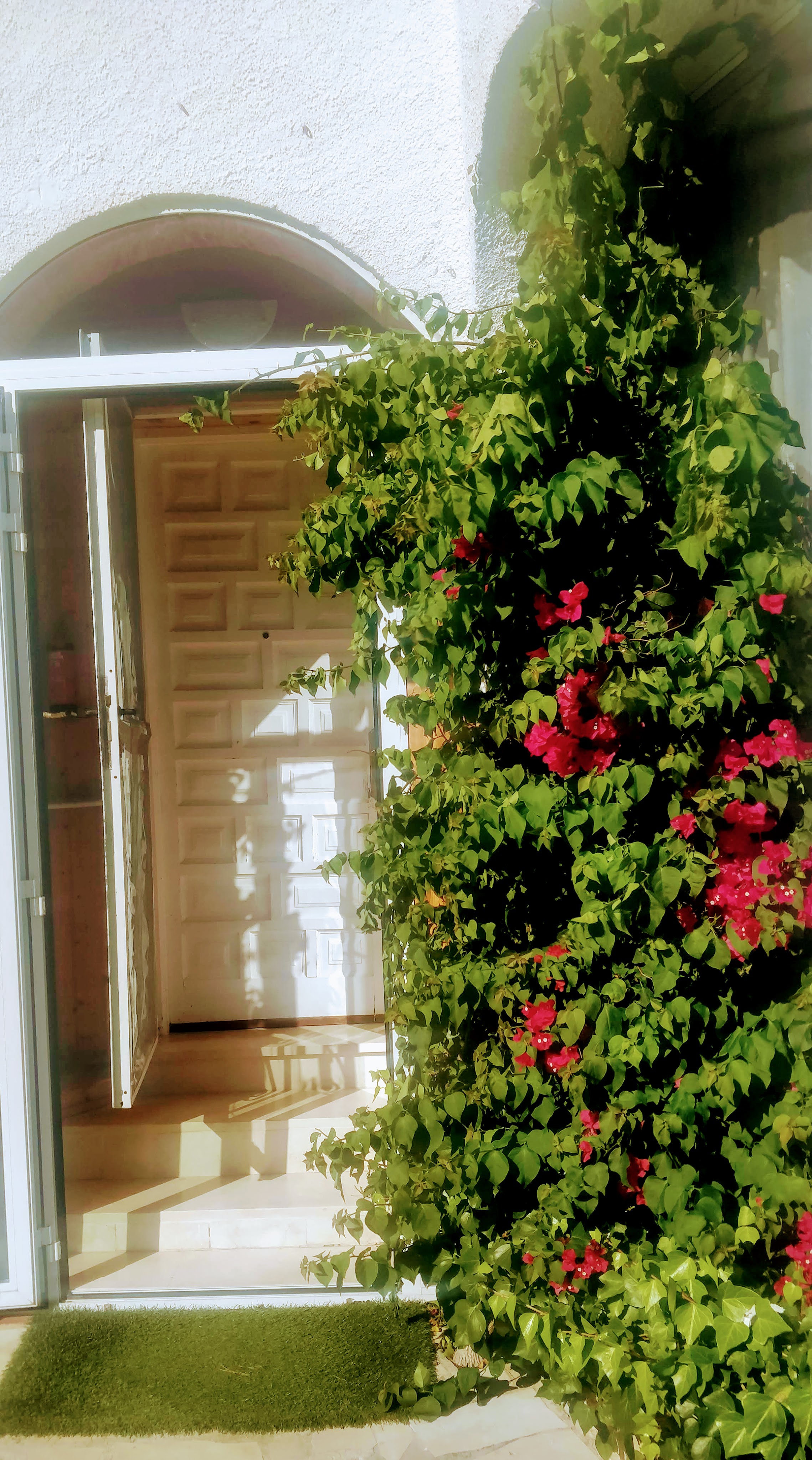
Entrance to Holiday House in El Casalot (That gorgeous bougainvillea was also the snake hangout)

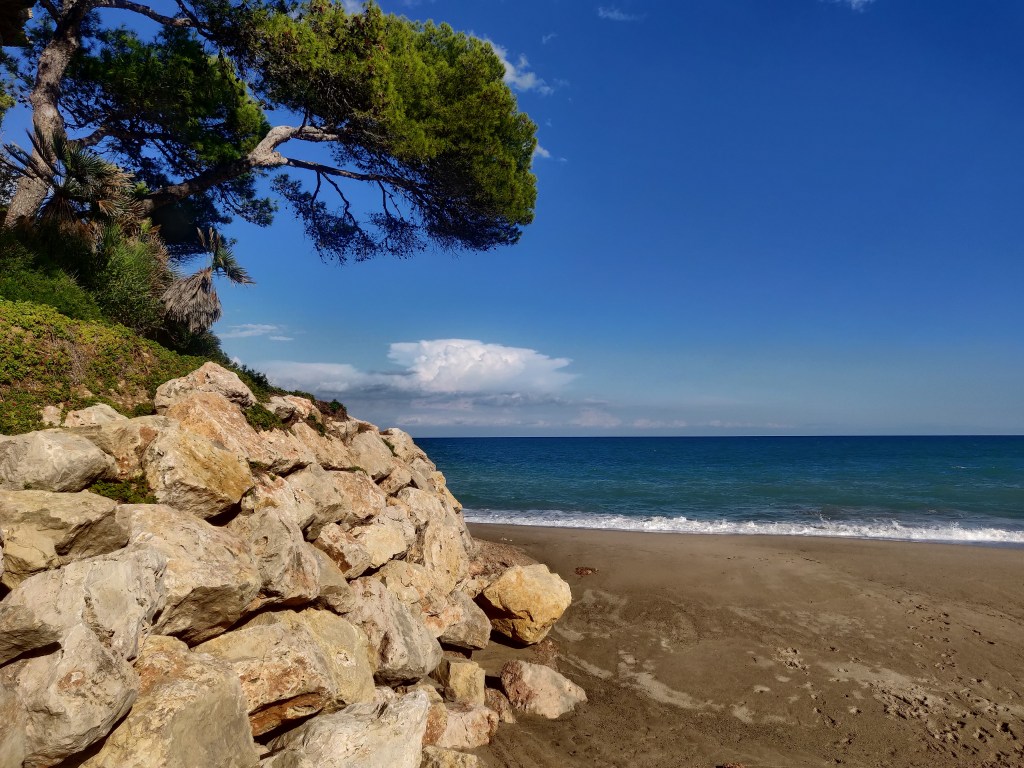
But soon the sun was shining again, the sea was that gorgeous turquoise bluey-green of holiday brochures and the temperatures were hovering about the 30 degrees most days. But I can say with certainty that it DOES rain in Spain and we had several spectacular thunderstorms, usually in the evening. The Costa Duarada is a long stretch of golden sand interspersed with small shady coves surrounded by pine trees and with with steep steps leading down to them. There were some high -rise holiday apartments along part of the beach but also lots of bungalows, villas, boardwalks and cycle paths and the beaches were quiet.
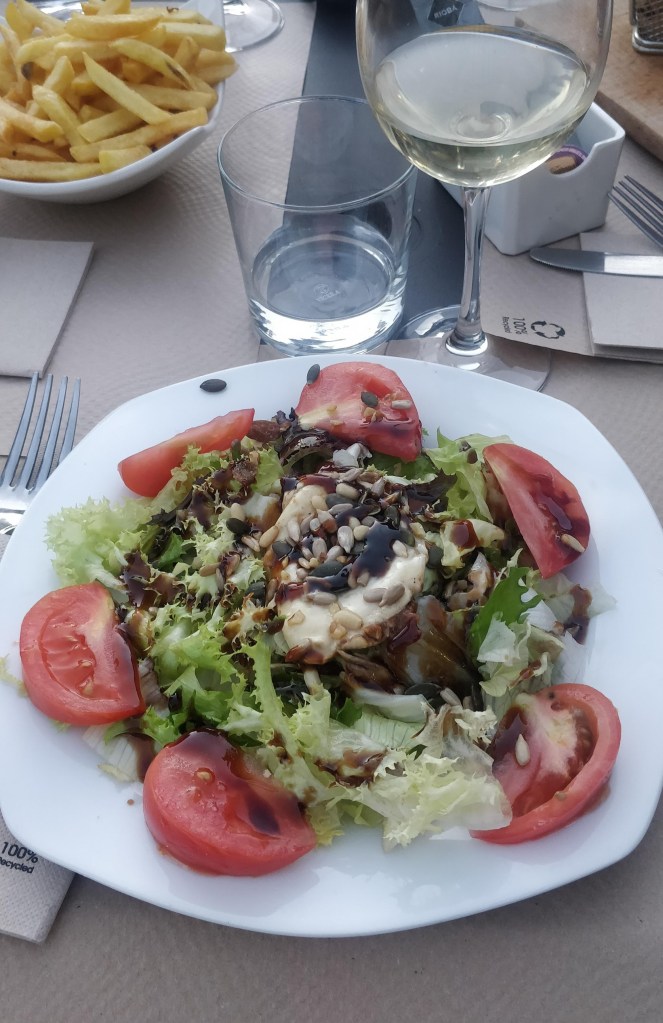
The locals loved us, particularly the mosquitoes who cuddled up a bit too closely after rain but we were also welcomed at the nearest bar/restaurant/supermarket which was called Papaya and who served the most delicious goats cheese salad and being away from the tourist strip, was mainly frequented by Spaniards living locally.

We almost had an extra guest in the house (there were 5 of us staying,- Caoimhin and I, Caoimhin’s brother and wife and Louise, a South African friend). On the second evening, Louise spotted a snake slithering across the patio and into the bougainvillea growing up around the front door (see photo). Major consternation. The owner of the property was called and she arrived with two men with big sticks. Snake charmers, they were not! The snake had disappeared or maybe hidden in the walls (sometimes we can understand Spanish). That night, I woke to hear a soft hissing- I sat upright in bed thinking that the snake was in the bedroom – thankfully it was the whirring of the fan but the mind plays tricks. We haven’t seen the snake since….or at least not so far.

The beaches were gorgeous but the surrounding mountains and villages of the interior were amazing. There were lots of hikes, most signposted or marked by colour-coded flags painted on rocks or trees. Some were ancient paths linking villages, others scaled peaks to hermitages and churches or descended into valleys only to rise again. We walked through olive grooves, pine and oak forests, almond trees and usually the air was filled with the scent of rosemary and thyme which seemed to grow everywhere even on the higher slopes. We spent hours identifying plants using the SEEK app (highly recommended – can be used for birds and butterflies and presumably snakes if they stay still enough to get a photo). And there was the sound of the church bells ringing out from the villages perched on hilltops with their red-tiled roofs. The colour-coding of walks was sometimes a bit confusing and I must admit that there were times when we found ourselves on longer trails trails than we had planned – being lost is nothing new to us. (But the All Trails app on our phone usually came to the rescue)
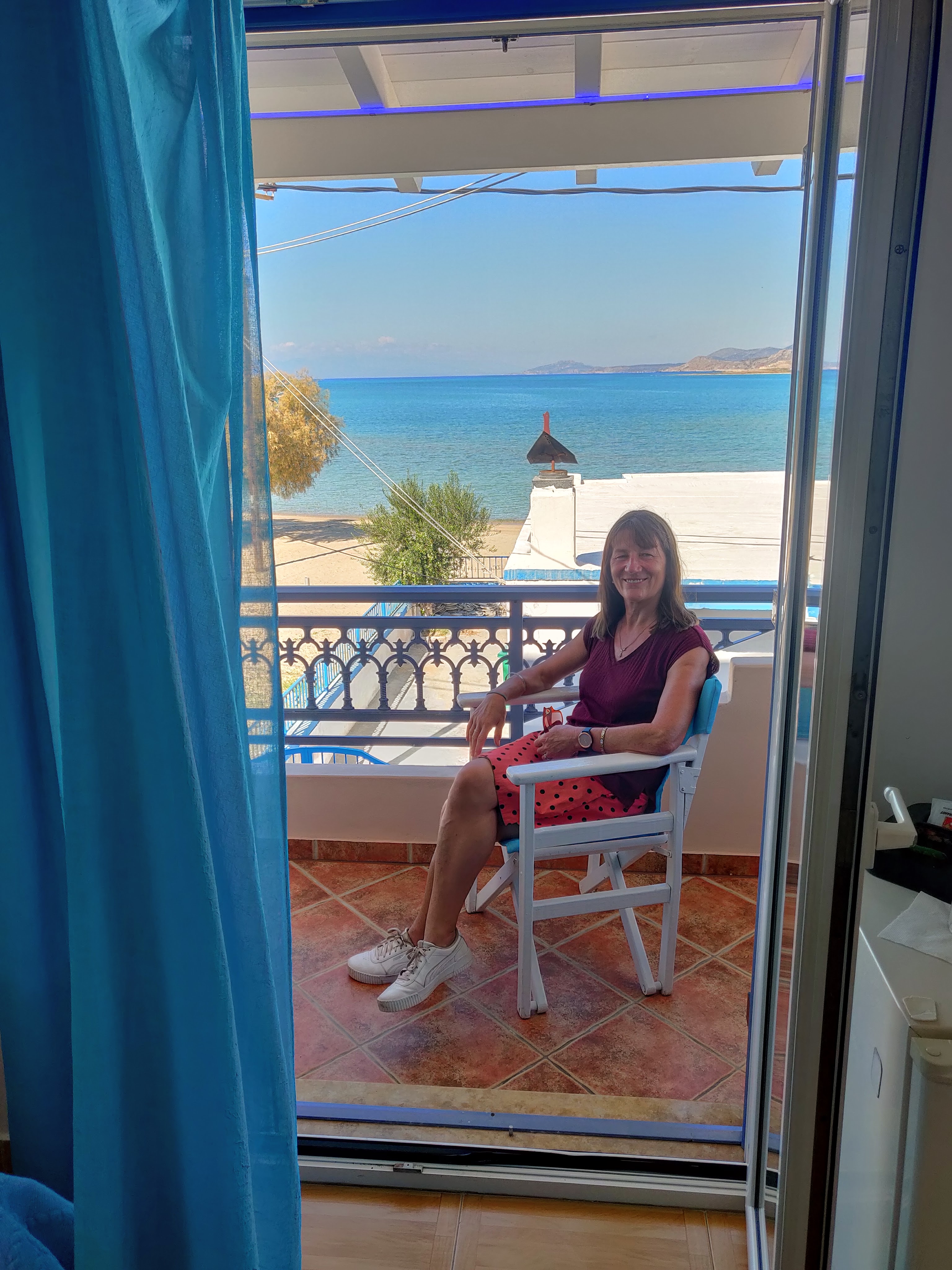
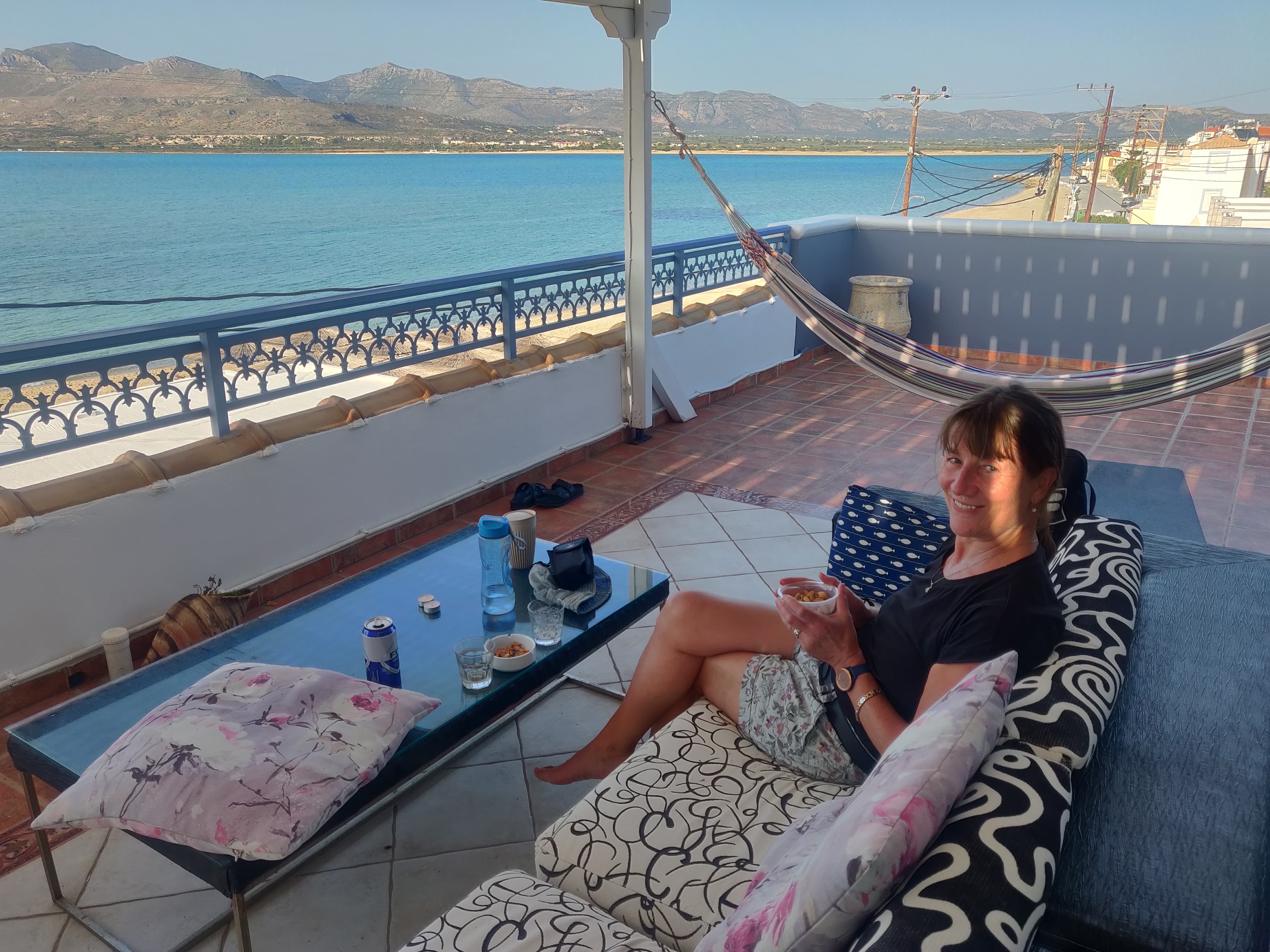
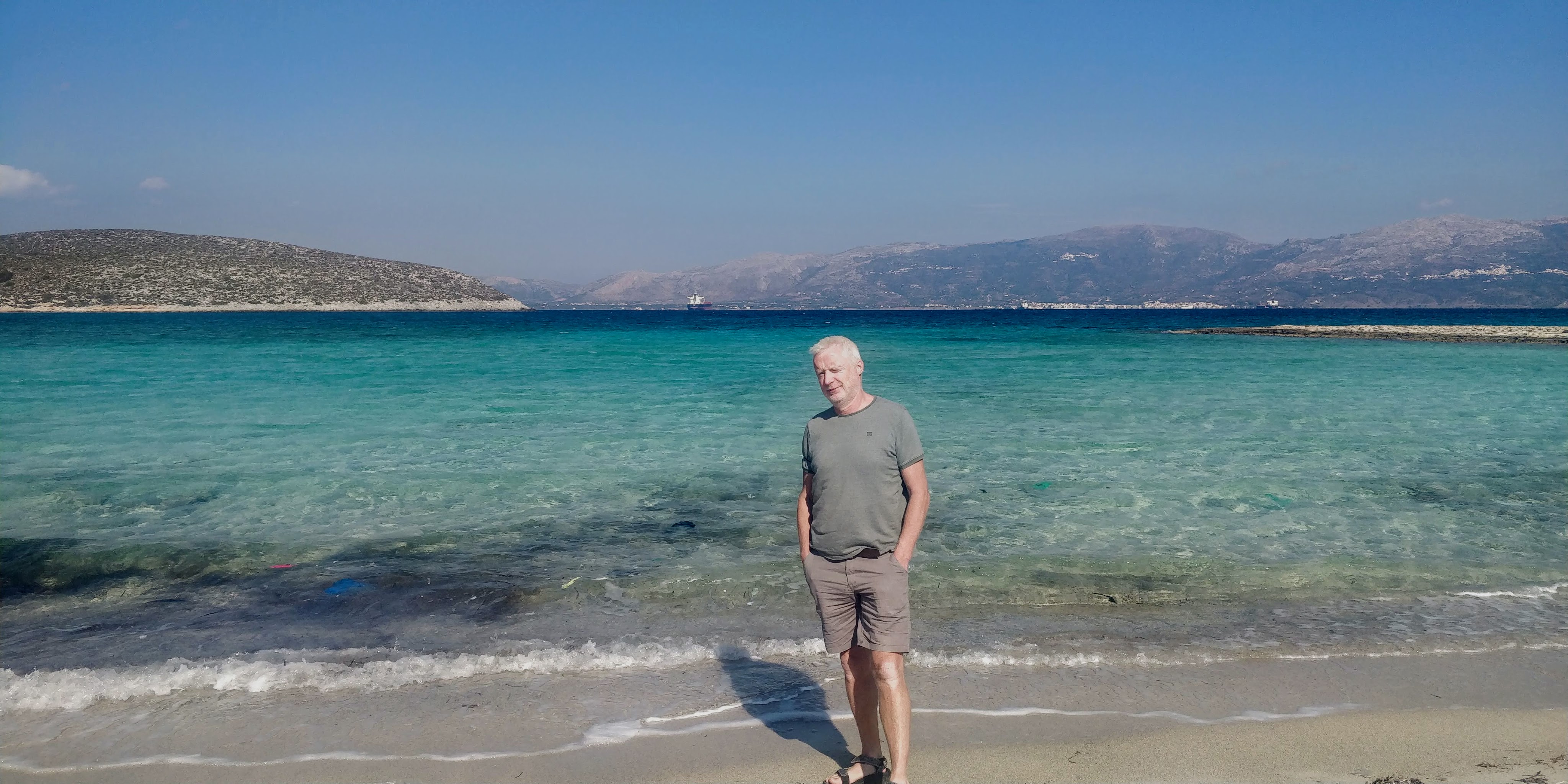
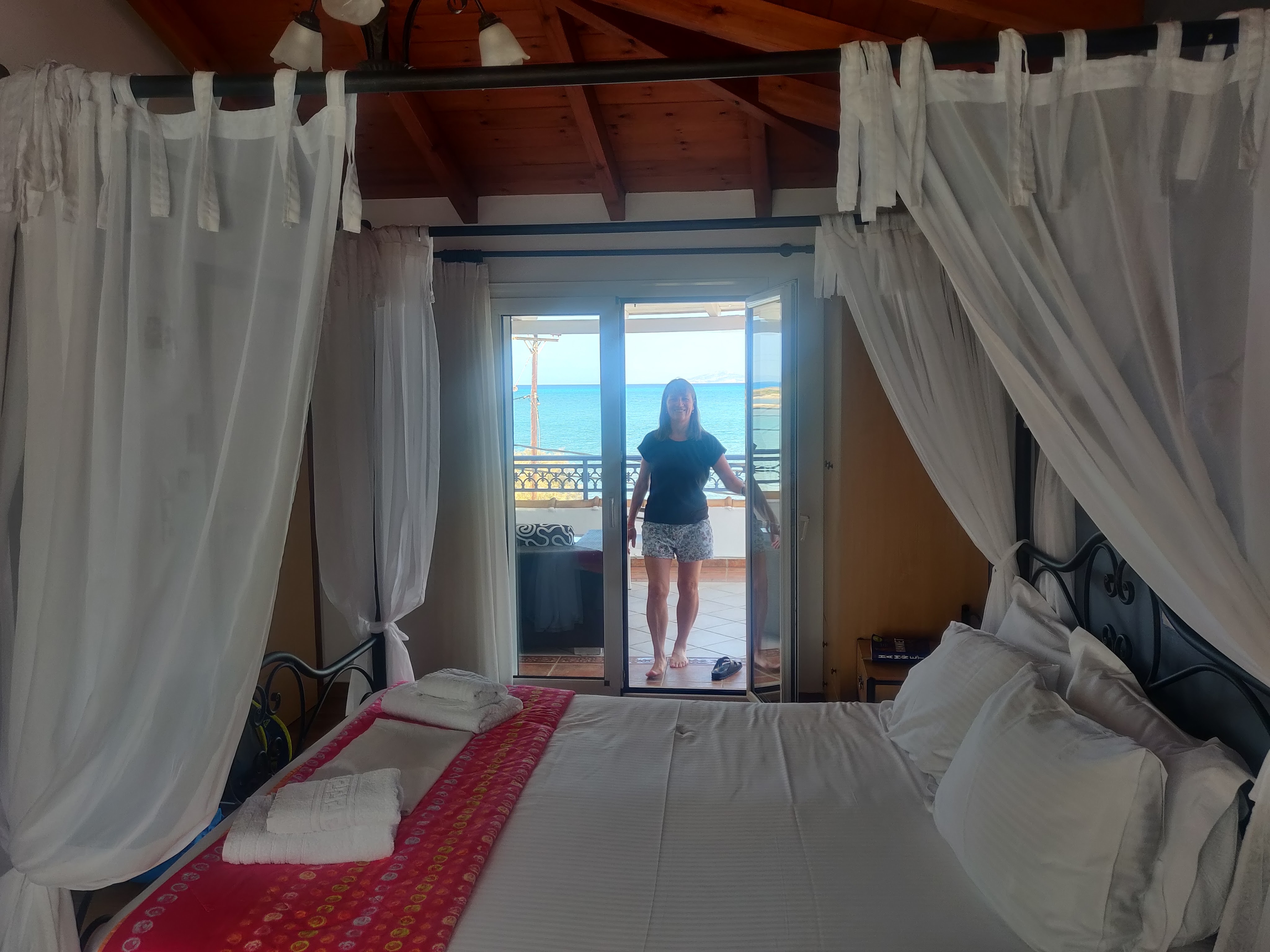
Nearby Villages

Most of our hikes started and ended in many of the small villages which were not far from our holiday house -Pratdip, Vandellos, Mont Roig, L’argenterra. Many of these villages look like museum pieces with their narrow, winding cobbled streets, wrought iron balconies and windows shuttered from the sun. But they are very much alive – the farmers that till the land live in the villages, not on their farms. There was the chatter of voices and the sound of radio and TV coming from the shuttered houses although we rarely saw anyone.

We visited a local tourist office and met the most knowledgeable and enthusiastic woman that we have ever met anywhere – she gave us information on hikes, natural wonders, towns and places not to be missed such as the spectacularly deep crevasses at Avens de La Febro, the thermal pools at Font Calde and the Ebro delta. Her favorite word was ‘fantastico and that became our catchphrase as well when we visited. It took us two attempts on two separate days to find Avens de La Febro – no signage and it was very well camouflaged (a real hidden gem) but the deep crevasse was a special place -with a ferny dampness, an air of coolness where even our whispers bounced off the high rocks.

We had a really spine tingling drive to a sanctuary with hot springs (Font Calde). The narrow road corkscrewed around the mountains with sheer drops and no barriers. Thankfully we didn’t meet any other cars because we couldn’t have passed and there was nowhere to pull in between a hard rock-face ….and fresh air and reversing was an unthinkable option. I haven’t any photos for evidence – my hands were shaking too much. We needed a de-stressing dip in the thermal pools with their super clear waters after that drive. We discovered that there was another road out that involved driving across a stream (not a good start) onto a dirt road but after a few bends and driving through three rock tunnels, we were on a decent road that we would have called spectacular(but tame in comparison to the road we came in on.

A day on the Delta D’Ebro was educational, who knew that rice was grown in Spain? The mighty Ebro flowing to the sea creates wetlands, canals and lagoons, a haven for wildlife and birds including pink(ish) flamingos. We seem to be linked to the Ebro – it’s the same river that we had camped beside near the Riba Roja reservoir and the hydroelectric plant. Lots of signs on the delta say that the Ebro river that gives so much life and biodiversity is dying because the delta is disappearing. The building of several large dams upstream is blamed – less sediment is brought down, the erosion action of the sea washes away the coastal sand and wears it away and with less sediment to replace it, the delta shrinks. Unintended consequences.

The Paddys driving through the paddy fields in Spain

Soon it will be time to say Adios to Catalonia and Spain and Ciao to Italy. Spain has been a revelation with its natural beauty, gorgeous villages, history and good food……..in short, Spain is simply fantastico!!!!

We haven’t booked the ferry yet but hope to sail from Barcelona to Italy this Friday, Sept 24…..better get cracking

Catalonia – here we come

Moving in

It was time to move inland – it was already August 27 – and make our way to the other side of Spain to Catalonia where we had rented a holiday house with Ciaran and Christina, Caoimhin’s brother and wife and Louise, a South African friend of theirs for most of September.

The morning in Galicia was grey and hazy – sea and sky were one – unlike the vivid blues and greens that we were used to and the temperature was a cool (almost goose bumpy) 18 degrees. We packed up the tent and decided to head inland. We stopped in Lugo to look at the impressive Roman walls. We climbed the steps and walked the 2 kms on top of the walls. It would have been a lovely walk at dusk or early morning but at 1 pm in 33 degrees, it was a walk for mad dogs only…..

Afterwards while we were hydrating indoors in an air con café in the old town with good WiFi, we decided to give the camping a break. We booked a hostal there and then in Ponteferrada, a town about an hour and a bit away. (Hostals are different to hostels, they are cheap hotels usually two star).It was €50 for an en-suite room including breakfast and free parking so we weren’t sure what to expect. Hostal Rabel didn’t look very promising from the street and was over a little cafe/bar. But we were very pleasantly surprised – it was spotlessly clean inside with thick shutter blinds, crisp white sheets, bedside lamps (a luxury after camping) and wooden floors. It was bliss -cool and quiet with a fantastic shower and oodles of hot water and even complimentary toiletries. It was only a short walk from the old town. and there was even a good vegan restaurant (La Marmita Verde) up the street – we were the only customers in this meat obsessed country.

Hostal Rabel, Ponteferrada

Ponteferrada is a medium sized town in the province of Leon surrounded by mountains and was a major stop for centuries on the French Camino. The old quarter of the town sits below a very imposing castle built by the Knights Templar near the iron bridge crossing the river Sil to protect passing pilgrims on their way to Santiago de Compostela. There were also several churches in the old town. We popped into the Basilica de la Encina where Gregorian chant music was being piped and were awed by the beauty of the building, the ornateness of the decor and the music. The building exuded power. It was actually spine tingling – the pilgrims who walked this route for salvation must have felt the urge to prostate themselves on the ground.

This image has an empty alt attribute; its file name is img_20210828_091304.jpg
Bascilica de la Encina, Pontferrada
The Castle of the Knights Templar, Ponteferrada (and the big ‘M’ – One chain to another))

After our very pleasant stop in Ponteferrada, we headed southeast and drove for a couple of hours over dry flat landscape under a baking sun until we got to Tordesillas, a little town with a campsite that had good reviews online. The town didn’t look like much, the camping cost almost as much as our stay in the hostal the night before (€44)and had lots of rules, it was hot and dusty and as we pitched our tent, sweating in the dirt, we were regretting our decision to go there. But that changed when we crossed the bridge over the Douro and climbed the cobble streets of the old town. We had no hint of the treasures waiting up the hill – convents, monasteries, a palace going back to the twelfth century and a beautiful town square. Heat radiated from the stone walls but there was also a cooling breeze and birdsong, hundreds of doves and pigeons flying and an evening wedding in one of the old churches. We people-watched under the vaulted arches of the Square and drank cold beer in the shade. It was like walking through history and what history here – google the Treaty of Tordesillas where the American continent (most yet to be discovered at the time) was carved up between Portugal and Castille to avoid war on the Iberian Peninsula.. And the story of Joan the Mad, daughter of Isabel and Ferdinand who was banished here….who wasn’t ‘mad’ at all.

After a morning walk along the Douro under the shade of poplar trees, we drove off still heading east along the fertile Douro valley with its vineyards in the direction of Siguenza where we had booked a parador a few days previously for Monday night. It was now Sunday and we weren’t sure where we would break the journey or if we would camp overnight. We kept driving until we arrived in Atienza, a small village in Guadalajara with a ruined castle on the hilltop overlooking the village and knocked on the stout wooden door of Hotel Convento Santo Ana, a door that looked like it had admitted travelers for centuries. There were rooms available for €49 a night and we were stunned both by the price and by the beauty of the interior design, all muted colours with large sofas and lamps. Incredible value in a beautiful place. We wandered up to the village square where at 7.30 pm, we are too early for dinner anywhere ( a common problem as most restaurants don’t open until 9 pm) and make do with tapas, olives, bread, tortilla, crisps and wine.

Early the following morning, the smell of baking bread from the village bakery followed us up the hill to the ruins of the castle on the rock, once a very important seat of power and the interface between Christians and Muslims, frequently changing hands between the two. Atienza was part of the Ruta de El Cid (and even Don Quixote)but is now a mere hamlet of a couple of hundred people

Then it was onward to Siguenza and luxury at the Parador of Siguenza, the Castle of the Bishops, a medieval castle with foundations dating back to the fifth century. Paradores are a group of historical buildings that are state owned and run as upmarket hotels at affordable prices. How could we resist staying in a castle for €140 for the night including a fabulous buffet breakfast? Siguenza is a beautiful little town with a stunning cathedral, narrow cobbled streets where the walls store up the heat of the day and release it in the balmy evening, where the barber was an ex-matador and the walls of his shop were covered with triumphant photos of himself in his heyday and the TV was tuned to some bullfighting event. But he did an excellent job of cutting Caoimhin’s hair. As we creep down the staircase for an early morning walk, the following day we notice lots of birds flying past a window at the end of one of the long corridors. We investigated and opened the window to see thousands of little swallows clinging to the castle walls like leaves and then flying off and landing again. It was a truly remarkable sight.

After the luxury of the parador, we come down to earth with a bang. A deer rant out in front of he car and we missed him by a hair’s breath. We had seen some deer in the long pale grasses beneath the castle walls but this was a closer encounter than we wanted. The amount of truck traffic after Zaragoza is incredible – trucks outnumber cars at least ten to one. We cross the border into Catalonia and camp at the Riba Roja campsite which has a disheveled air, dusty and wilted by the heat and with lots of flies. But there were no rules here about where to park or pitch your tent or wash your dishes which is refreshing. It was on the banks of a reservoir made by the impressive dam on the river Ebro for the Riba Roja hydroelectric plant. But there were also thunderstorm warnings and the access road to the campsite was along a narrow road cut into high cliffs which made us (I mean me!) a bit nervous. The pitter- patter of rain on the tent in the early morning had us scrambling to pack up. But the rain which was very light stopped almost as soon as it began so we walked up the road to have a look at the dam and the hydroelectric plant and heading to the Costa Duarada.

Travelling across Spain through the interior has been a revelation – we picked our stopovers at random and without research and could easily have stayed in different places but we were completely awed by the living history, beauty of the old towns and the quality of the accommodation. We traveled all the way on non-toll roads and thankfully no car issues to report!!

Can you see it? There’s a deer or two in this photo!! Great camouflage

Moving in