Scotland – Midges, Clouds and Bright Water

Some place-names exert a kind of magnetic pull and the Isle of Skye in the Inner Hebrides in Scotland is one of them, hinting at a wild and romantic remoteness. It has been on our list of places to visit for a while so when some friends rented a cottage there and suggested that we join them for a few days, we jumped at the chance.

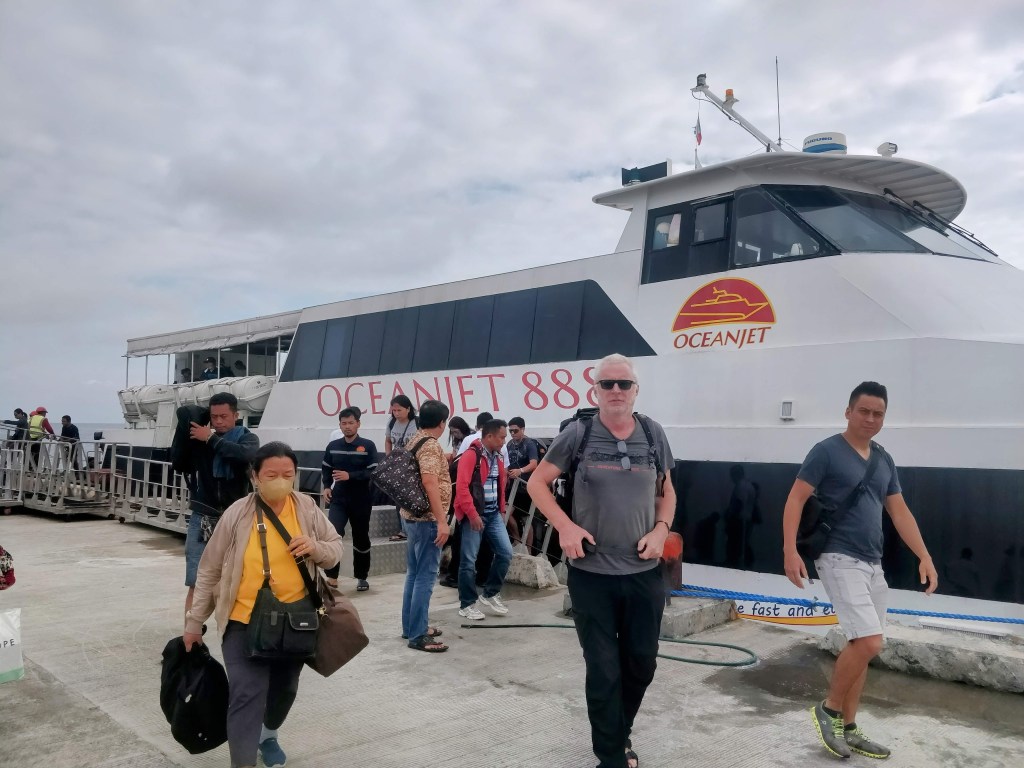
On a rainy August Saturday, we set off  on the four hour journey from Waterford for Larne with Storm Anthony buffeting the car along the motorway and rain lashing the windscreen. The only real indication that we had crossed the seamless border into Northern Ireland was that the road signs had changed from kilometres to miles. Despite the wind, the sailing to Cairnryan was  surprisingly smooth, the P&O ferry was comfortable and the trip took less than the scheduled two hours (no car battery failures this time when getting on the ferry unlike our trip to Greece two years ago)
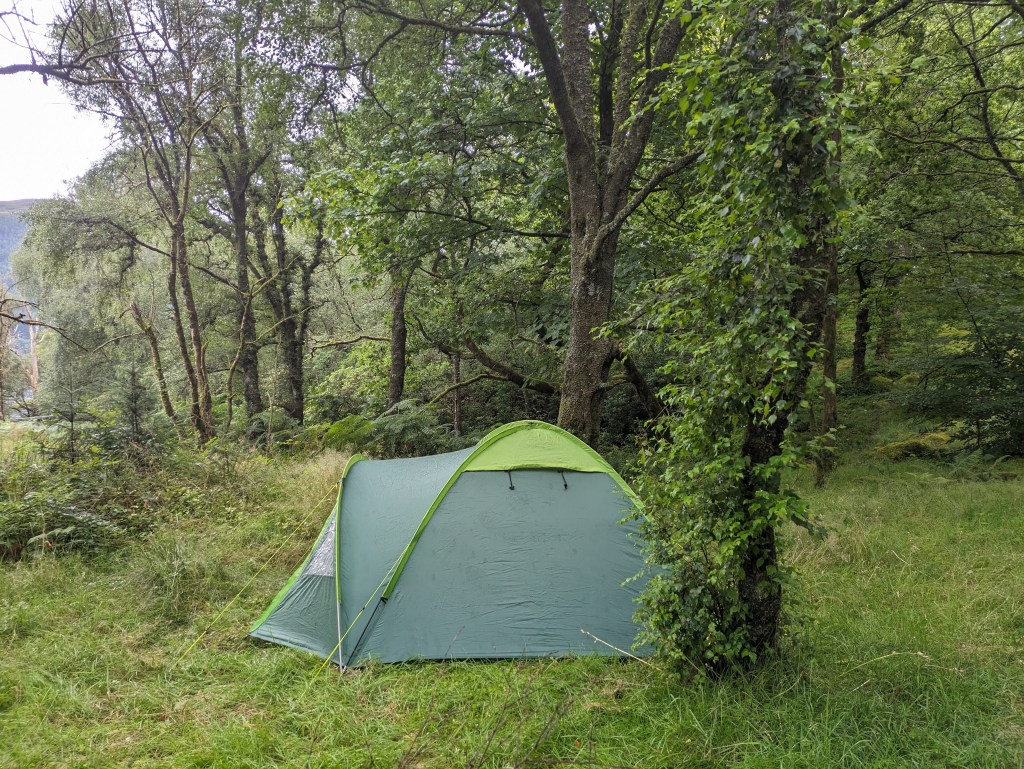
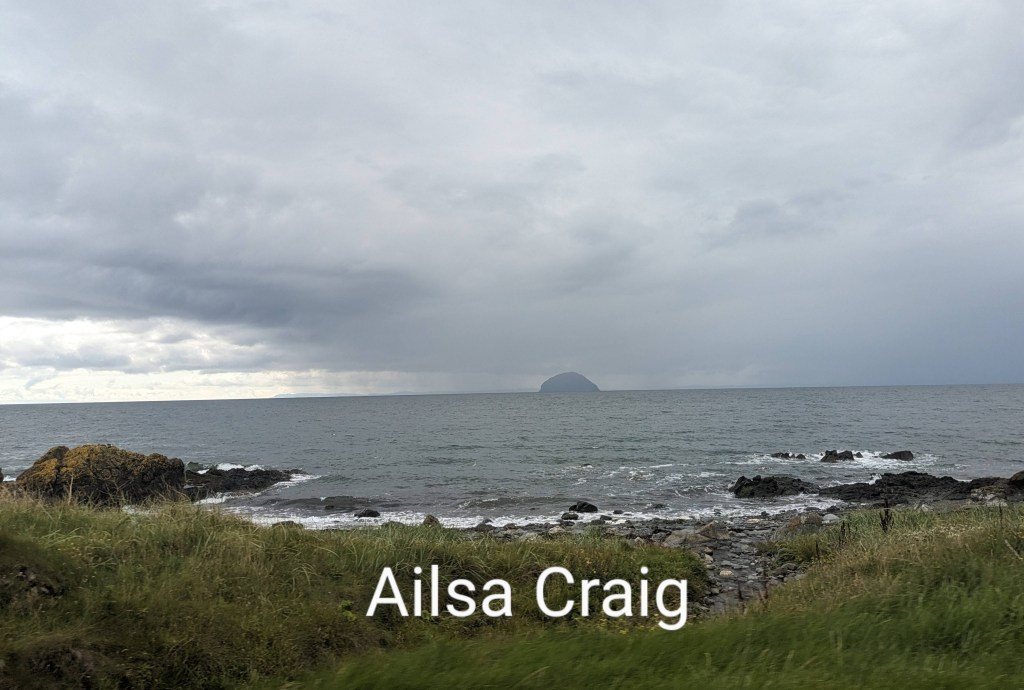
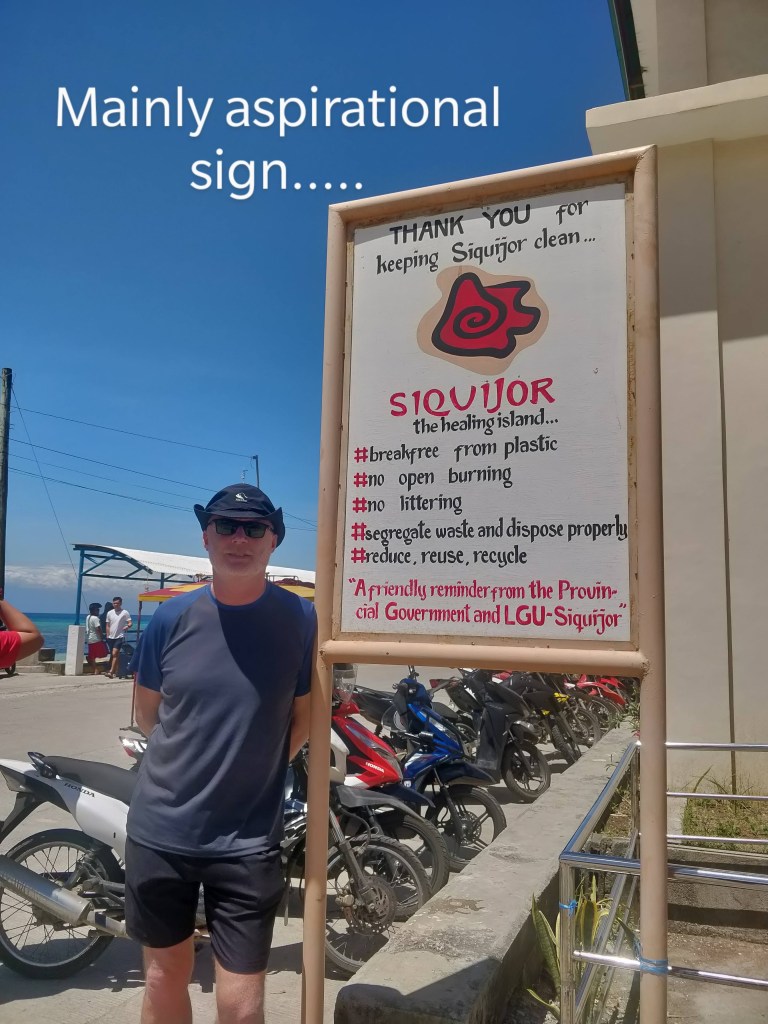
The car windows were opaque with crystals of salt when we disembarked in Scotland but the temperature at 4pm was 18C and the sun was shining….at least for the first ten minutes until grey clouds rolled in. As we drove we watched the clouds roll in over Ailsa Craig, an unmissable landmark island in the Firth of Clyde.  Our journey to Skye was leisurely, skirting by Glasgow and camping the first night in a little wood by an abandoned building near the shores of Loch Lomond. We set up camp there in damp mist with a blizzard of midges for company. The tent was comfortable, dry and well-camouflaged among the trees but the area was so damp that big juicy slugs crawled up the outside of the tent in the morning, silhouetted against the light.   Wild camping is permitted in most places in Scotland although there are some restrictions in popular areas and  permits may be required at certain times of the year but nobody bothered us (apart from the midges!).
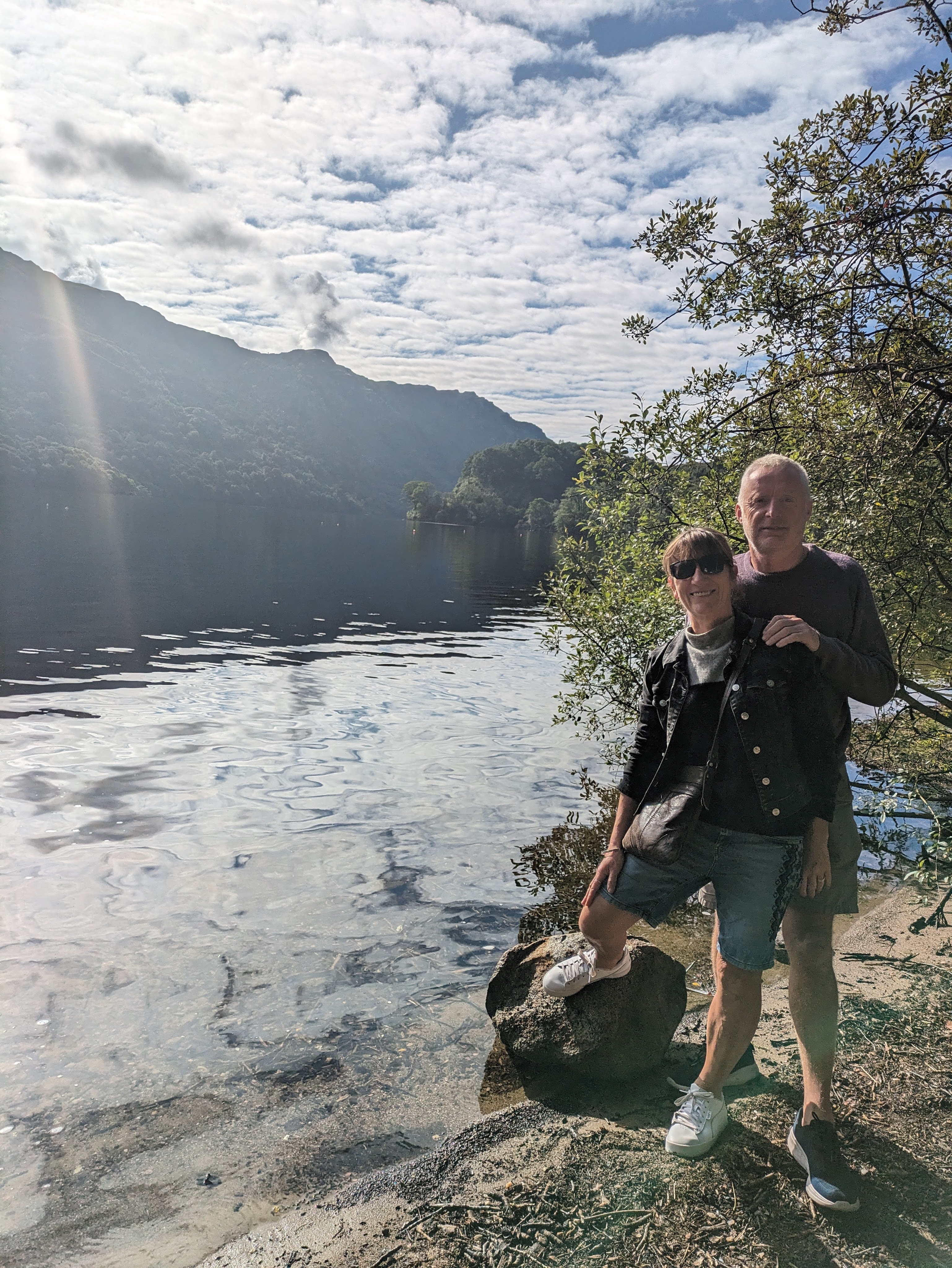
By the Banks of Loch Lomond

 Sunshine sparkled off the silvery loch in the Sunday morning light and the midges retreated…a bit. We stopped in Crianlarich, a pretty little touristy village north of Loch Lomond to do a short hike –  lots of hiking trails here and a shop doing a roaring trade in insect repellent and gauzy head &face nets – the ‘bank robber’ look was all the rage. This little place is the Gateway to the Highlands and has long been a junction for road and railway lines, in the past twenty two trains stopped here daily.

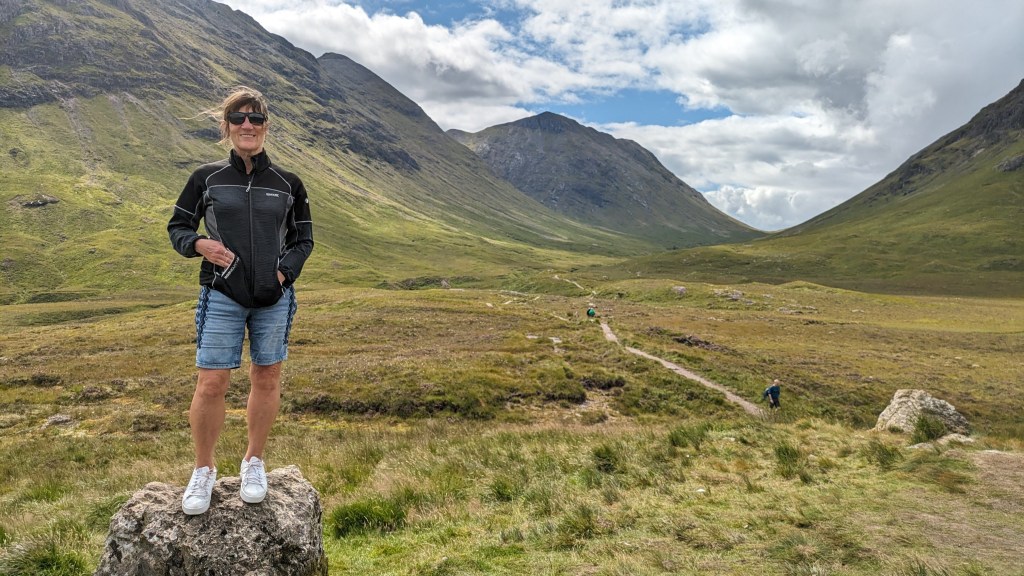
The drive north through the highlands was spectacular with water, water everywhere – in the lochs, rivers and tumbling down the mountainsides but thankfully not falling from the sky. The steep-sided Glencoe Valley was really stunning – no wonder it appears in so many movies (No time to Die, Skyfall, Outlaw King, Harry Potter and lots more) and the Glencoe Visitor’s Centre was worth a visit.  We were definitely in campervan territory with the vast majority of traffic being some type of RV. The roads were relatively good in the highlands but there weren’t very many of them and the few side roads tended to be private with barriers leading to estates. The campervans could pull over in lay-bys for the night but trying to find a bit of level dry ground near a road to pitch a tent was more problematic. We began to suffer from a severe case of the green-eyed monster…campervan envy😁
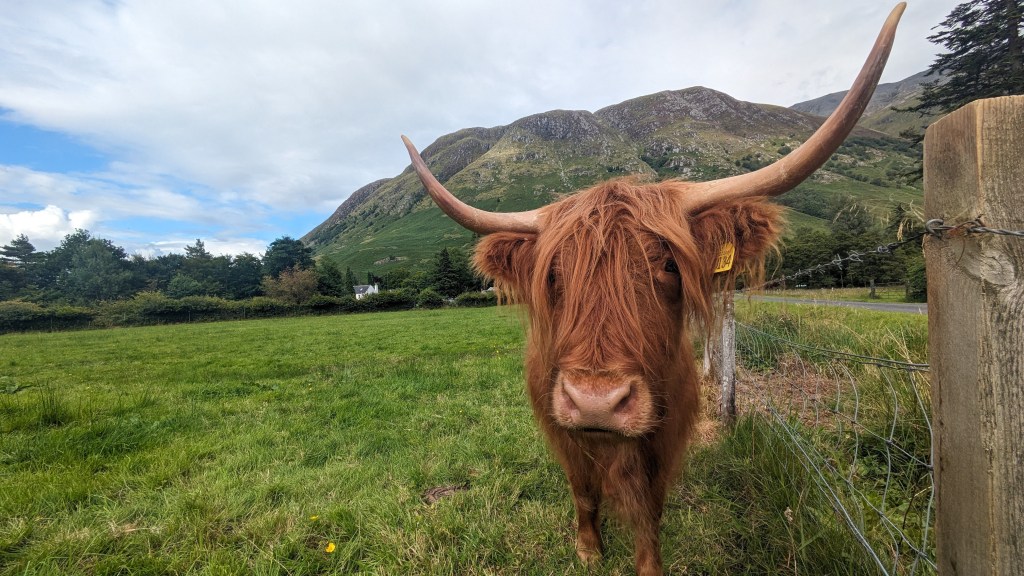
In Fort William, we camped in the established Glen Nevis campsite, surrounded by Highland scenery at the foot of Ben Nevis with flush toilets hot showers, a kitchen and even a restaurant and takeaway…and very few midges. We wandered around, debating the merits of the various tents and campervans. The cute Highland Cattle in a nearby field charmed us when we passed them on the way for a few beers and even posed for photos.  The next day, the clouds descended again and we took the tent down in about three minutes flat. We deliberated about climbing Ben Nevis but as we had both climbed it before, we opted for a 4 hour loop hike by the Nevis River, past ancient burial grounds, a waterfall and forest.
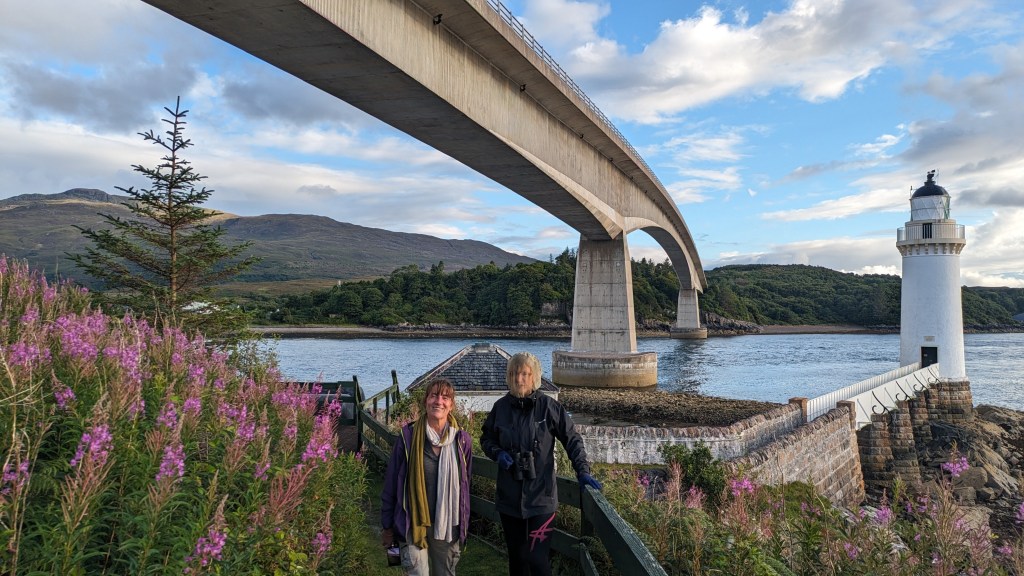
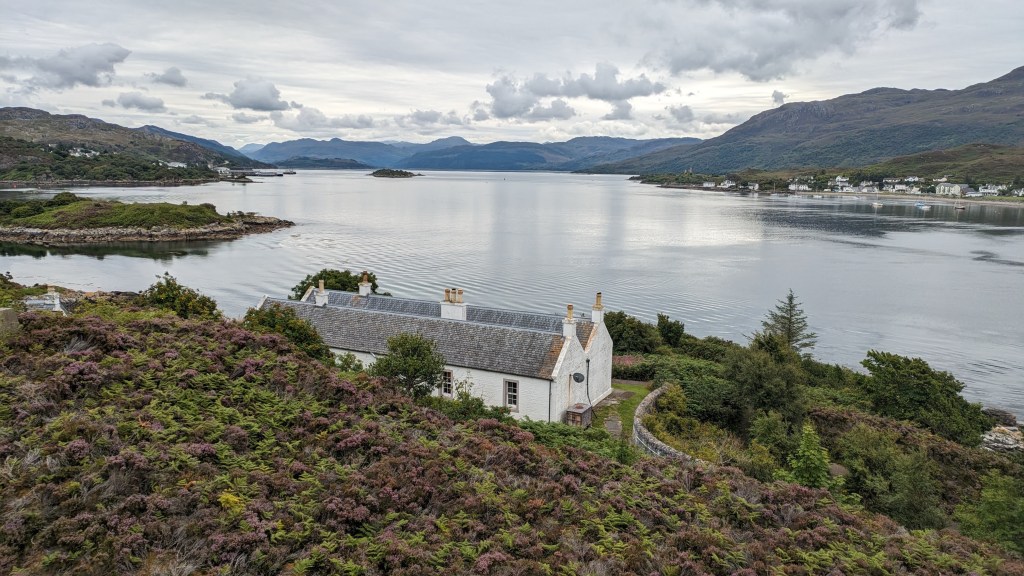
North of Fort William, the air of isolation was palpable, we travelled miles without a house or cabin with  only sheep on the hillsides and a dead deer on the side of the road. Although the Isle of Skye is an island, it is connected to the mainland by a bridge since 1995. It is a large island (50 miles long) but seemed much bigger with rugged scenery, austere castles and winding roads that hug coastal indentations and skirt around mountains and lakeshores. We didn’t stay in Skye proper but in a cottage on Eilean Ban, a small island under the Skye Bridge which was once home to the nature writer Gavin Maxwell, whose most famous work was A Ring of Bright Water about living with otters on the wild west coast of Scotland. Eilean Ban was truly a magical place, a private island to ourselves with a lighthouse at one end, trails through the waist-high bracken, a hide for bird and animal watching, the chance of glimpsing otters swimming in their natural habitat, a really comfortable place to unwind and relax. There was a little museum on the island – part of the cottage – run by the Eilean Ban Trust, a volunteer group dedicated to the memory of Gavin Maxwell.
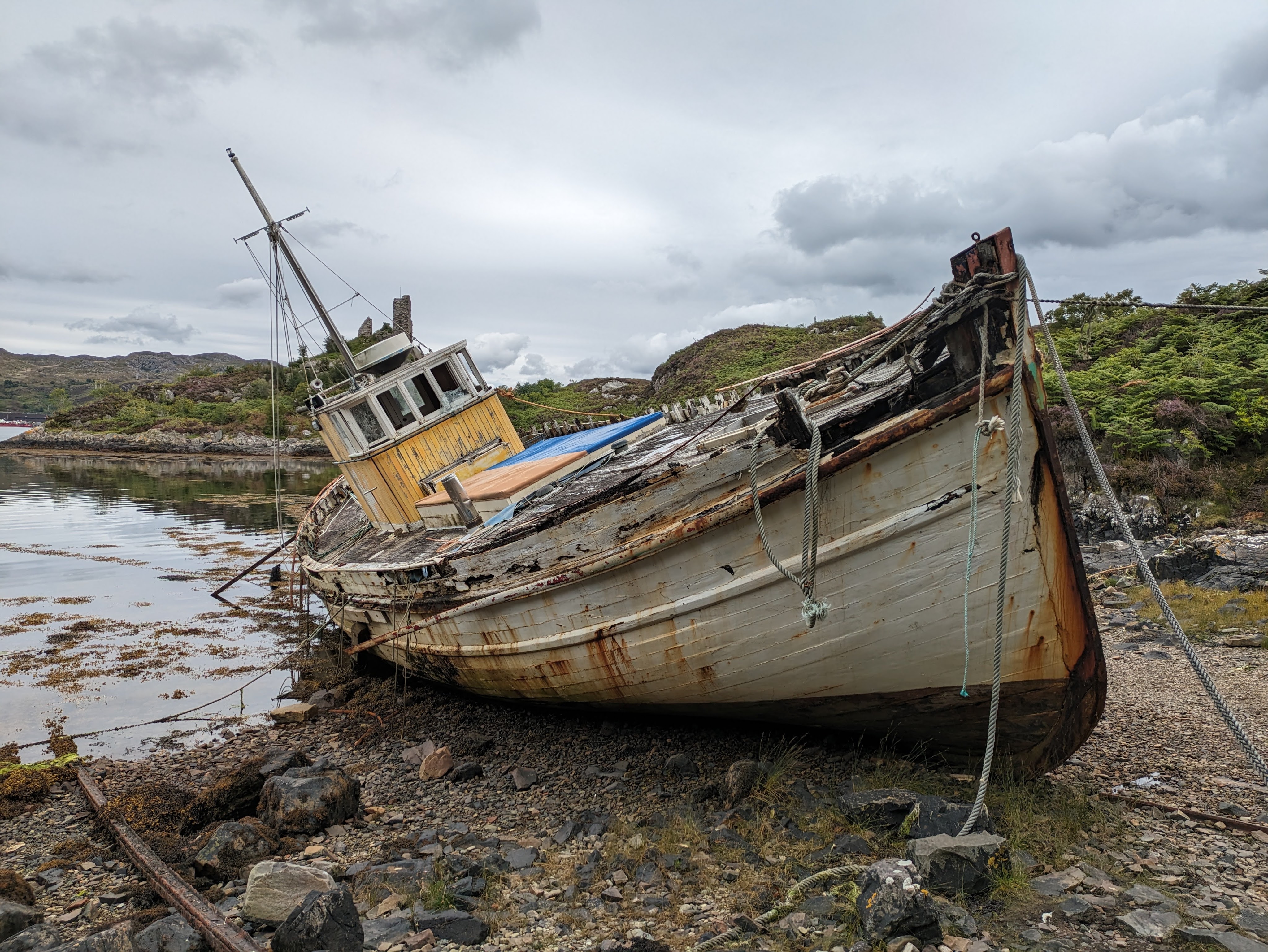
Stranded in Kyleakin

From our kitchen window, we had views of the village of Kyleakin on Skye with the ruined castle of Saucy Mary, a Norwegian princess who once controlled the straits of Kyle Akin and levied taxes on every boat that passed. There are still echoes of Scandinavia in the place names, language, history and especially in the landscape.  The name Skye comes from the old  Norse word sky-a meaning ‘cloud island’, so apt when the clouds here had a life of their own, constantly on the move. Kyleakin had the feel of a faded stranded place. It was once a thriving village where  ferries docked several times a day but the building of the bridge changed things and  it was now largely bypassed by people on their way to Portree, the main town in Skye.  
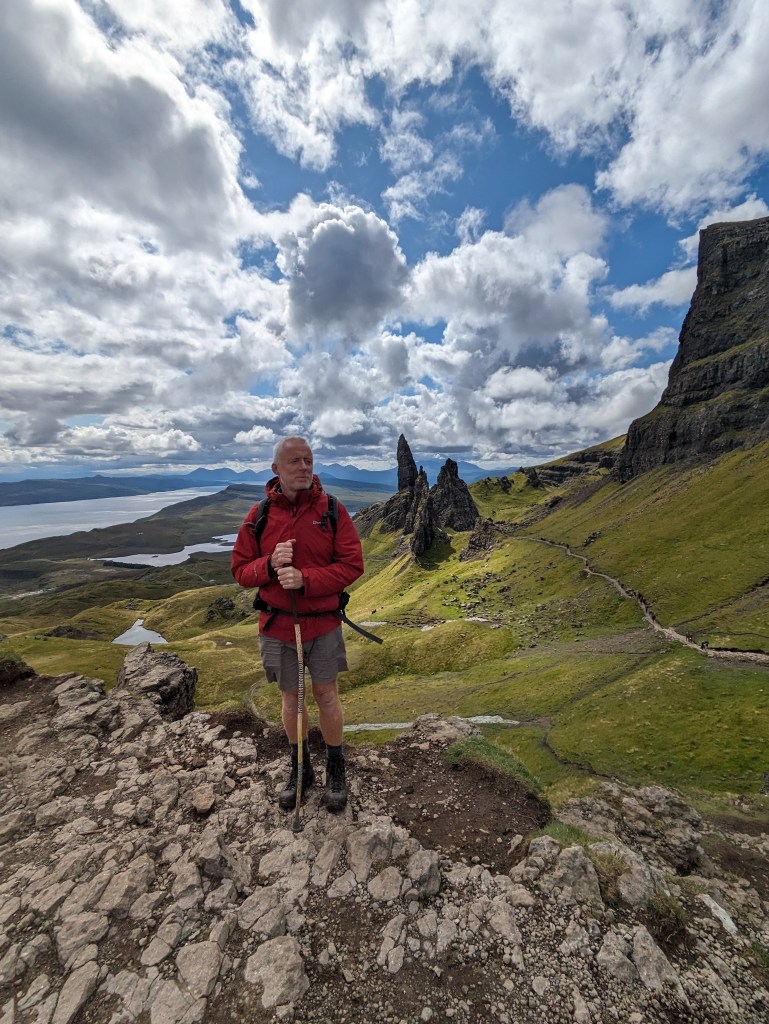
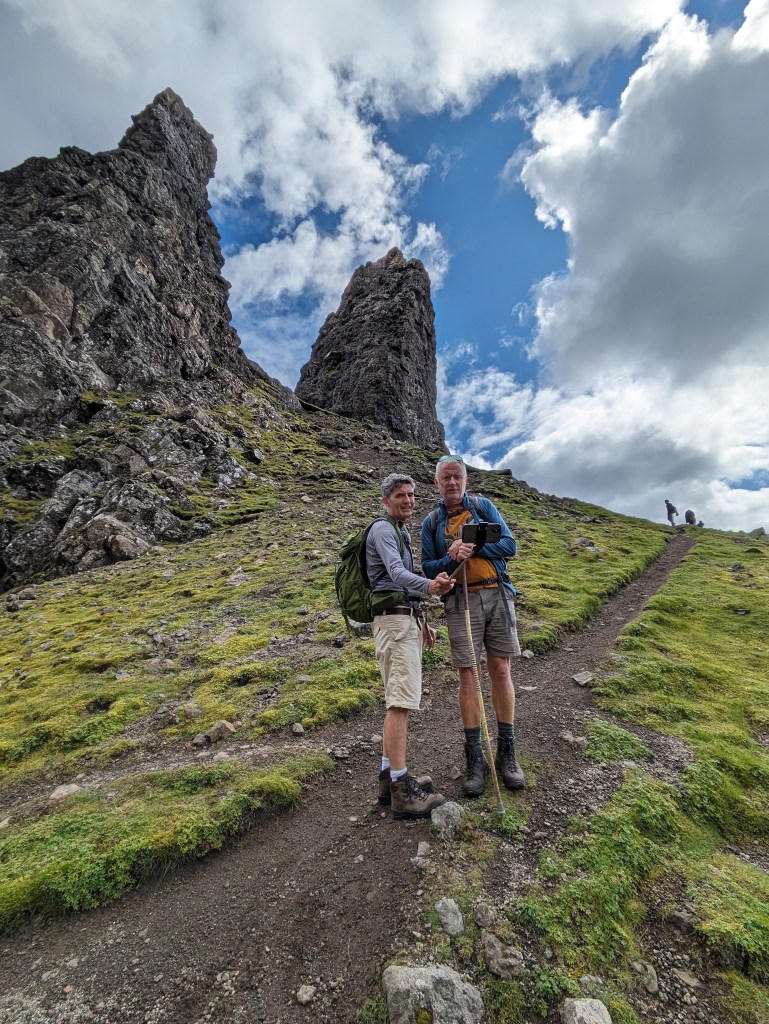
One of the most photographed landscapes on the Isle of Skye is the iconic Man Of Storr on the Trotternish peninsula, a rocky hill with spikey pinnacles of rock set against a backdrop of rolling green hills.  On a blustery sunny day, it was so busy that we had difficulty in getting parking but the views from the top were worth the moderately strenuous hike.  Quirang was another rock formation on the same peninsula, rocks shaped and sculped by ice and fire, weather and time into other-worldly landscapes. Although both these rock formations were key tourist destinations, there wasn’t a toilet or a portable loo to be found. It was interesting to see the number of people with red faces emerging from behind rocks who refused to make any eye contact.
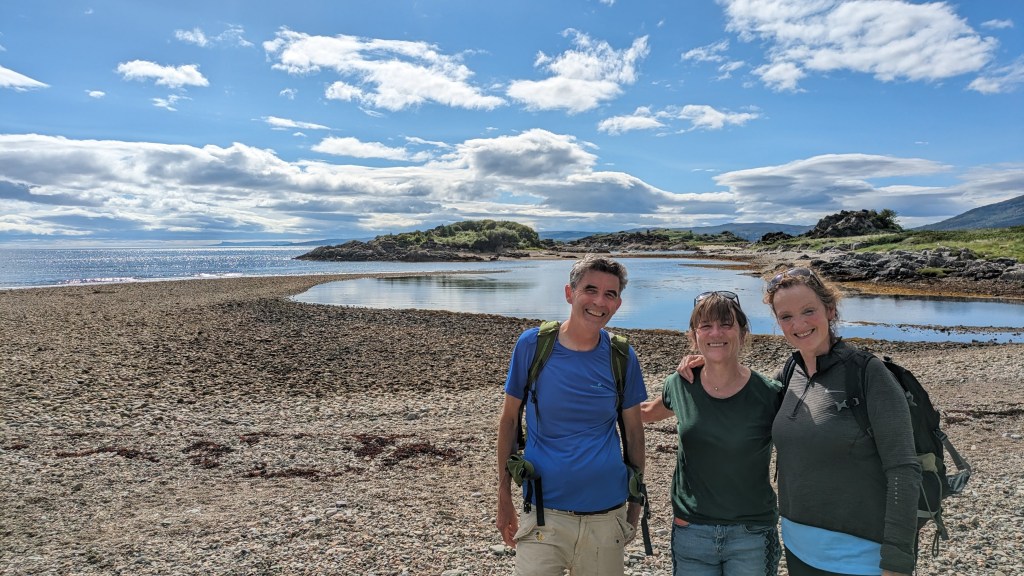
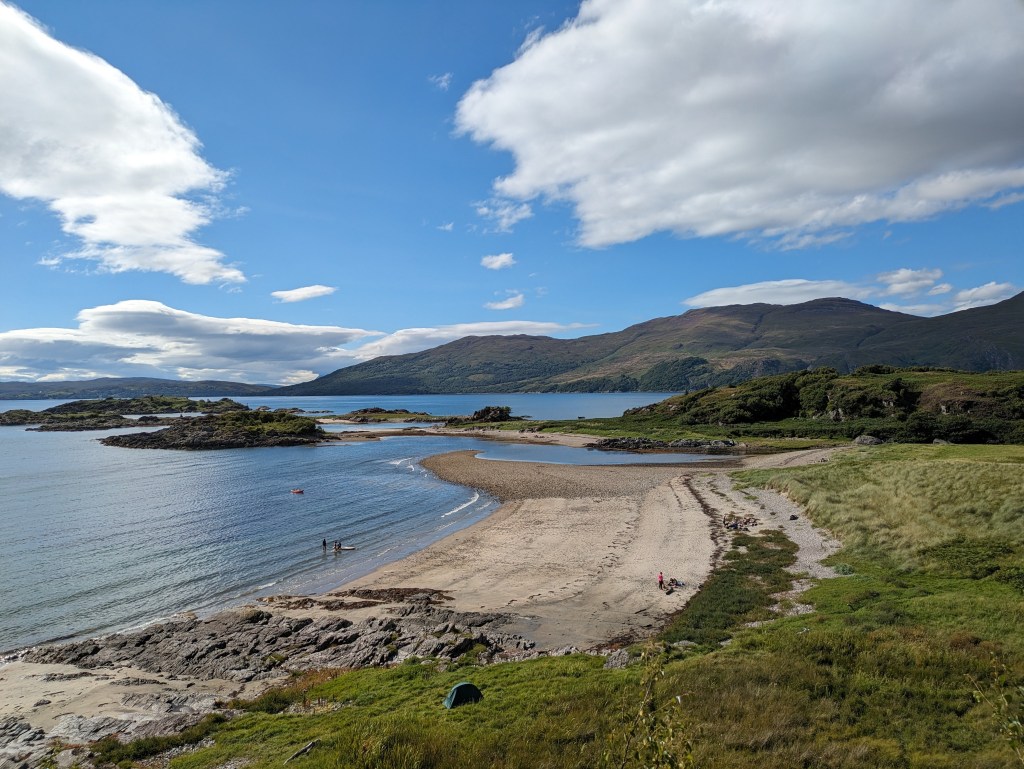
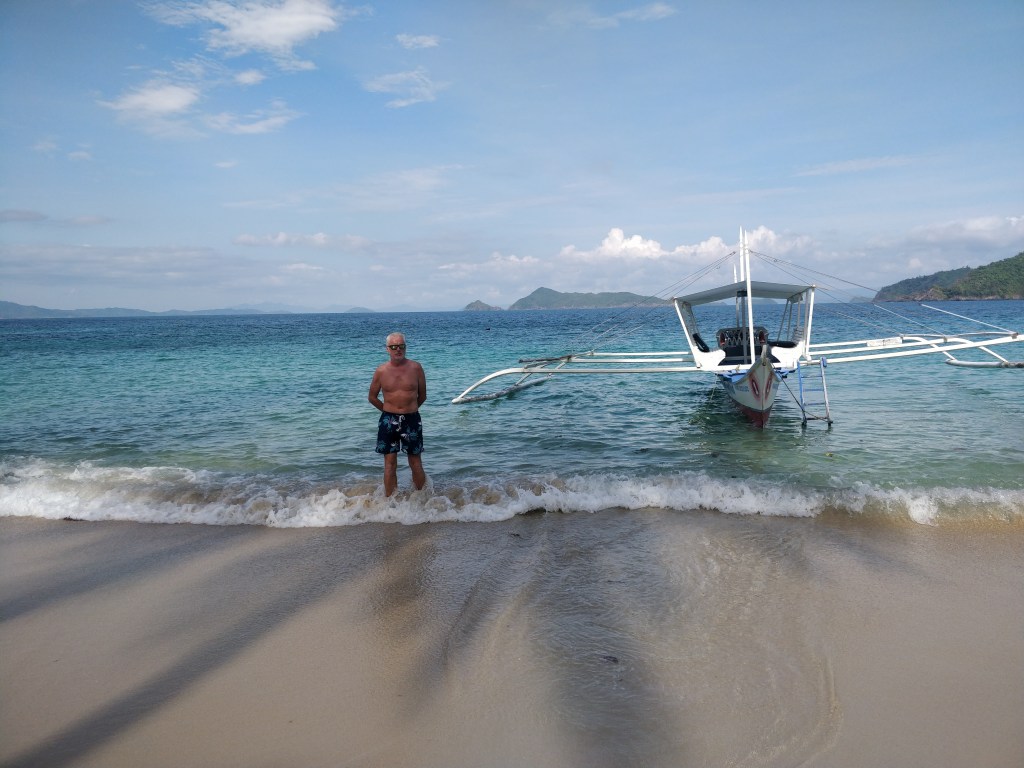
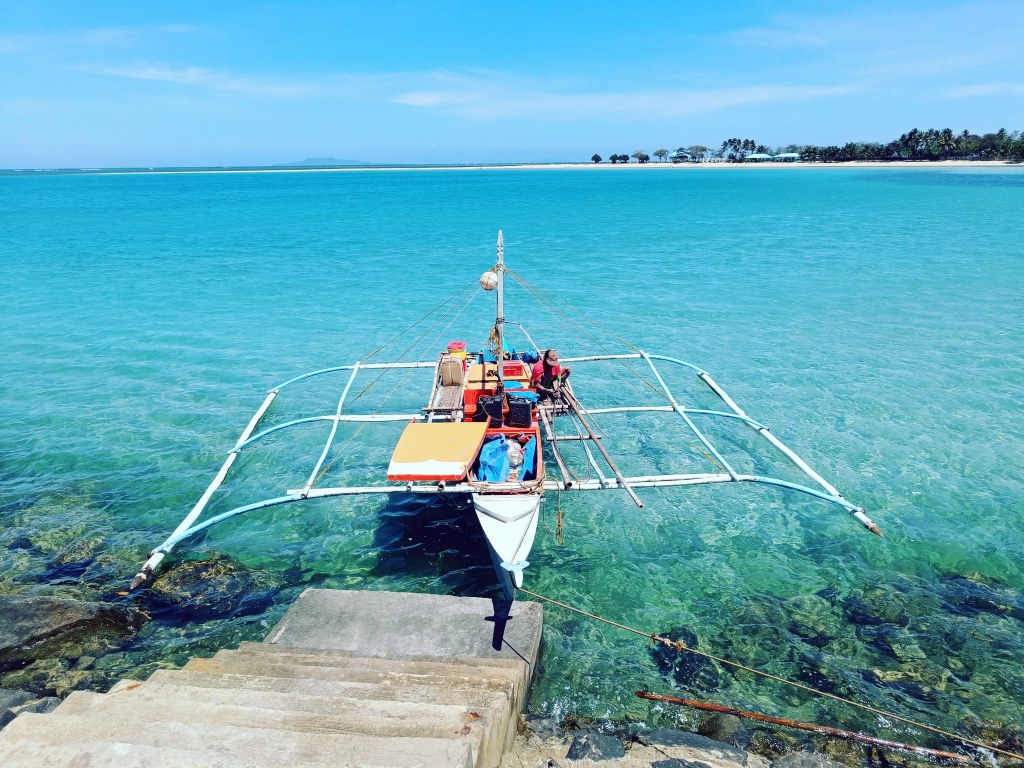
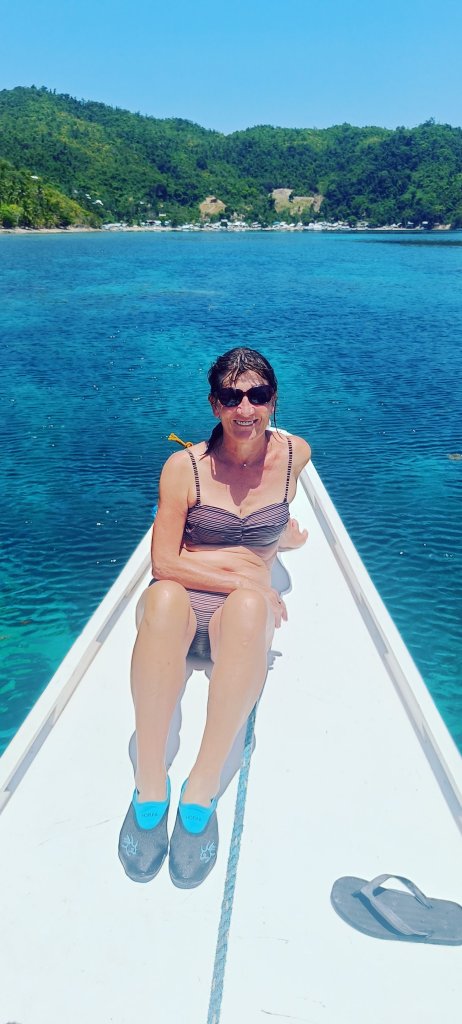
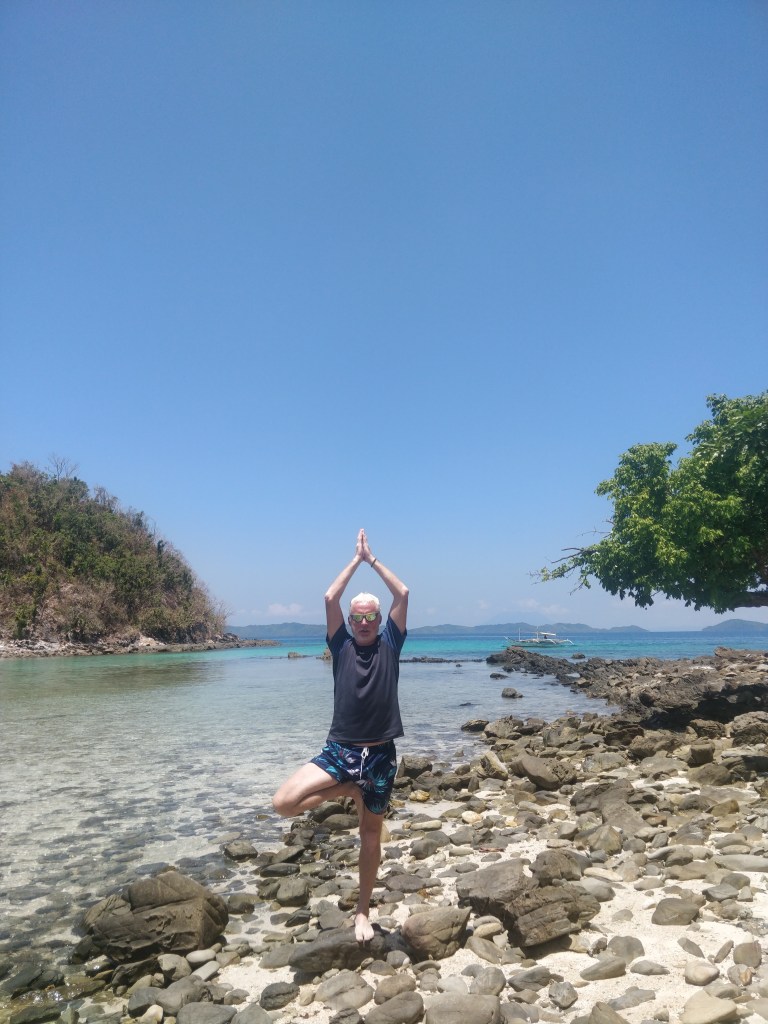
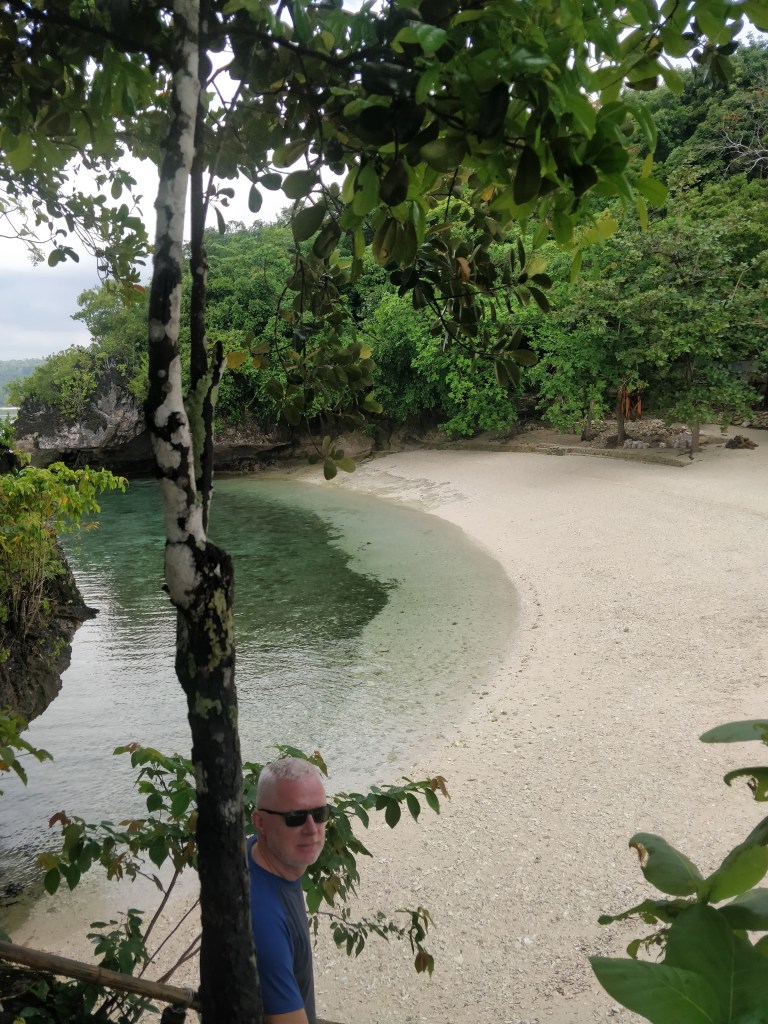
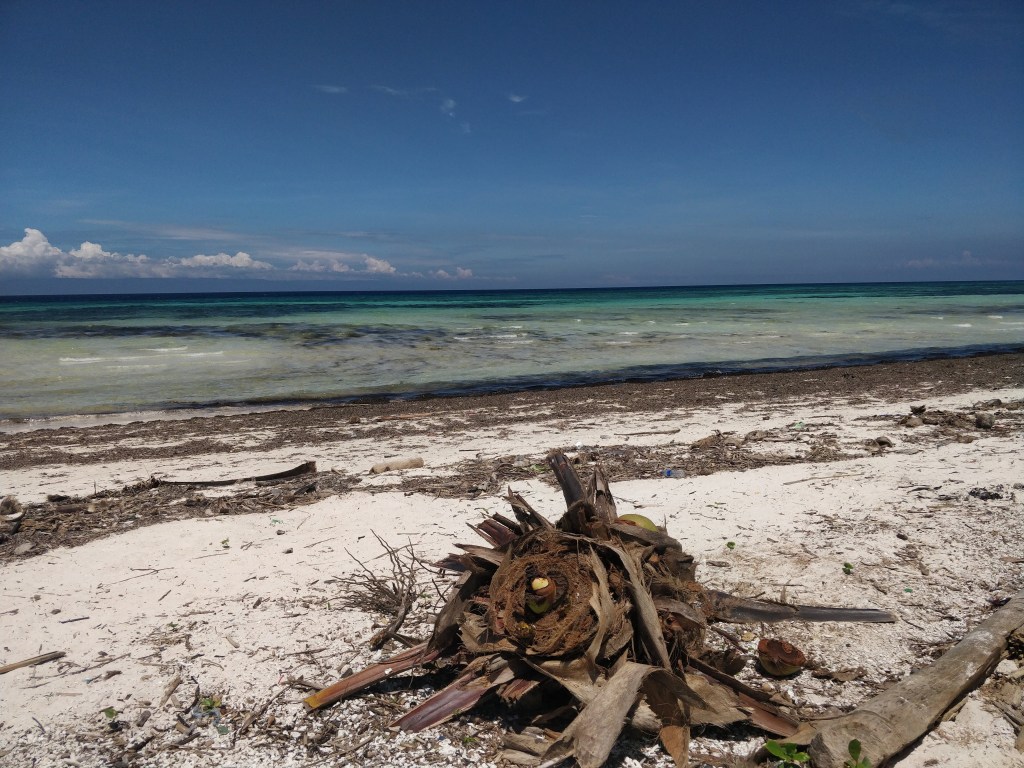
As we were staying in Gavin Maxwell’s house, we went on a sort of pilgrimage to Sandaig Bay on the mainland where he had lived before moving to Eilean Ban and which was also the setting for his book, Ring of Bright Water. We travelled along twisting coastal roads, past Glenelg village and then hiked a winding path for about forty minutes to the beach and the site of his house which was destroyed by fire while he was living there, a fire where the only casualty was one of his beloved otters who was buried under a nearby rowan tree. We swam in the crystal clear waters on the almost deserted inlets. It was truly a place ringed by bright water as you can see from photos above

Scotland is famous for its whiskey and there was a distillery on Skye making Talisker Whiskey, famous for its smokiness and coastal spice flavour. While we didn’t visit the distillery, we went to nearby Talisker Bay on wild the west coast, haven of peace and quiet, a place to lie on stones and listen to the crashing waves and the lonesome cries of seabirds.
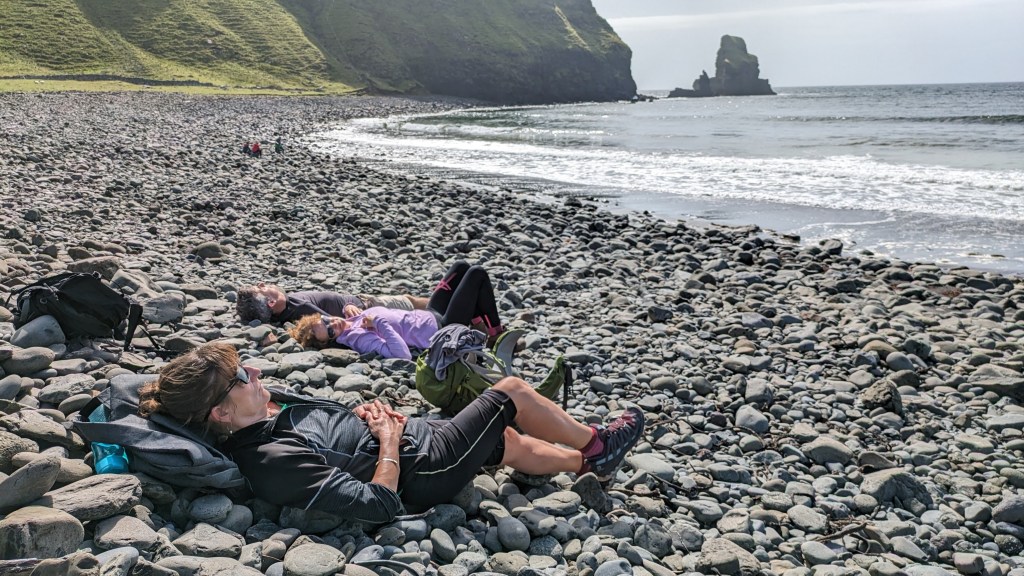
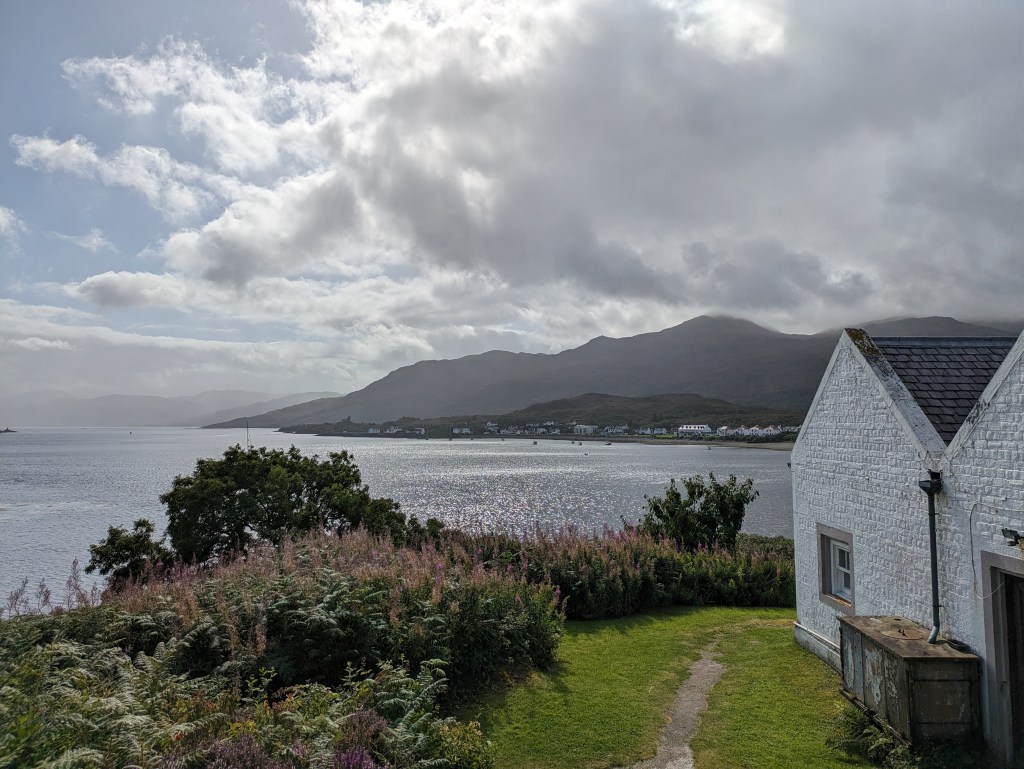
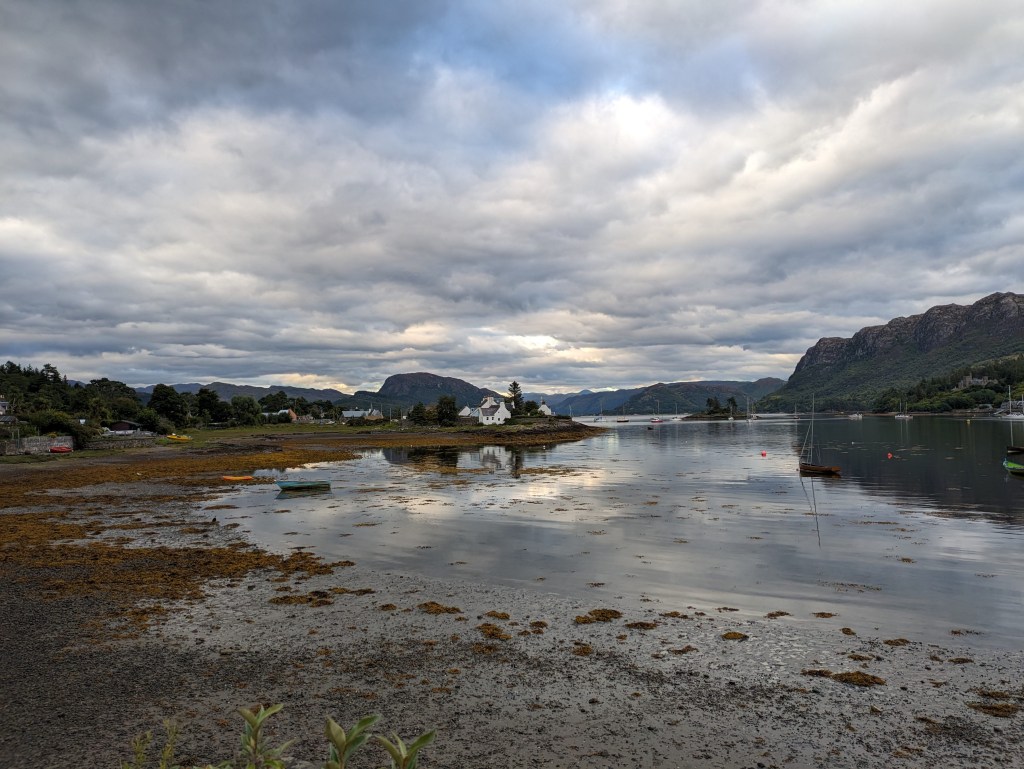
The weather in Scotland  was quite good while we were there but it could be indecisive and moody, changing from hour to hour, sometimes from minute to minute.  The quality of the light was mesmerising, especially the interplay of light and shadow on the lochs and bays casting a spell in a hundred hues of silver and grey. We left the Isle of Skye and Eilean Ban on a rainy Saturday and drove through the Highlands back to where we had started – the sky was leaking, the heather was crying and our wipers were working overtime. It seemed that every weekend this summer was wet whilst the weekdays were blessed with sunshine (or at least better weather). We camped for our last night in a little coastal village, Maidens about an hour north of the ferry,  Our visit to Scotland was brief but we hope to be back and to explore more of the Isle of Sky and even further north.

A huge thank you to Maurice and Tracy for giving us the opportunity to visit Skye, for such great company and for introducing us to Gavin Maxwell, such an interesting and complex man. I’m off now to read the Ring of Bright Water.
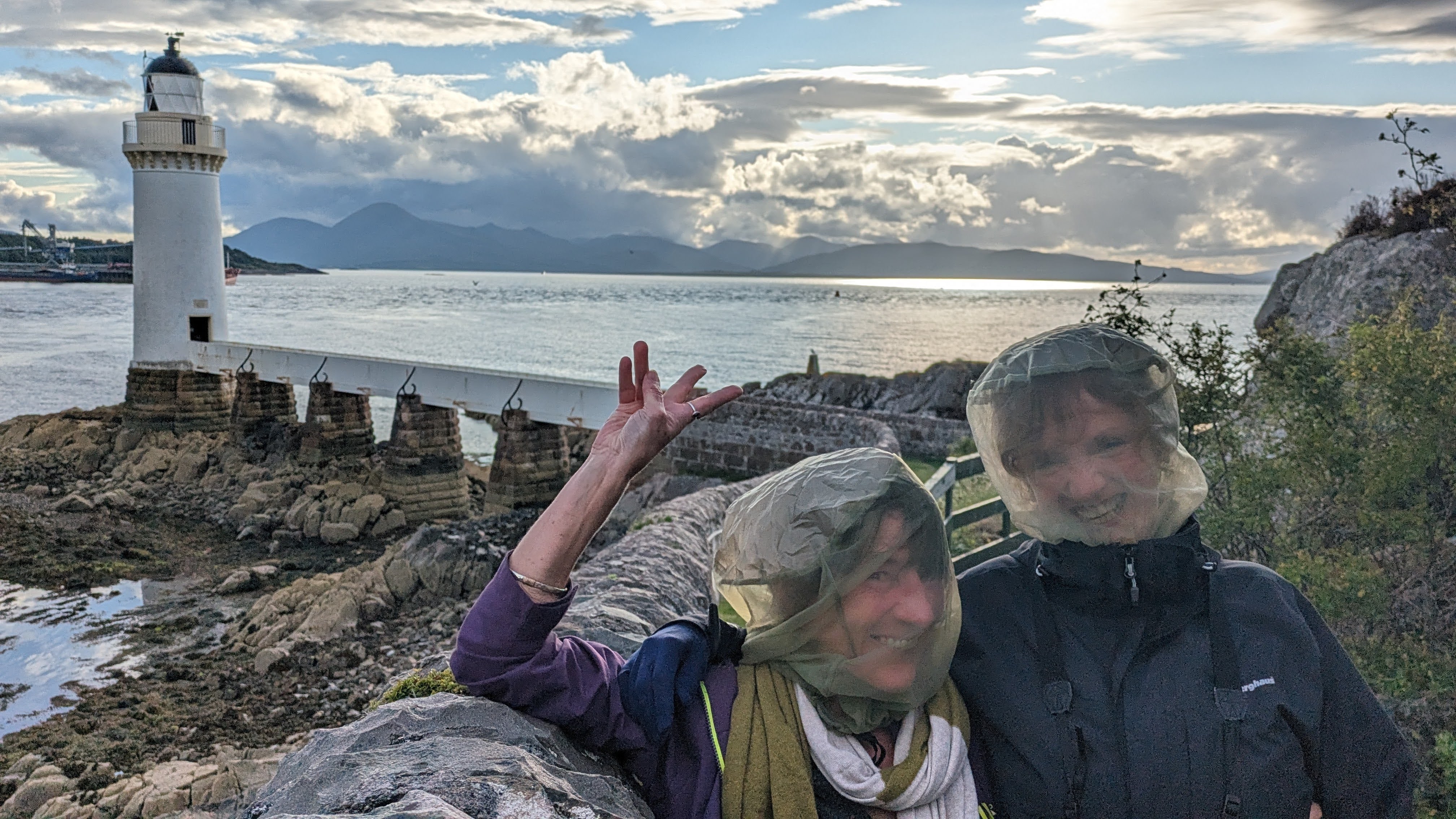
The ‘Scottish’ Look
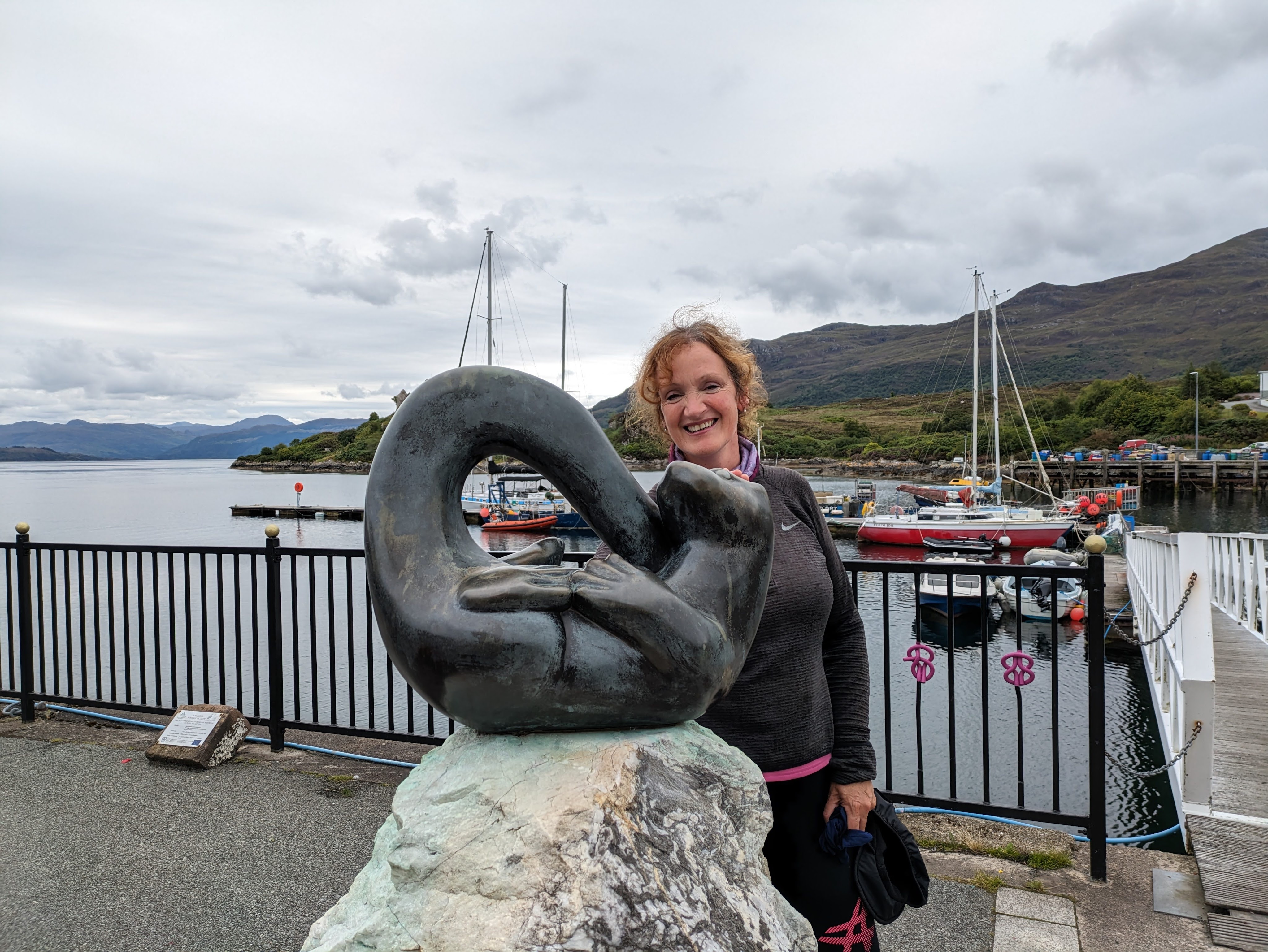
Otter Lover
Scotland – Midges, Clouds and Bright Water

Philippines – the Highs and Lows

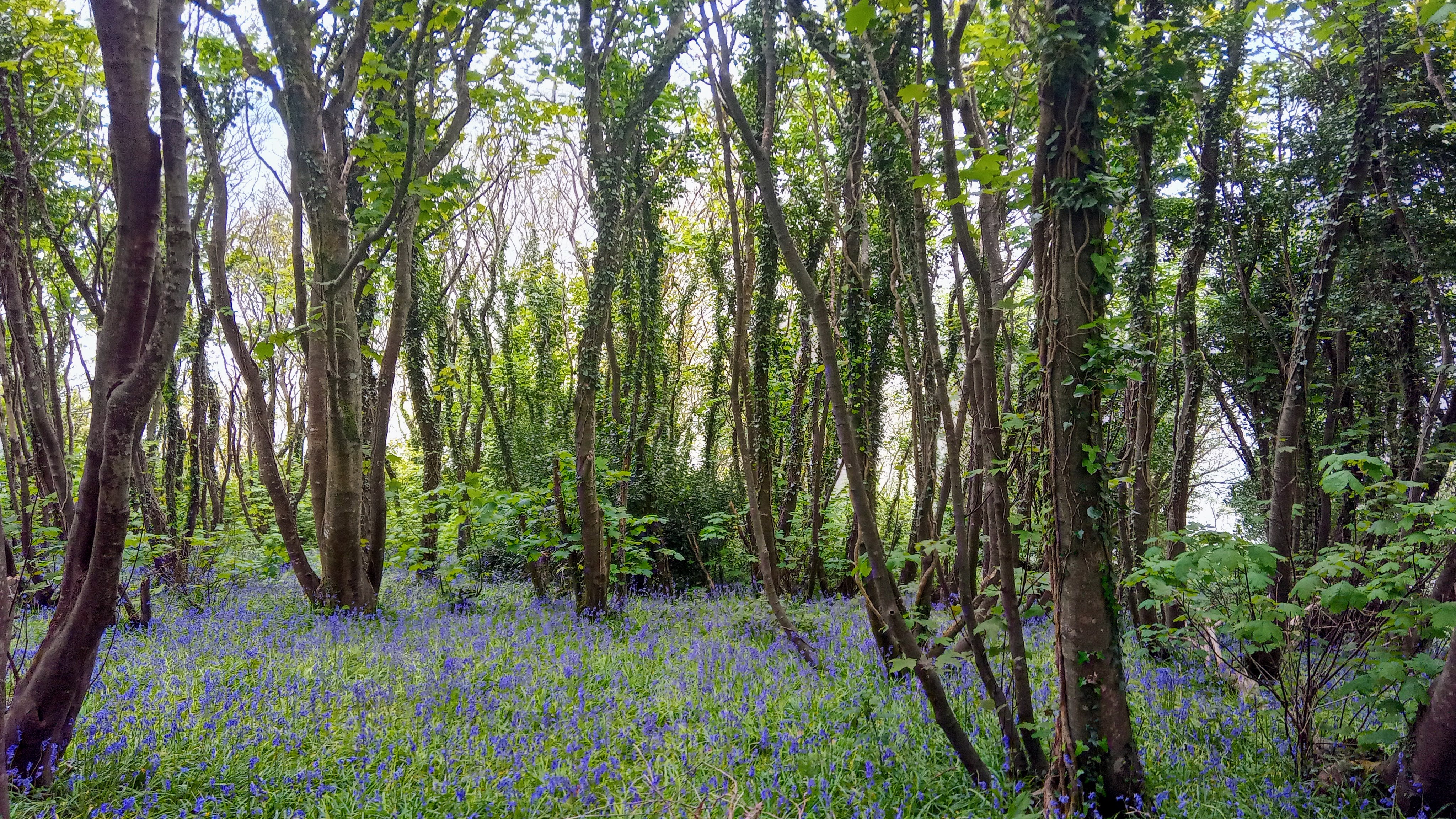
We are home – back after more than ten weeks wandering around the Philippines. Adjusting slowly to the dramatic change in temperature, wearing jumpers and jackets in a cool, breezy Irish May but loving the soft light and the long evenings, enjoying the bluebells and the golden fields of rapeseed.

Bluebell Woods, Arthurstown, Co Wexford

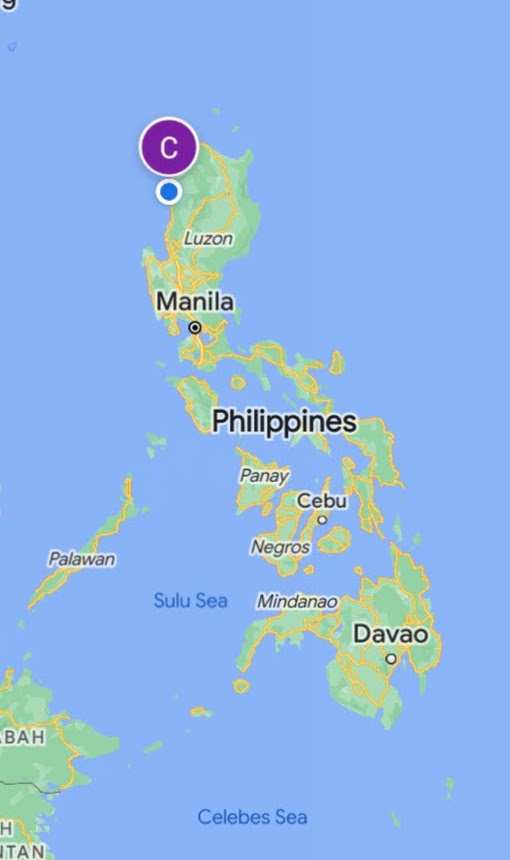
The Philippines is a country of islands – more than seven thousand, six hundred of them. It is a country blessed by beauty (our photos only give a pale imitation of the reality).  It is also blessed by soil fertility, capable of several rice crops a year and a  myriad of exotic fruits and vegetables.  The human population is as fertile as the soil – rapidly growing with babies everywhere and overflowing schools. (The population is over one hundred and thirty million in an area about four and a half times bigger than Ireland). It is blessed by rain and heat but cursed by wind with the very real threat of typhoons every year from June to December. We didn’t witness any typhoons but we saw the devastation wrought by the super-typhoon of December 2021. Then there are the earthquakes and volcanic eruptions which can happen at any time……but through it all, the Filipinos keep smiling.

Map of the Philippines

Favourite Island Palawan

Palawan was our favourite island, with breath-taking bays along the west coast,  spectacular limestone cliffs in El Nido,  evergreen jungle, thundering waterfalls and island-hopping tours to smaller islands off the coast with great snorkelling and diving.  It is on the most westerly edge of the Philippines.

Favorite Village – Port Barton in Palawan

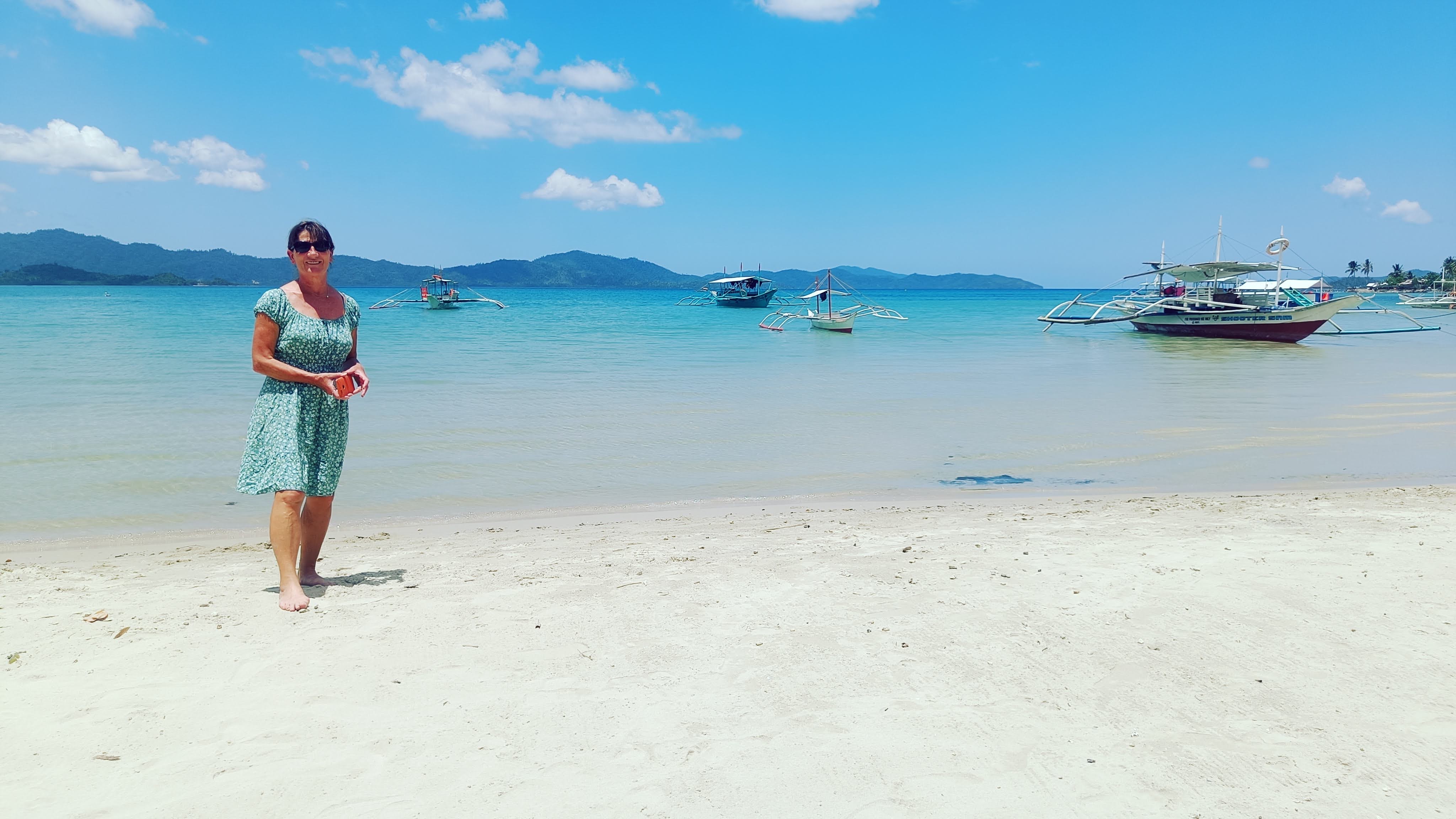
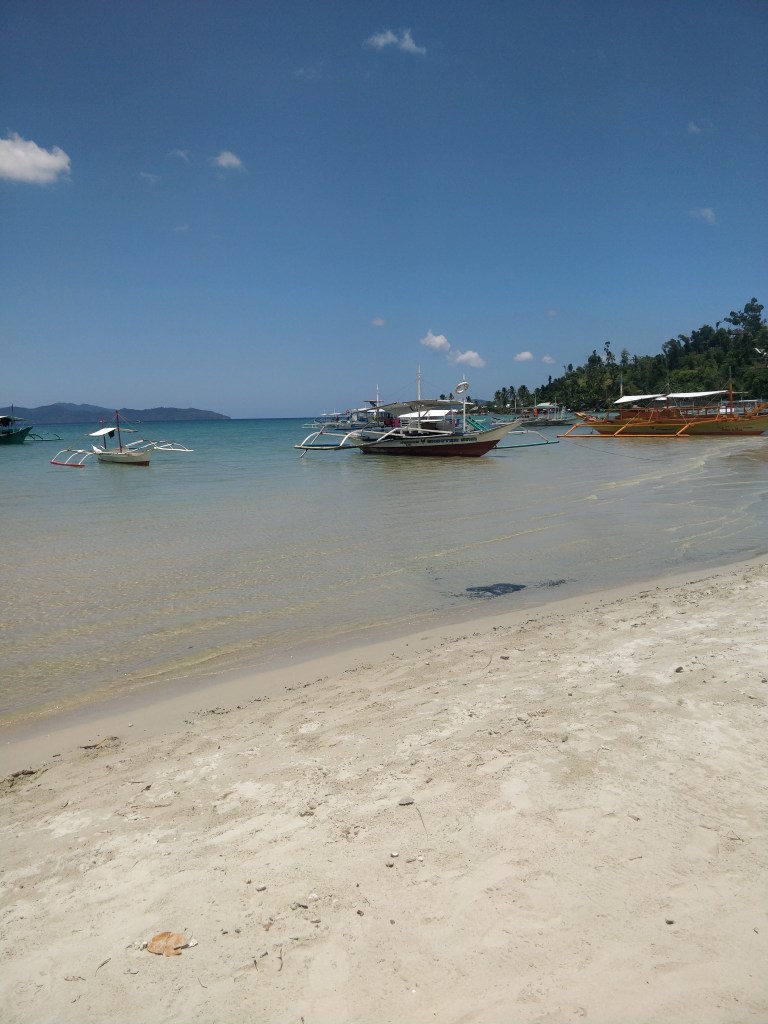
Port Barton is a small ramshackle village with fishing boats moored on a white-sand beach, a backdrop of jungle and a scattering of islands in the distance. We loved the laid-back charm of it– eating dinner (fresh fish usually) at tables set up on the sand every evening, watching glorious sunsets and snorkelling on an island hopping tour, mesmerised by turtles and giant starfish.

Port Barton

Favourite Place to Stay – Coconut Garden Island Resort

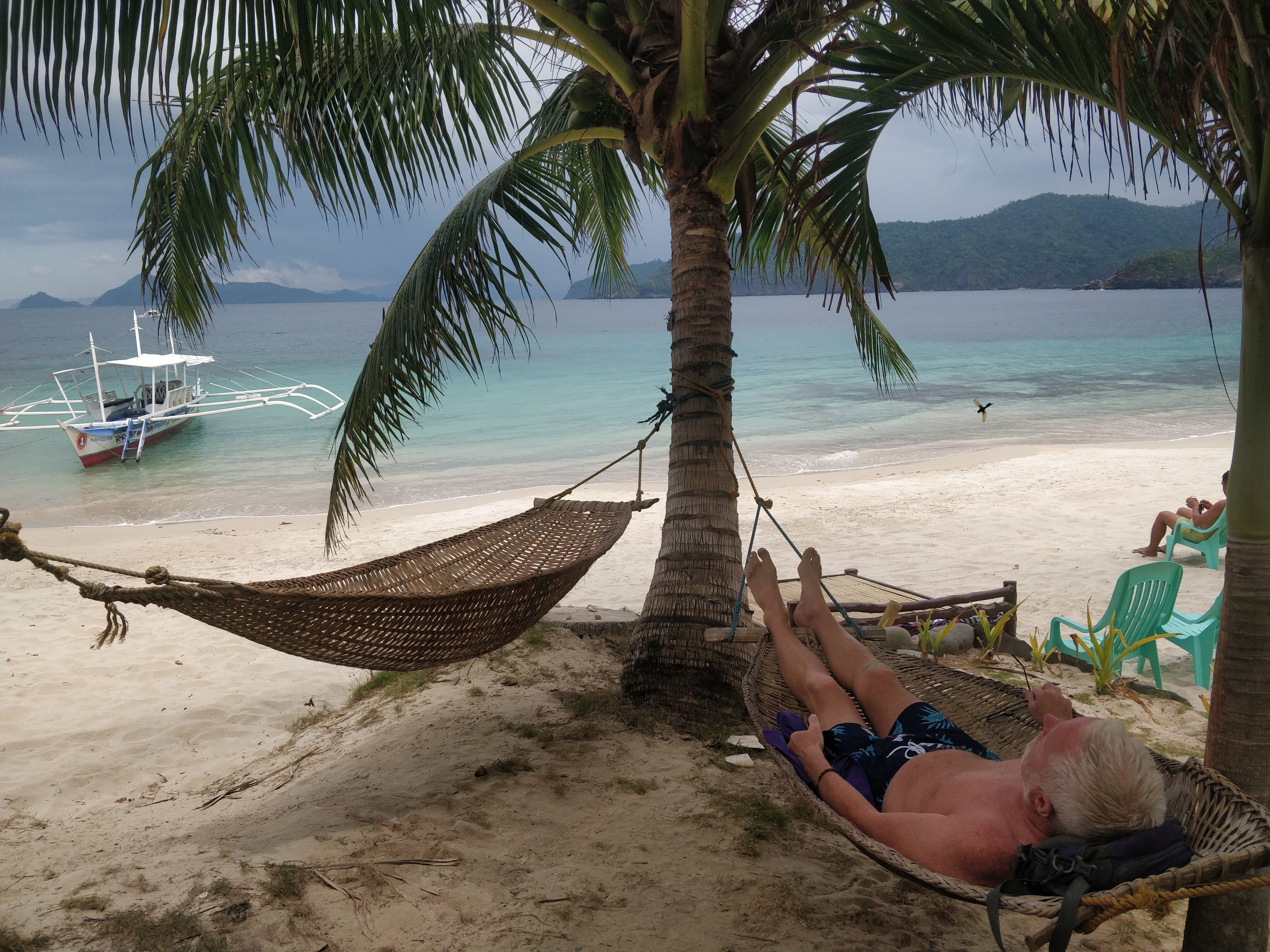
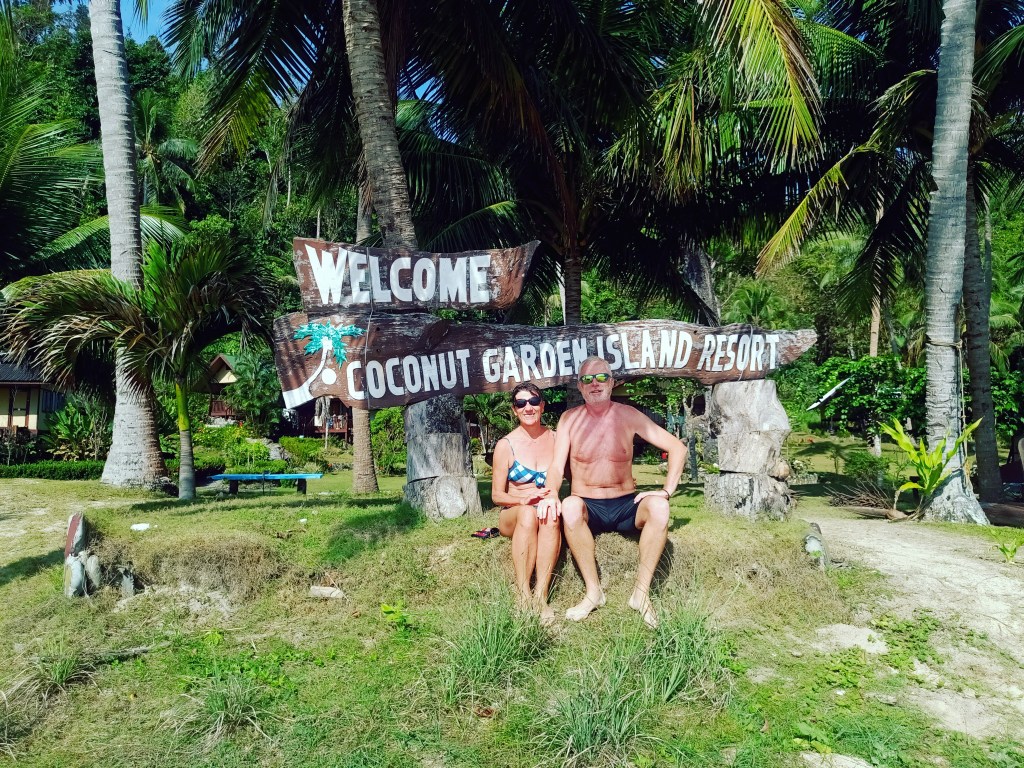
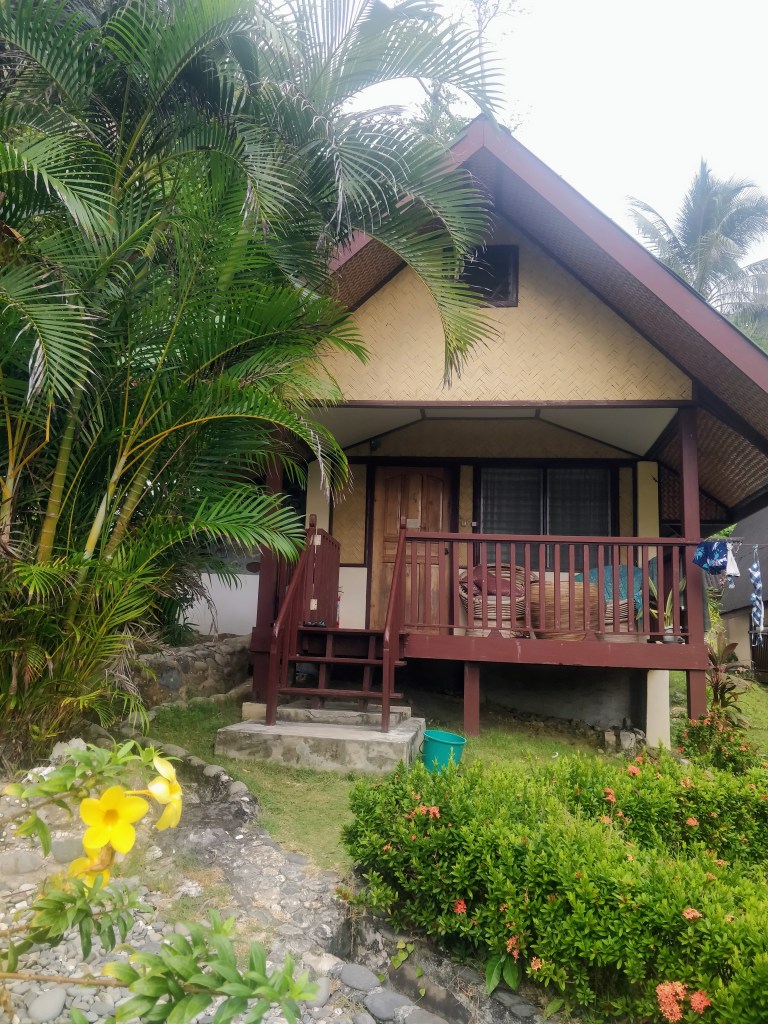
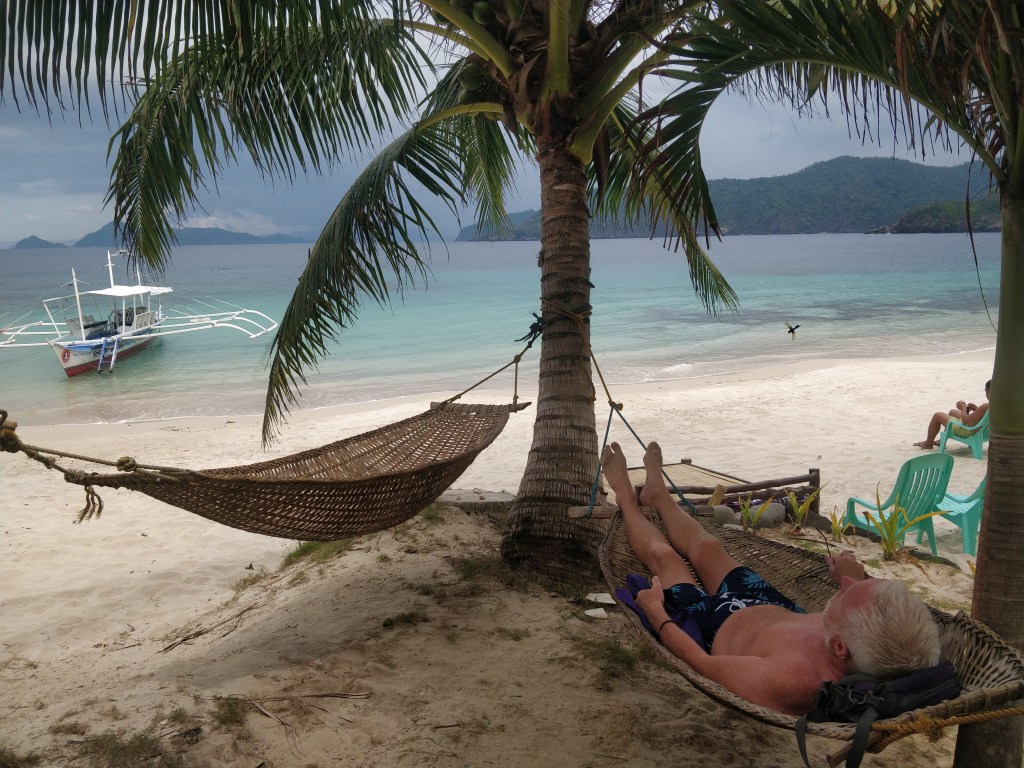
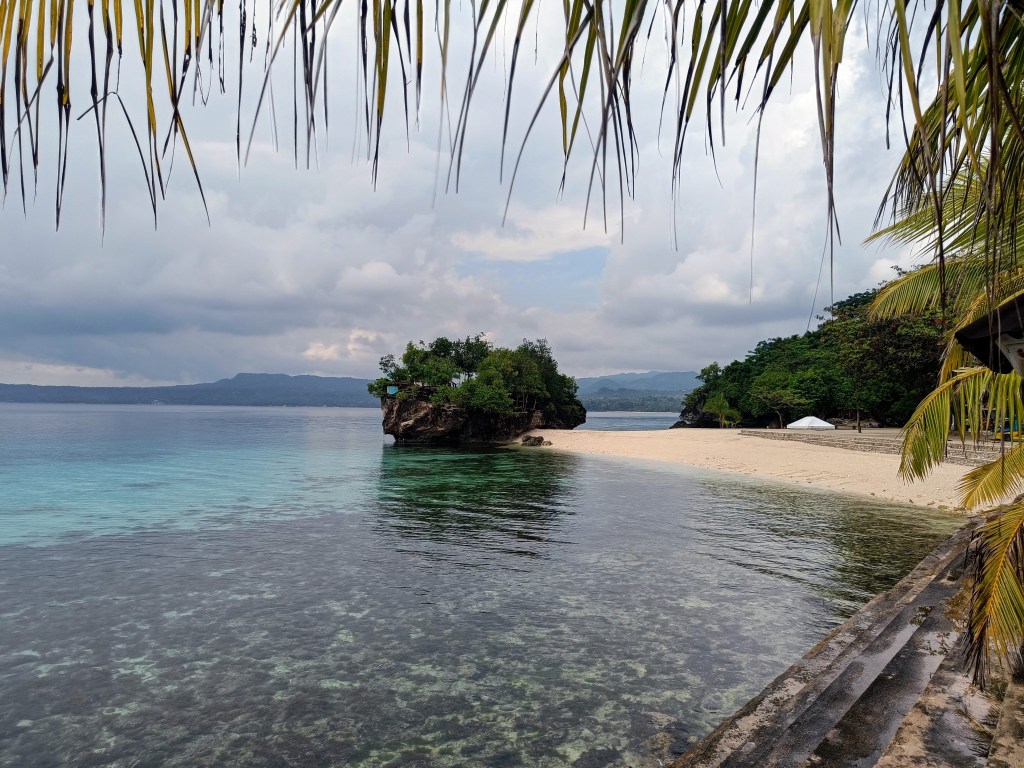
During this trip, we stayed in beach shacks, bamboo huts, homestays, hotels, hostels and apartments usually booked online the day before. But one place stands out – Coconut Garden on a private island.  We were lulled to sleep in our bungalow by the gentle lapping of  turquoise waters on white, silky sand. We swayed in hammocks under coconut palms and swam in water so clear, the ripples on the sand of the seabed shimmered. Nothing to do except watch the shadows of the palm fronds creep across the sand. The highlight was waiting for the boat each day to see what visitors it might bring. Pure escapism. Total relaxation. ( Comfort affordability rather than luxurious approx. €35 a night)

Best Low Budget Place – Felys Homestay, Bohol Island

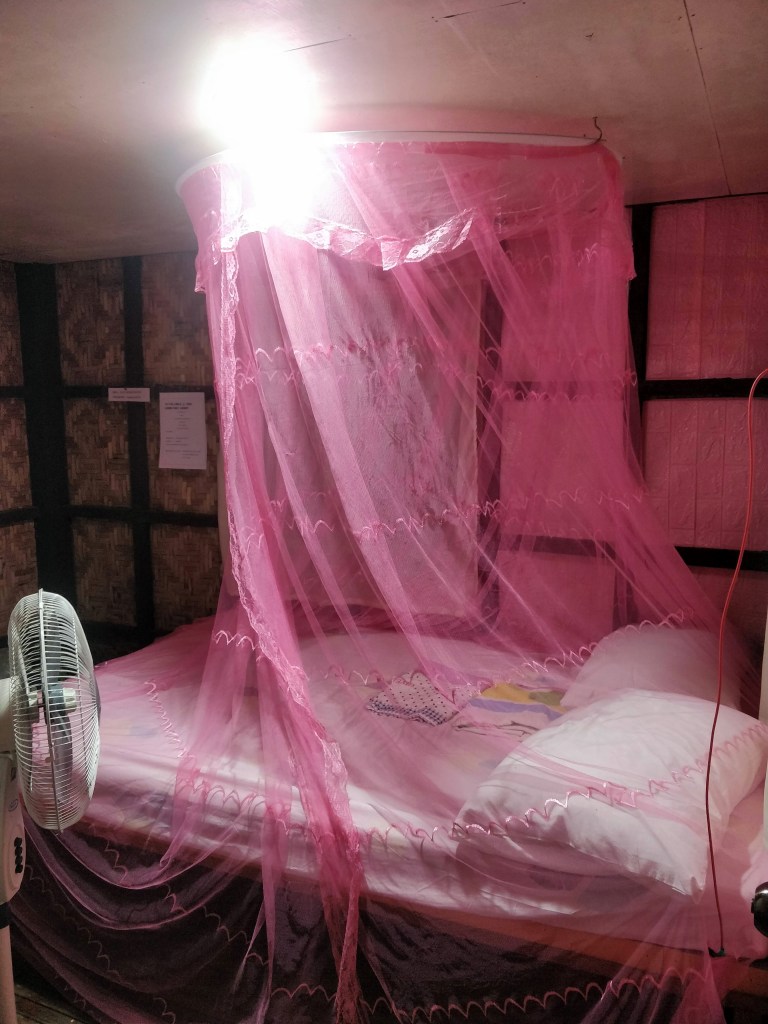
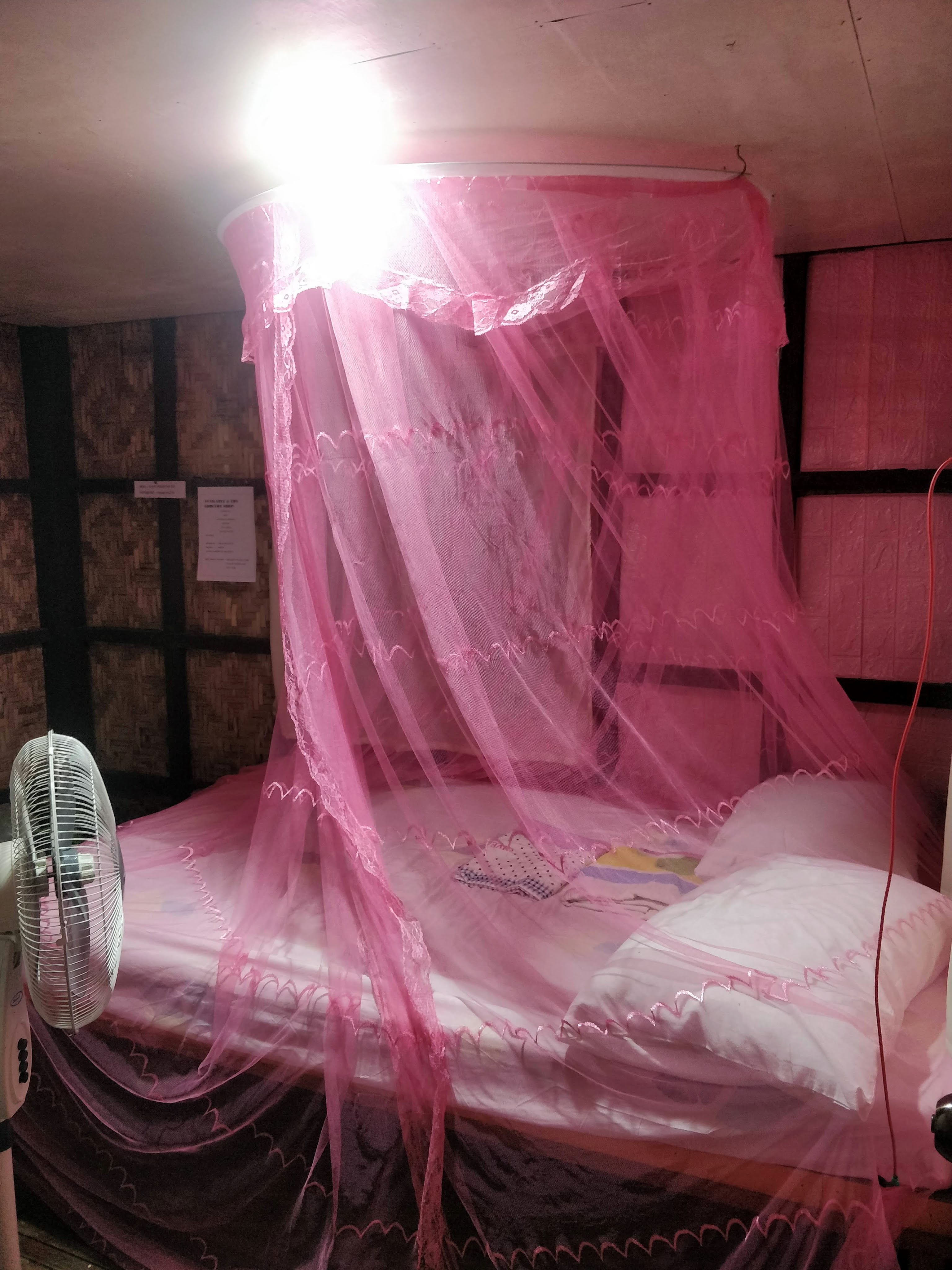
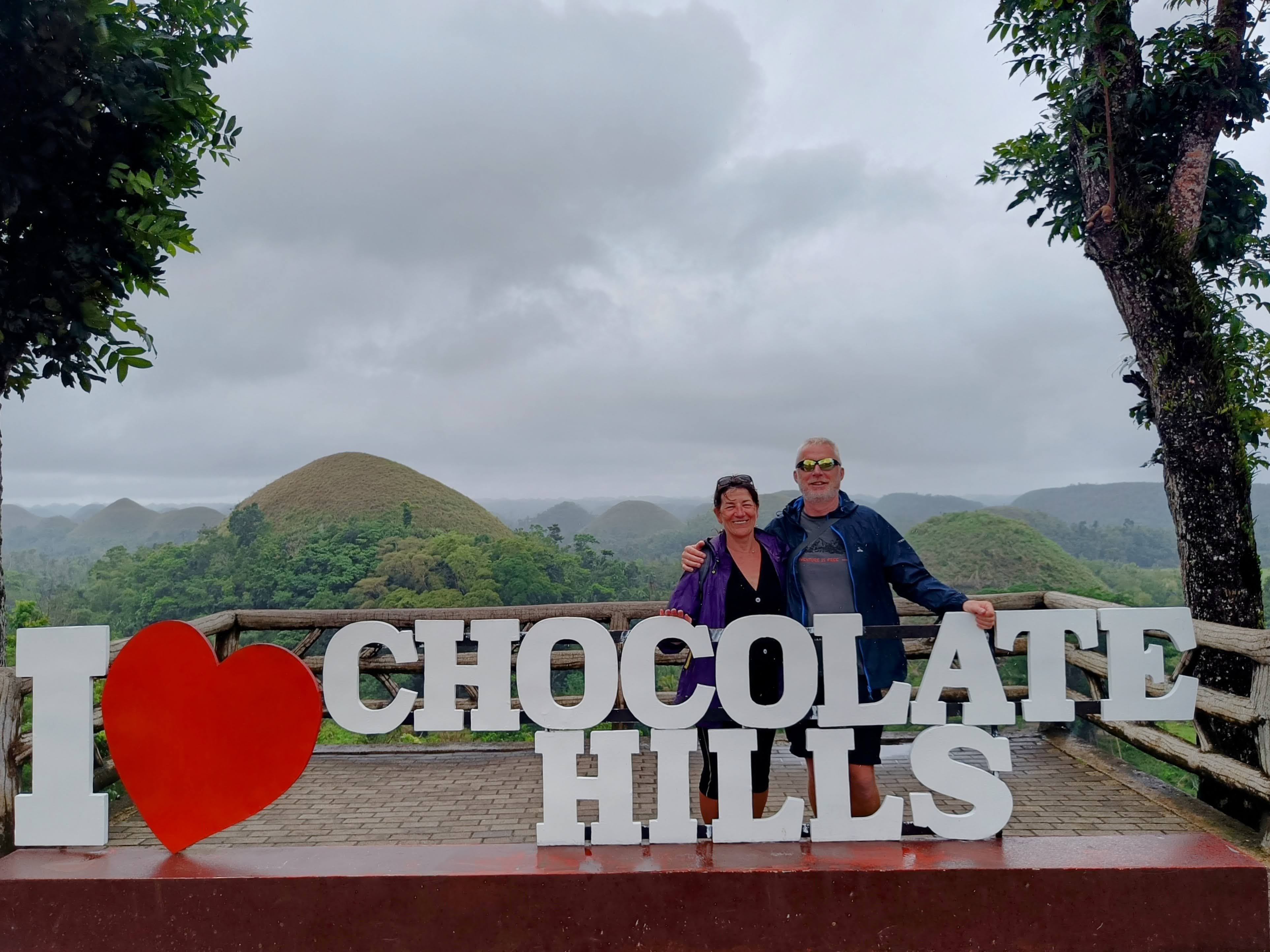
This was a homestay in a small village near the Chocolate Hills run by three widows – Fely, her sister Maria and their eighty two year old mother.  Our small room was a riot of pink,  pink walls, pink mosquito net.  The rain hammered on the roof while a little stream flowed almost under the floor so we had water above and below. What made this special was the friendliness of the women. (A bargain at €7 a night)

Fely’s Homestay

Best Hike Two Day Hike in the  Rice Terraces, North Luzon

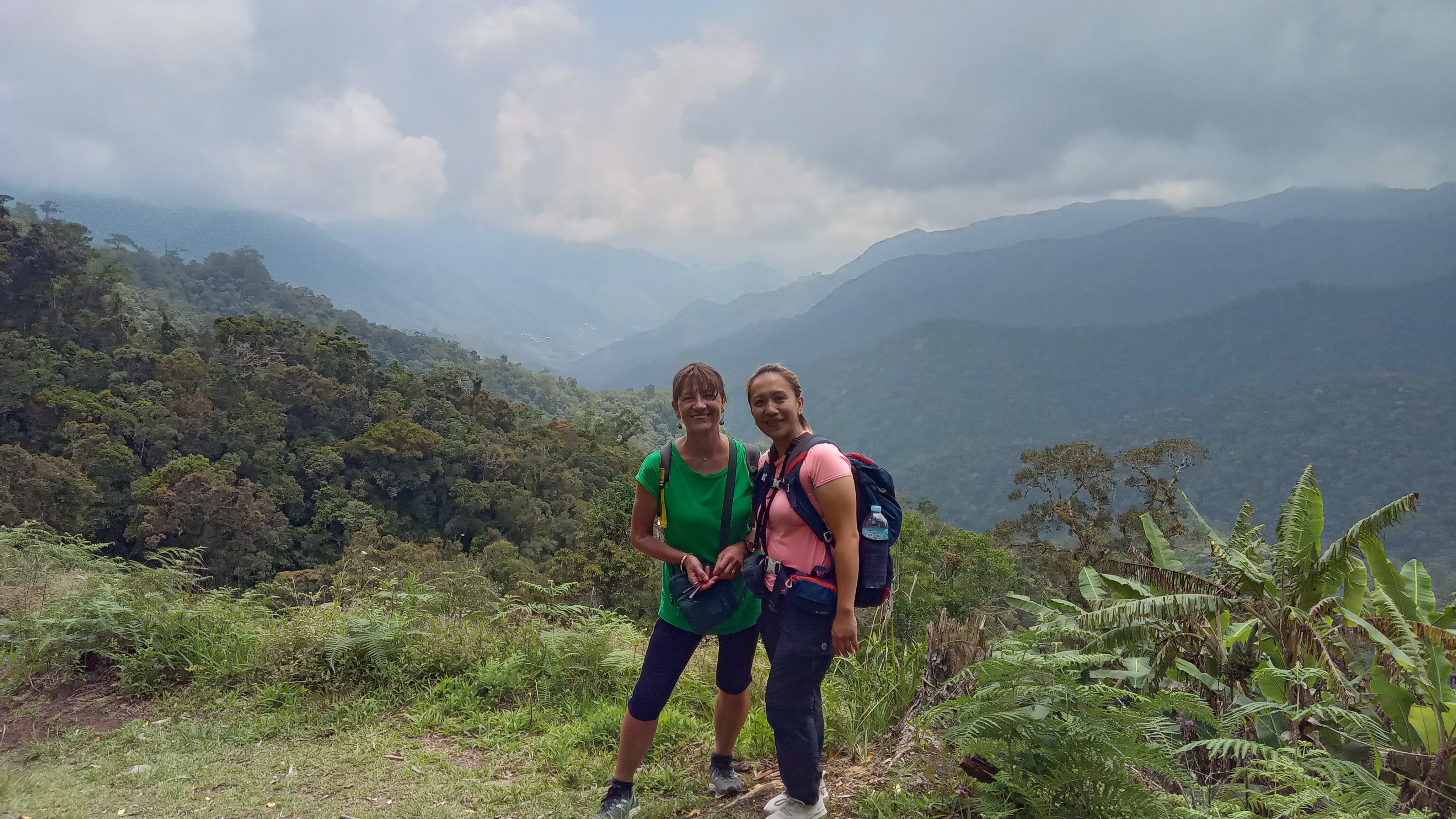
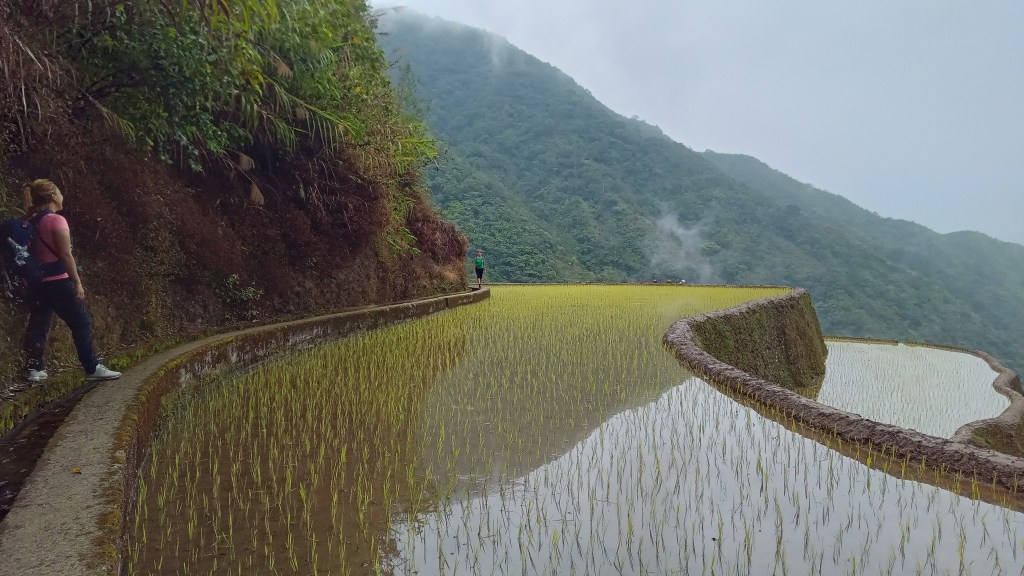
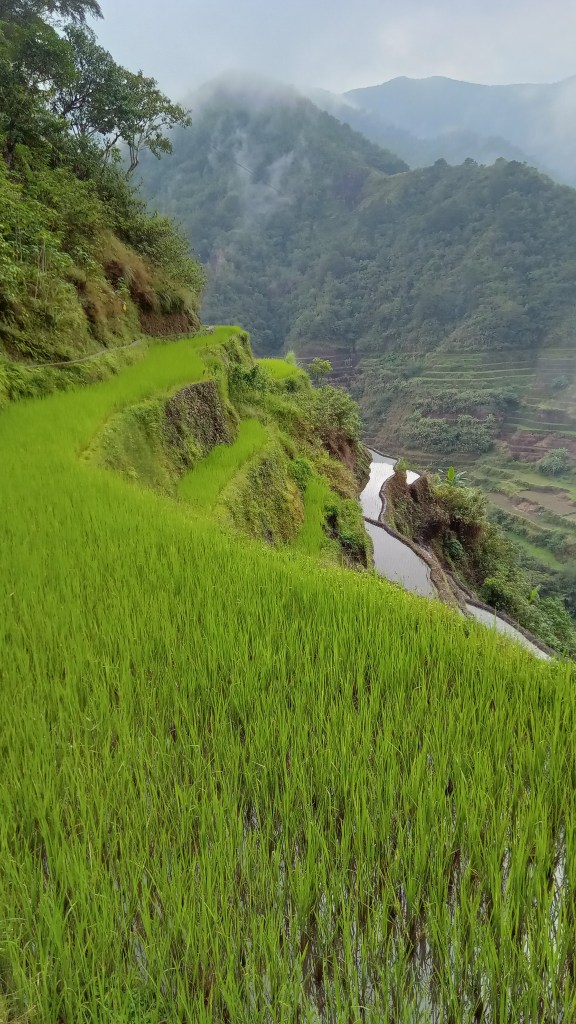
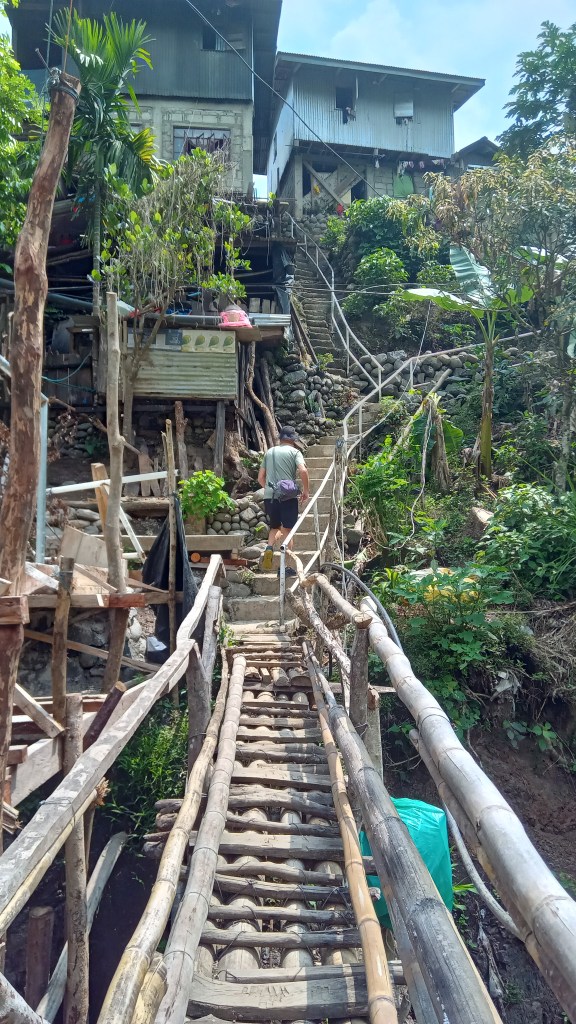
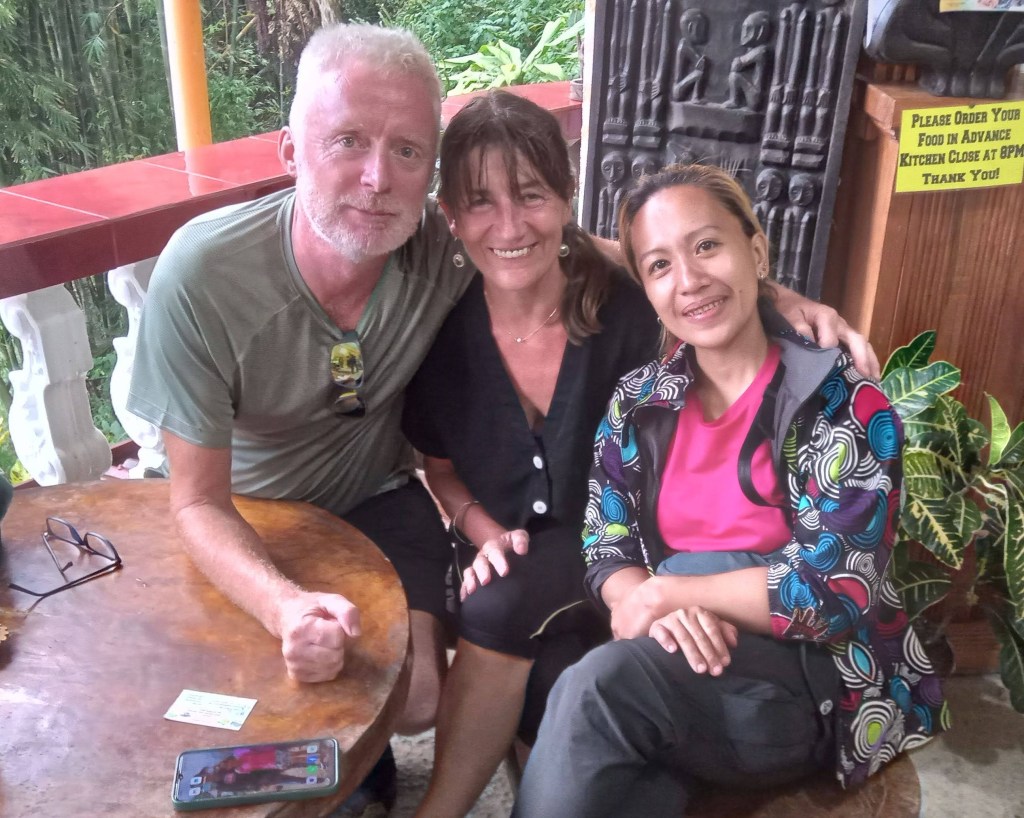
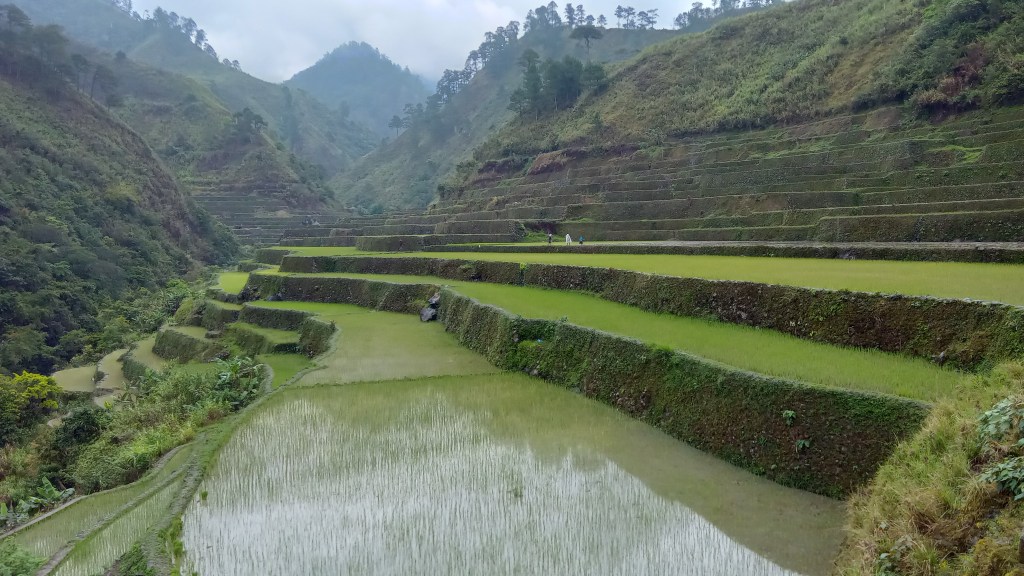
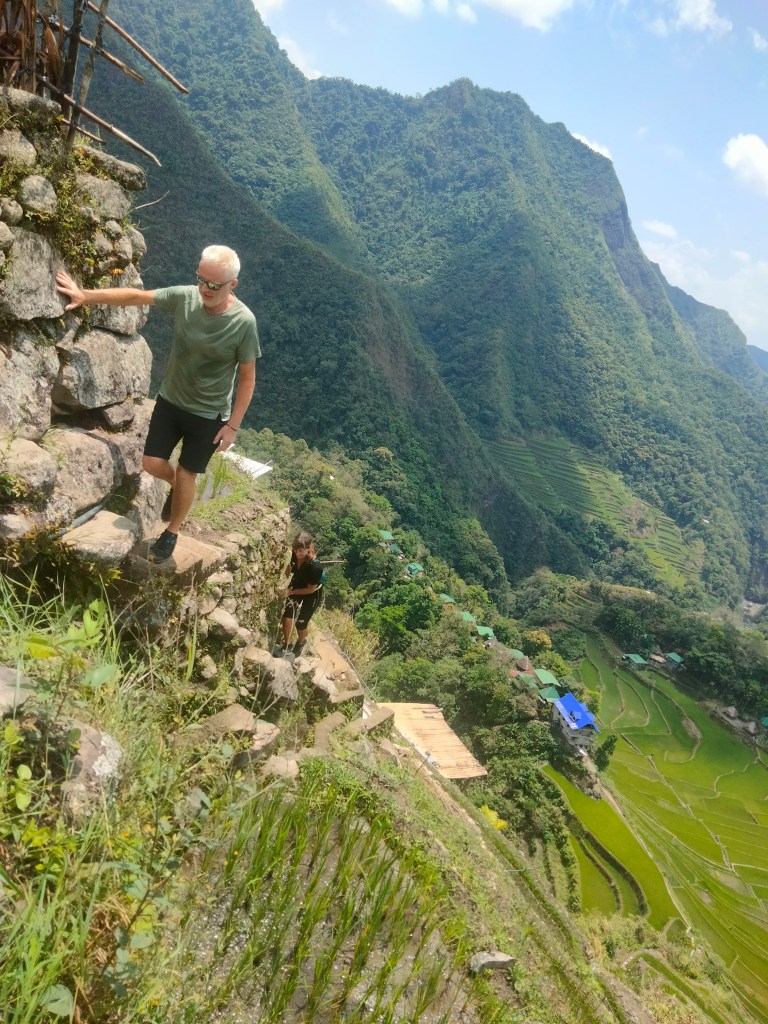
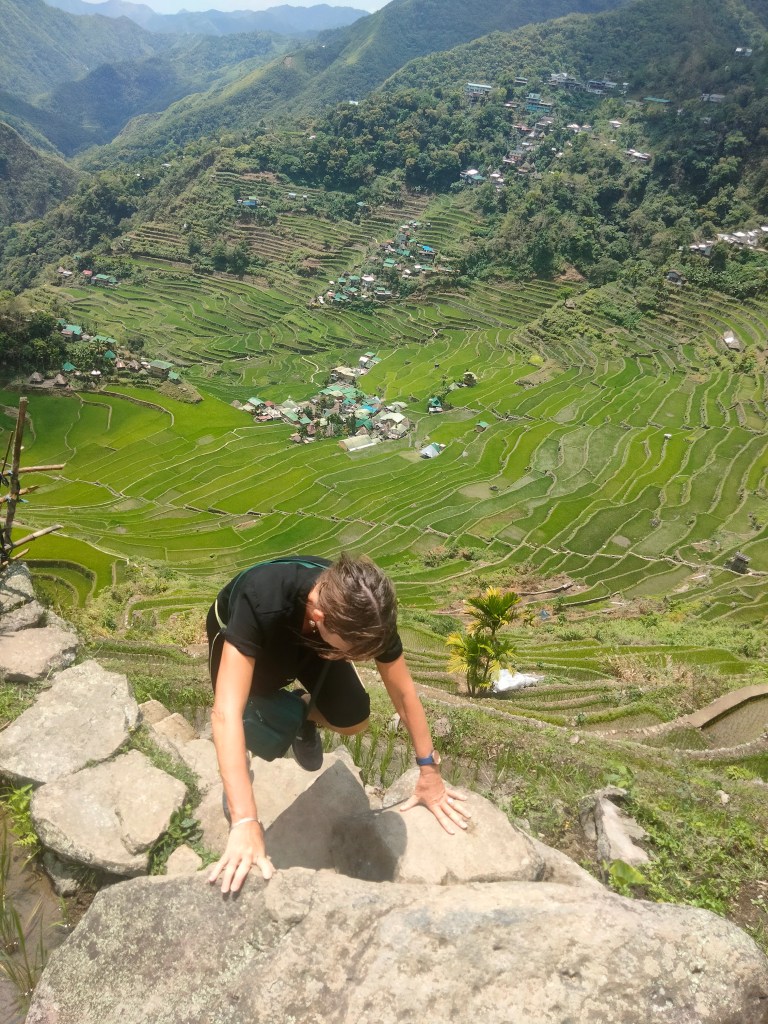
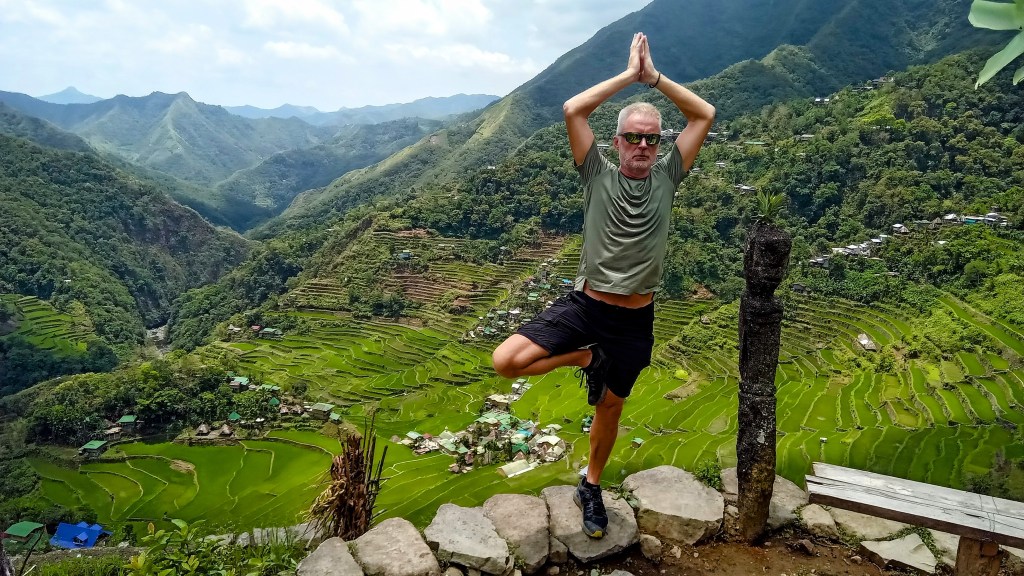
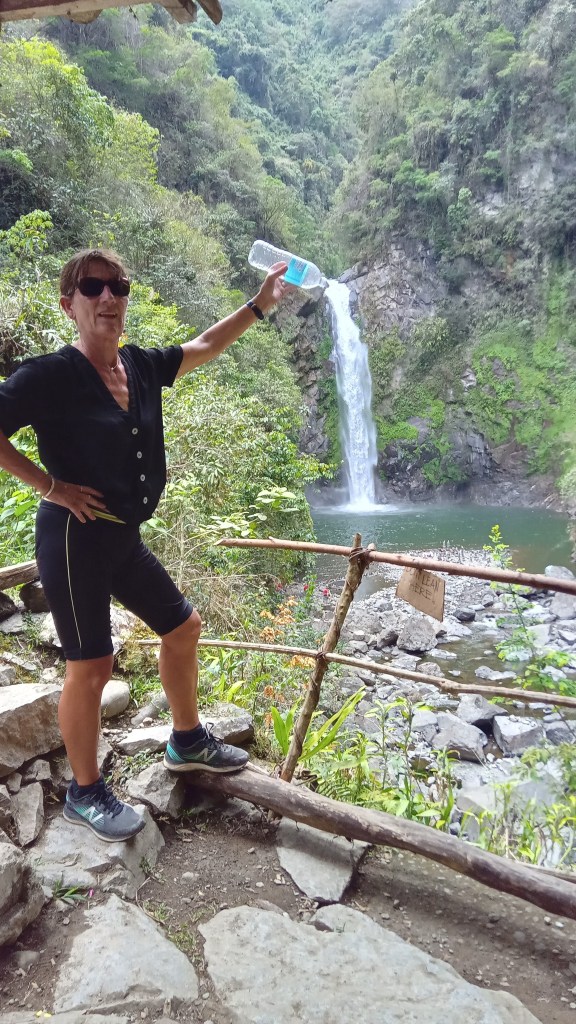
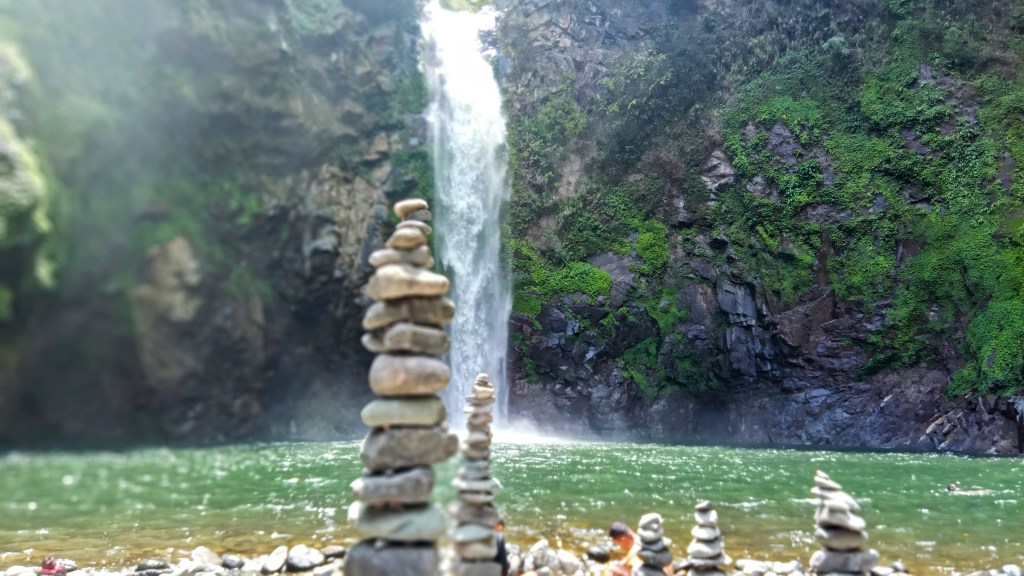
 We hiked along irrigation channels and ancient paths that hugged the contours of misty mountains going from village to village (Banaue – Pula – Cambulo – Batad).  A head for heights and a sense of balance were certainly an advantage. There were deep valleys, waterfalls, rivers traversed by swaying rope bridges, and of course the rice terraces. Along the way, we were entertained and educated on the customs and traditions of the Ifugao people by our wonderful guide.  Feeny was a mix of the traditional and the modern – a Ifugao woman who worked in a man’s world (very few female guides), who chewed moma (betel nut) which stained her teeth and lips but who also dyed her hair gold and painted her nails red, a woman who was raising two children without a husband and definitely the best guide we had on the trip.

Feeny and Me

Best Way to get Around – riding a scooter/motorbike

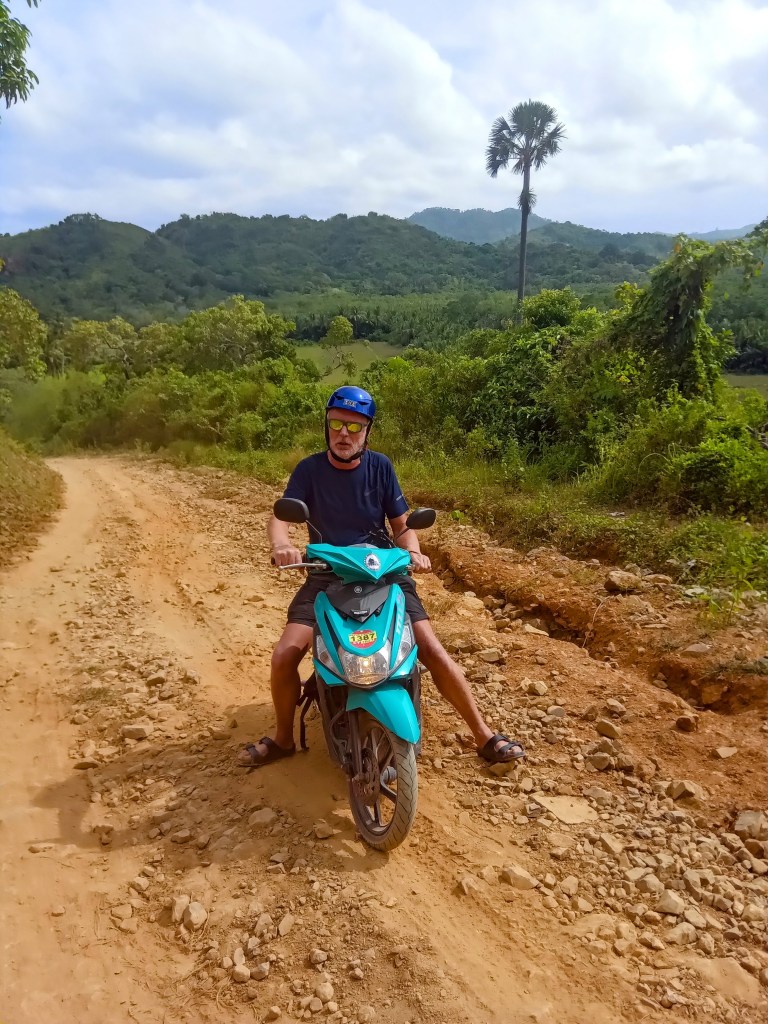
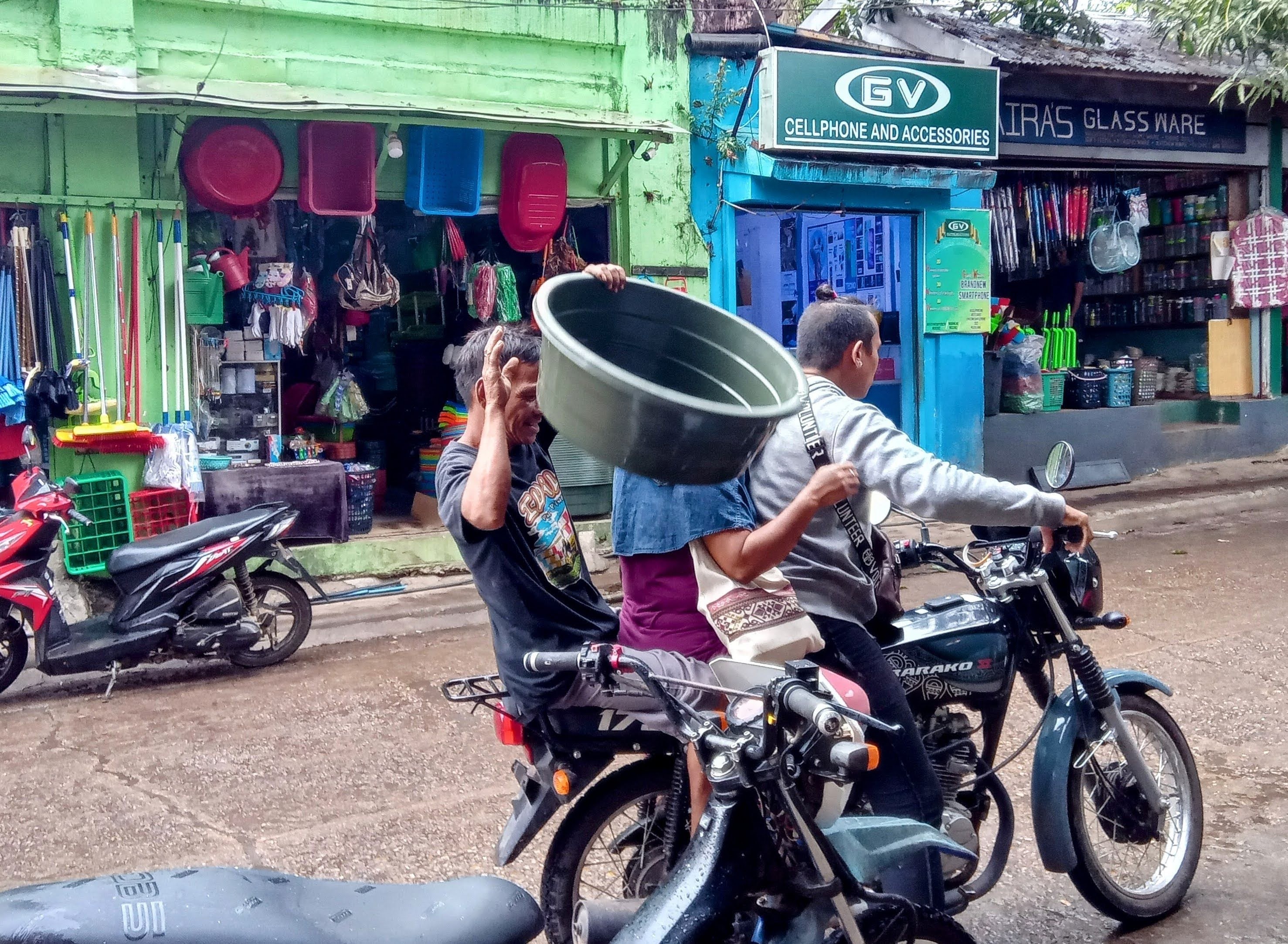
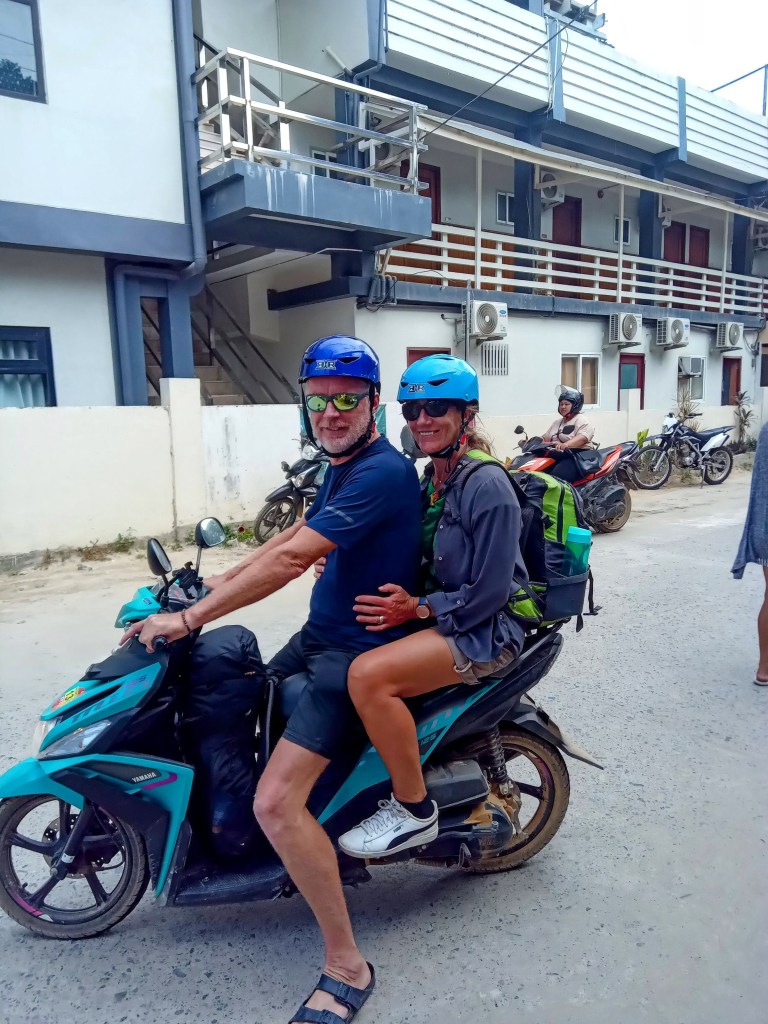
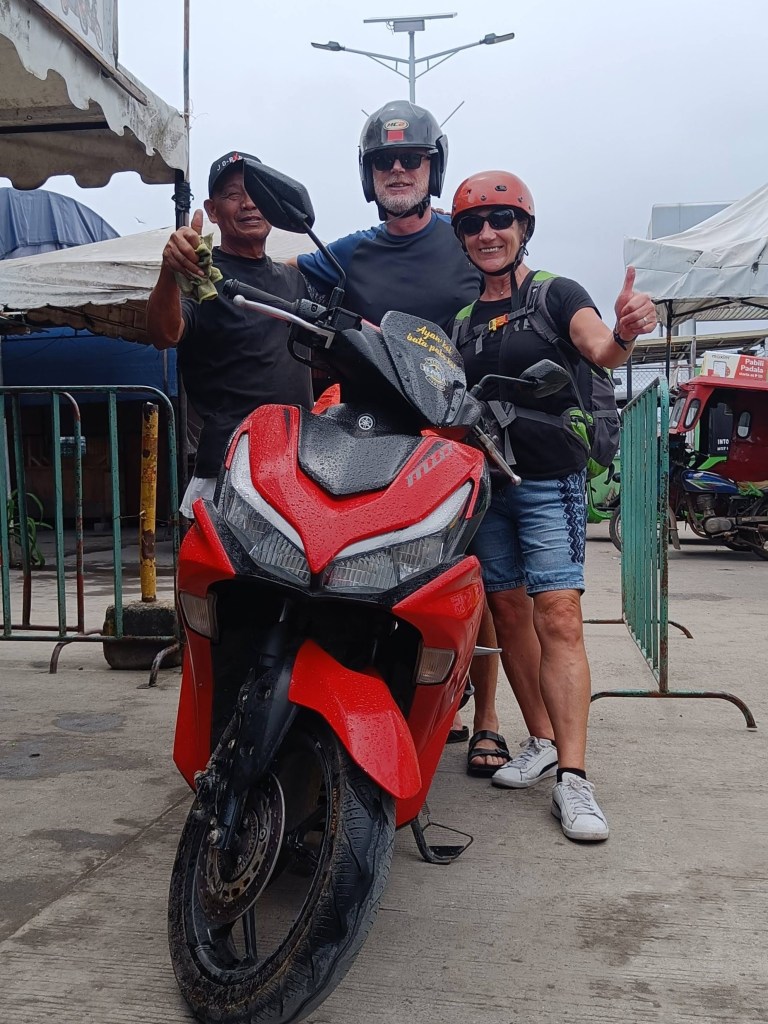
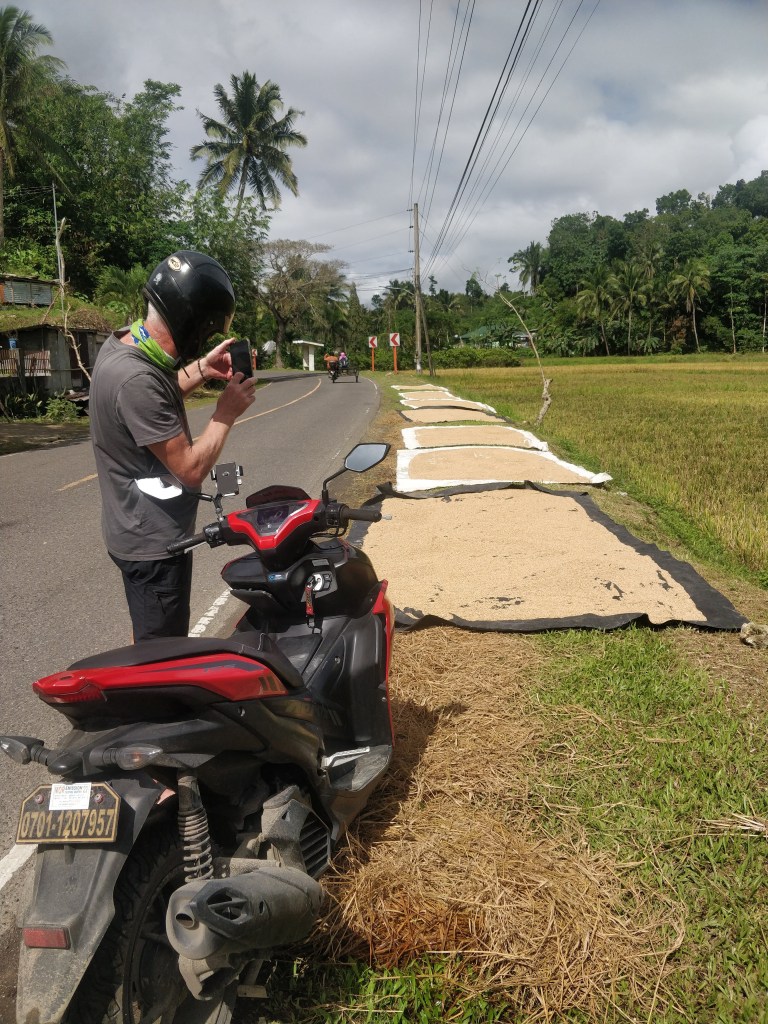
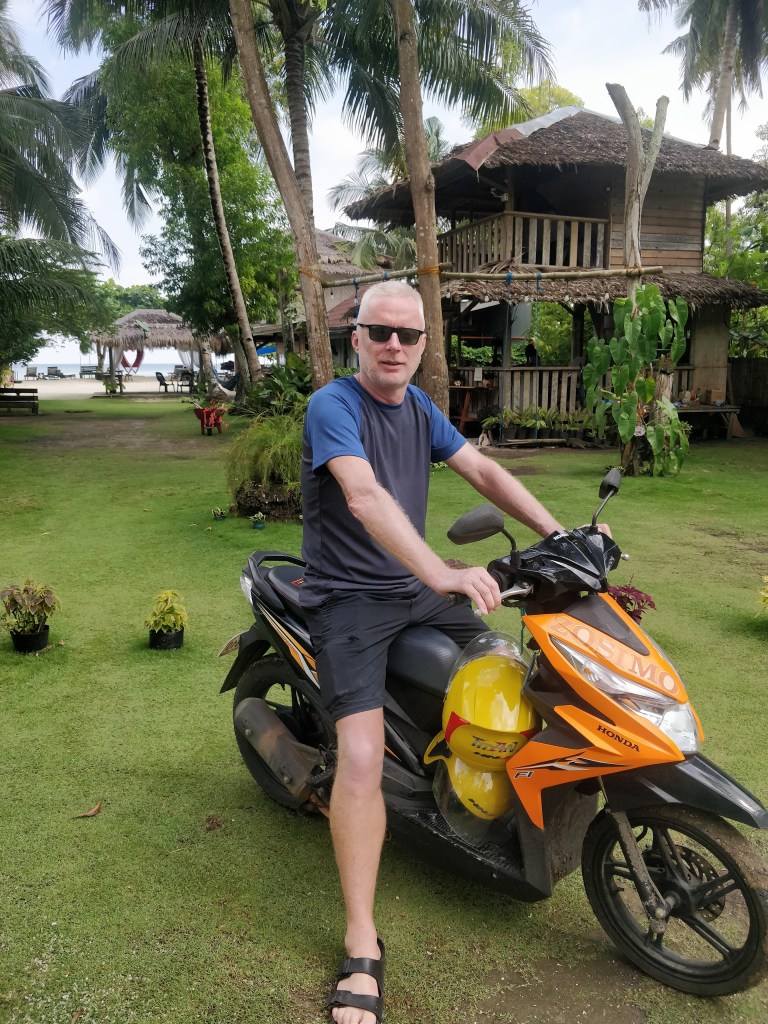
 The best way to get around on land was scooter/ motorbike which is how the locals travel in a country with low private car ownership. The number of people and the amount of luggage that can fit on a motorbike is astonishing.  We hired motorbikes quite often (about €7 a day)  and loved the freedom of cruising around on a bike dressed in shorts and T shirts and the challenge of some of the roads😁  For longer journeys, buses and mini-vans go everywhere – we got a kick of standing on the side of the road and flagging them down.

Best Meal – Difficult to say

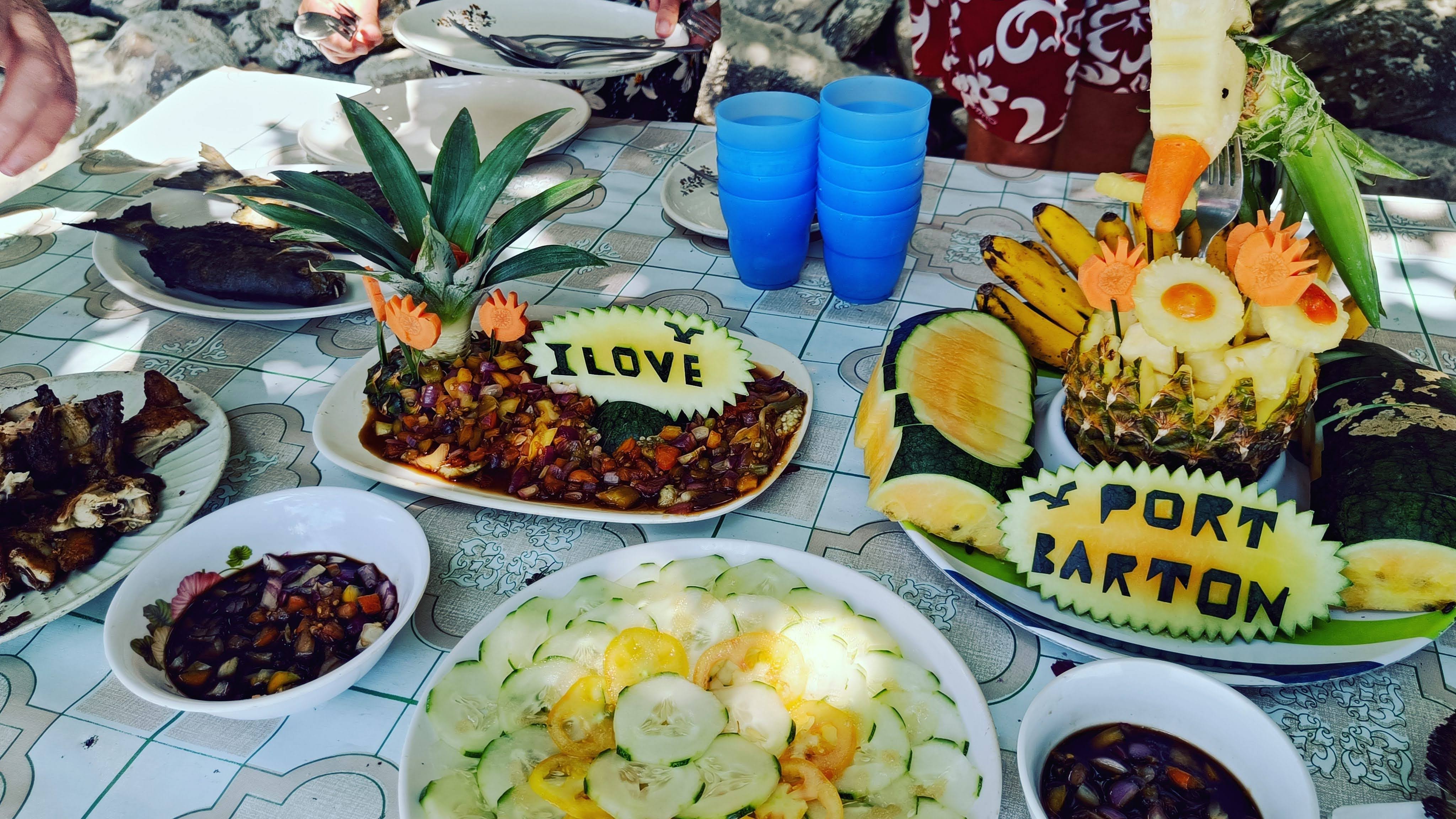
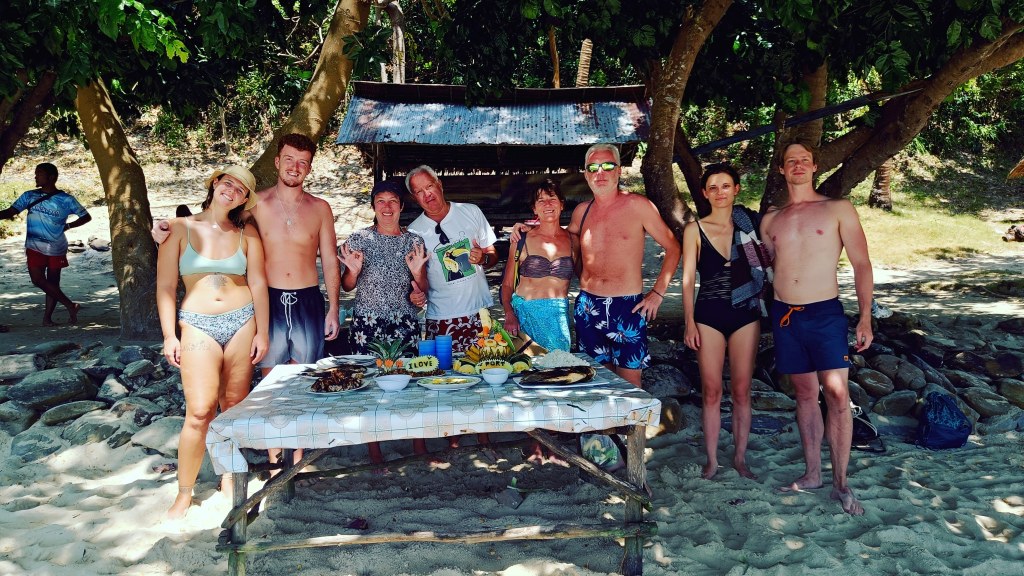
In a meat-eating, chicken loving culture, vegetarian food was not easy to come by. Even vegetarian noodles on the menu often came with pork and chicken bits! (When I queried it, the waitress said that it was mainly vegetable) Luckily I eat fish and the fresh seafood was delicious. The best meal was probably on one of the island hopping tours  Three cooks toiled away at the back of at the boat all morning cooking  lunch on charcoal coals, sweat and heat but increasingly delicious smells. Platters of food were brought ashore to a small island and set up on a table on the sand – prawns, crabs, barbecued fish, mounds of rice, noodles, fried chicken, chicken stew, pork in sticky sauce and platters of fruit.

The most unexpectedly delicious meal was in a bus station in Puerta Princesa where we  enjoyed a bowl of sweet potato and beans stewed in coconut milk (ginataang gulay)…an especially delicious breakfast after thirty nine hours onboard a rust bucket of a ferry.

Island Lunch

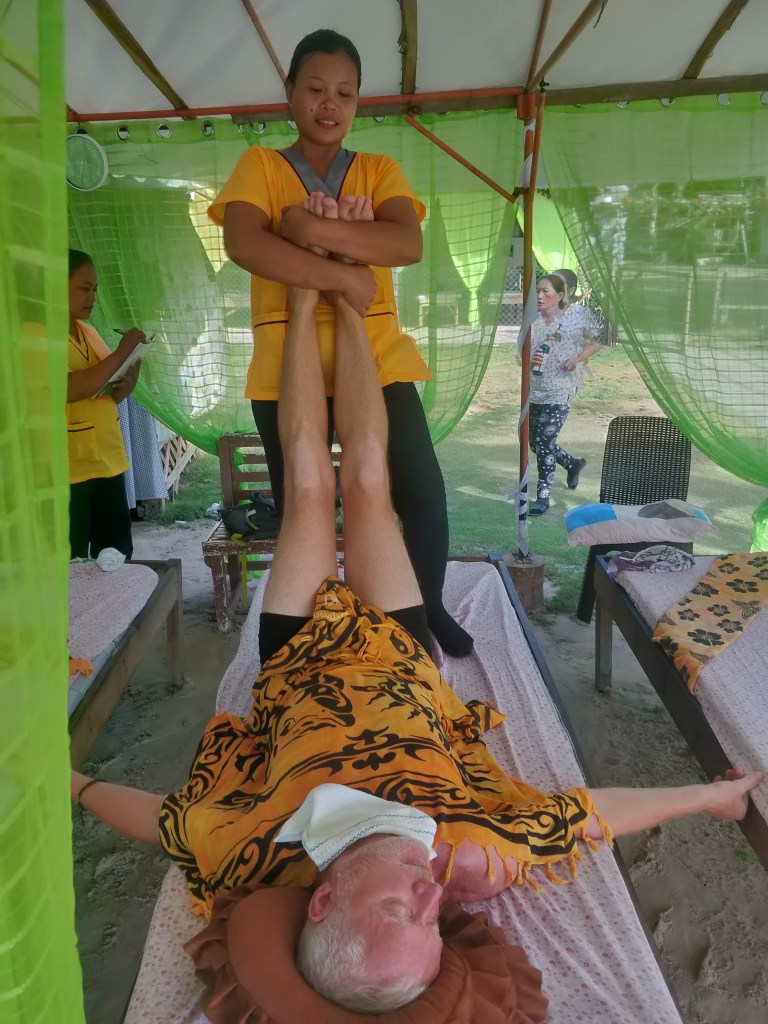
Best Massage ….on the Beach in Port Barton

Massage is really popular in the Philippines and every village will have some masseuses. A hour long massage cost less than €10- great value for the pleasure of being pulled apart and put together again. One of the best was by the beach in Port Barton.

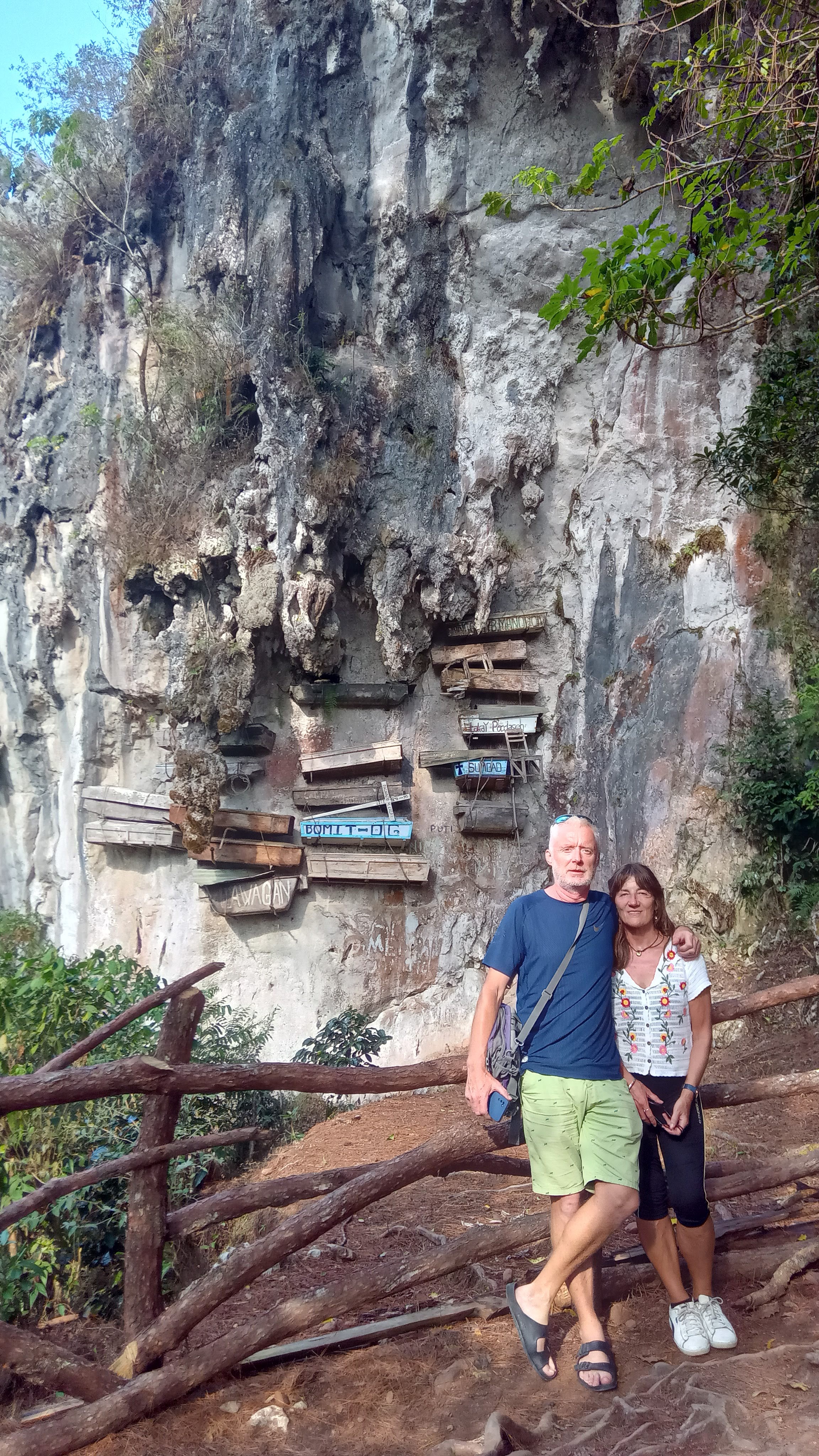
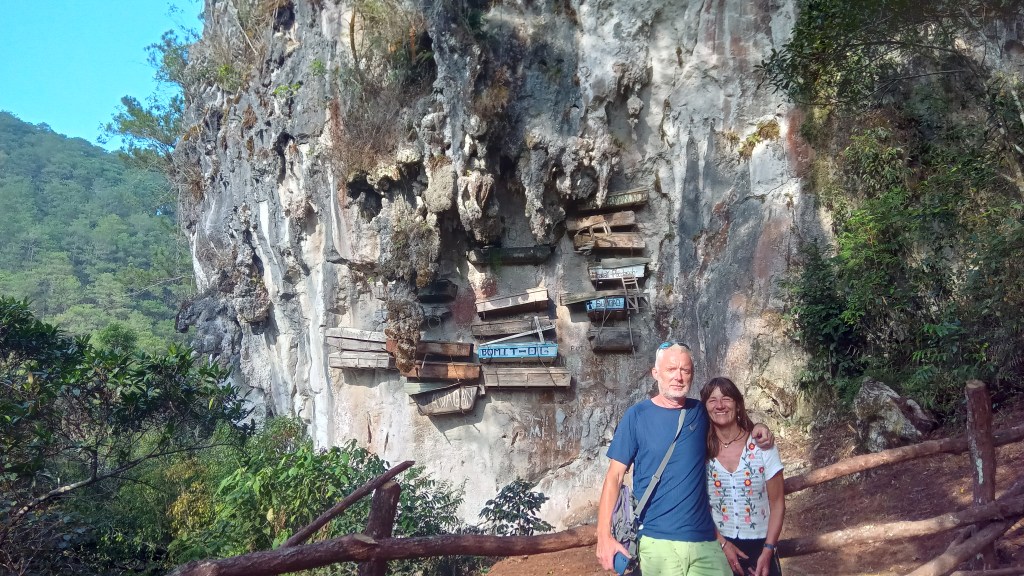
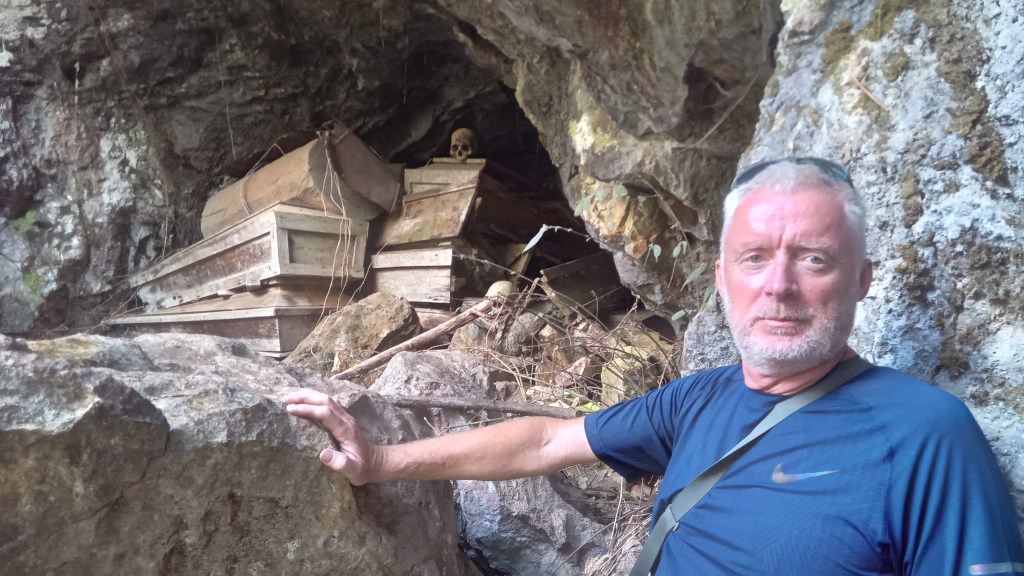
Most Unusual Sight – Hanging Coffins of Sagada, North Luzon

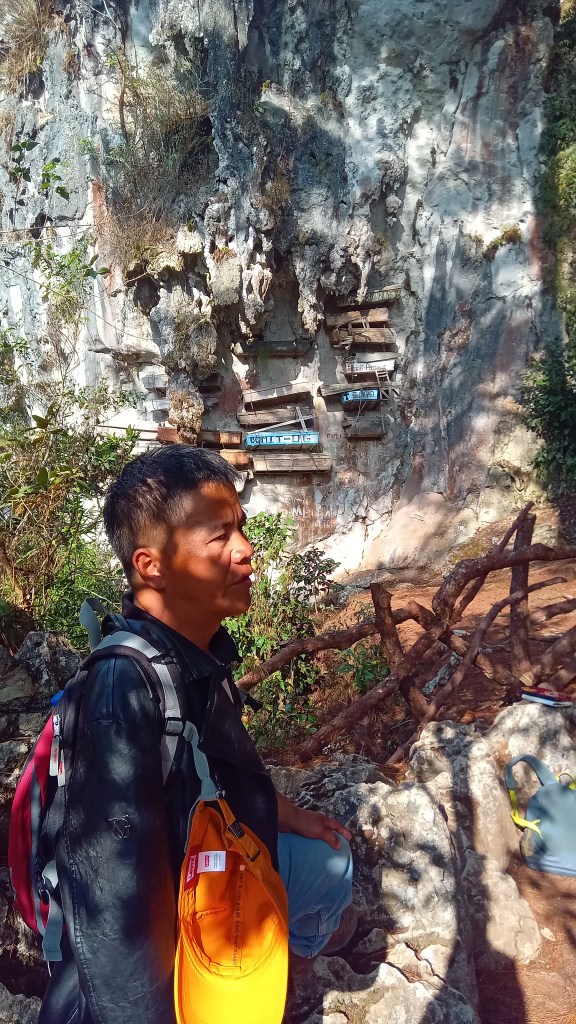
The ultimate goal in Sagada was to be buried in a coffin suspended from the steep mountain-side so that the spirit could roam and become one with nature.

Hanging Coffins, Sagada

Fond Memory…..Politeness

Filipinos are very polite to each other and to visitors. Every morning, we were greeted with a chorus of Good morning, Mam, Good Morning, Sir or even Good Morning, Mam-Sir (which gave us a good laugh) Followed by Good Afternoon and Good Evening as the day wore on. This wasn’t just because we were tourists, white-skinned and old. Everyone over the age of 20 was called Mam or Sir by shop assistants, bus drivers or anyone working in a service industry.

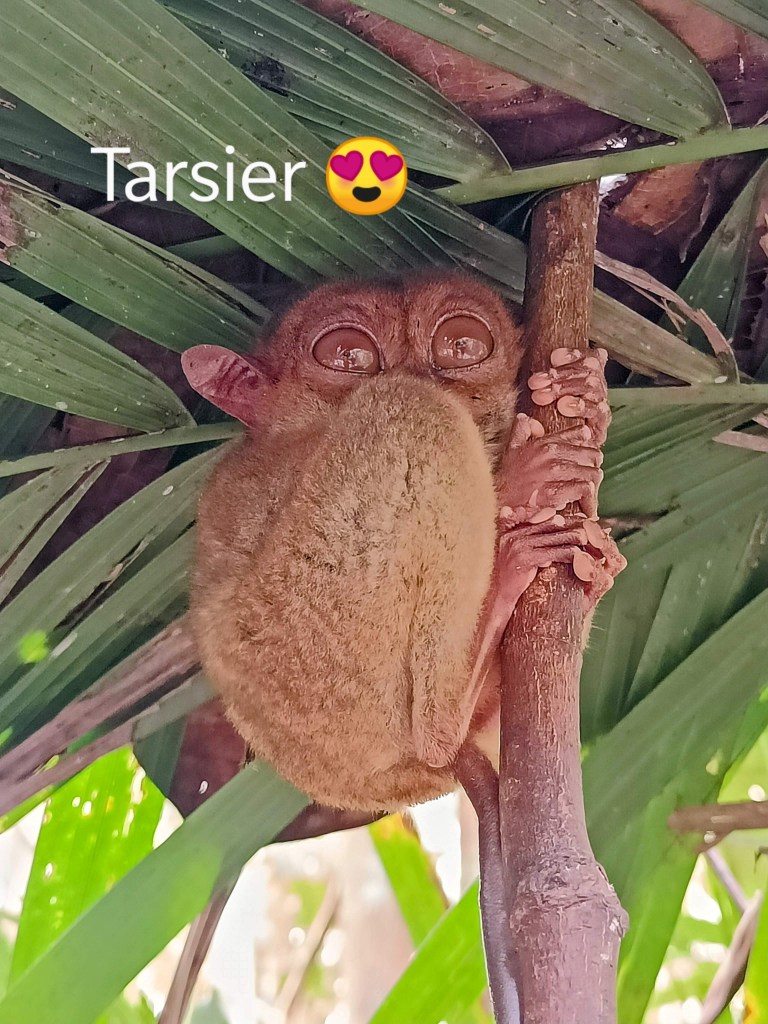
Best Animal Encounter – Tarsiers, Bohol

There were buffalos in the rice fields like a biblical scene,  often with white egrets on their backs picking off ticks and insects in a wonderful symbiotic relationship. There were colourful fish in the sea but the little animal that stole our hearts and made us go Aaaah was the tiny tarsier with their huge eyes and human-like hands.

Worse Moments (Oh no…….)

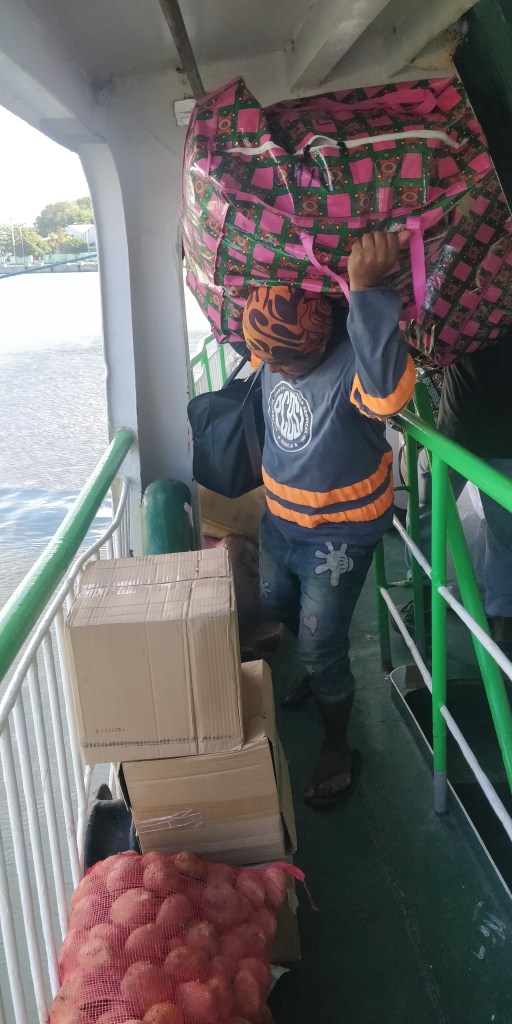
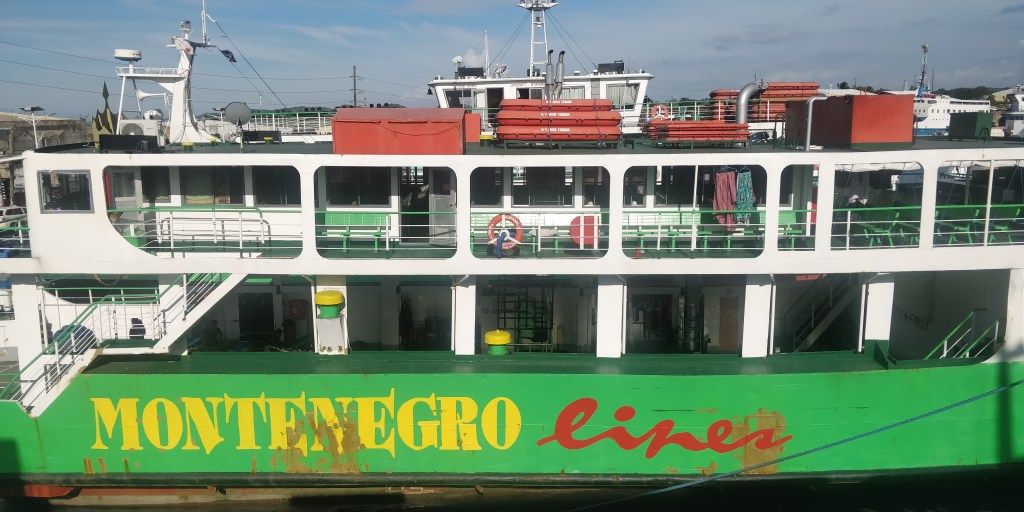
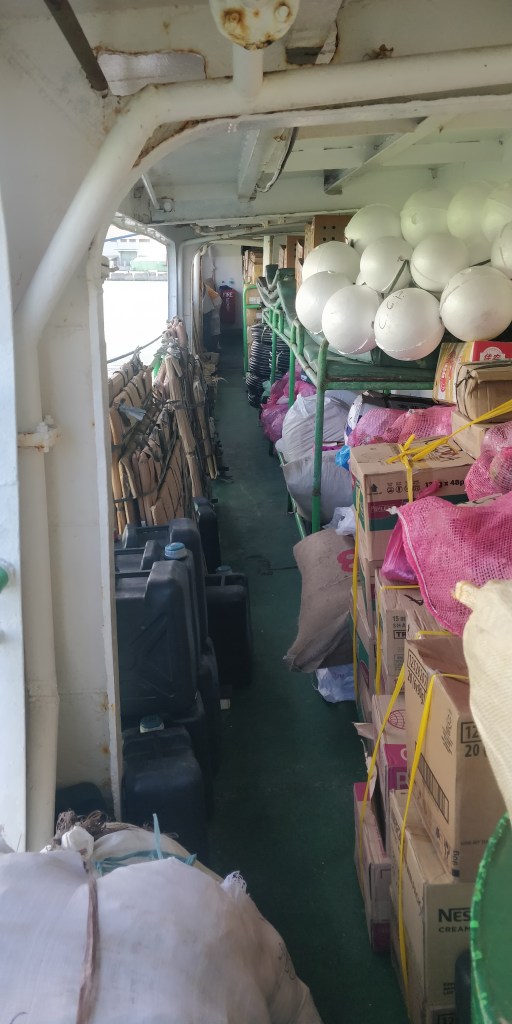
  1. When we laid eyes on the ferry that would take us across the Sula Sea from Panay to Palawan. The ferry had  a pretty name- the Marta Rebecca (or maybe the Maria Rebecca)….the rusting made it difficult to decipher😮.  It had the tired, worn-out look of a vessel that needed some TLC or preferably retirement.  We were appalled and that was before we saw all the boxes and crates of cargo going on, clogging up bunks and corridors. But we survived the thirty nine hours aboard this rust bucket (including two nights)
  • When we realised that both phones were water-damaged beyond repair. Hope works in a strange way – we clung onto it despite all the evidence to the contrary. Even when our phones were dead, we kept hoping for a resurrection….maybe one more day in a bag of rice would perform a miracle. One phone would have been bad enough….but two, at the same time, was unbelievable.(So we refused to believe it).

Biggest Challenge – Patience Required

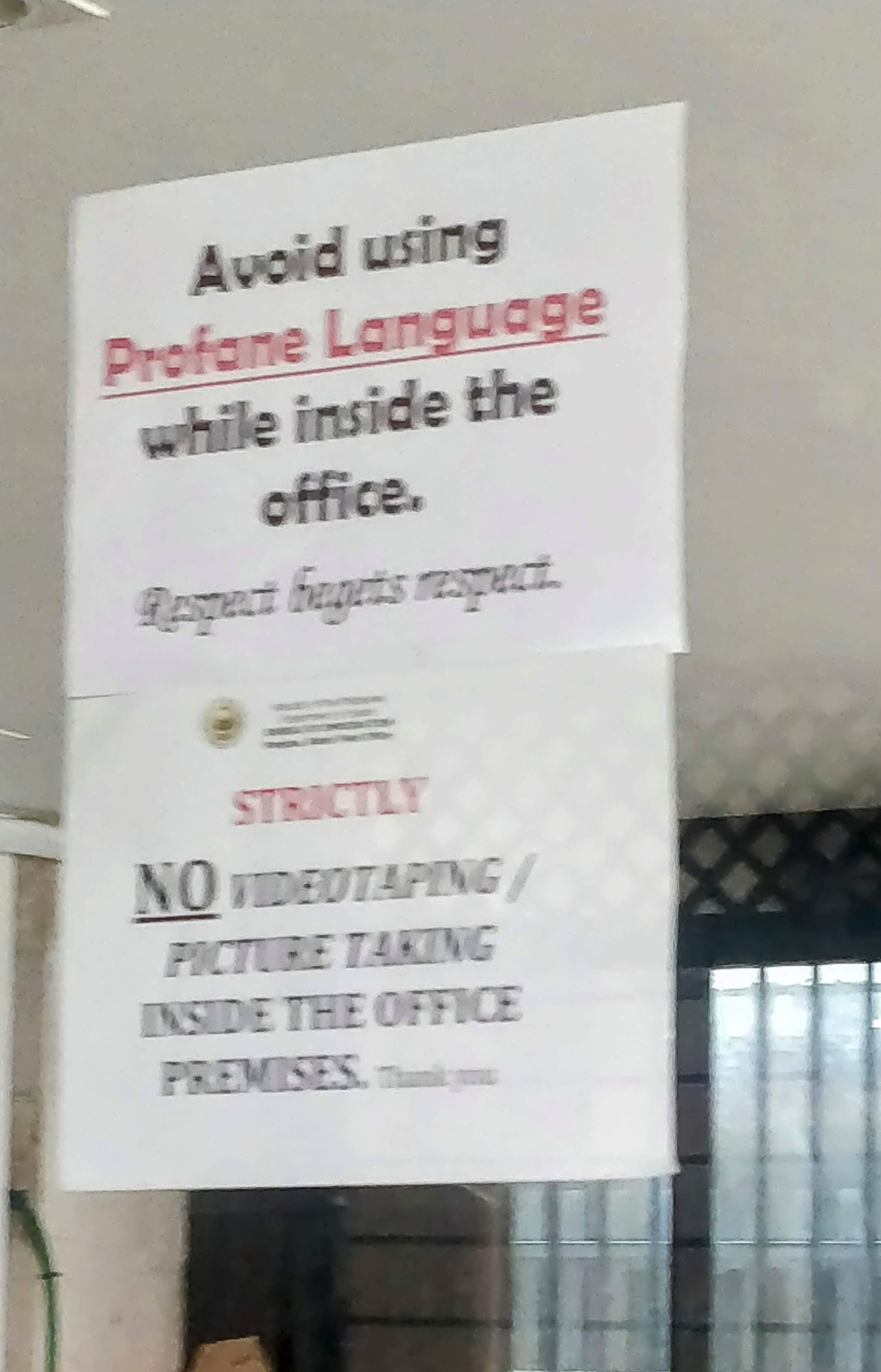
When you pack your bags, make sure to bring lots of patience to deal with the inefficiency of bureaucracy. Time moves differently in the Tropics. Extending our visas required multiple visits to the Immigration Office and an incomprehensible amount of form filling and delay. There was a large sign on the glass panel cautioning against using profane language😮. I swear no profane language was used in our transactions😇🤣.

Buying ferry tickets also involved lots of queueing to pay ferry terminal taxes, environmental taxes, local taxes (maybe) and finally your actual ticket. Each step required a separate queue and more form-filling, This was required even for a ferry journey of an hour or two. The only explanation was that it provided people with employment. Goodness knows what happens to the mountains of paper but WiFi was poor in many places, and even electricity could be intermittent. (we even had an electricity outage at the airport in Manila, queueing in 37C with aircon not operational)

 Shopping, the Filipino Way

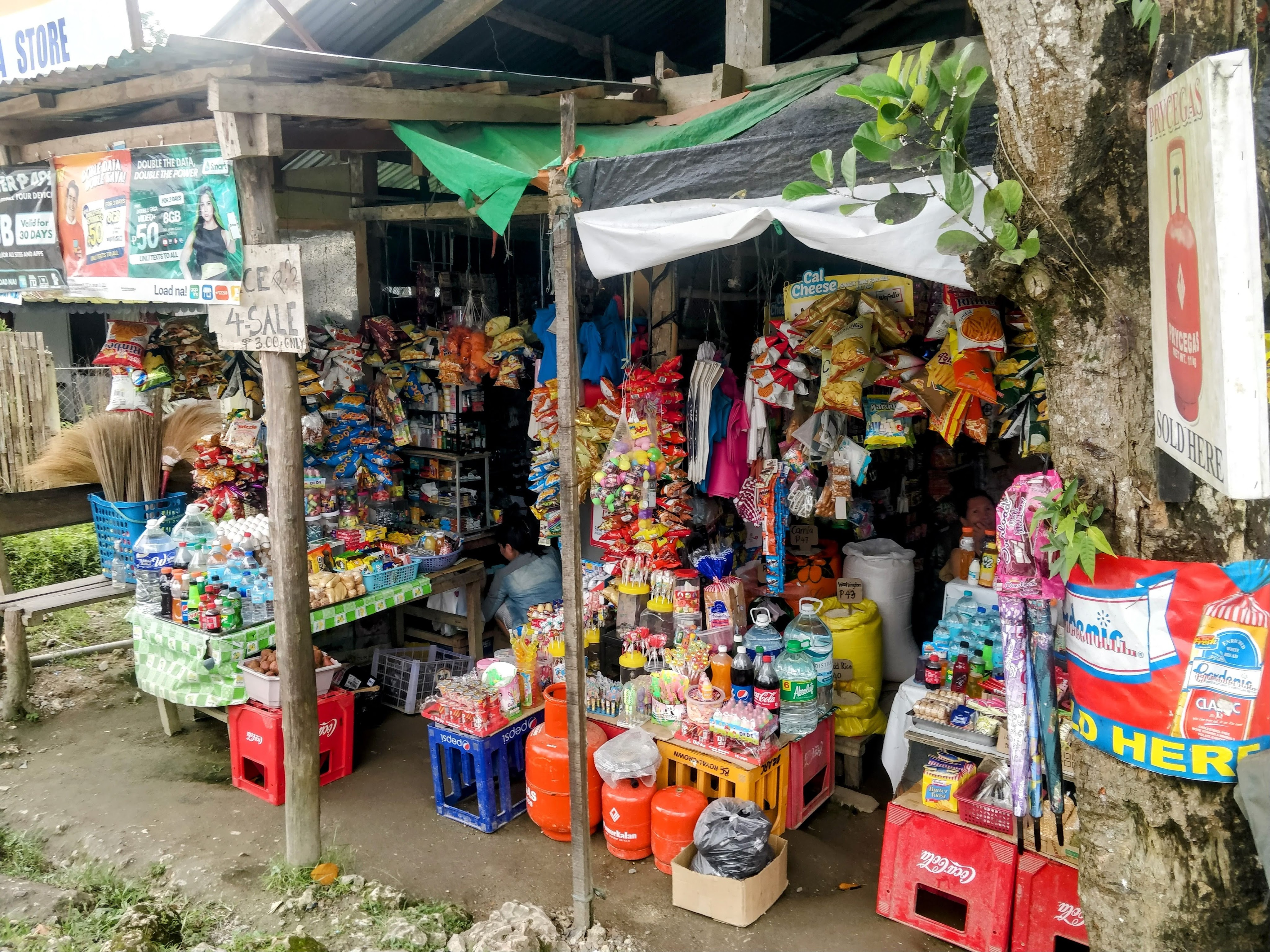
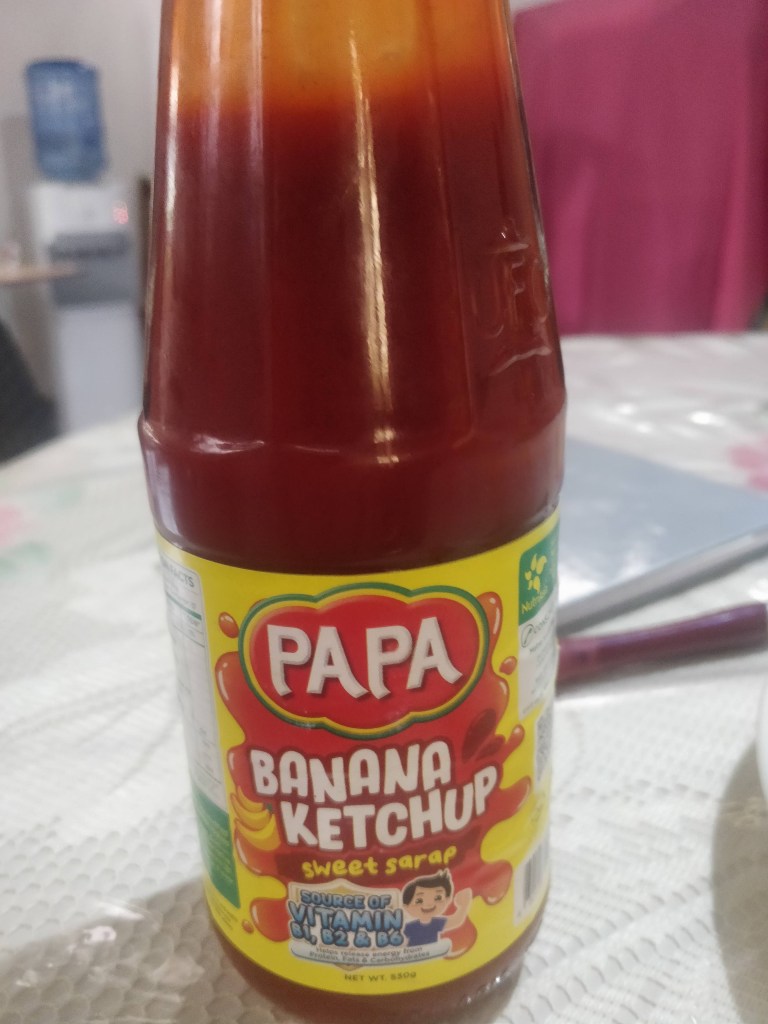
 This is a country where you can buy a single teabag from a box and everything is sold in small quantities. Every second house in a village is a shop, all selling the same things, sachets of oil and ketchup, sweets and crisps, sachets of noodles, shampoo and detergent. Most things are bought on a daily basis as needed. So if I want to wash my hair, I will go to the shop and buy a sachet of shampoo, bottles of shampoo are not readily available. This is understandable because of poverty(little disposable cash),  the houses are small, often without fridges and with little storage capacity and no protection from insects and vermin but it leads to an incredible amount of plastic waste.

Least Favourite Place….Manila

We are not great fans of cities and Manilla is ENORMOUS – crowded, noisy and polluted. It is really made up of a conglomerate of several cities with no real centre and is officially the most crowded city on the planet since 2022.  As the birth-rate is alarmingly high, it is likely to get even more squashed.

Philippines of the Senses

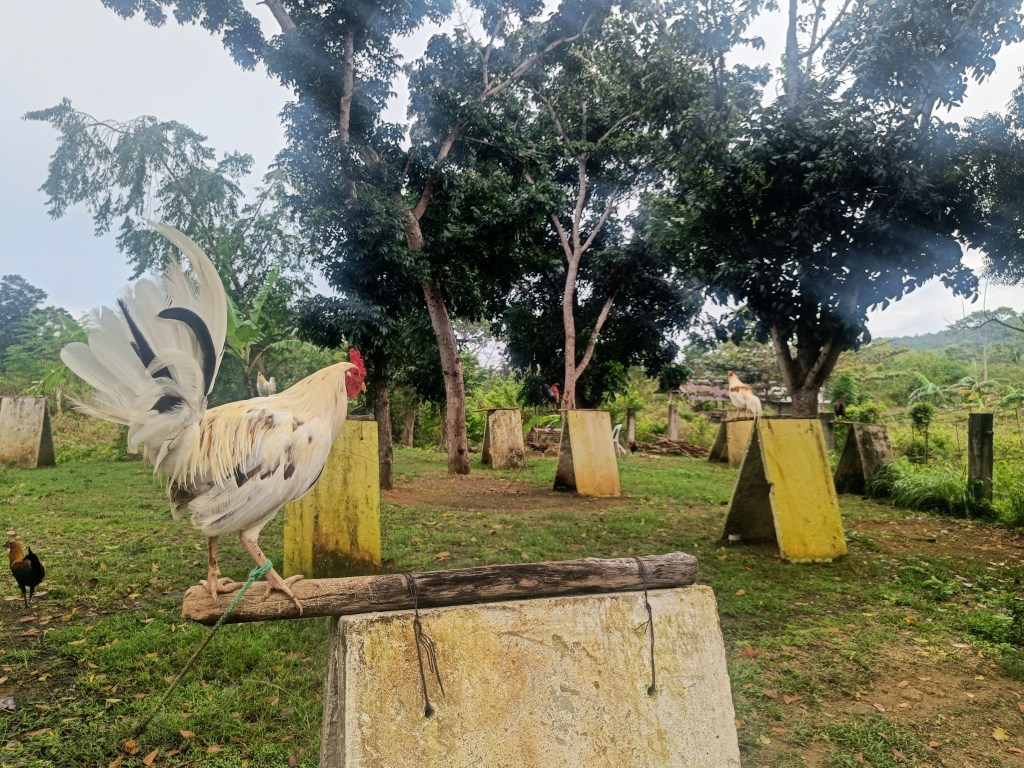
The sound of the Philippines …..roosters crowing even on the ferries, a close second is the sound of dogs barking, so many stray dogs roaming around. And the music of the seventies and eighties …. a time warp….with young guys singing along to Neil Diamond, the Bee Gees

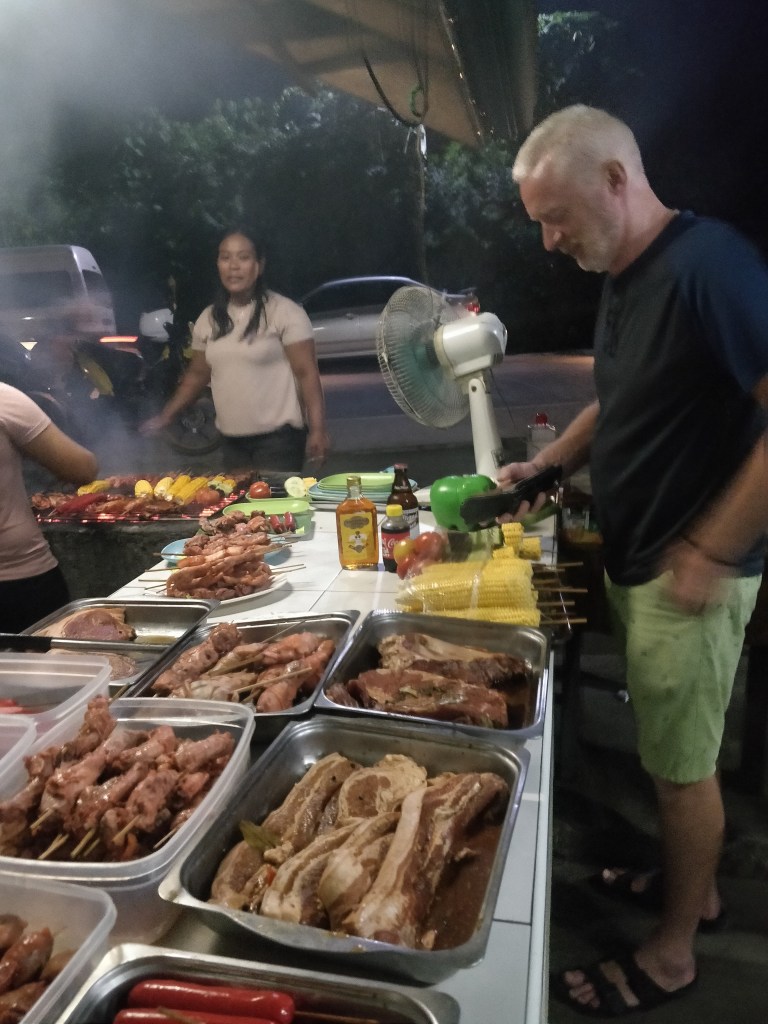
The smell of the Philippines … smoke, constantly burning rubbish and vegetation, smoke spiralling upwards, making a haze amongst the trees, the smell of barbecuing pork and chickens over charcoal outside basic shacks at dusk..

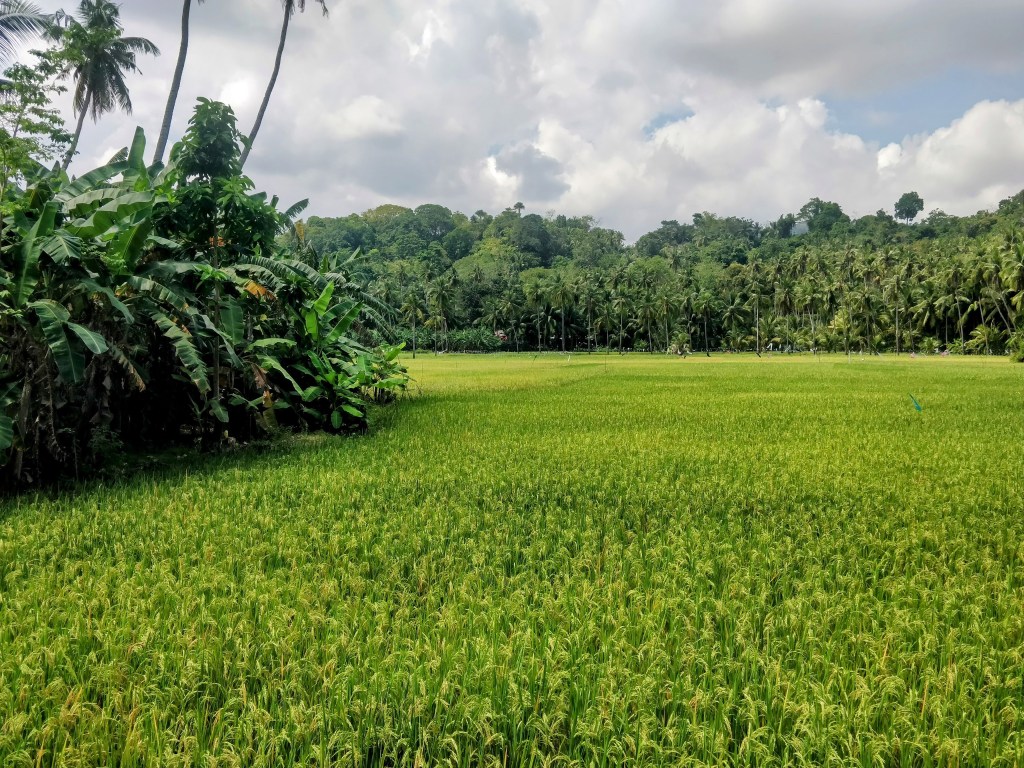
The colour of the Philippines – turquoise of the sea and  vivid luminous green of rice stalks

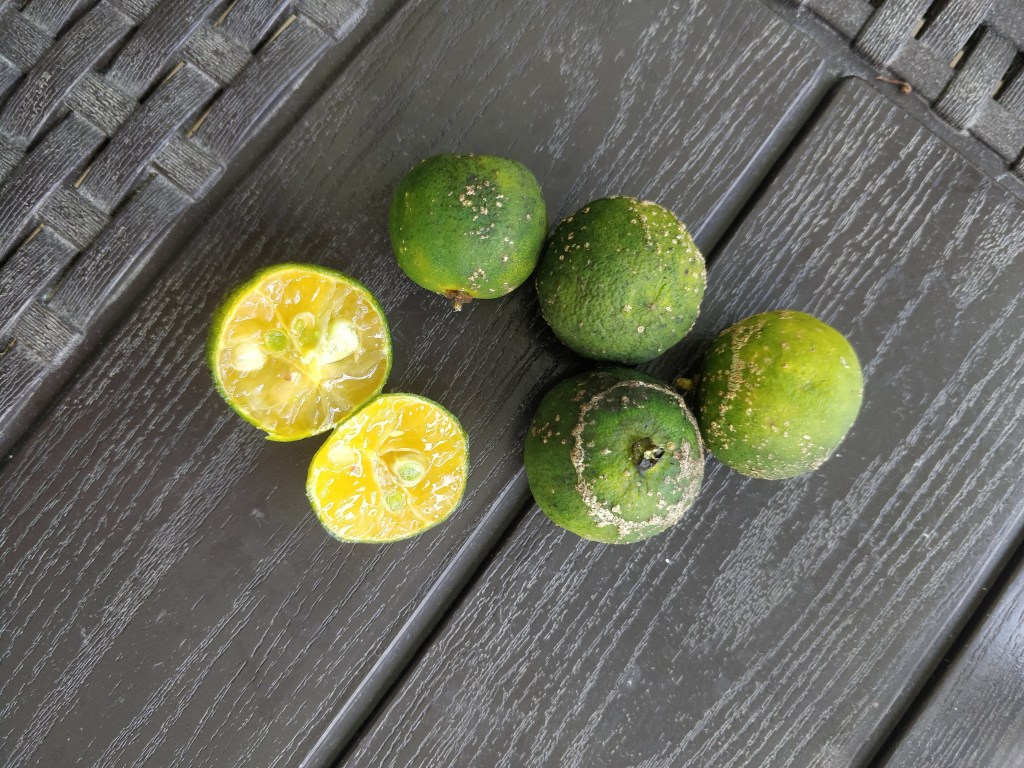
The taste of the Philippines – juicy mangoes (probably the best in the world), tart calamansi juice, rice and scrambled egg for breakfast, ice-cold Pilsen beer at sunset.

The feel of the Philippines – sunshine on your eyelids, fine sand between your toes

Thanks for reading….we have to go now and do some research for our next trip. Columbia has been on our radar for a long time but Japan has a certain appeal or perhaps India? So many places, such a beautiful world…..

Philippines – the Highs and Lows

Philippines – Burial Rites and Birthdays

Rice Terraces, Banaue

After our hugely enjoyable trekking in the rice terraces around Banaue in Northern Luzon, we were on the move again to  another mountain town about a three hour van-ride away.

Sagada Rooftops

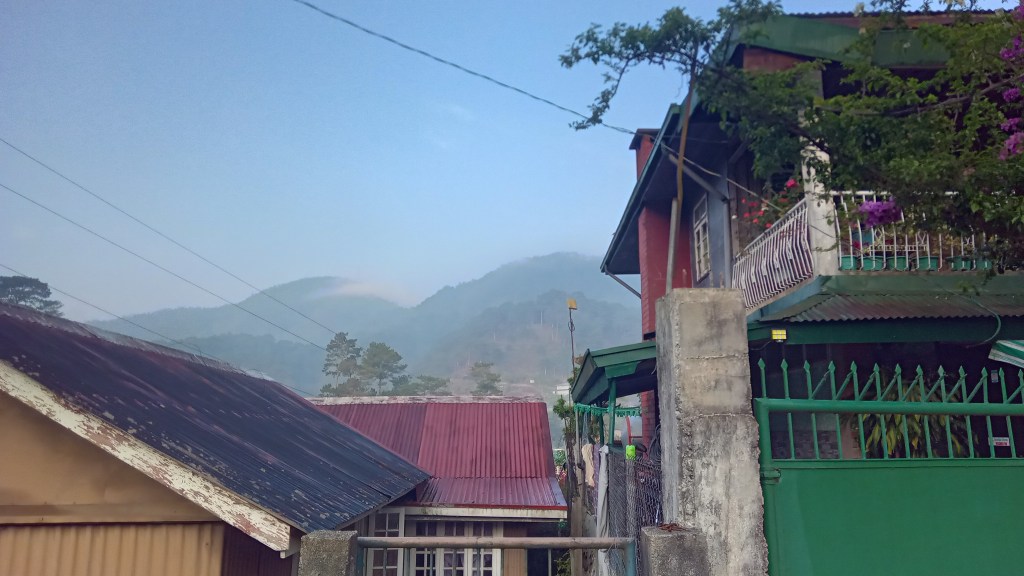
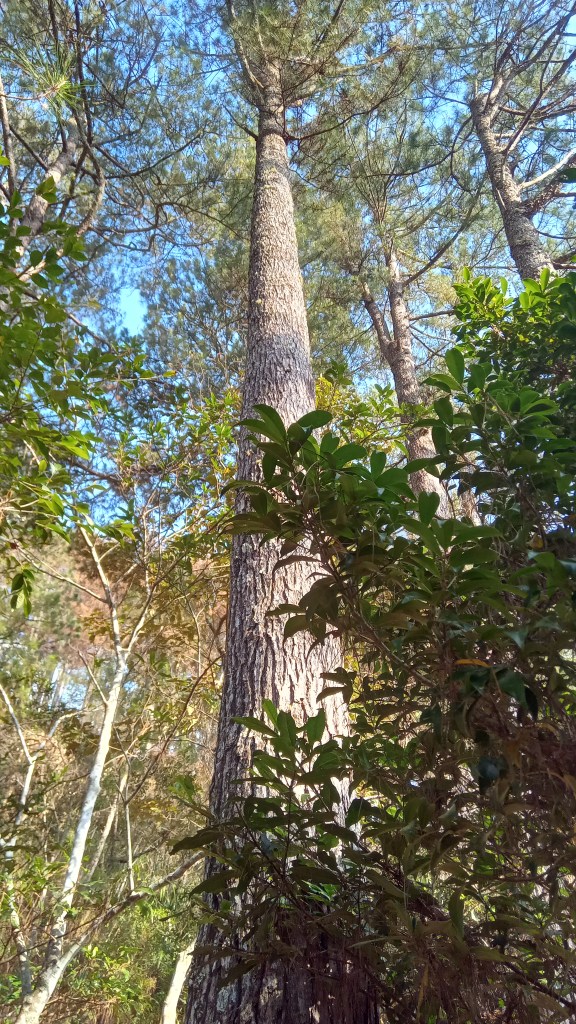
As soon as we stepped from the van in hilly Sagada, there was the scent of fragrant pine from the tree clad mountains all around. There were signs advertising lemon pie, the local specially and also etag, pork which was cured, air-dried and smoked. A layer of maggots enhanced the flavour of the etag, apparently, but we were far too squeamish to try it. The houses were multi-story and far more substantial than the flimsy structures elsewhere in the Philippines. It almost felt like an Alpine village in Switzerland. Our accommodation was at the end of the village and we had grave doubts as we descended steps in a half-finished building – like going into an underground bunker. But then we were greeted by Dorothy,  middle aged with a lilting voice and no front teeth, who looked after us. The room was bigger than expected and had a window (so not underground after all but built into a hill). Dorothy did our laundry – our clothes were scrubbed almost new for about €1.50. There was no Wi-Fi but Dorothy used her phone to hotspot a young Slovenian guy, low on funds. We came back one evening to see the two of them sitting at the top of the steps,  sharing a bowl of popcorn (made by Dorothy), so that he could surf the net.

Hanging Coffins, Sagada
Echo Valley, Sagada
Burial Cave, Sagada

The main attraction in Sagada -apart from the cool climate – was Echo Valley and the Hanging coffins just a 30 minute walk from town. A guide was mandatory so we first walked with him on a rocky path through the modern cemetery where most people were buried with both Anglican and Catholic churches nearby. The tombs all faced east towards sunrise although our guide grimaced and described burial in the ground as akin to suffocation of the spirit. The goal was to be buried in a coffin suspended from the steep mountain-side so that the spirit was free to roam and become one with nature. A second best choice was to be left at the entrance to one of the many caves in Echo Valley, where the spirit could enjoy the light. The valley was certainly a beautiful tranquil area among soaring pines with dappled light and birdsong.  When someone died, their relatives walked along the slopes of Echo Valley, shouting to inform the spirits that someone was coming. The spirits echoed back their welcome.

Dying was an expensive business for the grieving family. Tradition dictated that eighteen pigs and twenty one chickens were butchered over the course of the first year after death, to conform to the Ritual of the Dead. The rituals in Banaue and the Rice Terraces also involved the slaughter of animals particularly for the Showing of the Bones. (This was where the body was exhumed and the bones cleaned and kept in the family home). In the mountains, the ancestors were very much part of the lives of the living.

There were strict rules regarding the privilege of getting a hanging burial. Firstly, one must die of natural causes, be of old age, have married, and have grandchildren. You are considered young in this culture, regardless of age, if you never married. Setting up a hanging coffin in this territory was a feat of agility and engineering.  The coffin was first put in place with ropes by a team of men rappelling down the mountainside. The body was wrapped in blankets and placed in the coffin after the coffin was securely in place. The dripping of any body fluids from the dead person  onto the people carrying it was a sign of blessings and good fortune. Some of the coffins were very small, but these did not contain the bodies of children but were of elderly adults, placed in a sitting foetal position. This was a better position if they were bent over in life – a lifetime of working in the mountains could be tough on the body.

Our Guide at the Hanging Coffins.

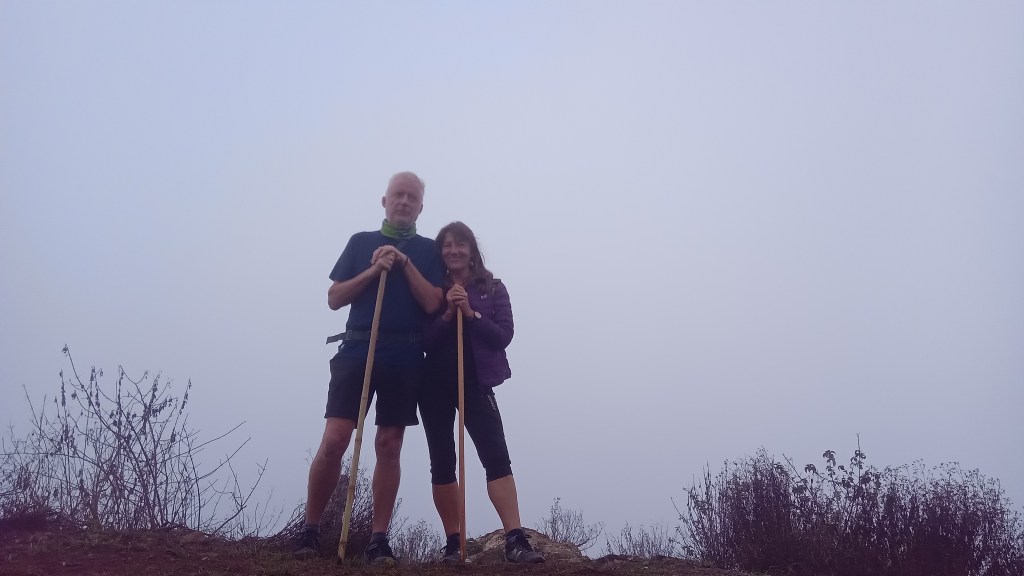
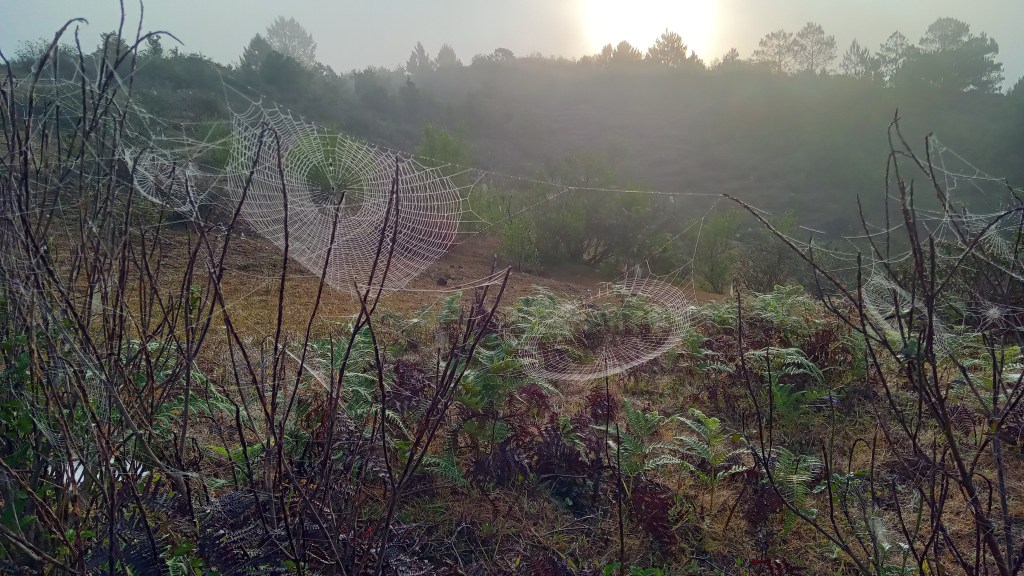
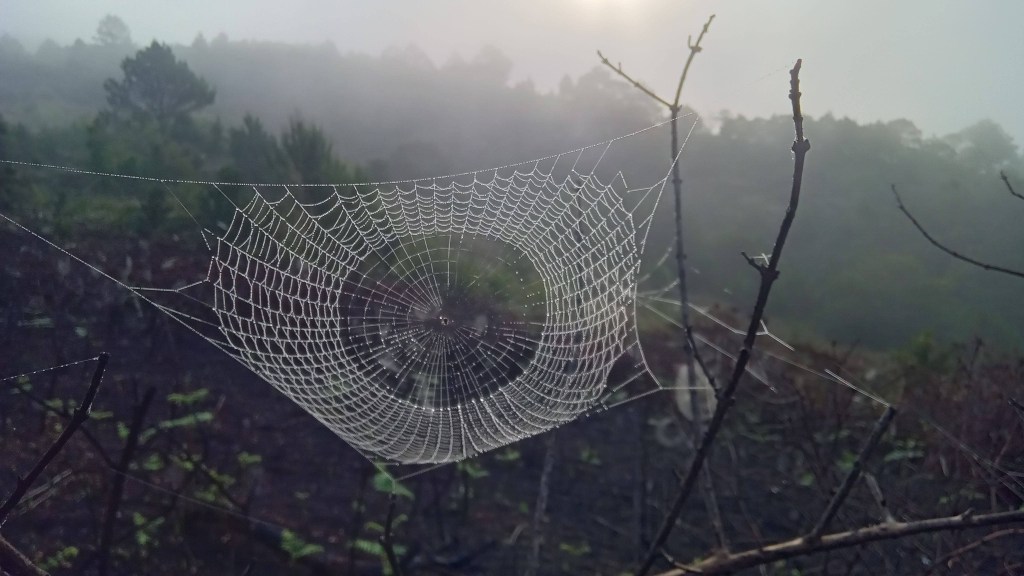
Another trek in Sagada was the poetically named Sea of Clouds, which involved a pre-dawn trek to the Marlboro Hills, the highest point in the area, where wild horses once roamed to view the sunrise over the clouds. So we found ourselves outside our accommodation in the dark at 4.30 am with Dorothy, who had risen early to make sure we were up. Although the van was there to take us to the starting point, there was no sign of our guide. Dorothy was frantically phoning him without success, but eventually, Korky sauntered on in baggy track-pants and flip flops. He was quite a character with a swagger and the red lips and stained teeth of a habitual momma(betel nut) user. We walked uphill for an hour in the dark through pine forest with the twinkling of flashlights from the people ahead of us and the sound of laughter floating down to us. Despite our late start, we had soon overtaken most people – Filipinos are notoriously slow walkers. The sky gradually lightened to a misty grey until we were above the tree-line in a large clearing where a big tent was doing a brisk business in rice, soups, and sweet milky coffees. We stood around, waiting for something to happen. The mists slowly drifted across the hills like a curtain being pulled back, but the clouds were a ‘no-show’ so there was no magical ‘ sea of clouds’ for us. What we got were impressive views of the valleys and hillsides spread below us and a gorgeous ‘sea of cobwebs’ on the spiny plants.

Waiting for Sunrise, Marlboro Hills
Sea of Cobwebs

Korky was incredulous that we had a female guide during our trekking in the rice terraces. He was against women guides in principle as he maintained that a woman always had to call on a man if anything happened. This was from a small unpunctual man, wearing flip-flops who was a recovering alcoholic with severe gout and who would be incapable of carrying anyone, even a small child, down the mountainside. His one question about our woman guide was ‘Did she spit blood?’ (Did she chew momma?). There was no changing his opinion – misogyny was alive and flourishing in the mountains. Korky also didn’t like Muslims. They were welcome to visit Sagada as tourists, but they weren’t allowed to settle in the village. Needless to say, we didn’t give him a tip, although we always tip our guides, but it was interesting to hear his honest views.

Although the mountains were fabulous and the coolness was refreshing, our time was marching on and we craved more beach time before returning home.   There was the obstacle of  a mountain range, inhospitable terrain and few roads between our location in Sagada and the sea. We thought we would have to head south and then head north again on the coastal highway. But in countries like the Philippines, there was always a way and minivans go everywhere.  So we were hustled onto vans, travelled on roads too narrow for buses, with precipitous drops, jaw-dropping scenery and some landslides, not really knowing where we were. We were passed around like parcels from one van to the next, sometimes with screaming babies and in one case, a woman getting sick into a plastic bag behind my right shoulder.   Half the fun of travel was getting from A to B. One van deposited us on the coast road, with instruction to flag down any bus going south and made sure that we were standing on the right side of the road. The relentless heat slammed into us like a brick wall while we waited without shade and we  were regretting our decision to leave the mountains. How could we have forgotten about the heat? Not a moment too soon, a bus appeared and we squelched on-board in a pool of sweat.

6.30am, San Juan, La Union

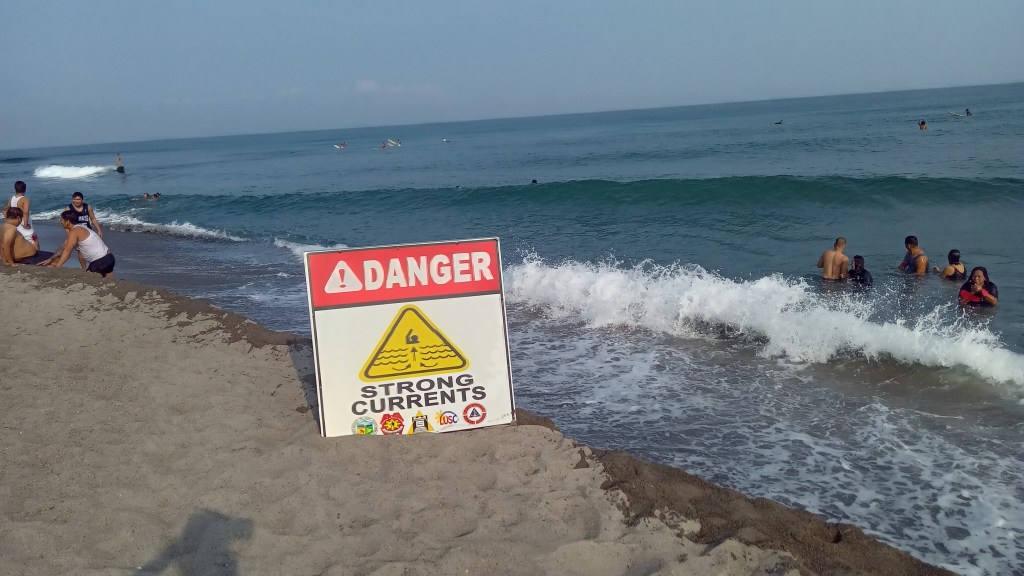
San Juan, La Union was the surfing capitol of this stretch of coast or at least the place where people went to learn to surf. Our Airbnb was about two minutes from a quiet stretch of beach but the sand was brown and coarse and the sea rough and tumultuous….a far cry from the white sand and calm turquoise water of the island of Palawan. It was packed with large family groups from Manila up for the weekend and the town emptied on Sunday evening. The beach was crowded between 6am and 10am and again after 4 pm with most dodging the heat in air-coned hotel rooms or shaded restaurants. The waters had extremely strong currents and was dangerous for swimming in some areas but that didn’t stop large groups taking to the water in defiance of the warning signs, even if they can’t swim at all. Unfortunately, this stretch of coast sees drownings every month and especially at peak holiday times.

Villa Angela, Vigan

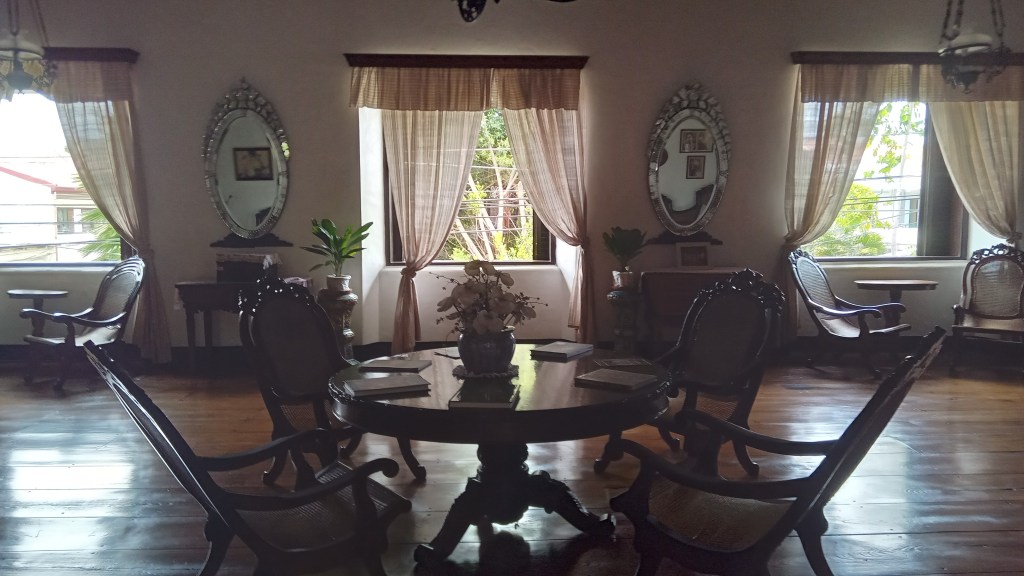
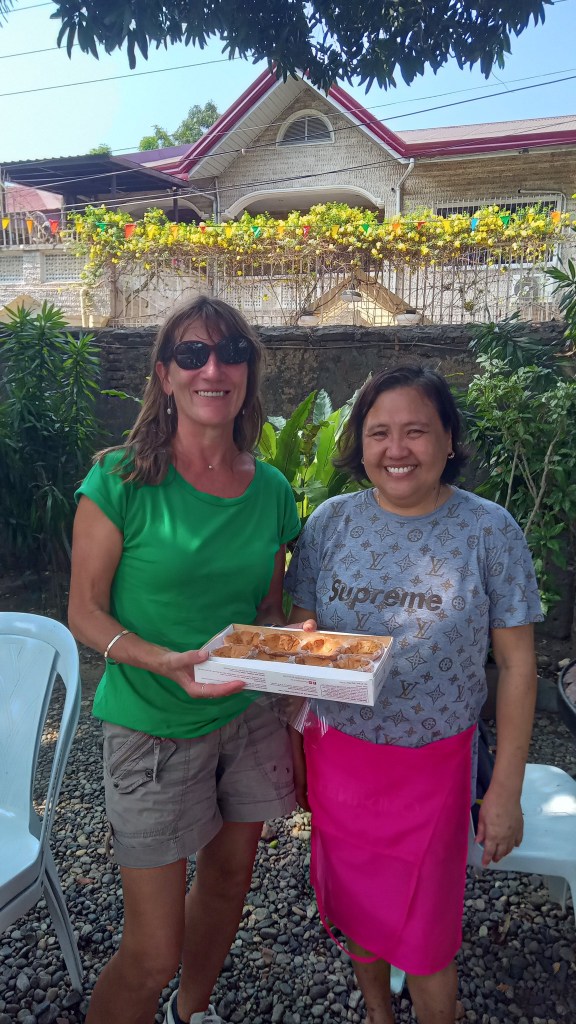
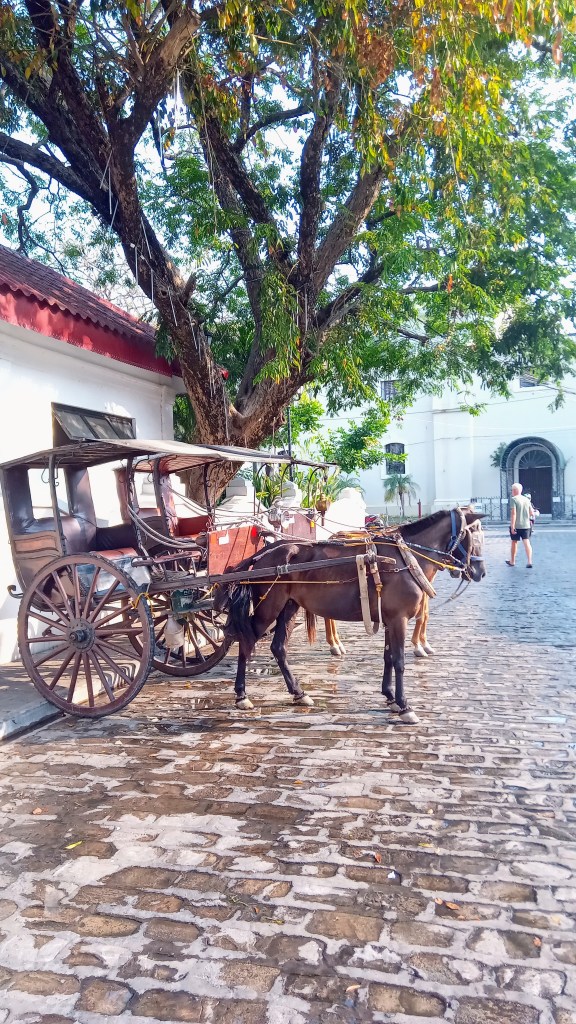
For something completely different, we headed farther up the coast to Vigan, a Spanish colonial town and one of the oldest  towns in the Philippines. Here we were charmed by Villa Angela, a 150 year old restored mansion with huge airy rooms,  four-poster beds, polished wooden floors, lattice windows with filtered sunlight and a shady garden where mangoes dropped from the trees and swallows swooped – a bit of luxury for my birthday (€55 a night including breakfast). It was a delightful place to spend a birthday… the manager even gave me cakes on the day. In the old part of town, it was as if time had stood still with the clattering of horse hooves on the cobbled streets from the kalesas, (horse and carriages, something like the jaunting cars in Killarney) and the preserved buildings with huge wooden doors and peeling walls, hiding shady courtyards.  Vigan was a trading post on the Silk route, where gold, timber and beeswax were traded and a rich merchant class settled, the whisper of the past was everywhere in the old town

Cakes for my birthday
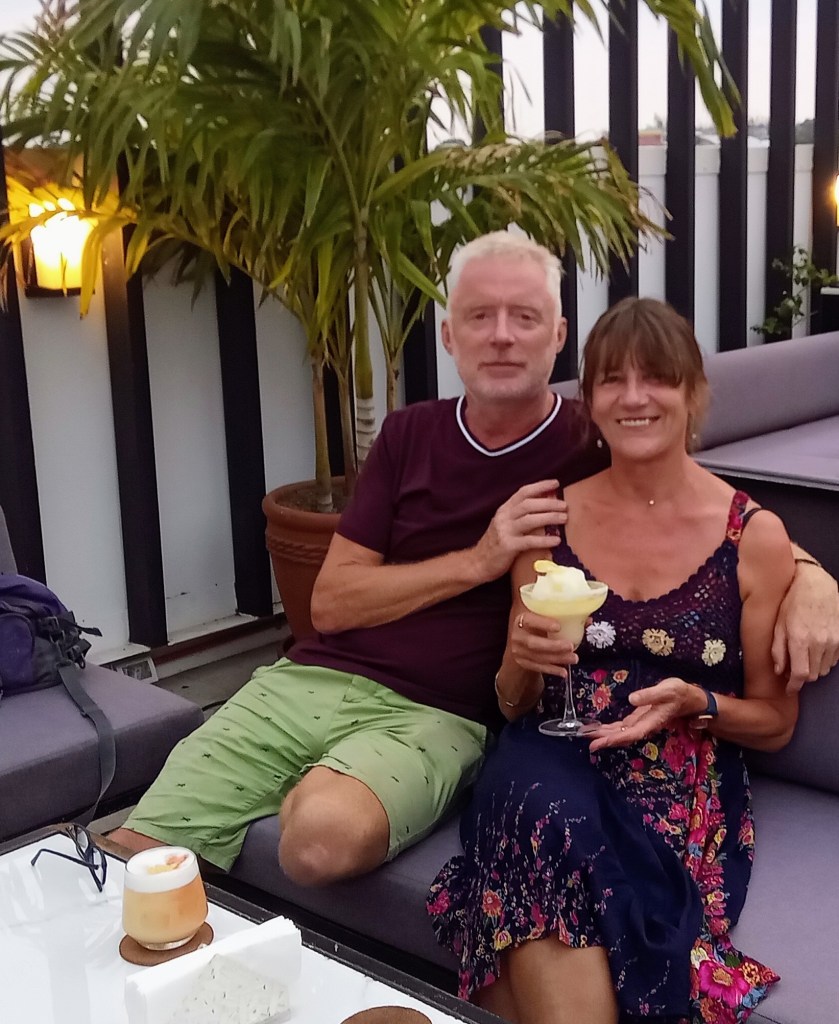
Cocktails to Celebrate 🍾

At 7pm every evening, a  lights show was put up at the Magic Fountain in the old plaza where water and light danced in tune to an eclectic mix of music from Andre Botticelli to Lady Gaga and Filipino singers. It really was magical. But outside the small preserved old town with its plazas, Vigan was a noisy typical Filipinos town with roaring motorbikes and broken pavements and makeshift houses.

The Cathedral and the old Bell-Tower were closed due to earthquake damage – the city by hit by two earthquakes in 2022. Villa Angela sustained some minor damage to the roof and the kitchen. Mari-Cris, the manager described standing beneath the vaulted thick walls, praying Sweet Jesus, save us.  Thankfully there were no human casualties in either earthquake.

It’s always warm in the Philippines and April to June are typically the hottest months. In Vigan, the temperature was about 35C during the days but Google…and our bodies….said that it felt more like 39/40 degrees. It didn’t cool much at night – it was still 30C at 9pm but if you could catch an evening breeze, it was gorgeous.

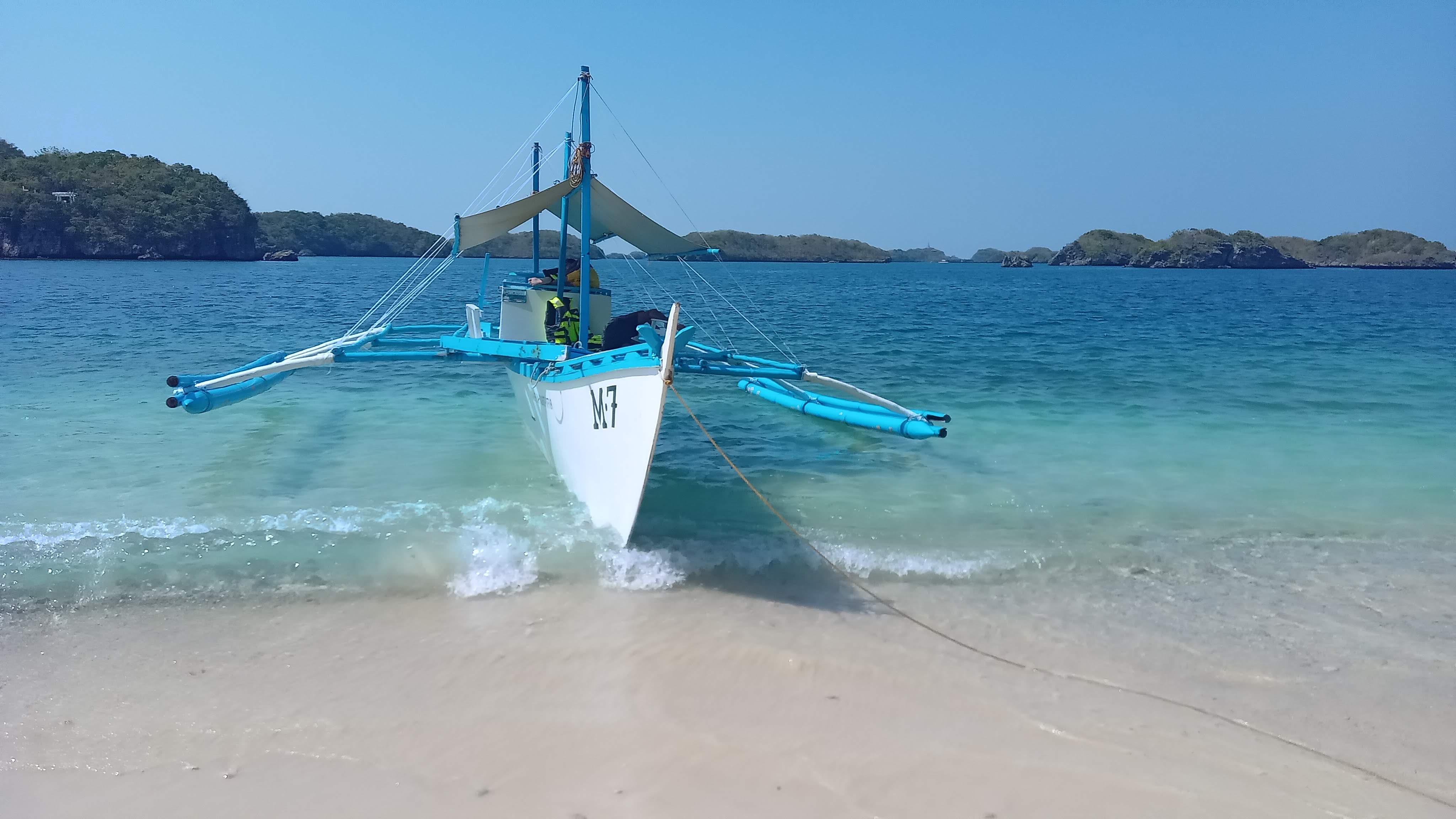
After our rest in Vigan, we headed south to Alaminos and the Hundred Islands, one of the most visited tourist destinations in the Philippines, a area of small islands, floating in calm turquoise waters with white sand beaches.  Getting there from Vigan took more than 12 epic hours, a tale of scheduled buses not showing up at all, gridlock traffic, queueing for tickets, uncomfortable seats and numbing heat. But we made it. In many ways, the Hundred Islands was a victim of its own publicity and success. A combination of too much fishing (dynamite was used in the past to stun fish), too many visitors (it is only 5 hours from teeming Manila) and too much pollution, have damaged the coral beds. Efforts are being made to reverse this with environmental taxes, a limit on visitor numbers, and a ‘bring home your rubbish’ policy. When paying the entrance fee, each group of visitors is charged 200 pesos(€3.30) for a plastic bag and if this is returned and filled with rubbish, the 200 pesos is returned. We spent an enjoyable day on a small boat with a boatman and his young silent son going from island to island.  The water was warm and the sand white but the snorkelling was poor with much evidence of damaged coral and few fish. Although there was beauty here, we couldn’t help but compare it unfavourably to Palawan and the majesty of El Nido with its dramatic limestone karsts and rock formations.

Hundred Islands National Park

Our time in the Philippines is coming to an end. Tomorrow we head to Manila by bus to catch our flight home the day after. Our ten weeks have been a wonderful adventure from cruising around on motorbikes, visiting so many islands that were the stuff of dreamy holiday brochures, swimming in clear shimmering turquoise sea, enduring long-distance ferryboats, trekking in the gorgeous mountains and eating rice  and more rice. All this in a  fascinating country with the warmest, friendliest people who smile through uprisings, typhoons and earthquakes, a place where family is everything.

I’ll pick out the highlights and lowlights when I get home. Whether you have followed along with us all the way or dipped in and out or just looked at a couple of photographs, a big thank you for your company.

Until next time….keep dreaming 🥰🥰

Philippines – Burial Rites and Birthdays

Philippines – Mountains of Rice

Our ferry was due to leave Coron for Manila at the very precise time of 11.59pm and lo and behold, before the stroke of midnight, we were on our way. A punctual departure hadn’t seemed likely. The security at the port was tight with much checking of bags for sharp objects and lighters. A mango that Caoimhin had in the side pocket of his backpack was confiscated with no explanation….perhaps the official liked mangoes, as much as we did.


Once we entered the main departure area, all bags had to be placed in a single row on the floor so that a sniffer dog could check them out. The problem was that the single row already snaked down and around a vast hall (the amount of luggage that some people were carrying was staggering) There was much unintelligible shouting and gesticulating by a very officious steward….even the Filipinos didn’t know what was going on. They just shrugged and smiled. We were told that we had to wait and put our bags in a second row once the first row was checked. The dog came, sniffed the first few bags, some ID documents were scrutinised, and the first twenty people were even body searched. Then it all went a bit haywire….more shouting when some people tried to remove their luggage. In the ensuing mayhem, the stewards weren’t sure which bags were checked. We just sneaked out the door and headed for the boat….Caoimhin loves breaking the rules.


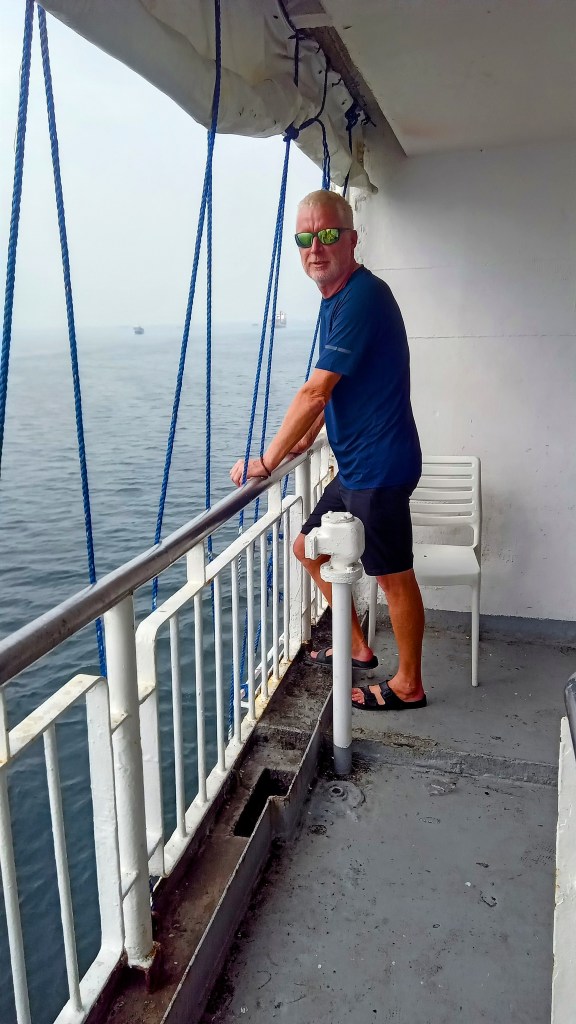
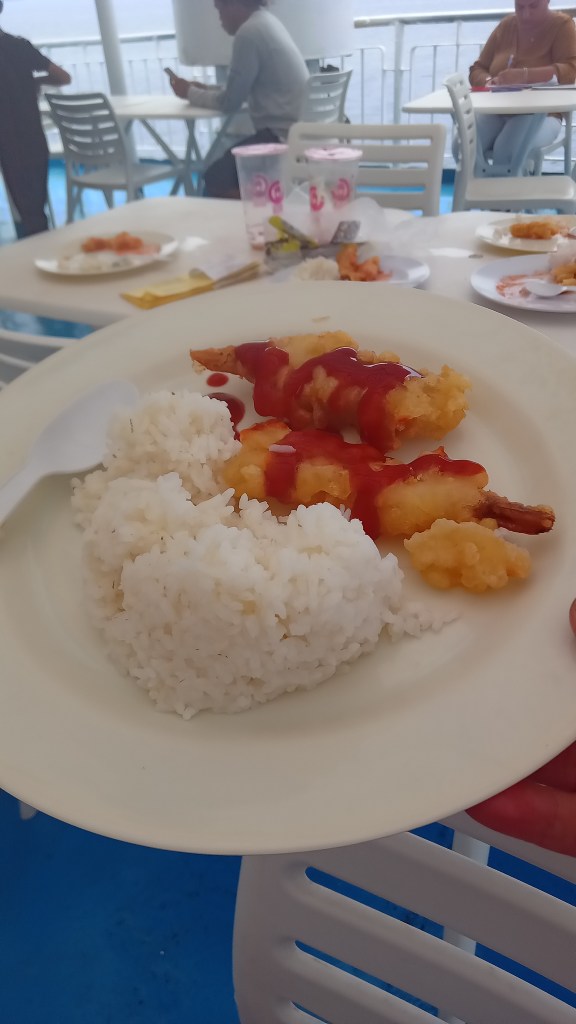
Although we had assigned beds on our tickets, we were told to just take any available bunk. We headed for the open top deck. We are not paranoid, but the safety record on Filipino ferries is appalling and the enclosed air-con tourist class was a little too enclosed for our liking….especially if you had to get out in a hurry. The ferry wasn’t full, and the top deck was virtually empty except for loners and the prudent. The engine noise was loud up there but that was compensated by the lack of human noises. it was a lovely constant noise that lulled us to sleep for a few hours. The crossing was smooth with a light breeze providing natural aircon. This ferry (2Go company) wasn’t fancy, but it was a giant step-up from the other long ferries we have taken. There were life-vests on all the bunks and also in the canteen area, the aisles were clear of crates and boxes, the toilets were (reasonably) clean. The morning dawned hazy and overcast. Meals were included in the ticket price (€54 each), and by 6 am, a long breakfast queue had formed, a bit like a soup kitchen. Everyone was given a plastic plate with a large mound of rice, scrambled egg, and some beef cubes ( the choice was simple – ‘take it or leave it.’ )The process was repeated at midday with rice and battered shrimp smothered in ketchup. Hardly gourmet, but nobody wanted to give up a ‘free’ meal.

Lunch on the ferry

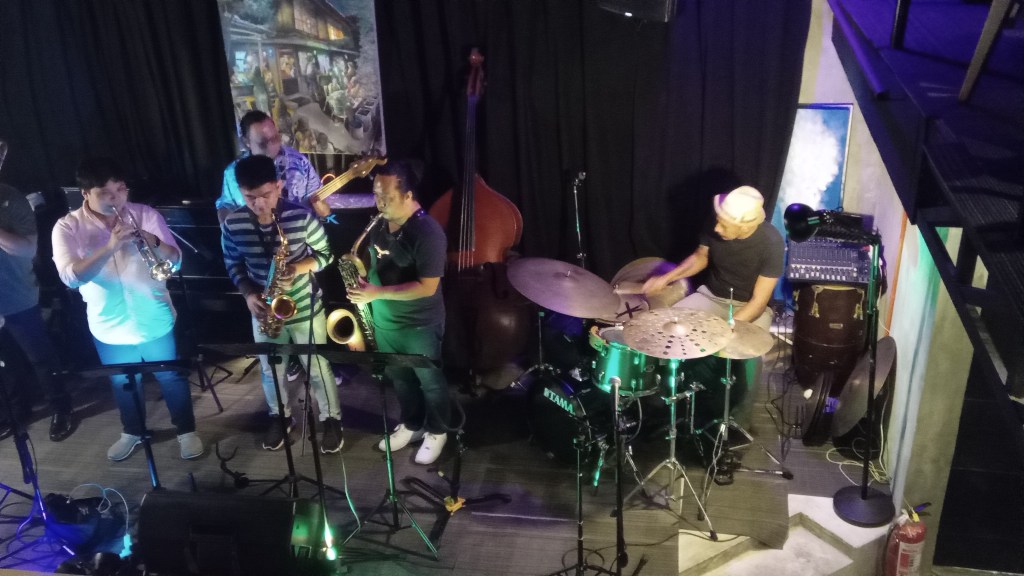
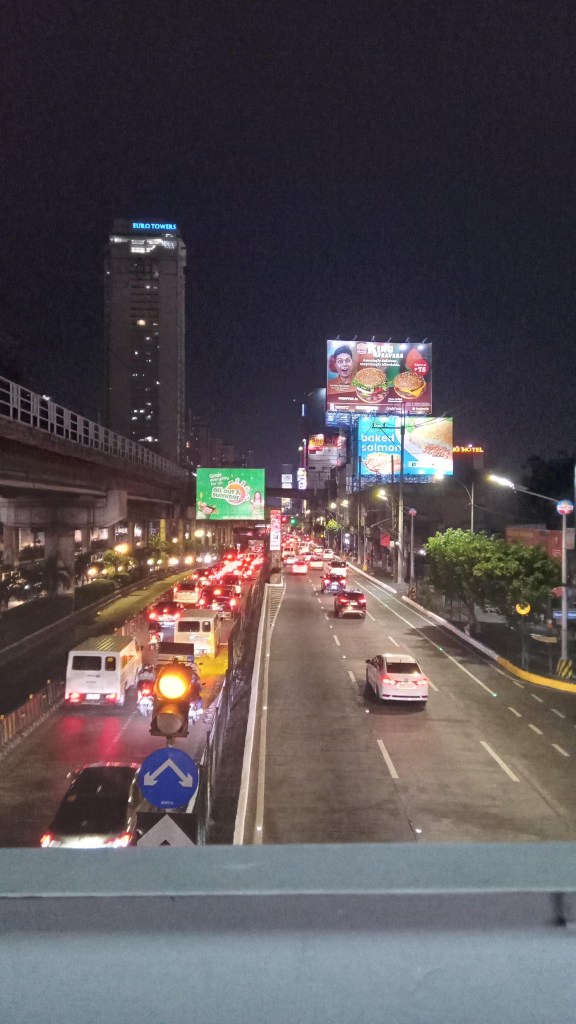
Karaoke started up on the boat as we approached Manila…maybe to celebrate a safe arrival after 17 hours at sea. Manila port was busy with cargo ships and fishing boats , the water full of floating debris and the odd jumping fish. When we disembarked, the traffic was appalling on that misty overcast Friday. We walked in circles around the stinking streets in the port area looking for a taxi – usually we are pestered with taxi-drivers when we want to walk. Huge lorries barrelled along within inches of our feet. Eventually a man wondered what we were looking for and pointed us in the direction of taxis a couple of streets away. It took more than an hour and a half to drive ten kilometres. When we got to our hotel (RedDoorz near EDSA camp), the room was tiny – we had more space on the boat. There was a pile of festering rubbish on the street corner outside and a woman and baby sleeping on the other corner. So we were thankful that we had a roof over our heads. The area was a bit rough but we stumbled upon a Jazz club down a quiet leafy street (the only leafy one in the area) We counted our blessings, listening to live music and sipping cold beers.

Jazz Club


Rice is more than a food here in the Philippines, it is part of the psyche of the people. No meal is complete without it and we have sometimes eaten it three times a day. There were paddy fields all over the Philippines, but the UNESCO Heritage rice terraces were in the north, a nine hour overnight bus journey from Manila.

Goodbye, Manilla from an overpass


Manila was hot and sweaty, we weren’t interested in touristy things (we had already seen anything we wanted to see). We wandered around the crowded air-conditioned shopping malls, buying nothing , just watching all the Filipinos doing the same thing. I don’t really want to admit this, but we toured the food courts going from Starbucks to McDonald’s to Jolibees, a Filipino version of KFC on a fast-food binge.
But finally we were on the overnight bus to Banaue in the Cordillera mountains with perishing aircon and corkscrew roads. I regretted our food choices with every bend and curve of the road.


We arrived before 6am in Banaue where the early morning sweeping was in full swing and tendrils of smoke curled upwards from the fires burning rubbish and dead leaves. We were met at the bus stop by a tricycle to bring us to our accommodation, Rice Homestay, a friendly place where there was a whiff of dampness and thick blankets on the bed – we haven’t needed a blanket since we left home. There was a wonderful cool freshness in the air, which was invigorating despite our tiredness.

Party Time, Banaue


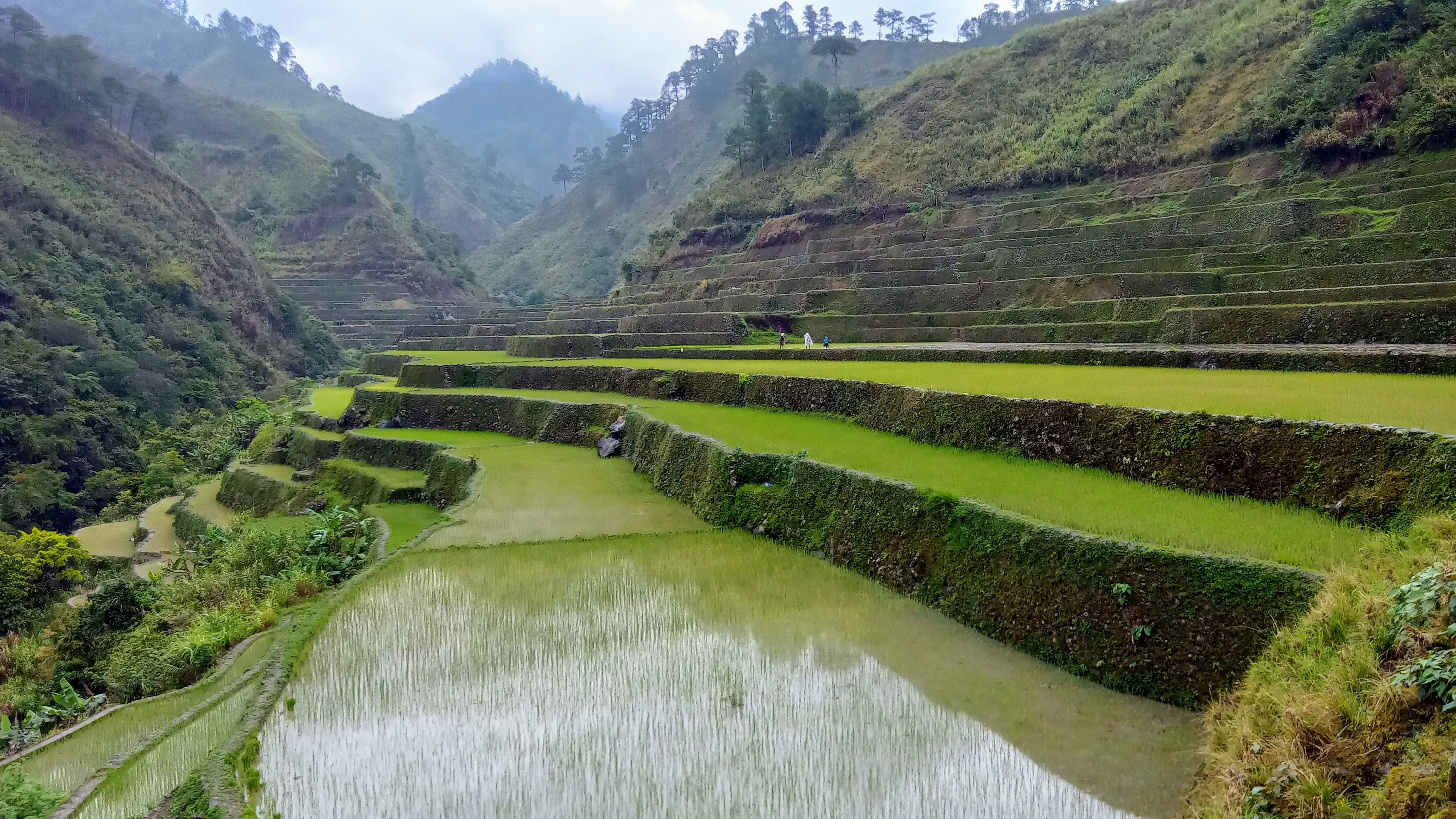
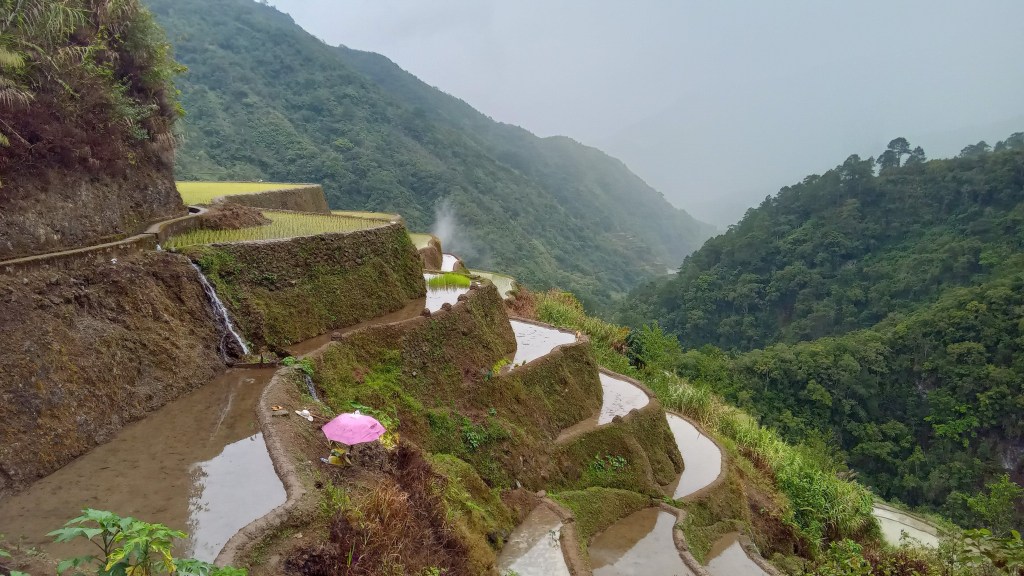
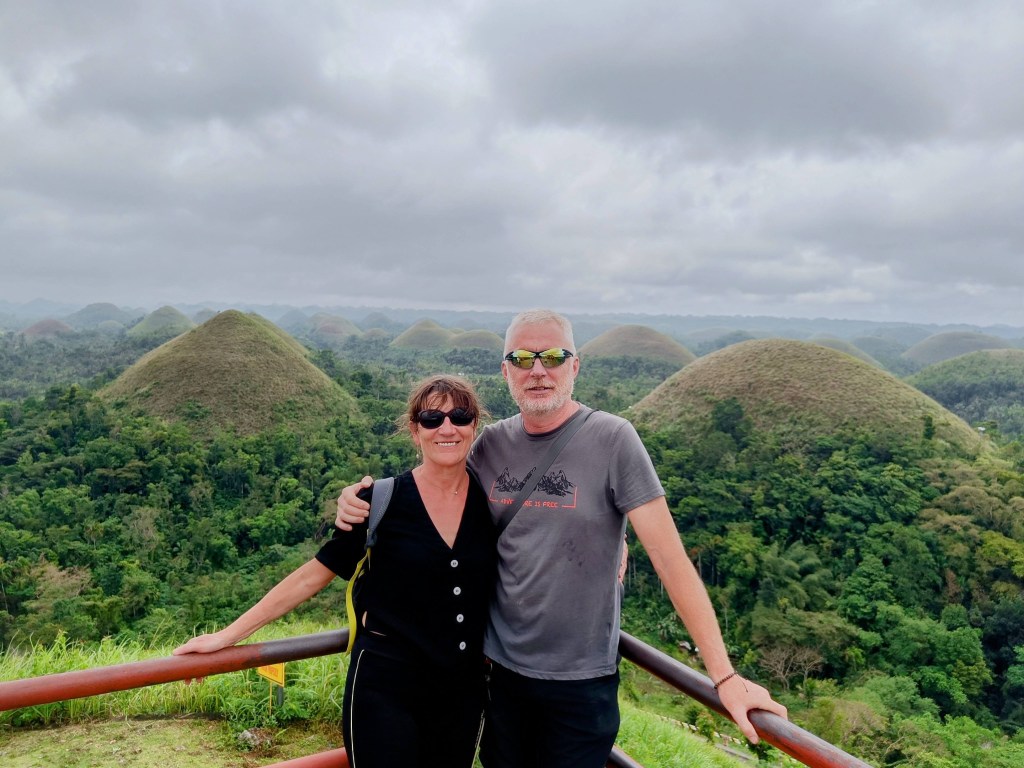
Banaue was a stunning area of natural beauty with deep valleys, waterfalls, rivers traversed by swaying rope bridges, and of course rice terraces. Many of the terraces were two thousand years old and created by the Ifugao people with their own distinct rituals and customs. This was an area that was perfect for hiking along irrigation channels and ancient paths that hugged the contours of the mountains. A head for heights and a sense of balance were certainly an advantage. The terraces were of varying sizes and steepness, sometimes shrouded in cloud and mist, but the vividness of the green rice stalks was incredible, especially after rain as if newly scrubbed. The heavens opened most afternoons in torrential downpours, but even in the rain, it was a pleasent 22 degrees.

Rickety Bridges

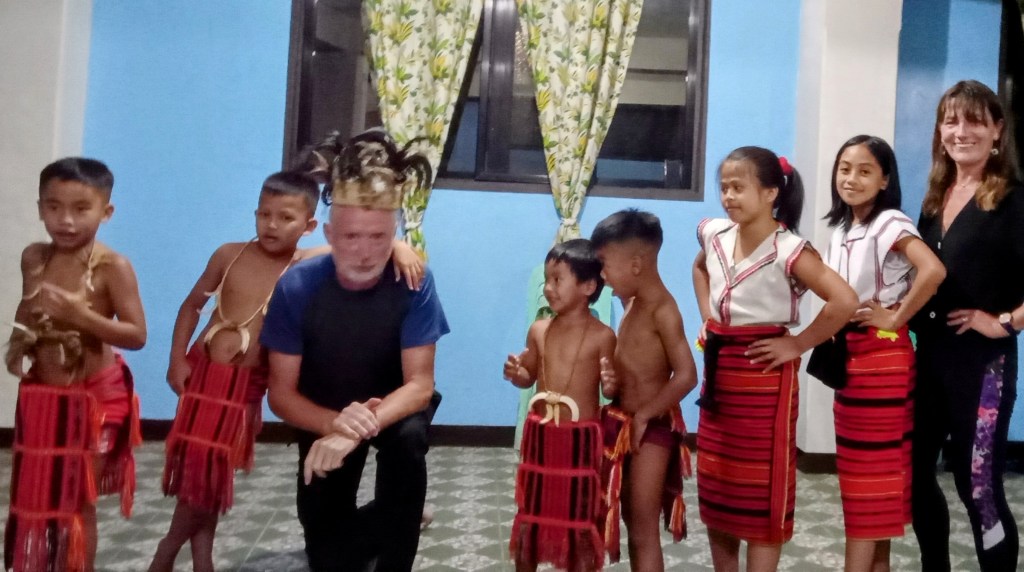
We walked for two days with our guide Feny from village to village. Feny was great company, smart and funny with a big personality. She was one of a handful of female guides. She was local from the Ifugua tribe and was a mine of information. Like most mountain people, she chewed betel nut (called momma here) non-stop, spitting great splashes of blood-like juice along the trail. We stayed for a night in a homestay in Cambula. The houses were spread over the hill in a higgledy- piggedly fashion….no planning permissions needed if it was your land or your ancestors land. The locals kids put on a show for us, singing If you’re happy and you know it . Far more enjoyable was a tribal dance involving a headdress of eagle feathers and much banging of gongs and bamboo sticks.

Our Super Guide, Feny
The Entertainment , Cambula


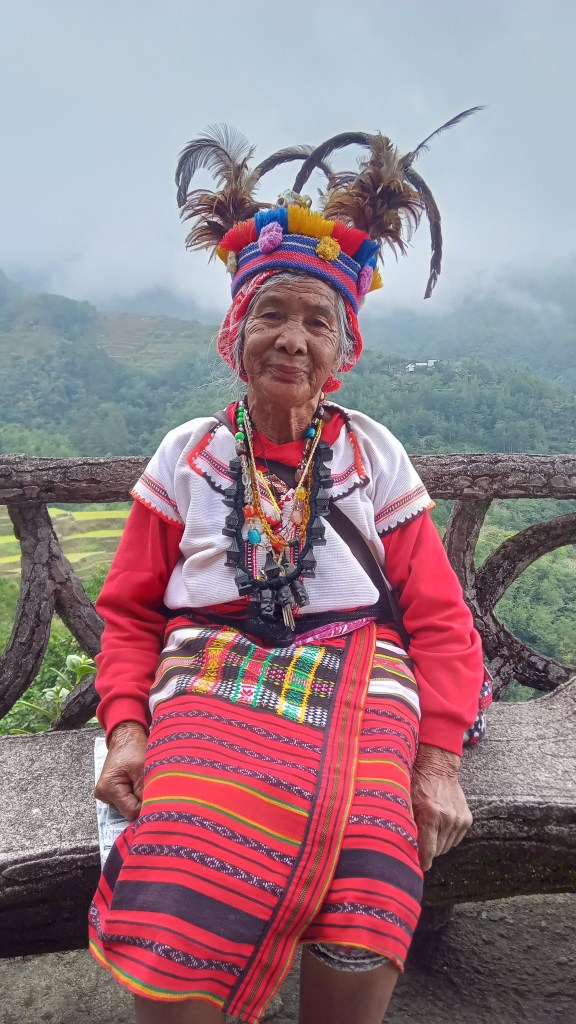
It’s hard to say how many of these children will remain in the village in the future. The children go to elementary school in the villages but then go to high school in the towns where they stay with relatives. Growing rice and maintaining the terraces is labour intensive and incredibly hard work -a long, back-breaking process. The number of older people bent double was alarming and sad. The way of life of the Ifugao People is still ruled by ritual and ceremony. The colours of the traditional clothes denote your caste and how many rice terraces you have. The tribal priests play a big role in life and death. The suitability of a marriage partner may be decided by the examination of the bile of a dead chicken. If the bile is ‘bad’, the union will not be blessed, but Feny said that you could always kill another chicken until you got the ‘right’ result. The celebration of an engagement was also a big event. The bridegroom’s family must bring a pig to the girl’s’ family home. The pig is slaughtered there, and all the neighbours who are present are given a hunk of raw meat.


In this part of the Philipines, your dead may be closer than you think, they might be in the house with you. The bodies of the dead are exhumed after two years, the bones are cleaned in a ritual ceremony and kept in a cool place in the house. They are periodically brought out, particularly in times of illness and crisis when there is a ‘showing of the bones’.

Traditional Dress


But things are changing. Most people carry the outside world in their pockets with mobile phones. One damp afternoon in the middle of nowhere, the sound of Have I told you lately that I love you (the old version by Jim Reeves) reverberated around the terraces from a ghetto blaster, covered with a white plastic sack. A man nearby repaired walls and chewed momma. Both young and old love country music in the hills.

Back in Banaue, the most memorable sound was the heart-rending squealing of pigs , all legs bound with rope, who were being butchered on the street for the harvest festival that was going on. Food here is real, the slaughter of animals is up close and personal, meat isn’t wrapped in plastic on supermarket shelves.


Our next stop is Sagada, another mountain town, famous for the coffins hanging in the surrounding mountains . Hope you can join us there.
Until then….thanks for reading.

Philippines – Mountains of Rice

Philippines- The Lost Week

There’s a reason why some places are so popular. The Philippines is so astonishingly beautiful that we had almost become jaded to beauty, but our first glimpse of the Bacuit Archipelago still managed to take our breath away. We were squashed in a little white van, whose speedometer didn’t work and the driver was cautious on the hills when we saw a dreamy landscape of islands spread before us through the rain splattered, dirt splotched windscreen. It was just a tantalising glimpse through a break in the trees. It reminded me of island-studded Clew Bay, another dreamy landscape, when viewed from the top of Crough Patrick on a mist-shrouded day.

El Nido Town

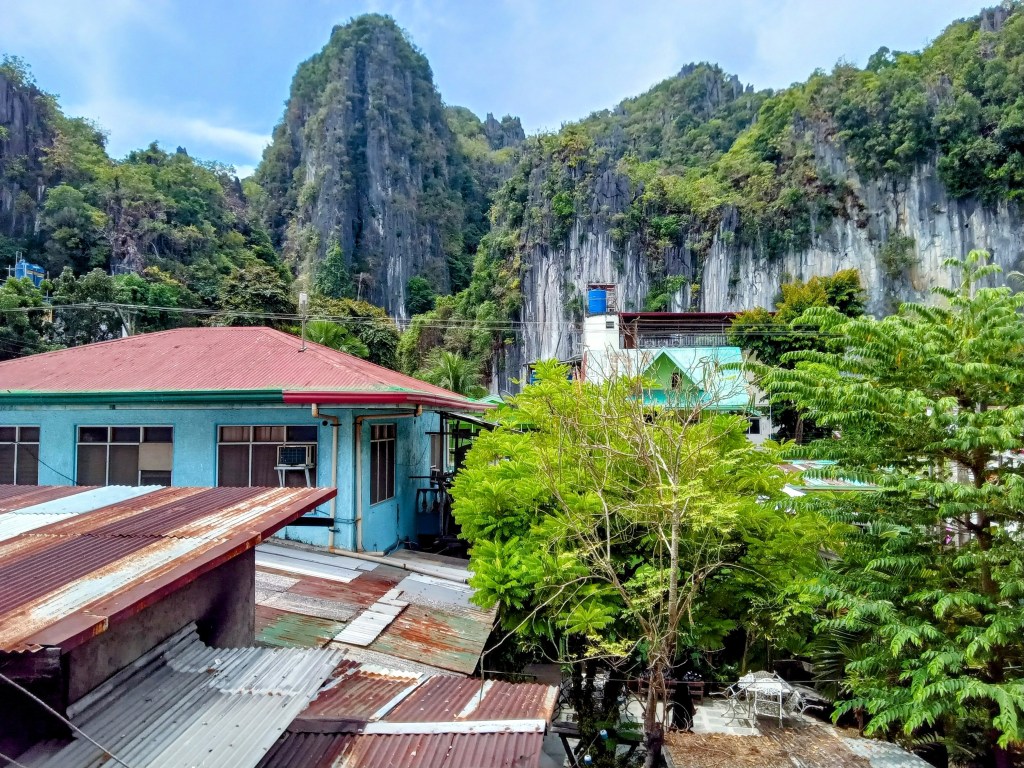
El Nido, the main town for trips around the islands, was everything that people had said – busy with people, traffic and incredibly noisy. Houses, restaurants and bars were built almost directly on the water and obscured all views of the beach from the crowded streets. But it was backed by hulking limestone cliffs, iron grey except where trees and shrubs had taken root on the bare rock. You just have to admire the tenacity of trees to survive and expand. El Nido, which is Spanish for ‘nest’, got its name from the little birds – swifelets- who build their edible nests made from saliva in the limestone karsts.

El Nido Town

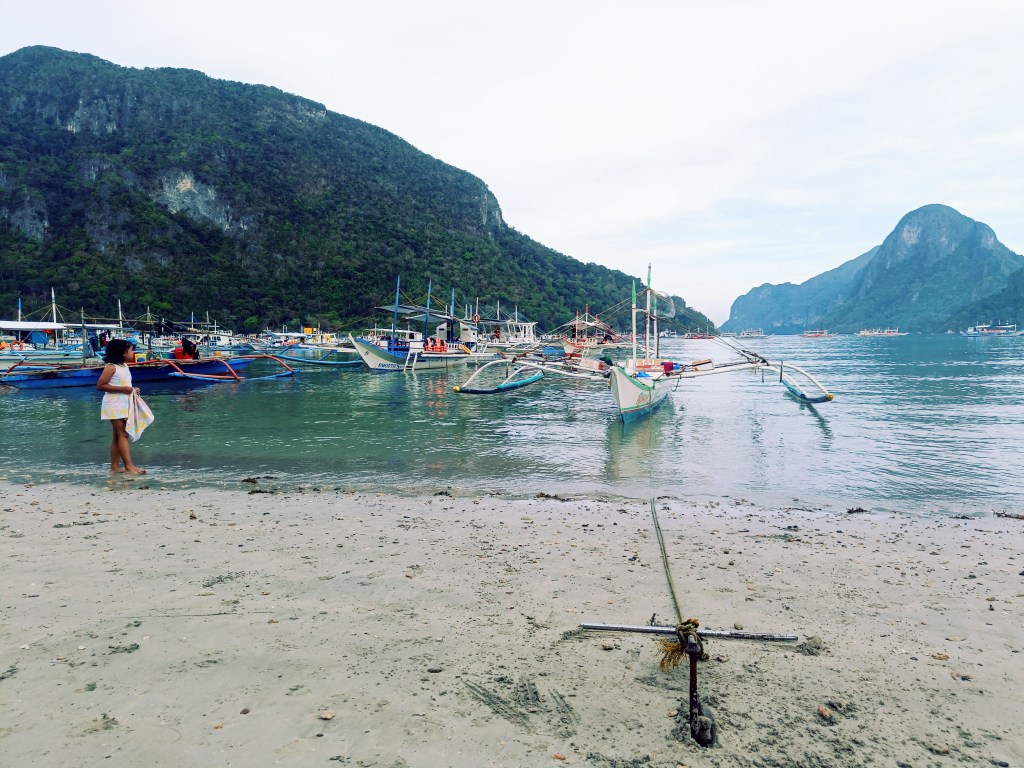
When we walked from the street through a narrow passageway (one person wide), there were a hundred tour boats bobbing in the shallow water and hundreds of tiny birds flying overhead, ducking, diving and soaring over the surface of the water. The islands were a constant presence from the waterfront, towering limestone rocks casting shadows in the  jade water, the distant ones shrouded in a blue haze. Splashes of green on the islands  where trees were growing out of the bare rock on them without any obvious soil.
Practically everyone who comes to El Nido, does a tour of the islands. Most tours cost between €20 and €30 for a full day including a sumptuous lunch of seafood, grilled fish, chicken, noodles, rice, salads and fruit. Tourism here was a conveyer belt – we were hustled from our accommodation to the beach where hundreds of tourists were being directed to rent snorkelling gear and then shepherded onto the bobbing boats. Organised chaos …..a scene repeated every morning with a fresh batch of tourists like Groundhog Day. We were separated from our group and sent to another boat because our designated boat was overcrowded. So we were surrounded by Filipinos in holiday mode, who were from the south of Palawan and were on a work outing, courtesy of their employer. Three cooks toiled away at the back of at the boat all morning cooking our lunch on charcoal coals, sweat and heat but delicious smells.  As all  the tour boats left at 9 am and as they basically followed the same route, it was busy of some of the sights, like the Big Lagoon where we kayaked by towering limestone cliffs, the Hidden Beach (not so hidden anymore). The variety of fish and coral was stunning but there were jellyfish floating there too- not the dangerous kind but enough to pack a  mighty tingle –  Caoimhin and I can testify to that as both of us got stung.

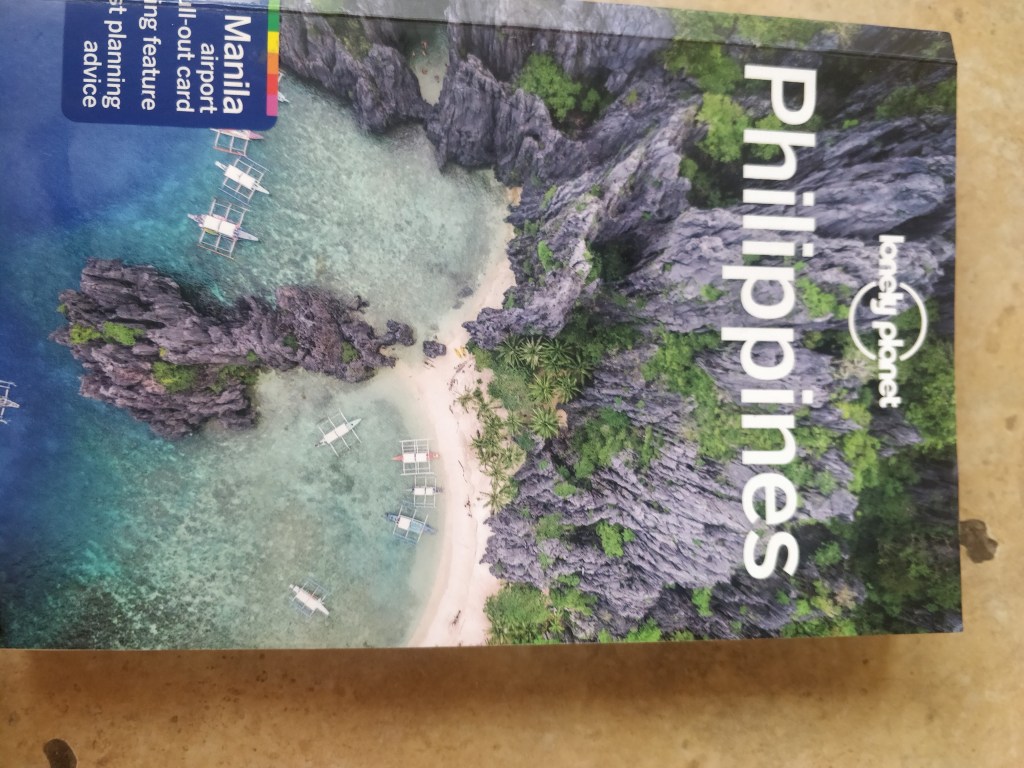
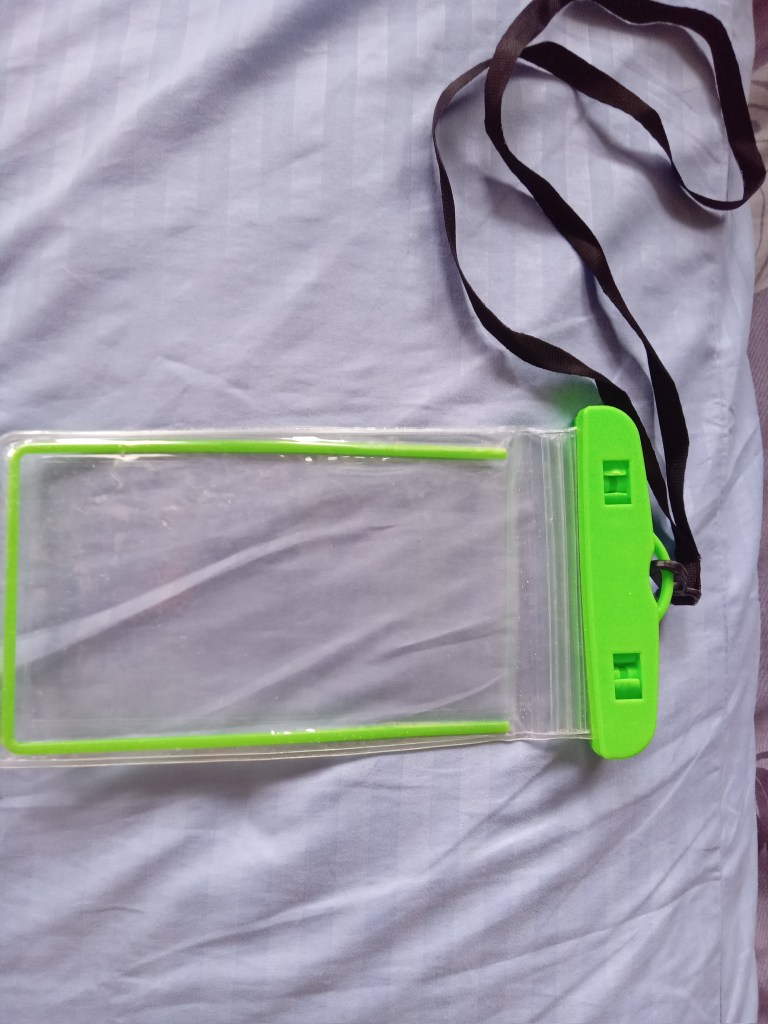
But then the unthinkable happened- both Caoimhin and I got seawater in our phones. It was the last stop in the Secret Beach and Hidden Lagoon – one of the most iconic images in the Philippines and the place that is on the cover of the Lonely Planet Guidebook.  We waded ashore in waist-to-chest deep water and had to climb through a hole in the rock into a ‘hidden’ lagoon,  We brought our phones from the boat in clear plastic waterproof pouches but we had to take them out of the pouches to take photos. Caoimhin was really enthusiastic  about the fabulous photos he was taking. Anyway some water got into the pouches – we put the phones back into the pouches and although I realised almost immediately……it looked like it was too late. The same thing happened to a French guy in the place where we are staying and several other people along the way.

A Scenic Spot for phone immersion 😃

When we went to buy rice from a shop keeper in town who was selling several kinds, his first query was about the size of our phones. No tourist ever bought rice to cook. So the phones went into a bag of rice for three days which is the optimal time needed to dry them out thoroughly. Caoimhin had already researched recovery of a water-damaged phone(due to a phone falling into a hot pool in Albania). At this stage, we were reasonably optimistic…we would never be so unlucky to lose two phones on the same day, would we??  It would be liberating to be without phones for a few days. We would have to ask directions, look at paper maps, take mental pictures of the scenery and not look at everything through the lens of a phone camera. How refreshing!

Beware of these pouches🥲

We rented motorbikes and moved south from El Nido town…..with our phones snuggled in rice….. to a place that couldn’t be more different from touristy El Nido although the views of the Bacuit Peninsula were equally stunning. Bebeladan was small dusty fishing village – the last three kilometres were on unpaved roads and probably the bumpiest, most pot-holed piece of dirt track we had been on. There were no restaurants, bars or even much electricity. It was like going back in time…people living in bamboo shacks with  thatch or corrugated roofs, earthen floors. Every second shack was a shop, selling the usual sachets of washing powder, soaps, sweets with a few veg and fruit. Solar panels provided light but there was no aircon or even fridges (really difficult especially when the weather was in the early to mid-thirties). Our accommodation -called Mountainside – was perched in the hill overlooking the village with about a hundred steps leading down. The views from our balcony were sublime – that dreamy landscape again, changing subtly with tide and light and cloud.

Time to cruise🛵🛵

There was a pet monkey chained up outside on a long leash who could reach the edge of our balcony where he begged for food as soon as he saw us. It seemed so cruel to have him chained up all the time but our landlady said that she had inherited him from her uncle. When she tried to let him go free in the forest on an island, he swam after their boat, screaming to go back with them. Our landlady, Christine, was a young woman from Cebu with a Polish boyfriend and a 4 month old baby. She cooked breakfast (fried eggs and garlic rice) for us most mornings and dinner as well (usually rice and vegetables) but her star dish was a squash stewed in coconut milk and spices. Most couples running guesthouses are European men with Filipino girlfriends. The men provide the money for the purchase of the property but it is in the girlfriends name.

🐵Feeding time🐒🐒

 We were back in the land of the rooster, crowing all day and night. We had just missed a big cock-fighting event as part of a festival in the village  by about two days – maybe the roosters left had something to crow about. We walked in the early morning in the hills outside the village where children waved to us but the houses were even more basic, ramshackle and fragile with a few chickens and usually a pig tied up outside, a couple of coconut and banana trees for shade. Cold is never a problem so an ‘airy’ house is a good thing to keep things cool but this is a land that gets a lot of rain and is lashed by typhoons for potentially six months of the year.

We took a boat tour to the islands from the village as well, just a dugout canoe, the two of us and a boatman wearing worn shorts, not many teeth and even fewer English words. But he took us to a small island called the Cathedral, a cave with soaring limestone columns and holes in the rock that let the light filter in like stained-glass windows, something majestic about it that made us talk in whispers even though as we had the place to ourselves. Our boatman kept asking ‘You want photo?’ although we kept telling him that we had no phones.  Tourists without cameras were an anomaly he couldn’t understand.

On Snake Island, the colours of the water were truly amazing, ranging from turquoise to azure to cobalt blue. The island gets its name not from the number of snakes on the island but because a shallow sandy path -walkable at low tide – curved to shore  in the shape of a snake. Truly Instagram-able, if you had a camera,  from the high vantage point on the island.

We delayed checking the phones, living in that zone of hope as long as possible. We tried mine first and although it made some faint buzzing, it was death throes and it refused to charge. Caoimhin’s was next and when his took some charge, hope soared  but then was dashed again when it refused to start. We tried the following day again….and the next day….the liberation of not having phones had worn off. It’s incredible how reliant on the phones we have become, especially when travelling – we use them for booking accommodation, google maps so that we know where we are, transferring money and keeping track of our finances(we can’t even check what’s in our Revolut and N26 accounts),WhatsApp to keep in contact, writing the blog……but they are  also a camera, a torchlight, a calculator. Caoimhin reads on the Kindle app on the phone (I have my Kindle with me). He had also downloaded yoga workouts and Spanish lessons on his phone which were inaccessible without it.

We had the laptop at least –  which we hadn’t been using much because the Wi-Fi in most places wasn’t strong enough to connect. Ironically, the place we are staying in the village had reasonable Wi-Fi but it didn’t have any sockets so we couldn’t charge the laptop….not much electricity in the village. One enterprising couple had extra solar panels on their roof that powered a whole bank of sockets.  In a shack similar to most of the others, a woman, with a kind face and greying hair, watched over a whole bank of phones and laptops as they charged for a small fee.

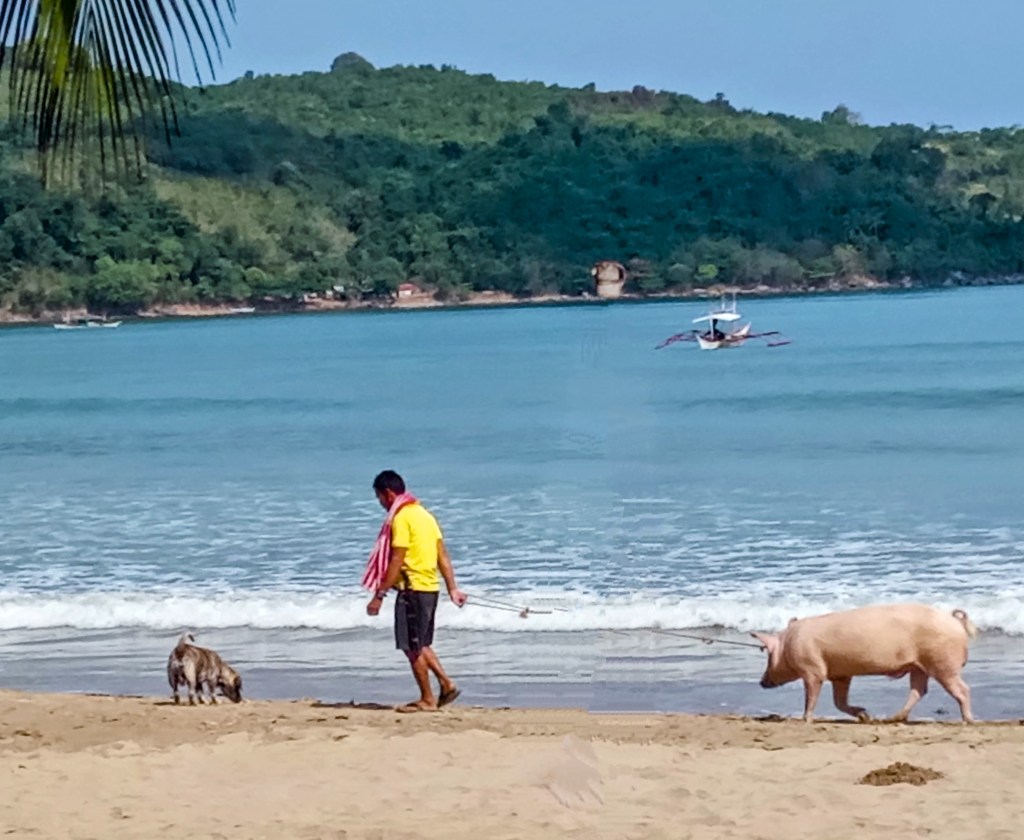
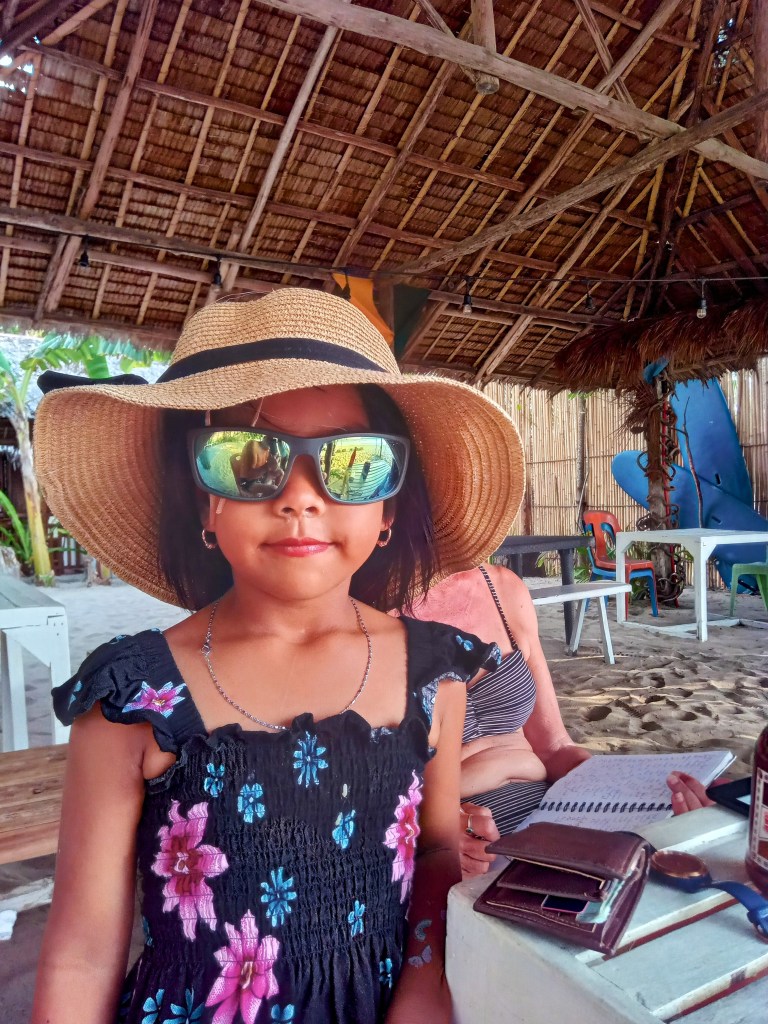
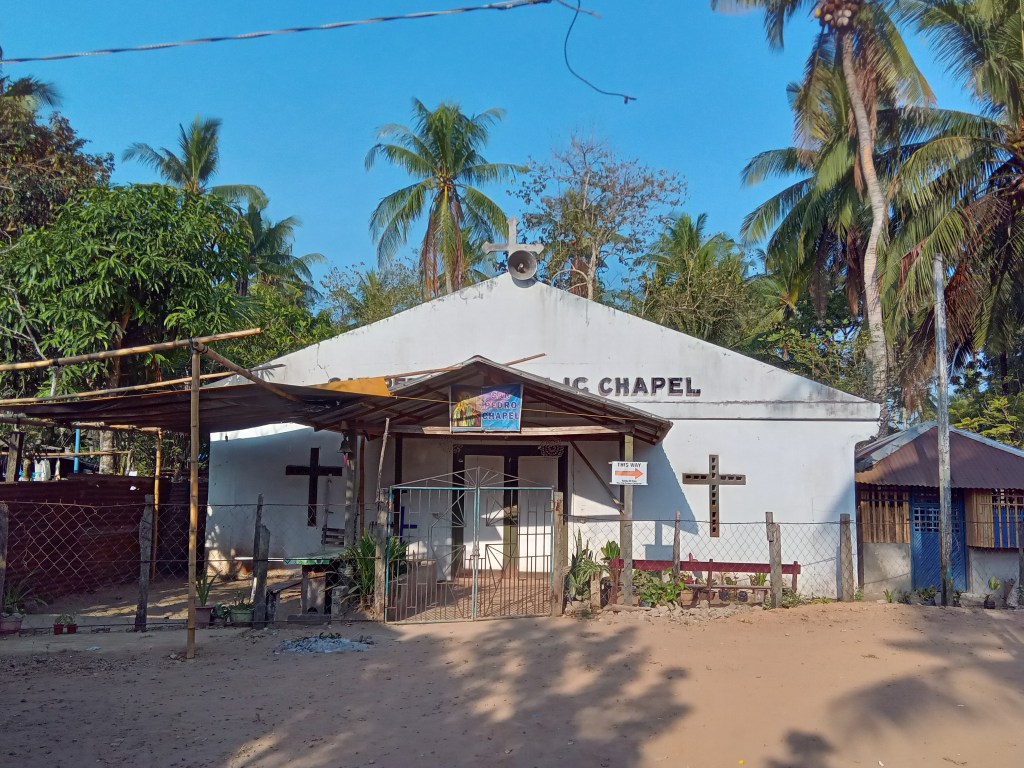
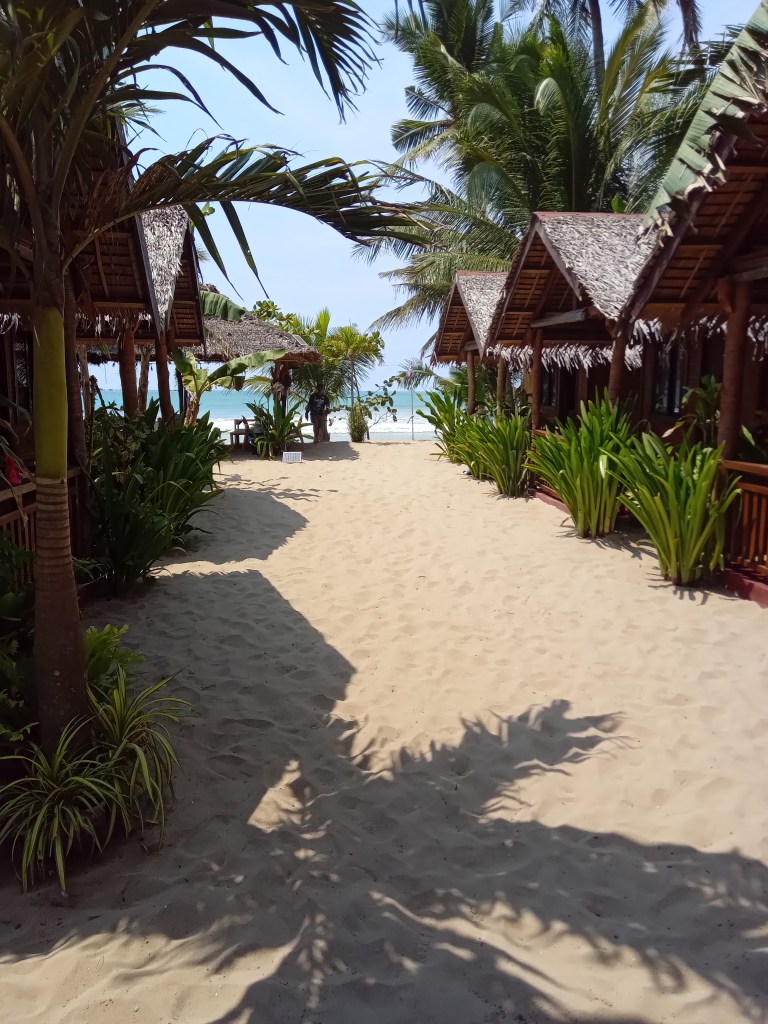
We  tried one more last ditch effort on the phones. We returned To El Nido town on the motorbike and called in to one of the many phone repair shops. If anyone could fix it, there boys could with their vast experience of submerged phones but after a half an hour of cleaning and scraping, they shook their heads. Despite the Easter season, there was no resurrection for our phones. So we bought the best cheapest phones we could find to tide us over and moved north of El Nido to Bucana to a beach-hut which was tranquil, apart from the waves that pounded all night and sounded like they might engulf the hut. It was the sort of place where people took their pigs for a morning walk on the beach and the local children tried on our sunglasses and hats. It was also the sort of place where the Wi-Fi was poor and setting up new phones was almost impossible. On Easter Sunday, we wandered up to the Chapel with the glorious singing from the young choir pulling us in that direction and shared a melted Lindt chocolate bar that I had bought in El Nido.

Beach hut, Bucana

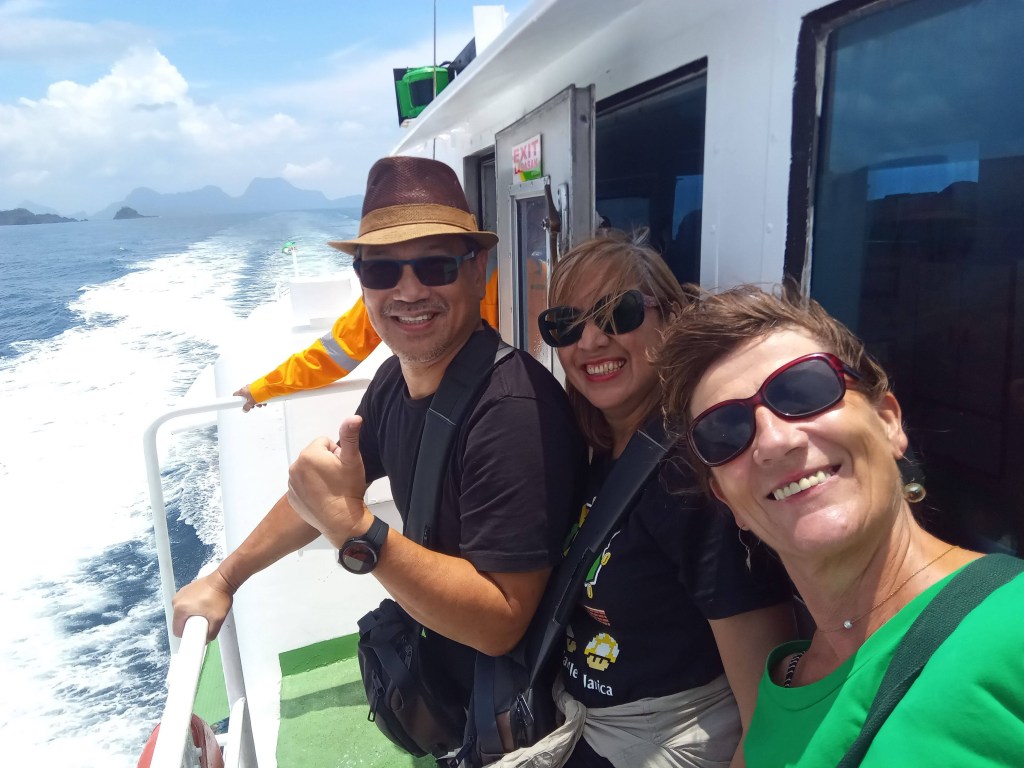
We are now in Coron on  Busuanga Island  where finally we have electricity, Wi Fi and working phones. We took a five hour ferry from El Nido town on Monday, which was fast, comfortable, and uncrowded.  We sat with a friendly Filipino couple who lived in New Zealand now. The boat captain allowed the 4 of us on deck – an exhilarating experience as there was a sheer drop with no safety barrier to get out.

Alfred and Josie on the ferry to Coron

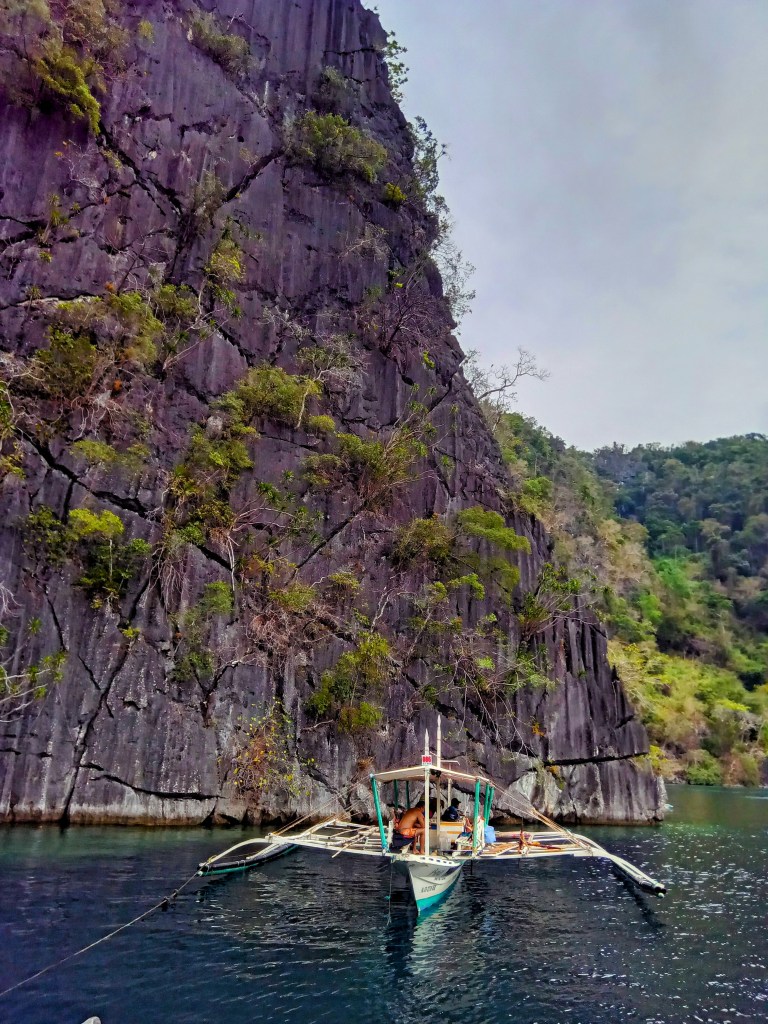
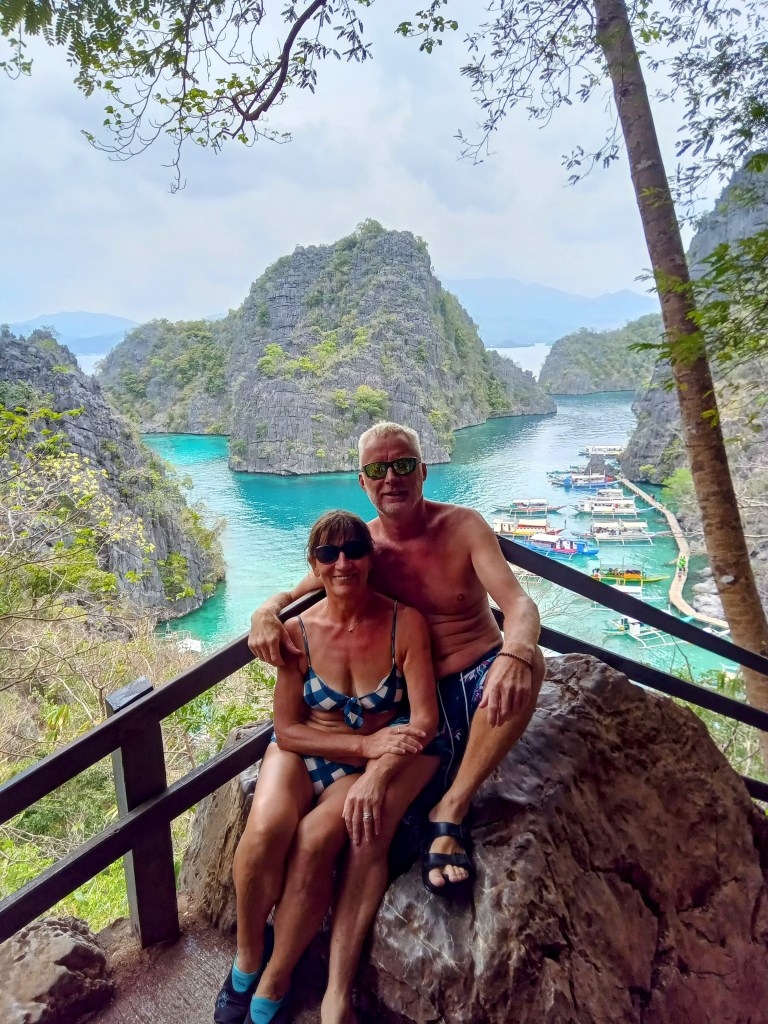
Coron town was a disappointment, noisy, polluted with no beaches. The temperatures have been creeping higher here in April, it was about 30 degrees but now mid -thirties……even the locals collapse in the shade  in the deadness of early afternoons. In Coron, we have had clammy overcast days with high humidity and the threat of thunderstorms that never arrive. If Coron town was a disappointment, the island of Coron, a 30 minute boat-ride away, was incredible with deep lakes, towering jagged cliffs, white sand beaches – a dramatic landscape that should be the movie backdrop to epic tales. Coran town was horrible, but we stayed in a tranquil oasis, Divine Castle, on a quiet street away from the mayhem of the main street. It had hot showers and cold drinking water and aircon. We got a free room upgrade and negotiated a price for two extra nights and got a room with a view of the town, the boats, and Coron Island.

View from our hotel, Coron
Coron Island
Coron Island

Our next stop is Manila. We leave tonight on a 17-hour ferry, fingers crossed that it’s better than our previous long-distance ferry experience😁

Thanks for reading…..till next time,  greetings from the sweltering tropics. Apologies – this post is longer than usual without photos to paint a thousand words 🤣

When the going gets rough…
Philippines- The Lost Week

Philippines…An Island to Ourselves.(Almost)

The sea was navy-blue and choppy as the boat made its way out from Port Barton to a little resort on a private island. The water rose over the bow and splashed my face like a warm salty shower – even out in the sea, the water wasn’t cold. After about an hour, the boat turned in the direction of a pale cream strip of sand backed by a wall of greenery. We had arrived at Coconut Garden Resort. We waded ashore where we were welcomed by Melody and the boatman carried out packs on his shoulders to our bungalow.

The bungalows were spread around a garden, full of coconut trees and flowering shrubs of vivid pinks, purples and yellows.. The one restaurant had a raised wooden veranda overlooking the sea. There were wicker hammocks under the trees and sun loungers on the white sand.

This was truly a place of rest, relaxation and recuperation. There was nothing to do except sway in the shady hammocks, swim and snorkel in the sea,  read and let our minds drift. This was a place where the biggest decision of the day was what to have for dinner…and the decision had to be made by 2pm so the restaurant could prepare it. The island cast a spell on us….a sleeping, snoozing spell😴😴. It was the first place in the Philippines where there were no roosters crowing, no dogs fighting, cats screamming, no motorbikes during the night…..just the sound of the waves lapping and the cicaadas humming. Although there was one little lizard that made a really loud call, the Tokay lizard calling TOO-KAY, TOO-KAY. This chap was welcomed into houses because it ate cockroaches, mosquitoes and basically all sorts of flies.

Monkeys came out of the jungle at dawn to raid the cashew nuts from a tree on the grounds. The little boat went to the mainland once or twice daily and the biggest excitement was watching for its return and seeing if it would bring any more guests. There were only four or five guests staying while we were there – an Australian woman kept extending her stay and had been there for ten nights but most people stayed two or three nights. We stayed four nights and we’re also reluctant to leave.

One early morning, we decided to hike around the island. There’s was a steep tangled path going upwards. But it soon became impassable so we returned to our strip of sand. The Super Typhoon of December 2021 had wrecked havoc on the island and the path had not been cleared since then. Rampant growth takes over quickly in the tropics. The staff working in the restaurant and maintaining the garden didn’t walk anywhere anyway….they could a boat.

Boats called occasionally selling fruit or fish. Electricity was supplied by solar panels, a generator ran for a few hours in the evening and it was only possible to charge phones(or anything else) at that time. The weather was hot and sunny most of the time. The clouds rolled in in the afternoon and thunder rumbled in the distance until our last day when it lashed down for an hour or two. The thirsty ground loved the drink but the damp also woke up lots of sandflies and mosquitoes….I’m trying not to scratch my many bites as I write😮

On the boat back to reality 😃

Our journey back to Port Barton was on smooth waters and we were accompanied part of the way by a flotilla of butterflies, beautiful but strange to see so many butterflies, which seem so delicate,  flying over the sea

Busy’Port Barton

Port Barton was a sleepy town by most standards but for us after the peace and isolation of the island, it felt like a noisy metropolis with shops, motorbike fumes and so many people…and dogs. In a restaurant near the bus station we met a large English man with a heavily bandaged leg. He told us that he had been run over in Manilla, running away from two young guys who were trying to rob him. This was on top of his luggage getting lost on the flight and not arriving for four days. He sounded like he could do with some rest and relaxation and we knew exactly where to send him for some affordable peace (comfortable but not luxurious…Coconut Garden Island Resort😎

Our next stop is El Nido, one of the prime tourist attractions in the Philippines. Many people have said that’s it’s ‘too’ everything……too busy, too noisy, too polluted…but others have said that its also just too beautiful. I’ll let you know what we find.

Thanks for reading….sending you sunshine vibes🌞🌞

Philippines…An Island to Ourselves.(Almost)

Philippines – Slow Boats, Slow Travel

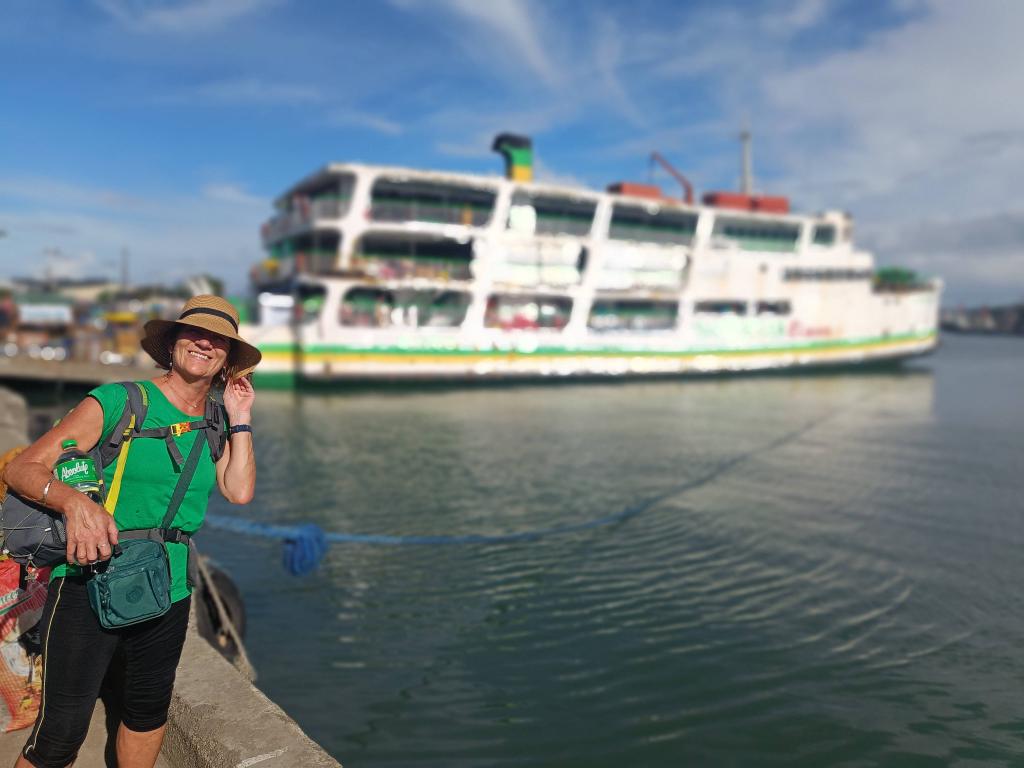
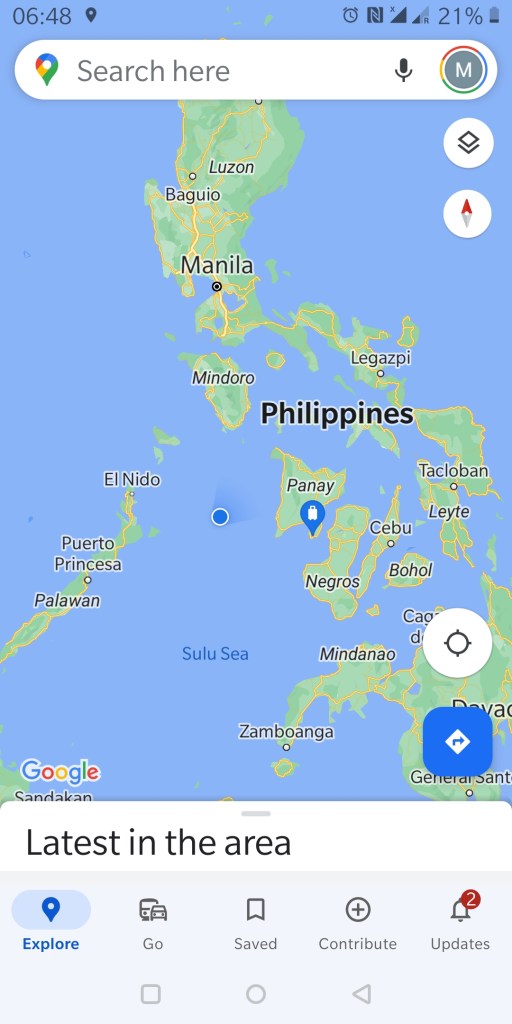
The signs were ominous from the beginning, there was very little information online about the ferry from Iloilo in Panay that sails across the Sula Sea to the island of Palawan, the most westerly region in the Philippines. The scant information available was contradictory, it went twice a week or maybe once a week,  it left at midday or 3pm or maybe 8pm. It seemed to depend on mood or wind and tide. We went to Iloilo on a Friday hoping to sail on Saturday or Sunday and went in search of tickets for the Montenegro ferry. On a hot crowded street, we walked past the ‘office’ twice before we found it but we’re able to purchase tickets  in the dark poky office…no internet.. and we understood why we couldn’t book online and the info was so sketchy.  More worryingly, the ferry was moored in the dock just across the street. It had  a pretty name- the Marta Rebecca (or maybe the Maria Rebecca)….the rusting made it difficult to decipher😮.  It had the tired, worn-out look of a vessel that had traveled far, lived long and needed some TLC or preferably retirement. When I asked the man selling us the tickets if the ferry was safe, he laughed and said ‘yes, of course’ and that he would be sailing too. I’m not sure if he meant that we would have the consolation of all going down together😮.

It was Paddy’s Day so after relaxing in our hotel (Castle Chateau @ 20€ a night with swimming pool and air-con), we went in search of an Irish bar without success(maybe the only town in the world without an Irish pub)and had to make do with an Italian restaurant where the live music was fantastic especially the saxophone player🎷🎹☘️

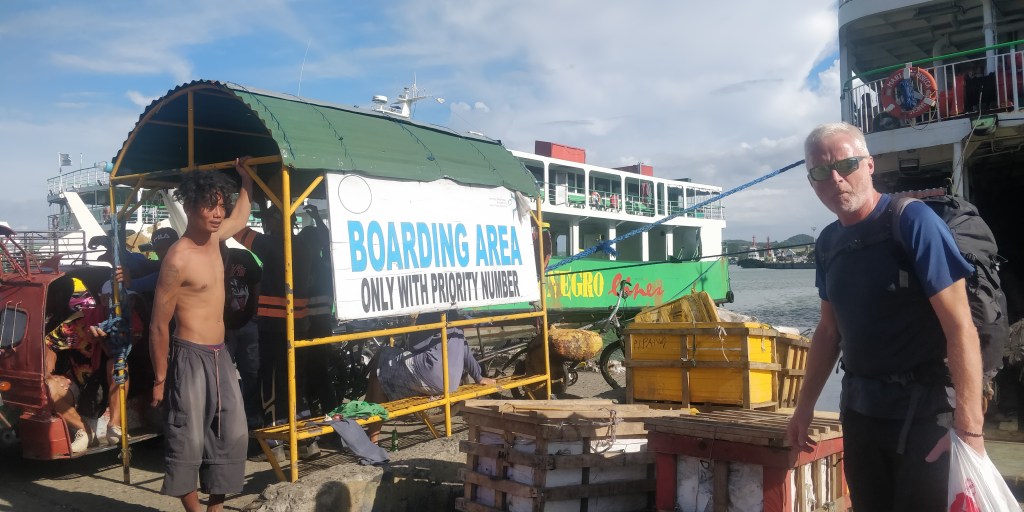
Boarding in Iliolo

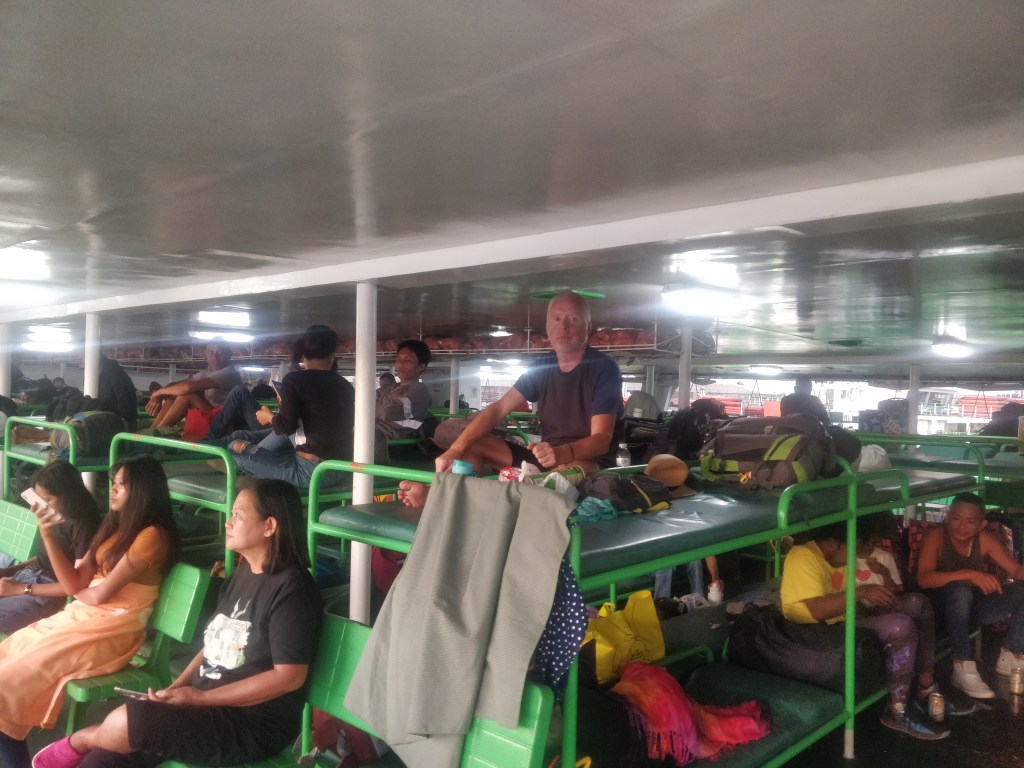
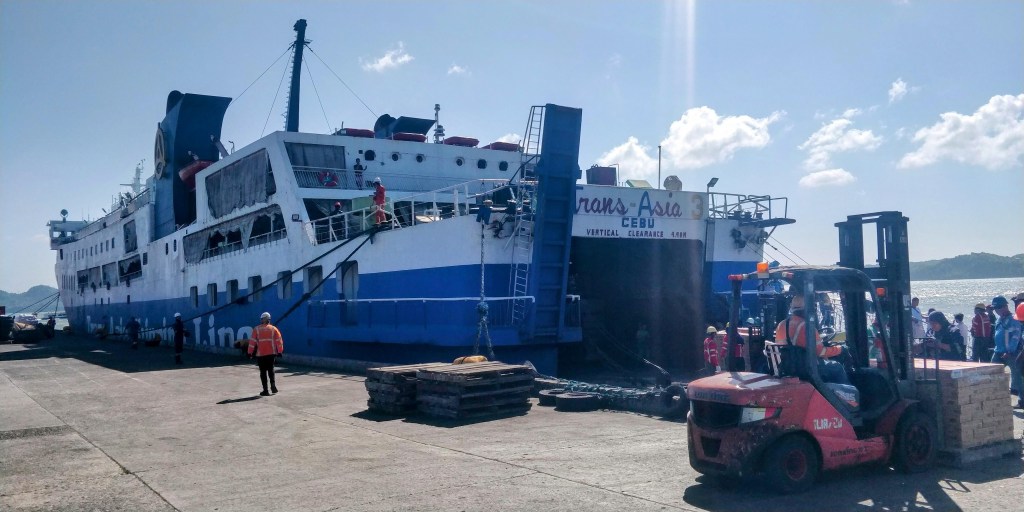
We were due to depart at 5pm and we arrived at the dock at about 3.45pm. The loading was in full swing – pallets of goods, bags of vegetables, drums of what looks like kerosene , pallets of coca cola, farm equipment, crates of water melons and fishing tackle. It was chaotic. The aisles were filled up with cargo and still more was hefted on board.  When we eventually found our bunks, they were crammed with goods, no room for us. The assigned bunk beds numbers were completely arbitrary….three decks of goods and people and children. Other passengers said to just grab a space, any space.

‘Home’ on Board

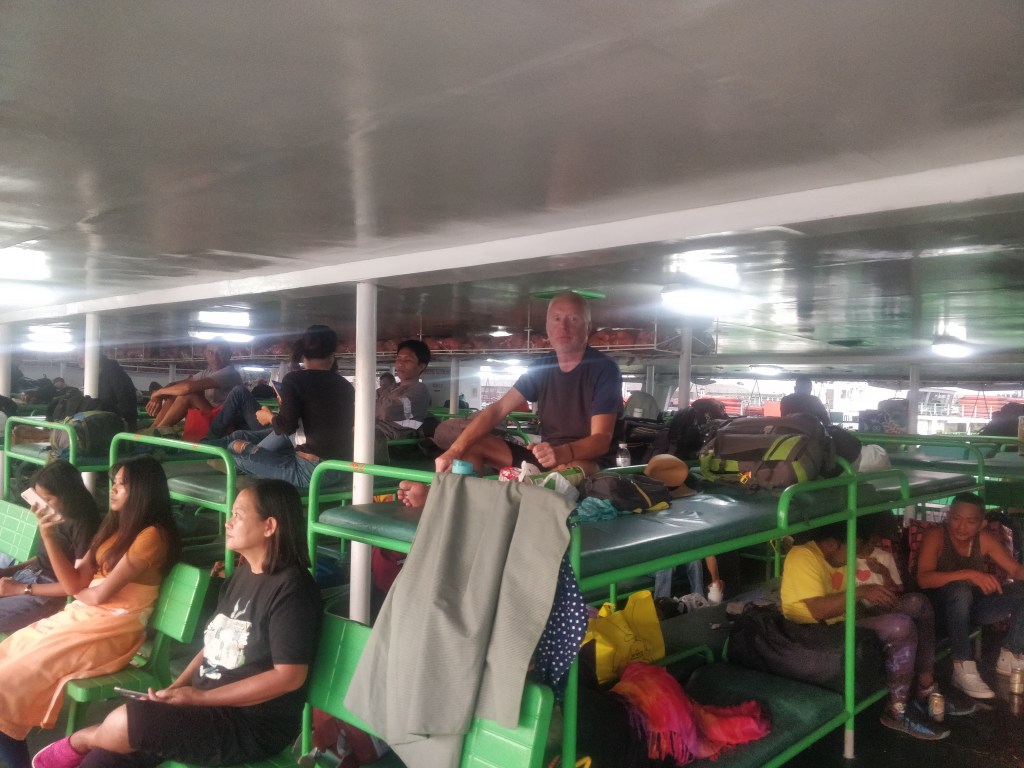
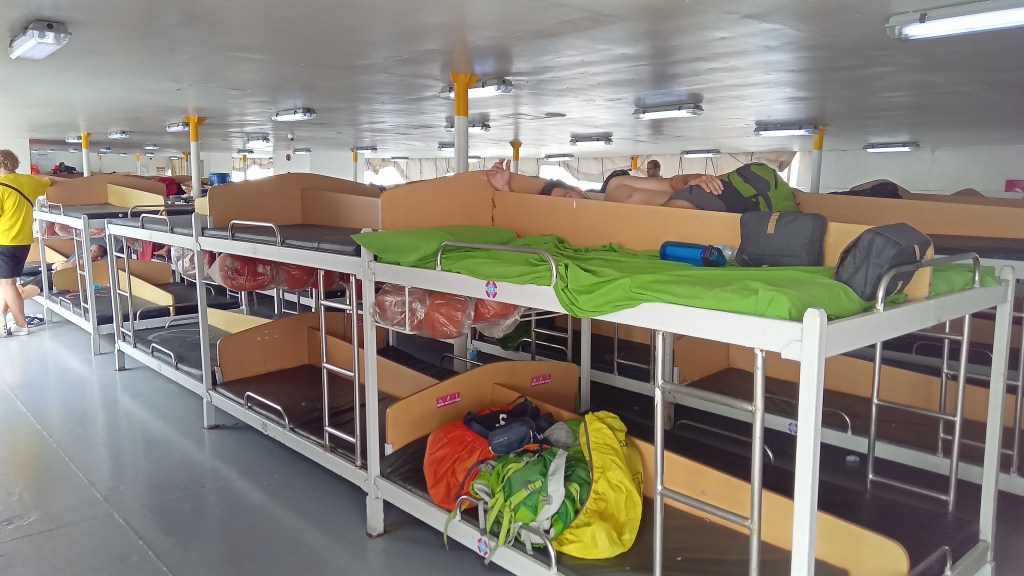
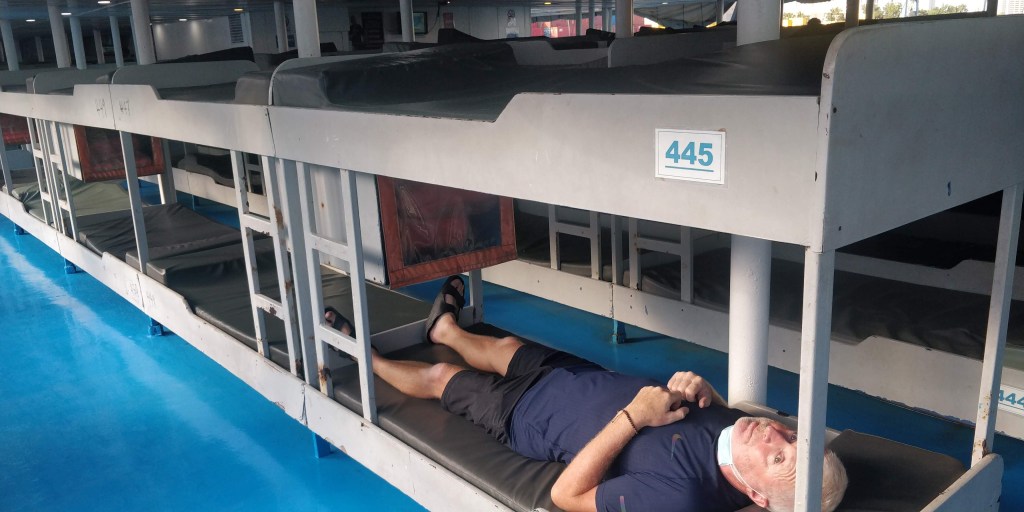
We settled on the top bunk of the top deck for a few reasons. it might be safer if the ferry went down. and we would get more ventilation because the sides were open.  Our last long -distance ferry was beginning to look like a luxury hotel in comparison to our current home for at least 36 hours. The ferry was filthy and we hadn’t even left port.  A man on the bottom bunk was shouting into his phone and drinking beer. There were 80 bunk beds on the top deck in four rows,  room for 160 people on this level with no privacy at all. Roosters in ventilated boxes provided the entertainment, harmonizing from the deck under us like a barber shop 🐓🐓🎶🎶.

Our Designated Bunks😴

We were late leaving by about an hour and a half…slow travel indeed. At first, our progress was gentle along the strait of Iloilo, a lulling soothing motion for a few hours. The loud man on the phone spilt his can of beer on the floor which turned as slippery as a skating rinks. We lay on our bunks, designed for short people.( Just about Ok for me but Caoimhin was dangling from both ends). It wasn’t cold but the ocean breeze became stronger and circled around us as the night wore on. The towel and sarong that I wrapped around myself flapped like a sail as the wind, pulled and tugged from all sides. At times, the sea splashed loudly against the sides of the ship but all was relatively quiet on our deck once the drunk man passed out. By dawn, my face felt salt encrusted, my eyelashes were glued shut and my mouth was parched. I had been limiting my water intake since we boarded to keep trips to the toilets to an absolute minimum.

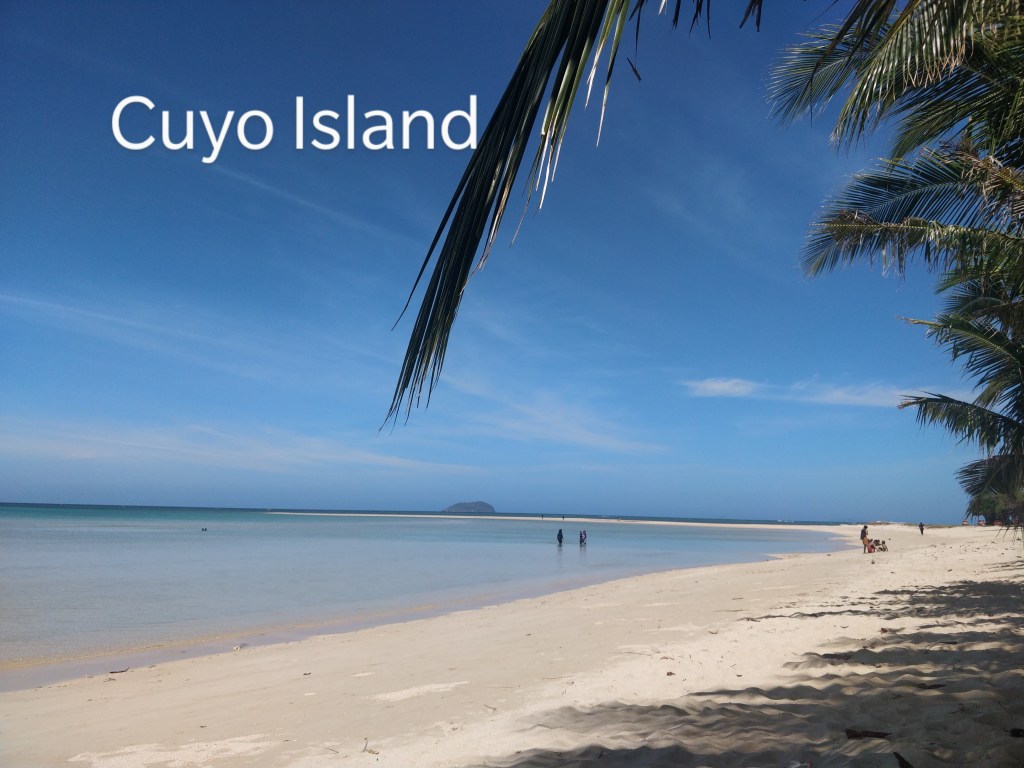
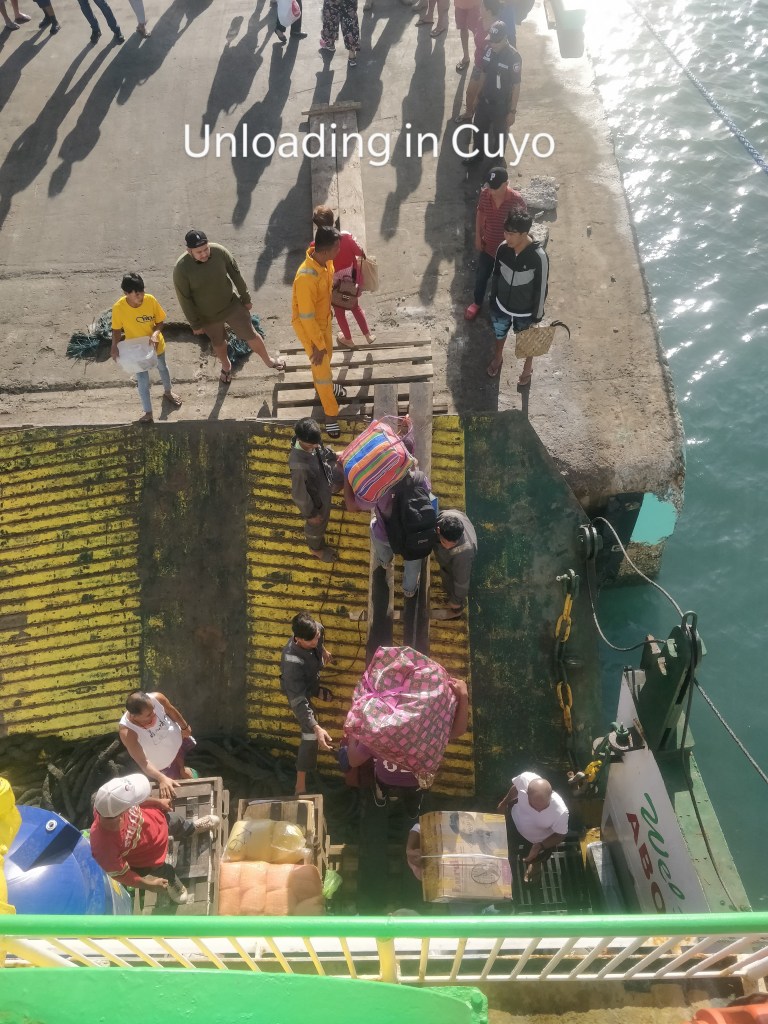
Remote Cuyo Island appeared before us like mirage at about 8am. Goods were unloaded and other cargo loaded in a disorganized dance that involved much shouting and lots of men. We wobbled down the gangplank which was literally two slippery planks of wood, placed at an almost vertical angle. Cuyo was a tantalizing vision of turquoise waters and white sand. We wandered around the market where slabs of raw meat were being fanned to keep the flies away. An old women shouted that she could make up a salad for us -she probably noted the look of disgust on our faces😀.We declined but she kept calling after us about fresh lettuce while wielding a knife!

Boat in Cuyo

 The second leg from Cuyo was more crowded as more people got on and few disembarked. There were now more people on board than available bunks. We hung on to our spot even when an insistent guy said that we were in his bunk and waving his ticket. He was right of course but it must have been his first time on the ferry because he didn’t know that ticket numbers meant nothing. Possession was nine tenths of the law and we weren’t going to give up without a fight. Thankfully, the loud drunk was gone but the roosters remained. Sleep which was so elusive the first night, was not an issue the second night… The body can adjust to anything. It was also less windy so there was no tug of war with the towel/sarong😴. People on the boat were travelling for all sorts of reasons – work, to meet family, for a wedding and about thirty teenagers who got on in Cuyo were going to Palawan to sit exams. We were some of the few making the trip for ‘pleasure’.

 Puerta Princessa, the capital of Palawan Island,  with its backdrop of mountains was a welcome sight at dawn. After 39 hours on board the ferry, we felt almost institutionalised. We headed to the bus terminal and boarded a local bus to take us on a 4 hour journey to the other side of the island. Raindrops splashed on the windscreen as we wound our way through the jungle interior  up and up and then down to Port Barton and the sea. 

Port Barton was ramshackle and dusty (most of the roads in town are unpaved). It was just a few street running parallel to the beach and a few more running perpendicular. The backdrop was stunning, hills of green-clad jungle on three sides and on the other, turquoise waters lapping  golden sand with bobbing fishing boats and  an astonishing numbers of islands, silhouetted in the distance. There were no high-rise hotels, most were small establishments with just a few rooms. The tourists here were backpackers and independent travelers, no tour groups or tour buses.. 

We loved Port Barton from the first day and we found ourselves extending our stay….just one more day, one more sunset, one more dinner, sitting directly on the beach feeling the sand between our toes, eating fresh fish barbecued on the spot. 

The  boat tour to some of the tiny islands nearby was glorious and probably the highlight, snorkeling in crystal waters with multi-coloured fish, looking for turtles and starfish. Such a perfect day for €20 including a sumptuous lunch on a tiny uni habited island, freshly prepared by the two crew. 

Thai Massage by the Beach😀

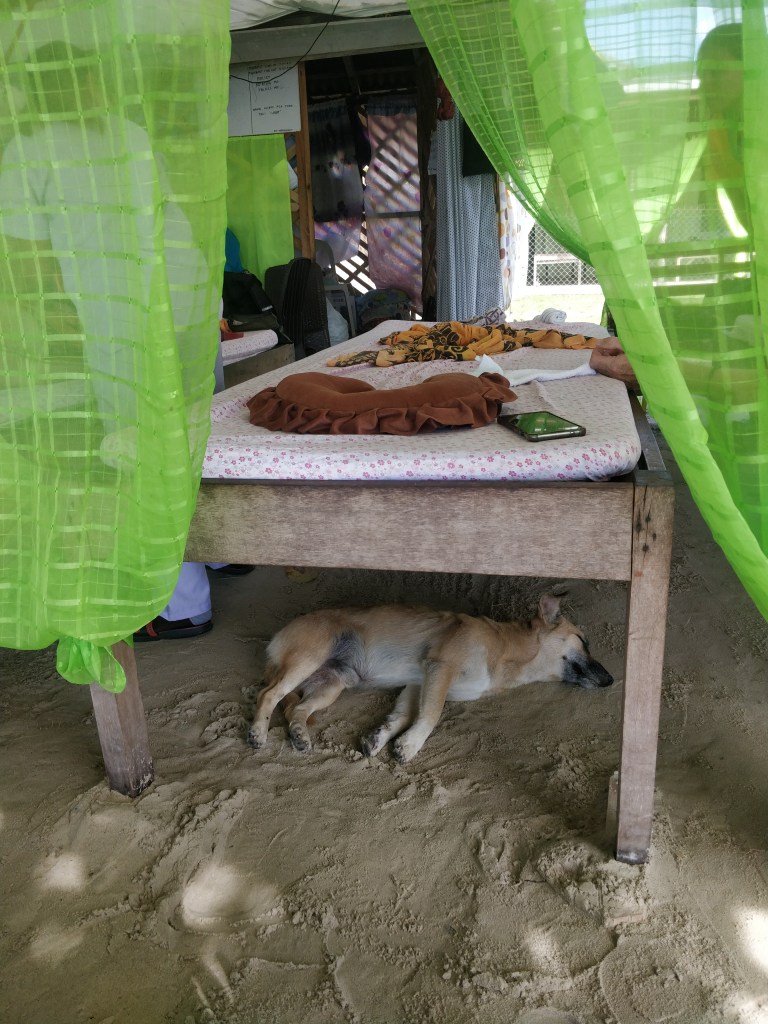
Street lighting was virtually non existent so the nights were aglow with stars. The only fly in the ointment in this paradise were the dogs. There were everywhere-under the tables at the restaurants, on the street, in the massage tent. Usually they were gentle and caused no bother to humans but in the middle of the night, rival dog gangs set upon each other and the ensuing battles were ferocious and deafening. We moved from one accommodation to another partly to get away from them. In the second place there were no dogs but there were bloodcurdling catfights outside the bedroom windows.

WiFi and internet on Palawan  is patchy at best and non-existent most of the time and it is particularly poor in Port Barton….very frustrating especially when we are trying to book accommodation, keep in touch with people and do some research. Uploading photos to the blog is virtually impossible. But small worries!

Port Barton Beach

Port Barton has had troubles of its own. Super Typhoon Odette wrecked havoc in this small town in December 2021. knocking down about half the trees along the beach, flattening homes and destroying boats. Quite a few premises never recovered. Odette was unusual because of its ferocity and coming so late in the season and tracking to Palawan which usually escaped typhoons.

Our next move is to a hut in the hills for a few days and then we are heading to a resort on a small private island, about a hours boat-ride from shore where there’s no internet and even electricity is limited.  A French retired couple that we met on the boat trip told us about it and it was surprisingly affordable (about €35 a night). I’ll tell you all about it in the next instalment….if I manage to post it.

Thanks for reading 😎🌞🌞🌞🌞

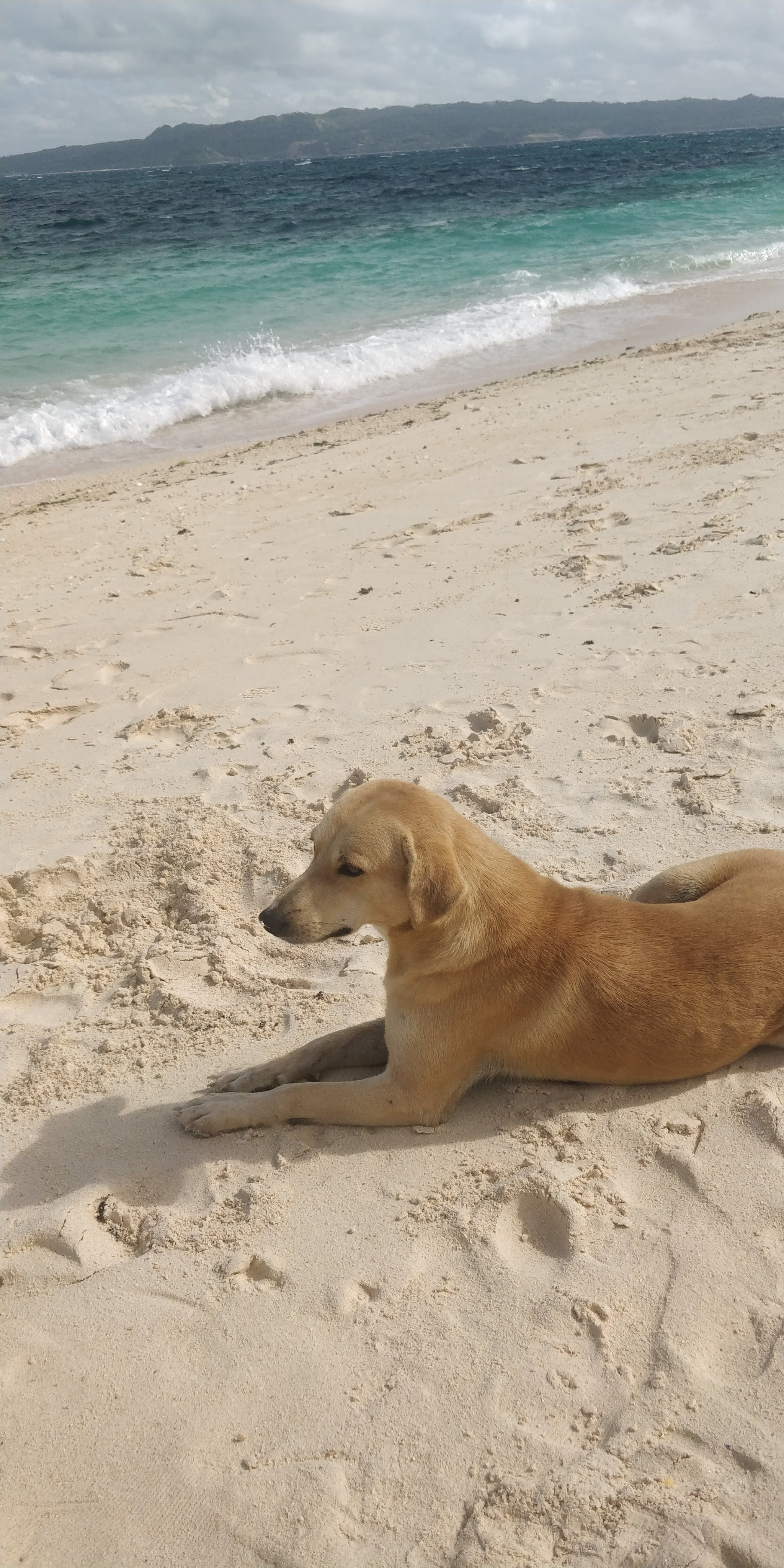
It’s a dog’s life🦮
Philippines – Slow Boats, Slow Travel

Philippines – Boracay, the Paradise Island

Just the whisper of some place-names is like a promise of paradise. One such place is the island of Boracay in the Western Visayas in the Philippines, which has been called one of the most perfect islands in the world on many ‘must-visit’ lists ,  the pinnacle of white- sand, palm fringed beaches where the waters are warm and teeming with fish. But there was trouble in paradise. Lured by photogenic beauty and the quest for perfection, so many people flocked to this tiny island (15kilometres long and less than a kilometre wide at its narrowest) that the delicate balance of nature tipped towards destruction. The people who came to marvel at its beauty devoured it,  their voracious appetites demanding food, shelter, transport, water and sanitation. Hotels were built that violated planning and environmental laws. Sewage and waste management were enormous problems.  In 2018, the President of the Philippines visited the island and declared it both a ‘cesspit’ and a health hazard – a paradise almost lost. So the pearly gates of  Boracay were locked  to tourists for a year so that the island could recover…..which of course meant economic hardship for the residents who relied on tourists for income. The restrictions of the pandemic provided further opportunity for renewal and recovery. Boracay, version 2, opened for business with improved infrastructure and strict enforcement of development rules.

Leaving Cebu

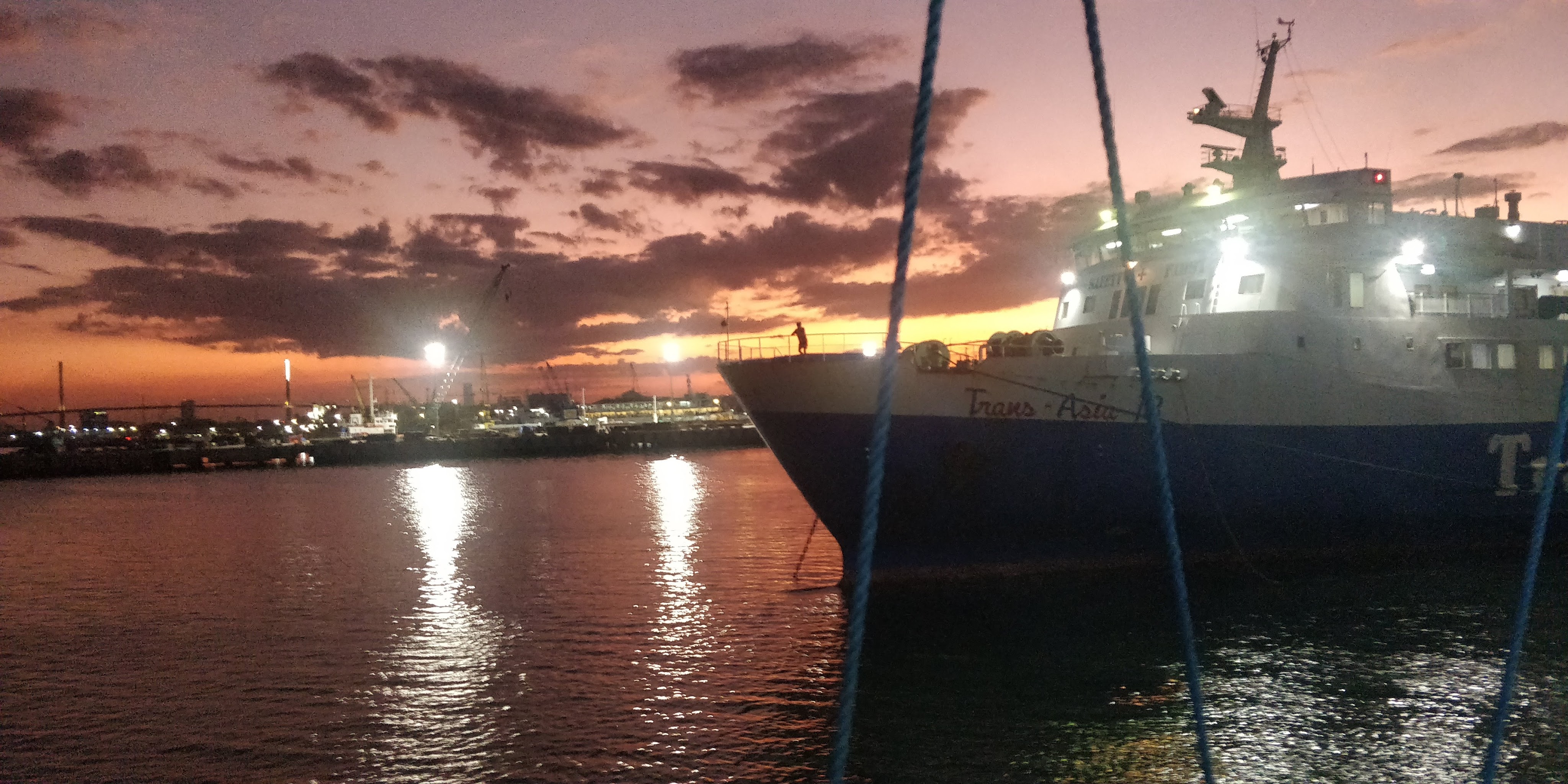
The appeal of Boracay was like a magnet, pulling us in that direction. We were curious to find out why this little island was so special in a country with over seven thousand and six hundred islands, many of the ones we had visited so far were undeniably beautiful.  But our road to paradise was long and arduous. It began with a fourteen hour ferry from Cebu, the Philippines second city after Manila, to Iloilo, the capital of Panay Island. We sailed from Cebu at dusk when the beauty of the setting sun masked both the frenzied activity in the port and the squalor of the nearby streets – hanging telephone wires, broken pavements, fumes and gut-wrenching smells.  The overnight journey cost about €20 each but the ferry was a rust-bucket, probably a charitable description. The steward told  us that they were in the process of renovation but we weren’t sure we believed him. On the positive side,  there were beds for everyone in two different classes, economy class was 5 long rows of bunk beds on deck with canvas sheeting pulled down for shelter from the (warm) winds. Tourist class had air-con and eight bed cabins, four sets of bunk beds. There were no flushing toilets for anyone, just a huge vat of water with a water scooper to put water down the bowl. No water in the taps either. Two large white lumps of air fresheners placed beside the sinks didn’t mask the smell but added a layer of cloying floral something. The restaurant was merely a counter that served Pot Noodles and cold rice &chicken in a white styrofoam tray. But the worst part was the huge number of stowaways – whole families of cockroaches were everywhere.   Most of the human passengers simply crawled onto their bunks, turned over and stayed there for the duration of the journey. When we saw that we had a baby in our cabin, our hearts sank but he was a gorgeous little 7 month old and although he was very good, of course he cried during the night.  I slept surprisingly well, barely aware of the baby or the alarm clock going off in someone’s bag at 4am. The fourteen hour journey stretched to fifteen and a half and by the time we reached Iloilo, we swayed down the plank on sea-legs and growling stomachs. Iloilo was by far the cleanest city that we have visited in the Philippines but we went straight to the bus station to catch a bus to Caticlan. We had about 5 minutes to spare before the bus departed. While the ferry was a disappointment, the bus was clean, efficient and surprisingly roomy but we were glad to reach our destination after 6 hours on the bus mainly along by rice fields with a welcome stop at a local restaurant where we gobbled plates of noodles, rice and delicious fried fish.

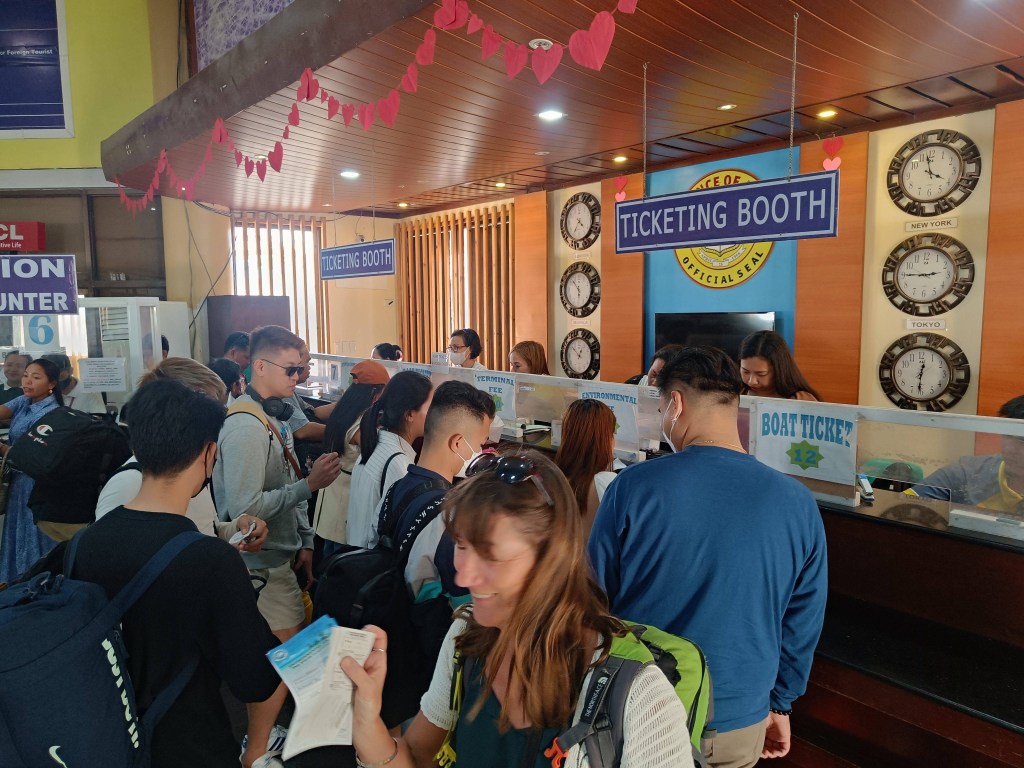
Caticlan was a small port that served the ferry to Boracay Island, visible in the distance. The port building was crowded with tourists, officials and bag handlers moving mounds of suitcases. The noise was reverberating off the tin roof and falling back down on our heads. We had a few more hoops to jump through before we could get on the ferry. First we had to queue to show proof of accommodation on the island….this may be a way of restricting numbers on the island but nobody was allowed on the ferry unless they had pre-booked accommodation. We were given a slip of paper which we had to hand in at another counter and pay our environmental tax (about €5), then armed with proof of that payment, we moved on to pay our port tax (€2.50 at another window) and then finally the boat fare (€1 at yet another window). We marvelled at the vast number of people employed just to get passengers on a boat. The process had to be done in that precise order which wasn’t obvious so people were queuing in the wrong place, changing lines and getting a bit excited. But at last, we were seated on hard yellow planks in a small ferryboat on the way to the paradise island of Boracay.

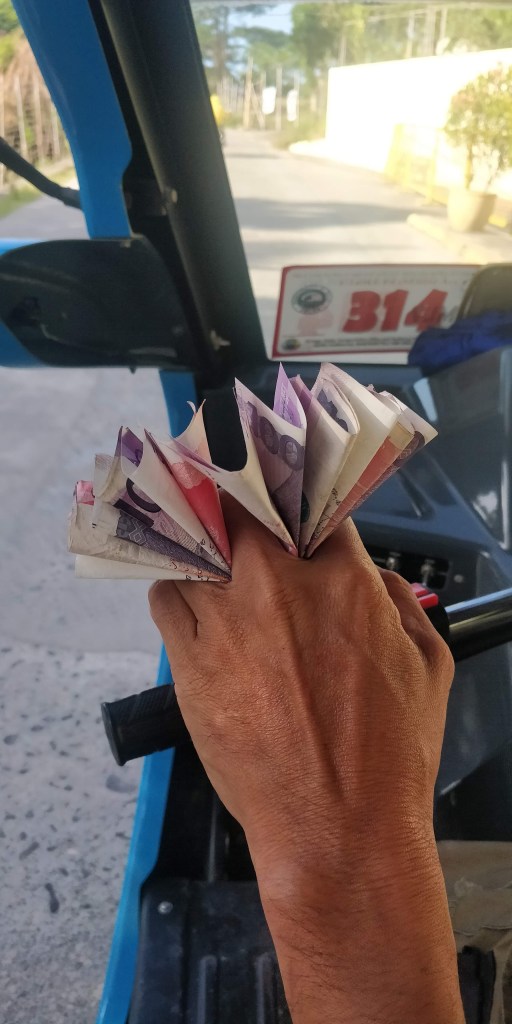
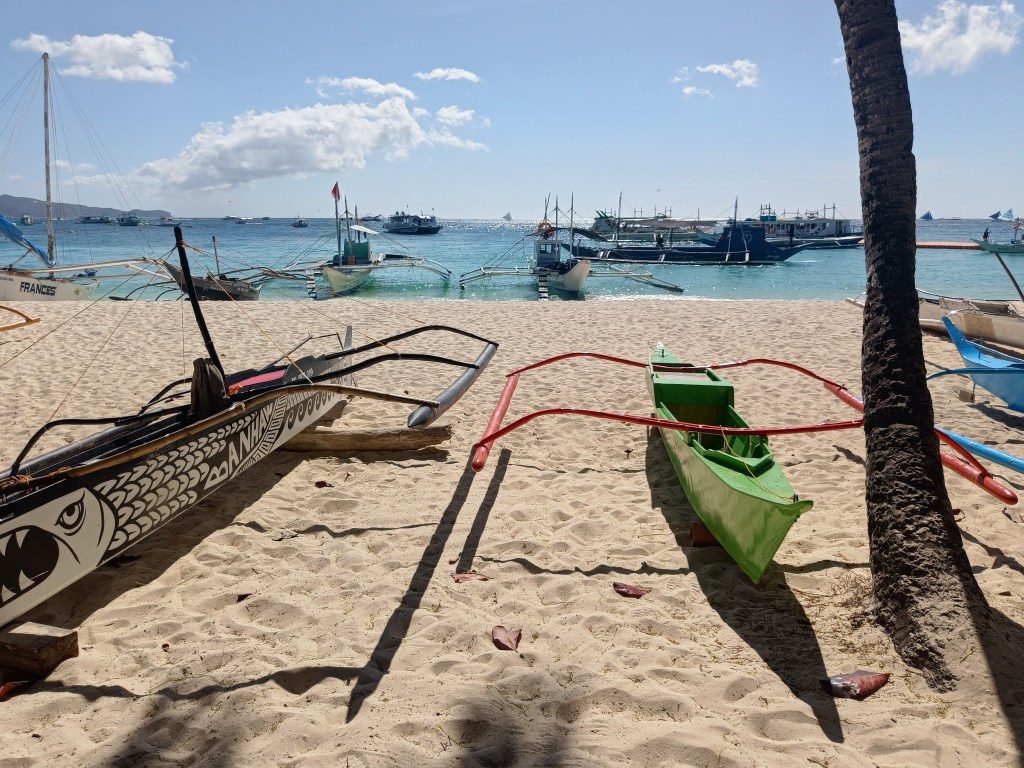
The pier was tranquil in Boracay, turquoise waters lapping on white sand and a strong refreshing breeze swaying the palm trees. The most popular area on the island was the famed White Beach, 3 or 4 kilometres of talcum-powder fine sand but we didn’t stay there – we were on the other side. The rick-shaw guy that took us there had the peso notes arranged between his fingers that made us think that money was king on Boracay. At Happys Homestay in a large but basic room, metres from a small beach where the neighbourhood children played and a few locals (plus the odd tourist) sat on plastic red chairs outside the shop. There was the smell of paint as fishermen painted their boats under the swaying coconut palms. It was beautiful but was it special?

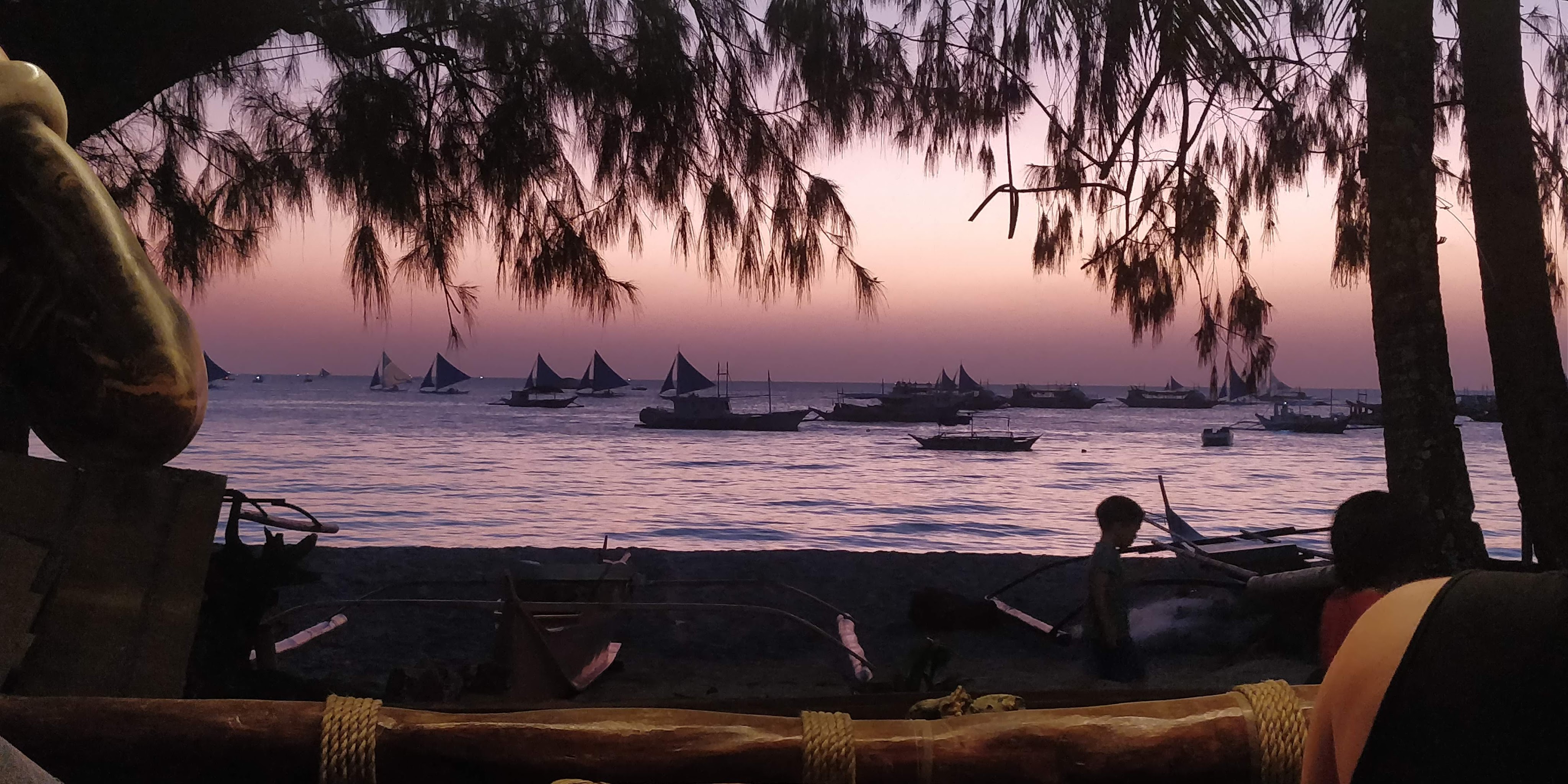
Our First Boracay Sunset

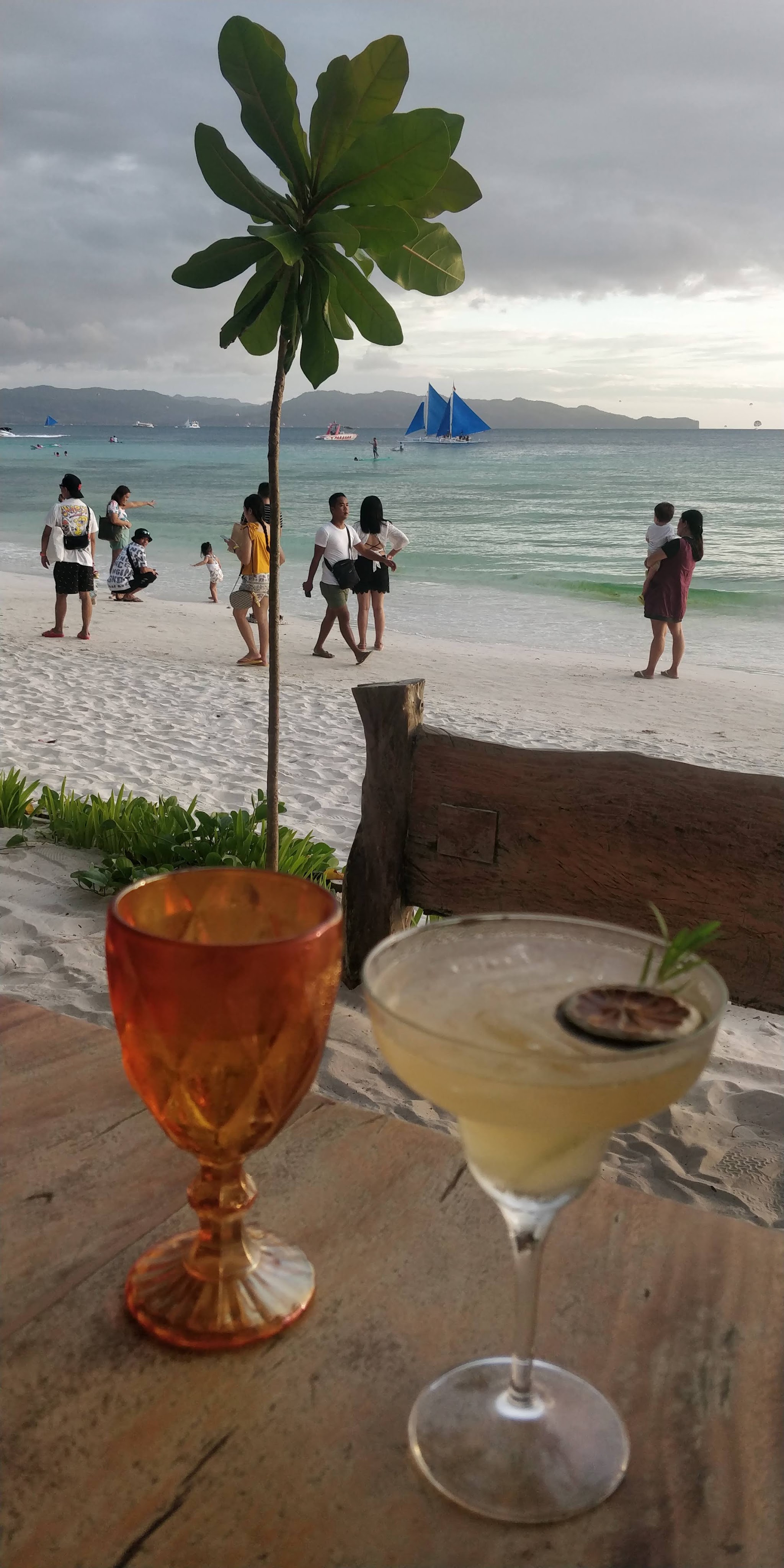
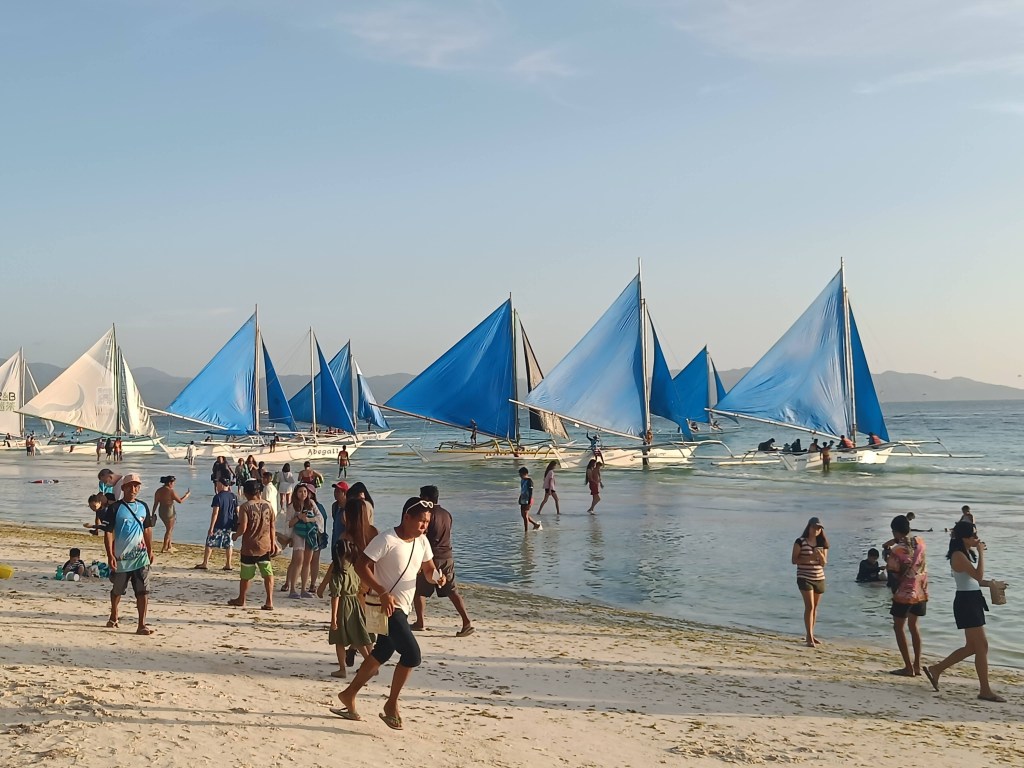
The 40 minute walk to white beach took us by back streets, ramshackle houses, teeming with children, interspersed with tiny shops selling an assortment of sachets – everything from shampoo to ketchup to biscuits is sold in tiny quantities. When I asked about buying teabags, the shopkeeper opened the box of twenty Lipton teabags and asked how many I wanted.   We arrived at White Beach by sunset and sat in a beach-bar looking at the sailing boats gliding past like giant moths with folded wings as the sky darkened and the world went crimson. Sounds idyllic? It wasn’t …  a bald, fat German was having a drunken argument – loud and raucous – with his equally inebriated Filipino wife and there was competing pop music blaring from several establishments. The whole white beach was a continuous strip of cafes, restaurants, hotels and souvenir shops, becoming more crowded the longer we walked until we could barely find space for our feet.  People put laminated cards in front of us, asking (no, imploring) us to eat in their restaurant, take their tour, have a massage, buy the T-shirt.  Maybe it was the tiredness but we were overwhelmed and a bit appalled. One street back from the beach was even more crowded with hotels, designer shops, shopping malls, motorbikes, and tourist vans. Remember this is just a tiny island. Thankfully, a lot of the tricycle rickshaws were electric which at least cut down on the fumes and noise levels. We scurried back to the peace at the ‘local’ side of the island which would be perfect except that there weren’t any restaurants. It was also the blustery side at this time of year…but that also kept the temperatures very pleasant. The winds change direction in June when it becomes calm on this side and wind-ruffled on the White Beach side.

The majority of the visitors were Asian package tour groups, only a tiny fraction of the visitors were backpackers but that meant that there was an incredible variety of food available. We ate Japanese food, Korean ice-cream (surprisingly delicious), Thai dinners and even found some French pastries. One morning we rose at dawn (about 6am) in an attempt to enjoy the beauty of White Beach without the hordes of tourists and touts.  The air was soft and fresh and it felt as if the island had been reclaimed by the locals, going about their business without tourists.  ferrying children to school – many schools here start at 6.30 am,  sweeping and cleaning. But as soon as we stepped on White Beach, we found that we weren’t the only early risers, the place was packed with tourists, mainly Asians posing in search of the perfect Instagram shot which required lots of time, infinite patience, numerous  retakes and rejections until acceptable perfection was reached. At first we stopped so that we weren’t photobombing their shots but there was no end in sight so we just kept walking. It was laughable – young women (mainly) lying in glass bottomed boats, trailing fingers in the water creating the illusion that they were in the middle of the ocean instead of half a metre from shore. But maybe we could learn from them…if only we weren’t too busy enjoying the moment to capture it.

Boracay is beautiful. Lying on that silky white sand looking up at the swaying palms overhead, it was possible to zone out  the crowds. Swimming at dusk in the calm clear waters at the very Northern end of White Beach while watching a phenomenal sunset, was truly enriching. We walked to the highest point, Mt Luho with views of secluded coves, the golf course and the shells of several derelict hotels, abandoned through economic hardship or through contravening planning regulations.  We hiked to Puka Beach, famous for its shells where a lovely local man took photos of us (the cheesy ones with the hearts) while his twelve year old daughter danced on the beach, making a TikTok video. He hoped that some wilderness would be left on the island for nature and home for the monkeys, the pythons and the flying foxes.  The longer we stayed, the more beauty we found on the island and in the seas around it..

Boracay is a cautionary tale about the fragility of the environment and what can happen if rampart tourism is left unchecked. It is very difficult to blame the locals, they are trying to make a living in what is a relatively poor country.  It seems to have bounced back since 2018 but we certainly found the tourist numbers alarming albeit mainly concentrated in the White Beach area. Sustainable tourism is a buzzword but not that easy to implement. Environmental taxes are a good idea – as long as there is accountability.  We are fully aware that we (Caoimhin and I) are part of the problem. We try to stay in small places, as local as possible, eat what the locals are eating,  travel on buses and ferries but we are still showering and flushing toilets.

The Future??

As a penance or maybe as a salve to our conscience, we are heading onwards on Saturday to the island of Palawan on a slow ferry,  a very slow ferry. Details are sketchy and it seems to depend on winds and tides but it could take us thirty- six hours…. or more. Let’s hope it’s a bit better than our last slow ferry. But this St Patricks morning, we are about to Leave Boracay and take a six and a half hour bus journey back to Iloilo, which seems to be the only city in the world with an Irish pub.

Thanks for reading. Wishing everyone the rub of the green and a great weekend ☘️☘️☘️

Boracay….where even the dogs are photogenic…but it did require four ‘takes’
Philippines – Boracay, the Paradise Island

Philippines_ Visas and Chocolate

Chocolate Hills

This week was all about extending our visa. On arrival at the airport in Manila, we received a free thirty day visa but  this wasn’t long enough for us as our flight home was in over ten weeks time. The immigration official at the airport told us that it wouldn’t be a problem to extend, we just couldn’t do it there but it could be done in any of the many Immigration Offices scattered around the country. So when we found ourselves in Panglao  where there was an office, we pointed our rented motorbike in that direction  and set off to get it sorted although we had been in the country for only about 10 days,

The Immigration Office was small, a counter with a couple of  window hatches and clear glass panel showing the airconditioned office behind with about 8 desks, computers and paper files. Most of the women seemed to be talking and joking with each other. It certainly wasn’t a hive of activity The customer side was stifling with one small fan in the corner and two rows of seats, about half of which were broken. There was a large sign on the glass panel cautioning against using profane language😮. We were told that we had to first apply for a 29 day extension (pay about €50), fill in a form including a hand-drawn map to our accommodation, leave in the passports overnight, pick up them up the following day and  then reapply for another month (pay about €100), drop the passports in again overnight and pick up the next day. It couldn’t be done in one application. The glass panel, the masks that the officials were wearing, poor English and the loud pop music being played in the office side were all barriers to understanding what was required. Most people were scratching their heads in confusion. The officials told everyone to come at 3pm to pick up the passports so there’s a queue out the door at that time. Luckily we ignored the 3pm rule and went at 2pm when it was relatively quiet. But after three lengthy visits and handing over wads of cash (exact amount in pesos only, no bank cards accepted), we have our visas until May. I swear no profane language was used in the transactions😇🤣

Caoimhin found time to do a freediving introductory course, he has great admiration for fish.  Freediving involves diving without using any equipment and is very popular in Panglao particularly with Koreans who have a couple of dive schools here  exclusively for Koreans. We both visited  the other free-dive centre, run by a very tall focused Austrian. I loved the big quote over the door and behind the pool. Know your Limits. Never Accept Them.  In the case of freediving, I both knew and accepted my limitations.  I opted for a swimming lesson in the pool instead, preferring to stay on the surface of the water….if I can😀.

The Filipinos are not fond of knives as a cutlery utensil, usually making do with  a fork and spoon. They love their fried chicken but there were barbecues on Saturday night in Panglao which were a serious meat-fest, washed down with Tanduay rum, Pilsen beer or Red Horse (a potent beer at nearly 7%)😮. Toilets in this part of the world are called comfort rooms – I’m not joking. The mosquitos in the toilets in the accompanying photo certainly looked very comfortable🤣. But usually the standard of cleanliness in most places was high.

Of all the strange and exotic fruits available here, mangoes must be the most delicious. the depth of flavour was like eating a sunset. No wonder they are the national fruit of the Philippines and were for sale on every roadside, sometimes speckled and battered but always a treat for the tastebuds. Then there’s calamansi, which look like tiny limes but are orange on the inside. They have a sour taste with a sweet after kick and are used in sauces, marinades, drinks or to squeeze over Filipino dishes. When we first saw a basket of lanzones, we thought that they were tiny new potatoes (we got excited for a minute…) but inside the thin peel were small translucent segments which were light, refreshing and tasted a little like a sweet grapefruit.  The mangosteen, a round fruit with a thick, leathery shell and soft white flesh,  were very popular but to us they didn’t really taste of anything. Ube was another fruit/vegetable that we had never seen before but it’s a purple yam that finds its way into many Filipino cakes and desserts. You can’t miss it as it gives a bright purple or indigo colour to cakes. Despite the slightly off-putting colour, it  has a vanilla flavour that’s slightly nutty, delicious in ice cream. Bananas were very plentiful and the Philippines had a novel use for the glut. They made ketchup –  bananas, red colourants and stabilisers equalled banana ketchup…..a bit sweeter than tomato ketchup but very similar.  

Despite the name, Bohol Bee Farm was a place without bees. It started out as a little concern with a few hives and grew into a big co-operative organic farm employing about 300 locals, mainly women, with people on site giving demonstrations of making leather goods, weaving baskets and making ice-cream. The bees disappeared during the pandemic (for unclear reasons) but it  has a big restaurant, where the emphasis was on locally grown food which was the best we had on the island. We ate delicious salads and mouth-watering squash bread with both a garlic spread and honey….all available to buy in the attached gift shop. But the highlight was definitely the ice-cream. I opted for chocolate (boring, I know) when there were exotic choices like spicy ginger, dragon-fruit and jackfruit. Caoimhin had the purple Ube ( the purple yam that I mentioned above.) Fantastic local development and employment.

In Panglao, the most famous beach was Alona Beach. Yes, it was beautiful but so busy with tourists and touts wanting to sell you boat tours, souvenirs and massage that one visit was more than enough for us. Quite a few of the other beaches demanded payment for entry- it wasn’t a lot, 100 pesos (€1.70)  but the principle grated a little. We spent a very enjoyable afternoon trying to get onto a beach for free, there were long stretches of beach along the southern coast of Panglao. We sped around on the motorbike, making a U-turn whenever payment was demanded until we reached an isolated spot where a lot of motorbikes parked. We walked  over a rough path through a field of goats and found out way onto the beach, the same beach where we were denied access unless we paid…..kms of uncrowded white-sand with beach bars, no touts, mainly Filipinos enjoying a swim and some karaoke(it was Saturday afternoon and Filipinos love karaoke). There was even a small wedding party on the beach. But we found driftwood and peace the further we walked, just the lapping of water and the boats bobbing on a turquoise sea.

After a week in our (relative) luxury bubble in the Portofino Resort in Panglao, it was time to head for the hills. Searching for a rented motorbike to take us there, we met Mario, a small man with a big smile who stood sipping a beer at midday on an overcast Sunday. Life was good for Mario because since Lonely Planet recommended him in their guidebook, his business was thriving . All thirty two of his motorbikes were rented out to tourists…..he raised his glass to Lonely Planet. He had only one left, a large red motorbike (155cc), the price for which kept decreasing the more we hesitated. Finally we settled on a price and zoomed off wearing helmets that smelt of sweat and wet hair. The day was damp and became wetter, travelling through villages, paddy fields and dense forests until we dripped into Fely’s homestay like drowned rats. We were told that such prolonged heavy rain was unusual in March, usually one of the driest months. We pitied the people trying to dry the rice grains which were spread out on plastic sheets by the side of the road.

Fely’s was a friendly house in a small village run by Fely and her sister Maria with some help in the shop from their 82 year old mother. All three women were widows. Fely’s husband had died suddenly from a heart attack two years previously leaving a teenage son. Fely was also a teacher in the local elementary school and taught a class of 10 year olds.  With only 16 pupils in her classroom, many Irish teachers would be envious of that pupil/teacher ratio.  Our small room was a riot of pink,  pink walls, pink mosquito net.  The rain hammered on the roof while a little stream flowed almost under the floor so we had water above and below. Maria did most of the cooking and wanted to be me, travelling around the world with a (younger) version of Kenny Rogers…she was a great fan of Kenny. 

One of the main attractions on the island of Bohol are the famous Chocolate Hills, which weren’t far from Fely’s. The view was reputedly amazing, a series of nearly two thousand cone shaped mounds stretching into the distance, formed in the dim distant past from upheaval in the coral sea and subsequently weathered into these shapes. The hills, usually turned chocolate- brown this time of year, were green courtesy of all the rain. The banks of grey cloud on the horizon the morning we visited meant that they were barely visible at all. The other attraction in Bohol didn’t disappoint us. These were the tarsiers, tiny little nocturnal monkeys that would fit into the palm of a small hand, with eyes so big that they weigh about a third of their body weight and are heavy on the cutie appeal. While guides pointed out where they were resting on the trees, the public was not allowed to get very close.

Our next stop was outside the town of Loboc where we stayed in Nuts Huts, rustic bamboo huts by the river.  Access was by a very rough road followed by a long flight of stone steps. Totally charming as long as you weren’t averse to creepy crawlies or exercise – the huts were in a deep valley by the muddy greeny river but reception and restaurant were one hundred and twenty stone steps up the hill and the bumpy roads was one hundred and two steps higher still. We loved lolling by the river, kayaking surrounded by nature, with changing light on the trees and a symphony of cloud, sun and rain overhead. So peaceful without the distraction of WiFi (no WiFi) – apart from the floating restaurants that navigated up and down the river blaring Frank Sinatra and Tina Turner but thankfully only at lunchtime from 11 to 3pm. The nights were insect-loud under our mosquito nets with all sorts of hummings and rustlings, On our first morning , we wanted to do a hike on the opposite side of the river but the boatman was otherwise engaged – he and his whole family were washing themselves in a spring just slightly downstream. He dropped the family off on the opposite bank and came over for us with just a towel wrapped around him and smelling of soap. We hiked past their humble shack of bamboo and tin roof later. The massages we got from some local women were great but so intense that I discovered some aches I didn’t know I had!😁
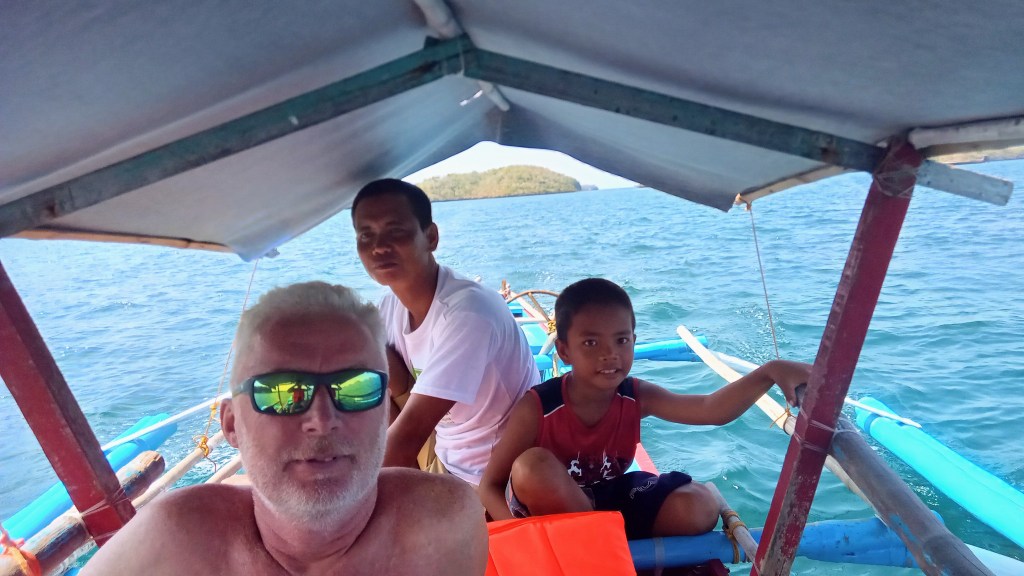
Its almost time to leave the island of Bohol, with its chocolate hills and cute tarsiers and head on by ferry  to Cebu about two hours away across the sea.

Thanks for reading😎

Philippines_ Visas and Chocolate

Island Hopping in the Philippines😎

There is no shortage of islands in the Philippines. There are over seven thousand to choose from. After our stay in Manila with its crowded chaos, relentless noise, fumes and poverty, we were eager for fresh air, forests, deserted beaches – basically anywhere that was ‘far from the madding crowd.’ But with a population of 120 million and lots of tourists, maybe we were looking for the unattainable? Siquijor, an island in the Central Visayas appealed to us mainly because our guide book told us it was small and quiet. On a sunny Monday morning, we left our hostel in Dumaguete(we had flown here from Manila), bleary-eyed from lack of sleep,  to catch the 7.10 ferry. The noise of the ceiling fan combined with the swirling heat and the motor bike traffic outside our bedroom window had made for a disturbed night…even for me who could sleep on the floor with a pipe band marching around me.  We had bought our ferry  tickets the day before thinking that all we had to do was turn up. We were wrong. The ferry port was thronged with people and motorbikes still whizzing everywhere.  We had to queue to be assigned seat numbers and queue again to pay a port tax (about 20 cents) and then queue to actually get on the ferry which was crowded (room for at least 500 passengers).

The volume of people on the ferry to a small quiet island surprised us …and alarmed us a little. There were passengers of every age, size and ethnic hue on the boat, some locals but many visiting. This part of the world has had a long Covid lockdown( much longer than Europe) and more people are on the move than ever.  When we arrived on Siquijor (both the island and main town have the same name), there was that frantic flurry of activity that happens when a ferry docks, with people and goods disembarking, lots of shouting,  the calling of taxis, tricycle rickshaws and motorbikes.  But within ten minutes, somnolent peace was restored, the waves from the ferry backwash ceased to crash on the shore, the island absorbed the new arrivals and made them disappear, the touts returned to the shade, the dogs took up their positions sleeping in the middle of the road and relative silence surged in. We would have left too except that we had no money to pay a tricycle rickshaw to take us to our accommodation which we had booked the day before and which was on the other side of the island. Despite a plethora of bank cards, we had virtually no pesos between us and ‘cash is king’ in the Philippines. We had planned to get money out at the port in Dumaguete but the ATMs there were broken. We trudged up the street looking for a functioning ATM. The first three had ‘no money’ or ‘no power’ or  ‘broken’. There was just one more to try…..our last hope. The whirring sound of cash dispensing in the ATM was never more welcome. After all that trauma, we needed breakfast – a big plate noodles, hard boiled eggs and spring rolls filled the spot. Delicious
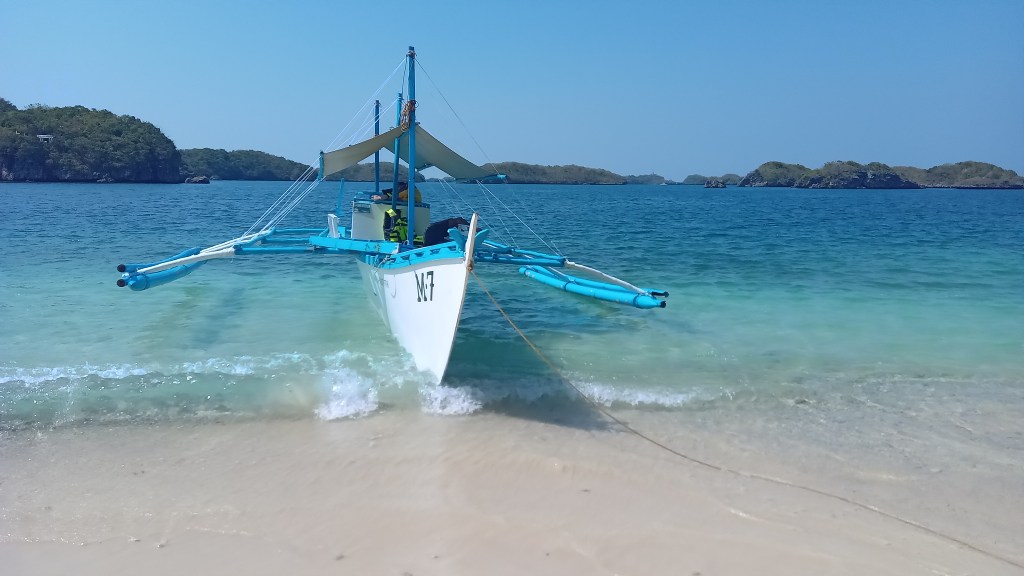
The best and only way to travel around the island is by motorbike or scooter which were very cheap to hire – about six or seven euros a day. The roads were reasonably good especially the one that circumnavigates the island, about 75 kms in total. There were roadworks and road upgrades on many sections but few hold-ups and traffic was light.  Plants had started to sprout on some of the heaps of sand and rocks for road works at the side of the road so the upgrade looked like a long project. The freedom of the motorbike to explore was fantastic.   We sped past the gleaming green of the rice paddies, more emerald than any vegetation at home, past white cattle with their loose-skinned necks and skeletal pale-coloured dogs that all seemed to originate from the same ancestors. We found small coves framed by coconut palms, one idyllic one where swimming was not ‘operational’ (there was a fine for swimming, we didn’t know why) where we met a Chinese man, a devout Christian, who was moving to the Philippines with his family for religious freedom.  In another, a bald effeminate salesman was trying to sell a foot-spa to the elderly owner of a guesthouse which was almost on the beach. He welcomed us with such friendliness, we thought he lived there while the owner soaked her feet in a pink foot-spa. There was the smell of smoke and a soft haze among the trees from the ubiquitous burning of rubbish and vegetation.  And everywhere, we saw an incredible number of schools and groups of children in dazzling white shirts coming from or going to be educated. Education is incredibly important to most Filipinos but many  told us that their children were being educated for export,  people are the greatest export of the Philippines. We were intrigued by the fields of roosters which were tied to a perch and allowed about a square metre of territory each. These seem to be raised for cock fighting but we haven’t seen any cock fights…..yet.

Of course, the roosters might also have a part to play with the other claim to fame of Siquijor. This mystical island is known to have magic potions, shamans, witches and sorcerers and many Filipinos would not wander around after dark on the island. We didn’t witness any spooky going-ons  although when we went in search of the Enchanted River, we couldn’t find it but we could hear the sound of water flowing over small stones. Very strange.  Undoubtedly, there are healers using herbal medicine in the hills of the interior, using local plants and knowledge handed down through the generations and people travel to them in search of healing.
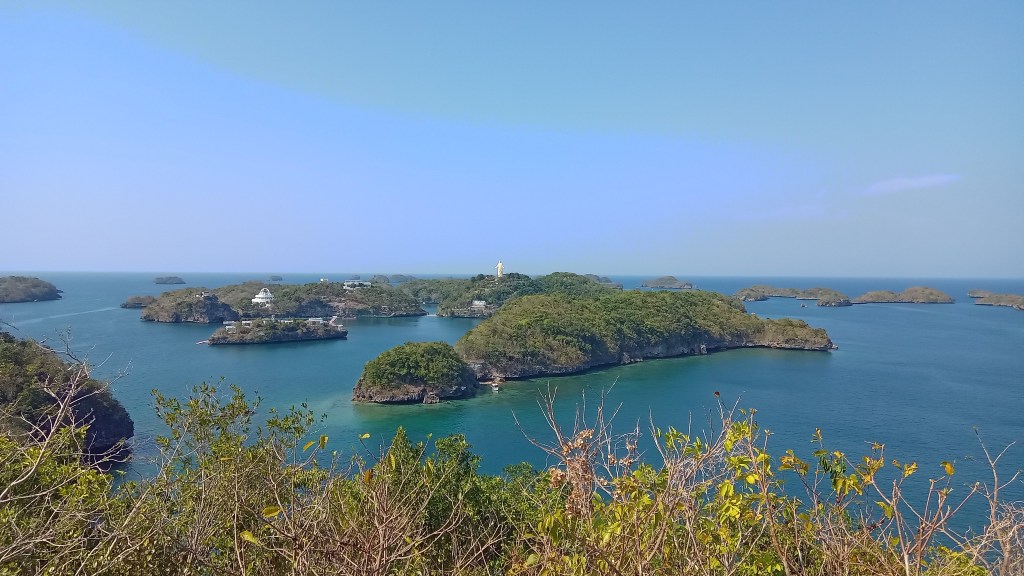
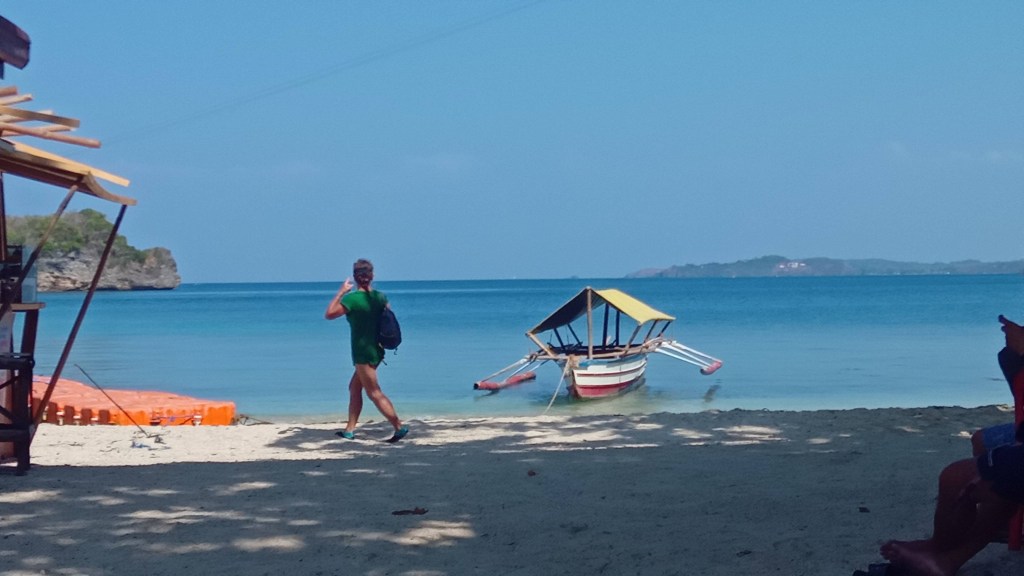
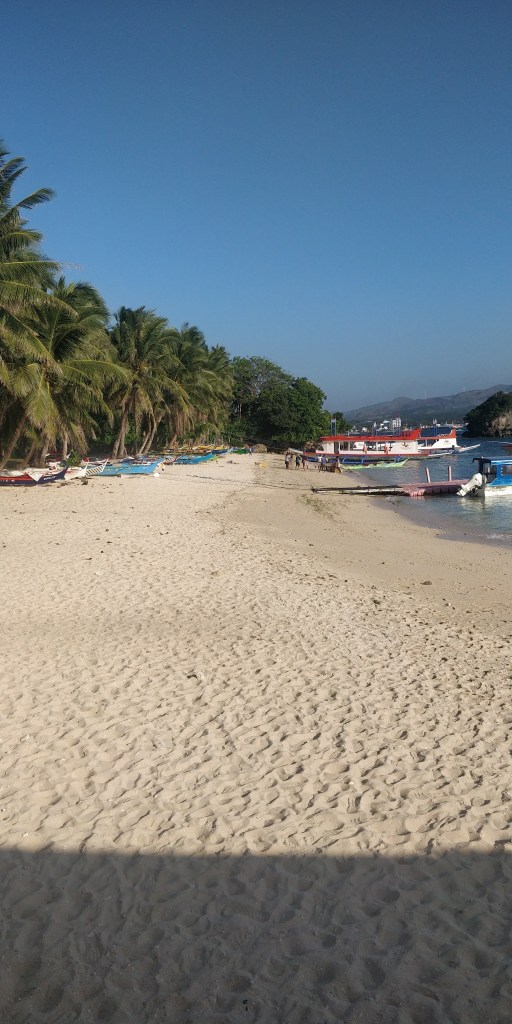
The sunsets were certainly spellbinding, a riot of colour every evening until the sun fell into the sea shortly after 6pm, perfect with a cold beer…especially good from the Republika Beach Bar in San Juan, a place that we kept returning to for the shade and balmy breezes, sea views, friendly dogs and  jazzy music.  We walked along the pale-sand beaches and swam in the clear waters of the many coves, the water was shallow off the coast unless the tide was high. It can be a little rocky so a pair of water shoes is good protection against the rocks, broken coral and  sea urchins. There were several waterfalls and swimming holes if you wanted a change from the sea. The best beach on the island fronted the luxury Coco Grove Resort but as its part of a marine reserve, anyone can visit and snorkel directly from the beach for a small fee (about €1.50)

The first place we stayed on the island- Zosimo’s Inn in Lazi – was quiet except for the roosters crowing and the dogs barking…all night. The second place, Mystical Inn, in San Juan was more a home-stay but we had a huge room with a fan and a balcony. It was much quieter at night but day began early  with hordes of fishermen congregating to chat and trade in the sandy laneway outside our accommodation which was only a few metres from the little beach lined with small fishing boats. The busiest time outside was between 6am and 7am when the throngs would rival Grafton St on a Saturday afternoon.  We had a bird’s eye view from our balcony where swallows and swifts flew past with dizzying speed and barefoot men stood around chatting.

My little green backpack was feeling the pressure of trying to squeeze too much into it or maybe it was falling apart with age. But it was certainly coming apart at the seams. There was a tearing sound when I hefted it onto my back and one of the straps was left dangling, making it impossible to carry. A small tear in the front pocket was yawning into a big hole. I mentioned the problem to Annie, our lovely landlady and suddenly, there was no problem. She got a man on the street to mend it for little more than a euro and so far, so good. The culture of mending things is alive and well here, as are pawnshops. Every little village has one or two and we never saw an empty one.

It’s always hot in the Philippines – about 30C by day and 24C at night – but it has been quite cloudy with intermittent sun and cloud. We have had quite a bit of rain, which is quite welcome as it cools things a little bit. But those warm tropical evenings are gorgeous, when the cicadas are chirping and the smells of the flowers is intense.

Leaving the island of Siquijor was hard – the longer we stayed, the more we liked it but there was another seven thousands islands calling. Out next hop was to Bohol, a two hour ferry ride from Siquijor and again the ferry was full. We are staying in the south western area call Panglao, really another island but connected to Bohol by two bridges. For something completely different, we are staying in a resort with a pool and a large air-conditioned apartment for a week. Luxury indeed at €210  for the week.

Living it up and relaxing. Isn’t retirement great!!!!!!😍

Island Hopping in the Philippines😎