Japan: Kyoto, City of Crowded Charms

We  arrived in Kyoto  in the dark after a six-hour journey from the Sandan Gorge. We hadn’t planned on such a long drive, thinking that we would stop somewhere along the way but we just kept going. Driving conditions were good (no rain) and the lure of Kyoto, a place that is on the itinerary of every visitor to Japan, enticed us on until we found ourselves in an empty carpark in Arashiyama, a western neighbourhood of Kyoto and near several tourist attractions.

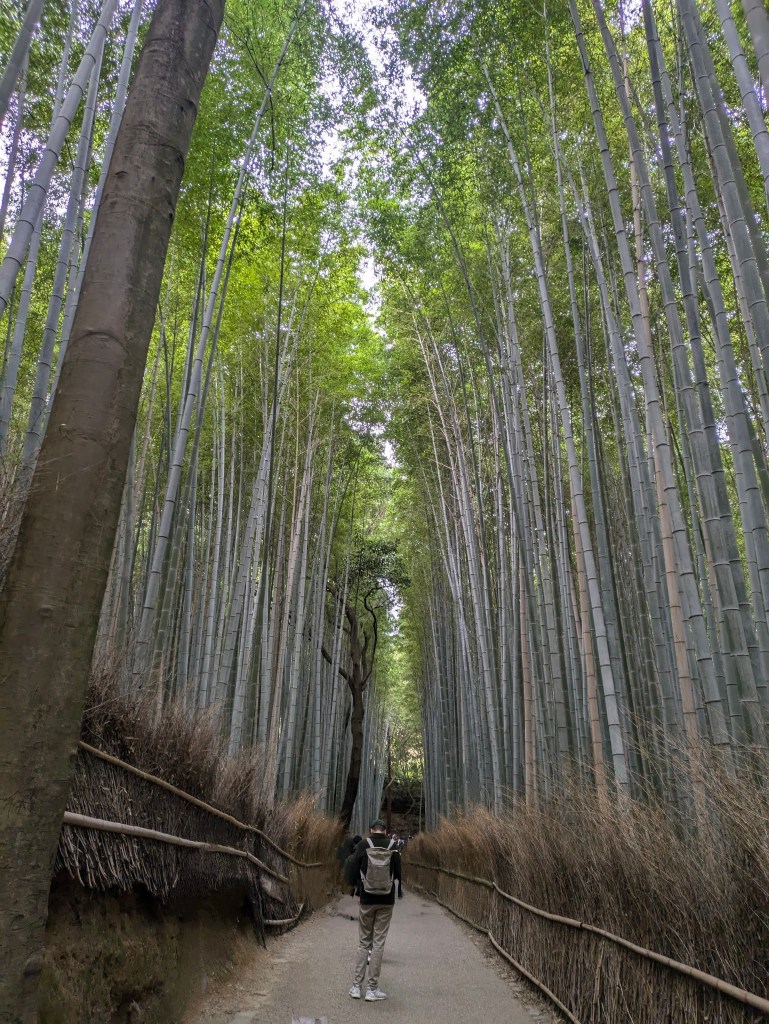
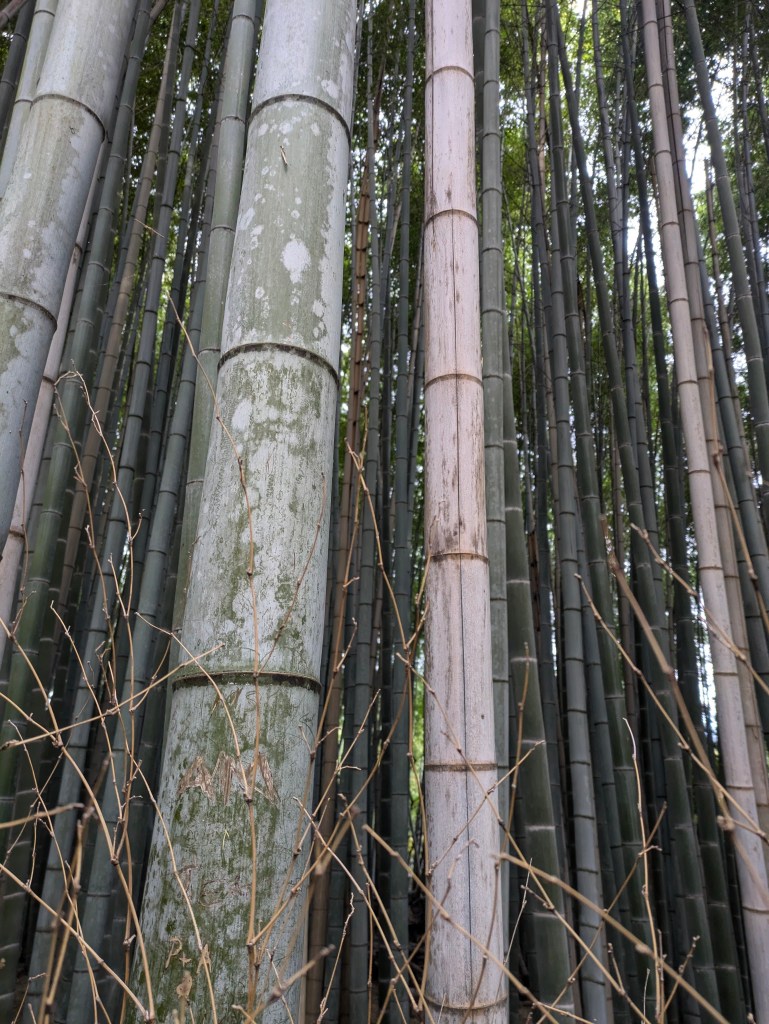
It was a cool, bright morning, just after 7am, as we hurried over the bridge of the wide, Katsura River, where egrets were busy fishing beside some empty tourist barges that were still moored, waiting for the day to begin.  We were on our way to see the famous Bamboo Forest and hoped to beat the crowds by our early morning start. It was looking hopeful until we skirted by the side of nearby Tenryu-ji temple (The Temple of the Heavenly Dragon) and saw groups of people coming from both directions, all about to converge in the Bamboo Forest pathways. It wasn’t as crowded as it would become later in the morning  but it was certainly busier than we hoped. The  towering bamboos were still an enchanting sight with their faint rustling leaves and the morning light peeking through the crown of the trees. There was even a hush in the crowd as people walked slowly, gazing upwards, stopping to allow others to get their photos. As we walked away from the whispering forests, coaches were pulling into the carparks, disgorging noisy passengers, the streets were fulling up and the tourists shops were beginning to open their shutters.
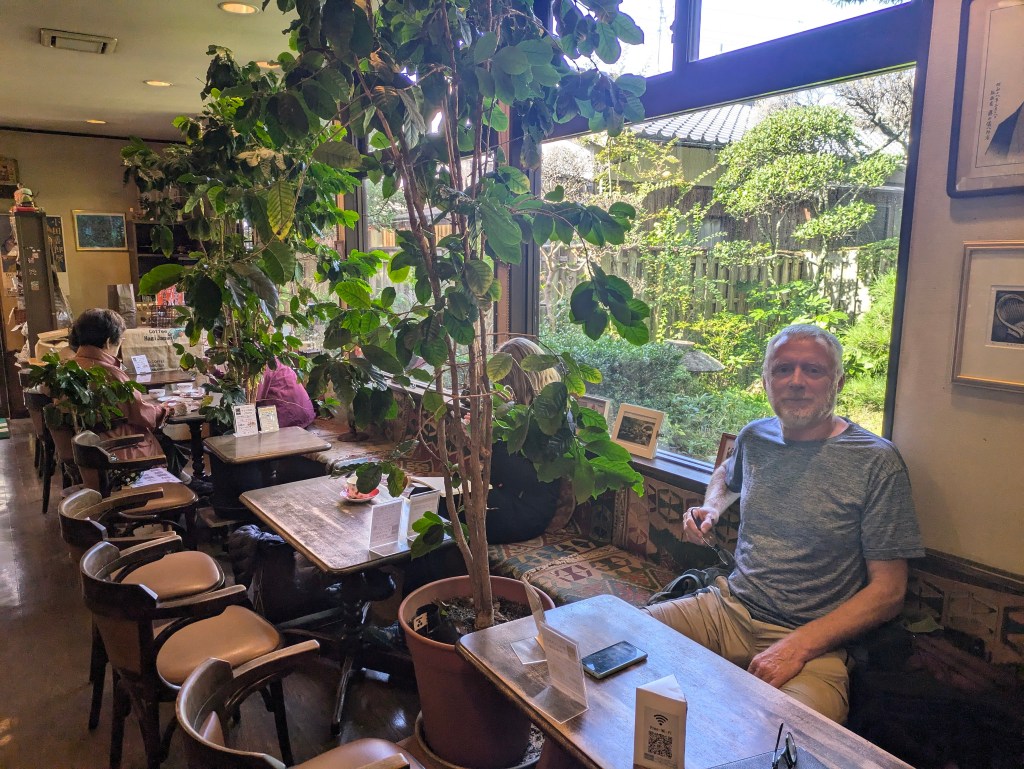
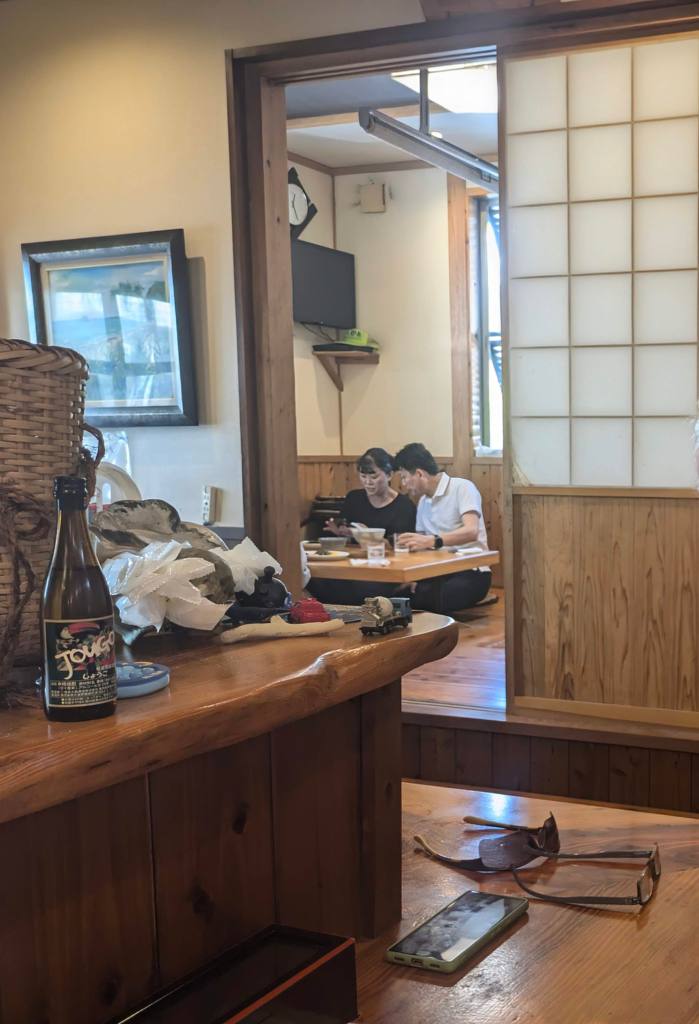
Surprisingly finding an open café at 8.30 am was difficult but eventually we struck gold with a little establishment run by a husband and wife team. He had the calm demeanor of a benign Buddha, she was a masked whirl of energy, reciting the menu, seating people, serving food and settling the bills. The atmosphere was busy, warm and steamy and a welcome place to sit down and escape the chill of the morning (it was about 7 degrees). The menu was simple, toast with butter, toast with jam, toast with cinnamon and the additional option of hard-boiled eggs. We had seen sliced pans of  white bread in the supermarkets with various thickness but far thicker than we have at home. Half a sliced pan could contain a mere three or five slabs of bread (calling them ‘slices’ doesn’t do them justice.) Anyway, the toast in this café was made with these thick hunks of processed bread and mine which was  smothered in crunchy cinnamon brown sugar tasted divine.
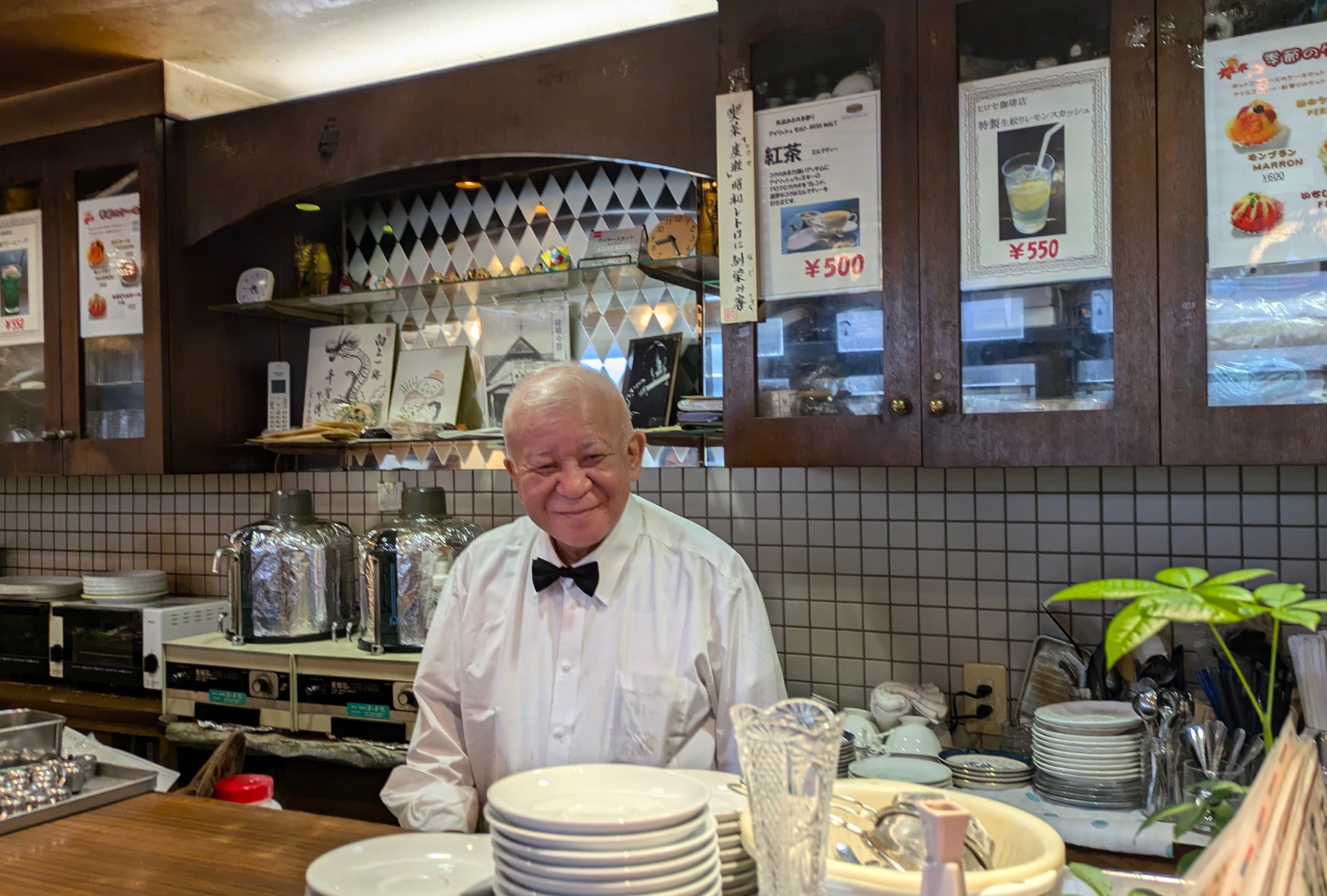
Breakfast Café, Kyoto

Kyoto has been described as a city of dreams, a place steeped in twelve hundred years of history, built as the capital of Japan in the 8th century and  home to the Imperial Court until 1868. It has roughly a quarter of Japan’s national treasures, countless shrines and temples and seventeen sites recognized by UNESCO as World Heritage Sites. It is located in a lovely area with rivers, canals and a backdrop of green mountains. When you walk the streets, the past is a constant presence. There are ancient monuments everywhere, tucked away in Zen gardens, at the end of backstreet alleys or even beside traffic-choked thoroughfares, all bearing witness to more than a thousand years of history. But expect to share it with lots of other visitors, clicking their experiences into the Cloud with smartphones.

In a city crowed with people from all over the world, our major sport was people-watching especially as this was the first time in Japan that we were exposed to such a variety of people. We remembered Fukuoka in Kyushu, where we were given a voucher worth a thousand yen as a welcome gesture to foreign visitors,  a group who were so thin on the ground that we were easily identifiable. Kyoto has no need of such inducements, in fact all hotels charge a ‘tourist’ tax. There were English menus, knives and forks and vegetarian (even vegan options) in the restaurants. In one way, it’s the ‘real’ Japan but watered down for Western appetites and sensibilities. Kyoto was easy, almost designed for tourists and I confess to feeling a certain smug superiority. We had already experienced sacred temples and shrines, even trekked holy mountains and through silent forests to reach them, we had struggled with menus using Google Translate and rarely met anyone who spoke English.  Of course there’s are good reasons why people gravitate towards Kyoto but the volume of tourists has been steadily increasing especially since covid (and the favourable currency rates is another inducement). Lets hope that it doesn’t become a victim of its own success.

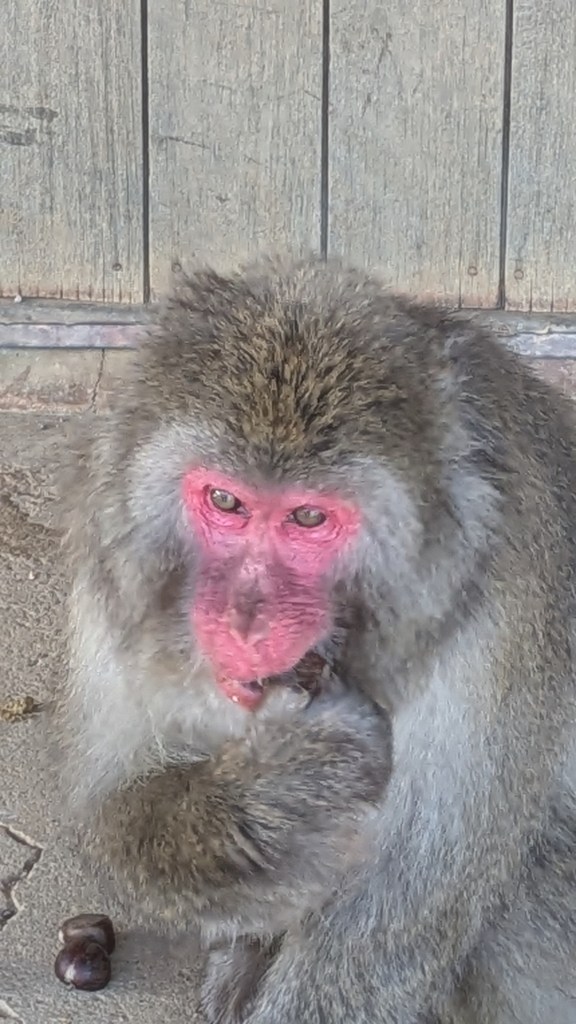
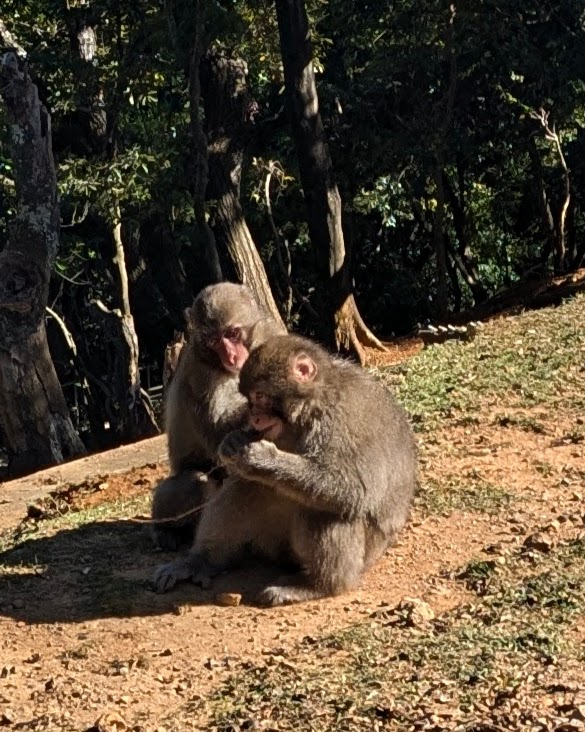
It we were fans of people-watching, we weren’t the only ones. In the monkey sanctuary not far from the Bamboo forest, troupes of macaque monkeys roamed freely and seemed to enjoy looking at all the humans looking at them. Reaching the monkeys involved a twenty minute uphill climb through forests and it could have been a tranquil experience  except for  constant loudspeakers in several languages issuing a list of instructions, telling visitors not to feed the monkeys, not to display any food, not to stare at them (they don’t like it) and to keep a distance of at least two meters away from. It was difficult to obey the distance rule as one young macaque ran over my shoes. They were adorable, especially the babies, with such expressive faces and they appear to be thriving. Although they are not caged, they only stay in the area because they are fed. These monkeys, often called Snow Monkeys because they have adapted to live in cold climates, usually make their home in the mountains to the far north of Japan and are not endangered. Although, it was dressed up as education and there were lots of interesting facts, it still carried a whiff of exploitation for commercial gain.
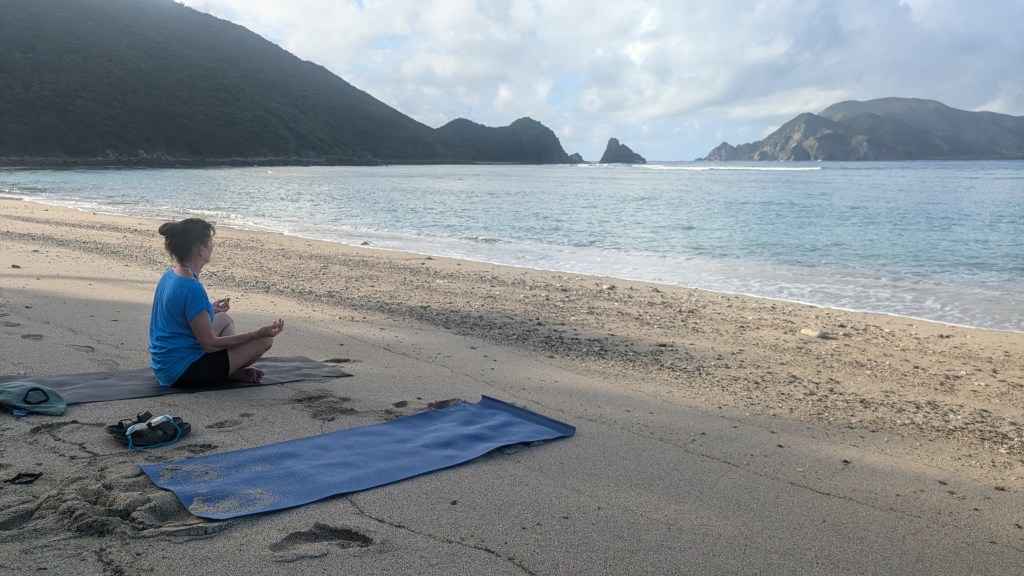
Although Kyoto was crowded, there were still spots where you could sit by the river and listen to birdsong and  the flow of the water particularly in Arashiyama which really was a lovely area especially in the evenings when the majority of visitors departed. On our second morning after a particularly cold night in the van when temperatures dipped to 2 degrees, we struggled to the park to do some yoga and straighten out our stiff limbs. It was the first time I  did yoga with a coat, hat, gloves and shoes on. A stiff breeze blew off the water, a big crow cawed at us from a treetop as if we had just invaded his territory while a dozen well-muffled senior citizens practiced Tai Chi  on the opposite riverbank.  A siege of egrets flew over the river to land in the stream near us with the sun turning their wings a glinting silver. Despite the cold, there was something magical (and almost zen) about the setting. The heated toilet seats in the public loos that we had scoffed at the beginning were now really appreciated by  our cold bottoms
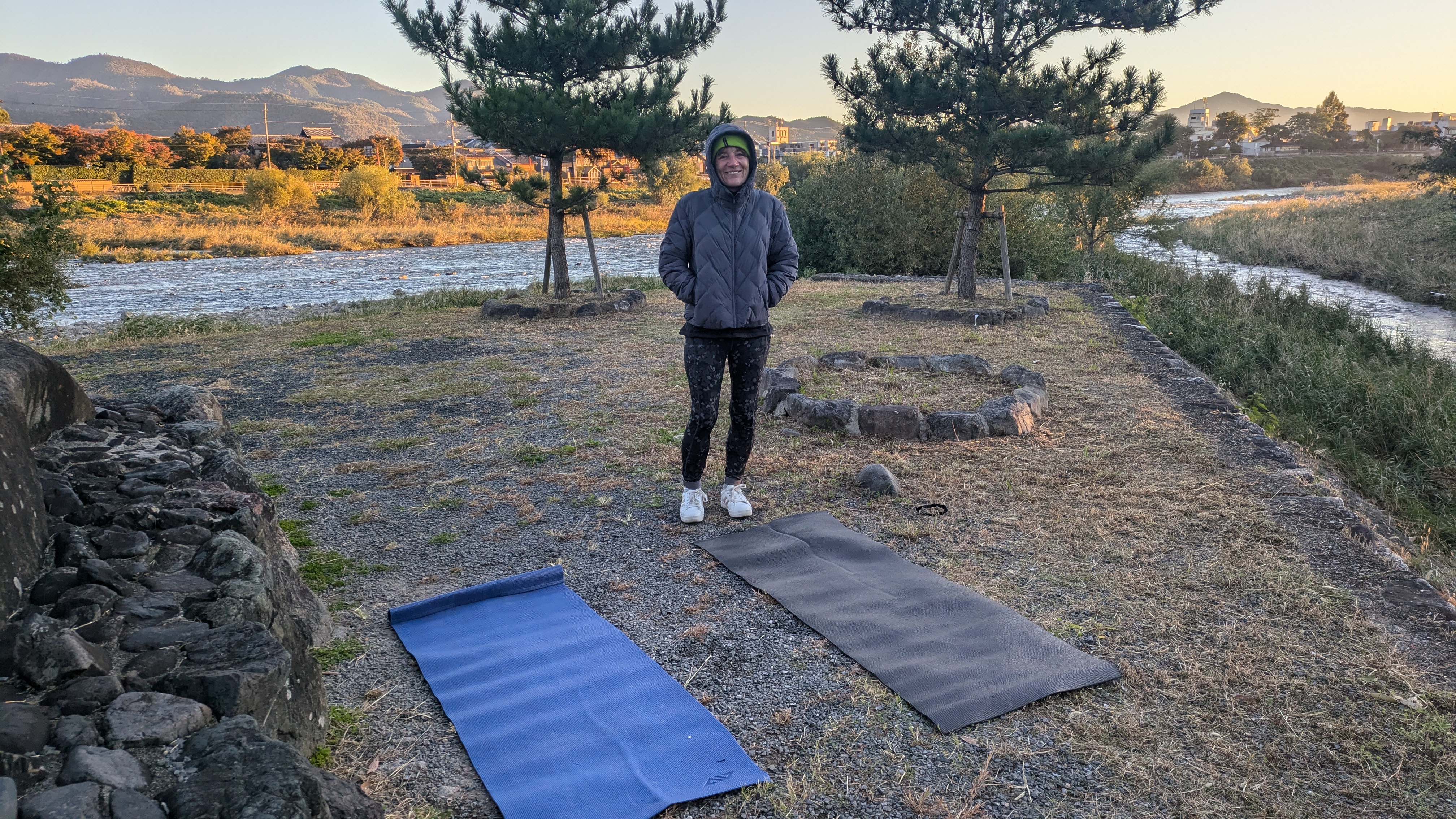
Chilly’ Yoga by the River in Kyoto

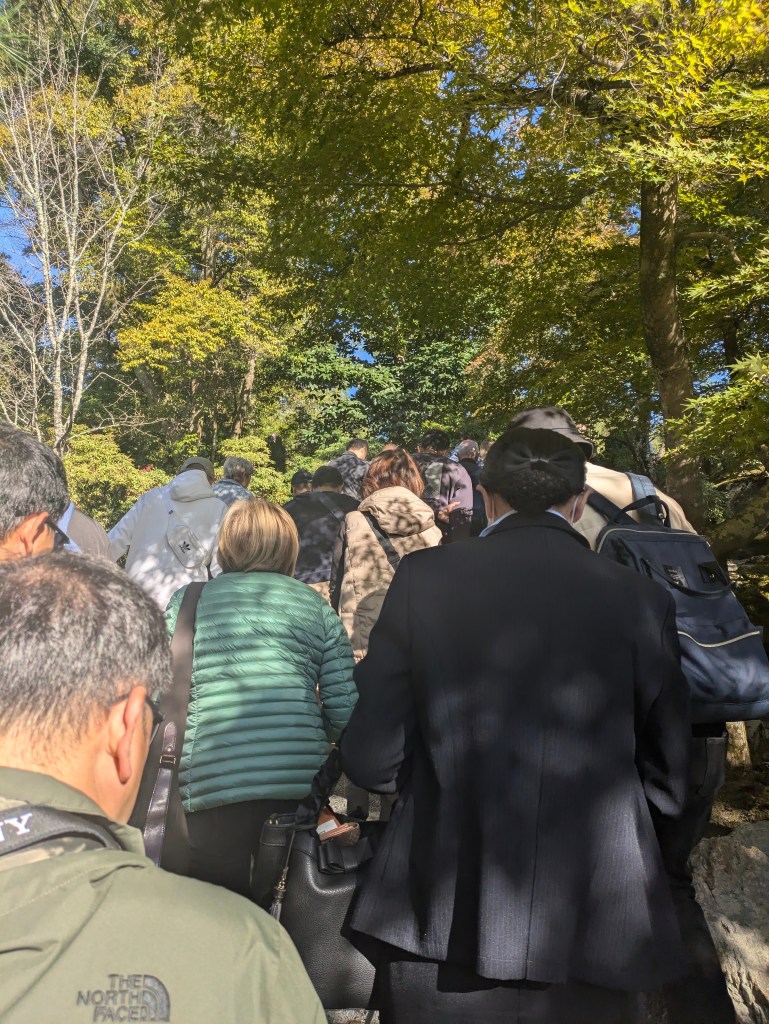
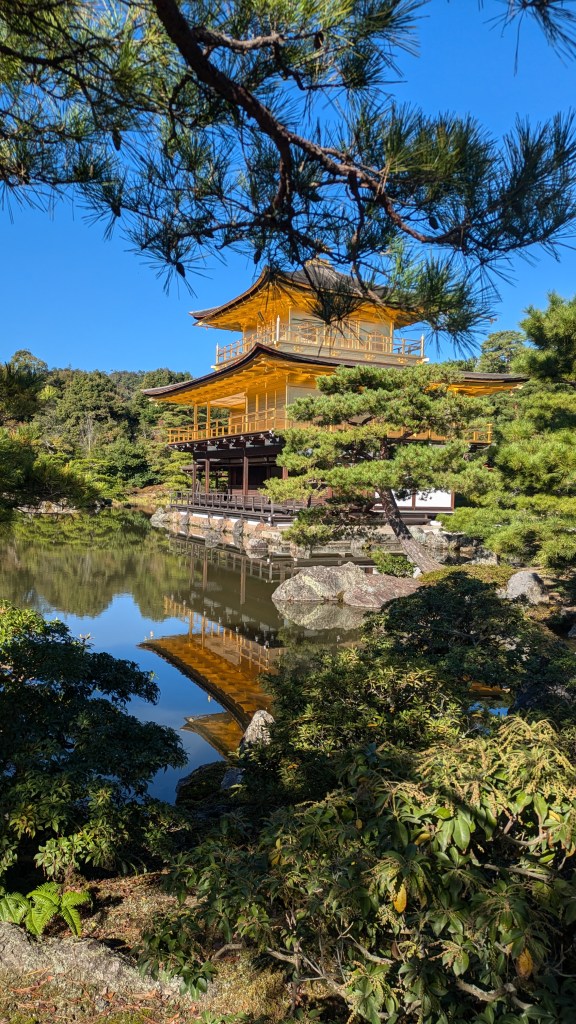
A little later we joined the crowds of mainly tour groups visiting the Golden Pavillion, a Zen temple of Shokoku-ji School of Rinzai Buddhism.   We read that it was one of the most important attractions in Kyoto, that visiting Kyoto and not seeing this pavilion was akin to going to Paris and not bothering to visit the Eiffel Tower. Despite the crowds, it didn’t disappoint especially as the sun turned it into a truly golden stupa which reflected off the surrounding lake waters. There was a collective gasp from the crowd  as we got the first glimpse just inside the entrance gate before shuffling along in a sea of people.
A visit to the nearby Zen gardens of Ryoan-ji, which contains one of the most famous and enigmatic rock gardens in all of Japan, was a less crowded experience. Zen gardens are intended for meditation and contemplation where a special place is given to every plant, rock and grain of sand in an effort to create harmony, tranquility and balance. The small rock garden was created in about 1500 by a revered monk and has been defying attempts to explain it since then. Enclosed by an earthen wall, fifteen carefully placed rocks seem to drift in a sea of naked white sand. The cool of the morning had given way to warm sunshine  which cast shadows over the rocks and Caoimhin was scratching his head and wondering what all the fuss was about. But maybe the point is to interpret the garden in an individual way and not to seek the ‘true’ meaning, to look only for your own truth.
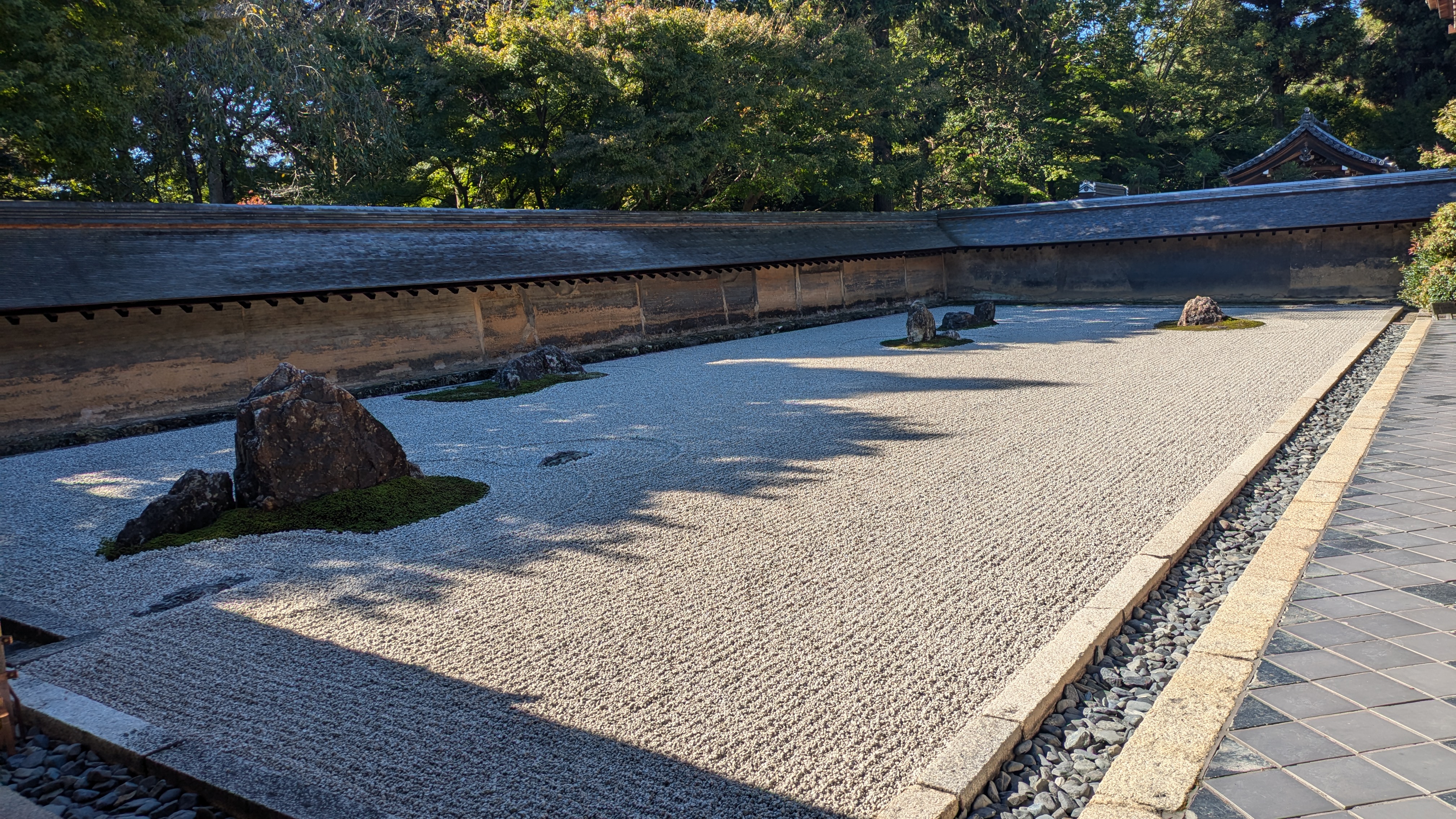
Famous Zen Rock Garden, Ryoanji, Kyoto

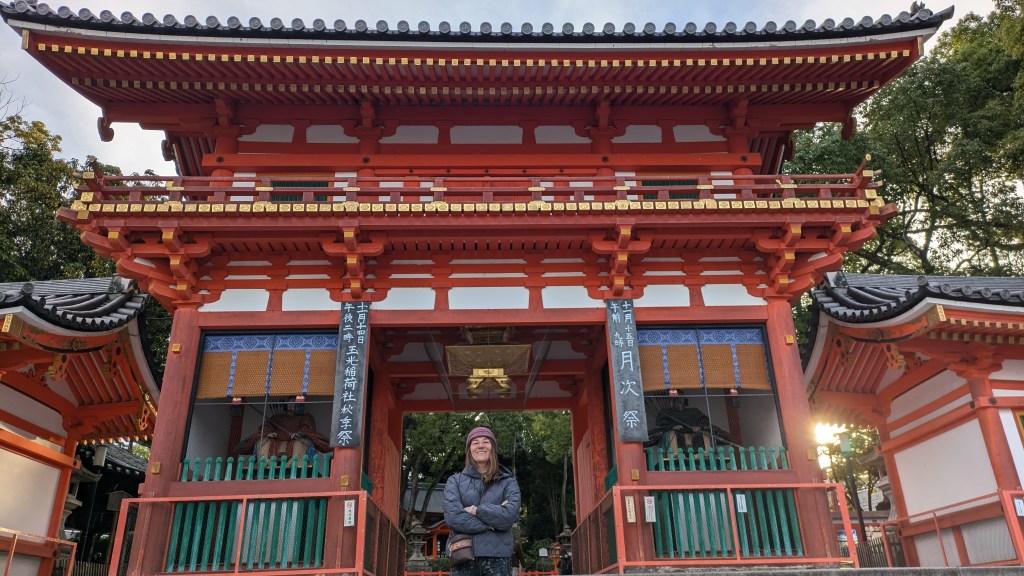
Downtown Kyoto was not very Zen ….crowded with tourists, traffic and tourist shops but in the midst of all this mayhem was Yasaka Shrine, a huge shrine with vermillion gates, regarded as THE place in Kyoto to welcome in the new year with a fire festival where fragrant herbs are burnt. We moved from our little oasis out in Arashiyama and parked overnight near the beating heart of this shrine.
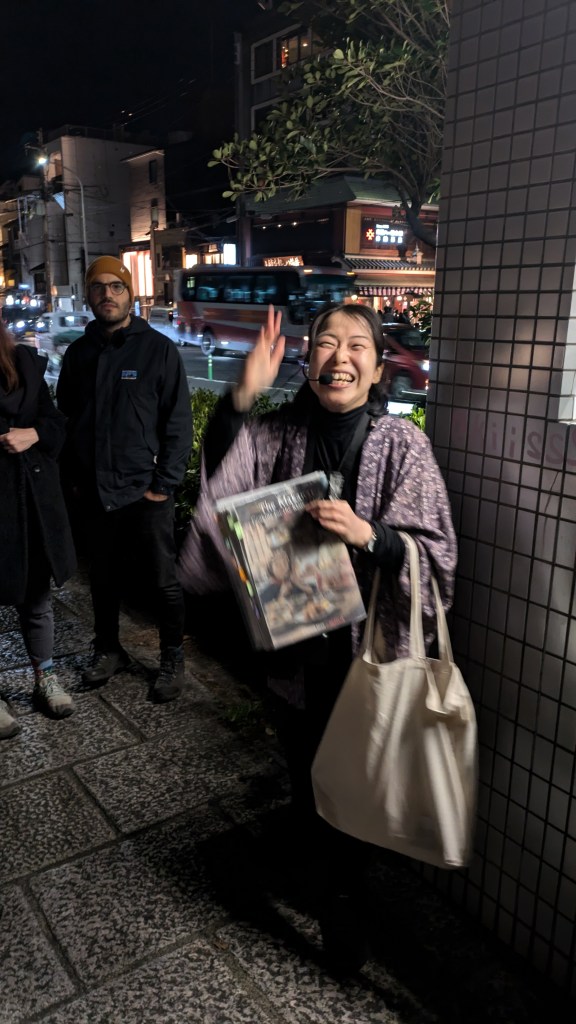
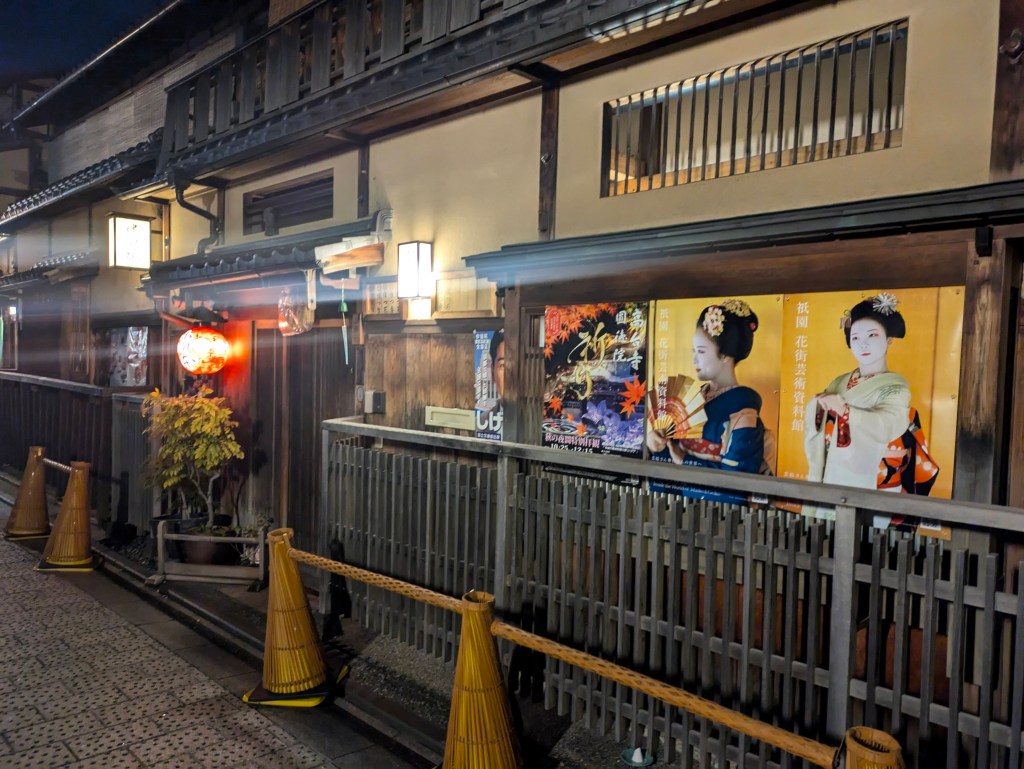
Tourists swanned around Kyoto dressed in kimonos, clattering along in wooden clogs and pretending they were Geishas.  We were interested in gaining some insight into the real Geisha culture so we took a night walking tour. Our guide, Saki (not to be confused with sake, the national beverage) was enthusiastic, funny and knowledgeable. Geishas are a declining profession and when Saki explained their vigorous training, it wasn’t so surprising that the numbers are dropping. If a girl wishes to be a Geisha, she must be young, about fifteen to eighteen and she must leave her family and live in one of the special boarding houses in Kyoto. Training takes a minimum of five years and involves classes in etiquette, singing and dancing. The trainees are not paid and cannot have a smartphone or go to McDonalds (Sari’s words.) They are primarily entertainers who work in the teahouses (these are drinking houses where businessmen entertain guests). One can only go to a teahouse by invitation, prices are never discussed but they are calculated on a sliding scale depending on your ability to pay – the richer you are, the more you will be charged. You will receive your bill weeks after when the sense of enjoyment has faded. Entertaining in teahouses was once very much part of Japanese business culture but as Japan’s fortunes have declined so too have the glory days of the teahouses and consequently the Geisha profession. Geishas have to resign if they marry but as the numbers have declined, the rules have relaxed a bit and they are allowed to practice if they divorce and foreign girls are allowed to become Geishas where once it was compulsory to be Japanese.
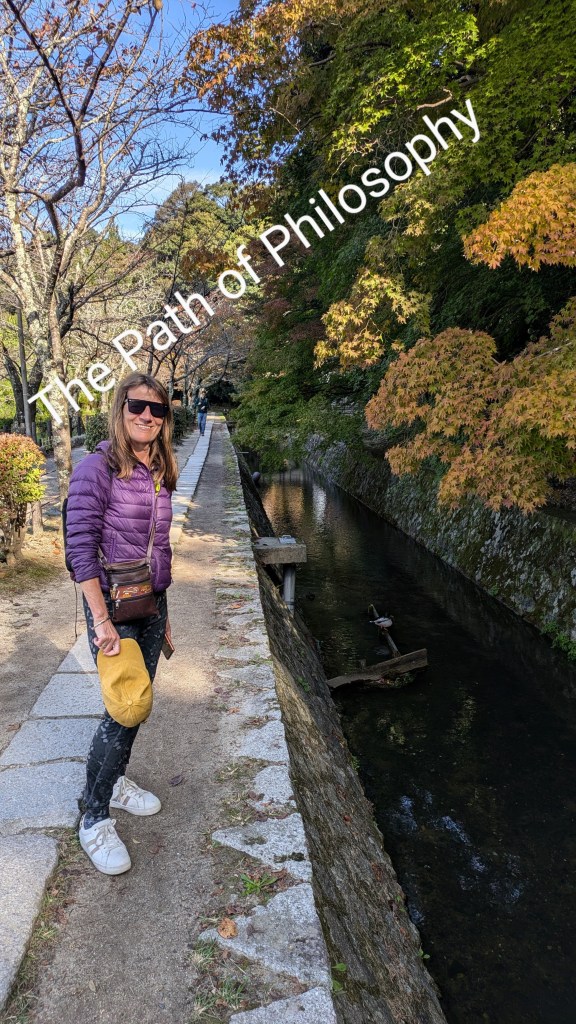
With so many places to visit in Kyoto, it was impossible to fit them all in.  Sometimes it was the name of an attraction that caught our attention and so it was with The Path of Philosophy in the Northern Higashiyama neighbourhood of Kyoto. We visited on another early morning where for a change, there were few people. Its very popular when the overhanging cherry trees are in blossom. Along the way, we met a lovely Australian couple who enquired if they were actually on the path….none of us knew where the path began or ended but maybe that was the true philosophical question. When saying goodbye to the Aussies, both Caoimhin and I found ourselves bowing without even realizing it. Maybe we have been too long in Japan😍

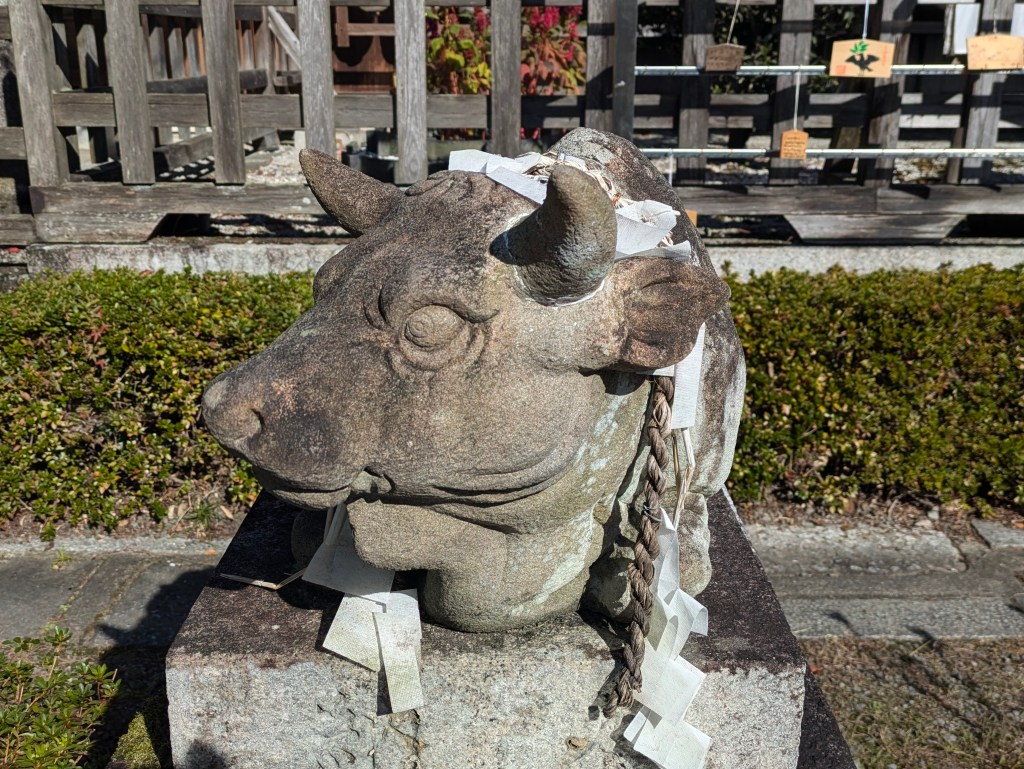
Nevertheless the path was tranquil and meditative, meandering along by a canal carrying gentle, murmuring water from Biwa Lake. There was the occasional duck and lots of temples. We paused at a shrine where a statue of an ox was reputed to have healing powers. If you rubbed the part of your body that was ailing and then rubbed the equivalent part of the sculpture, you would be cured.
With our wedding anniversary approaching and the cold nights, we went on Booking.com to find a hotel or guest house.  When looking for hotels in Japan, there are a few things that you need to be aware of, apart from price and location.  If it is a contactless check-in, if there is a mention of privacy and sound-proofing and/or it is Adult Only, then you may be about to book into a Love Hotel. They tend to be cheaper than ‘normal’ hotels and could be a real bargain just as long as you know what you’re getting. We read of one man’s hilarious account of inadvertently booking  a love hotel for two nights.  His first difficulty was actually checking in, as there was no reception desk and he couldn’t locate his room or his keycode. He had some Japanese so he was able to phone an emergency phone number and a person eventually materialized. His next problem was that he kept getting locked out of his room. Everytime he left the room, his keycode was disabled. As he said, these rooms are not really designed for coming and going (so to speak), when you’re done, you’re done. The hotel we found was not a love hotel, the reception was manned by two guys and although it was 2.30pm and check-in was 3pm and all the rooms were ready, there was no possibility of been checked in a minute sooner than the designated time.

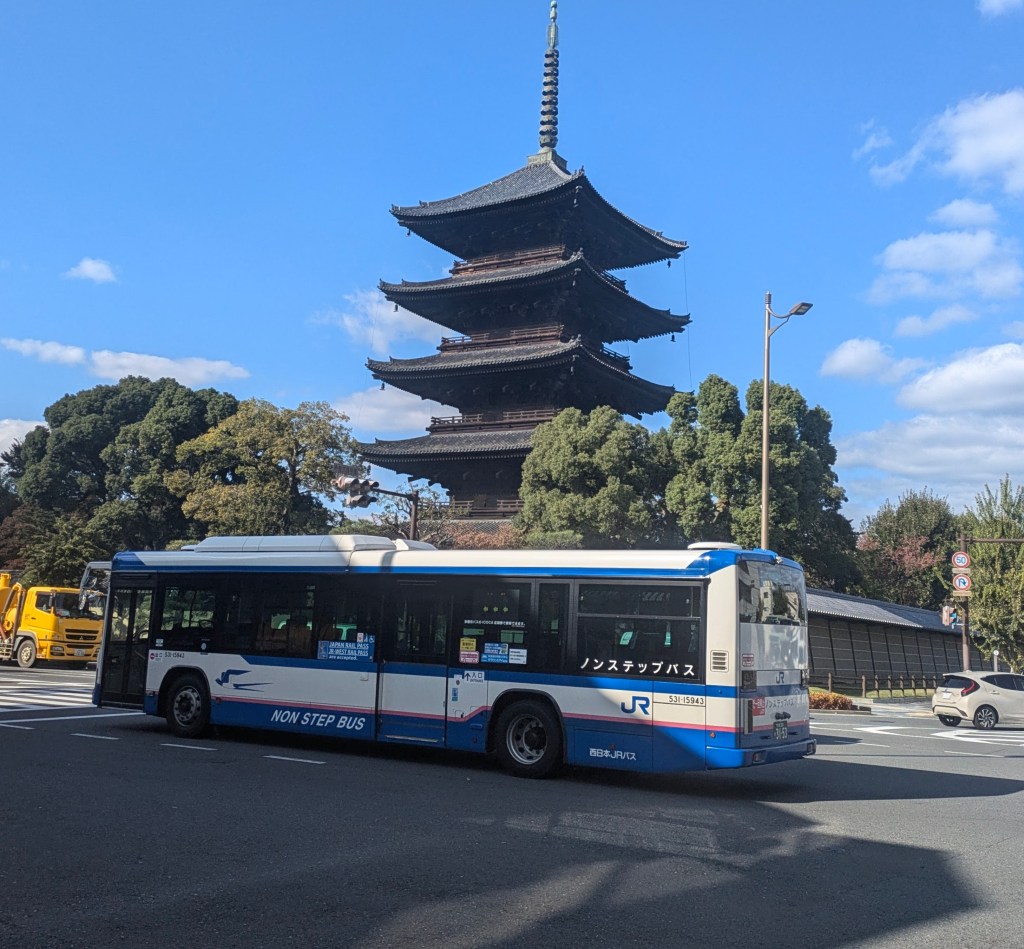
Although our hotel was not in a touristy area, a five storied pagoda which was built in 826 was only a 5 minute walk away. This Toji pagoda stood at 57 meters ,making it the tallest wooden pagoda in Japan. Not only was it a beautiful silhouette against the skyline but it was also earthquake proof and the large roofs were designed to protect the delicate wood underneath from the wetness of rain and snow.
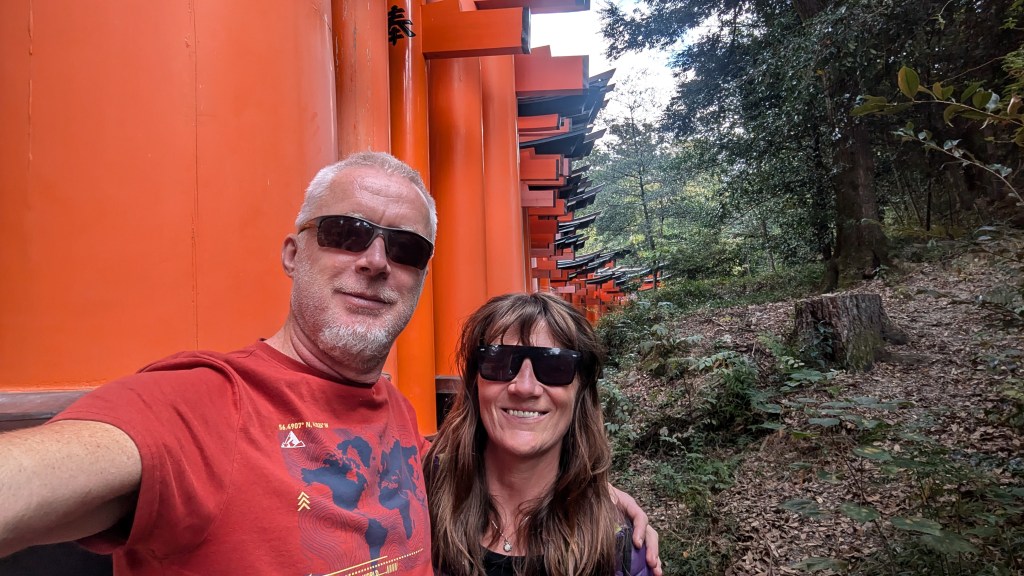
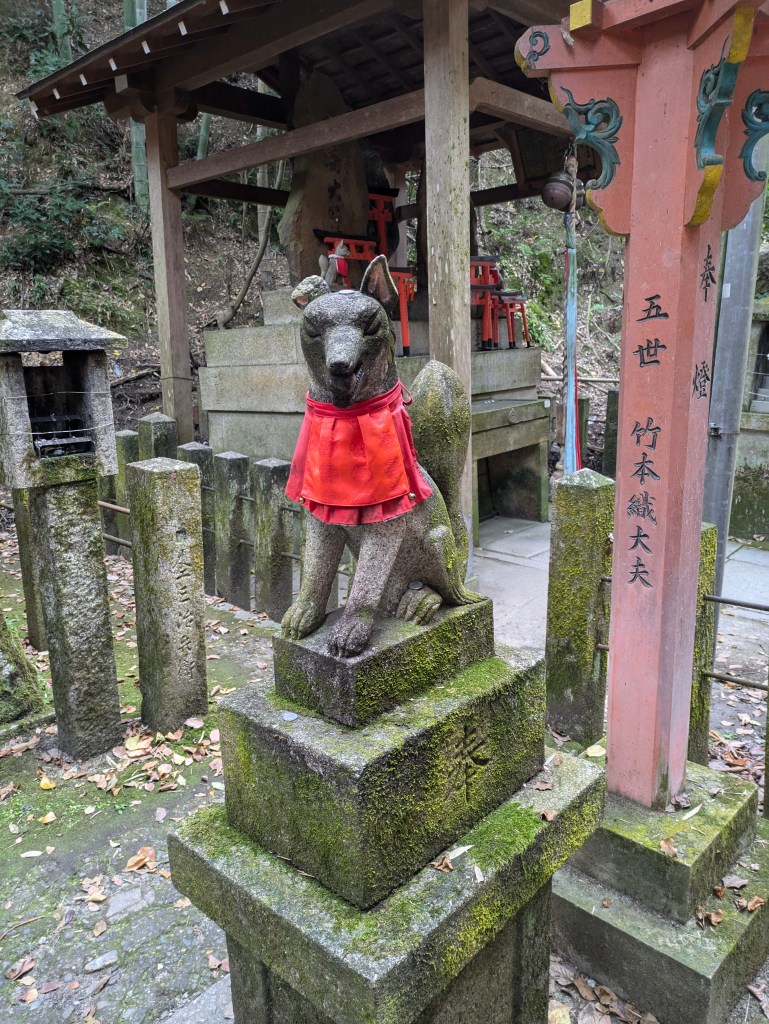
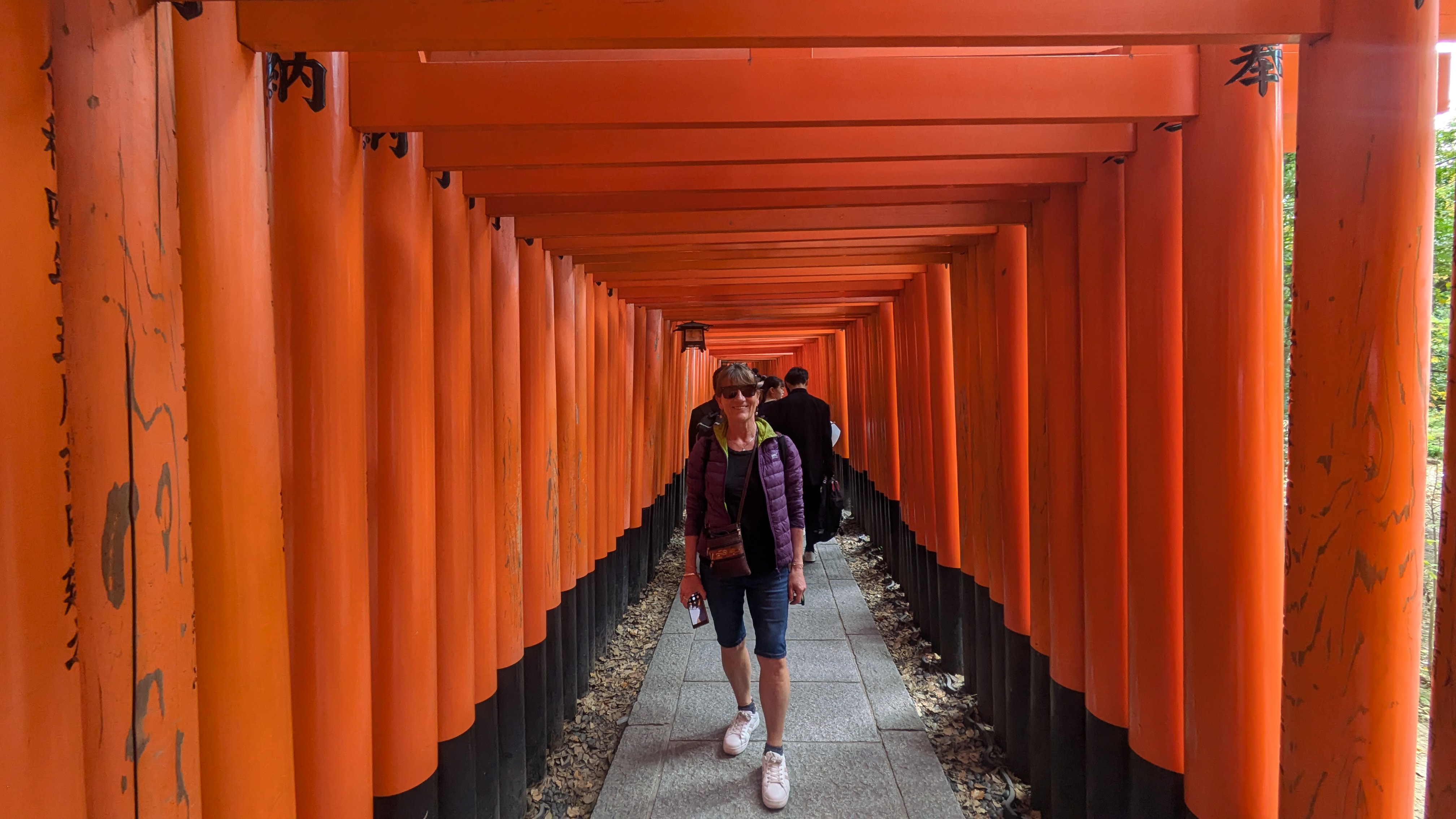
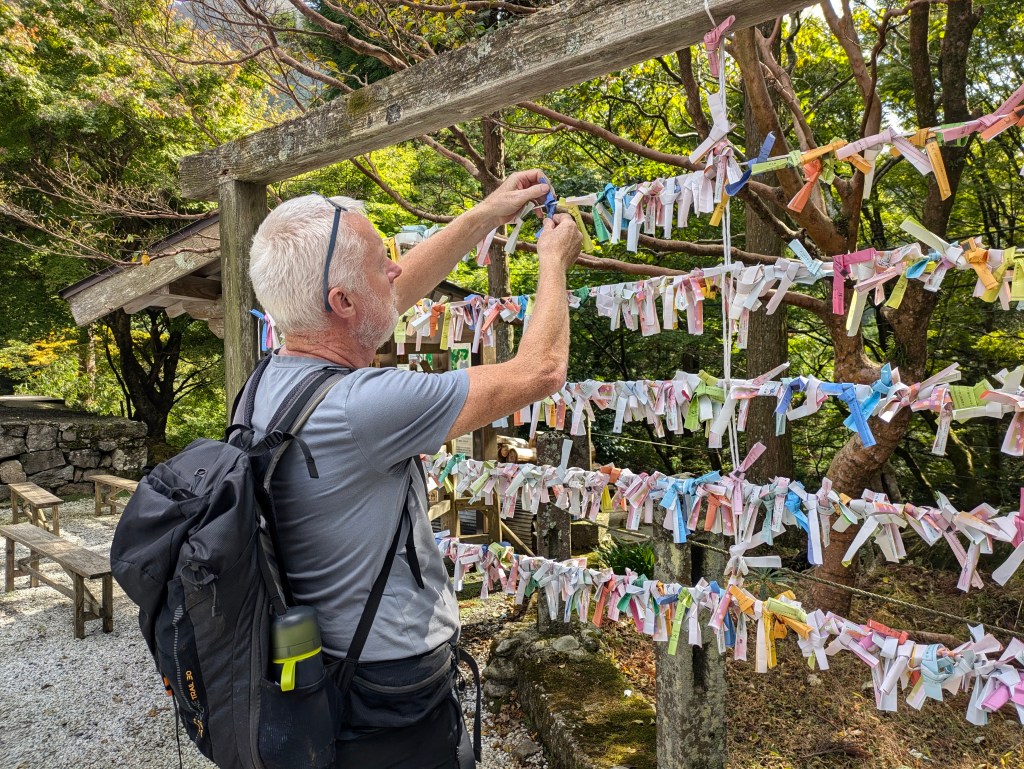
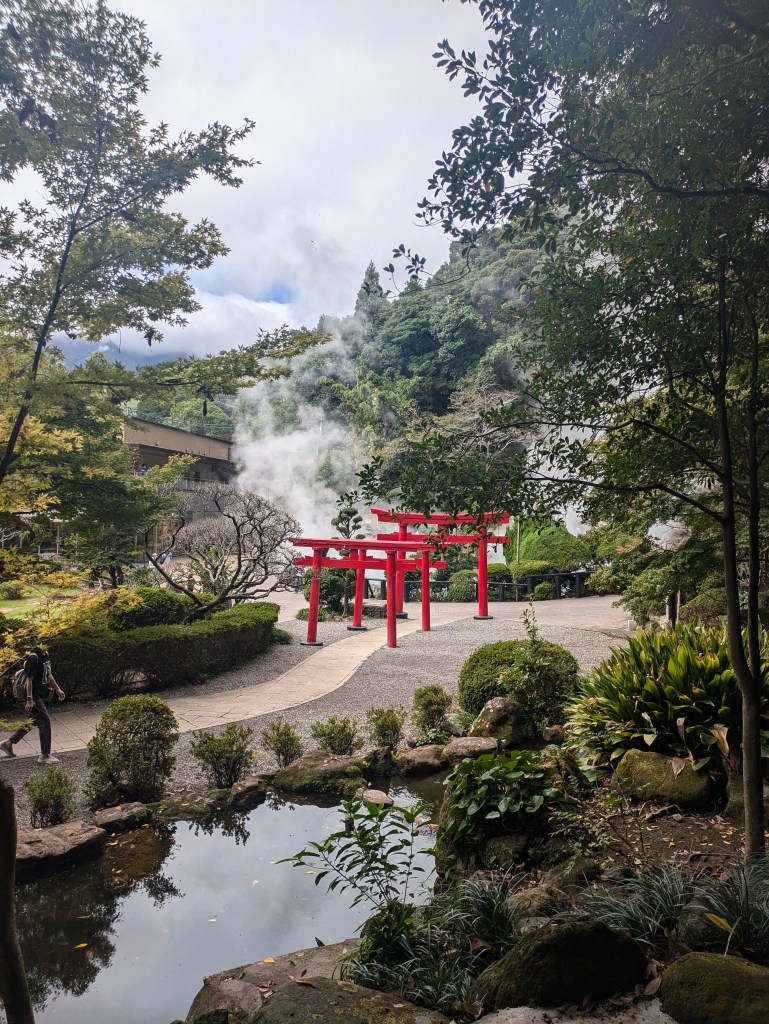
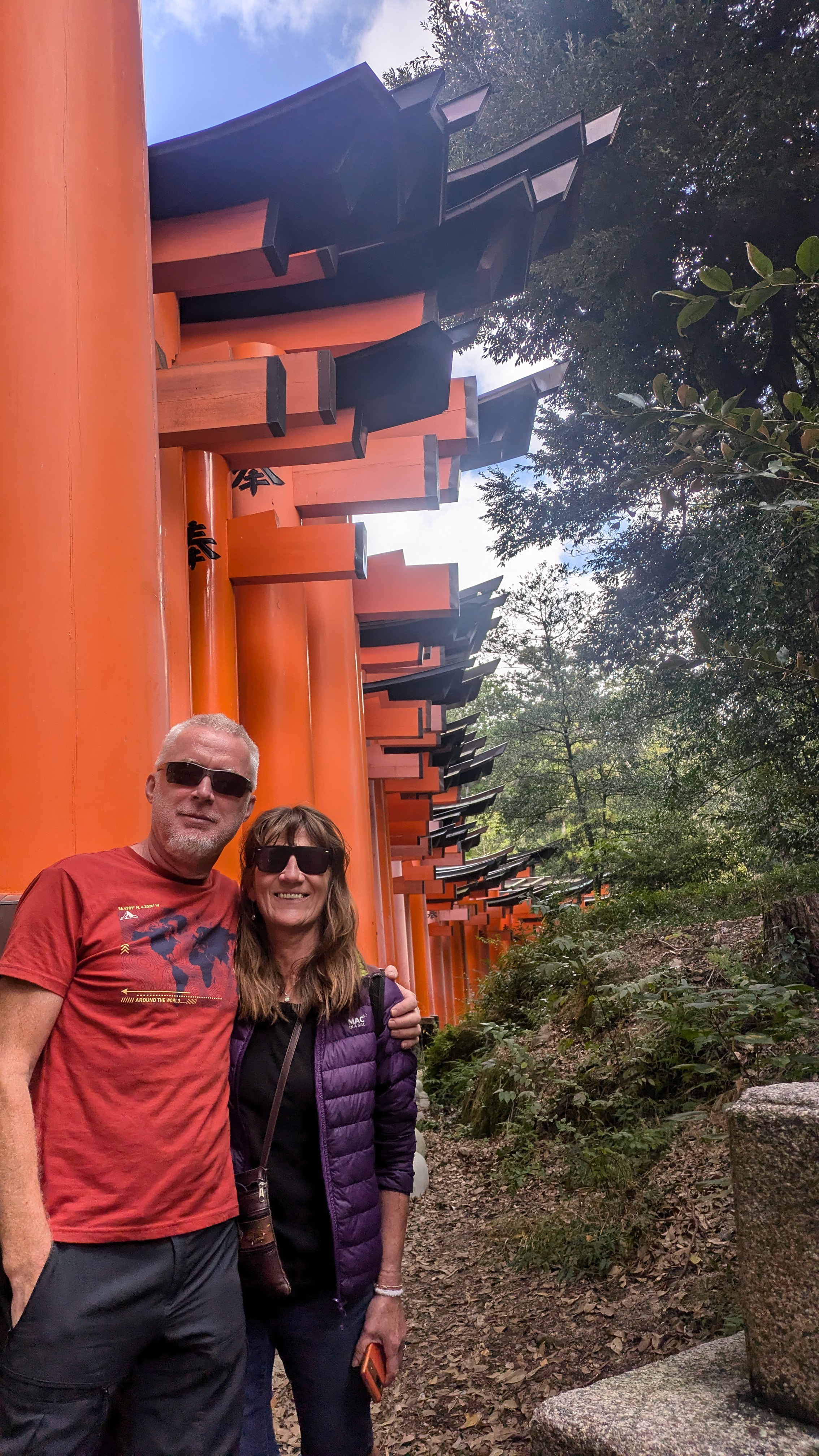
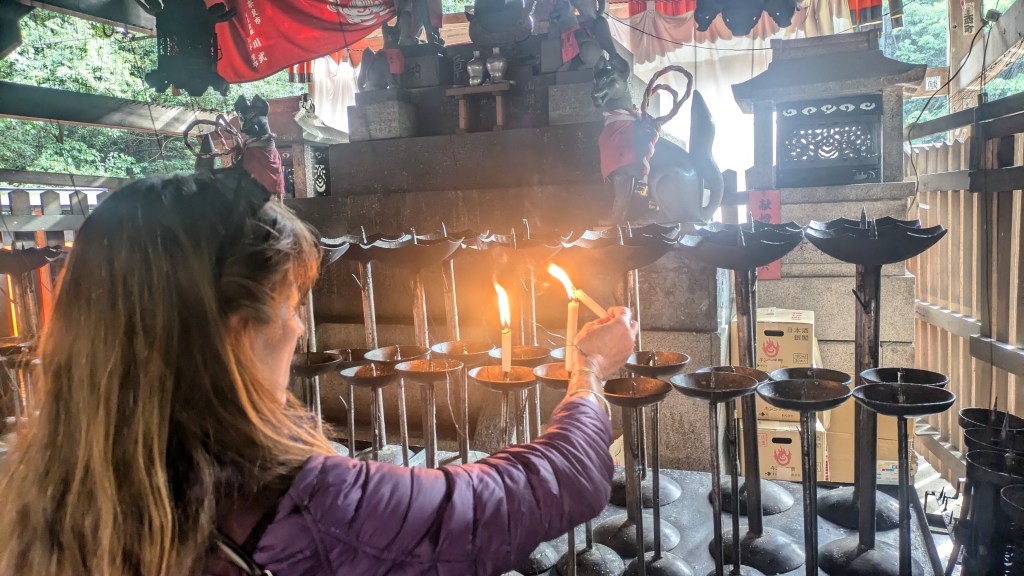
A long tunnel of bright orange gates stretched uphill, mesmerizing and a bit disconcerting, with glimpses of forest and cemeteries in the spaces between the gates, known as torii. This shrine called Fushimi Inori Taisla, at the base of the Inori mountain dates back to 711 and is free to enter and open all day. We visited in the morning but the middle of the night might have been better to avoid the throngs of people. Over the years worshippers have donated gates to express their prayers and their appreciation until at least ten thousand gates stretch up the hillsides making an enthralling spectacle. There were statutes of foxes along the route which is the symbol of the shrine.   This was the last shrine we visited in Kyoto before we headed back to Osaka..
Back to the beginning where we started, almost six weeks ago, we handed back the van which had taken us on our journey through Southern Japan. It has been an amazing round trip from the vibrant city of Osaka, to the island of Amami in the East China sea. We began with unseasonably hot weather, endured torrential rain for days on end, had phone alerts warning of typhoons, mudslides and flooding, slept shivering in the van when the night-time temperature at one point hovered around two degrees. We camped out in forests, at the base of holy mountains and on the shores of deserted beaches. We climbed thousands of steps to reach mist-shrouded temples and shrines, cycled over water as we island-hopped across an inland sea on bridges that at times spanned several kilometres. We have been in places so remote that it felt like we were the only two people left in Japan and we have waded in a sea of people at the popular attractions, particularly in Kyoto. We will always associate Japan with trees, tall majestic cedars, maples in their autumn coats and everything in-between. After six weeks, we realize that we have barely scratched the surface.

Japan remains an enigma. The people are friendly but love silence. Most live in cities but revere nature. The country is industrial but is mainly forests and greener than Ireland. It is very wet even when it isn’t the rainy season. As we turn towards our long journey home, we need time to process our journey and reflect on this fascinating country.

Thanks for reading and for your company along the way

Till next time x
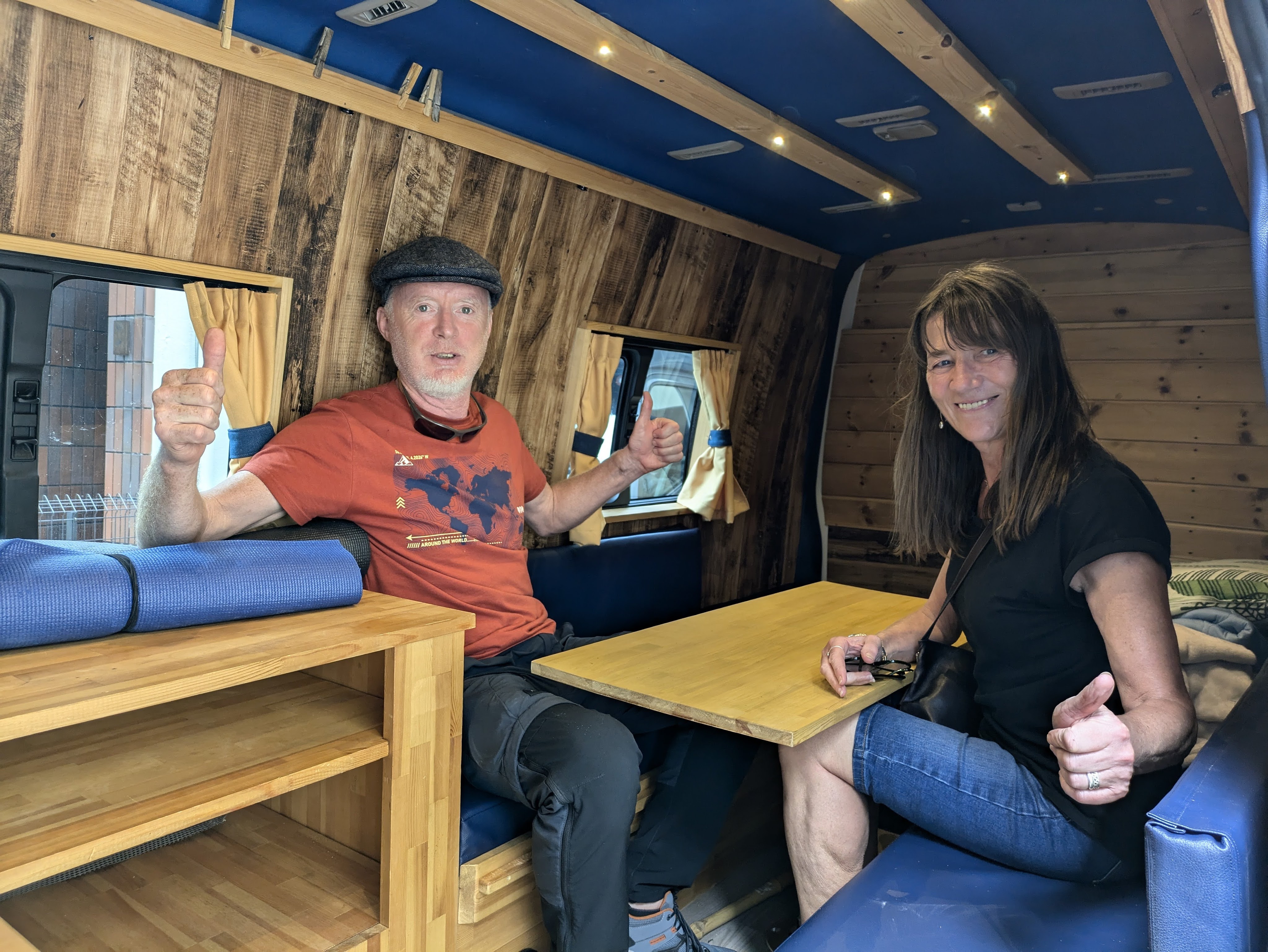
Inside a Tangerine Dream
Japan: Kyoto, City of Crowded Charms

Japan: Holy Mountains and Glorious Gorges

Sandan Gorge, Japan

Our visit to Fukuoka didn’t start well. The traffic was horrendous as we made our way into the city from Nagasaki. Fukuoka is the largest city in Kyushu (one of the main four islands in Japan) and is one of Japan’s ten most populated cities…and it certainly felt like it when we were there.  With its closeness to the Asian mainland (closer to Seoul than to Tokyo), Fukuoka has been an important harbor city for many centuries and was chosen by the Mongol invasion forces as their landing point in the 13th century. It is often called a ‘mini’ Tokyo, it even has a smaller version of Tokyo Tower and as we don’t plan on visiting Tokyo, Fukuoka seemed like a good option.

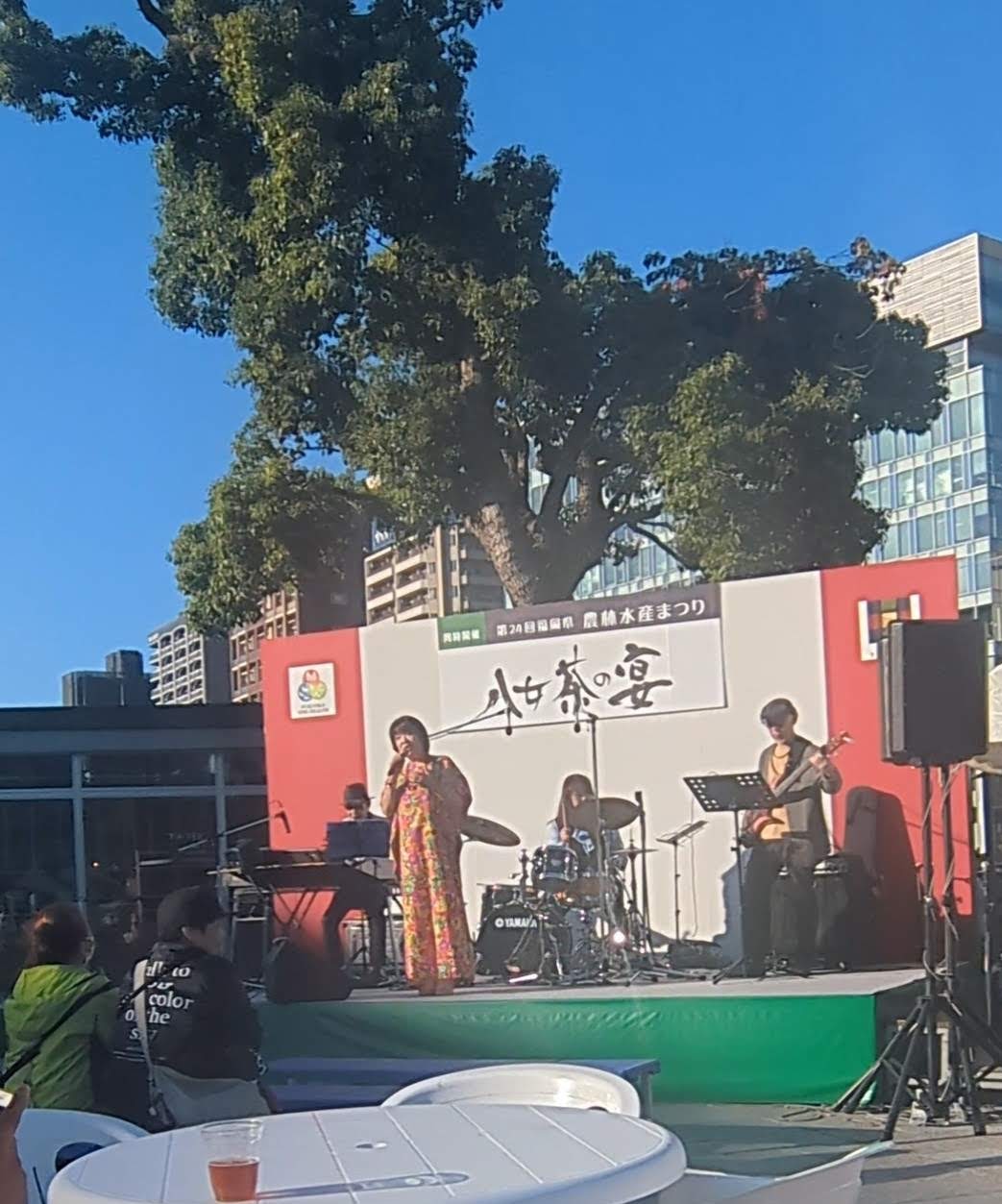
We thought that we might treat ourselves to a hotel but the reasonably-priced hotels/guesthouses were booked out so we resorted to searching for a parking spot close to public loos. In the city centre, we found a possible spot that met our criteria (proximity to toilets) but it was just off the main road with roaring traffic so our search continued. Google directed us to another parking area which involved a heart-stopping lurch across four lanes of traffic into a tiny alleyway. With the van almost touching the sides of the buildings, we prayed that it was one-way system and hoped we wouldn’t encounter anything coming in the opposite direction.  Thankfully, we found ourselves in a little oasis with some free parking spots, quiet but still in the heart of things. There was a little park nearby with public toilets, festival stalls selling food and local produce and best of all, a jazz band playing on a small stage. At one tent, a woman beckoned us over to give us some vouchers (a thousand yen each (about €6)) which could be redeemed  at any of the stalls….a welcoming gesture for foreign visitors. We sent a German man who was cycling around Asia in her direction so that he could get his ‘welcome vouchers.’  The sun was shining, the music was good and we relaxed with some seaweed dumplings and a cold craft-beer. The beer was in plastic glasses…..but hey, you can’t have everything.

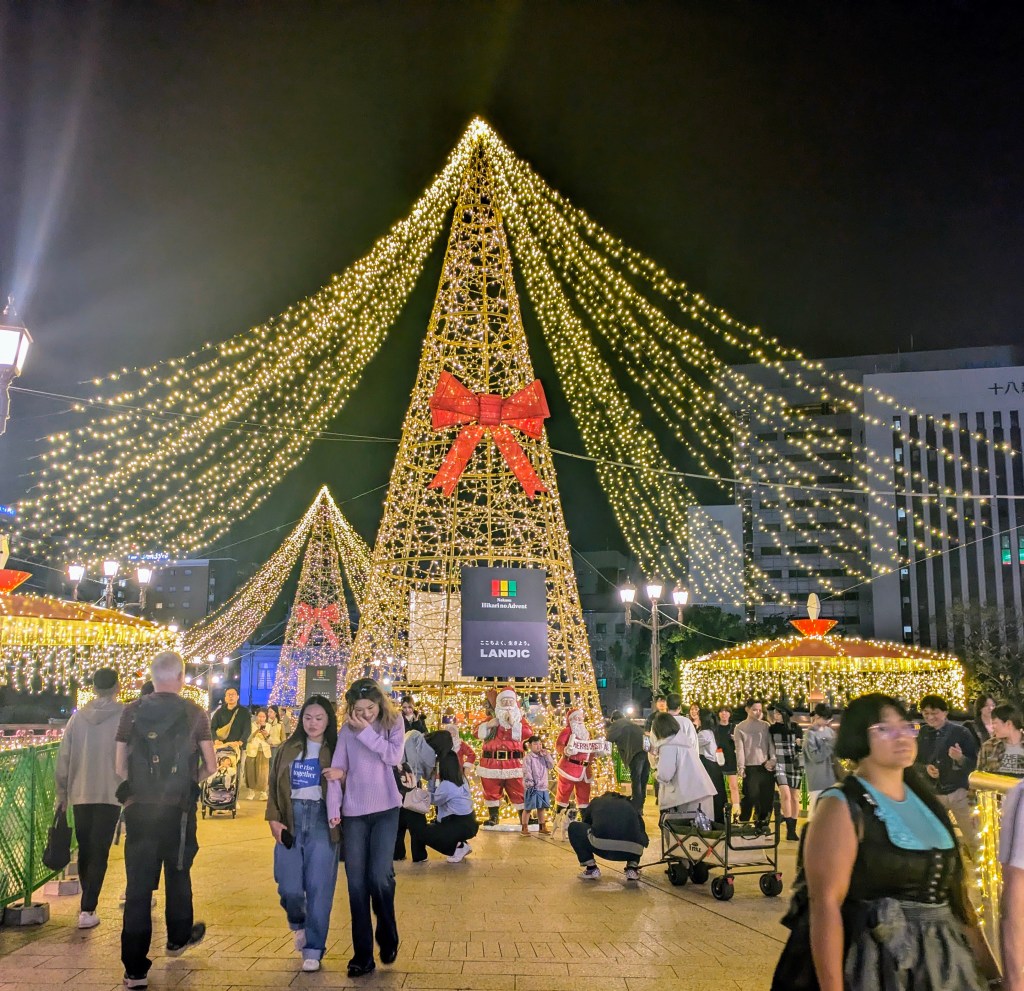
Later we wandered around a crowded Chinatown, and marveled at the long queues outside many of the restaurants and the patience of the Japanese who formed orderly queues, keeping a little distance from each other.  Christmas also came early to Fukuoka with coloured decorations, dancing Santas and flashing lights festooning  the bridges, streets and shopping malls. Christmas is not a public holiday in Japan and less than 1% of the population are Christian but the commercial aspect of the season is enthusiastically embraced. Christmas Eve is regarded as the most romantic night of the year, a bit like our Valentines Day when couples are out and about, love is in the air and not having a date if you’re young requires staying at home to avoid embarrassment.

 Away from the queues and crowds, we found a cellar bar with subdued lighting, soft music where we were the only patrons, the other extreme and not really what we wanted. The bartender gave us soft, hot towels to wipe our hands as soon as we sat down. This wasn’t totally unusual as even the most shabby of establishments hand out wet wipes wrapped in plastic to clean your hands.  Bowls of spicy nuts in dainty porcelain bowls appeared on the table (no raw cabbage and soy sauce in this establishment to munch with your drinks). We should have known that we would pay dearly for such luxuries.  When the cover charge,  was added to our bill (we didn’t even realize that there was a cover charge) our two drinks (one each) cost significantly more than we had paid for dinner! Thank goodness we didn’t opt for a second round.

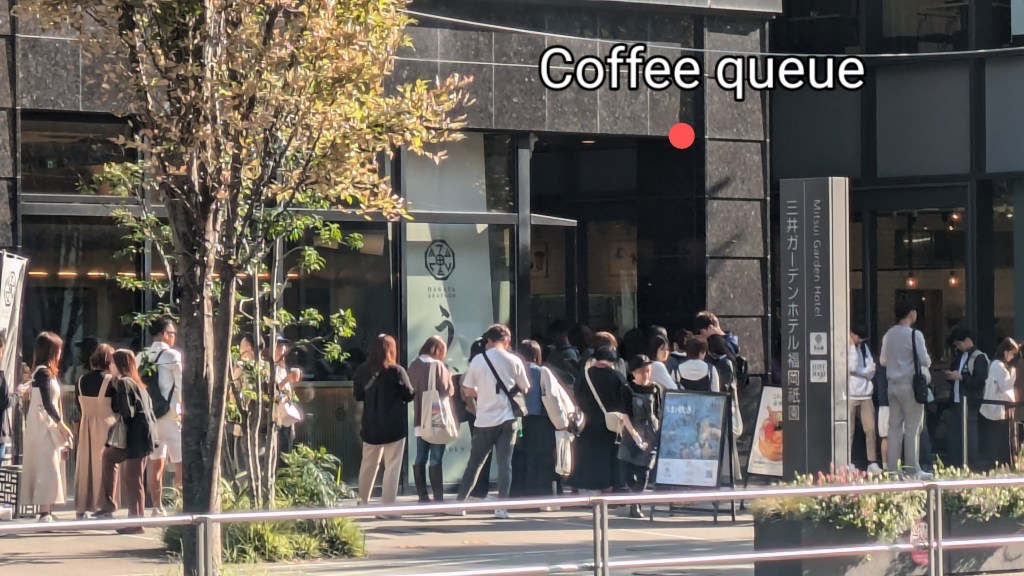
Our quiet oasis turned noisy during the night with garbage trucks collecting trash, vans parking and then moving off, filled with workmen dismantling the festival stalls in the park. In the morning, we went bleary-eyed in search of coffee/tea only to find more orderly queues stretching down the street outside all the open cafes. Although we normally avoid places like Starbucks, this time we were thankful to sit down with coffee and cinnamon buns without any tiresome queueing and avail of their  strong  Wi-Fi where I was able to upload the last blog post with photos. Maybe we should take lessons in patience from the Japanese who queue patiently, mainly in silence, without any visible sign of irritation.

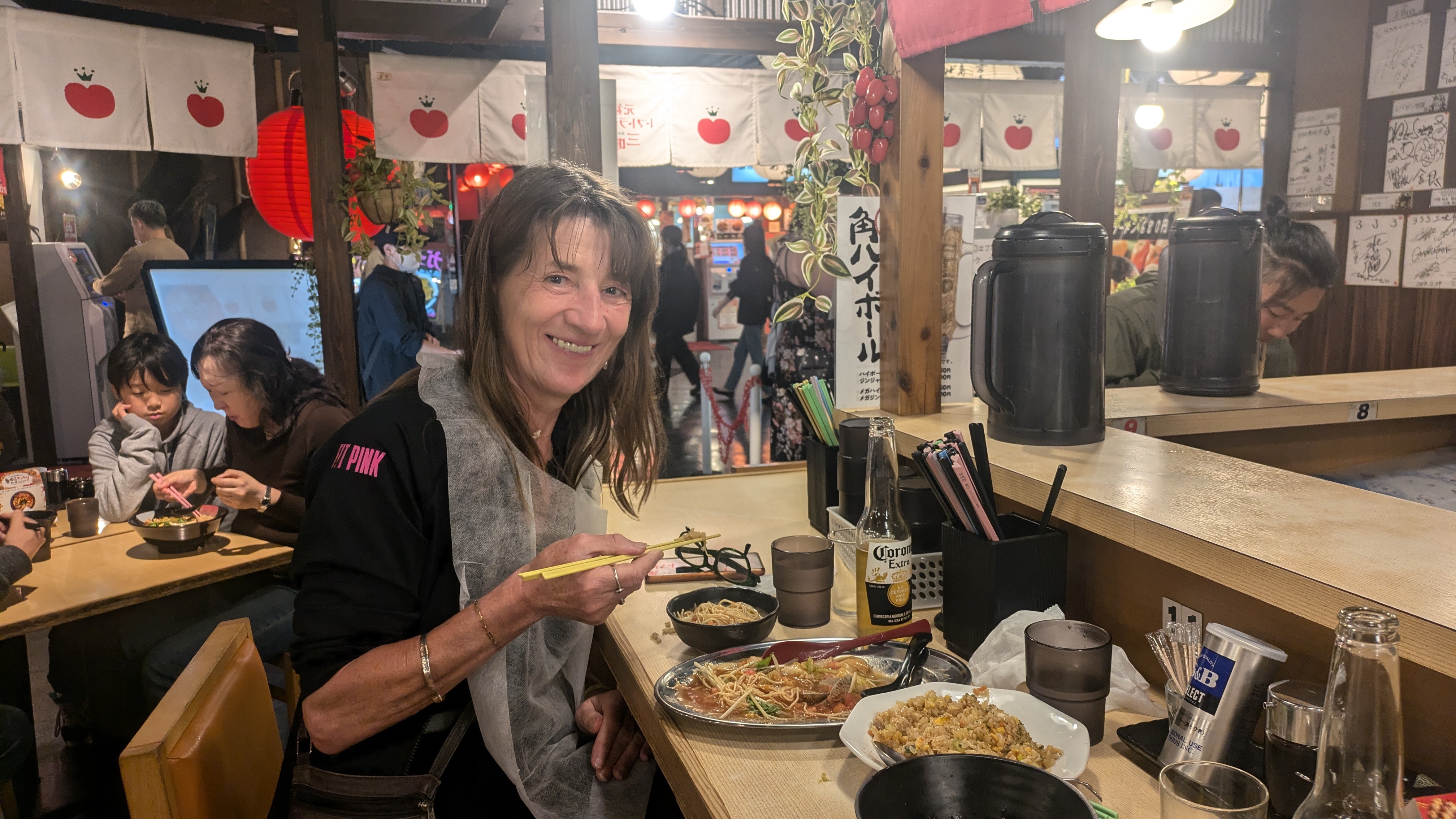
The mountains were calling us and  we felt a strong urge to get out of the city and into the countryside but there was something we had to do before we left. Fukuoka has a reputation for making the best ramen (a noodle soup) in the entire country so we couldn’t leave without sampling some.  There are several traditional recipes but the one that is most prized involves boiling pig bones for hours, maybe days, until the marrow leaks out and becomes a thick cream which is then used as a base for the soup. The ramen was served in big bowls and eating it should be accompanied by loud slurping to show appreciation.  Bibs are provided to protect clothes from the inevitable splashes. Reading the descriptions of the pork-bone soup made me feel queasy so I didn’t ‘pig out’ but opted for a tomato based ramen with seafood which also used a traditional recipe. It was delicious but I have my suspicions that a pig was involved somewhere along the process.

About a hour and a half’s drive outside Fukuoka is a  mountain where over 400 years ago,  white-clothed monks, practitioners of an ancient ascetic religion called Shugendo, chose sacred mountains until they reached their ultimate goal of enlightenment. We were eager to follow in their footsteps and hike the holy mountain to see what  enlightenment and spiritual power it might bestow upon us.

The winding mountain roads coiled through pottery villages with tables of ceramics set up under flame-coloured maple trees and smoke rose from the many kilns. Even before we reached  Mt Hiko, we were enveloped by a sense pf peace mixed with exhaustion from lack of sleep from the night before. We parked by a stream next to toilets at the base of the sacred mountain with nobody else around, cooked up a dinner of potatoes and mushrooms ( the quality and variety of both in the supermarkets was amazing) and watched the stars come out one by one until the sky overhead  was a star- studded canopy, more beautiful that all the twinkling city lights.

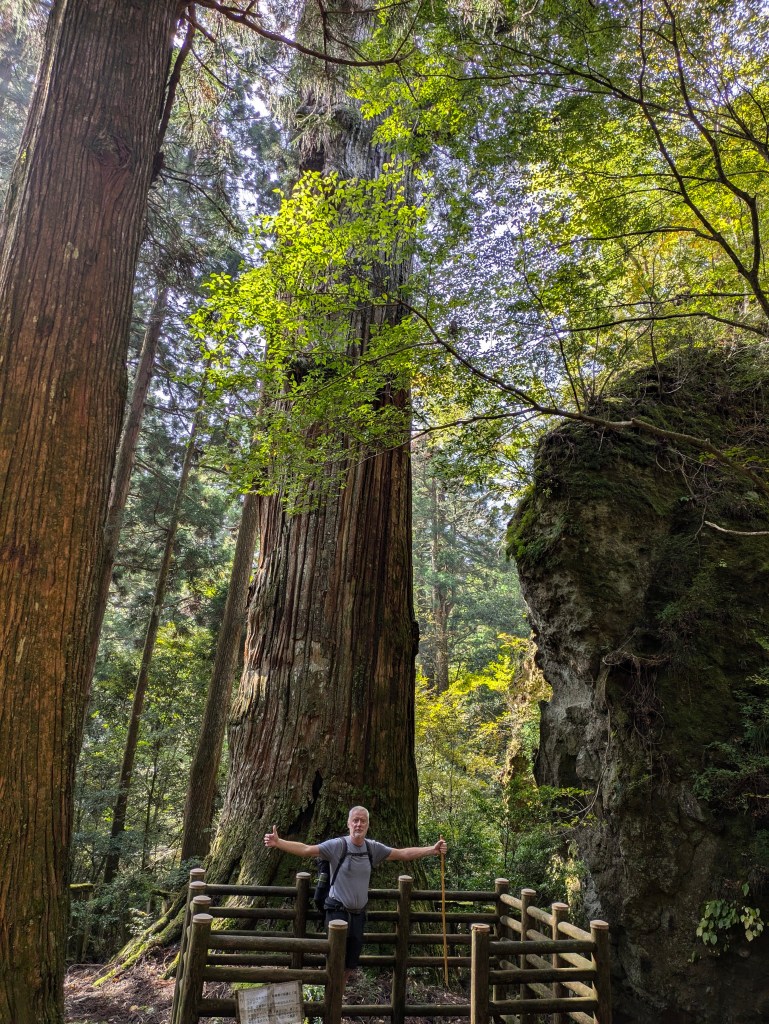
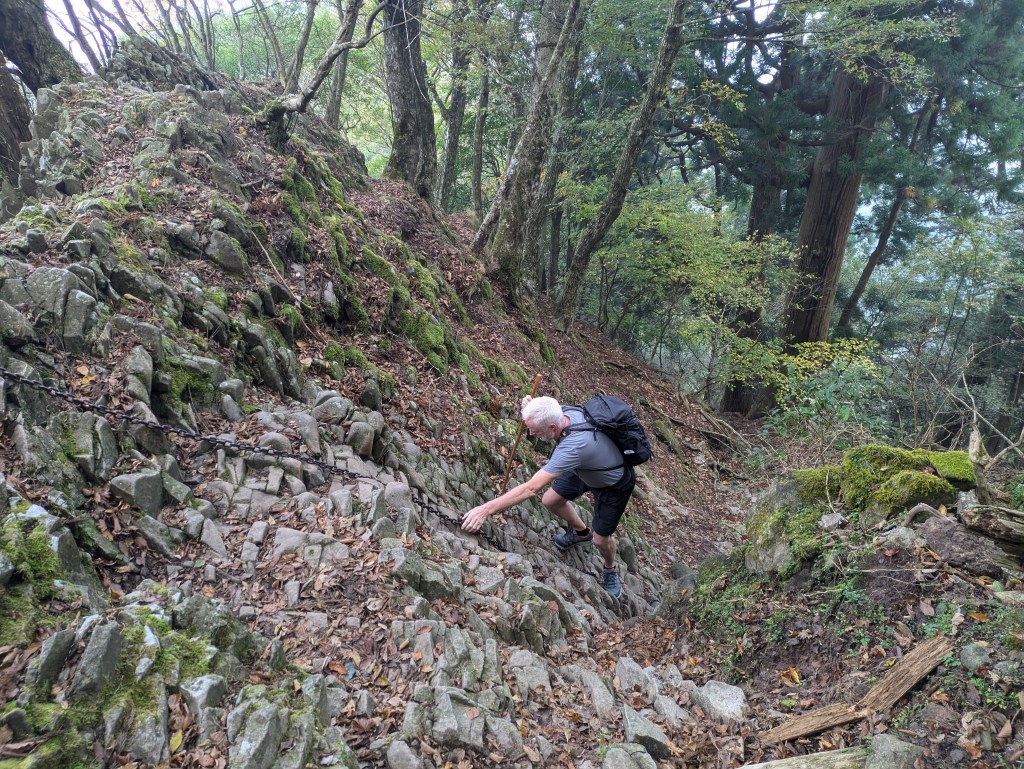
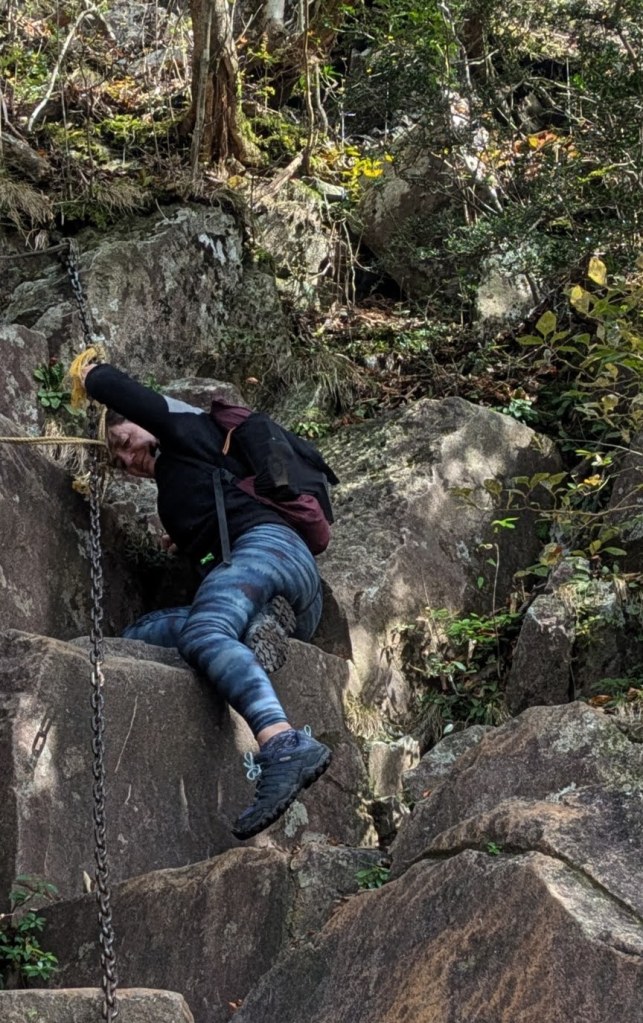
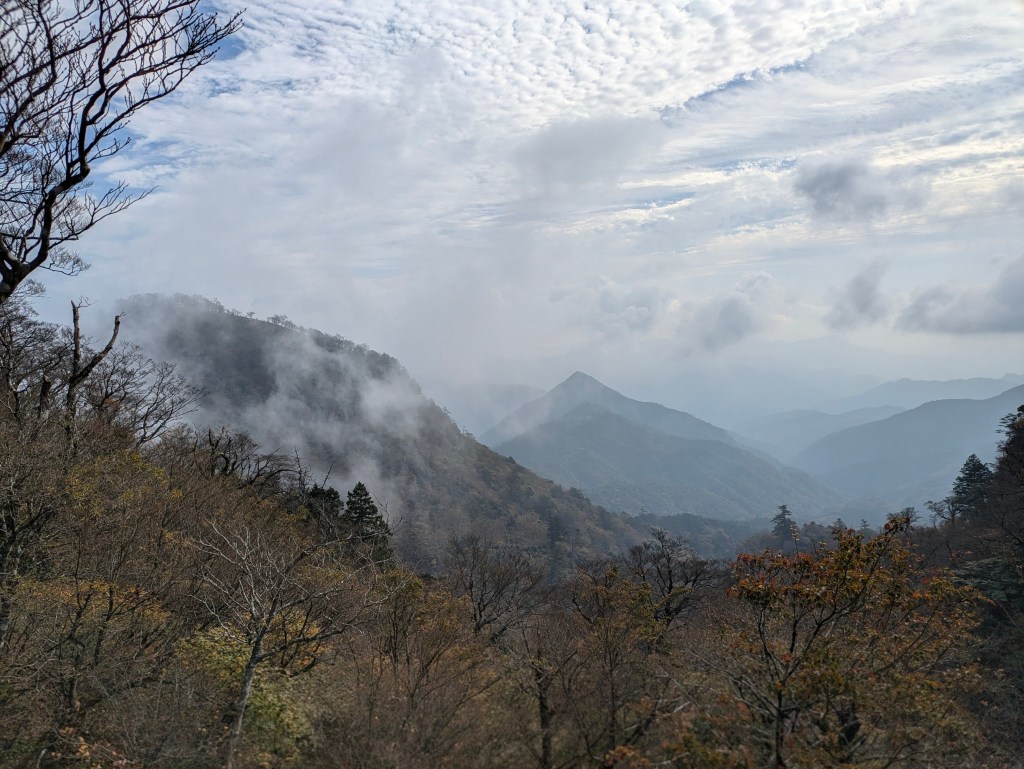
The following morning dawned cool and bright as we began hiking past moss-shrouded shrines with birdsong  and the higher peaks still draped in drifting mist.  Maybe it was because we had read the history of the mountain and were open to its power but right from the beginning we felt that we were in a special place. The hiking trails were well-marked with lots of looped walks and decisions to be made about whether to continue, to turn back or to walk in circles. Maybe this was the essence of true enlightenment, that all paths are correct, you just make a decision and accept it.  Mt Hiko really consisted of three peaks and as we neared the first peak there were signs in Japanese that the path was closed and a barrier was pulled halfway across.  It was easy to bypass the obstacle so we continued regardless, we could always plead ignorance if challenged.  As we ascended we heard hammering and saw that there was construction work going on at the summit where the existing shrine was being enlarged. We kept our heads down and skirted around the building works and headed for the adjacent peak with stunning views of the surrounding mountains, dressed in their glorious autumn foliage, vivid hues of red, gold and purple. If the first section was beautiful and easier than expected, the next section was more challenging but truly ‘wow’. There were chains embedded in the rocks in places but they were more as an aid for climbing rather than strictly necessary. We diverted to see an incredible ancient cedar tree named Onisugi, reputed to  be  1200 years old. This was truly a special day, a hike that was good for the soul and we were physically tired but spiritually refreshed after a six hour round trip…..although true enlightenment may require some further strenuous activity.

It was time to leave the large island of Kyushu and head over another long, impressive bridge to Honshu, the second largest and most populated of the Japanese islands. We arrived at dusk at the small town of Hagi and parked up on the north side of town beside a small beach. We didn’t realize how beautiful the spot was until dawn when an early morning trip to the toilet revealed islands, distant mountains, a calm sea and boats moored in a little harbour. But then you’ve guessed it….it began to rain and this time the rain was cool and drizzly.  It was about 12 degrees, the coldest we’ve had in Japan apart from when we were high in the mountains. Hagi is also famous for ceramics which are mainly in delicate pastel shades.

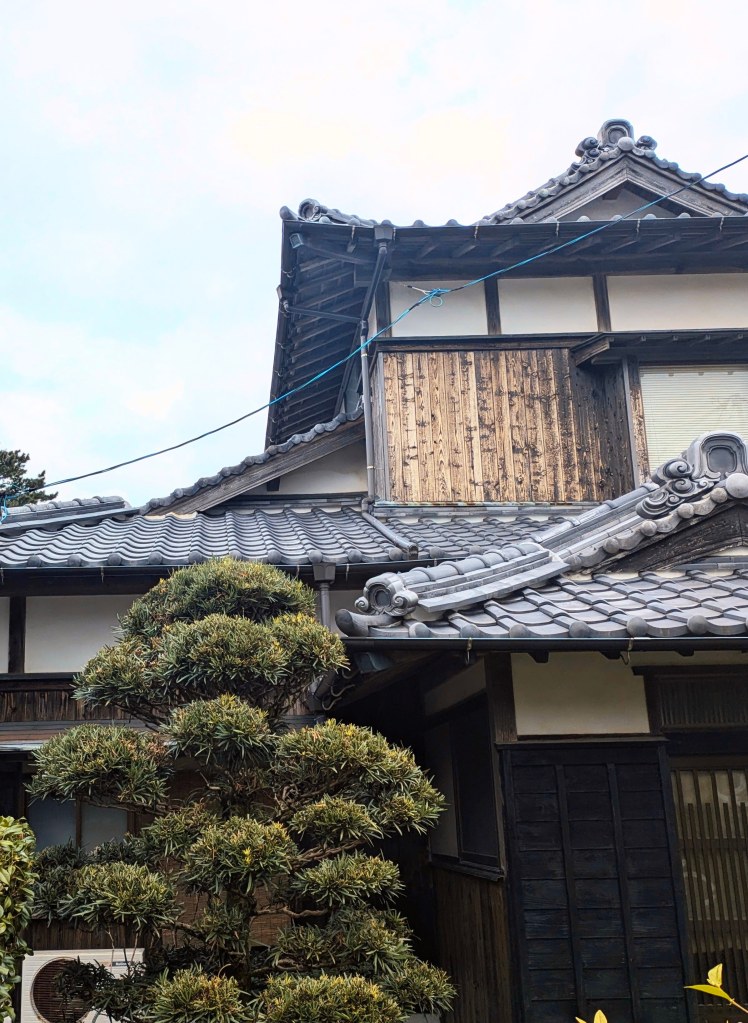
We were in need of a laundromat so while our clothes were whirling in the washing machines, we wandered around town with its wide streets and many traditional buildings, a place little changed from the time of the Samurai. We stumbled across a shop selling clothing for a reasonable price so prompted by the chilly wind, we bought a warm jacket each. We didn’t know it then but the cosiness of the jackets were going to be very welcome in the coming days with a  further dip in temperature. In the meantime we drank tea in a coffee house and eat home-made cake made from locally- grown figs and mandarin oranges, probably the most delicious cake we have eaten on our travels.

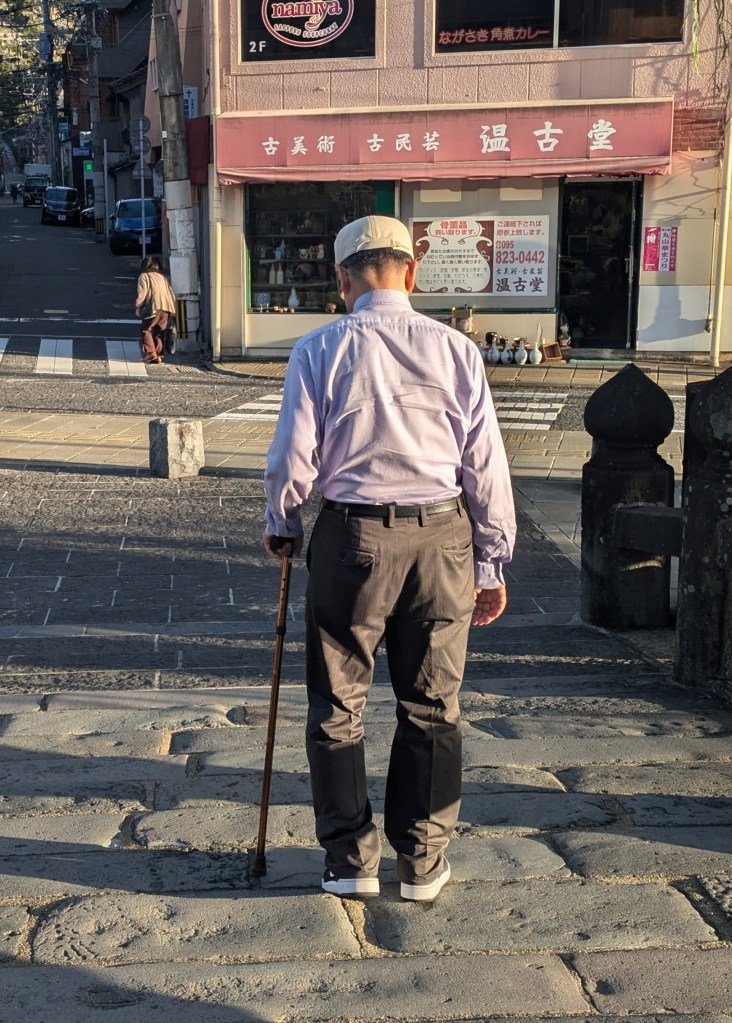
Our breaths blew clouds in the cold morning air as we parked at the starting point for the Sandan Gorge, A small man, muffled in a thick coat, was sitting outside the information booth.  He got up on our approach, leaned heavily on a cane, and pointed to a map giving us the bad news that the recent heavy rains had caused landslides and several parts of  the Gorge were closed because of the risks of more rockfalls and mudslides. He told us that he was a guide but he was out of action because of a bad fall a few months previously, that his favourite country was Alaska and that he had once stopped a grizzly bear in his tracks  with his stare. He gave us an example of the ‘stare’ which also involved barring his teeth. Since then, everyone in the village called him Big Bear.

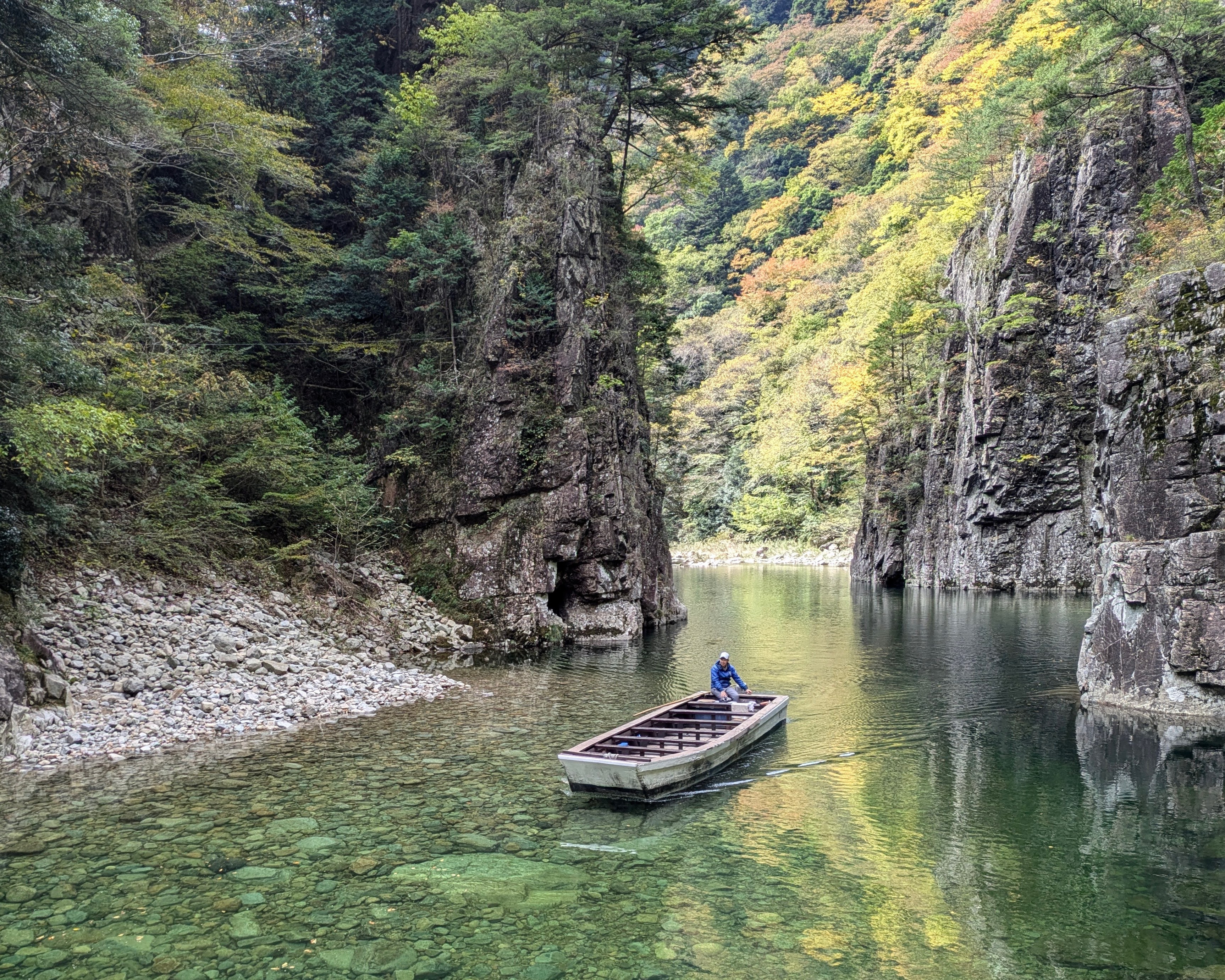
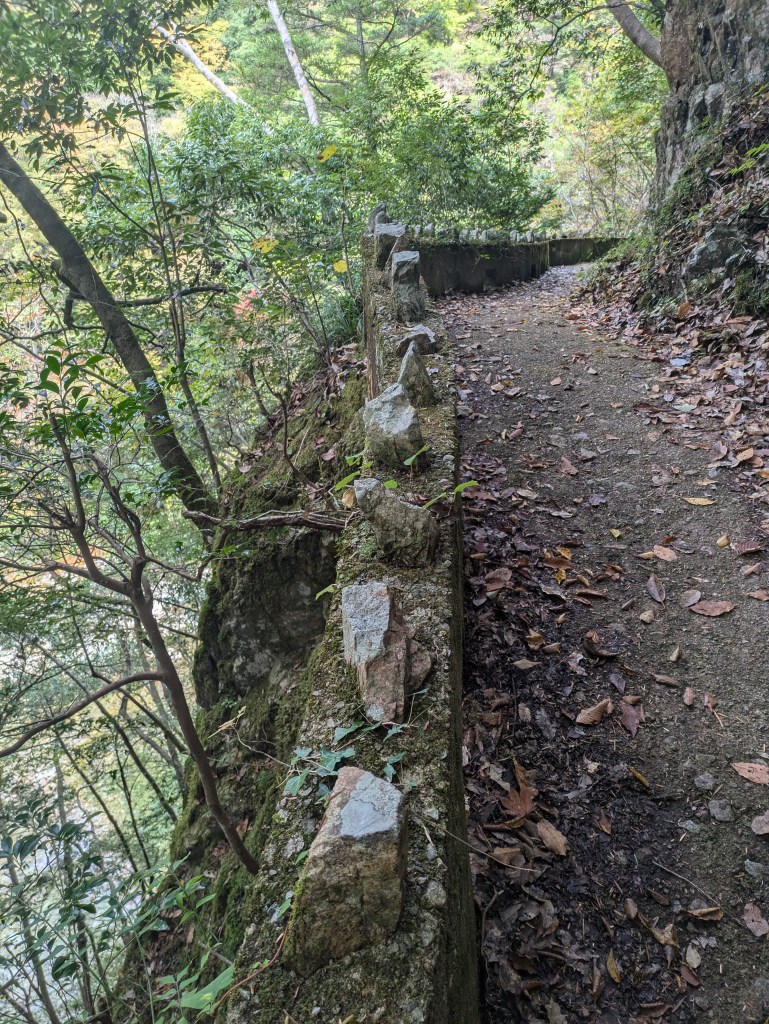
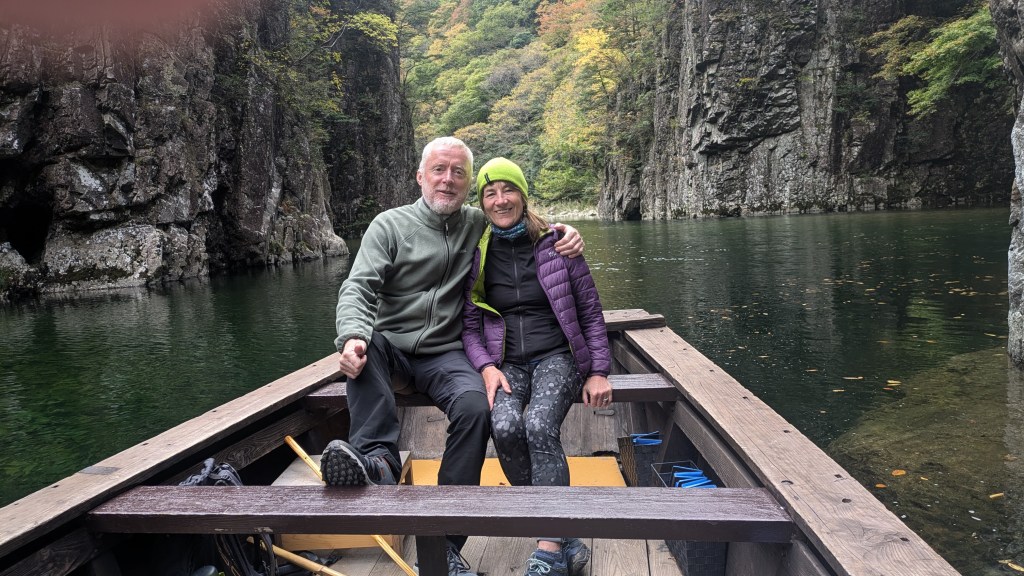
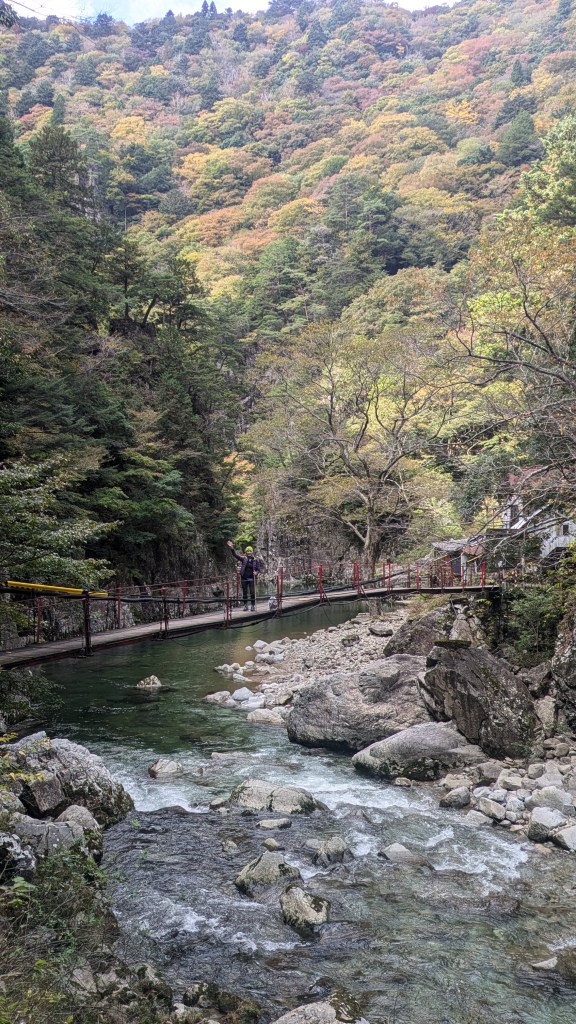
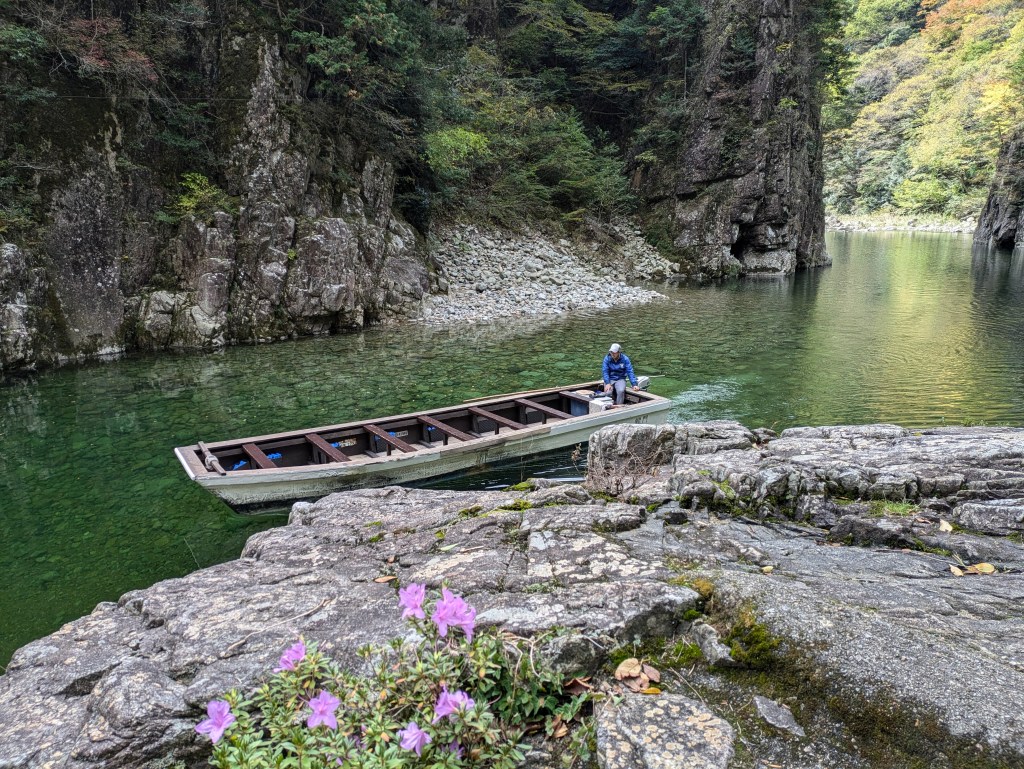
Although our hike was shorter than envisaged it was still worthwhile, true forest-bathing where a  tree lined stony path hugged the side of the ravine before descending to cross the green river on a swaying rope bridge. A short ferry ride gave us an appreciation from the water. Our boatman didn’t quite know what to make of Caoimhin who was singing ‘Don’t pay the ferryman until he gets you to the other side.

But our journey goes onwards, towards historic Kyoto, the city of dreams and the most visited city in all of Japan. Have we left the best until last? Time will tell.

Thanks for reading

Until next time

Japan: Holy Mountains and Glorious Gorges

Japan: War and Peace

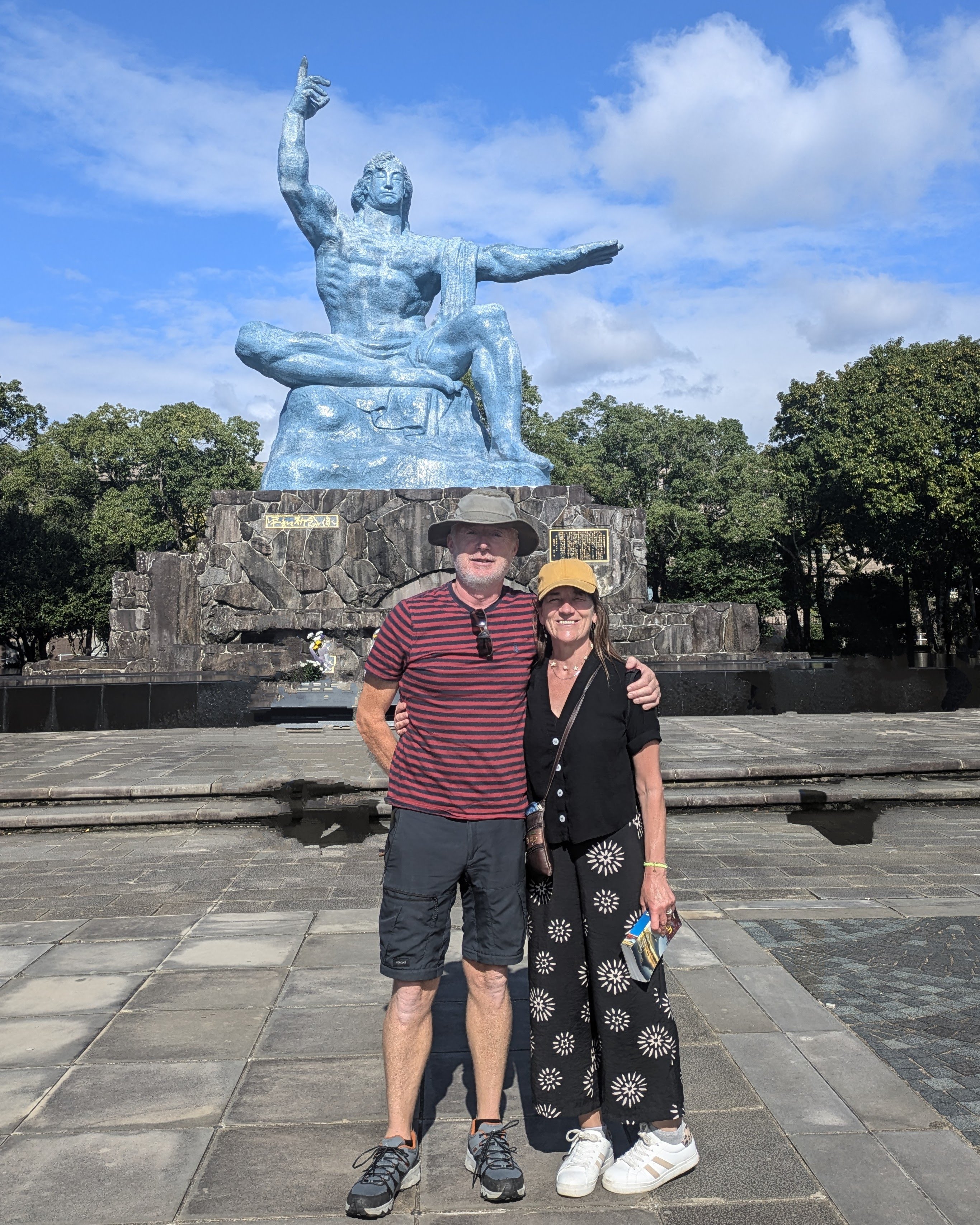
Peace Park, Nagasaki

In my last post, I said that we were hoping to leave Amami Island, a small island in the East China Sea a few days early because there was a risk of a typhoon coming in our direction. The bad news was that we couldn’t change the ferry return date because of lack of availability for the campervan  and the good news was that the typhoon changed direction and headed in a more southerly path towards Taiwan and North Korea. The tail of the hurricane still lashed Amami with rain  so we booked into a really comfortable hotel -The Wa,  enjoyed some pampering and sampled a few of  the many restaurants in Naxe, the main town on the island.

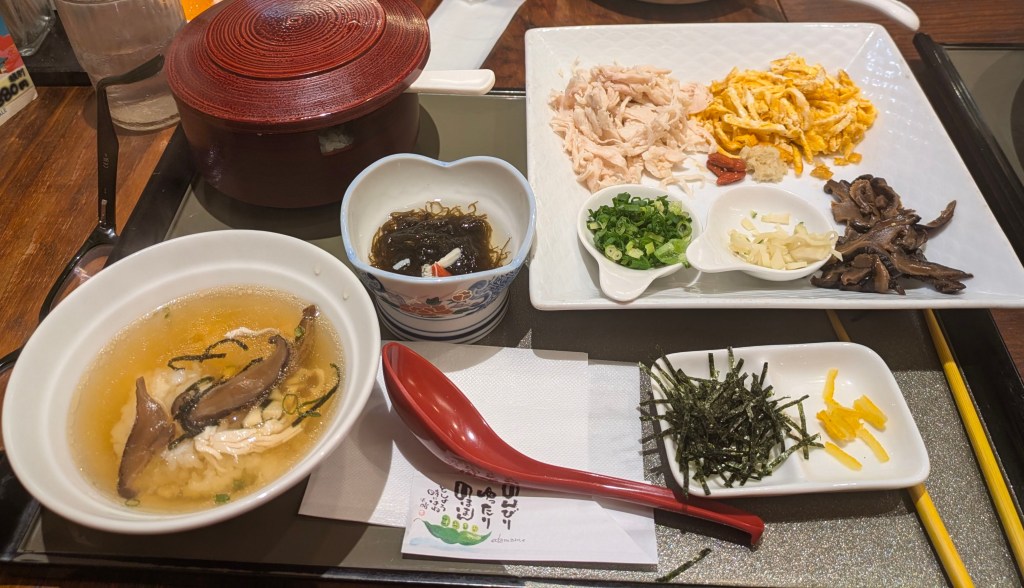
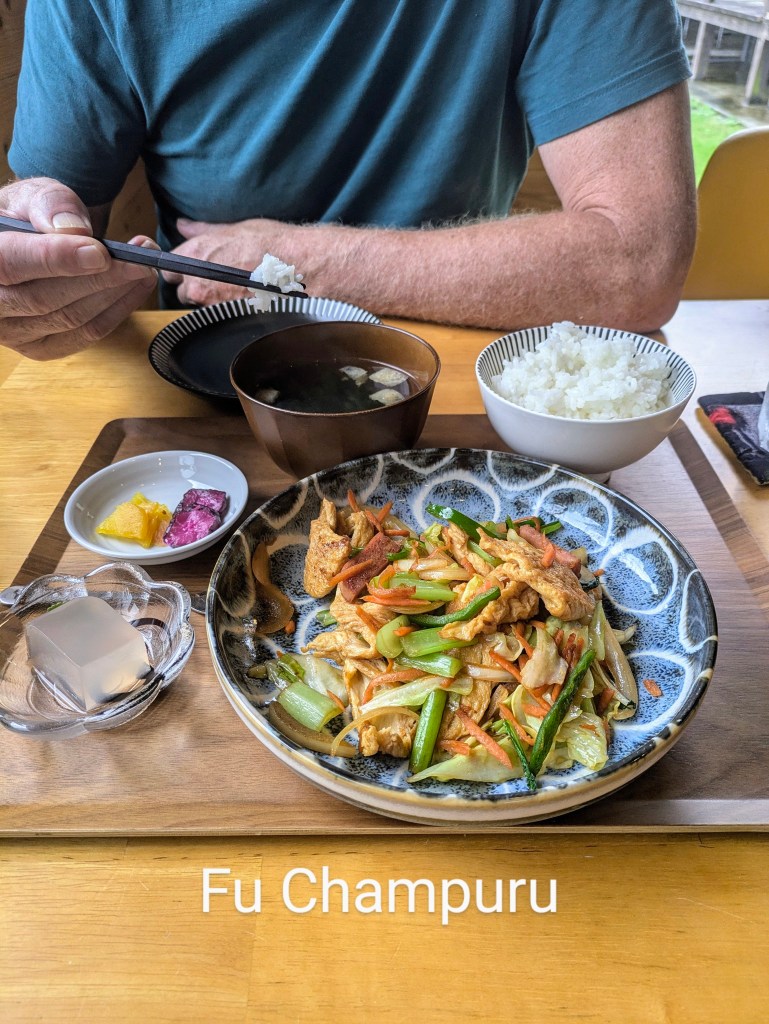
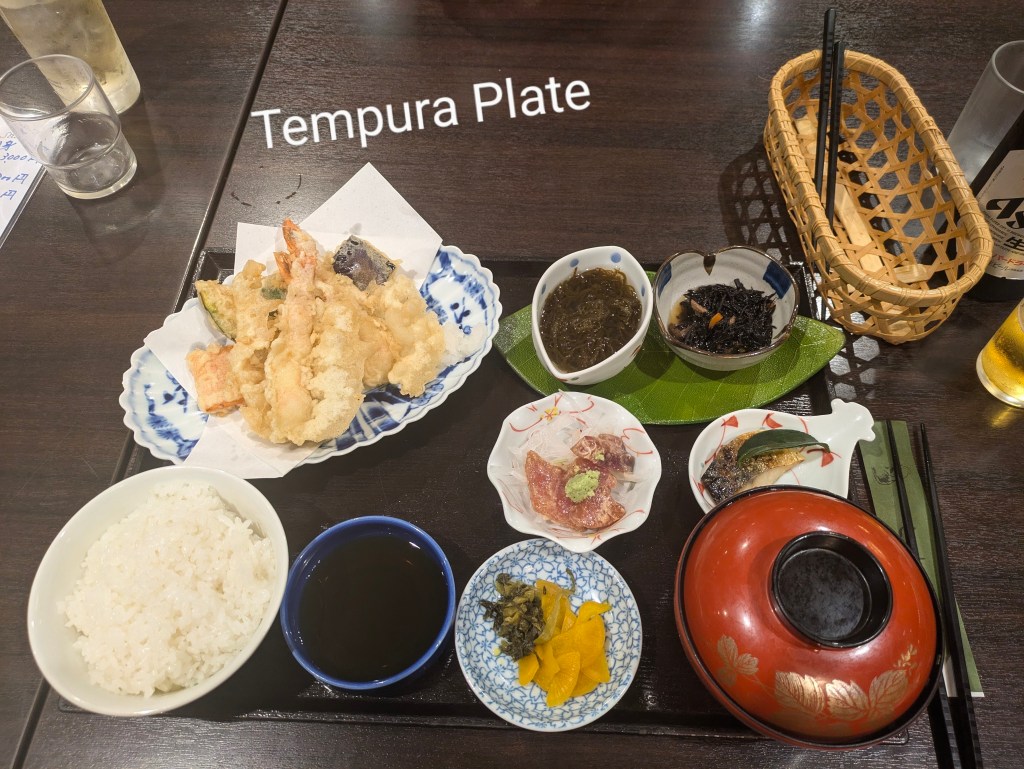
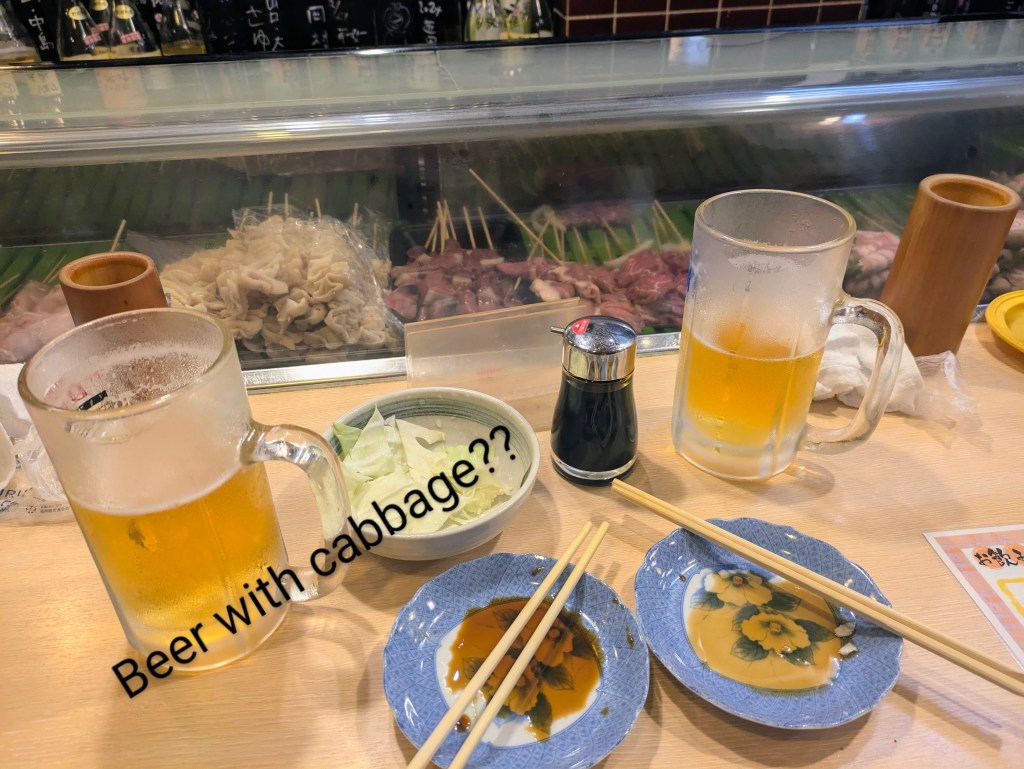
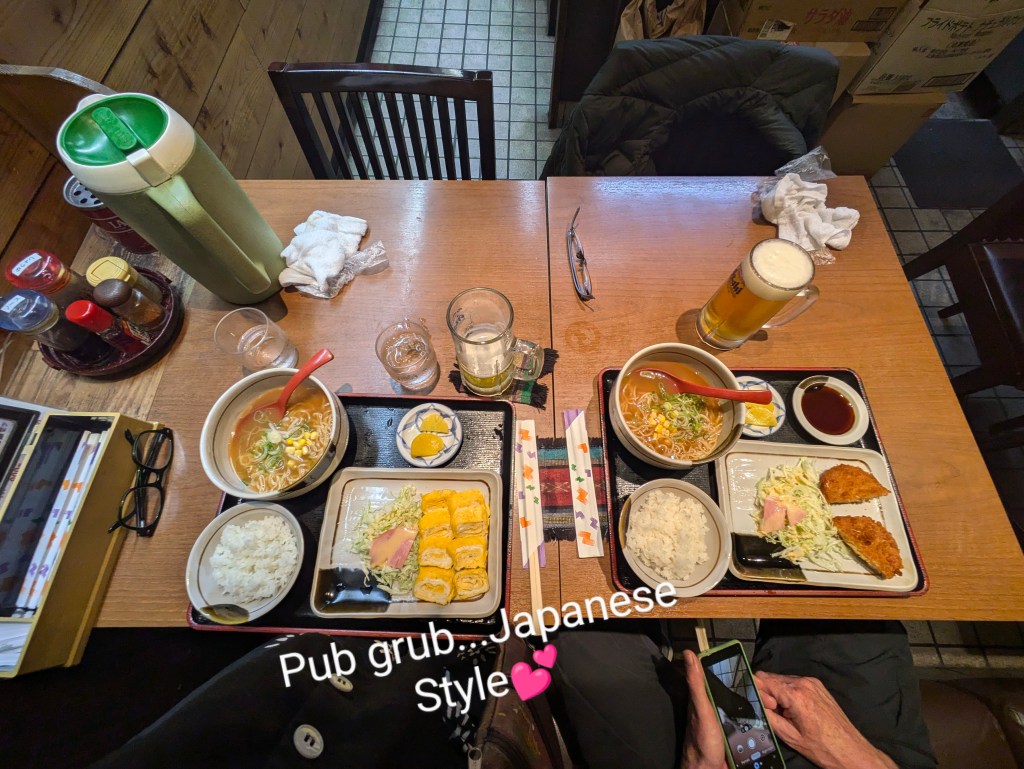
We have become fans of Japanese food although we had rarely eaten it before coming here. However a word of caution to vegetarians –  a strict vegetarian would probably starve as even the miso soup has a meat base and tofu floats alongside slivers of pork or beef.  So we opt for as little meat as possible but even the meat dishes aren’t very ‘meaty’ and there’s usually lots of fresh vegetables.  Google Translate lets us down at times when we are looking at menus.  We thought that we were ordering the local dish of the Amami Islands (Keihan) which is chicken and rice but we got noodle soup with pork. The presentation and the attention to detail is truly magnificent, with a multitude of side dishes and garnishes.  There is such a high standard even in the cheapest places. Eating out is a real pleasure and much more affordable than at home ( we eat local as much as we can)A huge bowl of ramen is about €4 -€5, dinner main course is about €10 to €12 and lunch is cheaper. Some things take a little getting used to. When we ordered two beers, they were accompanied by a bowl of raw cabbage which should be dipped in a couple of varieties of soy cabbage and eaten with chopsticks….surprisingly nice. We haven’t even seen a knife and fork anywhere in Japan yet.

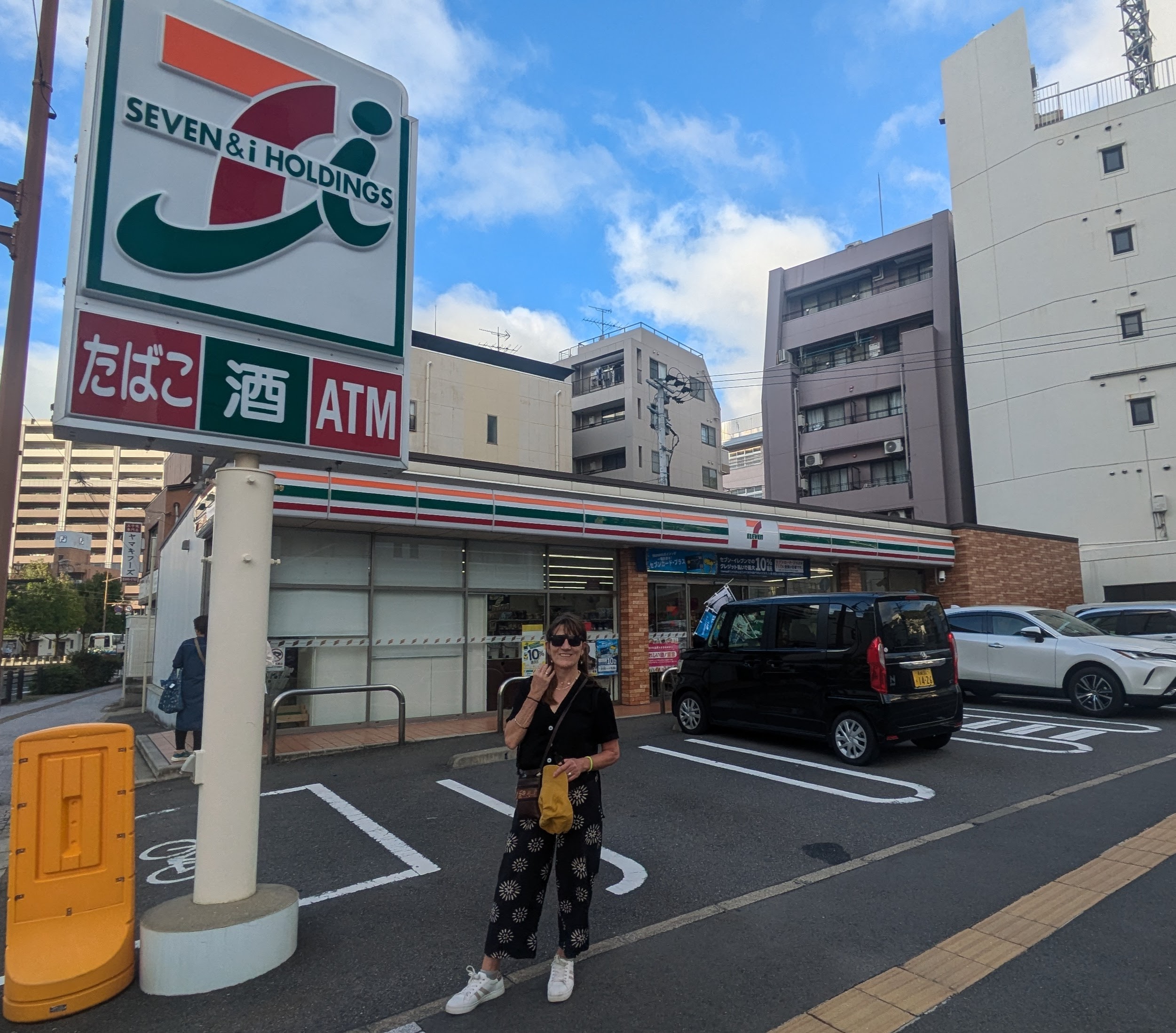
If we are out in the middle nowhere in the van, we cook simple one pot meals ourselves so we also frequent the supermarkets and the little convenience stores known as Konbinni which are everywhere. They are amazing places, usually manned by very friendly staff. They have ATMs, toilets , free WiFi and sell everything from toiletries to Pot Noodles. You can buy all your meals here with a huge selections of  high quality, ready-meals with microwaves to heat them up, a counter with stools or a few tables to sit at. There’s coffee, cold drinks and a selection of magazines and comics. They are open late, often 24 hours a day, and are really an extension of the Japanese home which are often shoe-box size especially on the cities. Apparently some Japanese apartments (and student bed-sits) don’t even have a kitchen.

Last  Wednesday evening, we were sitting in the van in the ferry queue to get off Amami Island. It was dark  but it was also warm -about 25degrees- and very humid. The rain was torrential. Caoimhin tried to turn on the engine to clear the windscreen and turn on the wipers. Nothing happened. There was an ominous creaking sound (a bit like a hoarse corncrake) but nothing more. After several panicky tries with no luck, Caoimhin got out to see if we could get help. I was frantically thumbing  through the Japanese van manual to find a graphic representation of  out how to open the bonnet(words weren’t any help😲). Meanwhile Caoimhin was out in the rain, holding his useless umbrella which the wind had turned inside out. One of the attendants, an elderly man, came over to us and  Caoimhin tried to start it again. The same creaking sound. The man nodded and walked away without a word. We sat there, still not knowing how to open the bonnet. Then one last try……and the engine turned over. A few minutes later, the row of cars started to move to board the ferry with the usual shouting, whistle-blowing and reversing up ramps. The ferry we embarked had come from Okinawa and again there were lots of Japanese army vehicles and personnel onboard but there were also hundreds of schoolchildren travelling to the mainland of Japan for school sports events The US still have a big army base in Okinawa, which was under American control from the end of World War 2 until the 1970’s.

The crossing was rough, much more turbulent than our outward journey. At times there was such loud banging that it sounded as if vehicles were sliding around the car deck. After a few hours, it became calmer but we were more than delighted to see land and disembark in Kagoshima.

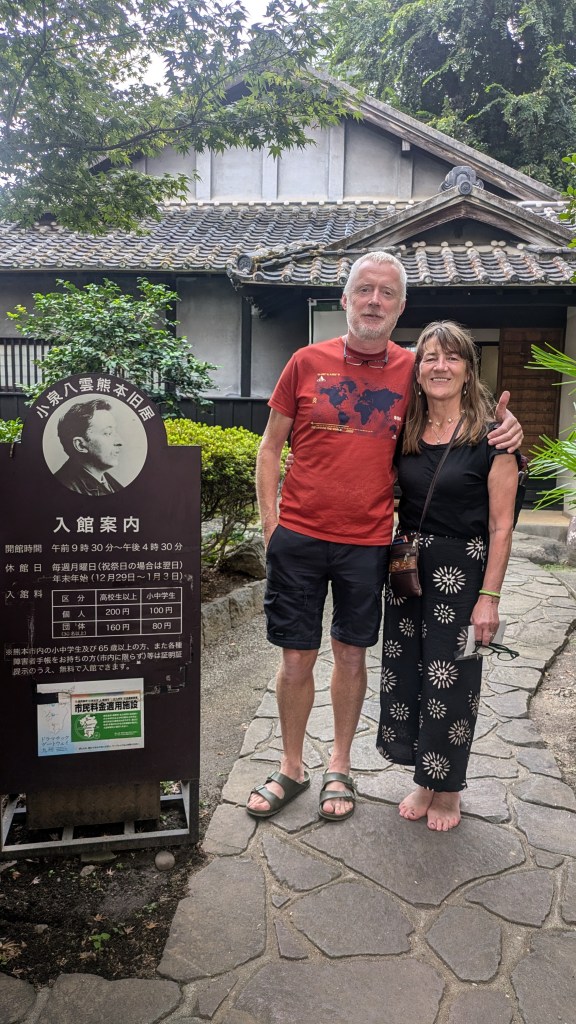
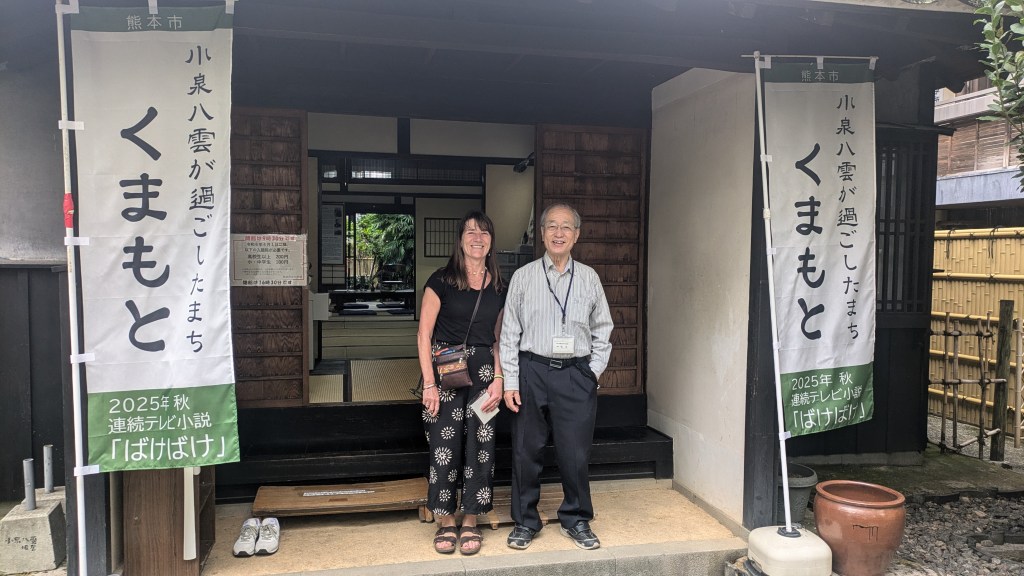
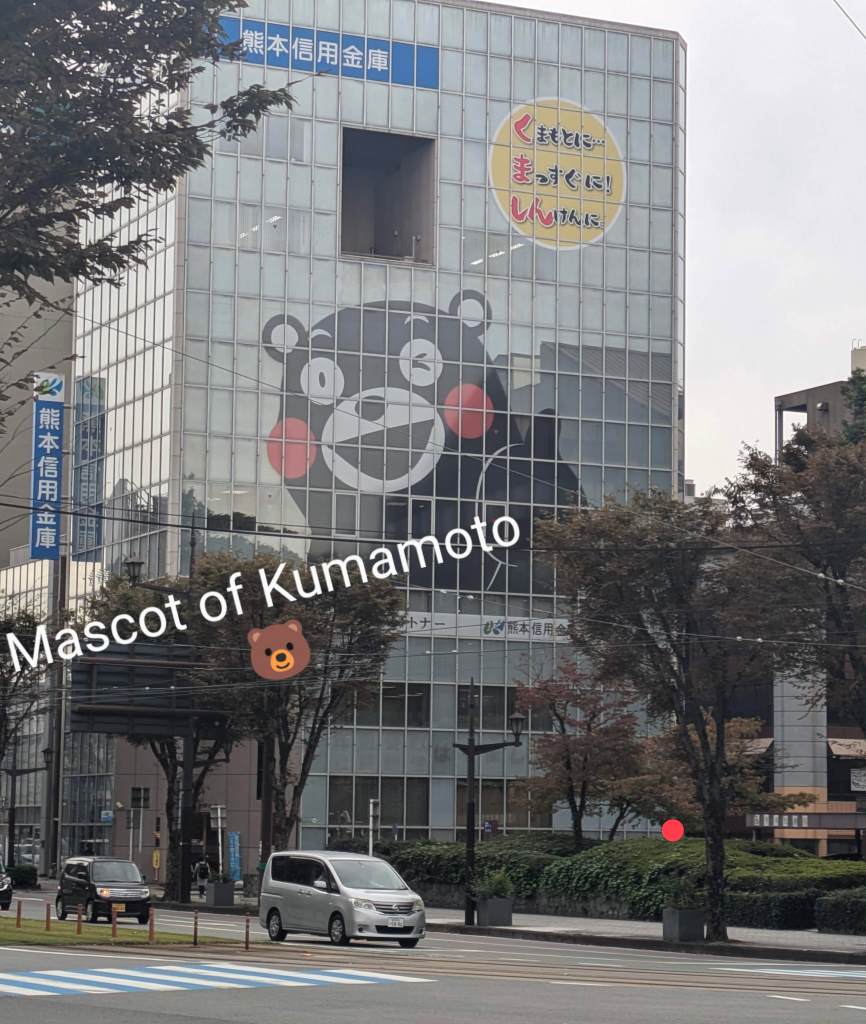
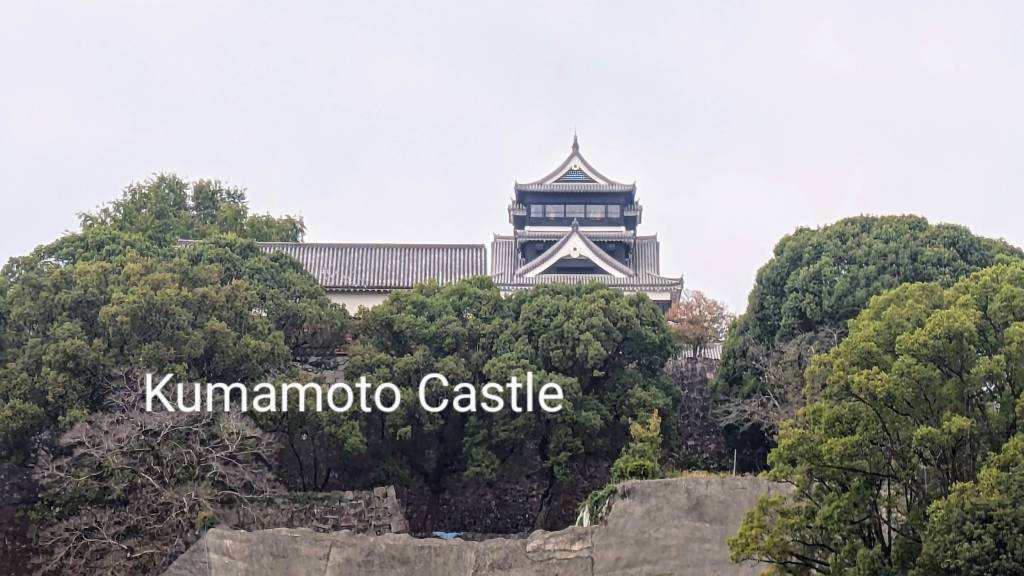
No matter where you go, there are always connections with home. Our next stop was Kumamoto, a town where Lafcadio Hearn lived for a few years with his Japanese wife and children. Lafcadio was a writer with an Irish father and a Greek mother and spent many summers in Tramore as a boy. The beautiful  Lafcadio Japanese Gardens in Tramore were established in his memory.  Lafcadio is very much revered in Japan for his writings and his house in Kumamoto has been turned into a museum. There was a small entrance fee and the attendant was very friendly (although he didn’t speak English) giving us some postcards as presents.

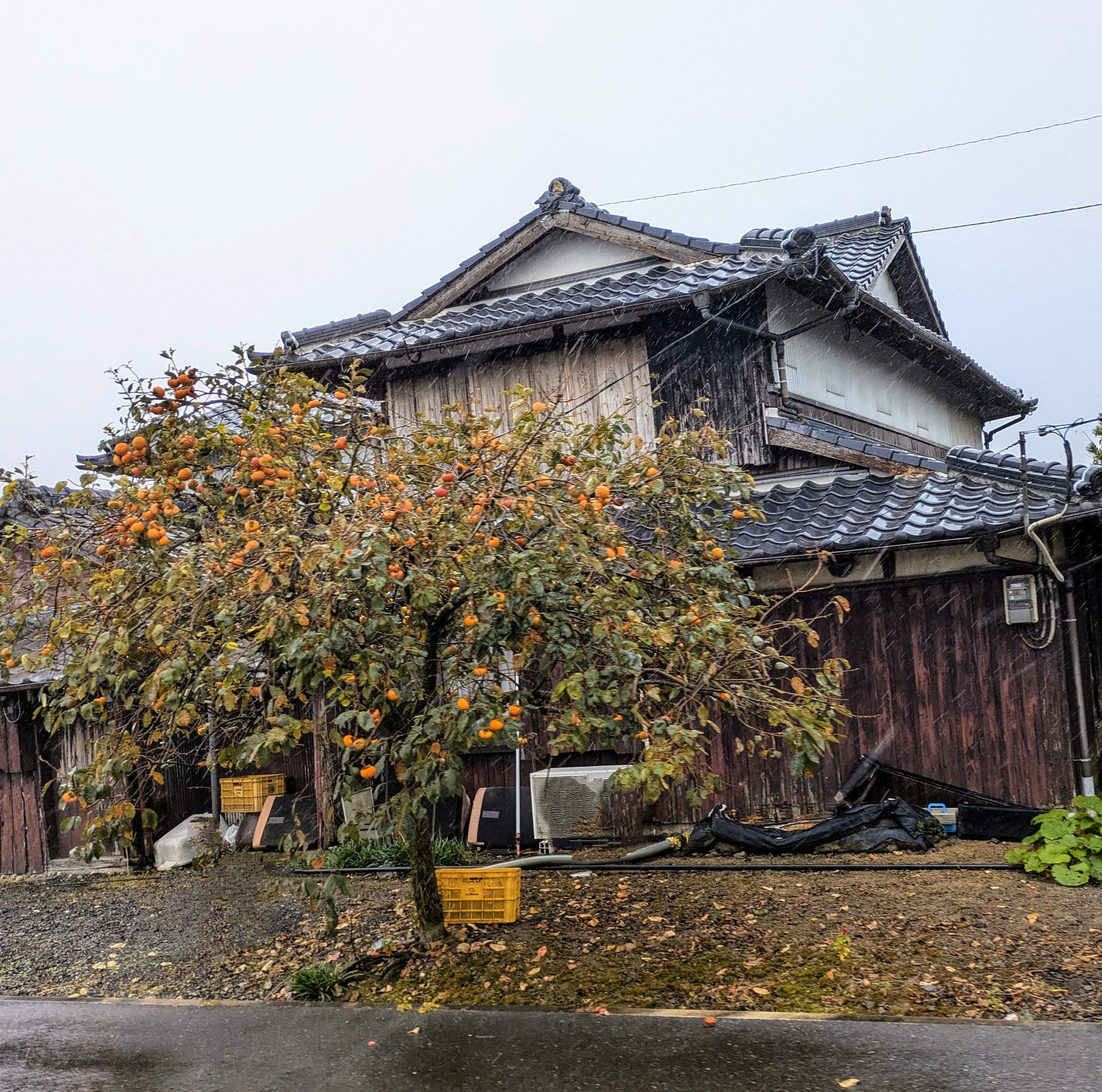
As we drive into the mountains out of Kumamoto, we can see the hazy peninsula of Nagasaki across the Araike Sea. Along the way, there are small farms and little villages by the shore, both traditional and modern houses, roadside shires and cemeteries. It’s mandarin season  and most houses have a persimmon tree outside with it’s ripening  orange fruit decorating the branches like balls on a Christmas tree. The land becomes flatter with rice and beans, tractors and enormous greenhouses.

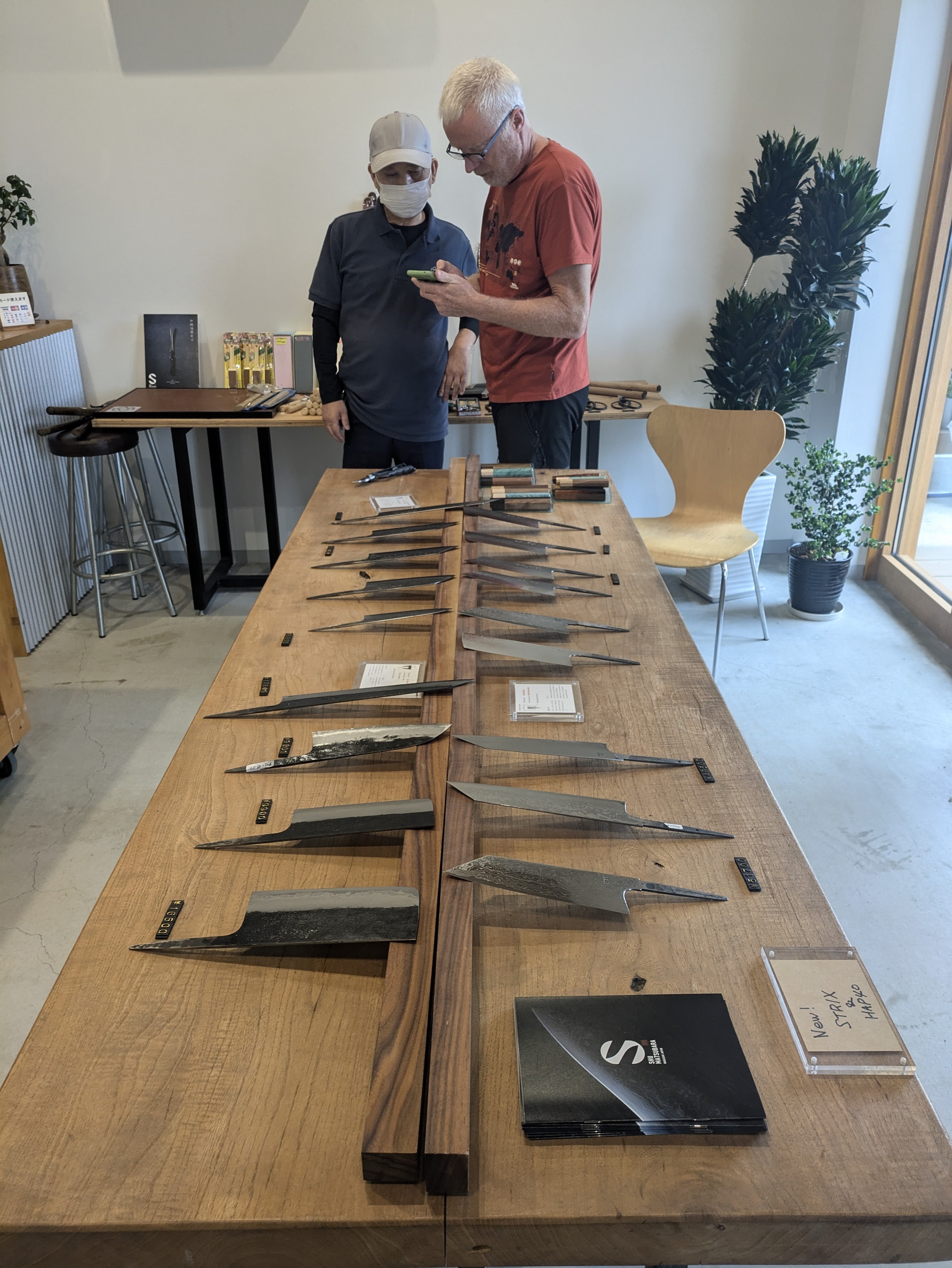
Caoimhin has been talking about the wonders of Japanese steel since we arrived in Japan so on our drive to Nagasaki,  we divert to visit a small family-run  business who have been making hand-forged knives for centuries. The knives with their glinting blades and carved handles are truly a work of art.

Careful now!!!!!!!!

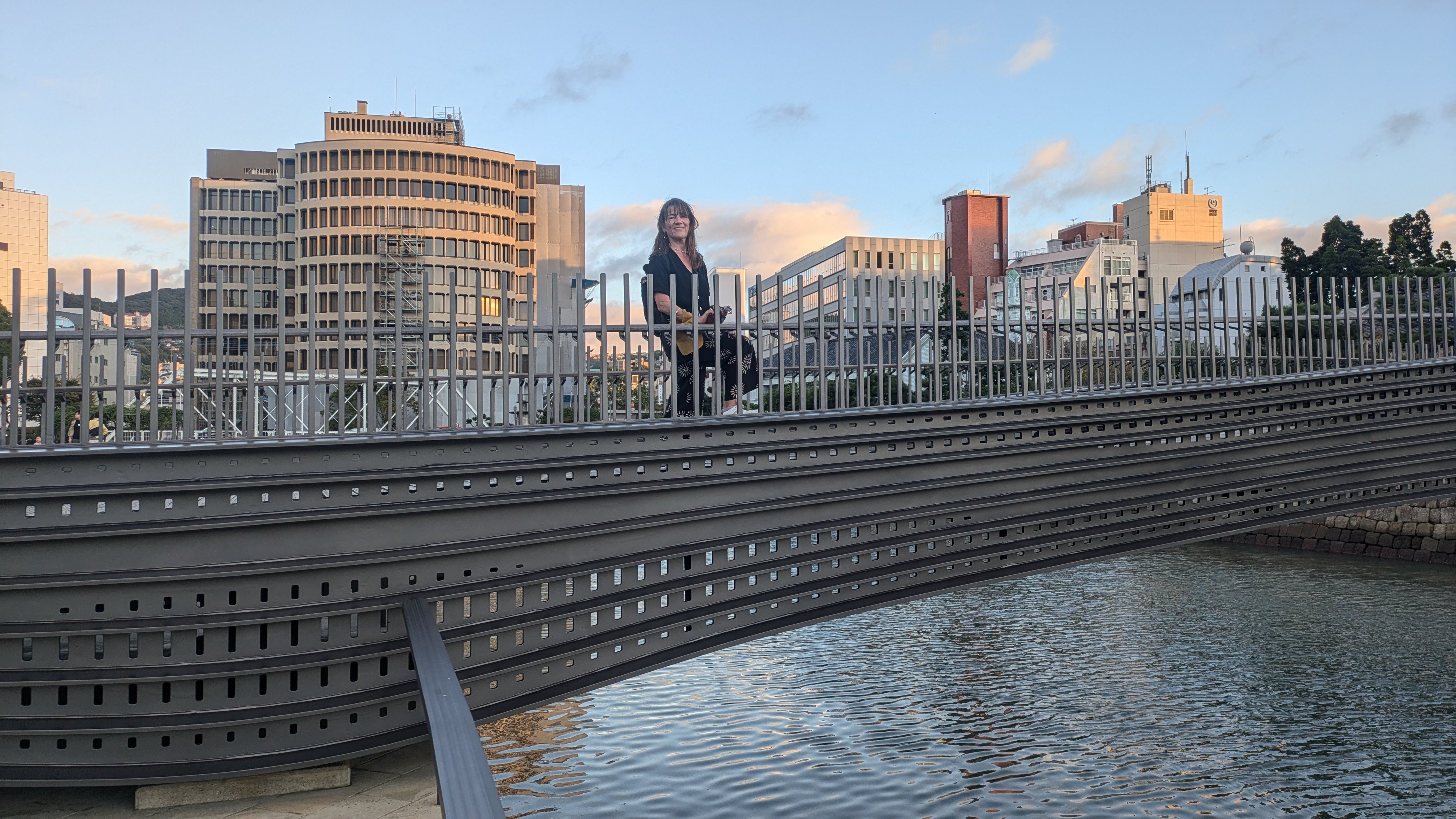
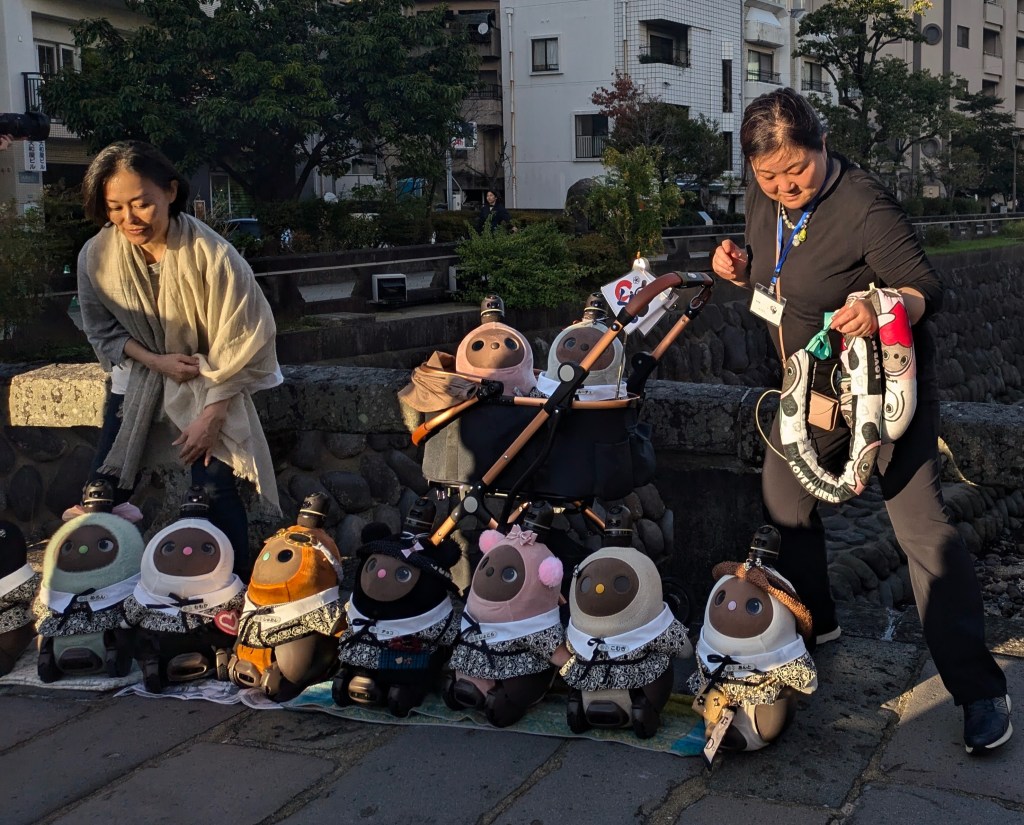
Nagasaki is a beautiful city with gentle hills on three sides and a long narrow bay to the sea. It was the only harbour port in Japan where contact and trade with foreigners was allowed during Japan’s self-imposed, two-hundred year isolation. There’s a gorgeous old stone bridge, built in 1634  that has survived all the trials and tribulations of time including the dropping of the atomic bomb. ‘Mothers’were posing on the bridge with their Lovots ( baby robots) when we visited yesterday.

It’s almost impossible to imagine the horror of that day in 1945. The photographs and descriptions in the Atomic Bomb Museum are so  harrowing  that’s it’s difficult to process it all.  The  terrible plight of the survivors, their awful thirst and the grim legacy that they carried afterwards is beyond words. A prison near the hypocentre vaporized leaving only the foundations of the building. Several schools were left with just a wall standing, ceramic roof tiles more than a kilometre away, boiled and bubbled when exposed to the heat flash. 73,884 people died instantly and a similar number were injured. Despite everything Nagasaki has risen like a phoenix from the ashes and the emphasis is firmly on peace and friendship so that nothing like it can ever be allowed to happen.

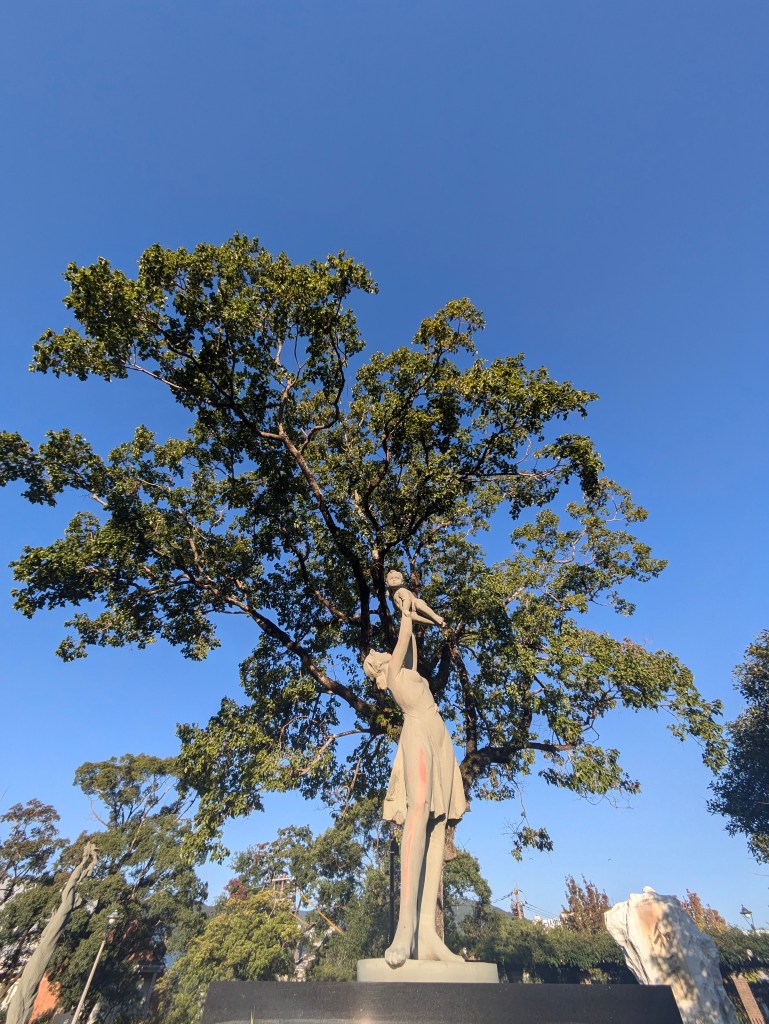
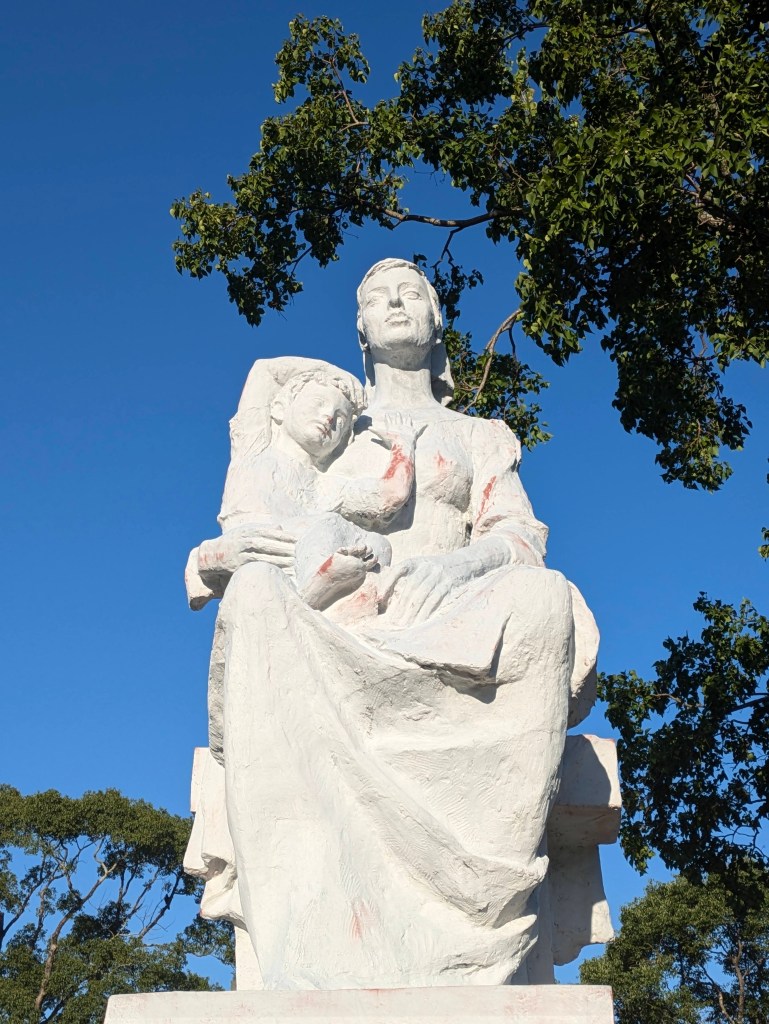
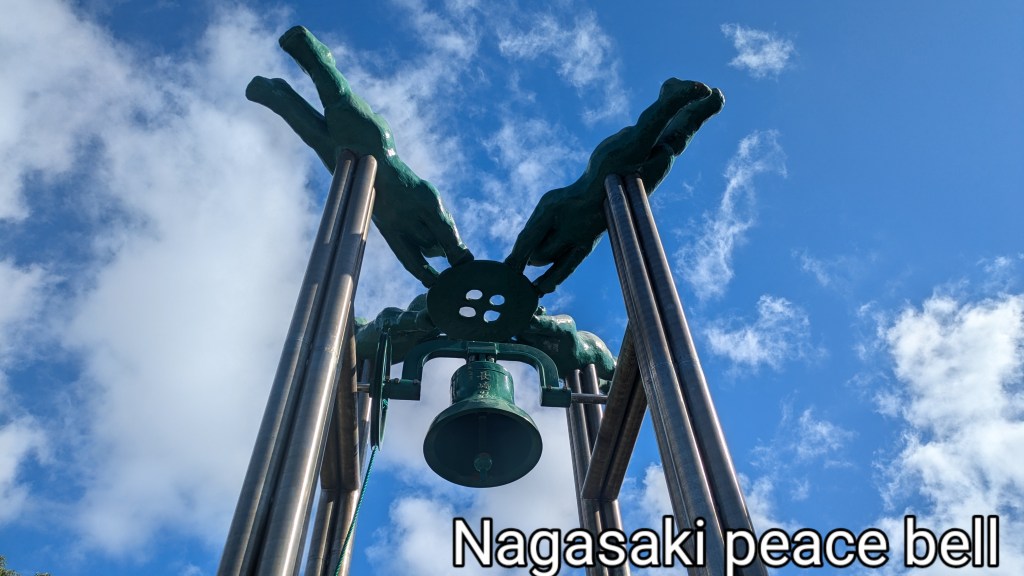
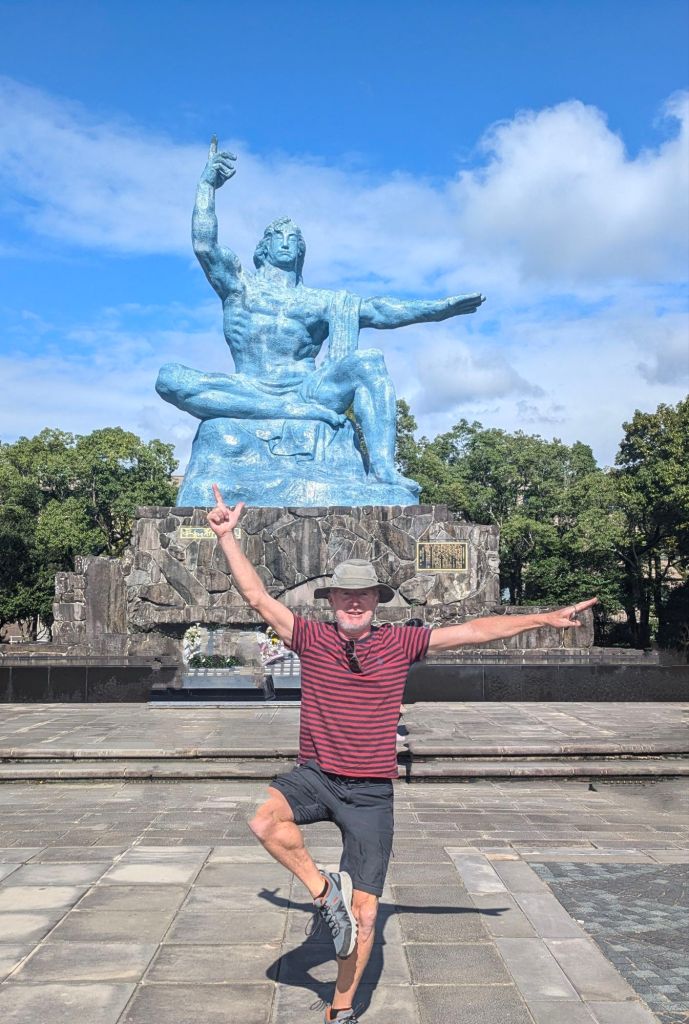
The Nagasaki Peace Park is filled with statues, commemorative plaques and remains of the bomb drop. There are sculptures from various countries around the world pledging friendship and solidarity. Many of the sculptures depict mothers and children emphasising that we must protect not only present generations but also the coming generations so that all the peoples of the world can live in harmony.

The weather was extremely wet in Nagasaki for our first day.  Western and central Japan has recorded their largest-ever 24-hour rainfall for November. After the devastating floods in Spain, it was a bit disconcerting to be sleeping in the van while rain bucketed down as if it would never stop. (Most of the photos are from our second sunny day 🌞)

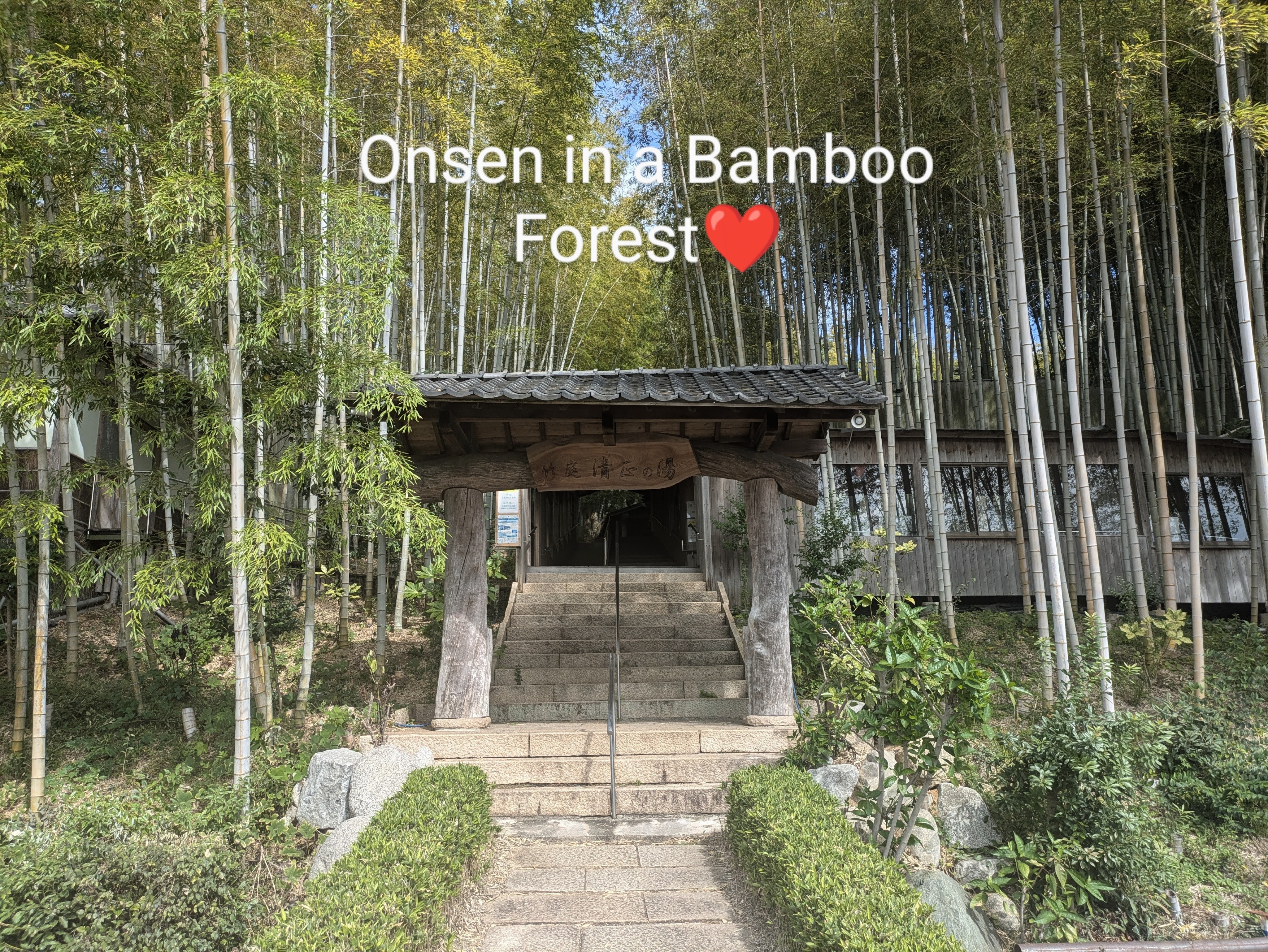
A Saturday morning visit to an onsen (thermal baths) was just what we needed after our very rainy (and windy) night in the van, parked in the corner of a carpark. The onsen was high in the hills above Nagasaki and had an outside section with gorgeous views of the city. We have become so accustomed to onsens at this stage (and walking around in the nip) that it’s difficult to believe how awkward and intimidating we found the whole process a few weeks ago. It was so relaxing lying up to my chin in hot water, fanned by a cool breeze and watching leaves drifting down from the trees and thinking about all we have seen in this lovely vibrant city which has seen so much sorrow.

The storm system gradually moved away and the sun came out on Saturday afternoon…..stunning blue skies after all the rain, almost like the motto of this city, ….a belief in hope and brighter days. Our phones are calling for people to be on high alert for landslides and flooding, while also being careful of lightning, tornadoes and violent winds through late Saturday.😲😲. But we are loving the clear blue skies, the sunshine and the ’weather forecast is good for the coming week.

Until next time…thanks for reading x
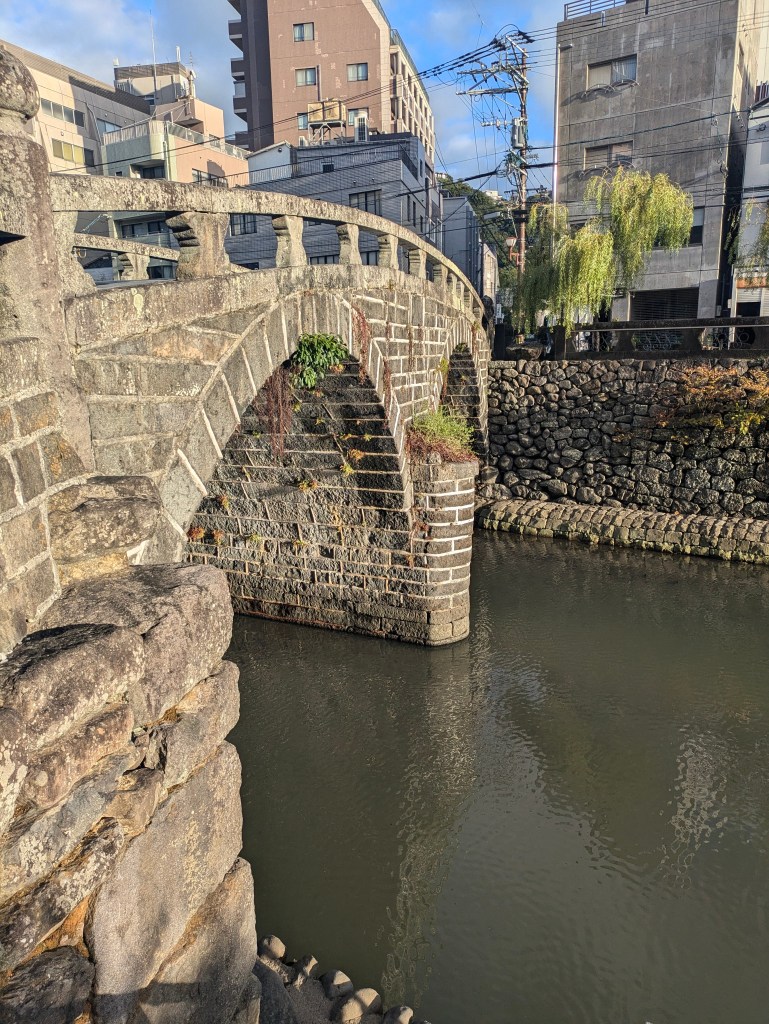
Nagasaki

Let there be peace.
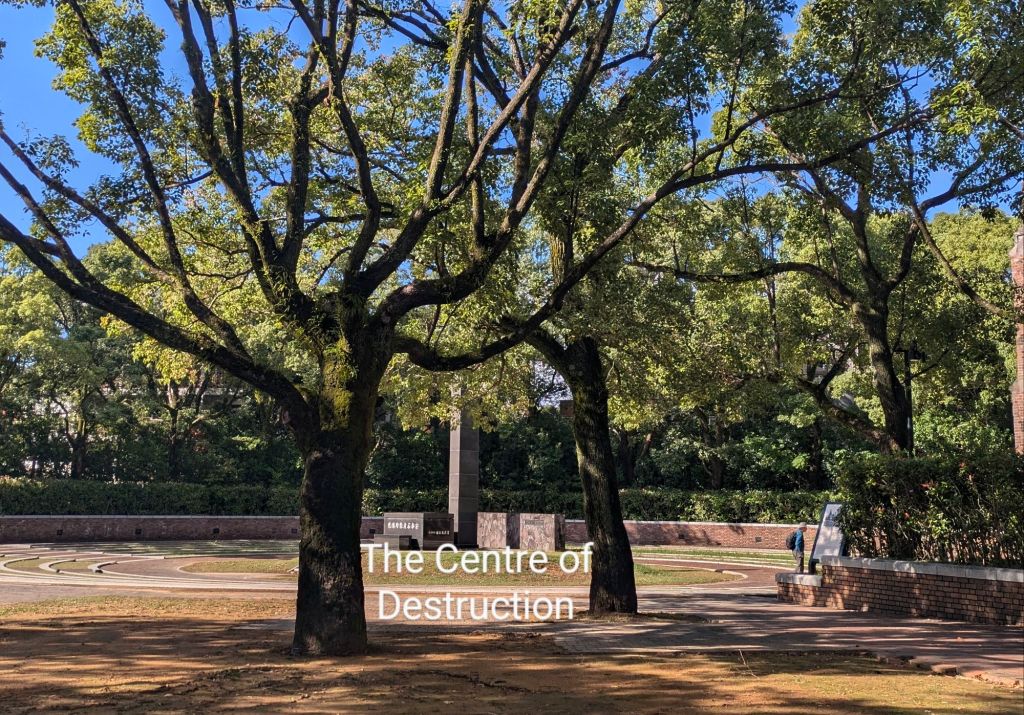
The Centre of Devastation ( marked by a black plaque with concentric circles radiating from it).
So peaceful now

Japan: War and Peace

Japan: Chasing the Dream (aka Running from the Rain)

We are in the terminal building standing in a queue to buy tickets  for the ferry to Beppu in Kyushu when several phones, including Caoimhin’s, start making strange sounds simultaneously. It’s an emergency alert but it doesn’t say what for …more information coming is the ominous text.  The noise echoes around the high ceilings of the building.  People glance at their phones but nobody seems too bothered and the queue shuffles on as if such alerts are frequent.  It’s a reminder that we are in a country where natural disasters are common with a history of typhoons, tsunamis,  volcanic eruptions and earthquakes.

Ferries run several times a day between the two islands (Shikoku and Kyushu). We hadn’t booked a ticket but there wasn’t any problem about buying a fare on the day. The cost for two passengers and the van was €100 for the three hour crossing. There was more alarming phones on the ferry but again nobody took any notice. The ferry was quiet and extremely comfortable…. so comfortable that we were disappointed to arrive early.

Kyushu seemed green and mountainous and a lot like Shikoku with perhaps a little more rice cultivation. It has been a bad year for rice due to the unseasonably high temperatures. Most of the rice cultivation is on small holdings managed by elderly farmers. The average age of an agricultural worker in Japan is 69 years old. Most older people in Japan continue working. At the launderette where we were doing our weekly wash (we pack very lightly), the manager was a sprightly eighty something year old. He was a very chatty man, eager to give us tips about all the places we should visit in the locality. Unfortunately we missed a lot of it as Google Translate couldn’t keep up with him, he talked both too much and too fast for Google.

Our first stop in Kyushu was Beppu, a town known for its many onsens (thermal baths). It’s a very seismically active area which explains the many baths.  The nearby region of Oita has had nine earthquakes, greater than magnitude seven, since 1900. Beppu is built on a flat plane  hemmed in on three sides with mountains. As we approached on a grey, humid 30 degrees afternoon,  the plumes of steam rising from the many hot springs and the clouds descending down the mountains intermingled to give an eerie darkness. Maybe it was that our minds were filled with those emergency alerts (that everyone ignored) but we  felt a sense of foreboding. It became darker and huge, fat drops of rain splattered the van.

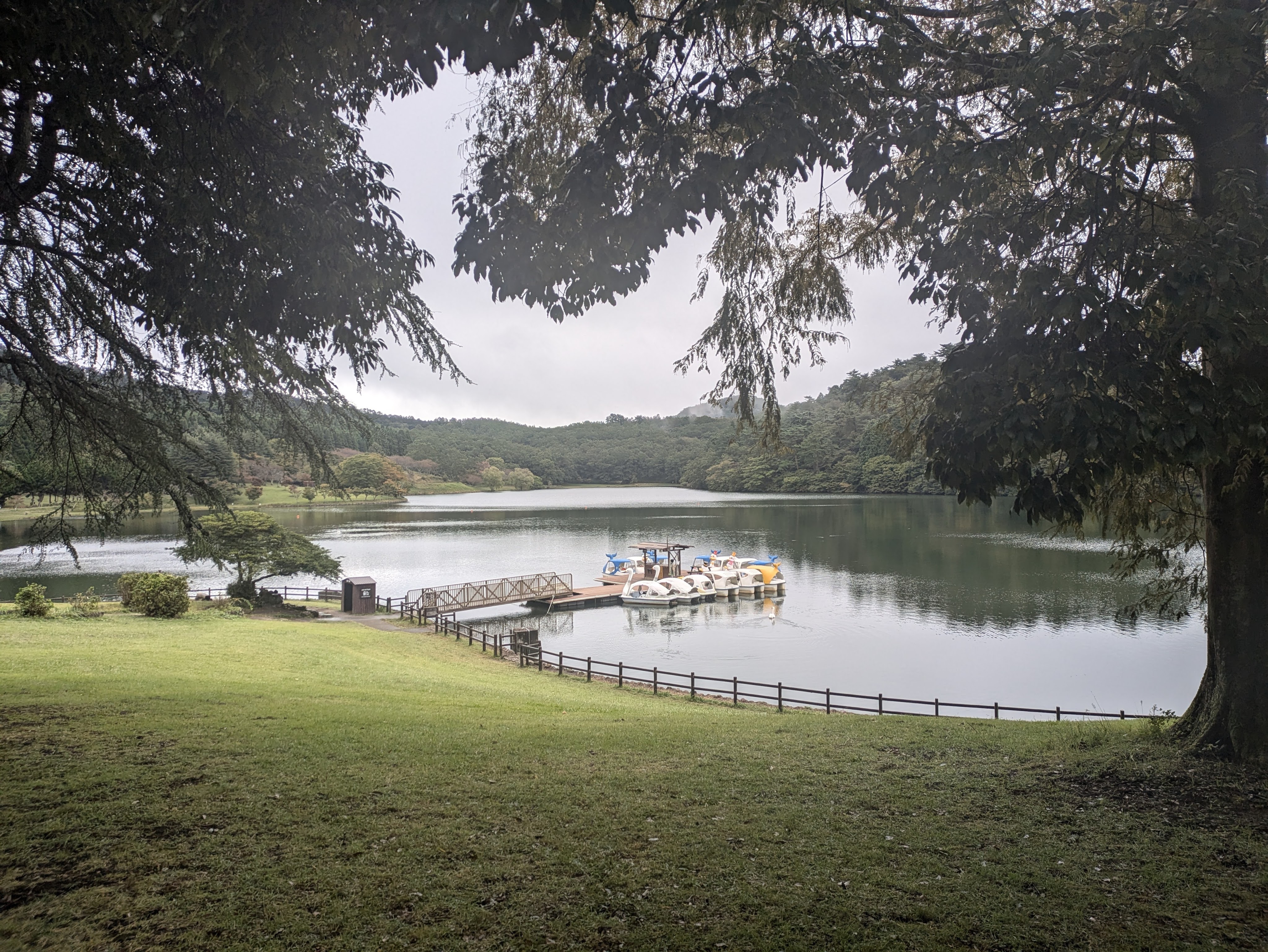
We tried to stay in an RV park in the centre of Beppu but it was closed so we tried a campsite in the hills buts that was boarded up. Our third option was a campsite high above the town in a nature reserve near a lake,. This was open and the rain stopped.  Although there were loos, there weren’t any showers and it was prohibited to swim in the lake. Lake Shidaka is supposed to have been made from the accumulated tears of the broken hearted. Nevertheless it was a serene plane where swans floated by and the trees were beautiful. There were only 5 campers/tents in the huge park. There was some damage from a typhoon that had swept through a few months before.

A Lake made from Tears
Don’t get TOO Close

 In desperate need of a shower and some Wi-Fi, we searched for a guesthouse in Beppu and found J.Hoppers in the centre of town with parking,  Japanese futon beds,  our own ensuite bathroom  for less than €40 a night. It was fantastic, comfortable and reasonably priced. The luxury of having our own bathroom cannot be underestimated. The owner spoke English with great recommendations for onsens and restaurants. There was also a common area for chatting with other guests, a couple who were cycling to Bhutan, a Kuwaiti guy who described Kuwait as a ‘dreamless sleep’ where people have nothing to do and more money than is good for anyone. If you ever find yourself in Beppu, I’d recommend you stay at Hoppers.

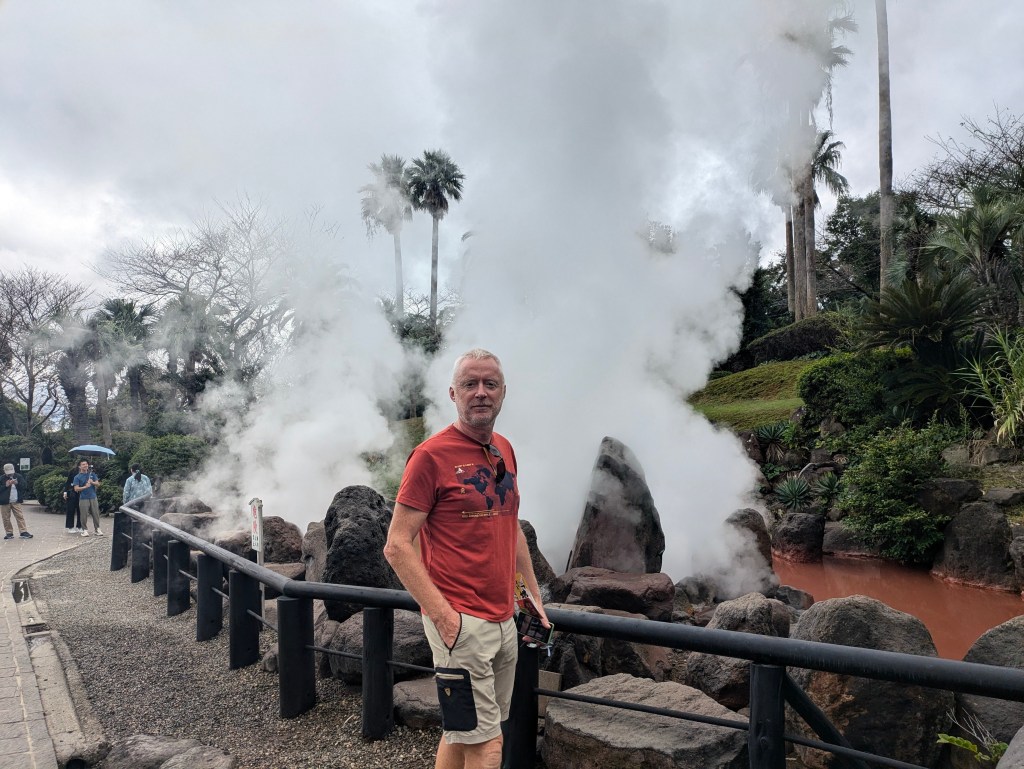
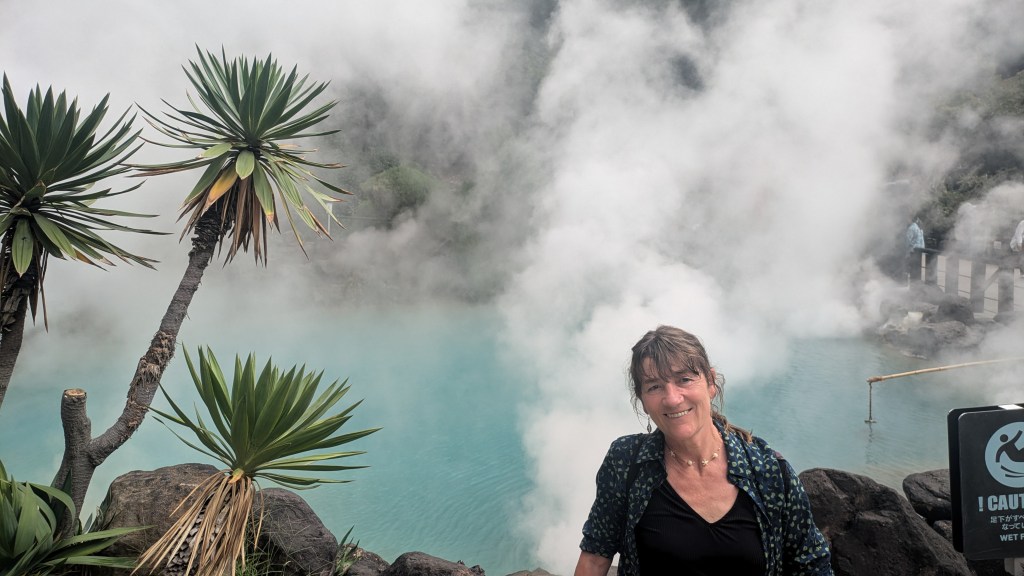
The Hells of Beppu is a series of seven bubbling pools of water and mud with various colours from deep turquoise to flaming red. They are dotted at separate locations around the town. The pools are strictly for viewing and not for bathing (unless you have a wish to be scalded) although there were footbaths at many of the sites to soak your feet.  It was probably the most touristy thing that we have done and our first exposure of coachloads of Japanese tourists. The noise, the crowds, the bell-ringing of the tour guide was totally overwhelming especially as the day was hot and the parks were steamy. It truly was ‘hell’.

After our enjoyable stay in Beppu, we headed down the east coast of Kyushu on non-toll roads but even these were very good. There were numerous tunnels cut through the mountains. Sometimes we there were only a couple of hundred metres from the end of one tunnel and the beginning of the next. It was about 20 degrees, a drop of 10 degrees in a couple of days. There were deserted beaches and closed campsites where we parked for the night anyway.

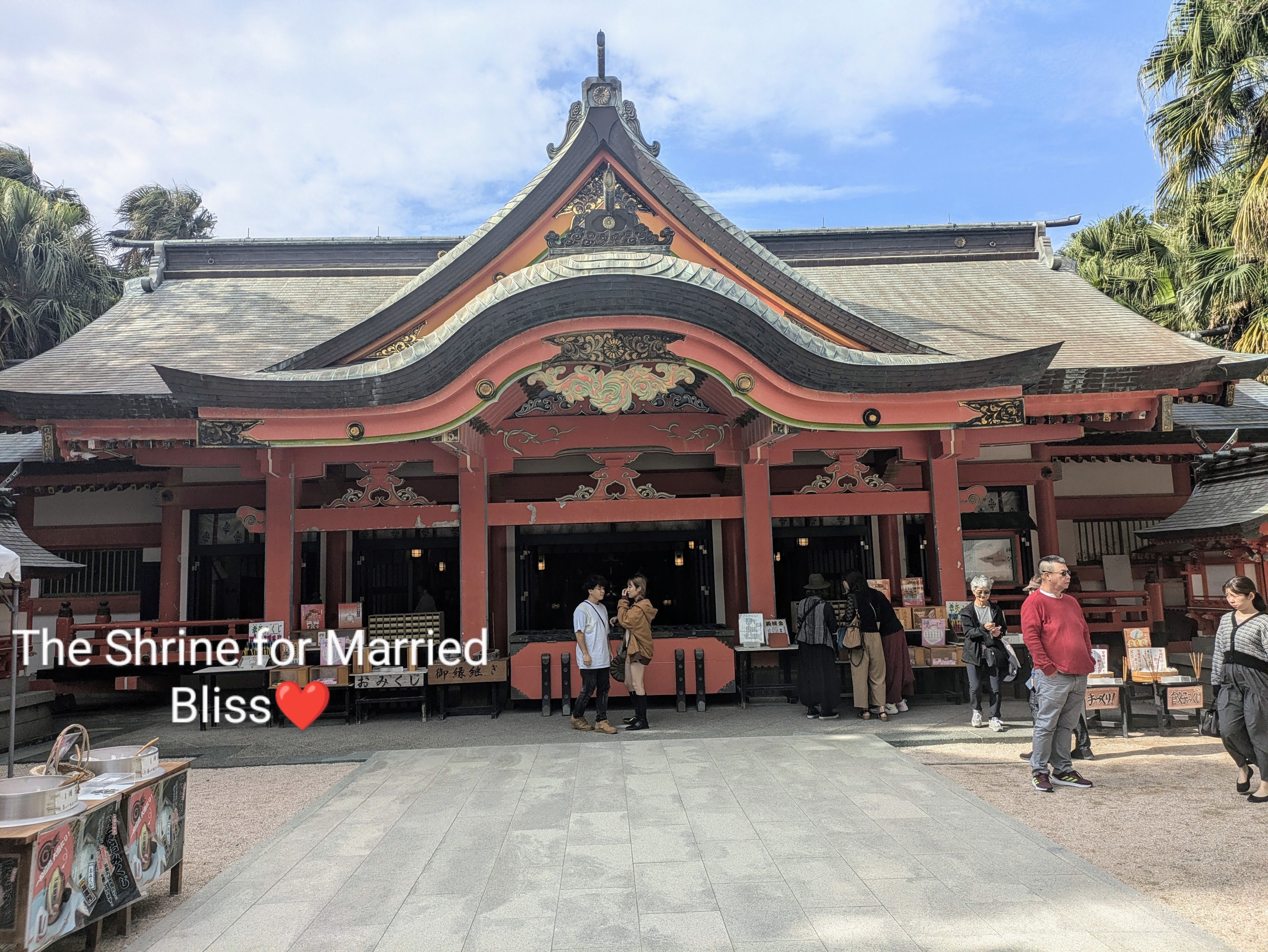
The Nichinan Coast on the eastern side of Kyushu is regarded as one of the most beautiful coastal drives in Japan with many offshore islands, strange rock formation and thundering surf. Down the coast, we visited a shrine for couples, a place that was very popular as a wedding venue. It was quite busy with both the hopeful, the grateful and the desperate.

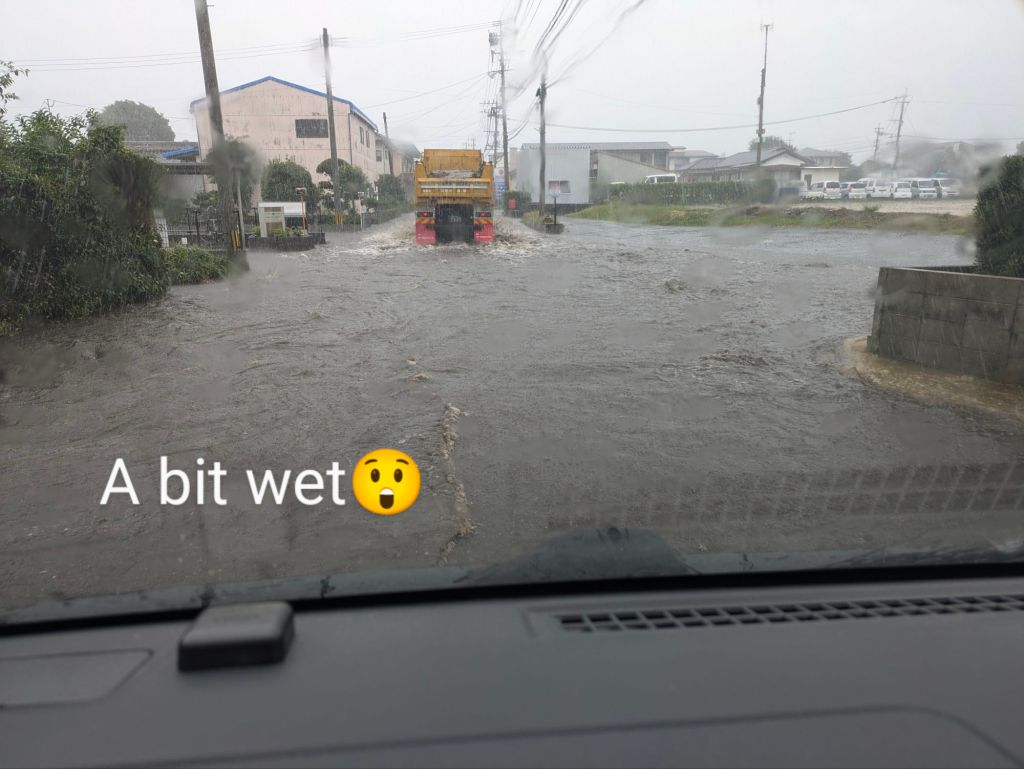
We pulled in for the night at a scenic spot along the coast overlooking the Pacific. It was sunny and blustery but it began to rain during the night and it didn’t stop. Hours later, we were marooned in the van, there was water leaking in the window onto one of our pillows. The carpark was almost a lake and a trip to the loo was a major expedition. It rains a lot in Japan (evident from the trees and green moss) but the area we were in was regarded as the wettest in the country. We sat in the van, checking weather forecasts and wondering where to go. Although we hadn’t seen the most impressive part of the stunning coast, we decided to abandon that plan. The lure of tropical islands was strong. We investigated ferries and flights to Okinawa and other islands in the East China Sea as rain hammered against the van. We made some coffee which streamed the windows even more and decided to head to Kagoshima Ferry Terminal and investigate ferries to any island. After driving on flooded roads when we feared the van would stall or a river might burst its banks, we diverted to the tolled roads. Hang the expense!

The woman in the ferry terminal office had the patience of a saint as we changed our minds about what we wanted to do, There was no availability for the overnight ferry that evening for a van, mainly because the army were travelling with lots of jeeps and trucks. We decided to go as foot passengers but then changed our mind again when we heard the price of parking the van at the ferry terminal. When we found out the price to travel with the van, we almost called the whole thing off.  I’m sure that the woman was inwardly cursing us but she was so helpful, as we debated, dithered and communicated with her by Google Translate.  Eventually we came to a decision. We would travel the following day with the van and we would return in eight days. There was some discount for getting a return fare. So we left Kagoshima in the rain but thankfully there was little wind and sailed four hundred kilometres overnight on the East China Sea.

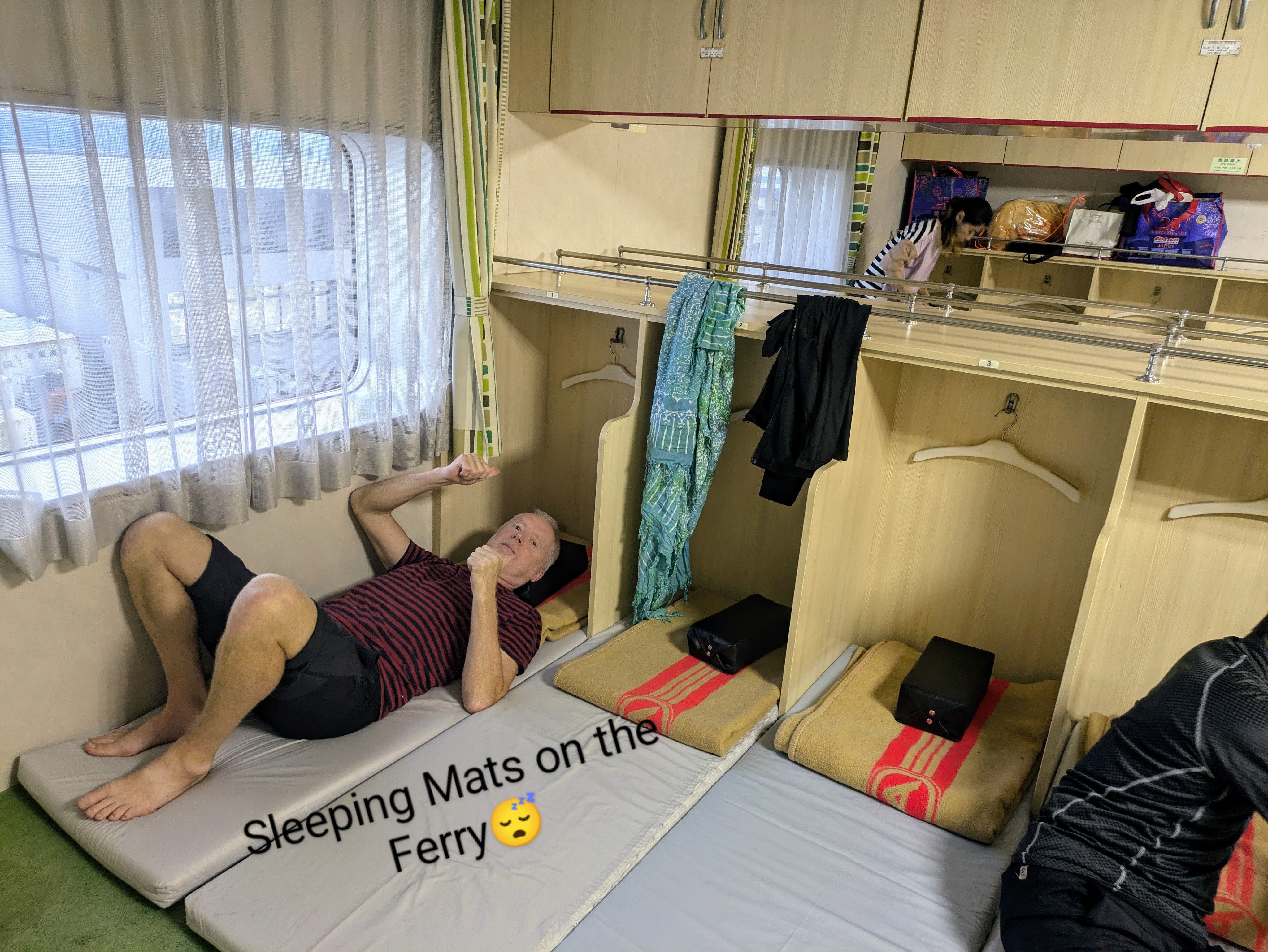
After a night on hard mats in the third class quarters, the ferry arrived in the early morning to a sleeping Amami Island. We parked near the sea, boiled some water on the stove for tea and coffee and waited for the island to wake it while we admired the dawn tranquillity . There was more birdsong than we had heard up to now and the loudest cicadas that we have ever heard.

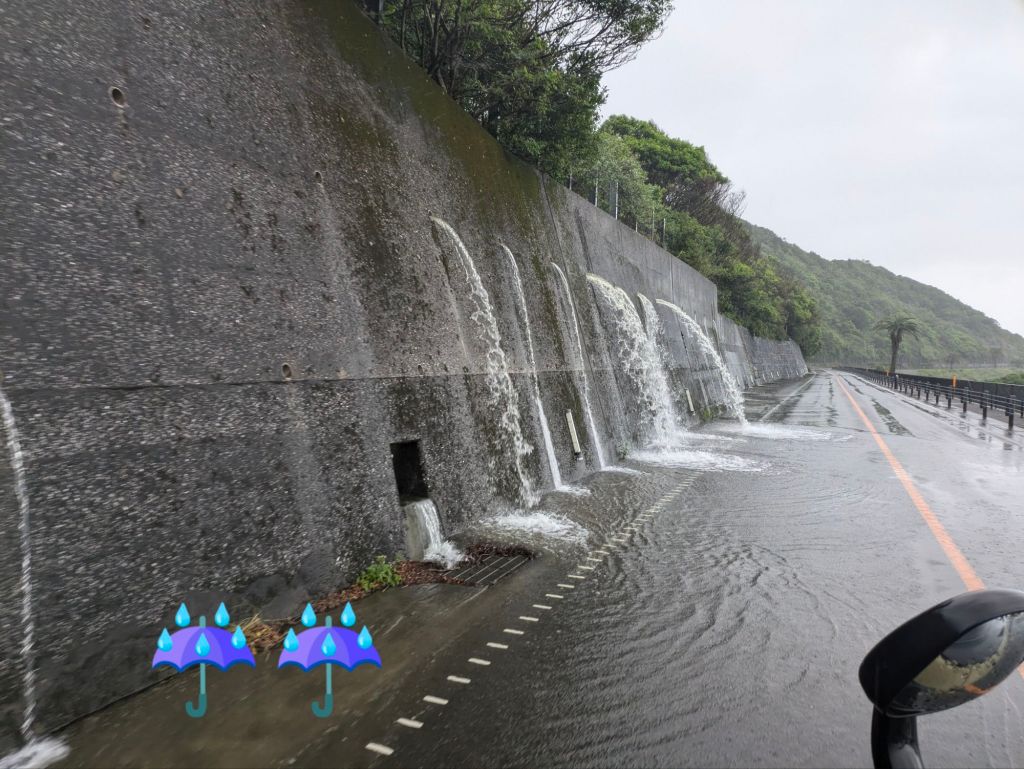
Mainly there were green, forested hills, rising behind small fishing villages nestled on the shore. With the topography of steep hills coming down to meet the sea, we saw that it was a constant battle to prevent the land sliding into the sea from mudslides and the sea overtaking the land, a constant pull and tug. Driving around the island we witnessed first hand the hills reinforced with concrete and the sea barriers, both requiring constant maintenance.

The Amami islands are halfway between mainland Japan and Okinawa island group and not that far from Taiwan.  Amami Oshima, the main island, is sparsely populated, smaller and less touristy than its more well known neighbour, Okinawa. It has a similar climate, warm with plentiful rain and a unique culture with worship of many gods of mountain, sea and forest. Many rituals take place around a lunar calendar and are overseen by an elder female.

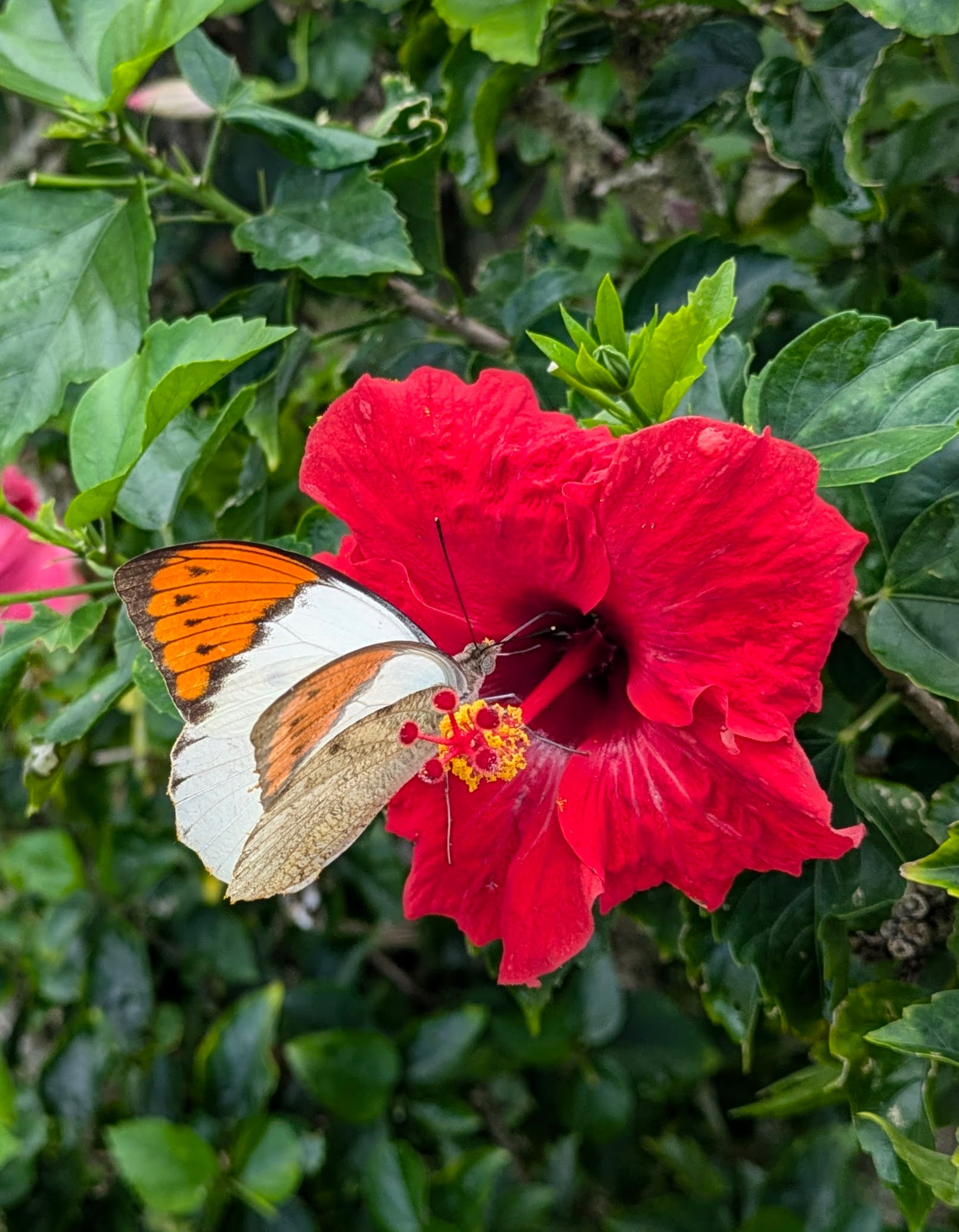
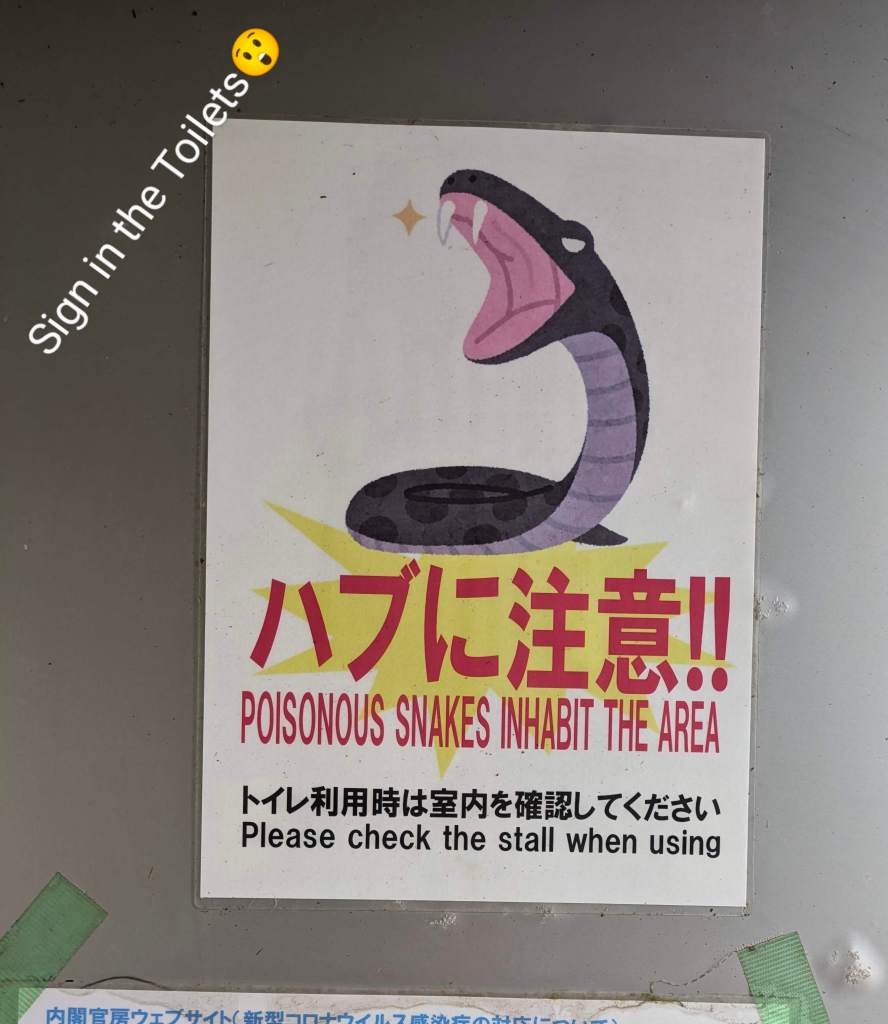
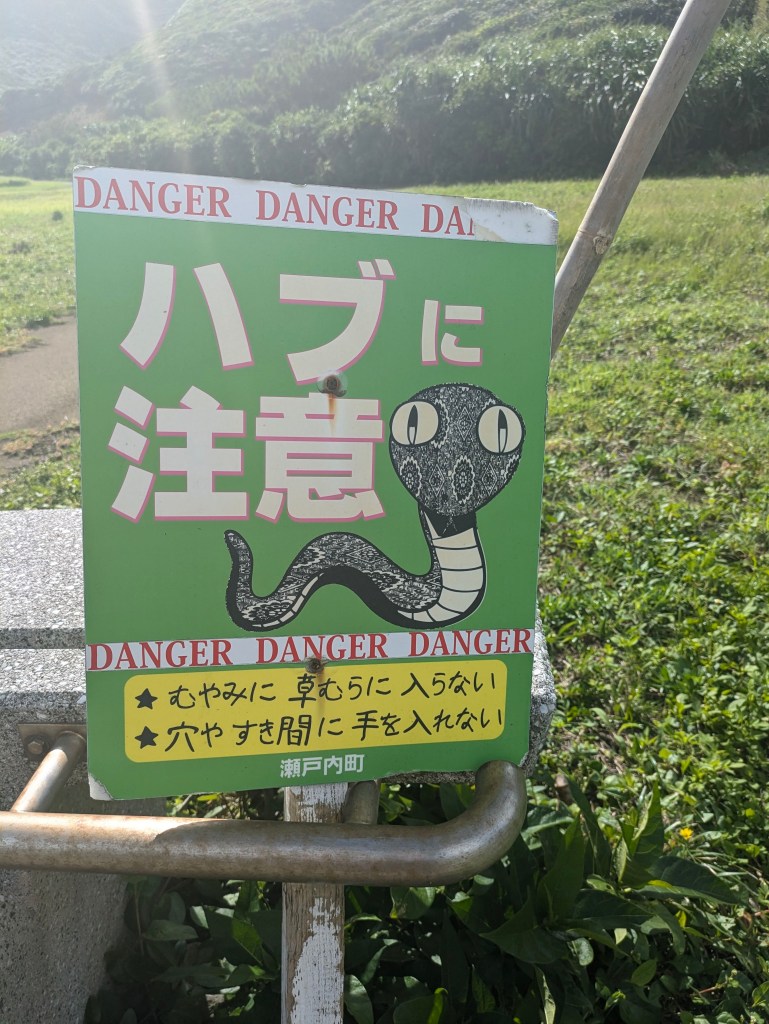
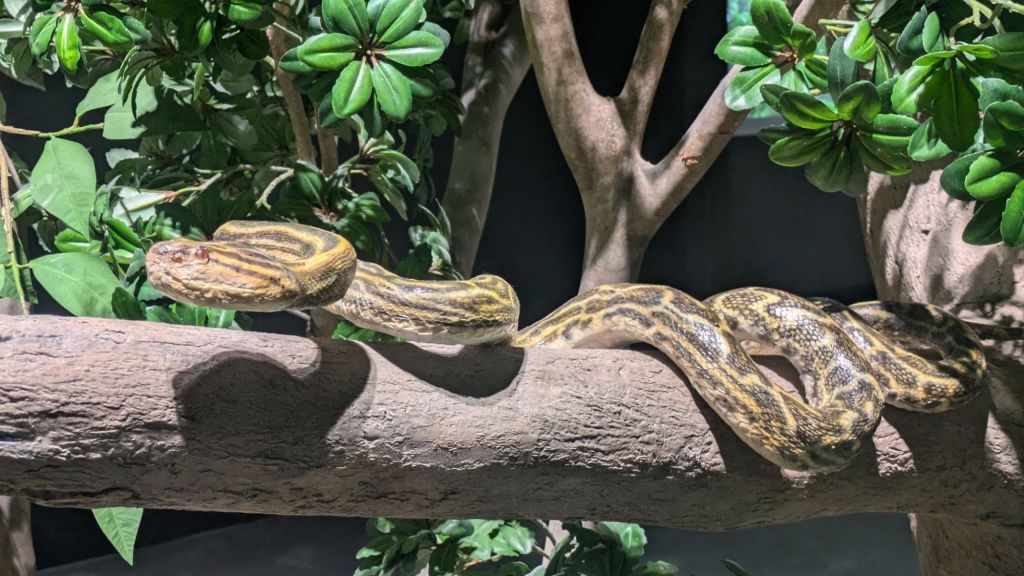
We soon found out how plentiful that rain could be. Although our first day on the island was warm and sunny (about 29C), it began to rain that night and didn’t stop at all for about thirty six hours. The rain wasn’t like rain at home, it  was warm but still drenching and it caused more leaky windows. The deluge gave us an opportunity to visit museums, an aquarium and the wildlife conservation centre. Conservation and nature is an important part of Amami with its unique eco-systems of mangroves, forests, seashore and pristine waters. It is a World Heritage Natural Site. There are rare species of plants and animals, unique to the island. Sea turtles come ashore and lay their eggs on many of the beaches between May and July. There were so many butterflies that sometimes it was almost like a blizzard. There are huge efforts in progress to eradicate the mongoose which was  introduced to help reduce the number of snakes and rats.  The problem was that the mongoose ignored the snakes and rats who were sleeping during the day and found easier prey in the rare species of rabbit and woodcock which have both become endangered as a result.  Everywhere we go, there are warnings about the snakes, particularly vipers. So far, we haven’t seen any…..fingers crossed, it stays that way.
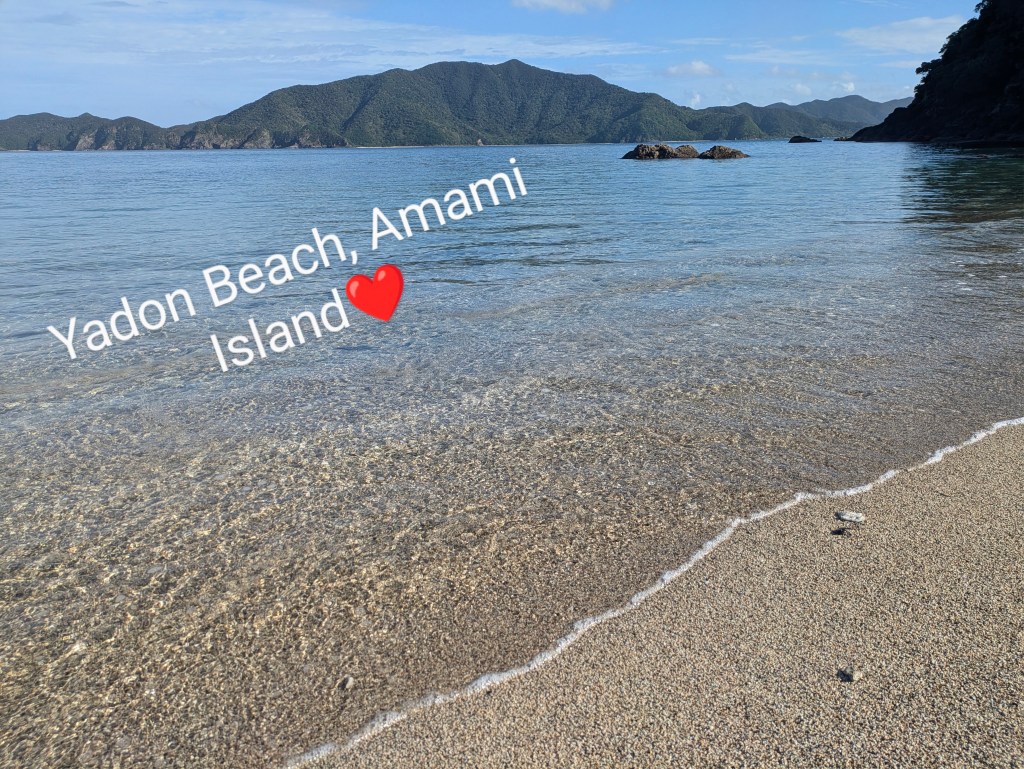
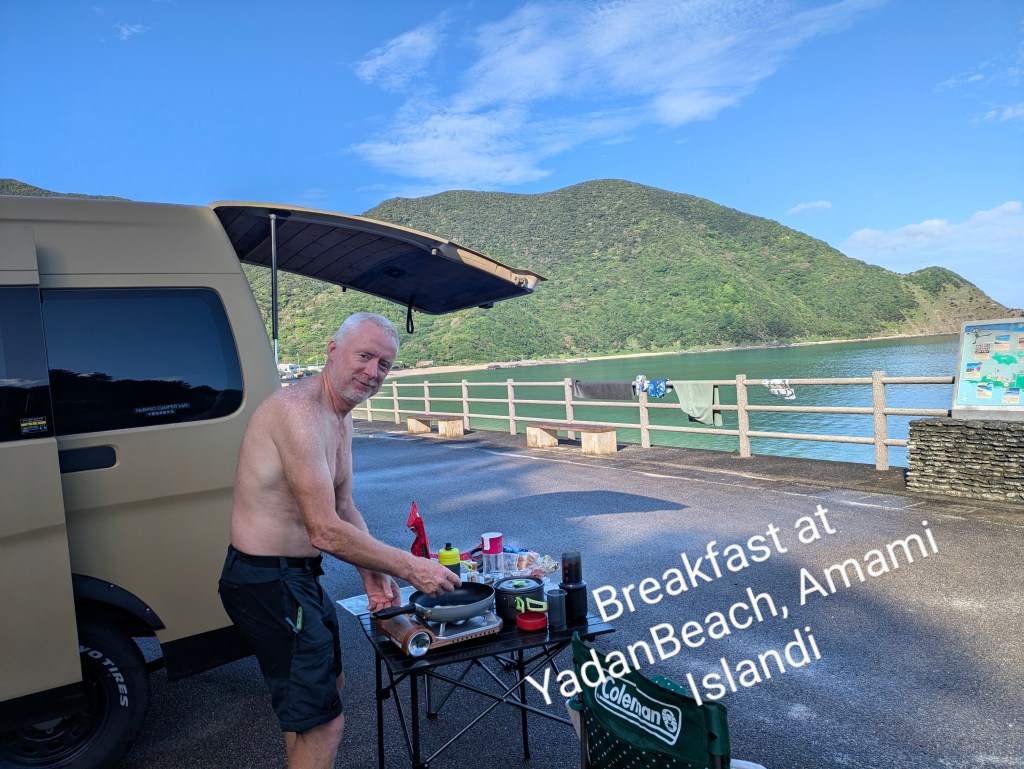
Last night we are parked up by Yadori beach, an idyllic spot on the edge on the forest. The temperature in the soft darkness was about 25C, there was a light breeze and we were enjoying some wine (which is surprisingly cheap in Japan).  A man in a jeep stopped beside us to warn us about the danger of snakes in the region(all by Google Translate). That put a little damper on our evening, I even dreamt of snakes slithering in the van window that we had to keep open for some ventilation and I’m not even squeamish about snakes….usually.

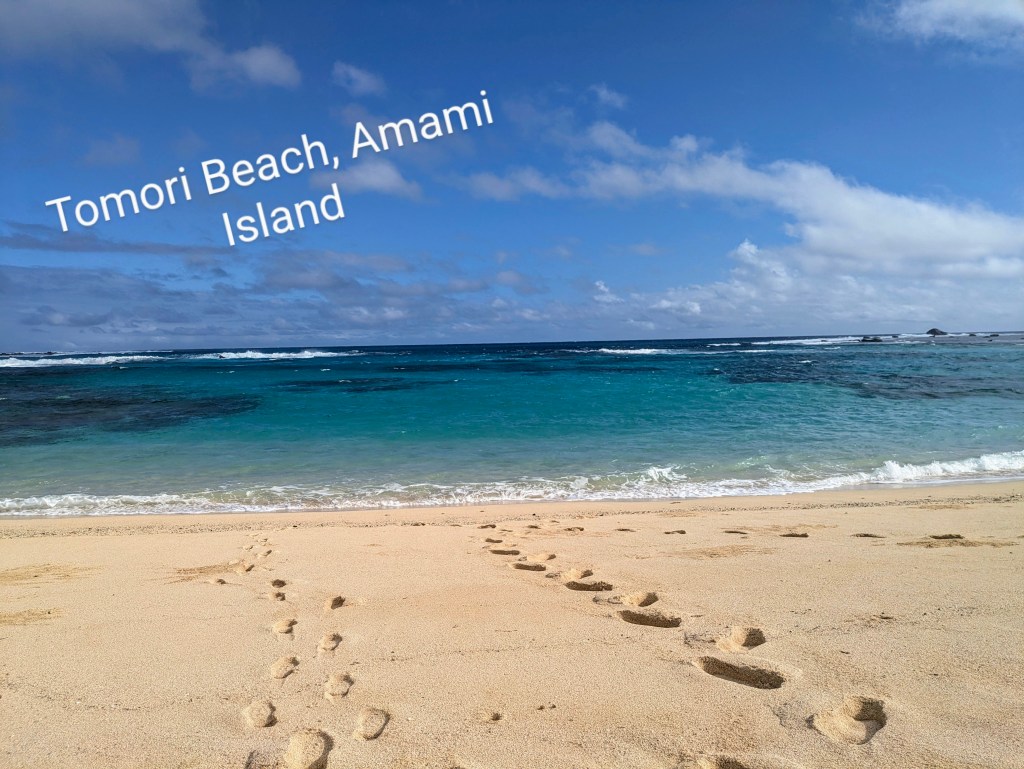
We are so glad that we made the decision to bring the van to the island. It allows us the freedom to travel around as the bus service is not extensive. Amami is an island made for camper vanning with so many beautiful places to park, often with toilets, showers and picnic tables. At the southern end of the island we were spoilt for choice, parking beside gorgeous beaches with crystal clear water where we snorkelled  with colourful, flickering fish. Truly a paradise when the sun shines……except for the snakes.

But there’s a typhoon coming and it is predicted to be a strong one. We are going to try and change our ferry tickets so that we can leave a day early…..just in case

Till next time….hope your Bank Holiday weekend is going well

From a sunny, blue-skied Amami,

Mata Ne (またね)

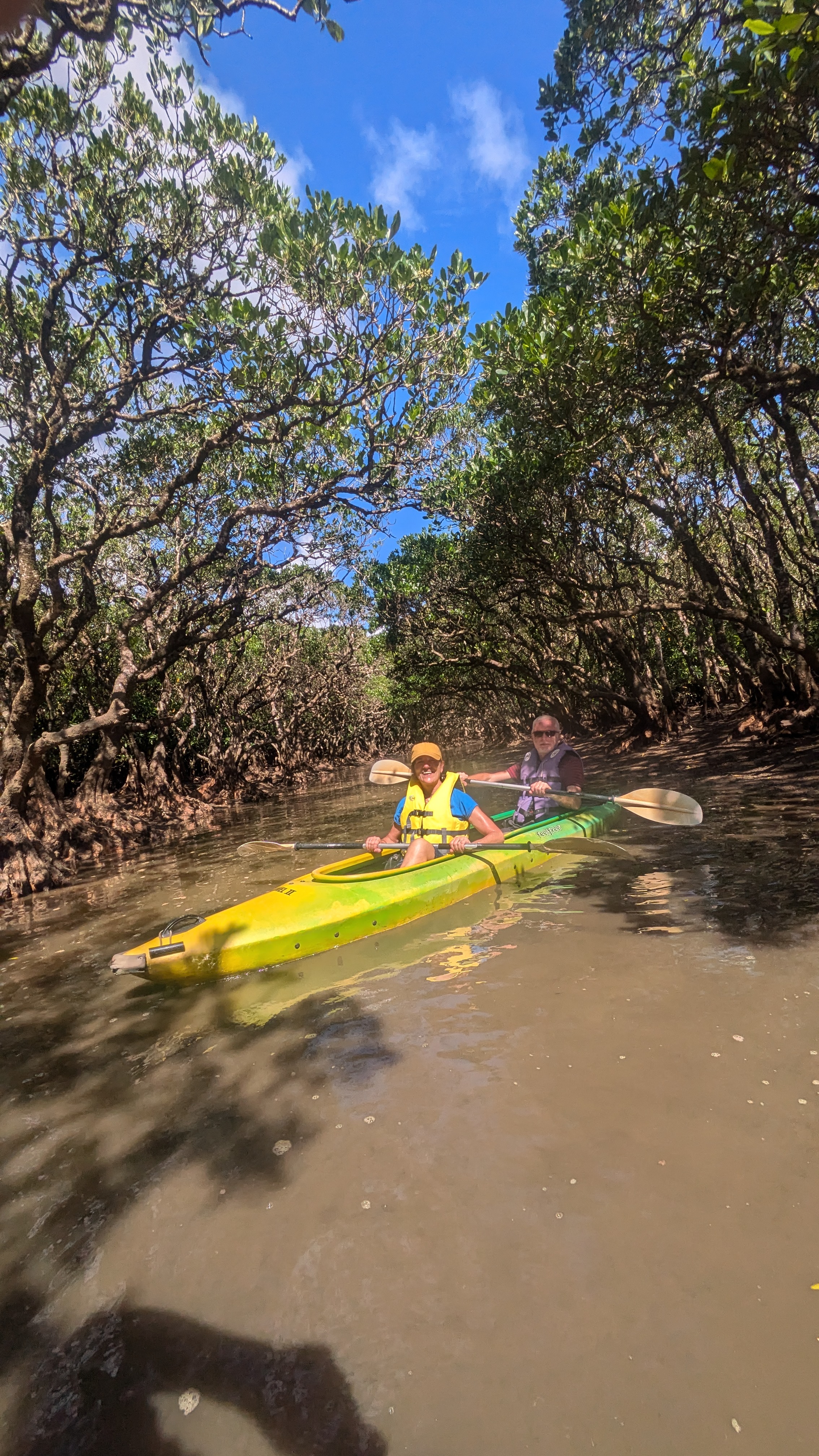
Kayaking among the Mangroves, Amami Island

Japan: Chasing the Dream (aka Running from the Rain)

Japan in a Van

‘Wild’ Camping in Japan

Japan is a country of surprises. We are enthralled by its natural beauty, the tree-clad mountains and the numerous Buddhist temples and Shinto shrines nestling among cedar trees above swirling clouds.

On a much more practical level, we are surprised by the impressive number of public toilets. This abundance of toilets is great for us because our ‘no frills’ camper does not come equipped with one.  They are everywhere – in parks and beaches, by the roadside and in most of the ubiquitous, convenience stores (like 7Elevens and Lawsons.). All these toilets are free, open 24/7 and  spotlessly clean.  Many have  a perplexing control panel to the side of the toilet bowl which is used to heat the toilet seat, tilt the angle of the seat, adjust the pressure of water to wash your bum and…..even simulate the sound of a flushing toilet for ‘privacy’ to camouflage  any embarrassing  noises🙃.

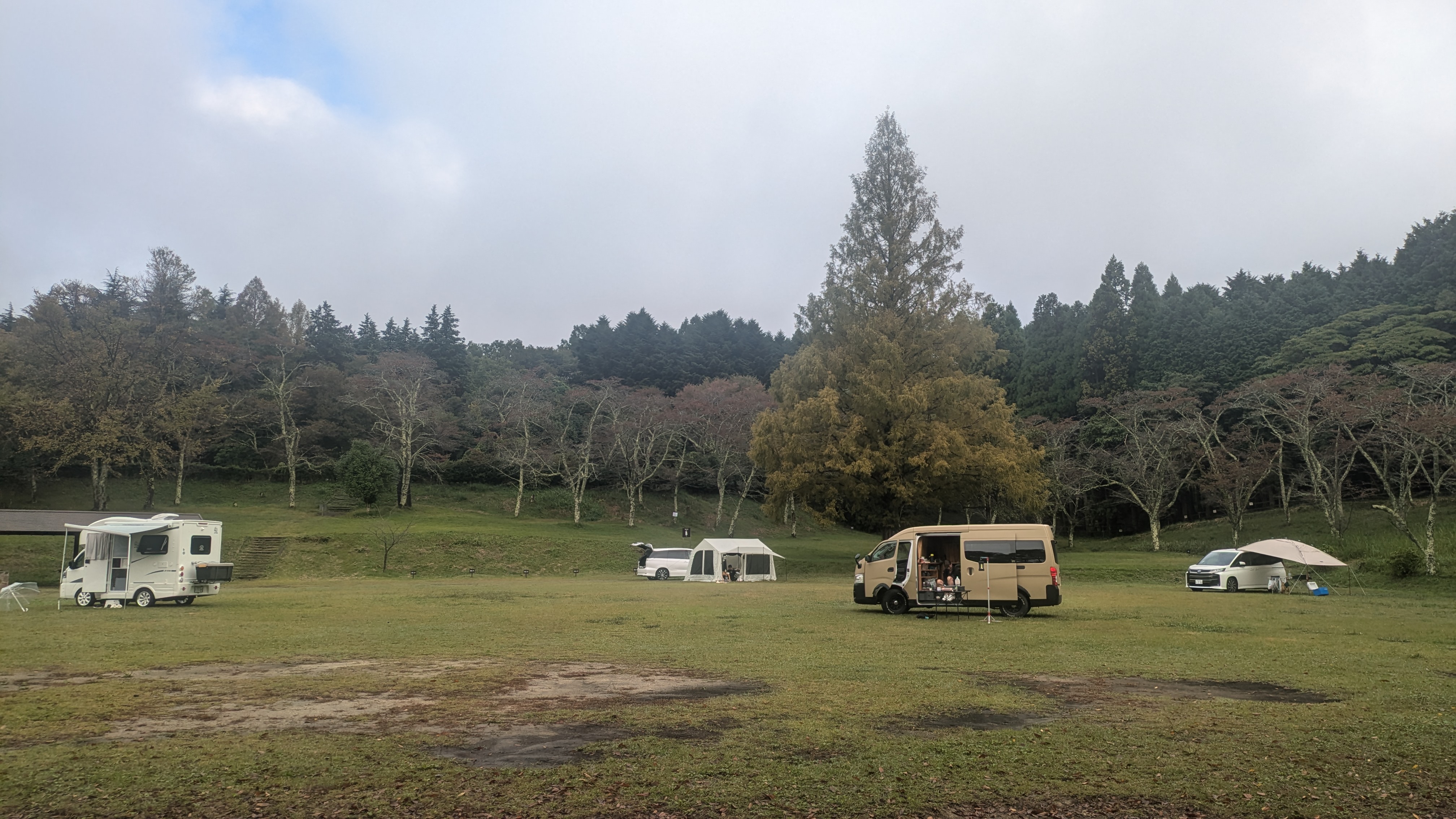
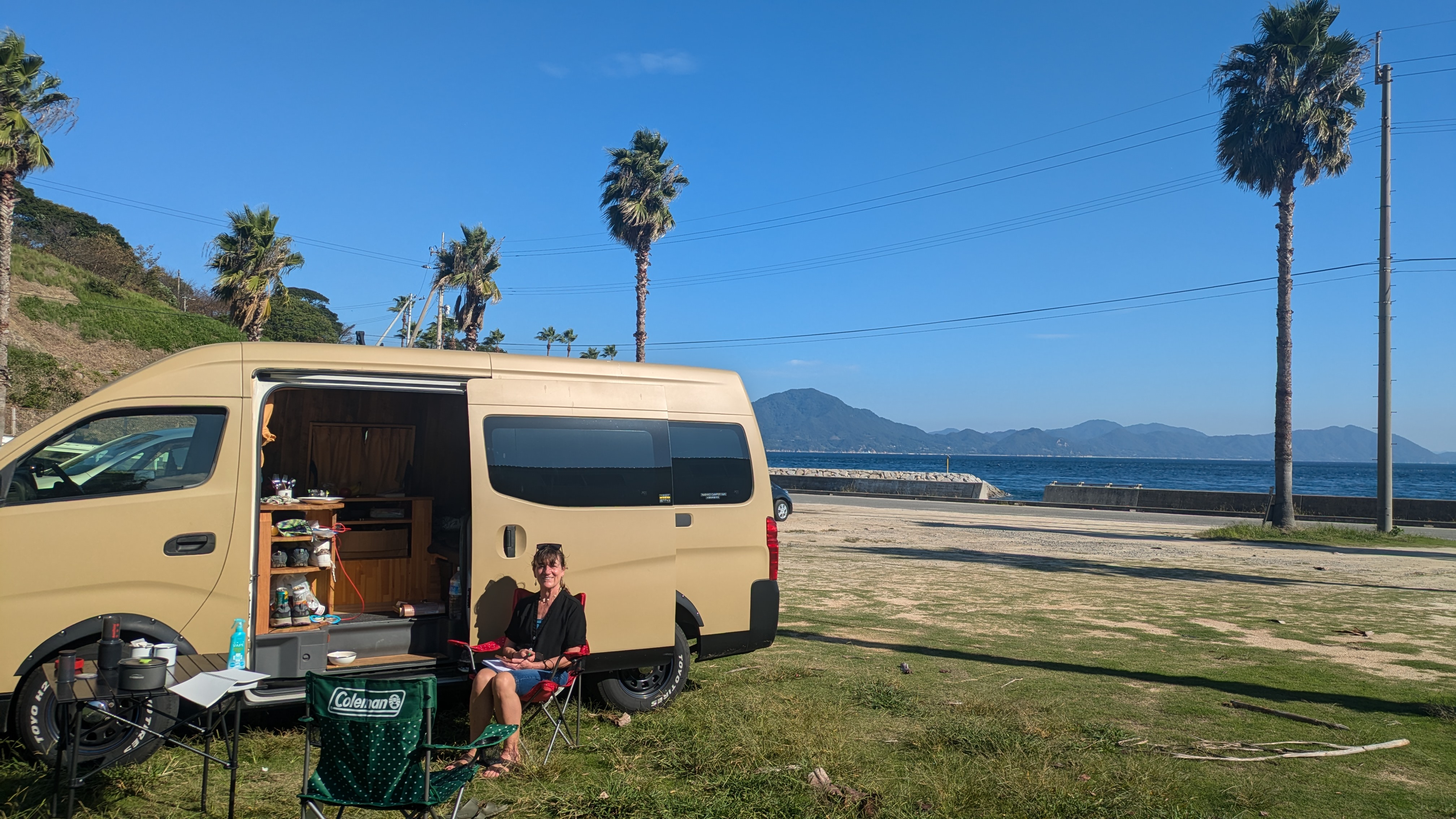
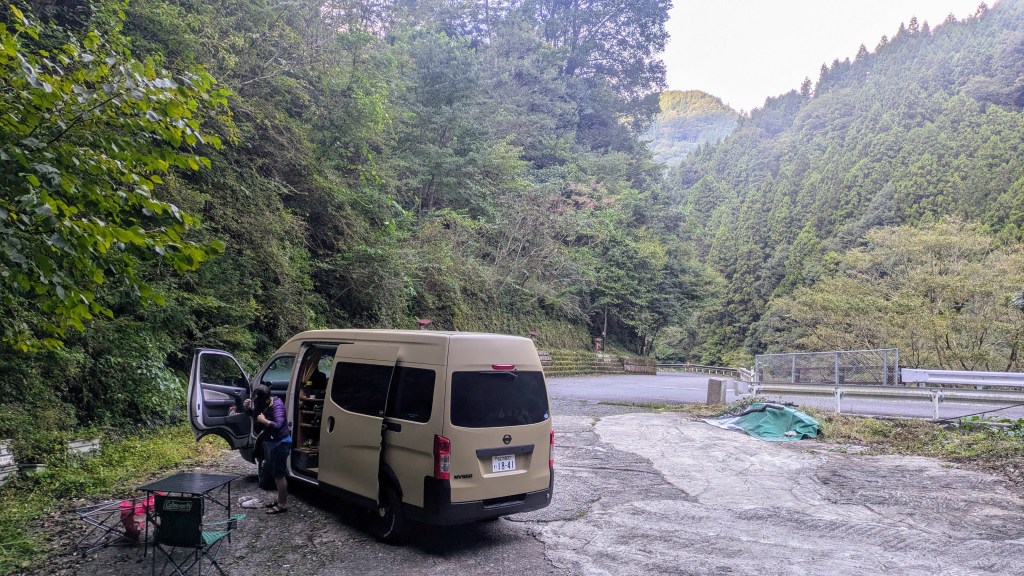
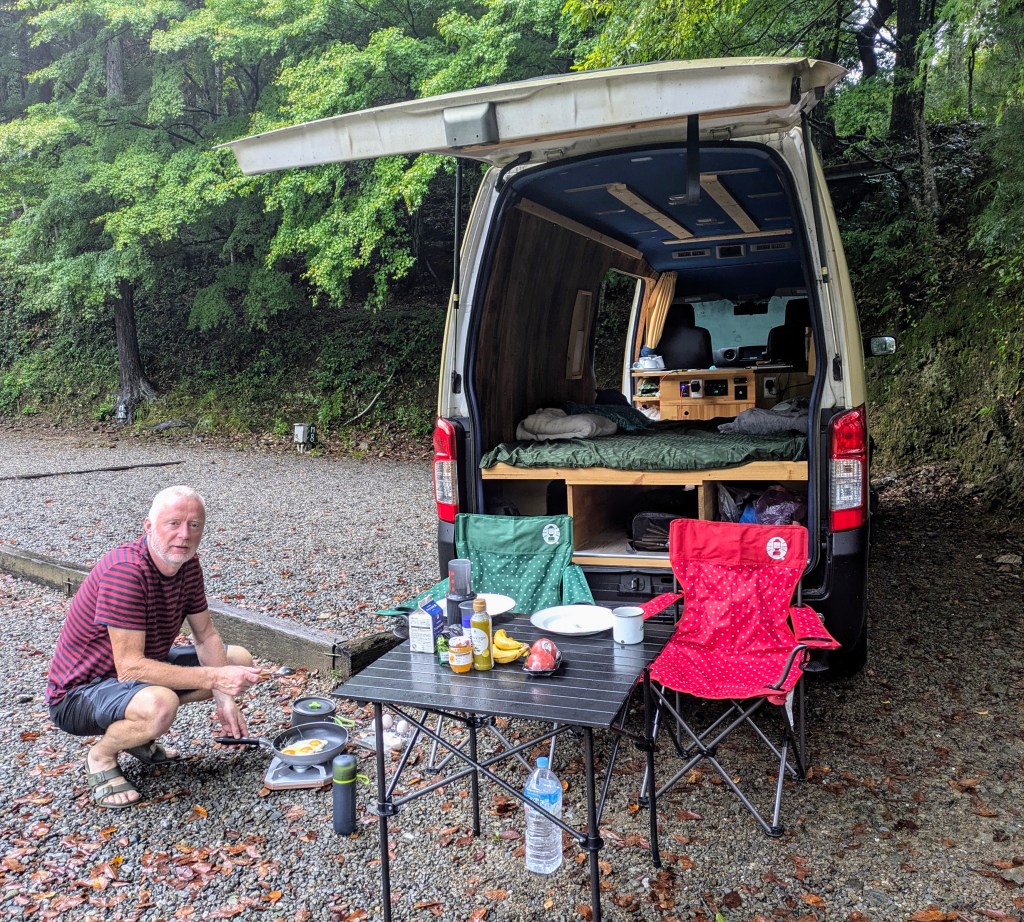
 Travelling around Japan in a camper van  is  surprisingly easy with road signs in both English and Japanese and  plentiful parking areas.  There are three main types of places to stay in a van overnight.  The first is paid campsites which have showers, toilets, laundry facilities,  plug -in electricity points and trash disposal.  Most of these also have bungalows for rent if you don’t have a tent or a van ( about €25 a night for two people in a tent or camper van)  The second is Michi-No-Eki which are free  carparks with access to toilets and usually a restaurant or shop. These are widespread throughout the country and there  is an app to find their locations.   There is no problem parking in them  overnight but it is recommended that you are discreet and do not pull out camping chairs and start cooking on the gas stove. The third option is wild camping spots,  usually found in very scenic areas by the coast or in the countryside . Here you can park and cook/ barbecue to your heart’s content and there is always  access to toilets and perhaps even a shower.

We have used all these options on our journey through Shikoku island.  Our night in the Michi-No-Eki was the least successful  because it was so noisy. A bevy of large trucks parked near us and kept their engines running all night. They weren’t there when we went to sleep but we were surrounded by them in the morning.  Our favourite option, and the one we have been using most often,  is the free wild camping and we have stayed in some idyllic spots.  One evening,  when we parked by a beach in the pouring rain (our only rainy day so far ),  we were intrigued by a tiny tent pitched beside a pick-up truck which had tarpaulin pulled over the back. In the morning, we chatted to the middle-aged occupant who told us that he was camping for a few nights because ‘he had trouble at home.’  This  made us even more curious but language difficulties didn’t allow us to delve any deeper. He donated a bag of coffee to us, waved and drove off. We watched him go and hoped that his home troubles were resolved.

There are onsens, public thermal baths, for a good soak and a cultural experience and launderettes where we can wash and dry for clothes for less than a fiver.

Our only real problem with travelling around Japan in a van is the lack of rubbish bins. Despite this, the country is scrupulously clean with not even a sweet wrapper on the street. Our trash mounts up particularly as everything comes double wrapped in plastic -even carrots are individually wrapped. We were thrilled to find some bins for segregated waste in some of the convenience stores and so we have been getting into the habit of getting rid of our rubbish as we go along.

Eating while walking  on the street is very much frowned upon.  All takeaway food is eaten in the place where it is purchased and the containers disposed  of on the premises. There are vending machines everywhere, even in the remotest of places, mainly selling soft drinks, green teas and plastic bottles of water. These is always a bin beside the machines for disposal of the empty plastic bottles but not for anything else. There is strict adherence to waste segregation, no Japanese person would even attempt to put a glass bottle in a bin for plastic.

In the rural parts of Shikoku island,  we were  so far off the beaten track that  sometimes  it felt that we were the only two people in Japan. We drove on narrow winding roads past deserted villages and through spectacular canyons with towering, green mountains in a landscape so awe-inspiring that we talked in whispers.

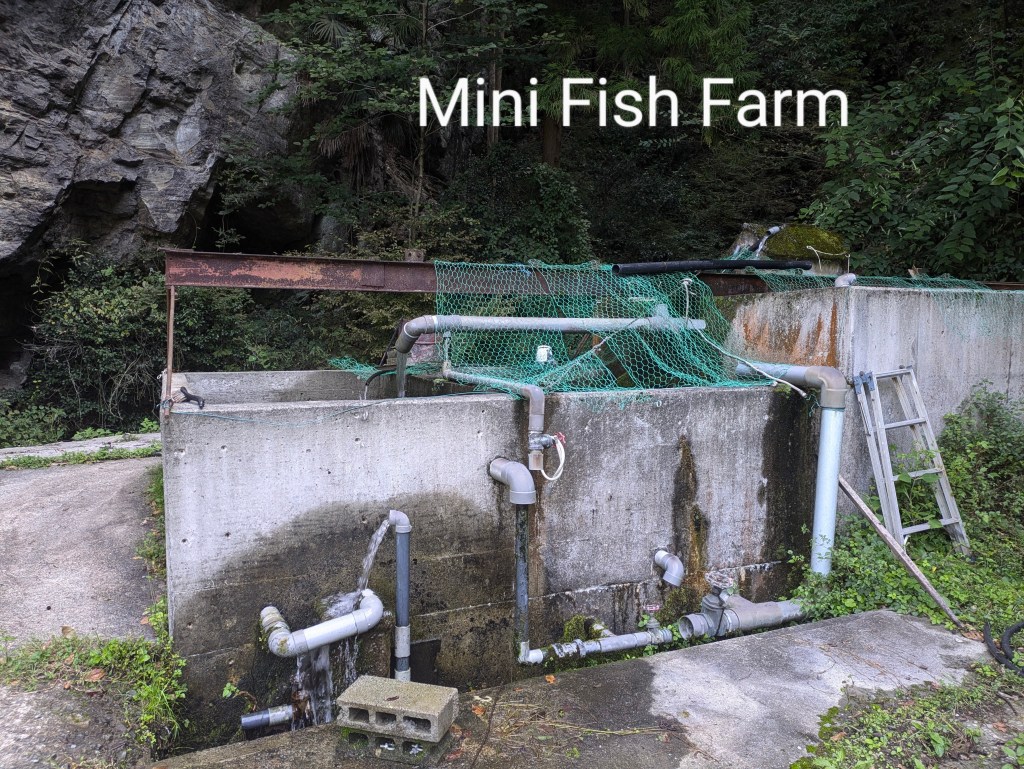
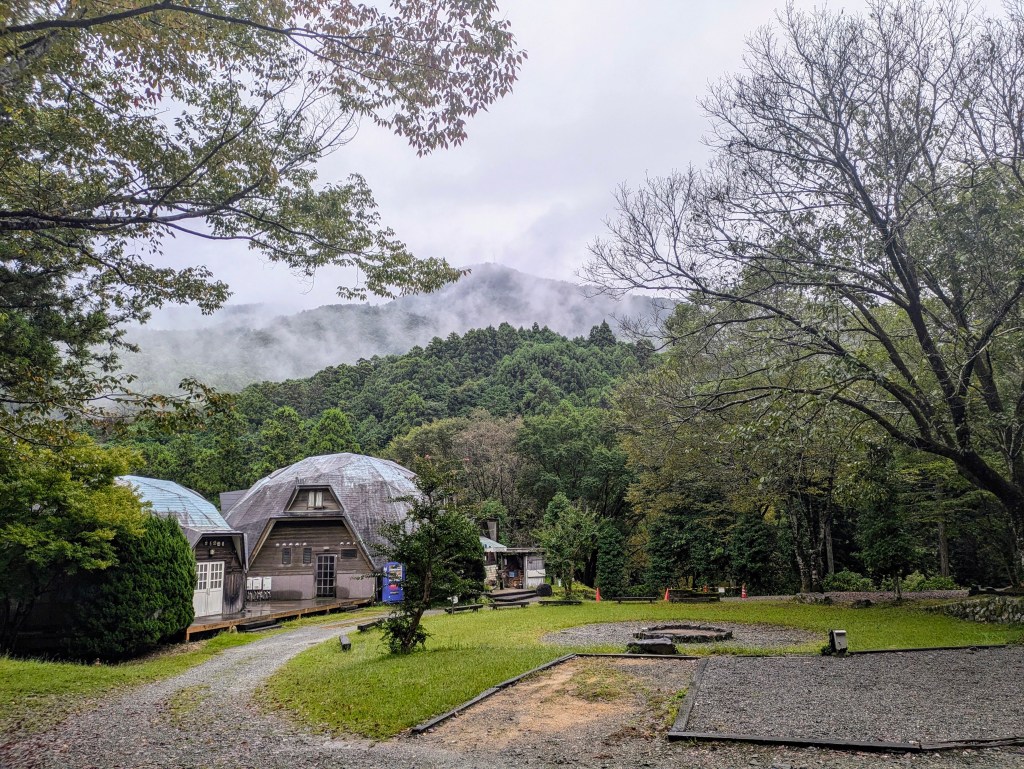
 For a change, we decided to stay in a paid campsite  that we found on Google maps but when we arrived, it was closed.  It looked as if it hadn’t  been in operation for a long time. It was wrapped in damp spongy moss and draped in an impressive array of  spiders’ webs like something out of a fairytale.. There were signs everywhere warning of heavy fines for unauthorised camping so we retreated and  found a spot nearby.  We slept to the sound of gurgling water both from the river and from a running hose pipe attached to a couple of large troughs. The water from the pipe was convenient to fill our water bottles and wash our cooking utensils. Imagine our feelings the following morning when a man came along to feed his fish in the troughs. The clear mountain water that we drank was actually waste water from a mini fish farm.  No ill effects although I keep smelling something  fishy🤞

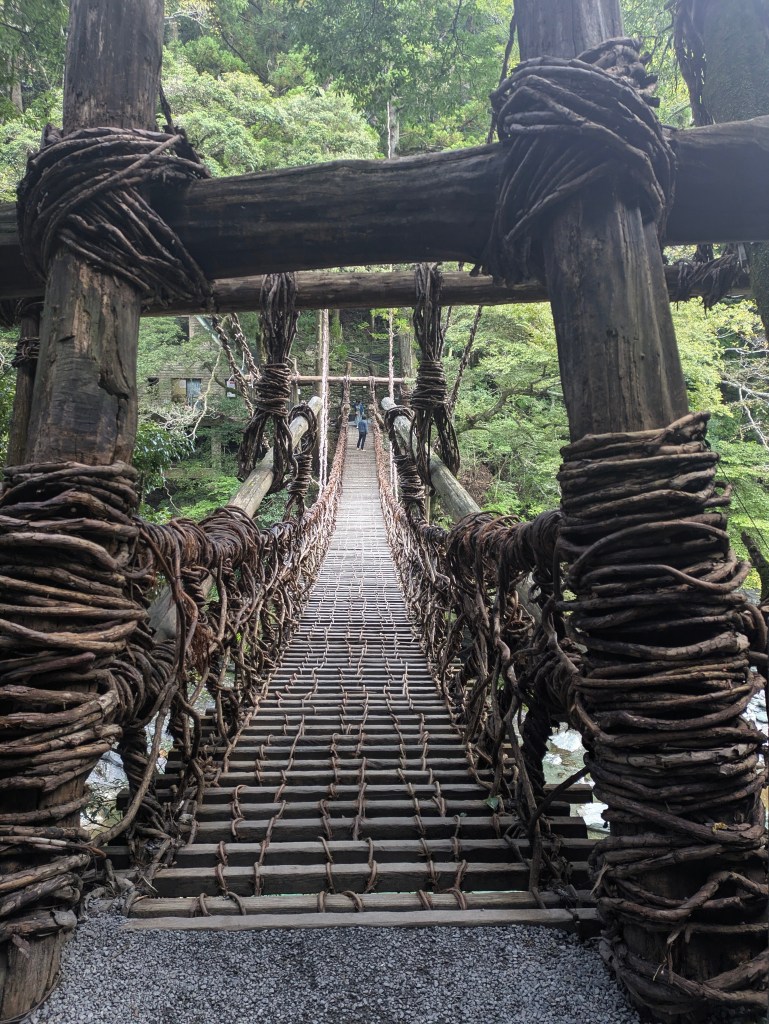
The Iya Valley in the mountainous centre of Shikoku Island was once so remote and inaccessible  that defeated Samurai fled there to hide out and lick their wounds. It is known for  vine bridges which have become a tourist attraction.  As the name suggests, these bridges are made of thick plaited vines and were once the only way to cross the rivers. Although they  looked sturdy, they were quite  shaky to cross  especially with a wind blowing, large gaps between the vines and a long drop to the rocks and river below. I crossed slowly on jelly legs😁.

Japan has two main religions, Shinto and Buddhism with a huge number of shrines and temples for both. There is no competition between them as most  Japanese adopt a mixture of the two while professing to have no religion at all.

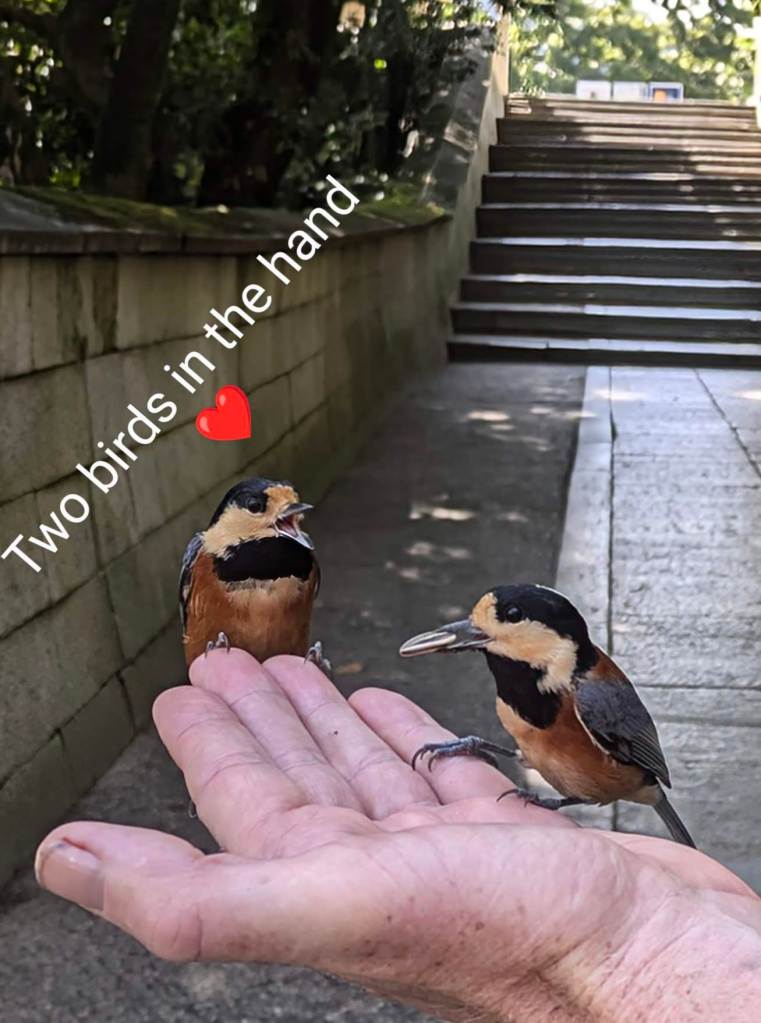
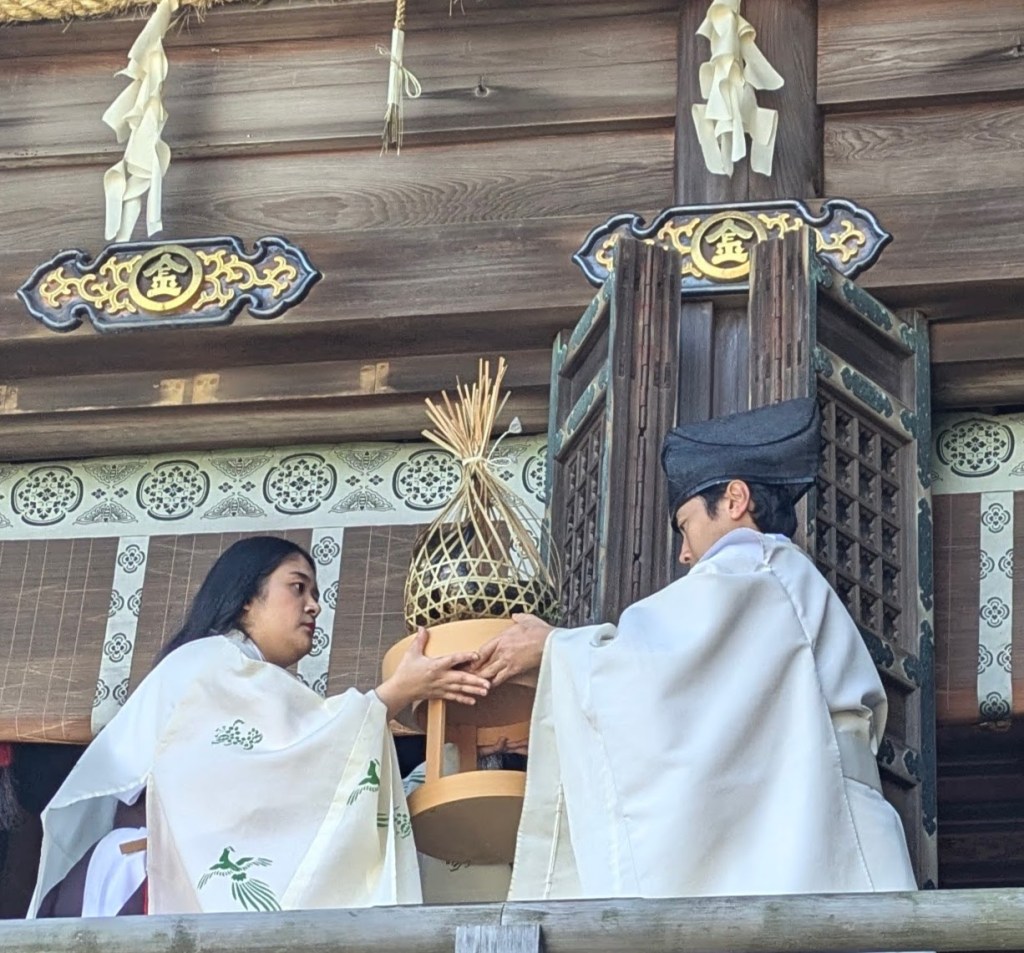
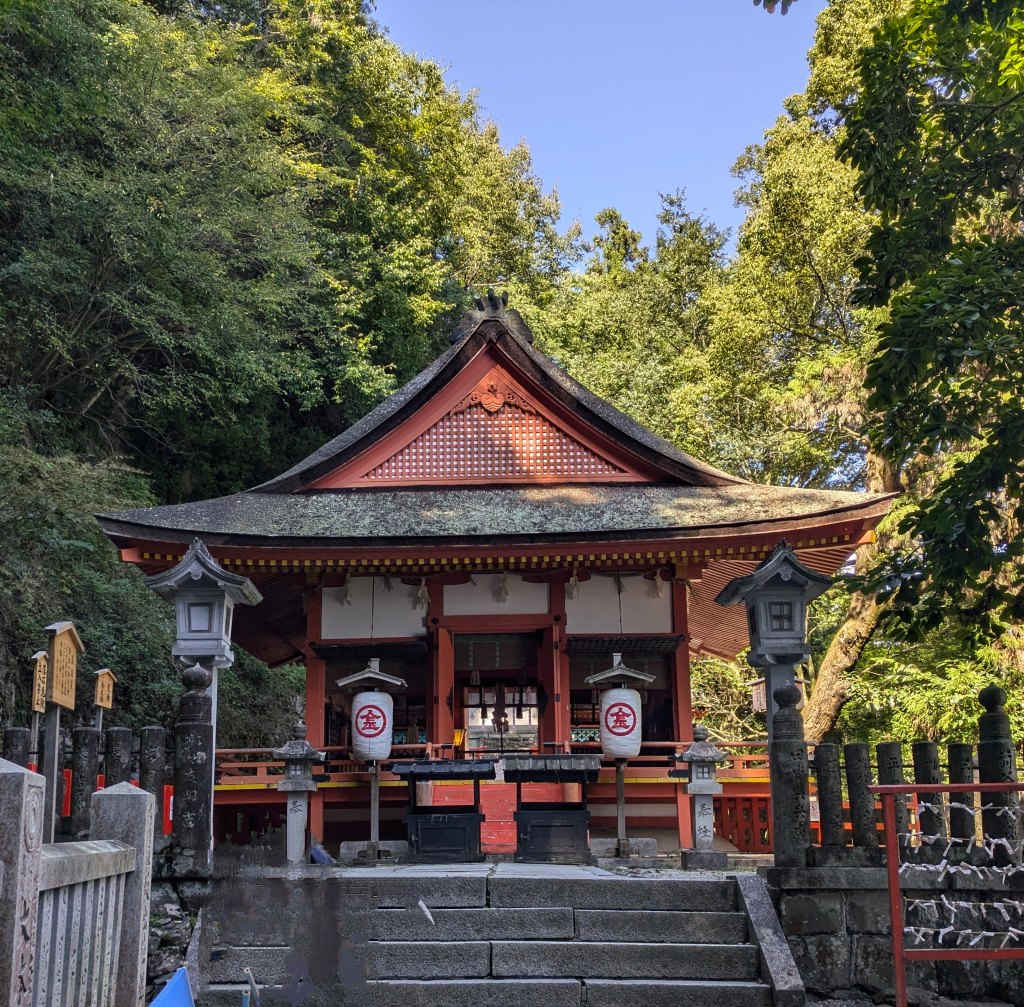
We visited the charming little town of  Kotohira, famous for its proximity to the Shinto shrine, Konpira-san, which is dedicated to sea-farers. In a country of islands, this is a very popular shrine.  It is nestled in the forests of Mt Zozu above the town and requires climbing  a whooping 1340 steps.   Arriving in the early morning,  the numerous  parking lots were empty  and the souvenir shop were still shuttered.  There was an air of serenity , broken only by the clattering on each step by a man wearing wooden clogs.  Little birds chirped and landed on our outstretched hands looking for seeds. We passed a stable of beautiful white horses which are considered so divine that they can only  be ridden by the gods.  The path was adorned with so many shrines and stone carvings, that we hardly noticed the climb. We were lucky to witness an elaborate ceremony at the main  shrine.  By the time we descended, the car parks were full and the souvenir shops were doing a good business.

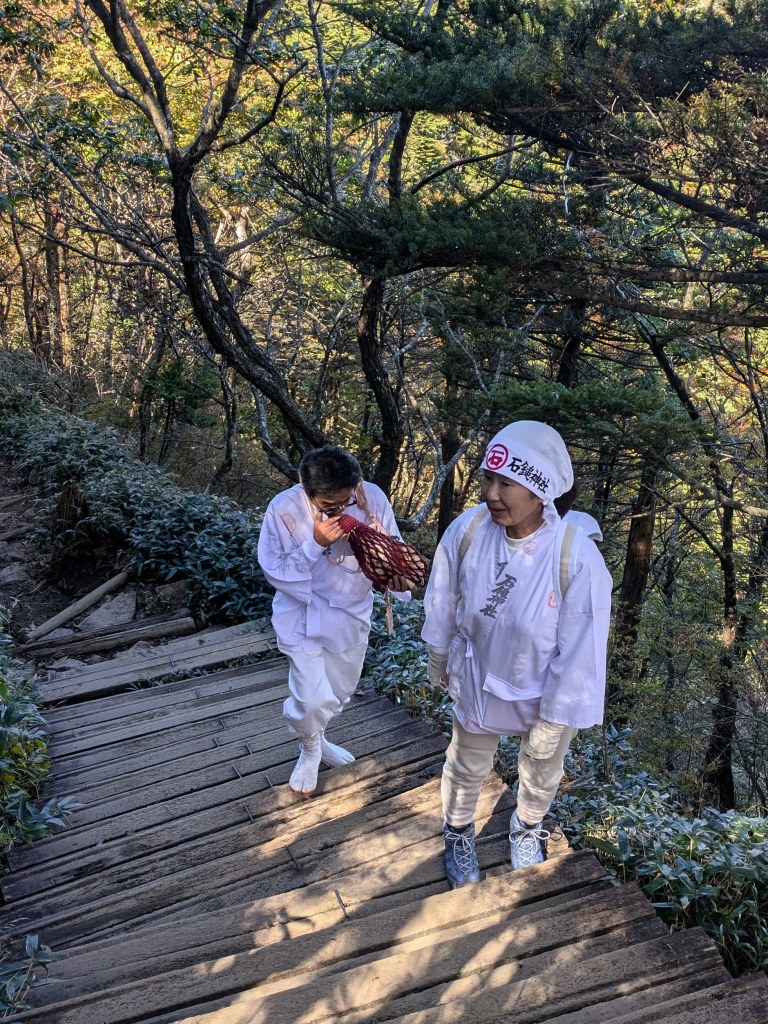
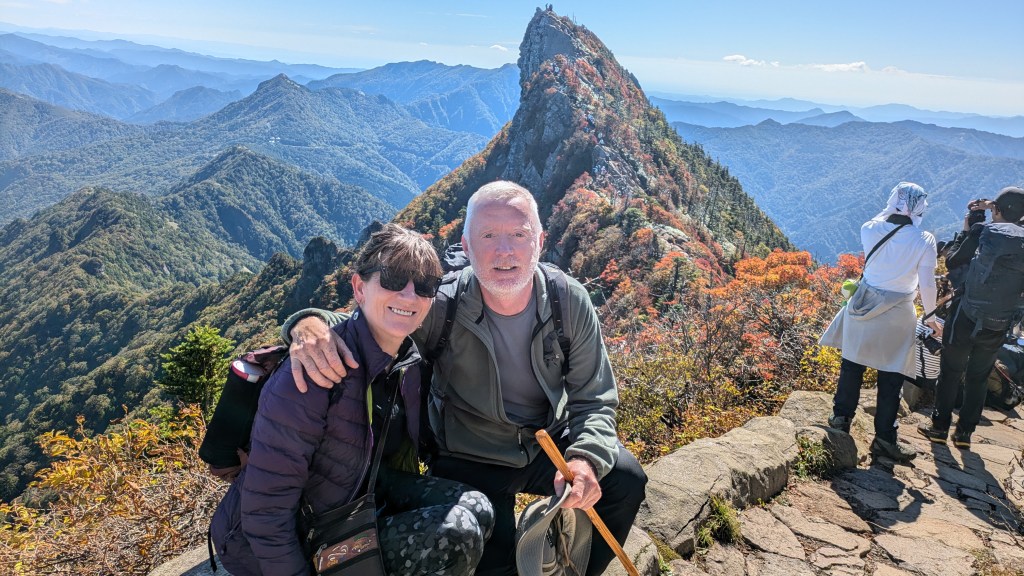
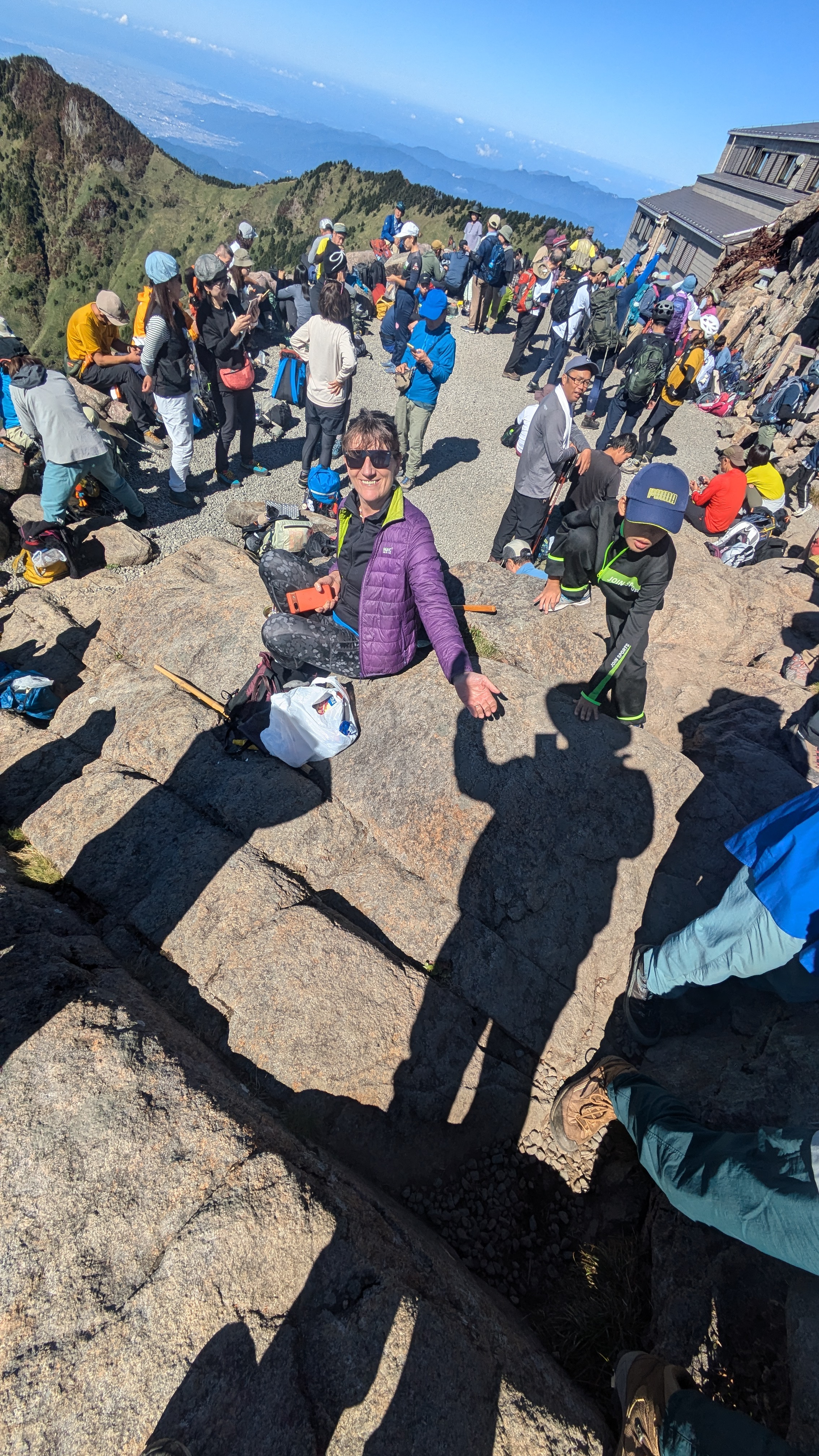
Mount Ishizuchi is the highest mountain on Shikoku Island at 1984m. It’s a popular hike so we weren’t alone when we climbed on a sunny Sunday morning.   It was probably more crowded than usual as it was also a Public Holiday weekend, celebrating Sports Day which promotes an active lifestyle.  There is a Shinto shrine at the top so it is also a pilgrimage route.  We parked the van the night before in the  car park at the base of the mountain where the parking fee (about €3 ) covered the use of showers and  toilets.

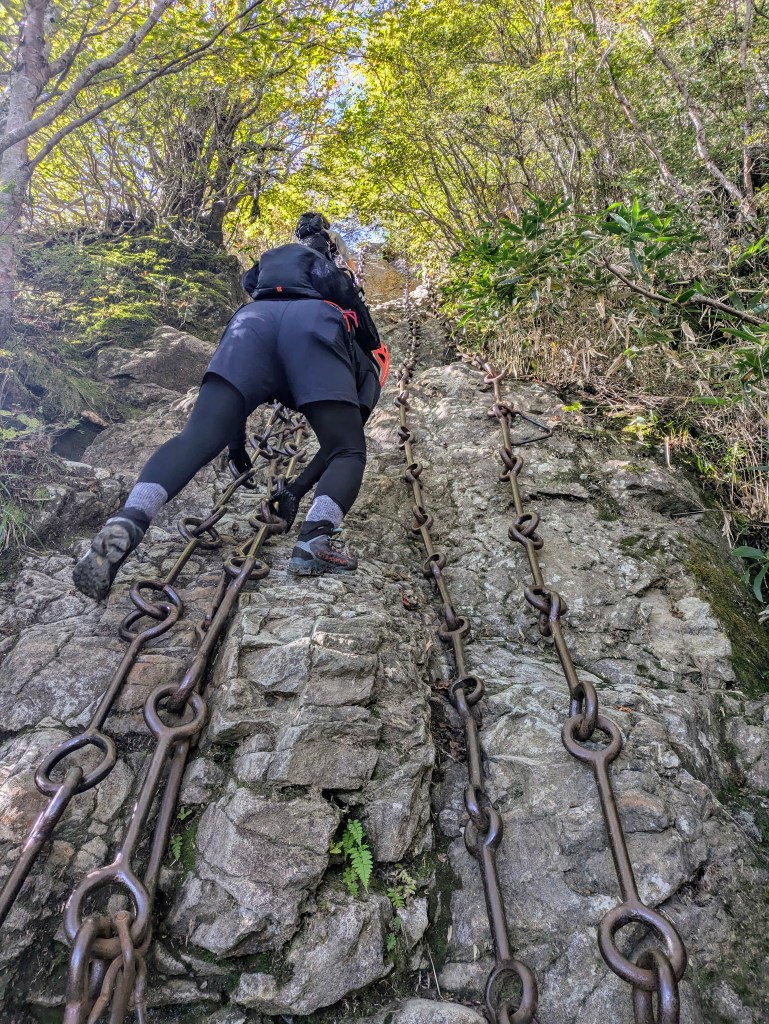
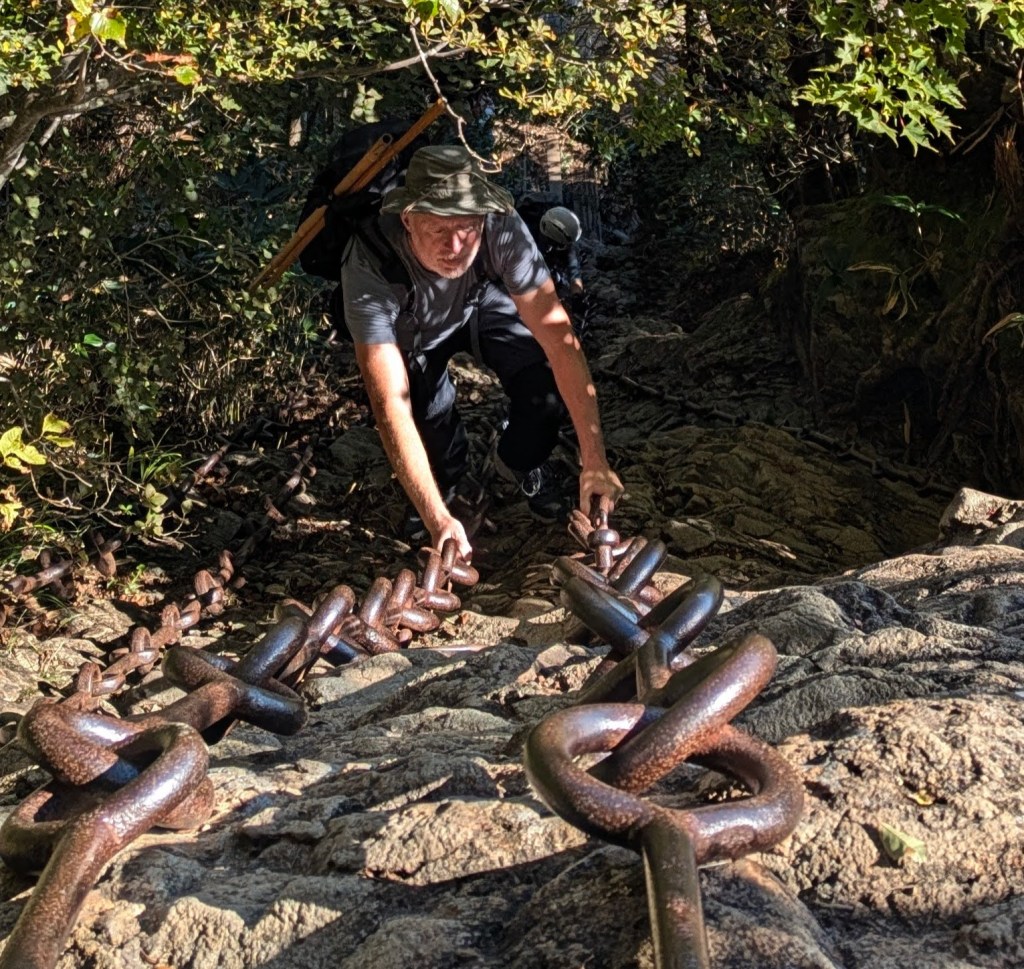
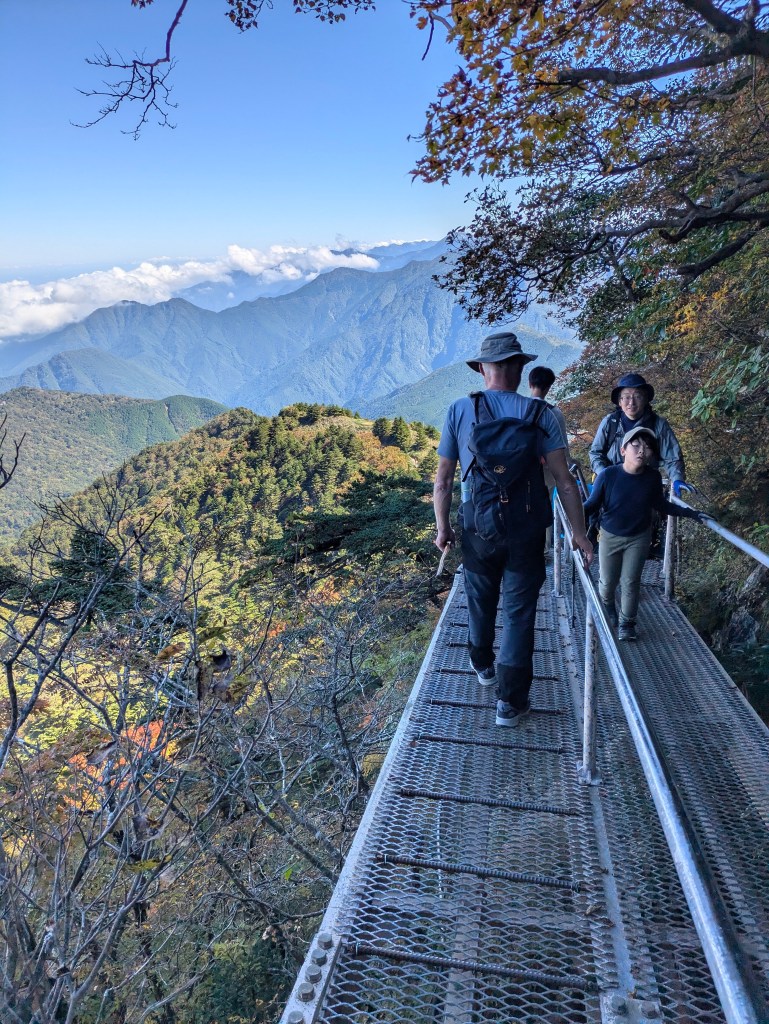
The hike was  a six hour round trip, including a  crammed ride in cable car for the first section. We hiked through maple and bamboo forests, up through cedar and pine with beautiful views of more trees whose leaves were just beginning to show autumn colours.  It started on gradual paths that became steeper, much steeper.  In certain almost vertical sections, steel chains were embedded into the rock as an aid to haul ourselves up . The summit was crowded.  We munched on nuts and egg sandwiches and watched people pulling little stoves from their backpacks to boil up water for their Pot Noodles. We were probably the only Westerners on the mountain that day and everyone greeted us as if  delighted to see us although no-one spoke any English.  Soon our necks ached from bowing but we felt really welcome in this stunning country.

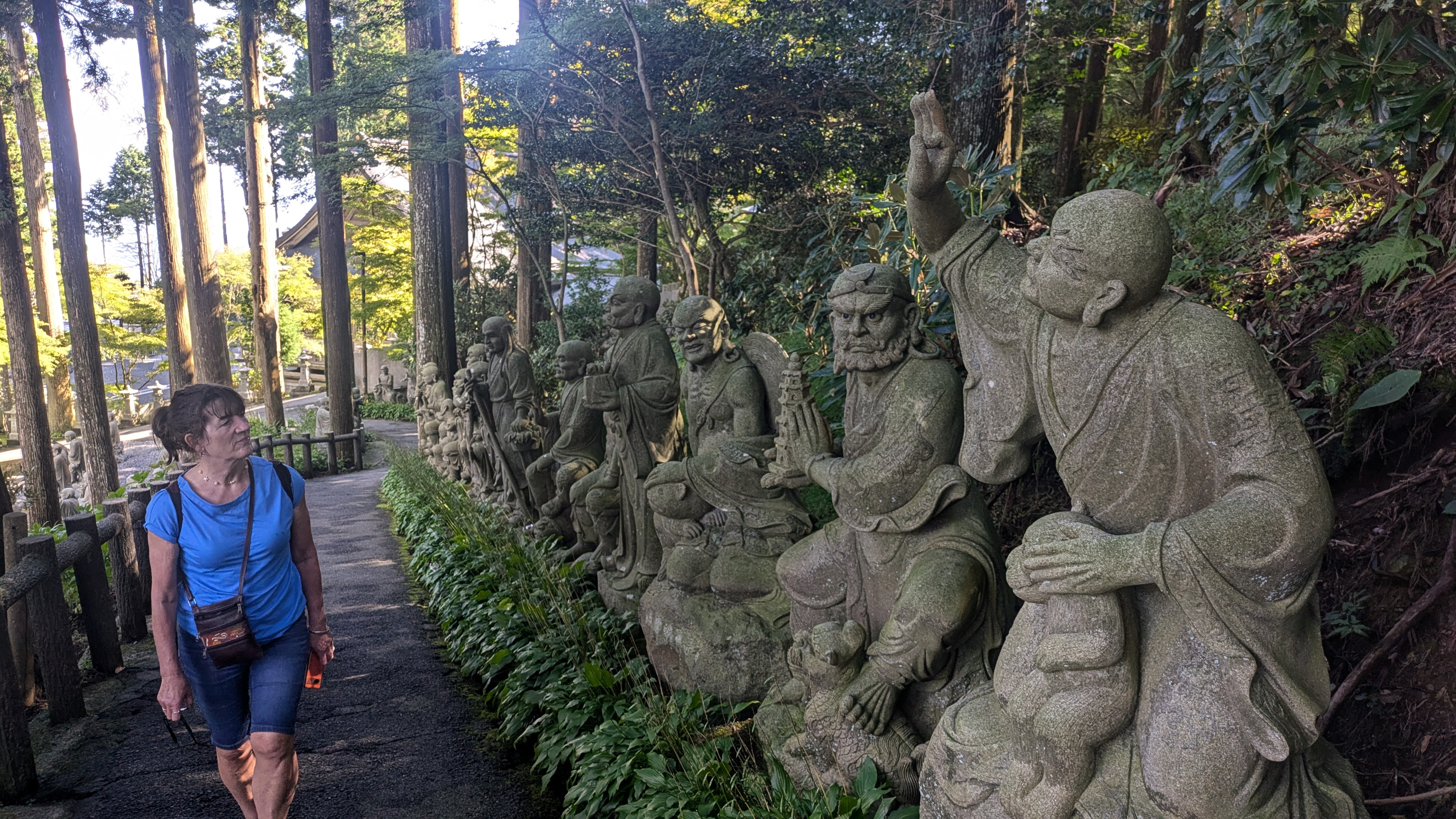
All over Shikoku, we saw pilgrims on the Pilgrimage Trail of the 88 Buddhist Temples. This is a long route, over a thousand kilometres,  which circumnavigates the entire island of Shikoku. Most pilgrims do it in sections but we met a few  who were devoting six to eight weeks to completing the entire pilgrimage in one go. Many had sore feet as the majority of the route is on hard road surfaces. Although we didn’t do the pilgrim’s trail, we visited several of the temples. Our favourite was Unpen-ji, the highest of the 88 temples and often called The Temple in the Clouds but for us, it was the Temple in the Sun. We welcomed the shade of the tall cedars on the approach. Hundreds of life-sized statues of Buddha’s disciplines lined the walkways. It’s said that if you look hard enough, you will find your likeness among them. Although I searched and searched, I couldn’t find mine

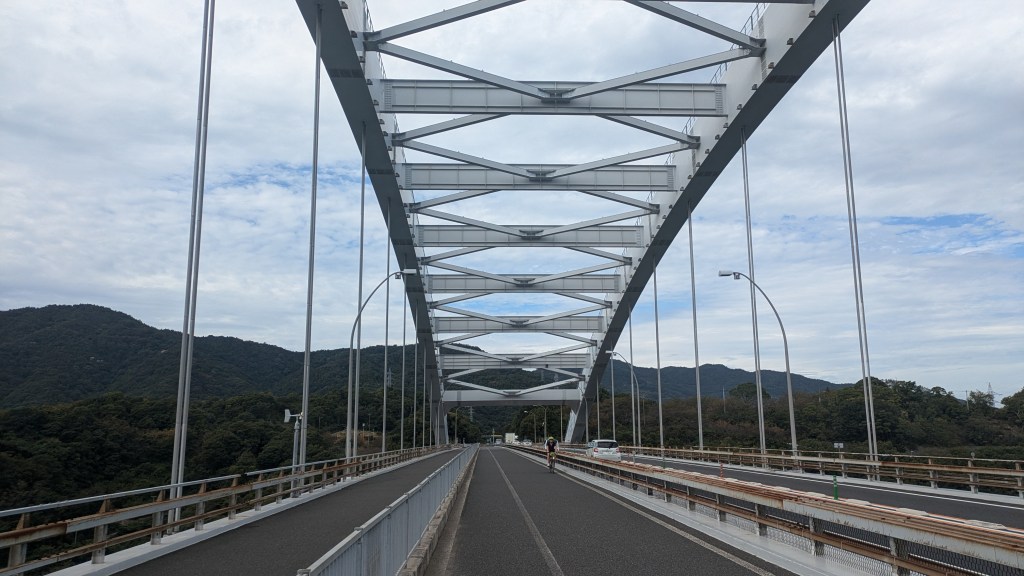
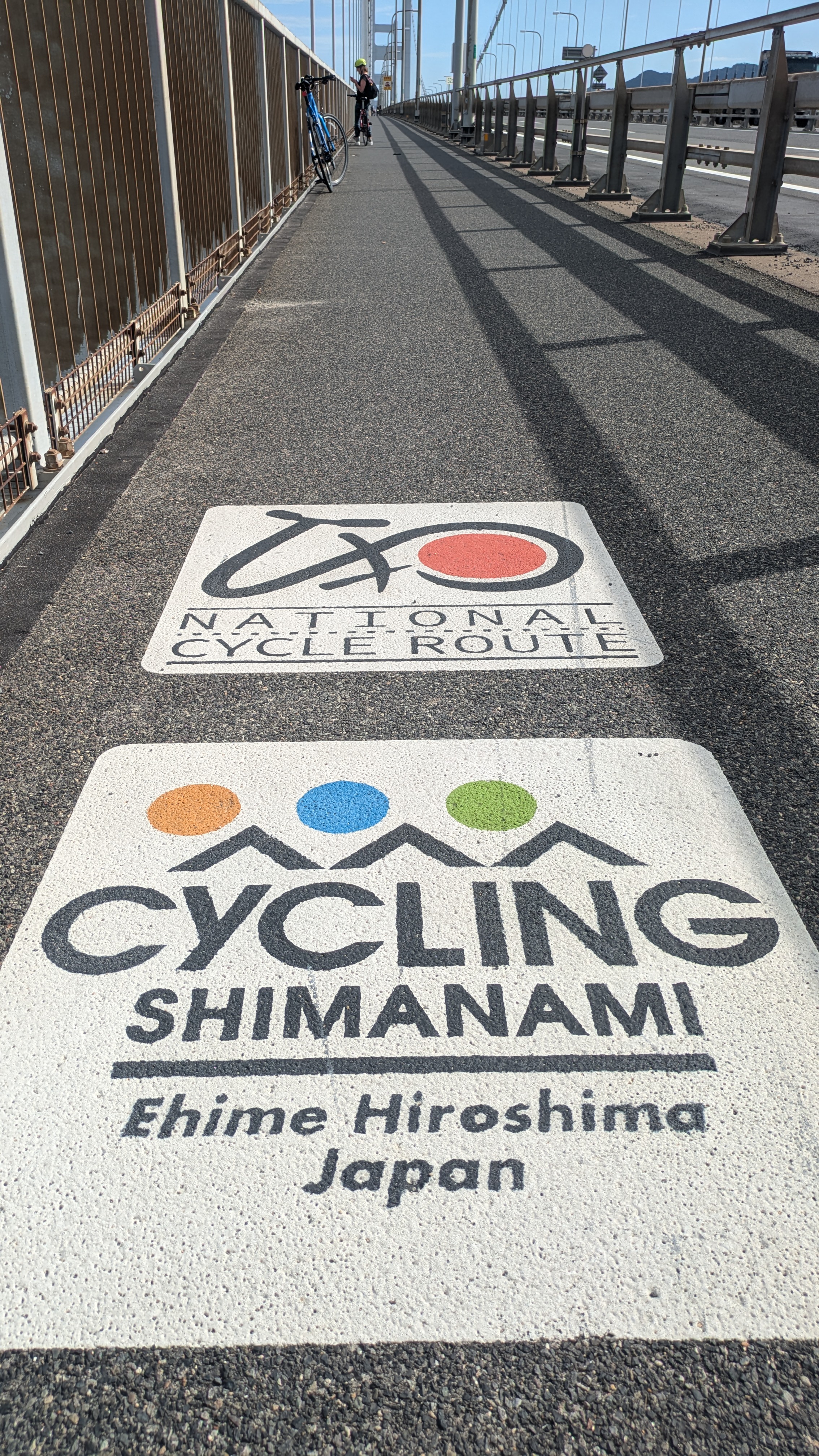
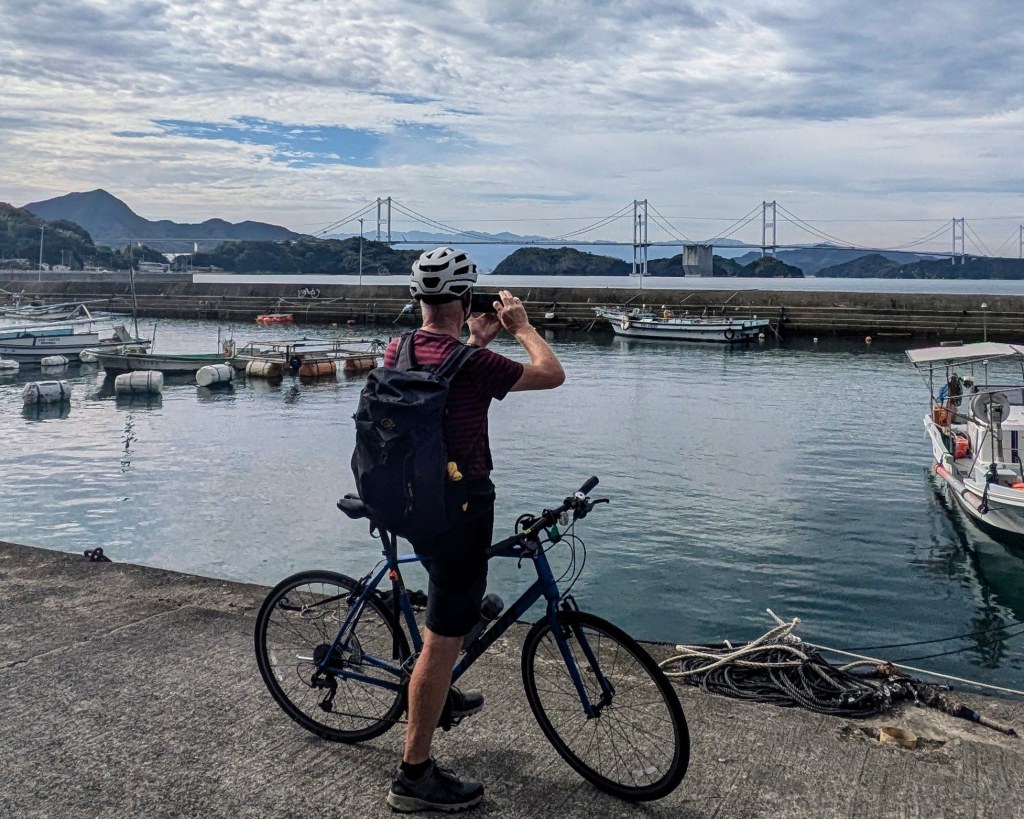
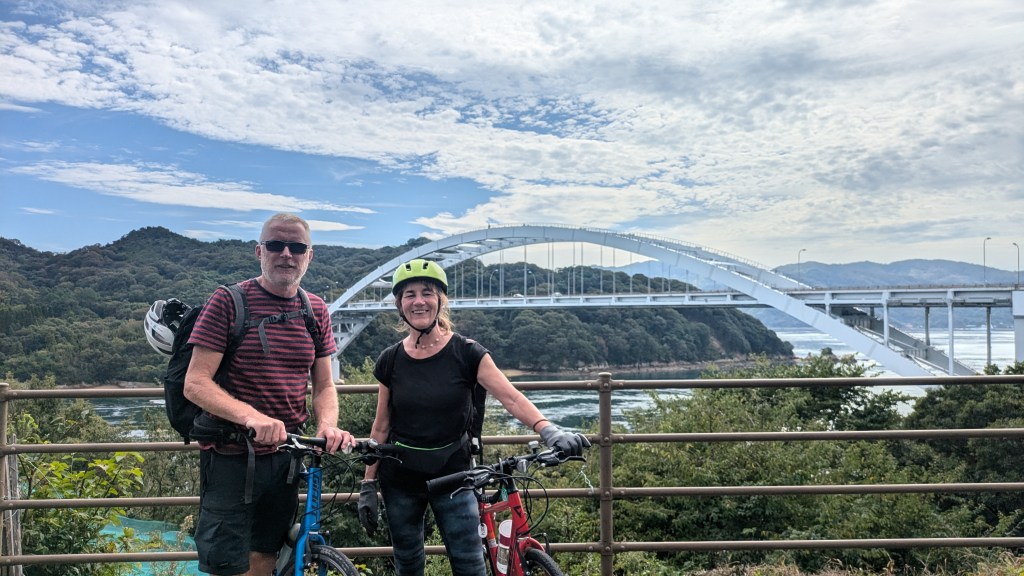
If you only do one thing in Southern Japan, cycle at least part of the Shimanami Cycleway and prepare to be wowed. The entire cycleway is 75kms. It links the town of Imbari in Shikoku Island with the town of Onomiche in Honshu across the inland Seton Sea.  It is an island hopping adventure by bike as the route traverses several smaller islands which are linked by magnificent bridges. Cycling along the Kurushima Bridge which has a span of almost 5 Kms was a memorable experience.  Ships passed in the turbulent  waters beneath us while traffic whizzed by on the bridge but separated from us by a barrier. There were sublime views in every direction of mountains, islands, sea and of the bridge itself.  

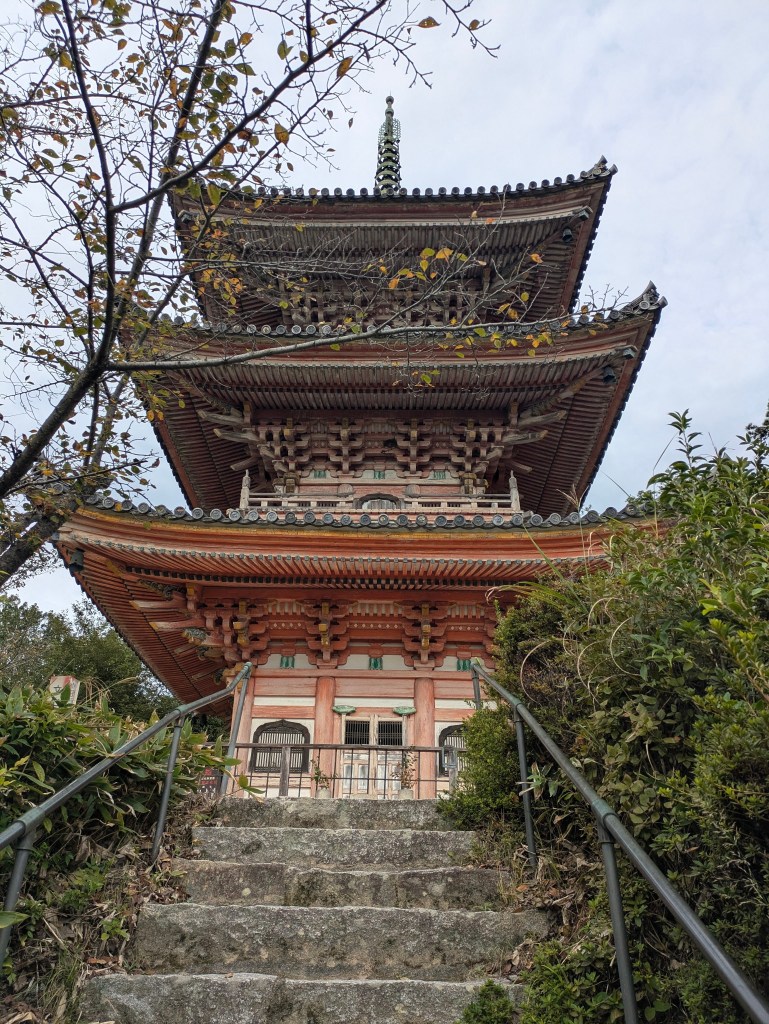
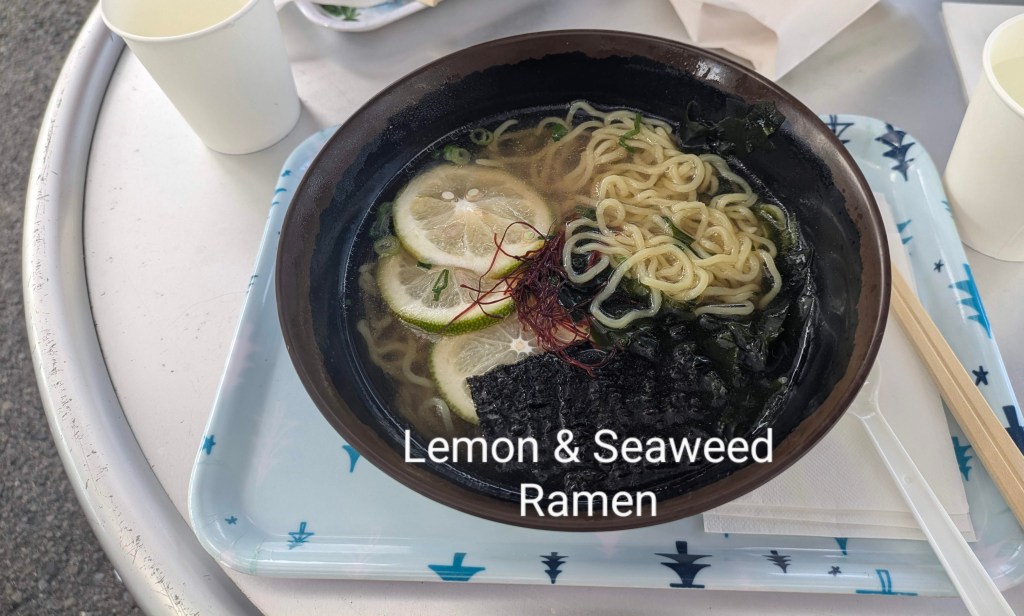
There are lots of bike rental places  -we rented ours for two days from Sunrise Cycles in Imbari for €18 a day. Electric bikes were available for slightly more. It is possible to cycle the whole way or drop off the bikes at lots of points along the route.   We left our van at Sunrise Cycles overnight and cycled about 50 Kms each day, taking some detours through  sleepy villages with traditional houses, small cultivated gardens and fields of solar panels.  The weather was a hot, sticky  28 degrees, feeling even hotter in sunshine with little wind. We stayed in a little guesthouse in  Setoda on Ikuchijima Island, known for it’s lemon  groves and a three tiered pagoda, which is regarded as a National Treasure although it looked a little tired and neglected. All things lemony  were on the menu in the cafes, including a delicious lemon & seaweed ramen. For the first time since we arrived in Japan, we met lots of foreign tourists on the cycle trips and felt that we had returned to the tourist route.

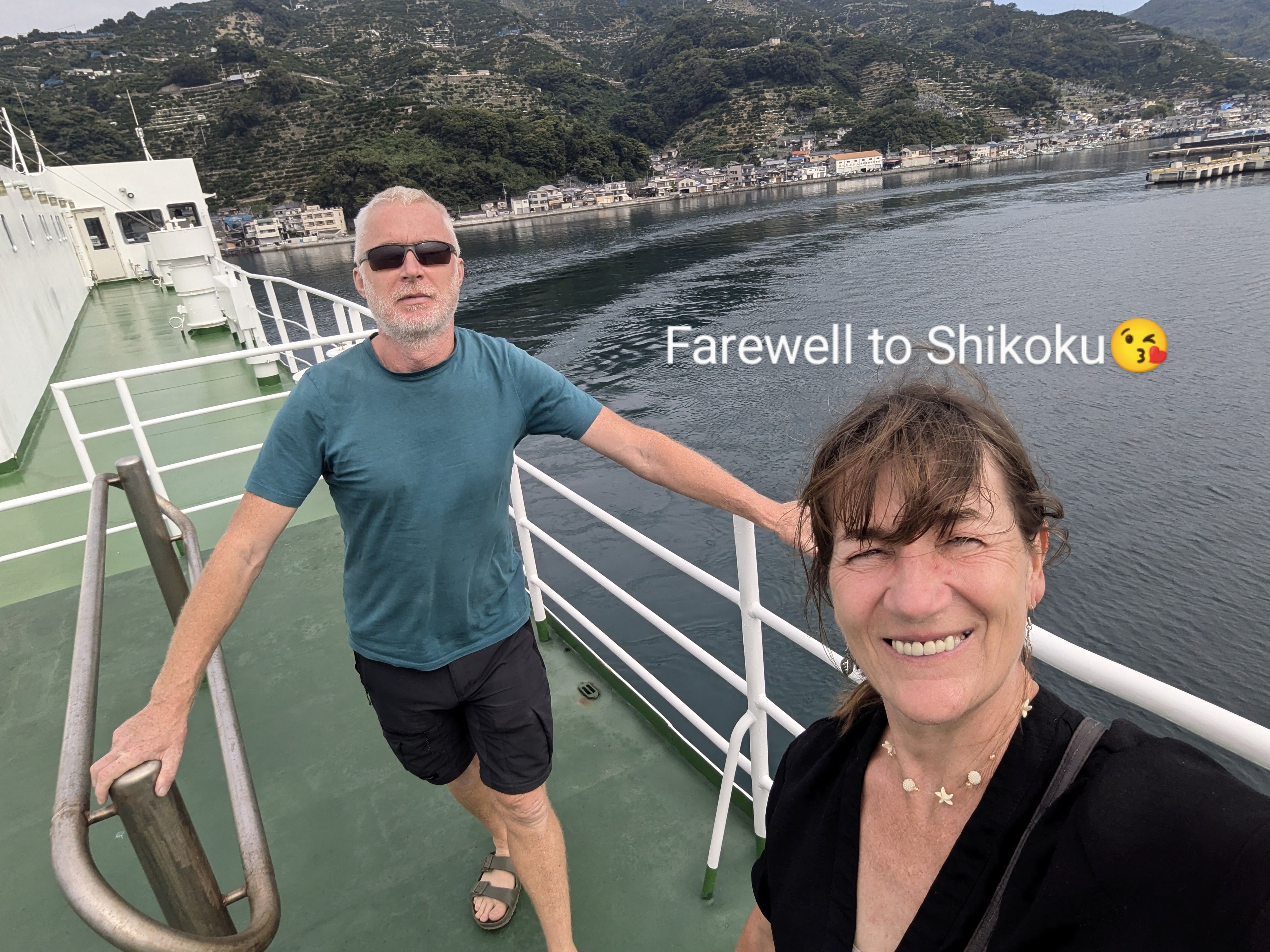
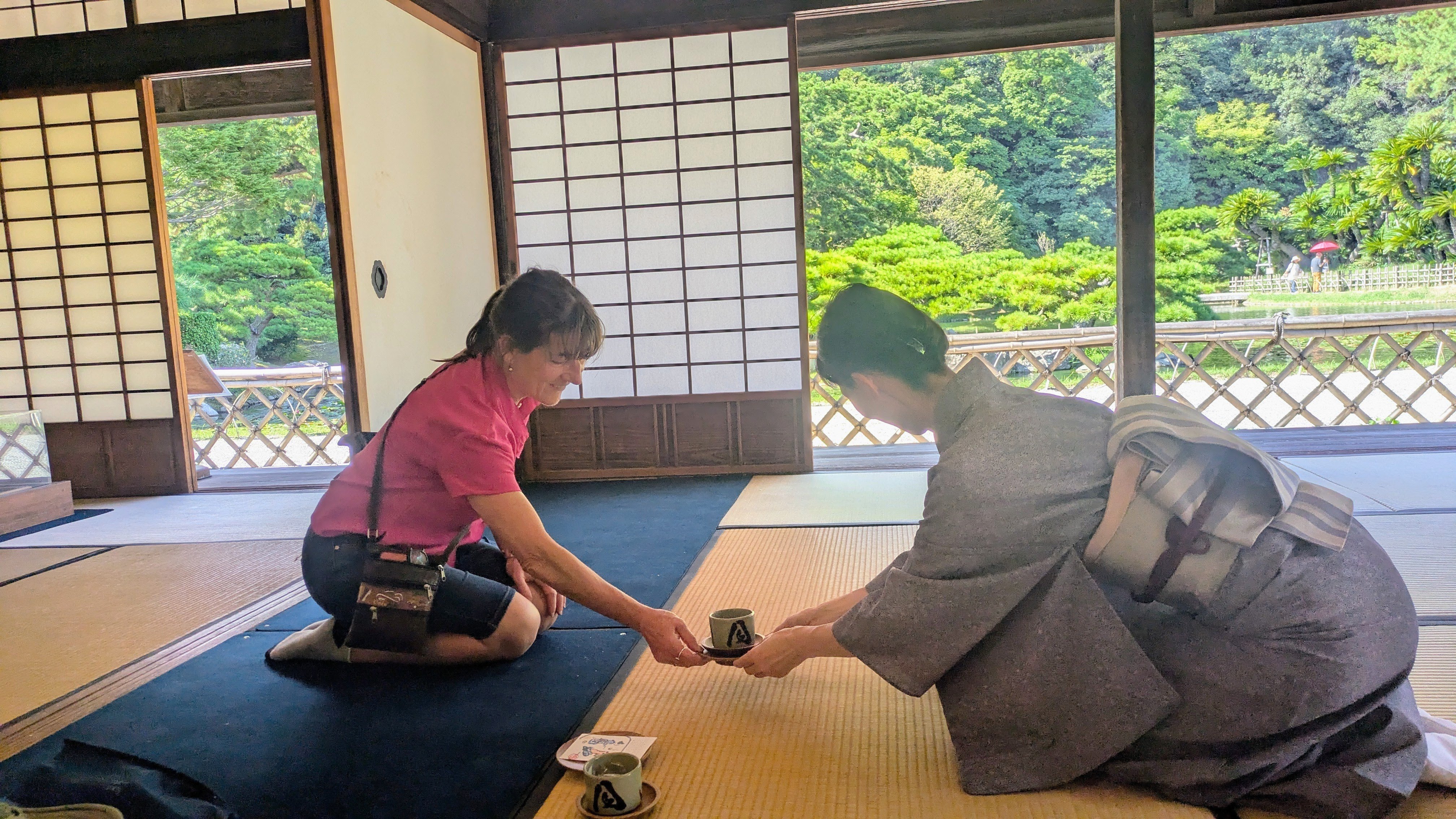
Its time for us to say goodbye to Shikoku. It may be the smallest of the four main islands in Japan but it has so much to offer – pilgrimage trails,  cycling on water, scenery and shrines, outdoor adventures and gorgeous tearooms. We were charmed with a visit to  Ritsurin Gardens in Takamatsu with it’s beautiful teahouse of bamboo, screens and cushions. The windows framed the outside view like serene paintings and we drank tea to the gentle sound of flowing water from the small waterfall outside. In the coolness of the teahouse, we began to appreciate the Japanese fascination with light, shade and symmetry and to understand the philosophy that ‘less is more’

Ritsurin Gardens

We hope to get a ferry tomorrow to the island of Kyushu, which is less visited than other parts of Japan but seems to have  a lot to offer. If our onward journey is half as rewarding and enjoyable as our time in Shikoku, we will be very happy.

Till next time…….Thanks for reading x
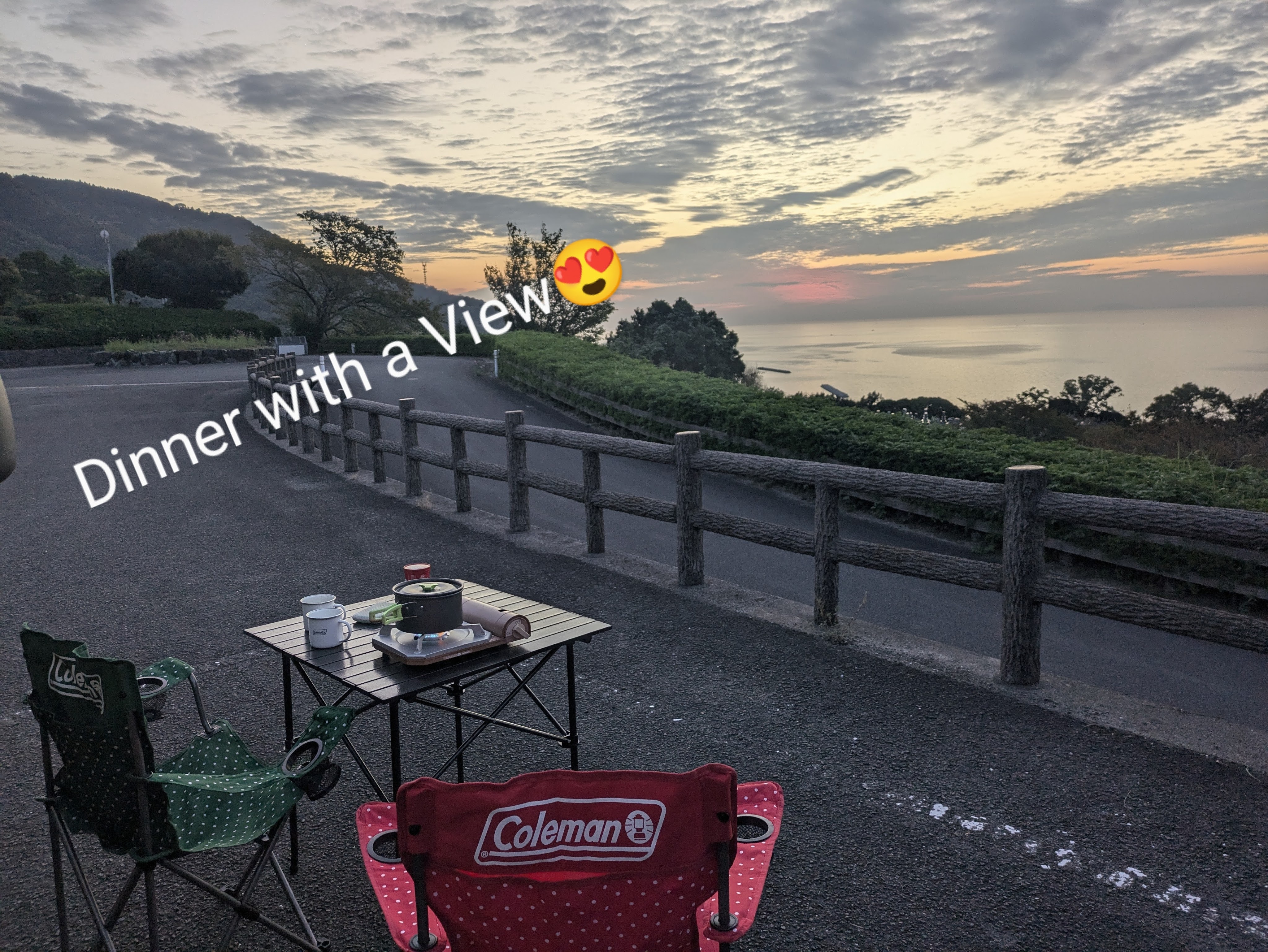
Dinner was an Irish-Japanese fusion of fried fish, mushrooms in garlic and sesame with dried seaweed and boiled spuds😍

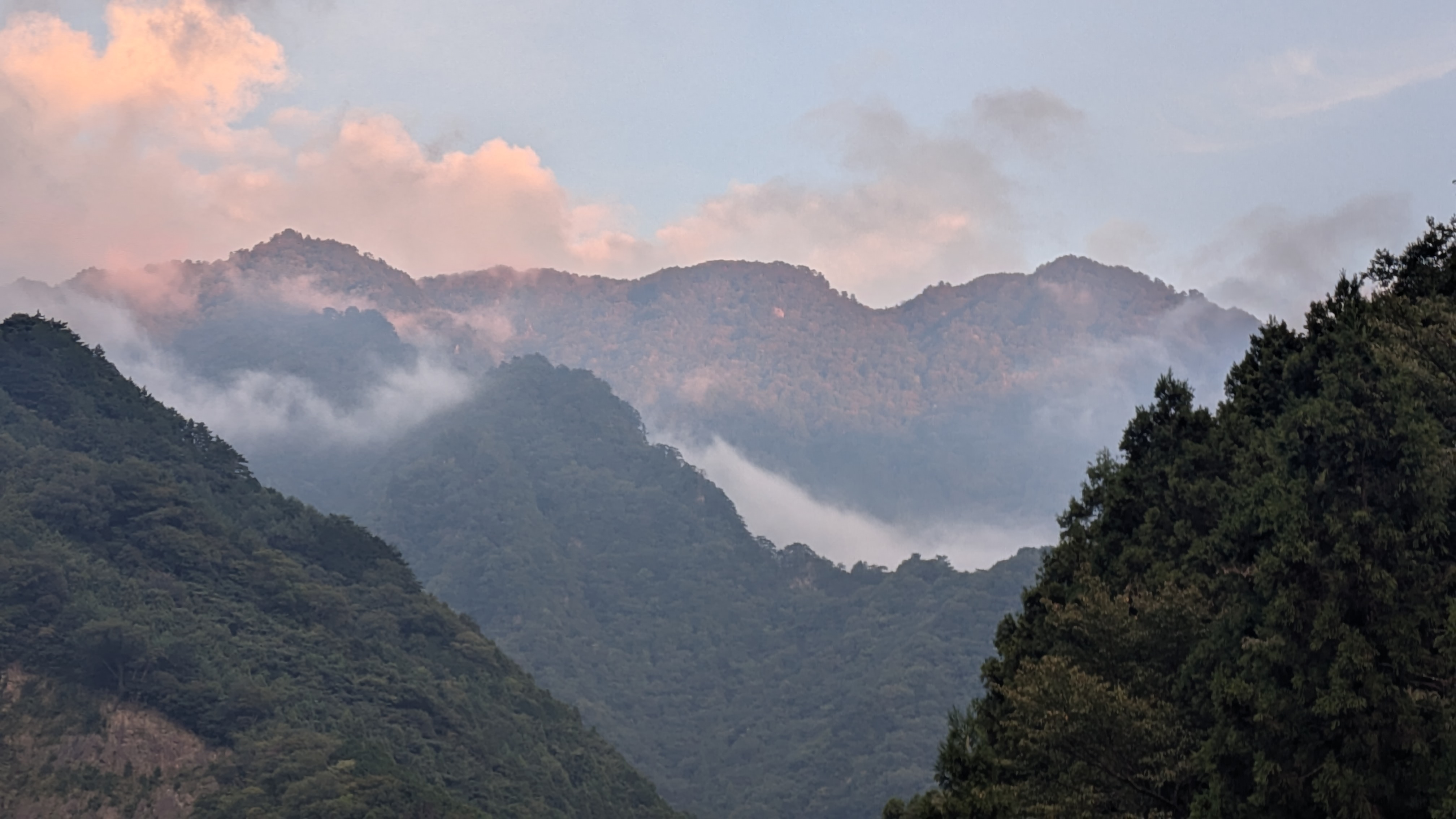
Sunrise in the Mountains, Shikoku

Japan in a Van

Journey to Japan✈️✈️

Our journey was longer than expected. We flew Qatar Airlines from Dublin to Doha (Qatar) and onwards to Osaka in Japan but delays leaving Dublin meant that we missed our connecting flight in Doha.

We weren’t the only ones with missed flight connections. The escalating situation and volatile skies over the Middle East meant that lots of flights were delayed, cancelled or diverted. Doha is a big international hub with connecting flights radiating in all directions and that night it was chaotic with hundreds (maybe thousands) of passengers milling around, all wanting to be somewhere else. After queueing for hours at one Transfer Desk, we were moved to another emergency Transfer Desk that was set up in a different part of the airport to cope with the huge numbers of displaced passengers.   Finally we were booked on the next available flight to Japan which was in 24 hours. The  bad news was that there were no hotels available as the allocation for delayed passengers was already filled. Others fared much worse – people going to Auckland were told that that next  available flight for them was in  three days.

Qatar Airline staff advised us to try again later for a hotel  when other passengers might have checked out and in the meantime we were given a meal voucher so that we could ‘rest and replenish’ in the words of the man at the Transfer Desk. There wasn’t much replenishing as the ‘meal’ voucher was valid for tea/coffee and little else. All sandwiches/rice meals were beyond the price range. The staff in the restaurant were very nice, advising us that the best  way to spend our vouchers was to get the ‘specials’ (falafels and soggy chips). They had plenty of experience as the situation had been even more chaotic the night before.

Doha airport is enormous.  The shuttle bus  from the plane took at least 35 minutes to reach the terminal building.  There were people curled up in every corner trying to sleep.  Segregated ‘quiet’ rooms were available with recliners.  Both of us were lucky enough to grab a recliner in our respective male and female rooms but they weren’t really ‘quiet’.  Phones were going off, people were coming and going, there were chatters, snorers, coughers and sneezers.  Plenty of smoking rooms were available for the smokers, segregated prayer rooms for the religious but not a bar in sight for the drinkers🥂

At around 6am, we made our bleary-eyed way to  join another queue for the service desk and after an hour, we were allocated a hotel room but…. we had to join another queue to get the voucher printed. Then more queues for immigration followed by hanging around for a bus to take us to our hotel where our room wasn’t ready for another two hours.

We were delighted to be out of the airport. There was a faint smell of spices, maybe turmeric, in the hot dry air. After the air-conditioned airport, the 39 degree heat was a shock, a solid, shimmering wall in a flat landscape.  Doha looked brand new, as if it was made yesterday with skyscrapers, minarets and new roads rising out of the desert sands.

Our hotel, Hotel Royal Riviera,  was much better than we expected, with a spacious bedroom, hot showers and plentiful tasty food, a buffet breakfast, lunch and dinner. There was an absolutely fabulous selection of dessert cakes at lunch and dinner….the most delicious syrupy orange cake that I have ever tasted and superb chocolate brownies topped with roasted pistachios –  it was so good that if we are delayed in Doha on the return journey home, I won’t mind.

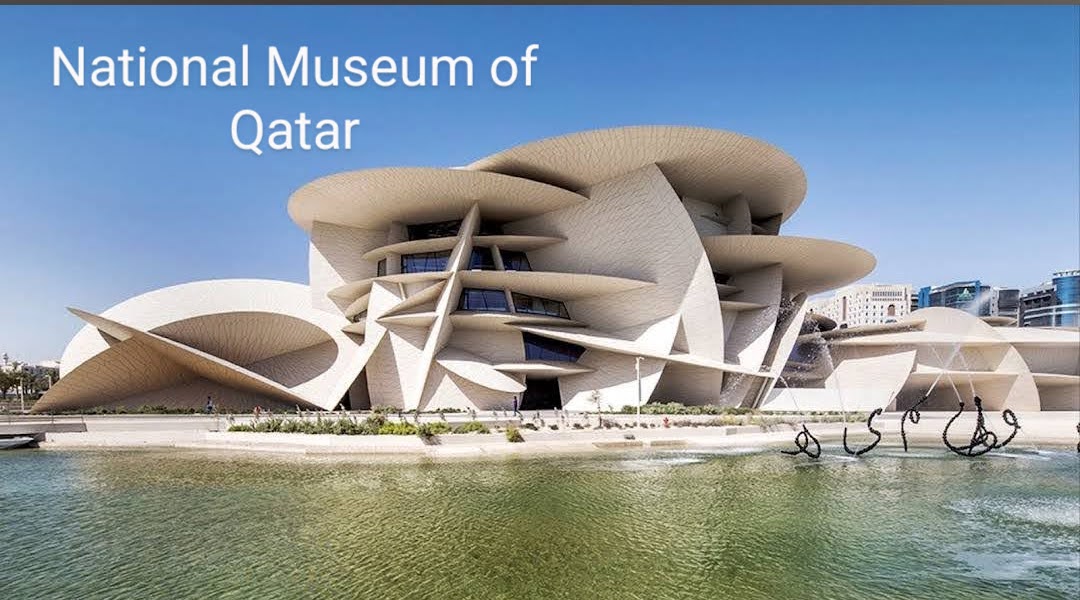
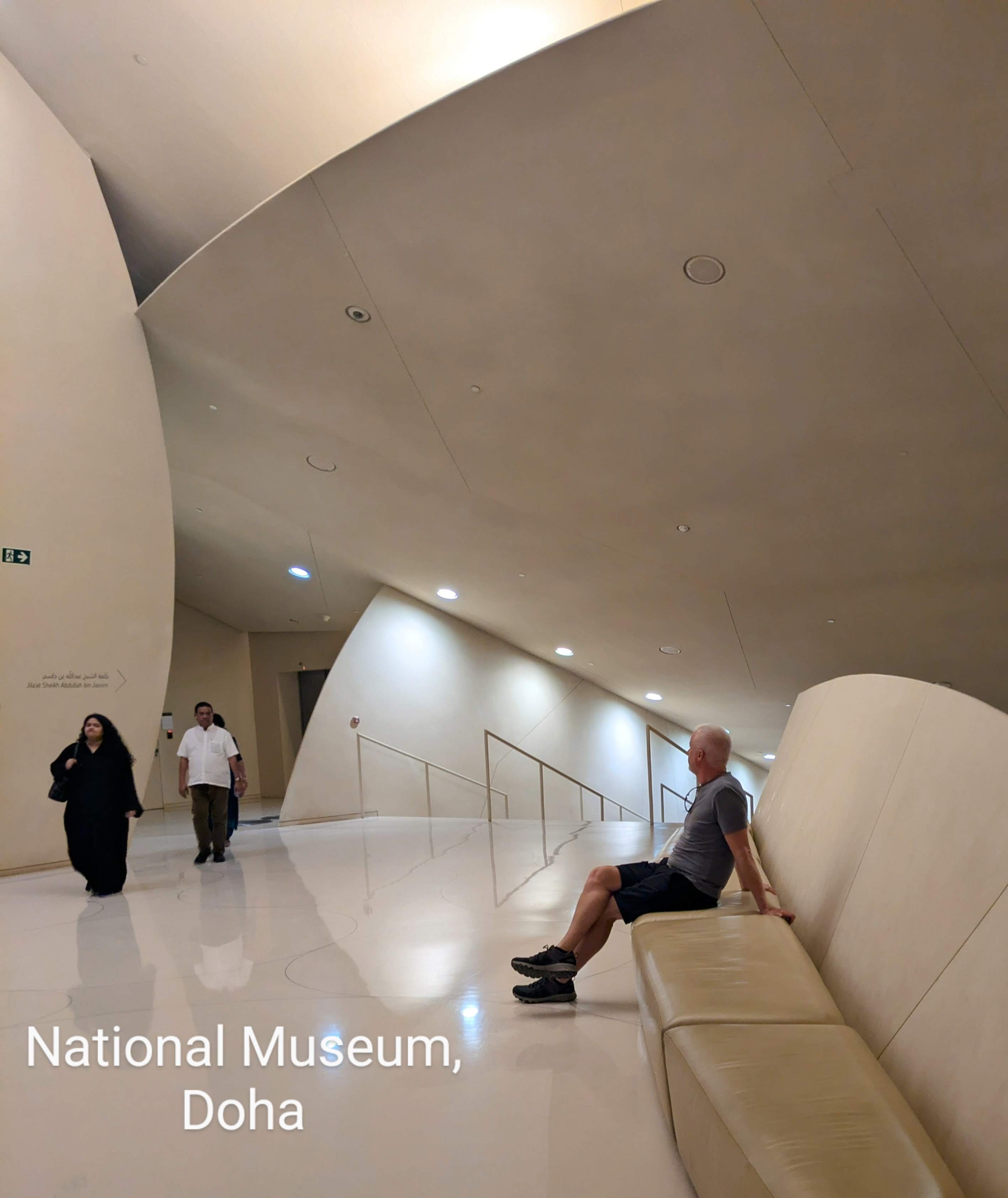
At about 10.30am, we  fell on the  hotel bed into a deep sleep for a few hours, waking in a jet lagged stupor to walk to the National Museum of Qatar.  White taxis kerb- crawled beside us wanting to take us on a city tour which we kept declining. The museum was a breath-taking building with interlocking disc inspired by the desert rose, a geological phenomenon formed by the deposition of minerals in a circular pattern around sand grains Built on the shores of the Arabian Gulf, the museum was as stunningly beautiful inside as it was outside and is well worth a visit…if you ever find yourself stranded in Doha.

Our flight to Japan departed Doha at the ungodly hour of 1.30am. With a nine-hour flight and a six-hour time difference, we arrived with addled body clocks at 5.30pm into a cloudy Osaka (23C). In contrast to Doha, the airport was calm with orderly queues and much bowing by the courteous staff. We were first fingerprinted, then given a 12 week visitor visa  at passport control. After two nights and almost three days, we had arrived.

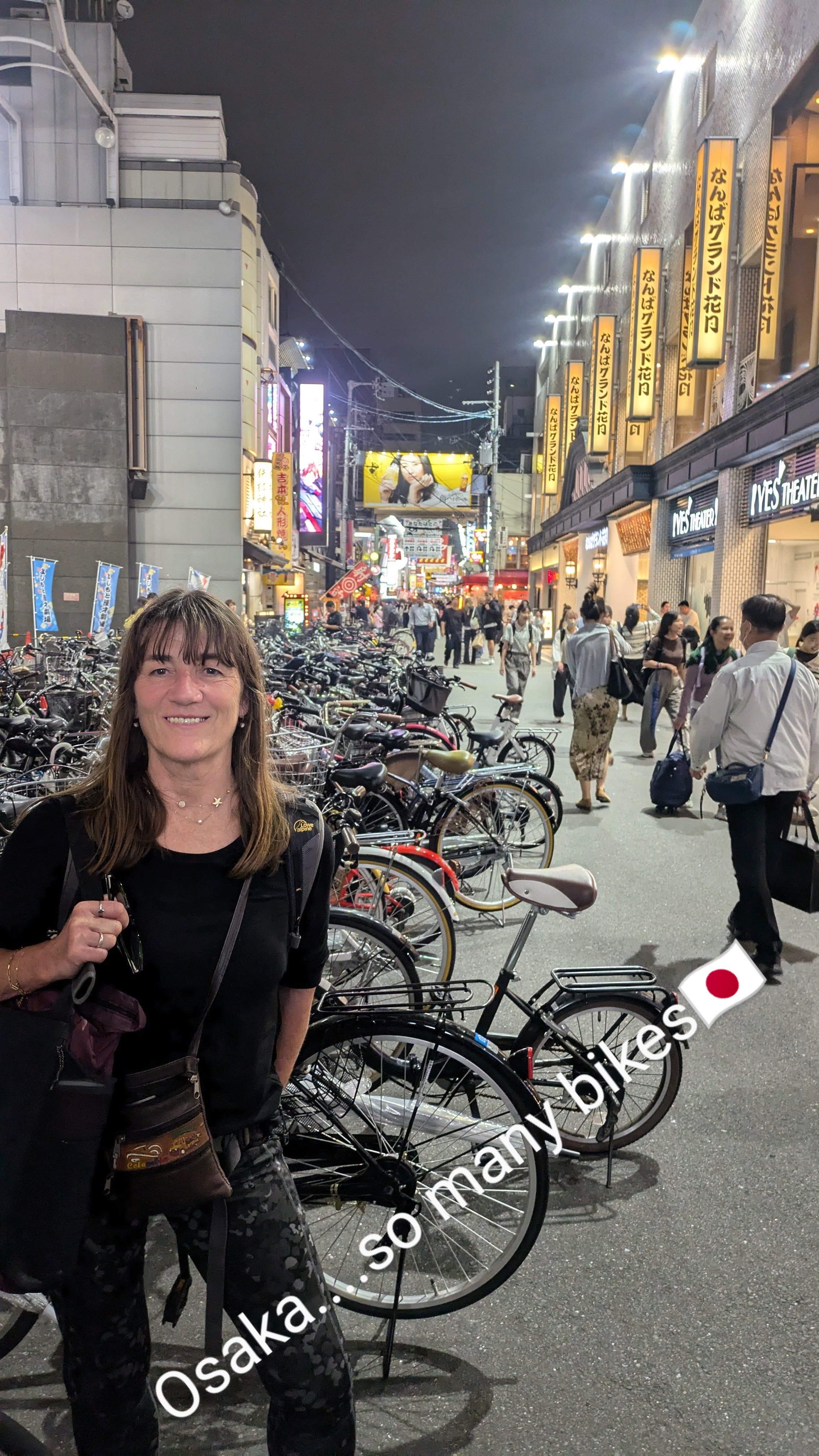
An efficient train brought us directly from the airport to Namba station in the city centre for about €6. Google maps guided us from there to our hotel, through narrow laneways, over humpbacked bridges crossing the canal and then onto wider streets which felt clean, safe and welcoming. We liked Osaka immediately.  The large number of cyclists  surprised us, most of them cycling on the footpath.  Many had small kids on the back carriers and shopping in the baskets on the front. All pedestrians and cyclists stopped on red lights even if nothing was coming from any direction. This adherence to rules was something that Caoimhin found quite a challenge and it’s entirely possible that we will find out what the sanctions for jaywalking are before we leave.

Our hotel, Be-zen Shimanouchi, was on a small, quiet street and had a big,comfortable futon-bed, both a shower and a bath and an incredible number of  complimentary beauty products (even a face mask which was not as rejuvenating as anticipated) all for €64. There was no extra charge for the change of date  from the night before which we really appreciated.  A guest who had come from Tokyo said that his hotel room here was double the size, twice as nice and half the price.

The following morning, it was time to pick up the campervan from Zen Campers. Our van was exactly as shown online, a beige, ‘no-frills’ van conversion which seemed perfectly adequate for us. Deciding to park it up for the night in the Zen office parking lot for free , we explored Osaka.  The city has two main tourist attractions which are very different. One is a crowded street full of towering neon signs and tourist shops,  the other is a spectacular five-story fairytale castle with almost 450 years of history.

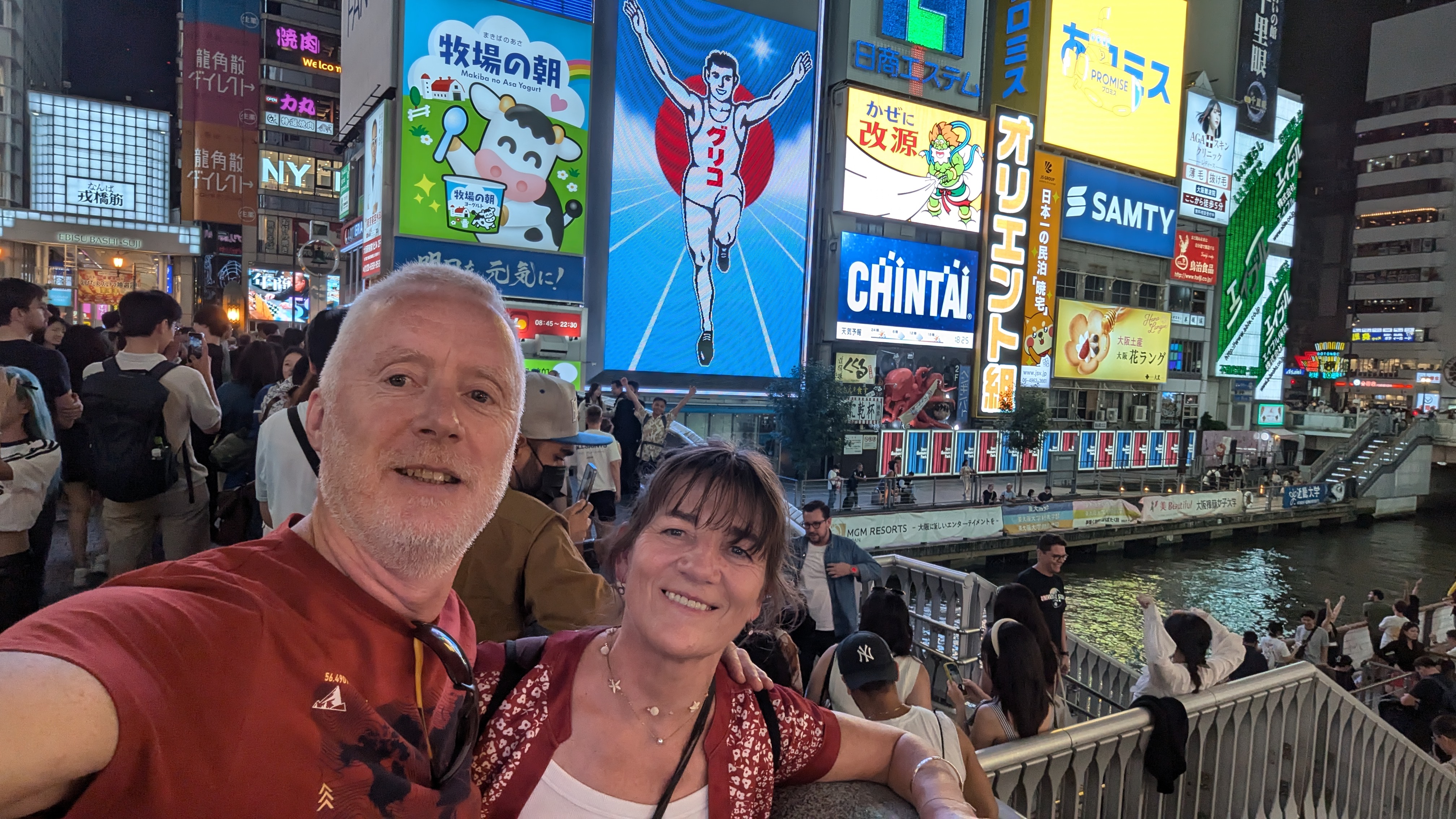
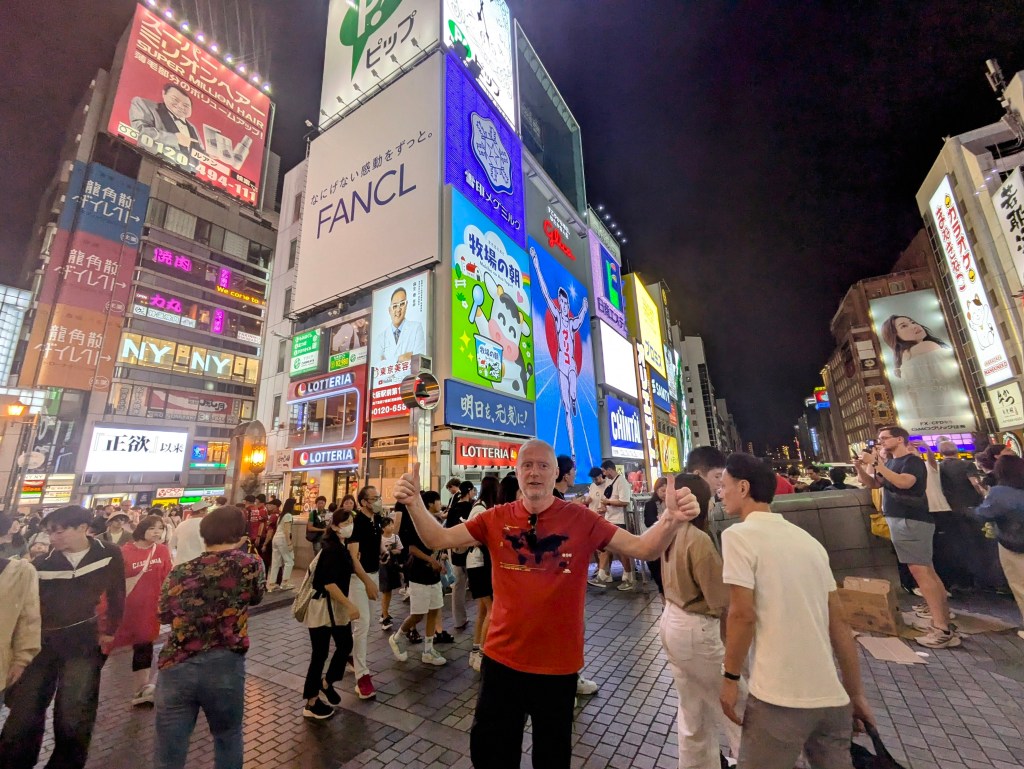
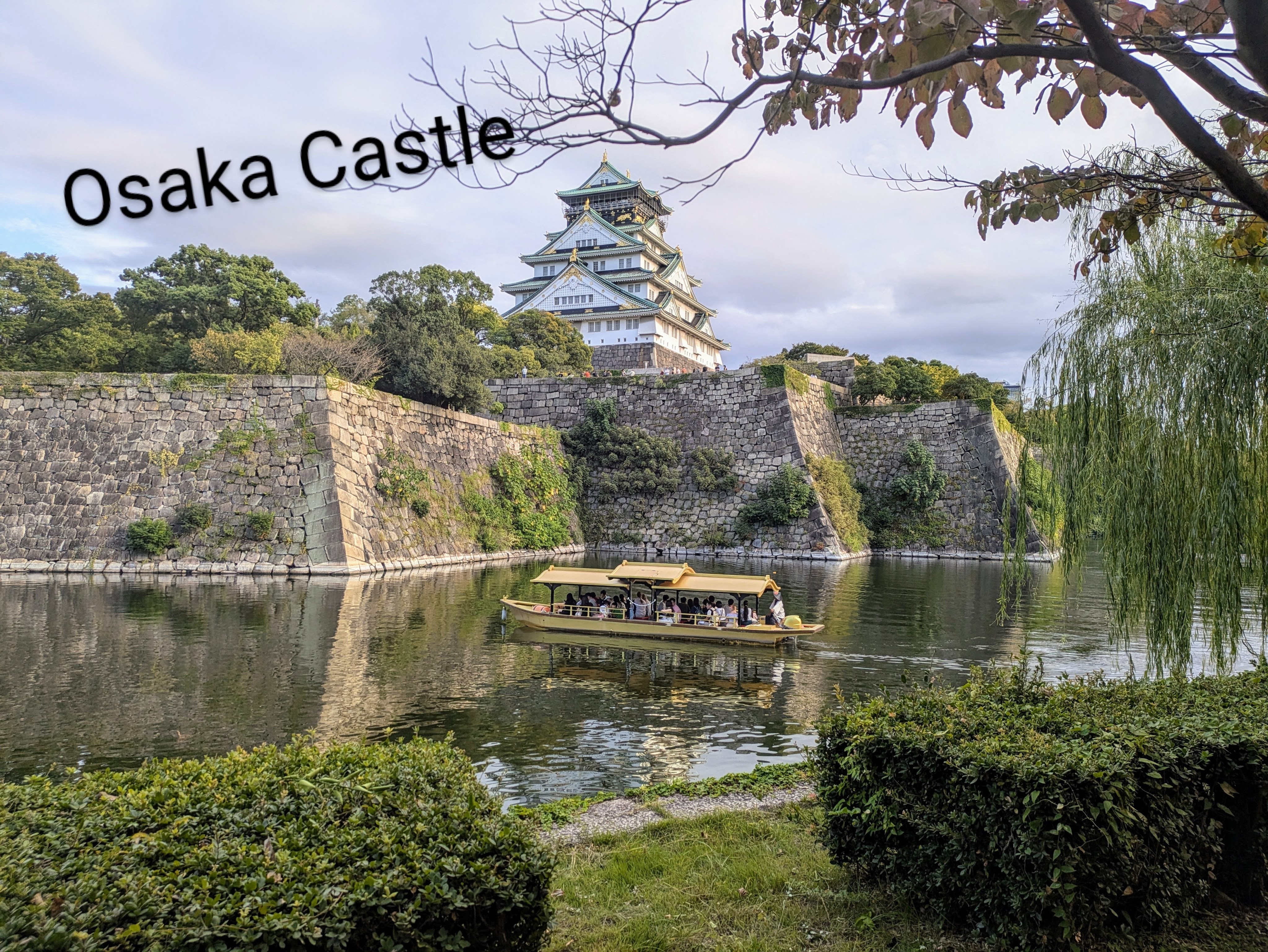
The atmosphere was tranquil as we strolled in sunshine  around the large castle park with gorgeous views of the thick castle walls.  There were  lots of meandering families, bicycles, stalls selling bonsai plants and a violinist playing near an old bridge over the moat. This was in complete contrast to the madness of Dotonbori. This area  was teeming with tourists trying to take photos of flashing billboards, the most famous of the Running Man which has glowed over the area for more than eighty years. We jostled along in the crowds before drinking an overpriced beer in a bar where half the people were smoking inside (that’s a blast from the past).

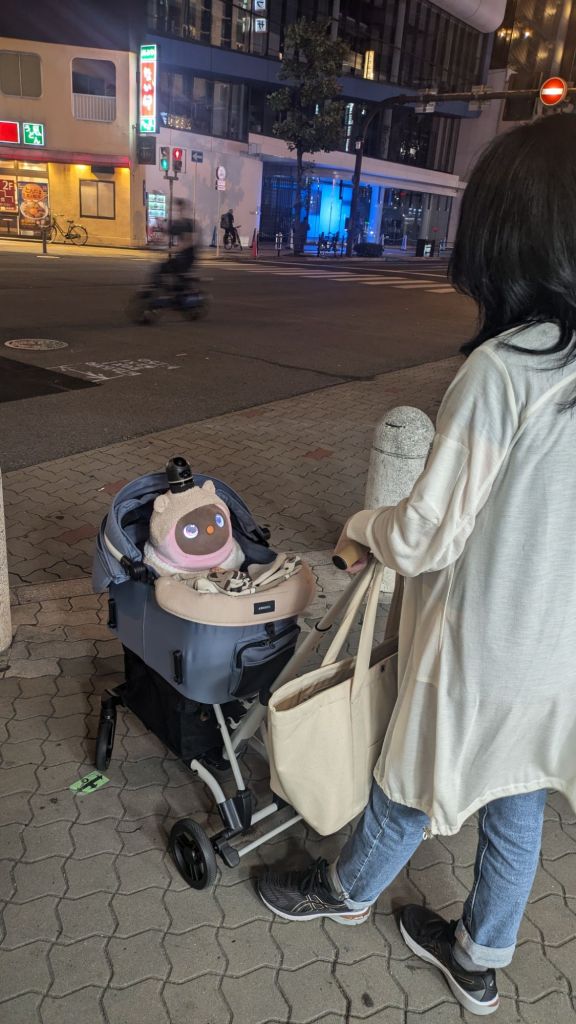
On the way back to our van we walked through quiet, clean streets. Walking past a woman pushing a stroller, we were surprised to see that there was a robot baby in the stroller. I googled the image from the photo we took and the robot is called a Lovot and can be taught to love you.

Lovot Robot
Dotonbori, Osaka

Sunday morning dawned bright, sunny and much warmer than we expected for early October with temperatures of  30C. We wanted to leave Osako but we weren’t sure where to go. On a whim we decided to head south towards the island of Shikoku, the smallest of the four main islands in Japan and to leave a visit to historic Kyoto  until the end of our trip.

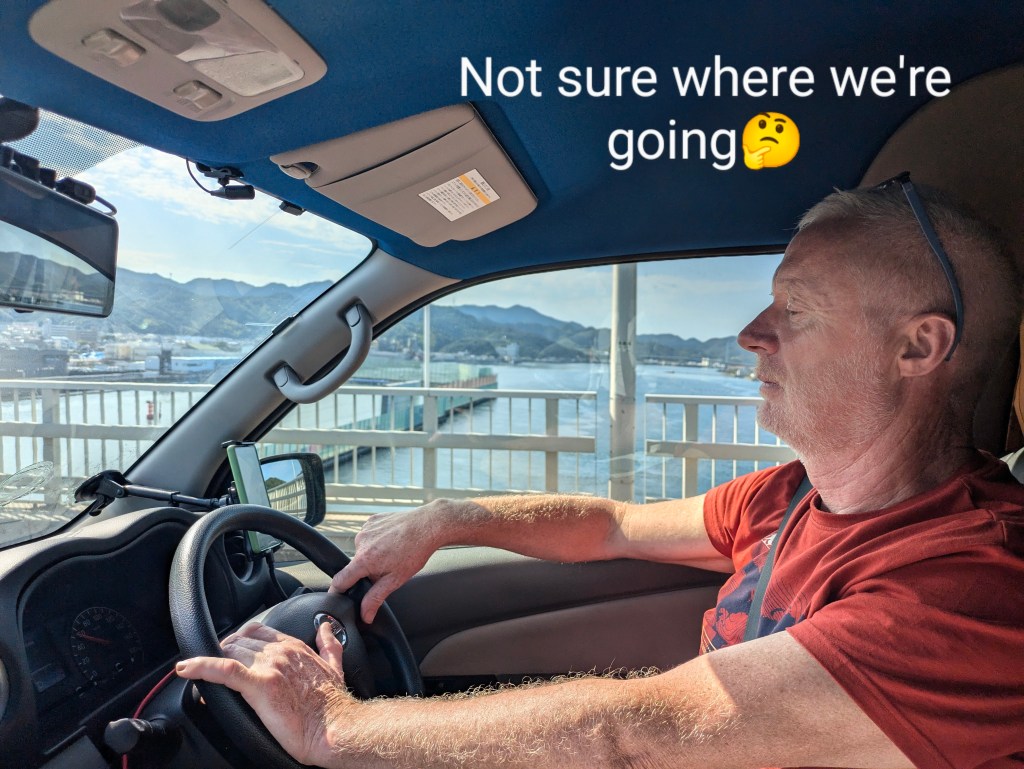
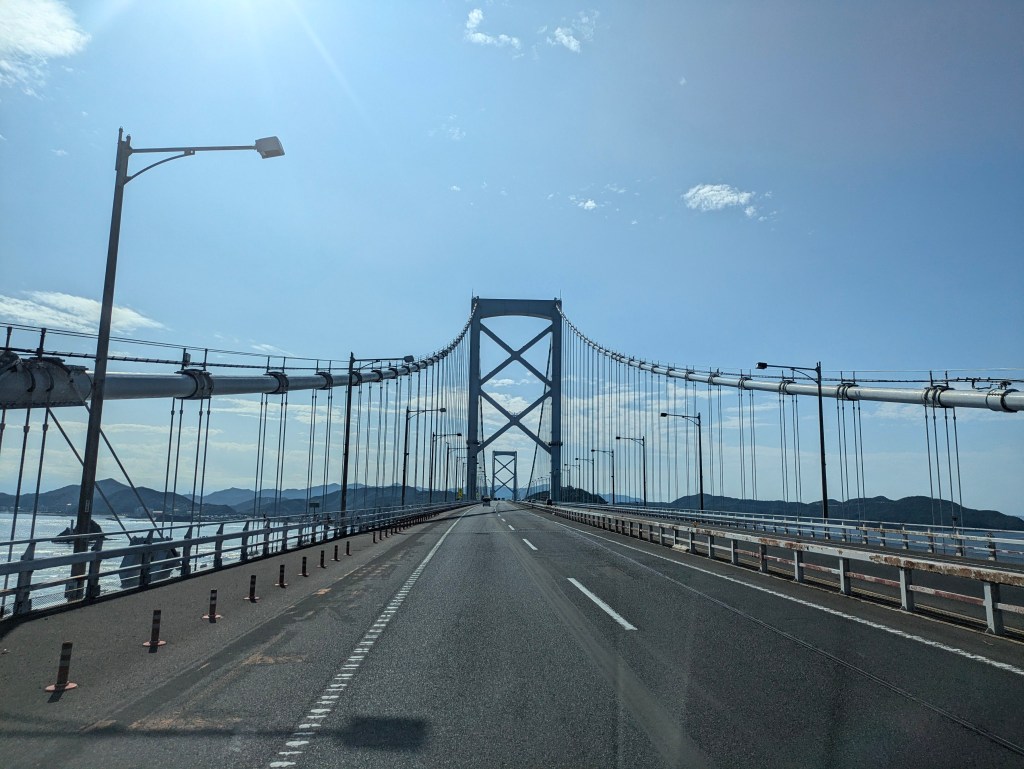
The roads were reasonably busy leaving Osaka but the drivers were courteous. The road signs were in both English lettering and Japanese symbols and best of all, the Japanese drive on the left side on the road, the same as at home. On the highway, one city blended into the next, almost without a pause. There were  some long suspension bridges linking  islands. Japan is a country of islands  and engineering. Although there are only four main islands in Japan, there are hundreds of smaller islands often used as stepping stones to join one with the other. The price for such fantastic infrastructure was pretty hefty tolls (eye-watering at times), some of which could only be paid for with cash or pre-registered toll-cards. It’s essential if you’re even slightly off the beaten track to have some hard cash in your pocket. ATMs are widely available for withdrawing yen  Many of the small family restaurants and even the bakery in Osaka only accepted cash.

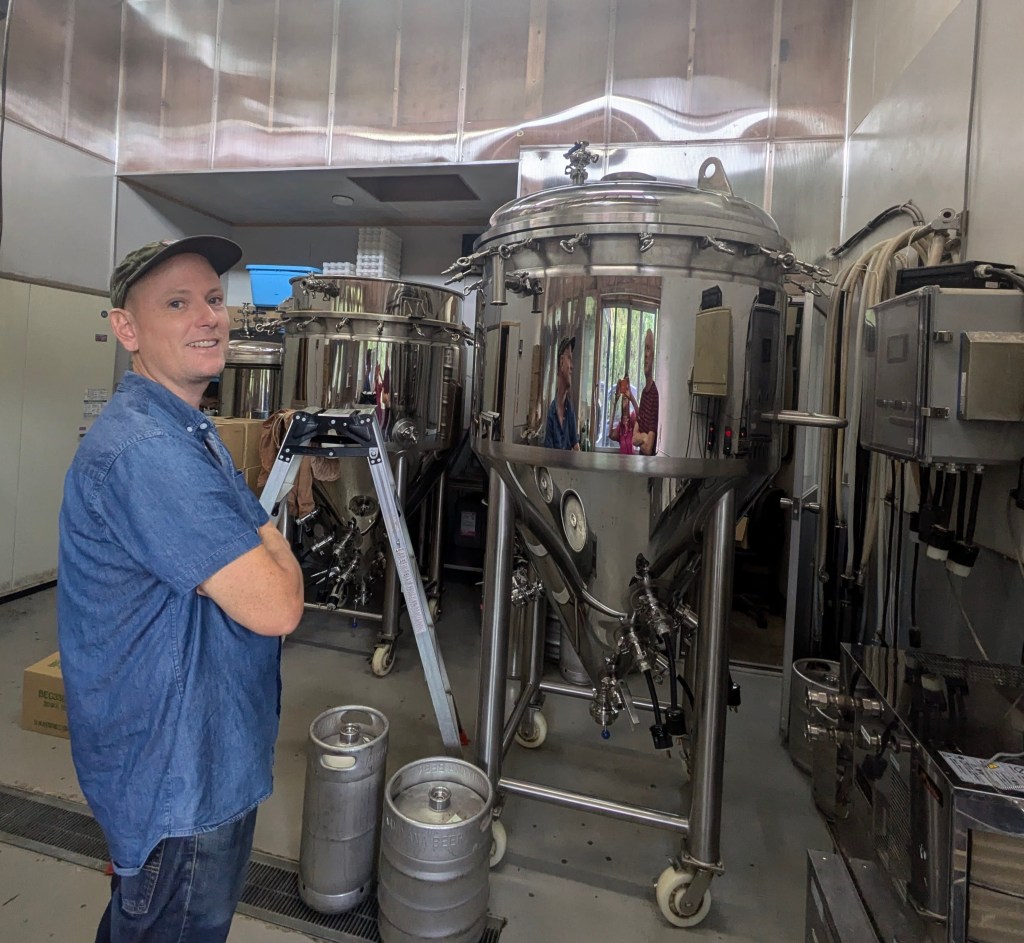
Soon the cities were behind us and we were looking at the green, tree-clad mountains of Shikoku Island. We headed to Kamiyama because we had heard that it was a rural idyll and because a man from Tramore lived there,  the son of a friend of Caoimhin’s and a fellow GiY enthusiast(Grow It Yourself). Manus had set up a small craft brewery in Kamiyama which had won awards and was open on Sundays…..a good enough reason to go in that direction. We found the brewery (Kamiyama Brewery) sampled some really great beers  and although Manus wasn’t there, there was a  campsite nearby in a glorious setting  among tall trees by a river.  We  parked our van, really delighted to be in Kamiyama.

 We met up with Manus the following day at his brewery. He and his wife, Sayaka, a Japanese artist, set up home with their two young children in Kamiyama, a small spread-out town in a valley surrounded by green,forested mountains. It also has an unexpected vibrancy, rural but not sleepily provincial. There was even a bakery selling sourdough baguettes. Manus and Sayaka came about ten years ago to participate in an artist’s hub that was being set up in the town. They were so charmed by the place that they stayed. We could certainly see the appeal.

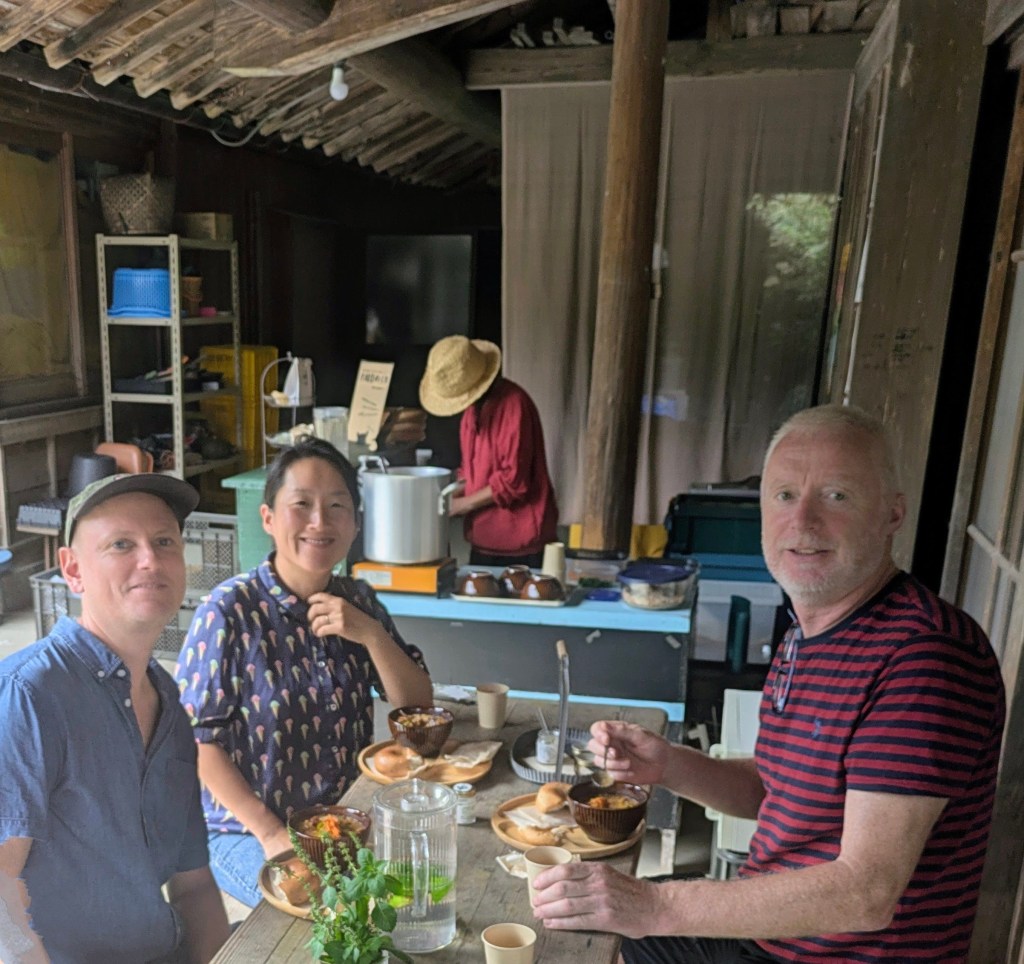
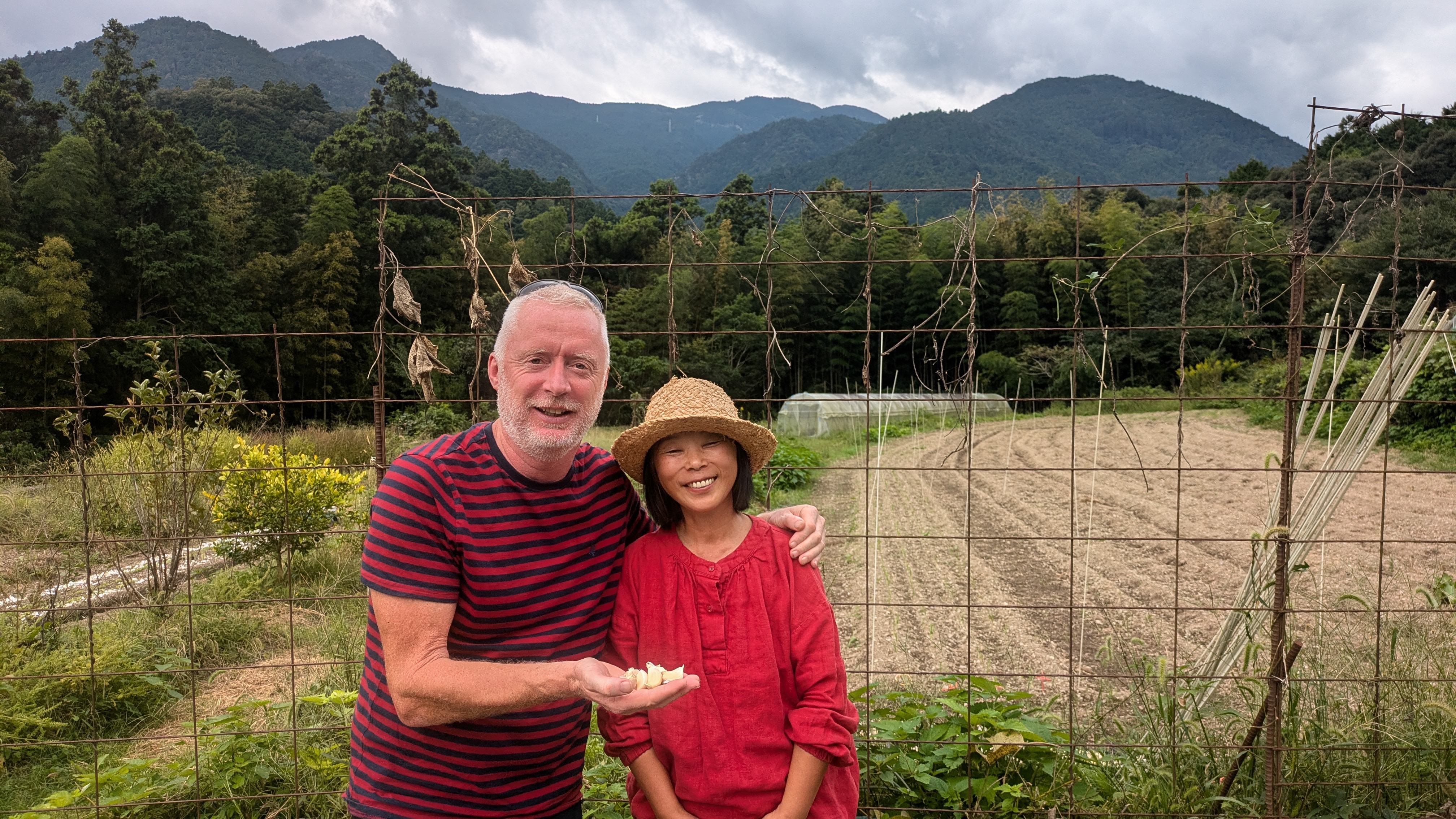
Manus and Sayaka were so lovely,  giving us lots of useful tips for our trip and treating us to lunch at a pop-up restaurant where every Monday, a local organic farmer makes a big pot of curry using her own produce, sets up a table or two outside her house and sells a delicious lunch. The farmer-cook was also funny and charming, and very proud of her home-grown garlic(like Caoimhin). So many Japanese rural towns are dying because of an aging population and a rapidly declining birth rate.  Kamiyama is bucking the trend with an influx of younger people looking for a better, more sustainable way of life.  Many companies based in Tokyo even have an outreach office in thriving Kamiyama, which has  just built a large Polytech school which should encourage more people come and stay in this beautiful area.
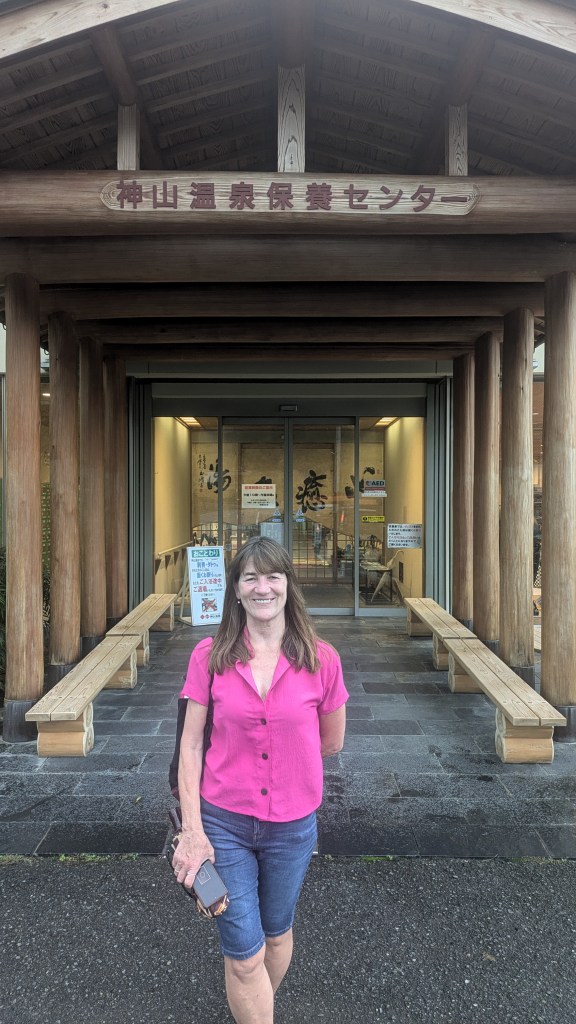
The Japanese love their Onsens, hot spring thermal baths which are found all over the country. These are much more than a place to have a good soak, they are  part of Japanese culture. There was an onsen down the road by the river from our campsite so we decided to visit. At the entrance, there were many signs in Japanese which we didn’t understand  but there was also a drawing of a tattooed torso with a big x through it, informing clients that anyone with tattoos wasn’t welcome. Leaving our shoes in a locker inside the door, we entered a large foyer with a  pale-green carpet and a long counter where we paid the entrance fee (about €3) and rented some tiny white towels. I walked through the red curtain for the women’s section while Caoimhin disappeared behind the blue curtain. It was quite intimidating. I wasn’t quite sure what to do although Manus had given us some instructions.  It was mid-afternoon, a quiet time at the baths,  I was by myself in the large changing room so I couldn’t follow the example of anyone else.

I stripped naked and holding  my little white towel (slightly bigger than a handkerchief) i pushed through the swing door into the onsen. The air was hot, humid and slightly steamy , there were two elderly nude women sitting on chairs inside the door, with the tiny white towels folded into a square on their heads. I knew that it was important to wash before going into the baths and that foreigners are often scrutinised to ensure that they give themselves a thorough soaping and that they rinse off the soap properly. A woman covered in soapy suds sat on a stool in front of a mirror and used a spray-hose to rinse her body. Then she filled a small blue plastic basin with water, stood up and threw the contents on the stool and floor a couple of times before waddling towards one of the bubbling baths with the little towel folded on her head.  I sat on another small stool and did likewise. The little towel is for wiping yourself down after the bath but etiquette demands that  it should never touch the bath water. That’s why it is folded on the head or left on the side of the bath.

The water was hotter than expected when I slid into the bath (no splashing allowed) and it took a while to get used to it  but soon I was relaxed…..and very shrivelled.

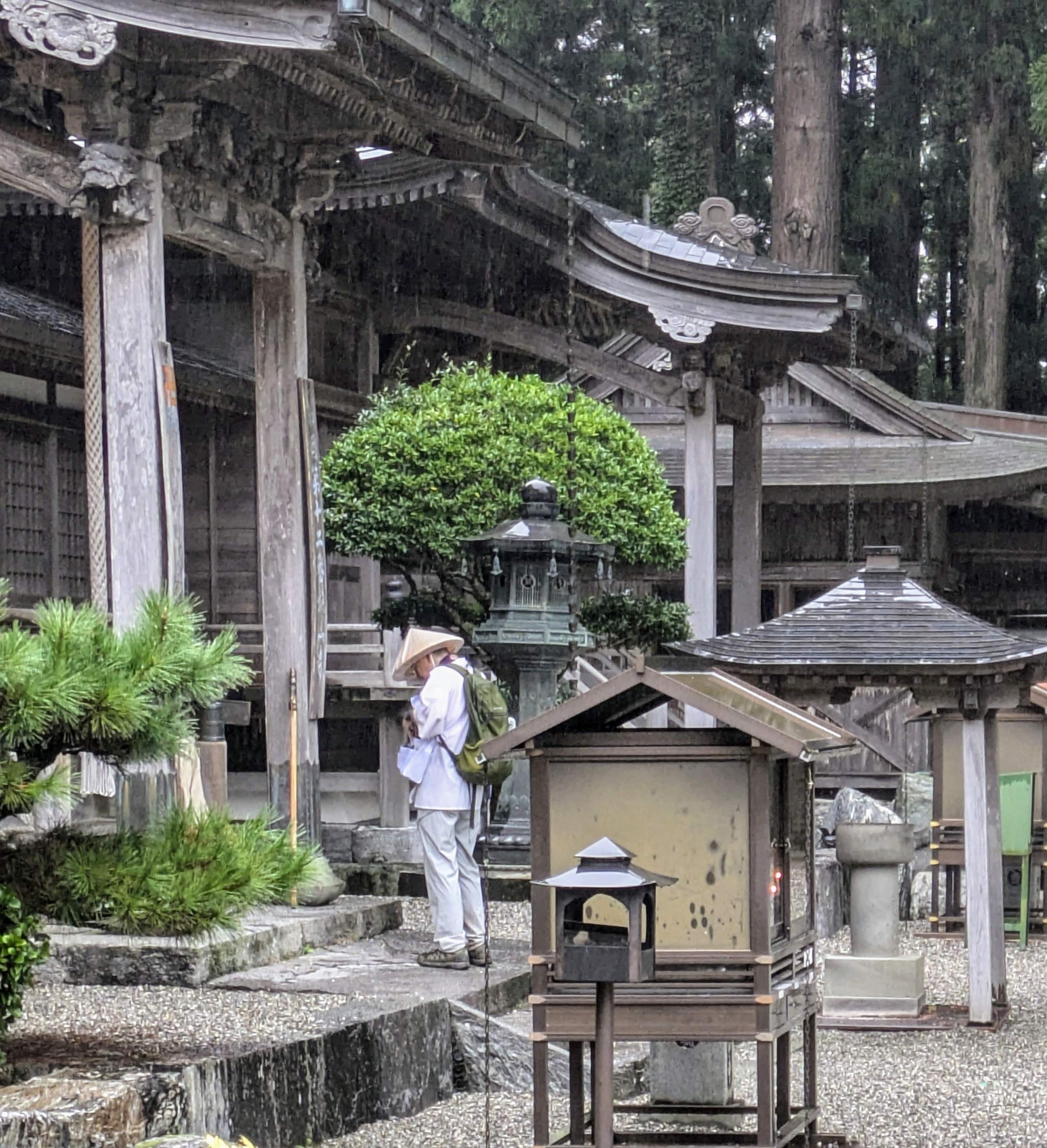
A Pilgrim Prays

Kamiyama also has another attraction. It is on the famous Shikoku pilgrimage of the 88 Buddhist temples. This is a circuitous route, about 1200kms long around the island of Shikoku. Pilgrims are very recognisable by their conical hats, white robes and wooden staffs. We had seen a few walking (and hobbling)  along  the roads. Hopefully in the next week or so, we will visit some of the eighty eight temples either by walking or by campervan and find out more about this ancient pilgrimage

Apologies for such a long post …if you reached this far, thanks for your stamina.

じゃあね。Jāne.

‘Till next time🥰

Journey to Japan✈️✈️

Tory Island – Timeless and Tantalising❤️

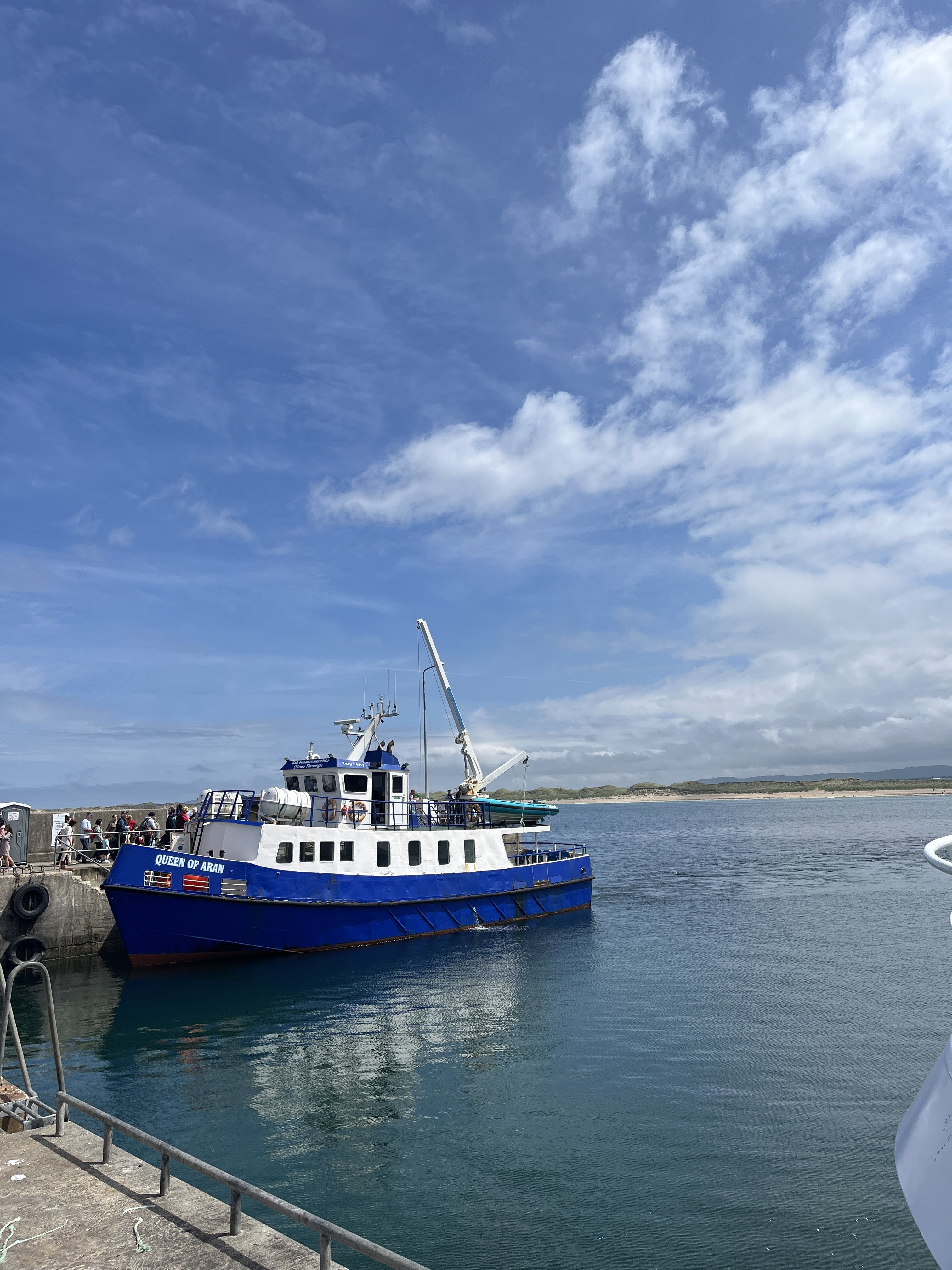
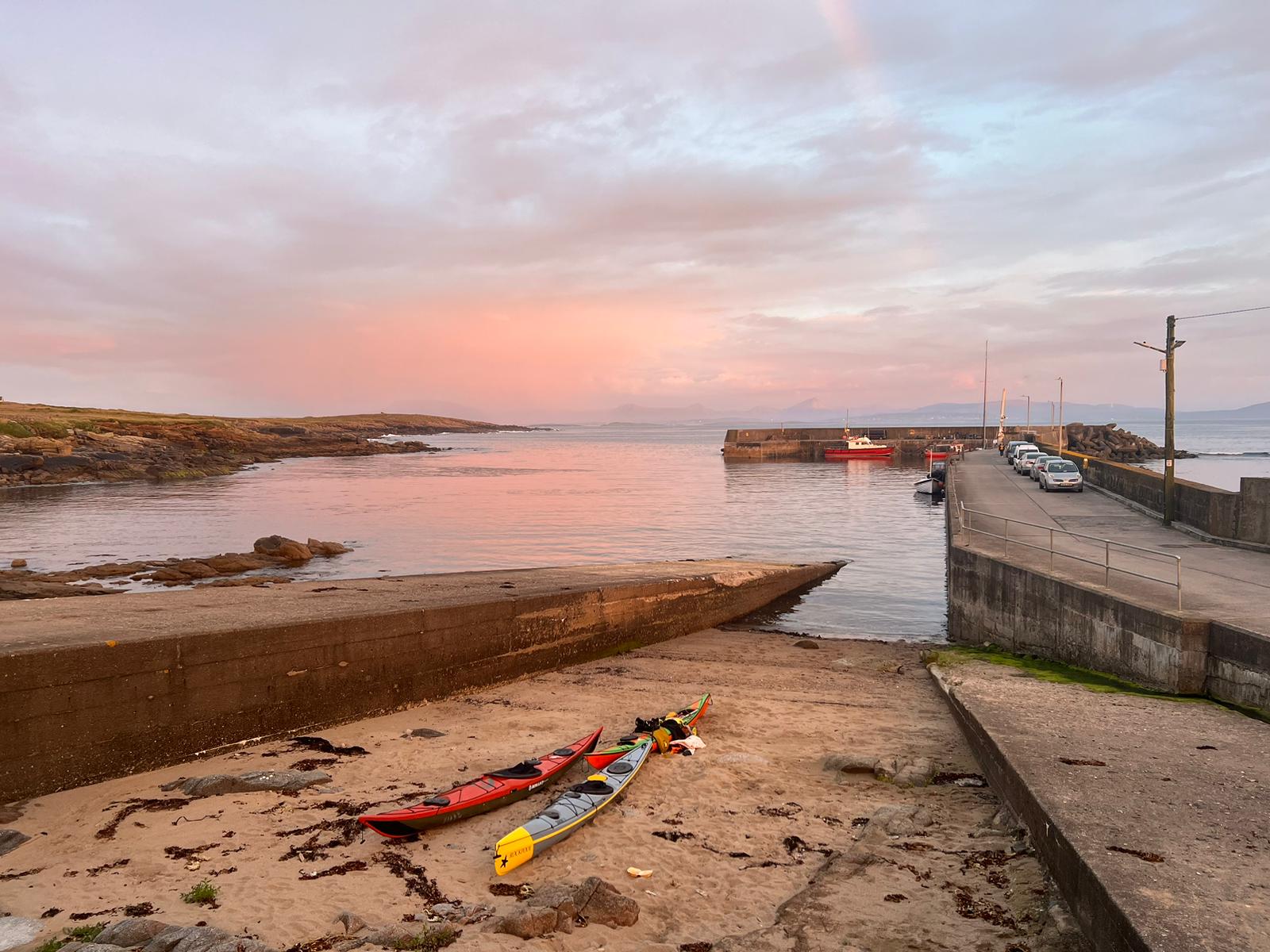
Tory Ferry at Magheroarty

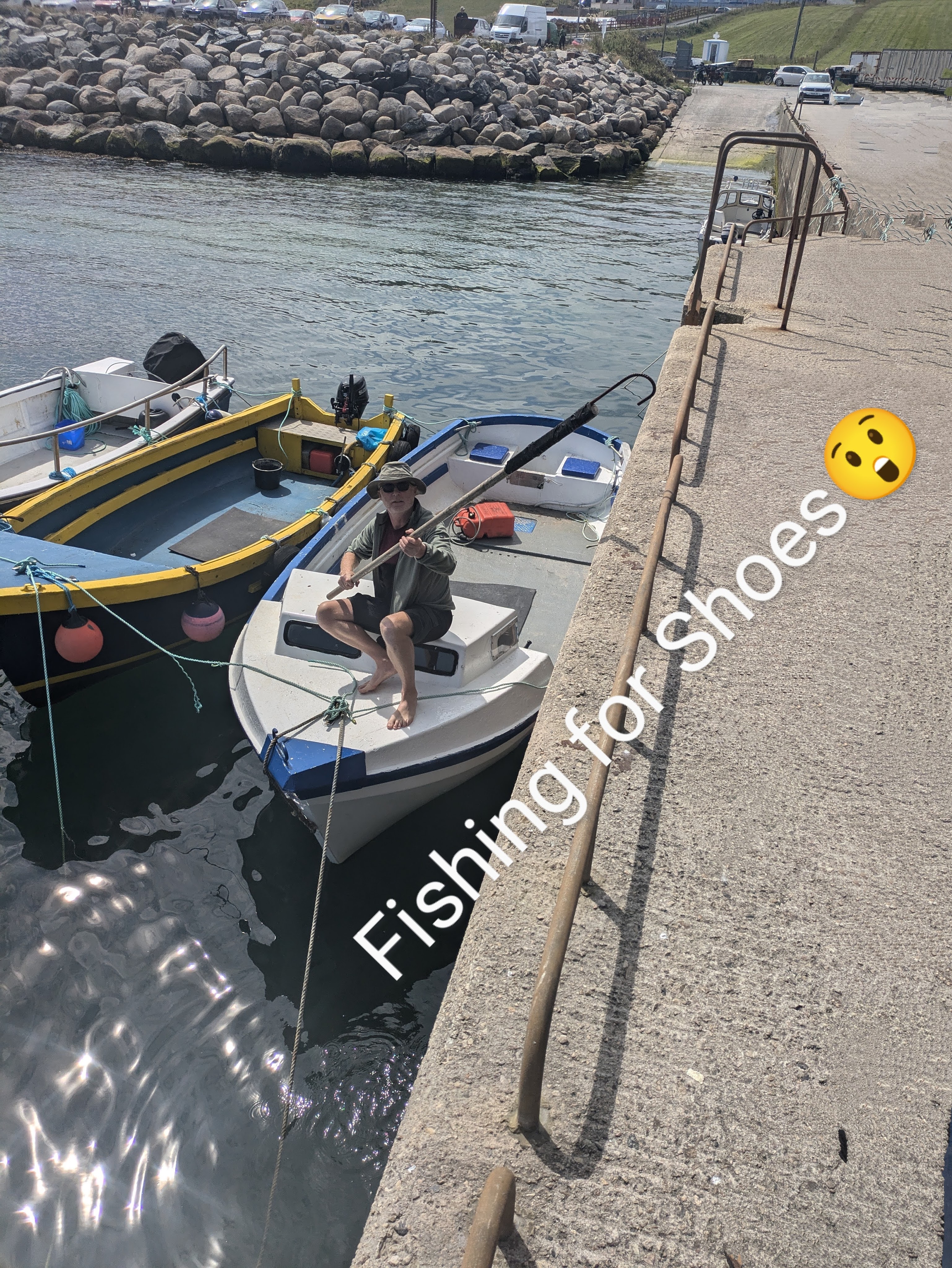
On a sunny July Sunday, we parked our van in Magheroarty in North West Donegal and walked down the pier to the small passenger ferry to take us to Tory Island, the most remote inhabited island off the Irish coast.  We were laden down with bags, mainly of rattling provisions (i.e. wine😀) for our three night/four day stay on the island. Although we had read online that there was a shop on Tory, it was recommended to bring as much as possible with us.  As we walked to the boat, Caoimhin kicked his sandal vigorously to release a pebble lodged under his foot – a little too forcefully because the sandal sailed into the air and landed in the water where it bobbed with the seaweed 😮. He ran down the pier steps to where a small  boat was moored, grabbed a hook and managed….eventually… to fish his footwear out of the water just before the ferry departed.

After that excitement, the boat journey was uneventful. We had booked our ferry tickets online the previous week for the 1pm crossing but we could have bought them at the little office on the pier. There was plenty of space on the boat, the inside seating area was virtually empty, most people opting to sit or stand at the railing outside on the deck. The boatman told us that the first sailing in the morning from the Margheroarty pier and the last sailing in the evening from the island were the busy ones as most visitors were day trippers.  

The  fourteen and a half kilometer journey took forty five minutes and luckily for us, the wind was light and the sea was glass-smooth, not always the case.  There was a time in the 1970s when the island was completely cut off for eight long weeks due to continuous storms and tumultuous seas. Some islanders left after that harsh winter to set up home on the mainland, only the hardiest and most resilient can survive out on the very edge of the world.

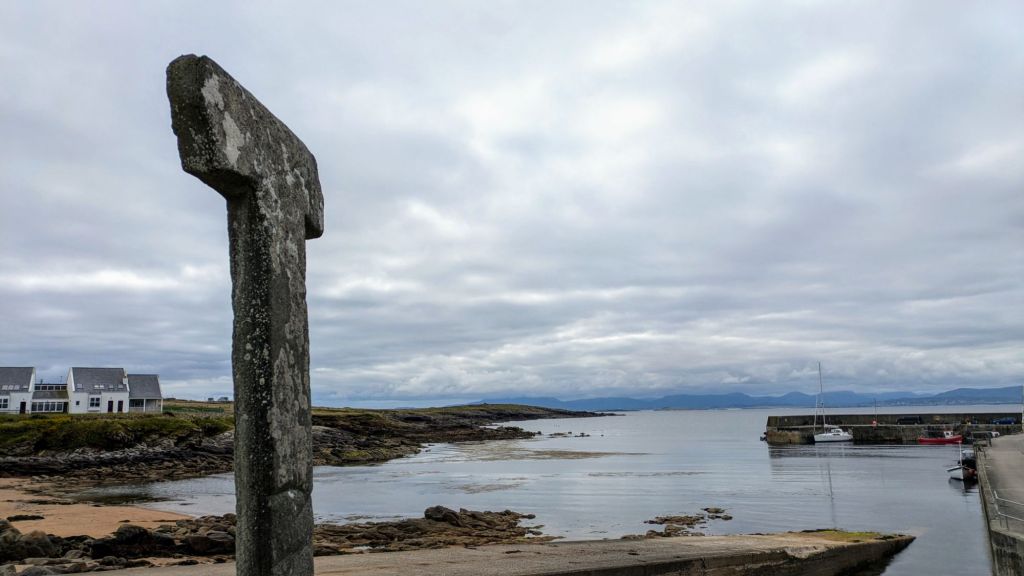
 The Donegal coast was still visible when we disembarked on the island but the mainland felt faraway, as if we had arrived in a remote timeless place. A couple of men were mending fishing nets in the harbor under the shadow of a Tau Cross,  a large ‘T’  shaped structure made of a single slab of mica slate and a form of crucifix  associated with early  Greek Church.  As mica slate is not  found on the island, the cross must have been made elsewhere and brought to the Island sometime during the 12th century. Over the years it has become a symbol of indestructibility and it is the custom to pray to it for protection before heading out to sea.

Silhouetted against the blue sky and visible from the harbor was the round tower, all that remains of the monastery founded by St Colmcille in the 6th century. It was evident that a variety of visitors have been coming to Tory since the earliest times, saints and scholars, pirates and adventurers, artists and fishermen. Although we now regard the offshore islands as very isolated places, in an earlier era when transport was by sea, they were actually the centers of commerce and learning where goods and ideas were traded and it was the mainland that was a forbidding densely-forested, barely penetrable place.

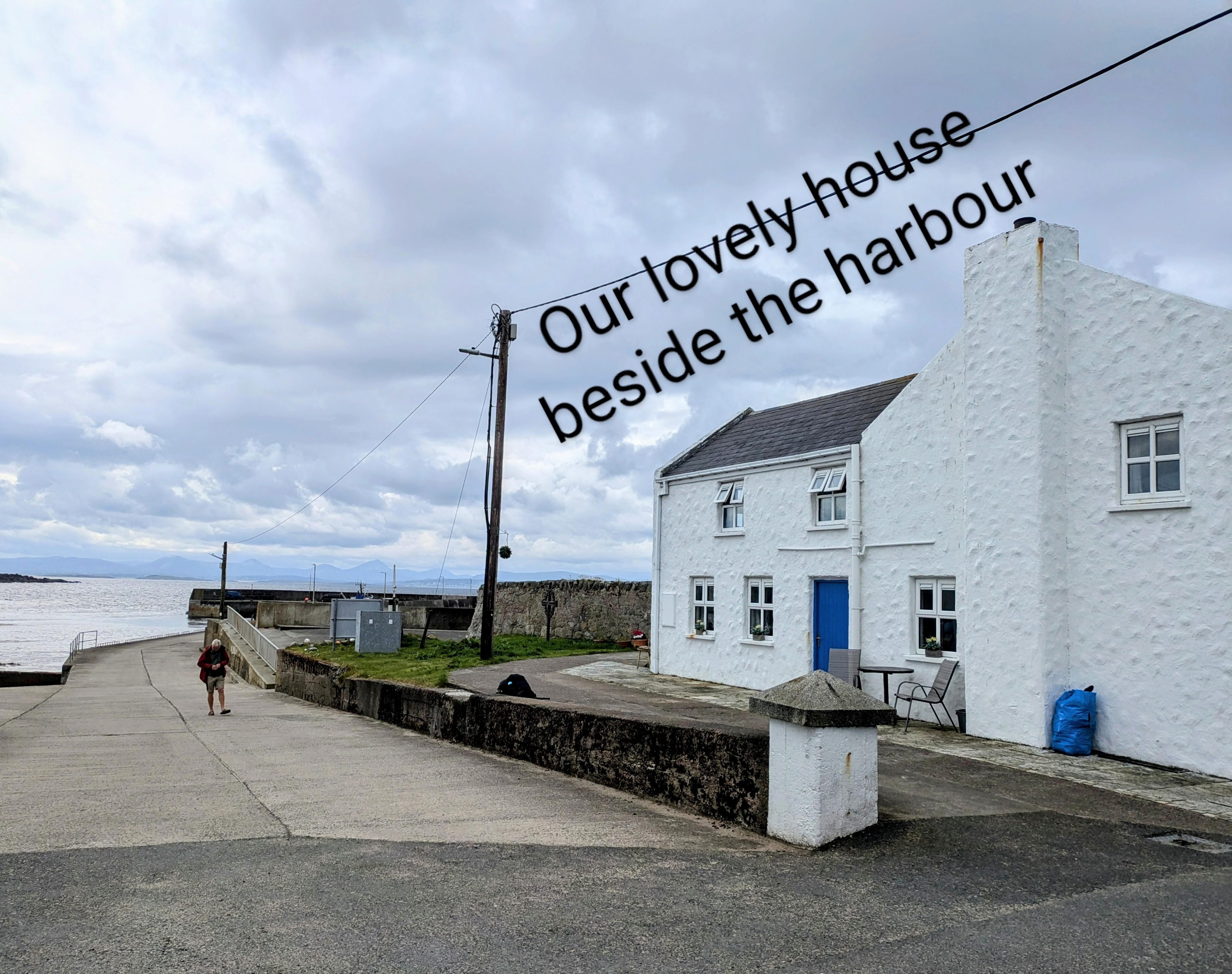
Our Airbnb was a stone’s throw from the slipway where the ferry docked in Baile Thiar (West Town), which was convenient for hauling our heavy bag of clinking luggage.  Our large bedroom window looked out both over the sea and the walled graveyard, nice juxtaposition of life and death. Four of us stayed in the rented house and the other five stayed in the Tory Island Hotel (Óstán Thoraí) which was two minutes’ walk away and overlooked both the pier and a sandy beach.

This was the first visit to the island for all nine in our group and we were really lucky with the weather. Locals told us that we had arrived on the first fine day of the year and the sunshine continued during our visit with spectacular sunsets until our last day when clouds rolled in and there was a spattering of rain.

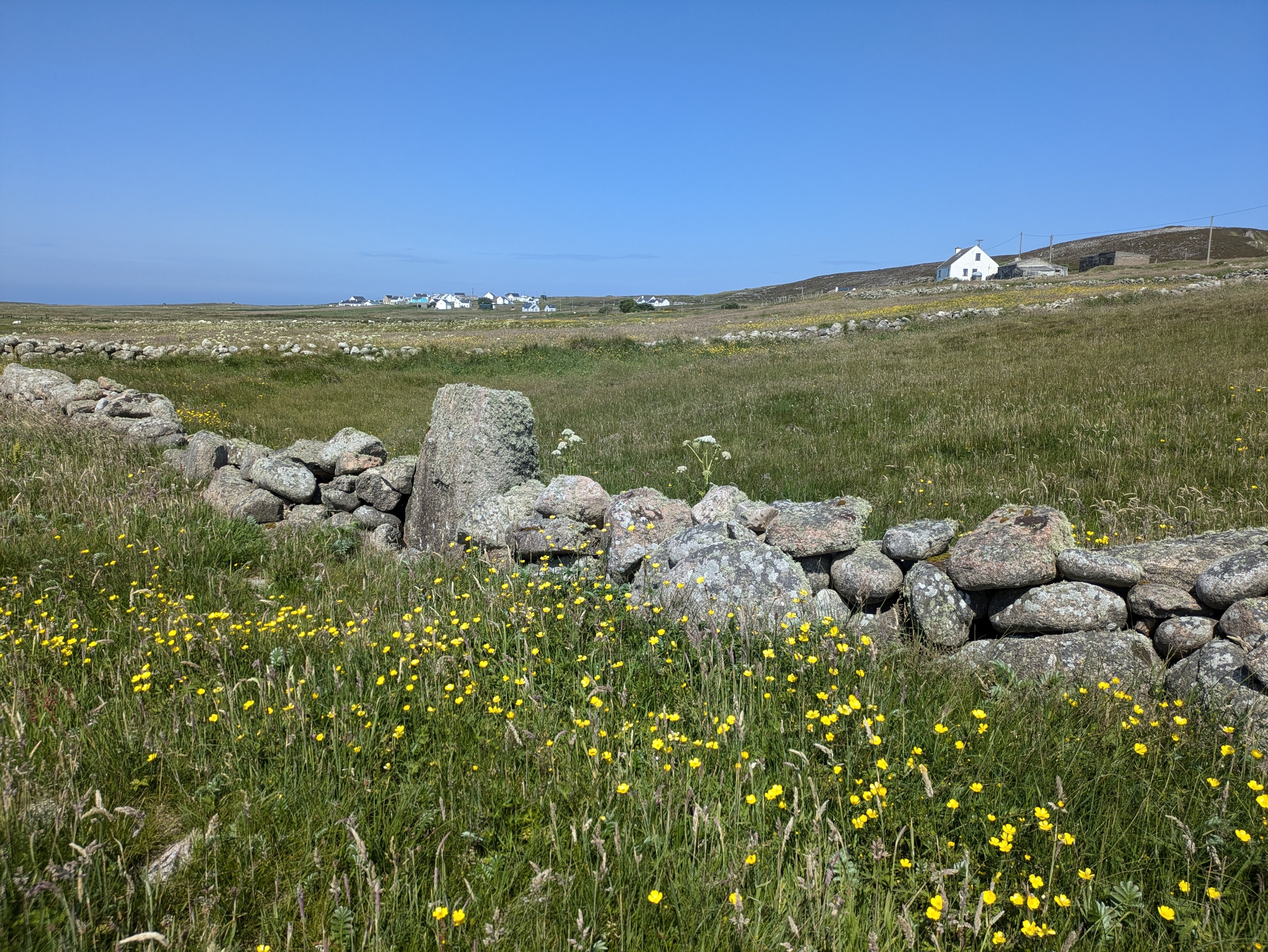
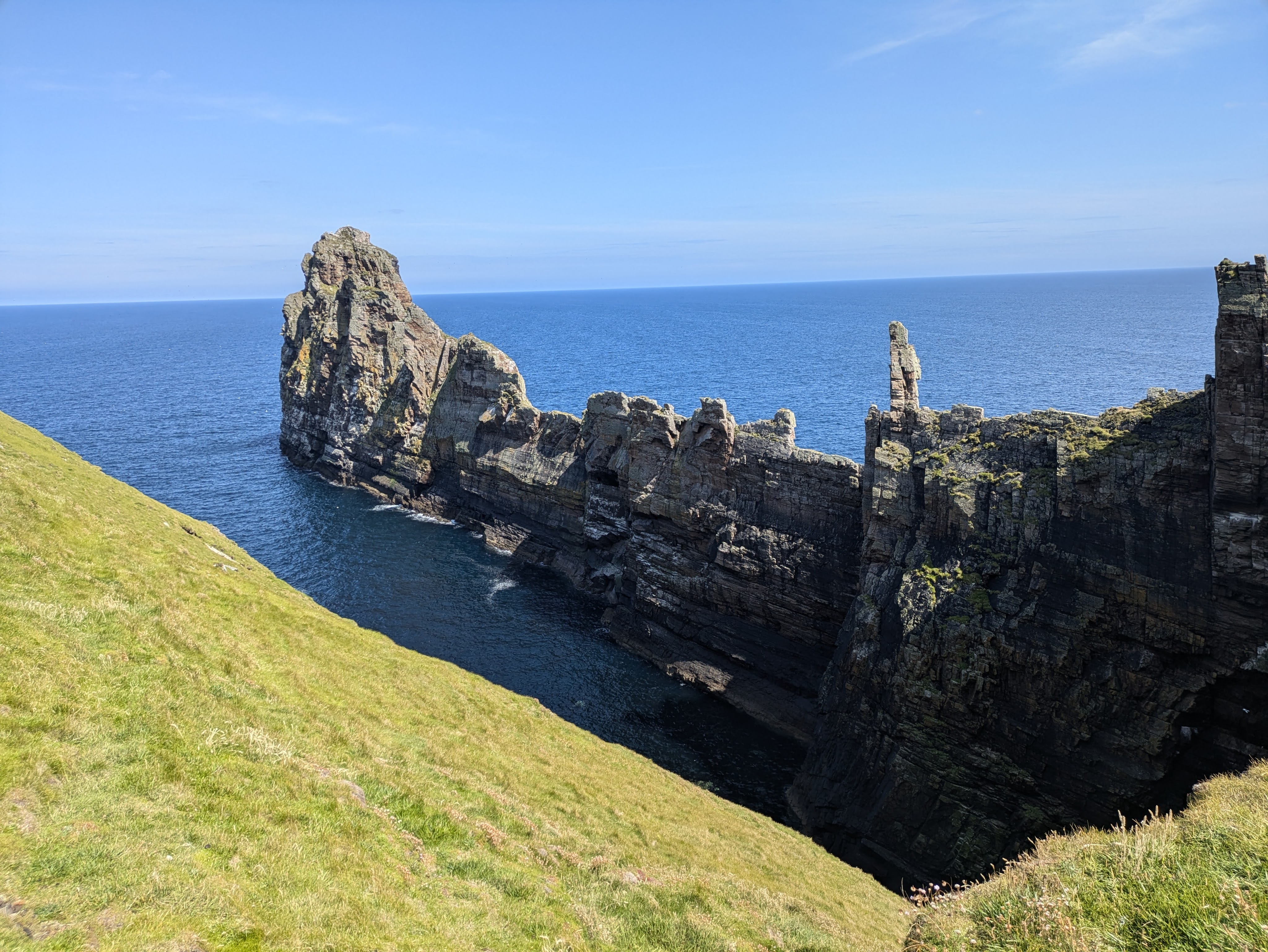
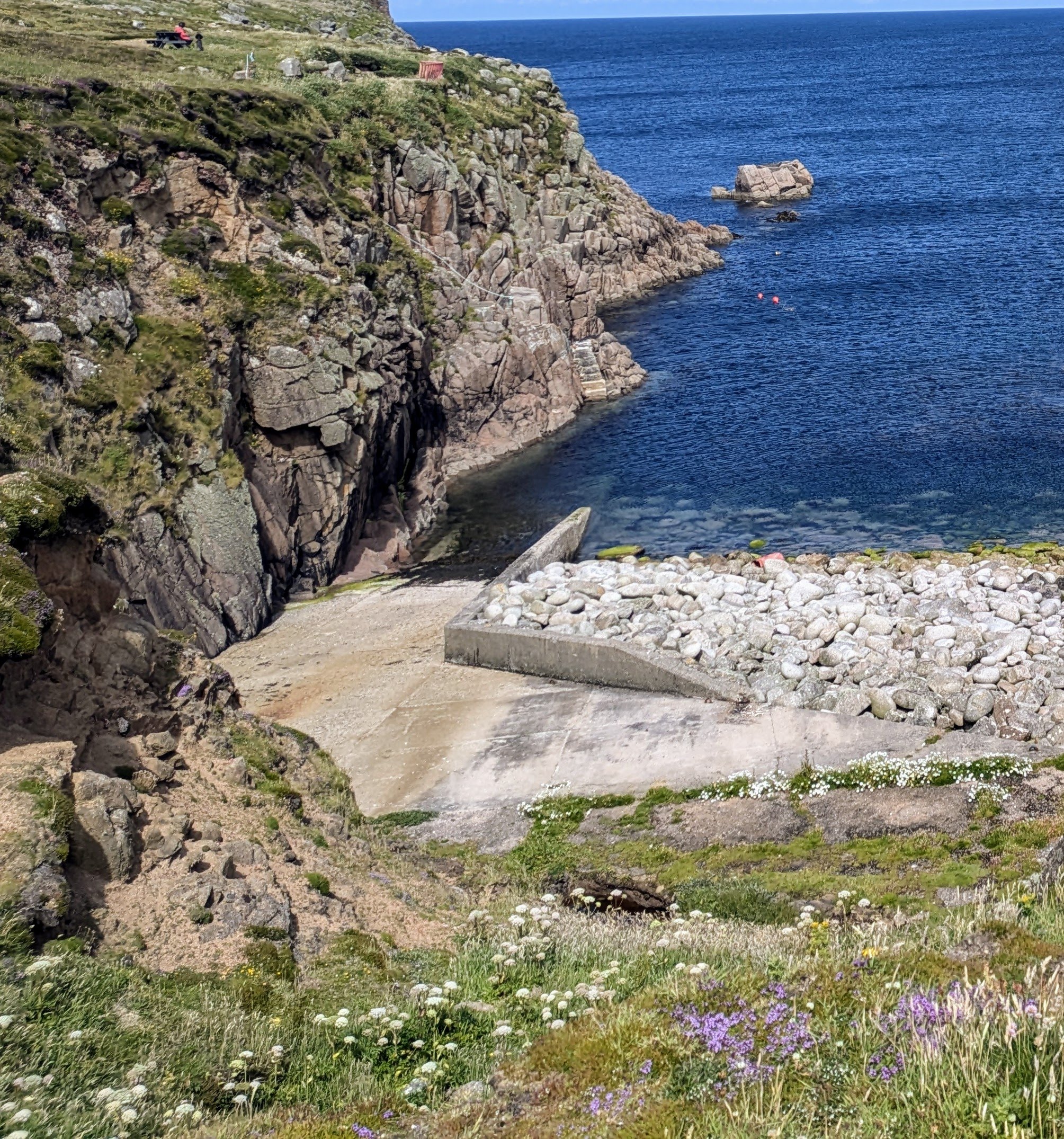
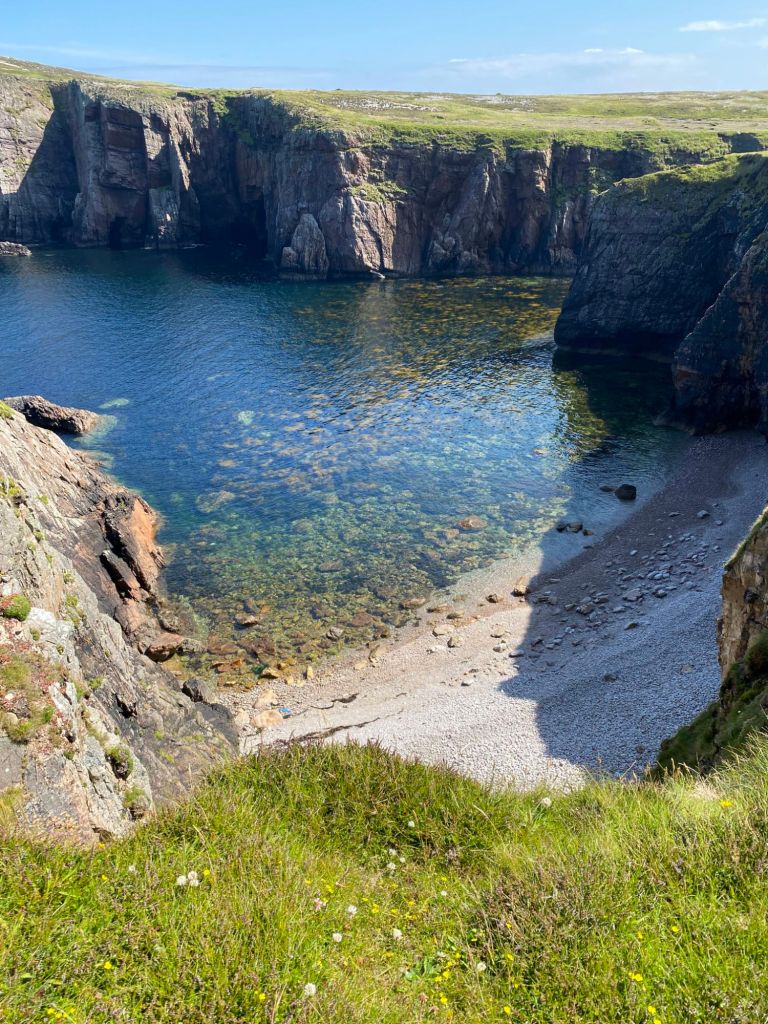
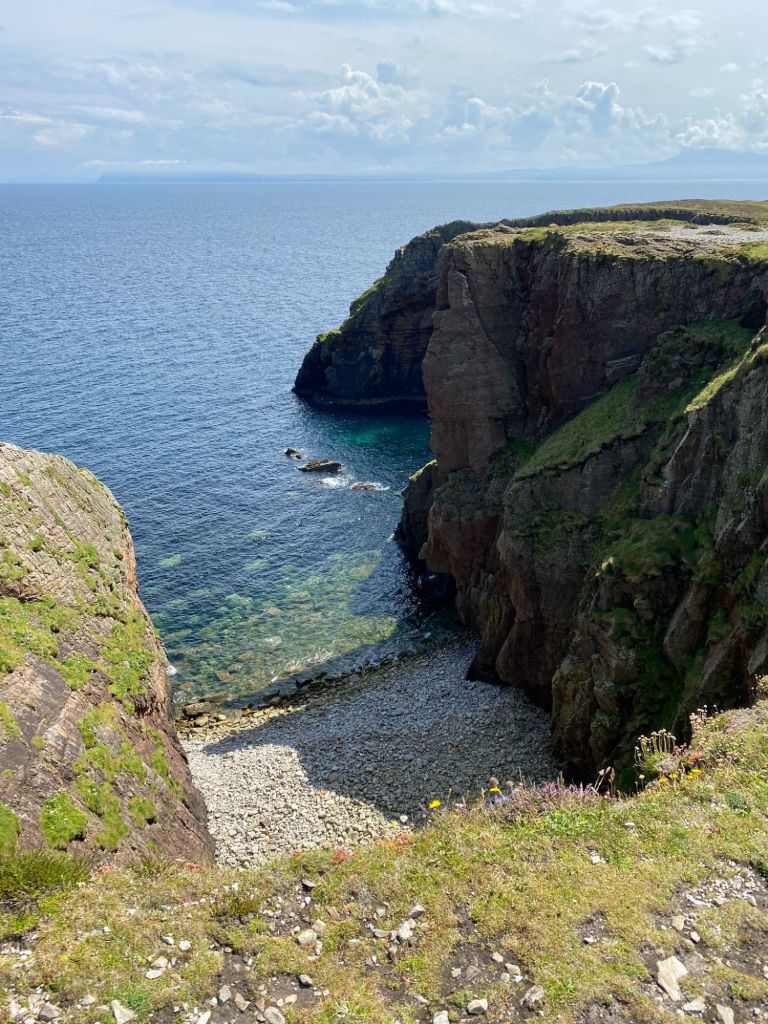
Tory is a small island, about three kilometers long and a kilometer wide flanked by high sea cliffs at the eastern end (Tor Mor) and a lighthouse at the flatter western end. At the last census (2022) the population was 141 but it has a secondary school with a total of five  pupils. An expected intake of four additional pupils in first year this September will be a big boost.  Baile Thiar where we stayed has the largest center of population with the hotel, church, craft shop and a grocery store which  also doubled as the post office. Most other houses are clustered  in Baile Thoir (East Town)with an occasional house dotted around elsewhere.

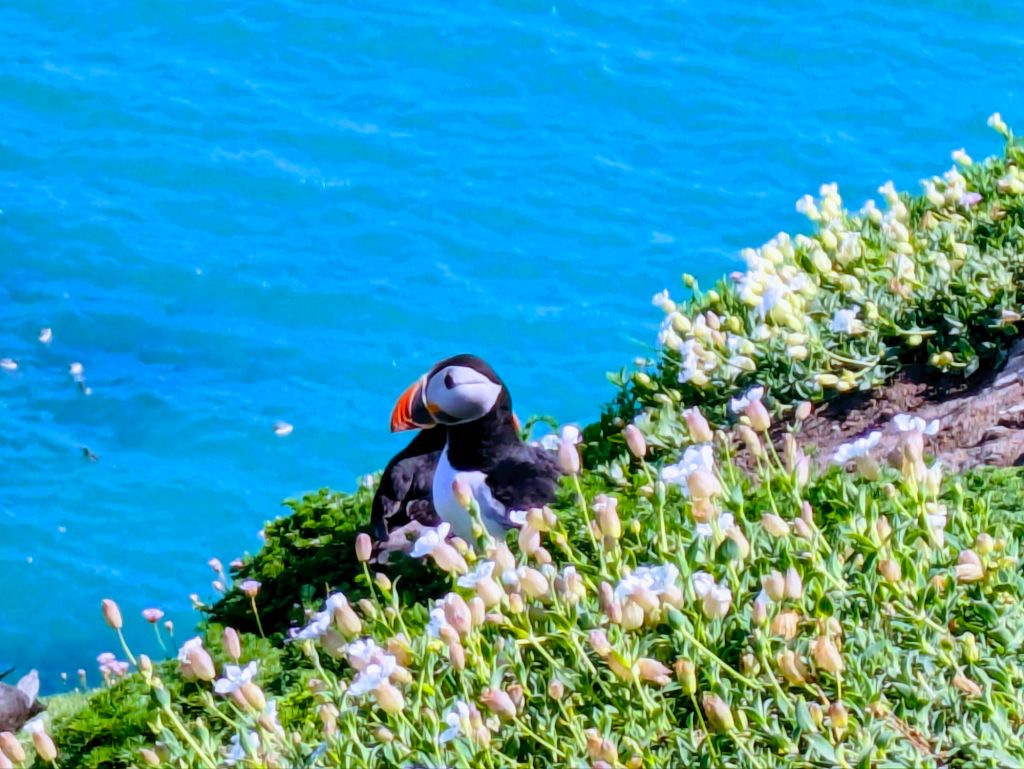
Tory Island is a paradise for birds and wildlife.  Although it is virtually treeless because of the high winds, there was a myriad of grasses and colorful wildflowers, orchids, heathers and an abundance of biodiversity.  Rabbits scampered in the early morning and evenings, a pair of swans and a raft of ducks swam on the lakes. The human population may be small, but the bird population is huge with large colonies of gulls, terns, pipits and oystercatchers. It is an important breeding ground for corncrakes, from now on I will always associate their distinctive call, so like a creaking door, with Tory.   We could even hear it from our kitchen table and it is a sound which has virtually disappeared from the rest of the country.

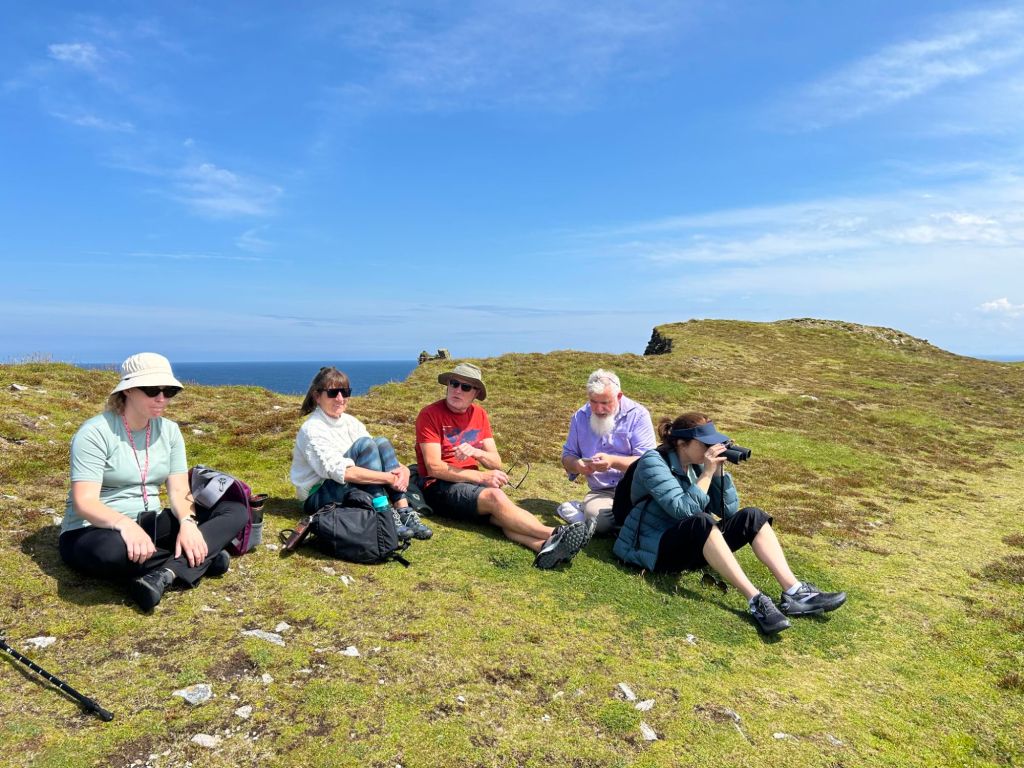
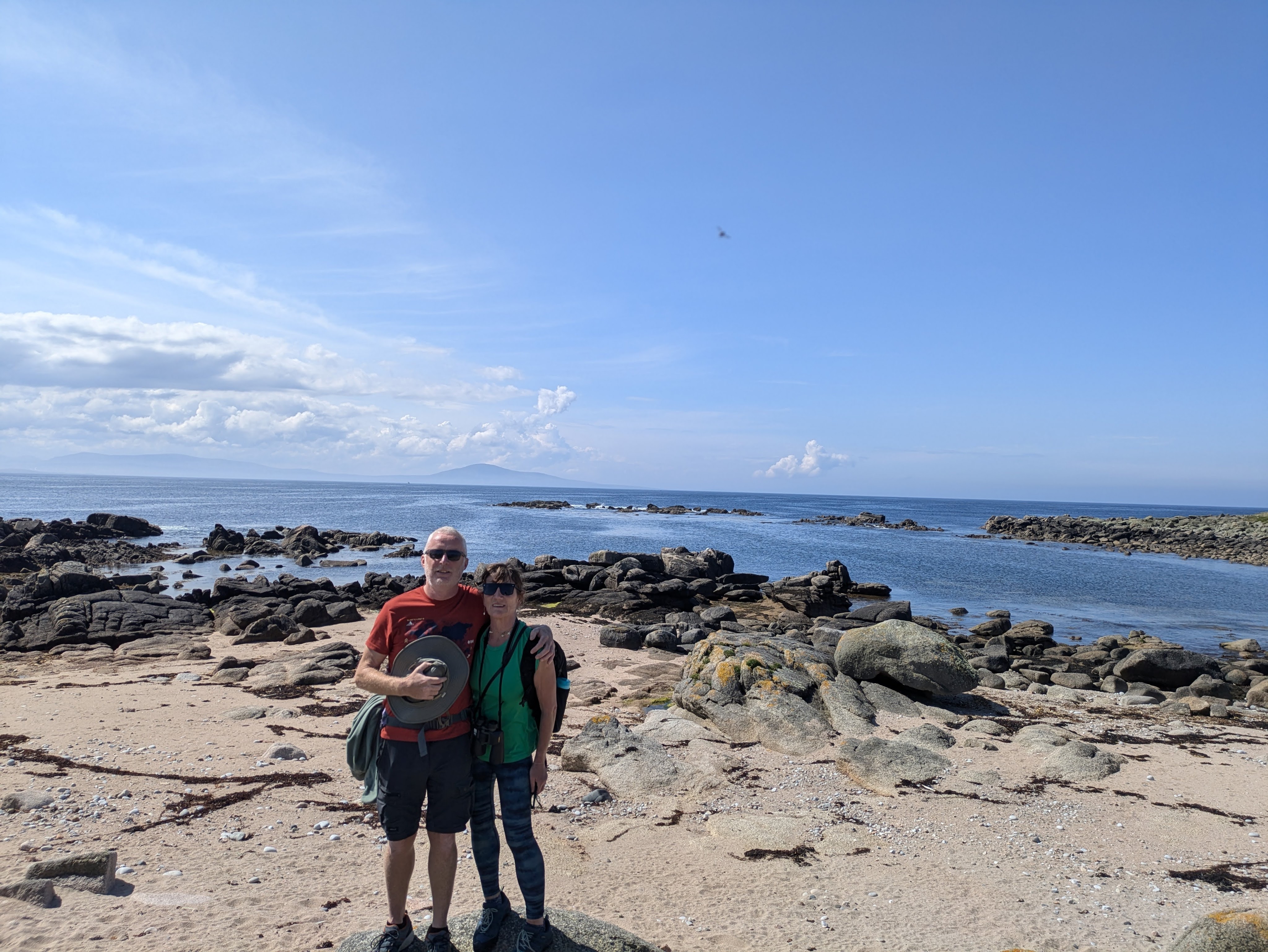
Bird Watching on Tory in Sunshine

At the eastern end of the island, we spent a couple of hours watching hundreds of puffins on the grassy slopes beyond a rock called the Wishing Stone. It seemed to be  flight school  for the young  pufflings, it was hilarious watching the aborted take-offs and the crash landings on the cliff.

After exploring the island on foot, we took to the seas and hired a boat for a trip around the island which departed from the harbour at West Town. Our captain was also the only farmer on the island, rearing  sheep at the eastern end of the island.  He was accompanied by his two young grandsons, one who attended the island  primary school and the other in secondary school. The family spoke Irish together but switched seamlessly to lilting English when chatting to us.

                 The sheer cliffs were even more majestic when seen from the water  with an incredible diversity of coastal erosion features – sea stacks and arches, sea caves and blow-holes and very long, isolated spurs of rock jutting out into the ocean.  From a distance, some rocky features seemed manmade but the granite outcrops are natural, formed by differential weathering of  the granite bedrock. Many of these have local ‘rock’ names (Tór Mór, The Big Key, The Anvil, The Wishing Stone, Balors Fort, Balors Prison, and The Cave, among others). Some of the names refer to the mythological Balor of the Mighty Blows – a one-eyed king whose eye was so evil that it had to be kept covered.

The seas were teeming with bobbing puffins and a few guillemots and razorbills. Earlier in the year (May and June), there were sightings of basking sharks patrolling the coastline for plankton but we didn’t see any on our trip. Although it was a calm day, the seas were surprisingly rough with surging sea-spray as we rounded the western end near the lighthouse, a tiny taste of what it might be like in stormy weather.

Tory has many swim spots apart from the beach at the harbour. On the east of the island at Port an Duin, right at the end of the road, two green-watered beaches frame the narrow land bridge leading out to Balor’s Fort . On the north side of the island near the hut where the artist Derek Hill painted, there is gorgeous Portín Ghlaí, which has steps cut into the hillside for easy access. Swimming every day in different spots  was ‘refreshing’, an euphemism for very cold. The water was beautifully clear, perfect for trying to avoid the jelly fish who also seemed to love the sea around the island

From our Airbnb near the harbour, we watched the rhythm of the island, the comings and goings of visitors and locals, the ferry bringing in people and supplies, practically everything has to be brought from the mainland. We watched crates of beer and coca cola, vegetables and washing powder, being winched from the ferry by a small crane and deposited on the pier. There is no fuel on the island, the land has long been denuded of turf  and there was little evidence of any cultivation. Fishing, except for lobster, was no longer a profitable practice as fish are relatively scare because of over-fishing in the past. Apart from the hotel which did good food at lunch and dinner time, there was the Club which served basic pub food all day- we can vouched for the pizzas which were delicious.

The King of Tory, Patsy Dan Rogers passed away in October 2018, after a long-term illness aged 74 and is buried in the churchyard. He was known to greet most ferries to personally welcome visitors to the island and is still  greatly missed

Tory is a timeless place, it feels bigger than it actually is, further away from the mainland than it actually is, steeped in history and mythology, attracting people looking for contemplation and solitude, music and art, wildlife and nature.

Truly…. Tory Island is a special place

 Slán go fóill,  Toraigh

Sunsets and Corncrakes

Tory Island – Timeless and Tantalising❤️

Old Rail Trail Greenway – Cycling in the Midlands

The Midlands is an area of Ireland that is seldom a destination in itself, usually it’s just a region to pass through on the way to somewhere more exciting. But the heart of Ireland has a lot to offer as we discovered when we visited the area and cycled the Old Rail Trail Greenway which links the River Shannon in Athlone to the Royal Canal in Mullingar this week.

The Shannon, Athlone

This greenway is 43kms on a flat paved and wide path along a converted stretch of the Midlands Great Western Railway which makes for lovely leisurely cycling or walking and is suitable for everyone. We met a 95 year old local man who walks a couple of kilometres on the Greenway every day and credits this for his good health.  Although I hadn’t been on a bike for about two years, I was pleasantly surprised at how relaxed and easy it was.  

Easy- Riding, Old Rail Greenway

It was very quiet mid-week with just a few other cyclists and the occasional dog-walker.  Most of the time, the only sounds were birdsong, the whirr of our tyres and the infrequent hum of a tractor working in the fields. The verges were full of  perfumed wildflowers, banks of ox-eyed daisies, buttercups, hawksbeards and ferns while elder trees flowered overhead. We cycled under lots of arched stone bridges and along by frequent storyboards telling of the flora, fauna and the history of the area including some complex characters like Sara Kelly, a woman who went from being a destitute unmarried mother to the richest female landowner in the British Isles and who was murdered in Ballinderry, Moate in 1856 probably by some disgruntled tenants that she had evicted.  

We spent our first night in Athlone,  a town on the Shannon that is full of history. It even boasts the oldest pub in Ireland, Sean’s Bar, a low-ceilinged watering hole with lots of snugs and walls adorned with photographs, maps and memorabilia. It claims to be a thousand years old and the barman told us that some tourists visit Athlone solely to have a pint in Sean’s Bar or to drink one of their whiskey blends. Athlone Castle is certainly worth a visit with panoramic views from the top of the castle and interesting interactive displays with tales of bravery and bloodshed especially during the Siege of 1690/1. Across from the Castle is the Cathedral of St Peter and Paul, a colossal basilica with gorgeous stain glass windows from the Harry Clarke Studios.

There’s a lovely tranquil walkway by the Shannon under lots of Horse Chestnut, Sycamore and Oak trees– a great place to watch the action on the water from the riverboats to the birdlife – lots of moorhens, herons and swans. We slept soundly in our  small campervan to the lapping of water from the  narrow Athlone Canal ( and I swear that the visit to Sean’s bar was not responsible).

The first section of the Greenway is from Athlone to Moate (15.5kms) passing by the Crosswood Bog, a protected area because of its biodiversity and natural habitats. Moate is a lovely wide-streeted town with friendly people, especially the staff  in the Tuar Ard Coffee Shop where we stopped twice to refuel, once in either direction, with toasted sandwiches and scones. We also called to the Dun na Si Heritage Park, a large park on the edge of Moate with walkways, playgrounds,  dolmens, stone circles, sculptures and artwork.

Moate Centre
Dun na Si Heritage Park

The middle section runs from Moate to Castletown, (16.3kms) where the old historic railway station is preserved. The Hill of Uisneach is near here, a place that was once the seat of the High Kings of Ireland and which is reputed to be the burial place of the Earth Goddess Eriu and the Sun God Lugh. There are public tours of Uisneach at the weekends but during the week, they have to be arranged privately. We didn’t visit but it sounds like a fascinating place….we may have to return.

The last section of the Old Rail Greenway goes from Castletown to Mullingar (11.4kms), where it links up with the Royal Canal, so it’s possible to keep going and cycle west to Longford or east to Maynooth. The last few kilometres into Mullingar along by the canal are really gorgeous with swans and fishermen all enjoying the water.

Royal Canal

We spent the second night in Mullingar, a really vibrant town that was looking well in the sunshine. We ate in the Wholefood Kitchen Restaurant, sitting outside under umbrellas eating exceptionally delicious food (great place to eat if you are in the area). We stayed in Kerrigan’s B&B which is close to the centre of town, it’s a B&B over a pub with clean modern rooms and a breakfast of bagels, croissants and fruit pots is included in the Coffee Shop downstairs.

The following morning, we cycled back to collect the cars, stopping at Jack’s Stop in Streamstown along the way, a popular spot with locals, walkers and cyclists and a great time to take some photos – The inscription in the stone circle above translates to ‘Wispy cloud, The wind carries a memory of the Old Railway. We drove home by Clonmacnoise, a monastic site founded by St Ciaran in the 6th century in a beautiful location on the banks of the Shannon and once an important seat of learning and pilgramage. It’s a peaceful place now with beautiful Celtic crosses, two round towers soaring to the sky, numerous ruined churches, an interpretive centre and short guided tours.  Our guide told us that we were literally walking on bones as there were bodies everywhere under our feet.

The heart of Ireland is a wonderful place to visit with family or friends, with canals, rivers, lakes, a rich fascinating history and probably the friendliest people in the country

Sometimes, a person just wants to lie down🙄

Old Rail Trail Greenway – Cycling in the Midlands

Colombia: Highlights❤️

On a High in Colombia🌄

Now that we are back home, it’s time to reflect on our Colombian odyssey and our three months of backpacking around this jaw-droppingly beautiful country. Colombia is a very large country, almost 17 times the size of Ireland (with a population 53 million) so even in three months, we didn’t see it all …or even most of it.  It is also a very varied with  snow-capped mountains, smouldering volcanoes, sweltering jungle, lush rainforest, white-sand beaches on two coastlines (Pacific and Caribbean), lunar-landscape deserts,  coffee plantations, vibrant cities and colourful mountain towns.

For all its beauty, Colombia suffers from an image problem, being synonymous with violence, drugs and corruption and perceived as an unsafe country to visit. However, during our travels, we found a welcoming place with friendly people, good infrastructure and excellent value for money. We never felt under threat and we met quite a few solo women travellers who had no incidents. We meandered independently by bus with no real ‘plan’, booking accommodation as we went along usually the day before or sometimes on the same day, free to stay longer in places we liked…the ideal way to travel.

screenshot_20240408-071617~45583641456892448665.
Our Journey (roughly in red)

Favourite Experience The Lost City (Ciudad Perdida)  

Ciudad Perdida (Lost City) is often billed as Colombia’s answer to Machu Pichu. It is just as spectacular, remote and mysterious but there is only one way to get to the Lost City……and that is, by foot, on ancient paths and tracks hiking through protected indigenous land. It can only be done as part of an organized guided group on a multiday hike, carrying your own luggage. You have to sweat to earn the privilege of visiting the Ciudad Perdida or Teyuna as it is called by the native people. Well worth the effort.

Favourite City Medellin

Medellin Cable Car and Red Roofs

Medellin was the most fascinating and interesting city we visited in Colombia. It is also probably the most well-known Colombian city, famous for all the wrong reasons because of the popular Netflix series, Narcos, a story of corruption, violence, and Pablo Escobar.

Two words sum up Medellin – tragedy and transformation.  It was once the most dangerous city in the world, topping the tables for the highest rate of murder and kidnappings in the 1980s and 1990’s but now it regarded as the most fashionable Colombian city and the one with the best quality of life, attracting tourists and digital nomads.  The city sprawls along a narrow valley and climbs steeply into the surrounding mountains with a near perfect climate, often called the place of Eternal Spring (in contrast to the sweltering heat of Cartagena or the chilliness of Bogota). It also has  a fabulous transport system with inter-connected metro, cable car and bus.

Best Wildlife Experience….Birdwatching in Camarones

Notice the Scarlet Ibis

Colombia is famous for its birdlife, more species than anywhere else on the planet. We spent a couple of nights in Camarones, a tiny coastal village on the Caribbean and a bird sanctuary. This was an amazing place, very tranquil with a gorgeous beach but the highlight was the birds who put on a dazzling display in the early morning, fishing, feeding and fighting for scraps from the fishermen’s’ nets. The Scarlet Ibis was such a vibrant red that it looked photoshopped.

We also had a close encounter with a cute anteater in the Tatacoa Desert and a sighting of a puma on a hike in the Los Nevados National Park near Salento

Best Drink Cocktails in Cartagena.

As Colombia is justifiably famous for its coffee, you’d think that our best drinking experience would be coffee-related but alas, no. Most of the best beans are exported leaving the dregs for the home market. But we found something better than coffee in tropical Cartagena  where women with mobile carts served up potent mojitos and margaritas (€5 for two😍) . It was also a place of music and dance of every genre, of eating and drinking outside every evening to the beat of buskers, the click of heels and the passing around of a hat for tips.

Best Meal Ancestral Food in San Augustin

We ate a lot of rice and beans. Lunch is the biggest meal …. Menu del Dia is available everywhere and typically costs about €3.50. It usually consists of a big bowl of soup (usually lentil, veg and bean) followed by a plate of rice, bean (frigoles), salad and chicken/pork/fish and also includes a glass of fruit juice and sometimes an arepa, a cornbread which is eaten at most meals. They will usually throw a fried egg on top instead of meat if you say you are vegetarian.

We found good vegetarian restaurants in the big cities and  fish on the Caribbean but mainly the food is fine but not mouthwatering. The best meal we had was in San Agustin at a tiny restaurant run by an indigenous family where the mantra was that ‘food is medicine.’ We ate a meal of local vegetables, freshly cooked and lightly spiced, served on a banana leaf, washed down with aromatic herbal tea  and followed by a nut and passionfruit cake. While we ate, the owner played the flute and drummed to aid digestion. Unique and delicious and it seemed to cure my rumbling stomach issues.

Best Beach: Rincon Del Mar

Rincon del Mar

Quiet sleepy Rincan del Mar, a small fishing village on the Caribbean, was our favourite beach. Soft white sand, some shady palms and glorious sunsets

Favourite Water Experience Bioluminescence

The highlight of our week in Rincon del Mar, a small fishing village on the Caribbean, was a sunset boat trip to swim with bioluminescent plankton. As darkness descended, we made our way through a labyrinth of shadowy mangroves into a secluded, almost secret, area of sea. When we jumped into the water from the boat, something magical happened. Each of our movement created a glittery solar glow of bioluminescent plankton. We were shining in the inky darkness of the water as if we were lit from within. (No photos because we don’t take our phones into water any more after our experiences on our last trip to the Philippines 🙄)

Best Sleeping Experience.Hammocks in the Desert/ High-rise Apartment in Bogota

Hammocks in the Desert, La Guajira

We stayed in a wide variety of places and the standard of accommodation was generally very good. In dusty Cabo de la Velo in the northern desert we slept to the sound of the ocean in hammocks, strung up in a breezy open-sided structure, loving the novelty of sleeping in the open-air wrapped up like hibernating animals. The wind blew strongly, swinging the hammocks and there was a desert chill in the depth of the night but it was surprisingly comfortable.

View from Bogota Apartment

For something completely different, we spent our last nights in a small studio apartment in Bogota on the thirteenth floor in the city centre with stunning views of the city and the surrounding hills and a swimming pool and jacuzzi on the roof. (Our most expensive accommodation by far at €37 a night)

Best Homestay ….Homestay in the Mountains

Warm Kitchen, Warm Heart

The best hospitality we received was in an isolated farmhouse (Finca Jordan) in the Los Nevados where we stayed on the second night of a 3-day hike. We arrived at about 4pm in heavy fog which lifted almost immediately to reveal the mountains, steep walls of grey rock with a waterfall tumbling down. There was a riot of flowers bedecking the simple house, agapanthus, geraniums, roses, carnations and red-hot pokers. Our quarters were a green and blue shed with an attached bathroom and a shower with hot water (a real novelty). Our host invited us into her warm kitchen, where we sat on a raised platform with our feet level with the stove. She plied us with coffee, tea and hot chocolate and piled our plates high with more food than we could possibly eat, brimming bowls of lentil and veg soup, rice and sliced avocado and vegetables (all of us were vegetarians). She fried long slices of bananas on her stove, covered them with slabs of her own homemade salty cheese, garnished them with spring onions from the garden. Simple but welcoming.

Most thought-provoking Experience…. Jeep tour in La Guajira

La Guajira is a remote area in the extreme north-east of Colombia, bordered by  the Caribbean Sea on one side and  Venezuela on the other. It is famous for its surreal desert landscapes, beautiful beaches and giant sand dunes. It is home to the indigenous Wayuu people, who have a tradition of weaving, particularly woven bags.

On our 3-day jeep trip, there were frequent ‘road-blocks’, usually a rope strung across the road and manned by children. The ‘tax’ was a small packet of biscuits or  lumps of panela (dehydrated natural cane juice). We had also bought bags of rice as a more healthy alternative to sweet things but what the people really wanted was water. The wild beauty of the area was mesmerizing but it was distressing hearing the kids asking for drinking water. Water has always been a scarce and precious resource here in the desert, even when the sparse rains were reliable and predictable. But prolonged drought has greatly exacerbated the problem as well as the damming of a river in another area and the diversion of water for coal-mining.

Best One Day Hike, Waterfall Hike, Jardin

We spent a glorious day chasing waterfalls on the Siete Cascadas Hike (Seven Waterfalls), a looped one-day hike. It was challenging at times with ropes required to haul ourselves up and down some of the steep slippery slopes. It was worth every second for the tranquillity, the bird song and the beauty of the waterfalls that sometimes gushed and other times rippled over green-mossy cliffs.

Most Mysterious Place San Augustin

Meeting the Ancestors🤣

San Augustin’s claim to fame is that it has the largest archaeological site in South America standing in a wild, spectacular landscape overlooking the mighty Magdelana River.  There are imposing stone statues and petroglyphs (stone carvings), a series of burial mounds, cobbled paths and terraces. This is all that remains  of the mysterious civilizations that disappeared long before the arrival of the Spanish. Archaeologists are still puzzling over the nature and symbolism of the hundreds of stone statues scattered over a wide area. Were they making offerings, a form of protection, a bridge to the spirit world or simply pondering on life and the afterlife?

Favourite Architecture Basilica Jardin

Outside
Inside

Colombia is a devout country  and most of its architecture is religious. Its churches and cathedrals are some of its most impressive buildings in every town but they also tell unique stories. Jardin is dominated by an imposing and very beautiful Neo Gothic church, situated in the central plaza, full of food stalls and music in the evenings.  It was built from local stone in 1872 and apparently when it was about to be built, the parish priest asked each of his parishioners to bring a stone equal to the weight of their sins. Obviously a lot of serious sinners in Jardin.

Favourite Art Experience Graffiti Bogota

You don’t have to visit art galleries to experience art in Colombia. Graffiti is an integral feature of expression all over the country. Bogota’s walls and buildings are an ever-evolving canvas of brush, paint, marker and stencil, most are spectacularly beautiful, some are political and others are simply art for art’s sake. While Bogota is famous for its graffiti, every town and village that we visited had walls decorated with interesting art.

Favourite Small Town,,,,, Jardin

Jardin….Horses and Drinks

This is a difficult one as we loved most of the small towns in the mountains. Its difficult to pick one but I’m going to choose Jardin, which very aptly translates to ‘Garden’. This quiet place was nestled in the mountains amid small coffee plantations, banana trees, rivers, waterfalls and grazing cattle. The town was  brightly painted with a large flower-filled plaza and an enormous neo-Gothic church. Although there were some tourists, it had a lovely laid-back feel with ‘cowboys’ riding into town for a few beers.

Biggest Surprise Ciclovia

Even Sunday morning, something strange happens in the cities and towns all over Colombia. Large numbers of streets are closed to motorised traffic from 6am to 2pm, leaving the streets free for cyclists, pedestrians and rollerbladers. The people take to the streets in their droves.  Nor is this a new ‘green’ initiative, the first Ciclovia (as it is called) happened in 1974 but it has expanded in the last decade.

Biggest Disappointment  Caribbean Sea

Rare calm conditions on the Caribbean Coast

Apart from the coffee, our biggest disappointment was the turbulence of the Caribbean Sea. We expected calm turquoise waters with crystal-clear water which would be perfect for swimming and snorkelling. Instead we got rough, washing-machine conditions with churning sand which meant that visibility was poor and many of the beaches were unsafe for swimming.  We were on the Caribbean Coast in January and February which is the dry but windy season and we were told by locals that at other times of the year, the waters are indeed turquoise and tranquil. We took a boat trip from Rincon del Mar to do some snorkelling and here far from the coast, the waters were clear and turquoise but the coral was damaged with very few fish. Several islands off the coast, especially the San Andres archipelago, are reputed to be idyllic but as the only means of reaching them was to fly, we didn’t visit them.

Dogs, Dogs, Everywhere

With the death of our beloved Rolo on New Years Eve after his thirteen years of unconditional love, we were particularly susceptible to the charms of the Colombian dogs with their friendly temperaments. We were accompanied by affable dogs on all our hikes and beach walks – self-appointed guide dogs

So another adventure has ended and we avoided a really wet spell of weather in Ireland while we were away. Its always a little sad when a trip comes to an end but the thing that we love about home at this time of year is the gorgeous blossoms and the sense of nature awakening after a long and wet winter and of course the stretching of daylight day by day.  In Colombia with its geographical position (the Equator runs through the southern part of the country) the days are always about twelve hours with dawn at about 6 am and dusk at about 6 pm. Here’s hoping that summer 2024 will be a long sunny one.

Thanks for accompanying us on our travels. It was great to have your company.

Until next time  – adios amigos🥰🥰

Back Home
Colombia: Highlights❤️

Colombia –  Ruins, Rivers and Desert Rain🌵

Sometimes it’s an adventure just getting to a destination.  Popayan, with its many churches and white buildings, was full of religious visitors for the many Pascal processions and Easter ceremonies but we left its busy streets to head to San Agustin, a small town not far from the border with Ecuador.  Why did we want to go to San Augustin, a place that was slightly off the Gringo Trail? Well, a young Swiss couple and an older American couple that we met along our travels, both told us that it was their favorite place in all of Colombia, so we felt that we had to go there.

We had been pleasantly surprised by the level of comfort on most Colombian buses with their  ample legroom and seat allocation ….but not on this journey. We crammed into a small bus with stained green velvet covers and set off on our 130 kms journey south to San Augustin. This bus had all the hallmarks of a well-rattled boneshaker. Caoimhin’s knees were wedged against the seat in front, my elbow was out the window so that we could both fit in the narrow seats. The journey was scheduled to take an optimistic 4 hours, but the bus-driver admitted that the time was variable and depended on road conditions, part of the way took us on dirt roads through the Parque Nacional Natural Purace, with its ring of volcanos and deep canyons.

The windows on the bus were so dirty that they were almost opaque and so the scenery, which was probably spectacular, was just a blurry green. The journey wasn’t too bad for me until we reached the uneven dirt-road part although Caoimhin had almost lost feeling in his legs. It started to rain and the driver danced the bus around the road to avoid potholes regardless of the oncoming traffic and blaring horns😲 Luggage spilled from overhead bags with the constant shuddering, some potatoes rolled down the aisle and a small dog whimpered in the arms of a man in the seat opposite us. We stopped at a roadside restaurant after the dirt road bit so that our generously proportioned driver could munch his way through soup and a hearty portion of rice and goat stew, I managed some water and a bite of cheese empanada (a kind of south American pastry). But after five and three-quarter hours, we arrived in San Agustin and creaked off the bus to make our way to our Airbnb, a steep uphill 1km from town.

San Agustín was a small traditional place where wandering goats were common in the streets and the houses were brightly painted, where farming was the main occupation…as well as chatting, they were big talkers.  It was deep in the Andes mountains, a place of steep terrain, high peaks, and yawning canyons. In many ways, it had a Garden of Eden feel, papayas fell from the trees outside our accommodation, mangoes were ripening on the bushes, there were oranges, coffee and bananas and a whole host of flowering shrubs There was rain and lots of it every day but there was also heat and sunshine with cool mornings and chilly nights…we even needed a blanket on the bed. We spent six days here and the longer we stayed, the more we liked it.

San Augustin – Goats and Graffiti

San Augustin’s claim to fame is that it has the largest archaeological area in Colombia with imposing stone statues and petroglyphs (stone carvings) as well as a whole series of burial mounds, cobbled paths and terraces. This is all that remains  of the mysterious civilizations that disappeared long before the arrival of the Spanish. Archaeologists are still puzzling over the nature and symbolism of the hundreds of stone statues scattered over a wide area. Were they making offerings, a form of protection, a bridge to the spirit world or simply pondering on life and the afterlife?

We visited an isolated site on a dramatic hillside overlooking the Magdalena River where a two-thousand-year-old petroglyph stood. Both arms were held up either in wonder at the surrounding beauty or in dismay at the destruction in the world. But when there was only an oral tradition and the original purpose is long-lost in the mists of time, everyone can bring their own interpretations. Centuries from now, will future generations wonder about us when our words are lost on obsolete computer devices?

Two Thousand Year Old Petroglyph, San Augustin.

Given the ferns and grass growing on the stones on the hillside, one has to wonder what other figures may remain hidden away from modern eyes.

One interesting point was that everyday spaces were not separated from the great tombs, people lived around the funeral centers, life and death existed in a state of constant interaction with many rituals for the living and the spirit world.  

Easter was also a time of ritual and celebration in San Augustin. The beautiful church in the main plaza was not just full on Good Friday and Holy Saturday…..it was overflowing with fold- up chairs arranged in the aisles and in rows outside the church door. A huge screen was set up in the plaza outside the church and the prayers and singing were broadcast to the town during the week. There was a candle-lit procession through the streets on Saturday evening at about 7pm but normal business continued with shops and businesses still open….people were getting their hair cut and eating in restaurants as the banners and statues passed by.

Watching the Easter Processions

This wild dramatic landscape was shaped by stone and water. Five rivers have their birthplace in the region including the mighty Magdelena, the longest river in Columbia which flows north for 1525kms until it reaches the Caribbean. We have crossed and recrossed it many times during this trip but now it was time to get into it. We booked a rafting trip for Easter Sunday to finally get up-close and personal with this important natural phenomenon.

About to get wet, Rio Magdelena

Anvil, another very talkative man, picked us up in his jeep to take us to the river on a cloudy overcast Easter Sunday morning. Our rafting companions were a lovely young Colombian couple. Luis and Dhiana. Luis was big and strong, and looked like someone who could handle the raft single-handedly. I was delighted thinking that I wouldn’t have to pull my weight on the boat but appearances can be deceiving.  Luis feared the water and had only recently begun taking swimming lessons.  He and Caoimhin started as the ‘captains,’ but after we nearly capsized at the first two rapids, Dhiana and I were promoted to the front seats and the lads were demoted and it became a less exciting trip after that as we navigated the rapids without too much incident.  But we had such a great laugh, and it was a thrilling way to view the stunning scenery and watch the flitting birdlife. Tough work on the shoulders, though.

Our next stop was Villavieje, a little town almost at sea level at the edge of the Tatacoa Desert, the second largest arid region in Columbia and a seven-hour journey from San Augustin. We arrived at about 4pm – the last section on the back of a jeep – and stepped into a dense sleepy heat. Immediately we were missing the freshness of the mountains, unused to such energy-sapping conditions after all our weeks at higher altitudes. Fortunately, our hotel had a nice pool (€25 a night including breakfast) where we cooled off with a family from Bogota and their two small boys.

The Tatacoa Desert is famous for its clear skies and is designated a ‘clear skies zone’ with observatories dotted on the landscape. Some give astronomy talks and we jumped at the chance to learn more about the night skies and to look through giant telescopes. Unfortunately, when we arrived at the observatory for the nightly tour, it was closed, maybe because of the gathering clouds and the small distant flashes of lightning.

In Colombia, there’s always a dog in camouflage
Wrinkled Gullies, Tatacoa Desert
The Grey Desert

I already said that it was one of the most arid regions in Colombia but not while we were there. The rain started at about 8pm, quickly became a downpour that lasted all night with thunder and lightning that blinked the lights several times and finally doused the power altogether. This meant that there was no air conditioning nor fans all night in temperatures that were a windless clammy 30C. It was hot rain in the desert.

The rain had eased to a drizzle the following morning when Ramiro, a tuk-tuk driver that we hired the night before, pulled up outside our hotel at 7,30am. Breakfast was the usual scrambled eggs and arepas (a corn flatbread which is ubiquitous in Colombia and eaten with every meal).  We set off on our trip to the Tatacoa Desert, which isn’t a true desert – and not just because of the rain we experienced – it is a dry tropical forest of rock with a landscape of canyons forming stunning dry red and grey labyrinths and deep gullies. Ramiro only had two words of English – ‘money’ and ‘Wow’. He loved money and Wow! was what the tourists said when they saw the desert. It was truly an outer worldly place where the red and grey colours were interpersed by the vivid green of giant cacti or other bushes. Its also home to snakes, scorpions and a wide variety of birds. We saw the birds but not the snakes or scorpions but we were delighted to see a very cute anteater.

The rain had turned the clay surface into a slippery sticky mud that caked our shoes so much it was like walking on heavy stilts. On the other hand, the clouds kept the temperatures to a manageable 30C which made walking among the wrinkled lab a more pleasant experience.

Now we have arrived in Bogota in damp drizzle and 17C for our last weekend before leaving for home on Monday evening. We are back to where we started three months ago, having experienced so much in mountain, sea and desert. This time we are staying in the city centre in a thirteenth-floor apartment, with views of the mountains and the city streets. The small apartment is a well designed, insulated box with a rooftop pool, restaurant and jacuzzi (which we haven’t used yet because of the cold and damp but the weather is set to improve tomorrow). It’s the most expensive place we have stayed  at €37 a night but then cool and trendy doesn’t come cheap🙃 It’s  very different to our usual sort of place and we are certainly older, shabbier and more disheveled than most of the young slick clientele but that doesn’t bother us in the least😀

Thanks for sharing the journey with us. Hope you enjoyed it as much as we did.

Hasta luego, amigos , 💕

Colombia –  Ruins, Rivers and Desert Rain🌵