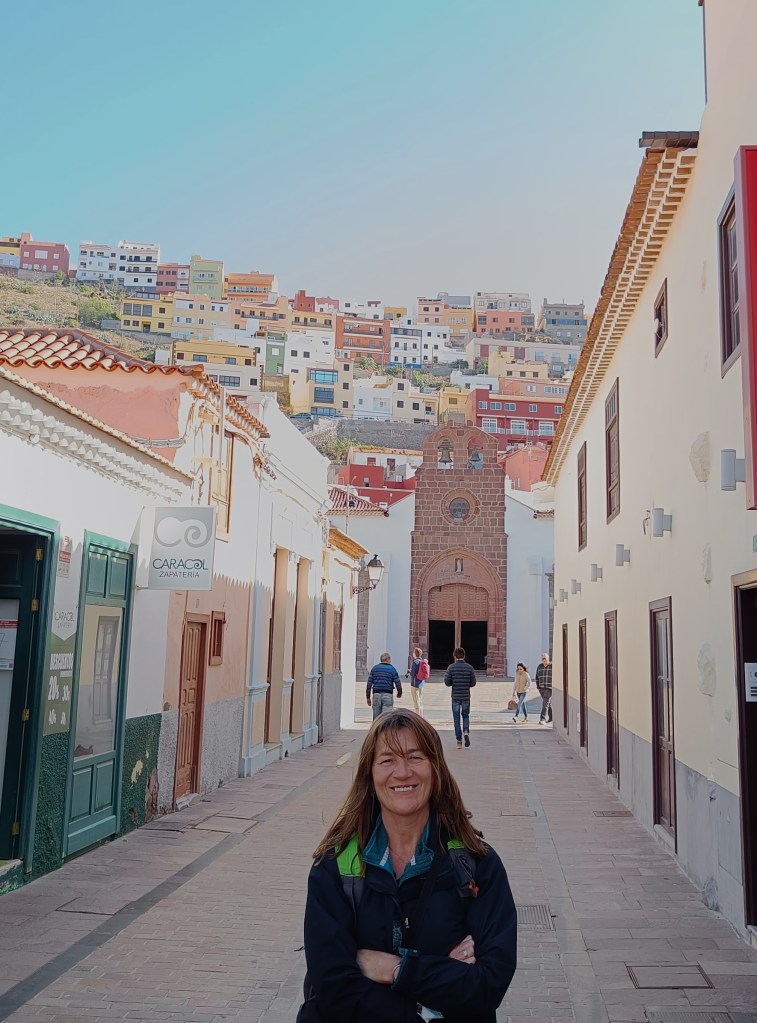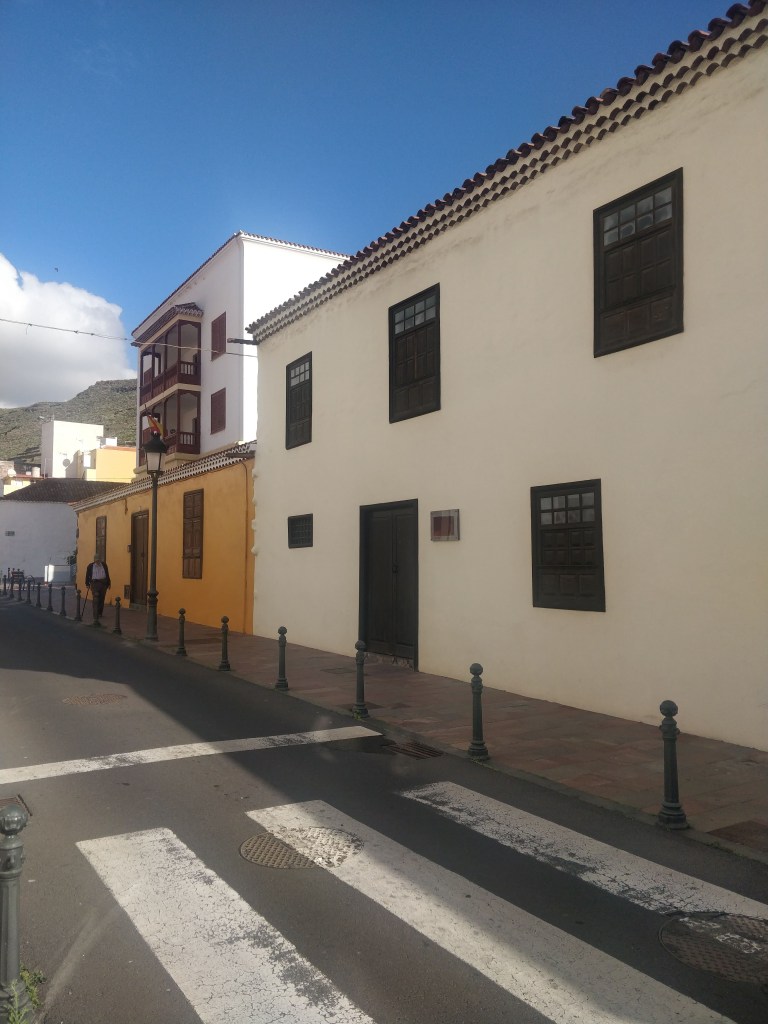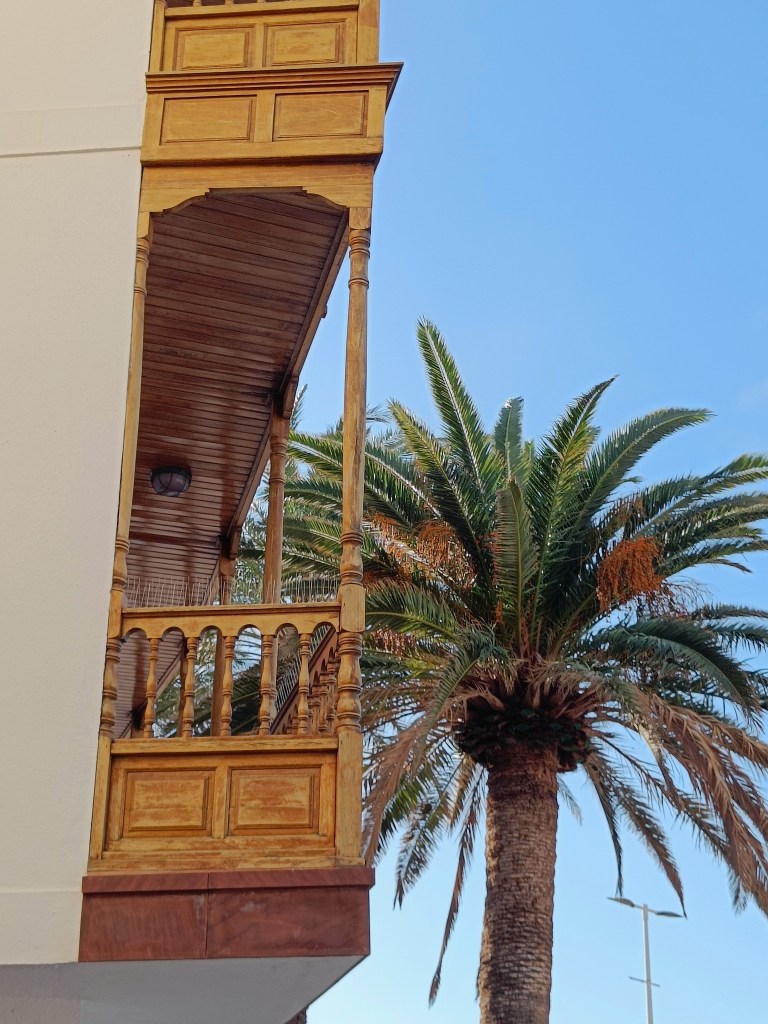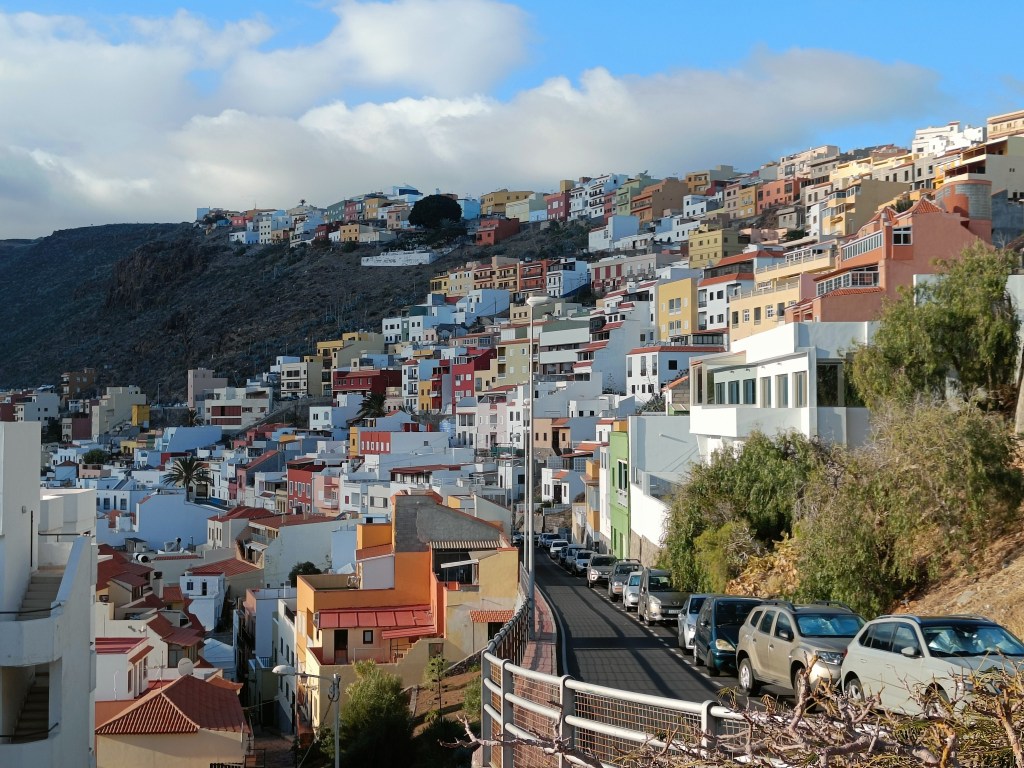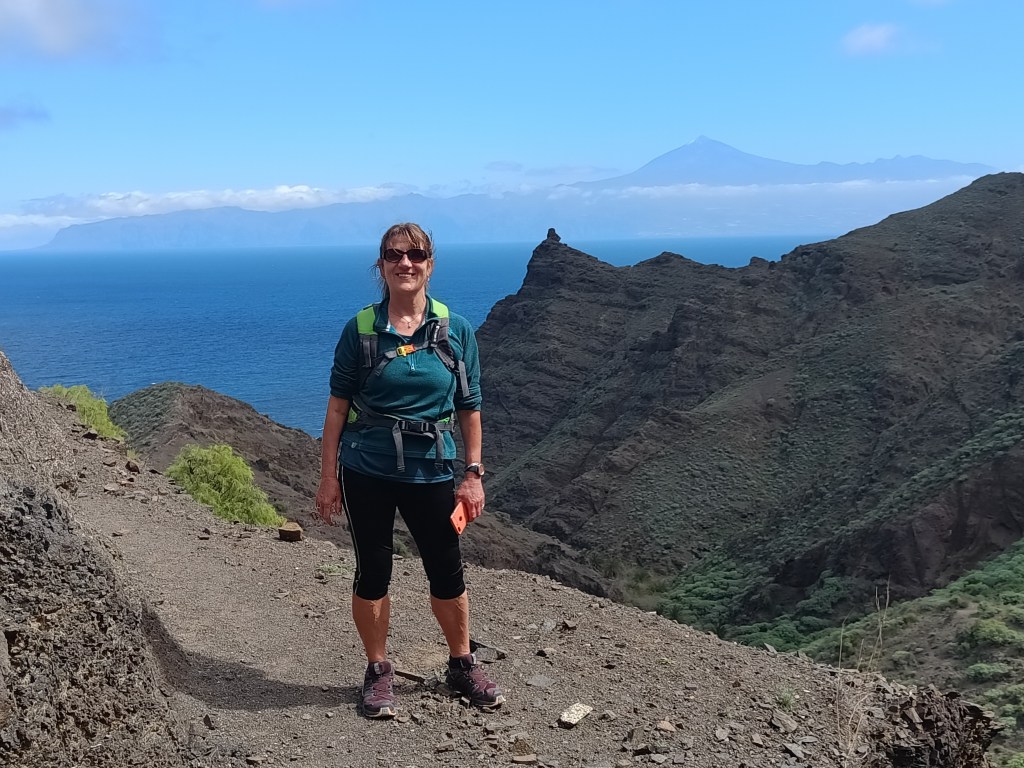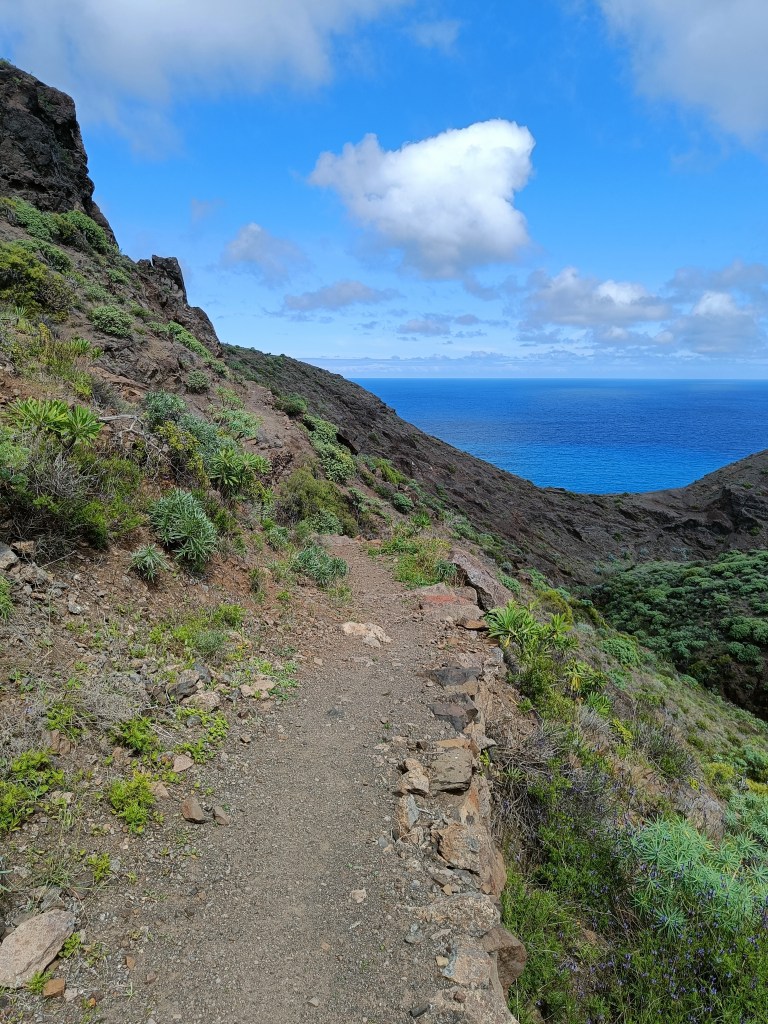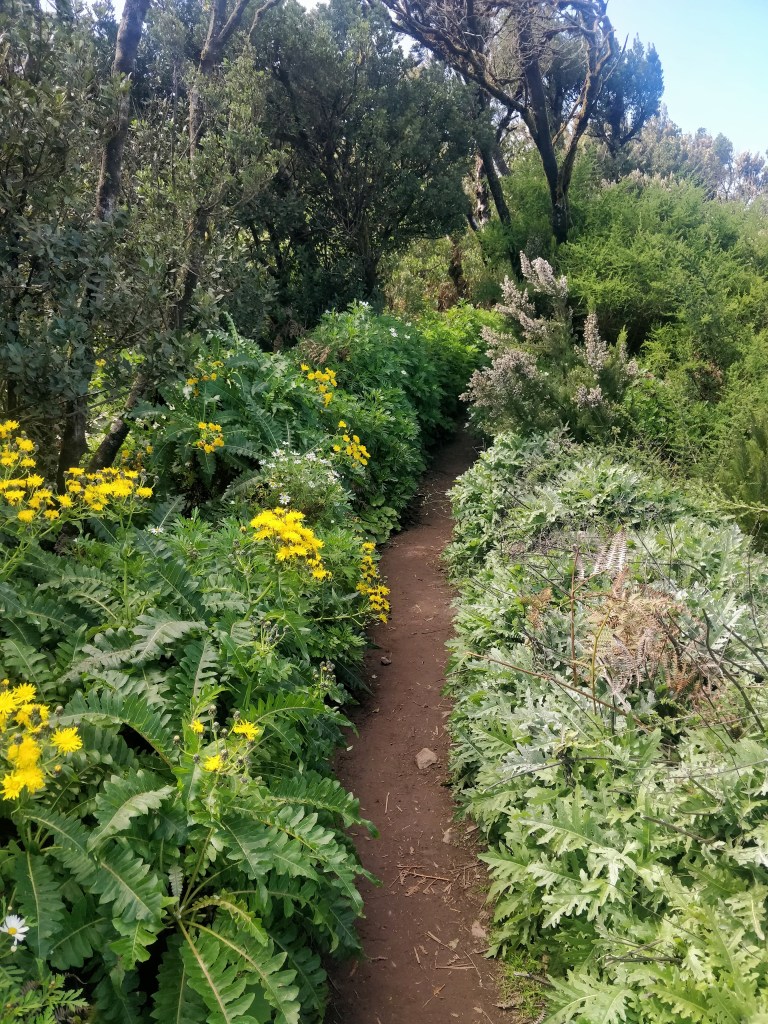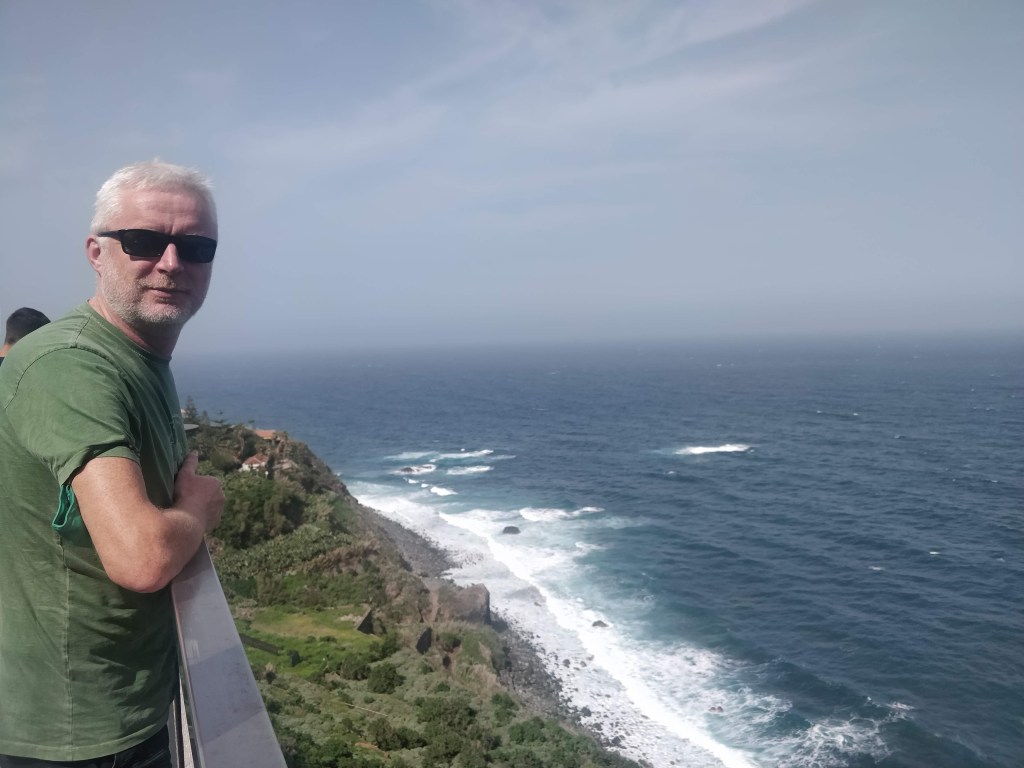
Lanzarote, the Final Leg😎

Lanzarote, here we come😎

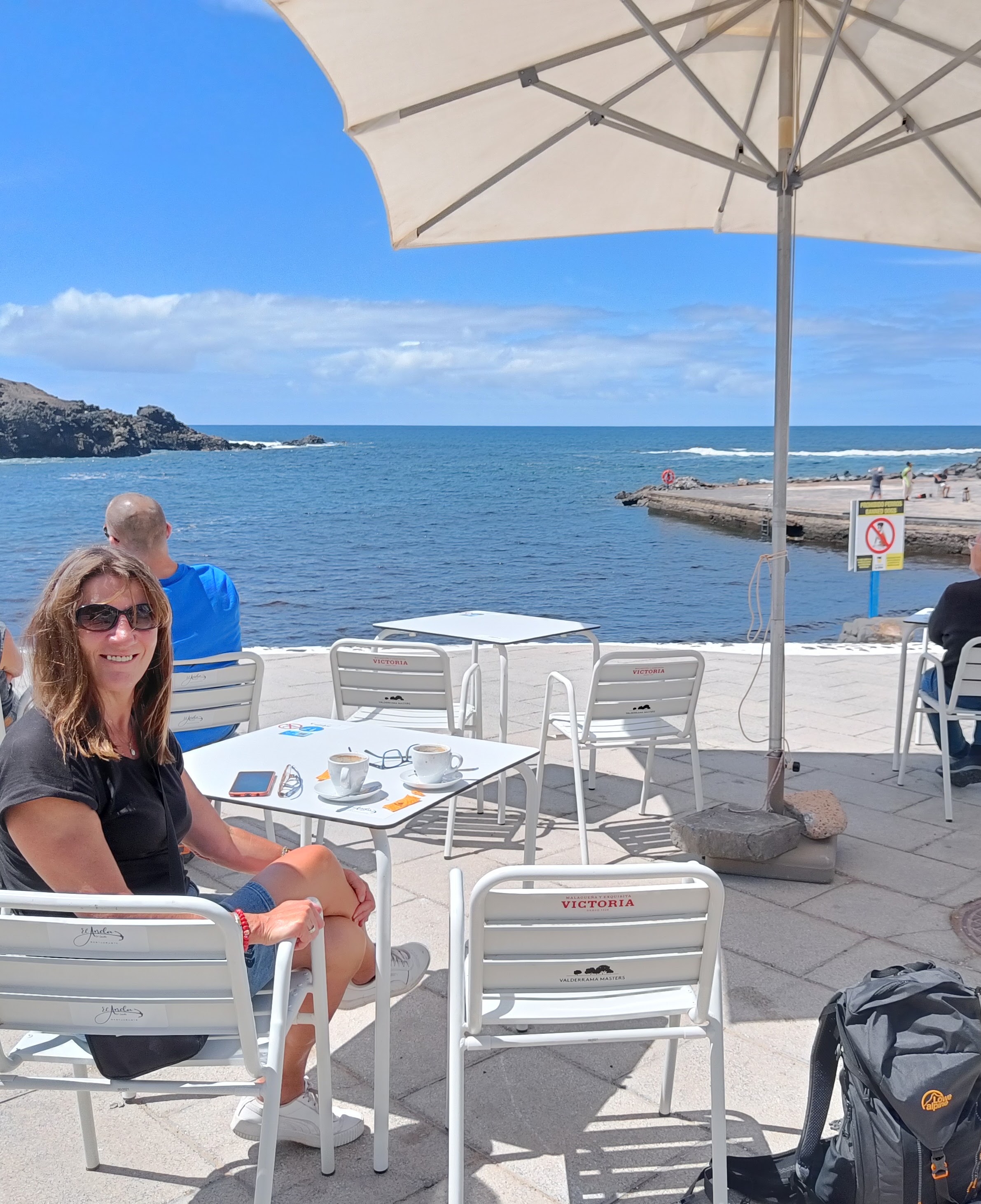
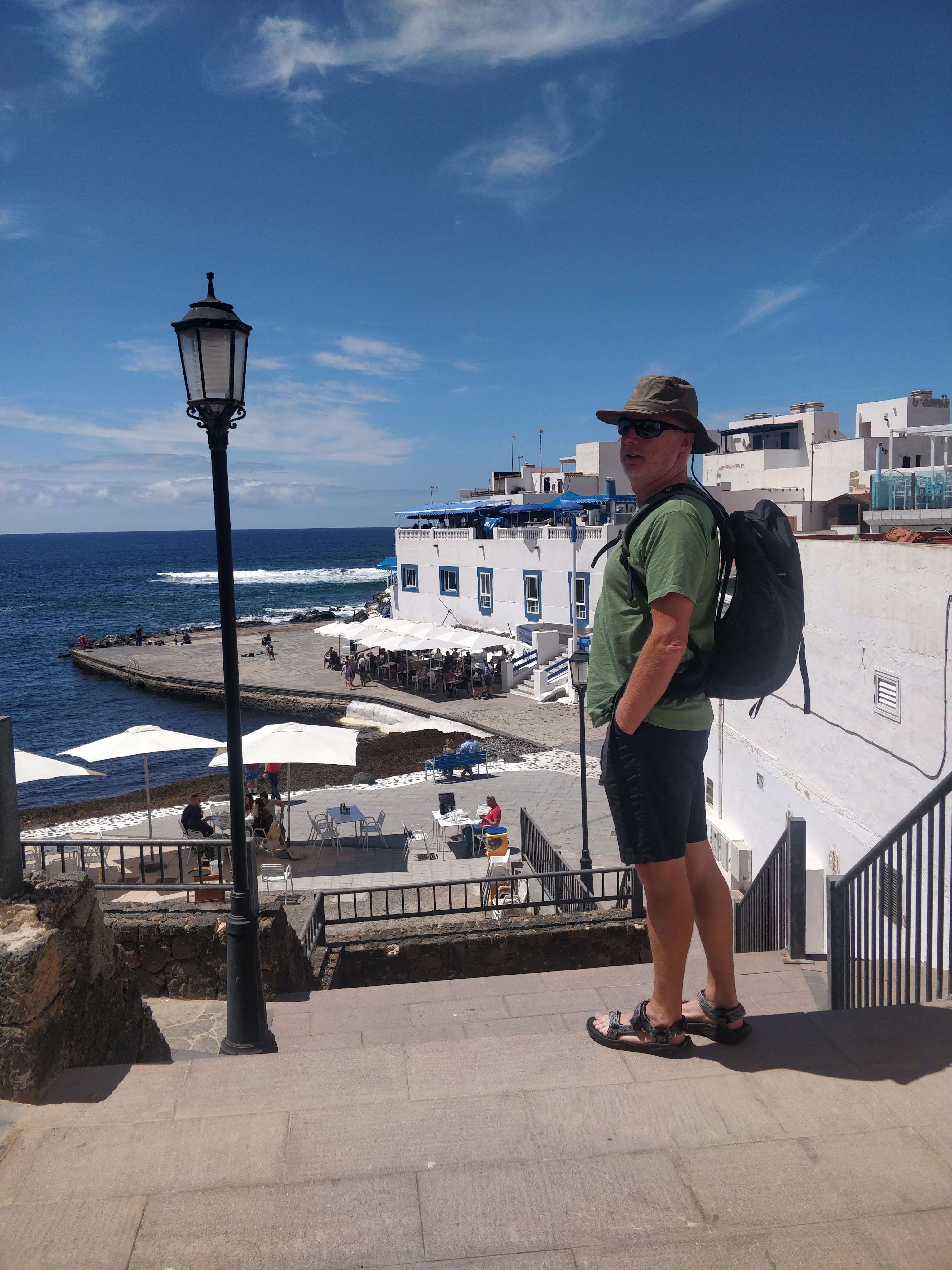
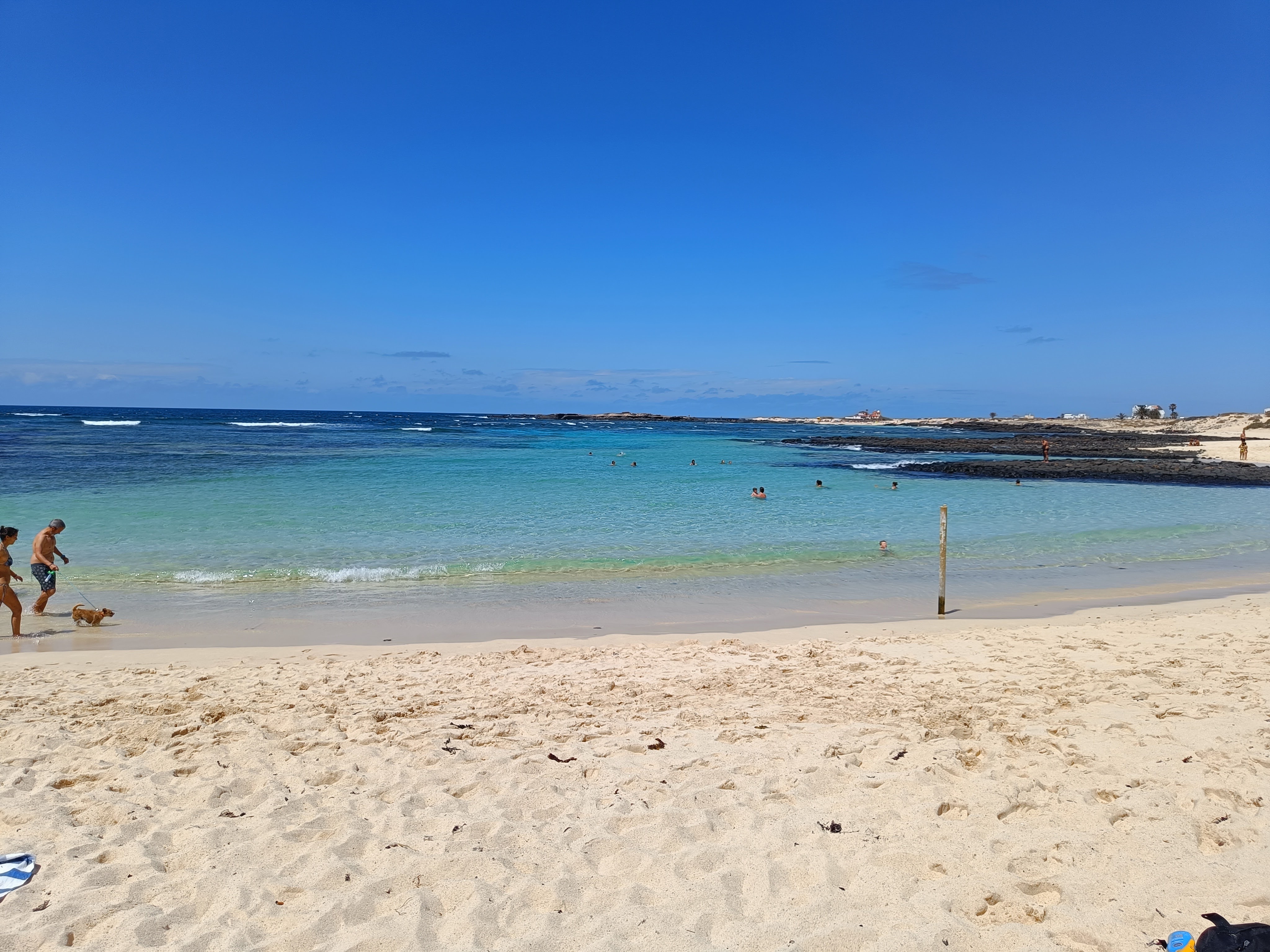
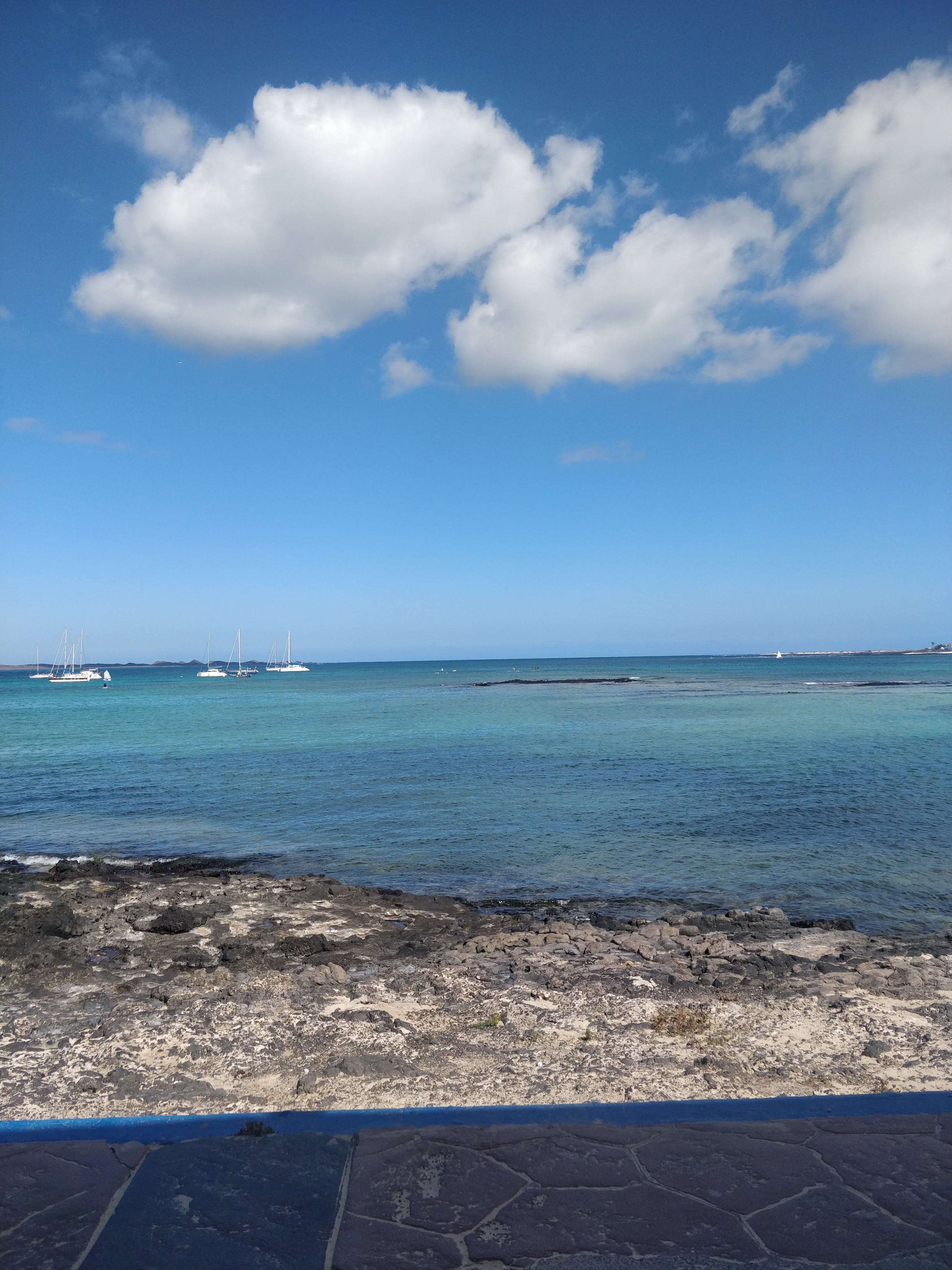
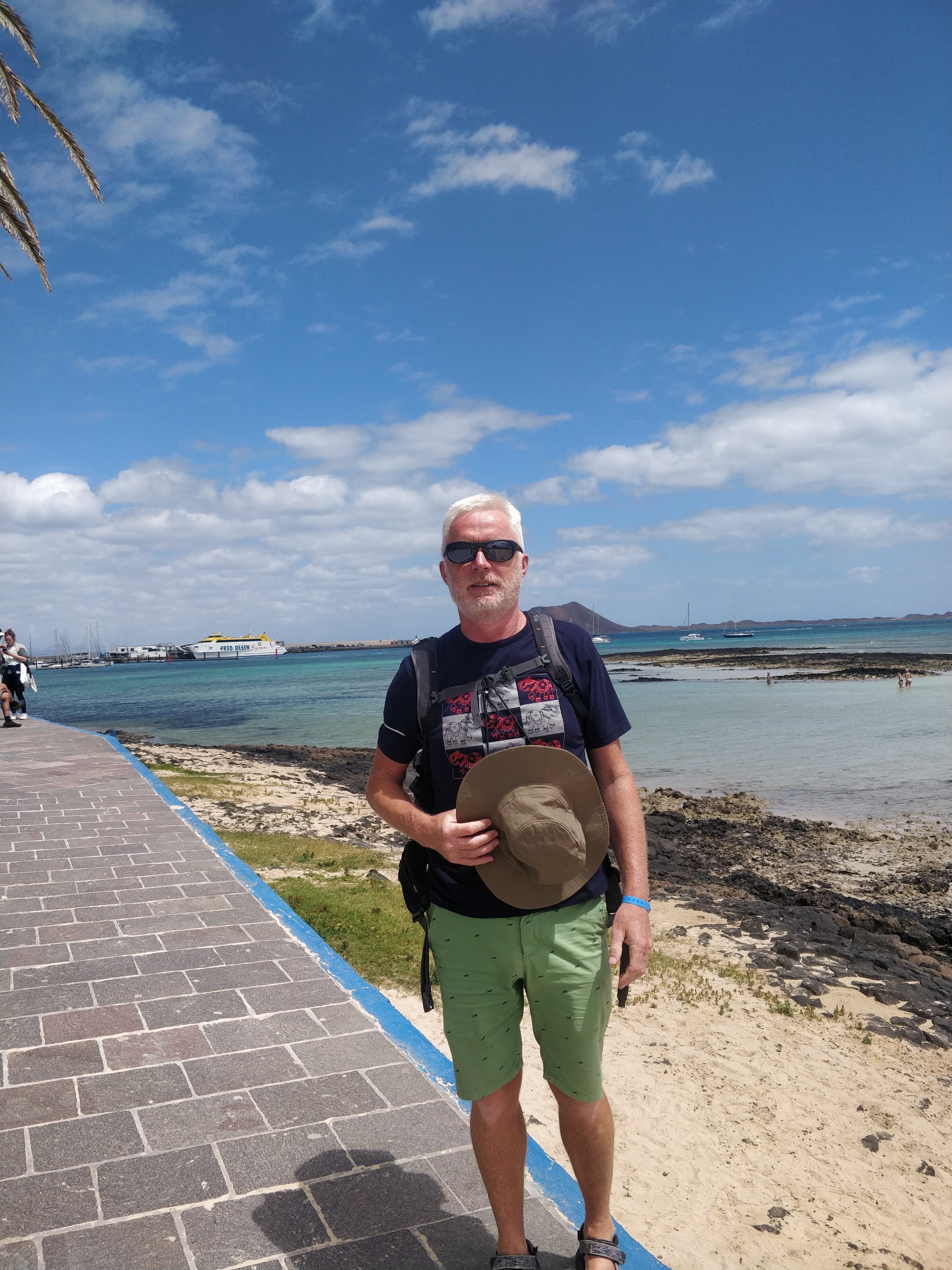
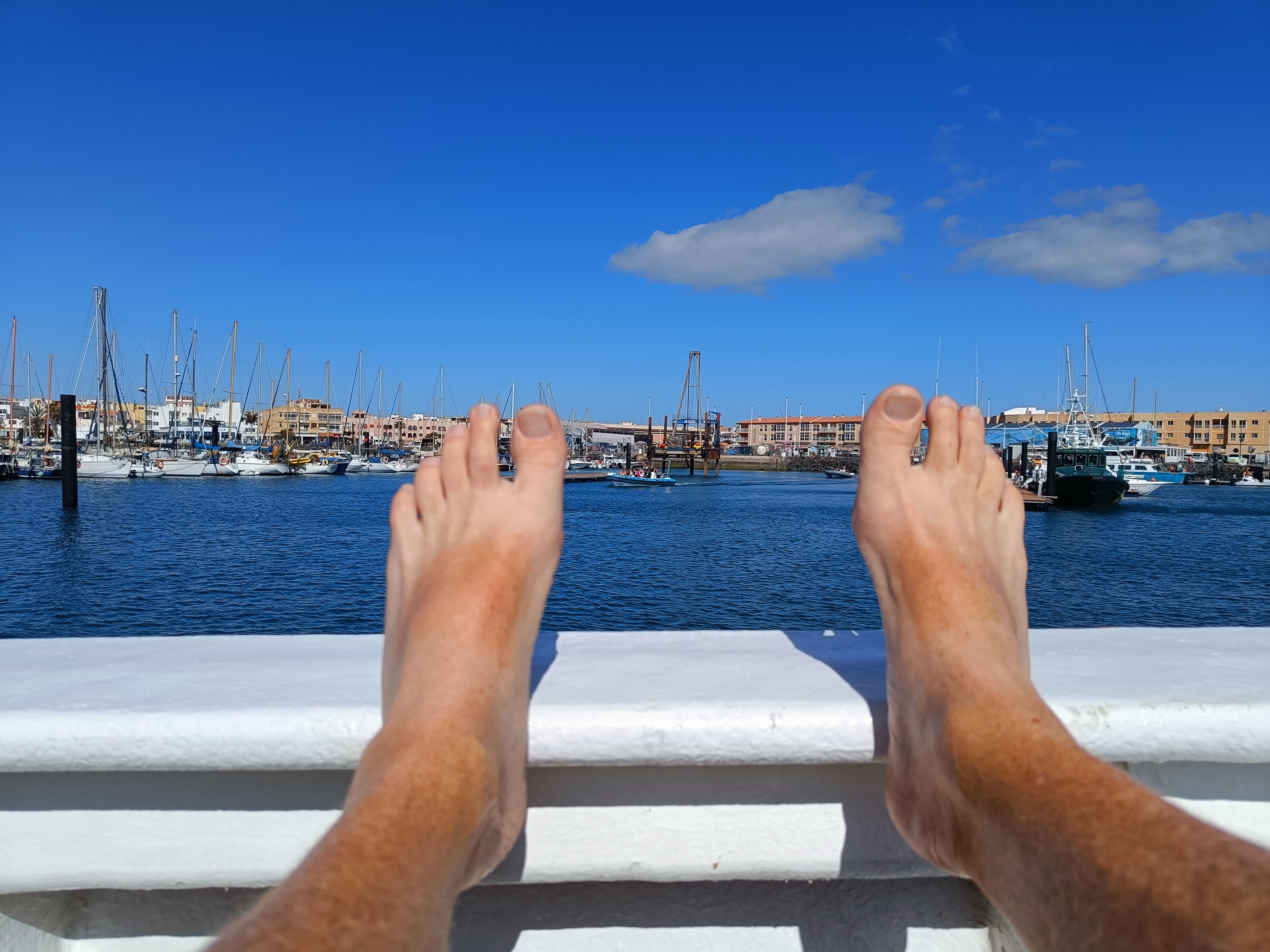
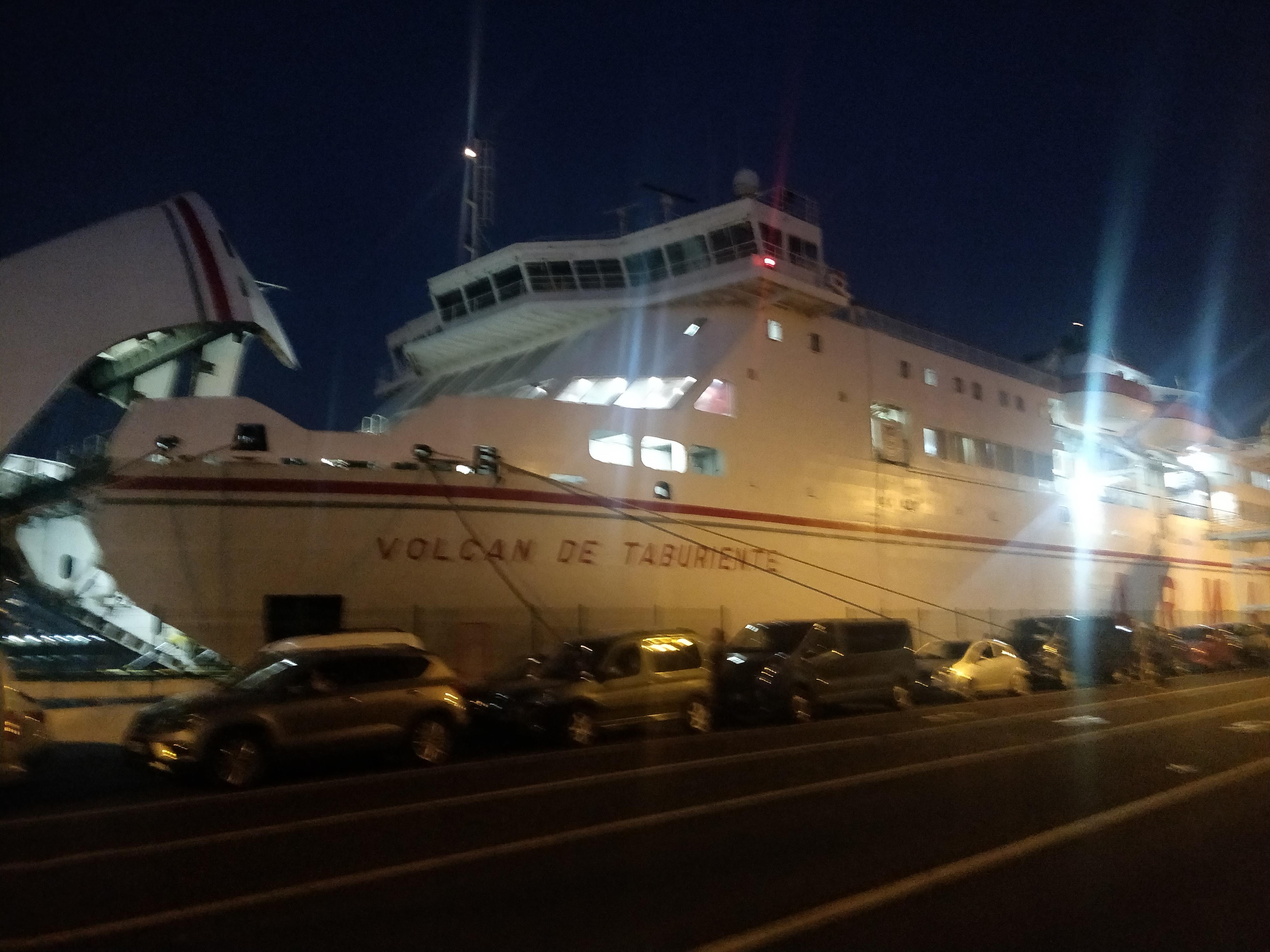
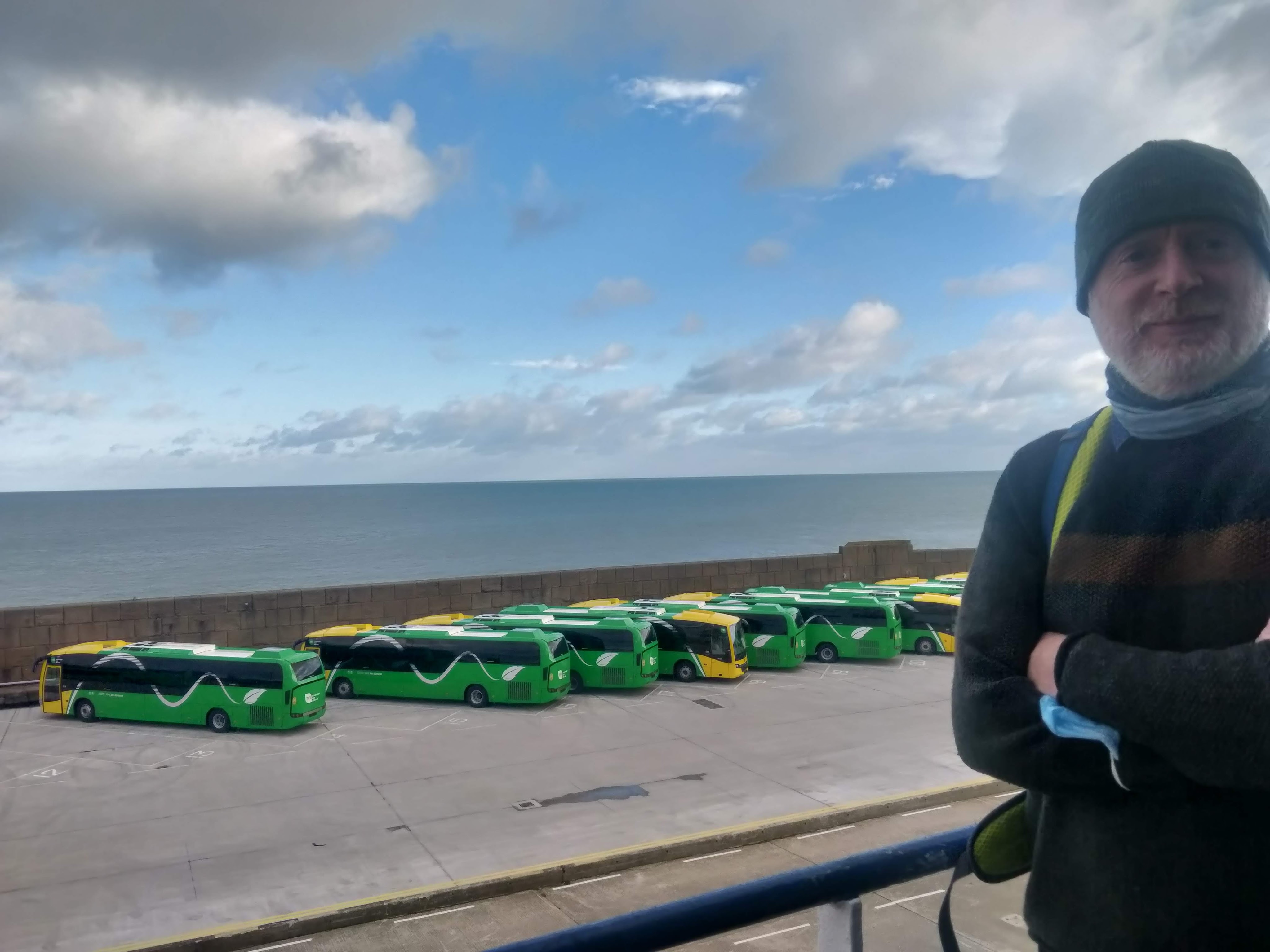
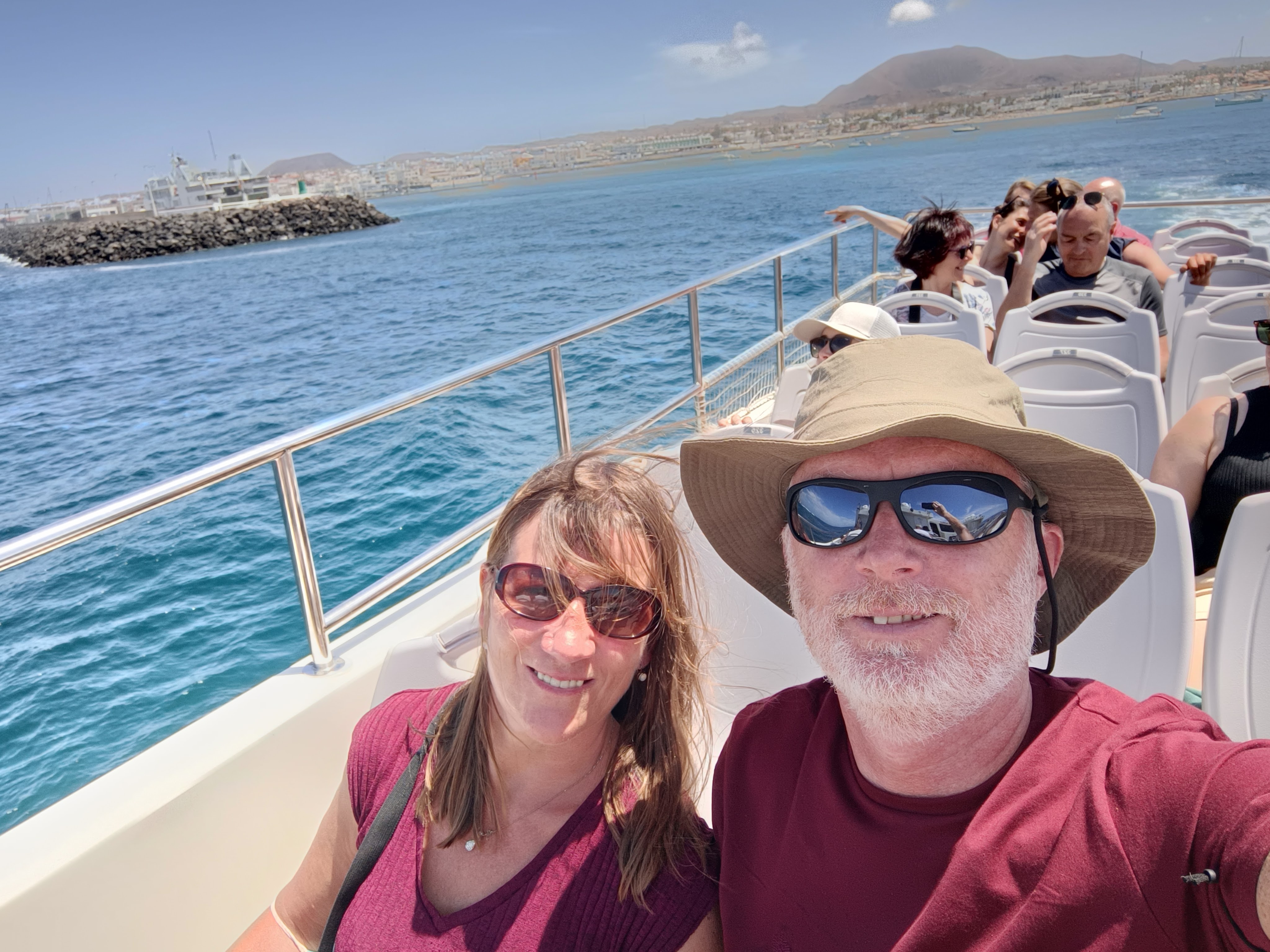
We were on the final leg of our three month ‘island hop’ around the Canaries Thirty minutes on the ferry brought us from Corralejo in Fuerteventura to Playa Blanca in Lanzarote, our seventh island, The ferries between the two islands are very regular and its a popular day trip. The port of Playa Blanca in Lanzarote, was teeming with diggers and cranes as a new terminal building was being constructed. Coffee was calling us so we stopped at a café just opposite the port for our first taste of Lanzarote where we were surrounded by British voices. Not only were all the customers on the terrace British, but so were all all staff. Dolly Parton was belting out the song, 9 to 5, over the speakers while we tucked into a British fry-up and it was hard to believe that we were on a little island, a 100 kilometres off the coast of Africa. Like all the Canary Islands, the bus service in Lanzarote was cheap, efficient with frequent buses to the all the main tourist centres.
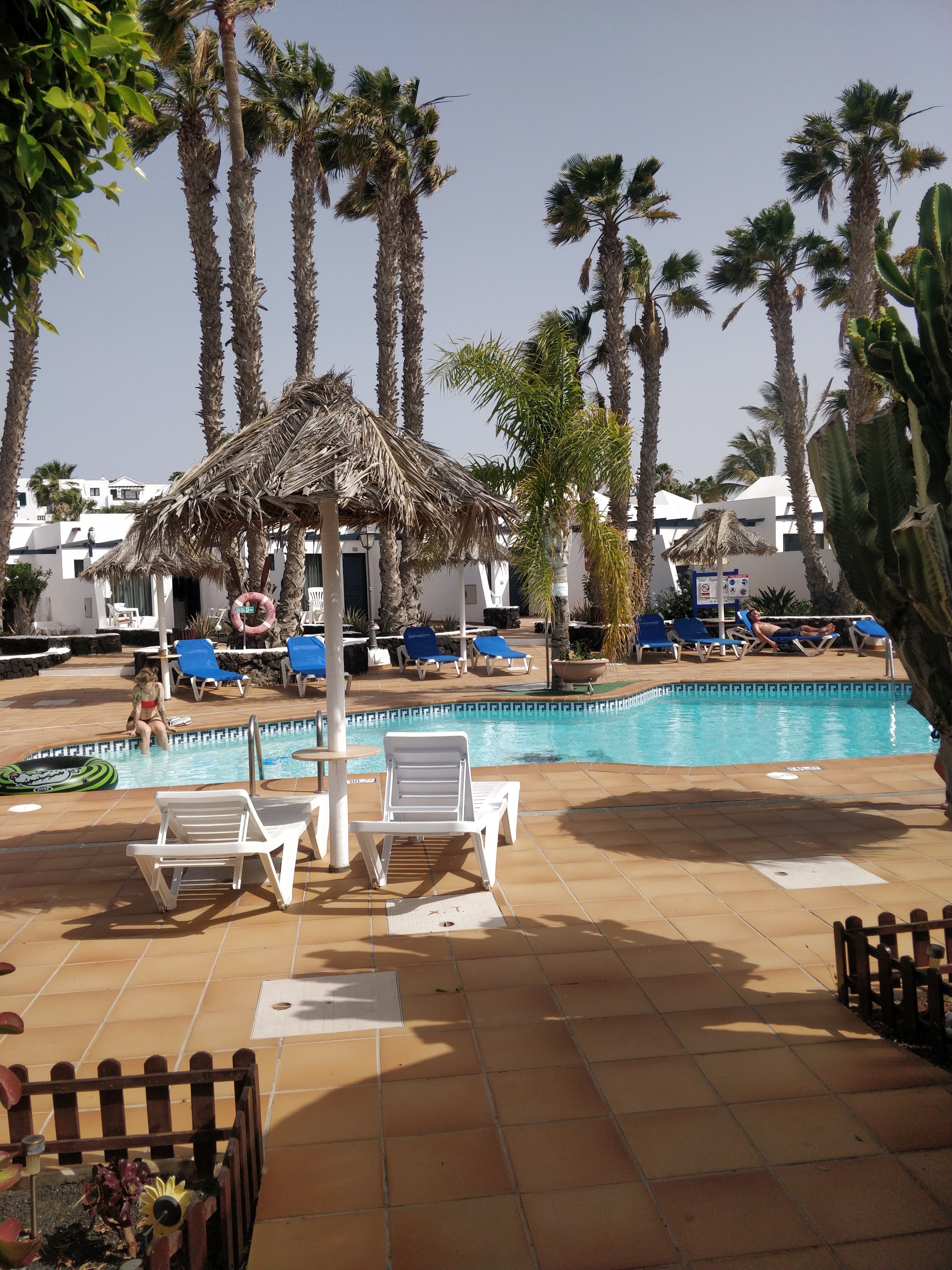
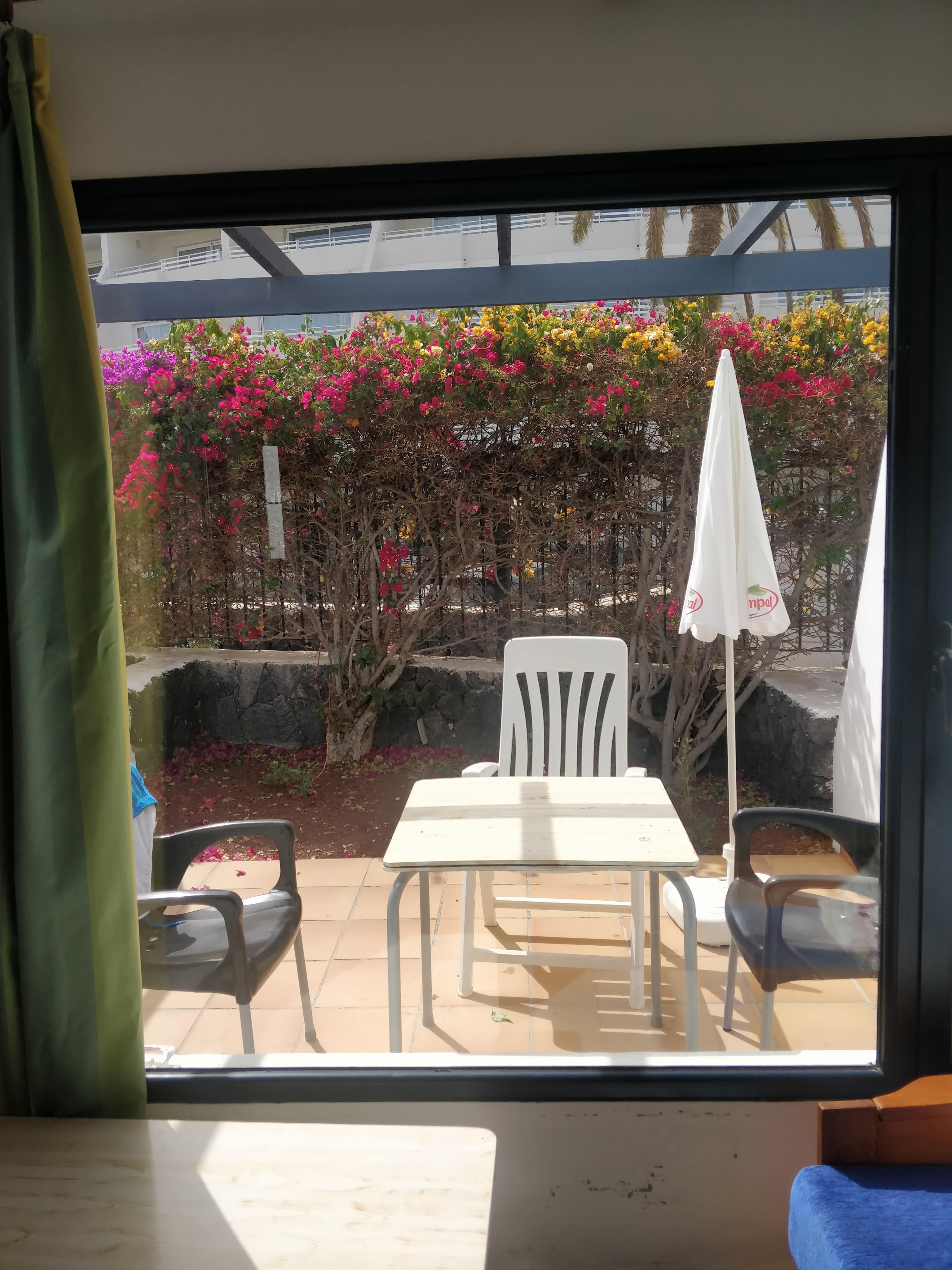
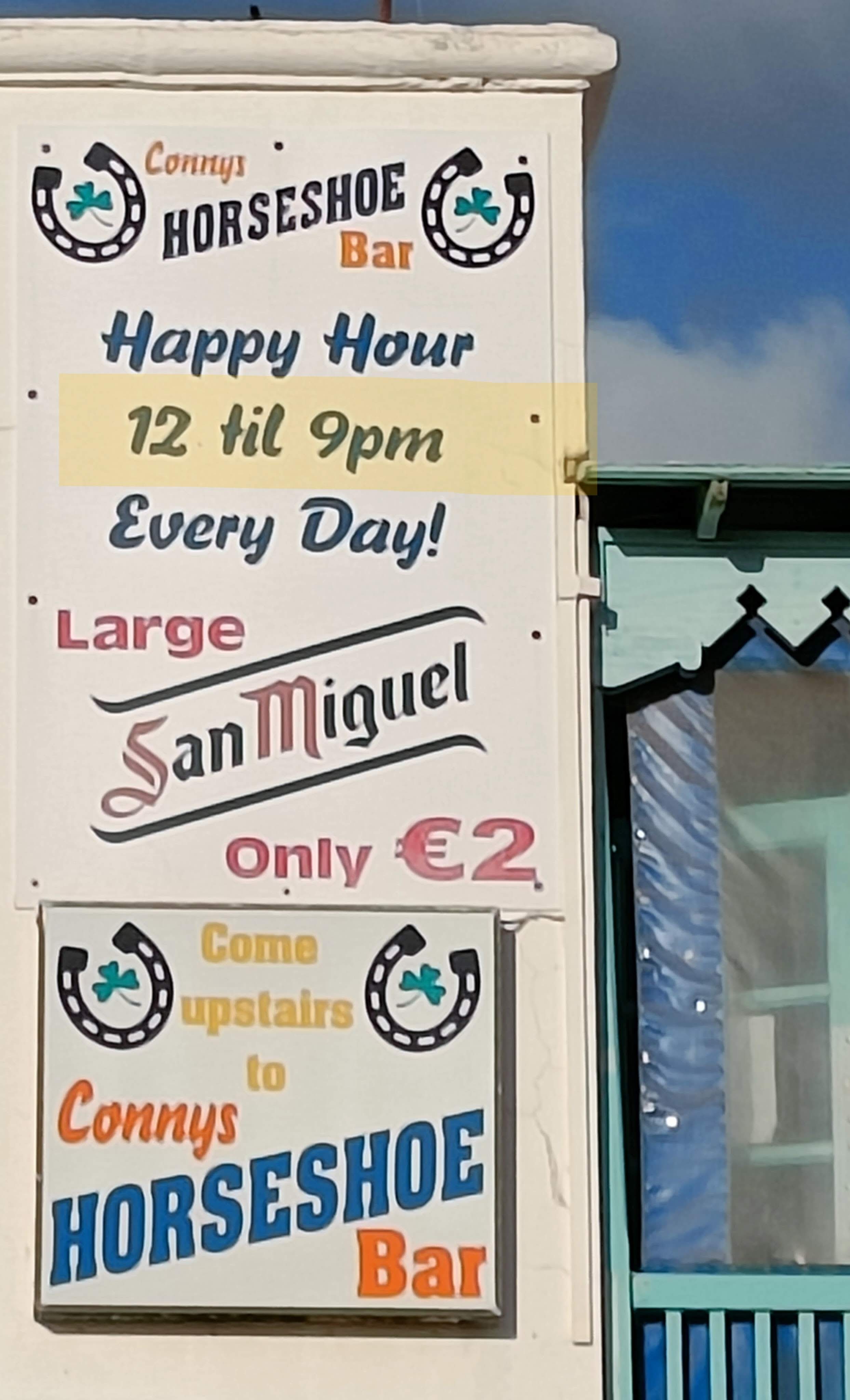
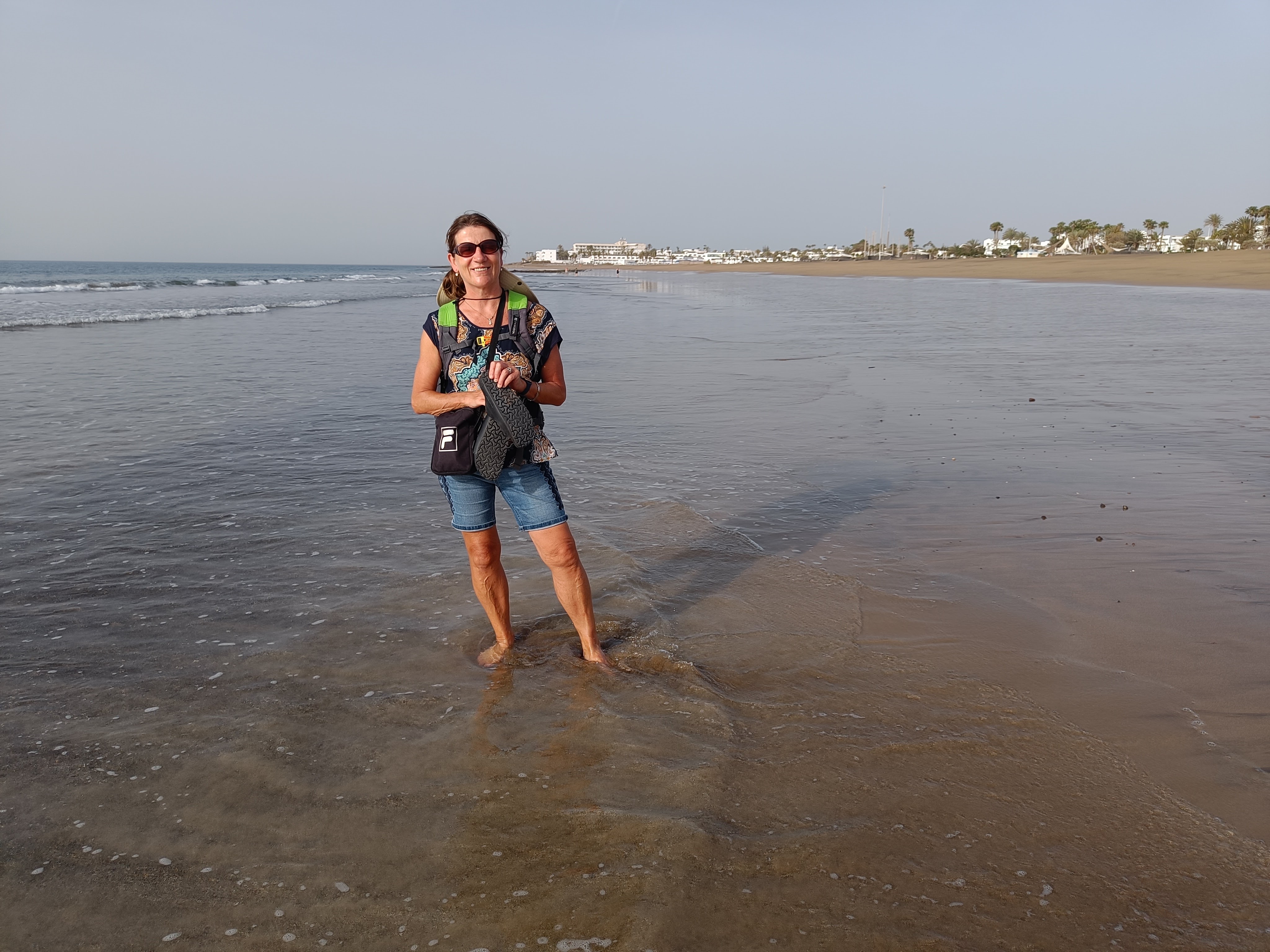
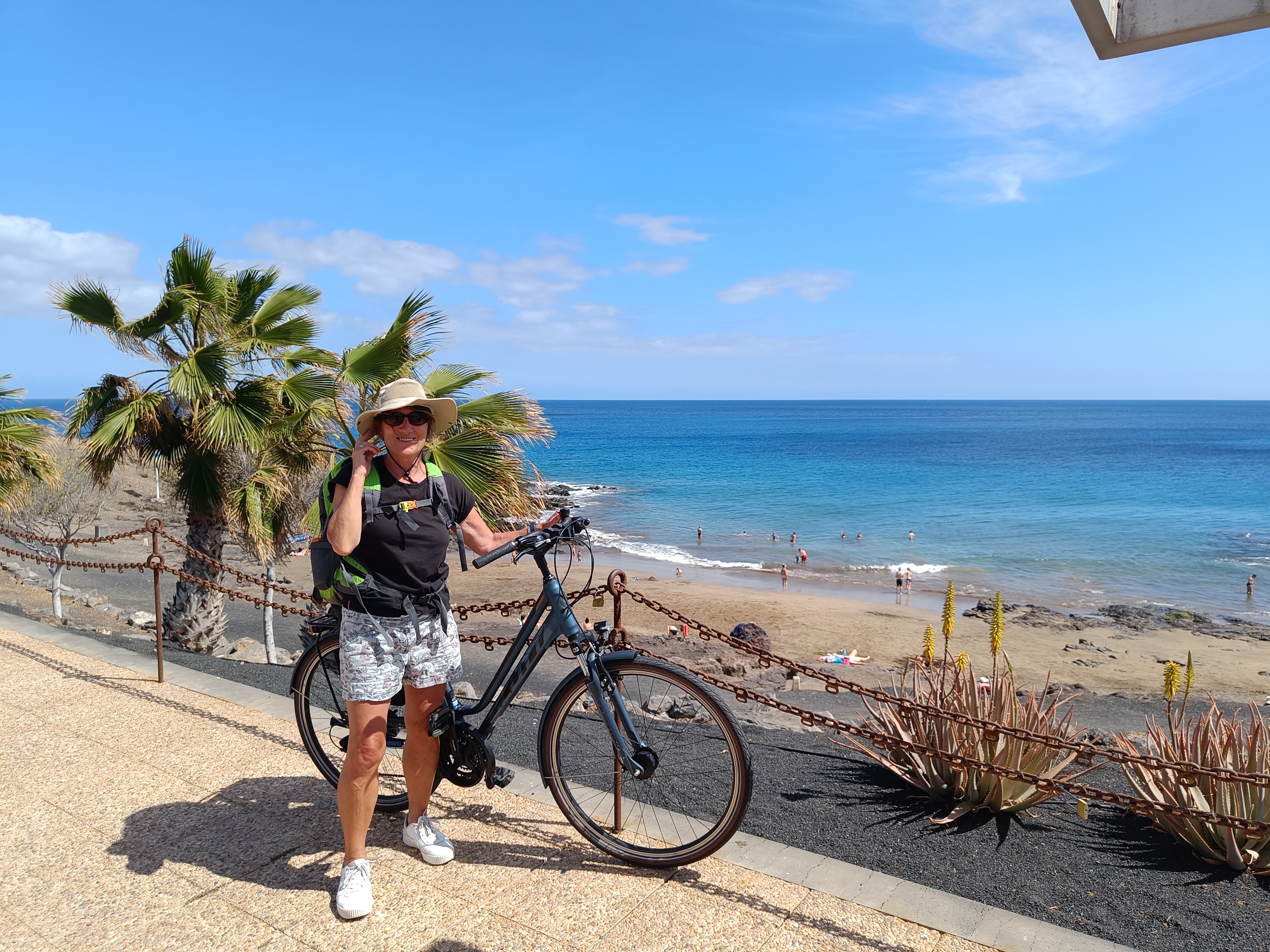
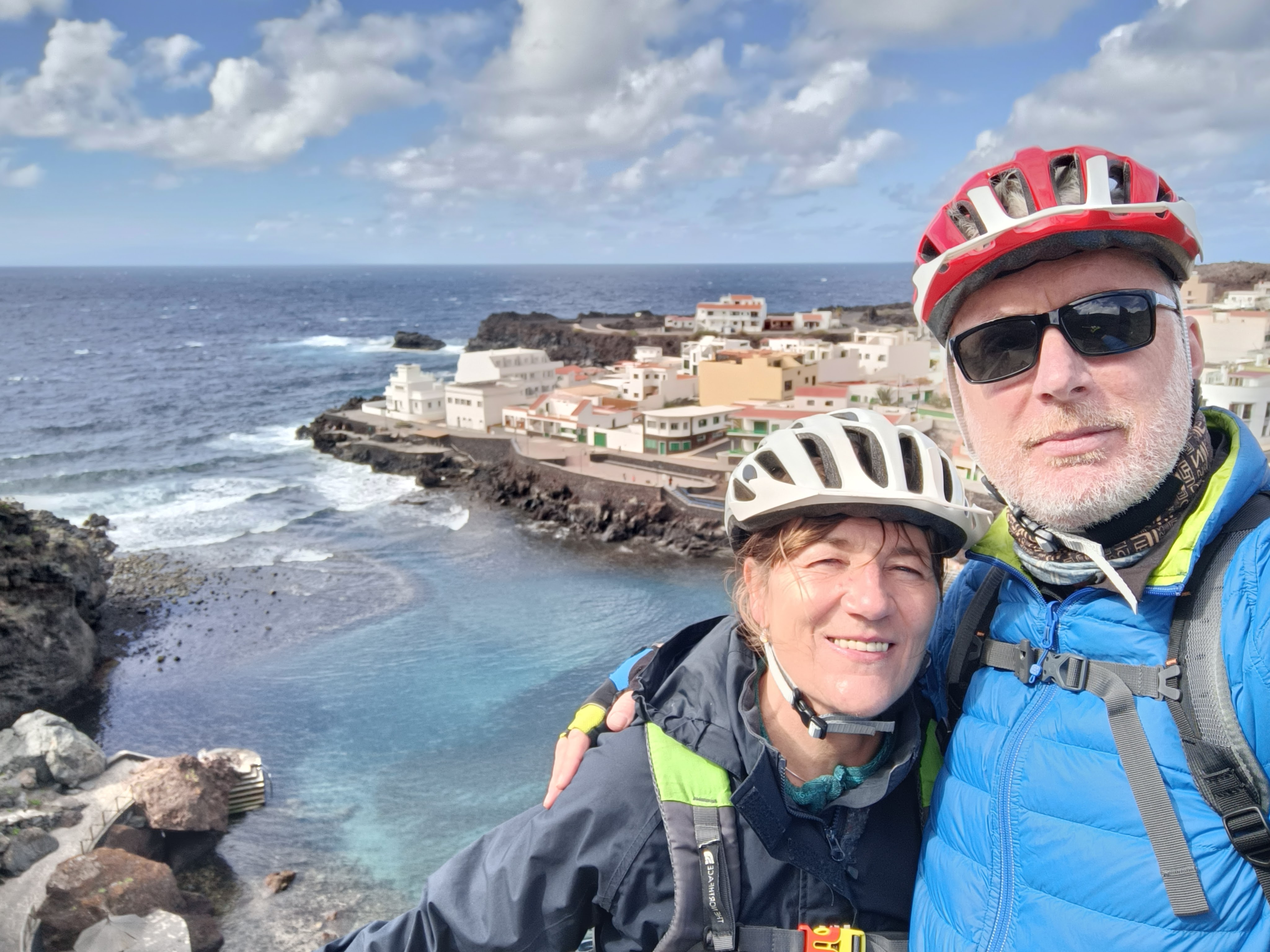
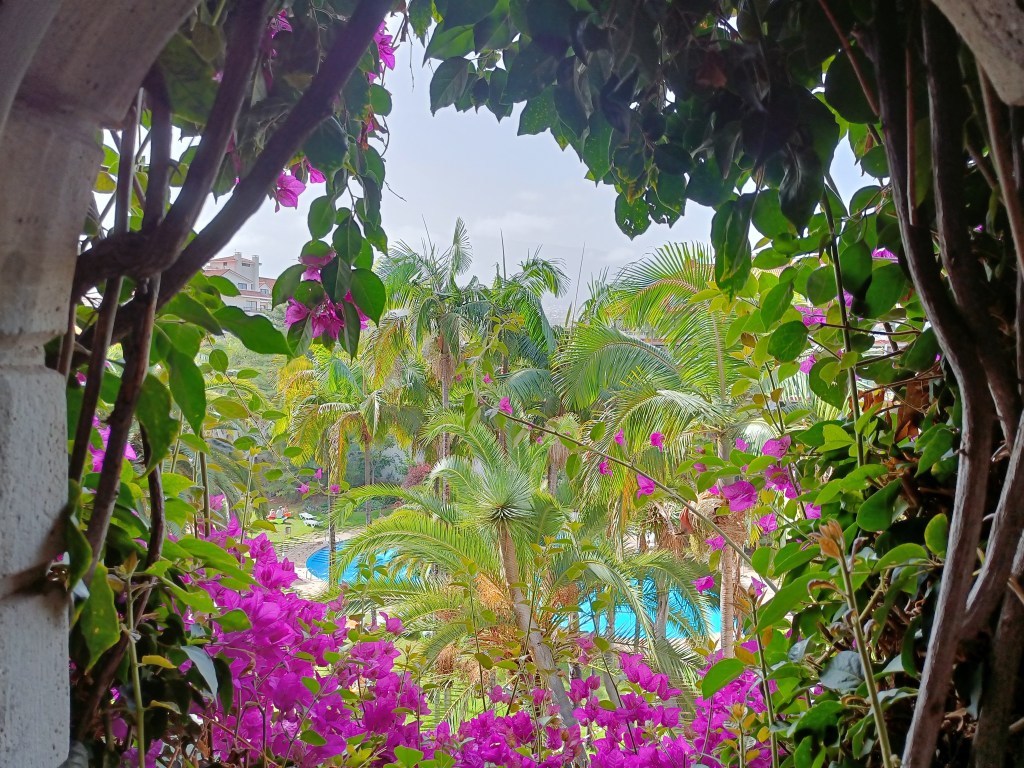
The bus dropped us at Playa Matagorda, just north of Puerta del Carmen and here we found ourselves catapulted back to Ireland- but with sunshine. The majority of accents on the street were Irish and there was a mind boggling selection of Irish bars. The Auld Triangle, Horseshoe Bar, Peggy’s Snug and O’Shea’s were all within a hundred metres of our accommodation, Mar Azul Playa. This was a quiet complex of 25 little bungalows arranged around a small swimming pool with a pool bar. Each bungalow has a private outside area, most with bougainvillea on the trellises. We paid €310 for a bungalow for a week – superb value, booked just two days before we arrived. The TV even had BBC and ITV channels. Many of the occupants were Irish, many repeat visitors, The beach was only a two-minute walk away. It didn’t have the white sands of Fuerteventura but it was long, golden brown and palm fringed with a paved promenade and cycle lanes. It was also flanked by cafes, cocktail bars, restaurants, tourist shops and hotels but no high rise buildings, thanks to the influence of one man, Cesar Manrique.
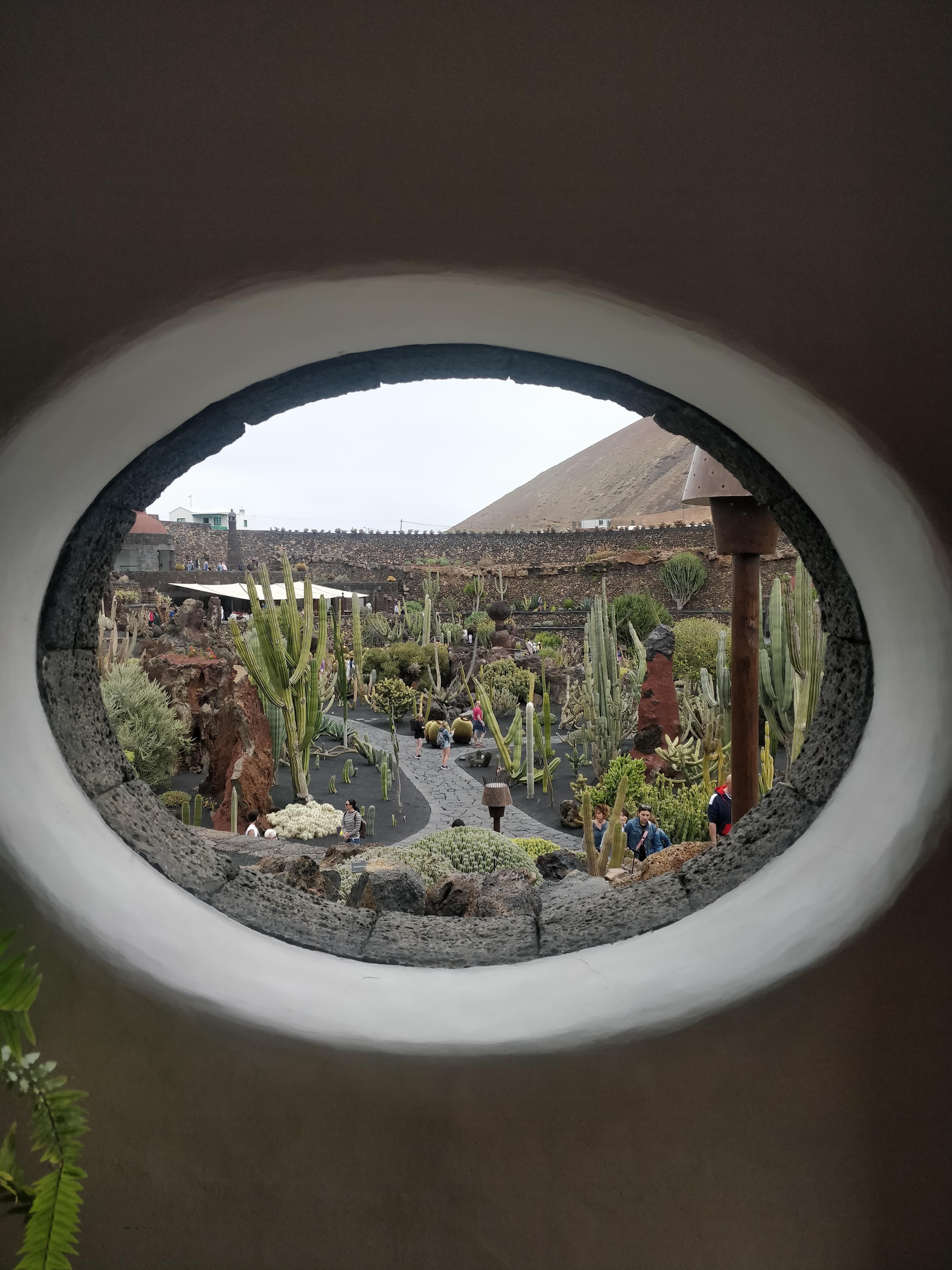
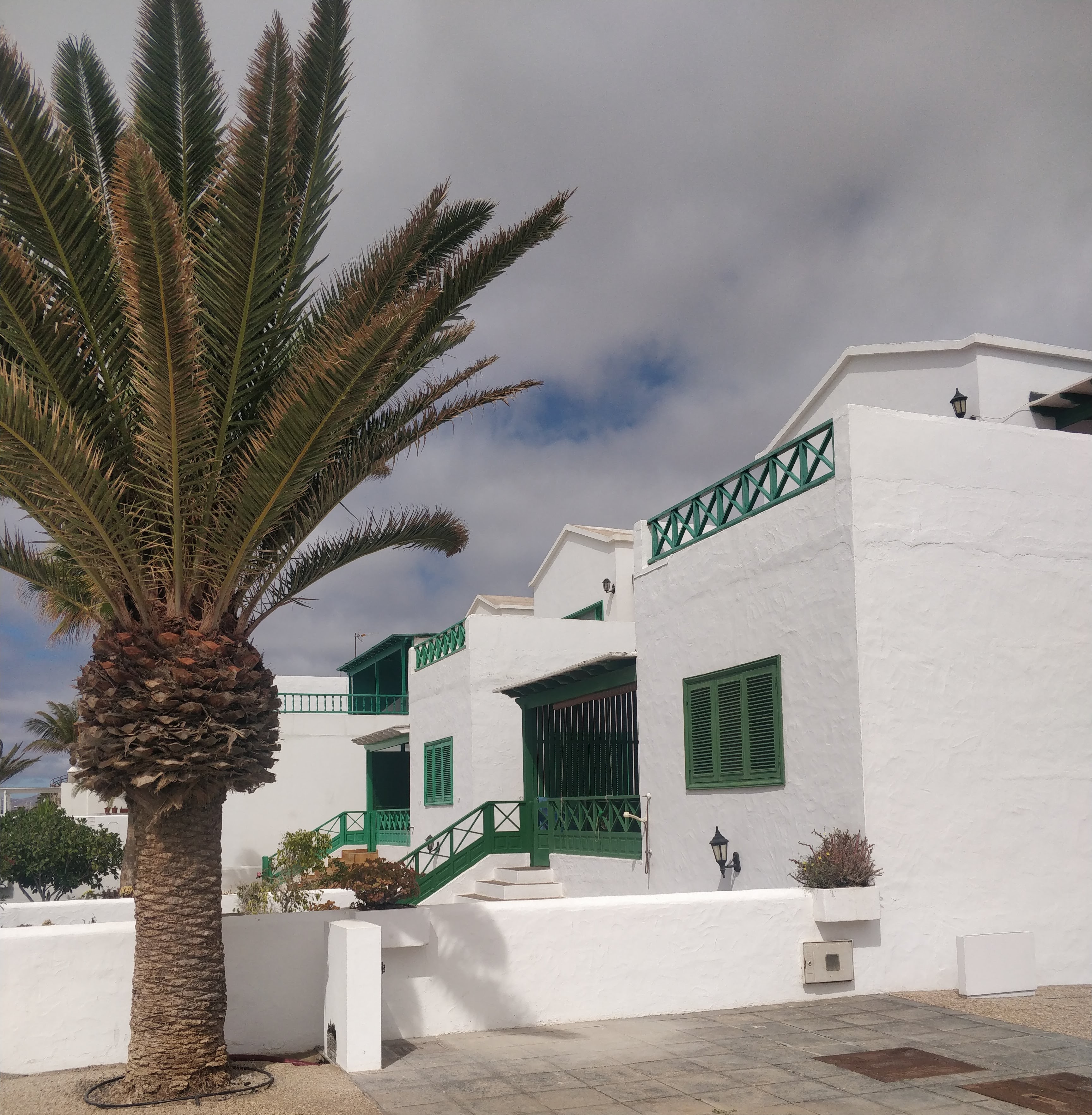
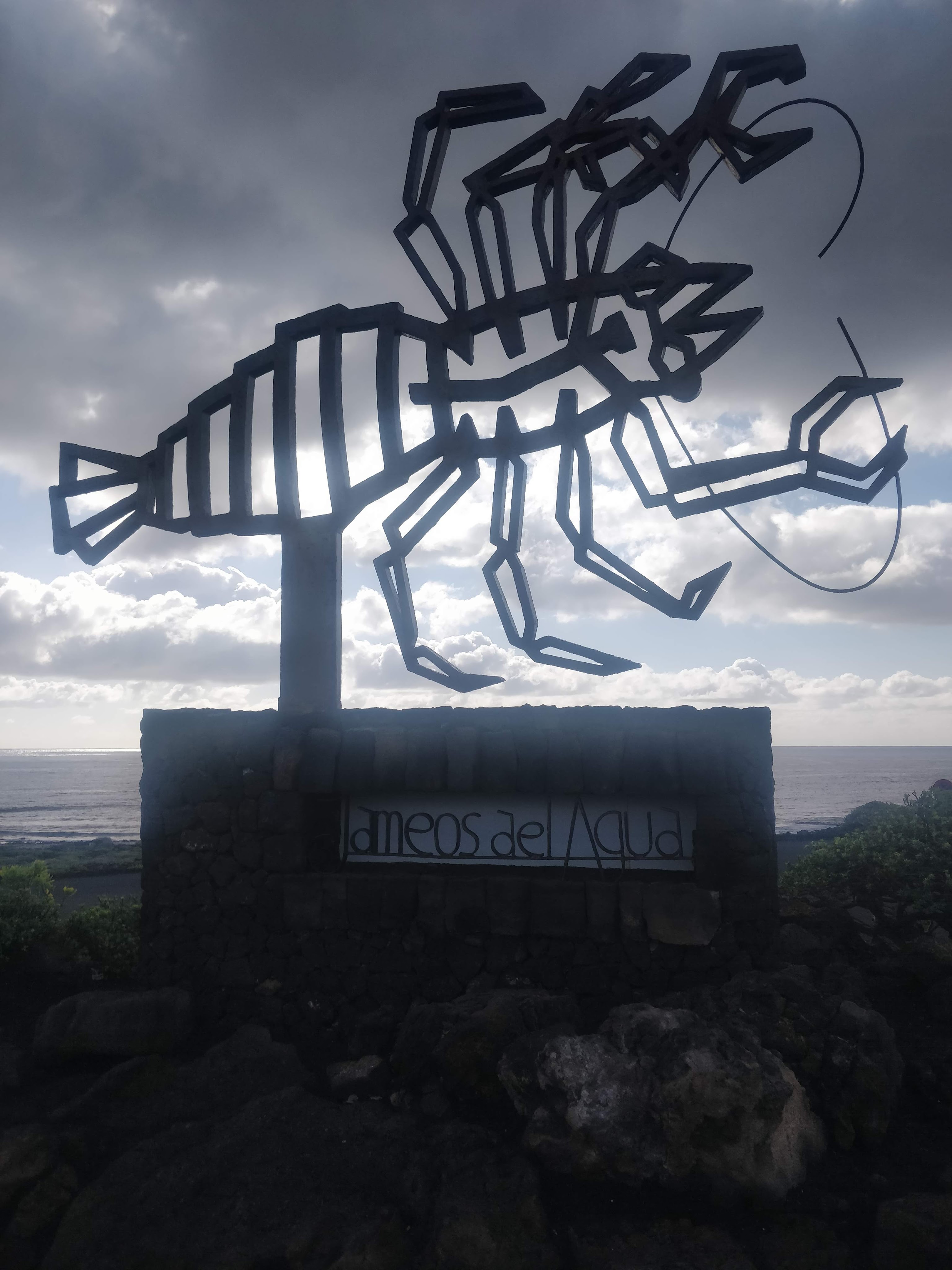
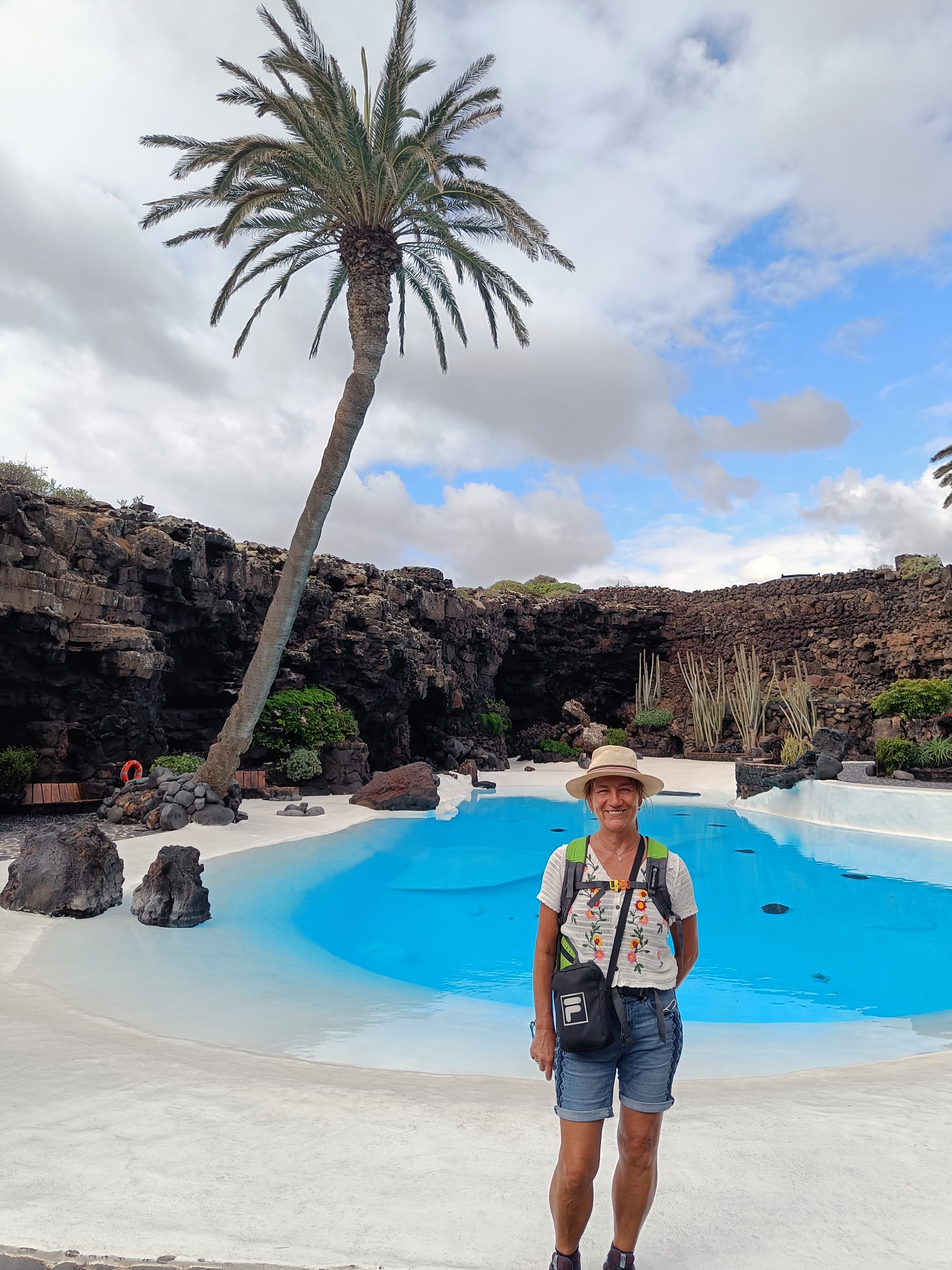
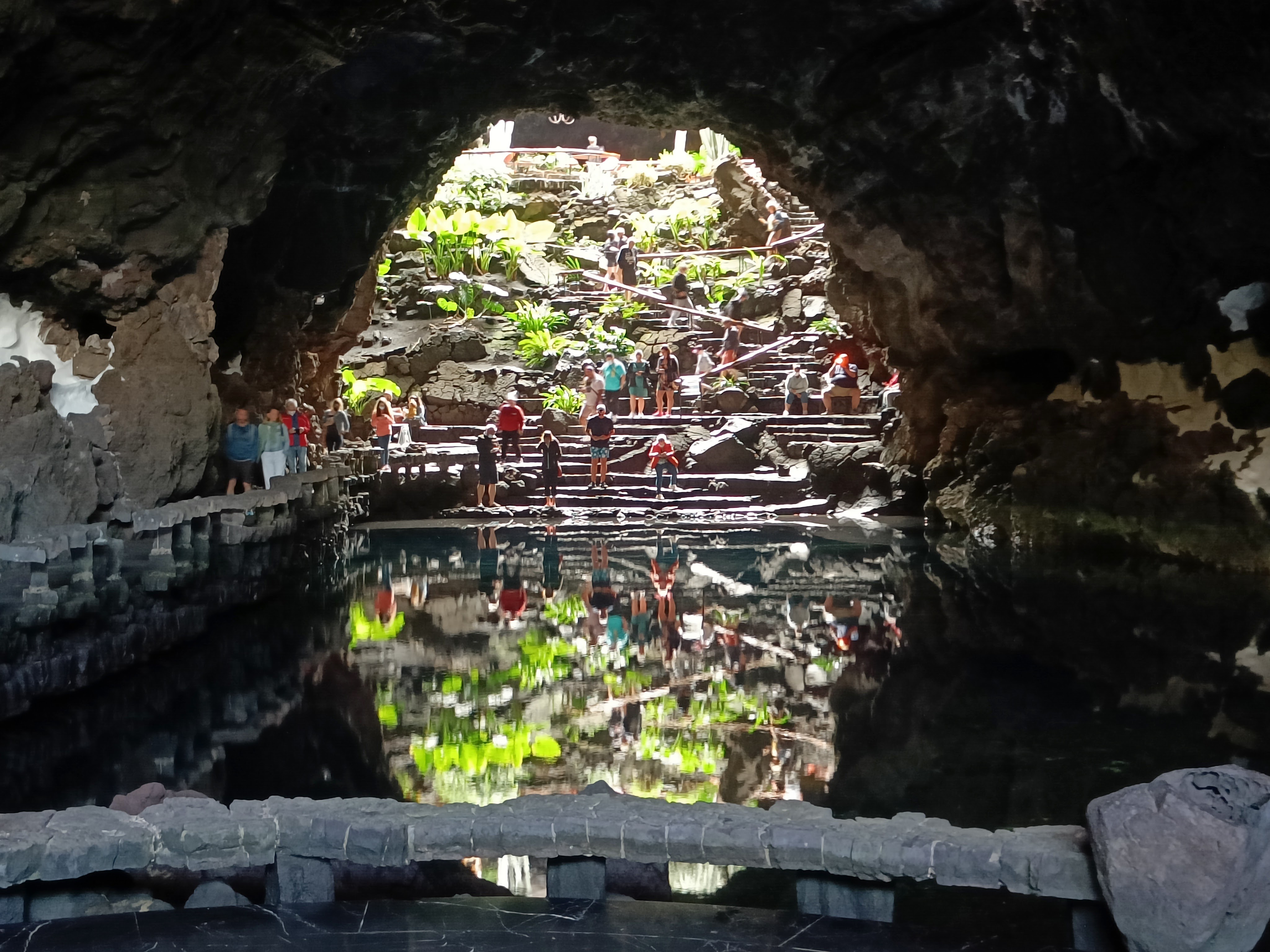
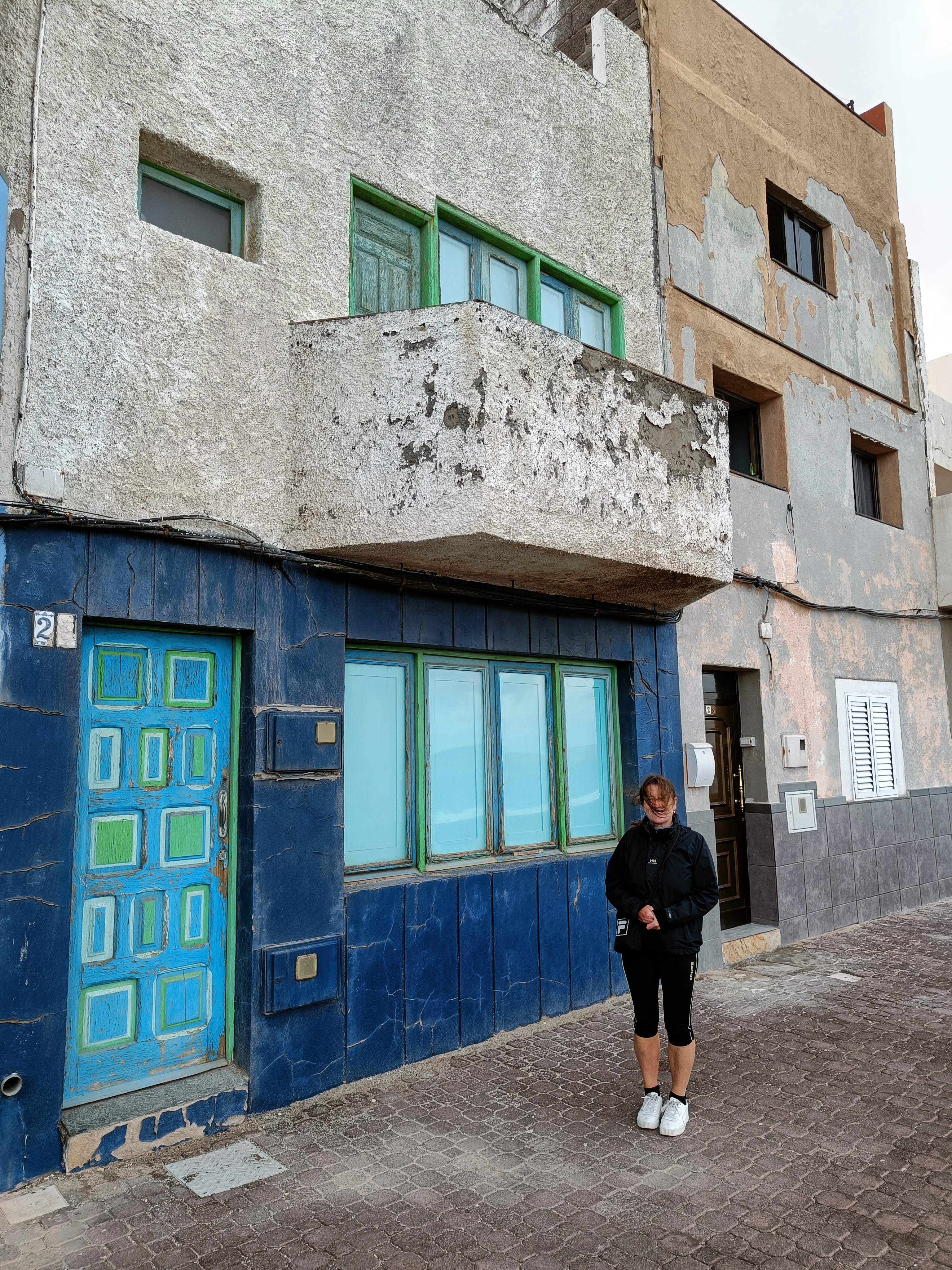
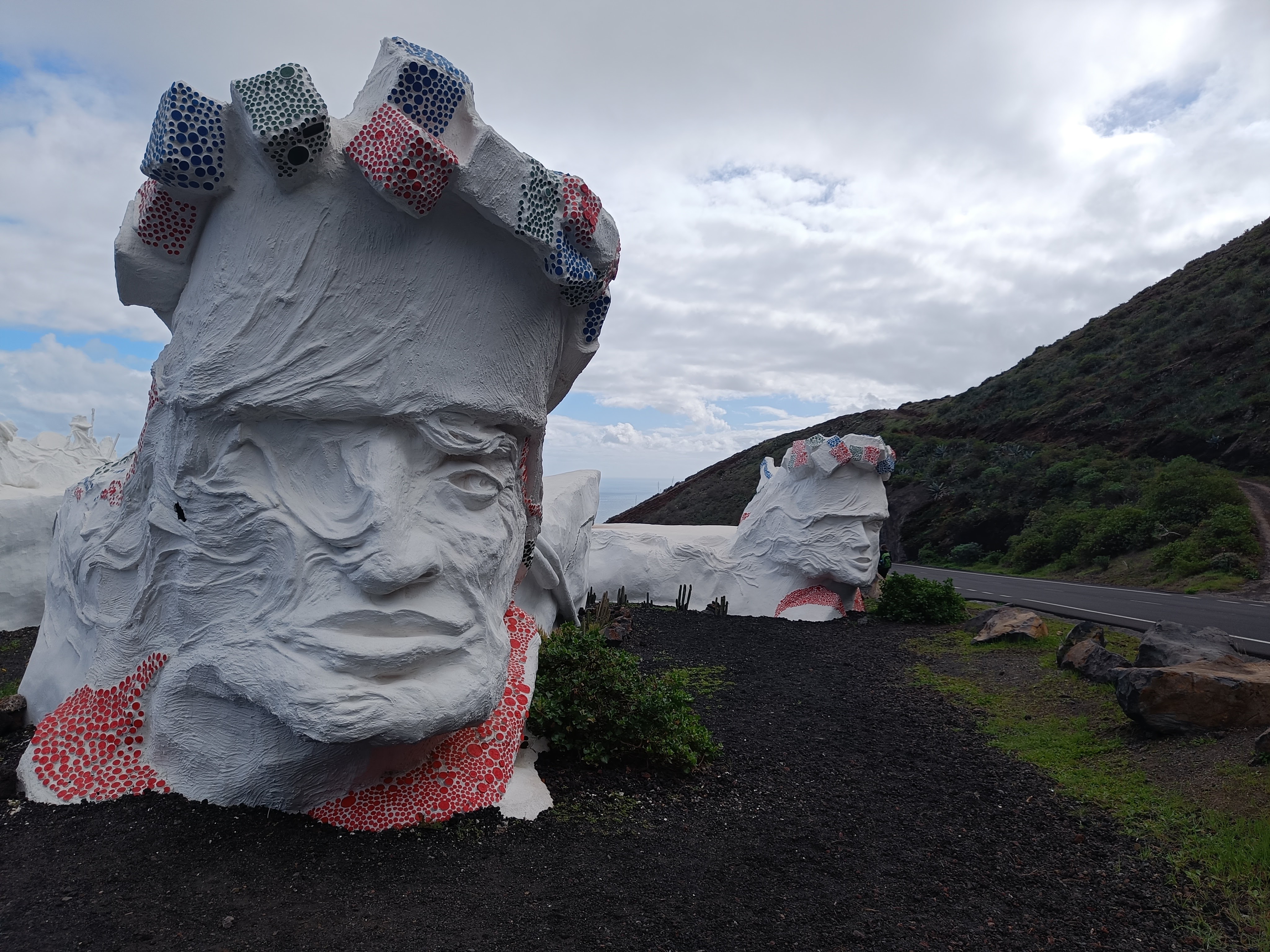
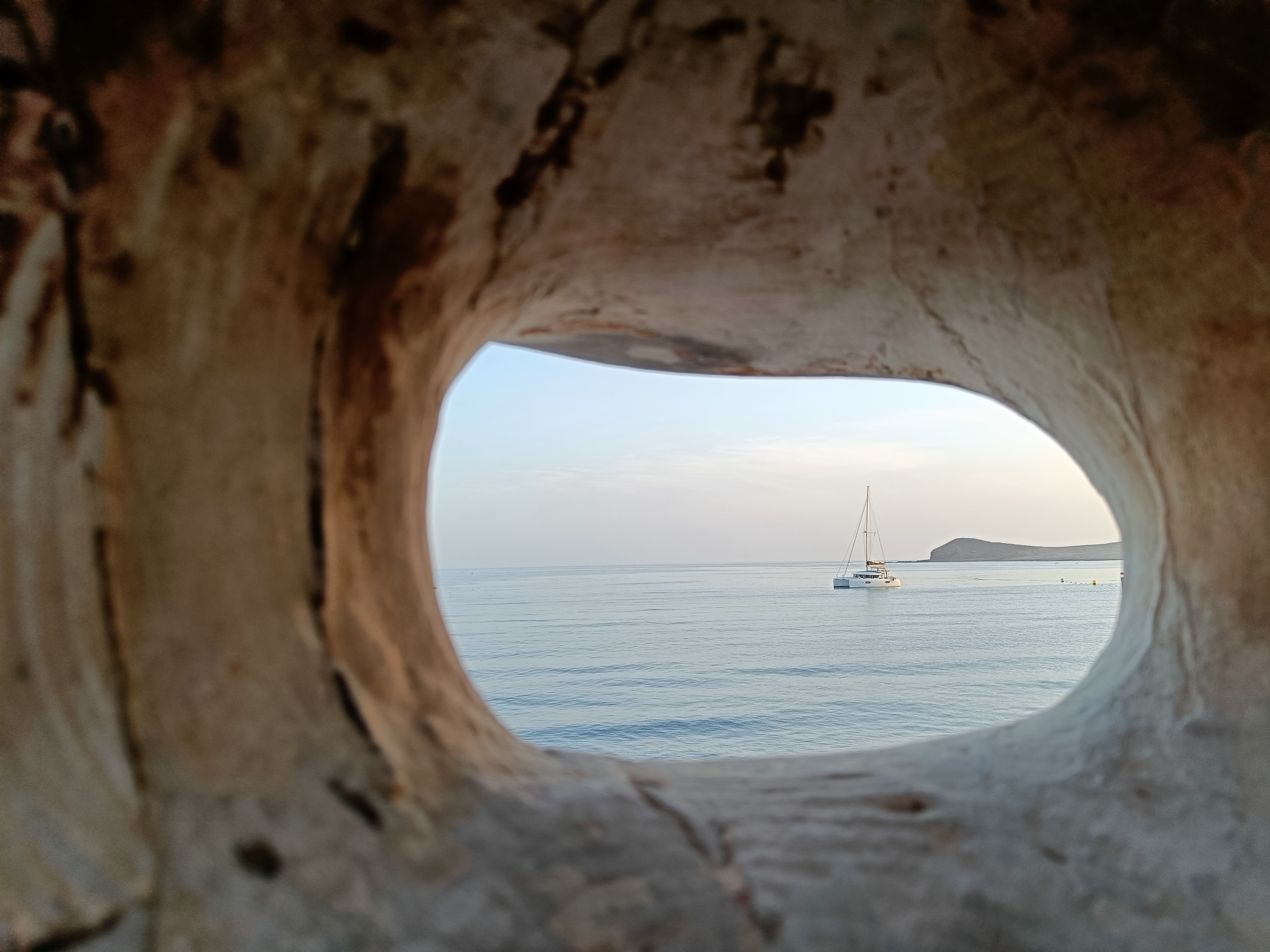
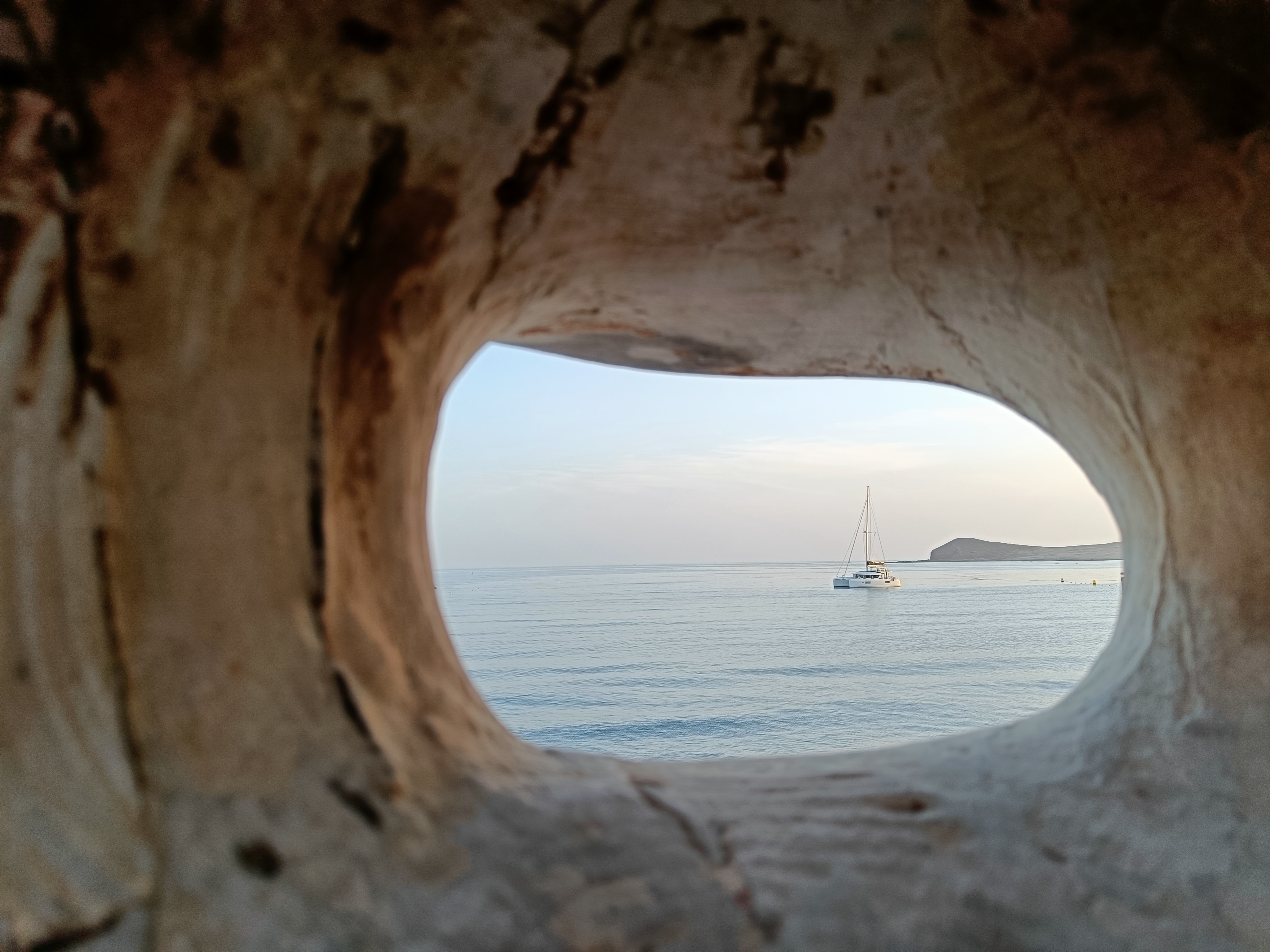
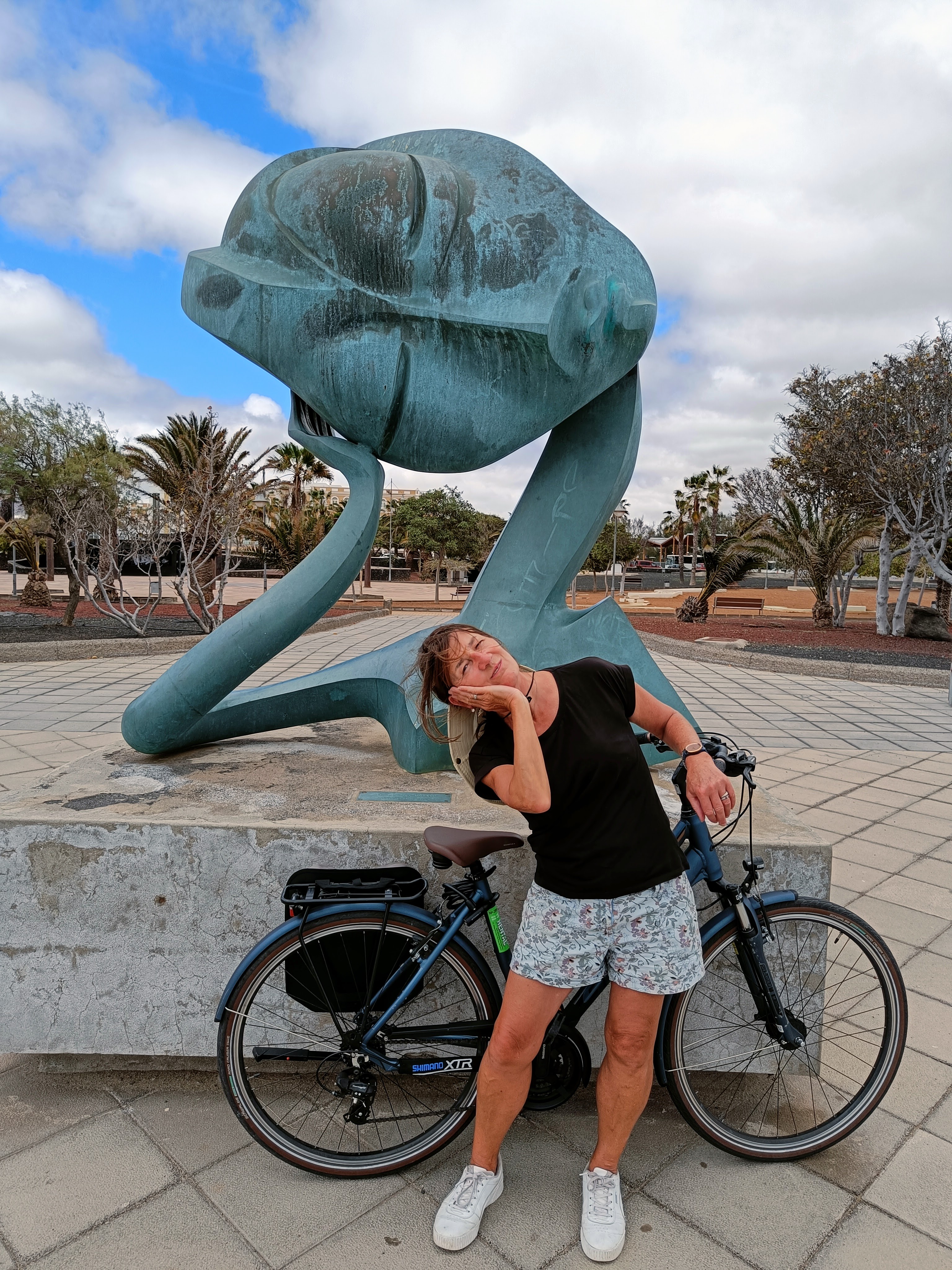
Cesar Manrique was an internationally renowned artist and architect with a deep love for his native Lanzarote. He died in a car accident thirty years ago but his influence shaped the island to this day. His creations are everywhere; wind chimes on roundabouts, stunning sculptures using volcanic rocks and his artwork is on display all over. Many public buildings were transformed by him using glass and lava stone designs with curving walls and oval windows that always draw the eye to the landscape outside. He designed a cactus garden, built a concert hall in a lava tube and an underground nightclub. The man was a genius! He had incredible influence on the regional council and was responsible for some pretty autocratic, aesthetic laws. These dictated that buildings in Lanzarote must be low-rise, could only be painted white and windows/doors could only be painted green with an occasional blue or brown by the coast. Billboards and roadside advertising were banned, electricity cables had to be buried underground and major tourist development was confined to three areas, Puerta del Carmen, Playa Blanca and Costa Teguise. But the result is charming where the blinding whiteness of the buildings contrasts with the volcanic hues of the landscape.
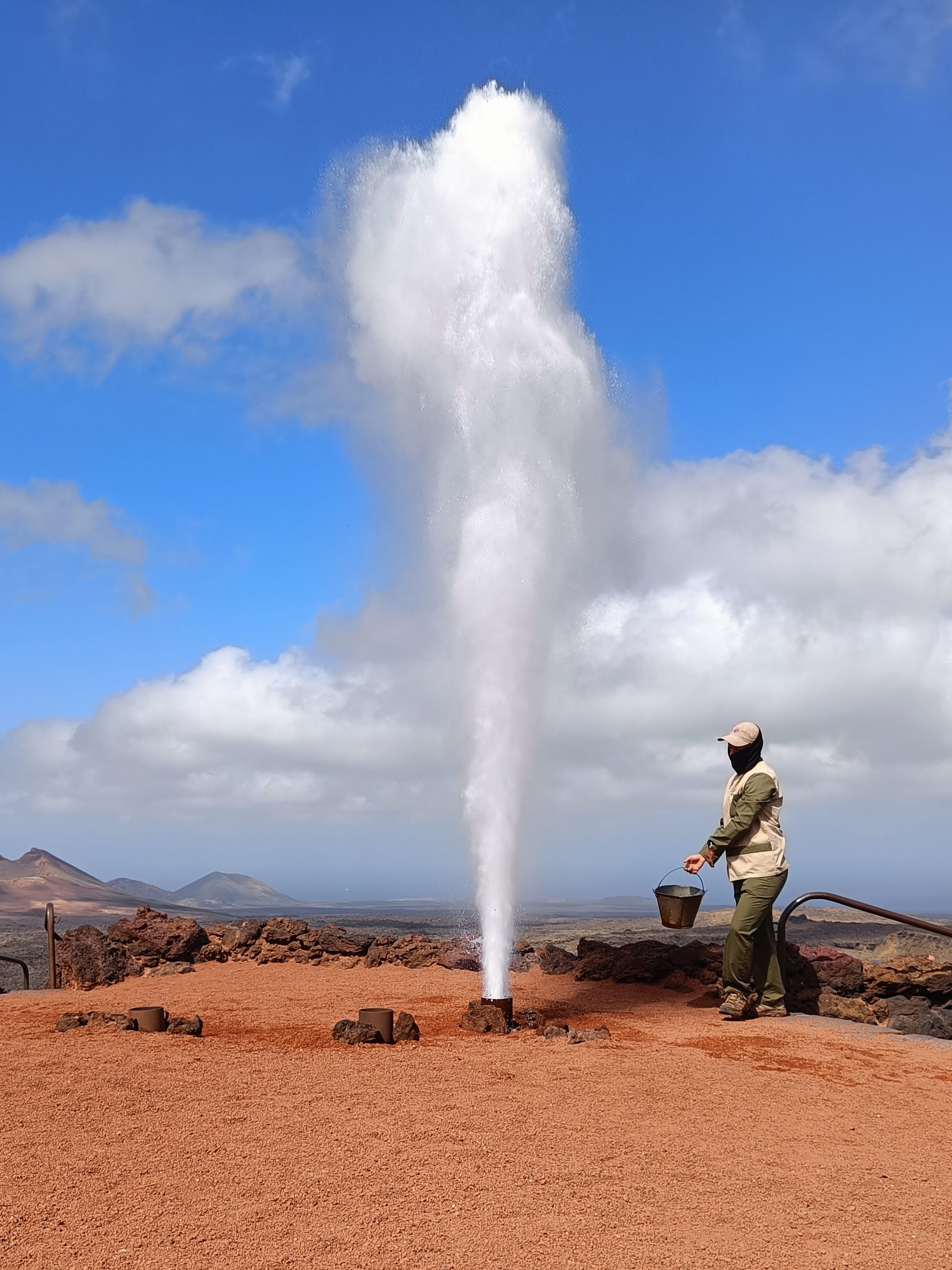
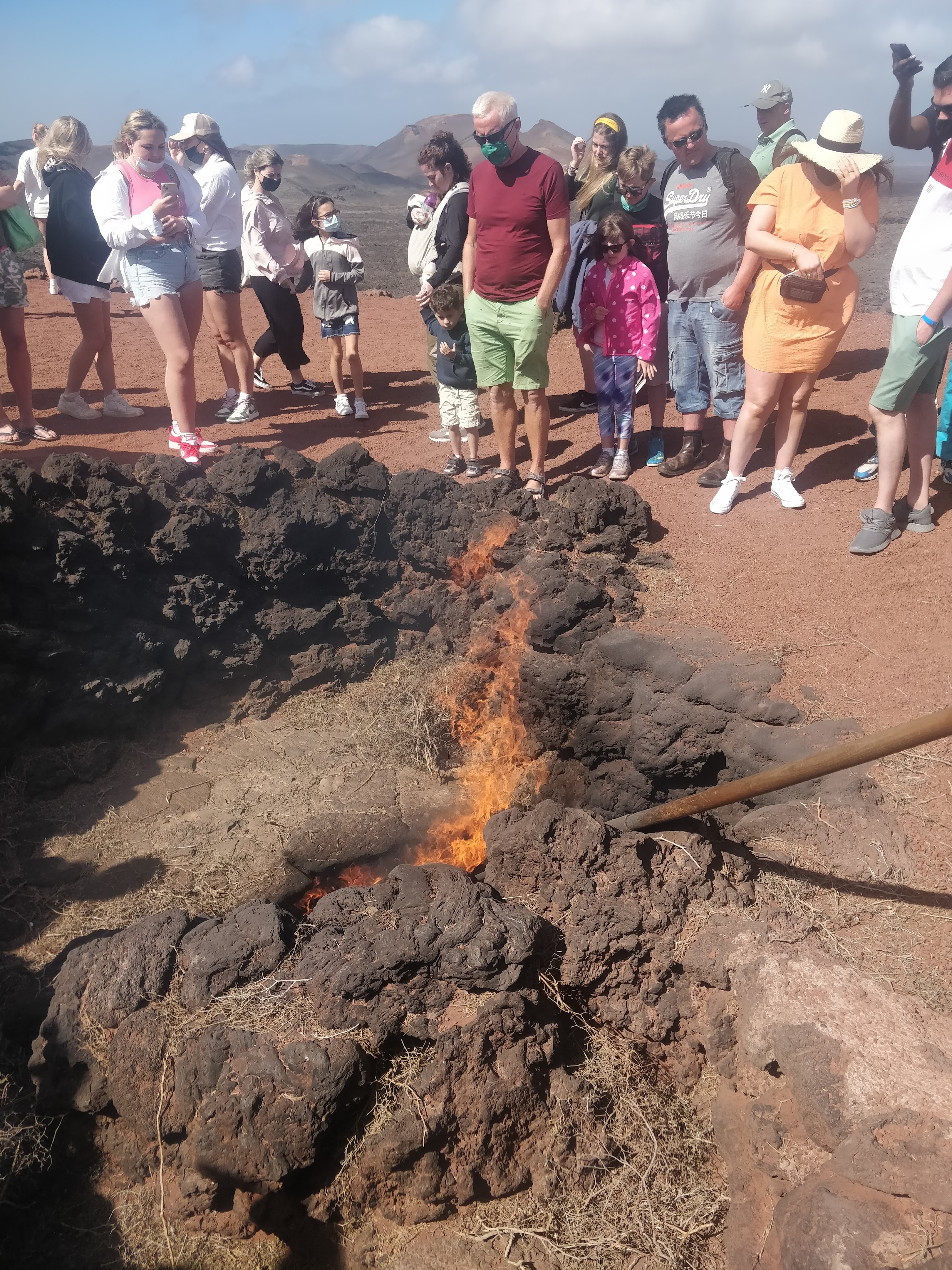
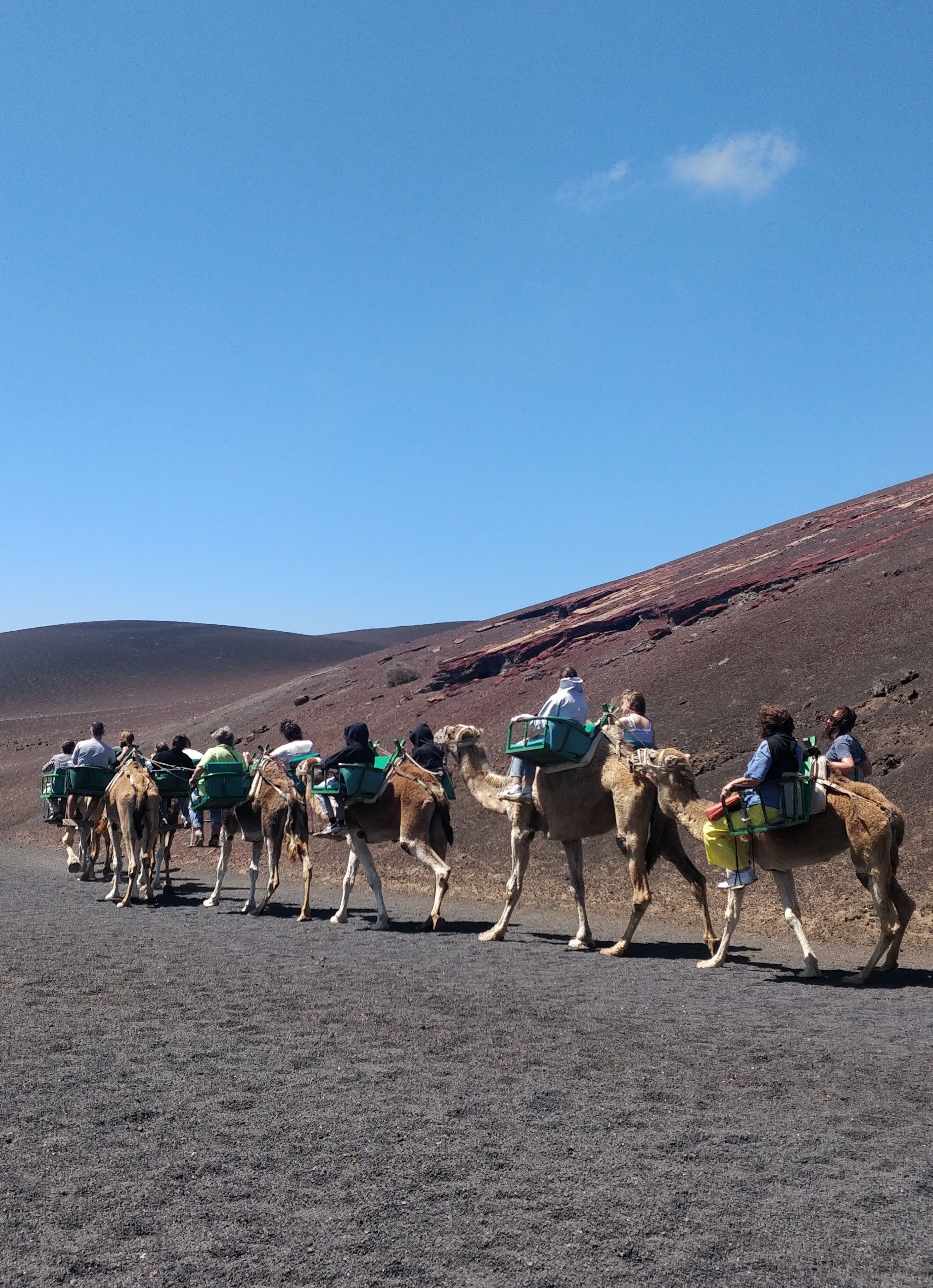
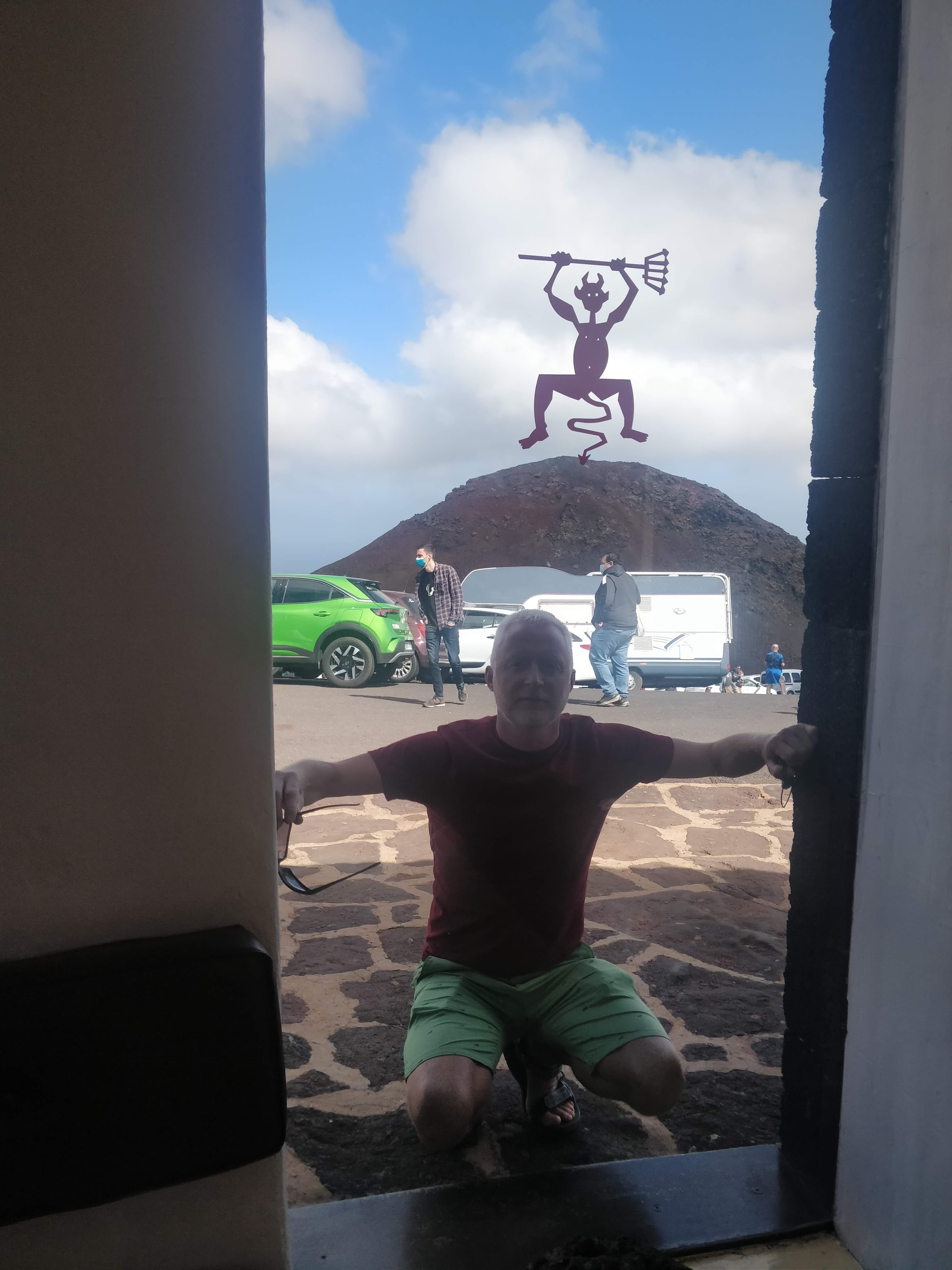
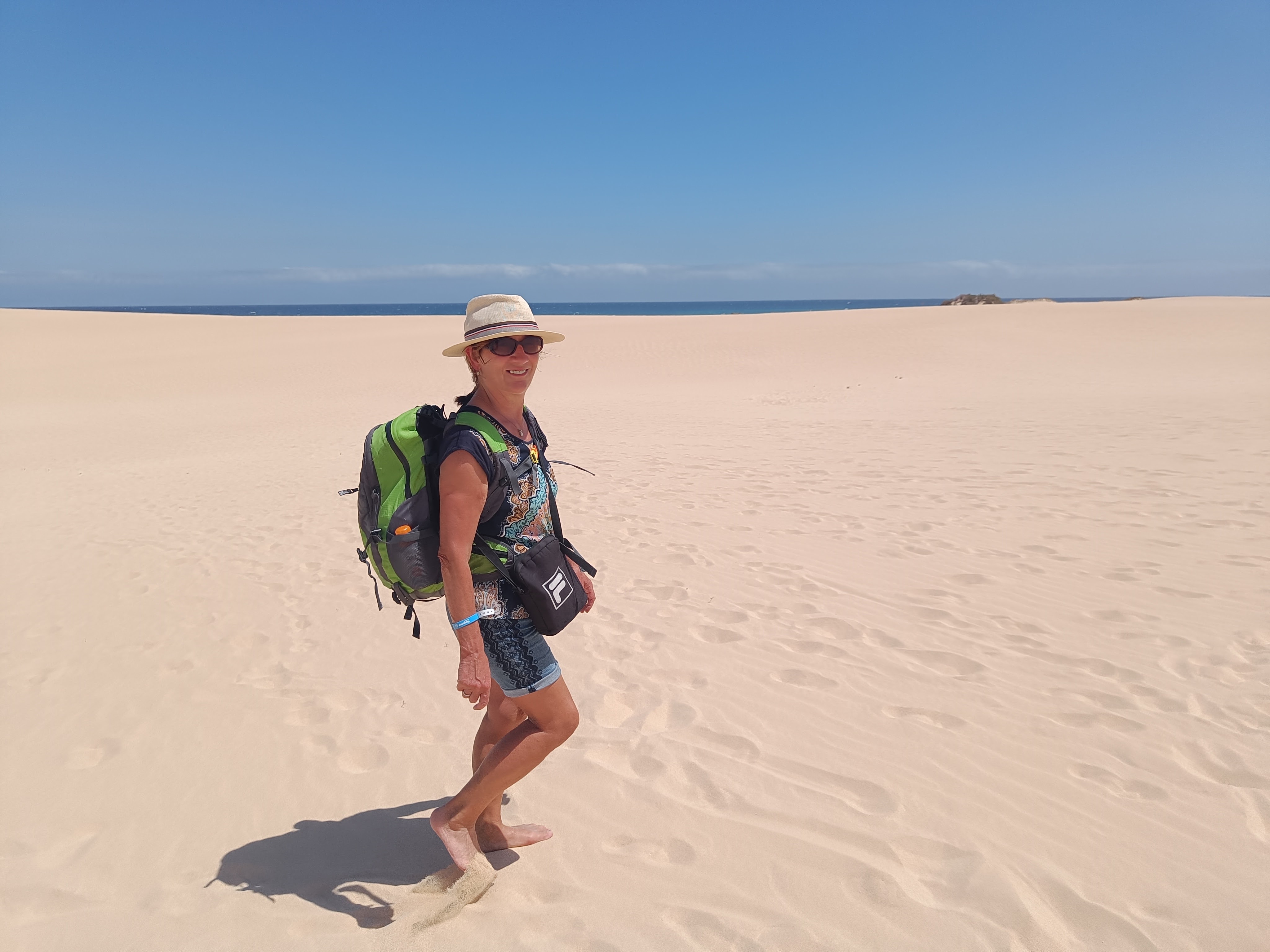
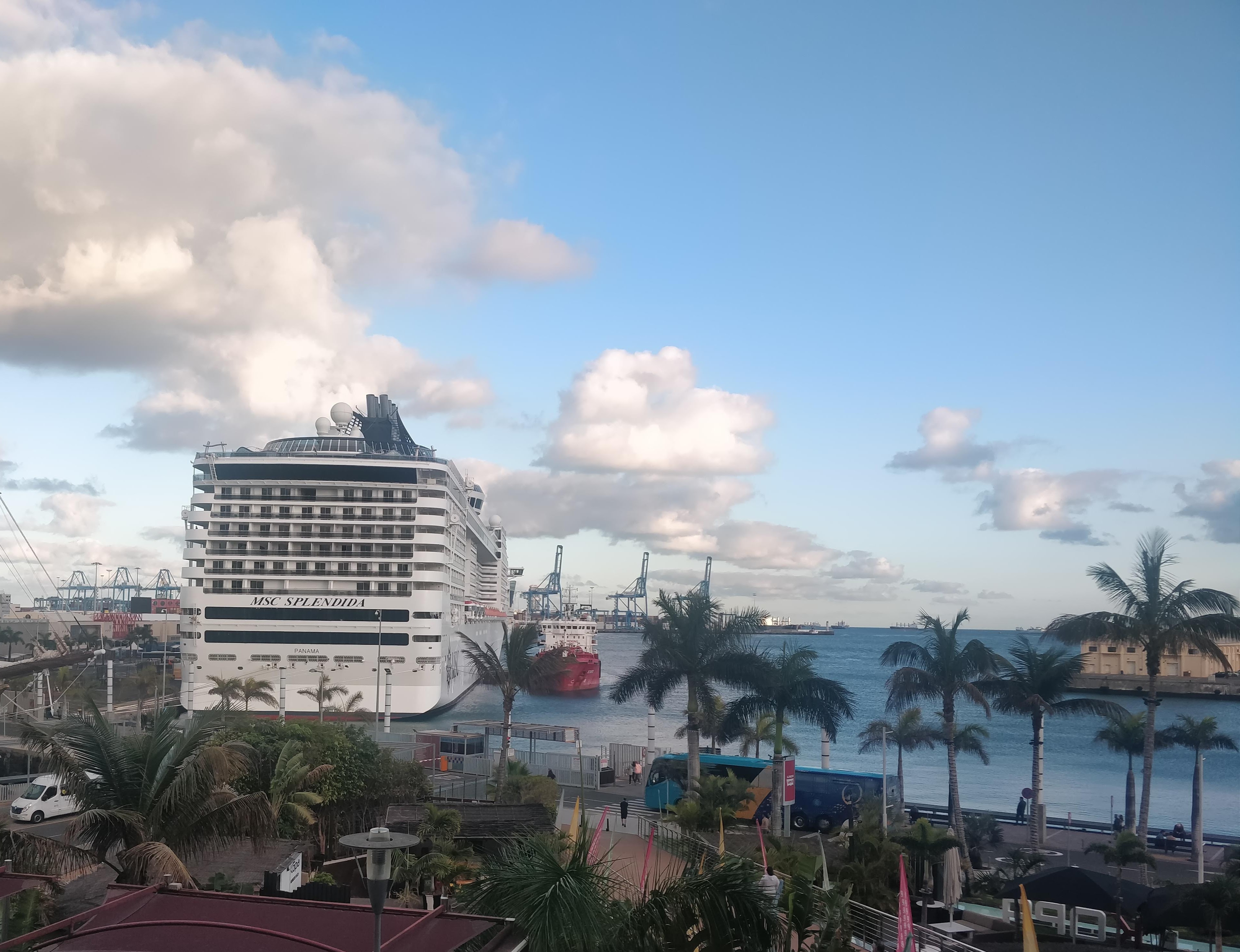
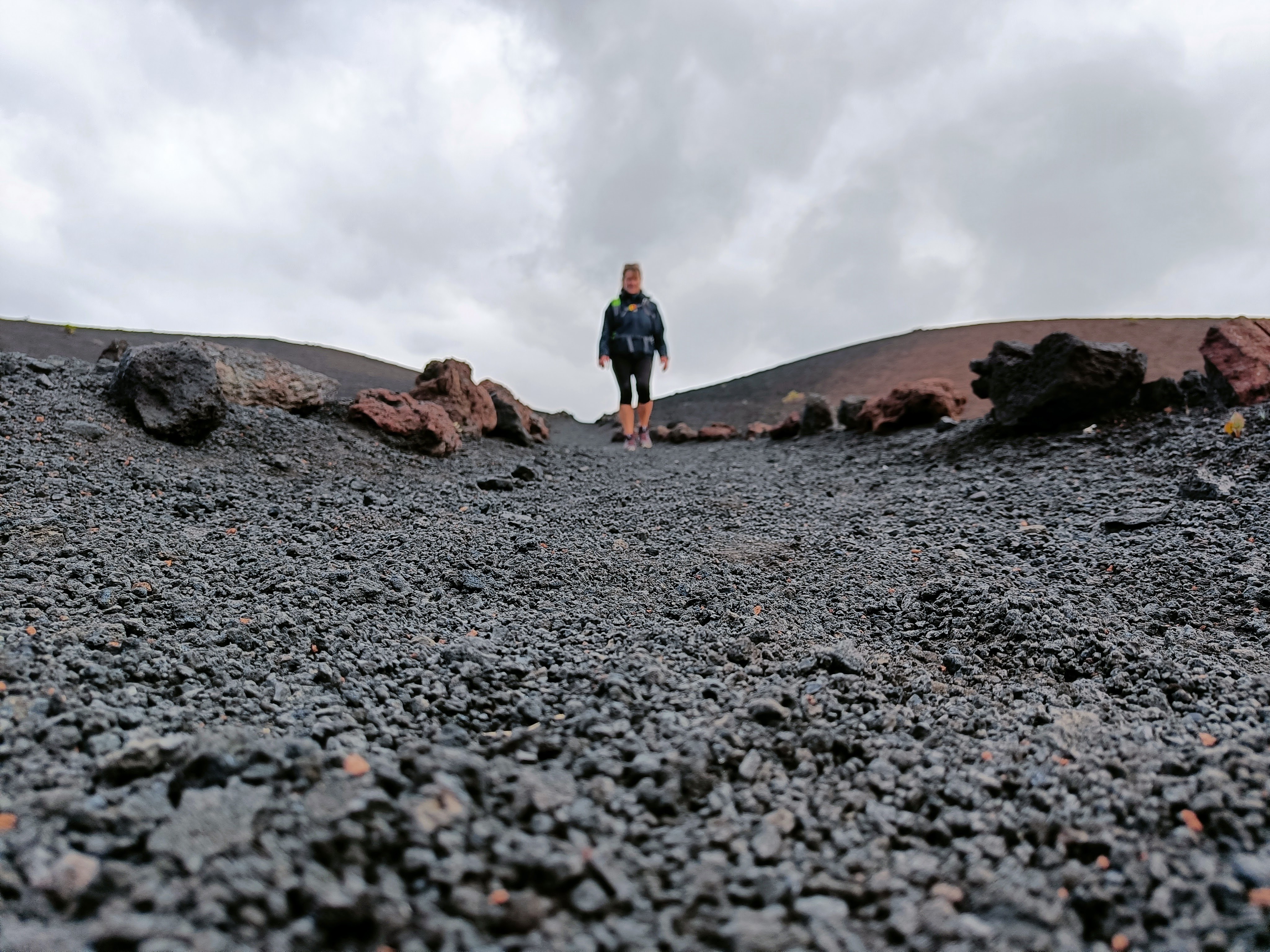
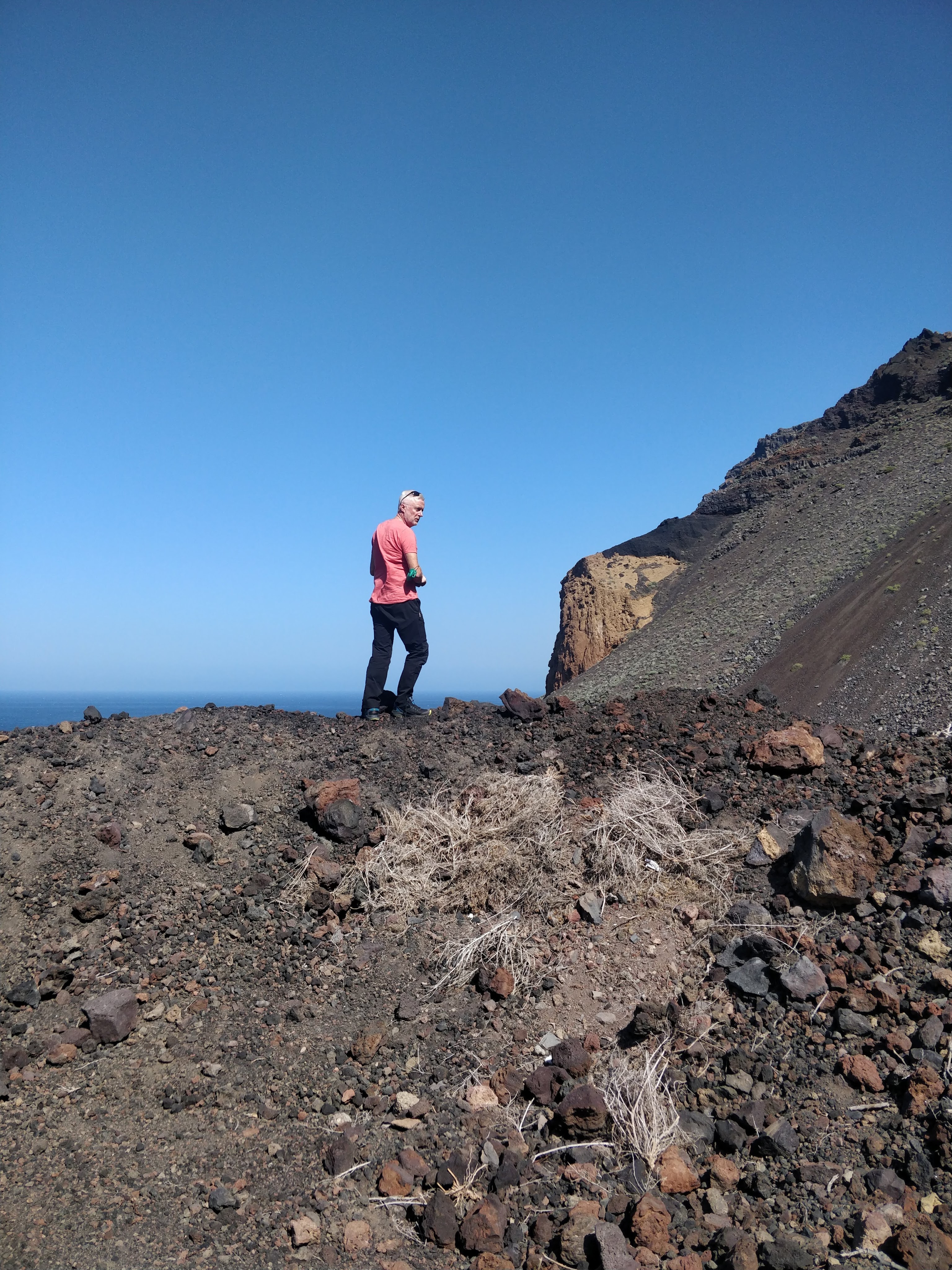
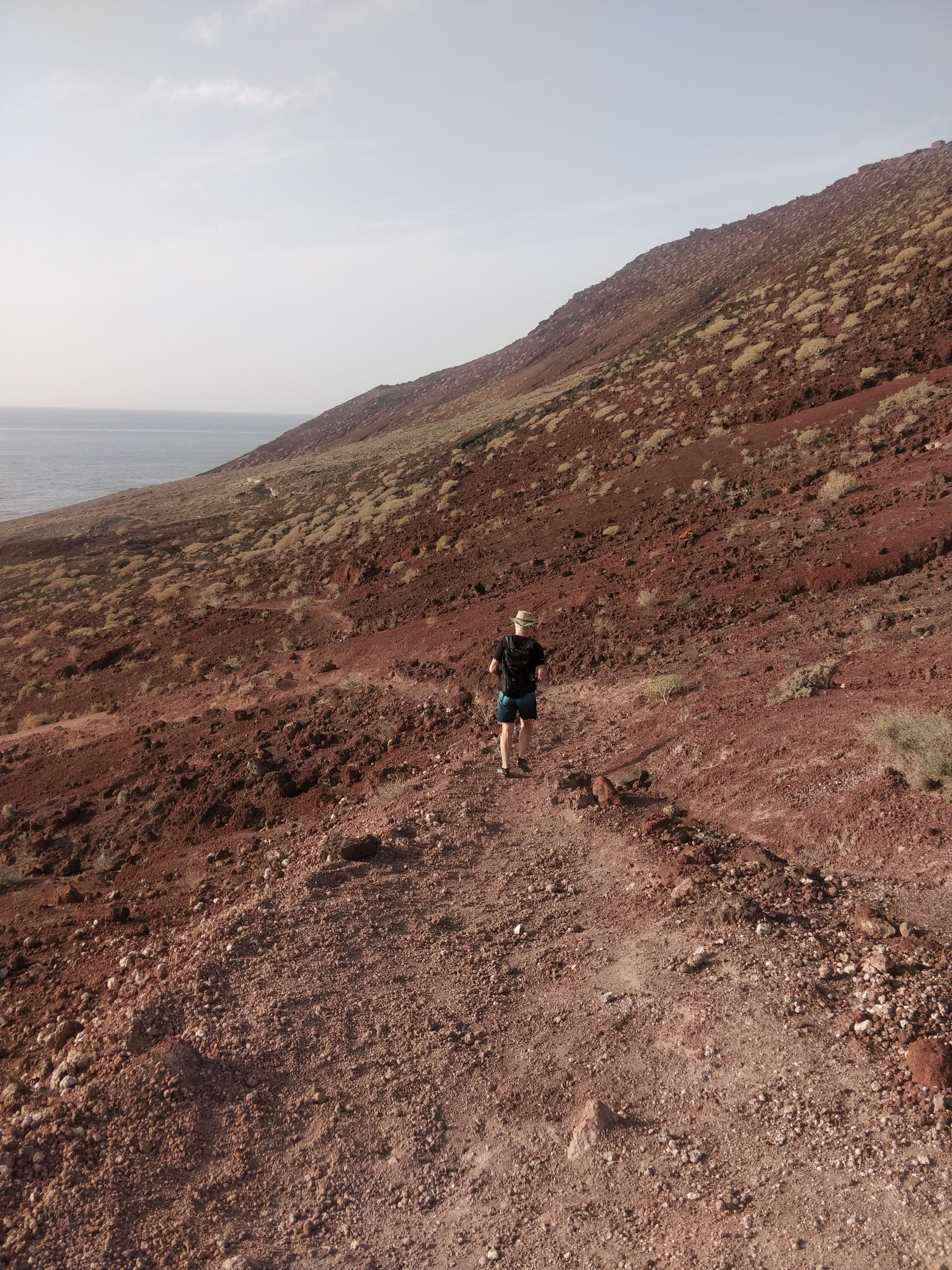
All the Canary Islands are volcanic but Lanzarote is called the Isla del Fuego, the Island of Fire and for good reason. Between 1730 and 1736, the Montanas del Fuego belched out molten lava, rocks and smoke turning day into a continuous night, burying entire villages and sending the population fleeing to the coast and to other islands. The region is now the Timanfaya National Park, symbolised by a dancing devil figure – designed by Cesar Manrique. The lava fields are one of the ‘must-see’ sights so we booked a bus tour for a half-day trip to Timanfaya National Park. We weren’t alone. It was Easter weekend and three cruise ships were docked in Lanzarote and it felt that every visitor on the island was headed in the same direction. Queues of buses and cars snaked along trying to get into the National Park where parking was limited. Thankfully buses got priority so after about a 30-minute wait, we were waved in and the tourism conveyor belt swung into action. We were shepherded in groups – no dawdling- to watch three ‘experiments’ that demonstrated the intense heat that lurked just below the surface. A woman dug up some small stones and placed them in our outstretched hands and they were almost too hot to hold, we watched a bundle of dried grass spontaneously ignite and when a man poured a bucket of water into a hole, it boiled instantly and the pressure sent it skywards with a loud bang accompanied by screams (including mine) from the crowd. The heat meant that the restaurant designed by Cesar Manrique can serve chicken, cooked using natural volcanic heat by placing a grill tray over a hole. Now could this be used to solve the energy crisis?🤔 So there’s still fire in Montanas del Fuego and a strange eerie beauty with hues of red and gold, brown and grey in a Martian landscape. Then like a mirage, camels appeared lumbering along sandy paths. The camels carry tourists now but were important farm animals in the past before tourism became a well-oiled profitable juggernaut.

But there was discontent in paradise, One morning, we were woken before 7am to the sound of sirens, loud hailers and blaring horns outside our complex. It was a march by the workers in the hotels and holiday complexes who were protesting about their low wages and abysmal working conditions where they get no paid breaks in a twelve hour shifts. There’s a whole army of people working long hours cooking, cleaning, gardening and serving us in bars and restaurants, making sure that we are taken care off and that we have an enjoyable holiday. It seems only fair that they too should be treated properly.
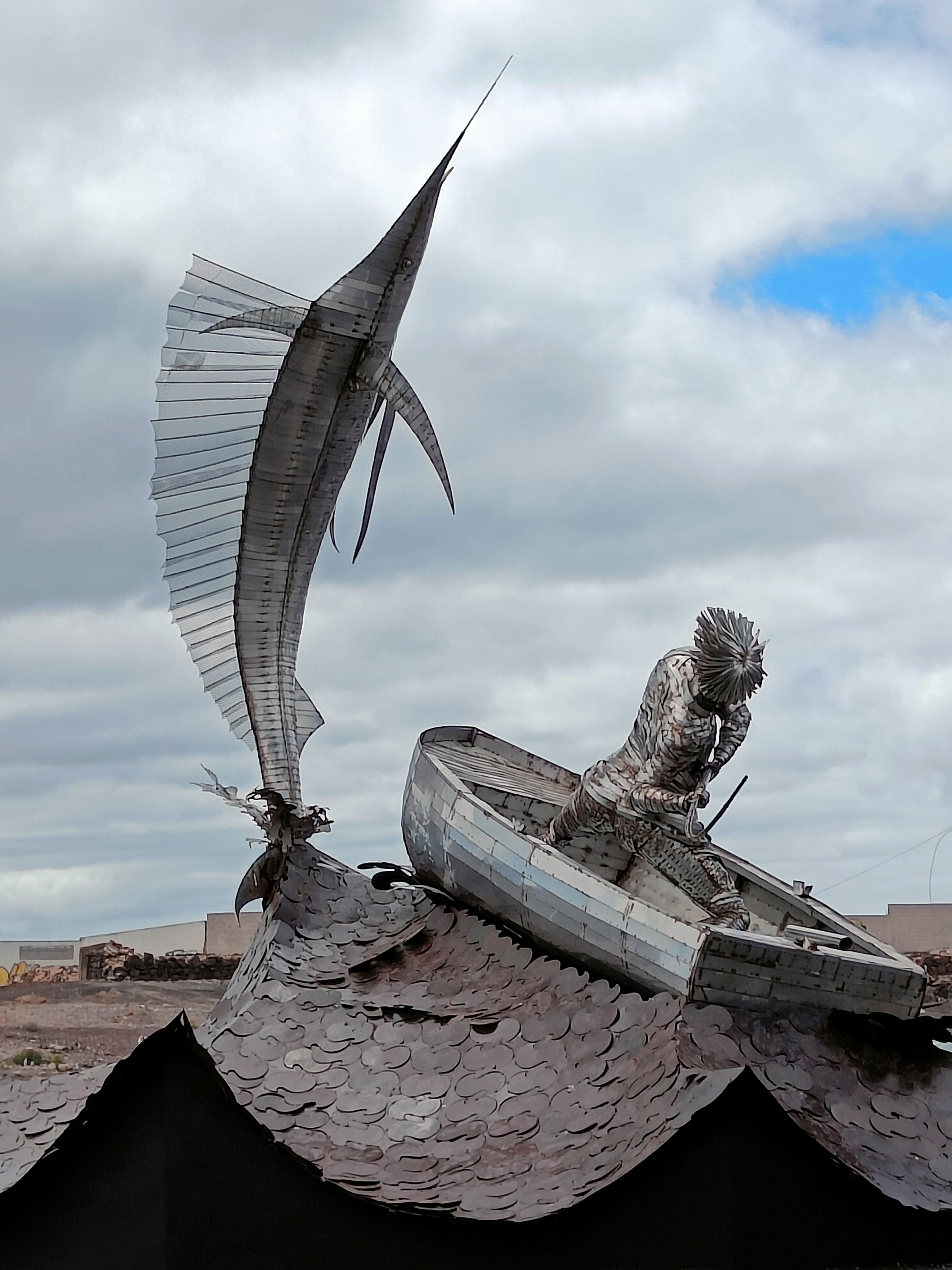
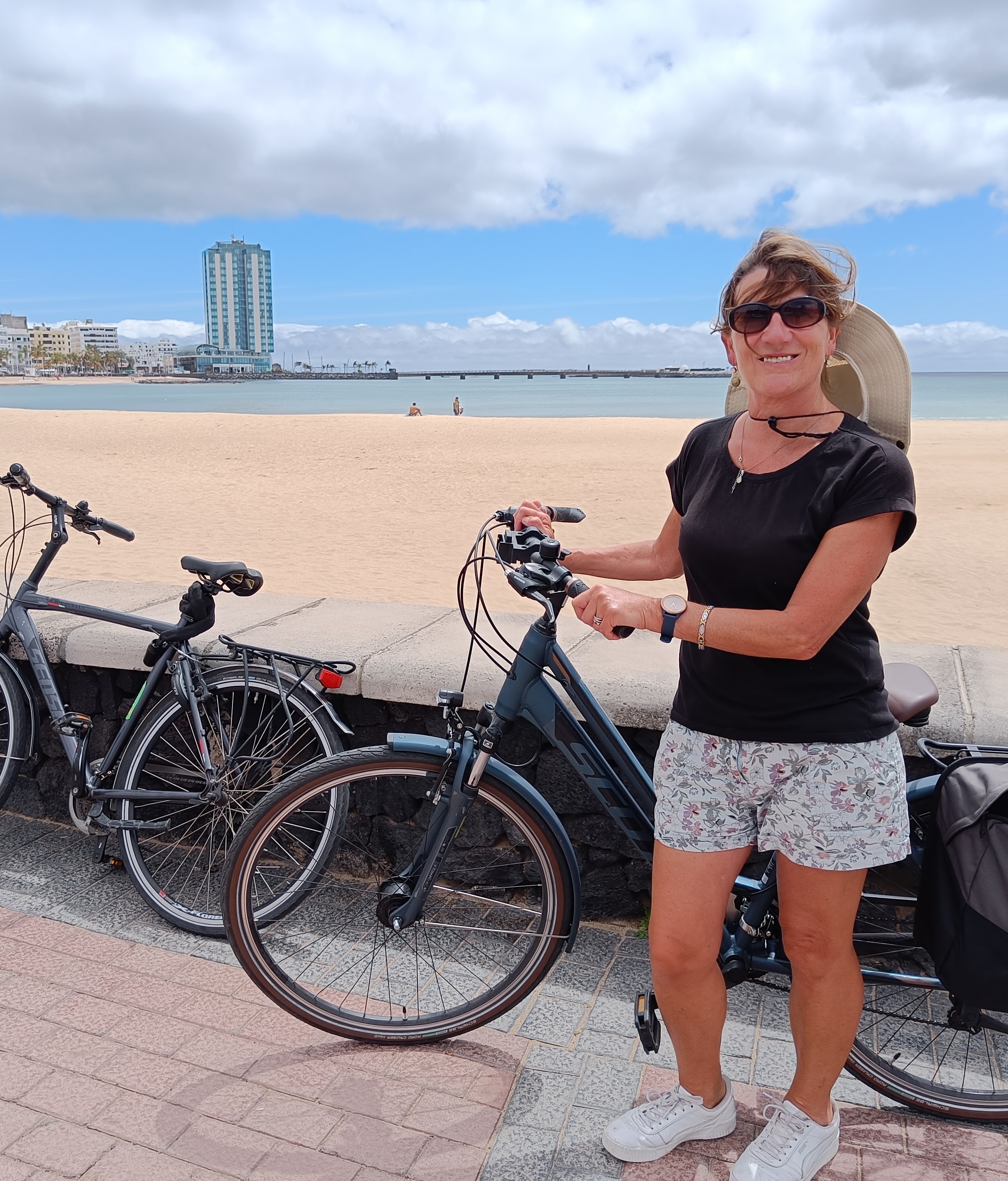
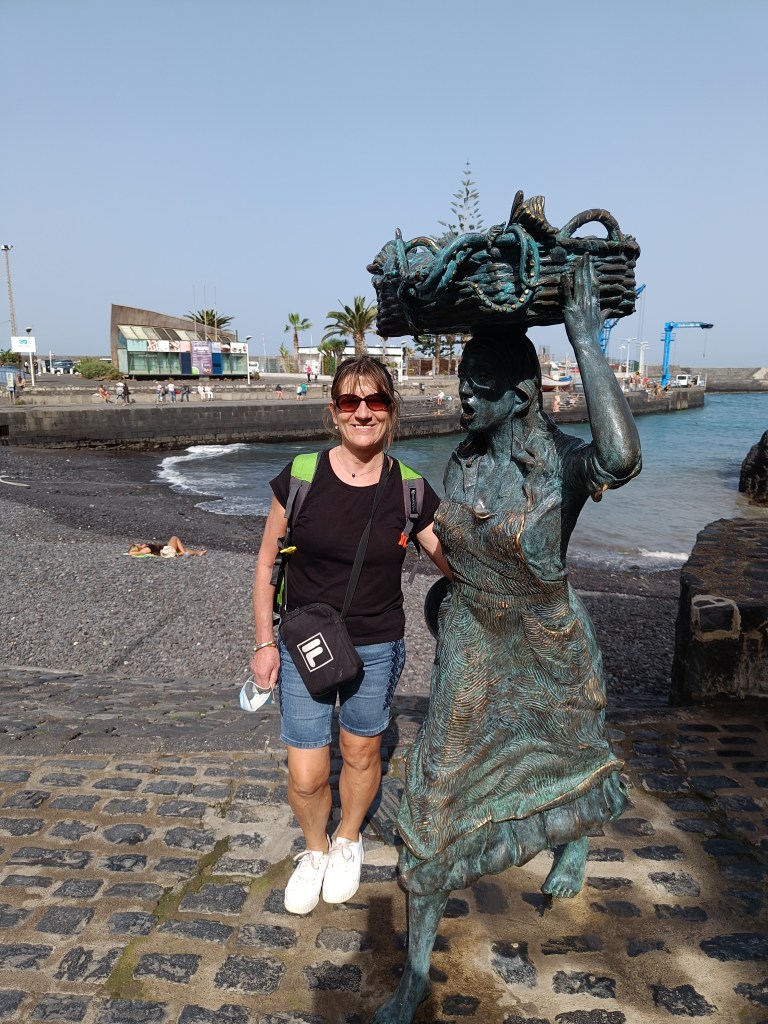
Arrecife, the capital of the island is a pleasant town on the coast with a harbour, marina and beaches. It boasts the only high-rise on the island which was already there before the building regulations came into existence. Cesar Manrique said it should be allowed to stay to show people the ugliness and folly of high rise 😀There’s a glorious sculpture of a fisherman fishing a marlin , in homage to Hemenway’s Old Man and the Sea (one of my favourite books). The old man in the novel is believed to based on Gregorio Fuentes who was born in Arrecife but left when he was six with his father in search of a better life in Cuba. His father died on the way to Cuba and the unfortunate child had to rely on charity when he arrived. But he lived until he was 104.
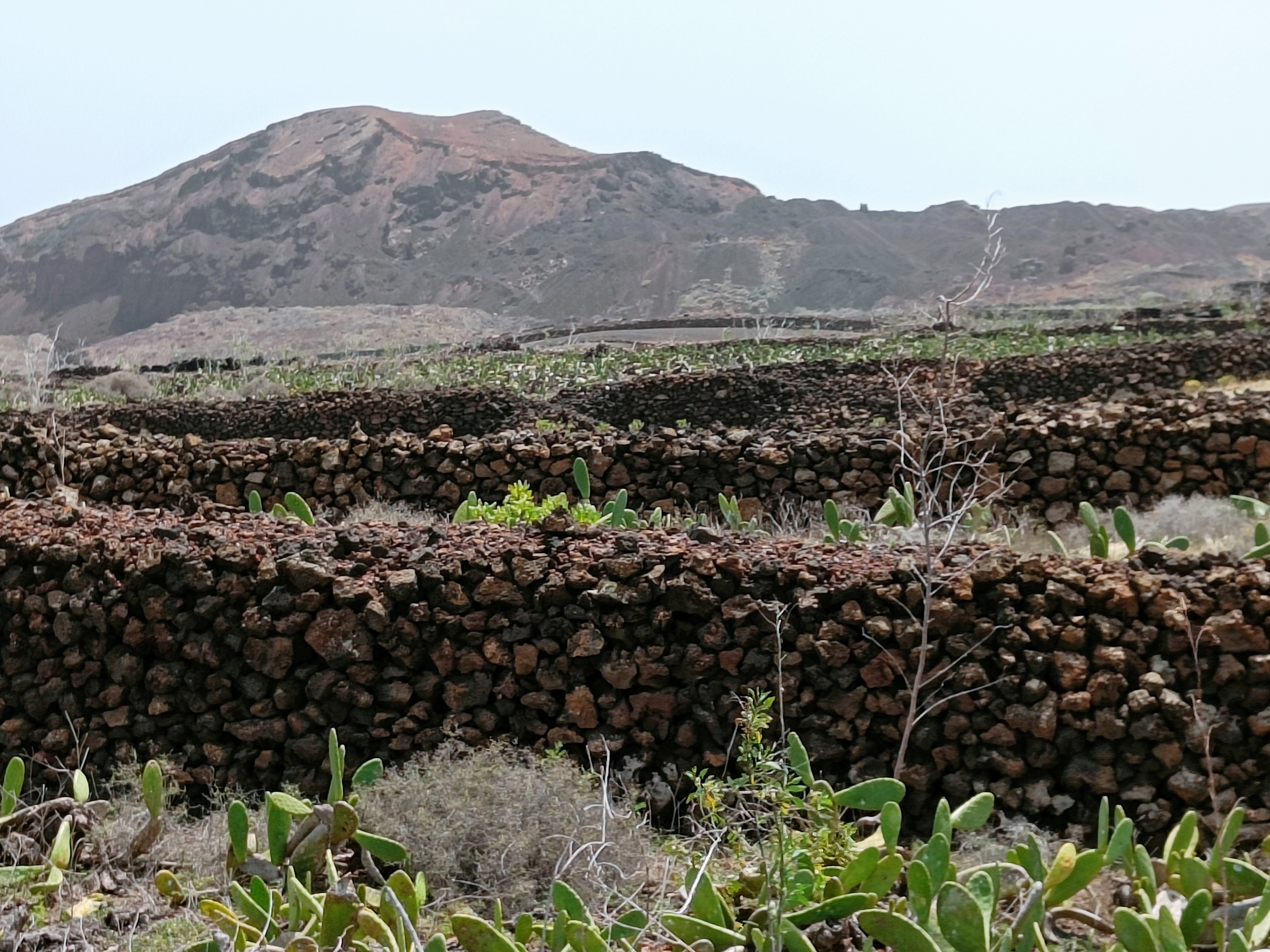
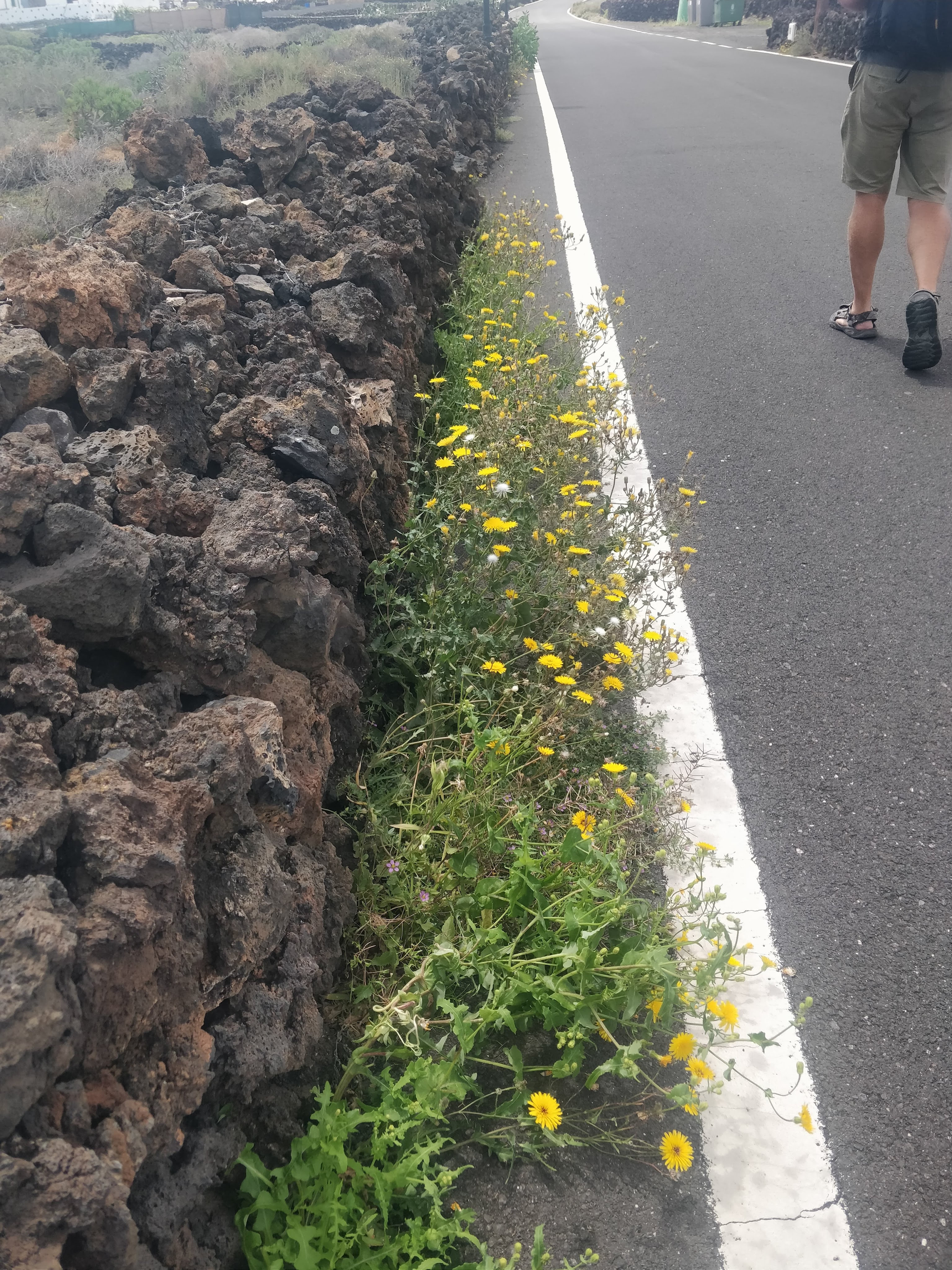
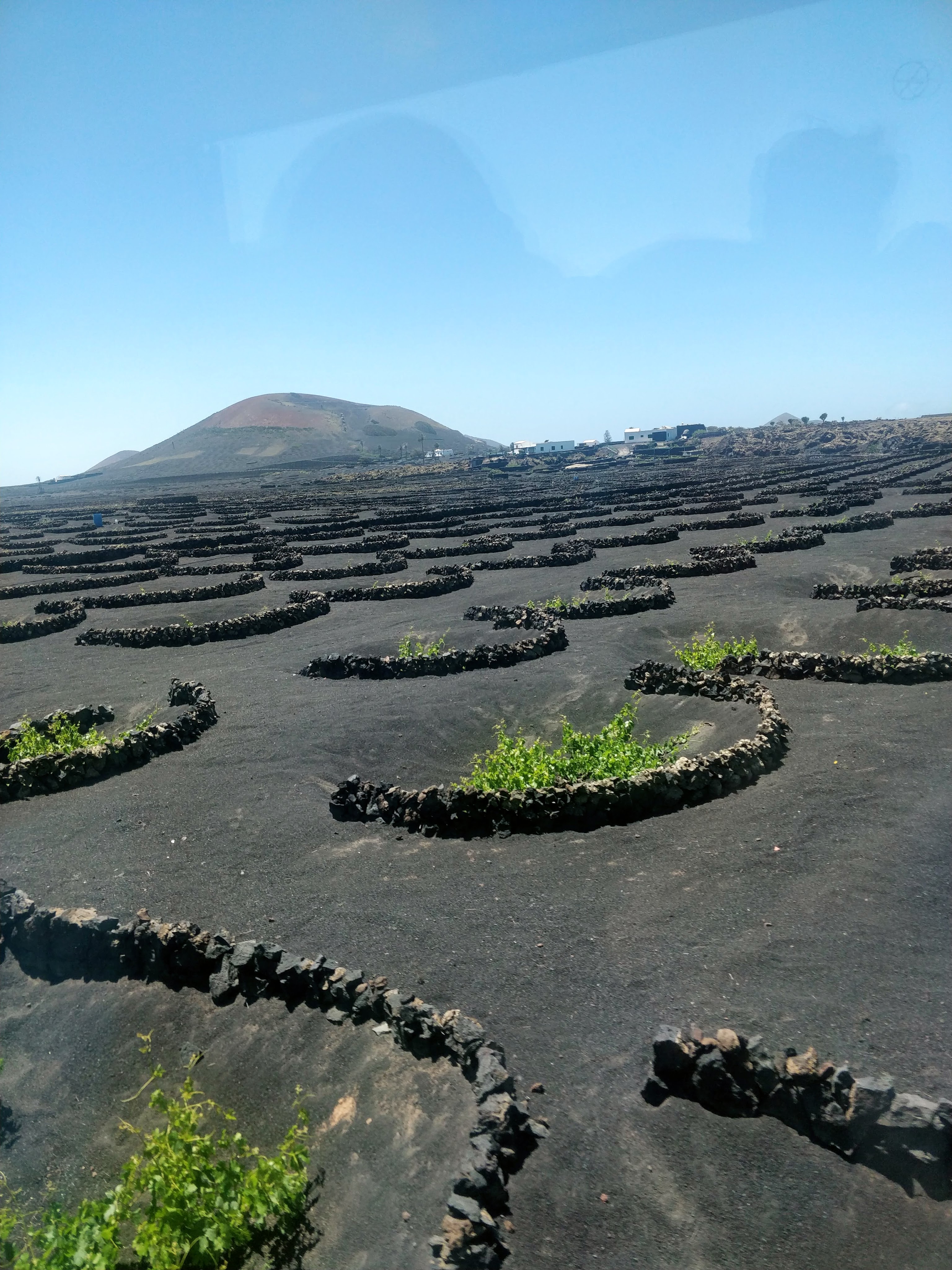
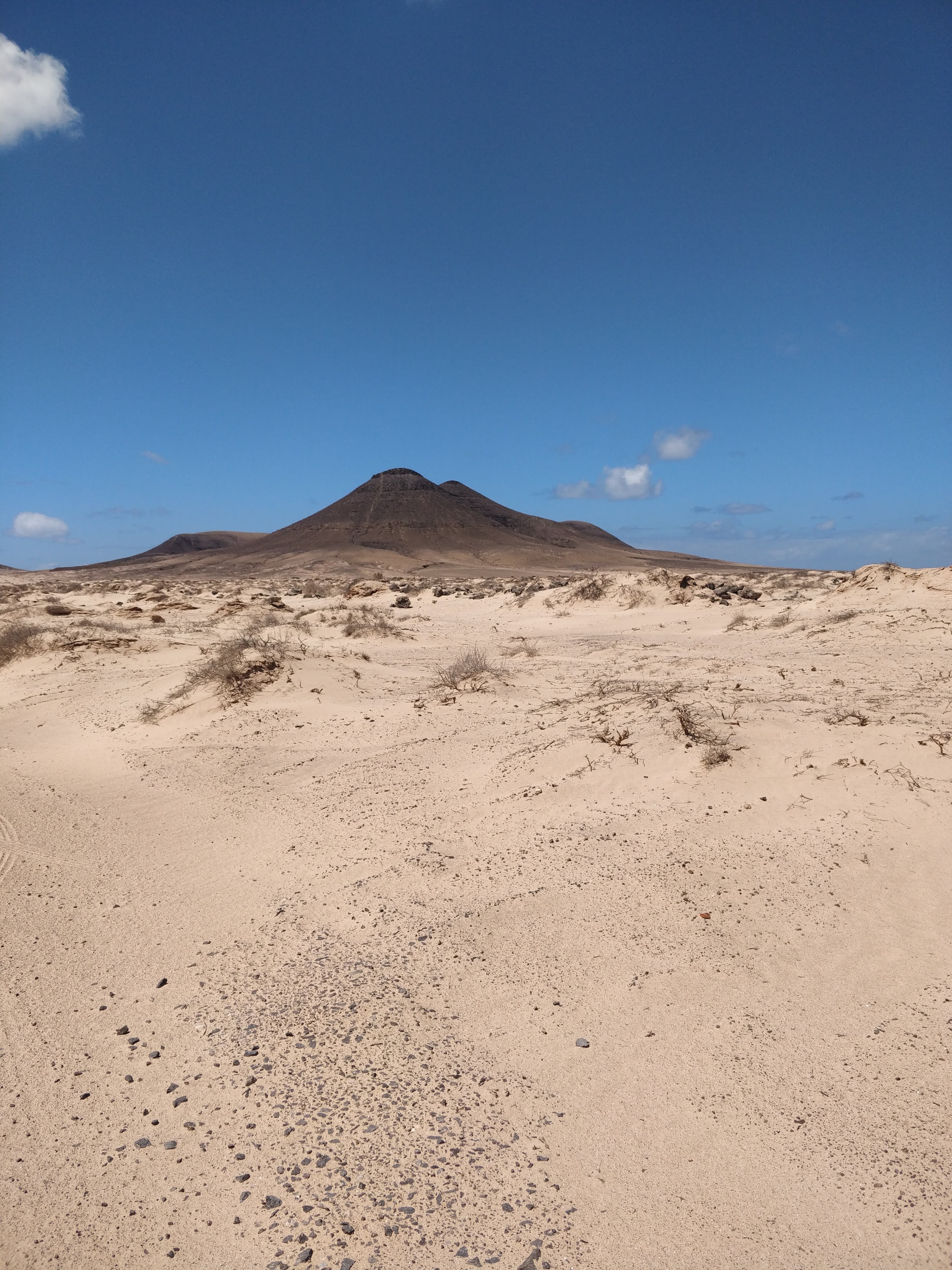
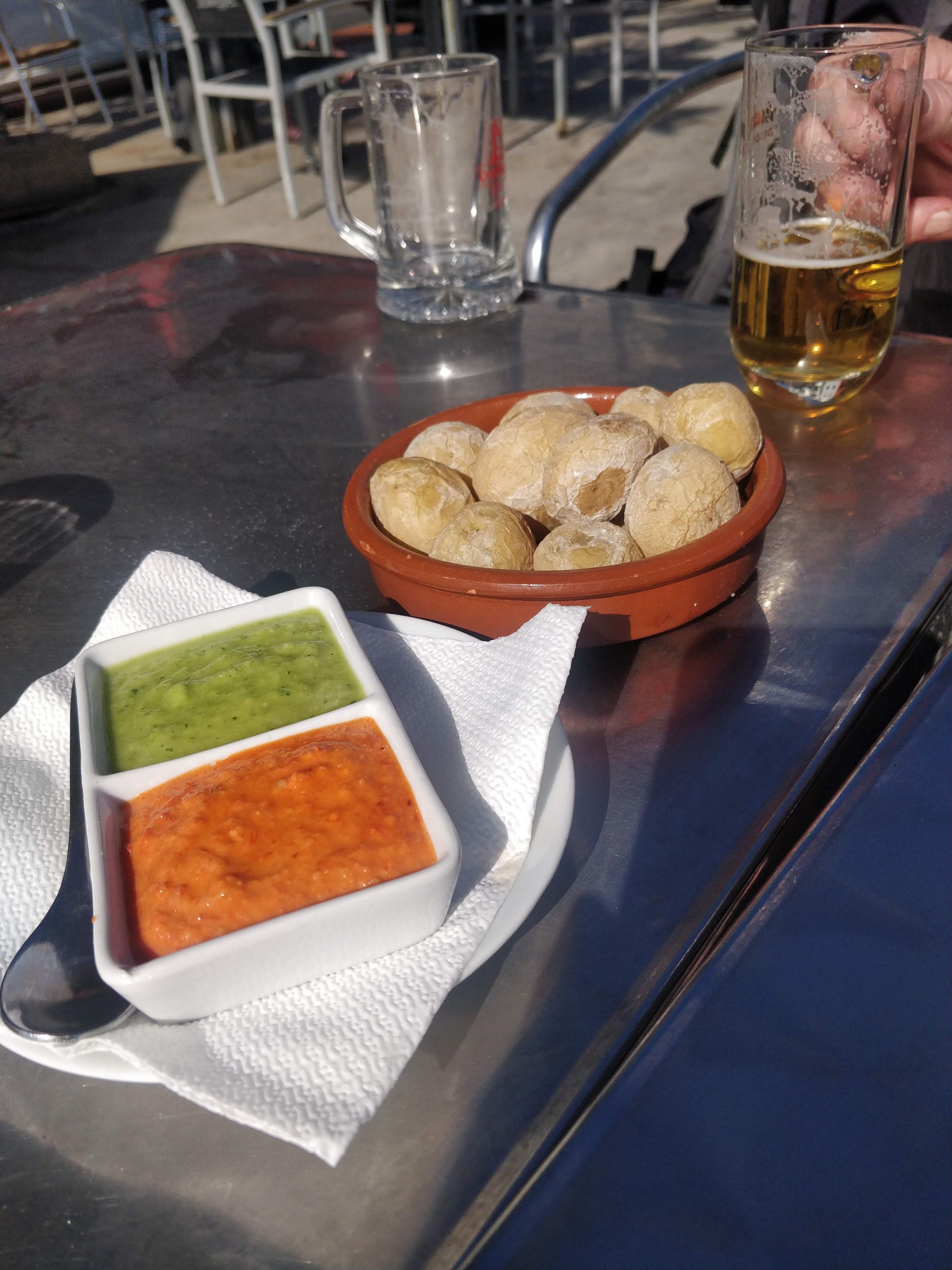
We would have called Lanzarote barren if we hadn’t just come from Fuerteventura – there was far more cultivation in Lanzarote by comparison mainly Aloe Vera, cacti and of course potatoes for the wrinkled potatoes and sauces served everywhere (papas arrugadas). There are vineyards around Timanfaya where the vines are grown in small holes protected by stone lava walls from the wind…..obviously small scale productions but some very good Malvasia whites. But the north of the island has more vegetation than the south -we even saw wildflowers growing at the side of the road, a lovely splash of colour.
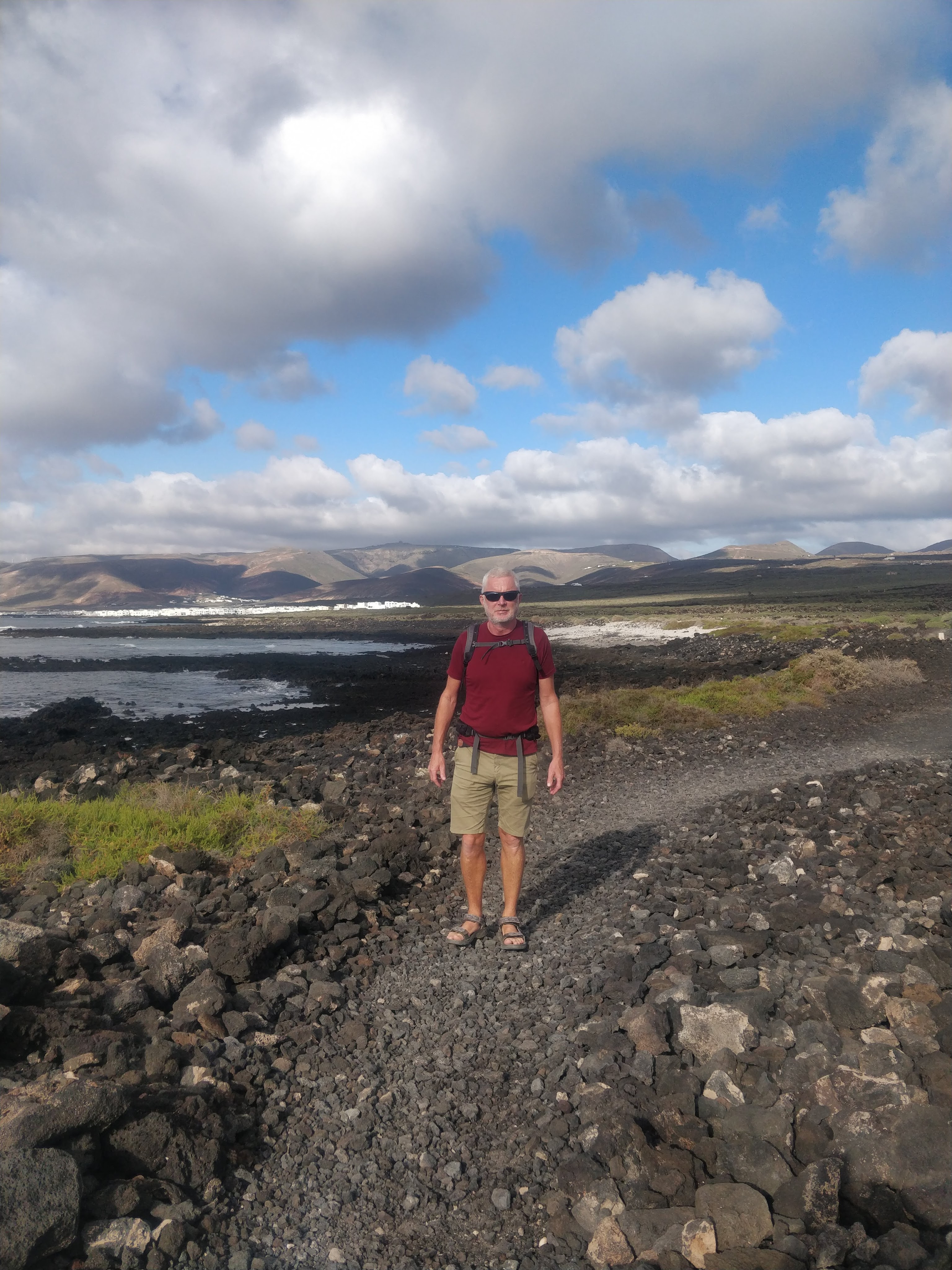
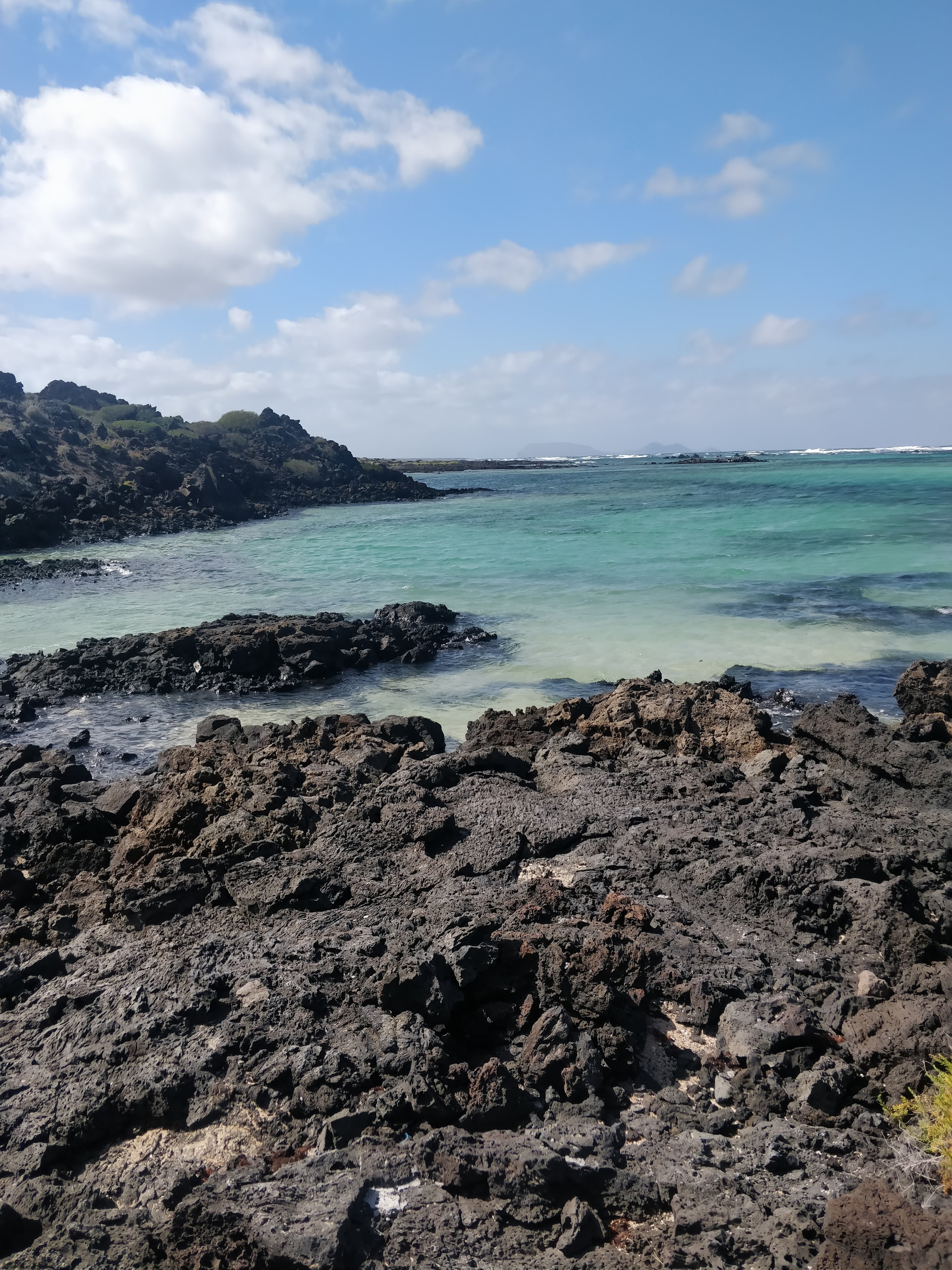
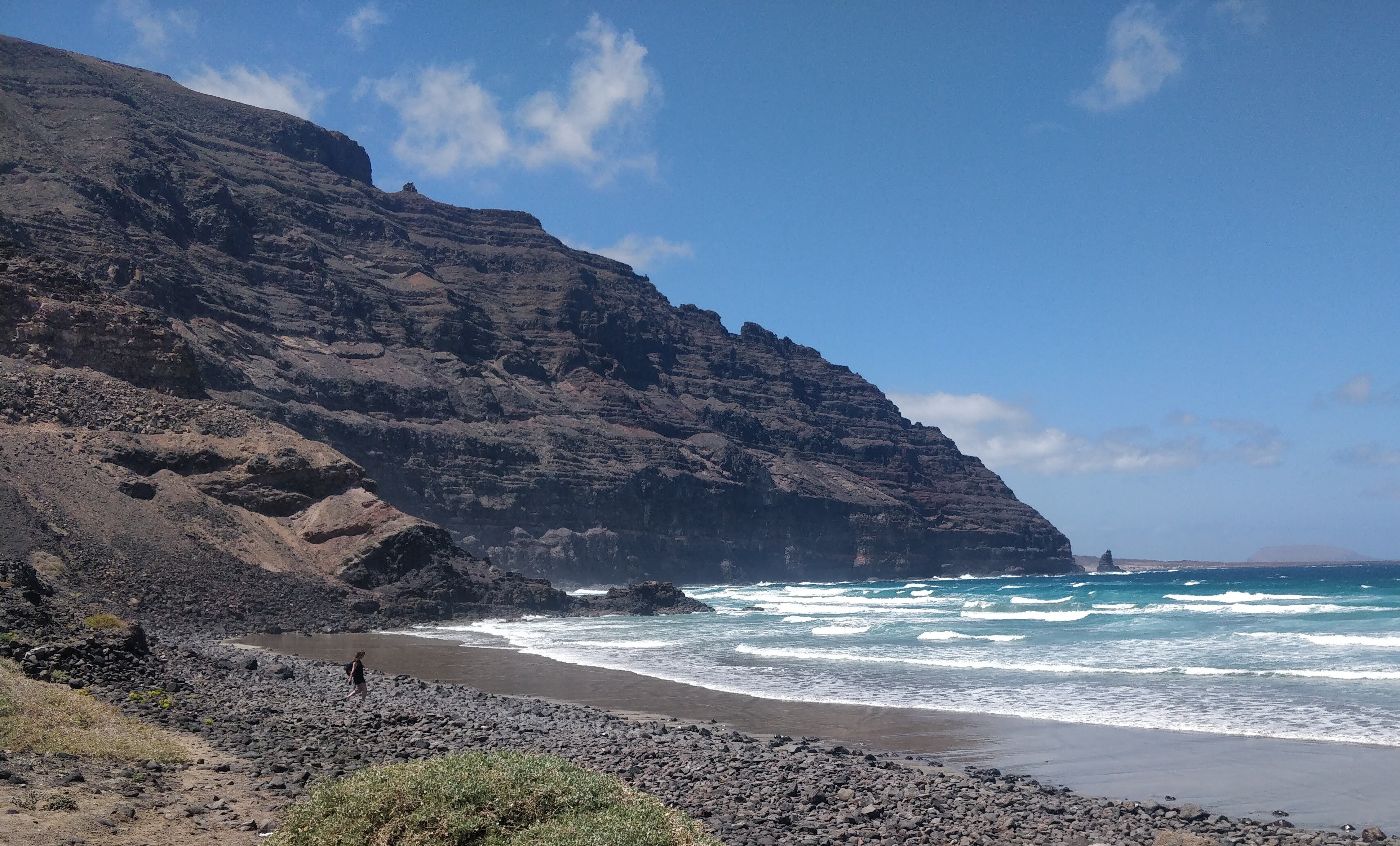
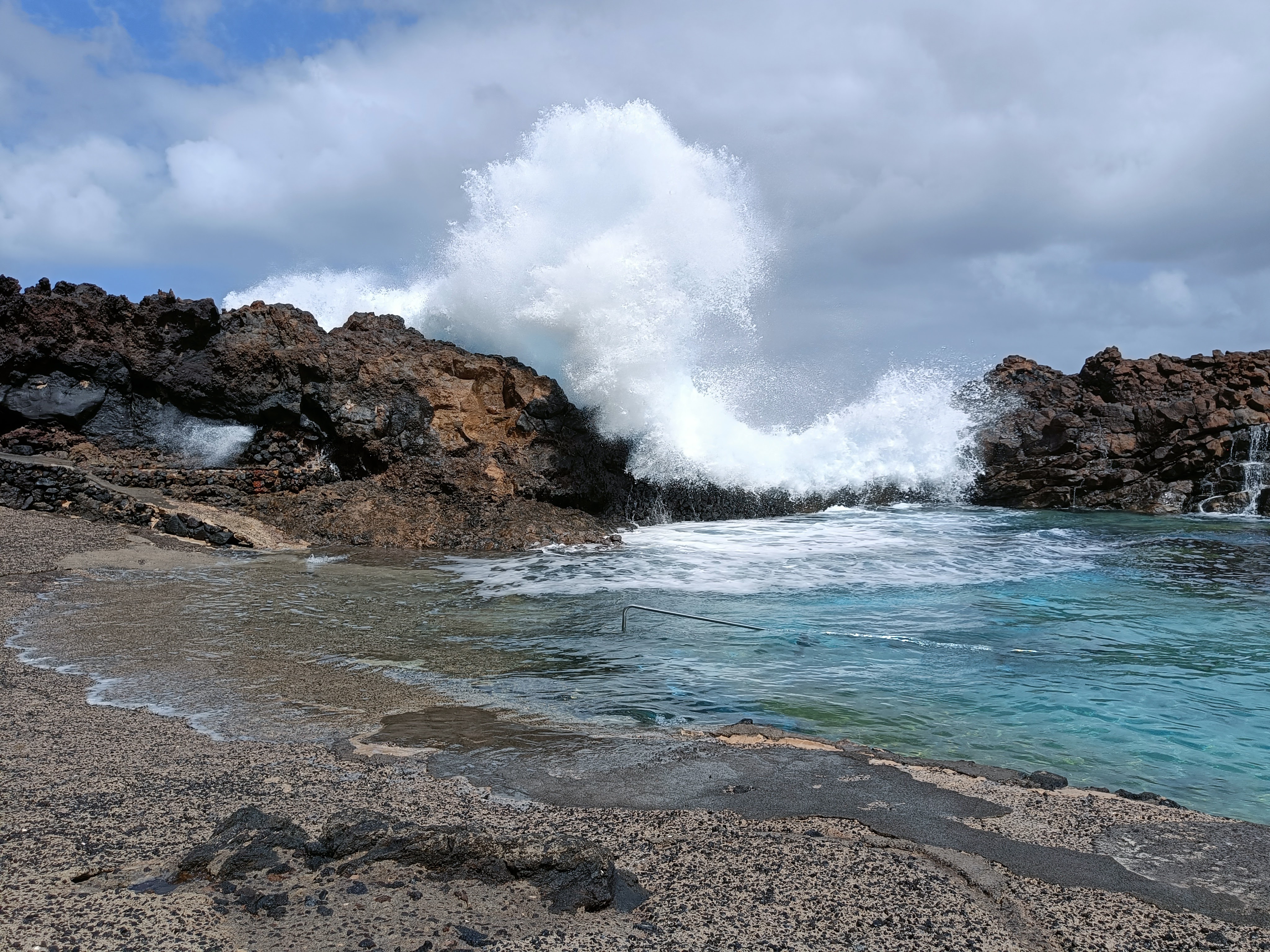
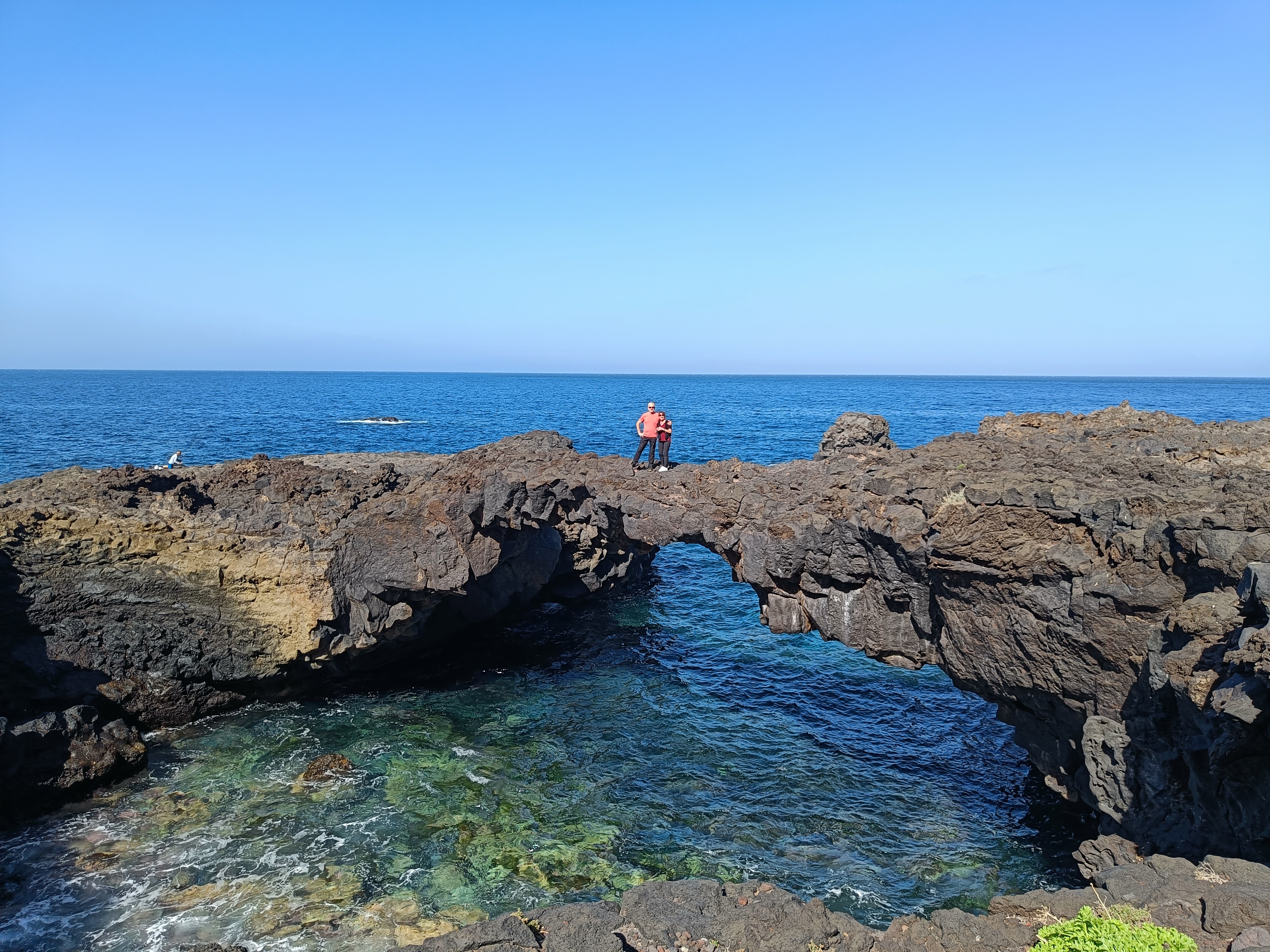
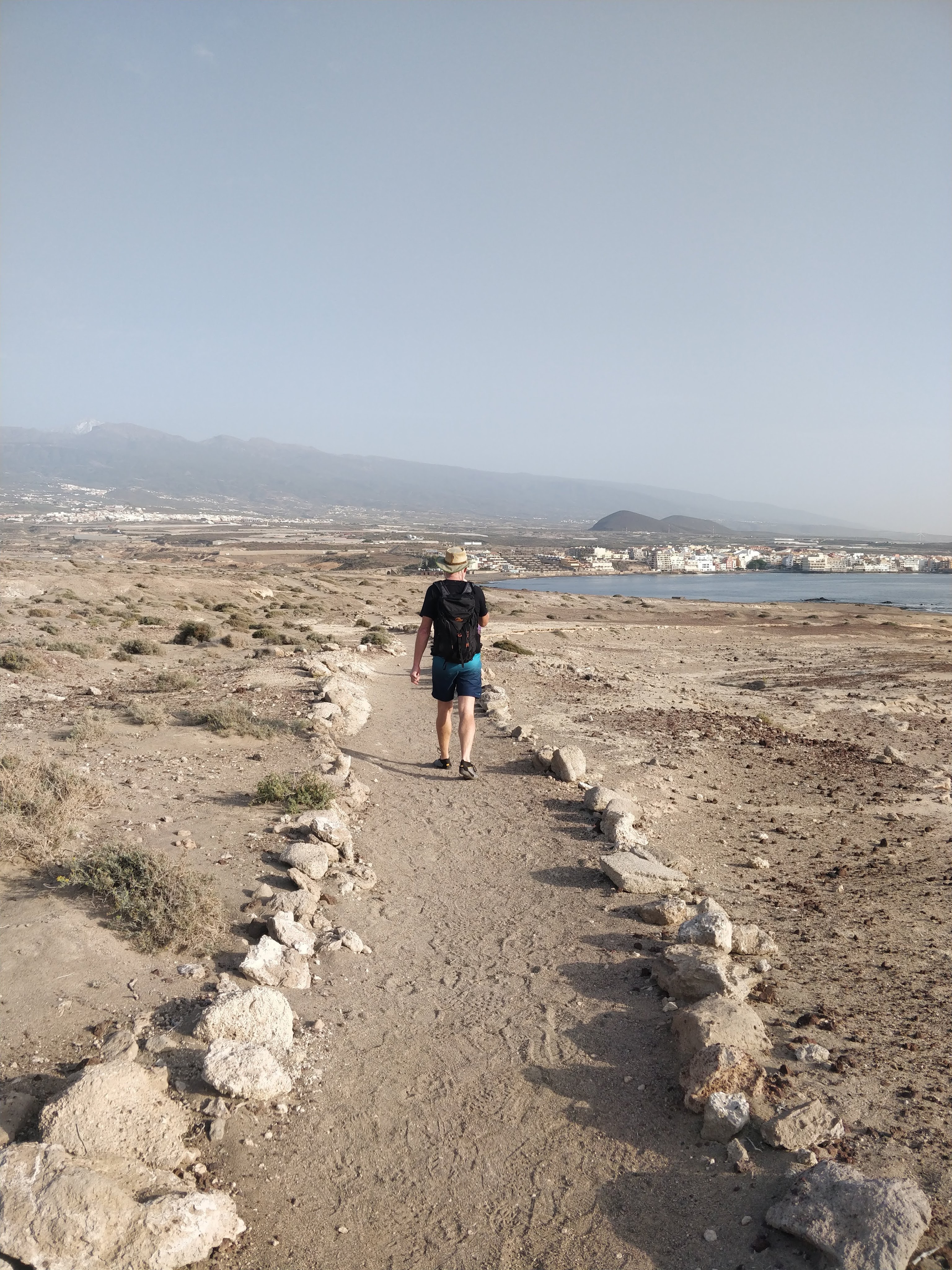
The main resort areas are busy with lots of restaurants and nightlife but it is possible to get away from the crowds. There are also quiet fishing villages, such as Arrieta, Punta Mujeres and Orzola where ‘real life’ goes on. Playa Honda is a lovely place near the airport with just a few beachfront cafes. We headed north and spent a few nights in Mala, a little village without even a grocery shop – but with a tapas bar and a restaurant – which was surrounded by fields of prickly pears and dry stone walls. These plants were used to raise the cochineal insect which made the carmine, the dye used in food, cloth, cosmetics and a drinks such as Campari. Carmine is now mostly synthetically produced – easier that the back breaking work of harvesting cochineal insects. On the north and west of the island, the beaches attract surfers and swimming is mainly confined to rocky pools. We visited Charco de Palo, a calm turquoise saltwater pool – usually -but when we were there, there were strong winds and high tides and enormous waves crashing in. Most of the villages are connected by coastal paths which make for some easy hiking.
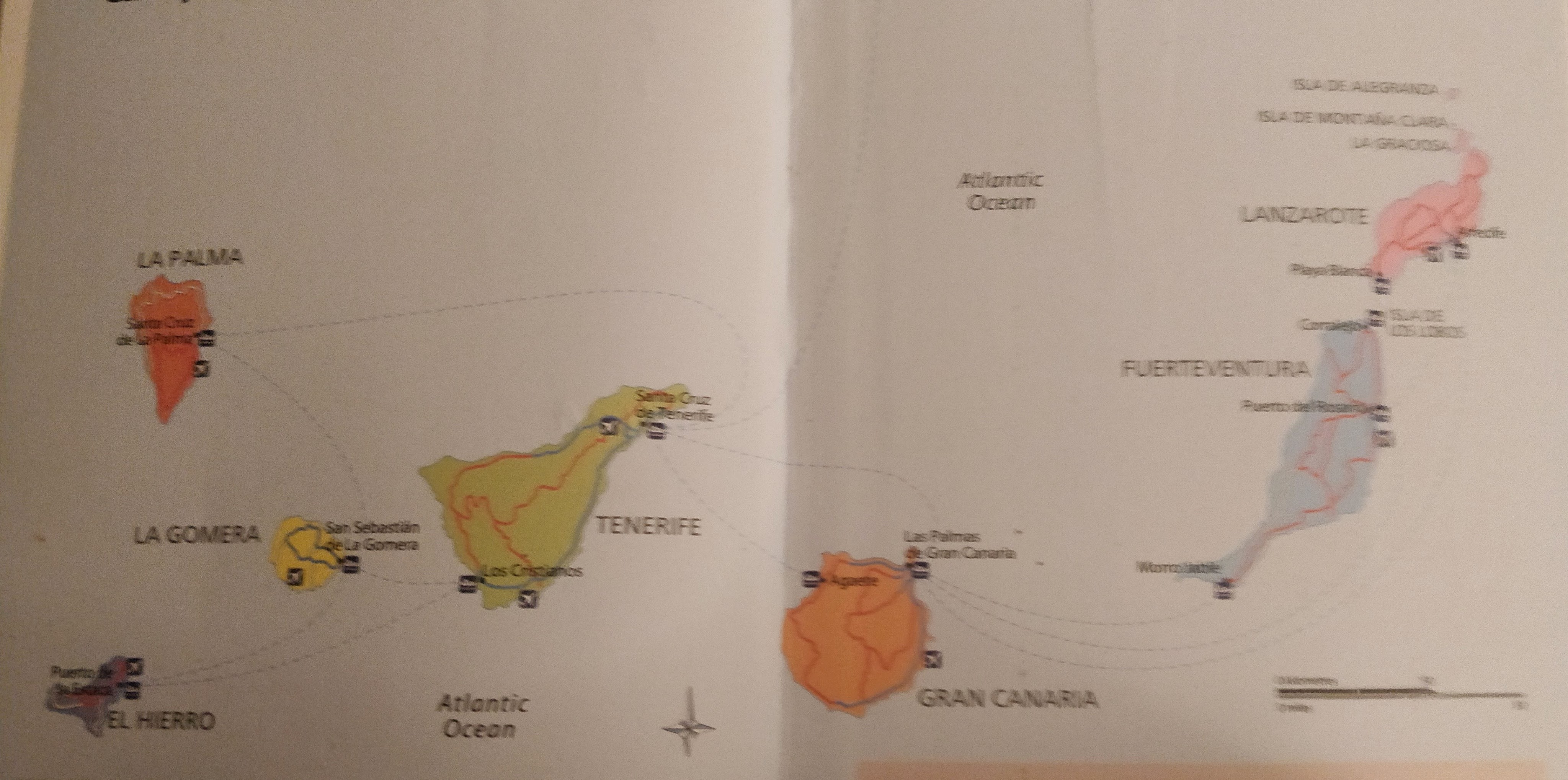
Map of the Canaries

The Canaries have been a revelation to us. We hadn’t visited any of them previously apart from a short visit to Tenerife six years ago. They weren’t our first choice of places to explore but Covid was still causing problems for more exotic destinations. Each of the islands has its own character but Lanzarote is special with its Martian landscape, low buildings and that combination of art and nature, thanks to the enduring legacy of one man, Cesar Manrique. Although I called this post Our Last Leg, we discovered that there is one more island, La Graciosa which became the eighth island in the archipelago in 2018 – before that it had the status of islet. It has no paved roads and its name translates as Graceful. We are getting the ferry there tomorrow for a few days. So I’ll keep you updated next time and give a rundown on the highs and lows of each island.
Thanks for reading😎

Lanzarote, the Final Leg😎

Fuerteventura, Life’s a Beach⛱.

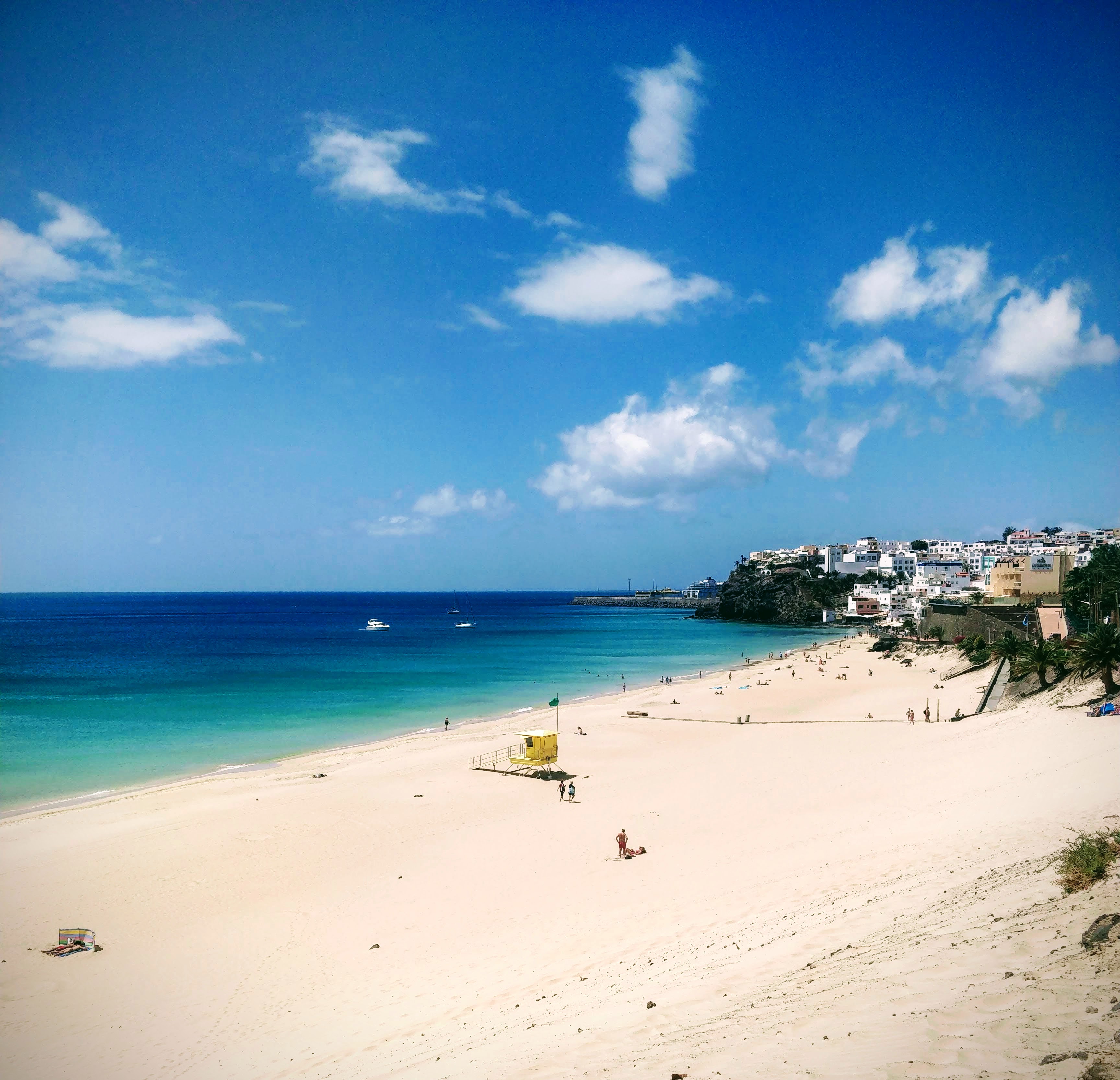
Morro Jable Beach, Fuerteventura

In Fuerteventura, life is certainly a beach. We have never seen so many gorgeous beaches with pale-white sands lapped by turquoise emerald waters under dazzlingly blue skies… or so many bare bottoms. We got the Fred Olsen Ferry from Las Palmas in Gran Canaria to Morro Jable in the south of the island. We left a (unusually) rainy Las Palmas and in just under two hours we were disembarking in Fuerteventura, our sixth island on our island hop around the Canaries.

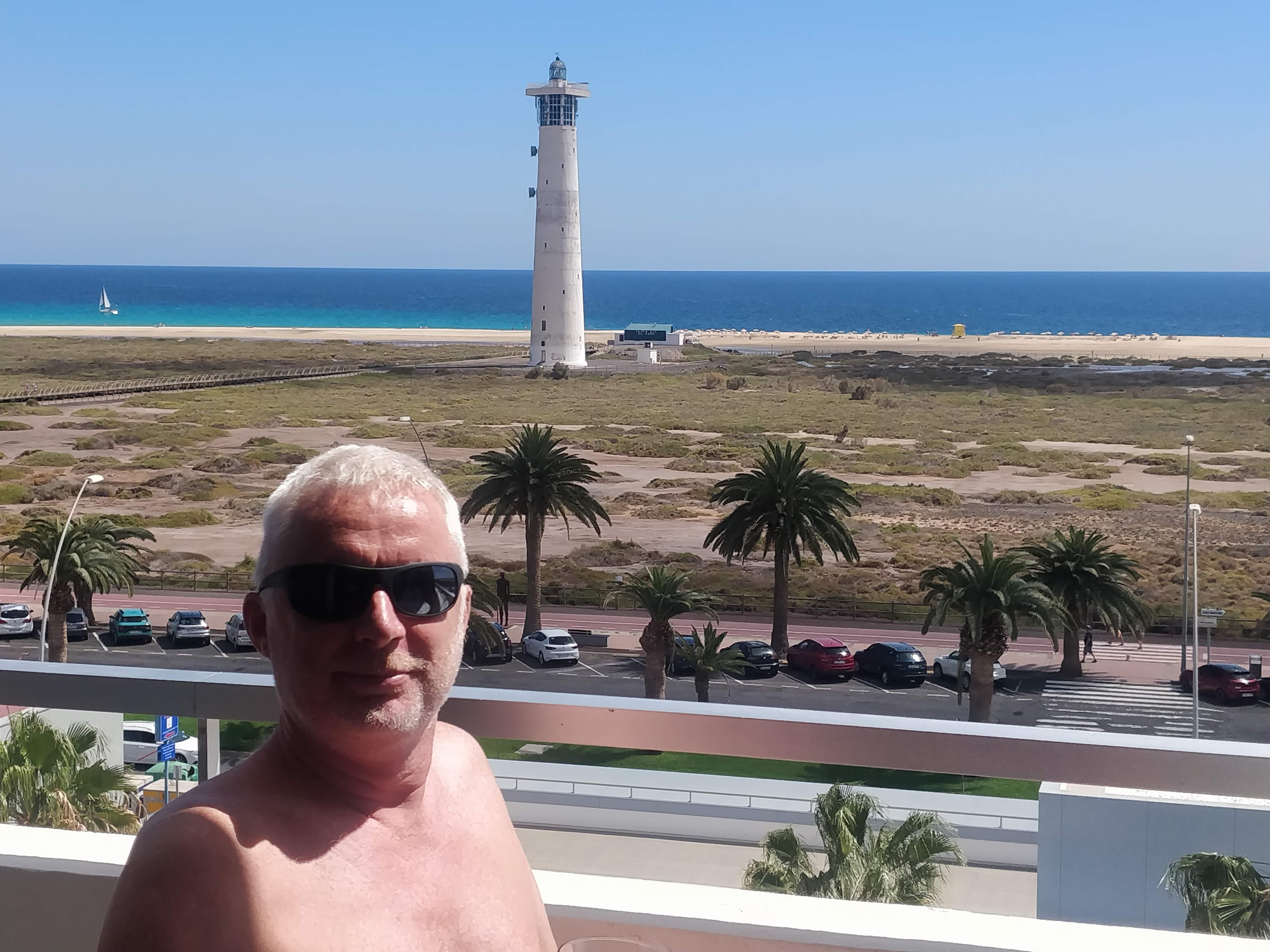
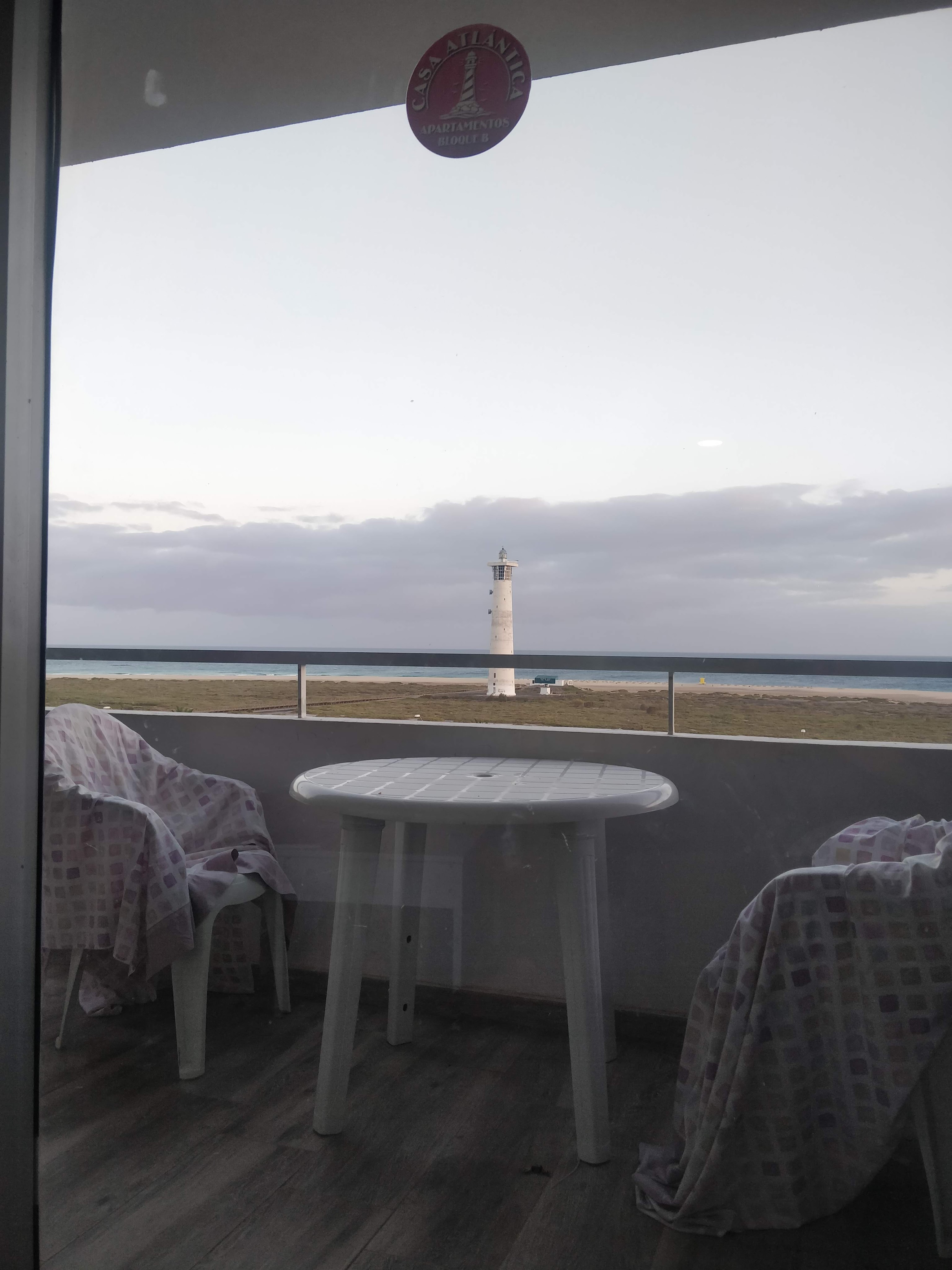
We had booked an apartment outside the village of Morro Jable overlooking Playa del Matorral. Our initial impressions were worrying – the apartment entrance was behind a row of unfinished retail units, the foyer was gloomy and not very clean. There was no reception desk but we were messaged instructions and a passcode for the key-box. The lift shuddered up to the fifth floor but when we opened the apartment door, it was light, bright and dominated by the view of the lighthouse which entranced us for the week. Morro Jable was once a quiet fishing village and has retained that village feel with tourist development stretching away from it to the north along miles of seemingly endless golden sands. There is also nature conservation with a broad strip of protected salt marsh between the beach and the avenue of hotels, duty-free shops and restaurants. So most accommodation here is back from the beach with boardwalks across the salt marshes to allow access to the fabulous beaches.
On all the Canary islands visited so far (we haven’t been to Lanzarote yet), the interior of the islands was spectacular with steep ravines, winding mountain roads, deep gorges and cloud forests. Not so on Fuerteventura.

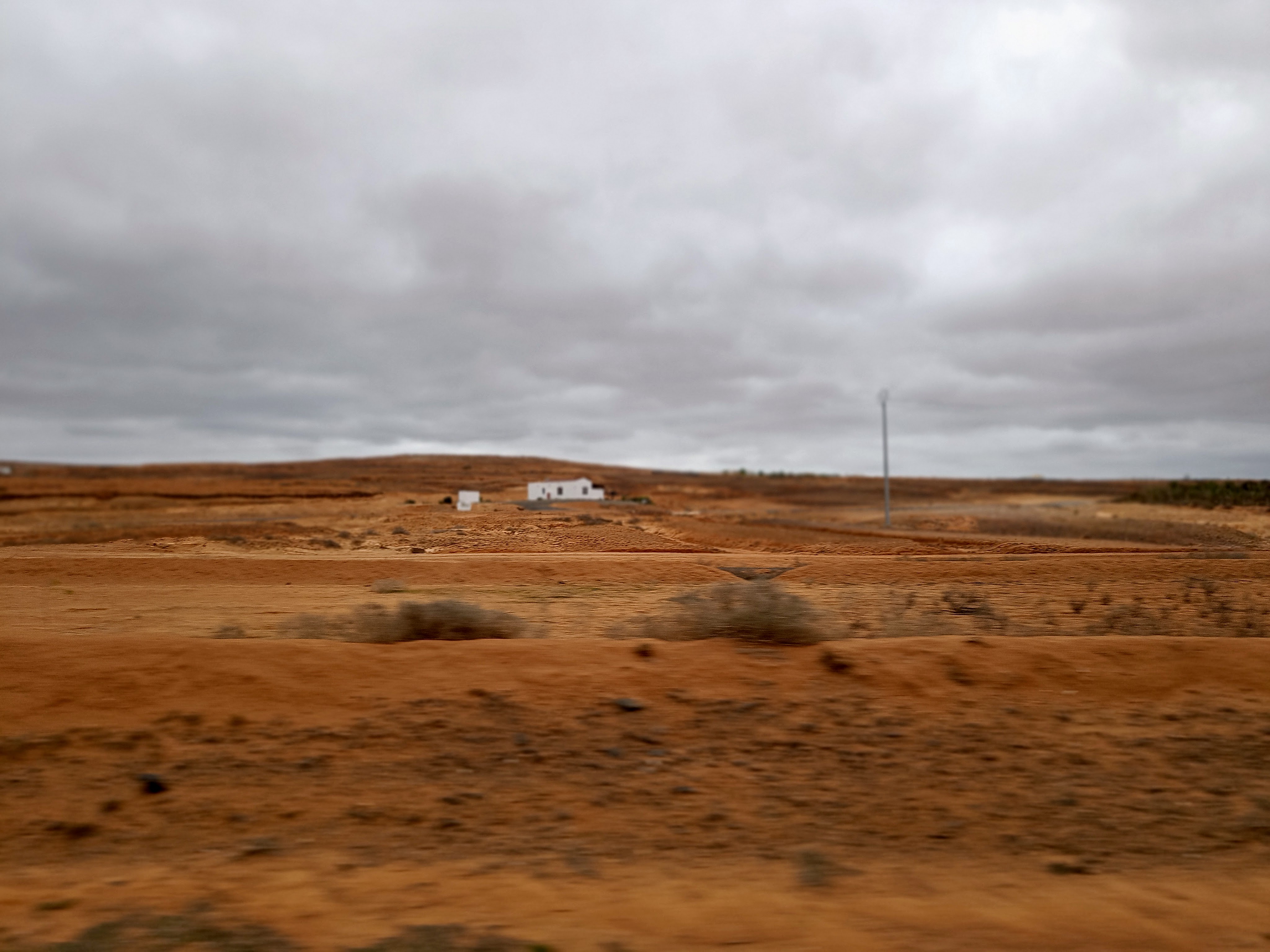
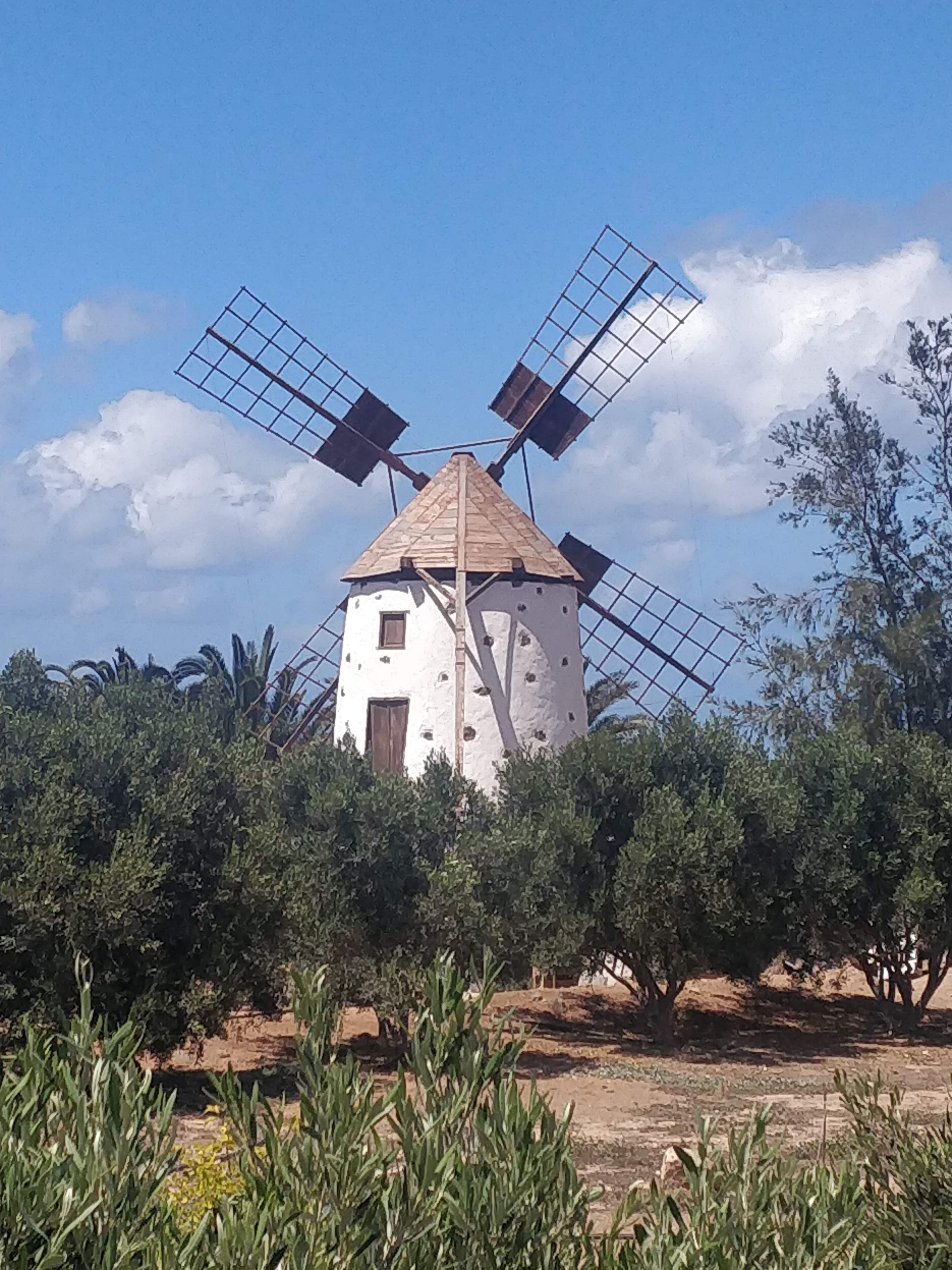
We travelled the whole island by bus and although the coast is certainly a ‘rhapsody in blue’, the interior is mainly brown stony earth dotted with low bare volcanic hills, little white towns, windmills and the occasional goat farm. The island is famous for its goats cheese. There was a stark beauty to the arid landscape but it was difficult to imagine that Fuerteventura once supplied grain to the other islands. Water has always been an issue here and there was still evidence of irrigation channels in barren fields that once made use of every drop that fell. However, livestock and clearing of native vegetation have taken a heavy toll on the land. All water in Fuerteventura now comes from the sea and is desalinated in a number of desalination plants around the island. We got a few heavy rain showers and it was sad to see such a precious resource just running down the street.

On April 1, we headed north and arrived outside the apartment building in El Cotillo that we had booked on Booking.com, surprised that we hadn’t got any details for checking in. We phoned the contact number to find that we had booked online for May 1….instead of April 1. It seemed appropriate that it was Fool’s day🤣 but we got sorted – eventually. El Cotillo has a beach to suit everyone, beaches with big rollers for windsurfers and kite surfers, tranquil lagoons for swimming, a pebble beach with rocks for snorkelling and beaches in either direction for walking. With the turquoise waters and the blue and white houses, we were reminded of the Greek islands. On a sunny Saturday April lunchtime, buskers sang Mumford and Sons down by the harbour while around the corner, a three piece band played Beatle classics with Spanish lyrics. But there was a lot of building work and expansion going on in El Cotillo and hopefully it will retain its charming, laid-back vibe.
We moved on to Corralejo, the major tourist centre in the north of the island which is much bigger and livelier than El Cotillo. This is a party town with loads of bars, restaurants and clubs in a gorgeous setting with beaches and sand-dunes stretching south of the town and a long path by the coast for walking. But the sea can sometimes be quite rough here and it lacks the tranquil lagoons of El Cotillo. After so many key boxes where we checked in without any human interaction, we were delighted that there was a receptionist in Hesperia Bristol Playa, our accommodation in Corralejo. But she was coldly efficient, dismissing our efforts at speaking Spanish, demanded to see our Covid certs (the first request in months) She slapped wristbands on our wrists for identification purposes, swatted us away like an inconvenience and told us we were too early to check in. Caoimhin cut off his wristband within an hour, objecting to being branded😁

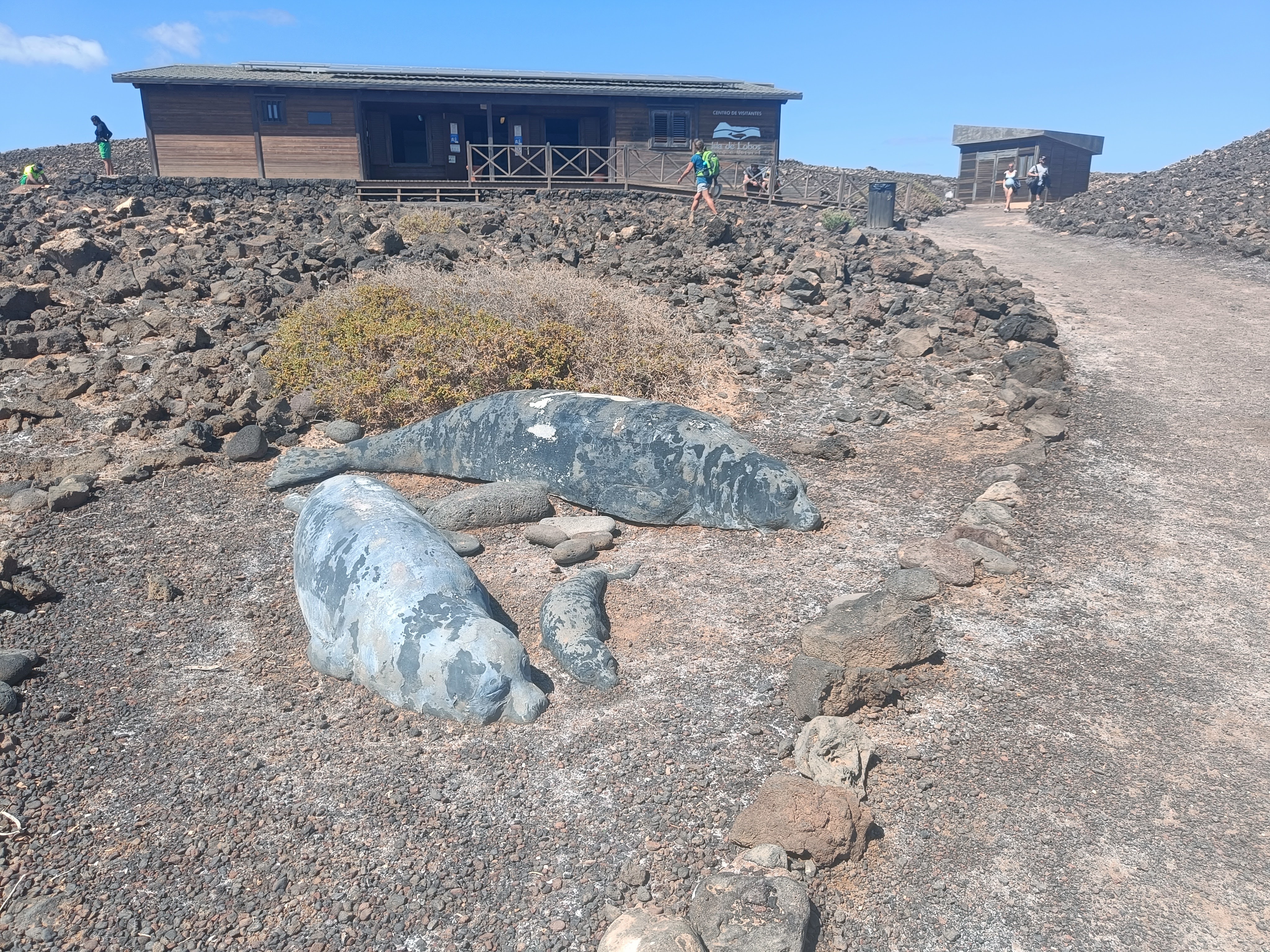
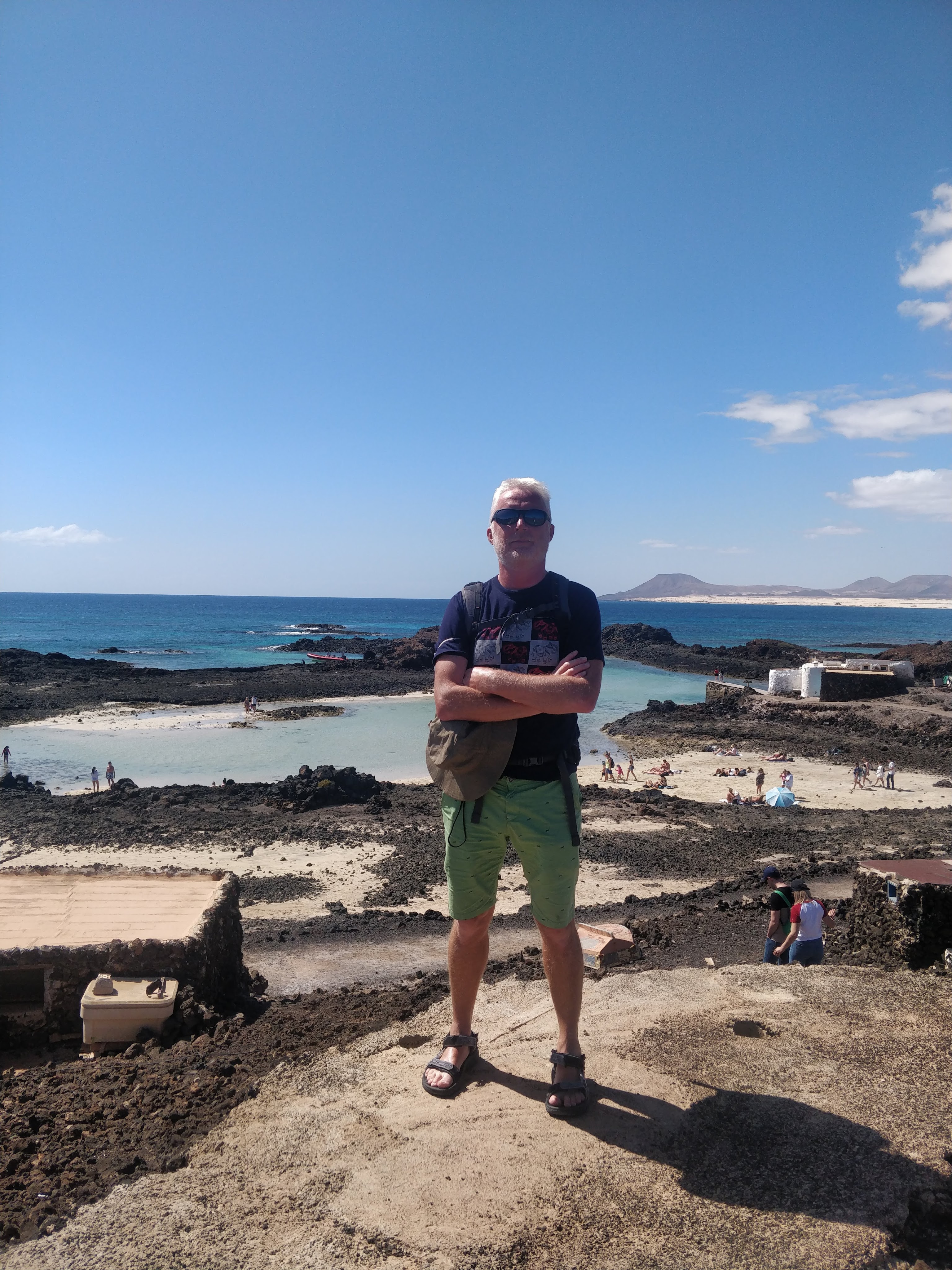
Los Lobos is a small island between Lanzarote and Fuerteventura and is a popular day trip. In the past it has been a hang-out for pirates and a centre for the slave trade but is now a Nature Reserve, a bird sanctuary and a pit stop for migrating birds. It takes its name from the seals that used to frequent its shores in great numbers. Jose de Viera y Clavijo, a Spanish historian wrote around 1800 ‘These animals are highly intelligent and capable of great education…..if you catch them sleeping, you can kill them by hitting them around the snout with a club, since this is the most sensitive part of the their body.’ Obviously lots of people took this advice as the seals have been extinct in the region for a hundred years. The island has some lovely sandy beaches, one restaurant and no accommodation. Its volcanic, stark and barren but there is life especially the constant flicker of lizards and salamanders – one even joined us on the rocks when we were eating lunch hoping for some crumbs. In an effort to combat human effects in this fragile landscape, visitor numbers are limited and a permit has to obtained from the National Park authorities. Its free and available online. But nobody asked us for our permit and there were a lot of people on the island…most didn’t venture far from shore but just headed straight for the beach for a swim in crystal clear waters but the interior is worth a hike.
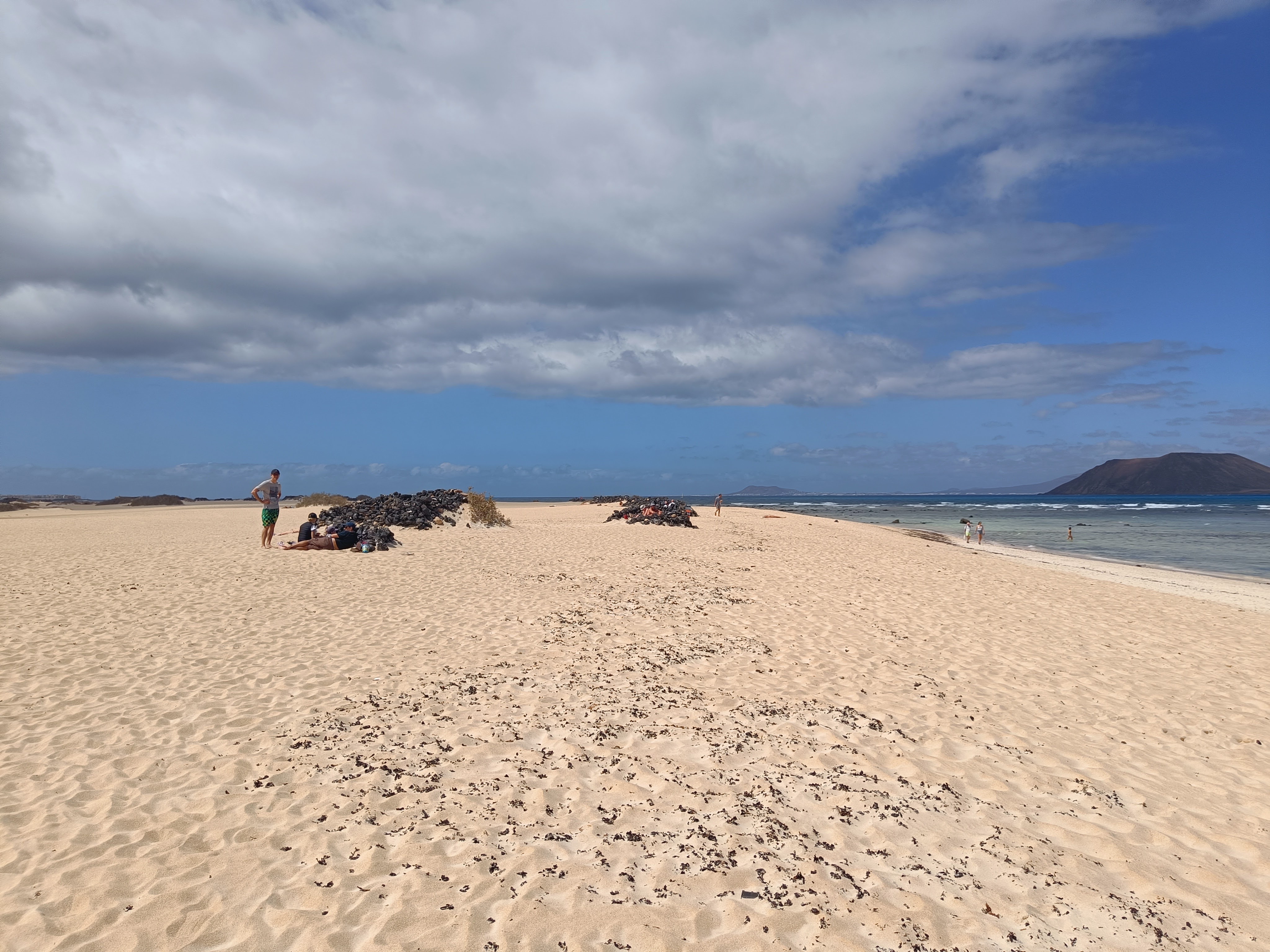
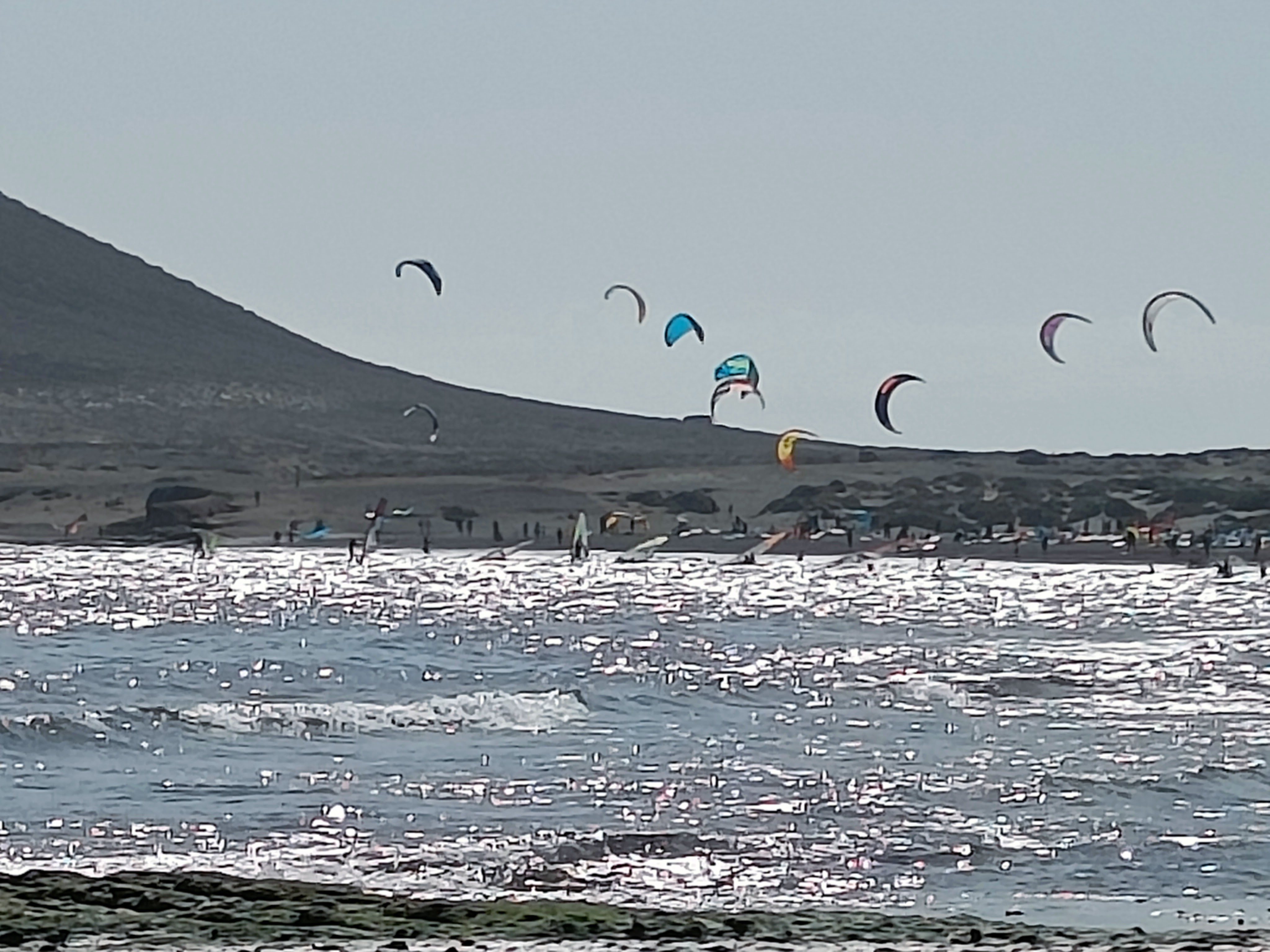
The wind was a force to be reckoned with in Fuerteventura. Temperatures were in the low to mid twenties with lots of sunshine but it felt much cooler unless you could find shelter from the breeze. We were puzzled by the stone circles on many of the beaches – they almost looked Celtic – until we realised that they were windbreaks made by gathering volcanic rocks, often sheltering bronzed naked bodies. Nudity is widely accepted and not confined to any particular beaches on the island so a naked body (usually male and middle-aged) could appear from any direction. But the winds were fabulous for sailing and wind surfing and the sky over the beaches was usually full of brightly coloured sails.

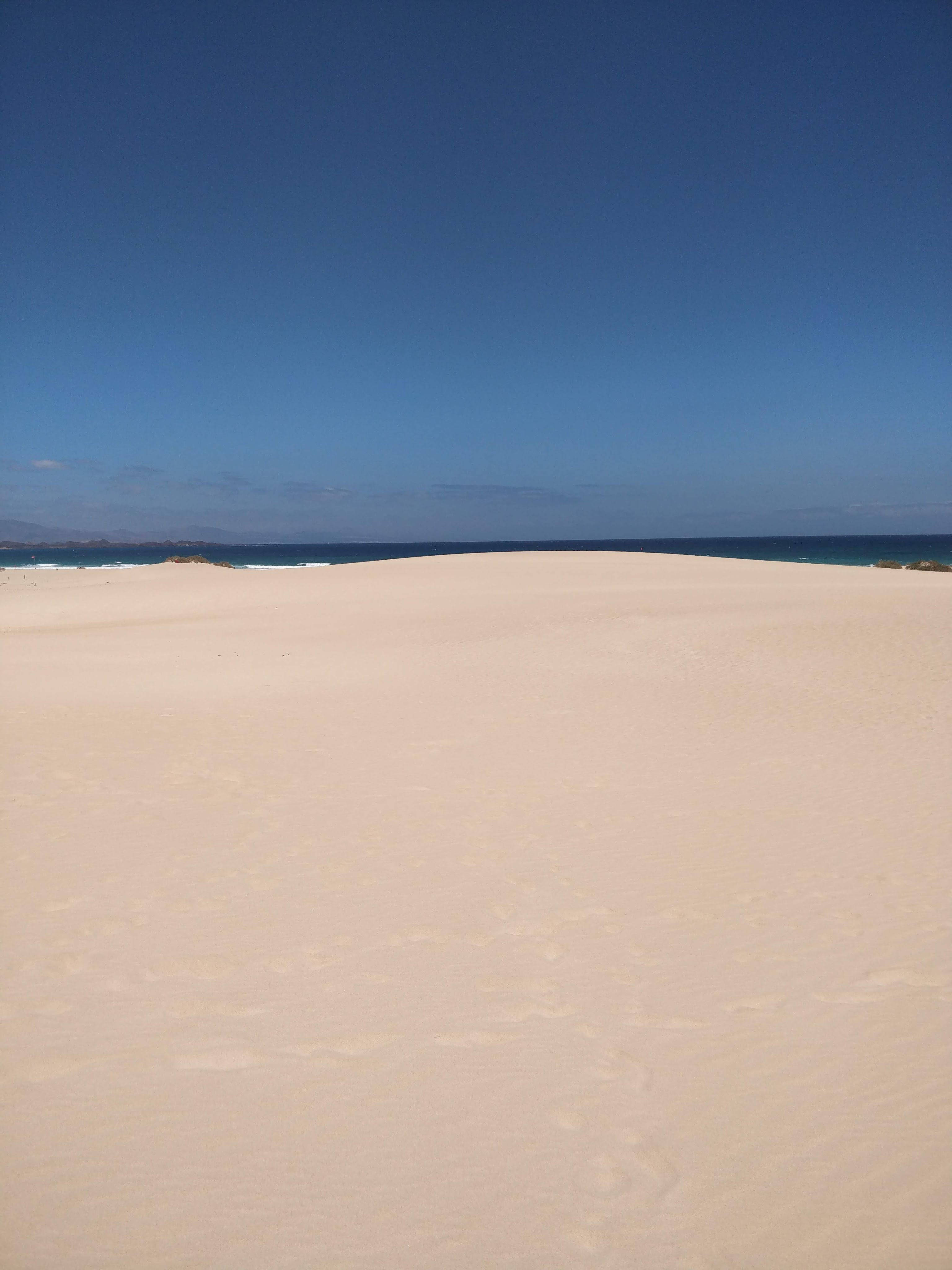
Colours of Fuerteventura, sand and sky(similar to flag of Ukraine)

The colours of Fuerteventura are like block paintings -maybe even a Sean Scully – vivid swathes of bright colours of blue and gold and brown. Here we are only 97 kilometres from the African coast although there is very little evidence of African influence. But that proximity is tantalisingly appealing to migrants, many of whom made the perilous journey in small ill-equipped boats in an attempt to reach Europe. The tragedy is that many drown (41 people rescued and 17 drowned on Feb 4 last when their dingy capsized)

Tomorrow, April 11, we get a ferry to Lanzarote, a short 30 minute boat ride away. We can even see it in the distance when we look north from Corralejo. All the Canary Islands are quite different but Fuerteventura is blessed with sun and sand, the whitest sand that we have seen on any of the islands. Elsewhere black sand beaches from lava dust and volcanic rocks were more common. Apparently, the sand in Fuerteventura is formed when tropical fish eat coral which is crushed in their intestines and discarded in the form of sand. So in other words, fish pooh! Isn’t science wonderful?🤣🤣

Until next time…..thanks for reading

Fuerteventura, Life’s a Beach⛱.

Gran Canaria, Paradise lost and found🤔

We arrived in Gran Canaria on March 16 and our first impressions weren’t good. It was very windy (even by Canarian standards) with a damp drizzle in the air. Our ground floor apartment was comfortable but the only window had opaque glass so we had to have lights on all the time, There was no outside space except for a small roof terrace that was a wind tunnel with fake grass and no sun. We had picked the apartment in Playa Burrero on the east coast because it was near the beach in a little seaside town -we didn’t want to stay in the a big holiday resort. The price was reasonable and we had booked it for a week – so unlike our usual nomadic approach where we move on every couple of days.

Playa Burrero

We strolled around Playa Burrero in the dusky damp that first evening. The beach was rough, stony and deserted, the seafront was a row of dilapidated buildings with peeling paint and boarded up windows. There were no seaside cafes, no bars, no shops -there was a Spar up the street where the alcohol and chocolate were kept behind the counter and our backpack also had to be handed in behind the counter before we were allowed into the shop. Just when we thought that things couldn’t get worse, there was this deafening noise from the sky, a roaring that had my heart thudding. We were near the airport but this was something entirely different. We looked upwards and couldn’t see anything but we could smell and even taste jet fuel in the air. It was petrifying – I had never heard anything like it. Our landlady told us later that they were fighter jets from the nearby Spanish airbase on manoeuvres in preparation for possible escalation of the war in Ukraine – which brought the war very close indeed and gave us a little taste of what it might be like if the jets over our heads had sinister intent. These manoeuvres with their ferocious ‘surround-sound’ became a regular feature of our stay at Playa Burrero.

There wasn’t a shamrock to the found in Playa Burrero so we got a bus to Las Palmas, the capital city of Gran Canaria. The bus service in Gran Canaria, like all the other Canary islands that we have visited, was excellent, efficient and cheap. Though the bus windows, we noticed that there was a weird haze over both the mountains and the sea. This was due to calima, a layer of Saharan dust that sometimes blows in affecting visibility and air quality.

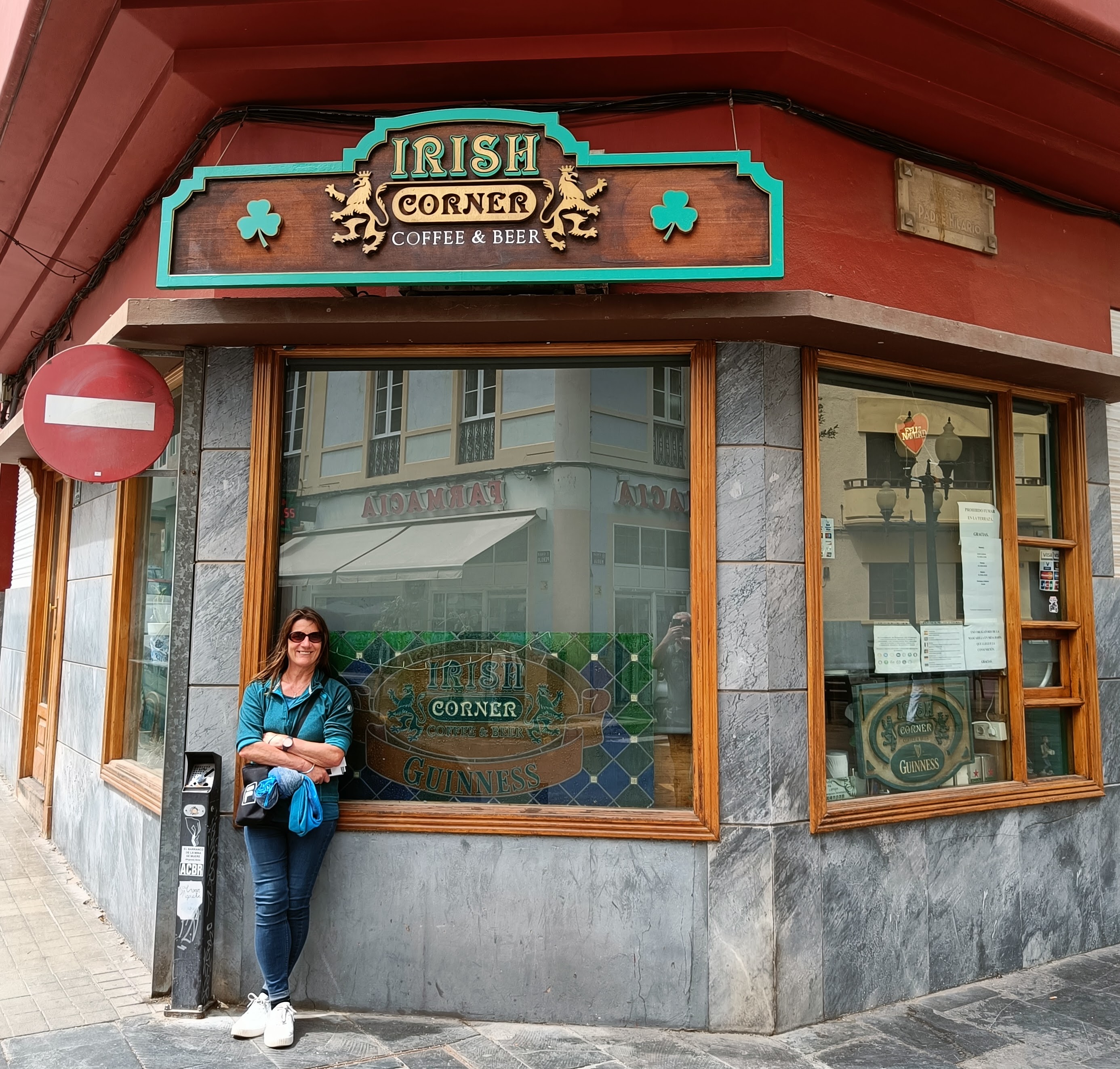
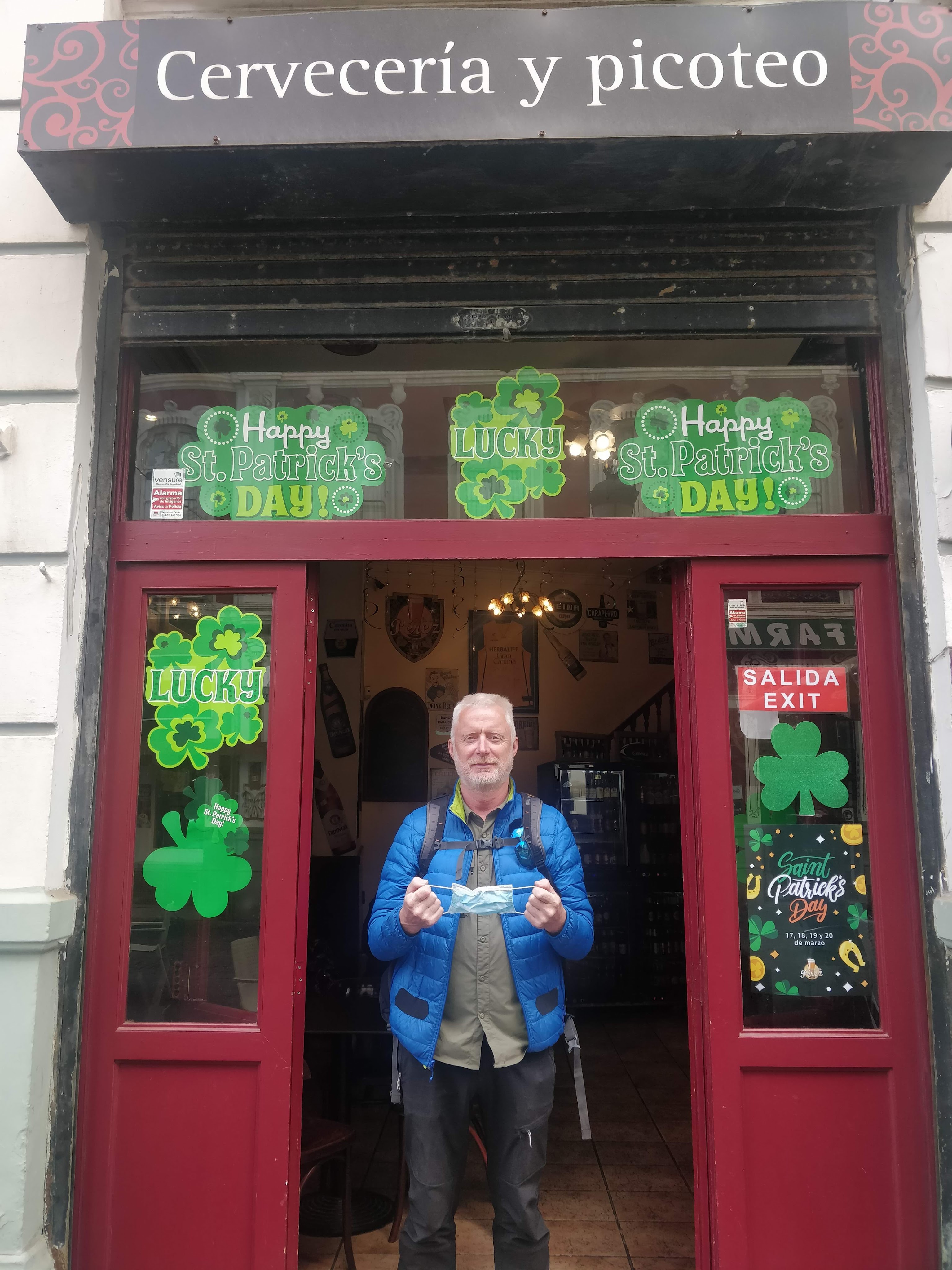
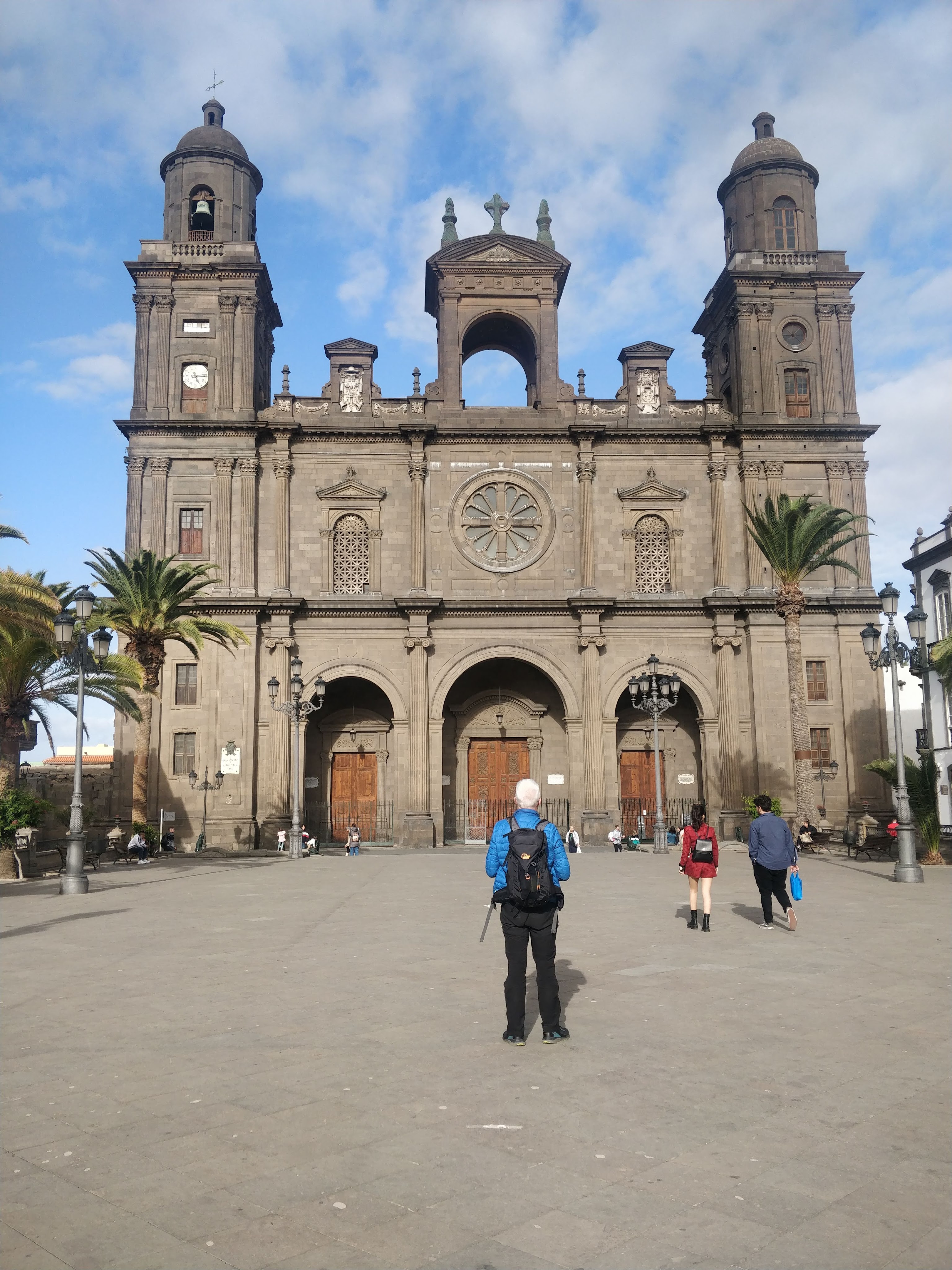
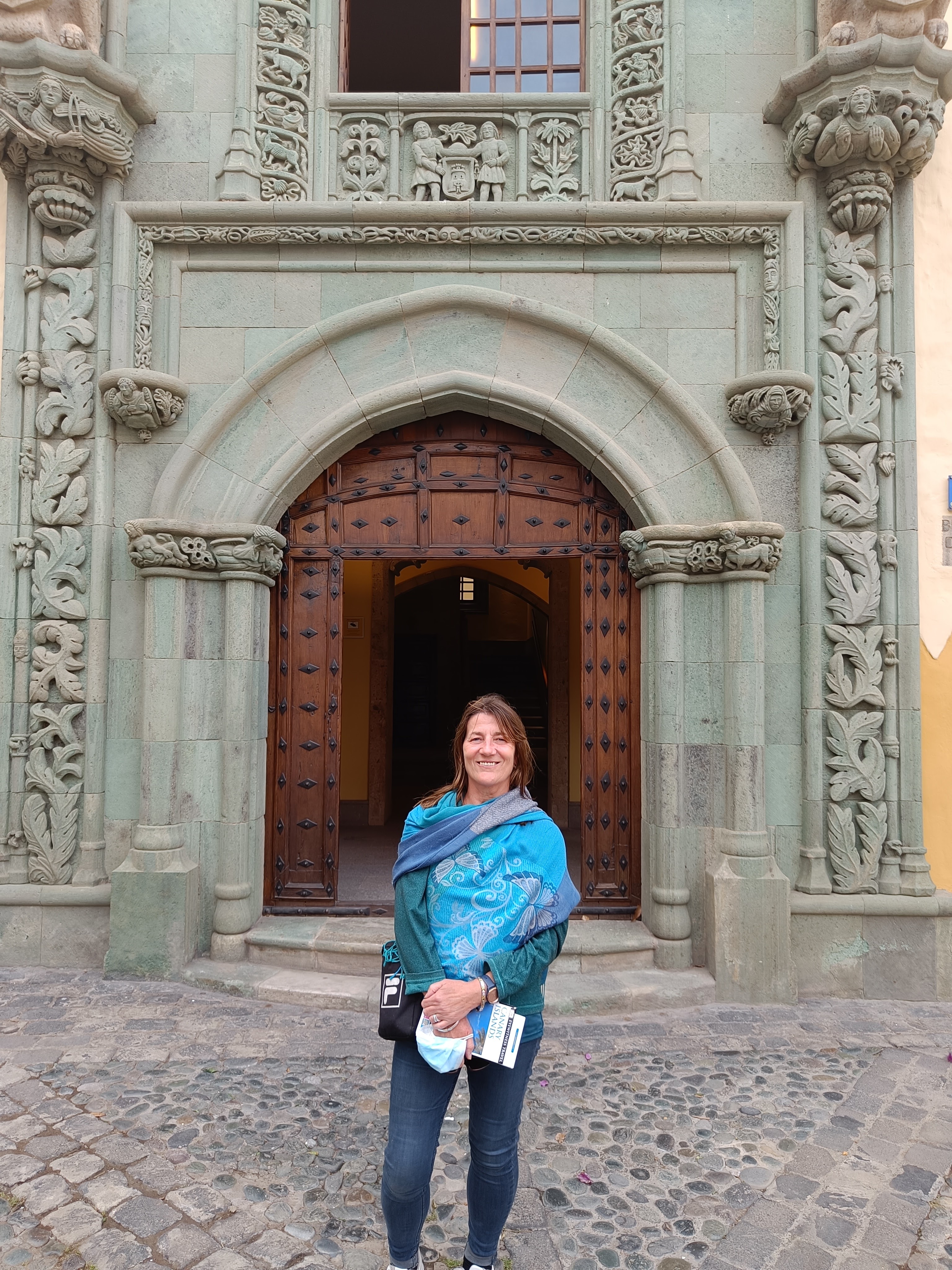
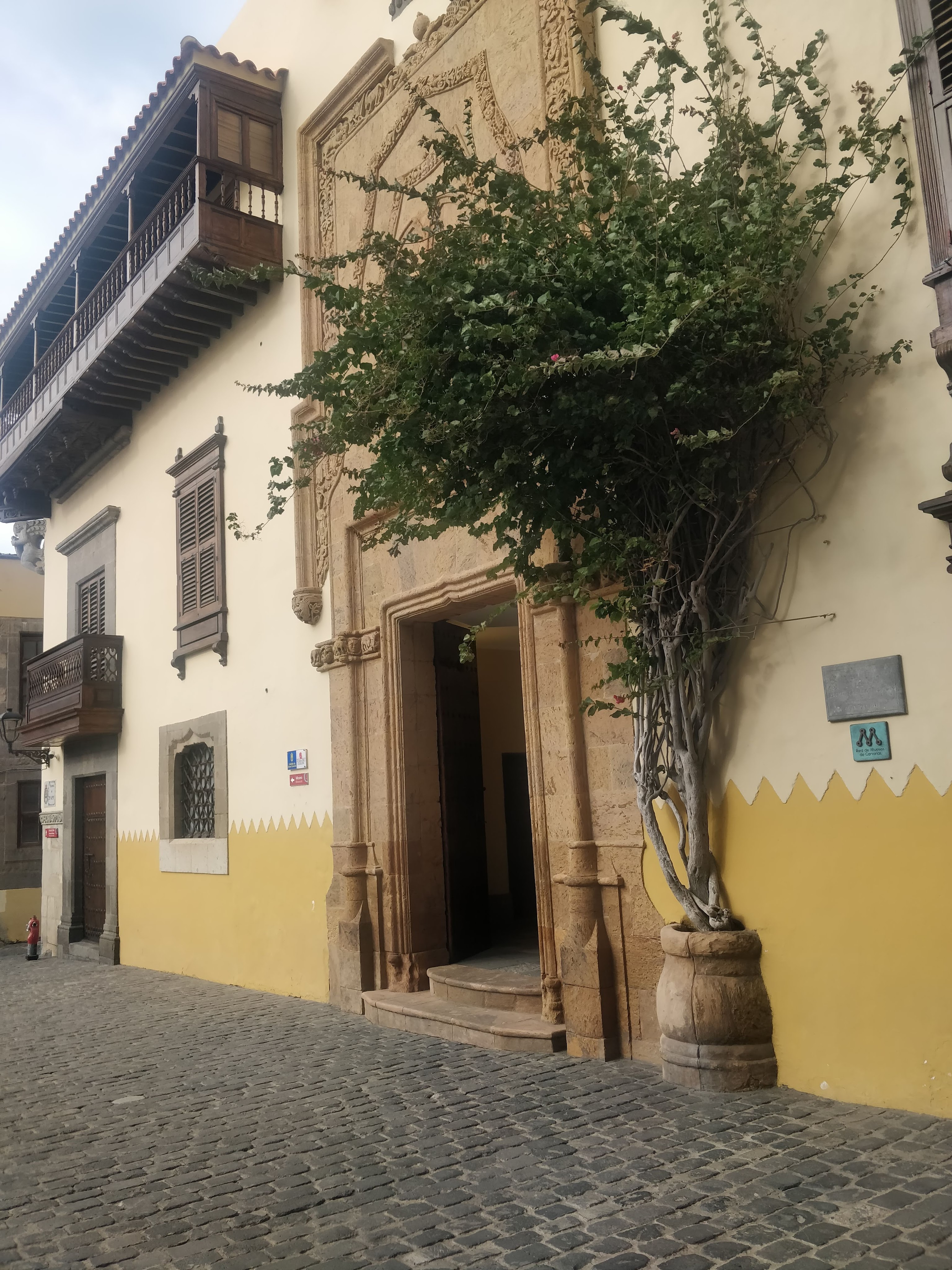
The beauty of Las Palmas took us by surprise. its a gorgeous city and far bigger than we expected – it’s the largest city in the archipelago and has an air of wealth and history. It was ‘founded’ in 1478 by the Spanish conquistadors (after they had wiped out the native Guanche) We made our way to a pub called the Irish Corner, thinking that was a good place to start, given the day that was in it. The pub was closed with a dusty, sun-wizened sign saying that it would open at 7pm (on Paddy’s Day!) We eventually found a bar decorated with shamrocks and staffed by young guys wearing leprechaun hats where a can of Guinness was €5. After that we decided it was better (and cheaper) to drown the shamrock with local wine or beer. The old district (Vegueta) was charming and perfect for wandering with its narrow cobbled streets, decorated balconies and fine architecture. There was Casa Colon (yes, Christopher Columbus was here as well) and the imposing Santa Ana Cathedral. It was a thoroughly enjoyable day meandering around, having wine and tapas in one place, coffee and sweets in another, beer and almonds in another. Getting on the bus for home, we had some difficulty pronouncing our destination, El Burrero (no, we were NOT slurring our words). The bus driver gave us lessons on the correct pronunciation so the whole bus knew where we were going and several passengers shouted El Burrero to make sure we got off at the right stop😁

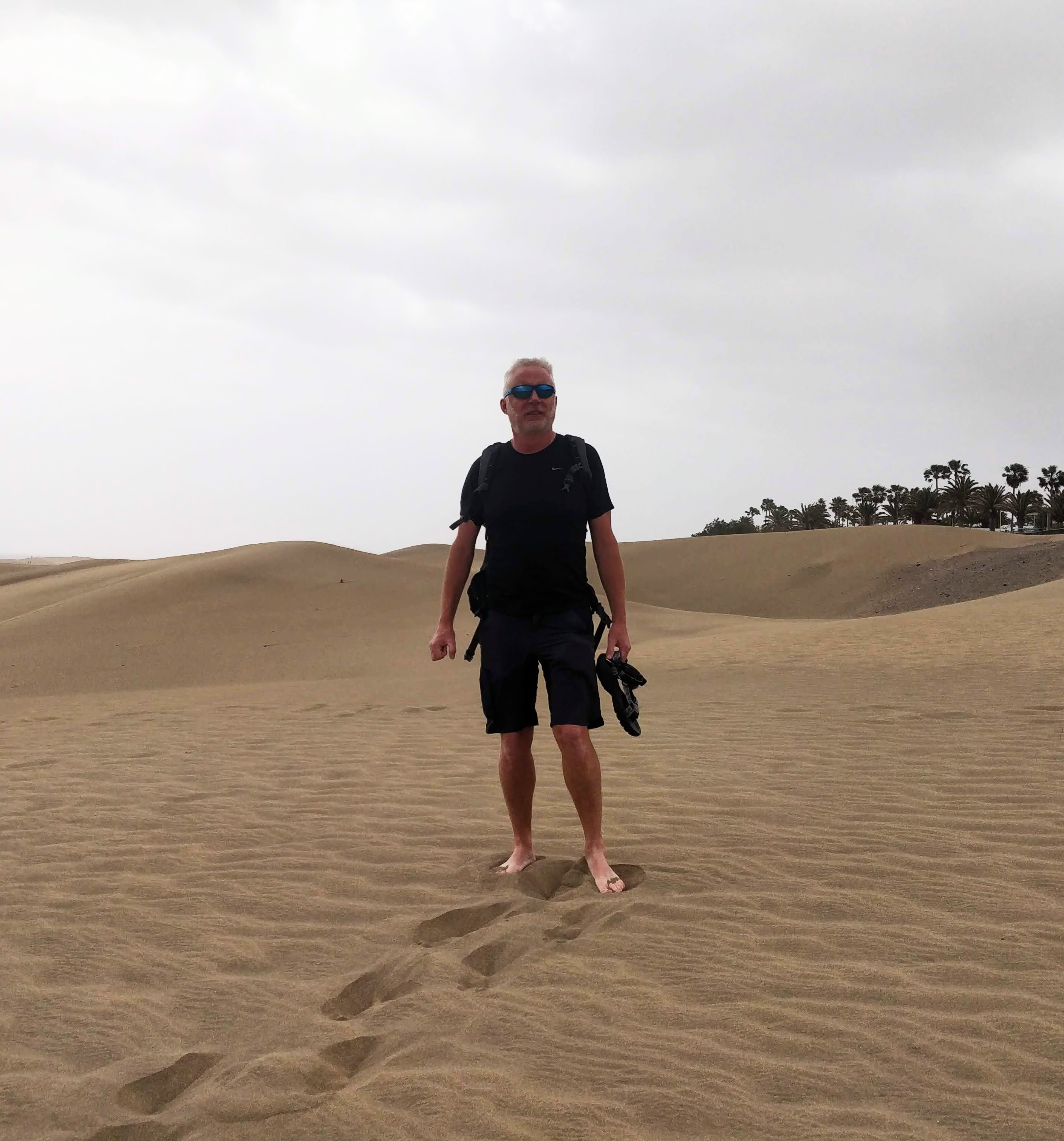
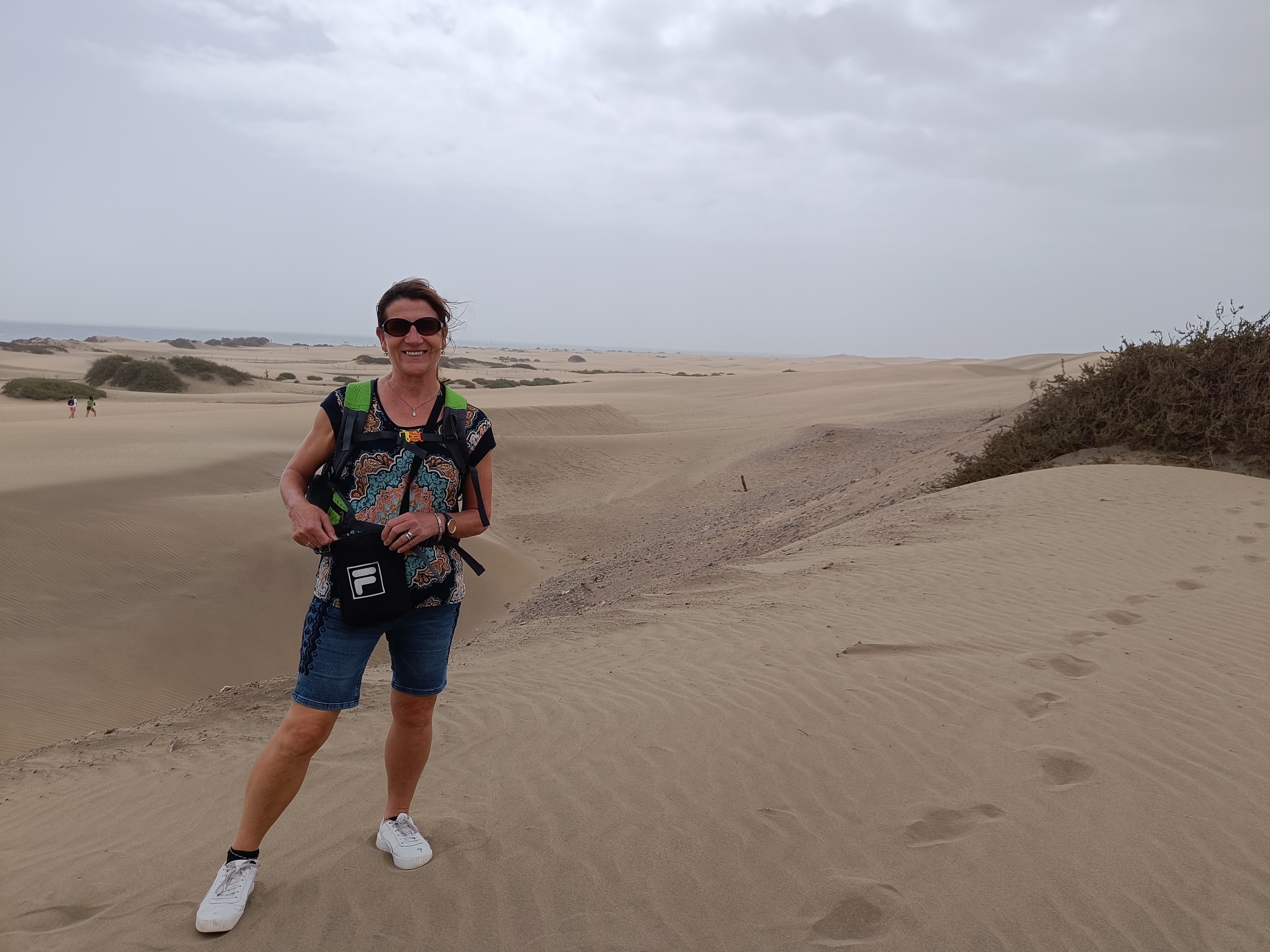
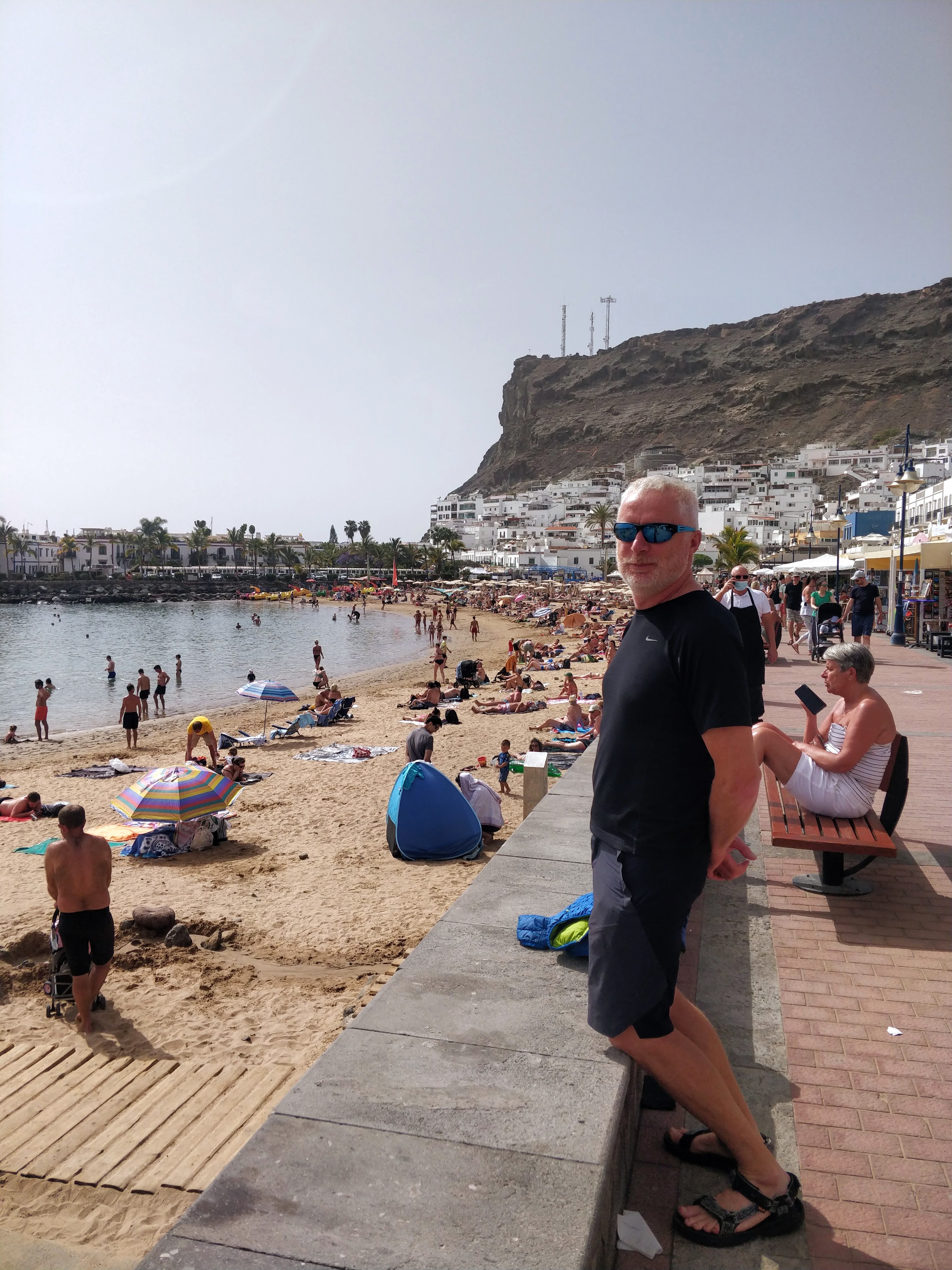
Most tourists arrive in Gran Canaria and go south to the big resorts. Gran Canaria gets a lot of visitors, well over 4 million people visited in 2019, the last ‘normal’ year. So when we hired a car for a few days, mainly to get out of Playa Burrero, we first headed south for a look. We had no problem with car hire here unlike our exploits in La Gomera and La Palma and we hired from Auto Reisen, €30 a day. A motorway runs most of the way along the coast (excluding the western part) but the countryside near the motorway is not pretty – its very rocky, flat and barren with distant mountains but lacking the ‘wow’ factor of the other islands. Maspalomas in the south is a huge sprawl of holiday complexes, the largest purpose built resort in all of Spain and can accommodate more than 300,000 visitors at a time, according to DK Canary Island Guide As soon as we parked the car, we heard ‘Its a long way to Tipperary’ being belted out from one of the beachside cafes. The afternoon was cloudy, the sangria was flowing, the cafes and bars were bustling, the waiters were hustling for business, the stall owners were touting for sales. It was such a contrast to where we were staying in Playa Burrero or anything we had experienced so far, that we were a little overwhelmed….we could have been on a different planet. But what profitable use of barren land that was unsuitable for growing anything else but tourists. A blustery cool wind ensured that the beach was nearly empty and there was only a couple of hardy souls in the water. The famous dunes of Maspalomas were really beautiful, golden sand undulating for miles and miles….a fantastic amenity so close to the resort and a place to escape. We drove on to Puerta de Mogan, a small sheltered cove at the end of a green fertile valley. With protection from the wind, the beach was packed with sun worshipers with lots of people swimming and a much less frantic atmosphere than Masapolomas. We also got a parking ticket despite having searched for signs about parking violations when we parked- the parking warden had a bonanza as a string of cars all got fines. The wind that can be the enemy of beach goers is a blessing for the renewable energy sector. In Gran Canaria, there are windmills everywhere, in the sea, on the mountains, near towns and villages – we even saw one in the forecourt of a petrol station. The island is well on its way to overturning its dependence on imported fossil fuels.

When we ventured into the interior of the island, we discovered that it was spectacular with mountains, deep canyons, craters and calderas It had a varied landscape with pine forests, terraced mountain sides, lush valleys cultivated with fields of bananas, papayas and avocados and all interspersed with incredible rock formations. It was also extremely busy with tour buses and lots of cyclists on narrow roads that wound around the mountains. The ‘must-see’ spots, such as the mirador at Pico de las Nieves, the highest point on the island was basically a parking lot. On a clear day, the views are reputed to be stunning but when we visited, clouds were drifting across and the main entertainment was watching the manoeuvring of tour buses, campers, cars and motorbikes as they tried to do U turns in tight spots. The impressive Roque Nublo, a volcanic rock about 80 metres high, is considered one of the largest natural crags in the world and was a place of worship and sacred to the Guanche people. Now it is the National Monument of Gran Canaria and a beacon for tourists and hikers.

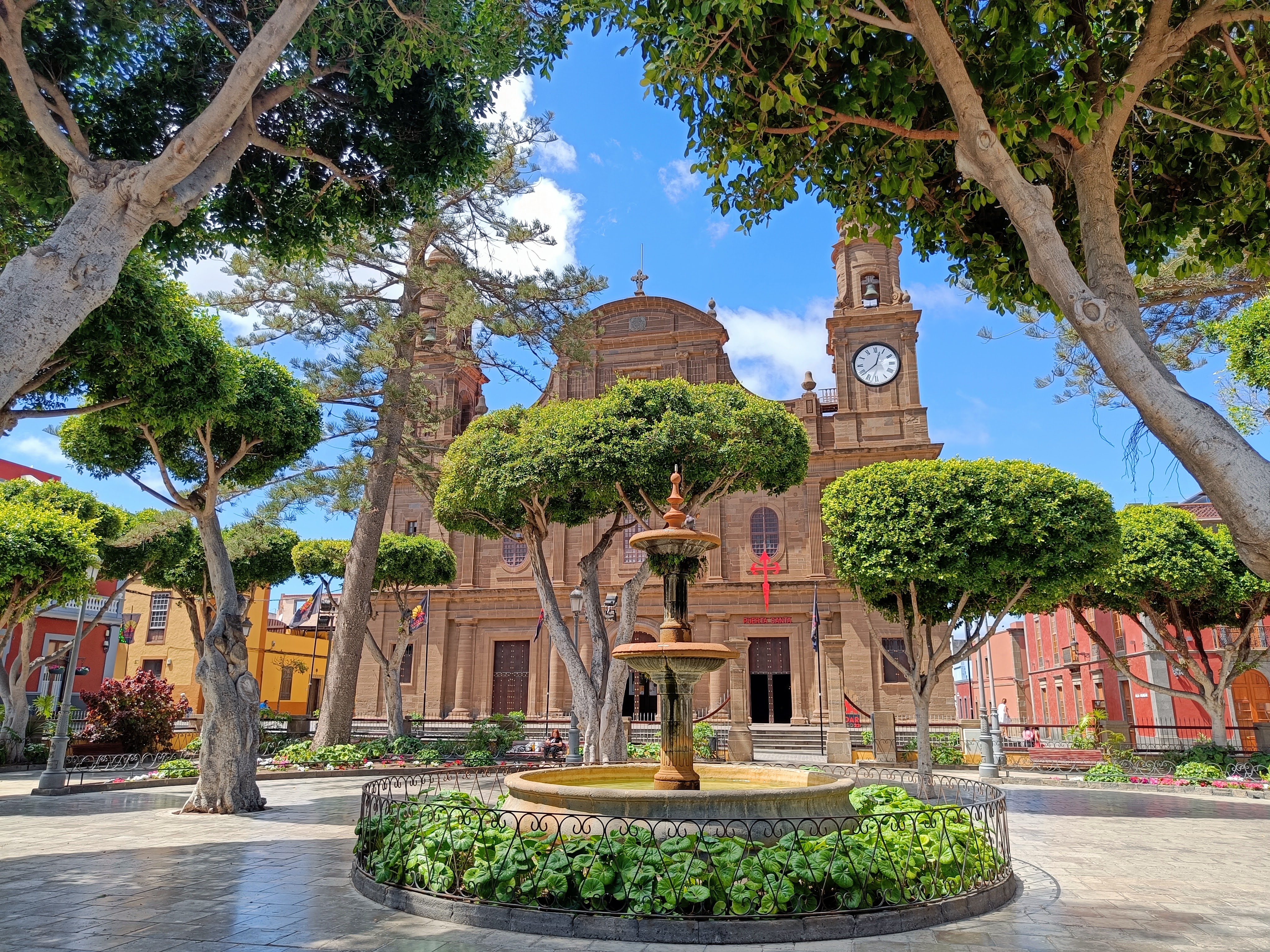
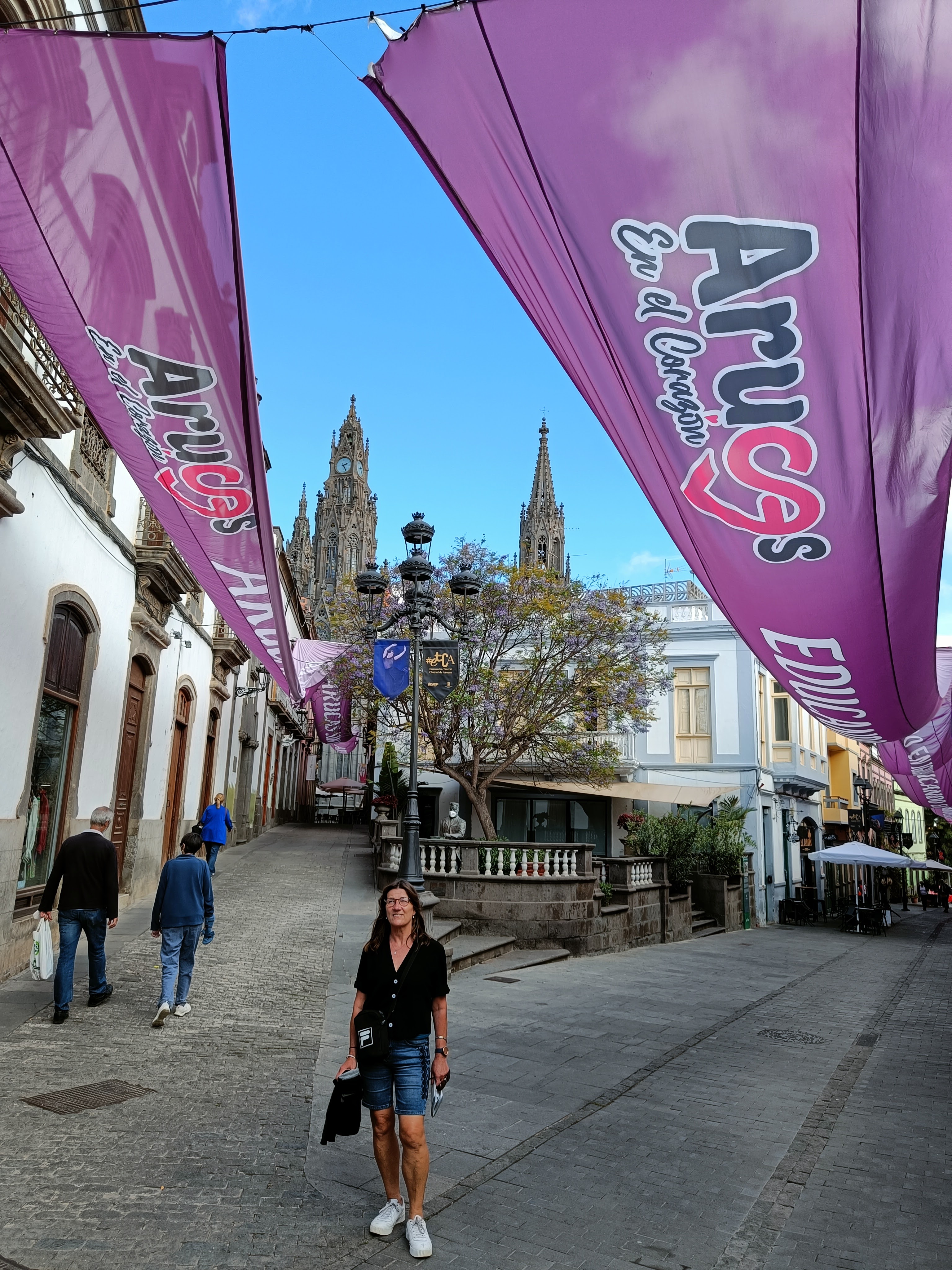
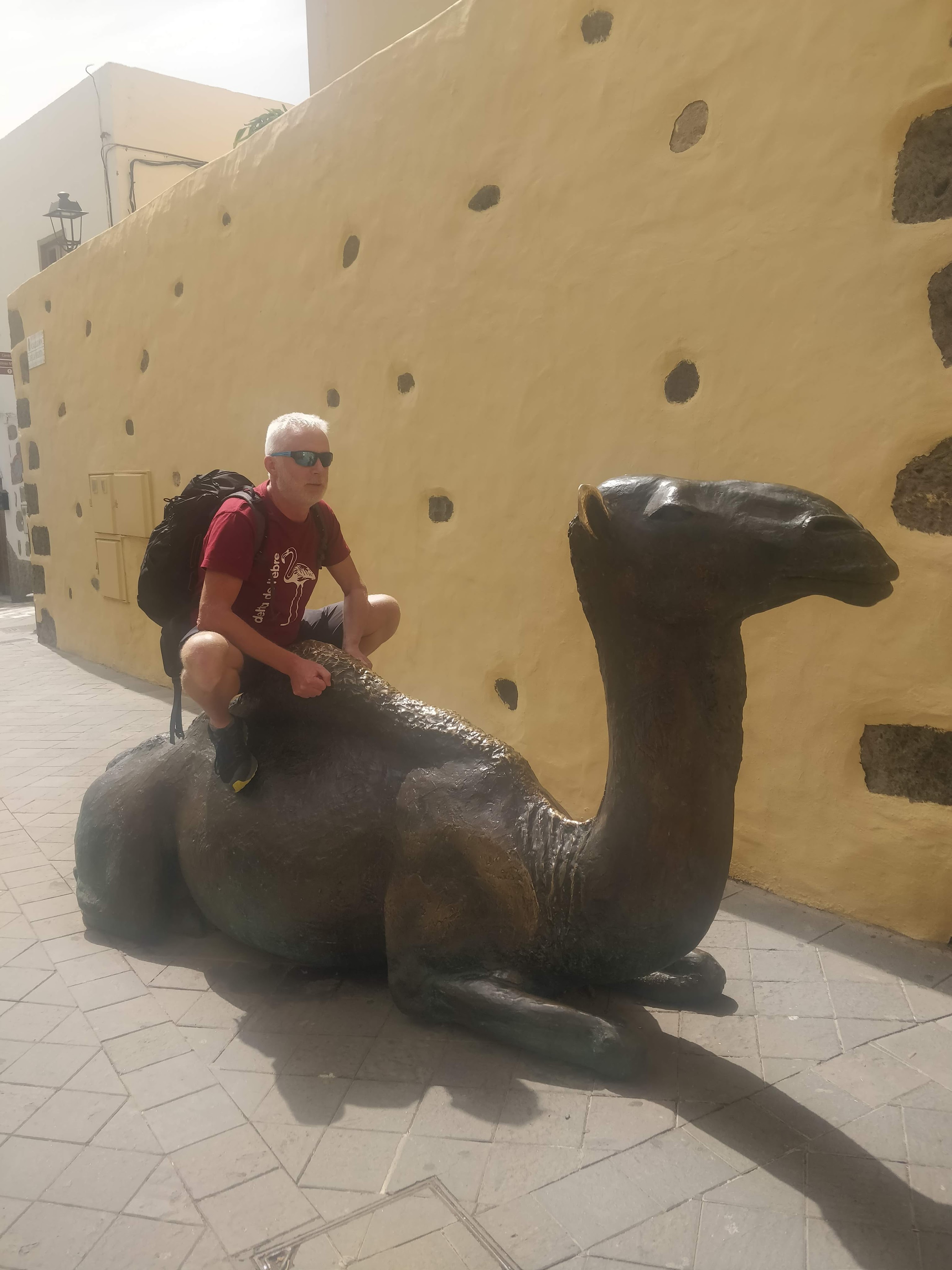
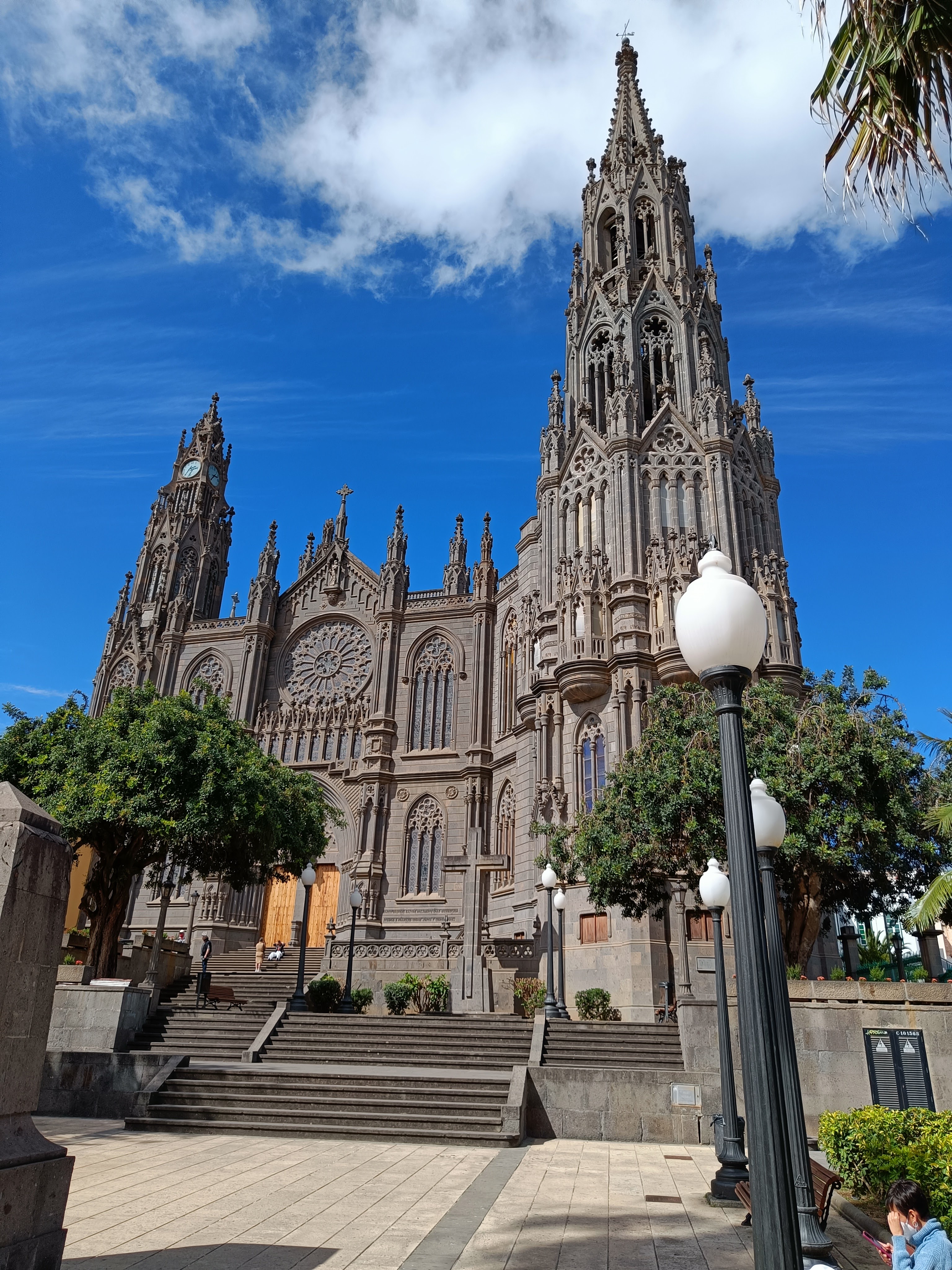
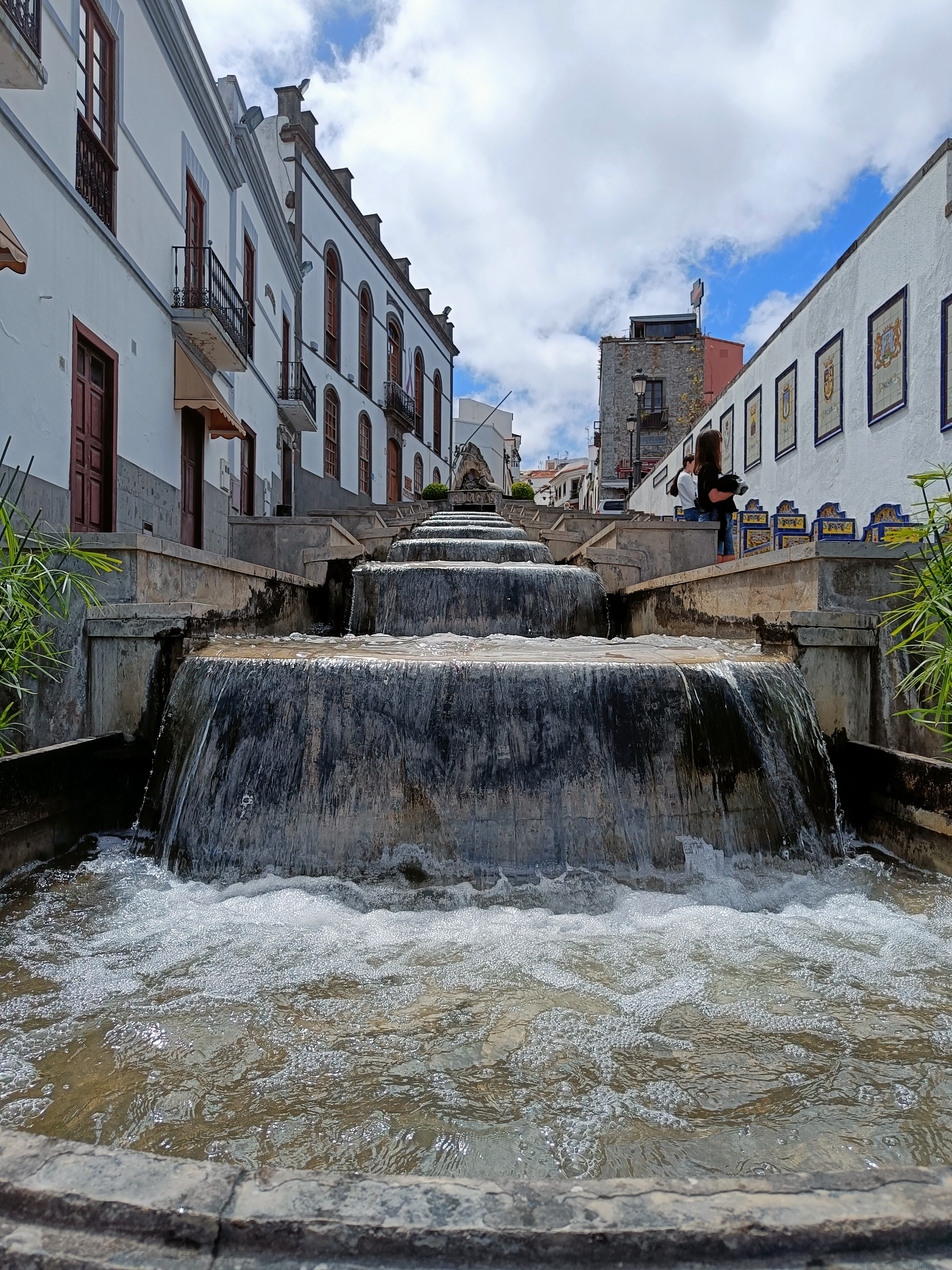
There are some gorgeous charming towns in Gran Canaria. We loved Aguimes with its cobbled streets, old houses, shady church square where an art exhibition was going on. A whole population of sculptures decorated the streets and parks. Camels may no longer walk the streets here but there was a fine specimen lying down in one of the alleys. It is said that life is art in Aguimes. In the north of the island, colourful Galdar lies at the base of a perfect conical hill. It was once the centre of Guanche civilisation but there is no trace left of the ancient court of their ruler, Guanarteme. It was razed to make way for the construction of the church of Santiago de los Cabelleros. Churches are at the centre of most towns and and one of the most spectacular is the neo Gothic structure in Arucas, sculped by local craftsmen. Firgas is famous for its spring water and its main tourist attraction is a water feature where water cascades down steps in an entire street.

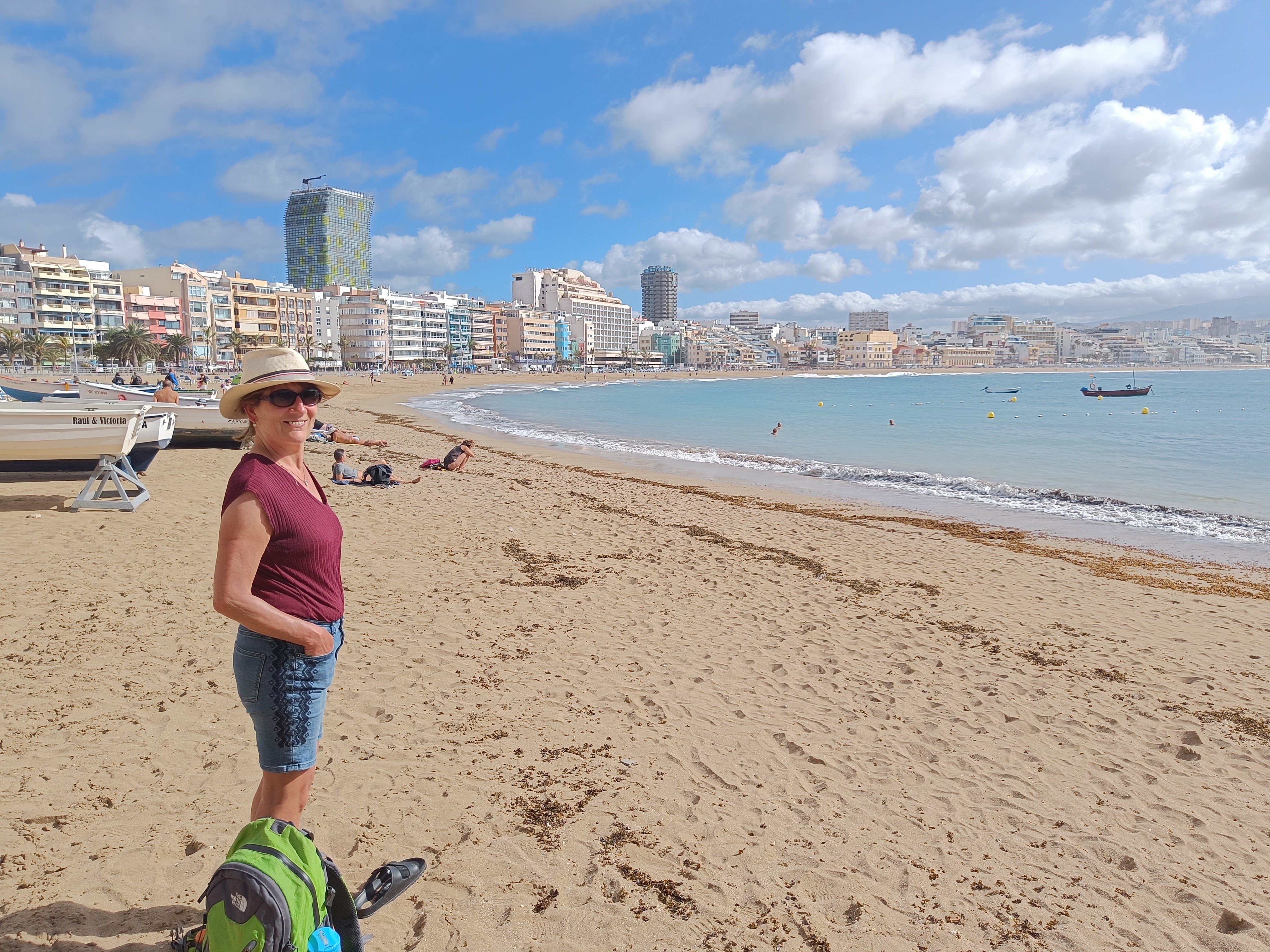
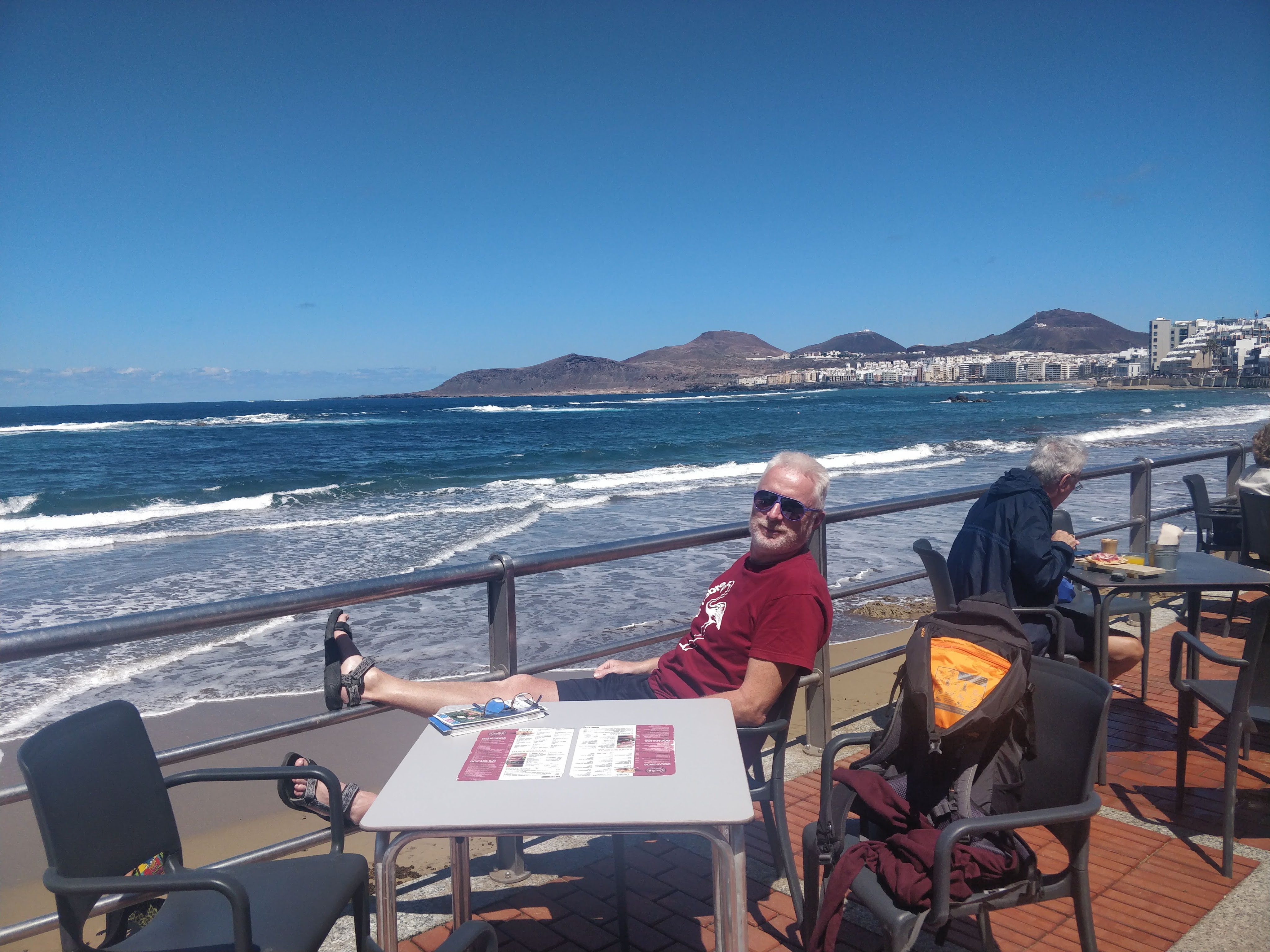
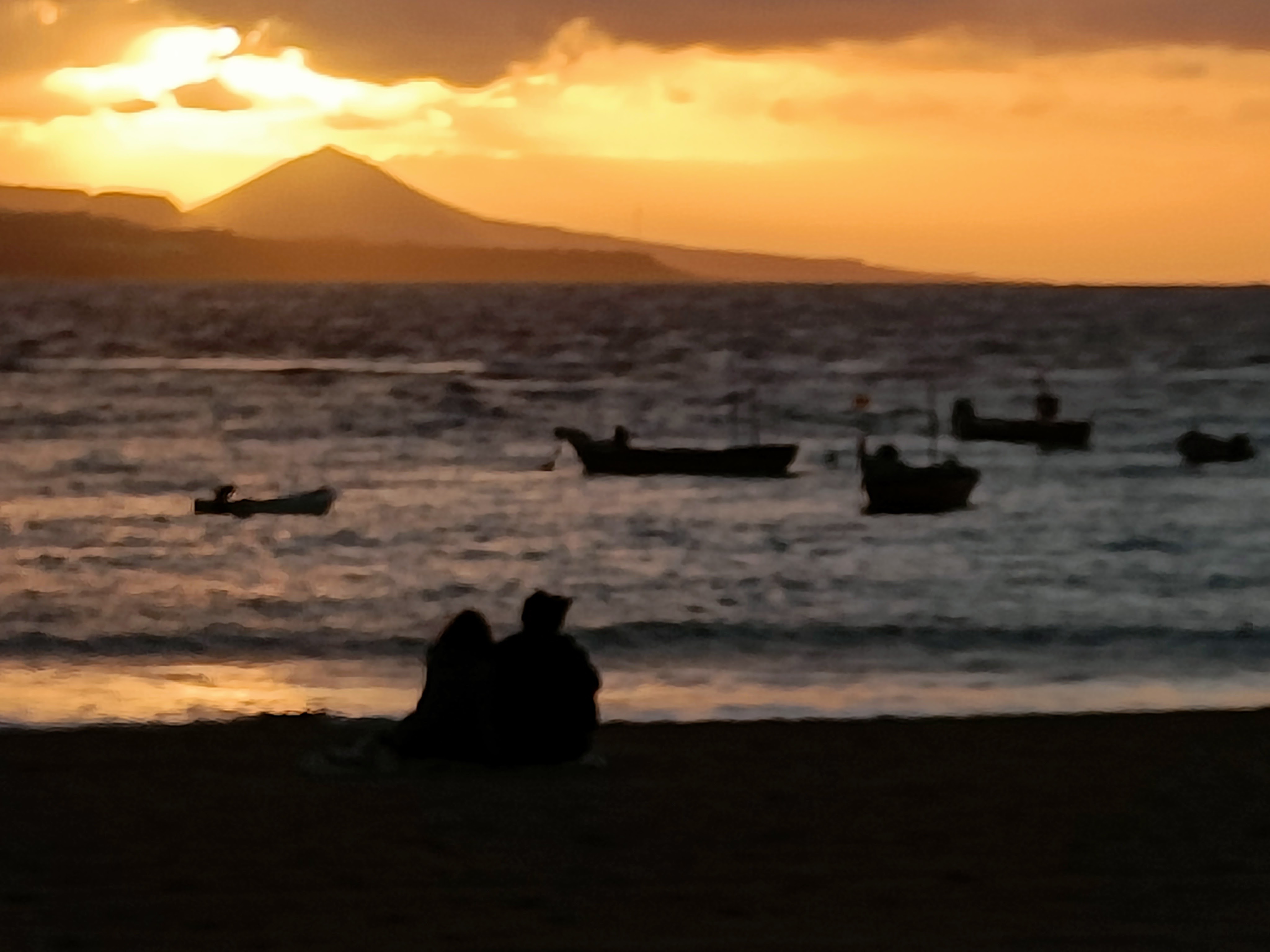
The city of Las Palmas captivated us so much that we returned and stayed for four days in the Santa Catalina district near the beach. It is a city on a narrow peninsula in the north-eastern corner of the island and so is almost surrounded by water. It has everything – a nice climate, a large marina, busy port, historical districts, fabulous architecture, good shopping(duty-free) and to top it all, gorgeous palm fringed beaches. The most famous of the beaches is Playa de las Canteras, a long stretch (3 kms) of golden sand with crystal clear waters teeming with fish, which has won global awards for the best city beach. And then there is the long promenade by the beach, lined with cafes and restaurants perfect for strolling, people watching or just watching the sun go down.

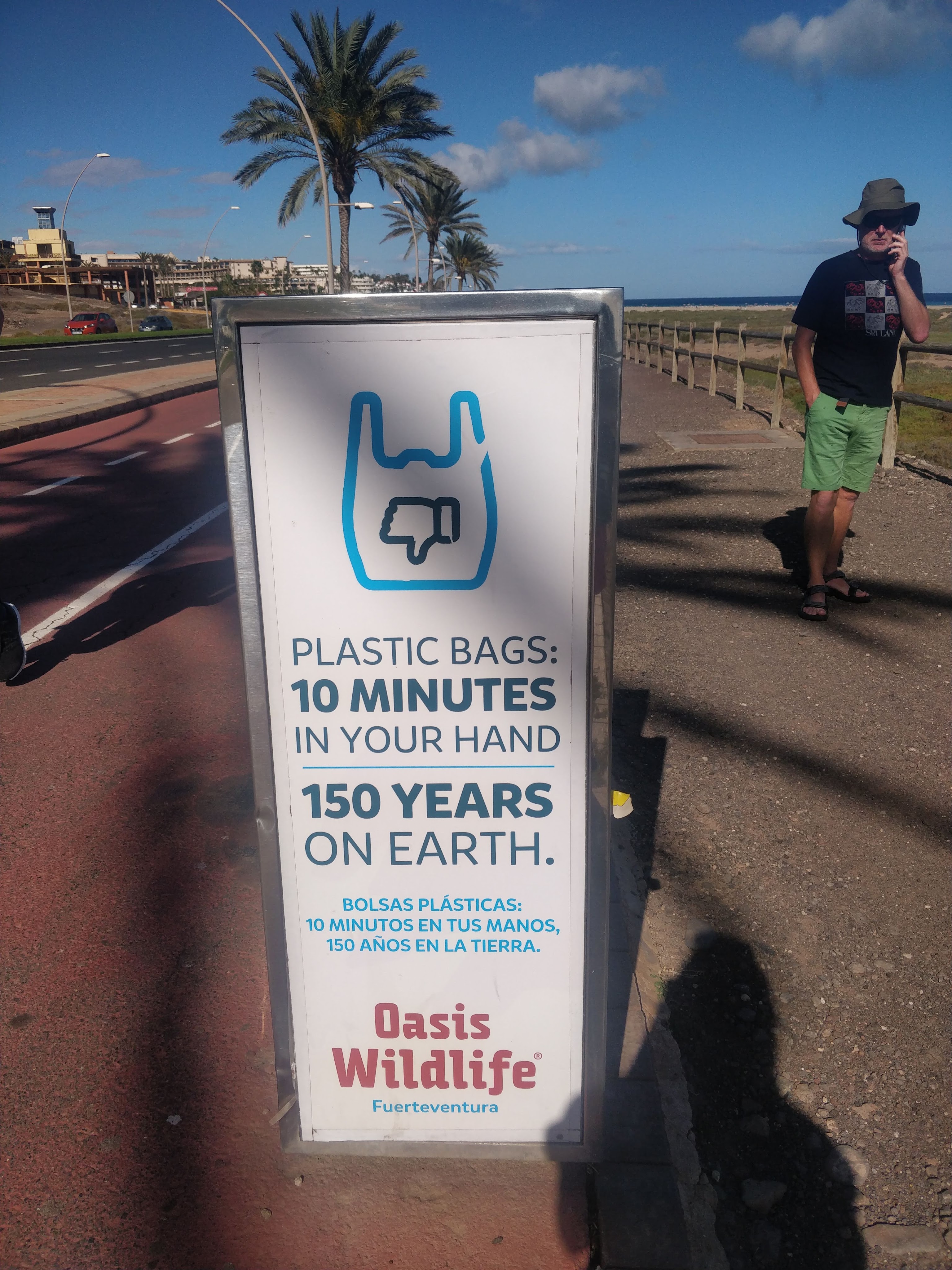
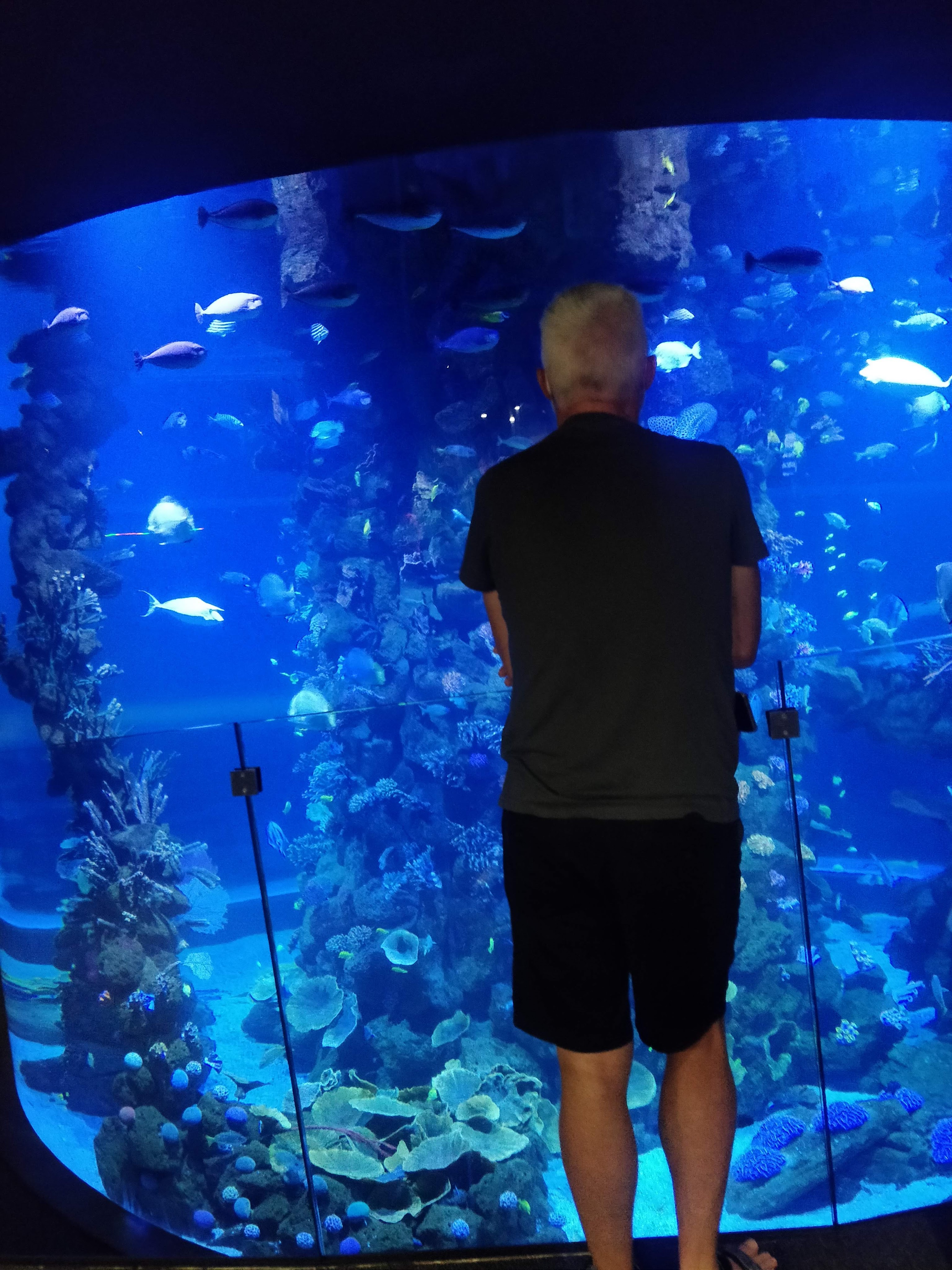
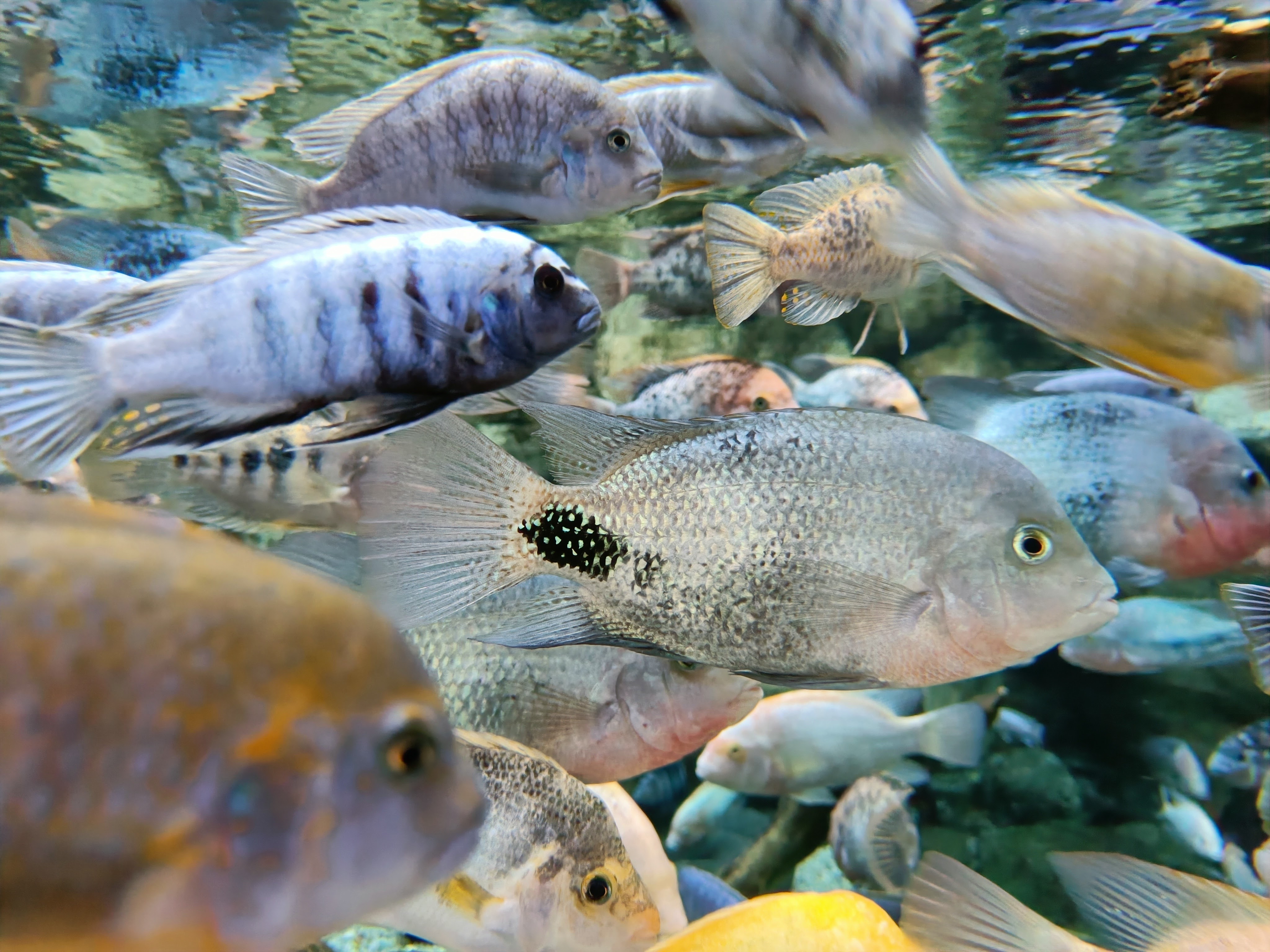
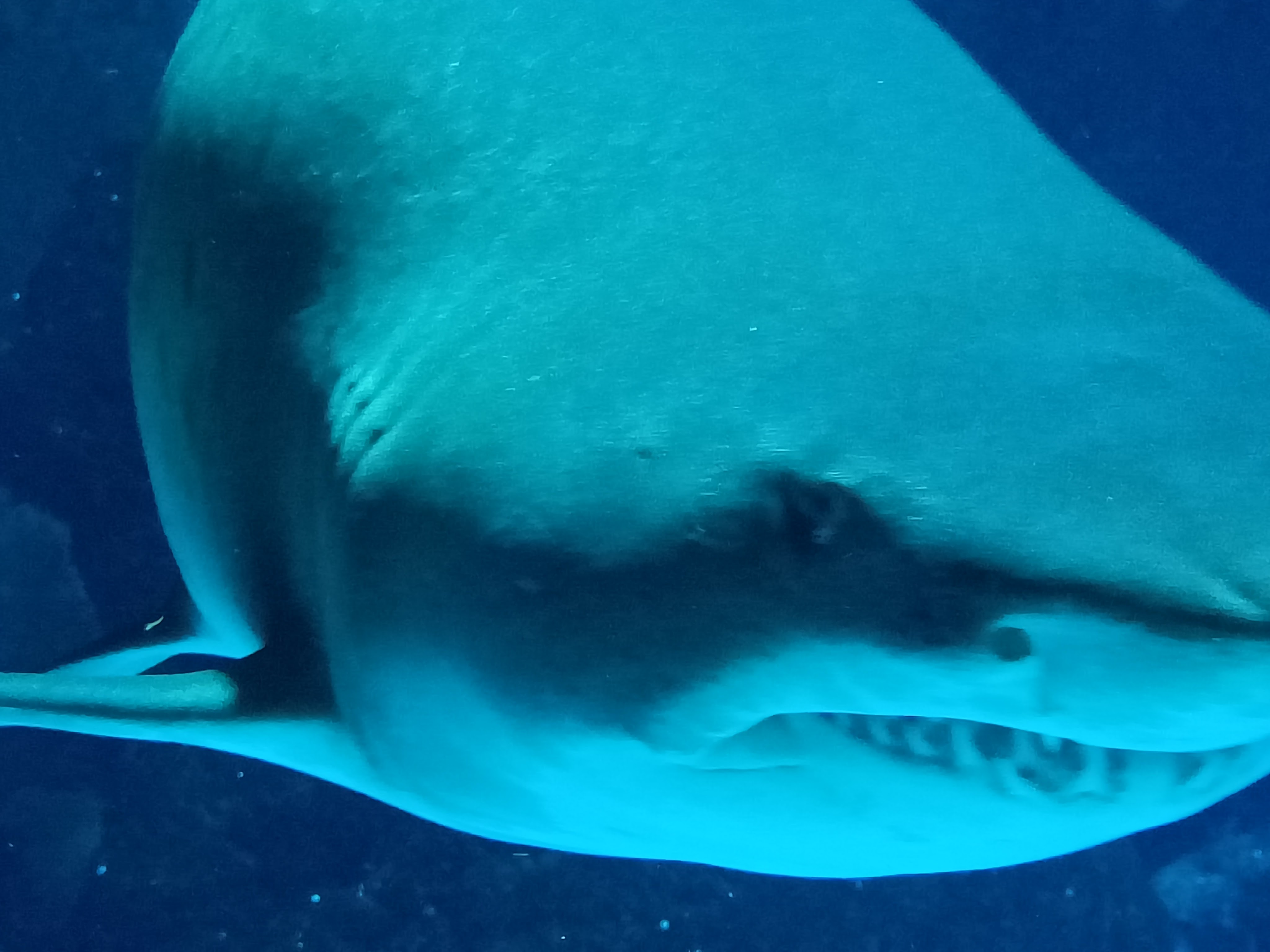
We visited the Aquarium called Poema del Mar in Las Palmas. The entrance fee was €25 each which we thought was a bit steep but it turned out to be a remarkable experience. The highlight was the darkened auditorium where chairs and benches were arranged in front of an enormous fish tank made of the biggest curved acrylic glass in the world (almost 8 metres high and 36 metres wide.) It was like being underwater, watching a mesmerising ballet of the deep sea. Classical music played in the background and a huge array of exotic species swam in front of our eyes. It was both exhilarating and soothing. There was the slow sweep of the manta rays, the languid floating of the medusa jellyfish, the prowling of the sharks, the shoals and the loners. In a separate tank, there was the frenzied dance of the piranhas and the bobbing of sea horses and so much more. Poema del Mar translates as the poem of the sea and it was truly poetic. But there were also ominous signs and disturbing facts about the effects of our plastic culture on marine life and habitats. The truth is that if we don’t reduce our use of plastics, a more apt name in the near future may be the lament of the sea.

In many ways, Gran Canaria has been our least favourite island so far. The weather was incredibly windy everywhere – good for the windmills – and rain bookended our stay with a damp arrival and a wet departure. Our choice of places of stay for the first week was unfortunate and the island was far more crowded than the other islands especially El Hierro, La Gomera and La Palma. But we fell in love with the capital city of Las Palmas, the city that has everything 😍

Onwards to Fuerteventura on the Fred Olsen ferry this evening to see what we will find there.

Thanks for reading

Gran Canaria, Paradise lost and found🤔

La Palma, the Island of Fire and Starlight⭐

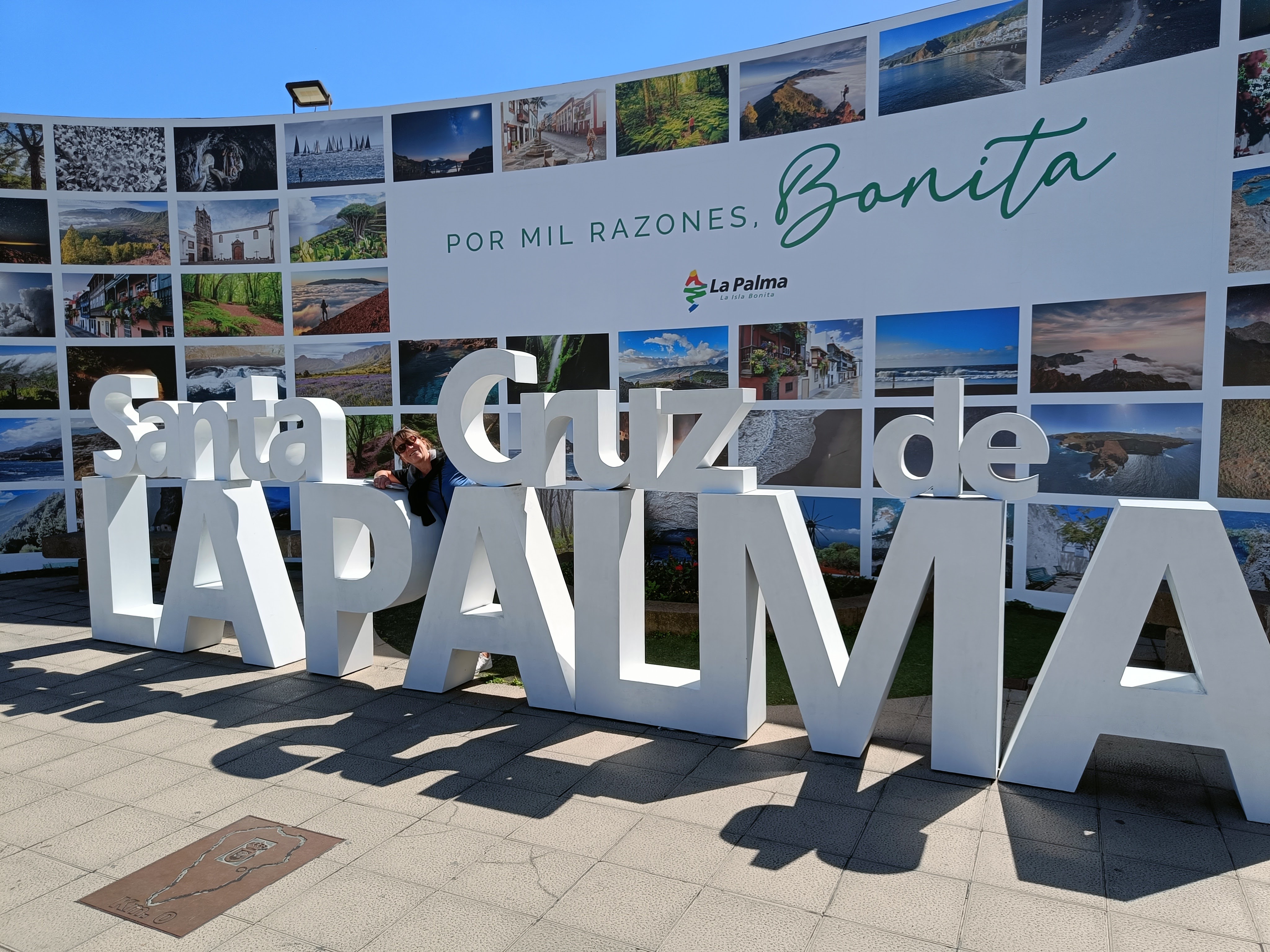
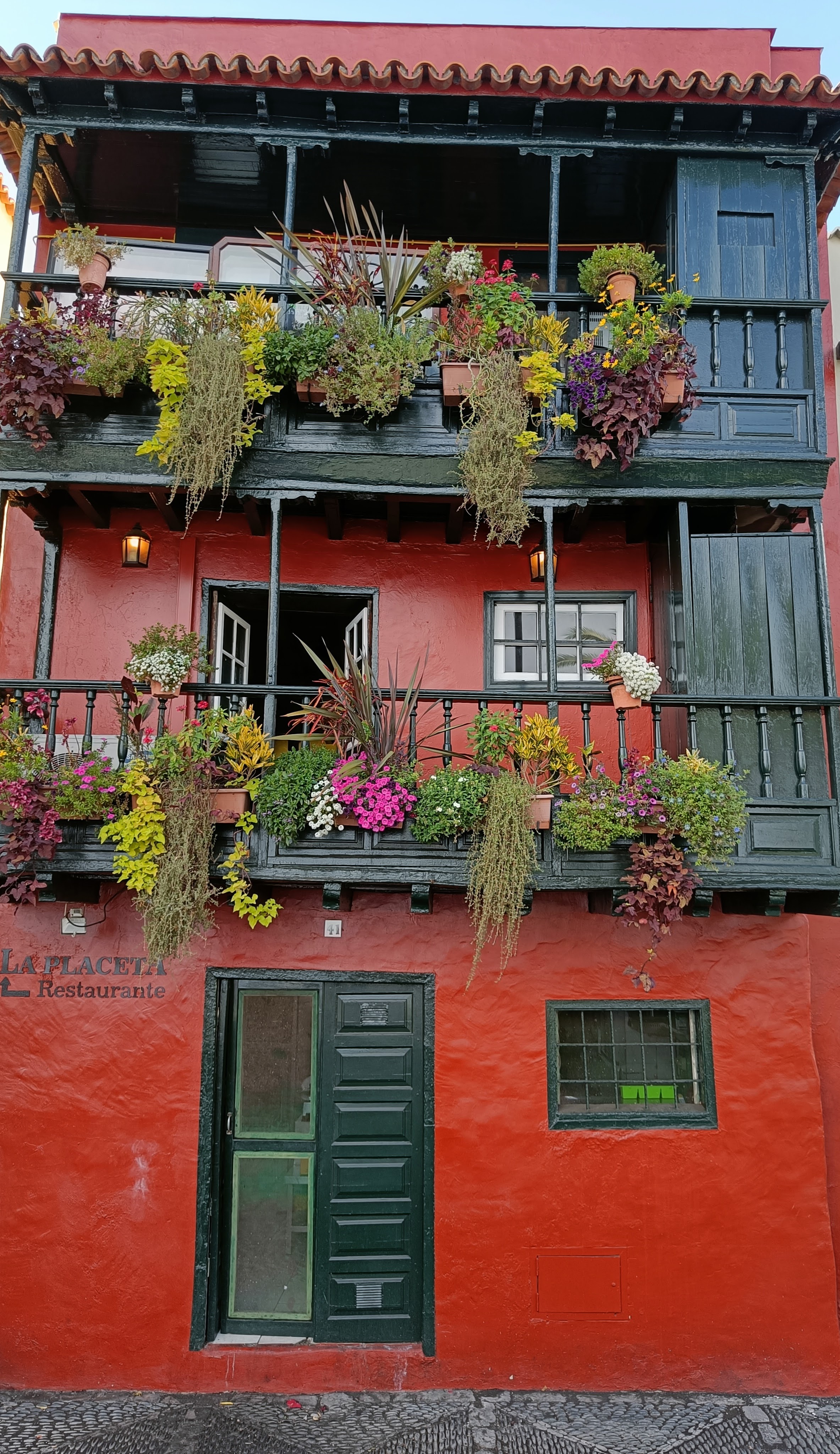
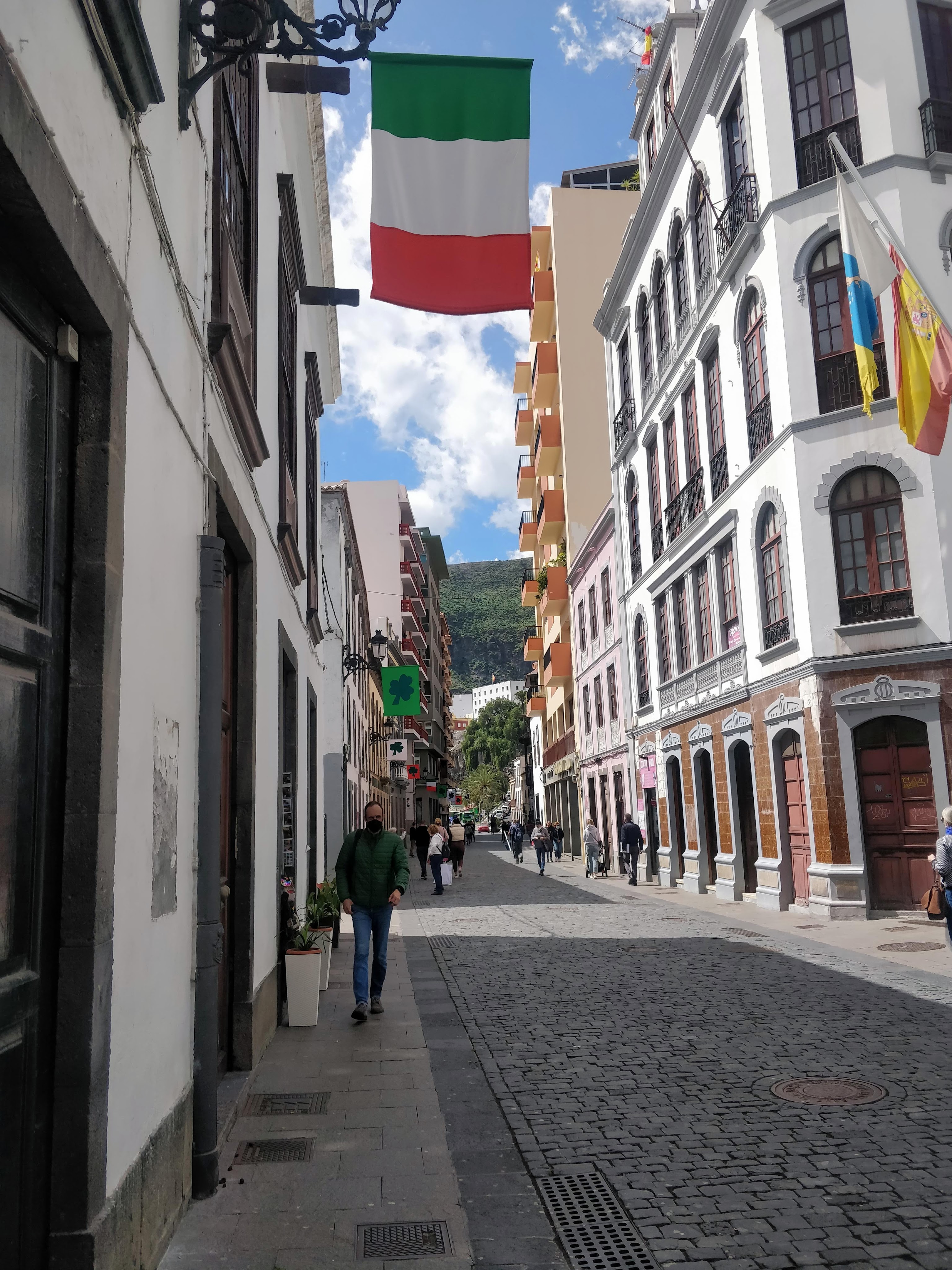
La Palma in the Canaries is known as Isla Bonita – the Beautiful Island – and as soon as we stepped off the ferry from La Gomera into Santa Cruz de la Palma, the capital and principal town, we were inclined to agree. There was a pleasant breeze carrying the smell of orange blossom and fried fish, flowers cascaded over the wooden balconies of the seafront houses, the palm trees swayed and the guy in the Tourist Information kiosk at the port was really helpful. We were clattering our suitcases (10kg pull-along) through the cobbled streets of the old town towards our apartment when we saw a street sign – Calle O’Daly (O’Daly Street)

I’m sure that we are not the only Irish people who had never heard of Dennis O’Daly. He was a poor boy from West Cork who became so revered in La Palma that they named a street after him in their capital city, thousands of miles from Ireland. In 1755, he settled in Santa Cruz which was then one of the largest ports in the Spanish Empire, trading in wine, sugar and bananas. He got involved with growing and exporting bananas… and became wealthy. He was appalled that the power on the island was in the hands of a few corrupt rich families and he was determined to empower ordinary people to govern themselves. It was largely due to his efforts that La Palma became the first area in the vast Spanish Empire to enfranchise ordinary men – a whole century before working class men were given the vote in Ireland. A fascinating character and virtually unknown in Ireland (or at least to us)

La Palma has another claim to fame – it was the scene of a recent volcanic eruption in Sept 2021 that lasted until December 2021. The Cumbre Vieje volcano unleashed fury on the western part of the island for three months, ash rained from the sky and rivers of lava consumed at least three thousands buildings. Banana and avocado plantations were razed and the earth tremored with minor earthquakes every day. But almost three months later, on the 50 minute bus journey across the island from Santa Cruz in the east to Los Llanes in the west, the predominant colour was green, green from the pines trees scaling the rugged heavily forested mountain slopes.

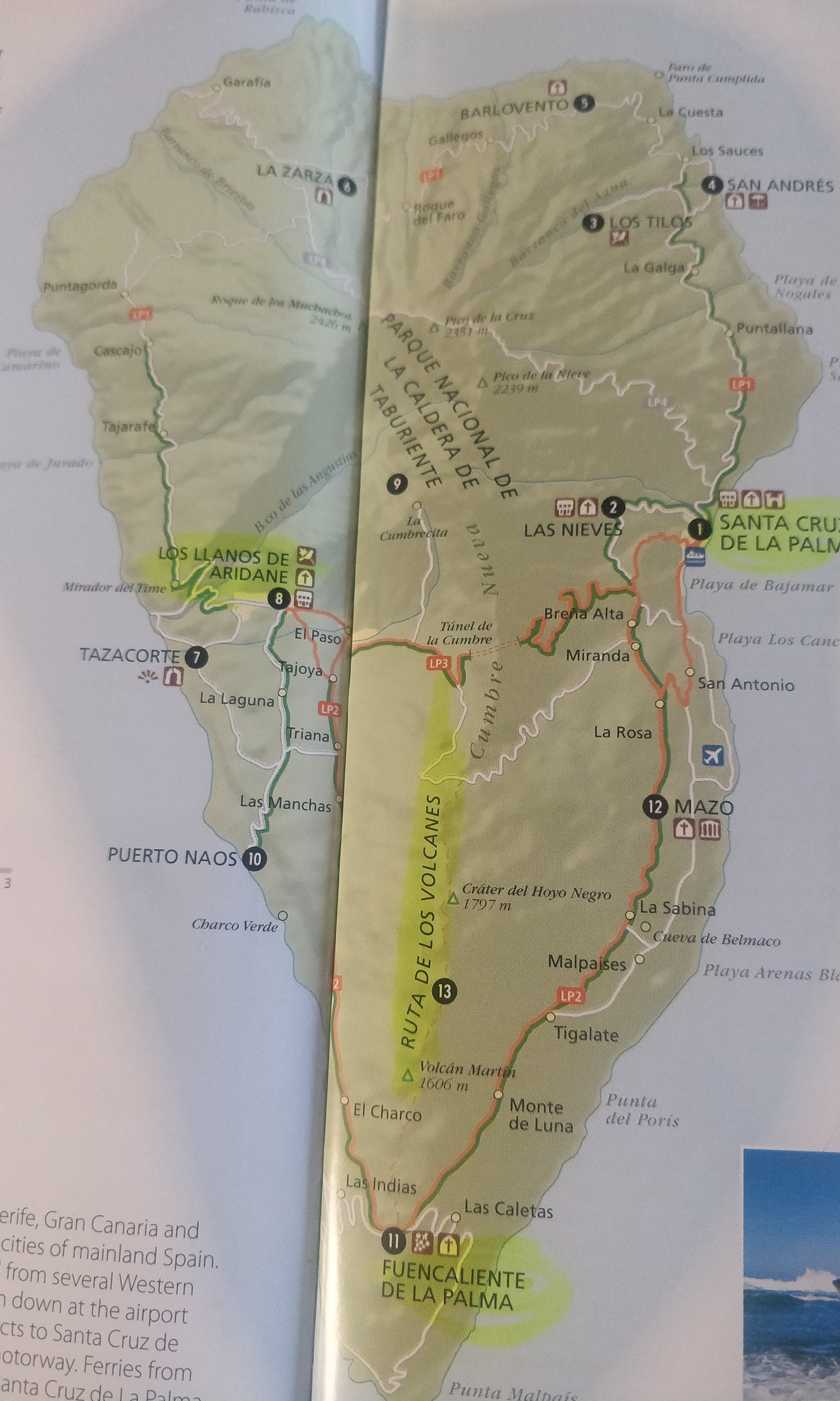
Map of La Palma

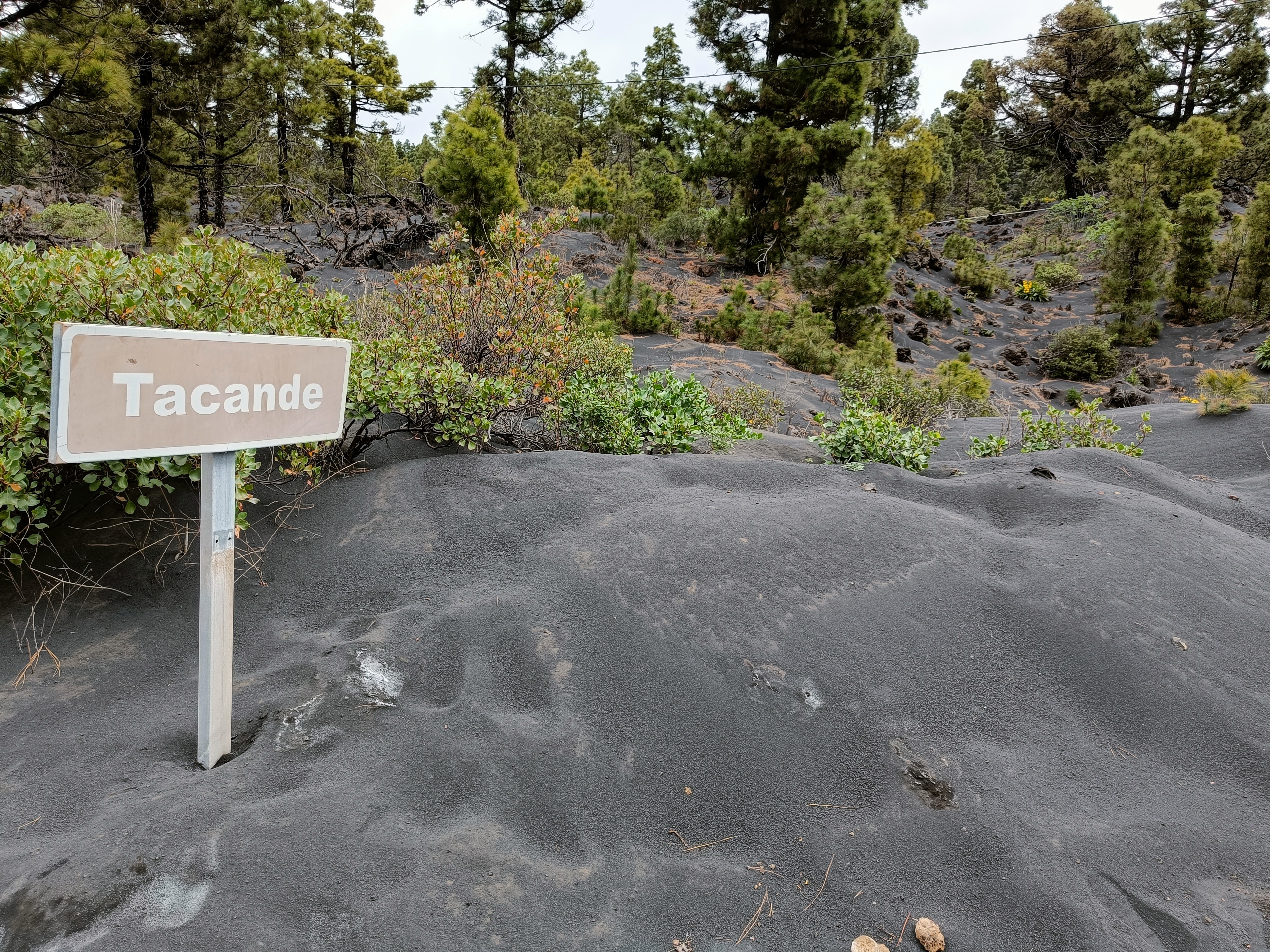
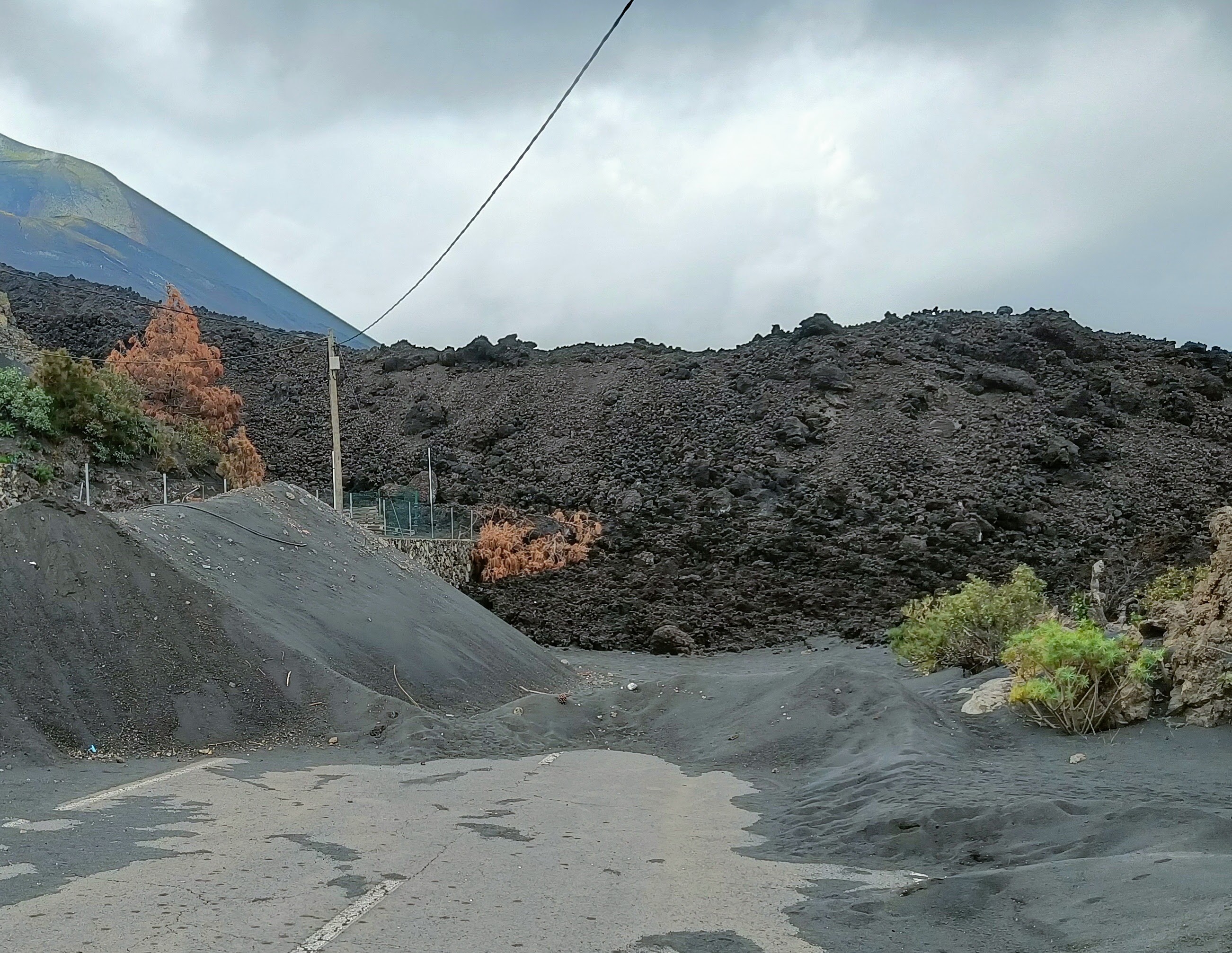
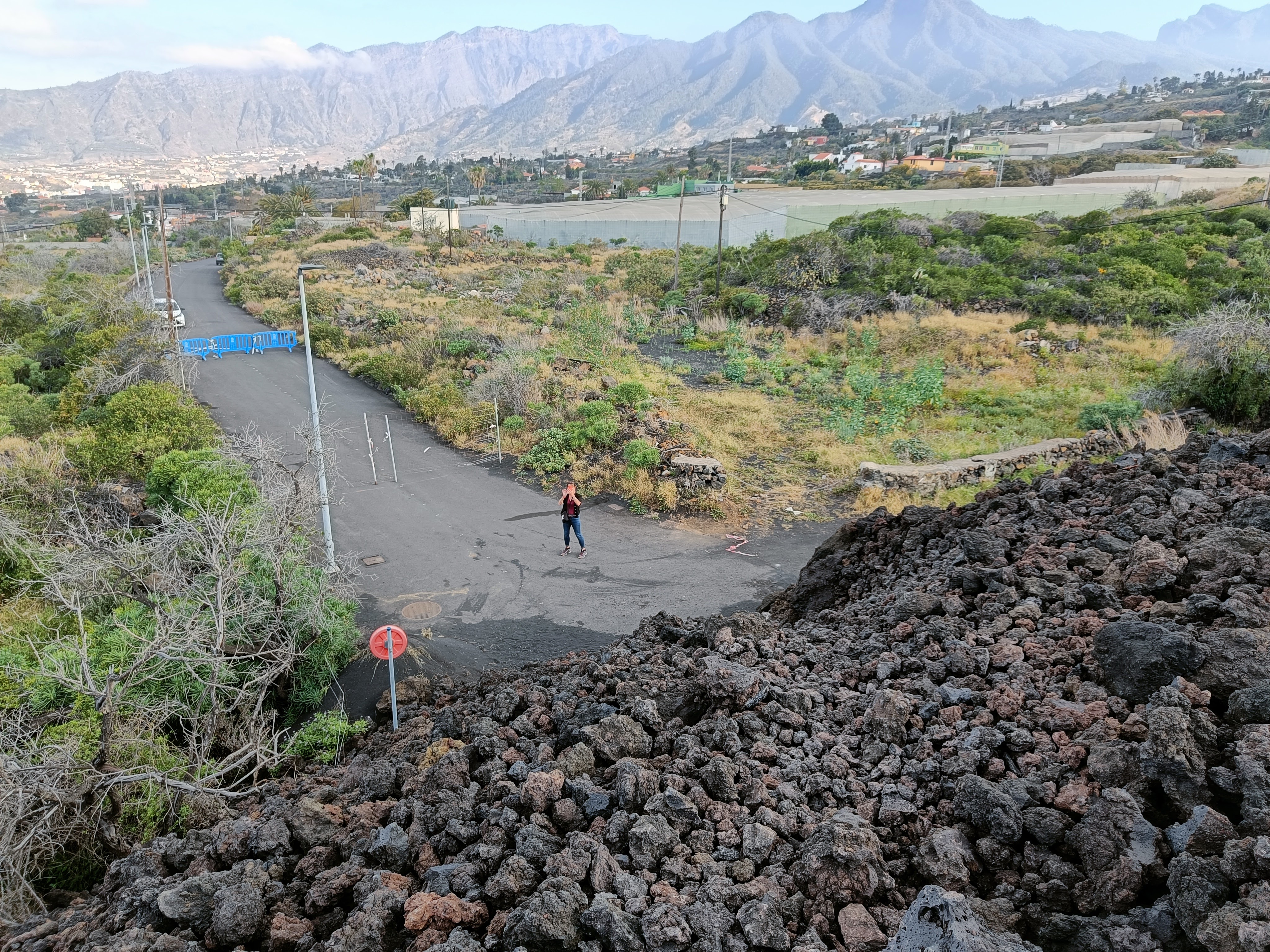
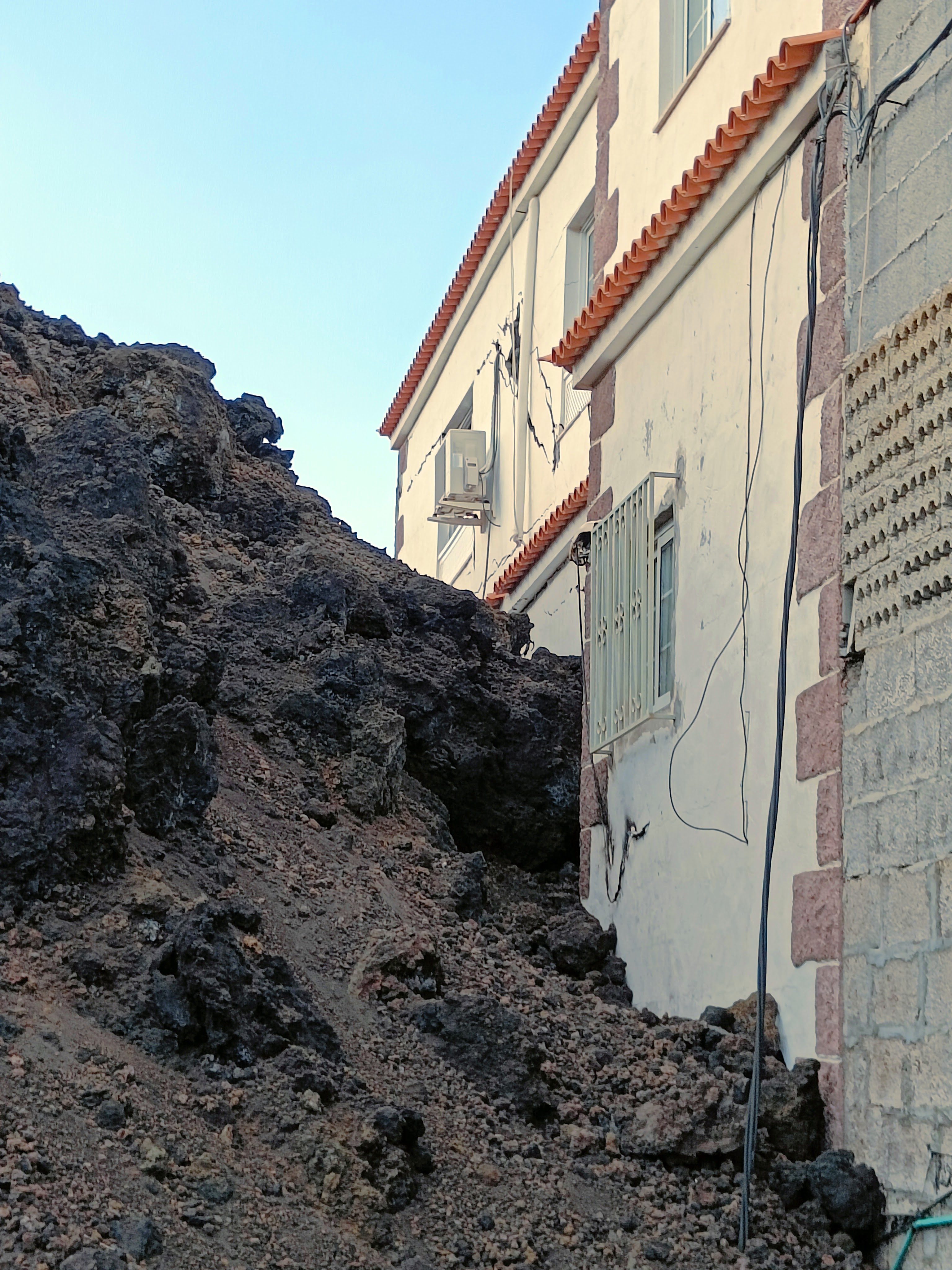
But as we walked to our casa rural (again dragging the suitcases for about 1.5 kms 😁uphill) , we noticed a fine coating of black dust everywhere – on the roadside verges, footpaths, stone walls and on garden furniture. Our landlady told us that no matter how much they sweep, the lava dust still comes, The wind blows it into every crevice and then tosses it out again. Looking to the mountains, there were long black streaks which looked at first like cloud shadows but were the recent lava flows. There was wisps of smoke on the mountain tops from still-smouldering lava. But when we got closer to the solidified lava flows, we were sobered by the sheer volume of volcanic material and the scale of the destruction. The relentless flow left some properties intact and neighbouring ones buried under a mountain of rock. It was disturbing and eerie looking at the aftermath of such recent devastation.

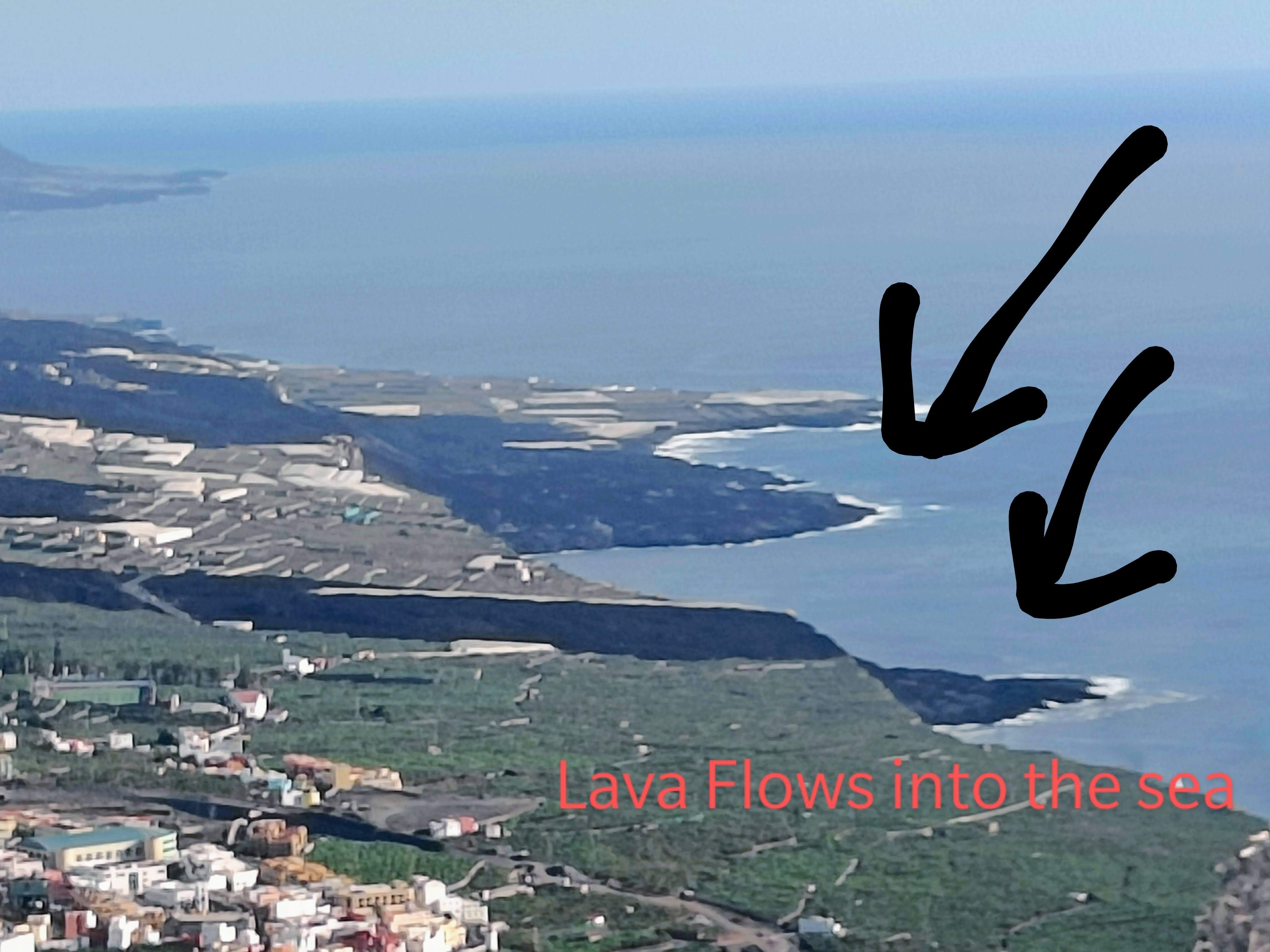
Although volcanoes destruct, they also simultaneously construct. The recent volcano has increased the size of the island creating two new peninsulas – the lava flows down and solidifies in the sea. There is also the problem of what to do with the vast quantities of lava and ash that has been ejected from the centre of the earth – some can be used for building and for fertiliser but there is an awful lot of it as you can see from photos.

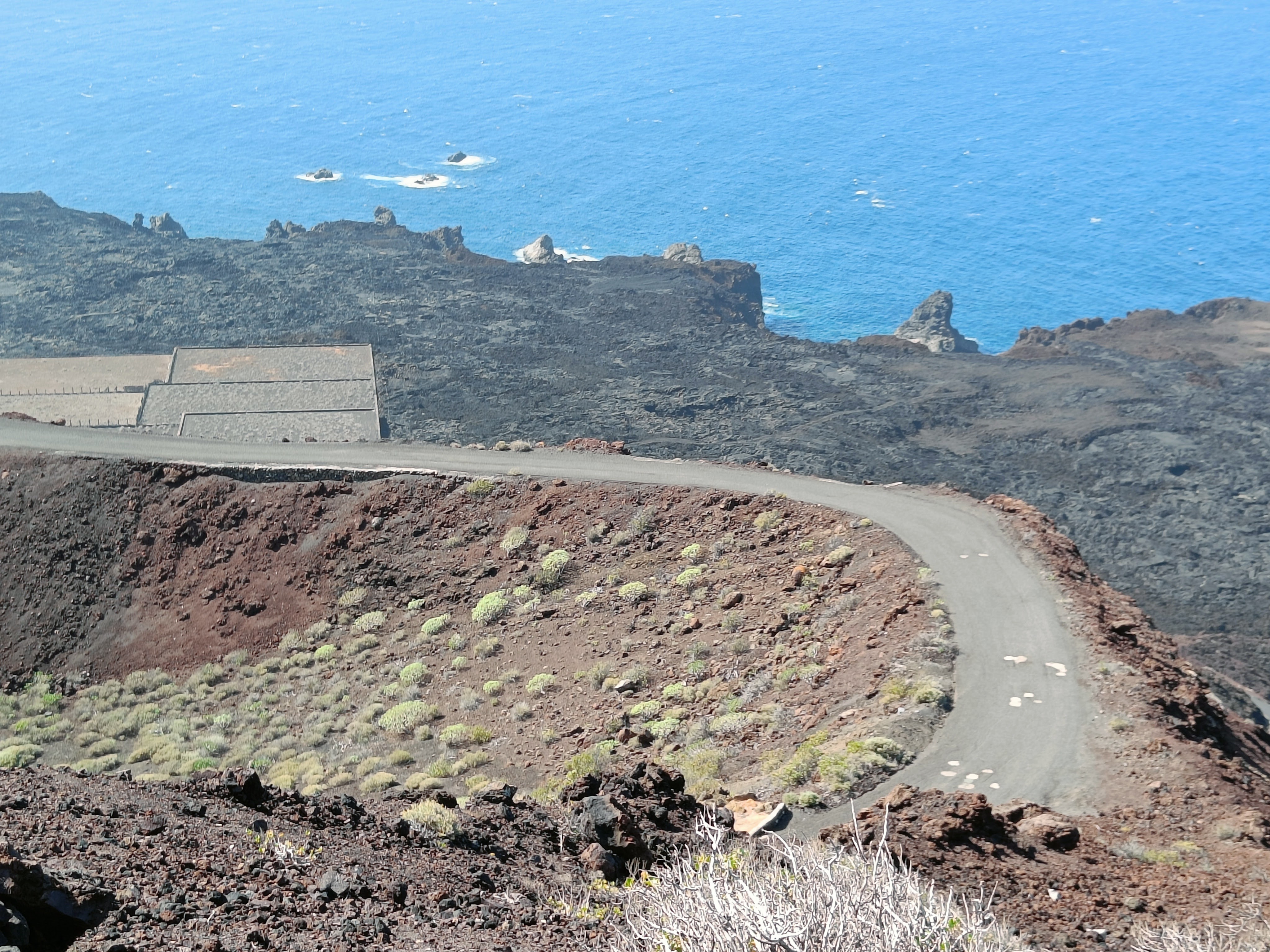
Volcanoes are nothing new in this part of the world – all the Canary Islands have been made and built up by a series of volcanic eruptions over millions of years, layer upon layer, from the depths of the ocean. La Palma has a line of volcanoes, running down the central spine to the southern tip at Fuencaliente. A hiking trail called Ruta de la Volcanes (the Volcano Trail) winds along this central spine but a large part of the trail was closed for obvious reasons. But we trekked the southern part to the sea over the lava flows of two previous eruptions – Teneguia eruption (1971) and the San Antonia eruption(1669). The black volcanic ash is perfect for growing malvasia grapes – these grow on creeper vines very low to the ground. There’s a saying on some of the tourist promotion boards ‘He who comes to Fuencaliente and doesn’t taste the wine, comes for nothing.’ We didn’t need much persuasion but even if you don’t drink wine, there’s a fantastic visitors centre with good information on geology and particularly on the volcanic eruptions in the area. At the very tip of the island are the salt plains of Fuencaliente – producing high quality Atlantic salt – which remained intact during the 1971 eruption although lava flowed down on both sides of the plain. The soil is fertile and most people cultivate small gardens in the villages- potatoes are very popular.

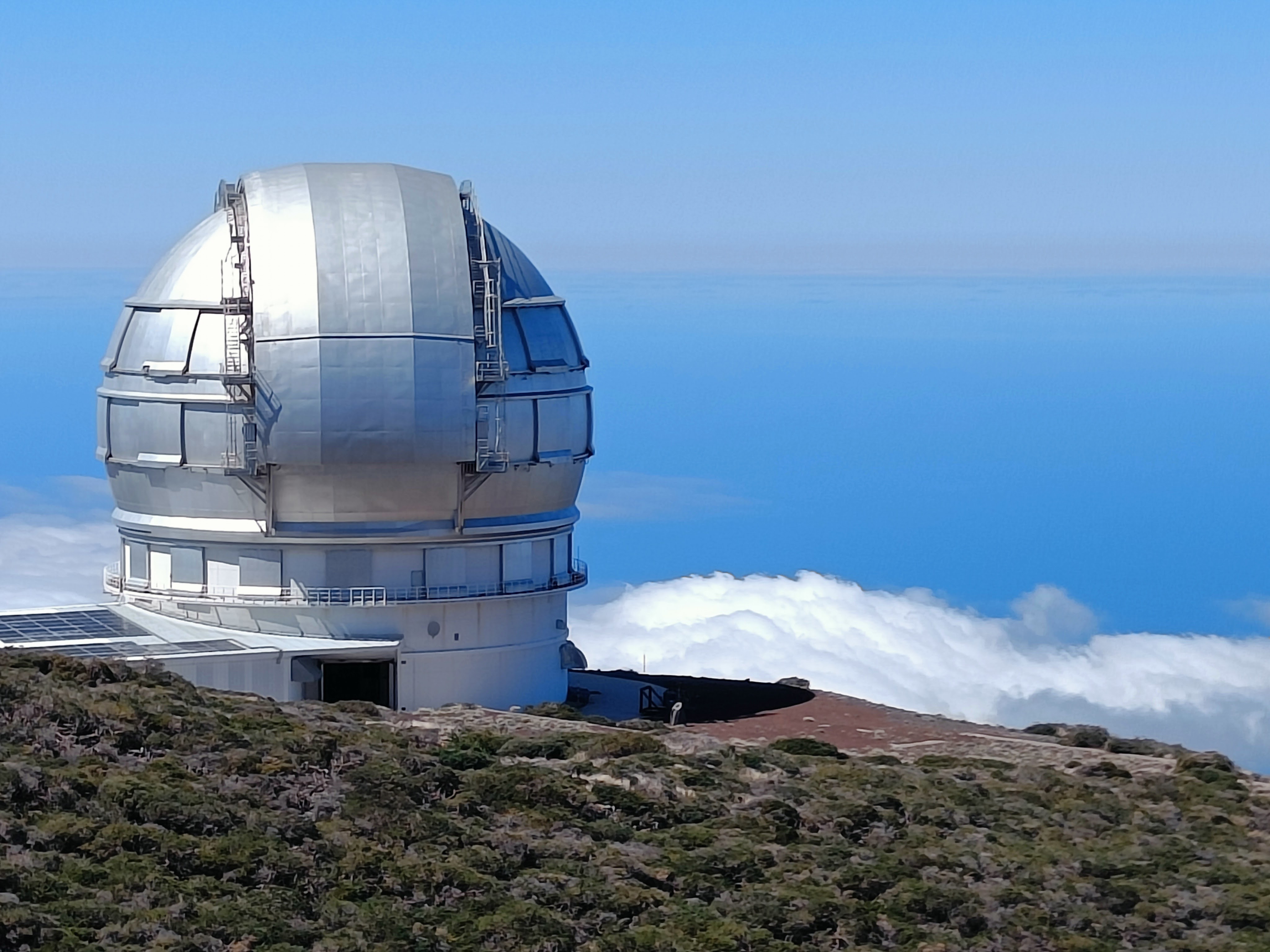
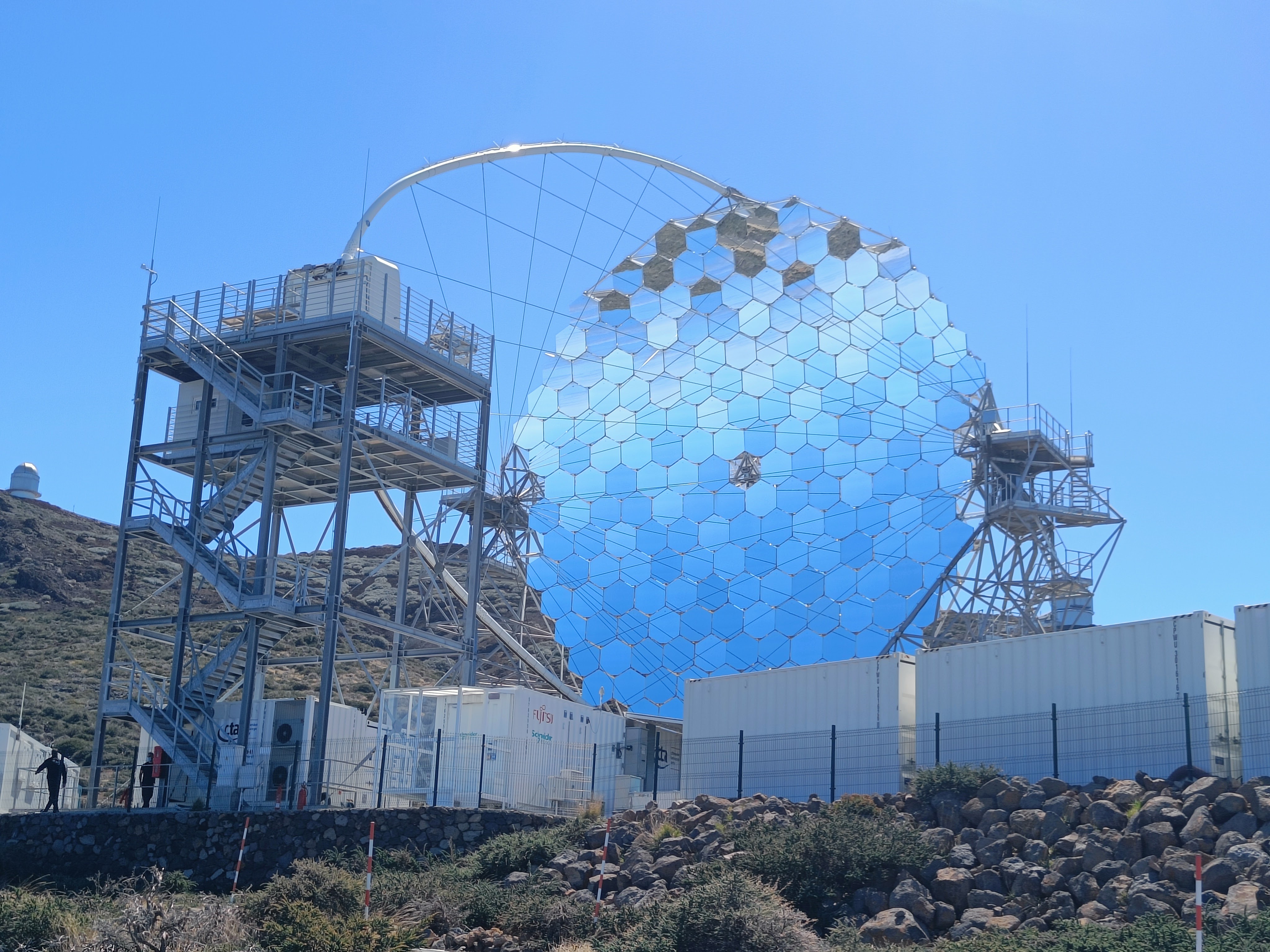
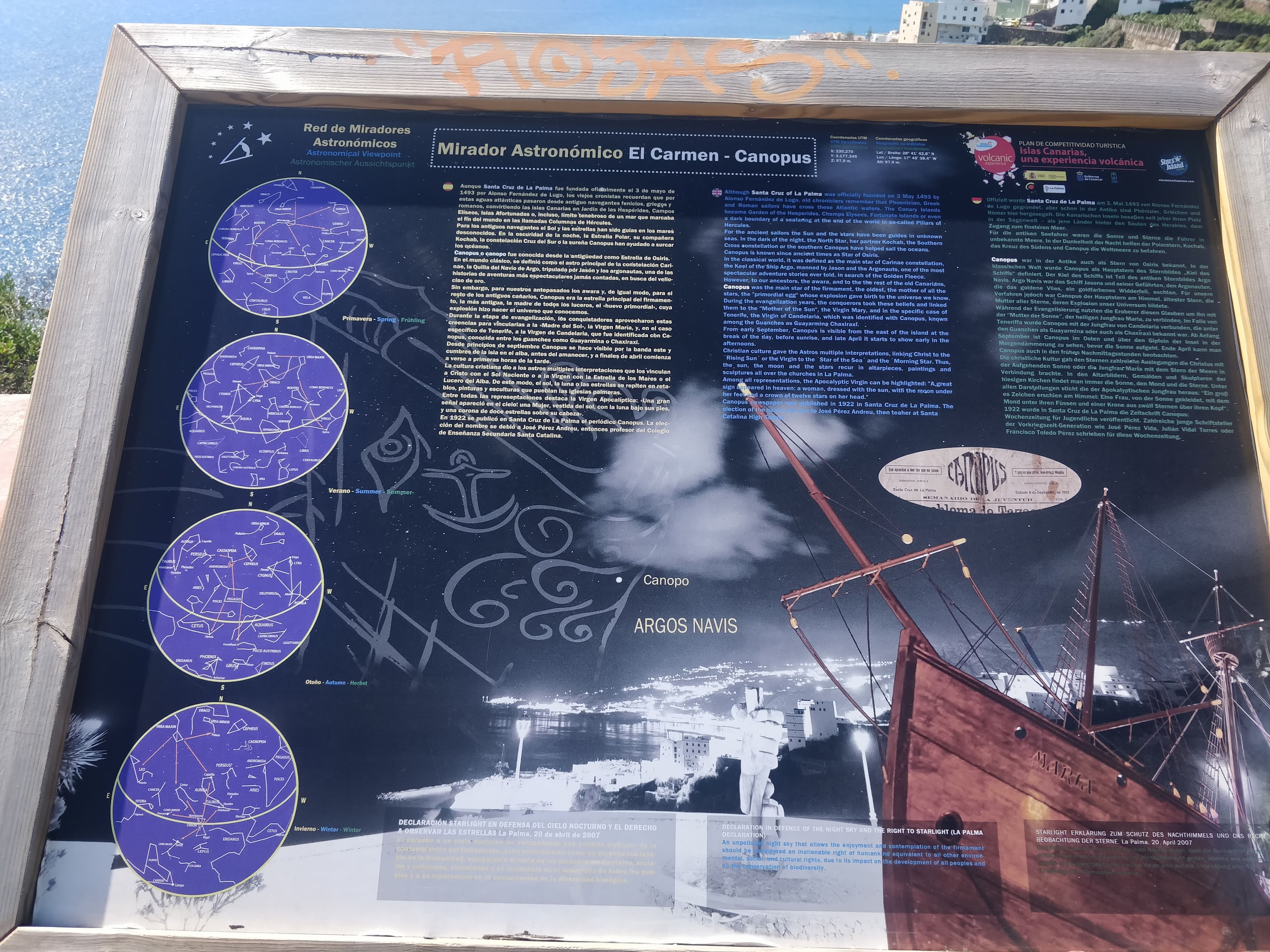
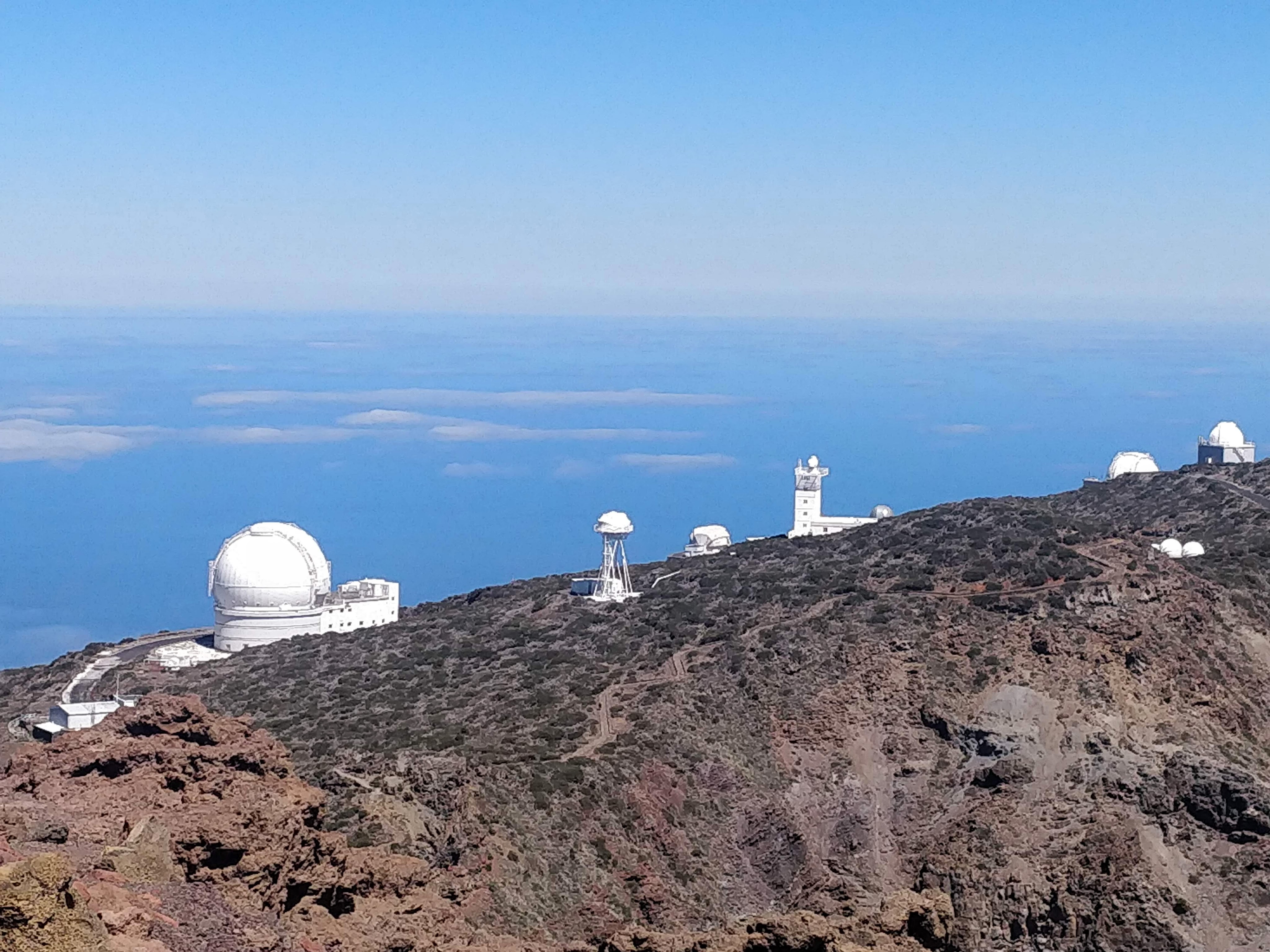
All the Canary Islands that we have visited have boasted of clear skies but La Palma has been designated a Starlight Zone and has a plethora of observatories on the high slopes of Roque de la Muchachos (2426m), a starkly beautiful area, high above the clouds. If you go to La Palma, make sure you visit this amazing area where science, physics, natural beauty and the quest for knowledge all work together to give a totally mind-blowing combination. The observatories are in the National Park (Parque Nacional de la Caldara de Taburiente) called after a massive crater that was formed by several powerful volcanic eruptions and glacial erosion and has lots of hiking trails. La Palma also has about 15 astronomical viewpoints dotted around the island which are designated as good spots for star gazing and have big noticeboards explaining the night sky. So if you want your head above the clouds and stars in your eyes, La Palma is the place for you🤣

The bus service in La Palma is fantastic. The buses are called guaguas (pronounced wagwah) and travel all around the island. There’s even an app and website(www.tilp.es) but they don’t go into the National Park or to the Observatory so we decided to hire a car which proved easier said than done. The car rental companies laughed at us for expecting to hire a car without a reservation. We persisted and eventually found a great bargain, so good that we decided to hire it for a week at €85 for 7 days. We were on the way to get a bus to take us to the airport to pick it up when we double-checked the details. The car that we had booked online was in Palma Airport (in Mallorca!!!!!!) and we were on the island of La Palma. Names can be confusing in the Canaries – there’s also Las Palmas which is the capital of Gran Canaria. Sometimes, a bargain is just too good to be true ……but there’s cheap car-hire in Mallorca if anyone is going in that direction.

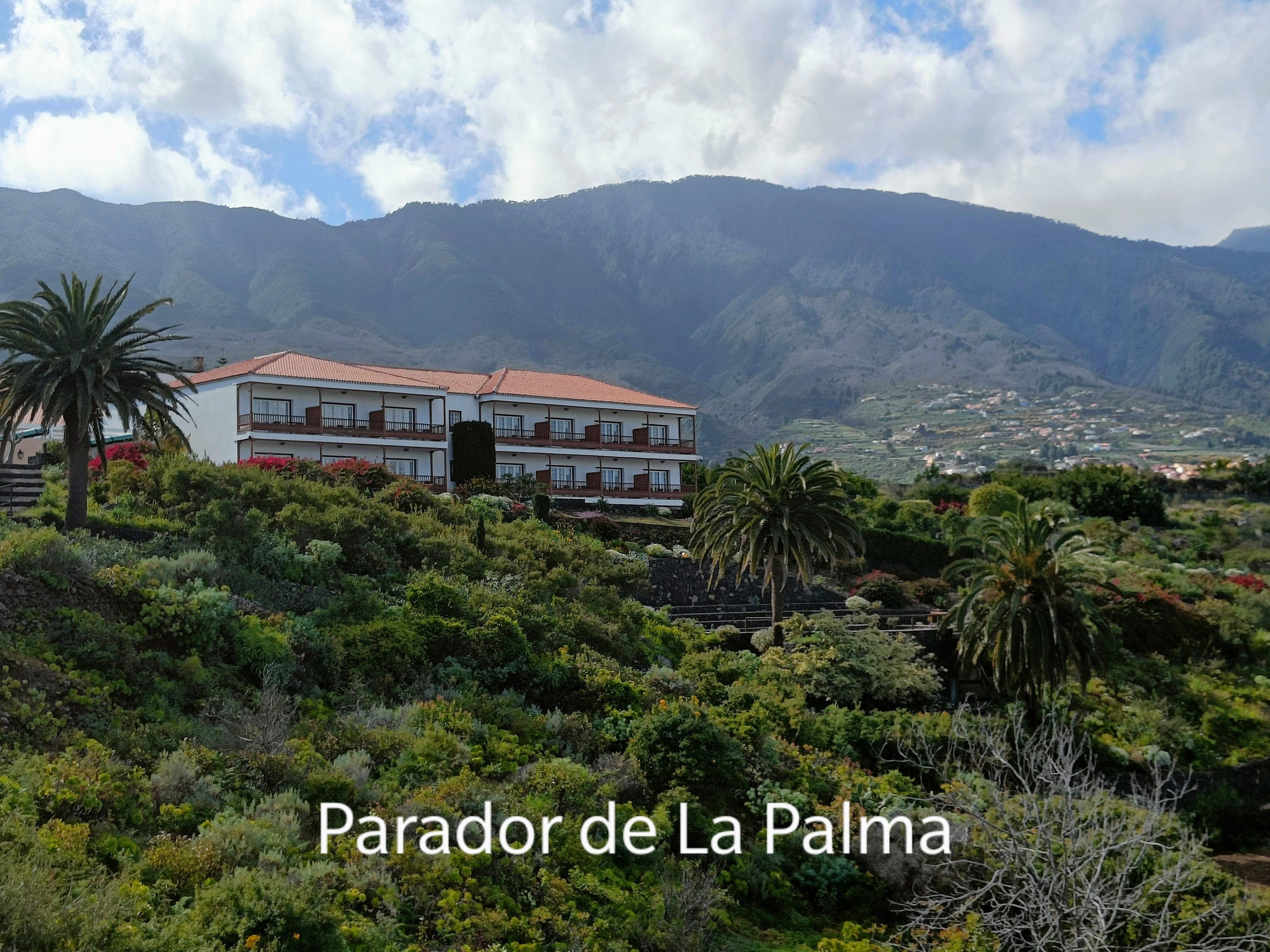
We spent our last night in Parador de La Palma in more luxury than we are accustomed to, thanks to a win in the monthly draw in our local GAA club, Passage East. The parador sits on the hills outside Santa Crux with sea-views and an amazing sloped garden, planted with native plants. The wind blew a gale, courtesy of Storm Celia – and the temperatures dropped – so it was good to be inside. Our waiter who was in his twenties with good English (English is not generally widely spoken) told us that the recent eruption was his first, his father has witnessed two and his grandfather had seen three eruptions in his lifetime.

Our next island hop is to Gran Canaria so in the meantime……Happy St Patricks Day☘☘☘☘

La Palma, the Island of Fire and Starlight⭐

La Gomera, the Hikers Guide to the Galaxy

Floating High in La Gomera, Canary Island

La Gomera is certainly the place to visit if you like hiking – its a walkers paradise. It is very easy to get there from Tenerife – there are at least 5 ferries a day from Los Cristianos in Tenerife and the short crossing takes less than an hour but is expensive at €50 for a one-way trip- but costs far less if are a resident of the Canaries. There were no direct ferries from El Hierro to La Gomera so we had to first get a ferry from El Hierro to Tenerife and then get a second ferry to La Gomera. It was a bright sunny Sunday in El Hierro but VERY blustery. As soon as we got onto the ferryboat, the stewards handed out sick bags….which were needed by many but thankfully not by us (we had eaten some olives with anchovies (the Canarian remedy) and swallowed a sea -sickness tablet as well, just to be sure).

The stewards also gave passengers brown bags of ice to hold at the nape of the neck, another remedy for motion sickness. Despite all this, soon the smell of vomit was mixing with the disinfectant spray and perfume and was almost enough to upset the strongest of constitutions🤢. There were also some almighty crashes when a stack of trays fell over and some glasses hit the deck. But thankfully, the Atlantic became calm before we arrived in Tenerife (two and half hour journey) and our second leg to La Gomera was relatively smooth.

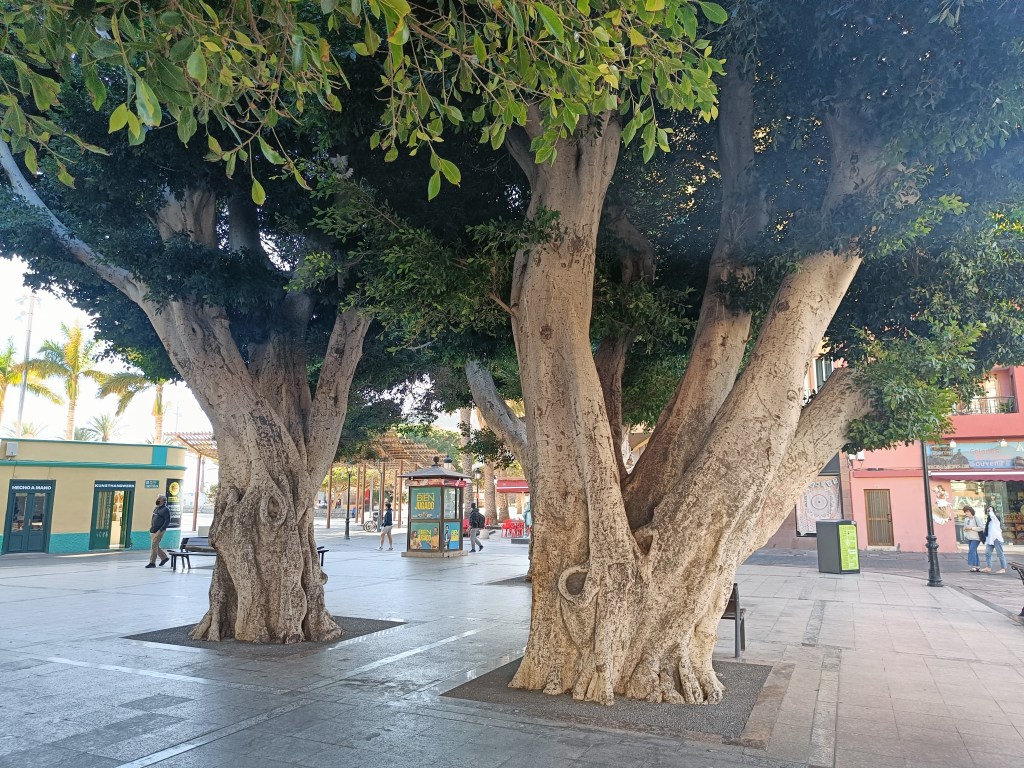
San Sebastian, the capital of the island is a small pleasant town arranged around a gorgeous harbour with brightly coloured houses built up the slopes and a lovely central plaza with beautiful Indian laurel trees. It sees a lot of day trippers from Tenerife and there is no shortage of cafes, restaurants and tourist shops. Christopher Columbus (Christobel Colon in Spanish) spent some time here before each of his three voyages to the New World and these visits are still much celebrated. We stayed in a hostel called Hostel Colon where our bedroom was a windowless cell with shared bathrooms and no other communal spaces – usually hostels are great places for meeting people and sharing information but we never bumped into anyone, not even in the bathrooms although the hostel was full!

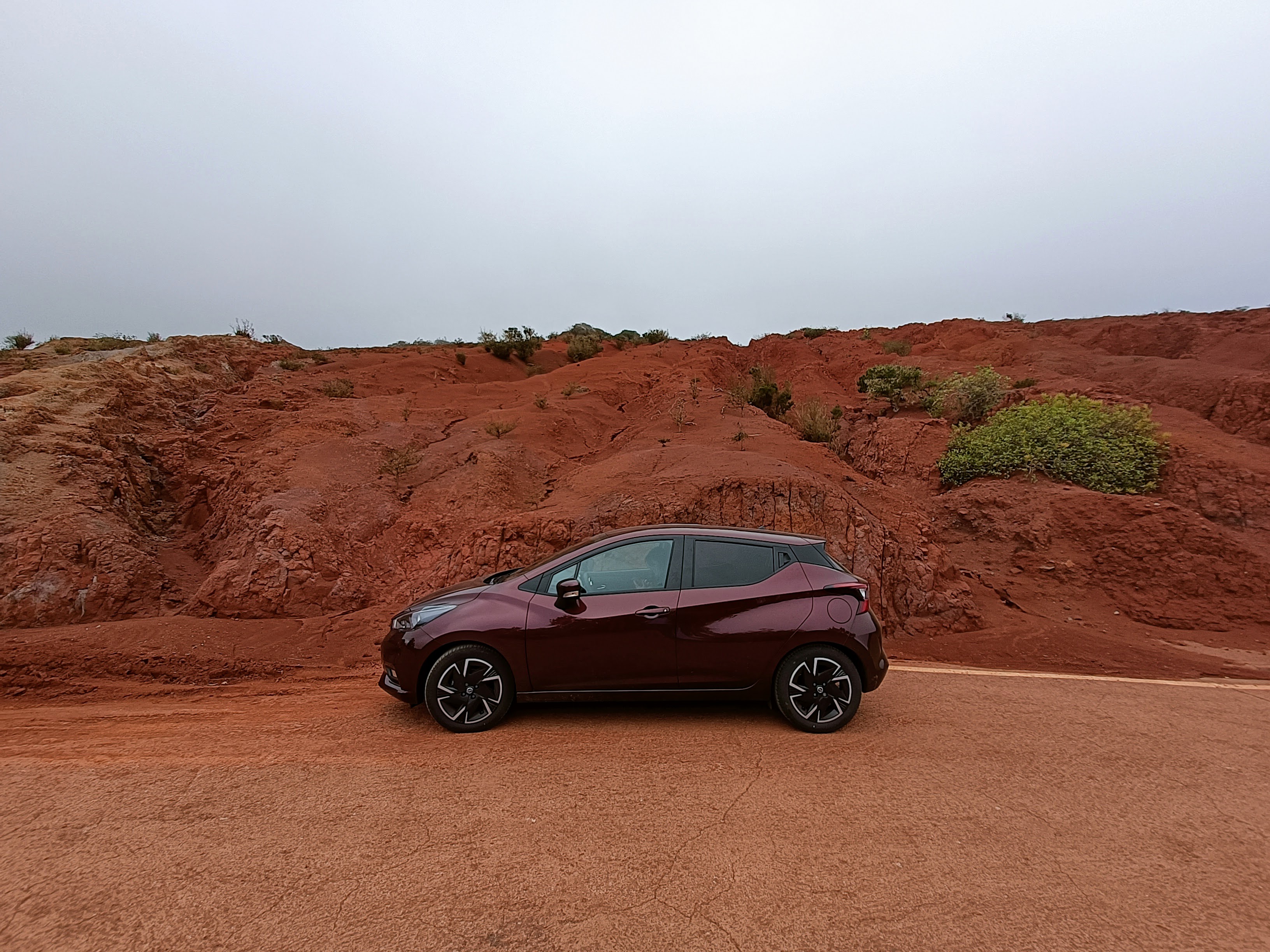
Nissan Micro – our replacement car

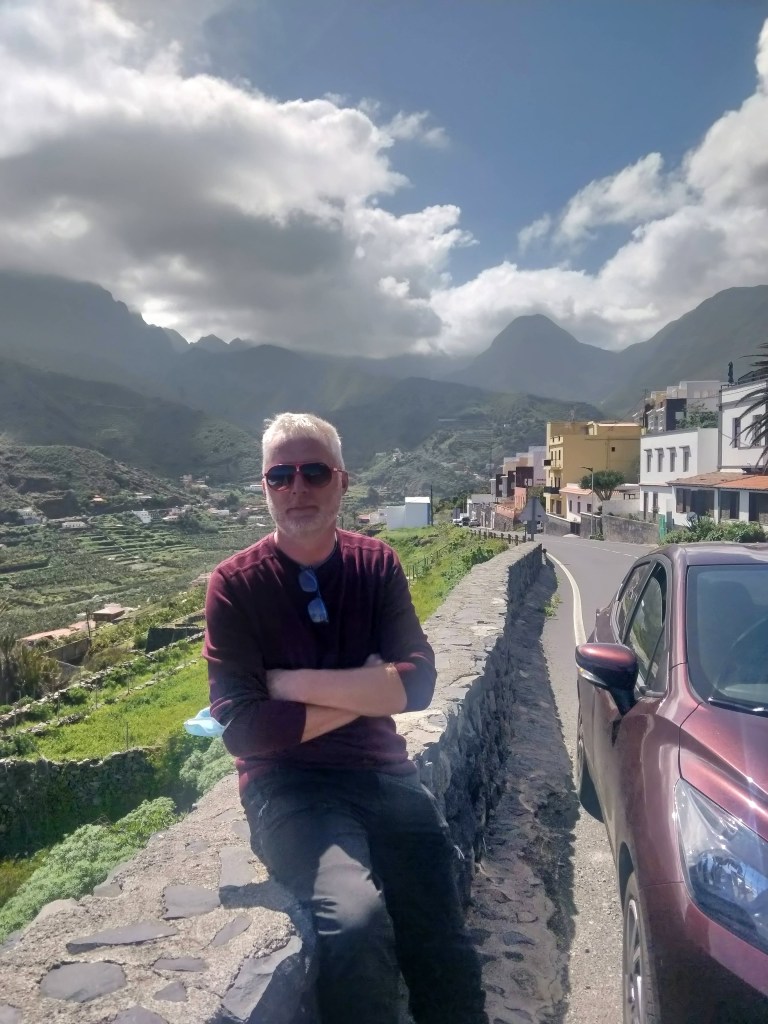
Having saved money on the hostel, we decided to hire a car – public buses go around the island but a car always gives more flexibility and freedom. La Gomera is very popular with well-organised Germans and hiring a car proved far more difficult than we expected as most were already reserved. But eventually we found one, we were delighted until we sat into it and it wouldn’t start – it had a flat battery which reminded us of the Guzzler on our Greek road trip. But a replacement was found and away we went. The roads were good but corkscrew-twisty. Oncoming traffic – especially public and tour buses – on narrow sections made for some challenging driving conditions (Caoimhin called it ‘exciting’🤣)

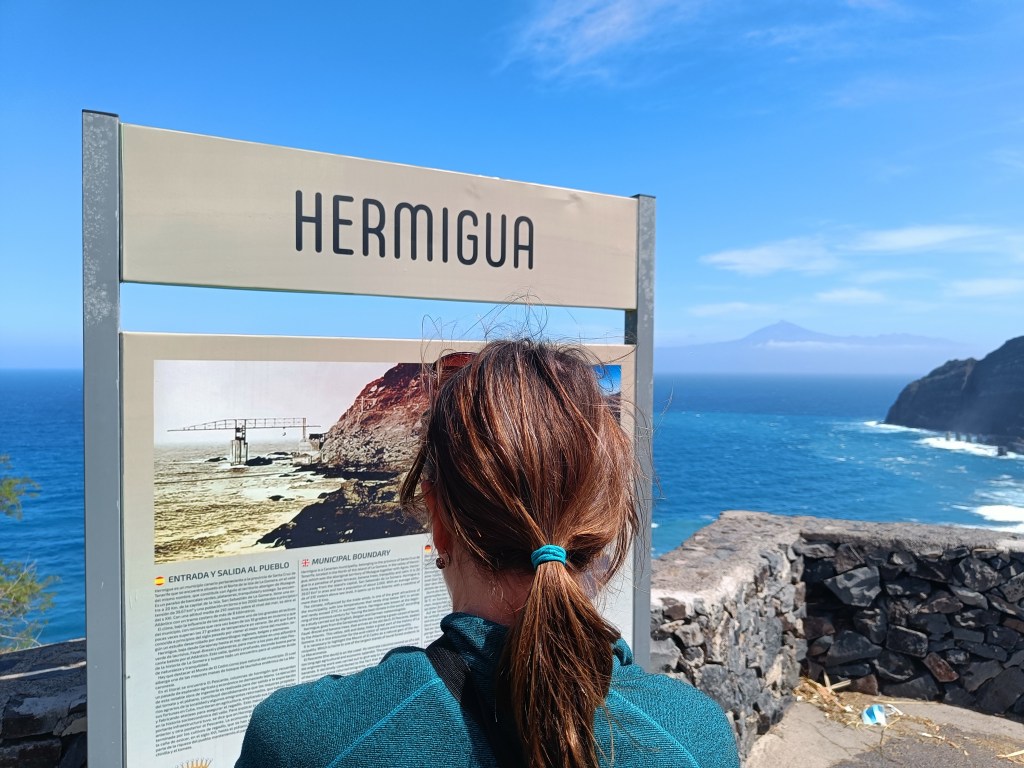
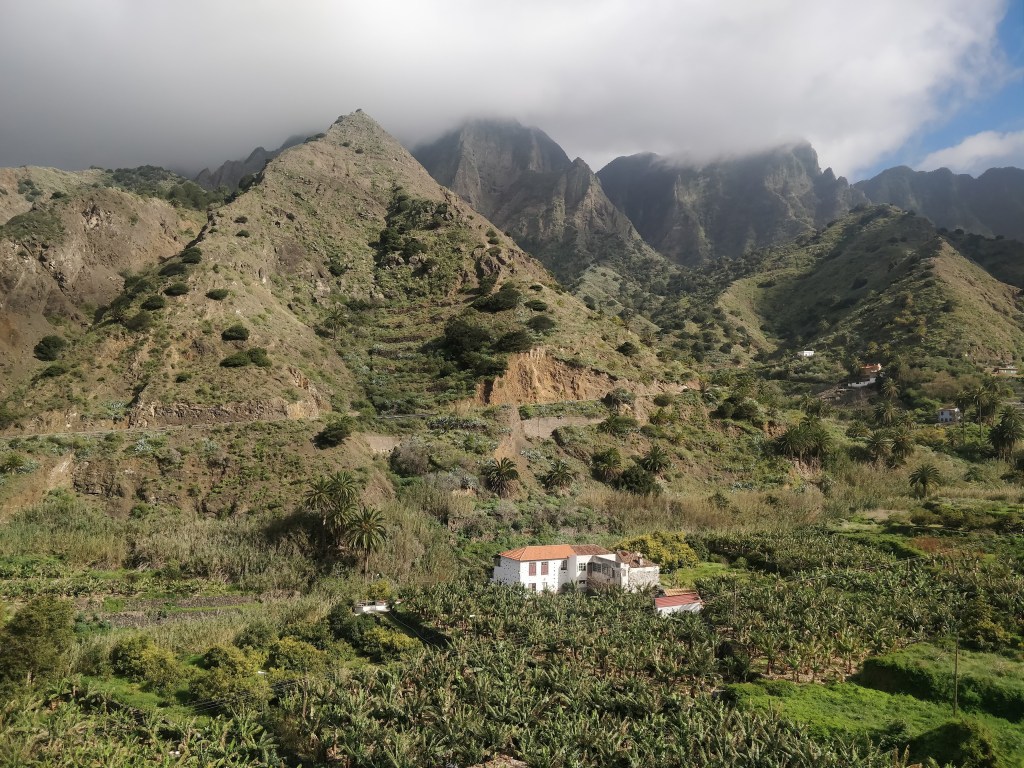
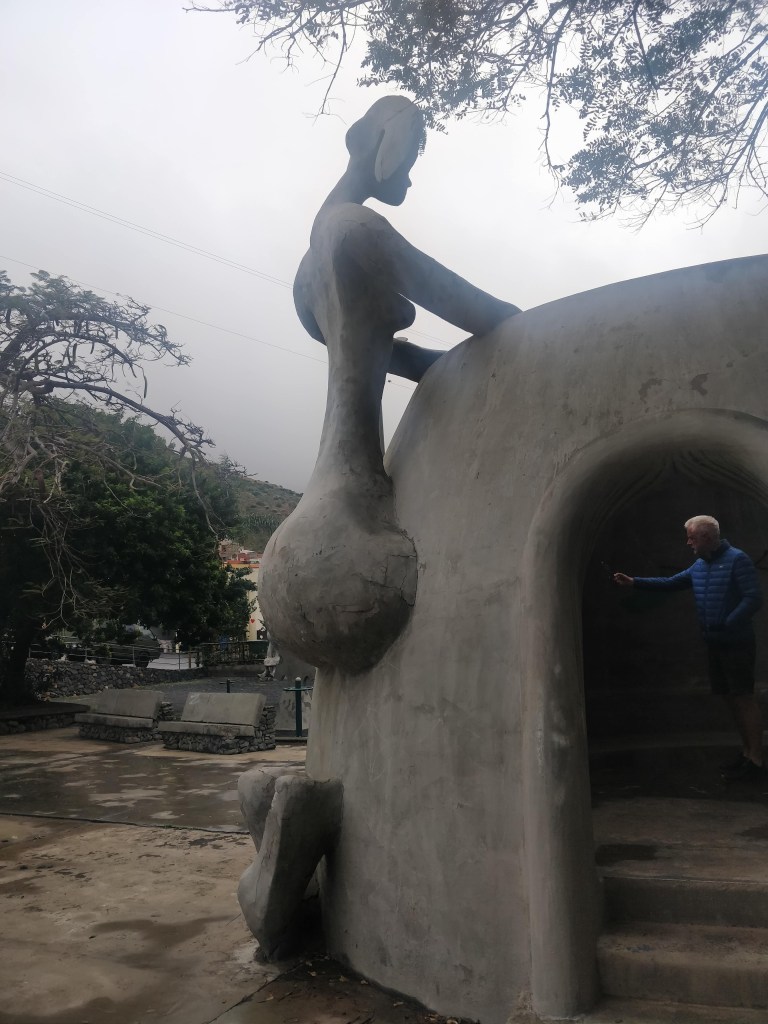
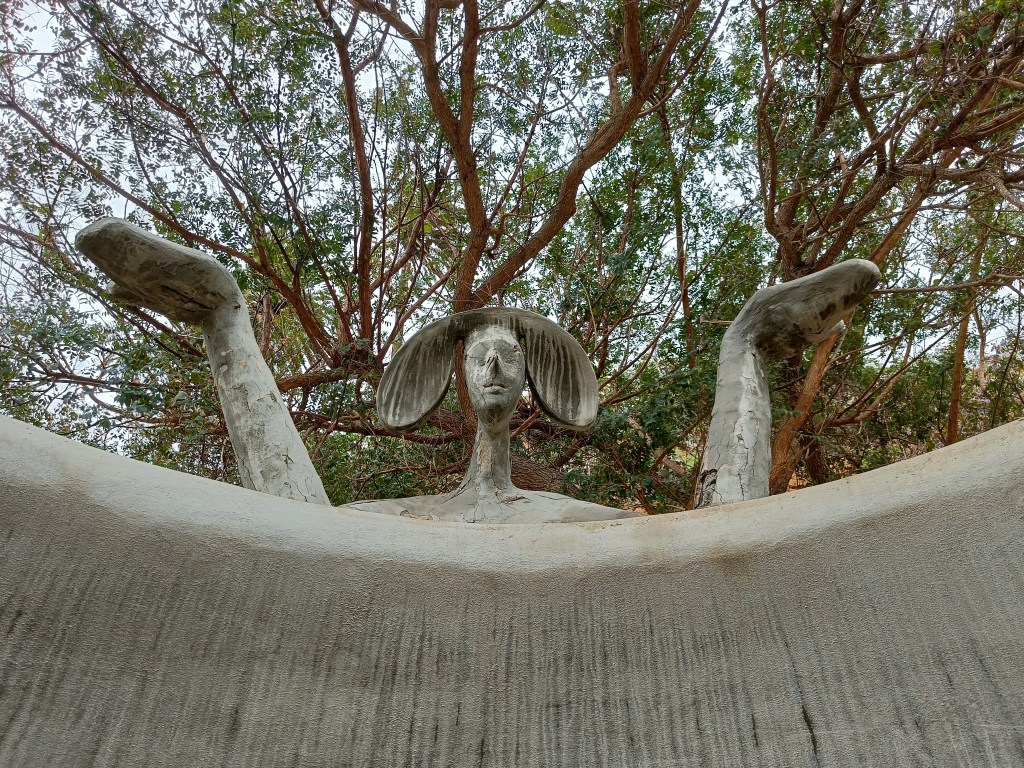
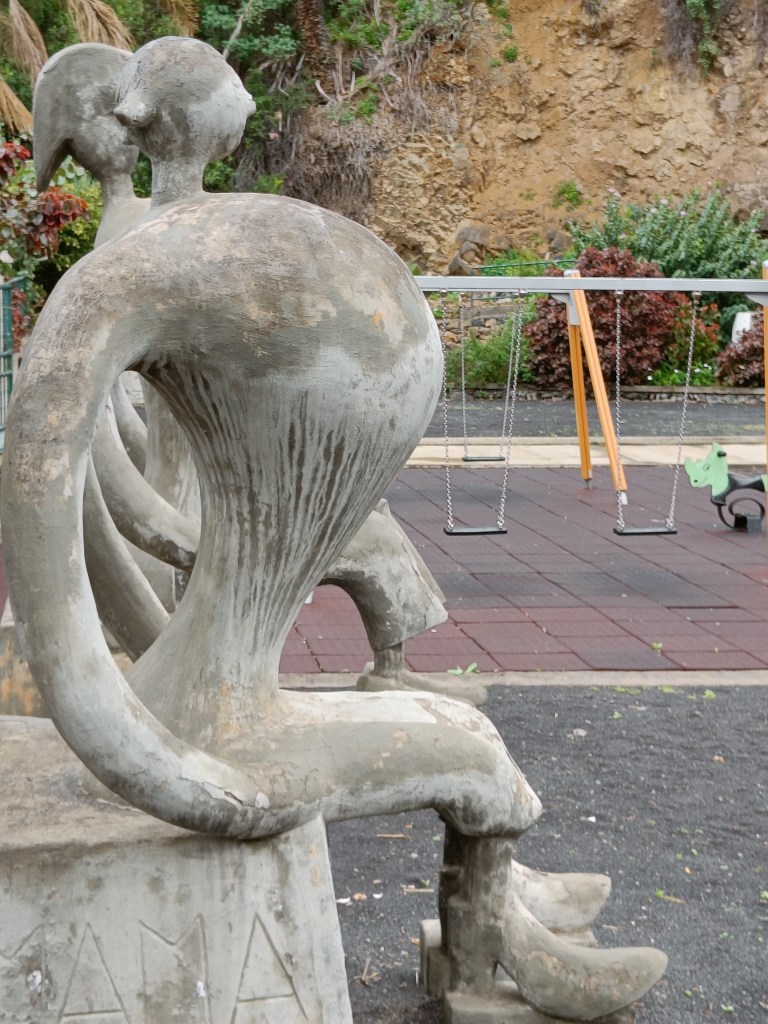
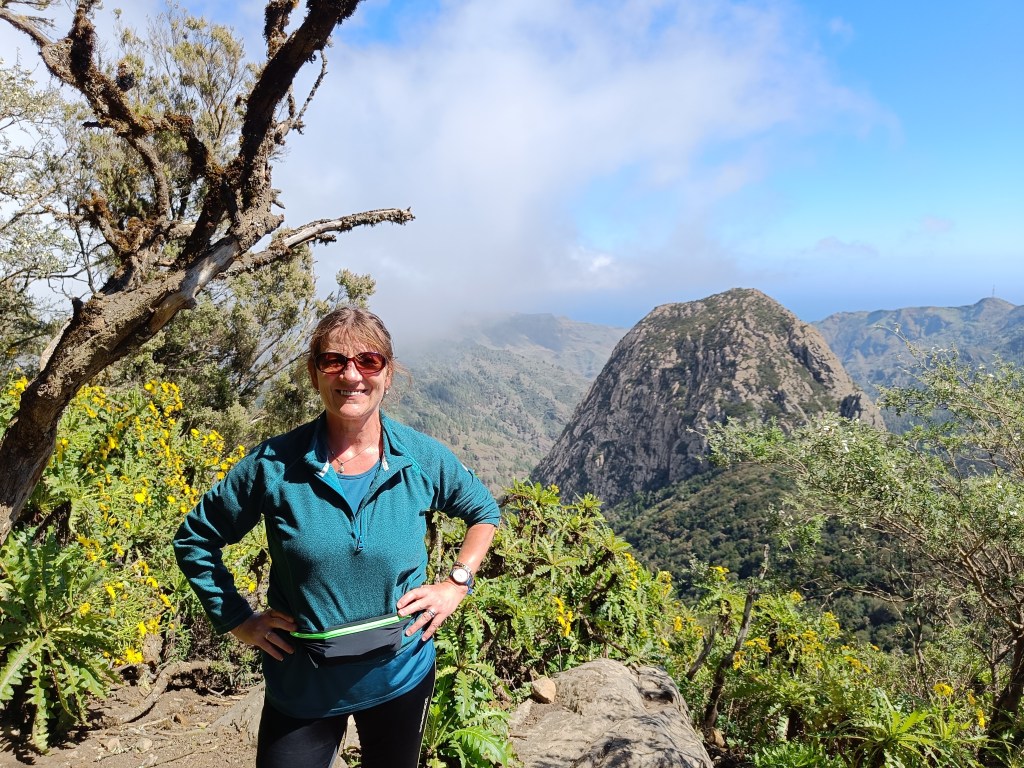
La Gomera is a round mountainous island with rocky summits, deep ravines and ancient forests. It has been compared to a giant fruit juicer – imagination required🙃 – the deep ravines are where the juice flows down. Agriculture is very important with small banana plantation running right to the rocky/ black-sanded coast. Many of the fertile valleys are tiered and planted with vines, potatoes and other vegetables. We stayed in Hermigua, a village in a spectacular valley with views over the mountains and banana plantations, close to the sea and many hiking trails. But in reality, there are hiking trails everywhere on the island. Vallehermosa translates as ‘the beautiful valley’ and is another popular base for hikers and has some unusual sculptures in the town playground, which gave us a laugh.

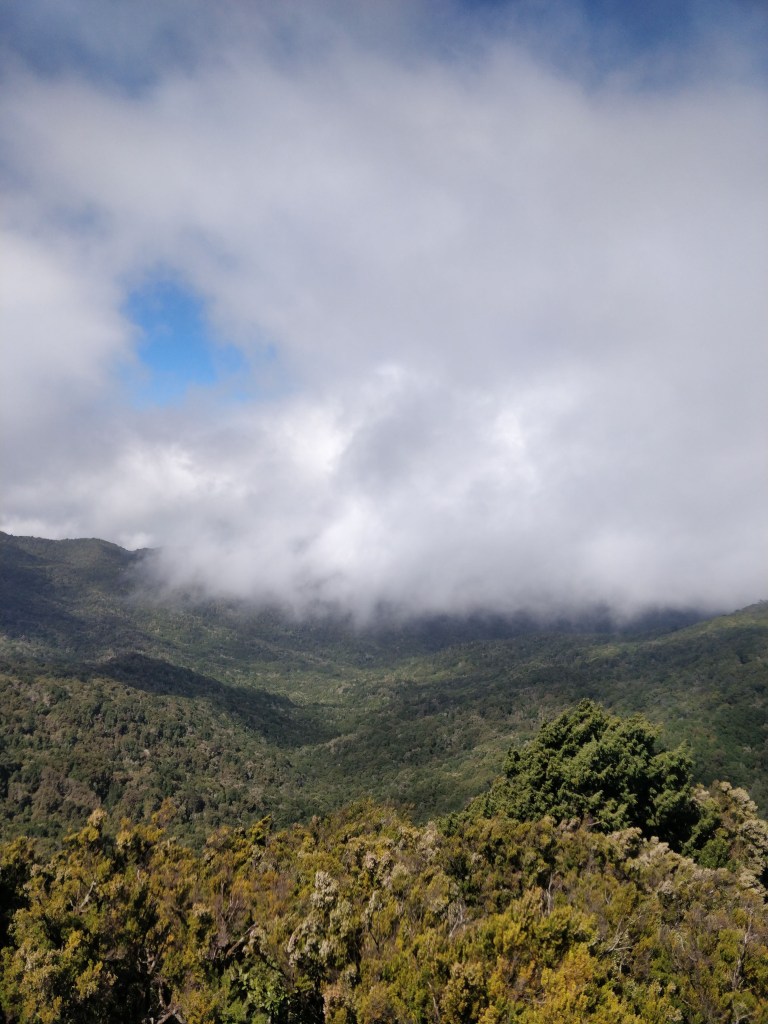
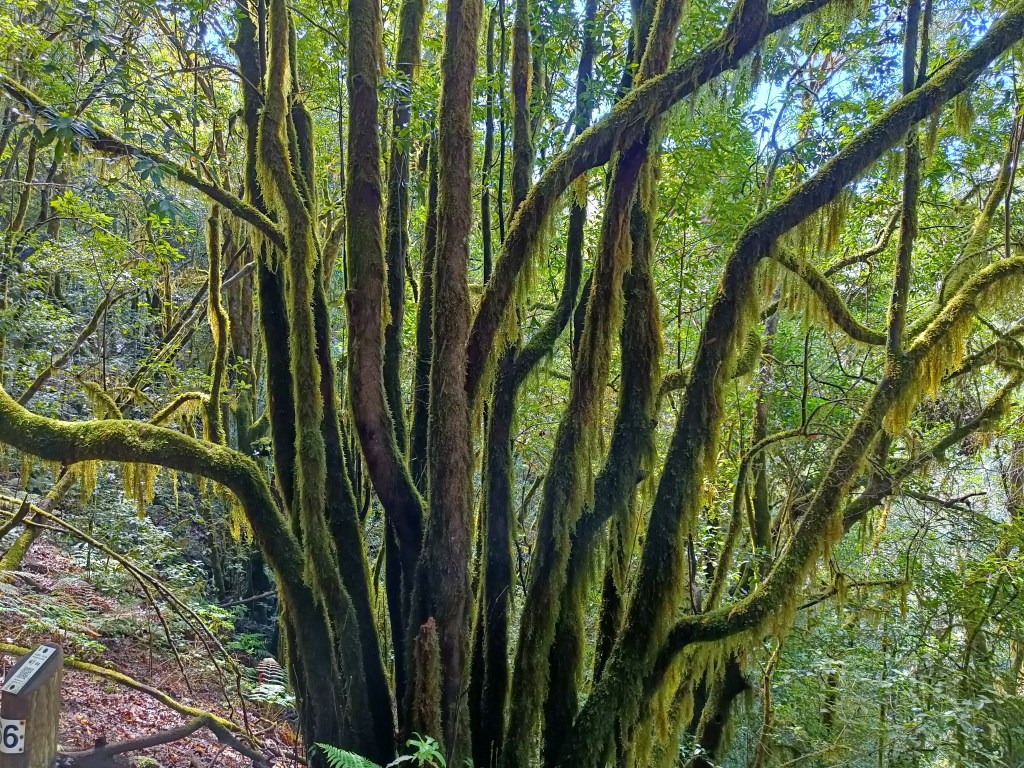
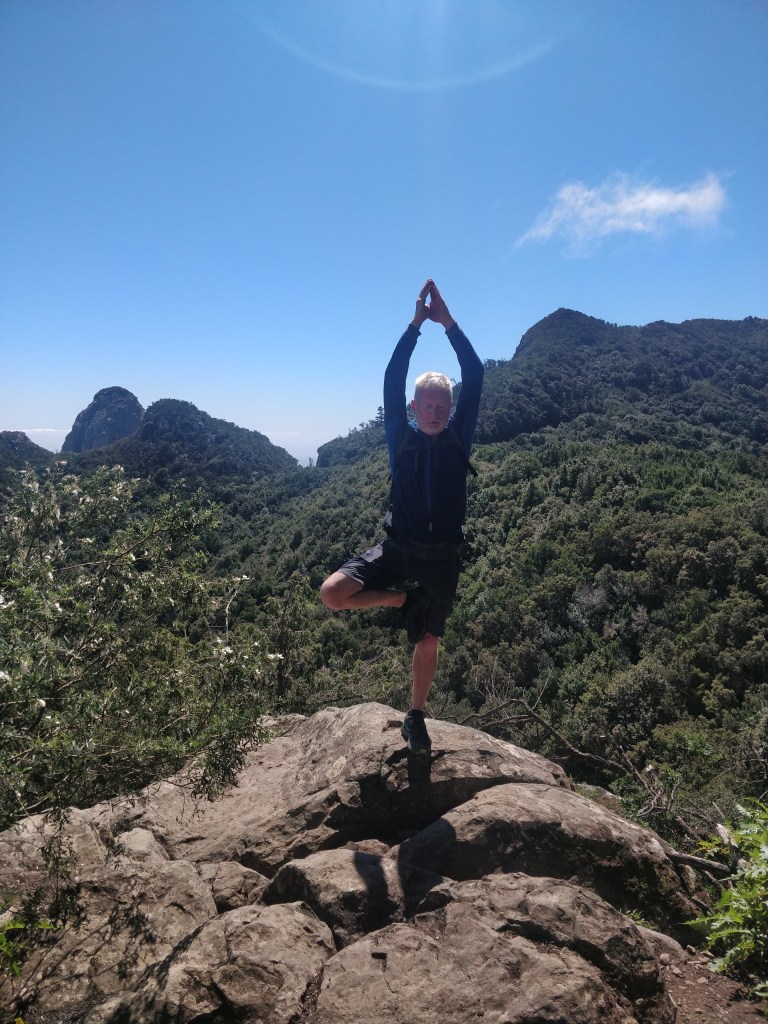
La Gomera is all about the hiking and there are trails to suit everyone from 30 minutes to all-day. At its centre is the beautiful Parque Nacional de Garajonay with its cloud forest of laurel and juniper and a myriad of well marked trails. The weather conditions caused by the constant flow of mist, produced when the cool Atlantic trade winds meet the warm breezes, ensure constant dew and humidity and allows the growth of over 400 different varieties of trees and plants. It also means that it can be a sunny 22C in the valley and a misty 6C in the cloud forest. Unfortunately, a huge forest fire in 2012 destroyed almost 20% of the park which is only slowly recovering. It was an August day when the conditions were perfect for the rapid spread of fire – 30/30/30 – temperatures well in excess of 300 C, humidity well below 30%, winds well in excess of 30km. All it required was an idiot with a match 🔥🔥

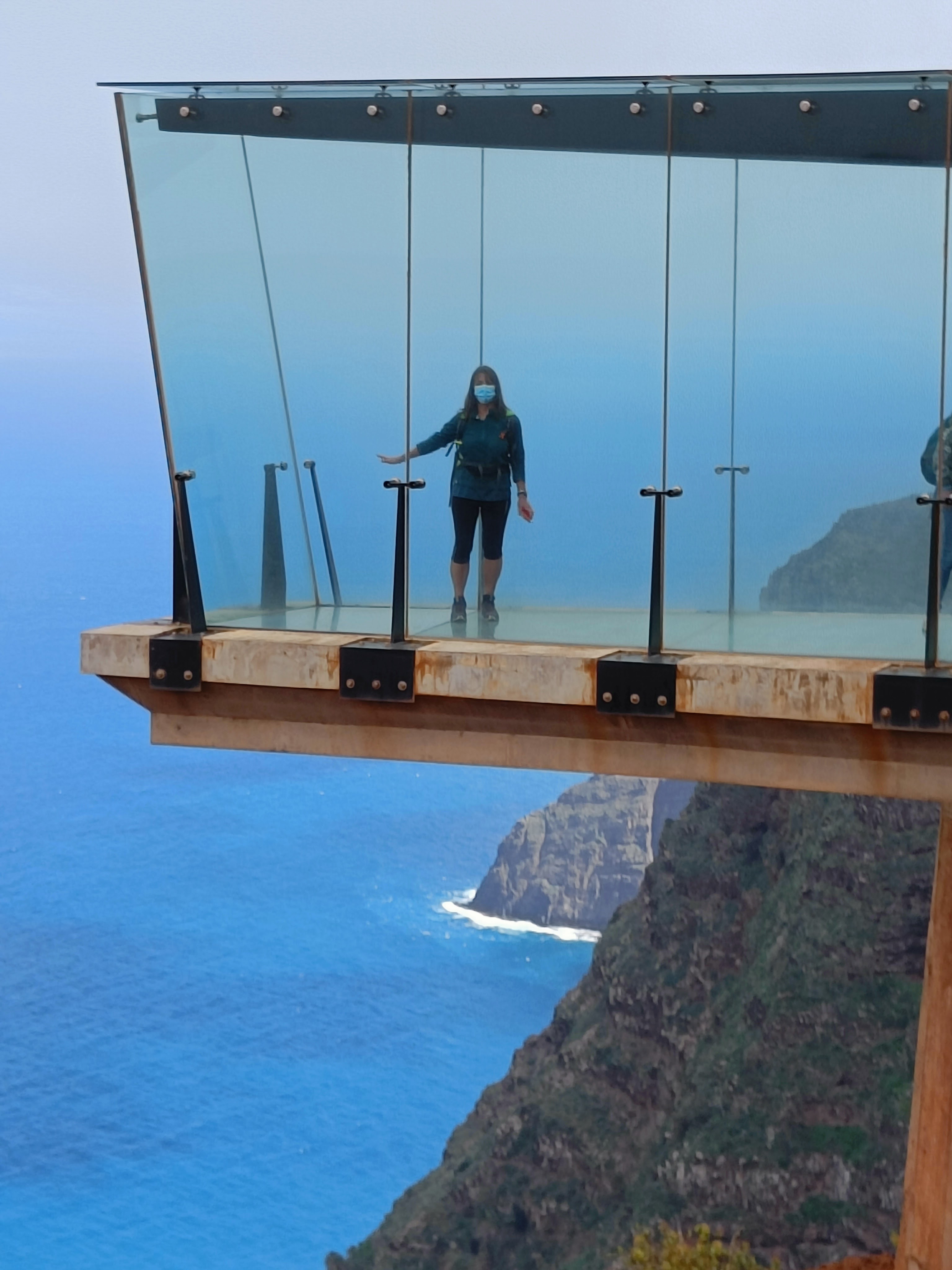
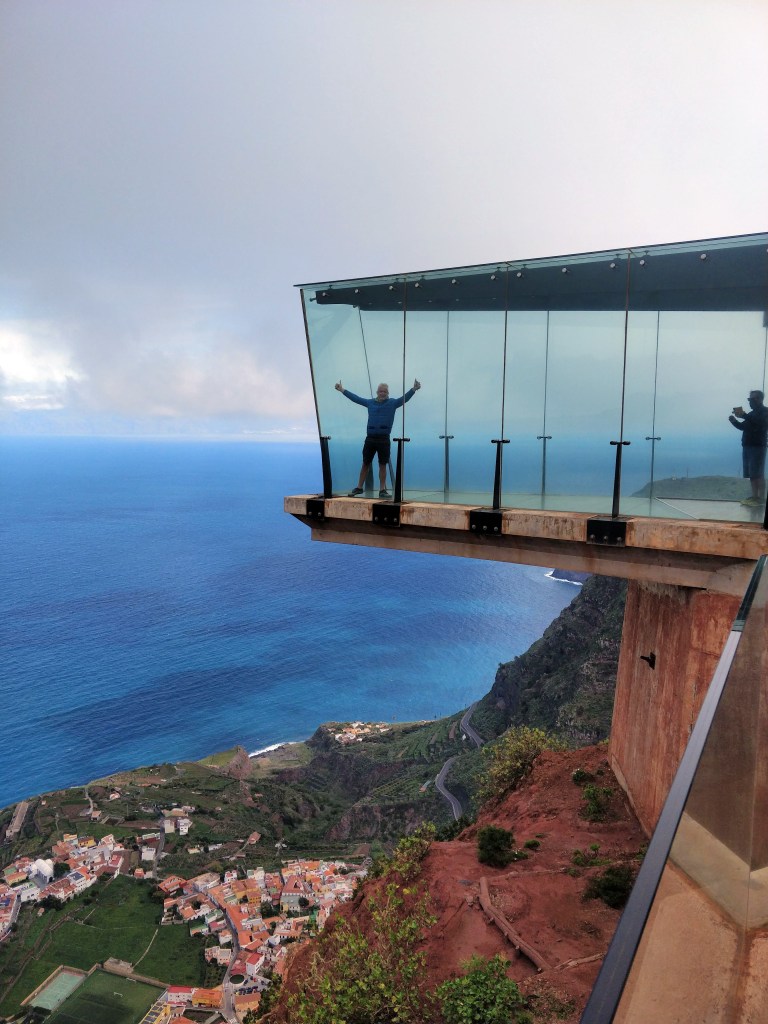
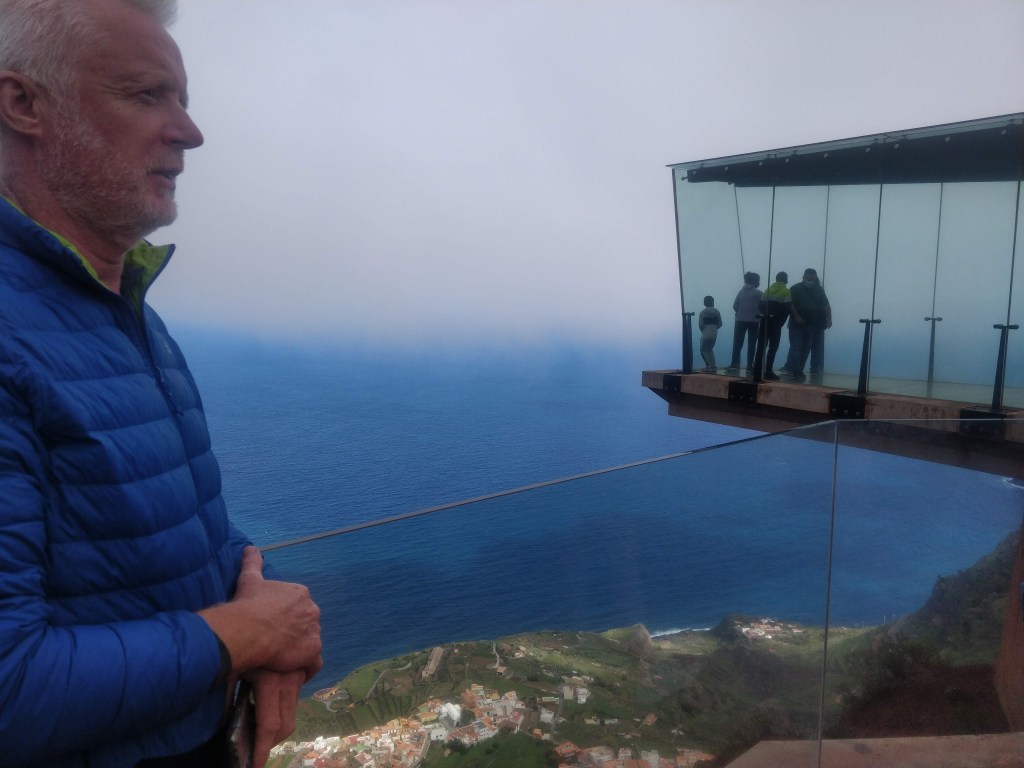
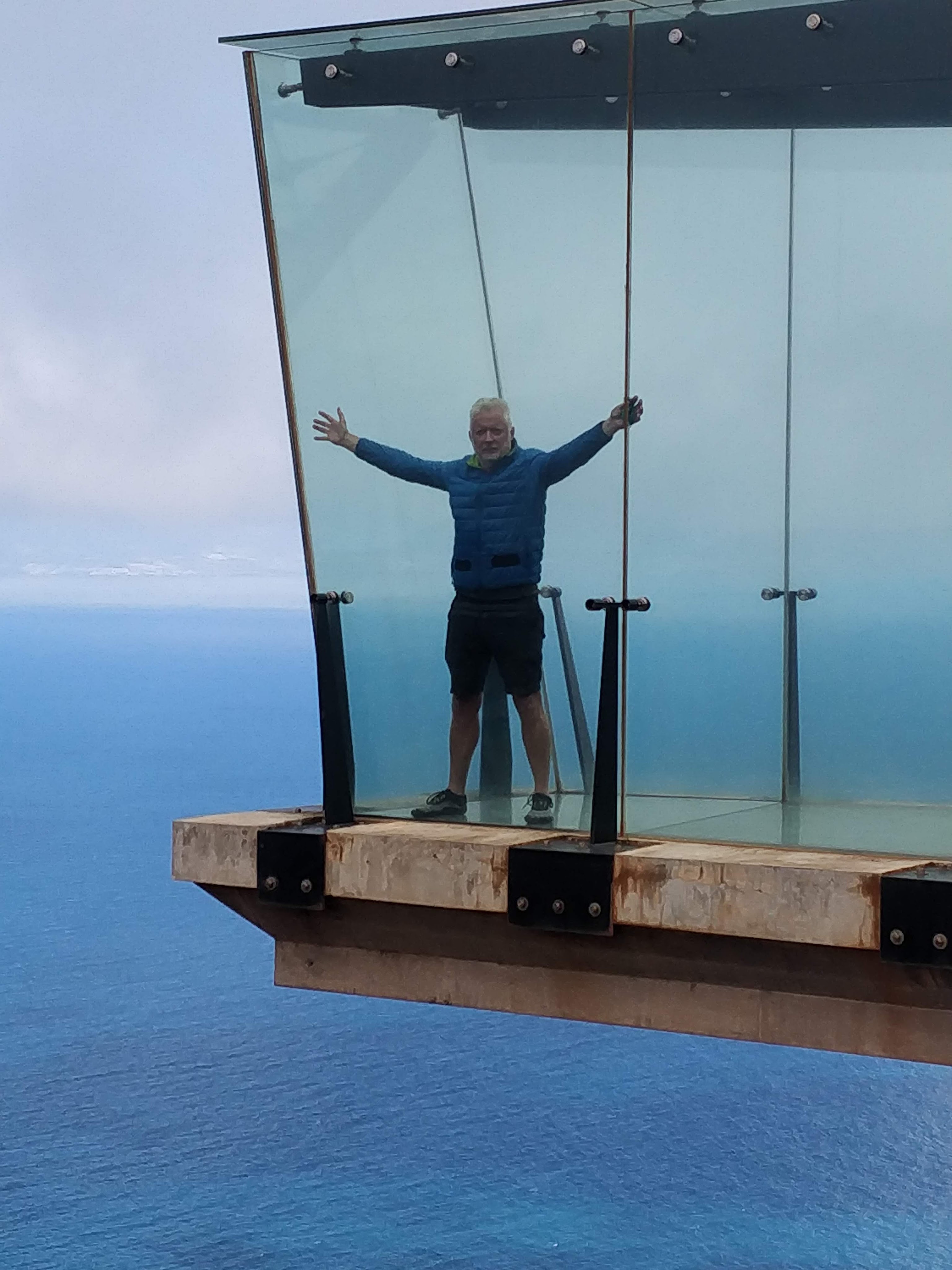
La Gomera is full of miradors, viewing points to admire the stunning landscapes, places to take a breather if you are walking or to pull in if you are driving. But the most spectacular -and the most nerve-tingling – is the Abrante mirador, a glass-sided box on a clifftop, high above the sea with the gorgeous seaside village of Agulo spread far below and distant views of Mount Teide, the highest mountain in Tenerife. If you’d like an adrenaline shot, this is the place to go. It would have been more nerve racking if the glass floor was made of clear glass rather than opaque, then it would truly have felt like walking on air.

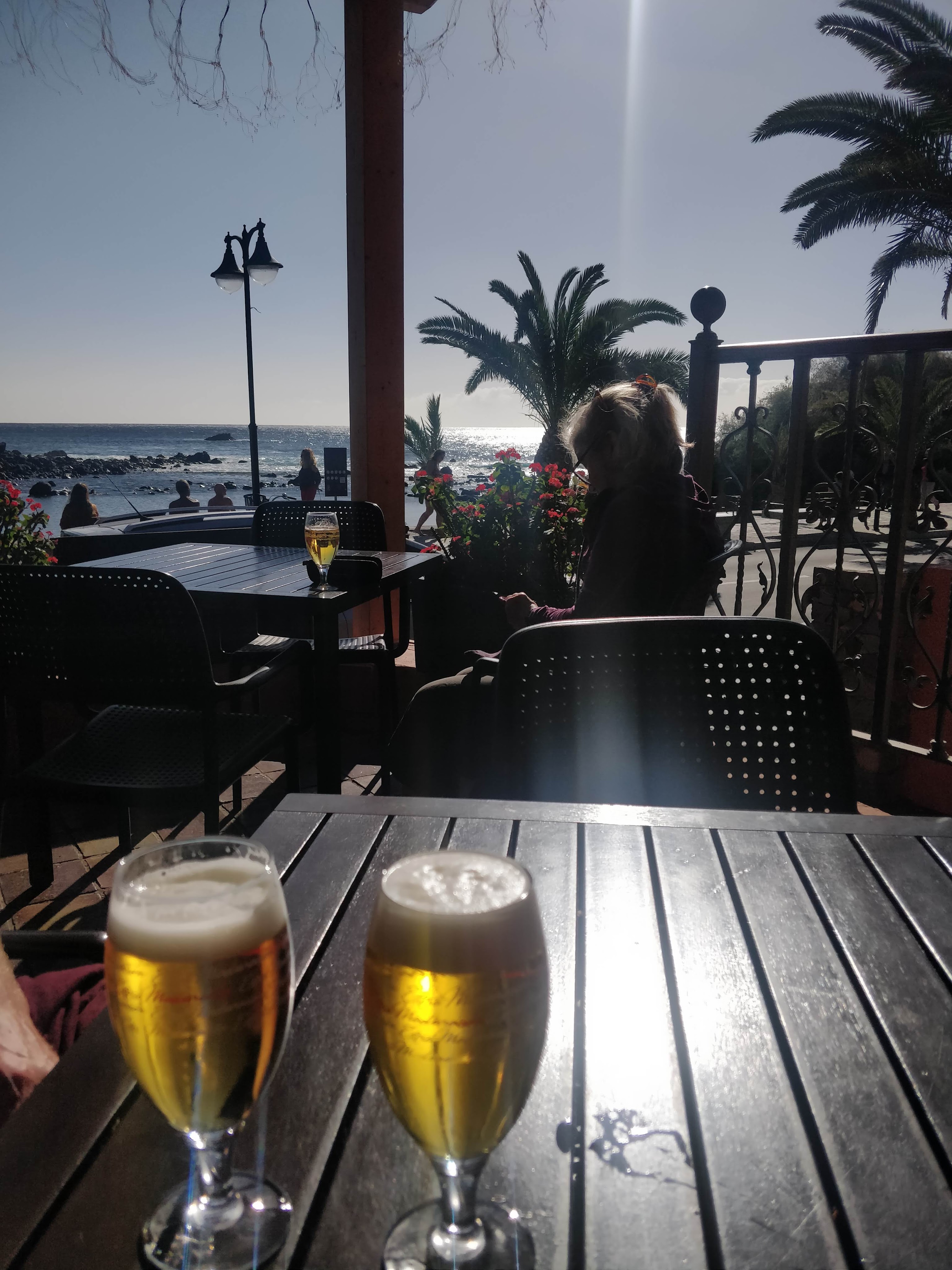
A beer in Valle Gran Rey

The Valley of the Great Kings – Valle Gran Rey – on the western side of the island with its beaches and long stunning valley is a popular spot for relaxation and is known for its nightlife…we spent a night in a house up the valley where the nearest bar was full of locals playing chess.

La Gomera was far busier than the island of El Hierro…people laughed when we said it was touristy – but because of it popularity, it required being reasonably well organized with accomodation and car hire. We like the spontaneity and flexibility of booking at the ‘last minute’ but in the busy season, this can limit options. . . especially on a budget. A gorgeous island and well worth a visit.

High on La Gomera

La Gomera, the Hikers Guide to the Galaxy

El Hierro, the Island at the end of the World

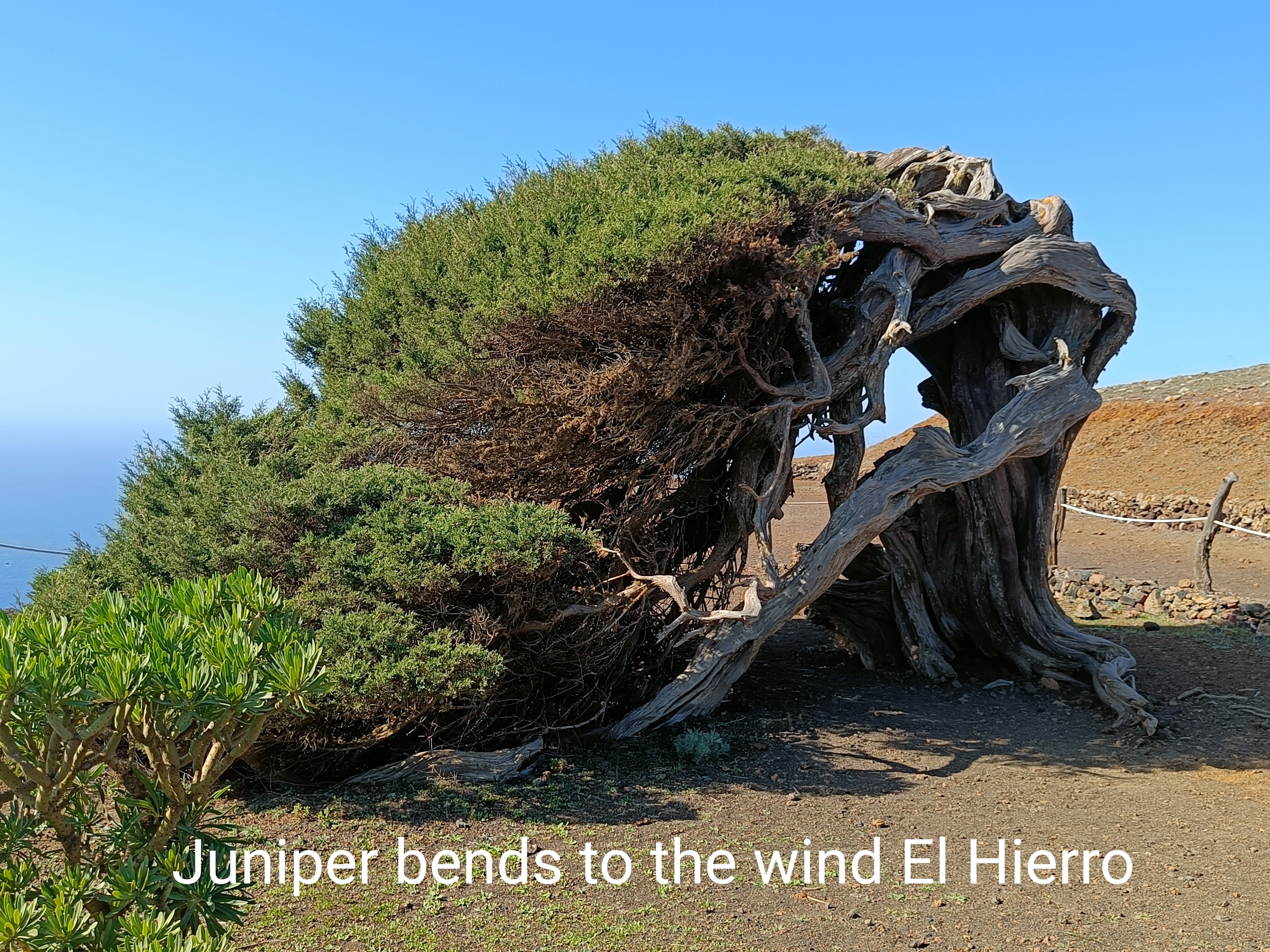
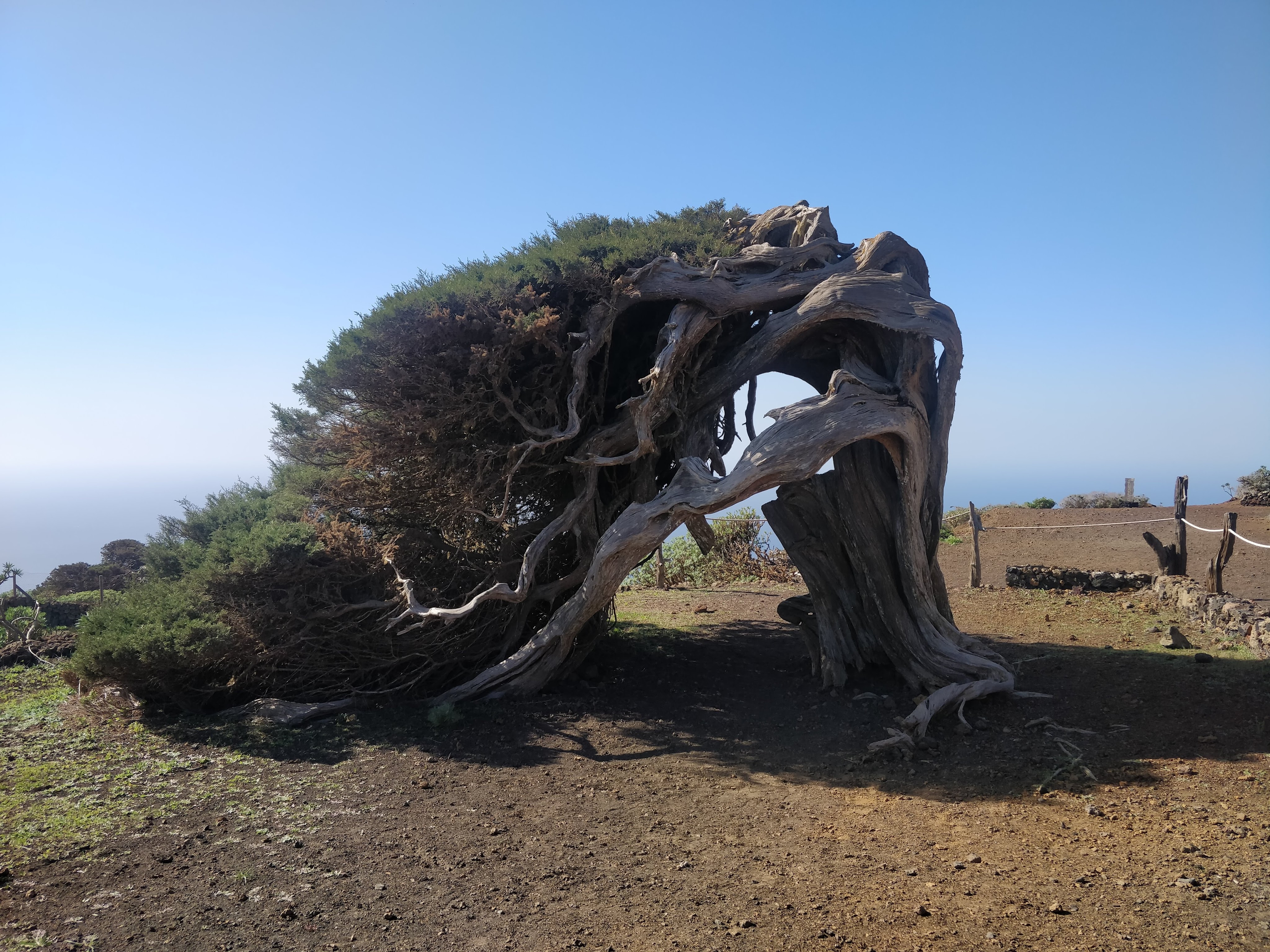
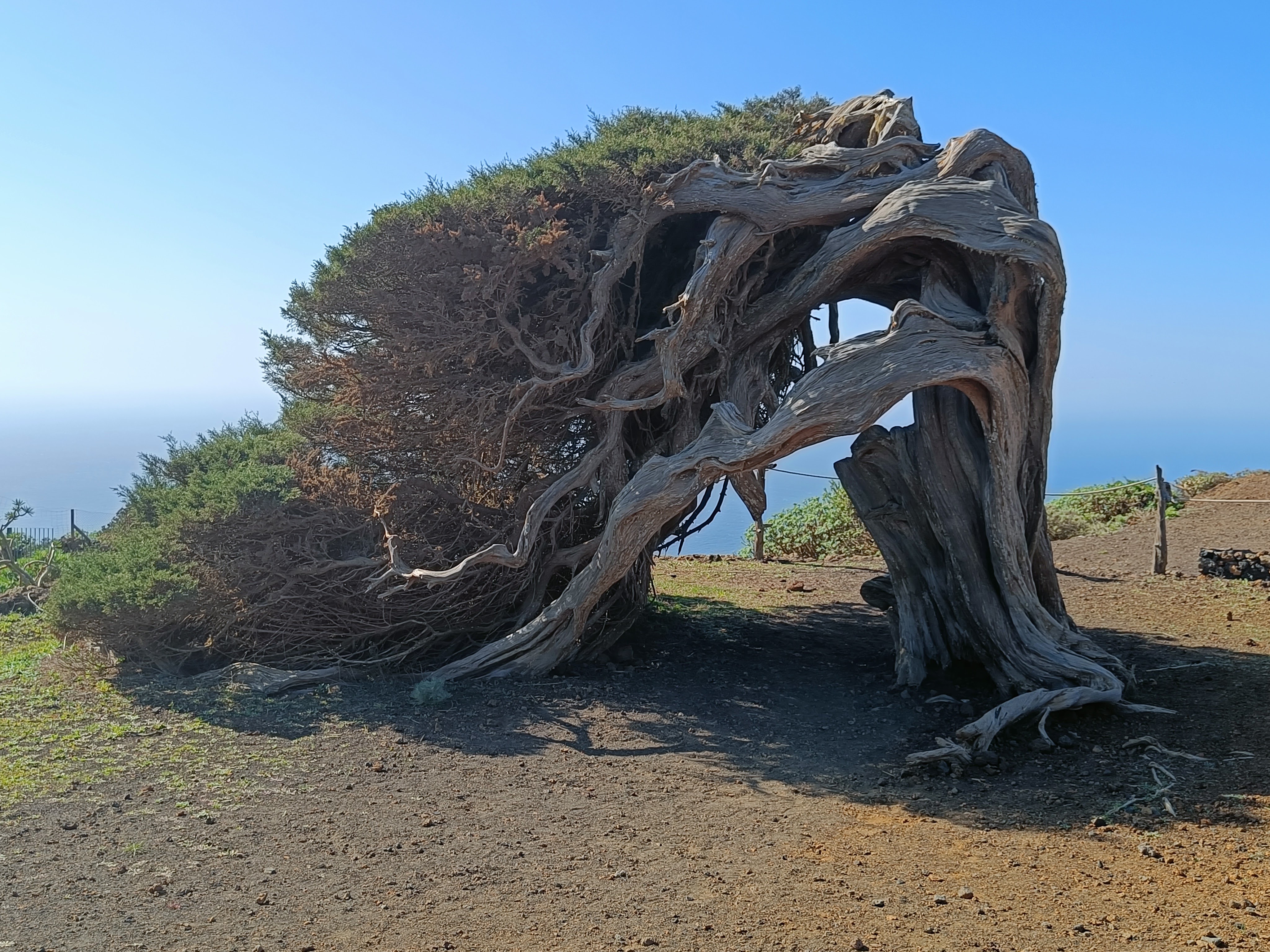
Symbol of El Hierro – bent juniper tree

El Hierro is the smallest and most westerly of the Canary Islands – it was once considered the end of the earth (it was the zero meridian before that was moved to Greenwich). Columbus sailed by here into the unknown to ‘discover’ new lands. It still retains that wild frontier feel – windswept, remote, beautiful.

Our Ferry to El Hierro

The ferry boat  from San Cristianos in Tenerife to El Hierro was surprisingly big for a destination of about 11,000 inhabitants. There were queues of lorries and trucks waiting to board the daily two and half hour crossing..but very few passengers. The crossing was also surprisingly smooth. We arrived in darkness at the only ferry port on the island and walked up a dim road with few streetlights to a couple of waiting taxis.

Our taxi was a clapped-out wreck but that didn’t stop our silent taxi driver from roaring past the ferry traffic on the narrow winding uphill road, belching fumes all the way. We peered out the car windows into blackness having no notion where we were.  He deposited us outside the house that we had rented and pushed his card into my hand before roaring off into the night. Our landlady wheezed alarmingly walking up the four steps to the house….not good on an island where everything is uphill. When she got her breath back, she gave us the keys and a quick tour in barely comprehendible Spanish( our inadequacy, not hers)and then she too disappeared. The house was large, smelt of damp and the wind rattled the windows. But that didn’t keep us awake…..the crowing of a time-warped cock nearby was responsible😯

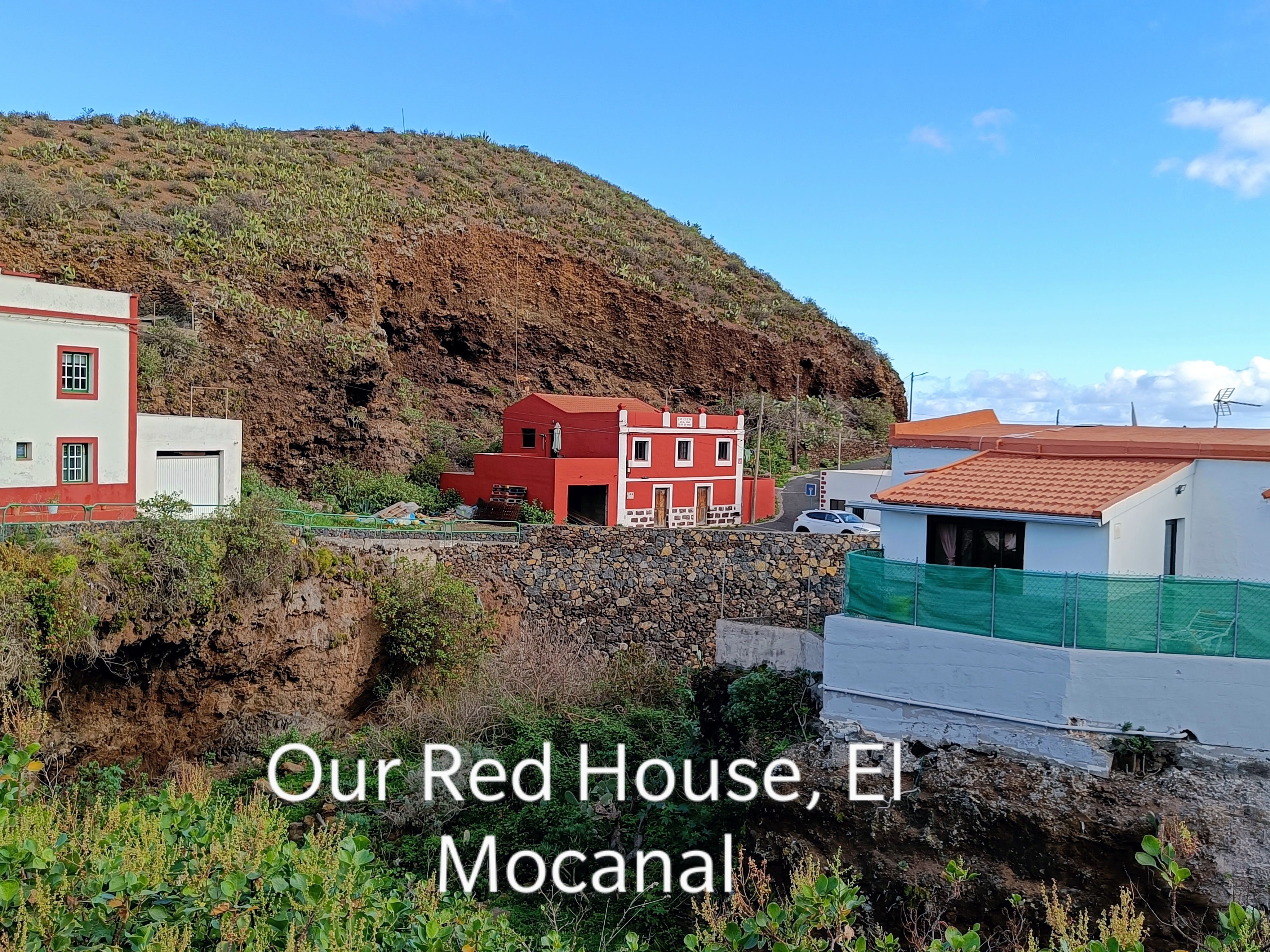
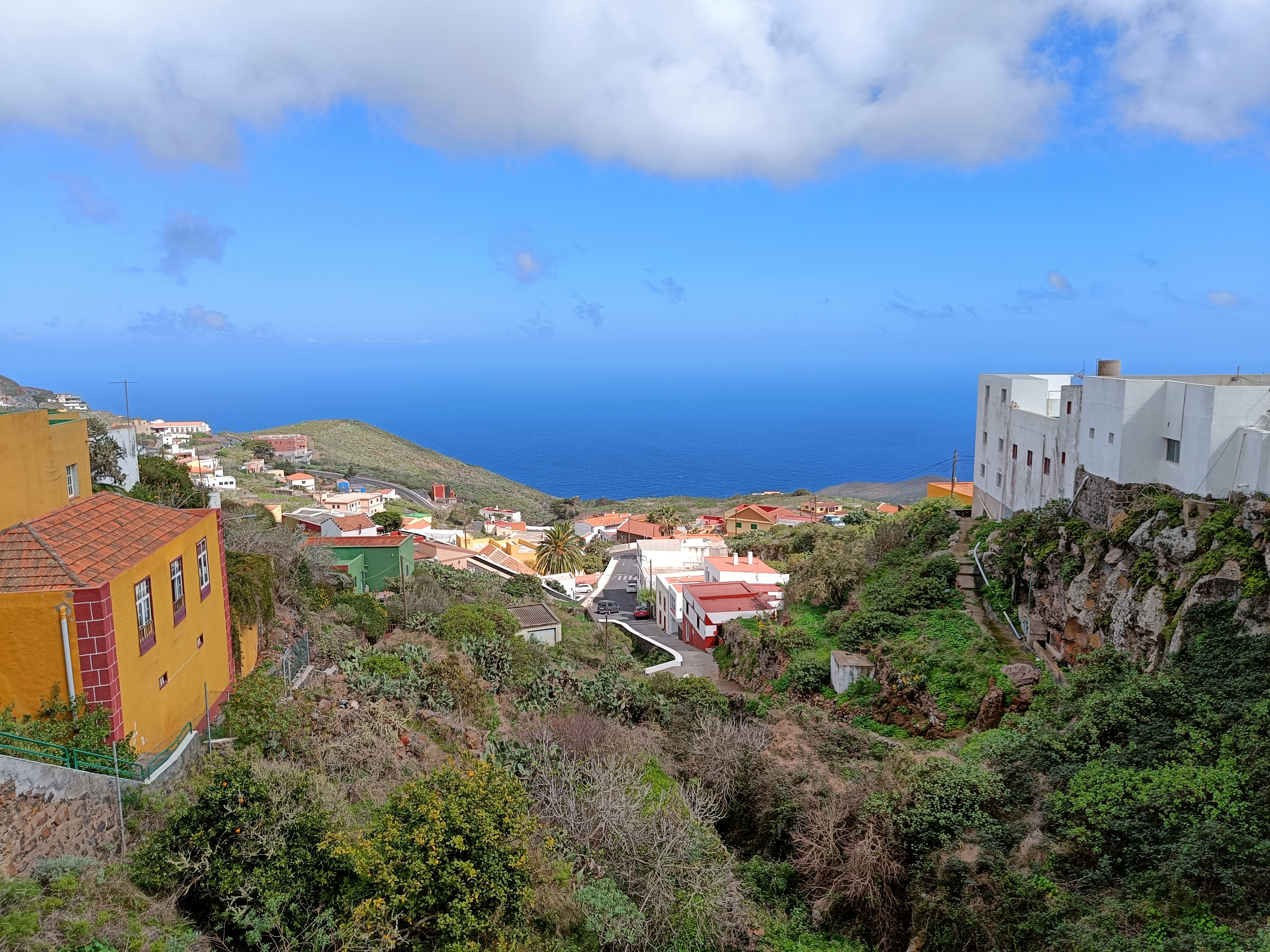
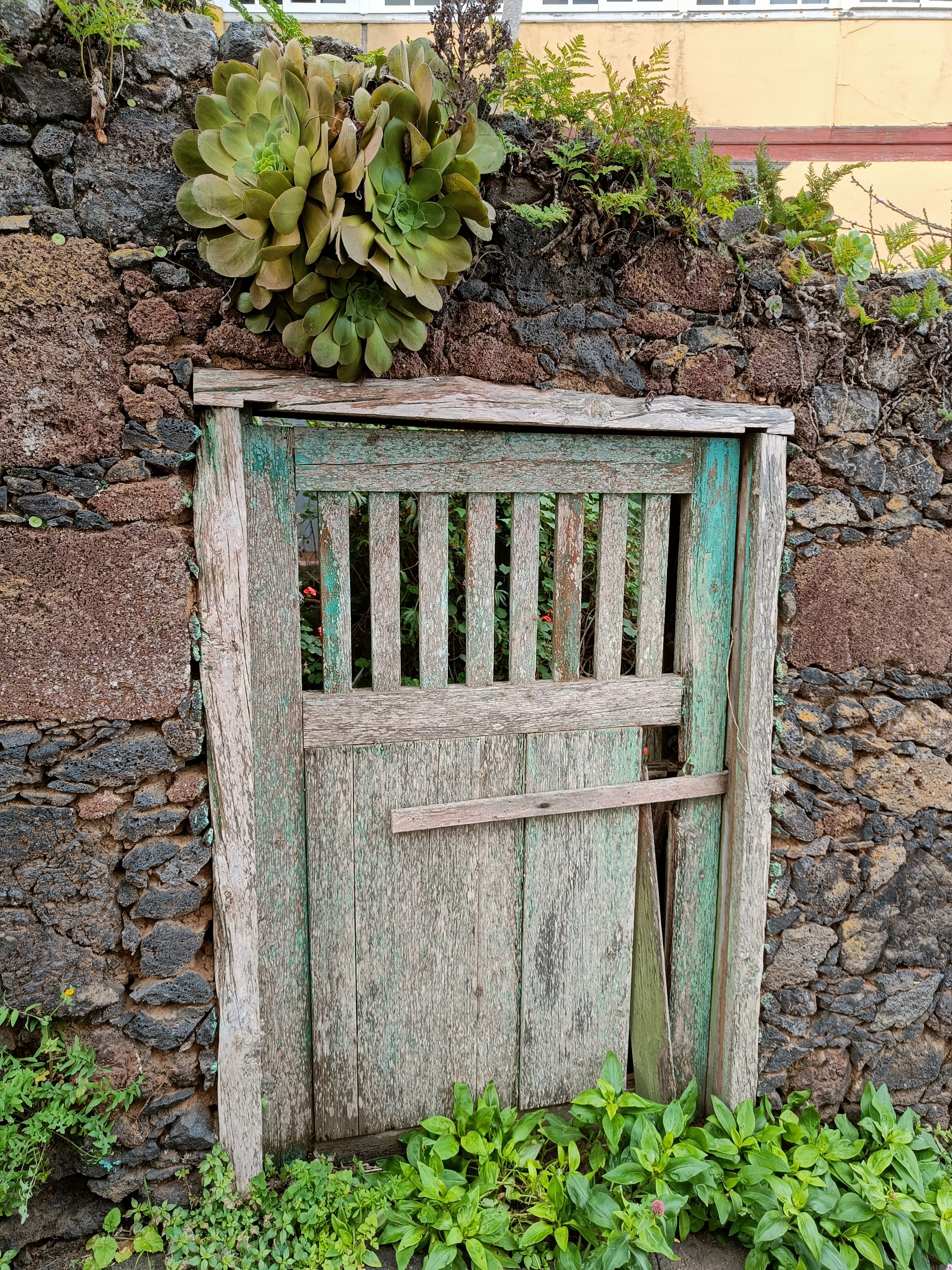
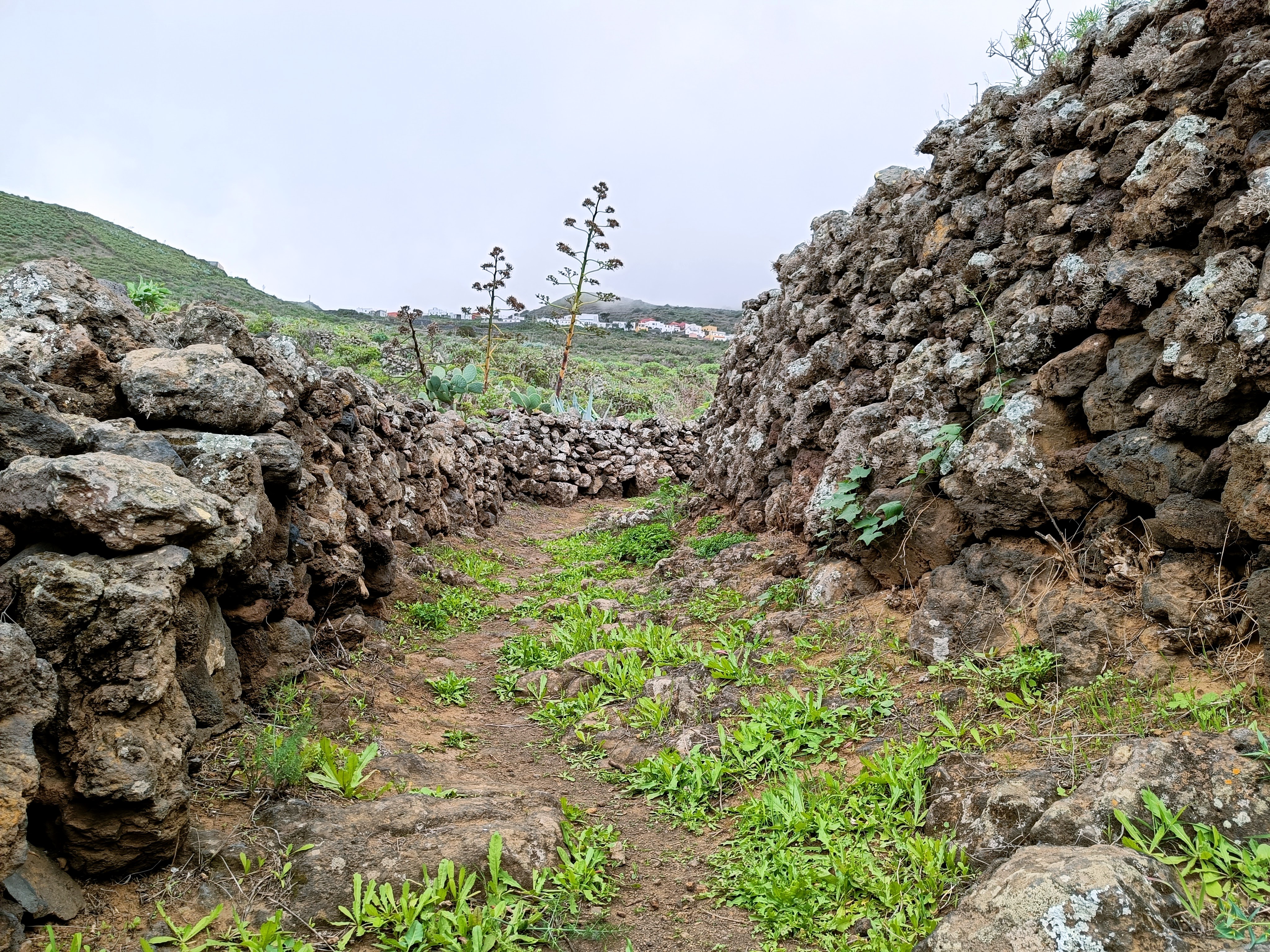
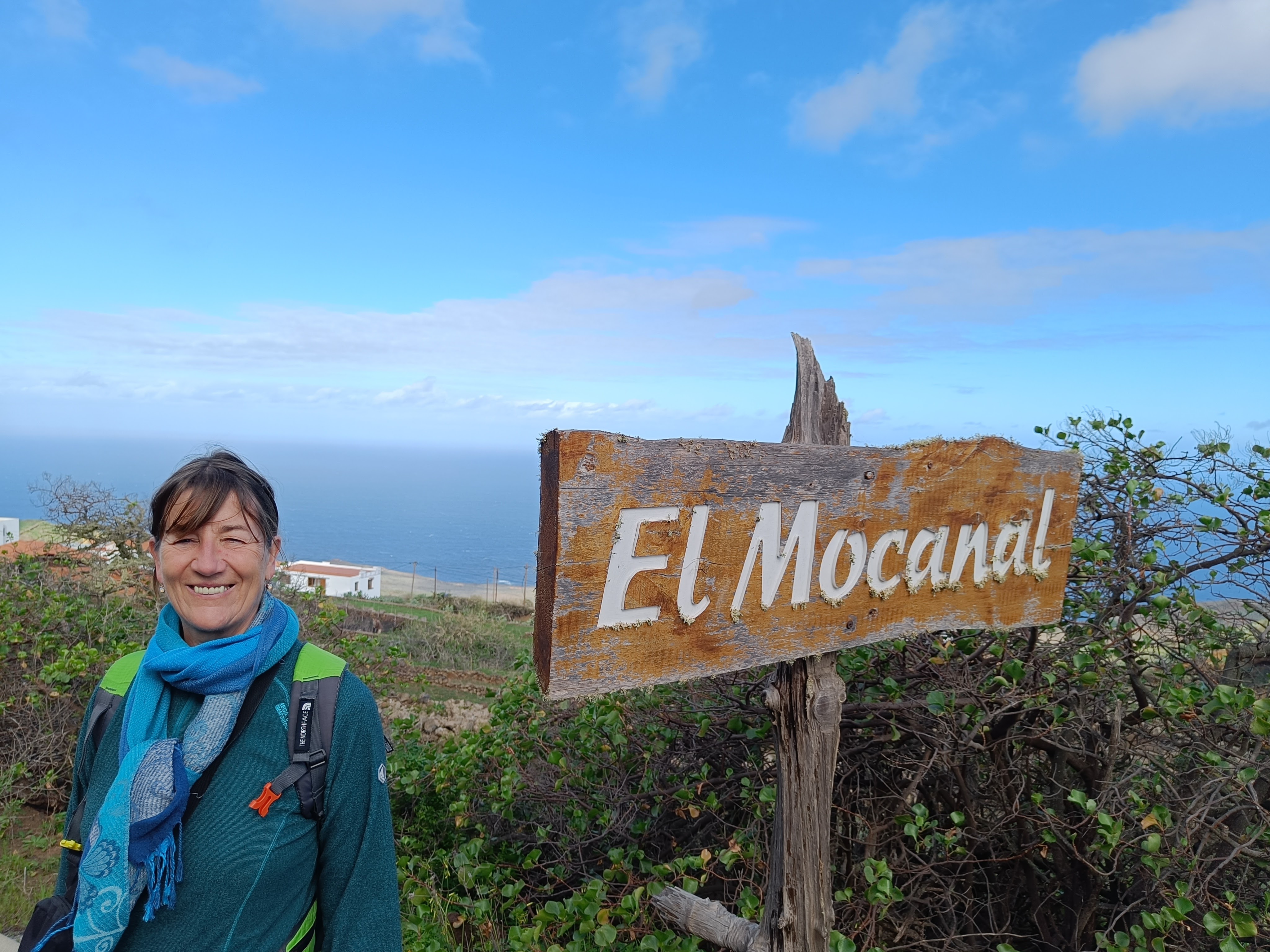
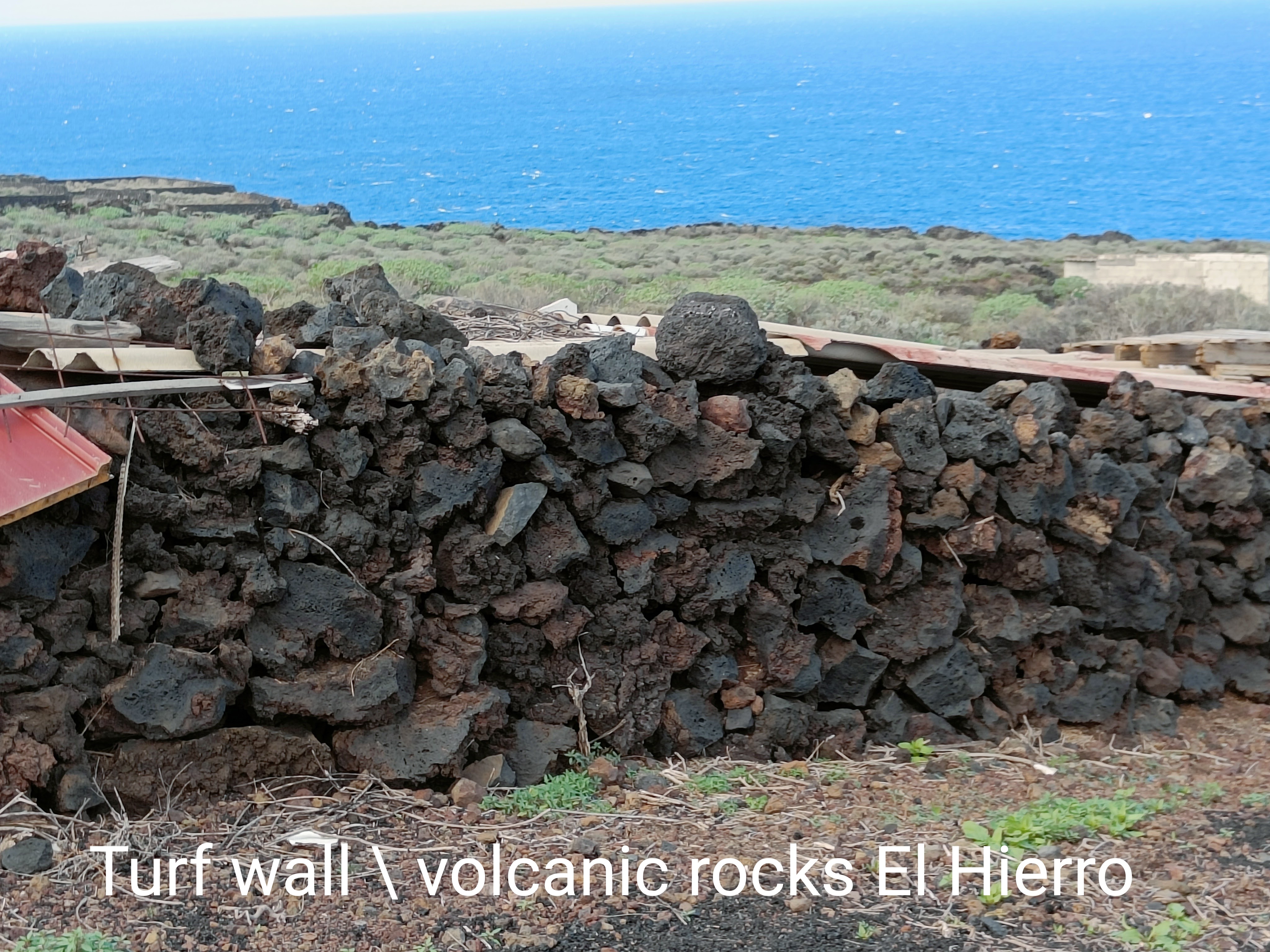
The following morning, opening the front door, we looked out at a blue sea, framed by a bluer sky….we had no idea from the night before that we had sea views (but in reality most places have sea views even if you are many kms from the sea because of the mountainous terrain) The back door opened onto a little verandah with towering mountains obscured by cloud and mist. We could have been in Connemara….with cacti and Aloe Vera plants😀 where the stone walls were made of volcanic rocks, where the turf banks were lava stones…..a strange familiarity  around Mocanel in El Hierro.

In Valverde, we walked around the Opel Corsa that we decided to hire for a day, noting all the dents and scratches. The car rental woman laughed and said no need to worry about dents, this is El Hierro! The tyre threads would certainly not have passed any NCT inspection. There was no talk of deposits or credit card details, we just paid €30 and the car was ours for 24 hours.

Valverde may be the capital but it’s  a small mountain town known primarily for its fog and wind. One guide book had warned not to expect Manhattan🤣…but it did have a fine church and plaza and a really helpful tourist office.

In the north of the island, we drove through a tunnel almost 2500 m long. We were so surprised as we didn’t know anything about it and had difficulty getting the lights of the rental car to work😲. We were now in the region of La Frontera in warm sunshine,  sweating in our jeans and jumpers. El Hierro is a very small island but it feels much larger with such diverse landscapes and micro climates. We drove through pine forests, along barren lava cliffs that fell steeply to the sea, through high heather fields with the occasional goat and cow.

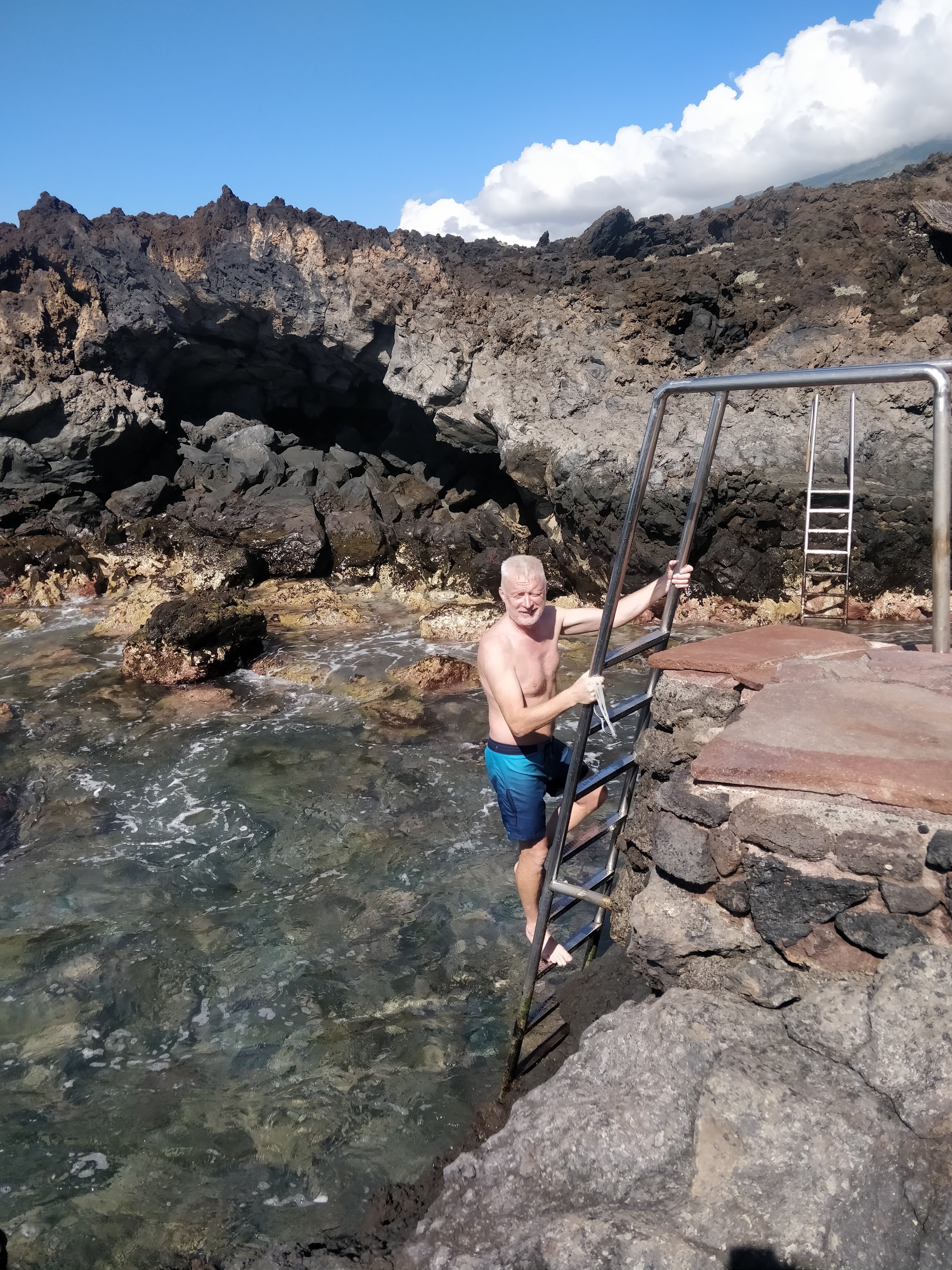
We swam in rock pools with the clearest green
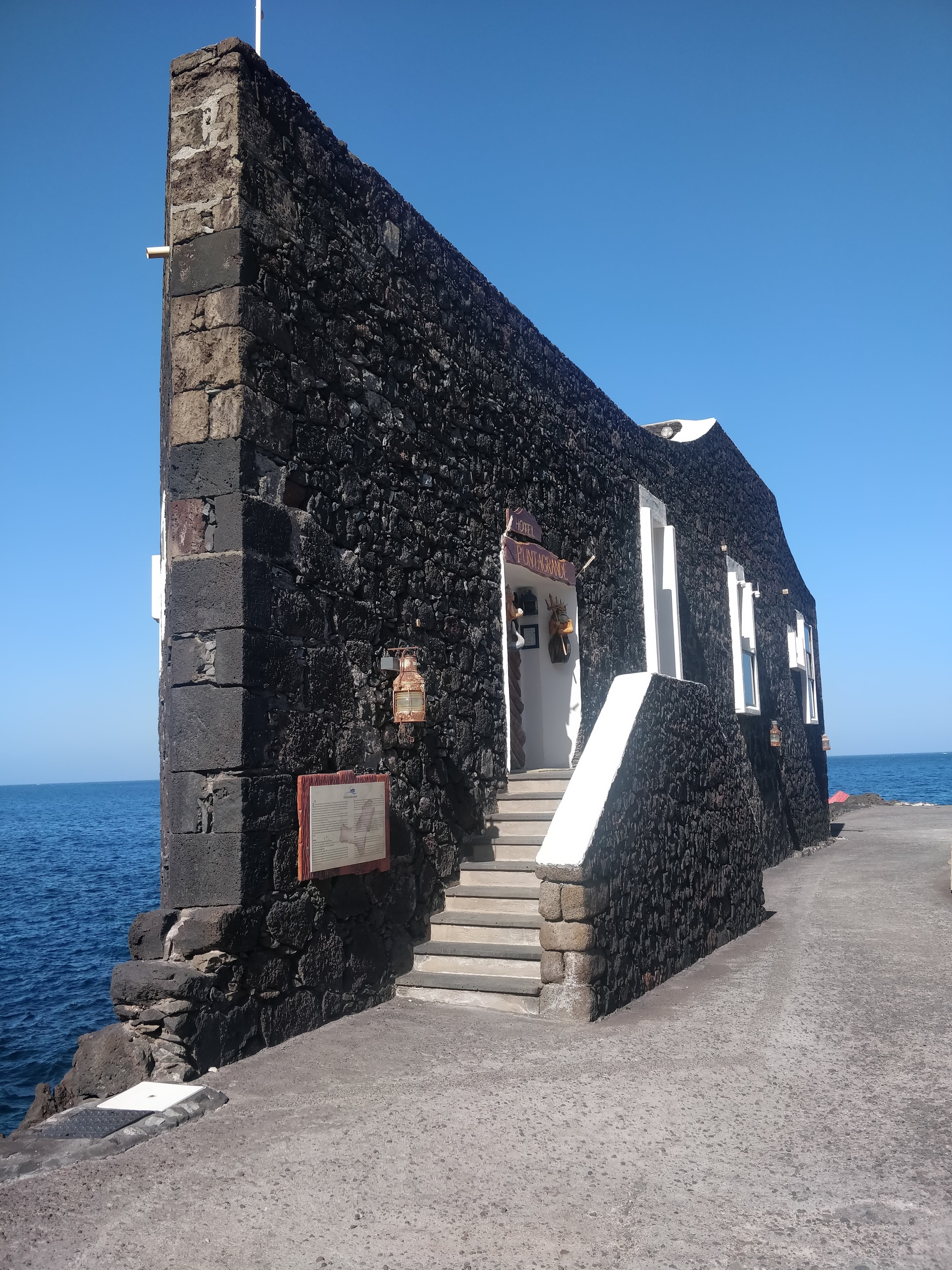
water….El Hierro lacks real sandy beaches but has plenty of clear rock pools for swimming.    We tried to have a coffee in the world’s smallest hotel – a 4 bed exclusive place but they wouldn’t let us in (residents only)

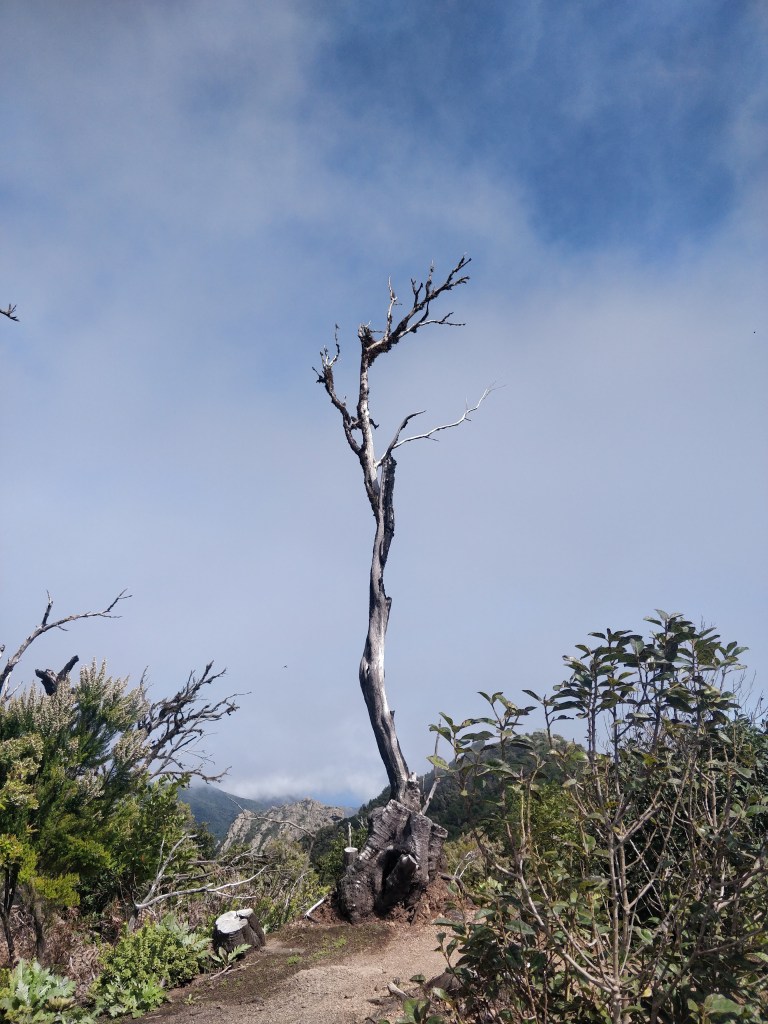
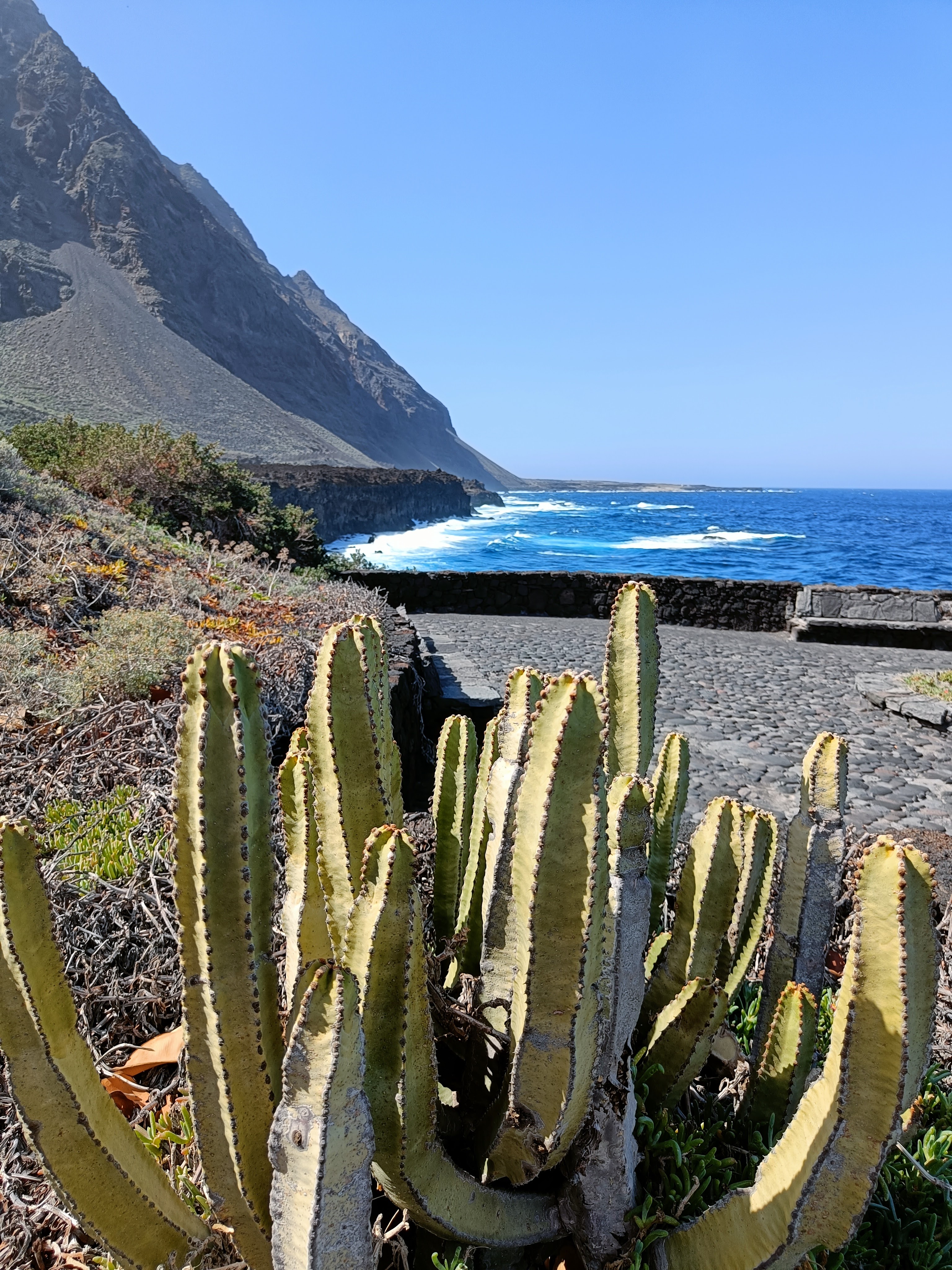
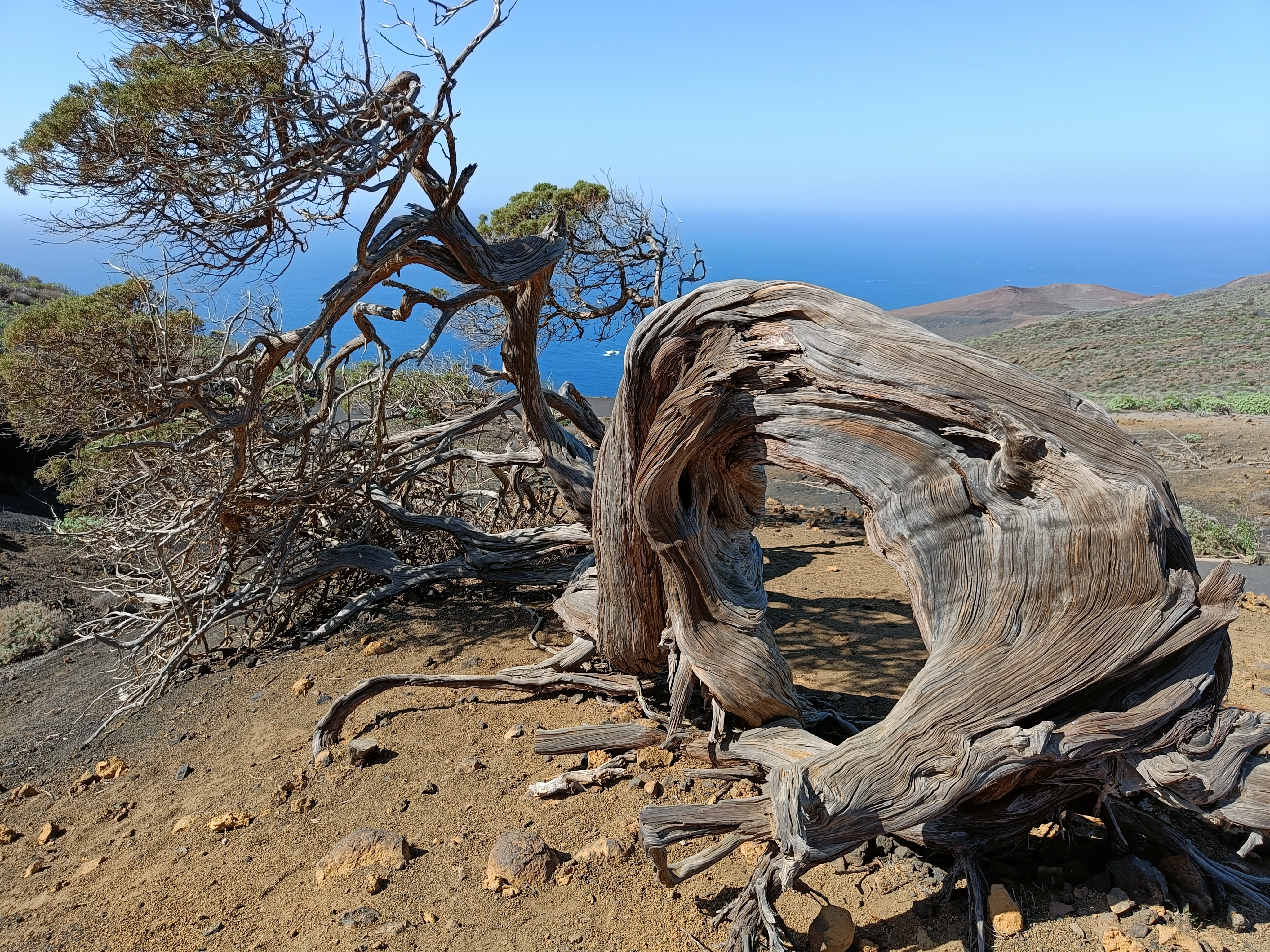
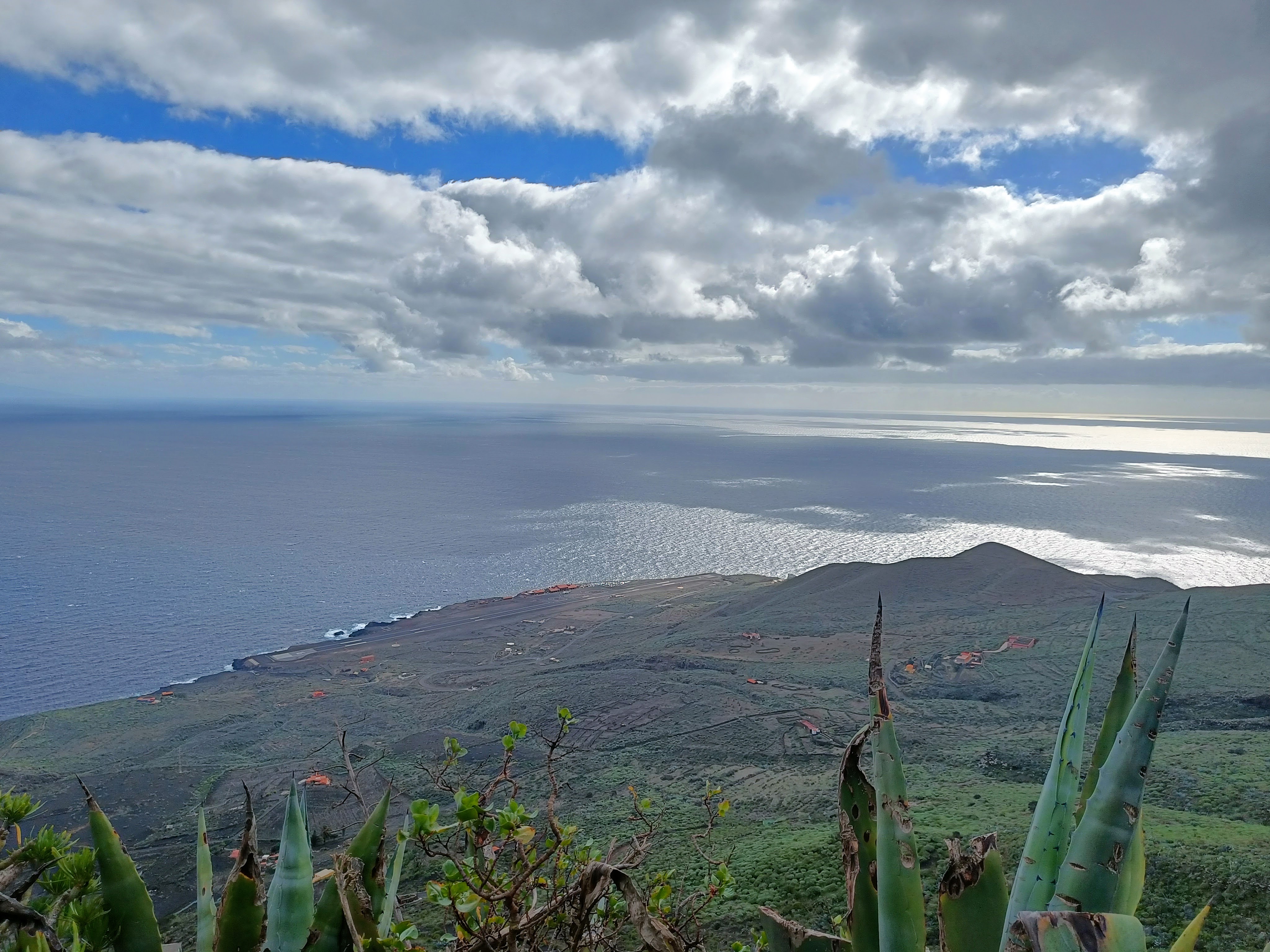
But the real stars of the island are the amazing trees. We drove to the desolate western end where trees have adapted to the constant wind by burying their heads- bending, not breaking is the motto here. The islands symbol is a wind – twisted juniper tree from the El Sabinar region. 

The area around Saint Andres, the highest village on the island at 1100m, is home to swirling mists and a sacred tree, El Garoe, one that filtered water from the clouds and supplied the inhabitants of the island with fresh drinking water….saved them from dying of thirst by dripping water from its leaves which collected in pools in the impermeable rock underneath. No wonder the tree was considered divine _ a blessing from the heavens. On a dry island, water IS life. Science might explain away the mysticism but there was still magic in the air…with moss wrapped trees, fragrant pines, giant Aloe Vera plants and above us, restless billowing clouds of fog and mist. This was the Ruta del Agua (the Water Trail), a gorgeous hike.

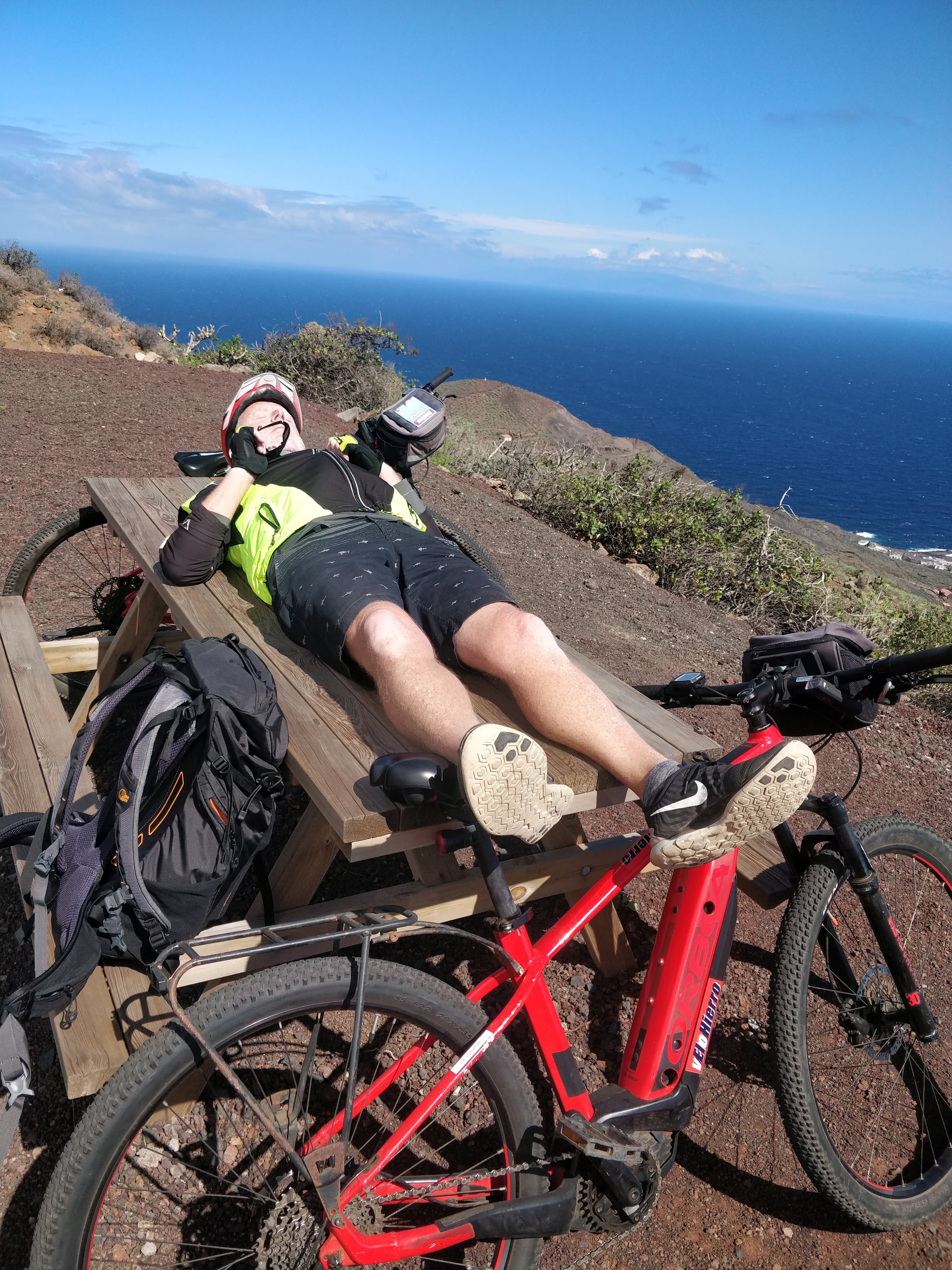
I always thought that electric bikes were for the lazy or the unfit or the elderly(I know I’m in that latter category now😯 but still … ) but since we hired ebikes here, i’ve changed my mind. They are fantastic and not just for the super hilly terrain of El Hierro. The wind was so strong – there was a storm – that at times even going downhill, we were almost at a standstill💨💨. But e-bikes are the way to go- allowing you to go further, to bike with people of different fitness- there are several modes and you can always turn off the battery.

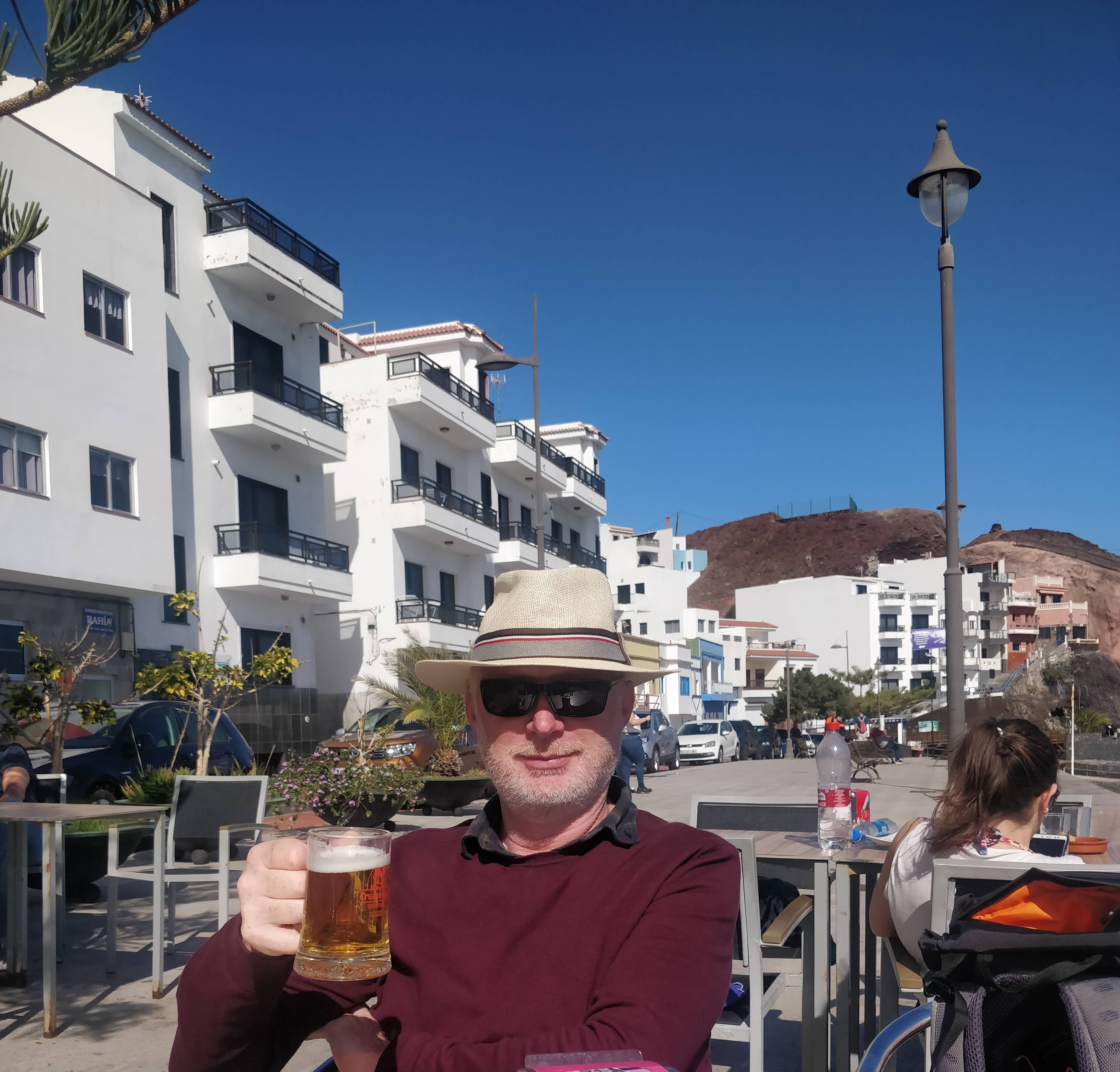
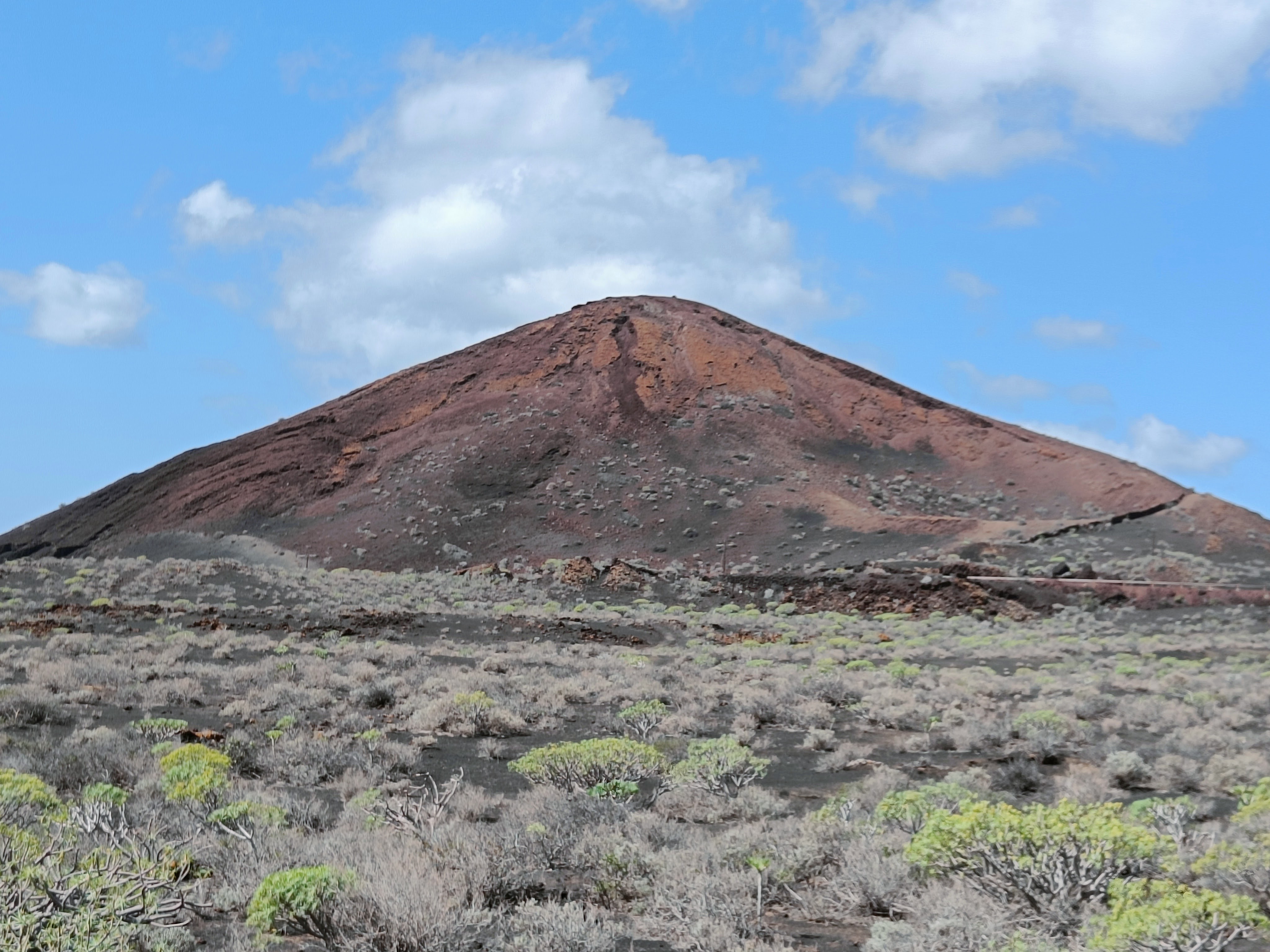
We arrived in La Restinga, the ‘resort capital’ and warmer side of the island on a sleepy Sunday afternoon….don’t expect a party town. It was small and quiet…the 2 supermarkets, the bazaar and gift shop were closed. A handful of bars and restaurants were open along the harbour but sitting in breezy sunshine at an outside table drinking a beer, we couldn’t have been happier. Our apartment on a side street had stunning views and was full of light. La Restinga has a reputation for the best food on the island….especially the fresh fish which is delicious. Desolate volcanic peaks of every red and brown hue form the backdrop to the town. There were lots of natural  swimming pools with ladders attached to the rocks for easy entry. Along the coast, lava flows have solidified forming strange patterns of folded whorls…..it looked like it could have happened yesterday but it was millions of years ago. The most resent volcanic activity was out at sea in 2011, a couple of kilometres off the coast, when there were small underwater eruptions but the town of La Restinga was evacuated for a short time.

And for a dry island where rain  is infrequent, we were shocked to open our door to drenching drizzle on the first morning. It didn’t last long and gave us rainbows…..and was much-needed in the area.

El Hierro is an island for taking it easy,  a place for nature lovers, hikers, swimmers and divers or for simply hiring a car and  driving through the most amazingly diverse scenery. The bus service is reasonably good – it links most of the villages but the buses are fairly infrequent…but it worked fine for us….as long as you’re are not in a hurry. It was very quiet while we visited in mid-February,  the high season  is the summer months but even then tourist numbers are low. It the sort of place where people leave their car keys in the ignition and don’t lock their house doors and where we were told not to bother locking our electric bikes. A Spanish TV series called Hierro, was filmed on the island in the last couple of years and has been responsible for an increase in tourism…..we haven’t seen the series but apparently the island looks amazing. It’s about a murder- all fiction of course because there’s no crime on El Hierro….apparently.

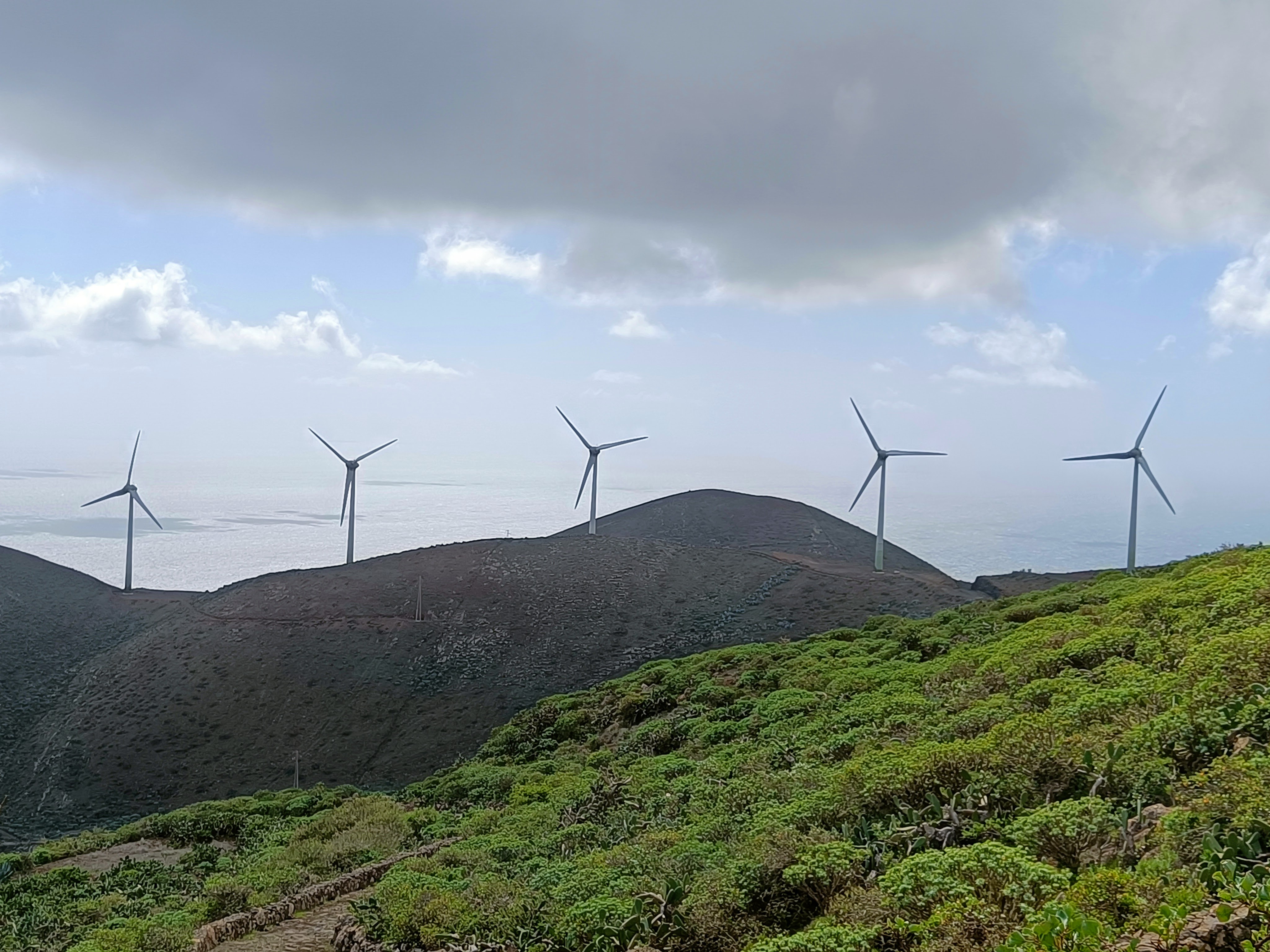
Windmills outside Valverde

El Hierro was declared an UNESCO World Biosphere and Geopark in 2014. It aims to use only completely renewable energy….it certainly has the wind power….its windmills were always turning furiously . Unfortunately, the centre that explains the islands sustainability plans was closed when we visited – also the info is only available in Spanish which is a pity. But this small island, 100kms off the African coast in the wild Atlantic Ocean has big plans

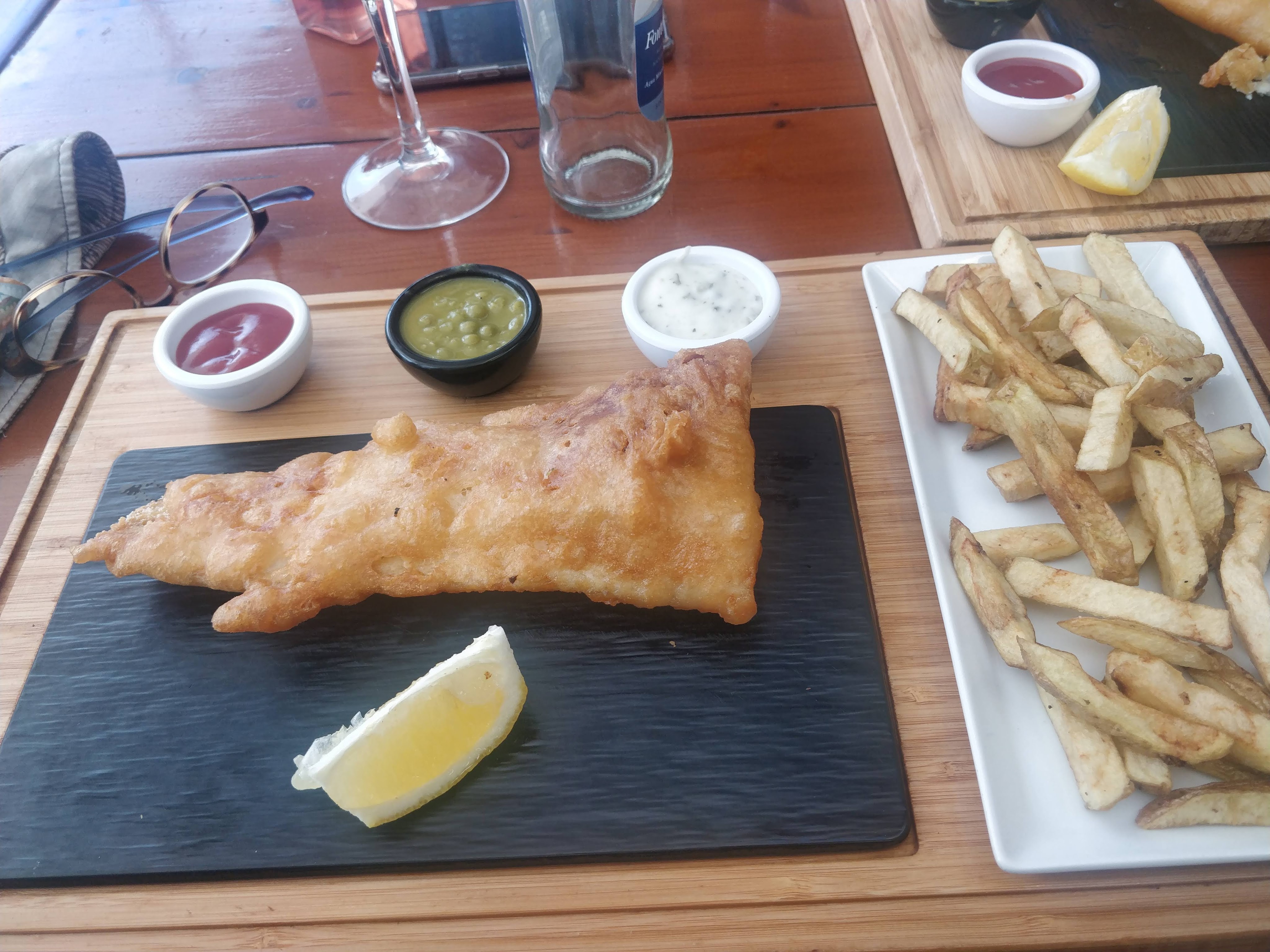
Onwards for us to La Gomera, another small island. We have to take the ferry from El Hierro back to Los Cristianos in Tenerife to pick up the ferry to La Gomera. We weren’t too impressed with Los Cristianos when we spent the afternoon there waiting for the ferry to El Hierro. The setting was nice but there was lots of high rise apartments and a whiff of sewage along the promenade – often a problem with high density tourism – and practically everyone was speaking English but we did have some really nice fish ‘n chips there 😀.

Fish ‘n Chips, Los Cristianos

Bend, don’t break
El Hierro, the Island at the end of the World

Tenerife – Electric Dreams!

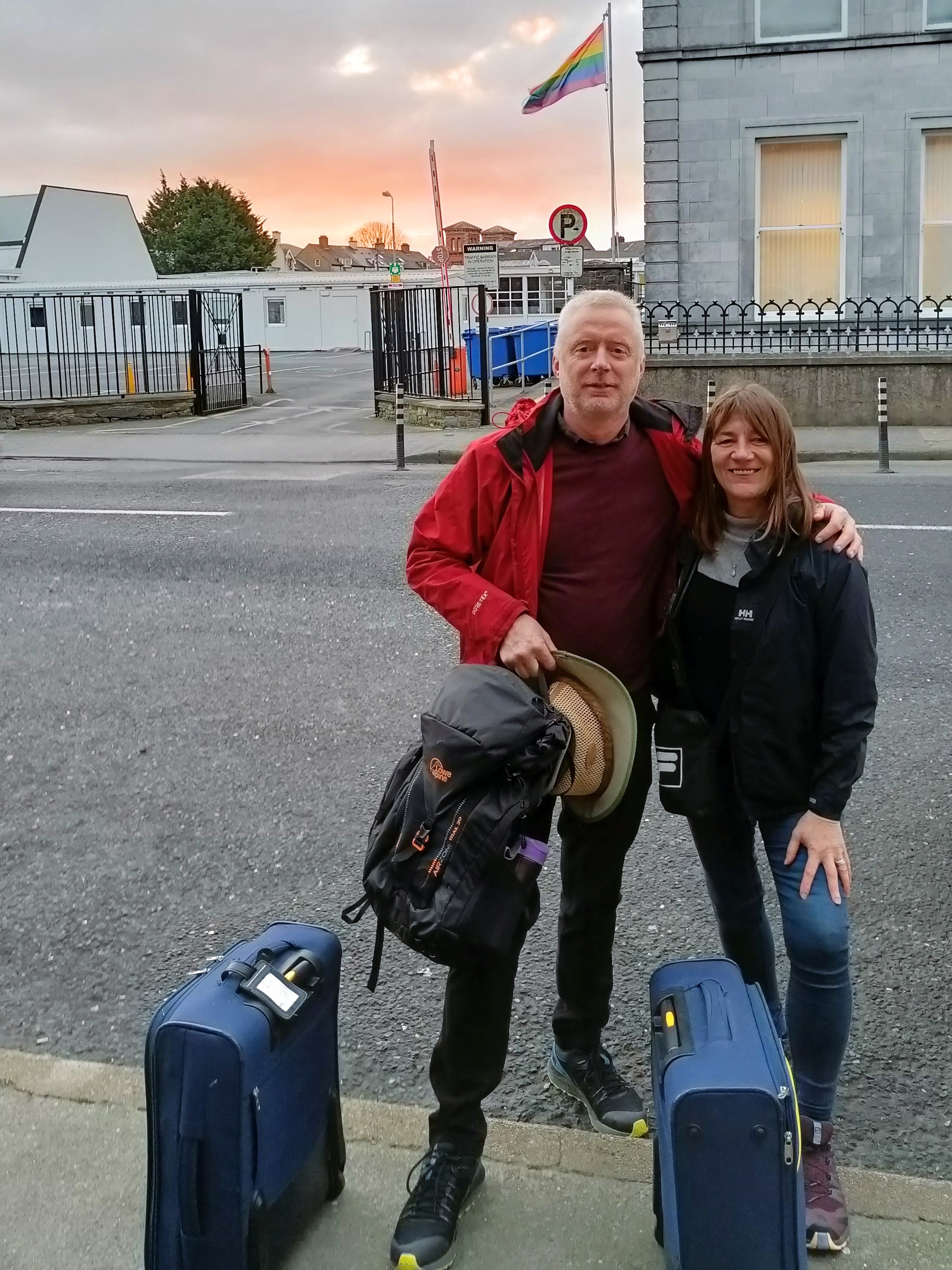
Waiting for bus to the airport

The February sky was tinged pink and cool as we waited in Waterford for JJ Kavanagh’s bus to take us to Dublin airport….our first visit to any airport since our trip to Ethiopia in 2019. All trips since then then were confined to Ireland or else by ferry with the Guzzler. We were missing the Guzzler already – we had to be far more disciplined with our packing without the luxury of throwing things in the back of the car ‘just in case.’

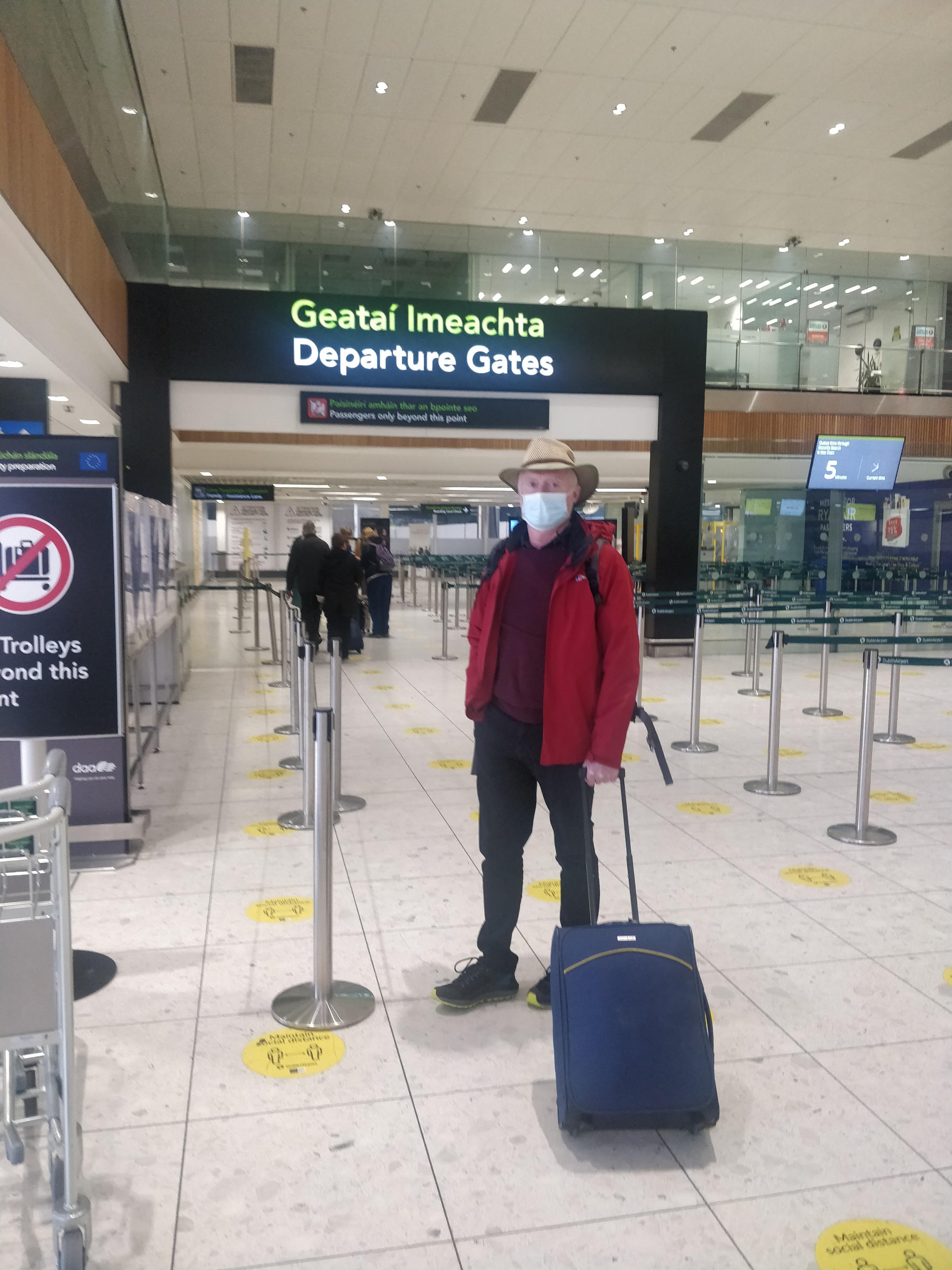
Dublin Airport

Dublin Airport was eerily quiet on Wednesday morning, Feb 2 without queues or bustle. JJ dropped us at the door of Terminal 2 (great service) and we self checked in one 10 kg bag and sailed through all hand luggage checks with no-one asking about Covid passes or Spanish QR codes. Despite that, our 14.20 flight to Tenerife was surprisingly full…maybe it was the freedom to fly, the lure of winter sunshine, the cheapness of the ticket (we paid less than €100 for 2 tickets) or that more exotic destinations were off-limits. A gang of young people from UL had planned to go to Vietnam instead and we would have been winging it to the Philippines if borders were open to tourists.

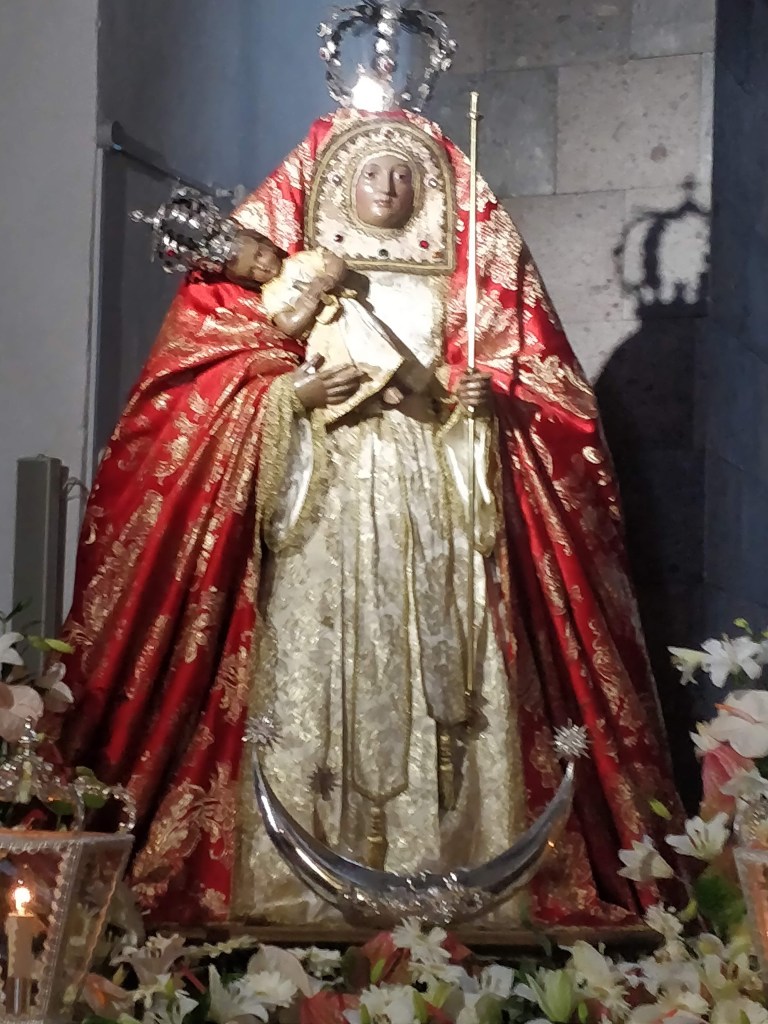
While we were waiting for the flight in Dublin, we checked bus timetables in Tenerife. We had booked accommodation the previous night for the first three nights in Puerta de la Cruz in the north of the island and we were flying into the south. We discovered that it was a public holiday in Tenerife – feast day of the Black Virgin, the patron saint of the island – and bus services were very curtailed so we decided to hire a car for the first five days…..an electric car and so began the saga of the electric car.

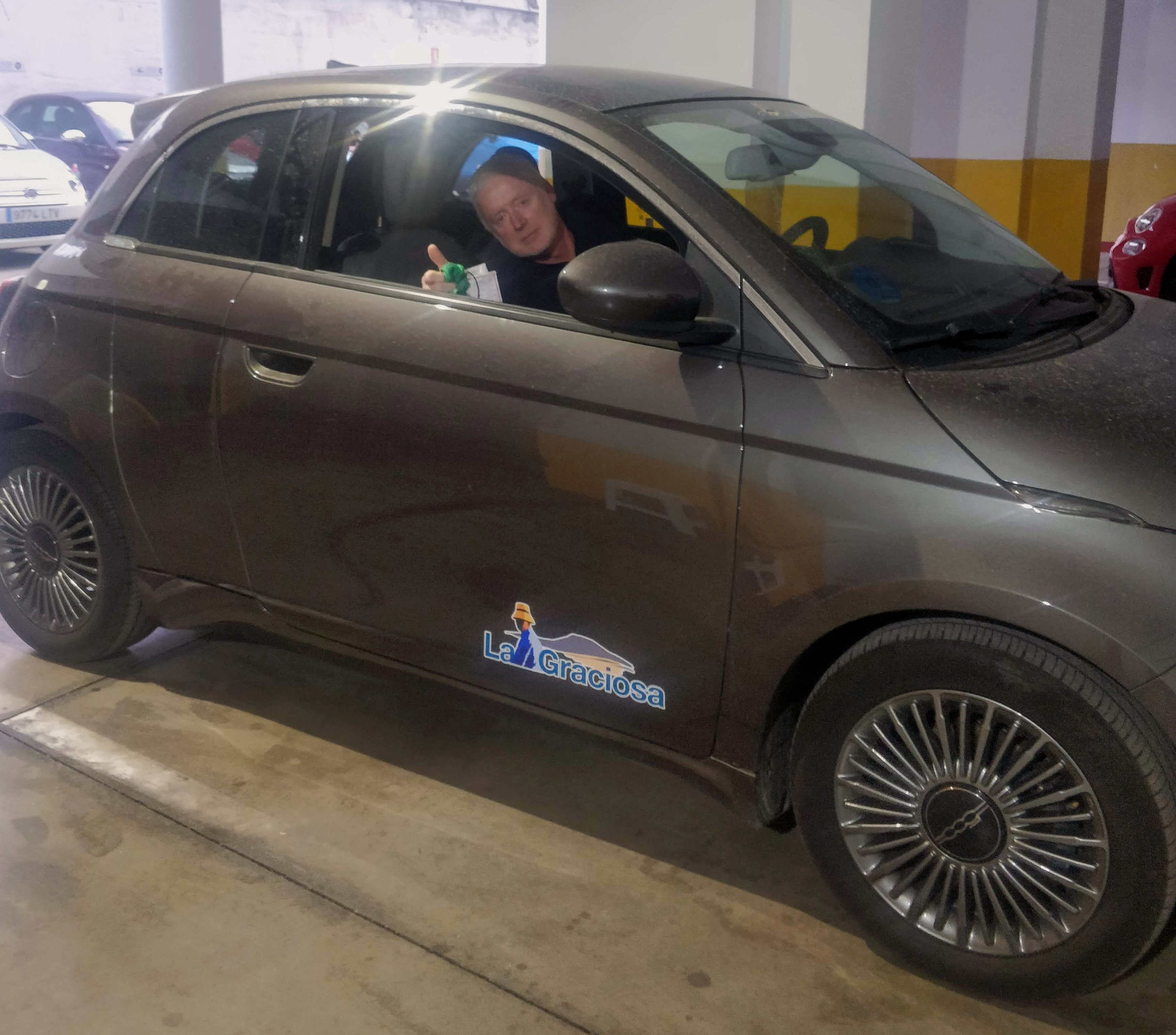
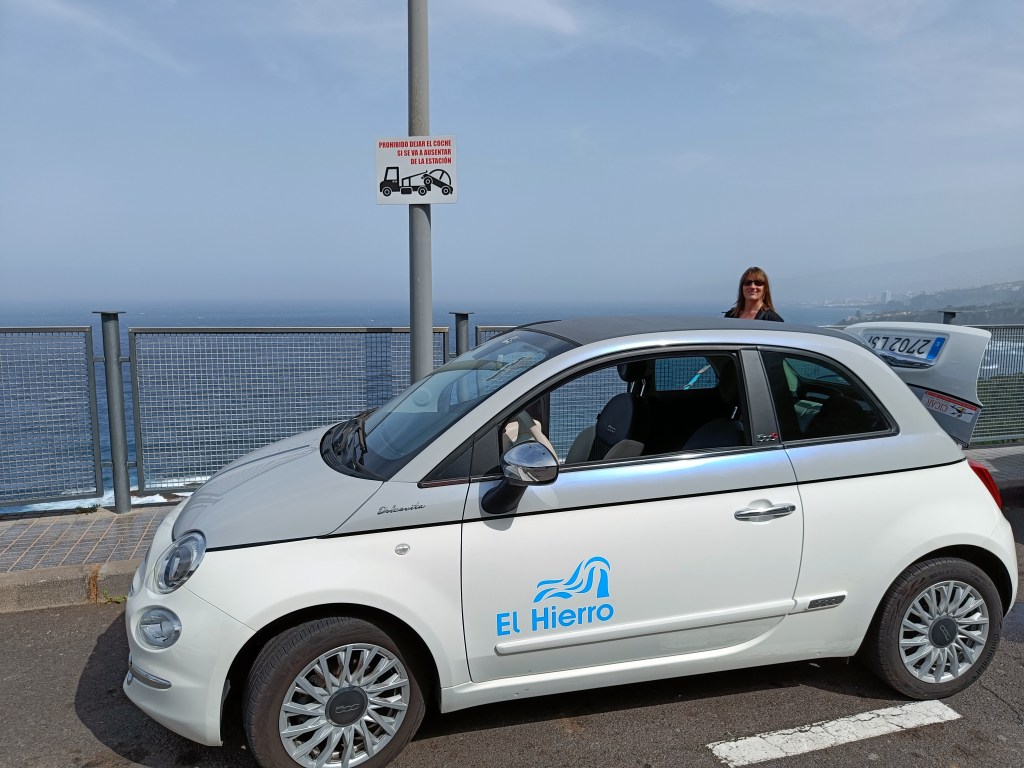
Electric Fiat 500

We arrived in Aeraporta Sud at about 6.45pm – it was a little cloudy but still bright and a very pleasant 21o degrees, not bad for an early February evening and there was no time difference between the Canaries and Ireland. Our Spanish Covid QR codes were scanned for entry -a few people didn’t have their QR codes and were kept aside. Presumably they got help to fill them in and hopefully were allowed entry and not sent back on the next plane. We picked up our (very)compact electric car – a Fiat 500. The battery was fully charged and the car-hire guy told us that there were plenty of charging points in towns and shopping centres everywhere, many of them free. The journey to our apartment in Puerta de la Cruz was just over an hour on good roads but about half way there, we were shocked to have to turn on the windscreen wipers 🙄- the first rain in months apparently (and the only rain we have seen since).

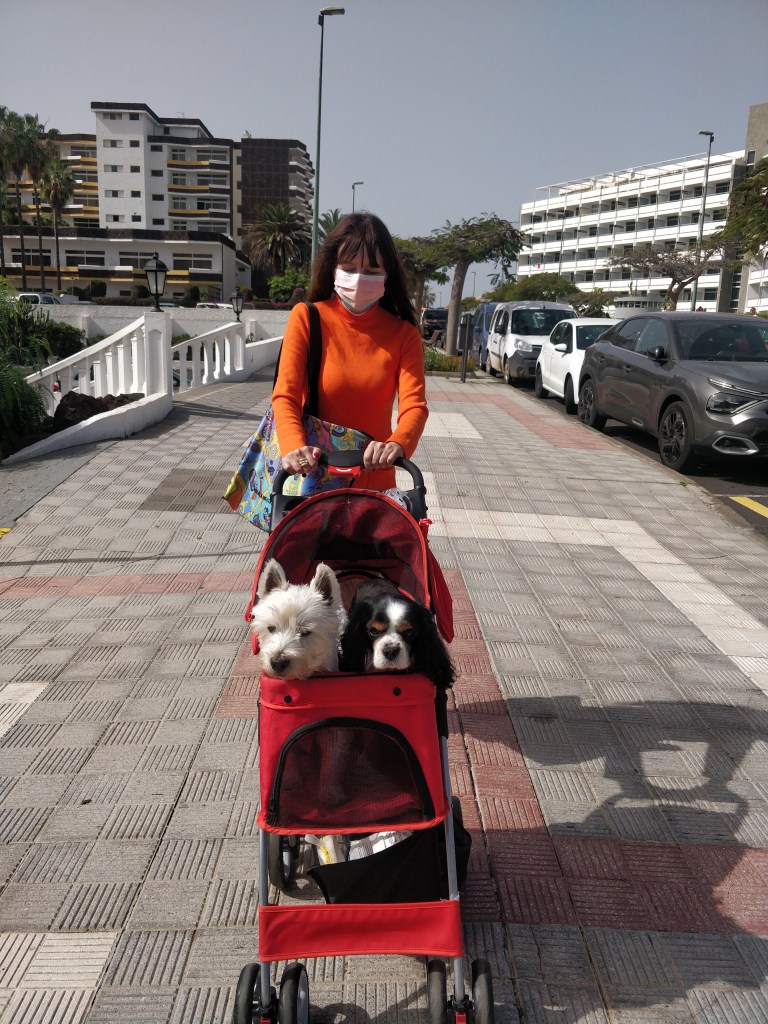
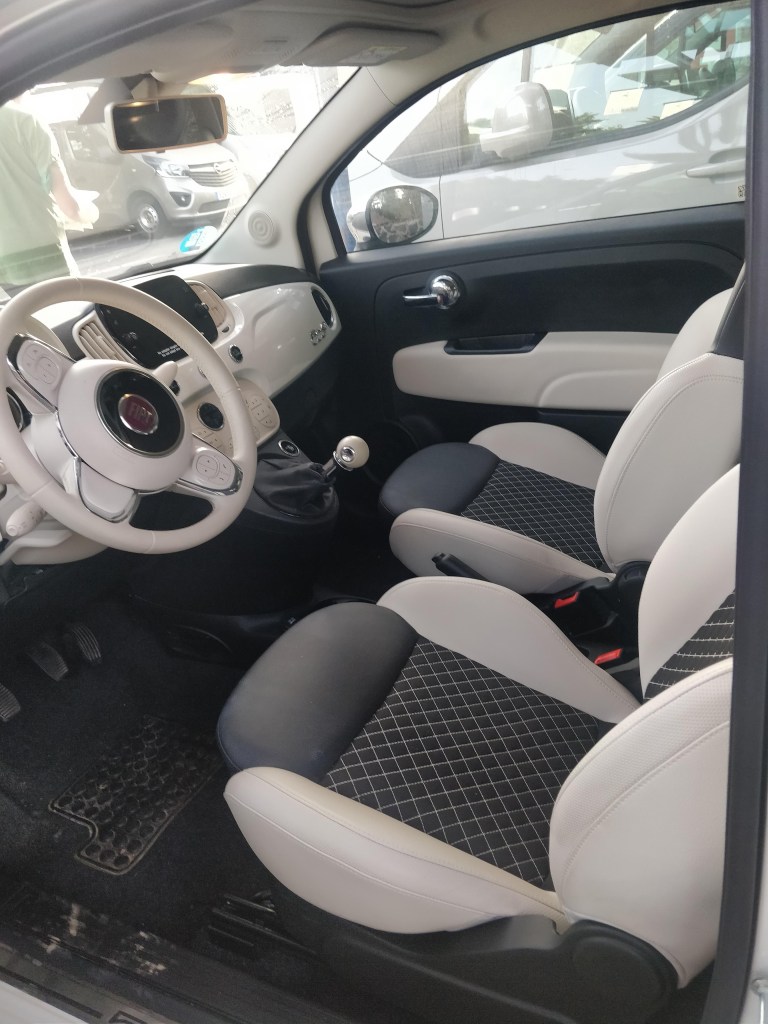
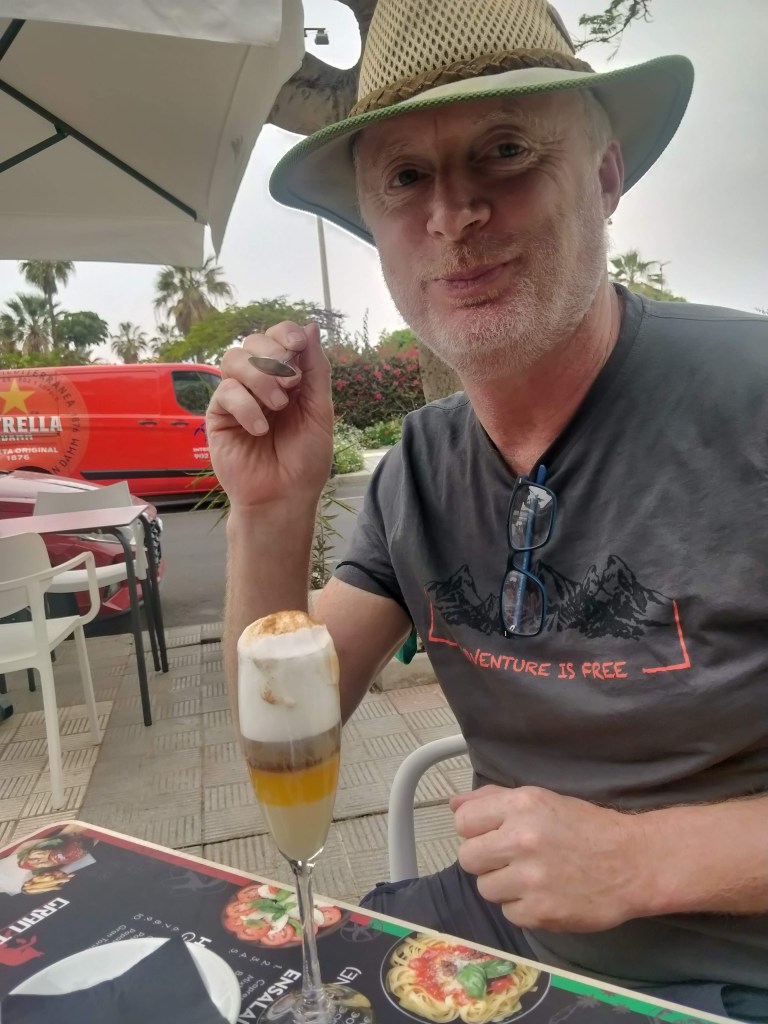
Google told us that there was a fast electric car charger near Loro Parque ( a zoo/aquarium in Puerta de la Cruz) so we headed in that direction the following day only to find that we had to pay €4 to park before we could use the charger. So on we went in search of another charging point and found one near the Botanical Gardens but it was in use. So we amused ourselves by drinking barraquitos – an expresso layered with condensed milk and liqueur – a great way to pass the time and a speciality in the Canaries. But later when we attached our cable to the car charger we found that we needed to swipe a card to get it to work although the actual charging was free (this isn’t unusual as we have a special card to charge our electric car at home). Luckily Carmen, my sister in law who lives in Tenerife was with us and she rang the number on the charging point and off we went in search of a card which we found in an electric motor bike shop just before it closed for the day. Back to the charging point (still free, phew!!!!) and now we discovered that we needed to register the card before it would work. That shouldn’t have been a problem but it was….there was no option to register a card on the website unless we had ordered the card from them and they had posted it out to us. We contacted the rental company(CI cars) to get them to register the card – no problem, they said – and so we drove to their small office in Puerta. The rep there tried for about 45 minutes to register the card but without success. So we were in the ridiculous position of hiring an electric car (that we were very happy with) but with no way of charging it – the company should have had cards registered already for use but they didn’t. So we had no choice but to swap our electric car for an even more compact hybrid Fiat 500 (the only car that was in Puerto). The boot was teeny in this one – we had great fun fitting Carmen in the back seat with her two dogs -Snowy and Jamie – and all their paraphernalia including a dog-buggy (Jamie has a terminal heart condition and has mobility issues). By then we were all in dire need of some refreshment… luckily wine was very cheap …as was fuel, about €1.30 a litre. But the car had a certain retro charm with its cream leather seating – like something in an old Bond movie.

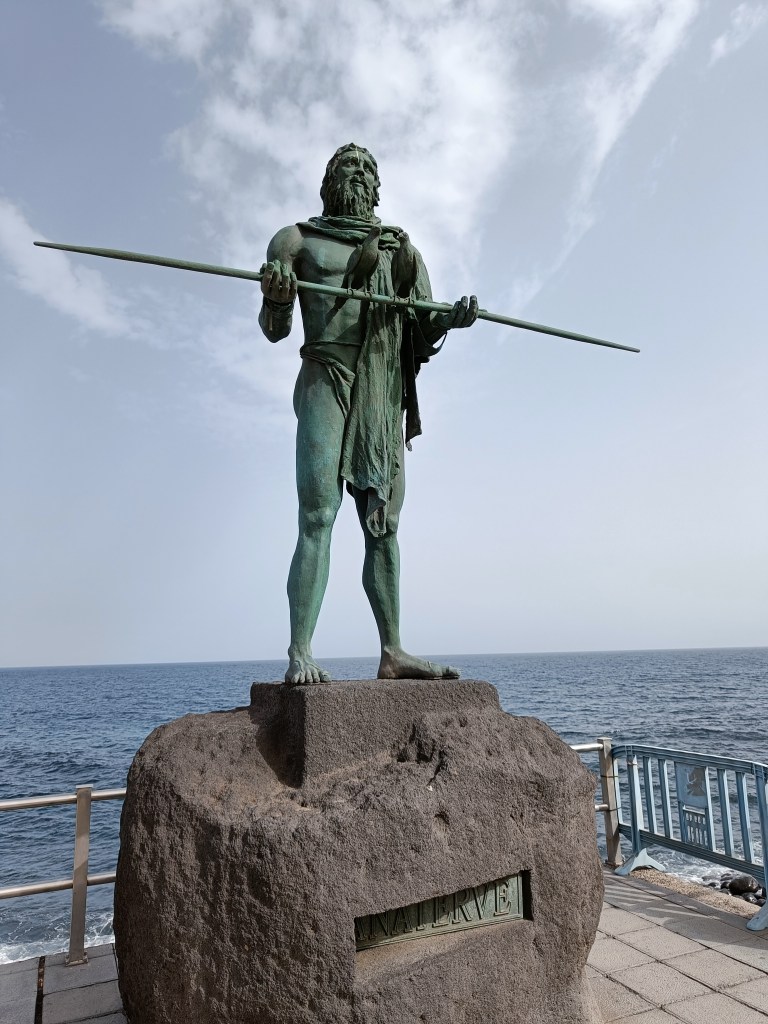
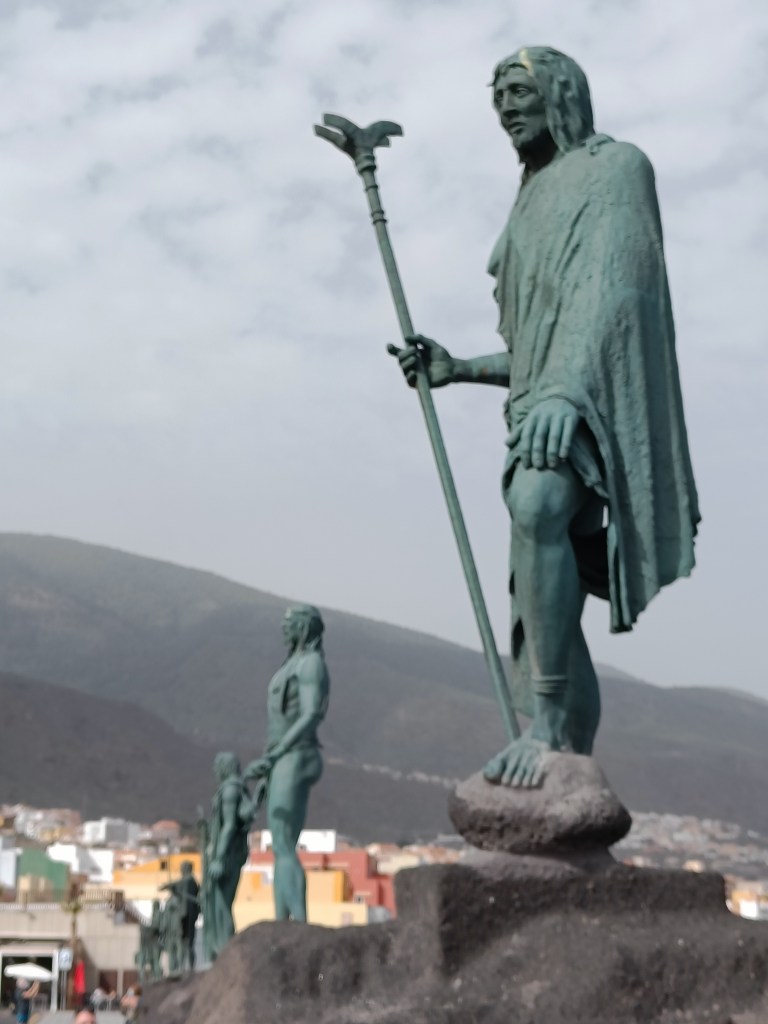
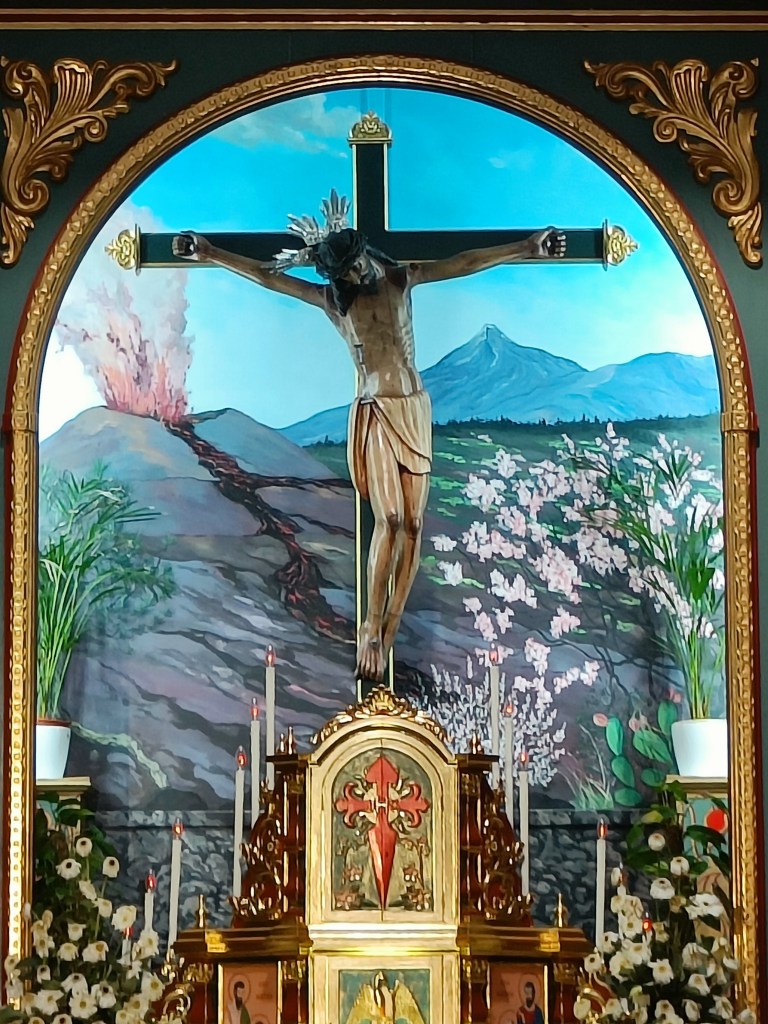
Caoimhin had the Bond feeling over the next few days as he sped around hairpin bends in our little car – Tenerife may be small but the landscapes are incredibly varied – banana plantations, fig trees, cloud forests, lunar landscapes, hill villages that were so steep that the little Fiat struggled and hillsides dotted with caves and terraced cultivation, sunshine coasts and cloud-wrapped mountains. We visited Candelaria with its impressive statues of the ten Guanche kings, the original inhabitants who ruled the island before the Spanish invaded. Fine specimens of men reported to be tall, strong and blue-eyed and despite tales of great valour, they were crushed and destroyed – at any rate little evidence of their lineage remains in the present day physique of the locals 🤣. We visited Santiago del Tiede, a gorgeous town famous for its almond grooves, hiking trails and the most fabulous OTT church with statues clothed in silk cloths,

We spent five nights in Puerta de la Cruz in two different apartments – both about €45 a night with swimming pools and balconies. Puerta was a large bustling fishing town full of palm trees, flowering shrubs, black sandy beaches, hotels and a long esplanade lined with restaurants, cafes and tourist shops. It has a mountain backdrop that twinkled with lights at night from hill villages. Mount Teide, the highest mountain in the Canaries and shaped like a child’s drawing, lurked up there too but because of haze, cloud and dust, we rarely saw it, only catching occasional faint glimpses of its snow-capped summit.

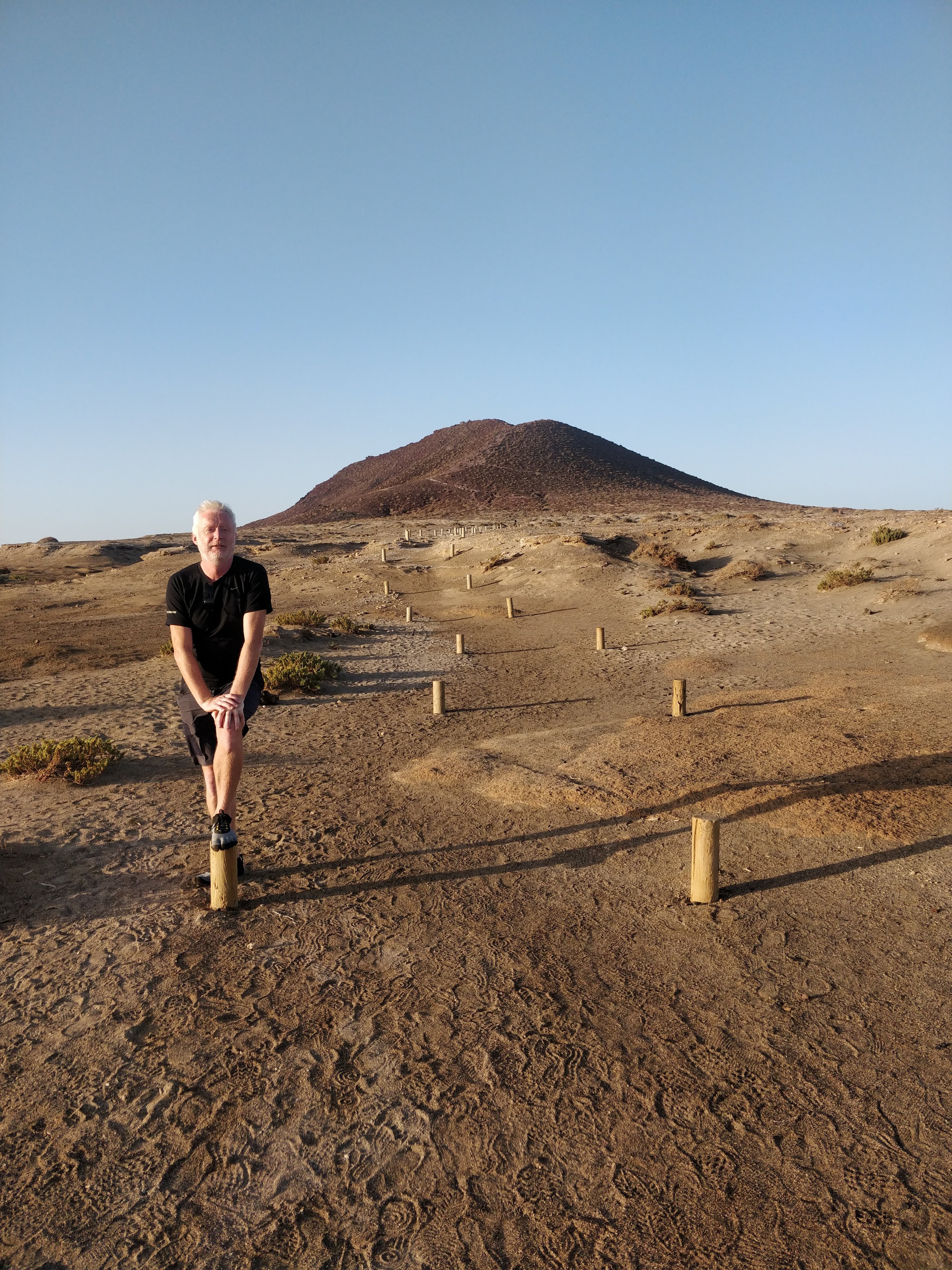
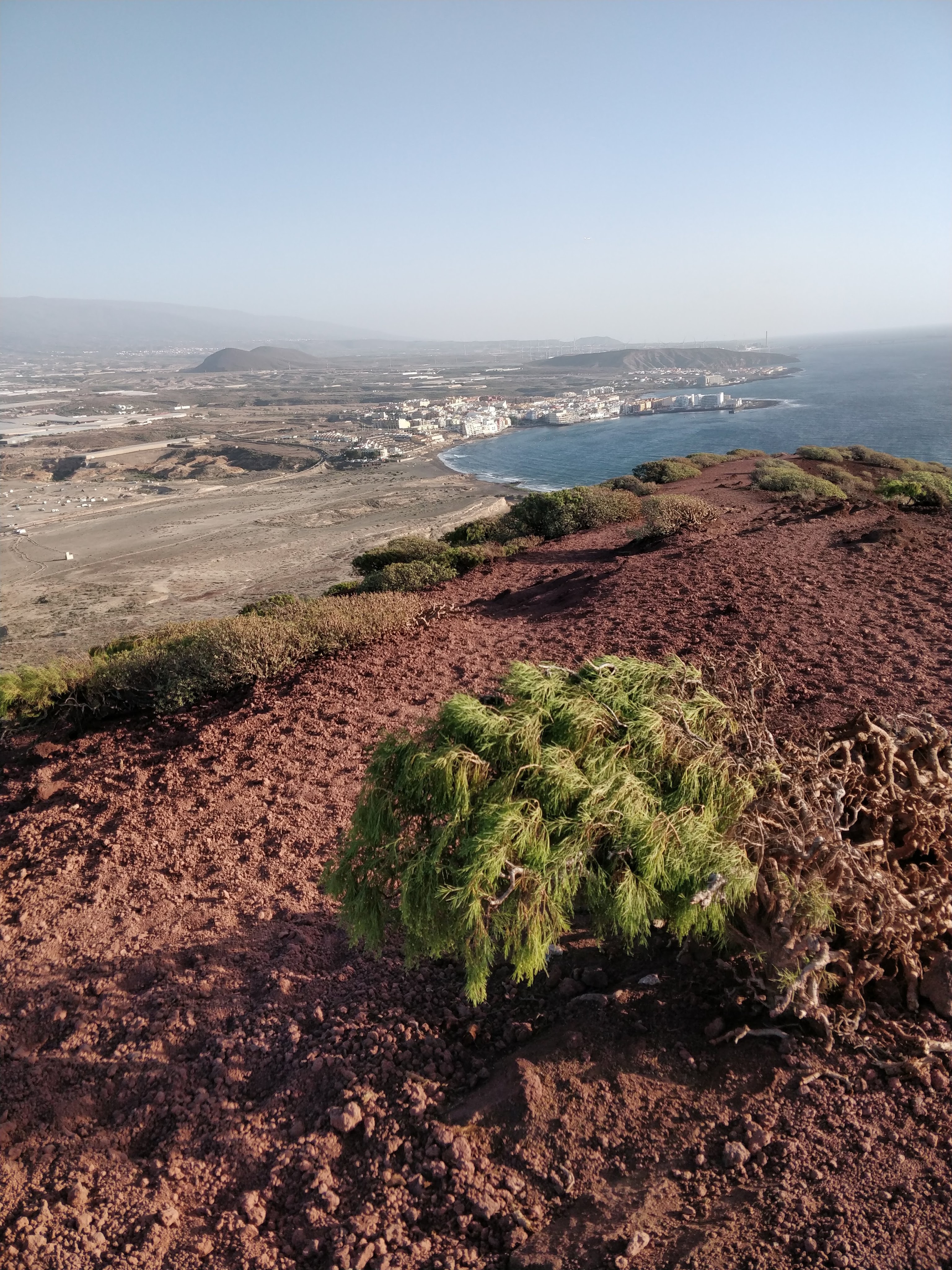
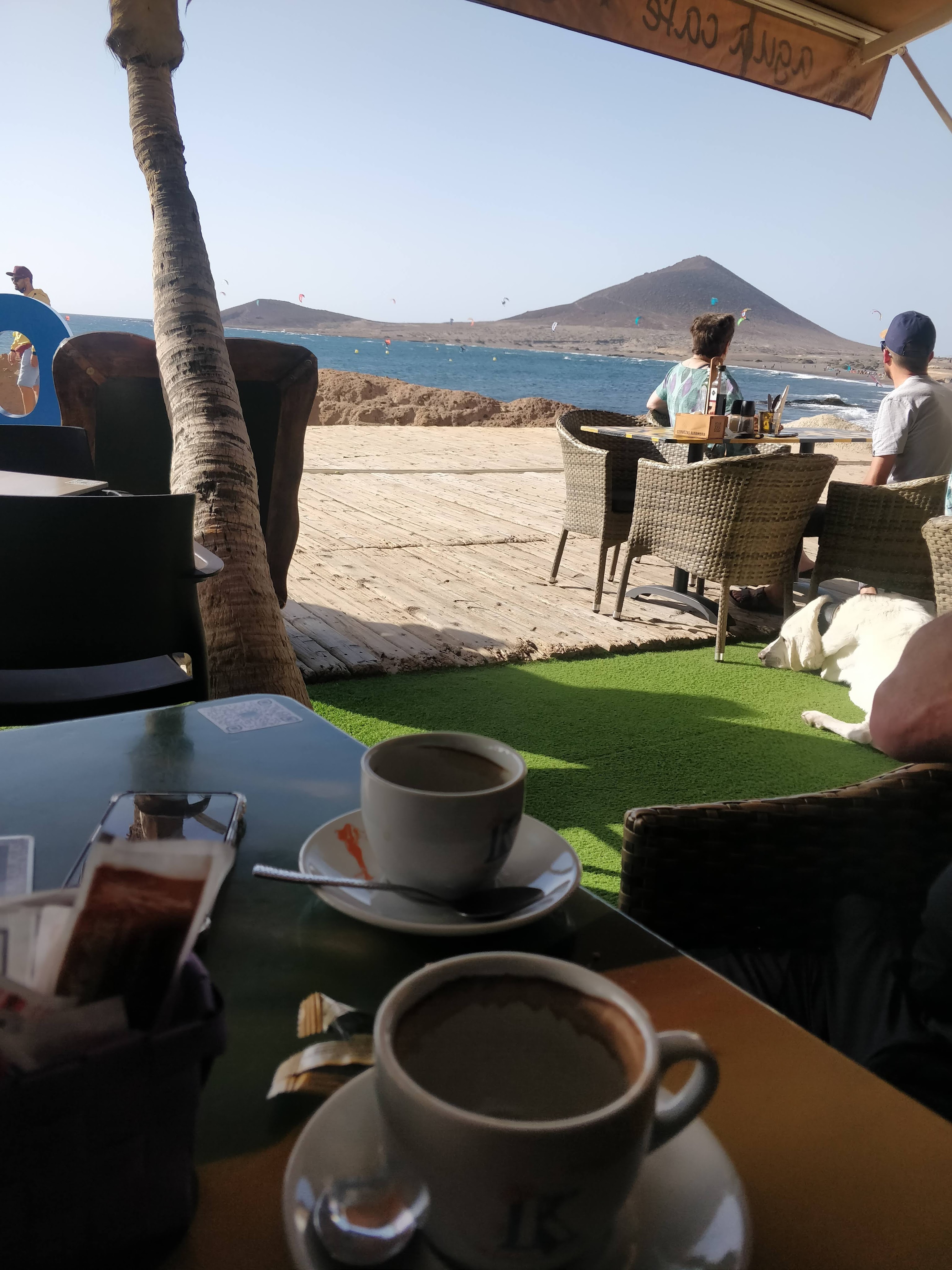
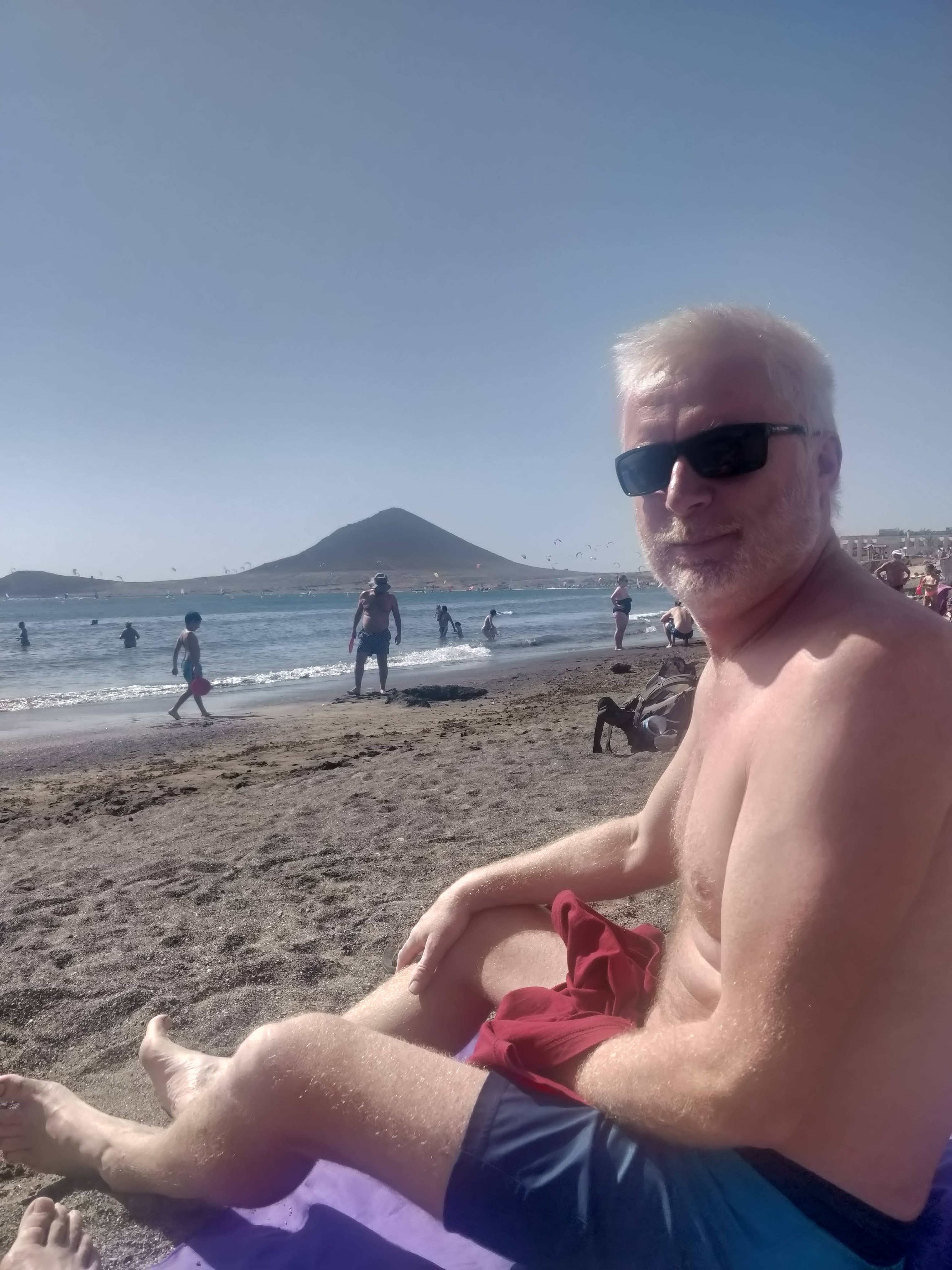
We headed on to El Medano, a little beach town and fishing village near the airport – much smaller and scruffier than Puerta de la Cruz but with a laid-back charm, very popular with surfers and water sport enthusiasts, families, walkers and sun worshippers. On windy days, the sky was full of coloured kites from the kite surfers against a backdrop of blue sky and the red glow of Montana Roja (red mountain} and an arid dessert landscape where even cacti struggle to grow. Tomatoes were grown intensively until the 1960s and depleted the land leaving it barren but there is some recovery and hope with conservation efforts and the creation of a Special Nature Reserve with salt lakes becoming a mecca for migratory birds

We will be sorry to leave El Medano today – we rented an apartment here for a week… but we get itchy feet🙃 However, I would definitely recommend El Medano with its comfortable daytime temperature ranging from 220 to 270– lovely restaurants and cafes – and so near the airport that a taxi costs only €15. Such a lovely place to escape winter.

But today we will take the ferry from Los Christianos in Tenerife to El Hierro, the most westerly island of the Canaries. It has been called the island with Soul – I image something like the Aran Island but warmer… but I could be totally wrong.. The seas are forecast to be rough but we have been told that the Canarian cure for sea sickness is to eat a small can of olives with anchovies (never fails….apparently)

Till next time, Happy Valentines Day to everyone ….and remember if you don’t have a Valentine, treat yourself💕💕

Tenerife – Electric Dreams!

A Little Luxury – Ashford Castle

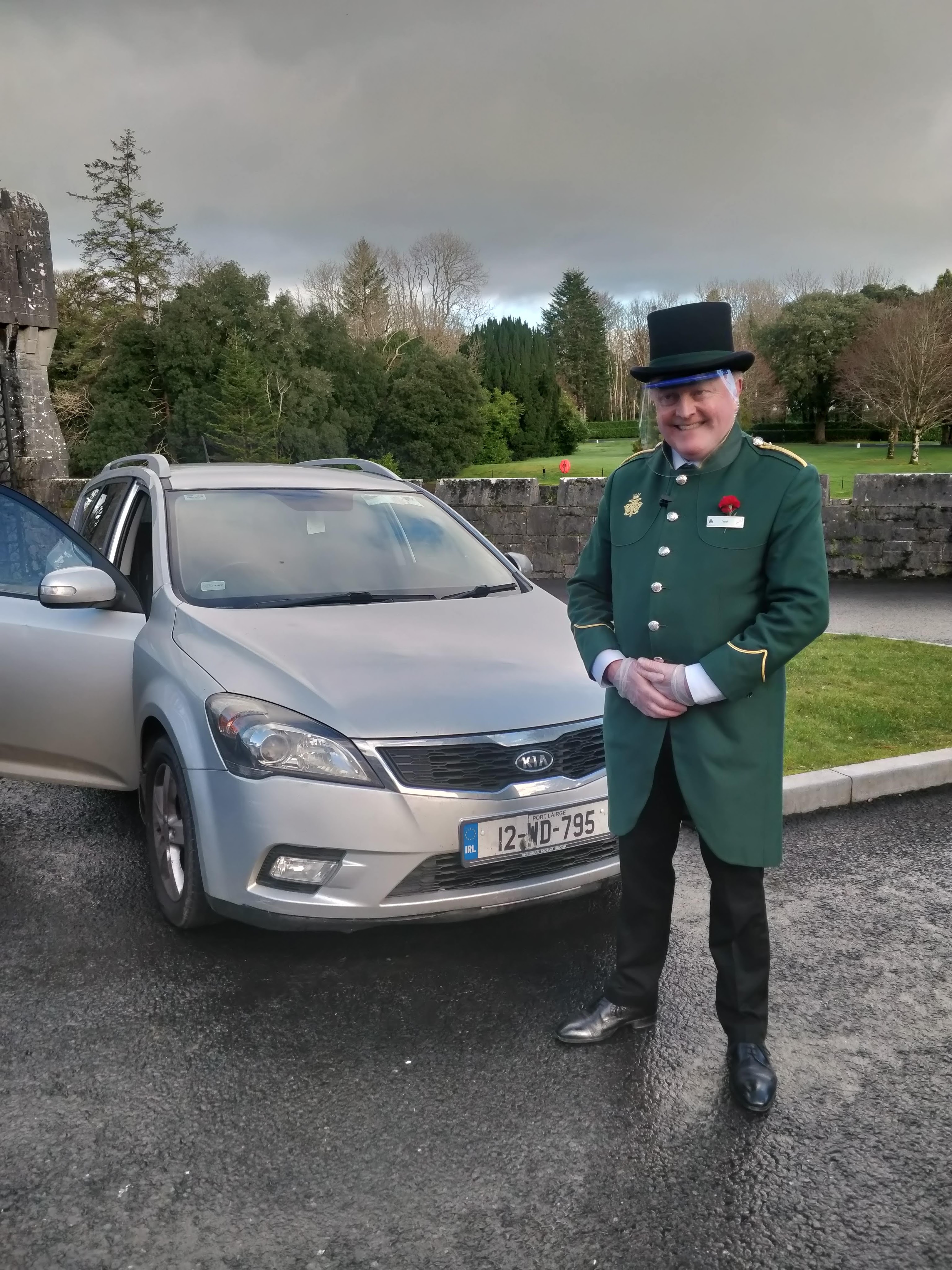
Frank and the Guzzler

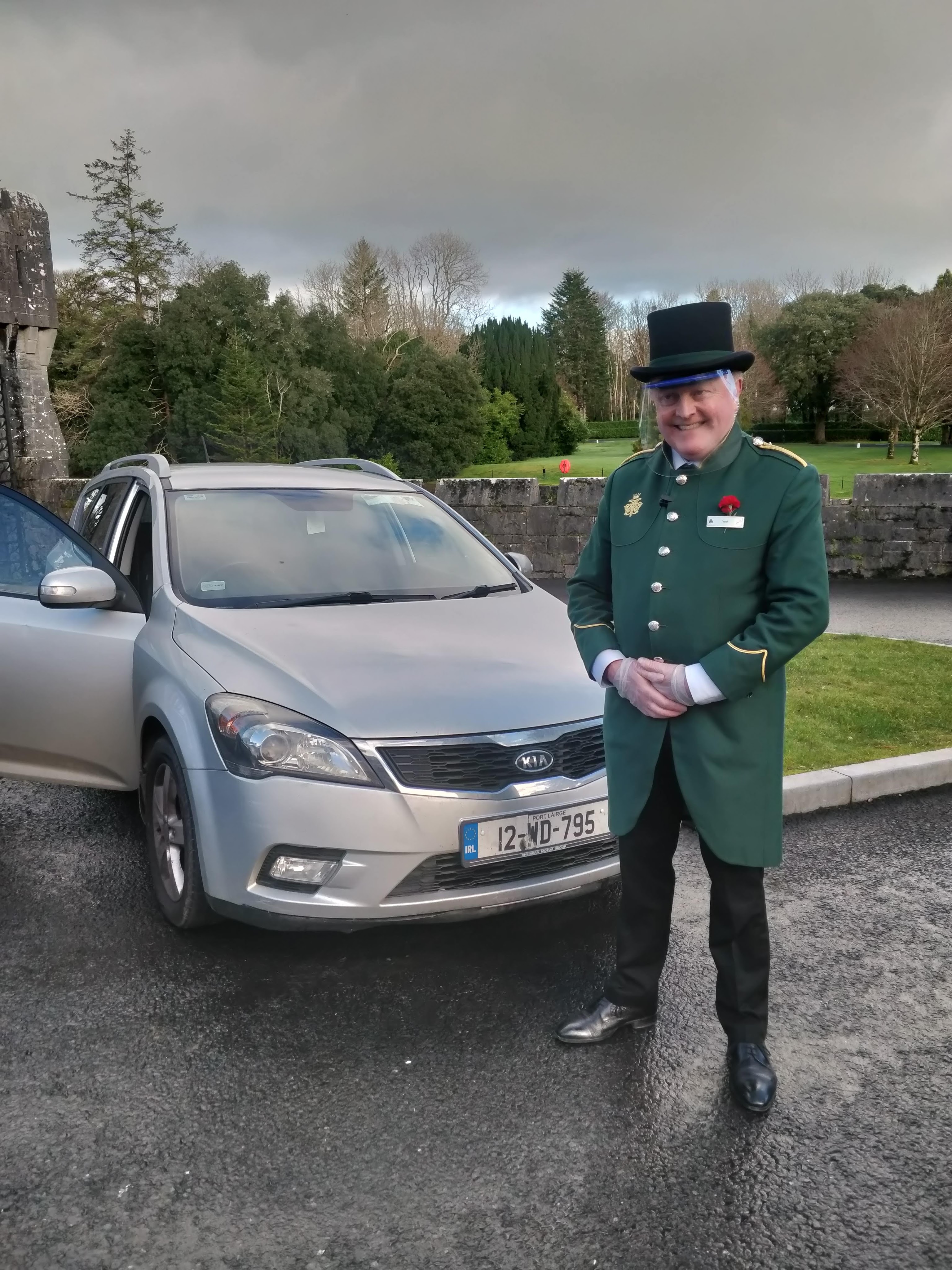
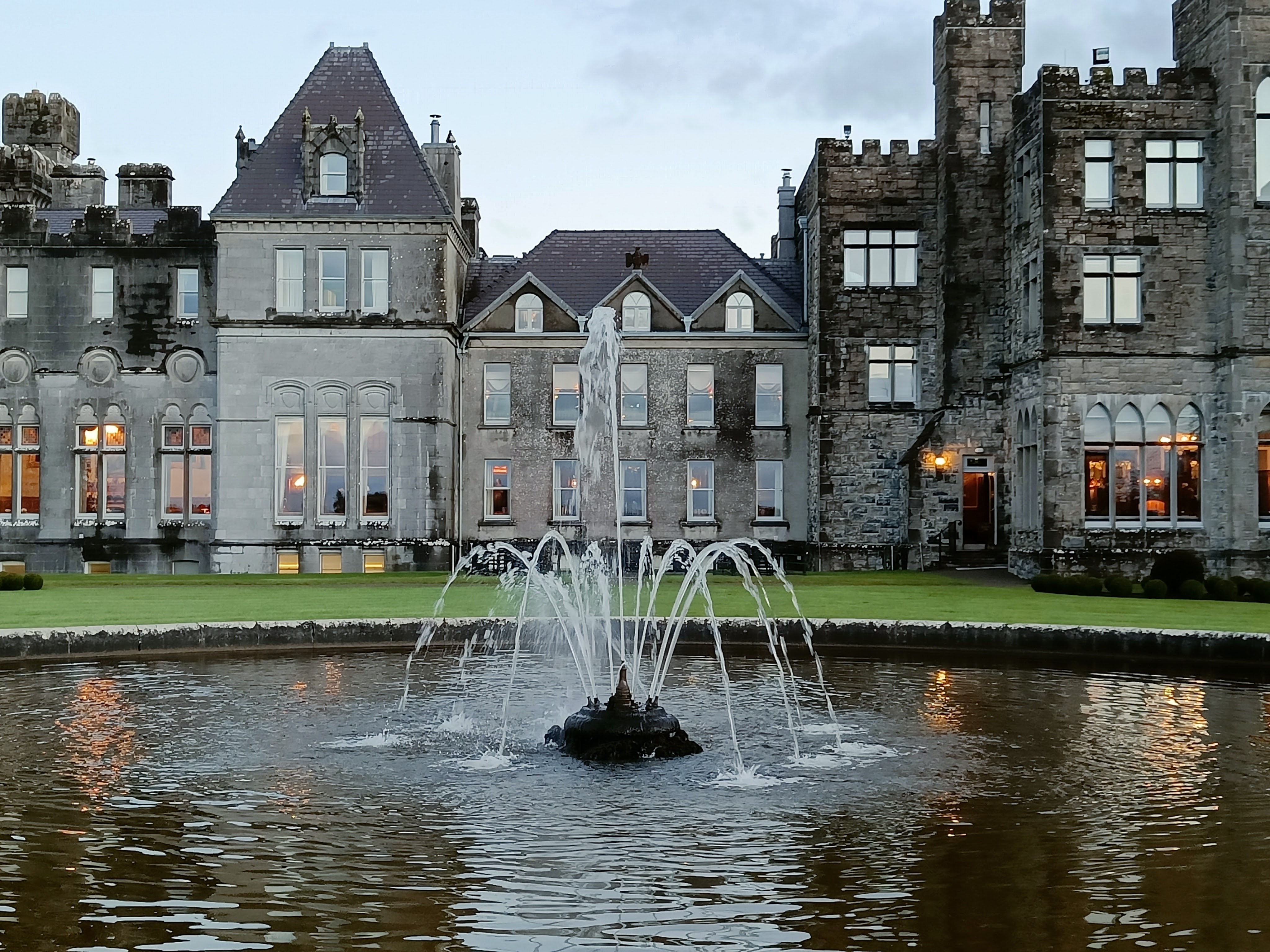
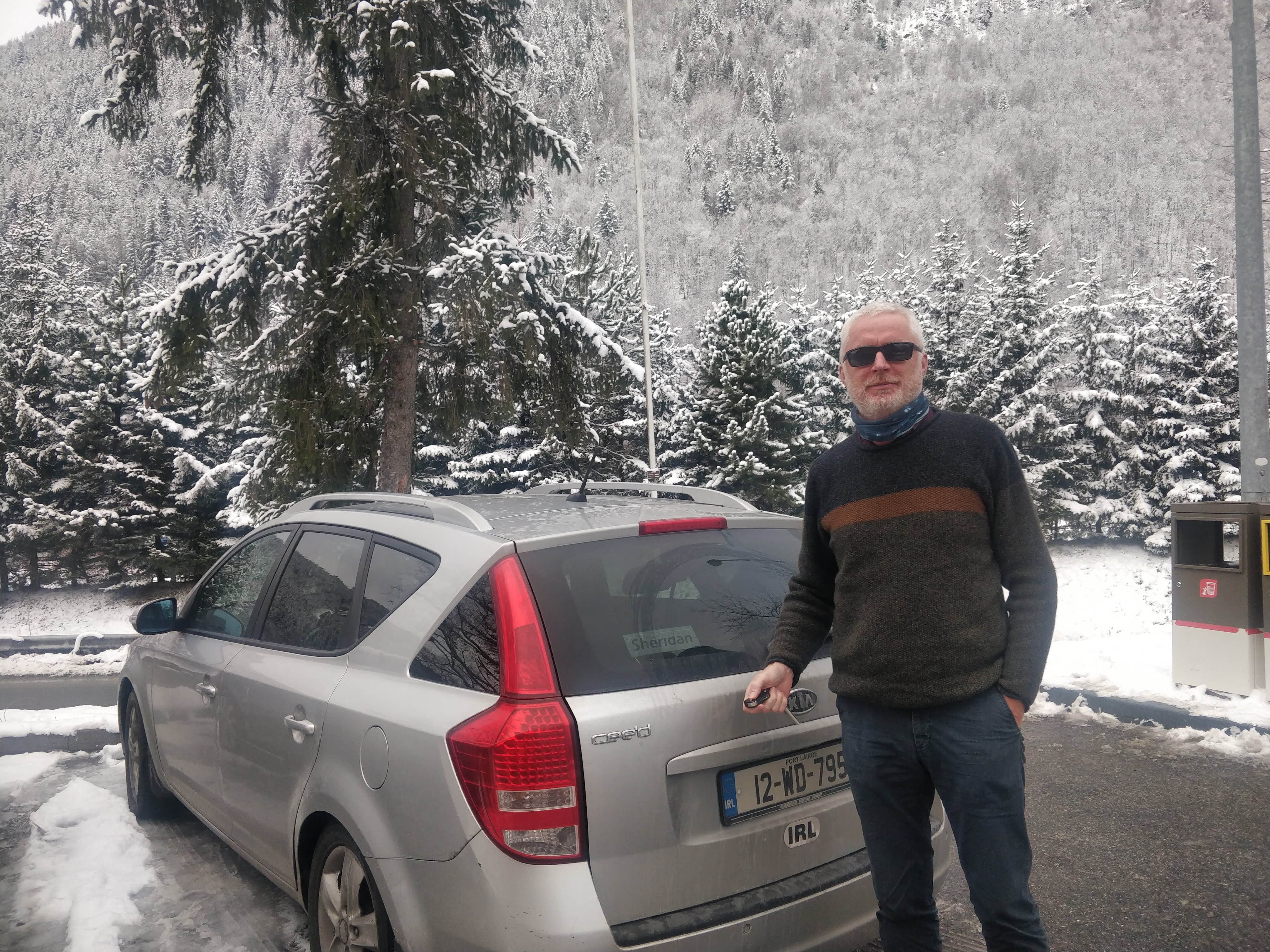
The Guzzler might not have been the oldest car parked outside Ashford Castle in County Mayo – there was an older Jag – but it was certainly the dirtiest. Frank, the hotel valet simply smiled after parking it, , dusted himself down and asked us if we had come far. We could have excused the car by saying that it had been to Greece and back without a wash but we simply answered ‘Waterford’…..’ Ah, a long way’, nodded Frank. We were staying for two nights in Ashford Castle – a huge step up from our usual standard of accommodation – because of a VERY generous voucher from my sister and her husband (thanks Ger&Tony)

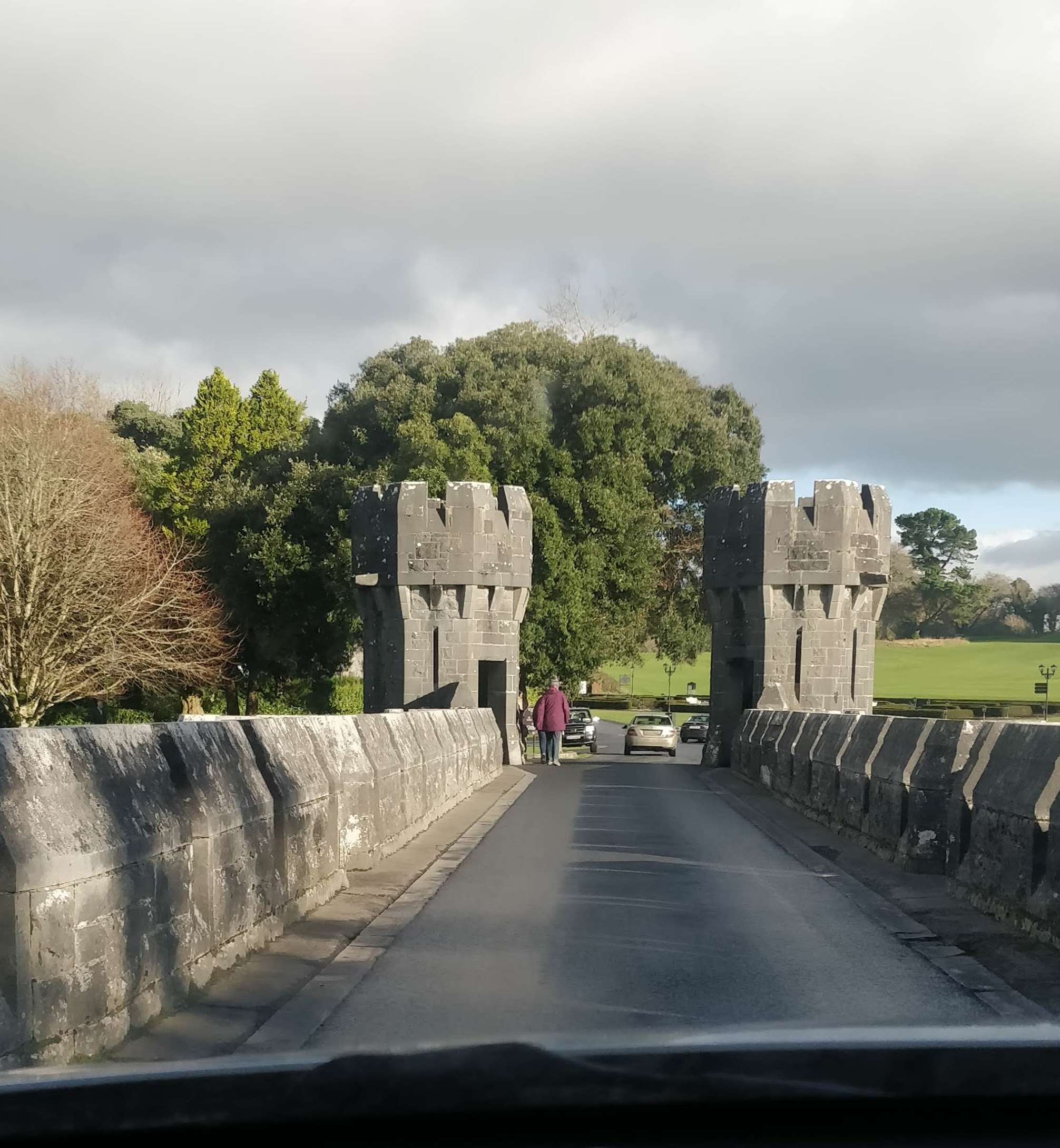
There was a friendly relaxed welcome from the moment we drove through the man gates where a man in top hat and green livery welcomed us in what sounded like a Cork accent. We continued into the estate with lots of old majestic trees, their January silhouettes bare and beautiful, on through the golf course until we had a view of the 800 year old castle at the far side of the fast-flowing river Cong. We crossed a stone bridge where a gatekeeper also welcomed us and told us that Frank would take care of parking our car.

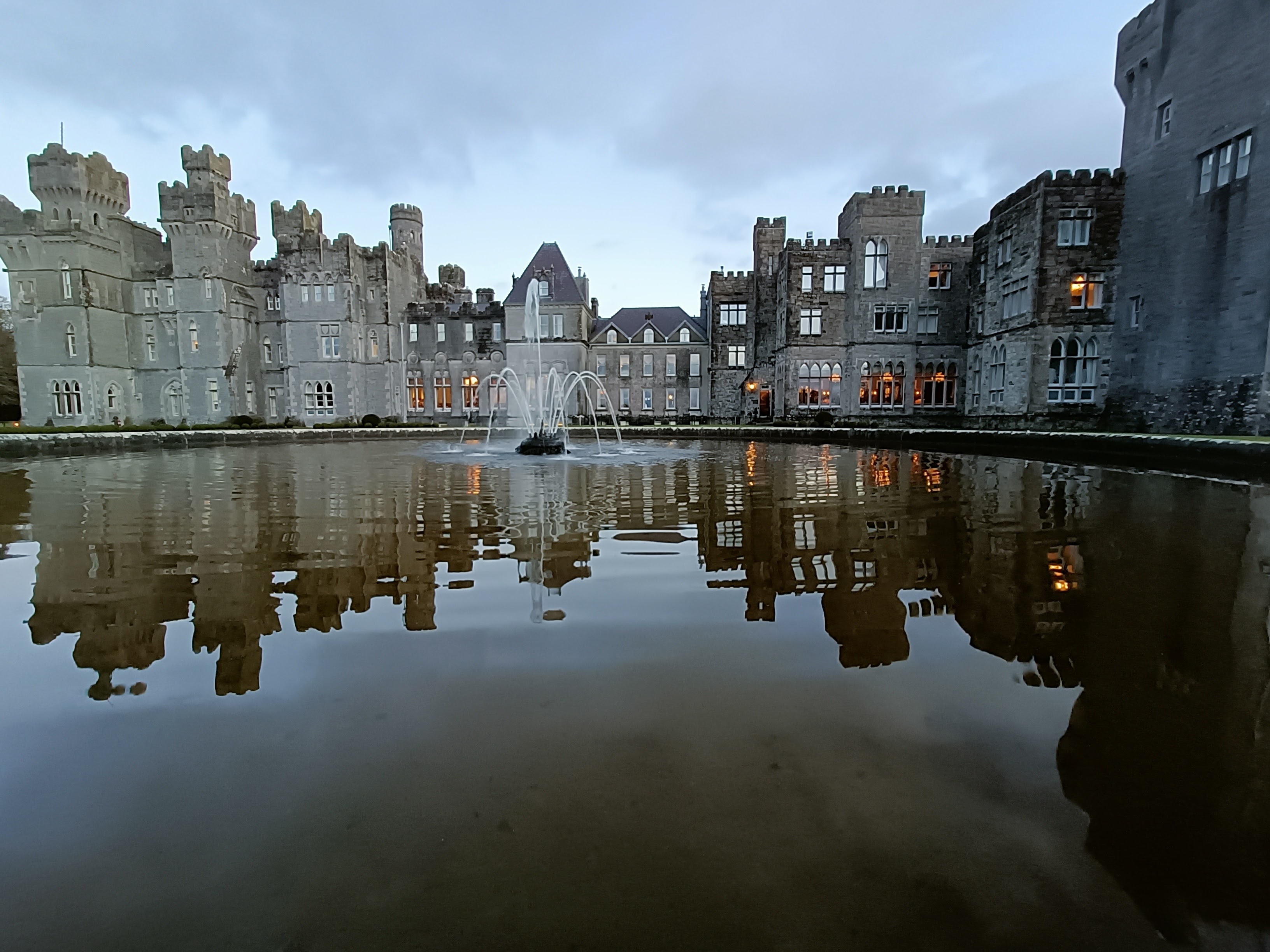
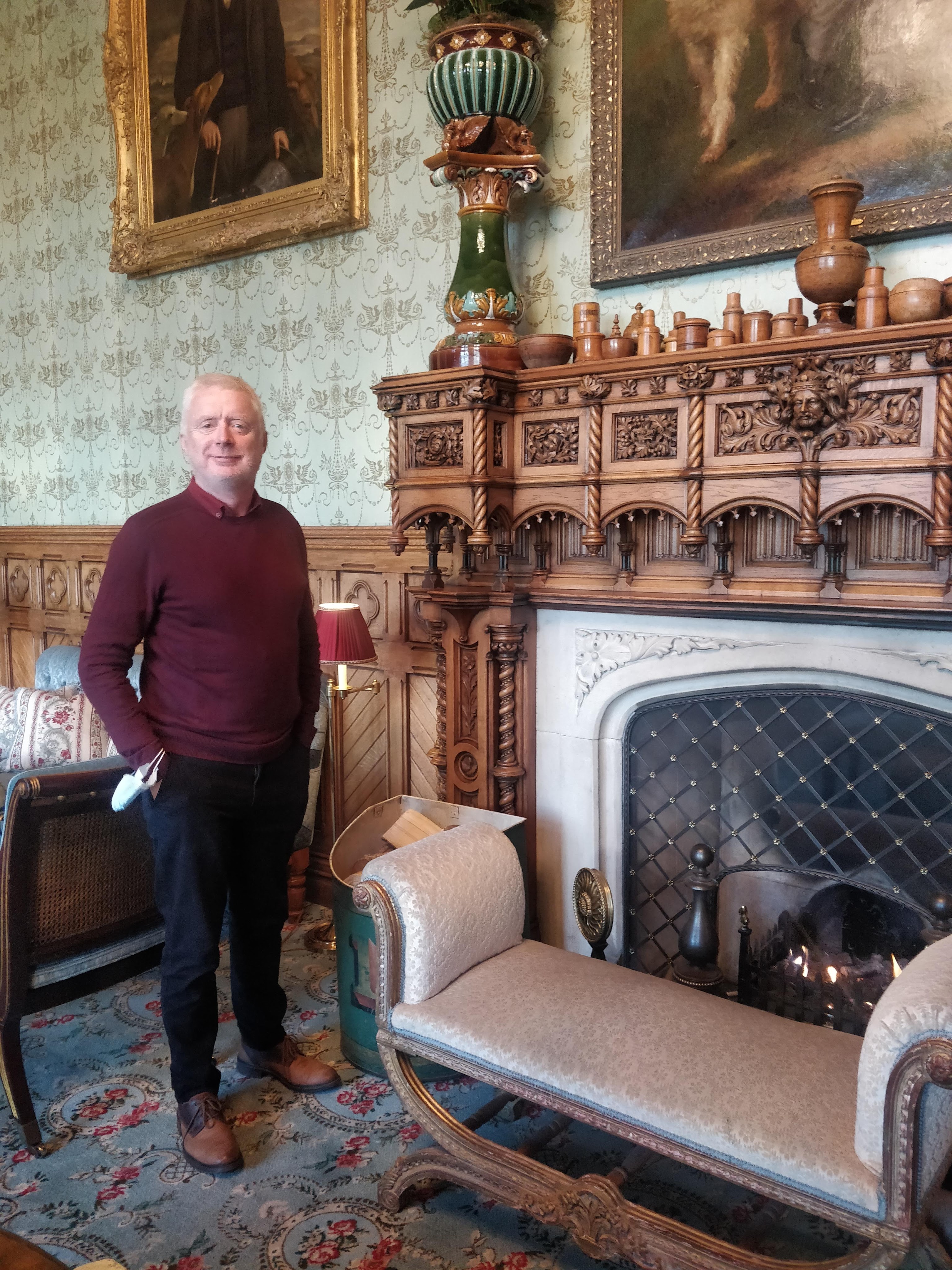
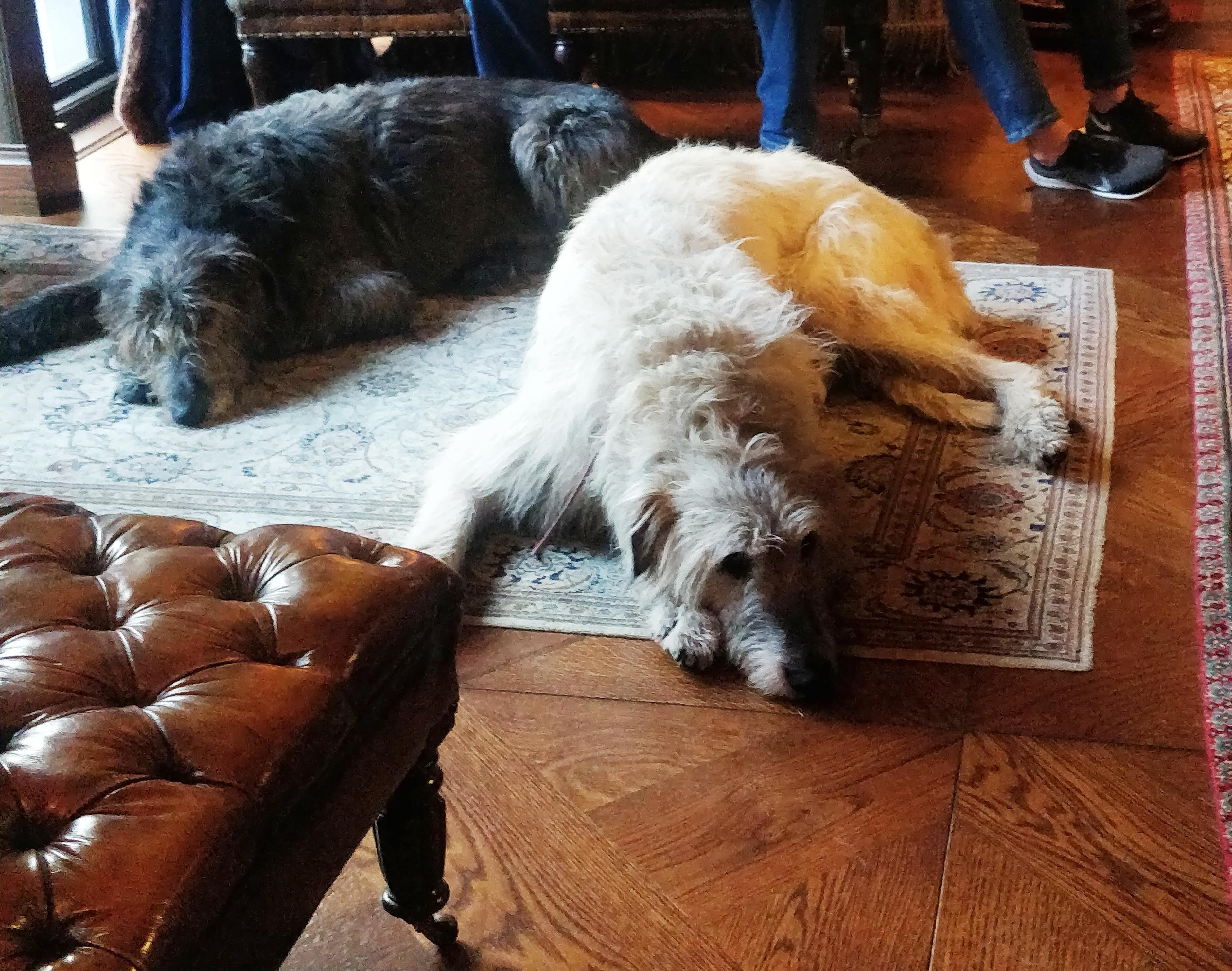
The castle has a long history – it was founded by the Anglo-Norman de Burgo family in 1228 following the defeat of the native O’Connor’s of Connaught. It was home to the Guinness family for many years and was acquired by the Carnation Hotel Group in 2013 and underwent a multi-million restoration. The castle breathes luxury with fabulous oak panelling, silk draped walls, parquet floors, vast vases of fresh flowers and resident wolfhounds. Although it is fit for royalty – there are photos of some of the rich and famous visitors on the walls – the atmosphere is one of friendly hospitality not stuffy formality. We didn’t feel out of place wandering the corridors and exploring the turret staircases – a wonderful place for snooping! The drawing room had huge windows looking out on landscaped gardens but it was the view beyond that of the shifting light and cloud on Lough Corrib that was absolutely mesmerising.

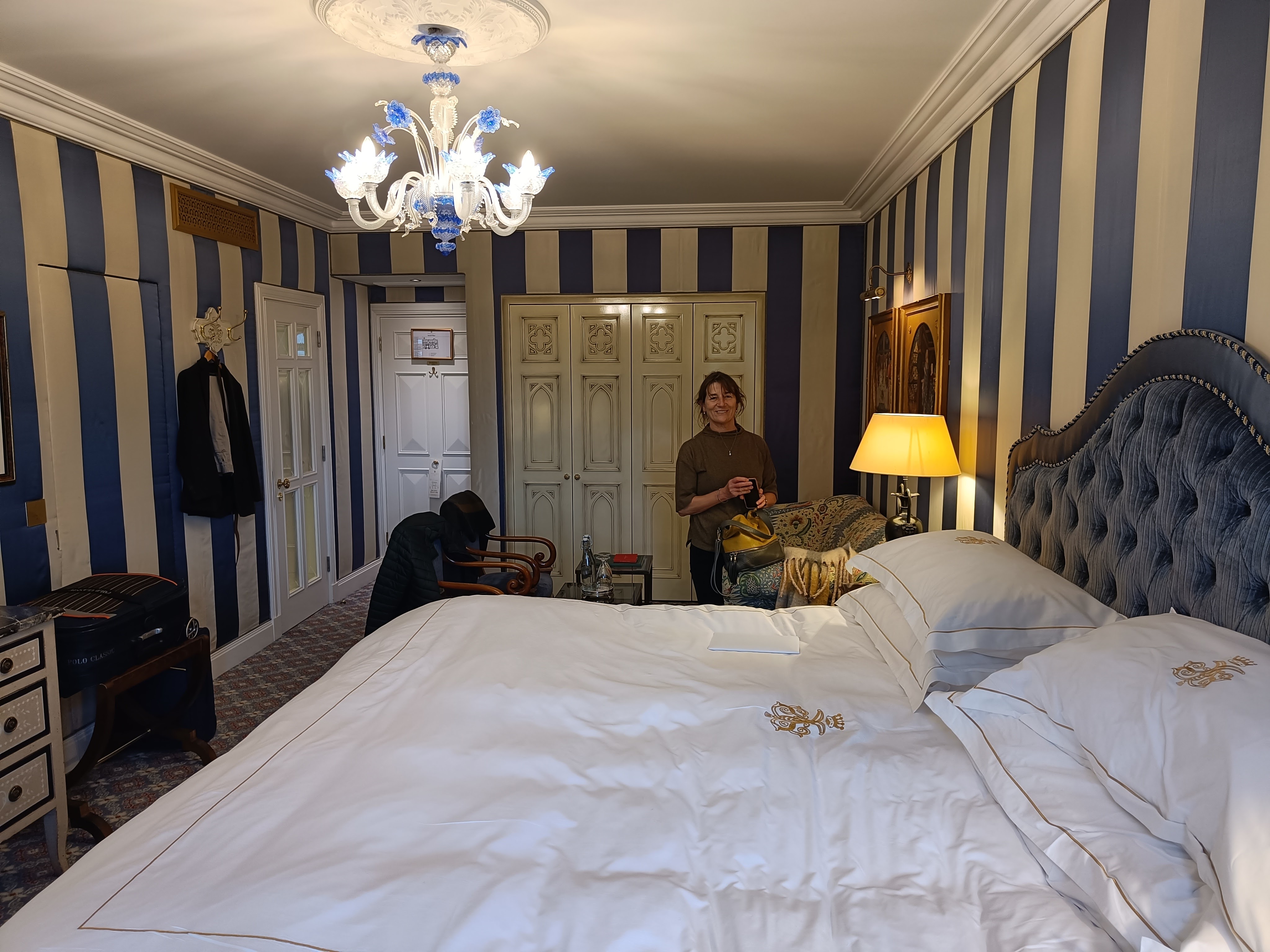
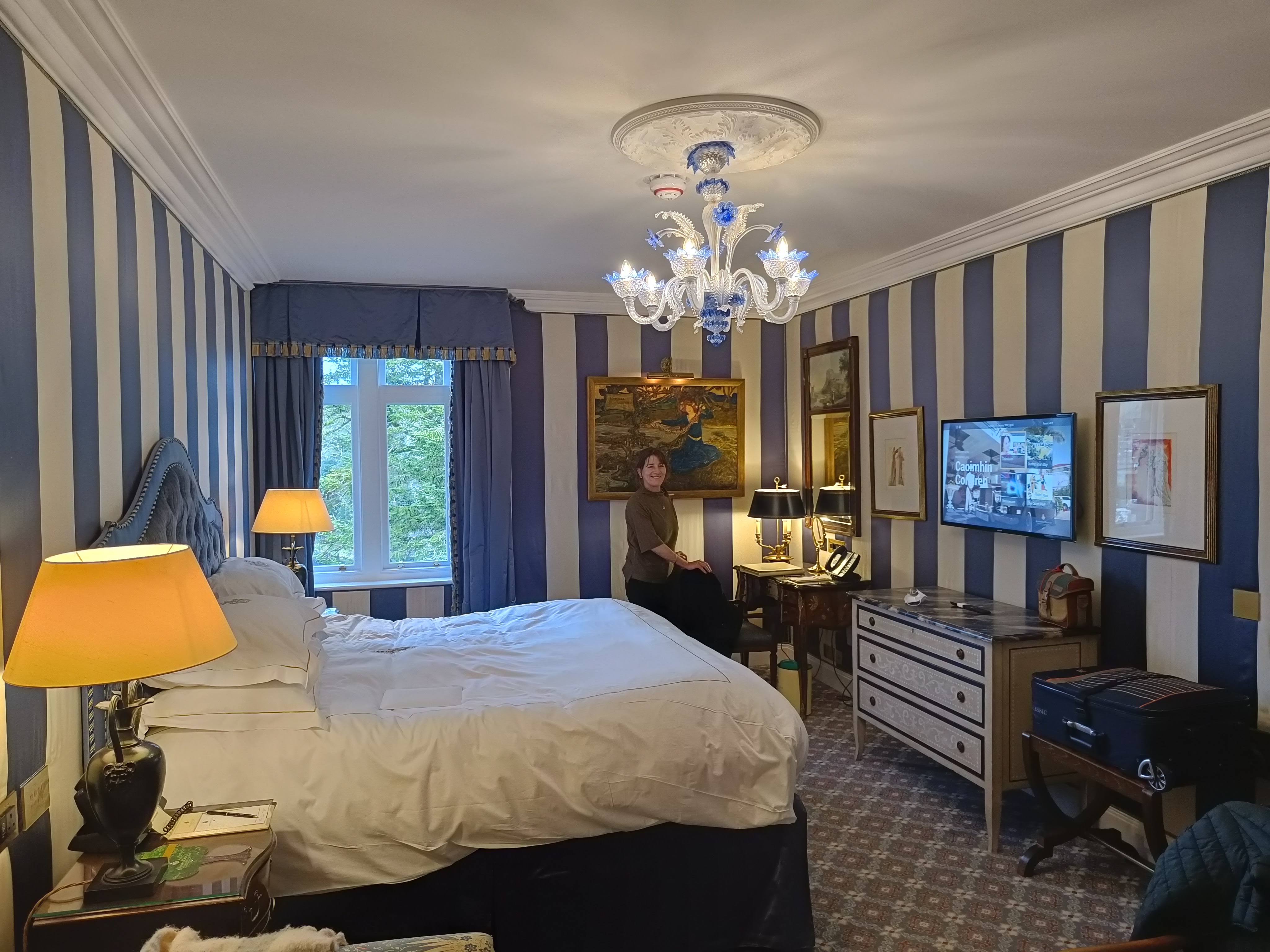
Our comfortable bedroom overlooked the river (lakeview rooms are more expensive) and had ultra-sensitive touch button panels for lights, heating, window blinds (very modern in an old building) and the biggest and highest bed we had ever slept in – if I was a little bit shorter I might have needed a stepladder to climb into it. We could even keep track of our mounting bill on the TV – not a bad idea as all this luxury and attentive service doesn’t come cheap.

We could have played golf, gone horse riding, tried falconry, hired bikes or had a boat trip on the river and lake but we didn’t do any of those things. We walked along by the river in the rain assuming that it would soon stop – it didn’t. Persistent drizzle became heavier and turned back to drizzle in an endless West of Ireland cycle until we were sodden, walking along woodland tracks to Clonbur. But it was still beautiful with water everywhere – rivers, streams, dripping from trees, puddles and muck and the moss such a vibrant green in the rain. On the way back we dripped into a pub for a restorative pint in Cong – a lovely village still making the most of its location for The Quiet Man

The Quiet Man was one of the movies shown in the cinema in the Castle – enormous plush seats with popcorn and jellies provided on a help-yourself basis and we had the whole cinema to ourselves. We were lucky to visit the spa- we were on a cancellation list as Covid restrictions still applied in the last week in January and we hadn’t booked in advance. Sipping cucumber iced water while looking out at the lake in such tranquil elegance was special

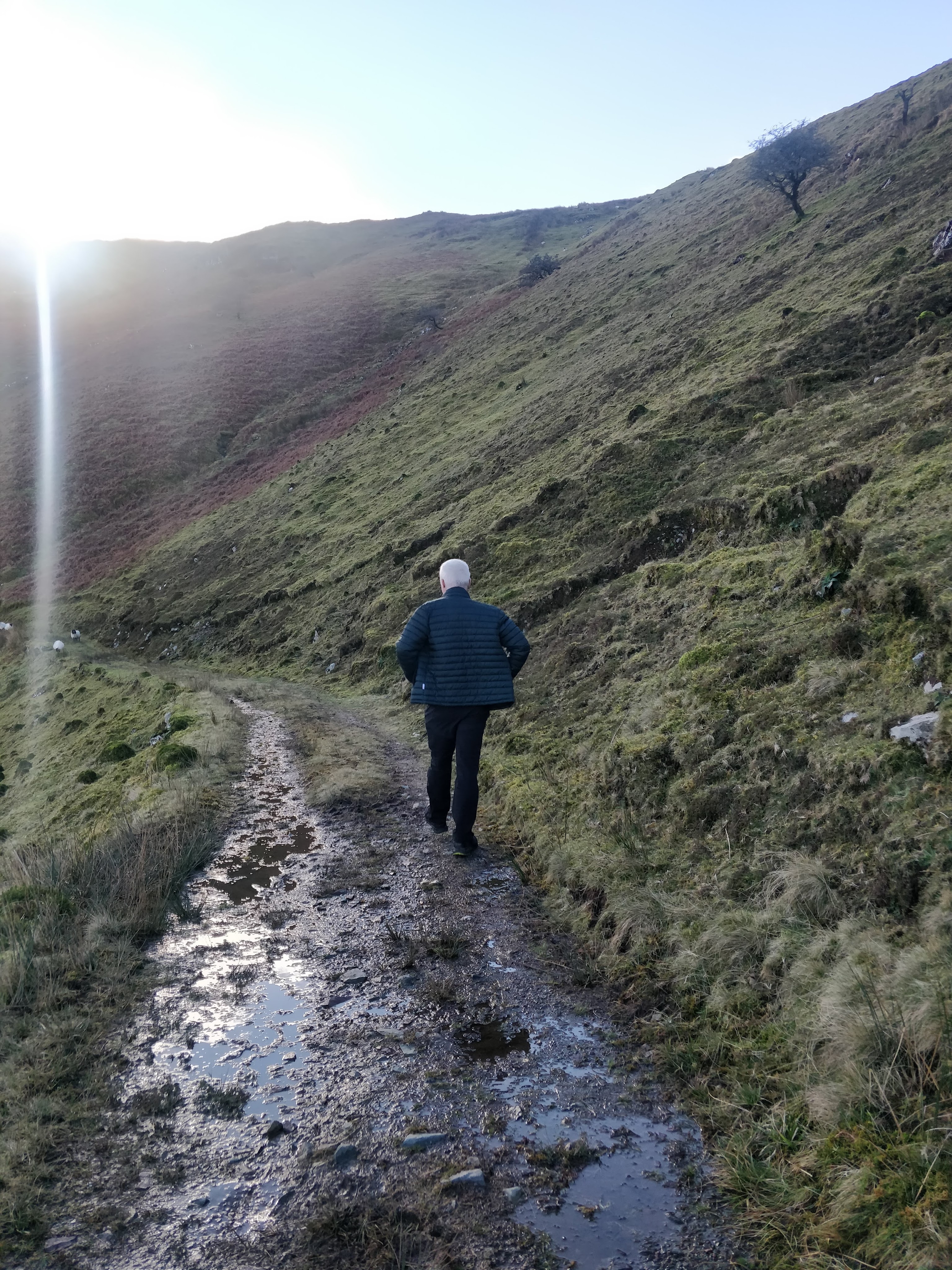
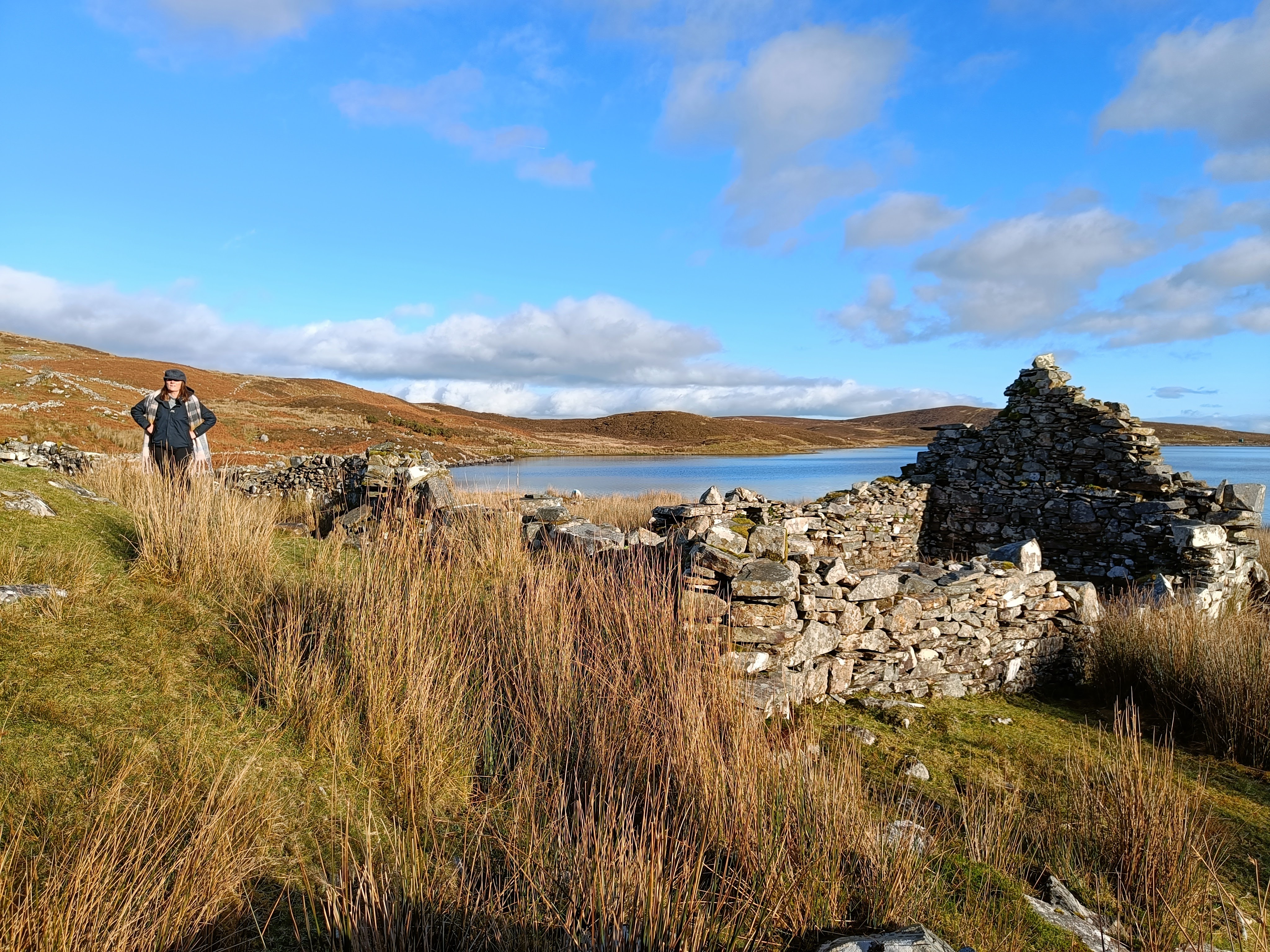
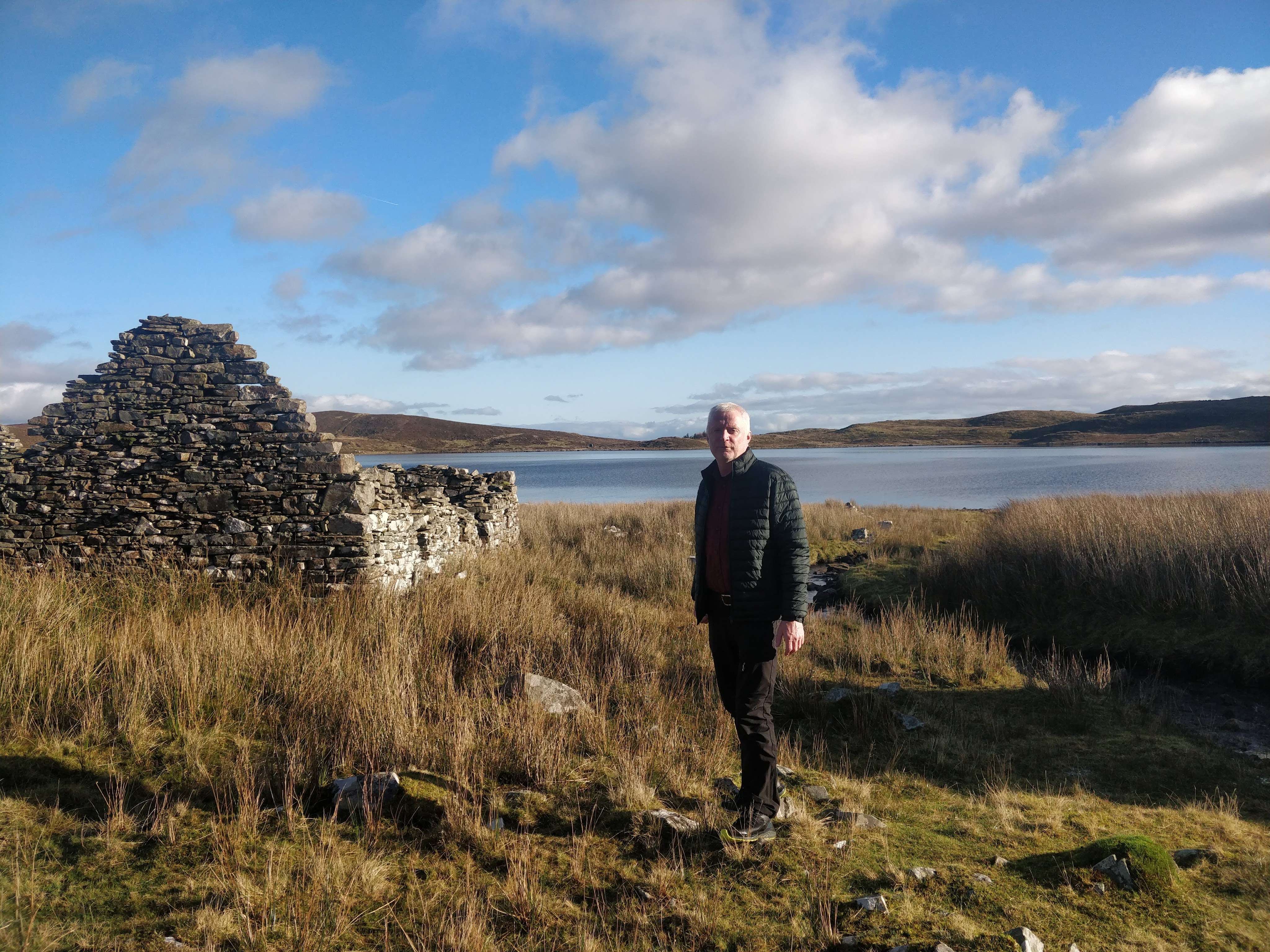
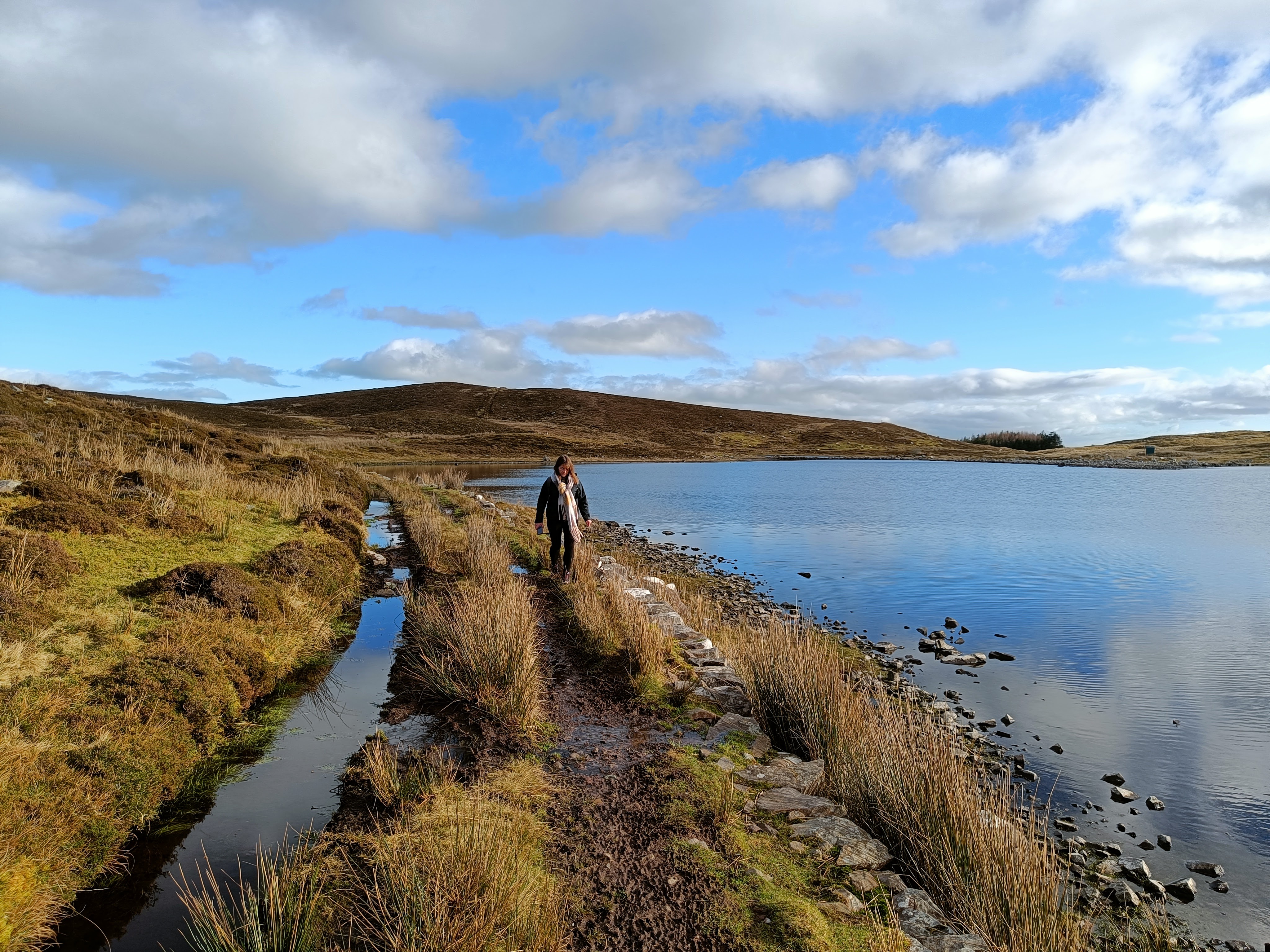
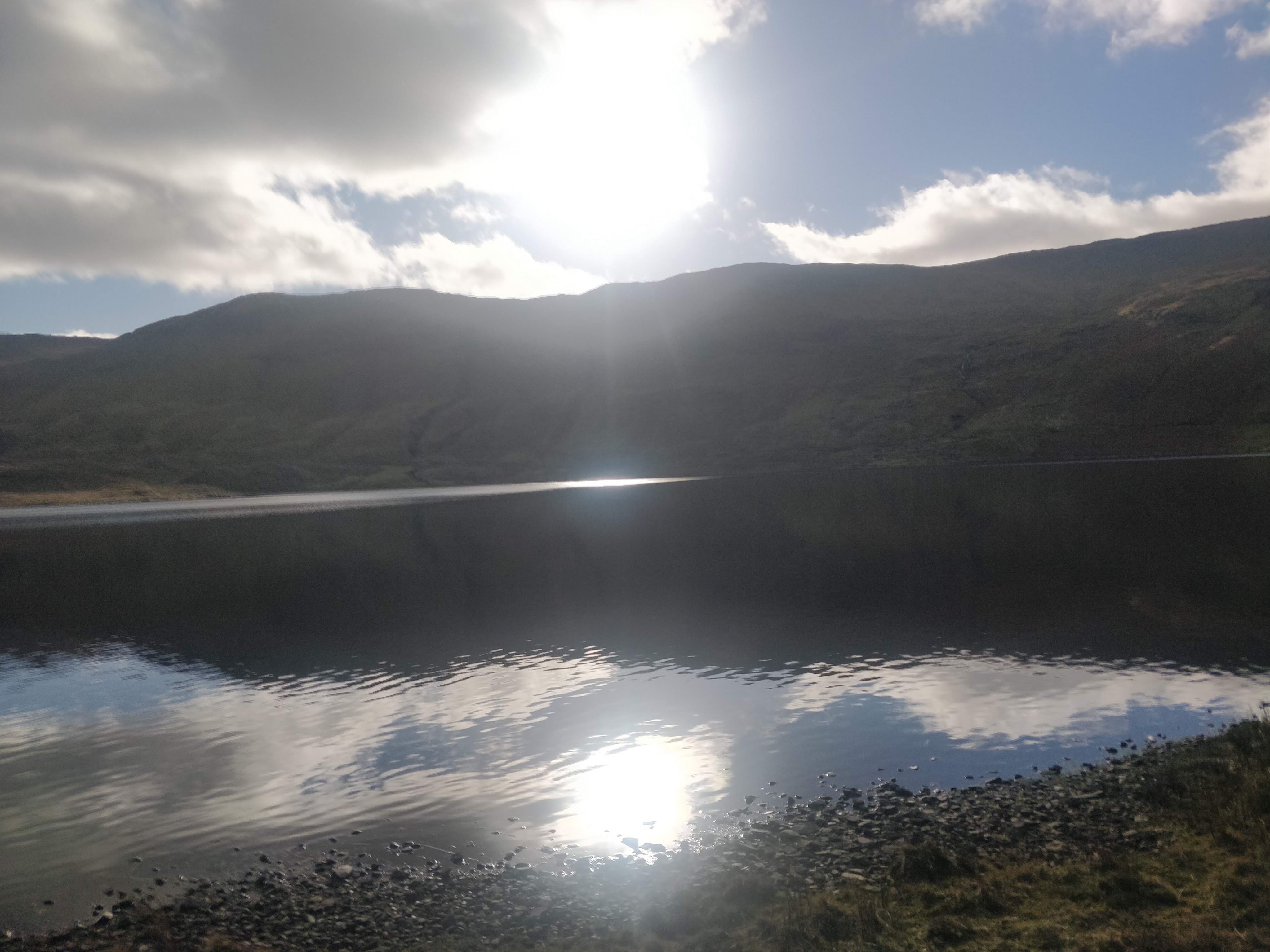
After leaving the luxury of the Castle, we drove to the start of a walking trail that took us around Lough Coolin to the deserted Famine village. It was a stunningly beautiful winters day – the sky was mirrored in the lake in brilliant blue and white. We sank in the boggy ground, stumbling over rocks and rushes and thought of the people who once lived here, leaving behind only fallen stones and echoes….

The contrast of this poverty with the opulence of the Castle was sobering and it seemed for a while as if the sun went in.

The Guzzler and Frank, Ashford Castle, Co Mayo
A Little Luxury – Ashford Castle

Road Trip 2021 – Ireland to Greece and Back.

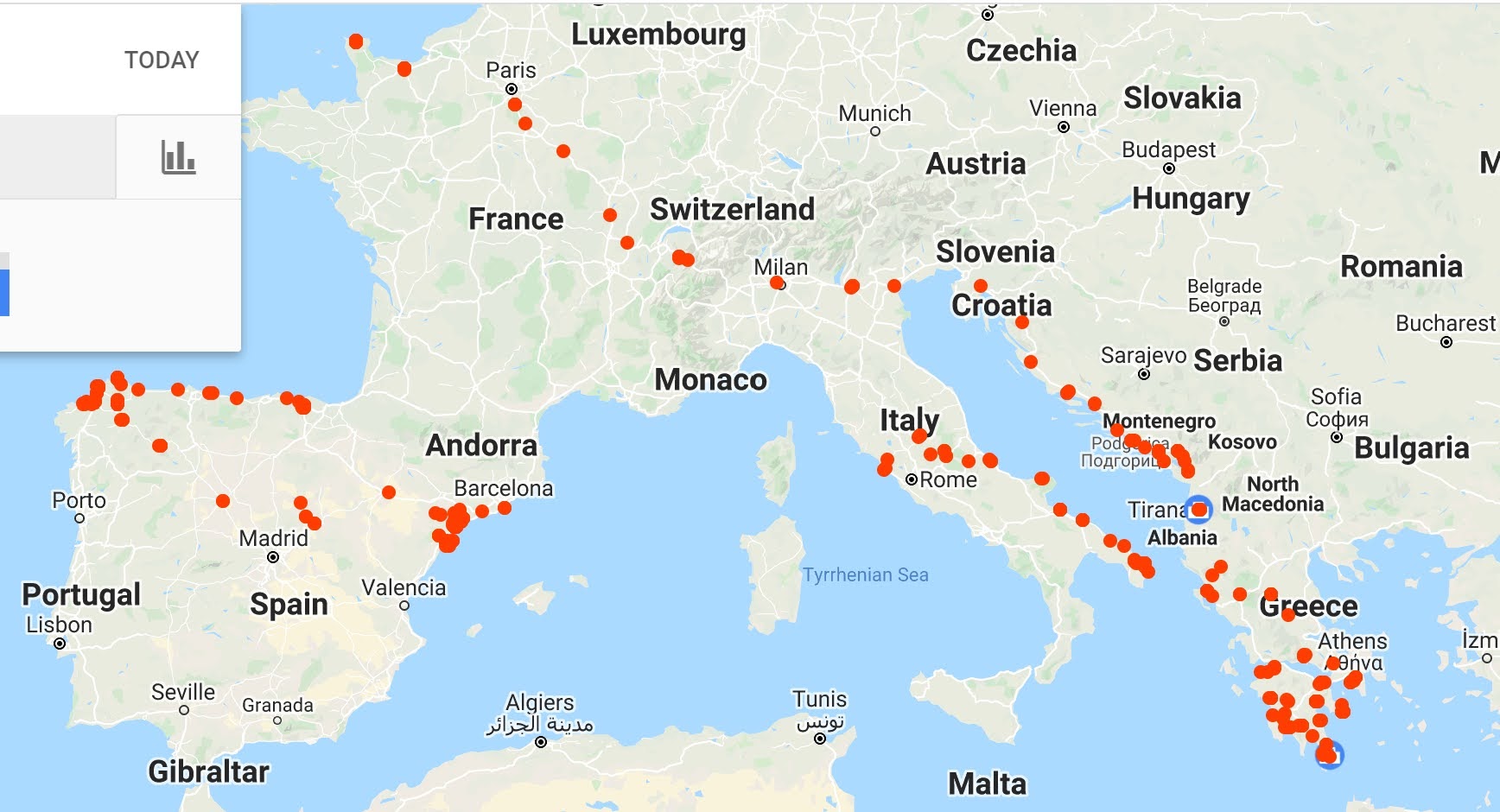
Road Trip Map

“Why do you stay in prison when the door is so wide open?” Rumi Quote

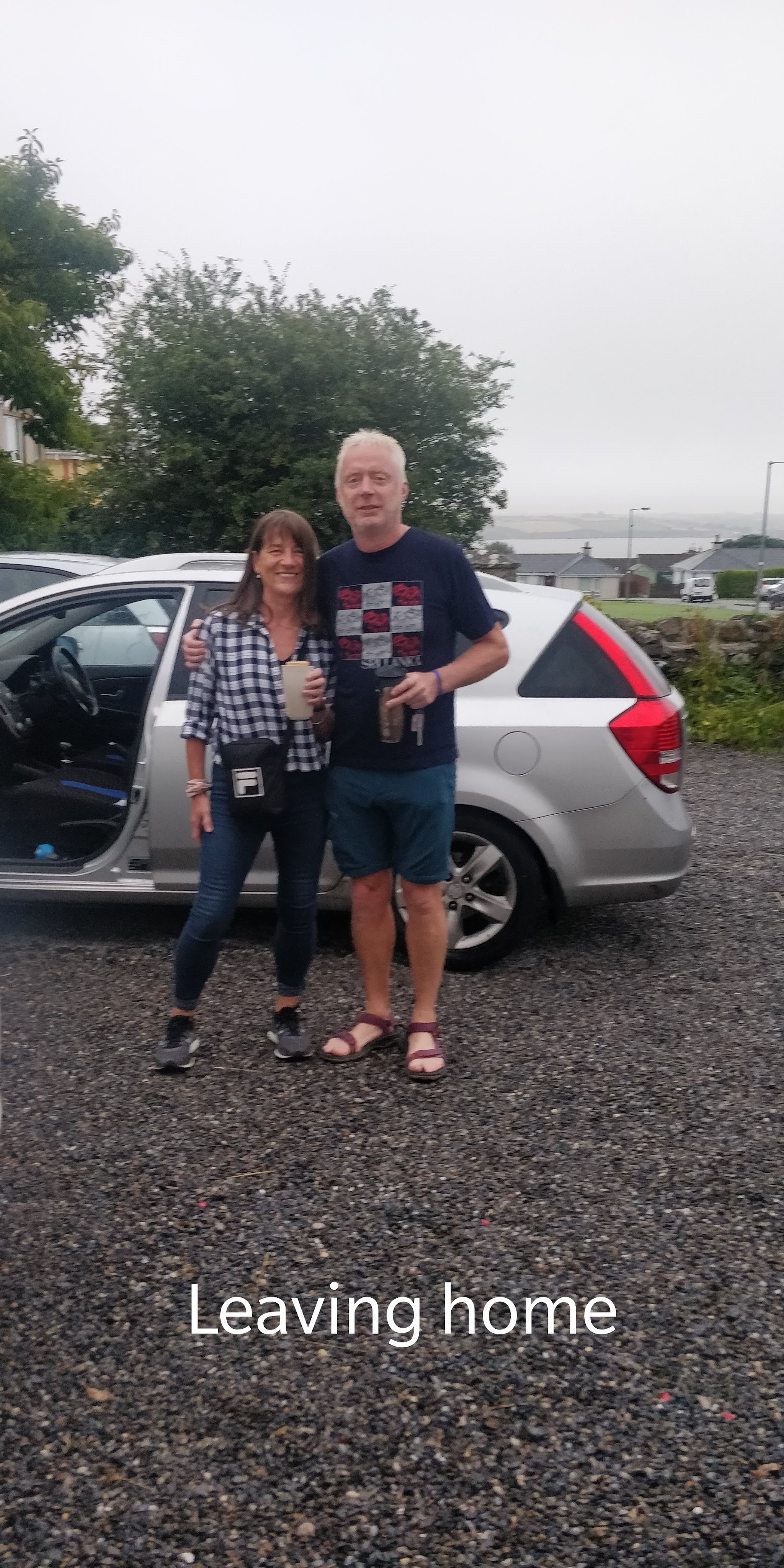
What do you do when you retire during a pandemic and you love to travel? Well, we just sat into our car and headed to Rosslare in early August to get a ferry to Spain and took it from there, returning home in December after four months, four ferries and nine countries (Spain, Italy, Greece, Albania, Montenegro, Croatia, Bosnia Herzegovina, Slovenia, Italy again, France). We enjoyed it all but here are some of the highlights – a baker’s dozen of them.

Our Highlights (in no particular order)

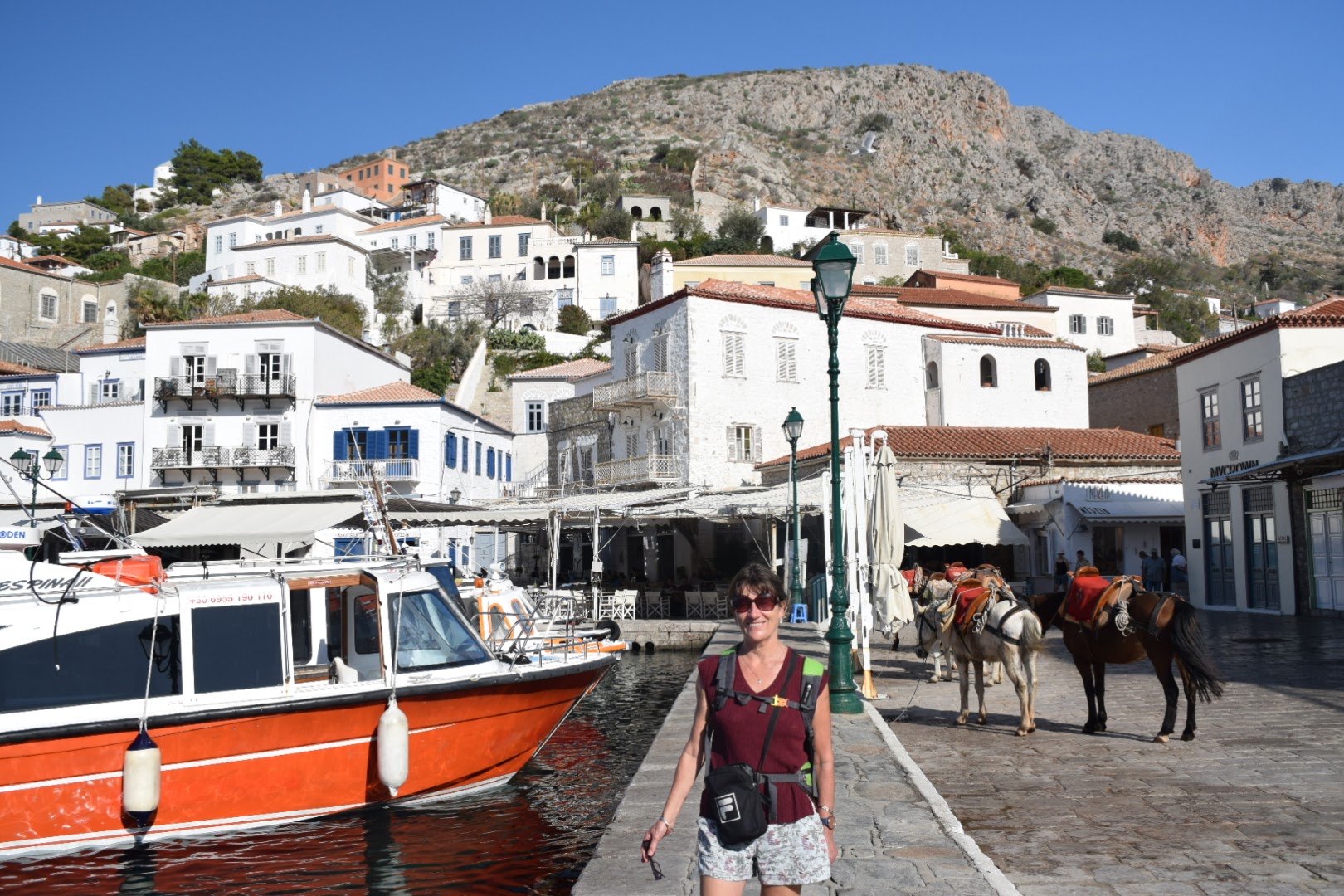
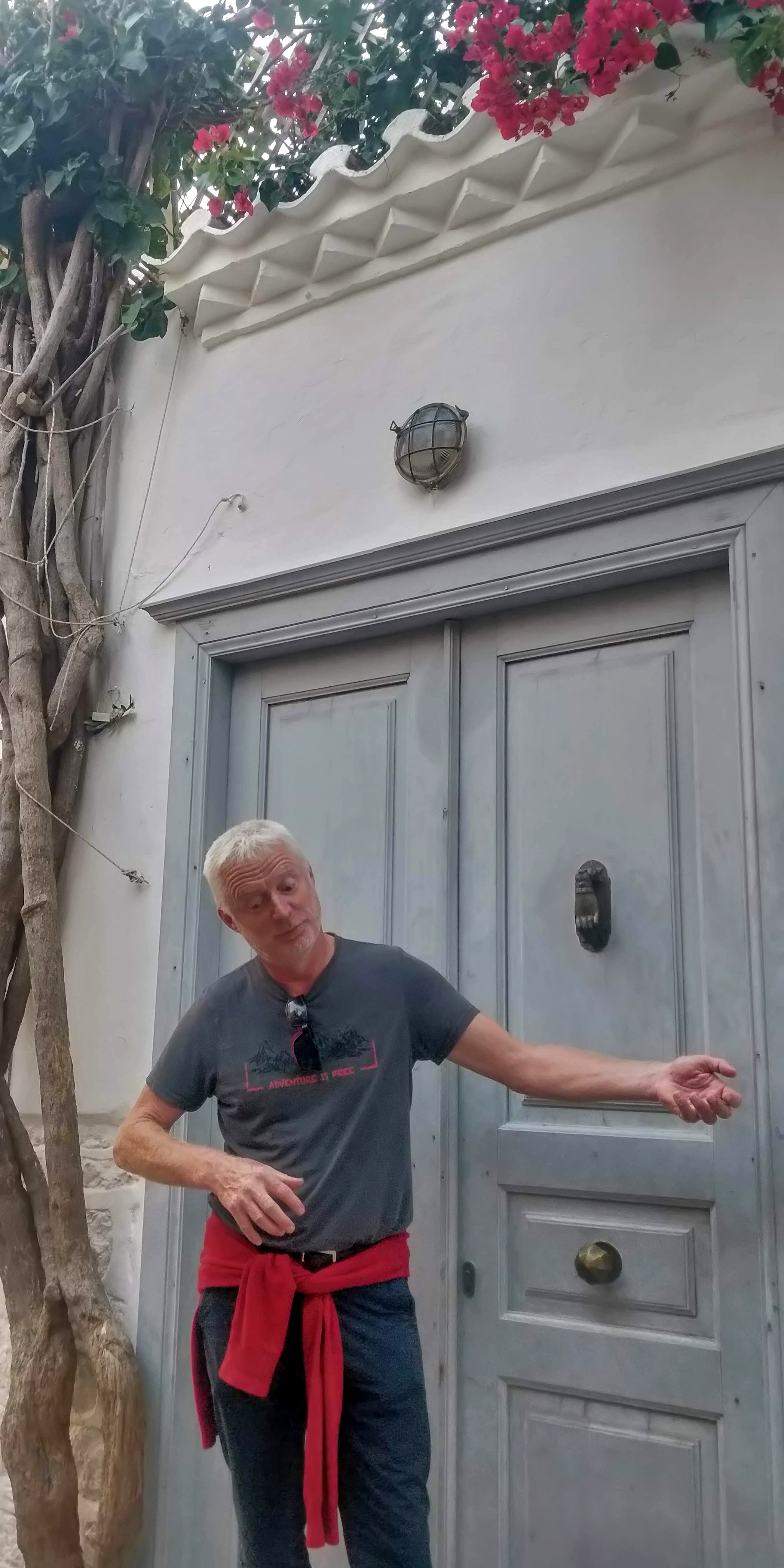
  1. Hydra Island, Greece

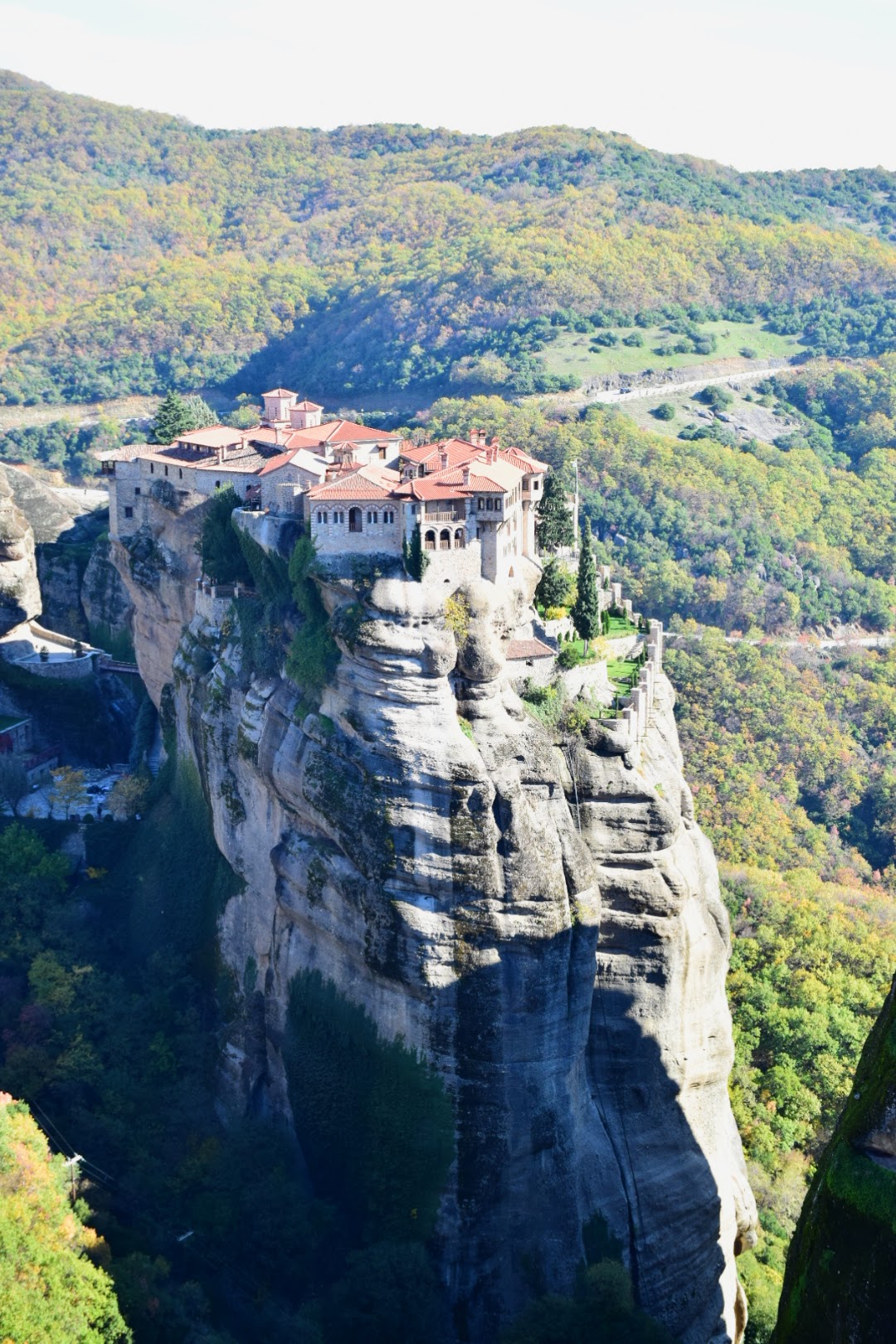
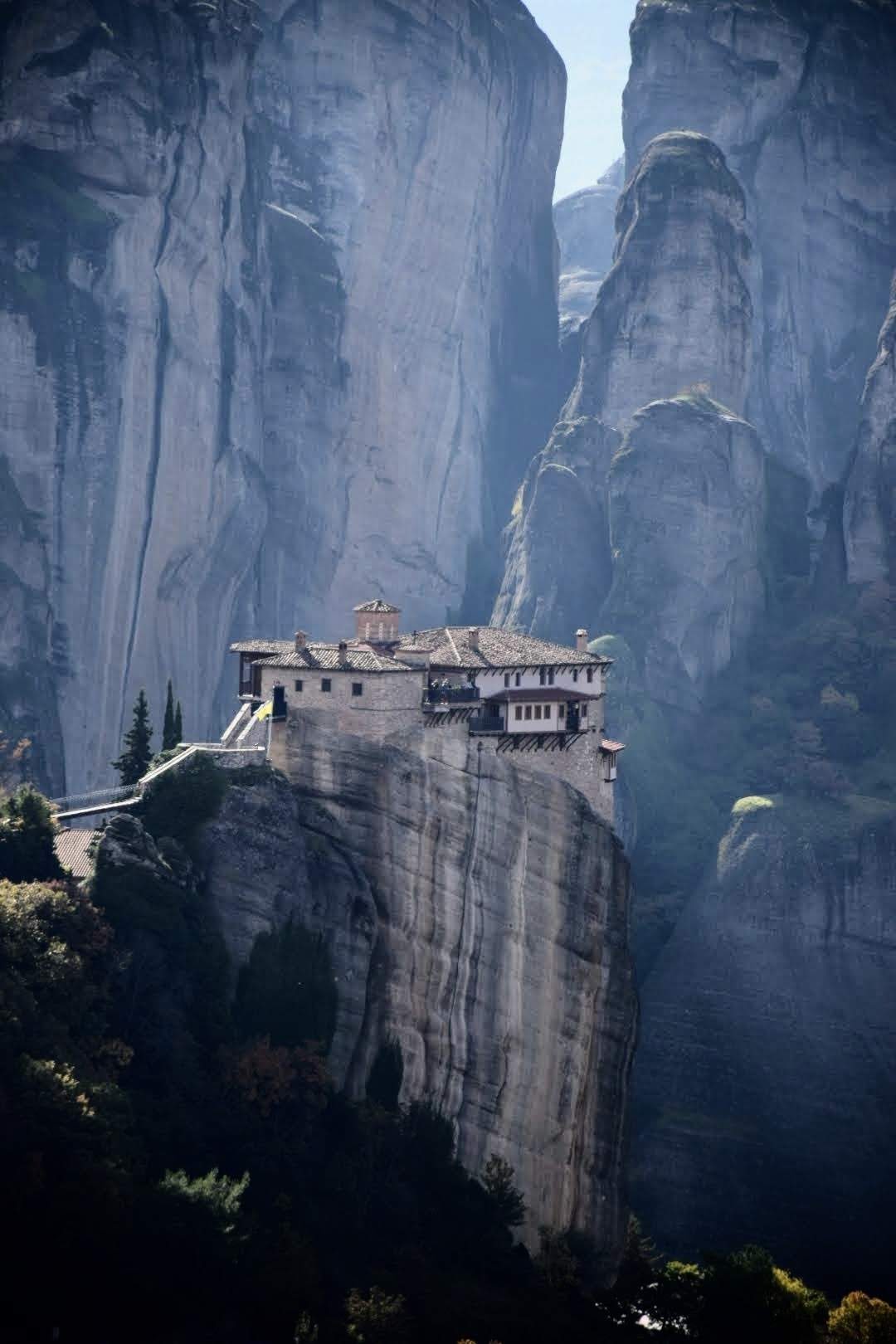
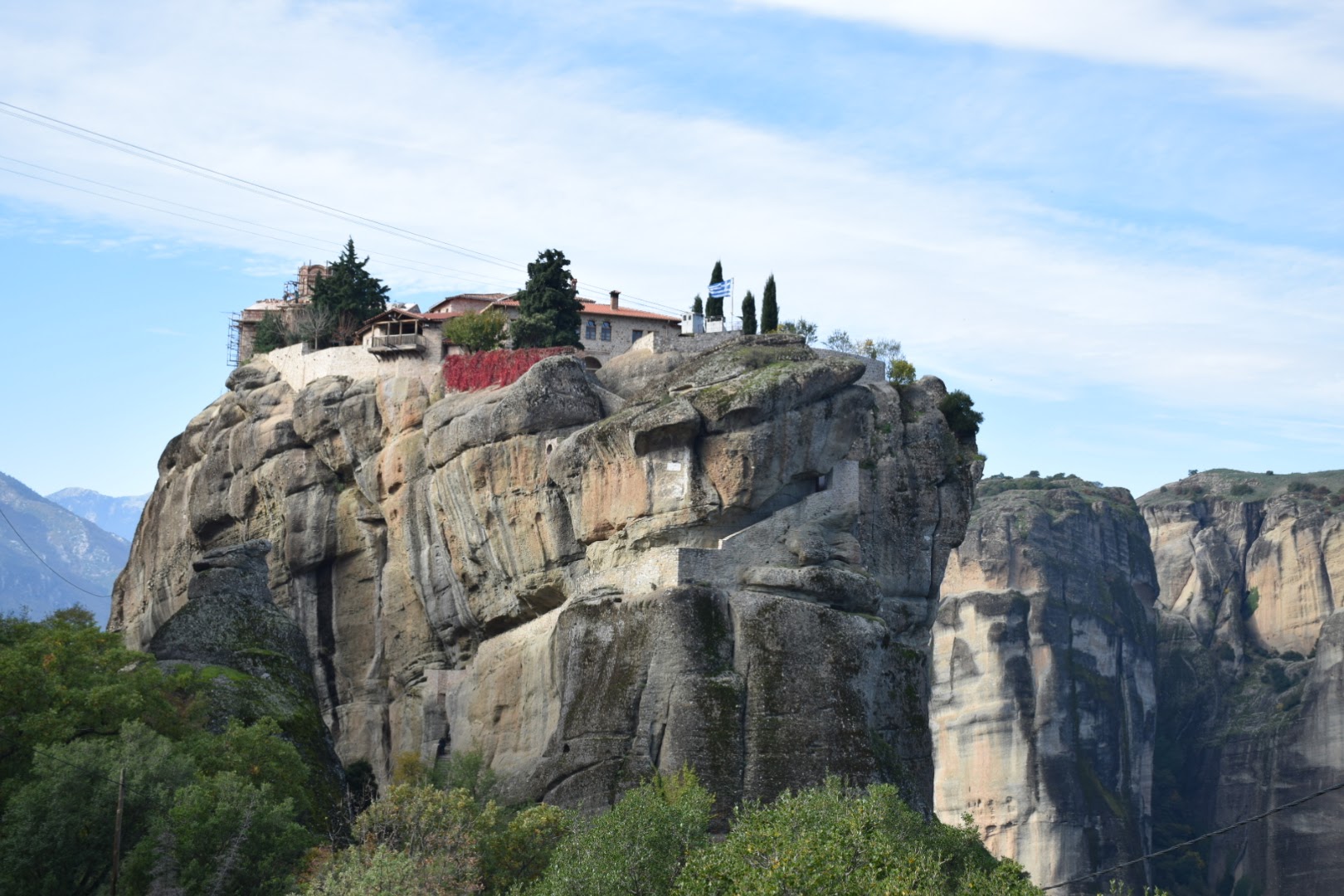
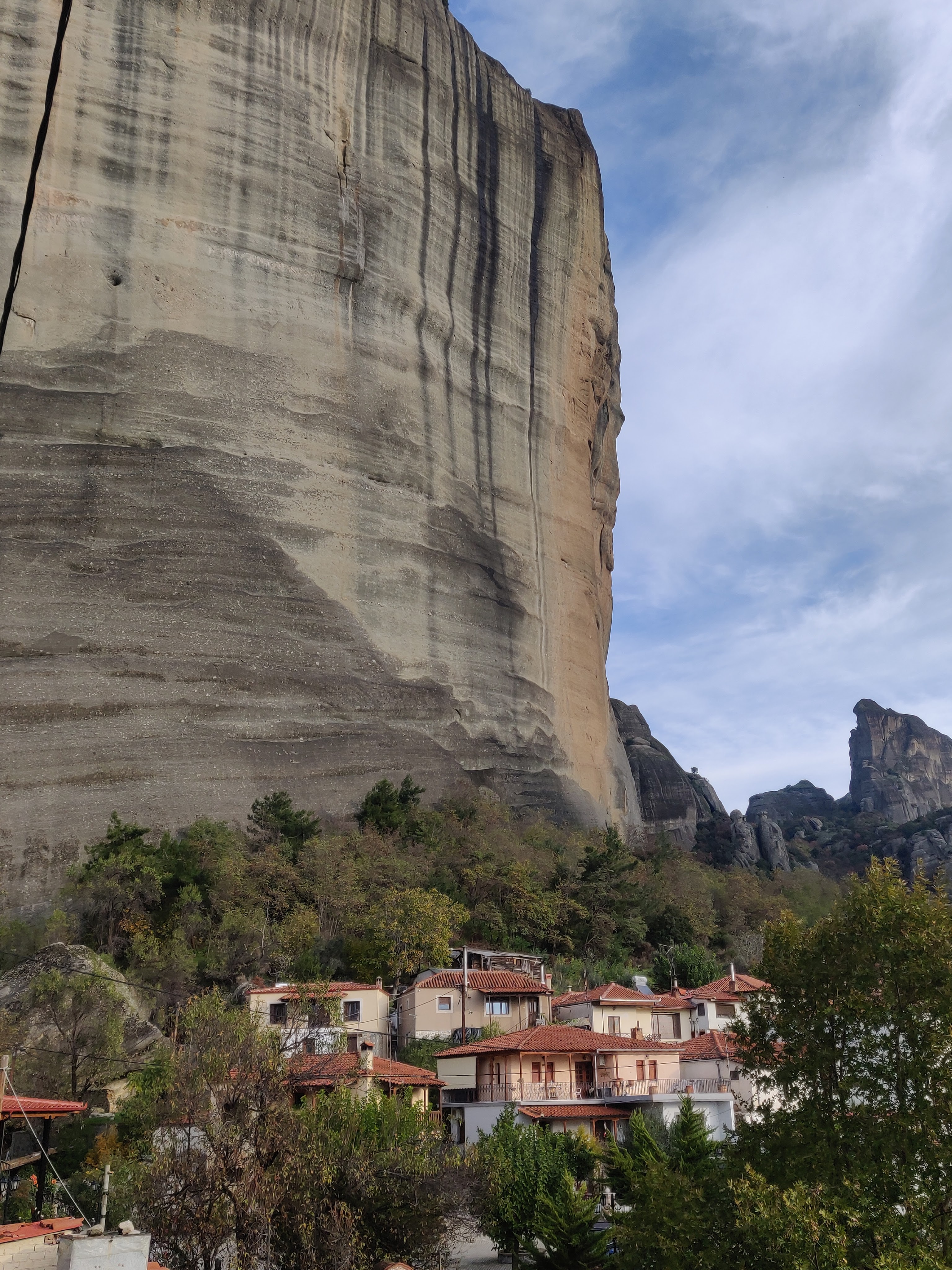
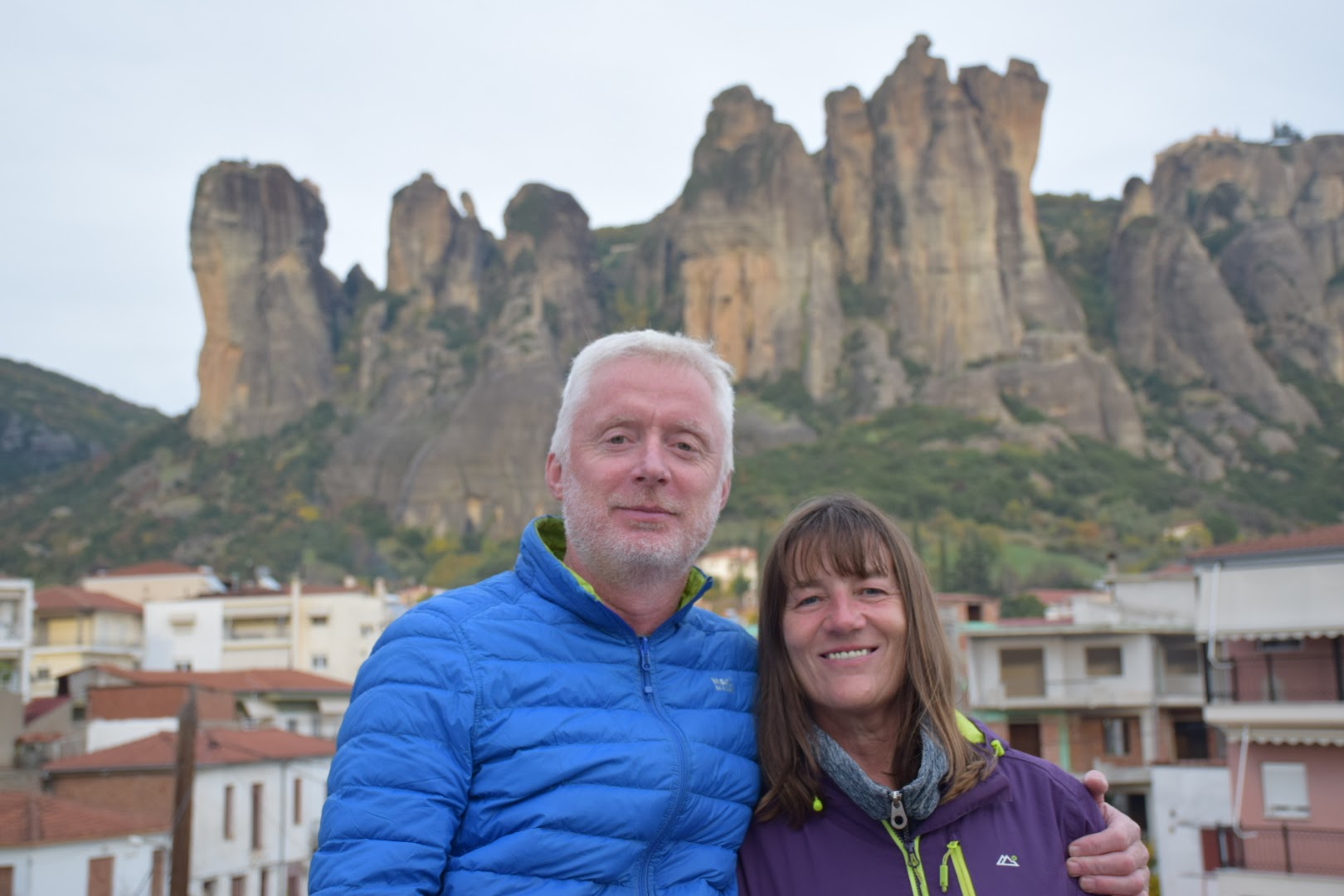
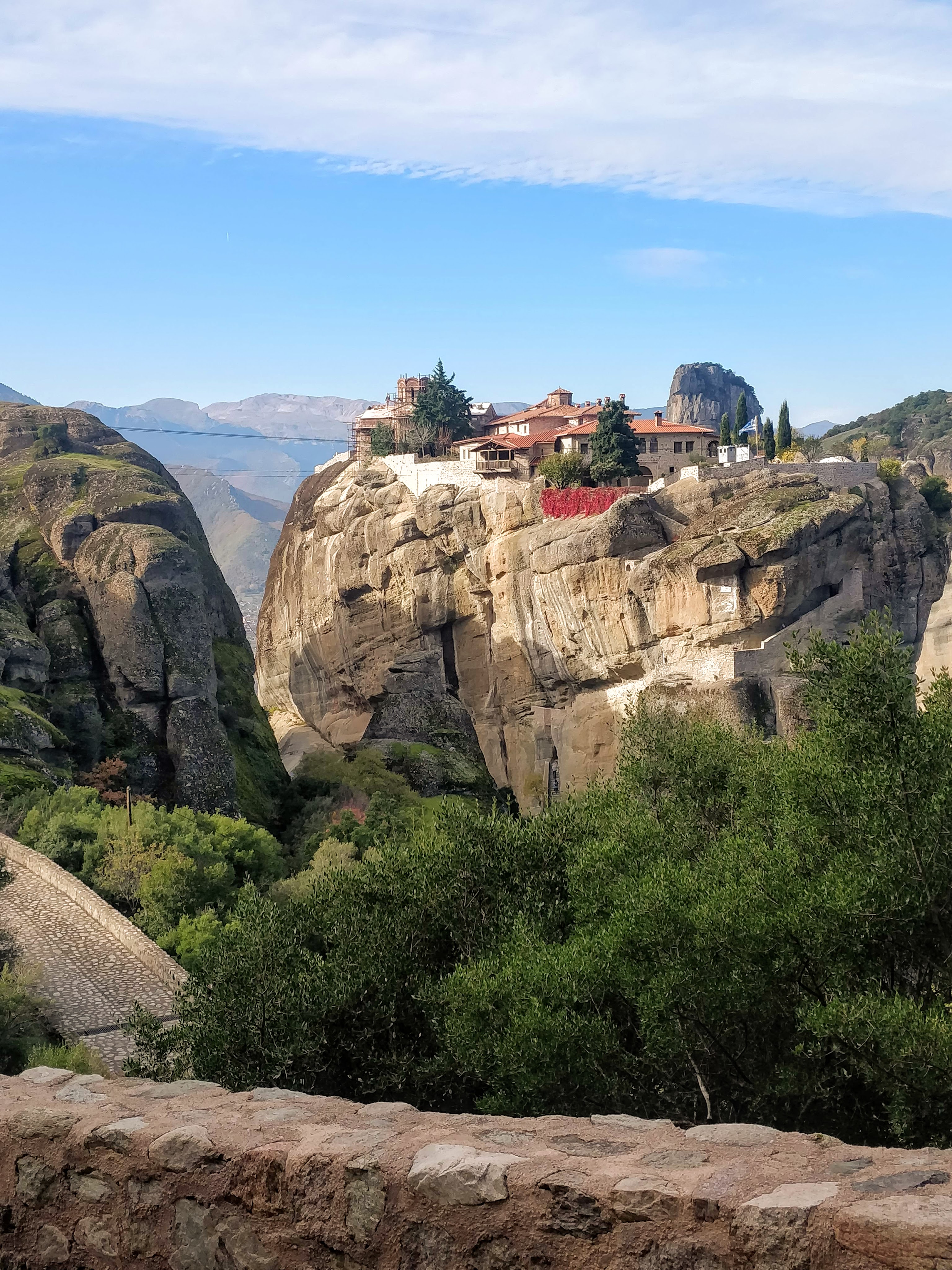
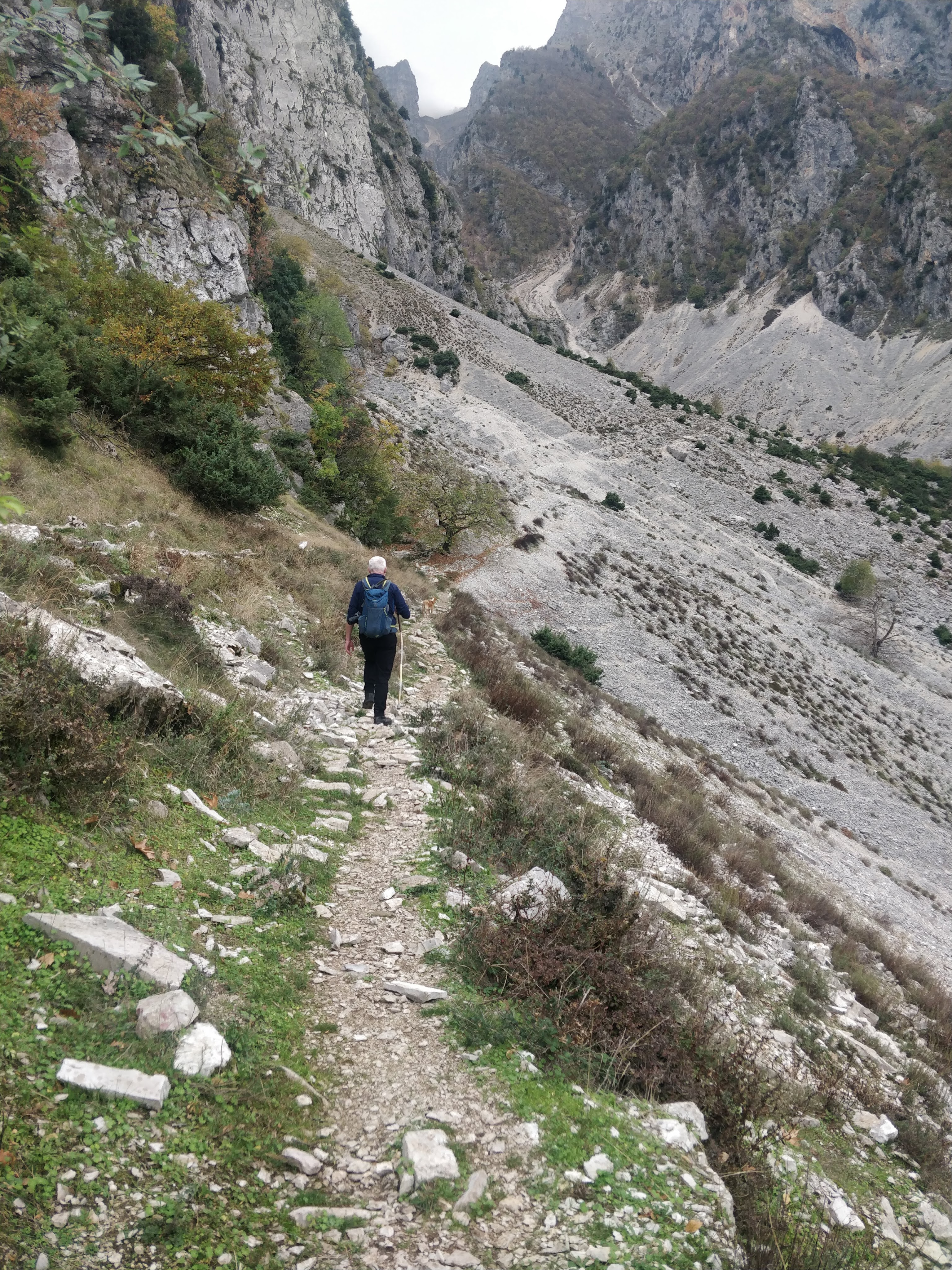
2 Meteora Monasteries, Central Greece

Mesmerizing, astonishing…….just some of the words to describe Meteora, an area in Greece that we had never heard of until we got there. Monasteries perched precariously high on pinnacles of rock in a strange other-worldly landscape.

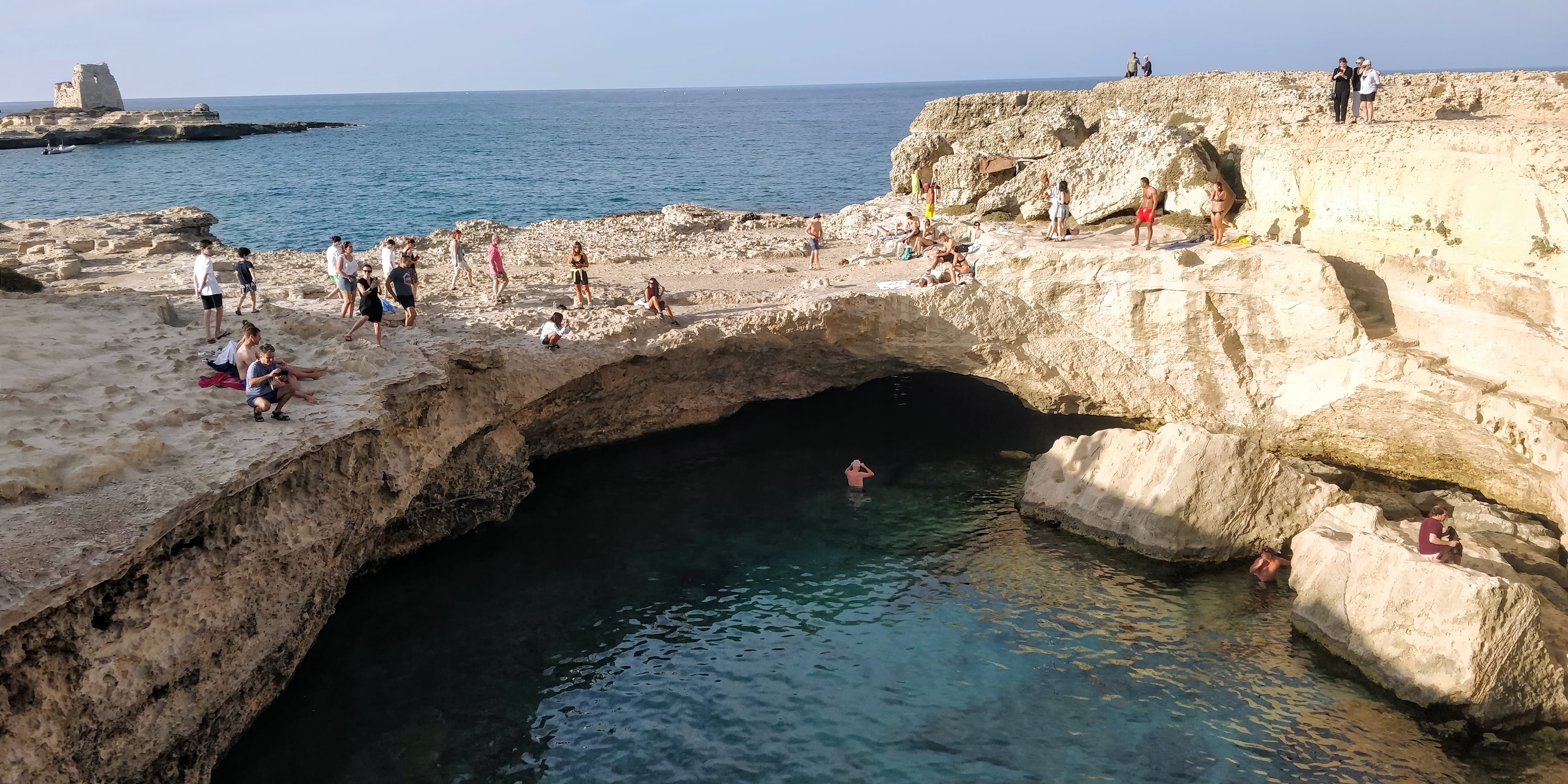
3 Grotto del Poesia, Puglia, Italy

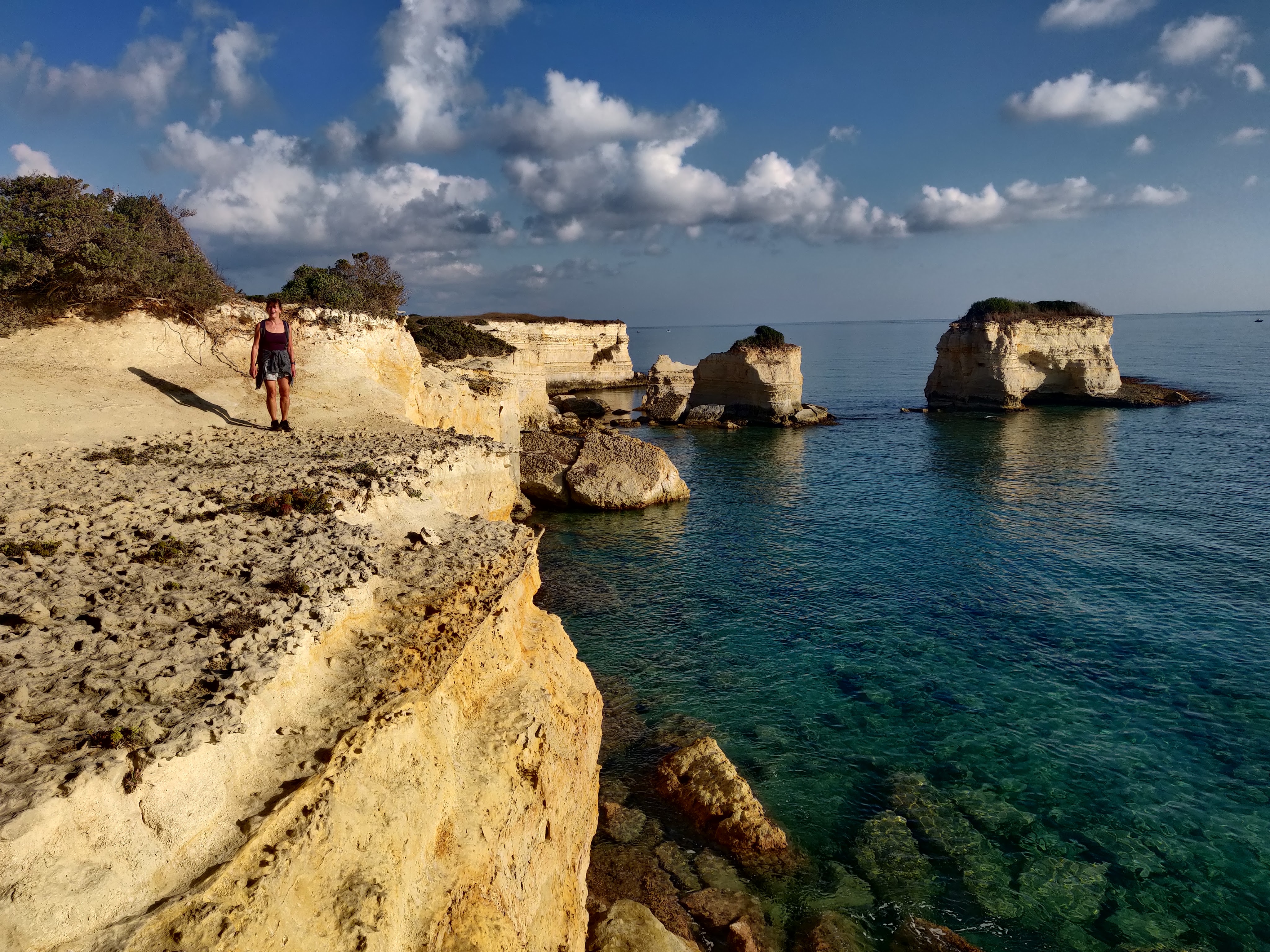
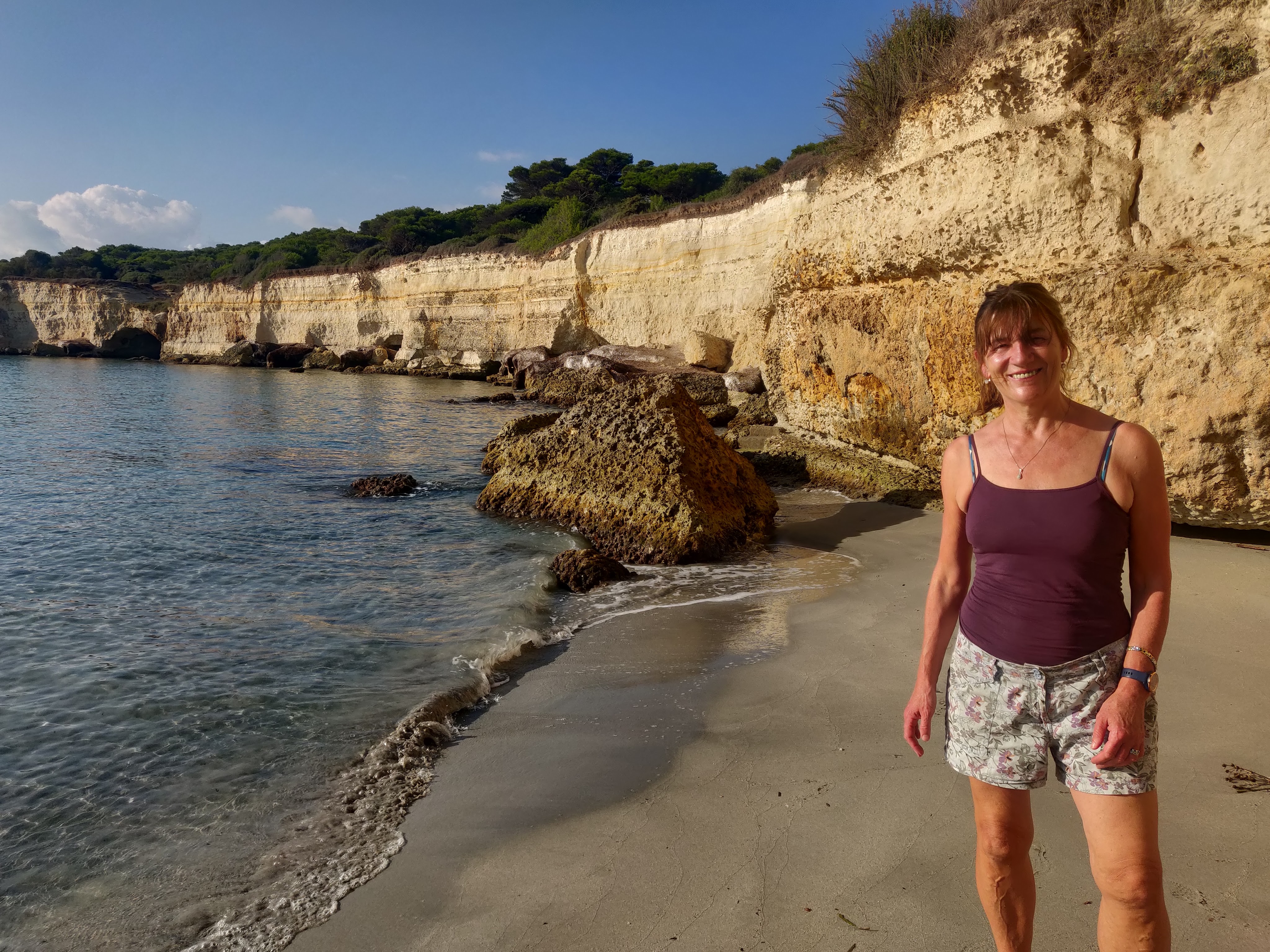
The Grotto del Poesia which tranlates as the Poetry Cave is a natural pool surrounded by rugged limestone cliffs with caves and a tunnel to the open sea. The whole Salento region of Puglia is really beautiful with warm, shallow seas and wonderful coastal walking. Its very popular in summer but at the end of Sept/early Oct, the weather was glorious, the crowds were absent and we stayed in a vineyard with bikes available to cycle to the sea or the trattoria.

4 Thermal Pools, Permet, Albania

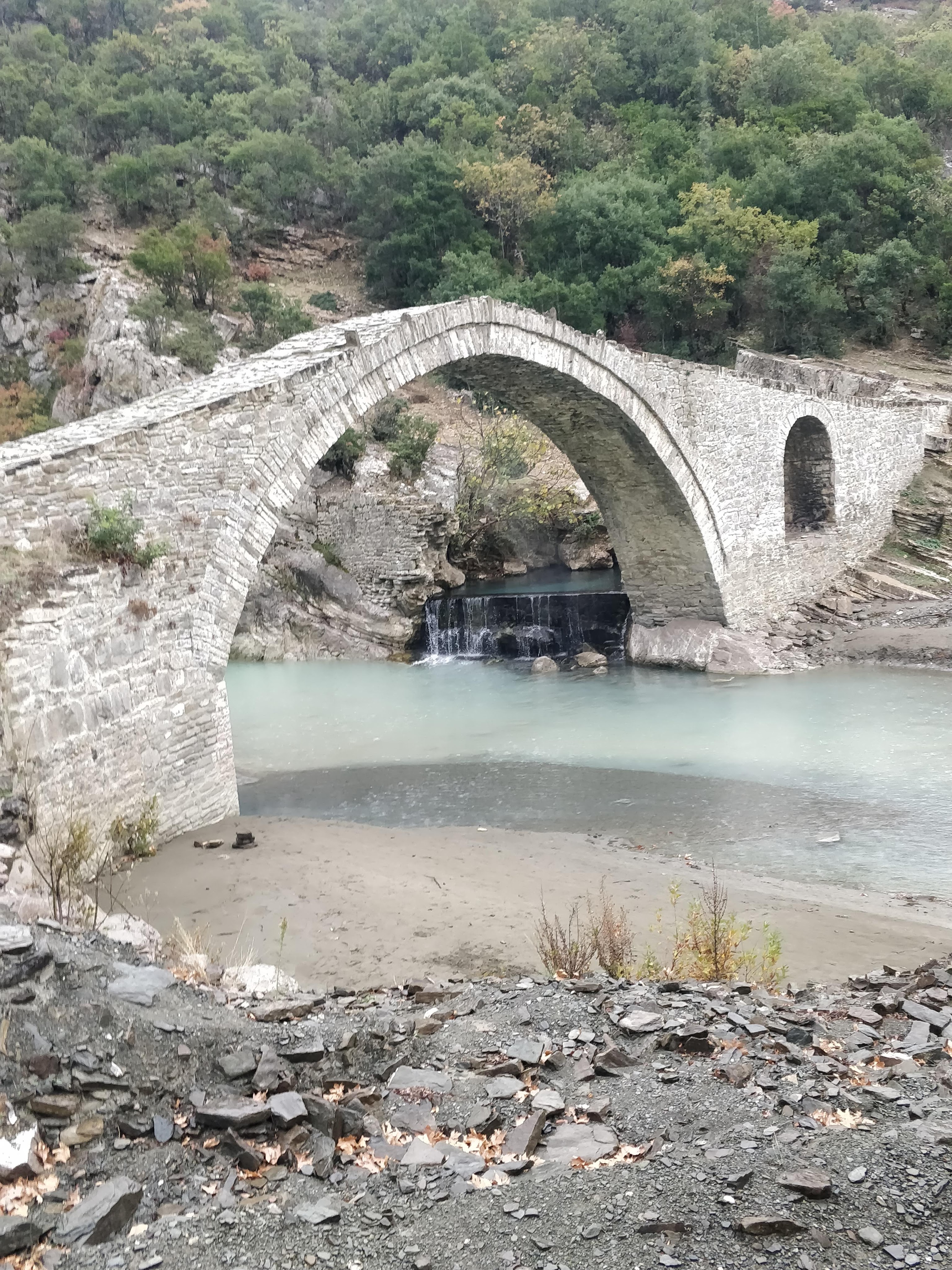
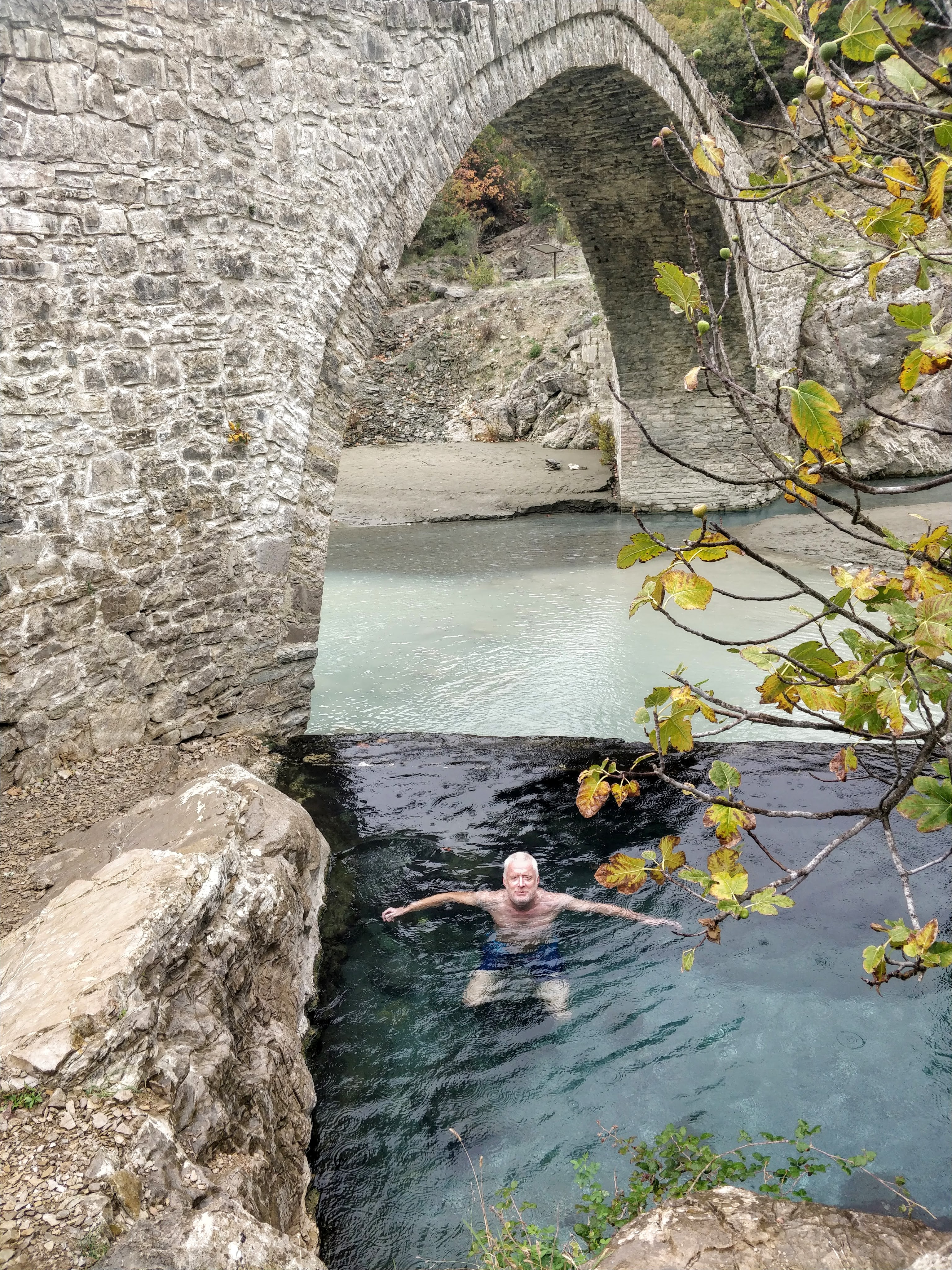
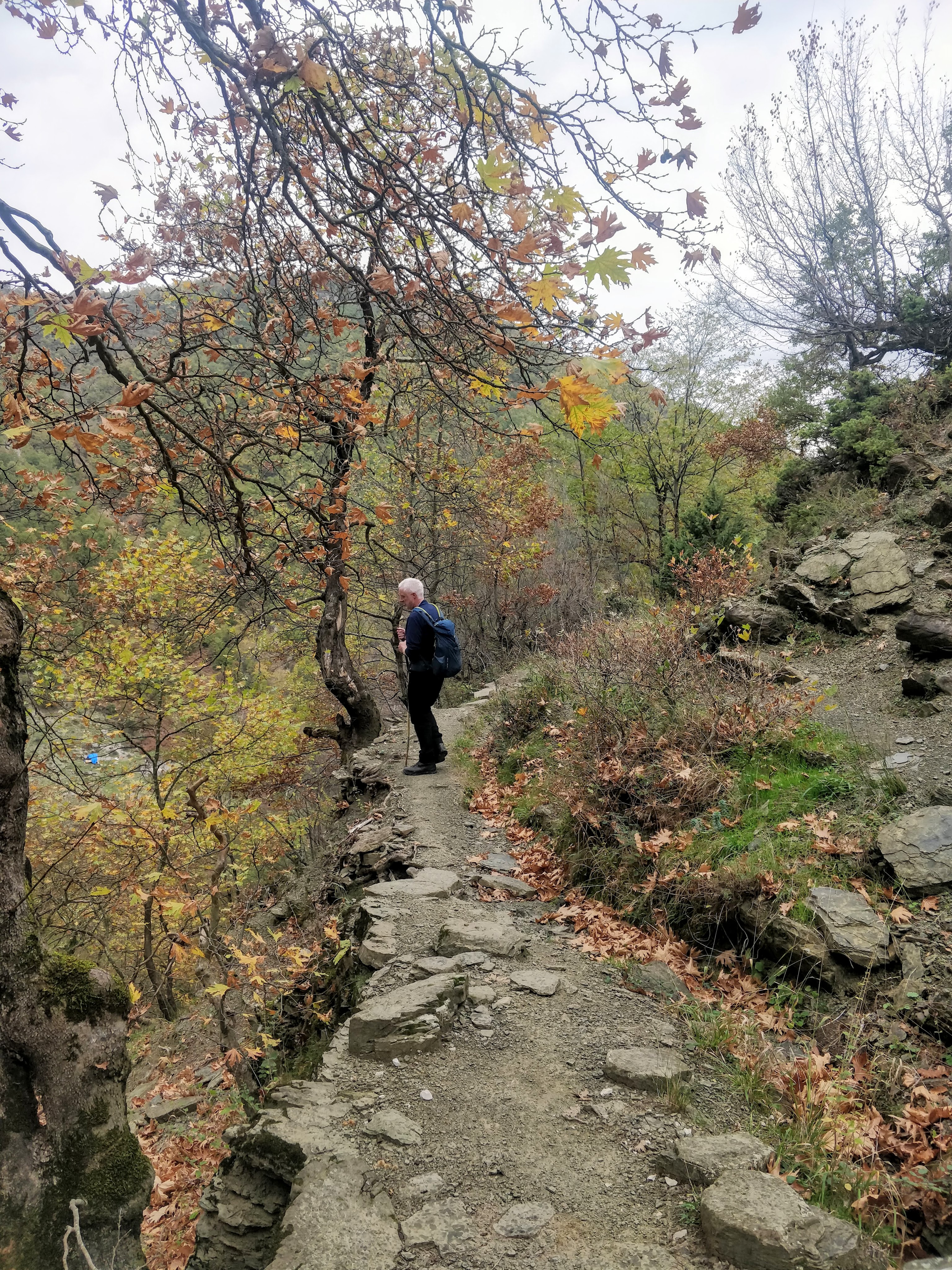
Soaking in a natural thermal pool after a hike in Central Albania in November – heaven! The medieval stone bridge over the blue-green river has been used since the days of the Ottomans by people wanting to bathe in the healing sulphur-rich waters. The southern coast of Albania is called ‘The Albanian Riviera‘ with white sand beaches and turquoise waters. Beautiful but November was very much off season here.

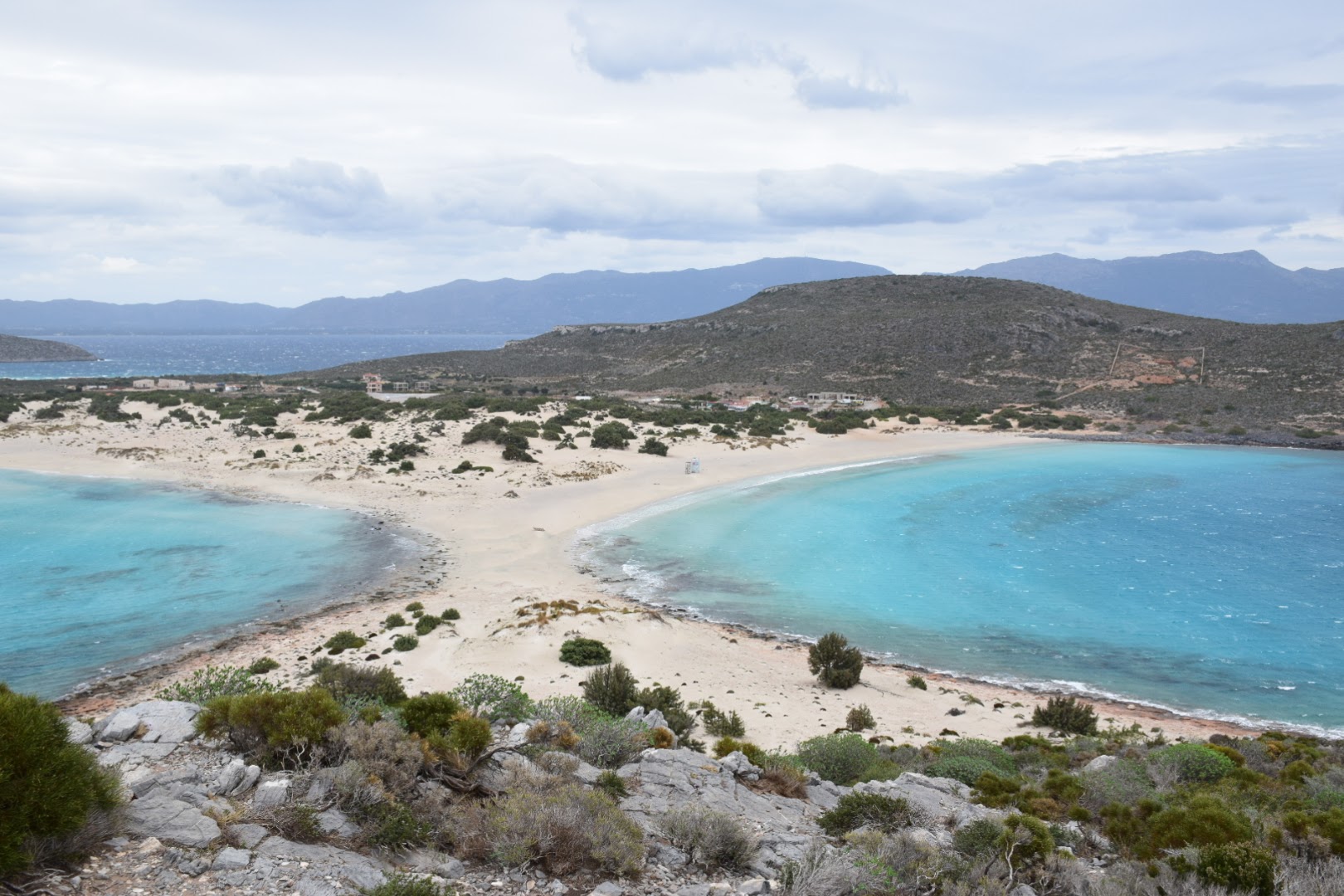
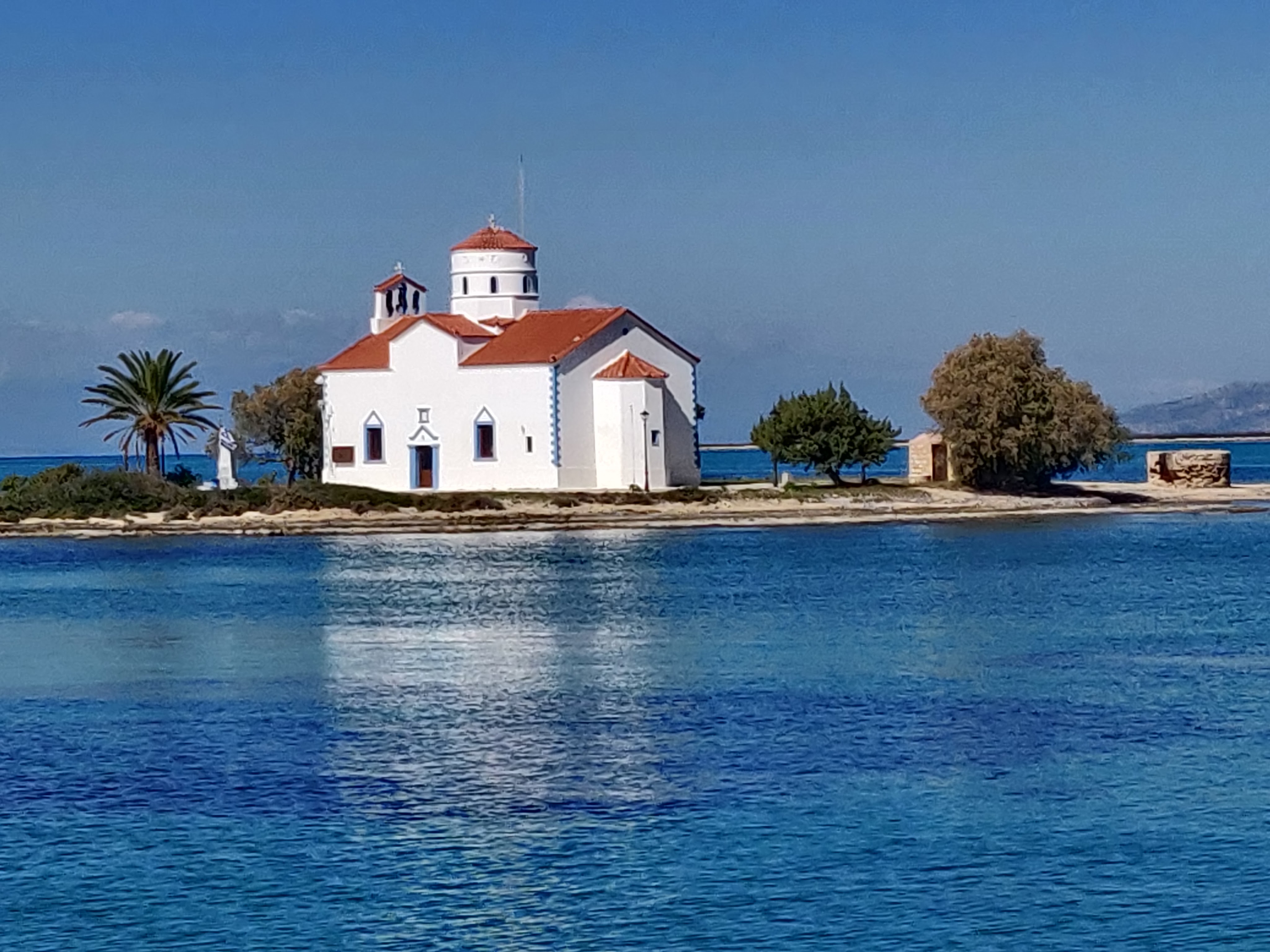
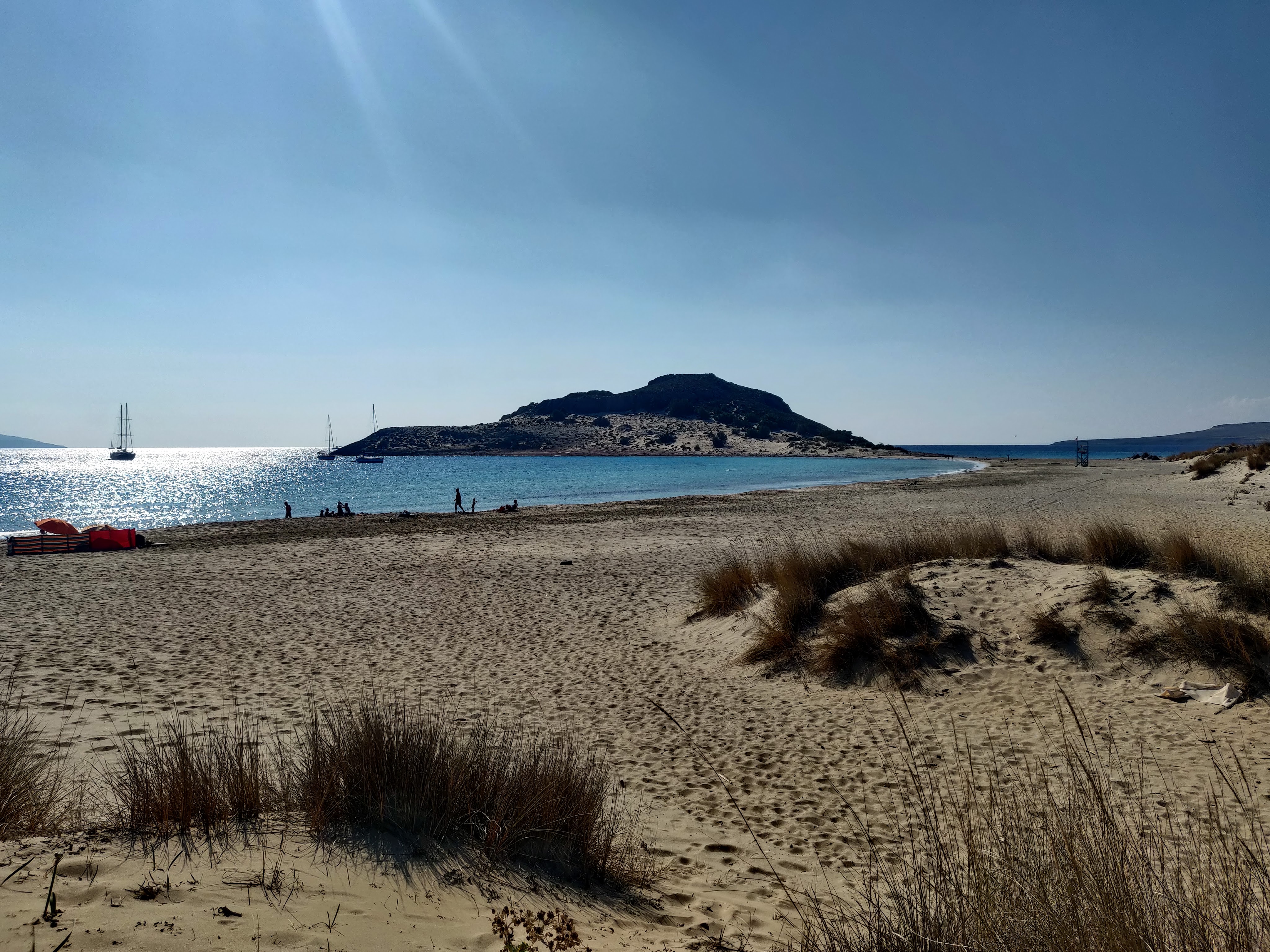
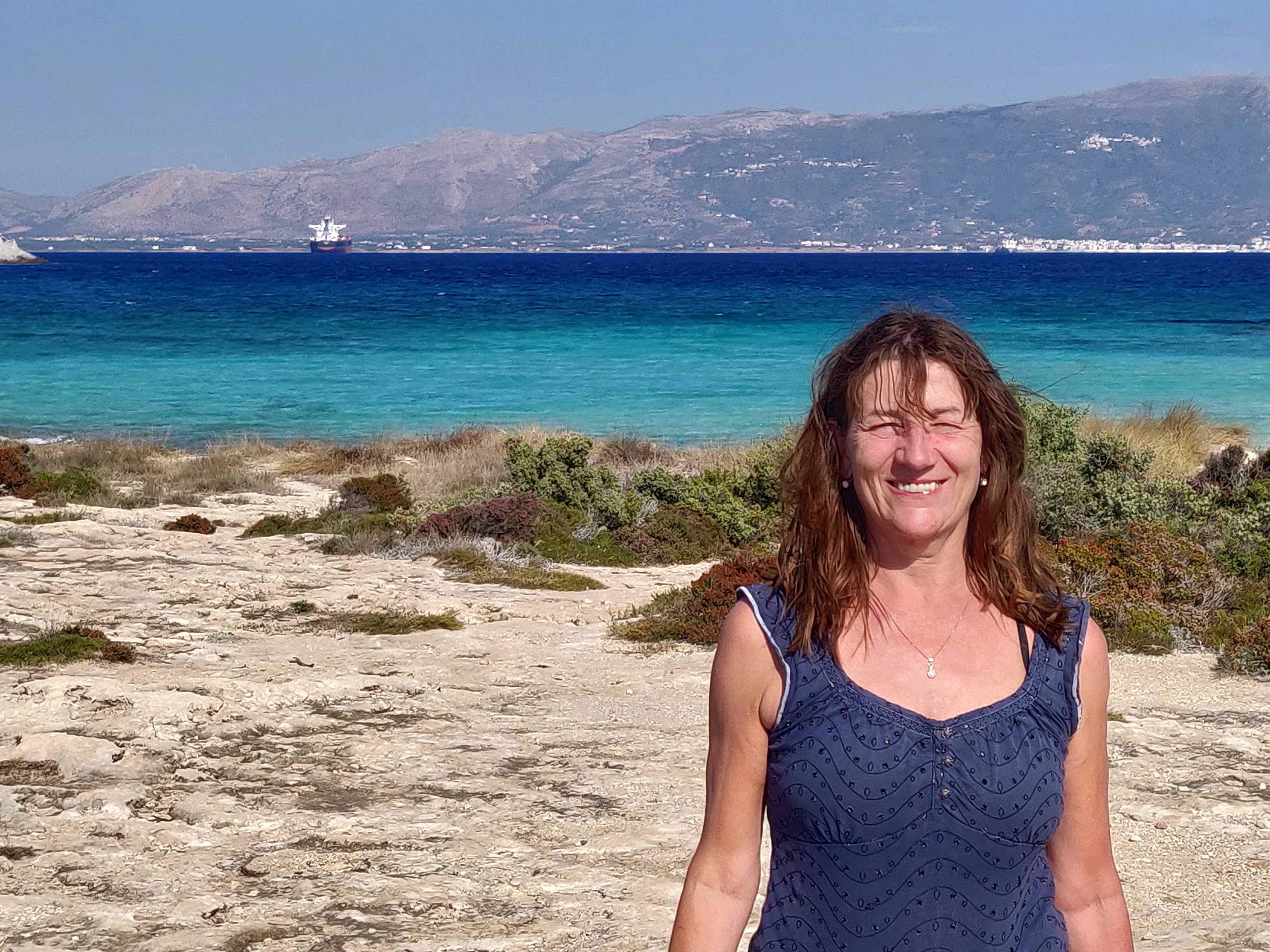
5 Elafonisos Island, Peloponnese, Greece

We fell in love with Elafonisos, a small island off the coat of the Peloponnese in Greece….it was like living in a holiday brochure with the whole spectrum of blues and greens in the sea and sky

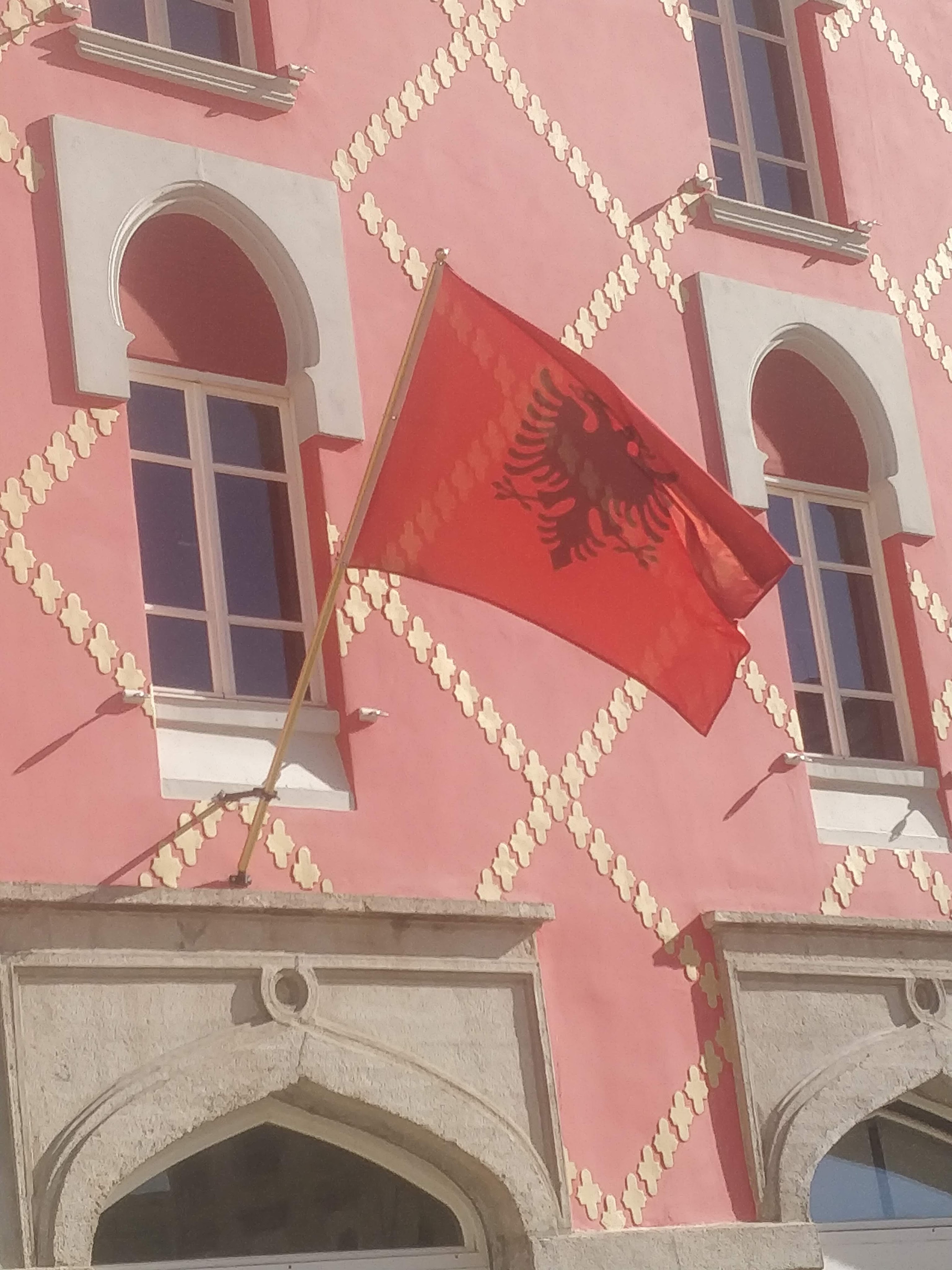
6 Tirana, Albania

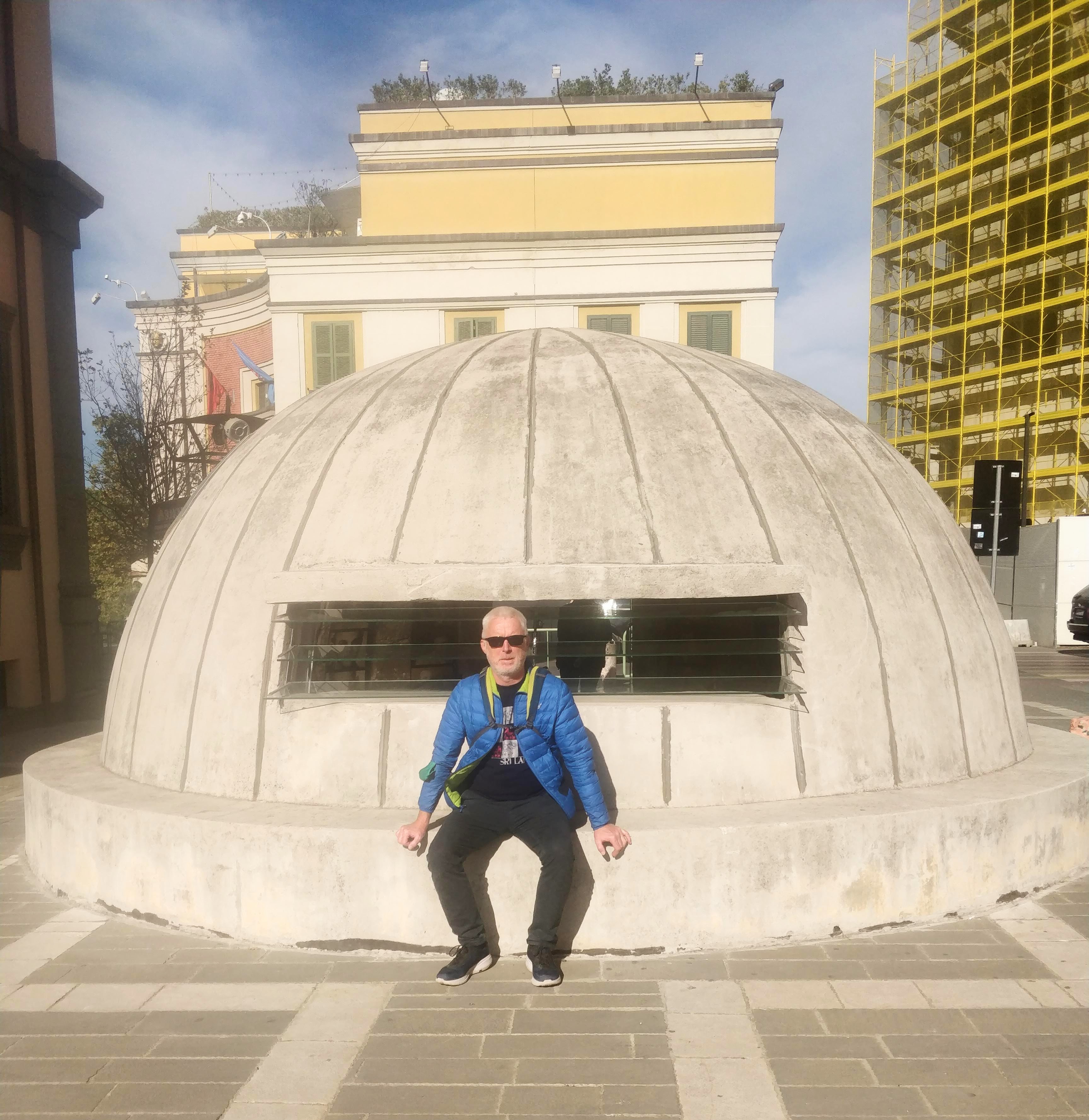
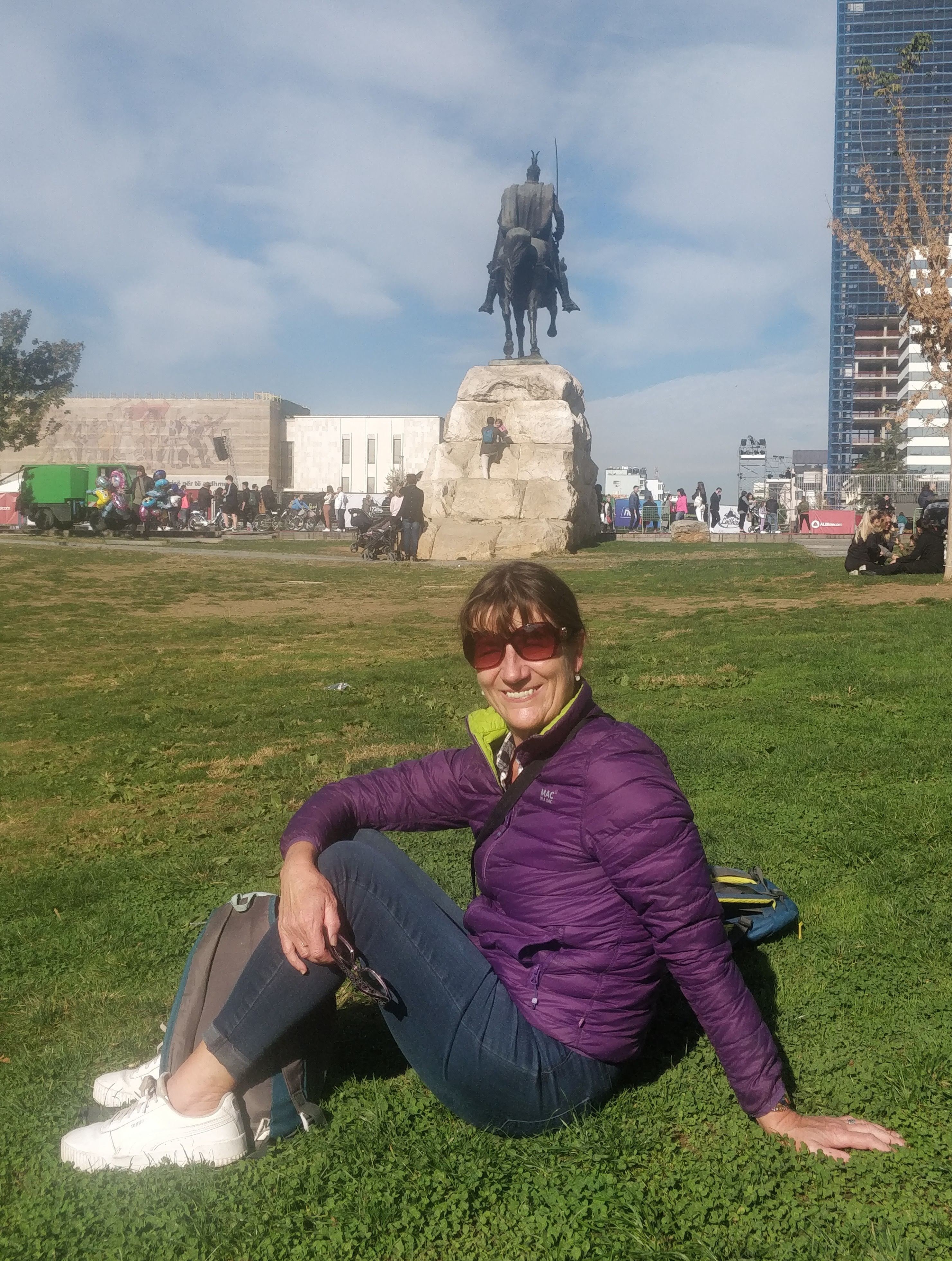
A bright buzzy capital city of parks, wide streets, bunkers and cafes where the inhabitants drink more coffee than anywhere else in the world, where the old soviet-style buildings weren’t torn down but brightly painted(studies showed that the bright cheery colours lifted the mood of the city after the repression of the Howha era)

7 Driving along the coast in Montenegro

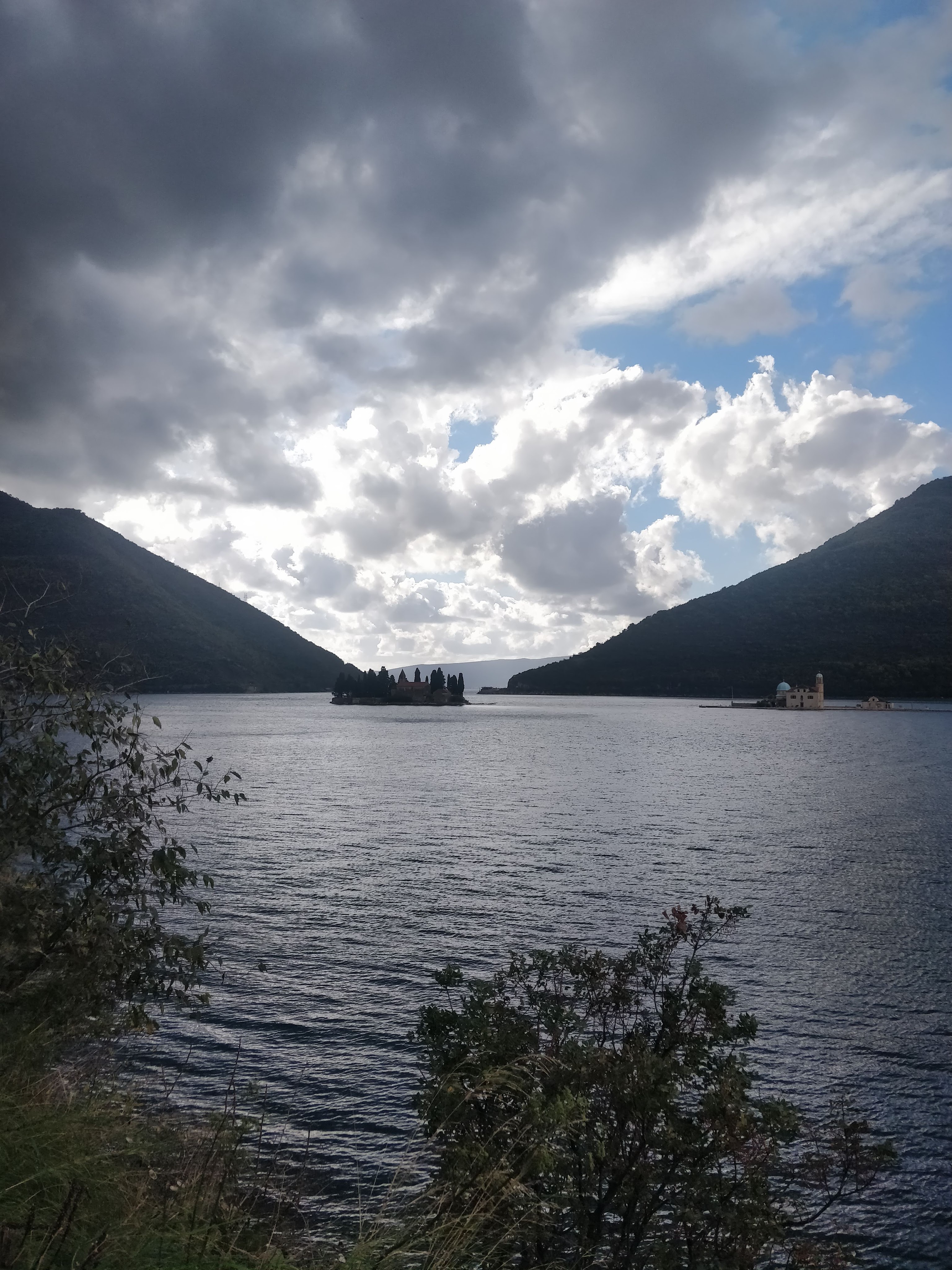
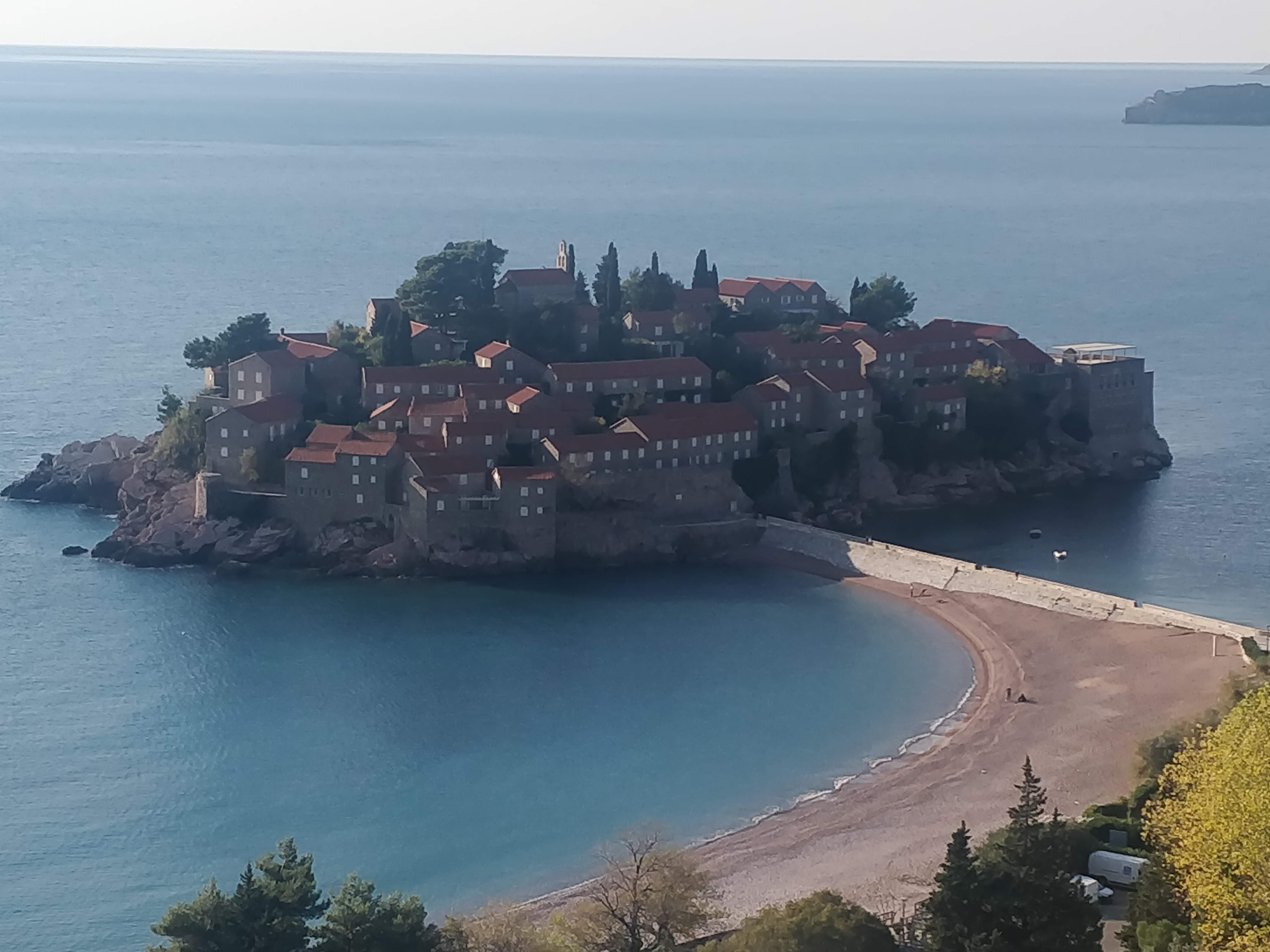
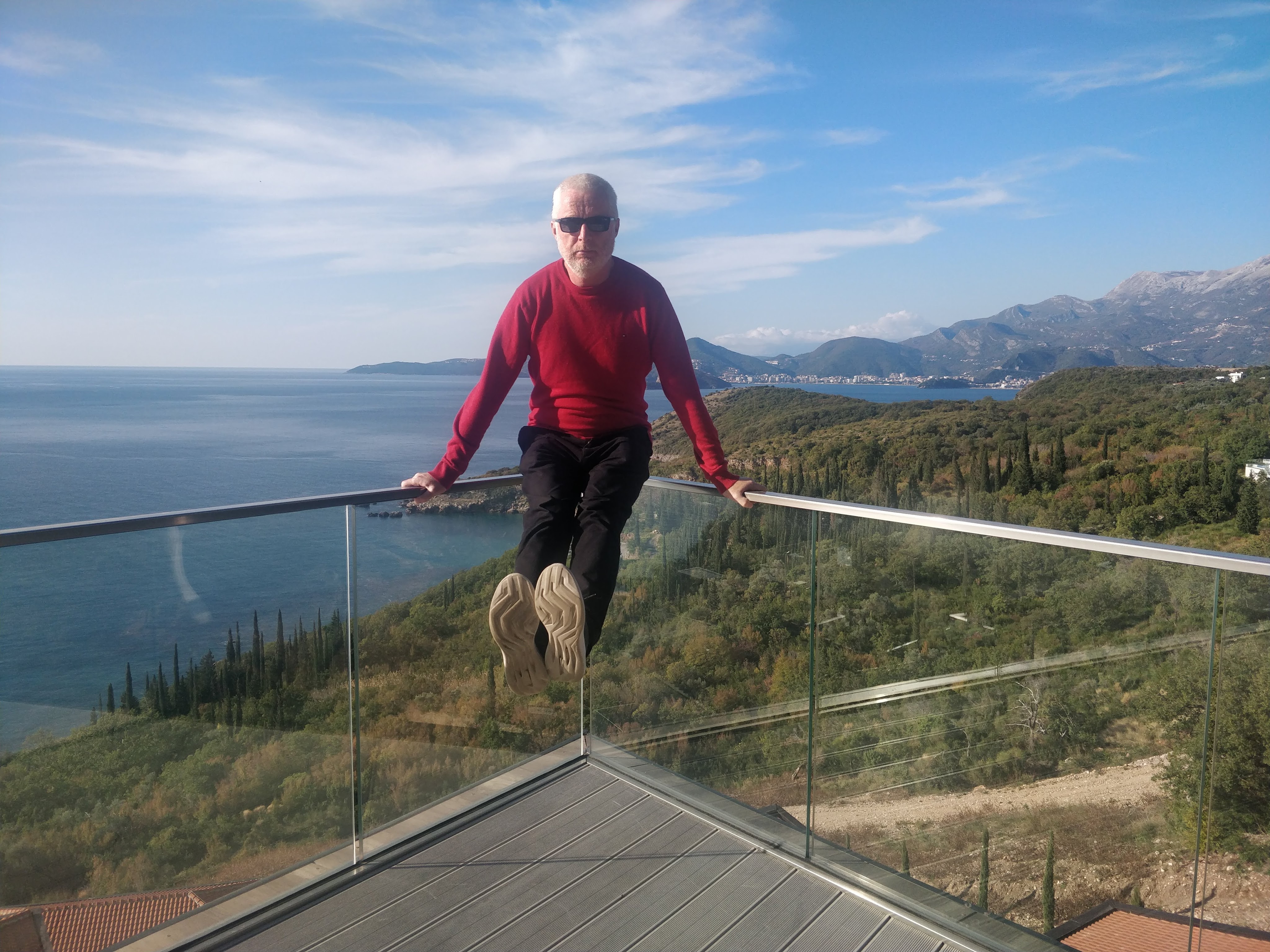
A bright buzzy capital city of parks, wide streets, bunkers and cafes where the inhabitants drink more coffee than anywhere else in the world, where the old soviet-style buildings weren’t torn down but brightly painted(studies showed that the bright cheery colours lifted the mood of the city after the repression of the Howha era)

8 Parador Siguenza, Spain,

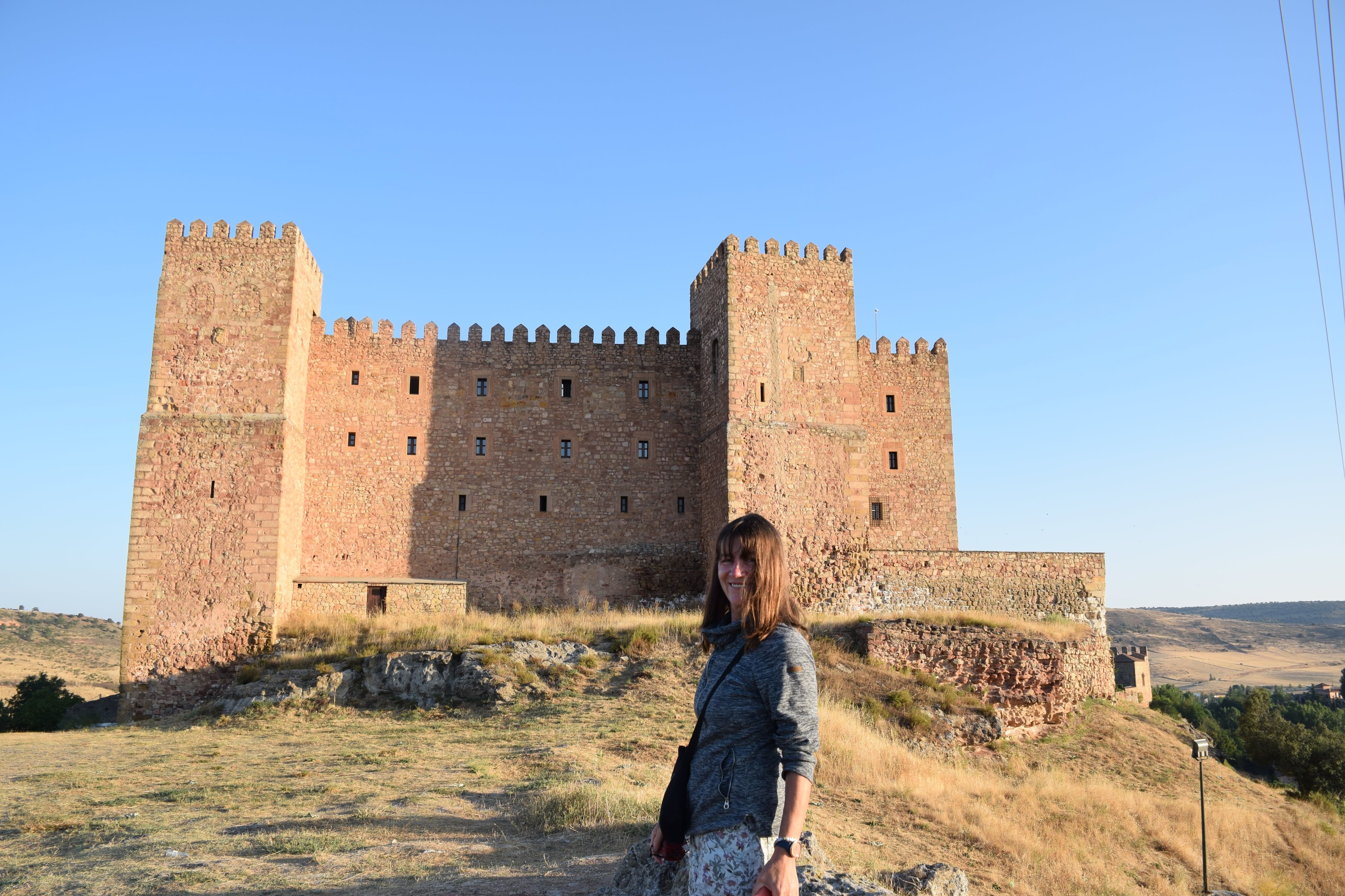
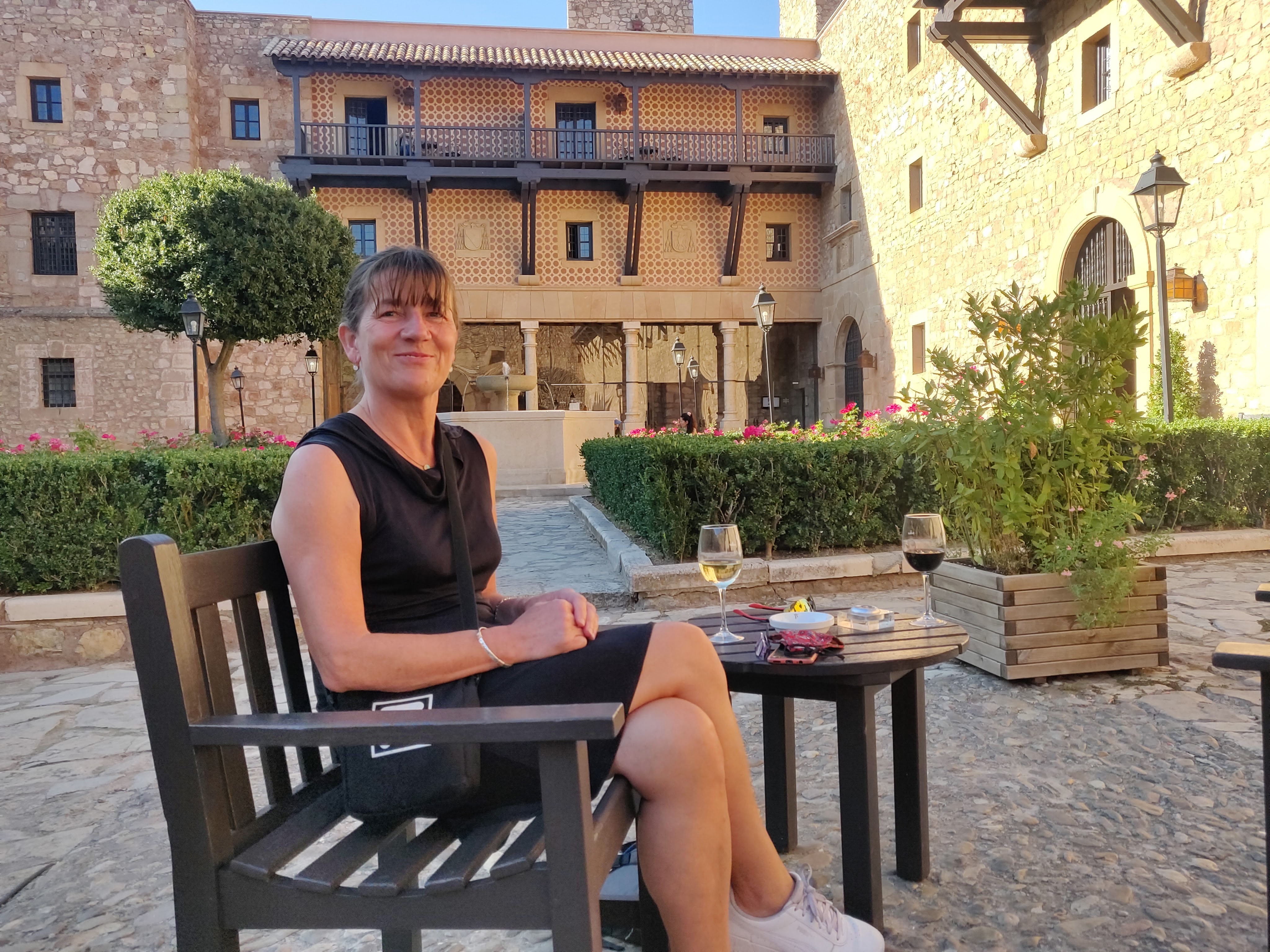
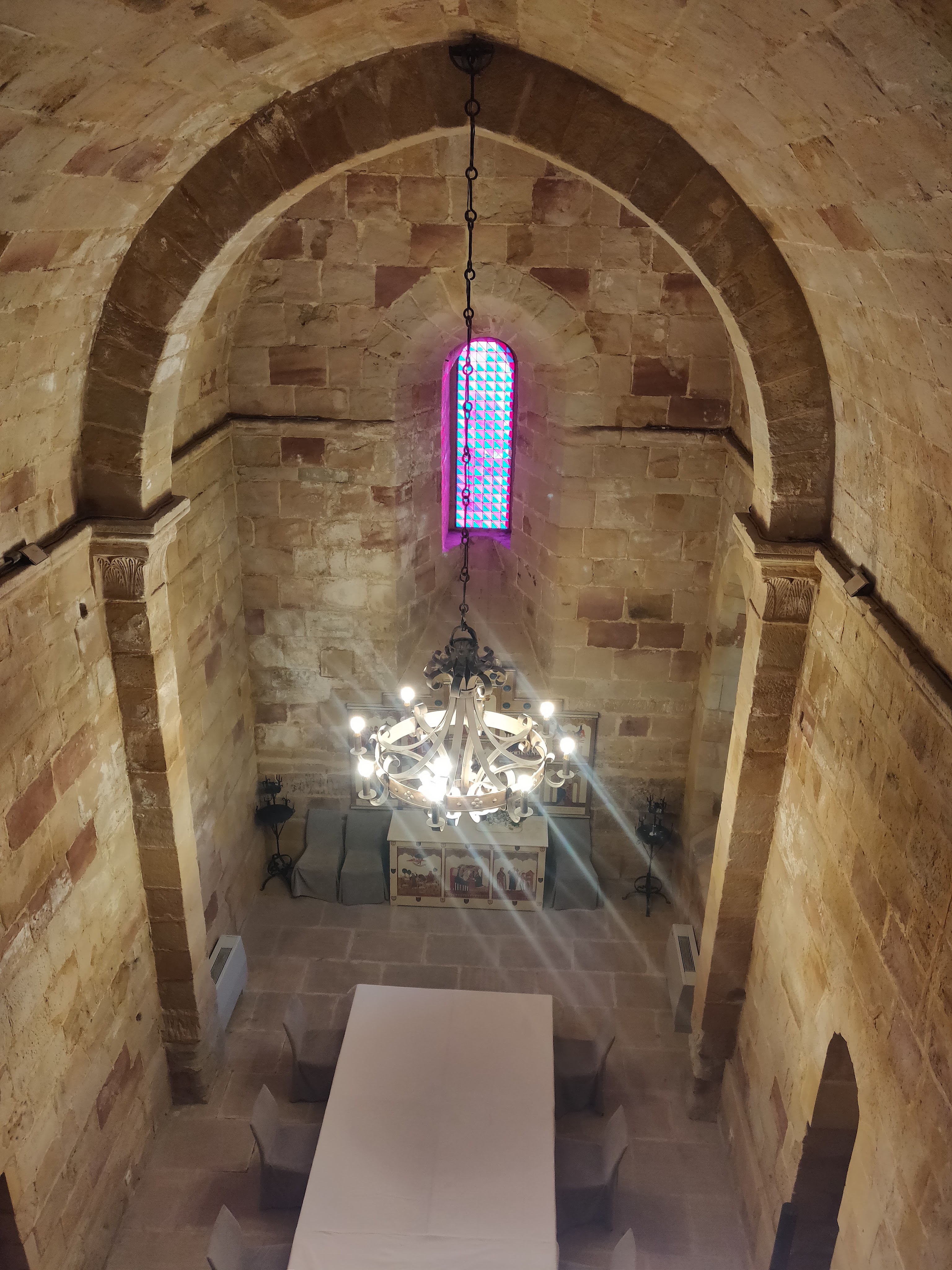
Who doesn’t want to stay in a palace – even if its just for one night? The Spanish Pardores are luxury hotels in castles, palaces, convents, monasteries and other historic buildings throughout Spain. They are run by the government and the revenue generated goes towards the upkeep and preservation of the buildings. They are also surprising affordable and well worth a visit.

9 The History of Dubrovnik

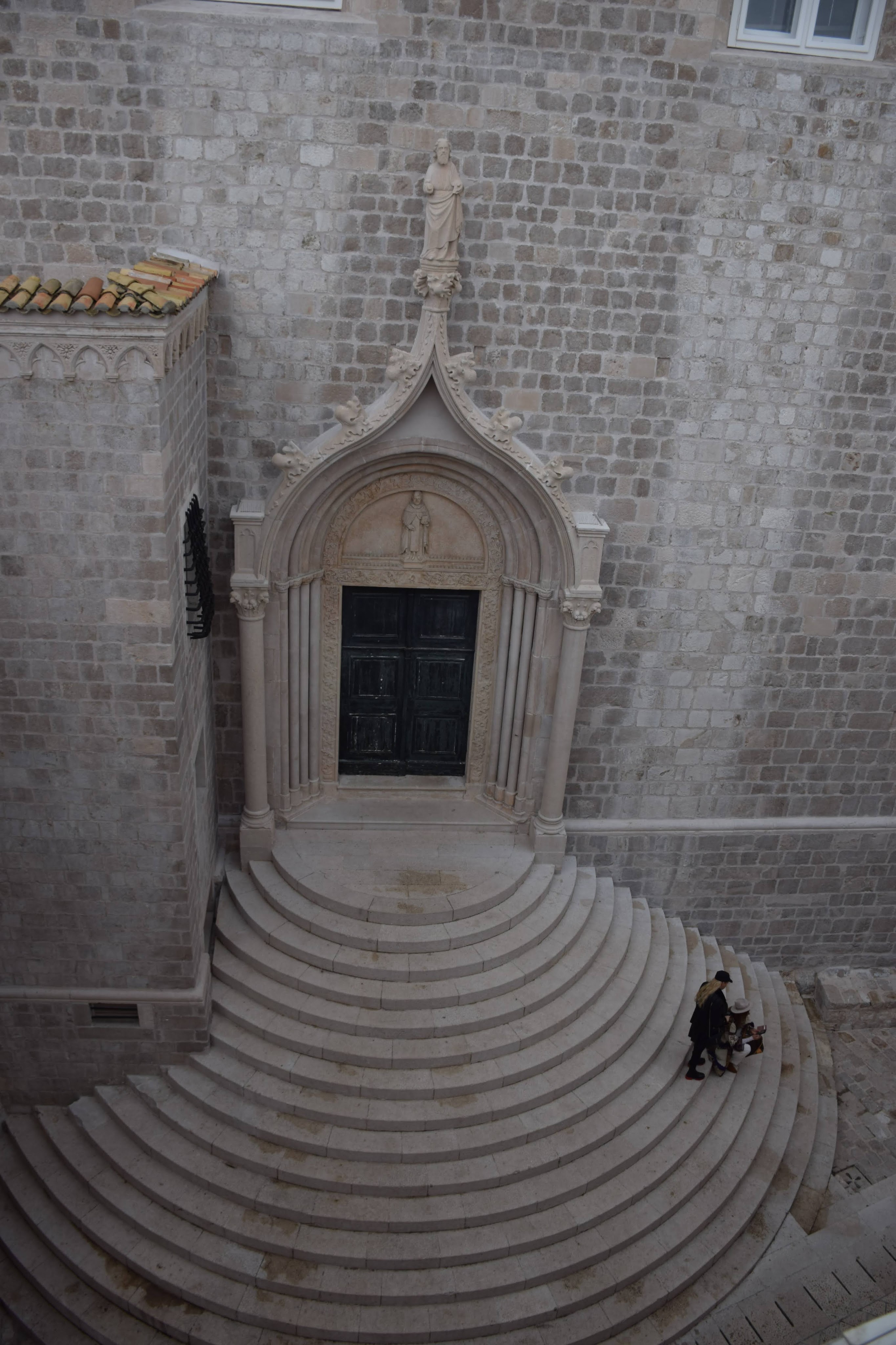
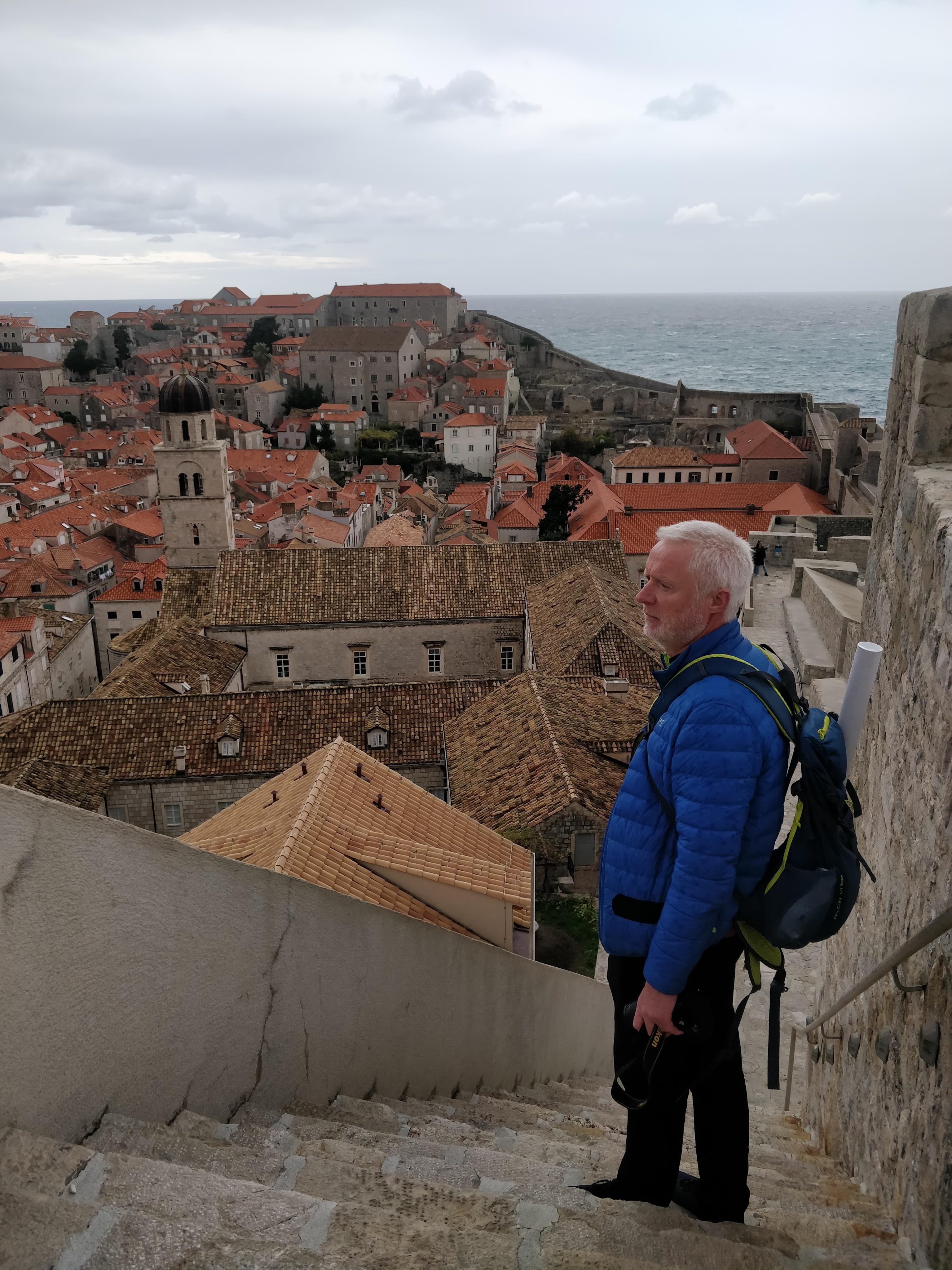
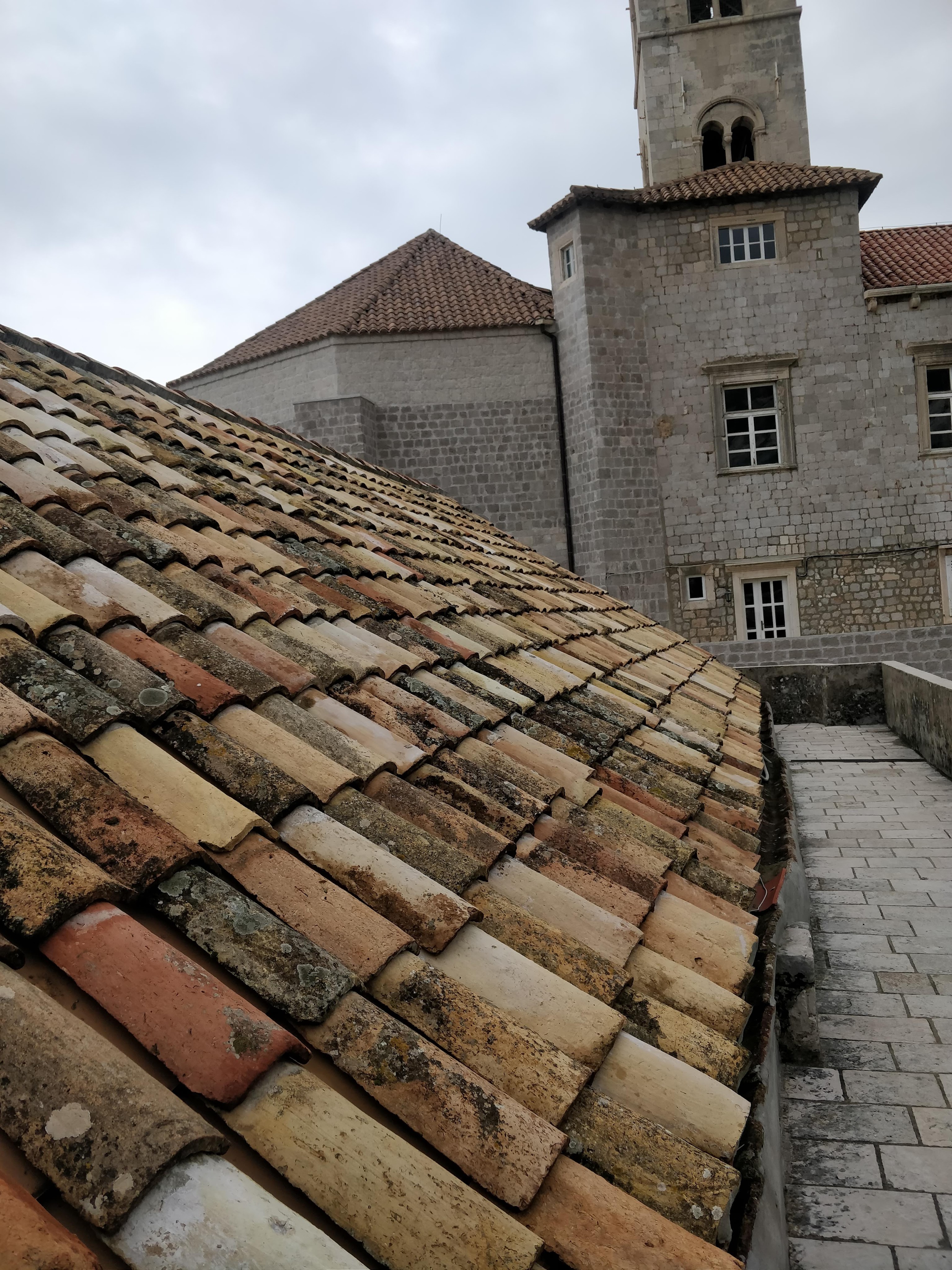
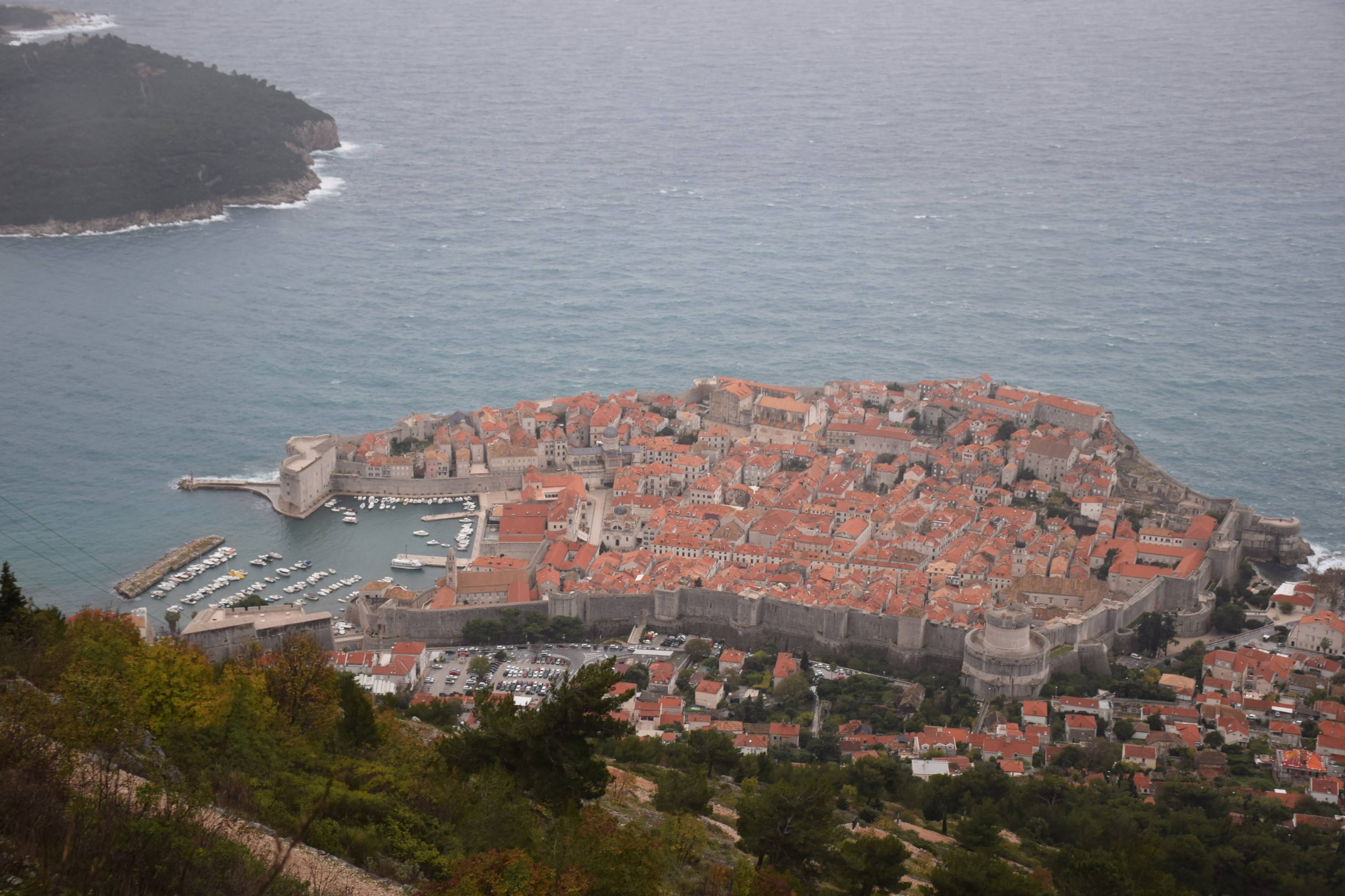
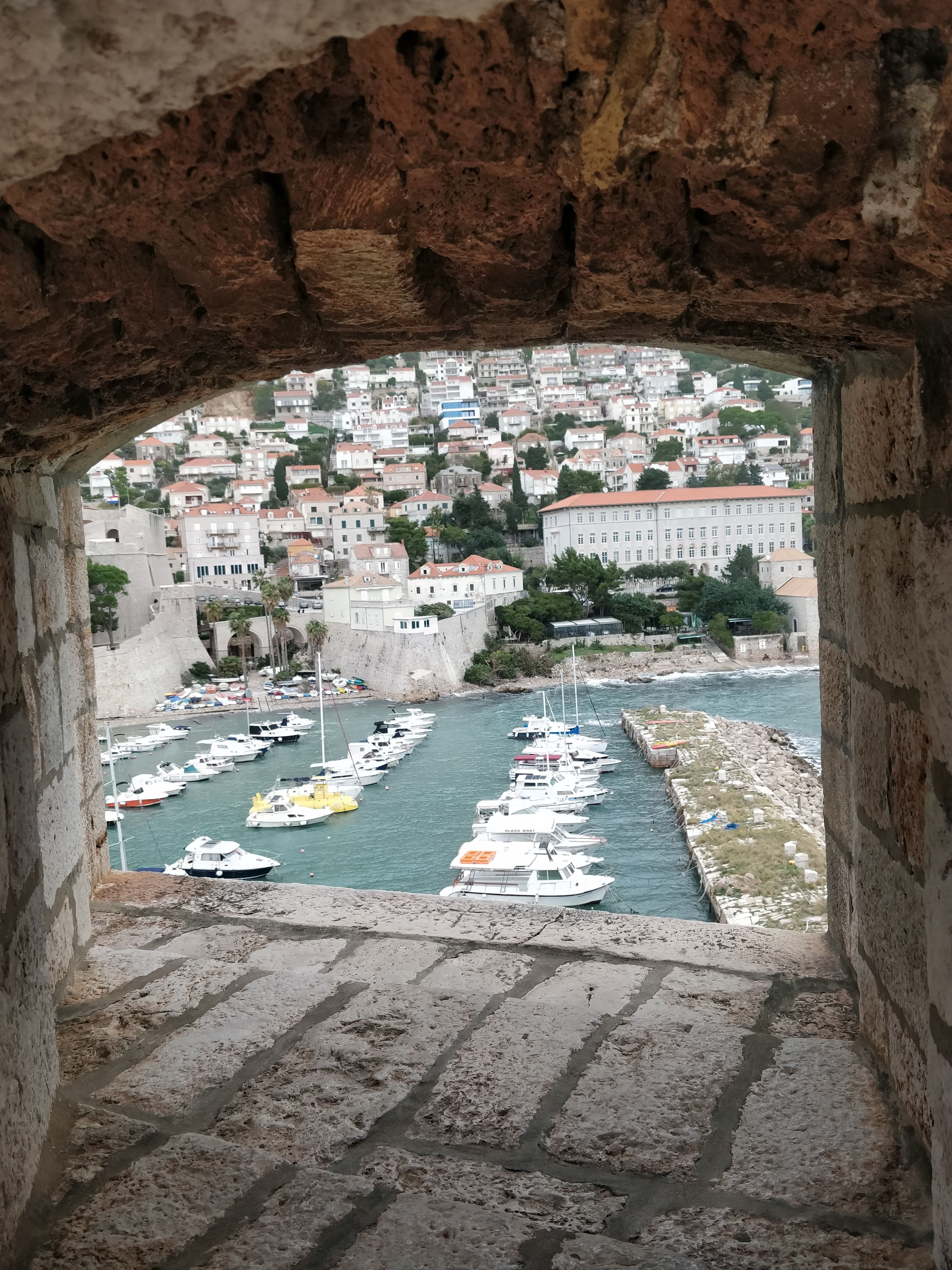
Dubrovnik – a city of fairytale castles, churches, cobbled streets, red roofs and the set for Game of Thrones. It’s beautiful, touristy and expensive(relatively speaking) but the reason that it is on this list is the poignancy of its relatively recent history in the Balkan conflict of the 1990’s – we saw where a Serbian shell had hit the side of the house that we stayed in, how the stout medieval walls were built to withstand attack from the sea, not aerial bombardment, we walked in the windswept hills overlooking the city where so many defenders of Dubrovnik camped and fought and died.

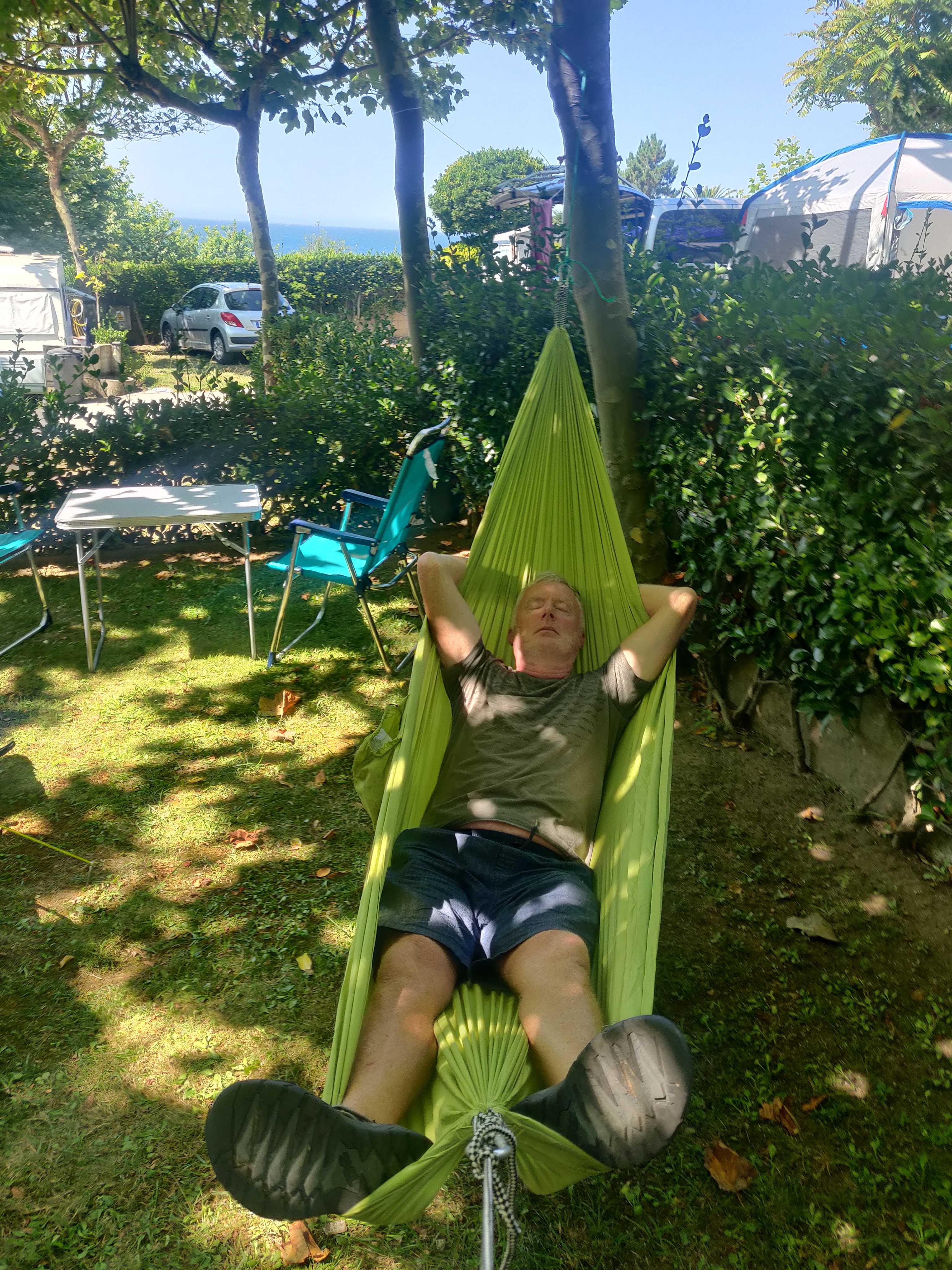
10 Camping in Galicia, Spain

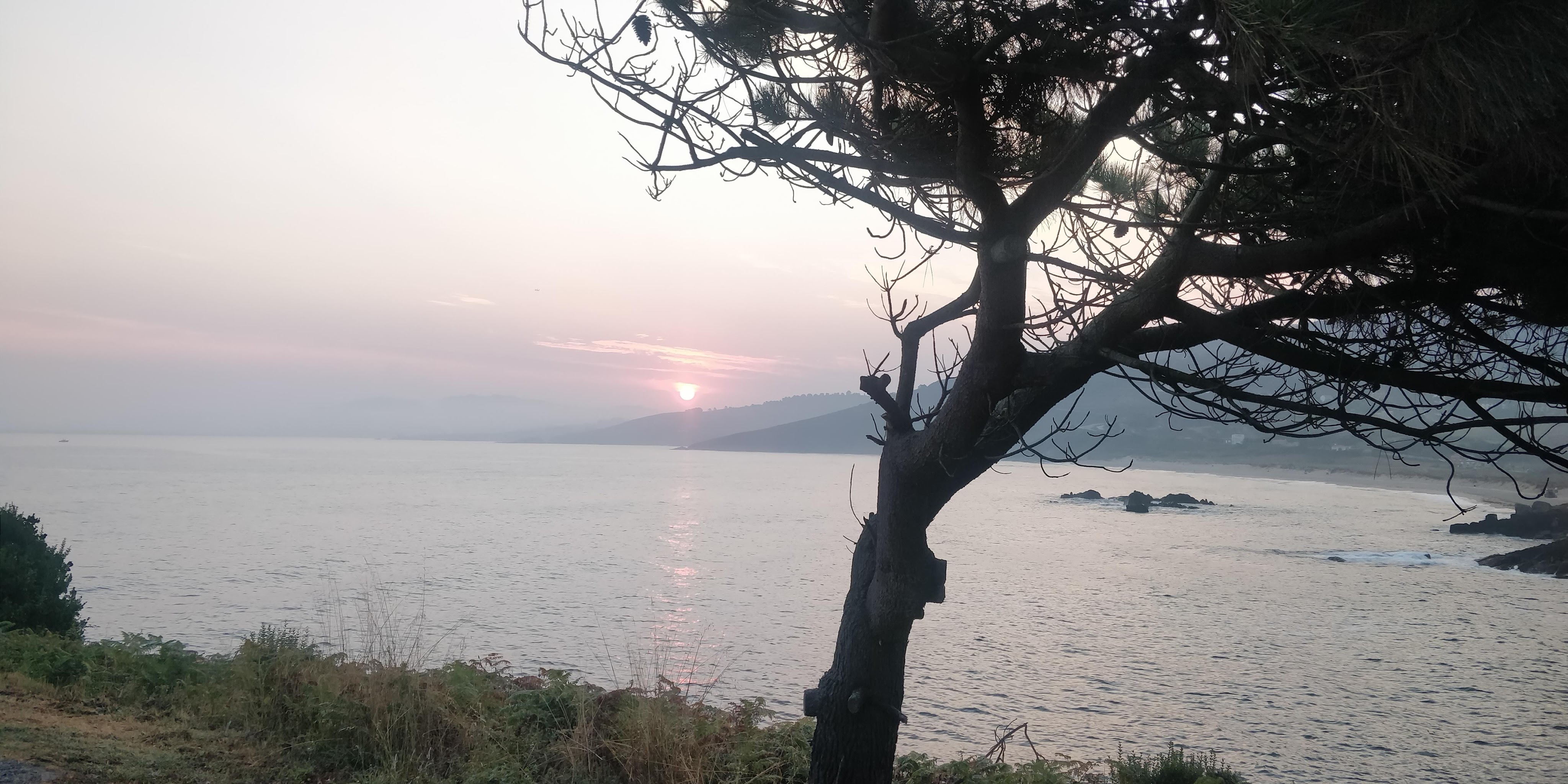
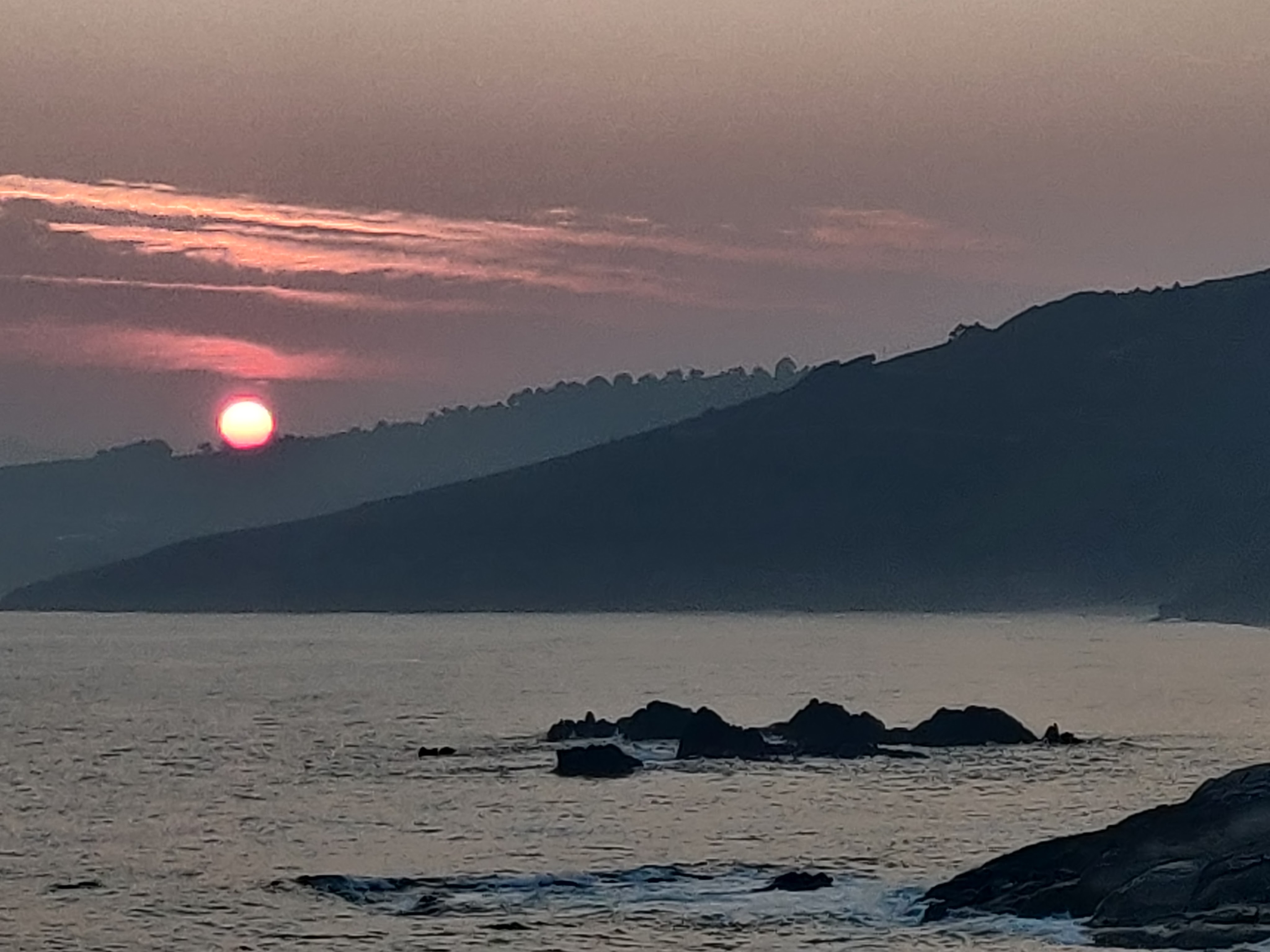
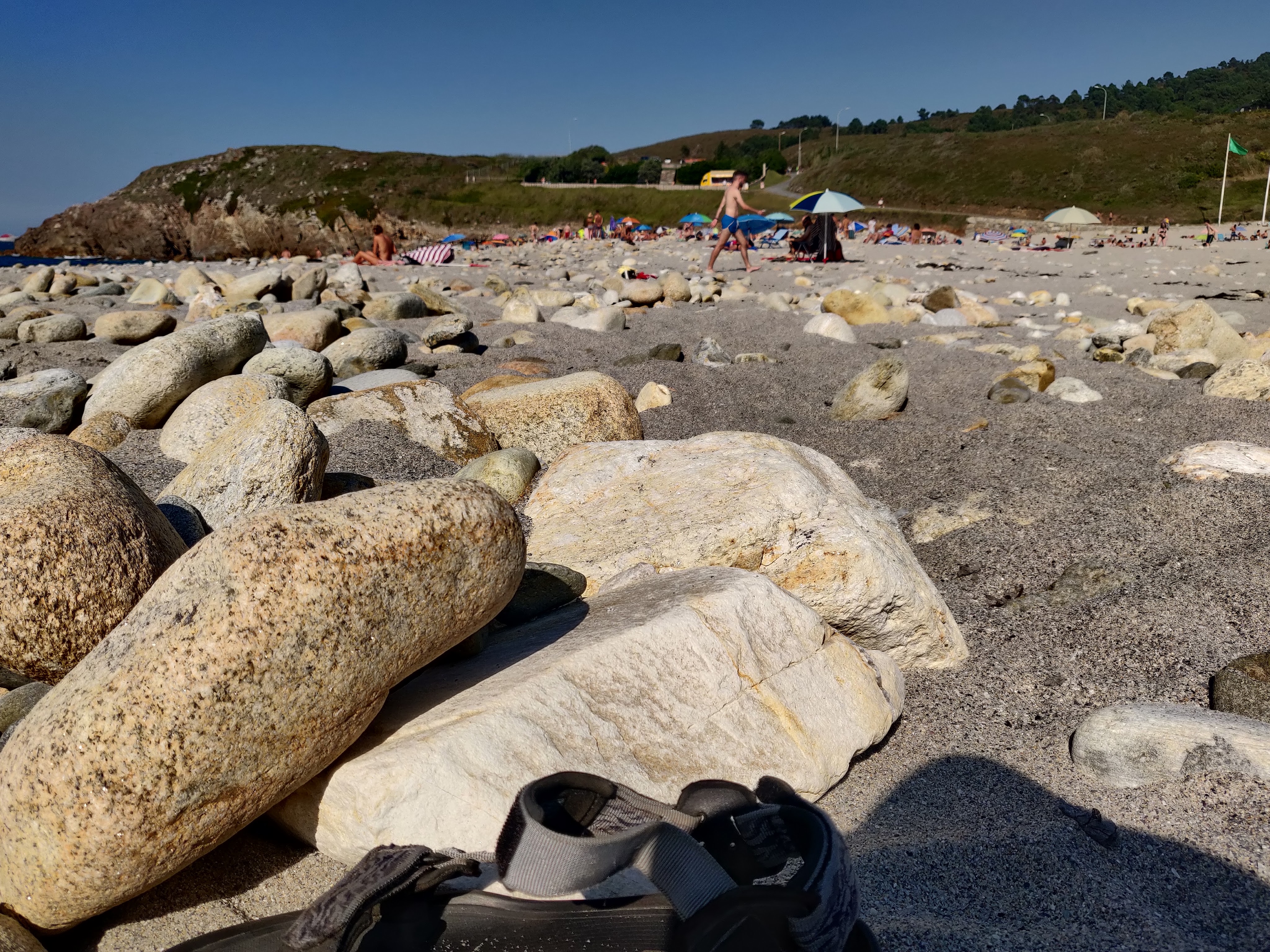
Stunning scenery, great food, fabulous well-marked coastal trails, lots of campsites, friendly fishing villages ….and relaxation. That was our experience of Gorgeous Galicia.

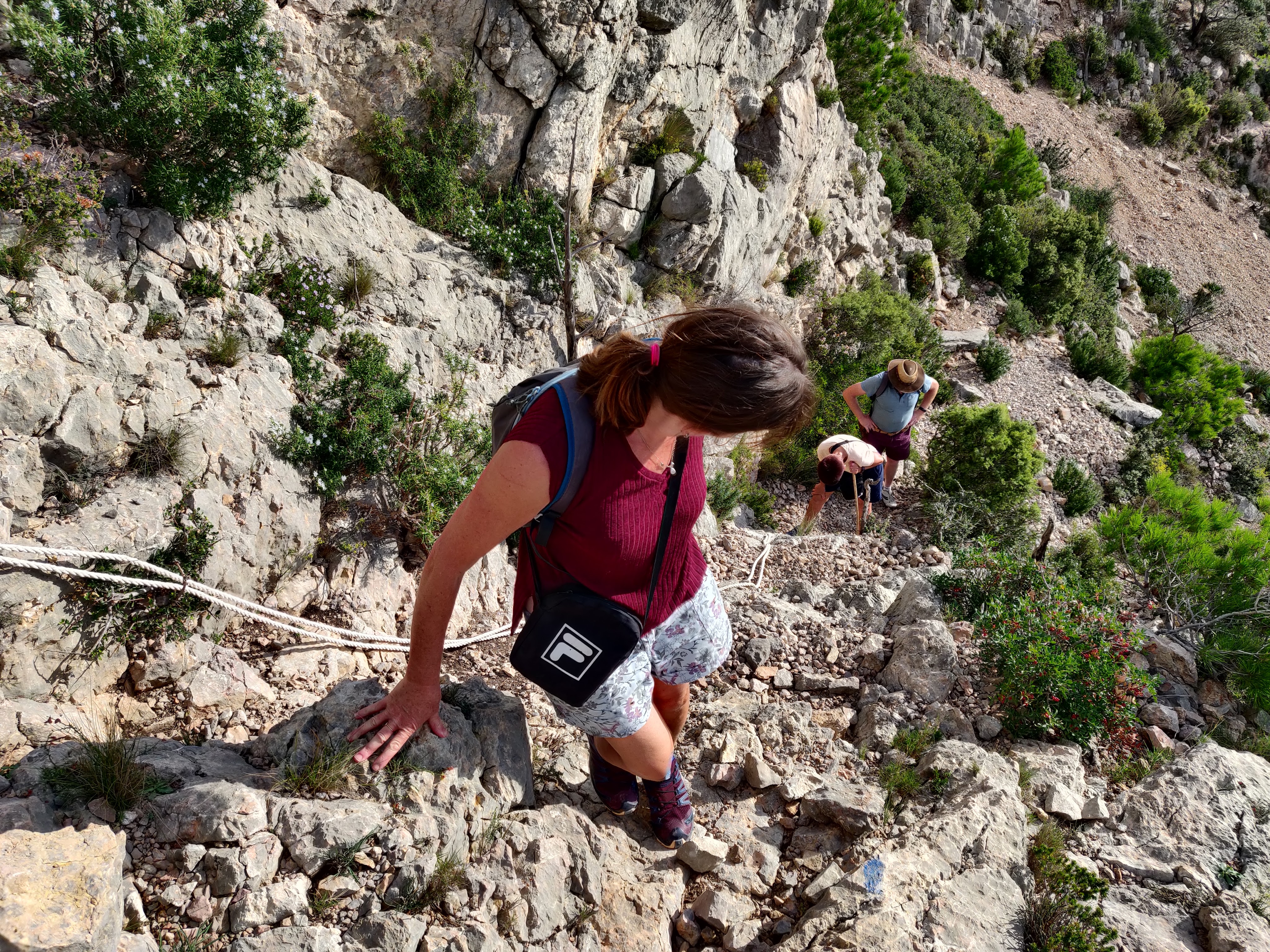
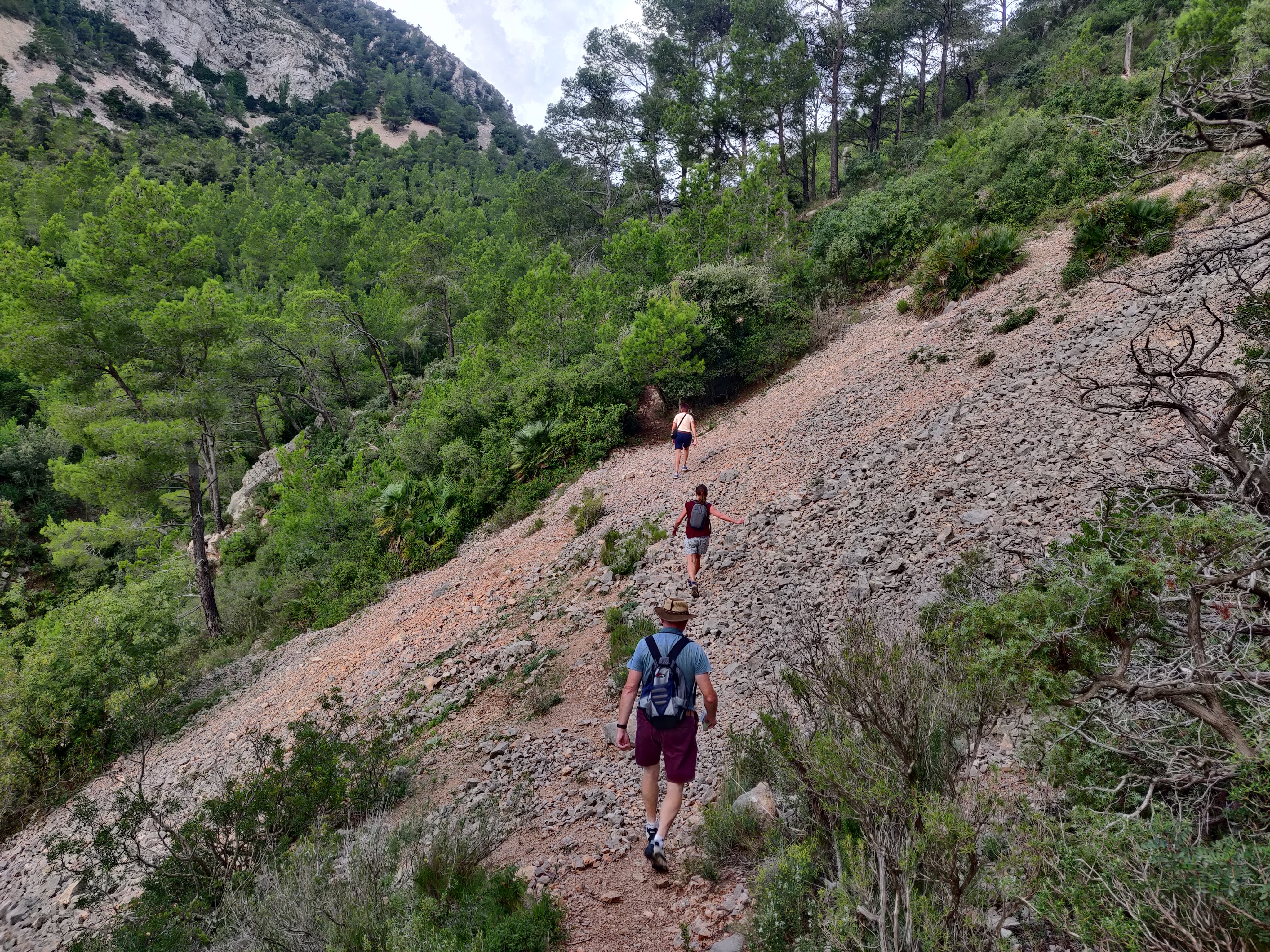
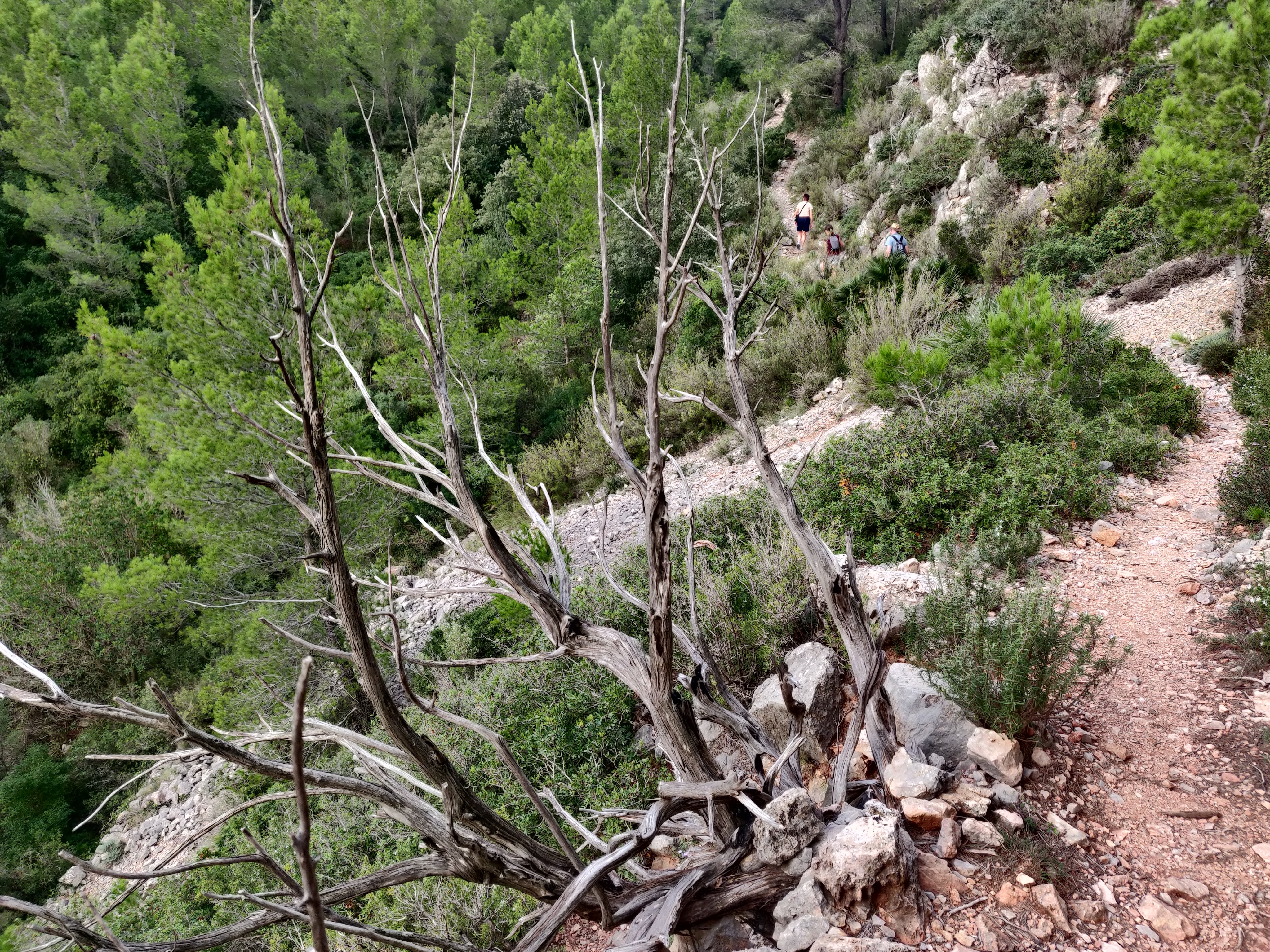
11 Hiking near Mont Roig del Camp, Catalonia, Spain

It was still hot in the region around Mont Roig in early September but hiking in the early mornings was perfect with the smell of wild thyme and sage and church bells ringing out from the mountain villages.

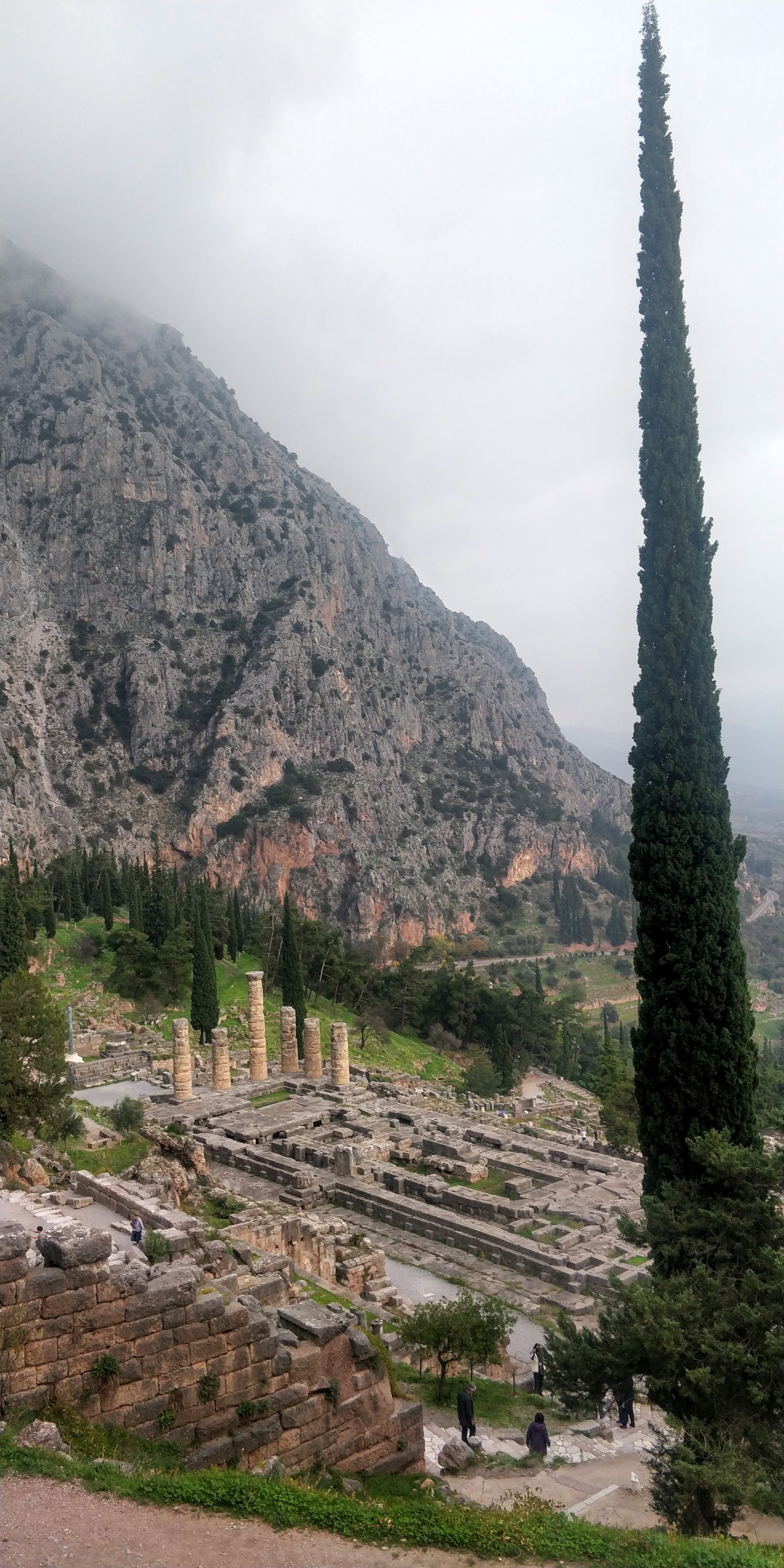
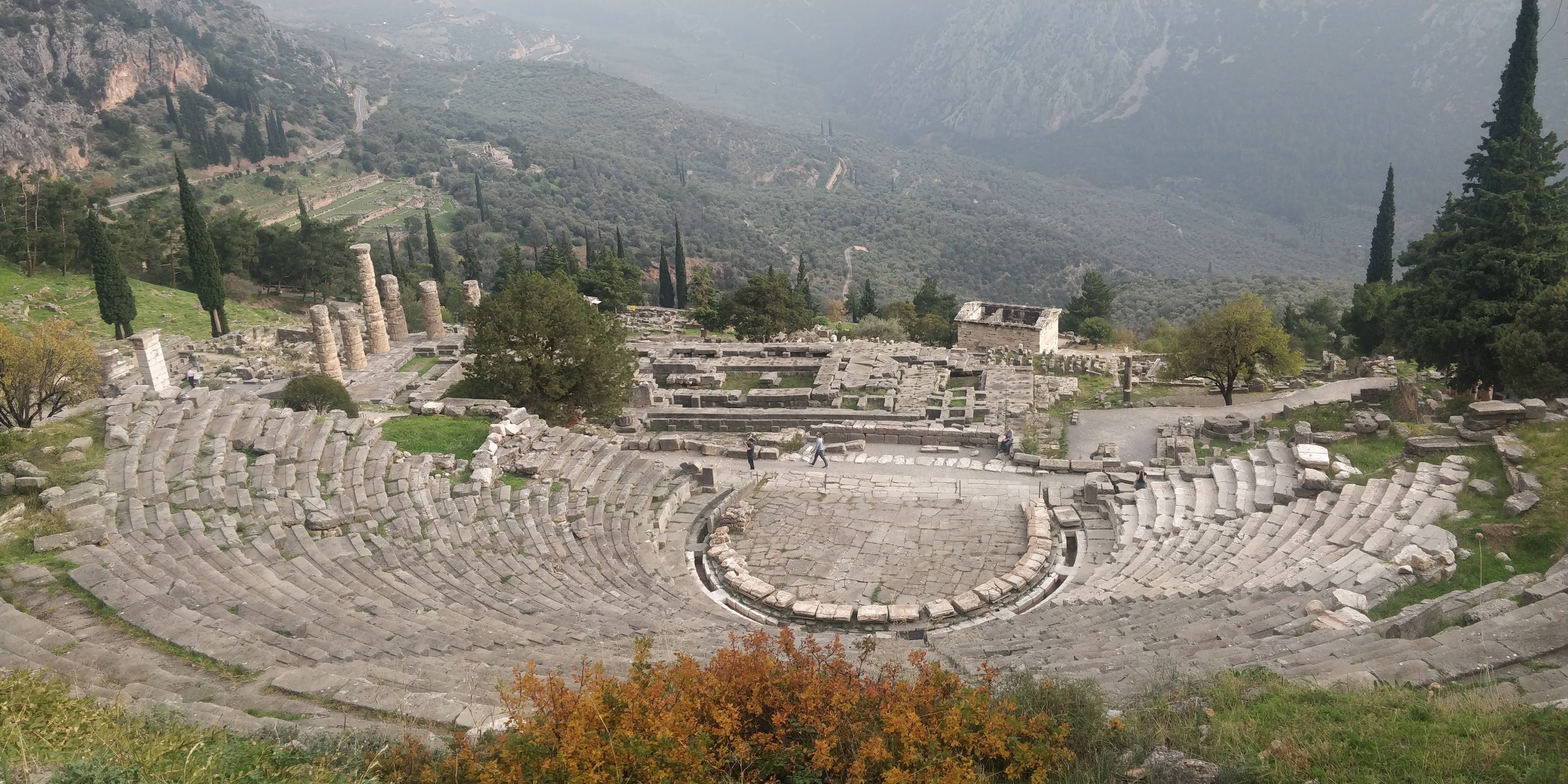
12 Delphi, Greece

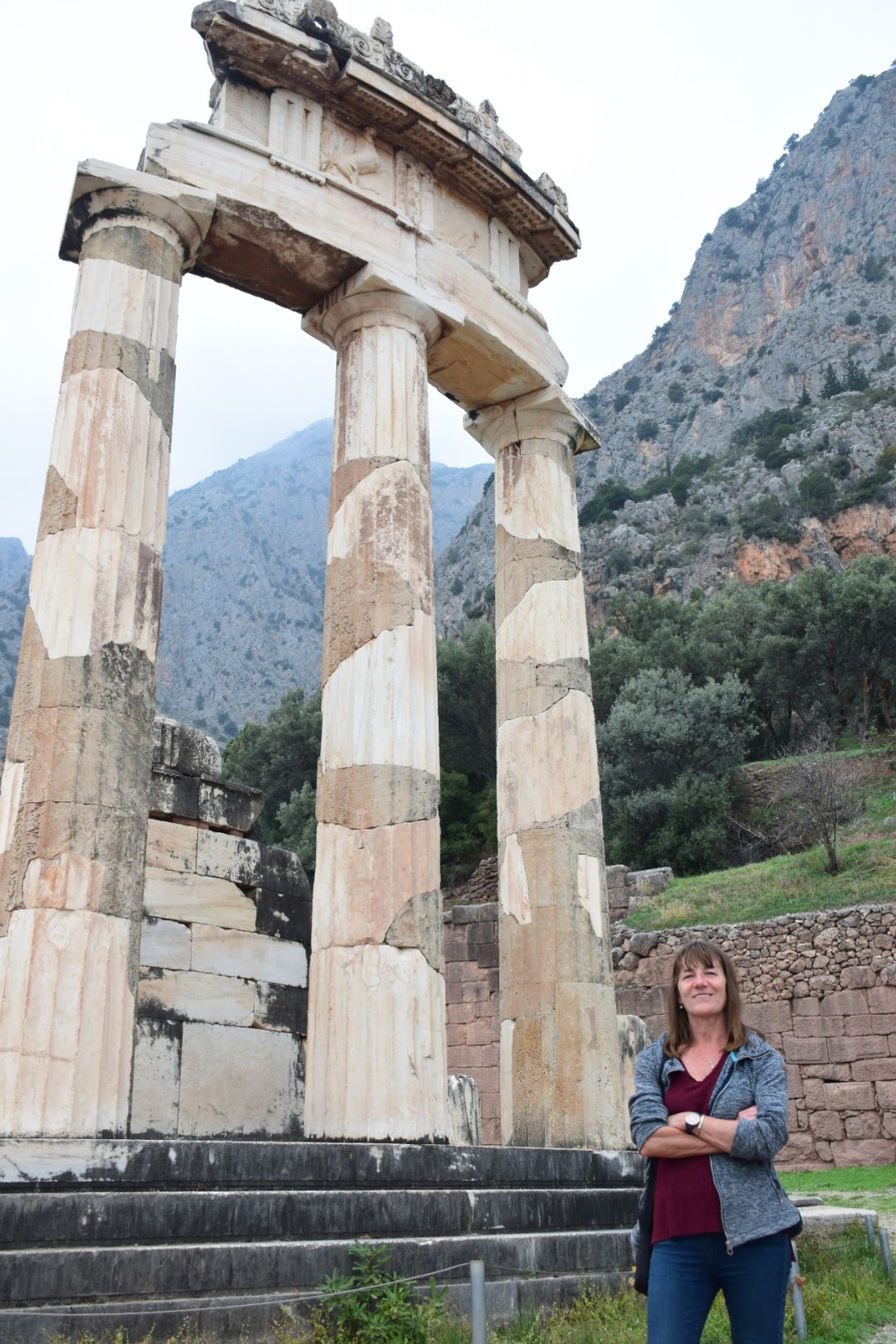
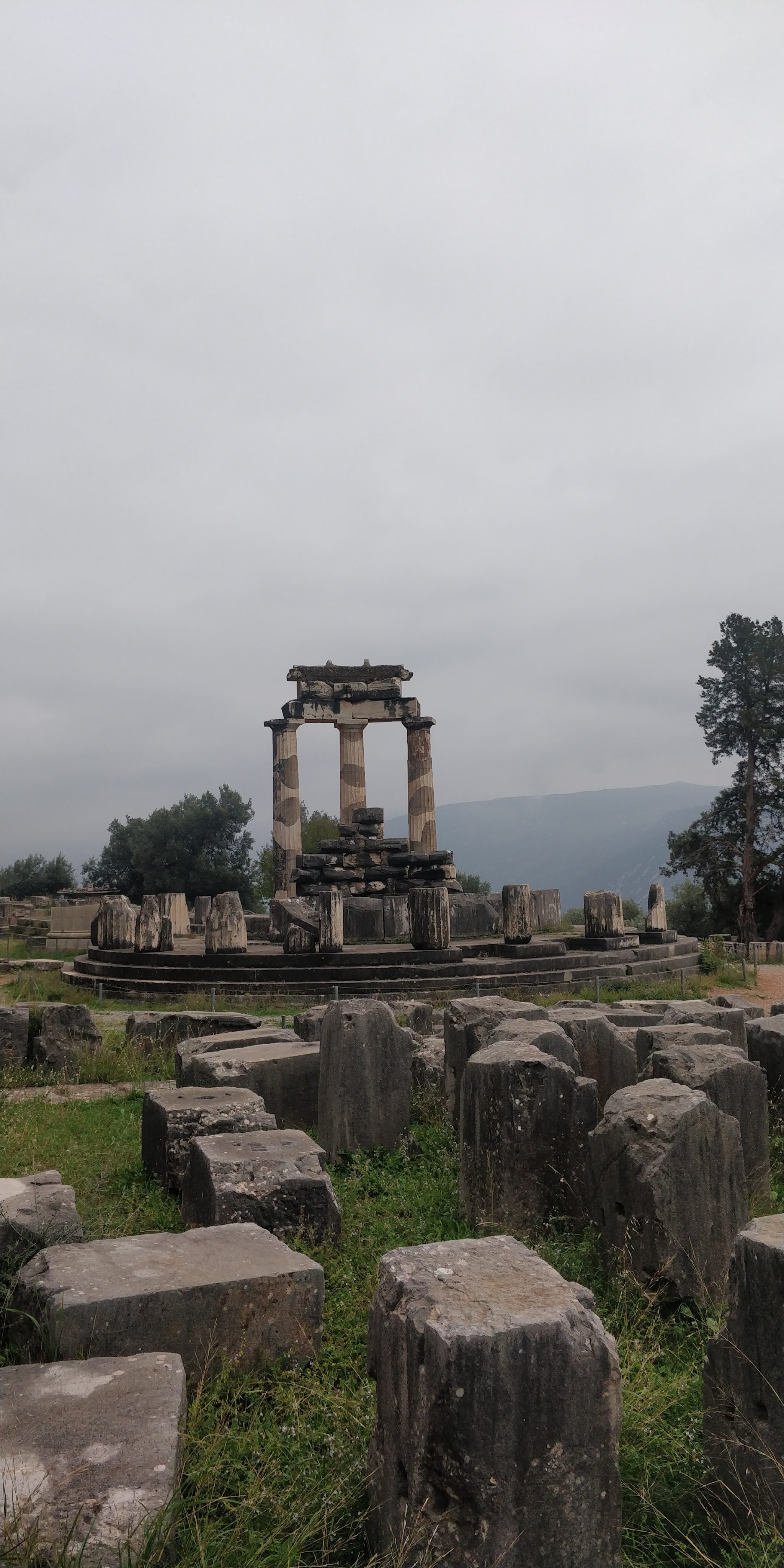
We visited many wonderful ancient sites but Delphi was the most spectacular, maybe it was its location high on Mount Parnassos in Central Greece or the air of history and mystery with moody mists blowing on the breeze from the Gulf of Corinth. Although the oracle was silent, the cypress trees seemed to whisper Life is good.

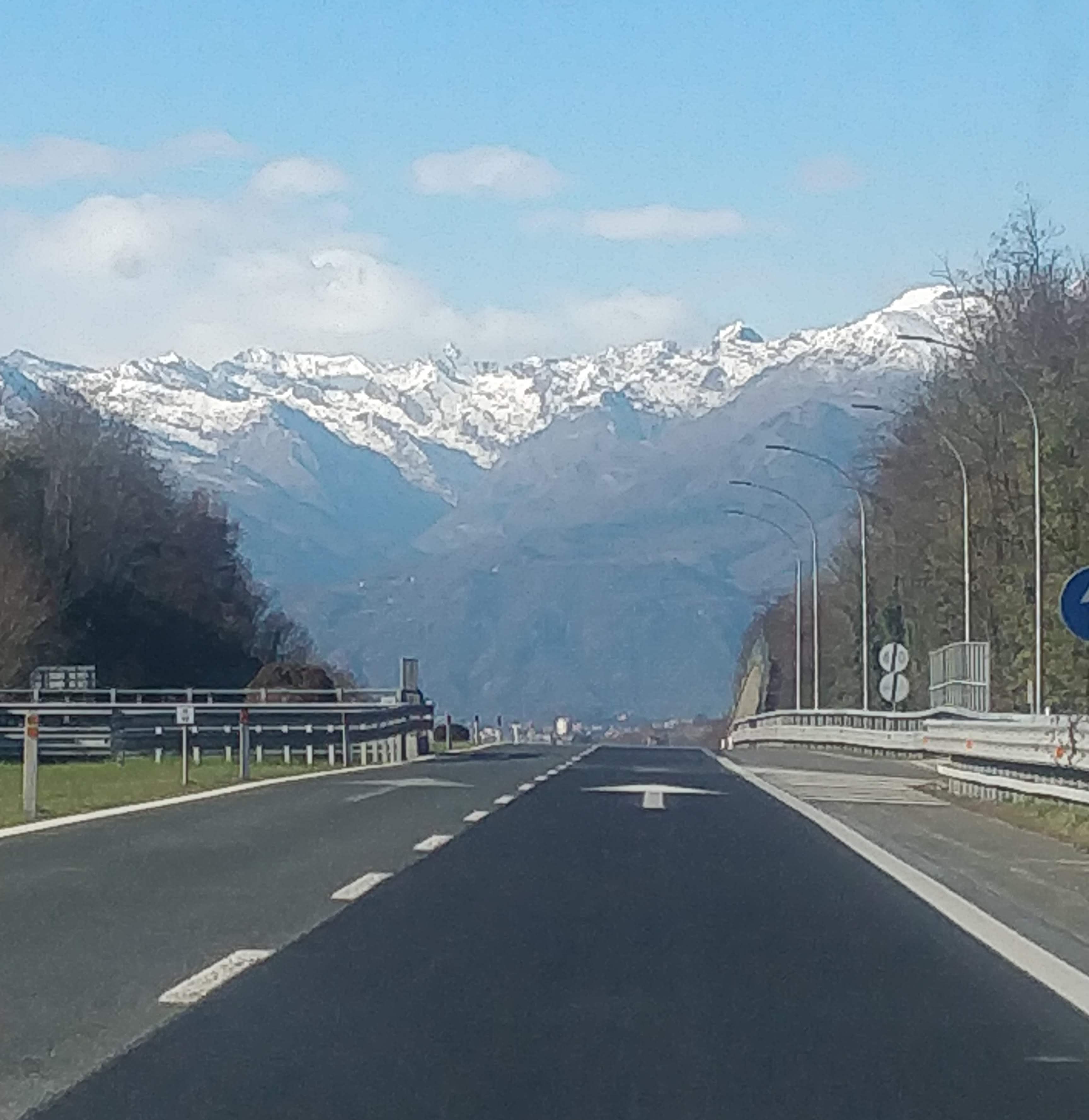
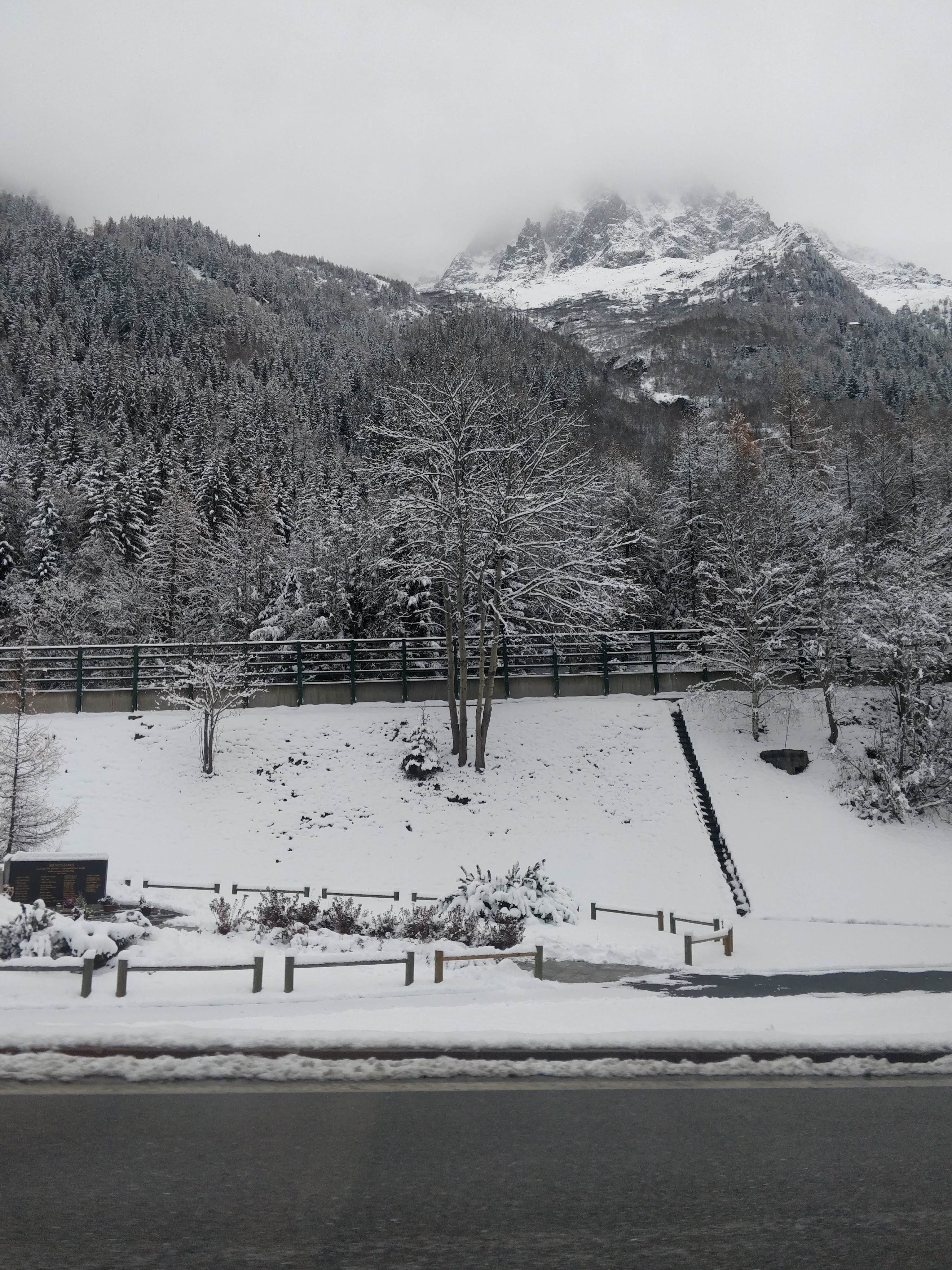
13 Mont Blanc Tunnel, France Italy Border

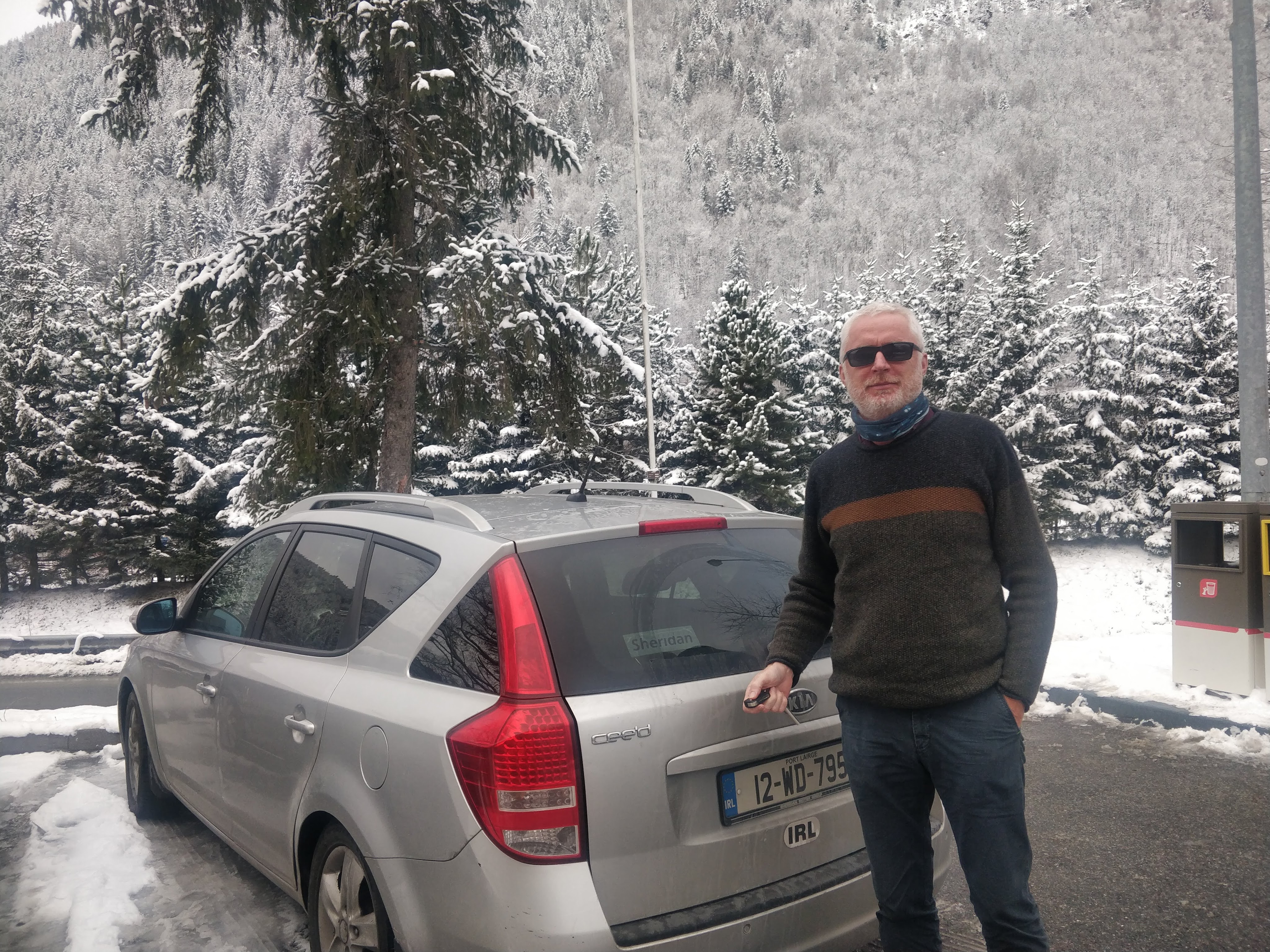
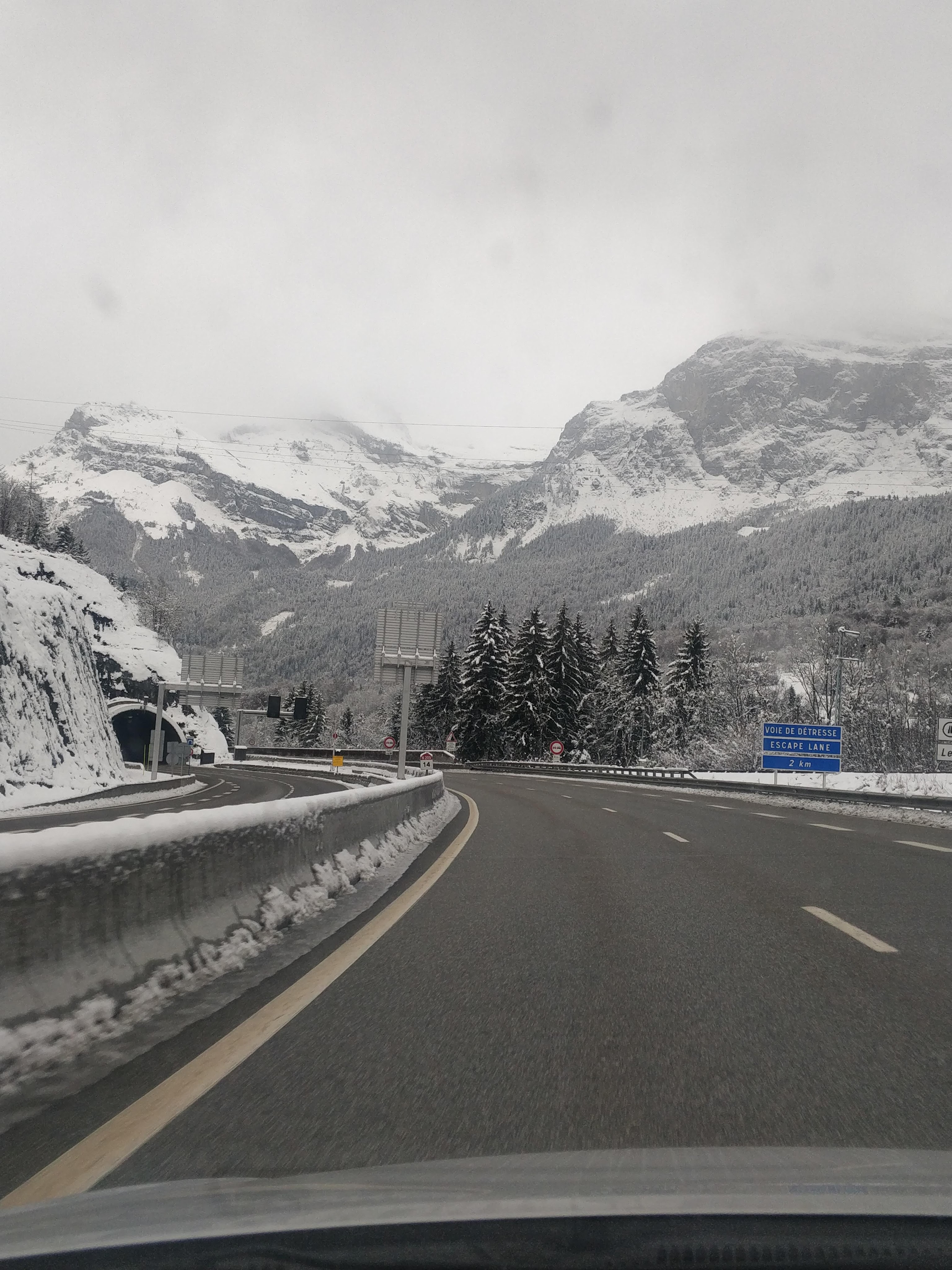
Driving through the twelve kilometres of the Mount Blanc Tunnel for the first time was a real experience. On the Italian side, there was sunshine, blue skies and colour but we exited into a black and white world of a winter wonderland in France.

Of course there were some lowlights but very few

Lowlights

1 The Guzzler breaks down in Rosslare on the First Day

We were SO excited to be finally leaving home. But that first morning in the queue to get on the ferry in Rosslare we ran into difficulty – our car (aka the Guzzler) failed to start. We had a flat battery but thanks to some hefty bikers from Cork who gave us a push, we managed to get onboard. But not a great start! But the Guzzler held good and brought us all the way home with (little!) mishap.

2 Refused entry into Montenegro

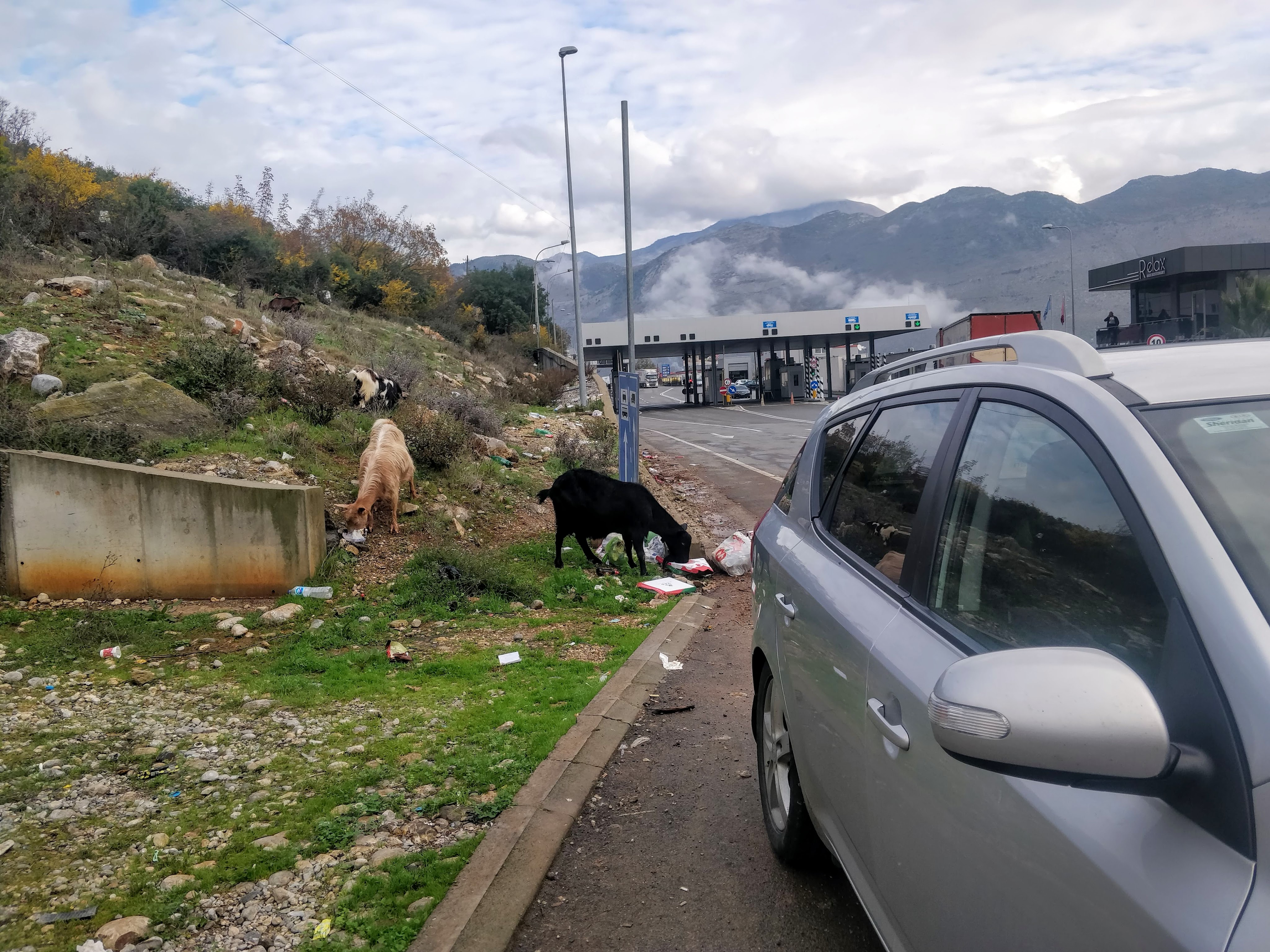
The Montenegro Border in the Background(also the Accursed Mountains)

Much to our astonishment, we were refused entry into Montenegro – at first – and told to go back to Albania. But after perseverance, much loitering around around the border and finding a printer to print out some car documents, we were allowed in. But it was a sobering experience when we had expected to be welcomed with open arms – or at least with civility.

3 The Rain in Greece

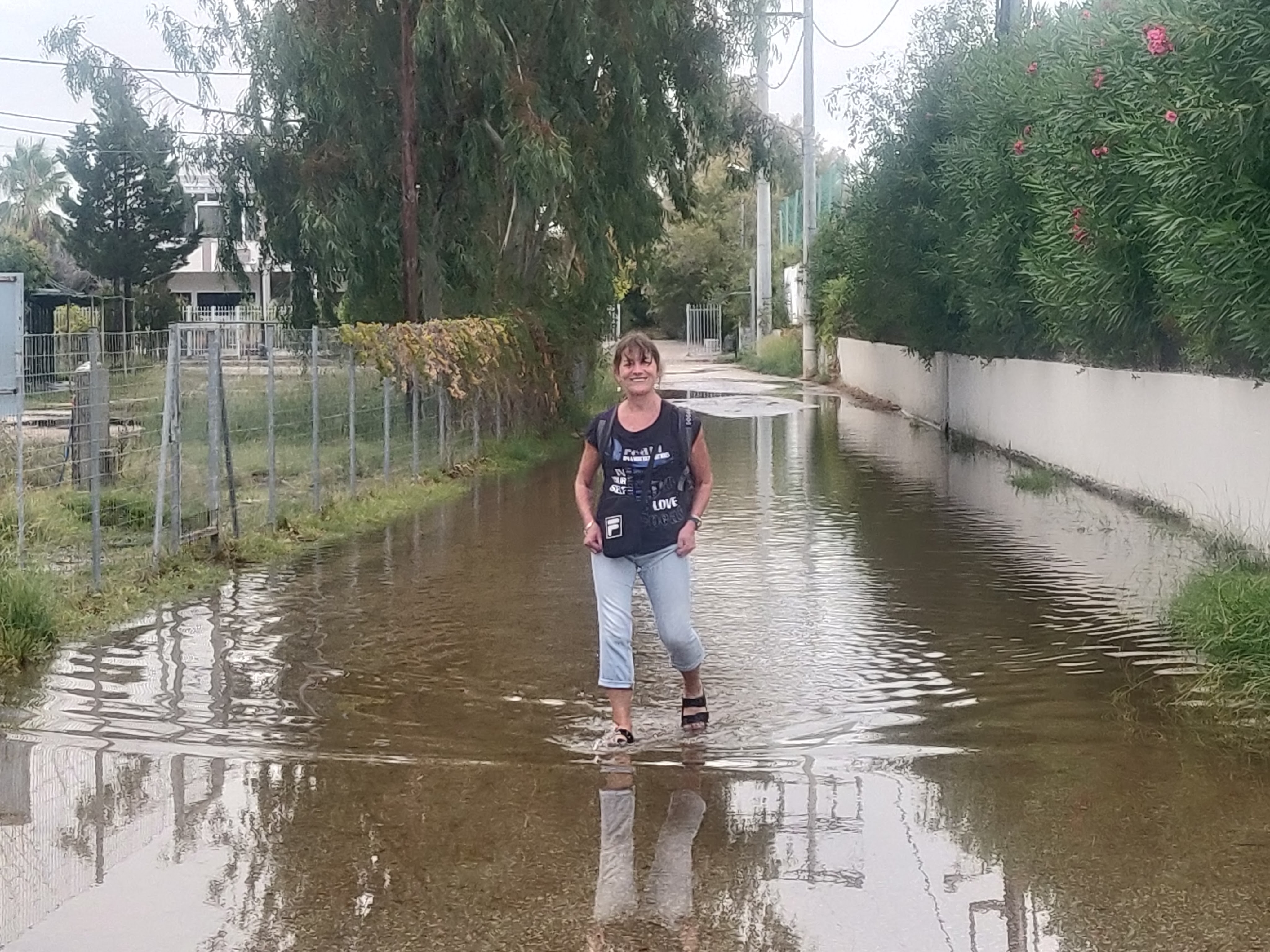
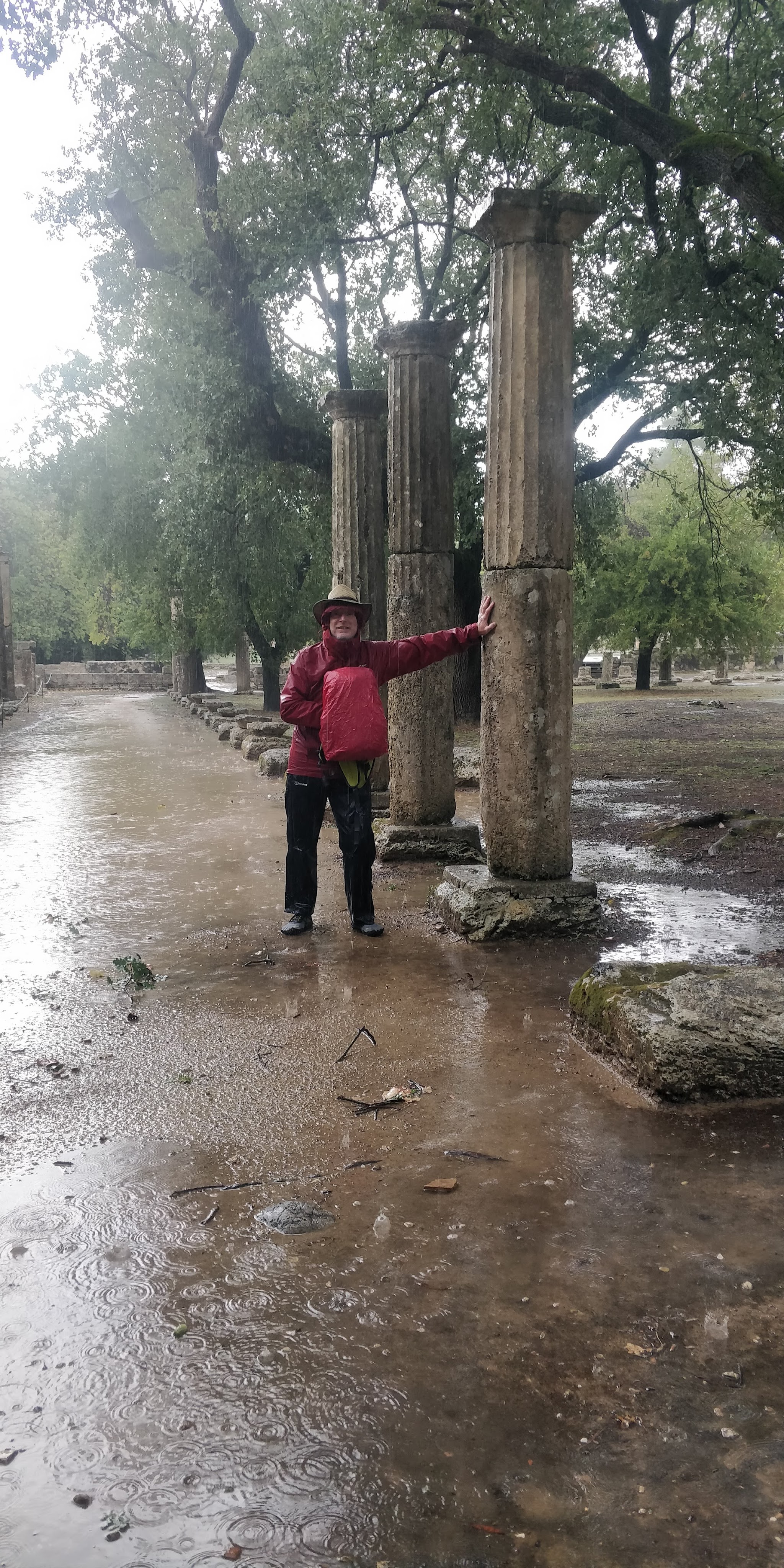
We don’t mind a bit of rain – we even enjoy it sometimes – but the volume of rain we got during our first nine days in Greece in early October took us by surprise. At times, it was a deluge of biblical proportions. And there were thunder and lightening storms that went on for hours, often one storm rolling into the next. Not what we expected in Greece!!!!!!

It was so difficult to pick out highlights as we had such a great trip – I could easily add another dozen different highlights. So now as the end of 2021 approaches, we wish everyone a happy, peaceful New Year and only good things in 2022. Thanks for reading and remember…. the world is such a beautiful place even in a pandemic.

Til next time….xx

Don’t be satisfied with stories, how things have gone for others. Unfold your own myth” Rumi

Road Trip Map
Road Trip 2021 – Ireland to Greece and Back.

Driving Home for Christmas

The last time I posted we were in Split, Croatia, now, a week later, we are home. The wind is screaming around our house in Crooke and bending the trees in the garden as Storm Barra, a ‘weather bomb’ lashes out across the country.

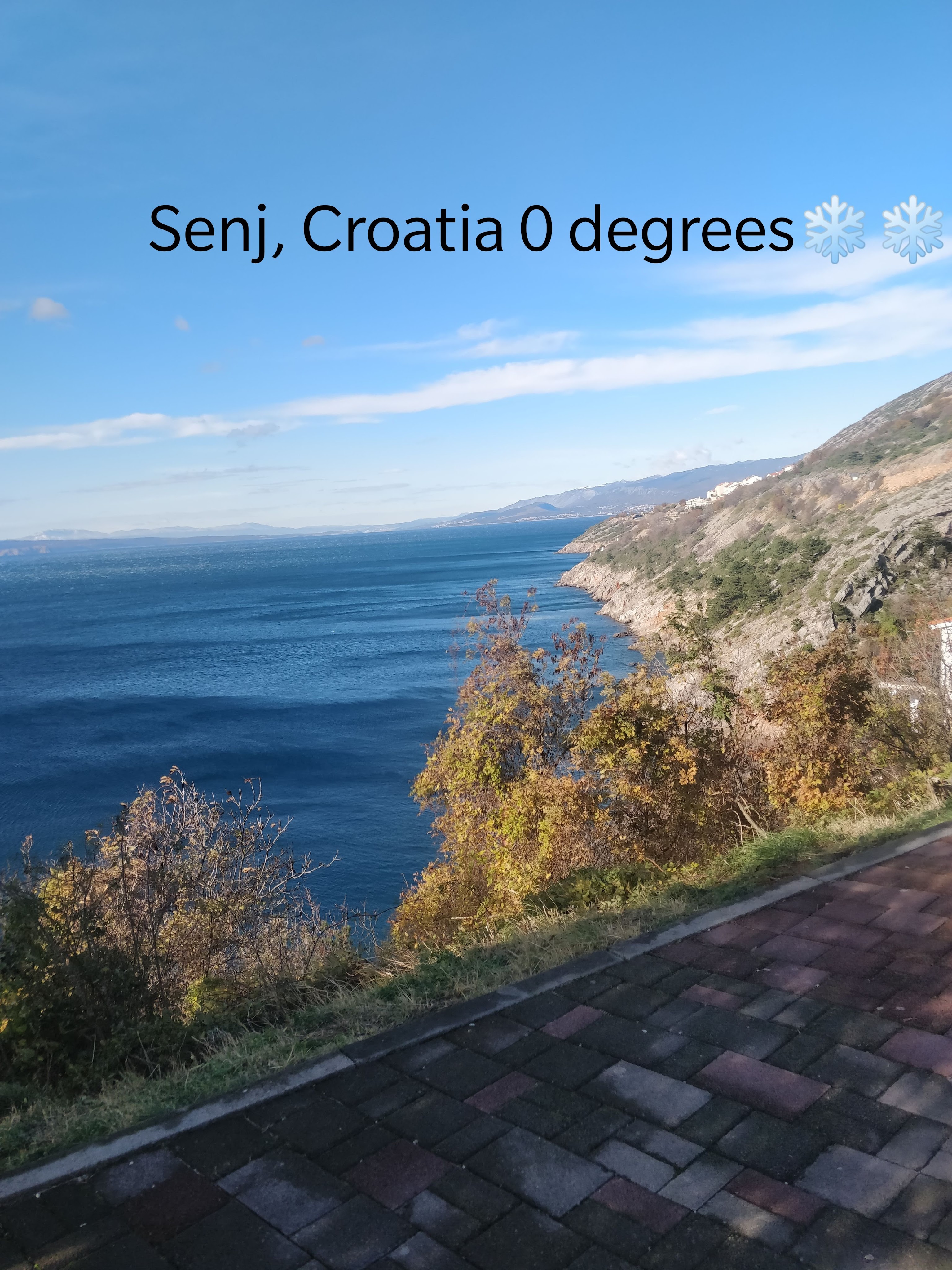
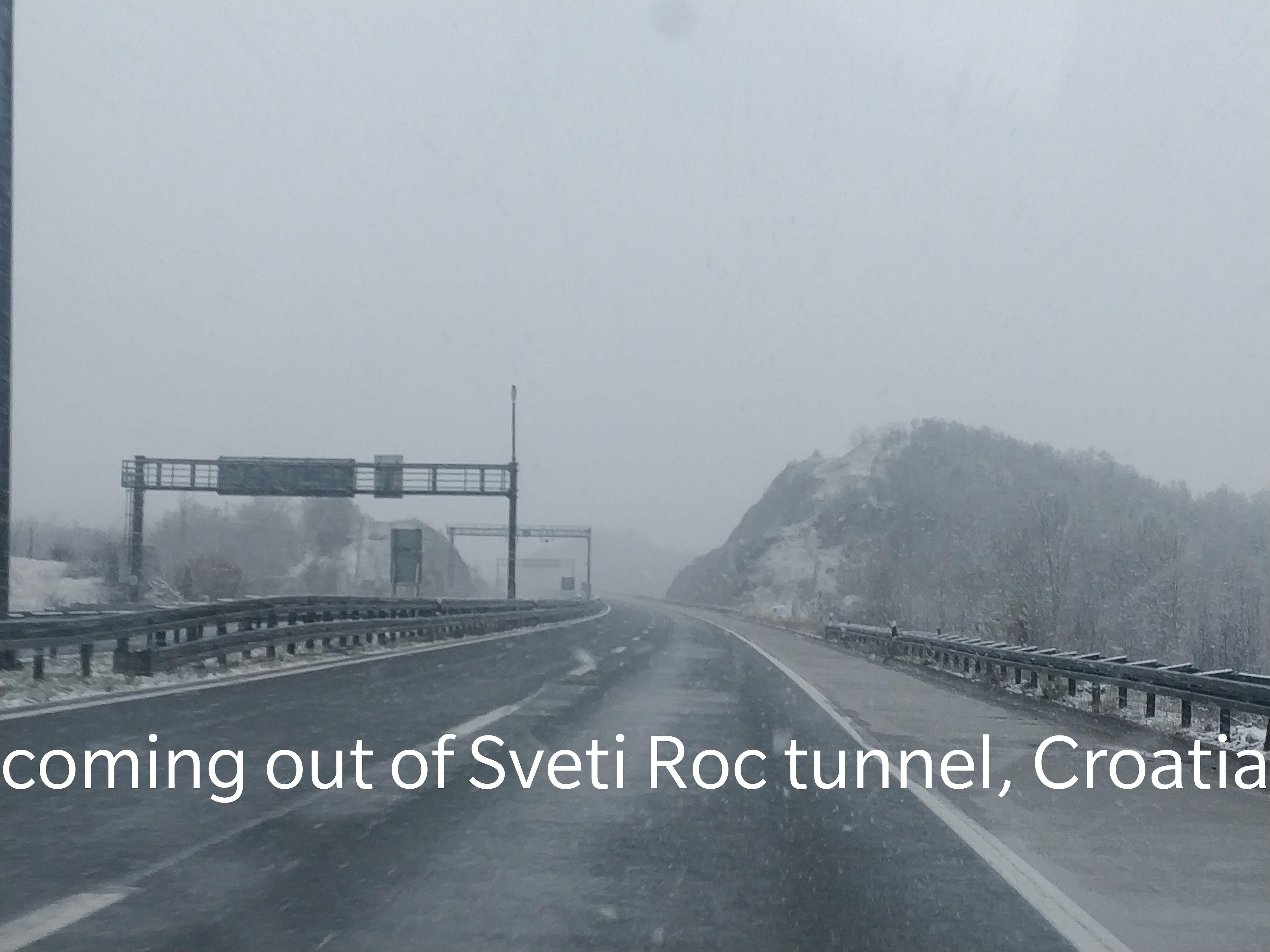
In Split, a man coughed all night in an adjoining apartment, racking, hacking coughs that sounded like he was in the room with us. We had been surprised that all windows along the stairway and landings were wedged open because the evening was cold and wet but now we knew why. The news on our phones was ominous- full of Omicron and borders closing. So it was time to split from our split-level apartment (bedroom downstairs, kitchen cum living area upstairs)….ok no more splitting references😋 – and cross some borders to get home. So we departed Split in the rain, not really sure how far we would get. The roads were uncrowded and the infrastructure was good in Croatia – the Sveti Roc tunnel was over 5 kms long – but it got colder and foggier as we headed north into the mountains with the red roofs of the houses dusted in white

We would have liked a few more days in Croatia maybe in Rijeka (which has some Klimt paintings) but instead we spent the last of our Croatian kuna in a border service station (a bottle of wine and a toblerone) and headed into Slovenia with an uneventful crossing – a quick look at passports and no questions. The roads were poorer in Slovenia with lorries transporting logs but there were flowers in pots outside many houses and pretty countryside. Maybe we will go back some time and spend more than an hour there.

We crossed into Italy near Trieste and the tempo changed- manic drivers, bumper-to-bumper fast-moving traffic and nerve-jangling lane changes. We skirted Padua and Vicenza and stopped in Verona where we stayed in Magnolia Guest House (€50 off-peak), a beautiful townhouse near the Porta Nuova (booked online about an hour before we arrived.) The landlady recommended a little trattoria down the street which was just what we needed to unwind after about 8 hours in the Guzzler. The food was simple – pizza and salad, good bread and wine but such a nice ambiance with the staff chatting and enjoying themselves(we have eaten in so many places where the staff are dour and miserable). It was a local haunt and the bill (very cheap) came with a complimentary limoncella or grappa shot. Love Italy!! Verona was crisp and cold (about 2 degrees) – perfect for an evening stroll around town to stretch the legs

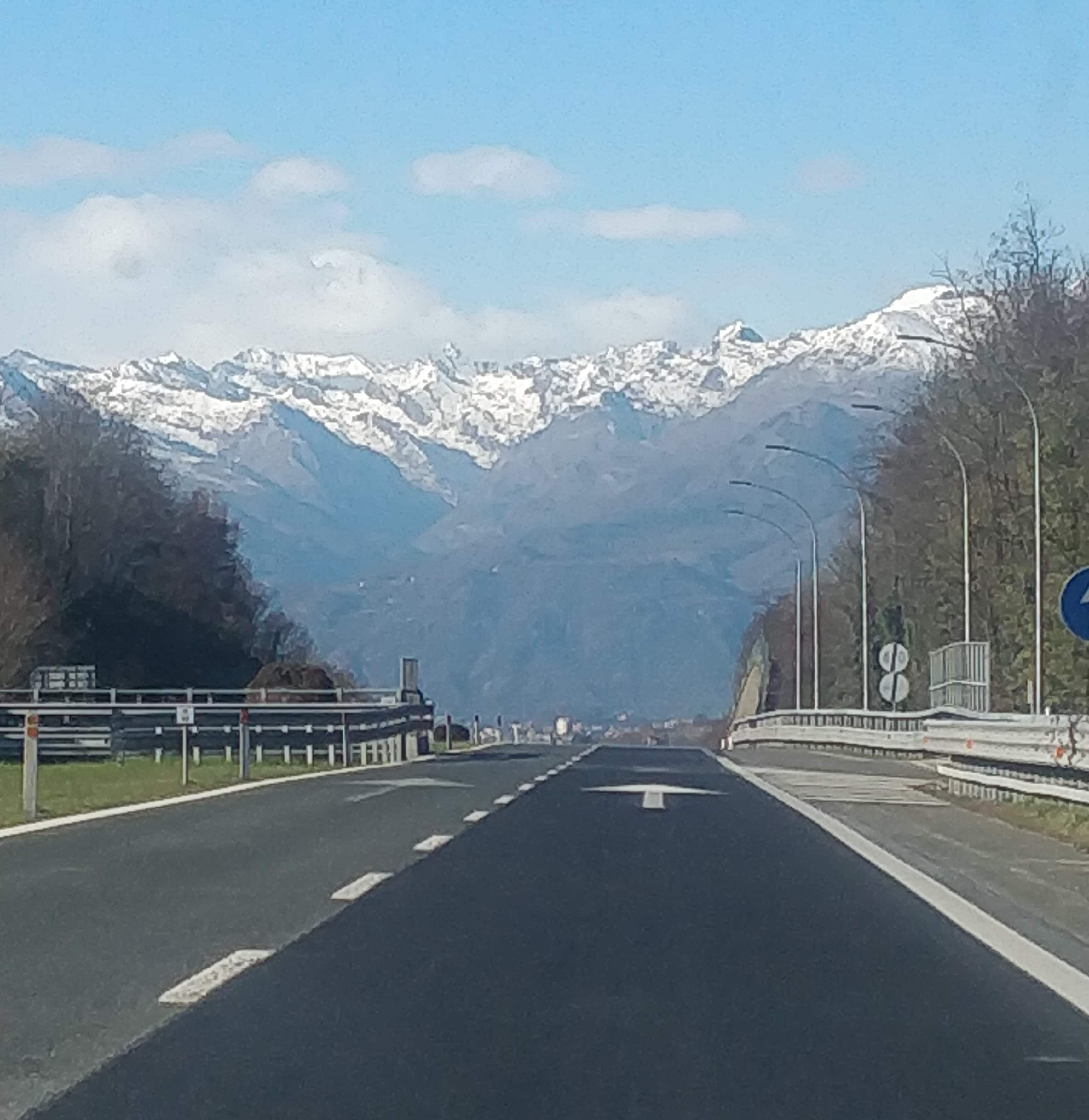
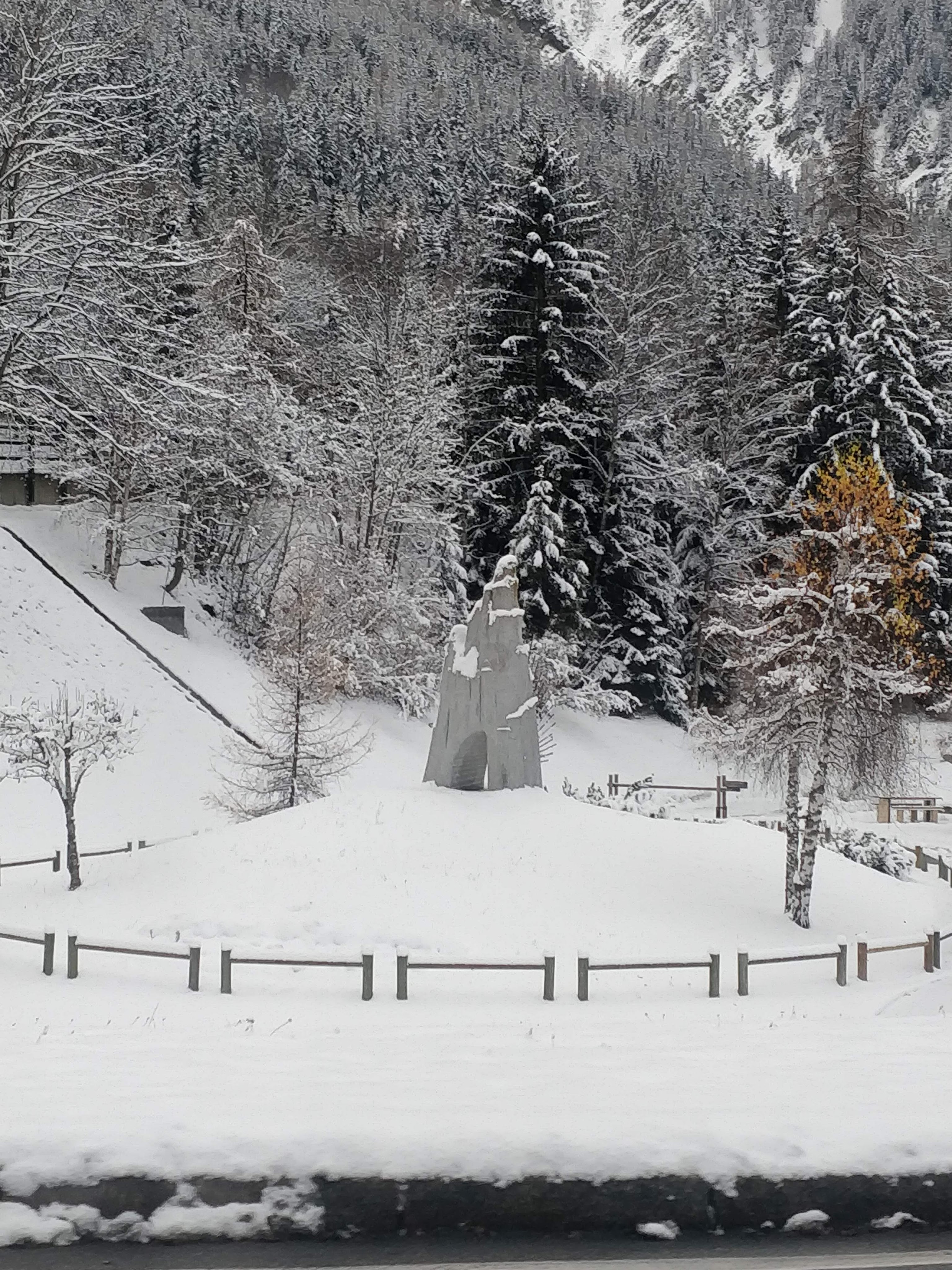
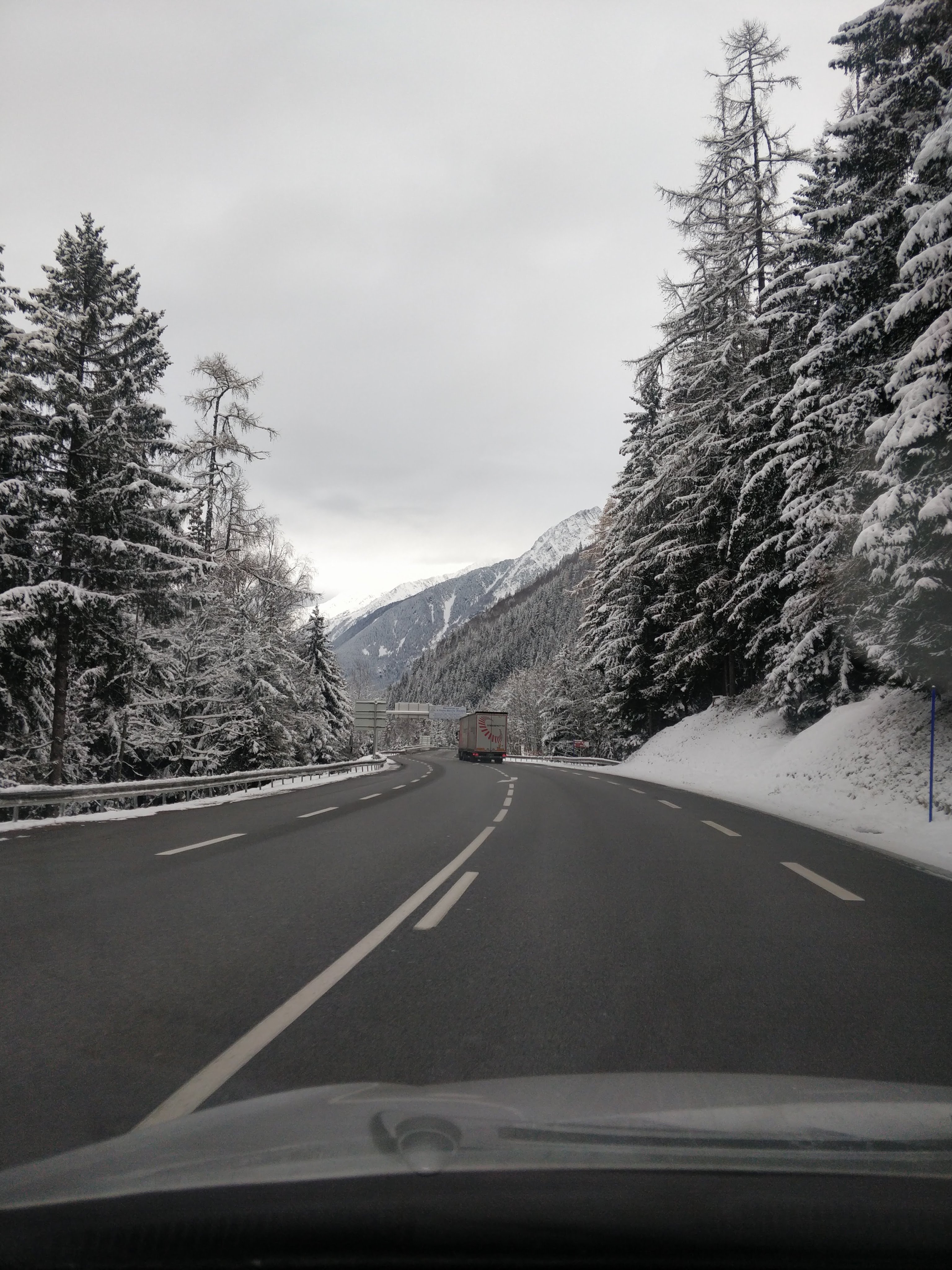
Google took us in circles around Verona the following morning but eventually we were on the motorway. The traffic was backed up with the electronic motorway billboards telling us that there was an accident -not surprising with the volume of traffic and the way they drive. We were thinking about Turin for a stopover but the Alps were beckoning -their snow-capped peaks stretched in the distance against an almost cloudless sky – so we kept going. Soon we were driving through tunnel after tunnel, most of them three kilometres long or more with a short break in between until we hit the big one, the Tunnel of Mt Blanc, 12 kilometres and hot – we watched the car temperature climb to 25 degrees. We came through on the other side to a world that had turned from colour to black and white – snow-laden pine trees and grey skies and plummeting temperatures. And we were in France.

After the tunnel, we sat in a Bonjour cafe, trying to find somewhere close-by to stay. Caoimhin had a cold for a few days and was on the mend but it was now my turn to feel unwell. The nearest affordable place was the Ibis Budget (€62), a really soulless hotel which seemed like a prison cell with everything nailed down, paper cups and very minimalist. The best thing- apart from the price – was the view of the mountains with shifting light and shade – really beautiful.

Driving from the mountains towards Paris, we passed windmills and chateaus, green fields and woods and place names that were familiar … Chablis, Chardonnay, Saint Etienne. At a different time of year, we would have loved to camp and saunter through. But the weather was dirty and drizzly, the temperature never rose above 5 degrees and we were on motorways that were eye-wateringly expensive (€168 on tolls driving through Italy and France. almost €50 for Mt Blanc tunnel). We overnighted in Villabe, Paris Sud in Ace Hotel with a fantastic bakery next door….we were so tired that we had a picnic of wine, cheese, sun-dried tomatoes, crusty baguette in our room and watched a movie about William the Conqueror who built his fortress in Caen, a town where we had earlier booked accommodation for the following night – a complete coincidence.

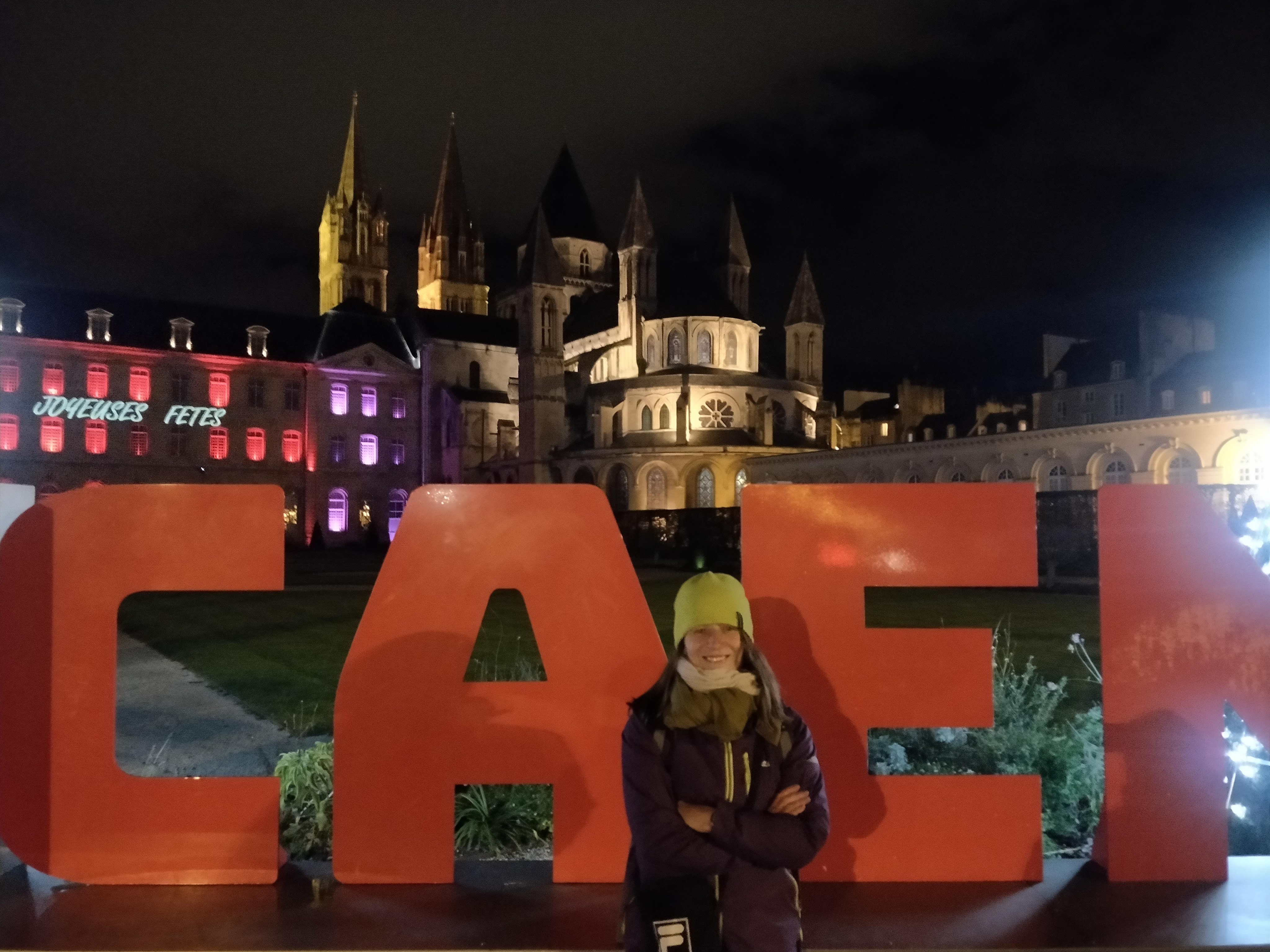
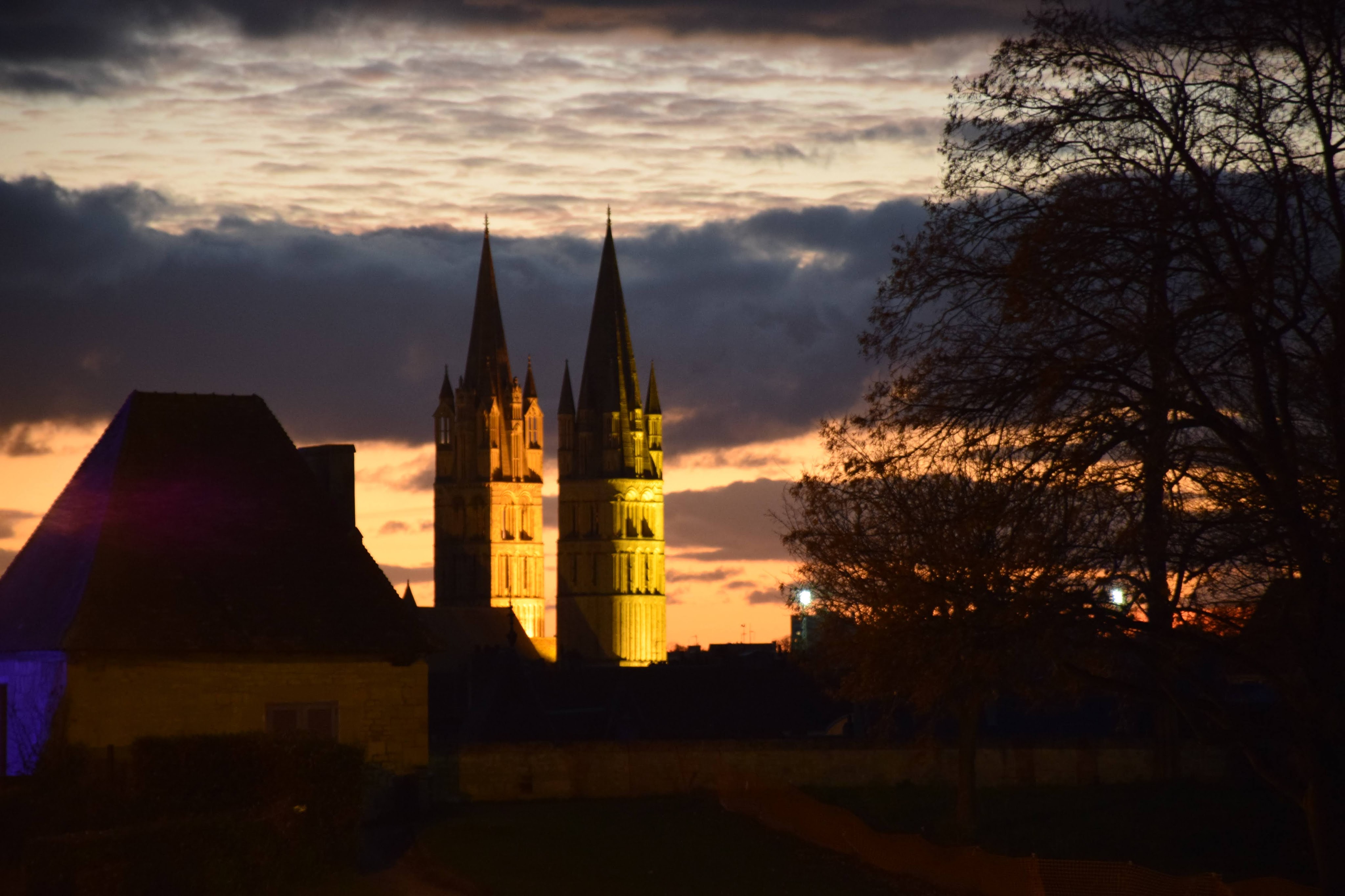
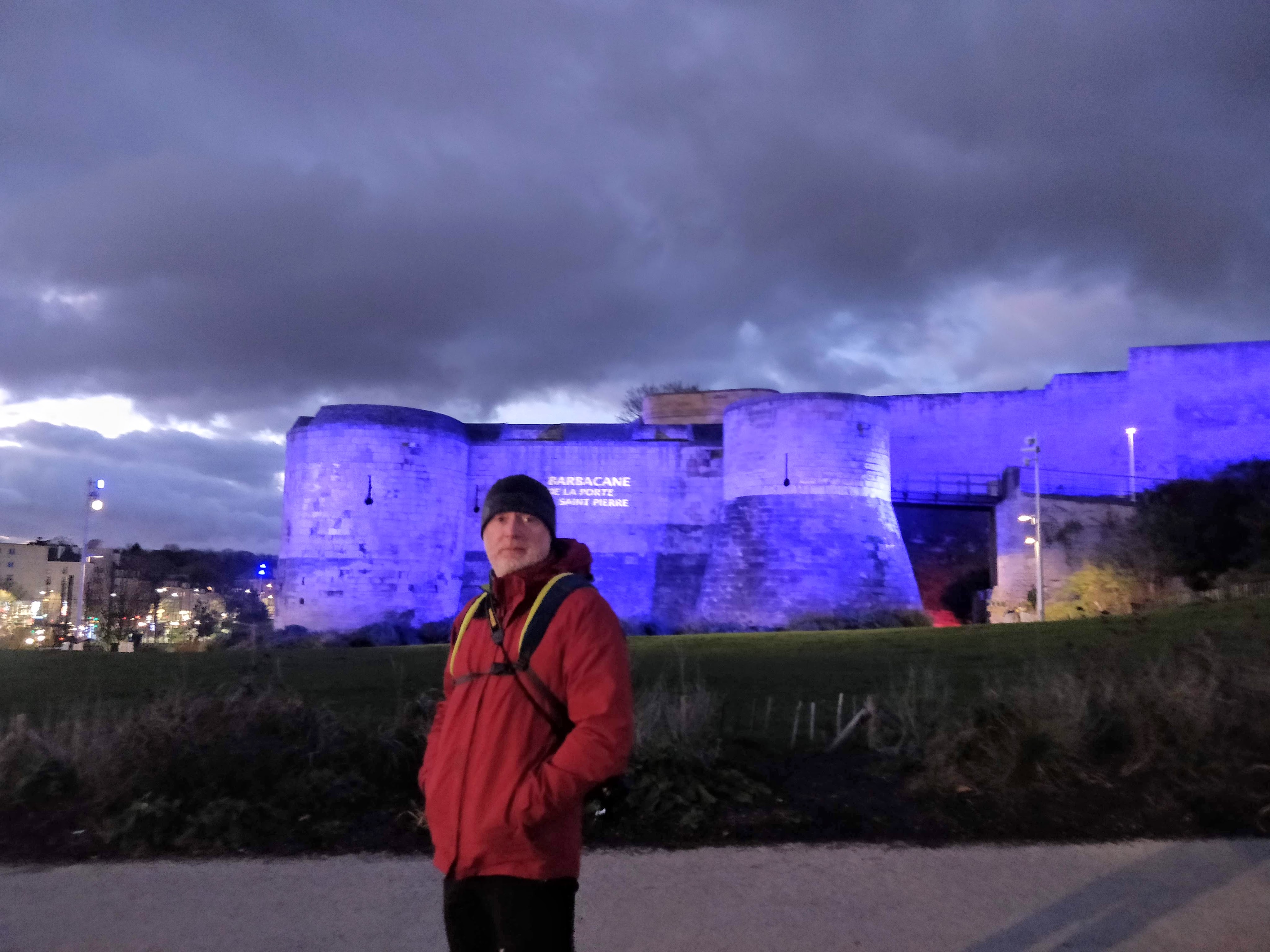
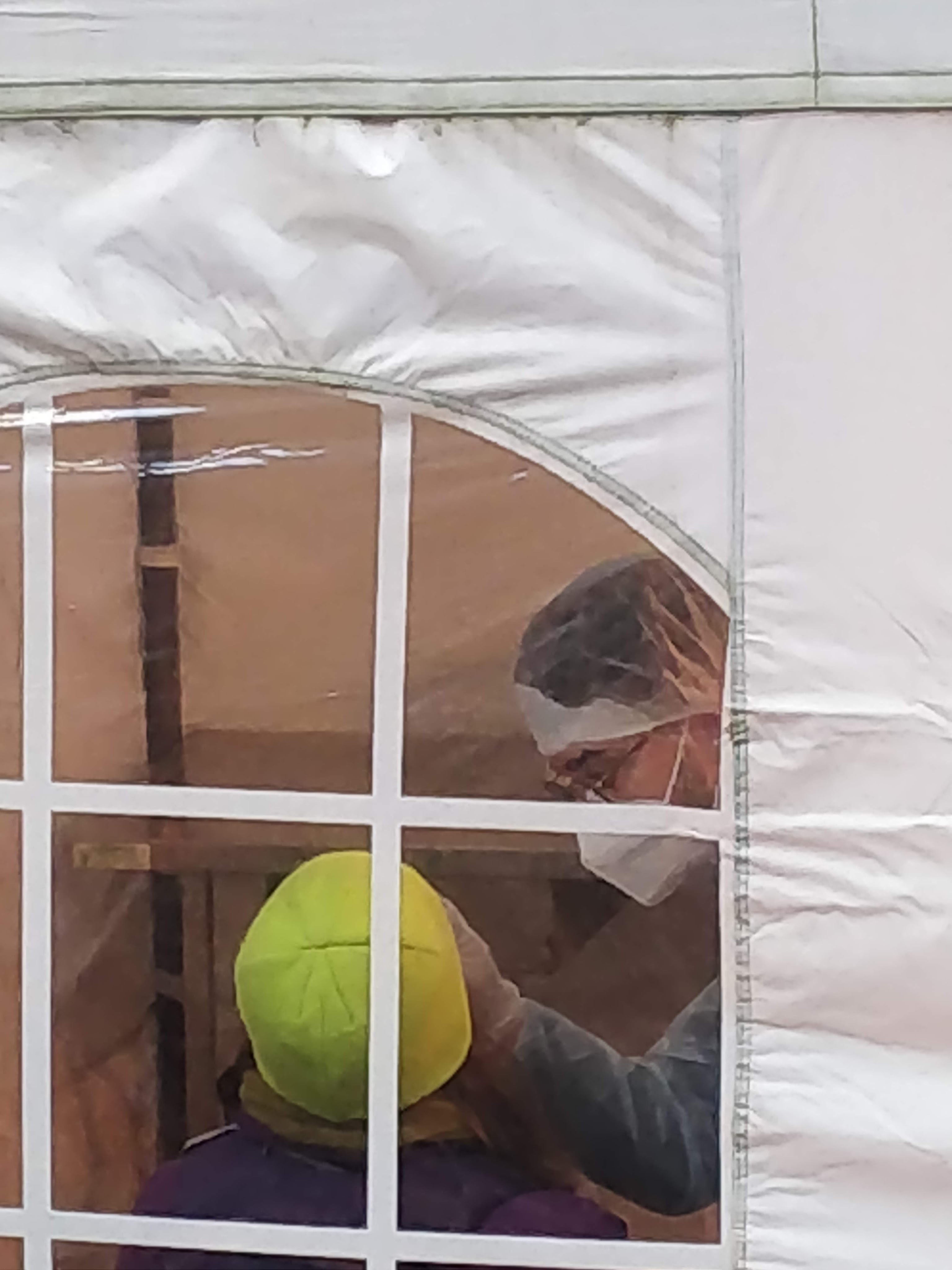
Caen was a surprise, a really lively town with the fortress, churches, Christmas lights and markets. We got our antigen Covid tests here in a pharmacy – €25 for a documented test with results in about 15 minutes We were given a piece of paper very like the EU Covid vaccine cert. What a relief to get a negative result! Although we were pretty sure that our cold symptoms weren’t Covid, you never know…..But when we set about booking our ferry crossing from Cherbourg to Rosslare, all cabins were sold out.

The towns and villages of Normandy echoed with the past, particularly WWII, places like Falaise and Chambois, the flat countryside and the beaches. So much history in ordinary places. We drove on untolled roads from Paris- a far more interesting way to travel. In Cherbourg, a wine merchant told us how his business has been badly impacted by both Brexit and Covid. He also told us that cabins on the ferries to Rosslare were in short supply and reserved for the lorry drivers – a big increase as so many were avoiding the direct route to Britain.

After having our paperwork – our tickets, passports, vaccine certs, antigen tests – all scrutinized by Stena officials, we got on the ferry as early as we could to maximize our chances of getting a cabin. Right from the start, the Stena Line staff onboard treated Caoimhin differently. He was welcomed profusely and assured that of course they would get a cabin for him, we got free drinks and even staff that were walking past would double back to tell Caoimhin that they were so glad to see him again and hoped he was enjoying the journey. He has never been on Stena Line before….or at least that’s what he’s telling me. But we got the cabin.

Woodstown, Monday Dec 5 with Rolo

So after four months, four ferries and nine countries, our European road-trip from Ireland to Greece and back is at an end. To all of you who came along for the ride with us – or even jumped on and off – , we have enjoyed your company, hopefully you enjoyed it too. A huge thank you for all the likes, comments, shares and messages along the way. So until next time… who knows…… the Philippines, Mexico, Portugal or a return to other Balkan countries…or somewhere else

Wishing you all a gorgeous, happy and relaxed Christmas xx

P.S I can recommend retirement!!

Treading lightly, walking softly
A bright, beautiful and peaceful Christmas

Driving Home for Christmas