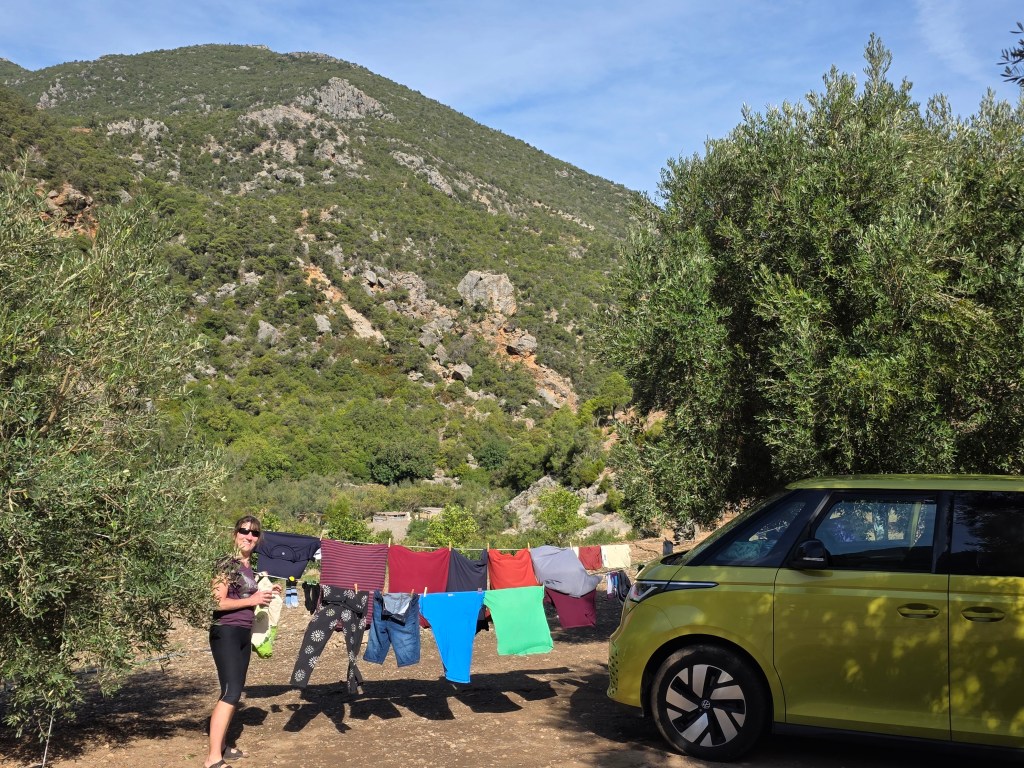
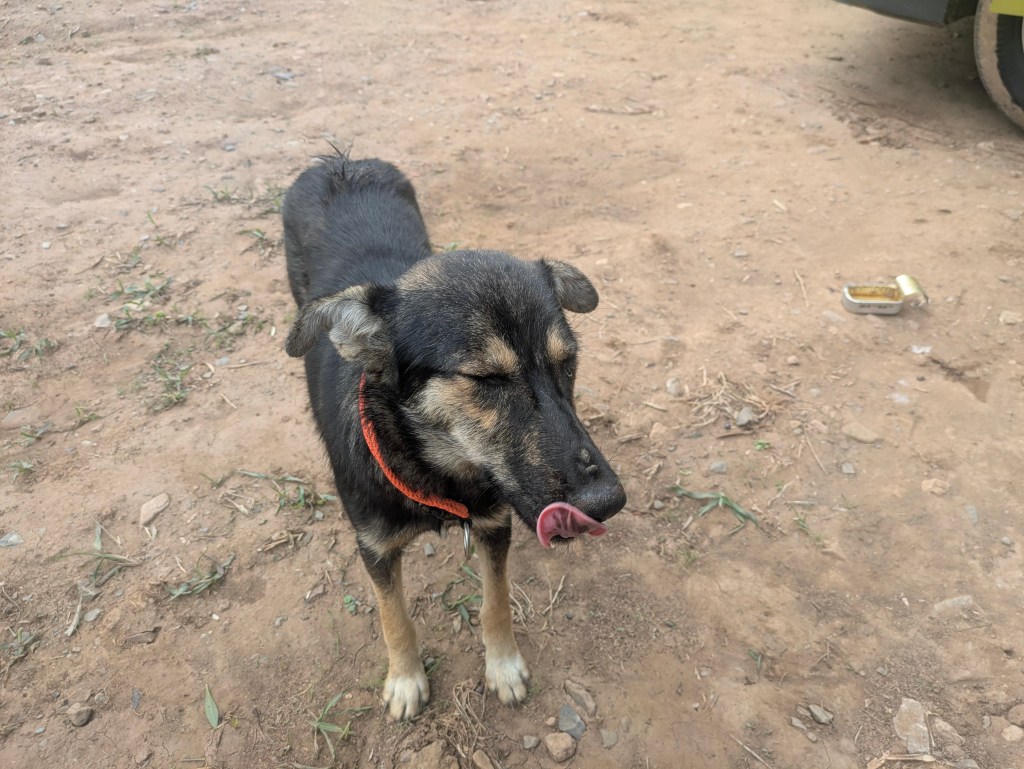
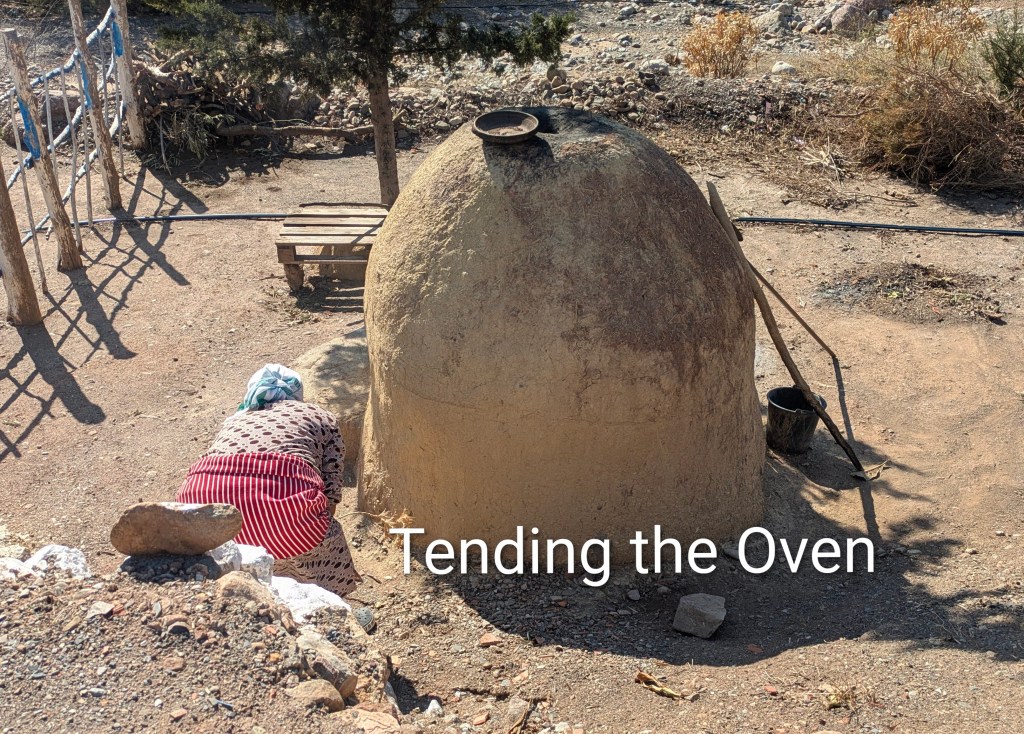
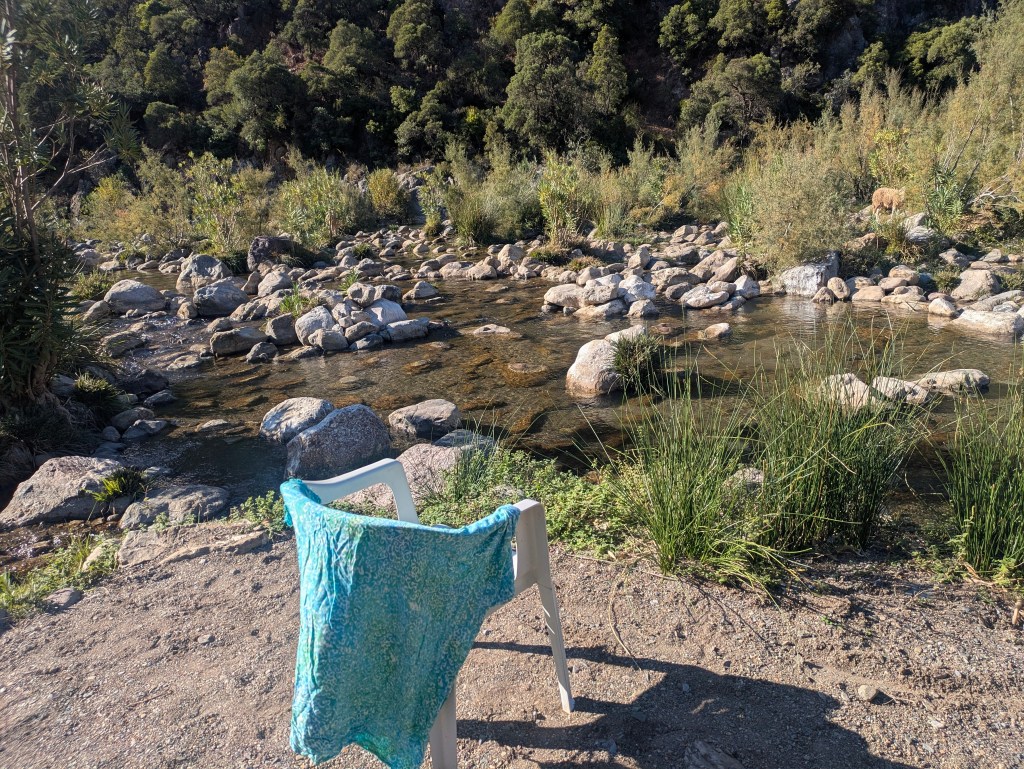
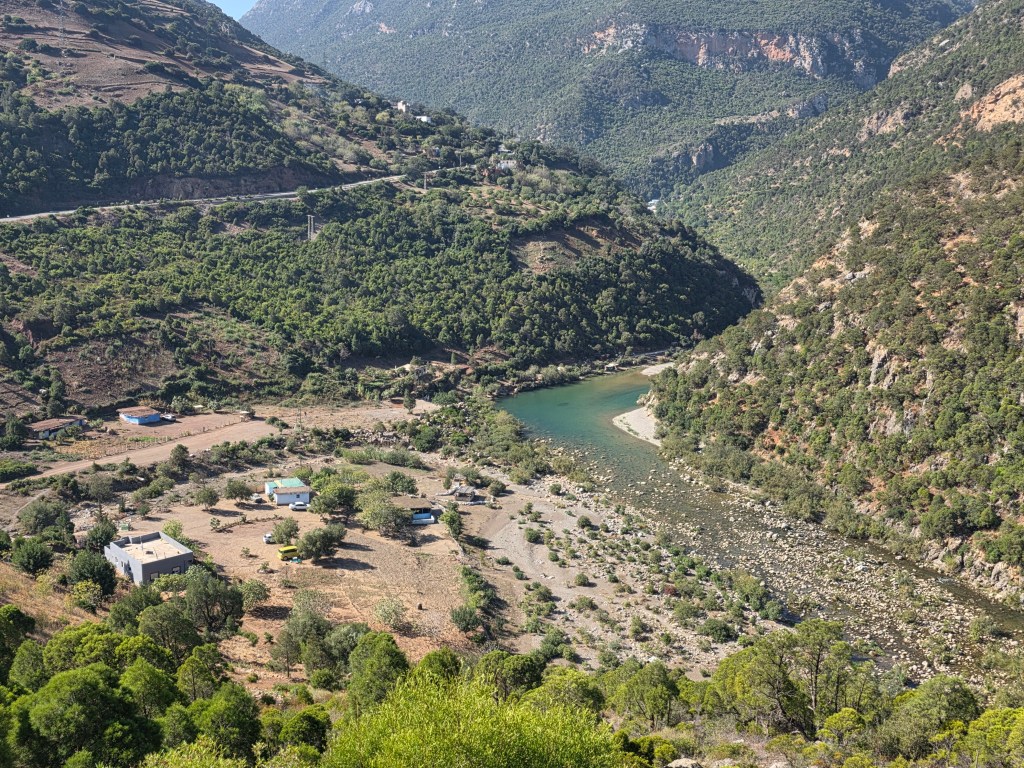
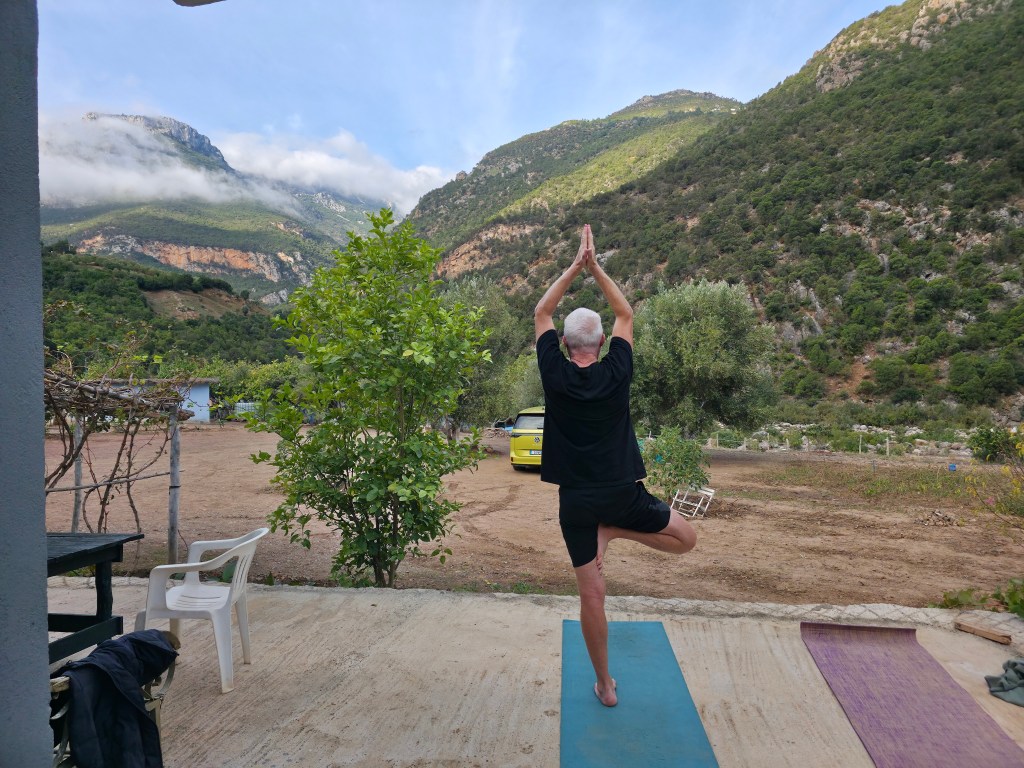
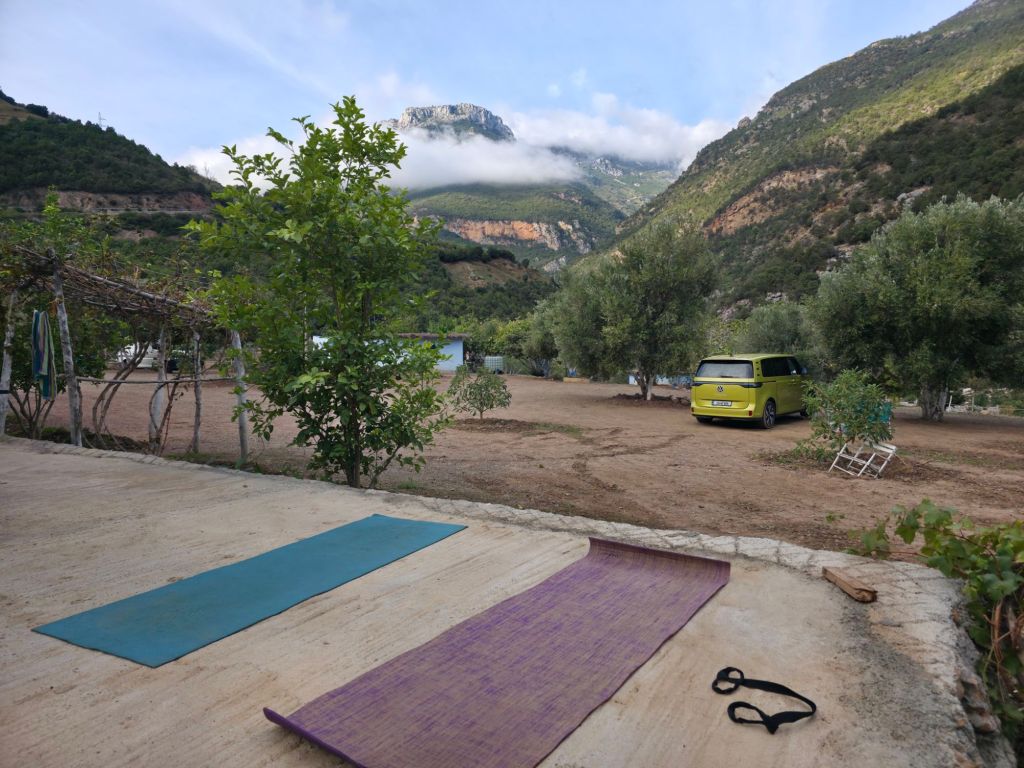
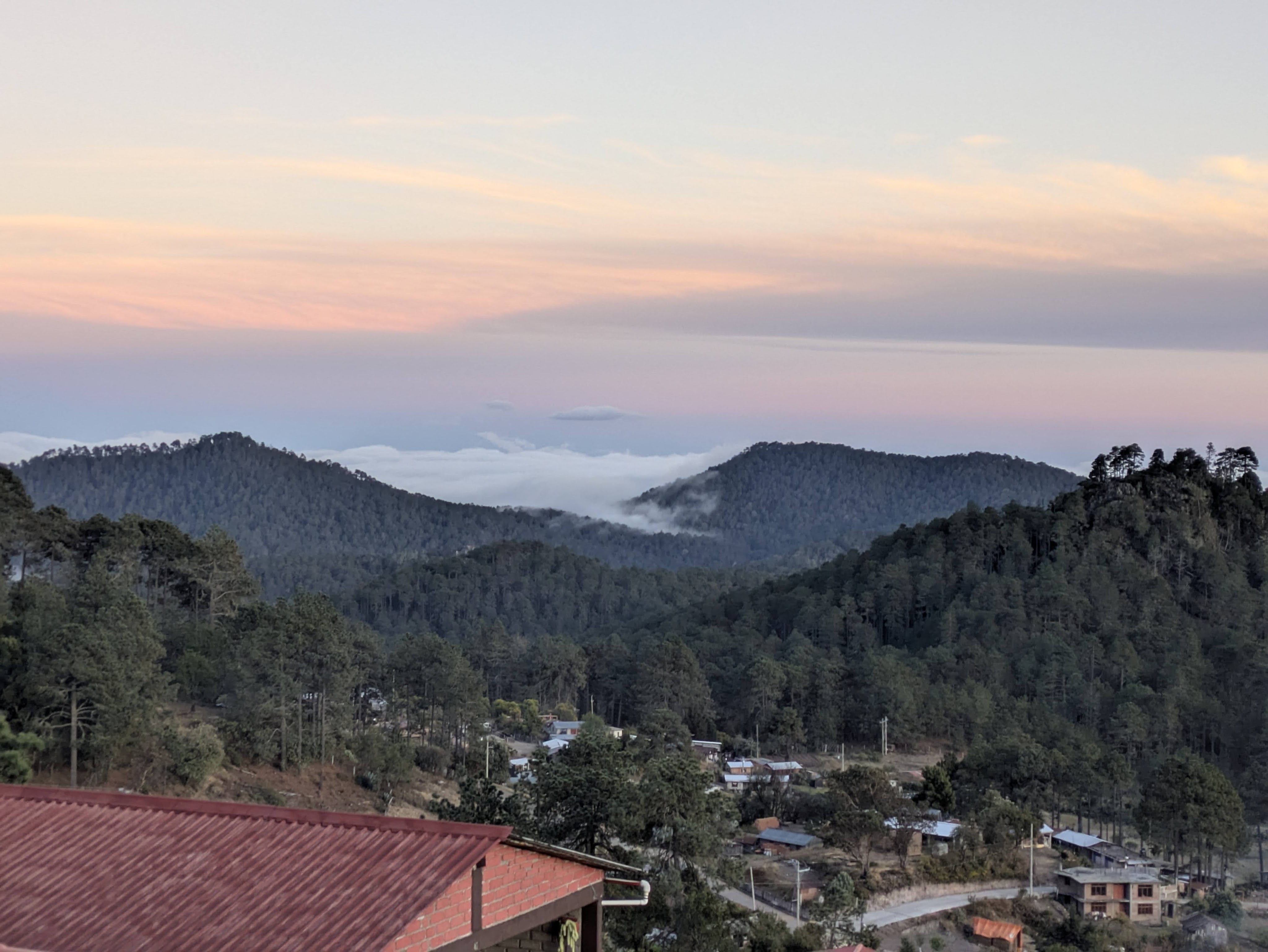
Our washing danced in the breeze on the clothes-line strung up between two olive trees in the rustic campsite in the Rif Mountains in Morocco. The figs had been harvested, and so had the chillies but two lemon trees were full of green skinned fruit although the few avocadoes were still small and hard. The resident dog befriended us…..all it took was a bit of chicken….he slept beside the van and followed us to the river, as if guarding us or more likely, hoping for scraps. We chatted to the other few campers who came for a night and then departed, an American couple who were at the beginning of a two year stint around Africa, having shipped a jeep over from the States and a trio of British campervans who were travelling in convoy. We watched the woman make bread in the outdoor oven and water the trees. We sat by the river, hiked in the hills, read, did a bit of yoga and watched the morning sun hit the mountain peaks and slowly creep down to warm the valley. This tranquil place in the Rif Mountains had put a spell on us, forcing us to slow down. It could have been boring….it should have been…but it wasn’t in the slightest.
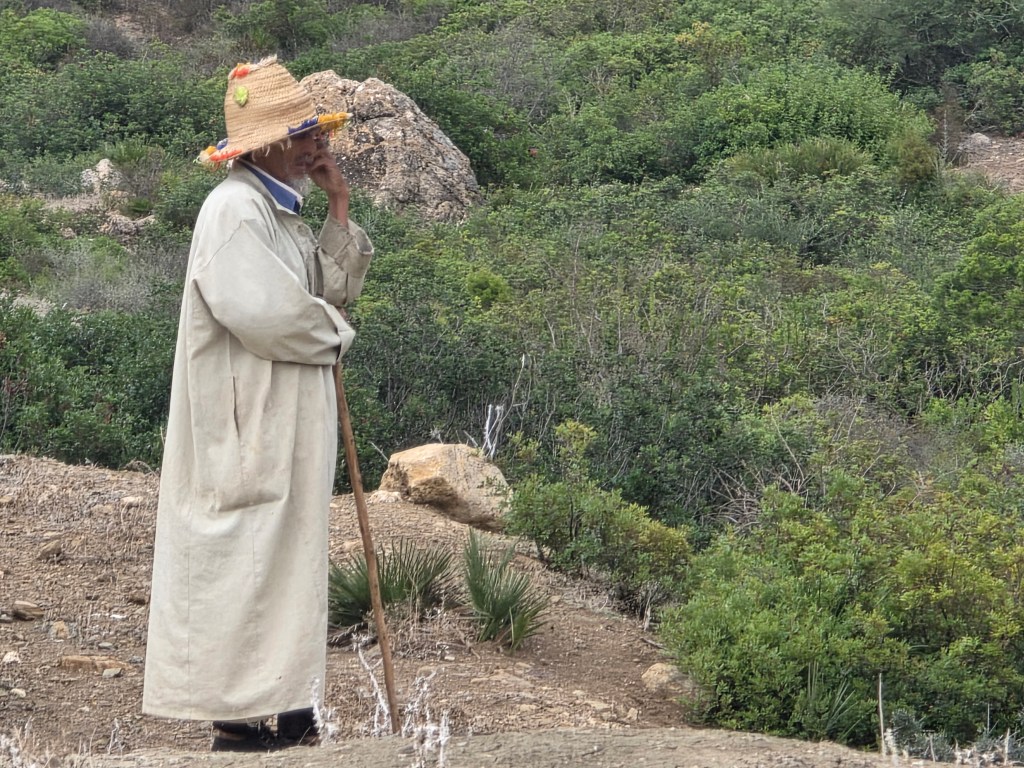
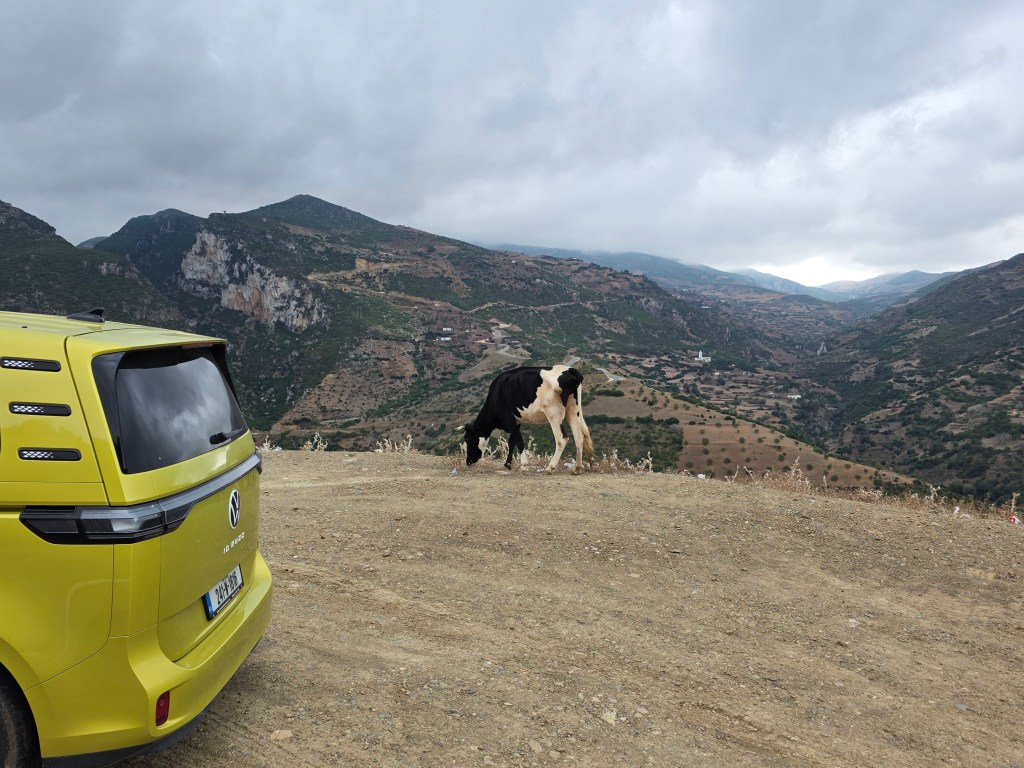
Finally on the fifth morning, we packed up and left, taking the mountain road to climb higher still. A man in a djellaba waved a stick and shouted at his cow on the far side of the road, who scampered off in the opposite direction. The road rose before dipping down to the Mediterranean Coast.
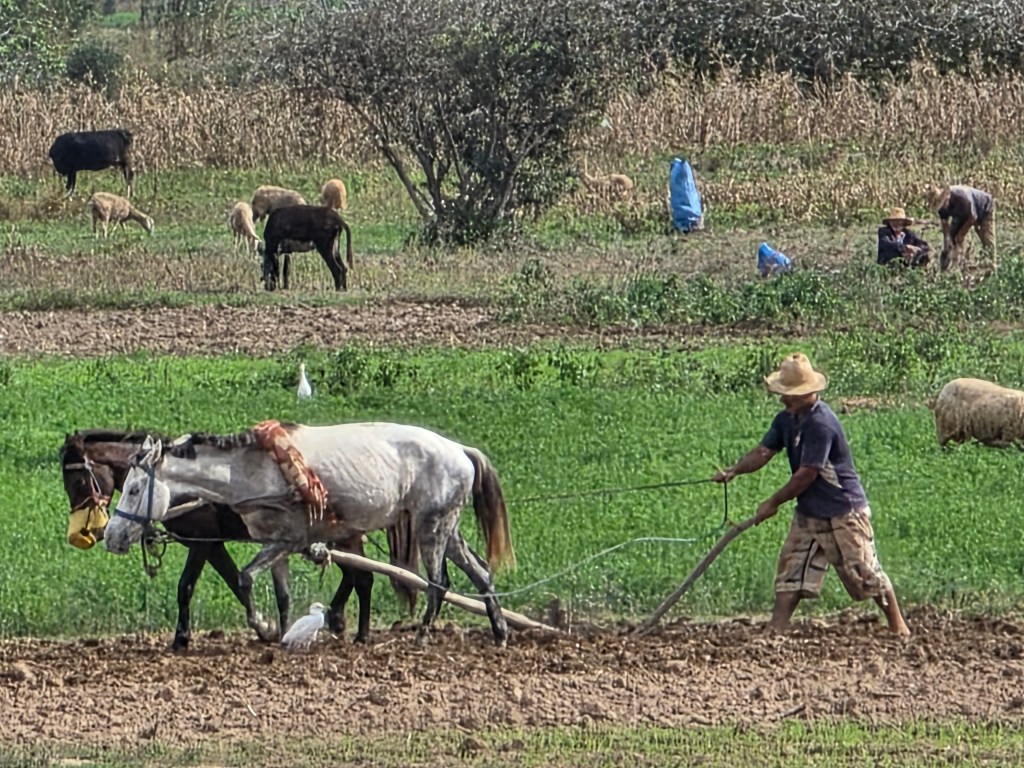
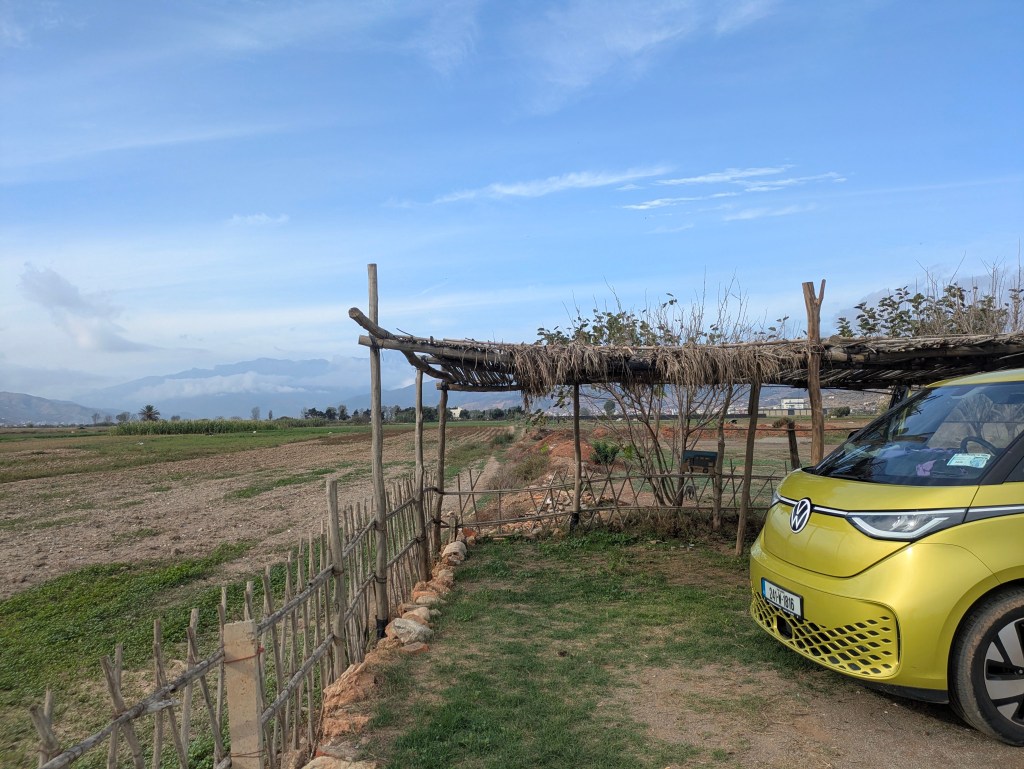
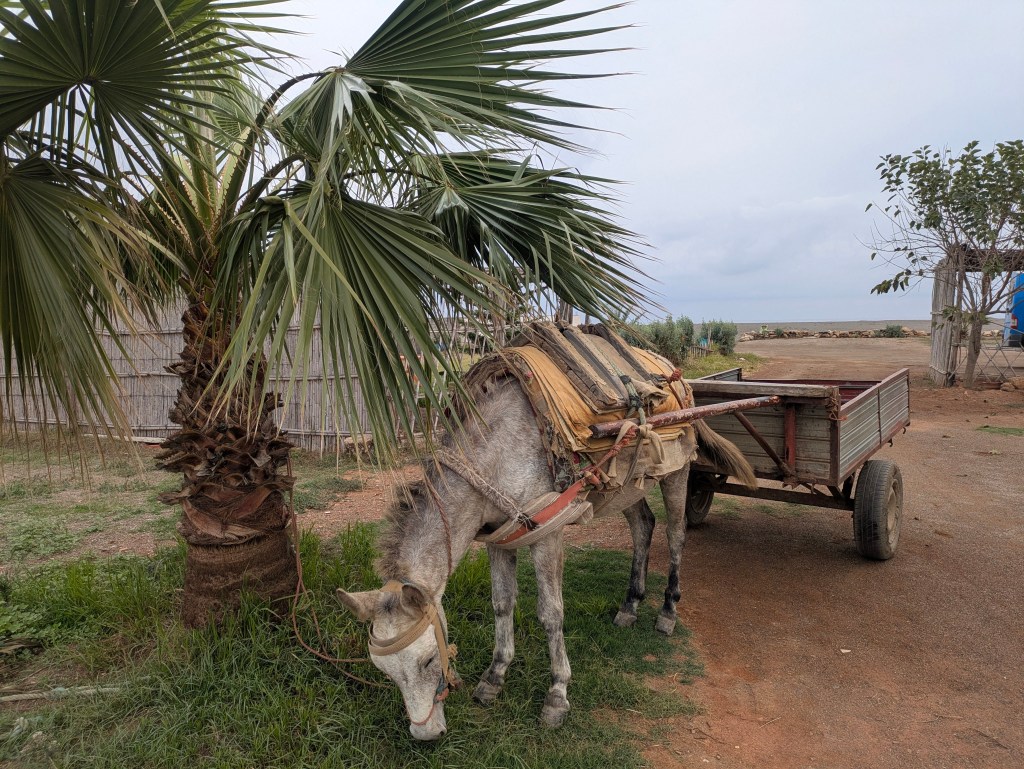
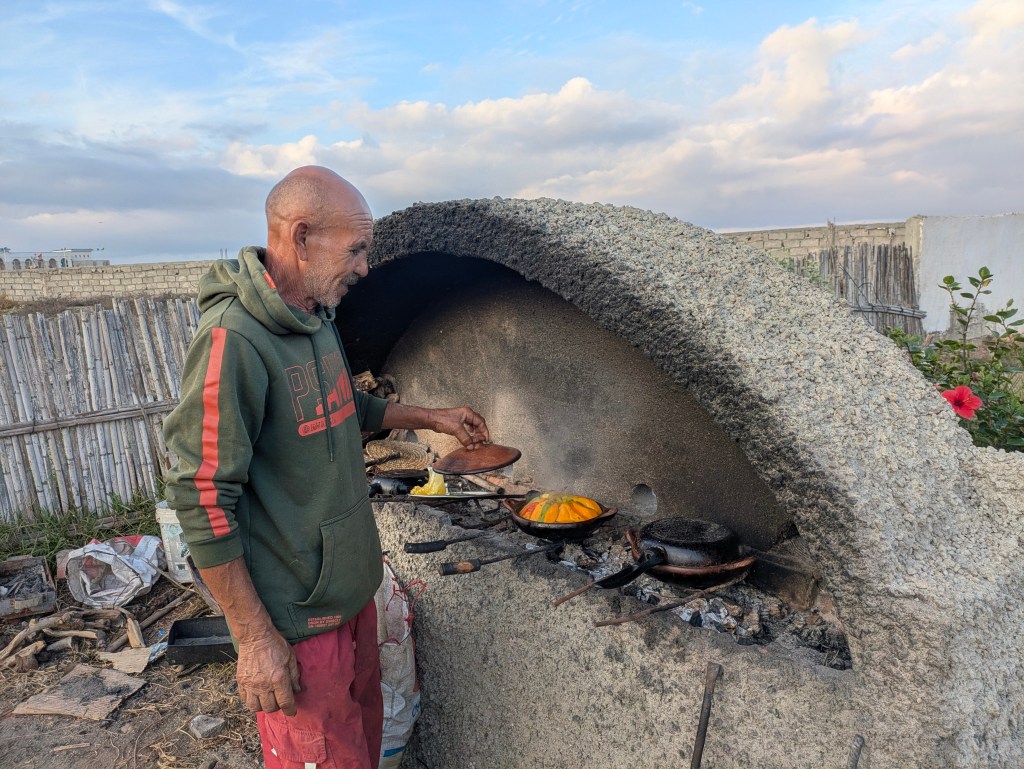
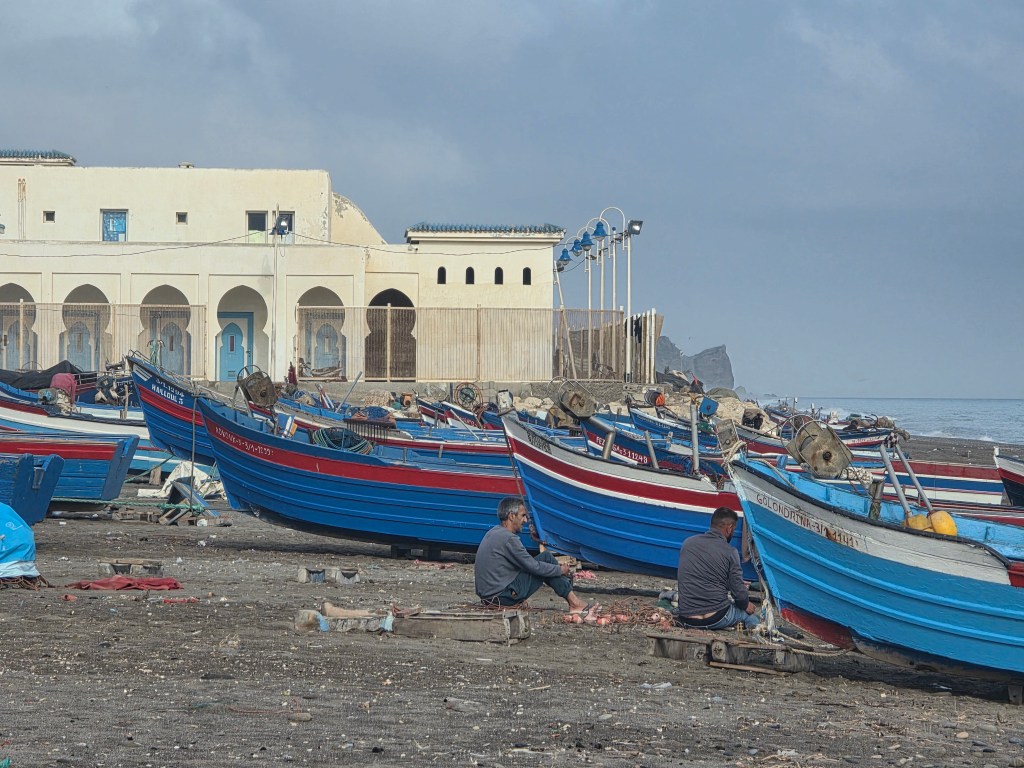
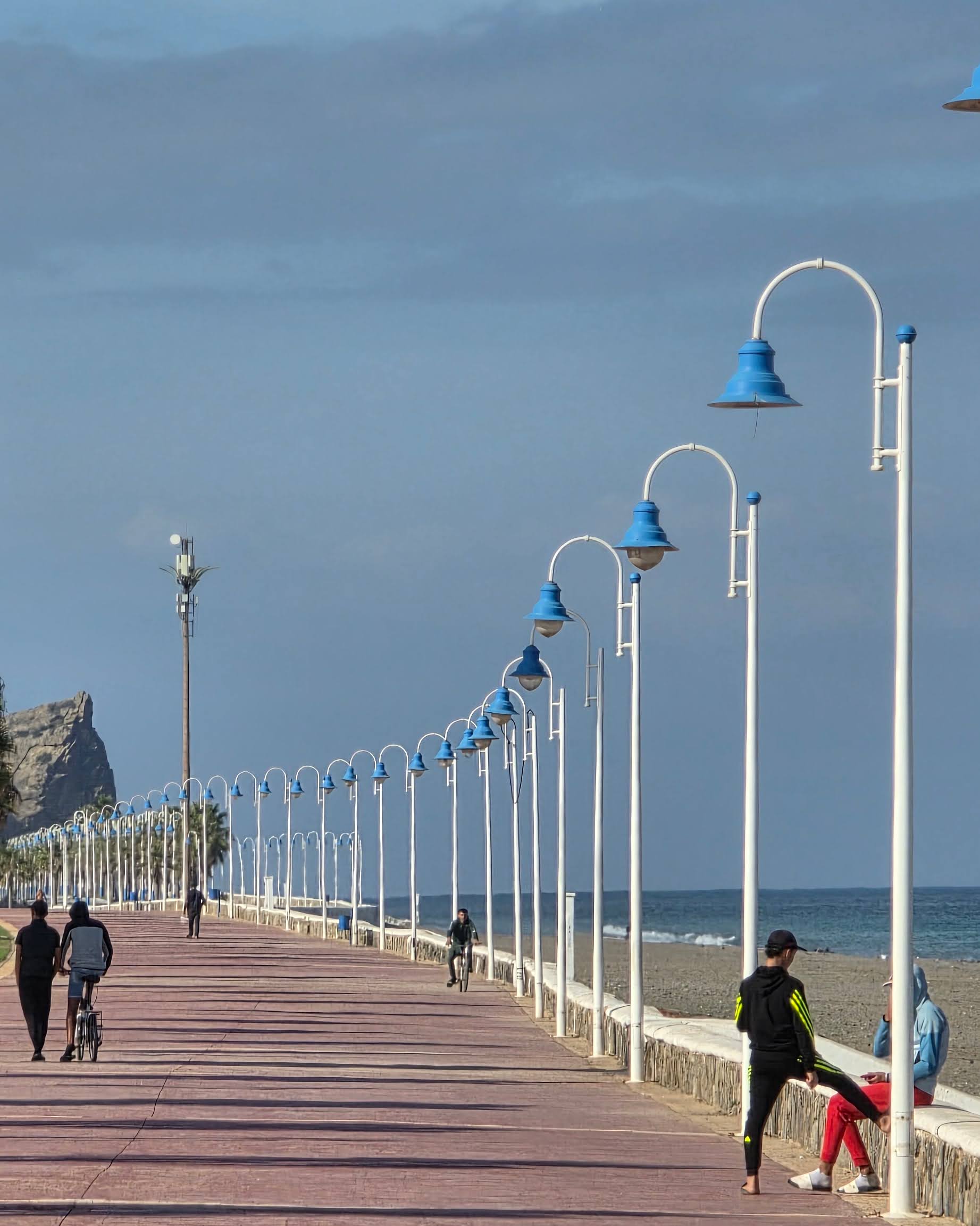
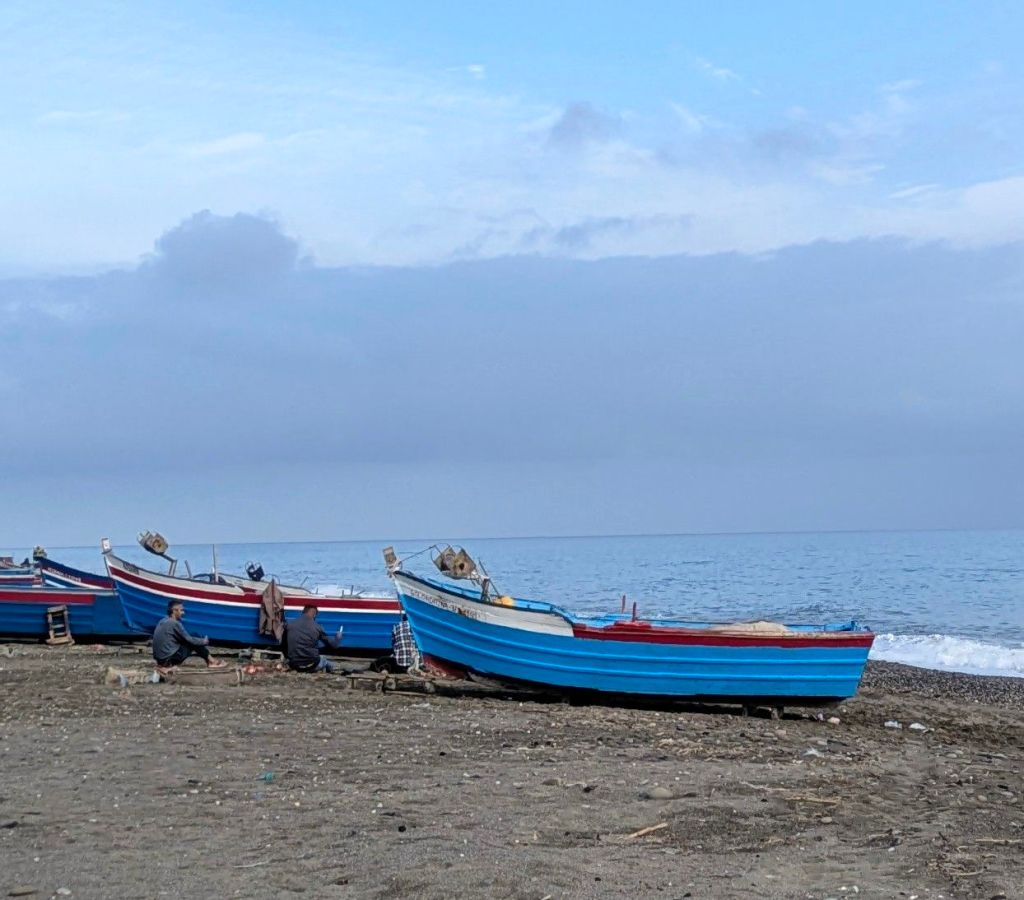
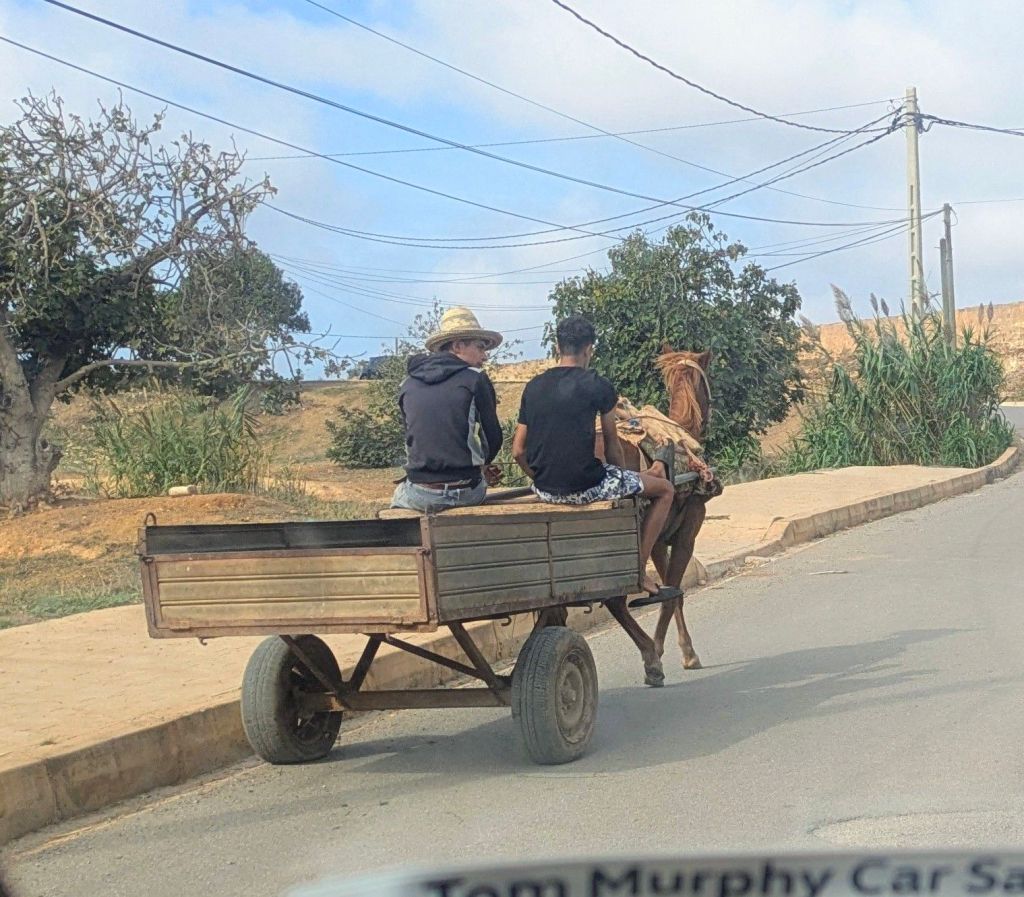
The seaside town of Quad Laou was larger than we expected, with a handsome prom that stretched for more than a kilometre by an (almost) deserted beach. There were fish restaurants, palm trees and few tourists of any kind. We swapped the gurgle of the river at our last campsite for the hypnotic crash of waves, and our dog was replaced by a cat quartet, who danced around us as we ate the tagines that Mr Abdul had prepared for us in his homemade, outdoor oven. It was also peaceful in a different way. Blue fishing boats were on the beach. An old woman tended a flock of sheep down the road. Mr Abdul worked his small bit of a farm by hand and with the help of a horse and cart, augmenting his meagre living by allowing camper vans to park on his land by the sea, The toilets were squat, ‘flushed’ by throwing a few ladles of water from the bucket. There was no shower although Mr Abdul would bring a bucket of well water to slosh over you…if required.
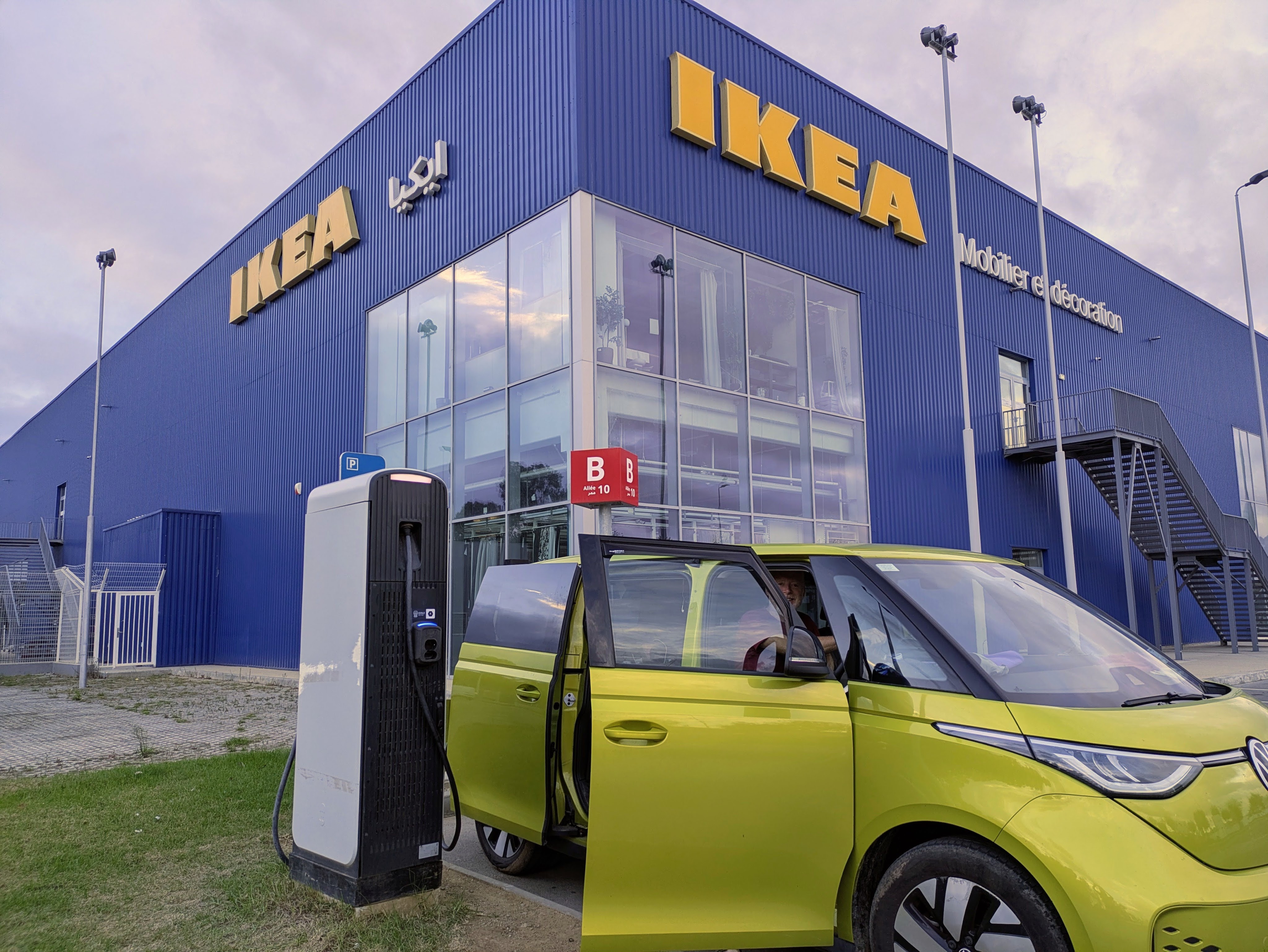
Leaving Quad Laou, we took the spectacular road north that snaked along by the Med where road stalls sold enormous bags of walnuts. Tetuan was the largest town in the area, a prosperous place with all the usual international chains and an old medina with winding streets and alleys. We didn’t stop at any of this…we had one priority….we wanted to get to Ikea on the far side of town, not to buy any furniture or eat meatballs, but to charge the Buzz. It was no surprise that EV chargers were scarce in the area. Charging wasn’t absolutely critical because our recent hops from place to place were relatively short but it would still be reassuring to charge fully. We missed the charging slot by minutes….there was only one. Two women had just plugged in and said that they would be two hours but at least the Kilowatt charger was working and as usual, it was free to use. Another electric car appeared, also hoping to charge, so there were certainly electric vehicles in Morocco. I went into Ikea to use the bathroom. My visit coincided with the ‘call to prayer,’ which was broadcast throughout the store on loudspeakers, sounding slightly surreal among the flatpack Swedish furniture.
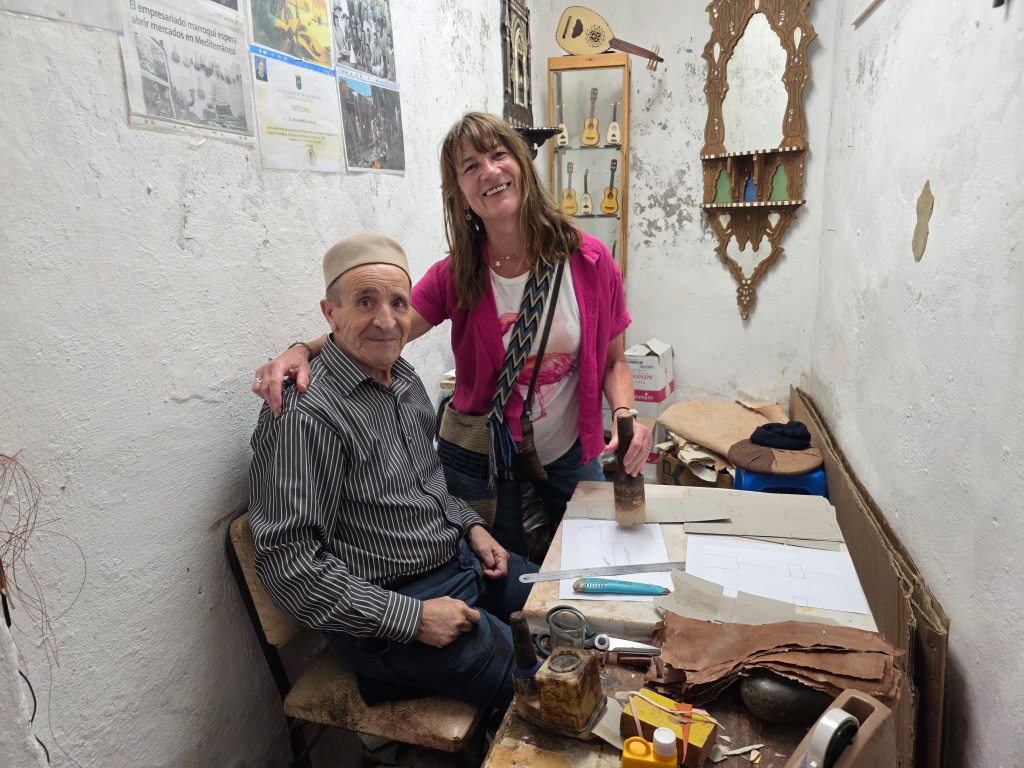
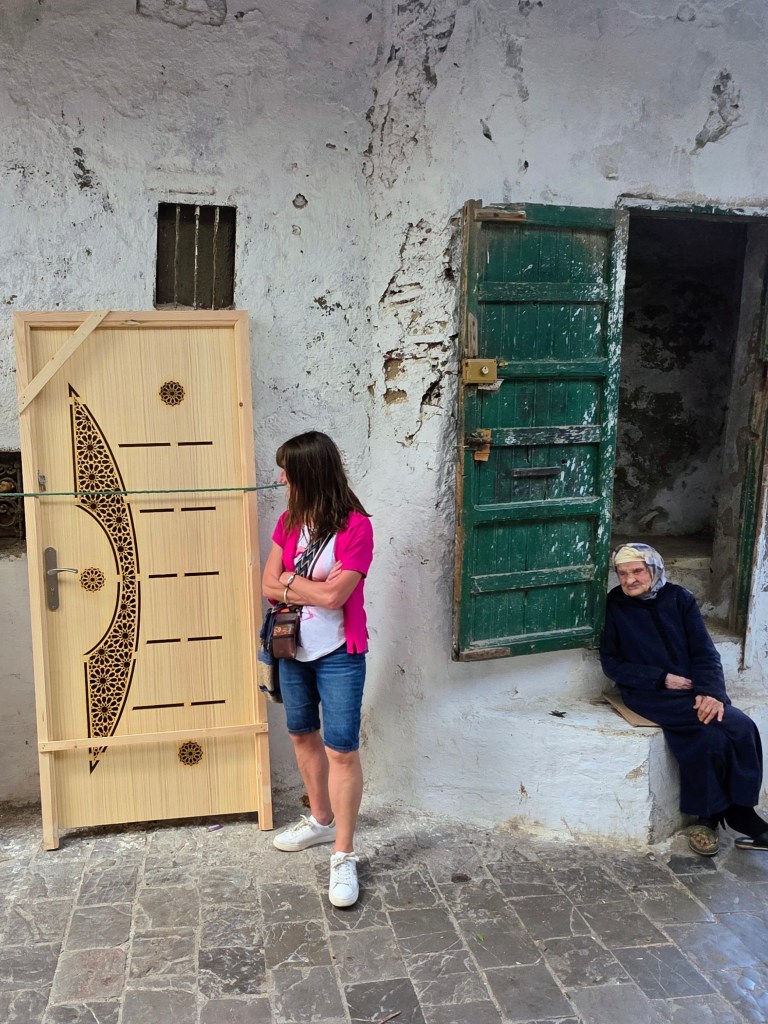
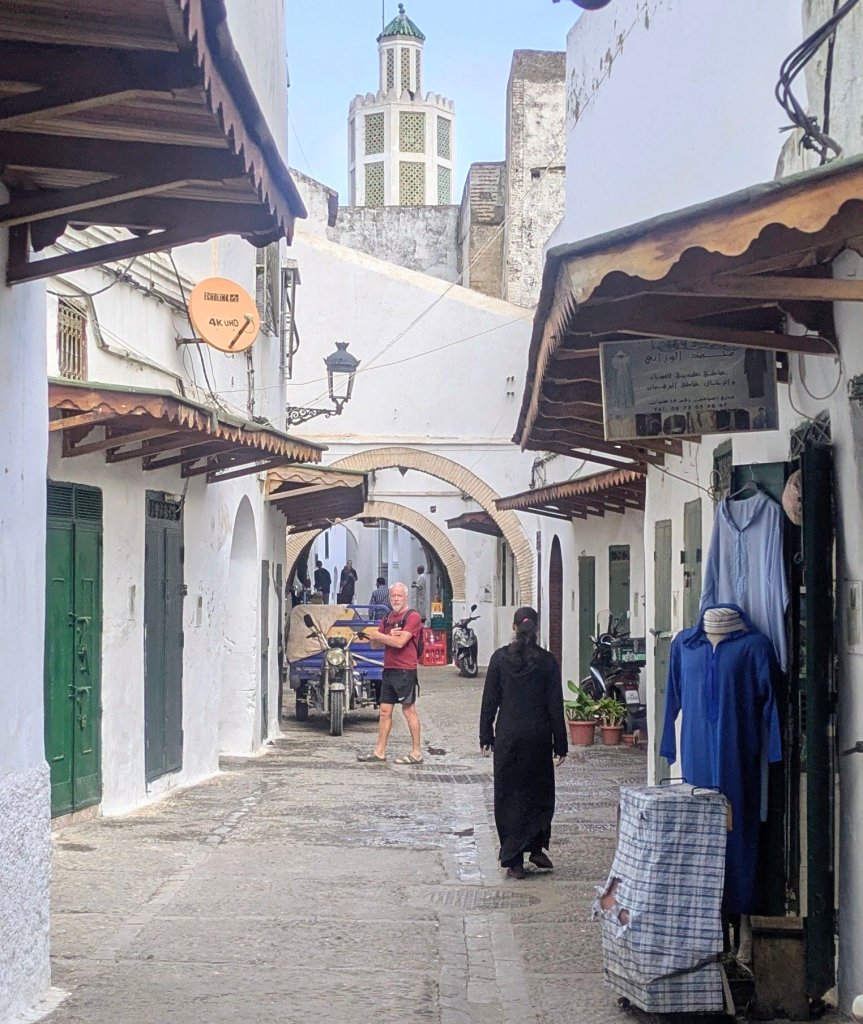
Deciding to return later, we backtracked to the medina in the centre of town which also had a small tannery. This was not in full production, although a ‘clothesline’ of animal skins were draped on the back wall and a pungent smell hung heavy in the air -blood and drains – but not as bad as the hellish tannery in Fez. Tetouan was known as the White City and from the balcony overlooking the tannery, there was views of the pale houses crawling up the slopes while on the other side, the tombs of the dead were equally white and shiny in the sunlight.
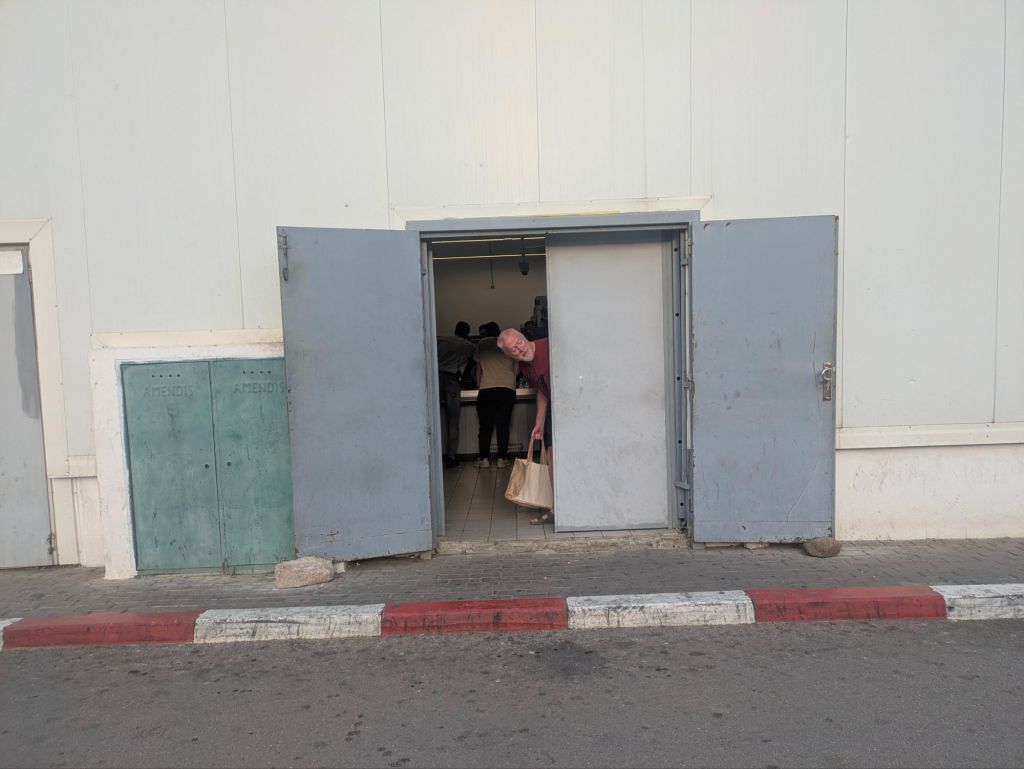
In the Carrefour Supermarket (which unfortunately didn’t have any EV chargers), we couldn’t find the alcohol section which we knew was often slightly separate to the main supermarket. When we asked, people told us that it was outside and around the corner. We wandered around and eventually spotted an unmarked grey door on the side of the building. That couldn’t be it, could it? It looked more like a back entrance to some kind of warehouse. We peeked in. The light was dim, the air was stuffy but the interior was teeming with men (it was all men except for the women at the tills). There was the sound of bottles clinking and cans rolling against each other in baskets. The whole enterprise felt furtive, shady and clandestine. We were delighted. Our meagre alcohol supplies had run out about a week before Mr Abdul had tried to source us two beers the night before in Quad Laou but despite his best efforts, he was unsuccessful and very apologetic.
Despite the obvious demand, it wasn’t cheap, we’re talking Irish prices for beer and far higher than home prices for wine, except the Moroccan wine which cost about €4 a litre and was drinkable…just about. At the cash tills, wads of cash were pulled out of pockets, crumpled notes smoothed and the balance made up with coins. Most paid in hard cash although it was possible to pay by bank card.
We parked in a hotel carpark beside other camper vans, reheated the leftovers from the previous day’s tagines (the portions were enormous) and enjoyed our wine, giggling at the process involved in acquiring it.
The following morning we were in Ikea before 8.30am, plugged in and charging. Moroccans don’t seem to get up early. All the nearby cafes were closed and shops rarely opened before 10 or even later in the medina. While we were waiting in the van, another EV’s pulled up beside us. The driver told us that although Ikea store doesn’t open until 10am, the restaurant was open for breakfast at 9am. So we enjoyed a three-egg omelette each, made in front of us, with bread rolls, orange juice and coffee for about €7. A bit of local knowledge is a wonderful thing.
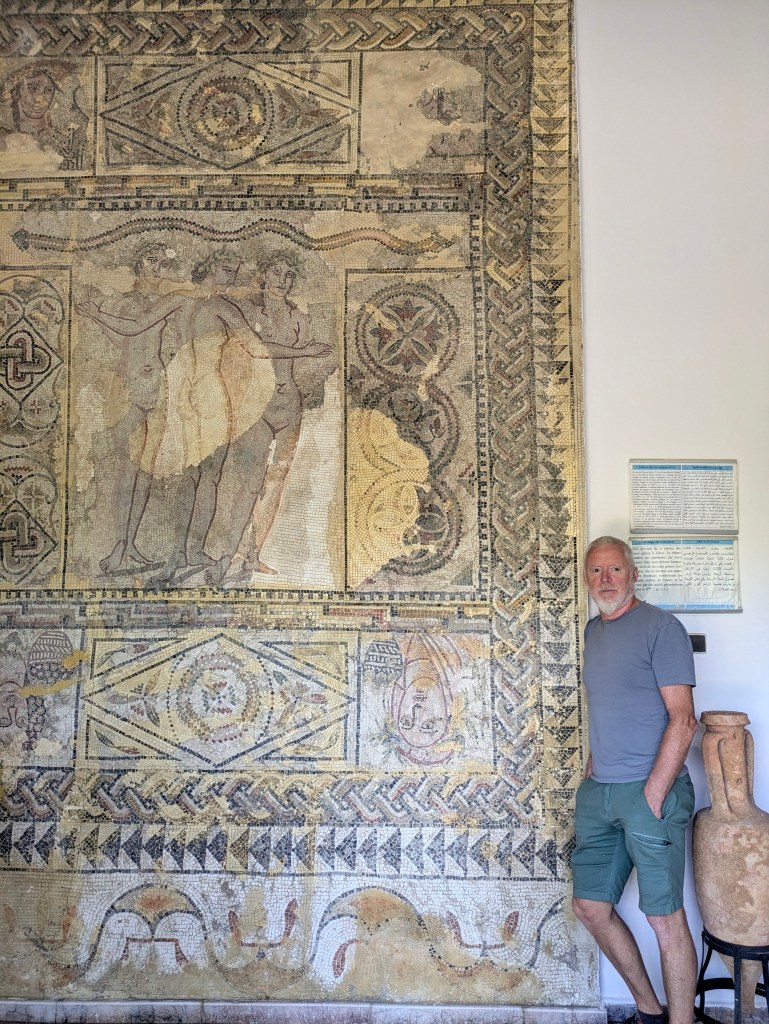
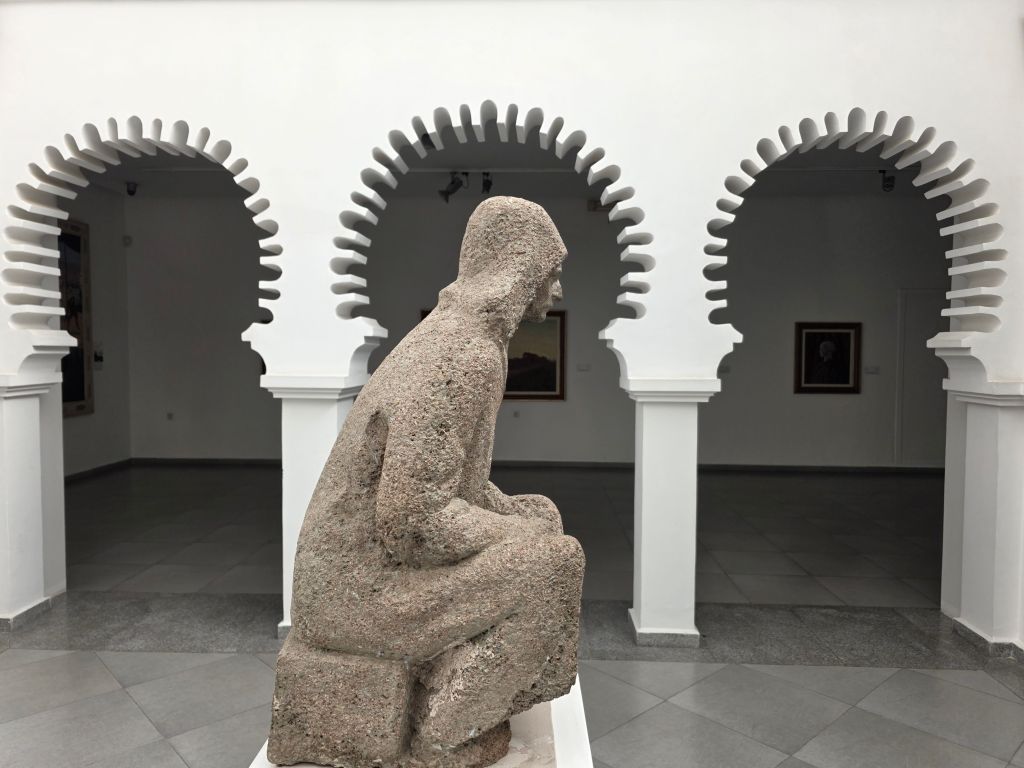
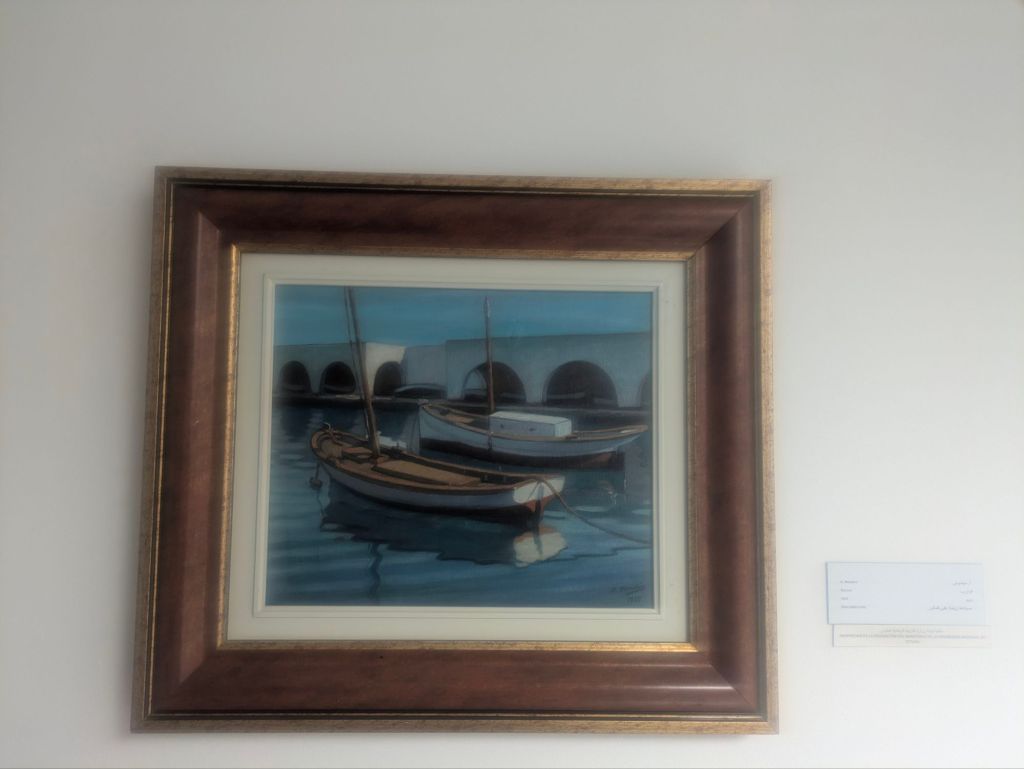
Campsites in the area were scarce so we rented an apartment (mainly because we were in need of a shower, there’s a limit to what sprays of CK one will camouflage). This was such a bargain and so comfortable at €19 a night that we booked it for a second night and enjoyed a ‘culture’ day of visiting museums and a lovely art gallery.
Tomorrow we will head to the border and hope that our exit from Morocco will have less drama than our entrance. If the border crossing goes smoothly, we will spend tomorrow night in Ceuta, the Spanish city on the African continent and get the ferry to mainland Spain the following day.
Thanks for reading
A bientot
 marienoonanblog