Electric Roadtrip: From the Mountains to the Sea

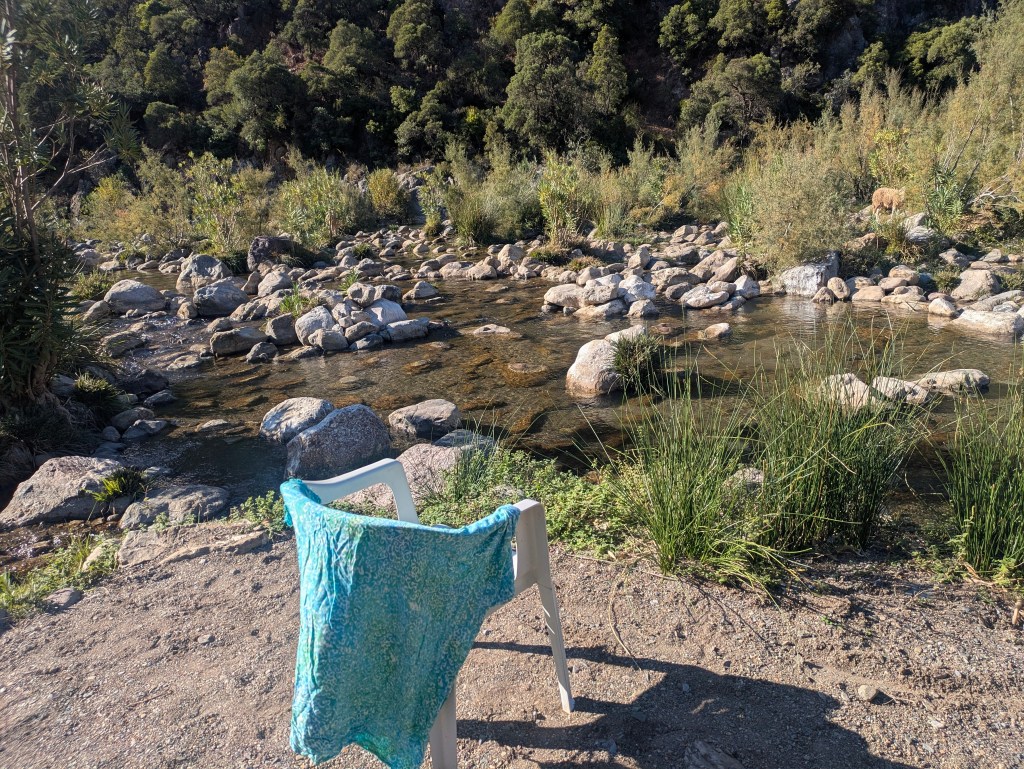
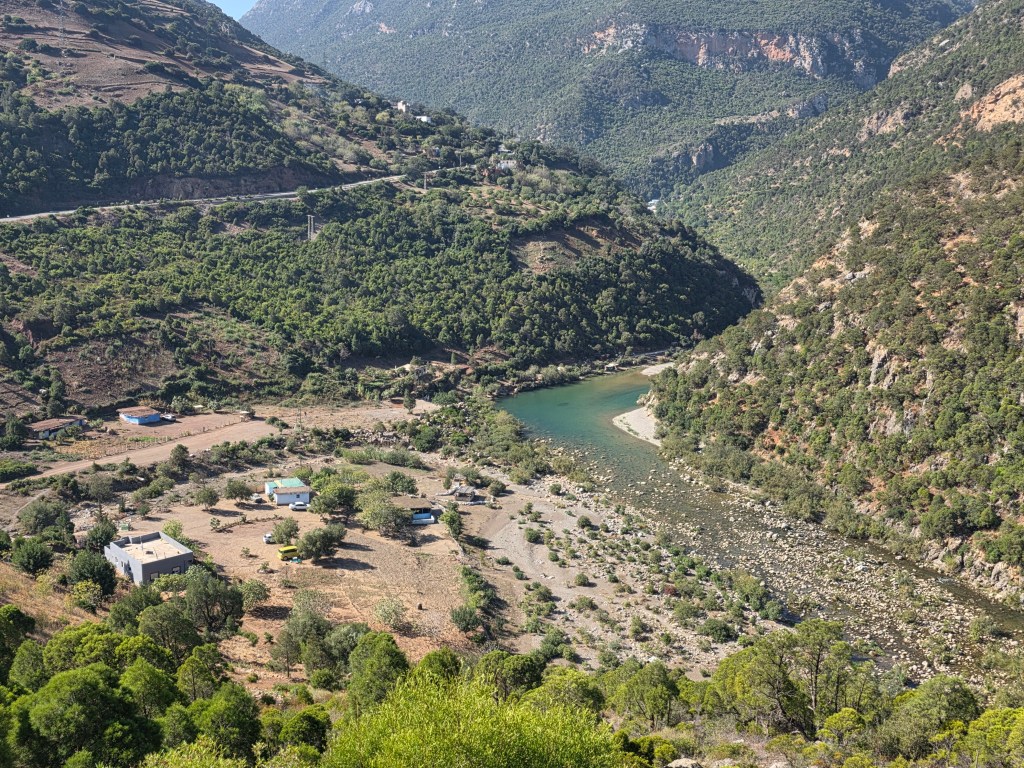
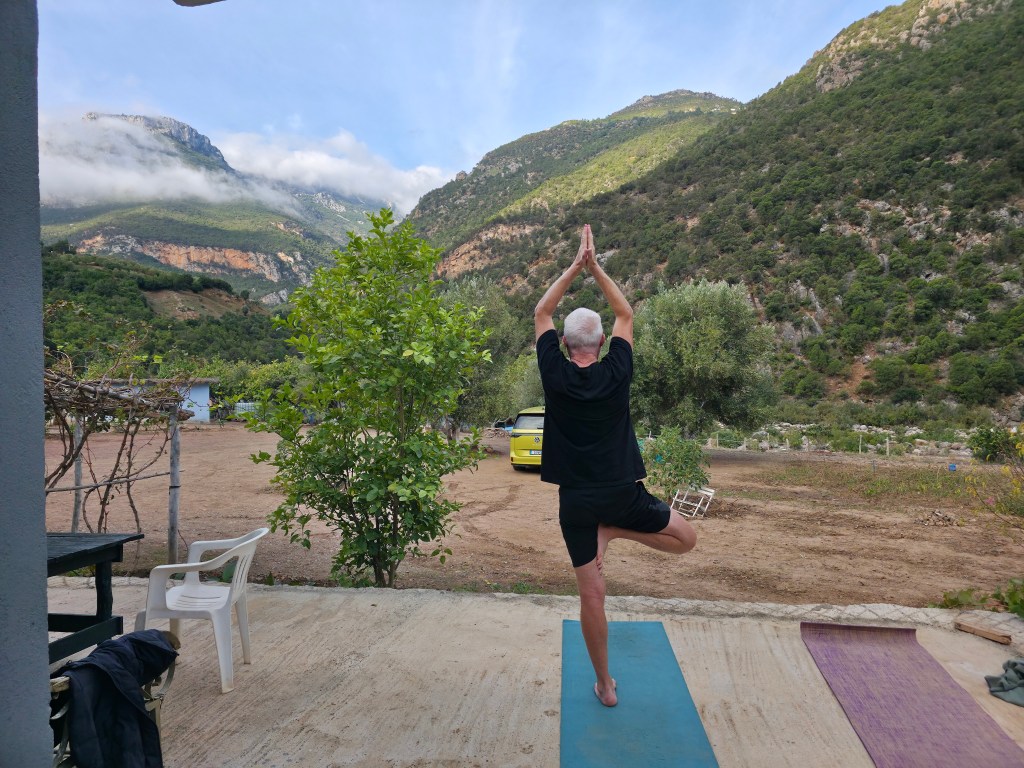
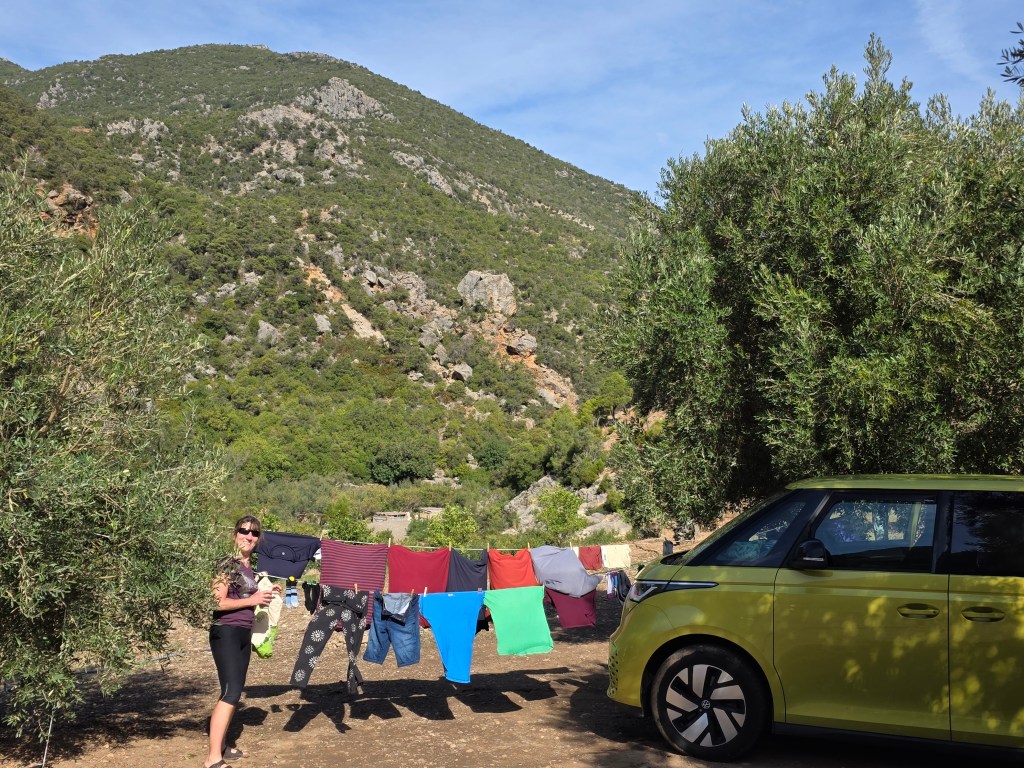
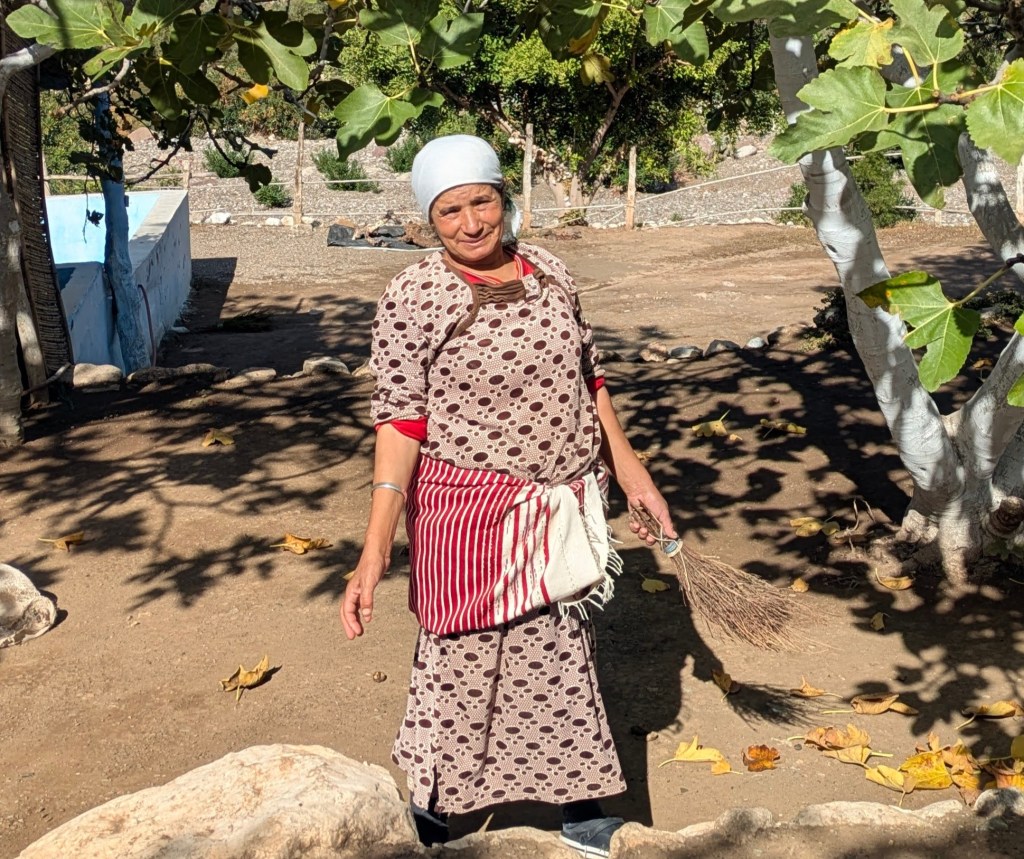
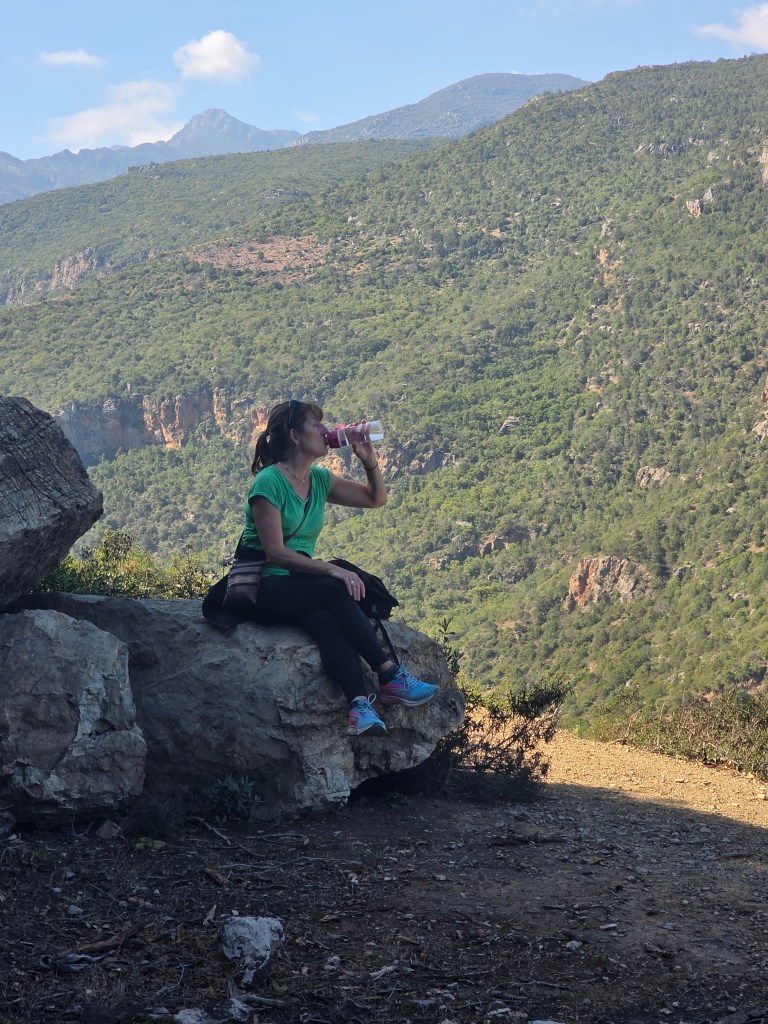
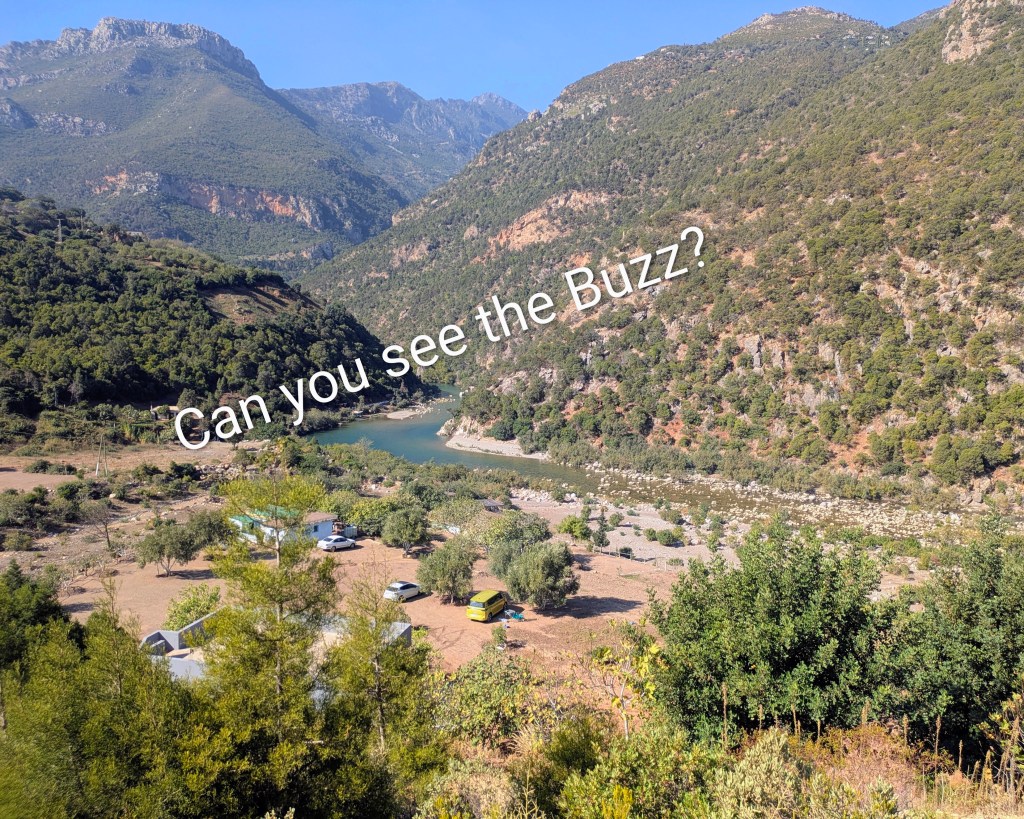
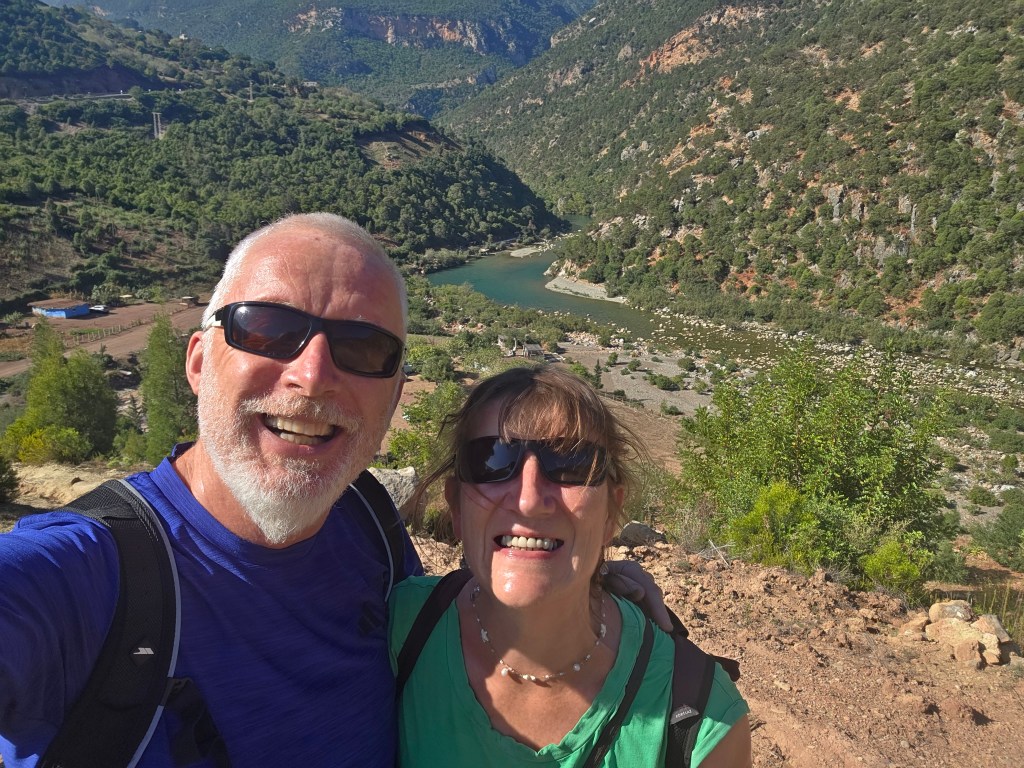
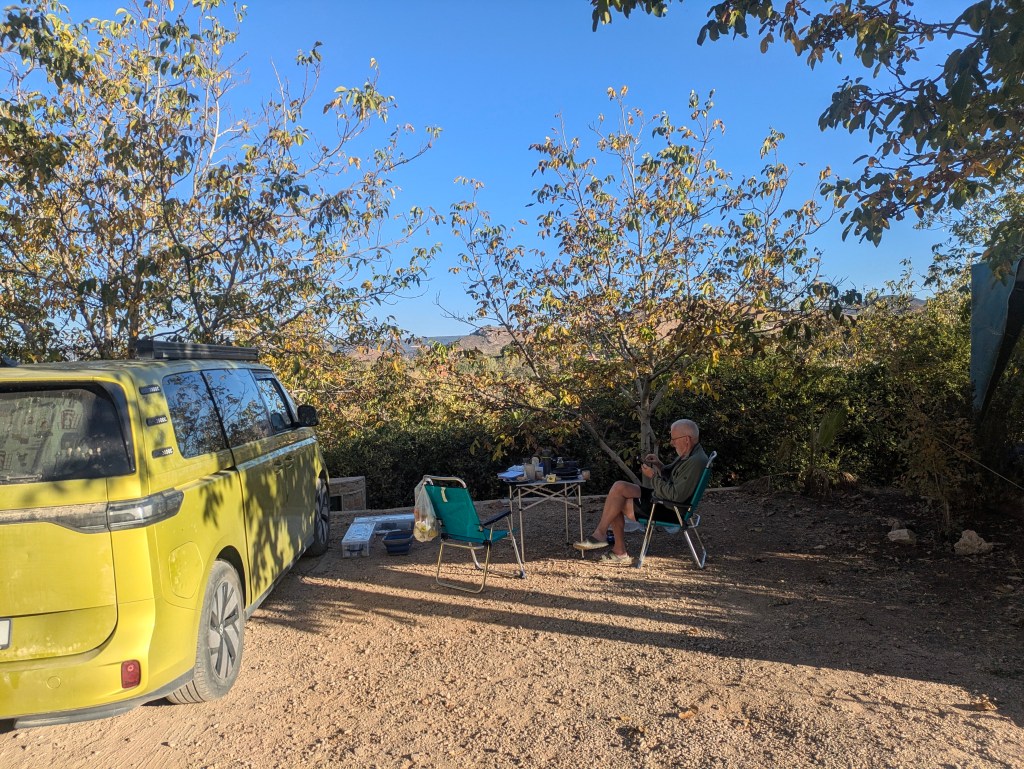
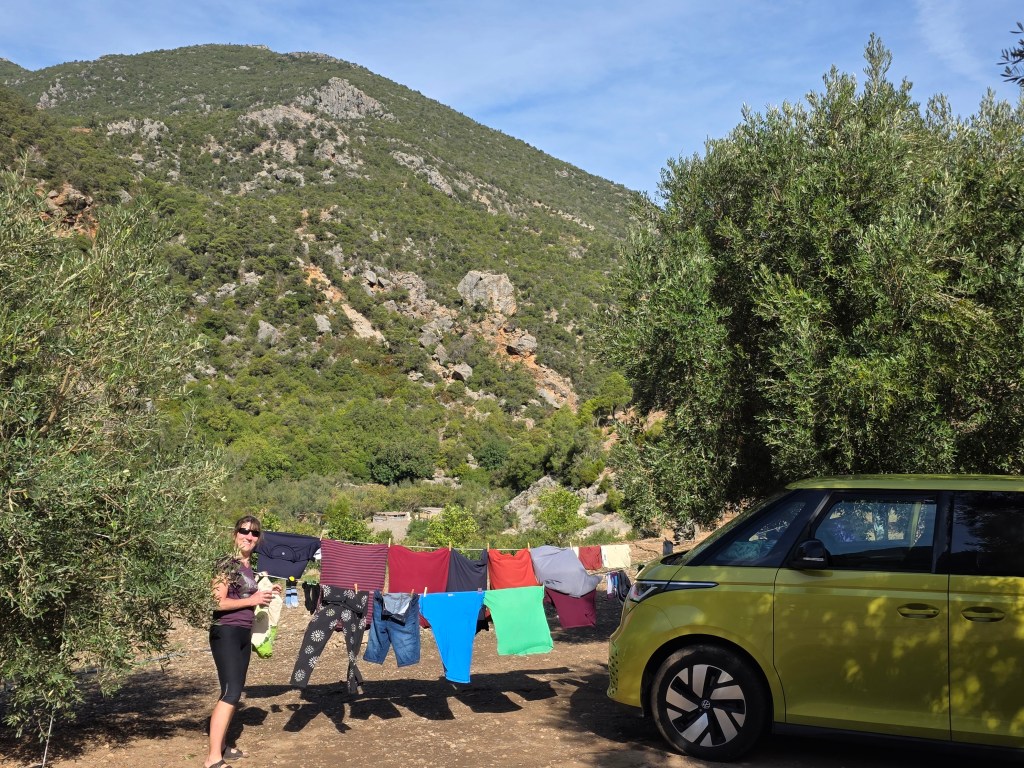
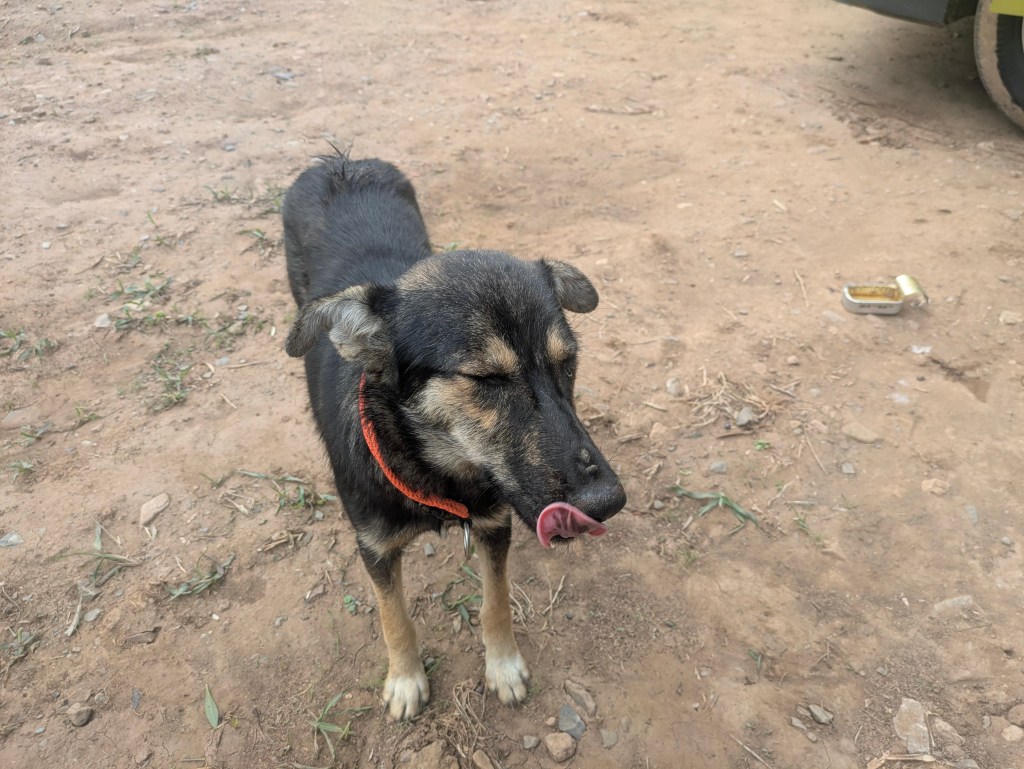
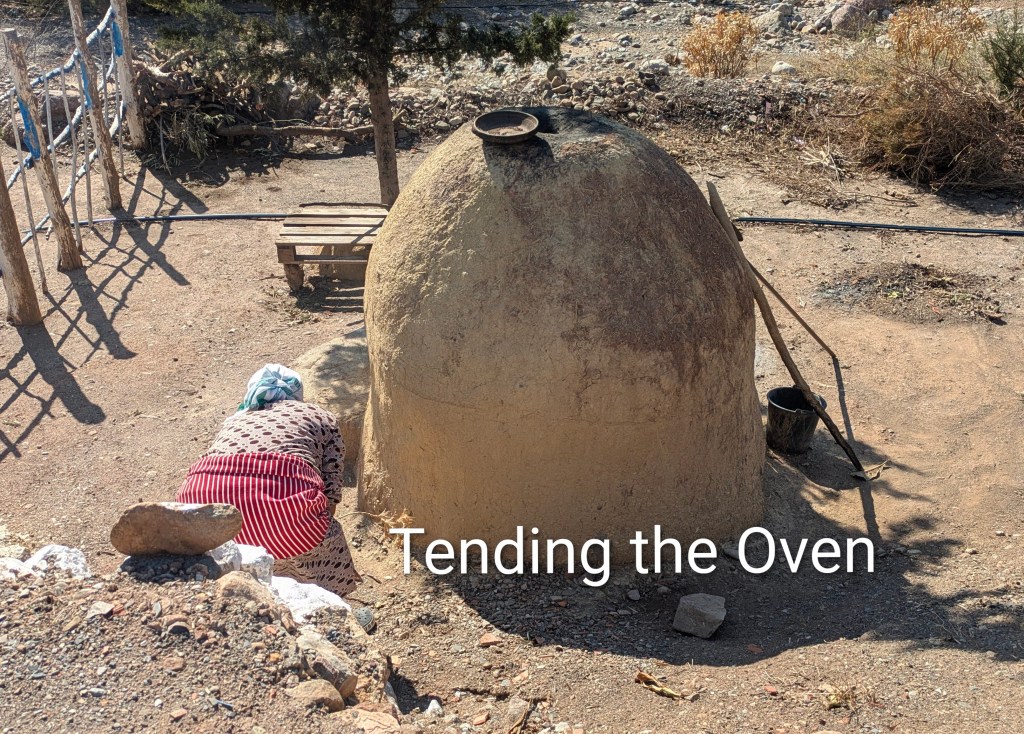
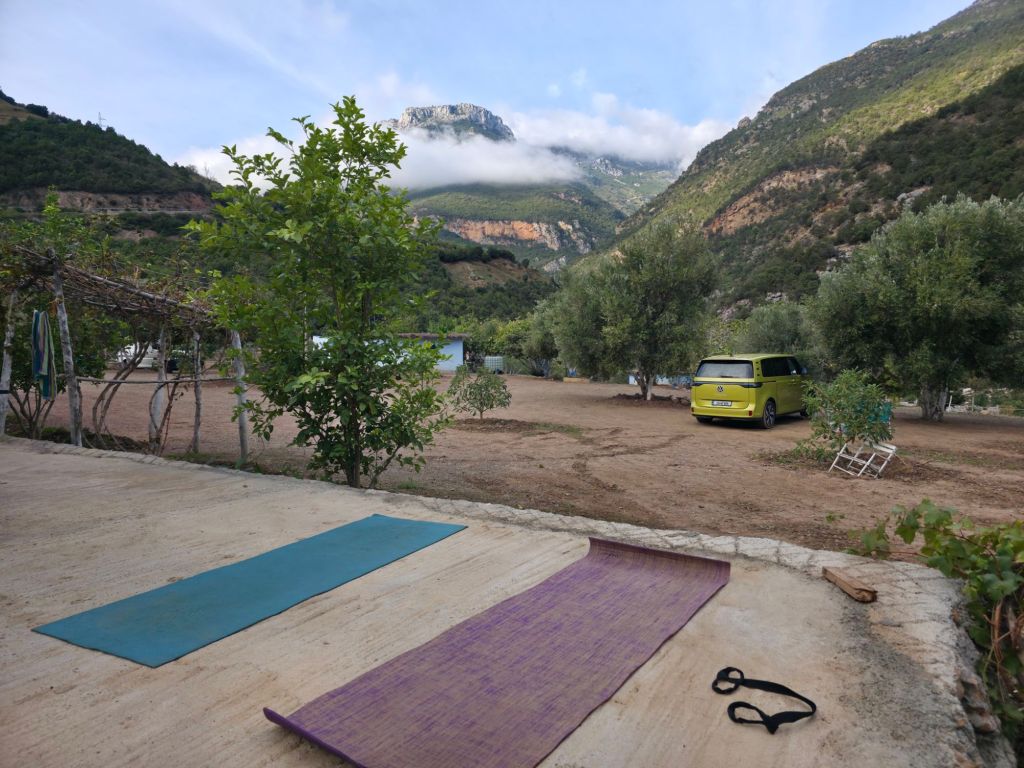
Our washing danced in the breeze on the clothes-line strung up between two olive trees in the rustic campsite in the Rif Mountains in Morocco. The figs had been harvested, and so had the chillies but two lemon trees were full of green skinned fruit although the few avocadoes were still small and hard.  The resident dog befriended us…..all it took was a bit of chicken….he slept beside the van and followed us to the river, as if guarding us or more likely, hoping for scraps.  We chatted to the other few campers who came for a night and then departed, an American couple who were at the beginning of a two year stint around Africa, having shipped a jeep over from the States and a trio of British campervans who were travelling in convoy. We watched the woman make bread in the outdoor oven and water the trees. We sat by the river, hiked in the hills, read, did a bit of yoga and watched the morning sun hit the mountain peaks and slowly  creep down to warm the valley. This tranquil place in the Rif Mountains had put a spell on us, forcing us to slow down. It could have been boring….it should have been…but it wasn’t in the slightest.
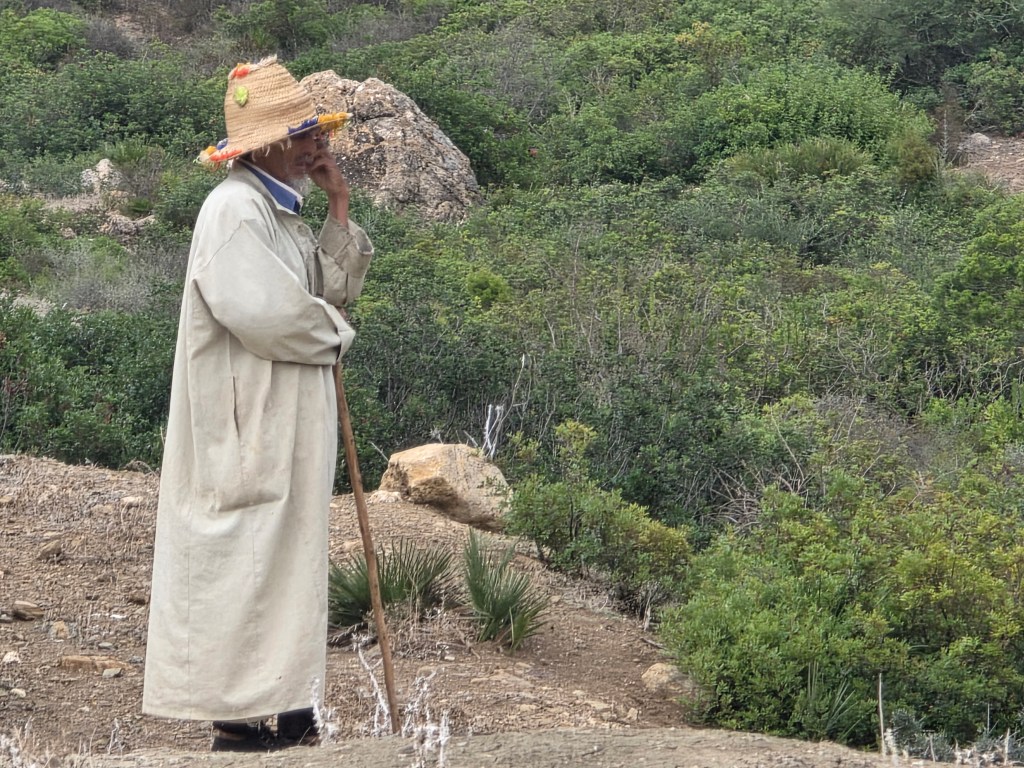
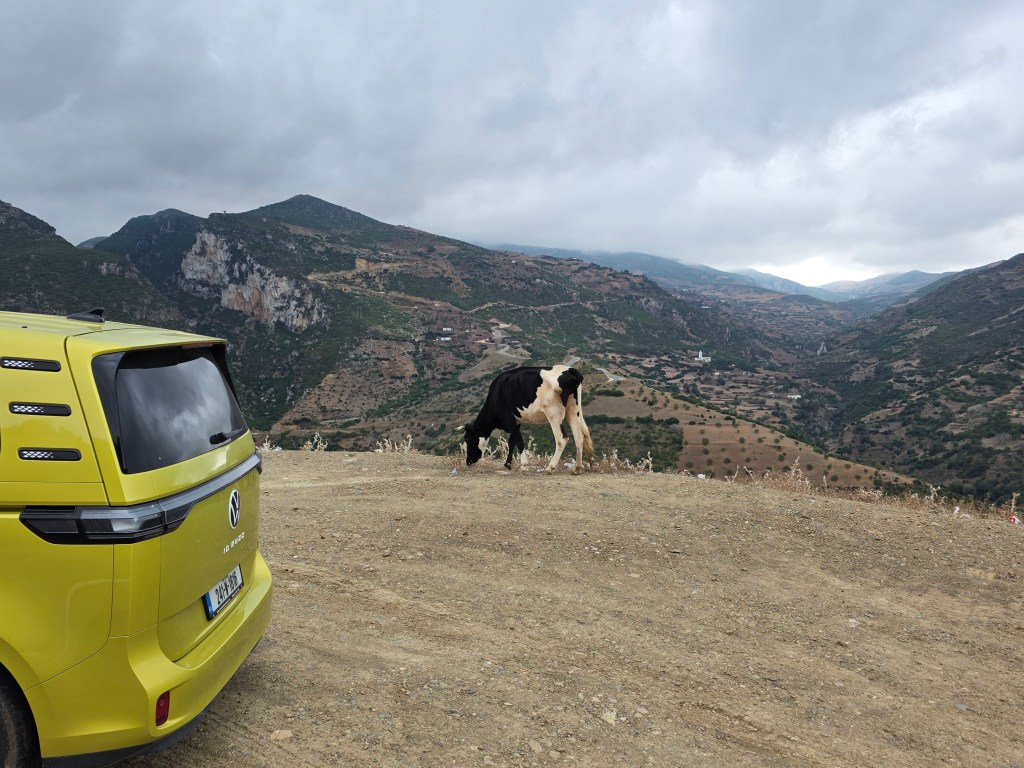
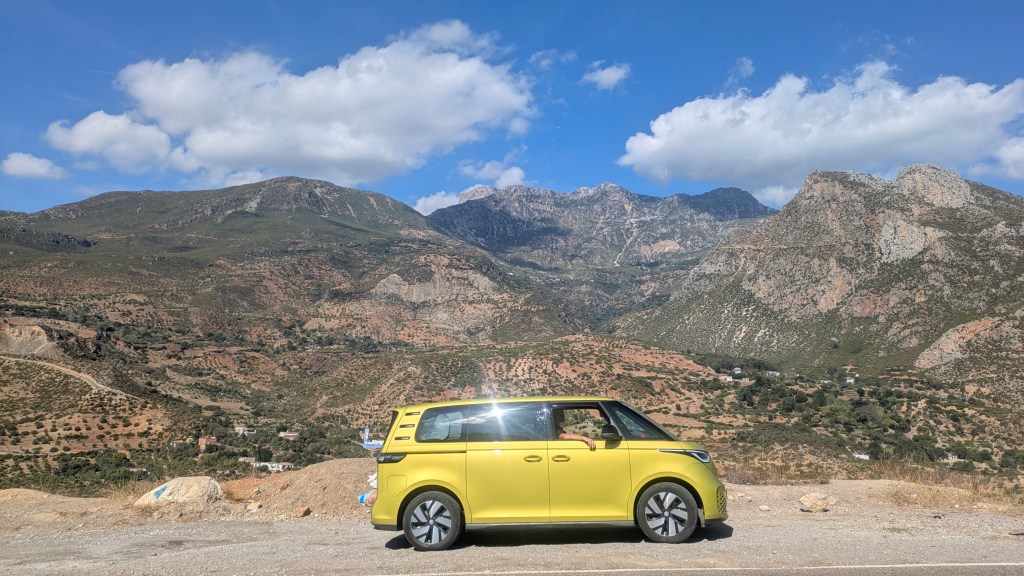
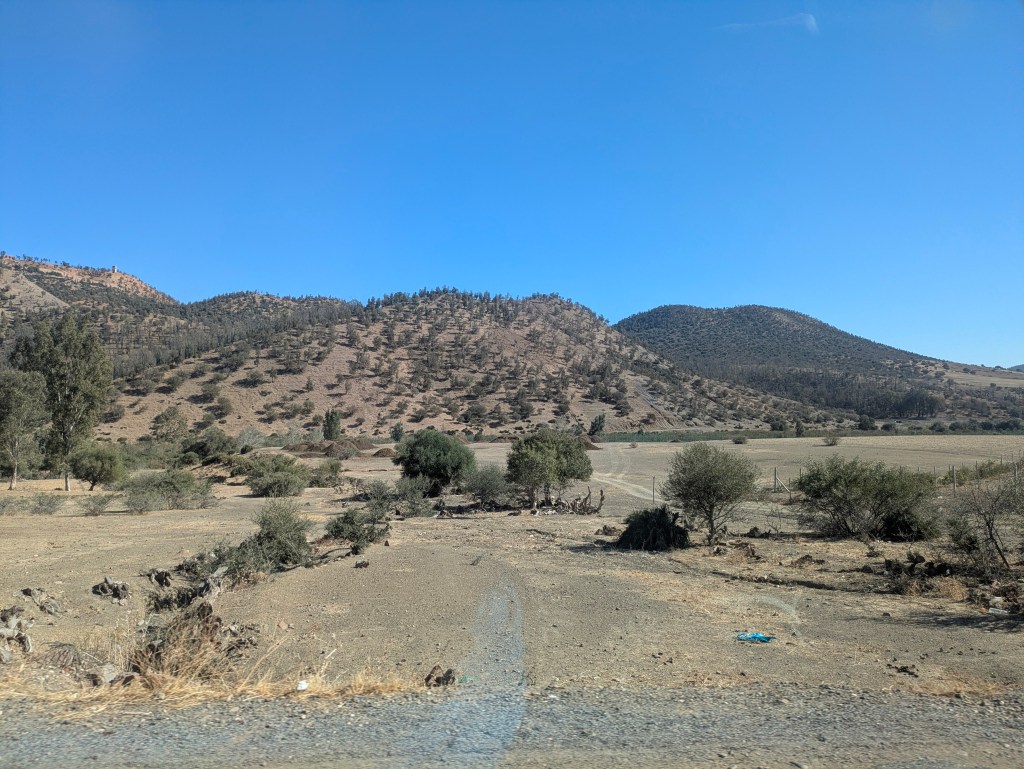
Finally on the fifth morning, we packed up and left, taking the mountain road to climb higher still. A man in a djellaba waved a stick and shouted at his cow on the far side of the road, who scampered off in the opposite direction. The road rose before  dipping down to the Mediterranean Coast.  
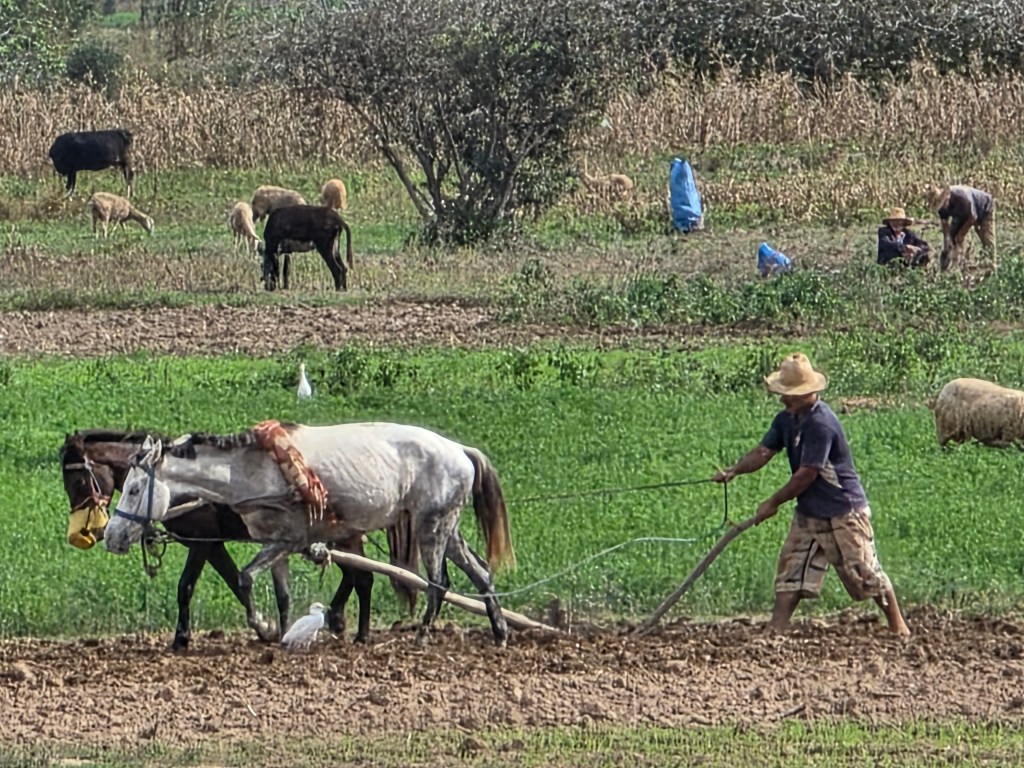
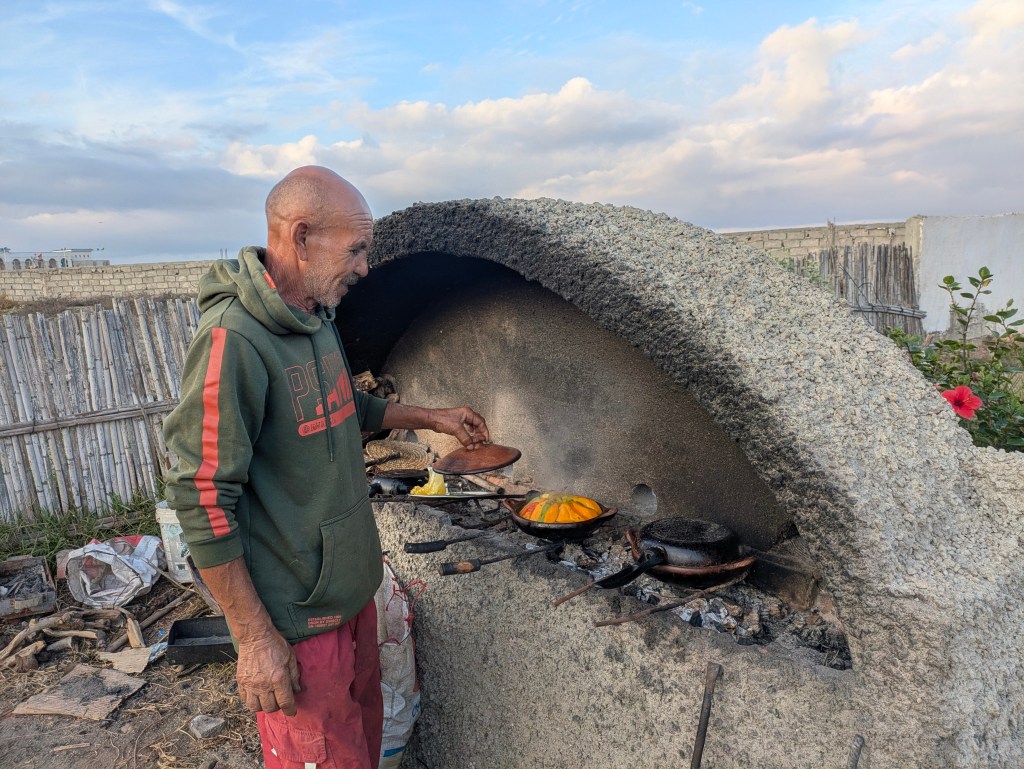
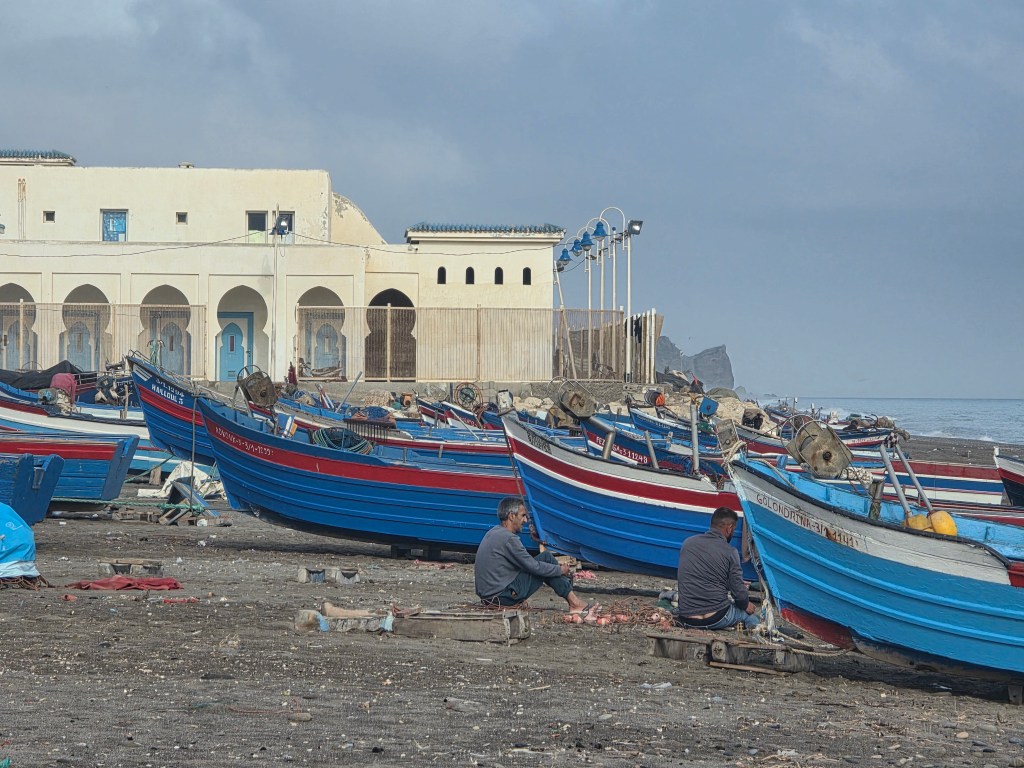
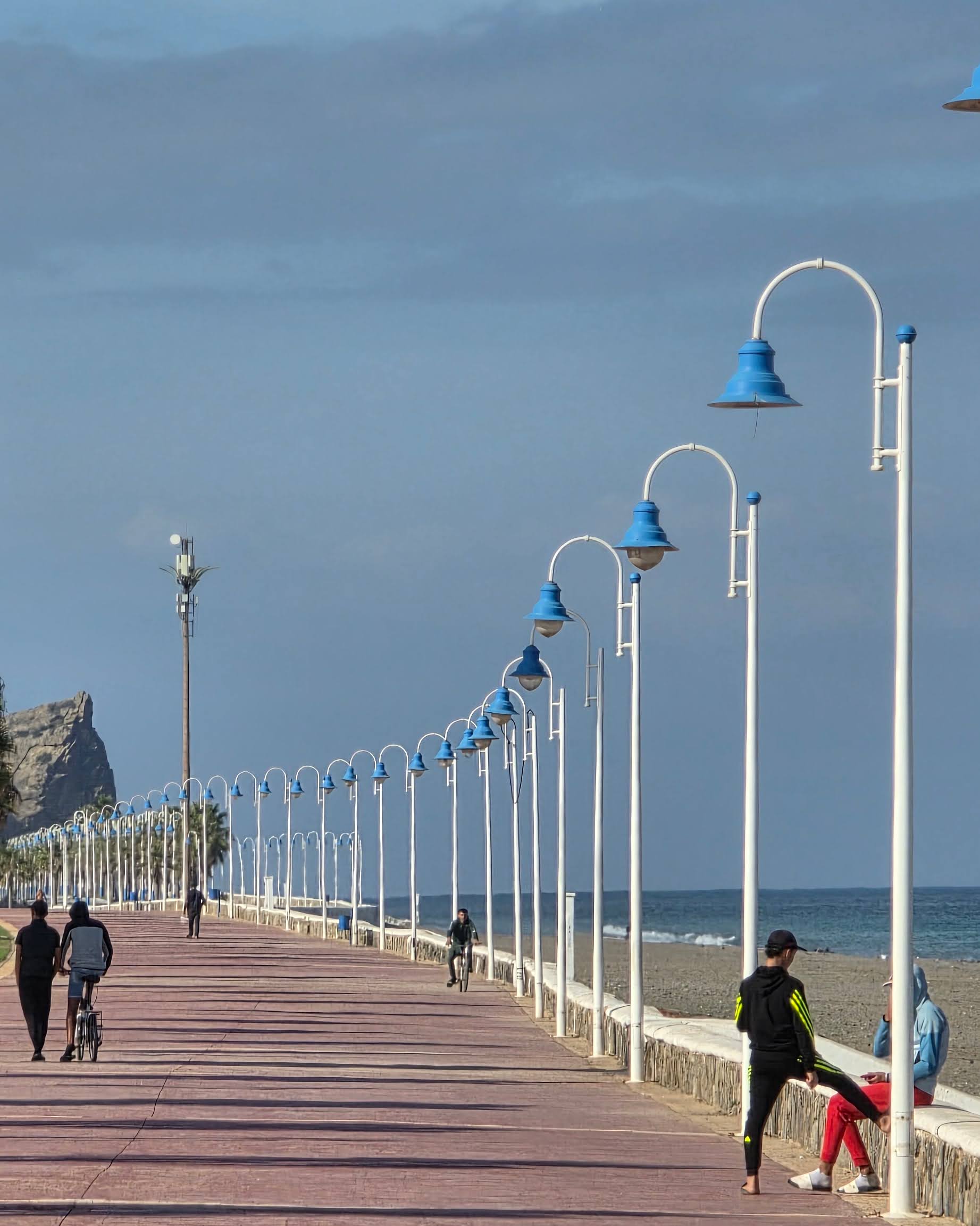
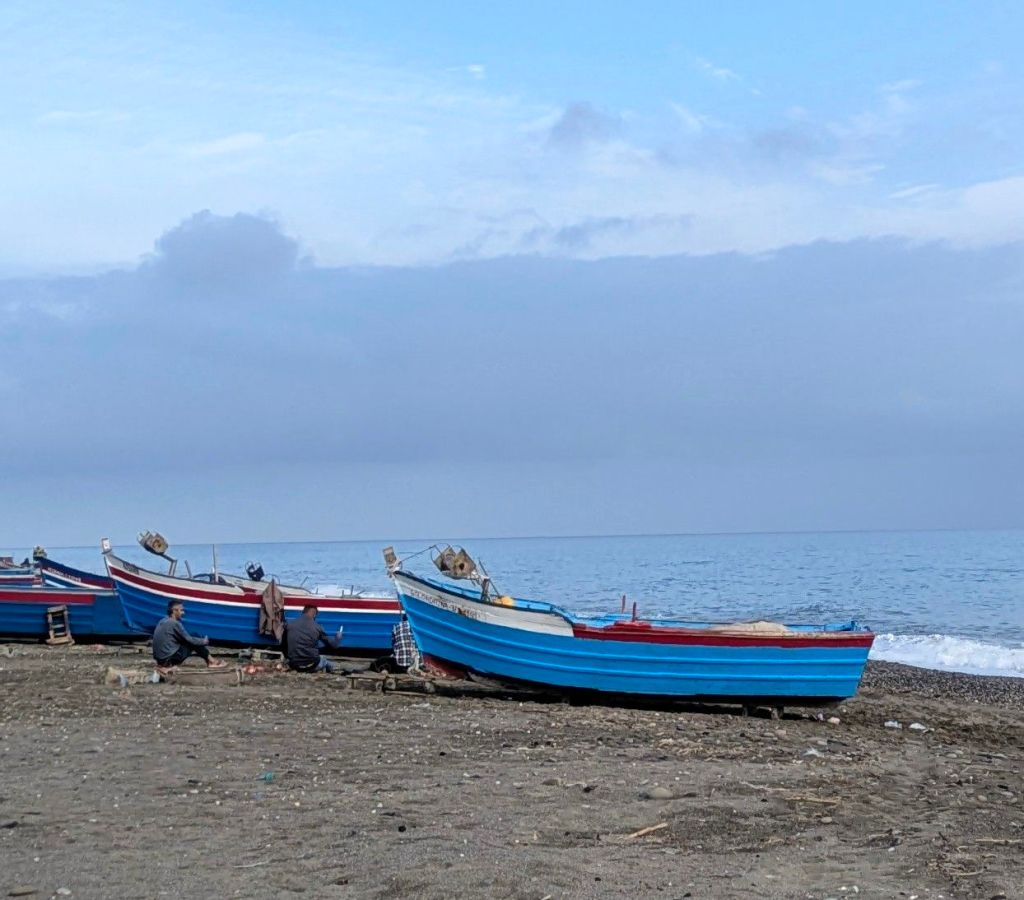
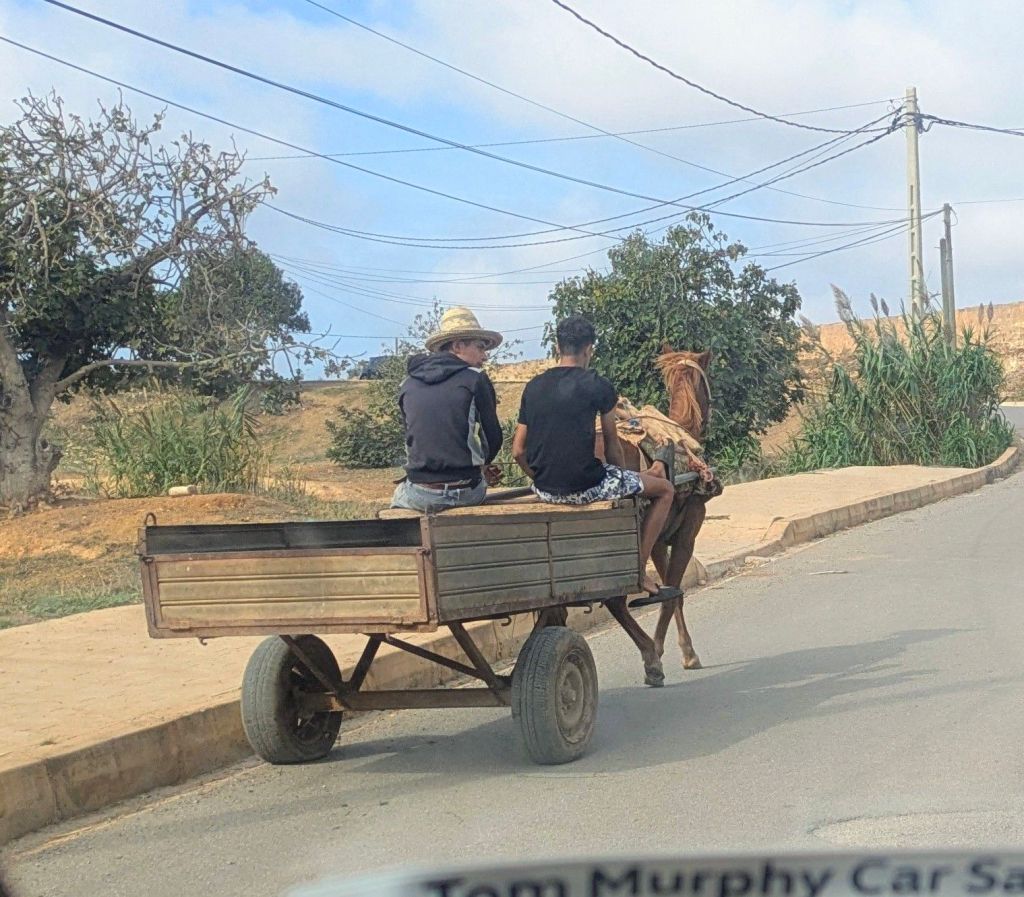
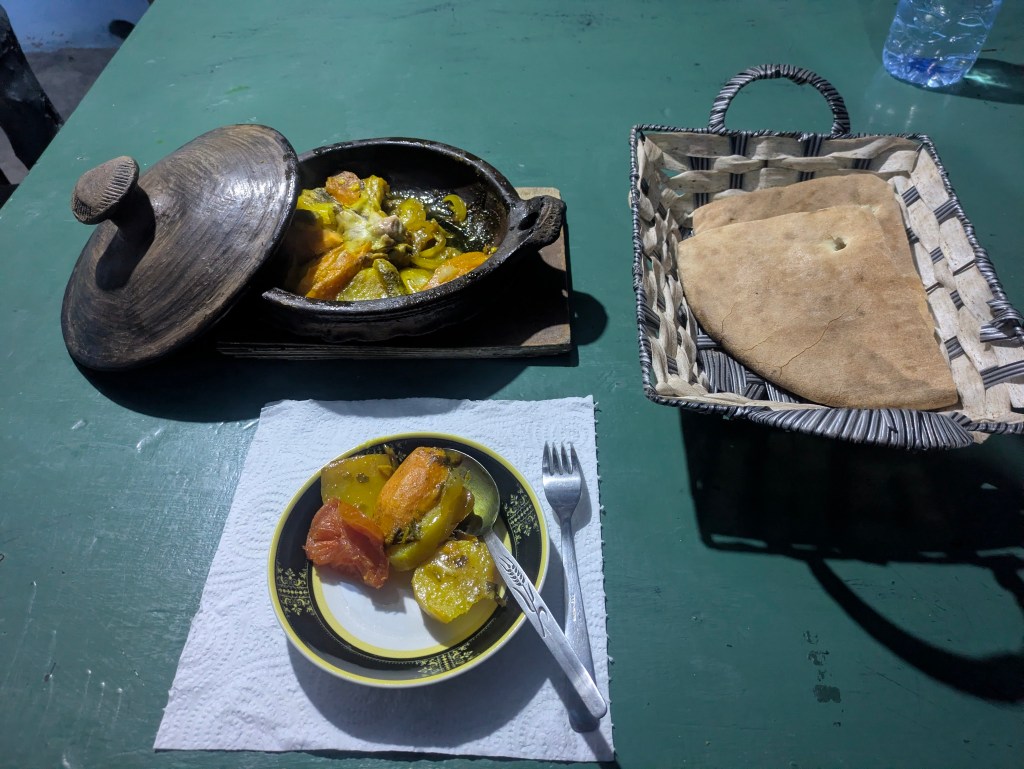
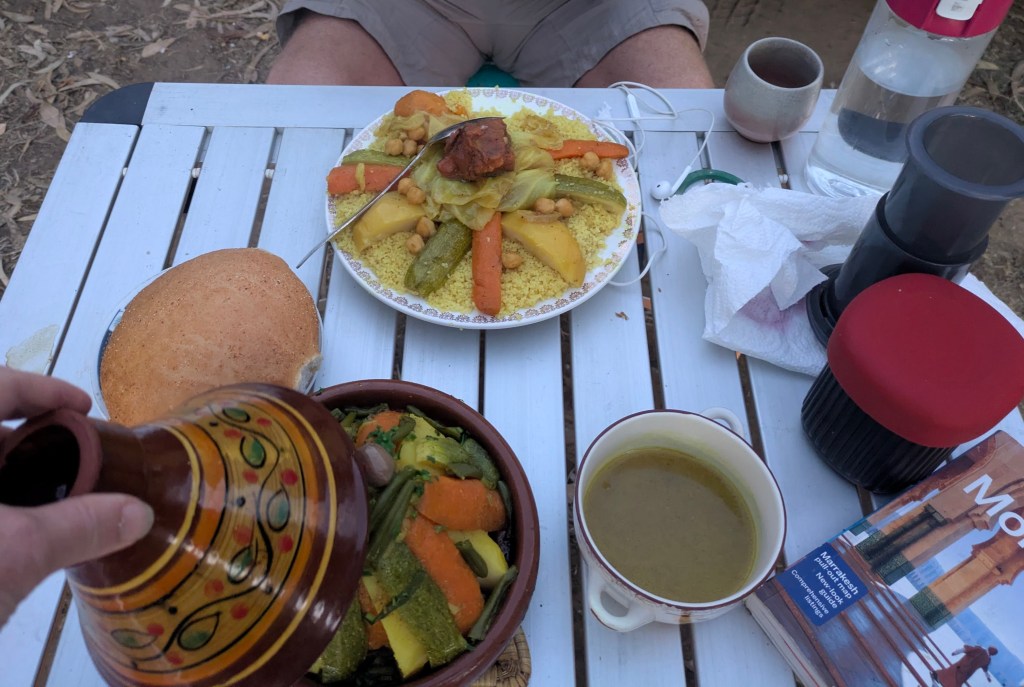
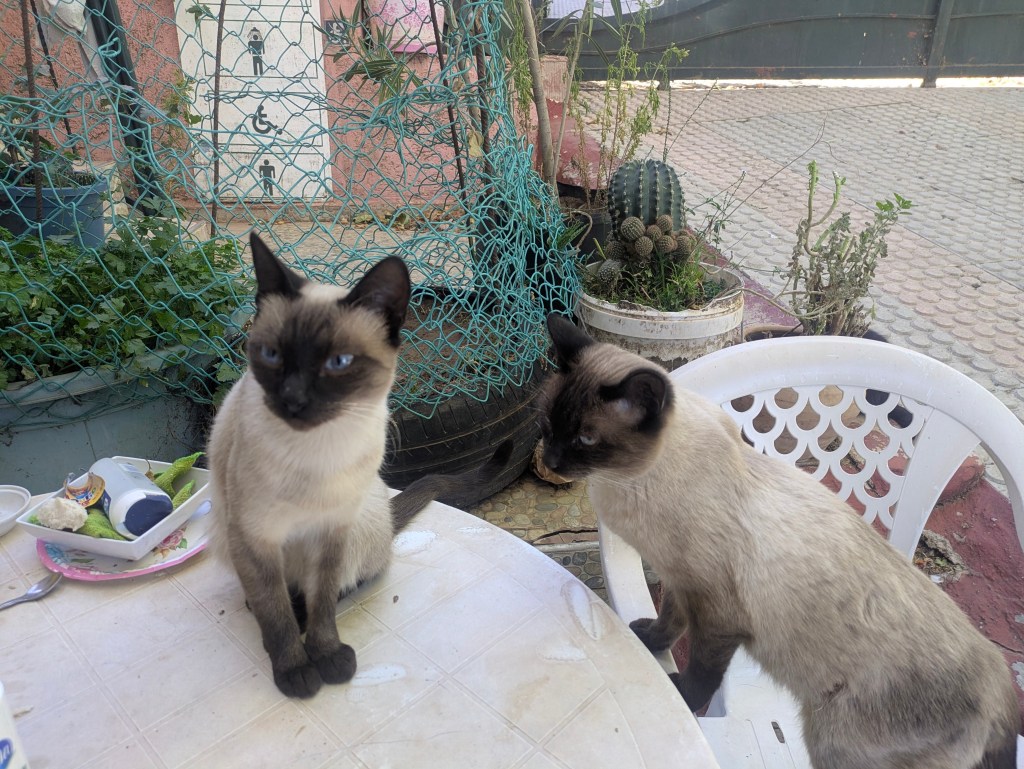
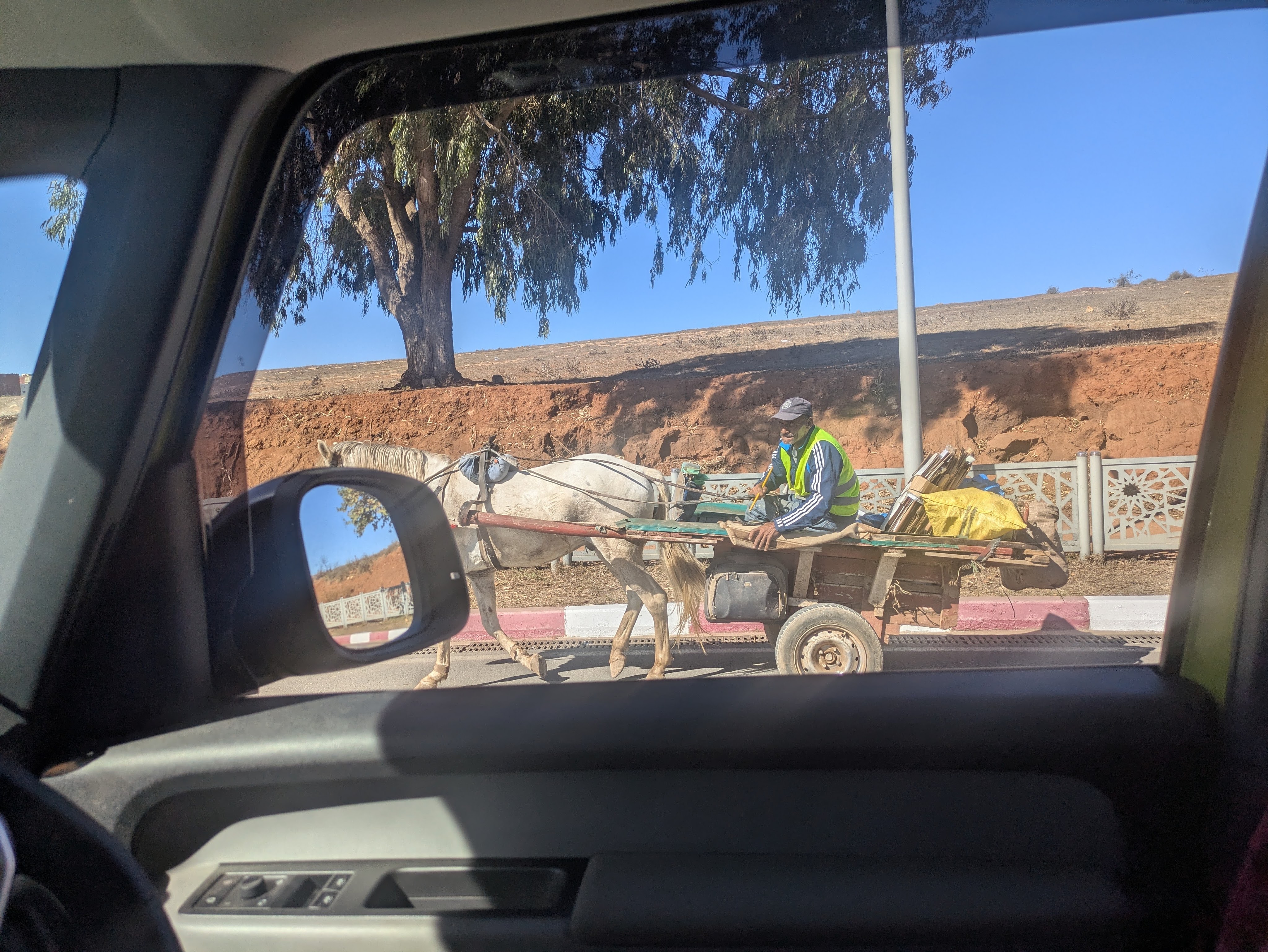
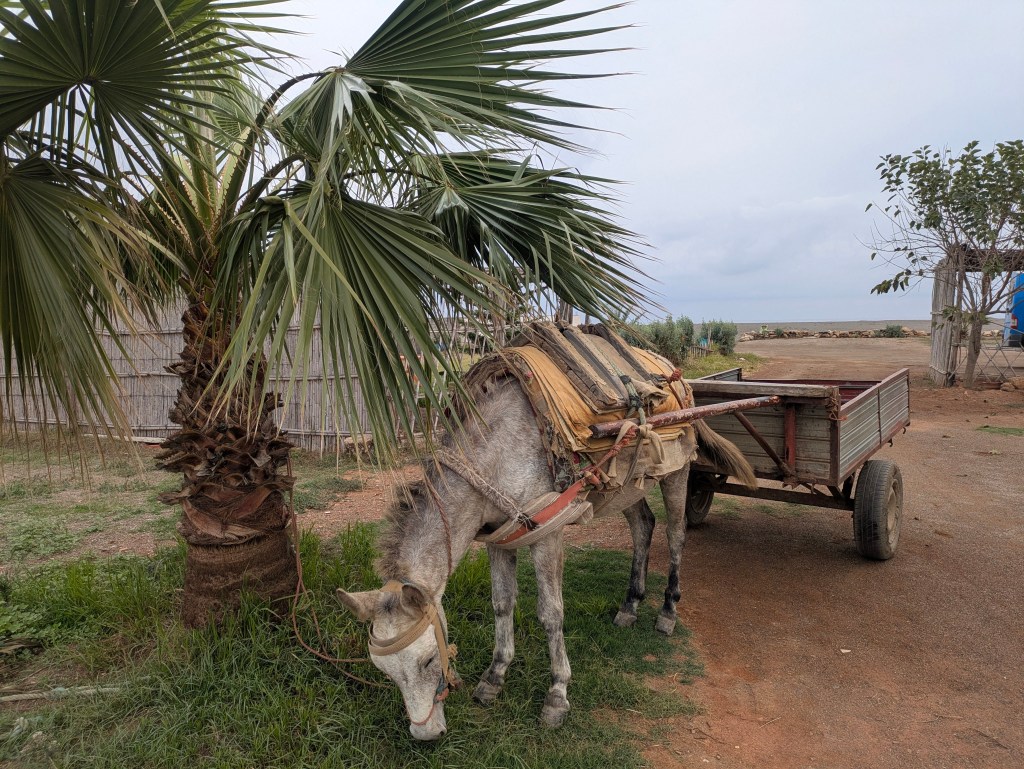
The seaside town of Quad Laou was larger than we expected, with a handsome prom that stretched for more than a kilometre by an (almost) deserted beach. There were fish restaurants, palm trees and few tourists of any kind. We swapped the gurgle of the river at our last campsite for the hypnotic crash of waves, and our dog was replaced by a cat quartet, who danced around us as we ate the tagines that Mr Abdul had prepared for us in his homemade, outdoor oven. It was also peaceful in a different way. Blue fishing boats were on the beach.  An old woman tended a flock of sheep down the road. Mr Abdul worked his small bit of a farm by hand and with the help of a horse and cart, augmenting his meagre living by allowing camper vans to park on his land by the sea, The toilets were squat, ‘flushed’ by throwing a few ladles of water from the bucket. There was no shower although Mr Abdul would bring a bucket of well water to slosh over you…if required.
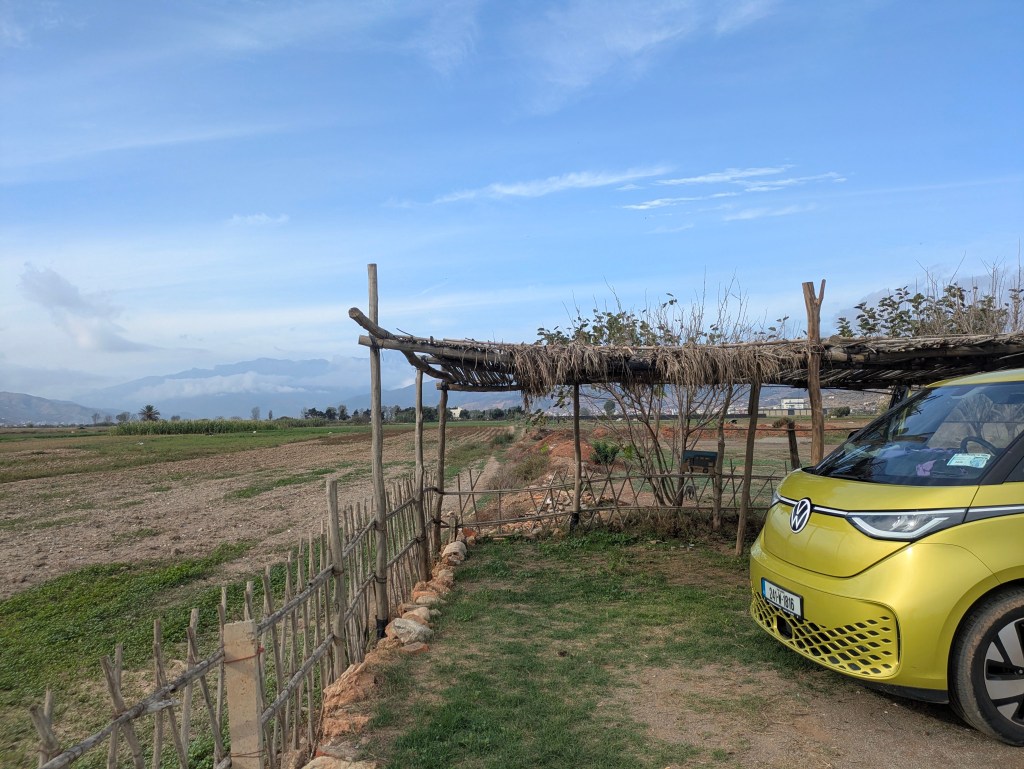
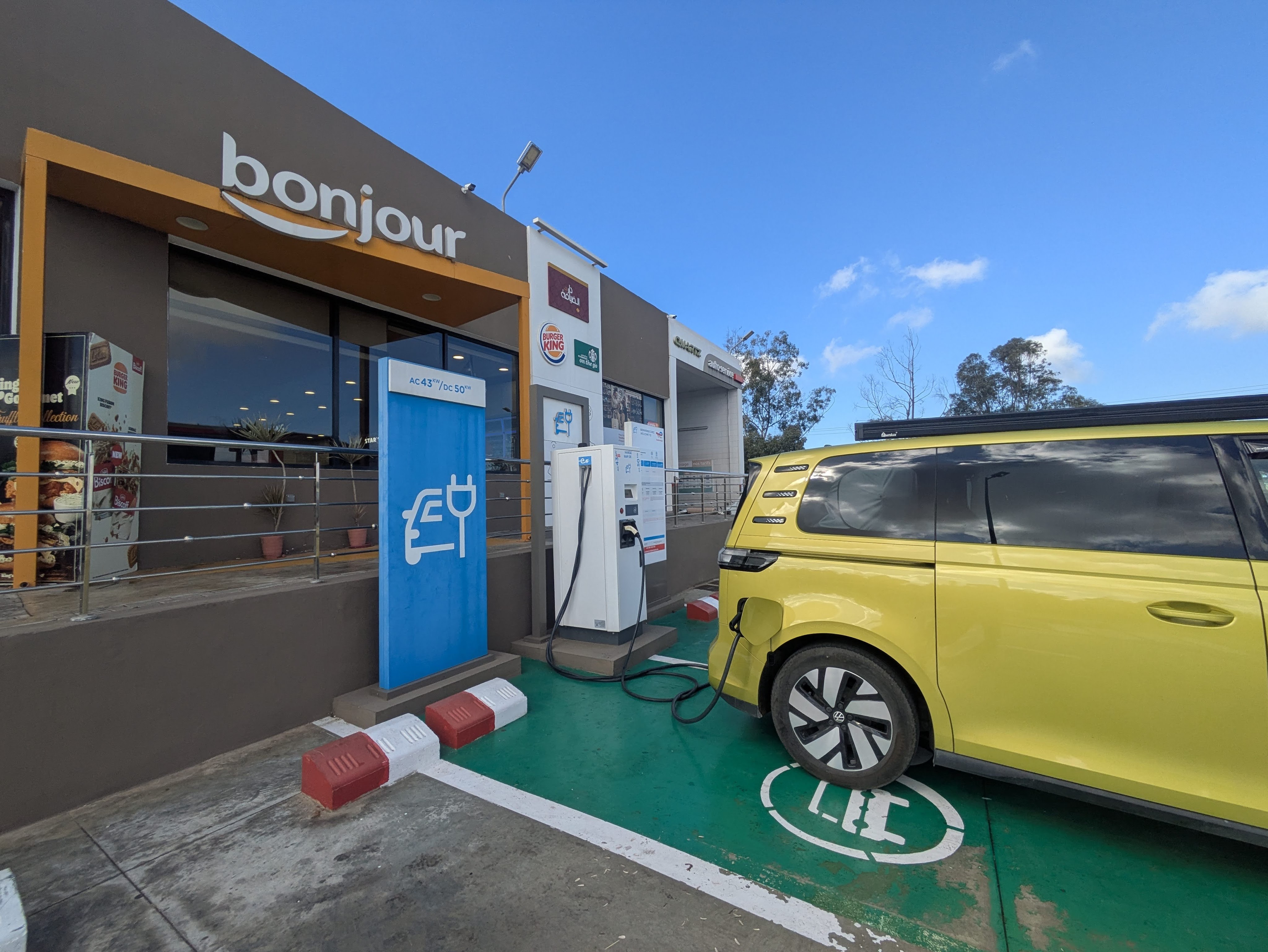
Leaving Quad Laou, we took the spectacular road north that snaked along by the Med where road stalls sold enormous bags of walnuts. Tetuan was the largest town in the area, a prosperous place with all the usual international chains and an old medina with winding streets and alleys. We didn’t stop at any of this…we had one priority….we wanted to get to Ikea on the far side of town, not to buy any furniture or eat meatballs, but to charge the Buzz. It was no surprise that EV chargers were scarce in the area. Charging wasn’t absolutely critical because our recent hops from place to place were relatively short but it would still be reassuring to charge fully. We missed the charging slot by minutes….there was only one. Two women had just plugged in  and said that they would be two hours but at least the Kilowatt charger was working and as usual, it was free to use. Another electric car appeared, also hoping to charge, so there were certainly electric vehicles in Morocco. I went into Ikea to use the bathroom. My visit coincided with  the ‘call to prayer,’ which was broadcast throughout the store on loudspeakers, sounding slightly surreal among the flatpack Swedish furniture.

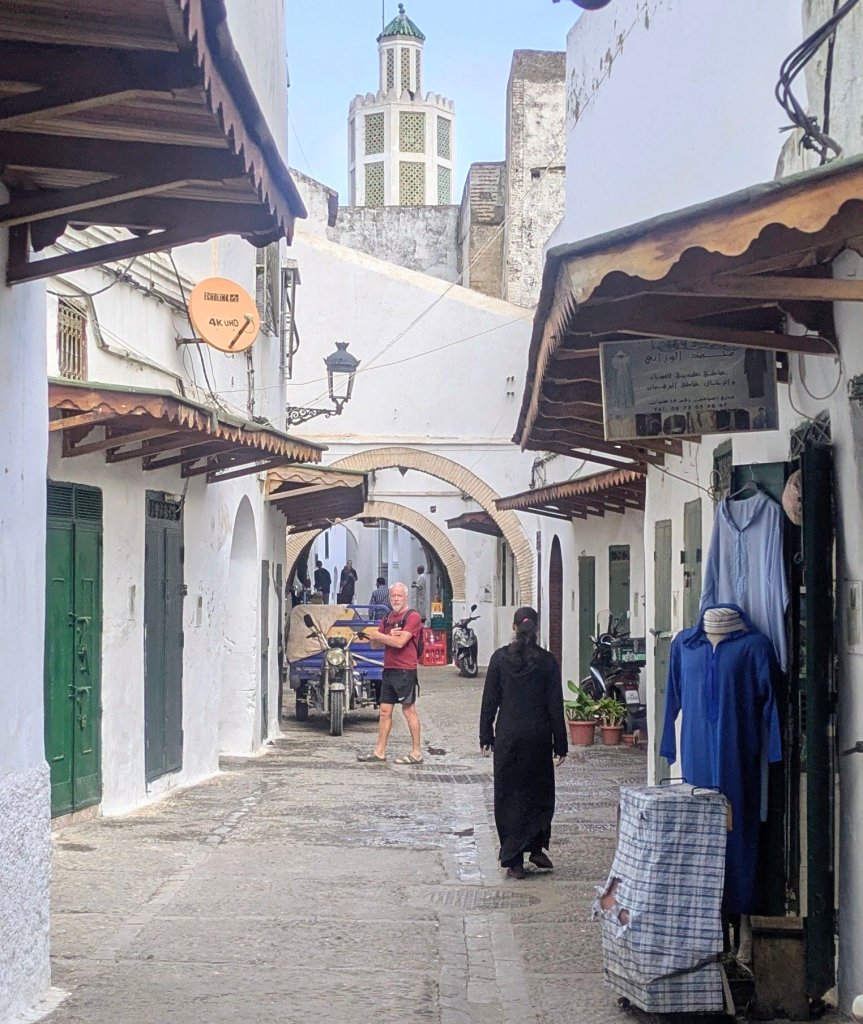
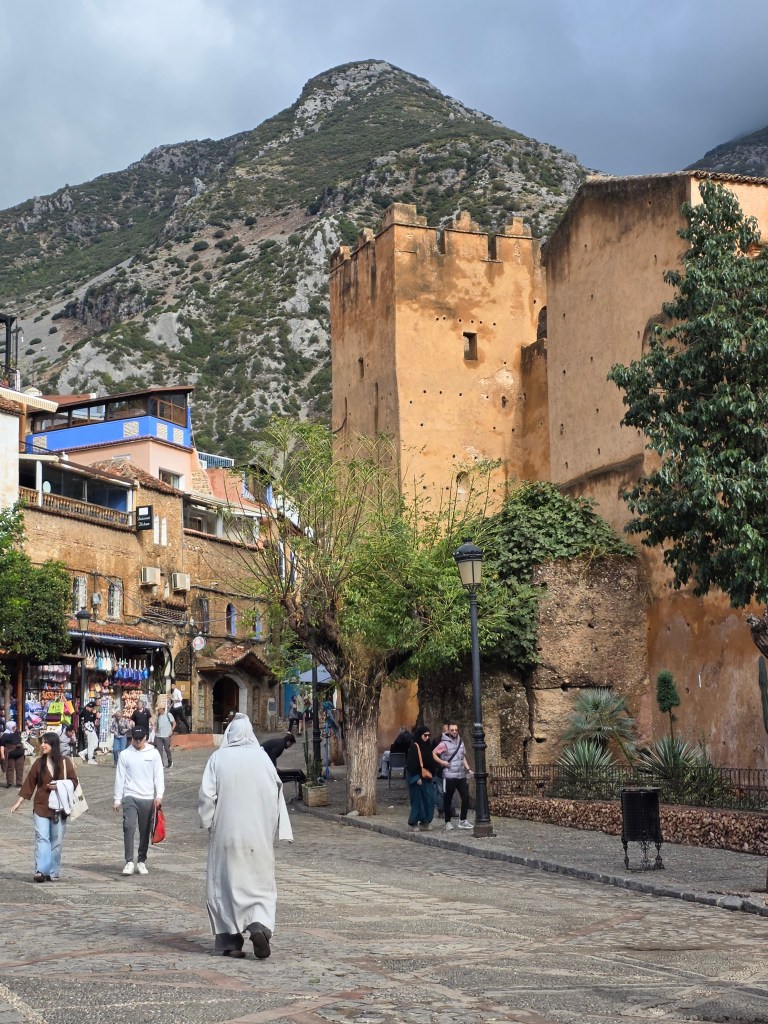
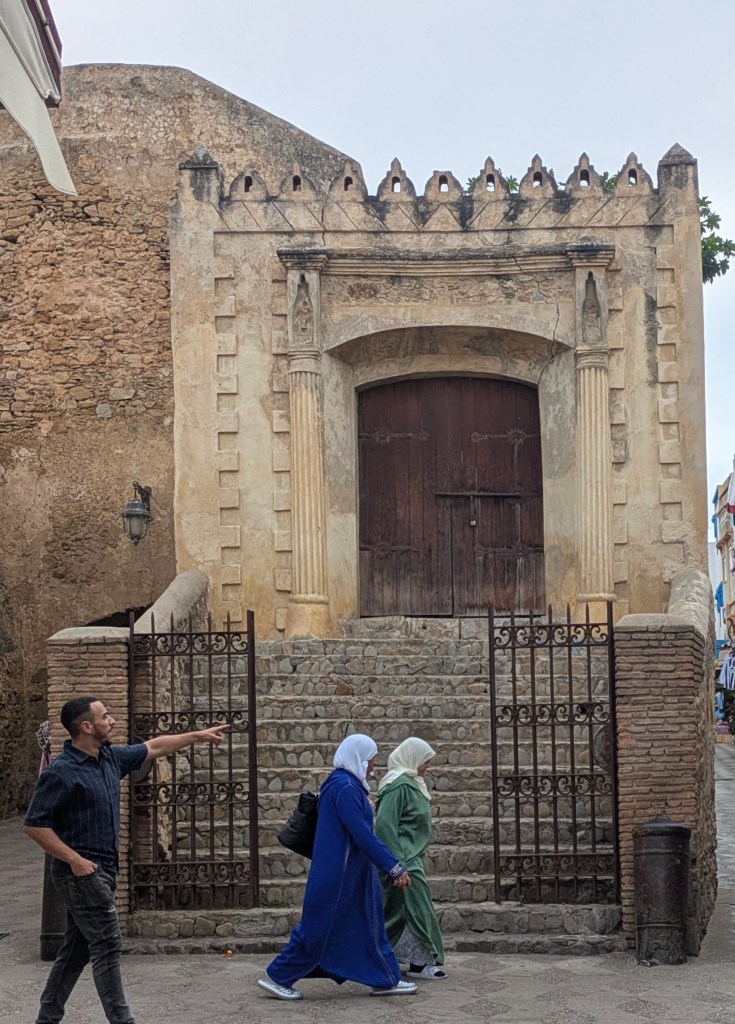
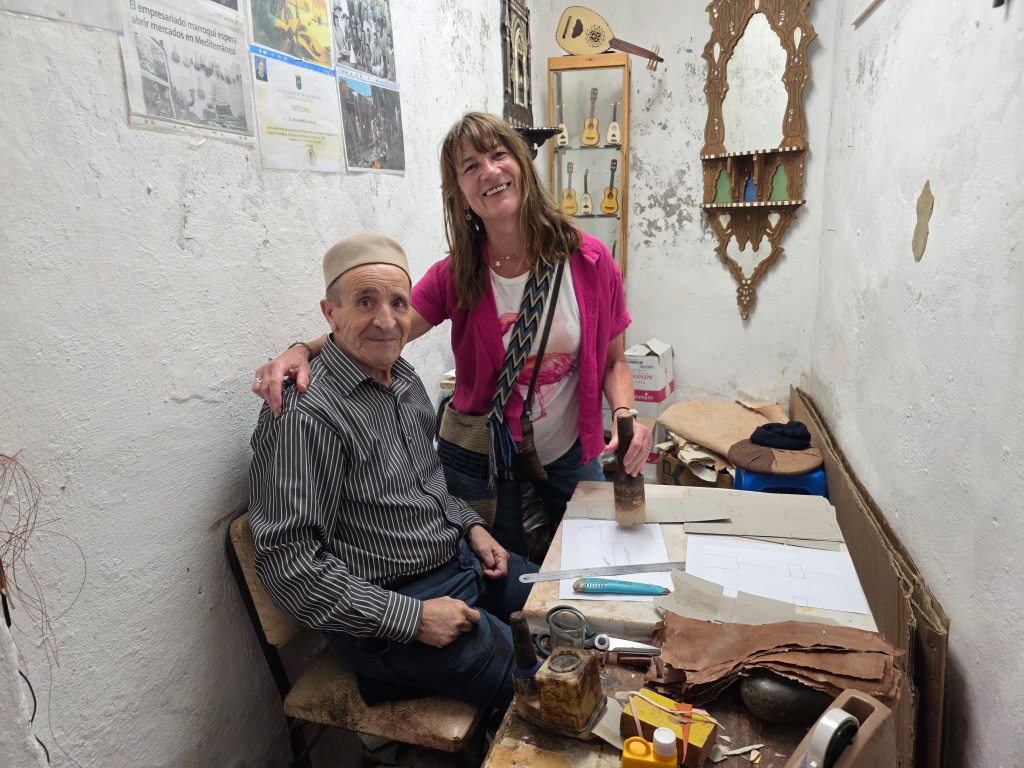
Deciding to return later, we backtracked to the medina in the centre of town which also had a small tannery. This was not in full production, although a ‘clothesline’ of animal skins were draped on the back wall and a pungent smell hung heavy in the air -blood and drains – but not as bad as the hellish tannery in Fez. Tetouan was known as the White City and from the balcony overlooking the tannery, there was views of the pale houses crawling up the slopes while on the other side, the tombs of the dead were equally white and shiny in the sunlight.
In the Carrefour Supermarket (which unfortunately didn’t have any EV chargers), we couldn’t find the alcohol section which we knew was often slightly separate to the main supermarket. When we asked, people told us that it was outside and around the corner. We wandered around and eventually spotted an unmarked grey door on the side of the building. That couldn’t be it, could it? It looked more like a back entrance to some kind of warehouse. We peeked in. The light was dim, the air was stuffy but the interior was teeming with men (it was all men except for the women at the tills). There was the sound of bottles clinking and cans rolling against each other in baskets. The whole enterprise felt furtive, shady and clandestine. We were delighted. Our meagre alcohol supplies had run out about a week before  Mr Abdul had tried to source us two beers the night before in Quad Laou but despite his best efforts, he was unsuccessful and very apologetic.

Despite the obvious demand, it wasn’t cheap, we’re talking Irish prices for beer and far higher than home prices for wine, except the Moroccan wine which cost about €4 a litre and was drinkable…just about.  At the cash tills, wads of cash were pulled out of pockets, crumpled notes smoothed and the balance made up with coins. Most paid in hard cash although it was possible to pay by bank card.

            We parked in a hotel carpark beside other camper vans, reheated the leftovers from the previous day’s tagines (the portions were enormous) and enjoyed our wine, giggling at the process involved in acquiring it.
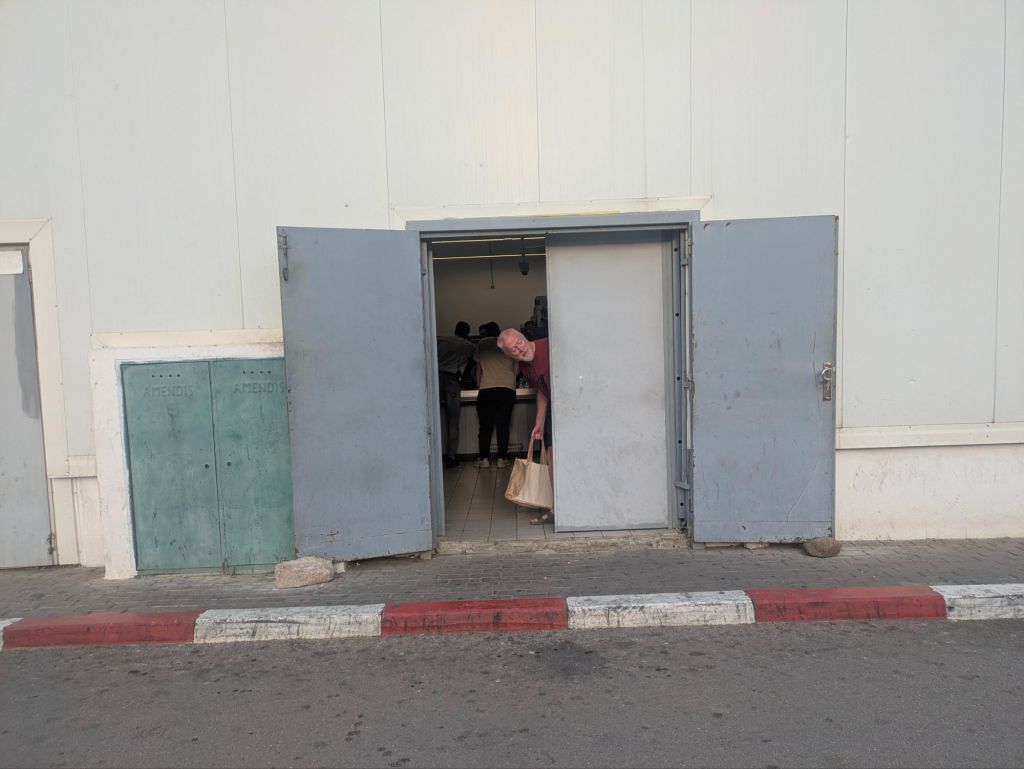
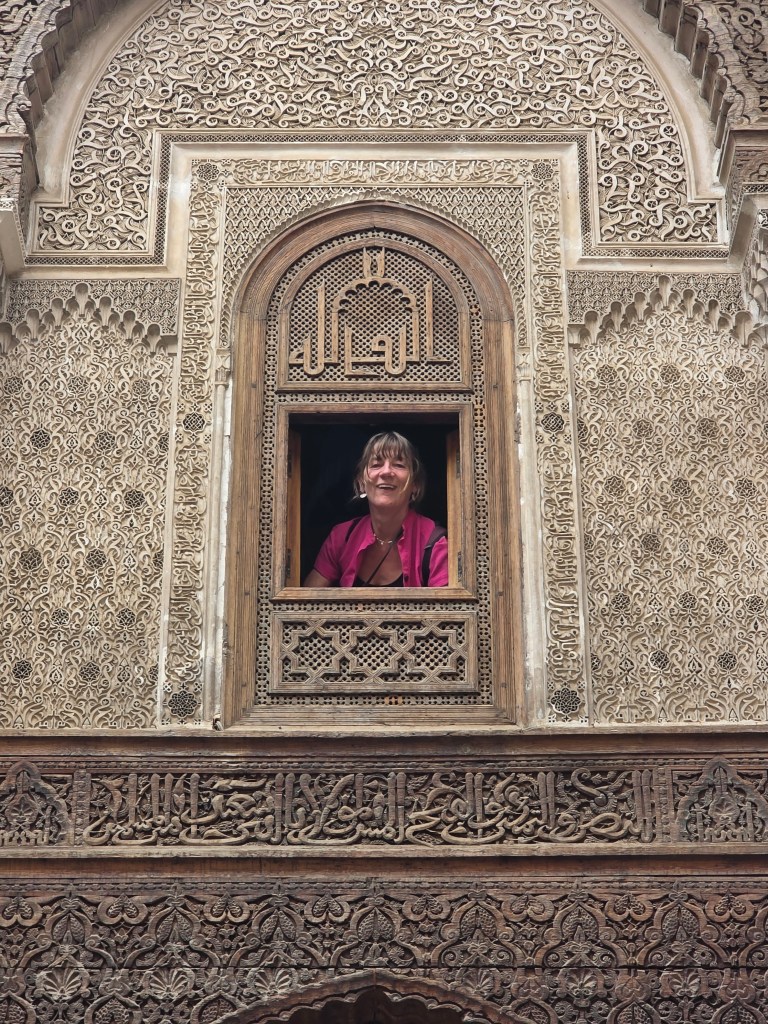
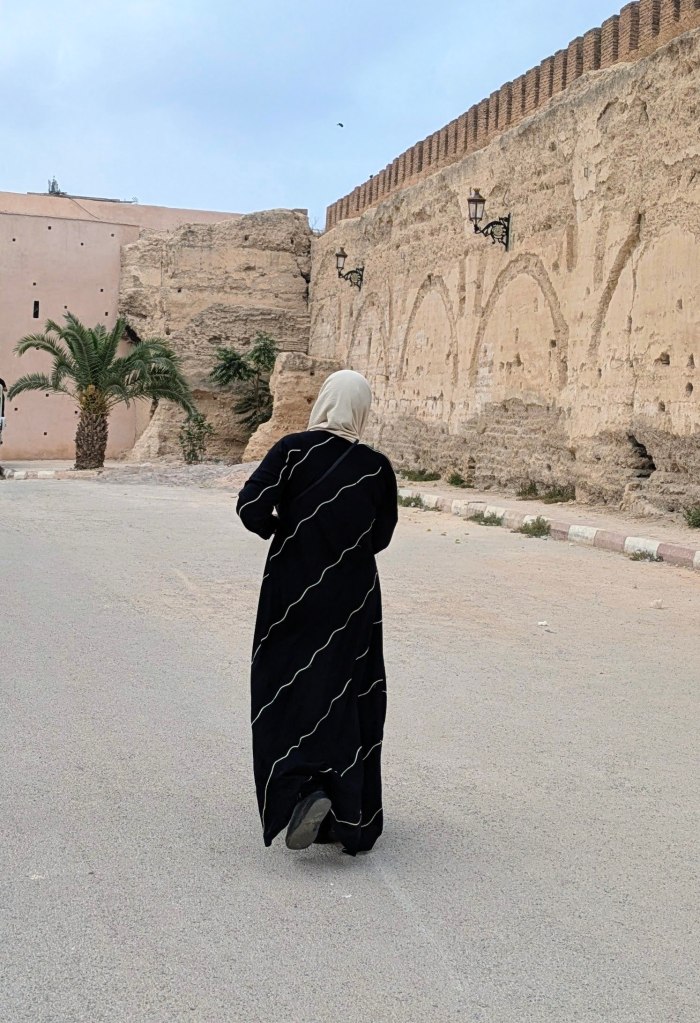
Does anyone see me????

The following morning we were in Ikea before 8.30am, plugged in and charging. Moroccans don’t seem to get up early. All the nearby cafes were closed and shops rarely opened before 10 or even later in the medina. While we were waiting in the van, another EV’s pulled up beside us. The driver told us that although Ikea store doesn’t open until 10am, the restaurant was open for breakfast at 9am. So we enjoyed a three-egg omelette each, made in front of us, with bread rolls, orange juice and coffee for about €7. A bit of local knowledge is a wonderful thing.
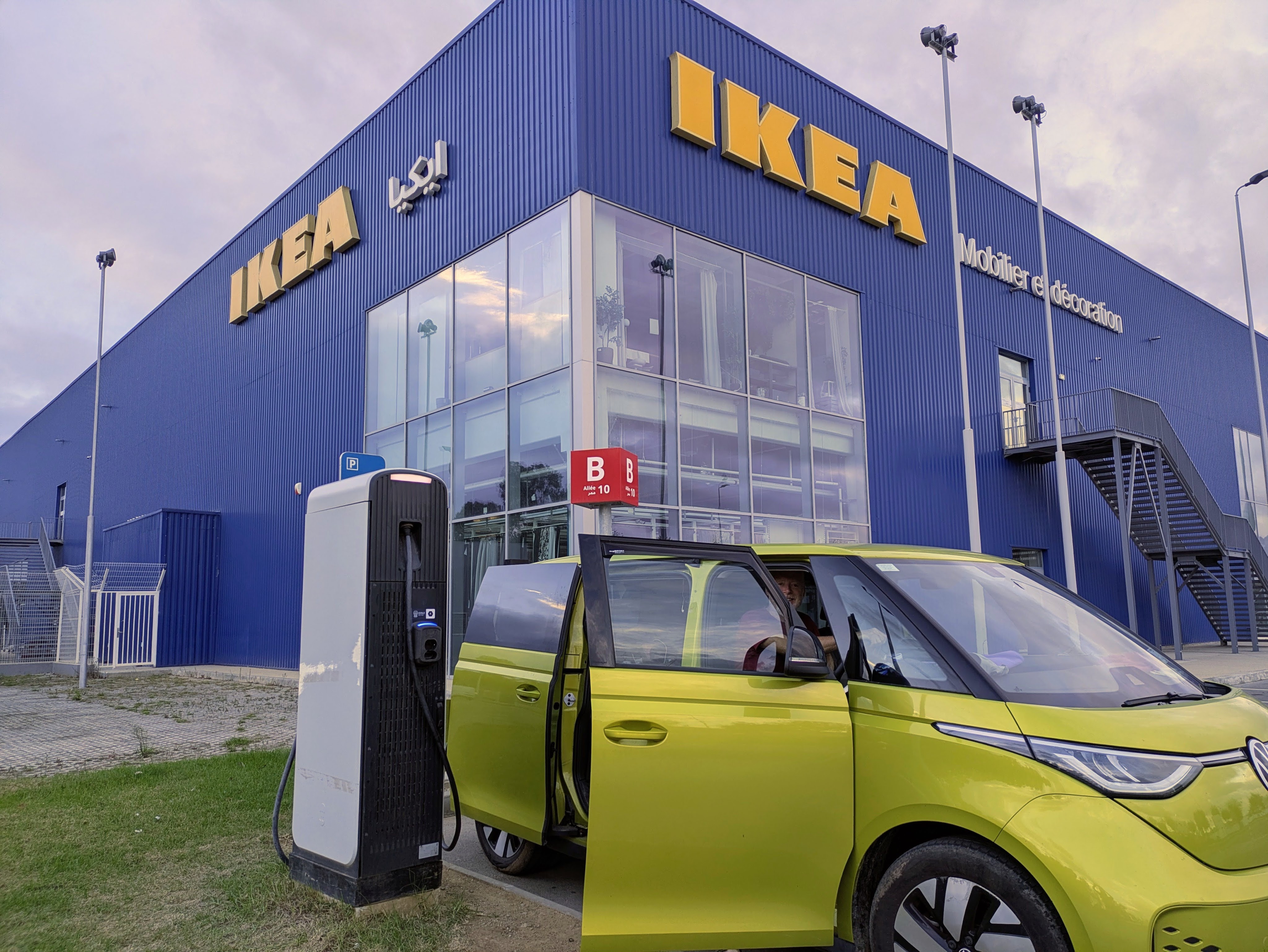
Happiness is…….an EV charger❤️

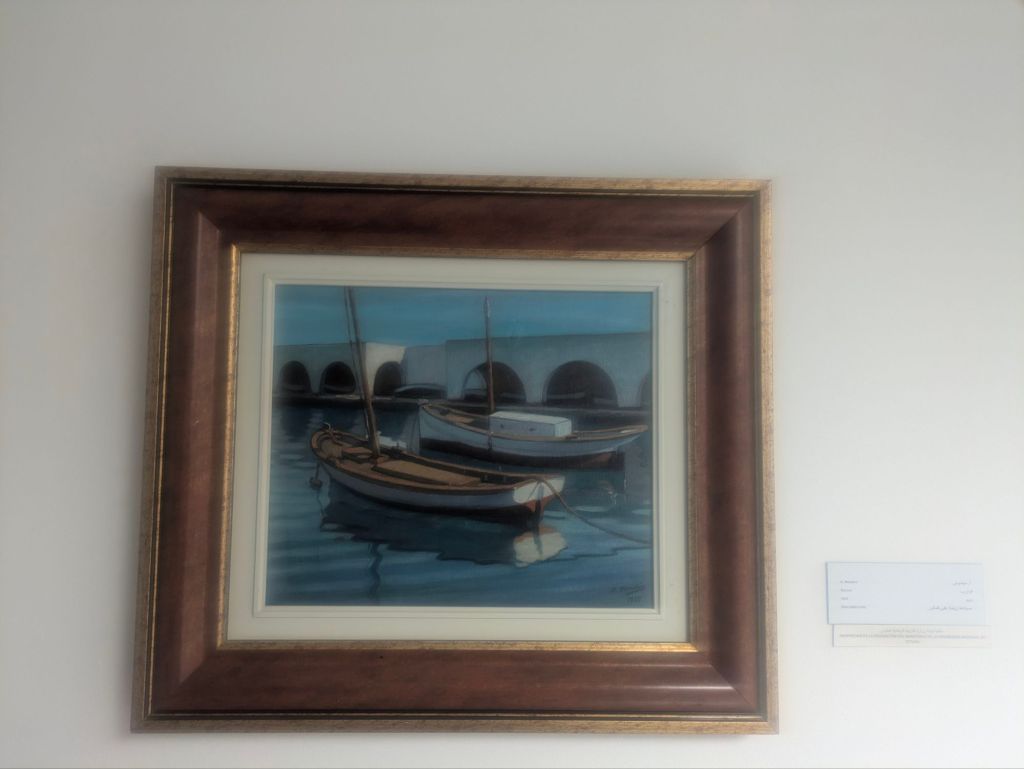
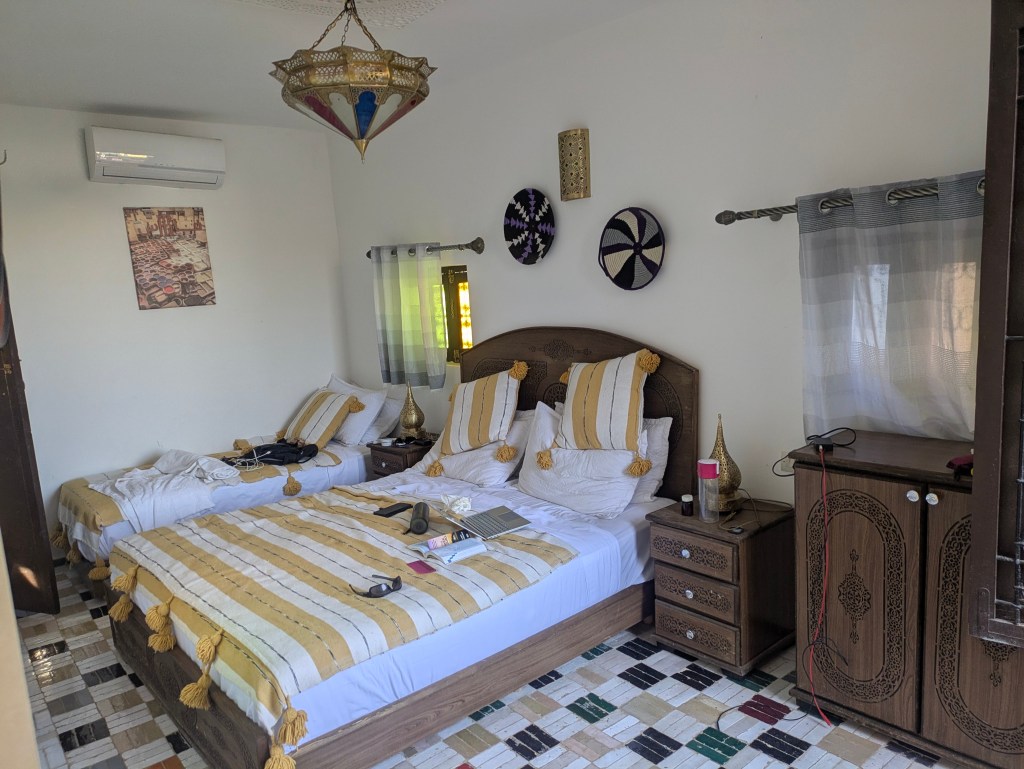
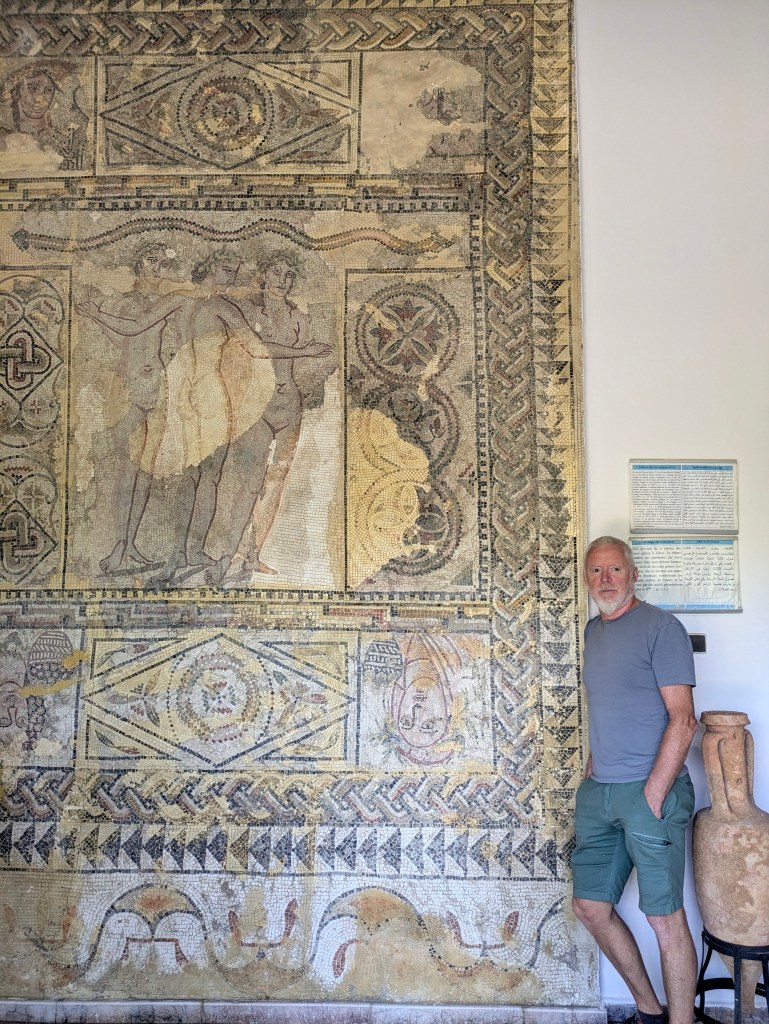
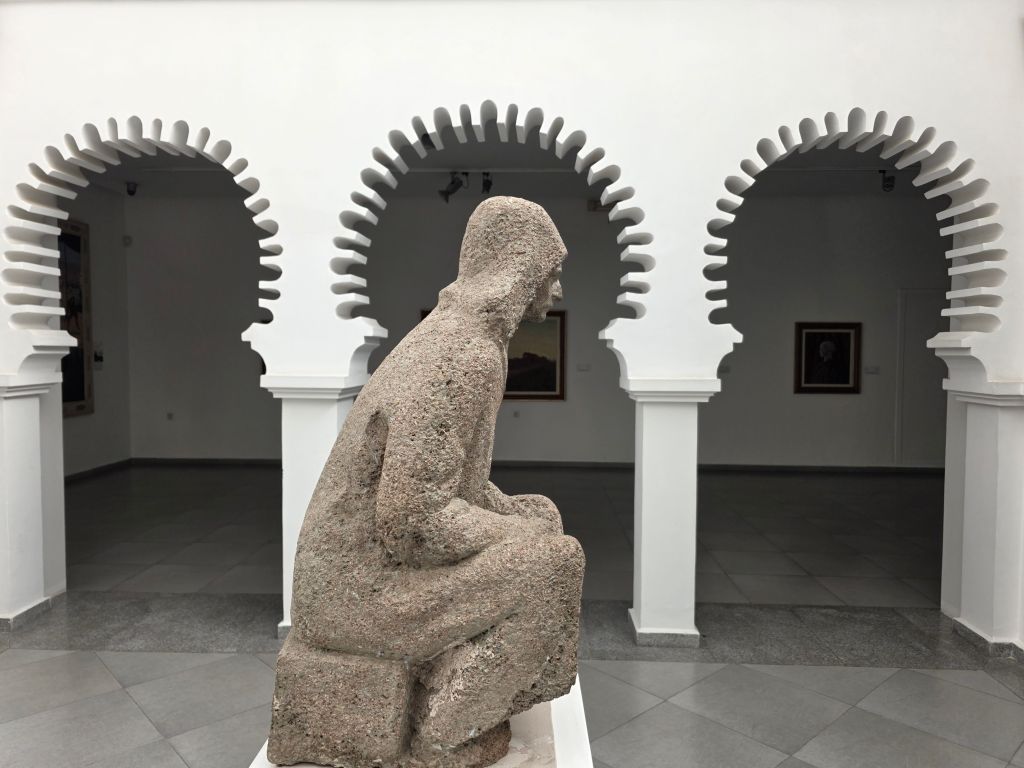
Campsites in the area were scarce so we rented an apartment (mainly because we were in need of a shower, there’s a limit to what sprays of CK one will camouflage). This was such a bargain and so comfortable at €19 a night that we booked it for a second night and enjoyed a ‘culture’ day of visiting museums and a lovely art gallery.
Tomorrow we will head to the border and hope that our exit from Morocco will have less drama than our entrance. If the border crossing goes smoothly, we will spend tomorrow night in Ceuta, the Spanish city on the African continent and get the ferry to mainland Spain the following day.

Thanks for reading

A bientot
Electric Roadtrip: From the Mountains to the Sea

Electric Roadtrip: Blue Days in Morocco

Fes was different,  As we drove into the imperial city in the heart of Morocco, our priority was to get the Buzz charged. Following the map directions for a Kilowatt EV charger, a man on a motorbike pulled up beside us in the traffic and, noticing the van’s registration, shouted in English ‘Are you from Ireland?’

We nodded,  replying  that we were making our way to charge the van. He raced ahead and directed us to the EV chargers on the side of a busy wide street. Unfortunately neither was functioning but our motorbike ‘friend’ was now bombarding us about talk of city and medina tours of the medina for a special price for the Irish. This was our first exposure to touts in Morocco….and he was persistent…but we finally managed to get rid of him.

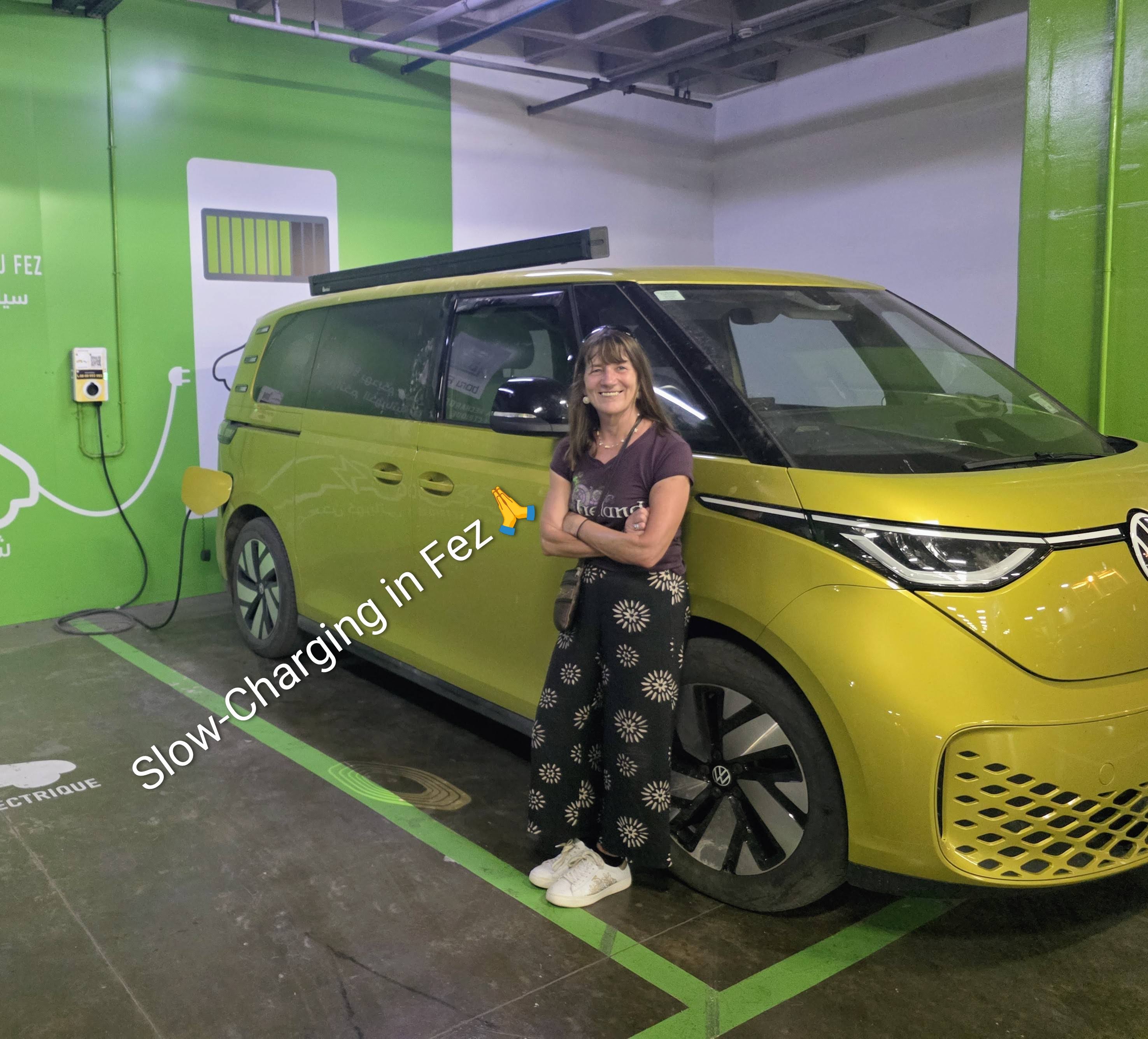
Our next and only option for charging the van in Fes, according to various maps, (Google, Electromaps, Kilowatt and Place to Plug) was a couple of kilometers away at a shopping centre. We located them in the underground carpark of a Carrefour Mall and, thankfully, they worked although they were again slow-chargers and free of charge. When we connected, the Buzz display told us that it would be over five hours before it was 100% charged. We booked a place to stay near the medina and walked the forty minutes there, deciding to return later for the van. Our tolerance for shopping malls, full of the usual designer shops and stuff we don’t need, was always low, but was now hovering below zero although we were grateful that the Buzz was charging.

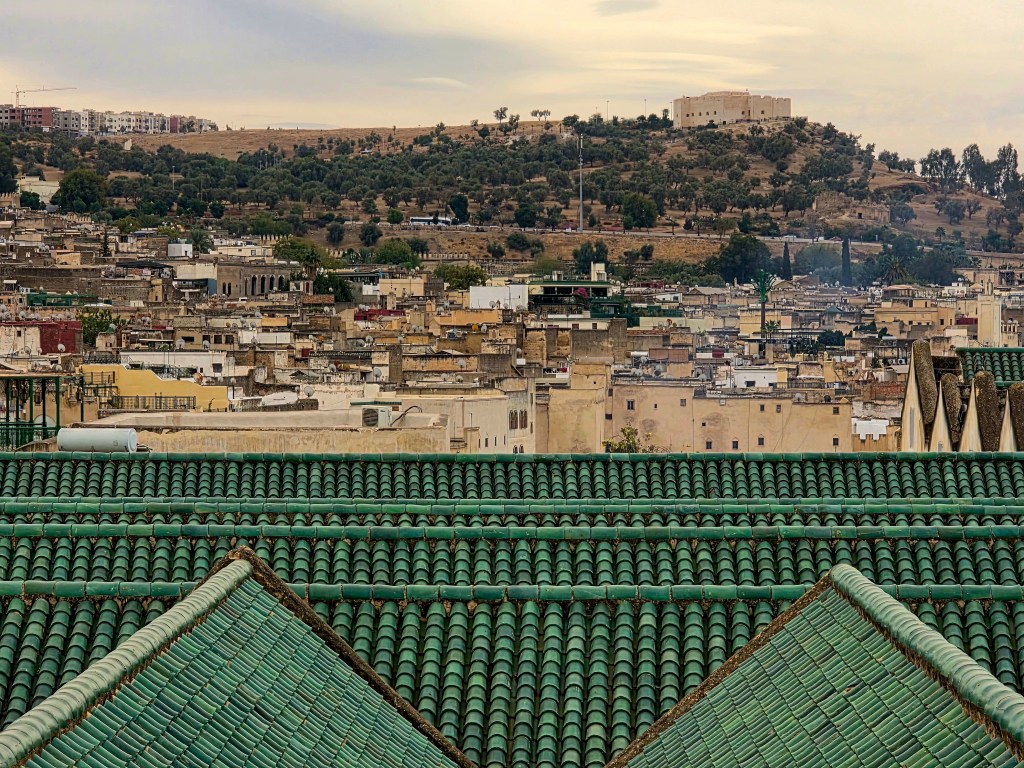
Fez, the oldest of the four Moroccan Imperial cities, was blessed with an abundance of water and surrounded by fertile hills which also supplied  defense.  It was an important trading post for centuries, strategically placed at the crossroads of major caravan routes (silk, gold, salt and slaves) between sub-Saharan Africa and the Mediterranean. Its wealth also came from its rich natural resources and skilled artisans.

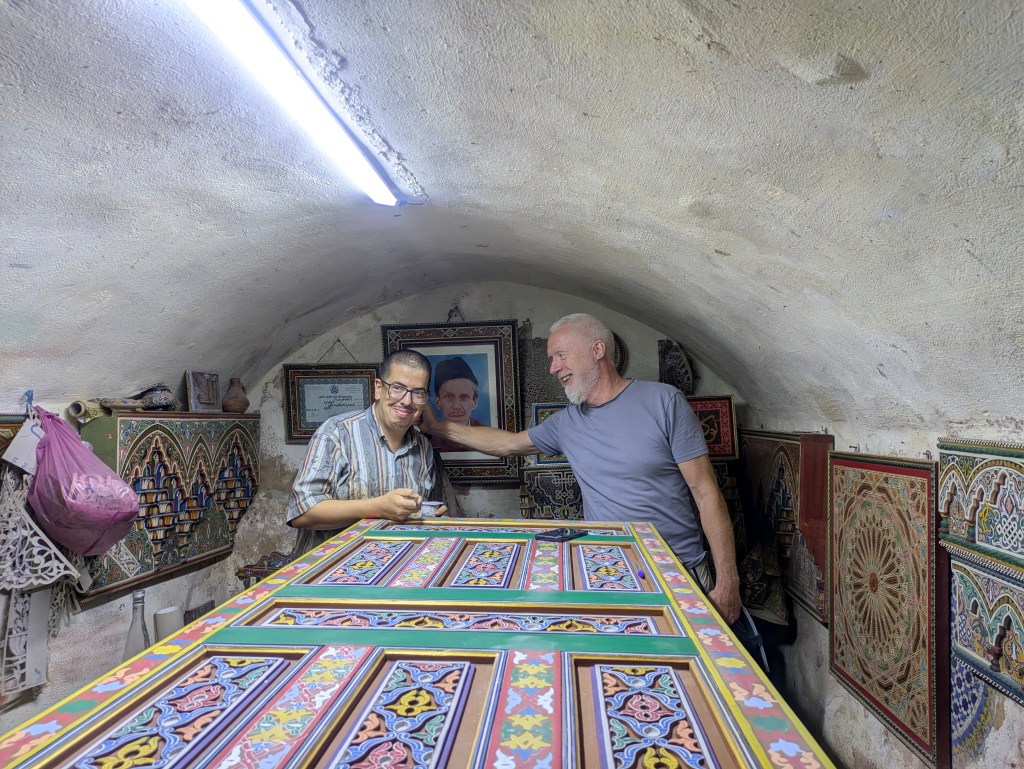
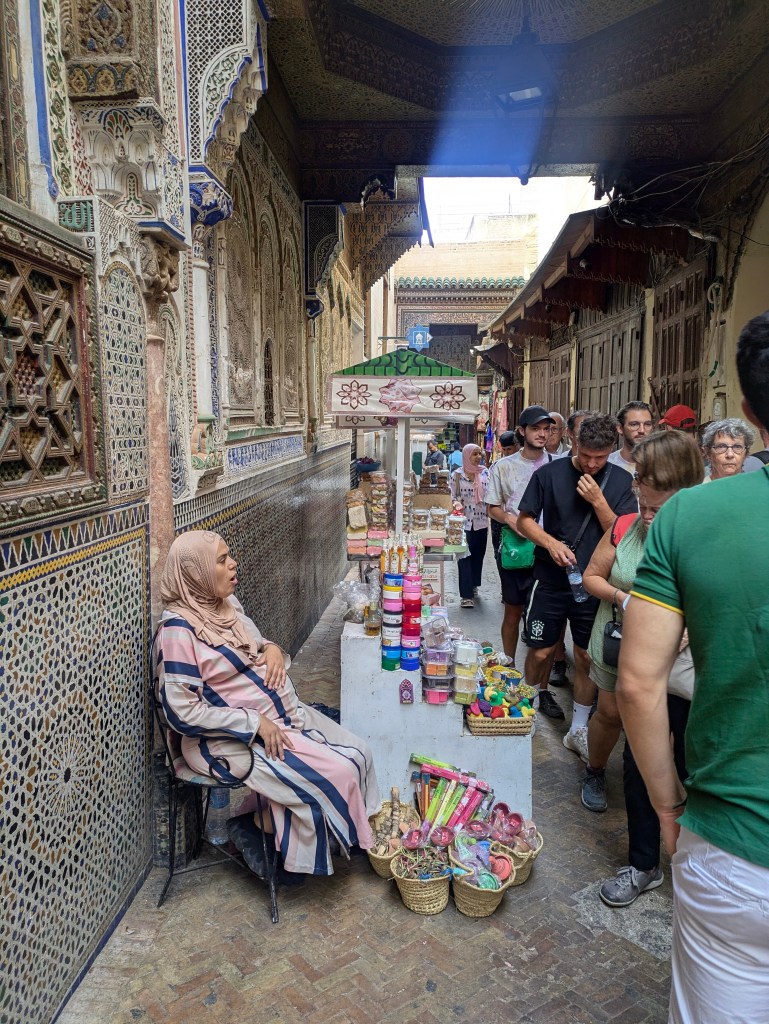
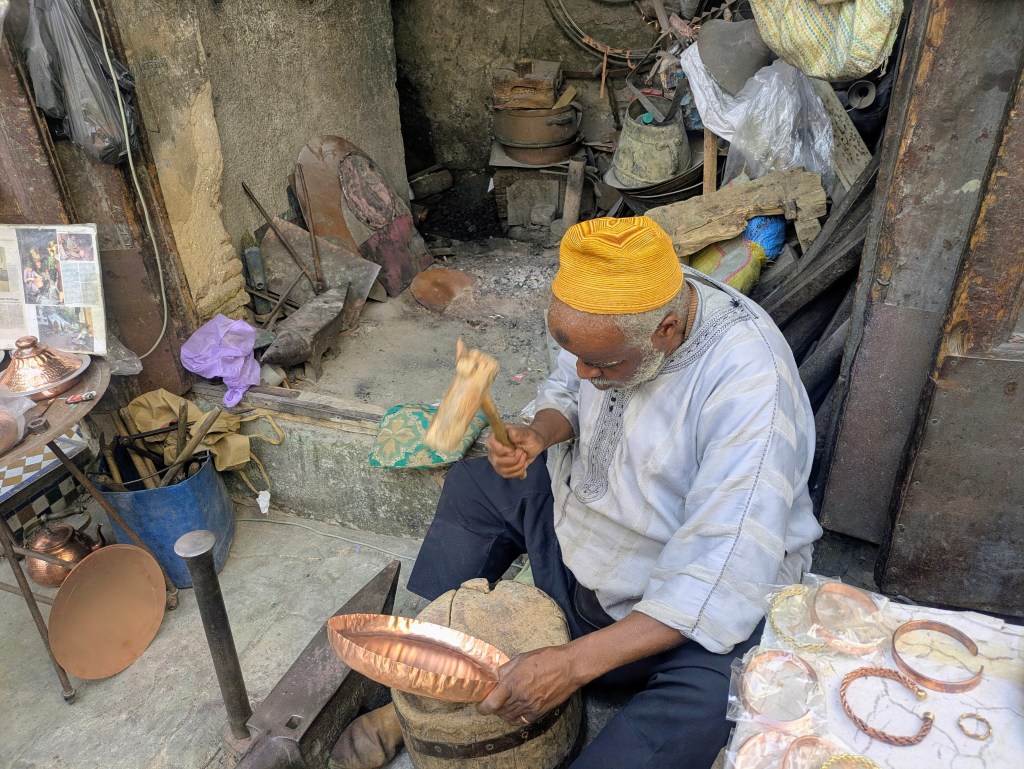
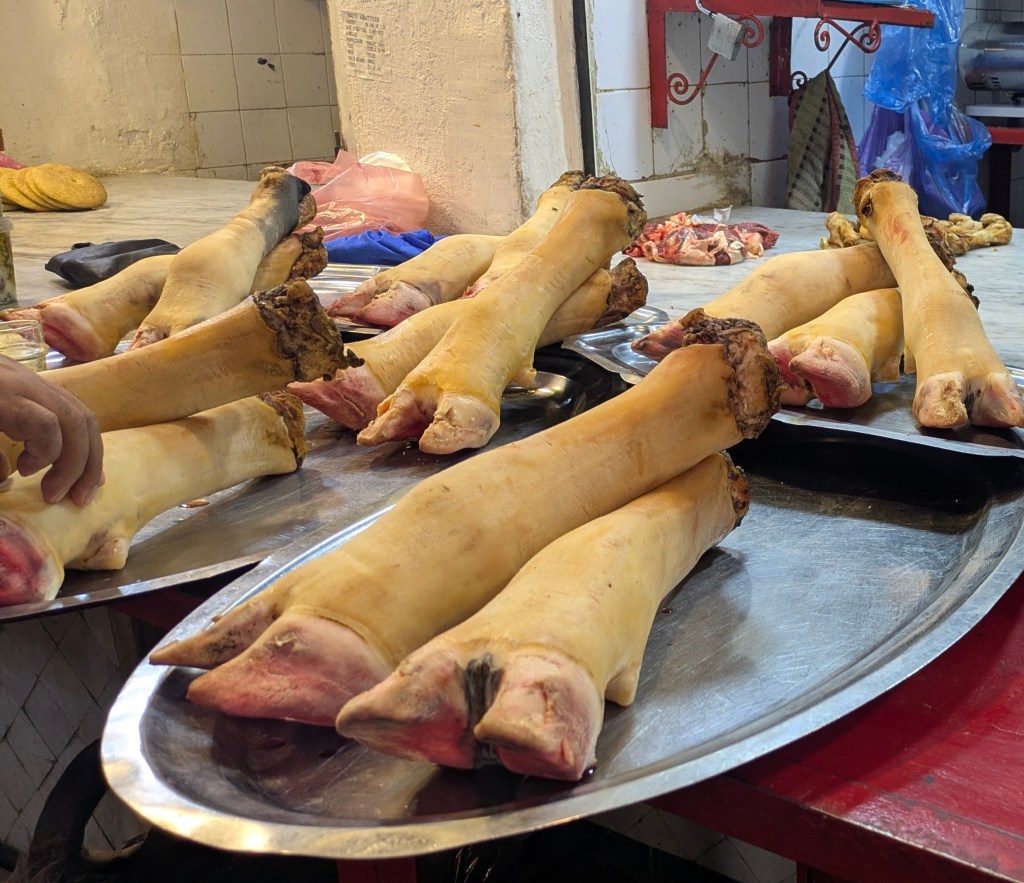
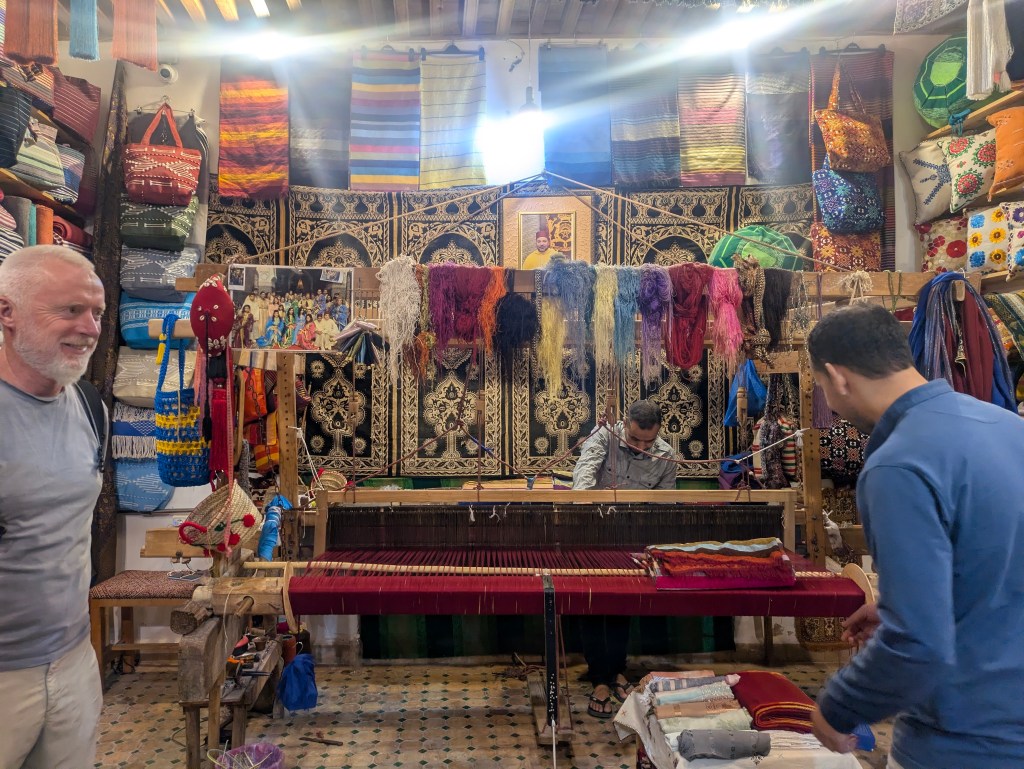
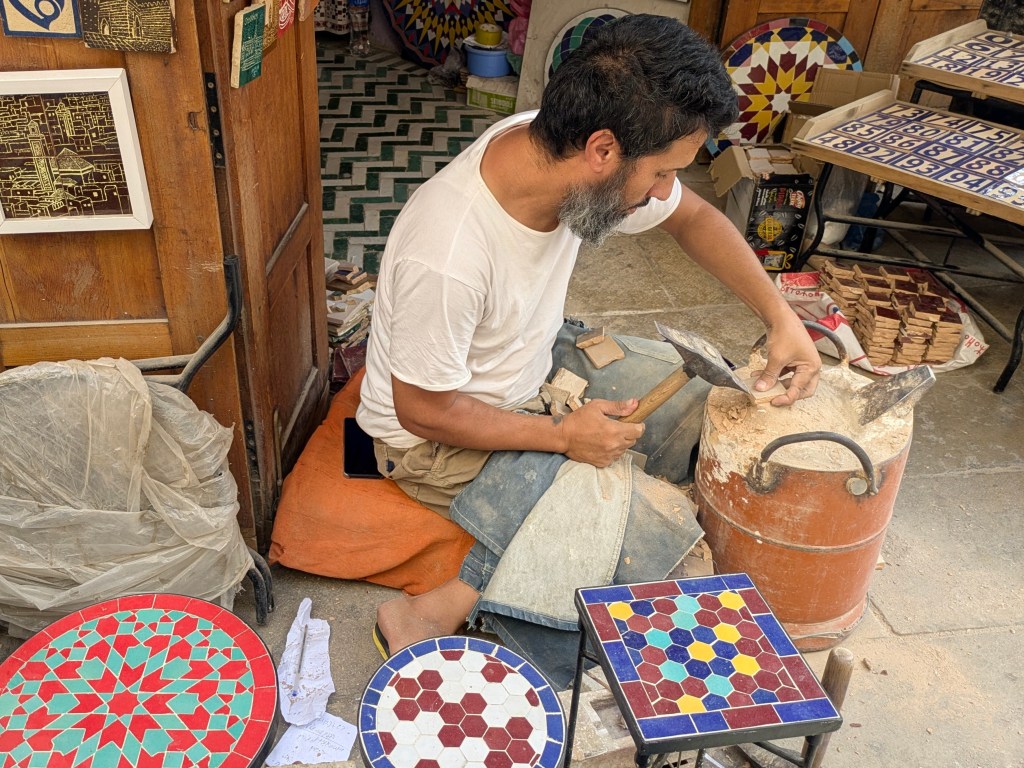
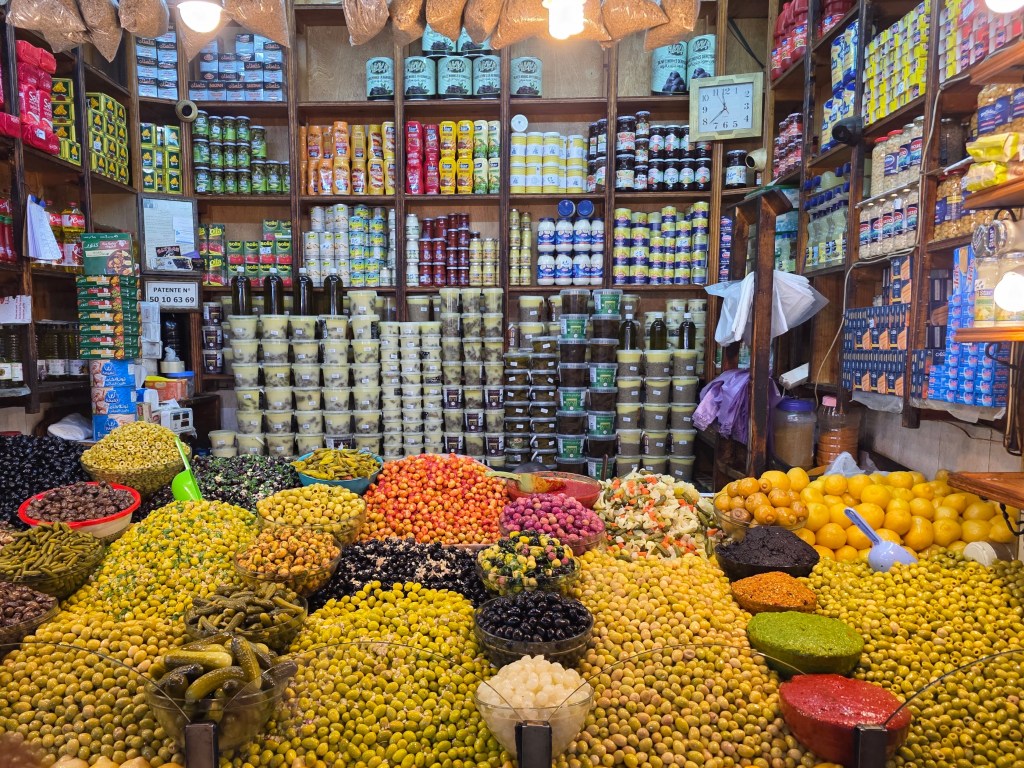
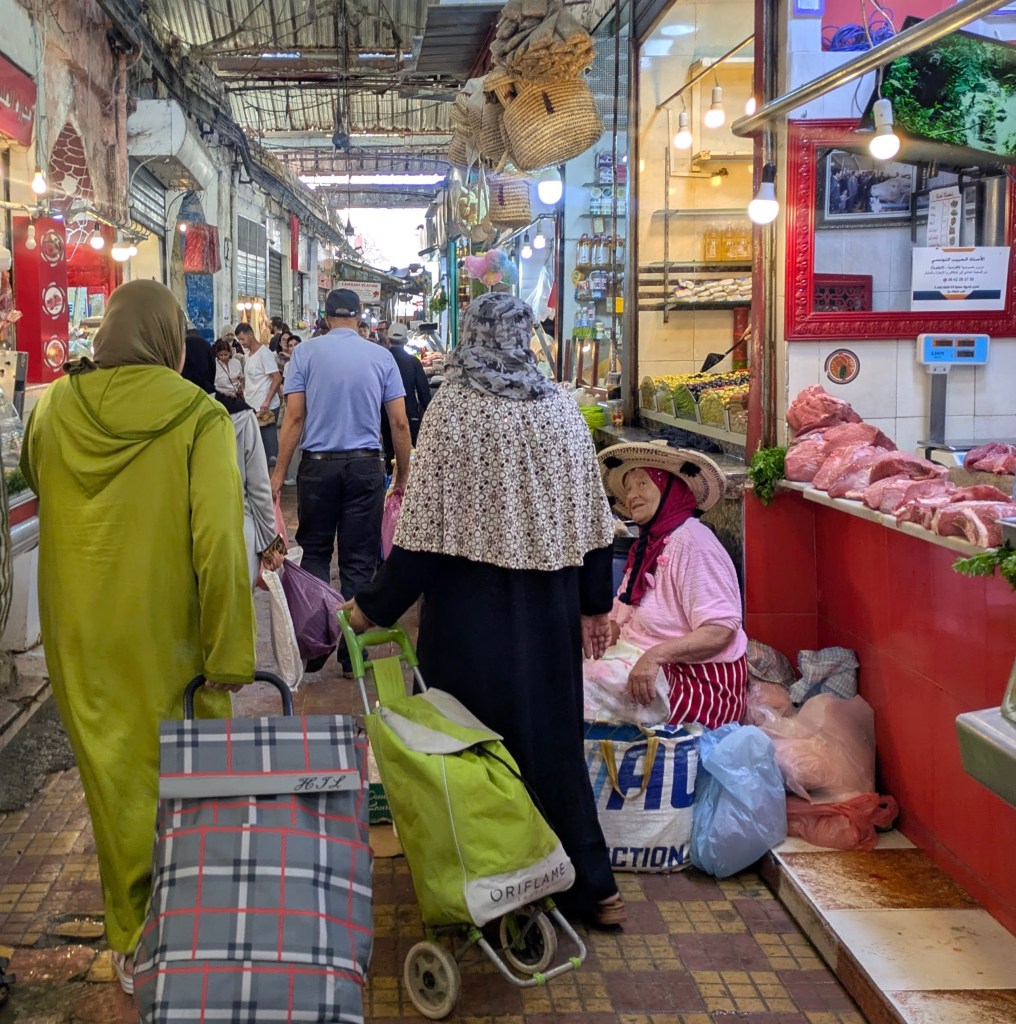
The following morning, wandering around the narrow streets of the medina on a walking tour, it seemed that little had changed. There was the clamor of commence and the rumble of wooden carts being pushed along the narrow ‘streets’, a maze of over nine thousand paths where Google maps didn’t work very well and which was reputed to be the largest pedestrianized area in the world. There was the banging of hammers on metal, the soft whoosh of looms, the silent concentration of calligraphy, the slosh of dyeing fabrics and much more. The scent of rosewater and orange blossom mixed with the smell of raw meat, fish, spices and fresh baking. In many ways, it was like stepping back in time, we ate warm flatbreads directly from the ovens in a family bakery, tasted honey cakes from an old recipe and visited the tannery at the edge of the medina.

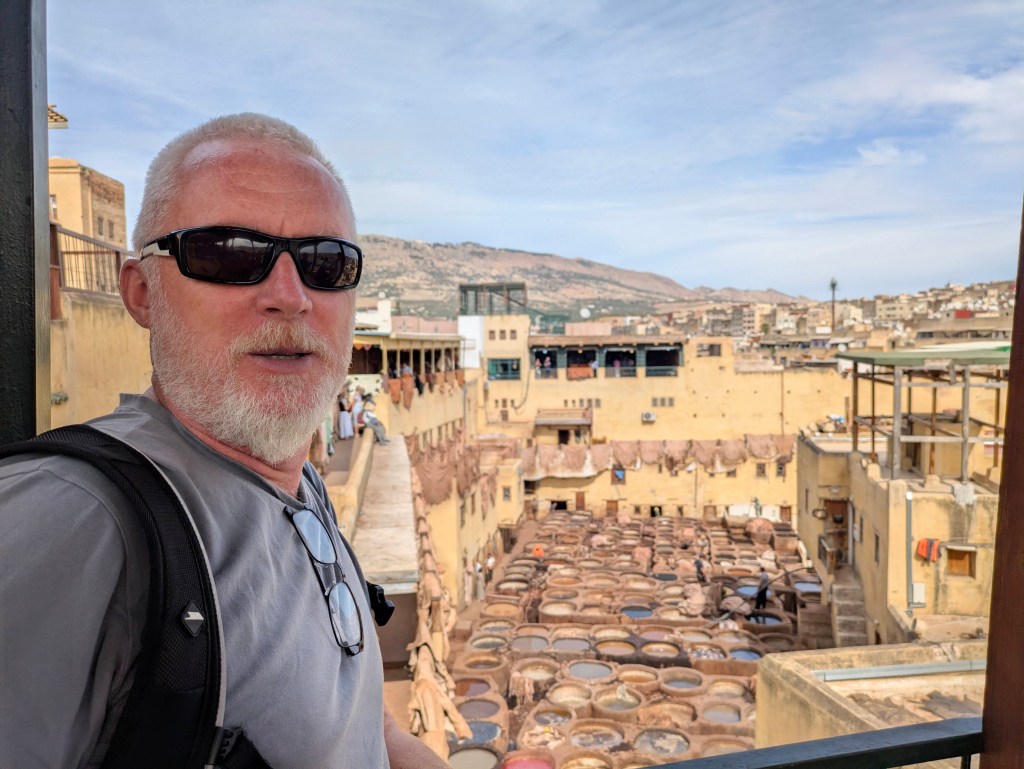
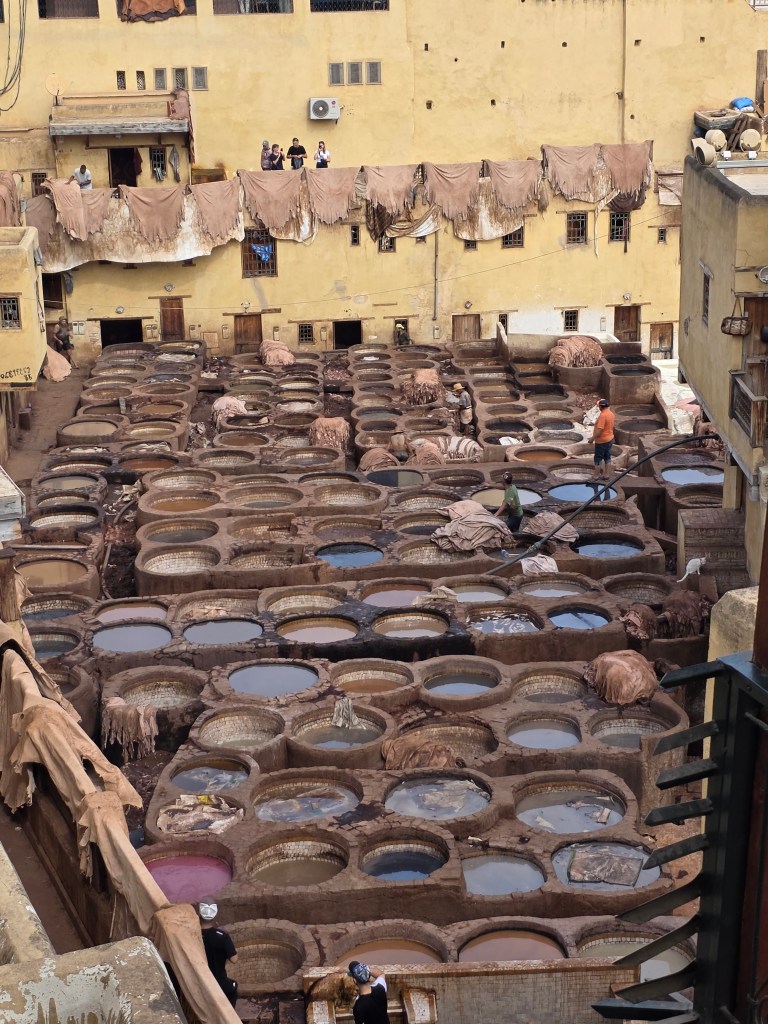
            At the door leading into the tannery, a small man with a face like wrinkled leather pressed a few mint leaves into my palm and gestured that I should hold it to my nose. It didn’t help much. A whole mint bush wouldn’t have disguised the pervasive pungent smell that hung in the air, the smell of blood and chemicals although the tanning was done using old natural methods, many unchanged for a thousand years. The ammonia needed in the process was supplied by pigeon poop, gathered from the town’s buildings and from pigeon fanciers and the red dye came from pomegranate seeds. The recently eaten honey cakes were leaping into my throat as we looked down at a ‘clothes line’ of drying skins, a mixture of goat, cow and camel  and the much-photographed ‘honeycomb’ vats of coloured liquid used in the dying process. A worker at a tap tried to wash dye from his bare legs, stained a deep burgundy from immersion in one of the vats. The work was intense, the noise unrelenting, the conditions brutal… no wonder the number of workers had dropped dramatically during the last decades. In the heat of summer, the conditions would be even more hellish. The idea of buying a leather bag lost its appeal.

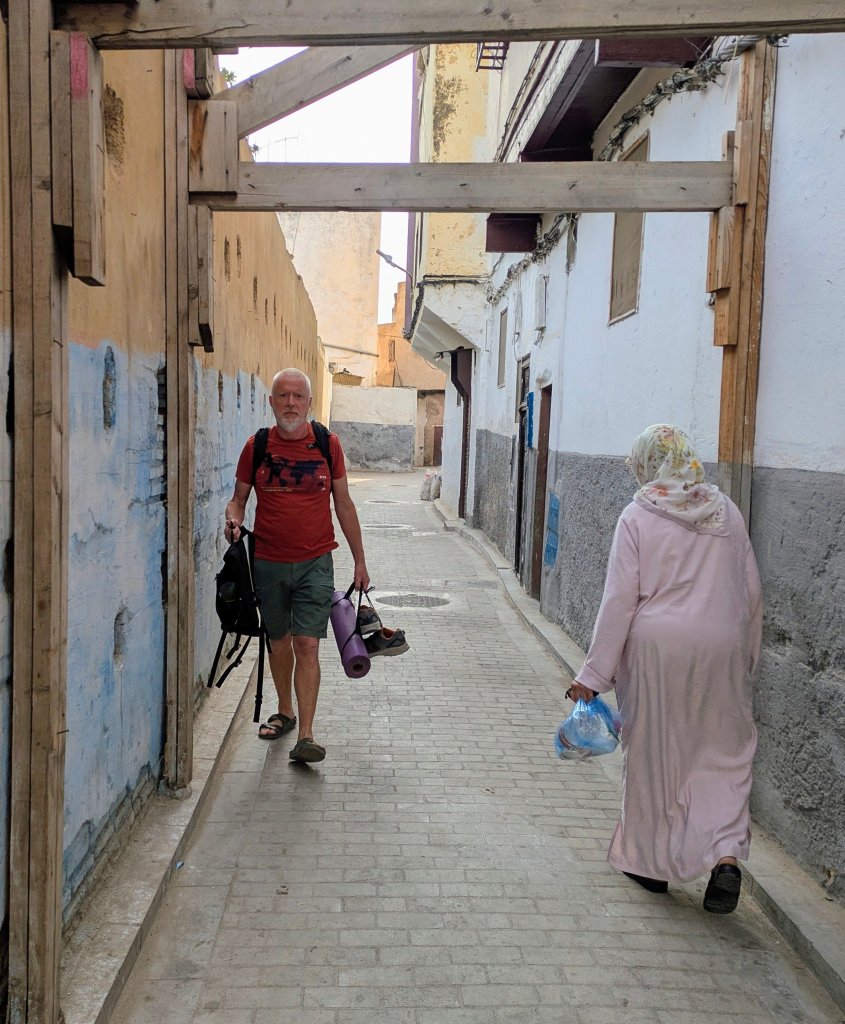
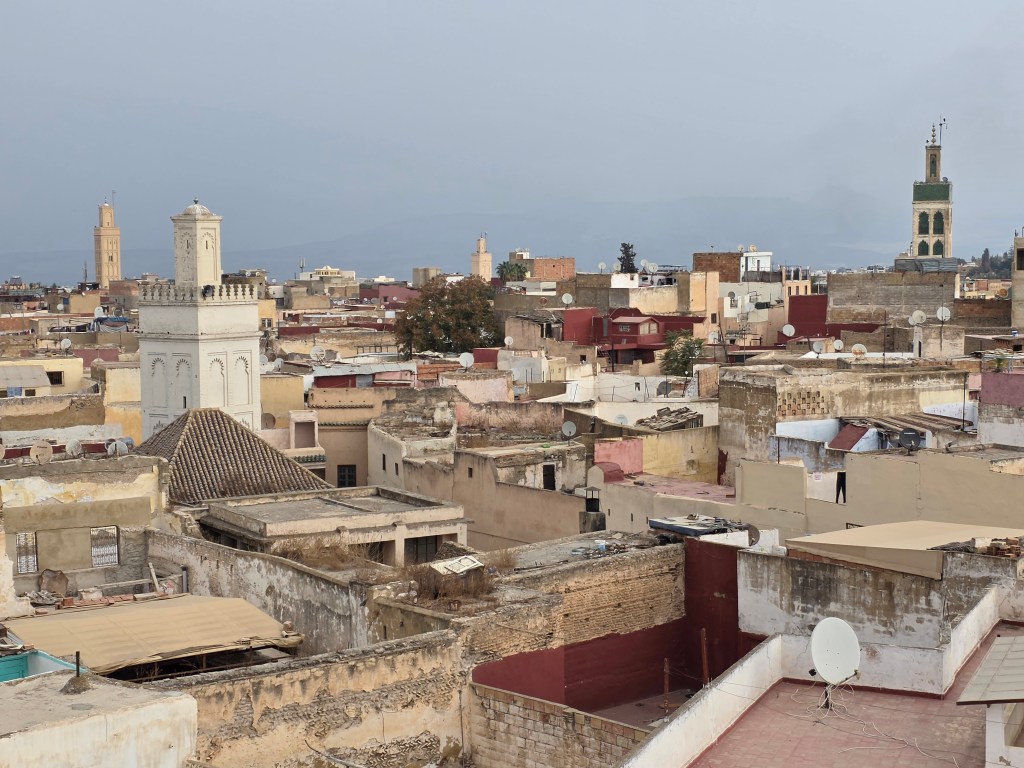
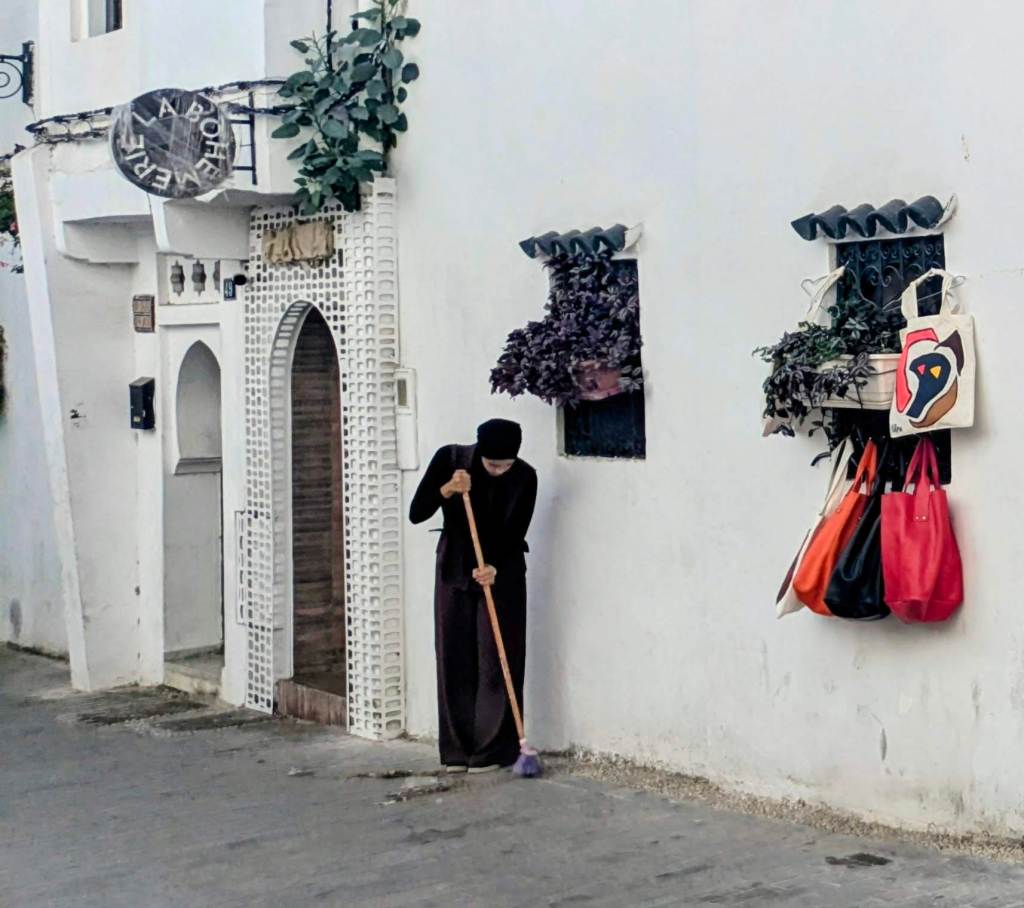
Although our accommodation in Fes was in a narrow laneway, outside the medina, it was an area full of life with playing children, barking dogs and  the usual slinking cats, a guy fixed a motorbike puncture in a narrow doorway, another was welding without a mask in a tiny workshop. People lived in very close proximity with their neighbors, the shabby closed doors giving no indication of the beauty inside many of the houses….not everyone here was poor despite external appearances. Washing was always billowing on the flat rooftops, the day punctuated by the call to prayer from the mosques.
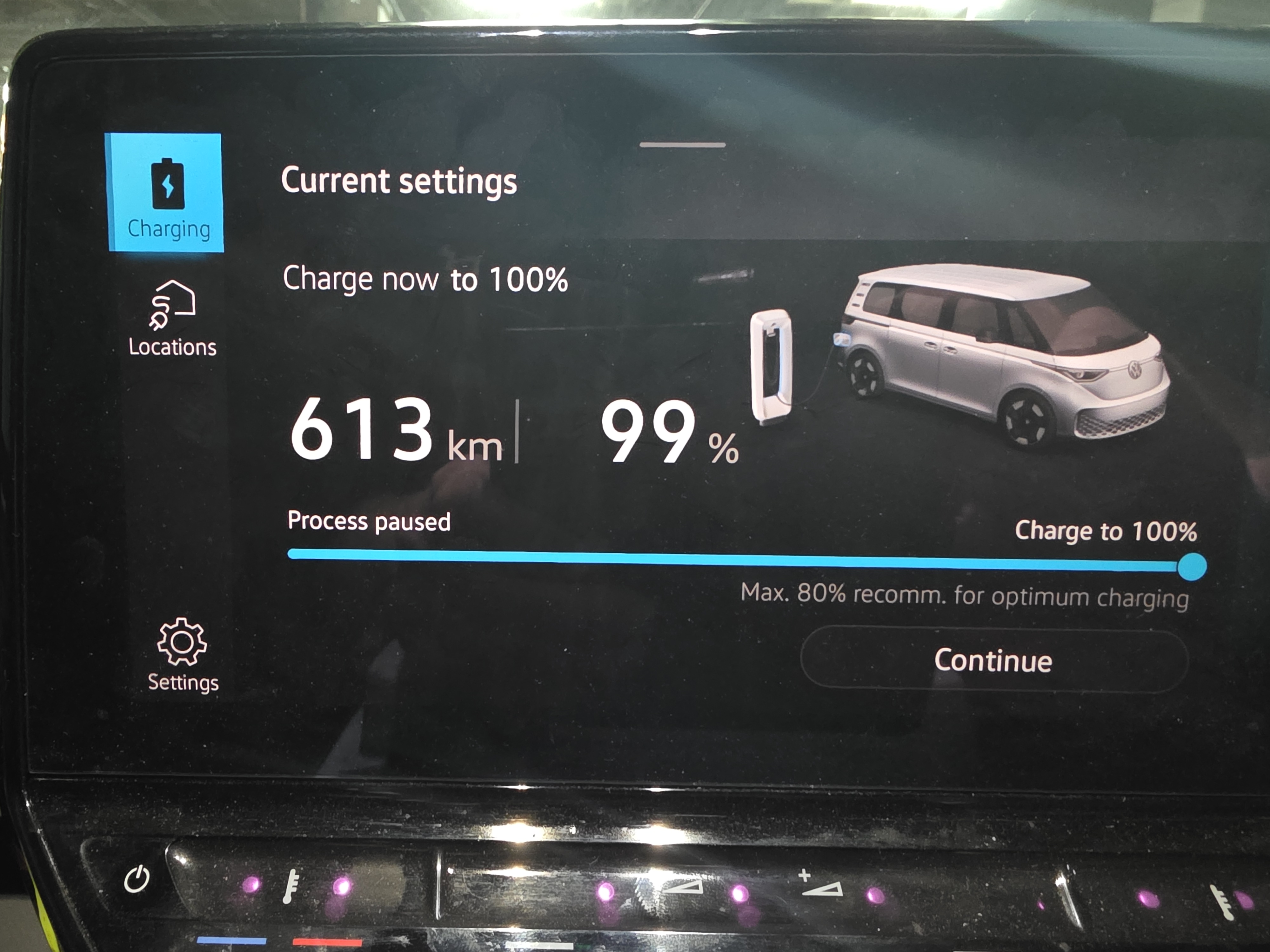
We left Fez with the Buzz 100% charged, thanks to the free (but slowish) charging in Carrefour Shopping Mall. Our kilometer range had reached a new ‘high’ of over 600kms, a consequence of our very ‘conservative driving style.’ At home, a full charge usually gives a range of about 450kms.  Of course, fuel consumption in a diesel/petrol car also has direct correlation with how the car is driven but it isn’t as apparent…or as critical when you have numerous options for filling the tank.

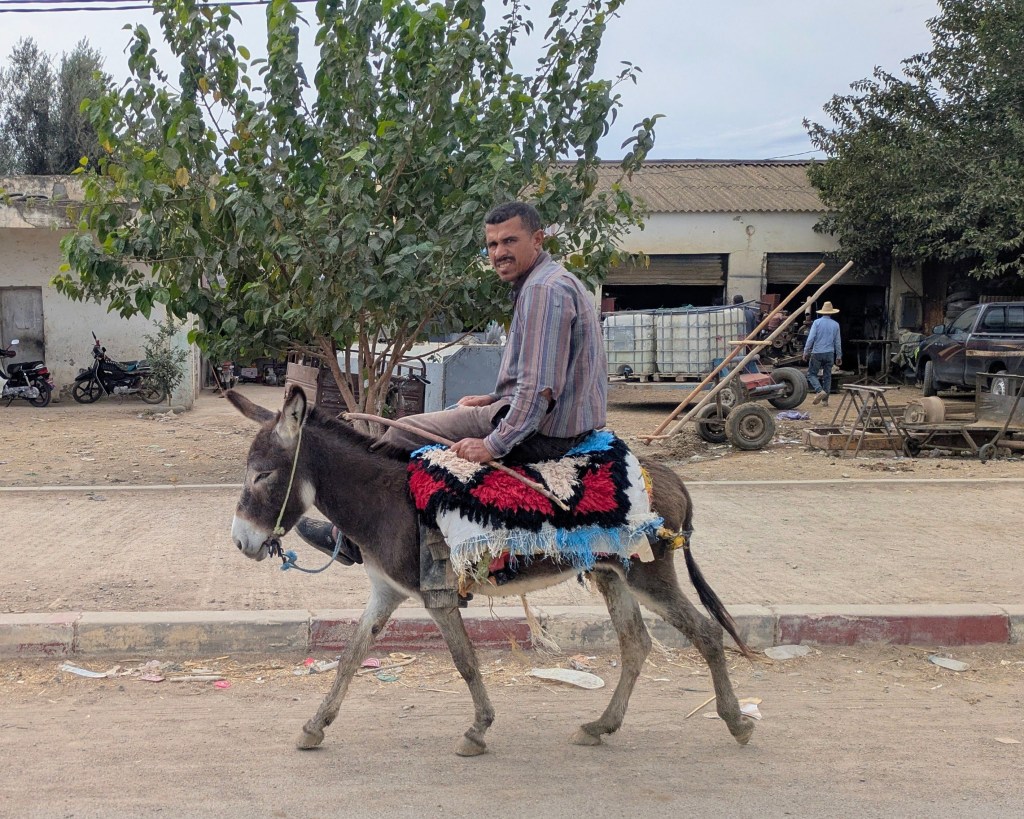
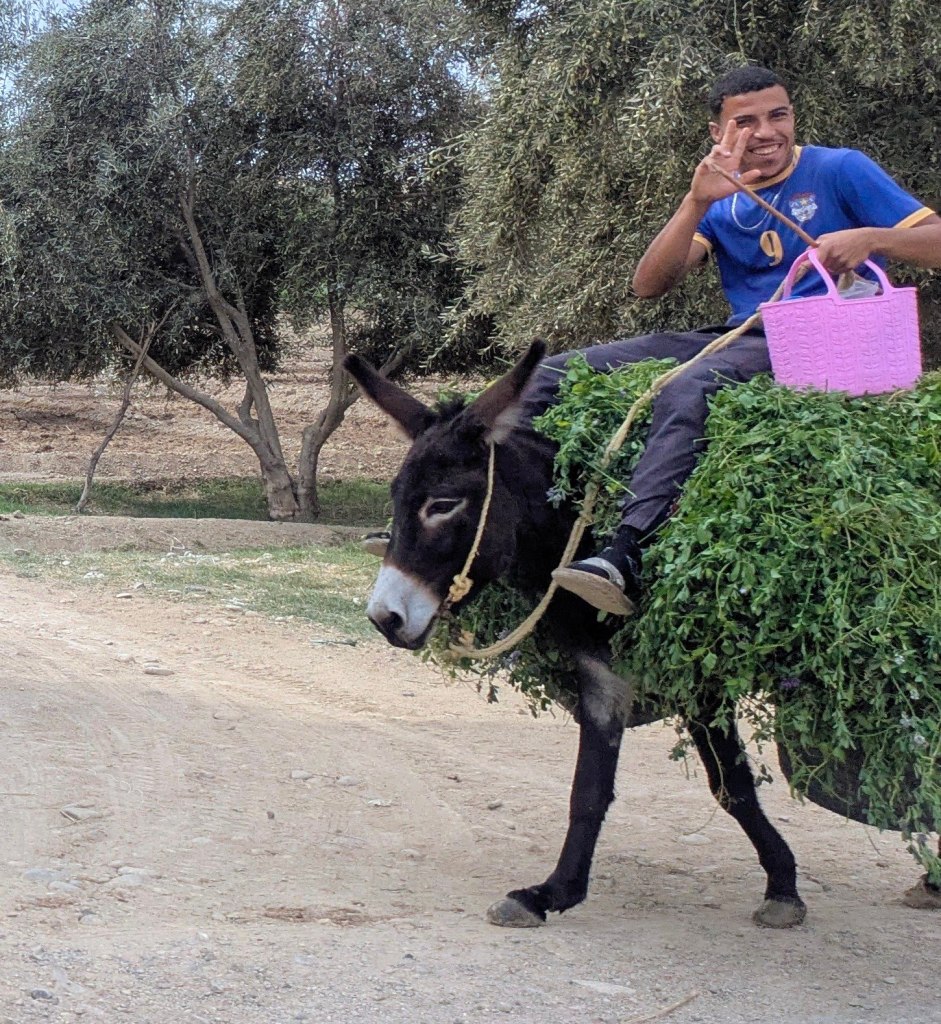
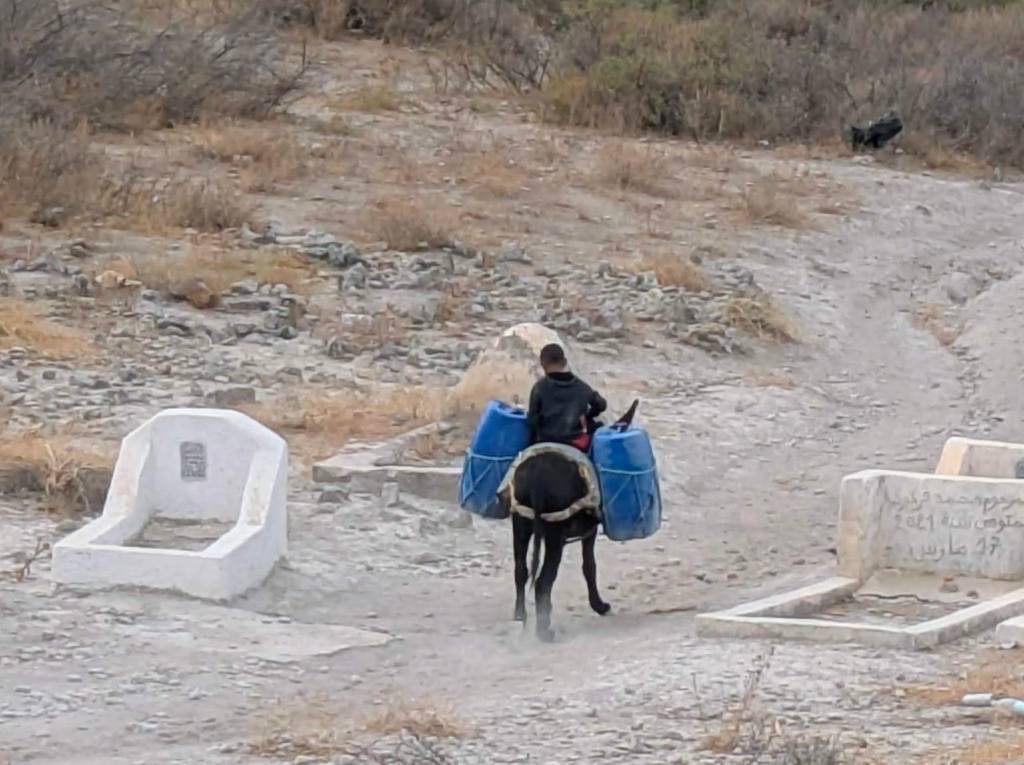
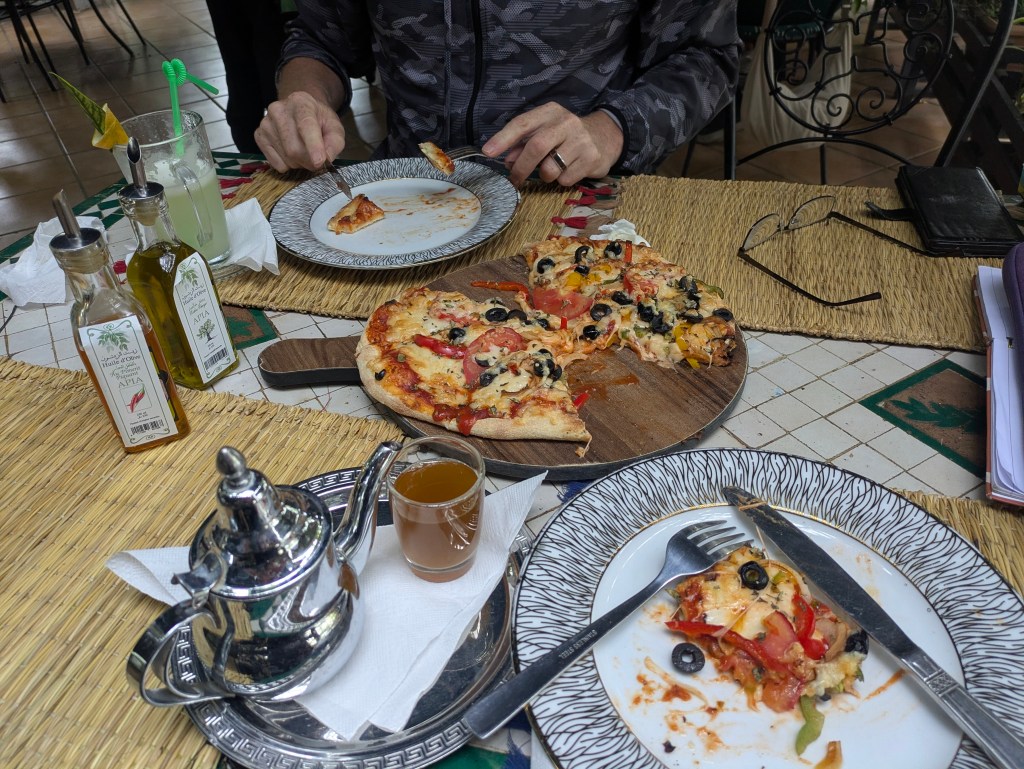
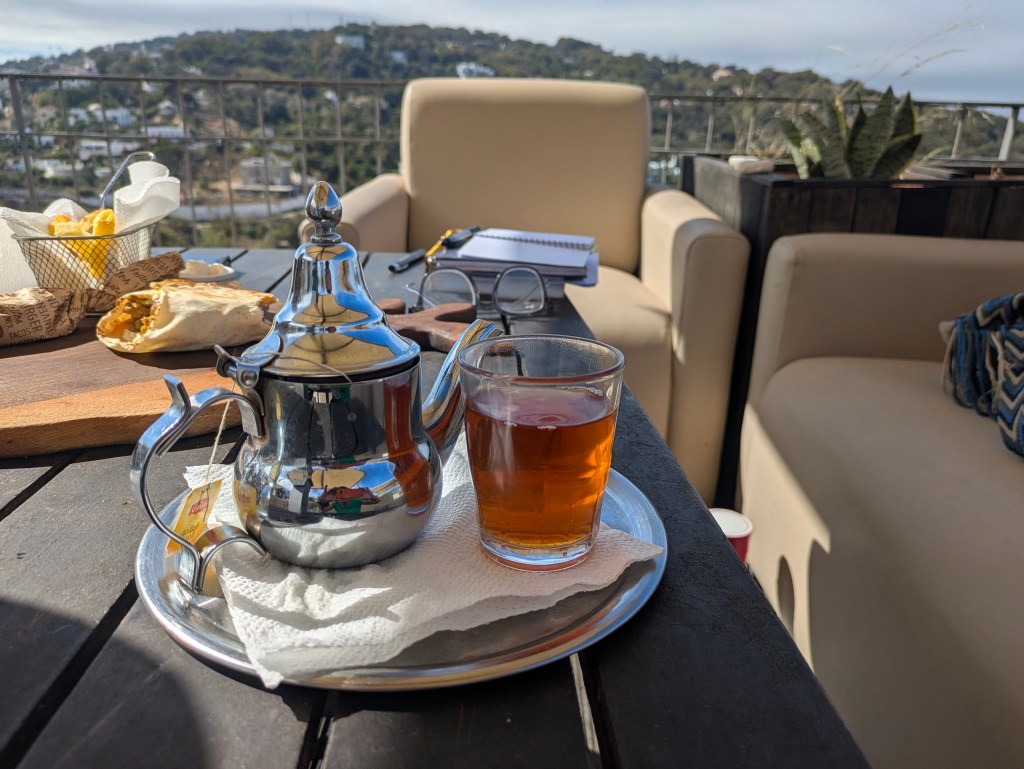
 Our next stop was Chefchaouen, supposed to be the ‘prettiest town’ in all of Morocco, a little under 200 kms north and about three and half hours away (depending on driving style).  Leaving the fertile plains of Fes, the land got drier and dustier, children waved to us as we passed. At this stage, we had seen so many donkeys that we (almost) no longer reached for our camera. Our maps told us that there was a restaurant with an EV charger about two hours into our journey so we decided to stop there, with no real expectation that the charger would exist or that it would work but, for a change, this was a good charging story. While we were eating delicious pizza with mint tea, (is that Moroccan-Italian fusion?), the Buzz charged to 100% for free.
The terrain became greener as we continued on our journey and the temperature dropped from 26C in Fez to  about15C.  Ominous clouds scudded across a darkening of sky as we headed towards the Rif Mountains. By the time we reached our campsite in the hills above Chefchaouen, the wipers were working at full tilt and the gulleys at the side of the road were overflowing with brown sludgy water. A gusty wind blew the rain sideways but we were thankful that we were sleeping in the van. The canvas on several tents belonging to an Africa Overland Tour were bulging with water in the early evening The tour was only on Day 3 of a forty-five week trip down the west coast of Africa and up the east coast, finishing in Cairo. The biggest surprise was the age profile of participants. Many were in the fifties and quite a few looked a couple of decades older.

It rained all night. The wind blew off our awning, sent it sailing over the van but at least it didn’t collide with a person, tent or camper. The morning was grey and drizzly, the sodden Africa Overlanders, still in good spirits, were up and gone before 8am but many claimed they hadn’t slept at all.

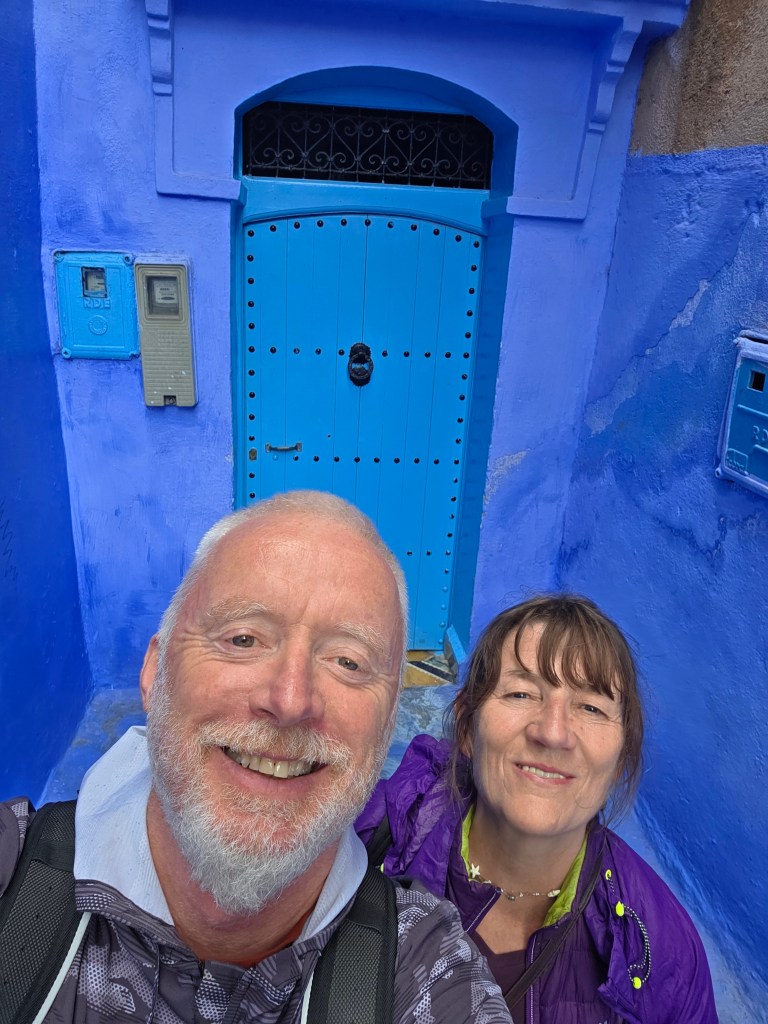
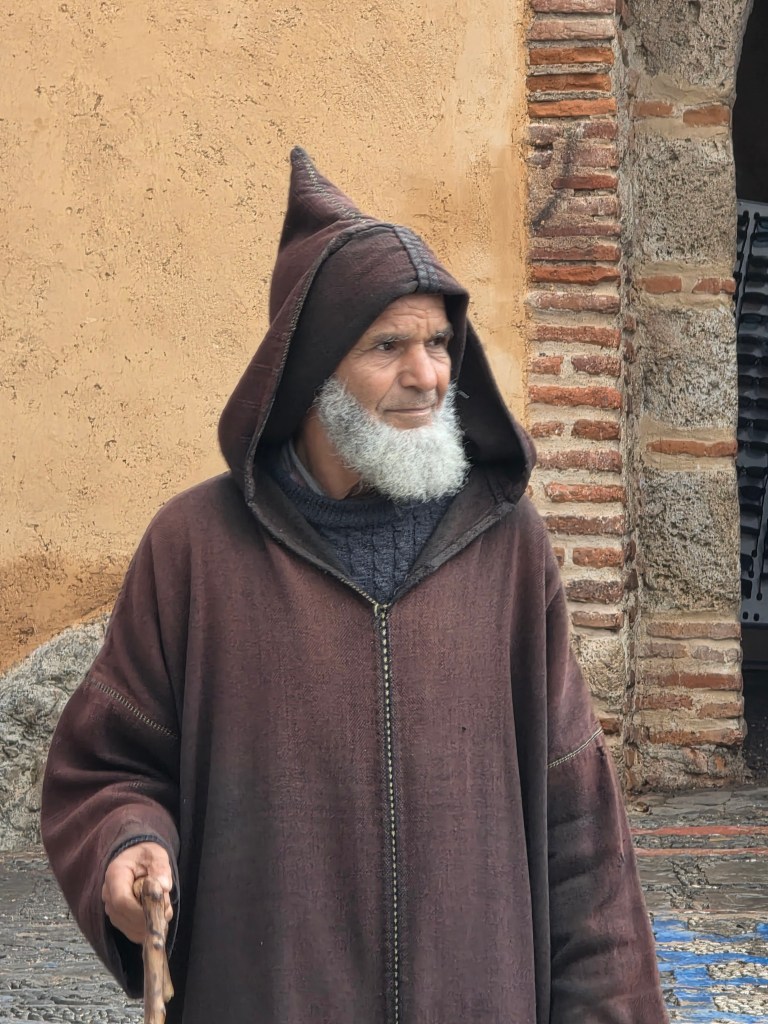
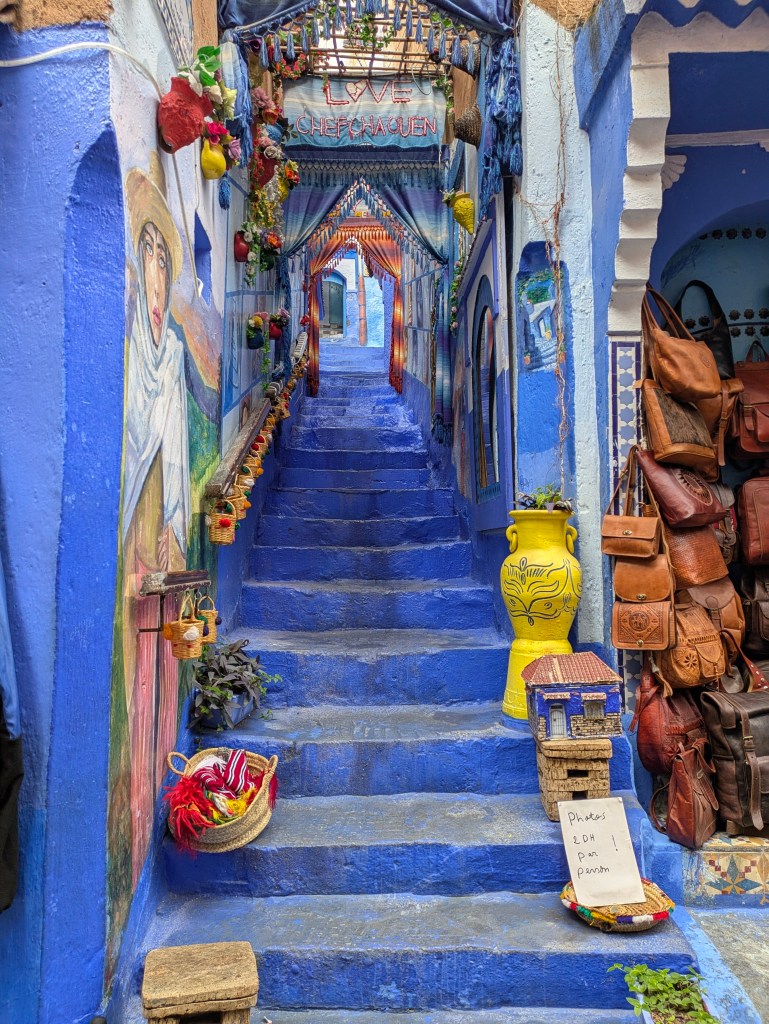
Chefchaouen, famous for its narrow streets with facades painted in different shades of blue, was not looking it’s best under the grey skies.  Men walked around with the pointed hoods of their djellabas (long tunics) covering their heads, giving them an old medieval monkish look.  Nobody was entirely sure why the town was painted blue but there were several theories.  Some said that the colour blue symbolised the sky and spirituality, that it came from the Sephardic Jews who settled here in the 15th century, others said that blue was a good insect repellent. Whatever the reason, the result is stunning and Instagram-able and a tourist magnet. Thankfully, the skies cleared for us and the temperature rose…..just as we were beginning to think we had been hasty in leaving the heat of the desert.

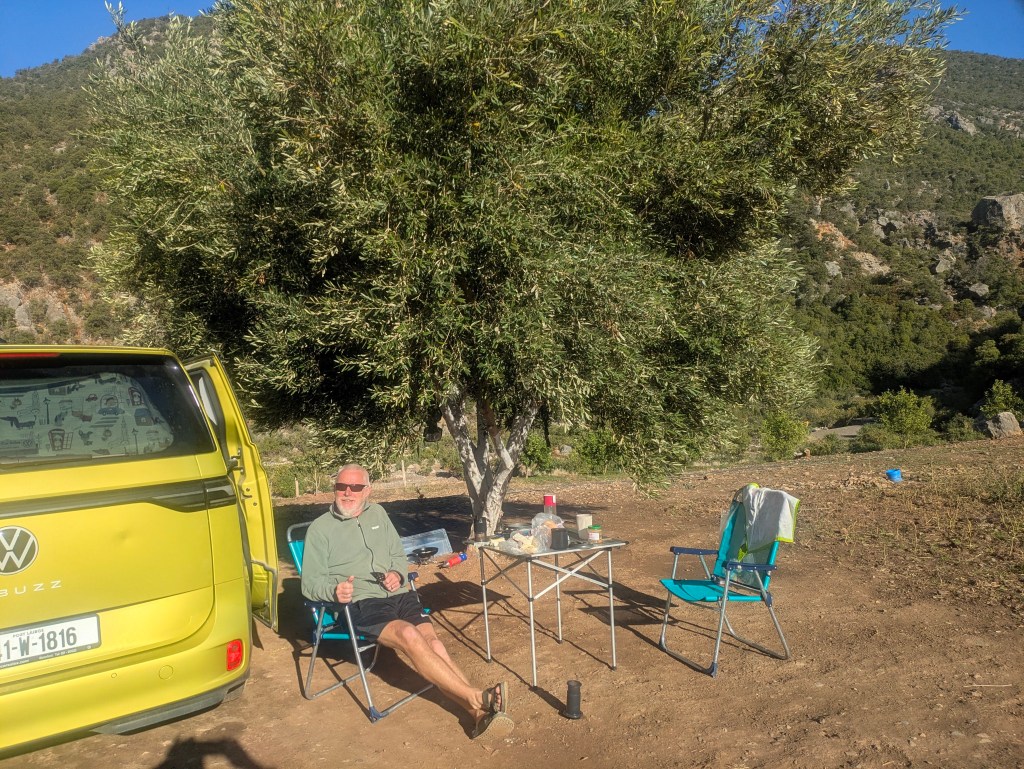
 I’m writing this under an olive tree, the sunlight turning the white bark silver. Theres the babble of a small river, a soft wind in the bushes and the bleating of a few goats. We came here after Chefchaouen. The days are warm, perfect for hikes, the nights and early morning are cool (about 10C, perfect for sleeping.  This little unpretentious campsite in the Rif mountains is a slice of heaven, run by a lovely family who bake bread in an outside oven and make the tastiest tagines we have eaten. We might never leave.

Thanks for reading,

‘Till next time..

Electric Roadtrip: Blue Days in Morocco

Electric Roadtrip: The Charging Saga

Leaving our camping cocoon in Tangier was hard but it had to be done. Waving goodbye to Said, the manager, we headed off in search of EV chargers, making a minor detour to Carrefour Supermarket (Socco Alto branch) to stock up on a few beers and a bottle of wine. Alcohol is not widely available in Morocco, but you can find it…. if you know where to look or have inside information from a walking tour guide.  It’s relatively expensive, especially compared to Spain.

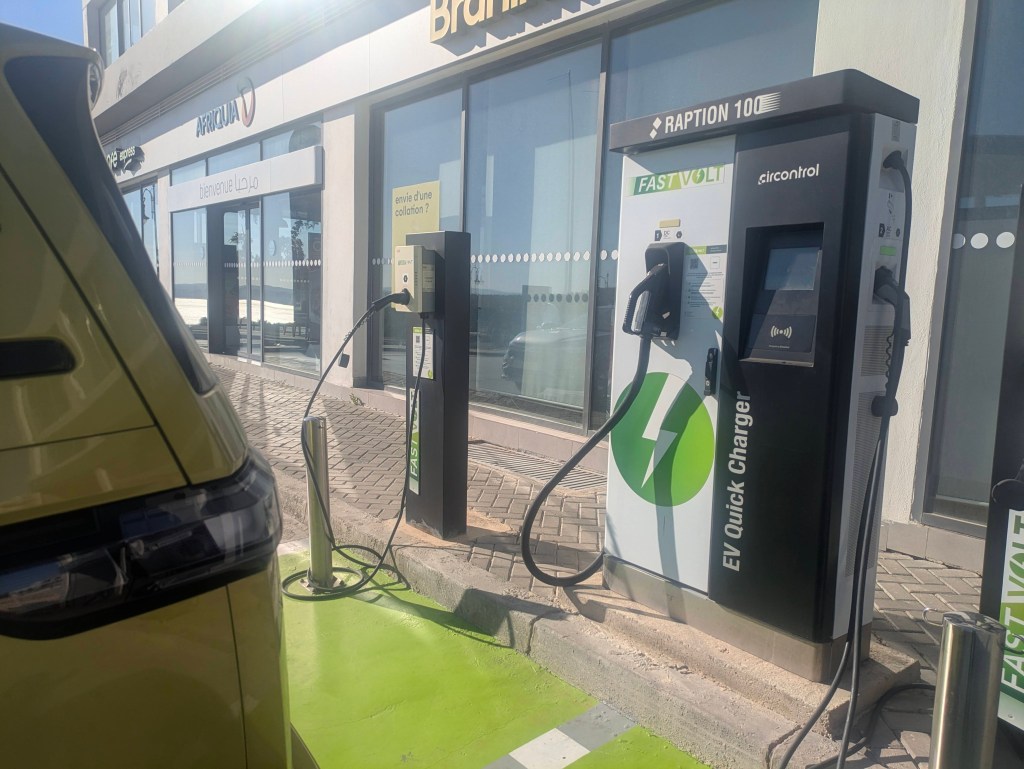
We stop at a fuel station which has Fast Volt Chargers, which again look well maintained. Caoimhin had contacted the company for help about our inability to download the app (essential for charging as there was no option to pay directly using a bank card) but we were still unable to download it despite following their instructions of using a VPN and selecting France.

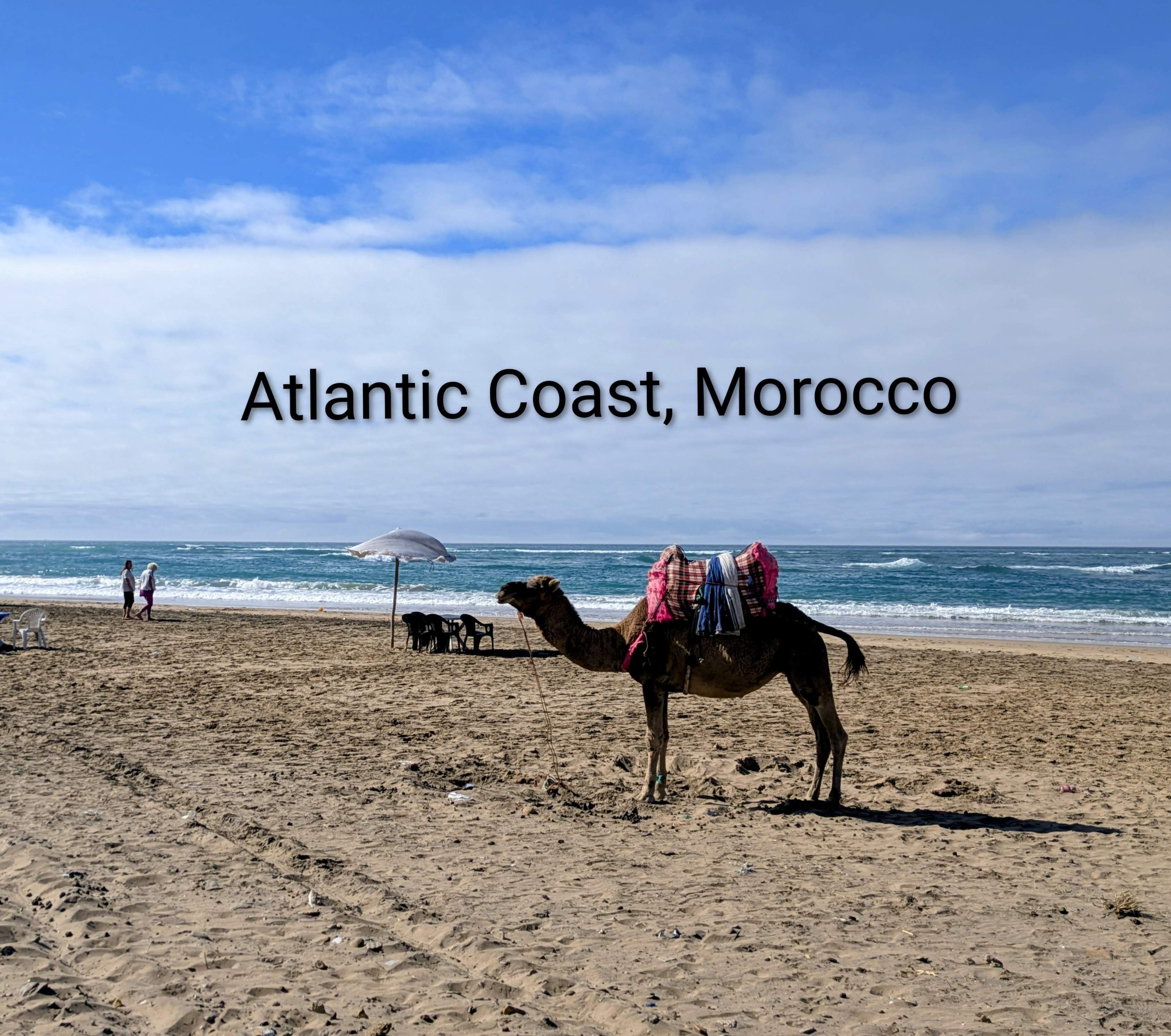
Google maps (but not Electro-maps) tells us that there’s an EV charger about 3 minutes away so we go in search but they aren’t there, and never were, according to a security guard who directs us back  to the Fast Volt chargers. We continue down the coast towards some Tesla Super chargers which appear to be in the middle of nowhere,. When we get there, we discover that they are part of the high-end Hilton Golf Resort. The guys on the gates were friendly and helpful but the Tesla chargers were only compatible with Tesla cars. The guys were offering us cables to slow-charge off a wall socket but that would have taken hours so we pushed on down the coast where the sight of camels relaxing on the beach made us smile.

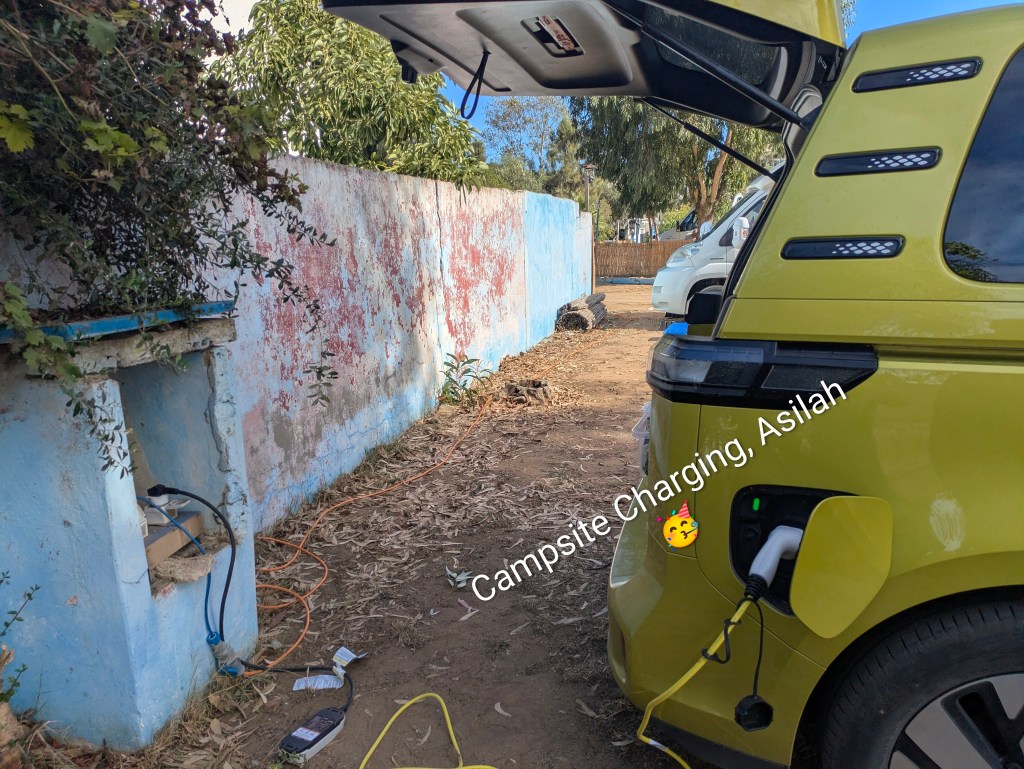
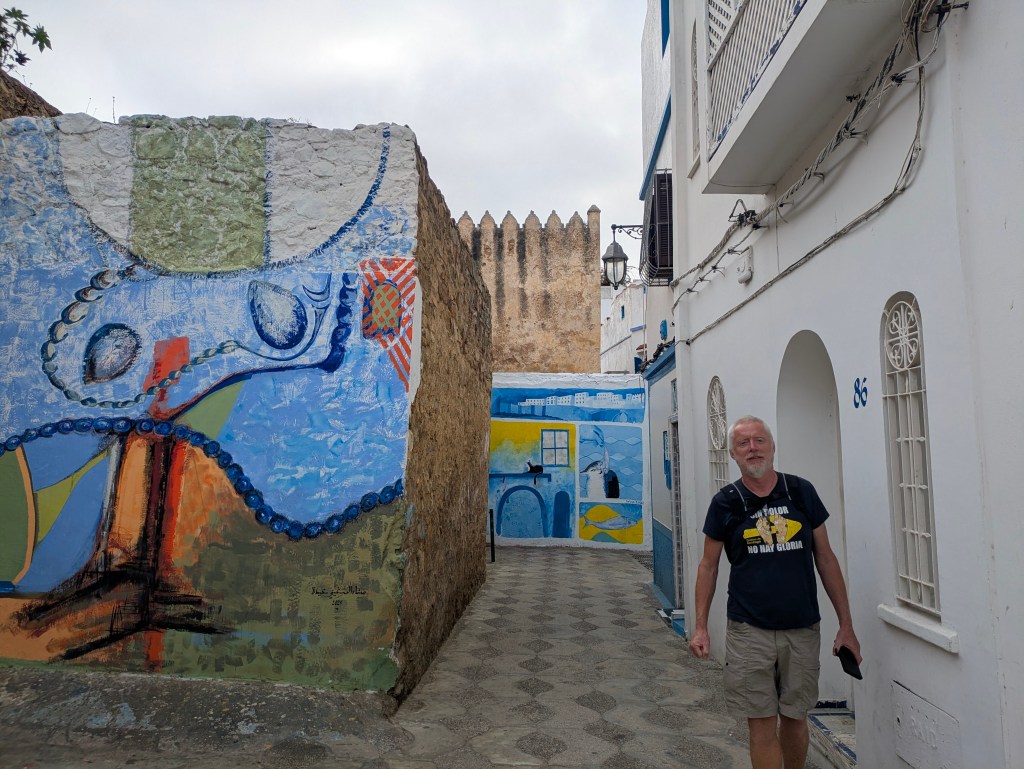
 We continued to a dusty, dishevelled campsite in Asilah, a windy town of murals, artists with a long promenade by the Atlantic and an interesting walled medina.  After checking in, we plugged into a socket with the blessing of the campsite owner who was saying Inshallah, and lo and behold, the charging light turned green and the Buzz slow-charged all night until it reached 100% by mid- morning the following day. Maybe it was the blessing – or the lack of safety features and circuit breakers – but we now had 450 kms to play around with. As well as that, the wife of the campsite owner made us a dinner of tagine and couscous/veg and delivered it to our van in the evening. Delicious. It rained heavily during the night, the first real rain that we have had since we left home on Oct 1,  but there was little evidence the next morning as the thirsty ground had soaked it up.

On down the Atlantic Coast, stopping at a Total Energies gas station in Lareche, we found  two working chargers, that were also free to use. We didn’t really need to recharge but we couldn’t pass up the free offer. Things were definitely looking up.  

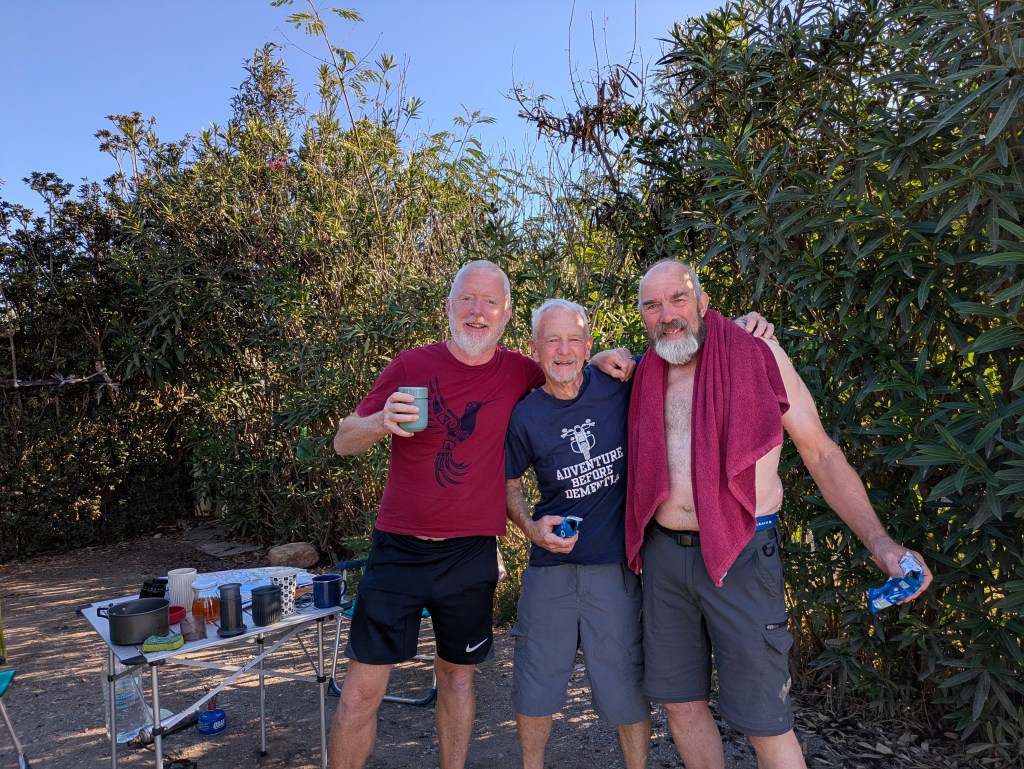
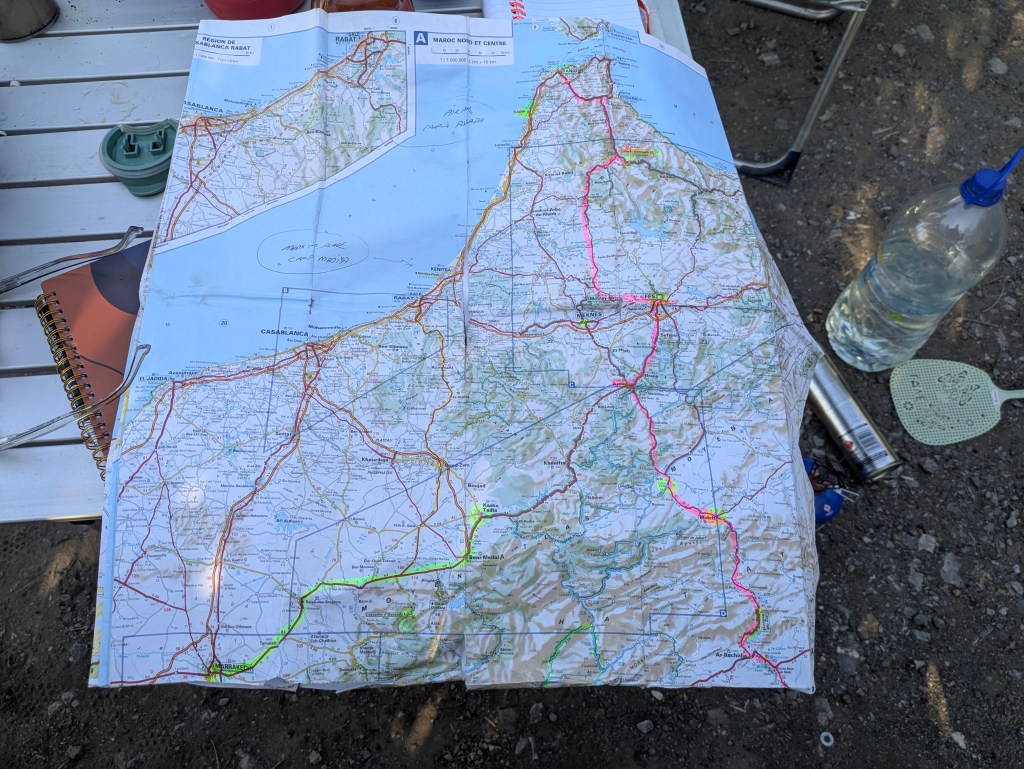
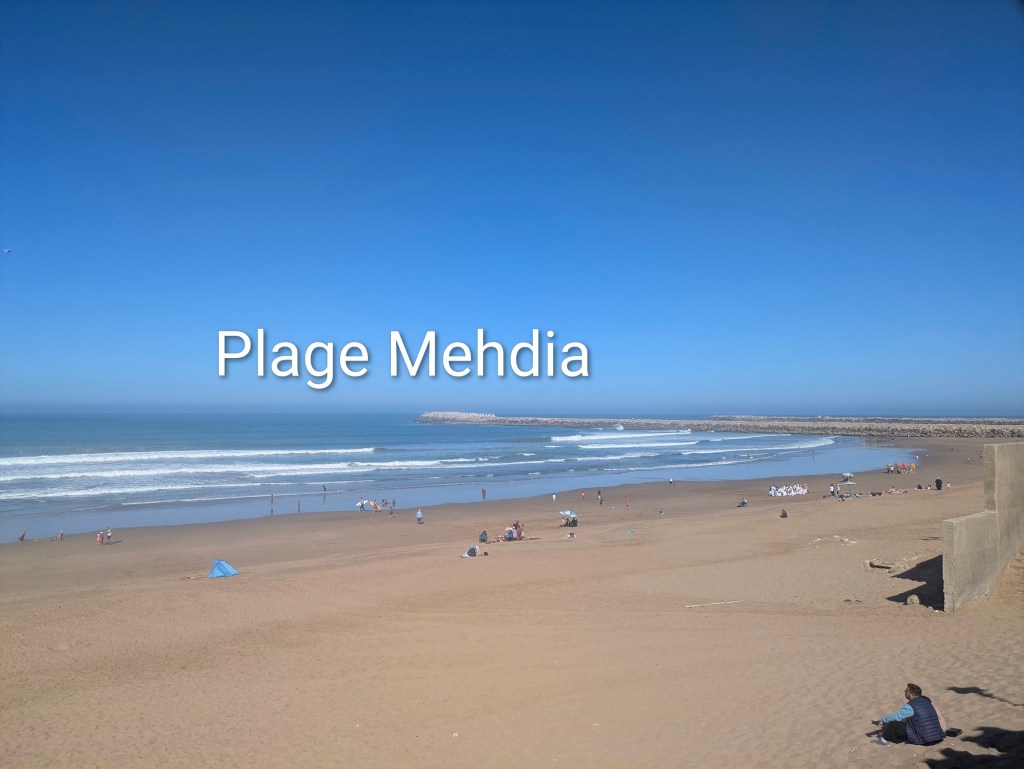
We continued  past acres of polytunnels gleaming silver in the sunshine, roadsides strewn with rubbish and towns that slide into each other until we reached Mehdia Campsite, a large campsite near an impressively long beach. It also had a large swimming pool, much favoured by seagulls who used it as a playground and a toilet. Two British bikers pitched a tent beside us and through the hedge, we heard them mention their longing for a cold beer. As we had a couple of cans in our little fridge, we passed them through the hedge to our grateful neighbours. They were heading north towards Tangier on their way home after two weeks in Morocco and told us of their favourite scenic rides. One of them produced a paper map with highlighted lines, marking their trip. This made me realize how much I miss the feel of paper maps, grubby from use, creased from folding ‘the wrong way’ but so easy to get a proper overview.  One of their routes looked suitable for us, provided we could charge (we were unable to charge at the seaside campsite although we tried).

So we changed direction, abandoned the coast which was mostly dismal and dirty and ditched our plan of heading to Casablanca – it sounded alluring but many people told us that it was bustling, modern and quite miss-able. We managed to charge fully (for free) at another Total Energies fuel station on the motorway outside Rabat. These motorway stations were similar to home with Burger King, and shops that sell pastries/sandwiches and Pringles – generic places that could be anywhere on the planet. We chatted to two Norwegians who were driving to Gambia from Norway and who thought we were very brave (and quite mad) to be driving an electric van in Morocco. They actually went in search of us, curious about who could be driving the all-electric van with an Irish registration in the charging bay.

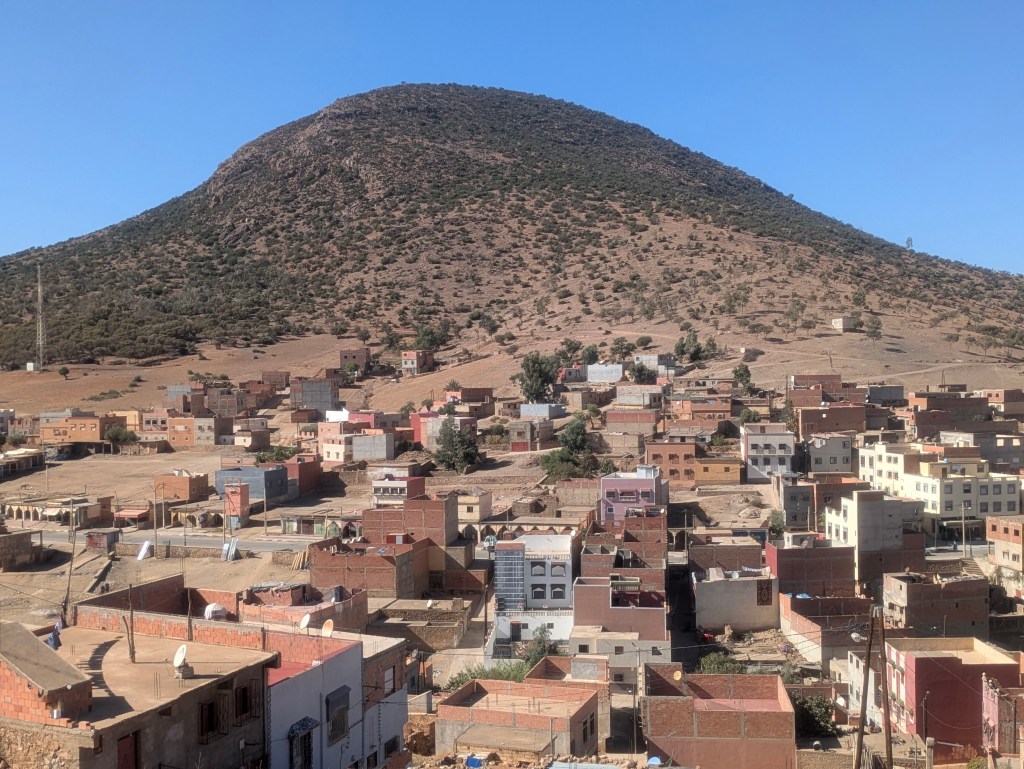
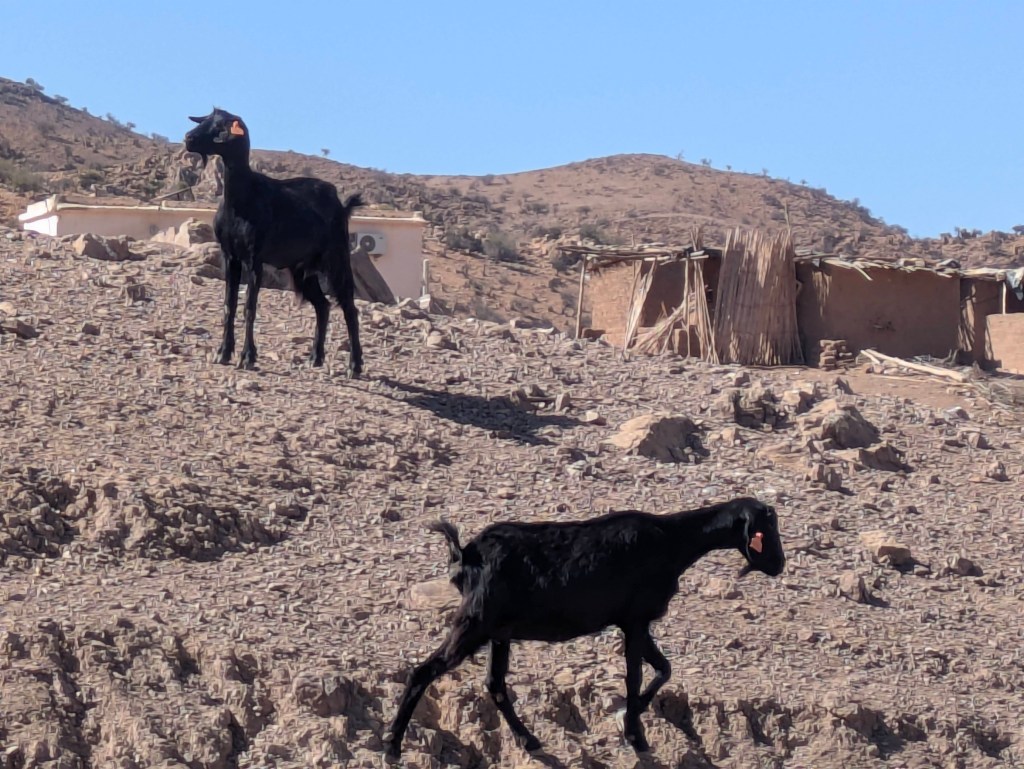
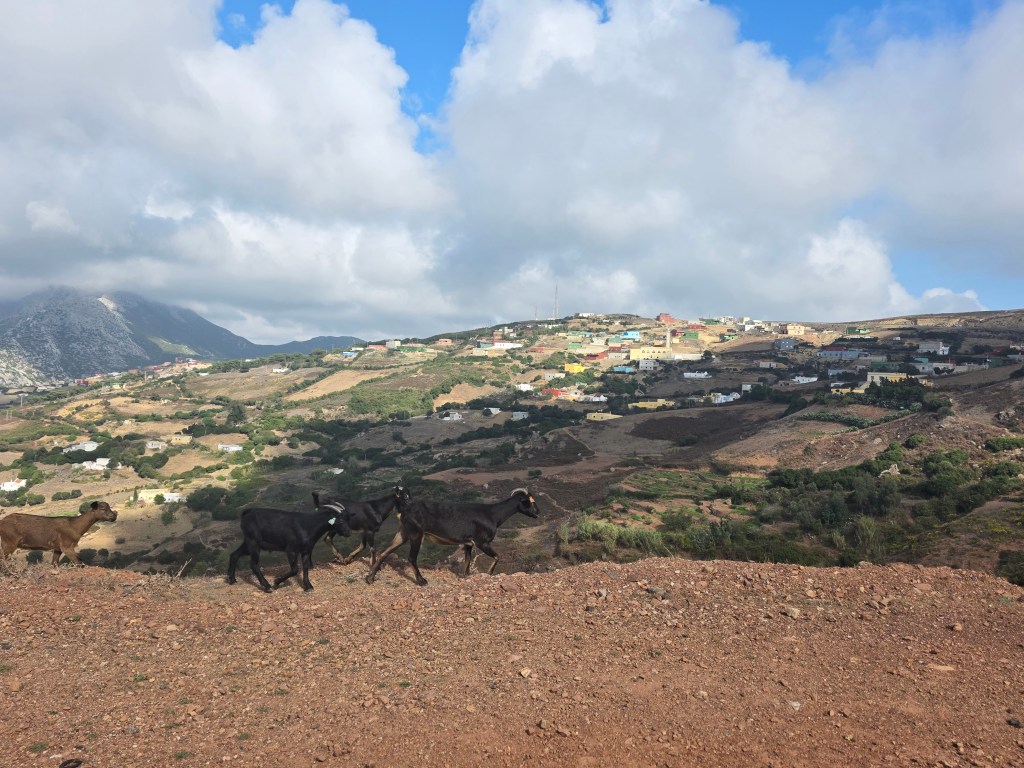
The inland journey was breathtaking, undulating and twisty, the countryside a palette of browns with the occasional green scrub, villages like mirages clung to hillsides and everywhere there were goats, mainly jet-black, like shadows. The temperature rose steadily until we hit 34 degrees. There was the bleating of the goats and the ‘call to prayer; from the village mosques but often there was miles of emptiness. We were in search of a farm campsite on Google maps which sounded like a place we might be able to charge the Buzz, plug it into a socket…..if there was a socket or even electricity. The trouble was that we couldn’t find the campsite. We left the tarmac and followed dusty tracks…. to nowhere. Eventually we turned around and  tried to retrace our tyre tracks back to the ‘main’ road which was not an easy feat.  A ragged boy appeared at our car window, offering us the bunch of grapes he held in his hand. He didn’t know anything about a campsite but knew the word for ‘money’ in several languages …and probably in a few more that we didn’t recognize. He wasn’t in the least bit aggressive but had a lovely charm about him.

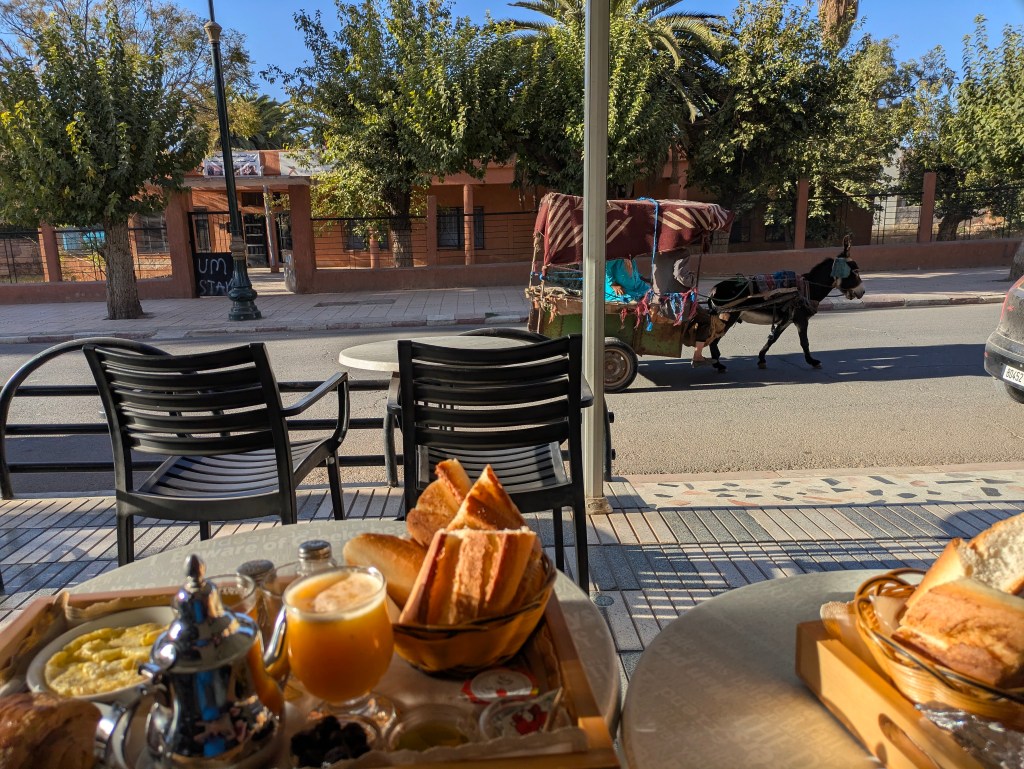
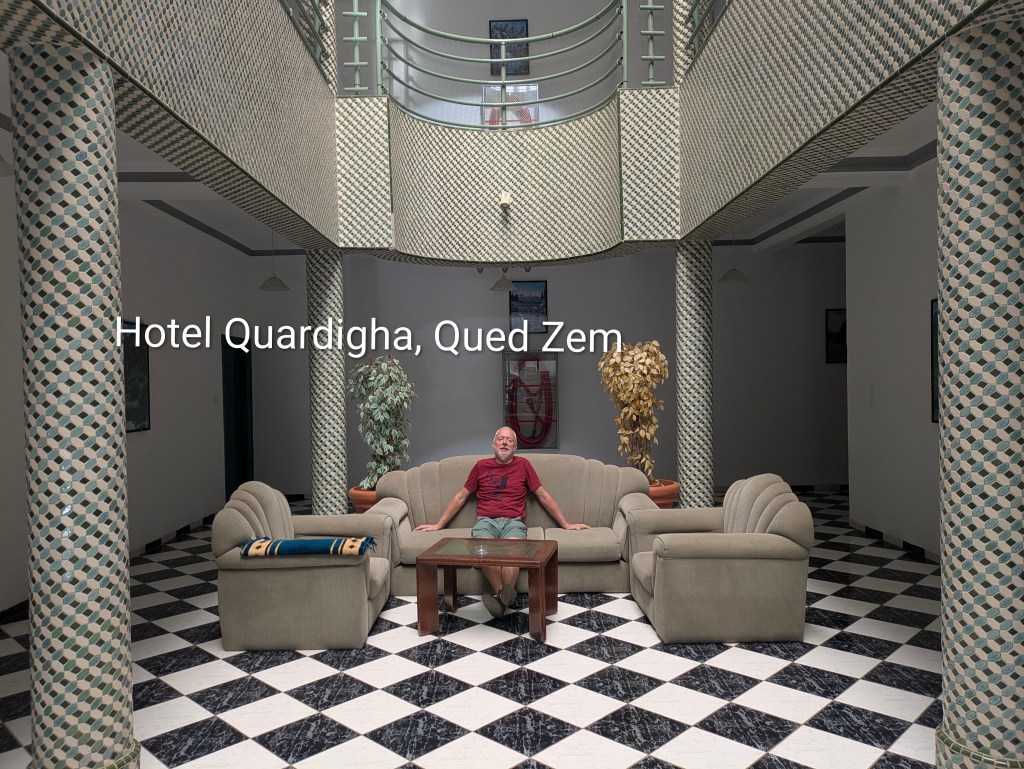
We pushed on to Qued Zem, a substantial town, which was once called ‘Little Paris,’ a title which left us scratching our heads. It was after six in the evening and still almost 30C so we went in search of a hotel. There weren’t many choices, the review for one read ‘don’t expect clean sheets’ so we went for the other, a fairly pricey option in a grand old mansion. This looked impressive but the bedroom aircon refused to go below 26C and the blocked shower tray flooded the bathroom but the sheets was clean and the breakfast on the veranda facing the street was delicious.  The quality of bread and pastries in Morocco was surprisingly superb, probably the French legacy, and juices were almost always freshly squeezed.  

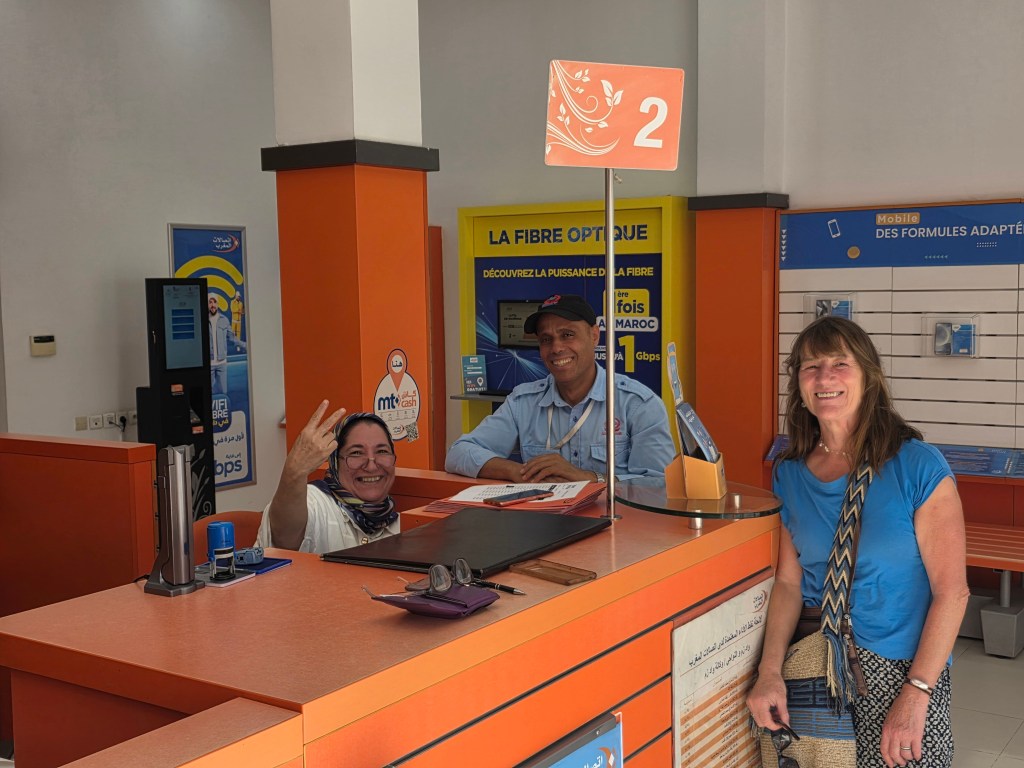
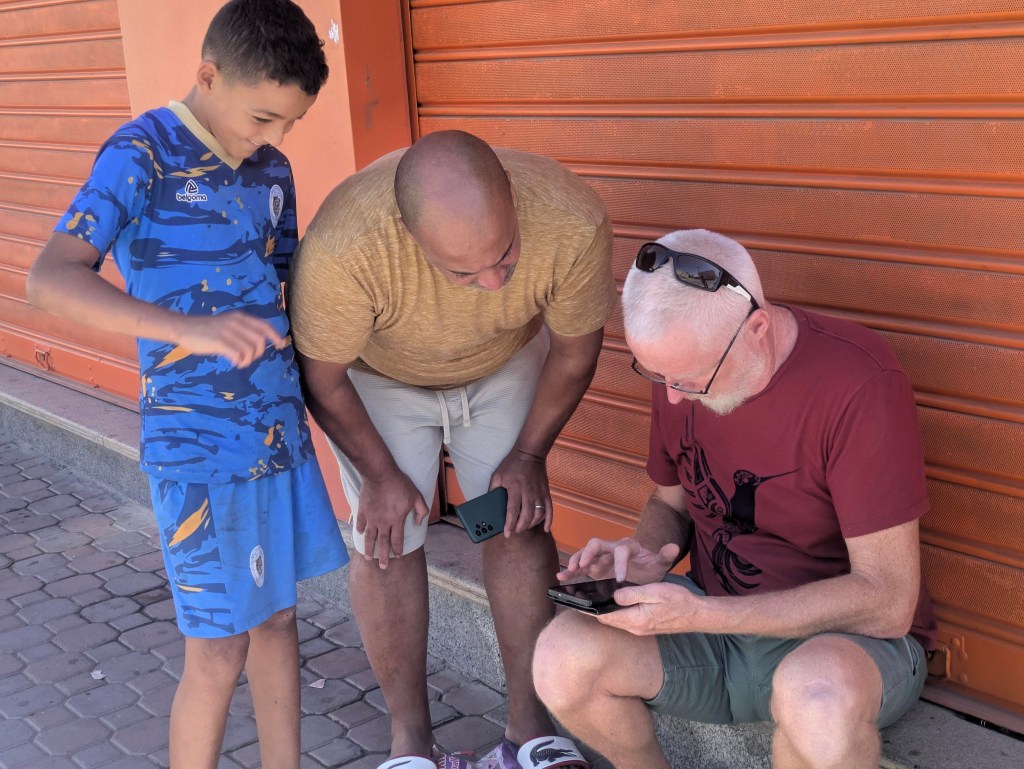
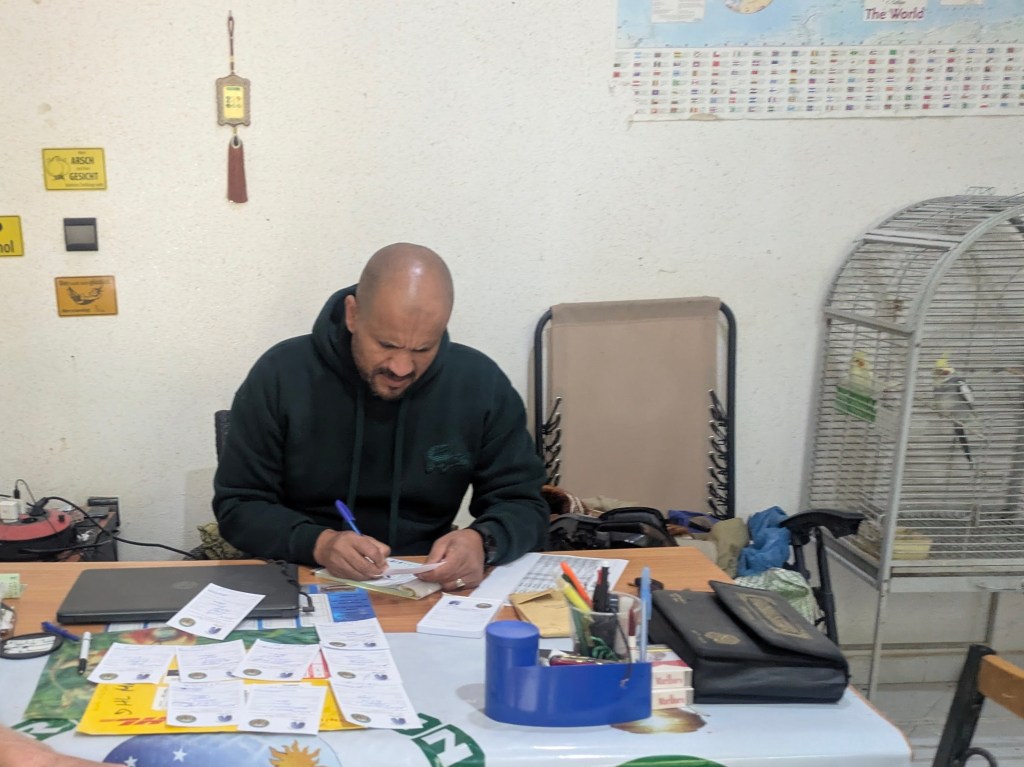
Although I had an e-sim from Revolut, I wanted to buy a Moroccan phone sim so we paid a visit to the Maroc Telecom office in the town where the lady behind the counter was extremely helpful but couldn’t understand why my Maroc Telecom sim in my phone worked for calls but not for mobile data. She eventually asked the doorman to take us to Hashim around the corner who was good at fixing things. Hashim was determined to find a solution but eventually had to give up….mainly because we wanted to get on the road. The Moroccan desire to help was truly amazing.

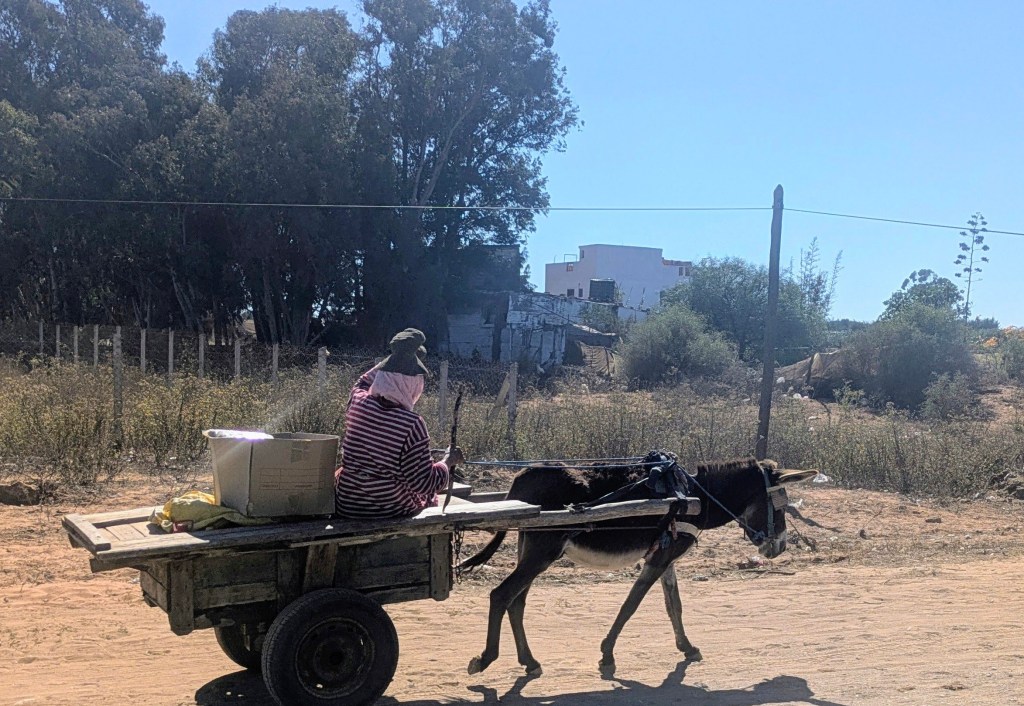
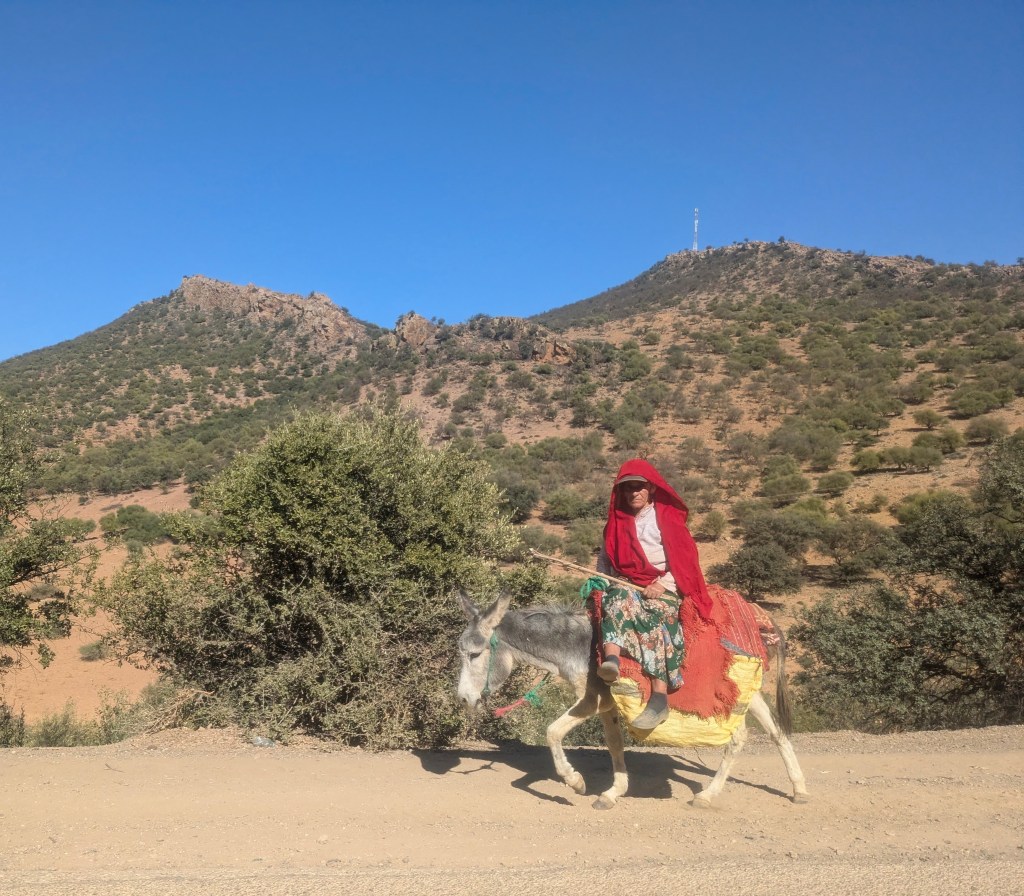
Although there were plenty of petrol stations in Qued Zem, there weren’t any EV-chargers  -most people didn’t know what we were talking about. Although we would have preferred to continue south to the High Atlas, the difficulty with charging made us head north although in reality, chargers were scarce in every direction. The drive north through the Middle Atlas to Azrou was again spectacular with a timeless, almost biblical feel.  It was Friday and in many of the villages, our passing coincided with people spilling out of the mosques and hopping on donkeys carts or bicycles. In many cases, the only evidence of modern living was that the man on the donkey had a mobile phone in his hand.

Surprisingly, there were lots of speed checks with police hiding behind bushes with speed guns. The advantage of trying to conserve fuel was that we were always within the limit and were waved on. Our charging issue was becoming critical, the kilometres ticked down and we mentally calculated how many we have left versus how many we needed to get to our destination. Morocco is a big country, more than ten times the size of Ireland. There were supposed to be EV-chargers in Azrou but we couldn’t find them and nobody knew anything about them. By the time we reached the Azrou campsite, Euro Camping Emerites (at least that existed), we had 62 kms left and we desperately hoped that we would be able to charge using a granny cable in a socket.

Azrou was charming, a Berber town surrounded by cedar and pine forests with many walking trails and home to troupes of monkeys in the woods. At about 1300 m, the days were warm and the nights were cool. The campsite was also lovely with lots of trees, a place where Khalid, the friendly manager, delivered free baguettes to everyone in the morning. It was exactly the type of tranquil place we liked, surrounded by nature BUT we had a big problem, we couldn’t charge the Buzz, We tried several sockets, Khalid allowed us to plug into the kitchen, he called a friend, brought us to a garage but the Buzz wasn’t buzzing.

 According to various (unreliable) maps, we thought there were chargers in Fez, which we had intended visiting, or Meknes, which we had never heard of before. Fez was 89kms but Meknes was closer at 65kms but we had a mere 62 kms in the tank.  Would either of them have chargers that worked……even if we got there? Our hope was that as we were in the Middle Atlas mountains, it should be all downhill to either destination. We decided on Meknes and drove slowly….Khalid gave us his phone number in case we got stuck and said that he would come and rescue us.

A wonderful thing happened.   A few kms outside the town, our available kilometres rose to 90 with 60kms to go. I began to breathe again, my stomach unclenched. The Buzz kilometres changed according to the terrain – going downhill, they zoomed up, any uphill, they went decreased but by the time we arrived in Meknes, we had an unbelievable 109 kilometres to spare. We headed to Carrefour Shopping Mall where there were supposed to be Kilowatt chargers and we had already downloaded the Kilowatt app. The good news was that the two chargers were working but the bad news was that they were in use. The friendly doorman suggested that we go for coffee and he would call us…which he did after about thirty minutes. Thankfully, the Buzz charging light turned green. As it was only a medium charger, we were only 50% charged after about three hours but we hated shopping centres and couldn’t bear to spend any more time there.

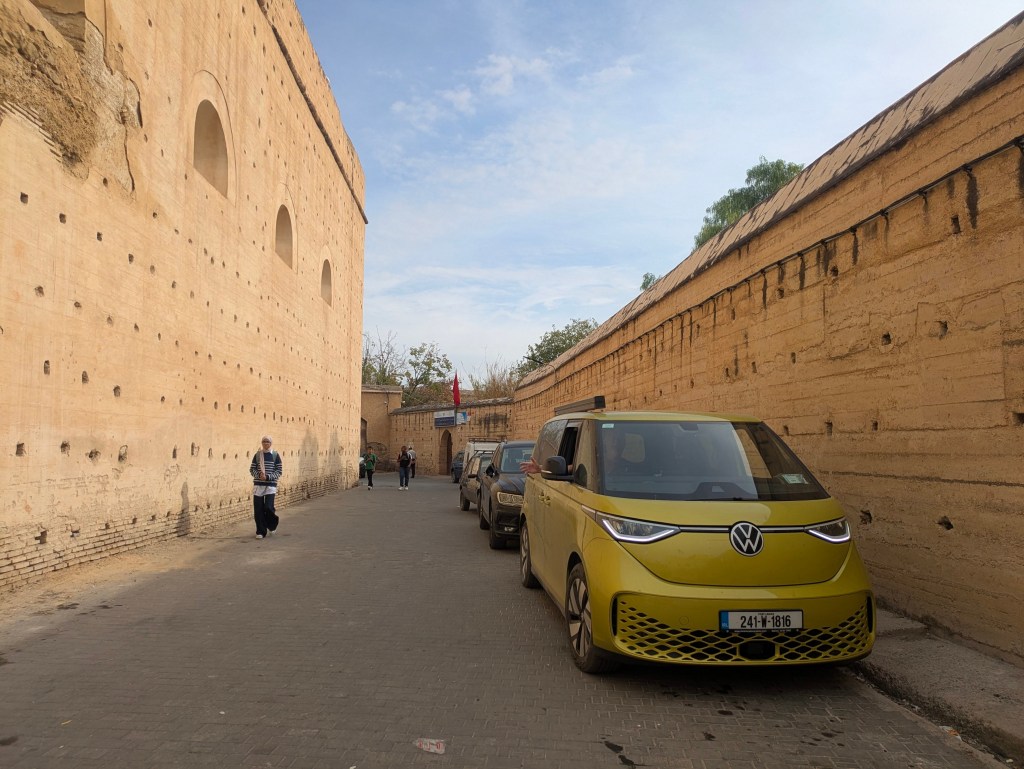
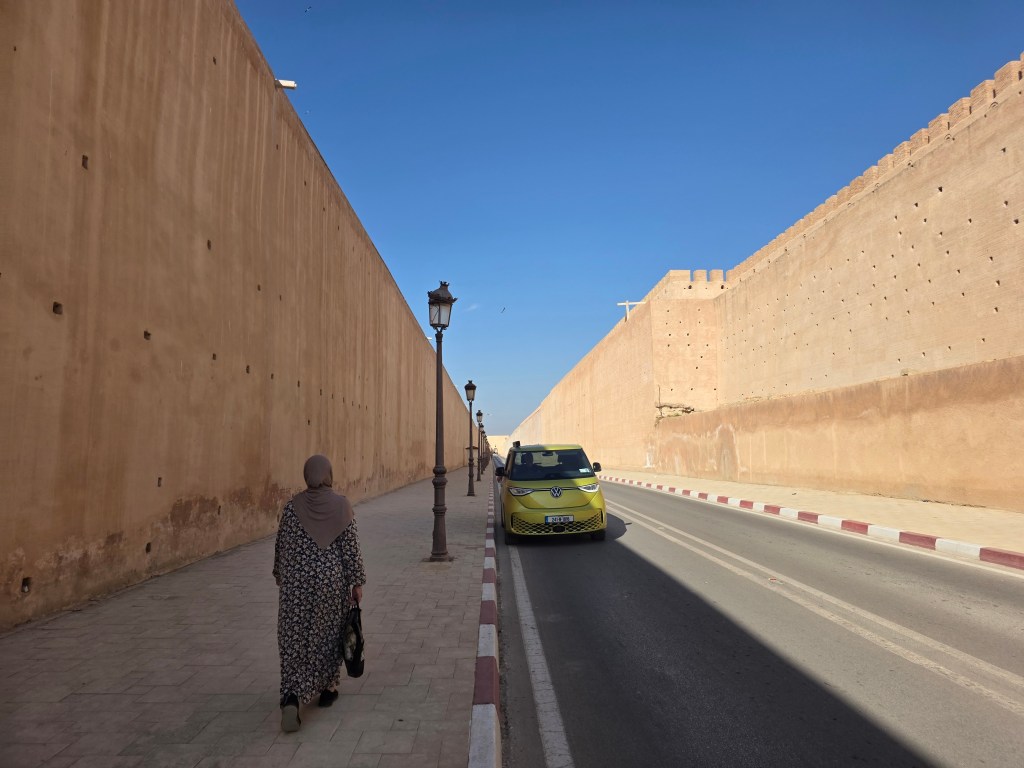
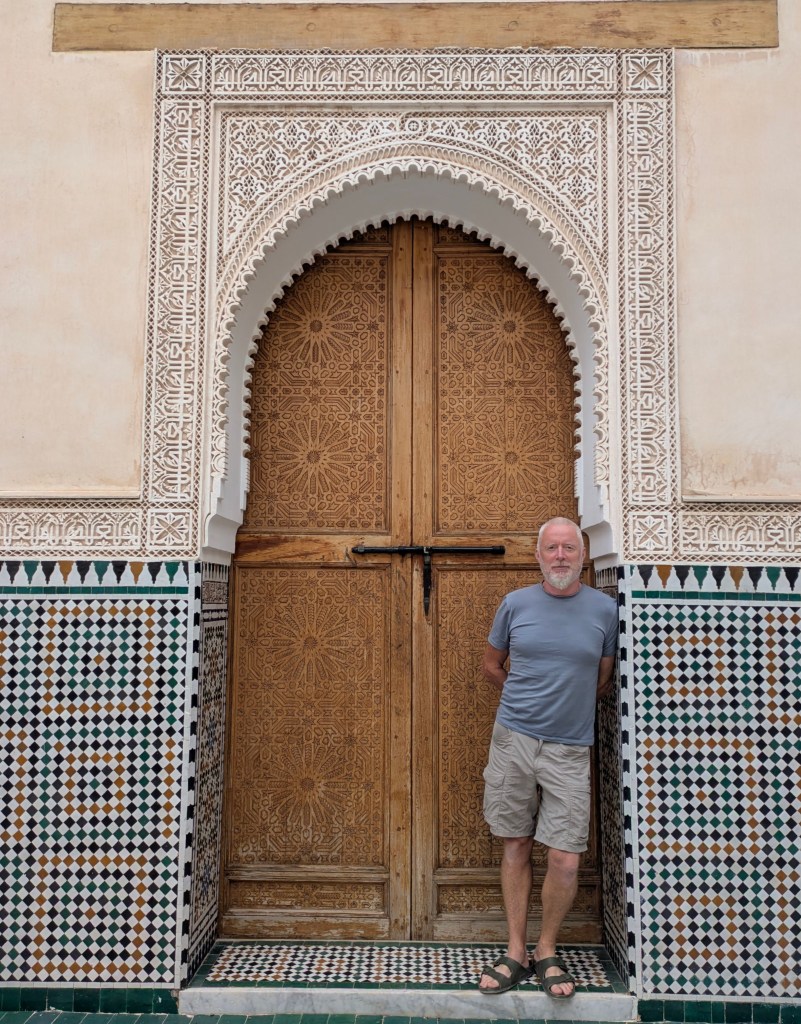
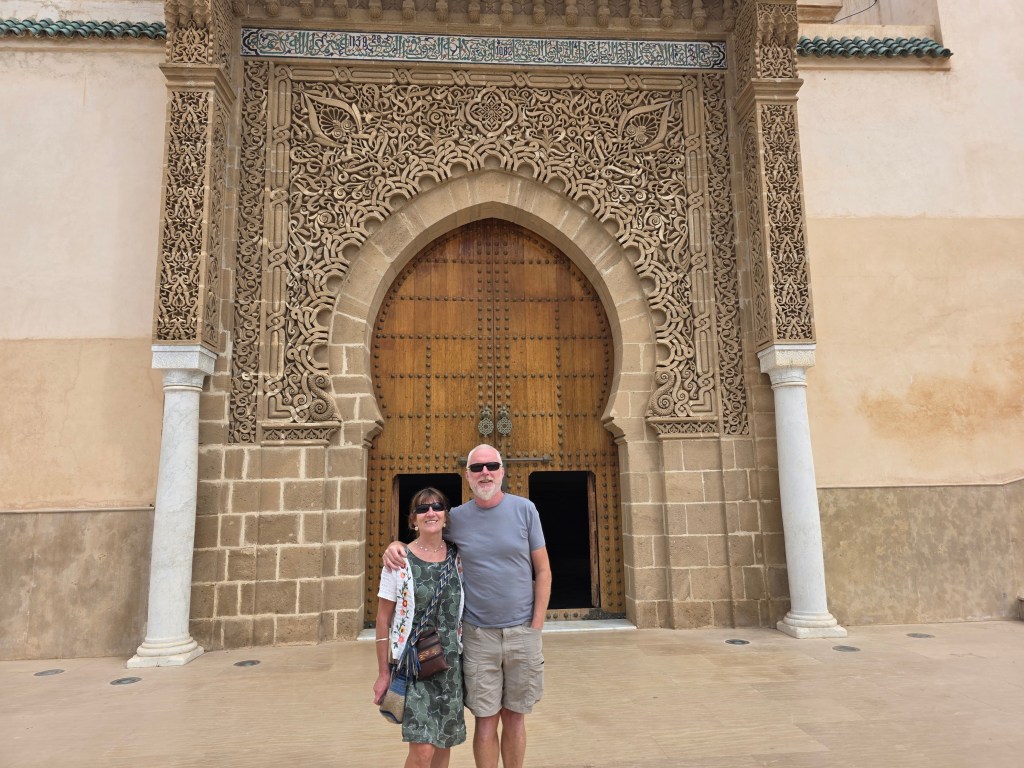
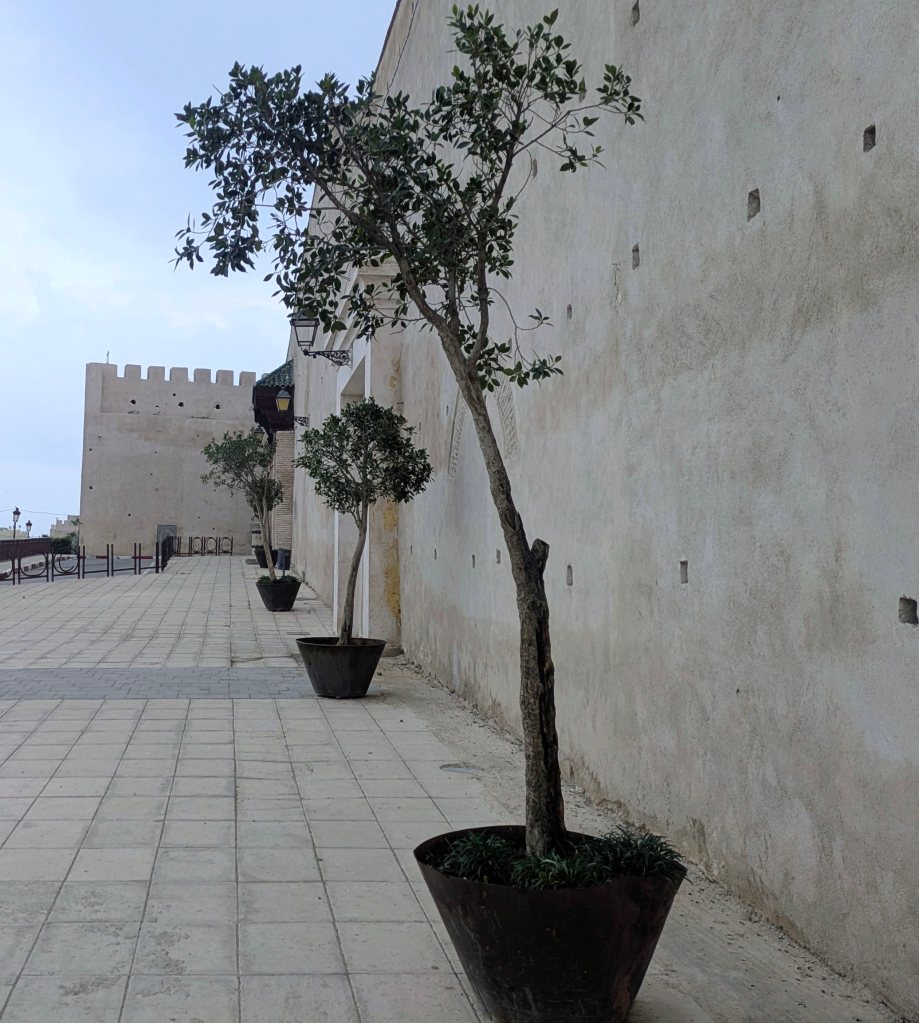
 Maybe our diversion to Meknes was meant to happen. It was a lovely city with impressive architecture, and although it was one of the four imperial cities of Morocco (the others are Fez, Marrakesh and Rabat), it wasn’t very touristy. Driving from the Carrefour Mall, we were wowed by the beauty of the old walls, built by Sultan Moulay Ismail in the mid seventeenth century. These impressive mud walls encircled the palace and old town and were home to hundreds of stocks nesting in the turrets. Sultan Moulay Ismail began the first day of his reign by murdering any of his 83 brothers and half-brothers who refused to bow to him. Despite that – or maybe because of it, he is much revered even to the present day. We visited his lavish mausoleum with a stunning mix of exquisite tiling and simple design.

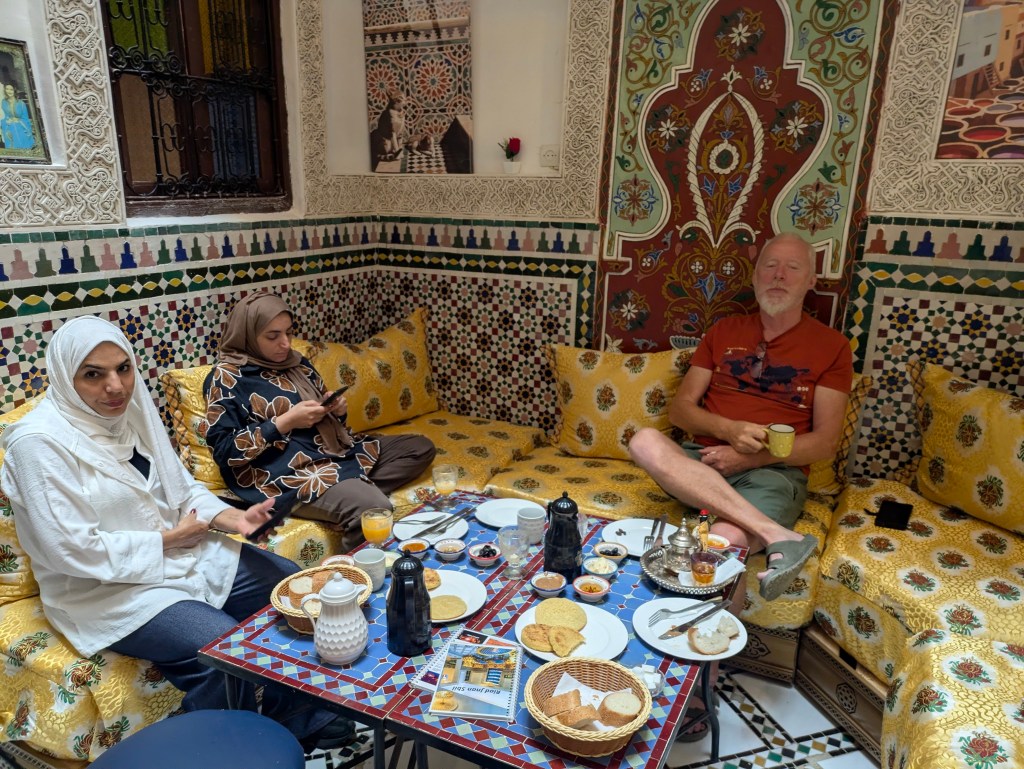
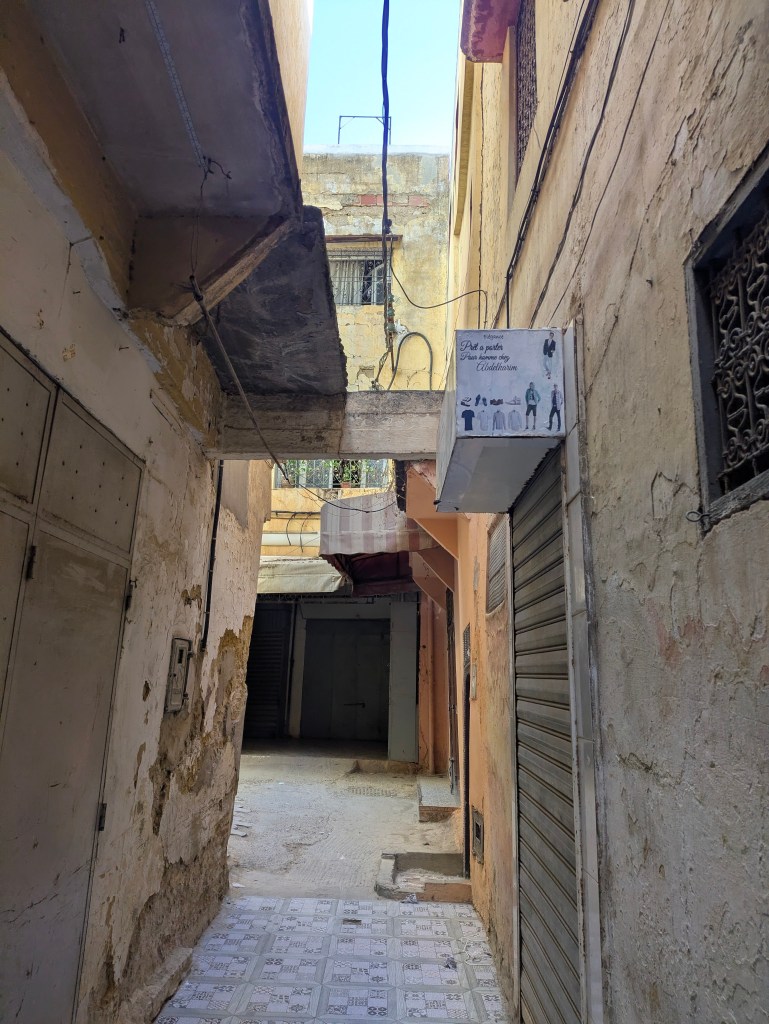
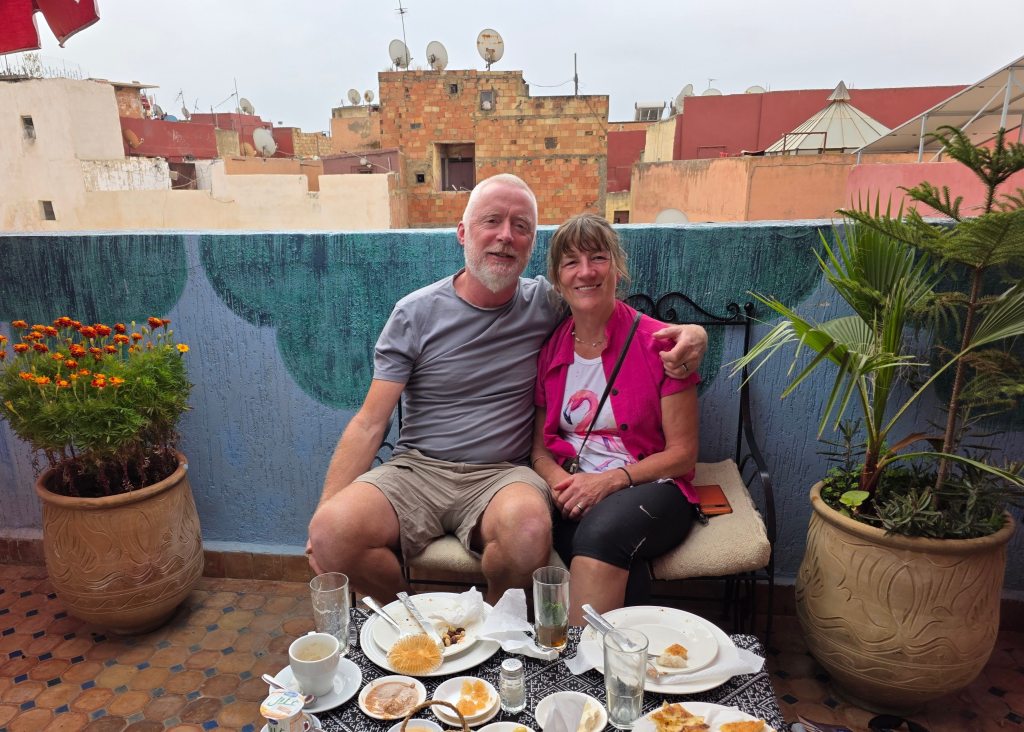
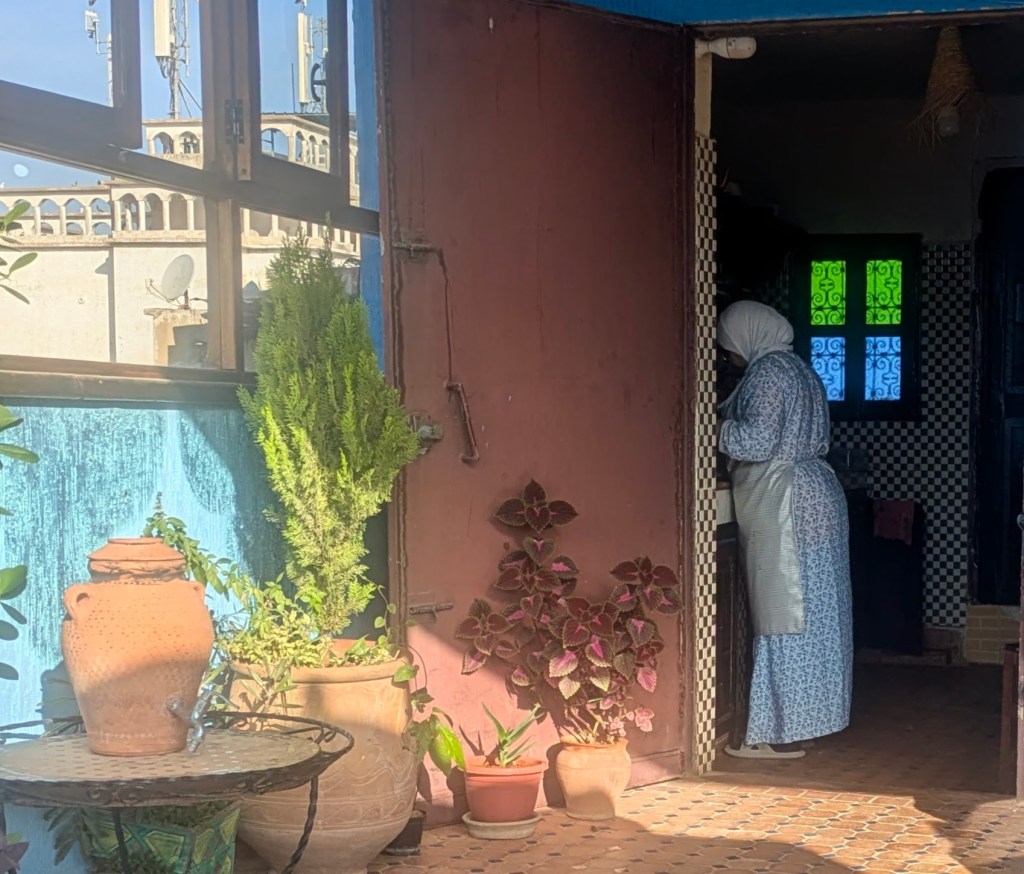
We stayed in a fabulous riad (Riad Andalous), hidden away in one of the alleys of the medina warren for two nights. Finding it was difficult, we walked  in baffling circles through stalls selling shoes, scarfs and food. Riads are traditional Moroccan houses and what a revelation when we climbed the stairs to enter Riad Andalous after a maze of dirty alleys. Secreted away high above the clamour of the medina stalls, it was an oasis of calm with tapestries on the walls, ornate ceilings, rug-strewn floors and a sunny rooftop terrace for relaxing breakfasts. It even had a little resident tortoise, who slowly followed the sun around the terrace.

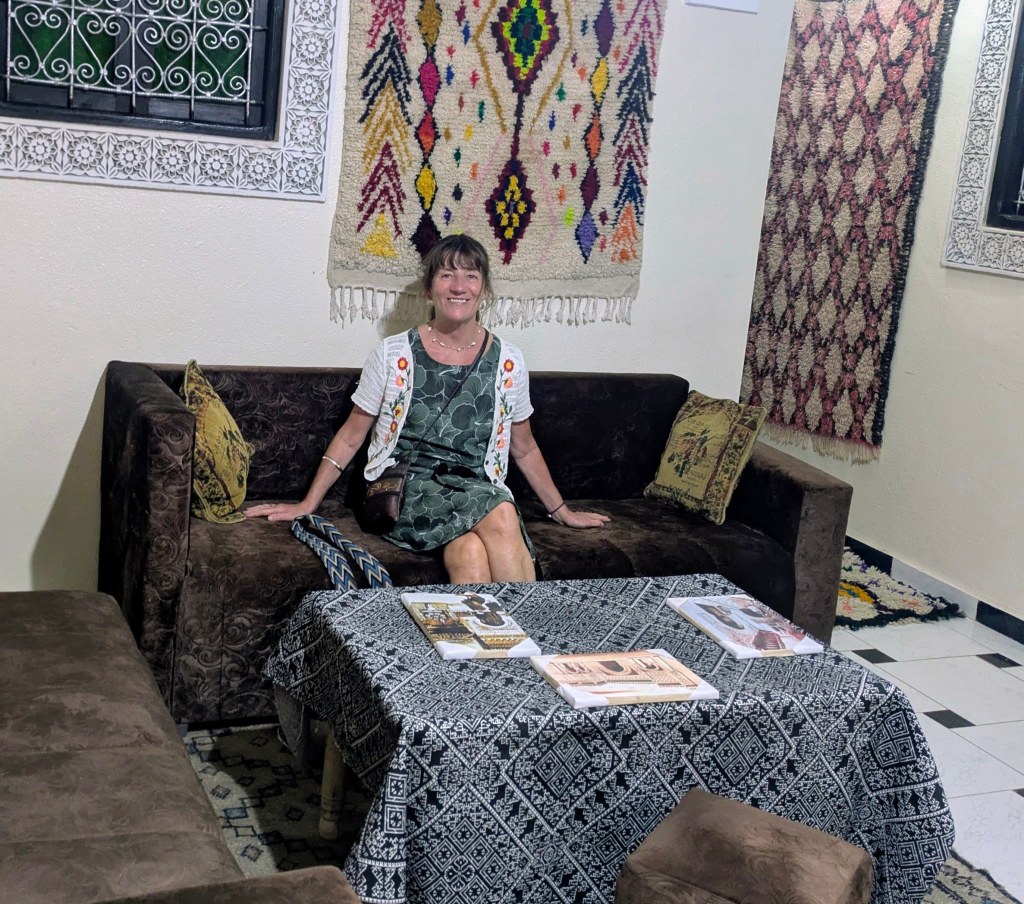
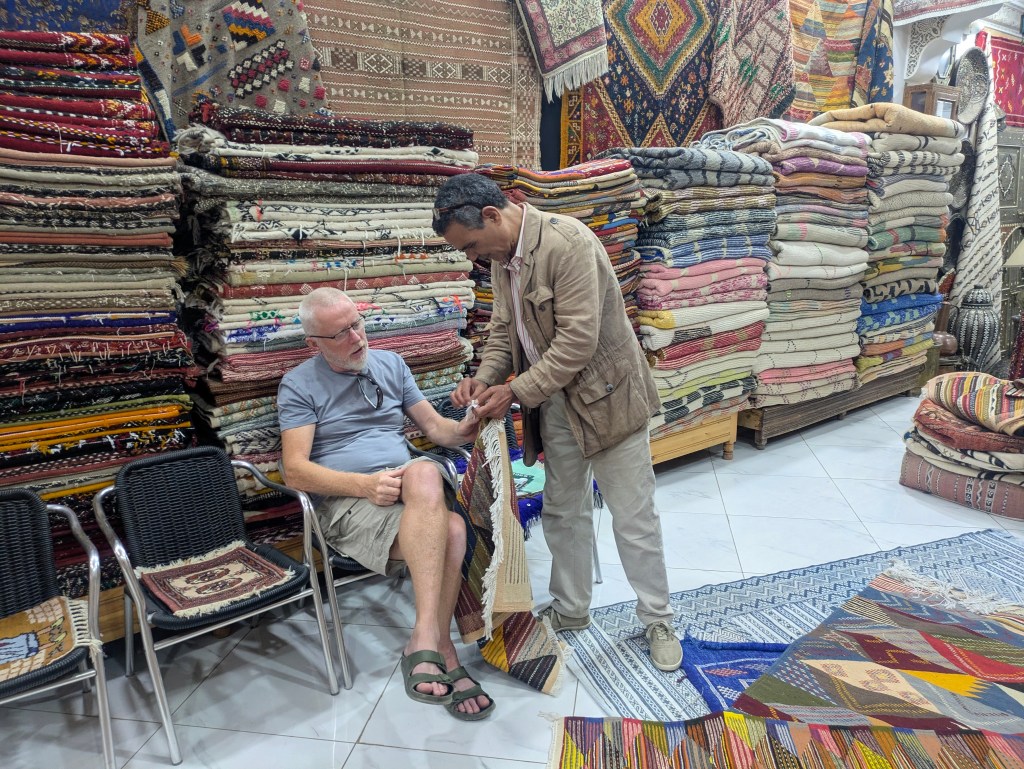
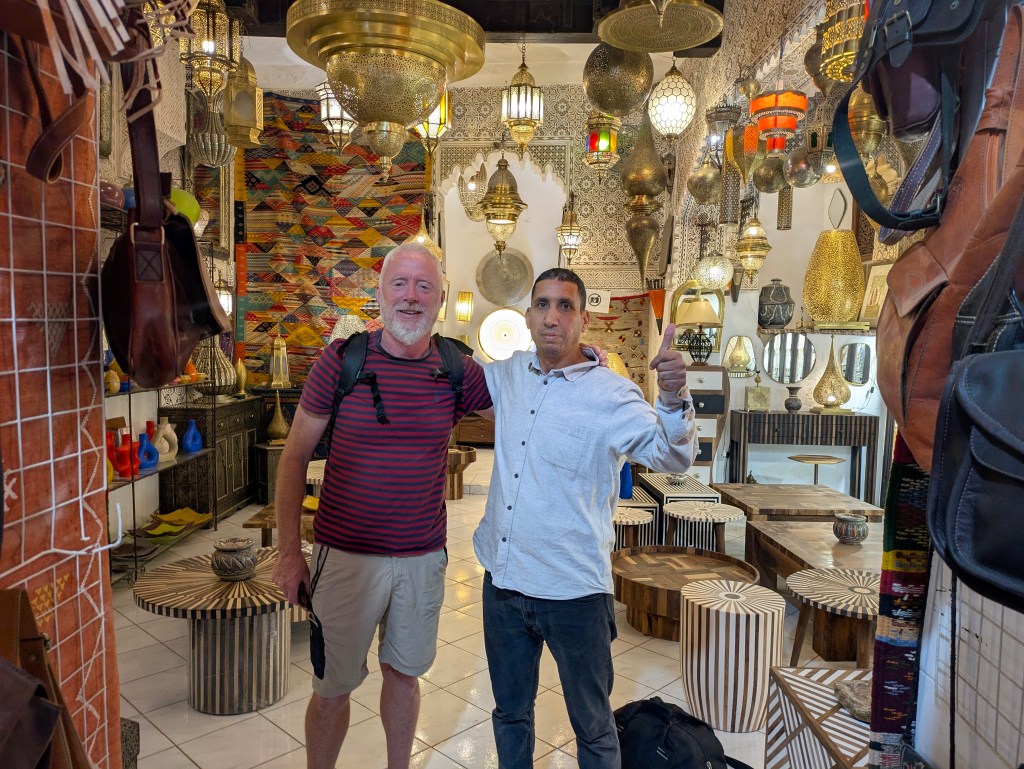
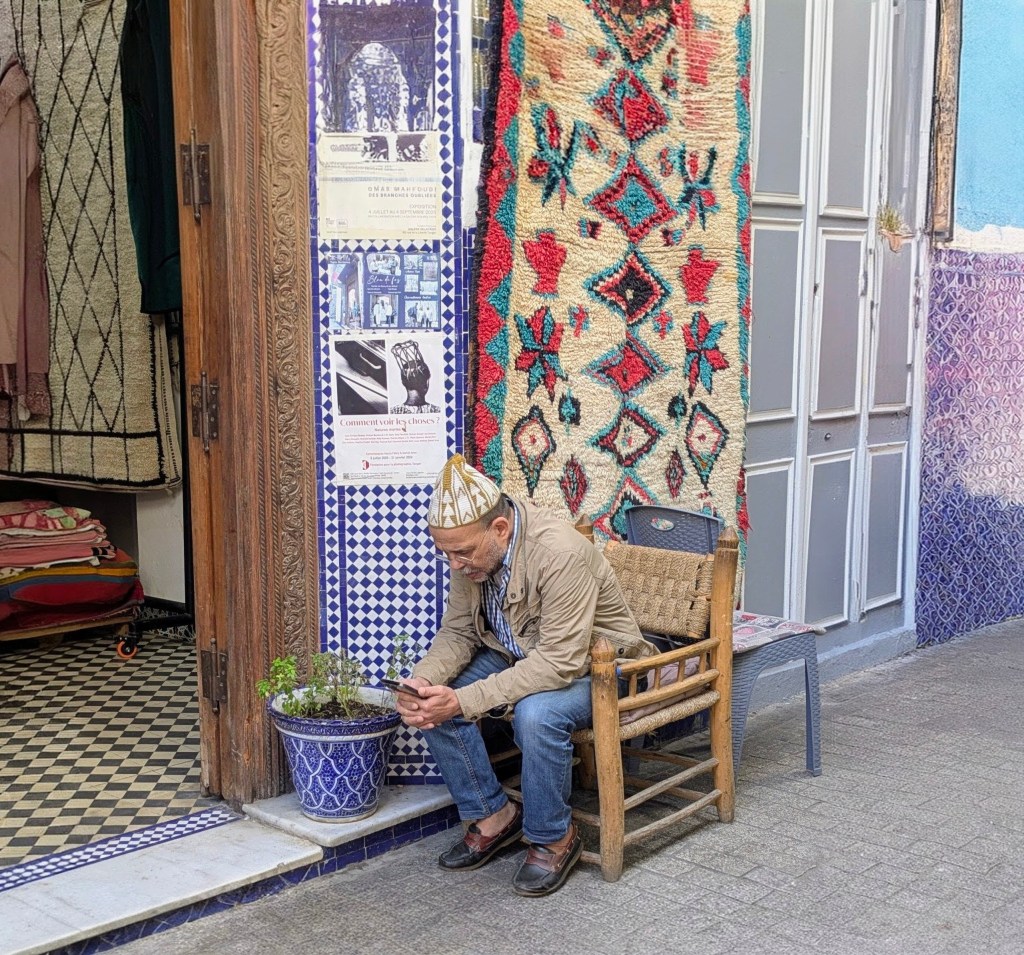
We visited a few carpet shops where eager salesmen pulled out rugs until the floor was strewn with them and our heads were swimming, so overwhelmed that we no longer knew what we liked. On the last morning, leaving our gorgeous accommodation, we turned into the alleyway to have one final look and this time we purchased after some hard bargaining.

It was time to head to Fes but as the Buzz tank was at 50%, we diverted by a motorway fuel station on the outskirts of Meknes that according to our maps had fast EV chargers but we were again disappointed. It will be absolutely essential that we charge in Fes which according to our (unreliable) maps has three chargers, one of which is a Tesla and so wont work for us (In Morocco, Tesla superchargers are only compatible with Tesla cars), so that leaves two medium chargers. Yikes!!!

On the bright side, we have really enjoyed our visit to Meknes, a city we would never have visited without charging issues.

Thanks for reading.

Till next time

Electric Roadtrip: The Charging Saga

Electric Travels: Onwards to Morocco

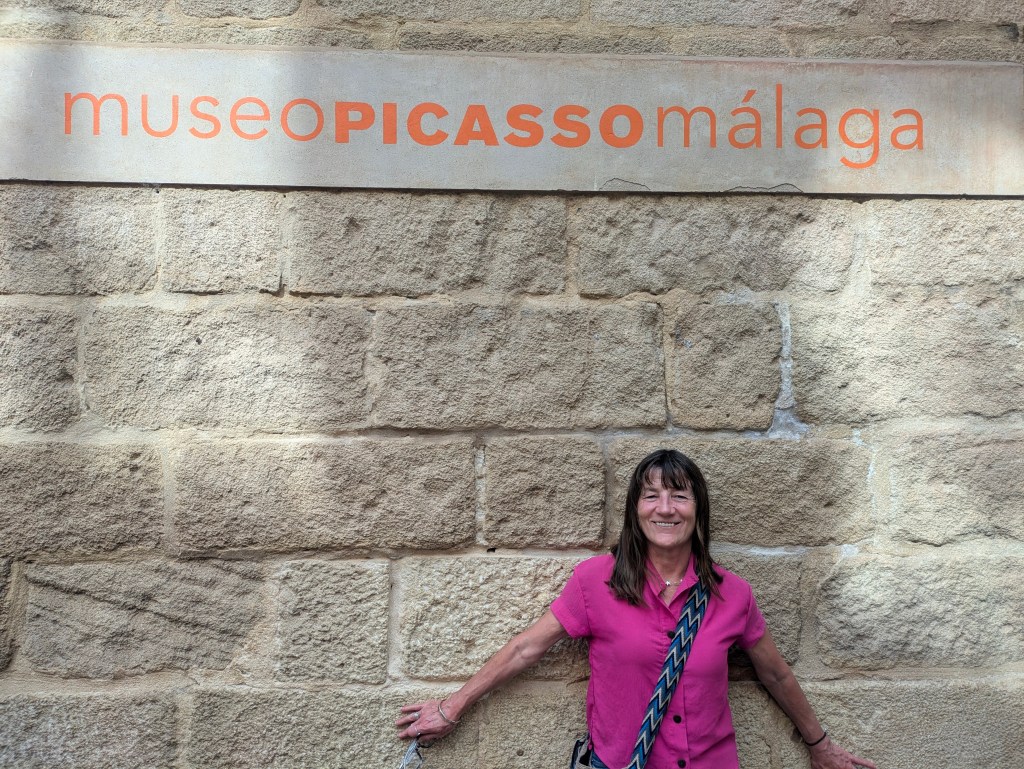
When I left you last, we were waiting to enter the Picasso Museum in Malaga. Picasso was truly a genius, could turn his hand at anything from pottery to sculpture to iron works and was constantly working. I love his quote ‘Everyone knows that art is not truth. Art is a lie that allows us to realize the truth. Definitely worth a visit.

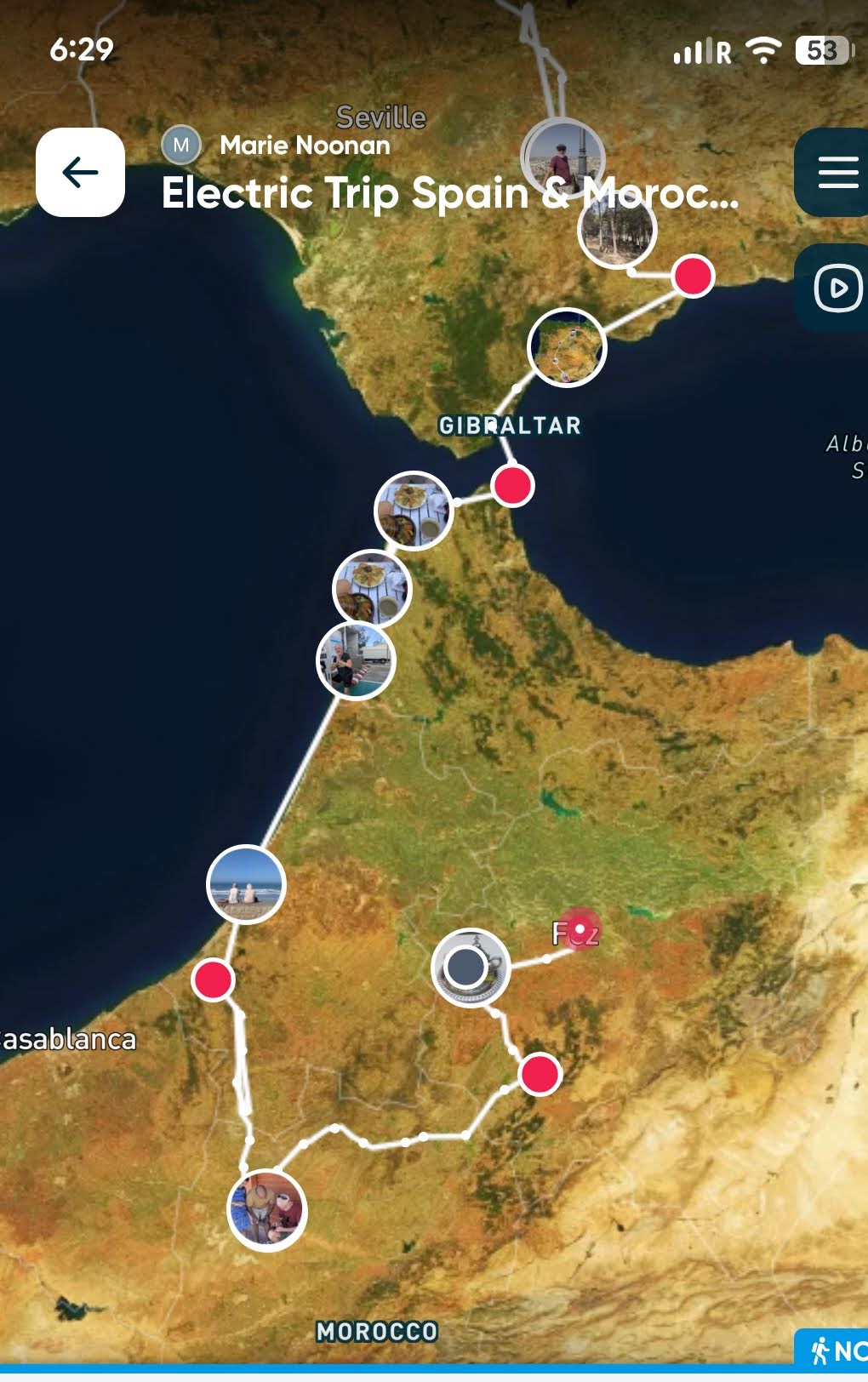
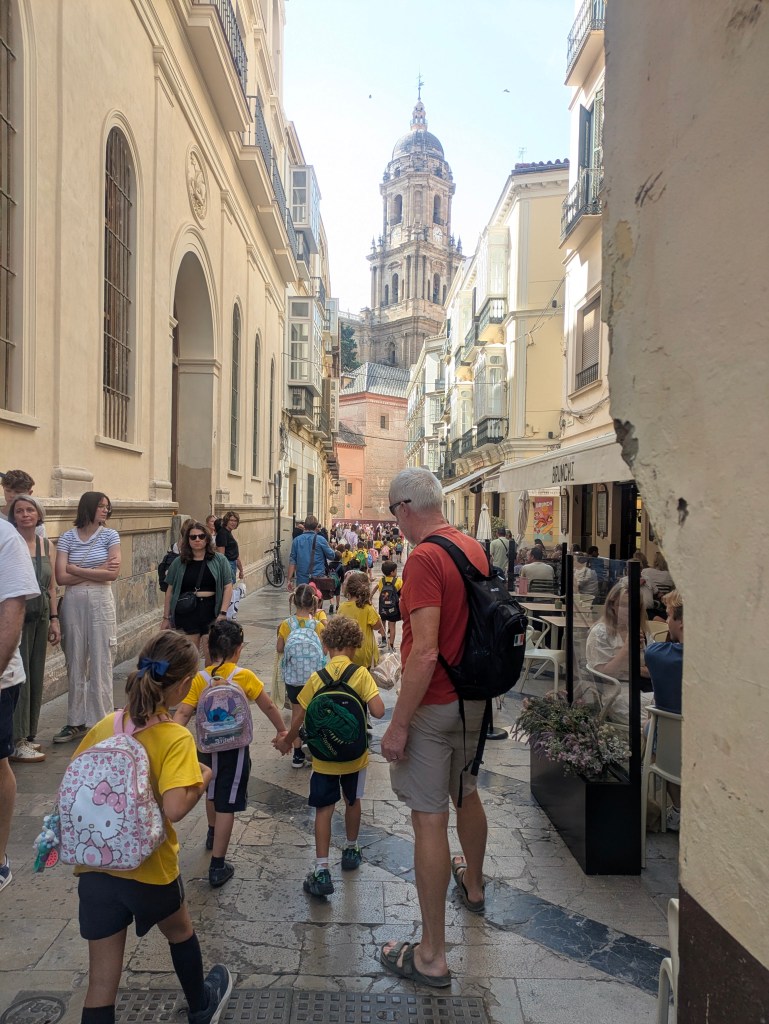
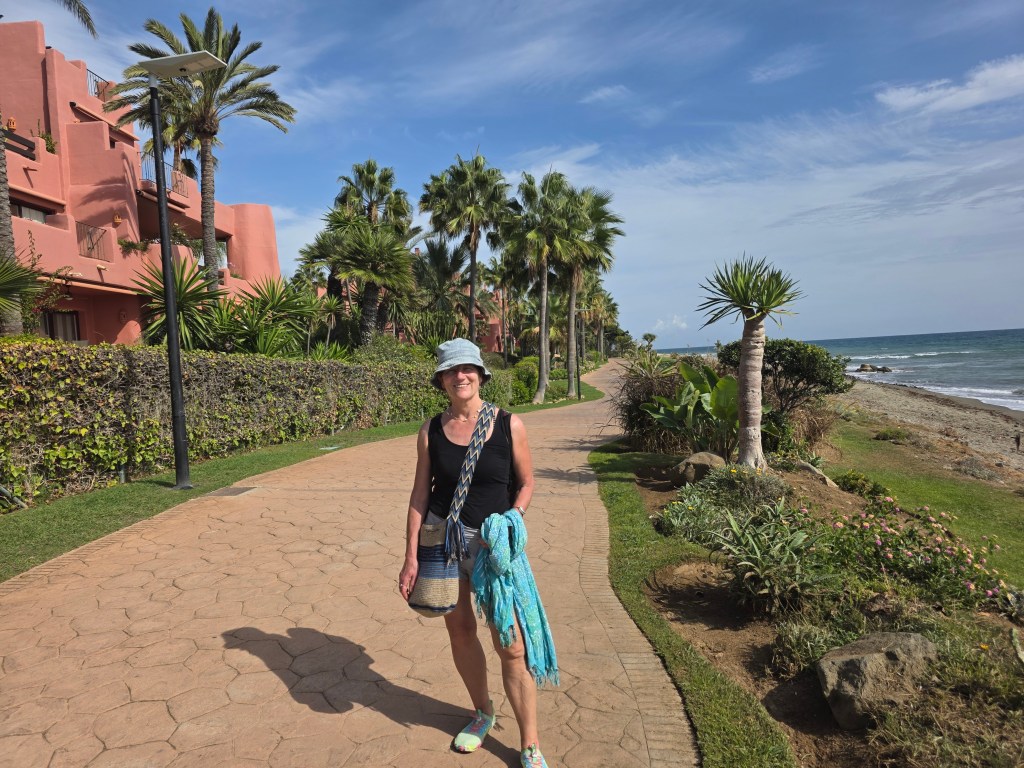
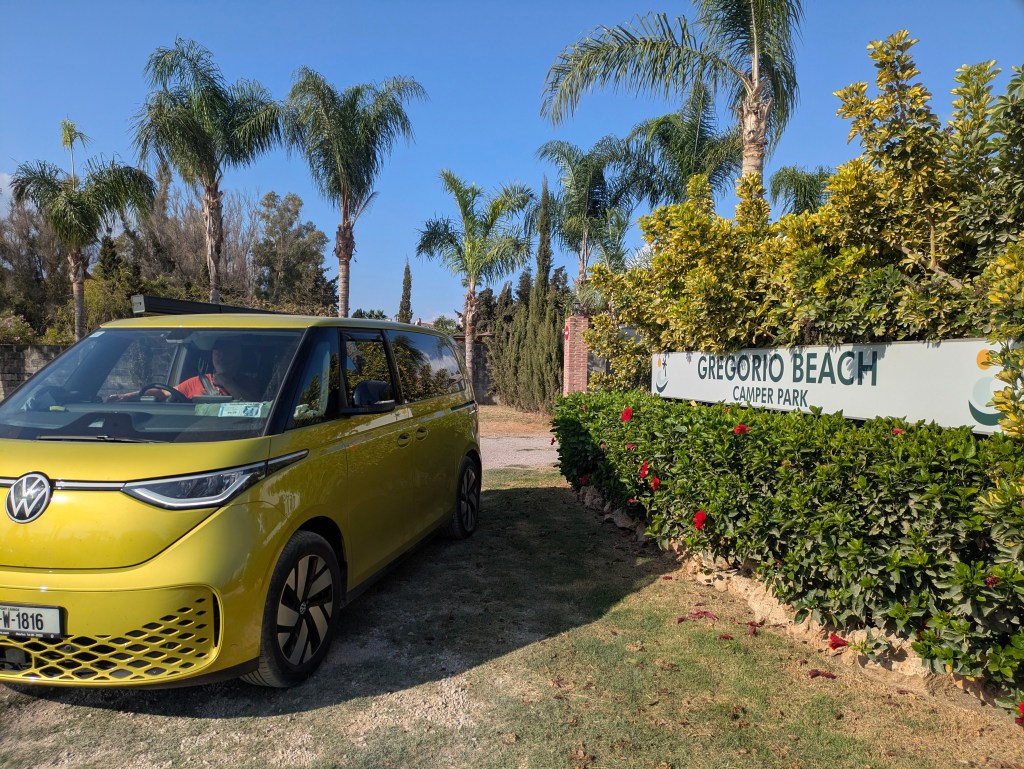
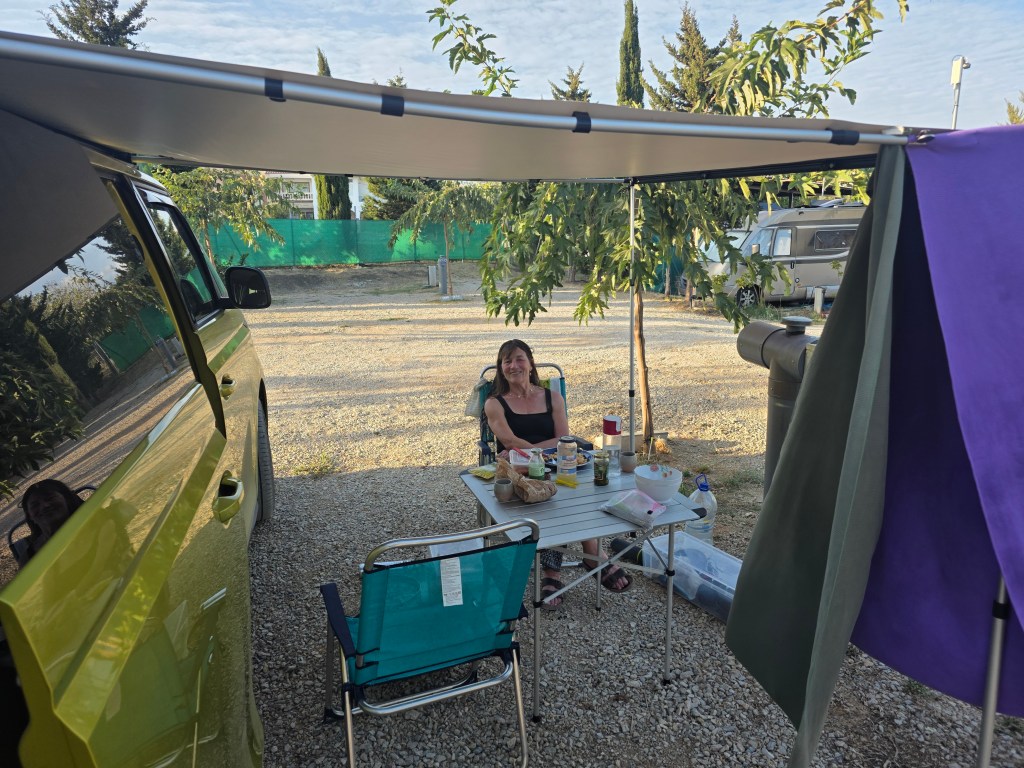
Malaga was gorgeous but too crowded and hectic for us so we continued along the Costa del Sol, past the high-rise holiday complexes to the western side of Marbella where we found a lovely campsite with good facilities, Gregorio Beach Camper Park , about a hundred meters from a quiet beach. The Wi-Fi was strong enough to upload photos and blog and it was cheaper, at €21 a night, than our hellish stay in the hills above Malaga the night before. We have never visited the Costa del Sol before but the beaches were not what we expected- no fine golden sand,  just long stretches of dun-beige but the sun shone and the October temperatures were a comfortable 24C, Ireland has far better beaches…..but maybe not the sun.  Spain was fabulous but Morocco was calling so we drove towards Algeciras, a port town with lots of ferries across the Strait of Gibraltar.

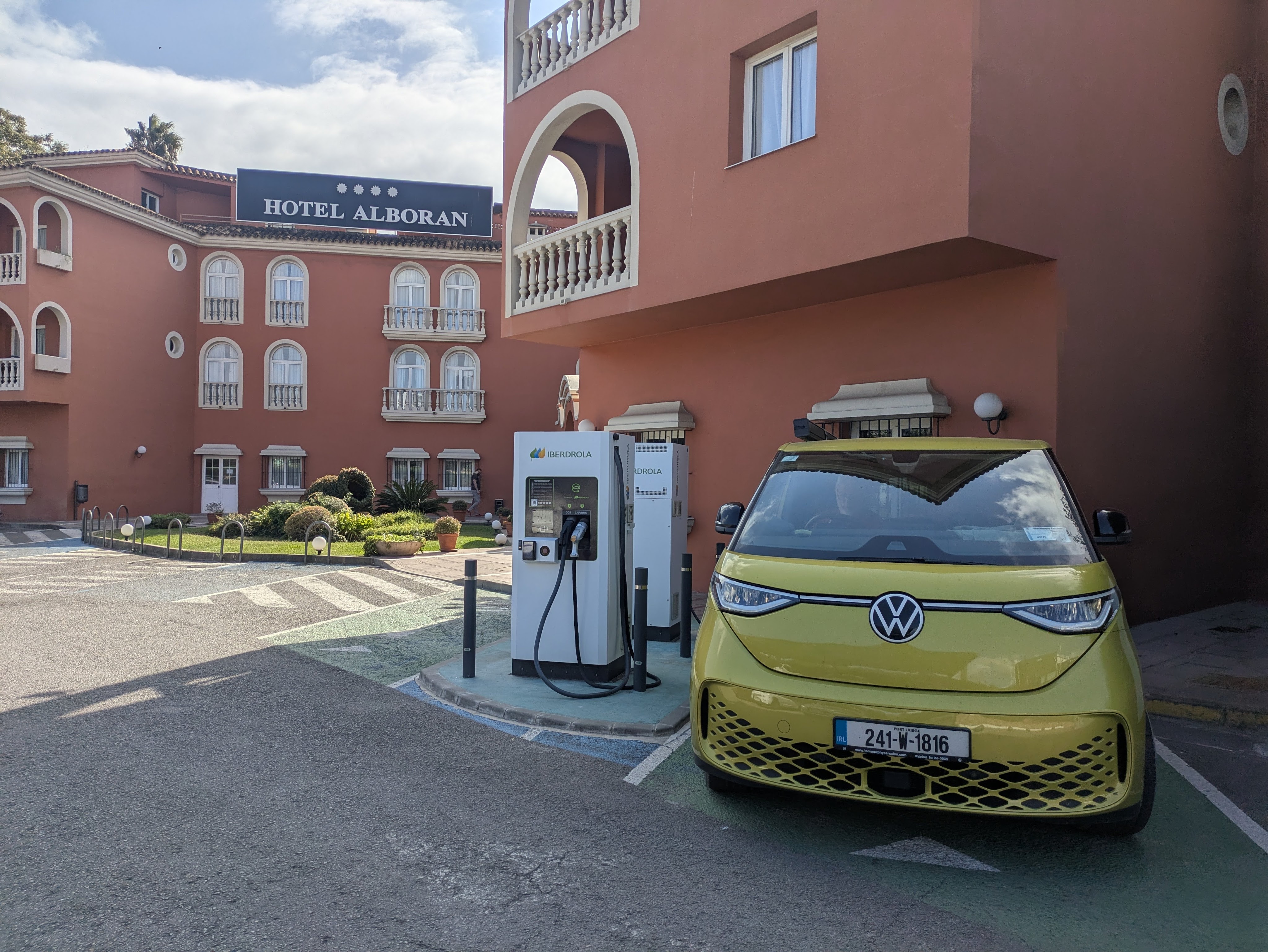
We tried to charge (Cepsa Chargers) in a garage forecourt near a Chino Shop where we bought camping gas canisters but the chargers were powered down and covered in dust. Then on to Ionity chargers down the road. Sun blazed on the screens making them opaque and impossible to read. Sweat dribbled off us and I searched for my umbrella to provide some shade and maybe make the instructions on the charger screen legible.  Although €40 was taken from Caoimhin’s bank card to validate it, we couldn’t get them to work. We next stopped along the road at a casino which had two Tesla chargers…these might have worked but they were only slow chargers so we pushed on and stopped at an Iberdrola charger outside a hotel on the outskirts of Algeciras. The Buzz charged to 100% here without issue and….best of all,  the charging seemed to be free (the cost hasn’t been deducted from my bank card…yet)

Free’ Charging, Algeciras, Spain

While we were charging, we booked the ferry to Morocco for the following morning. It was a little bit disquieting that the first time we had any charging issue in Spain (which has loads of EV chargers was the day before going to Morocco which has very few (41 chargers in the whole country according to one source and Morocco is about ten times larger than Ireland). Would our travels there be severely curtailed?

We could have sailed  from Algeciras–Tangier (Morocco) but Algeciras–Ceuta was cheaper and sounded interesting. Ceuta is not part of Morocco but is a Spanish coastal city on the African continent. A one-way ticket for two passengers and the van cost €183.

Then we checked into a hotel as there weren’t any campsites nearby– really splashing out at €60 a night. We read our guidebook on Morocco, feeling excited, until we made the disturbing discovery that we had forgotten to bring the Van Registration Documents with us! This hadn’t been a problem in Europe but it would likely be a real issue leaving Europe

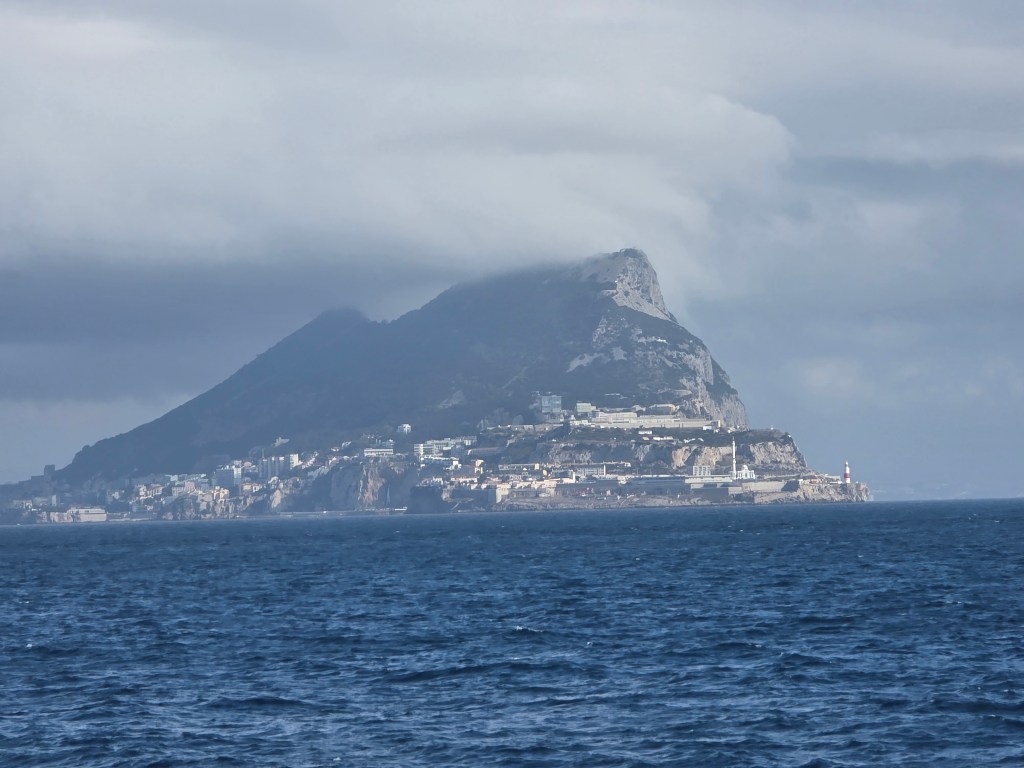
We were early. The woman in the ferry queue  in front of us wore a black burka and a beggar wandered down the row of cars with outstretched hand. The Med glittered in the morning light, although cloud obscured the Rock of Gibraltar  The African continent was tantalizingly close, …a mere 17 kms to Ceuta across the Strait.

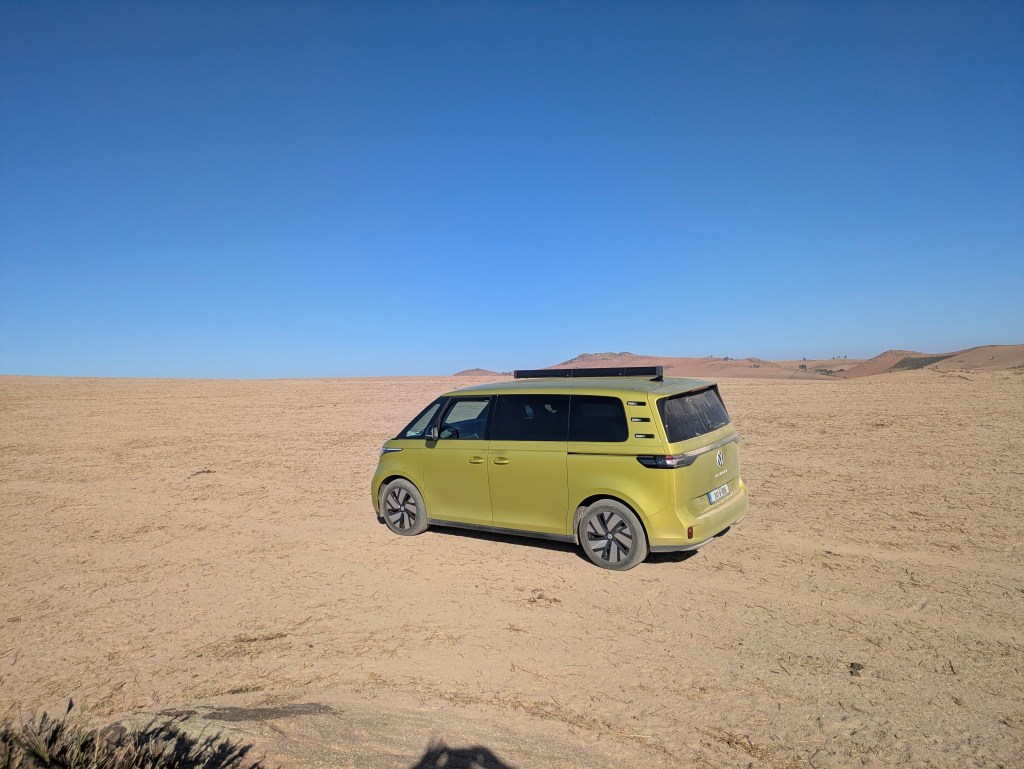
There was a brief custom check in Algeciras port, just a cursory look in the back seats and in the booth, for everyone except for  us. We were waved onto the ferry with a smile. I guess the rationale was that nobody in such a neon-coloured van could possibly be smuggling anything. The crossing was smooth and shorter than expected, about an hour. The time difference gained us an hour so we arrived in Ceuta, at the same time we had left Algeciras.  It felt as if we had departed Spain, crossed the water, only to arrive back in Spain. The city has been ruled by Spanish princes, Moroccan sultans and Portuguese kings down the centuries. Now it is surrounded by high-security barricades to prevent smuggling and illegal immigration to Europe.

Corralled in Ceuta….border waiting

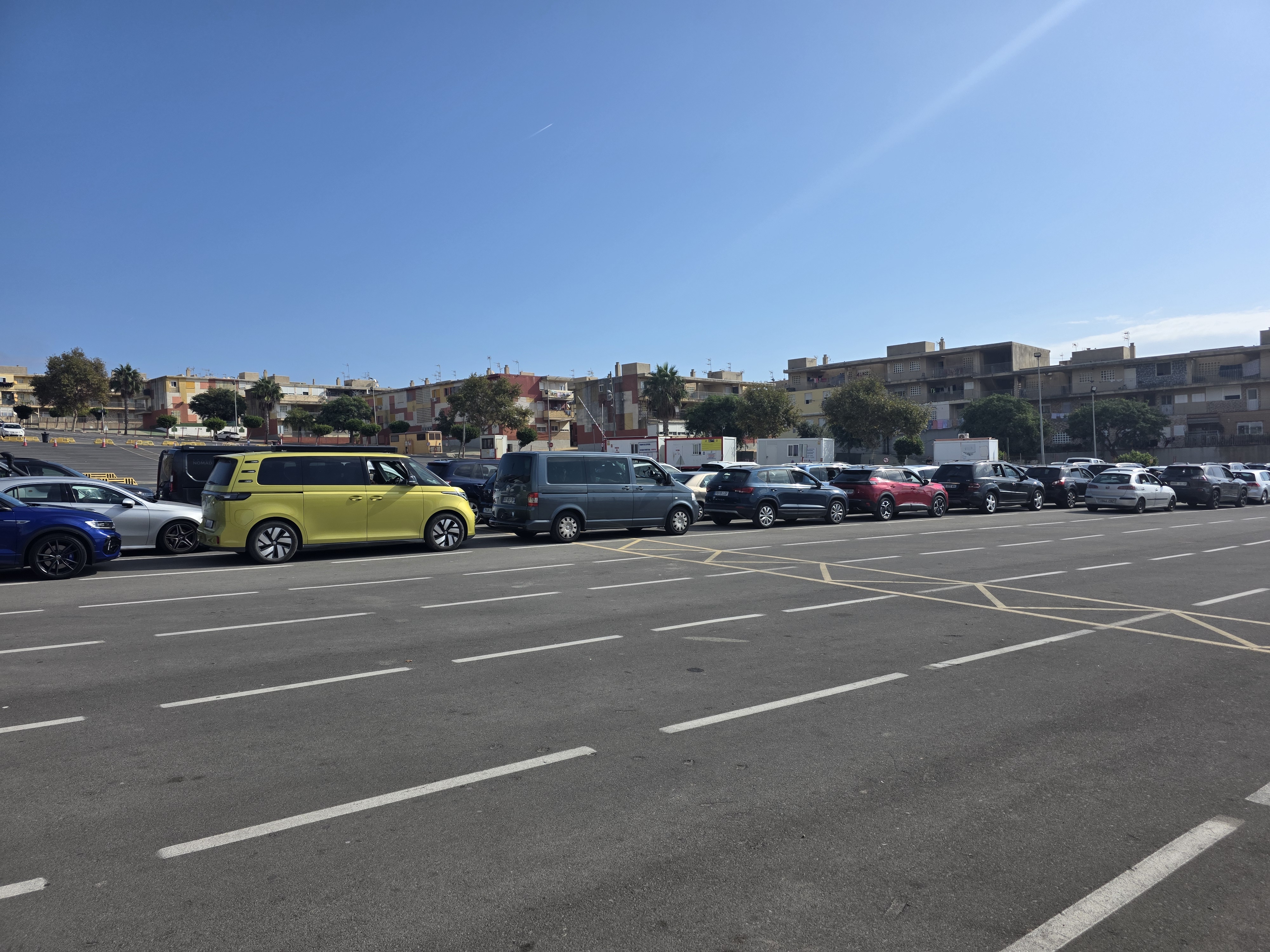
Ceuta was a handsome town with Spanish architecture, plazas, old city walls and sunshine, we didn’t stop, anxious to get to the border (La Frontera) and discover our fate. An official demanded to see our ‘ticket,’ we didn’t know what he meant but he directed us back into town and uphill to a huge parking lot, where cars wishing to cross into Morocco were corralled before being released in rows to prevent border congestion…..in theory at least. While waiting, we phoned our great neighbours, who hurried over to our house, photographed our van documents (thanks Donal and Anita) and Whatsapp’ed them to us.  After an hour of waiting in the carpark, we approached the border a second time to join snail-like queues of cars, vans and motorbikes.  A further two hours went by before we were at the top of the queue. Our passports were stamped without issue, we were welcomed to Morocco and proceeded to the vehicle window. Like all the vans (no exceptions for the Buzz this time), we were asked to drive to one side where it was searched and then we were asked for the van registration form …and the trouble really began. They needed paper documents, it wasn’t the right document, we wouldn’t be allowed in.

Alternative itineraries were dancing around my head, if we had to return to Spain, we could wander around Southern Portugal….it would be very disappointing but not a calamity. Eventually a senior official was called, an older man, slightly stooped but mild mannered. He agreed to give us a waiver and signed a piece of paper, necessary to enter Morocco. Four and a half hours after disembarking from the ferry, we were in Morocco….by the skin of our teeth.

A row of white taxis hovered around the border gates,  a couple of dogs barked and ran uphill after the van, while several head-scarfed women sold fruit, laid out on the ground on colourful blankets. We kept going, wanting to get away from the border as quickly as possible. Thankfully, the e-sim we purchased from Revolut for Morocco activated, so we had mobile data on our phones without the hassle of haggling for a physical sim.

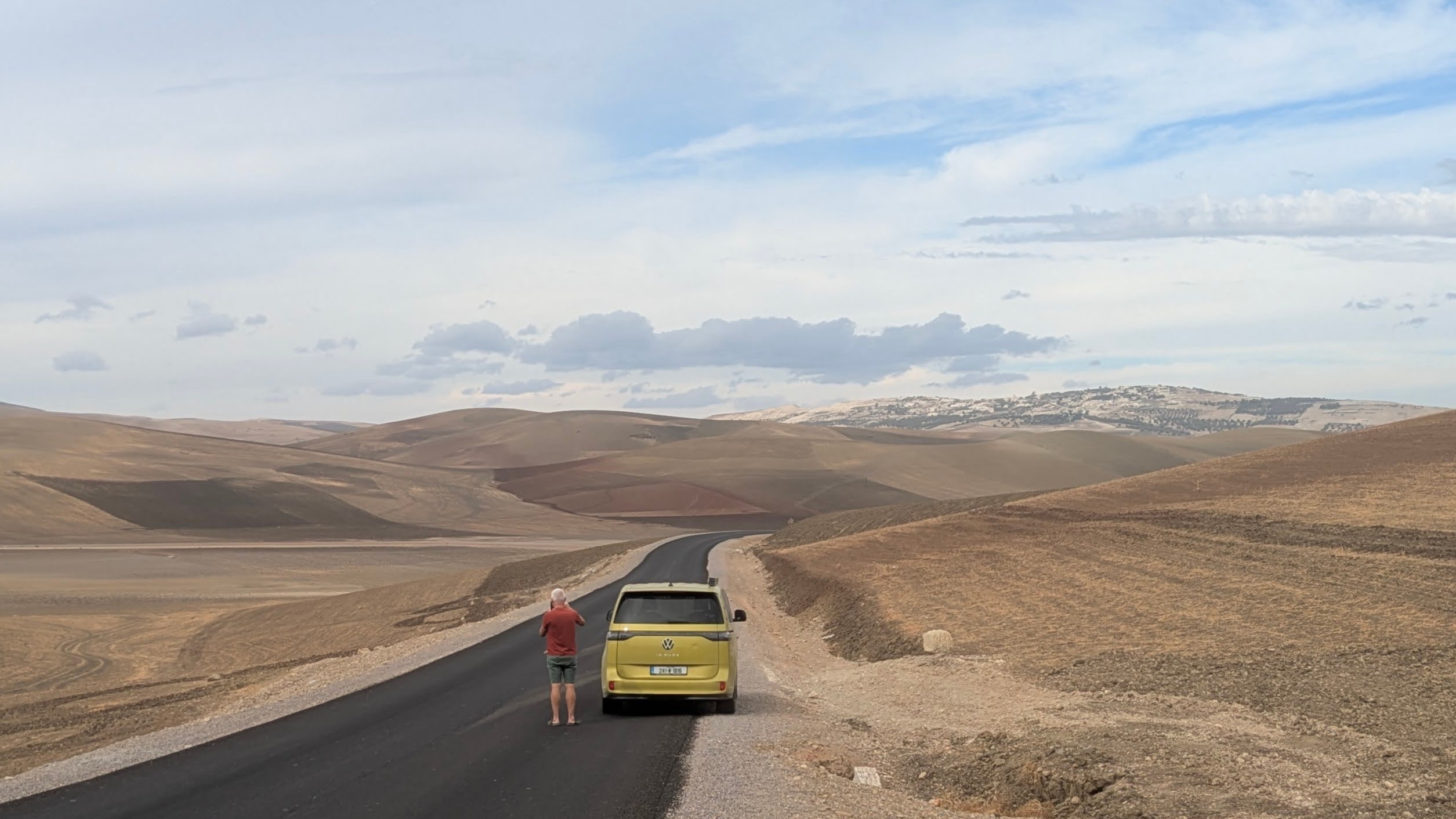
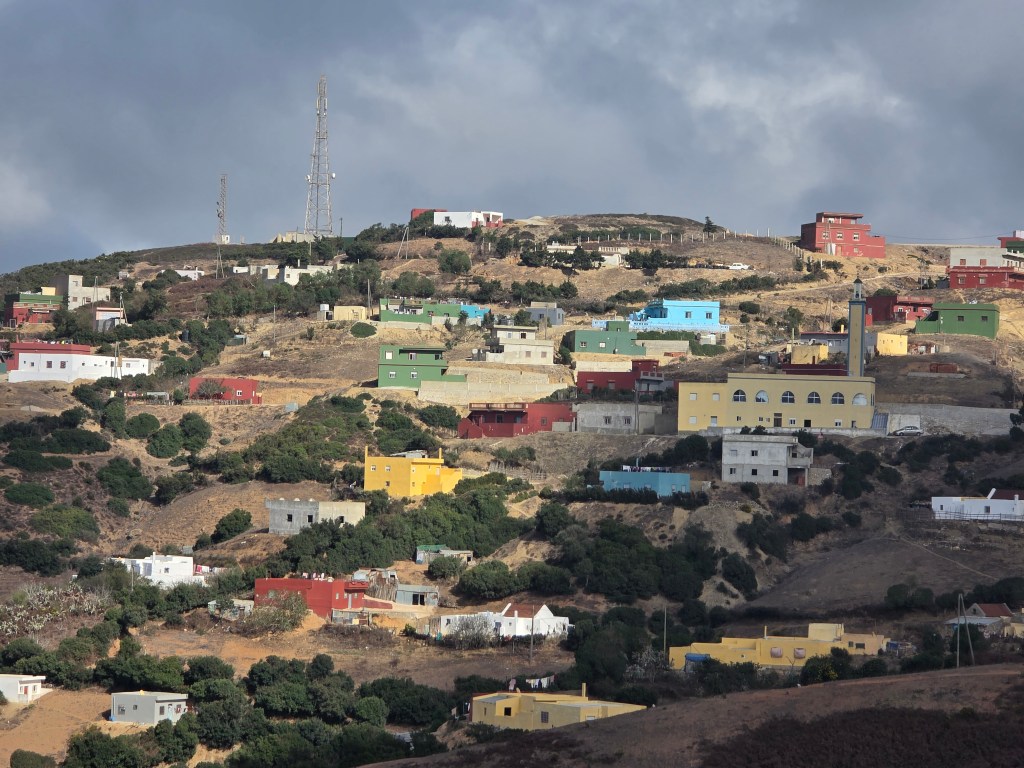
The road surface was excellent and the scenery was ruggedly beautiful with brightly painted, flat-roofed houses with mountains casting light and shadows. Although we were fully charged, we wanted to check out the Moroccan EV chargers, just to see if charging would be an issue so we headed in the direction of Tangier. The drive from Ceuta to Tangier was spectacular with the backdrop of the Rif mountains with small towns and some beautiful white-sandy beaches.

The first chargers that showed up on our map were Fast Volt, the chargers were in a gleaming forecourt and looked impressive. We were hopeful. The instructions, in French, required us to download the Fast Volt App as charging was only available through the app (and not directly using a bank card). No problem, we thought, until we attempted to download the app and kept  getting the message ‘Unable to download as app not available in your region.’ Catch 22. The next chargers on our map were part of a Casino Hotel and their use (behind a manned barrier) was for hotel guests only and we were refused entry  Tangier seemed a modern city with palm lined boulevards, a wide esplanade along the sea-front and buildings on the steep slopes, a city of hills and hollows.

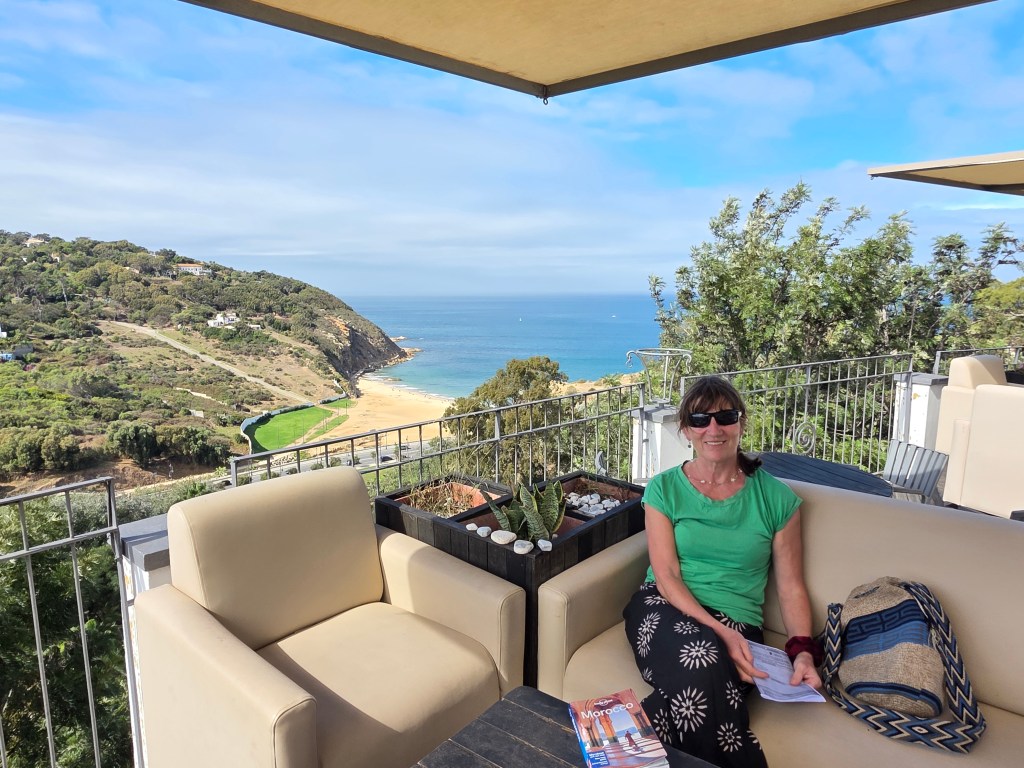
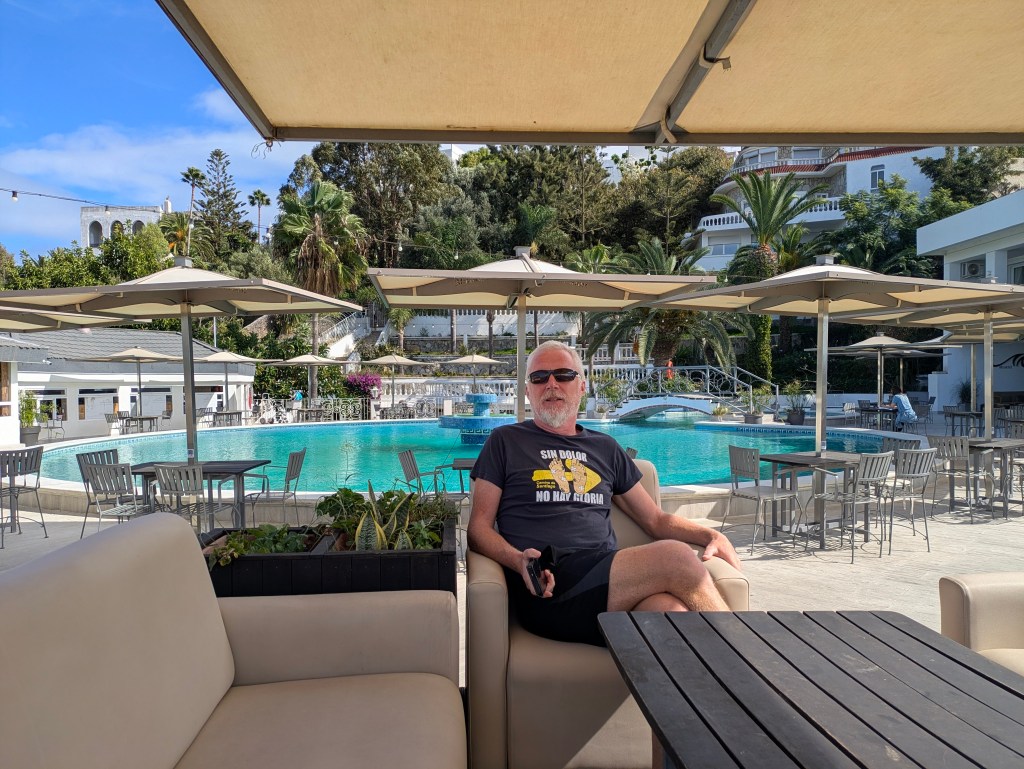
We headed to a Google campsite, Miramonte Camping, in need of a lie-down after the stress of the day and were welcomed by Said, in perfect English The campsite in a hilly location was really a resort complex with three swimming pools and stunning views of the Med. We feared it might be way above our budget but it was about €19,50 a night, which, although expensive for Morocco ,was excellent value for us.

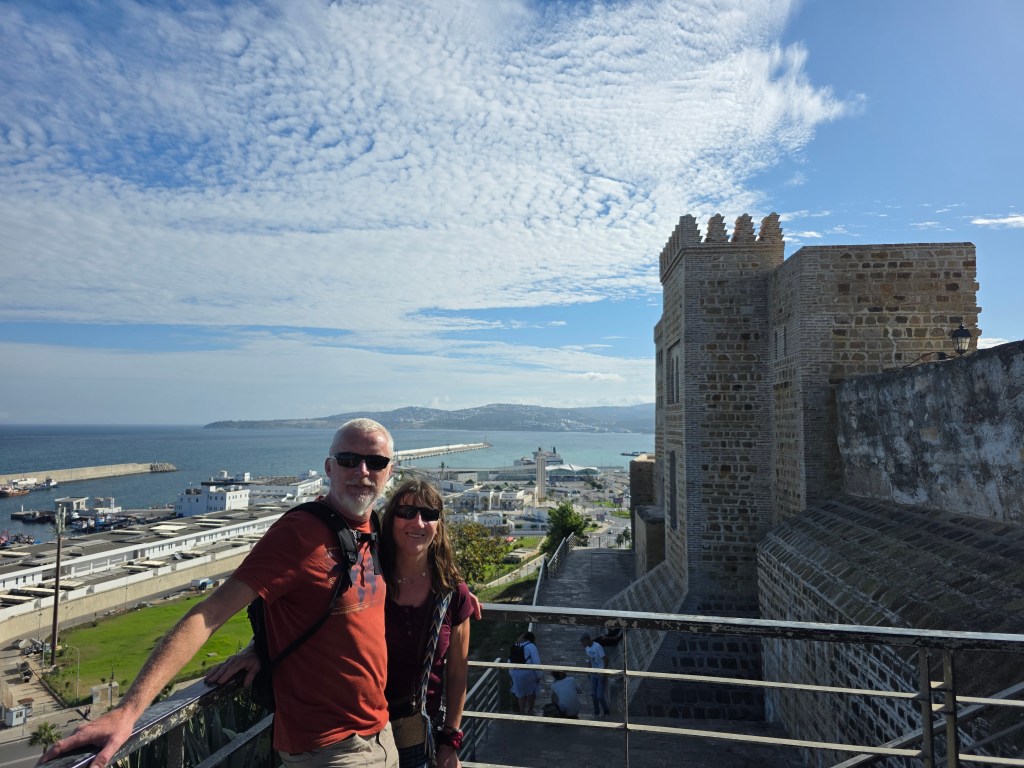
A walking tour of the medina and souk in the old town gave us a flavour of the city, a place where mosques became churches before changing back again, where being the ‘Gateway to the Mediterranean’ was both a blessing and a curse, a pawn and a prize, a strategic position to be coveted and fought over down the centuries.

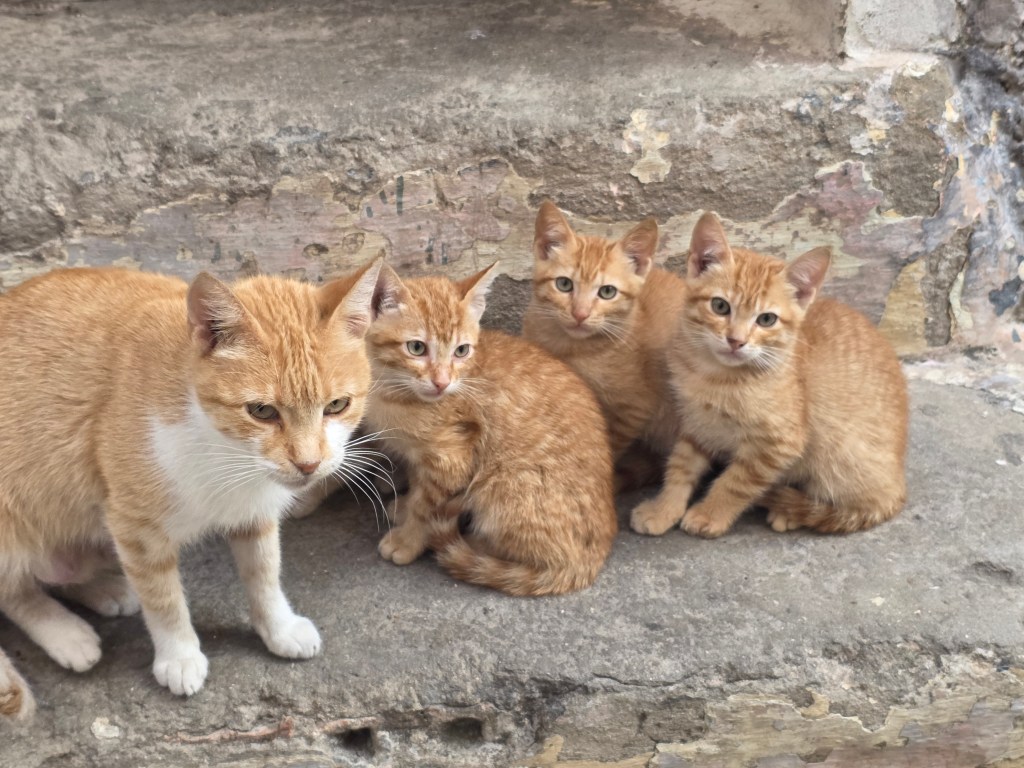
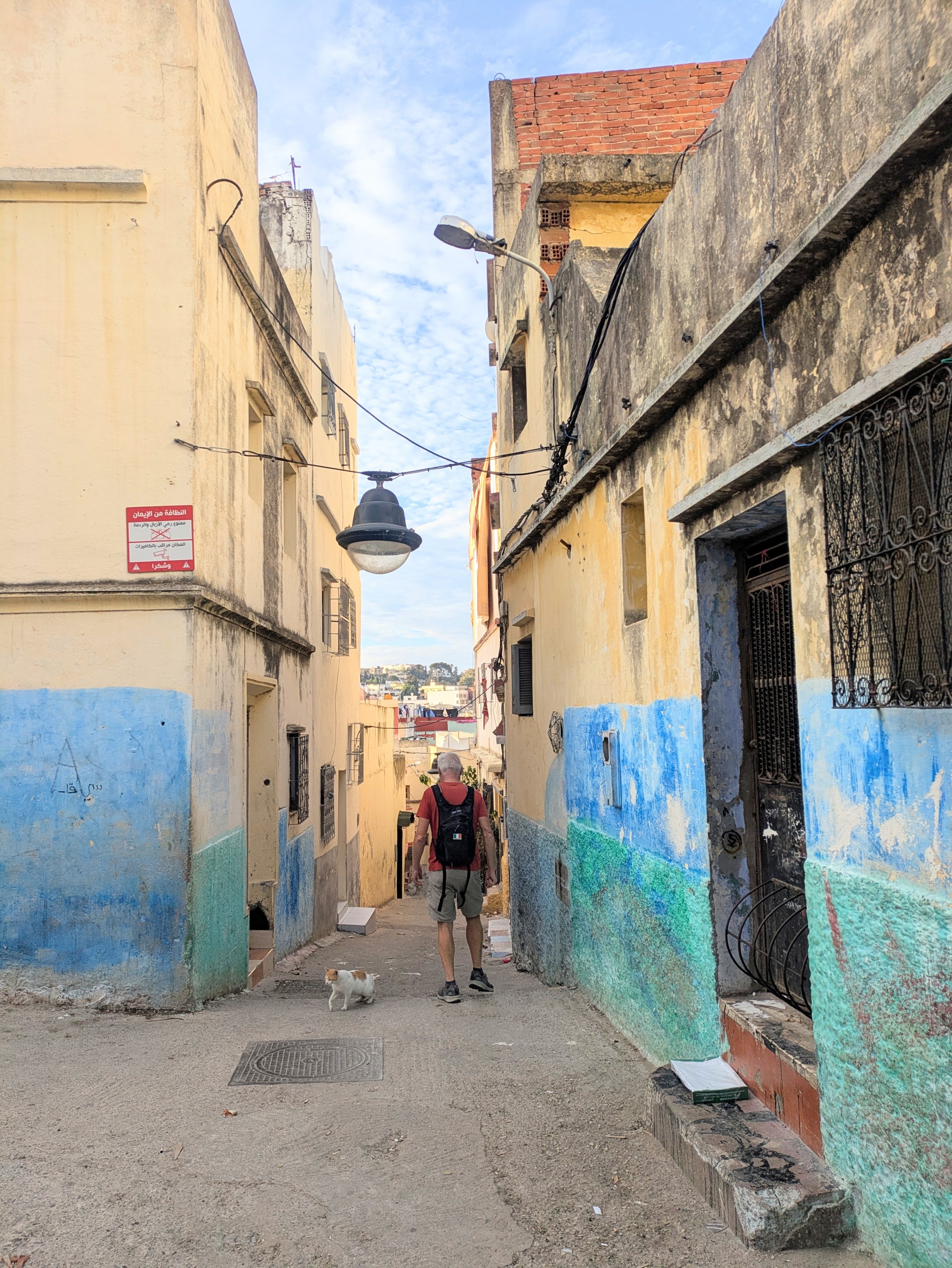
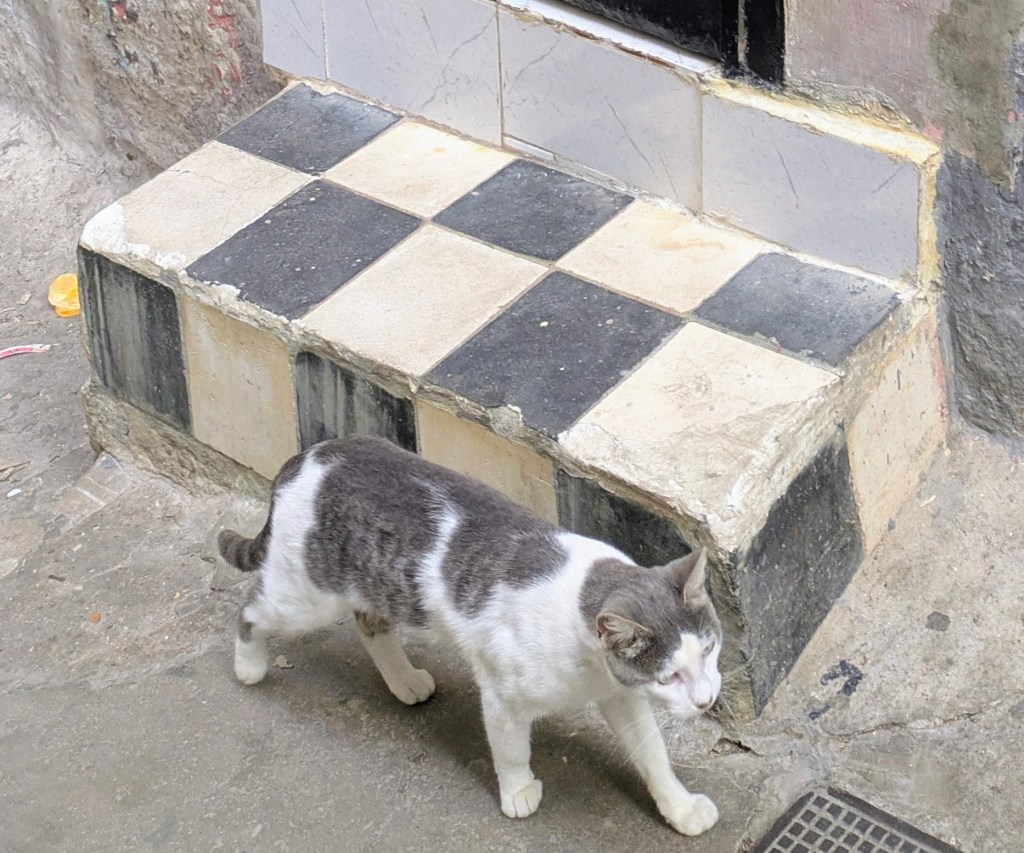
The sleepy back alleys were full of cats, all seemingly related, except for one tabby who blended so perfectly with the black and white tiled step.

We lingered at our luxury campsite for a couple of days. We still haven’t managed to charge the van……but as we have almost 400kms in the tank, we can always drive 200kms and then return if all else fails.

‘Till next time. Thanks for your company

Merci d’avoir lu

Electric Travels: Onwards to Morocco

Campervanning in North Mayo: A Scenic Adventure

It was a week to remember, a week in late August, spent campervanning around Mayo, a week of spectacular walking on stunning coastal paths, pristine white-sand beaches, lonely bogs and remote mountains and even a pilgrimage route, Tóchar Phádraig,  an ancient druidic path to reach Croagh Patrick.

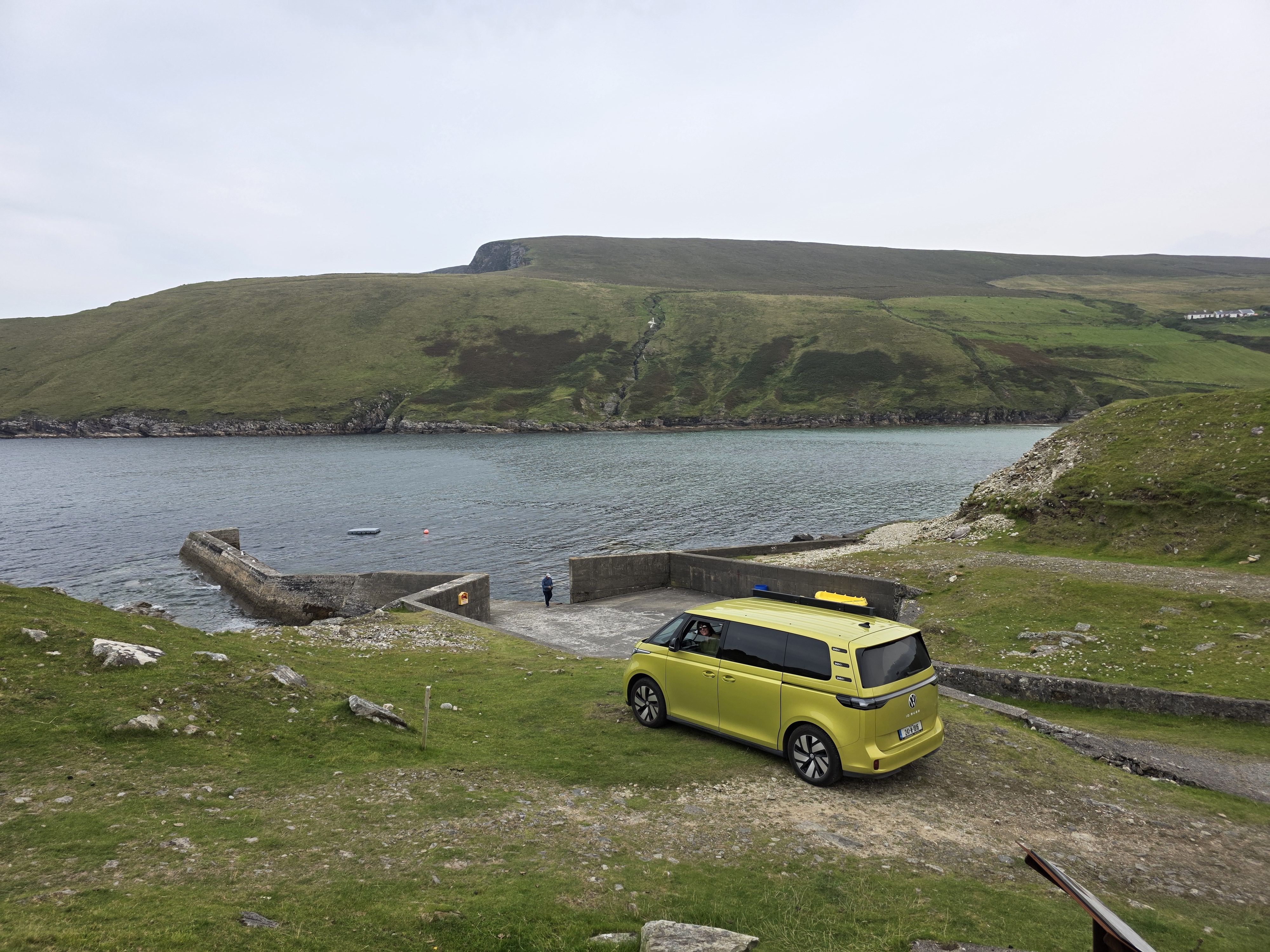
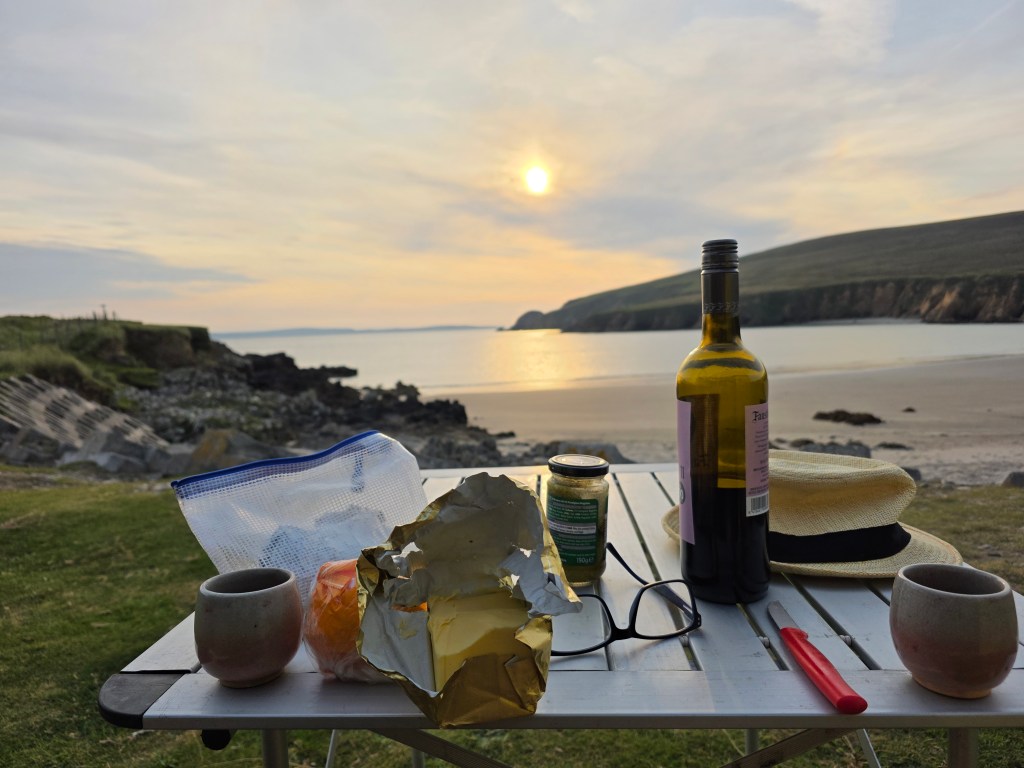
We started at Portocloy Beach on the far North-West Mayo Coast in a Gaeltacht area. If ever the phrase ‘off the beaten track’ was appropriate, it was here. We watched a lone gull, the only sign of life, gliding and swooping over the calm harbour waters.  There were no crowds, cafes, shops or bars, just a picture-perfect beach, isolated by miles of blanket bog and nestled deep into a natural harbour, Carrowteige Cove, a safe haven for swimming or snorkelling and a little pier for fishing boats. There were temporary toilets in place for the summer months which was good news for us as we were sleeping in the van (the ID Buzz).

Parked up at Portacloy Harbour

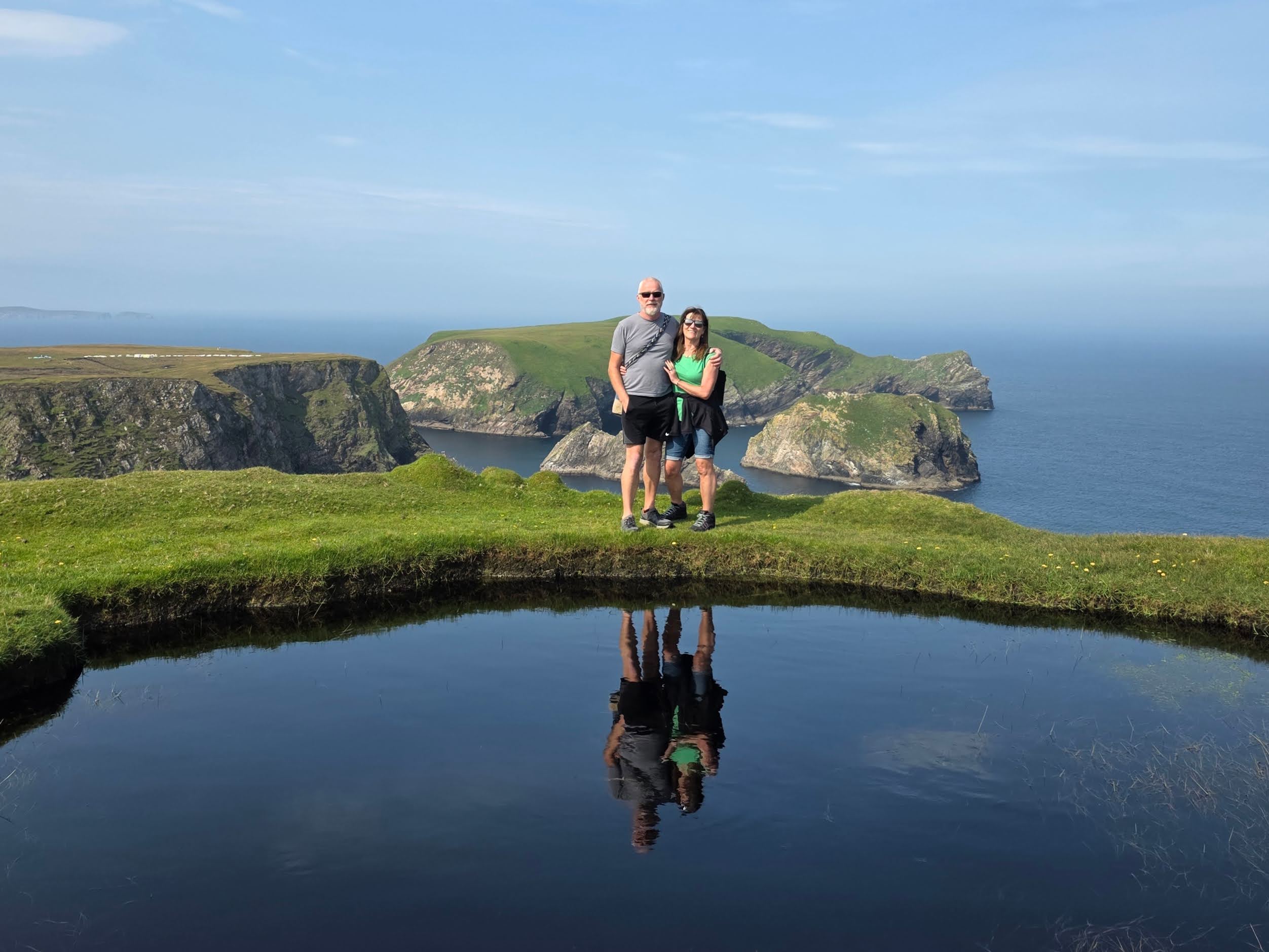
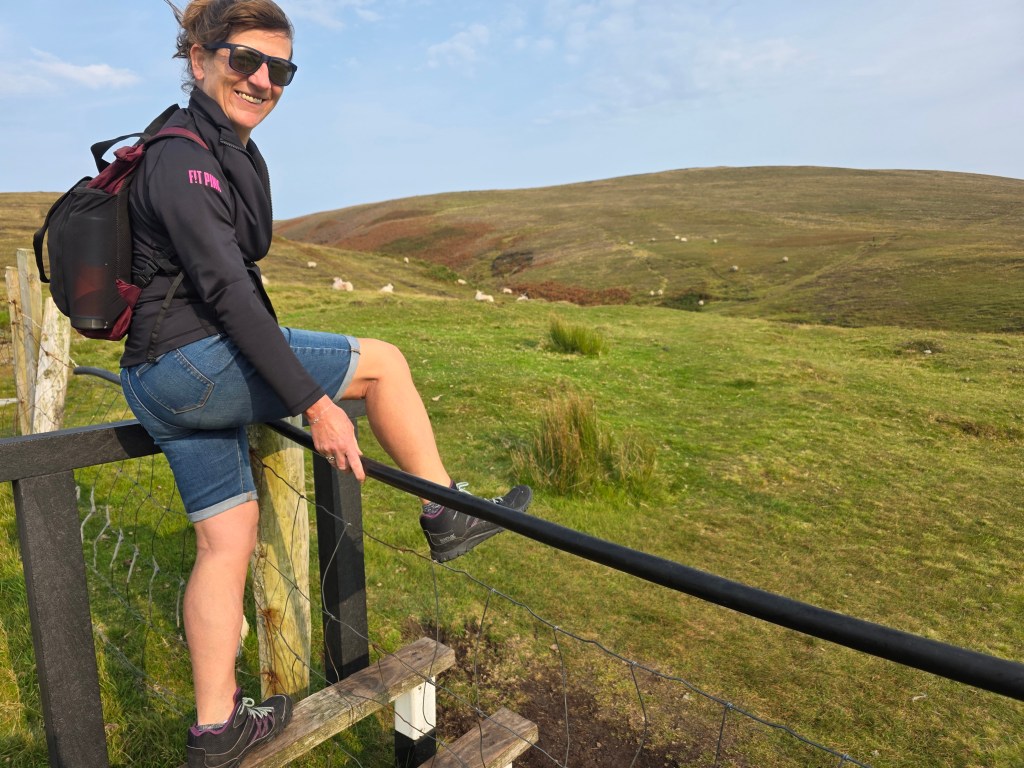
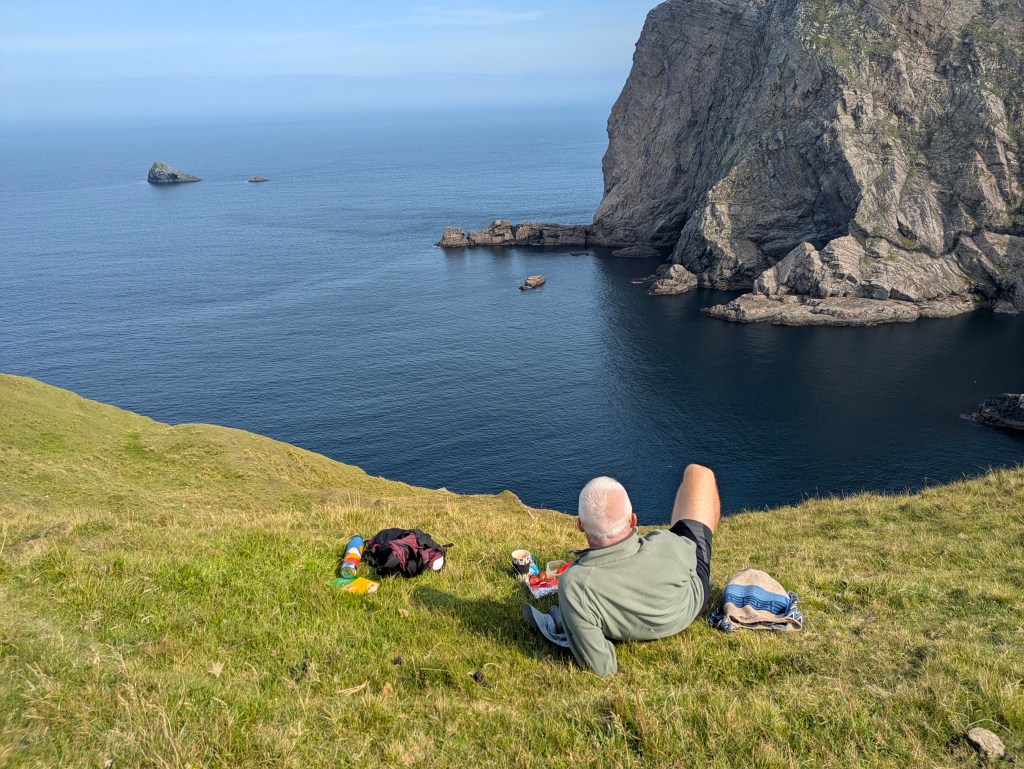
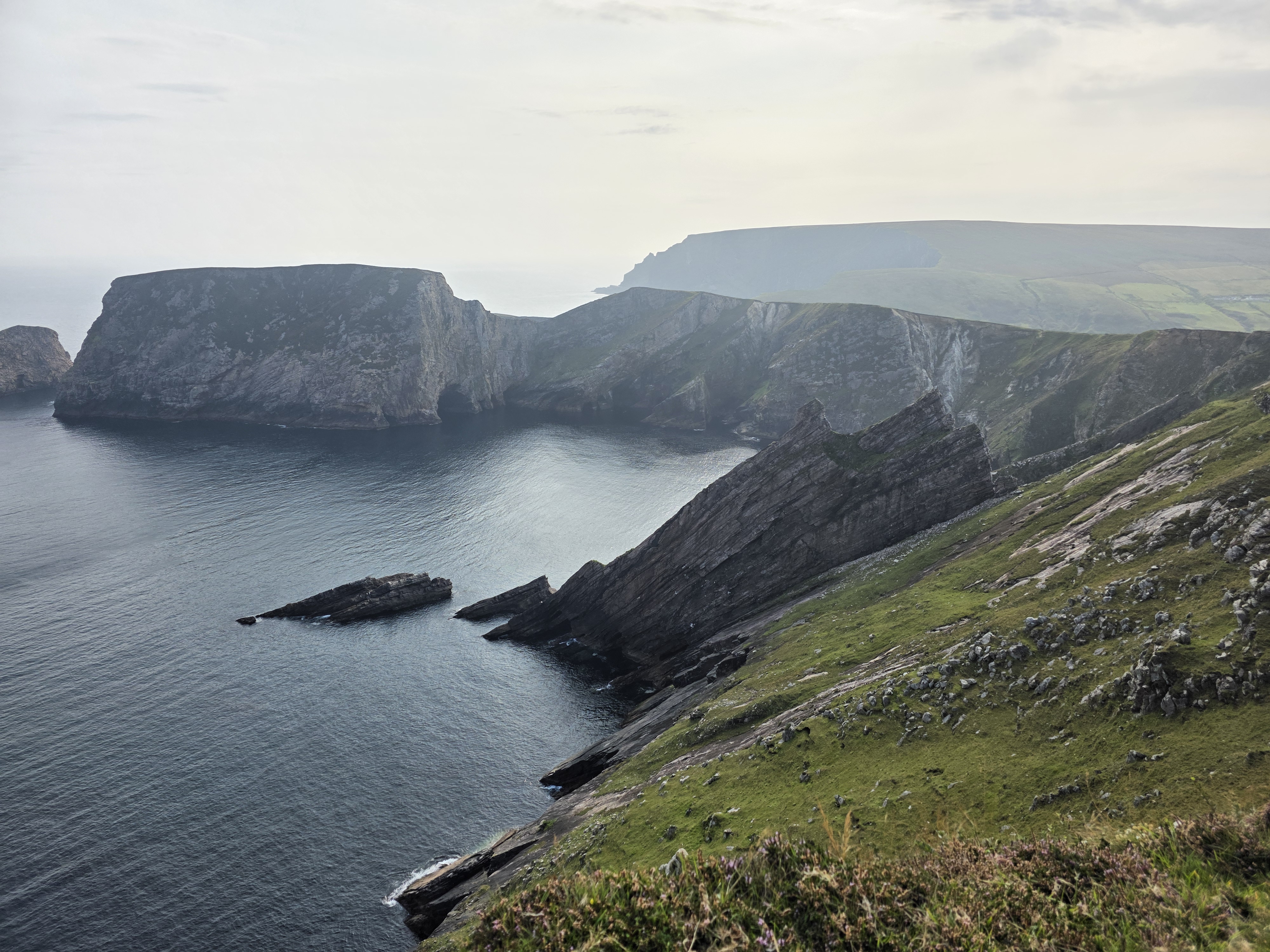
Portocloy Beach is also the start point for a truly spectacular cliff walk along the sea edge all the way to the extraordinary cliff views of Benwee Head (Binn Bhuí). This walk has a combination of rolling hills, expansive bog views, dramatic cliffs, jaw-dropping ocean and sea stack views, and more sheep than we could count. It is a well-marked trail with black poles and purple arrows, clearly visible on a beautiful cloudless day. The weather was perfect for us, blue skies with a light breeze, perfumed from the heathers, but on gusty days, care would be required because of the trail’s proximity to steep cliffs. We hiked an out and back route (about 13kms) but it is also possible to do the Carrowteige Loop Walk, which covers much of the same trail but is looped.

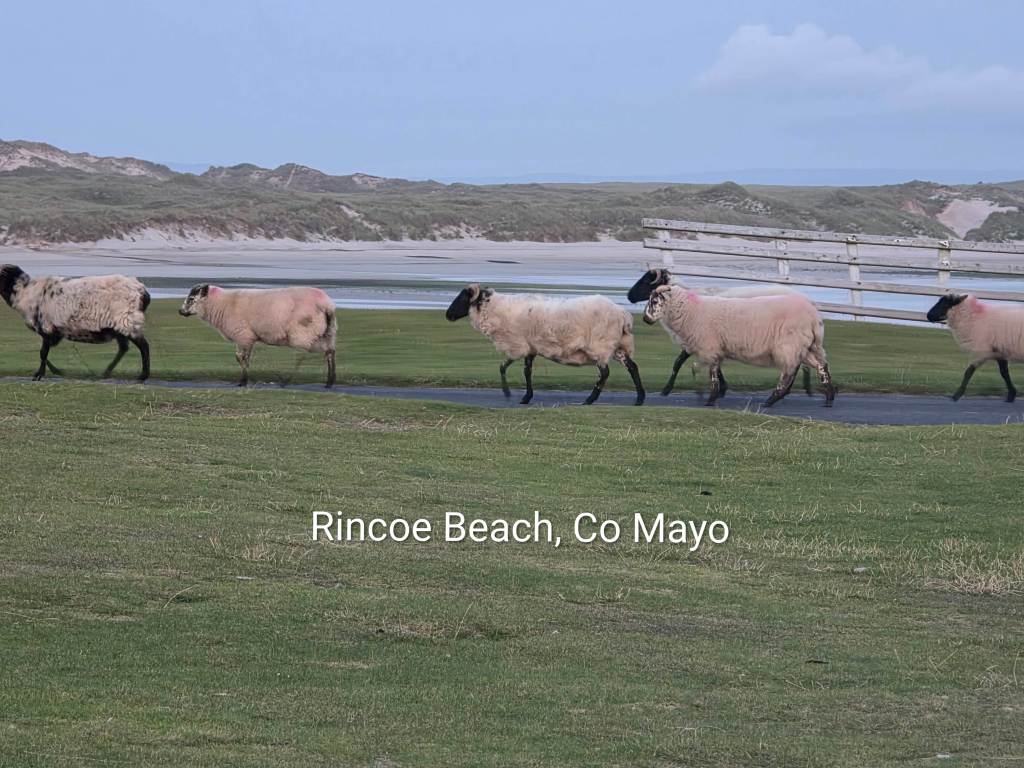
Rincoe Strand was only a ten-minute drive from Portocloy. It looks out across Broadhaven Bay towards the Mullet peninsula with a sandy beach on either side of a small peninsula. There were far more sheep than humans with the sound of bleating mingling with the lapping waves……until two busloads of Irish language students arrived for a swim in the crystal- clear waters… but peace came ebbing back when they scrambled onto their buses after about an hour, leaving a few campervans and the sheep.  We walked uphill past the walled graveyard to Connolly’s Pub (Teach Conghóile), a cosy place with spectacular sea views where a couple of locals were sipping pints. The whole area had a desolate beauty with hardly a tree or bush…it almost felt like we were on an island with the sea and water in every direction. A local man, who now lives in Wexford, told us with nostalgia of the ‘good times’ growing up here, when children ran wild and free, and fishermen travelled to England to find work during the winter months and boys, as young as thirteen, went to Scotland to pick potatoes, known as the tattie hokers.

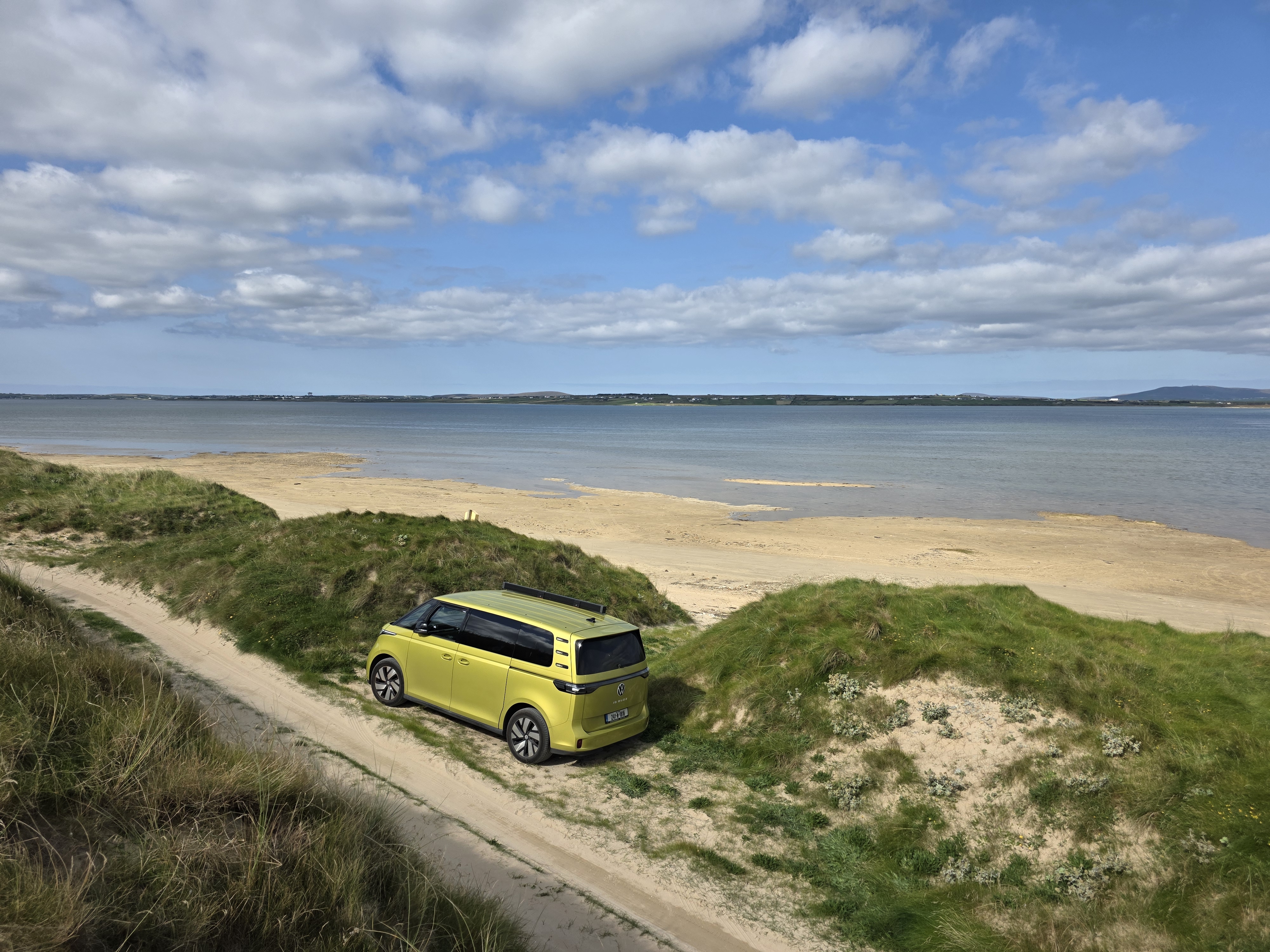
After Rincoe, we headed south along the coast, stopping for lunch in Belmullet before continuing to Claggan Island, Mayo’s newest island, having only being officially declared an island in 1991. The tiny island is situated on the northeastern corner of Blacksod Bay, about 12km from Belmullet. It is linked to the mainland by a narrow, sandy causeway that divides Tramore Bay from Blacksod Bay and it is circled by beautiful sandy beaches in every direction you look with some amazing views of Achill and the Mullet Peninsula. It was easy to spot the first-time visitors…they were the ones driving on the rough sandy road while the locals used the beach.

Driving around the roads of North Mayo, we kept seeing signs for Tír Sáile without knowing what it was. By the time it registered that this was a Sculpture Trail, we had passed most of them. Tír Sáile  originated in 1993 when fourteen site-specific sculptures were installed in spectacular locations around the coast (sáile is seawater). One of the sculpture was on Claggan island, titled ‘Acknowledgment’, a 50m long sculpture of stone and earth, a tribute to the anonymous dead, whose memories have been lost in time. 

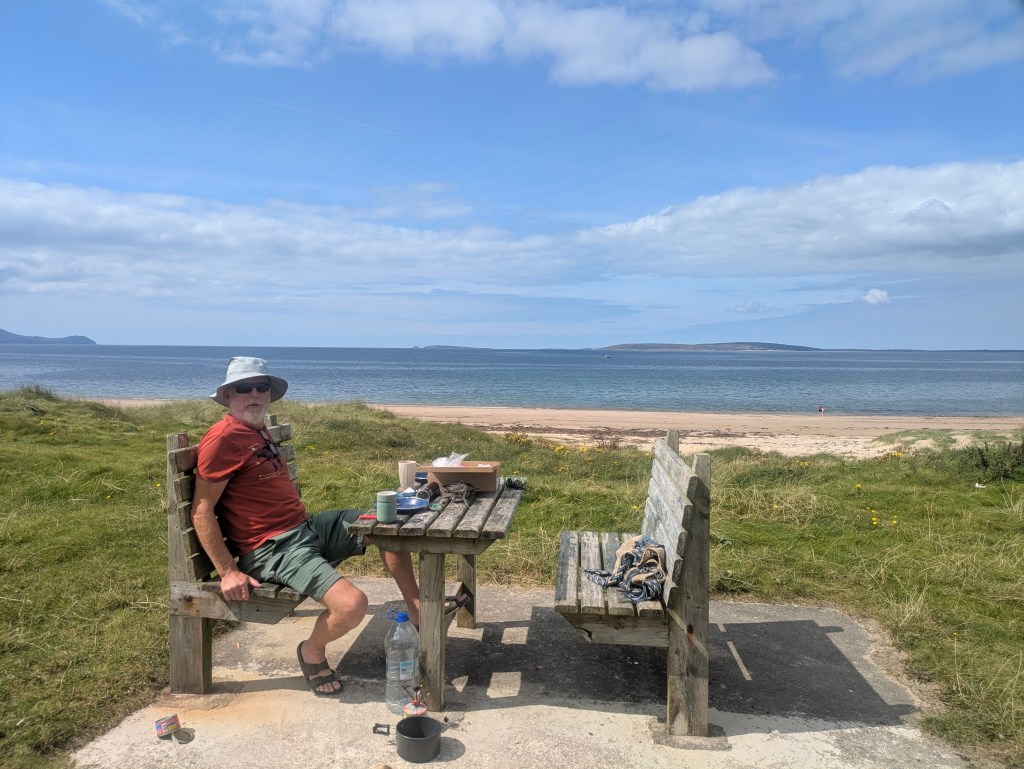
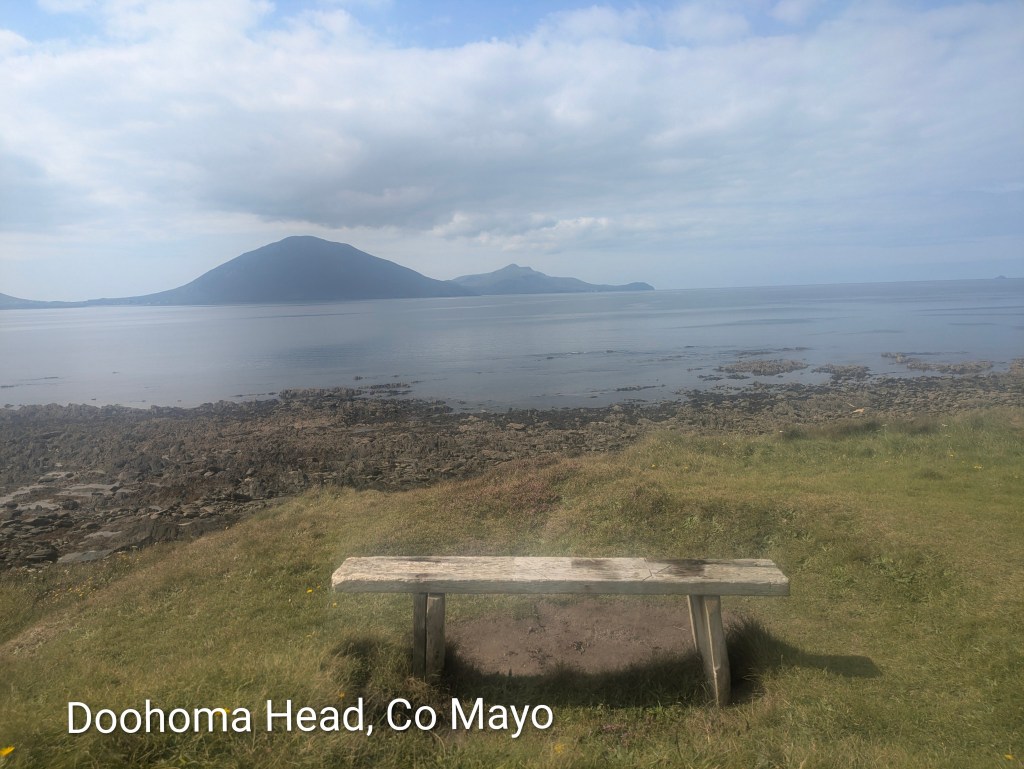
South  of Claggan Island, there seemed to be an unending supply of more white-sand beaches with the distinctive silhouette of Achill Island on the horizon in the distance.  Doolough Beach was empty apart from a man walking five dogs who told us that whales were spotted in the area the day before. Doohoma Head had a wooden seat with a dreamy Achill view but it was time for us to turn inland towards the mountains.

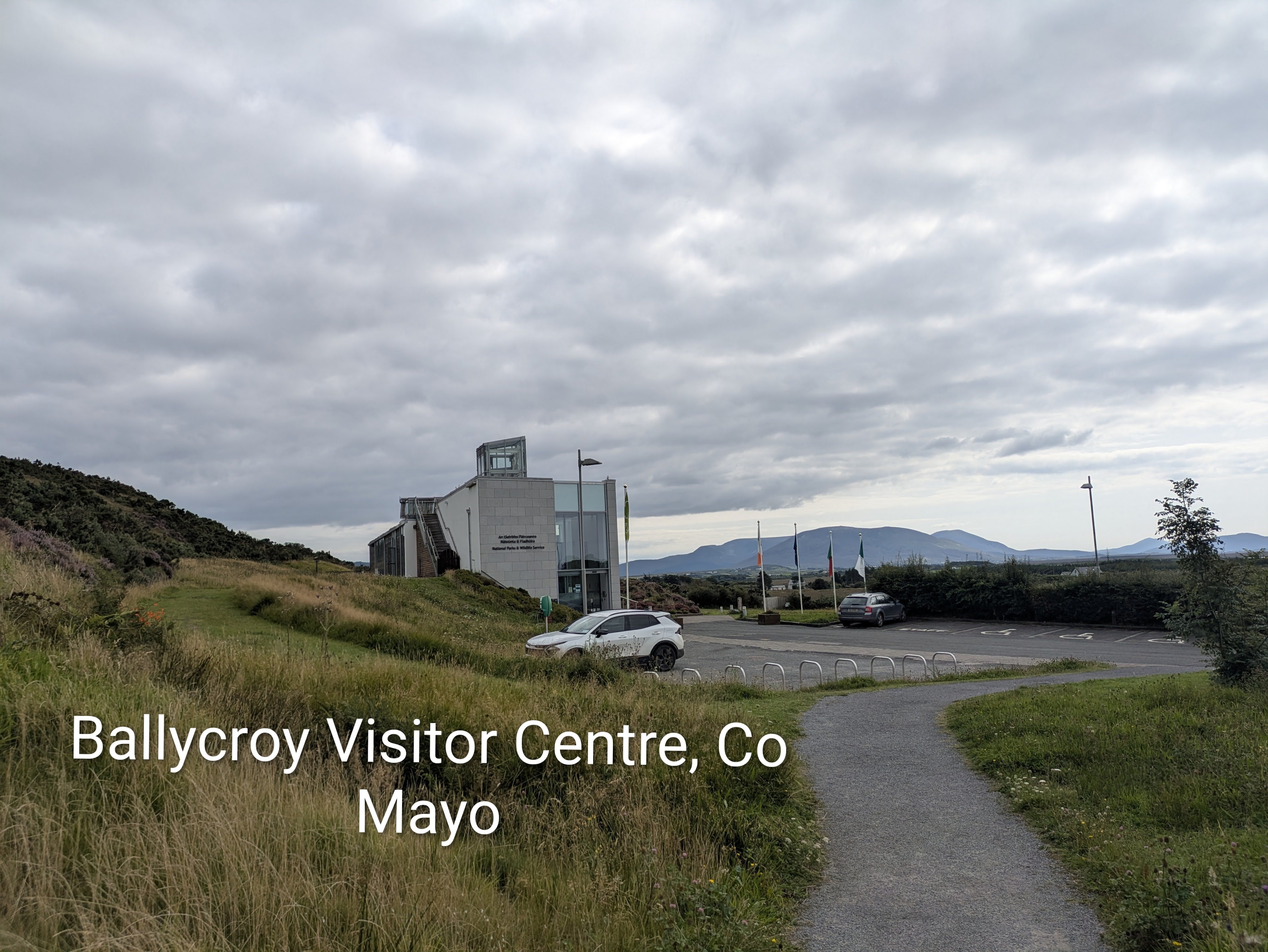
We stopped at the Ballycroy Visitor Centre in Wild Nephin National Park, a modern building full of light and clean lines with knowledgeable, enthusiastic staff and a lovely café. Wild Nephin National Park is huge –  a vast 15,000 hectares of uninhabited and unspoilt wilderness, dominated by the Nephin Beg mountain range and the Owenduff Bog, one of the last intact active blanket bog systems in Western Europe. Martin, who worked in the centre, explained the vision for the future with conservation plans for reforesting the park with native species and  a focus on education.

Just inside the visitor centre was a huge star-studded poster with the caption ‘The darkest skies reveal the brightest stars’ because Nephin has some of the darkest, most pristine night skies in the world and is officially certified as a Gold Tier standard International Dark Sky Park.  The Mayo Dark Sky Park extends across the entire National Park….there was even a viewing platform on the grounds of the visitor centre. The best time for star-gazing is the clear crisp winter months but it is possible on any night for visitors to see with the naked eye thousands of twinkling stars, other planets in our solar system, the Milky Way and even meteor showers…if they are lucky.

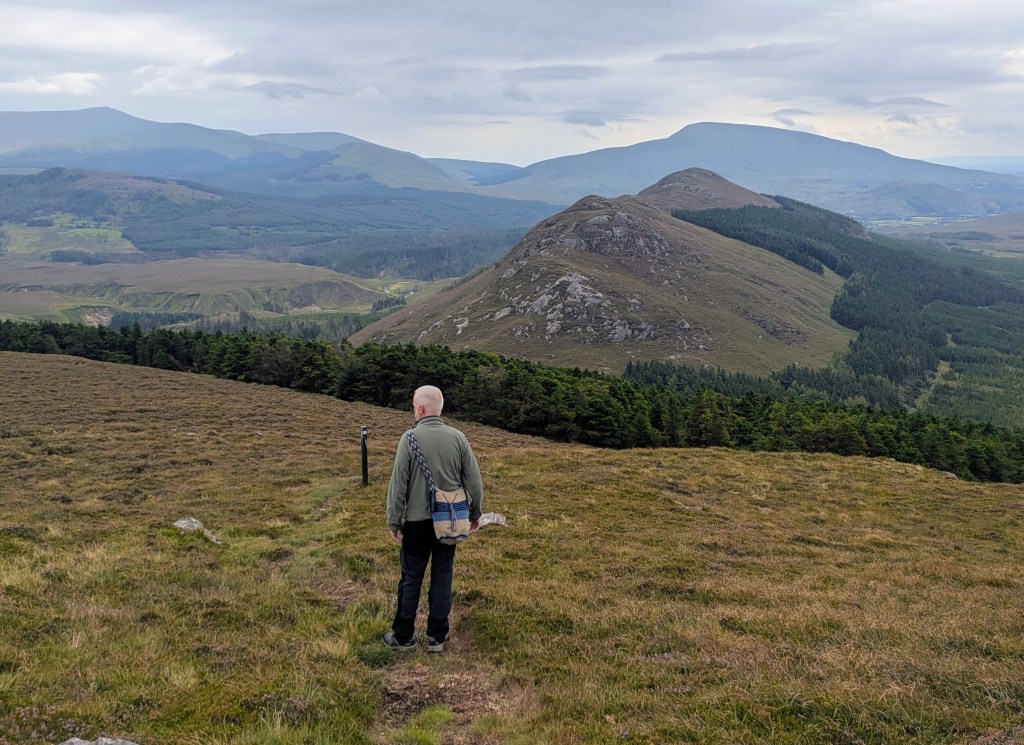
On Martin’s advice we headed to the Letterkeen Trailhead, about a forty minute drive, northeast from the centre,  a trip into wilderness and blizzards of midges at dusk. Unfortunately the skies remained cloudy for us that night with only a smattering of stars but the Letterkeen Loop walk the following morning was gorgeous, with different terrain from stony sheep paths, forest trails to sucking boggy paths where we almost lost a boot. Although the air was thick with moisture, it didn’t actually rain. We enjoyed panoramic views of inky-black lakes, brown streams and a feeling of deep isolation and silence. Nephin has been called ‘the loneliest place in the whole country’ because of the absence of human habitation and mobile coverage is patchy. We didn’t meet a single person on the trail although there were a few cars parked at the trailhead, which also had spotless port-a-loos.  

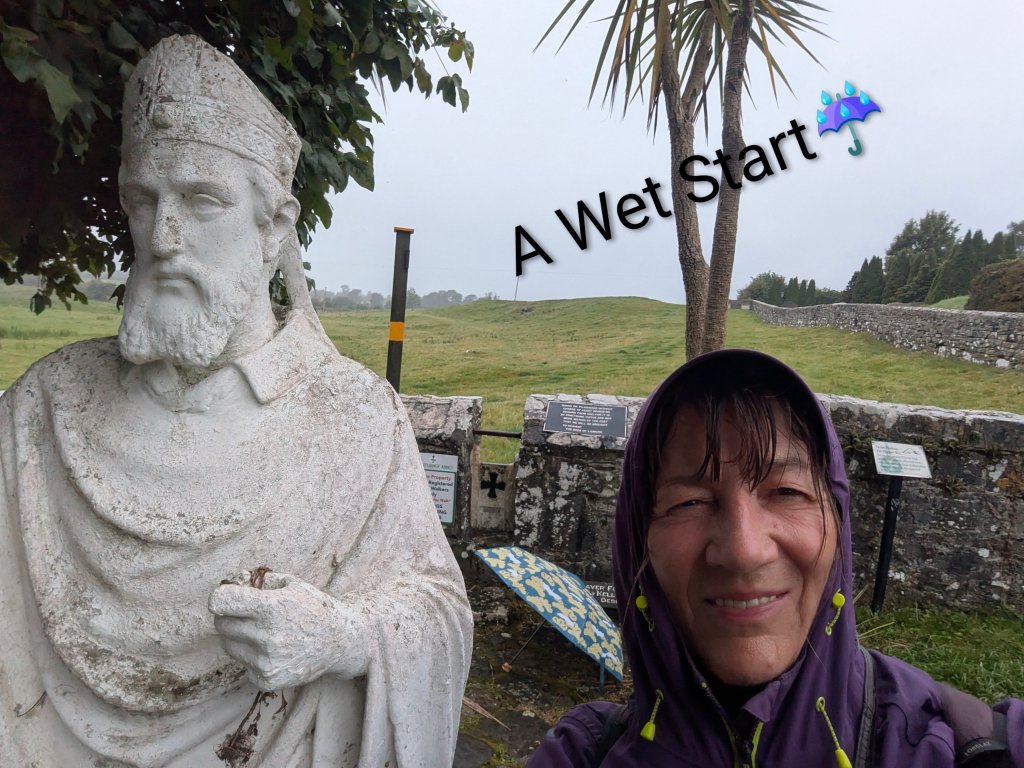
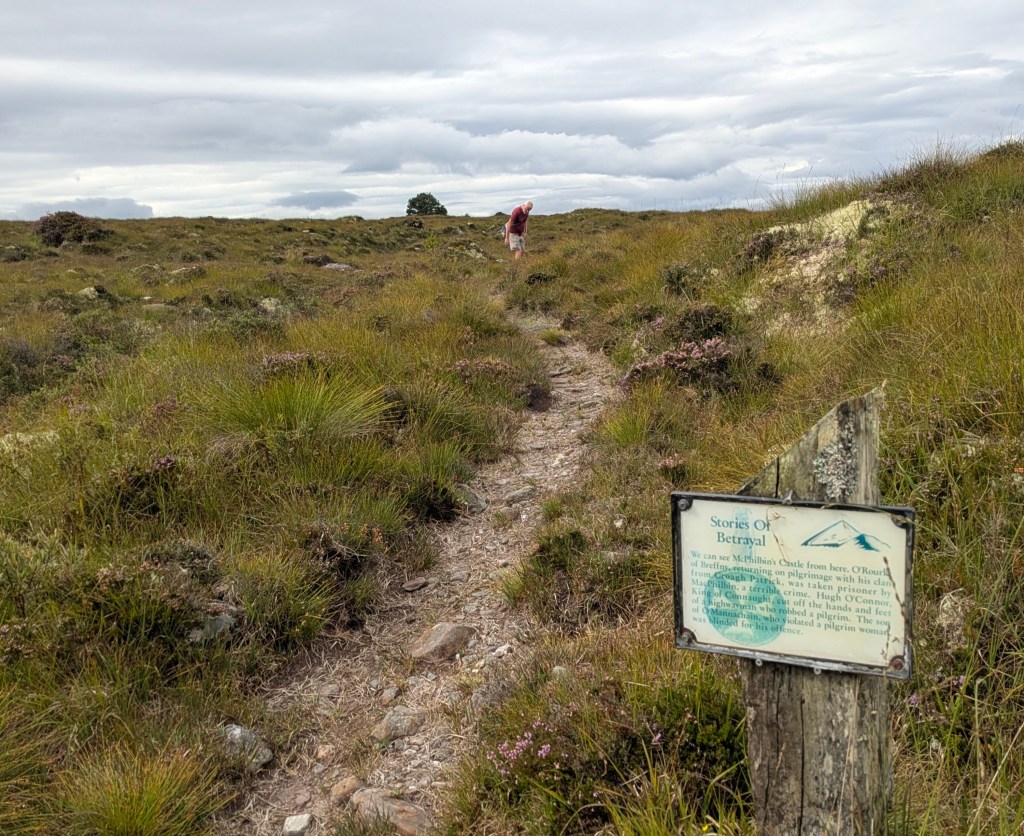
Our next stop was Ballintubber Abbey, founded in 1216 and one of Ireland’s oldest surviving abbeys and the hub of the ‘Irish Camino,’ and one of the five medieval pilgrim paths of Ireland. It is the starting point for Tóchar Phádraig, an ancient pilgrim path that stretches to Crough Patrick.

Tóchar Phádraig predates St. Patrick, originally built about 350AD as a chariot route from Rathcruachan, the seat of the kings and queens of Connacht, to  Cruachan Aille, as Crough Patrick was called in Pre-Christian times, a mountain sacred to our pagan ancestors.

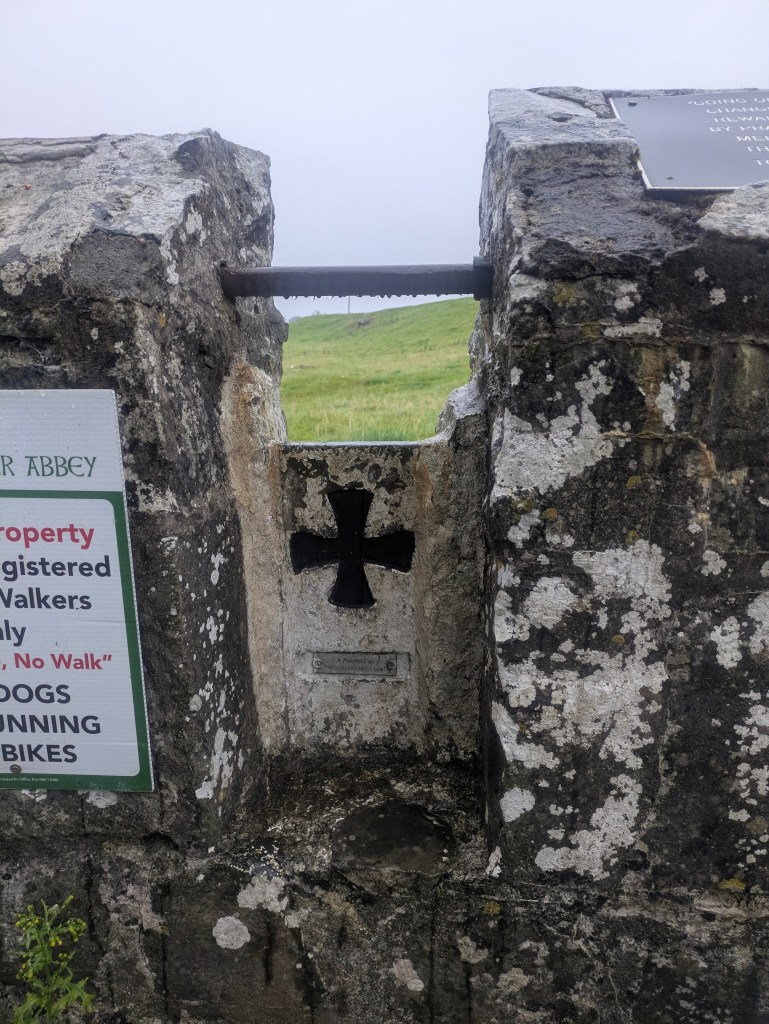
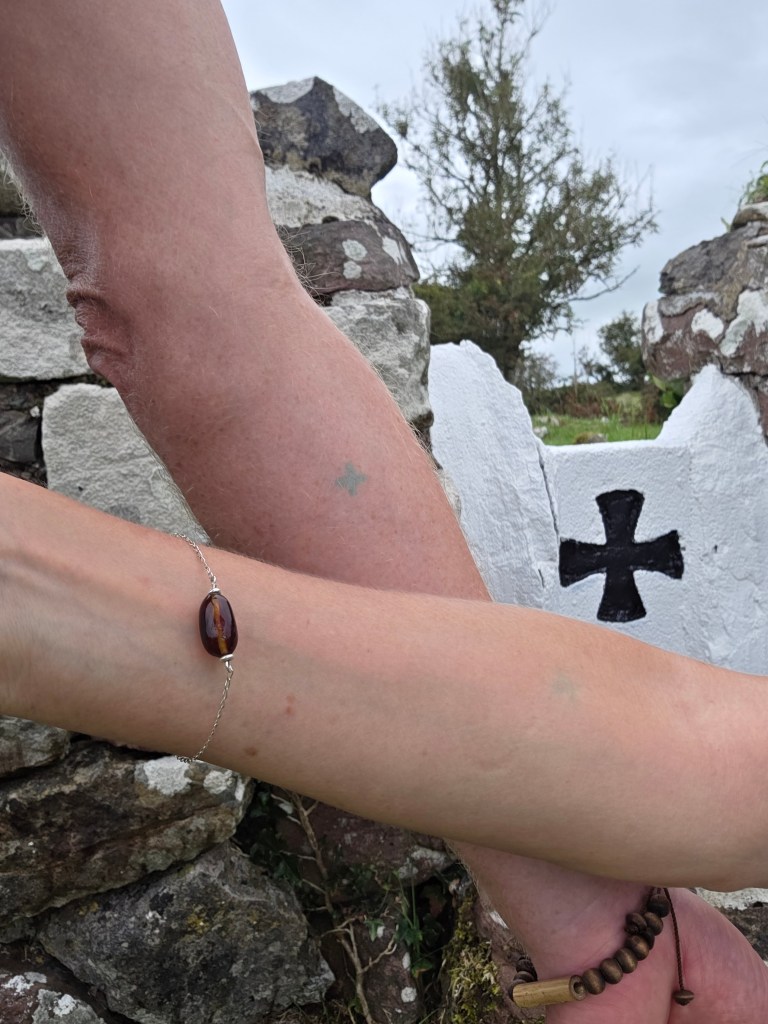
Pilgrims must register in the Abbey before setting out, where they will receive maps, advice and a booklet which gives some information on the many points of interest along the way. We registered on Friday afternoon so that we could get an early start on the 35kms route the following morning as the office opened at 9.30am. The walk can be broken into two parts, the first section to Aghagower with its round tower, and the second section to Crough Patrick but we hoped to complete it in one go.  We were branded on the back of each forearm with a small green cross, evidence that we had registered and paid our dues should any farmer or landowner request proof.

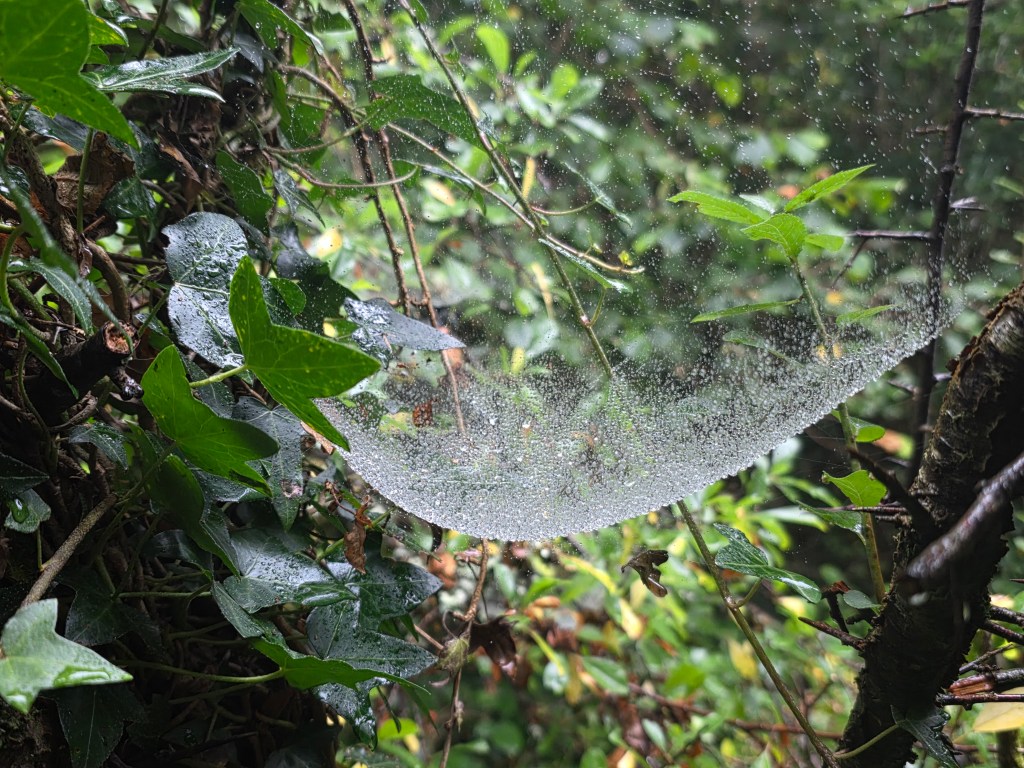
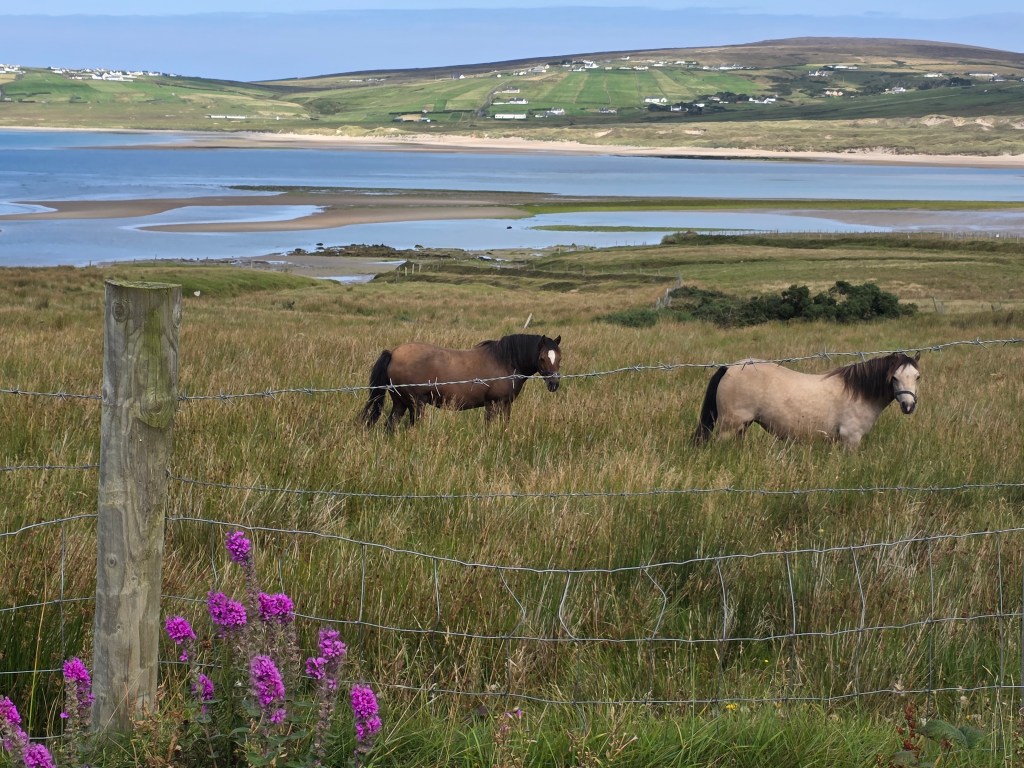
The morning started grey, in a light drizzle, the type of West of Ireland rain that was very wetting but the day cleared after an hour or two. The camino wound its way through open farmland, fields of grazing cattle, sheep and a few horses. We trekked through woodland and forests, stepped over countless stiles with the Tóchar cross sign etched into the stone and tramped along country lanes past hedgerows laden with abundant bounty – blackberries, sloes and haws and moisture drizzled cobwebs.

There were numerous storyboards, highlighting points of interest, a welcome opportunity to stop and read. This was not only a spiritual pilgrimage but also a cultural and historical journey through the ages, a fascinating blend of pagan and Christianity, a place of history and pre-history where every tree, stone and rock had a story to tell – mainly of famine, hardship and betrayal but also of healing and goodness. Sometimes in the silence, all I could hear was the beating of my heart and the sound of my boots on the earth. While the first section was predominantly off-road, the second section was mainly on paved country roads and laneways.

With our damp start and the high wet grass, our feet were wet from the very beginning and we contemplated giving up at the halfway point but we persevered. Crough Patrick loomed out of the landscape, a focal point since ancient times,  and seemed to beckon us forward although for long sections, it didn’t seem like  we  were getting any closer as we plodded along. There were signs saying ‘No complaining’ in several places which we tried to obey.

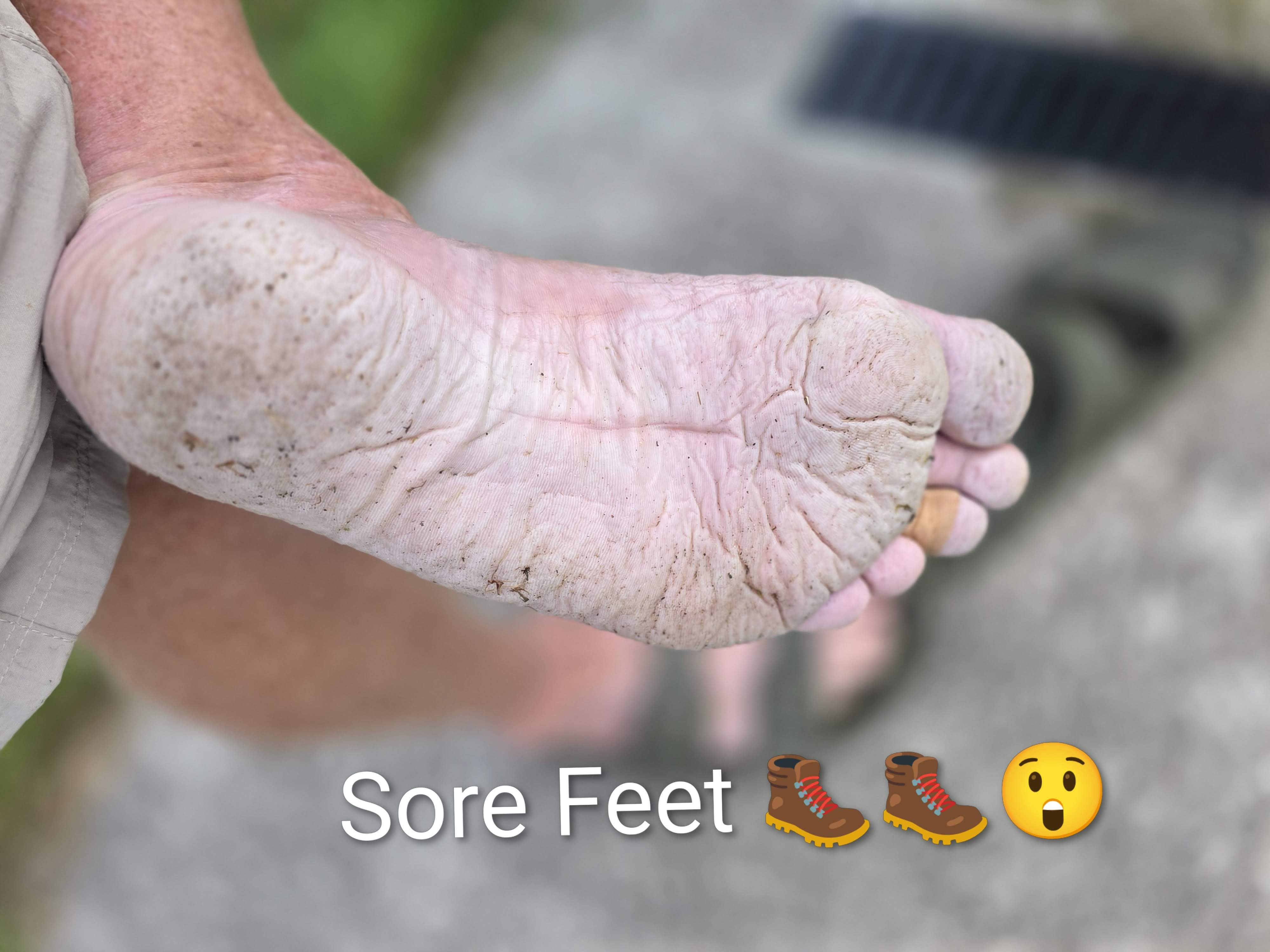
 Although the trail was well-marked, we managed to lose it several times, back-tracking until we picked it up again. There are several guided walks each year, organised by the Abbey, which would be easier as we wouldn’t have to concentrate on finding the markers ourselves but we were a week too early for the August guided pilgramage. We finished with a sense of achievement…. and exhaustion with shrivelled feet… after a long day of blisters and contemplation.

We barely scratched the surface of what North Mayo has to offer but one thing is certain, we will certainly return if we can.  If stunning scenery, amazing deserted beaches, superb hiking  and starry skies are your thing, then Mayo is definitely the place to go. The locals are an added bonus, probably the friendliest people in the whole country and certainly the most talkative.

We had no problem with the electric van, charging it in Ballina and in Westport.  This van trip was so successful that we are considering going further afield. Might it be possible to drive to Istanbul or Casablanca…..and back?

Thanks for reading

Campervanning in North Mayo: A Scenic Adventure