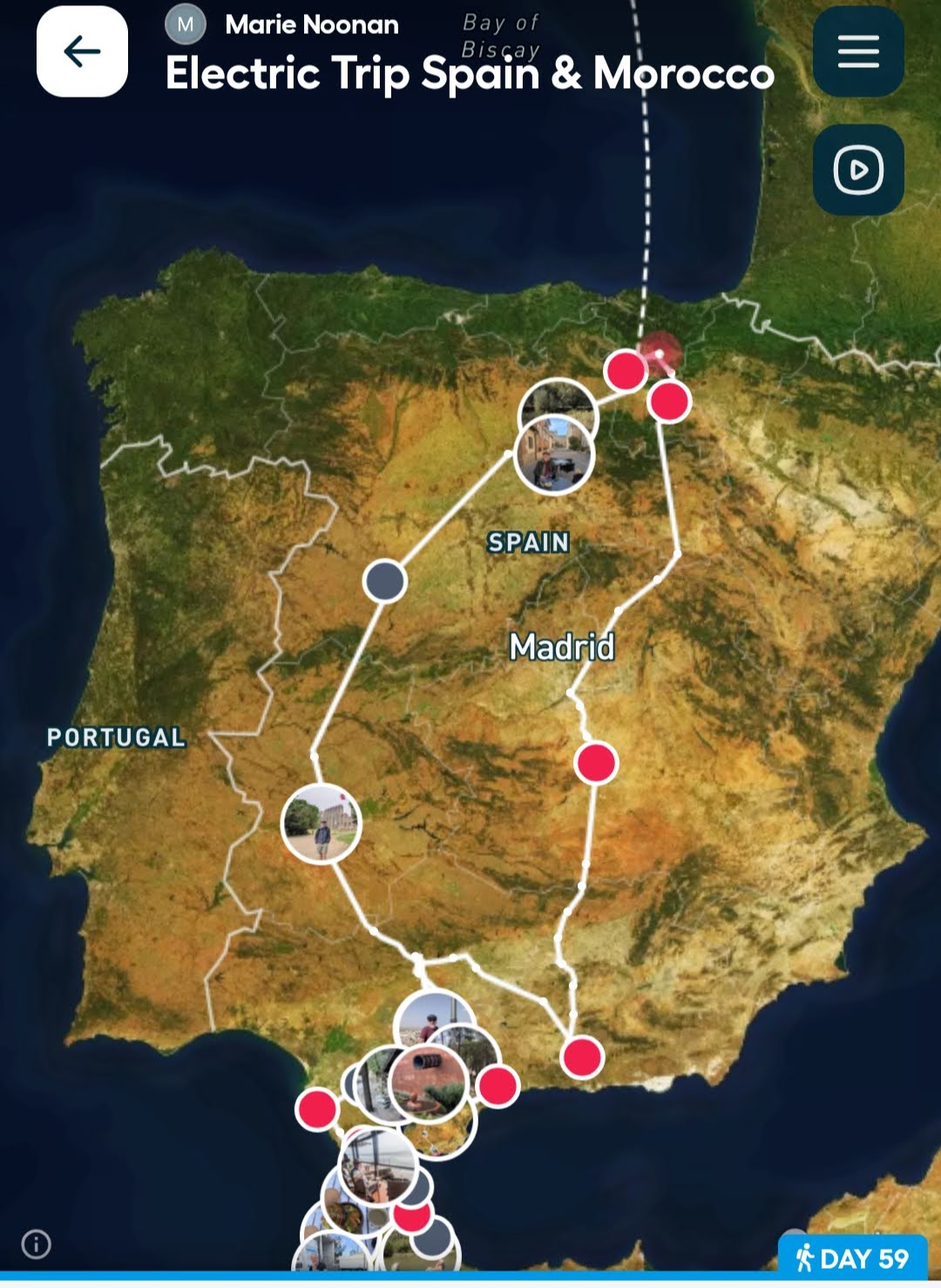
Electric Travels: Closing the Loop

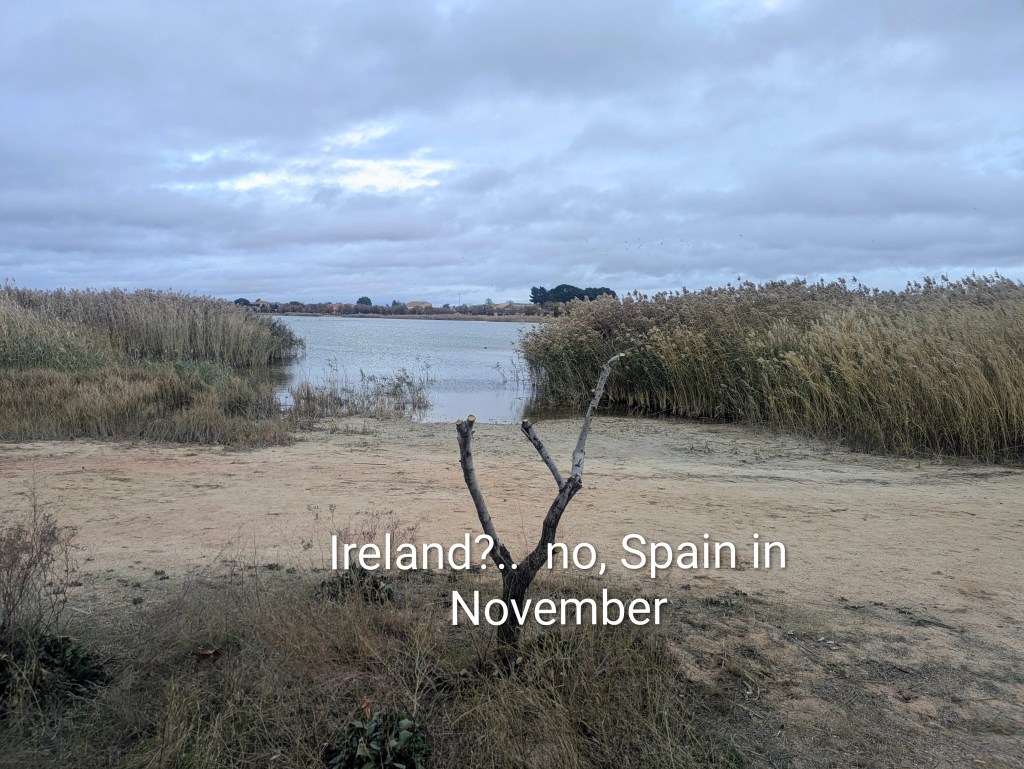
Spain in November was much colder than we expected.

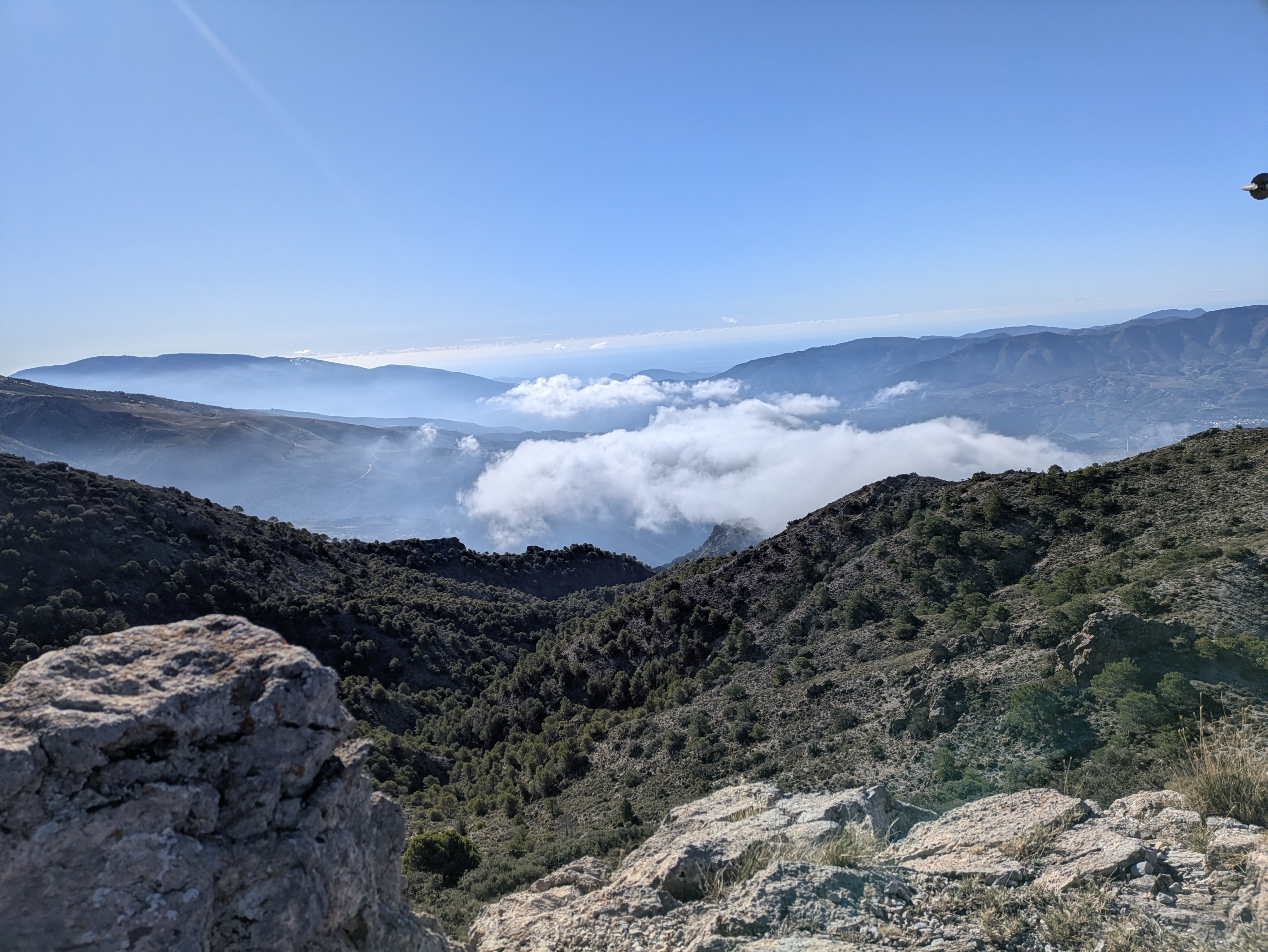
Our week in the Sierra Nevada was gorgeous with mainly bright sunny days and cold nights (as low as 2C), Although the daytime temperatures rarely climbed above 13C, it felt much warmer in the sunshine and it was perfect weather for hiking. As we packed up the van last Monday, there was a change….clouds were dimming the brilliant blue skies of the previous week.

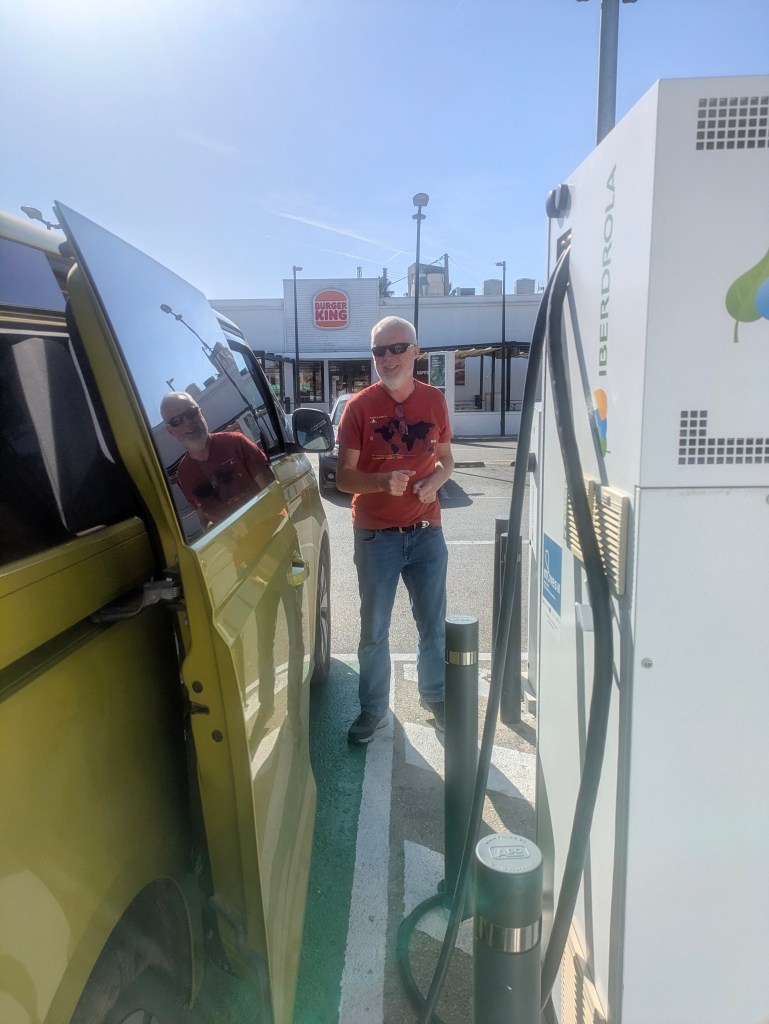
We headed north, skirting around the city of Granada, stopping to charge the van, outside a Burger King with little else around which meant that we felt compelled to eat something there. We had picked a different charger (a super-fast one) but when we got there, it wasn’t operational – one of the few times that this has happened in Spain and unlike in Morrocco, there was more public chargers within a few kilometres.  The downside was that many of them are outside fast-food chains.
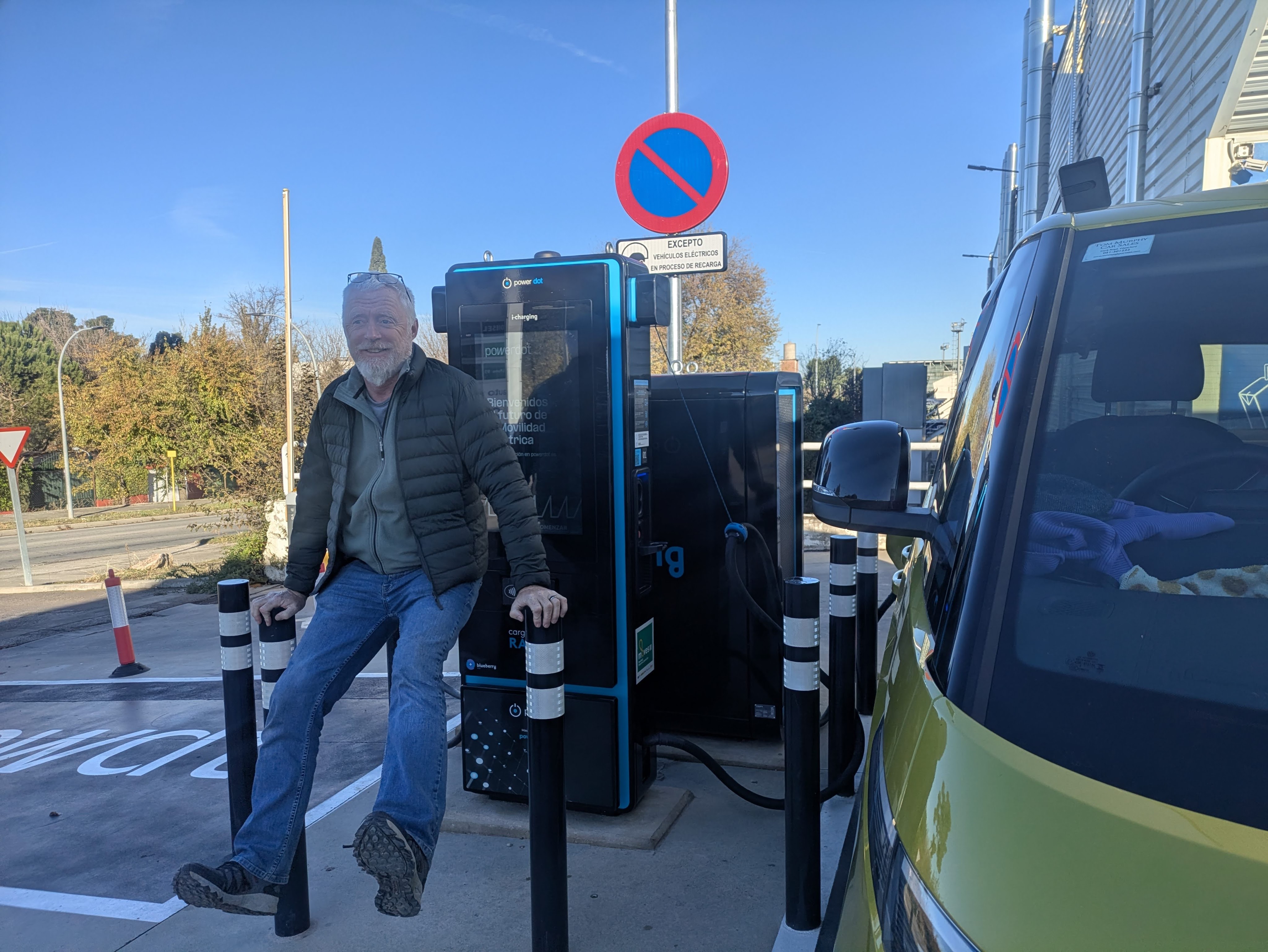
Happy Charger

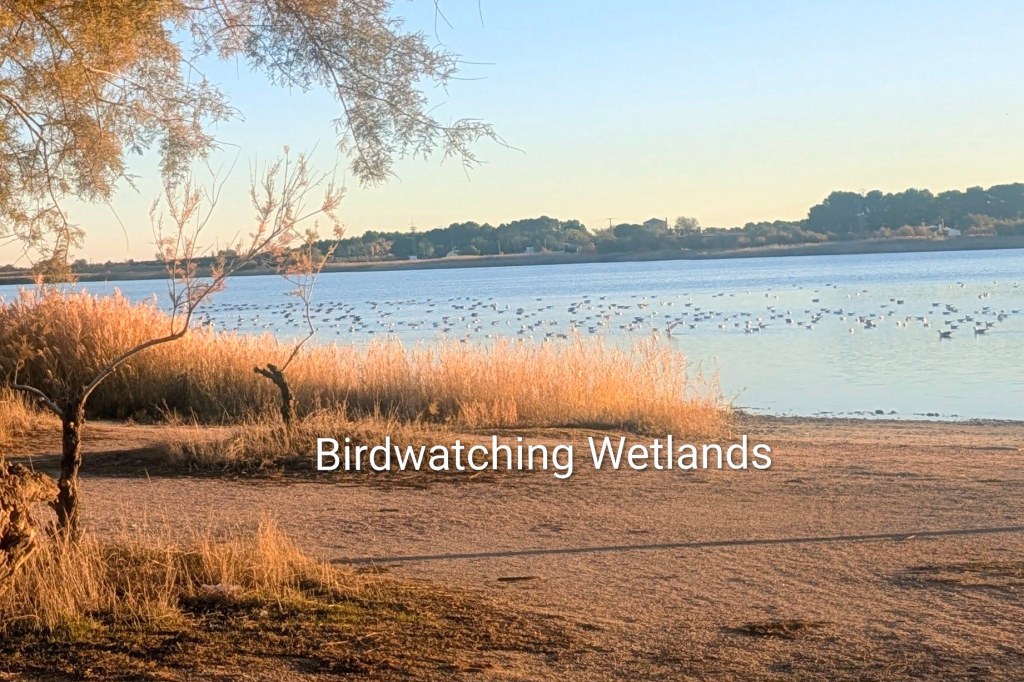
Spanish roads are reasonably good and they are almost all without tolls unlike France or parts of Portugal. We stopped for the night at a small hotel in the Castille-La Mancha region, outside Villafranca de los Caballeros, about an hour or two south of Madrid. The wind whistled through the shuttered bedroom windows and the aircon unit on the wall rattled and coughed but produced little heat. Our phones said the outside temperature was 10C but that it felt  like 3C. The inside temperature wasn’t much higher.  It had seemed a bargain –  a convenient and cheap stop – when we booked it at €31 for the night. It could have been gorgeous but it had a desolate ‘out of season’ feel. There were lake views and an inner courtyard but the wind  raced up the stairs to the upstairs ‘habitaciones’ (bedrooms).  Flocks of migratory birds glittered over the salty waters…..the birds also found it a convenient stop ….but there were very few people. The man on reception was friendly but he was dressed in a padded jacket and woolly hat, and the restaurant and bar were closed. Our room had two single beds….totally by chance I got the comfortable one, Caoimhin’s was lumpy with a huge dip in the centre.
After our ‘ budget experience’ and because the weather was too chilly to sleep in the van, we booked an apartment in Logrono in the Rioja region for three nights, eager to get north  and closer to the Bilbao ferry.  We choose Logrono, simply because we have never been there but getting to Logrono from the lake involved a long drive, over five hours, but we decided that one long hop was preferable to dawdling our way.

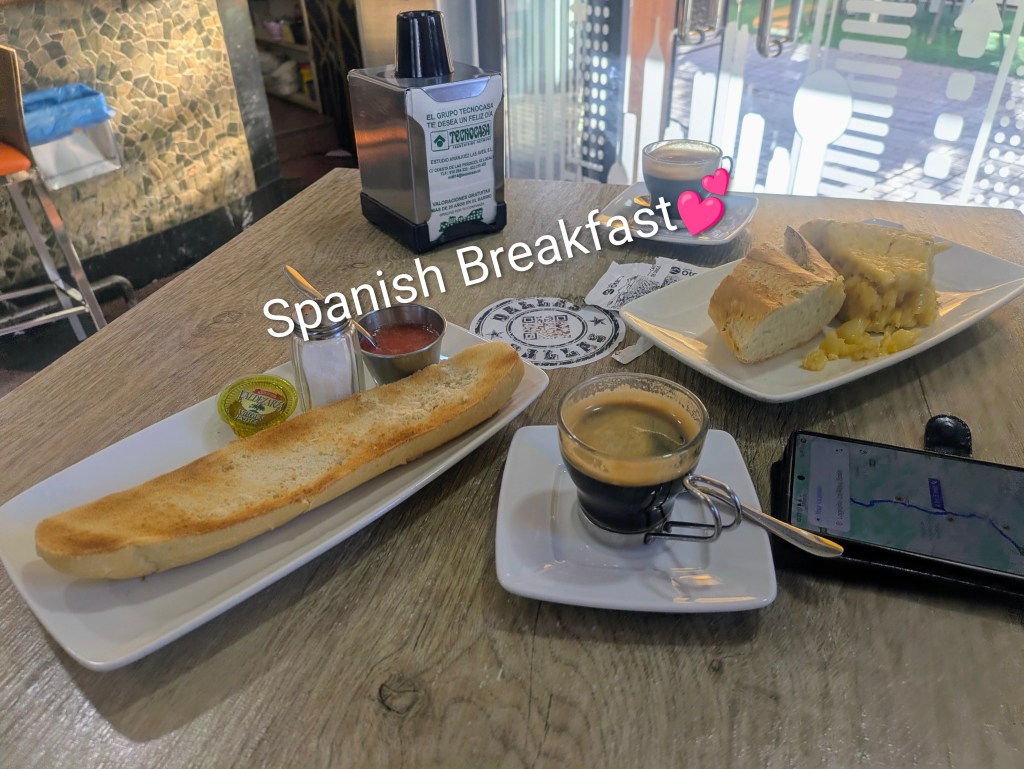
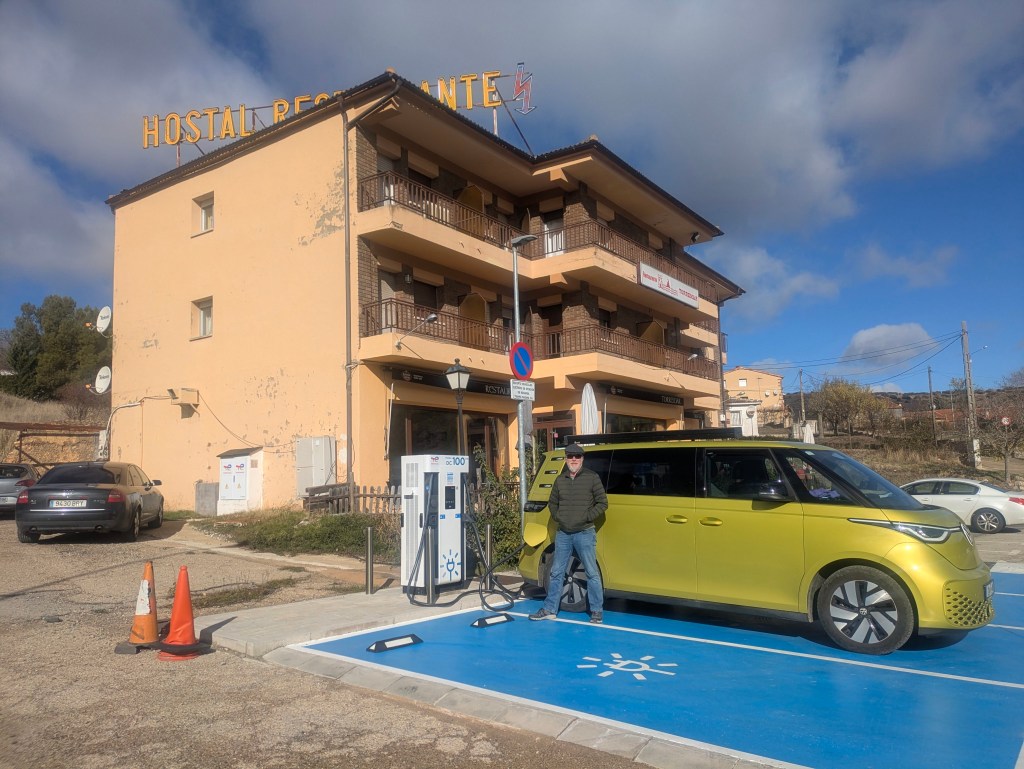
Continuing through Castille-La Mancha, the region is so flat that our eyes had to adjust to the flat plains and the unending horizons, so different to the mountain ranges to the south. A few old fashioned windmills – like the ones that Don Quixote tilted at…were visible in the fields. This time, we charged the van in a town-west of Madrid, Arunjuez, where we had breakfast in a local spot, a huge slab of tortilla omelette for Caoimhin and tostada for me which came with the typical tomato paste, olive oil and salt, washed down with rich café solos. We stopped again for a break and a coffee in a rural spot outside a hostal, favoured by truckers. It was pleasantly warm but things soon changed.
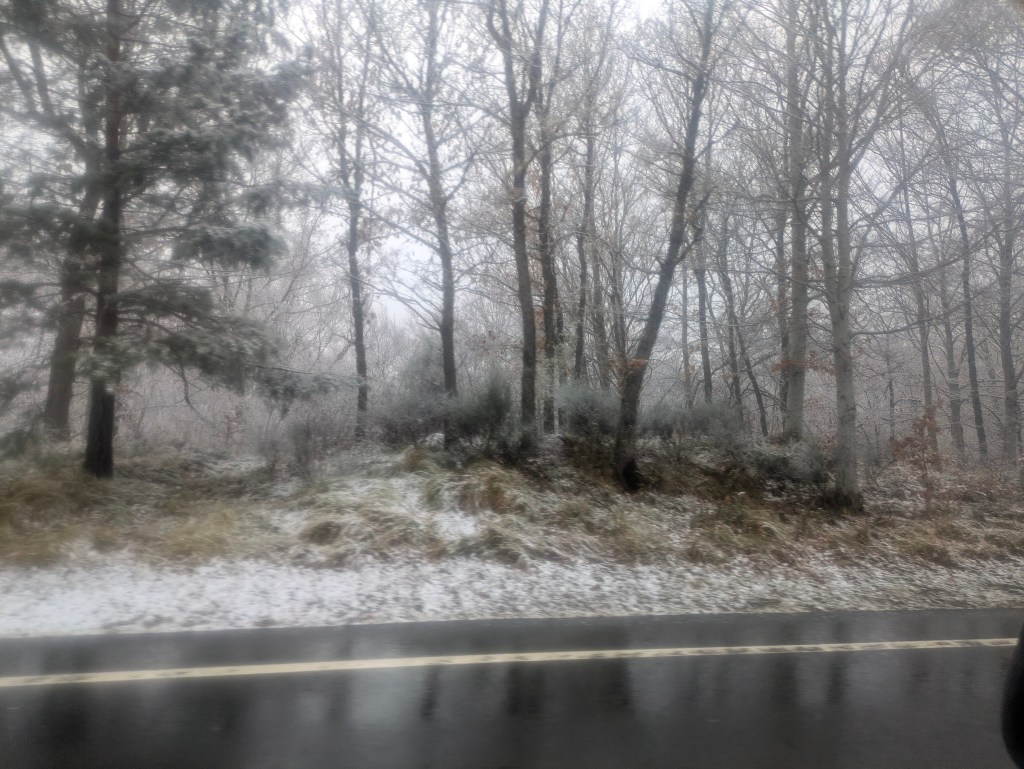
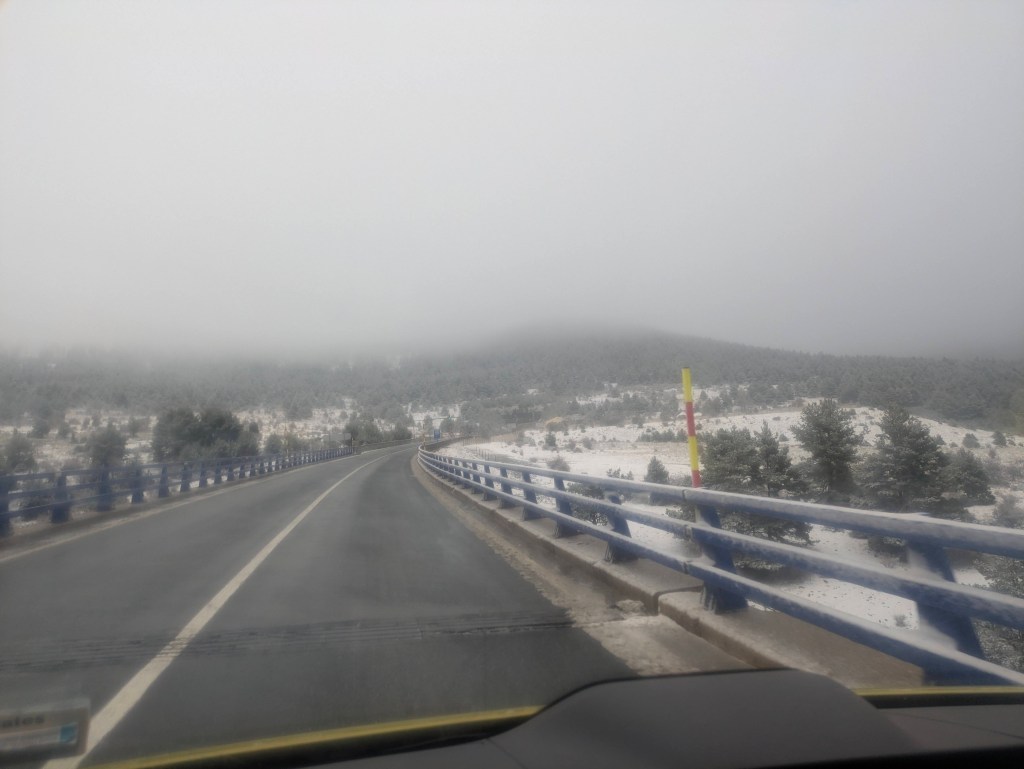
Soon we are in the mountain again, North of Soria, the rain turns to sleet and the temperature gauge drop it 1.5C, hovers there for a bit and then dips to -1,5C. The road was twisty and the surface slippery,  it was only 3pm but the conditions made it feel much later. There was freezing fog and a fleet of snow ploughs already out on the road. We passed through gorgeous villages with stone houses, clinging to cliffsides, but were glad to descend from the Sierra Camero Neuve and the Sierra Camera Viejo to the flat plains around Logrono.
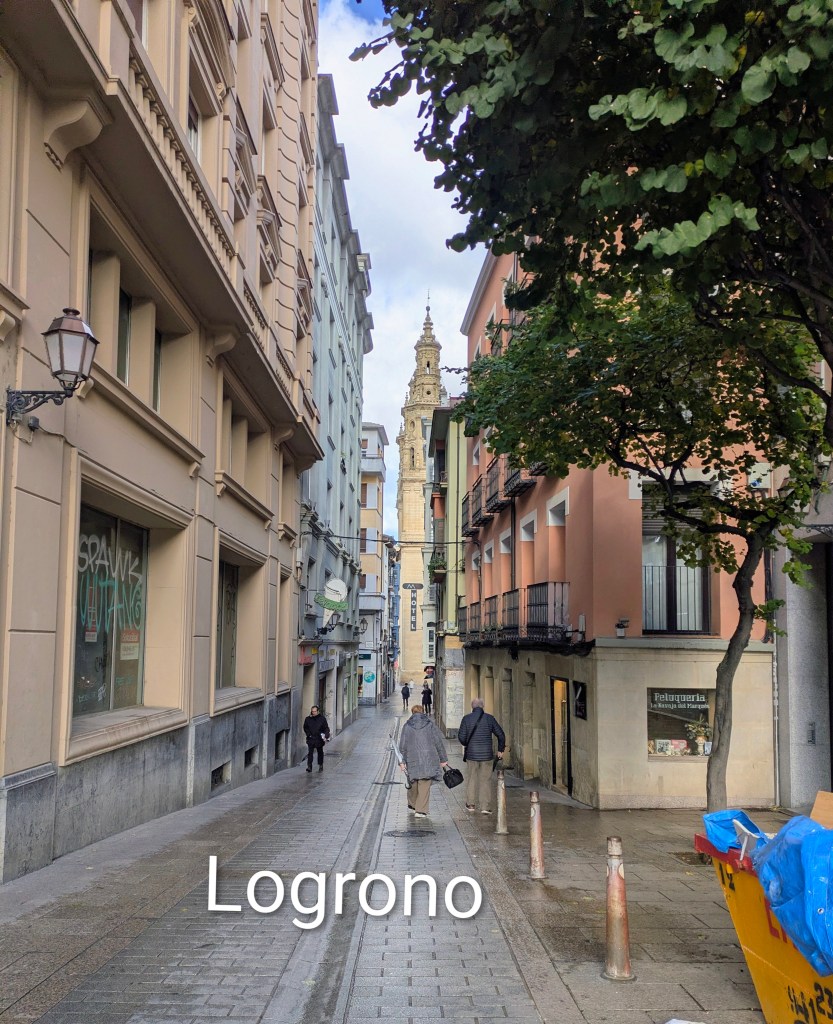
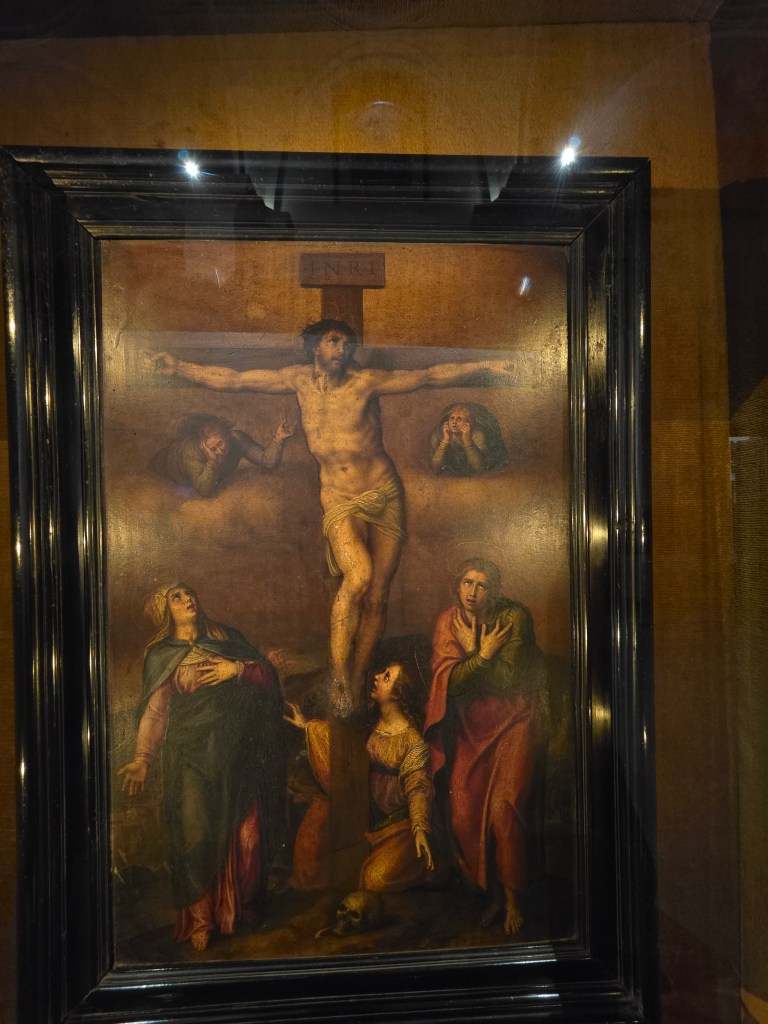
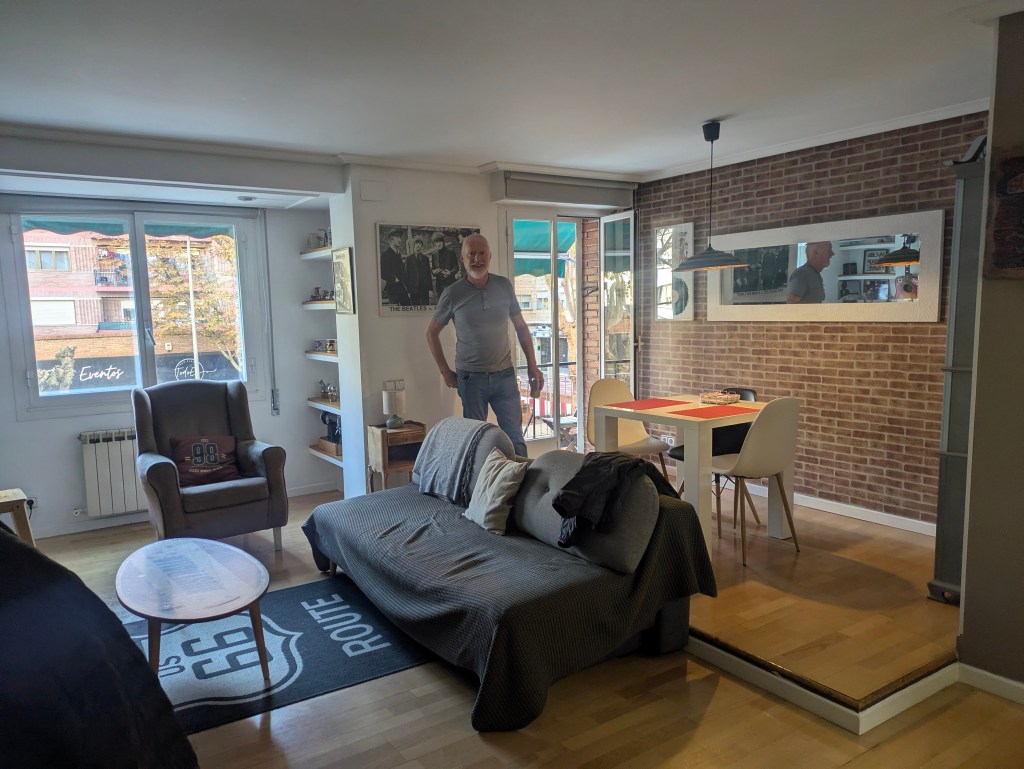
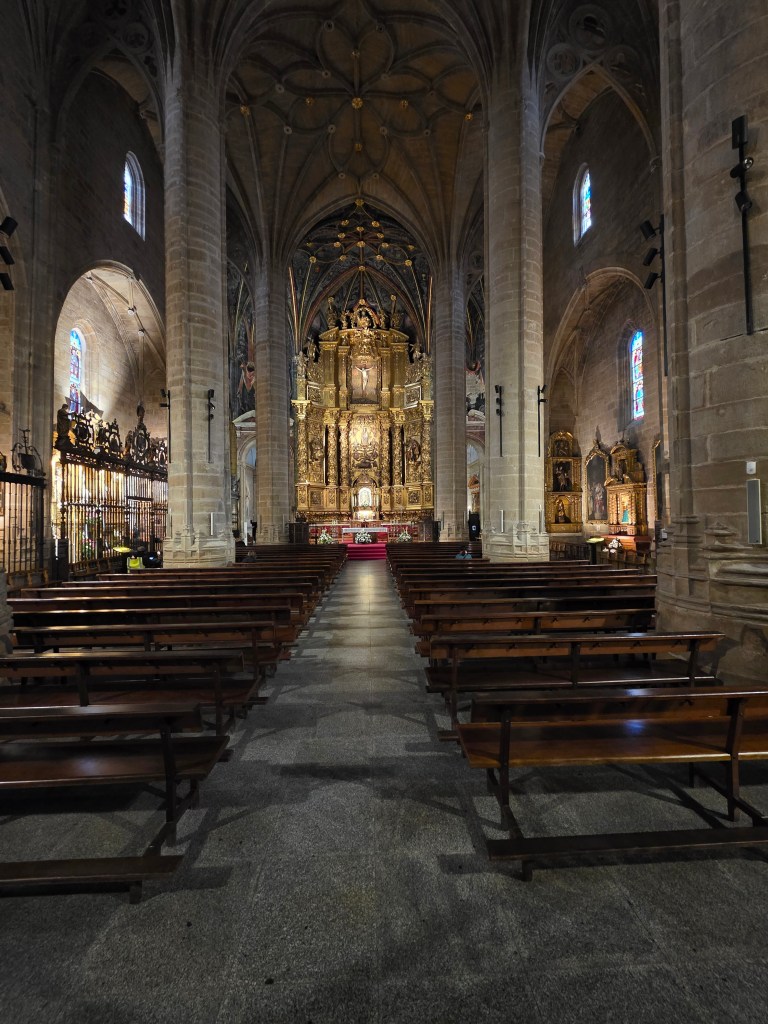
There was welcome blast of heat when we opened the front door of our lovely apartment with a little balcony overlooking the street. It was very central, less than a ten minute walk to the Cathedral, and a bakery next door and a supermarket three doors down. There was also free underground parking.  Logrono doesn’t have a lot of ‘wow’ sights but it’s a friendly place where people smile and ask us where we’re from…..particularly as Caoimhin is walking around in shorts, a rain jacket and a woolly hat. Logrono is on the route of the Camino de Santiago so the shops in the covered arcade around the  Cathedral are full of camino shells and walking sticks although there are no obvious pilgrims. The cathedral from the outside is a mishmash of architectural design but the altar inside is dripping in gold. There’s also a very impressive painting by Michelangelo behind the altar in a secluded alcove. You have to insert a euro coin in a slot to illuminate it for a few minutes…..a shrewd move to both protect the painting and generate cash.
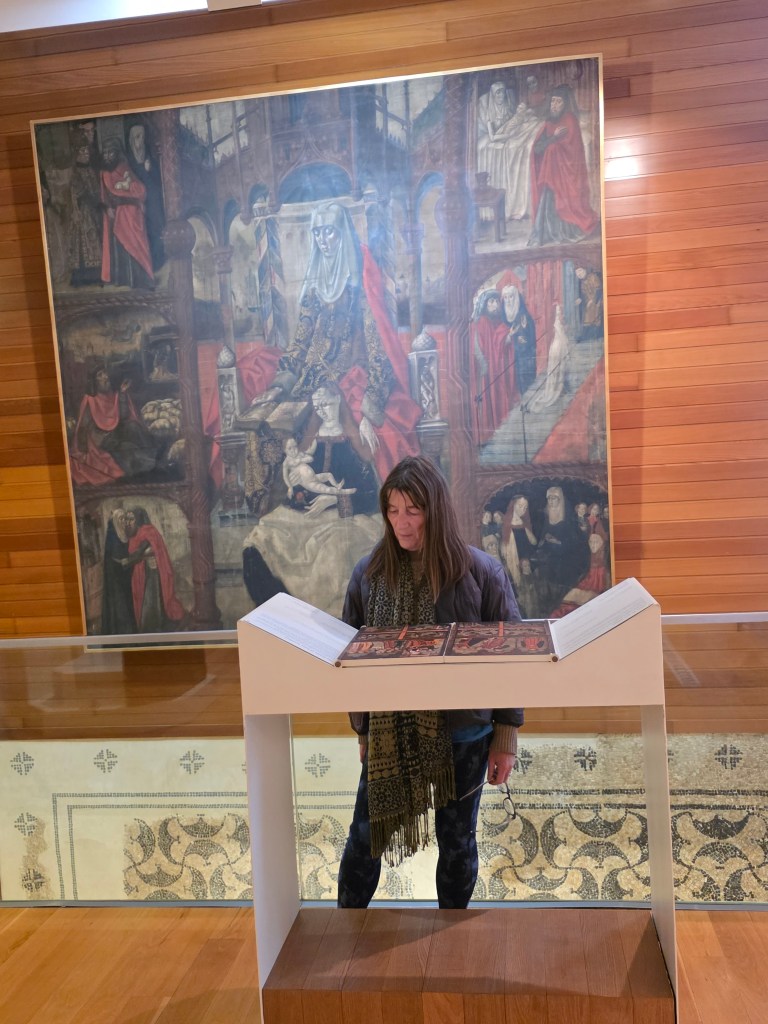
The Museo de Rioja, in a gorgeous baroque 18th century baroque building, is a really superb museum about the history and culture of the region from prehistory to the early twentieth century, stopping just before the Spanish Civil War. All the info is in both Spanish and English and is really well-done.
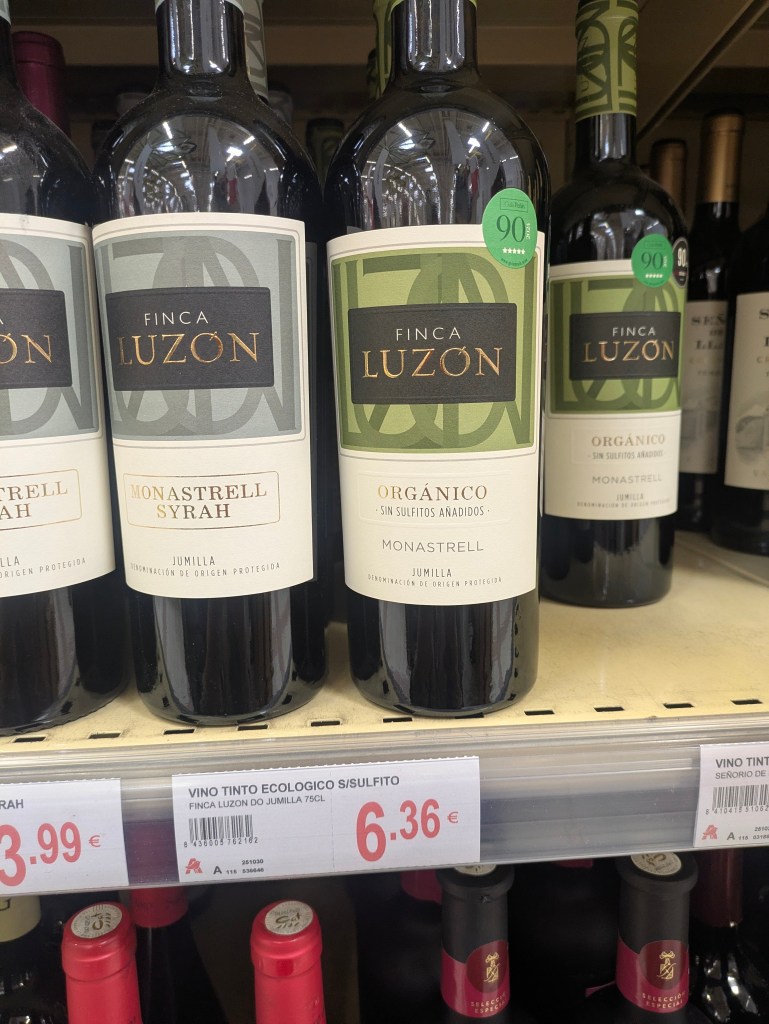
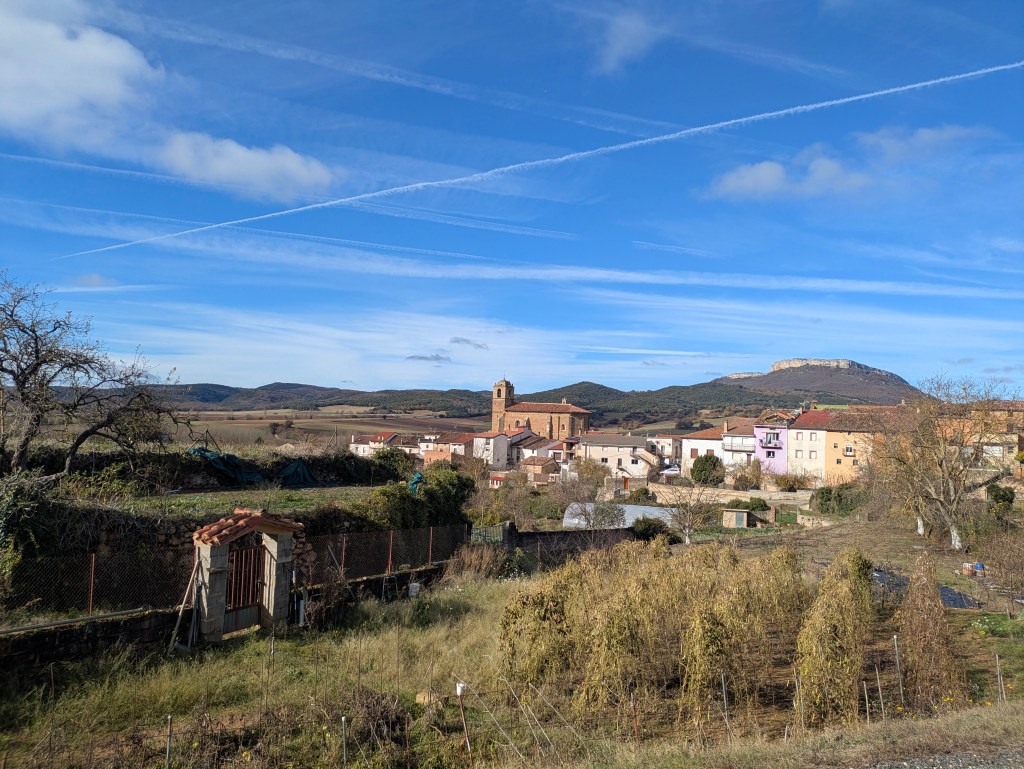
After loading the Buzz with some Rioja wine, we were ready to head onwards. Driving out of Logrono in sunshine to the sound of clinking bottles in the back, we headed for the hills on minor roads through farming countryside, stopping to take photos of the craggy peaks, windmills and villages. Spain is an astonishingly beautiful country with gorgeous diverse landscapes
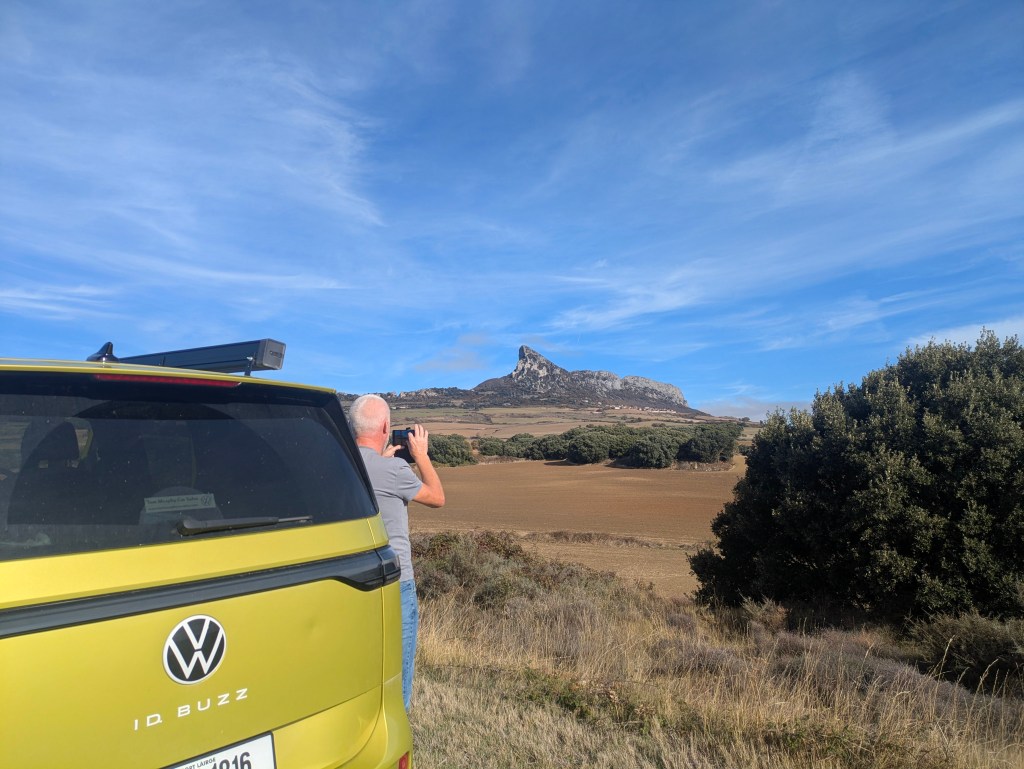
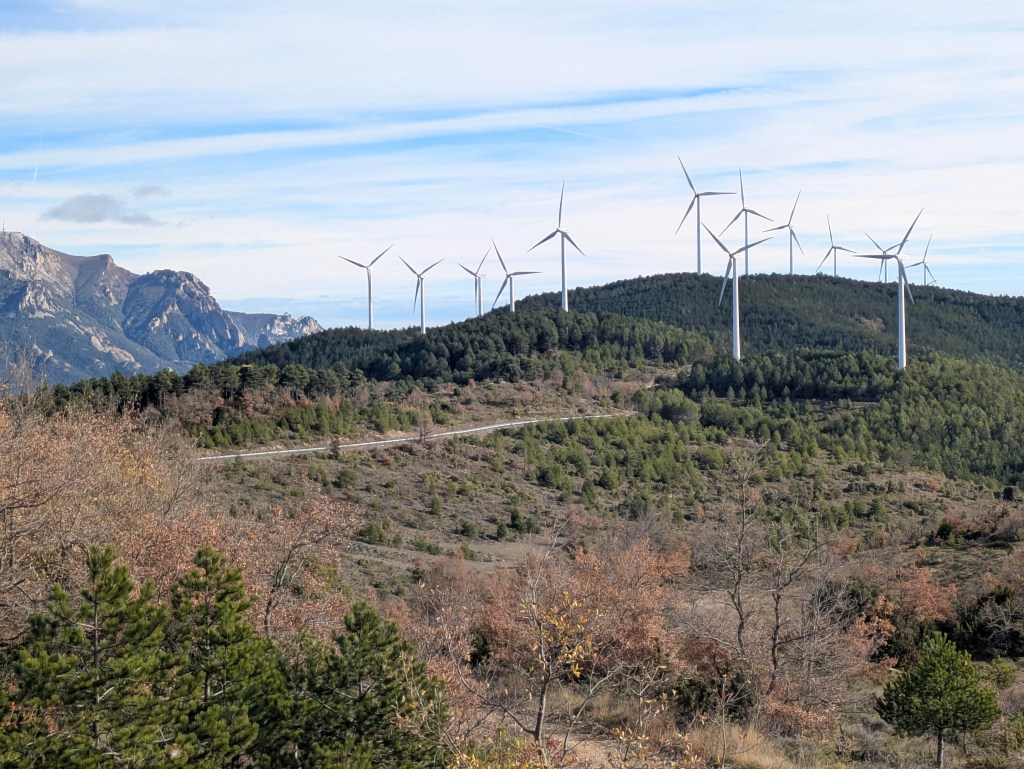
When we booked our return ferry tickets from Bilbao to Rosslare, Brittany Ferries were offering special deals with the Spanish Paradores, which are a state owned chain of luxury hotels in restored historical buildings, such as palaces, convents, monasteries and castles. The hotel profits go to the upkeep of the buildings and create employment as they are often in rural areas Although we are usually fans of ‘cheap and cheerful,’ we are not adverse to a bit of luxury especially in unique buildings. We love paradors and have stayed in a few of them on our previous trips to Spain…  it’s like stepping back into the past but with modern comforts.  Our last two nights are in Parador de Argomaniz, about an hour south of Bilbao, for the incredible ‘special offer’ price of €50 a night including breakfast. If you have never stayed in a parador, I urge you to look them up and give yourself a real treat.

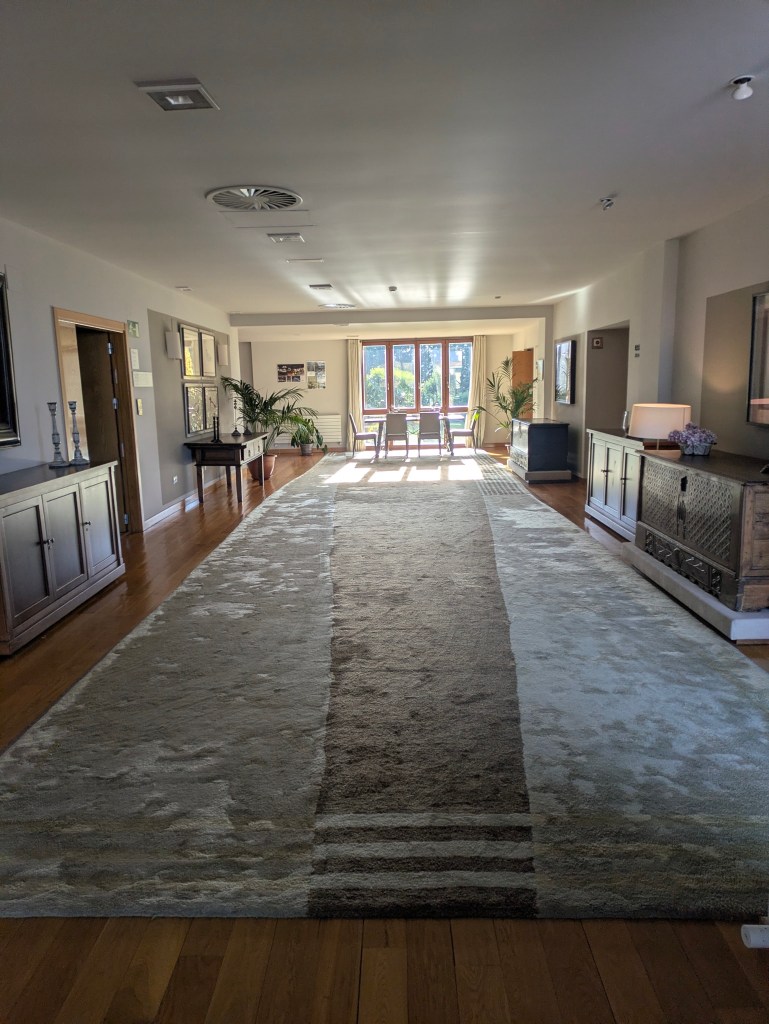
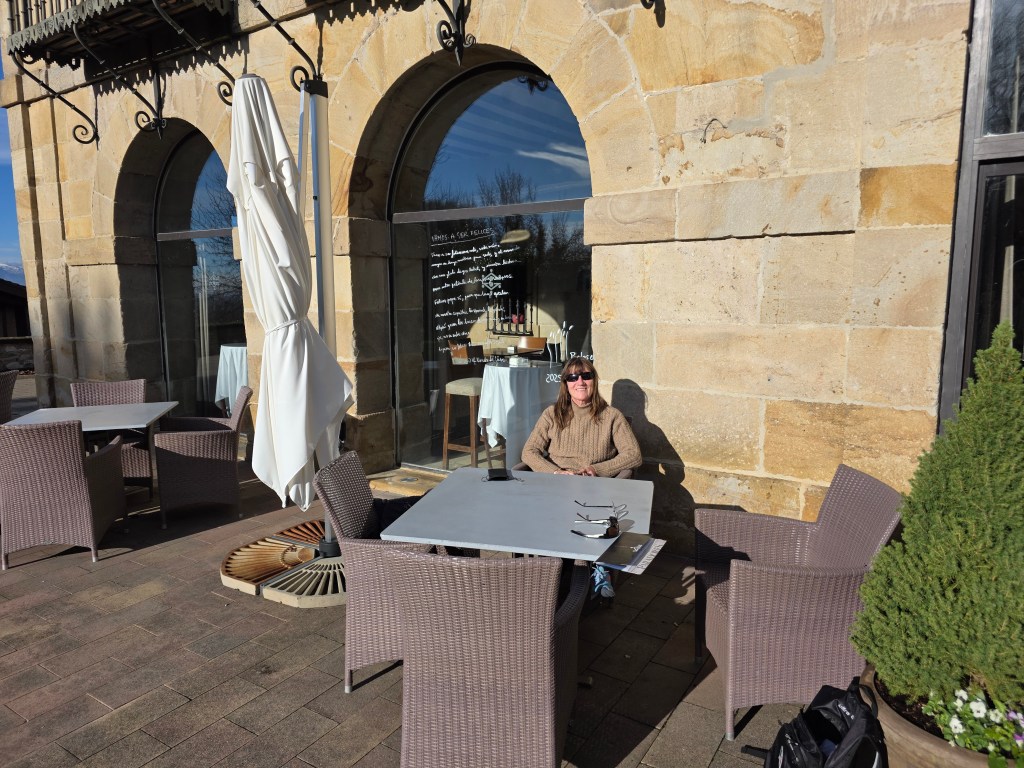
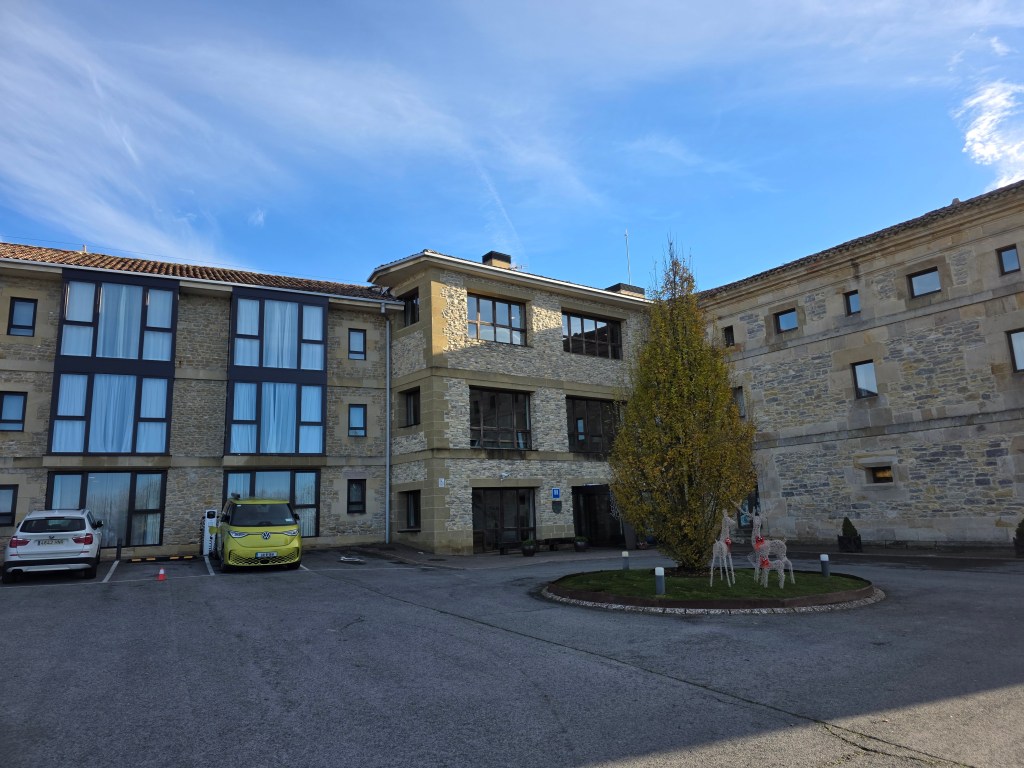
Parador de Argomaniz doesn’t disappoint…..it even has EV charging points. The building dates back to 1712 and was once a convent before being converted into a palace and during the Peninsular Wars was used as a headquarters for French Troops. It is even rumoured that Napolean stayed here and planned his attack on the nearby town of Vitoria from this very place. It’s in the tiny village of Argomaniz with gardens and woods and a renowned restaurant where we plan to have dinner tonight…..our last night……before our thirty-hour ferry tomorrow. A great place to spend our last days in Spain.
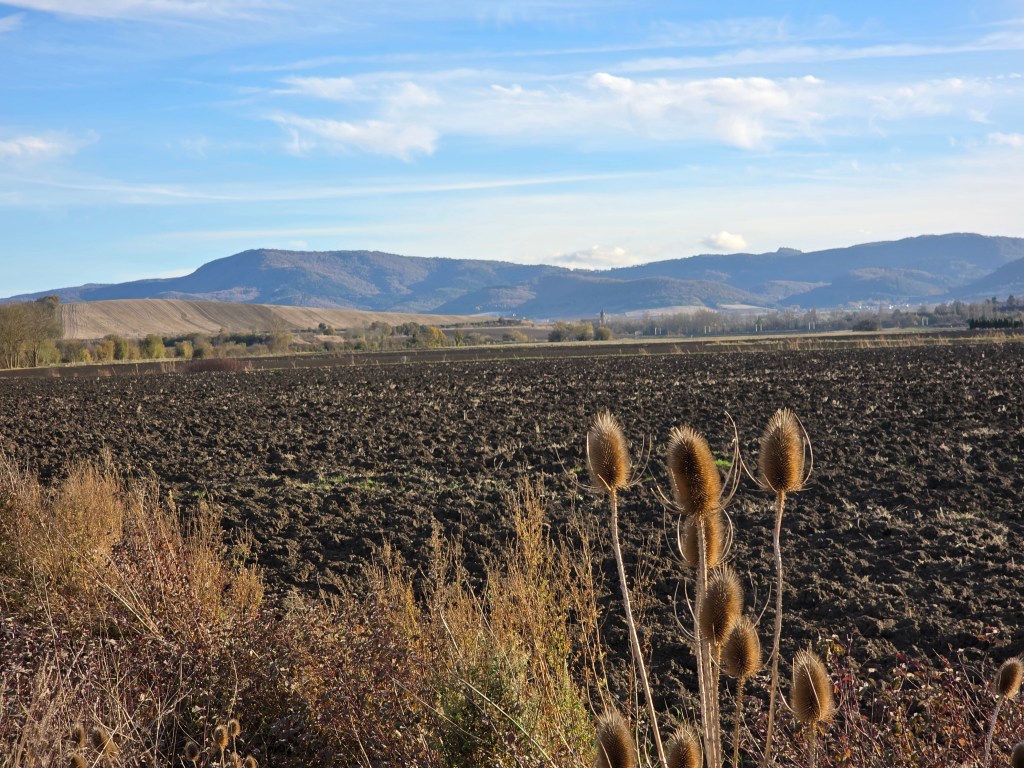
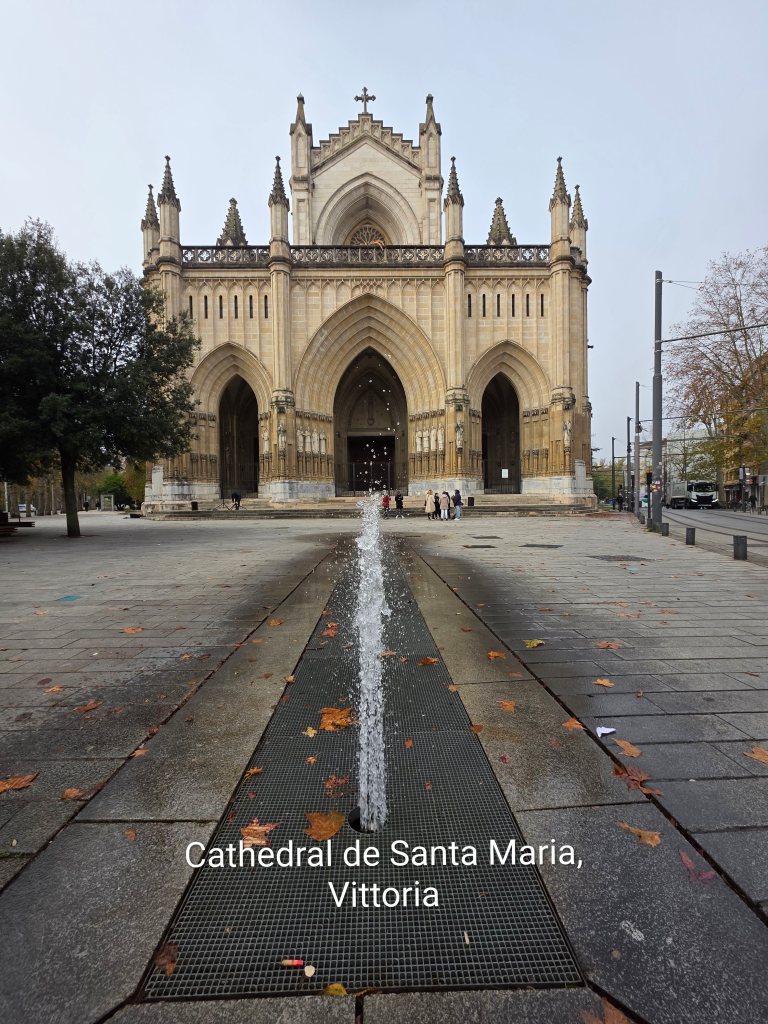
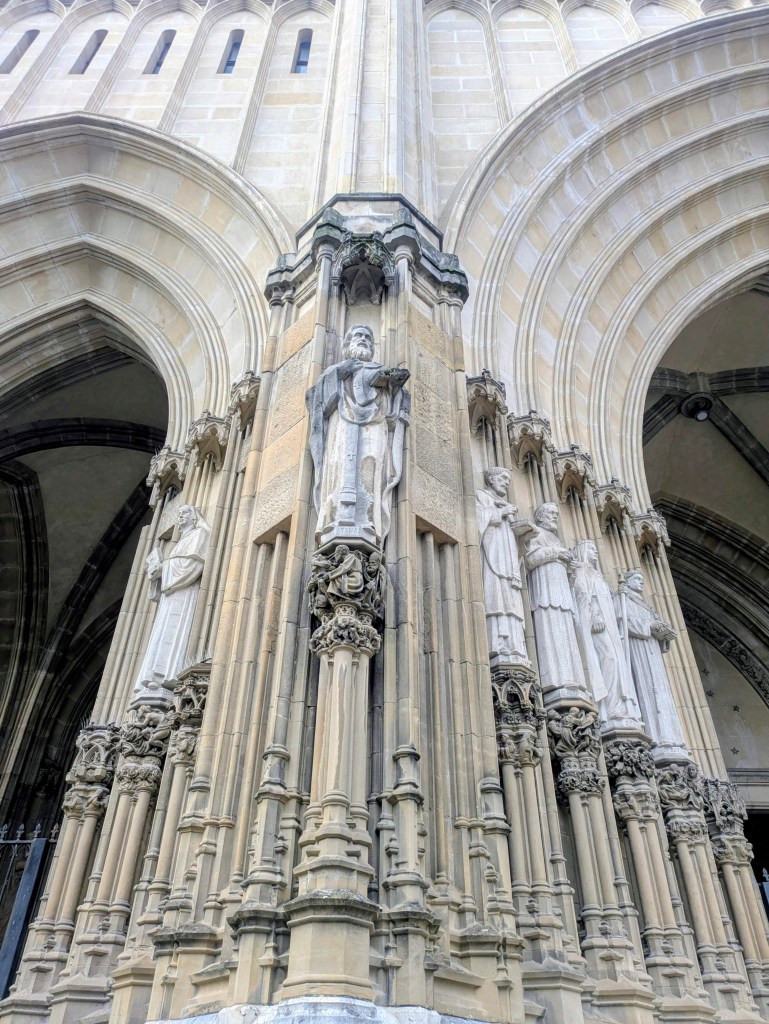
Vitoria- Gasteiz is a beautiful city although we had never heard of it until yesterday. It is the capital of the Basque Country and is a wonderful mixture of medieval buildings, tree-lined plazas, quirky shops with an emphasis on modern sustainability. Since this morning, it may have  become our favourite large unban centre in Spain……we have kept the best until last❤️
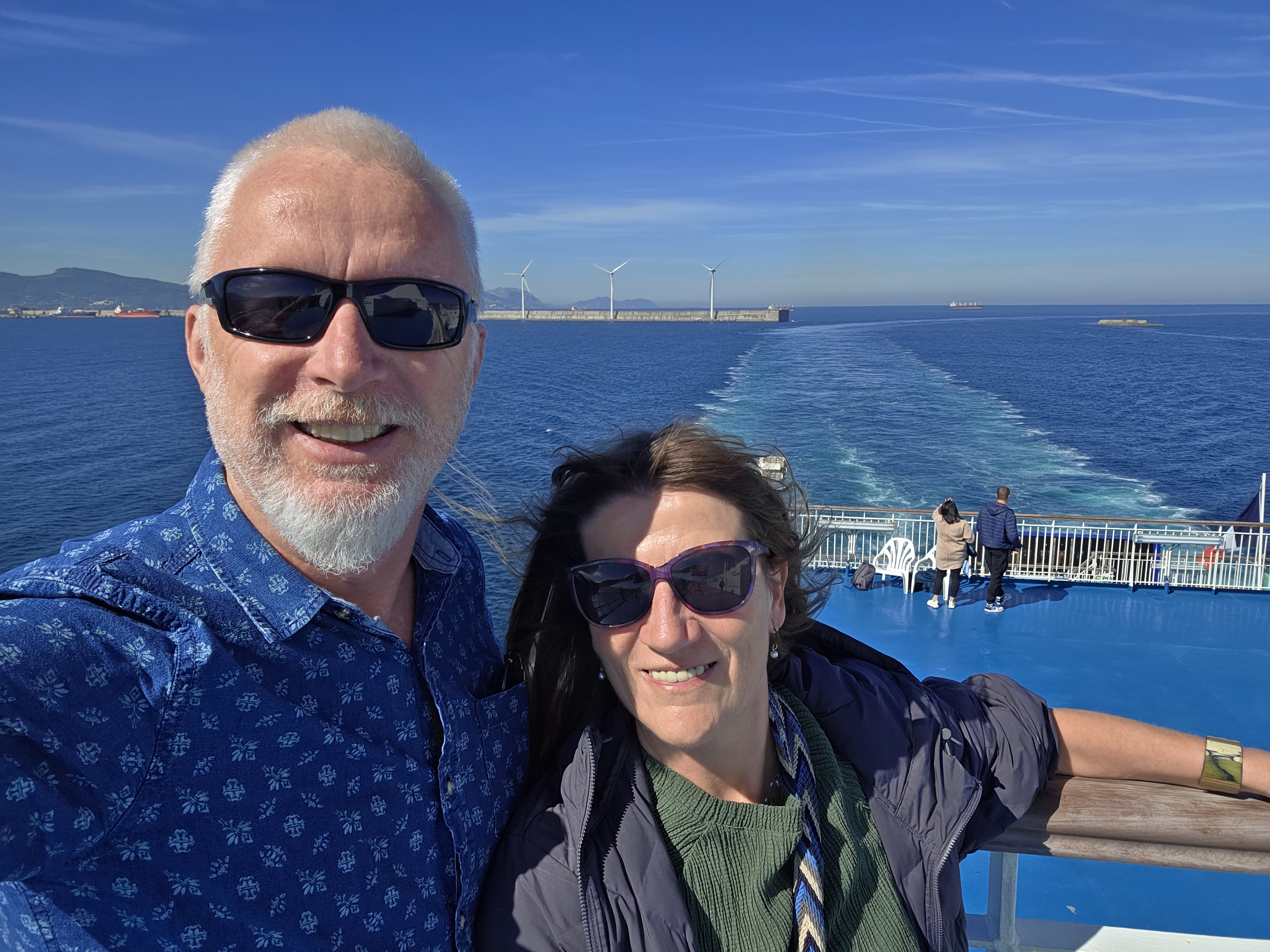
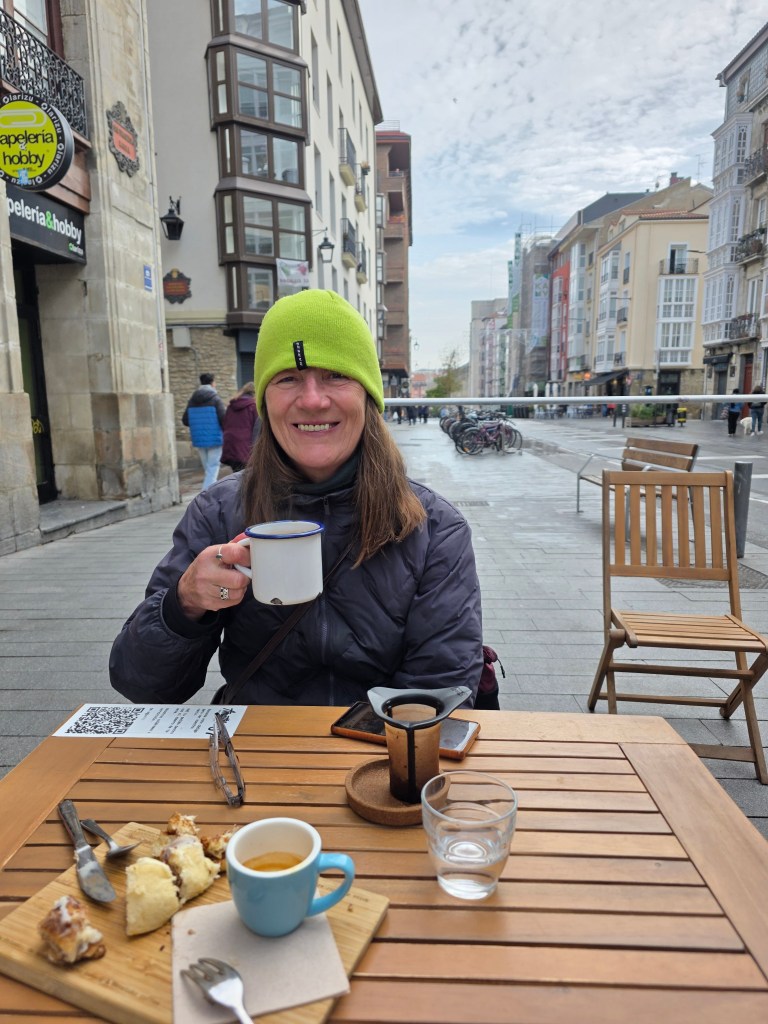
It’s been another incredible two month trip from Rosslare to Bilbao to Morocco and back, all in an electric van. We’ve slept in the van and stayed in a palace. There have been many highs and a few lows…..we never suffered ‘range anxiety’ until we went to Morocco.

When we are home, and have time to digest our experiences, I’ll post about the highlights but until then, thanks for reading and coming along on the journey with us.  
Electric Travels: Closing the Loop

Electric Travels: A Pause (paws) in Spain.

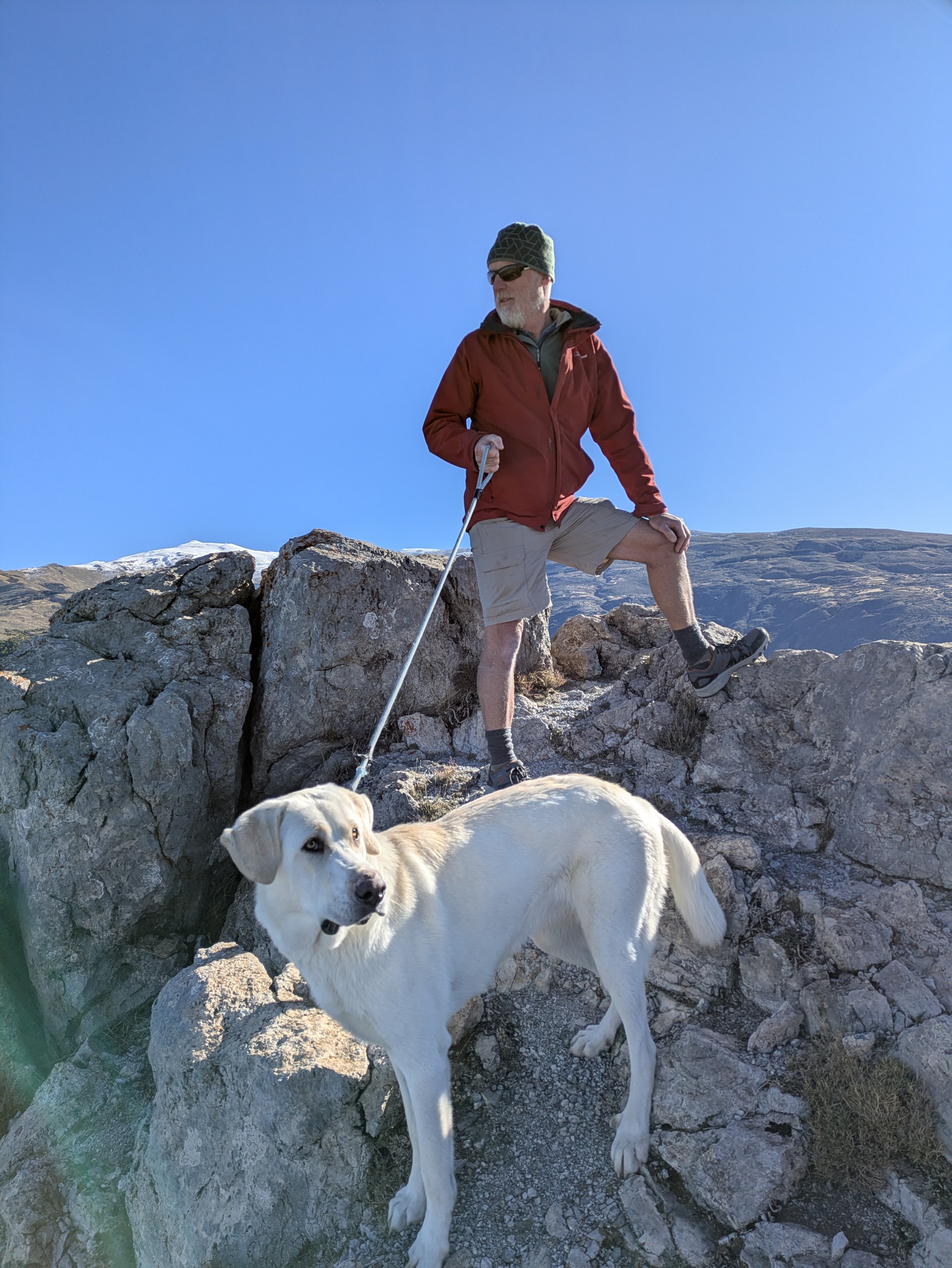
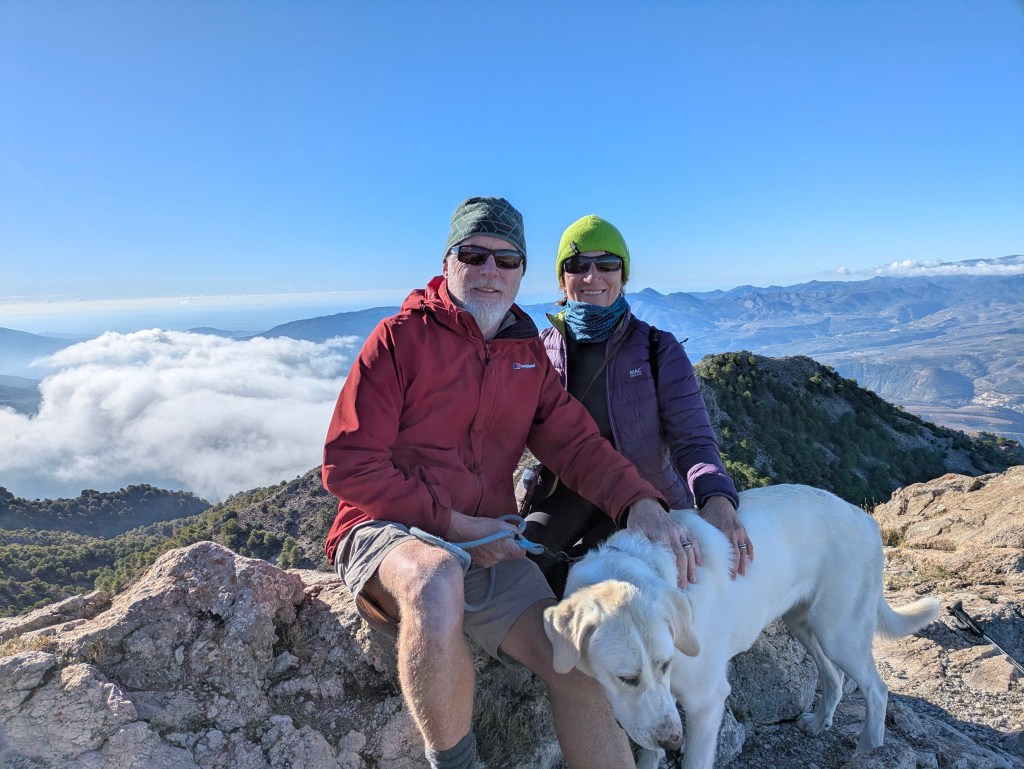
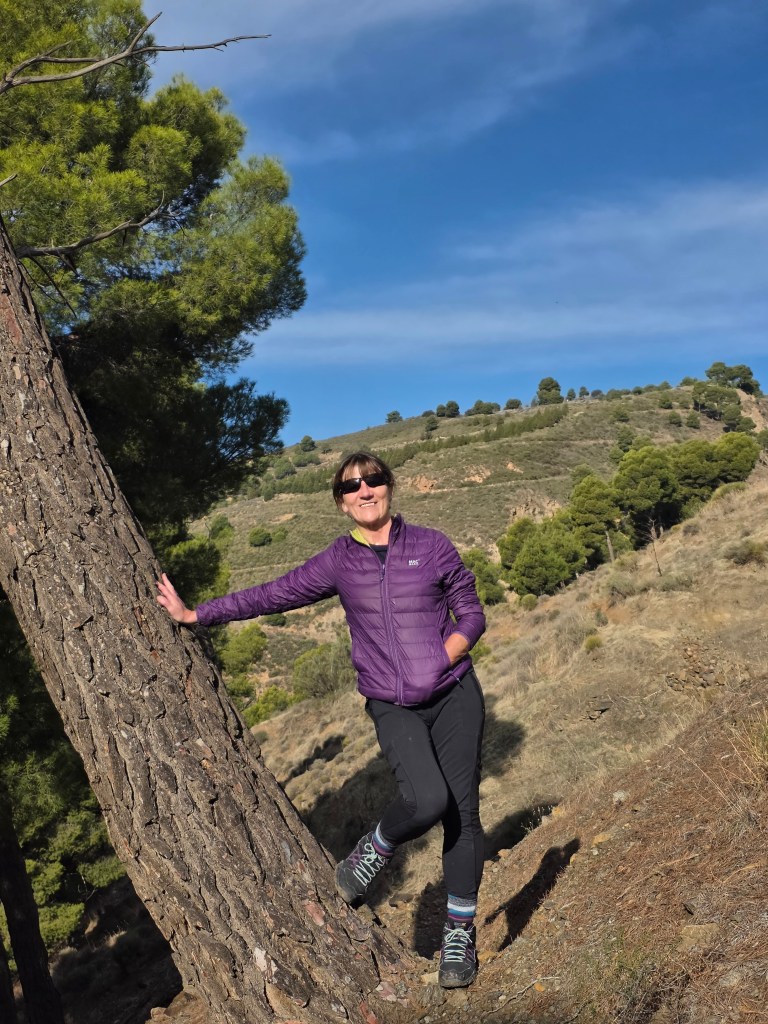
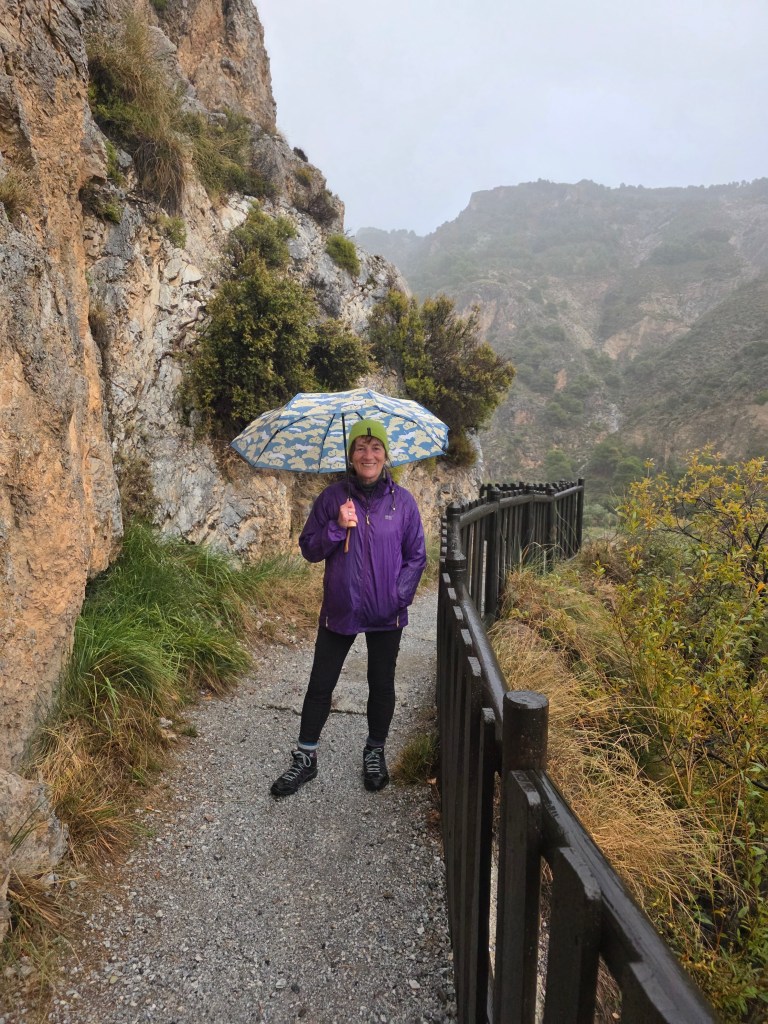
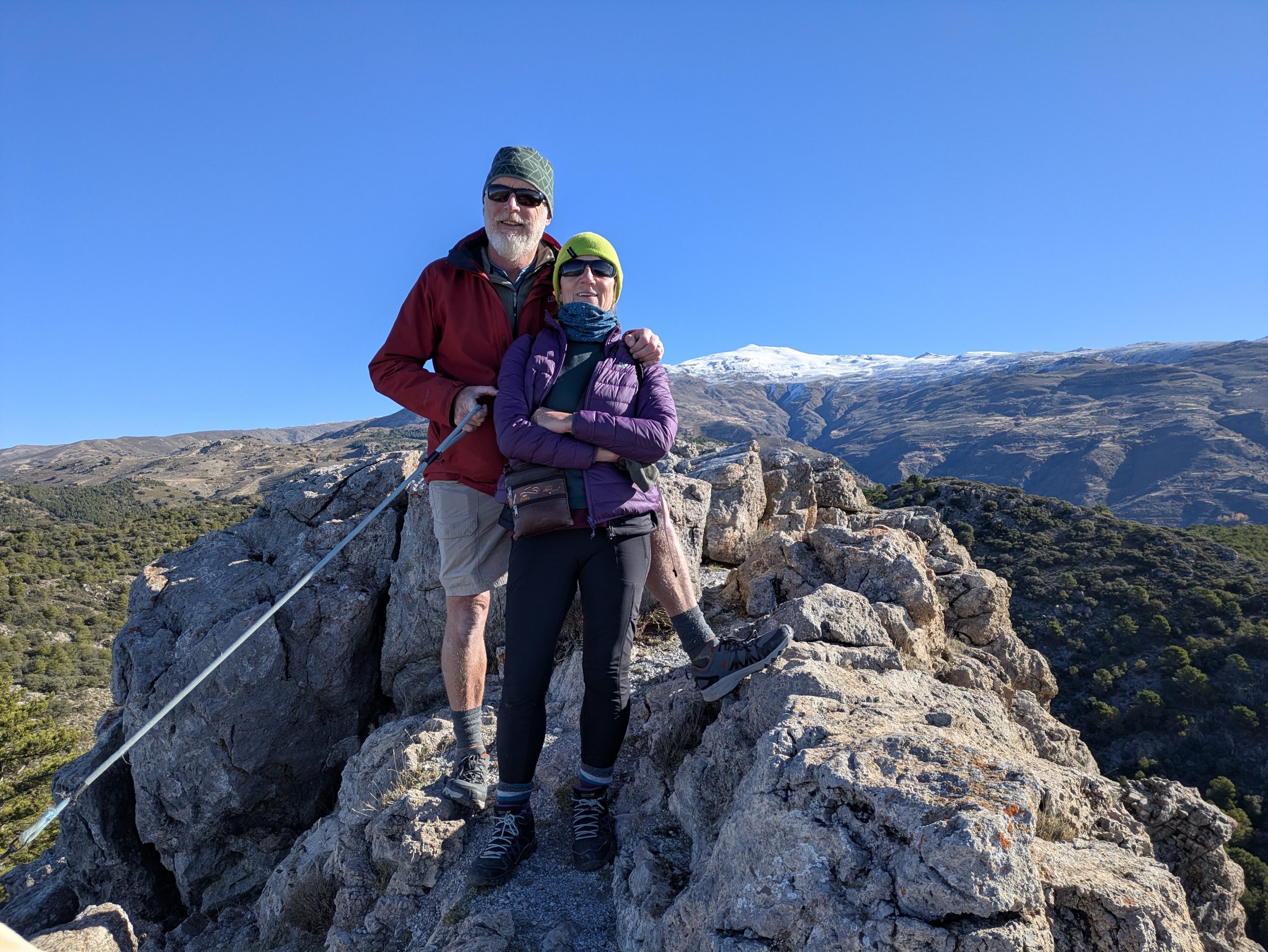
Caoimhin and Dora, Sierra Nevada

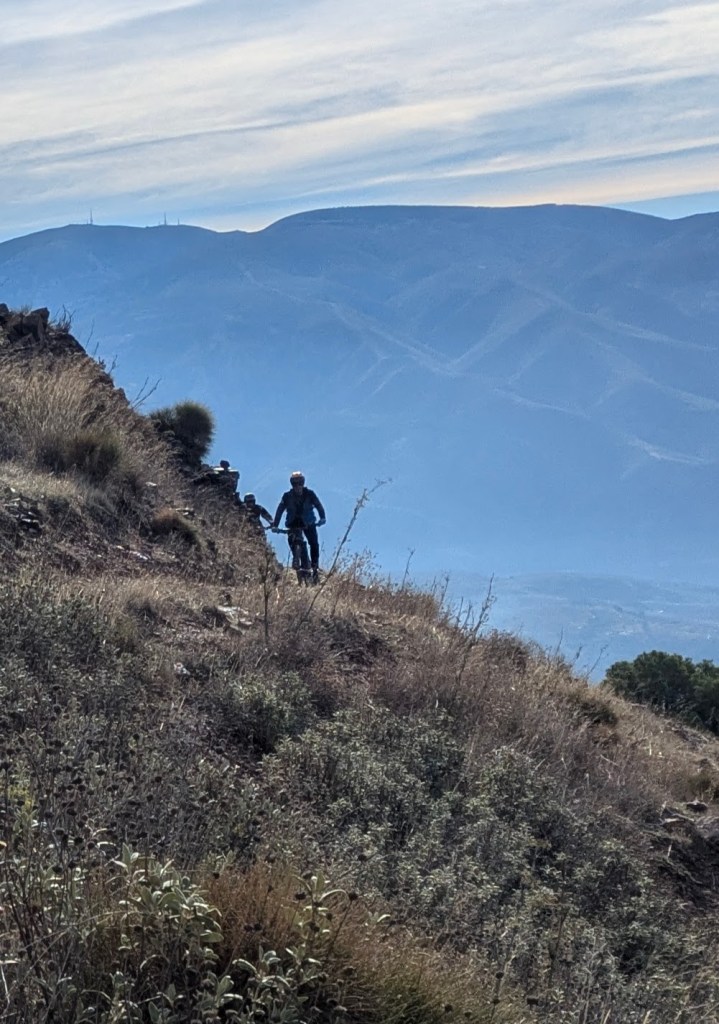
Most days, the air was crisp and clear…except when the locals burnt their mounds of tree clipping , wafting plumes of smoke into the air. The sky was a blinding blue and we were surrounded by a craggy silhouette of mountains in almost every direction. In the distance was the glittering white of the first snows, which had fallen the day before we arrived.

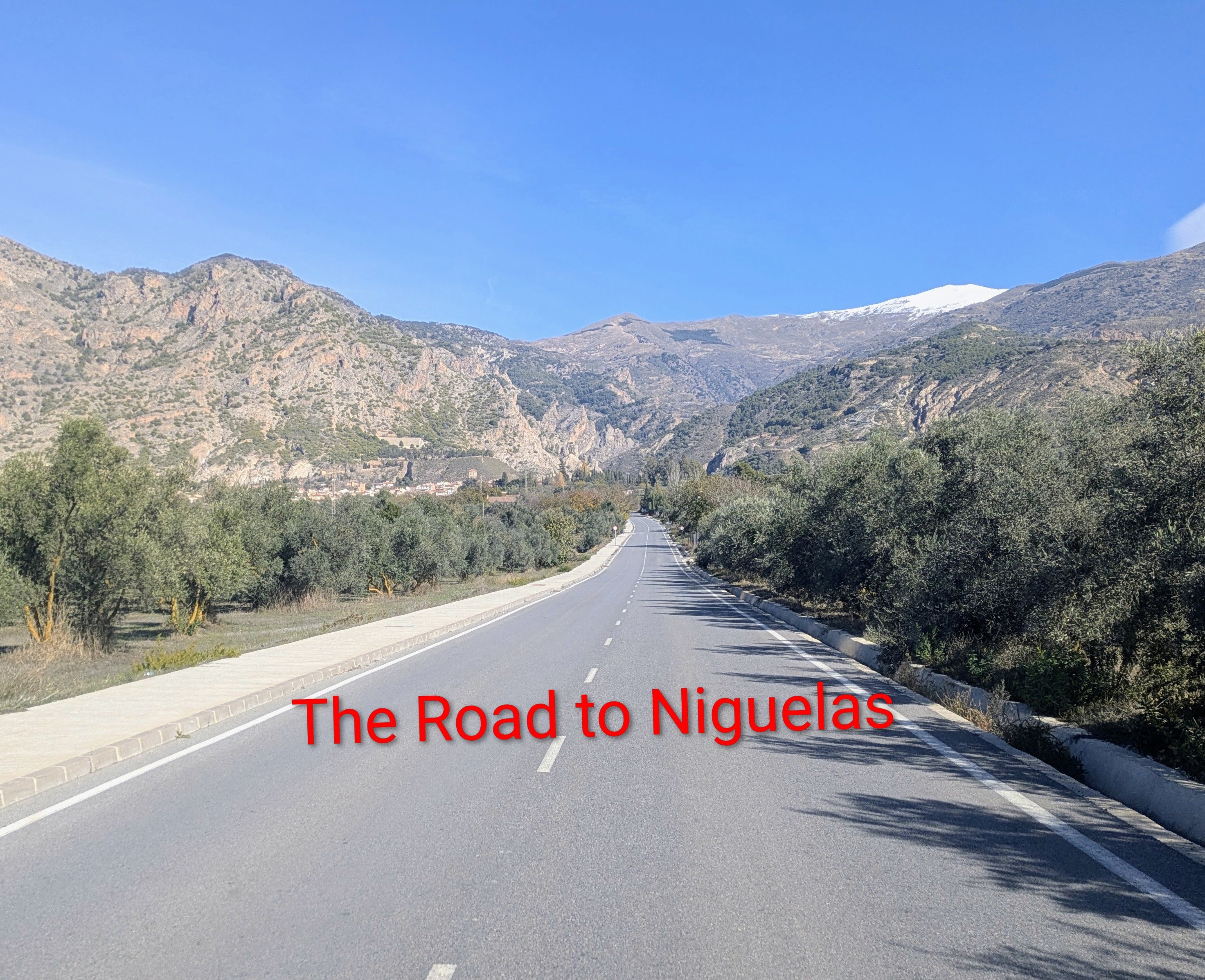
We spent eight days in Niguelas, a small village in the Sierra Nevada, about an half-hour drive outside the city of Granada, staying in a little Airbnb apartment on the edge of the village which we had booked two days in advance. After seven weeks of constantly moving through Spain and Morocco on this trip and sleeping (mainly) in the van, we wanted to pause and stay in one place. The Buzz spent the time parked under an olive tree.

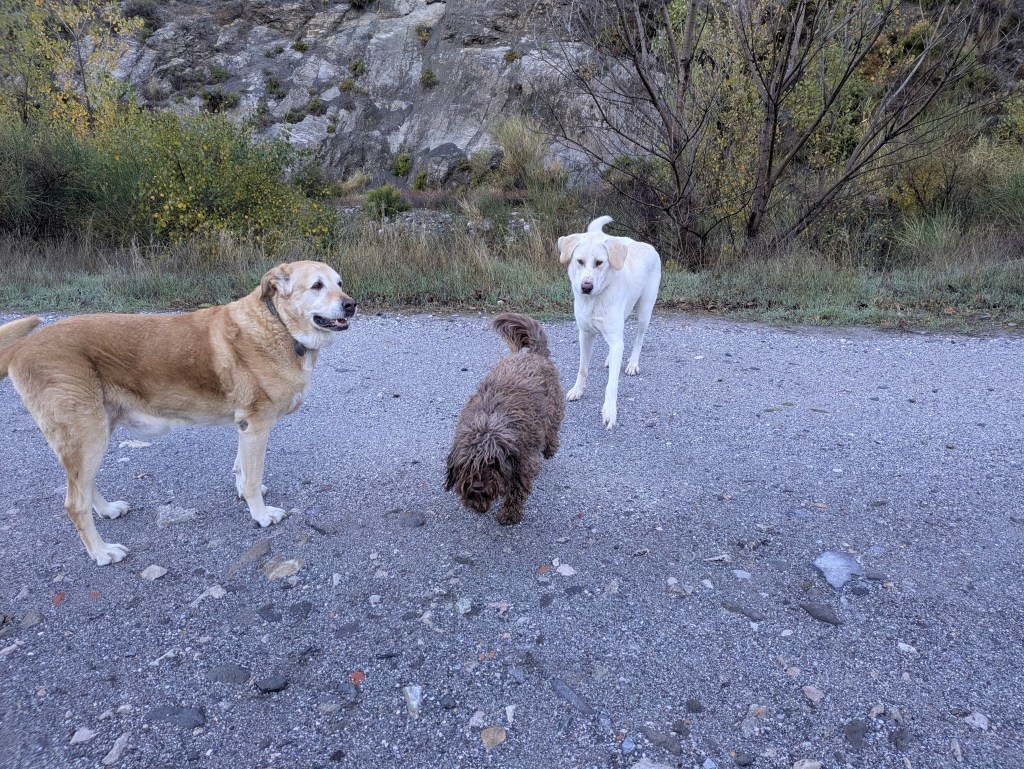
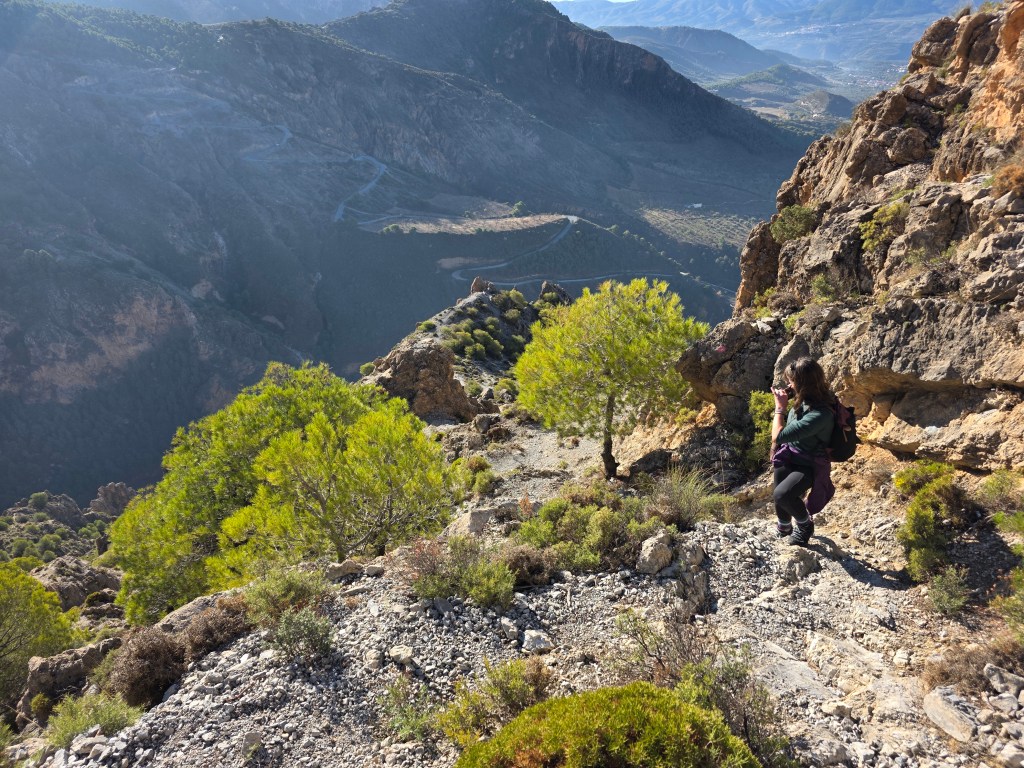
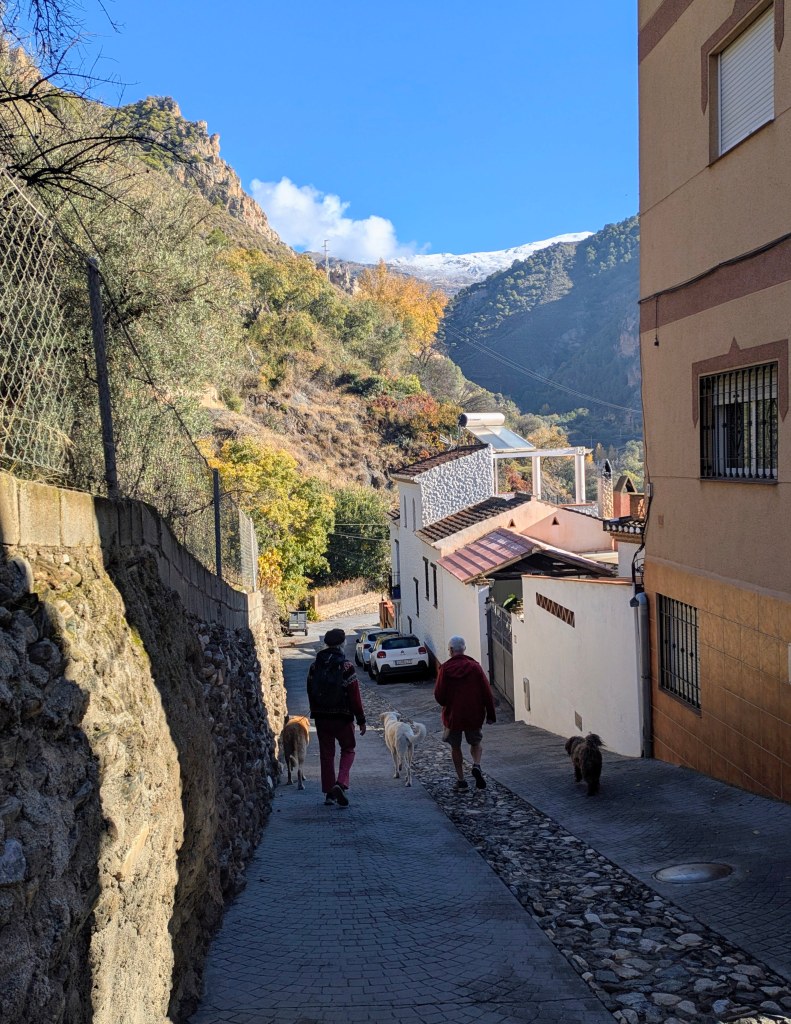
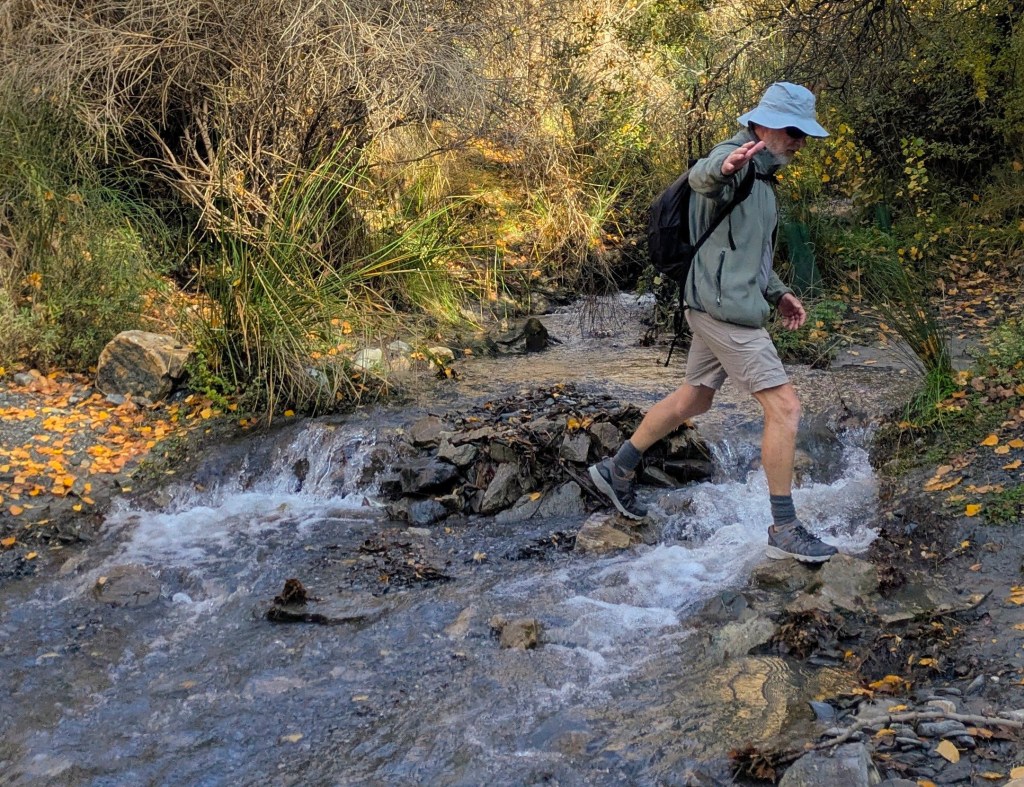
We couldn’t have picked a better spot. Our apartment (Aguas calmas) was warm and cosy, with views of the trees and mountains. It was set in a shady garden with a lovely pool, which would have been perfect in warmer weather.  The location of Niguelas was jaw-droppingly beautiful with a huge selection of hikes of various lengths and difficulty, many directly from our door. Some were marked  but  a hiking app like All Trails was helpful to keep us on track. This was a week of super hiking and some morning dog walks with our Airbnb host, Tim and his dogs, a Spanish Mastiff called Leona, who had liver disease, a nervous rescue lab called Dora and  a neighbour’s dog who liked to come along for the company.

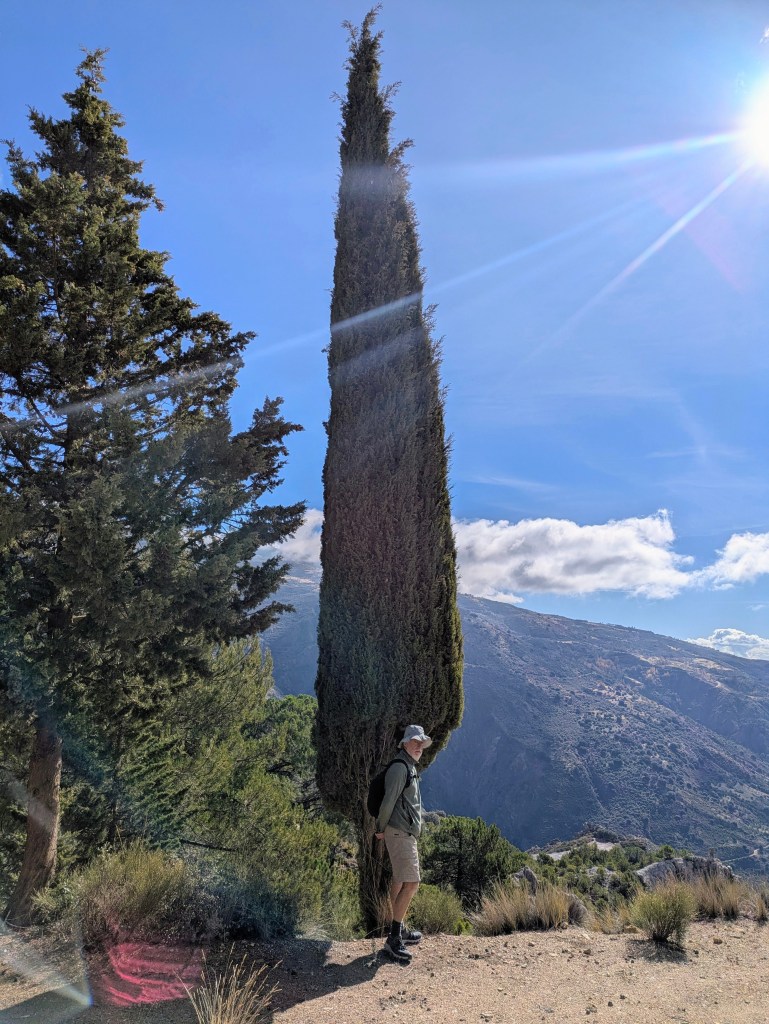
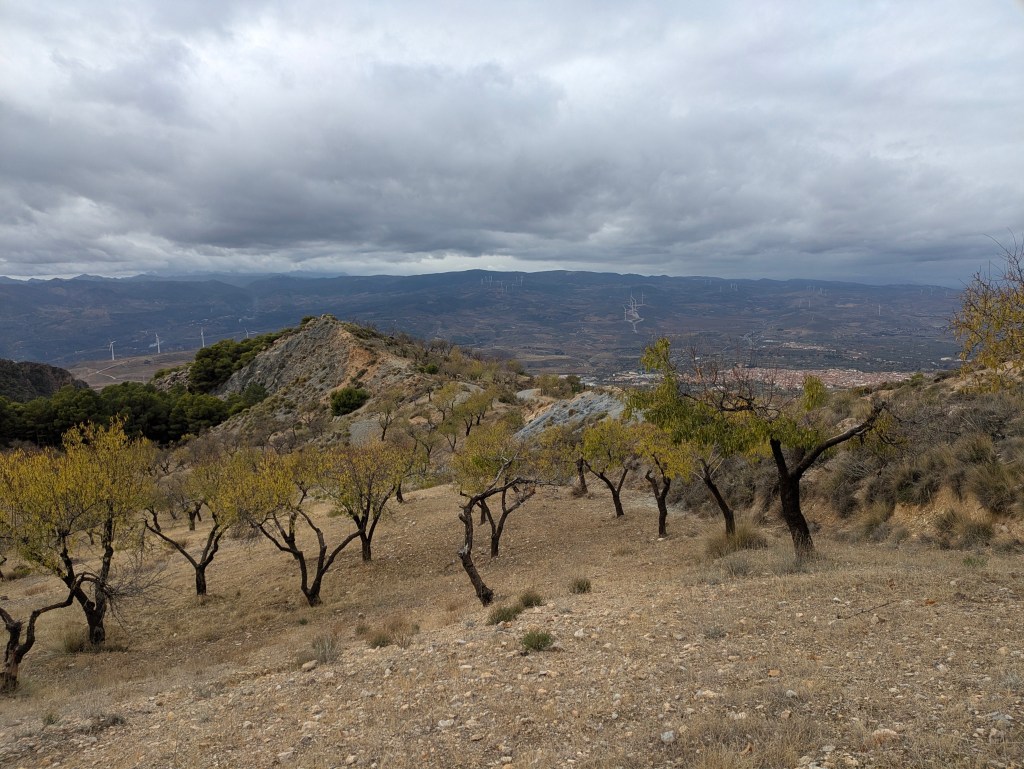
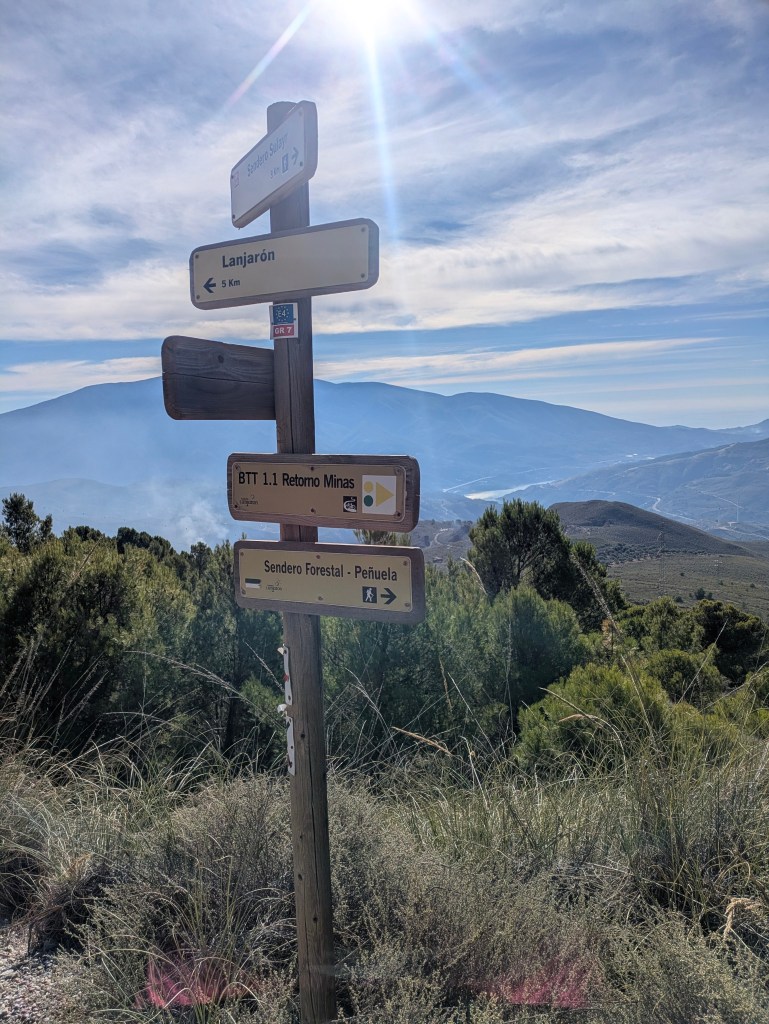
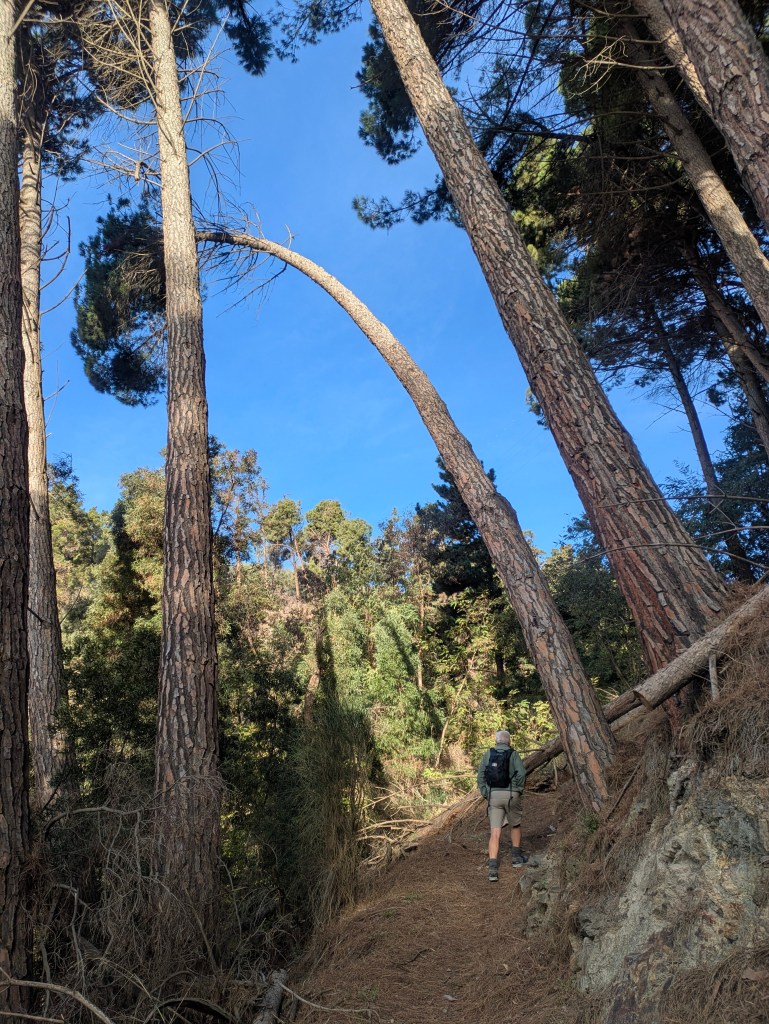
There were almond orchards, olive groves, Aleppo Pines bright green against the bare rock and the yellow foliage of the walnut trees and poplars. Niguelas is also on the GR7, the famous long distance hiking and cycling route which runs all the way from Tarifa, near Gibraltar, through Spain and France to Andorra.

Our days were bright and sunny, with cold nights (sometimes as low as 1C) but there was torrential  rain on our second evening, which flowed down the paved surfaces of the narrow streets like a river. We sloshed around in the dusk looking in vain for an open café or bar but all five of them seemed to be closed….probably because of the weather… but opening hours were ‘flexible’. The village streets were winding and so narrow that many of the walls on the tight corners showed evidence of close encounters with vehicles. Tim told us that some guests arrived shaking and traumatised after the ordeal of driving through the village…. but not Caoimhin.

Despite the one evening of rain, water is rare and very precious here. The area can go months without a drop falling. In the mountains were ancient aquifer systems, which used a network of channels and pipes to divert snowmelt and rainfall, ensuring a water supply for downstream communities during dry months. Some of these originated in Arab times and are considered the oldest managed water recharge system in Europe.

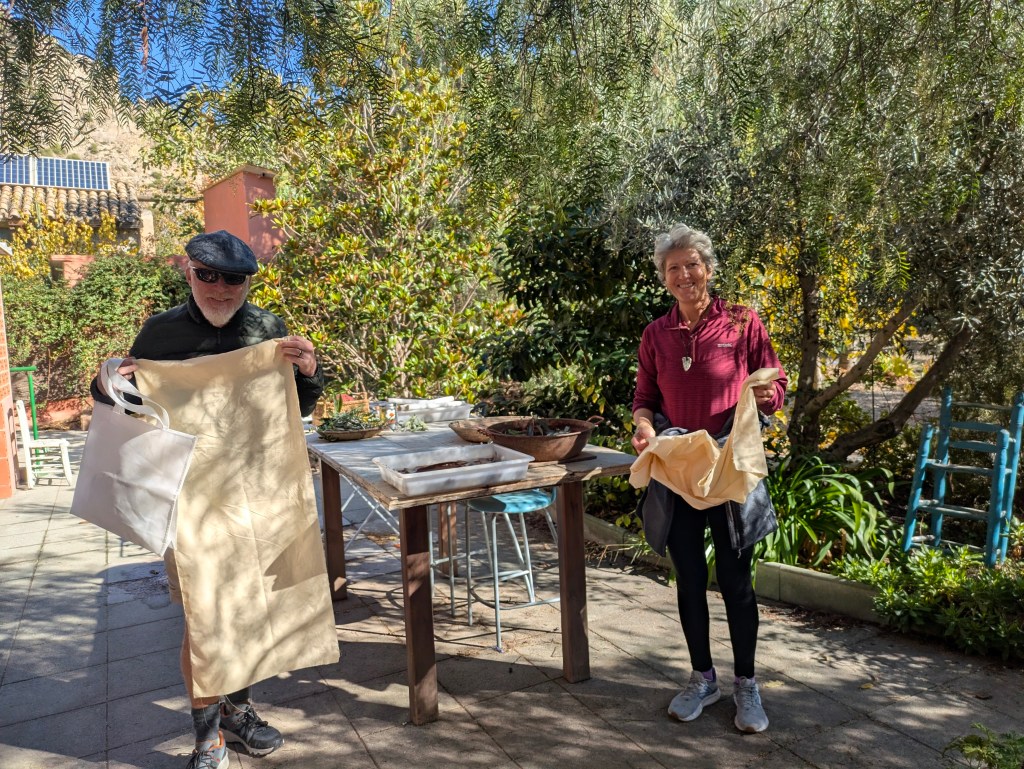
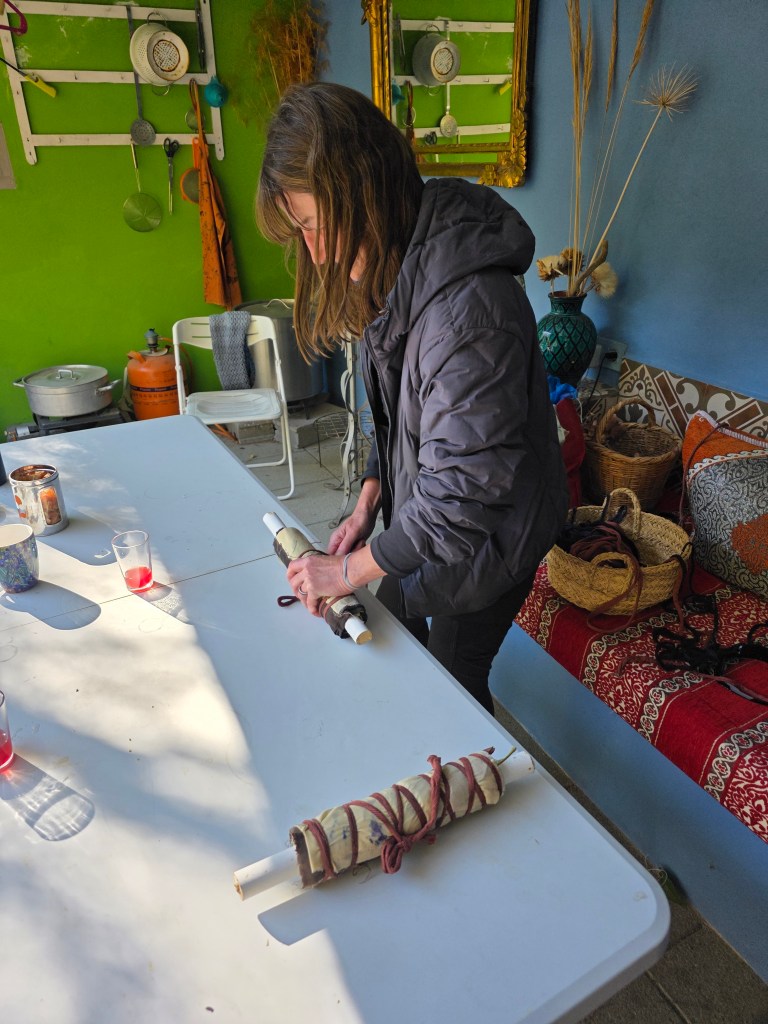
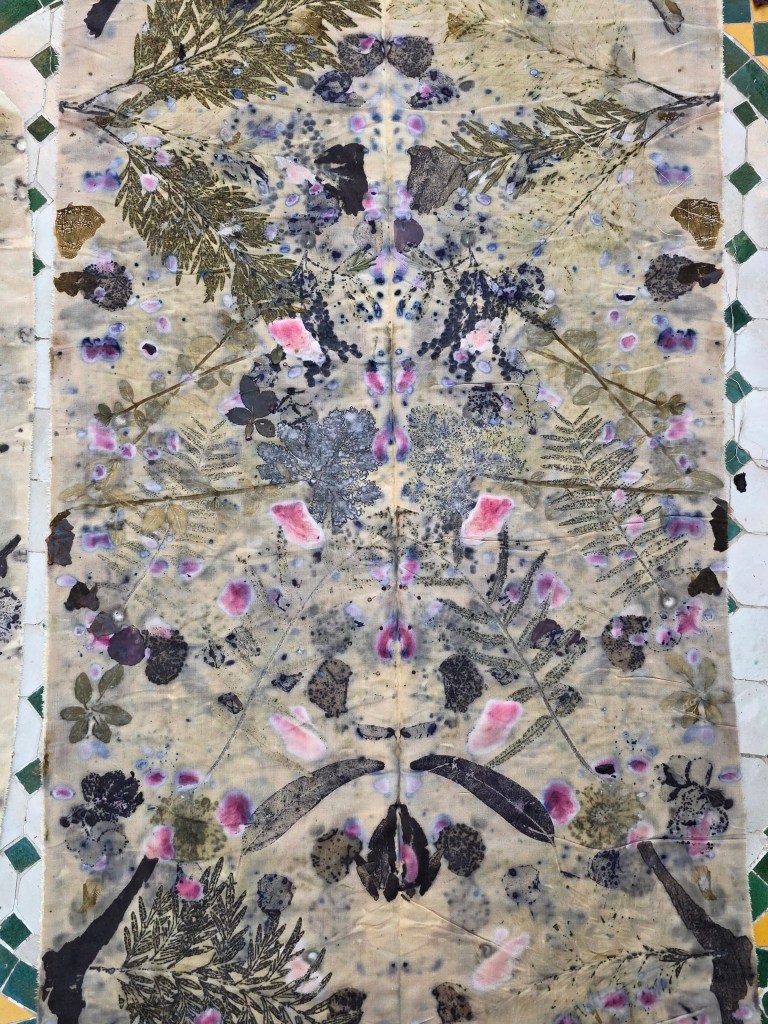
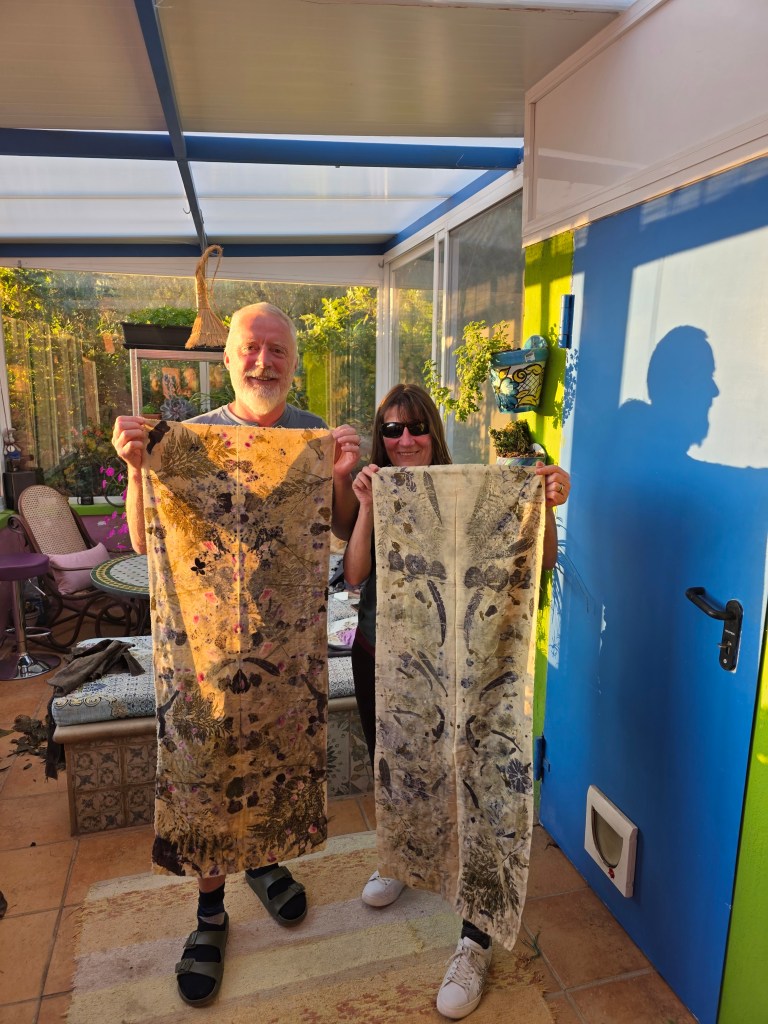
Helga, our Airbnb host, runs felting and eco printing courses so we both opted to try our hand at eco-printing. This involved picking plants and flowers from the huge selection in the garden and using Helga’s techniques to transfer the images to cloth. It was a really enjoyable experience and our results were satisfying and really much better than we would have hoped. The unrolling of the fabric after the steaming process was greeted by lots of ‘wow.’ It is certainly something that we will try at home.

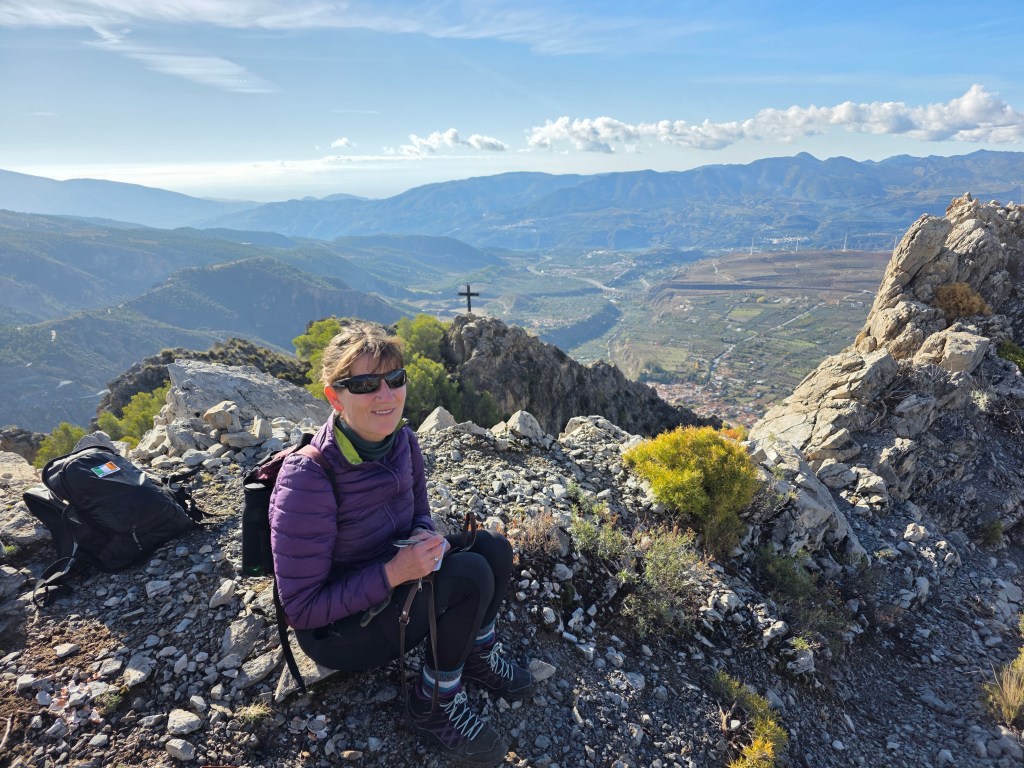
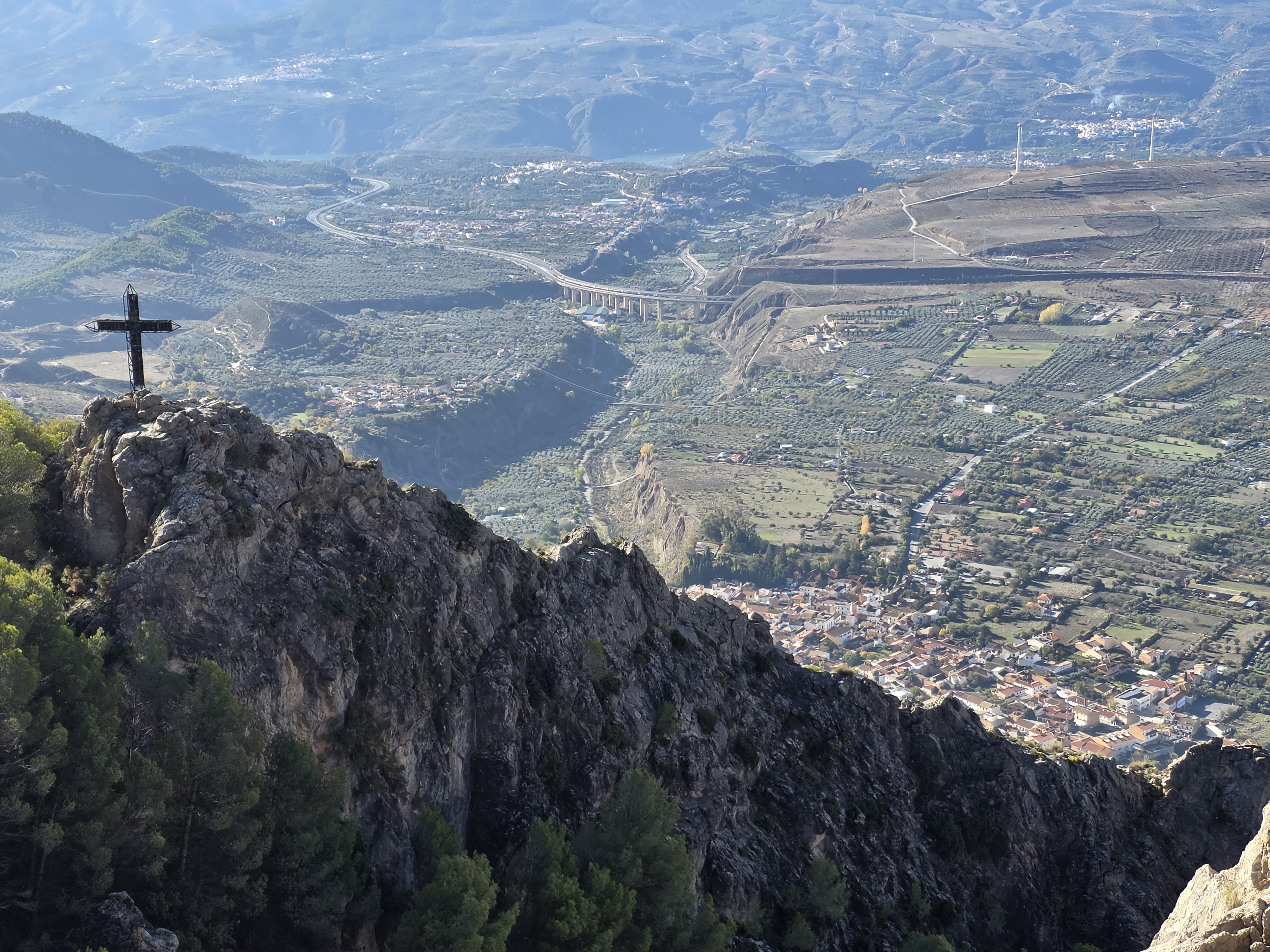
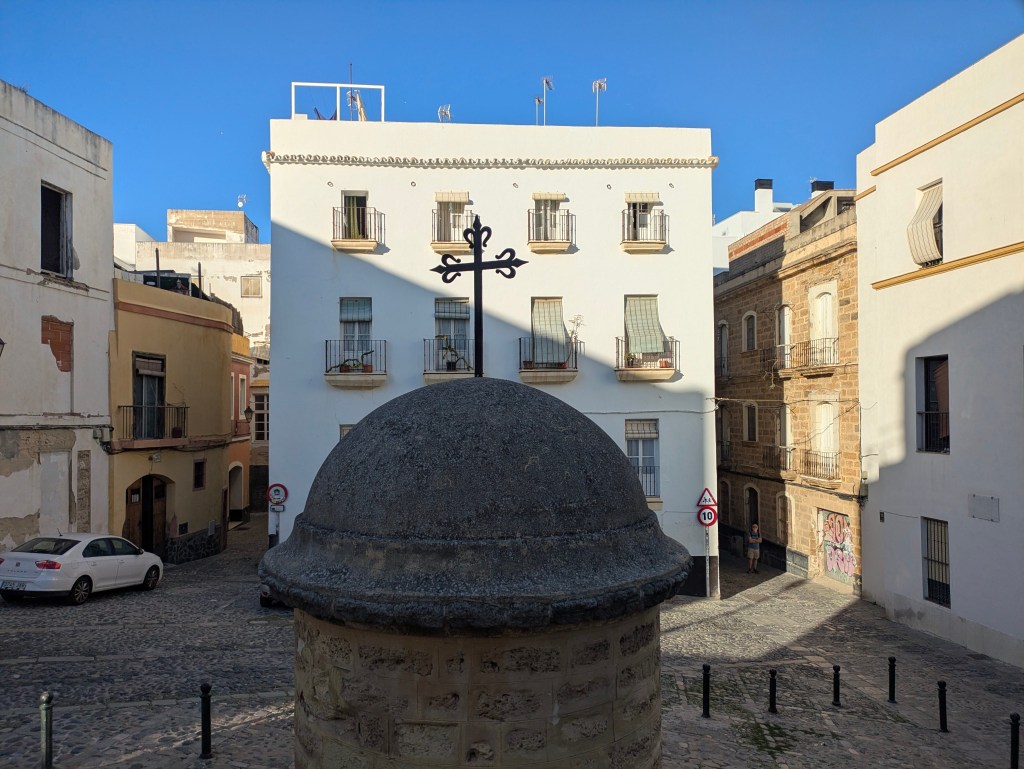
High above the village with a cross, silhouetted against the blue sky. Apparently the village women used to climb up to it on their knees, as a form of penance. We climbed up – not on our knees – and it was a pretty strenuous climb on rough stony surfaces. This is an area that has known conflict and poverty down the ages. It was a key battleground in the Spanish civil war with many atrocities committed against the civilian populations and summary executions in the mountains.

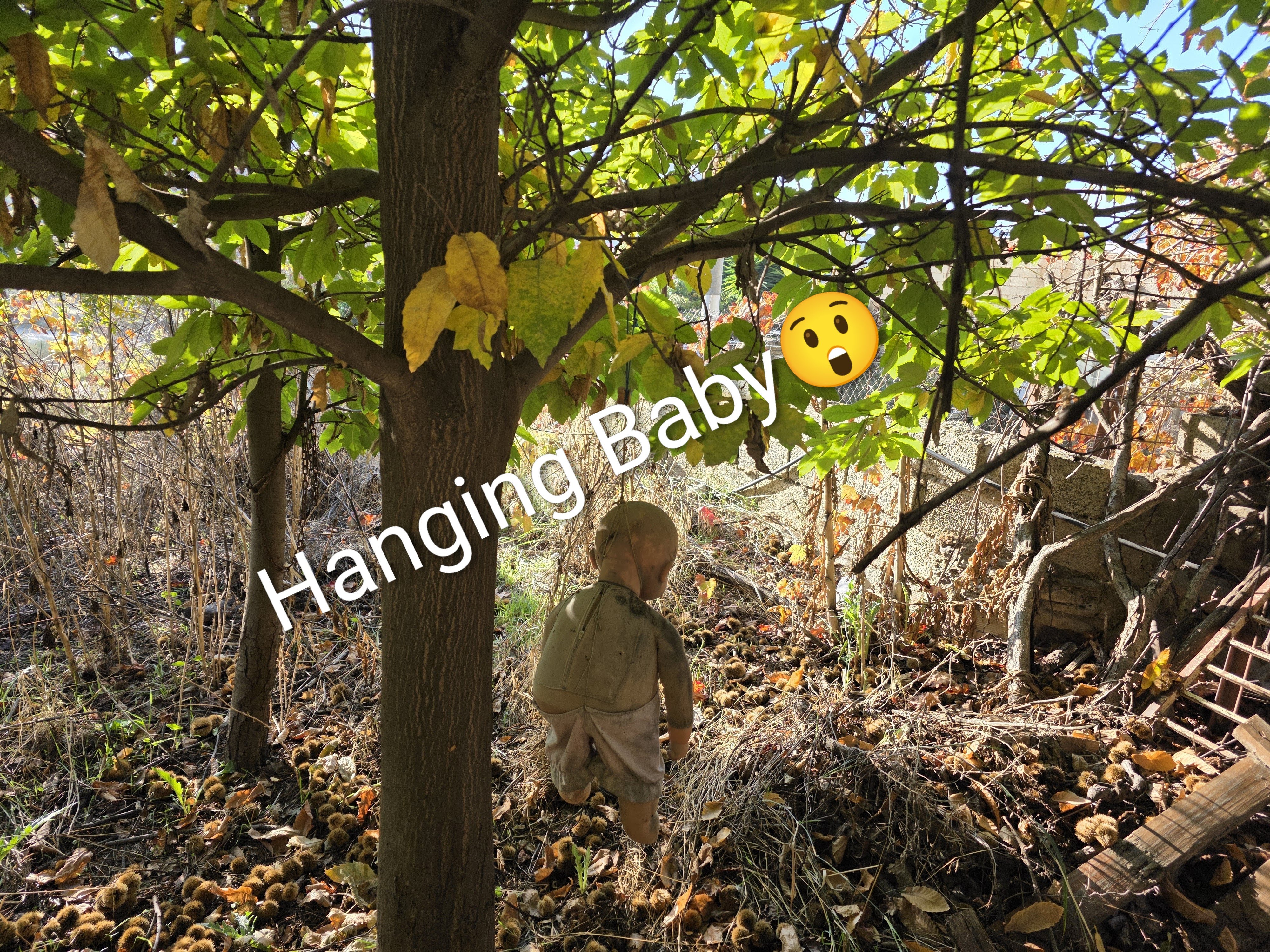
Maybe some of this unease lingers still among the dramatic landscape. In one of the village gardens, hanging from a tree by a noose was a baby doll (the ones that look like a human baby). It was very disturbing sight and had been hanging there for a year. Tim also told us of the local rivalries and neighbourly disputes, of outlaws living in luxurious houses and of a retired priest who set up a refuge for alcoholics, high in the mountains, away from temptation at 2000m……although some ‘escaped’ and made it to the village bars.

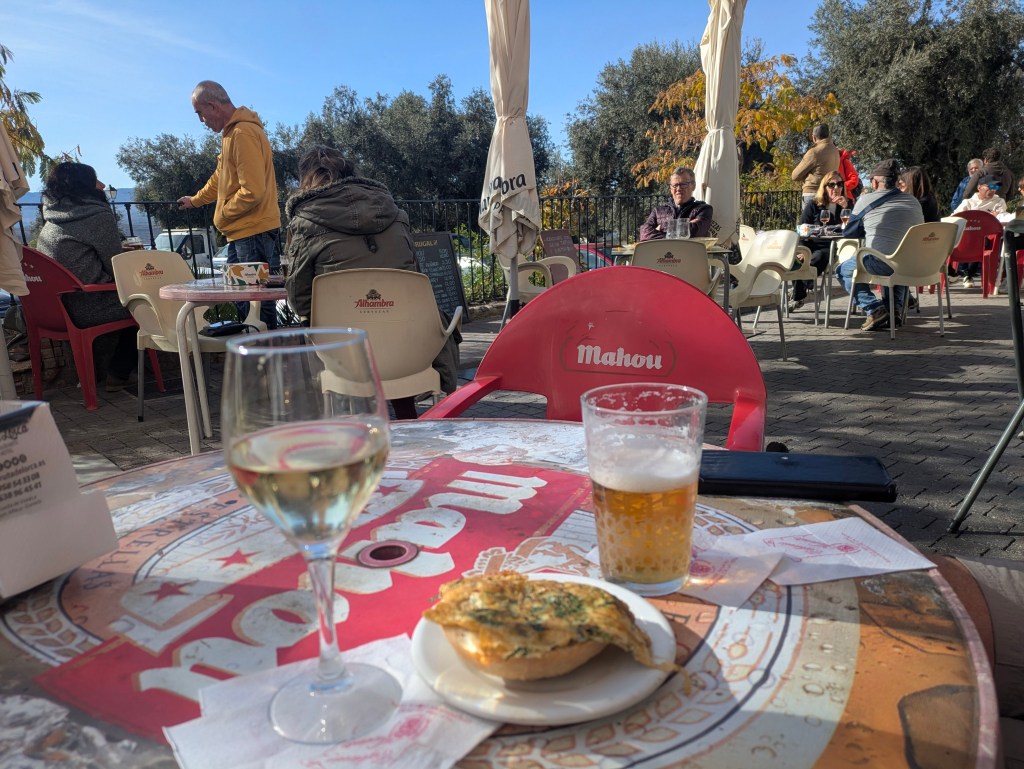
But sitting outside in the November sunshine, inhaling crisp mountain air and eating delicious tapas (that come free with a drink), all these simmering rivalries and tensions were completely invisible to us. We sipped our drinks and thought about how lucky we were, as we waited to attend a dramatization of some of Lorca’s work in the village casa de cultura.
Till next time

Thanks for reading

Stunning Sierra Nevada

Electric Travels: A Pause (paws) in Spain.

Electric Travels: Out of Morocco

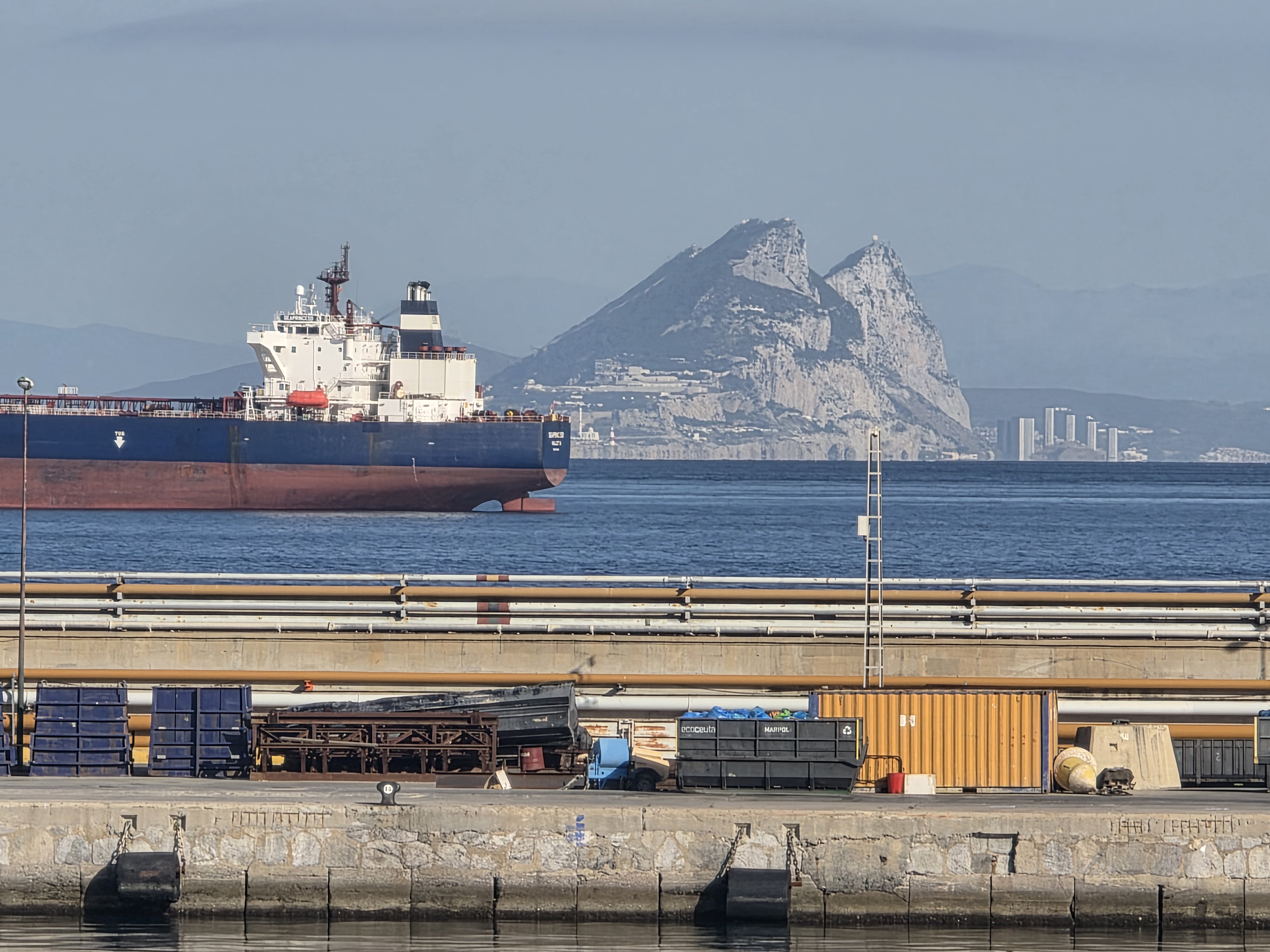
Gibraltar on the Horizon

I was jittery, unable to eat anything. Caoimhin had no such qualms tucking into fried eggs and hunks of bread for breakfast in our little apartment in Cabo Negro, a little seaside town in Morocco on the Mediterranean coast, about thirty minutes from the border. Our entry into Morocco in the opposite direction three weeks previously had been dramatic. At first we were denied entry because we didn’t have the correct paperwork for the Buzz, entirely our fault. It was only after much pleading and several hours that we were allowed to enter by the skin of tour teeth and issued with a little white card with our vehicle details. We were grateful then, but would we be let out now without any more drama? Rationally, I knew that we wouldn’t, couldn’t be detained in Morocco, they had let us in, after all…..but still.

The road to the border passed a few seaside towns, M’diq and Frideq which looked nice, and far cleaner  than other places. An army of litter pickers in hi-vis jackets were out in force, explaining the cleanliness. There has been a lot of investment in this area and a drive to promote tourism along this section of Mediterranean Coast with its pristine sandy beaches, hotels and cafés. Almost before we knew it, we were at the border, with  zigzag of staggered barriers and a large police and army presence. The border was between Morocco and the city of Ceuta, a Spanish enclave although on the African Continent, the only land border between Africa and the EU.

Our passports were looked at and we were waved on with a smile to queue at customs. The sniffer dog sniffed, but didn’t find anything of interest, the officials were relaxed and even chatty, commenting on the electric van. There was more queueing to get our passports stamped with exit visas and phew, we were out of Morocco and nobody had looked for any car documents apart from the little white card we were given on entry.  Now we just had to get into Spain. Five vehicle lanes shemozzled to get into the two lane track for the Spanish border. More passport checking, some fingerprinting (a new addition when entering Europe by land), a quick look inside the van and we were through, driving into Ceuta. The whole process took  less than two hours unlike the almost five hours it had taken us to enter Morocco.

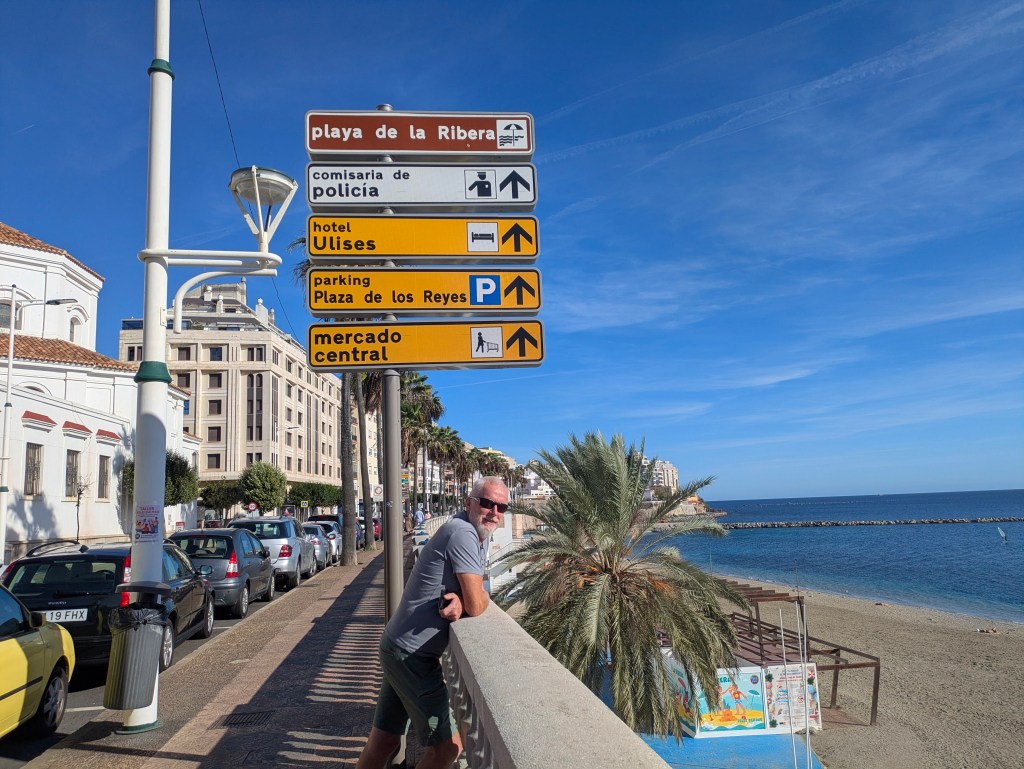
We had changed countries, that was obvious. Although Ceuta was unabashedly Spanish. The bells of a Catholic church rang out, a woman clutching a water bottle, jogged by the waterfront dressed in a tank top and shorts,  a large poster outside a discount store brazenly advertised deals on liquor. All things so normal that we hadn’t even noticed on the way through three weeks ago but which now seemed strange and drew our attention. Ceuta was a handsome place, benefitting a city that was prized and fought over down the centuries. Now it was full of outlet stores, stout Roman fortifications that were beautifully restored, and views of the heavy ferry traffic crossing the Strait of Gibraltar. Lidl was as crowded as if its Christmas Eve with people piling everything from crisps to persimmons which were on offer. There’s no Lidl in Morocco but plenty in Spain so we were unsure of the clientele except that there were plenty of Muslim women,
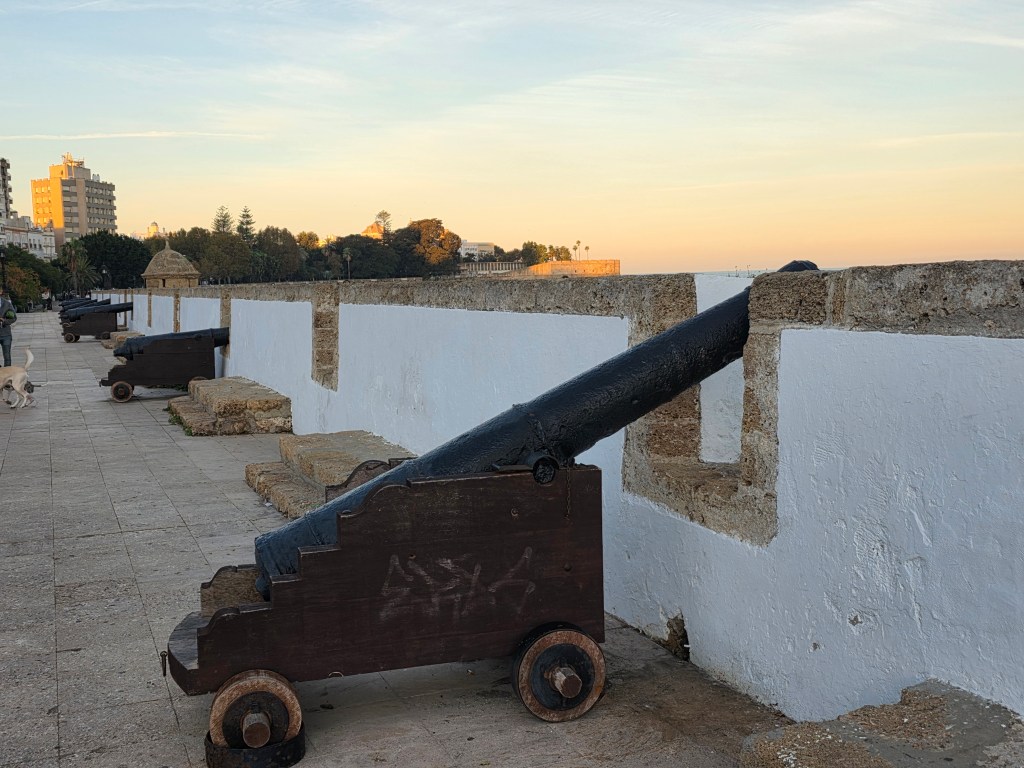
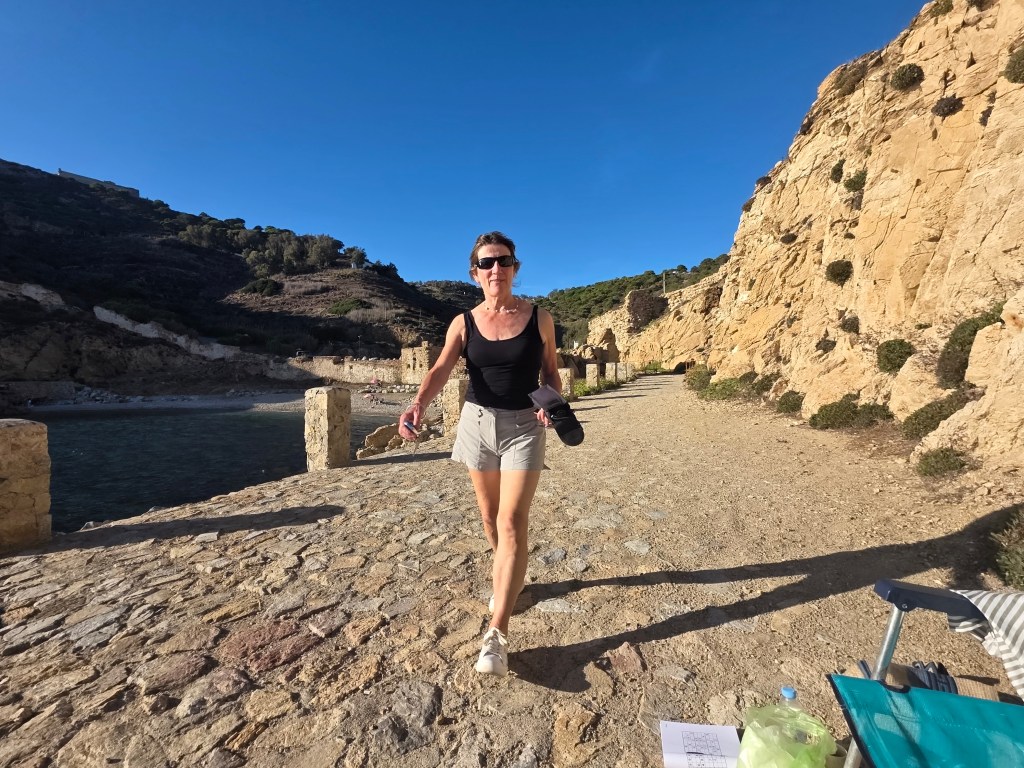
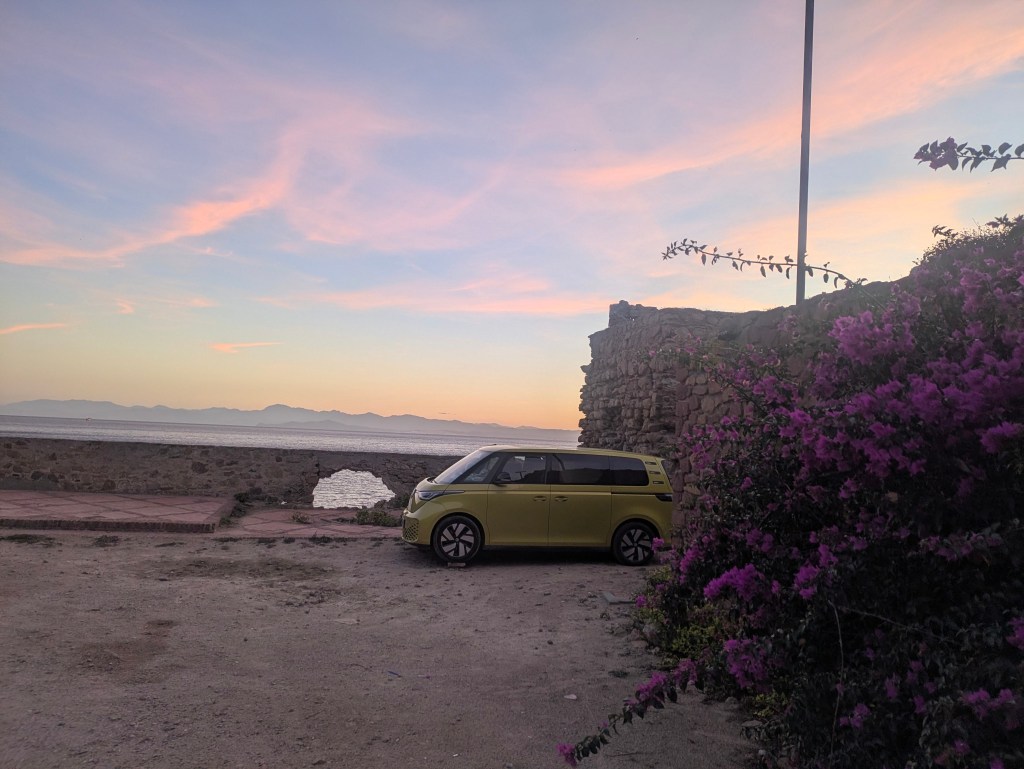
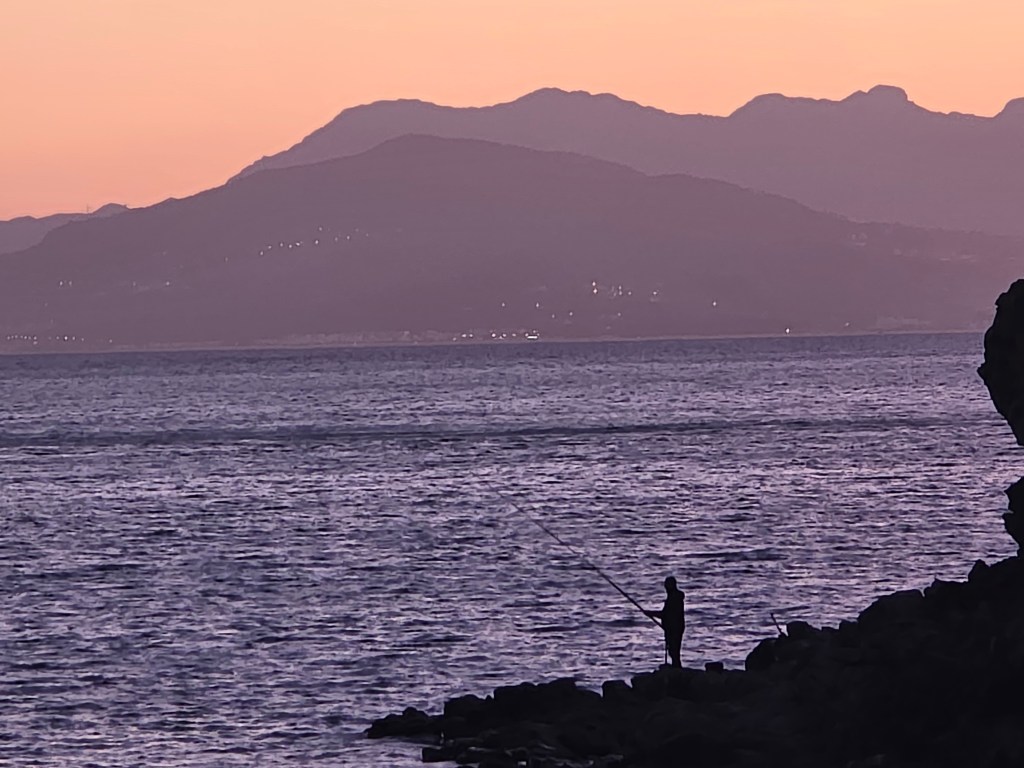
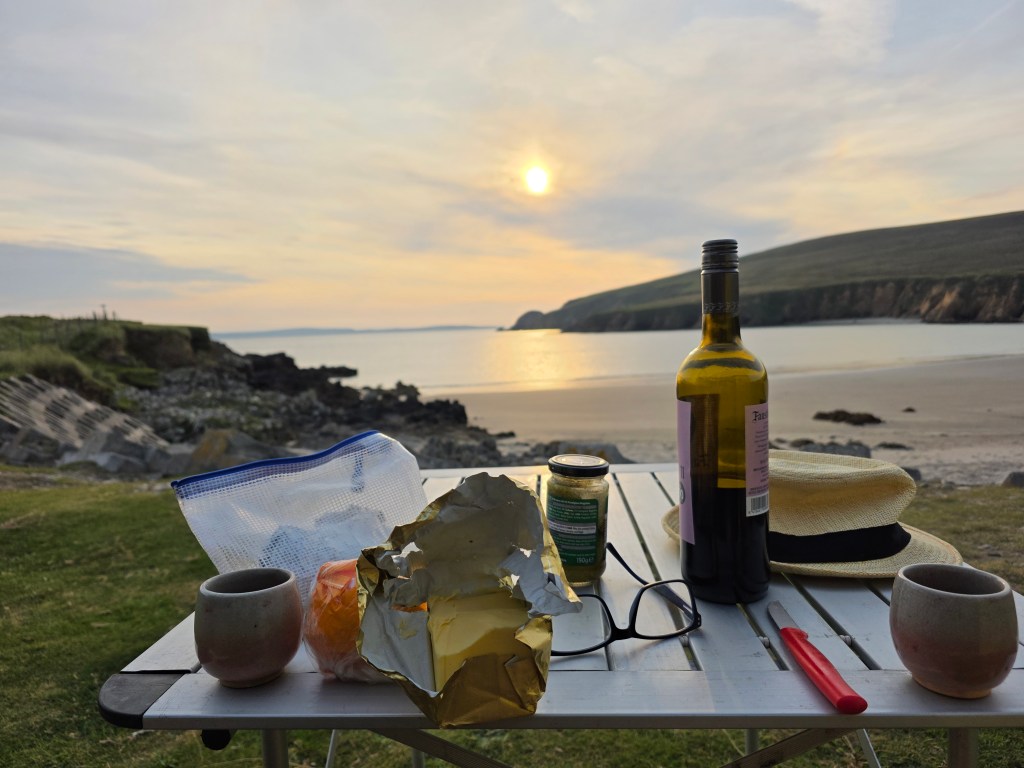
We had booked our ferry back to Algeciras in mainland Spain for the following morning, allowing plenty of time in case of border delays which thankfully hadn’t materialised. We climbed out of the city towards  a cove on the northern end of the promontory, near the lighthouse. On the map it looked like a quiet spot for some wild camping but we had no idea how gorgeous it was until we got there. A winding steep road led down to the glittering sea. A few families sat on the stony beach, a couple of fishermen  cast their lines from the rocks. I changed into shorts (which hadn’t  even come out of my bag in Morocco) and we had a picnic of cheese and olive sandwiches and chilled white wine in the sunshine. simple pleasures in an idyllic spot.

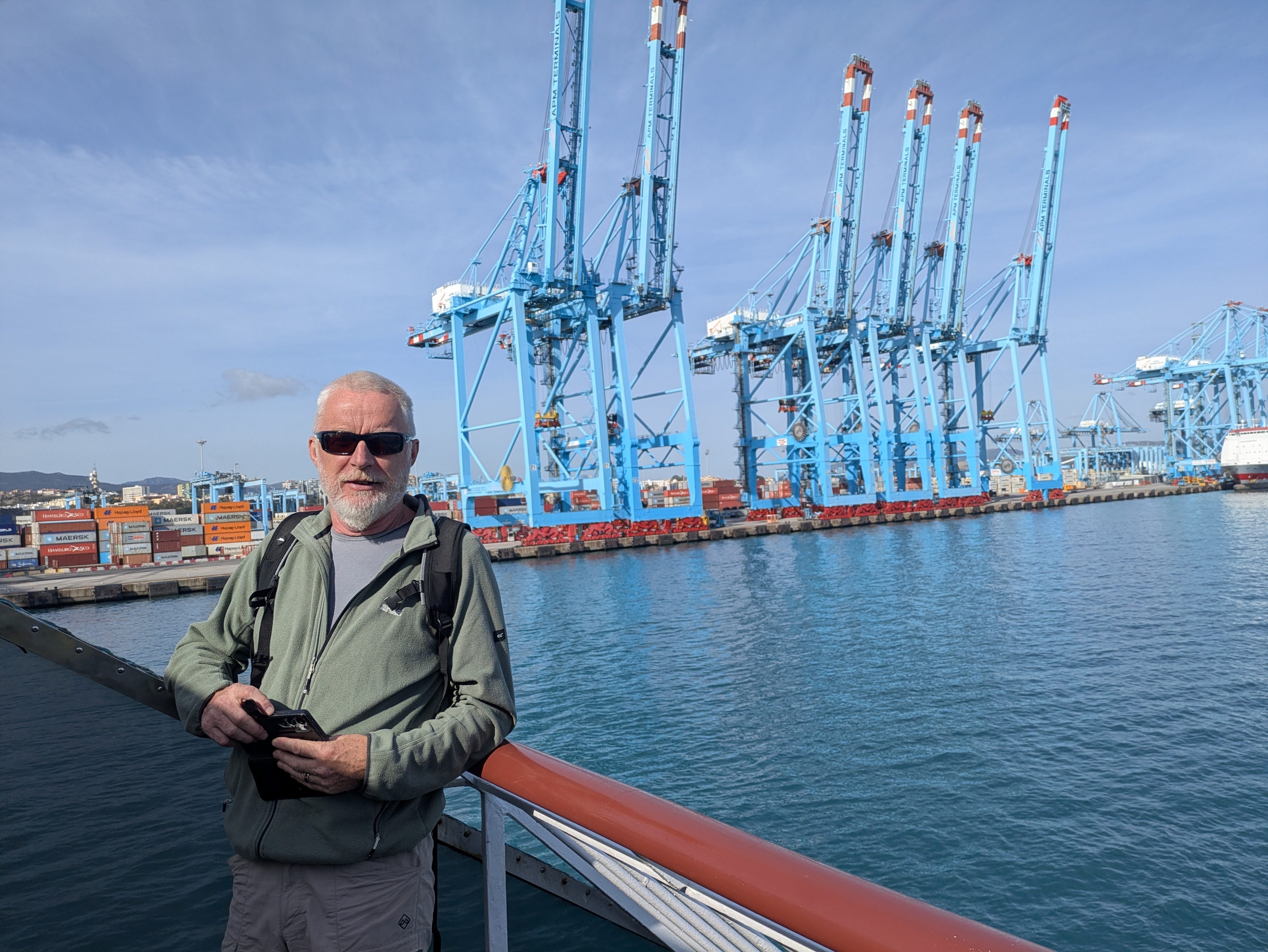
The following morning was cool, a few people came to watch dolphins out in the bay and a couple of spear fishing- guys got all their paraphernalia ready, donned wetsuits, while talking incessantly and headed into the water, armed with their spear guns. No-one disturbed us, the dog walkers waved at us. Our one-hour ferry was calm and uneventful. The port of Algeciras was busy, ports were always fascinating with their cranes for lifting, their lorries and container ships and the buzz of transporting goods.
Arriving in Algeciras

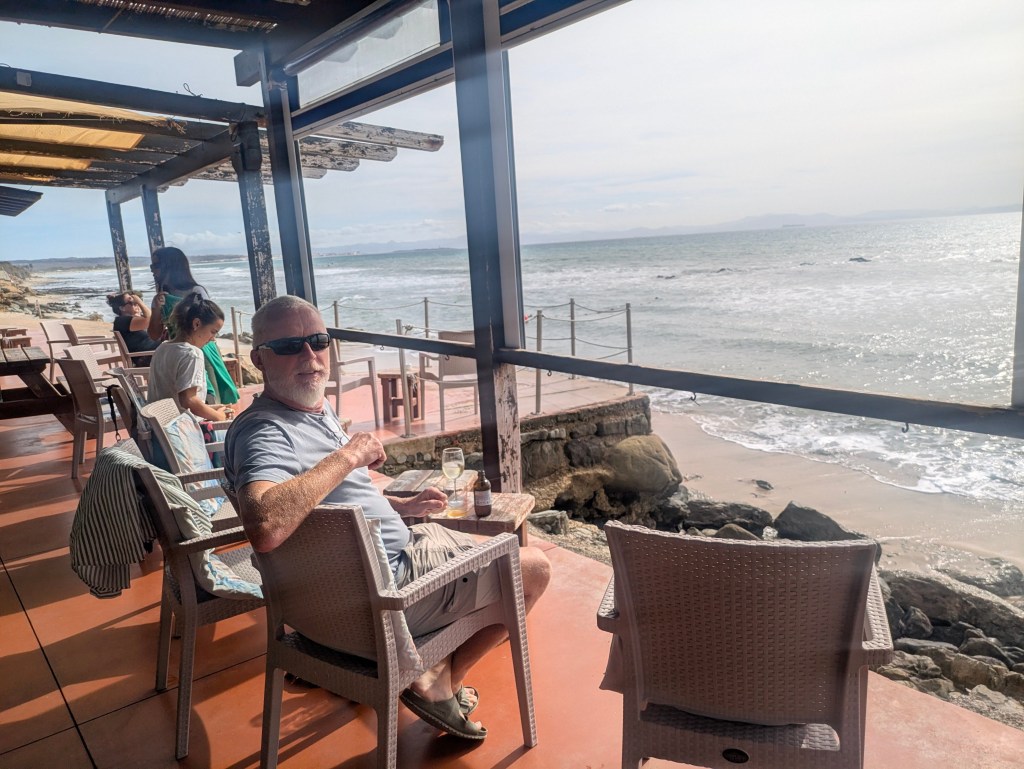
We headed west towards Tariffa and the Costa del Luz. The roads were winding, the countryside parched and at one stage, the blackened evidence of an old hillside fire. We picked a campsite at random – there were loads stretched along the coast but when a bored woman at reception told us it was €27 to park for one night, we were so shocked at the price that we continued on – must be the Morocco effect where everything was so much cheaper (apart from alcohol). We spent the night at another campsite overlooking the Atlantic with crashing waves, kite surfers and even a beach bar set up on the rocks.  This was in danger of being washed away with the exceptionally high tides with the waves crashing over the veranda and foaming under the seats. The campsite was surprisingly busy, full of Germans, many with babies or toddlers or dogs or all three.

Onwards to Cadiz, a place that we had never visited before. The road was wide but bumpy – the road surface in Morocco was much better than Spain. White villages gleamed on the hilltops among pine forests. The approach to Cadiz was flat and marshy, a spaghetti junction of roads, underpasses and roundabouts before crossing over La Pepa Bridge, the longest bridge in Spain, five kilometres with three of those over water.

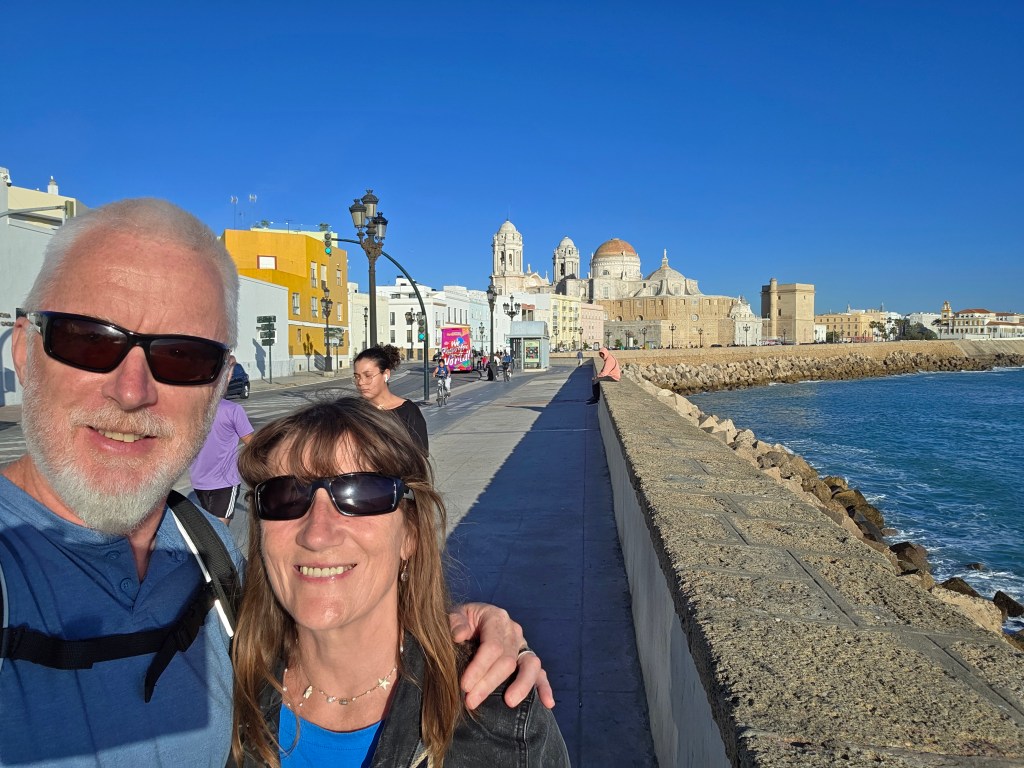
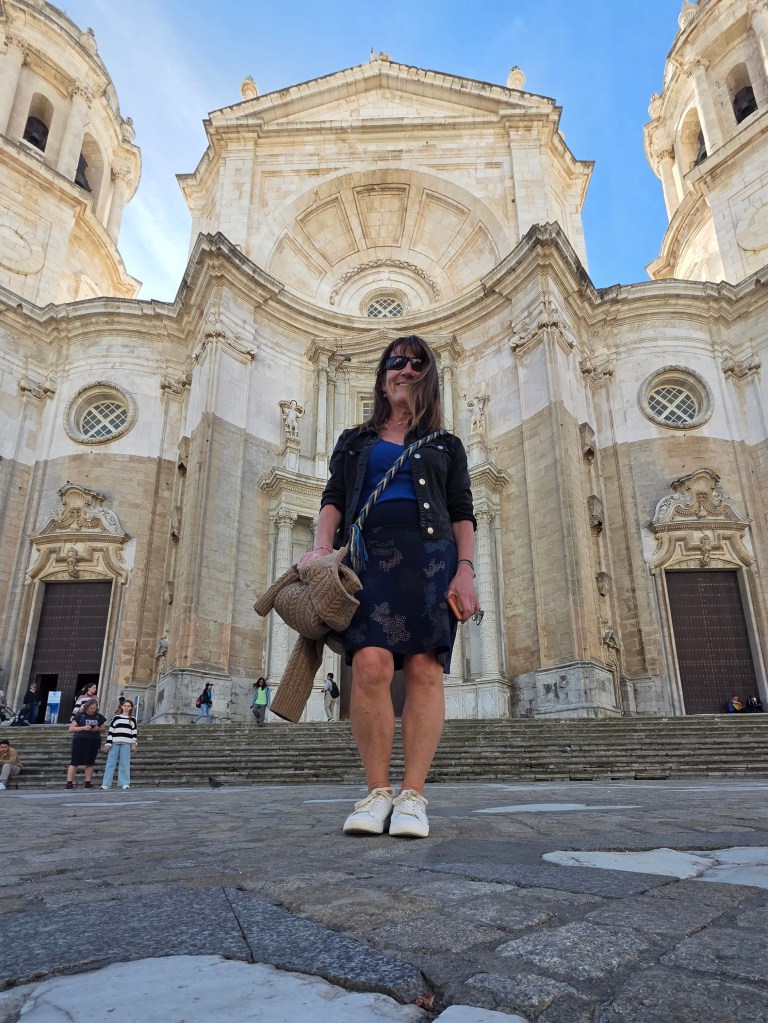
 Cadiz itself is a relatively small oblong-shaped island, squashed in by the Atlantic Ocean. It was a bright sunny, blue-skied day although the port was cast into shadow by two enormous cruise ships, far higher than anything else in the harbour. Car -parking spaces were scarce and expensive.

It was also a place where history was heaped on history, the most ancient still-standing city in Europe, claiming to go back to 1100BC. The Phoenicians were here, so were the Romans, the Moors, the Spanish. Columbus sailed to the Americas from here on two of his voyages, Napoleon laid siege to the city. Rick Stein was even here on a weekend break,

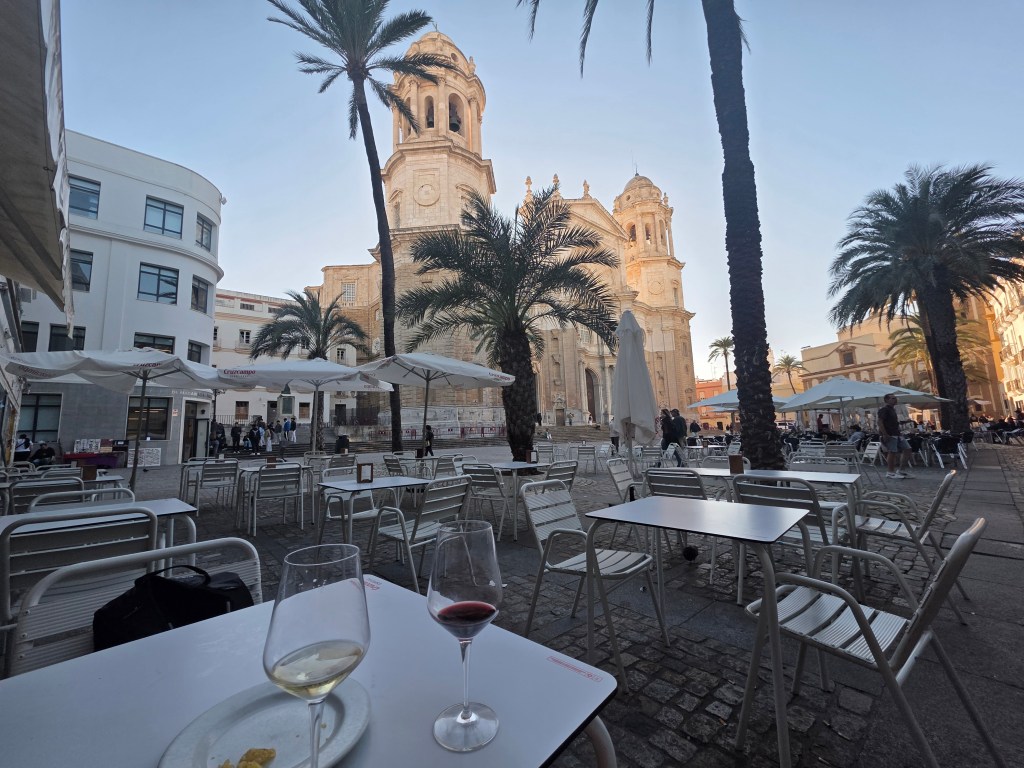
 It was a place of narrow lanes, wide plazas, beaches, tapas bars with the aroma of frying fish and always the sound of the sea which was never far away. The waves crashed or lapped (depending on the wind and side) on the reinforcements that kept the whole place from eroding and dissolving into the sea.

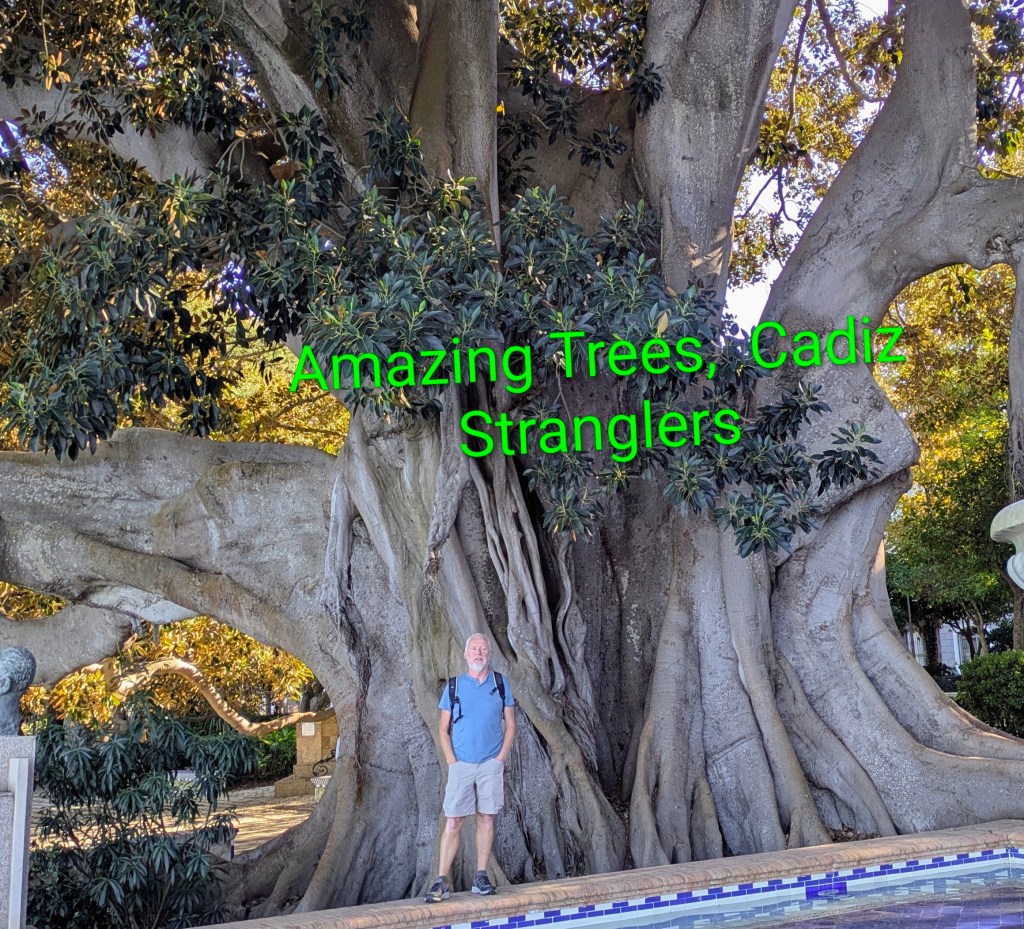
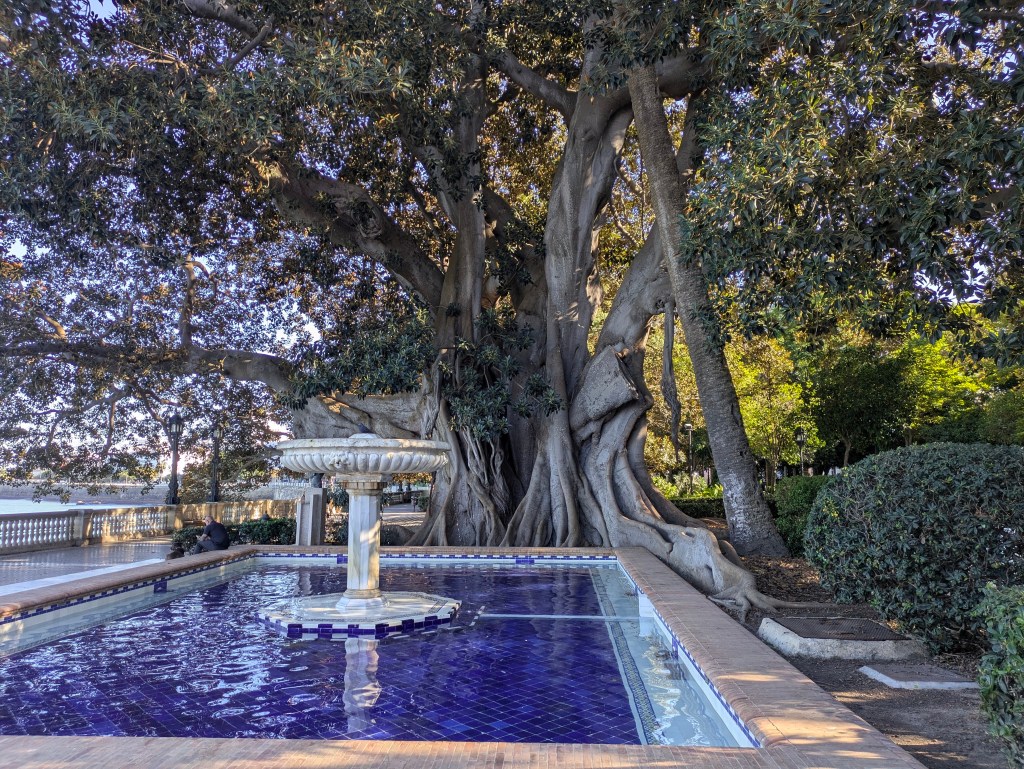
But what impressed us most were the trees – dramatic Strangler Figs with enormous umbrellas of leaves and trunks as wide as  a city bus. These trees get their name from their rapid growth and expansive root systems. Under our feet the tenacious roots were probably playing havoc with the drainage systems while we were wowed by the beauty of what was above ground.
There were also a lot of people sleeping rough in the crevices of the Santa Catalina complex and in the shadows behind the magnificent cathedral. It was also a place that had known tragedy. On a summer evening in 1947, a series of mines and torpedoes, stored in a harbour depot, exploded for unknown reasons, killing 150 people, many of them children and injuring at least 5000. Smiling family photos of some of the victims lined the walls of the remembrance museum.

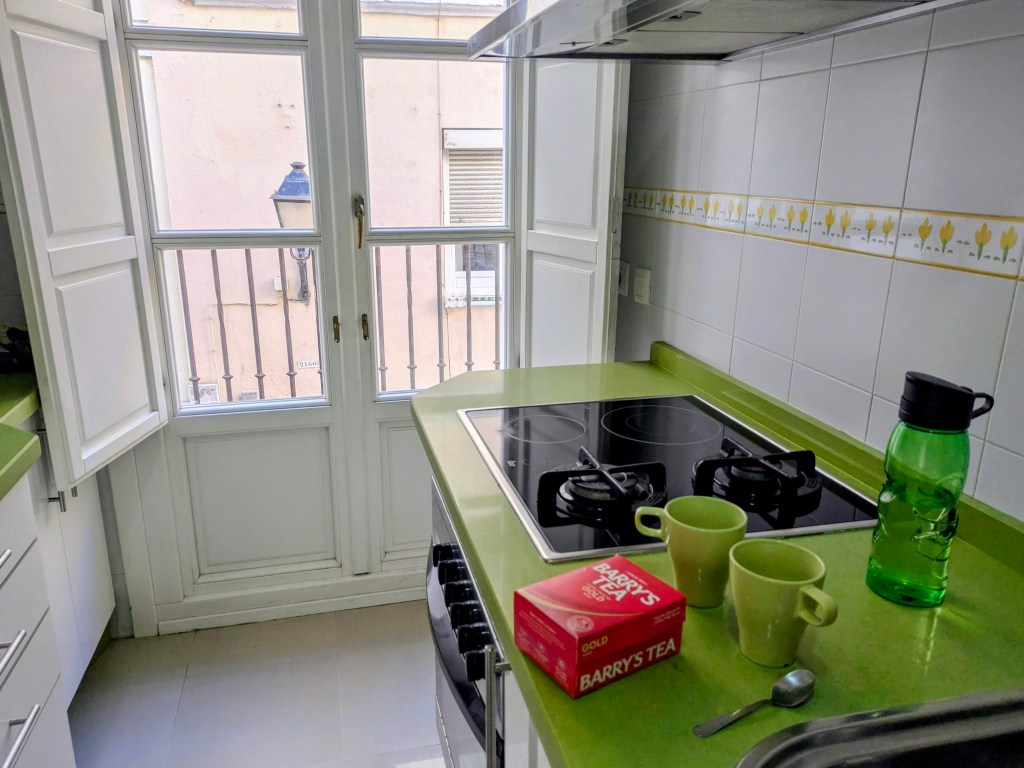
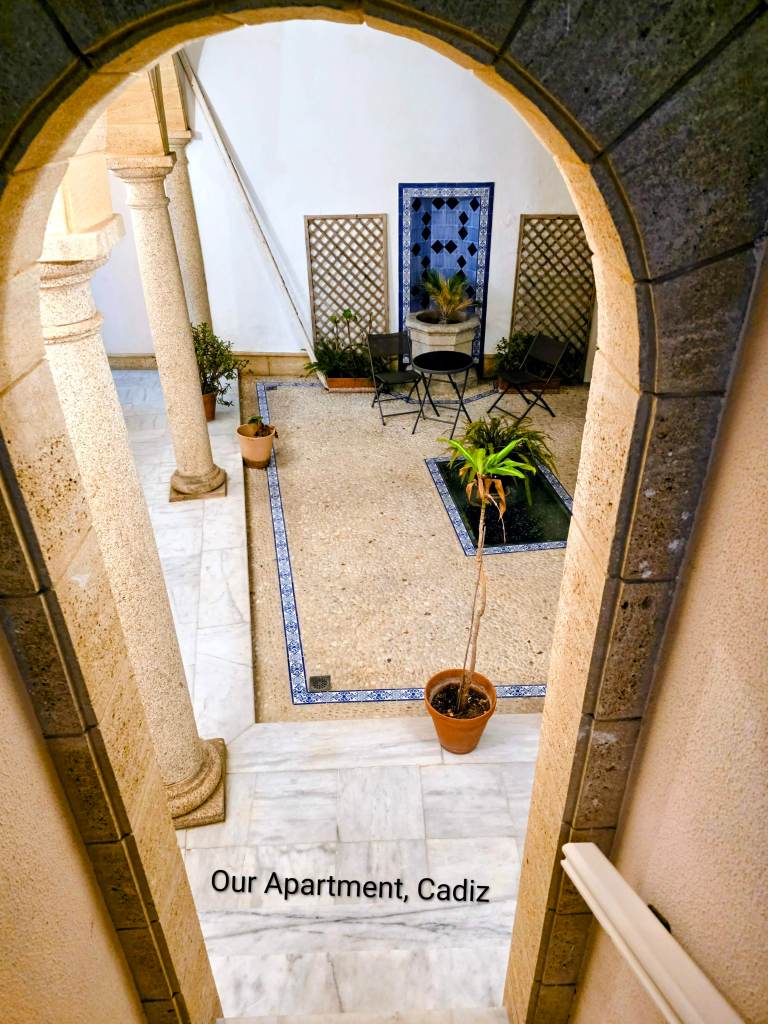
We had booked an apartment on the morning we arrived. It was in the old part of town along one of the many narrow streets and was far nicer and much bigger than expected with a roof terrace, an inner courtyard, a separate kitchen, sitting room and a couple of bedrooms. So much space…after the confinements of the van, it felt like luxury which was nice as we were also celebrating our wedding anniversary (thirty-one years❤️ ). There was even Barry’s tea in the kitchen cupboard, probably left behind from previous Irish visitors. This ‘luxury’ was €118 for two nights which we regarded a celebratatory bargain.

For a place surrounded by sea, there was a surprising lack of seagulls. We soon discovered the reason. The birds had become numerous and aggressive so the city council ordered that their breeding grounds be destroyed, their eggs removed and many were even shot. The pigeons in the plazas must have got the message because they were exceptionally docile and the sparrows kept a low profile.

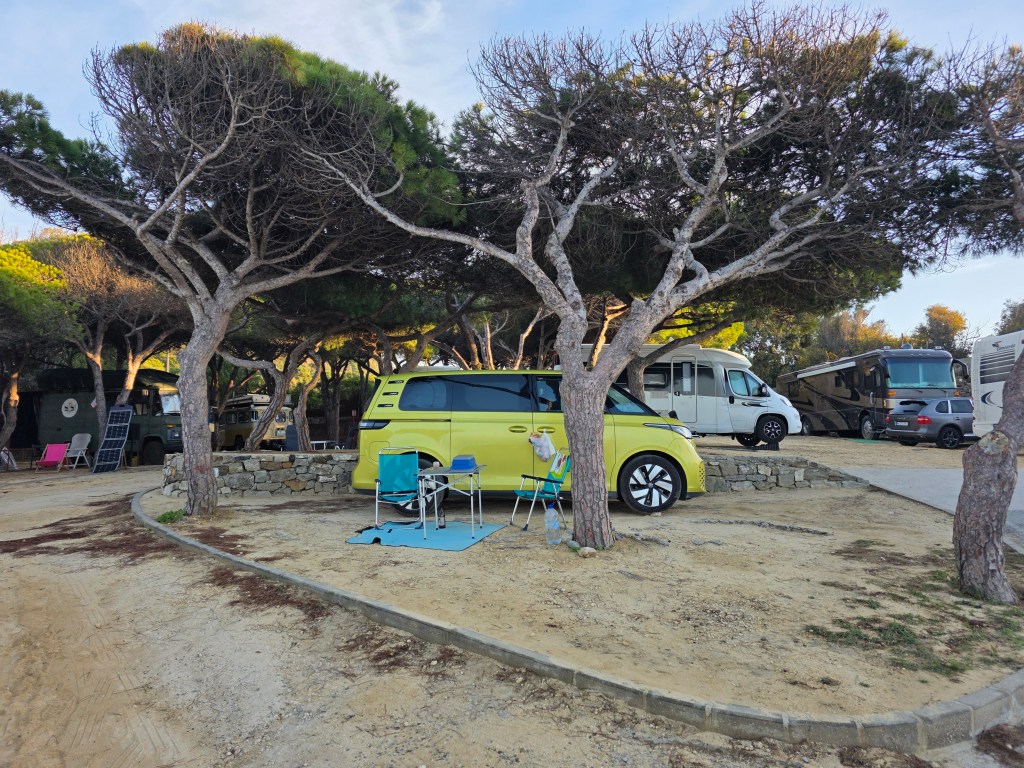
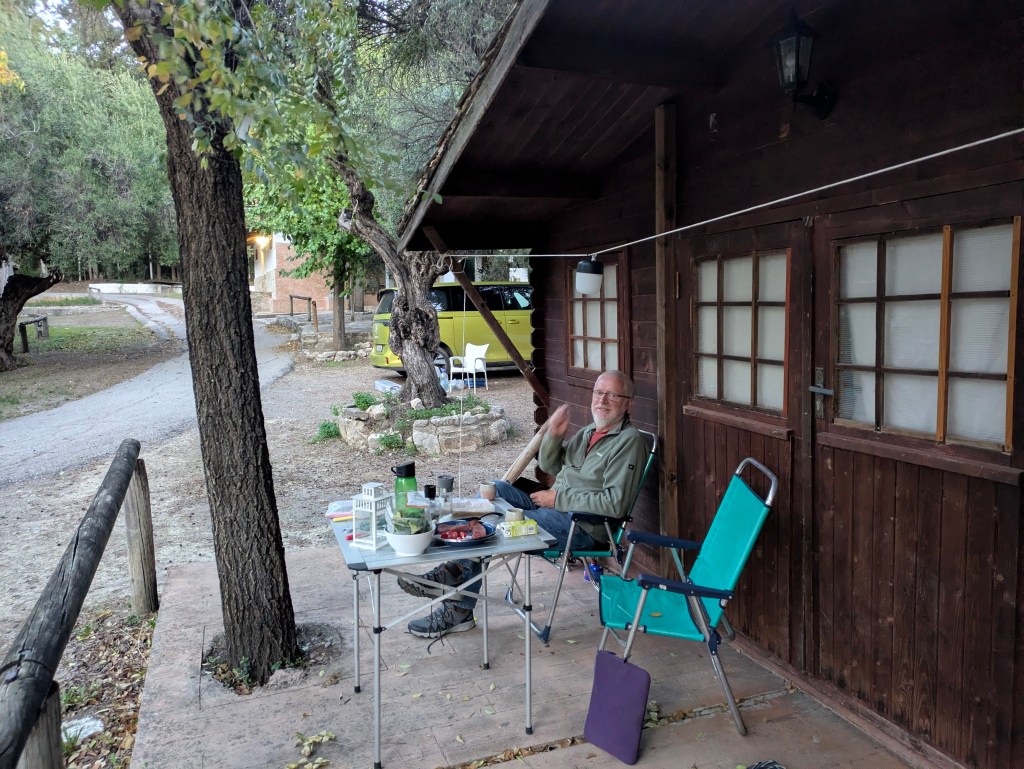
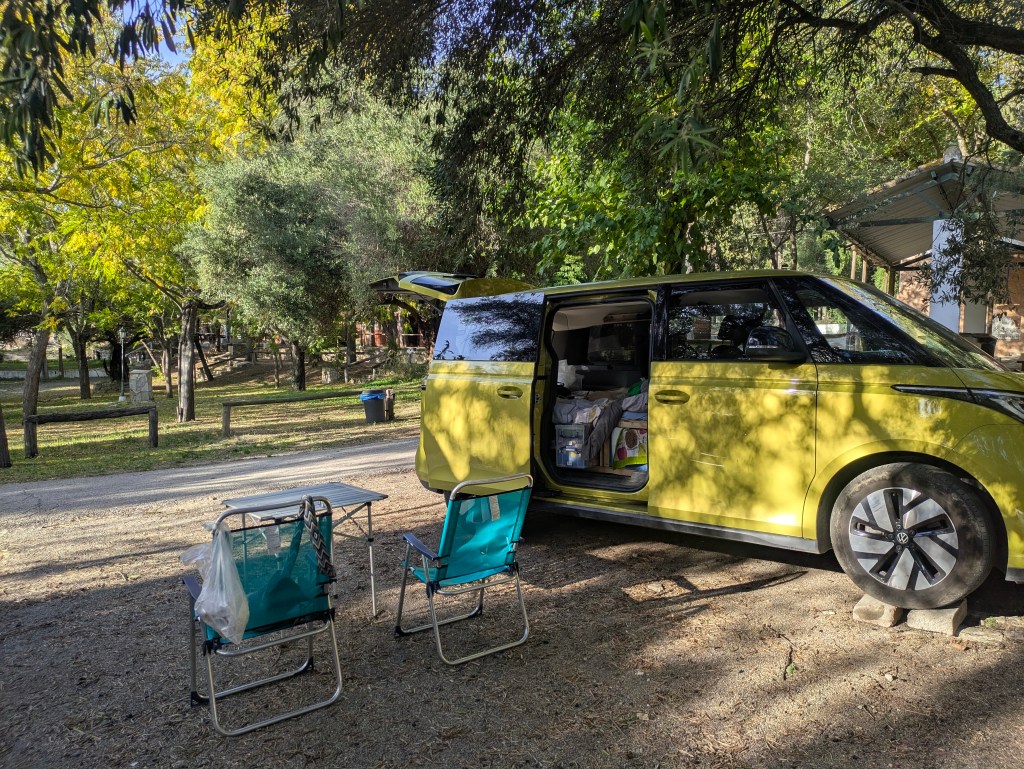
We charged the Buzz in Arcos de La Frontera, a white village, about forty minutes outside Cadiz, with an impressive hilltop castle. What bliss to have the choice of four different charging stations within three hundred metres of each other,  but the downside was that we had to pay. After charging, we continued on to El Bosque , a village in the gorgeous Sierra de Grazelema in glorious sunshine although the area was reputed to have the highest rainfall in Spain.  The Buzz blended in with the autumn colours in the campsite where we were the only visitors. The weather was dry although the wind became gusty, peppering the roof of the Buzz with leaves and twigs and sending us sheltering on the veranda of an empty cabin. The chomping of the naked sheep (very closely shorn) in the nearby field sounded like raindrops but the rain didn’t come until mid-morning, a persistent soft drizzle, reminiscent of the West of Island.

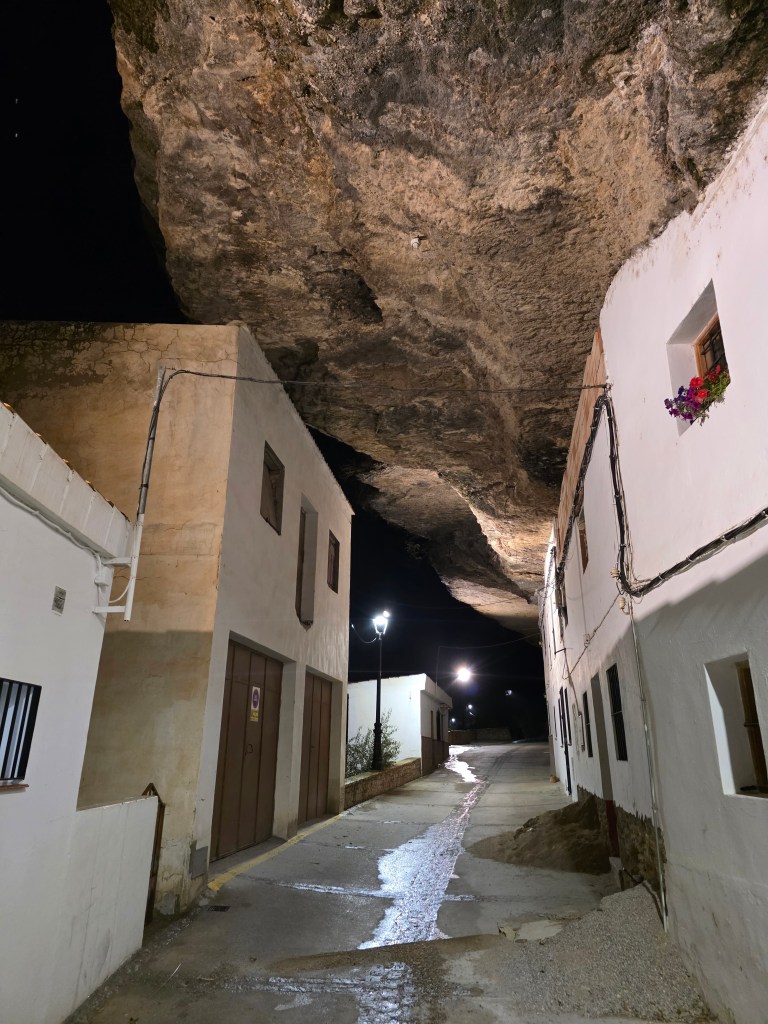
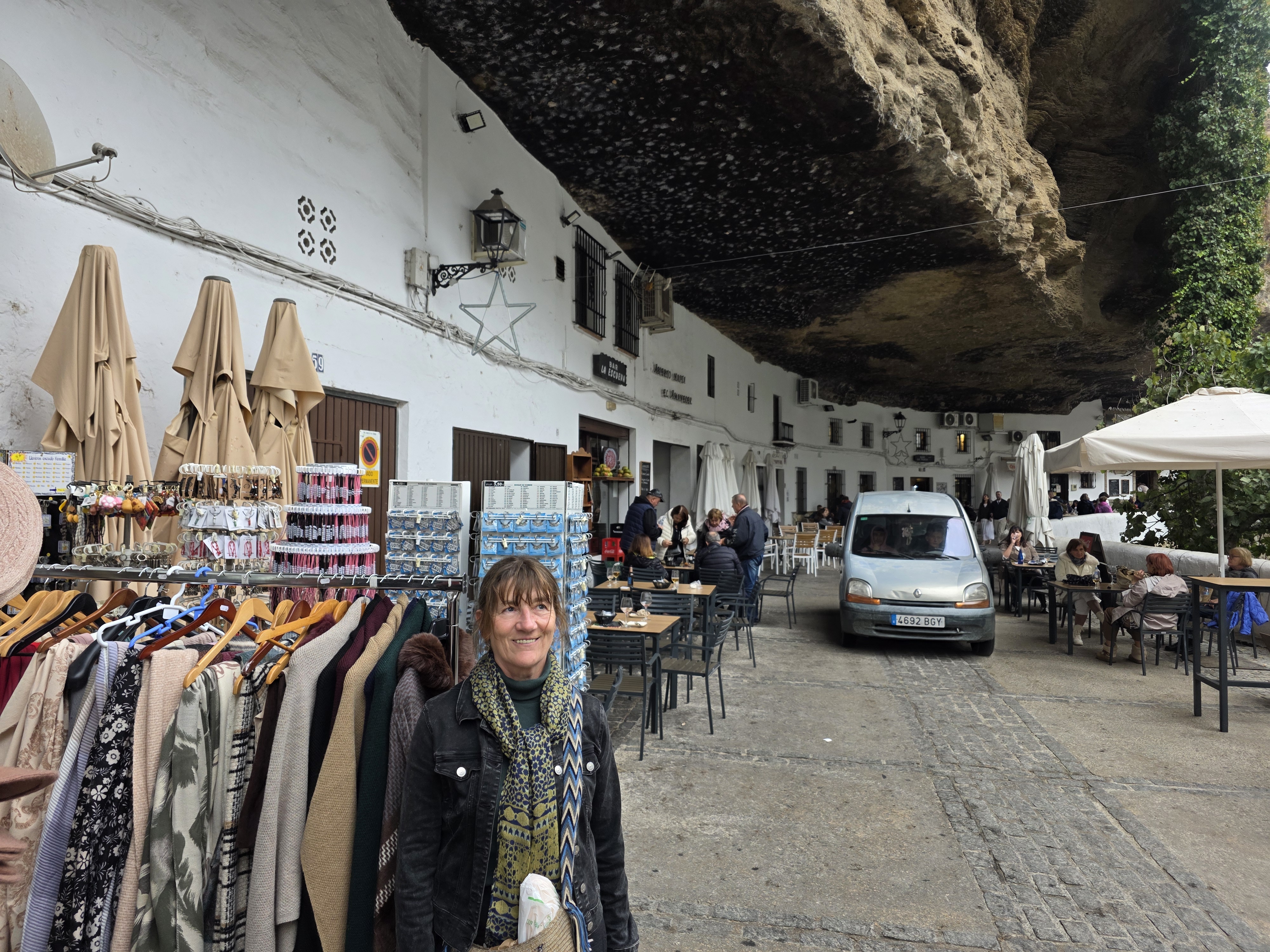
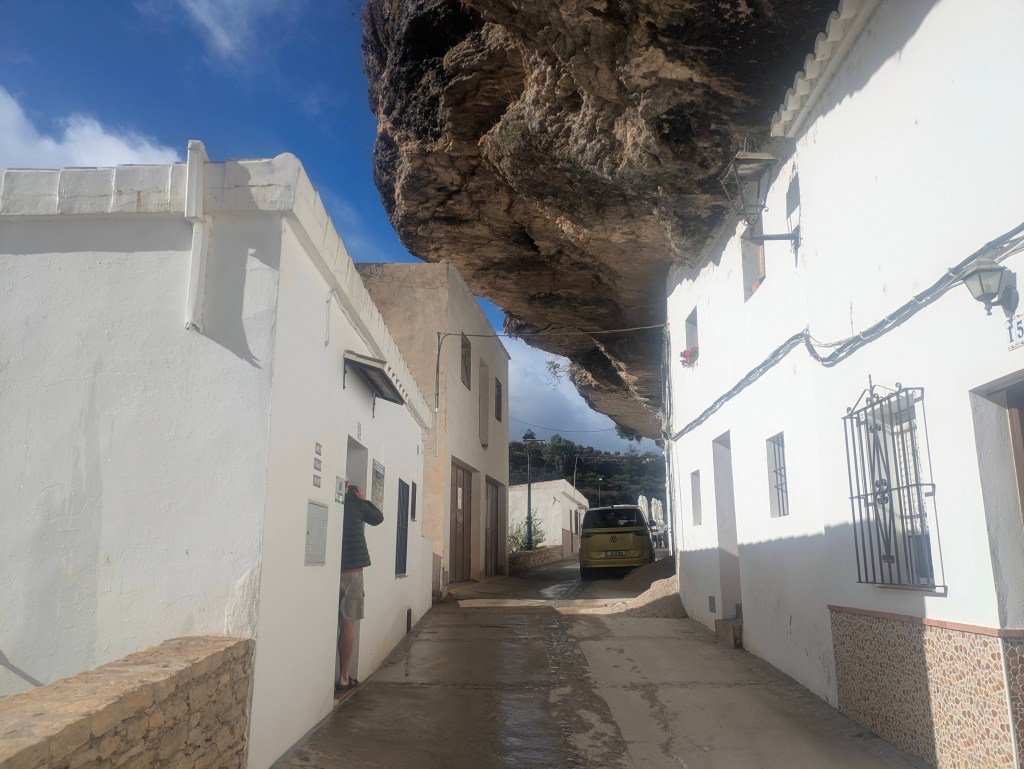
The rain became heavier as we headed to strange village, Sentinil de las Bodegas, where many of the houses were troglodyte, built from caves or snuggled under rocky overhangs and surrounded by olive and almond groves, These rocky overhangs were useful as a natural umbrella from the rain which bucketed down as if it would never stop. The wind tunnelled up the narrow laneways, sending locals and tourists running for shelter. The place has been inhabited for centuries and its topography made it difficult to conquer….it took seven sieges before it fell in Catholic hands in the fifteenth century. The following morning, there was a few blue-skied moments before the skies turned dark again.

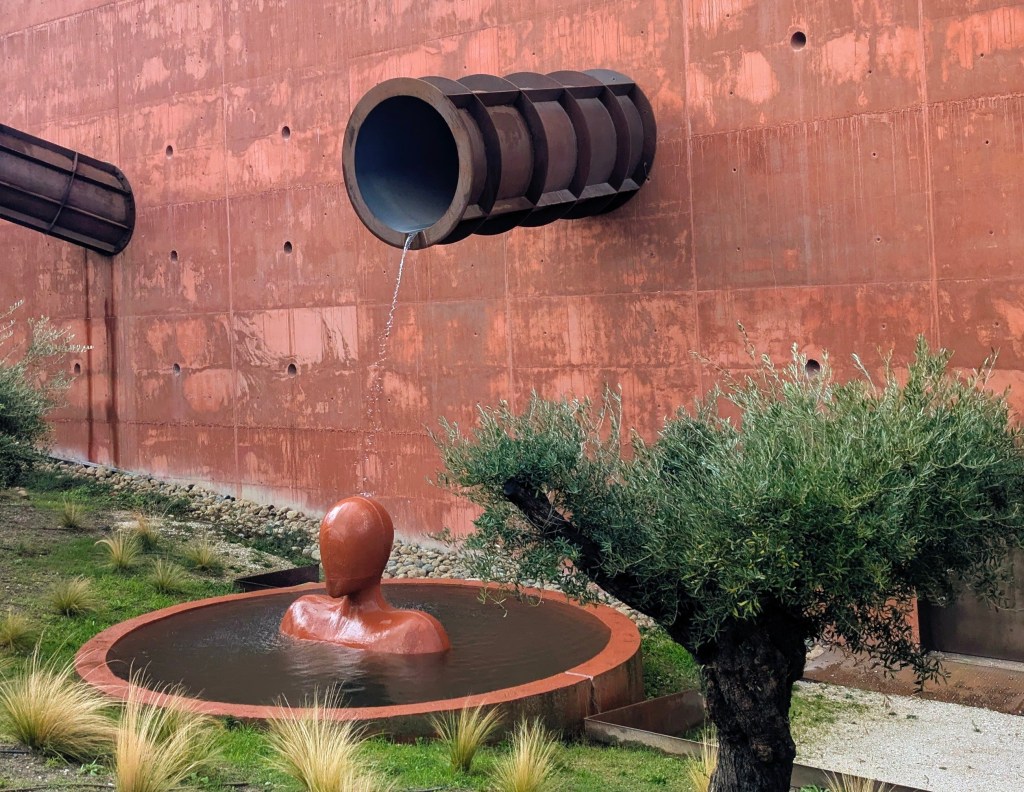
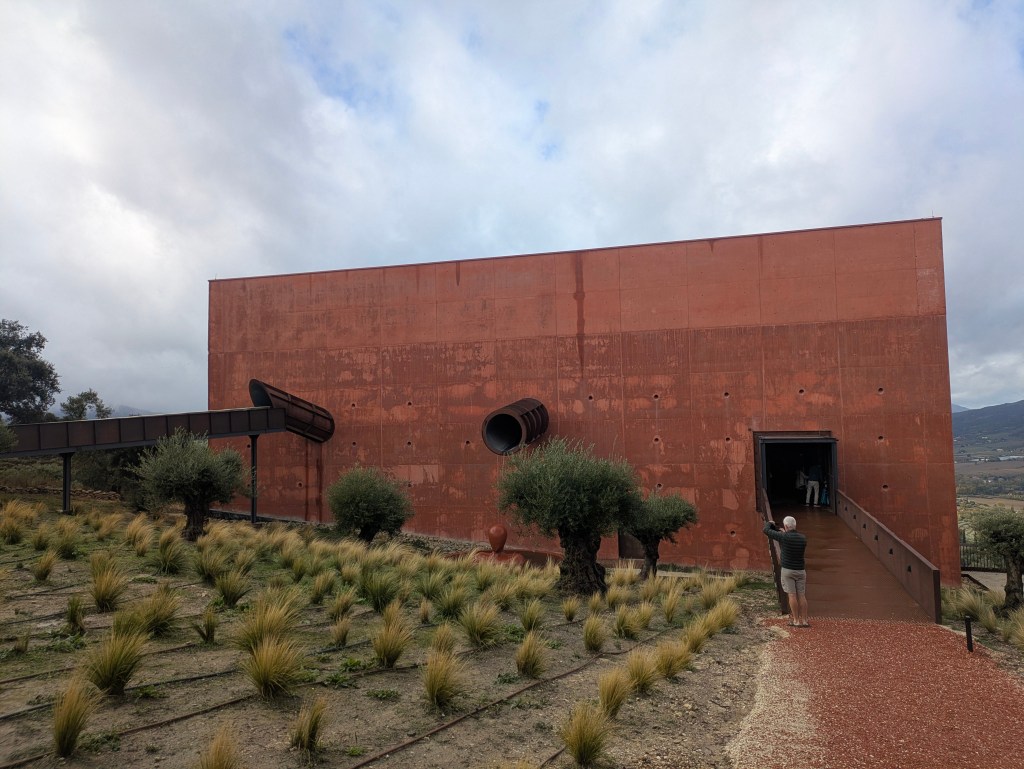
The road to Ronda was shrouded in mist – I’m sure the scenery was gorgeous – but we couldn’t see it,  we could barely see the road. The mist and the fog cleared after a while but the rain continued. We diverted to La Almazara Olive Mill, an impressive, architecturally-designed building, just outside Ronda, to learn more about olive oil and the olive trees that we see everywhere. Spain is the world’s largest producer of olive oil but its strange thing that the olive oil in Spain, even in the supermarkets is far more expensive than at home.  

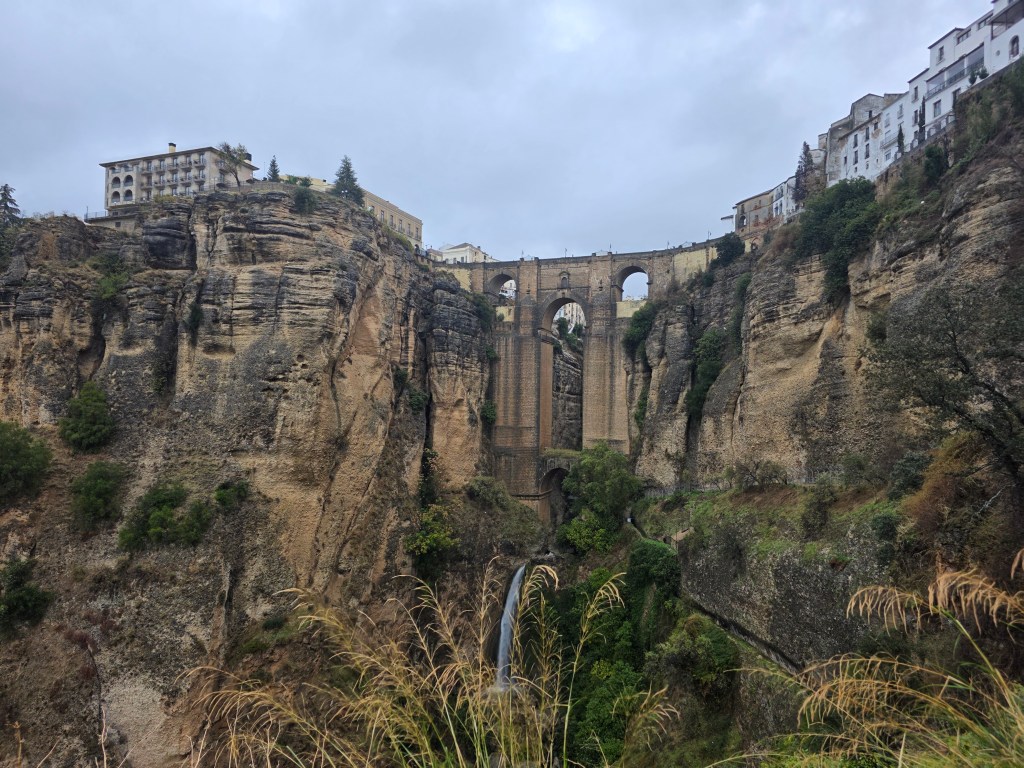
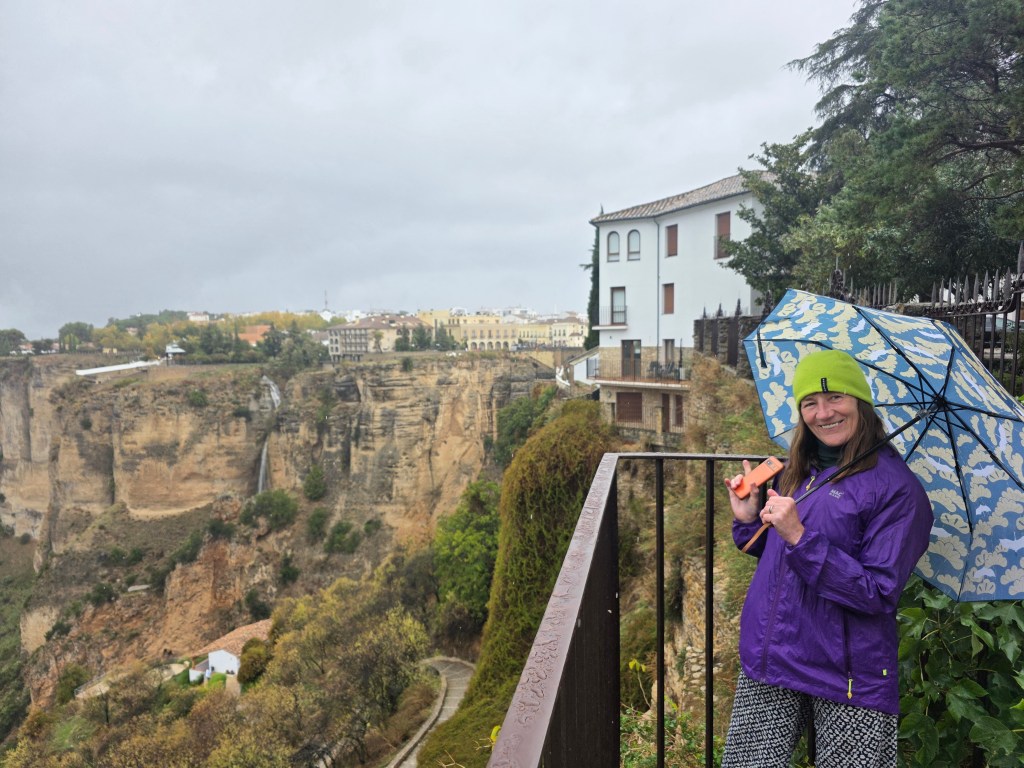
Rivers of water sloshed down the old cobbled streets of Ronda, soaking our shoes and socks, and seeping through my jacket. We splashed through winding streets, trying to find the mirador, the famous view of town, perched on the edge of a high cliff with a 100m chasm and misty views of the Serrania de Ronda. Despite the weather, Ronda looked impressive and we might return sometime.

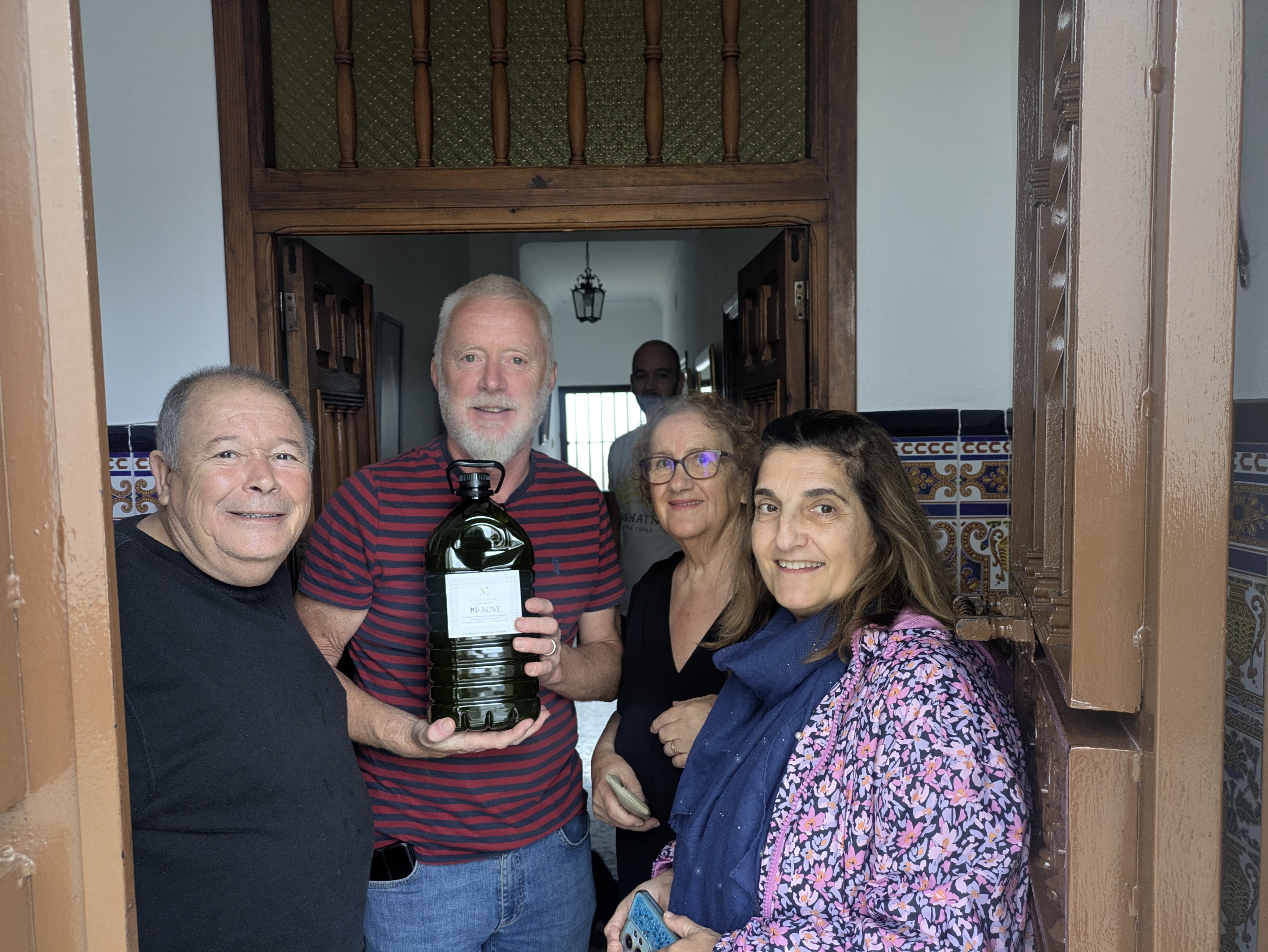
Storm Claudia has a long reach, sweeping from the Mediterranean and Southern Spain all the way to Britain and Ireland. On this very wet Saturday morning in Spain, we are now ensconced in the warmth of Luz and Andreas’s house in Hornochuelos, a little town northeast of Seville. Lucky us! They even managed to source olive oil for us from a lovely, local grower with a passion for olive oil production, producing small quantities of organic oil from her own farm which she delivered to our door with enthusiasm and even photos of the beloved trees. All this love and attention produces oil that tastes rich and creamy, totally superior to anything we buy at home.

Thanks for reading,

Till next time, keep dry…..

Electric Travels: Out of Morocco

Electric Road Trip: The Journey Begins

The night before we left home for our nine-week roadtrip from Ireland to Morocco in our all-electric van, I dreamt that camels were towing us through the desert because we had run out of charge. Range anxiety in my dreams…..hopefully not an omen.

Leaving Rosslare

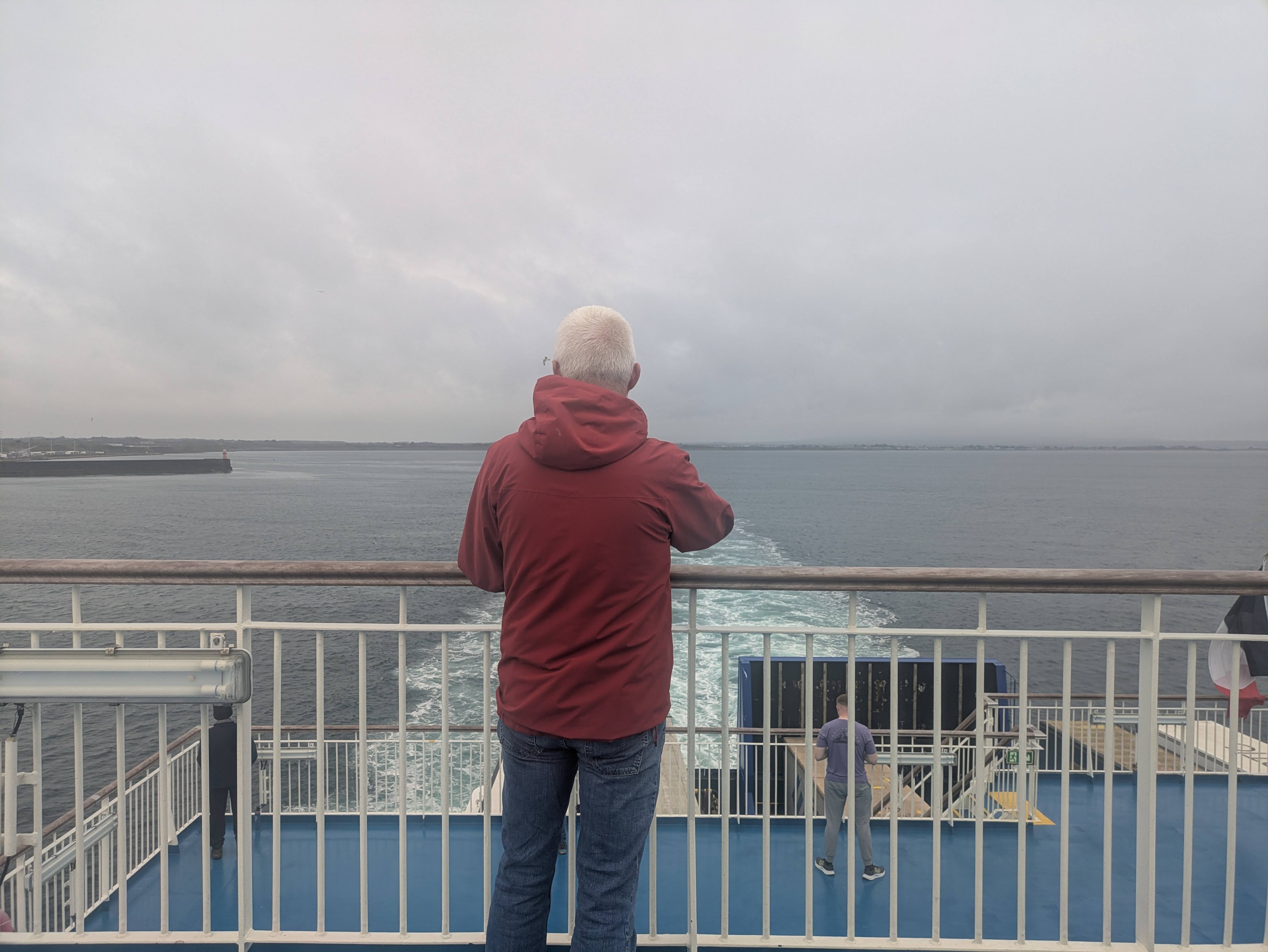
The journey to the ferry port in Rosslare was short and the crossing to Bilbao was smooth.  Taking the ferry was such a comfortable, relaxing way to travel, a slow transitioning to holiday mode. Wi-Fi was only available for a fee and our mobile data only kicked in briefly when we sailed near the tip of England and the French coast with a fleeting flurry of What’s App messages.  We were in a floating cocoon, out of contact with the world.

We were fortunate to sail on Wednesday morning (Oct1), well ahead of Storm Amy. Our original preference was for the Friday crossing but it was full when we tried to book it the previous week, so we opted for the earlier sailing. Sometimes it pays off to be ‘last-minute’ because that Friday evening sailing was cancelled due to the adverse weather conditions.

The thirty-hour journey flew by.  The talk given by the resident on-board conservationist (from the Ocra Charity) about whale identification was really informative and a good initiative on the part of Brittany Ferries.  The breeze on deck was brisk for the whale-watching session, and as the whales refused to turn up, we went down to the bar and marine-watched in comfort through the large windows, accompanied by live music followed by a quiz about French food and drink. It was multiple choice so we guessed most of the answers….. wrongly.   (Sample question: What is Roscoff famous for? Onions apparently.)

There was plenty of other entertainment, Caoimhin did a short course on rope-knots and the whiskey & chocolate tasting in the shop was very popular. There was bingo, more quizzes and dolphins appeared at dusk for a little sunset somersault.

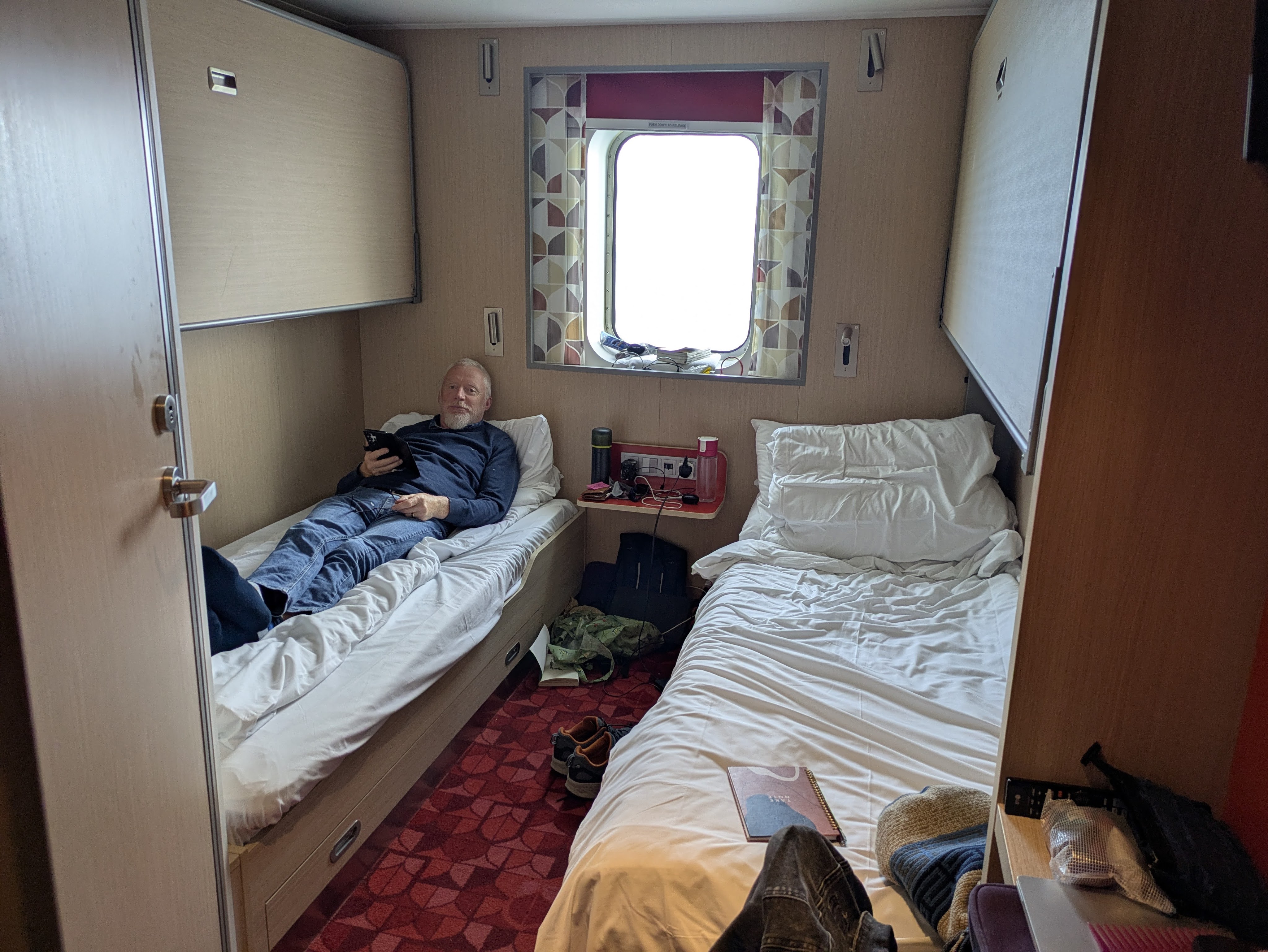
In the cabin, Caoimhin cut my hair, lopped off a couple of inches…. we had been so busy in the run up to our departure that I didn’t have time to visit a hairdresser… and did a good job. Our ensuite cabin was comfortable, the shower was hot and the hum of the engine was so soporific that I slept for ten hours straight, lulled by the gentle swaying motion.

 It was a sunny 25C at 2pm in Bilbao when we emerged from our cocoon. There’s always a bit of tension when driving on the ‘wrong’ side of the road in a new place and trying to figure out Google’s instructions. Taking a wrong roundabout turning, we ended up back in the port where the officials looked at our Irish reg, and sighed before raising the barriers to let us loose …again. But soon we were driving south towards Haro and the Rioja region….this destination was only decided on the ferry when looking at the guidebook. We had never heard of Haro but we like wine and we wanted to head south.

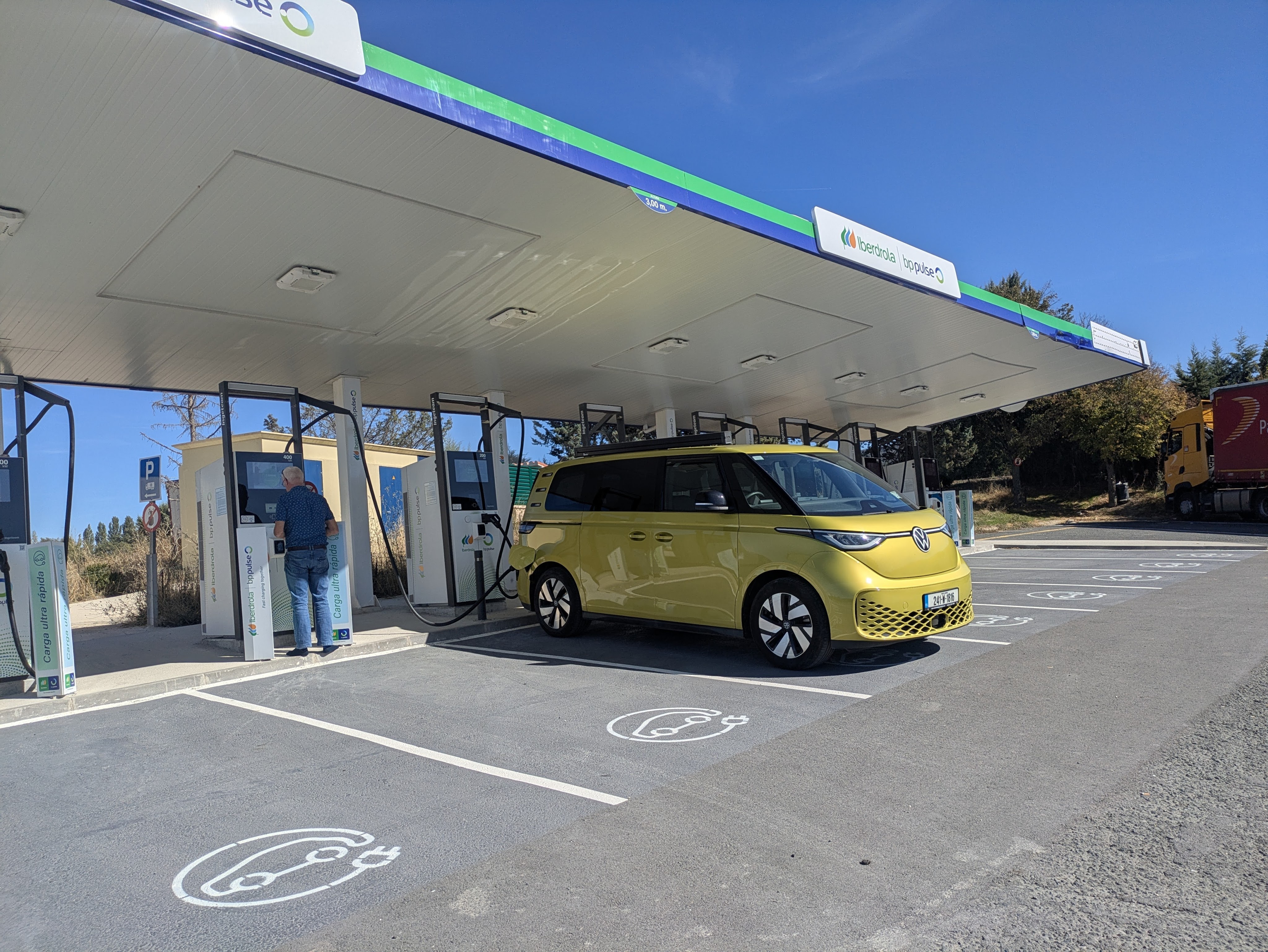
Our next task was to figure out EV charging in Spain before we reached the ‘range anxiety’ stage. Our maps indicated that EV charging stations were plentiful. Although we had 50% in the tank, we stopped at an Iberdrola charging area before any topping-up became critical. Our Buzz was the only vehicle charging at a whole bank of chargers, all fast chargers with a couple of  ultra-fast. It was possible to get instructions in English and pay by  bankcard. It was relatively expensive at 0.70 a Kw, more than we have paid at public chargers in Ireland but at least we know that charging is easy, at least with Iberdrola.

No Queues

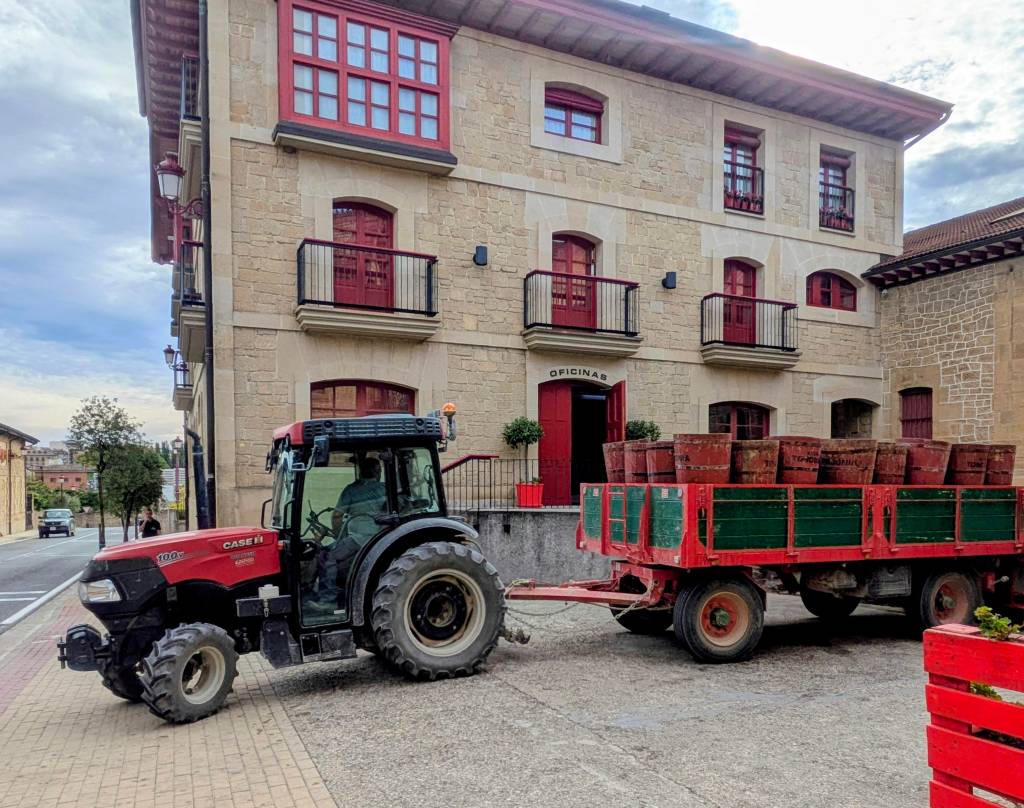
Haro proved to be a good choice. It was a town with the tang of fermenting grapes in the air and the hum of tractors pulling trailer-loads of grapes to the wineries; the building were old and made of a golden-yellow stone that glowed in the late afternoon….and the wine was cheap (starting from less than €2 a glass). A perfect combination.

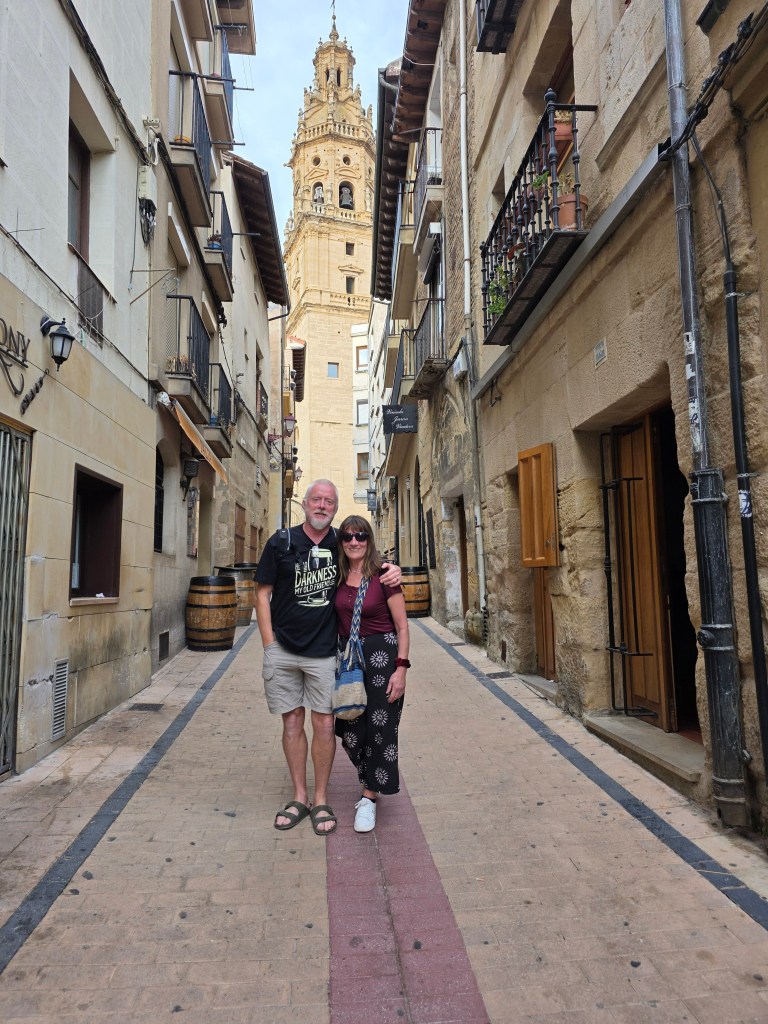
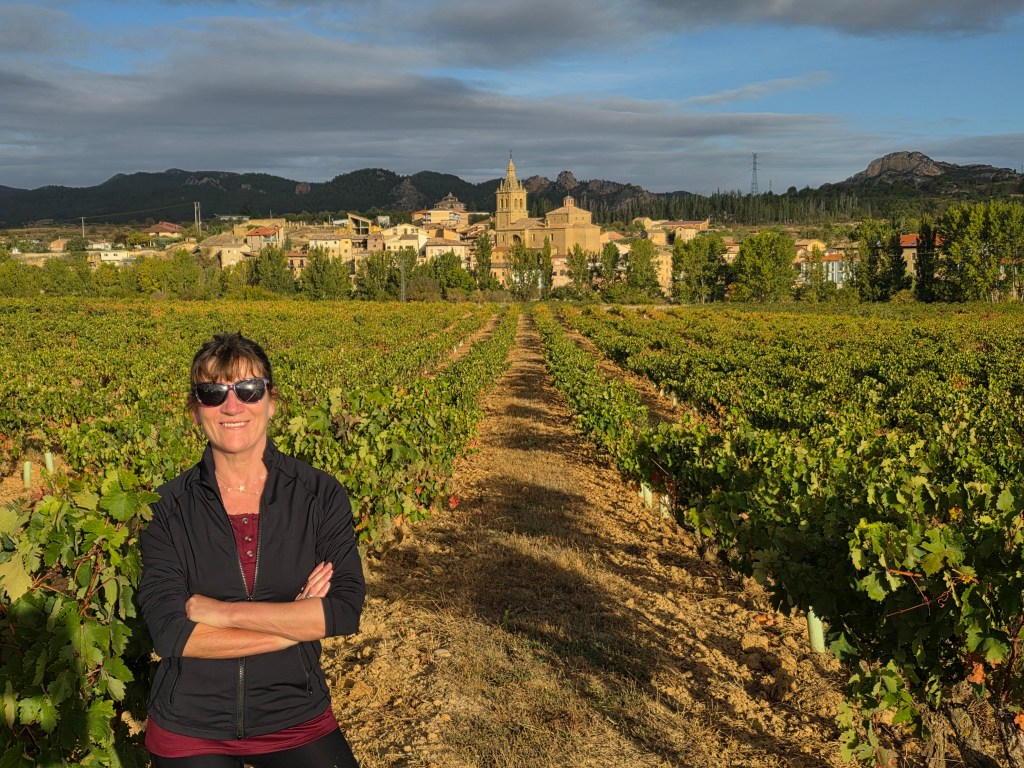
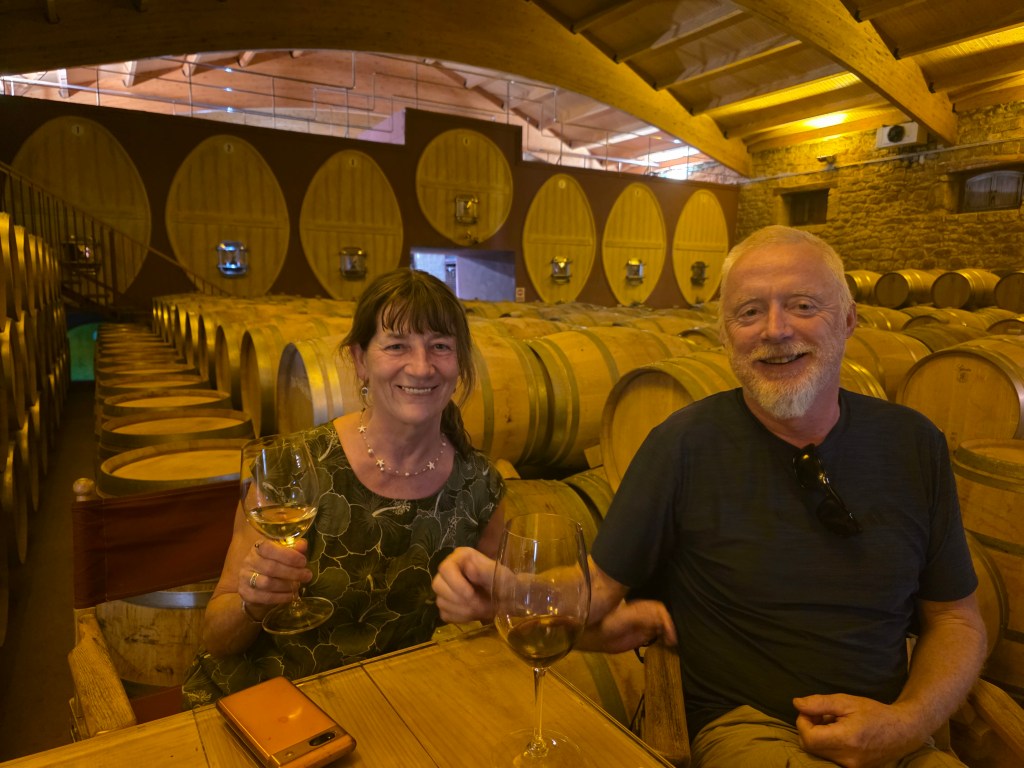
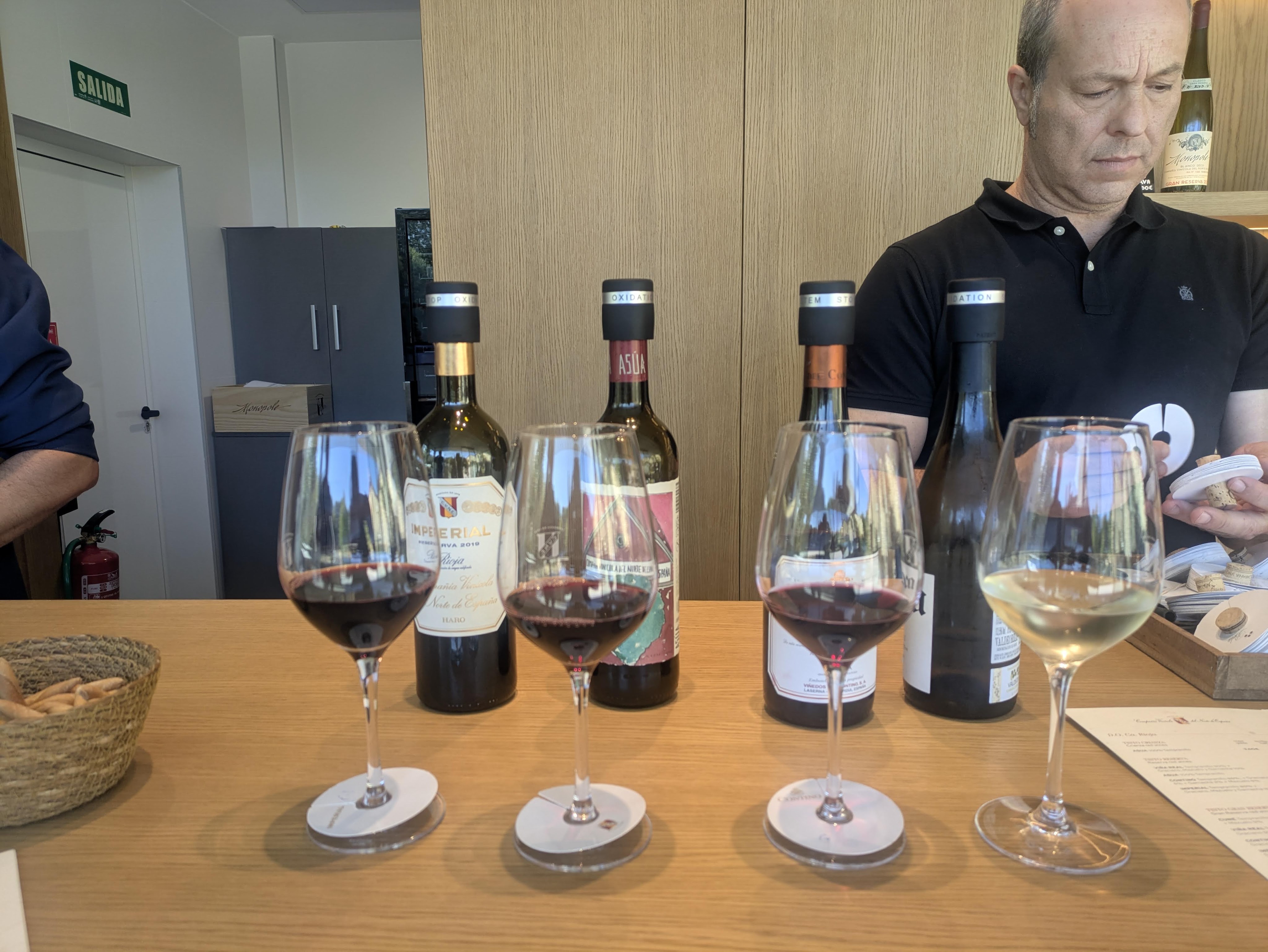
The bodegas opened at 10am, or before, for wine-tasting and closed in the early-afternoon. Sipping wine in a two hundred year old cellar, surrounded by hundreds of wooden casks which were slowly seeping alcohol into the dim air, was a wonderful way to enjoy a tipple even if it was barely midday.  This activity also meant that most of the visitors to this gorgeous little town were never entirely sober. Early morning walks along by the Rio Ebro and through the vineyards went some way to clearing our heads. The mornings were cool – about 10C- but by midday it was a gorgeous sunny 26C until the evenings required a light jacket.

Haro holds an annual festival in late June, Batalla de Vino (Battle of the Wine) where the attendees dress in white tunics and throw thousands of litres of wine at each other, staining their clothes red. A clock in the main plaza was already counting down the days and minutes to next year’s event.

Haro owes its wine success to a plague (phylloxera) in France which ruined the French vineyards in 1863. French wine producers set up storehouse in La Rioja and began to produce Riojan wine with their own techniques which the locals adopted and adapted. Never an ill wind and all that…

As we stayed in a campsite by the river (€28 a night with electricity), Caoimhin had high hopes that we might be able to slow-charge the van onsite using a ‘granny cable.’ When that wasn’t compatible, we dispensed with electricity, and the nightly charge dropped to €21. The campsite was very social and we met several Irish people who were having an unplanned extra week in Spain due to the ferry cancellations and disruptions.

After three days, we felt that we should depart Haro for our livers’ sake. The ‘Haro Effect,’  that continuous hazy, slightly inebriated state, was becoming too seductive so we packed up, with some regret.

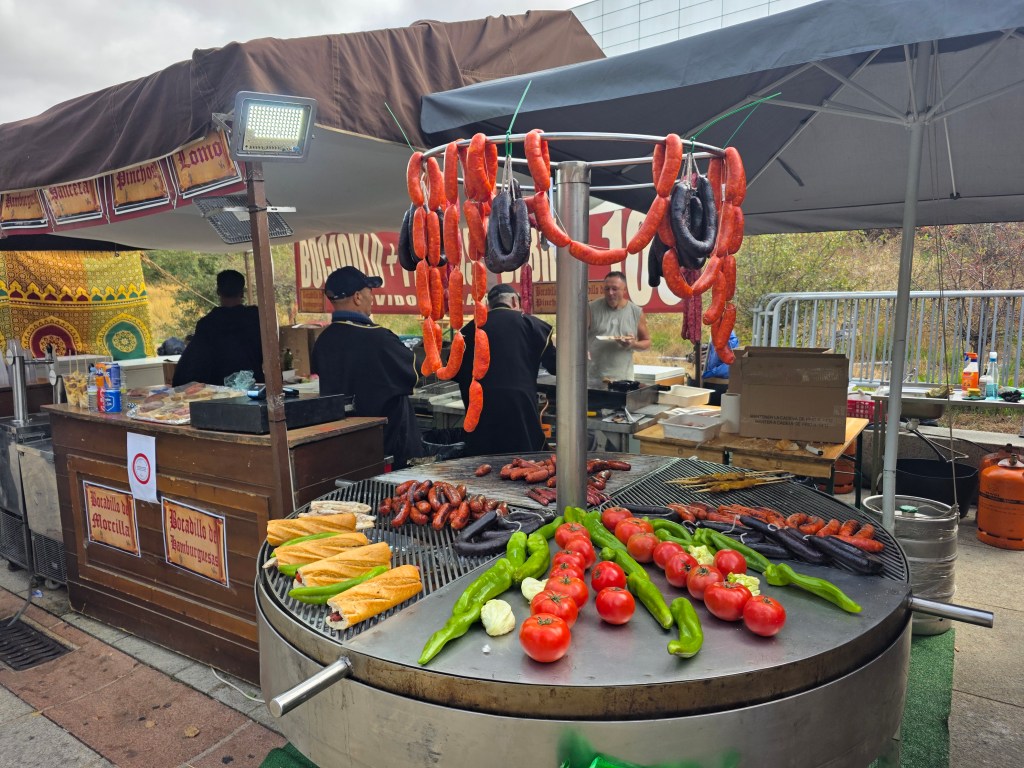
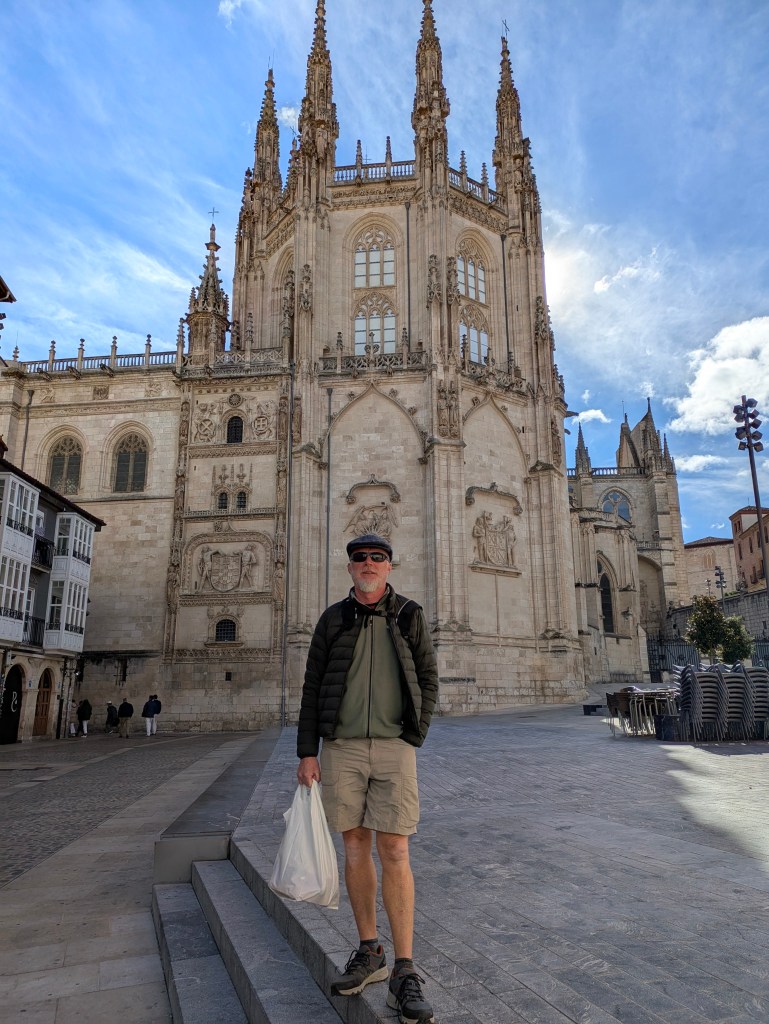
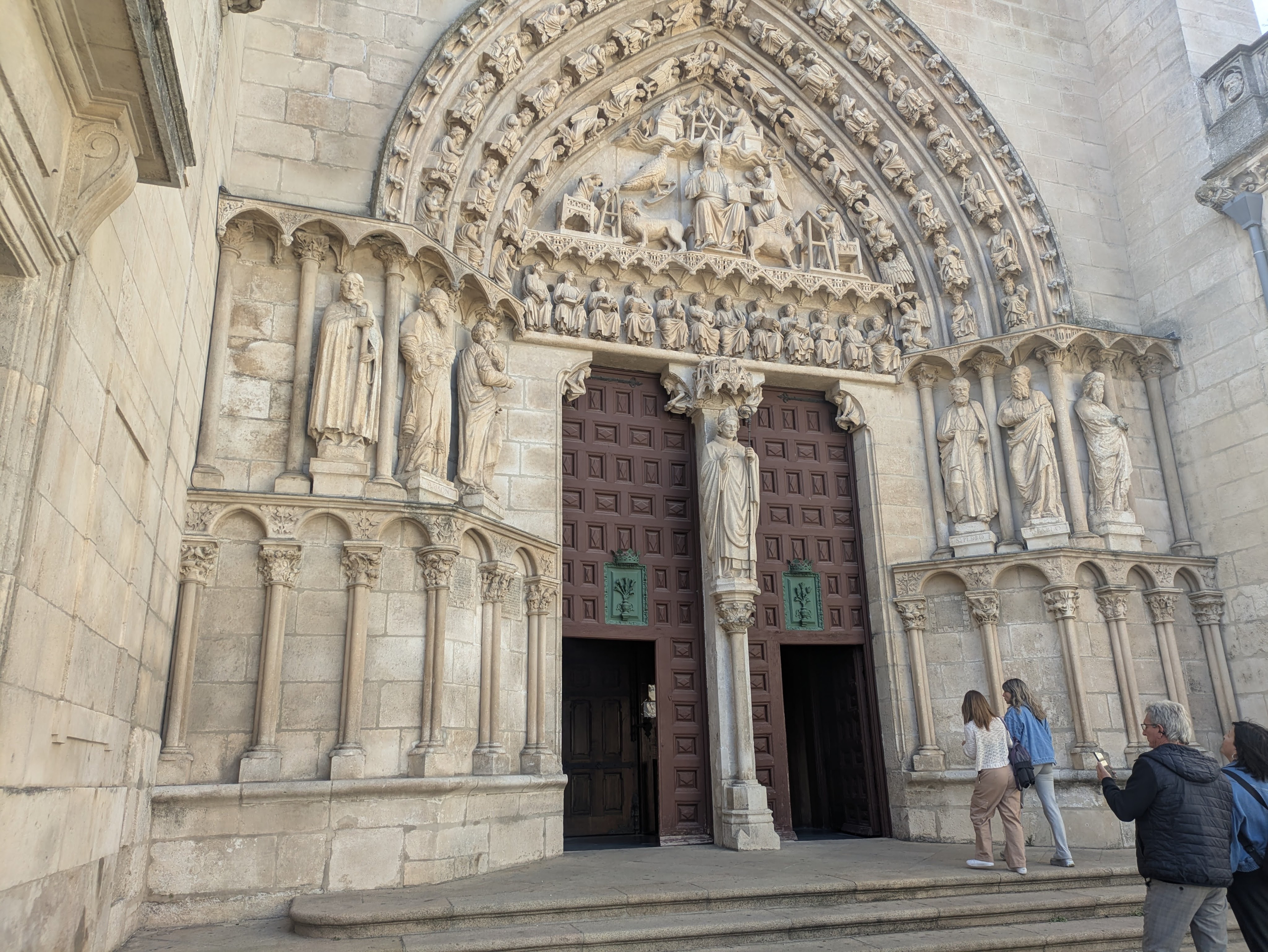
Heading south in the direction of Burgos,  the weather turned cool and cloudy with even a slight hint of rain. We drove by bare fields, shorn of corn and bleached white from the sun and fields of blackened sunflowers, withering on the stalk with drooping heads. The climate in Burgos, like most of central Spain, has been described as ‘nine months of winter and three months of hell(summer).’ It was sunny when we arrived with a stiff easterly breeze keeping the temperature a chilly 13 degrees although the streets were full with lots of people going around in medieval costume. The Cathedral was jaw-dropping, a Gothic Treasure where the concept of ‘Less is More’ was never considered, every available surface was crammed with ornate carvings. After charging in Burgos (Zunder Chargers@ €0.58/kW) and wandering around the Sunday market, we pushed on to Lerma, a pretty town, with a castle, convents and a big Plaza Mayor. We parked in a picnic area on the outskirts of town and settled for the night.

The cold woke us. The temperature had dipped to 1.5 degrees which was unexpected and the coldest it’s been so far. By 9am the following morning, the sun was shining but temperatures were still hovering about 2 degrees. We moved on, before we had to invest in blankets and woolly jumpers.

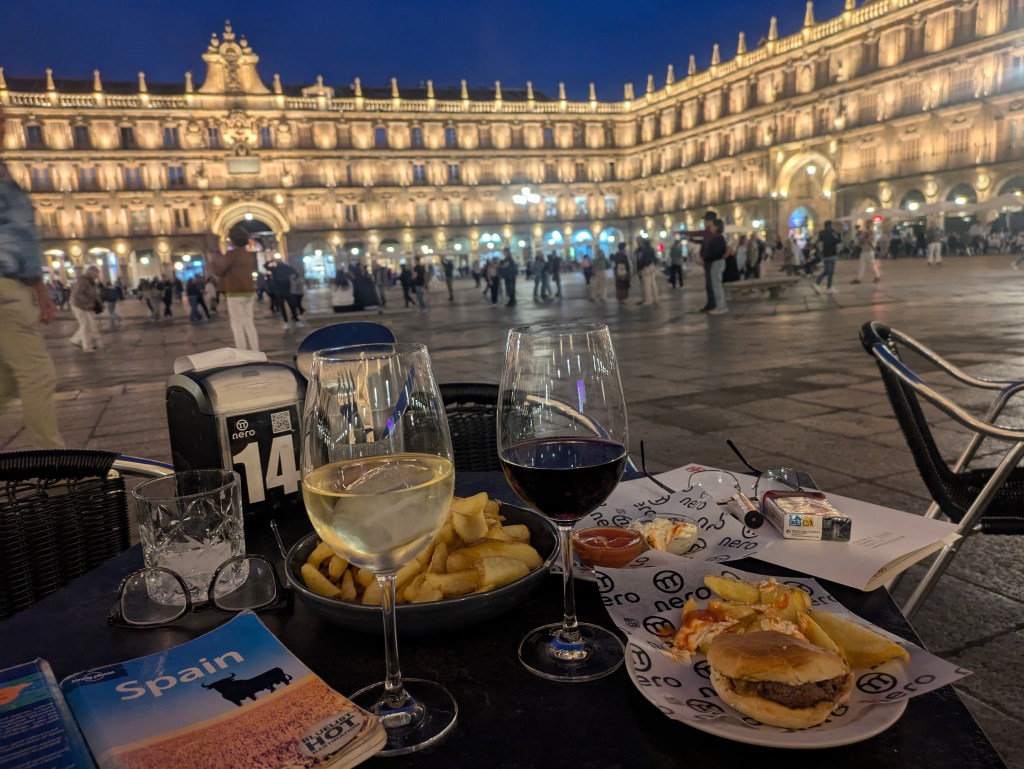
We are now in Salamanca, staying in a cheap guesthouse (Hispanica Hostal €38 a night) in a basic ensuite- room but it is clean, light-filled, central with free parking. The Plaza Mayor in Salamanca is considered the most beautiful in all of Spain and we believe that claim, having been in the Plaza last night when the lights came to spontaneous clapping. The plaza which was already gorgeous became even more magical when lit up and with a full moon rising over the splendid architecture.

Thanks for Reading

Hasta Luego

Electric Road Trip: The Journey Begins

Campervanning in North Mayo: A Scenic Adventure

It was a week to remember, a week in late August, spent campervanning around Mayo, a week of spectacular walking on stunning coastal paths, pristine white-sand beaches, lonely bogs and remote mountains and even a pilgrimage route, Tóchar Phádraig,  an ancient druidic path to reach Croagh Patrick.

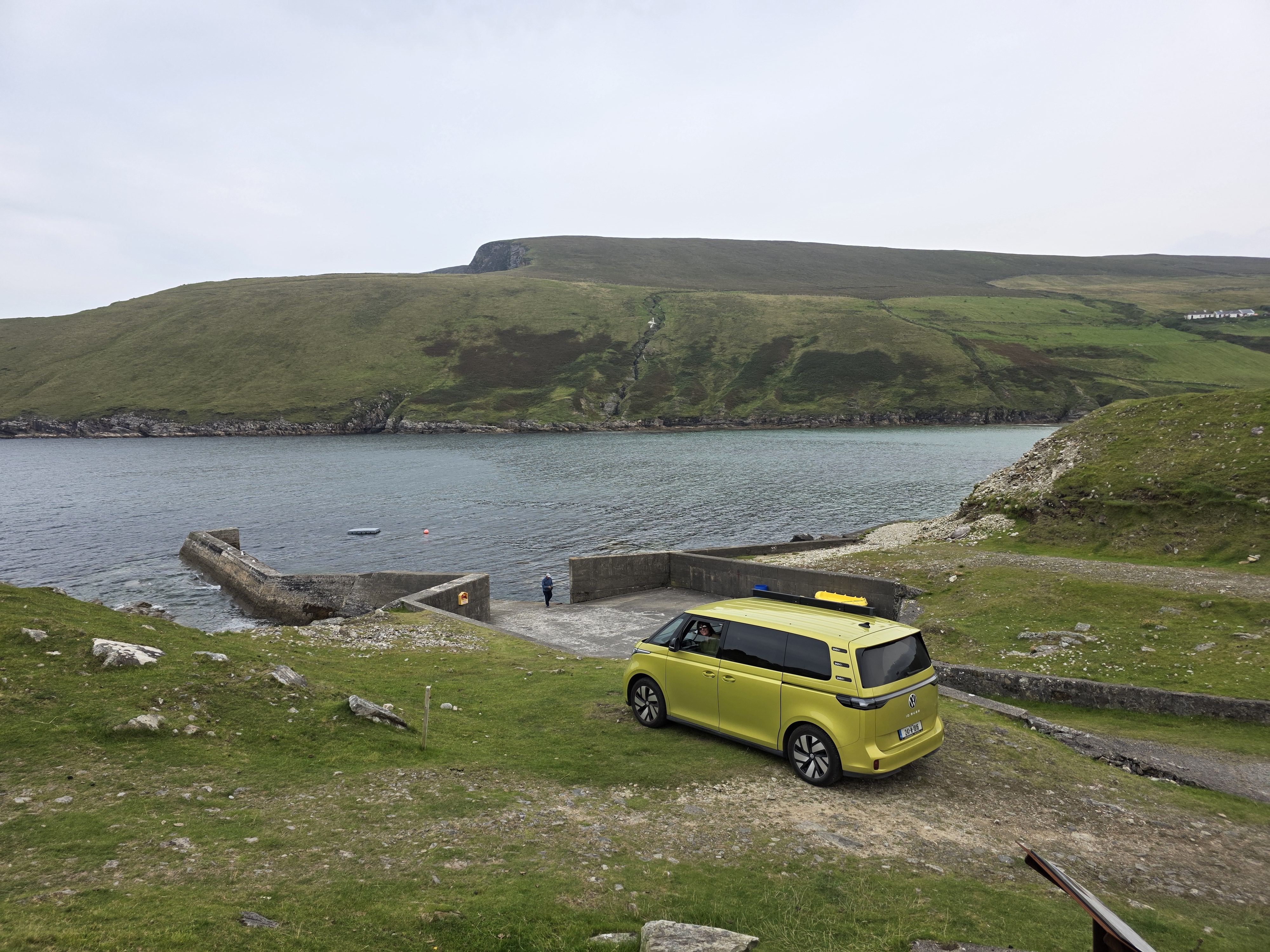
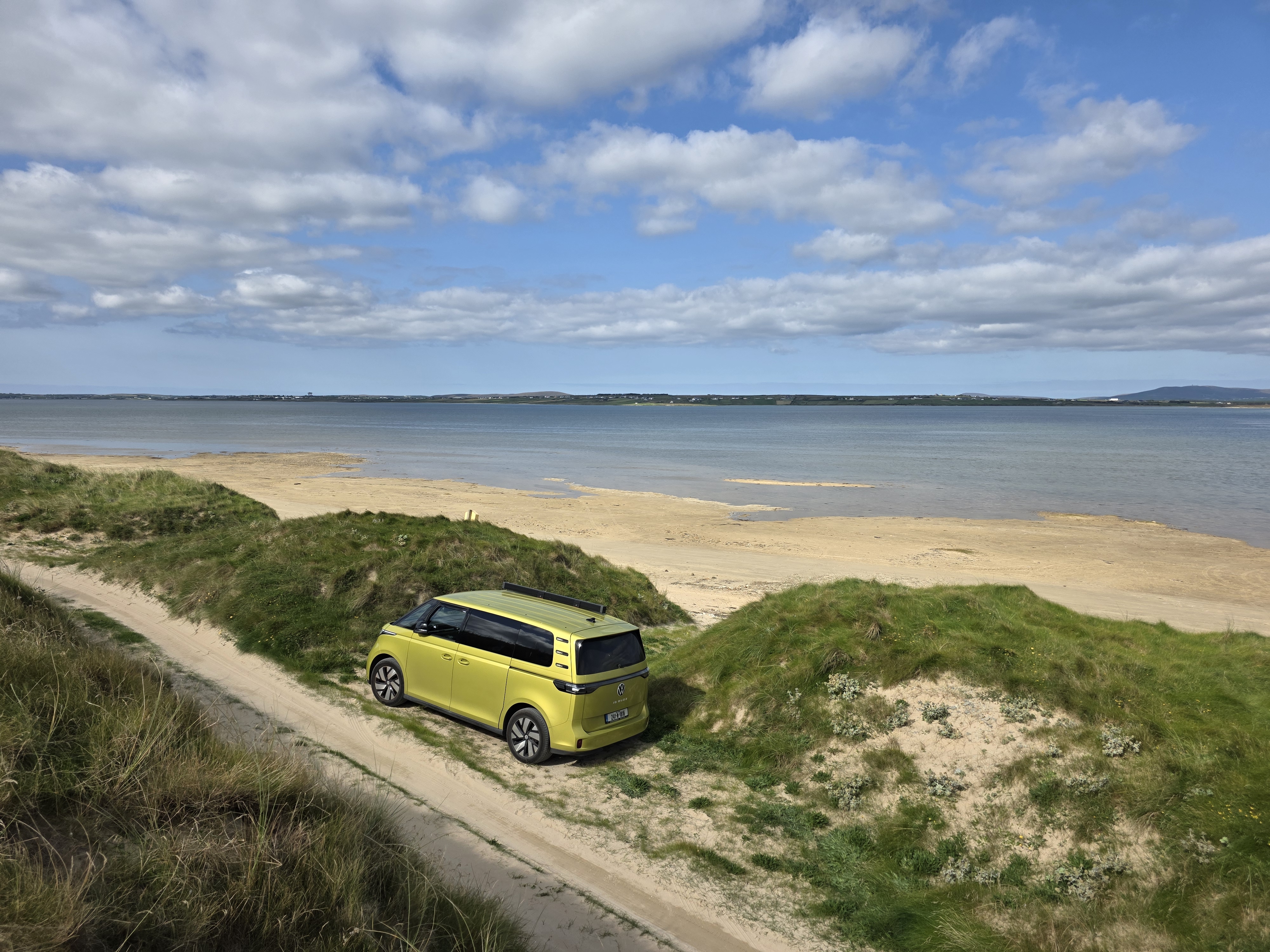
We started at Portocloy Beach on the far North-West Mayo Coast in a Gaeltacht area. If ever the phrase ‘off the beaten track’ was appropriate, it was here. We watched a lone gull, the only sign of life, gliding and swooping over the calm harbour waters.  There were no crowds, cafes, shops or bars, just a picture-perfect beach, isolated by miles of blanket bog and nestled deep into a natural harbour, Carrowteige Cove, a safe haven for swimming or snorkelling and a little pier for fishing boats. There were temporary toilets in place for the summer months which was good news for us as we were sleeping in the van (the ID Buzz).

Parked up at Portacloy Harbour

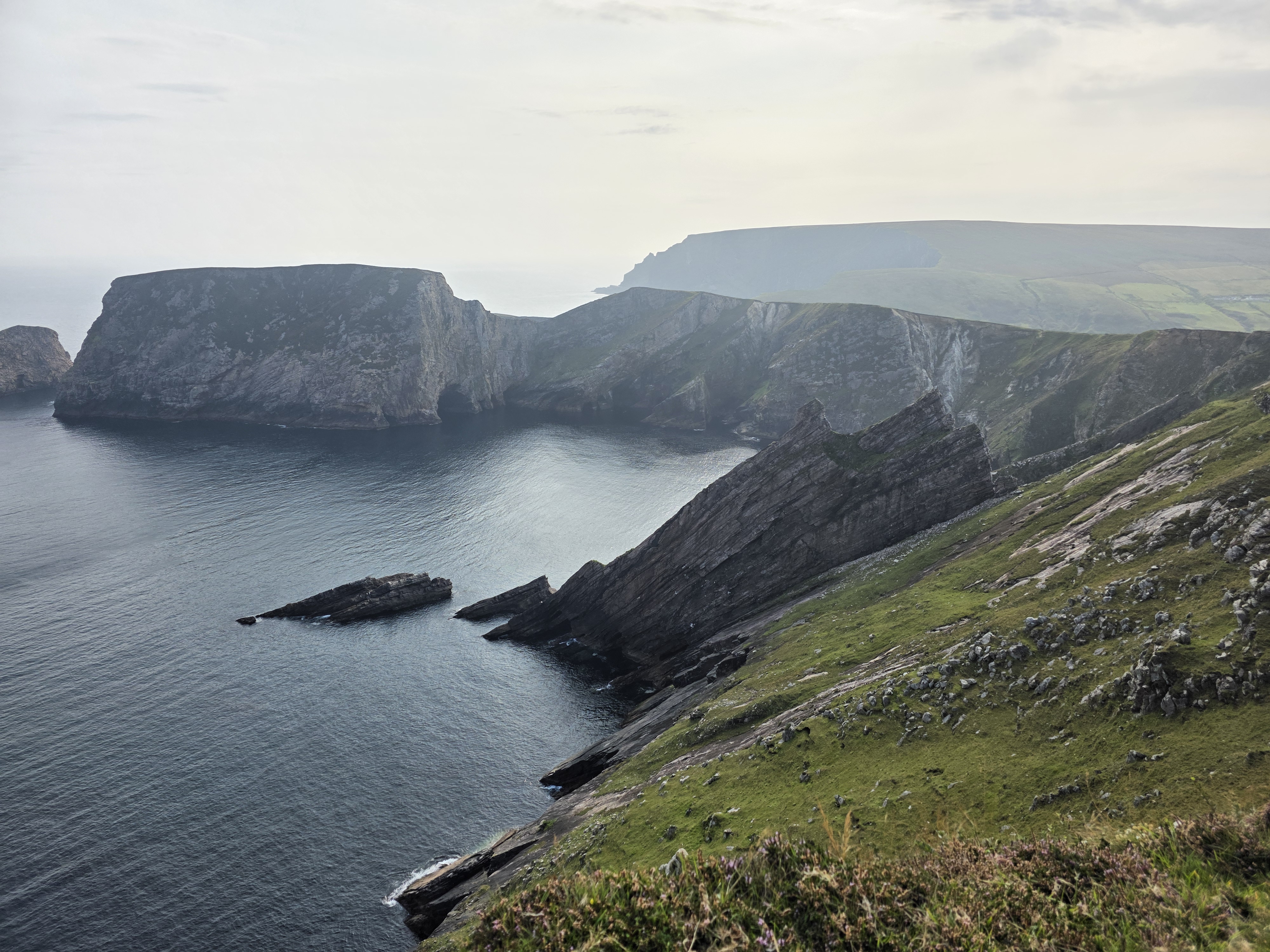
Portocloy Beach is also the start point for a truly spectacular cliff walk along the sea edge all the way to the extraordinary cliff views of Benwee Head (Binn Bhuí). This walk has a combination of rolling hills, expansive bog views, dramatic cliffs, jaw-dropping ocean and sea stack views, and more sheep than we could count. It is a well-marked trail with black poles and purple arrows, clearly visible on a beautiful cloudless day. The weather was perfect for us, blue skies with a light breeze, perfumed from the heathers, but on gusty days, care would be required because of the trail’s proximity to steep cliffs. We hiked an out and back route (about 13kms) but it is also possible to do the Carrowteige Loop Walk, which covers much of the same trail but is looped.

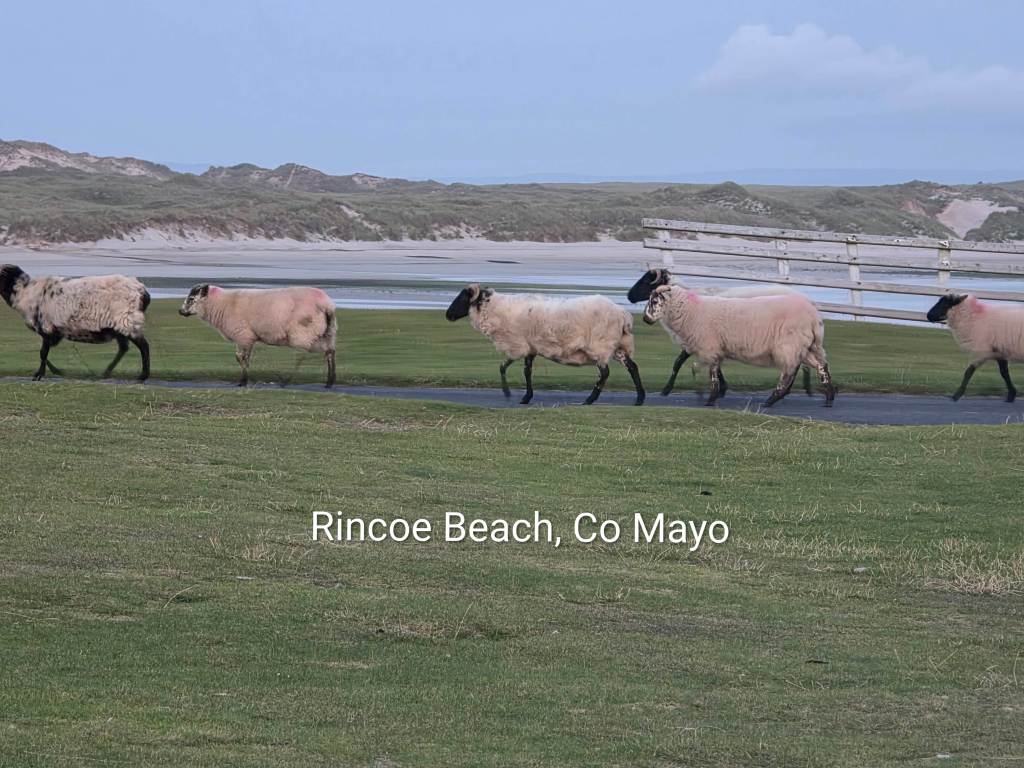
Rincoe Strand was only a ten-minute drive from Portocloy. It looks out across Broadhaven Bay towards the Mullet peninsula with a sandy beach on either side of a small peninsula. There were far more sheep than humans with the sound of bleating mingling with the lapping waves……until two busloads of Irish language students arrived for a swim in the crystal- clear waters… but peace came ebbing back when they scrambled onto their buses after about an hour, leaving a few campervans and the sheep.  We walked uphill past the walled graveyard to Connolly’s Pub (Teach Conghóile), a cosy place with spectacular sea views where a couple of locals were sipping pints. The whole area had a desolate beauty with hardly a tree or bush…it almost felt like we were on an island with the sea and water in every direction. A local man, who now lives in Wexford, told us with nostalgia of the ‘good times’ growing up here, when children ran wild and free, and fishermen travelled to England to find work during the winter months and boys, as young as thirteen, went to Scotland to pick potatoes, known as the tattie hokers.

After Rincoe, we headed south along the coast, stopping for lunch in Belmullet before continuing to Claggan Island, Mayo’s newest island, having only being officially declared an island in 1991. The tiny island is situated on the northeastern corner of Blacksod Bay, about 12km from Belmullet. It is linked to the mainland by a narrow, sandy causeway that divides Tramore Bay from Blacksod Bay and it is circled by beautiful sandy beaches in every direction you look with some amazing views of Achill and the Mullet Peninsula. It was easy to spot the first-time visitors…they were the ones driving on the rough sandy road while the locals used the beach.

Driving around the roads of North Mayo, we kept seeing signs for Tír Sáile without knowing what it was. By the time it registered that this was a Sculpture Trail, we had passed most of them. Tír Sáile  originated in 1993 when fourteen site-specific sculptures were installed in spectacular locations around the coast (sáile is seawater). One of the sculpture was on Claggan island, titled ‘Acknowledgment’, a 50m long sculpture of stone and earth, a tribute to the anonymous dead, whose memories have been lost in time. 

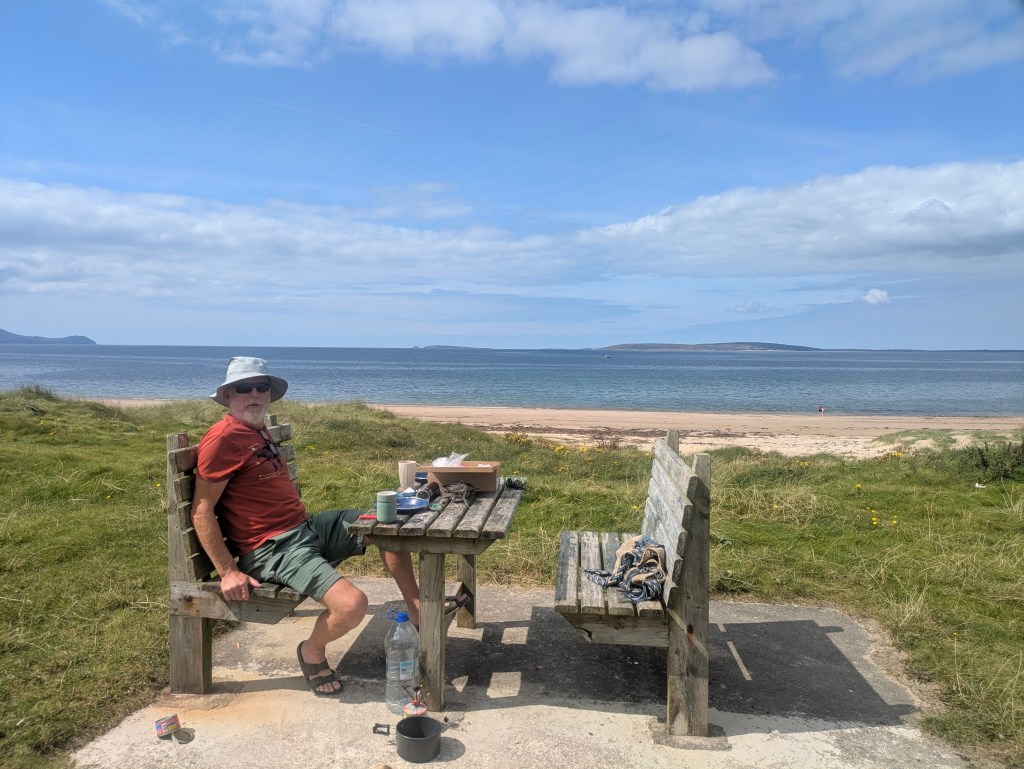
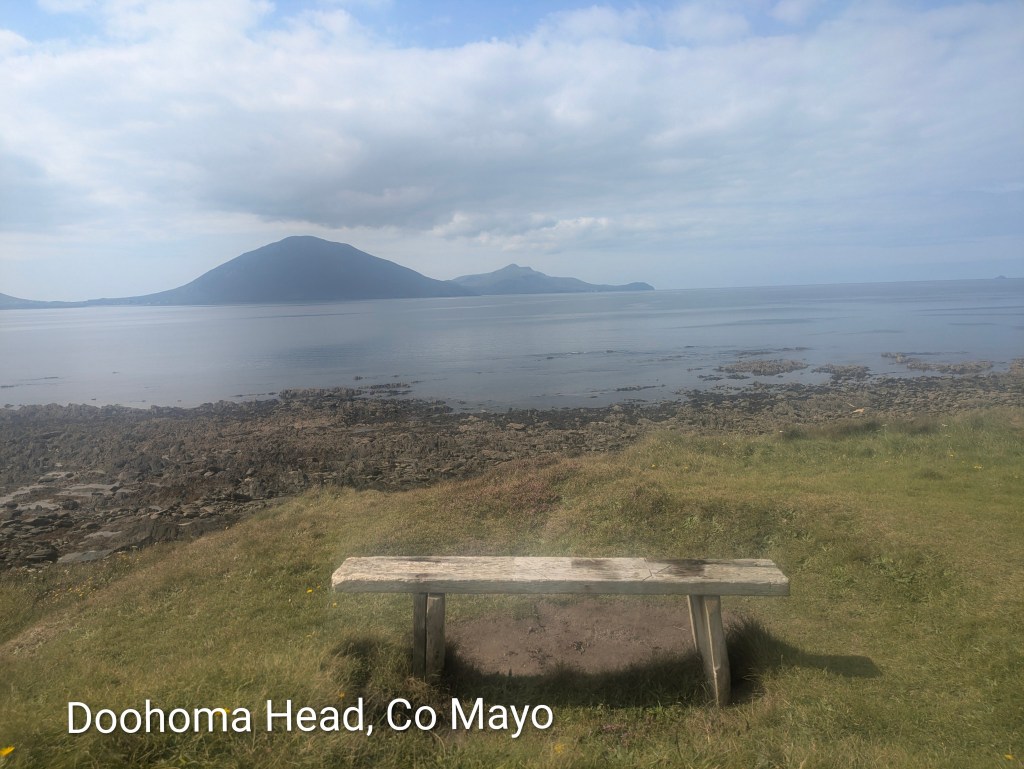
South  of Claggan Island, there seemed to be an unending supply of more white-sand beaches with the distinctive silhouette of Achill Island on the horizon in the distance.  Doolough Beach was empty apart from a man walking five dogs who told us that whales were spotted in the area the day before. Doohoma Head had a wooden seat with a dreamy Achill view but it was time for us to turn inland towards the mountains.

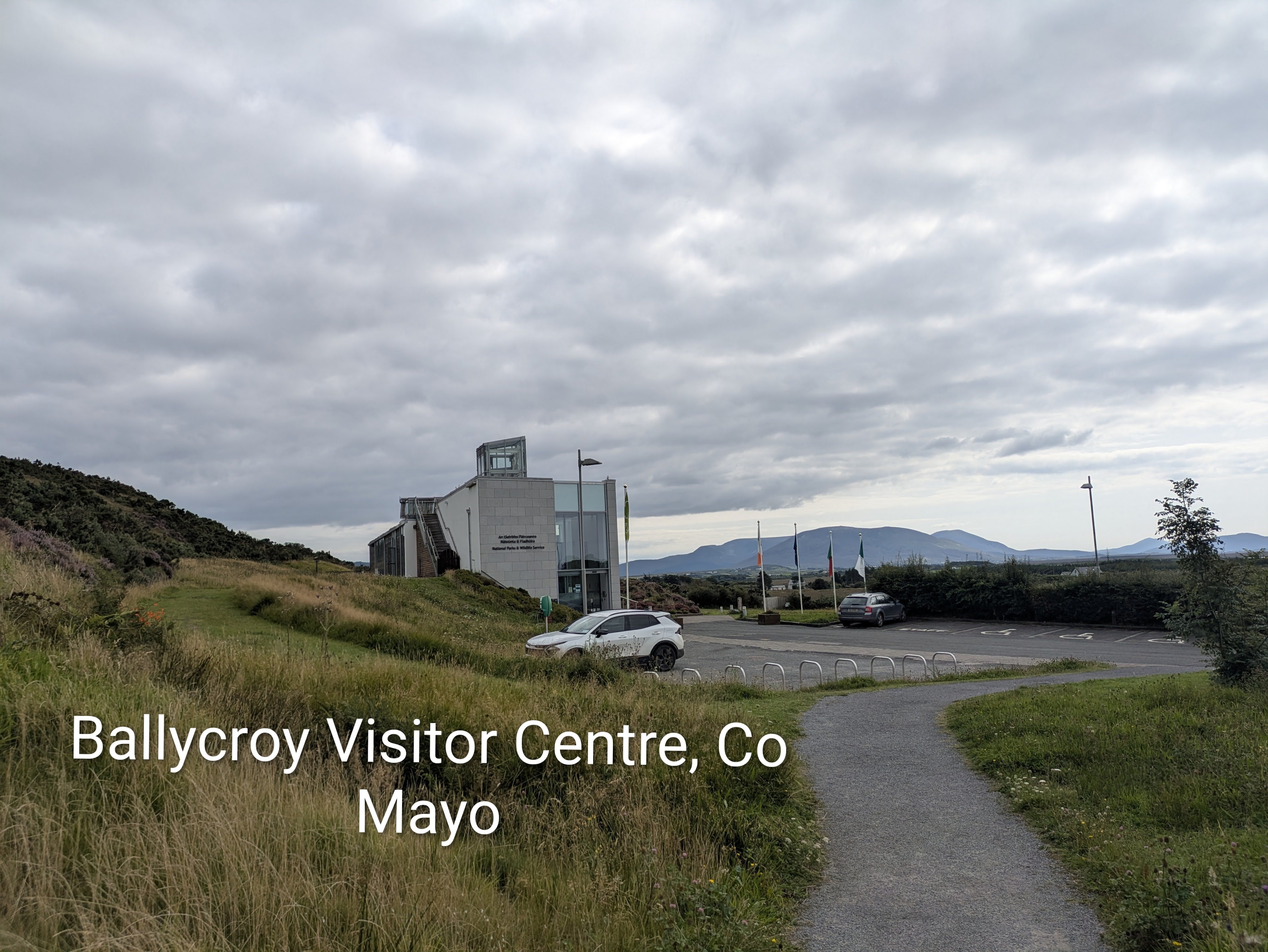
We stopped at the Ballycroy Visitor Centre in Wild Nephin National Park, a modern building full of light and clean lines with knowledgeable, enthusiastic staff and a lovely café. Wild Nephin National Park is huge –  a vast 15,000 hectares of uninhabited and unspoilt wilderness, dominated by the Nephin Beg mountain range and the Owenduff Bog, one of the last intact active blanket bog systems in Western Europe. Martin, who worked in the centre, explained the vision for the future with conservation plans for reforesting the park with native species and  a focus on education.

Just inside the visitor centre was a huge star-studded poster with the caption ‘The darkest skies reveal the brightest stars’ because Nephin has some of the darkest, most pristine night skies in the world and is officially certified as a Gold Tier standard International Dark Sky Park.  The Mayo Dark Sky Park extends across the entire National Park….there was even a viewing platform on the grounds of the visitor centre. The best time for star-gazing is the clear crisp winter months but it is possible on any night for visitors to see with the naked eye thousands of twinkling stars, other planets in our solar system, the Milky Way and even meteor showers…if they are lucky.

On Martin’s advice we headed to the Letterkeen Trailhead, about a forty minute drive, northeast from the centre,  a trip into wilderness and blizzards of midges at dusk. Unfortunately the skies remained cloudy for us that night with only a smattering of stars but the Letterkeen Loop walk the following morning was gorgeous, with different terrain from stony sheep paths, forest trails to sucking boggy paths where we almost lost a boot. Although the air was thick with moisture, it didn’t actually rain. We enjoyed panoramic views of inky-black lakes, brown streams and a feeling of deep isolation and silence. Nephin has been called ‘the loneliest place in the whole country’ because of the absence of human habitation and mobile coverage is patchy. We didn’t meet a single person on the trail although there were a few cars parked at the trailhead, which also had spotless port-a-loos.  

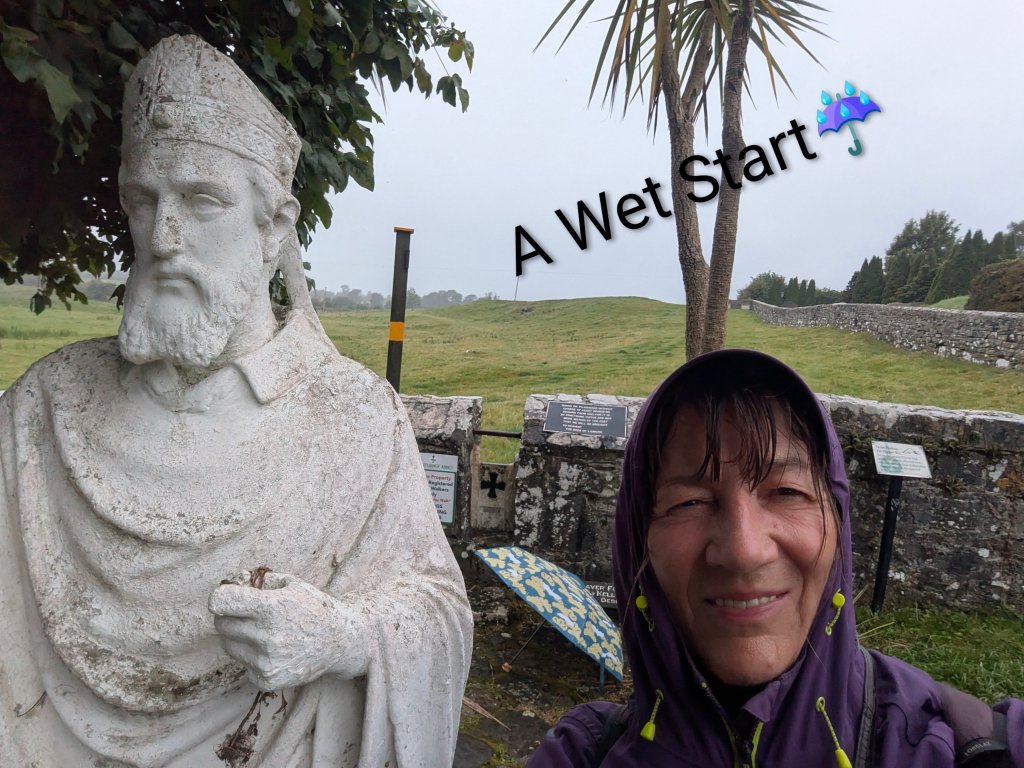
Our next stop was Ballintubber Abbey, founded in 1216 and one of Ireland’s oldest surviving abbeys and the hub of the ‘Irish Camino,’ and one of the five medieval pilgrim paths of Ireland. It is the starting point for Tóchar Phádraig, an ancient pilgrim path that stretches to Crough Patrick.

Tóchar Phádraig predates St. Patrick, originally built about 350AD as a chariot route from Rathcruachan, the seat of the kings and queens of Connacht, to  Cruachan Aille, as Crough Patrick was called in Pre-Christian times, a mountain sacred to our pagan ancestors.

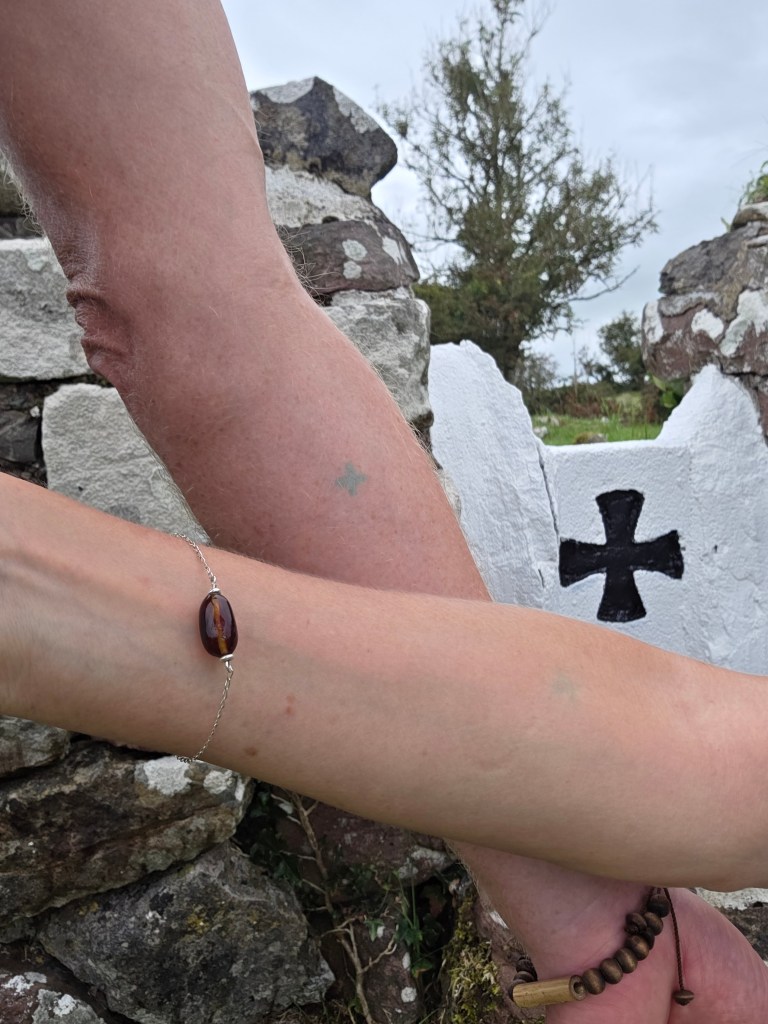
Pilgrims must register in the Abbey before setting out, where they will receive maps, advice and a booklet which gives some information on the many points of interest along the way. We registered on Friday afternoon so that we could get an early start on the 35kms route the following morning as the office opened at 9.30am. The walk can be broken into two parts, the first section to Aghagower with its round tower, and the second section to Crough Patrick but we hoped to complete it in one go.  We were branded on the back of each forearm with a small green cross, evidence that we had registered and paid our dues should any farmer or landowner request proof.

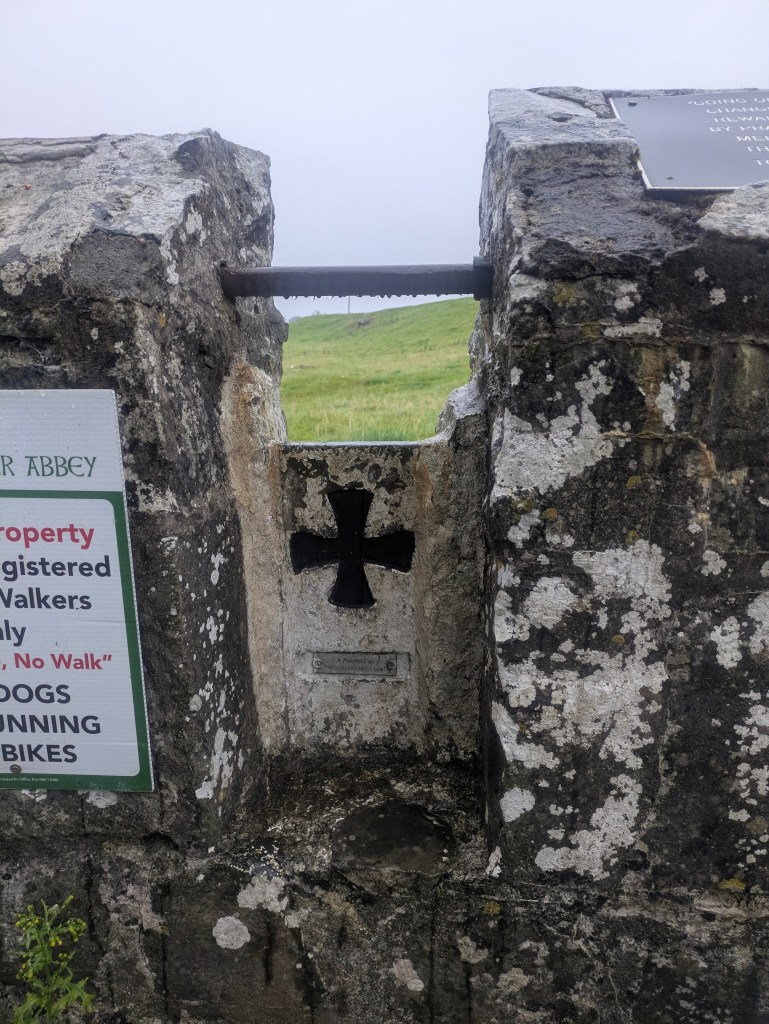
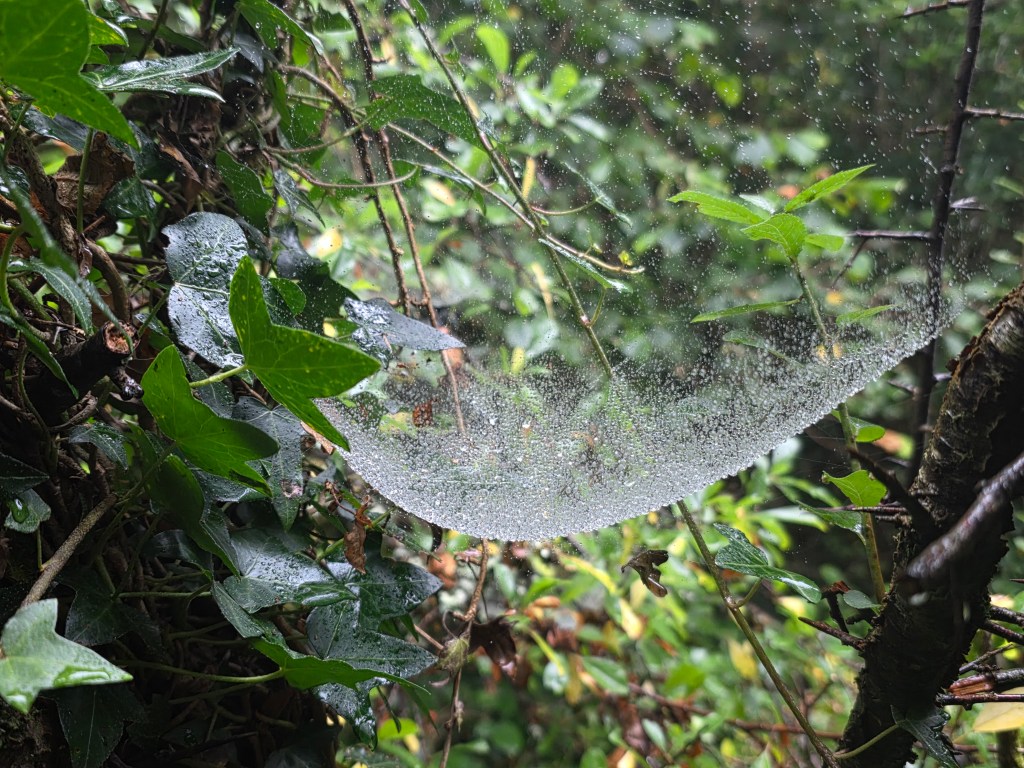
The morning started grey, in a light drizzle, the type of West of Ireland rain that was very wetting but the day cleared after an hour or two. The camino wound its way through open farmland, fields of grazing cattle, sheep and a few horses. We trekked through woodland and forests, stepped over countless stiles with the Tóchar cross sign etched into the stone and tramped along country lanes past hedgerows laden with abundant bounty – blackberries, sloes and haws and moisture drizzled cobwebs.

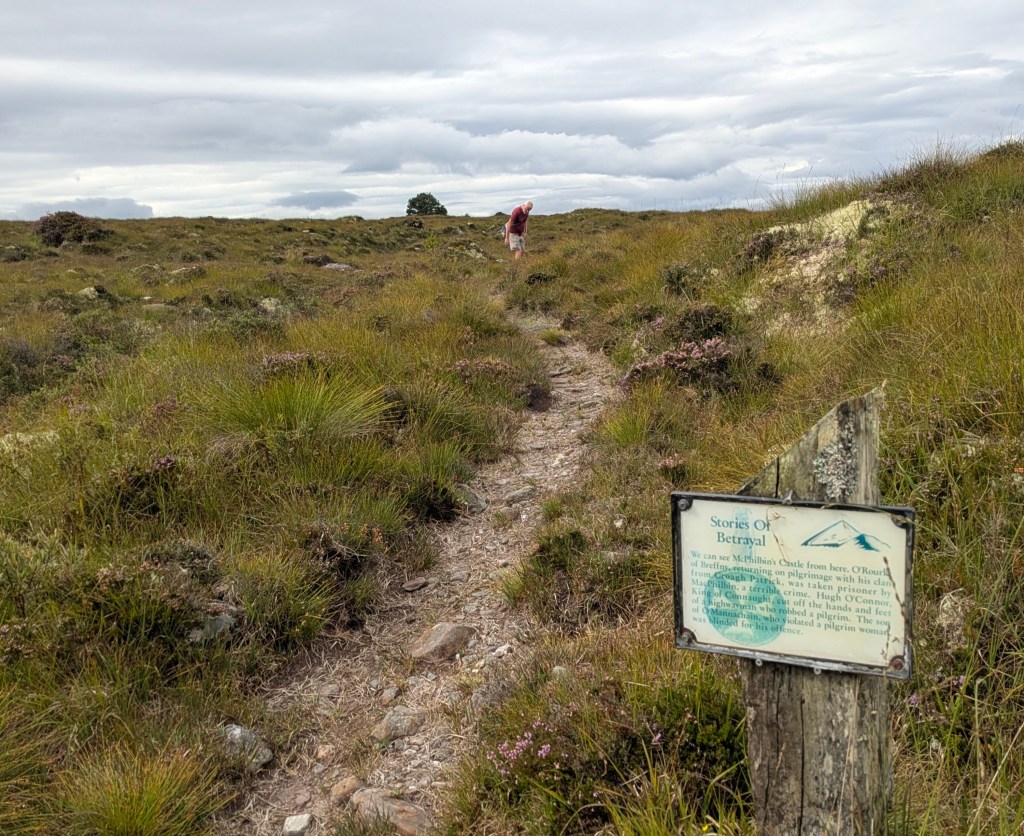
There were numerous storyboards, highlighting points of interest, a welcome opportunity to stop and read. This was not only a spiritual pilgrimage but also a cultural and historical journey through the ages, a fascinating blend of pagan and Christianity, a place of history and pre-history where every tree, stone and rock had a story to tell – mainly of famine, hardship and betrayal but also of healing and goodness. Sometimes in the silence, all I could hear was the beating of my heart and the sound of my boots on the earth. While the first section was predominantly off-road, the second section was mainly on paved country roads and laneways.

With our damp start and the high wet grass, our feet were wet from the very beginning and we contemplated giving up at the halfway point but we persevered. Crough Patrick loomed out of the landscape, a focal point since ancient times,  and seemed to beckon us forward although for long sections, it didn’t seem like  we  were getting any closer as we plodded along. There were signs saying ‘No complaining’ in several places which we tried to obey.

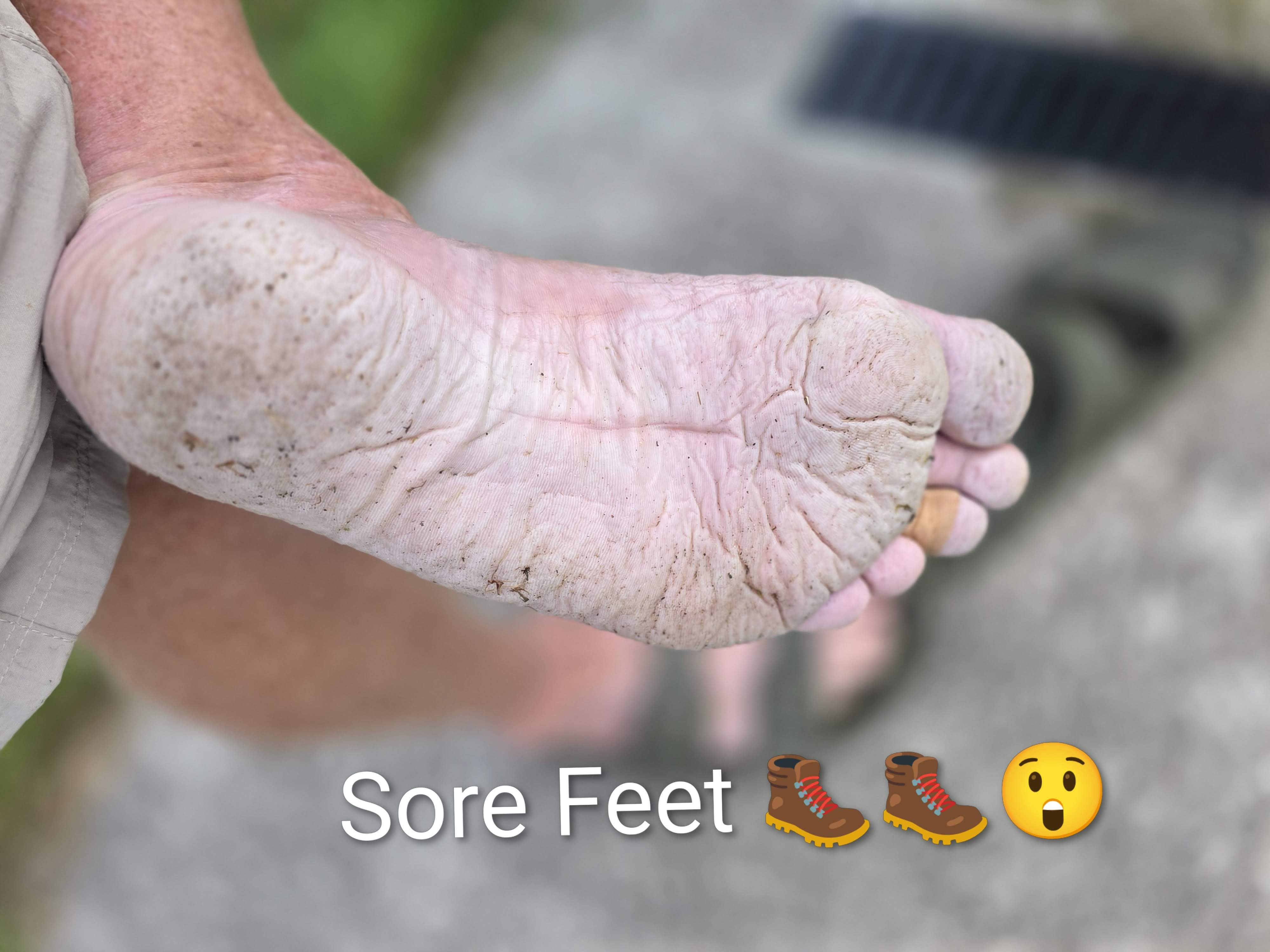
 Although the trail was well-marked, we managed to lose it several times, back-tracking until we picked it up again. There are several guided walks each year, organised by the Abbey, which would be easier as we wouldn’t have to concentrate on finding the markers ourselves but we were a week too early for the August guided pilgramage. We finished with a sense of achievement…. and exhaustion with shrivelled feet… after a long day of blisters and contemplation.

We barely scratched the surface of what North Mayo has to offer but one thing is certain, we will certainly return if we can.  If stunning scenery, amazing deserted beaches, superb hiking  and starry skies are your thing, then Mayo is definitely the place to go. The locals are an added bonus, probably the friendliest people in the whole country and certainly the most talkative.

We had no problem with the electric van, charging it in Ballina and in Westport.  This van trip was so successful that we are considering going further afield. Might it be possible to drive to Istanbul or Casablanca…..and back?

Thanks for reading

Campervanning in North Mayo: A Scenic Adventure

Old Rail Trail Greenway – Cycling in the Midlands

The Midlands is an area of Ireland that is seldom a destination in itself, usually it’s just a region to pass through on the way to somewhere more exciting. But the heart of Ireland has a lot to offer as we discovered when we visited the area and cycled the Old Rail Trail Greenway which links the River Shannon in Athlone to the Royal Canal in Mullingar this week.

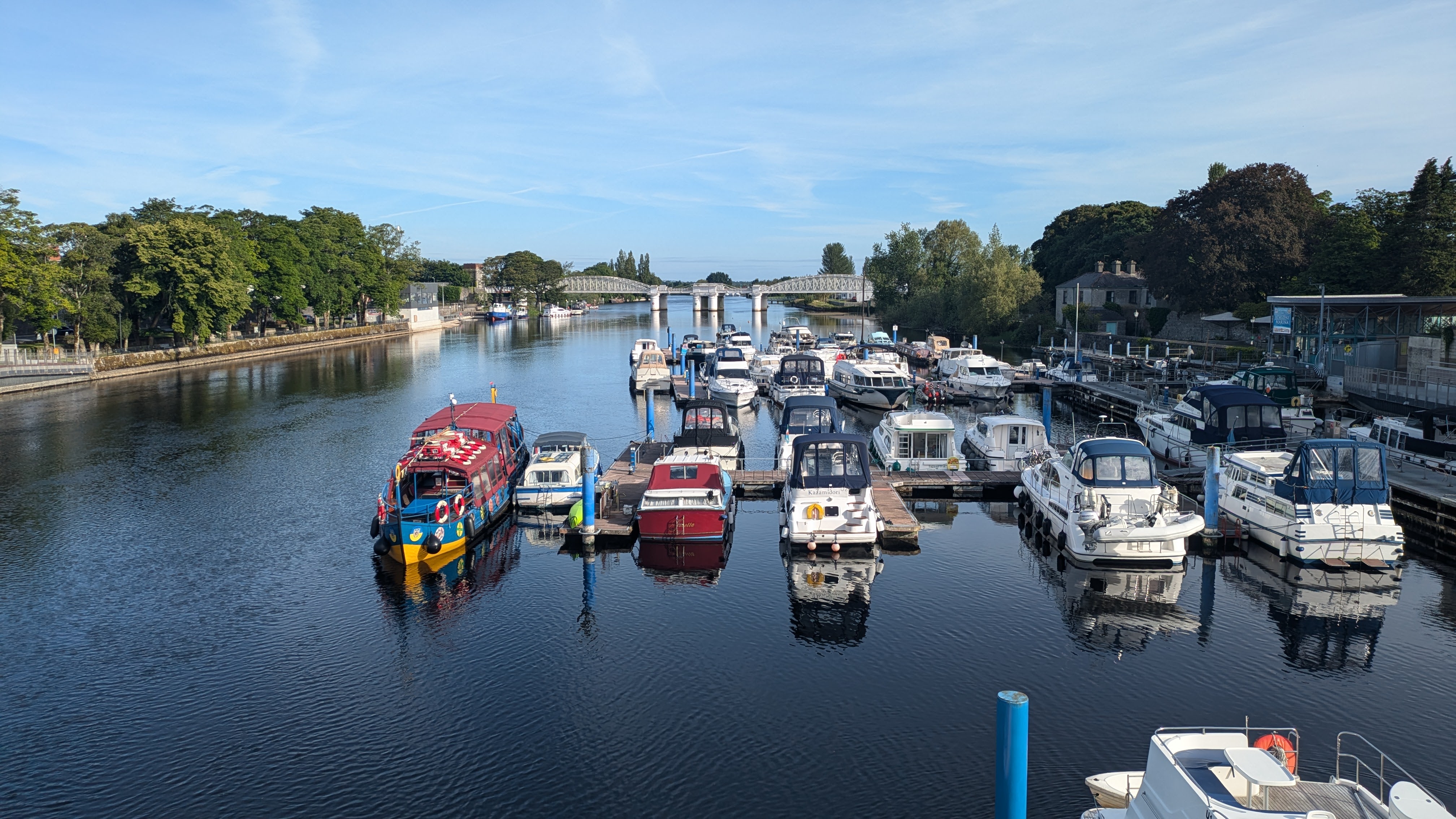
The Shannon, Athlone

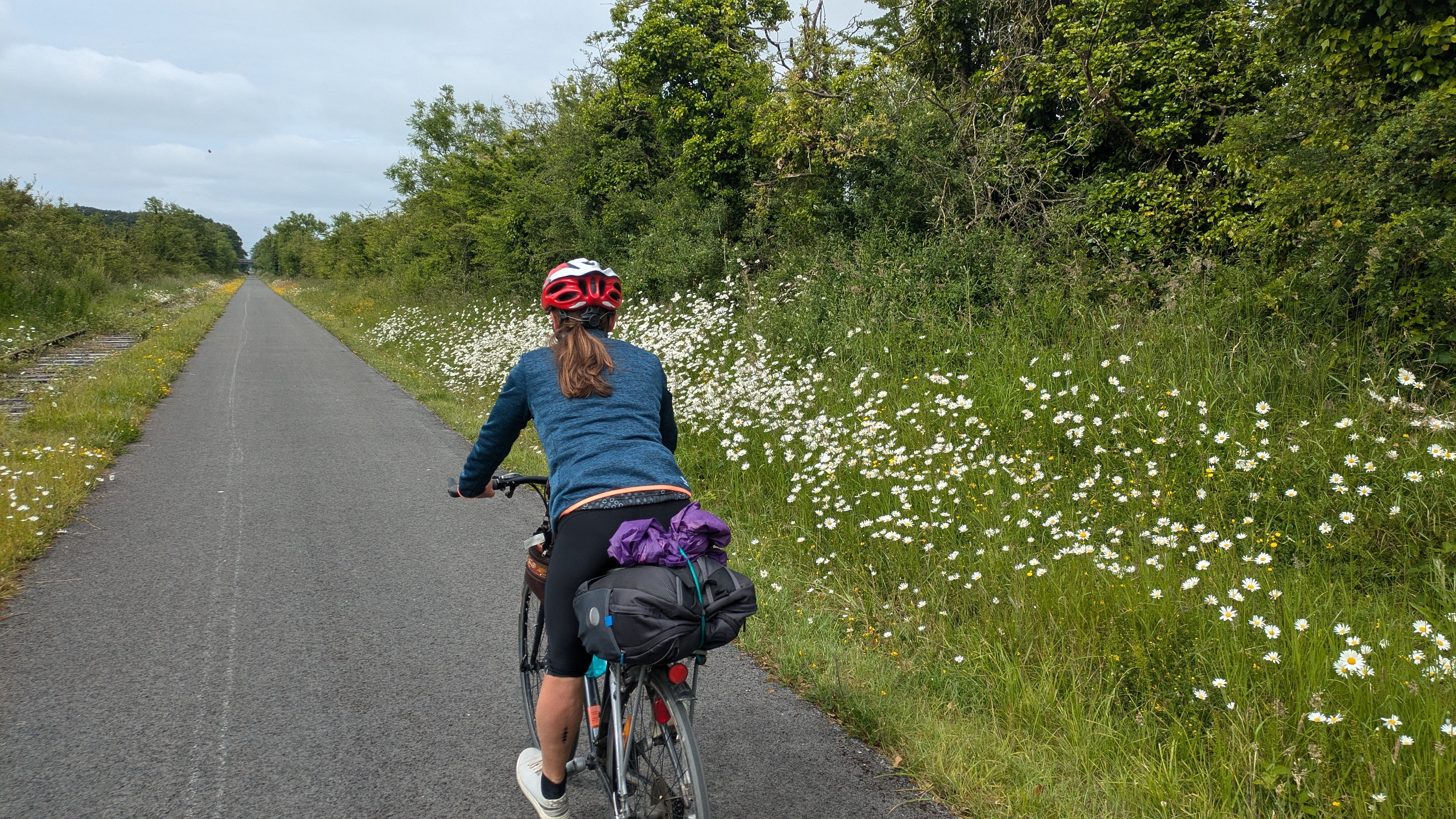
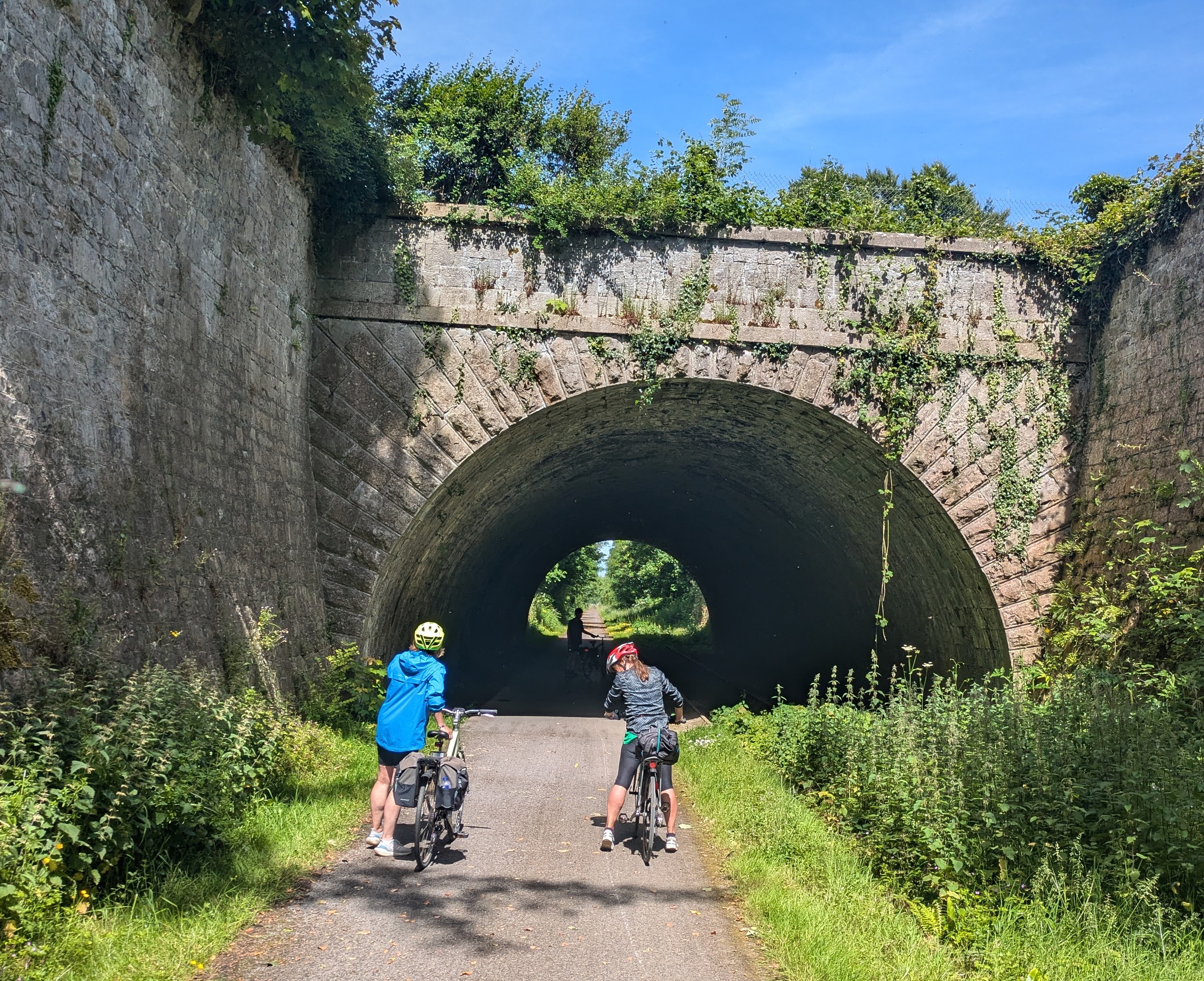
This greenway is 43kms on a flat paved and wide path along a converted stretch of the Midlands Great Western Railway which makes for lovely leisurely cycling or walking and is suitable for everyone. We met a 95 year old local man who walks a couple of kilometres on the Greenway every day and credits this for his good health.  Although I hadn’t been on a bike for about two years, I was pleasantly surprised at how relaxed and easy it was.  

Easy- Riding, Old Rail Greenway

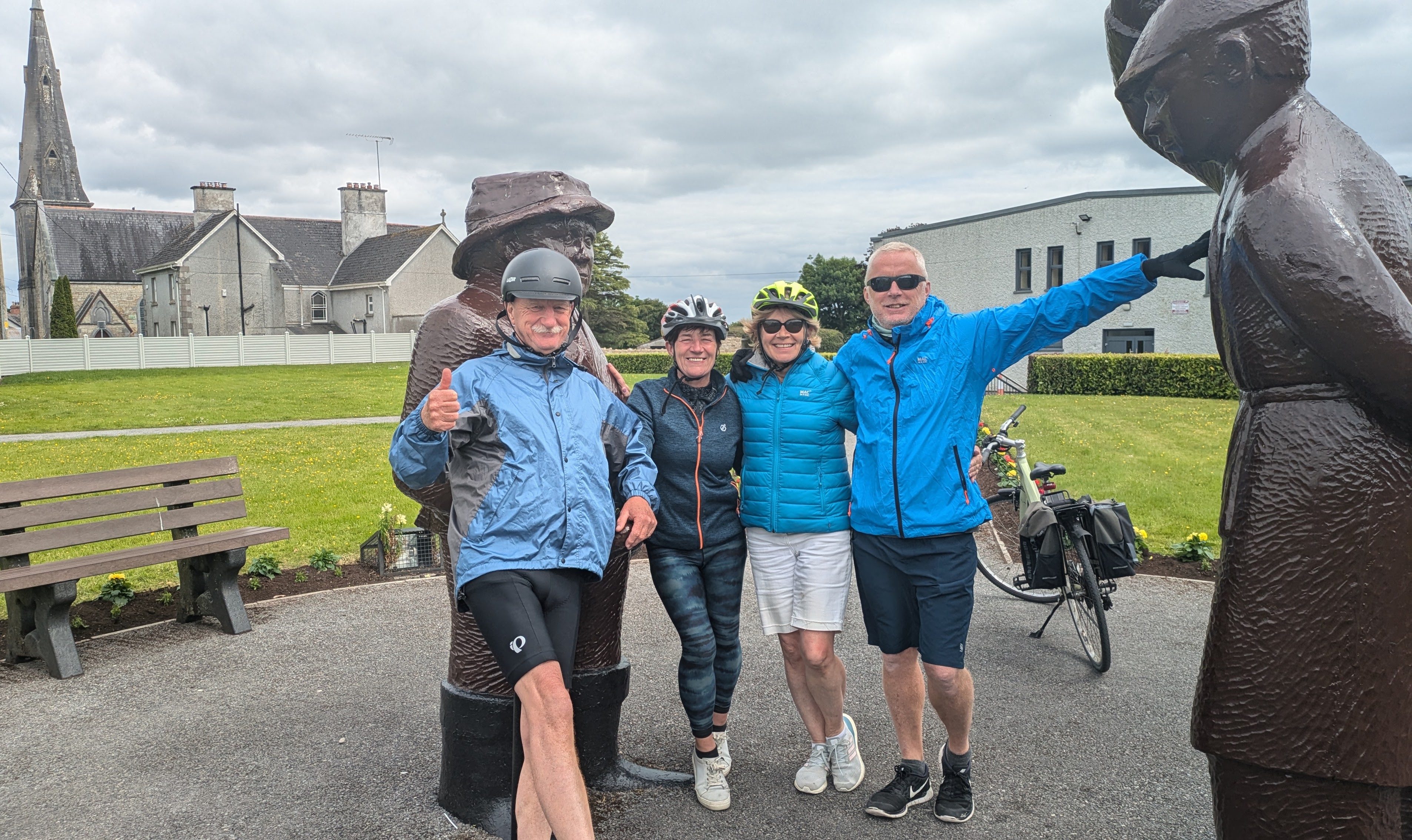
It was very quiet mid-week with just a few other cyclists and the occasional dog-walker.  Most of the time, the only sounds were birdsong, the whirr of our tyres and the infrequent hum of a tractor working in the fields. The verges were full of  perfumed wildflowers, banks of ox-eyed daisies, buttercups, hawksbeards and ferns while elder trees flowered overhead. We cycled under lots of arched stone bridges and along by frequent storyboards telling of the flora, fauna and the history of the area including some complex characters like Sara Kelly, a woman who went from being a destitute unmarried mother to the richest female landowner in the British Isles and who was murdered in Ballinderry, Moate in 1856 probably by some disgruntled tenants that she had evicted.  

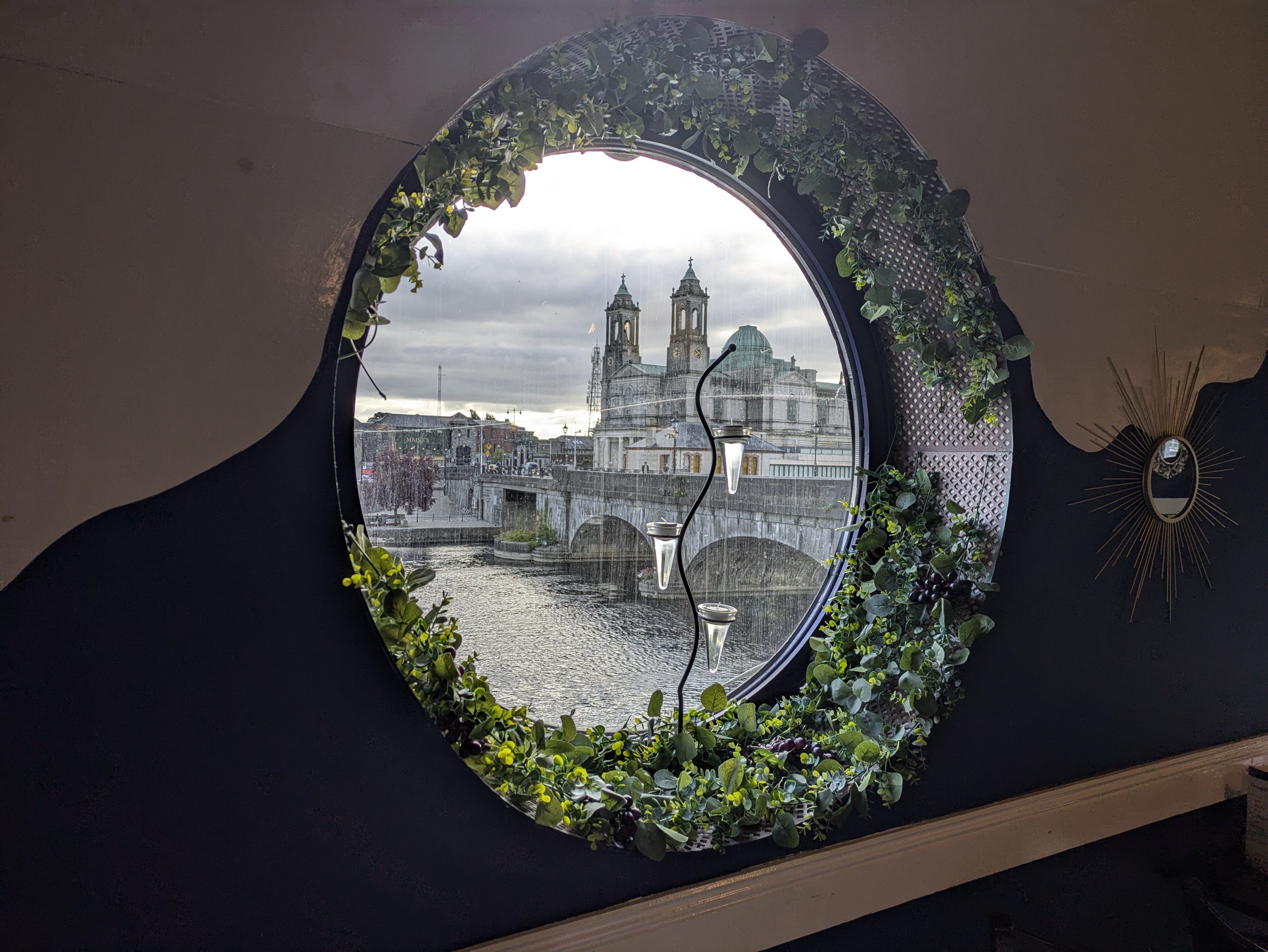
We spent our first night in Athlone,  a town on the Shannon that is full of history. It even boasts the oldest pub in Ireland, Sean’s Bar, a low-ceilinged watering hole with lots of snugs and walls adorned with photographs, maps and memorabilia. It claims to be a thousand years old and the barman told us that some tourists visit Athlone solely to have a pint in Sean’s Bar or to drink one of their whiskey blends. Athlone Castle is certainly worth a visit with panoramic views from the top of the castle and interesting interactive displays with tales of bravery and bloodshed especially during the Siege of 1690/1. Across from the Castle is the Cathedral of St Peter and Paul, a colossal basilica with gorgeous stain glass windows from the Harry Clarke Studios.

There’s a lovely tranquil walkway by the Shannon under lots of Horse Chestnut, Sycamore and Oak trees– a great place to watch the action on the water from the riverboats to the birdlife – lots of moorhens, herons and swans. We slept soundly in our  small campervan to the lapping of water from the  narrow Athlone Canal ( and I swear that the visit to Sean’s bar was not responsible).

The first section of the Greenway is from Athlone to Moate (15.5kms) passing by the Crosswood Bog, a protected area because of its biodiversity and natural habitats. Moate is a lovely wide-streeted town with friendly people, especially the staff  in the Tuar Ard Coffee Shop where we stopped twice to refuel, once in either direction, with toasted sandwiches and scones. We also called to the Dun na Si Heritage Park, a large park on the edge of Moate with walkways, playgrounds,  dolmens, stone circles, sculptures and artwork.

Moate Centre
Dun na Si Heritage Park

The middle section runs from Moate to Castletown, (16.3kms) where the old historic railway station is preserved. The Hill of Uisneach is near here, a place that was once the seat of the High Kings of Ireland and which is reputed to be the burial place of the Earth Goddess Eriu and the Sun God Lugh. There are public tours of Uisneach at the weekends but during the week, they have to be arranged privately. We didn’t visit but it sounds like a fascinating place….we may have to return.

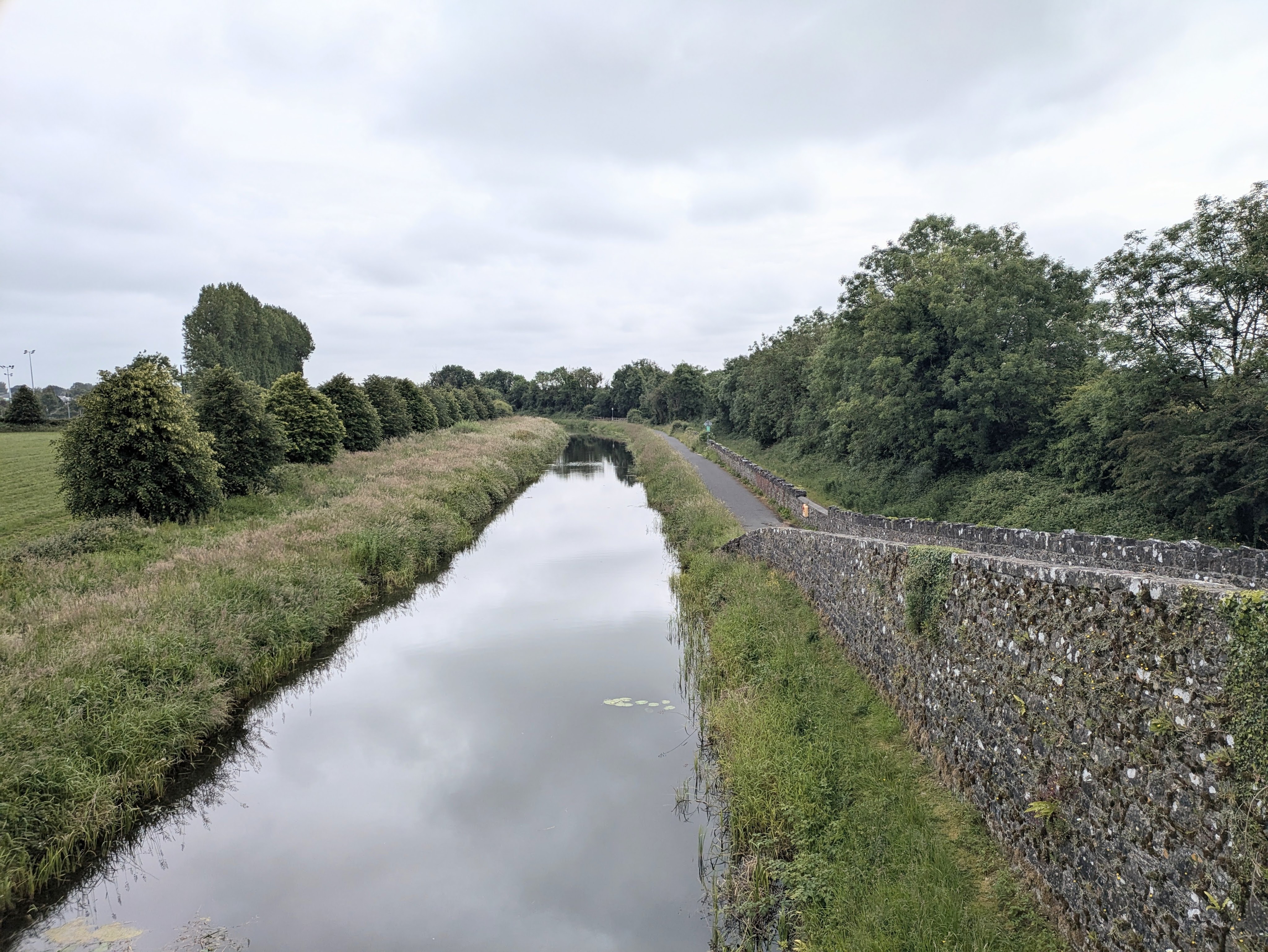
The last section of the Old Rail Greenway goes from Castletown to Mullingar (11.4kms), where it links up with the Royal Canal, so it’s possible to keep going and cycle west to Longford or east to Maynooth. The last few kilometres into Mullingar along by the canal are really gorgeous with swans and fishermen all enjoying the water.

Royal Canal

We spent the second night in Mullingar, a really vibrant town that was looking well in the sunshine. We ate in the Wholefood Kitchen Restaurant, sitting outside under umbrellas eating exceptionally delicious food (great place to eat if you are in the area). We stayed in Kerrigan’s B&B which is close to the centre of town, it’s a B&B over a pub with clean modern rooms and a breakfast of bagels, croissants and fruit pots is included in the Coffee Shop downstairs.

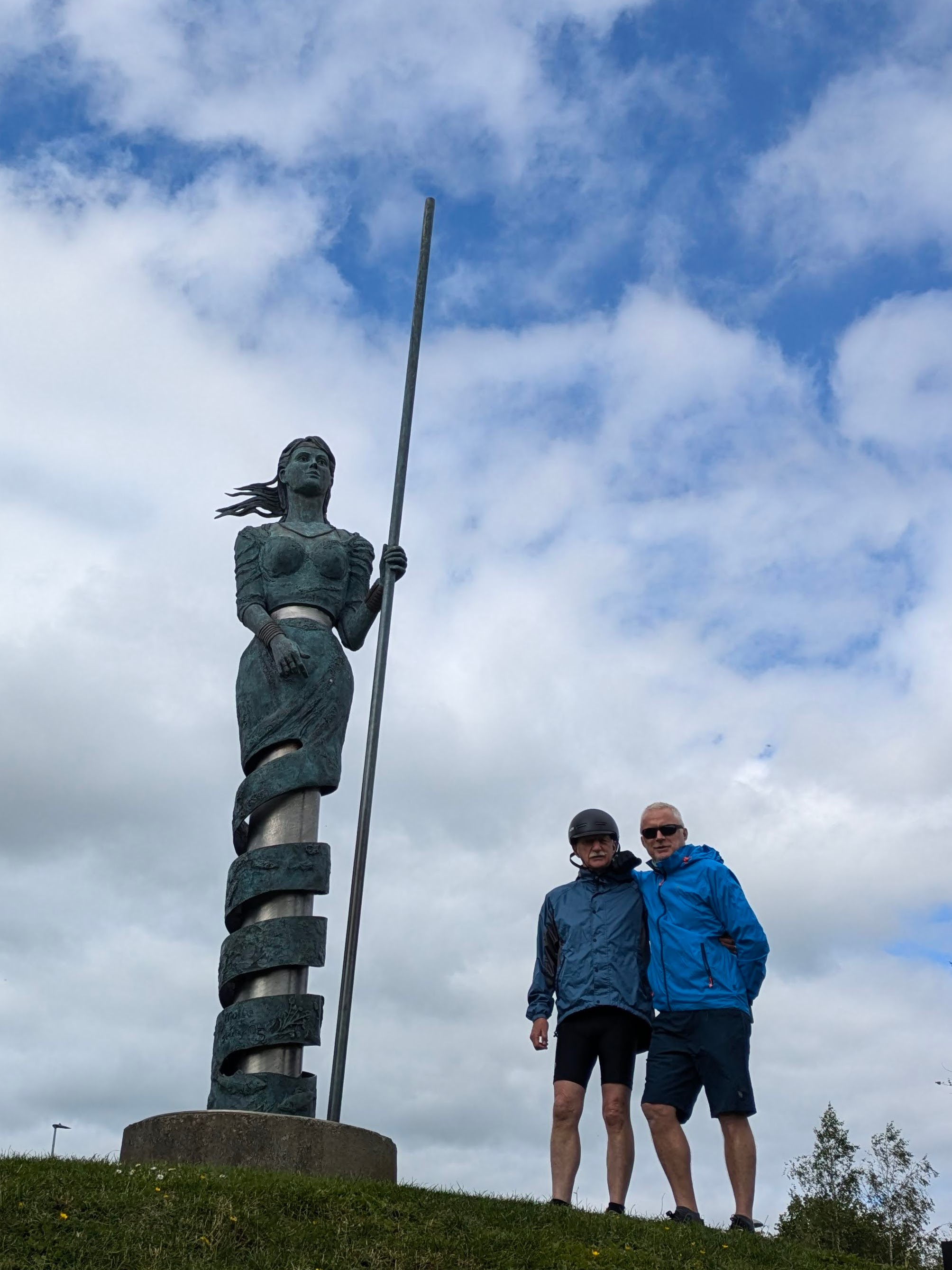
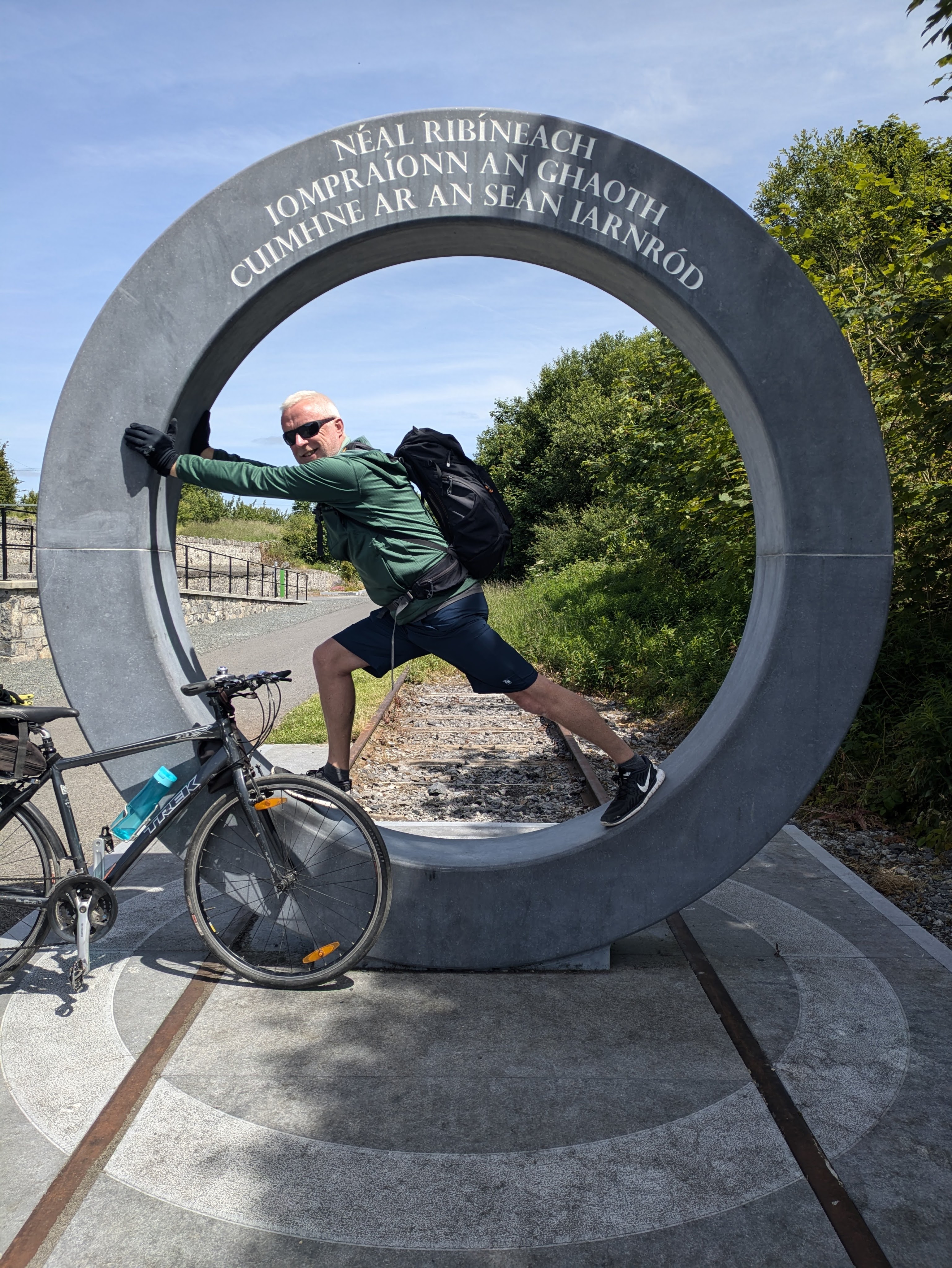
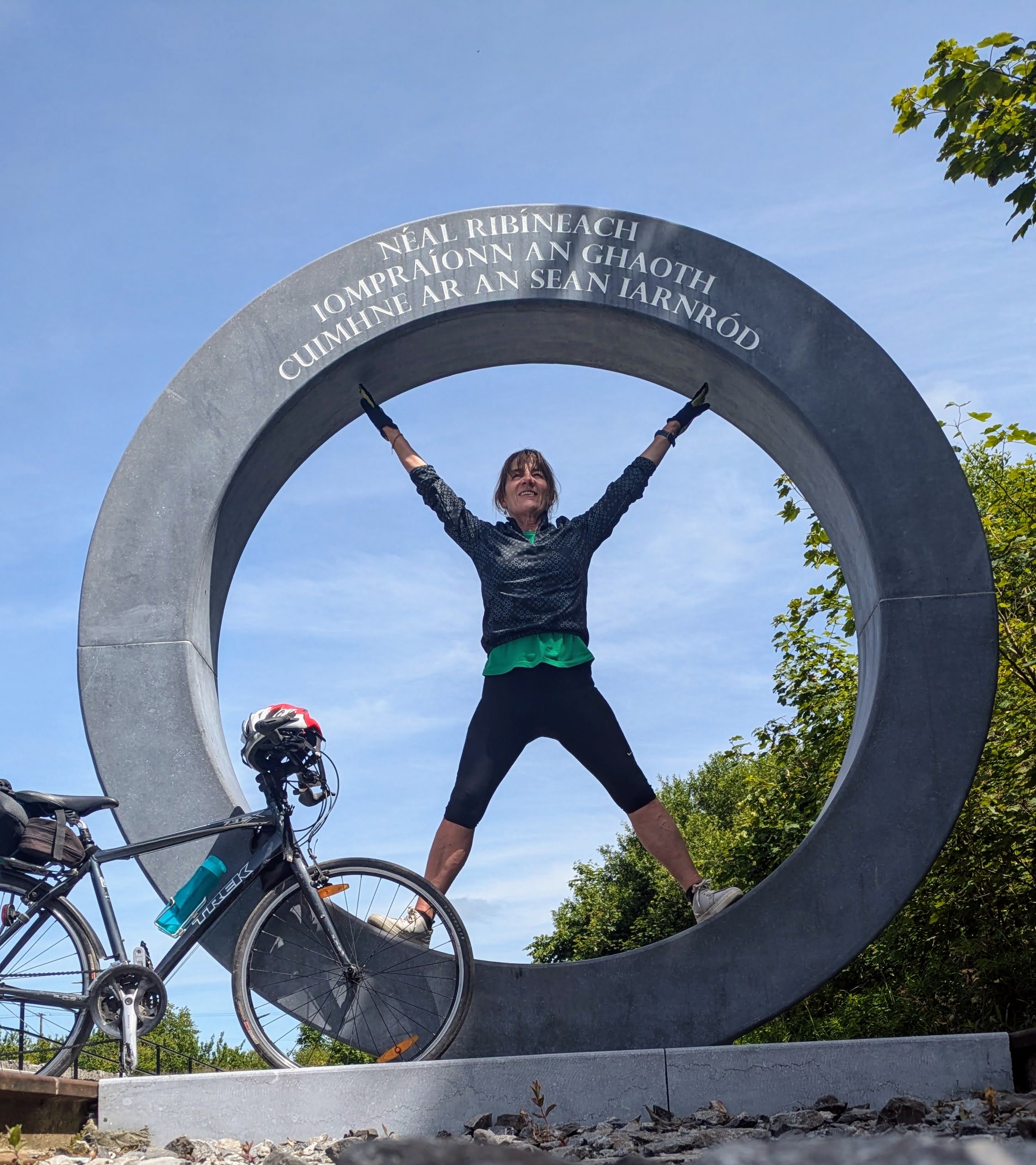
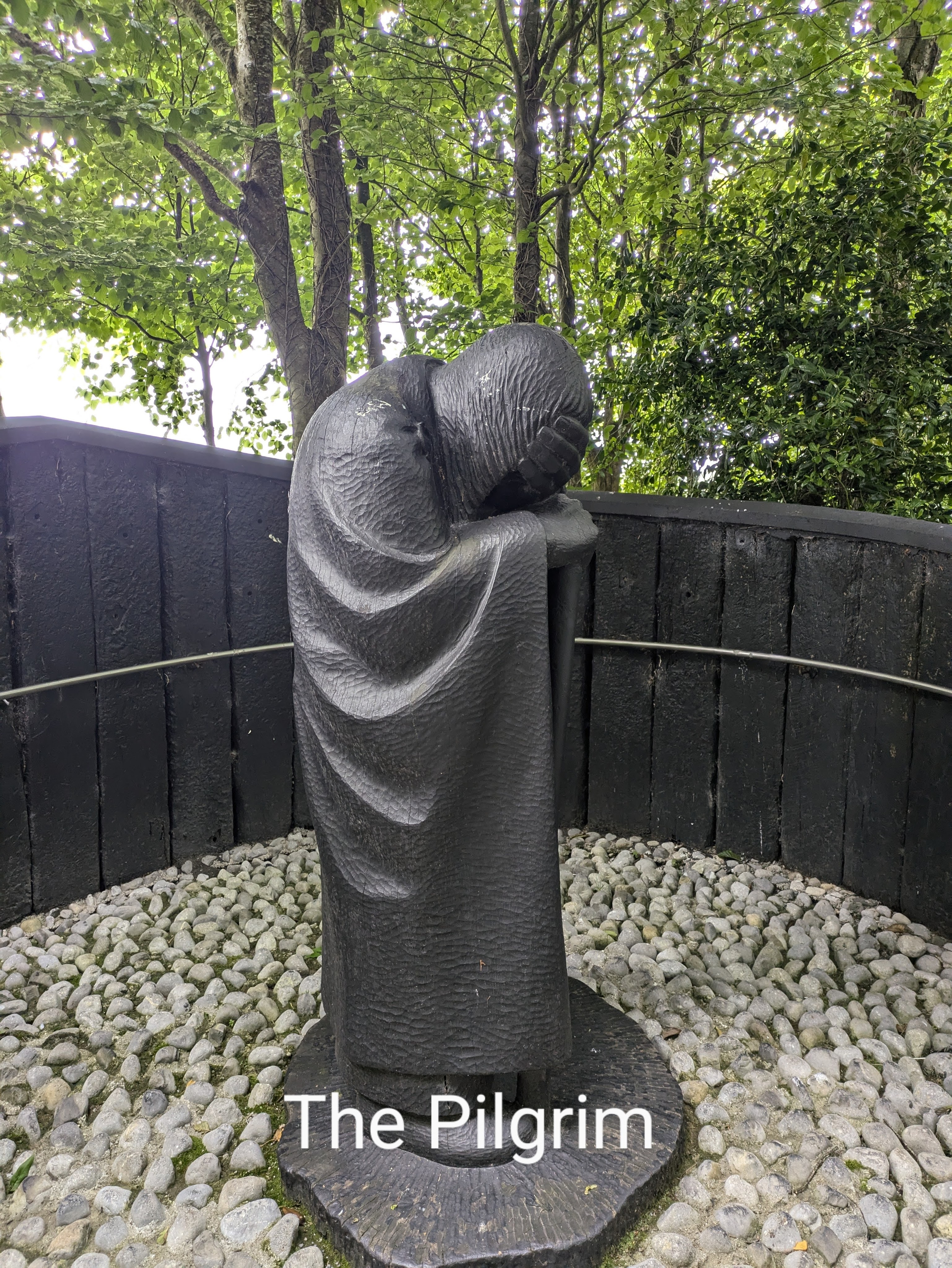
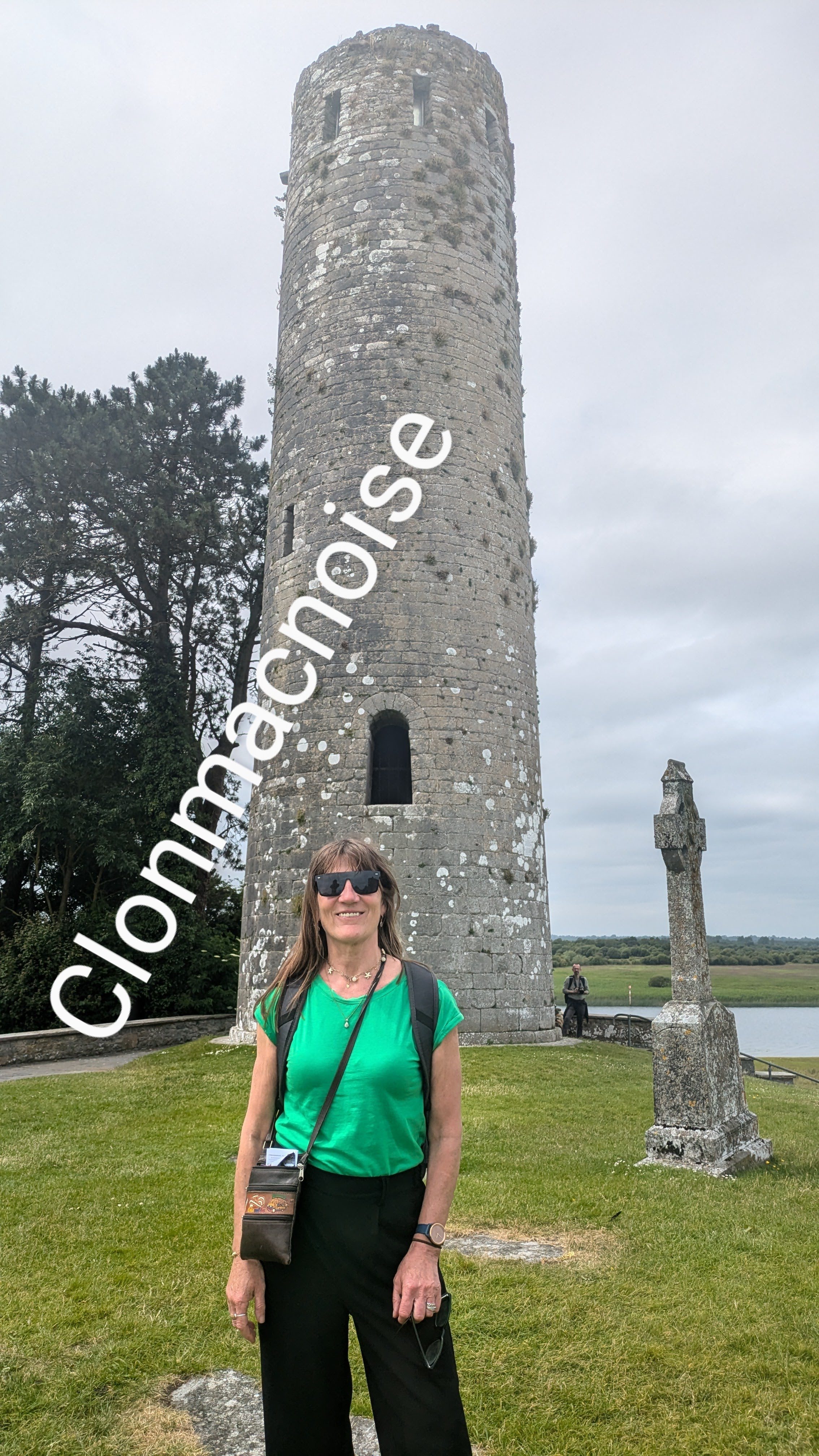
The following morning, we cycled back to collect the cars, stopping at Jack’s Stop in Streamstown along the way, a popular spot with locals, walkers and cyclists and a great time to take some photos – The inscription in the stone circle above translates to ‘Wispy cloud, The wind carries a memory of the Old Railway. We drove home by Clonmacnoise, a monastic site founded by St Ciaran in the 6th century in a beautiful location on the banks of the Shannon and once an important seat of learning and pilgramage. It’s a peaceful place now with beautiful Celtic crosses, two round towers soaring to the sky, numerous ruined churches, an interpretive centre and short guided tours.  Our guide told us that we were literally walking on bones as there were bodies everywhere under our feet.

The heart of Ireland is a wonderful place to visit with family or friends, with canals, rivers, lakes, a rich fascinating history and probably the friendliest people in the country

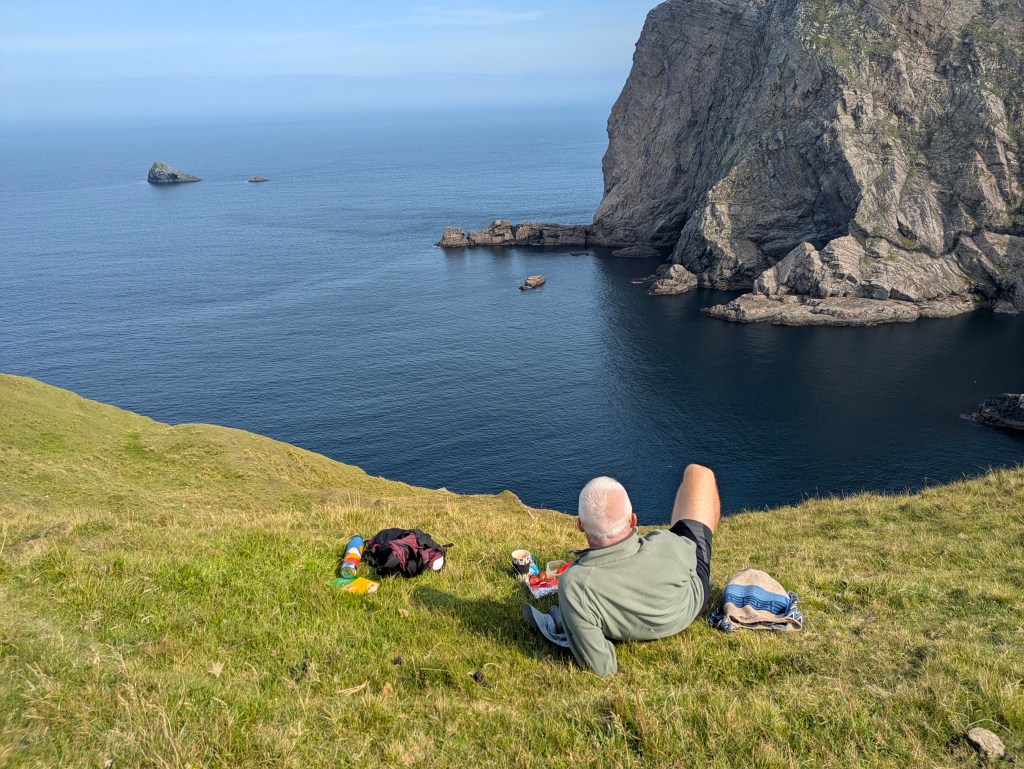
Sometimes, a person just wants to lie down🙄

Old Rail Trail Greenway – Cycling in the Midlands