The night before we left home for our nine-week roadtrip from Ireland to Morocco in our all-electric van, I dreamt that camels were towing us through the desert because we had run out of charge. Range anxiety in my dreams…..hopefully not an omen.
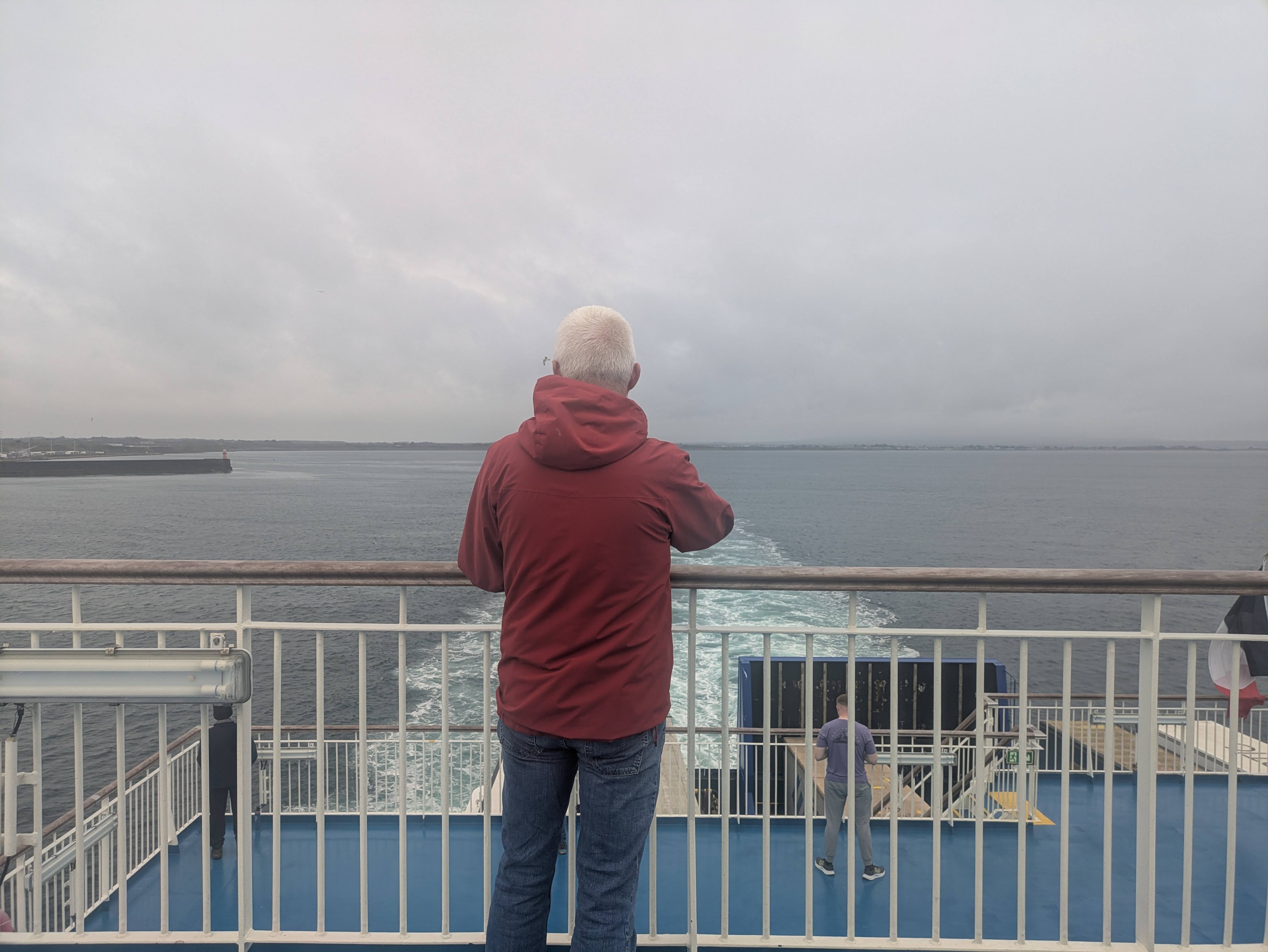
The journey to the ferry port in Rosslare was short and the crossing to Bilbao was smooth. Taking the ferry was such a comfortable, relaxing way to travel, a slow transitioning to holiday mode. Wi-Fi was only available for a fee and our mobile data only kicked in briefly when we sailed near the tip of England and the French coast with a fleeting flurry of What’s App messages. We were in a floating cocoon, out of contact with the world.
We were fortunate to sail on Wednesday morning (Oct1), well ahead of Storm Amy. Our original preference was for the Friday crossing but it was full when we tried to book it the previous week, so we opted for the earlier sailing. Sometimes it pays off to be ‘last-minute’ because that Friday evening sailing was cancelled due to the adverse weather conditions.
The thirty-hour journey flew by. The talk given by the resident on-board conservationist (from the Ocra Charity) about whale identification was really informative and a good initiative on the part of Brittany Ferries. The breeze on deck was brisk for the whale-watching session, and as the whales refused to turn up, we went down to the bar and marine-watched in comfort through the large windows, accompanied by live music followed by a quiz about French food and drink. It was multiple choice so we guessed most of the answers….. wrongly. (Sample question: What is Roscoff famous for? Onions apparently.)
There was plenty of other entertainment, Caoimhin did a short course on rope-knots and the whiskey & chocolate tasting in the shop was very popular. There was bingo, more quizzes and dolphins appeared at dusk for a little sunset somersault.
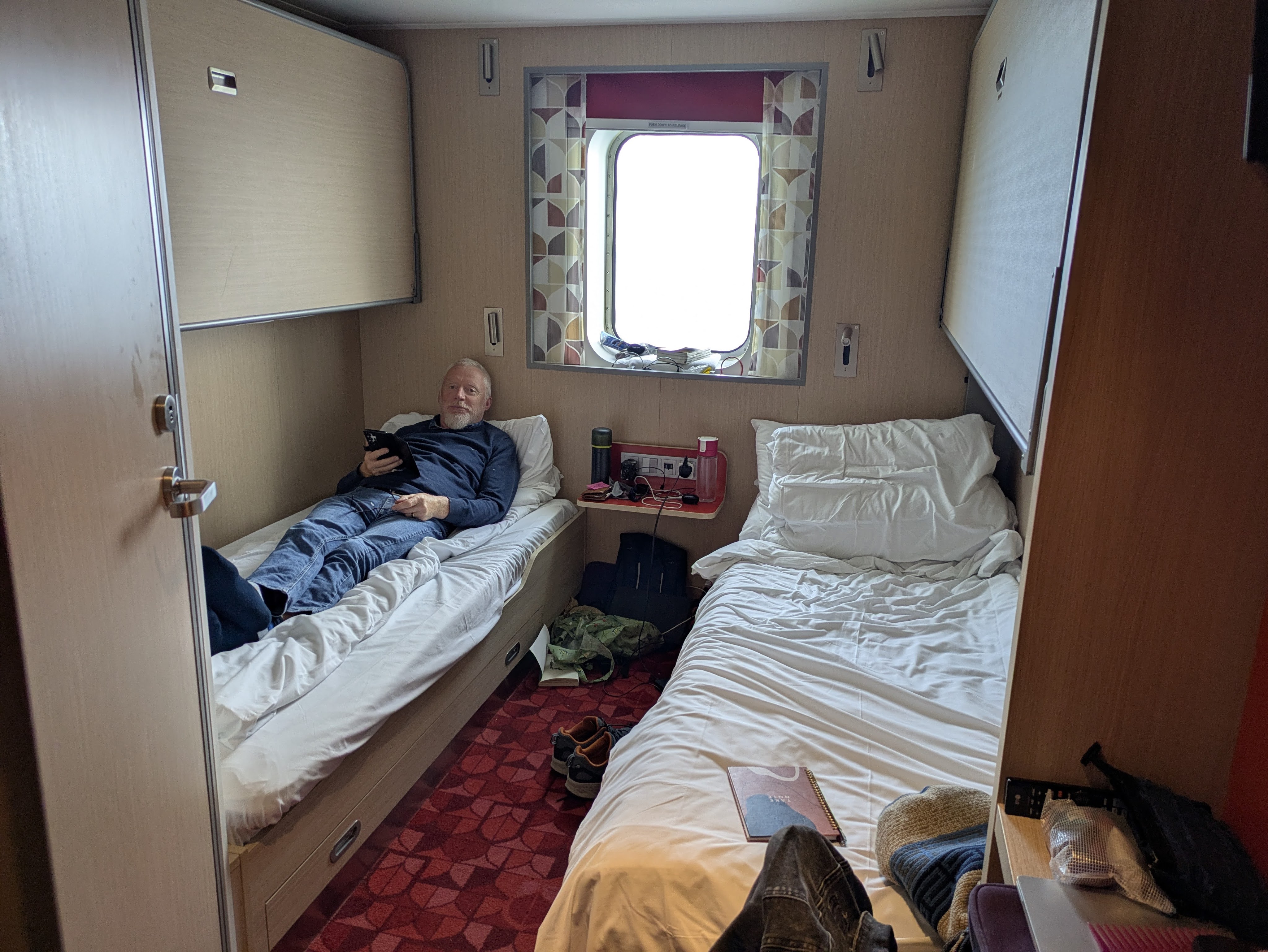
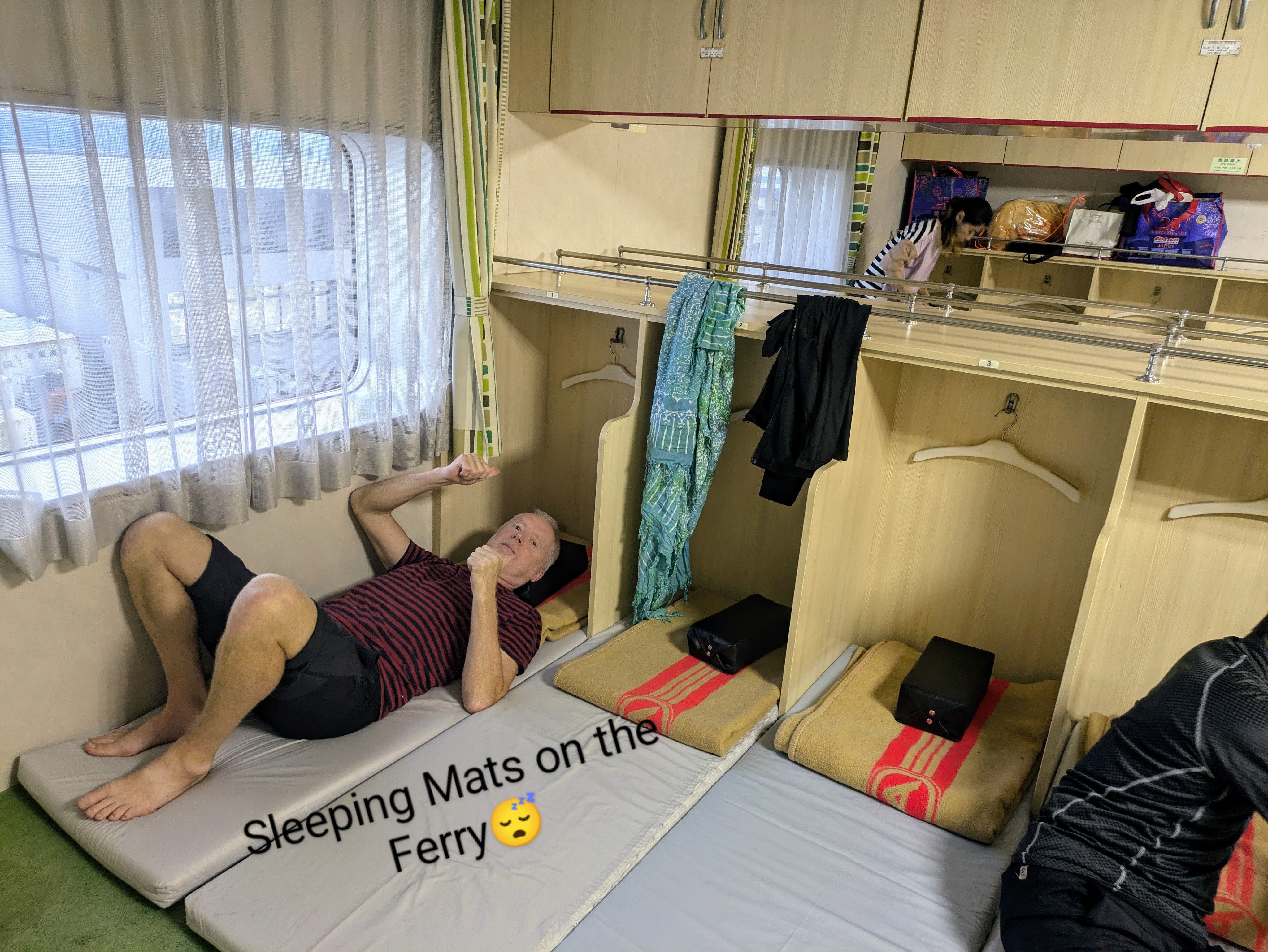
In the cabin, Caoimhin cut my hair, lopped off a couple of inches…. we had been so busy in the run up to our departure that I didn’t have time to visit a hairdresser… and did a good job. Our ensuite cabin was comfortable, the shower was hot and the hum of the engine was so soporific that I slept for ten hours straight, lulled by the gentle swaying motion.
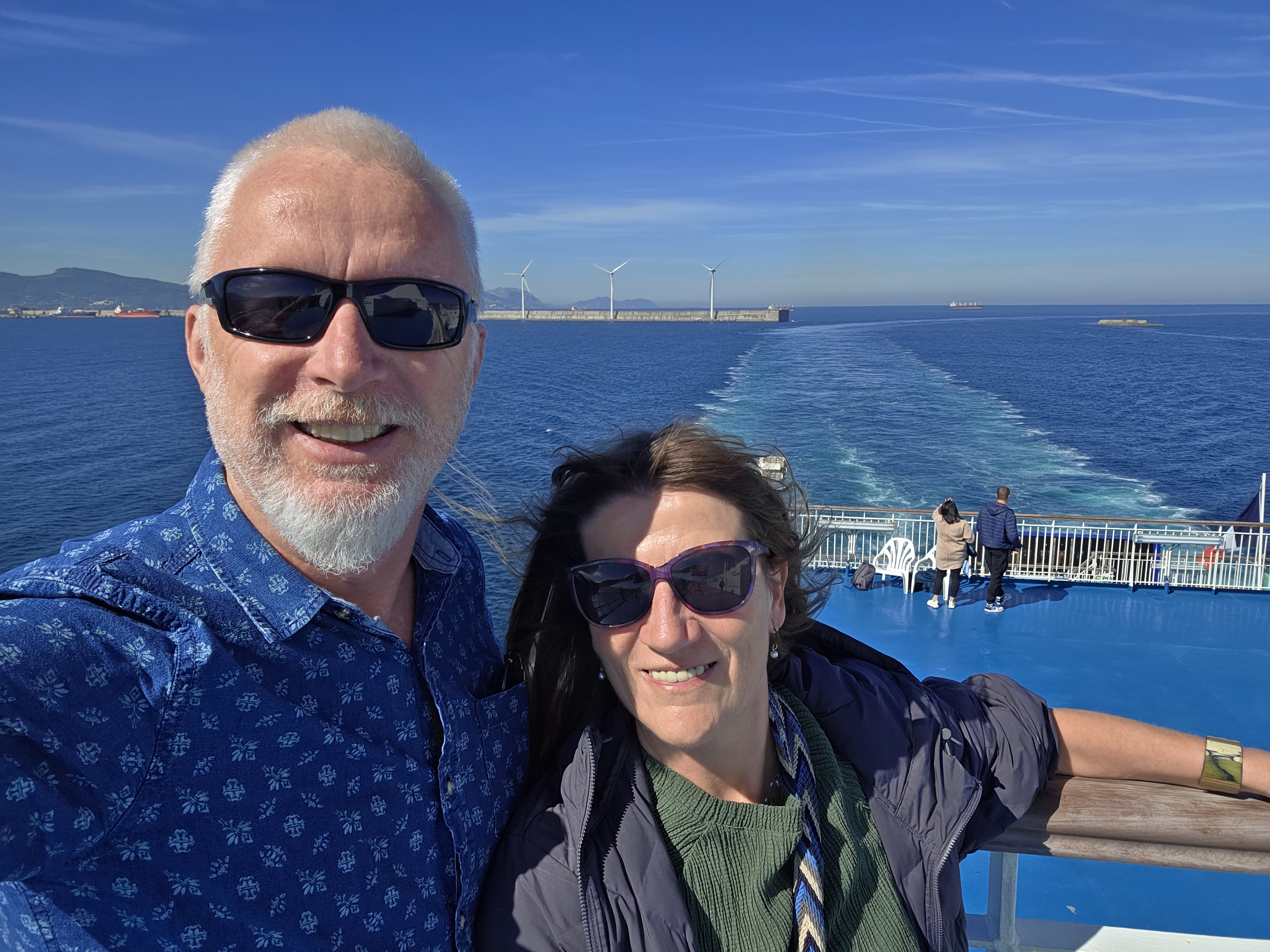
It was a sunny 25C at 2pm in Bilbao when we emerged from our cocoon. There’s always a bit of tension when driving on the ‘wrong’ side of the road in a new place and trying to figure out Google’s instructions. Taking a wrong roundabout turning, we ended up back in the port where the officials looked at our Irish reg, and sighed before raising the barriers to let us loose …again. But soon we were driving south towards Haro and the Rioja region….this destination was only decided on the ferry when looking at the guidebook. We had never heard of Haro but we like wine and we wanted to head south.
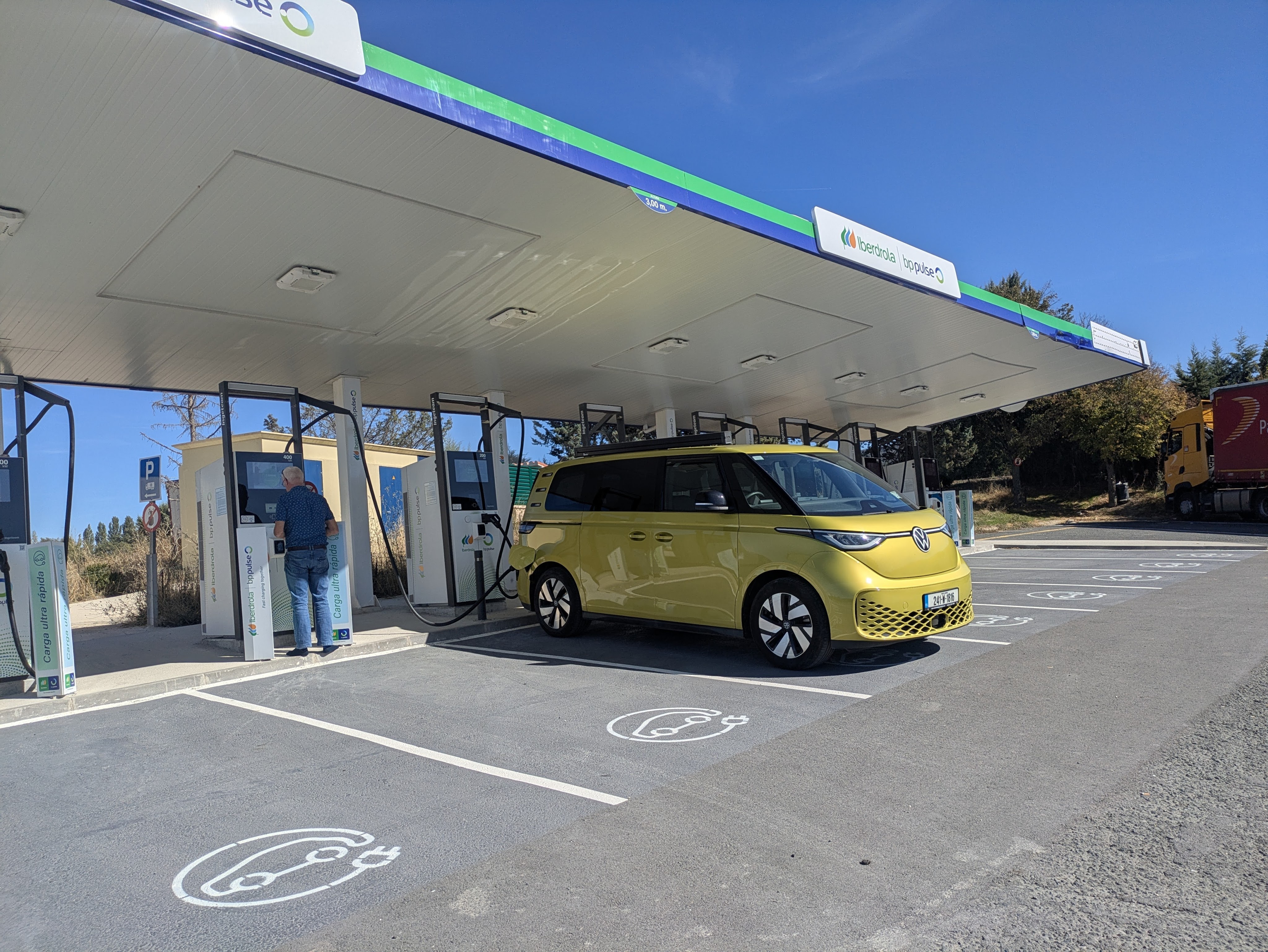
Our next task was to figure out EV charging in Spain before we reached the ‘range anxiety’ stage. Our maps indicated that EV charging stations were plentiful. Although we had 50% in the tank, we stopped at an Iberdrola charging area before any topping-up became critical. Our Buzz was the only vehicle charging at a whole bank of chargers, all fast chargers with a couple of ultra-fast. It was possible to get instructions in English and pay by bankcard. It was relatively expensive at 0.70 a Kw, more than we have paid at public chargers in Ireland but at least we know that charging is easy, at least with Iberdrola.
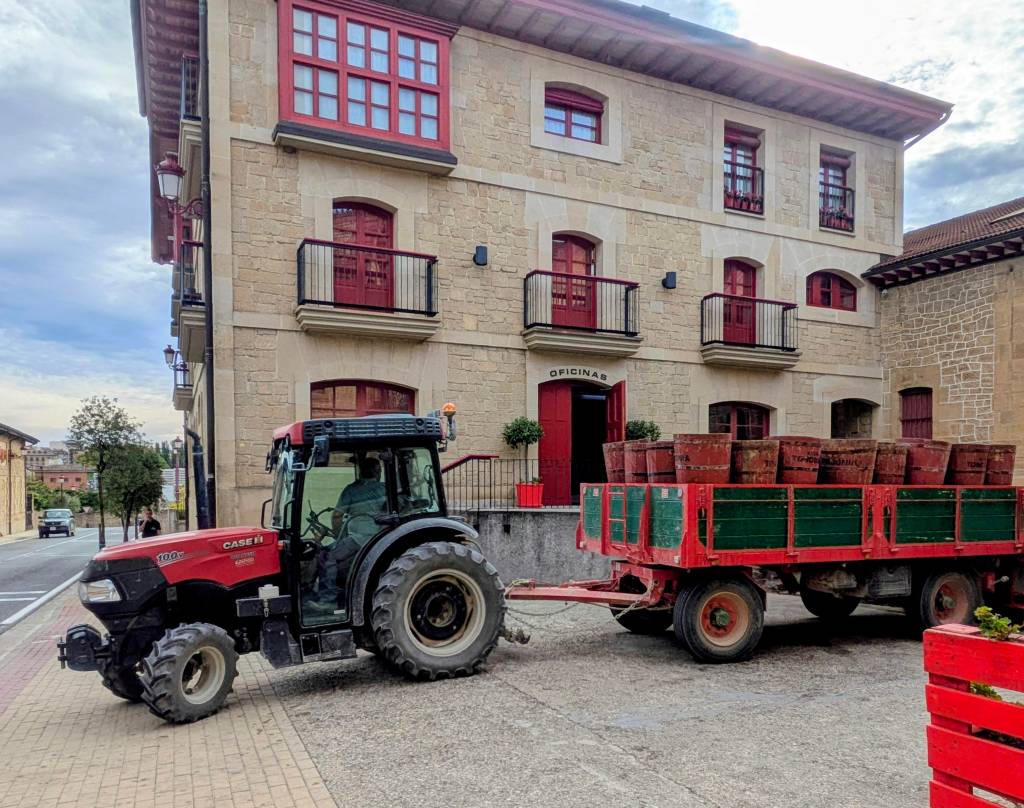
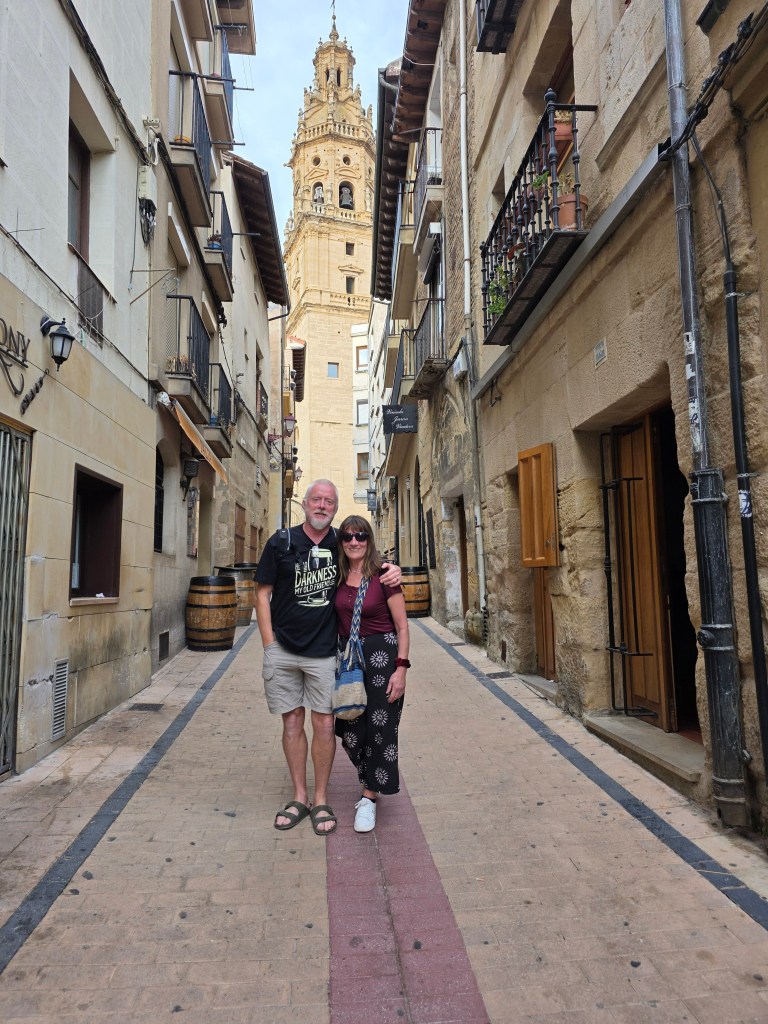
Haro proved to be a good choice. It was a town with the tang of fermenting grapes in the air and the hum of tractors pulling trailer-loads of grapes to the wineries; the building were old and made of a golden-yellow stone that glowed in the late afternoon….and the wine was cheap (starting from less than €2 a glass). A perfect combination.
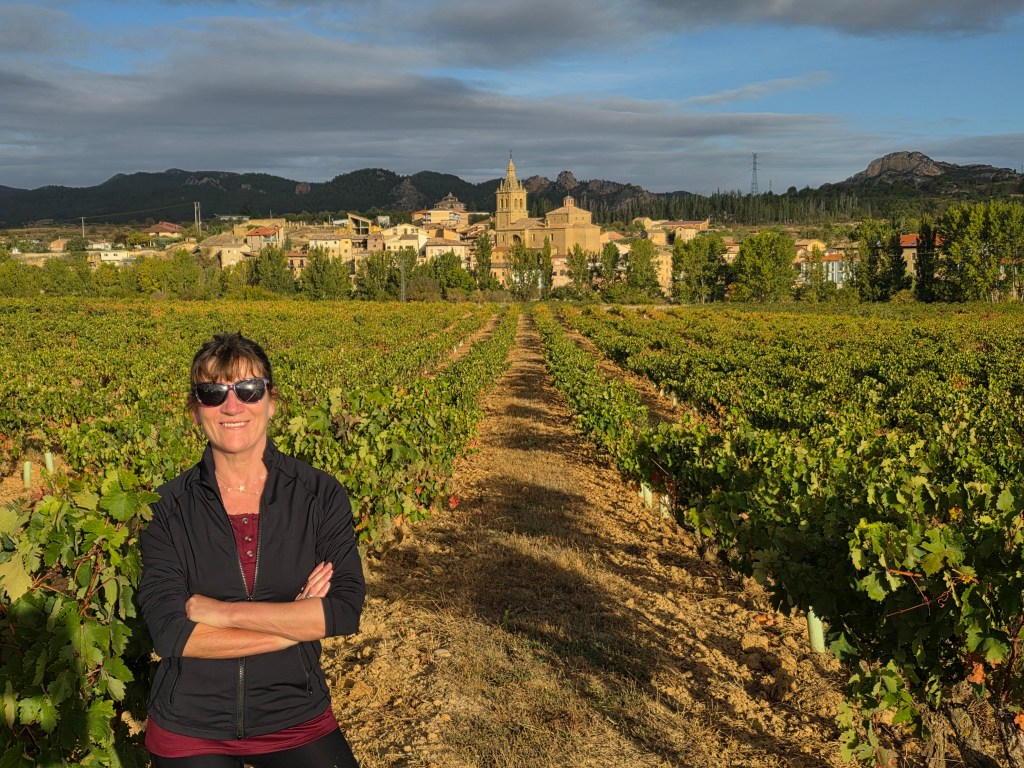
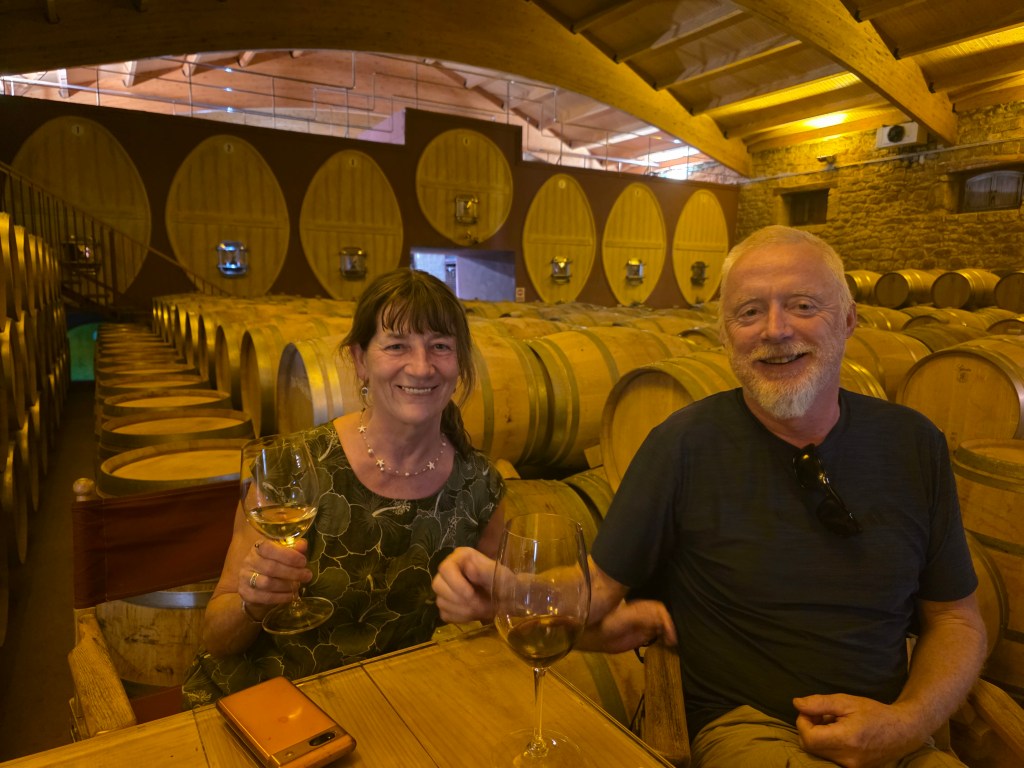
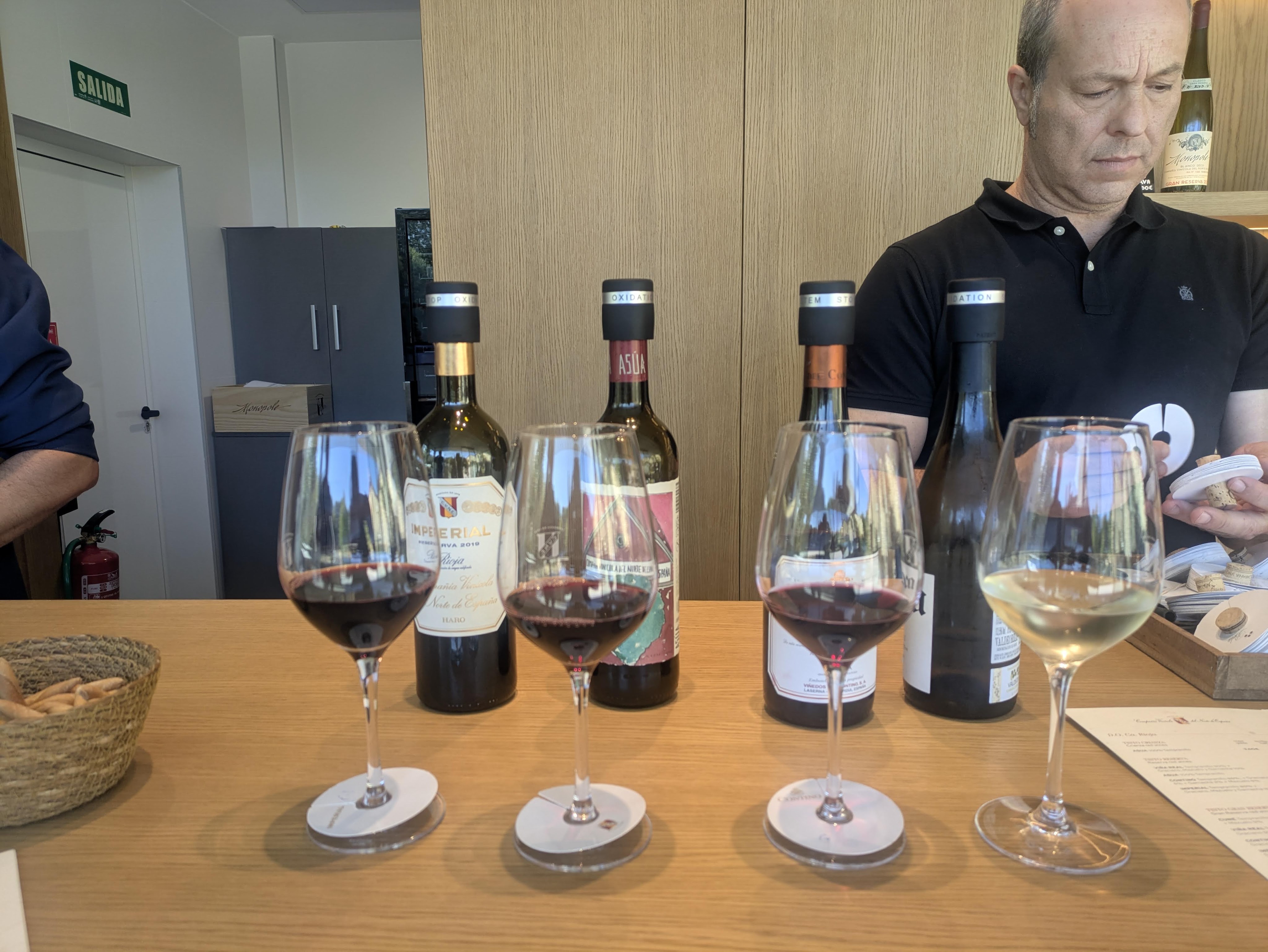
The bodegas opened at 10am, or before, for wine-tasting and closed in the early-afternoon. Sipping wine in a two hundred year old cellar, surrounded by hundreds of wooden casks which were slowly seeping alcohol into the dim air, was a wonderful way to enjoy a tipple even if it was barely midday. This activity also meant that most of the visitors to this gorgeous little town were never entirely sober. Early morning walks along by the Rio Ebro and through the vineyards went some way to clearing our heads. The mornings were cool – about 10C- but by midday it was a gorgeous sunny 26C until the evenings required a light jacket.
Haro holds an annual festival in late June, Batalla de Vino (Battle of the Wine) where the attendees dress in white tunics and throw thousands of litres of wine at each other, staining their clothes red. A clock in the main plaza was already counting down the days and minutes to next year’s event.
Haro owes its wine success to a plague (phylloxera) in France which ruined the French vineyards in 1863. French wine producers set up storehouse in La Rioja and began to produce Riojan wine with their own techniques which the locals adopted and adapted. Never an ill wind and all that…
As we stayed in a campsite by the river (€28 a night with electricity), Caoimhin had high hopes that we might be able to slow-charge the van onsite using a ‘granny cable.’ When that wasn’t compatible, we dispensed with electricity, and the nightly charge dropped to €21. The campsite was very social and we met several Irish people who were having an unplanned extra week in Spain due to the ferry cancellations and disruptions.
After three days, we felt that we should depart Haro for our livers’ sake. The ‘Haro Effect,’ that continuous hazy, slightly inebriated state, was becoming too seductive so we packed up, with some regret.
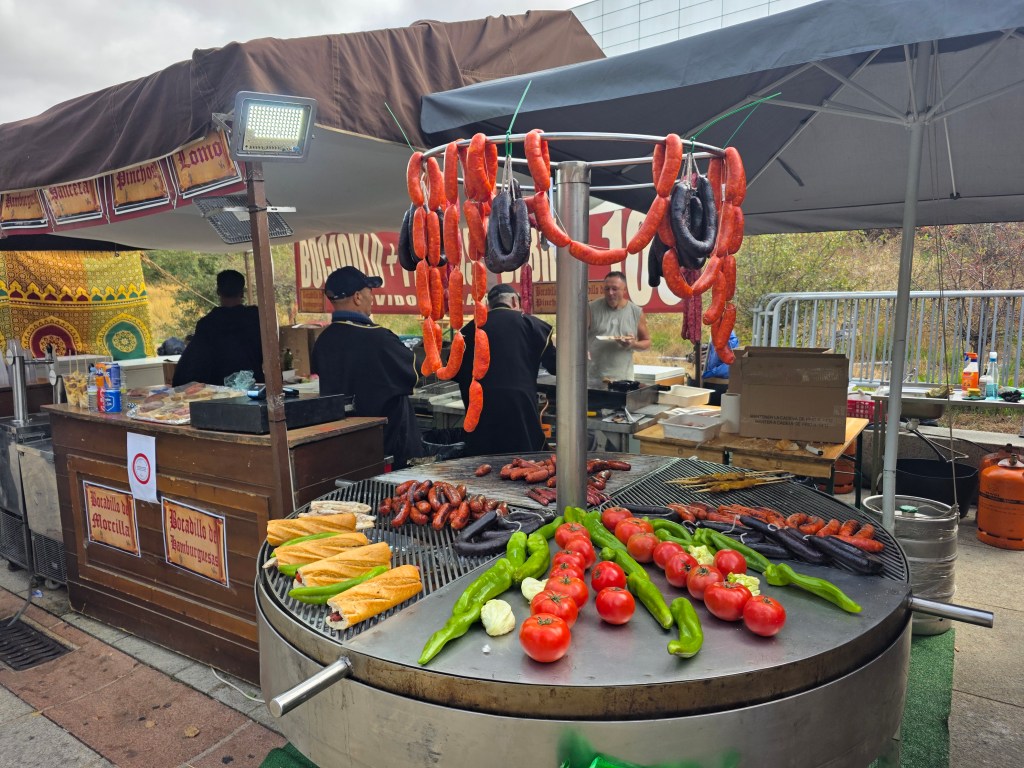
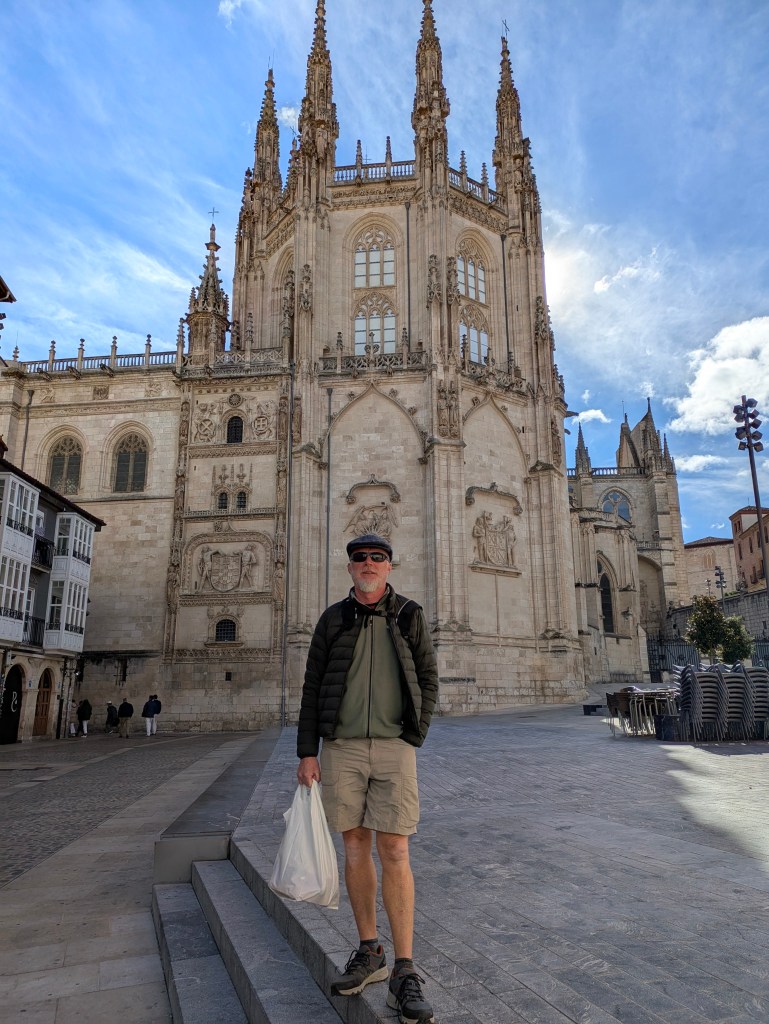
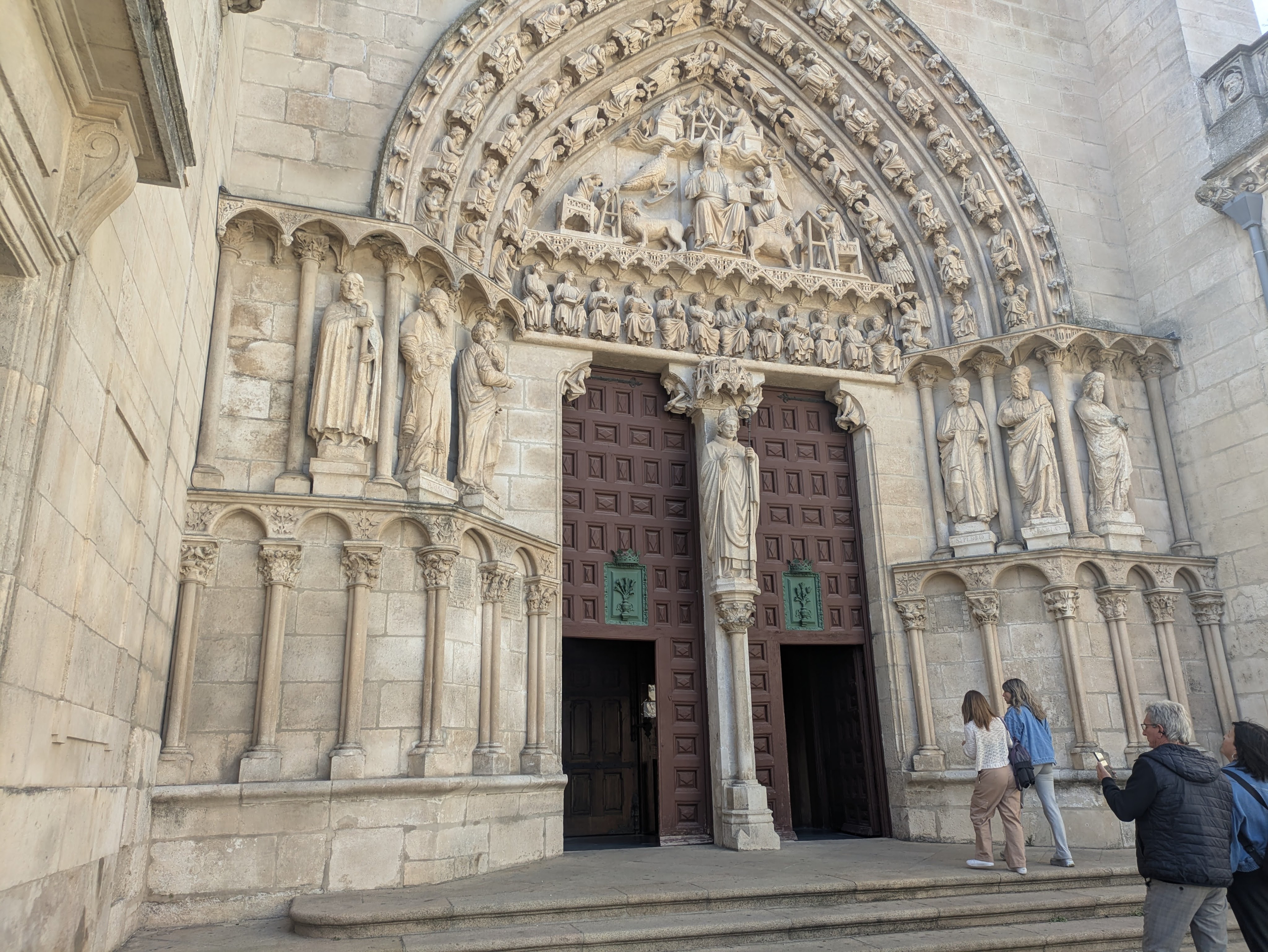
Heading south in the direction of Burgos, the weather turned cool and cloudy with even a slight hint of rain. We drove by bare fields, shorn of corn and bleached white from the sun and fields of blackened sunflowers, withering on the stalk with drooping heads. The climate in Burgos, like most of central Spain, has been described as ‘nine months of winter and three months of hell(summer).’ It was sunny when we arrived with a stiff easterly breeze keeping the temperature a chilly 13 degrees although the streets were full with lots of people going around in medieval costume. The Cathedral was jaw-dropping, a Gothic Treasure where the concept of ‘Less is More’ was never considered, every available surface was crammed with ornate carvings. After charging in Burgos (Zunder Chargers@ €0.58/kW) and wandering around the Sunday market, we pushed on to Lerma, a pretty town, with a castle, convents and a big Plaza Mayor. We parked in a picnic area on the outskirts of town and settled for the night.
The cold woke us. The temperature had dipped to 1.5 degrees which was unexpected and the coldest it’s been so far. By 9am the following morning, the sun was shining but temperatures were still hovering about 2 degrees. We moved on, before we had to invest in blankets and woolly jumpers.
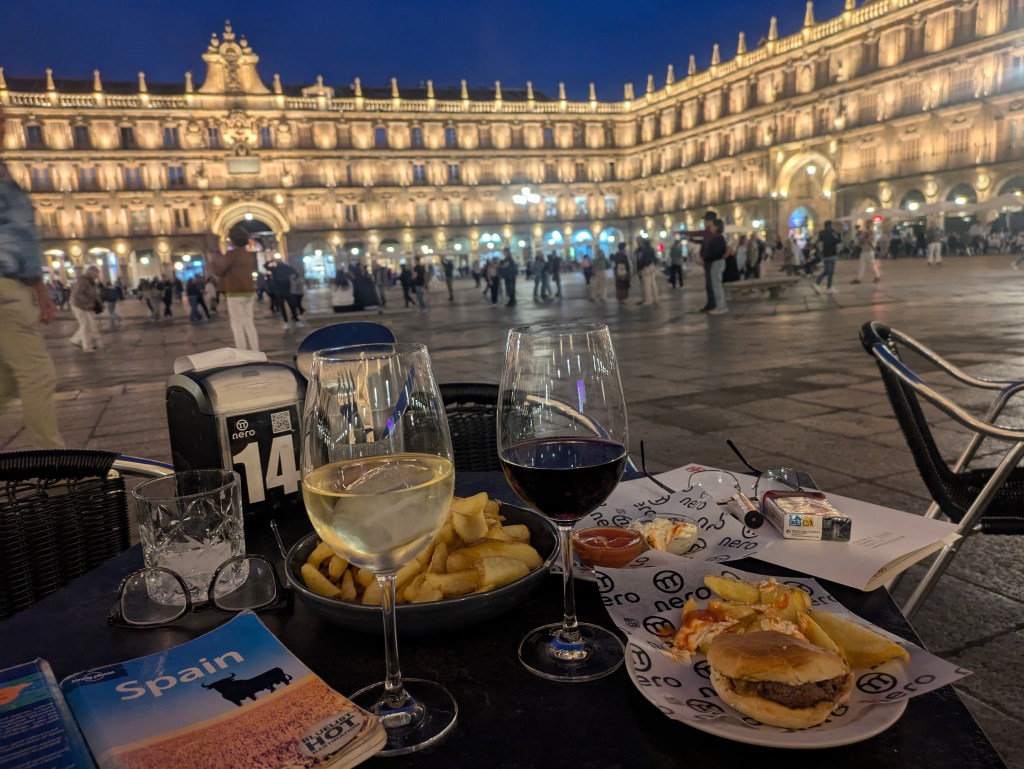
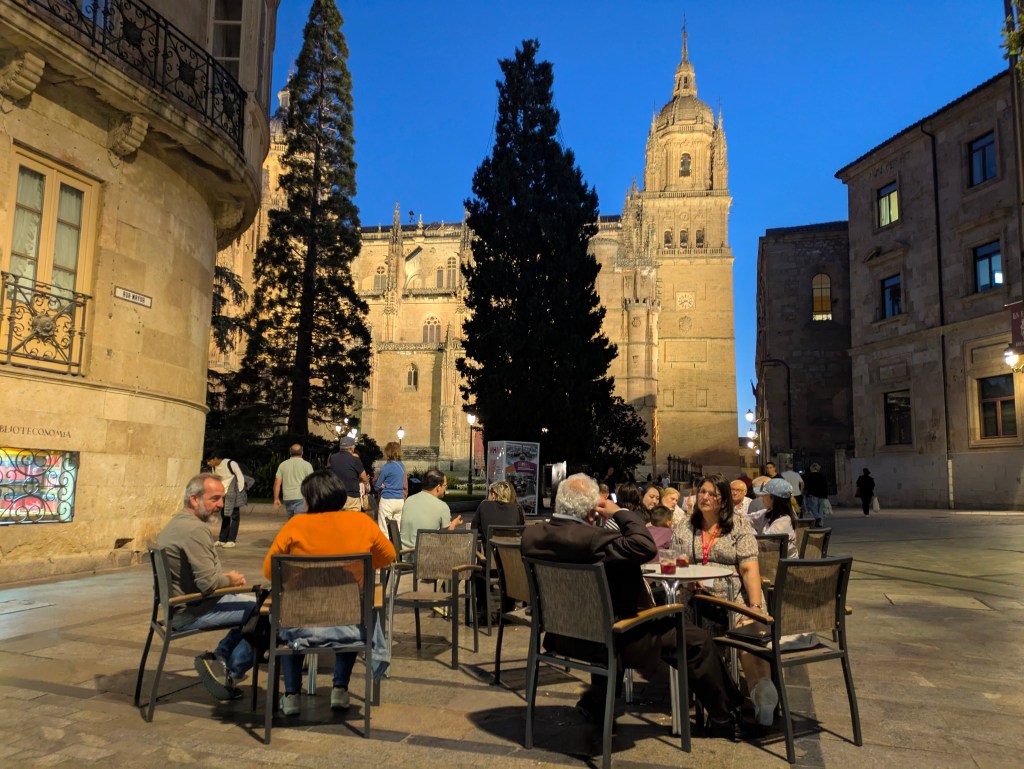
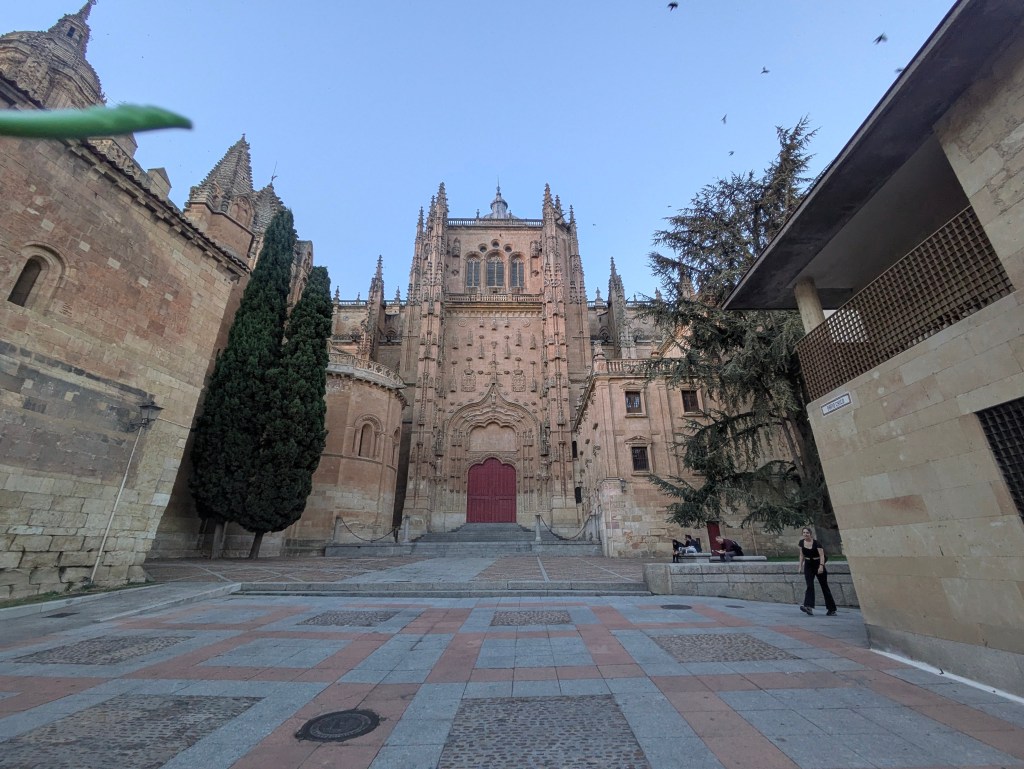
We are now in Salamanca, staying in a cheap guesthouse (Hispanica Hostal €38 a night) in a basic ensuite- room but it is clean, light-filled, central with free parking. The Plaza Mayor in Salamanca is considered the most beautiful in all of Spain and we believe that claim, having been in the Plaza last night when the lights came to spontaneous clapping. The plaza which was already gorgeous became even more magical when lit up and with a full moon rising over the splendid architecture.
Thanks for Reading
Hasta Luego
 marienoonanblog