Electric Travels: Highs and Lows

EV Charging in Spain

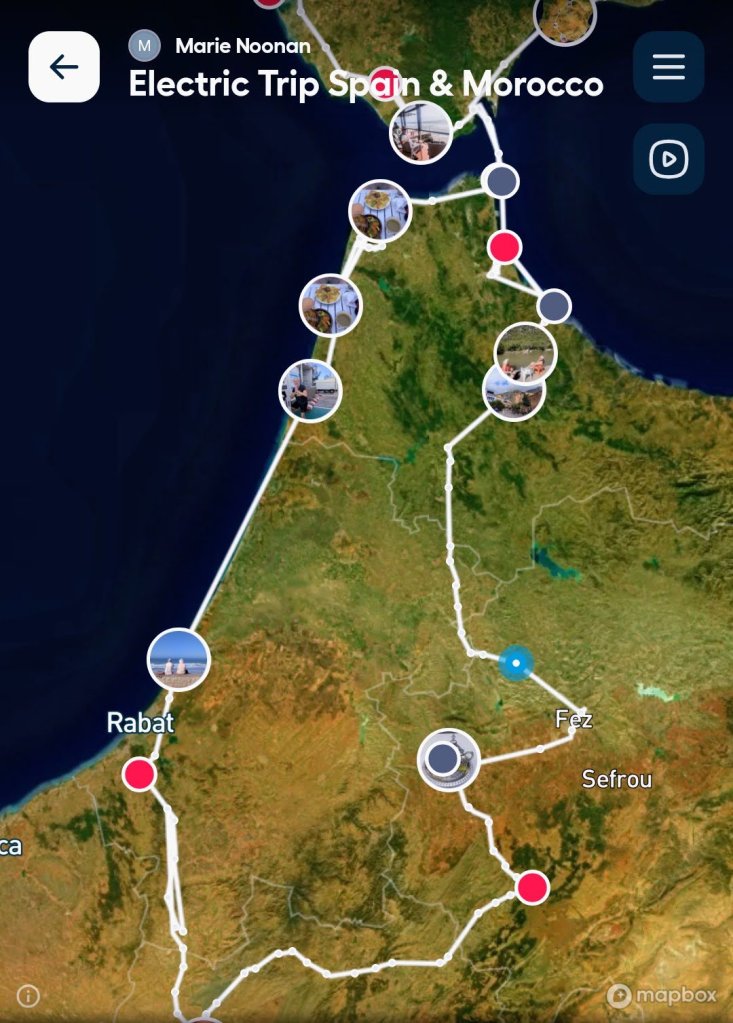
The night before we left home for our two-month roadtrip from Ireland to Morocco in our  completely-electric van, I had a dream -more a nightmare – that camels were towing us through the desert because we had run out of charge. Thankfully that didn’t happen…..although at one stage in Central Morocco, it was looking like a very real possibility. But we survived – both us and the van arrived back home, delighted and exhilarated by our travels.
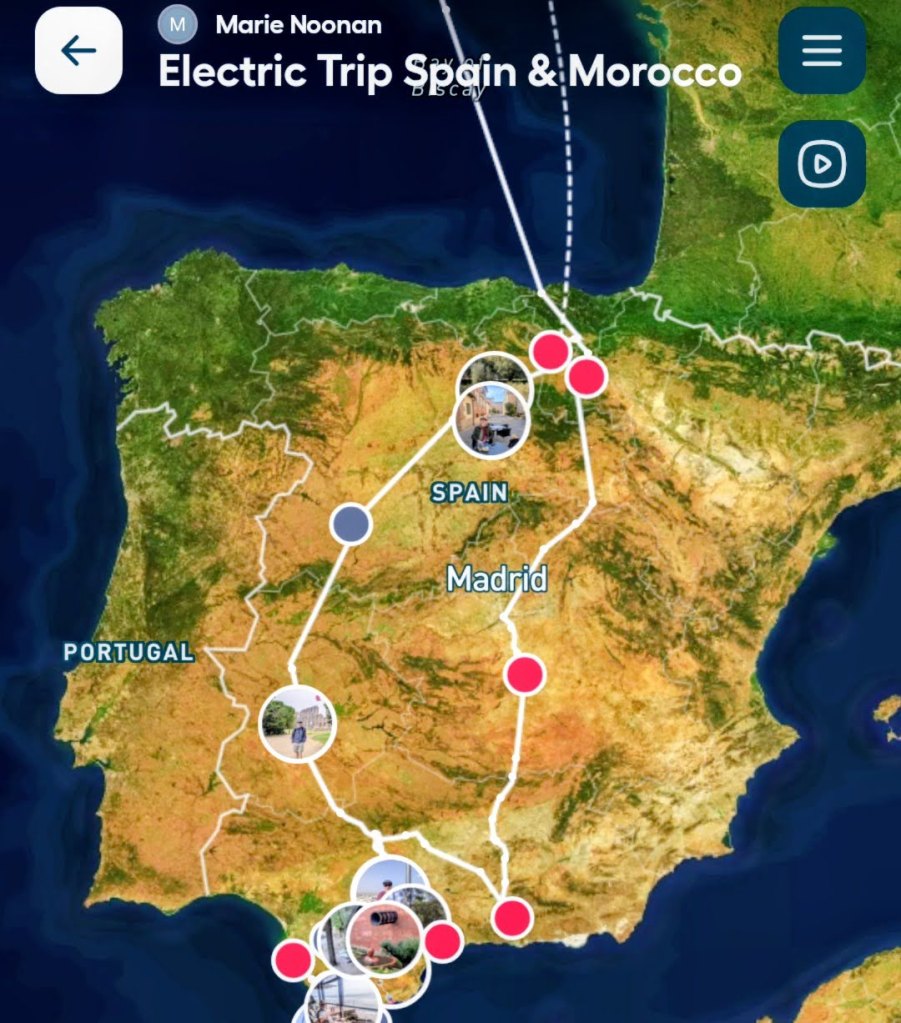
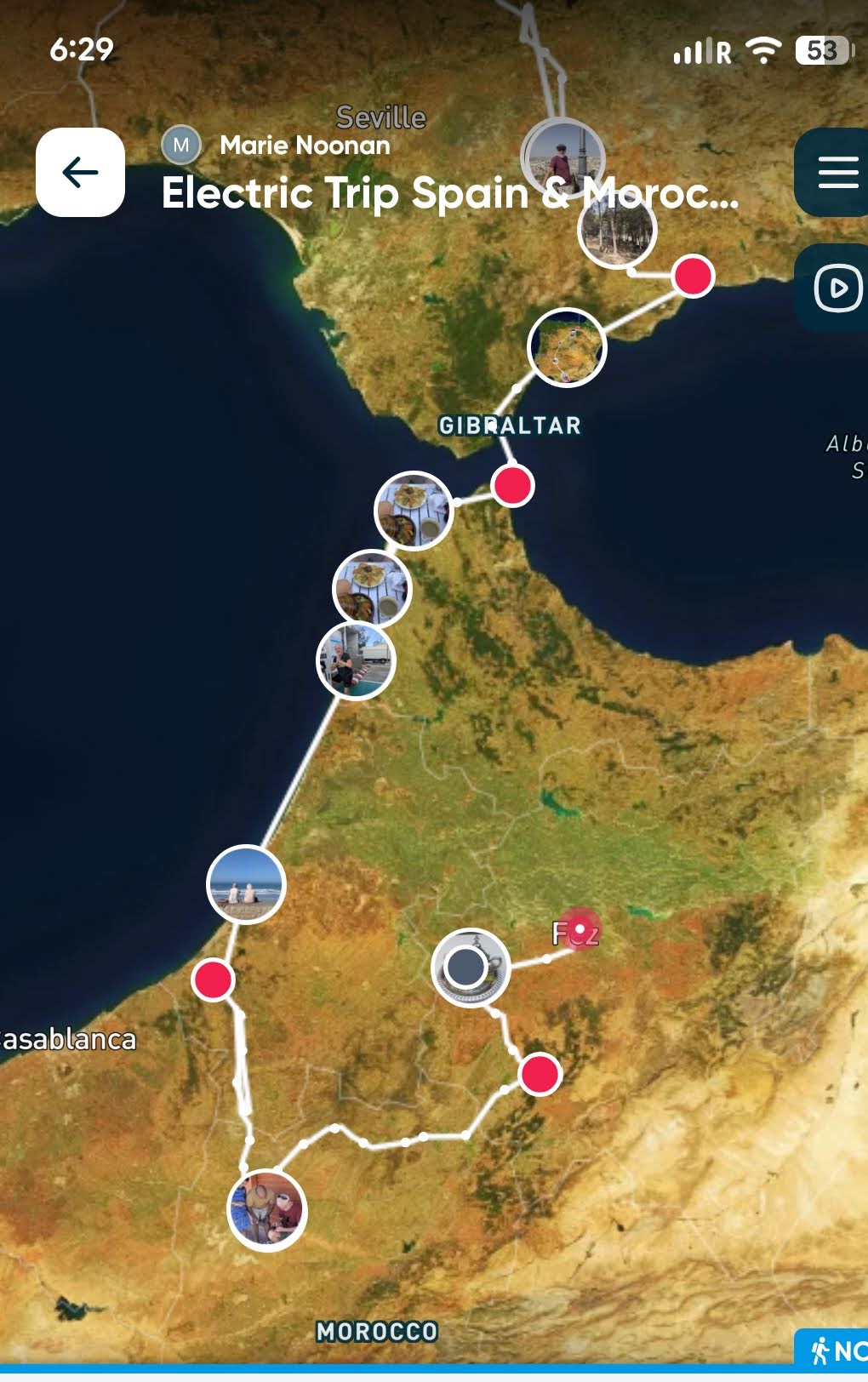
This final post is a brief summary and some trip highlights. We left home on the first of October, sailing with Brittany Ferries boat from Rosslare to Bilbao in Spain – the thirty-hour journey was a wonderfully relaxing way to transition into holiday mode.  We meandered through central Spain to Algeciras in Andalusia, (charging as we went along without issue) where another ferry (only one hour this time) took us across the Strait of Gibraltar to Morocco. Having spent a little over three weeks in Morocco, we returned to Spain and made our way slowly back to Bilbao to return home on December 2.

Our highlights were numerous in both countries so….. here’s just a few in no particular order.

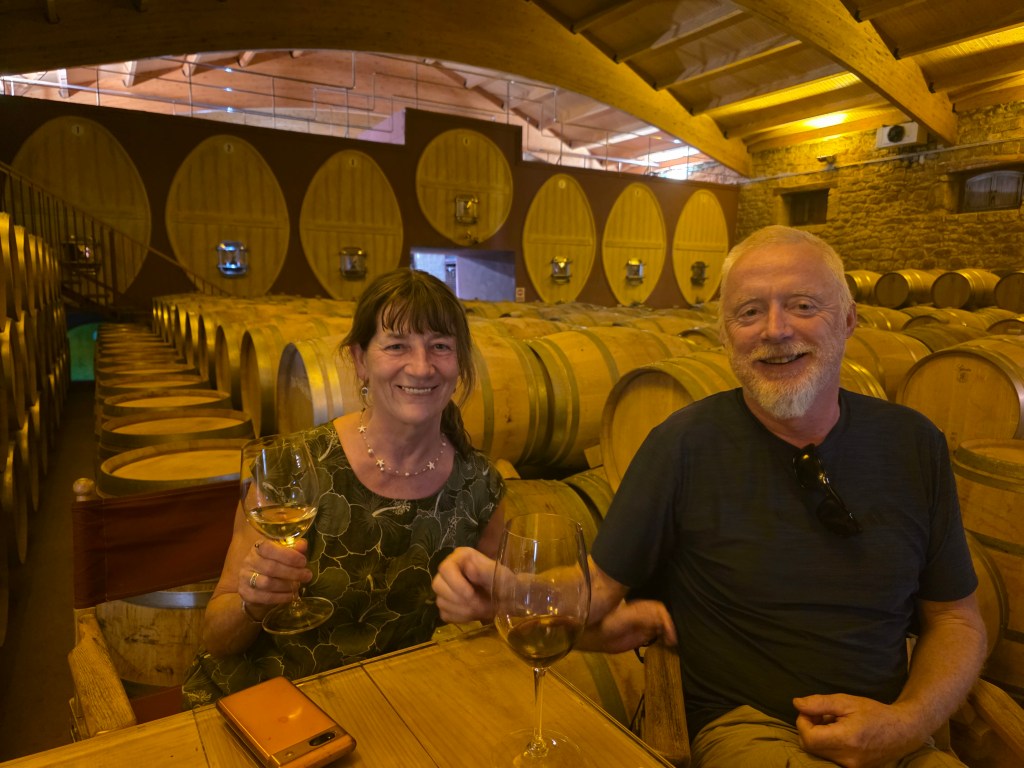
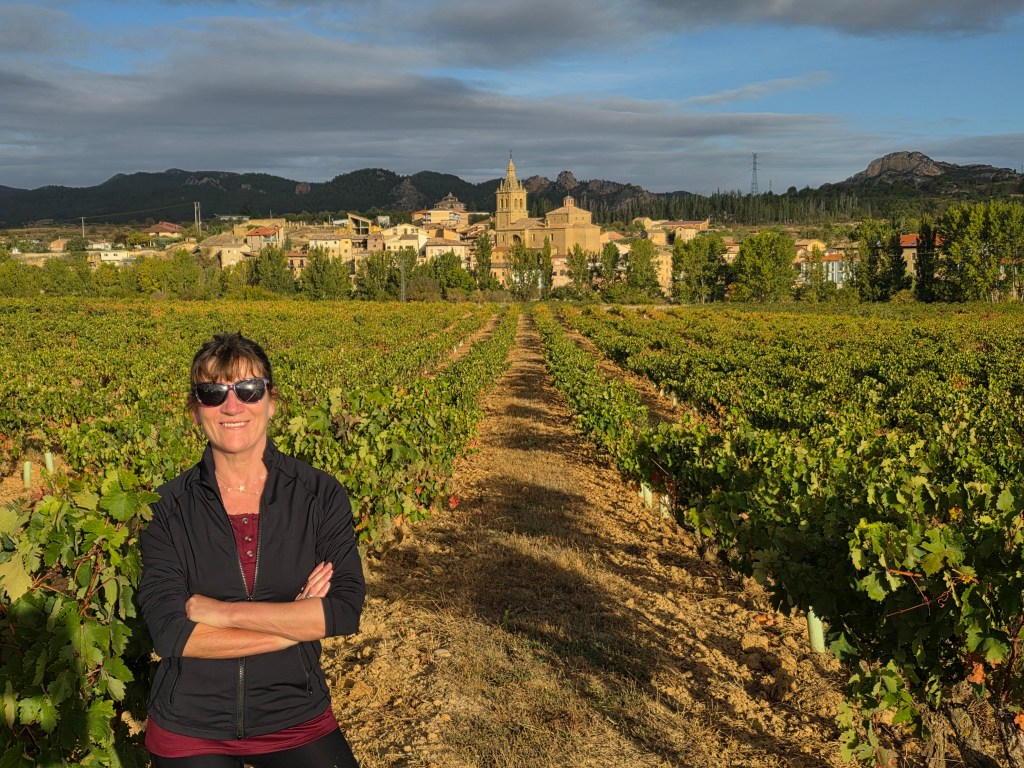
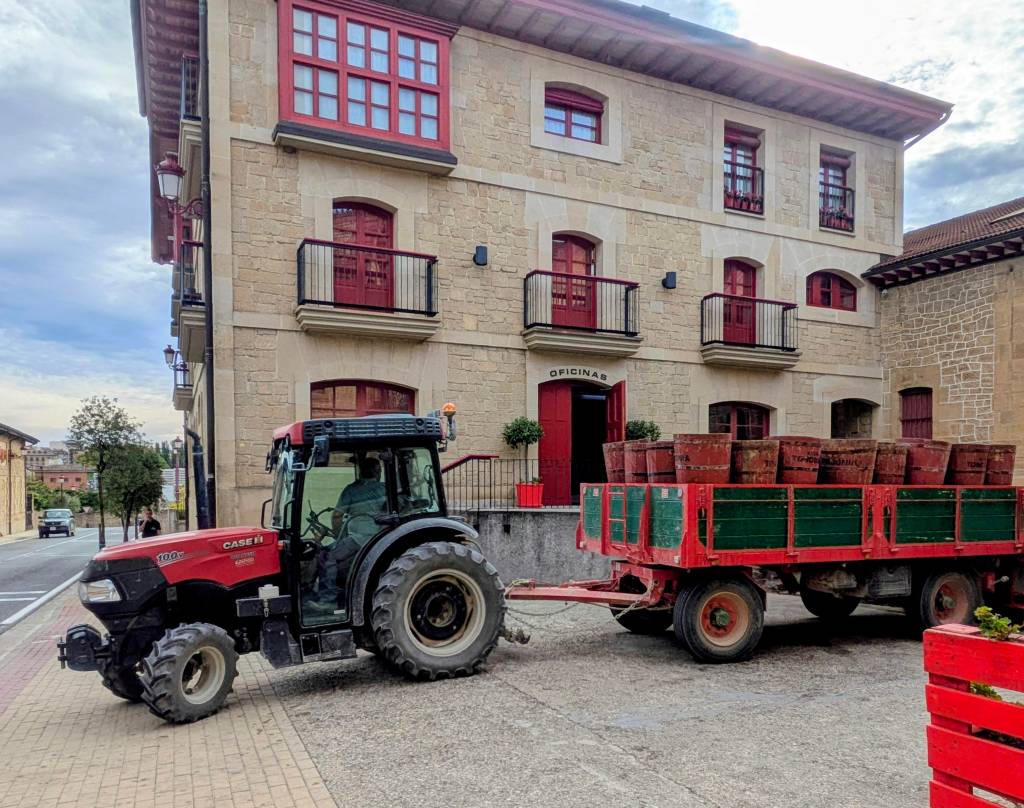
Haro is a small town in the Rioja Region where, in early October, the air was heavy with the tang of fermenting grapes and the hum of tractors pulling heaped trailer-loads to the wineries. The buildings were made of a mellow-yellow stone that seemed to glow in the late afternoon….but that could be just the effect of the wine-tasting. Sipping wine in a two-hundred year old cellar, surrounded by wooden casks which were slowly seeping alcohol into the dim air, was a memorable way to enjoy a tipple…. even if it was barely midday. Most wineries opened at 10am and closed by early afternoon.  This activity also meant that most visitors were never entirely sober. We thoroughly enjoyed ‘The Haro Haze,’  that fuzzy, slightly inebriated state, but after three days, we had to leave or we might have stayed forever.
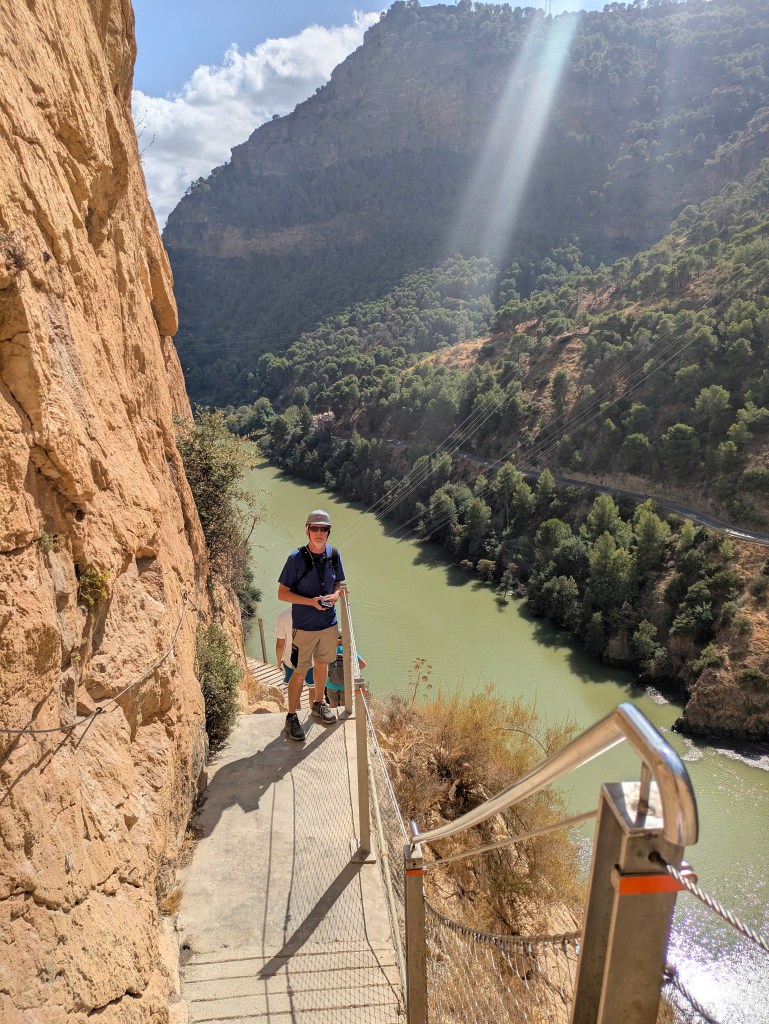
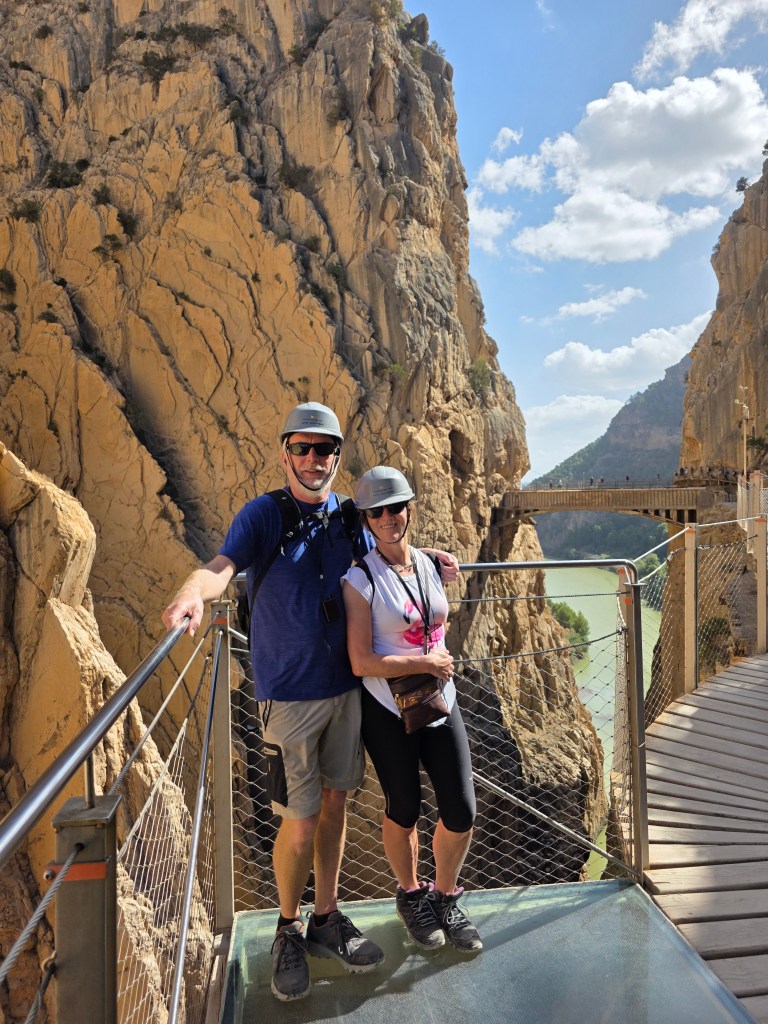
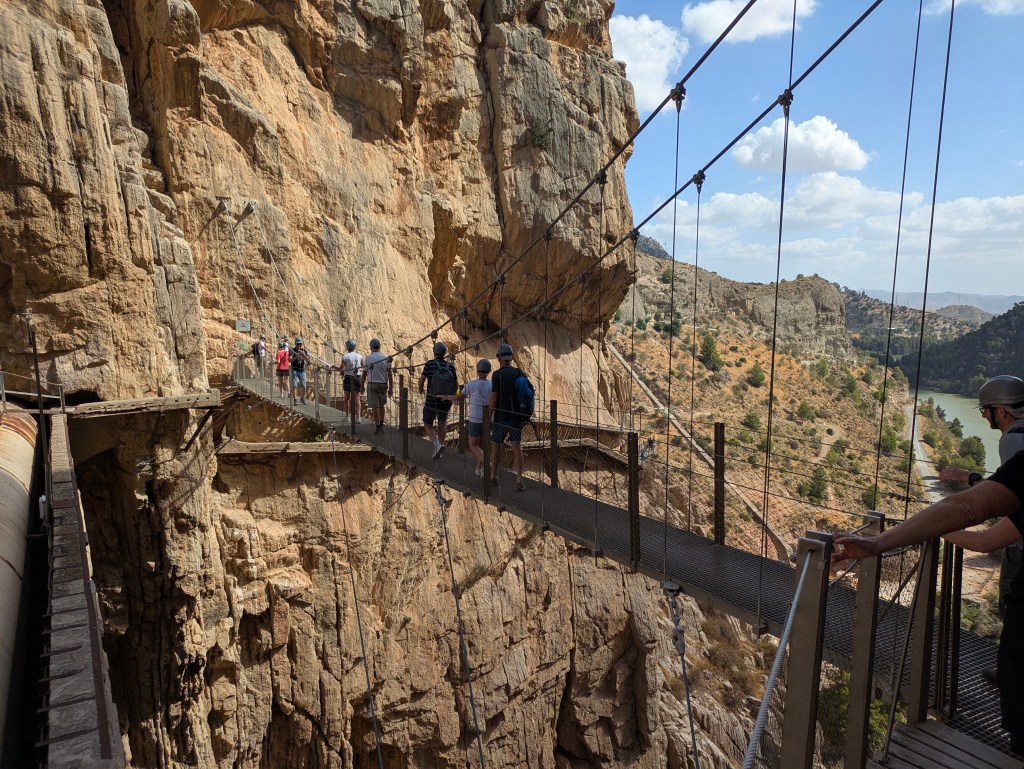
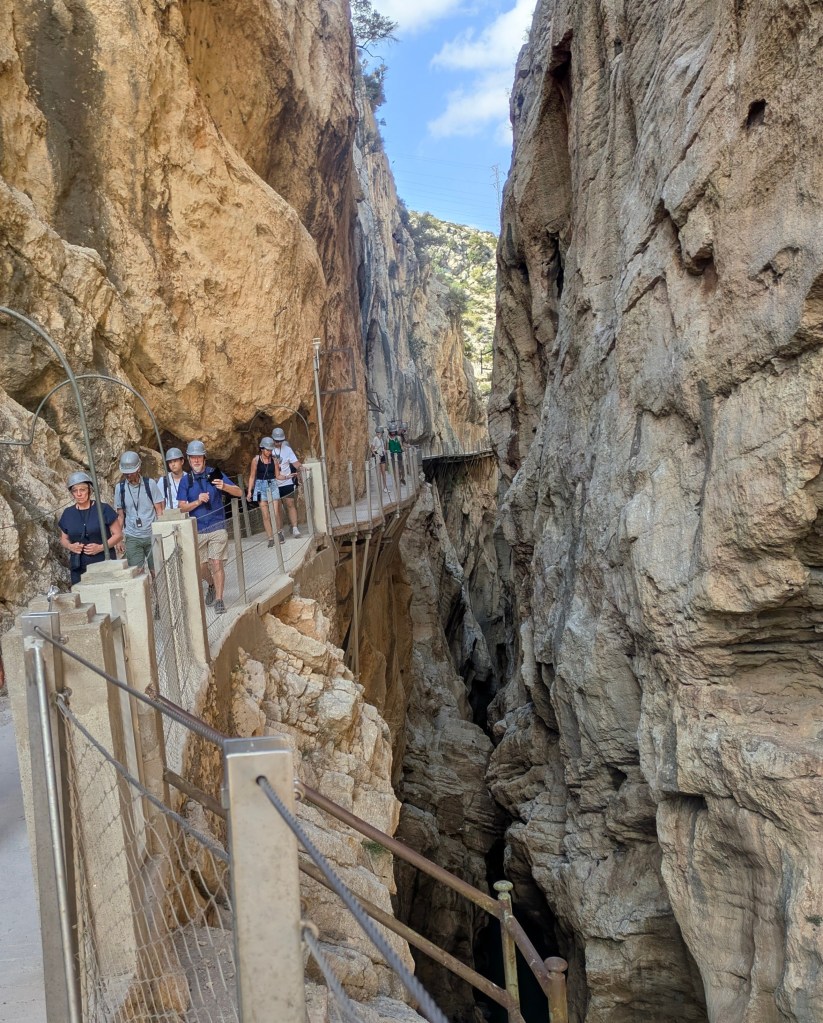
The Caminita del Rey is a trek along narrow walkways, that are pinned along the steep walls of a spectacular gorge in the Malaga region. This was a dramatic walk with stunning views…..and not as scary as the photos might indicate as new reinforced walkways have replaced the original rickety ones. The actual portion of the hike along the gorge is quite short, about 3.5 kms with a couple of kilometres at either end to make up about eight kilometres in total. Its popular and requires prior online booking.
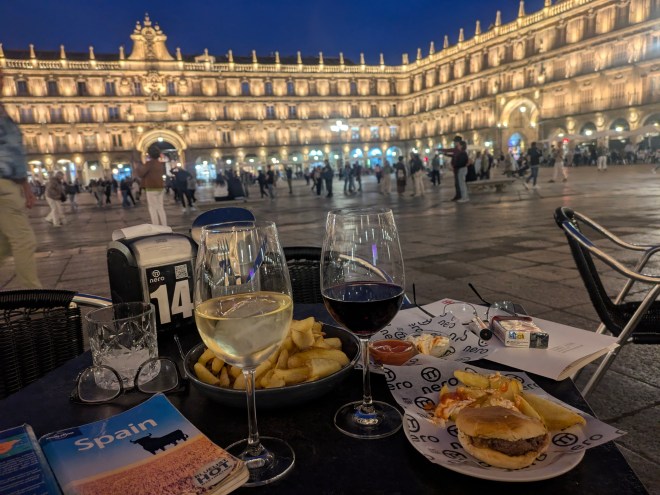
Salamanca. In a country which is choc-o-block with stunning towns,  we were truly dazzled by the scale and mesmerising beauty of the main plaza in the small city of Salamanca. No wonder it is regarded as the most magnificent plaza in all of Spain.  Visitors and locals alike burst into spontaneous applause at dusk when the lights were turned on, enhancing its beauty even more.
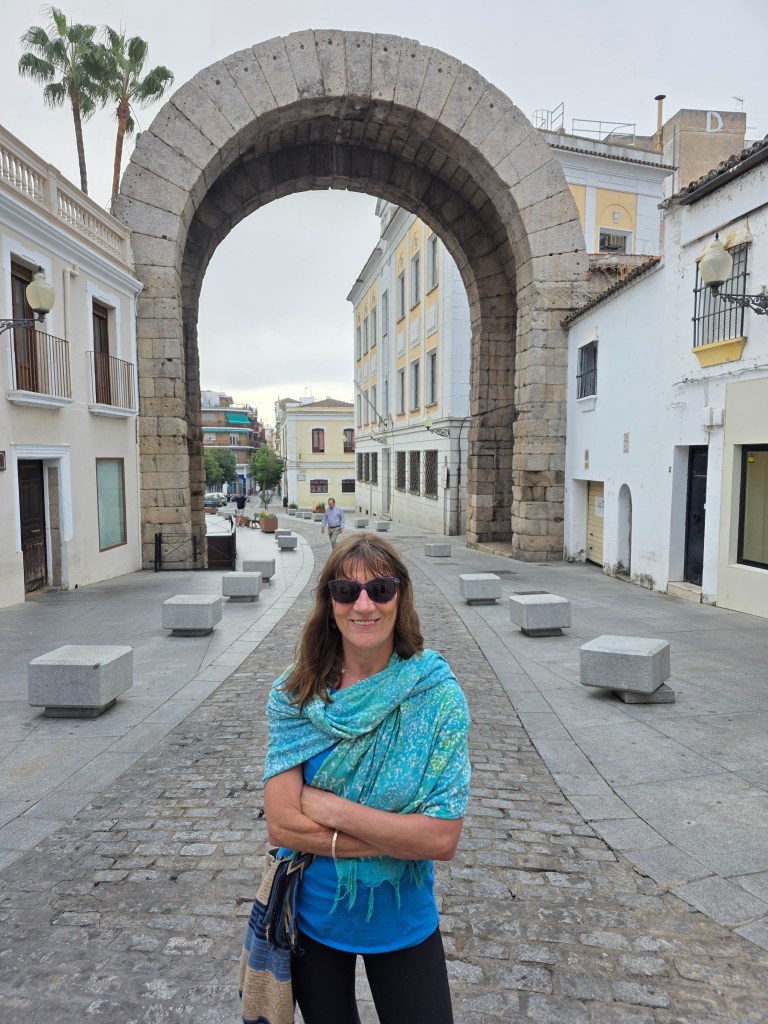
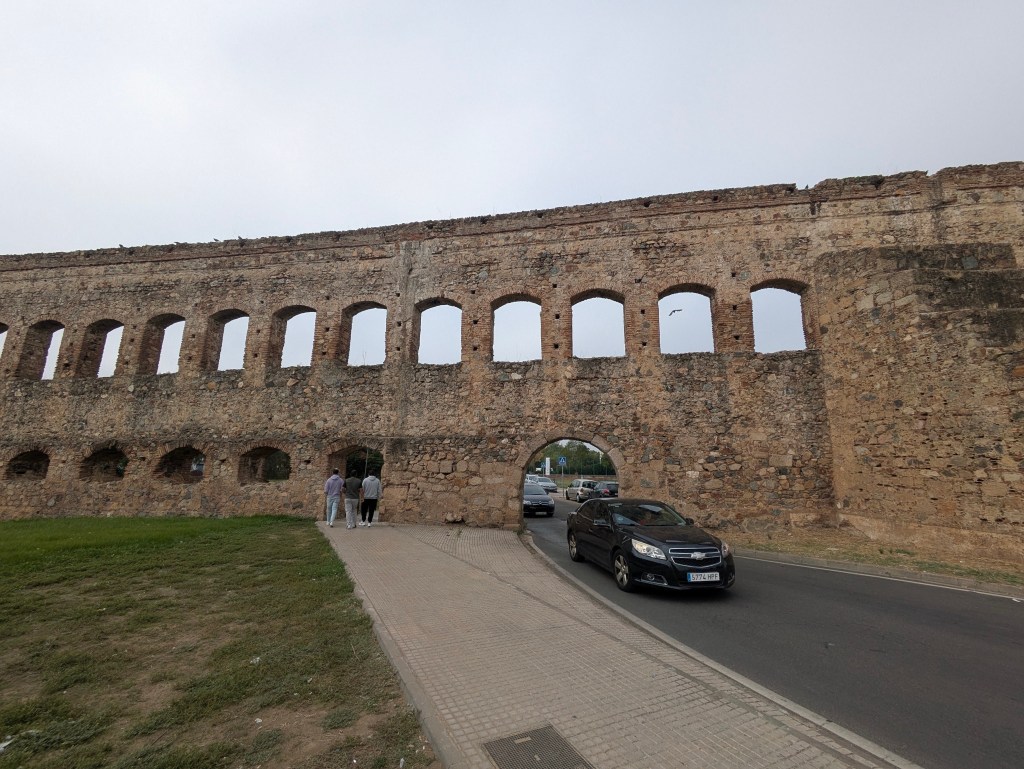
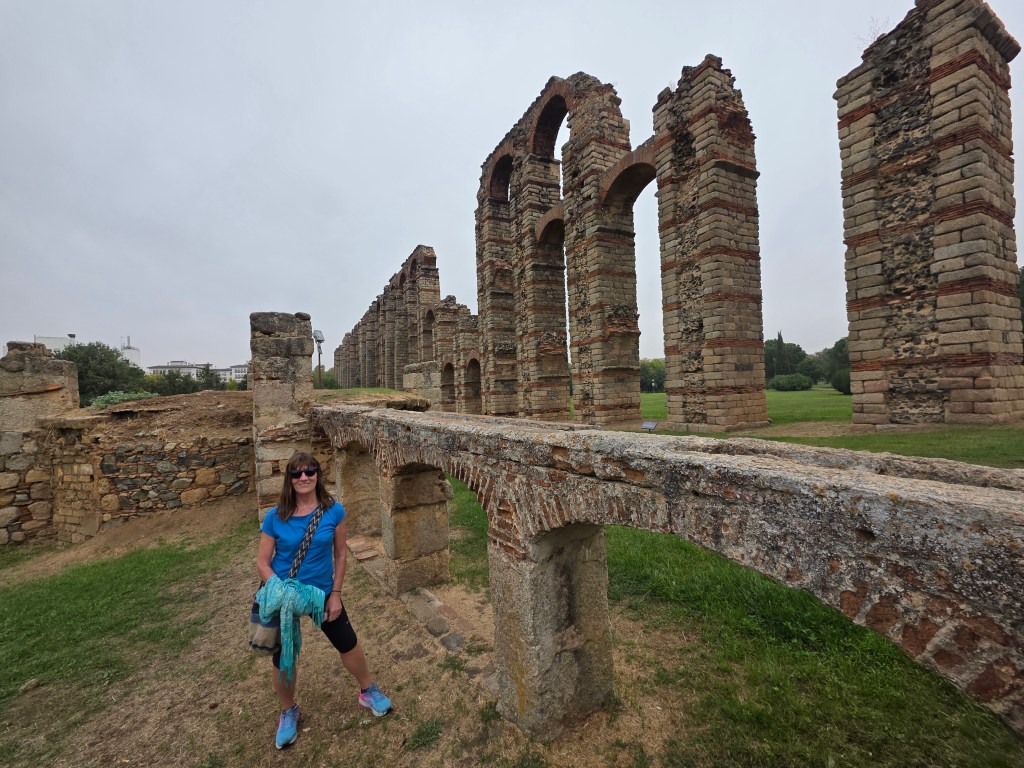
Merida, the capital of western Spain’s Extremadura region was founded by the Romans in the 1st century B.C. It’s a little ramshackle but its Roman origins were evident in the arches, aqueducts and amphitheatre.  Many of the ancient structures were incorporated into modern living – cars drove on paved roads under ancient arches and people strolled over the old Roman Bridge which linked the old town with the new. A friendly place.
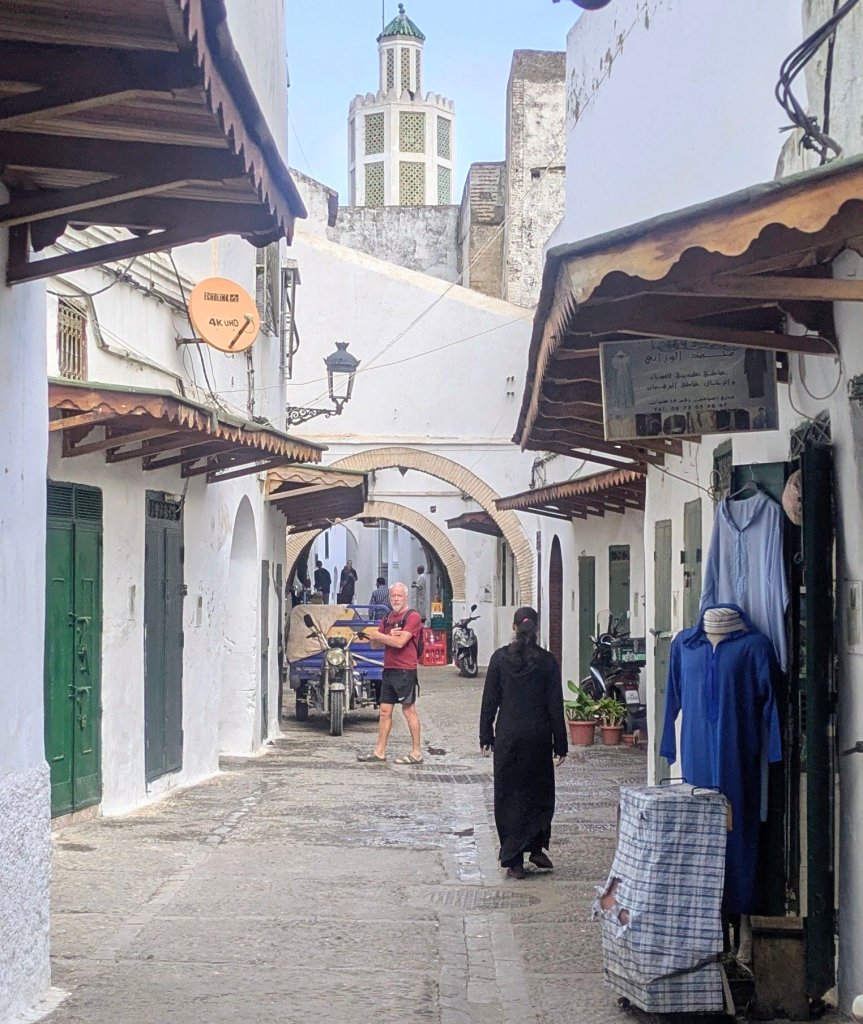
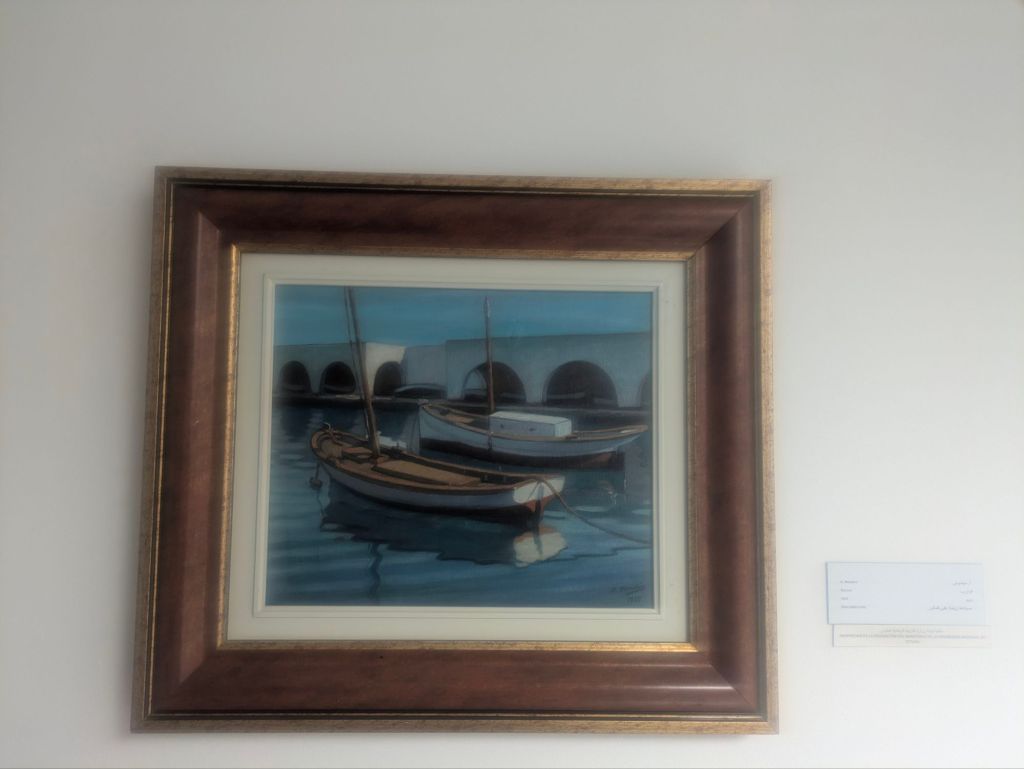
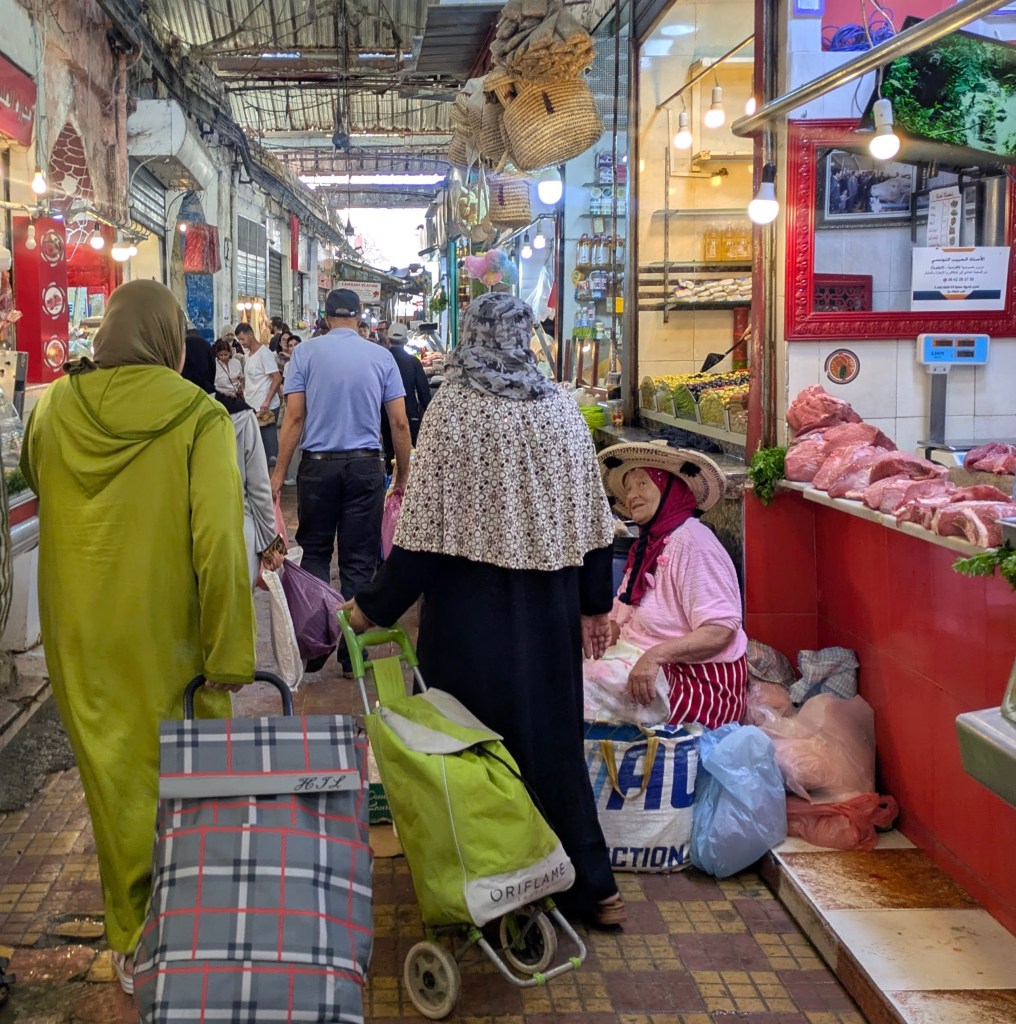
Walking Tour in Tangiers A walking tour of the medina and souk in the old town gave us a flavour of this fascinating city, a place where mosques became churches before changing back again, where being the ‘Gateway to the Mediterranean’ was both a blessing and a curse, a pawn and a prize to be coveted and fought over down the centuries. It was also a place that welcomed artists – Sir John Lavery lived here, so did Tennessee Williams and Jack Kerouac.
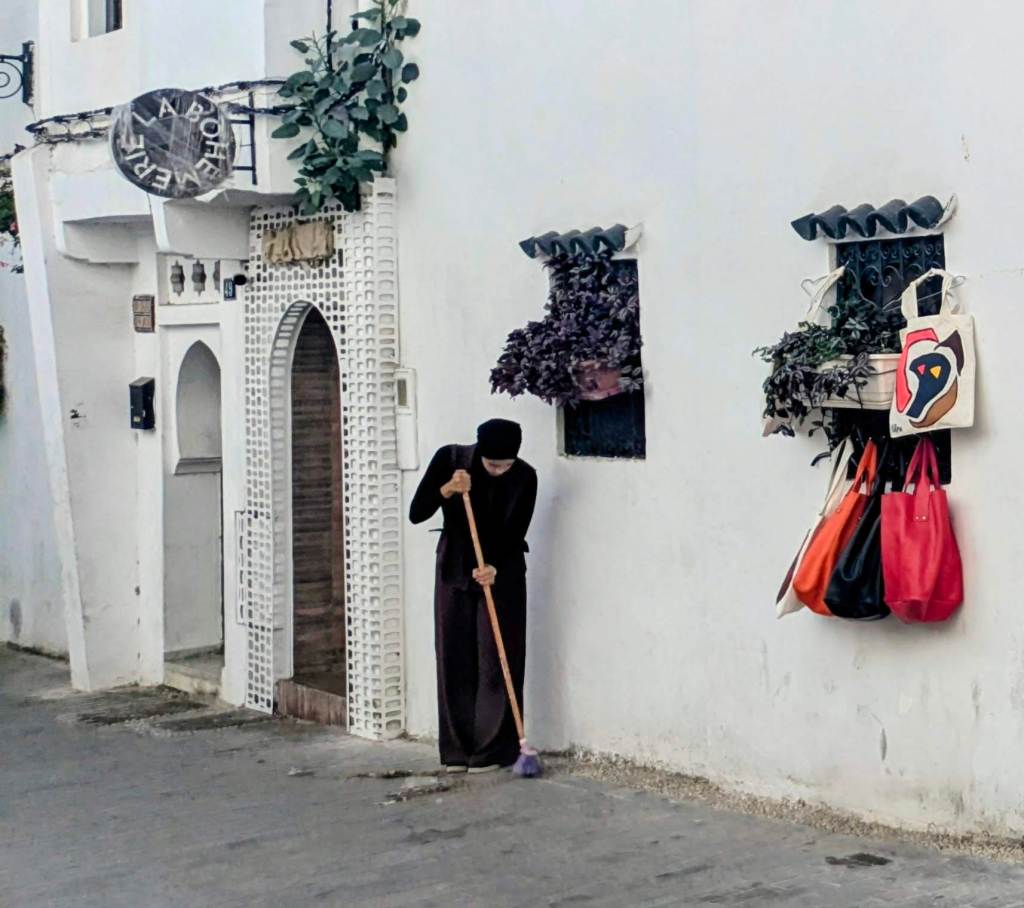
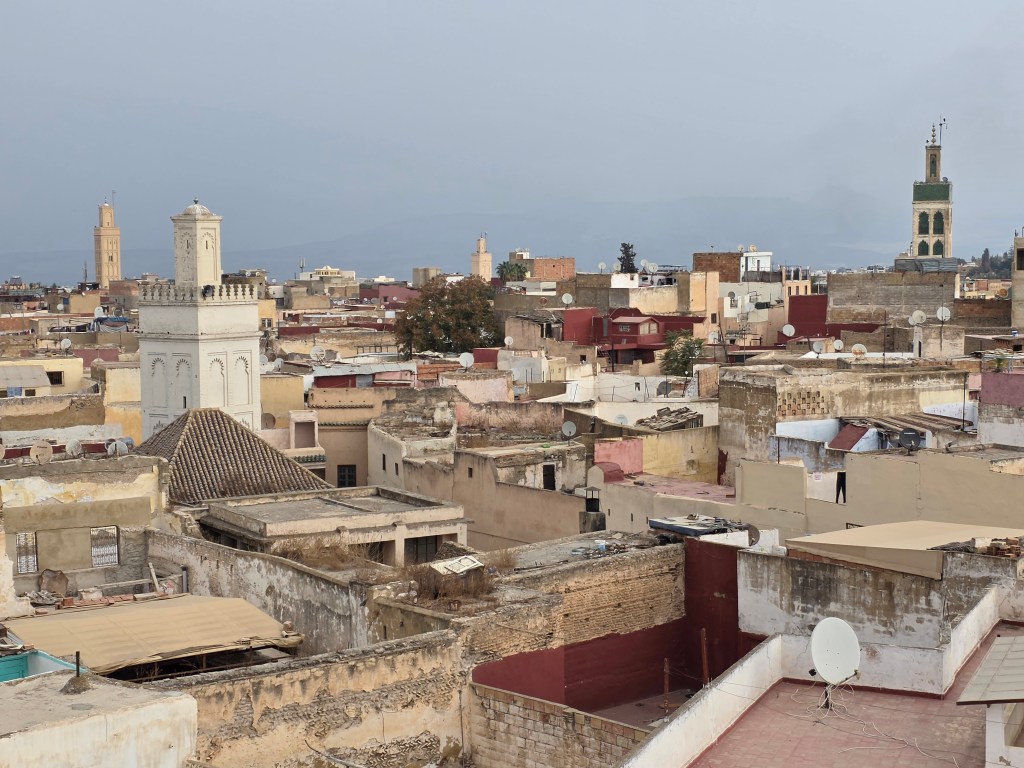
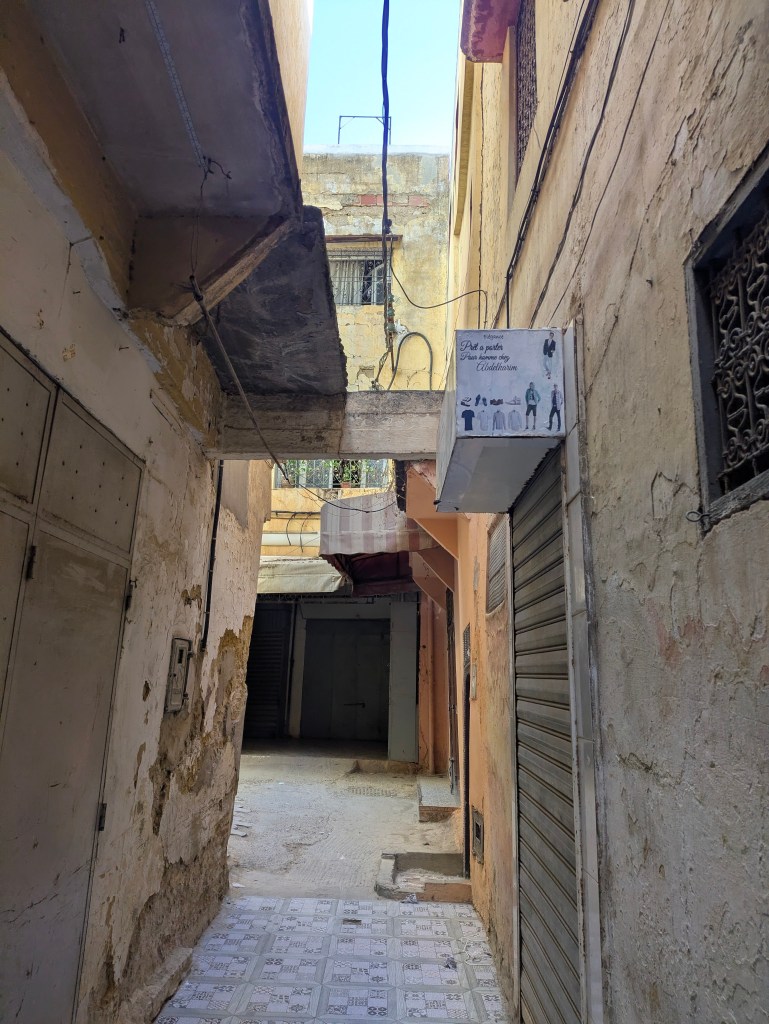
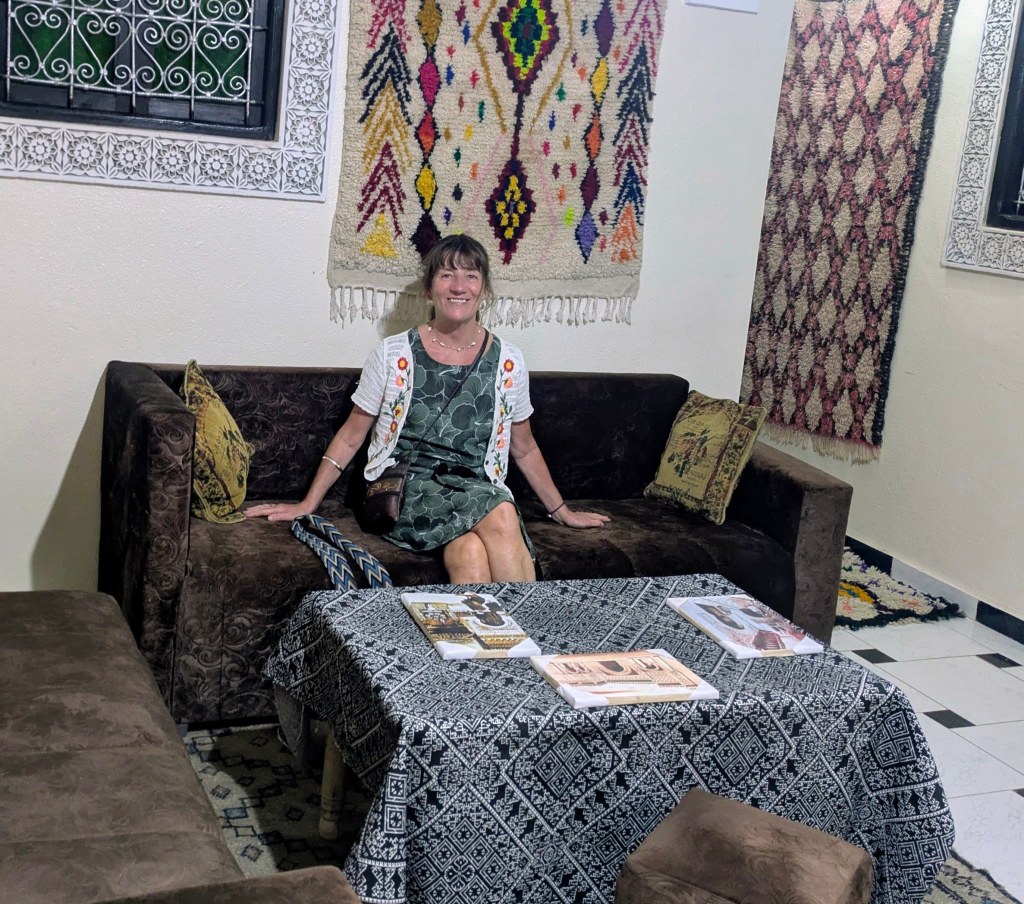
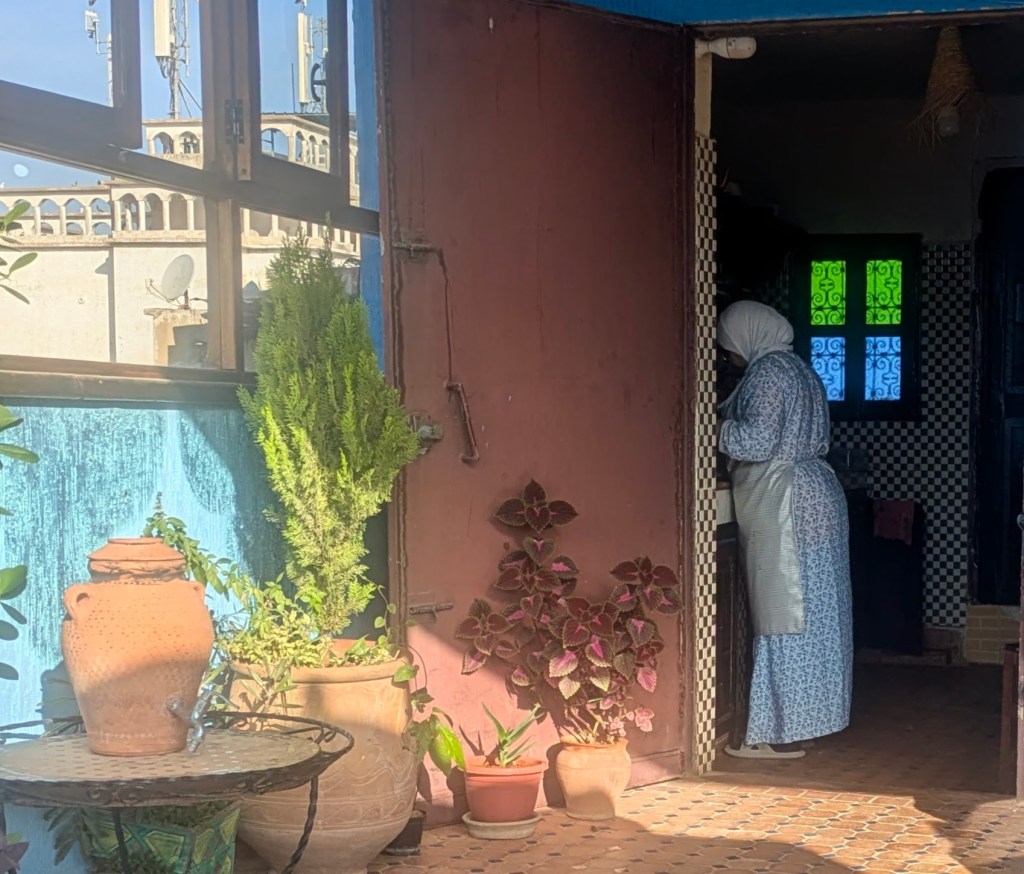
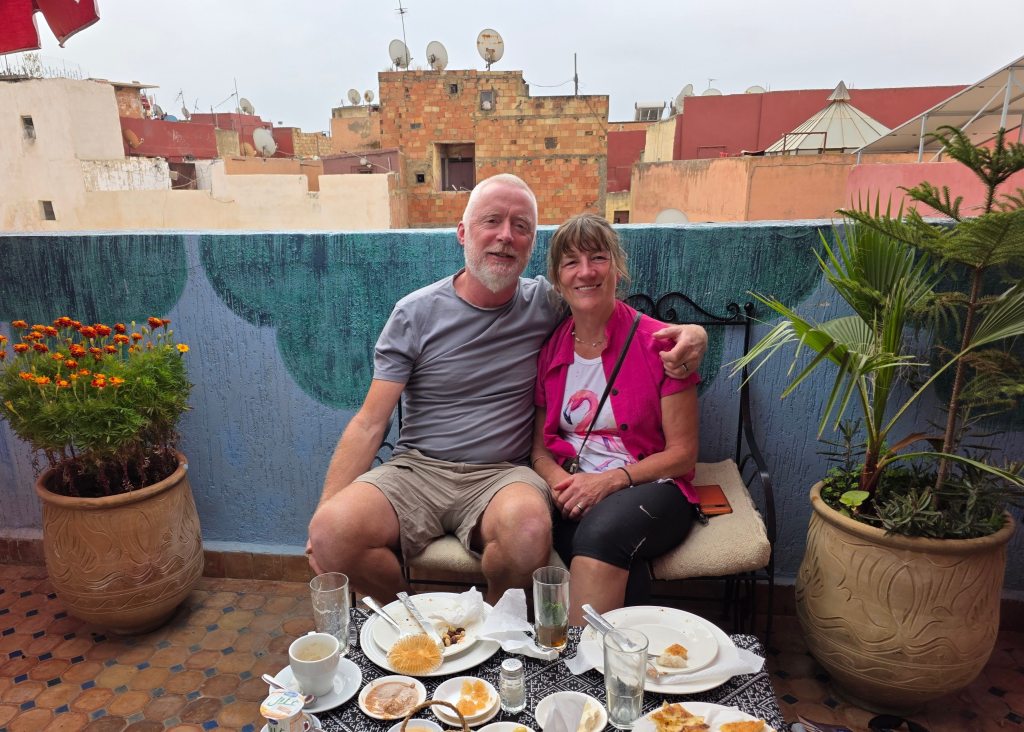
Riad Andalous was hidden away in the medina of the old imperial city of Meknes. Finding it was difficult – we walked  in baffling circles through stalls selling shoes, scarfs and all kinds of food until a couple of young boys led us through a maze of dirty alleys. When we climbed the stairs to enter Riad Andalous, we entered an oasis of calm with tapestries on the walls, ornate ceilings, rug-strewn floors and a sunny rooftop terrace. It even had a little resident tortoise, who slowly followed the sun around the terrace. The price per night for a comfortable ensuite room including a huge breakfast was €28. The only downside was that we were within hearing distant of five different mosques (which weren’t synchronised)  so the early morning call to prayer overlapped and lasted a long time.
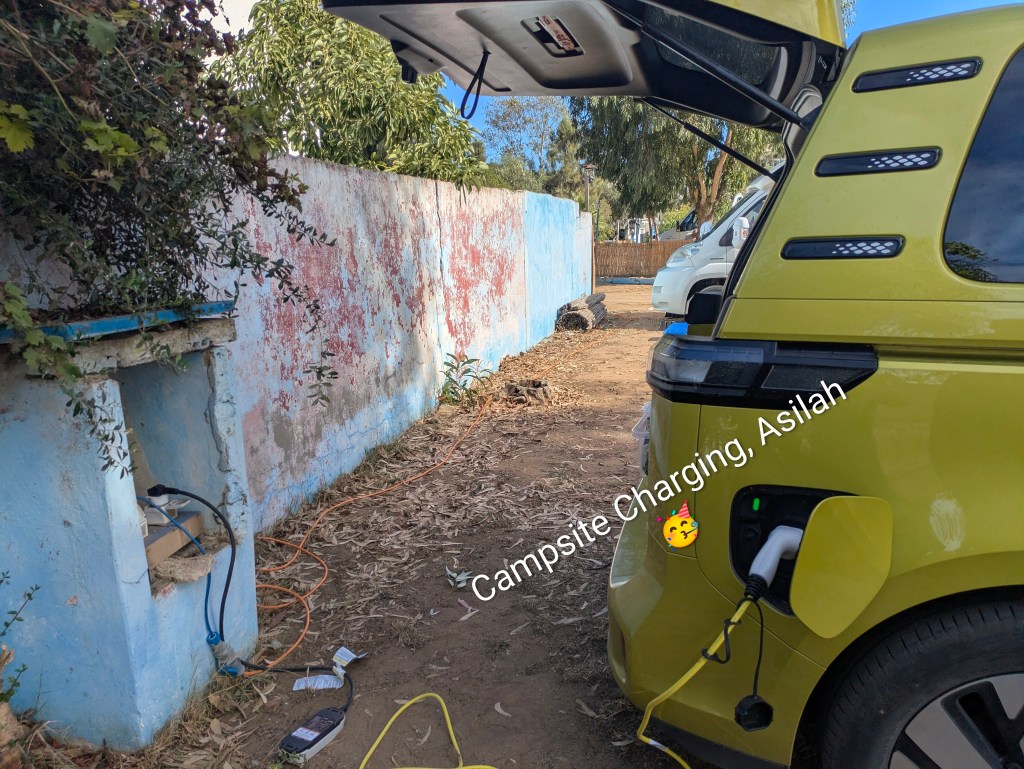
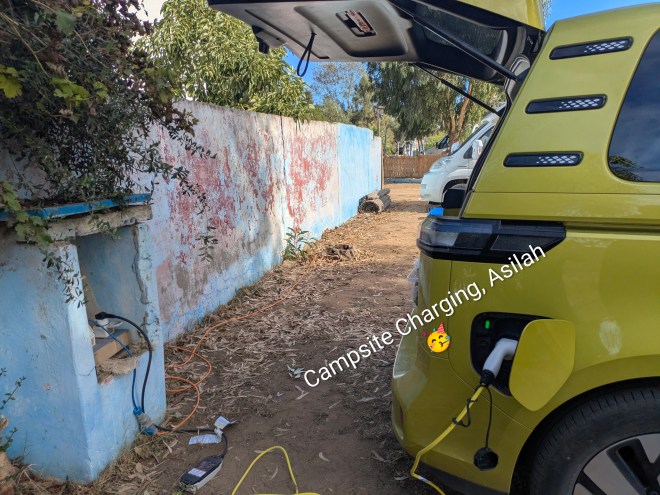
Asilah Campsite Charging  In a dusty campsite in Asilah, a windy town on the Atlantic coast, we plugged the van into a socket with the blessing of the campsite owner who was saying Inshallah.  Lo and behold, the charging light turned green and the Buzz slow-charged all night until it reached 100% by mid- morning the following day. We didn’t know if it was because of the blessing or the lack of safety features and circuit breakers but we were relieved.  Unfortunately it was the only time we managed to charge using a granny cable in Morocco.
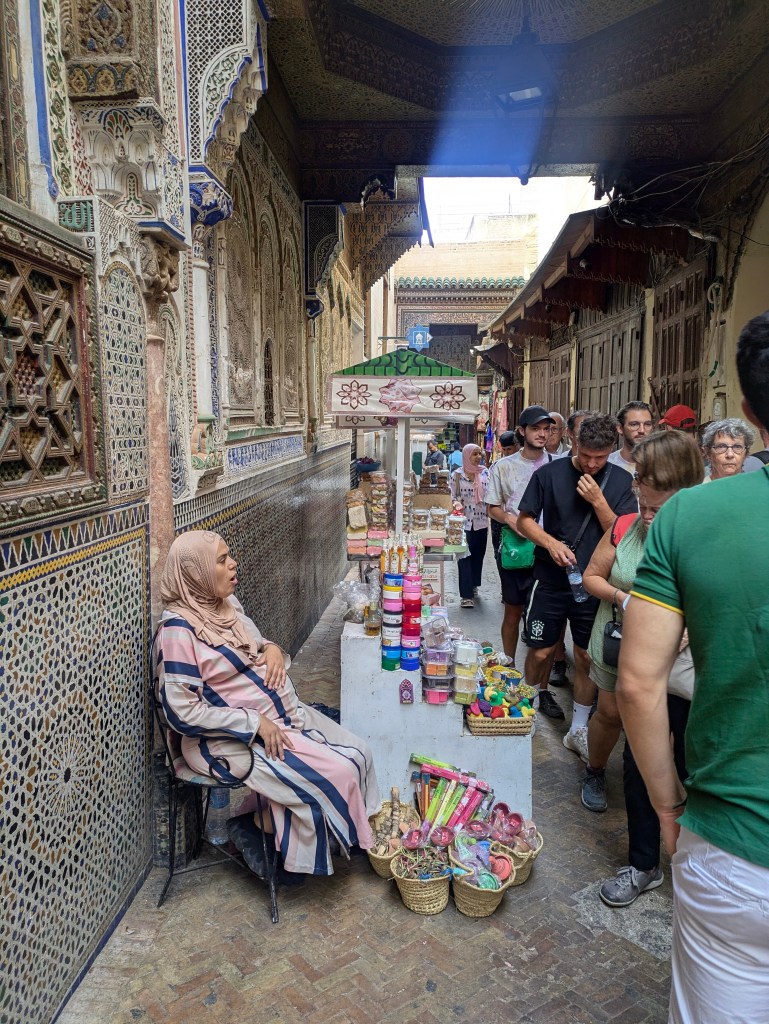
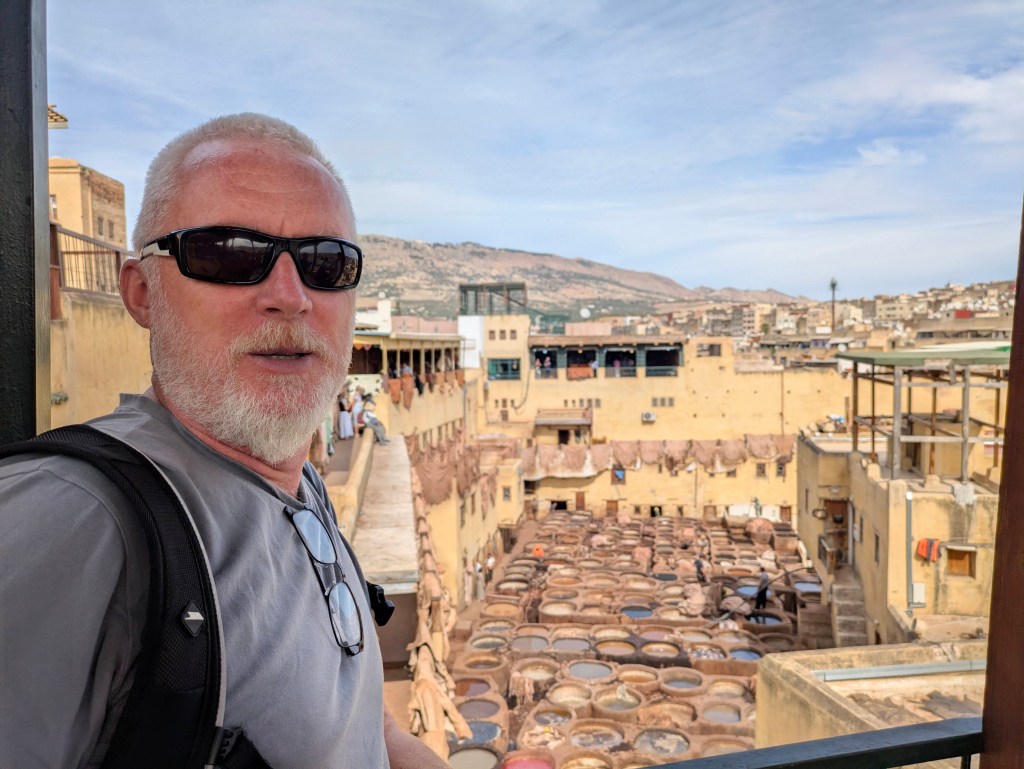
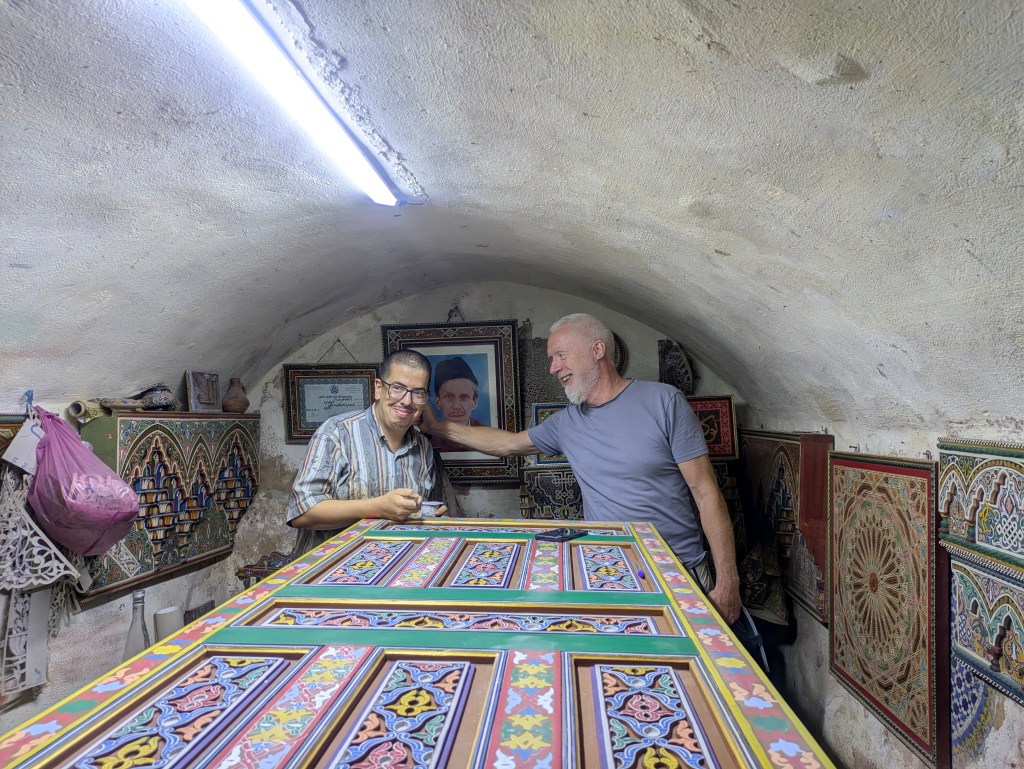
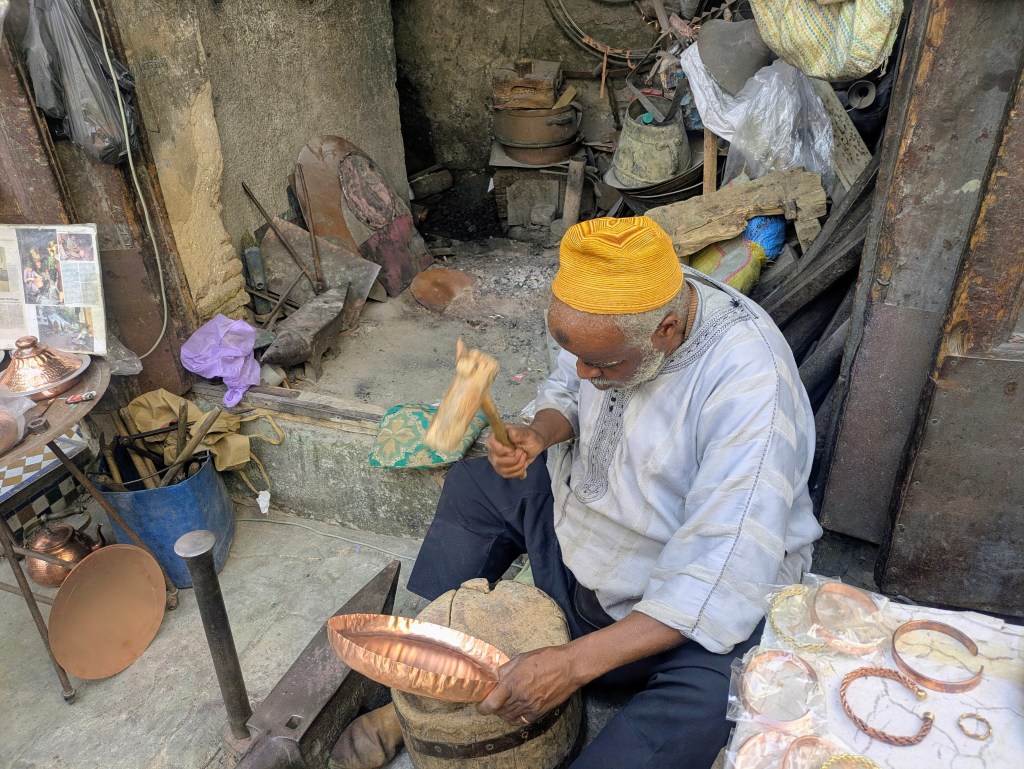
The Wonder of Fez.  The old medina in Fez was a place where little had changed in centuries.  There was the clamour of commence and the rumble of wooden carts being pushed along the narrow ‘streets,’ a maze of over nine-thousand paths and which was reputed to be the largest pedestrianized area in the world. There was the banging of hammers on metal, the soft whoosh of looms, the silent concentration of calligraphy, the slosh of dyeing fabrics and much more. The scent of rosewater and orange blossom mixed with the smell of raw meat, fish, spices and fresh baking. It was like stepping back in time, we ate warm flatbreads directly from the ovens in a family bakery, tasted honey cakes from an old recipe and visited the tannery at the edge of the medina (see lowlights).
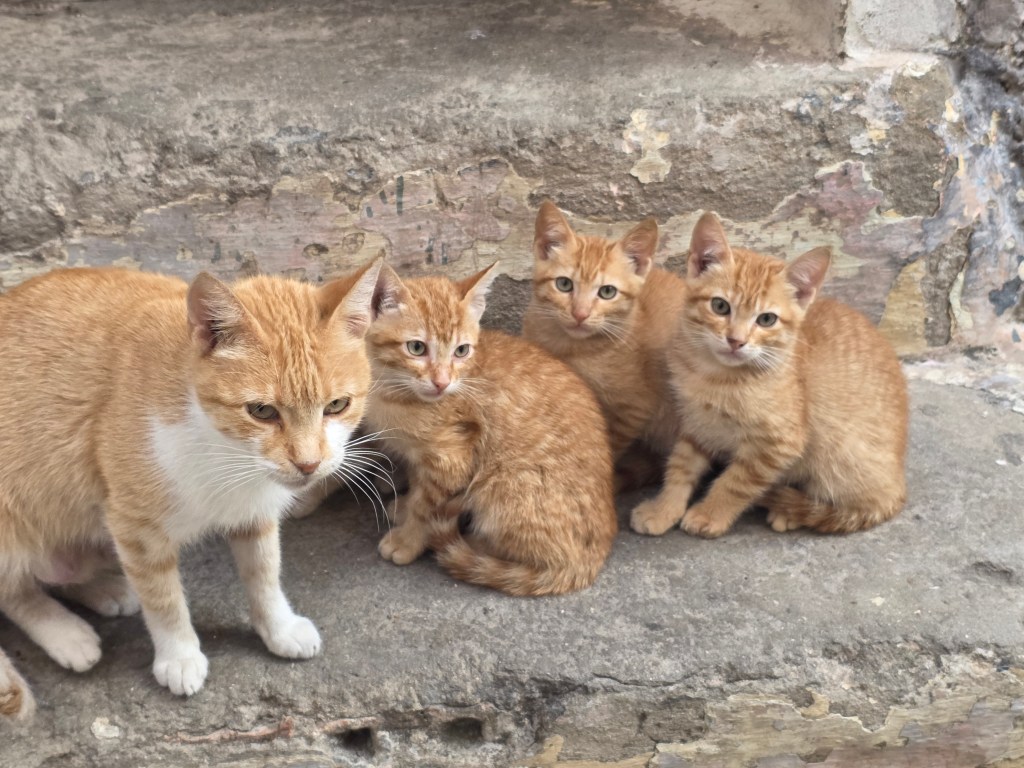
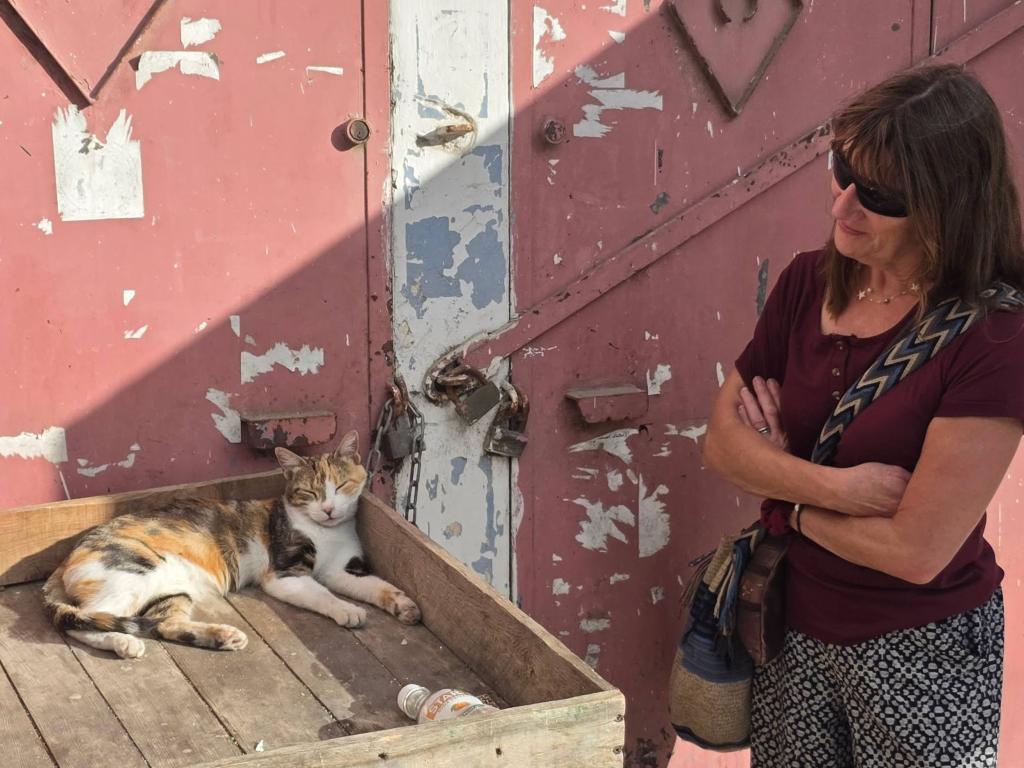
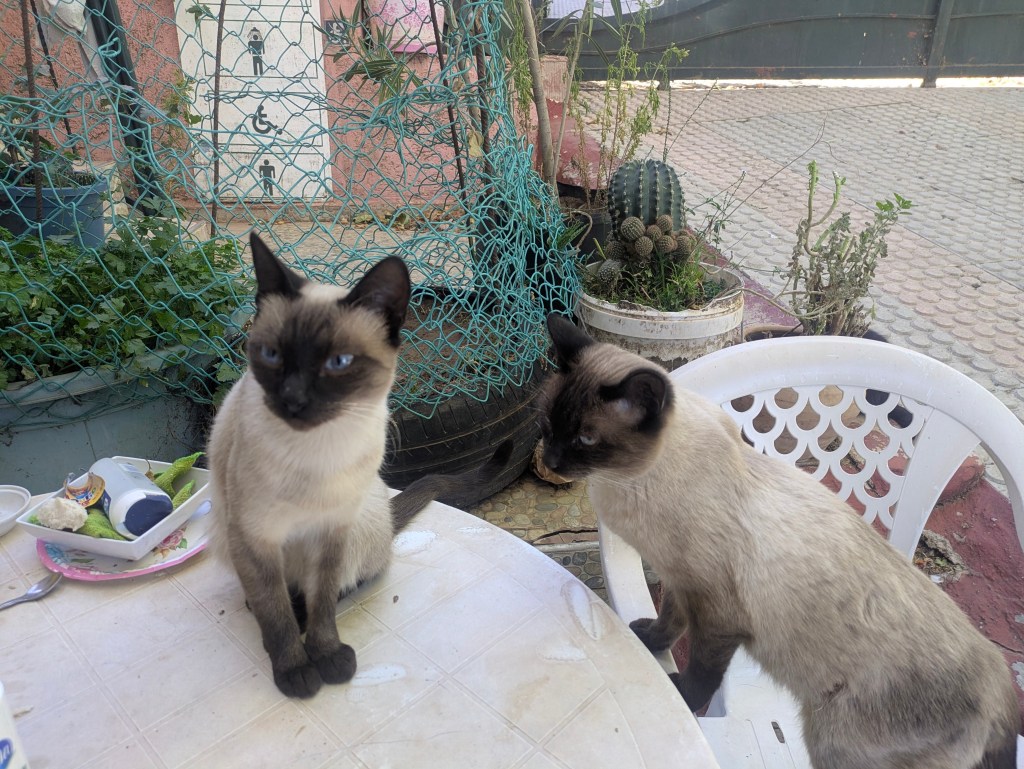
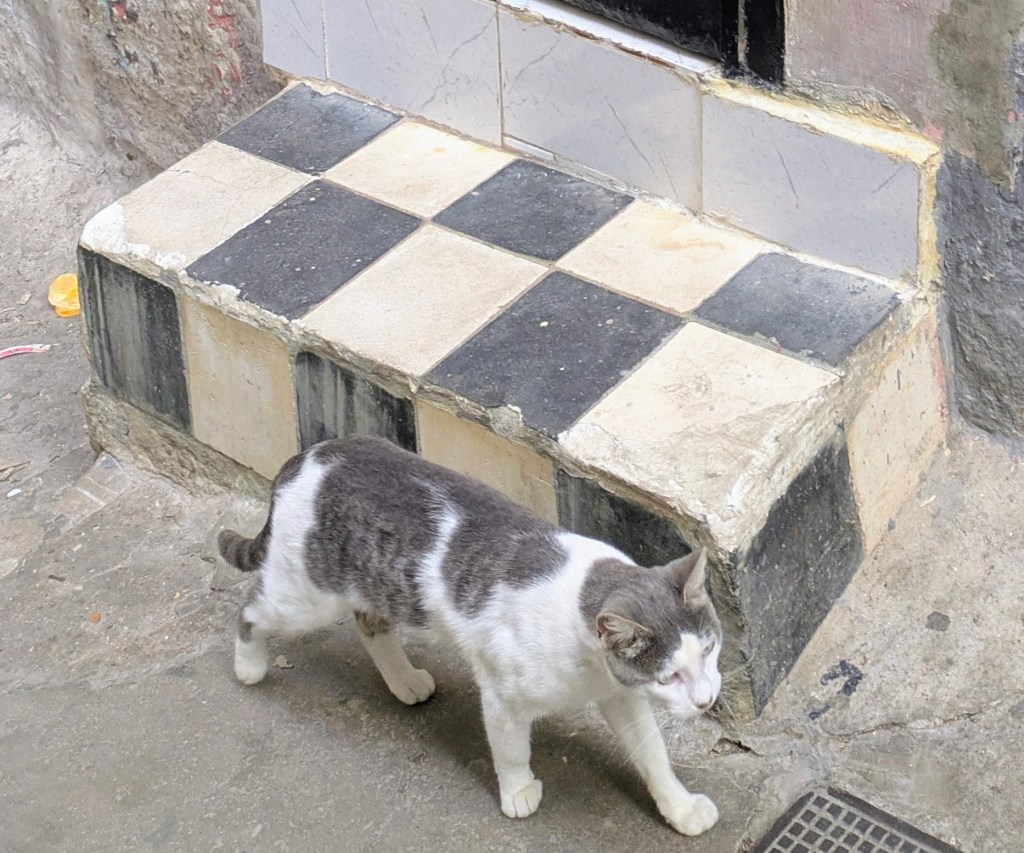
Cats Everywhere, If you have a fondness for cats, you will love Morocco. Did you know that a group of cats is called a clowder? Well, Morocco is definitely ‘clowdered.’ There is a cultural communal reverence for felines, with people leaving out food and water for them. The most basic shop had large displays of tinned cat food.
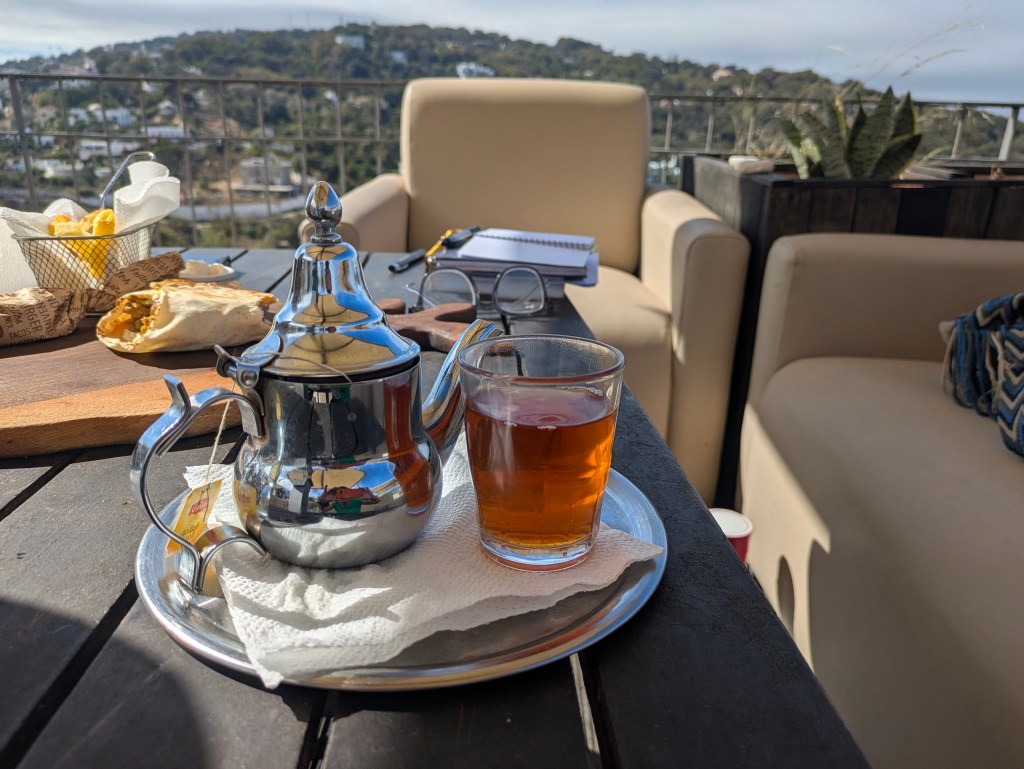
Mint Tea and Other Beverages.  I grew to love the mint tea in Morocco, which was just as well as alcohol was difficult to obtain and expensive. In Tetouan, a city in Northern Morocco,  we couldn’t find the alcohol section in the Carrefour Supermarket. We wandered around and eventually spotted an unmarked grey door on the side of the building. That couldn’t be it, could it? It looked more like a back entrance to some kind of warehouse. We peeked in. The light was dim, the air was stuffy but the interior was teeming with men (it was all men except for the women at the tills). There was the sound of bottles clinking and cans rolling against each other in baskets. The whole enterprise felt furtive, shady and clandestine. We were delighted.   
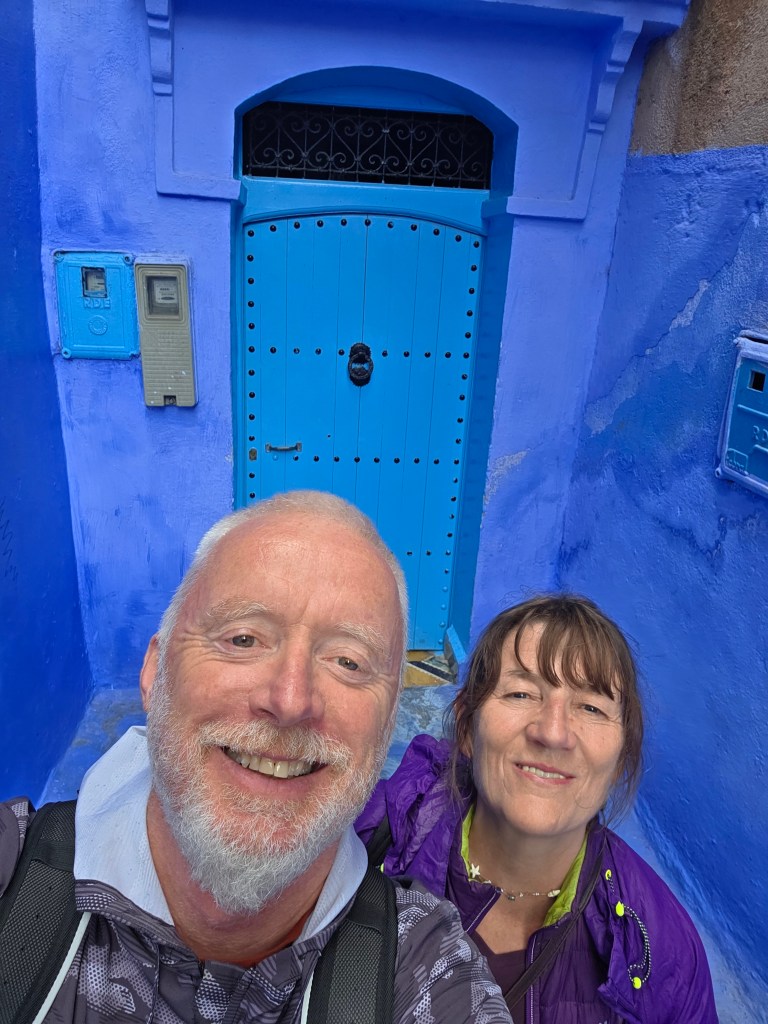
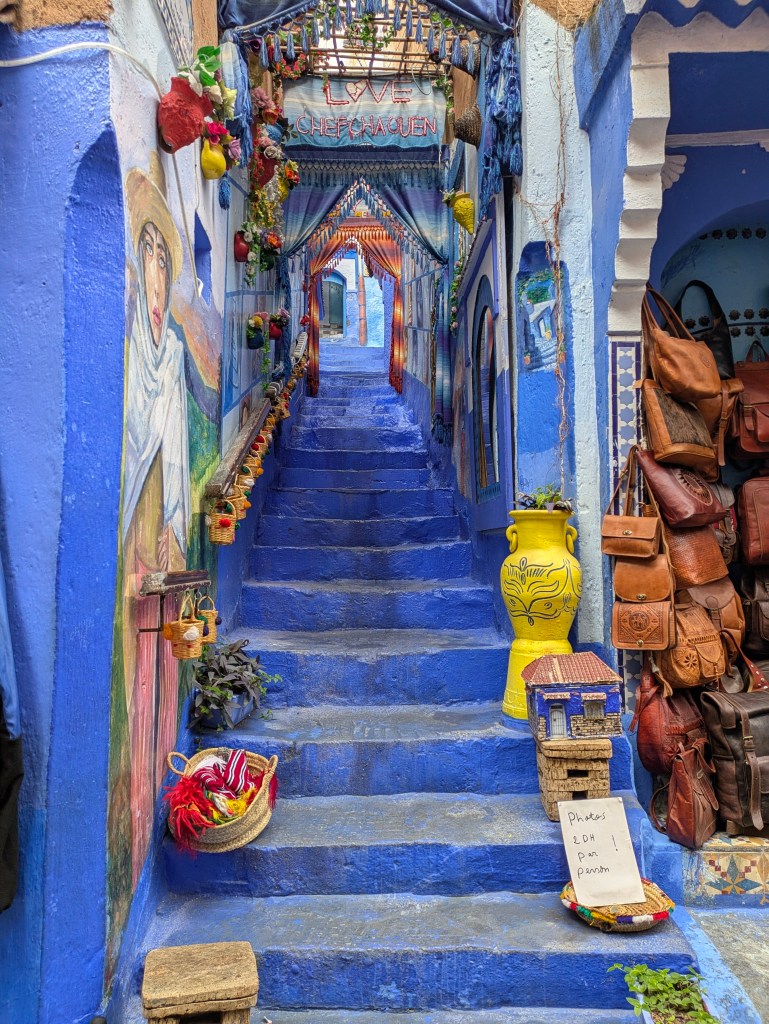
A Blue City. Chefchaouen in Northern Morocco wasn’t looking it’s best under  grey  drizzly skies when we visited but it was still gorgeous. It is famous for its narrow streets with facades painted in different shades of blue.  There are several theories about why the town is painted blue. Some said that the colour blue symbolised the sky and spirituality, that it came from the Sephardic Jews who settled here in the 15th century, others said that blue was a good insect repellent. Whatever the reason, the result is stunning and very photogenic.

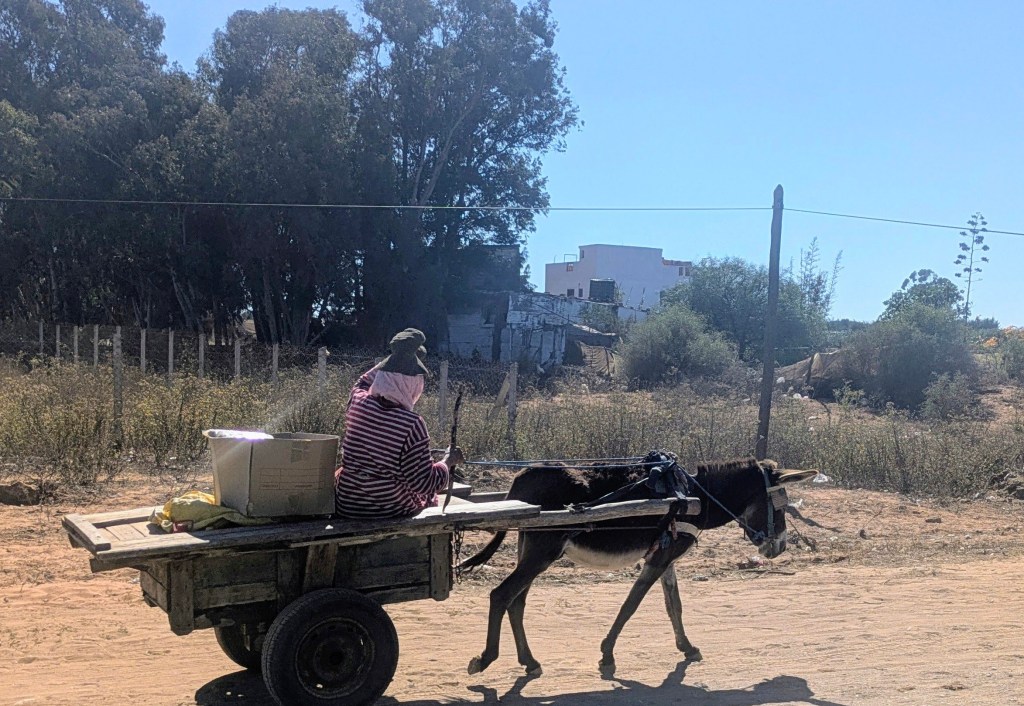
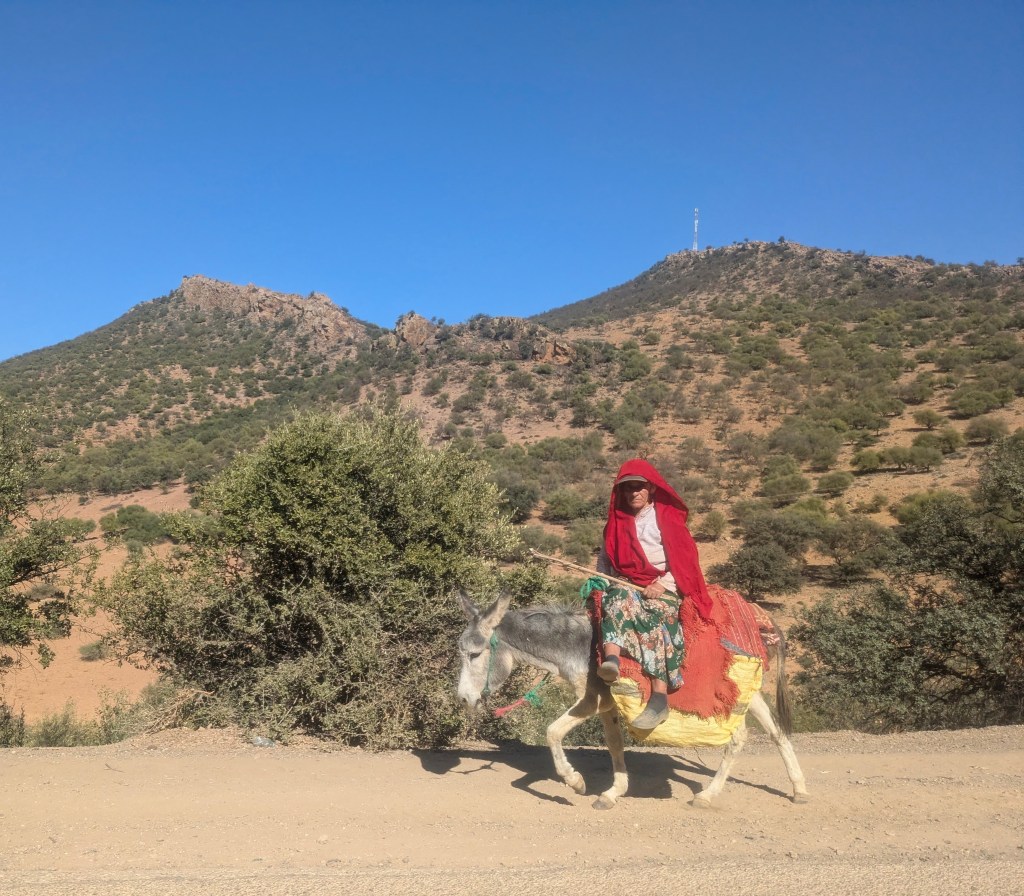
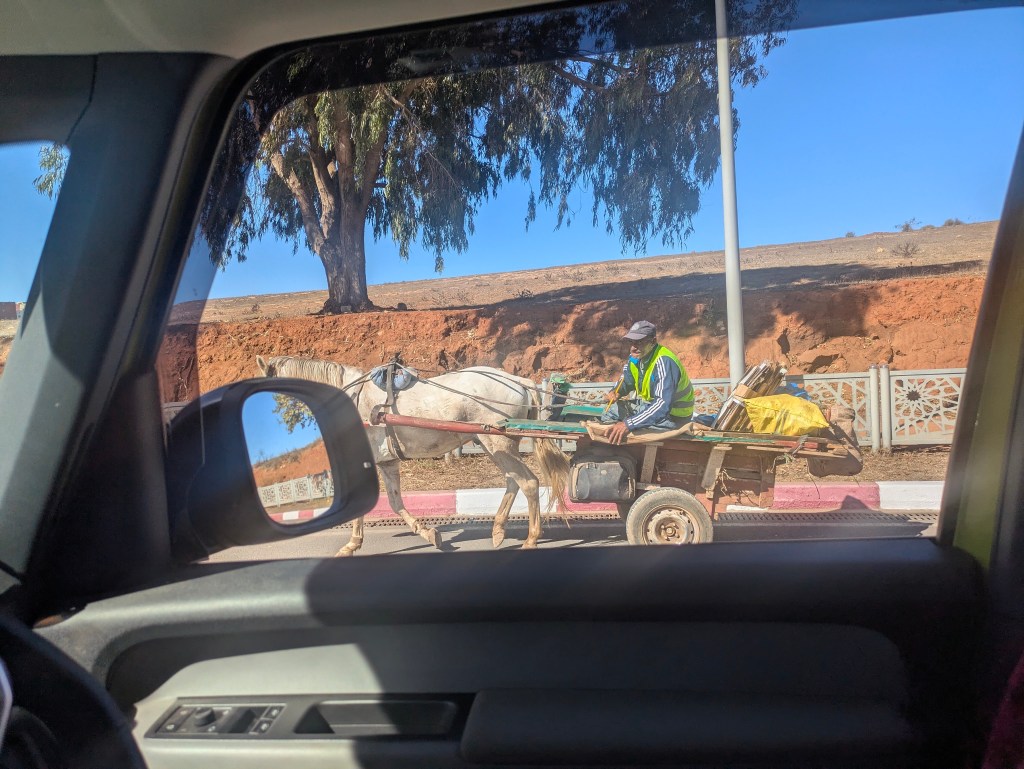
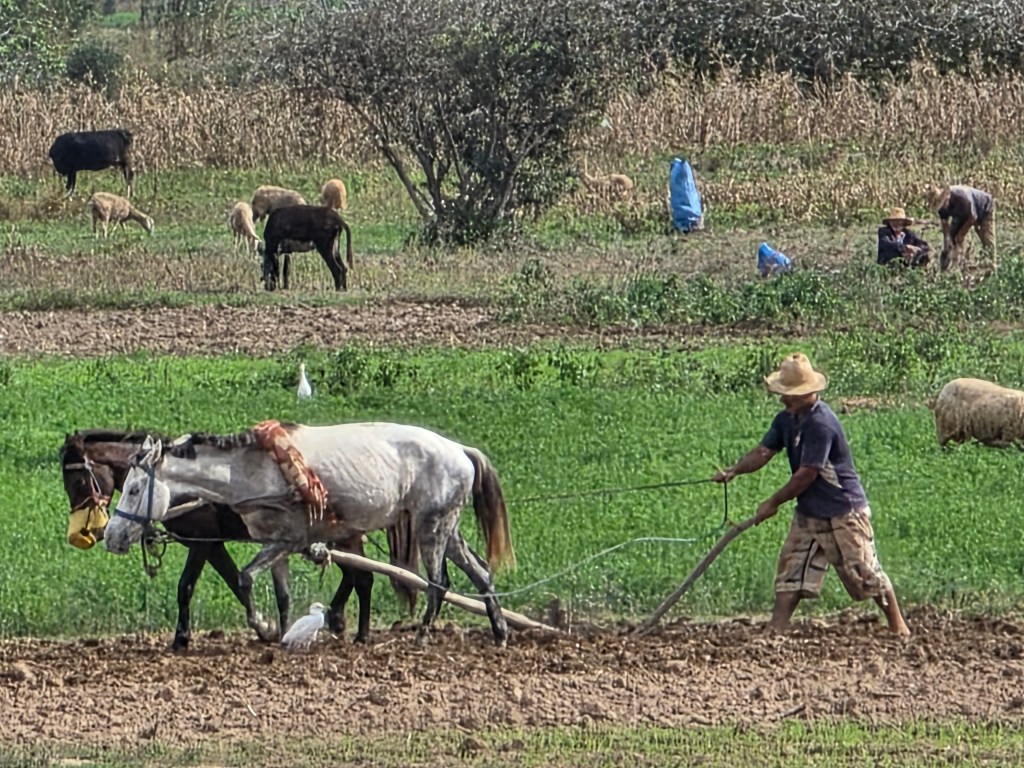
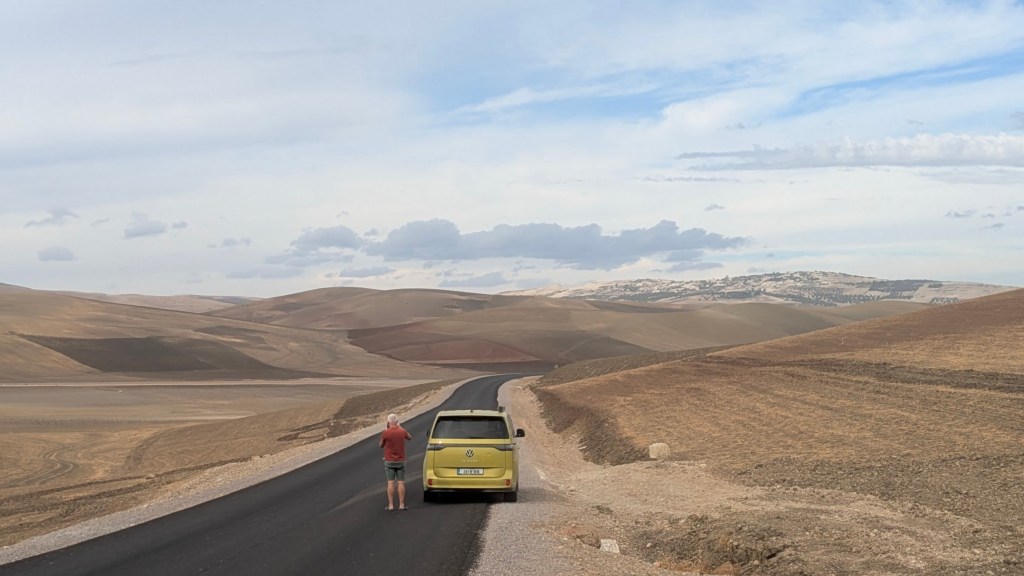
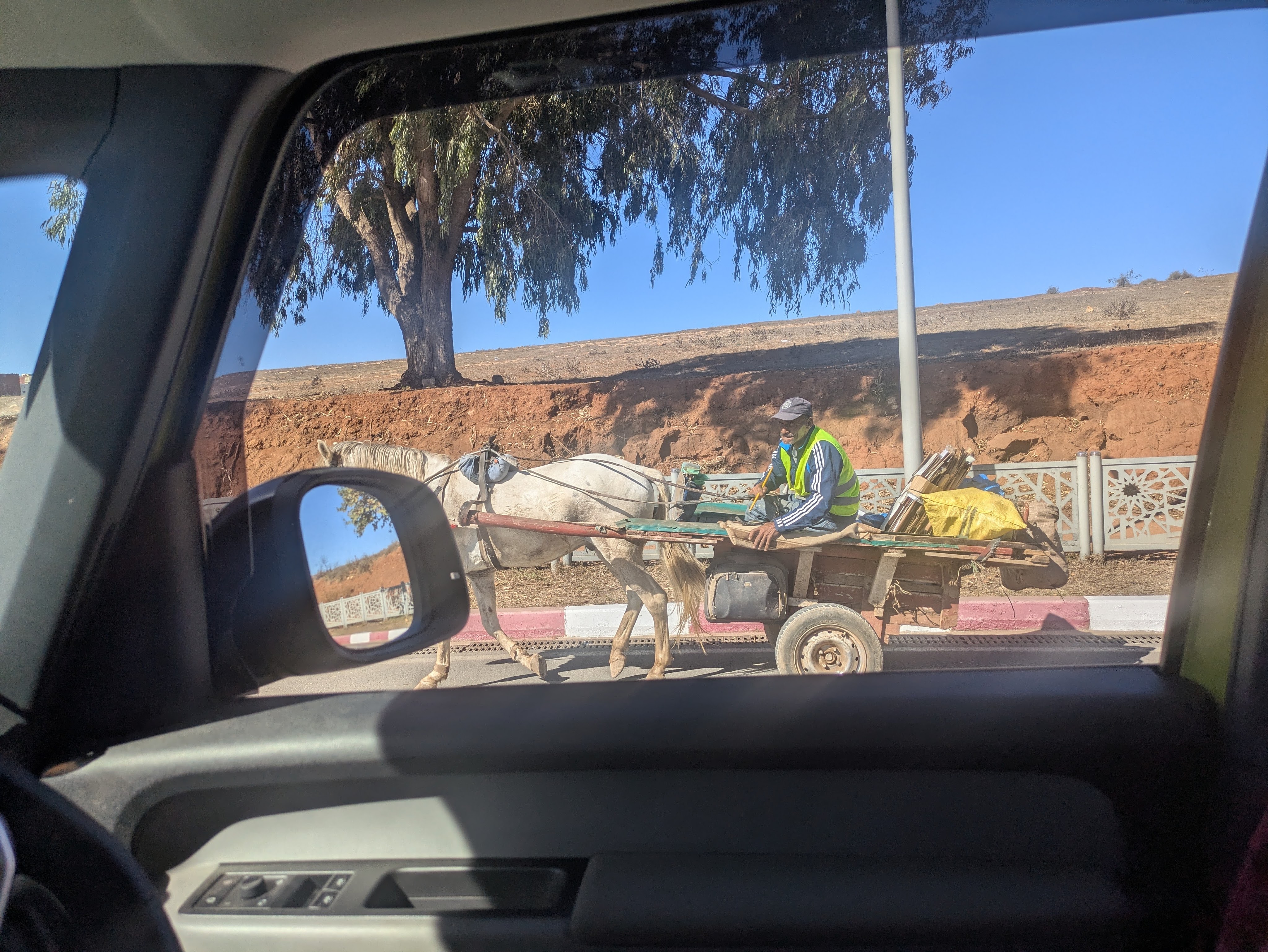
The Roads in Morocco were excellent with a smooth surface, better than a lot of roads in Ireland. There was a surprising amount of donkey and pony traffic particularly when we moved inland. There were also lots of speed checks. If there was only one bush in the distance, it was quite likely that a policeman with a speed-gun was lurking behind it, ready to phone on details to his colleague up the road. We were never stopped as we were driving inside the speed limit to conserve our charge but many others weren’t so compliant.

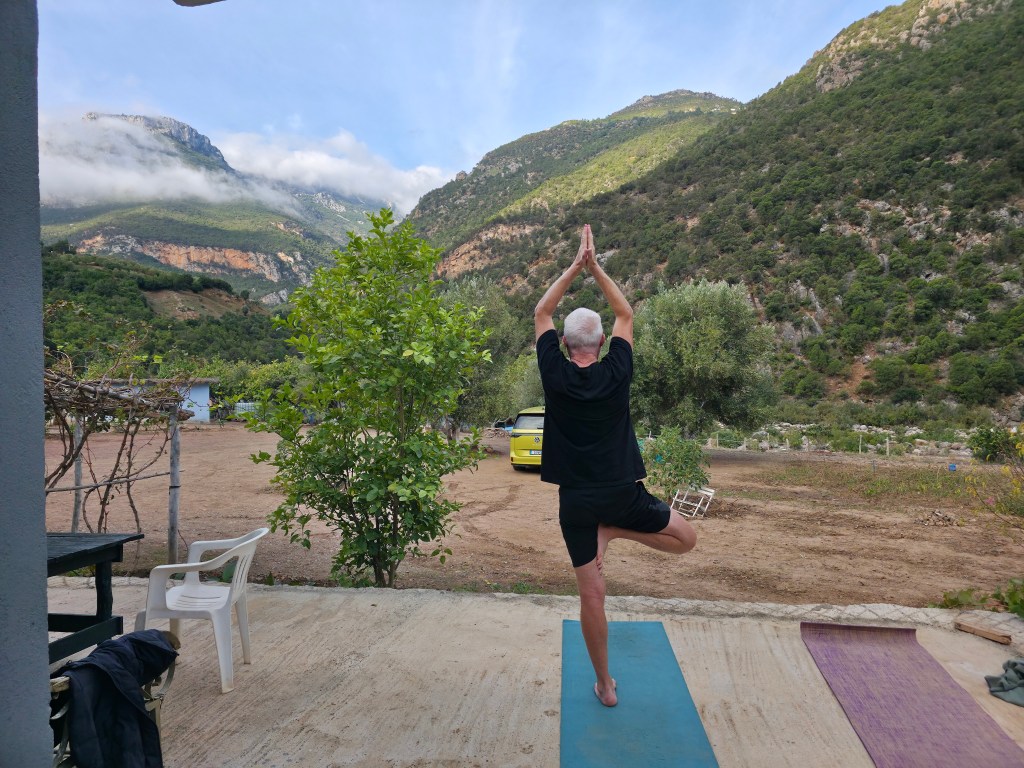
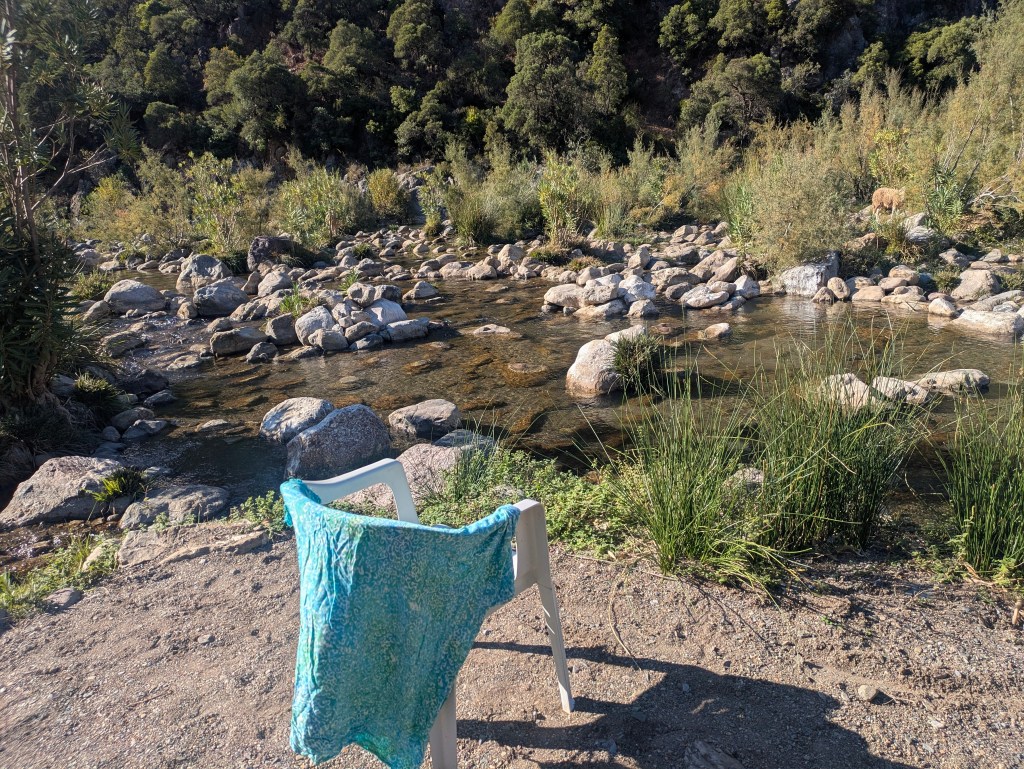
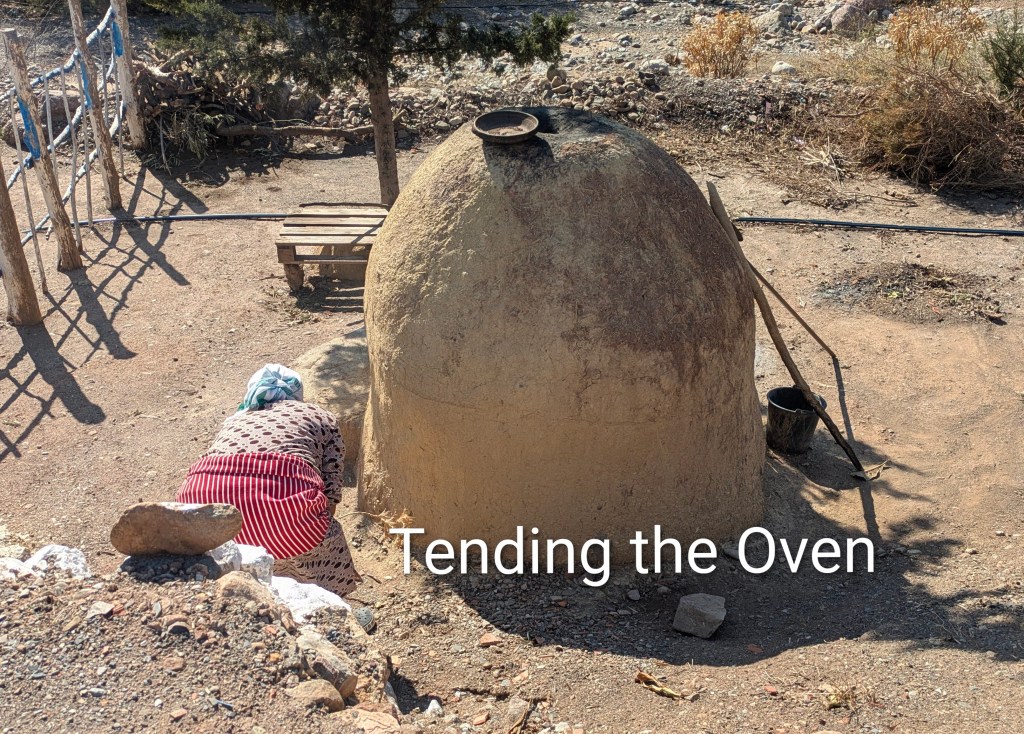
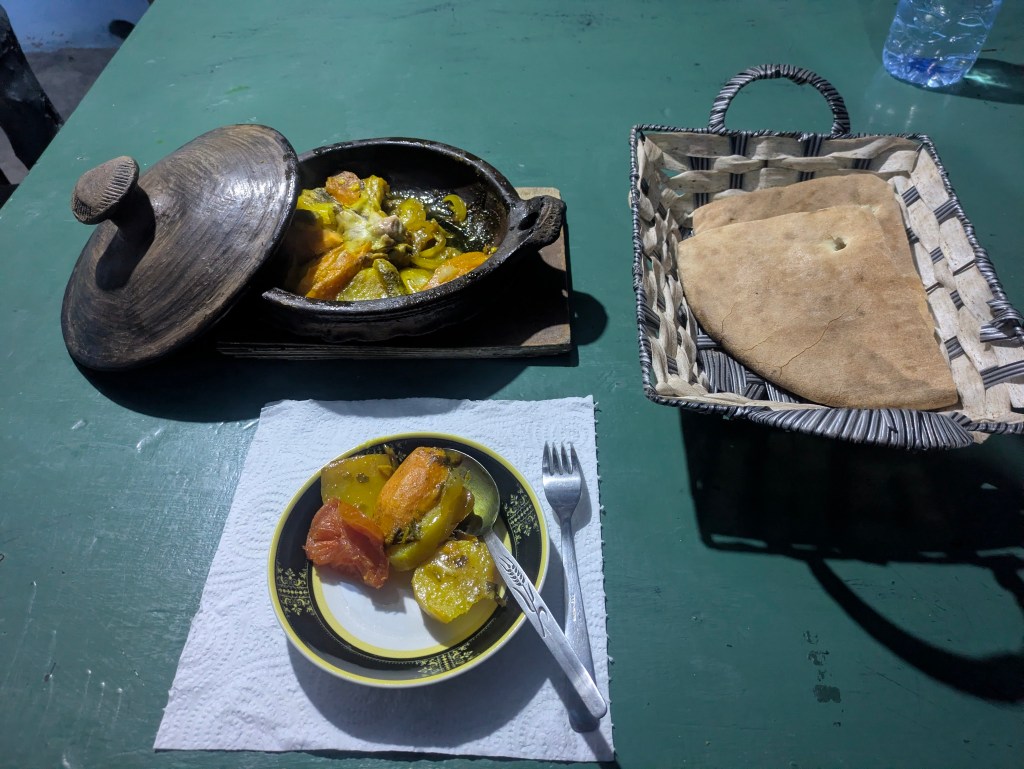
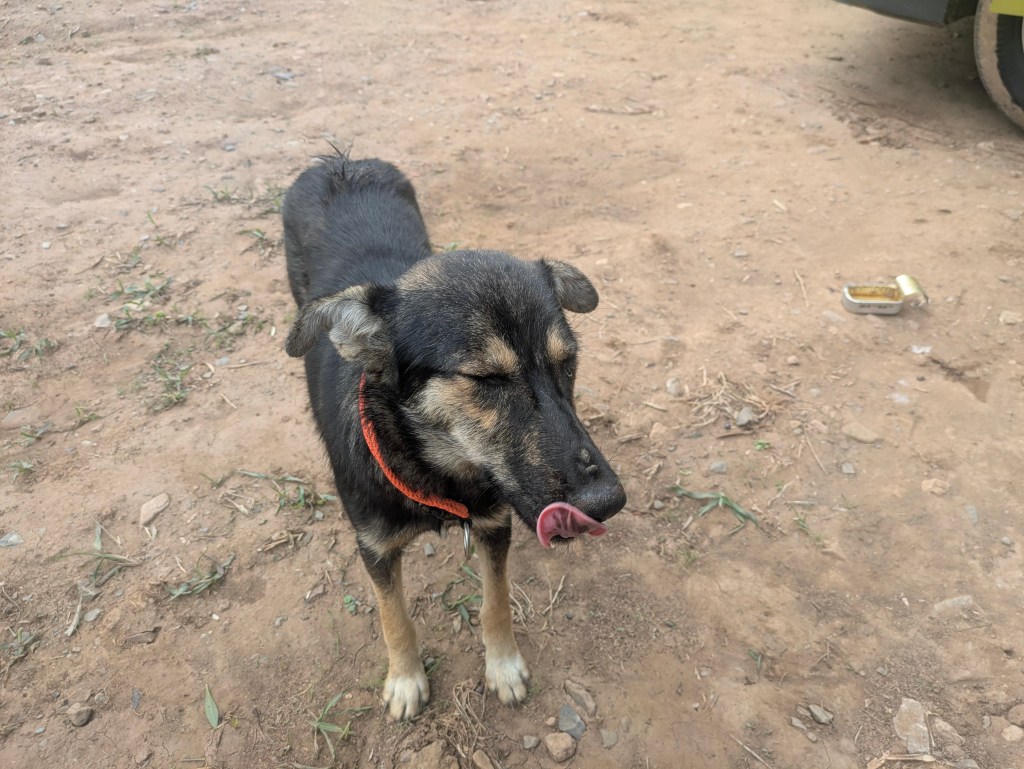
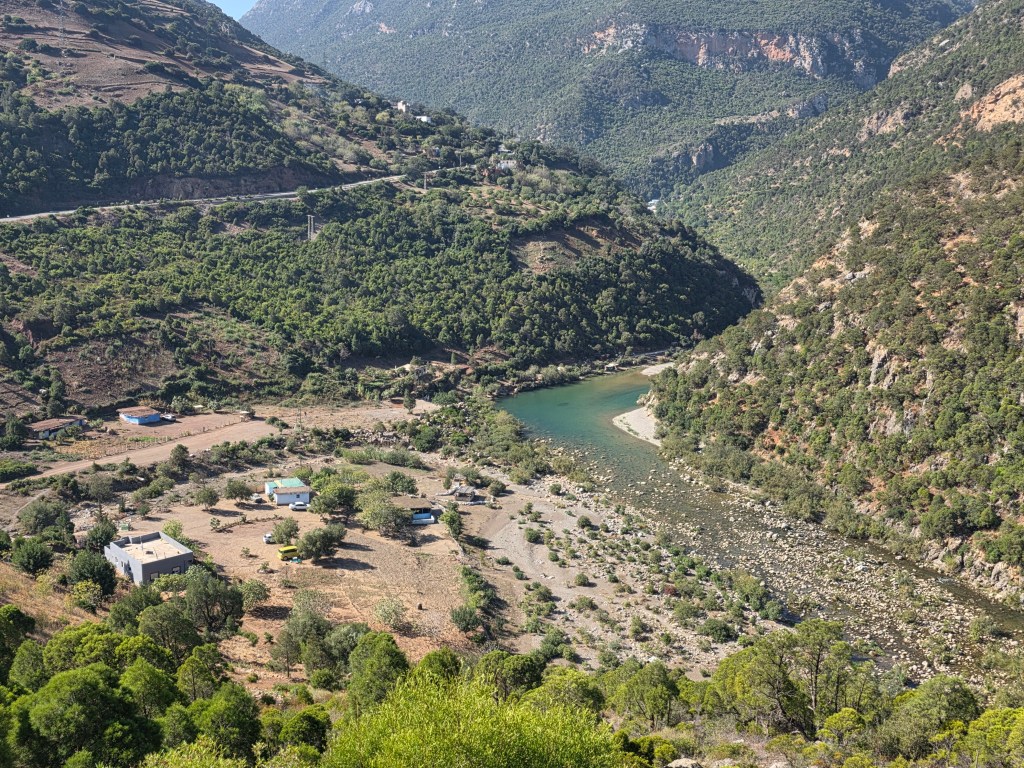
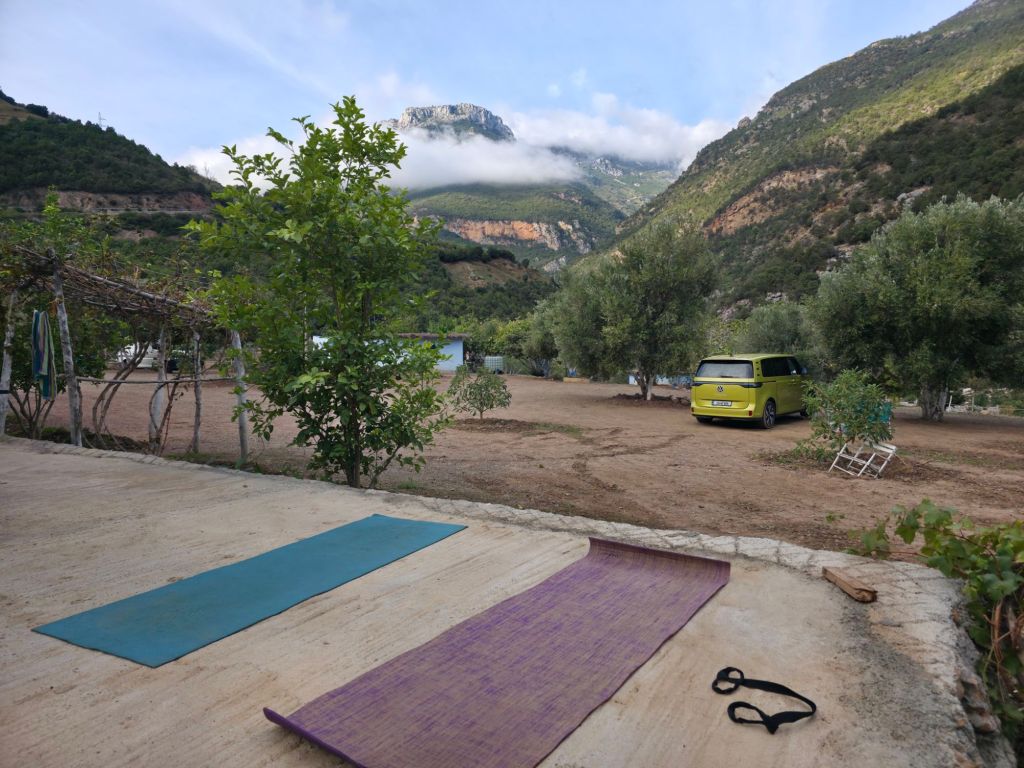
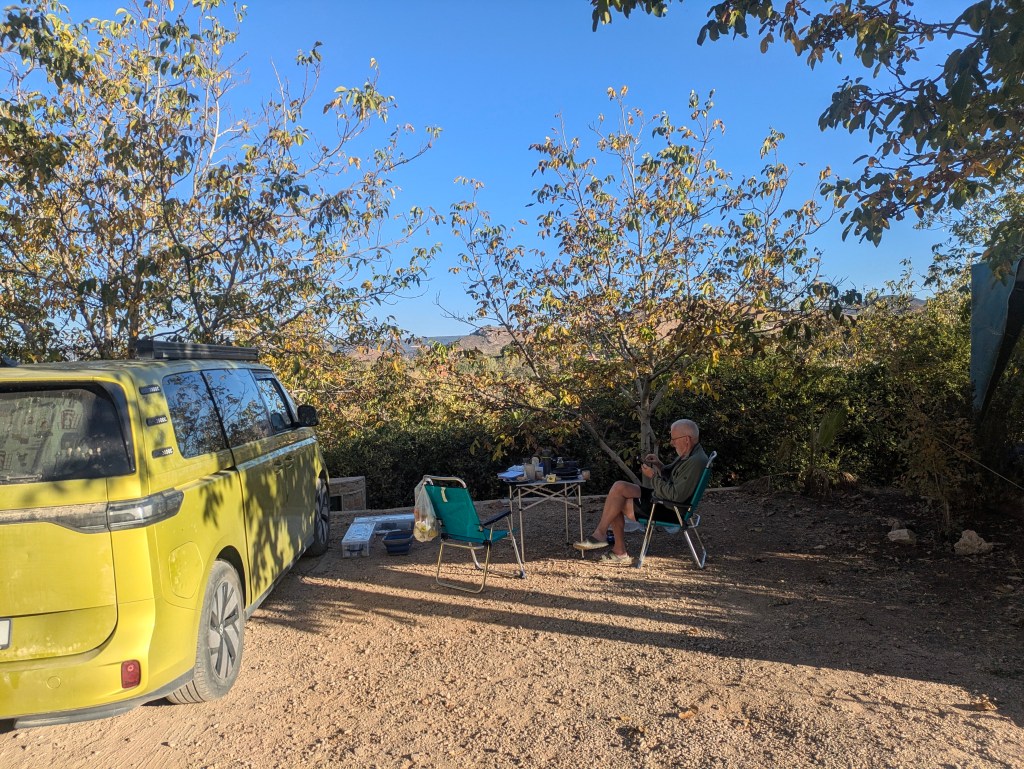
A Slice of Heaven. We found our idea of heaven in a little unpretentious campsite in the Rif mountains, run by a lovely family who baked bread in an outside oven and made the tastiest tagines. There was the babble of a small river, a soft wind in the lemon and avocado trees and the bleating of a few goats. The resident dog befriended us – all it took was a bit of chicken. The days were warm, perfect for hikes, the nights were cool (about 9C), perfect for sleeping. We sat by the river, hiked in the hills, read, did some yoga and watched the morning sun hit the mountain peaks and slowly creep down to warm the valley. This tranquil place put a spell on us, forced us to slow down. It could have been boring….it should have been…but it wasn’t in the slightest. It was our favourite place in Morocco.

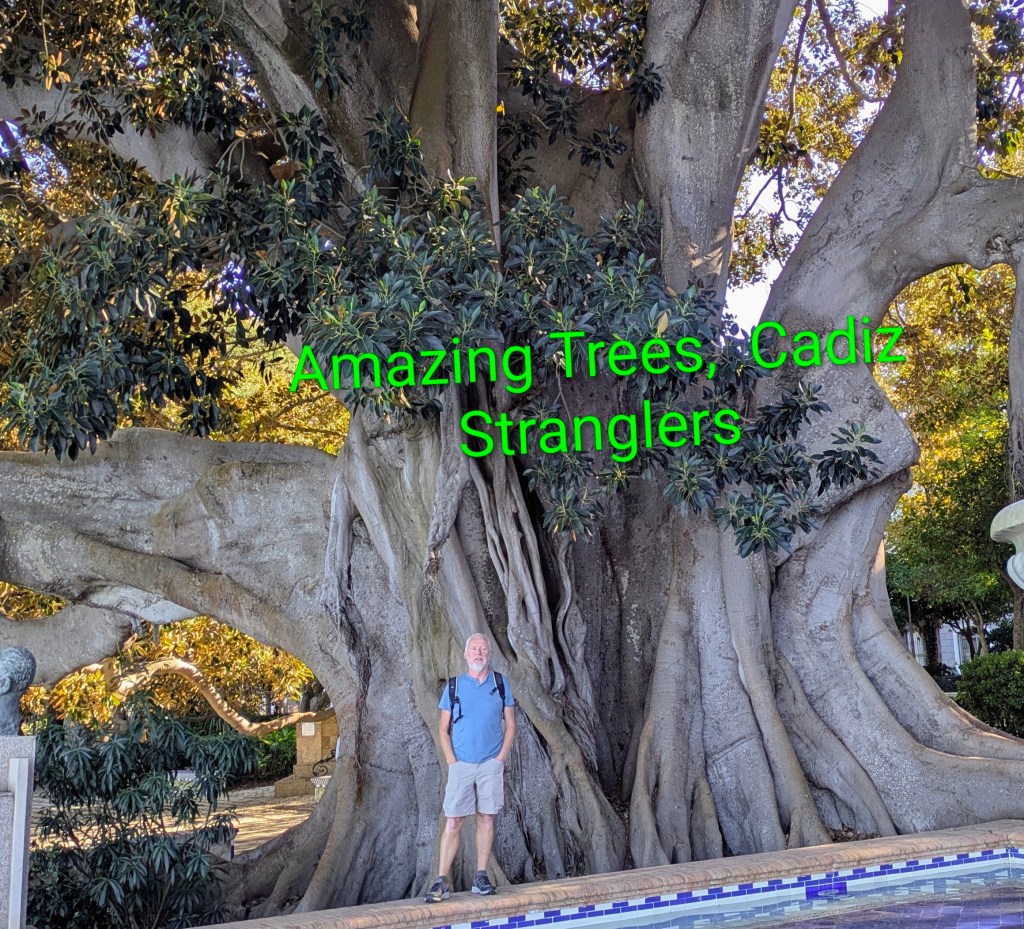
Trees in Cadiz, Spain. Cadiz is a place of narrow lanes, wide plazas, beaches, tapas bars with the aroma of frying fish, and always the sound of the sea which was never far away. The waves crashed or lapped (depending on the wind and side) on the reinforcements that kept the whole place from eroding and dissolving into the sea. But what impressed us most were the trees – dramatic Strangler Figs with enormous umbrellas of leaves and trunks as wide as  a city bus.

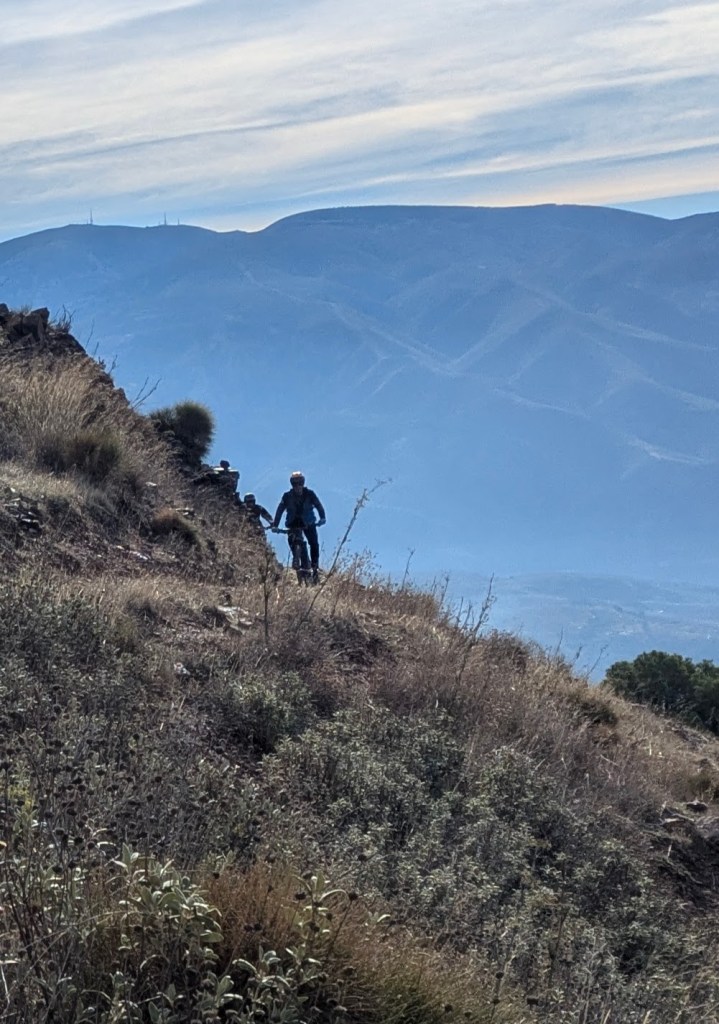
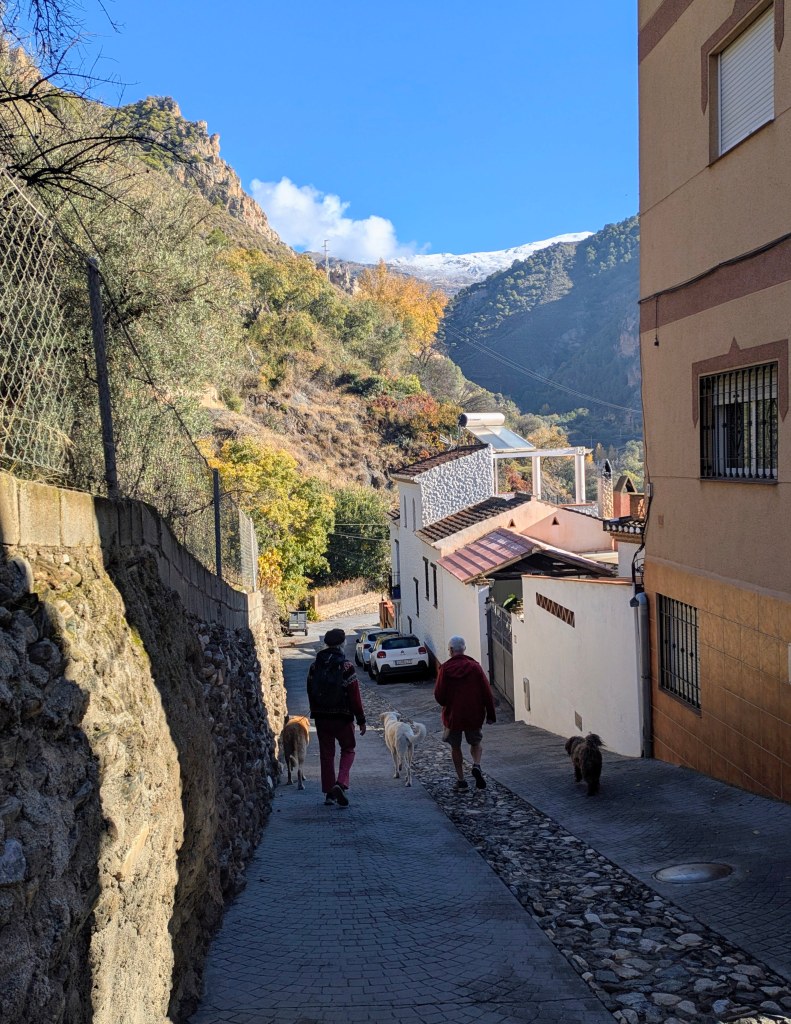
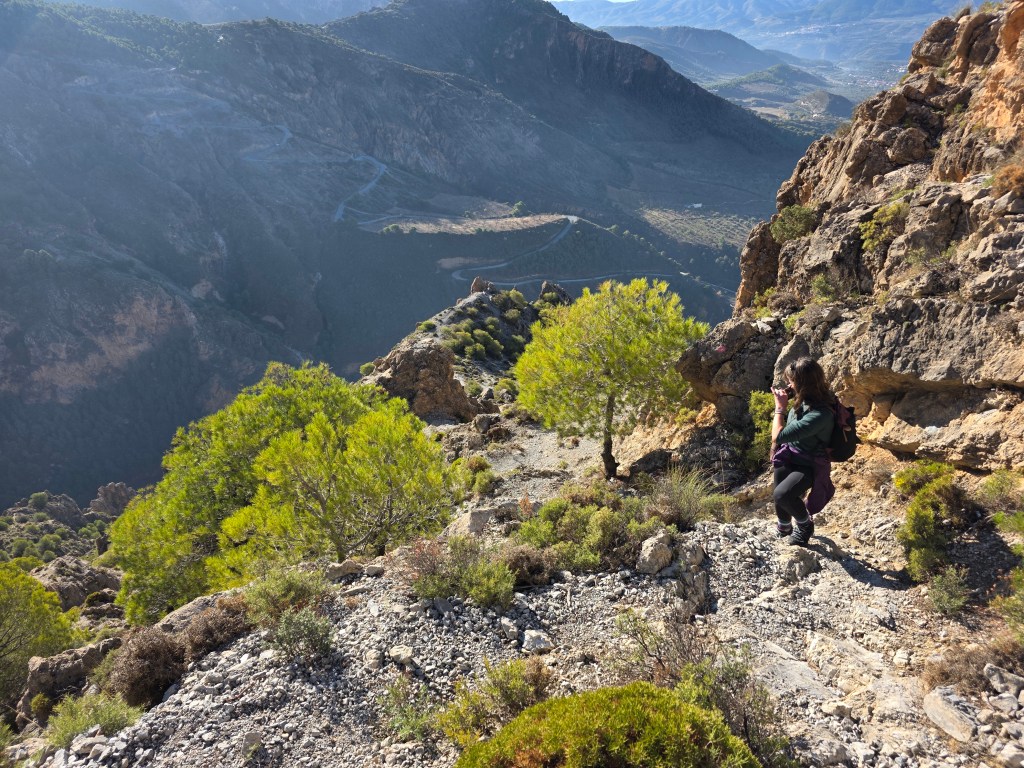
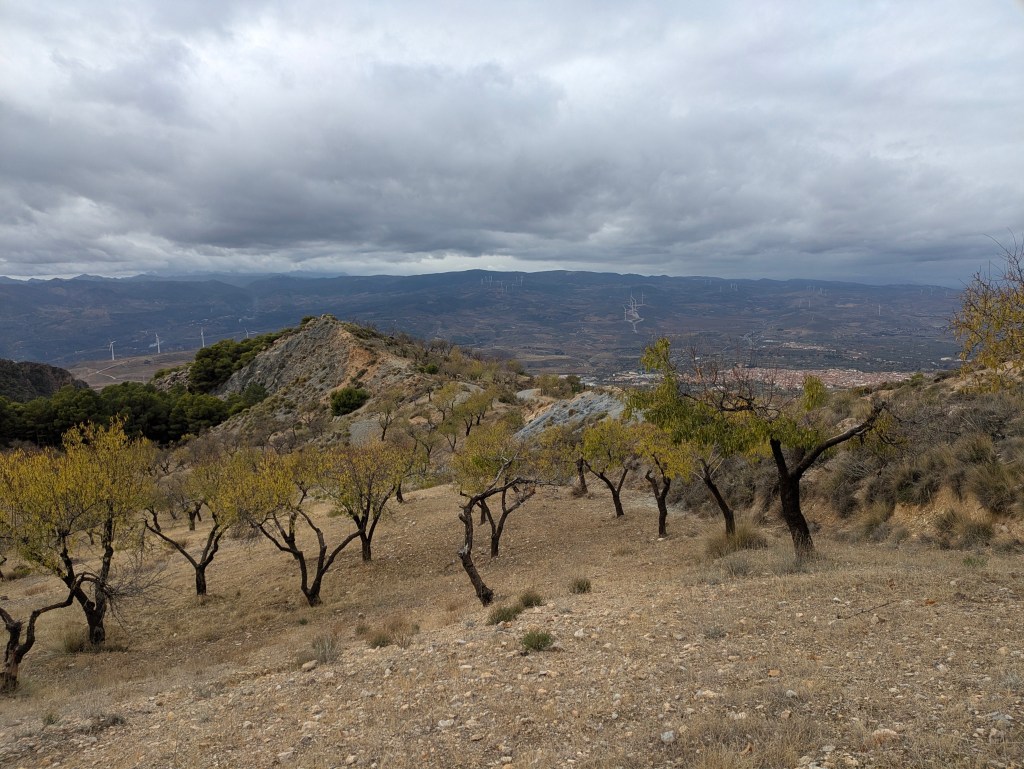
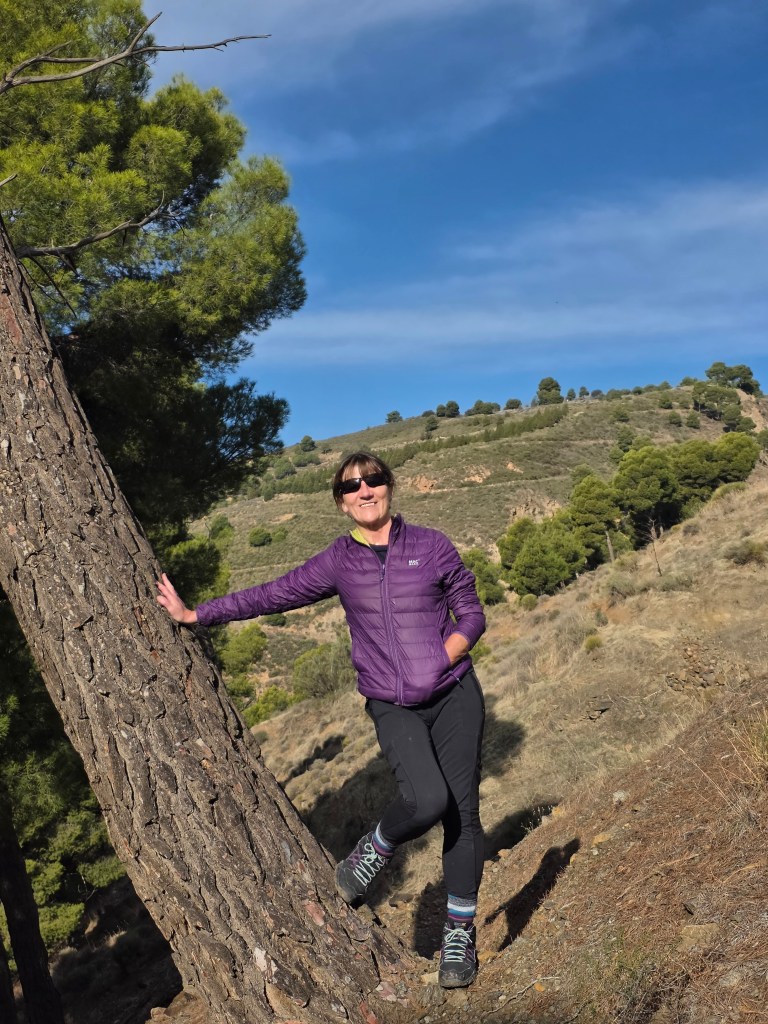
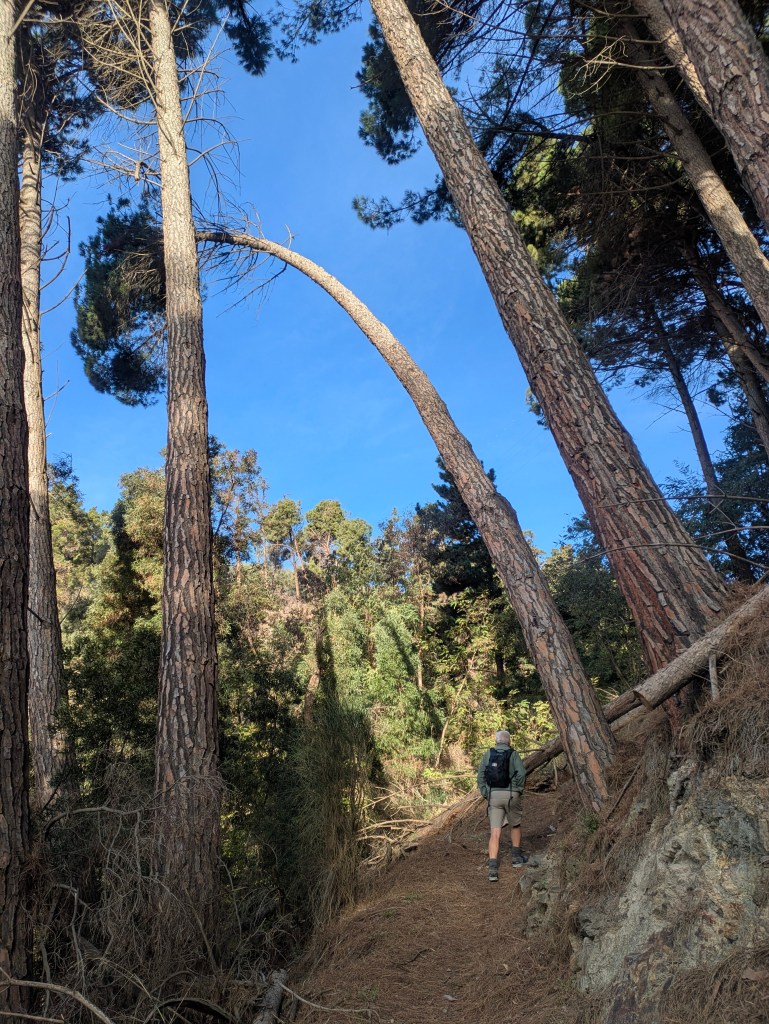
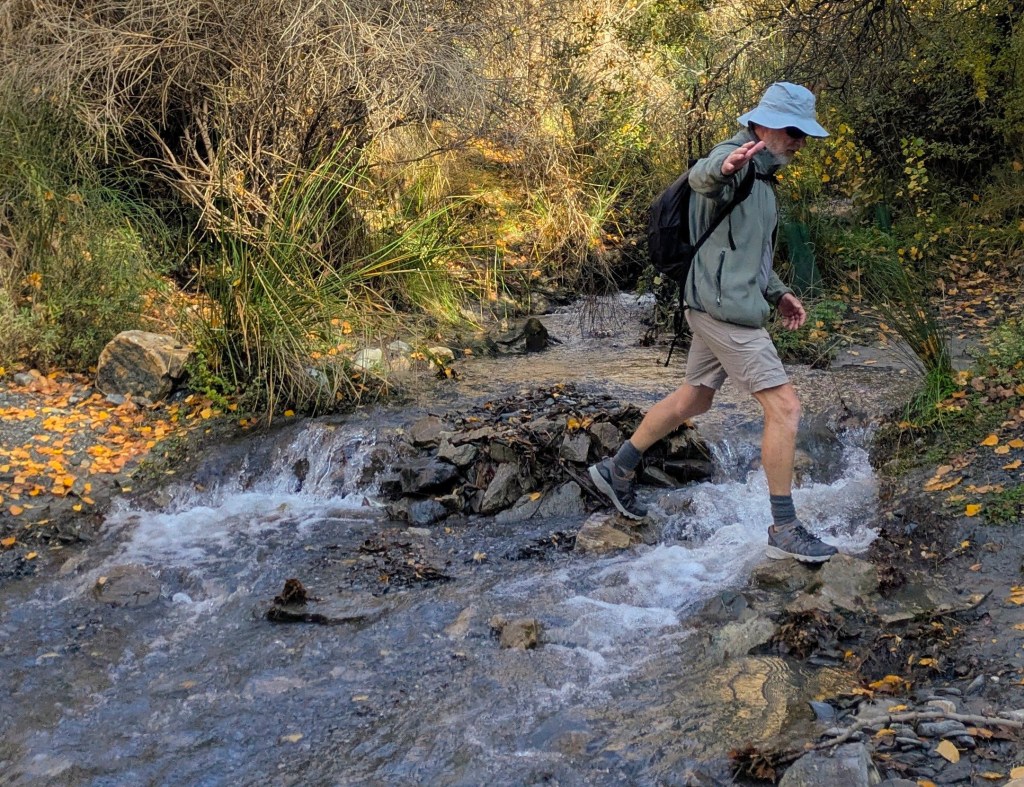
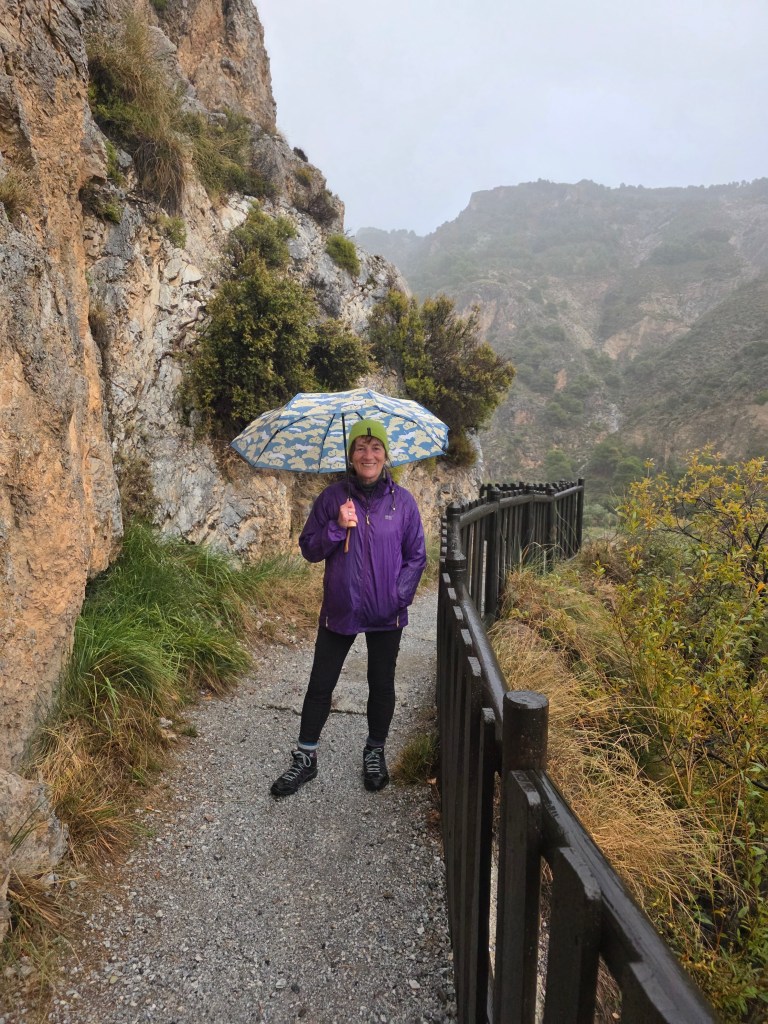
Sierra Nevada We spent eight days in Niguelas, a small village in the Sierra Nevada, about an half-hour drive outside the city of Granada, staying in a little Airbnb apartment on the edge of the village. After seven weeks of constantly moving through Spain and Morocco and sleeping (mainly) in the van, we wanted to pause and stay in one place. The Buzz spent the time parked under an olive tree. The location of Niguelas was jaw-droppingly beautiful with a huge selection of hikes of various lengths and difficulty. This was a week of super hiking and some morning dog walks with our Airbnb host, Tim and his dogs. There were almond orchards, olive groves, Aleppo Pines bright green against the bare rock and the yellow foliage of the walnut trees and poplars.

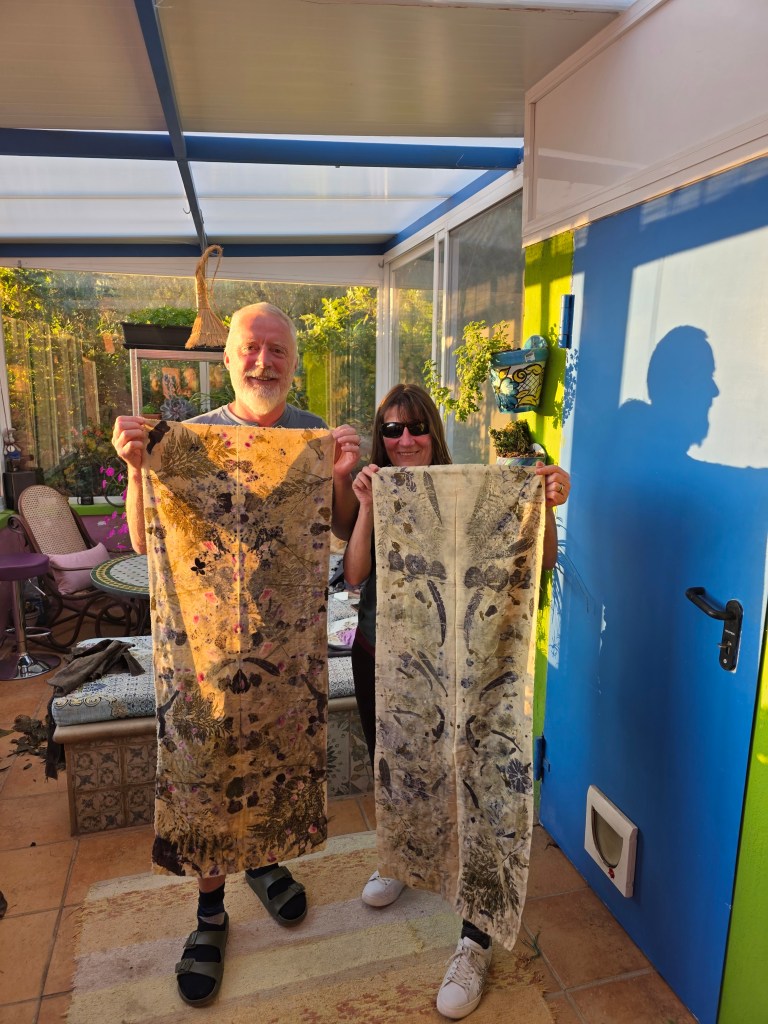
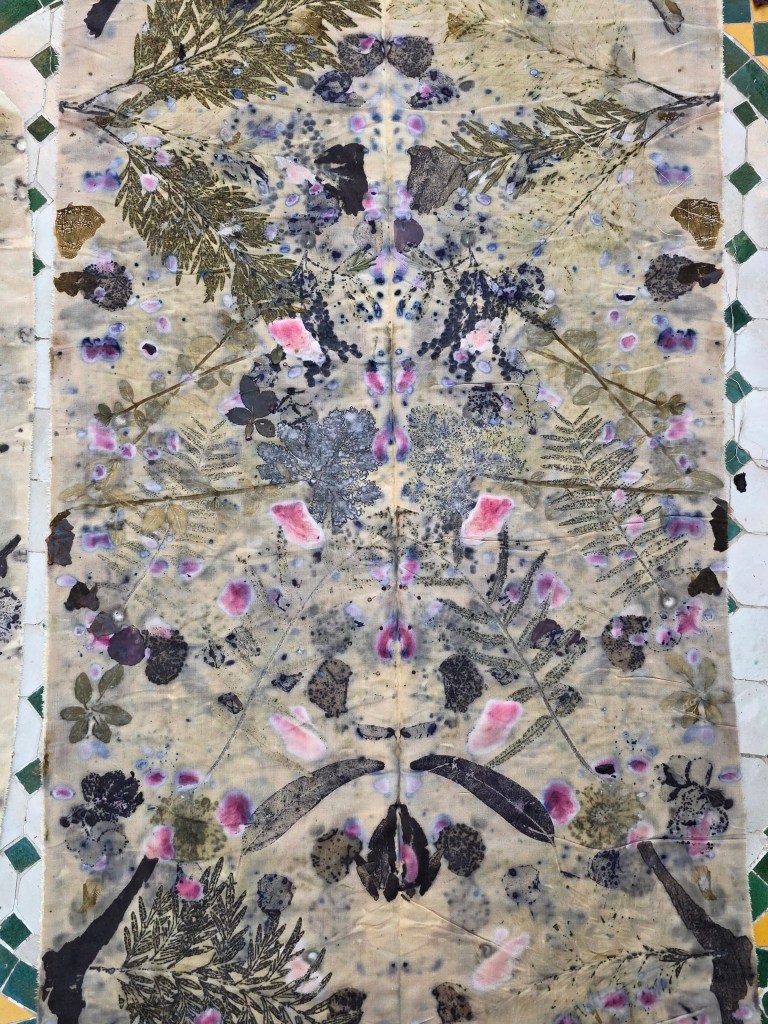
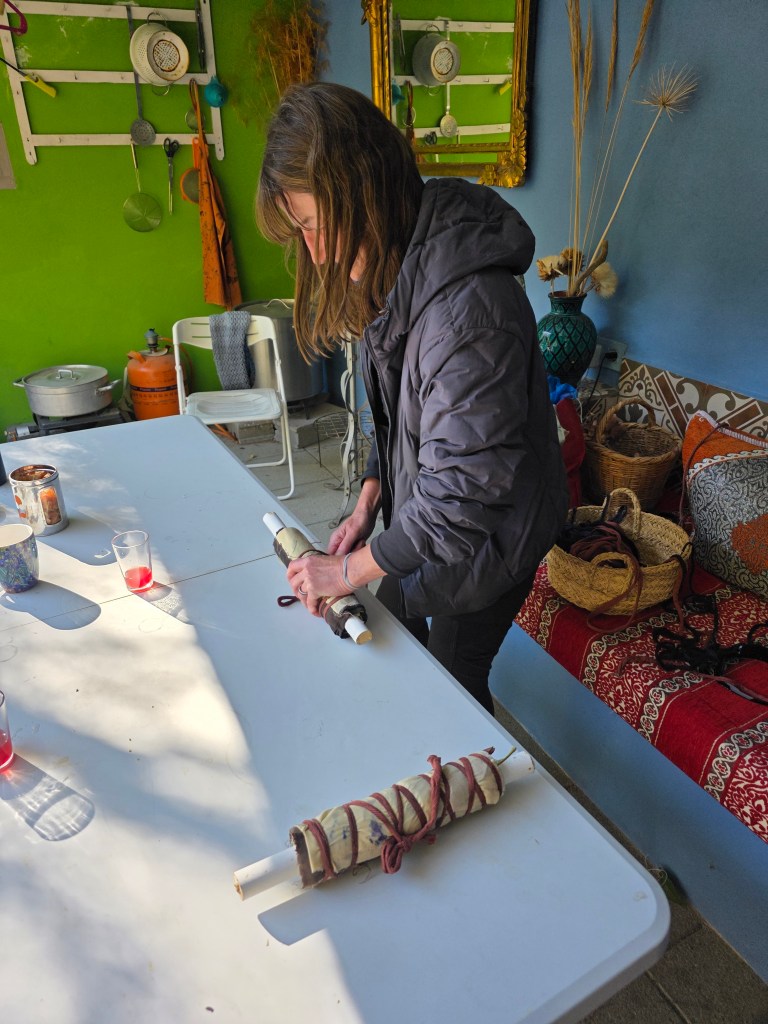
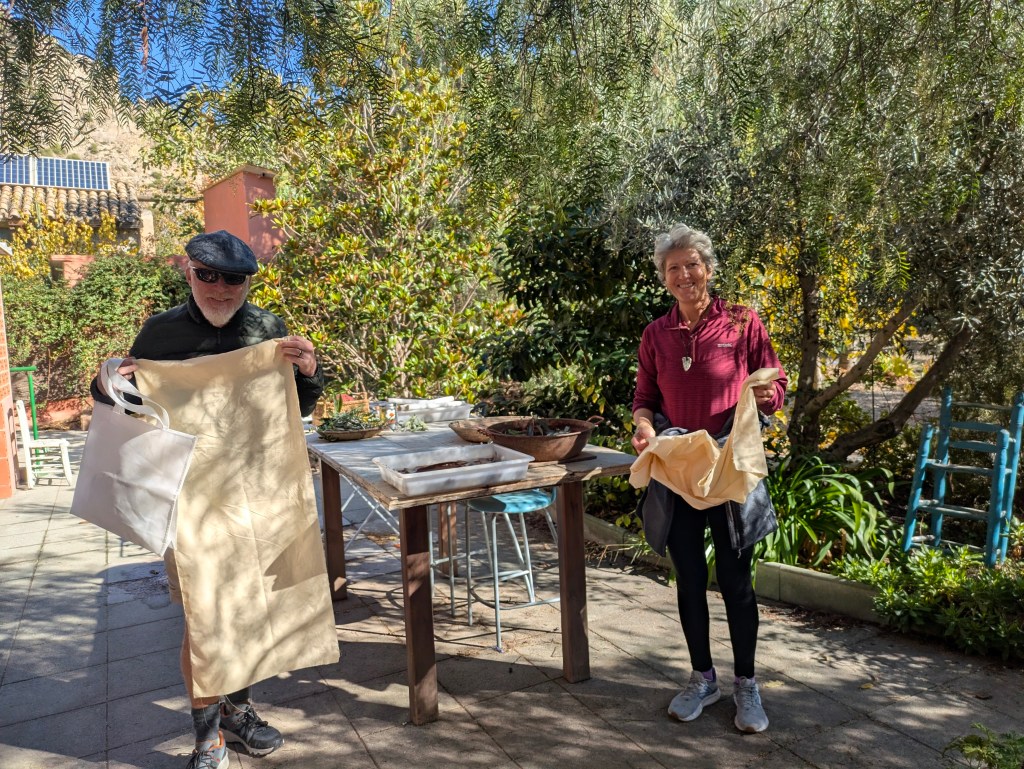
A Flow of Creativity.  In Niguelas, Helga, our Airbnb host, ran courses in felting and eco printing and we both opted to try our hand at eco-printing. This involved picking plants and flowers from the huge selection in the garden and using Helga’s techniques to transfer the images to cloth. It was a really enjoyable experience and our results were satisfying and really much better than we would have hoped. The unrolling of the fabric after the steaming process was greeted by lots of ‘wow.’

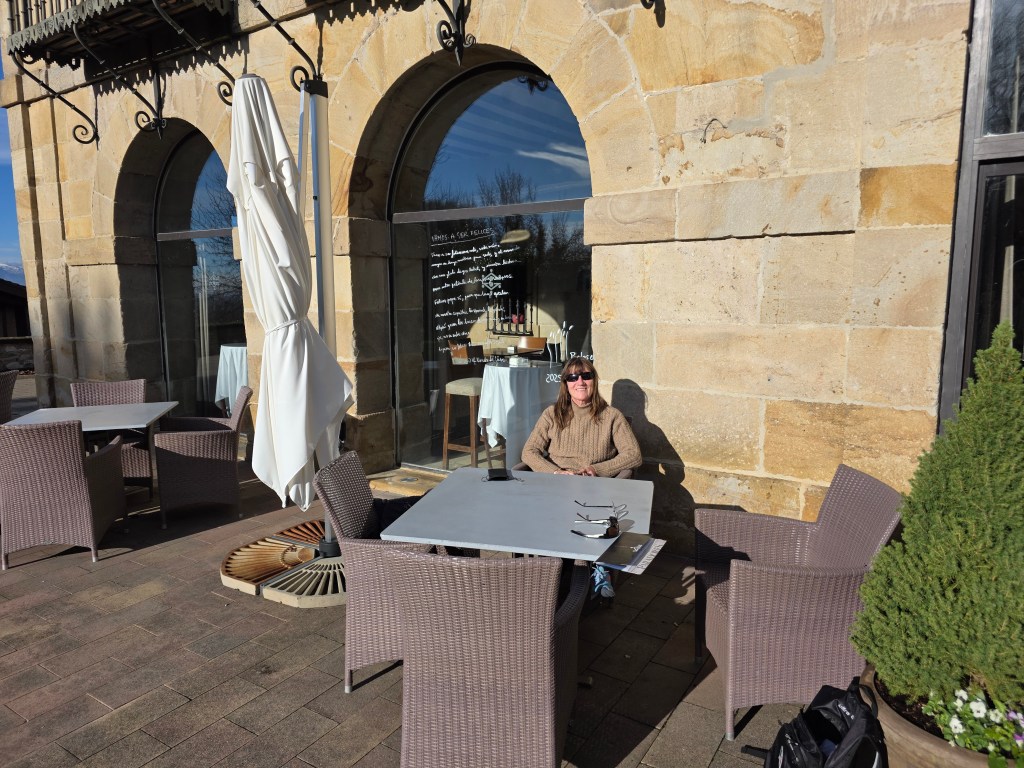
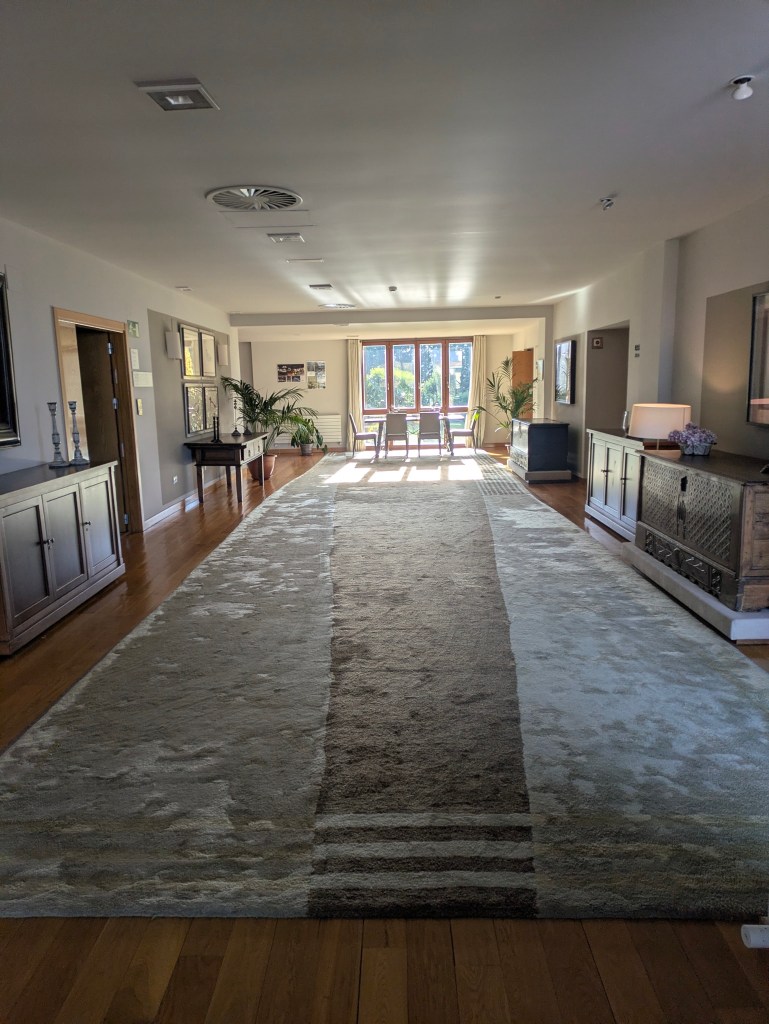
Parador Argomaniz Although we are usually fans of ‘cheap and cheerful,’ we are not adverse to a bit of luxury especially in unique buildings. Paradores in Spain are state-owned luxury hotels, in restored historical buildings, such as palaces, convents, monasteries and castles.  It’s like stepping back into the past but with modern comforts and the hotel profits go to the buildings upkeep. Our last two nights were spent in Parador de Argomaniz which was about an hour south of Bilbao. The building dated back to 1712 and was once a convent, before being converted into a palace, and during the Peninsular Wars was used as a headquarters for French Troops. It even had EV charging points.  If you have never stayed in a parador, I urge you to look them up and give yourself a real treat.

Lowlights

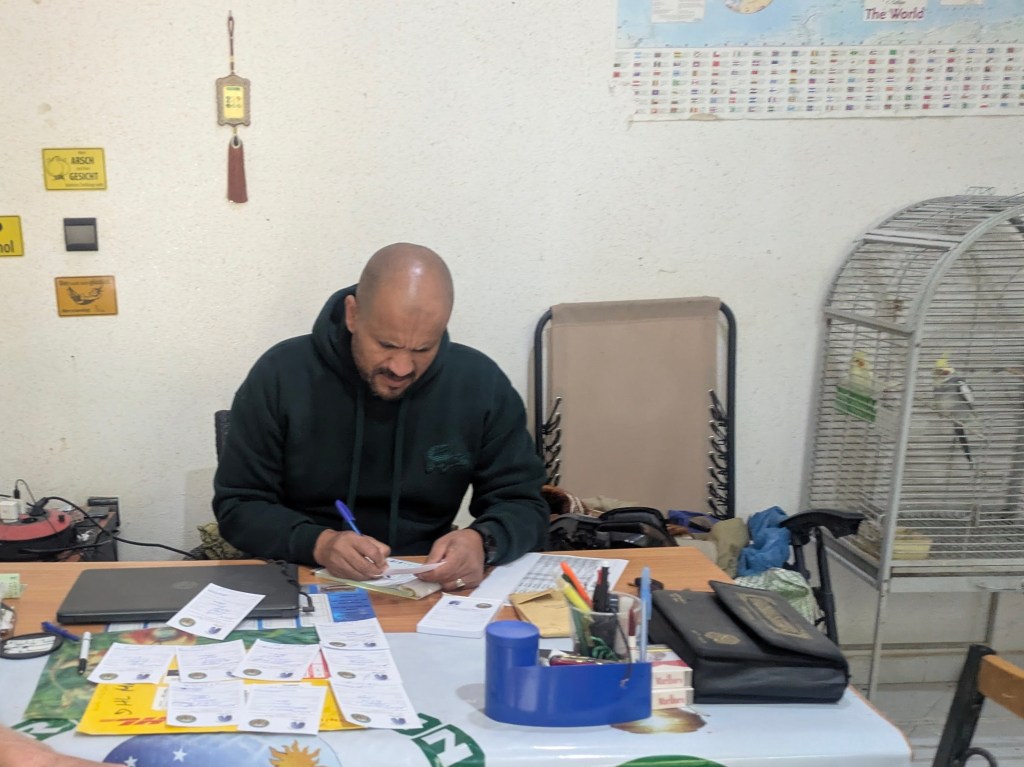
Getting into Morocco. We nearly didn’t get into Morocco. We forgot to bring the documents for the Buzz and only realized this when we were in the border queue. We phoned our wonderful neighbours at home who ran over to our house, photographed our van documents(the Vehicle Registration Document Form) and Whatsapp’ed them to us.   The border officialsweren’t happy -they needed paper documents, it wasn’t the right document, we wouldn’t be allowed in. Eventually a senior official was called, an older man, slightly stooped but mild mannered. He agreed to give us a waiver and signed a piece of paper, necessary to enter Morocco with the van. Four and a half hours after disembarking from the ferry, we were in Morocco….by the skin of our teeth.

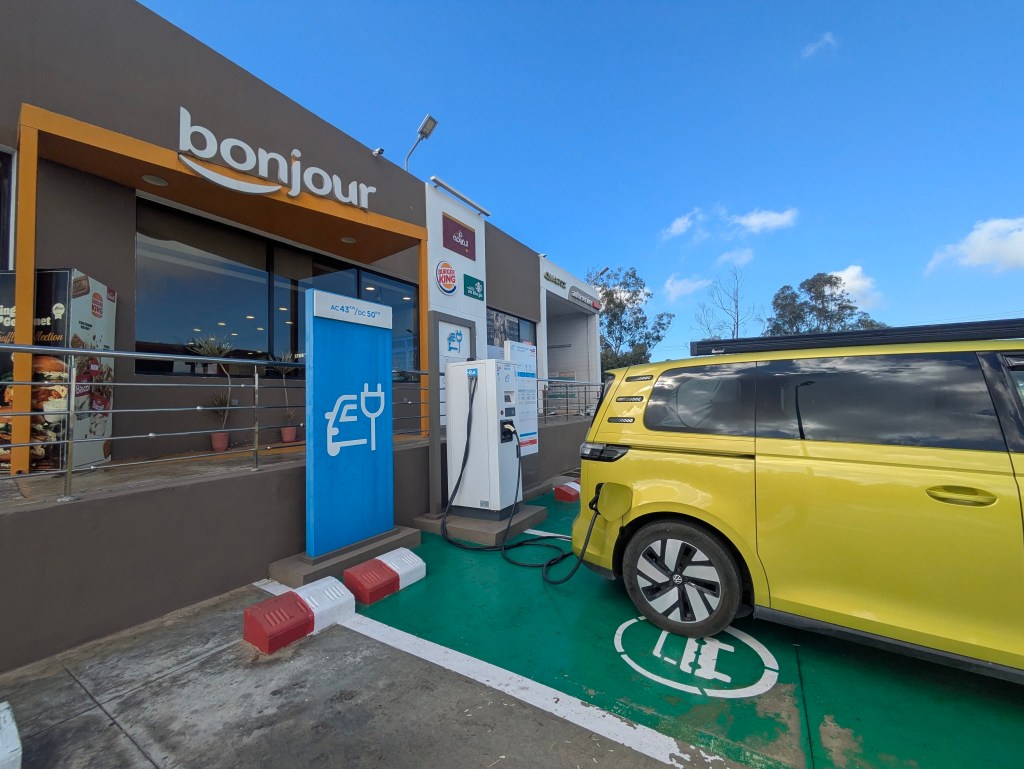
EV Charging in Morocco. Charging the Buzz was an issue in Morocco. Chargers were scarce – a charging map told us that there were forty-one chargers in the whole country, distances were large -Morocco is more than six times the size of Ireland. After getting into Morocco, the first chargers that showed up on our map were Fast Volt, the chargers were in a gleaming forecourt and looked impressive. We were hopeful. The instructions, in French, required us to download the Fast Volt App as charging was only available through the app (and not directly using a bank card). No problem, we thought, until we attempted to download the app and kept  getting the message ‘Unable to download as app not available in your region.’ Catch 22. The Fast Volt were great chargers but we were unable to use them. Meaning that the number of available chargers decreased significantly.

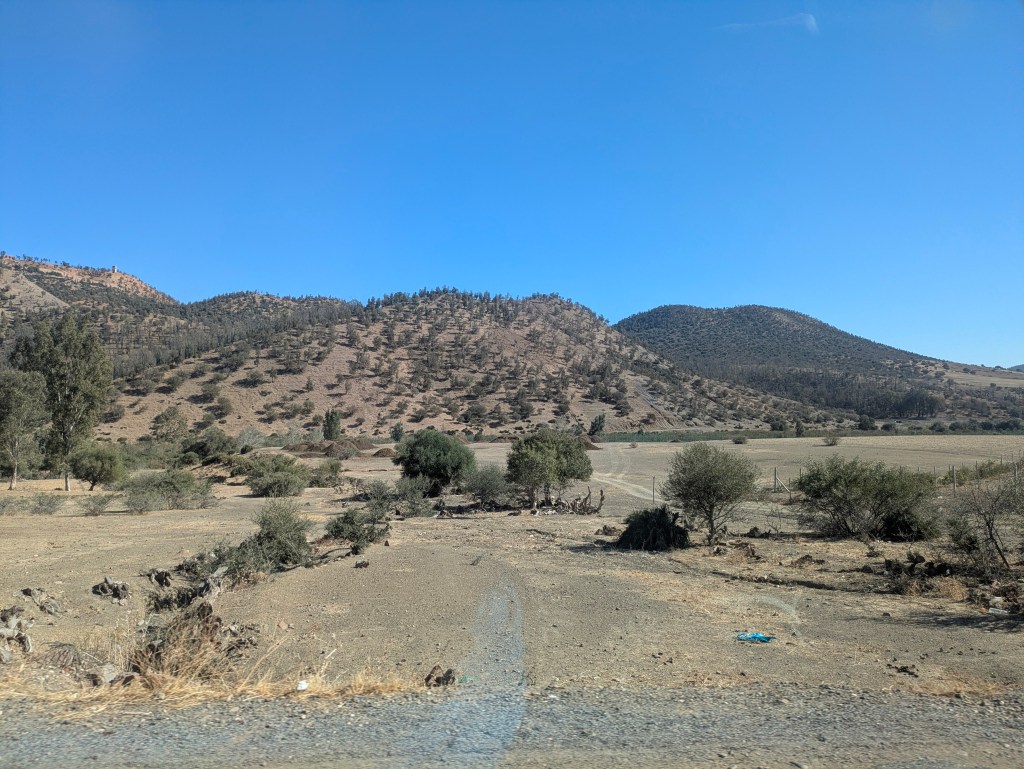
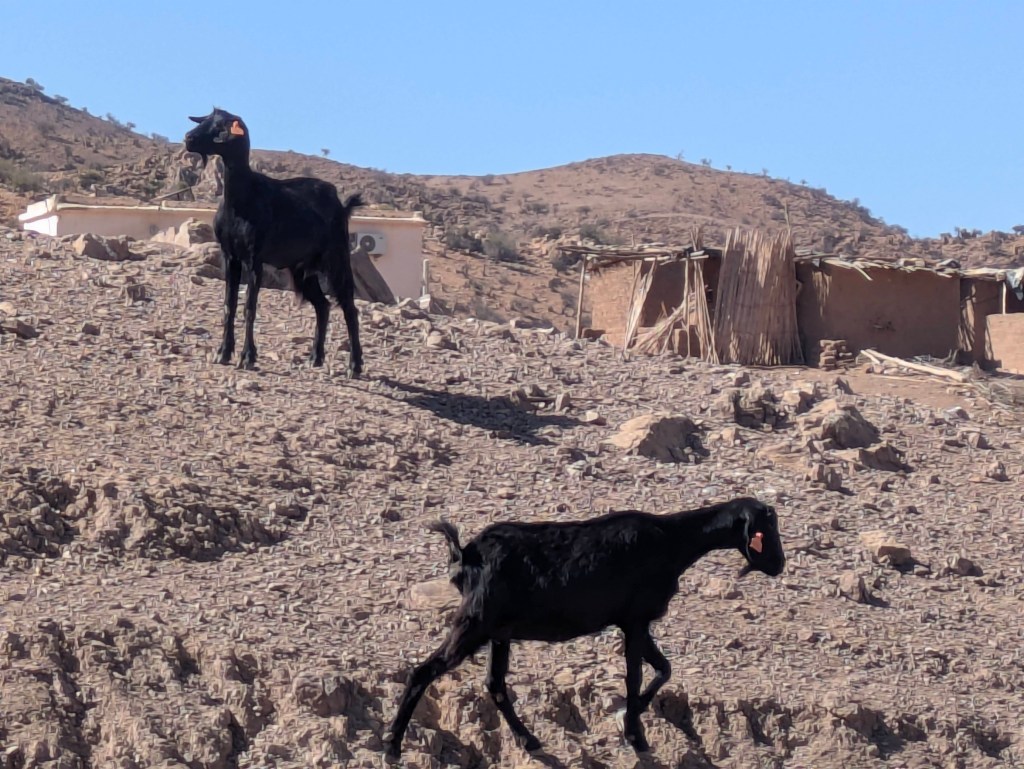
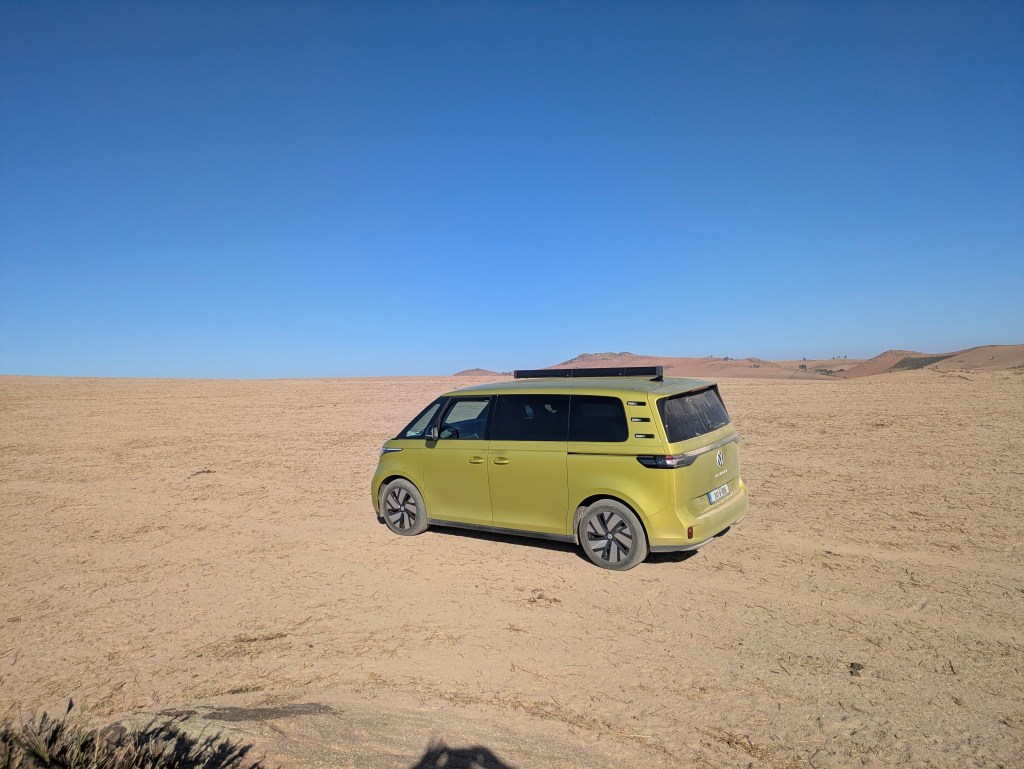
Looking for a Campsite in the Desert Turning inland from the Atlantic Coast in Morocco, the journey was breathtaking with undulating and twisty roads. The countryside was a palette of browns with the occasional green scrub, villages like mirages clung to hillsides and everywhere there were goats, mainly jet-black, like shadows. We were in search of a farm campsite on Google maps which sounded like a place we might be able to charge the Buzz, plug it into a socket…..if there was a socket assuming that was even electricity. The trouble was that we couldn’t find the campsite. We left the tarmac road and followed dusty tracks…. to nowhere. Eventually we turned around and tried to retrace our tyre marks back to the ‘main’ road which was not an easy feat.

You have Arrived????😮

Azrou, a Berber town surrounded by cedar and pine forests with many walking trails and home to troupes of Barbour monkeys in the woods, should have been a highlight but it is here in the lowlights.  It was exactly the type of tranquil place we liked BUT we had a big problem, we couldn’t charge the Buzz, We tried several sockets, the campsite manager, Khalid,  allowed us to plug into the kitchen, he called a mechanic friend, brought us to a garage but the Buzz wasn’t buzzing.

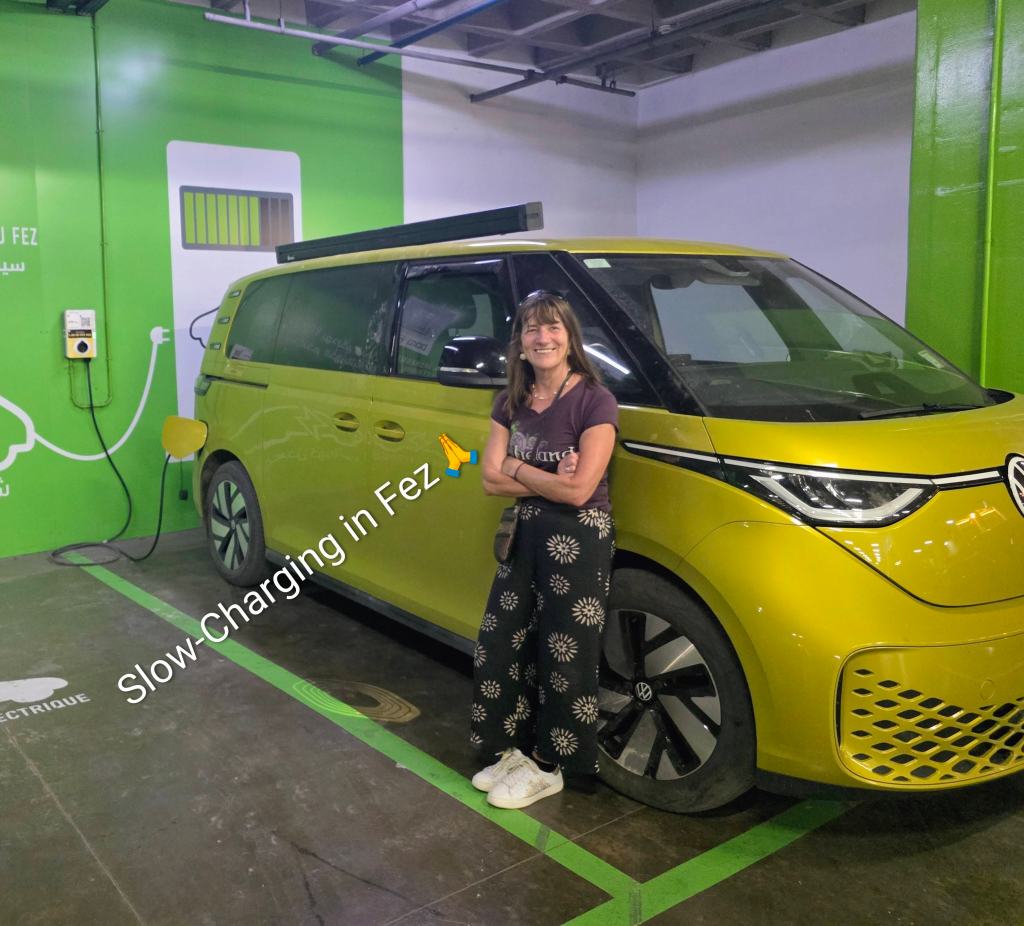
 According to various (unreliable) maps, we thought there were chargers in Fez, which we had intended visiting, or Meknes, which we had never heard of before. Fez was 89kms but Meknes was closer at 65kms but we had a mere 59 kms in the tank.  Would either of them have chargers that worked……even if we got there? Our only hope was altitude – we were in the Middle Atlas mountains so it should be all downhill to either destination.  We decided on Meknes and drove slowly….Khalid gave us his phone number in case we got stuck and said that he would come and rescue us. We made it to Meknes, gaining kilometres on the downhill but it was SO stressful……however the relief was also huge when we managed to plug into a charger (albeit a slow one) in Meknes which was free, like all the chargers we used in Morocco.

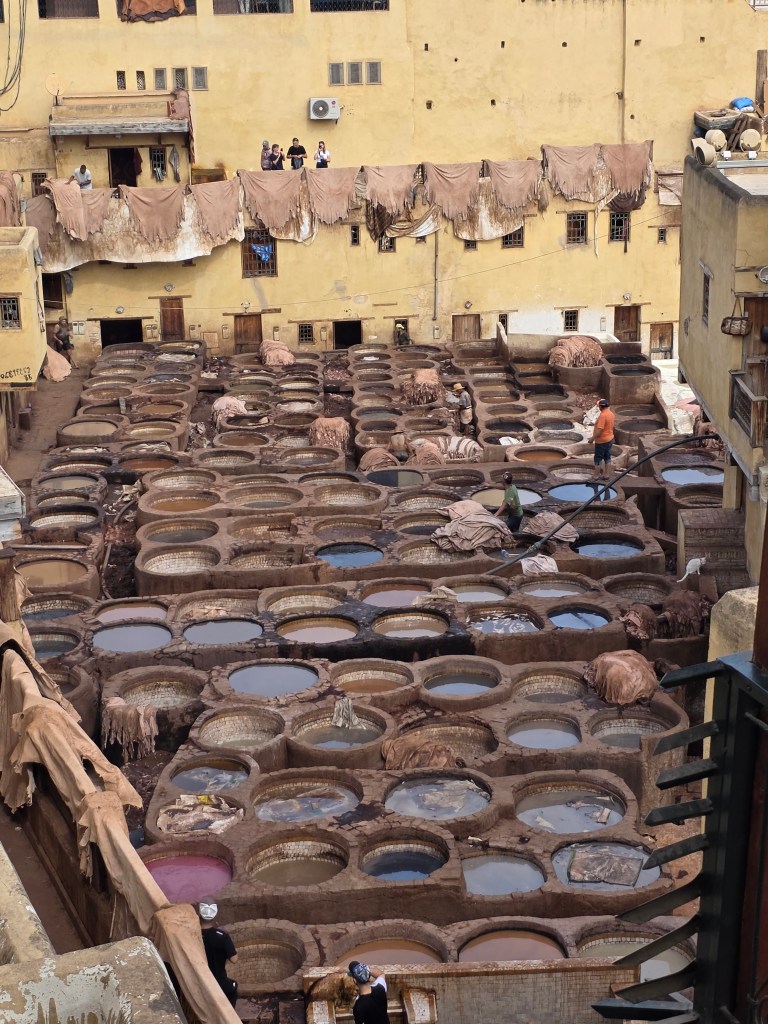
An Unforgettable Smell in Fez.  At the door leading into the Fez tannery, a small man with a face like wrinkled leather pressed a few mint leaves into my palm and gestured that I should hold it to my nose. It didn’t help much – a whole mint bush wouldn’t have disguised the pervasive pungent smell that hung in the air, the smell of blood and chemicals although the tanning was done using old natural methods, many unchanged for a thousand years. The ammonia needed in the process was supplied by pigeon poop, gathered from the town’s buildings and from pigeon fanciers and the red dye came from pomegranate seeds. The recently eaten honey cakes were leaping into my throat as I looked down at a ‘clothes line’ of drying skins, a mixture of goat, cow and camel  and the much-photographed ‘honeycomb’ vats of coloured liquid used in the dying process. The work was intense, the noise unrelenting, the conditions brutal…….and the smell was gut-wrenching.

Despite the difficulty with EV charging, we were charmed by gorgeous Morocco and Moroccans who are probably the most helpful people in the world. Our trip was curtailed somewhat in Morocco by the quest for chargers. This kept us in cities more than we would have liked but on the plus side, we visited Meknes and Rif Mountains which we probably wouldn’t have if charging hadn’t been an issue.

We learned a lot and could have made things a little easier if we had done some research…..although our usual ‘modus operandi’ is to ’wing it.’ We discovered that there are adaptor cable kits (aka Portable EV Charging Station) available to buy online which might have allowed us to charge from a household socket in places like Morocco by some regulation of current/voltage. (Much of our disappointment, our granny cable didn’t work with an adapter plug) This new adaptor kit has gone on our Christmas wish-list  so hopefully in the future there will be no stopping us.

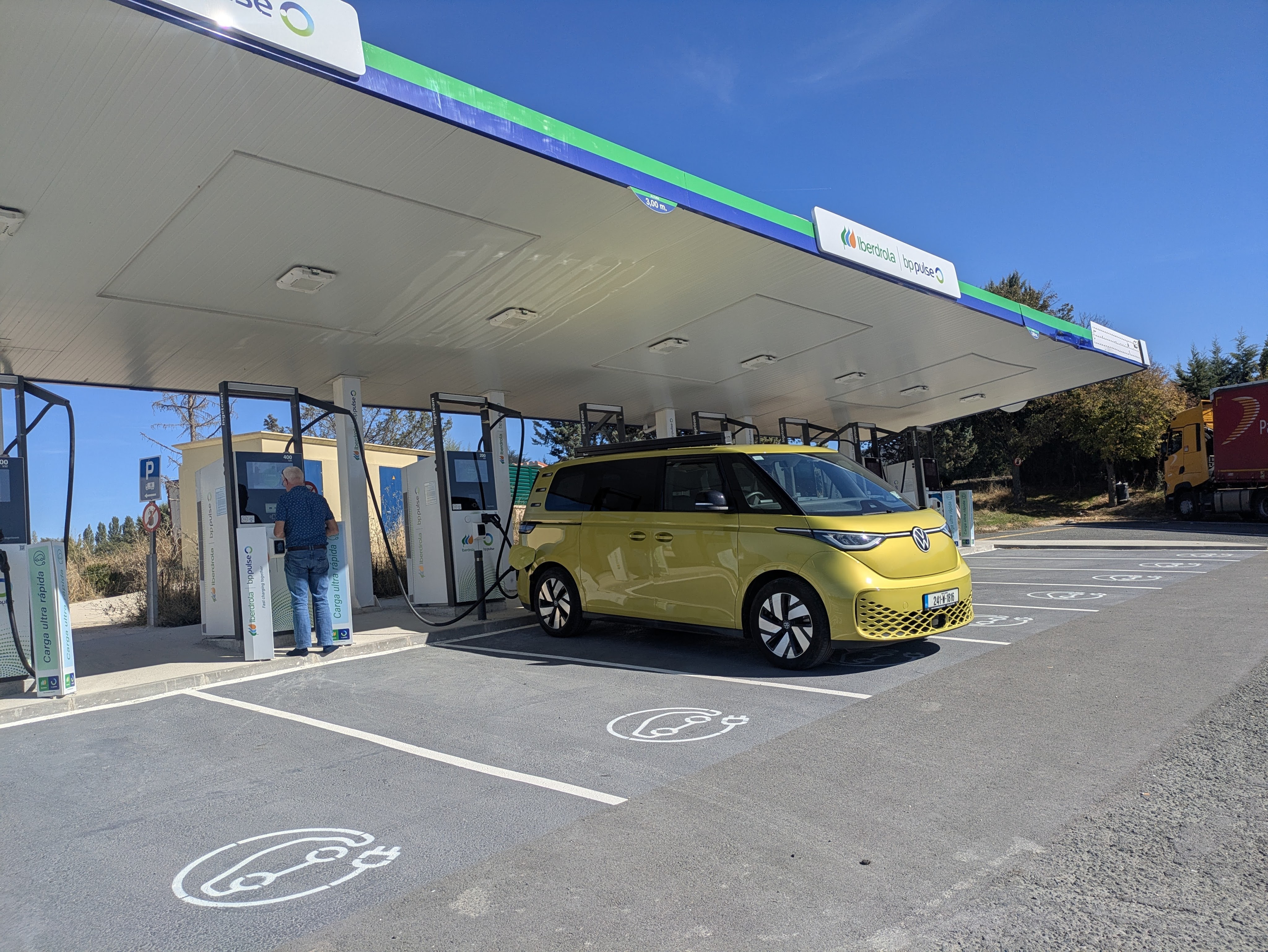
EV charging in Spain was easier than in Ireland with numerous chargers and suppliers. Most could be paid for with a bank card but with a higher tariff – prices were usually cheaper through the relevant app but pricing also depended on the type and speed of the charger. We found Electromaps to be very useful and the most accurate app for finding all chargers and by adding your bank card details to this app, it was possible to pay directly through this app for most chargers in Spain.

Thanks for reading and coming along on our journey.

Wishing you and yours a happy, healthy Christmas x

Central Morocco

Electric Travels: Highs and Lows

Electric Travels: A Pause (paws) in Spain.

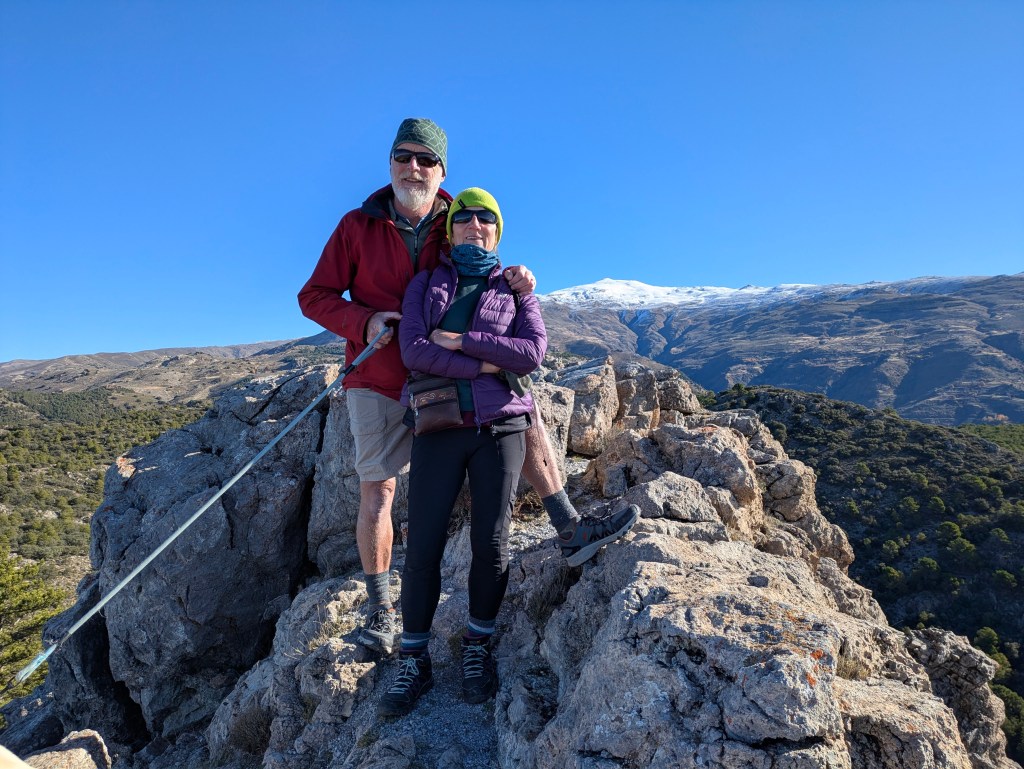
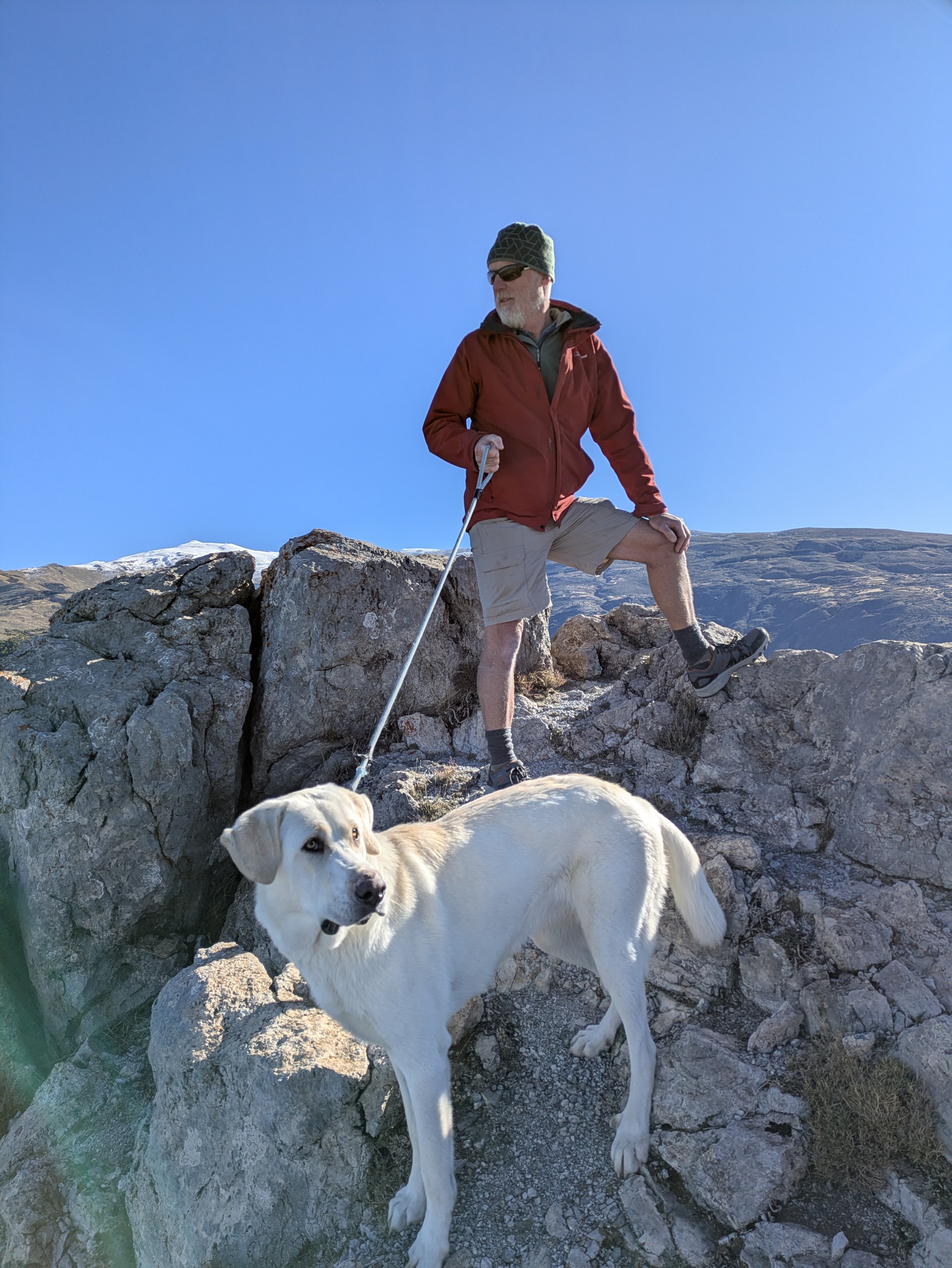
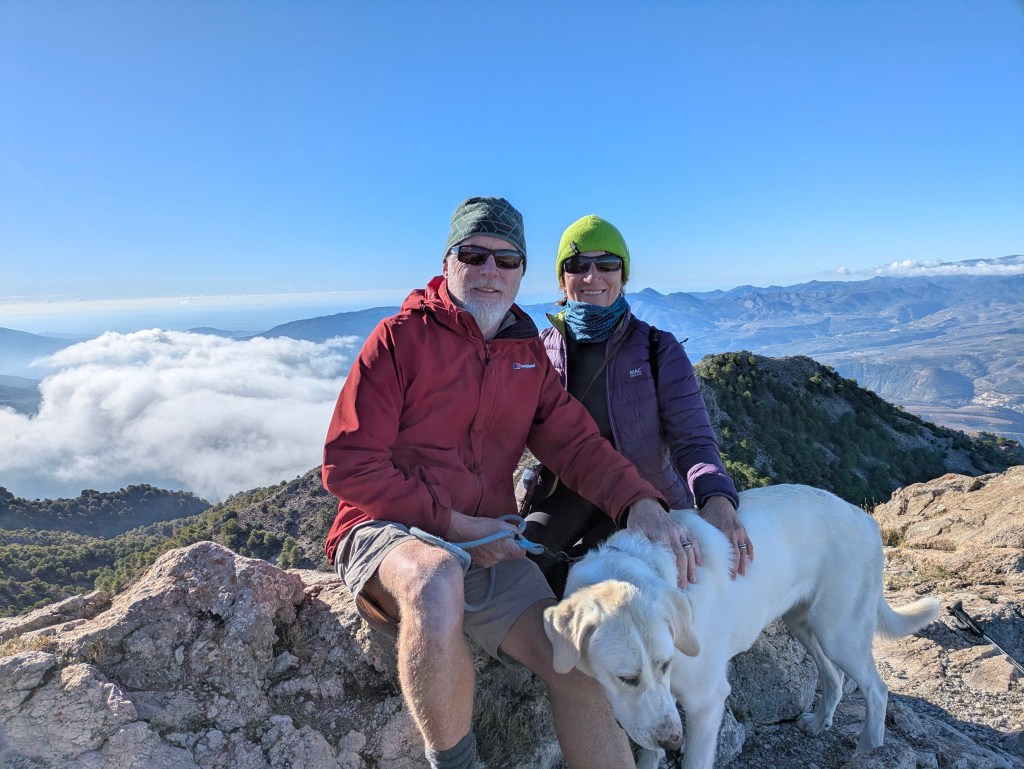
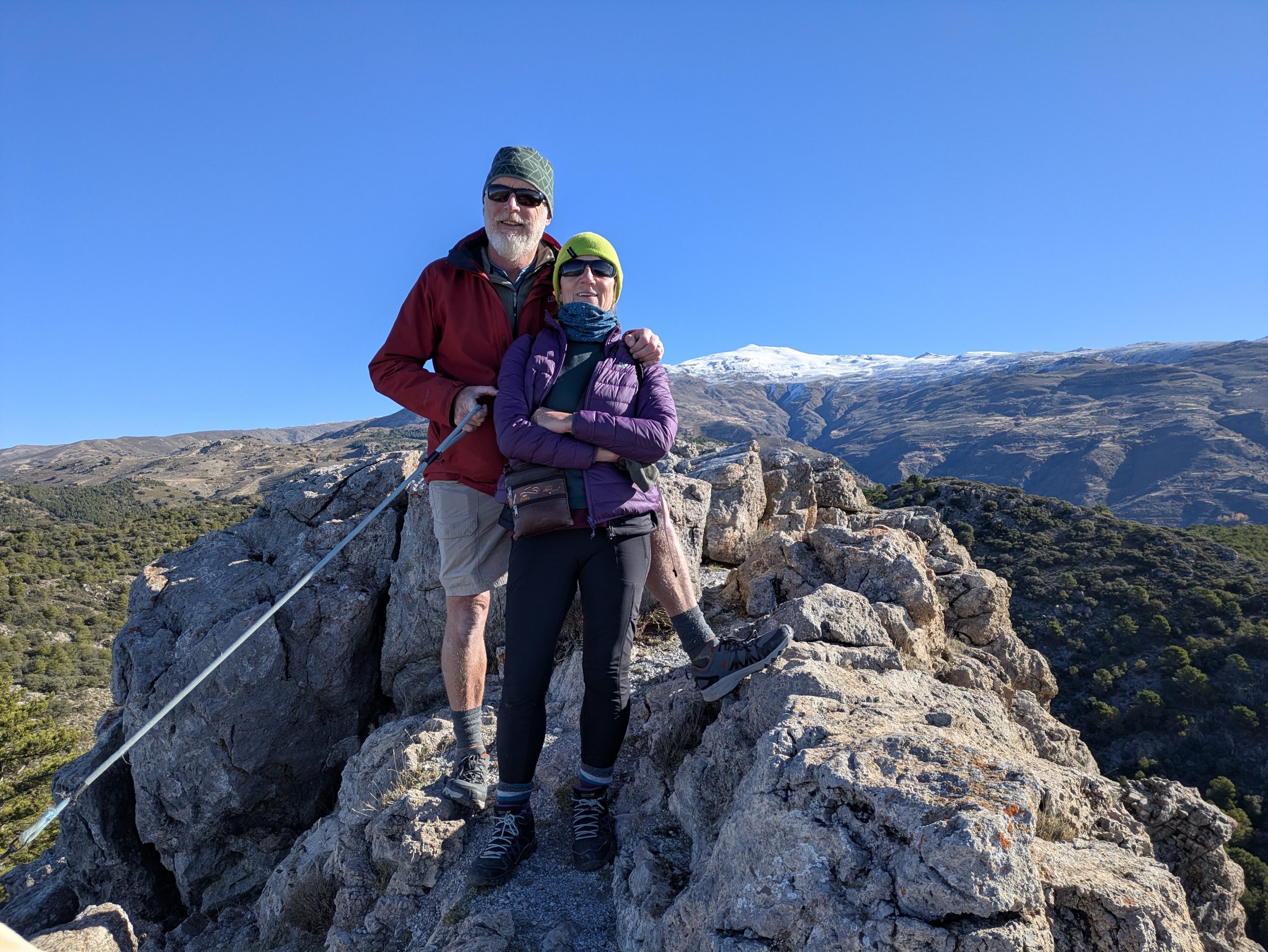
Caoimhin and Dora, Sierra Nevada

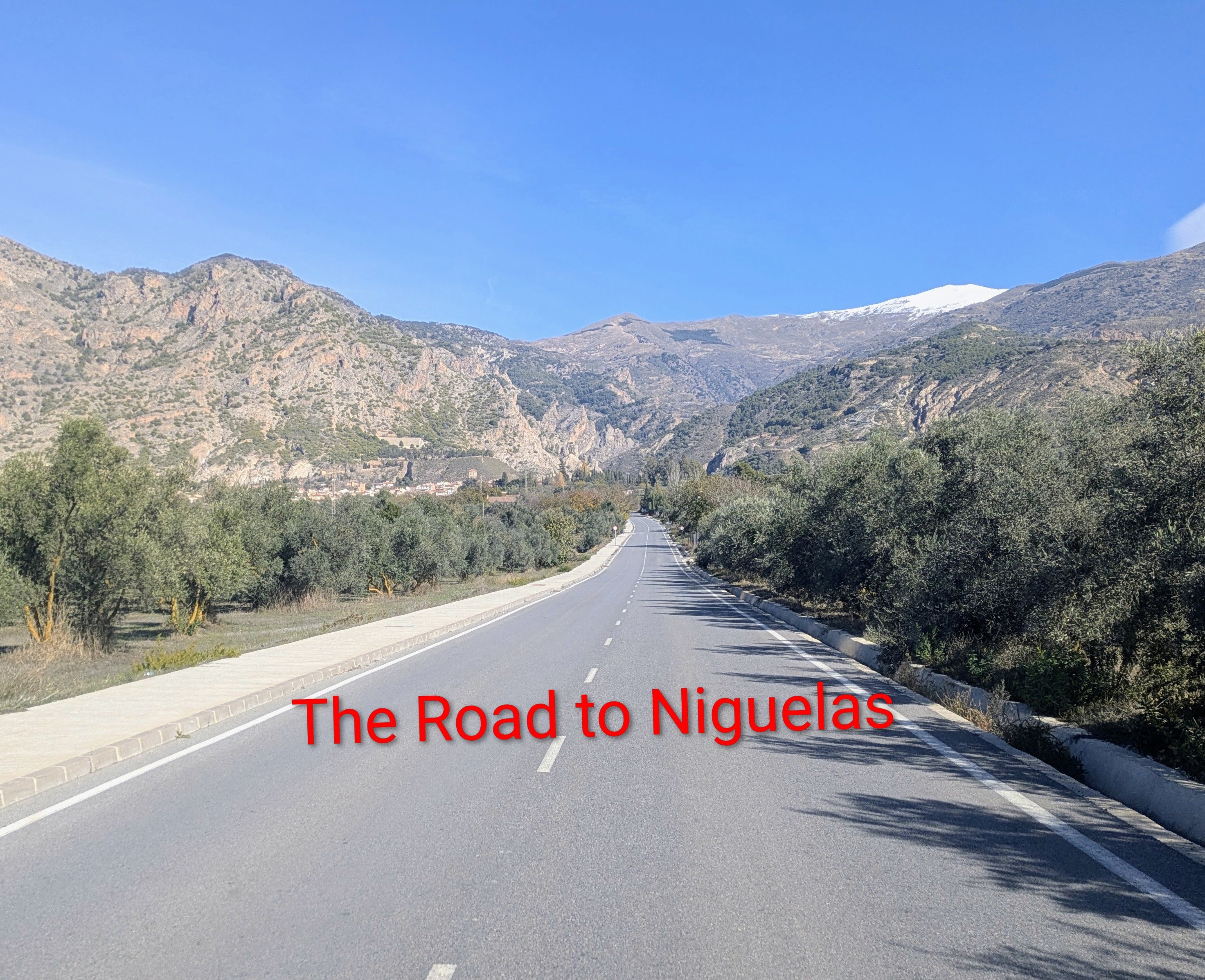
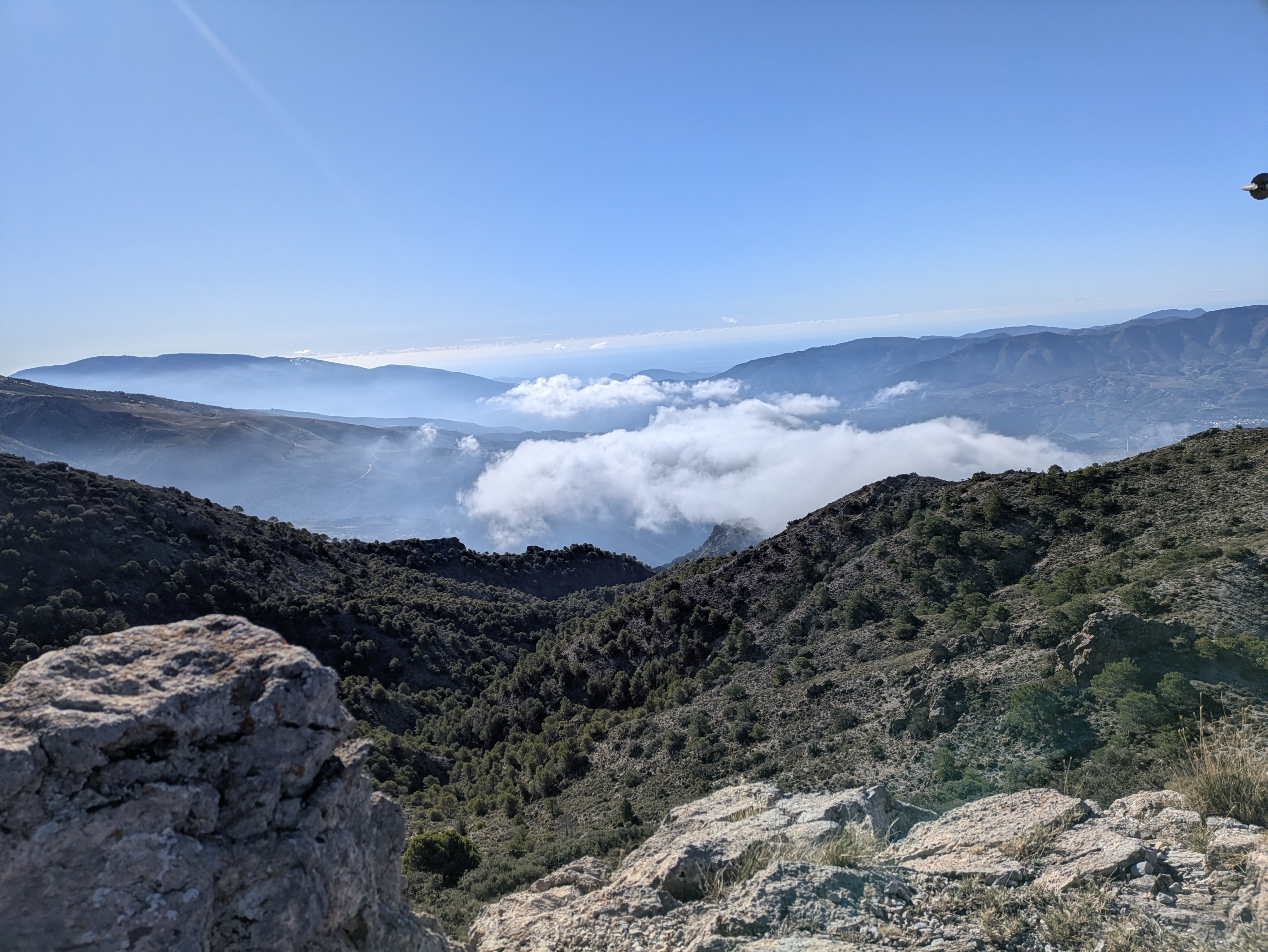
Most days, the air was crisp and clear…except when the locals burnt their mounds of tree clipping , wafting plumes of smoke into the air. The sky was a blinding blue and we were surrounded by a craggy silhouette of mountains in almost every direction. In the distance was the glittering white of the first snows, which had fallen the day before we arrived.

We spent eight days in Niguelas, a small village in the Sierra Nevada, about an half-hour drive outside the city of Granada, staying in a little Airbnb apartment on the edge of the village which we had booked two days in advance. After seven weeks of constantly moving through Spain and Morocco on this trip and sleeping (mainly) in the van, we wanted to pause and stay in one place. The Buzz spent the time parked under an olive tree.

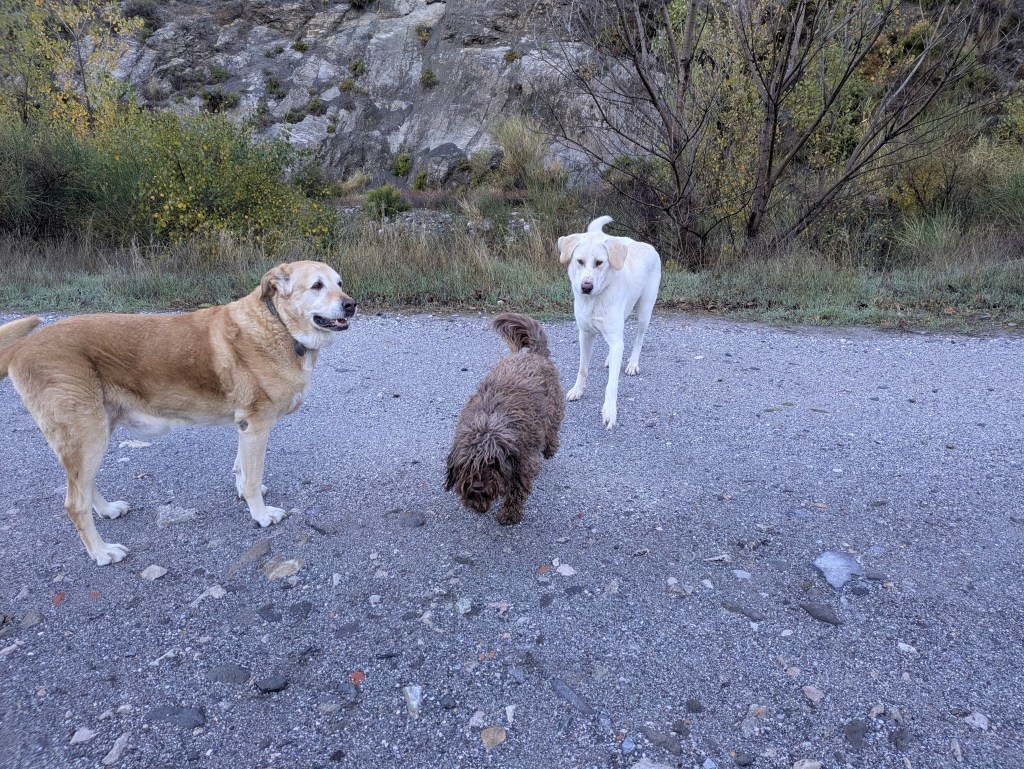
We couldn’t have picked a better spot. Our apartment (Aguas calmas) was warm and cosy, with views of the trees and mountains. It was set in a shady garden with a lovely pool, which would have been perfect in warmer weather.  The location of Niguelas was jaw-droppingly beautiful with a huge selection of hikes of various lengths and difficulty, many directly from our door. Some were marked  but  a hiking app like All Trails was helpful to keep us on track. This was a week of super hiking and some morning dog walks with our Airbnb host, Tim and his dogs, a Spanish Mastiff called Leona, who had liver disease, a nervous rescue lab called Dora and  a neighbour’s dog who liked to come along for the company.

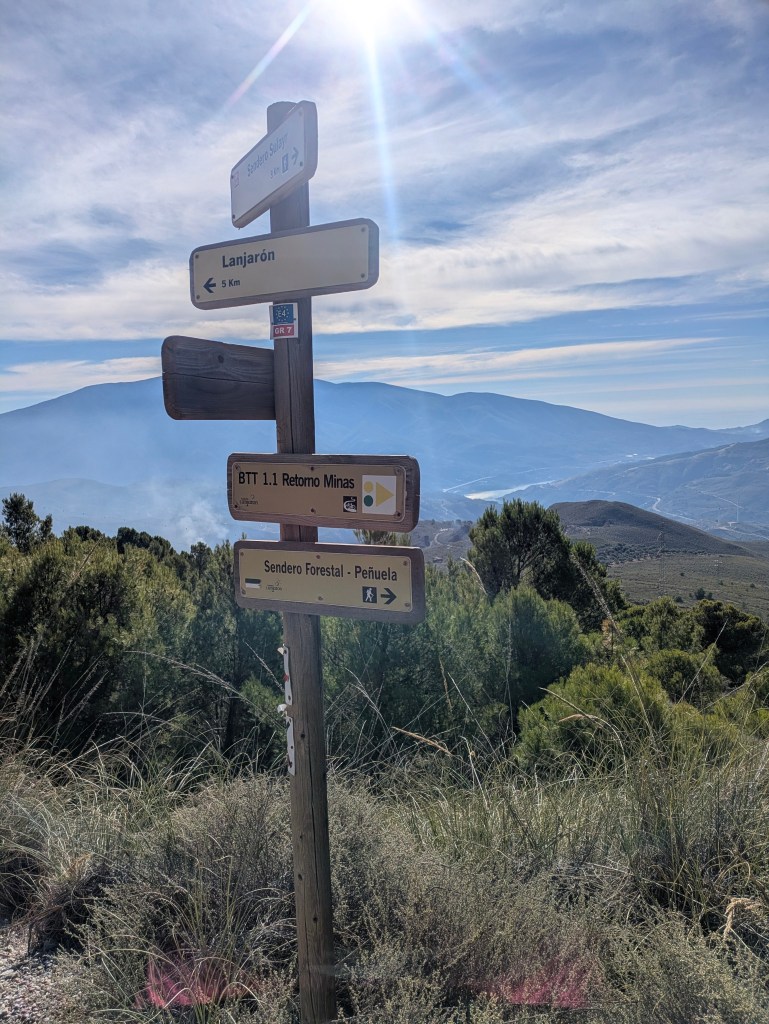
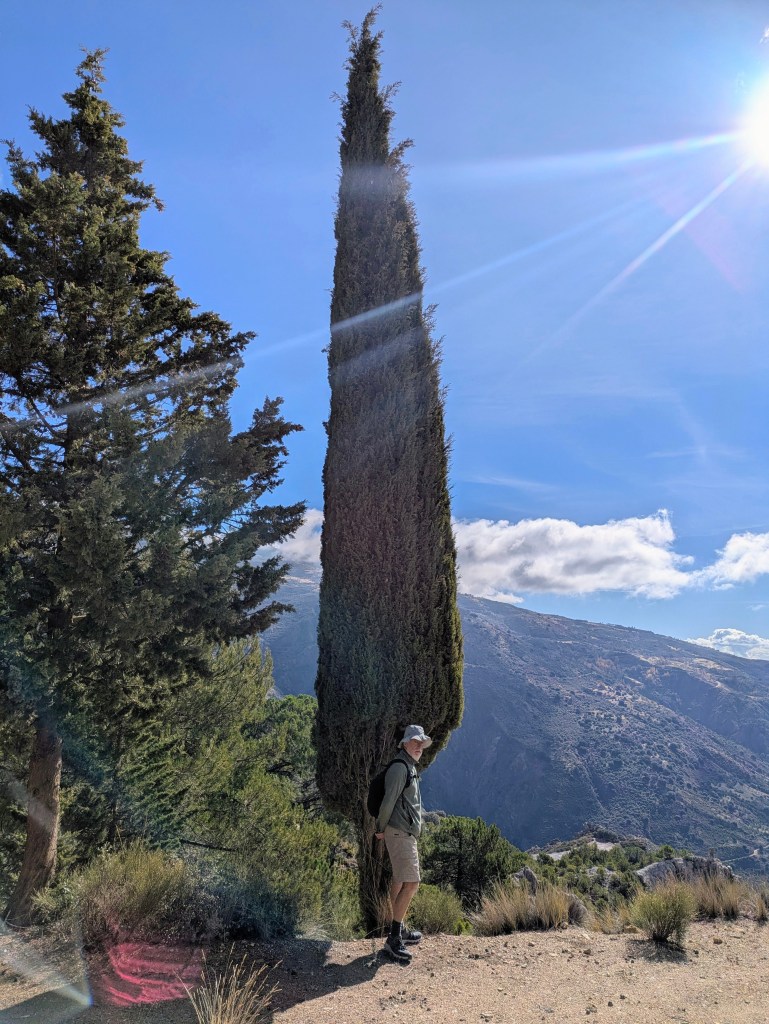
There were almond orchards, olive groves, Aleppo Pines bright green against the bare rock and the yellow foliage of the walnut trees and poplars. Niguelas is also on the GR7, the famous long distance hiking and cycling route which runs all the way from Tarifa, near Gibraltar, through Spain and France to Andorra.

Our days were bright and sunny, with cold nights (sometimes as low as 1C) but there was torrential  rain on our second evening, which flowed down the paved surfaces of the narrow streets like a river. We sloshed around in the dusk looking in vain for an open café or bar but all five of them seemed to be closed….probably because of the weather… but opening hours were ‘flexible’. The village streets were winding and so narrow that many of the walls on the tight corners showed evidence of close encounters with vehicles. Tim told us that some guests arrived shaking and traumatised after the ordeal of driving through the village…. but not Caoimhin.

Despite the one evening of rain, water is rare and very precious here. The area can go months without a drop falling. In the mountains were ancient aquifer systems, which used a network of channels and pipes to divert snowmelt and rainfall, ensuring a water supply for downstream communities during dry months. Some of these originated in Arab times and are considered the oldest managed water recharge system in Europe.

Helga, our Airbnb host, runs felting and eco printing courses so we both opted to try our hand at eco-printing. This involved picking plants and flowers from the huge selection in the garden and using Helga’s techniques to transfer the images to cloth. It was a really enjoyable experience and our results were satisfying and really much better than we would have hoped. The unrolling of the fabric after the steaming process was greeted by lots of ‘wow.’ It is certainly something that we will try at home.

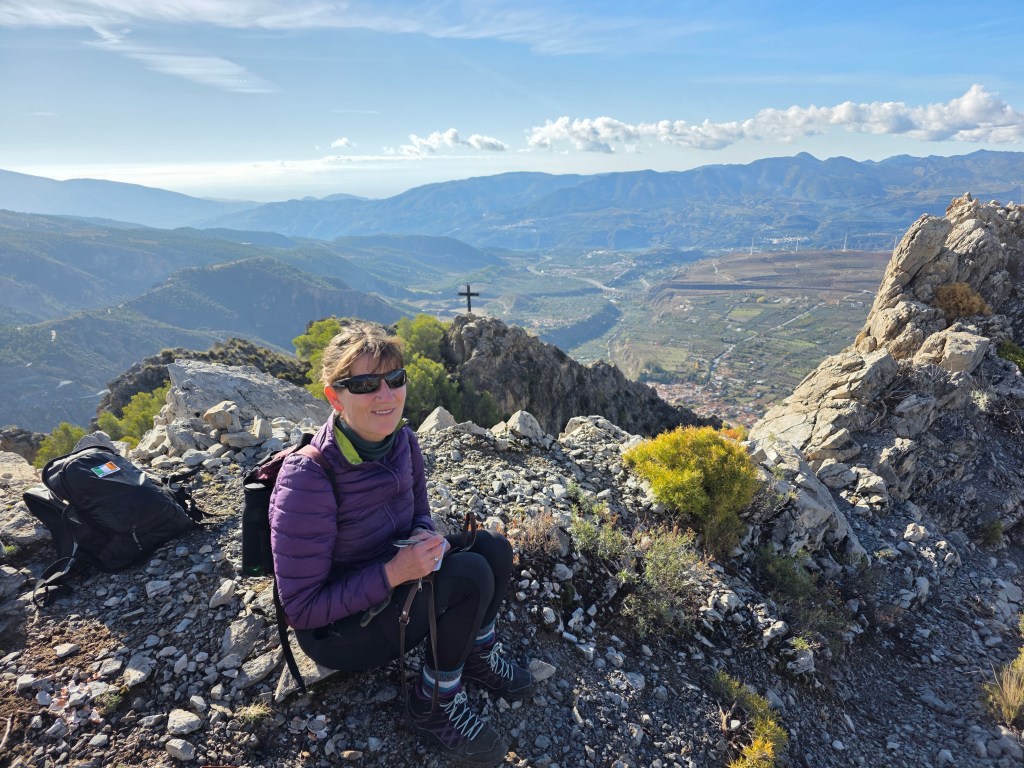
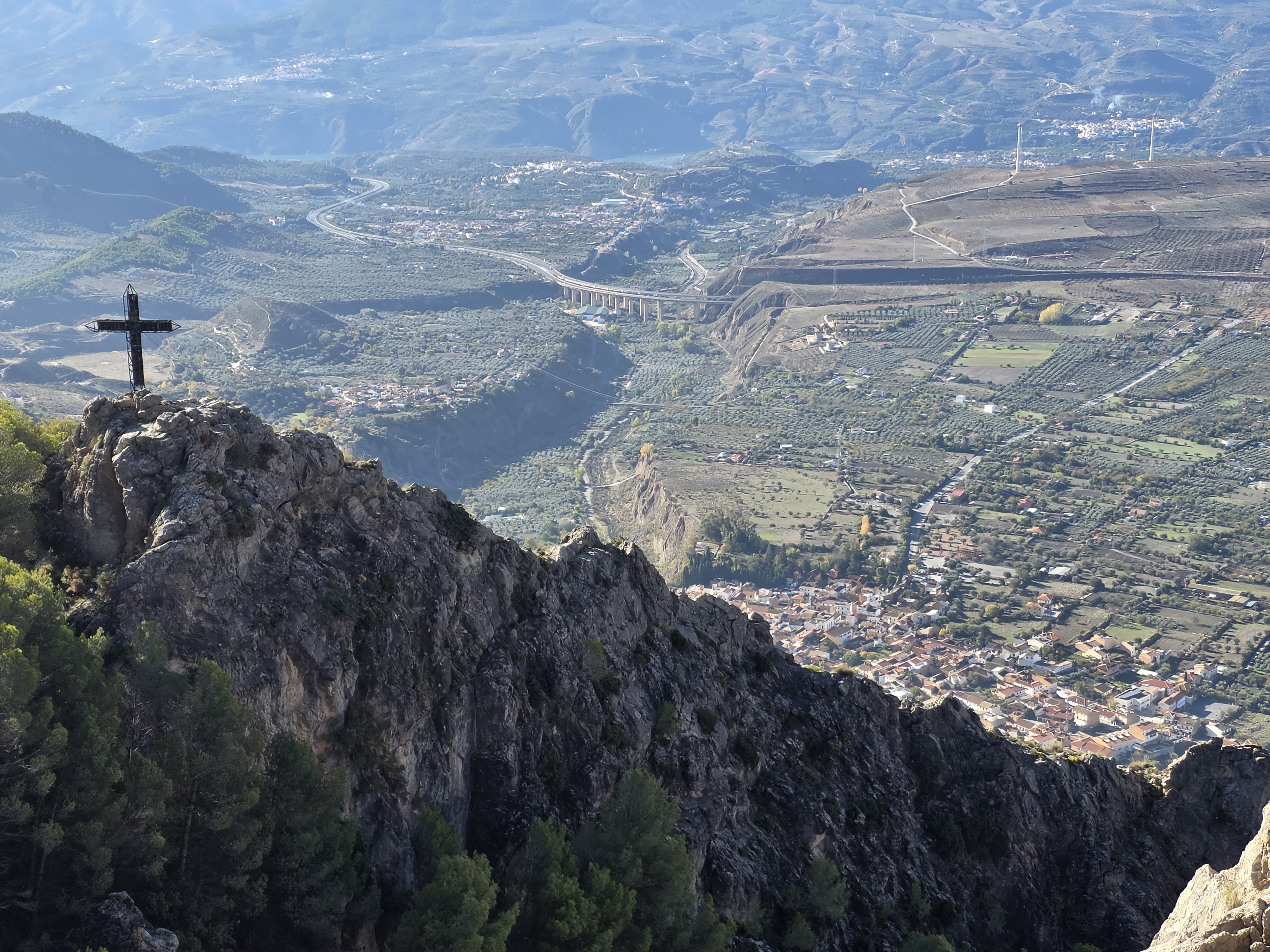
High above the village with a cross, silhouetted against the blue sky. Apparently the village women used to climb up to it on their knees, as a form of penance. We climbed up – not on our knees – and it was a pretty strenuous climb on rough stony surfaces. This is an area that has known conflict and poverty down the ages. It was a key battleground in the Spanish civil war with many atrocities committed against the civilian populations and summary executions in the mountains.

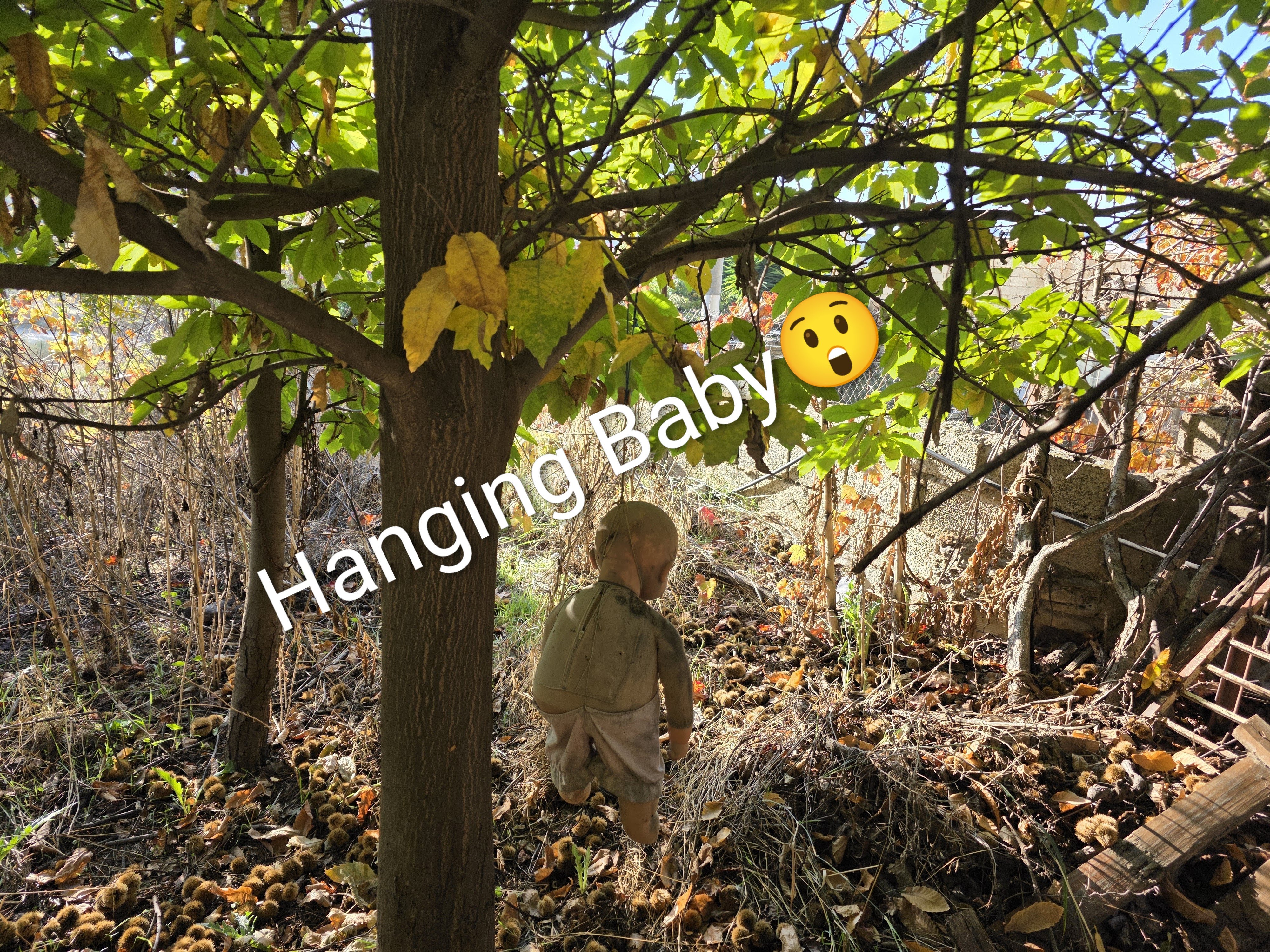
Maybe some of this unease lingers still among the dramatic landscape. In one of the village gardens, hanging from a tree by a noose was a baby doll (the ones that look like a human baby). It was very disturbing sight and had been hanging there for a year. Tim also told us of the local rivalries and neighbourly disputes, of outlaws living in luxurious houses and of a retired priest who set up a refuge for alcoholics, high in the mountains, away from temptation at 2000m……although some ‘escaped’ and made it to the village bars.

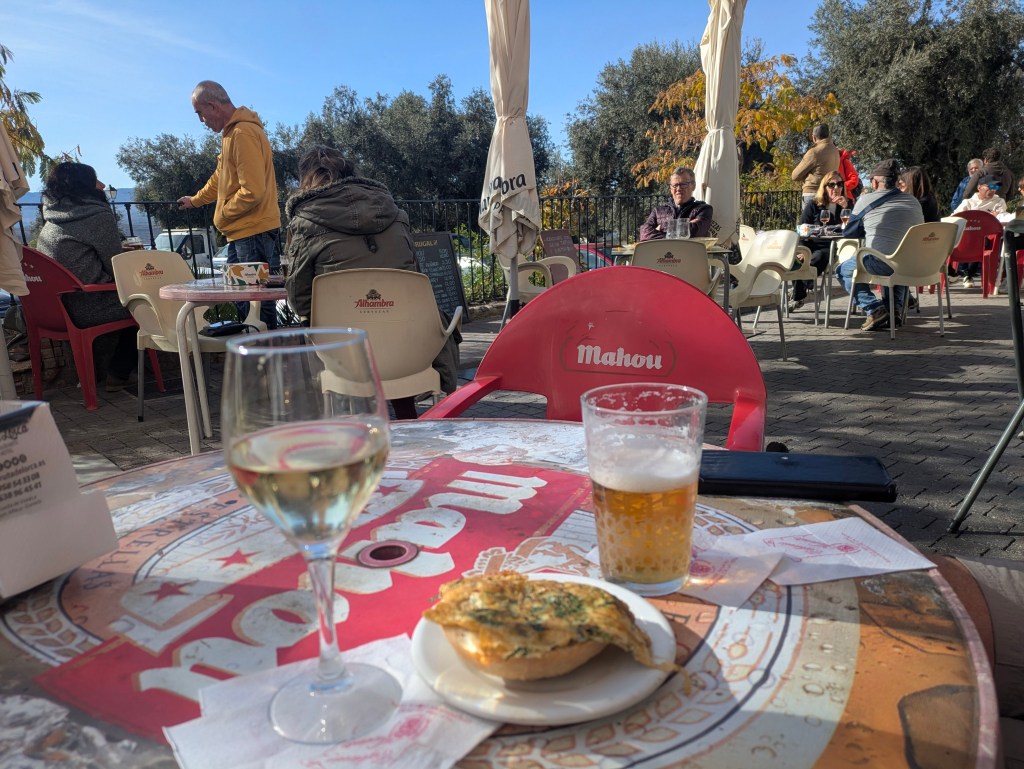
But sitting outside in the November sunshine, inhaling crisp mountain air and eating delicious tapas (that come free with a drink), all these simmering rivalries and tensions were completely invisible to us. We sipped our drinks and thought about how lucky we were, as we waited to attend a dramatization of some of Lorca’s work in the village casa de cultura.

Till next time

Thanks for reading

Stunning Sierra Nevada

Electric Travels: A Pause (paws) in Spain.

Electric Roadtrip: From the Mountains to the Sea

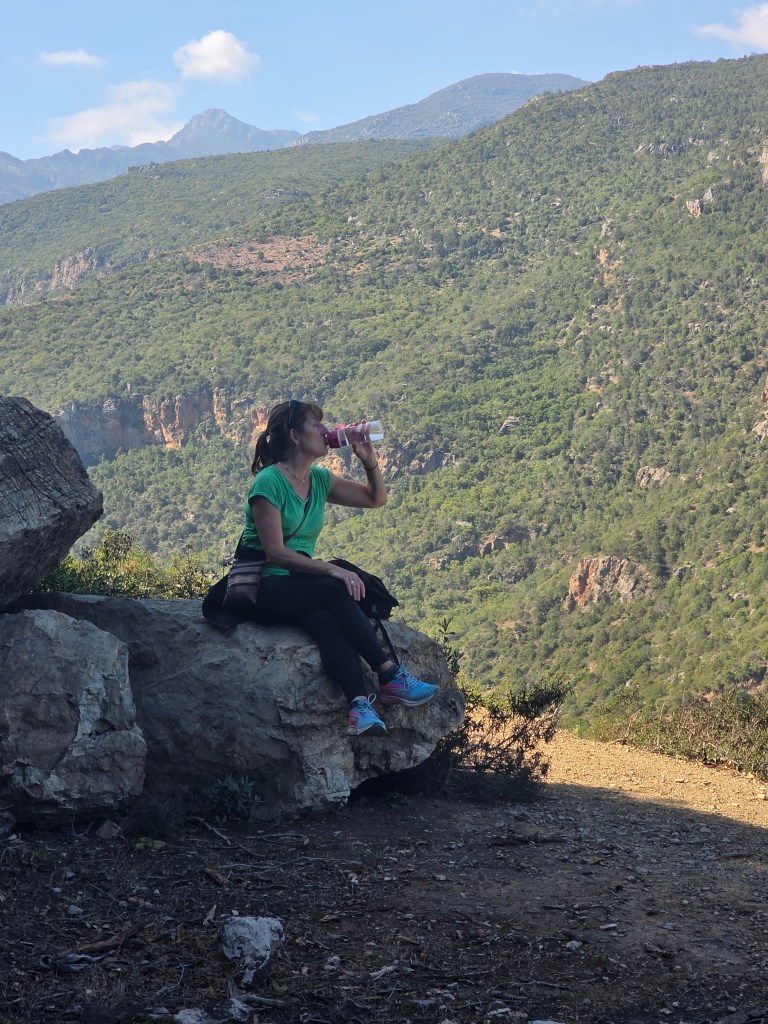
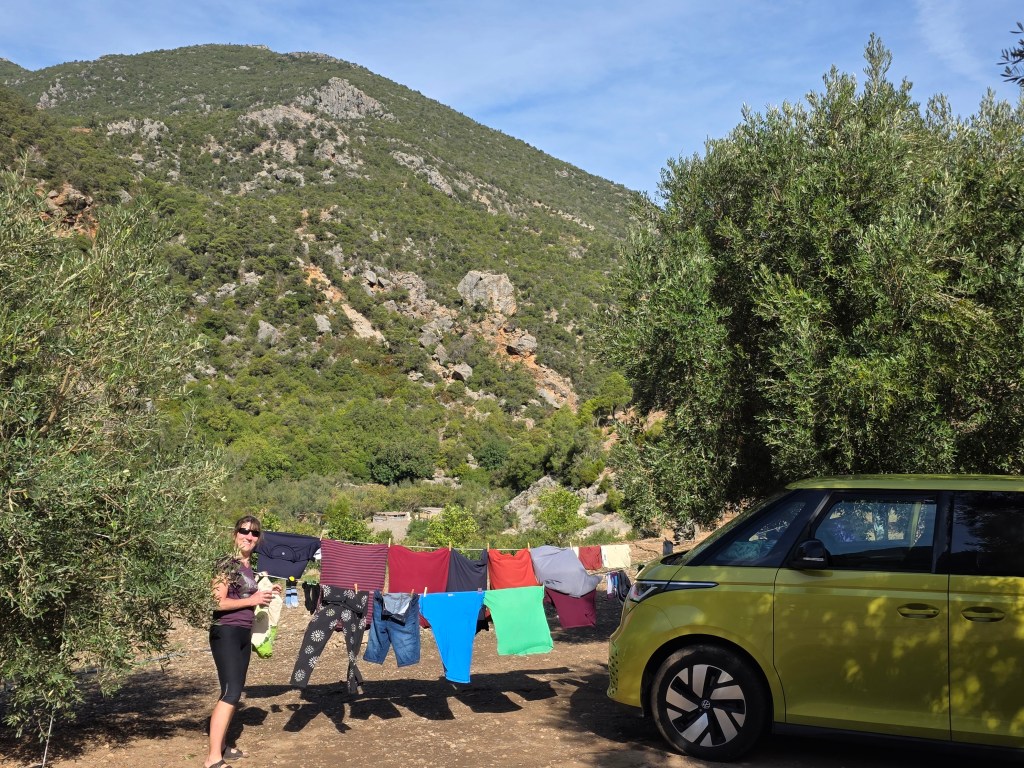
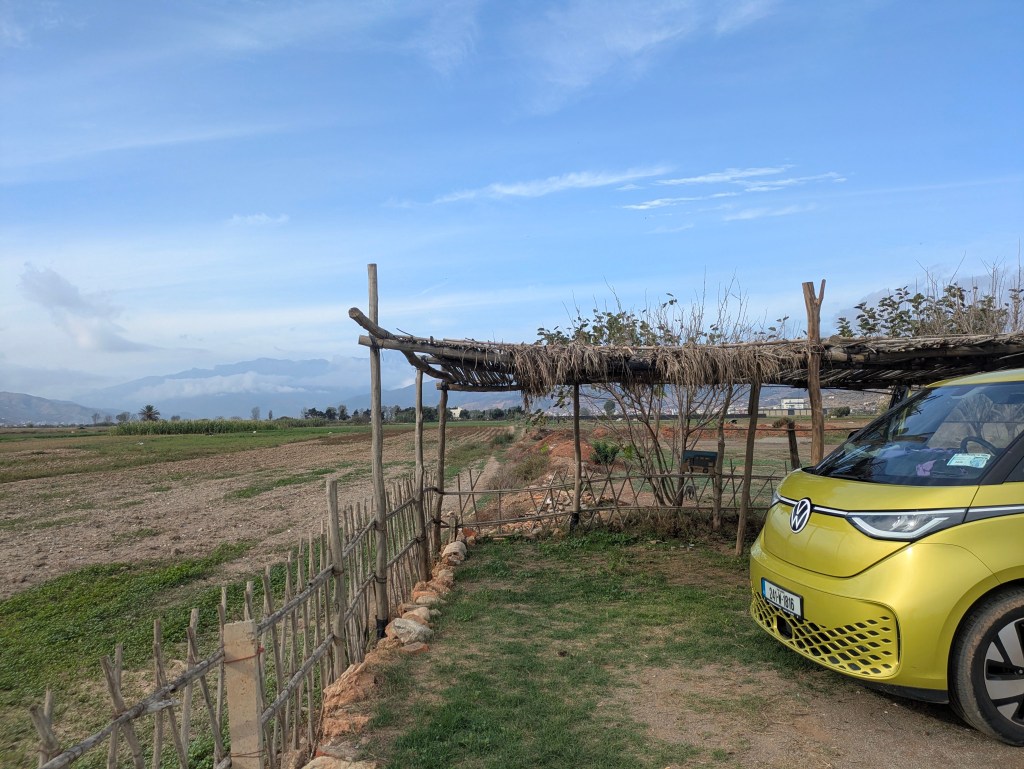
Our washing danced in the breeze on the clothes-line strung up between two olive trees in the rustic campsite in the Rif Mountains in Morocco. The figs had been harvested, and so had the chillies but two lemon trees were full of green skinned fruit although the few avocadoes were still small and hard.  The resident dog befriended us…..all it took was a bit of chicken….he slept beside the van and followed us to the river, as if guarding us or more likely, hoping for scraps.  We chatted to the other few campers who came for a night and then departed, an American couple who were at the beginning of a two year stint around Africa, having shipped a jeep over from the States and a trio of British campervans who were travelling in convoy. We watched the woman make bread in the outdoor oven and water the trees. We sat by the river, hiked in the hills, read, did a bit of yoga and watched the morning sun hit the mountain peaks and slowly  creep down to warm the valley. This tranquil place in the Rif Mountains had put a spell on us, forcing us to slow down. It could have been boring….it should have been…but it wasn’t in the slightest.

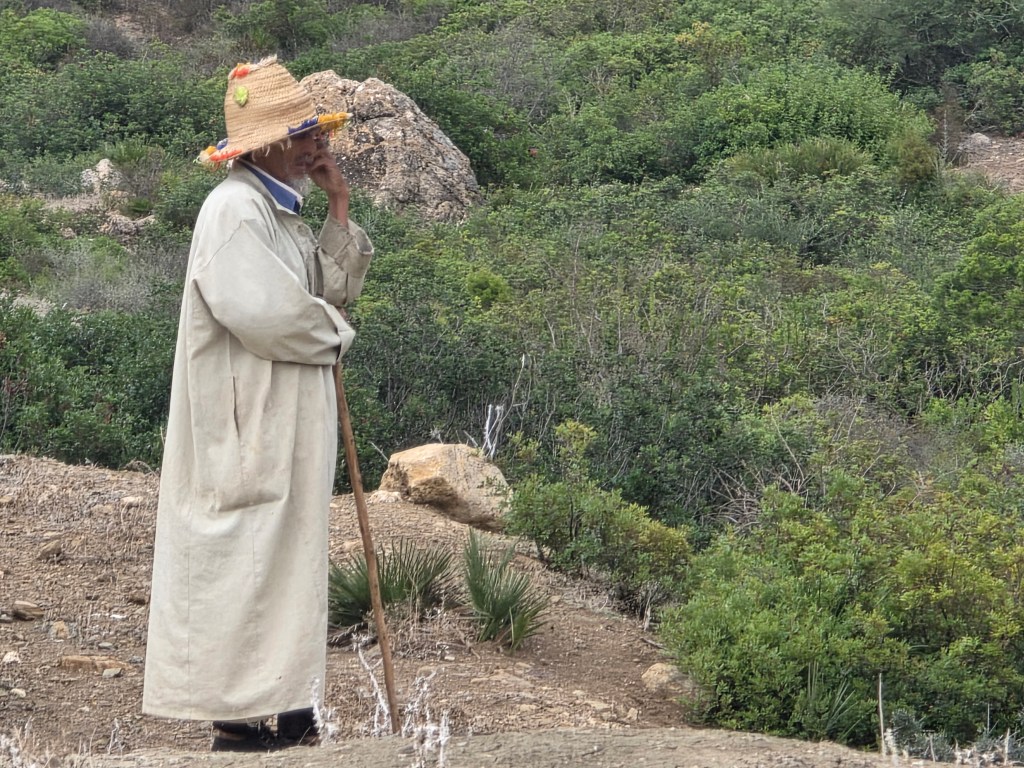
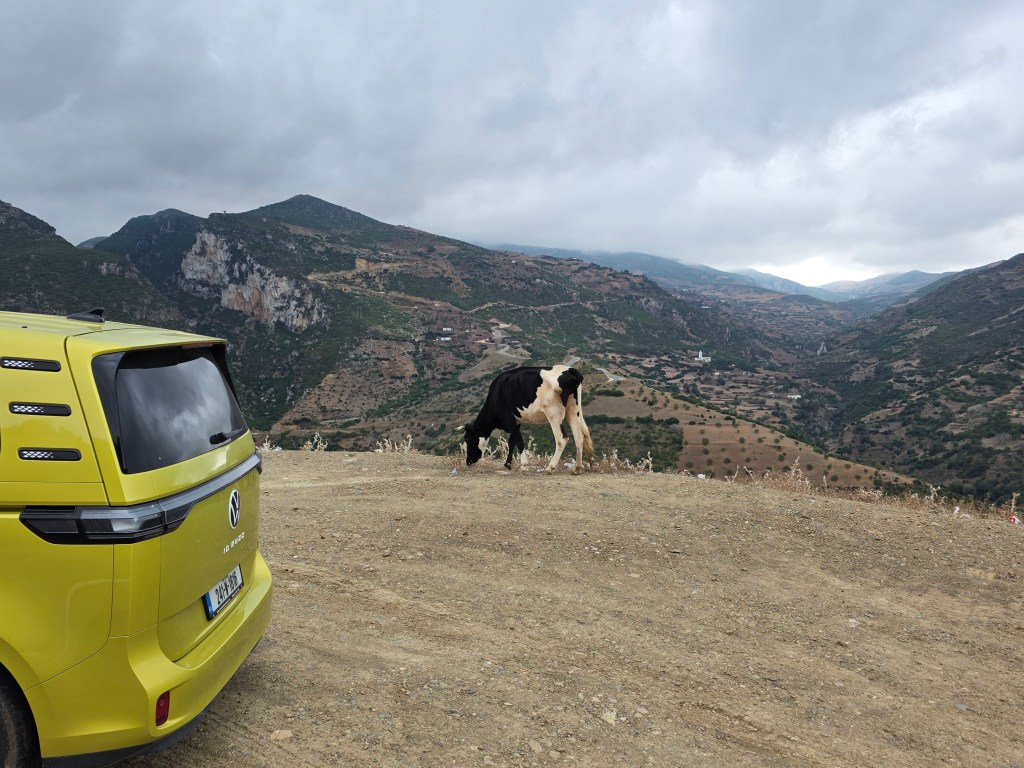
Finally on the fifth morning, we packed up and left, taking the mountain road to climb higher still. A man in a djellaba waved a stick and shouted at his cow on the far side of the road, who scampered off in the opposite direction. The road rose before  dipping down to the Mediterranean Coast.  

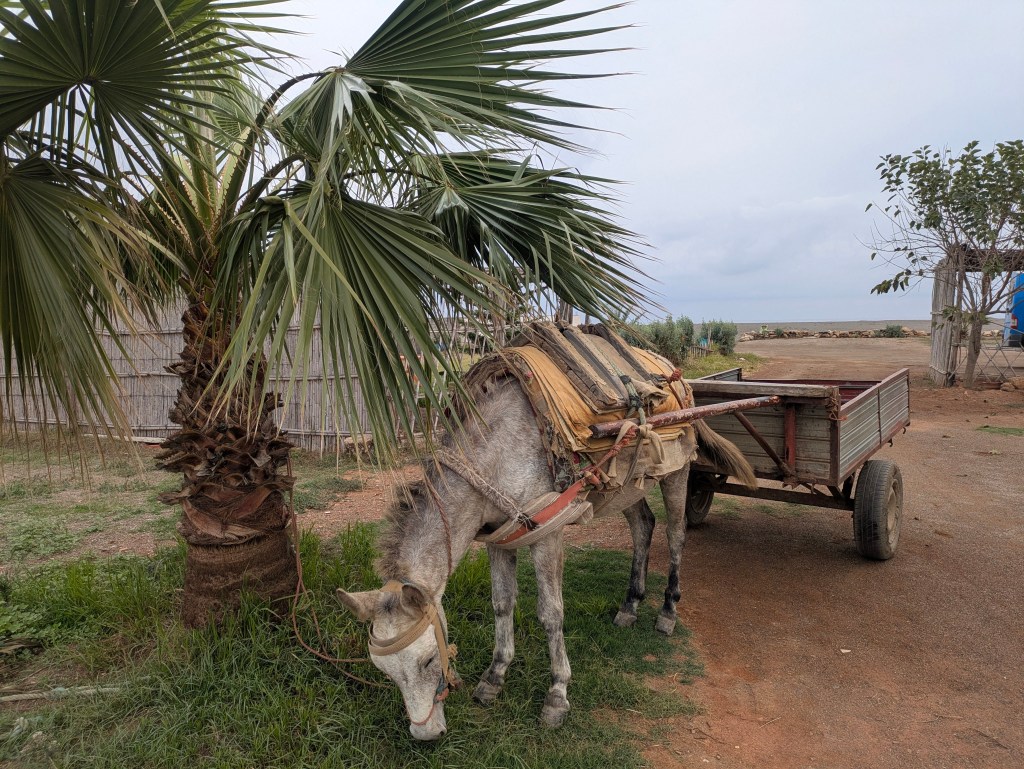
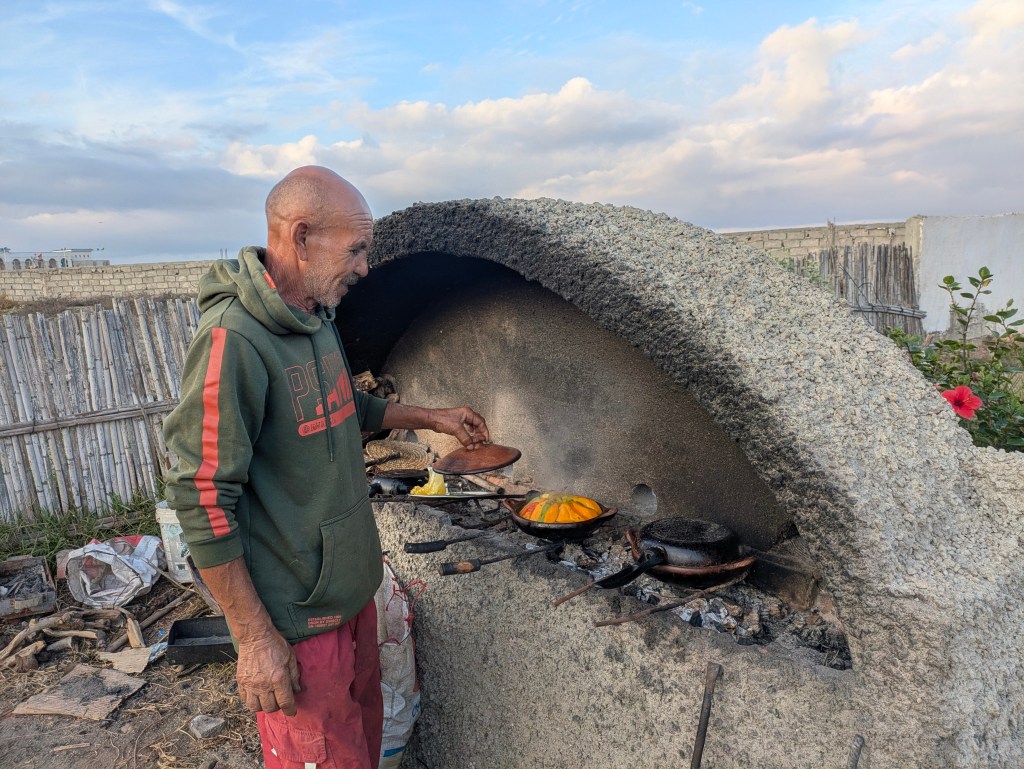
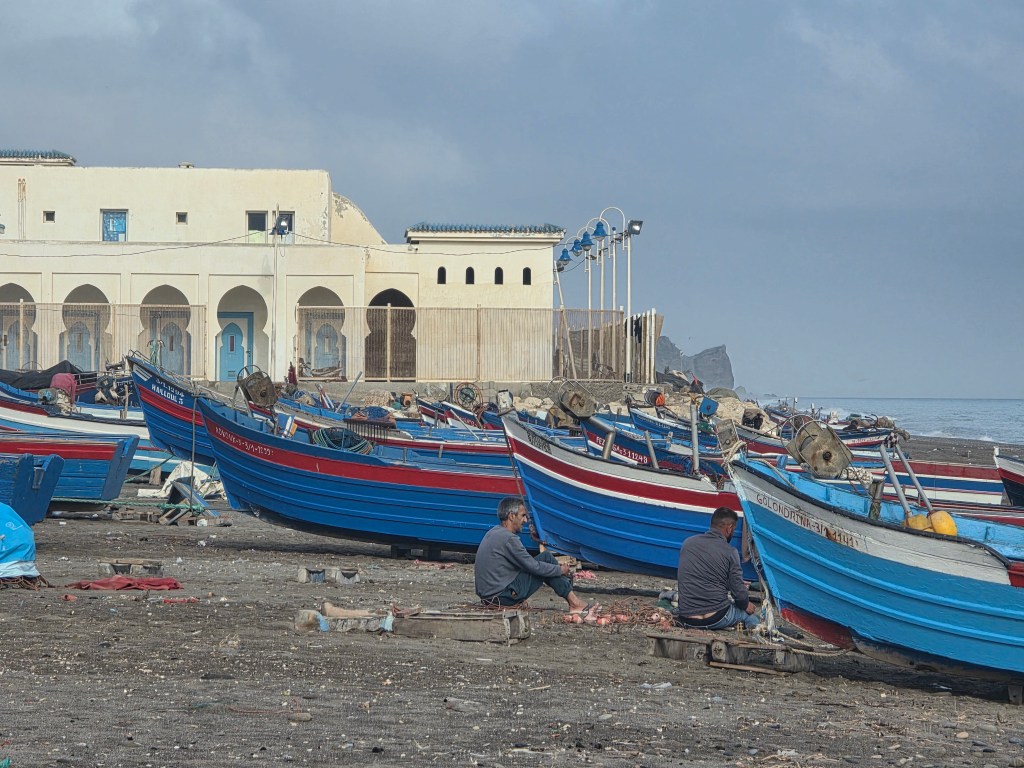
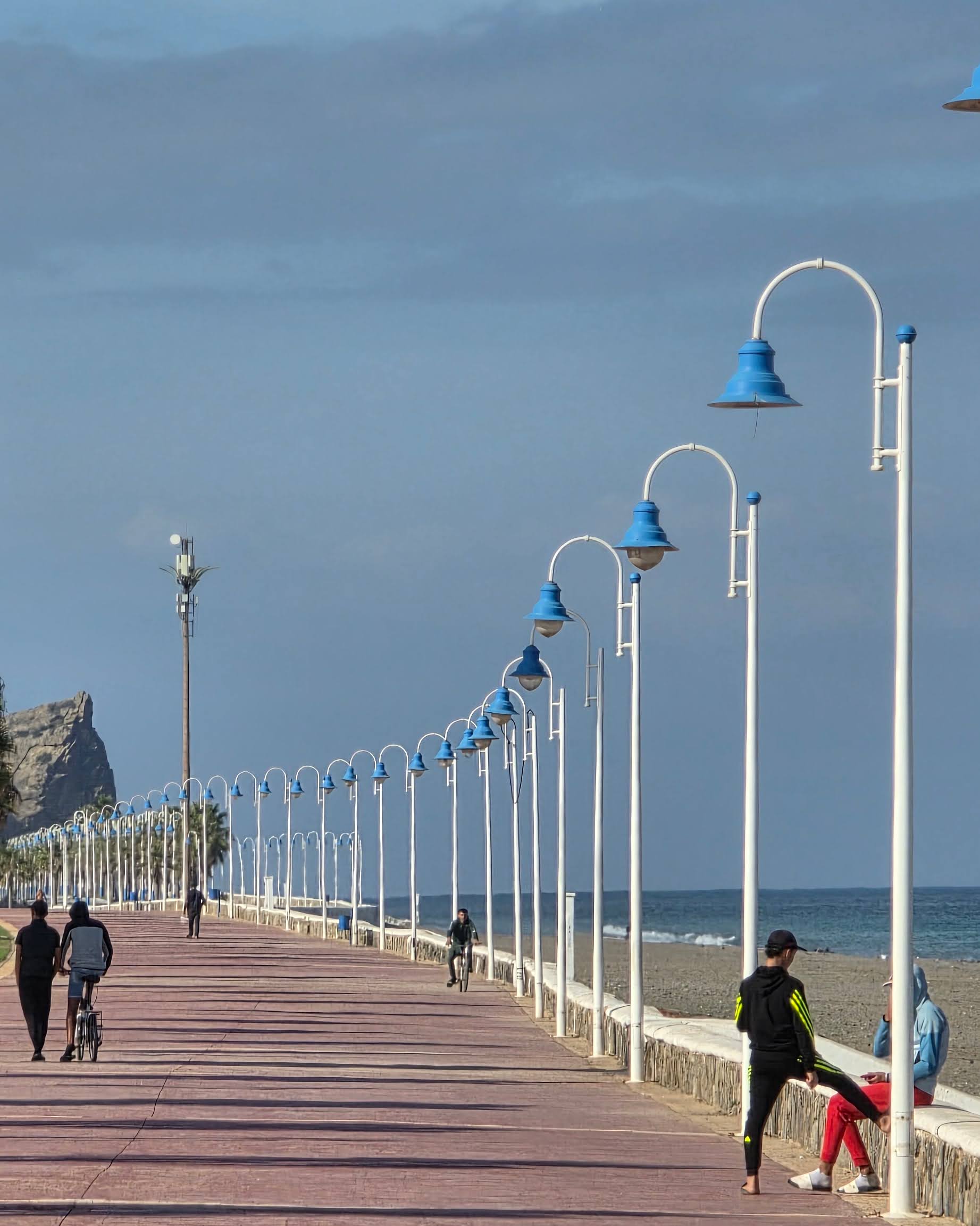
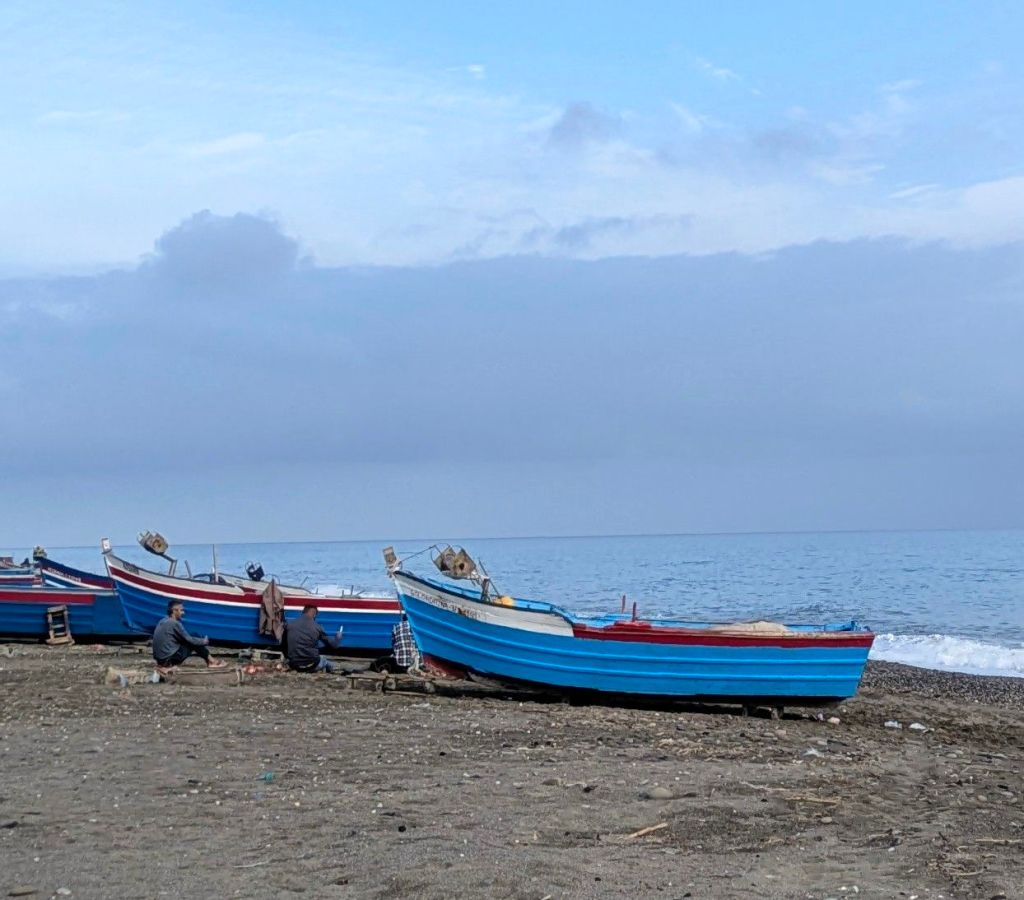
The seaside town of Quad Laou was larger than we expected, with a handsome prom that stretched for more than a kilometre by an (almost) deserted beach. There were fish restaurants, palm trees and few tourists of any kind. We swapped the gurgle of the river at our last campsite for the hypnotic crash of waves, and our dog was replaced by a cat quartet, who danced around us as we ate the tagines that Mr Abdul had prepared for us in his homemade, outdoor oven. It was also peaceful in a different way. Blue fishing boats were on the beach.  An old woman tended a flock of sheep down the road. Mr Abdul worked his small bit of a farm by hand and with the help of a horse and cart, augmenting his meagre living by allowing camper vans to park on his land by the sea, The toilets were squat, ‘flushed’ by throwing a few ladles of water from the bucket. There was no shower although Mr Abdul would bring a bucket of well water to slosh over you…if required.

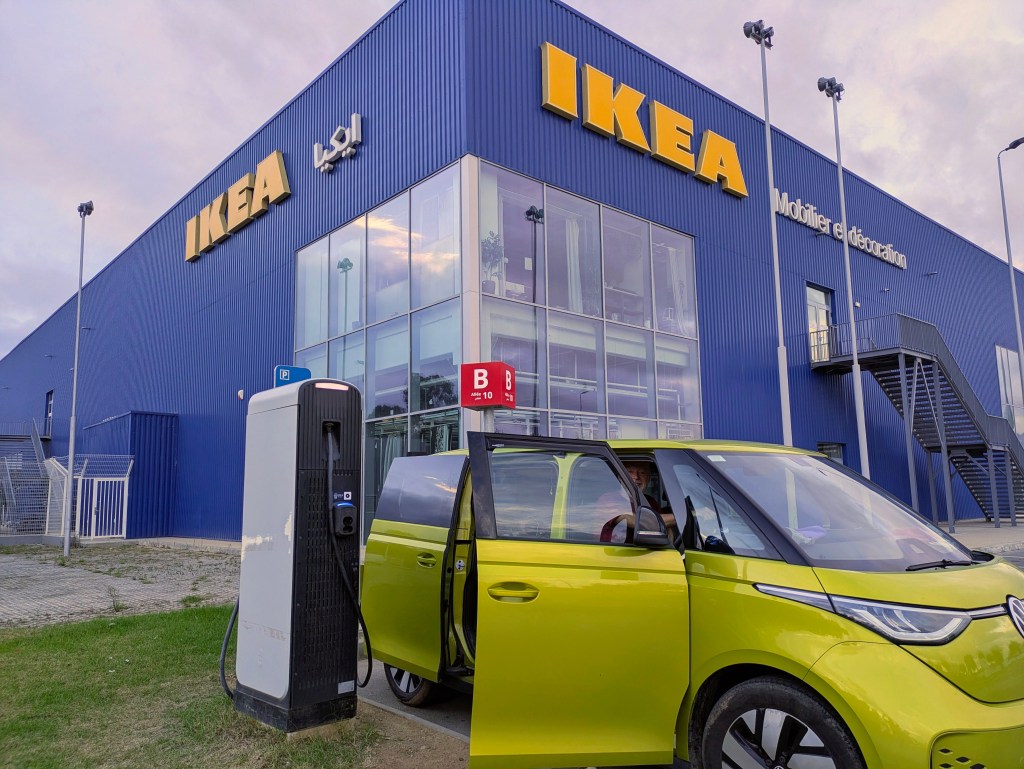
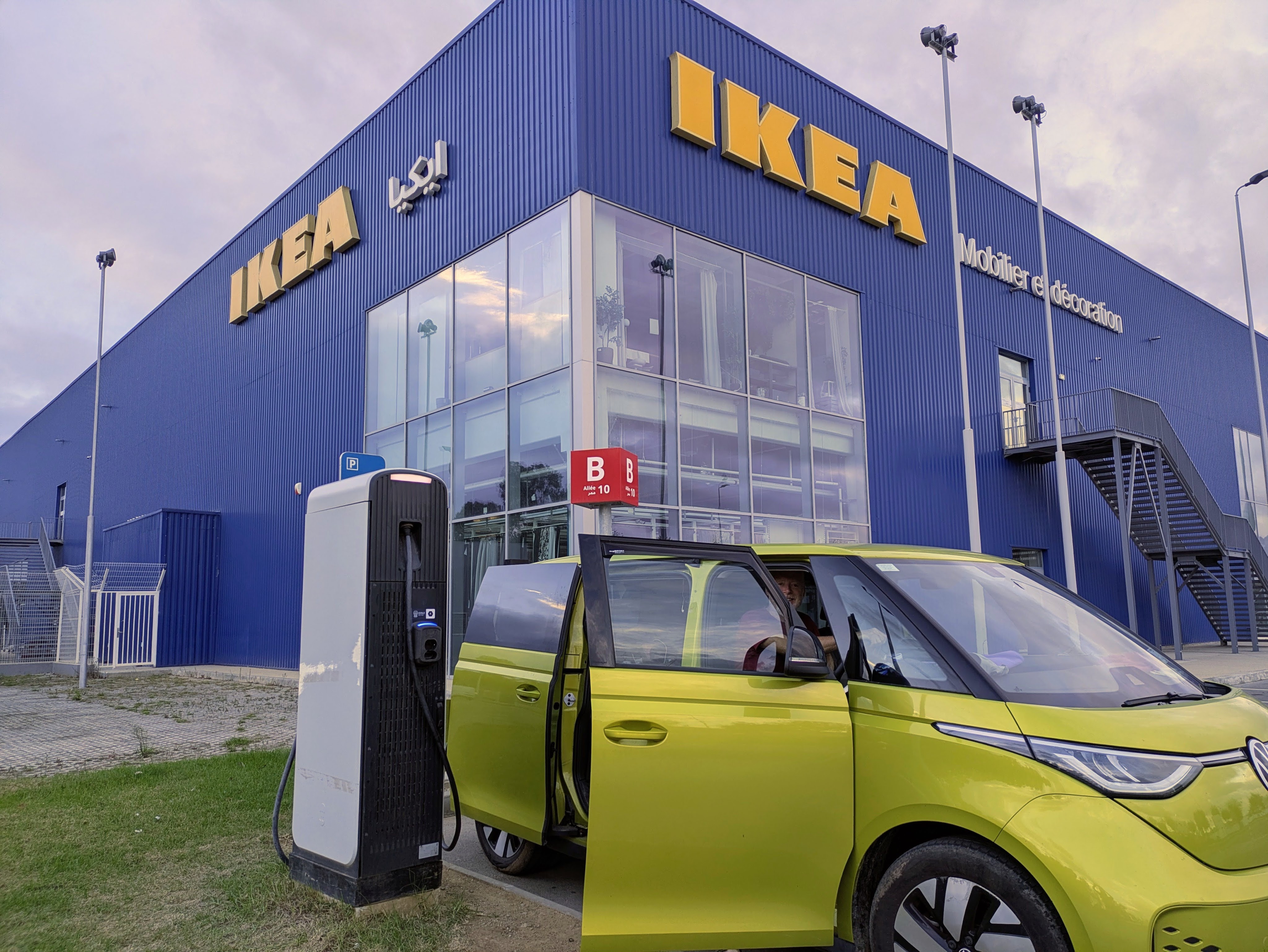
Leaving Quad Laou, we took the spectacular road north that snaked along by the Med where road stalls sold enormous bags of walnuts. Tetuan was the largest town in the area, a prosperous place with all the usual international chains and an old medina with winding streets and alleys. We didn’t stop at any of this…we had one priority….we wanted to get to Ikea on the far side of town, not to buy any furniture or eat meatballs, but to charge the Buzz. It was no surprise that EV chargers were scarce in the area. Charging wasn’t absolutely critical because our recent hops from place to place were relatively short but it would still be reassuring to charge fully. We missed the charging slot by minutes….there was only one. Two women had just plugged in  and said that they would be two hours but at least the Kilowatt charger was working and as usual, it was free to use. Another electric car appeared, also hoping to charge, so there were certainly electric vehicles in Morocco. I went into Ikea to use the bathroom. My visit coincided with  the ‘call to prayer,’ which was broadcast throughout the store on loudspeakers, sounding slightly surreal among the flatpack Swedish furniture.

Deciding to return later, we backtracked to the medina in the centre of town which also had a small tannery. This was not in full production, although a ‘clothesline’ of animal skins were draped on the back wall and a pungent smell hung heavy in the air -blood and drains – but not as bad as the hellish tannery in Fez. Tetouan was known as the White City and from the balcony overlooking the tannery, there was views of the pale houses crawling up the slopes while on the other side, the tombs of the dead were equally white and shiny in the sunlight.

In the Carrefour Supermarket (which unfortunately didn’t have any EV chargers), we couldn’t find the alcohol section which we knew was often slightly separate to the main supermarket. When we asked, people told us that it was outside and around the corner. We wandered around and eventually spotted an unmarked grey door on the side of the building. That couldn’t be it, could it? It looked more like a back entrance to some kind of warehouse. We peeked in. The light was dim, the air was stuffy but the interior was teeming with men (it was all men except for the women at the tills). There was the sound of bottles clinking and cans rolling against each other in baskets. The whole enterprise felt furtive, shady and clandestine. We were delighted. Our meagre alcohol supplies had run out about a week before  Mr Abdul had tried to source us two beers the night before in Quad Laou but despite his best efforts, he was unsuccessful and very apologetic.
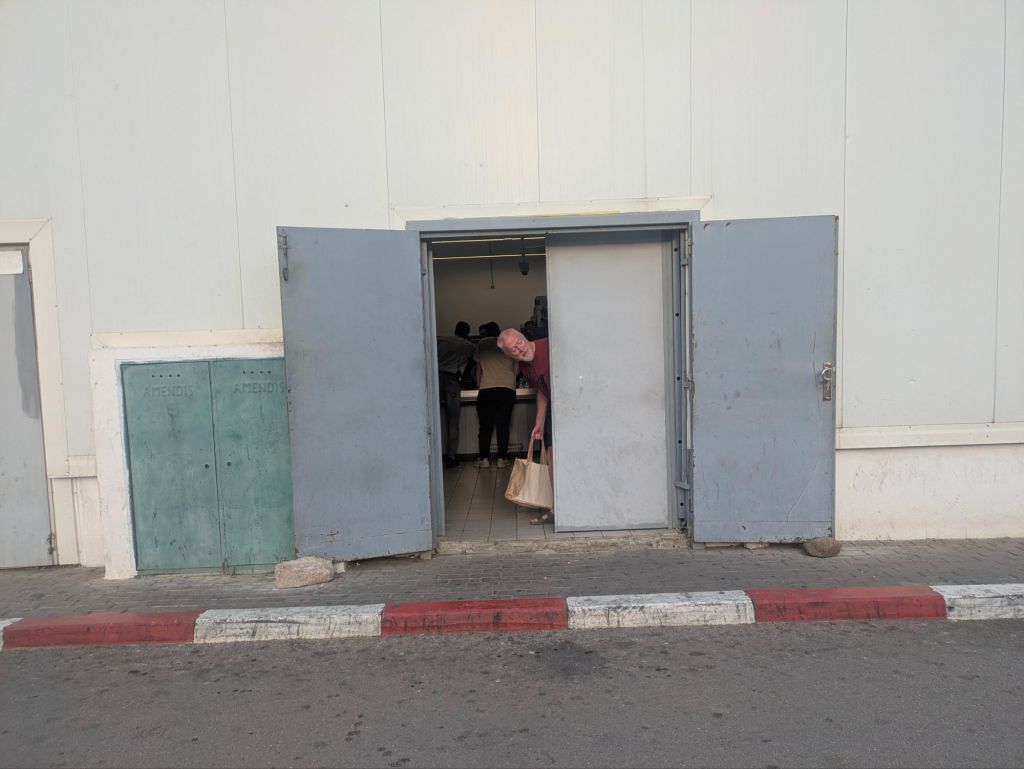
Despite the obvious demand, it wasn’t cheap, we’re talking Irish prices for beer and far higher than home prices for wine, except the Moroccan wine which cost about €4 a litre and was drinkable…just about.  At the cash tills, wads of cash were pulled out of pockets, crumpled notes smoothed and the balance made up with coins. Most paid in hard cash although it was possible to pay by bank card.

            We parked in a hotel carpark beside other camper vans, reheated the leftovers from the previous day’s tagines (the portions were enormous) and enjoyed our wine, giggling at the process involved in acquiring it.

Does anyone see me????

The following morning we were in Ikea before 8.30am, plugged in and charging. Moroccans don’t seem to get up early. All the nearby cafes were closed and shops rarely opened before 10 or even later in the medina. While we were waiting in the van, another EV’s pulled up beside us. The driver told us that although Ikea store doesn’t open until 10am, the restaurant was open for breakfast at 9am. So we enjoyed a three-egg omelette each, made in front of us, with bread rolls, orange juice and coffee for about €7. A bit of local knowledge is a wonderful thing.

Happiness is…….an EV charger❤️

Campsites in the area were scarce so we rented an apartment (mainly because we were in need of a shower, there’s a limit to what sprays of CK one will camouflage). This was such a bargain and so comfortable at €19 a night that we booked it for a second night and enjoyed a ‘culture’ day of visiting museums and a lovely art gallery.

Tomorrow we will head to the border and hope that our exit from Morocco will have less drama than our entrance. If the border crossing goes smoothly, we will spend tomorrow night in Ceuta, the Spanish city on the African continent and get the ferry to mainland Spain the following day.

Thanks for reading

A bientot

Electric Roadtrip: From the Mountains to the Sea

Electric Roadtrip: The Charging Saga

Leaving our camping cocoon in Tangier was hard but it had to be done. Waving goodbye to Said, the manager, we headed off in search of EV chargers, making a minor detour to Carrefour Supermarket (Socco Alto branch) to stock up on a few beers and a bottle of wine. Alcohol is not widely available in Morocco, but you can find it…. if you know where to look or have inside information from a walking tour guide.  It’s relatively expensive, especially compared to Spain.

We stop at a fuel station which has Fast Volt Chargers, which again look well maintained. Caoimhin had contacted the company for help about our inability to download the app (essential for charging as there was no option to pay directly using a bank card) but we were still unable to download it despite following their instructions of using a VPN and selecting France.

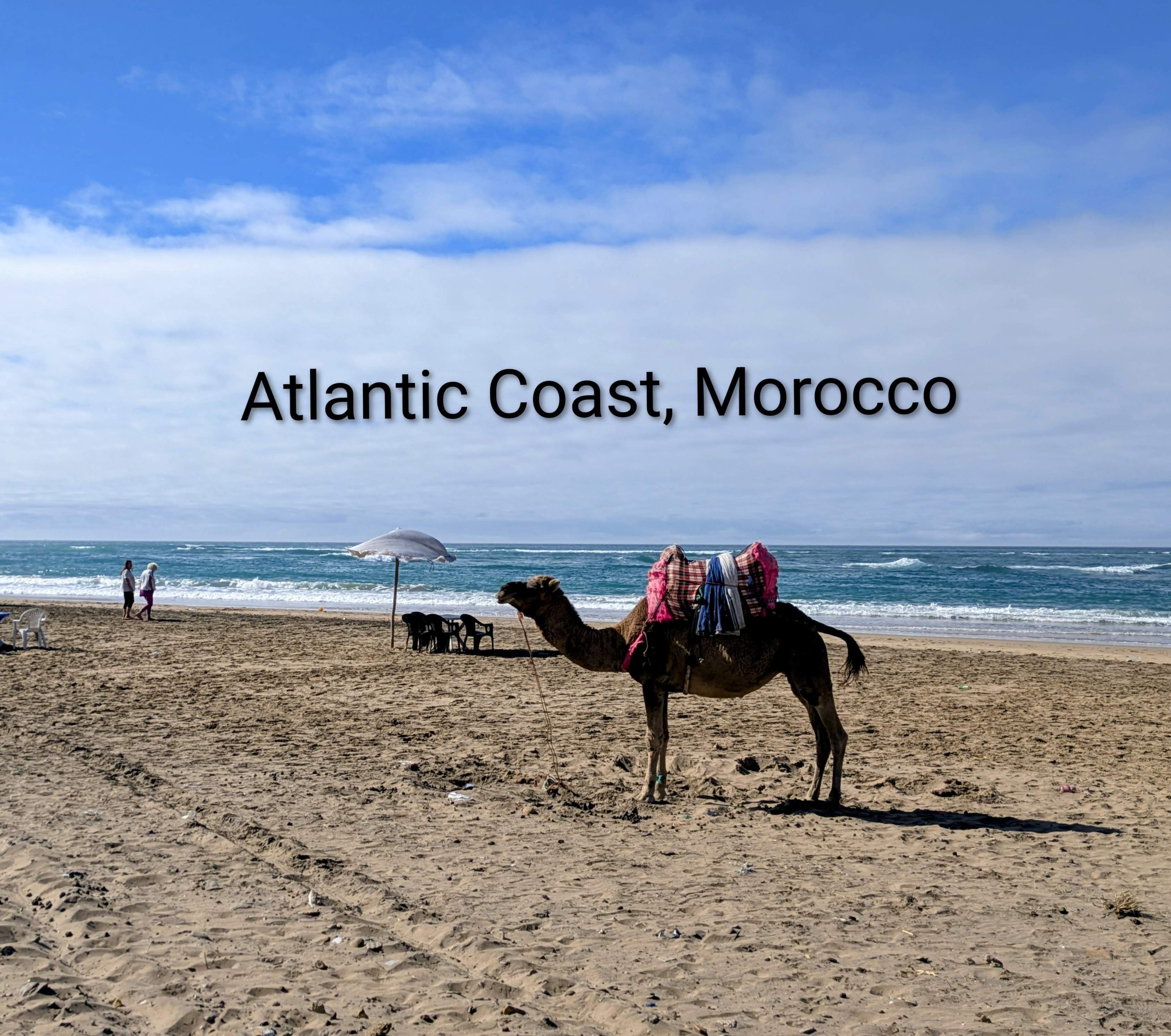
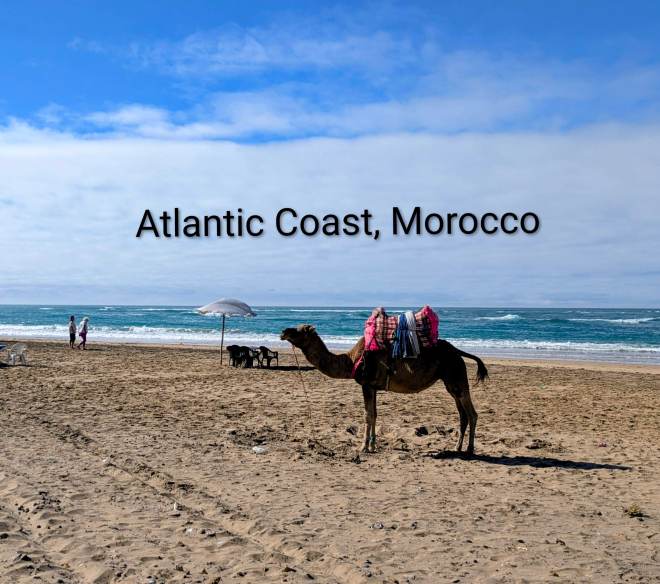
Google maps (but not Electro-maps) tells us that there’s an EV charger about 3 minutes away so we go in search but they aren’t there, and never were, according to a security guard who directs us back  to the Fast Volt chargers. We continue down the coast towards some Tesla Super chargers which appear to be in the middle of nowhere,. When we get there, we discover that they are part of the high-end Hilton Golf Resort. The guys on the gates were friendly and helpful but the Tesla chargers were only compatible with Tesla cars. The guys were offering us cables to slow-charge off a wall socket but that would have taken hours so we pushed on down the coast where the sight of camels relaxing on the beach made us smile.

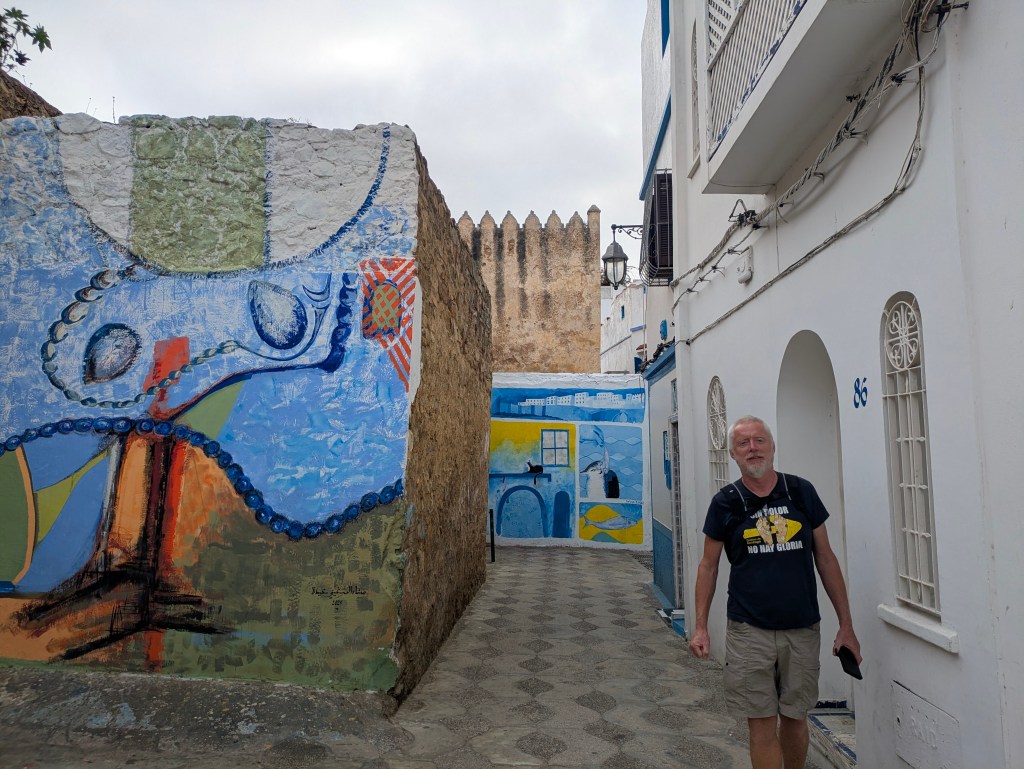
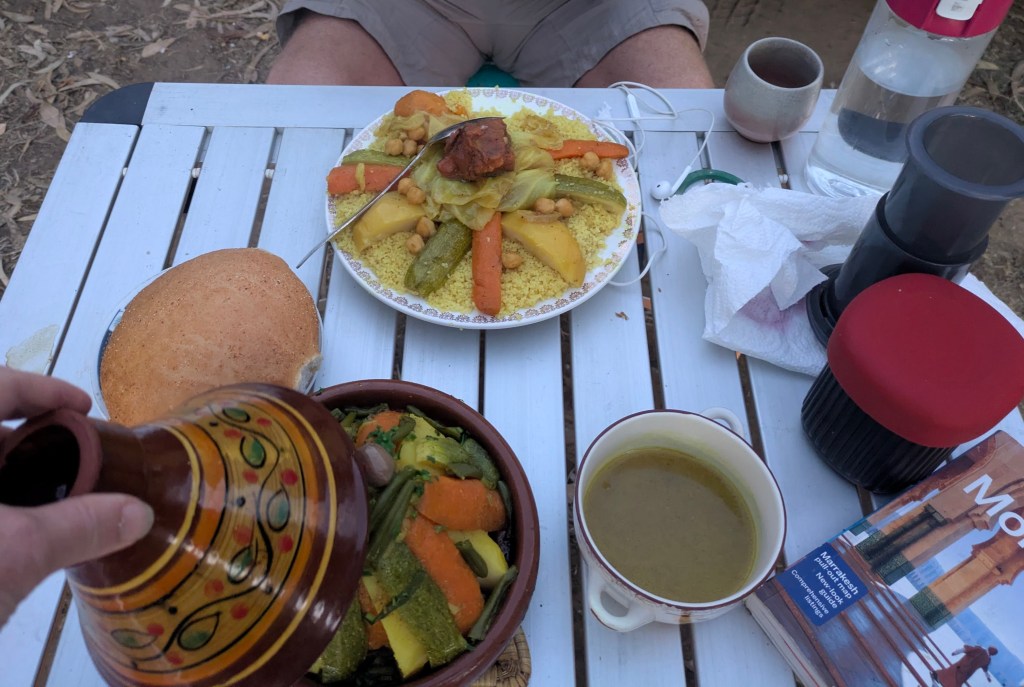
 We continued to a dusty, dishevelled campsite in Asilah, a windy town of murals, artists with a long promenade by the Atlantic and an interesting walled medina.  After checking in, we plugged into a socket with the blessing of the campsite owner who was saying Inshallah, and lo and behold, the charging light turned green and the Buzz slow-charged all night until it reached 100% by mid- morning the following day. Maybe it was the blessing – or the lack of safety features and circuit breakers – but we now had 450 kms to play around with. As well as that, the wife of the campsite owner made us a dinner of tagine and couscous/veg and delivered it to our van in the evening. Delicious. It rained heavily during the night, the first real rain that we have had since we left home on Oct 1,  but there was little evidence the next morning as the thirsty ground had soaked it up.

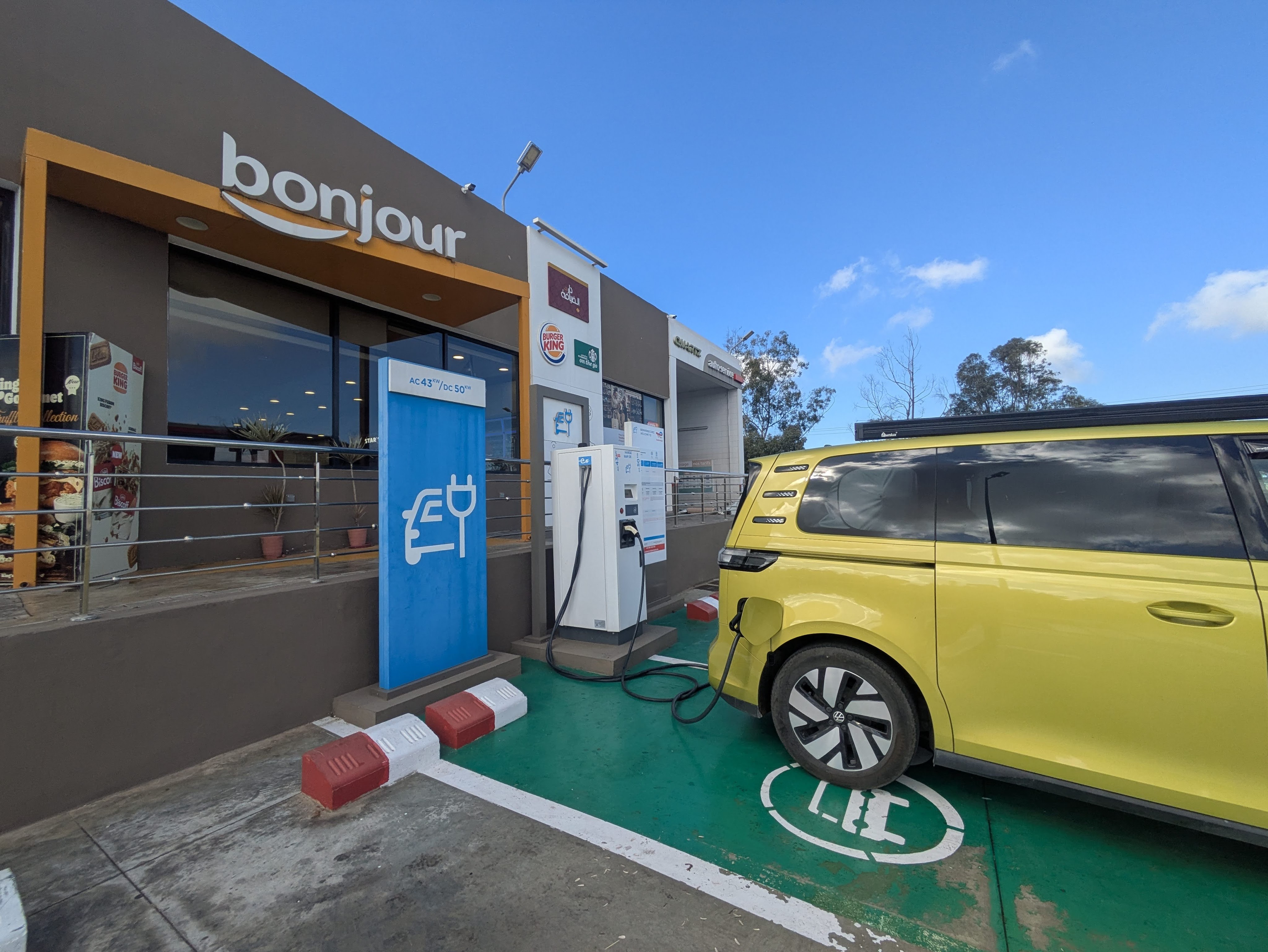
On down the Atlantic Coast, stopping at a Total Energies gas station in Lareche, we found  two working chargers, that were also free to use. We didn’t really need to recharge but we couldn’t pass up the free offer. Things were definitely looking up.  

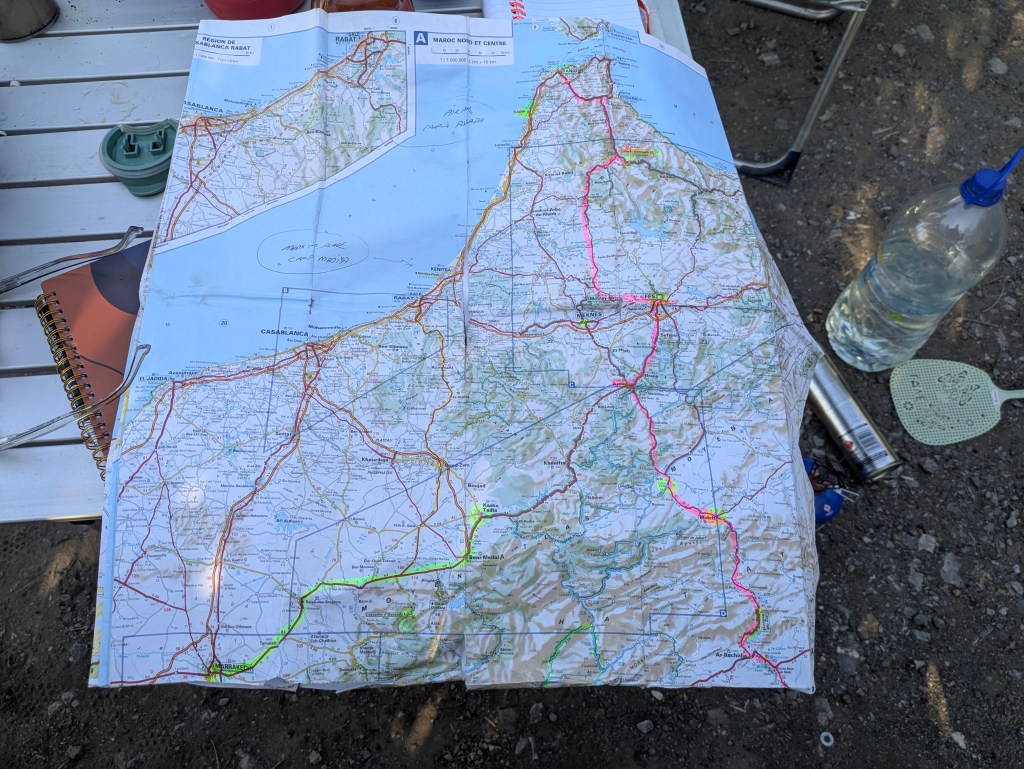
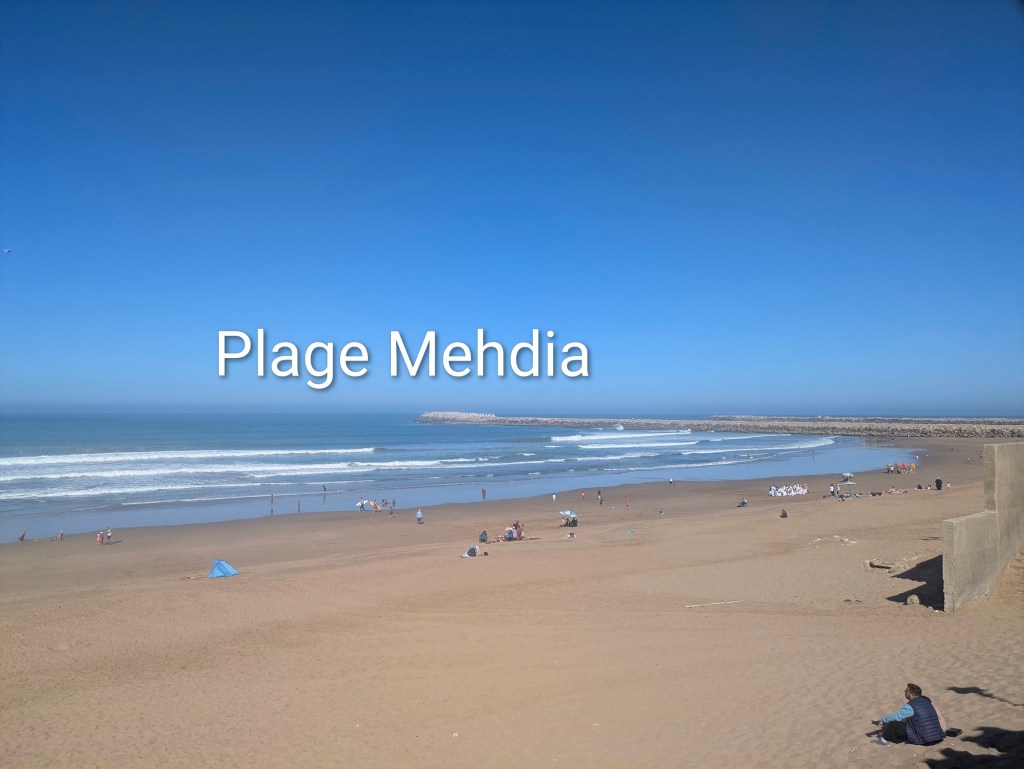
We continued  past acres of polytunnels gleaming silver in the sunshine, roadsides strewn with rubbish and towns that slide into each other until we reached Mehdia Campsite, a large campsite near an impressively long beach. It also had a large swimming pool, much favoured by seagulls who used it as a playground and a toilet. Two British bikers pitched a tent beside us and through the hedge, we heard them mention their longing for a cold beer. As we had a couple of cans in our little fridge, we passed them through the hedge to our grateful neighbours. They were heading north towards Tangier on their way home after two weeks in Morocco and told us of their favourite scenic rides. One of them produced a paper map with highlighted lines, marking their trip. This made me realize how much I miss the feel of paper maps, grubby from use, creased from folding ‘the wrong way’ but so easy to get a proper overview.  One of their routes looked suitable for us, provided we could charge (we were unable to charge at the seaside campsite although we tried).

So we changed direction, abandoned the coast which was mostly dismal and dirty and ditched our plan of heading to Casablanca – it sounded alluring but many people told us that it was bustling, modern and quite miss-able. We managed to charge fully (for free) at another Total Energies fuel station on the motorway outside Rabat. These motorway stations were similar to home with Burger King, and shops that sell pastries/sandwiches and Pringles – generic places that could be anywhere on the planet. We chatted to two Norwegians who were driving to Gambia from Norway and who thought we were very brave (and quite mad) to be driving an electric van in Morocco. They actually went in search of us, curious about who could be driving the all-electric van with an Irish registration in the charging bay.

The inland journey was breathtaking, undulating and twisty, the countryside a palette of browns with the occasional green scrub, villages like mirages clung to hillsides and everywhere there were goats, mainly jet-black, like shadows. The temperature rose steadily until we hit 34 degrees. There was the bleating of the goats and the ‘call to prayer; from the village mosques but often there was miles of emptiness. We were in search of a farm campsite on Google maps which sounded like a place we might be able to charge the Buzz, plug it into a socket…..if there was a socket or even electricity. The trouble was that we couldn’t find the campsite. We left the tarmac and followed dusty tracks…. to nowhere. Eventually we turned around and  tried to retrace our tyre tracks back to the ‘main’ road which was not an easy feat.  A ragged boy appeared at our car window, offering us the bunch of grapes he held in his hand. He didn’t know anything about a campsite but knew the word for ‘money’ in several languages …and probably in a few more that we didn’t recognize. He wasn’t in the least bit aggressive but had a lovely charm about him.
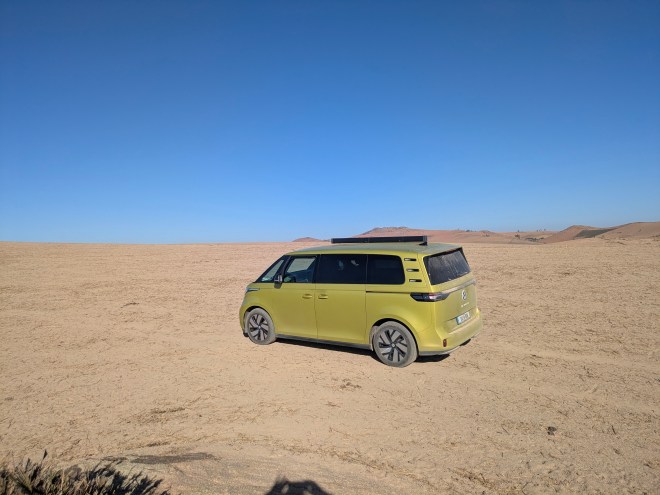
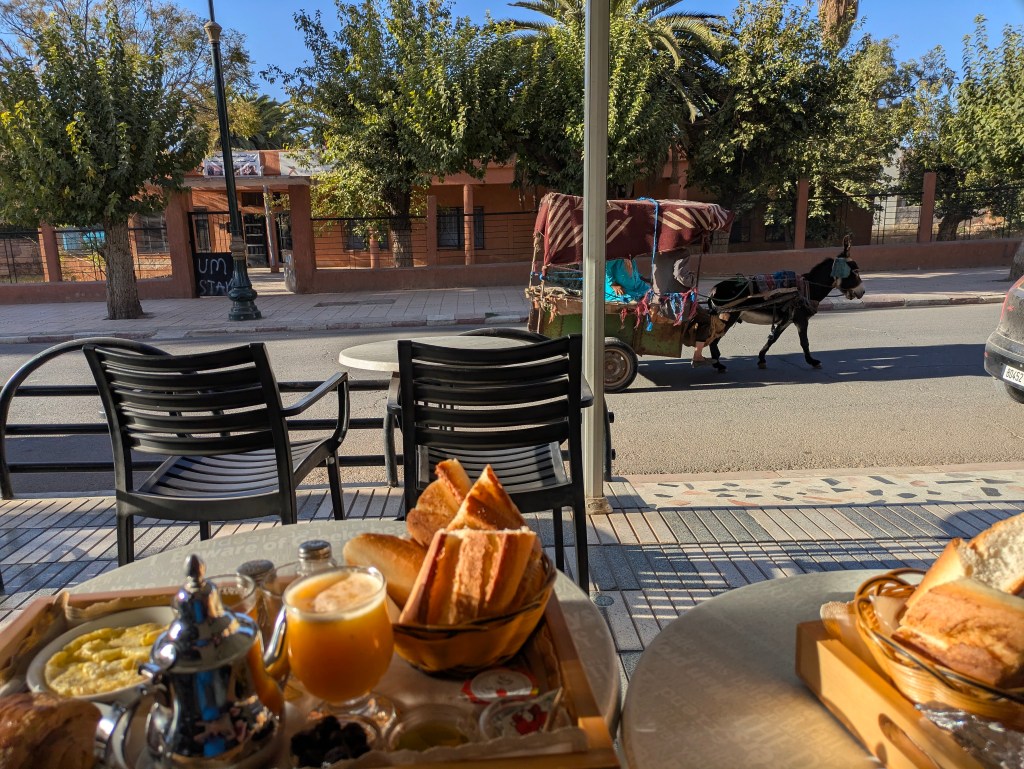
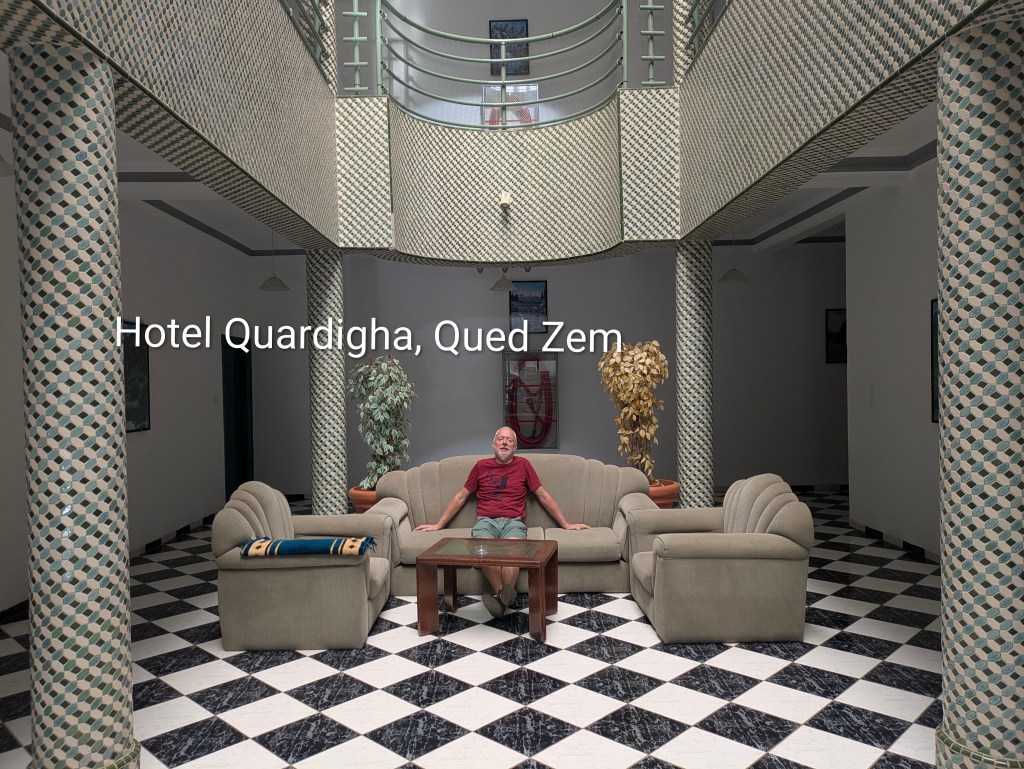
We pushed on to Qued Zem, a substantial town, which was once called ‘Little Paris,’ a title which left us scratching our heads. It was after six in the evening and still almost 30C so we went in search of a hotel. There weren’t many choices, the review for one read ‘don’t expect clean sheets’ so we went for the other, a fairly pricey option in a grand old mansion. This looked impressive but the bedroom aircon refused to go below 26C and the blocked shower tray flooded the bathroom but the sheets was clean and the breakfast on the veranda facing the street was delicious.  The quality of bread and pastries in Morocco was surprisingly superb, probably the French legacy, and juices were almost always freshly squeezed.  
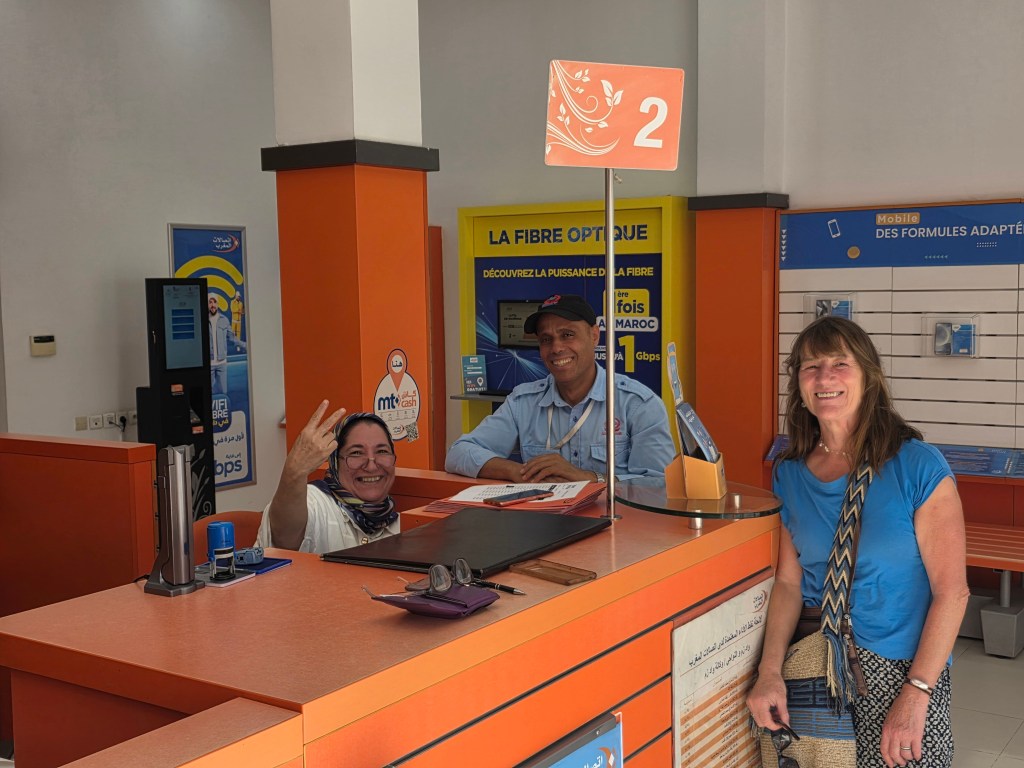
Although I had an e-sim from Revolut, I wanted to buy a Moroccan phone sim so we paid a visit to the Maroc Telecom office in the town where the lady behind the counter was extremely helpful but couldn’t understand why my Maroc Telecom sim in my phone worked for calls but not for mobile data. She eventually asked the doorman to take us to Hashim around the corner who was good at fixing things. Hashim was determined to find a solution but eventually had to give up….mainly because we wanted to get on the road. The Moroccan desire to help was truly amazing.

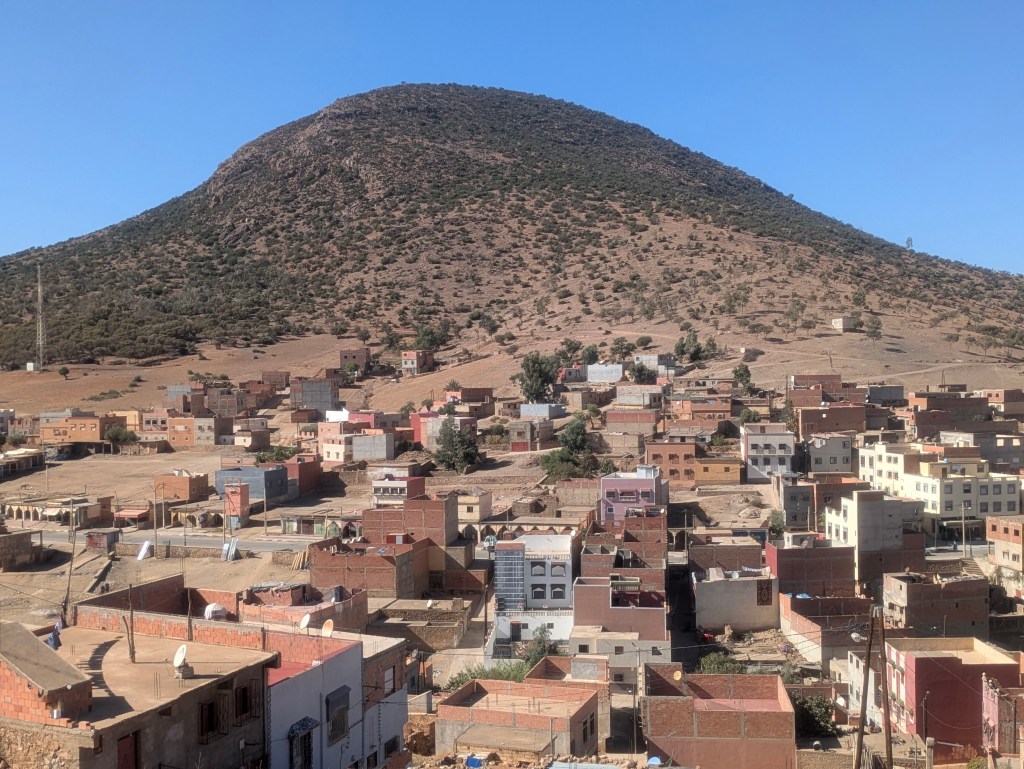
Although there were plenty of petrol stations in Qued Zem, there weren’t any EV-chargers  -most people didn’t know what we were talking about. Although we would have preferred to continue south to the High Atlas, the difficulty with charging made us head north although in reality, chargers were scarce in every direction. The drive north through the Middle Atlas to Azrou was again spectacular with a timeless, almost biblical feel.  It was Friday and in many of the villages, our passing coincided with people spilling out of the mosques and hopping on donkeys carts or bicycles. In many cases, the only evidence of modern living was that the man on the donkey had a mobile phone in his hand.

Surprisingly, there were lots of speed checks with police hiding behind bushes with speed guns. The advantage of trying to conserve fuel was that we were always within the limit and were waved on. Our charging issue was becoming critical, the kilometres ticked down and we mentally calculated how many we have left versus how many we needed to get to our destination. Morocco is a big country, more than ten times the size of Ireland. There were supposed to be EV-chargers in Azrou but we couldn’t find them and nobody knew anything about them. By the time we reached the Azrou campsite, Euro Camping Emerites (at least that existed), we had 62 kms left and we desperately hoped that we would be able to charge using a granny cable in a socket.
Azrou was charming, a Berber town surrounded by cedar and pine forests with many walking trails and home to troupes of monkeys in the woods. At about 1300 m, the days were warm and the nights were cool. The campsite was also lovely with lots of trees, a place where Khalid, the friendly manager, delivered free baguettes to everyone in the morning. It was exactly the type of tranquil place we liked, surrounded by nature BUT we had a big problem, we couldn’t charge the Buzz, We tried several sockets, Khalid allowed us to plug into the kitchen, he called a friend, brought us to a garage but the Buzz wasn’t buzzing.

 According to various (unreliable) maps, we thought there were chargers in Fez, which we had intended visiting, or Meknes, which we had never heard of before. Fez was 89kms but Meknes was closer at 65kms but we had a mere 62 kms in the tank.  Would either of them have chargers that worked……even if we got there? Our hope was that as we were in the Middle Atlas mountains, it should be all downhill to either destination. We decided on Meknes and drove slowly….Khalid gave us his phone number in case we got stuck and said that he would come and rescue us.

A wonderful thing happened.   A few kms outside the town, our available kilometres rose to 90 with 60kms to go. I began to breathe again, my stomach unclenched. The Buzz kilometres changed according to the terrain – going downhill, they zoomed up, any uphill, they went decreased but by the time we arrived in Meknes, we had an unbelievable 109 kilometres to spare. We headed to Carrefour Shopping Mall where there were supposed to be Kilowatt chargers and we had already downloaded the Kilowatt app. The good news was that the two chargers were working but the bad news was that they were in use. The friendly doorman suggested that we go for coffee and he would call us…which he did after about thirty minutes. Thankfully, the Buzz charging light turned green. As it was only a medium charger, we were only 50% charged after about three hours but we hated shopping centres and couldn’t bear to spend any more time there.

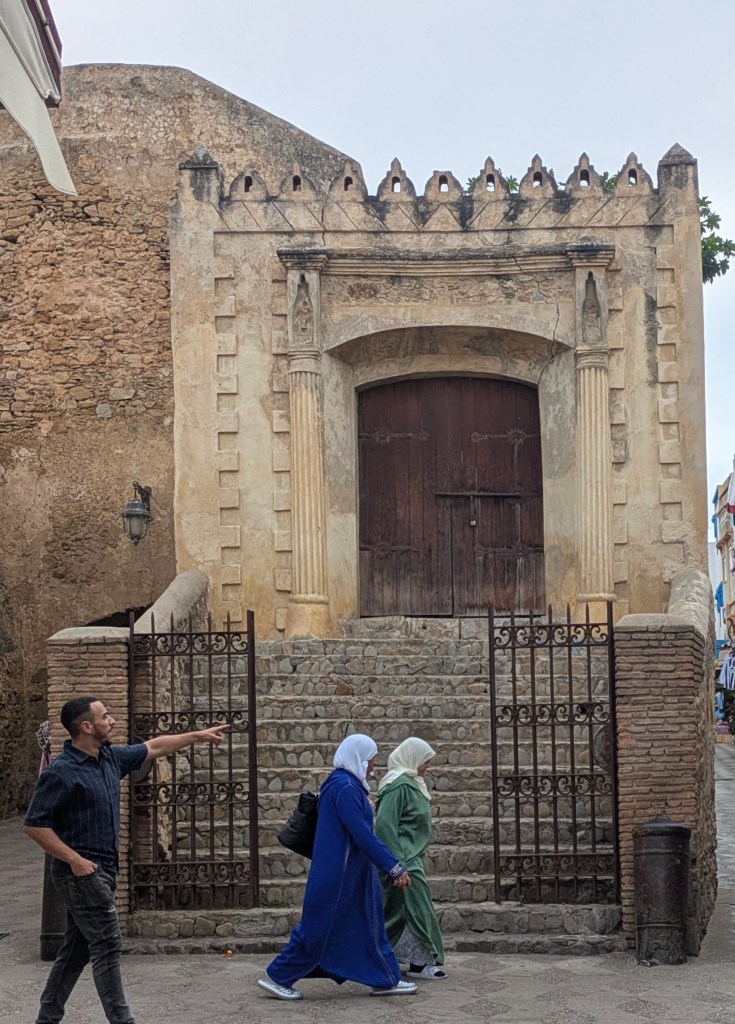
 Maybe our diversion to Meknes was meant to happen. It was a lovely city with impressive architecture, and although it was one of the four imperial cities of Morocco (the others are Fez, Marrakesh and Rabat), it wasn’t very touristy. Driving from the Carrefour Mall, we were wowed by the beauty of the old walls, built by Sultan Moulay Ismail in the mid seventeenth century. These impressive mud walls encircled the palace and old town and were home to hundreds of stocks nesting in the turrets. Sultan Moulay Ismail began the first day of his reign by murdering any of his 83 brothers and half-brothers who refused to bow to him. Despite that – or maybe because of it, he is much revered even to the present day. We visited his lavish mausoleum with a stunning mix of exquisite tiling and simple design.
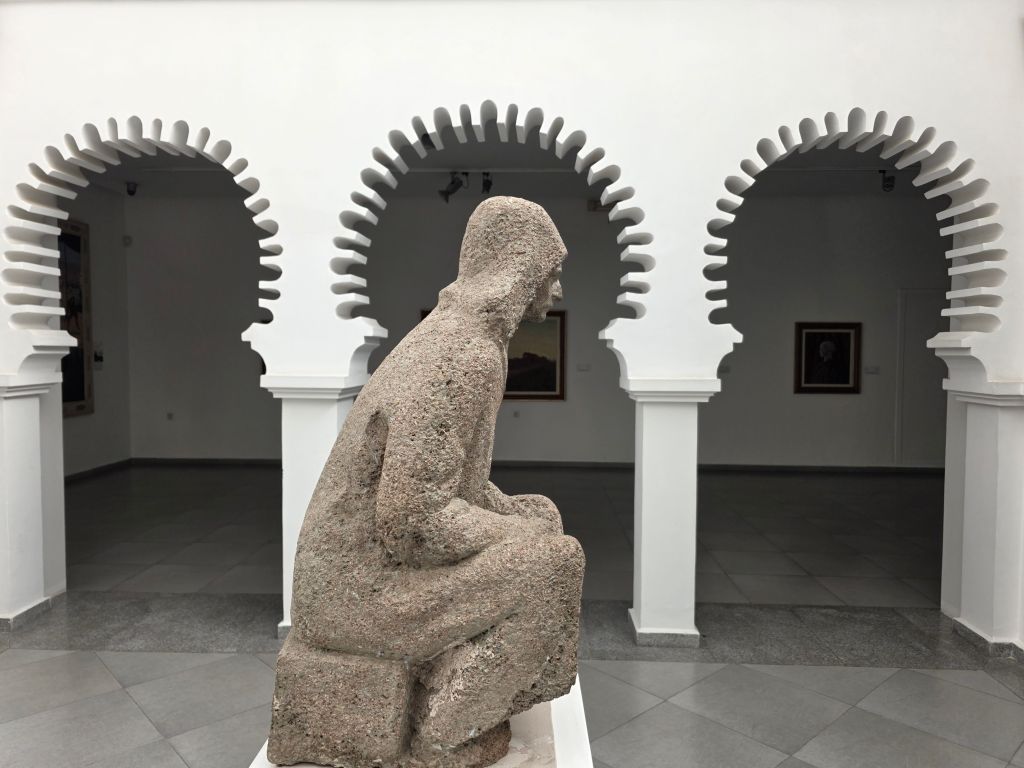
We stayed in a fabulous riad (Riad Andalous), hidden away in one of the alleys of the medina warren for two nights. Finding it was difficult, we walked  in baffling circles through stalls selling shoes, scarfs and food. Riads are traditional Moroccan houses and what a revelation when we climbed the stairs to enter Riad Andalous after a maze of dirty alleys. Secreted away high above the clamour of the medina stalls, it was an oasis of calm with tapestries on the walls, ornate ceilings, rug-strewn floors and a sunny rooftop terrace for relaxing breakfasts. It even had a little resident tortoise, who slowly followed the sun around the terrace.

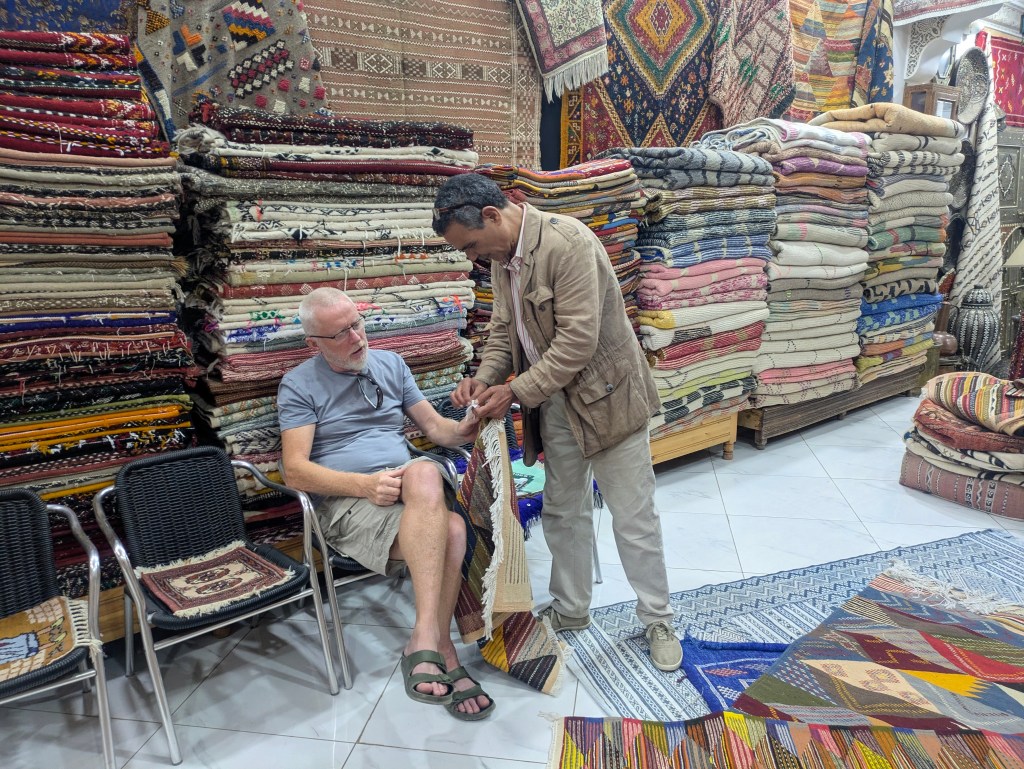
We visited a few carpet shops where eager salesmen pulled out rugs until the floor was strewn with them and our heads were swimming, so overwhelmed that we no longer knew what we liked. On the last morning, leaving our gorgeous accommodation, we turned into the alleyway to have one final look and this time we purchased after some hard bargaining.

It was time to head to Fes but as the Buzz tank was at 50%, we diverted by a motorway fuel station on the outskirts of Meknes that according to our maps had fast EV chargers but we were again disappointed. It will be absolutely essential that we charge in Fes which according to our (unreliable) maps has three chargers, one of which is a Tesla and so wont work for us (In Morocco, Tesla superchargers are only compatible with Tesla cars), so that leaves two medium chargers. Yikes!!!

On the bright side, we have really enjoyed our visit to Meknes, a city we would never have visited without charging issues.

Thanks for reading.

Till next time

Electric Roadtrip: The Charging Saga

Campervanning in North Mayo: A Scenic Adventure

It was a week to remember, a week in late August, spent campervanning around Mayo, a week of spectacular walking on stunning coastal paths, pristine white-sand beaches, lonely bogs and remote mountains and even a pilgrimage route, Tóchar Phádraig,  an ancient druidic path to reach Croagh Patrick.

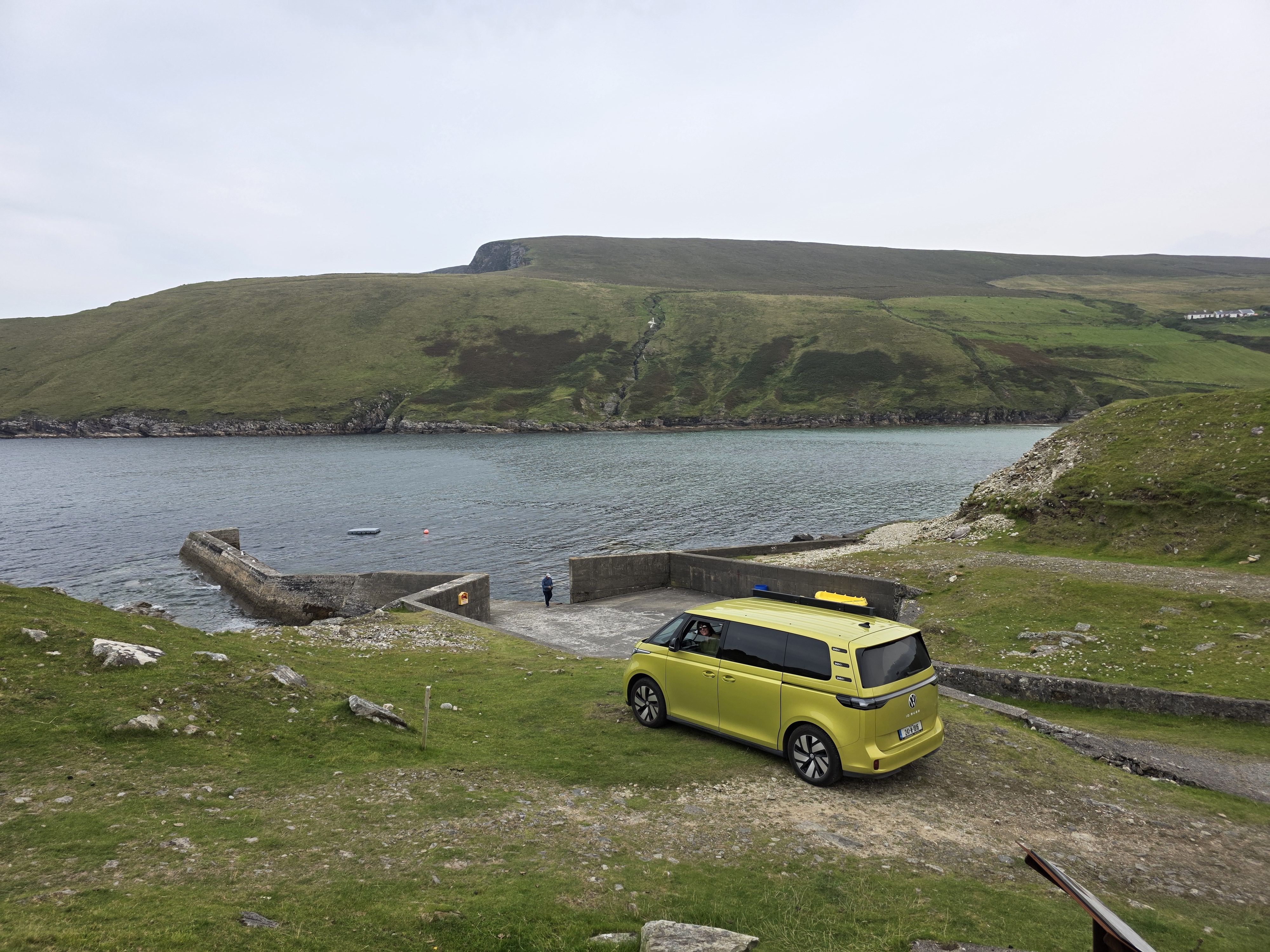
We started at Portocloy Beach on the far North-West Mayo Coast in a Gaeltacht area. If ever the phrase ‘off the beaten track’ was appropriate, it was here. We watched a lone gull, the only sign of life, gliding and swooping over the calm harbour waters.  There were no crowds, cafes, shops or bars, just a picture-perfect beach, isolated by miles of blanket bog and nestled deep into a natural harbour, Carrowteige Cove, a safe haven for swimming or snorkelling and a little pier for fishing boats. There were temporary toilets in place for the summer months which was good news for us as we were sleeping in the van (the ID Buzz).

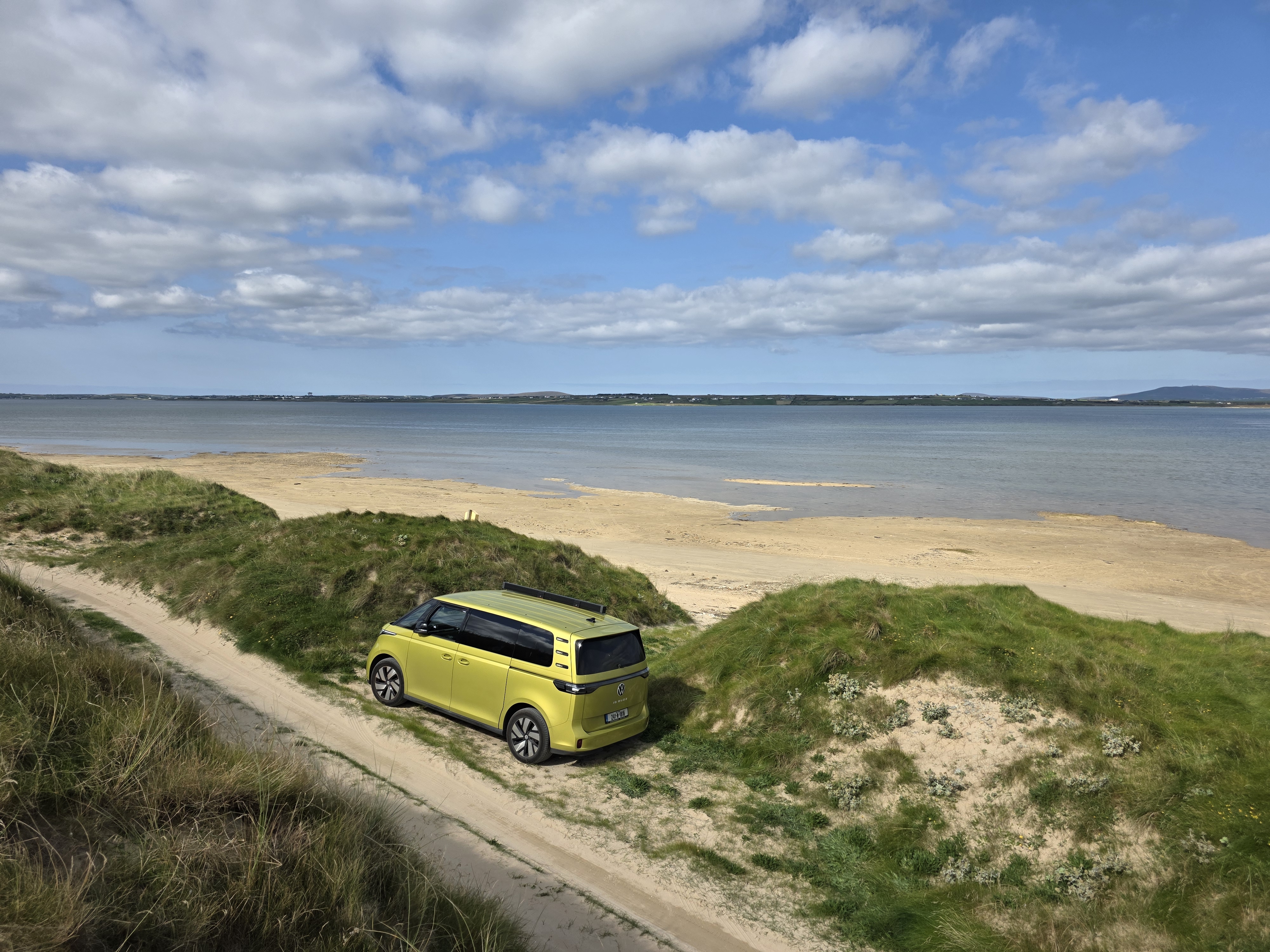
Parked up at Portacloy Harbour

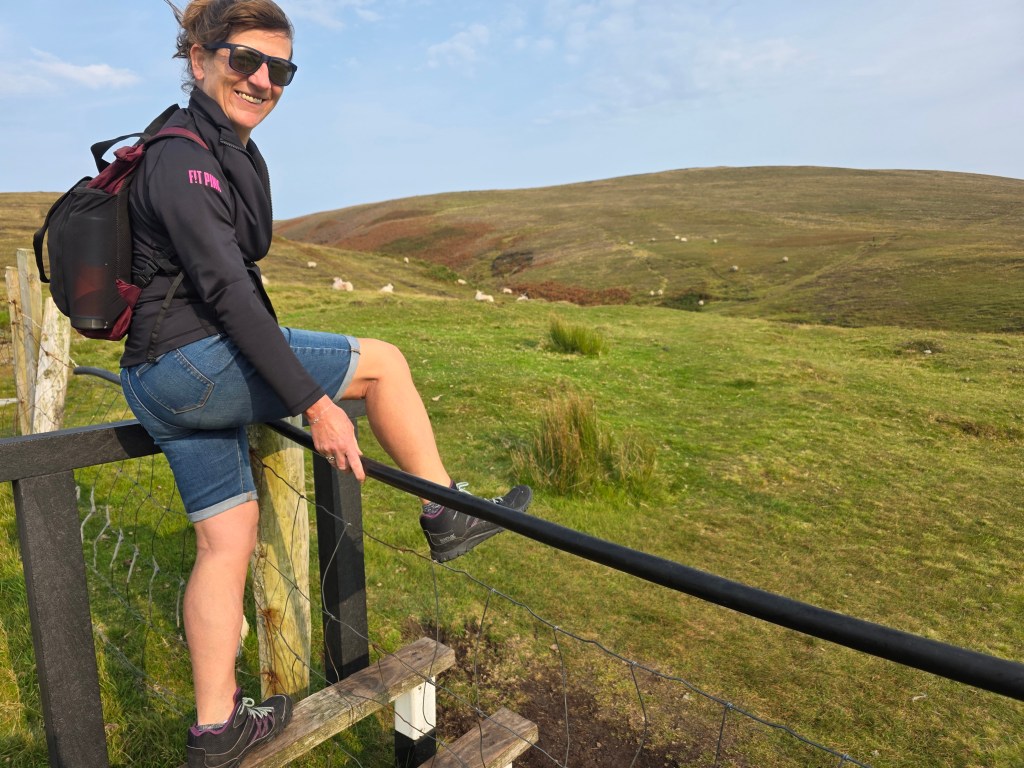
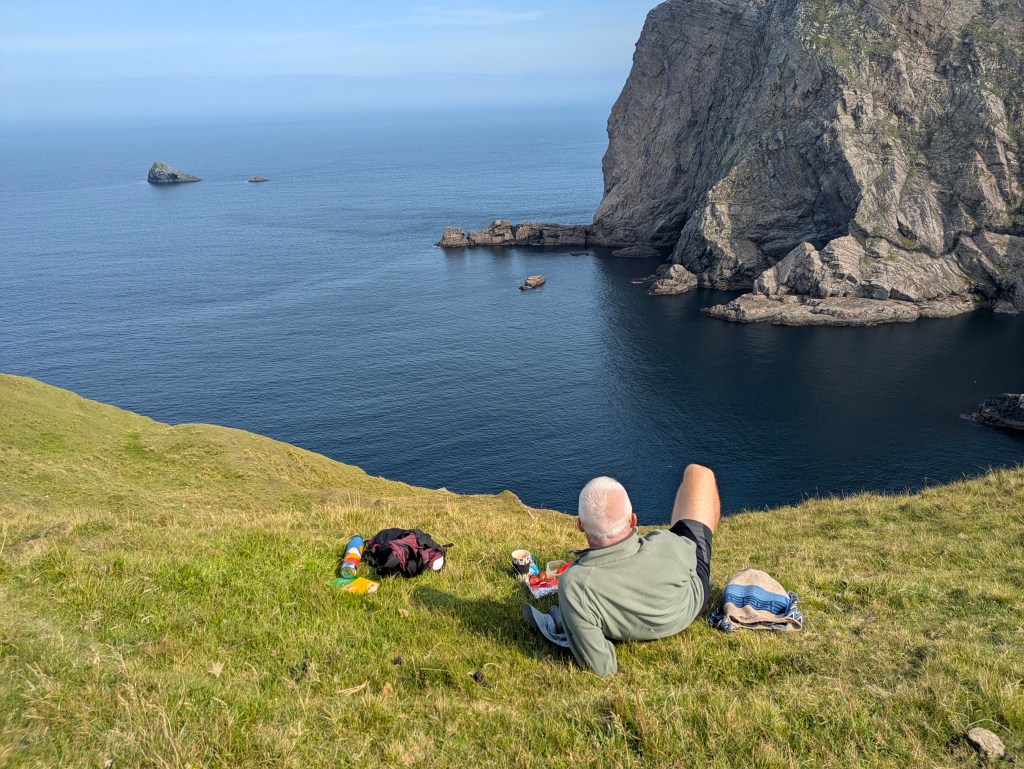
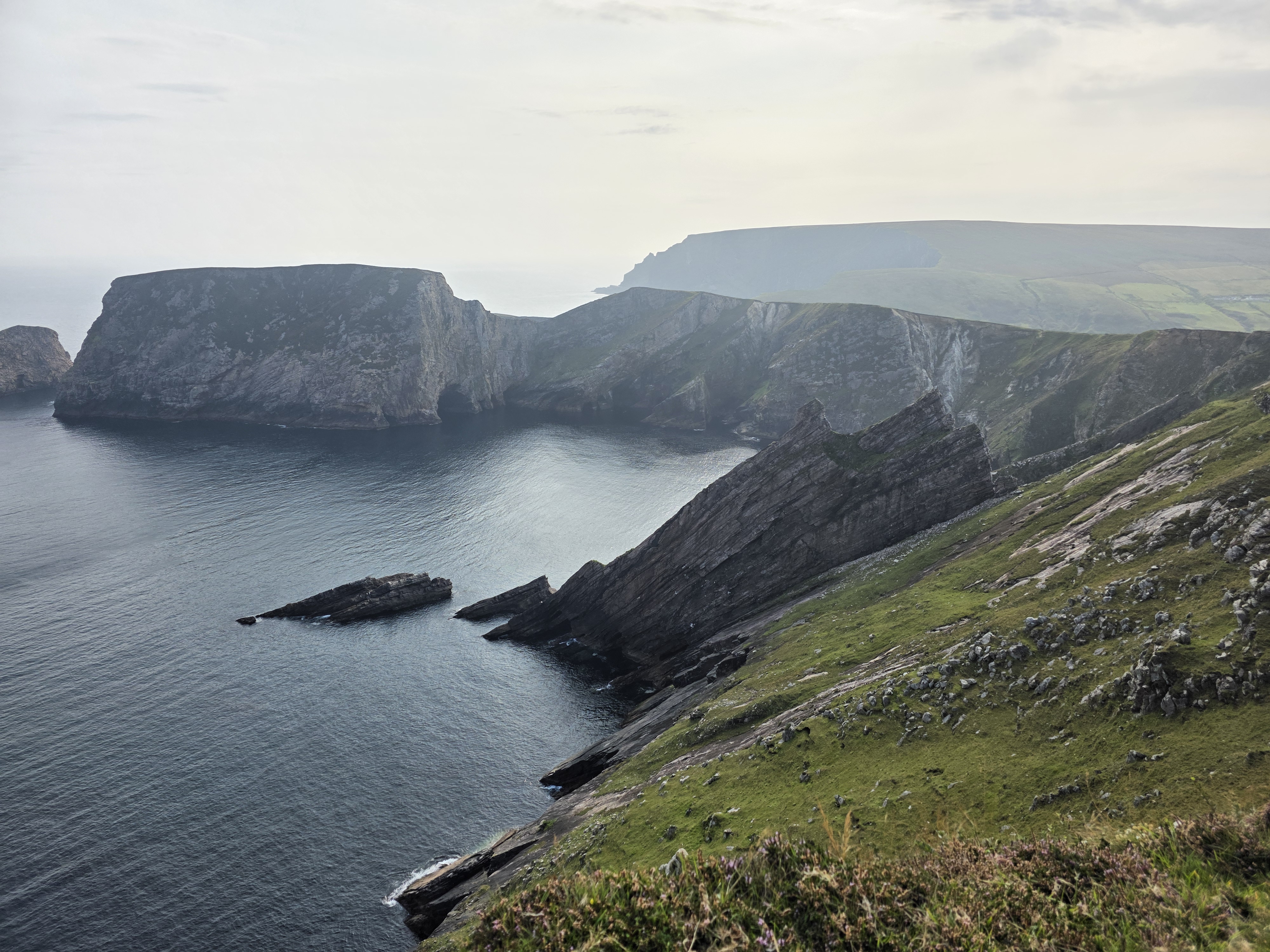
Portocloy Beach is also the start point for a truly spectacular cliff walk along the sea edge all the way to the extraordinary cliff views of Benwee Head (Binn Bhuí). This walk has a combination of rolling hills, expansive bog views, dramatic cliffs, jaw-dropping ocean and sea stack views, and more sheep than we could count. It is a well-marked trail with black poles and purple arrows, clearly visible on a beautiful cloudless day. The weather was perfect for us, blue skies with a light breeze, perfumed from the heathers, but on gusty days, care would be required because of the trail’s proximity to steep cliffs. We hiked an out and back route (about 13kms) but it is also possible to do the Carrowteige Loop Walk, which covers much of the same trail but is looped.

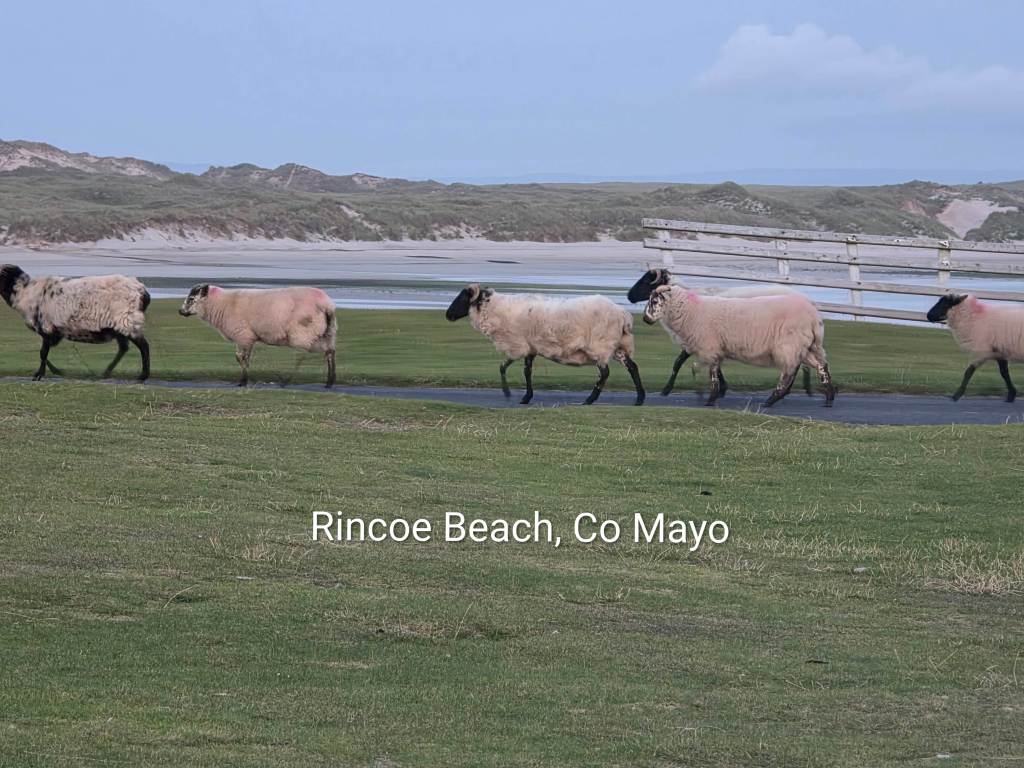
Rincoe Strand was only a ten-minute drive from Portocloy. It looks out across Broadhaven Bay towards the Mullet peninsula with a sandy beach on either side of a small peninsula. There were far more sheep than humans with the sound of bleating mingling with the lapping waves……until two busloads of Irish language students arrived for a swim in the crystal- clear waters… but peace came ebbing back when they scrambled onto their buses after about an hour, leaving a few campervans and the sheep.  We walked uphill past the walled graveyard to Connolly’s Pub (Teach Conghóile), a cosy place with spectacular sea views where a couple of locals were sipping pints. The whole area had a desolate beauty with hardly a tree or bush…it almost felt like we were on an island with the sea and water in every direction. A local man, who now lives in Wexford, told us with nostalgia of the ‘good times’ growing up here, when children ran wild and free, and fishermen travelled to England to find work during the winter months and boys, as young as thirteen, went to Scotland to pick potatoes, known as the tattie hokers.

After Rincoe, we headed south along the coast, stopping for lunch in Belmullet before continuing to Claggan Island, Mayo’s newest island, having only being officially declared an island in 1991. The tiny island is situated on the northeastern corner of Blacksod Bay, about 12km from Belmullet. It is linked to the mainland by a narrow, sandy causeway that divides Tramore Bay from Blacksod Bay and it is circled by beautiful sandy beaches in every direction you look with some amazing views of Achill and the Mullet Peninsula. It was easy to spot the first-time visitors…they were the ones driving on the rough sandy road while the locals used the beach.

Driving around the roads of North Mayo, we kept seeing signs for Tír Sáile without knowing what it was. By the time it registered that this was a Sculpture Trail, we had passed most of them. Tír Sáile  originated in 1993 when fourteen site-specific sculptures were installed in spectacular locations around the coast (sáile is seawater). One of the sculpture was on Claggan island, titled ‘Acknowledgment’, a 50m long sculpture of stone and earth, a tribute to the anonymous dead, whose memories have been lost in time. 

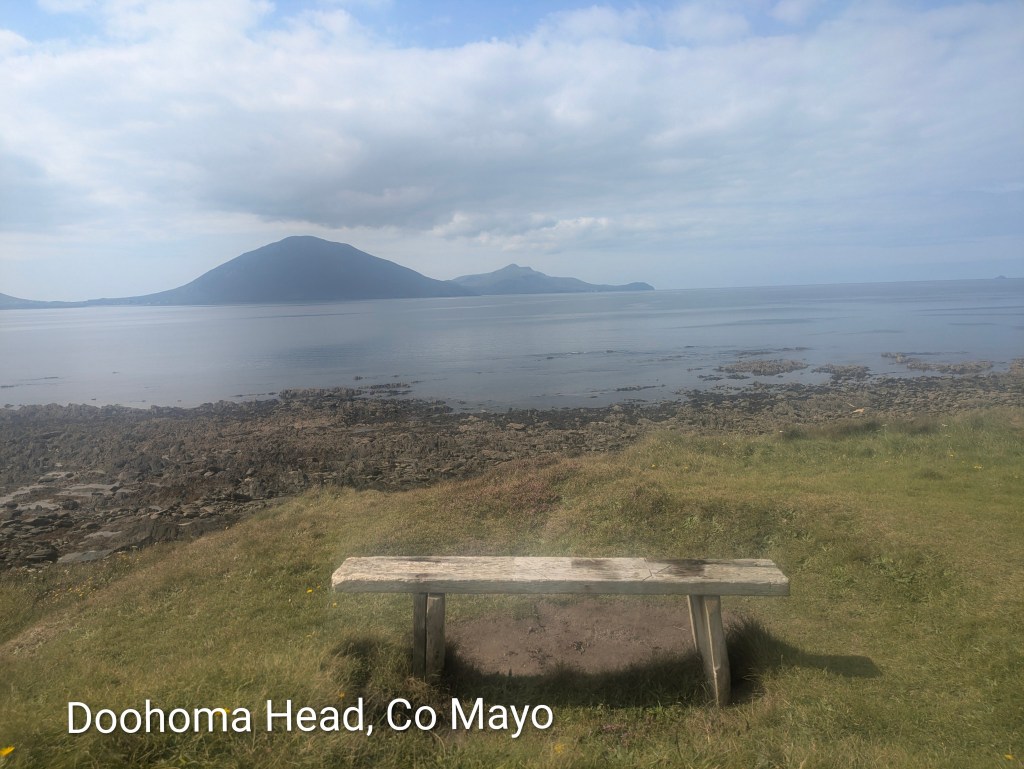
South  of Claggan Island, there seemed to be an unending supply of more white-sand beaches with the distinctive silhouette of Achill Island on the horizon in the distance.  Doolough Beach was empty apart from a man walking five dogs who told us that whales were spotted in the area the day before. Doohoma Head had a wooden seat with a dreamy Achill view but it was time for us to turn inland towards the mountains.

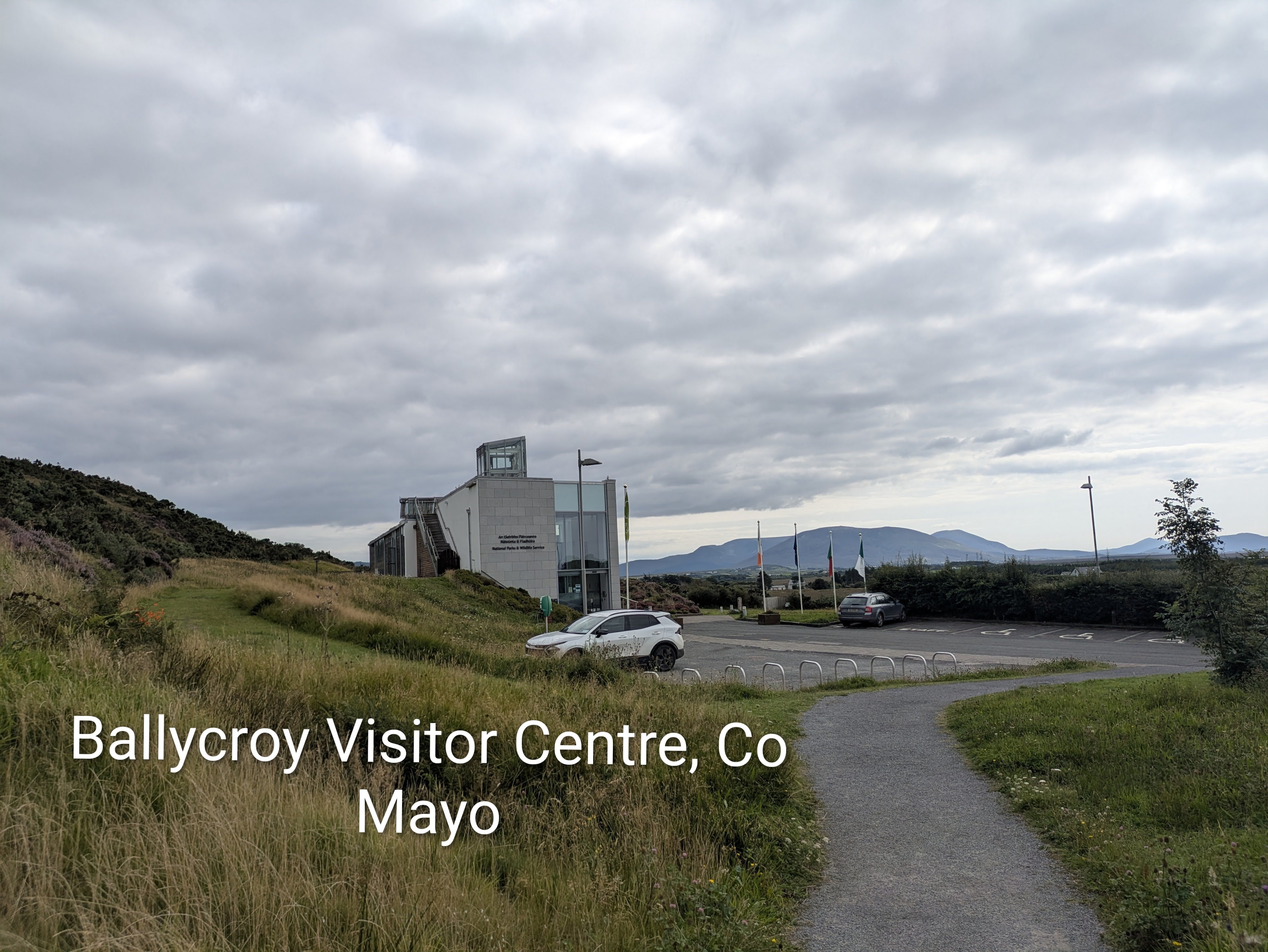
We stopped at the Ballycroy Visitor Centre in Wild Nephin National Park, a modern building full of light and clean lines with knowledgeable, enthusiastic staff and a lovely café. Wild Nephin National Park is huge –  a vast 15,000 hectares of uninhabited and unspoilt wilderness, dominated by the Nephin Beg mountain range and the Owenduff Bog, one of the last intact active blanket bog systems in Western Europe. Martin, who worked in the centre, explained the vision for the future with conservation plans for reforesting the park with native species and  a focus on education.

Just inside the visitor centre was a huge star-studded poster with the caption ‘The darkest skies reveal the brightest stars’ because Nephin has some of the darkest, most pristine night skies in the world and is officially certified as a Gold Tier standard International Dark Sky Park.  The Mayo Dark Sky Park extends across the entire National Park….there was even a viewing platform on the grounds of the visitor centre. The best time for star-gazing is the clear crisp winter months but it is possible on any night for visitors to see with the naked eye thousands of twinkling stars, other planets in our solar system, the Milky Way and even meteor showers…if they are lucky.

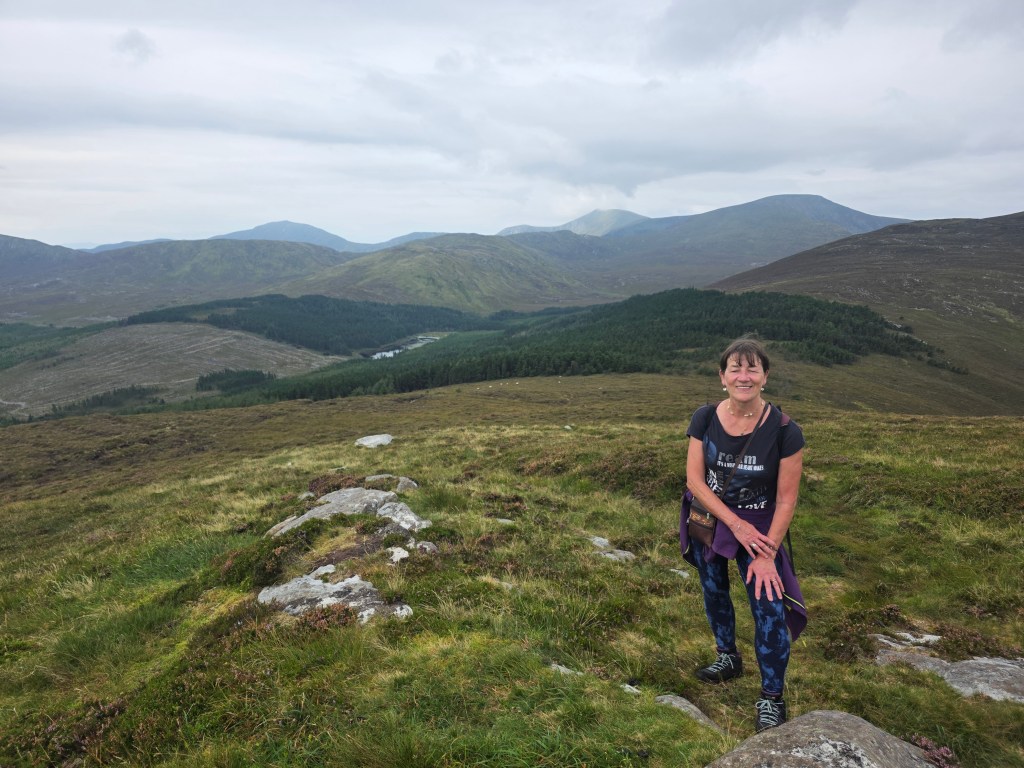
On Martin’s advice we headed to the Letterkeen Trailhead, about a forty minute drive, northeast from the centre,  a trip into wilderness and blizzards of midges at dusk. Unfortunately the skies remained cloudy for us that night with only a smattering of stars but the Letterkeen Loop walk the following morning was gorgeous, with different terrain from stony sheep paths, forest trails to sucking boggy paths where we almost lost a boot. Although the air was thick with moisture, it didn’t actually rain. We enjoyed panoramic views of inky-black lakes, brown streams and a feeling of deep isolation and silence. Nephin has been called ‘the loneliest place in the whole country’ because of the absence of human habitation and mobile coverage is patchy. We didn’t meet a single person on the trail although there were a few cars parked at the trailhead, which also had spotless port-a-loos.  

Our next stop was Ballintubber Abbey, founded in 1216 and one of Ireland’s oldest surviving abbeys and the hub of the ‘Irish Camino,’ and one of the five medieval pilgrim paths of Ireland. It is the starting point for Tóchar Phádraig, an ancient pilgrim path that stretches to Crough Patrick.

Tóchar Phádraig predates St. Patrick, originally built about 350AD as a chariot route from Rathcruachan, the seat of the kings and queens of Connacht, to  Cruachan Aille, as Crough Patrick was called in Pre-Christian times, a mountain sacred to our pagan ancestors.

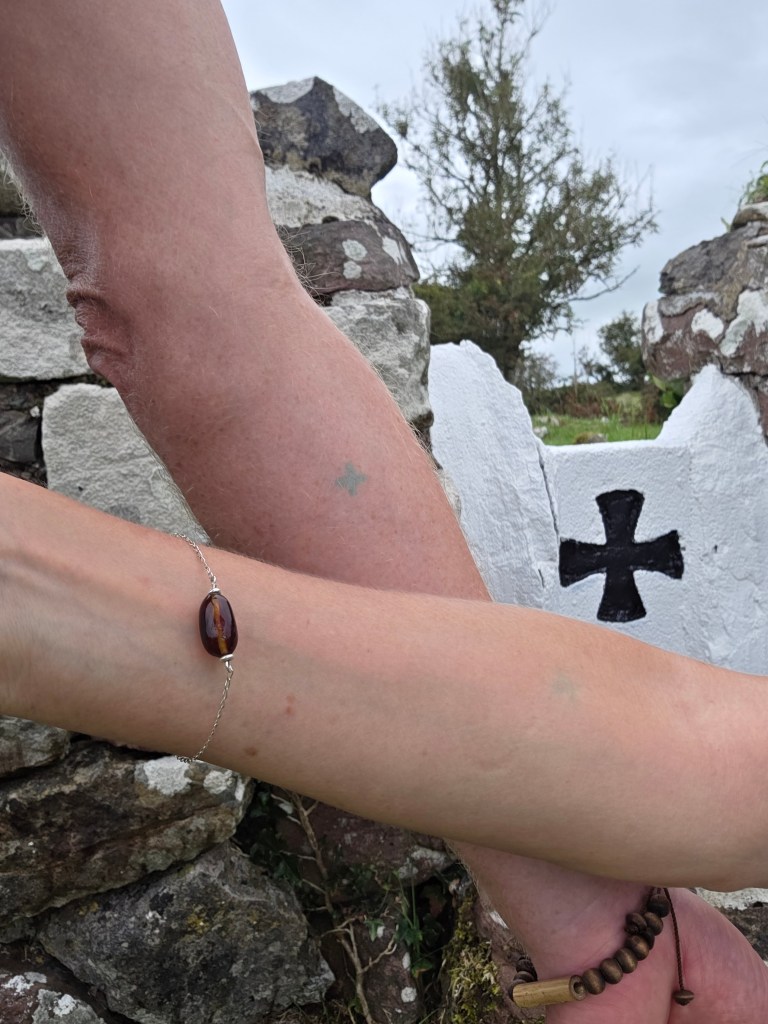
Pilgrims must register in the Abbey before setting out, where they will receive maps, advice and a booklet which gives some information on the many points of interest along the way. We registered on Friday afternoon so that we could get an early start on the 35kms route the following morning as the office opened at 9.30am. The walk can be broken into two parts, the first section to Aghagower with its round tower, and the second section to Crough Patrick but we hoped to complete it in one go.  We were branded on the back of each forearm with a small green cross, evidence that we had registered and paid our dues should any farmer or landowner request proof.

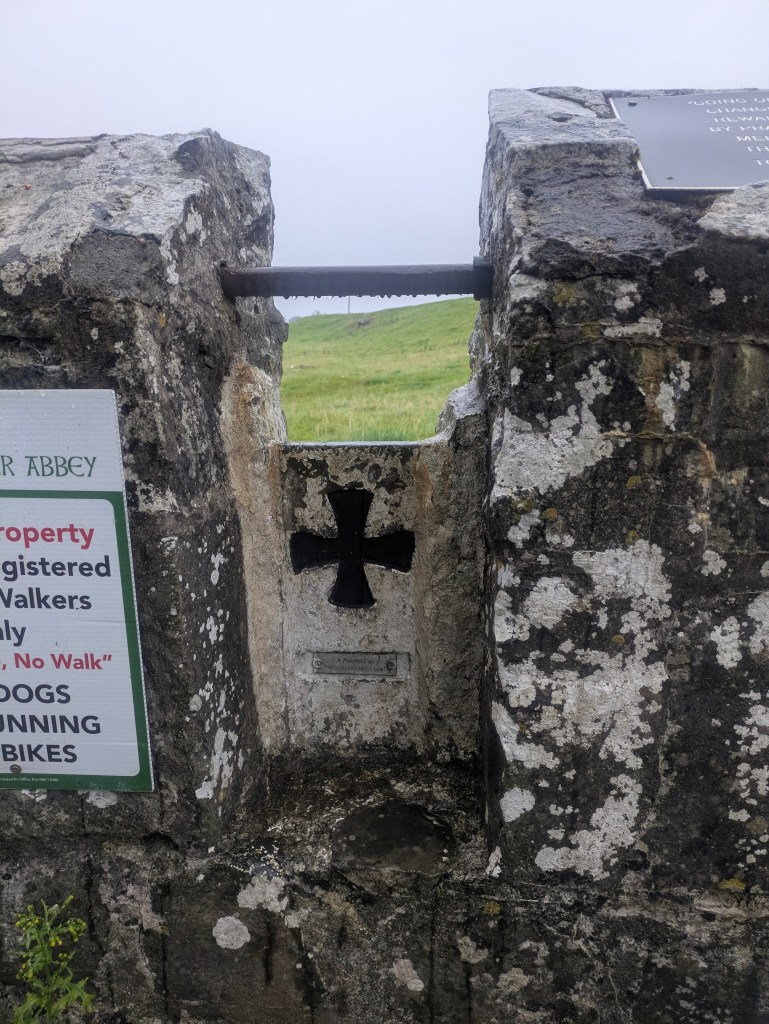
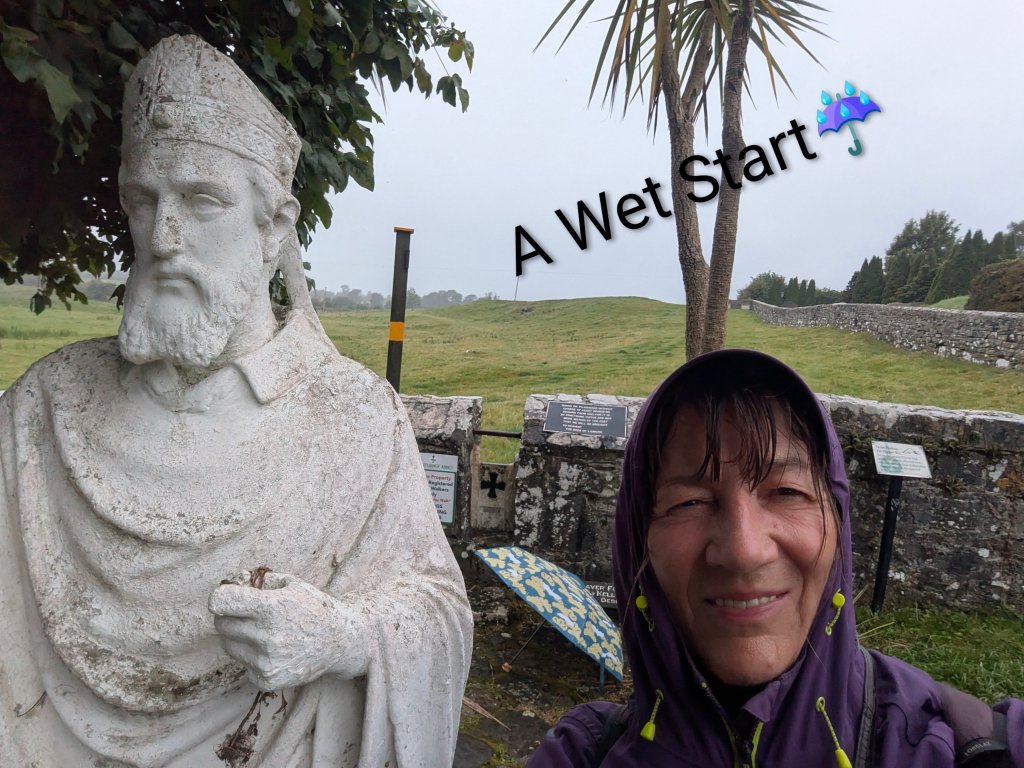
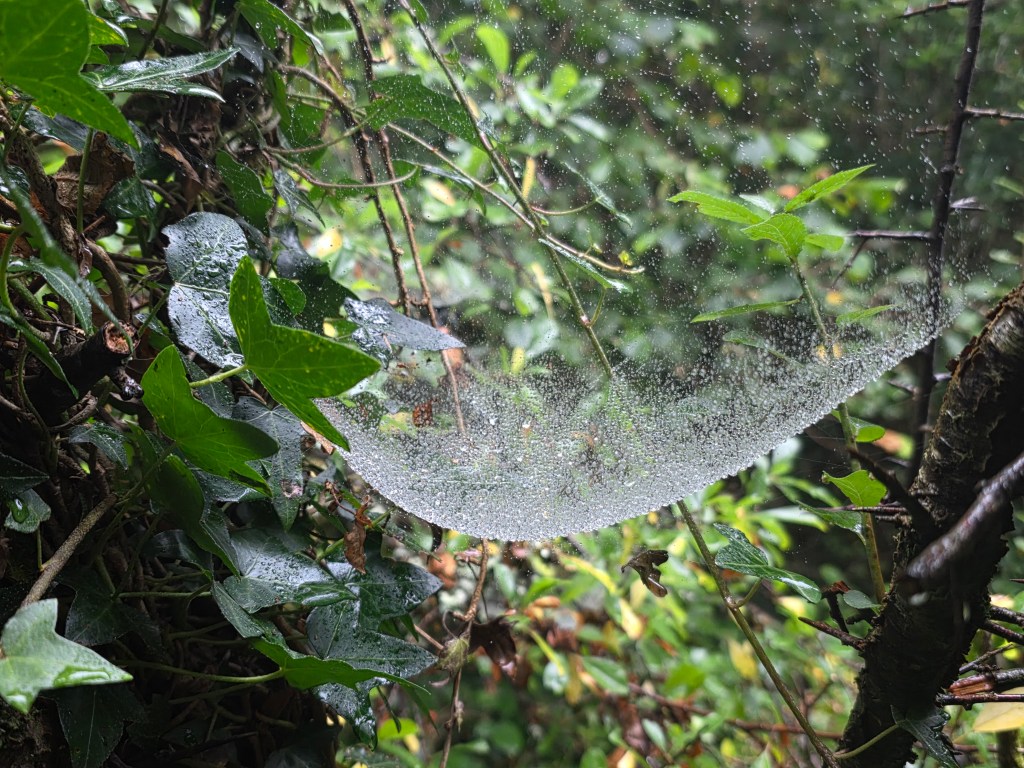
The morning started grey, in a light drizzle, the type of West of Ireland rain that was very wetting but the day cleared after an hour or two. The camino wound its way through open farmland, fields of grazing cattle, sheep and a few horses. We trekked through woodland and forests, stepped over countless stiles with the Tóchar cross sign etched into the stone and tramped along country lanes past hedgerows laden with abundant bounty – blackberries, sloes and haws and moisture drizzled cobwebs.

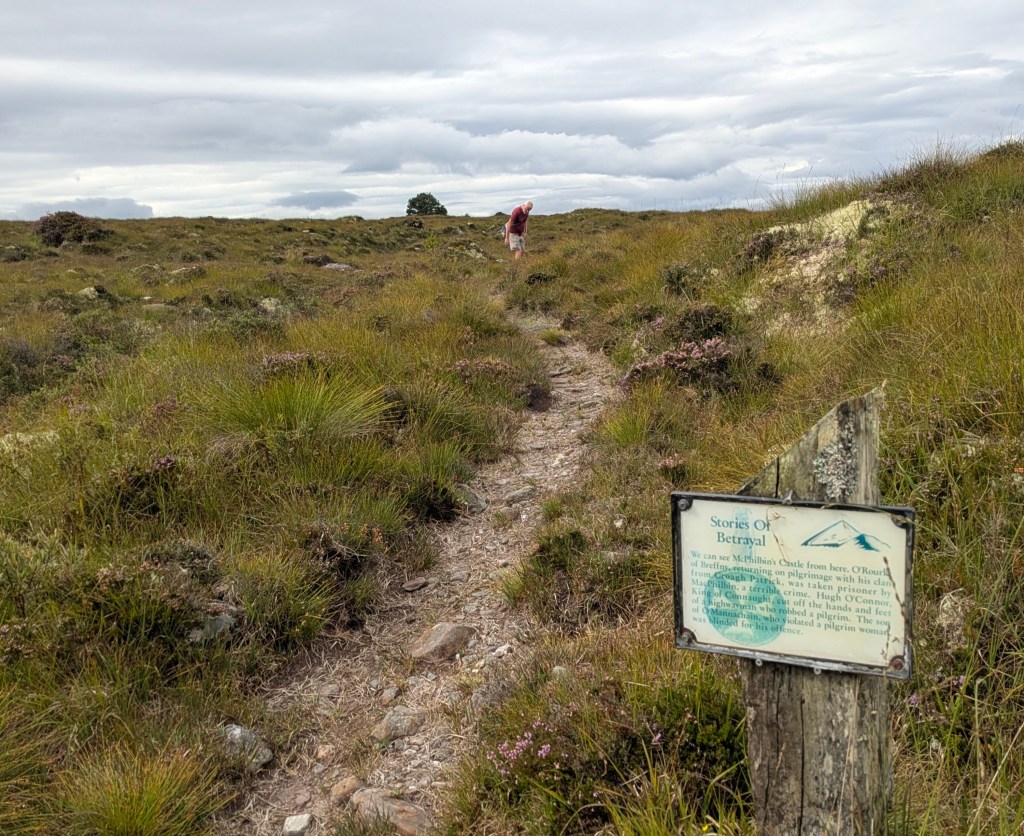
There were numerous storyboards, highlighting points of interest, a welcome opportunity to stop and read. This was not only a spiritual pilgrimage but also a cultural and historical journey through the ages, a fascinating blend of pagan and Christianity, a place of history and pre-history where every tree, stone and rock had a story to tell – mainly of famine, hardship and betrayal but also of healing and goodness. Sometimes in the silence, all I could hear was the beating of my heart and the sound of my boots on the earth. While the first section was predominantly off-road, the second section was mainly on paved country roads and laneways.

With our damp start and the high wet grass, our feet were wet from the very beginning and we contemplated giving up at the halfway point but we persevered. Crough Patrick loomed out of the landscape, a focal point since ancient times,  and seemed to beckon us forward although for long sections, it didn’t seem like  we  were getting any closer as we plodded along. There were signs saying ‘No complaining’ in several places which we tried to obey.

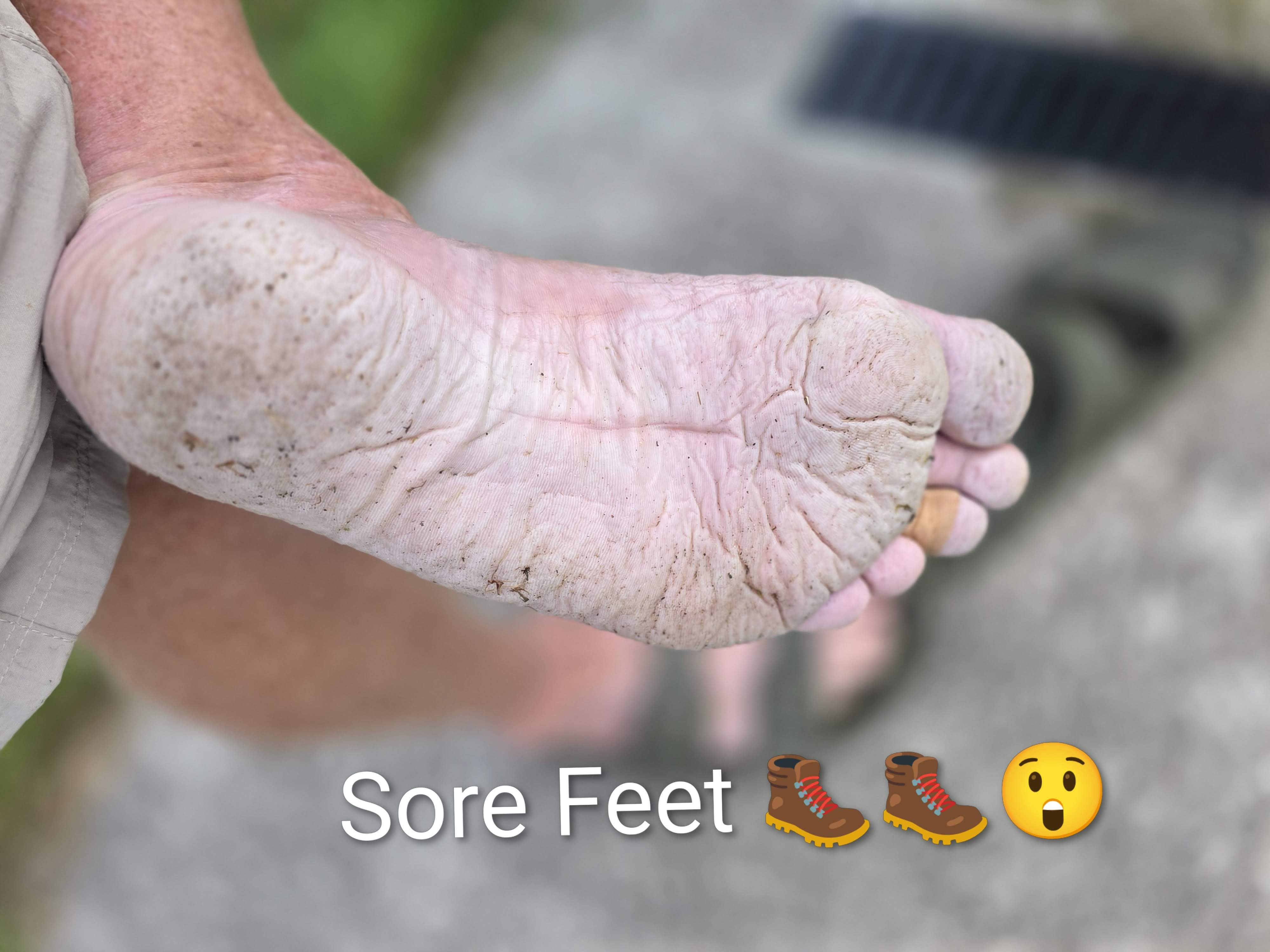
 Although the trail was well-marked, we managed to lose it several times, back-tracking until we picked it up again. There are several guided walks each year, organised by the Abbey, which would be easier as we wouldn’t have to concentrate on finding the markers ourselves but we were a week too early for the August guided pilgramage. We finished with a sense of achievement…. and exhaustion with shrivelled feet… after a long day of blisters and contemplation.

We barely scratched the surface of what North Mayo has to offer but one thing is certain, we will certainly return if we can.  If stunning scenery, amazing deserted beaches, superb hiking  and starry skies are your thing, then Mayo is definitely the place to go. The locals are an added bonus, probably the friendliest people in the whole country and certainly the most talkative.

We had no problem with the electric van, charging it in Ballina and in Westport.  This van trip was so successful that we are considering going further afield. Might it be possible to drive to Istanbul or Casablanca…..and back?

Thanks for reading

Campervanning in North Mayo: A Scenic Adventure

A Tale of Two Islands, Sherkin and Cape Clear

There’s something appealing about visiting islands. Maybe it’s the isolation, the idea of ‘getting away from it all’, the rugged beauty of most islands or the desire to experience  a simpler rhythm of life based on sea and tide. Ireland has a plethora of islands scattered about its coast, more than eighty in total with about twenty of them  inhabited.

A few years ago, we pledged to visit all of them, or at least the inhabited ones, and we have been slowly ticking them off our list.  Last year, we visited Tory, Ireland’s most northerly, inhabited island and last week, we went in the opposite direction towards Sherkin Island and Cape Clear, Ireland’s southernmost inhabited island.

The carpark near the pier in Baltimore was surprisingly full, mainly of small elderly cars. The crew member on the Ferry to Sherkin explained that many islanders keep a car on the pier so that the car park is packed even in the depths of winter when there isn’t a visitor to be seen. The ferries to both islands depart from Baltimore (and during the summer months, there are also sailings from Schull to Cape Clear).

Baltimore is a picturesque village facing a sheltered harbour with pubs, a grocery store, a Michelin restaurant, spotless public toilets and shower facilities but it has a terrifying history. In 1631, Algerian pirates raided this quiet village and carried off about one hundred and forty inhabitants, dragging them from their beds. These poor unfortunates were sold into slavery in the Ottoman Empire. The survivors were so traumatized and frightened that they fled upriver to establish the town of Skibbereen. ( Rte did a fabulous radio documentary on this years ago, From Baltimore to Barbary: The Village that Disappeared). Sipping drinks in glorious sunshine outside Bushe’s pub, this event seems unimaginable.

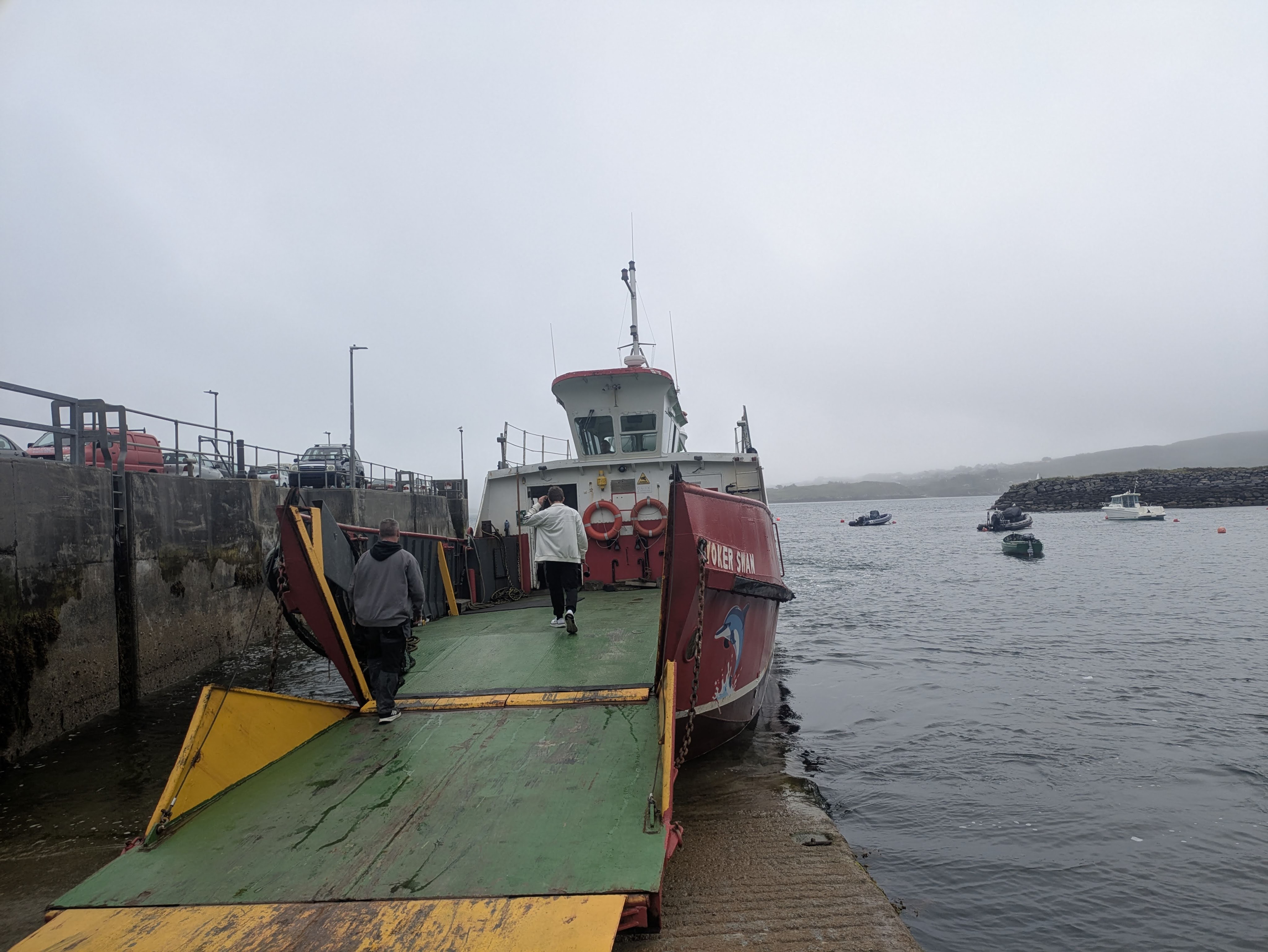
The roll on, roll off cargo ferry to Sherkin was old and rusty but the journey wasn’t long, merely a ten minute trip from Baltimore.  The cost was relatively expensive at €15 a head for a return journey and we discovered later that the price of ferrying a vehicle was an eye-watering €100 with prior booking essential as there is only space for one vehicle at a time.  Apart from us, there was three British sisters and a brother (all in their sixties) who were holidaying in Ireland and visiting a friend on the island for the day, a few other day trippers and two island women with bulging shopping bags, obviously returning from a grocery shop on the mainland as there’s no shops on the island.

The Sherkin Ferry

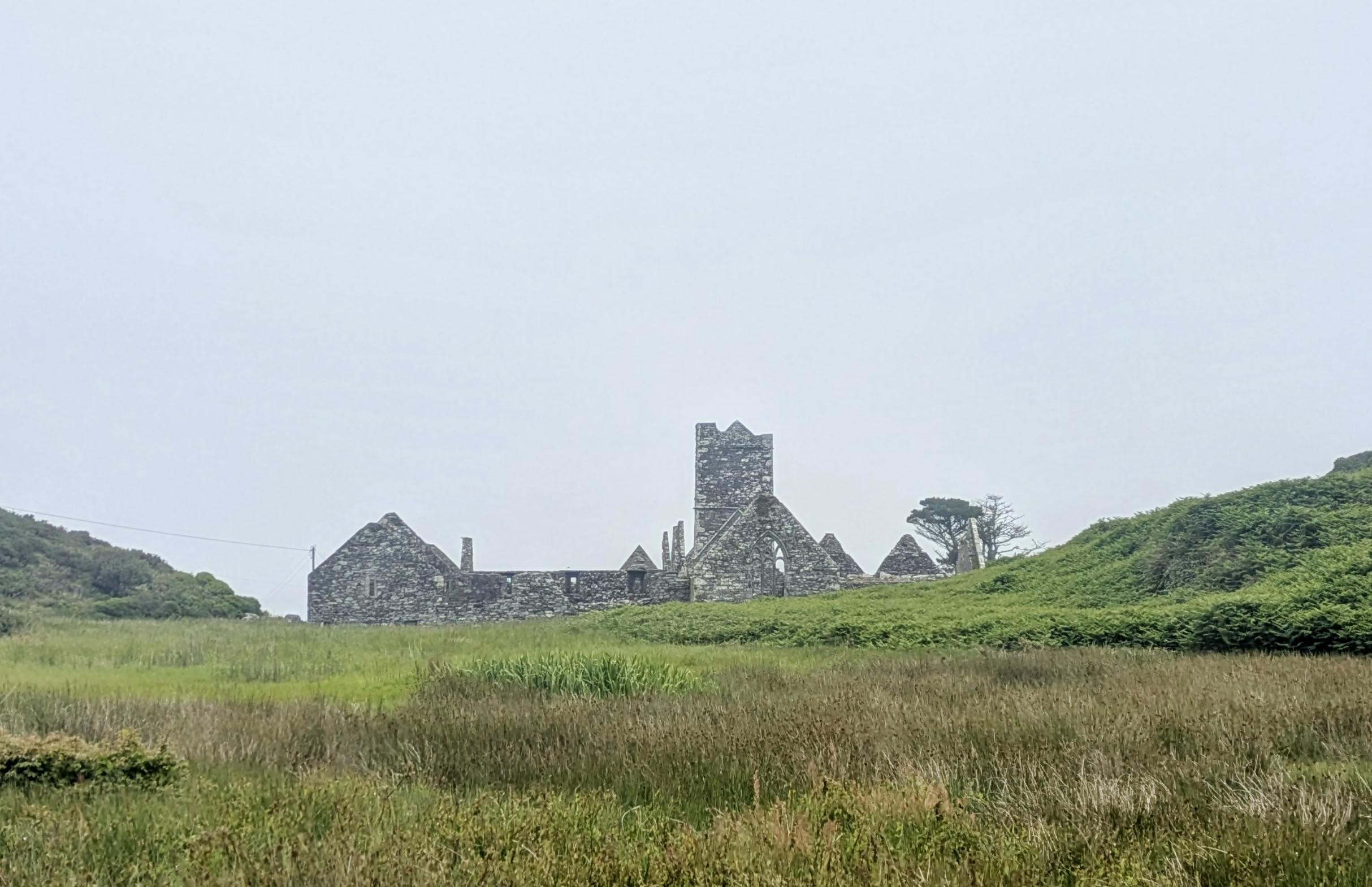
Arriving in Sherkin, we were met by the imposing landmark of the well-preserved ruins of the Franciscan Friary rising out of the mists. It sits on a slight incline overlooking the harbour and was built  back in 1460 by local chieftain Fineen (Florence) O’Driscoll and seems to whisper tales of a bygone era of prayers and bloodshed. In 1537 the citizens of Waterford burned the building in retaliation for acts of piracy (intercepting and stealing boatloads of wine) by the O’Driscolls.  Despite the damage, it continued to function until 1650, when it was confiscated by Cromwellian soldiers. The friary then passed into the hands of the Beecher family, prominent landlords of the island until it was handed over to the OPW in 1895. But the graveyard has remained the traditional burial ground of the island with recent additions among the moss-covered headstones. Quite a few Florence O’Driscoll’s, descendants of the original chieftain, have found their resting place here.

Franciscan Friary

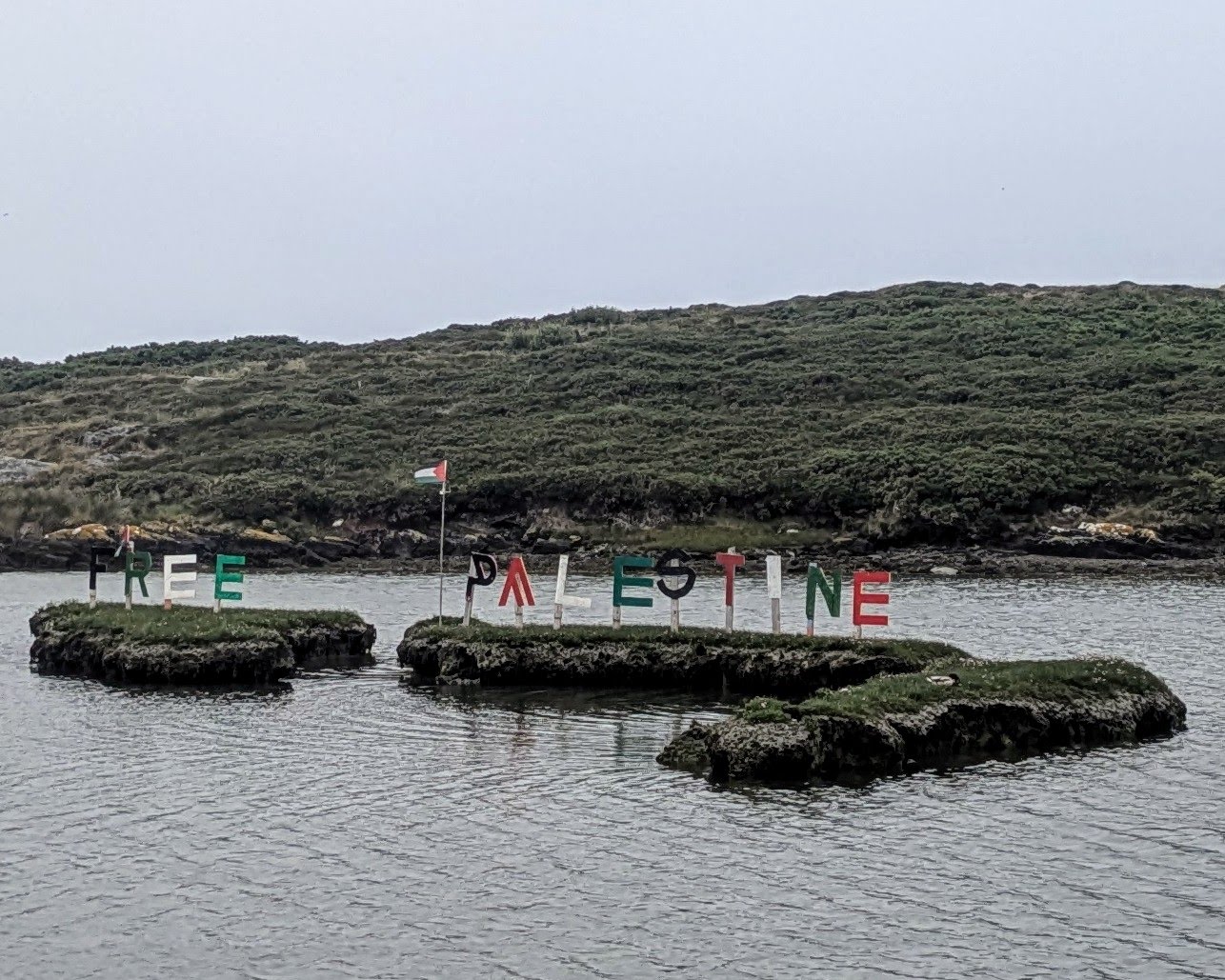
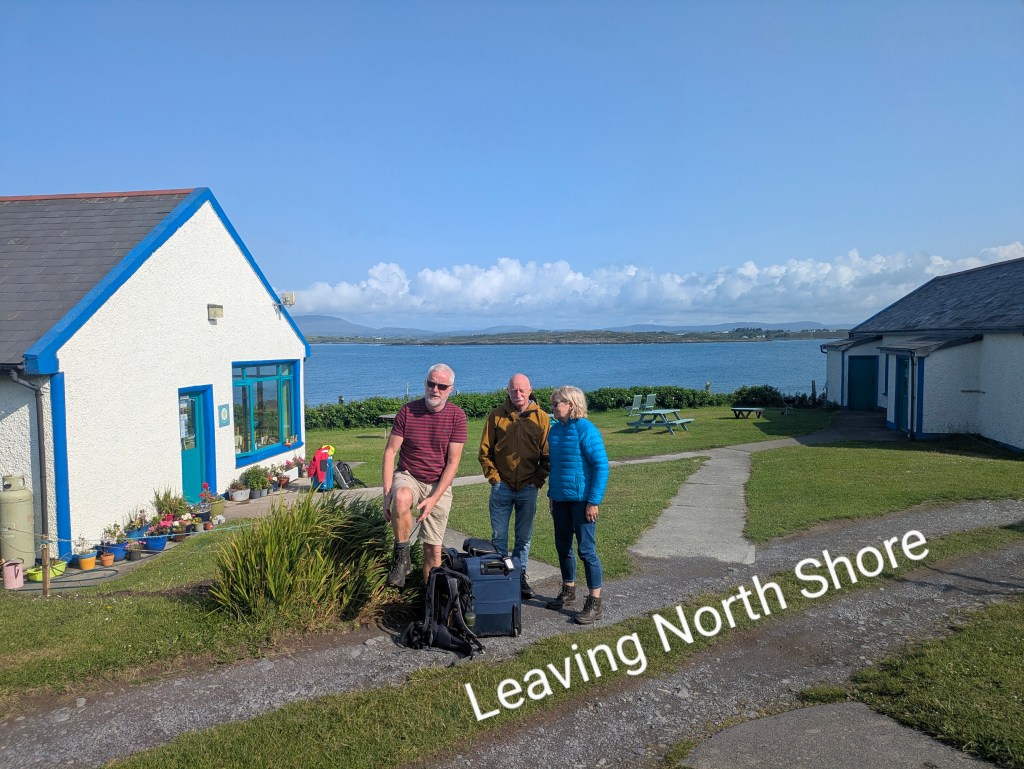
 A small bus meets all the ferries at the pier and we availed of it to take us to our accommodation in North Shore which was only about a forty minute walk away but we were carrying bags for our two-night stay. Sherkin is a small, relatively flat island of narrow, winding roads with verges filled with colourful wildflowers, foxglove, ferns, purple loosestrife and fuchsia. We drove past isolated houses dotted along the landscape, a few herds of cows, a tidal lake with a ‘Free Palestine’ banner, fluttering in the middle and a community centre which housed an impressive art exhibition.

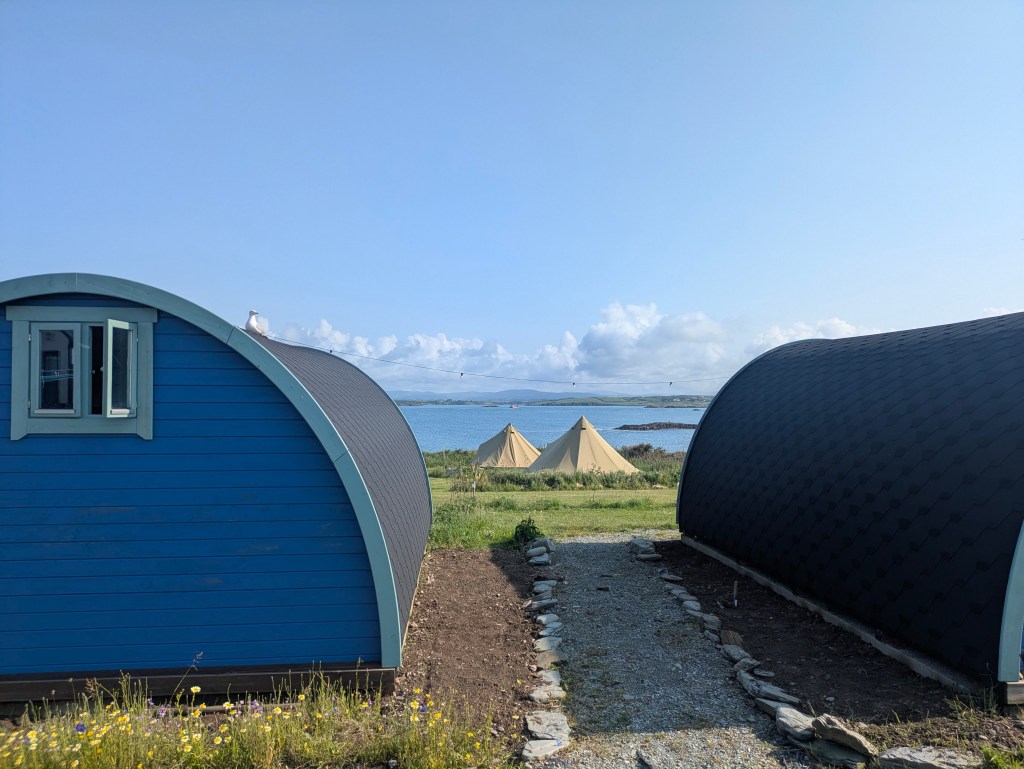
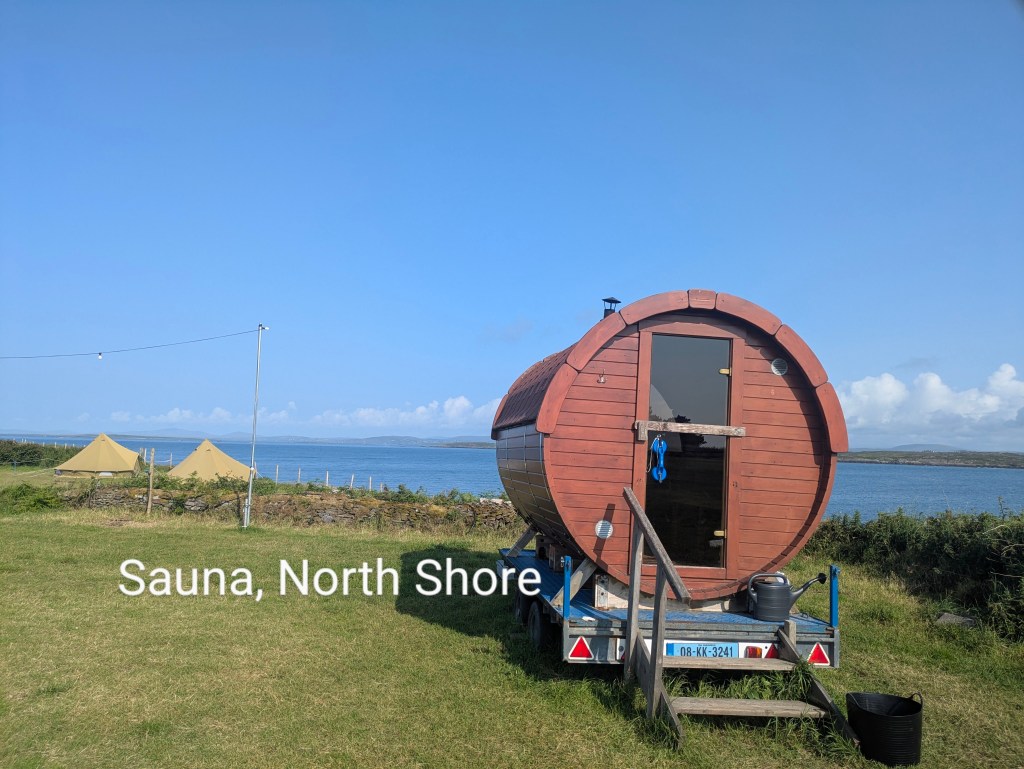
We were welcomed in North Shore with gorgeous sea-views, coffee and delicious homemade brownies by Daniel. The North Shore complex has a huge variety of accommodation – camping, bell tents, glamping pods and cabins. There’s a sauna and a well-equipped communal kitchen.  We stayed in an ensuite room with a bunk bed and a single bed which was quite basic and a shower with scalding hot water, so hot it was almost impossible to stand under.  Apart from a few Airbnb, North Shore is the main place to stay on the island and is the venue for an annual Electronic music festival.  For the last few years, the island hotel has been  occupied by Ukrainians who have been welcomed into the community, swelling the island population from about 110 to 165.

Our Accommodation, North Shore

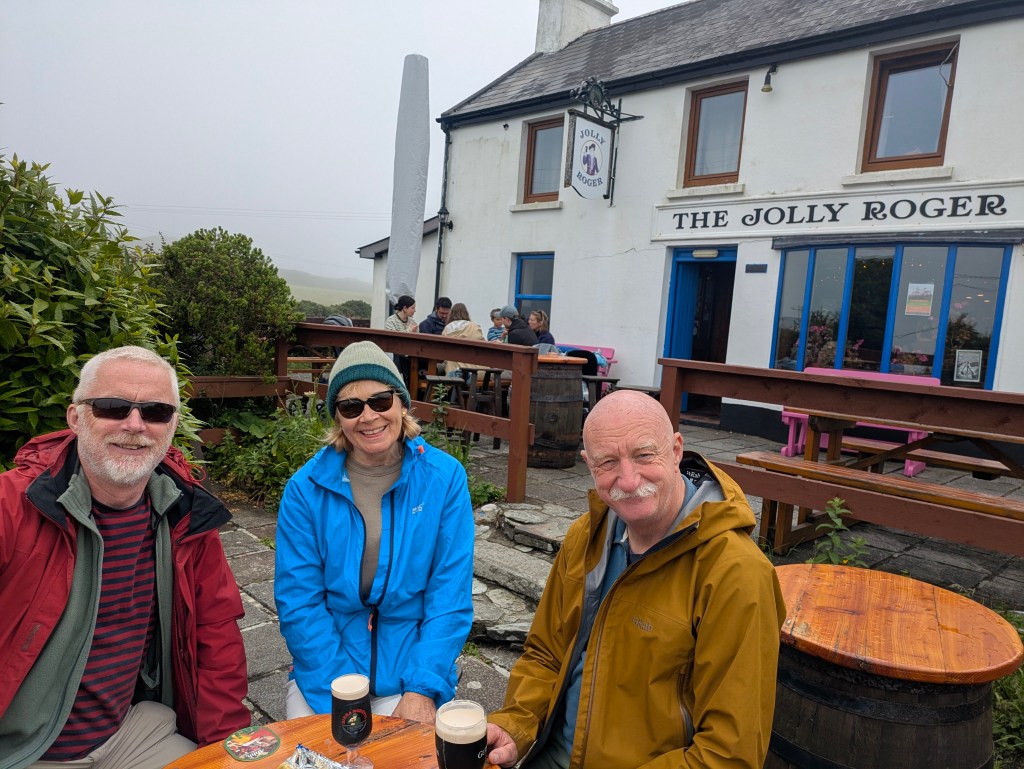
As we hadn’t brought any food supplies with us and there was nowhere to buy anything on the island, we ate our evening meals in North Shore on both evenings. These homecooked meals  were generous, plentiful and delicious. Heaped platters of food were passed around a  table we shared with an American woman travelling around Ireland and a couple of tradesmen from Cork who were doing insulation work on an old island house. Desserts were made by a Ukrainian pastry chef , mouth-watering lemon drizzle cake and baked cheesecake. North Shore does not sell alcohol and as the only pub on the island called the Jolly Rodger, was closed on Tuesdays and Wednesdays, we watched in envy as the Cork tradesmen drank beer with their dinner. They had gone over to Baltimore for some cans having endured a ‘dry’ night the evening before. So take note if you like to have a drink and bring  your own.

Breakfast was equally enjoyable – bowls of fruit, yogurt, smoothies, pancakes, homemade bread and sausages and rashers, enough to fuel us until dinner time. We spent our days  on the island walking and wandering in mild misty conditions, sometimes the sea disappeared completely, hiding in the greyness. The beaches on Sherkin were gorgeous, especially Silver Strand which was sandy,  clear-watered and completely deserted. Everywhere there was the sound of lapping of water and occasionally the hum of the ferry in the distance. A dog on a little rocky inlet wanted us to throw stones into the water for him to fetch. In some ways, it was not really like being on an island because the mainland was so near and  there was a myriad of small islands in every direction.

On our third morning, we awoke to blue skies, birdsong and sunshine. All the greys of the previous days had transformed to bright blues. The waters of Roaring Water Bay were tranquil and quiet as we travelled back to Baltimore to catch a ferry to Cape Clear Island. It isn’t possible to travel directly from Sherkin to Cape Clear.

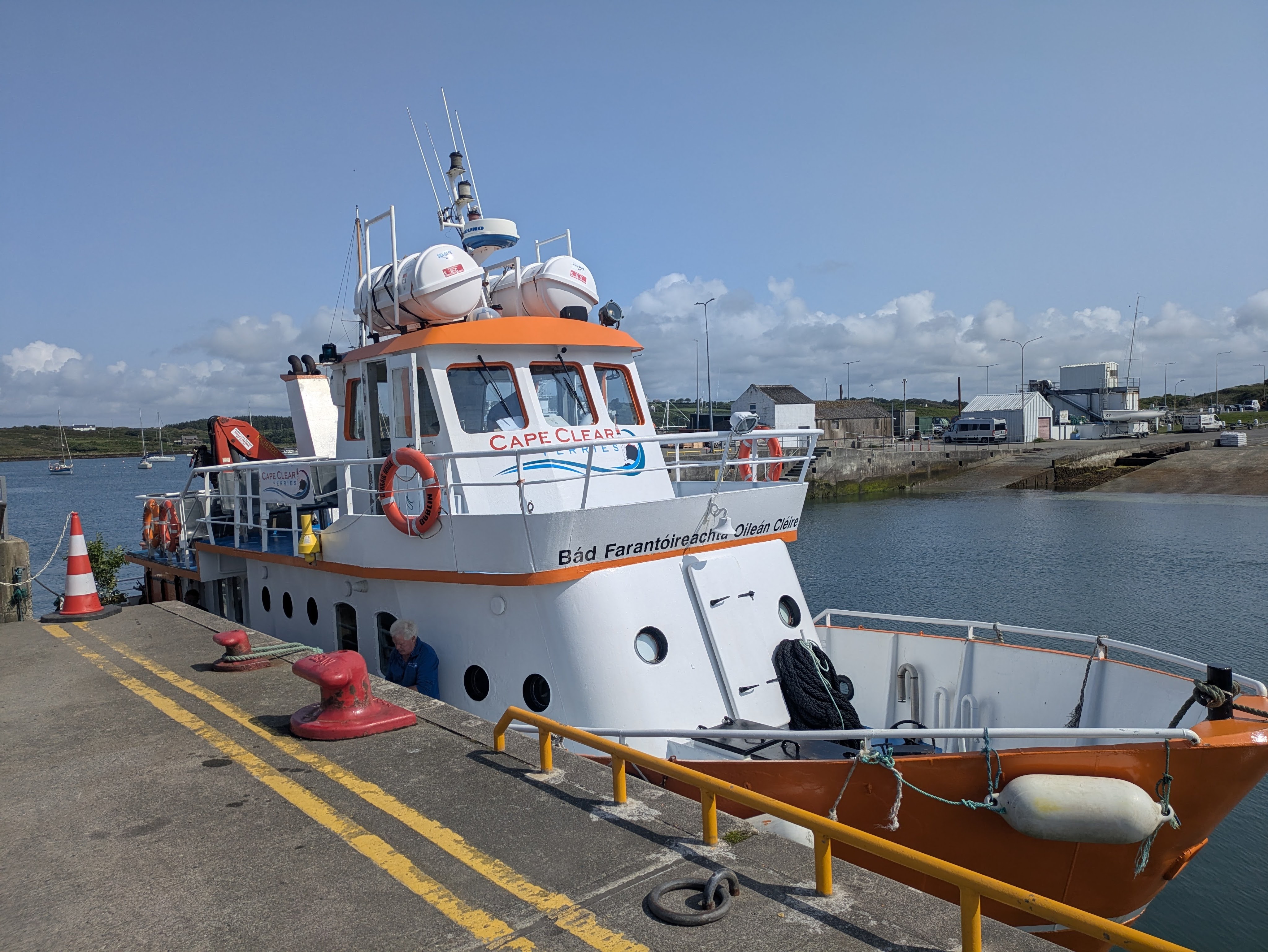
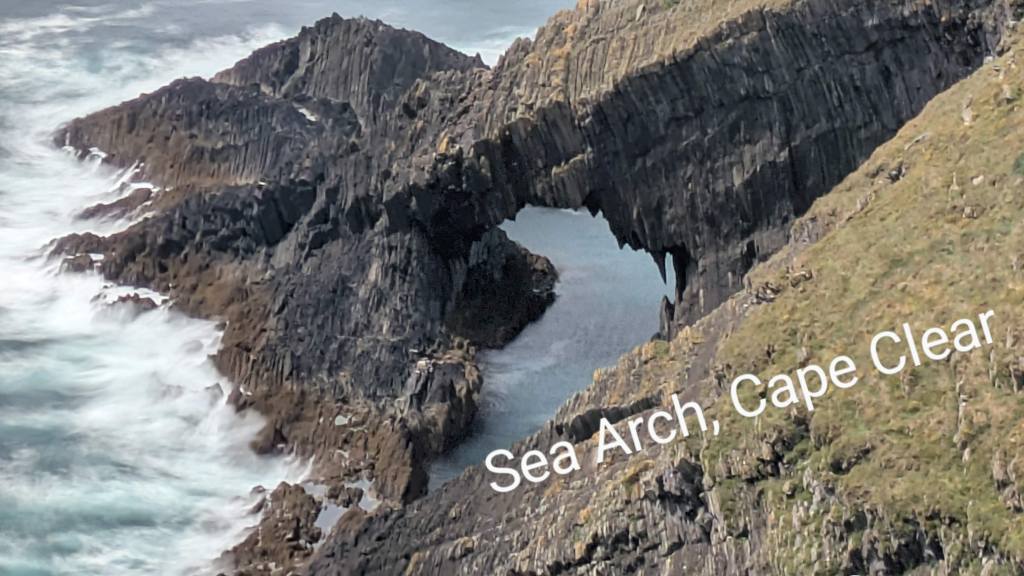
The Cape Clear boat was bigger, newer and shinier than the Sherkin ferry. The thirteen kilometer journey takes about 45 minutes, depending on weather and tide and costs €20 return. Cape Clear Island is slightly larger than Sherkin and although they are alike in many respects and have a similar population, they are also very different – more like cousins than sisters. Cape Clear, or Oileán Chléire is a Gaeltacht area with an Irish College which brings lots of young students during the summer months. It is mountainous with dramatic cliffs and walks that wind through hillsides of gorse and bracken, giving dramatic views of the rocky coastline and the seemingly unending and restless sea.  We could see the white surf swirling around the iconic Fastnet Rock in the distance and would have liked to take a Fastnet Tour but there is a restricted schedule in operation in June and the times didn’t suit us. A little away from the harbour on Cape Clear stood a stone memorial, etched with eighteen names, the victims of the Fastnet Yacht Race in 1979 which ended in such tragic loss of life.

Cape Clear Ferry

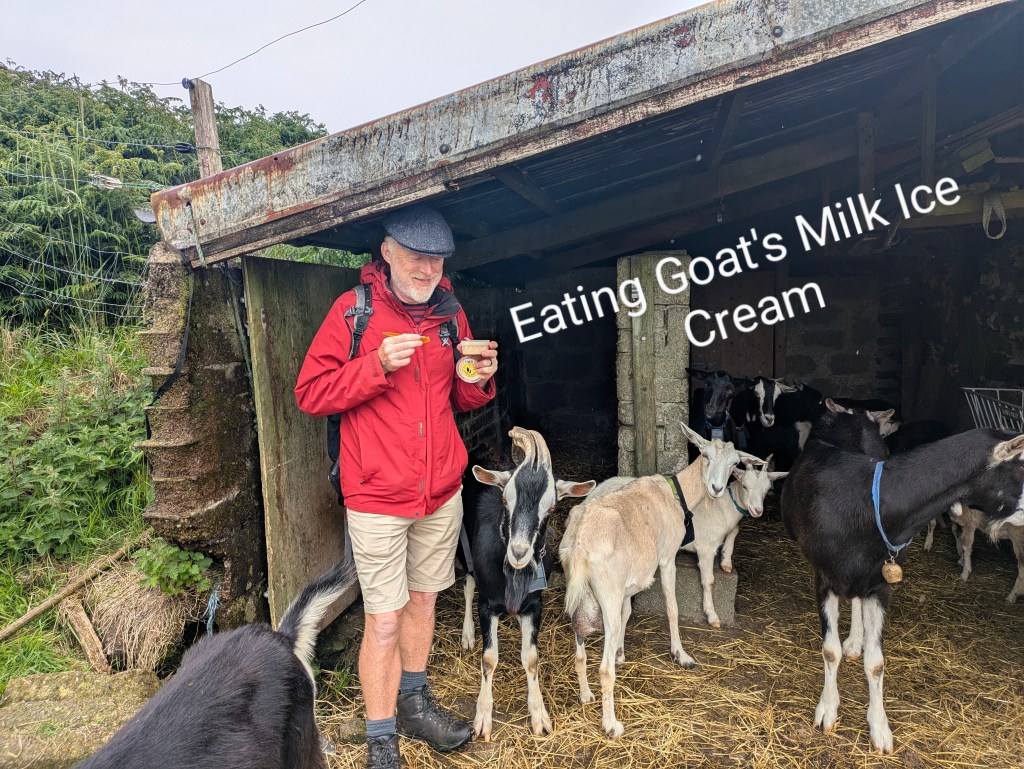
There’s more industry on Cape Clear with three pubs, a grocery shop, a gift shop and a gin factory. A goat farm on an almost vertical hillside sells ice cream and goat burgers while a herd of goats and kids scampered into an open sided shed when the sunshine disappeared and it started to rain.

Our visit to Cape Clear was short, only a day-trip so we didn’t experience any of the accommodation but there were signs for BnB’s, the pub advertised rooms and a hillside was dotted with yurts. We met a retired British couple who were spending their summers sailing around Europe  and a weathered Scottish man from the Hebrides who was sailing a tiny boat. Apparently there is no charge for mooring craft on the island which naturally attracts sailors.

We have really enjoyed ‘our few days of getting away from it all’ and would love to return and do a Fastnet tour sometime. It really was a gorgeous experience, exploring both islands.

A Tale of Two Islands, Sherkin and Cape Clear

Mexico: Then and Now

Village of Cuajimoloyas, Sierra Norte @ 3200m

Inhaling clear air, we felt slightly dizzy from the altitude at 3100m and the breathtaking scenery of pine-clad forests. The distant tinkling of bells, worn around the necks of goats and sheep, drifted upwards on a light breeze. We could have been in some Alpine town in Switzerland but this wasn’t Europe, it was the Sierre Norte, a mountain range in the Oaxaca region of Southern Mexico. The idea to visit this remote village was planted in our minds only two days before when we visited Mount Alban, an impressive archaeological site which overlooked the colonial city of  Oaxaca.

Mexico is full of history. There are archeological sites everywhere especially in the southern part of the country in the states of Oaxaca, Chiapas and the Yucatan. Most of these went through the same cycle of growth, decline and abandonment, many  becoming ‘lost’ for centuries.
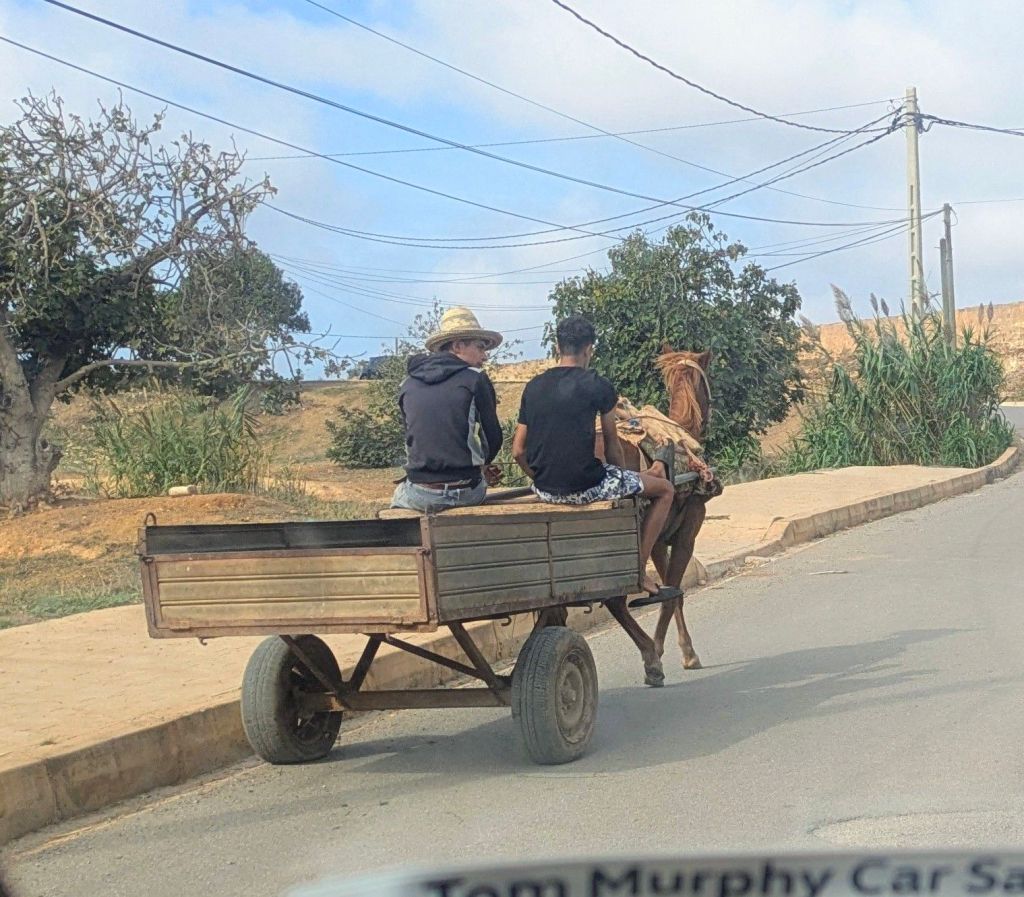
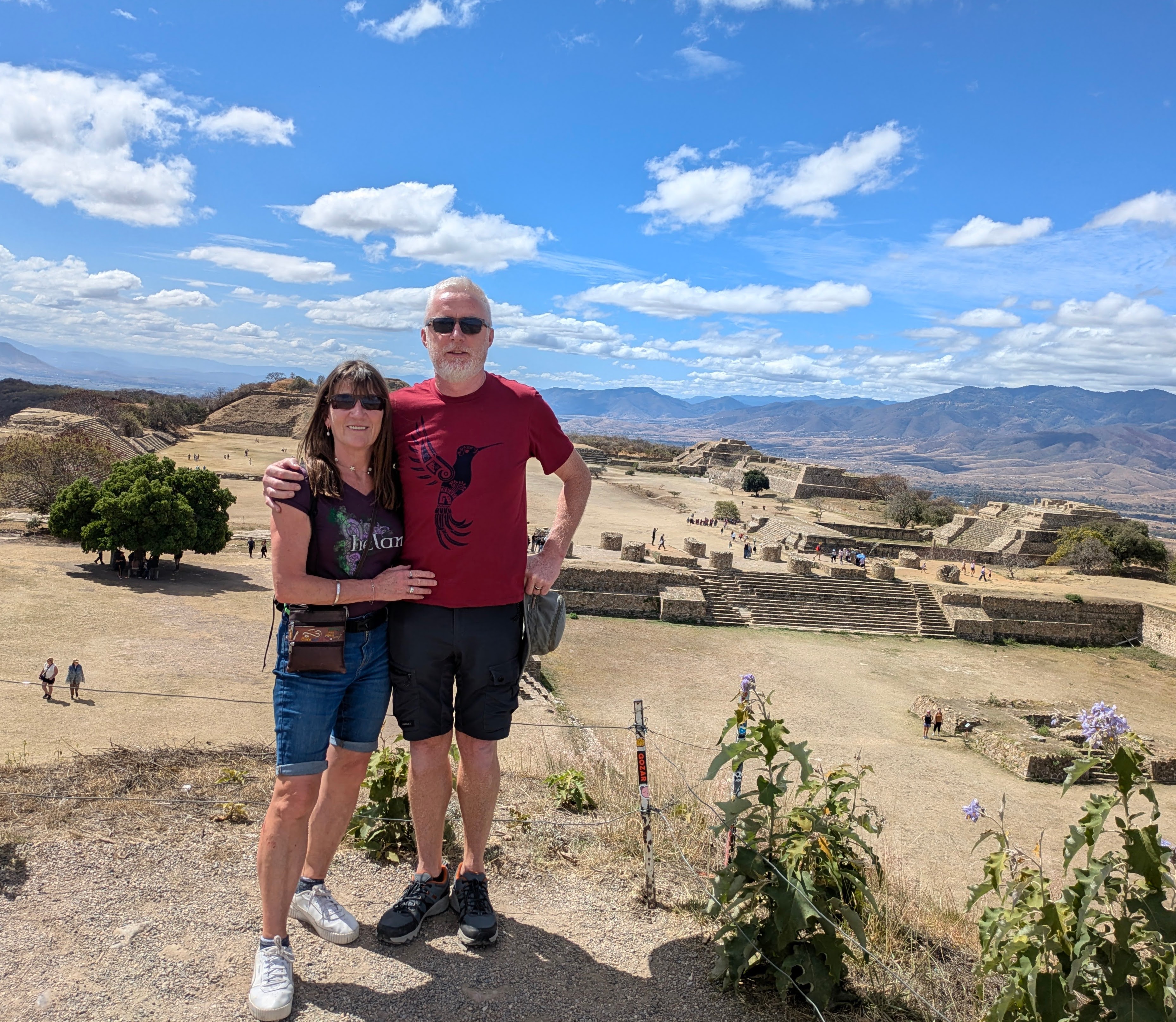
We wondered what happened to the people who built these fabulous monuments as we strolled around the sunbaked ruins of the Zapotec capital at Mount Alban. These were built on the Hill of the Jaguar, a mountaintop that was deliberately flattened to create room for the vast site which kept unfolding and becoming more impressive as we walked.  The temple complexes, the enormous Gran Plaza, the mysterious carvings and the extraordinary astronomical observatory told of great wealth, prestige and domination over a huge area but it was abandoned in about 800AD after about 1300 years of occupation.
Mount Alban, Oaxaca

The Zapotec people hadn’t completely disappeared. The descendants of those who built the metropolis of Mount Alban were living in mountain villages, less than a two hour drive from Oaxaca and so we decided to visit.  Travelling into the cloud-forested mountains of the Sierra Norte on a bright sunny morning, we reached the high altitude pueblo of Cuajimoloyas (I still have difficulty pronouncing it) where we were supposed to pick up a guide for a hike in the mountains.

 ‘You have arrived’ said Goggle. Looking around, we got that sinking feeling. We were outside a boarded up house with no sign of a guide or anyone else and no phone signal to make contact with anyone. The village was larger than expected, sprawling up a hillside with well-kept houses, trimmed verges, flowers and virtually no rubbish . We drove in circles until we spotted an elderly man, leaning on a walking stick who pointed his stick towards the office of  Expediciones Sierra Norte, an eco-tourism company which is entirely Zapotec owned and operated. A smiling Andres, a thirty year old who has lived in the village all his life,  was sitting on a bench outside the office, not in the least perturbed by our late arrival.

Arrangements for our 2 day hike were made in Oaxaca in the city-centre office of Expediciones Sierra Norte, housed in a shady colonial building. The office was manned by four young women, all charming but there was little bargaining in terms of price. When we discovered that having an English speaking guide doubled the cost of the two day/ one night trip from roughly €230 to over €400, Caoimhin joked with Janet, who was an English speaking guide that he wanted her job. She protested, saying that she didn’t earn that much but only received a amall portion. There weren’t any English speaking guides available anyway for the days we wanted,  so we opted for a Spanish -speaking guide.

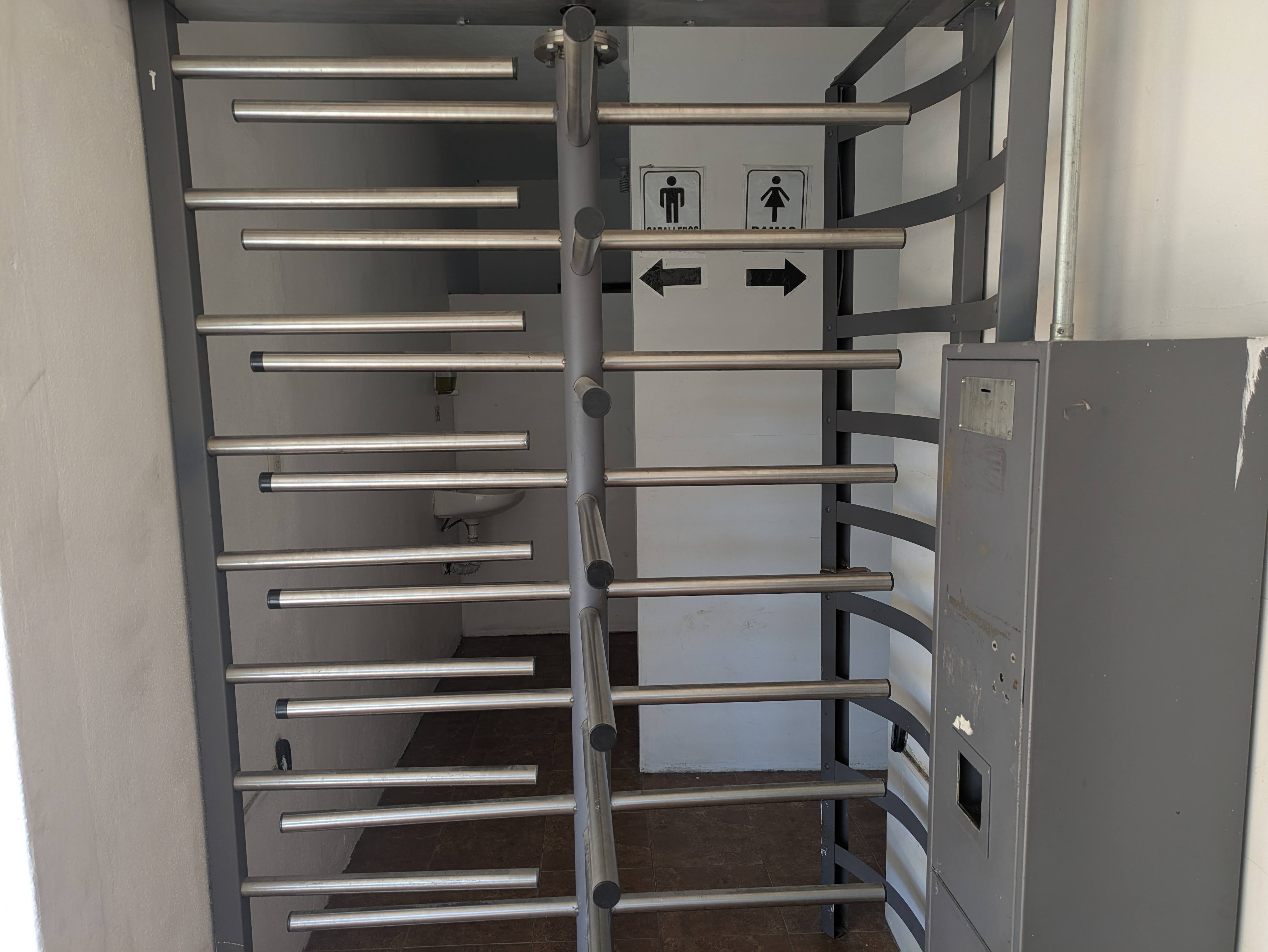
To our surprise Andres greeted us in English and welcomed us to the village but we soon discovered that that was almost the extent of his English. The village was remote but certainly not primitive. The toilet block opposite the Expediciones Office was new and had a  turnstile to get it that required a five peso coin.

Paying for a Pee at 3200m

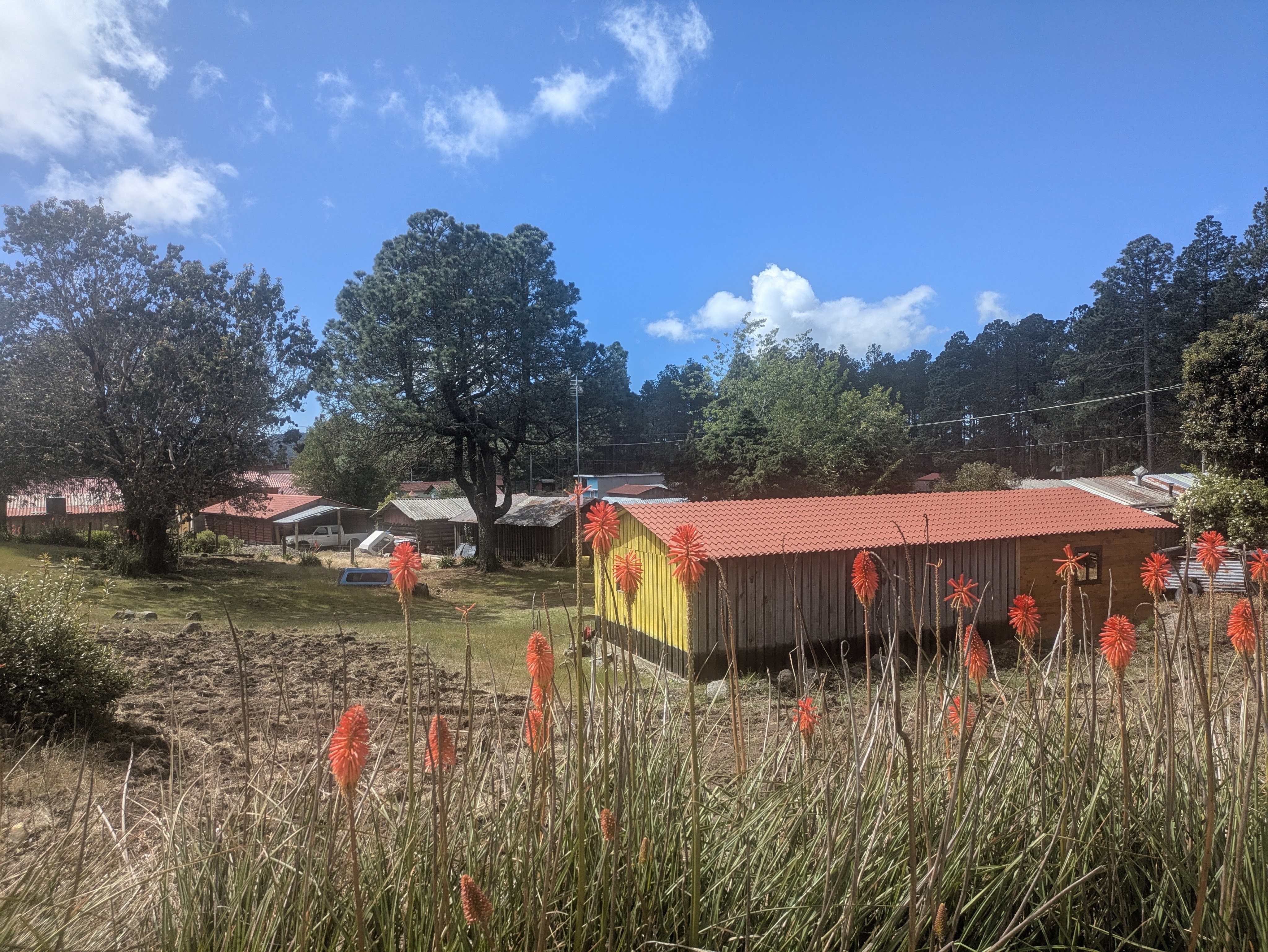
Our hike started in the village of Llanes Grande famous for its flowers, especially an abundance of Red Hot Poker flowers. Andres picked up enormous sandwiches stuffed with cheese, tomatoes, cucumbers and black bean paste at one of the little comedors (restaurants) in the village for a picnic on the way. At the beginning we strolled on a soft carpet of pine needles through forests of towering pines, bordered by huge agave plants. Cattle grazed in open meadows  and a couple of lakes were full of flickering  trout. Andres stopped to explain the medicinal and culinary uses of many of the plants.

Lianes Grande
La Cuvee de La Iglesia

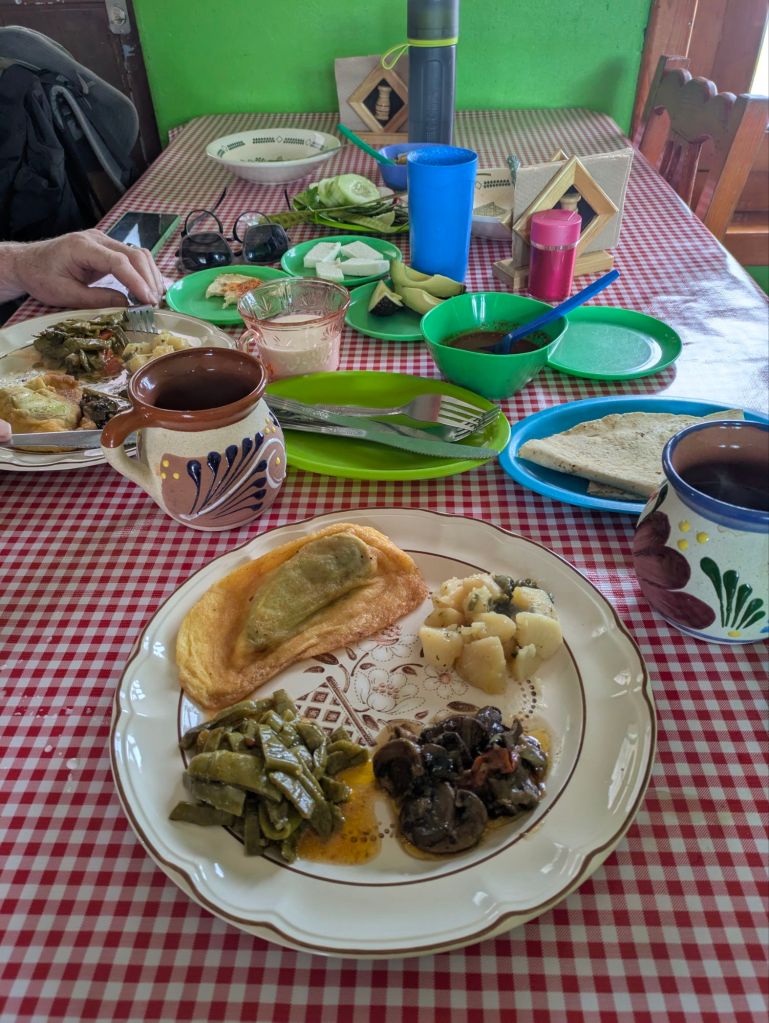
Climbing down into a steep gorge, we were dwarfed by walls of rock until we reached the cave known as the La Cuvee de la Iglesia, a mystical place of legends and phantom horses. Andres led us onwards to Cuajimoloyas where Senora Marlen plied us with so much food that we could hardly walk. We devoured fresh vegetable soup, quesadillas (cheese sandwiches), plates of fried potatoes, chilli mushrooms, green beans, frigoles, and tortillas  garnished with limes, sliced avocados and picante sauces. The kitchen was lovely with a range of saucepans that were so colourful, I had kitchen utensil envy.

Brightly coloured pans on a wood  burner stove
A feast of food

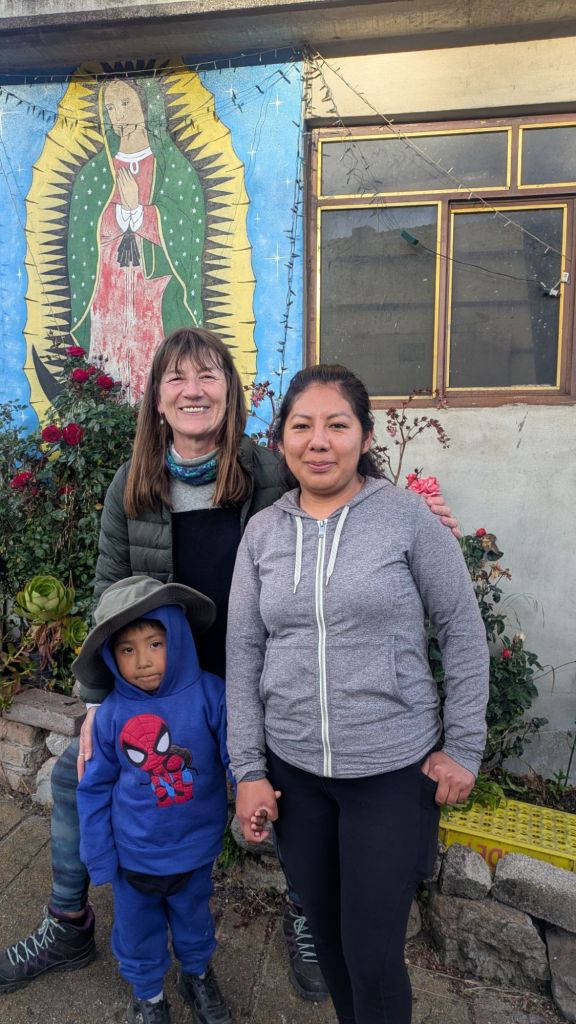
We bumped into Janet, the women from the office in Oaxaca, who lived in the village and discovered that Andres, our guide, was her husband. She persuaded him to guide us knowing that he had a few words of English. She invited us into her home and told us a bit more about the eco tourism company, Expediciones Sierra Norte. It began when eight remote Zapotec villages, (collectively called the Pueblos Mancomunados), came together to protect their land against developers and to provide themselves with a living from ecotourism. All profits are divided between the eight villages who decide individually how the money is spent. The idea of ‘service’ (unpaid voluntary work) is paramount to the success of the operation. One member of each family must do ‘service’, which may involve cleaning, painting or being the rotating president, chairperson and secretary which each of the individual villages have. There are rules and a code of practice and quarterly meetings  
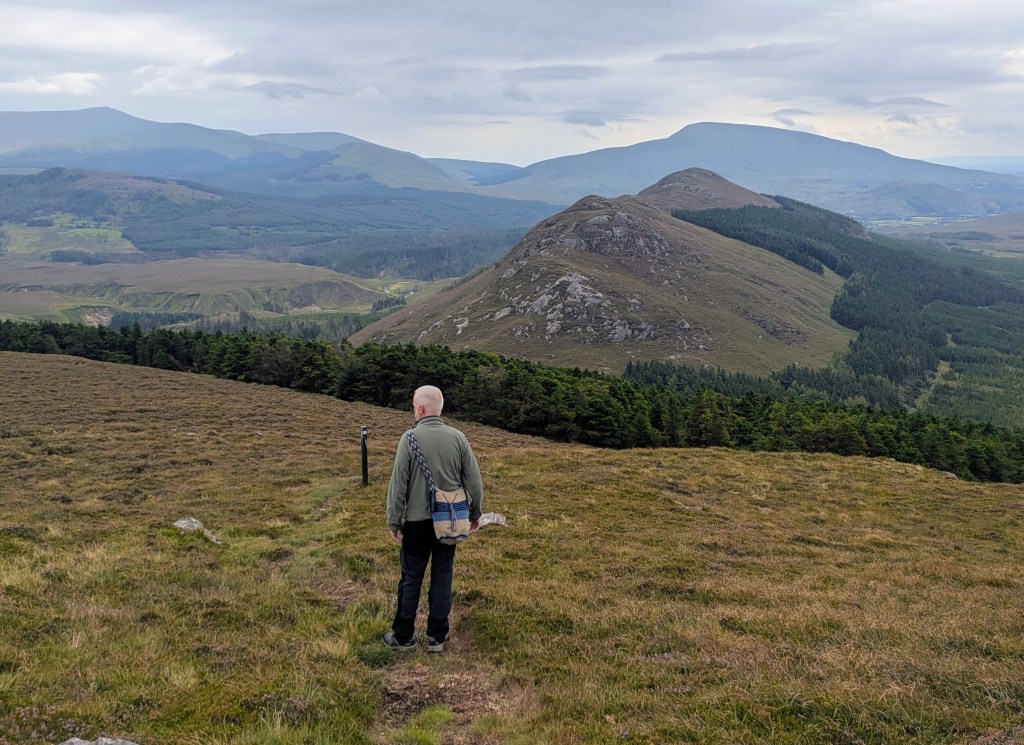
Janet and her nephew

The village was a lesson on the power of community or what people can do when they come together. The villages, although remote were more prosperous than many others that we have seen in Mexico. There was an air of industry and friendliness and a palpable sense of pulling together.

The idea of community cooperation was not new to the Zapotec in the region. They had set up a logging company years before when developers were sniffing around the forests. It was moderately profitable but the eco-tourism venture has been spectacularly successful. Nowadays, they do not cut down trees but only use the dead wood or whatever falls naturally in the storms. We probed Janet, trying to get her to tell us stories of greed, jealousy and disharmony but she insisted that all was well and that everybody abided by the rules which benefited the whole community.

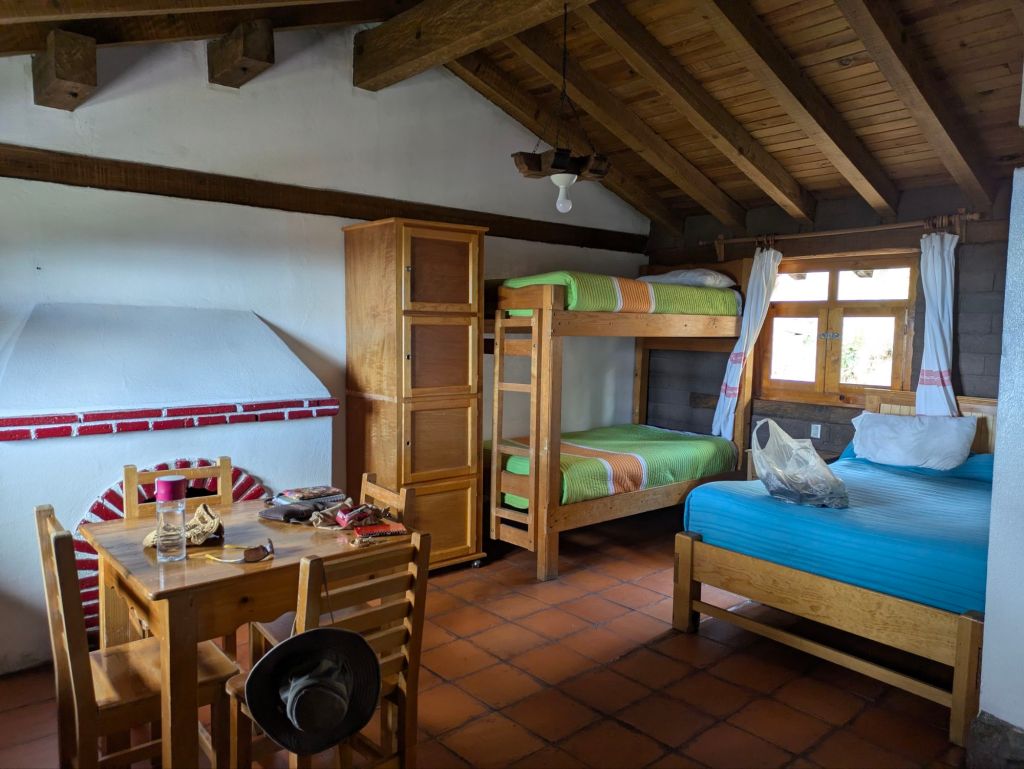
Our cabin for the night was a surprise, It was on the hill overlooking the town and exceeded our expectations with a fireplace, a comfortable  double bed and some bunk beds. Sitting outside in the late afternoon, with sounds of goats and dogs barking floating up from the village below us, it was incredibly peaceful. A retired couple from New York were staying in the cabin next to us and were also really taken by the sense of community in the area.

Our Cabin
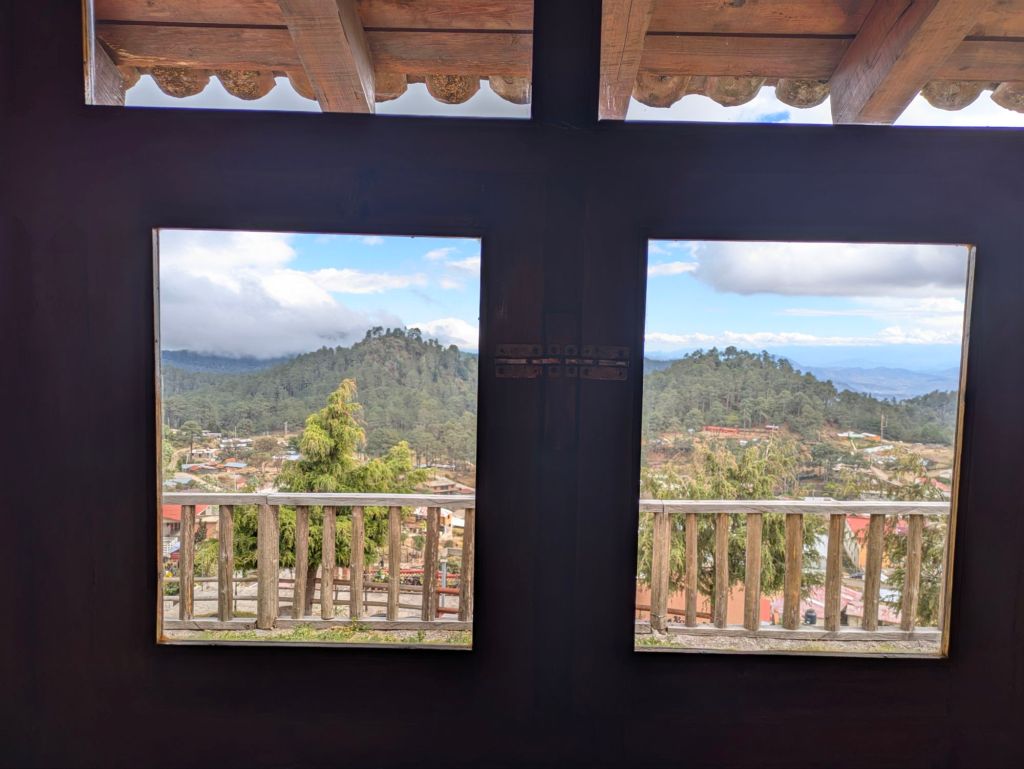
View from our Cabin

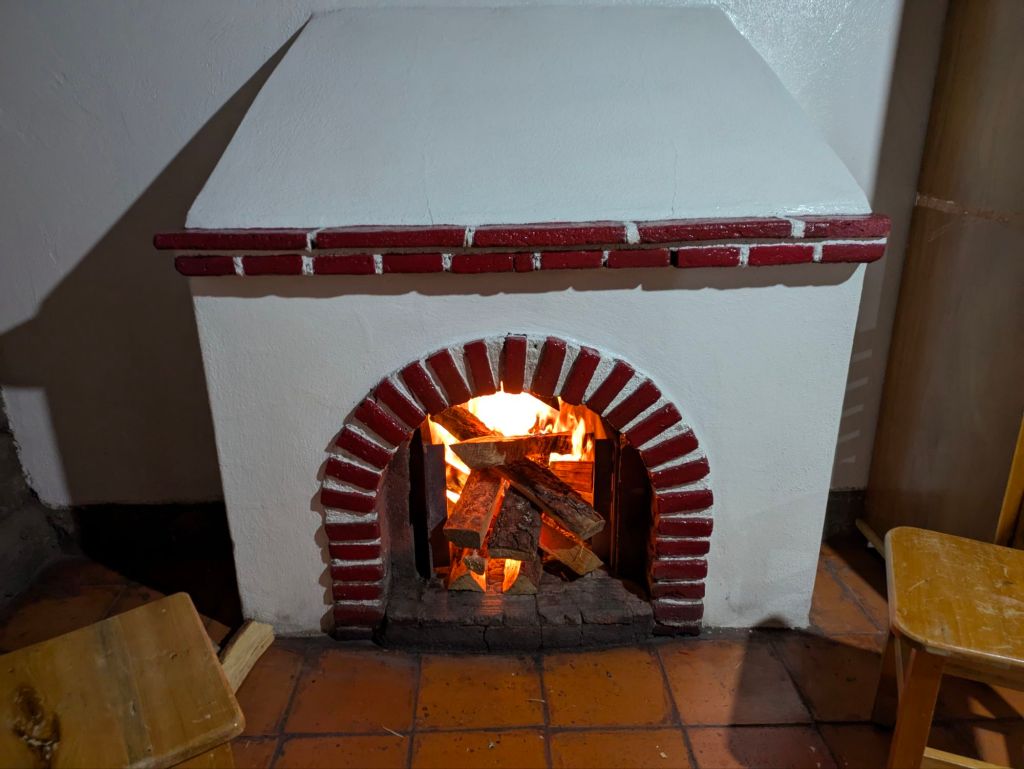
It got cold in the mountains when the sun went down, dipping to almost zero. The cabin, though comfortable, was not well insulated. There were huge gaps under and over the door and  the sides of the windows. After dinner one of the locals came in with an armful of timber logs and lit a huge wood fire in the fireplace using only a natural firelighter to start it (a piece of Colima bark). It was one of those fires where your front was roasting but your back was freezing but at least the bed was piled high with blankets.

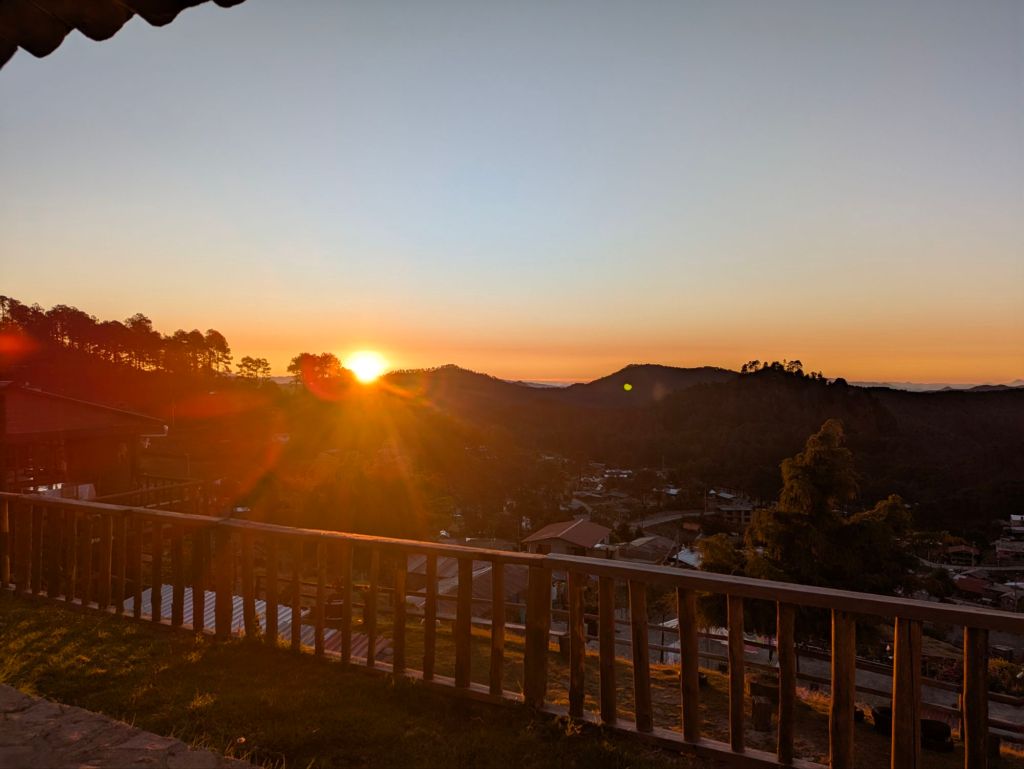
Sunset over the Village
A Welcome Wood Fire

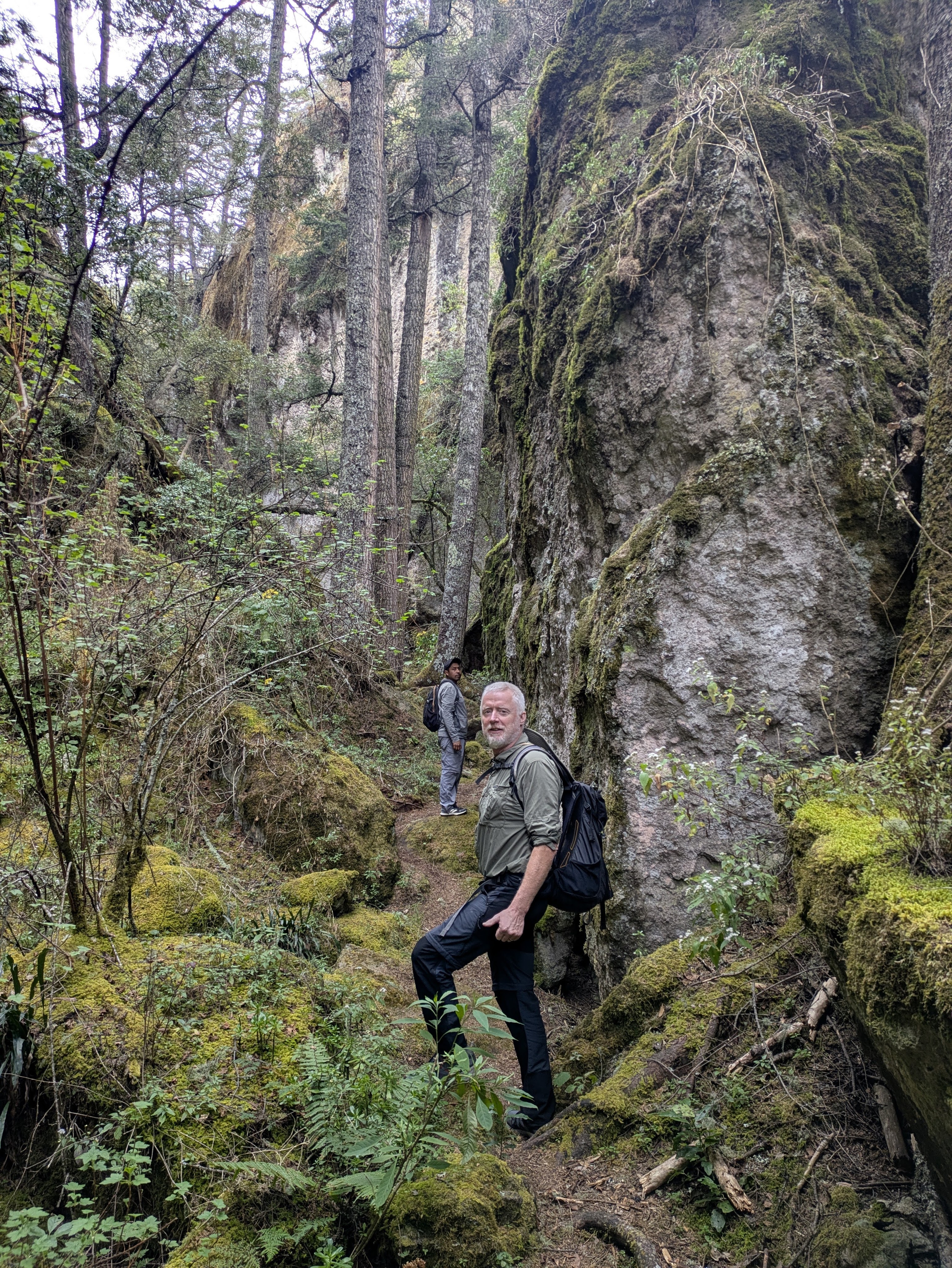
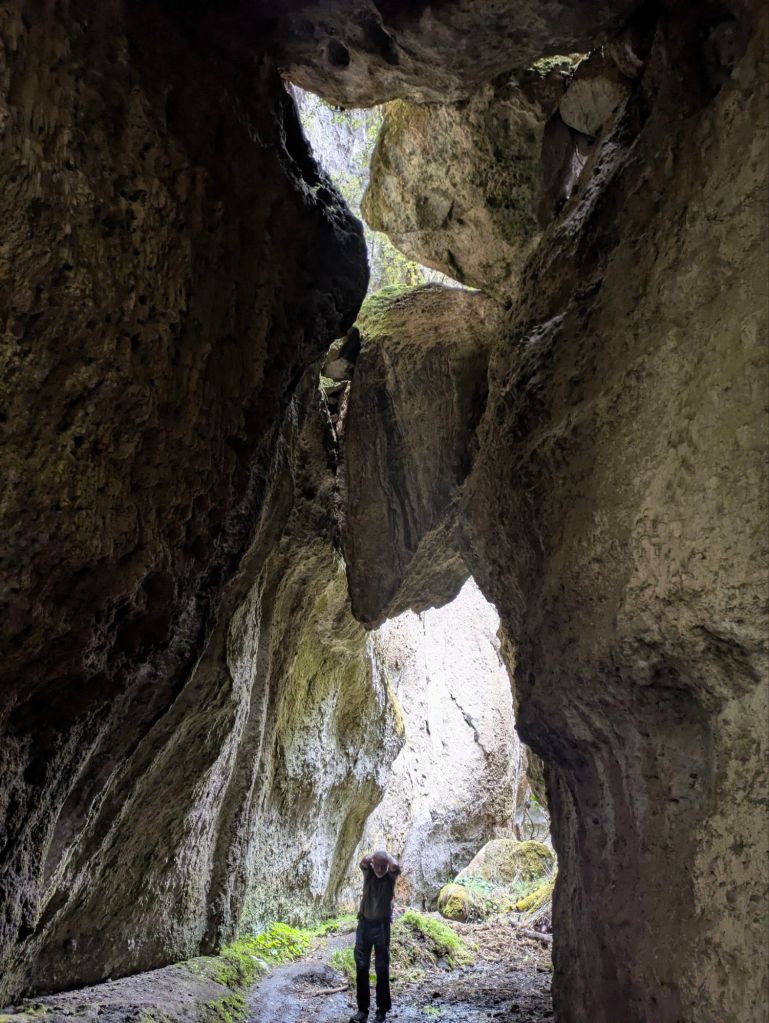
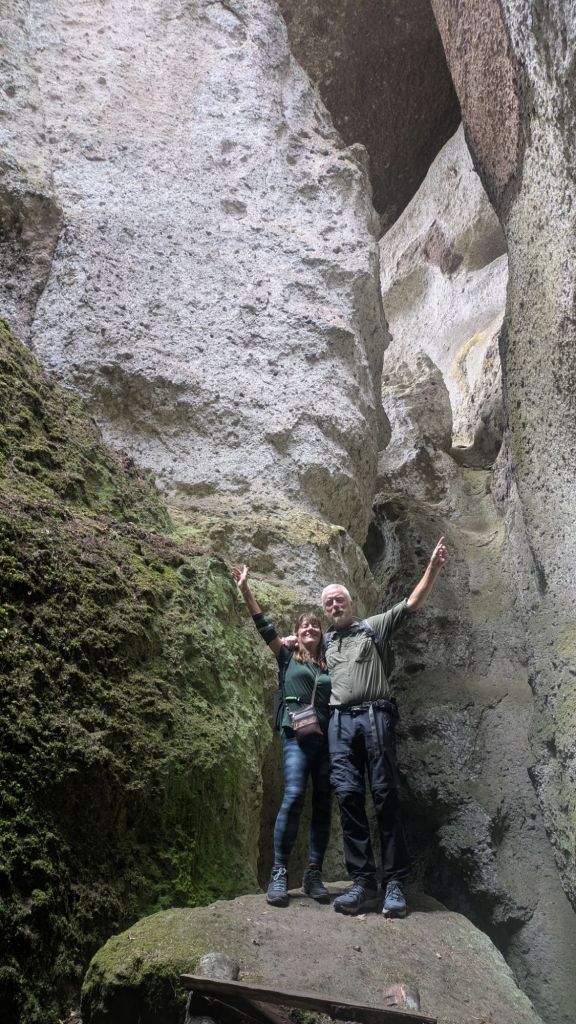
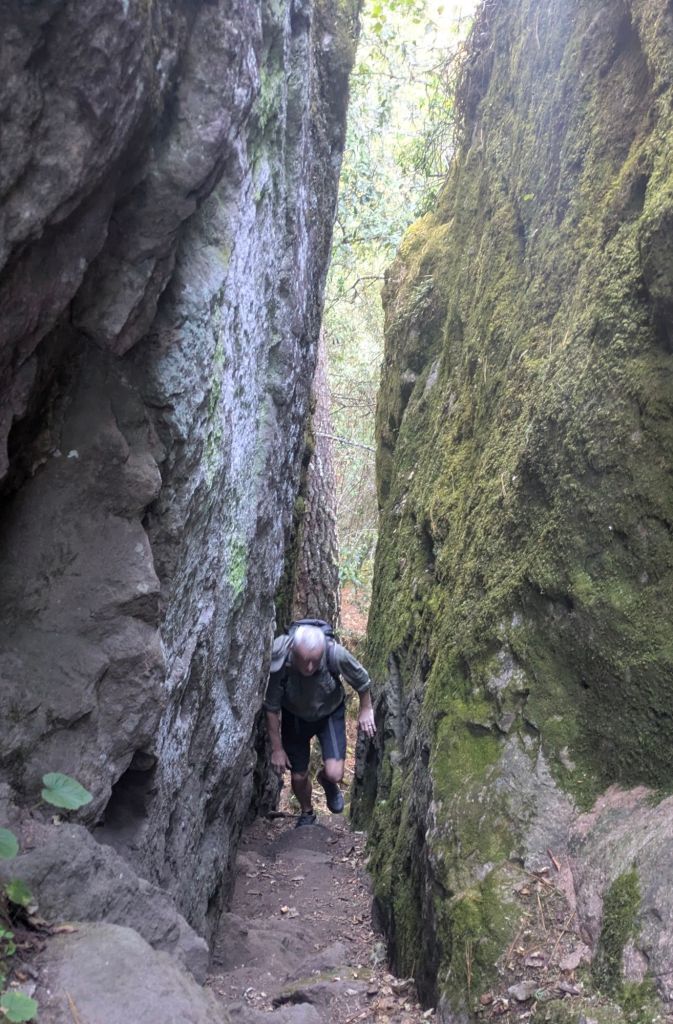
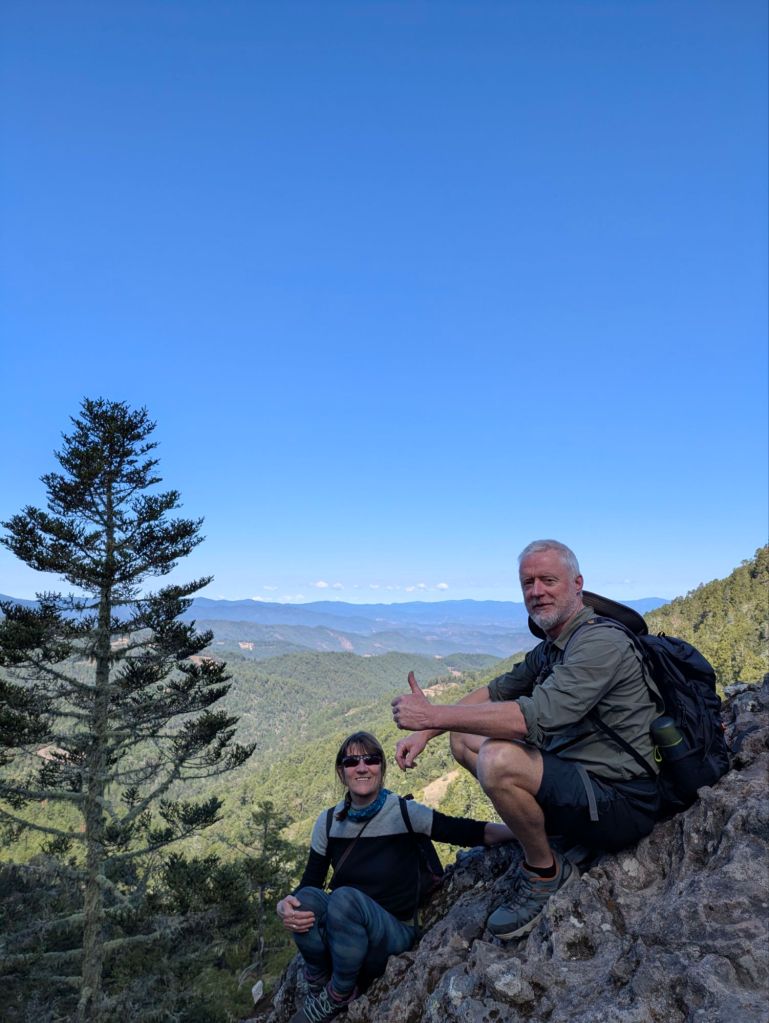
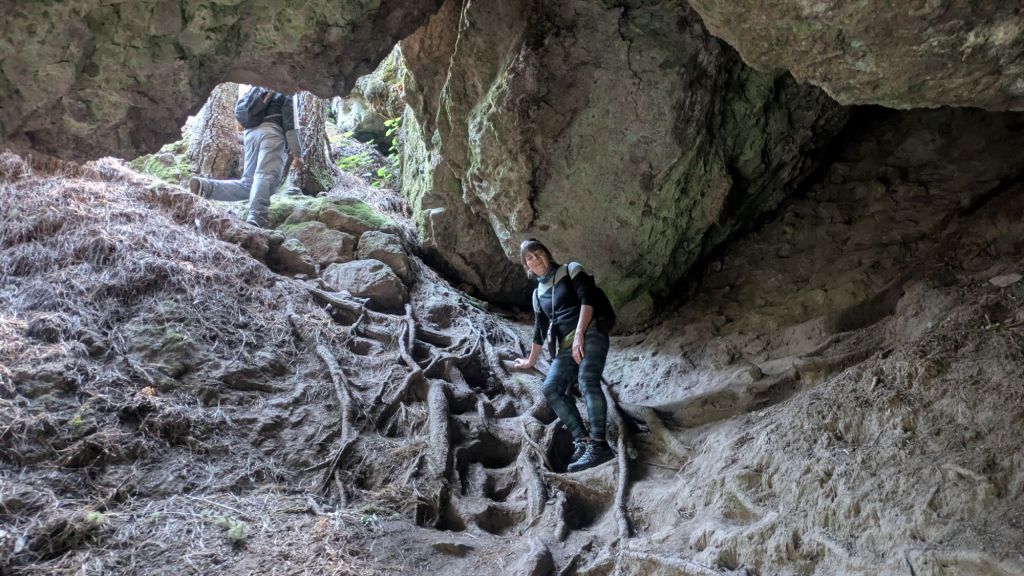
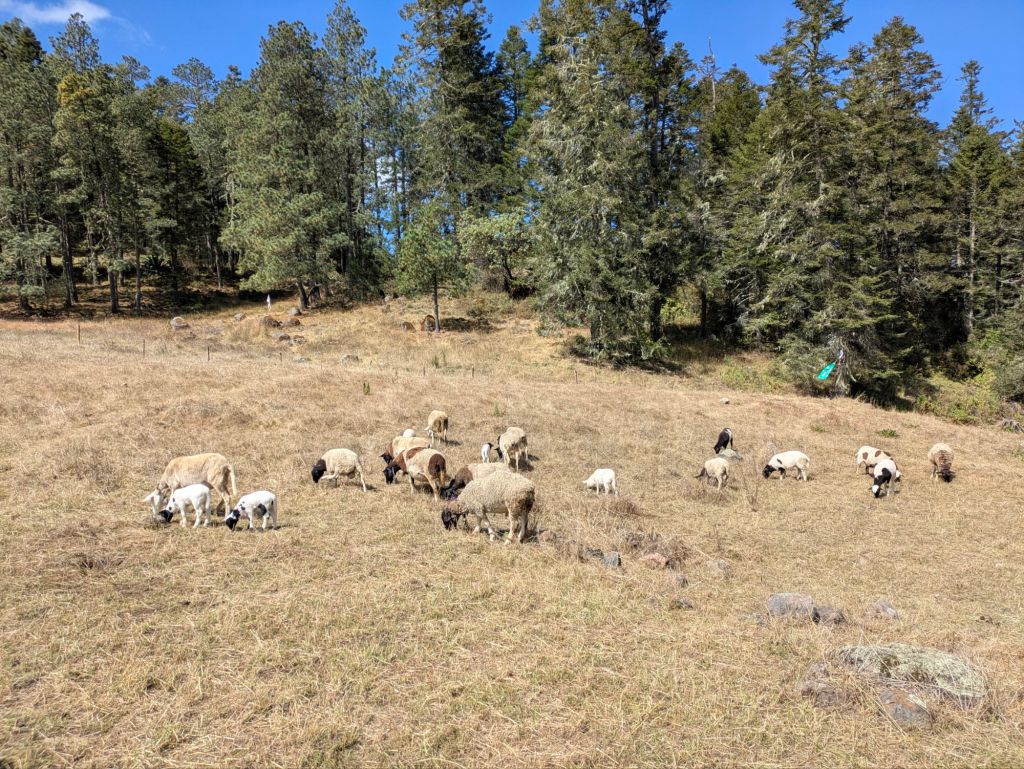
Our second day’s hike was the stunning Canon del Coyote which was even more spectacular than the day before, involving a hike through caves and a scramble up on sheer rock to a mirador (a lookout point) with breathtaking views. We listened to an assortment of birds in the forest,  hummingbirds, jays and warblers and at the lower levels passed steep fields of sheep and lambs.

The sensible thing to do after our hike would have been to return to Oaxaca city and use a relatively major roads through the valleys to get over the Sierra Juarez mountain range.  Of course we didn’t do that. Instead we drove deeper into the mountains, winding our way on dirt roads in remote countryside. A stunning and grueling drive in equal measure, the dirt roads for the first hour passed through gorgeous villages. In one puebla,  two of the most enormous turkeys I have ever seen, gobbled at the side of the road while in another an old woman with long plaited hair and no teeth gave us a cheery wave. For the most part, there was little traffic of any kind.  We stopped at a Mirador to admire the view of  the fluffy clouds laid out  beneath us.

We weren’t quite so enamored when we were driving down through them a short while later. Visibility reduced to almost zero and  the world became a thick opaque  grey.  It was almost impossible to distinguish road from verge on the twisty road. Thankfully the surface was reasonable and there wasn’t a lot of traffic. The mist and fog lightened every so often to reveal gigantic ferns and thick moss covered trees and we were fooled into believing that we almost down, only for it to thicken again and plunge us into grey again. It took almost an hour of white-knuckle crawling, but eventually we were below the clouds although we were still in the mountains and the temperatures rose.

After all that excitement and tension, we needed a place to stay.  The town of San Juan Bautiste Valle National sounded like a bit of a mouthful but it was relatively close. It wasn’t the sort of place that had anything on Booking.com but it looked big enough on a map to have some hotels. Stopping for an ice cream and a look around, we found a friendly town, very friendly. Lots of men looked like they had been working hard all week in the fields, hadn’t had a shower in a long time and had been on a bender for a least two days. Two guys staggered out of the shop after shaking our hands, carrying bags of clinking cans. One got into a battered pick-up and the other ambled unsteadily to a motorbike. Both drove off, still waving to us. We decided to push on.

 A little outside the town, we spotted a sign for Hotel Hniu Li, pointing down a little track off the highway. It looked good, a double story buildings with a breezy balcony on the edge of a field of maize with a few banana trees in front. There was no reception area but an old woman called to us from the doorway of a little shop on the corner. She told us that the room was 500pesos for the night( less than 25 euros), cash, with no signing registers or checking of passport. The room was small bit adequate, spotlessly clean but the bathroom was jaw-droppingly gorgeous, like something out of an upmarket spa, almost as big as the bedroom with polished stone walls and lashings of high-pressure hot water,   It was perfect……just what we needed. A dog called Lala befriended us and the woman in the shop who sold beer but didn’t have any cold ones, put two in the freezer for us.

Cheers

Thanks for reading.

Mexico: Then and Now

Japan: Highs and Lows

screenshot_20241130-101223~34194303731757339452.

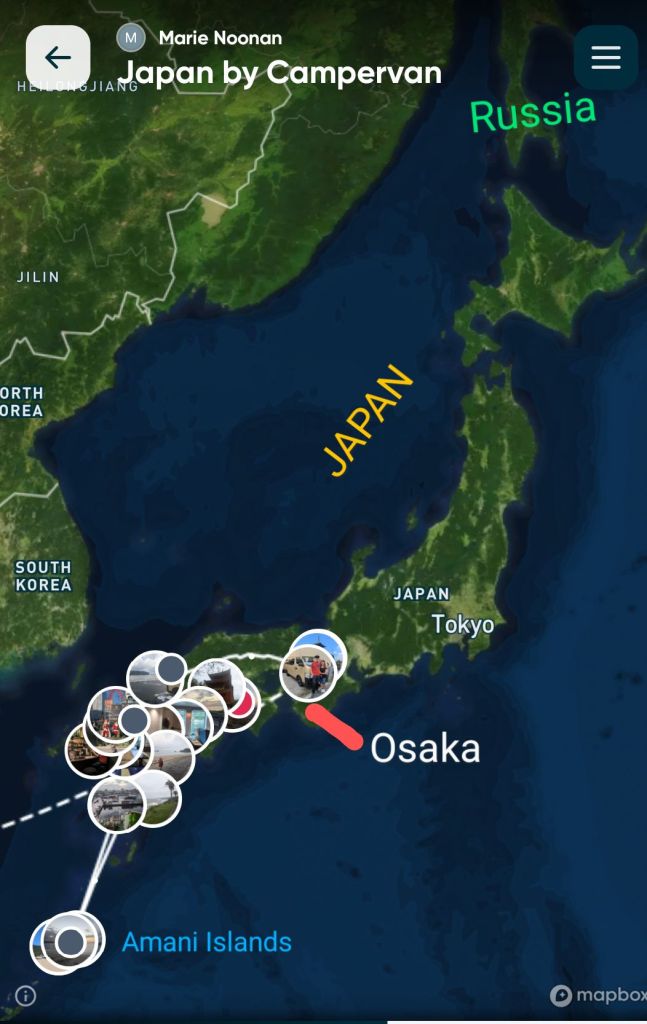
Now that we are back home from our six-week trip in a campervan around fascinating Japan, it’s  time to reflect on our experience. We flew into and out of Osaka and in between travelled a circuitous route in South Western Japan  through the large islands of Sikoku and Kyushu, often changing course because of the weather. Japan is about five and a half times the size of Ireland but feels much bigger, stretching from within touching distance of Russia in the extreme north to islands in the East China Sea that almost nudge Taiwan.

I’ve included a dozen highlights but I could easily have included a dozen more. So here we go…..

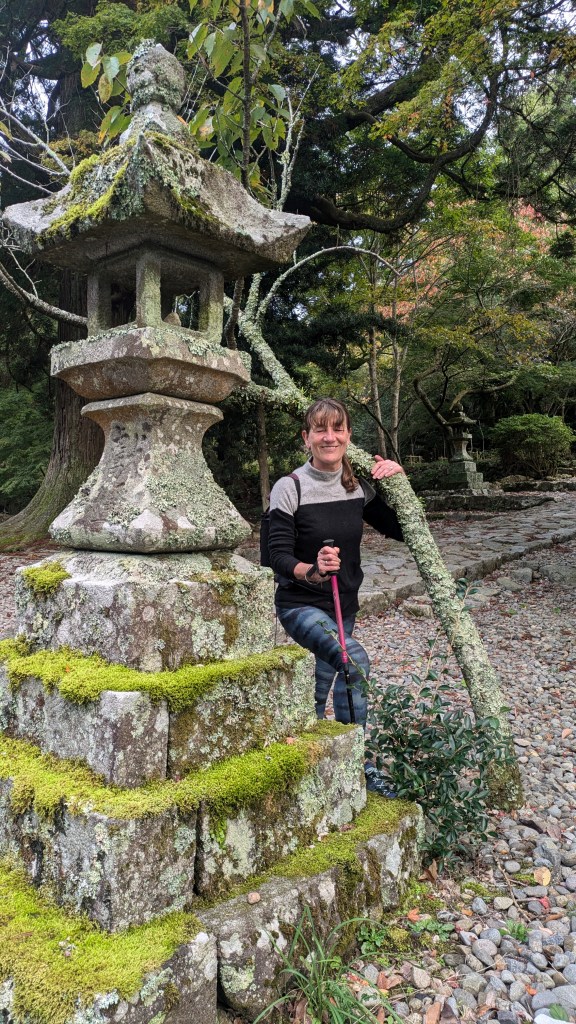
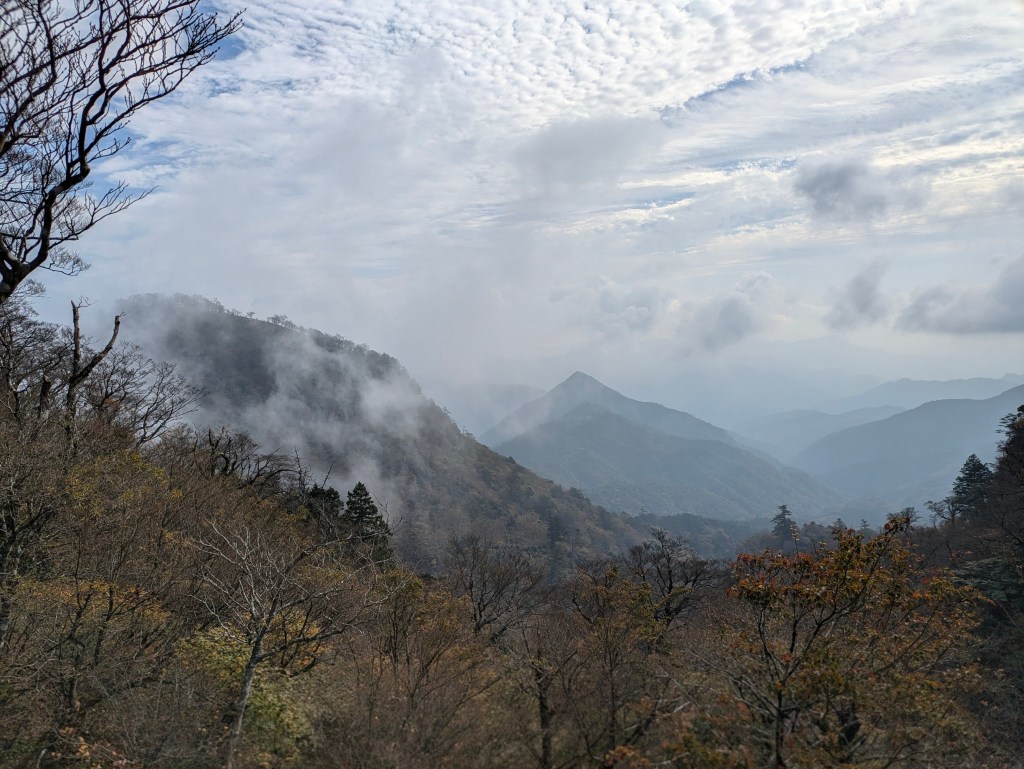
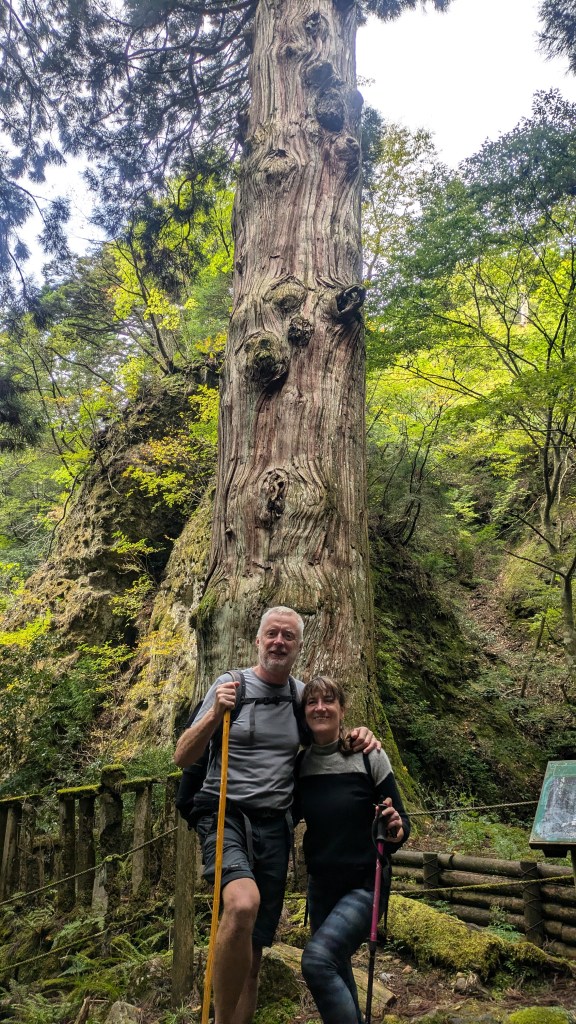
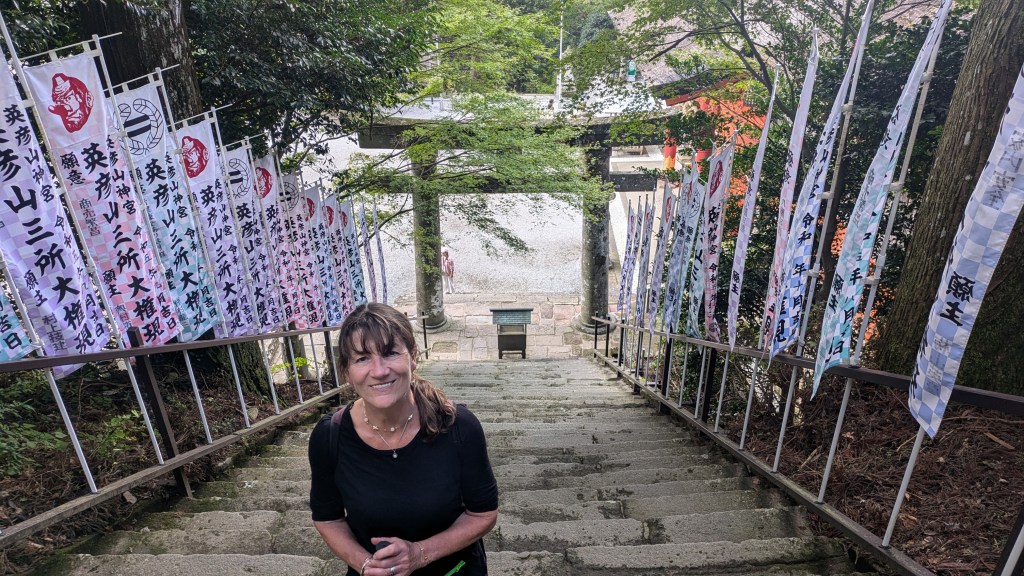
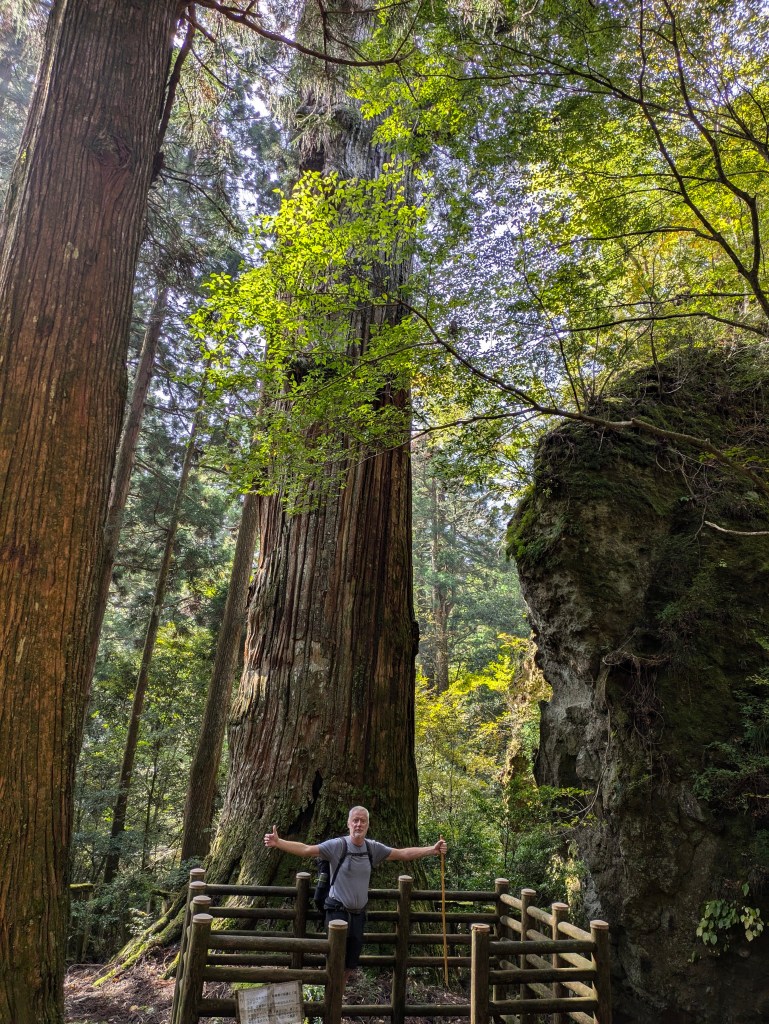
Climbing a Holy Mountain .Japan is a mountainous, heavily-forested country with many sacred mountains but for us, the most special was Mt Hiko in Kyushu, a place where hundreds of years ago, white-clothed monks trained in strenuous physical activity, believing that this was the path to enlightenment. We hiked past countless, moss-shrouded shrines towards misty summits on a glorious Autumn day with the leaves dressed in their burgundy and golden finery. This was truly a spiritual experience especially as we seemed to be the only two people on the mountain. On the way, we also paid homage of the resilience of  Onisugi, a huge cedar tree estimated to be around 1,200 years old.

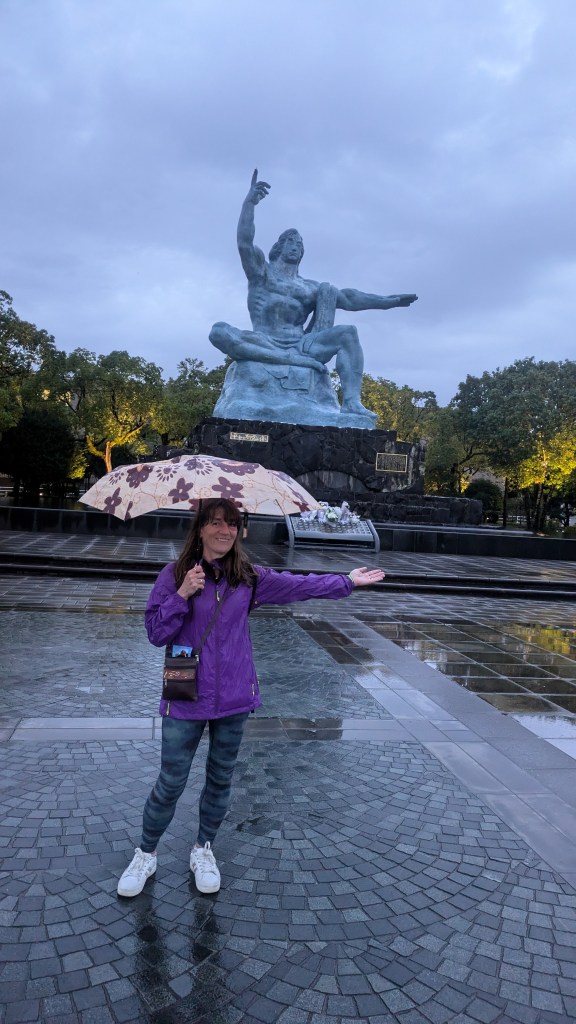
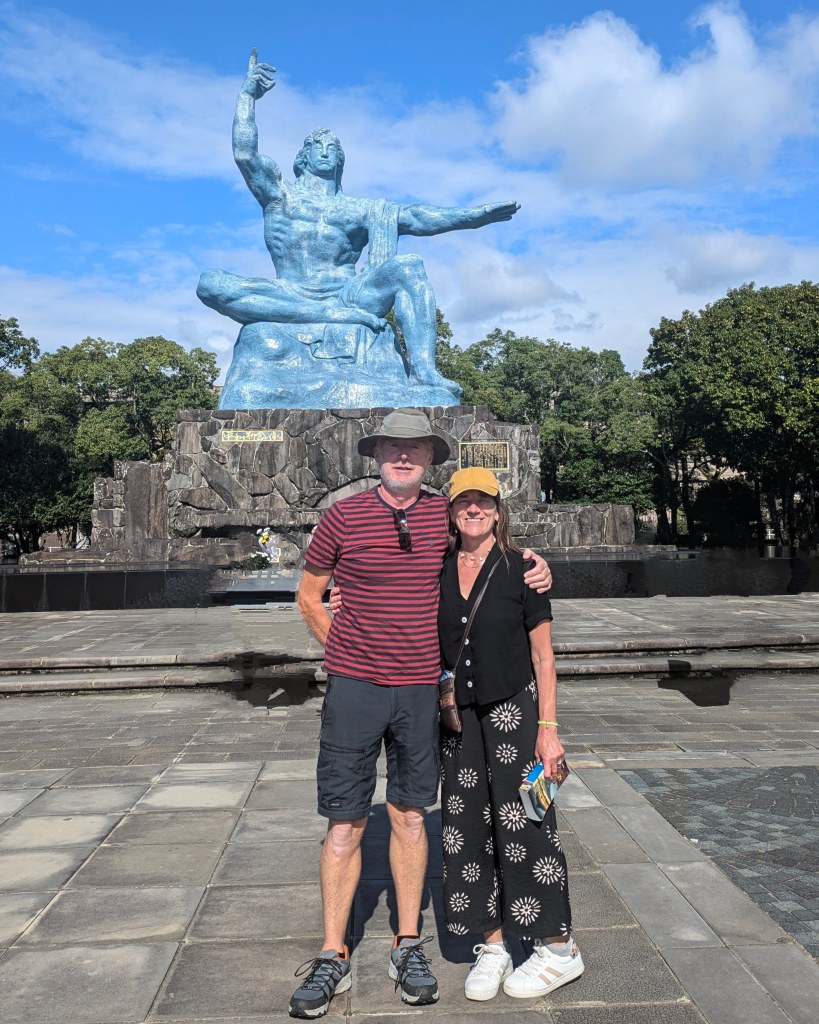
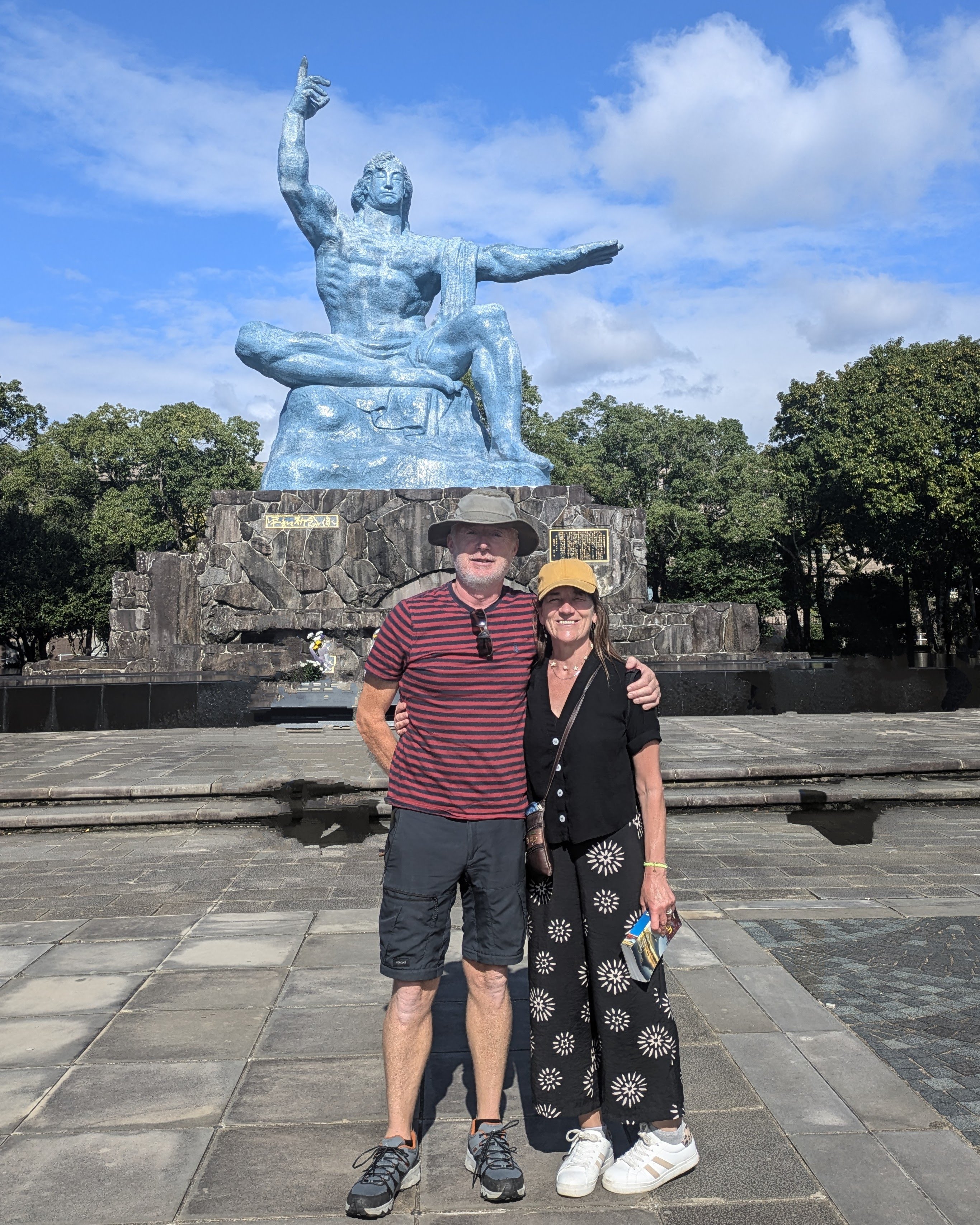
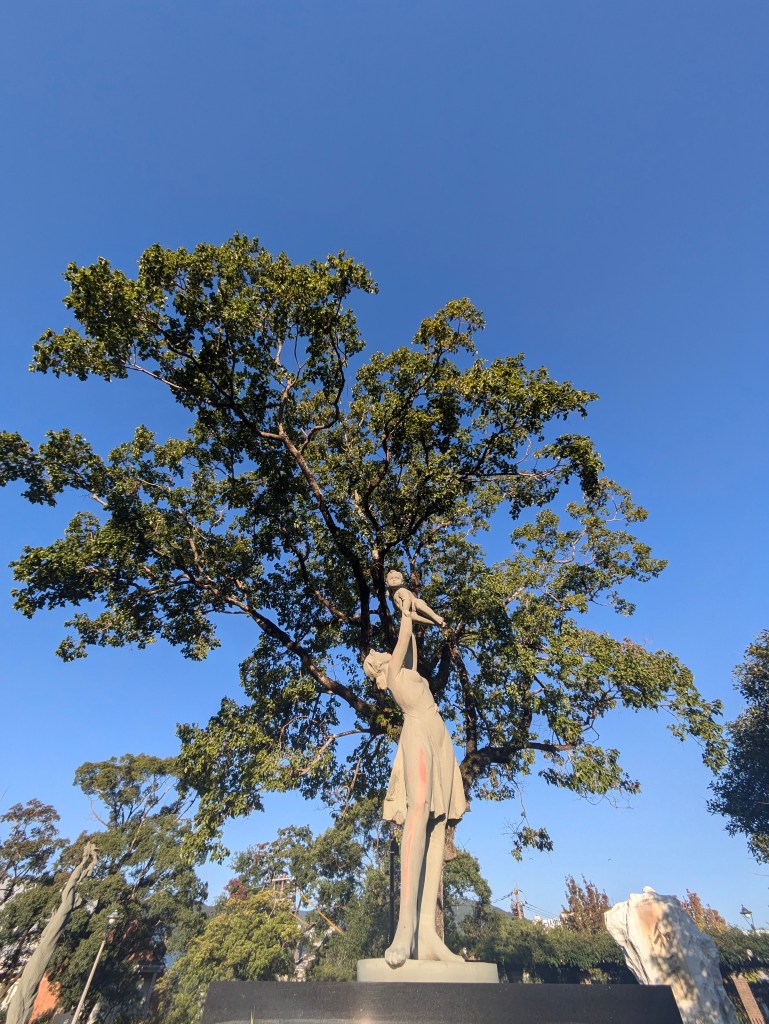
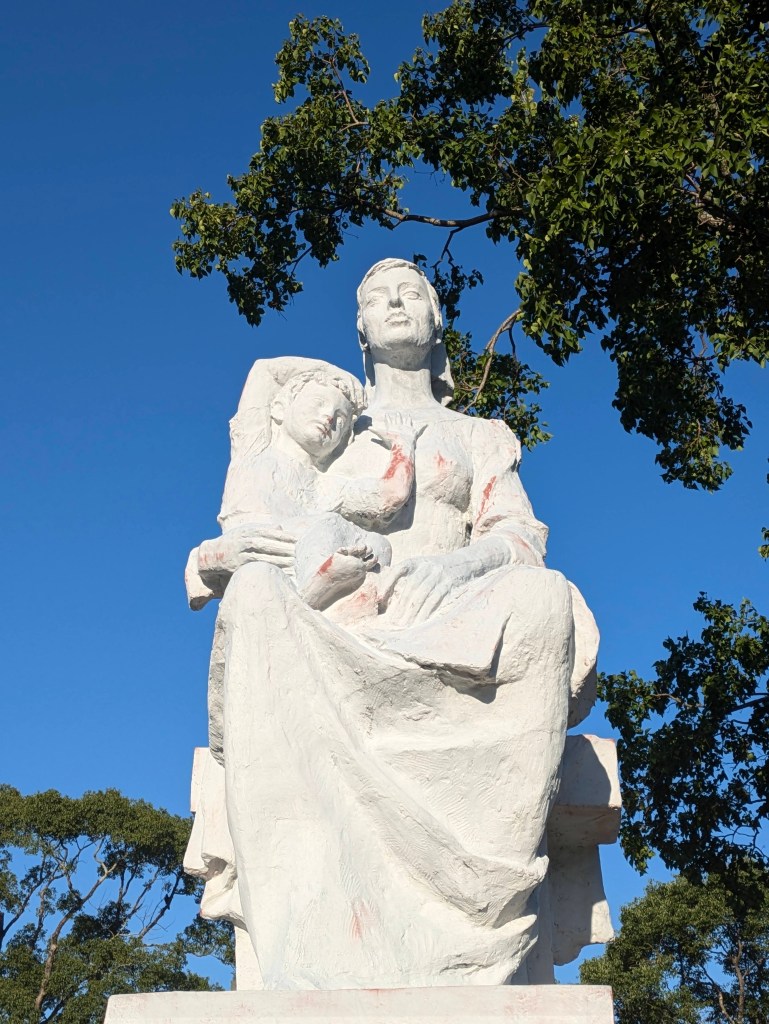
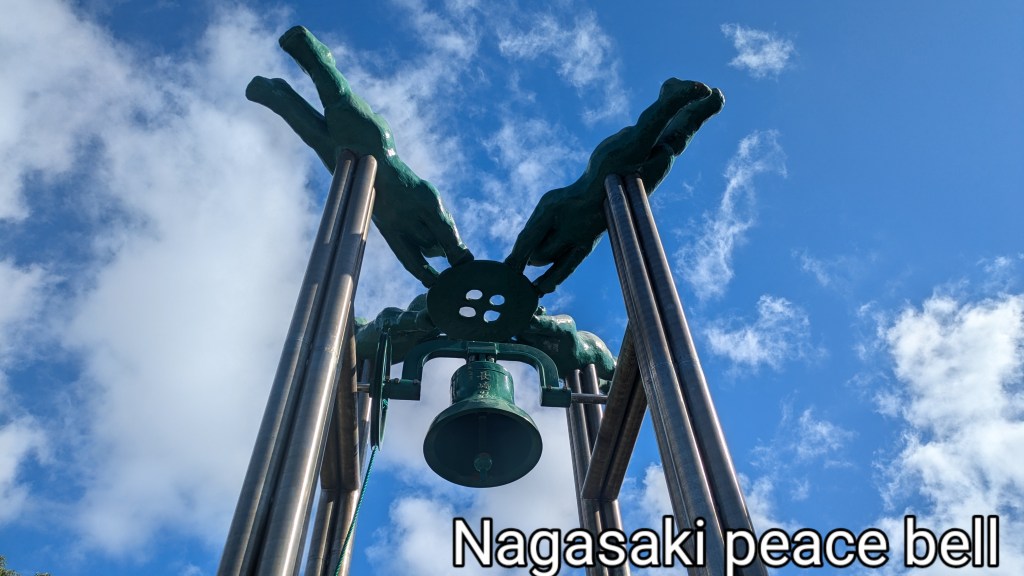
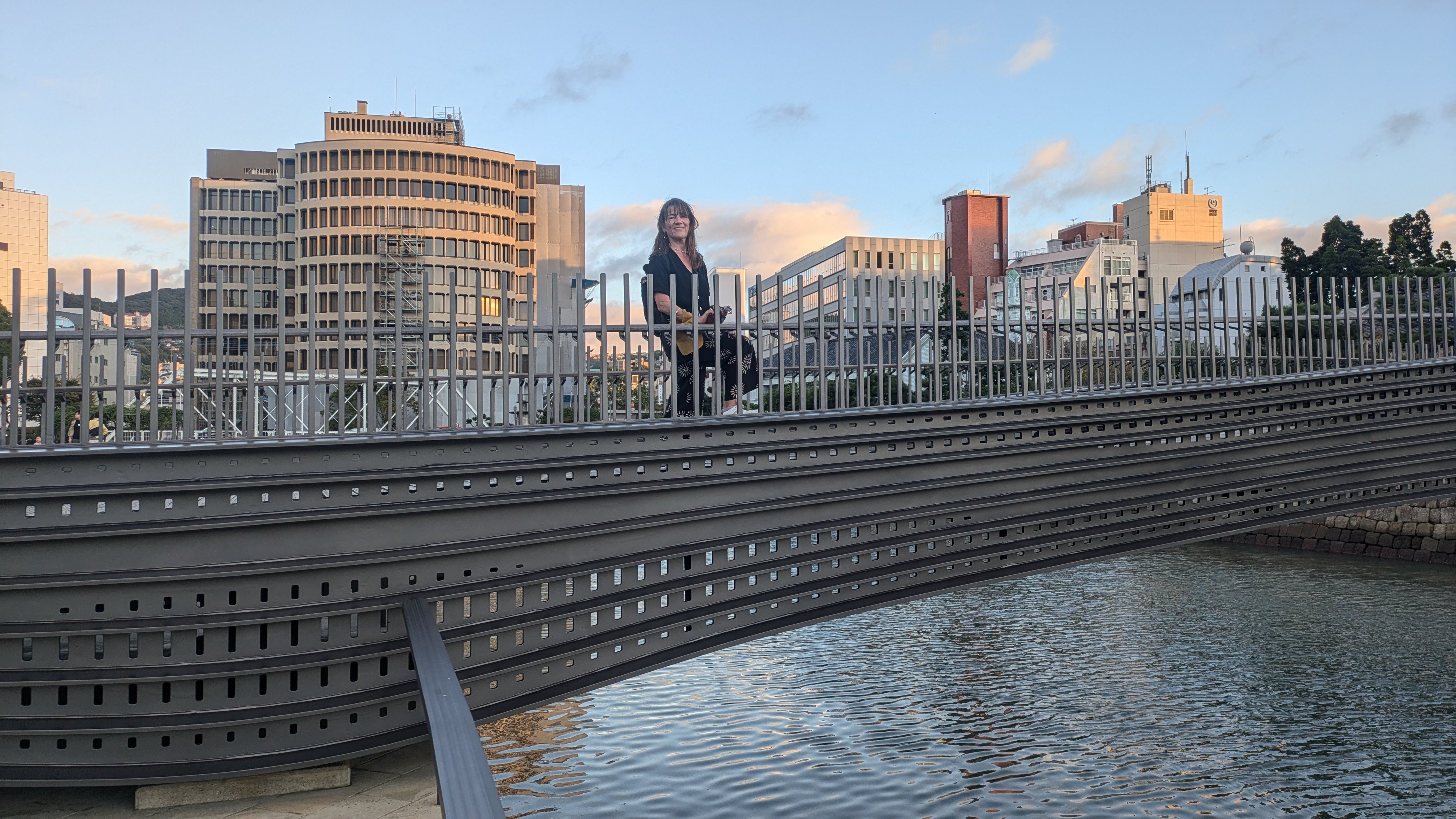
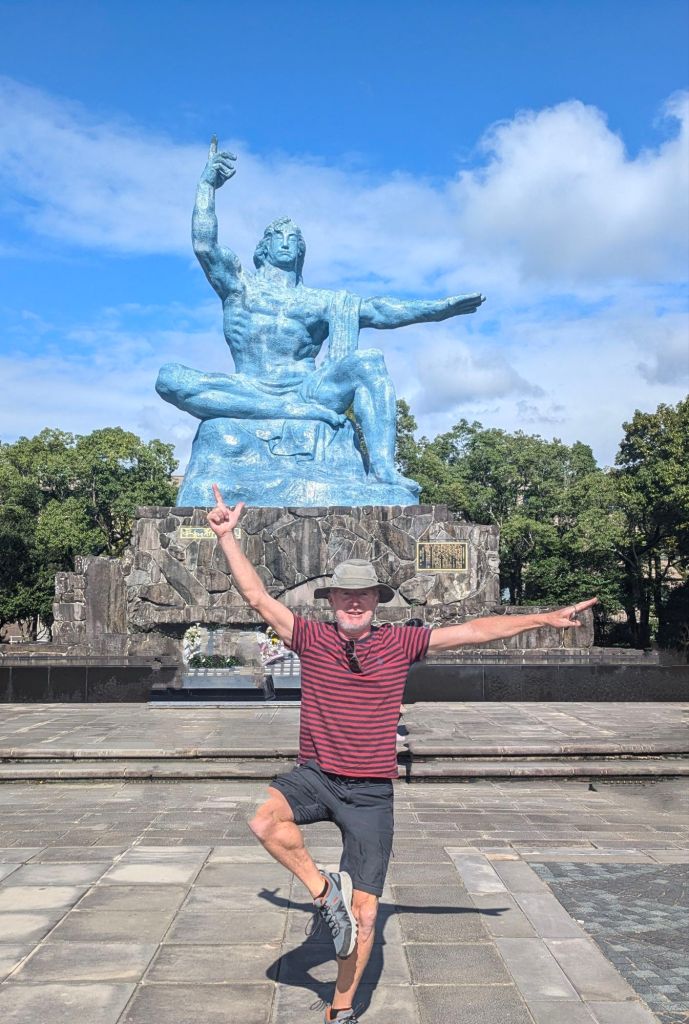
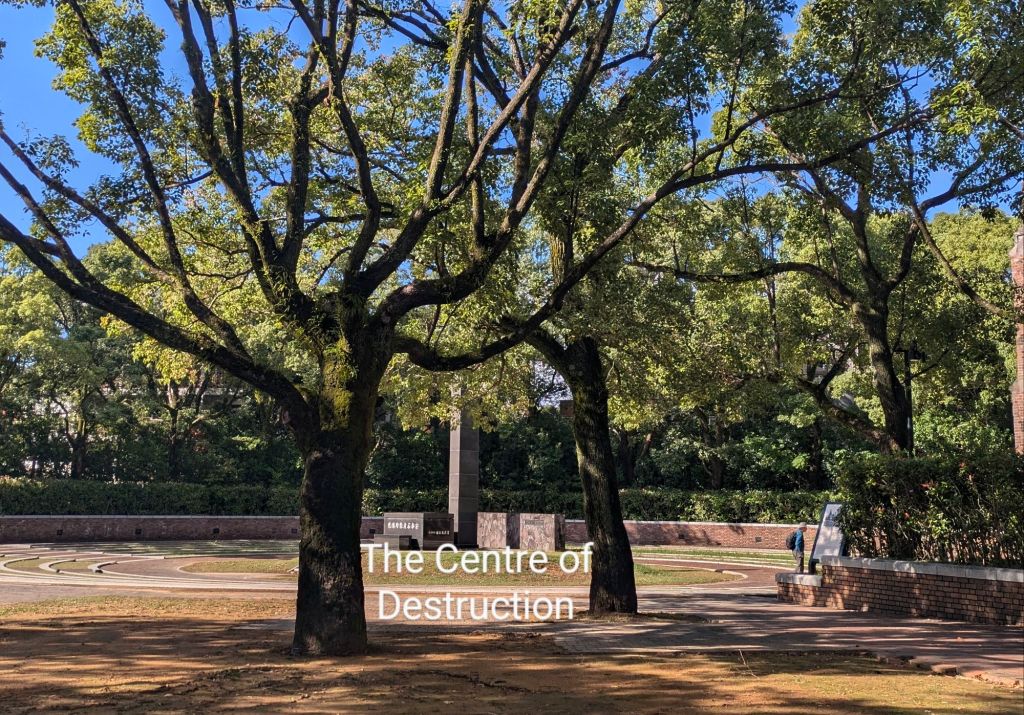
Hell on Earth. Nagasaki could be in the category of lowlights but it belongs here in the highlights. We spent two days here, the first with torrential rain which felt like it might never stop and the second with skies so blue, it almost hurt our eyes.  This was almost a metaphor for Nagasaki, a beautiful city which exuded a firm belief in hope and brighter days after tragedy. Visiting the Atomic Bomb Museum was harrowing, so harrowing that I don’t think our minds were able to comprehend the immensity of it all. I will just copy here an inscription on a bridge near the centre of devastation.

At 11,02am on August 9, 1945, an atomic bomb exploded in the skies over Matsuyama. The stream, Shimonakawa, flowing through the eastern part of the neighbourhood, was soon filled with the corpses of victims who died groping for a drink of water, or mortally burned and wounded, collapsed and perished there. A survivor who witnessed the scene the following day described it as follows. ‘I crossed the half destroyed Maysayama Bridge over Shimonakawa. There were so many corpses under it that they formed a dam in the stream. It was like a vision of the Apocalypse, a living hell on earth. Not a speck of cloud tainted the sky above, but the earth below was a panorama of carnage and destruction.’

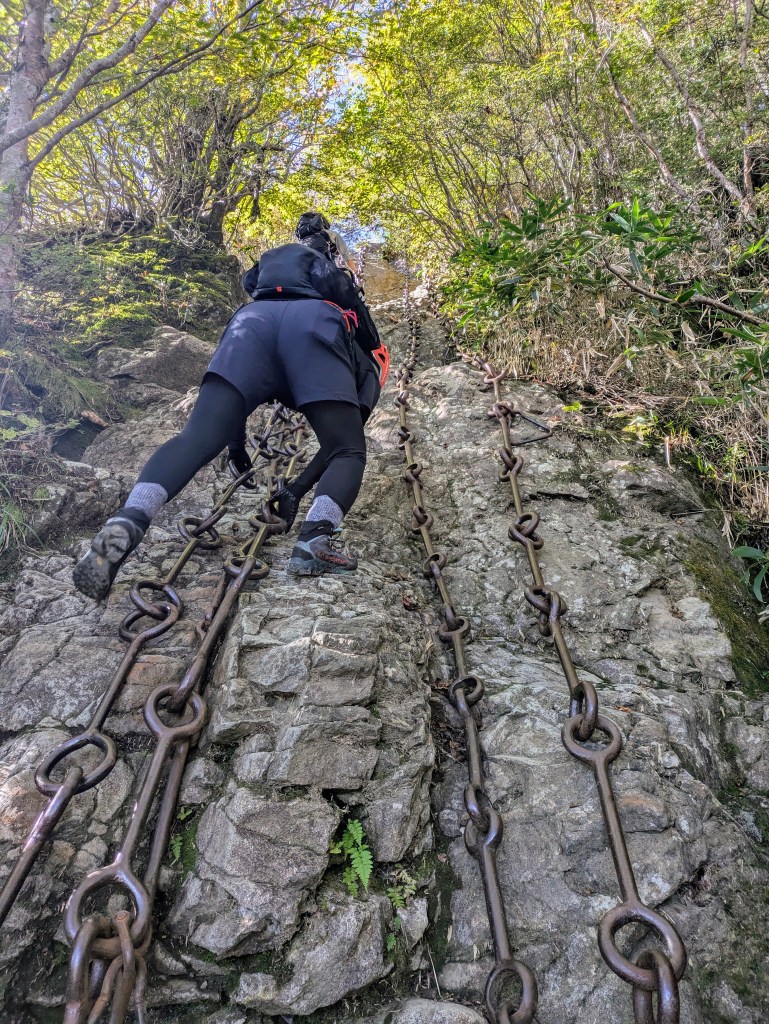
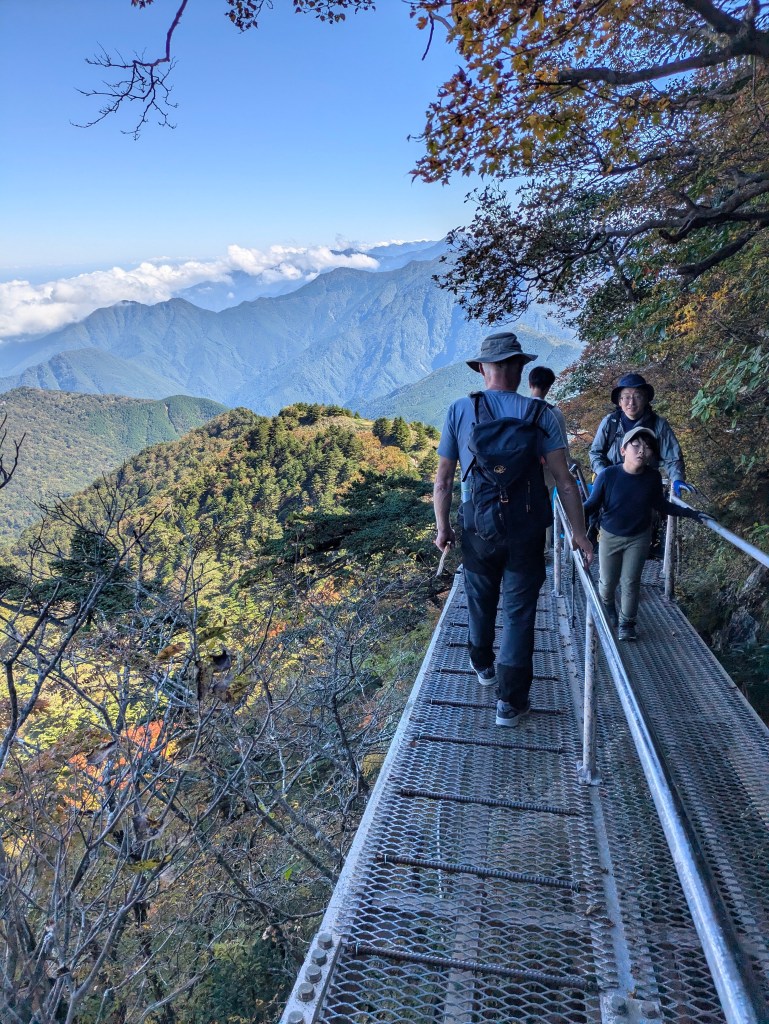
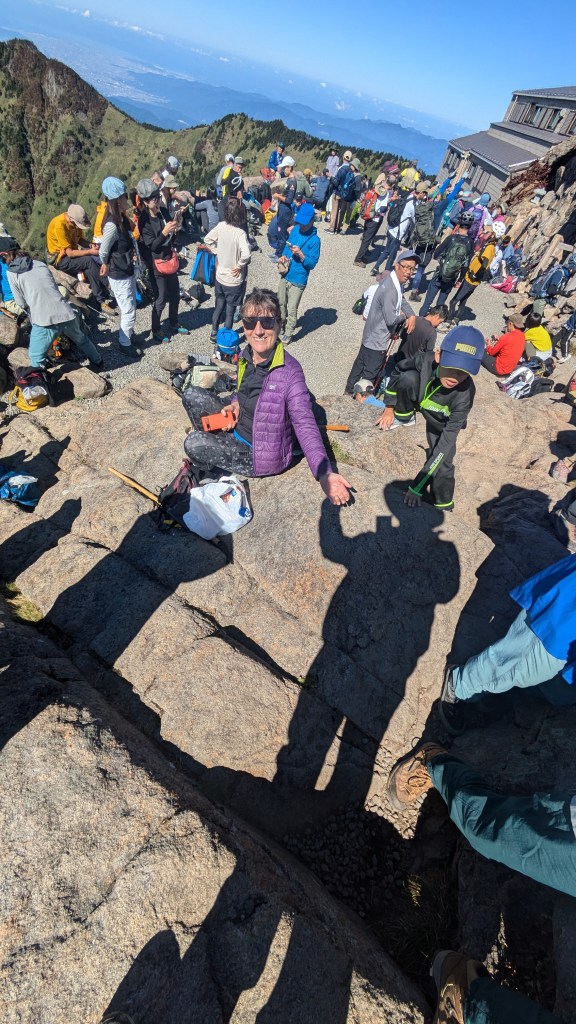
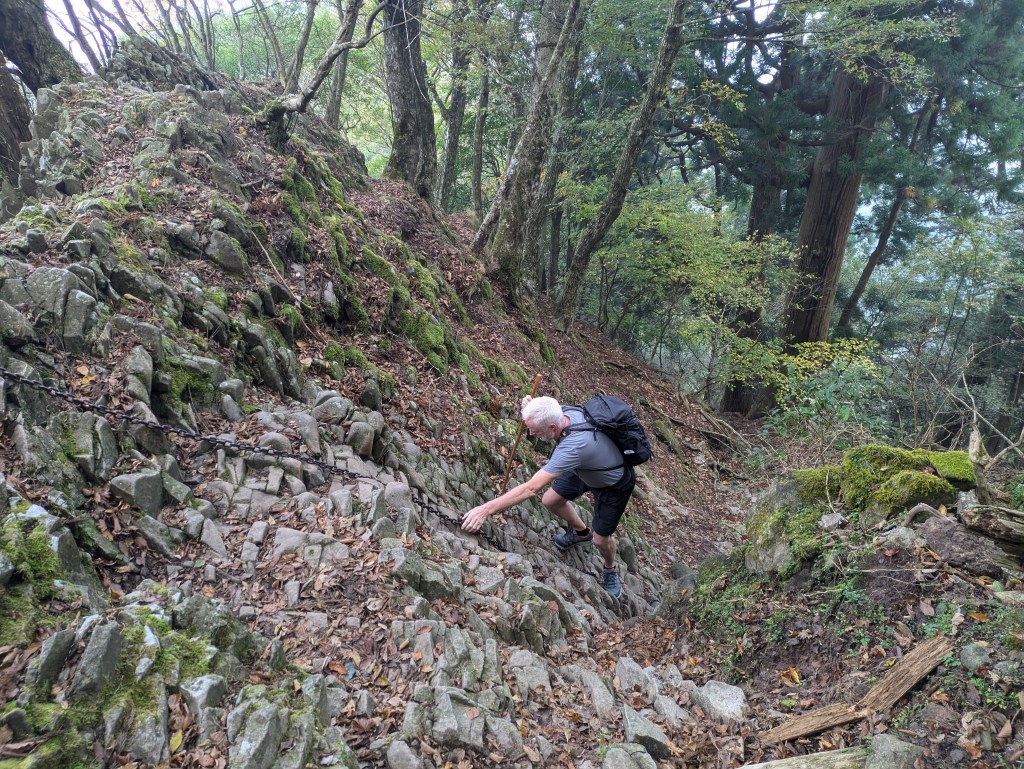
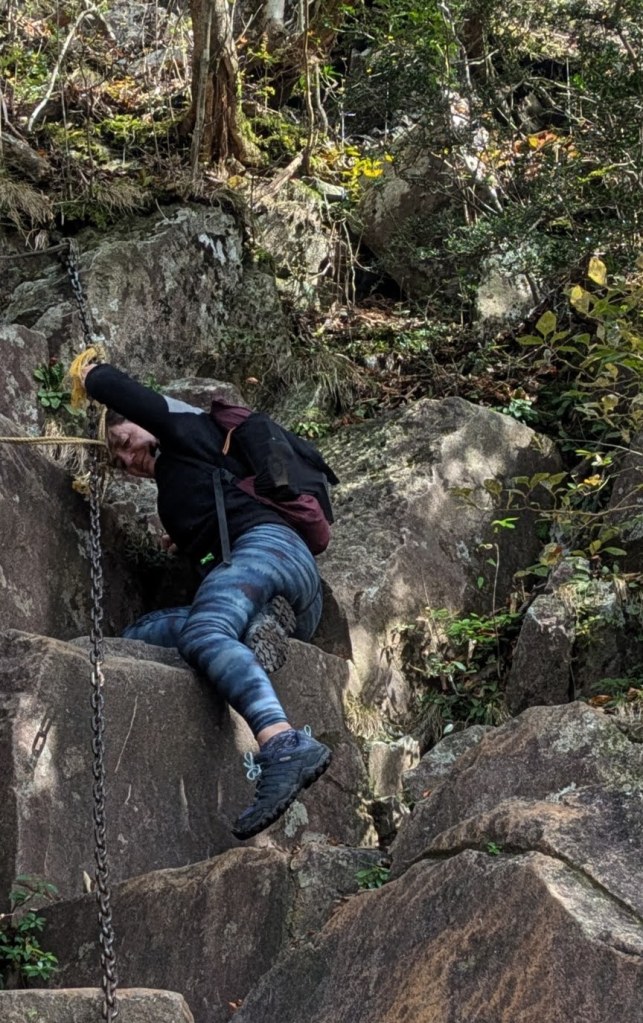
Getting high on Mount Ishizuchi Mount Ishizuchi, the highest mountain in South Western Japan, was an entirely different experience to our Mt Hiko hike. We trekked on a blue-skied Sunday, it was the Sports Day public holiday weekend which promoted an active lifestyle and we weren’t alone. The climb started on gradual paths that became steeper, much steeper.  In some nearly- vertical sections, steel chains were embedded into the rock as an aid to haul ourselves up. It was exhausting but fun, surrounded by many friendly Japanese.

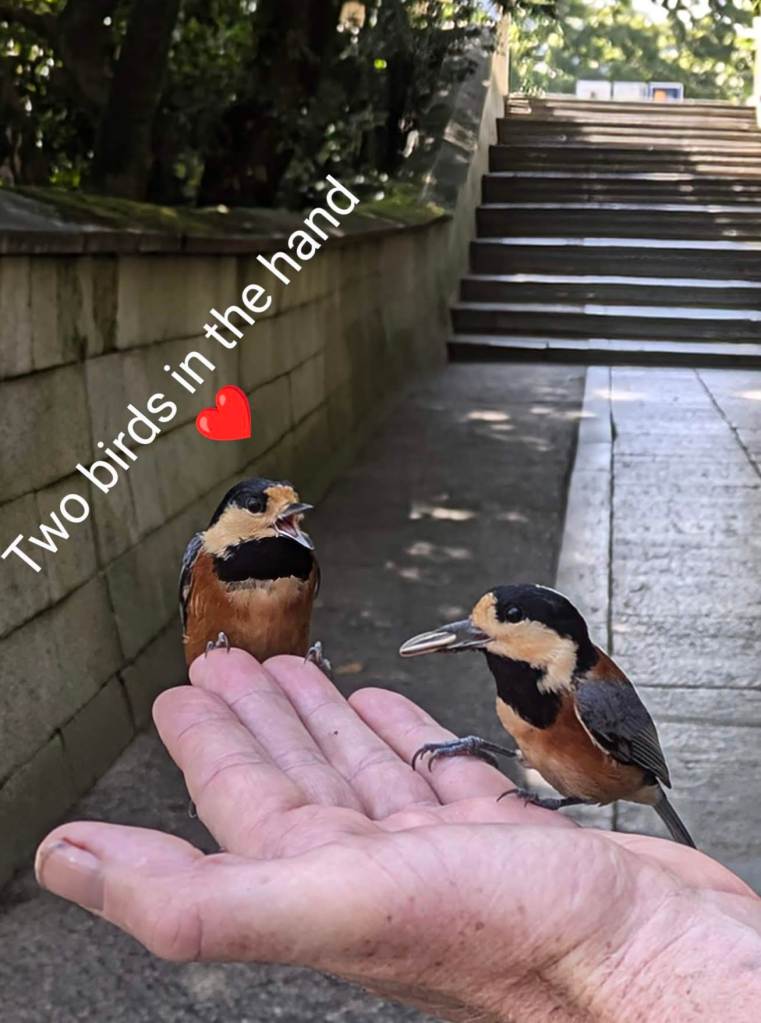
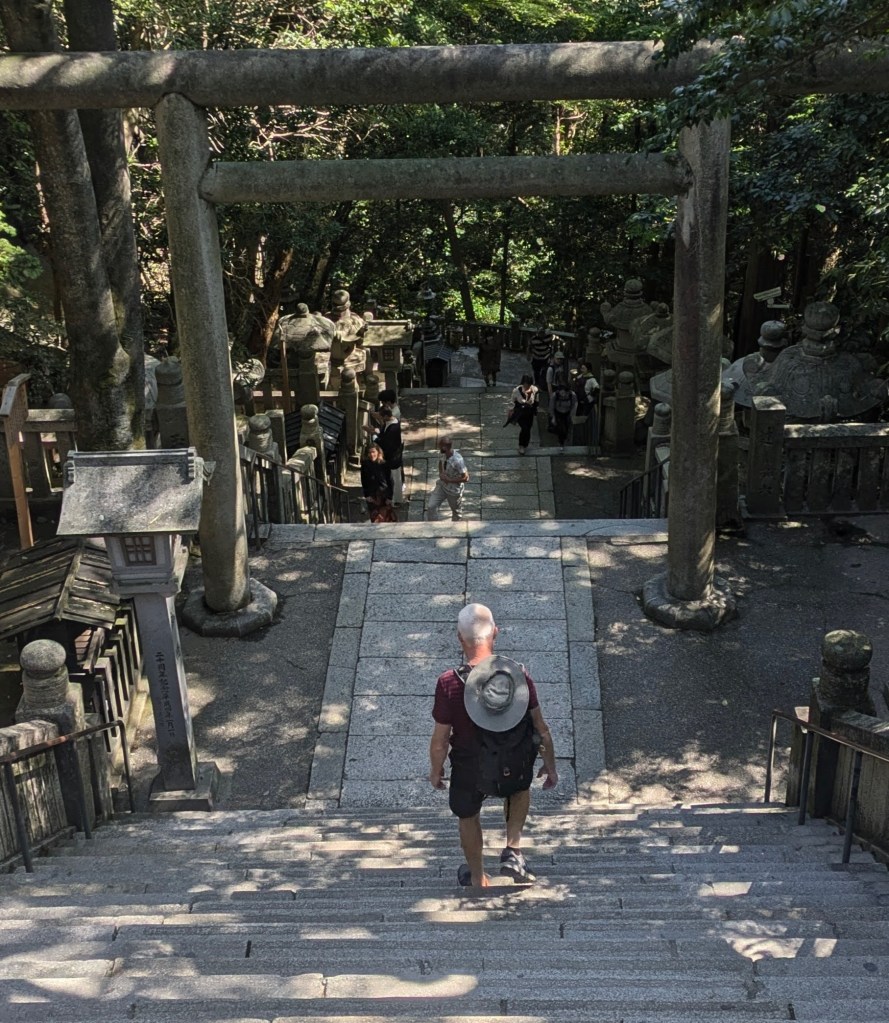
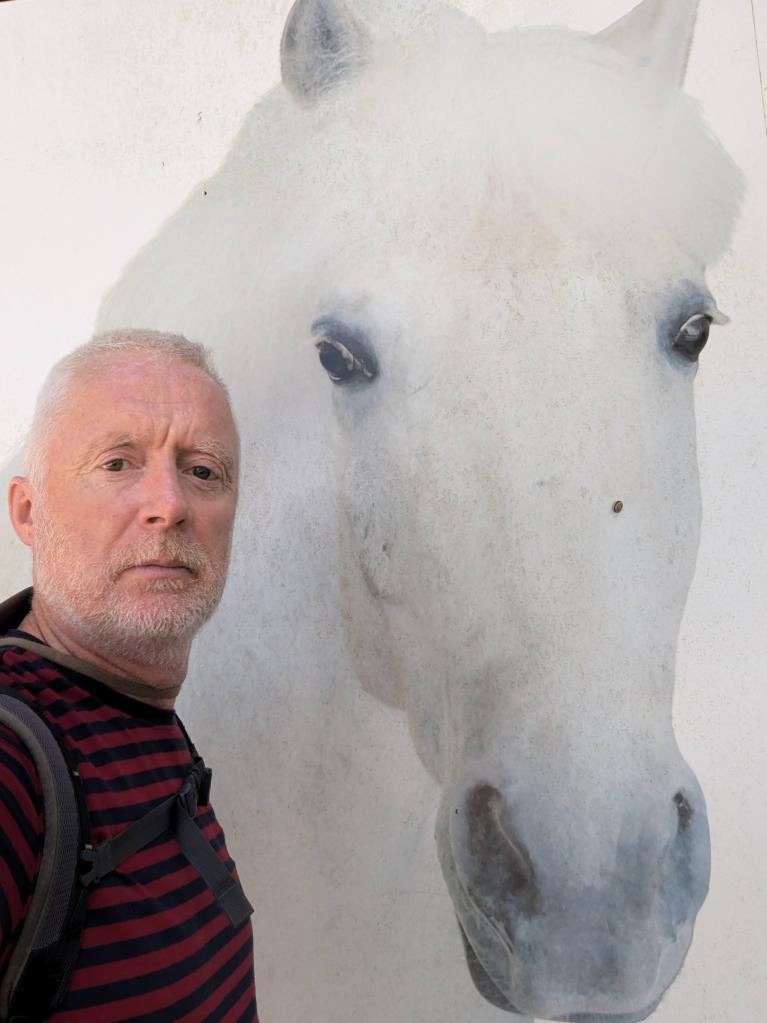
Stairway to Heaven We visited the charming little town of  Kotohira, famous for its proximity to the Shinto shrine, Konpira-san, which is dedicated to sea-farers. In a country of islands, this is a very popular shrine, nestling in the forests of Mt Zozu above the town and requiring a climb  of a whooping 1340 steps.   Arriving in the early morning, there was an air of serenity, broken only by the clattering on each step of a man wearing wooden clogs.  Little birds chirped and landed on our outstretched hands looking for seeds. We passed a stable of beautiful white horses which were considered so divine that they could only  be ridden by the gods.  

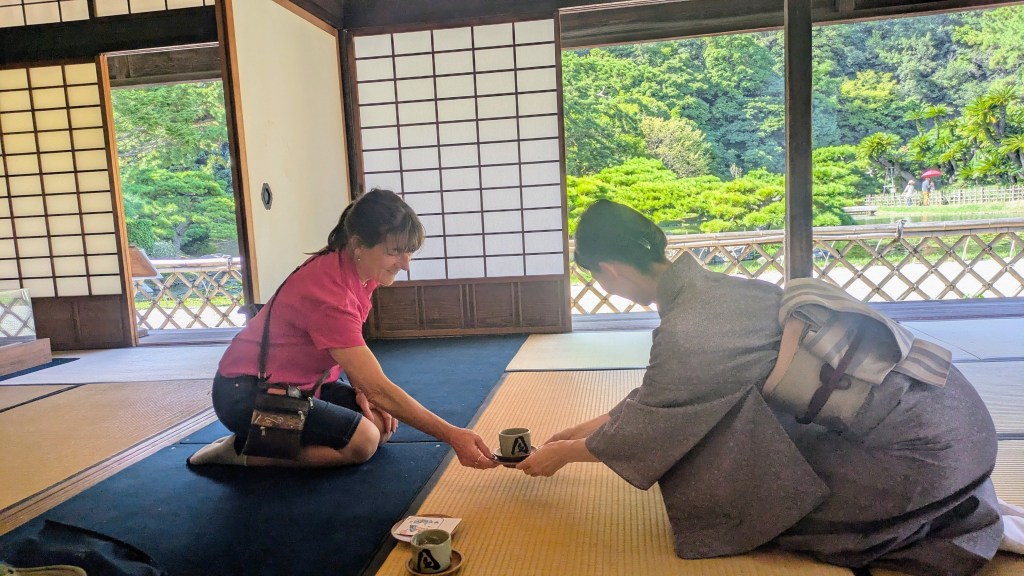
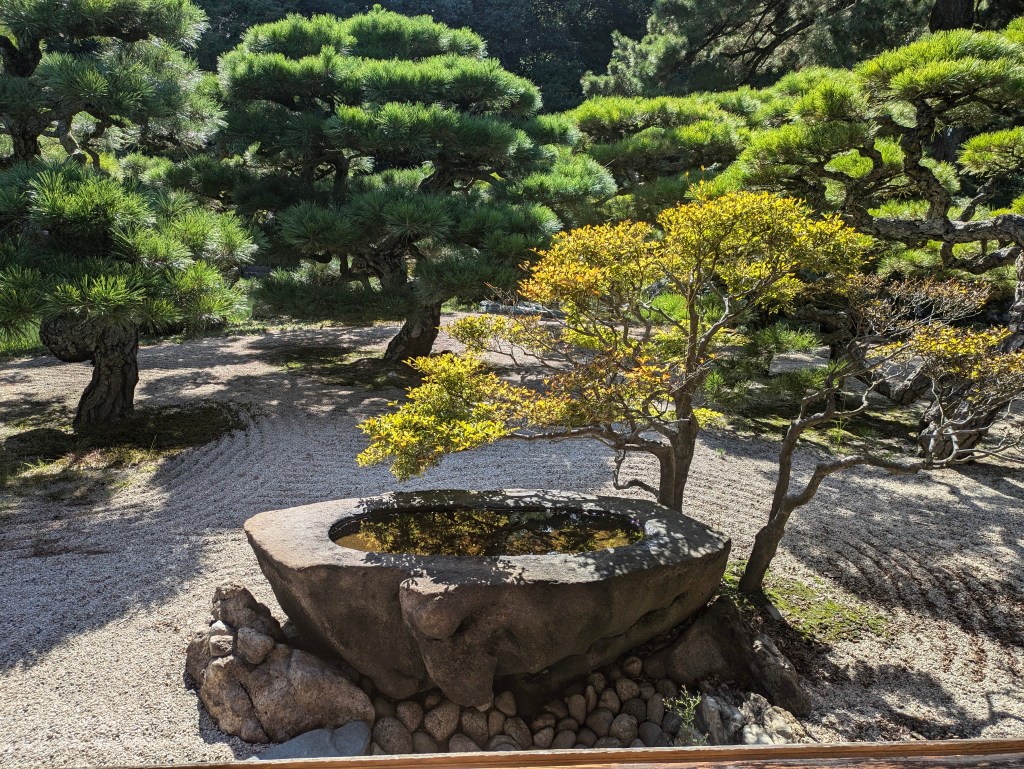
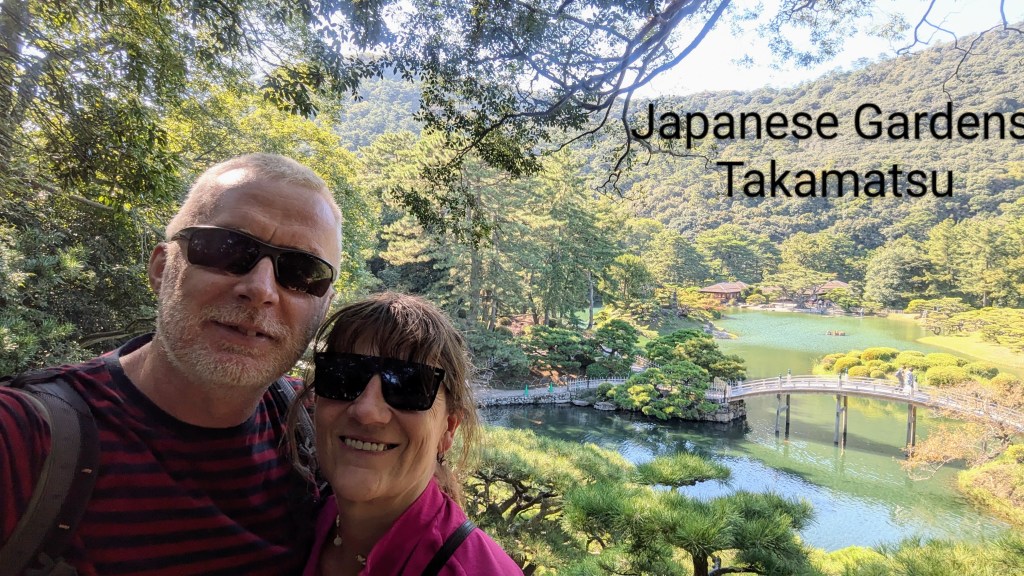
Tea and Shade We were charmed with a visit to  Ritsurin Gardens in Takamatsu with it’s beautiful teahouse of bamboo, screens and cushions. The windows framed the outside view like serene paintings and we drank tea to the gentle sound of flowing water from the small waterfall outside. In the coolness of the teahouse, we began to appreciate the Japanese fascination with light, shade and symmetry and to understand the philosophy that ‘less is more’

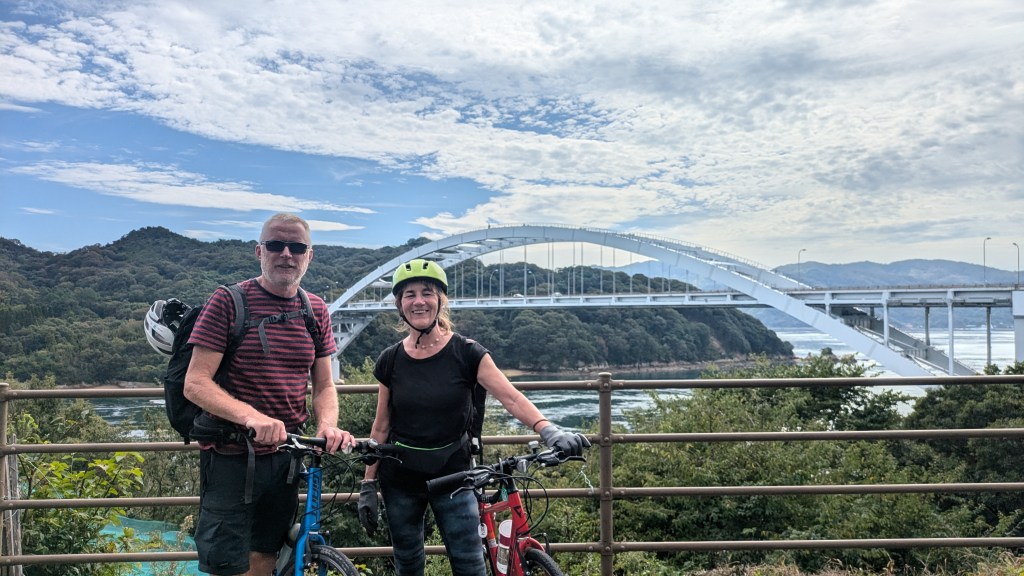
Island Hopping by Bike  The Shimanami Cycleway is an island hopping adventure by bike, traversing several islands in the inland Seto Sea which are linked by magnificent bridges. The 75kms route joins the town of Imbari in Shikoku Island with the town of Onomiche in Honshu. Cycling along the Kurushima Bridge which has a span of almost 5 Kms was a memorable experience.  Ships passed in the turbulent  waters beneath us while traffic whizzed by on the bridge. There were sublime views in every direction of mountains, islands, sea and the bridge itself.  

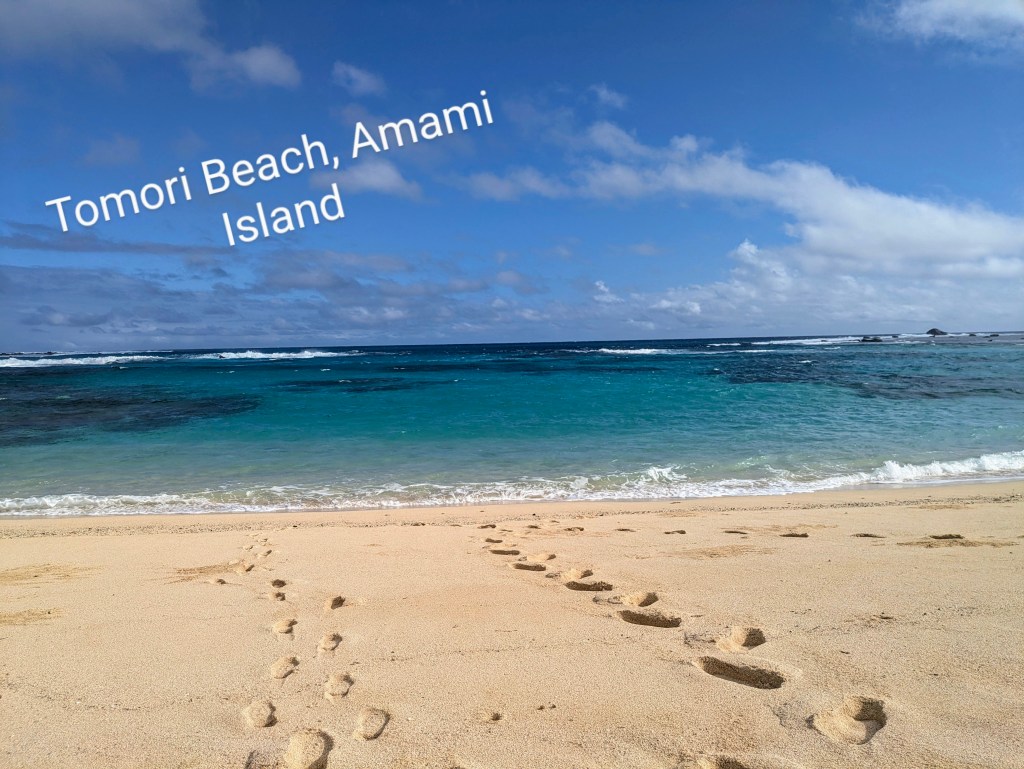
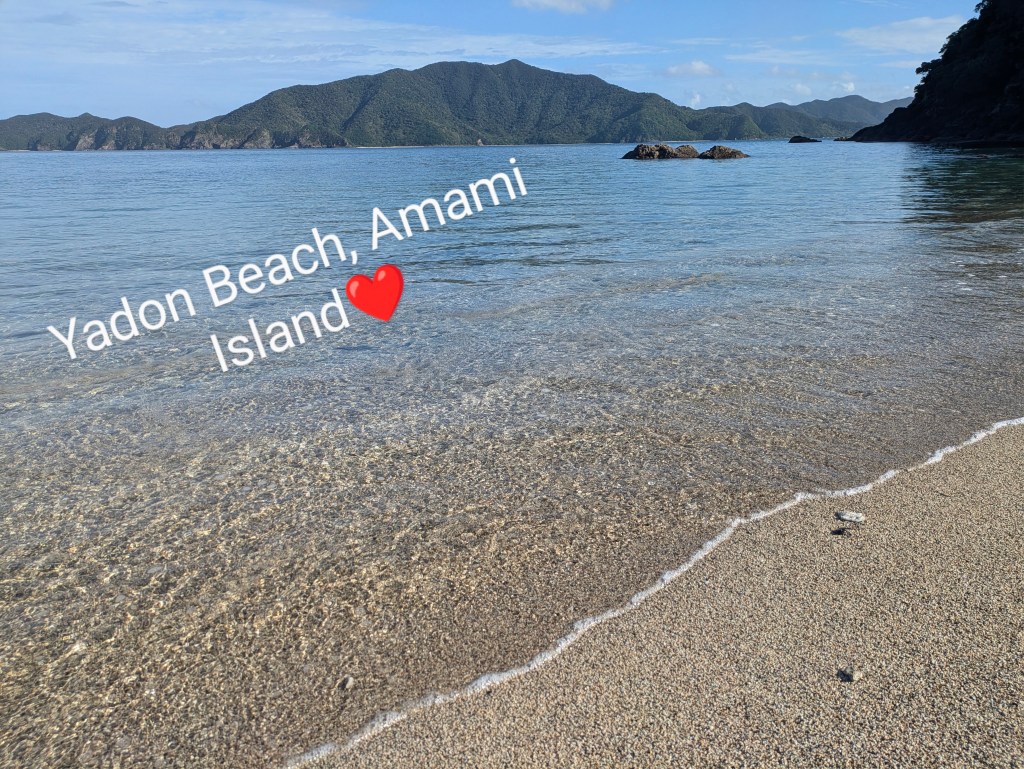
Glorious Beaches of Amami Amami Oshima is the largest of the Amami Island Group, a sub- tropical, nature-lovers’ paradise in the East China Sea, halfway between Okinawa and mainland Japan. Camping by the white-sand beaches here was truly wonderful, topped only by swimming in the clear turquoise water with lots of colourful, flickering fish.

Food, Glorious Food– the food in Japan was a pleasure, a delight and a taste sensation. We had so many gorgeous meals from simple bowls of noodle soup to trays of tempura with a multitude of side garnishes. Good quality ingredients coupled with attention to detail made it special. The Japanese were very proud and fond of their ice-cream which was delicious. However, we were served raw cabbage and soy sauce to go with own beer 😁. It wasn’t as bad as it sounds but it may be an acquired taste.

Relaxing Baths Onsens are public thermal baths, which are part of daily life in Japan, a place to cleanse and destress, to socialise and relax. The idea of stripping off and sharing a bath with naked strangers was an intimidating prospect at the beginning but we grew to love our immersions and appreciated their therapeutic power. Our favourite onsen was high in the hills outside Nagasaki with an outside section and gorgeous views over the city. It was so relaxing lying up to my chin in hot water, fanned by a cool breeze, watching leaves drifting down from the trees and trying to process all that we had seen in that lovely, vibrant city which has witnessed so much sorrow. (no cameras allowed inside the onsens for obvious reasons)

Path of Philosophy….Kyoto, the ancient city of history and dreams, was full of national treasures, World Heritage Sites, countless shrines and temples ….. and visitors, lots and lots of visitors. We shuffled along in crowds at most of the attractions except one. The Path of Philosophy in the Northern Higashiyama neighbourhood was tranquil and meditative. The path meanders along by a canal carrying murmuring water from Biwa Lake with the occasional family of paddling ducks and temples peeking through the foliage that borders the path. It’s very popular in spring when the overhanging cherry trees are in blossom but for us, it was blissfully quiet on a chilly November morning. Along the way, we chatted with a lovely Australian couple who enquired if they were actually on the path….none of us knew for sure where the path began or ended but maybe that was the true philosophical question.

Temple in the Clouds  All over Shikoku, we saw pilgrims on the Pilgrimage Trail of the 88 Buddhist Temples. This is a long route, over twelve hundred kilometres, which circumnavigates the entire island of Shikoku. Most pilgrims do it in sections but we met a few who were devoting six to eight weeks to completing the entire pilgrimage in one go. Many had sore feet as the majority of the route is on hard road surfaces. Although we didn’t do the pilgrim’s trail, we visited several of the temples. Our favourite was Unpen-ji, the highest of the 88 temples and often called The Temple in the Clouds. Hundreds of life-sized statues of Buddha’s disciplines lined the walkways among the cedars. It’s said that if you look hard enough, you will find your likeness among them. Although I searched and searched, I couldn’t find mine

Making Connections  ……No matter where you go in the world there are always connections to home. We visited the Lafcadio Hearn Museum in the city of Kumamoto. In the mid 1800’s having an Irish father and a Greek mother,  Lafcadio spent many boyhood summers in Tramore, Co Waterford just a few miles from our home. The gorgeous Lafcadio Japanese Gardens in Tramore were established in his memory.  He was enthralled by Japan, setting up home there and he is still reversed in his adopted country because of his writings and translations.

We met another man from Tramore, who has also made Japan his home, making fine craft beer in the beautiful Kamiyama area. We can certainly vouch for the quality of his produce. Manus and his Japanese wife, Sayaka, welcomed us, introduced us to some locals and gave us lots of tips, particularly about the etiquette of using the onsens. Strip completely, wash thoroughly before soaking in a bath, no splashing, no swimming, hair tied up, no tattoos.

LOWS

Dramatic Weather –We endured several bouts of torrential rain for days on end each time although it wasn’t the rainy season. Japan is green and gets a lot of rain but this level of rainfall in October and November was unusual. We had numerous phone alerts warning of typhoons, mudslides and flooding.

Packaging The amount of plastic packaging on everything but particularly on food items made us weep. Carrots were individually wrapped in plastic. I know that in Ireland we are guilty of using too much plastic as well but this was a totally different level. All food bought in a convenience store/supermarket/restaurant came with a wet wipe wrapped in plastic and some disposable chopsticks and that’s just for starters.

Disposing of Garbage….The contradiction is that the streets are super-clean with rarely even a scrap of paper on the ground and all this without a trash bin in sight.  Getting rid of our rubbish was certainly an issue until we started discarding it in pieces. When we shopped in supermarkets, we disposed of excess packaging before we left the shop. Convenience stores (konbinnis) had some segregated bins (meant for items bought in the shops) which we used. Motorway stops also had some segregated bins.

Campervan Sulks…. Our van wouldn’t start when we were in the queue to board the ferry to leave Amami. The rain was torrential and we didn’t even know how to open the bonnet. After trying several times, we were getting desperate. One last try and the engine turned over and we got on the overnight ferry. We didn’t have any more trouble.

Parking in Kyoto…..Mainly we availed of free wild camping in scenic spots in the countryside but  in the cities we parked in city centre carparks which usually cost about €5 to €10 for overnight parking. In Kyoto, we misread the tariff board , and  discovered that we could easily have stayed in a nice hotel for the price of the parking charges😲

Encounters of a Small Kind Japan is an extremely hygienic place with a huge emphasis on cleanliness , partial to the liberal use of disinfectants and  wearing face masks. Neither of us had any issue with tummy upsets or health concerns. One morning, I woke up in the van feeling like I had a brick over my partially closed left eye. I expected Caoimhin to say it didn’t look too bad but his reaction was one of horror. It took two days to subside. I’m still not sure what caused the spectacular inflammatory reaction but suspect a mosquito.

On Amami Island, we were warned about the viper snakes everywhere we went…..by the locals and by the many warning signs. Thankfully we never saw one or heard a slithering sound of one.

So many things surprised us about Japan from practical things like the abundance of public toilets and the people of all ages who use bicycles as a means of getting around to the greenness of the countryside and the enormous number of trees. Most people profess to have no religion but mark key life events with Shinto rituals and visits to Buddhist temples. The people are polite and reserved but welcoming and love to laugh, especially the women, and we gave them plenty of opportunity for amusement.

We covered less than a third of the country, we didn’t go anywhere near the big-ticket tourist items like Tokyo or Mt Fuji and barely scratched the surface of the places we did visit. We came anyway, changed in some indefinable way, fascinated by the blend of traditional and modern, mesmerised by the natural beauty of the country and perplexed by the contradictions. Japan still remains an enigma. We may have to return for a deeper dive, to breathe in the mystery of this fascinating country.

Japan: Highs and Lows

Japan: Holy Mountains and Glorious Gorges

Sandan Gorge, Japan

Our visit to Fukuoka didn’t start well. The traffic was horrendous as we made our way into the city from Nagasaki. Fukuoka is the largest city in Kyushu (one of the main four islands in Japan) and is one of Japan’s ten most populated cities…and it certainly felt like it when we were there.  With its closeness to the Asian mainland (closer to Seoul than to Tokyo), Fukuoka has been an important harbor city for many centuries and was chosen by the Mongol invasion forces as their landing point in the 13th century. It is often called a ‘mini’ Tokyo, it even has a smaller version of Tokyo Tower and as we don’t plan on visiting Tokyo, Fukuoka seemed like a good option.

We thought that we might treat ourselves to a hotel but the reasonably-priced hotels/guesthouses were booked out so we resorted to searching for a parking spot close to public loos. In the city centre, we found a possible spot that met our criteria (proximity to toilets) but it was just off the main road with roaring traffic so our search continued. Google directed us to another parking area which involved a heart-stopping lurch across four lanes of traffic into a tiny alleyway. With the van almost touching the sides of the buildings, we prayed that it was one-way system and hoped we wouldn’t encounter anything coming in the opposite direction.  Thankfully, we found ourselves in a little oasis with some free parking spots, quiet but still in the heart of things. There was a little park nearby with public toilets, festival stalls selling food and local produce and best of all, a jazz band playing on a small stage. At one tent, a woman beckoned us over to give us some vouchers (a thousand yen each (about €6)) which could be redeemed  at any of the stalls….a welcoming gesture for foreign visitors. We sent a German man who was cycling around Asia in her direction so that he could get his ‘welcome vouchers.’  The sun was shining, the music was good and we relaxed with some seaweed dumplings and a cold craft-beer. The beer was in plastic glasses…..but hey, you can’t have everything.

Later we wandered around a crowded Chinatown, and marveled at the long queues outside many of the restaurants and the patience of the Japanese who formed orderly queues, keeping a little distance from each other.  Christmas also came early to Fukuoka with coloured decorations, dancing Santas and flashing lights festooning  the bridges, streets and shopping malls. Christmas is not a public holiday in Japan and less than 1% of the population are Christian but the commercial aspect of the season is enthusiastically embraced. Christmas Eve is regarded as the most romantic night of the year, a bit like our Valentines Day when couples are out and about, love is in the air and not having a date if you’re young requires staying at home to avoid embarrassment.

 Away from the queues and crowds, we found a cellar bar with subdued lighting, soft music where we were the only patrons, the other extreme and not really what we wanted. The bartender gave us soft, hot towels to wipe our hands as soon as we sat down. This wasn’t totally unusual as even the most shabby of establishments hand out wet wipes wrapped in plastic to clean your hands.  Bowls of spicy nuts in dainty porcelain bowls appeared on the table (no raw cabbage and soy sauce in this establishment to munch with your drinks). We should have known that we would pay dearly for such luxuries.  When the cover charge,  was added to our bill (we didn’t even realize that there was a cover charge) our two drinks (one each) cost significantly more than we had paid for dinner! Thank goodness we didn’t opt for a second round.

Our quiet oasis turned noisy during the night with garbage trucks collecting trash, vans parking and then moving off, filled with workmen dismantling the festival stalls in the park. In the morning, we went bleary-eyed in search of coffee/tea only to find more orderly queues stretching down the street outside all the open cafes. Although we normally avoid places like Starbucks, this time we were thankful to sit down with coffee and cinnamon buns without any tiresome queueing and avail of their  strong  Wi-Fi where I was able to upload the last blog post with photos. Maybe we should take lessons in patience from the Japanese who queue patiently, mainly in silence, without any visible sign of irritation.

The mountains were calling us and  we felt a strong urge to get out of the city and into the countryside but there was something we had to do before we left. Fukuoka has a reputation for making the best ramen (a noodle soup) in the entire country so we couldn’t leave without sampling some.  There are several traditional recipes but the one that is most prized involves boiling pig bones for hours, maybe days, until the marrow leaks out and becomes a thick cream which is then used as a base for the soup. The ramen was served in big bowls and eating it should be accompanied by loud slurping to show appreciation.  Bibs are provided to protect clothes from the inevitable splashes. Reading the descriptions of the pork-bone soup made me feel queasy so I didn’t ‘pig out’ but opted for a tomato based ramen with seafood which also used a traditional recipe. It was delicious but I have my suspicions that a pig was involved somewhere along the process.

About a hour and a half’s drive outside Fukuoka is a  mountain where over 400 years ago,  white-clothed monks, practitioners of an ancient ascetic religion called Shugendo, chose sacred mountains until they reached their ultimate goal of enlightenment. We were eager to follow in their footsteps and hike the holy mountain to see what  enlightenment and spiritual power it might bestow upon us.

The winding mountain roads coiled through pottery villages with tables of ceramics set up under flame-coloured maple trees and smoke rose from the many kilns. Even before we reached  Mt Hiko, we were enveloped by a sense pf peace mixed with exhaustion from lack of sleep from the night before. We parked by a stream next to toilets at the base of the sacred mountain with nobody else around, cooked up a dinner of potatoes and mushrooms ( the quality and variety of both in the supermarkets was amazing) and watched the stars come out one by one until the sky overhead  was a star- studded canopy, more beautiful that all the twinkling city lights.

The following morning dawned cool and bright as we began hiking past moss-shrouded shrines with birdsong  and the higher peaks still draped in drifting mist.  Maybe it was because we had read the history of the mountain and were open to its power but right from the beginning we felt that we were in a special place. The hiking trails were well-marked with lots of looped walks and decisions to be made about whether to continue, to turn back or to walk in circles. Maybe this was the essence of true enlightenment, that all paths are correct, you just make a decision and accept it.  Mt Hiko really consisted of three peaks and as we neared the first peak there were signs in Japanese that the path was closed and a barrier was pulled halfway across.  It was easy to bypass the obstacle so we continued regardless, we could always plead ignorance if challenged.  As we ascended we heard hammering and saw that there was construction work going on at the summit where the existing shrine was being enlarged. We kept our heads down and skirted around the building works and headed for the adjacent peak with stunning views of the surrounding mountains, dressed in their glorious autumn foliage, vivid hues of red, gold and purple. If the first section was beautiful and easier than expected, the next section was more challenging but truly ‘wow’. There were chains embedded in the rocks in places but they were more as an aid for climbing rather than strictly necessary. We diverted to see an incredible ancient cedar tree named Onisugi, reputed to  be  1200 years old. This was truly a special day, a hike that was good for the soul and we were physically tired but spiritually refreshed after a six hour round trip…..although true enlightenment may require some further strenuous activity.

It was time to leave the large island of Kyushu and head over another long, impressive bridge to Honshu, the second largest and most populated of the Japanese islands. We arrived at dusk at the small town of Hagi and parked up on the north side of town beside a small beach. We didn’t realize how beautiful the spot was until dawn when an early morning trip to the toilet revealed islands, distant mountains, a calm sea and boats moored in a little harbour. But then you’ve guessed it….it began to rain and this time the rain was cool and drizzly.  It was about 12 degrees, the coldest we’ve had in Japan apart from when we were high in the mountains. Hagi is also famous for ceramics which are mainly in delicate pastel shades.

We were in need of a laundromat so while our clothes were whirling in the washing machines, we wandered around town with its wide streets and many traditional buildings, a place little changed from the time of the Samurai. We stumbled across a shop selling clothing for a reasonable price so prompted by the chilly wind, we bought a warm jacket each. We didn’t know it then but the cosiness of the jackets were going to be very welcome in the coming days with a  further dip in temperature. In the meantime we drank tea in a coffee house and eat home-made cake made from locally- grown figs and mandarin oranges, probably the most delicious cake we have eaten on our travels.

Our breaths blew clouds in the cold morning air as we parked at the starting point for the Sandan Gorge, A small man, muffled in a thick coat, was sitting outside the information booth.  He got up on our approach, leaned heavily on a cane, and pointed to a map giving us the bad news that the recent heavy rains had caused landslides and several parts of  the Gorge were closed because of the risks of more rockfalls and mudslides. He told us that he was a guide but he was out of action because of a bad fall a few months previously, that his favourite country was Alaska and that he had once stopped a grizzly bear in his tracks  with his stare. He gave us an example of the ‘stare’ which also involved barring his teeth. Since then, everyone in the village called him Big Bear.

Although our hike was shorter than envisaged it was still worthwhile, true forest-bathing where a  tree lined stony path hugged the side of the ravine before descending to cross the green river on a swaying rope bridge. A short ferry ride gave us an appreciation from the water. Our boatman didn’t quite know what to make of Caoimhin who was singing ‘Don’t pay the ferryman until he gets you to the other side.

But our journey goes onwards, towards historic Kyoto, the city of dreams and the most visited city in all of Japan. Have we left the best until last? Time will tell.

Thanks for reading

Until next time

Japan: Holy Mountains and Glorious Gorges

Japan: War and Peace

Peace Park, Nagasaki

In my last post, I said that we were hoping to leave Amami Island, a small island in the East China Sea a few days early because there was a risk of a typhoon coming in our direction. The bad news was that we couldn’t change the ferry return date because of lack of availability for the campervan  and the good news was that the typhoon changed direction and headed in a more southerly path towards Taiwan and North Korea. The tail of the hurricane still lashed Amami with rain  so we booked into a really comfortable hotel -The Wa,  enjoyed some pampering and sampled a few of  the many restaurants in Naxe, the main town on the island.

We have become fans of Japanese food although we had rarely eaten it before coming here. However a word of caution to vegetarians –  a strict vegetarian would probably starve as even the miso soup has a meat base and tofu floats alongside slivers of pork or beef.  So we opt for as little meat as possible but even the meat dishes aren’t very ‘meaty’ and there’s usually lots of fresh vegetables.  Google Translate lets us down at times when we are looking at menus.  We thought that we were ordering the local dish of the Amami Islands (Keihan) which is chicken and rice but we got noodle soup with pork. The presentation and the attention to detail is truly magnificent, with a multitude of side dishes and garnishes.  There is such a high standard even in the cheapest places. Eating out is a real pleasure and much more affordable than at home ( we eat local as much as we can)A huge bowl of ramen is about €4 -€5, dinner main course is about €10 to €12 and lunch is cheaper. Some things take a little getting used to. When we ordered two beers, they were accompanied by a bowl of raw cabbage which should be dipped in a couple of varieties of soy cabbage and eaten with chopsticks….surprisingly nice. We haven’t even seen a knife and fork anywhere in Japan yet.

If we are out in the middle nowhere in the van, we cook simple one pot meals ourselves so we also frequent the supermarkets and the little convenience stores known as Konbinni which are everywhere. They are amazing places, usually manned by very friendly staff. They have ATMs, toilets , free WiFi and sell everything from toiletries to Pot Noodles. You can buy all your meals here with a huge selections of  high quality, ready-meals with microwaves to heat them up, a counter with stools or a few tables to sit at. There’s coffee, cold drinks and a selection of magazines and comics. They are open late, often 24 hours a day, and are really an extension of the Japanese home which are often shoe-box size especially on the cities. Apparently some Japanese apartments (and student bed-sits) don’t even have a kitchen.

Last  Wednesday evening, we were sitting in the van in the ferry queue to get off Amami Island. It was dark  but it was also warm -about 25degrees- and very humid. The rain was torrential. Caoimhin tried to turn on the engine to clear the windscreen and turn on the wipers. Nothing happened. There was an ominous creaking sound (a bit like a hoarse corncrake) but nothing more. After several panicky tries with no luck, Caoimhin got out to see if we could get help. I was frantically thumbing  through the Japanese van manual to find a graphic representation of  out how to open the bonnet(words weren’t any help😲). Meanwhile Caoimhin was out in the rain, holding his useless umbrella which the wind had turned inside out. One of the attendants, an elderly man, came over to us and  Caoimhin tried to start it again. The same creaking sound. The man nodded and walked away without a word. We sat there, still not knowing how to open the bonnet. Then one last try……and the engine turned over. A few minutes later, the row of cars started to move to board the ferry with the usual shouting, whistle-blowing and reversing up ramps. The ferry we embarked had come from Okinawa and again there were lots of Japanese army vehicles and personnel onboard but there were also hundreds of schoolchildren travelling to the mainland of Japan for school sports events The US still have a big army base in Okinawa, which was under American control from the end of World War 2 until the 1970’s.

The crossing was rough, much more turbulent than our outward journey. At times there was such loud banging that it sounded as if vehicles were sliding around the car deck. After a few hours, it became calmer but we were more than delighted to see land and disembark in Kagoshima.

No matter where you go, there are always connections with home. Our next stop was Kumamoto, a town where Lafcadio Hearn lived for a few years with his Japanese wife and children. Lafcadio was a writer with an Irish father and a Greek mother and spent many summers in Tramore as a boy. The beautiful  Lafcadio Japanese Gardens in Tramore were established in his memory.  Lafcadio is very much revered in Japan for his writings and his house in Kumamoto has been turned into a museum. There was a small entrance fee and the attendant was very friendly (although he didn’t speak English) giving us some postcards as presents.

As we drive into the mountains out of Kumamoto, we can see the hazy peninsula of Nagasaki across the Araike Sea. Along the way, there are small farms and little villages by the shore, both traditional and modern houses, roadside shires and cemeteries. It’s mandarin season  and most houses have a persimmon tree outside with it’s ripening  orange fruit decorating the branches like balls on a Christmas tree. The land becomes flatter with rice and beans, tractors and enormous greenhouses.

Caoimhin has been talking about the wonders of Japanese steel since we arrived in Japan so on our drive to Nagasaki,  we divert to visit a small family-run  business who have been making hand-forged knives for centuries. The knives with their glinting blades and carved handles are truly a work of art.

Careful now!!!!!!!!

Nagasaki is a beautiful city with gentle hills on three sides and a long narrow bay to the sea. It was the only harbour port in Japan where contact and trade with foreigners was allowed during Japan’s self-imposed, two-hundred year isolation. There’s a gorgeous old stone bridge, built in 1634  that has survived all the trials and tribulations of time including the dropping of the atomic bomb. ‘Mothers’were posing on the bridge with their Lovots ( baby robots) when we visited yesterday.

It’s almost impossible to imagine the horror of that day in 1945. The photographs and descriptions in the Atomic Bomb Museum are so  harrowing  that’s it’s difficult to process it all.  The  terrible plight of the survivors, their awful thirst and the grim legacy that they carried afterwards is beyond words. A prison near the hypocentre vaporized leaving only the foundations of the building. Several schools were left with just a wall standing, ceramic roof tiles more than a kilometre away, boiled and bubbled when exposed to the heat flash. 73,884 people died instantly and a similar number were injured. Despite everything Nagasaki has risen like a phoenix from the ashes and the emphasis is firmly on peace and friendship so that nothing like it can ever be allowed to happen.

The Nagasaki Peace Park is filled with statues, commemorative plaques and remains of the bomb drop. There are sculptures from various countries around the world pledging friendship and solidarity. Many of the sculptures depict mothers and children emphasising that we must protect not only present generations but also the coming generations so that all the peoples of the world can live in harmony.

The weather was extremely wet in Nagasaki for our first day.  Western and central Japan has recorded their largest-ever 24-hour rainfall for November. After the devastating floods in Spain, it was a bit disconcerting to be sleeping in the van while rain bucketed down as if it would never stop. (Most of the photos are from our second sunny day 🌞)

A Saturday morning visit to an onsen (thermal baths) was just what we needed after our very rainy (and windy) night in the van, parked in the corner of a carpark. The onsen was high in the hills above Nagasaki and had an outside section with gorgeous views of the city. We have become so accustomed to onsens at this stage (and walking around in the nip) that it’s difficult to believe how awkward and intimidating we found the whole process a few weeks ago. It was so relaxing lying up to my chin in hot water, fanned by a cool breeze and watching leaves drifting down from the trees and thinking about all we have seen in this lovely vibrant city which has seen so much sorrow.

The storm system gradually moved away and the sun came out on Saturday afternoon…..stunning blue skies after all the rain, almost like the motto of this city, ….a belief in hope and brighter days. Our phones are calling for people to be on high alert for landslides and flooding, while also being careful of lightning, tornadoes and violent winds through late Saturday.😲😲. But we are loving the clear blue skies, the sunshine and the ’weather forecast is good for the coming week.

Until next time…thanks for reading x

Nagasaki

Let there be peace.
The Centre of Devastation ( marked by a black plaque with concentric circles radiating from it).
So peaceful now

Japan: War and Peace