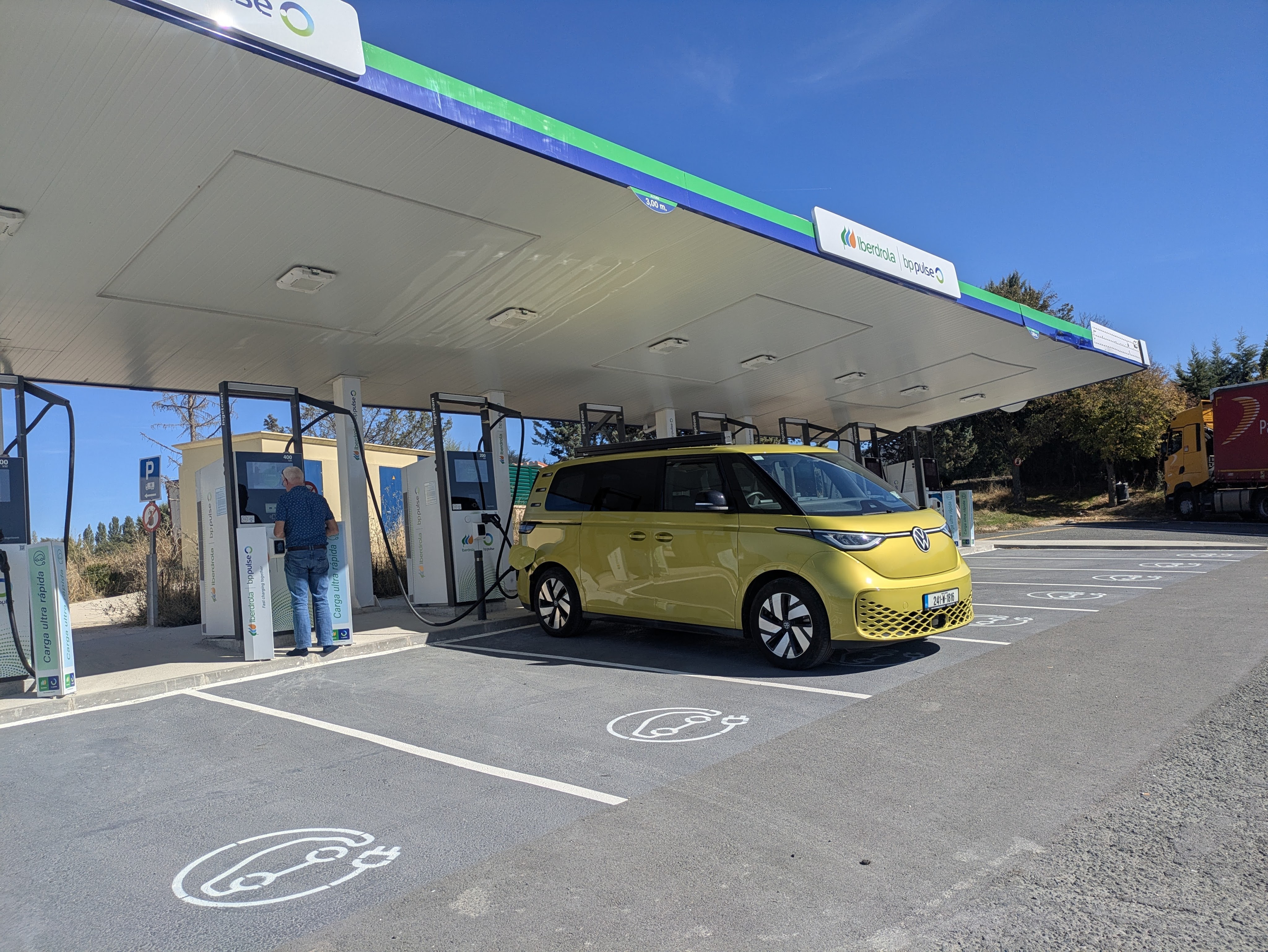
The night before we left home for our two-month roadtrip from Ireland to Morocco in our completely-electric van, I had a dream -more a nightmare – that camels were towing us through the desert because we had run out of charge. Thankfully that didn’t happen…..although at one stage in Central Morocco, it was looking like a very real possibility. But we survived – both us and the van arrived back home, delighted and exhilarated by our travels.
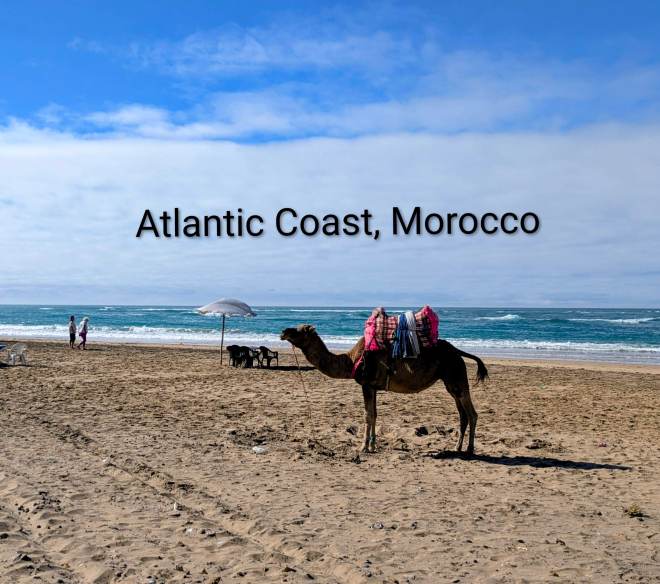
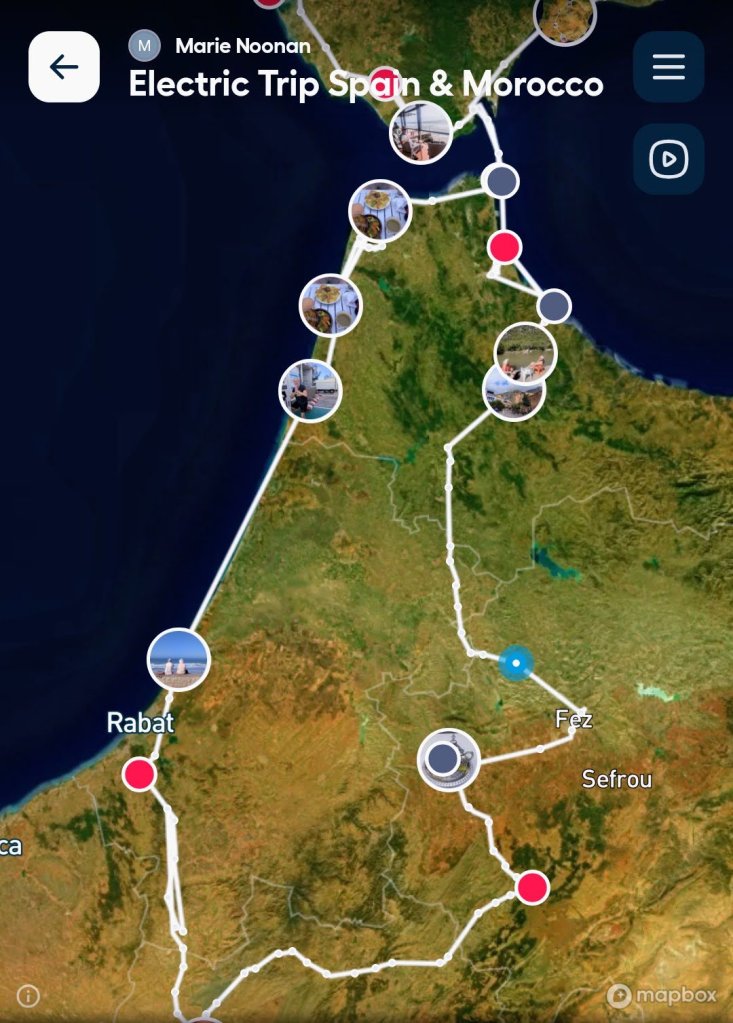
This final post is a brief summary and some trip highlights. We left home on the first of October, sailing with Brittany Ferries boat from Rosslare to Bilbao in Spain – the thirty-hour journey was a wonderfully relaxing way to transition into holiday mode. We meandered through central Spain to Algeciras in Andalusia, (charging as we went along without issue) where another ferry (only one hour this time) took us across the Strait of Gibraltar to Morocco. Having spent a little over three weeks in Morocco, we returned to Spain and made our way slowly back to Bilbao to return home on December 2.
Our highlights were numerous in both countries so….. here’s just a few in no particular order.
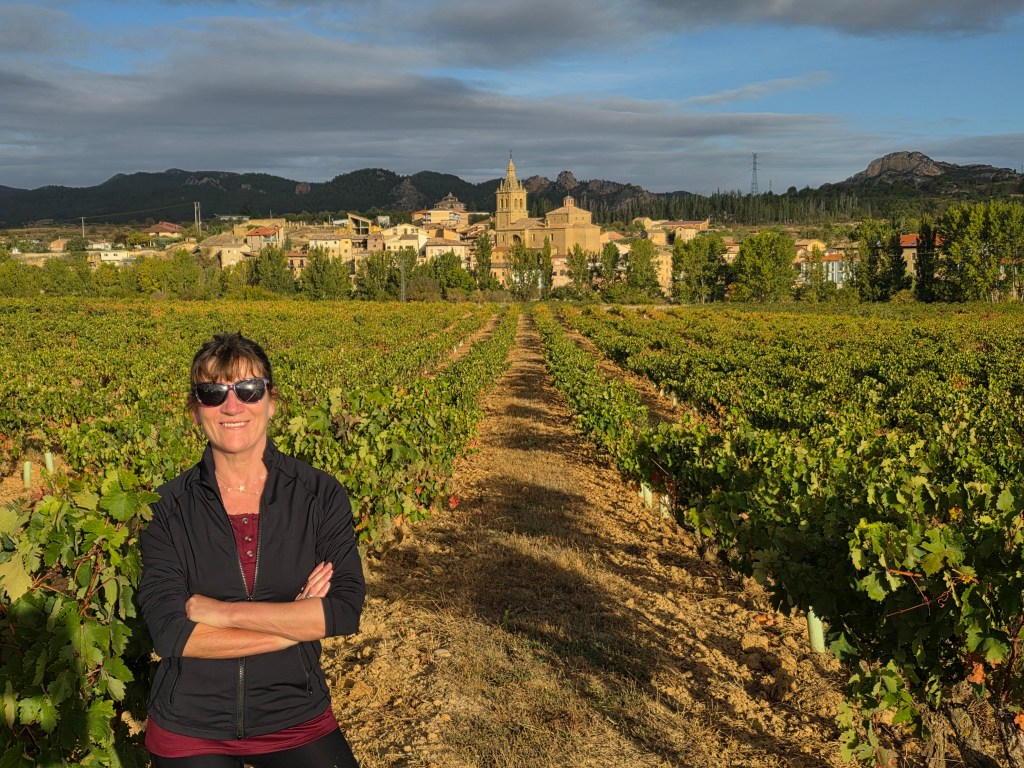
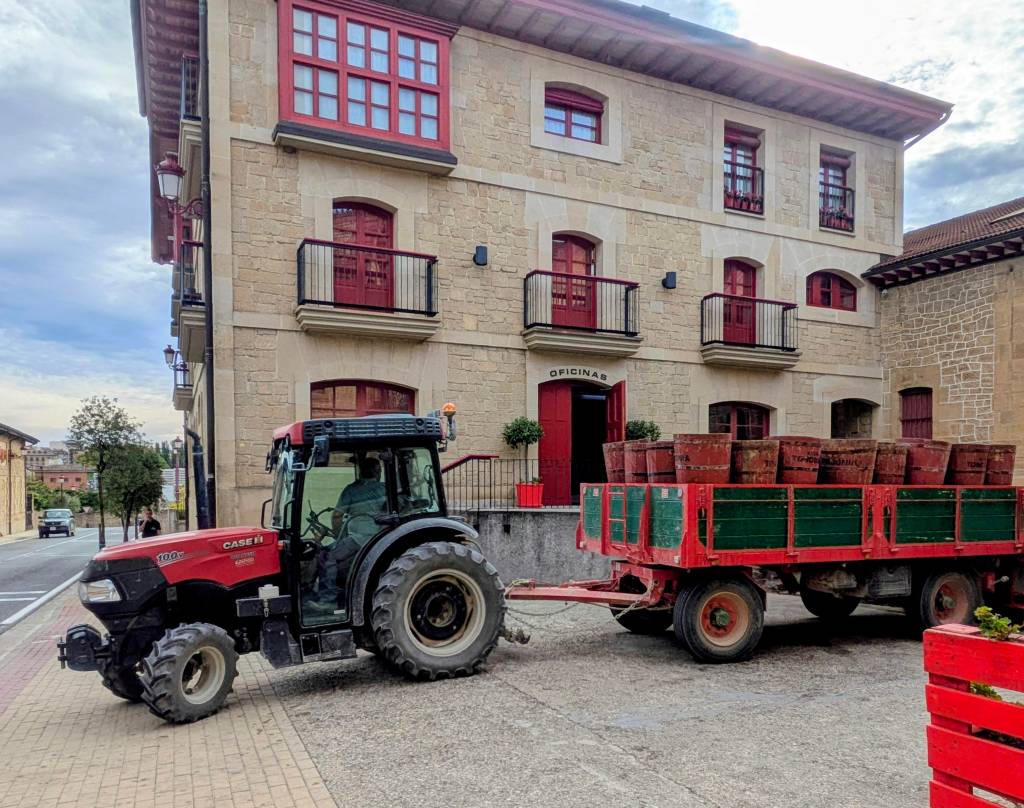
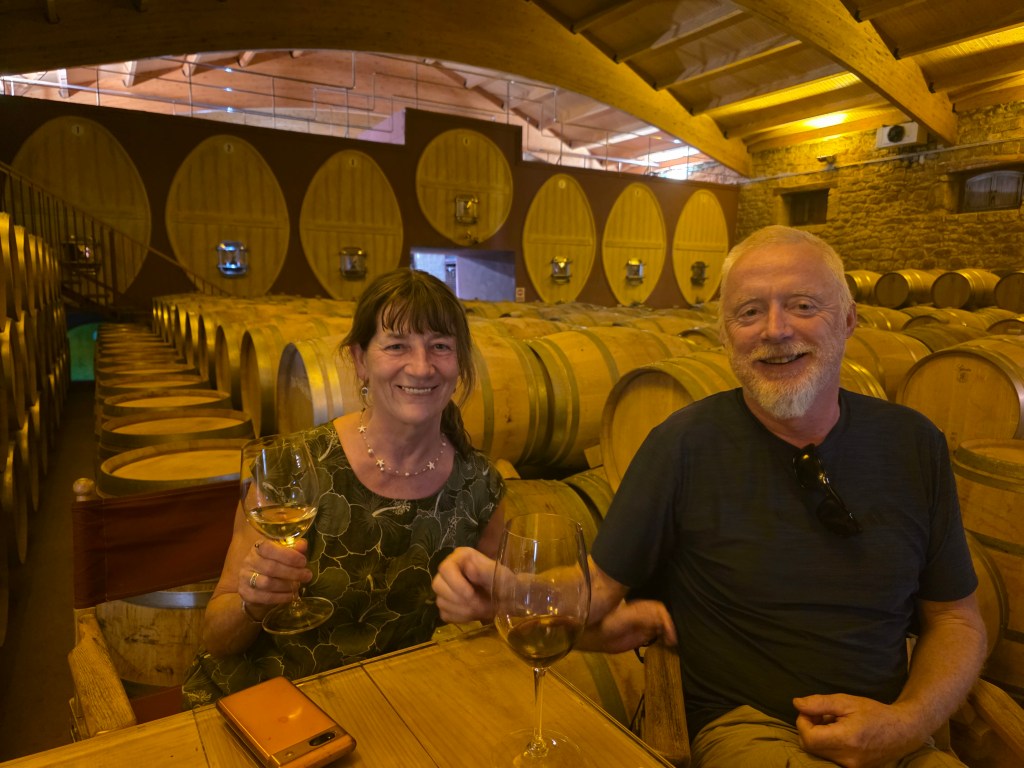
Haro is a small town in the Rioja Region where, in early October, the air was heavy with the tang of fermenting grapes and the hum of tractors pulling heaped trailer-loads to the wineries. The buildings were made of a mellow-yellow stone that seemed to glow in the late afternoon….but that could be just the effect of the wine-tasting. Sipping wine in a two-hundred year old cellar, surrounded by wooden casks which were slowly seeping alcohol into the dim air, was a memorable way to enjoy a tipple…. even if it was barely midday. Most wineries opened at 10am and closed by early afternoon. This activity also meant that most visitors were never entirely sober. We thoroughly enjoyed ‘The Haro Haze,’ that fuzzy, slightly inebriated state, but after three days, we had to leave or we might have stayed forever.
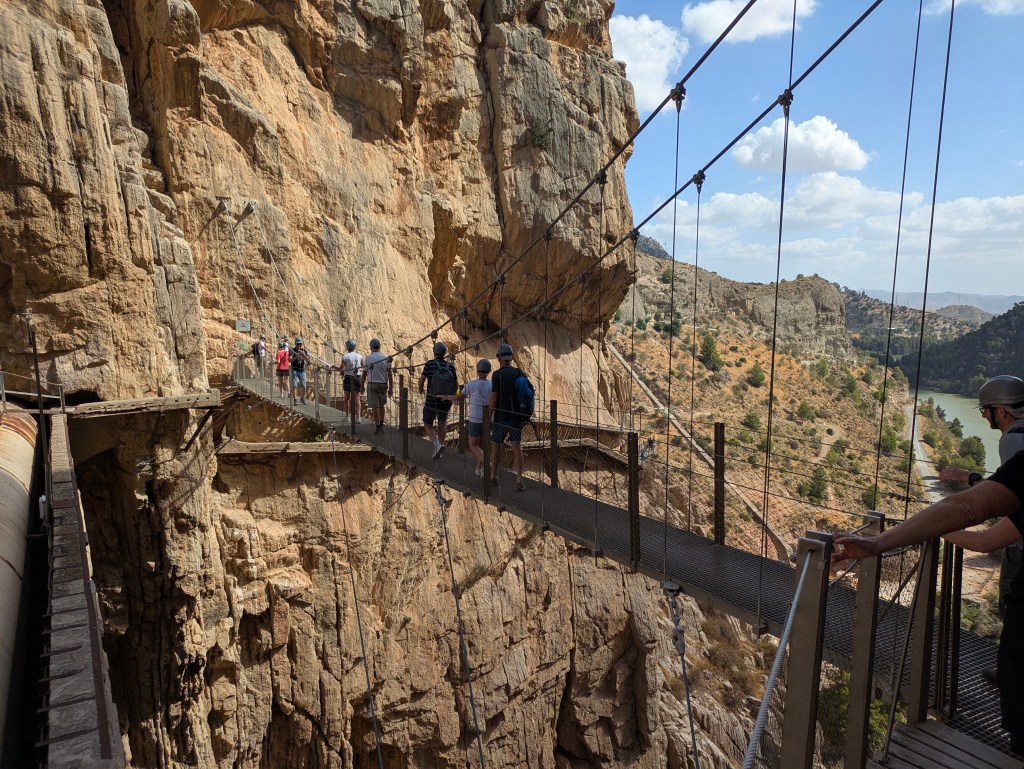
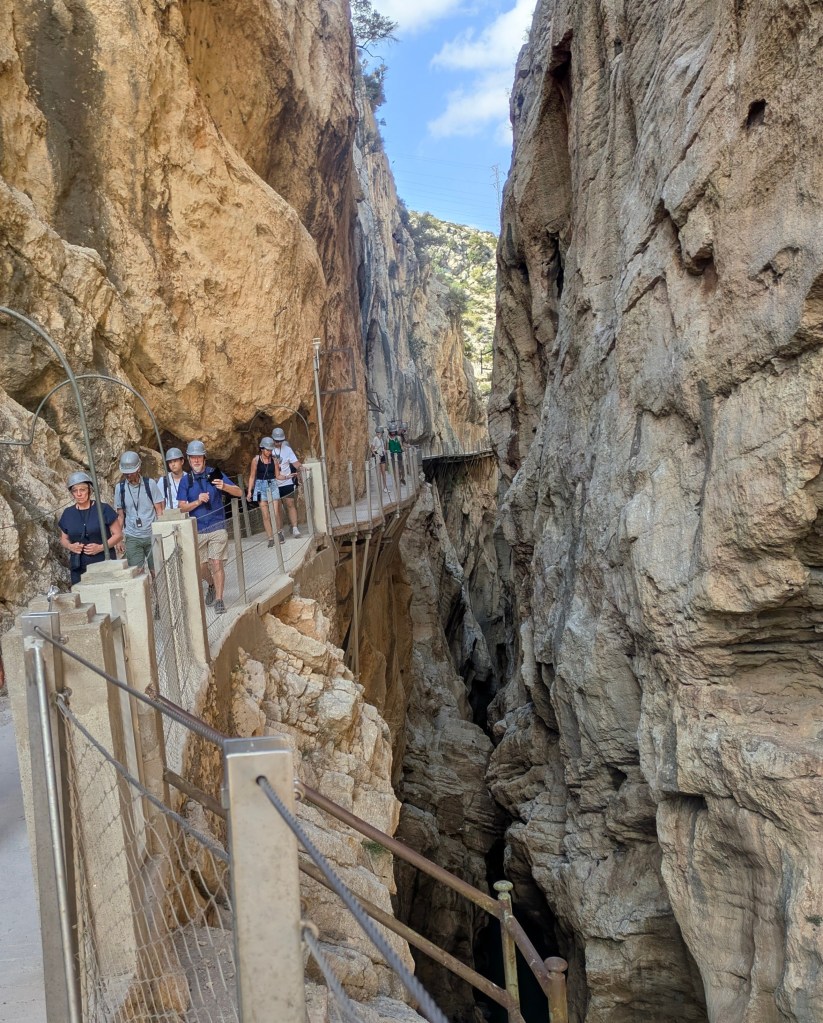
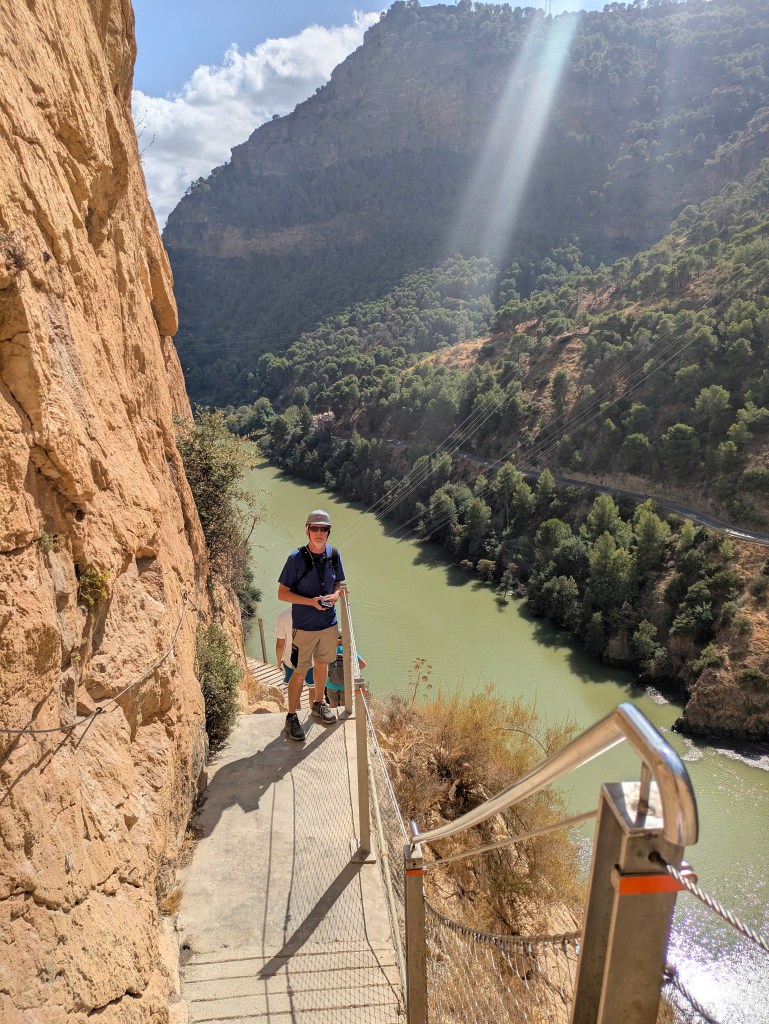
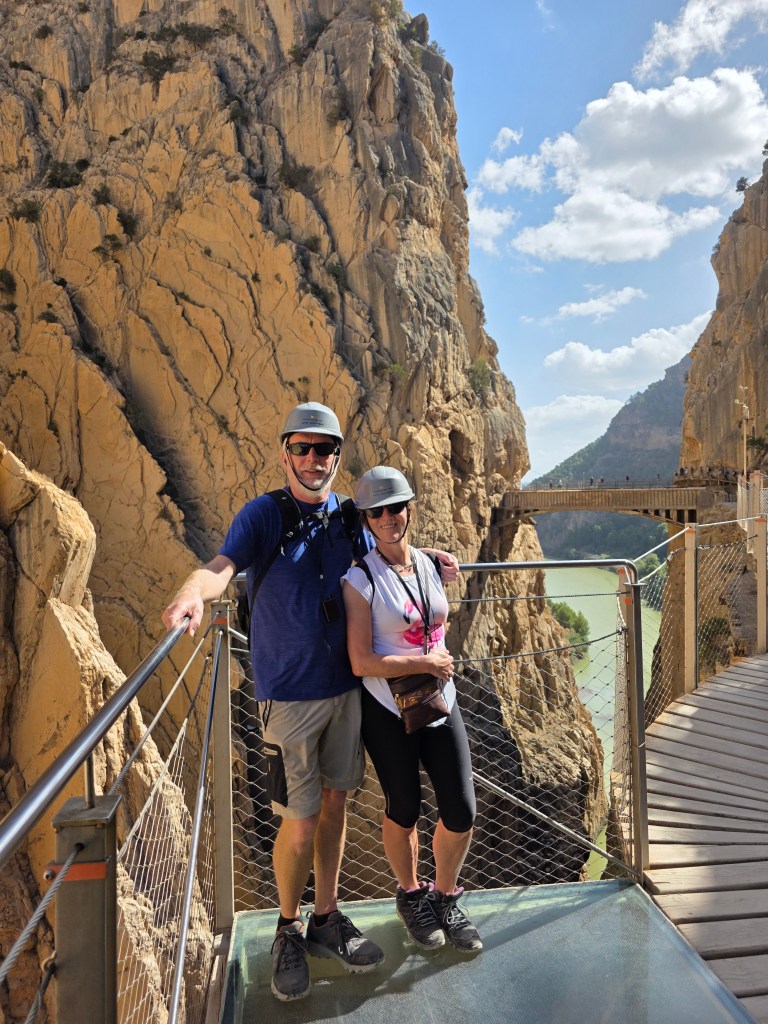
The Caminita del Rey is a trek along narrow walkways, that are pinned along the steep walls of a spectacular gorge in the Malaga region. This was a dramatic walk with stunning views…..and not as scary as the photos might indicate as new reinforced walkways have replaced the original rickety ones. The actual portion of the hike along the gorge is quite short, about 3.5 kms with a couple of kilometres at either end to make up about eight kilometres in total. Its popular and requires prior online booking.
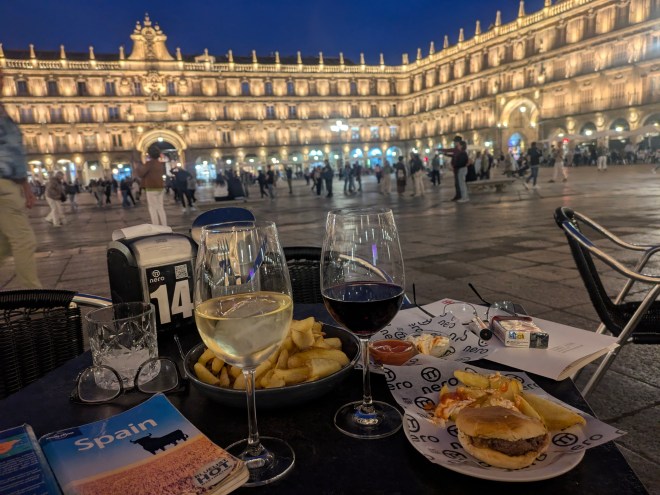
Salamanca. In a country which is choc-o-block with stunning towns, we were truly dazzled by the scale and mesmerising beauty of the main plaza in the small city of Salamanca. No wonder it is regarded as the most magnificent plaza in all of Spain. Visitors and locals alike burst into spontaneous applause at dusk when the lights were turned on, enhancing its beauty even more.
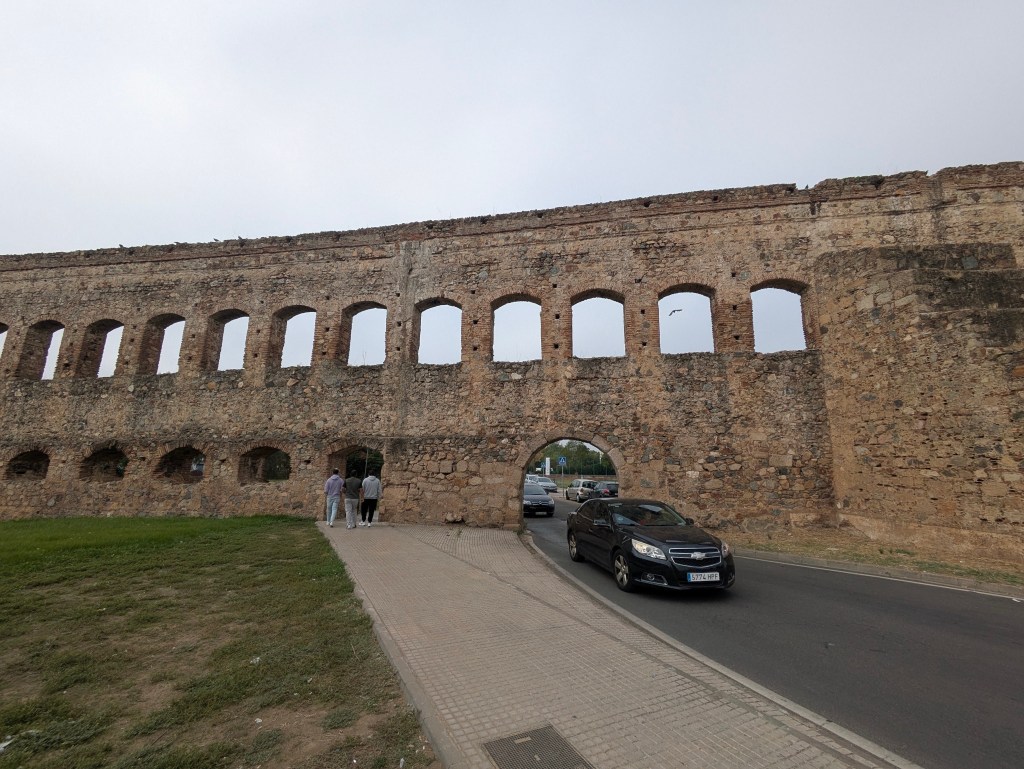
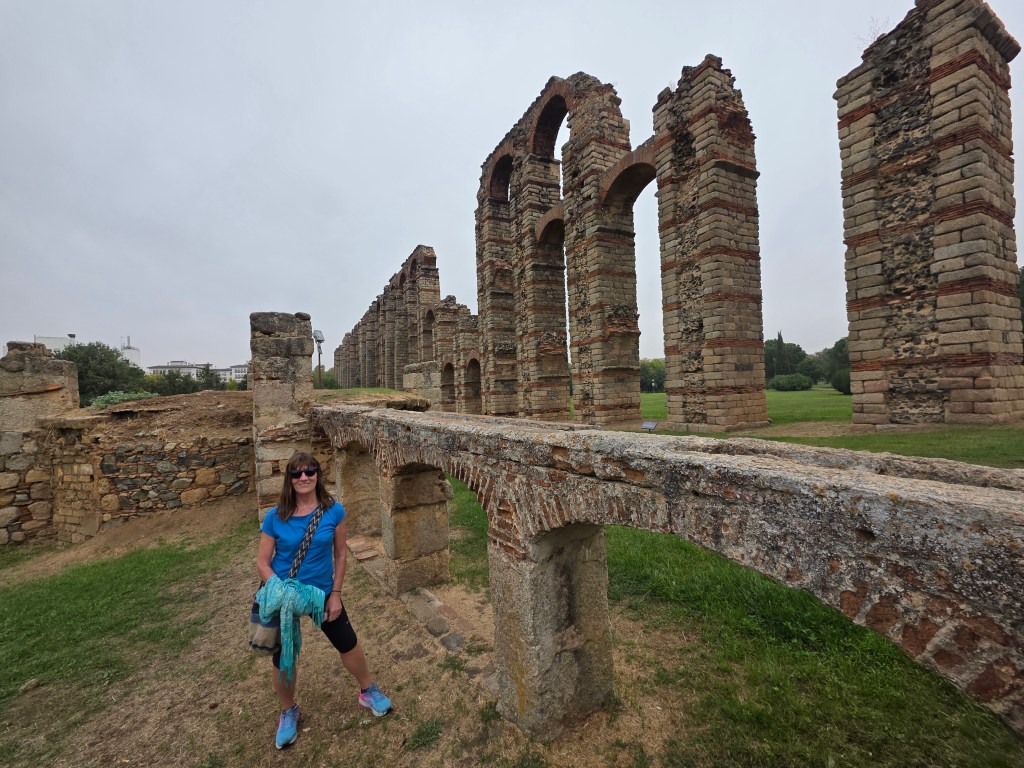
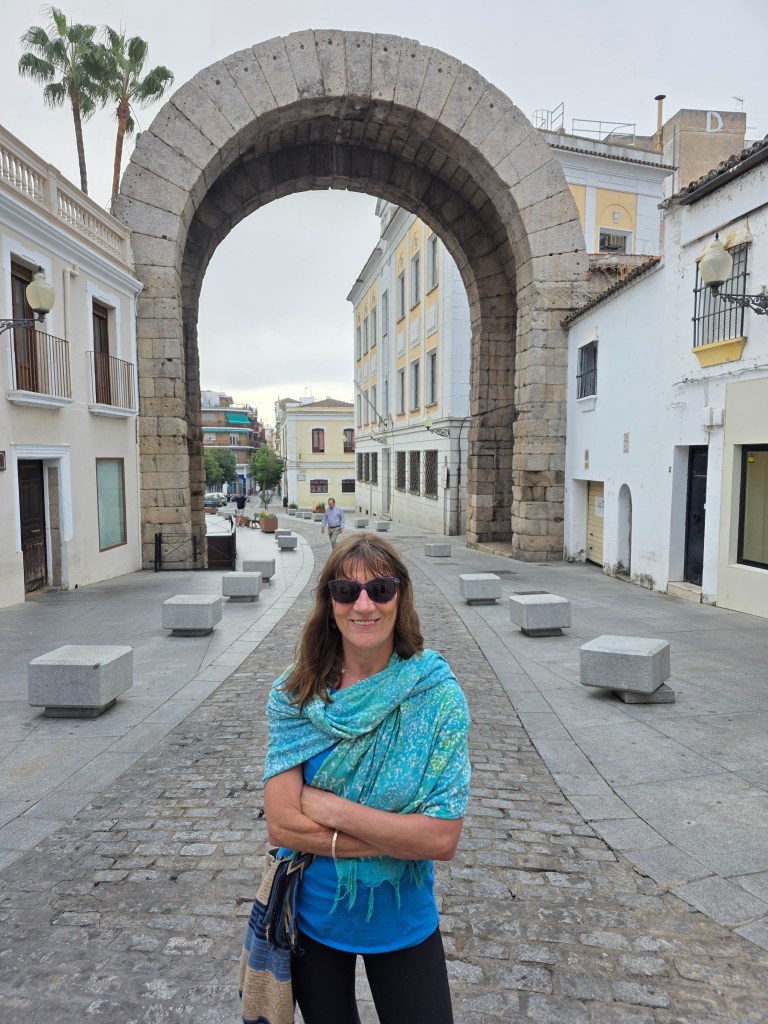
Merida, the capital of western Spain’s Extremadura region was founded by the Romans in the 1st century B.C. It’s a little ramshackle but its Roman origins were evident in the arches, aqueducts and amphitheatre. Many of the ancient structures were incorporated into modern living – cars drove on paved roads under ancient arches and people strolled over the old Roman Bridge which linked the old town with the new. A friendly place.
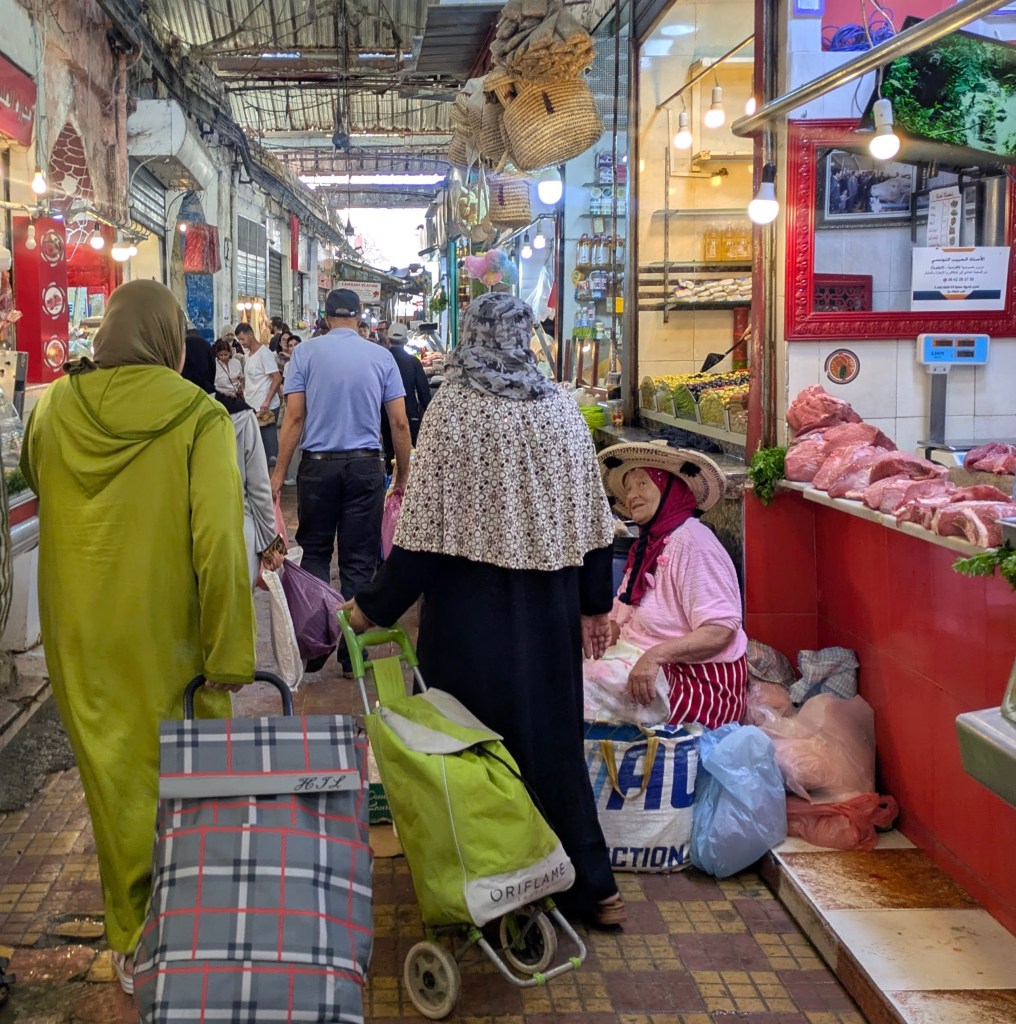
Walking Tour in Tangiers A walking tour of the medina and souk in the old town gave us a flavour of this fascinating city, a place where mosques became churches before changing back again, where being the ‘Gateway to the Mediterranean’ was both a blessing and a curse, a pawn and a prize to be coveted and fought over down the centuries. It was also a place that welcomed artists – Sir John Lavery lived here, so did Tennessee Williams and Jack Kerouac.
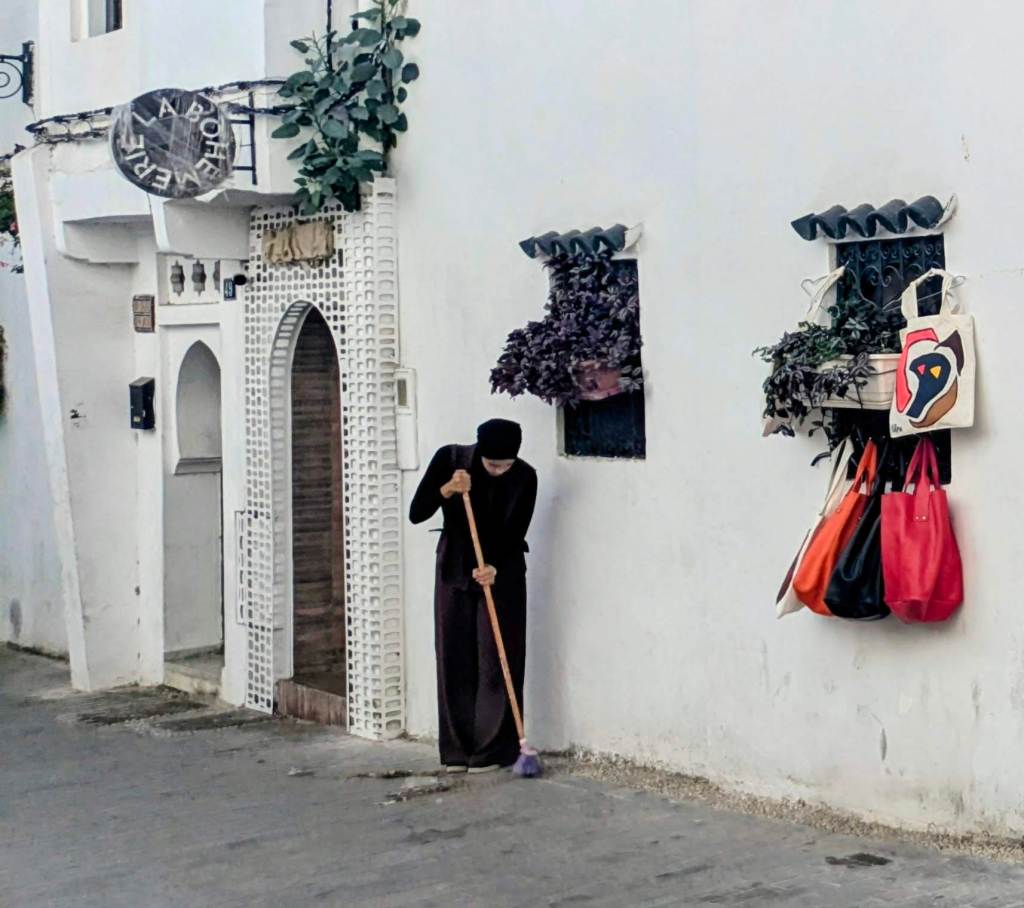
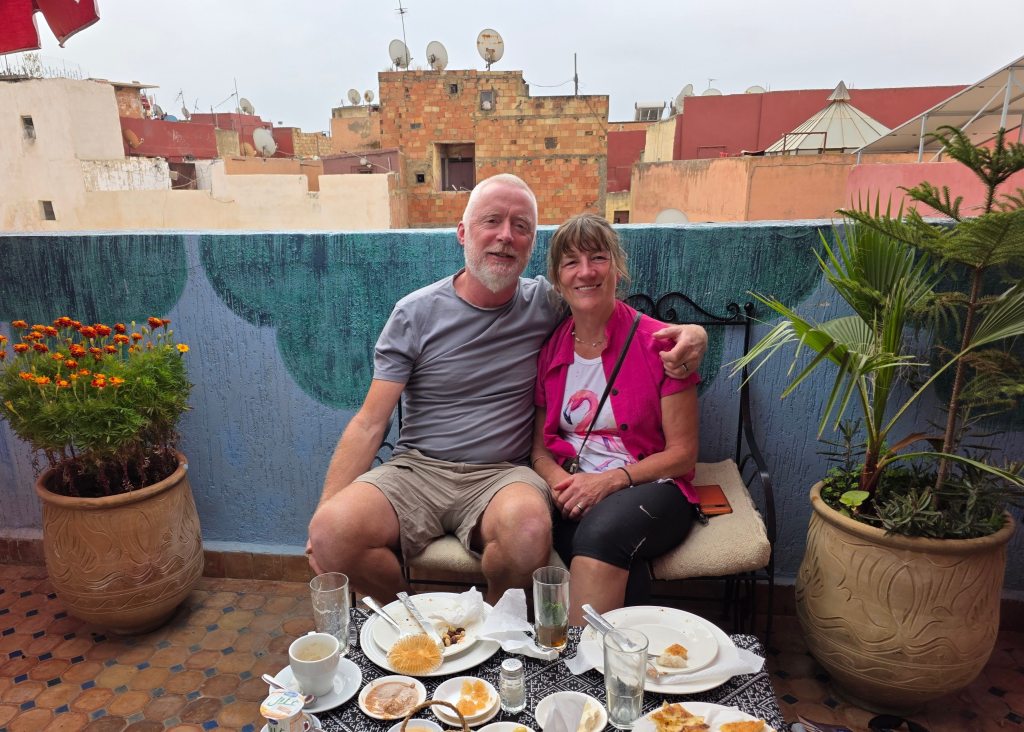
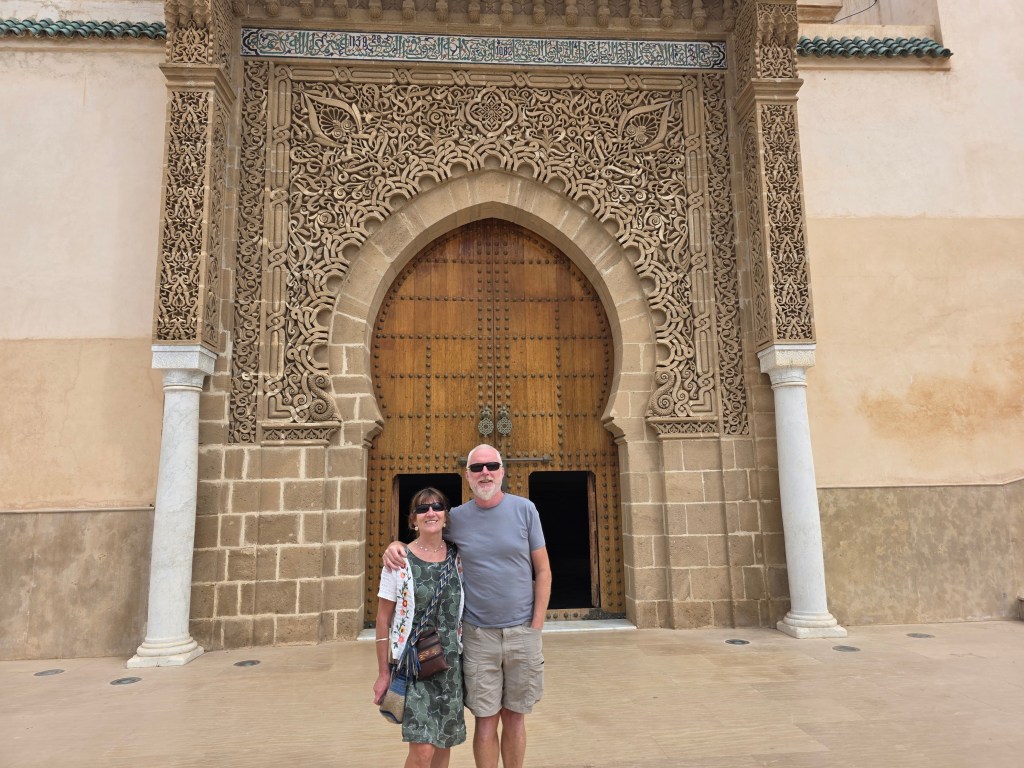
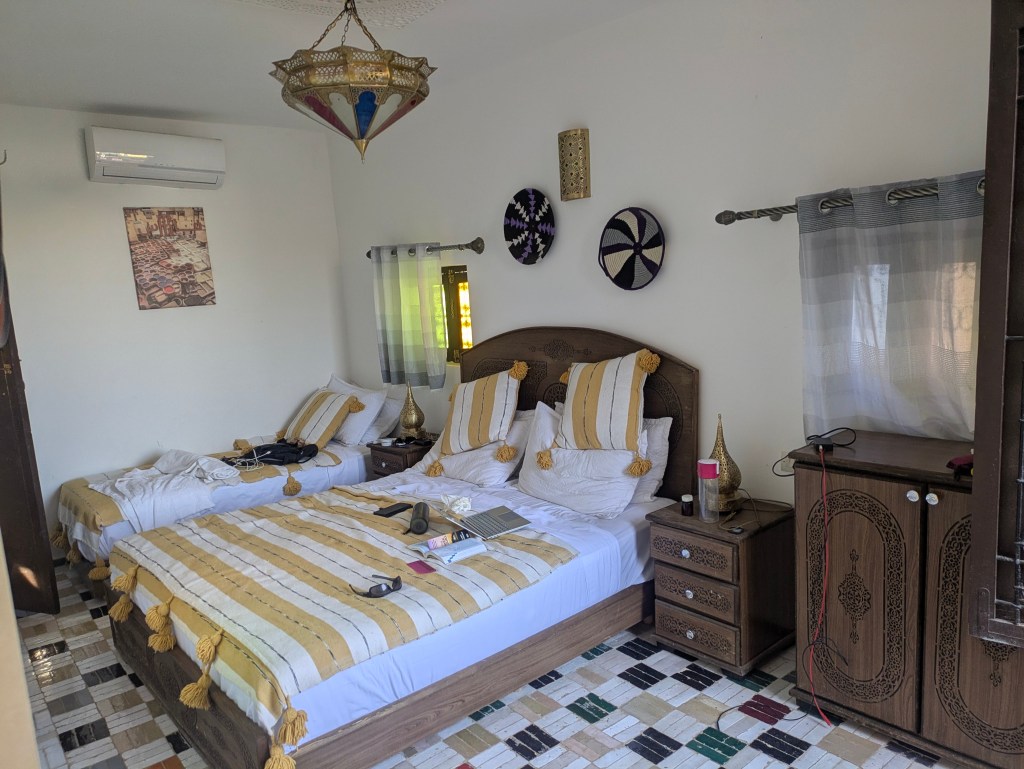
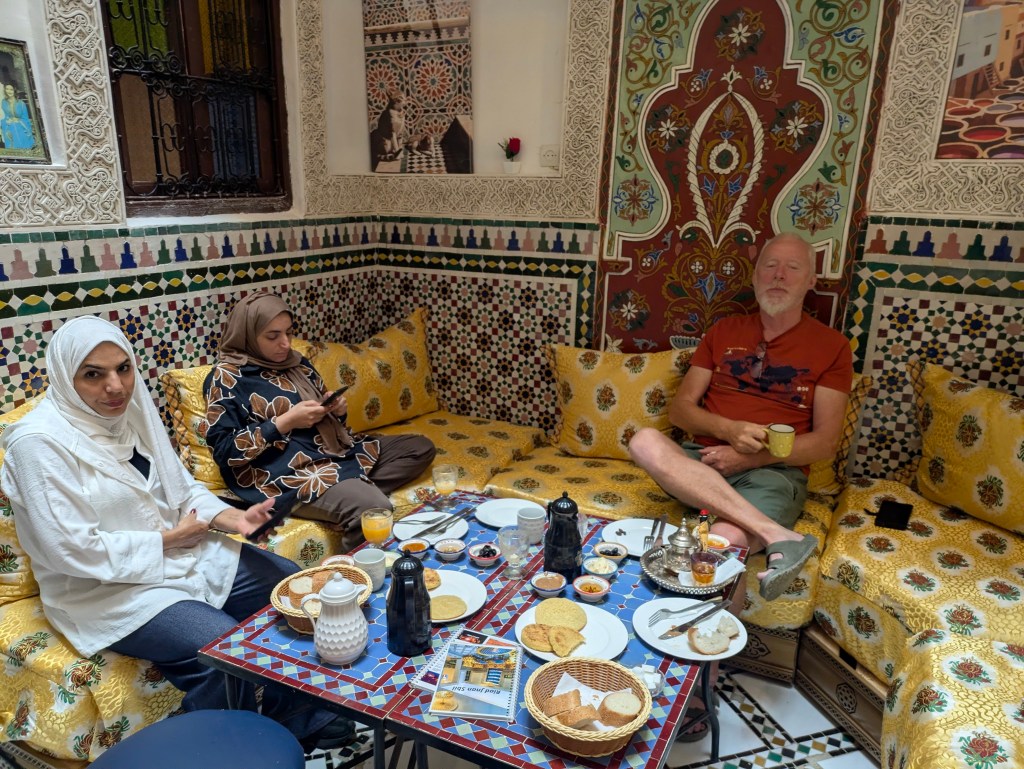
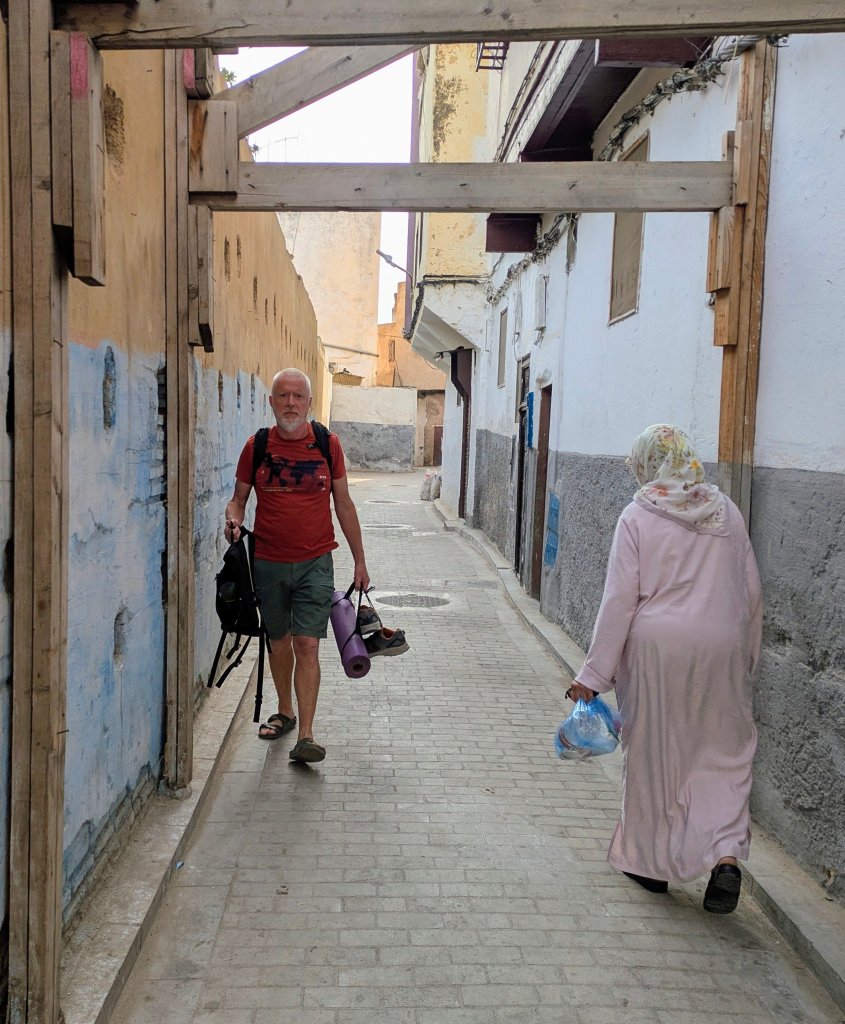
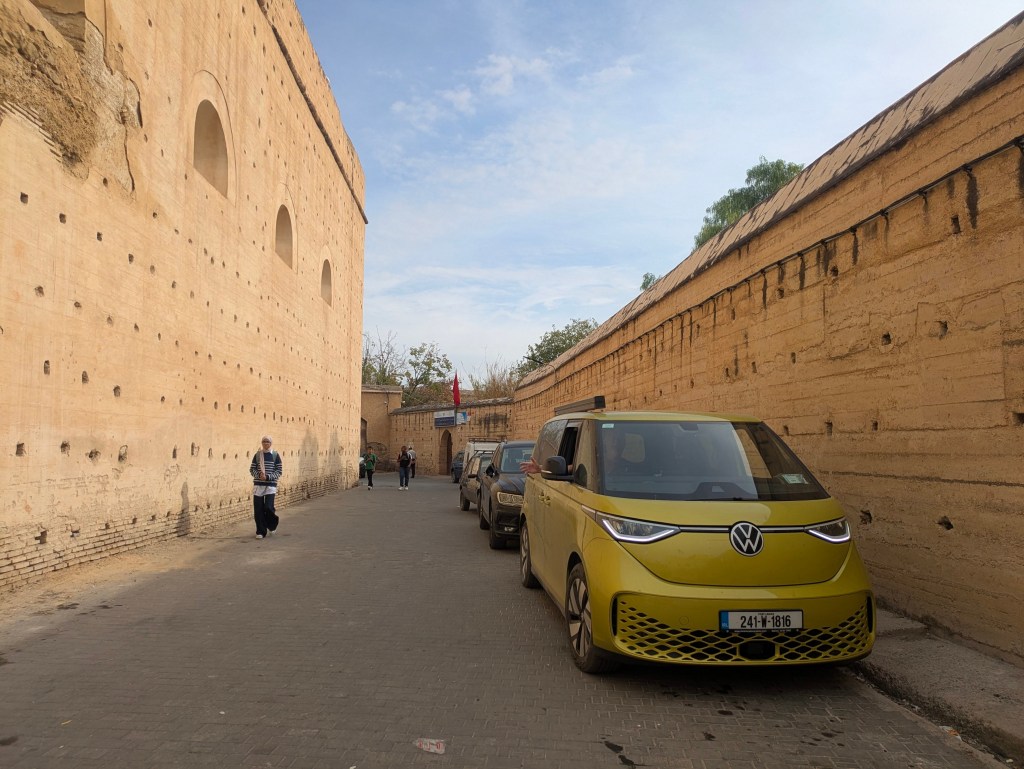
Riad Andalous was hidden away in the medina of the old imperial city of Meknes. Finding it was difficult – we walked in baffling circles through stalls selling shoes, scarfs and all kinds of food until a couple of young boys led us through a maze of dirty alleys. When we climbed the stairs to enter Riad Andalous, we entered an oasis of calm with tapestries on the walls, ornate ceilings, rug-strewn floors and a sunny rooftop terrace. It even had a little resident tortoise, who slowly followed the sun around the terrace. The price per night for a comfortable ensuite room including a huge breakfast was €28. The only downside was that we were within hearing distant of five different mosques (which weren’t synchronised) so the early morning call to prayer overlapped and lasted a long time.
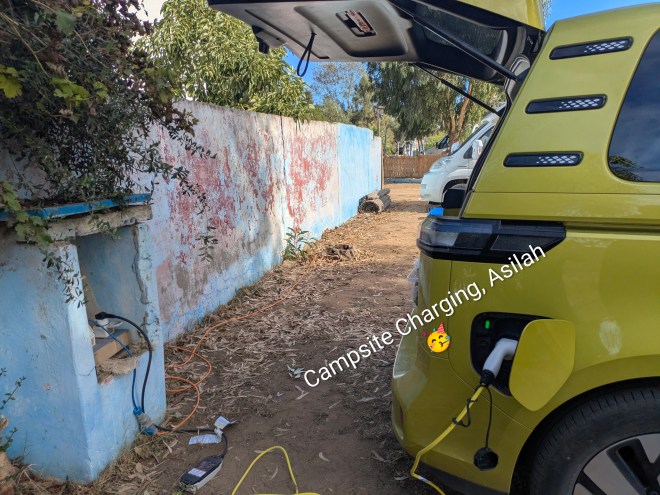
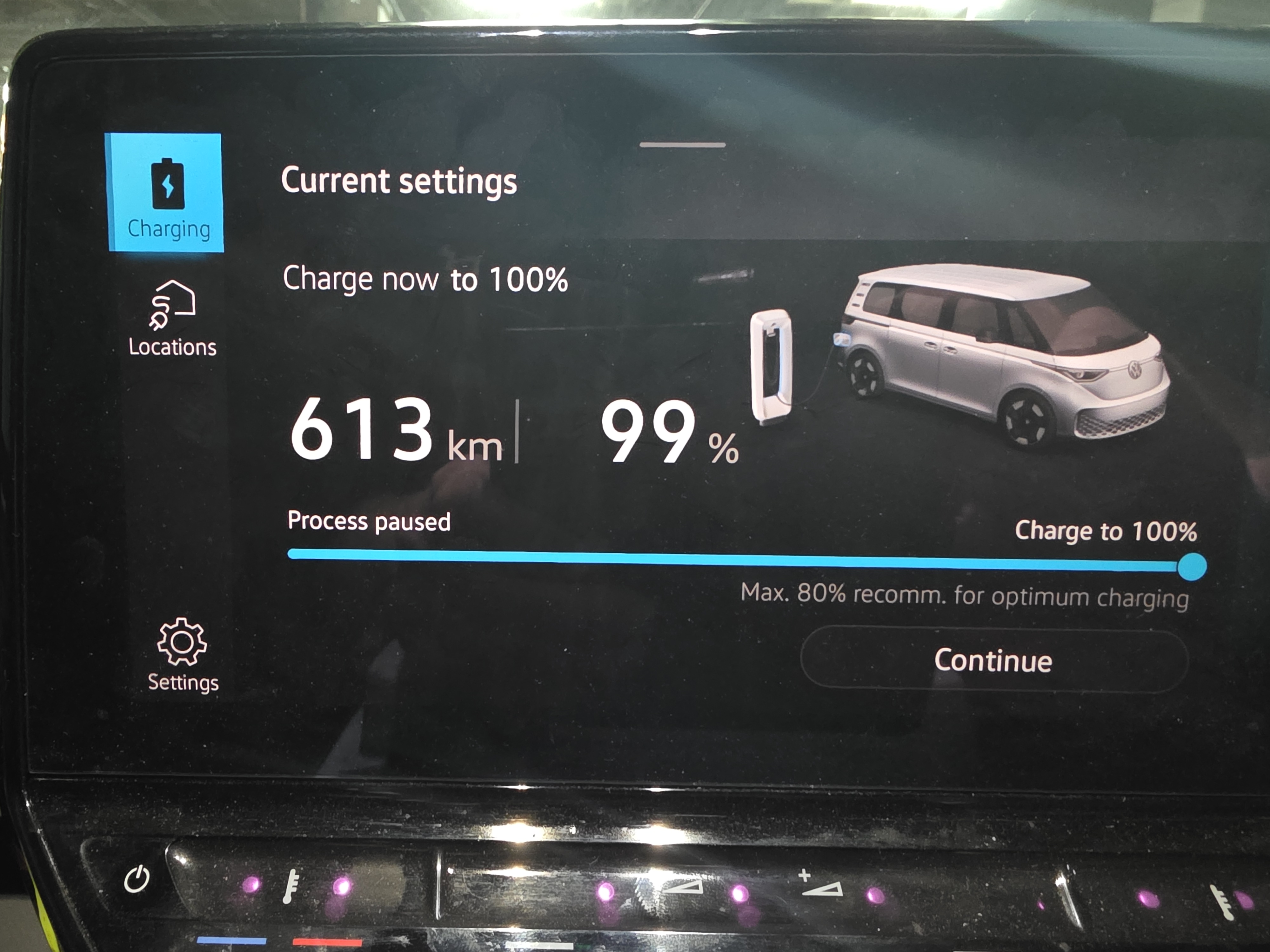
Asilah Campsite Charging In a dusty campsite in Asilah, a windy town on the Atlantic coast, we plugged the van into a socket with the blessing of the campsite owner who was saying Inshallah. Lo and behold, the charging light turned green and the Buzz slow-charged all night until it reached 100% by mid- morning the following day. We didn’t know if it was because of the blessing or the lack of safety features and circuit breakers but we were relieved. Unfortunately it was the only time we managed to charge using a granny cable in Morocco.
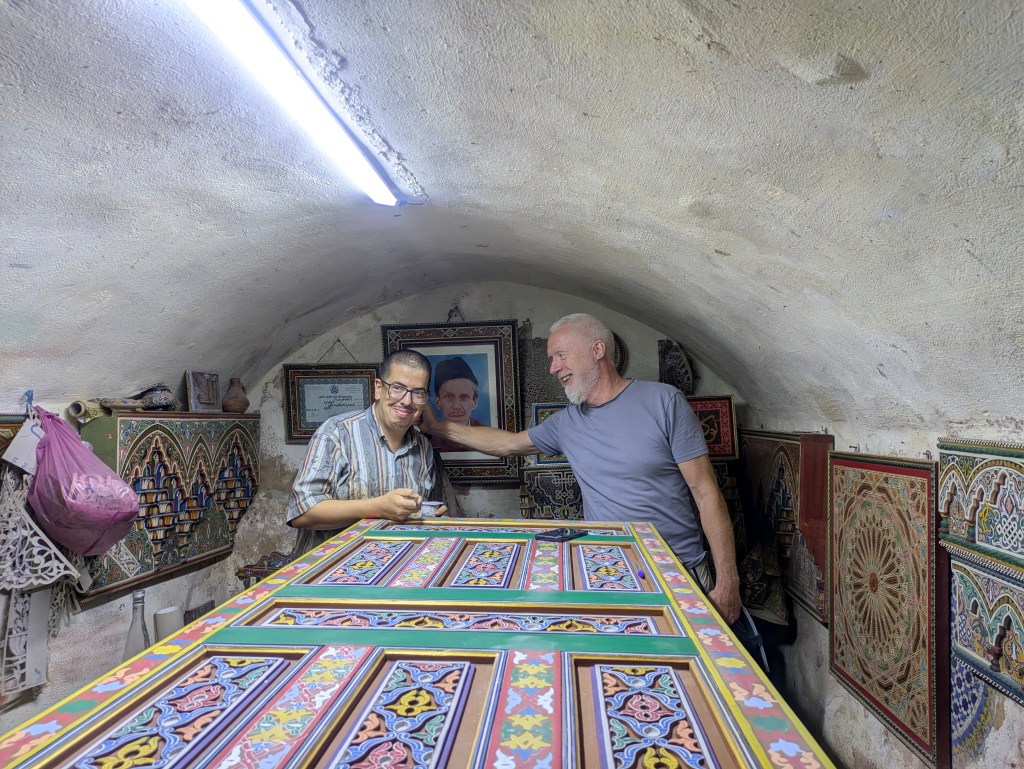
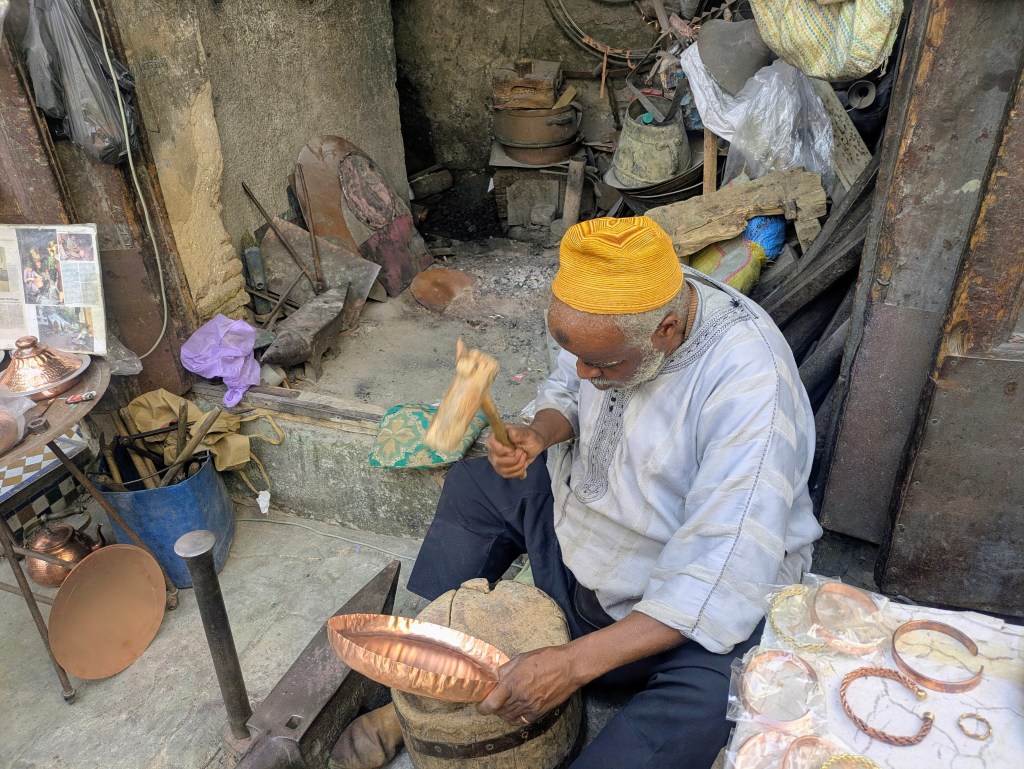
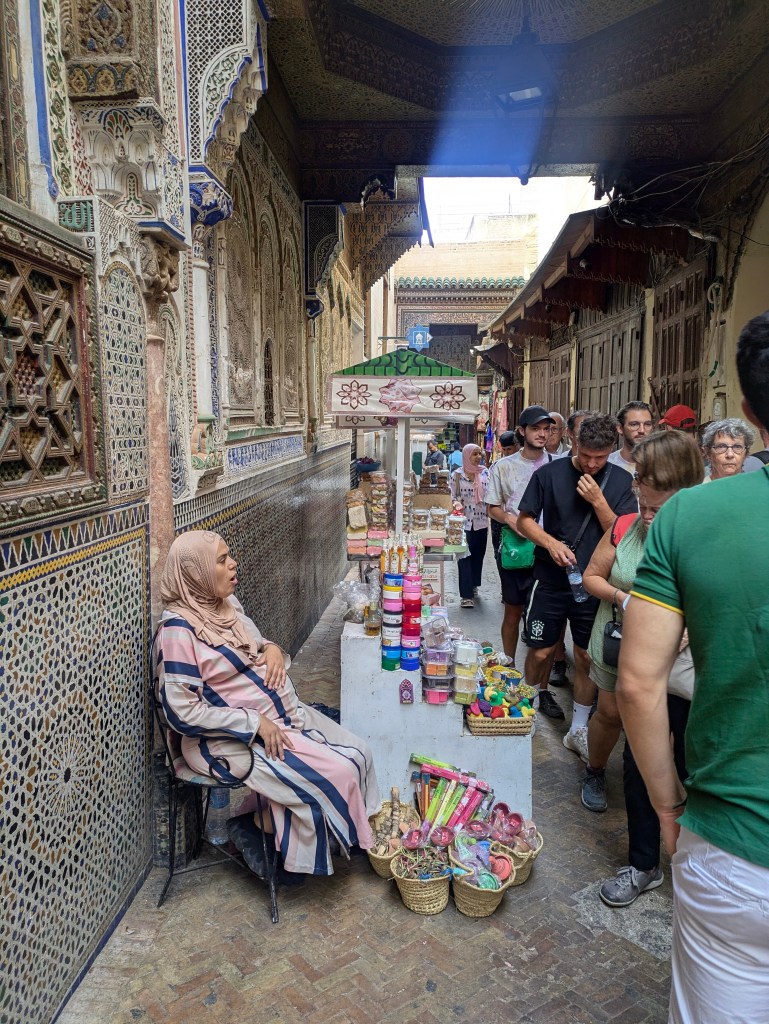
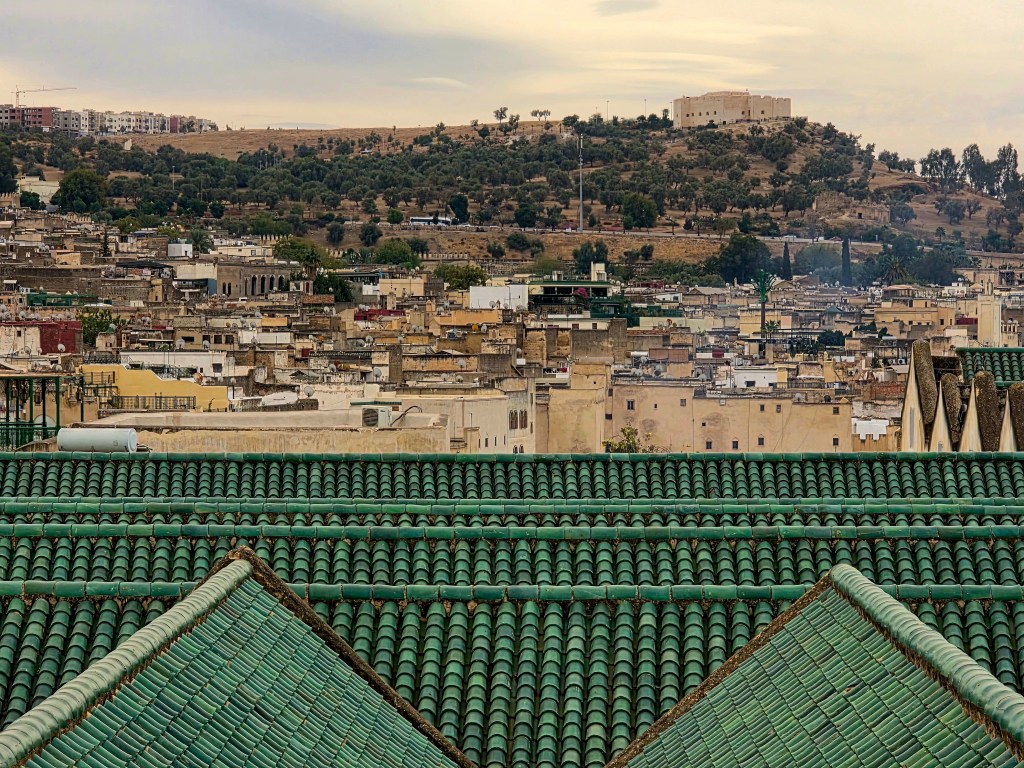
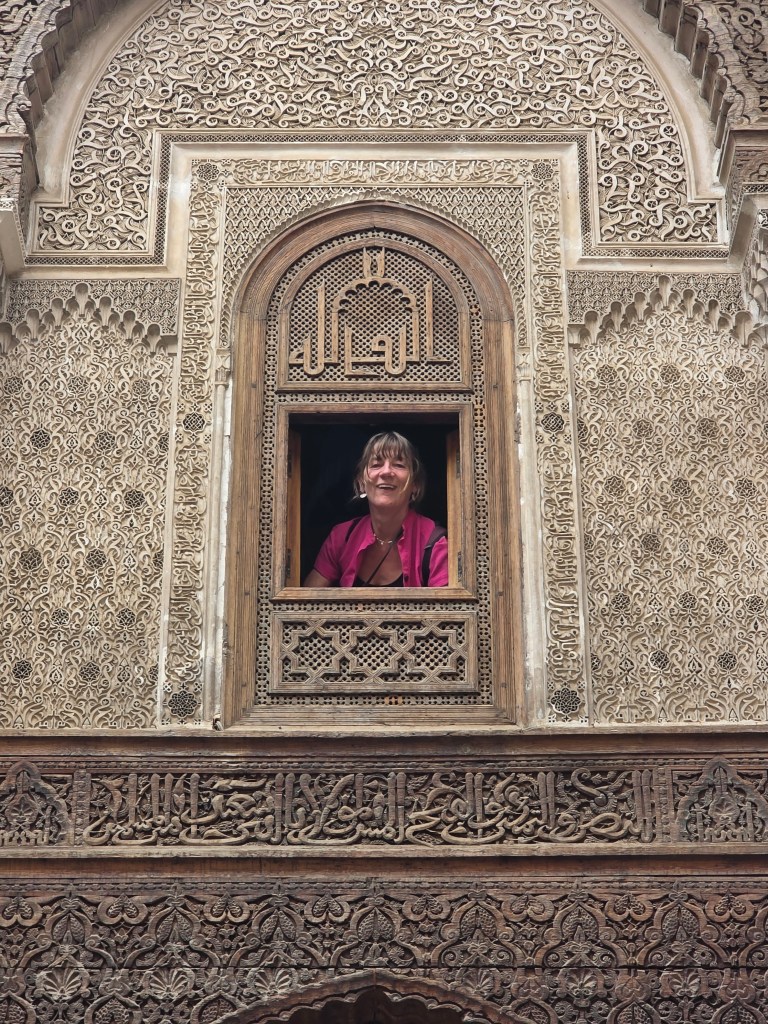
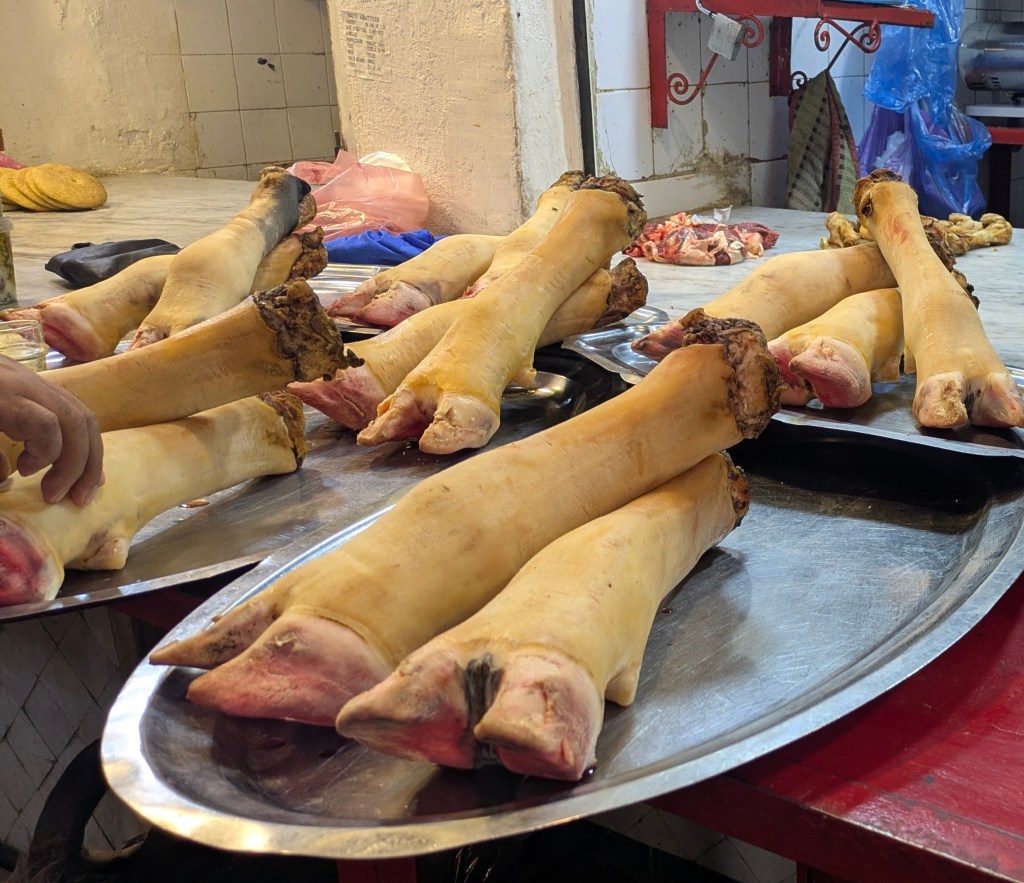
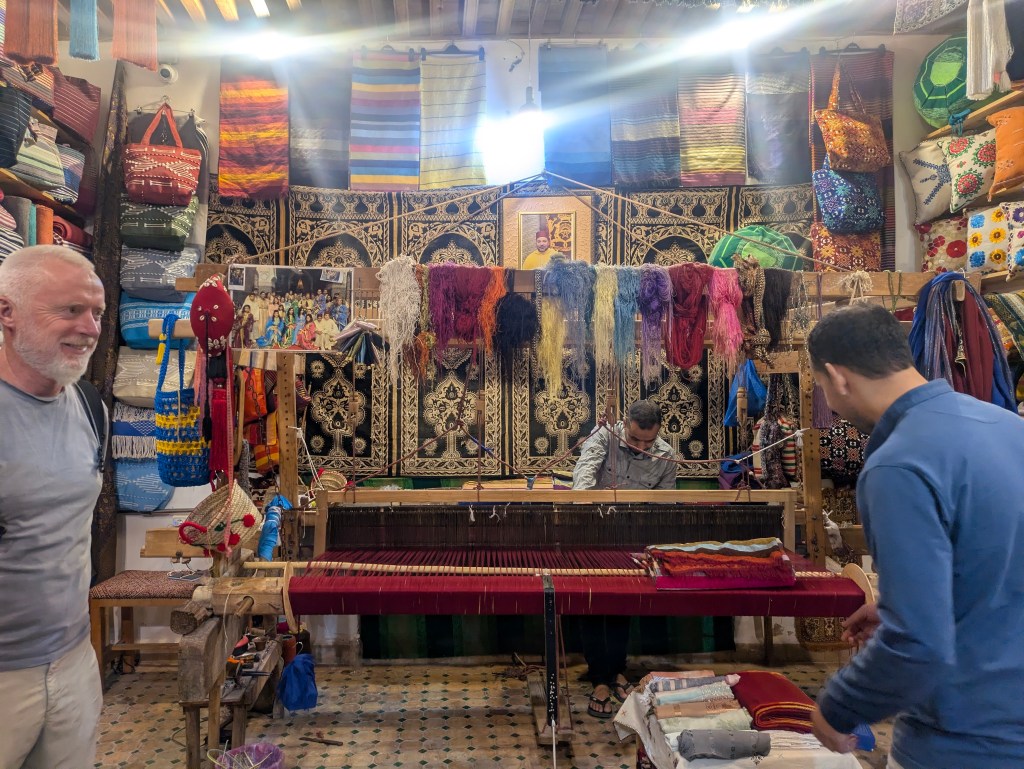
The Wonder of Fez. The old medina in Fez was a place where little had changed in centuries. There was the clamour of commence and the rumble of wooden carts being pushed along the narrow ‘streets,’ a maze of over nine-thousand paths and which was reputed to be the largest pedestrianized area in the world. There was the banging of hammers on metal, the soft whoosh of looms, the silent concentration of calligraphy, the slosh of dyeing fabrics and much more. The scent of rosewater and orange blossom mixed with the smell of raw meat, fish, spices and fresh baking. It was like stepping back in time, we ate warm flatbreads directly from the ovens in a family bakery, tasted honey cakes from an old recipe and visited the tannery at the edge of the medina (see lowlights).
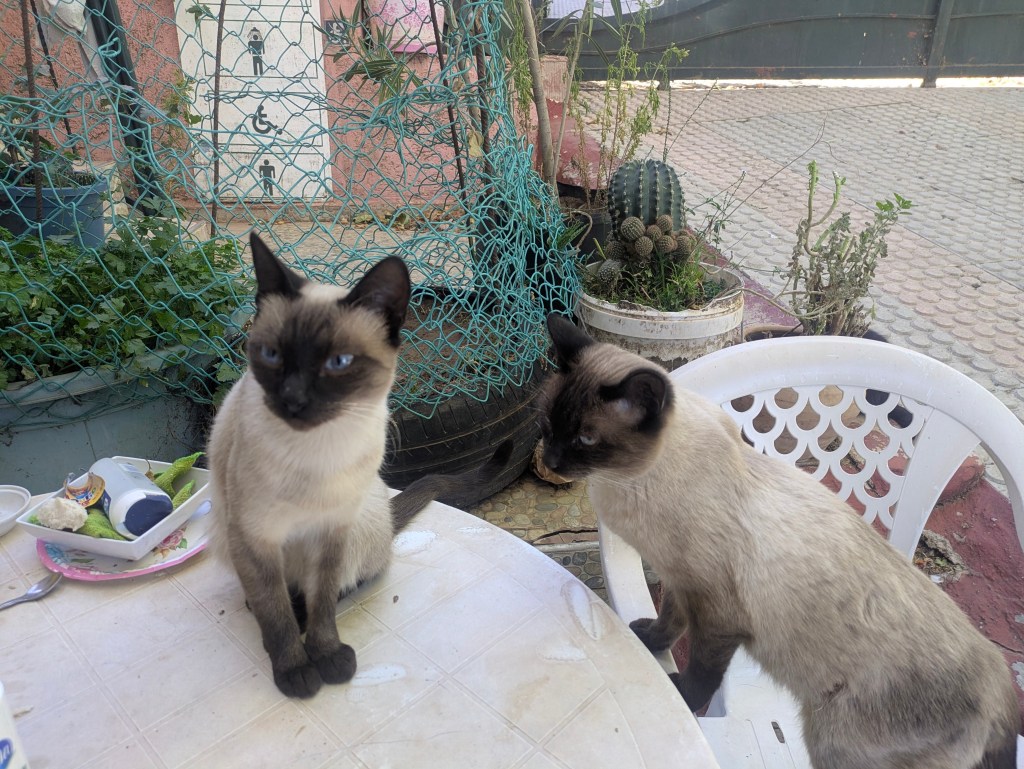
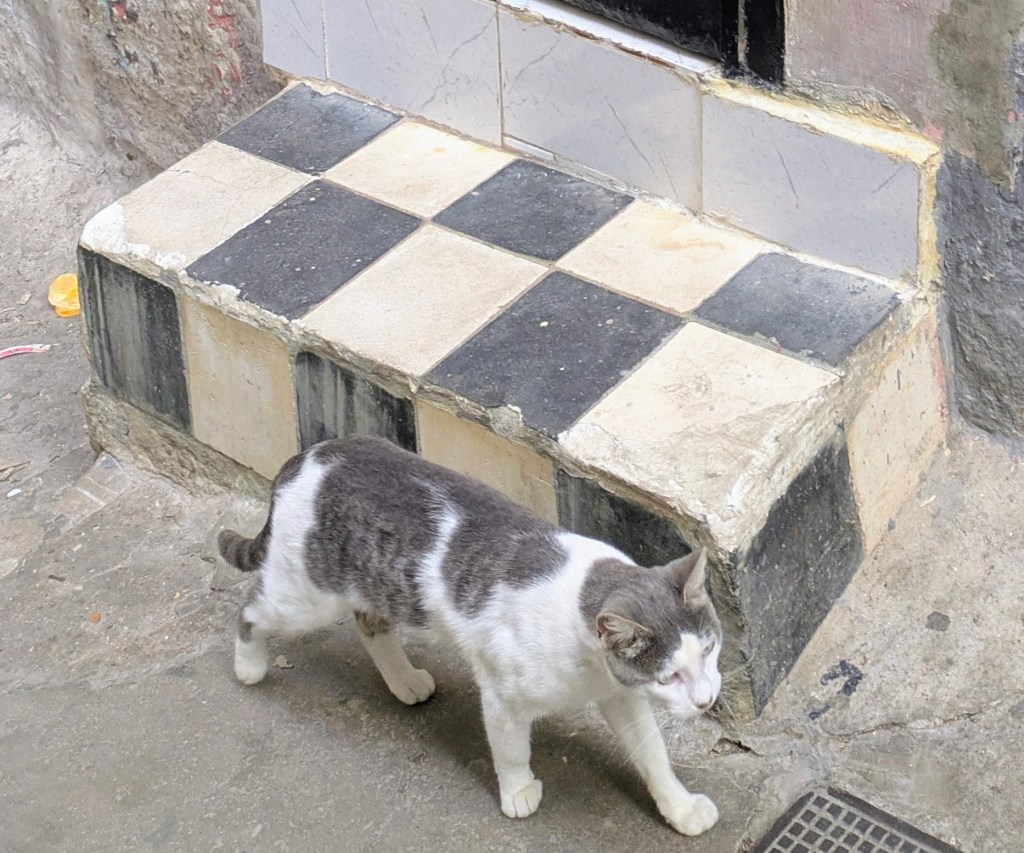
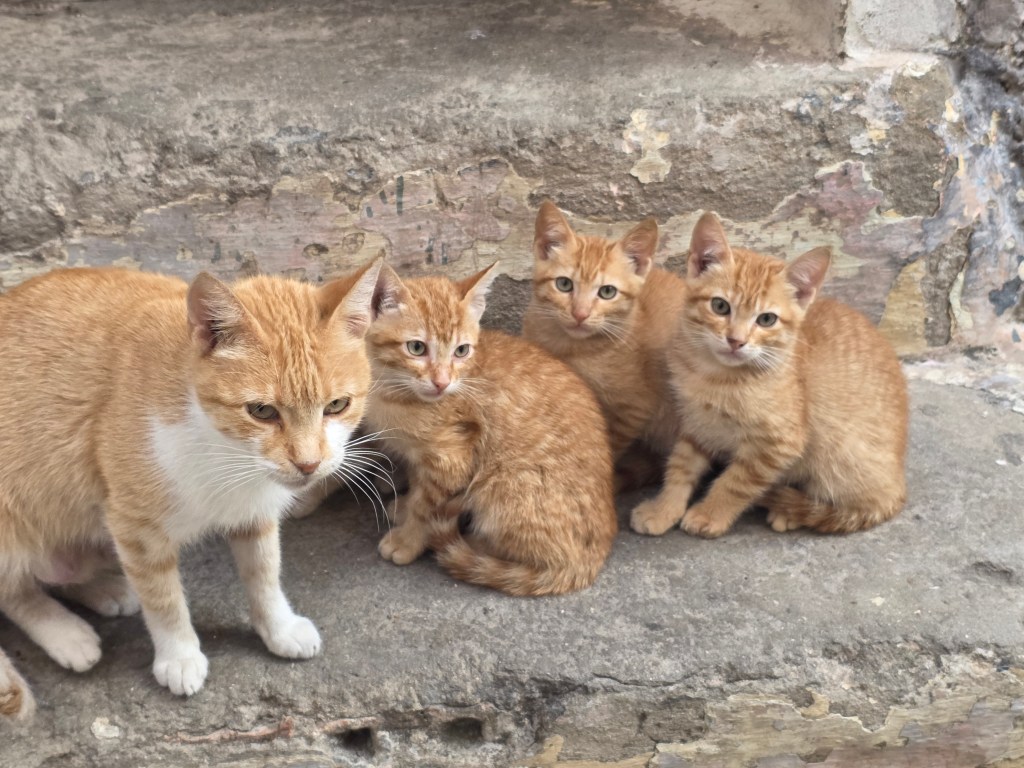
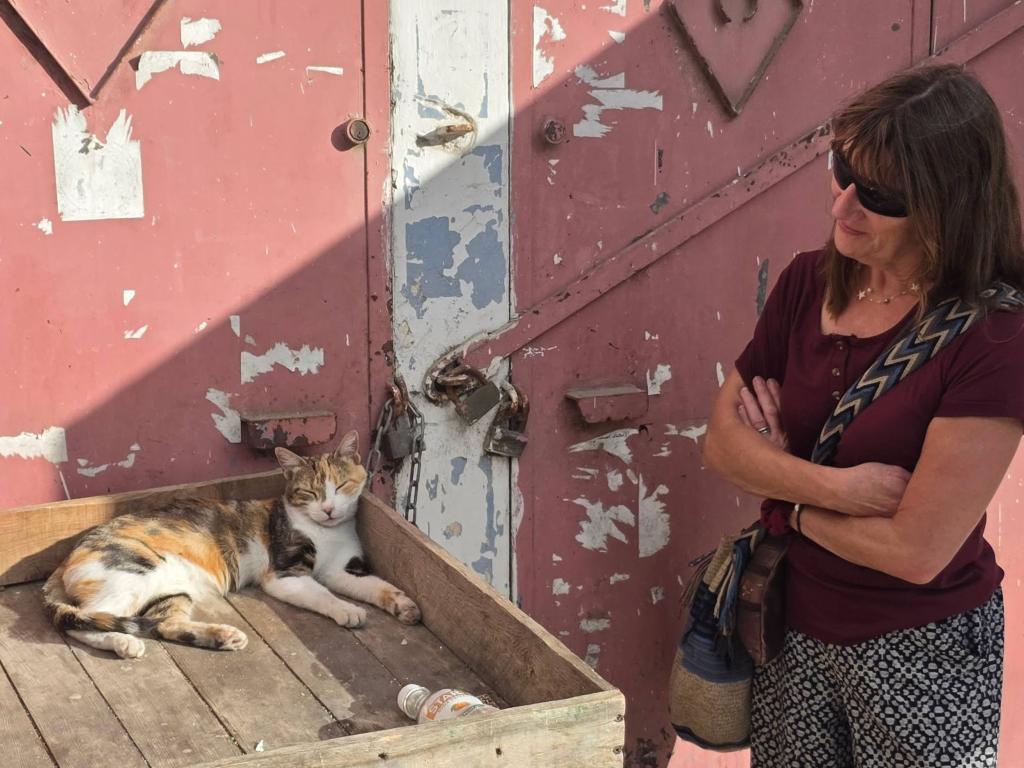
Cats Everywhere, If you have a fondness for cats, you will love Morocco. Did you know that a group of cats is called a clowder? Well, Morocco is definitely ‘clowdered.’ There is a cultural communal reverence for felines, with people leaving out food and water for them. The most basic shop had large displays of tinned cat food.
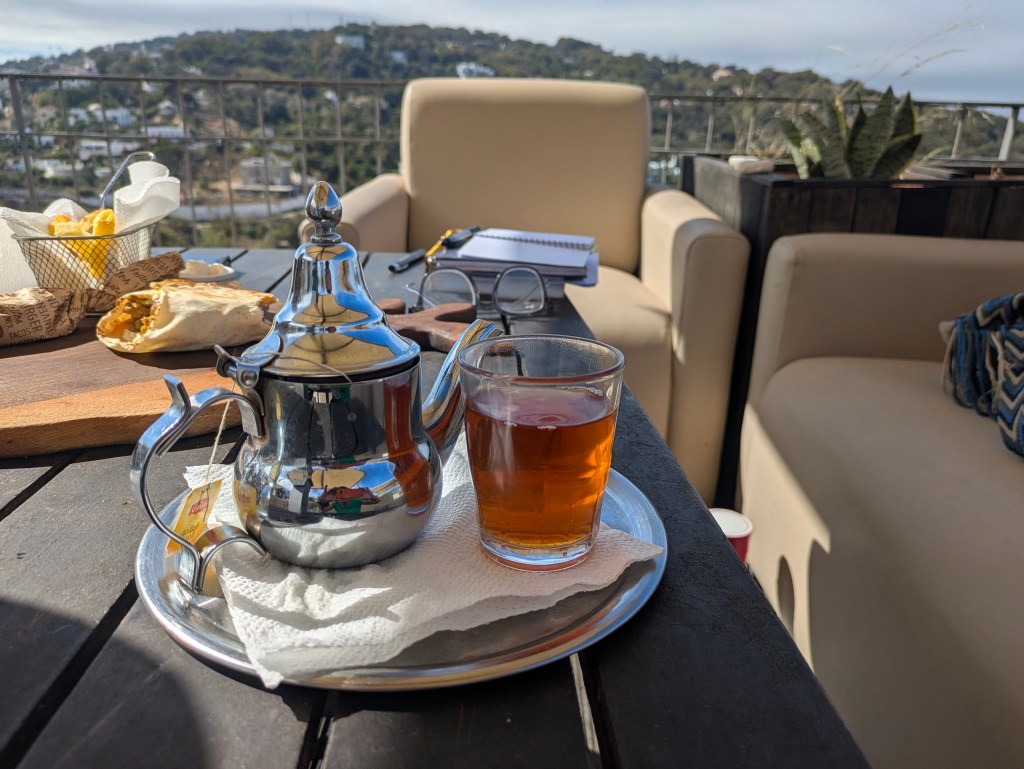
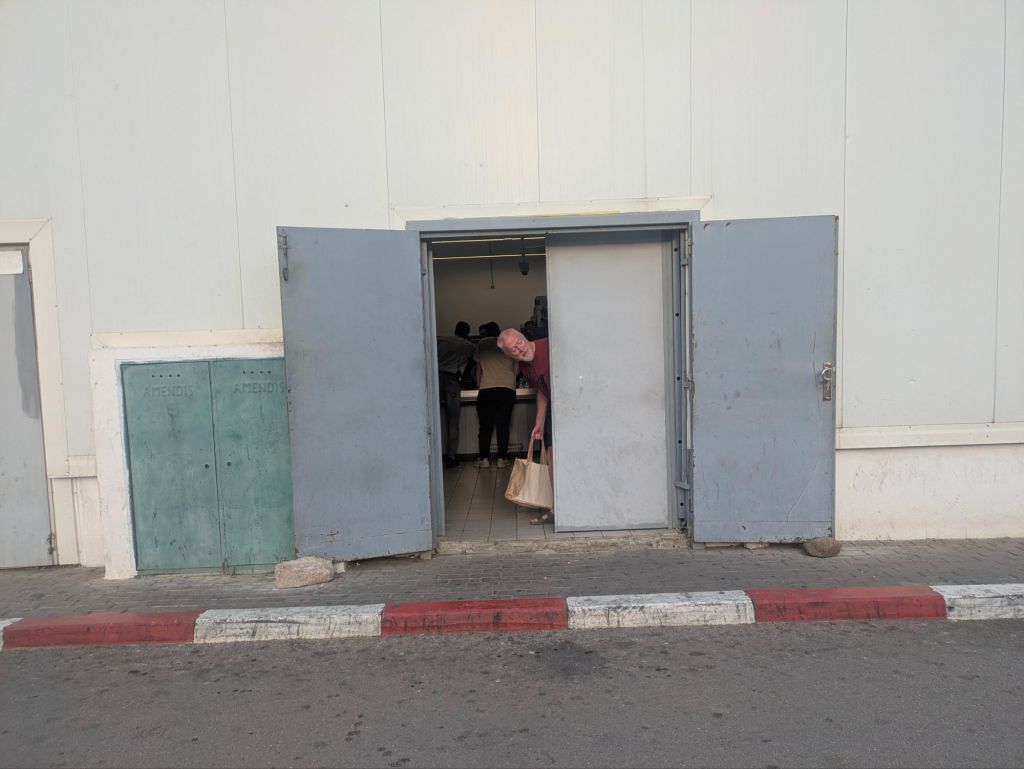
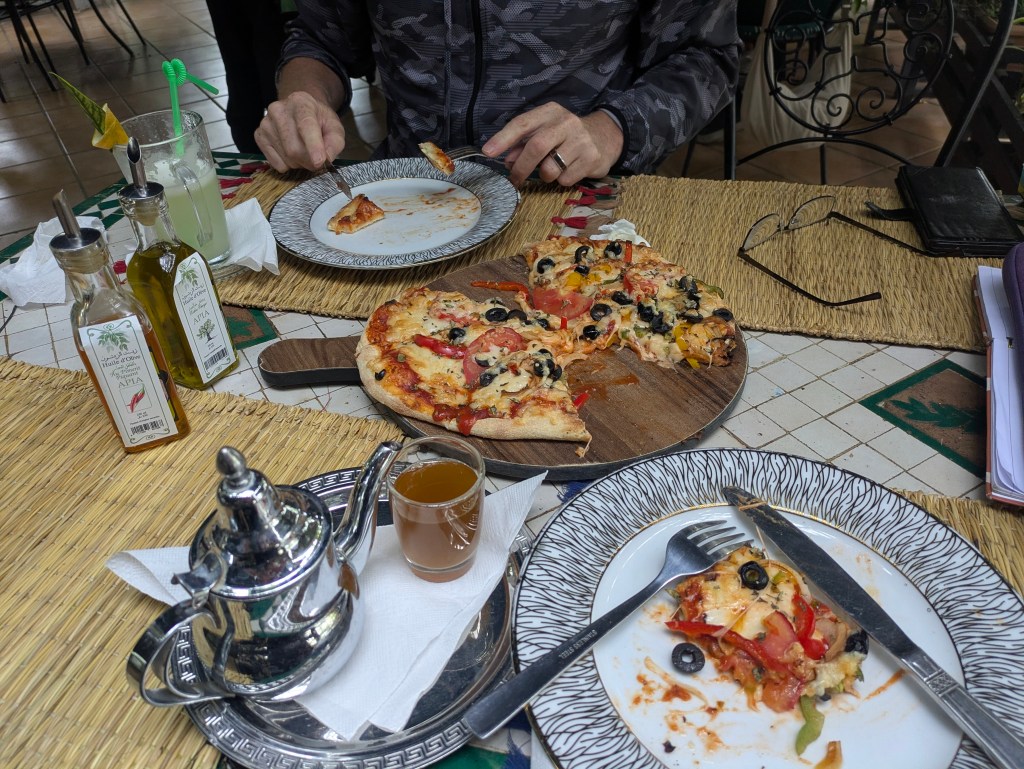
Mint Tea and Other Beverages. I grew to love the mint tea in Morocco, which was just as well as alcohol was difficult to obtain and expensive. In Tetouan, a city in Northern Morocco, we couldn’t find the alcohol section in the Carrefour Supermarket. We wandered around and eventually spotted an unmarked grey door on the side of the building. That couldn’t be it, could it? It looked more like a back entrance to some kind of warehouse. We peeked in. The light was dim, the air was stuffy but the interior was teeming with men (it was all men except for the women at the tills). There was the sound of bottles clinking and cans rolling against each other in baskets. The whole enterprise felt furtive, shady and clandestine. We were delighted.
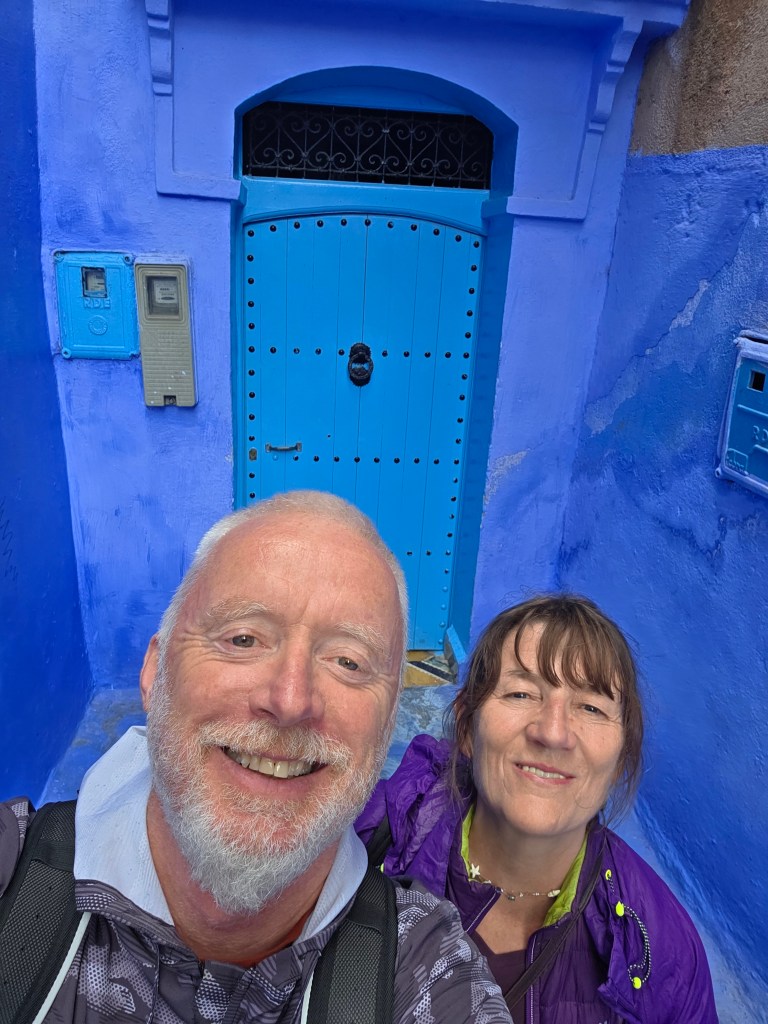
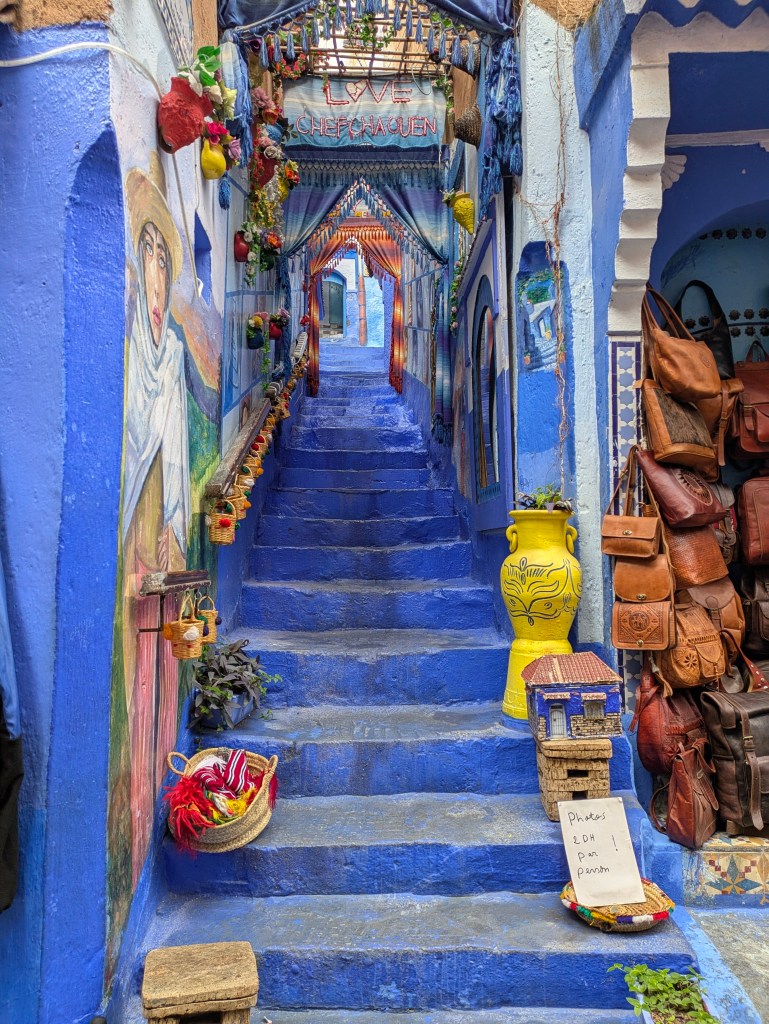
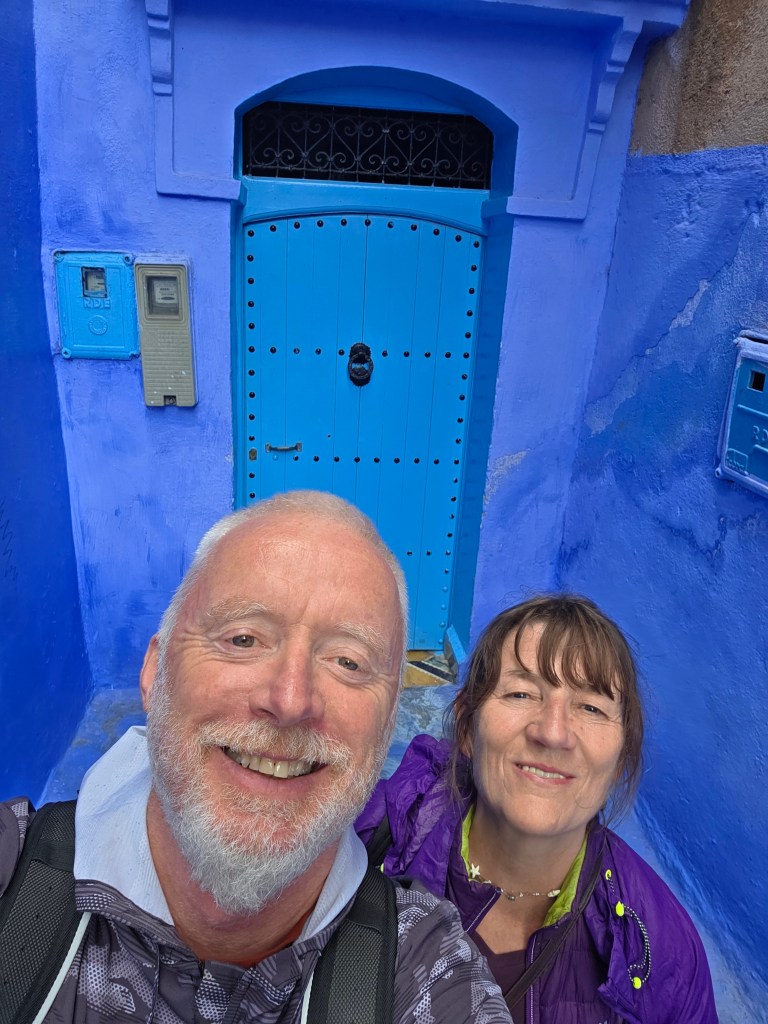
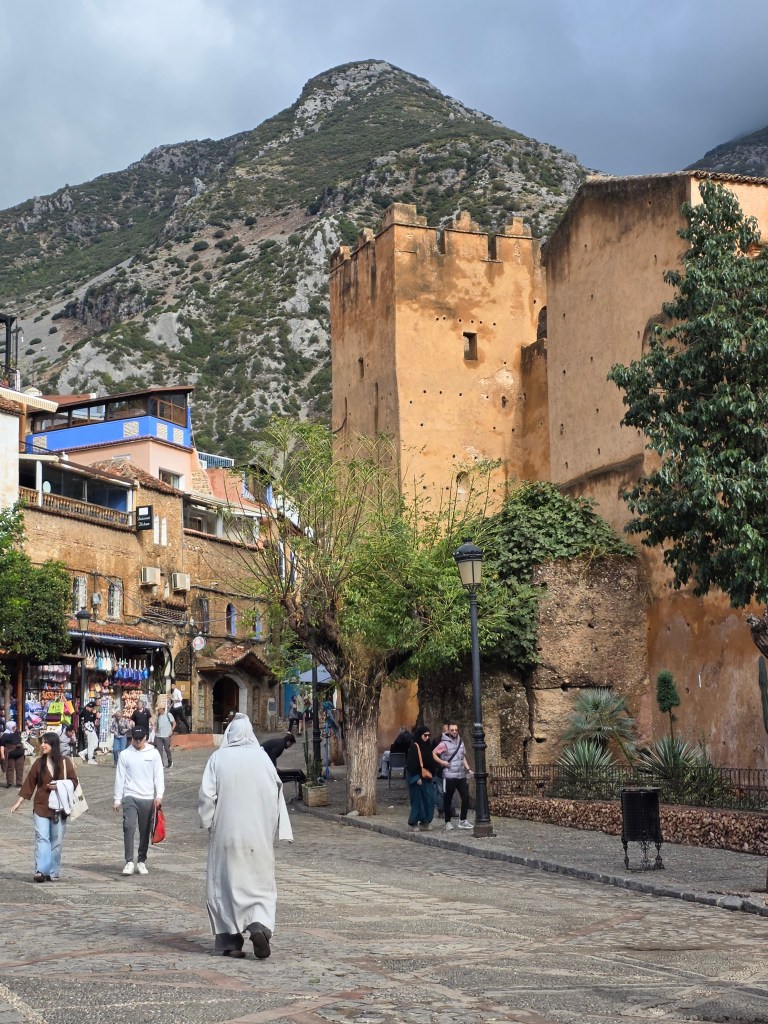
A Blue City. Chefchaouen in Northern Morocco wasn’t looking it’s best under grey drizzly skies when we visited but it was still gorgeous. It is famous for its narrow streets with facades painted in different shades of blue. There are several theories about why the town is painted blue. Some said that the colour blue symbolised the sky and spirituality, that it came from the Sephardic Jews who settled here in the 15th century, others said that blue was a good insect repellent. Whatever the reason, the result is stunning and very photogenic.
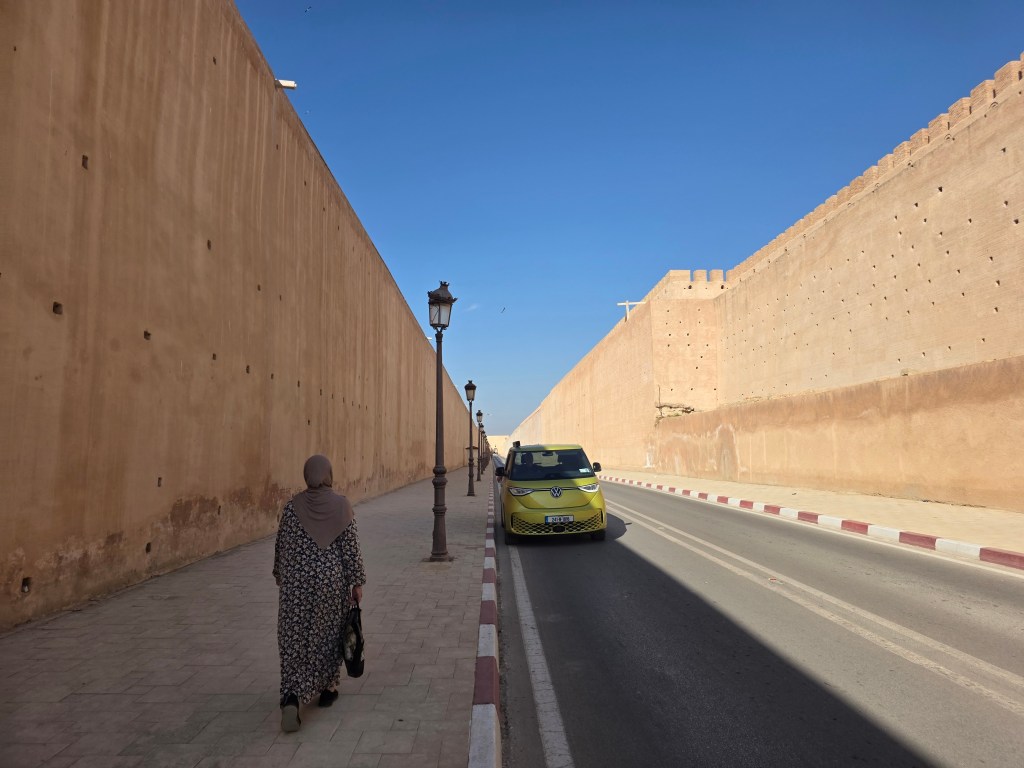
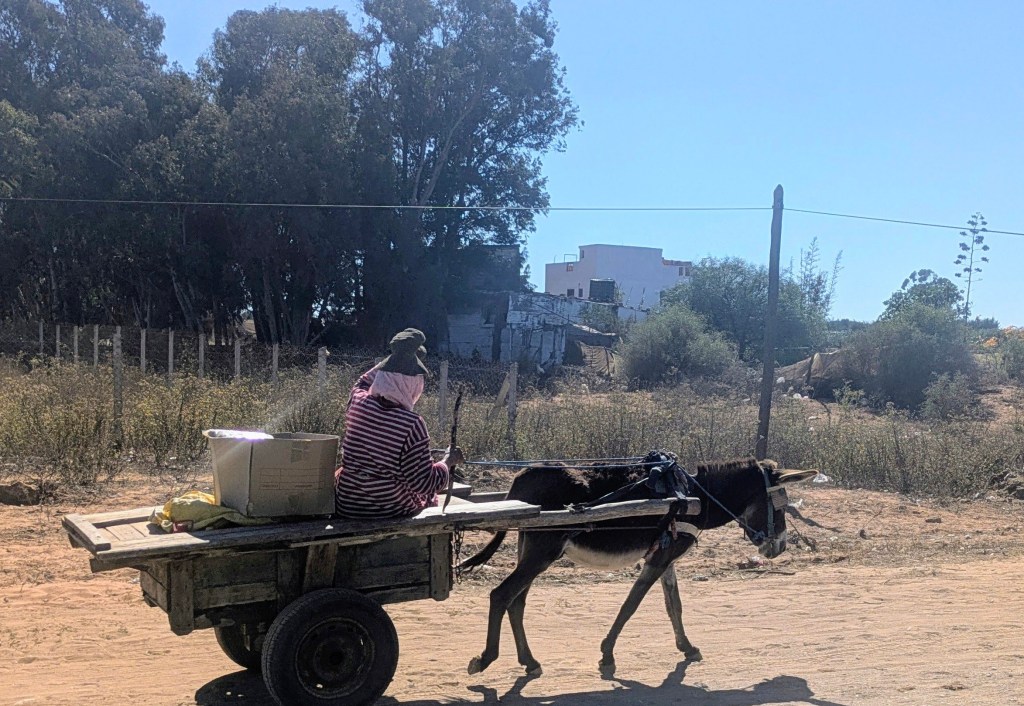
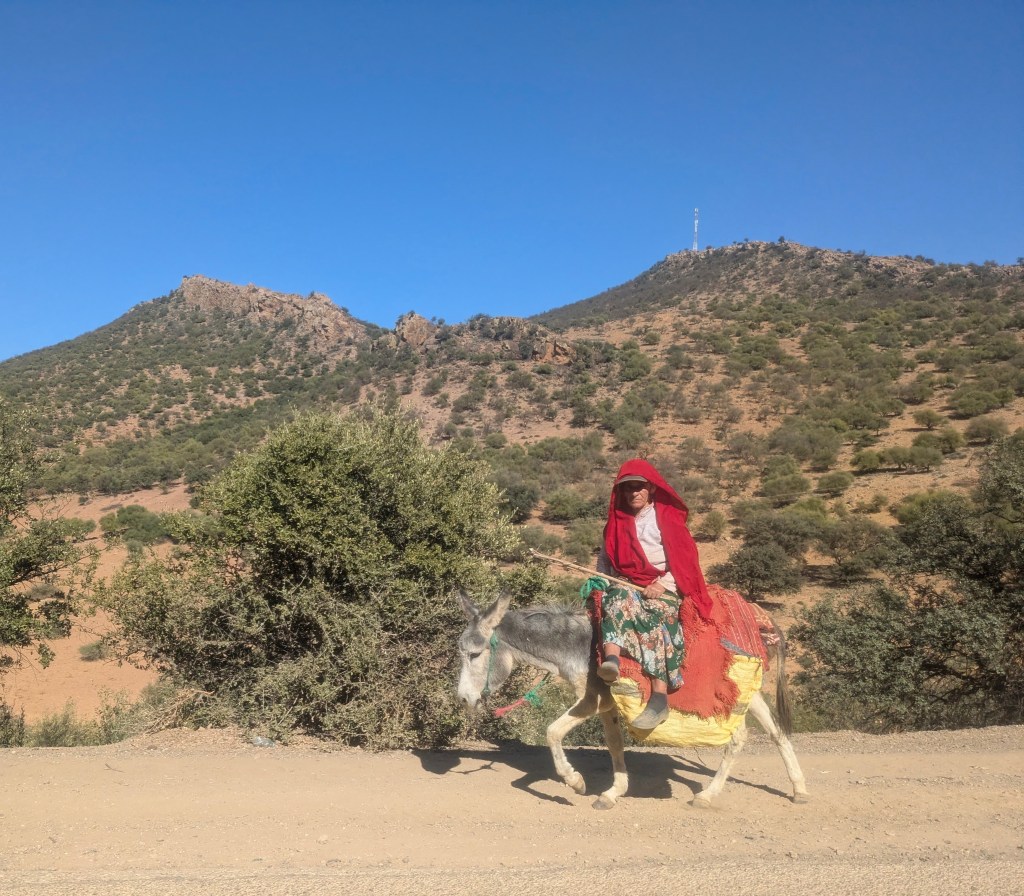
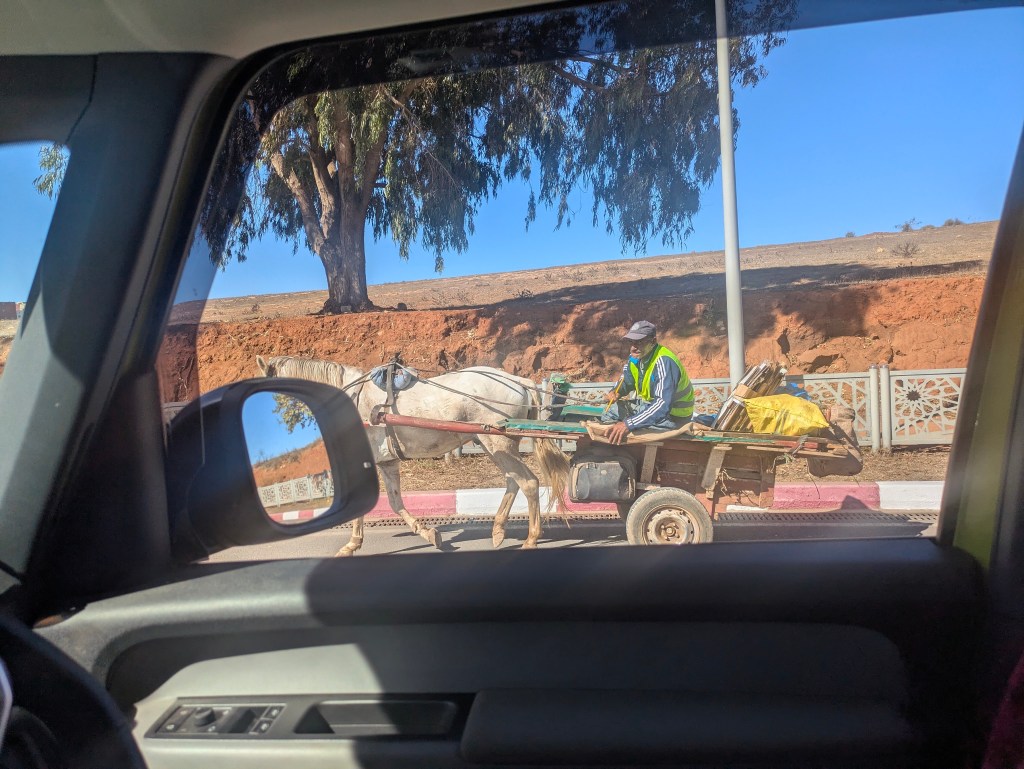
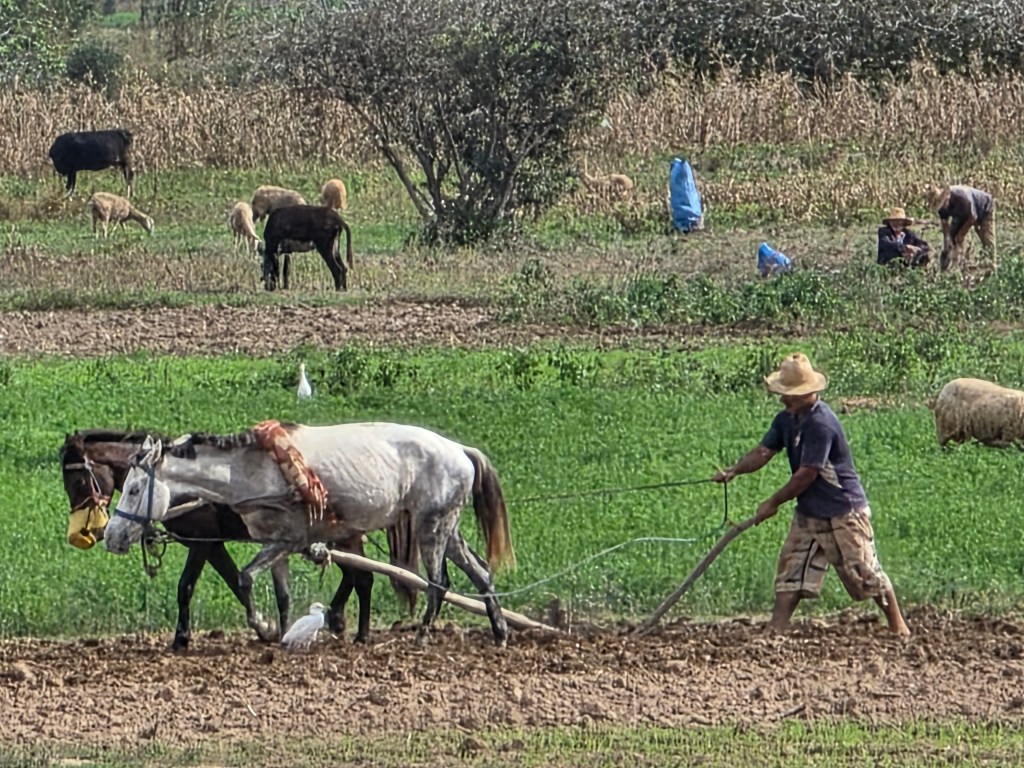
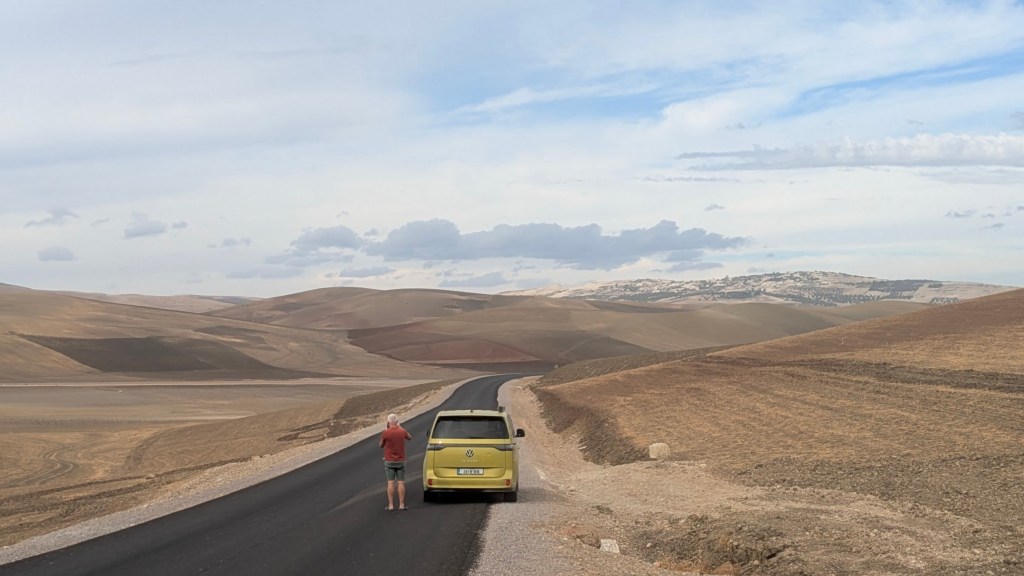
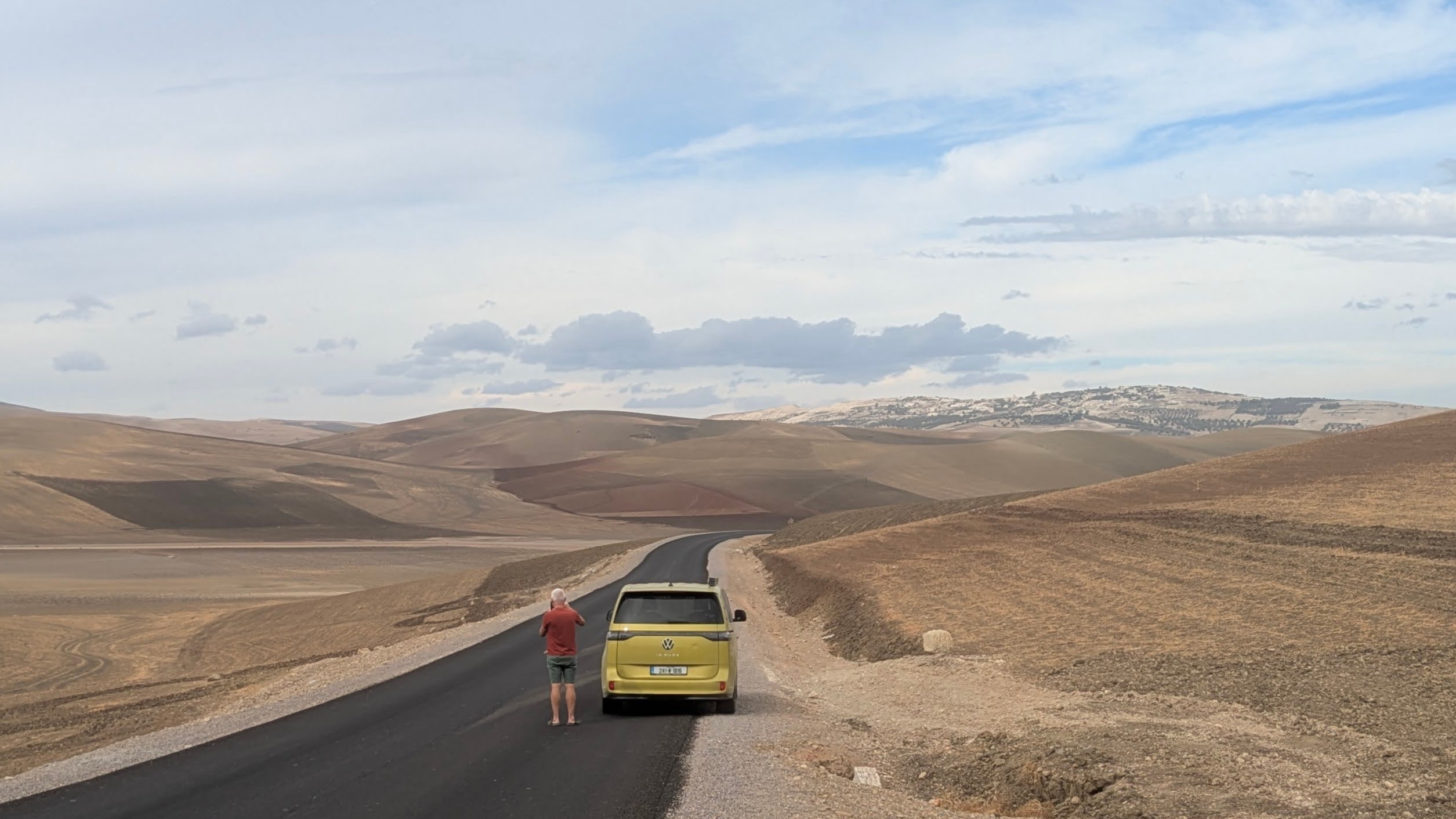
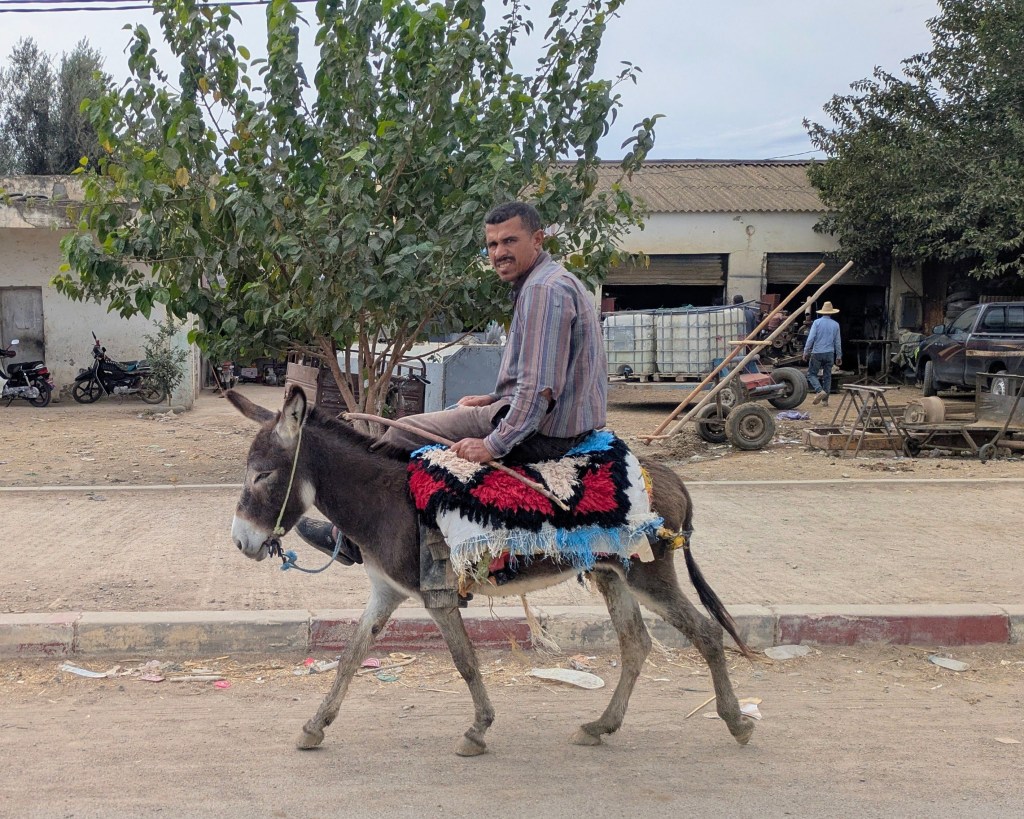
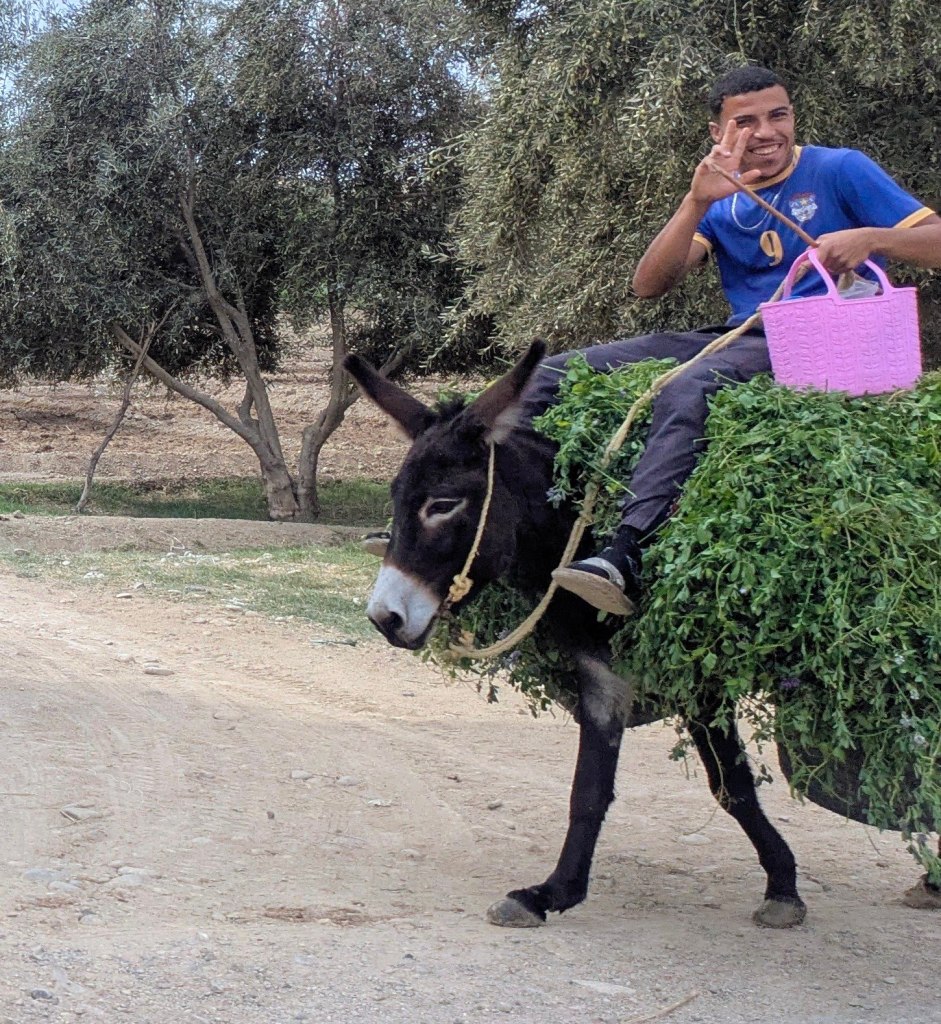
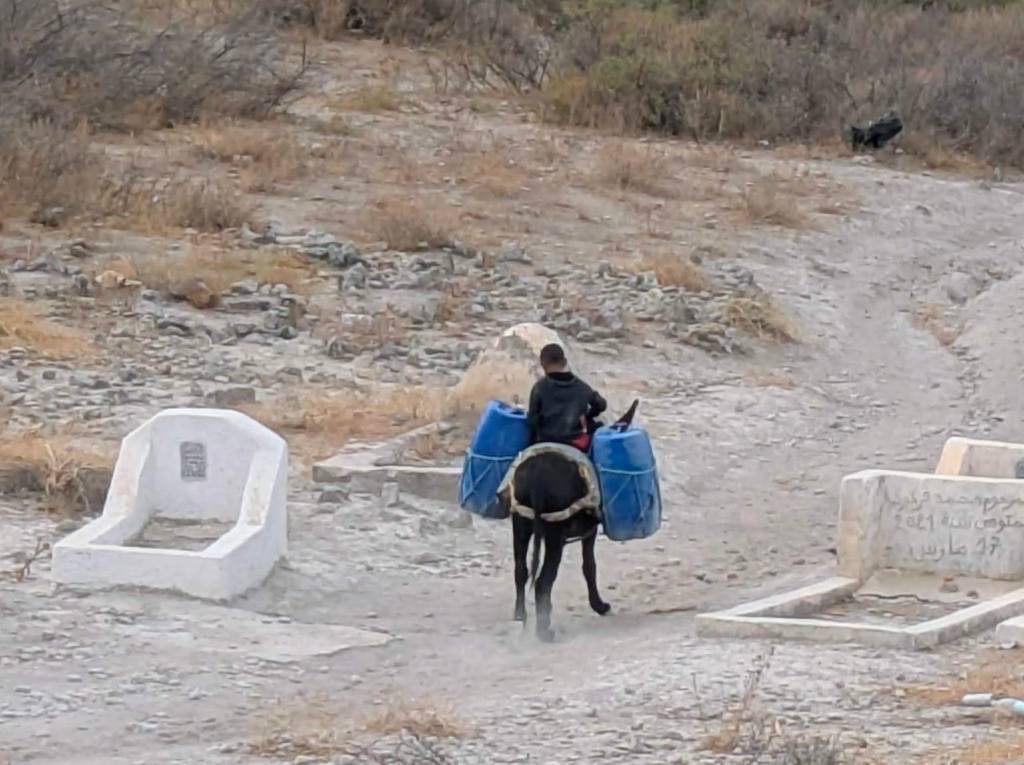
The Roads in Morocco were excellent with a smooth surface, better than a lot of roads in Ireland. There was a surprising amount of donkey and pony traffic particularly when we moved inland. There were also lots of speed checks. If there was only one bush in the distance, it was quite likely that a policeman with a speed-gun was lurking behind it, ready to phone on details to his colleague up the road. We were never stopped as we were driving inside the speed limit to conserve our charge but many others weren’t so compliant.
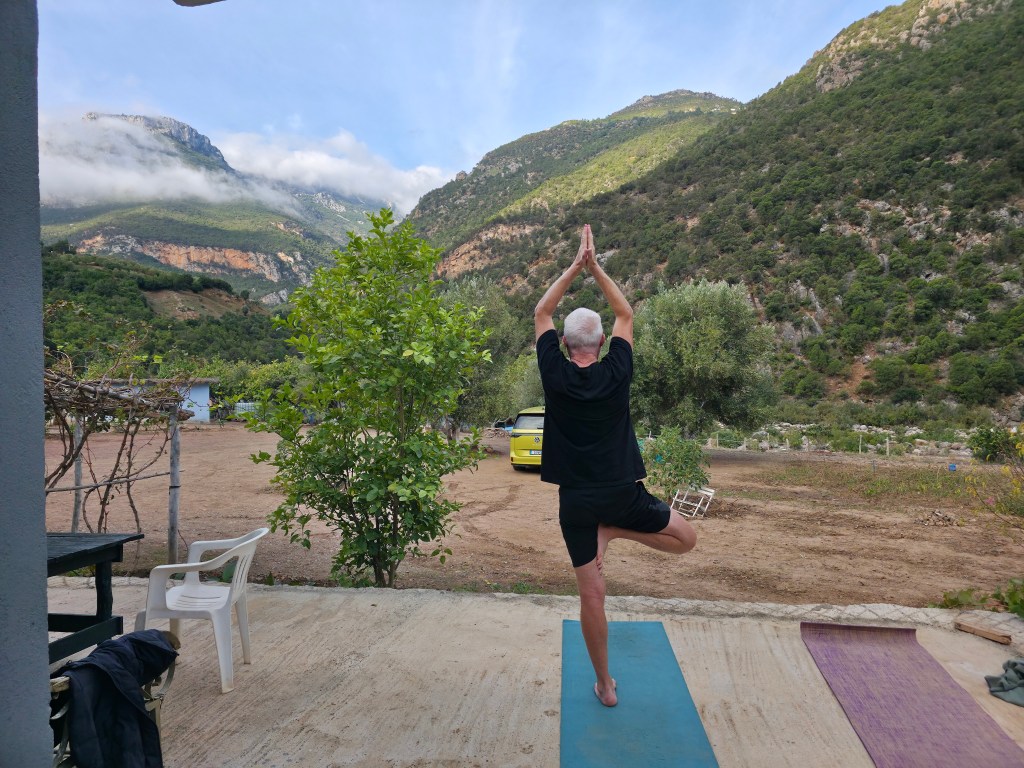
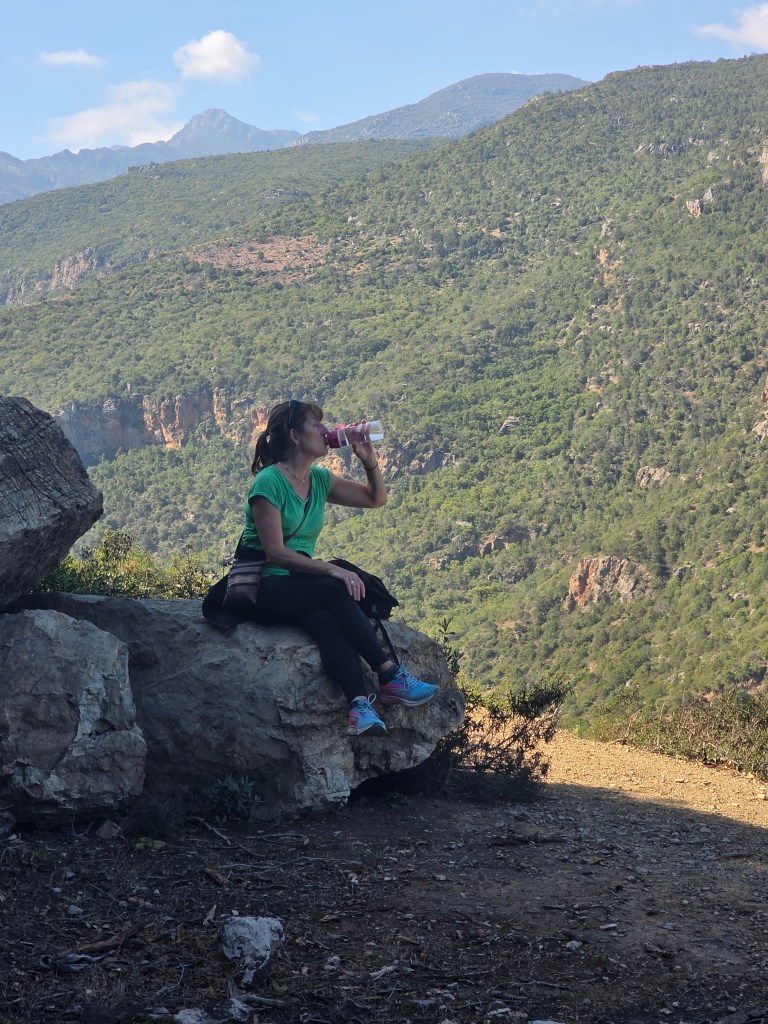
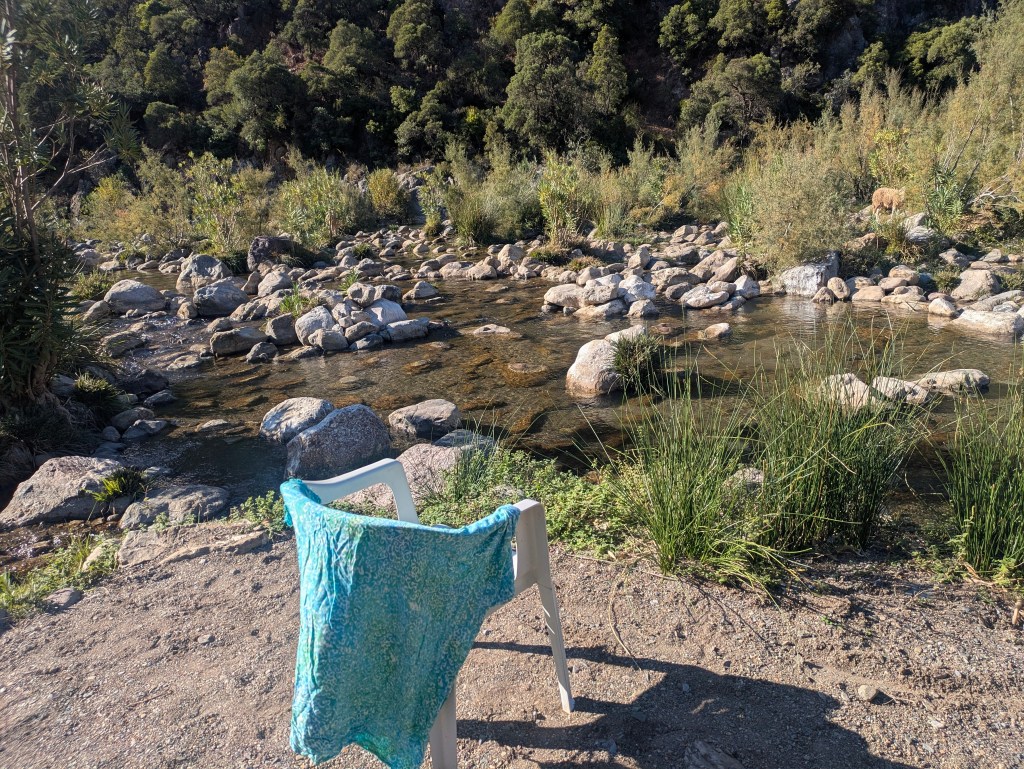
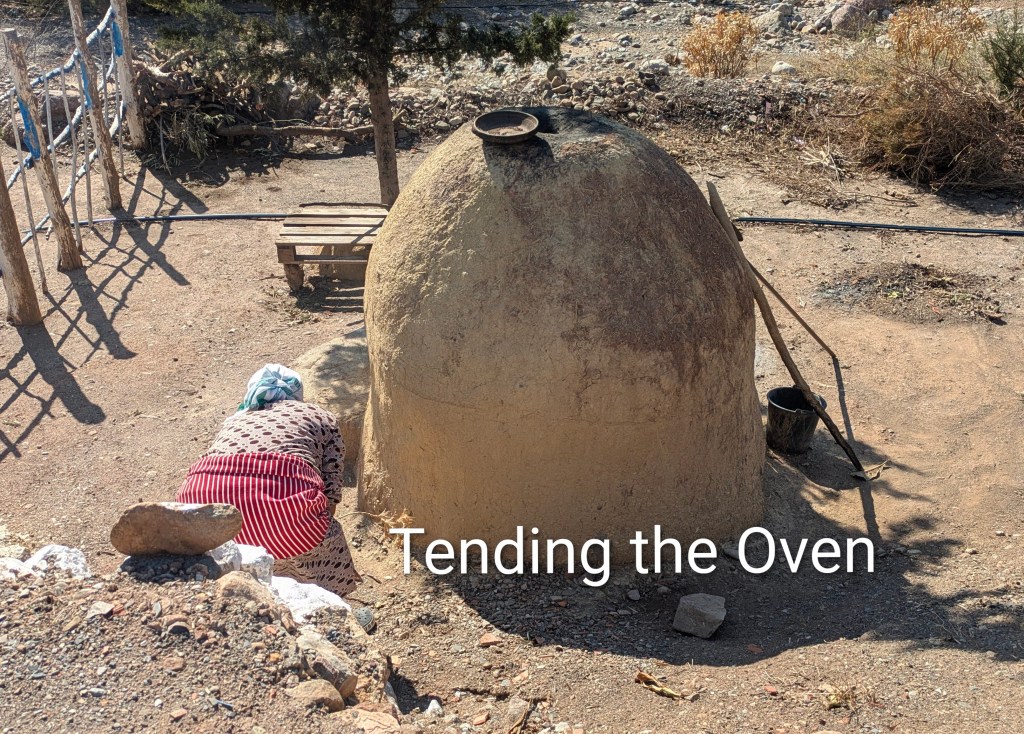
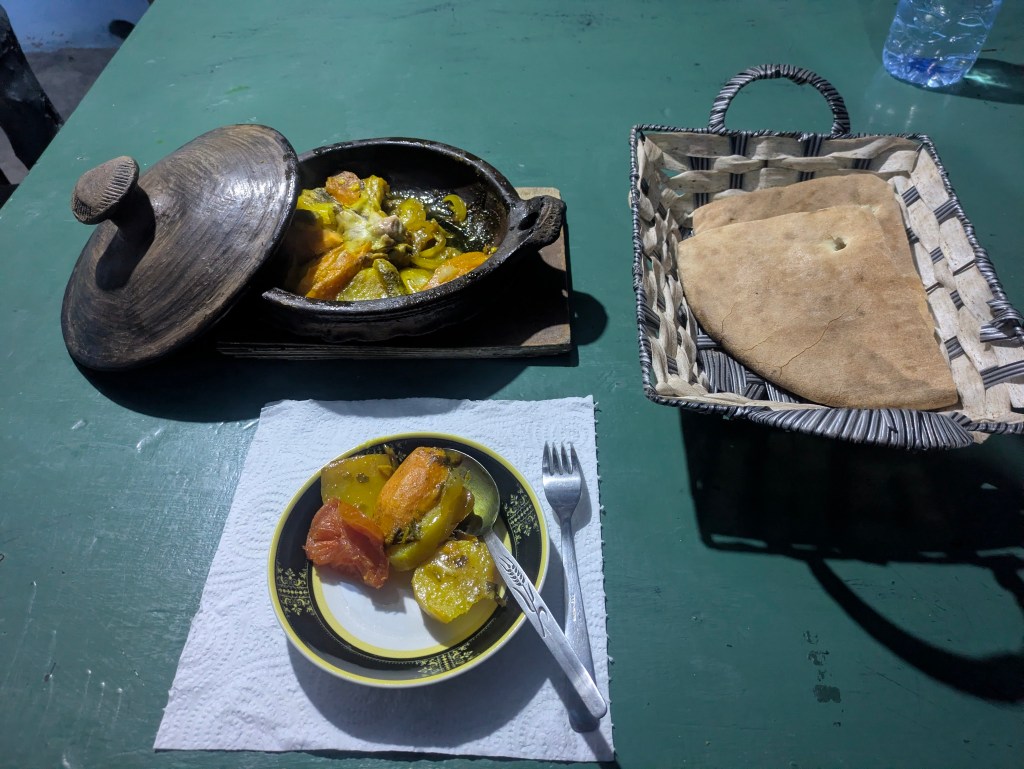
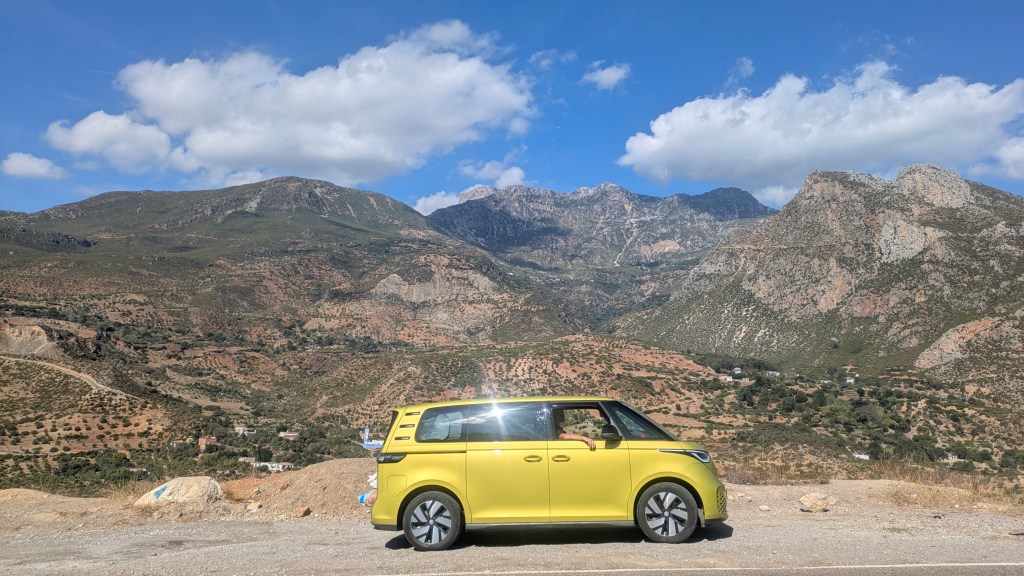
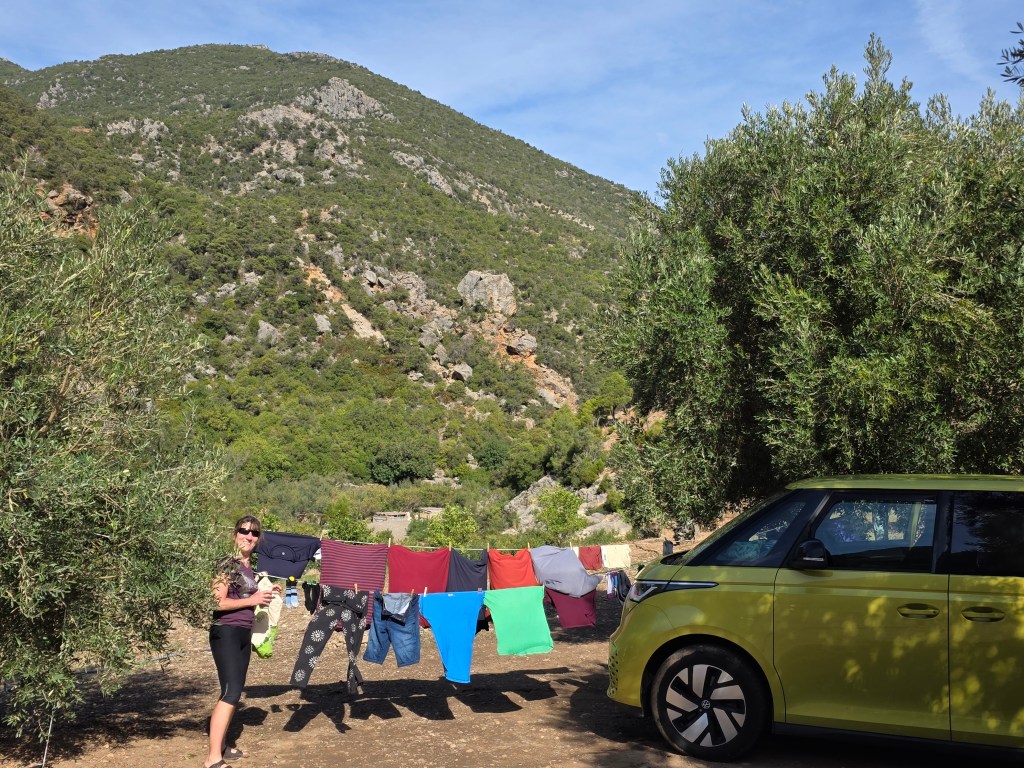
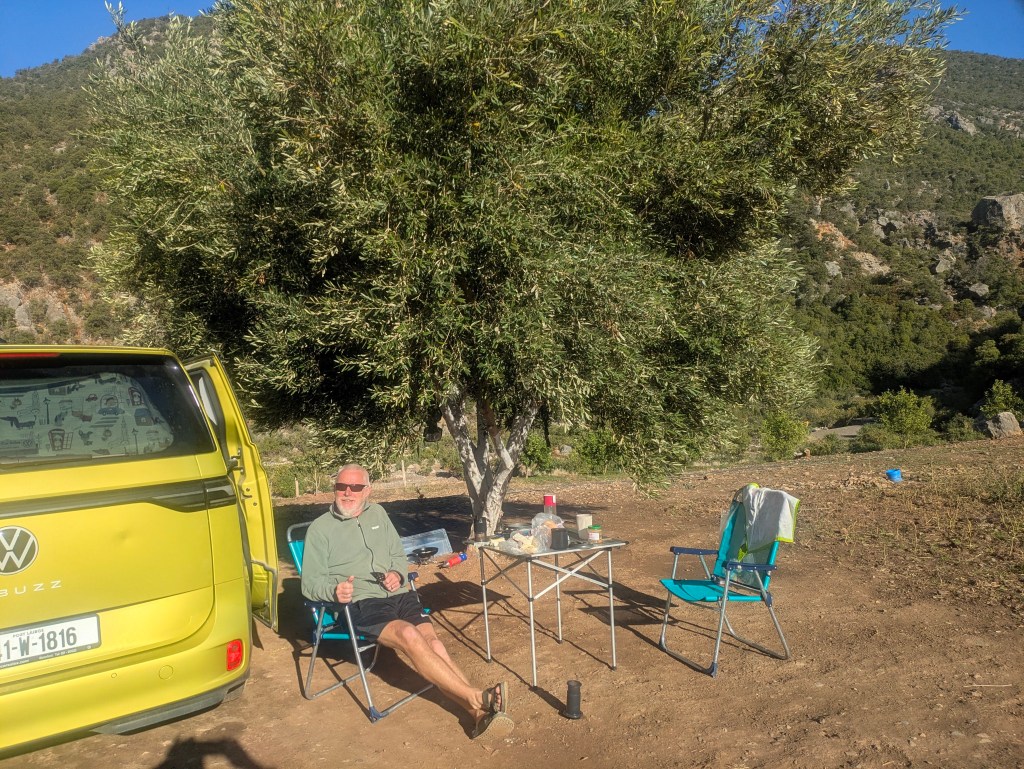
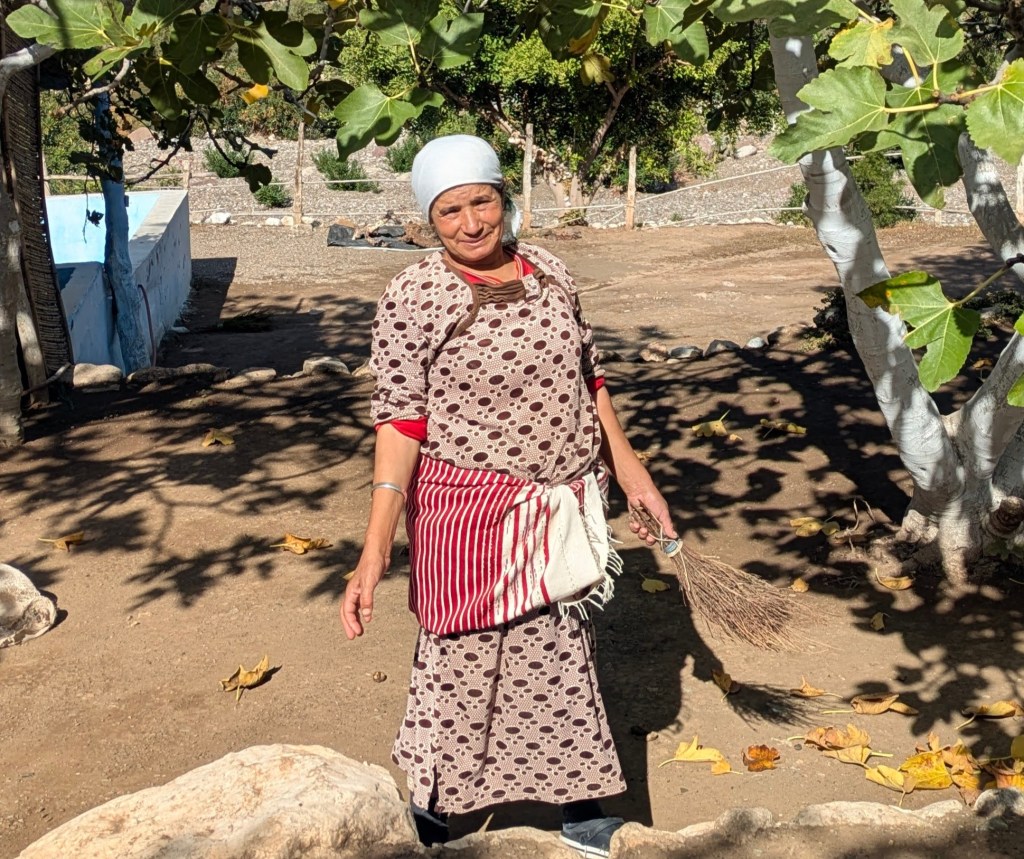
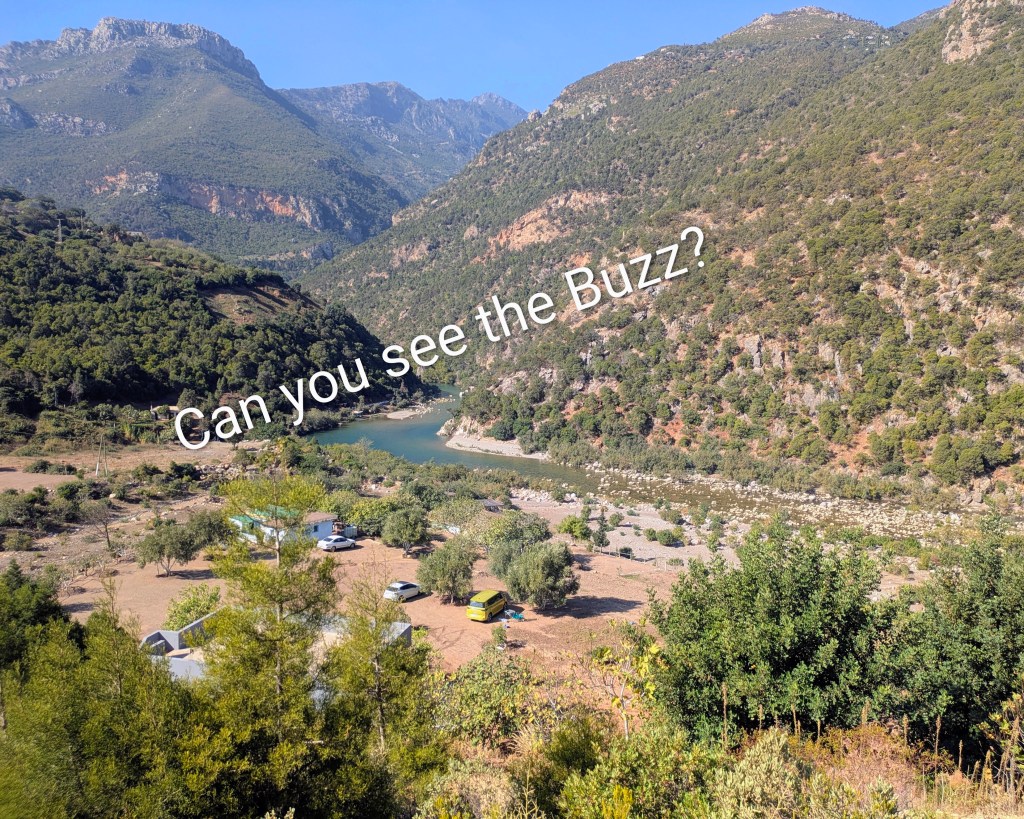
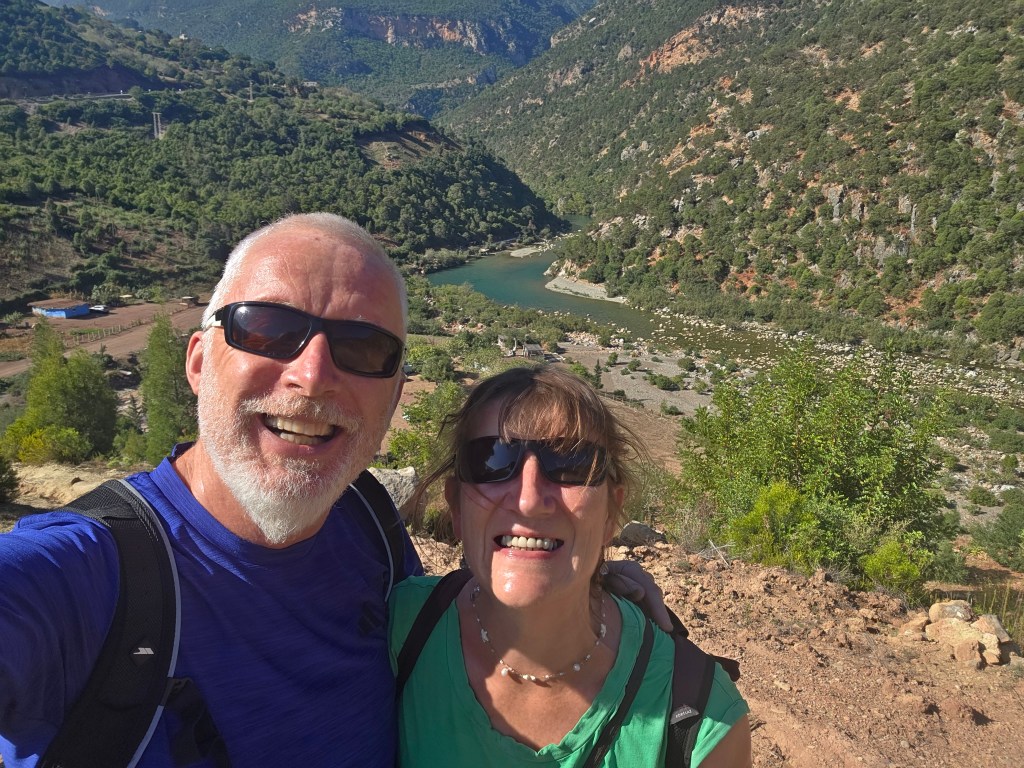
A Slice of Heaven. We found our idea of heaven in a little unpretentious campsite in the Rif mountains, run by a lovely family who baked bread in an outside oven and made the tastiest tagines. There was the babble of a small river, a soft wind in the lemon and avocado trees and the bleating of a few goats. The resident dog befriended us – all it took was a bit of chicken. The days were warm, perfect for hikes, the nights were cool (about 9C), perfect for sleeping. We sat by the river, hiked in the hills, read, did some yoga and watched the morning sun hit the mountain peaks and slowly creep down to warm the valley. This tranquil place put a spell on us, forced us to slow down. It could have been boring….it should have been…but it wasn’t in the slightest. It was our favourite place in Morocco.
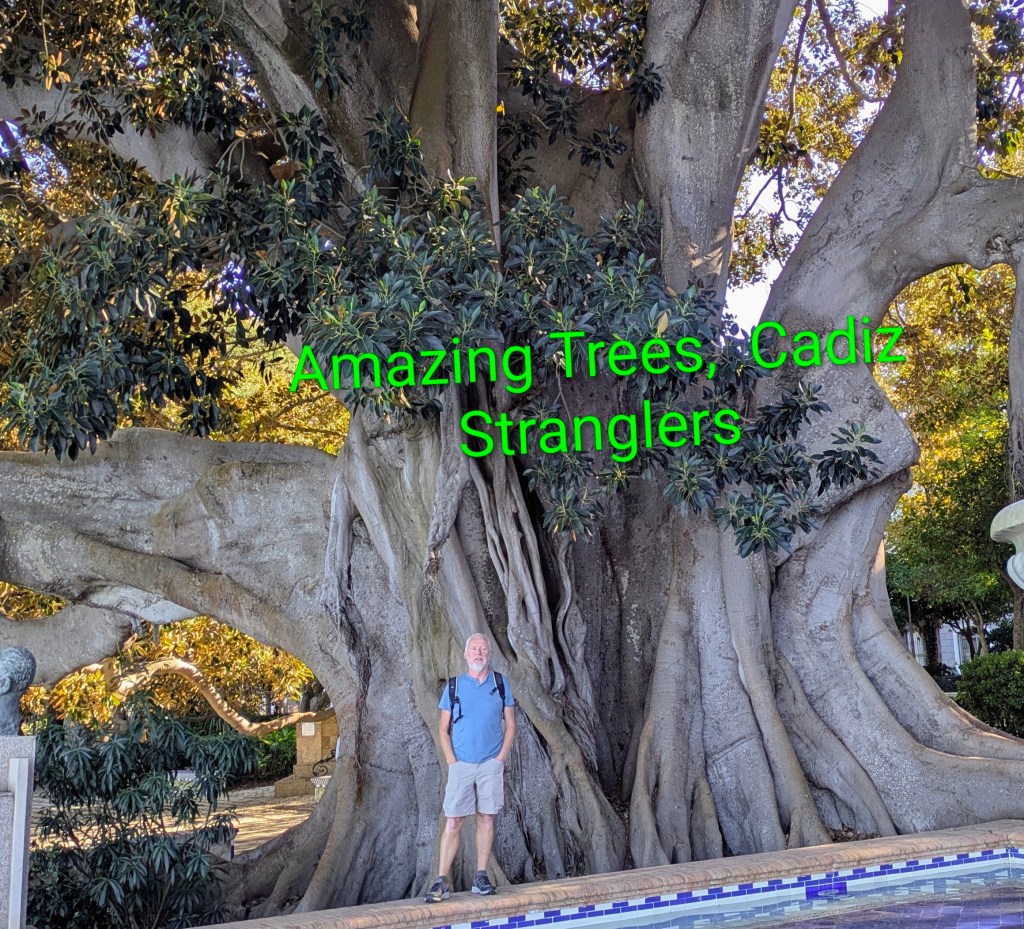
Trees in Cadiz, Spain. Cadiz is a place of narrow lanes, wide plazas, beaches, tapas bars with the aroma of frying fish, and always the sound of the sea which was never far away. The waves crashed or lapped (depending on the wind and side) on the reinforcements that kept the whole place from eroding and dissolving into the sea. But what impressed us most were the trees – dramatic Strangler Figs with enormous umbrellas of leaves and trunks as wide as a city bus.
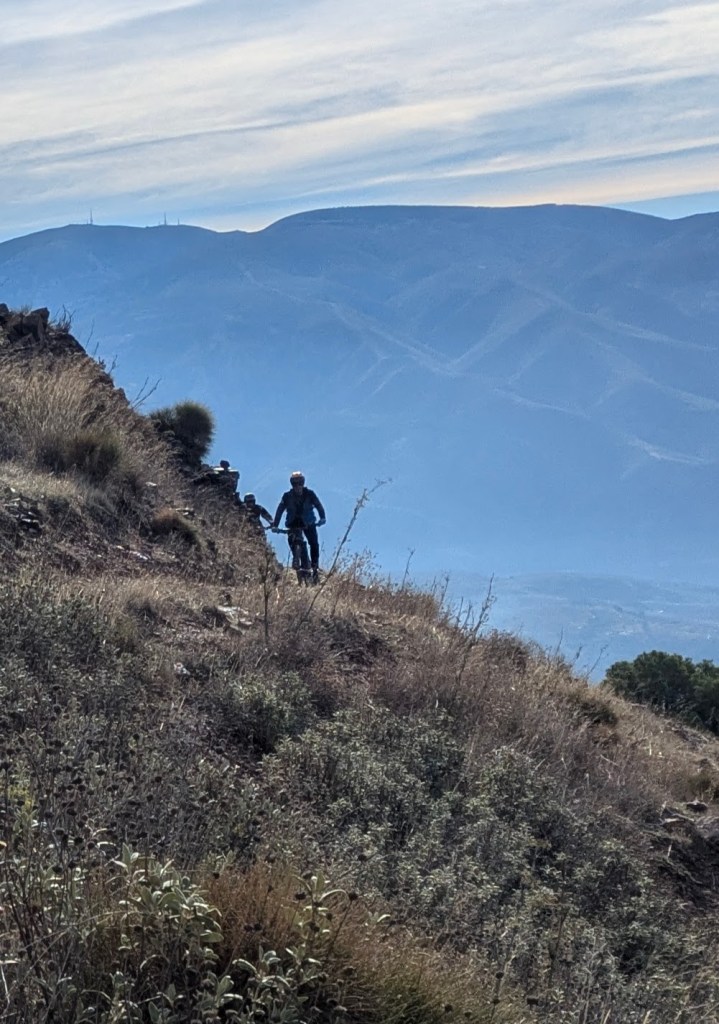
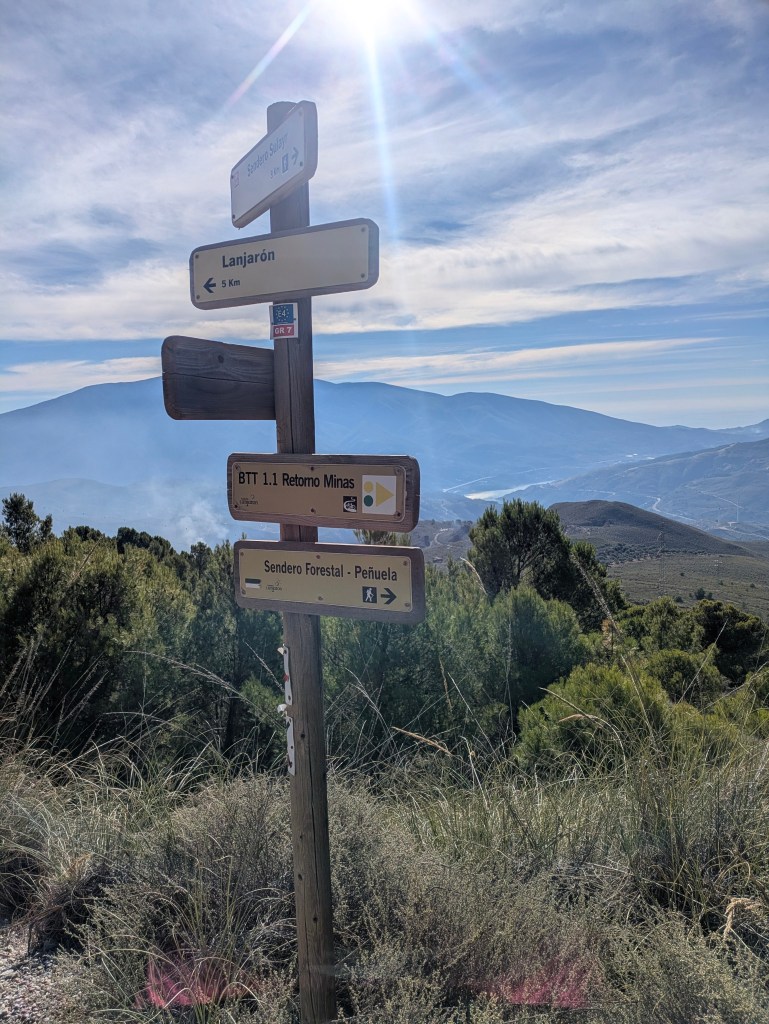
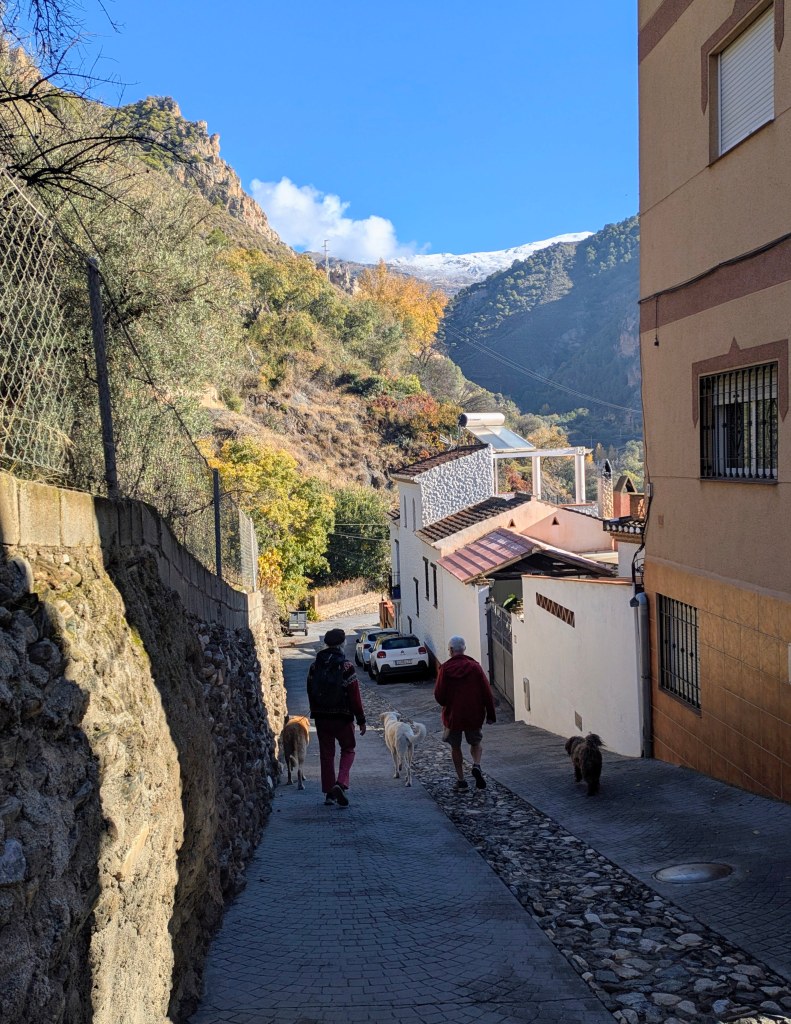
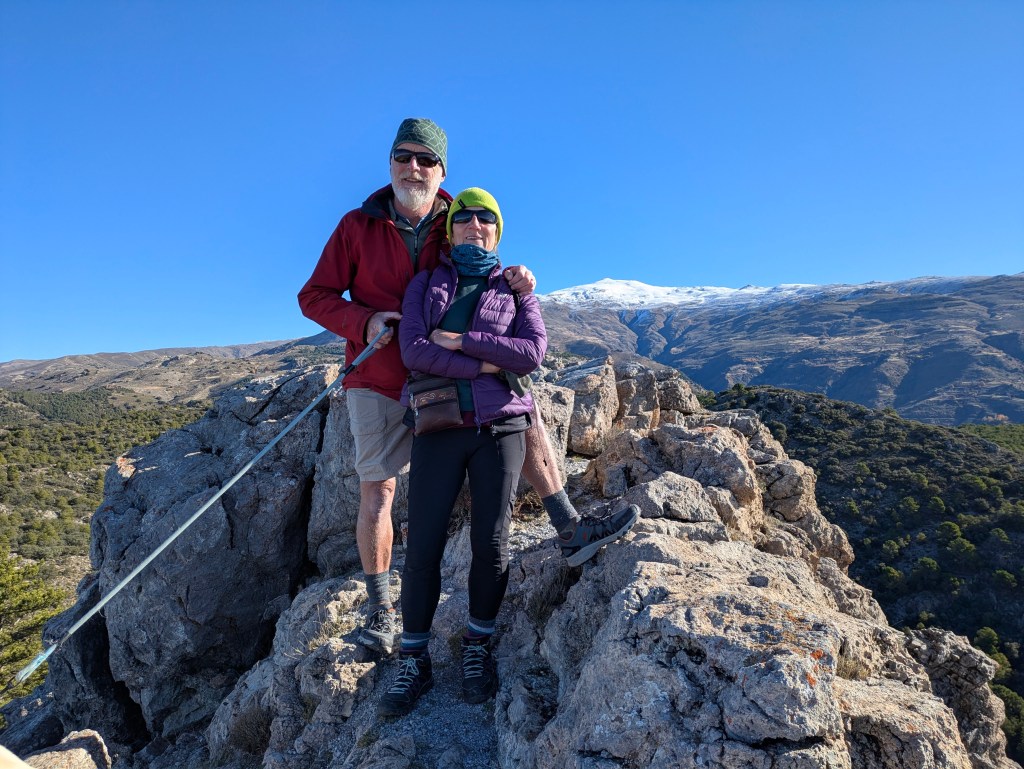
Sierra Nevada We spent eight days in Niguelas, a small village in the Sierra Nevada, about an half-hour drive outside the city of Granada, staying in a little Airbnb apartment on the edge of the village. After seven weeks of constantly moving through Spain and Morocco and sleeping (mainly) in the van, we wanted to pause and stay in one place. The Buzz spent the time parked under an olive tree. The location of Niguelas was jaw-droppingly beautiful with a huge selection of hikes of various lengths and difficulty. This was a week of super hiking and some morning dog walks with our Airbnb host, Tim and his dogs. There were almond orchards, olive groves, Aleppo Pines bright green against the bare rock and the yellow foliage of the walnut trees and poplars.
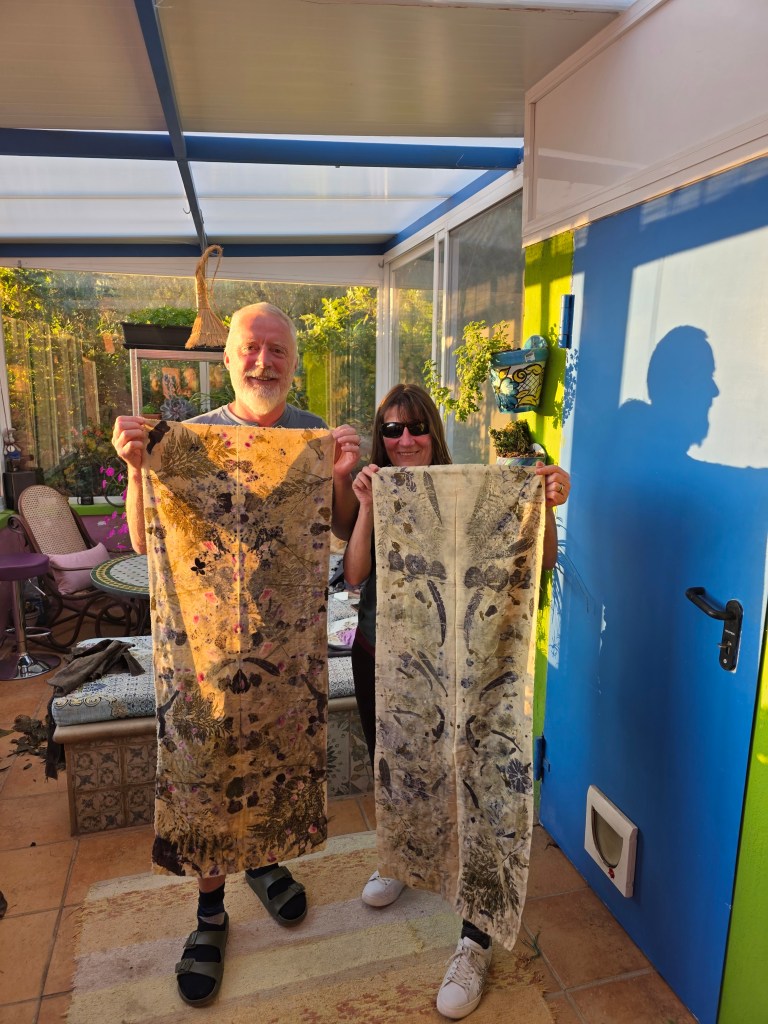
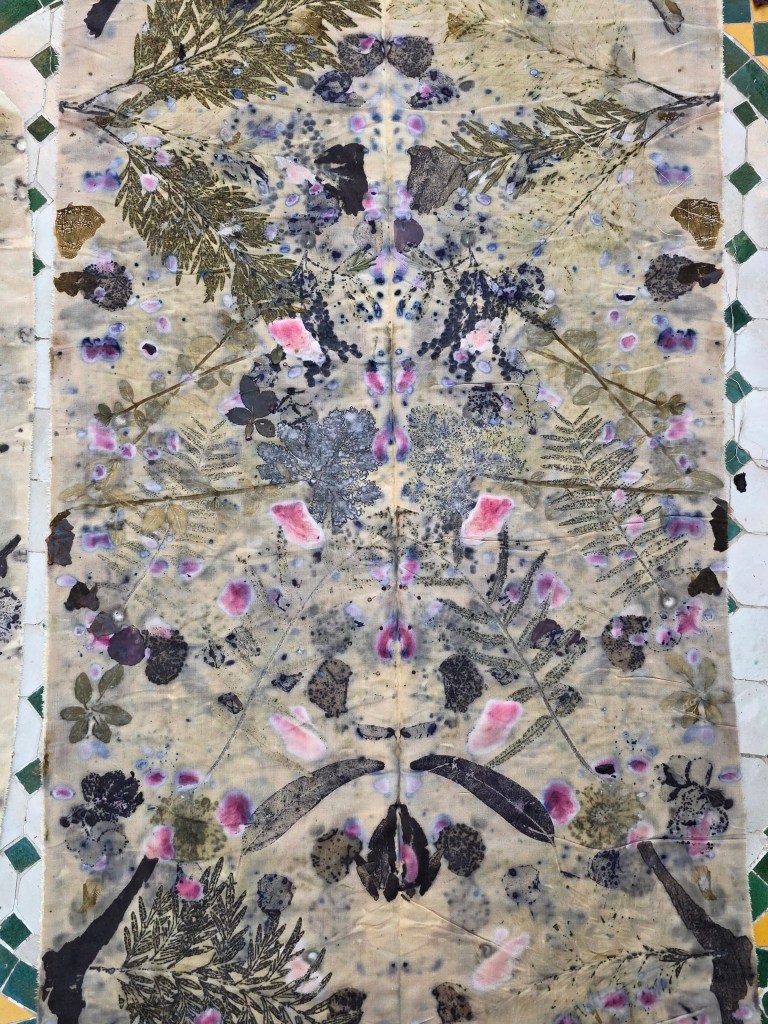
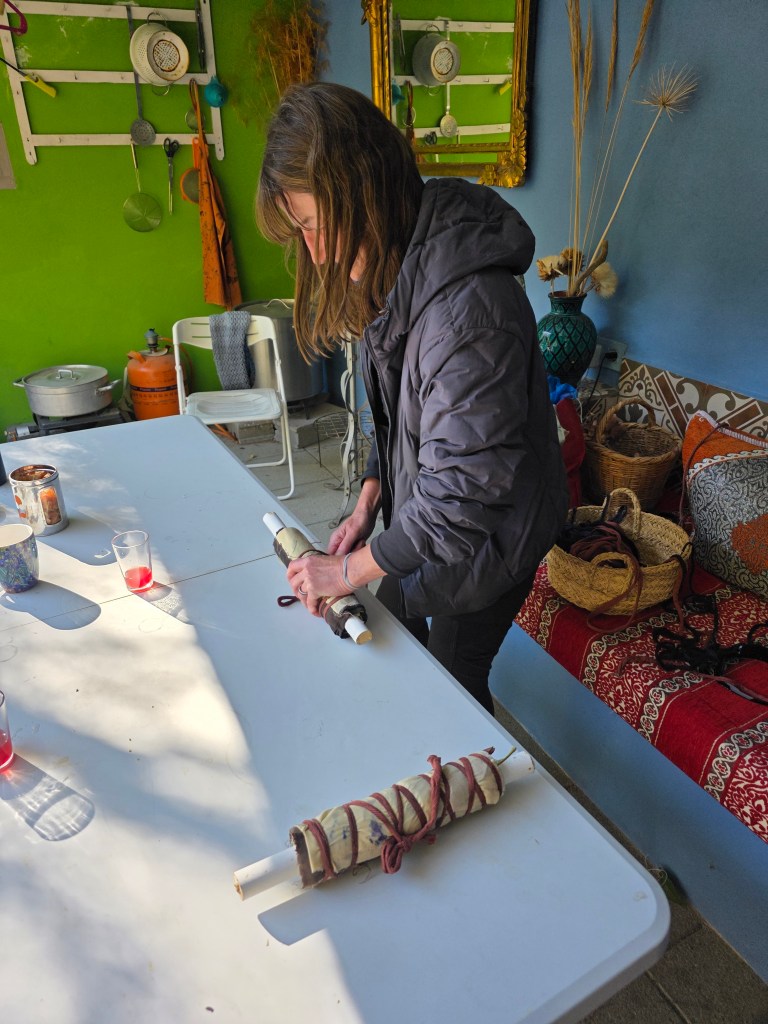
A Flow of Creativity. In Niguelas, Helga, our Airbnb host, ran courses in felting and eco printing and we both opted to try our hand at eco-printing. This involved picking plants and flowers from the huge selection in the garden and using Helga’s techniques to transfer the images to cloth. It was a really enjoyable experience and our results were satisfying and really much better than we would have hoped. The unrolling of the fabric after the steaming process was greeted by lots of ‘wow.’
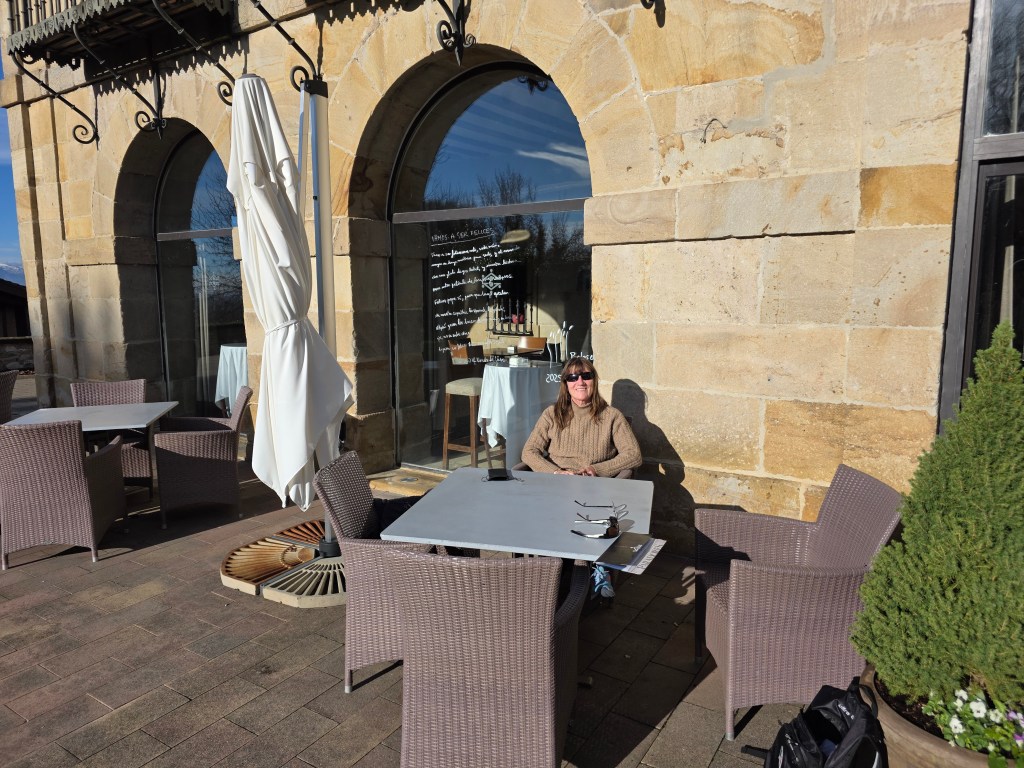
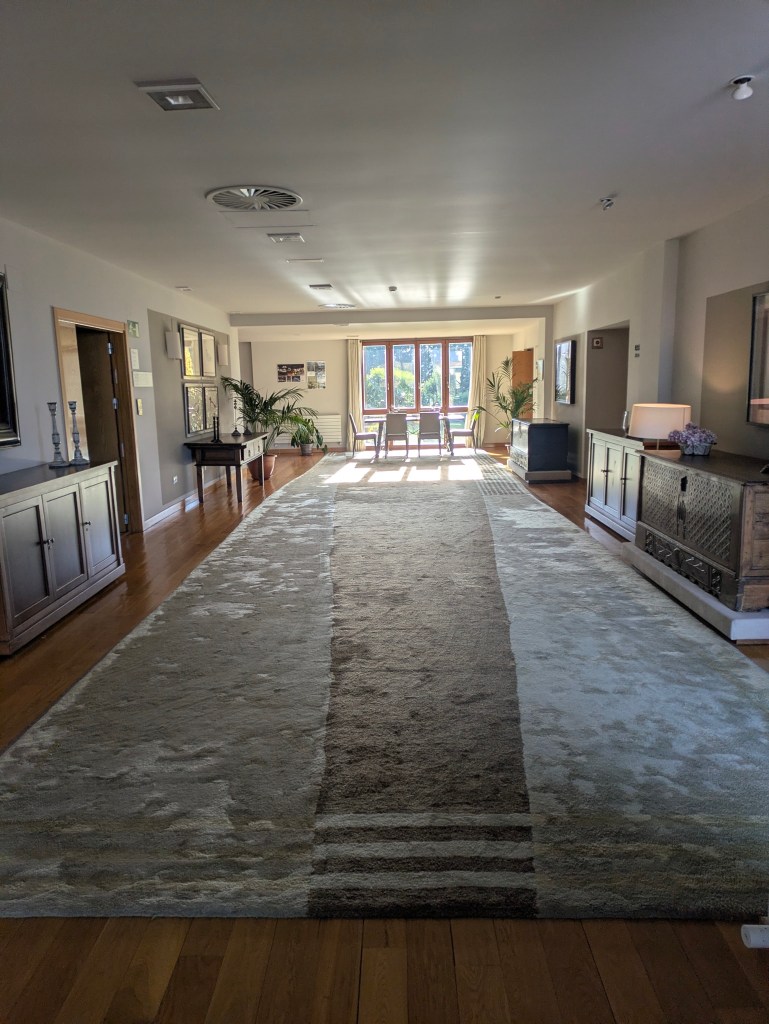
Parador Argomaniz Although we are usually fans of ‘cheap and cheerful,’ we are not adverse to a bit of luxury especially in unique buildings. Paradores in Spain are state-owned luxury hotels, in restored historical buildings, such as palaces, convents, monasteries and castles. It’s like stepping back into the past but with modern comforts and the hotel profits go to the buildings upkeep. Our last two nights were spent in Parador de Argomaniz which was about an hour south of Bilbao. The building dated back to 1712 and was once a convent, before being converted into a palace, and during the Peninsular Wars was used as a headquarters for French Troops. It even had EV charging points. If you have never stayed in a parador, I urge you to look them up and give yourself a real treat.
Lowlights
Getting into Morocco. We nearly didn’t get into Morocco. We forgot to bring the documents for the Buzz and only realized this when we were in the border queue. We phoned our wonderful neighbours at home who ran over to our house, photographed our van documents(the Vehicle Registration Document Form) and Whatsapp’ed them to us. The border officialsweren’t happy -they needed paper documents, it wasn’t the right document, we wouldn’t be allowed in. Eventually a senior official was called, an older man, slightly stooped but mild mannered. He agreed to give us a waiver and signed a piece of paper, necessary to enter Morocco with the van. Four and a half hours after disembarking from the ferry, we were in Morocco….by the skin of our teeth.
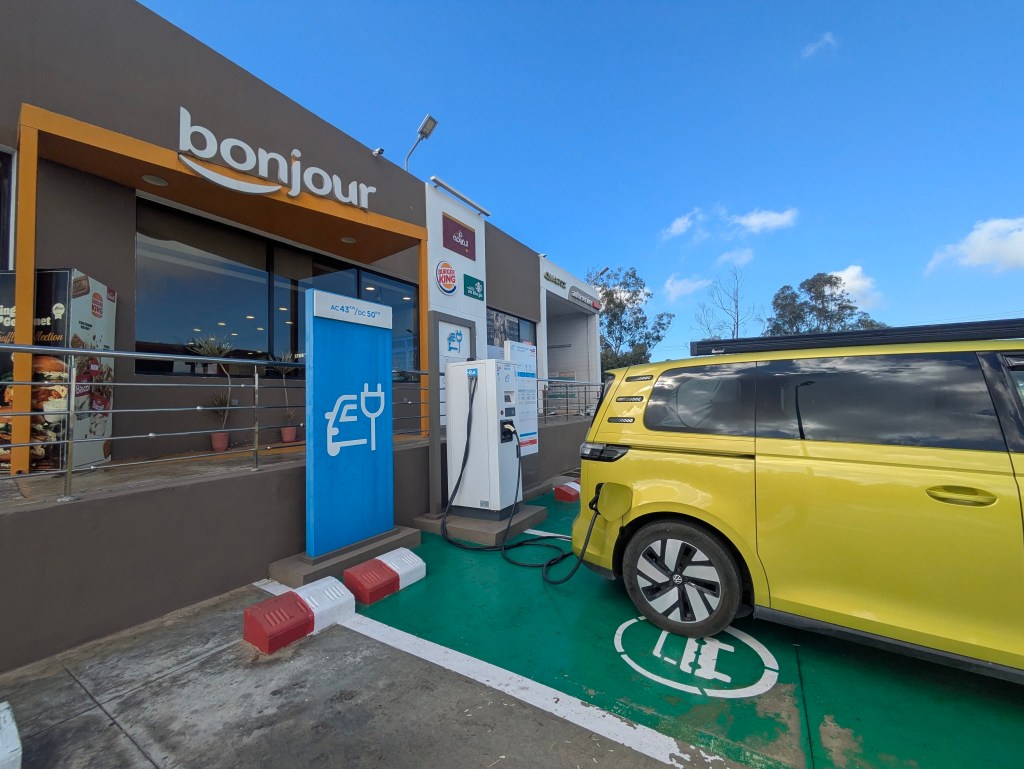
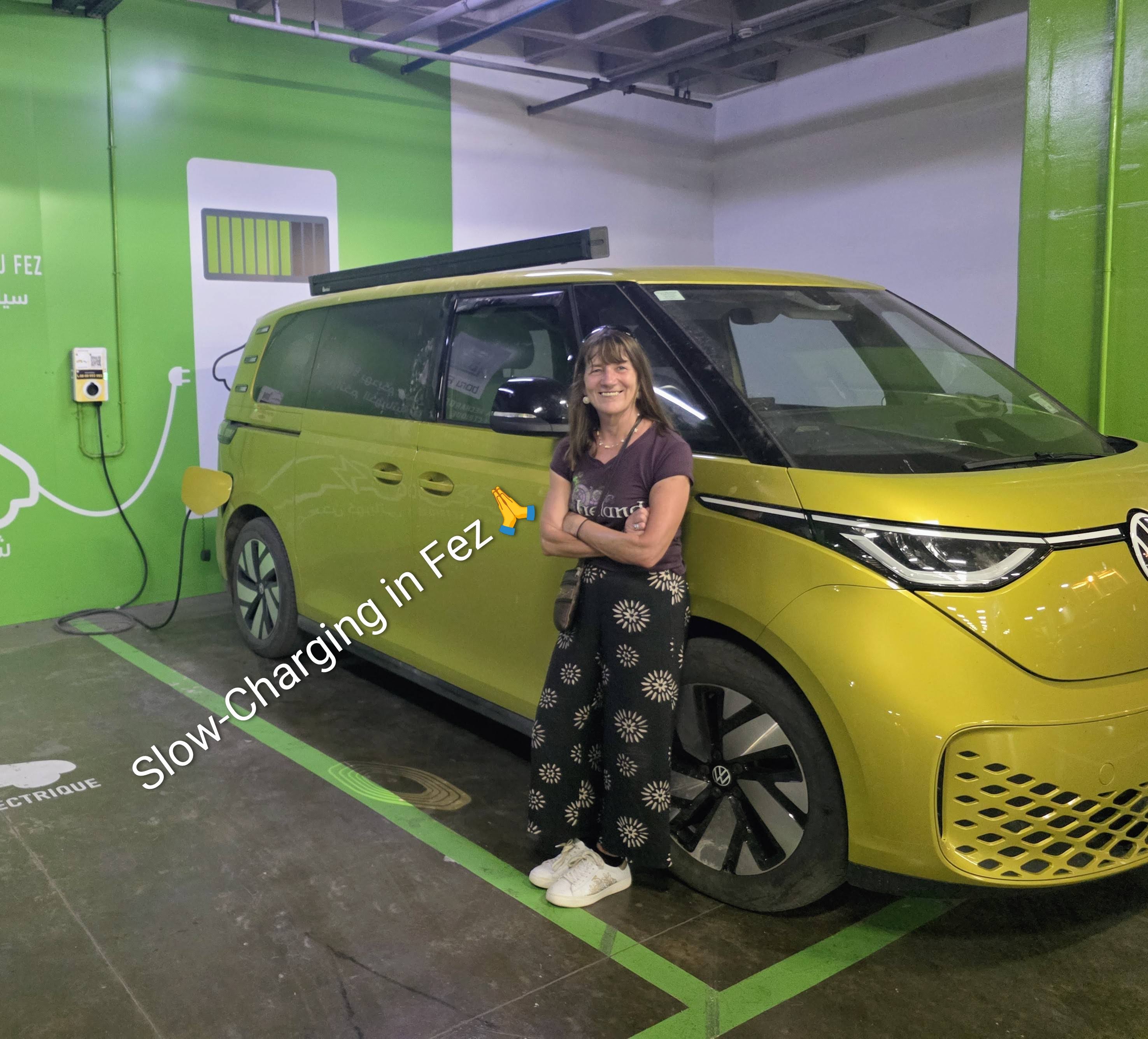
EV Charging in Morocco. Charging the Buzz was an issue in Morocco. Chargers were scarce – a charging map told us that there were forty-one chargers in the whole country, distances were large -Morocco is more than six times the size of Ireland. After getting into Morocco, the first chargers that showed up on our map were Fast Volt, the chargers were in a gleaming forecourt and looked impressive. We were hopeful. The instructions, in French, required us to download the Fast Volt App as charging was only available through the app (and not directly using a bank card). No problem, we thought, until we attempted to download the app and kept getting the message ‘Unable to download as app not available in your region.’ Catch 22. The Fast Volt were great chargers but we were unable to use them. Meaning that the number of available chargers decreased significantly.
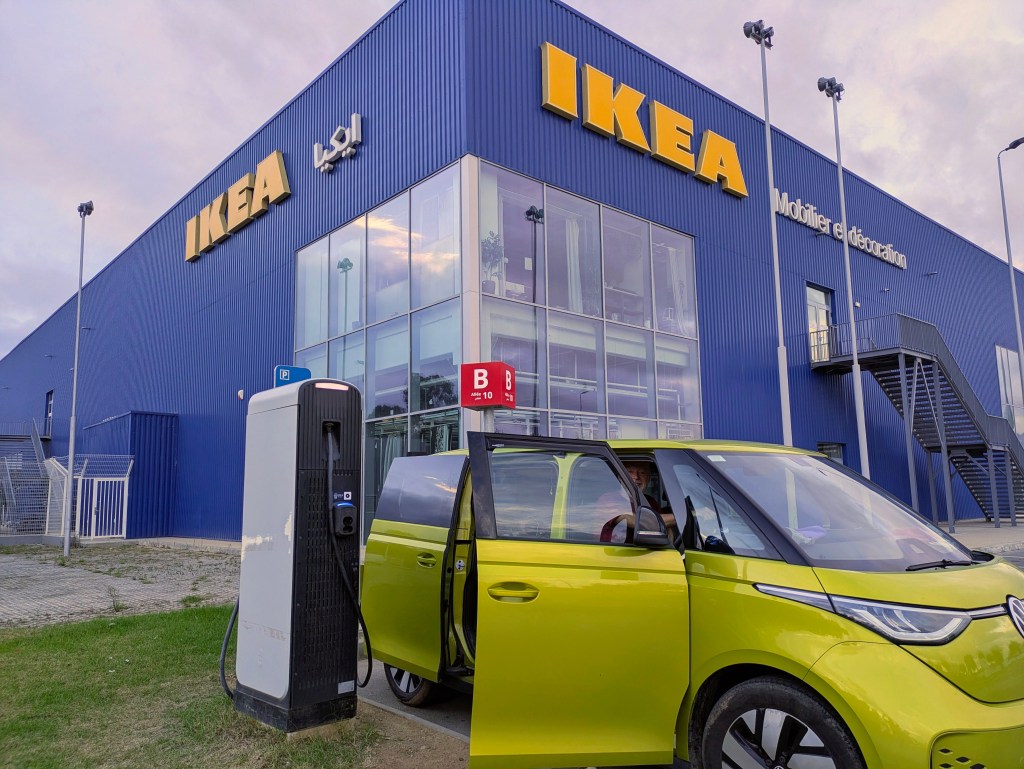
Looking for a Campsite in the Desert Turning inland from the Atlantic Coast in Morocco, the journey was breathtaking with undulating and twisty roads. The countryside was a palette of browns with the occasional green scrub, villages like mirages clung to hillsides and everywhere there were goats, mainly jet-black, like shadows. We were in search of a farm campsite on Google maps which sounded like a place we might be able to charge the Buzz, plug it into a socket…..if there was a socket assuming that was even electricity. The trouble was that we couldn’t find the campsite. We left the tarmac road and followed dusty tracks…. to nowhere. Eventually we turned around and tried to retrace our tyre marks back to the ‘main’ road which was not an easy feat.
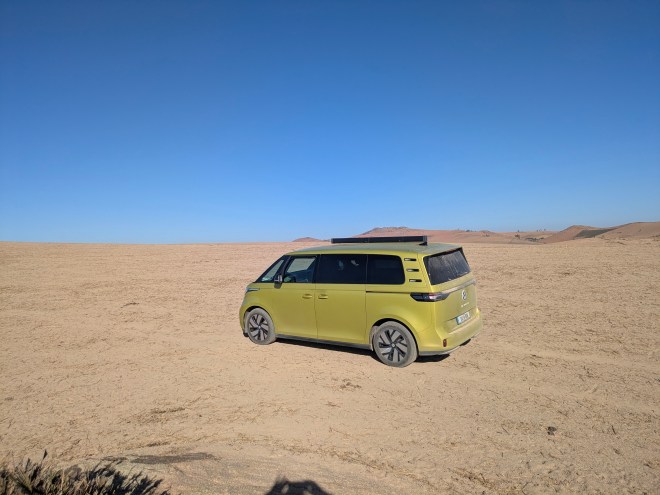
Azrou, a Berber town surrounded by cedar and pine forests with many walking trails and home to troupes of Barbour monkeys in the woods, should have been a highlight but it is here in the lowlights. It was exactly the type of tranquil place we liked BUT we had a big problem, we couldn’t charge the Buzz, We tried several sockets, the campsite manager, Khalid, allowed us to plug into the kitchen, he called a mechanic friend, brought us to a garage but the Buzz wasn’t buzzing.
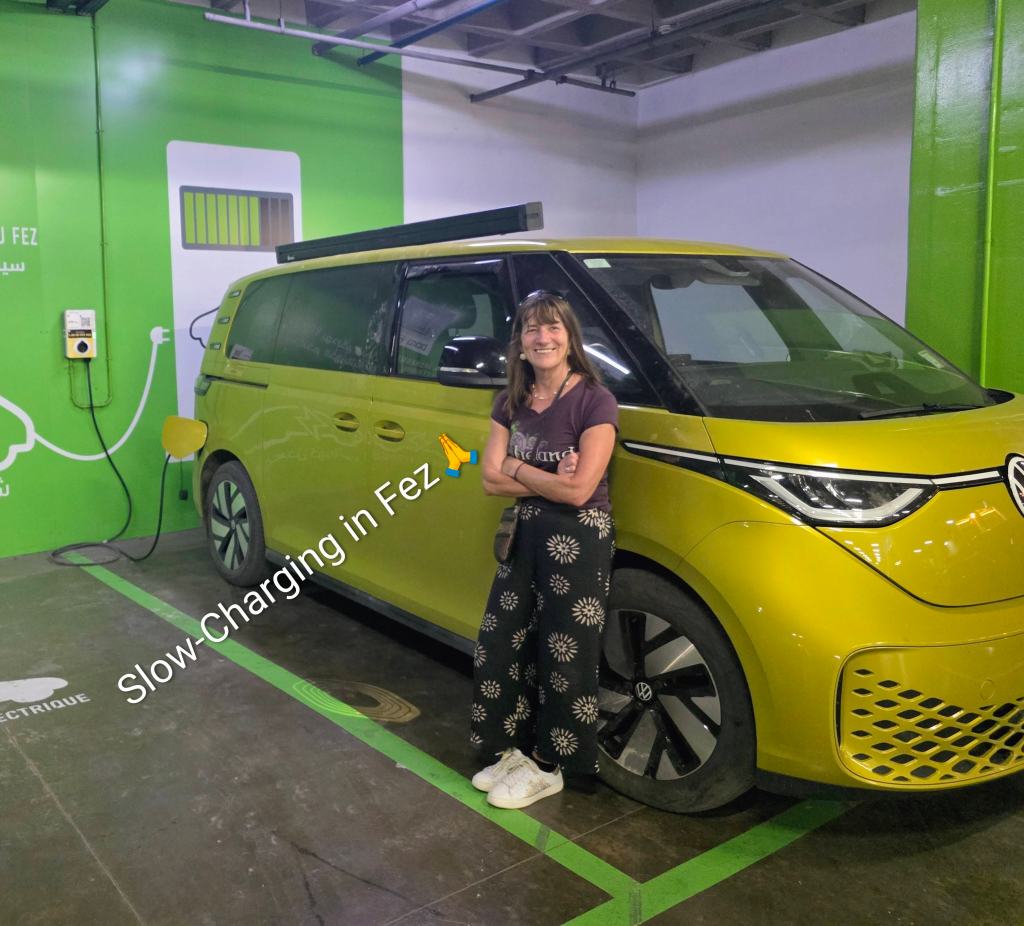
According to various (unreliable) maps, we thought there were chargers in Fez, which we had intended visiting, or Meknes, which we had never heard of before. Fez was 89kms but Meknes was closer at 65kms but we had a mere 59 kms in the tank. Would either of them have chargers that worked……even if we got there? Our only hope was altitude – we were in the Middle Atlas mountains so it should be all downhill to either destination. We decided on Meknes and drove slowly….Khalid gave us his phone number in case we got stuck and said that he would come and rescue us. We made it to Meknes, gaining kilometres on the downhill but it was SO stressful……however the relief was also huge when we managed to plug into a charger (albeit a slow one) in Meknes which was free, like all the chargers we used in Morocco.
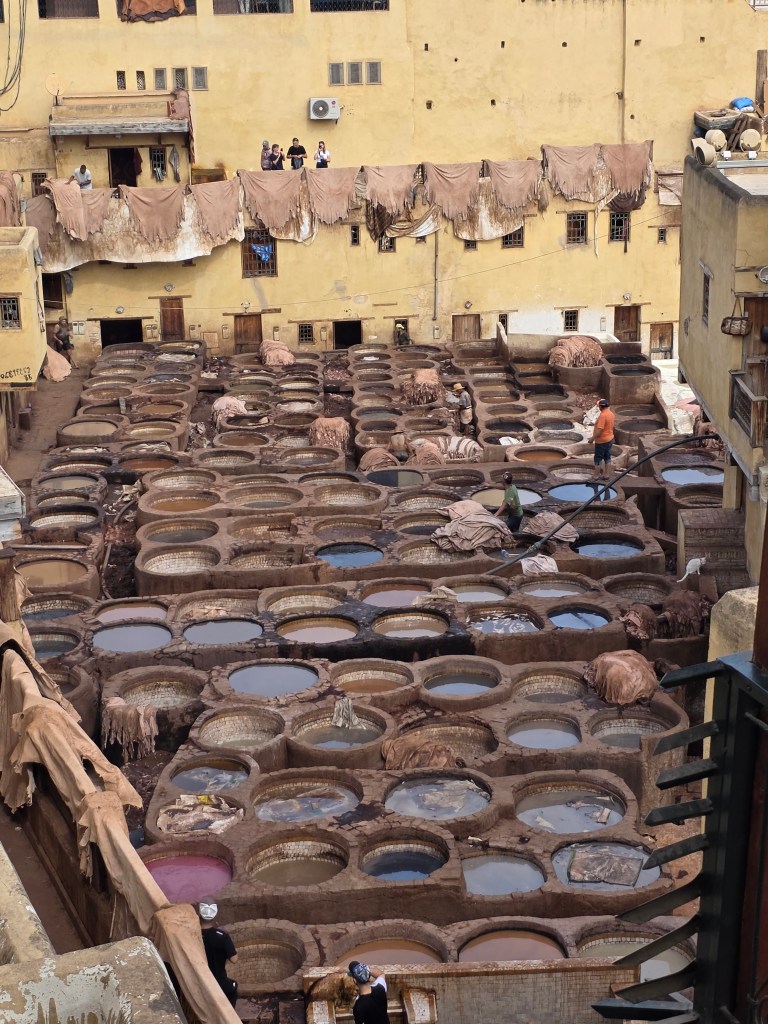
An Unforgettable Smell in Fez. At the door leading into the Fez tannery, a small man with a face like wrinkled leather pressed a few mint leaves into my palm and gestured that I should hold it to my nose. It didn’t help much – a whole mint bush wouldn’t have disguised the pervasive pungent smell that hung in the air, the smell of blood and chemicals although the tanning was done using old natural methods, many unchanged for a thousand years. The ammonia needed in the process was supplied by pigeon poop, gathered from the town’s buildings and from pigeon fanciers and the red dye came from pomegranate seeds. The recently eaten honey cakes were leaping into my throat as I looked down at a ‘clothes line’ of drying skins, a mixture of goat, cow and camel and the much-photographed ‘honeycomb’ vats of coloured liquid used in the dying process. The work was intense, the noise unrelenting, the conditions brutal…….and the smell was gut-wrenching.
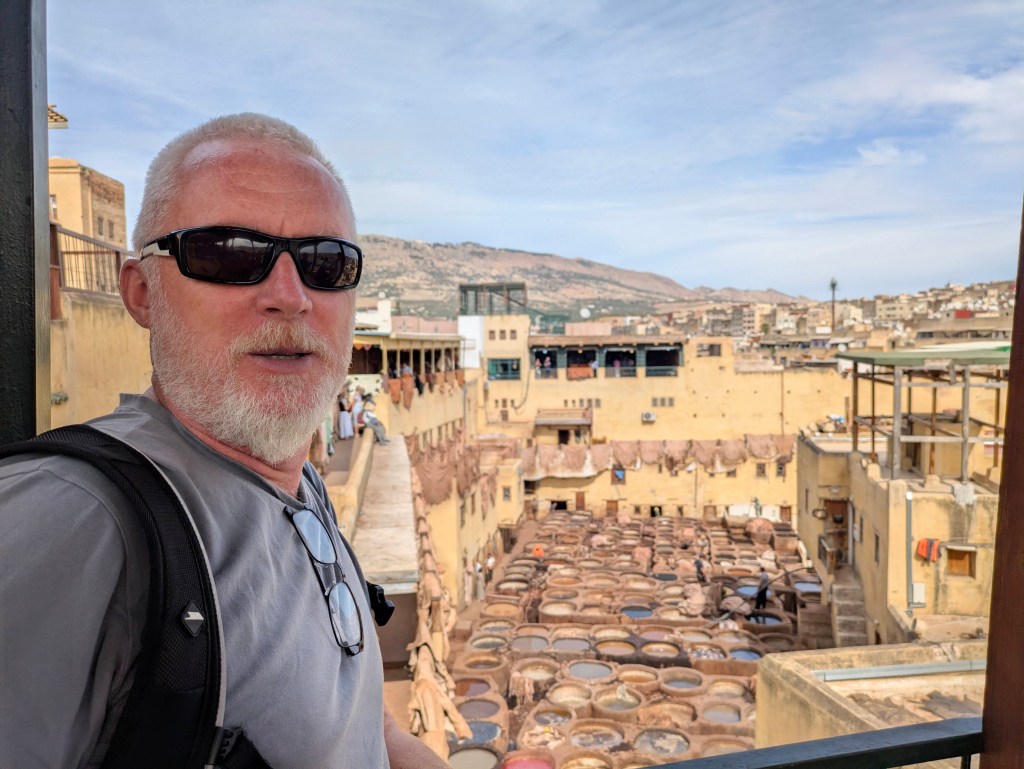
Despite the difficulty with EV charging, we were charmed by gorgeous Morocco and Moroccans who are probably the most helpful people in the world. Our trip was curtailed somewhat in Morocco by the quest for chargers. This kept us in cities more than we would have liked but on the plus side, we visited Meknes and Rif Mountains which we probably wouldn’t have if charging hadn’t been an issue.
We learned a lot and could have made things a little easier if we had done some research…..although our usual ‘modus operandi’ is to ’wing it.’ We discovered that there are adaptor cable kits (aka Portable EV Charging Station) available to buy online which might have allowed us to charge from a household socket in places like Morocco by some regulation of current/voltage. (Much of our disappointment, our granny cable didn’t work with an adapter plug) This new adaptor kit has gone on our Christmas wish-list so hopefully in the future there will be no stopping us.
EV charging in Spain was easier than in Ireland with numerous chargers and suppliers. Most could be paid for with a bank card but with a higher tariff – prices were usually cheaper through the relevant app but pricing also depended on the type and speed of the charger. We found Electromaps to be very useful and the most accurate app for finding all chargers and by adding your bank card details to this app, it was possible to pay directly through this app for most chargers in Spain.
Thanks for reading and coming along on our journey.
Wishing you and yours a happy, healthy Christmas x
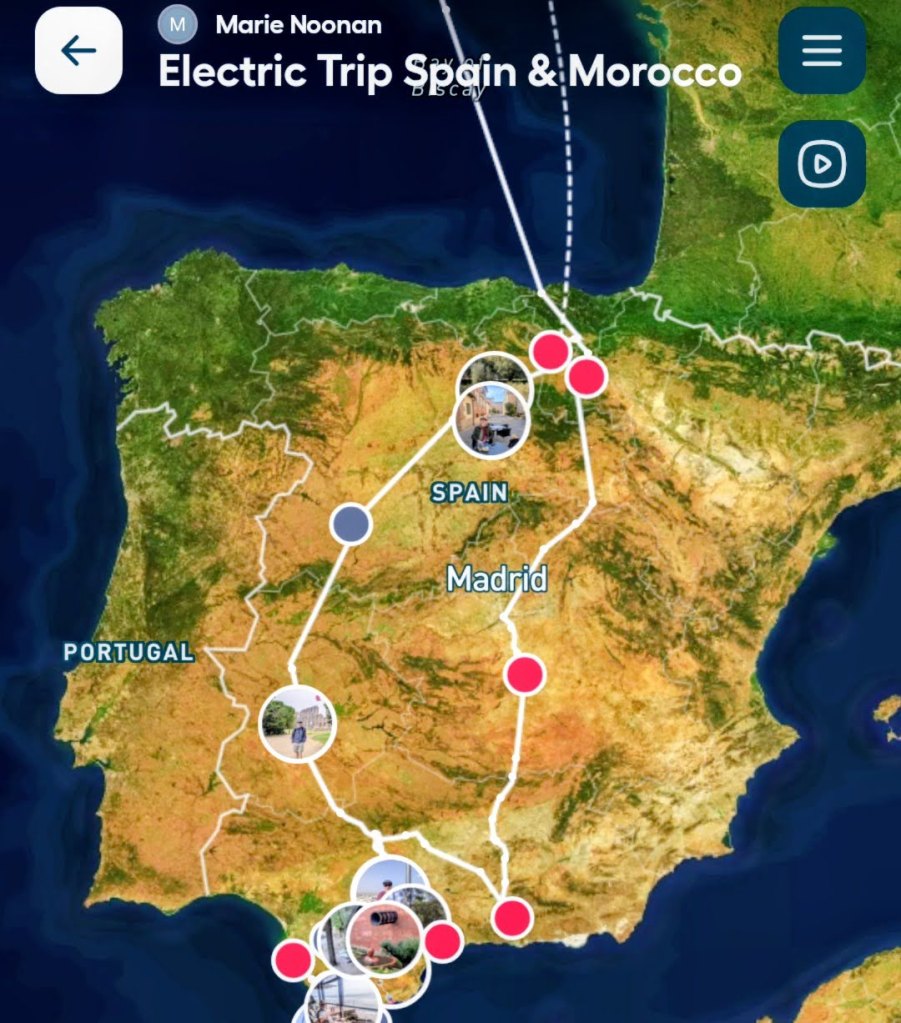
Central Morocco
 marienoonanblog