Campervanning in North Mayo: A Scenic Adventure

It was a week to remember, a week in late August, spent campervanning around Mayo, a week of spectacular walking on stunning coastal paths, pristine white-sand beaches, lonely bogs and remote mountains and even a pilgrimage route, Tóchar Phádraig,  an ancient druidic path to reach Croagh Patrick.

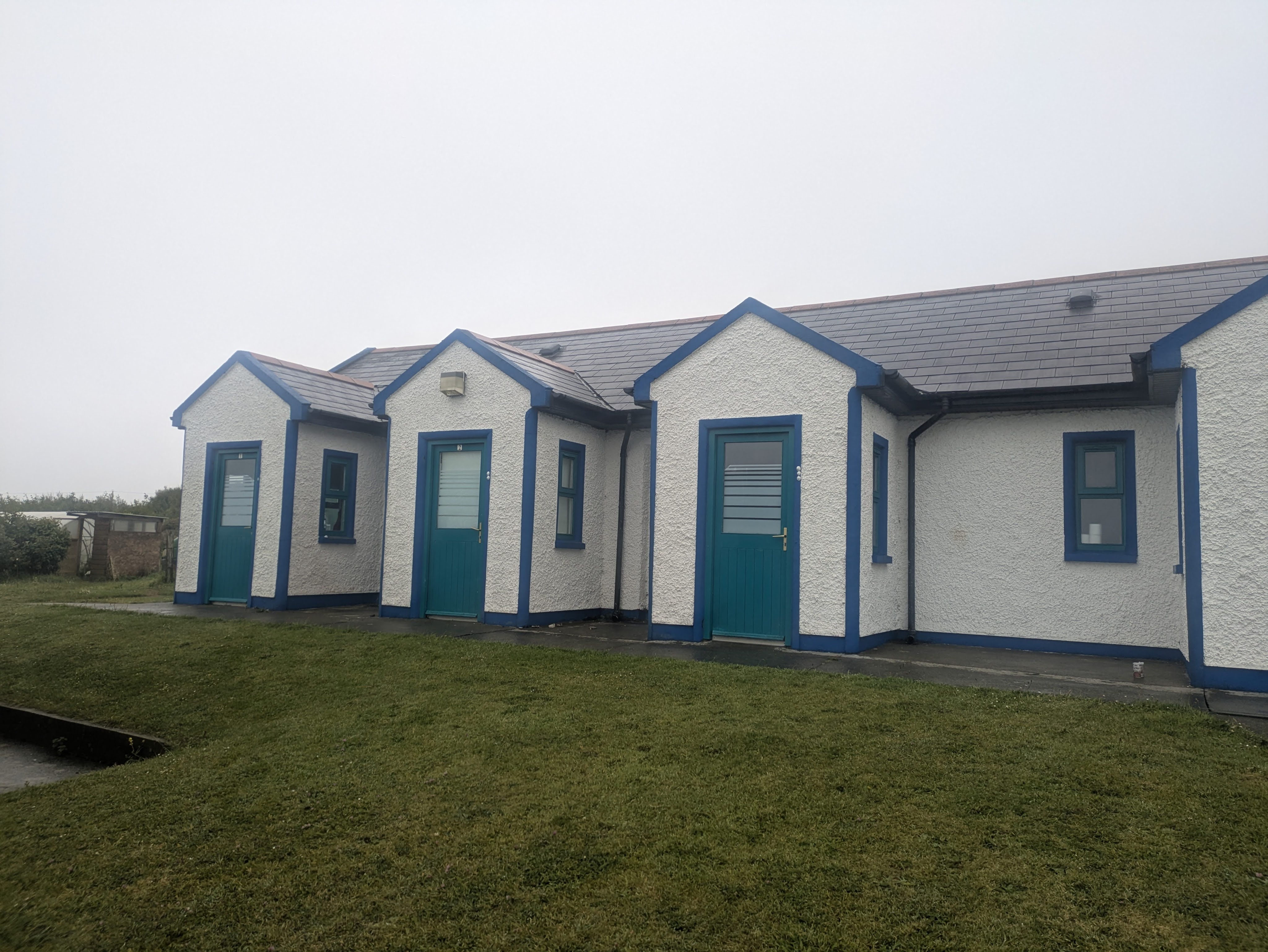
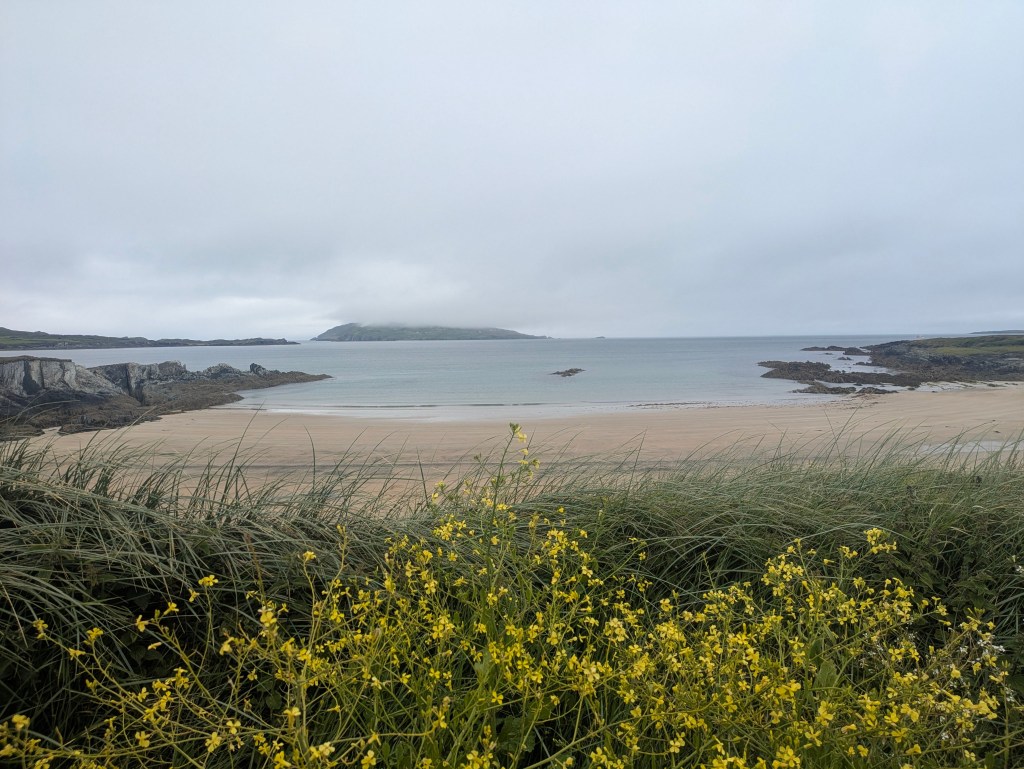
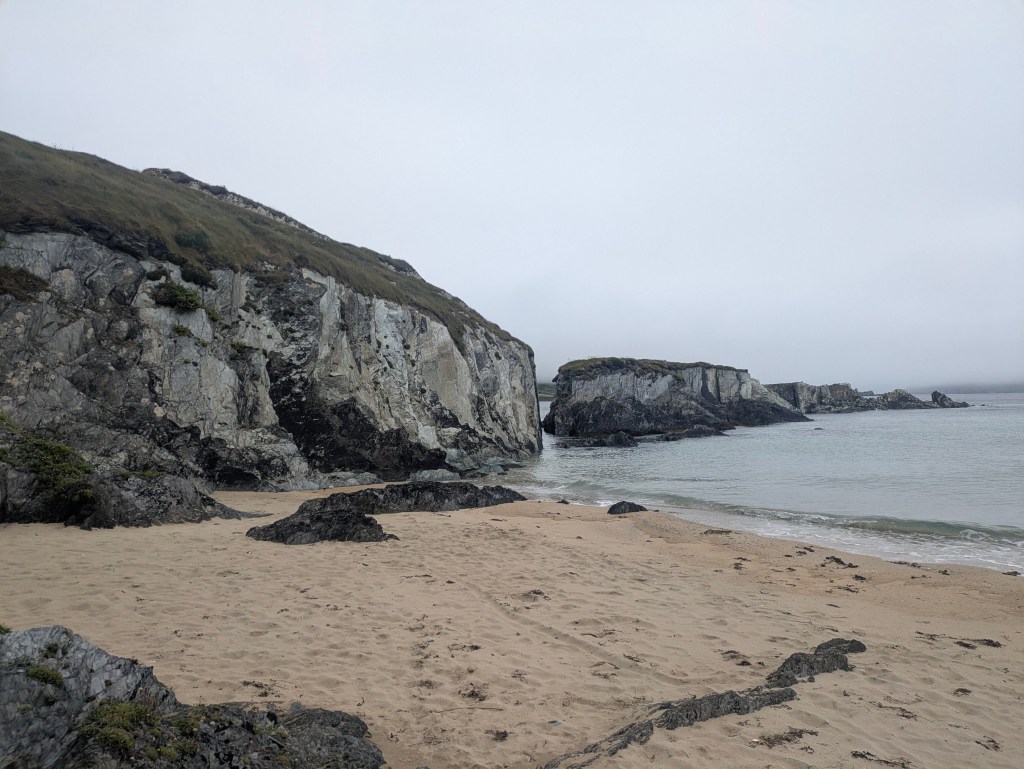
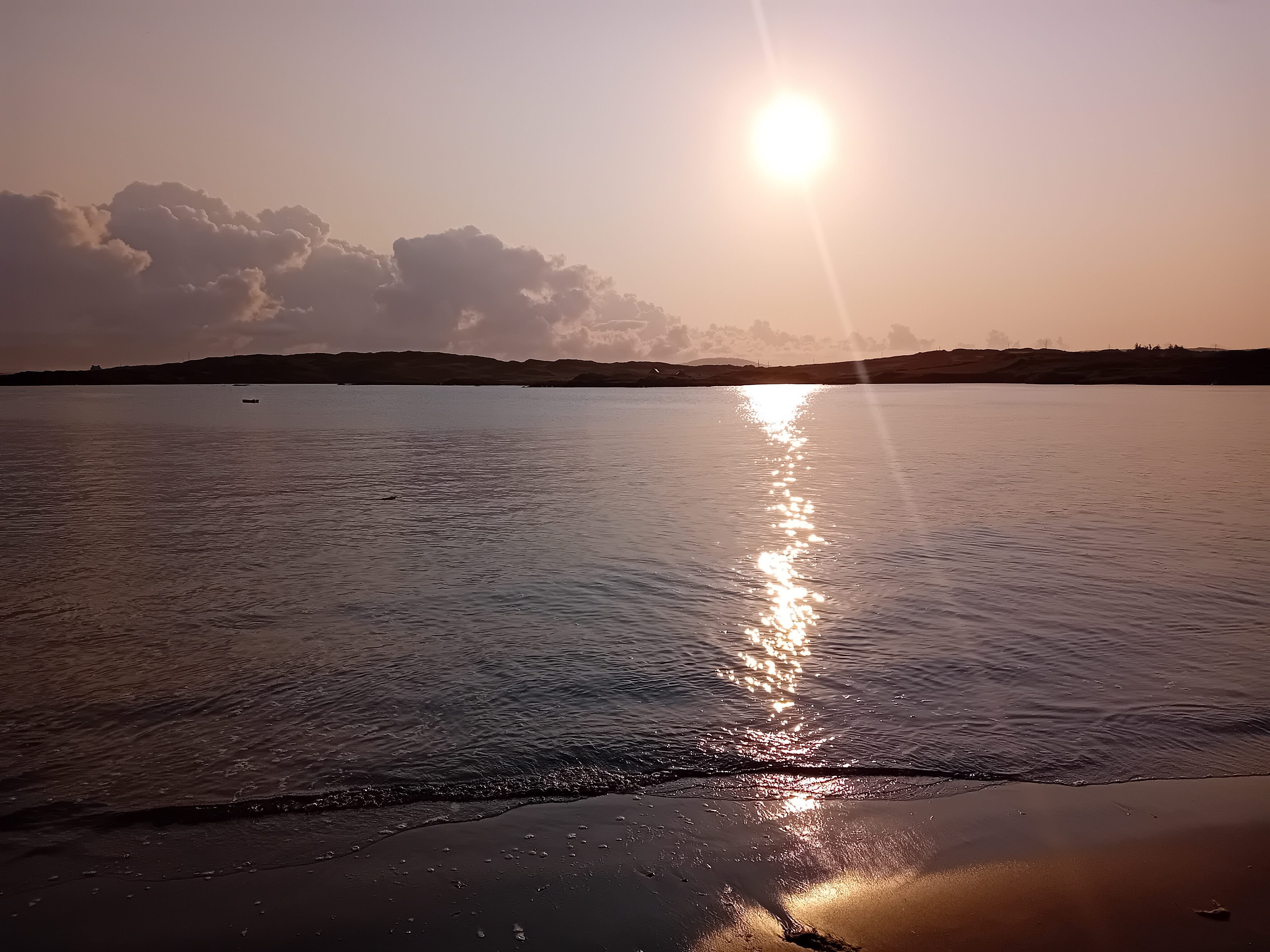
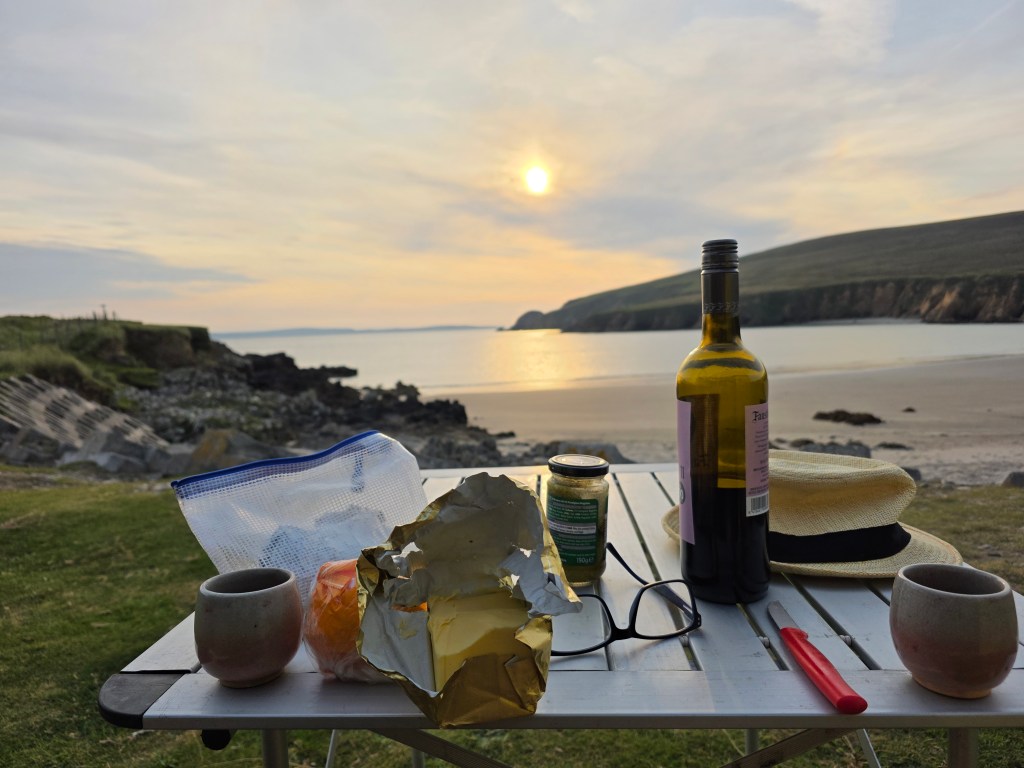
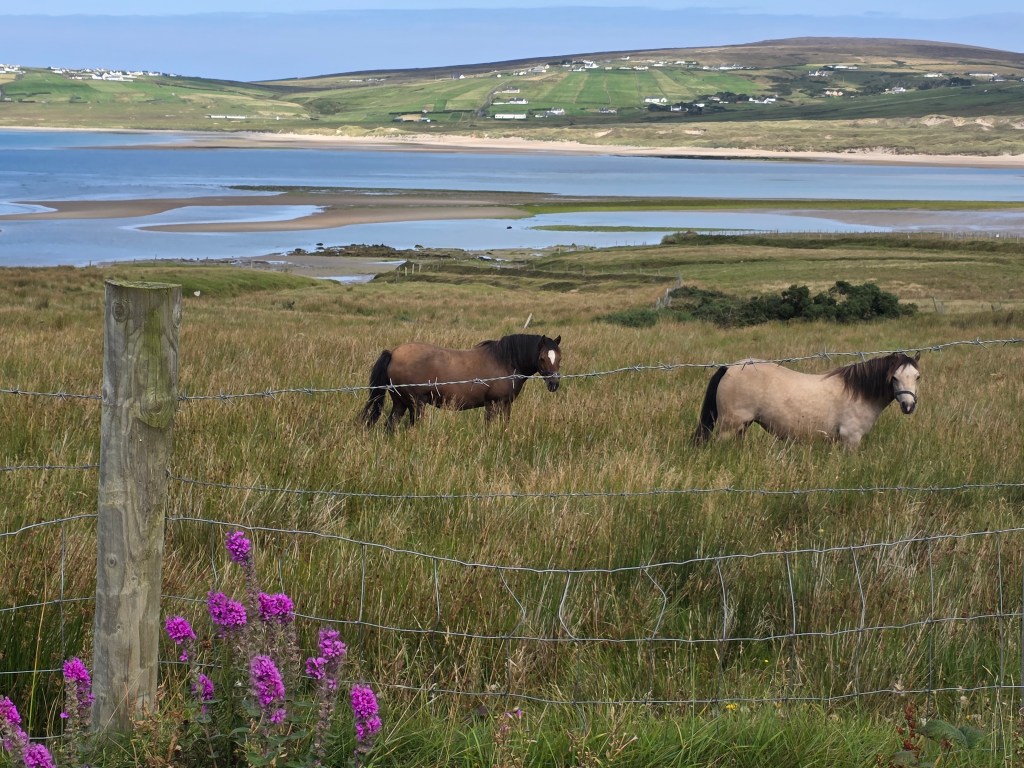
We started at Portocloy Beach on the far North-West Mayo Coast in a Gaeltacht area. If ever the phrase ‘off the beaten track’ was appropriate, it was here. We watched a lone gull, the only sign of life, gliding and swooping over the calm harbour waters.  There were no crowds, cafes, shops or bars, just a picture-perfect beach, isolated by miles of blanket bog and nestled deep into a natural harbour, Carrowteige Cove, a safe haven for swimming or snorkelling and a little pier for fishing boats. There were temporary toilets in place for the summer months which was good news for us as we were sleeping in the van (the ID Buzz).
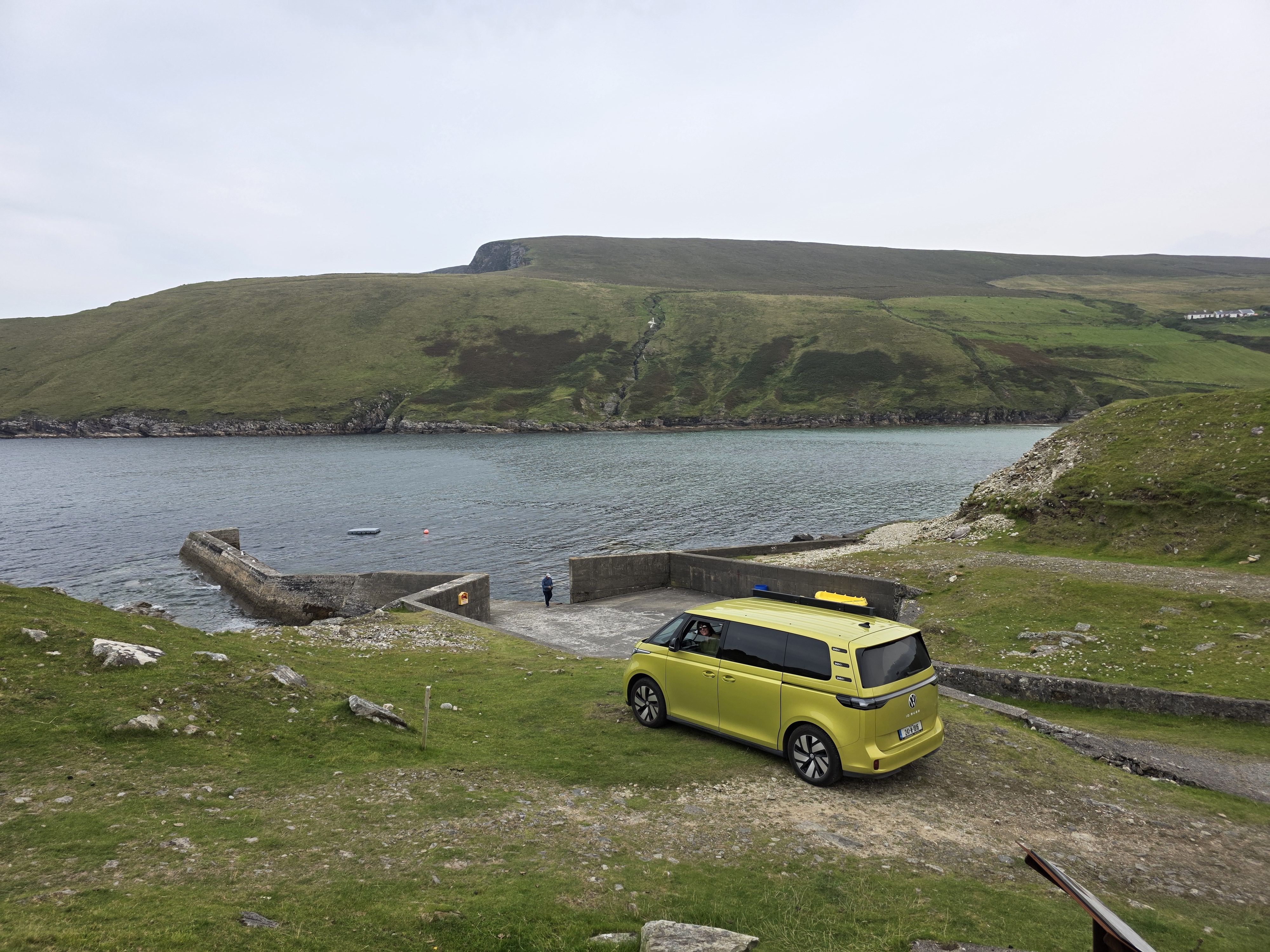
Parked up at Portacloy Harbour

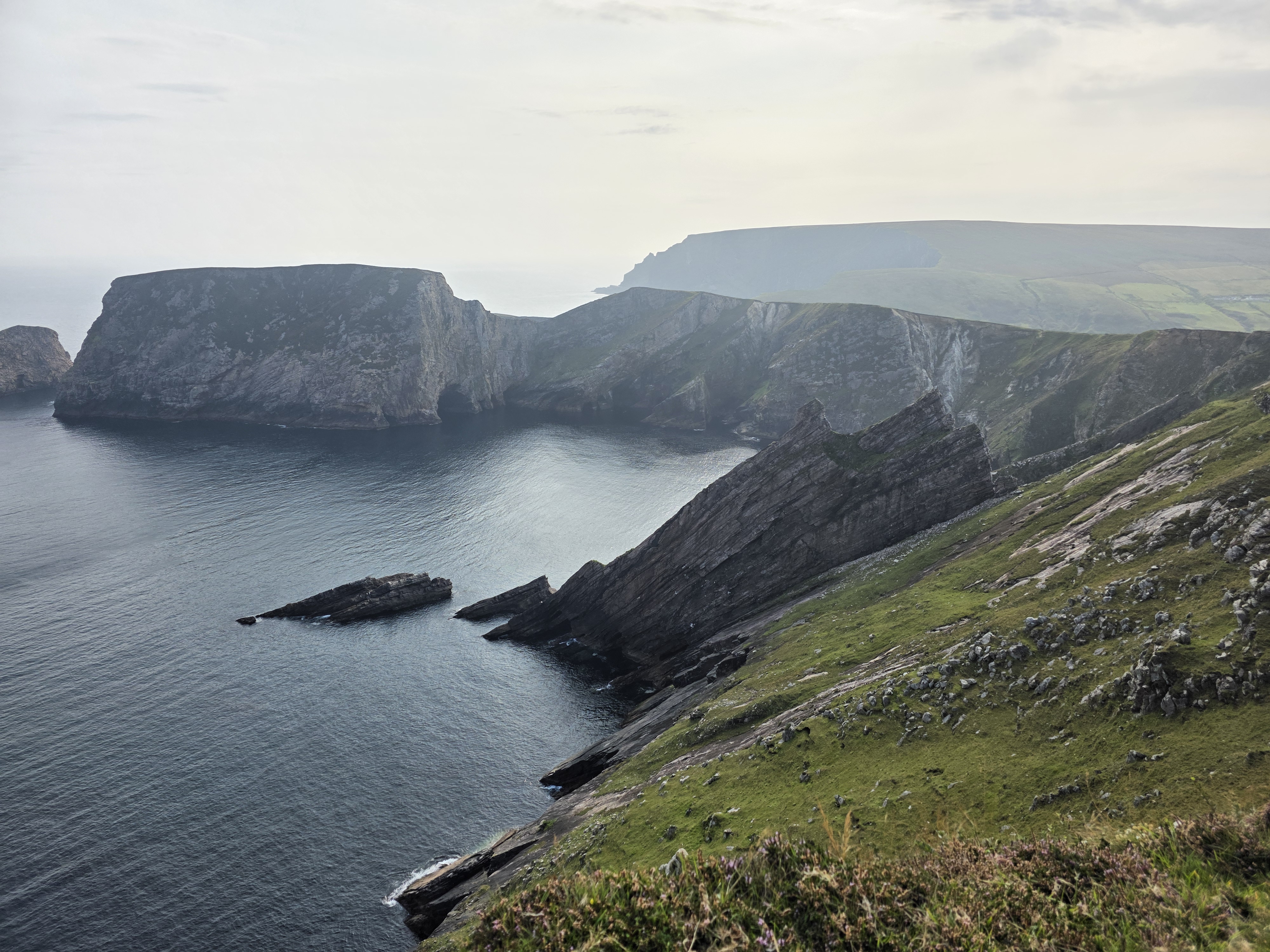
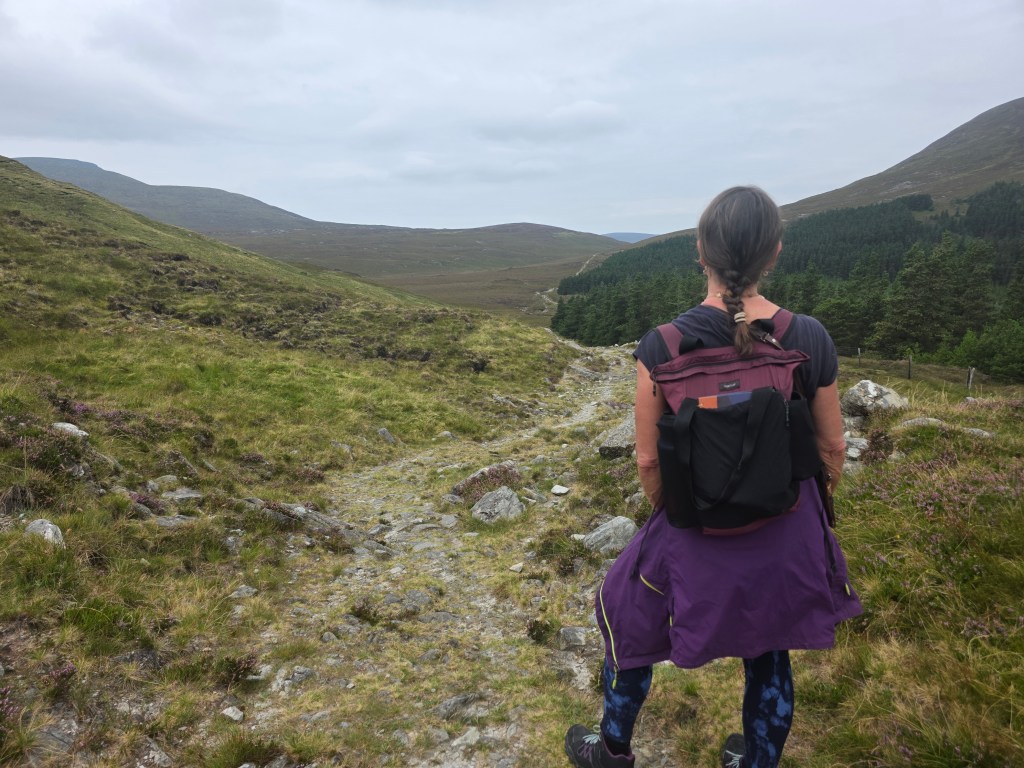
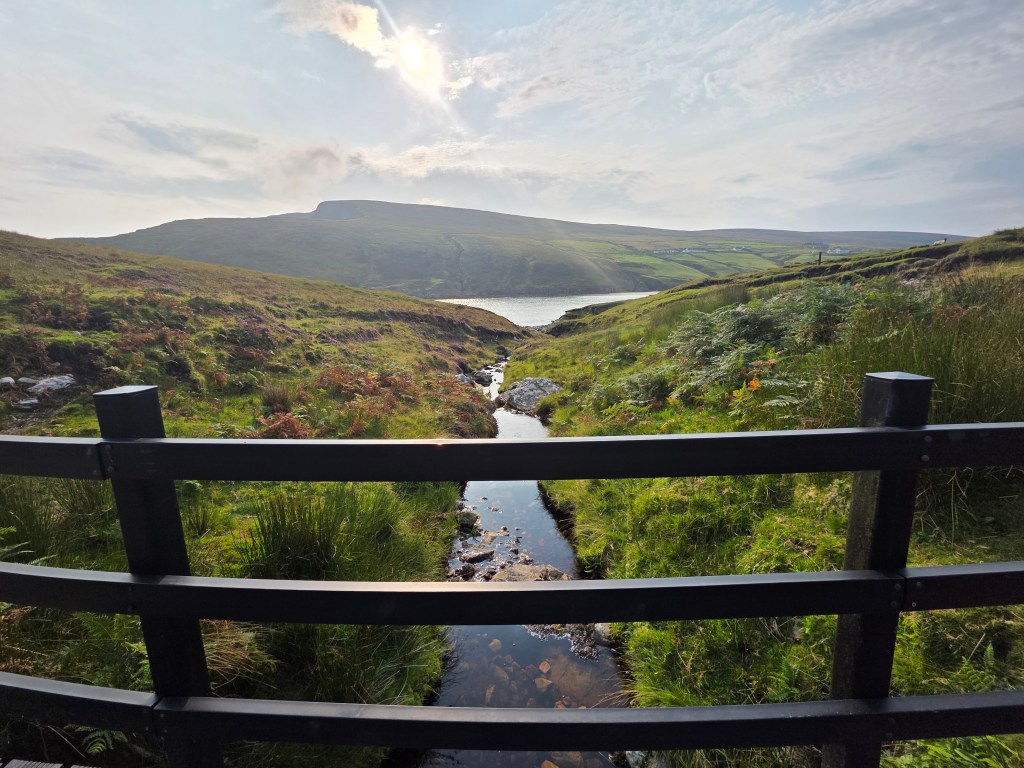
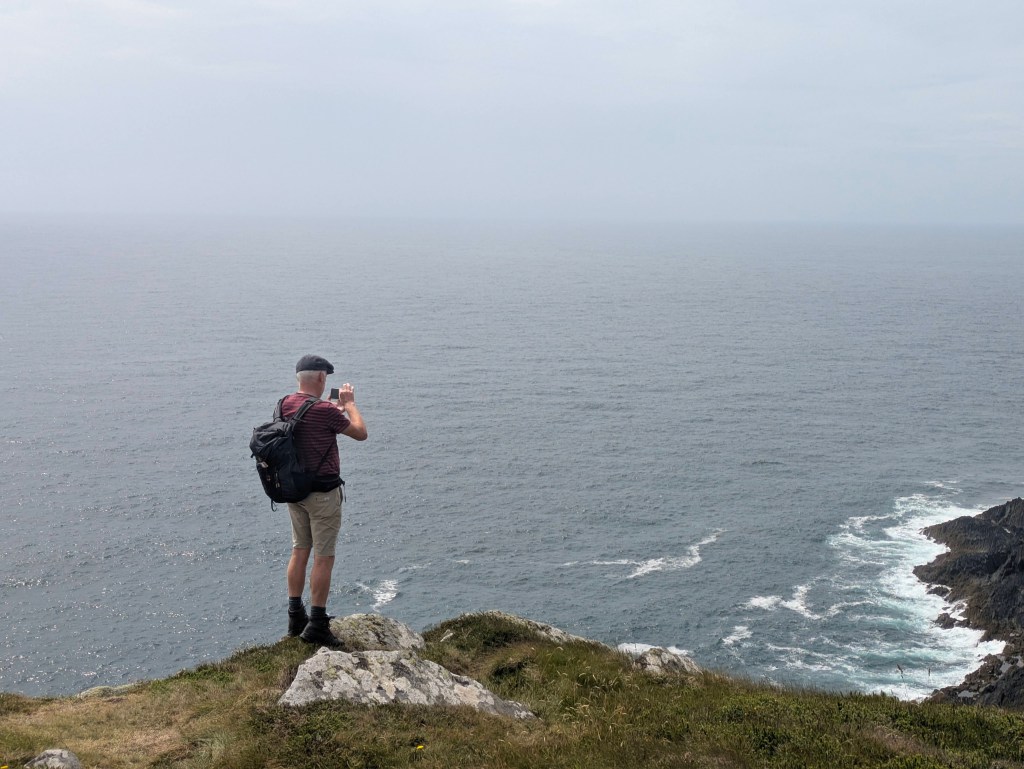
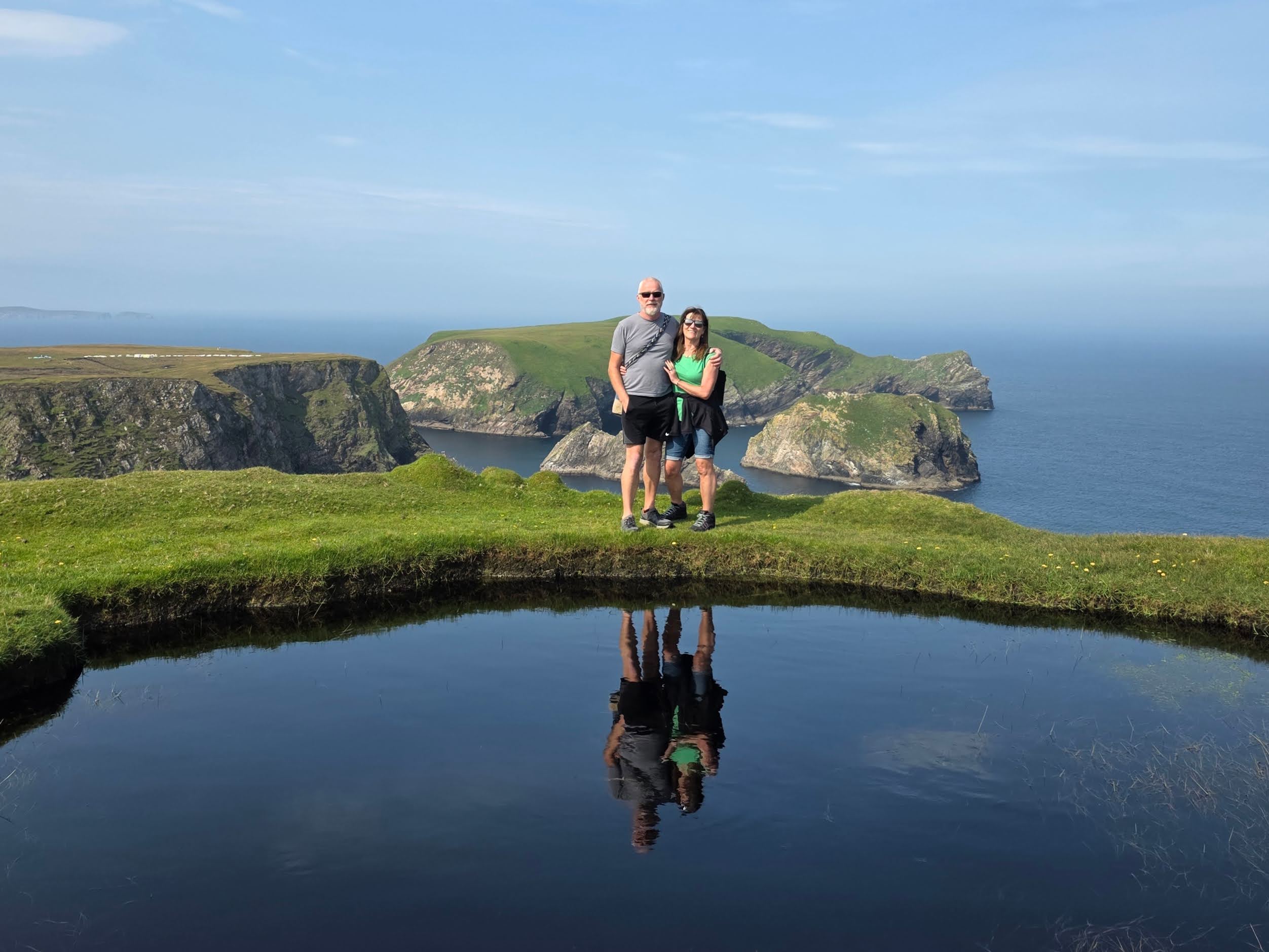
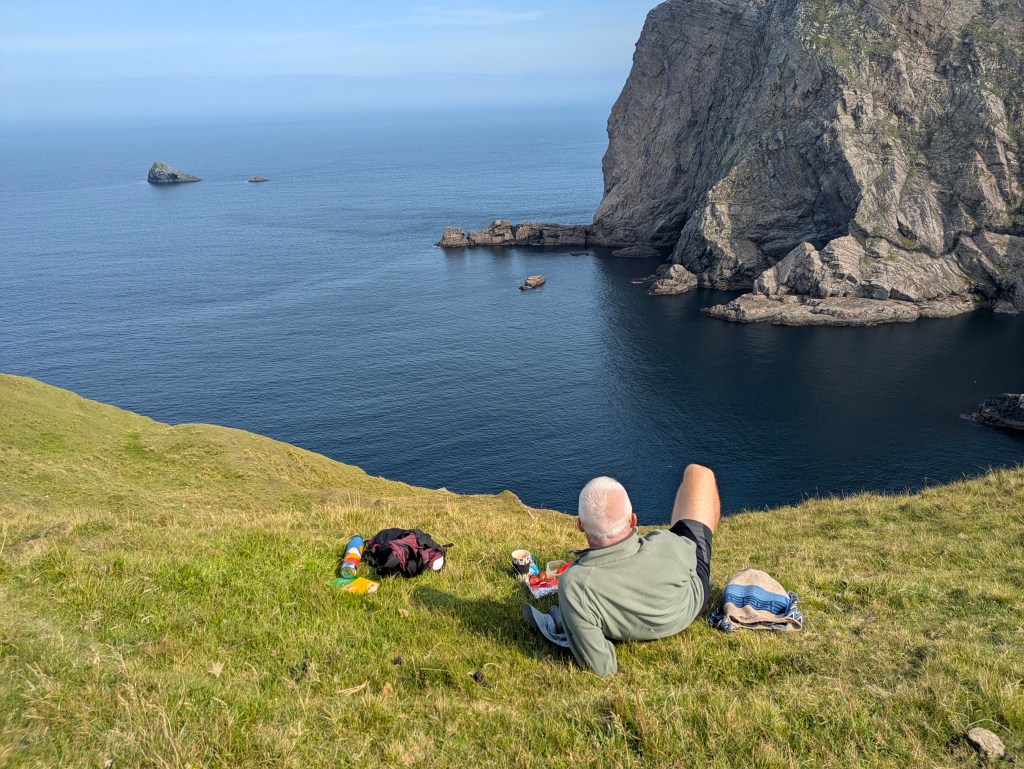
Portocloy Beach is also the start point for a truly spectacular cliff walk along the sea edge all the way to the extraordinary cliff views of Benwee Head (Binn Bhuí). This walk has a combination of rolling hills, expansive bog views, dramatic cliffs, jaw-dropping ocean and sea stack views, and more sheep than we could count. It is a well-marked trail with black poles and purple arrows, clearly visible on a beautiful cloudless day. The weather was perfect for us, blue skies with a light breeze, perfumed from the heathers, but on gusty days, care would be required because of the trail’s proximity to steep cliffs. We hiked an out and back route (about 13kms) but it is also possible to do the Carrowteige Loop Walk, which covers much of the same trail but is looped.
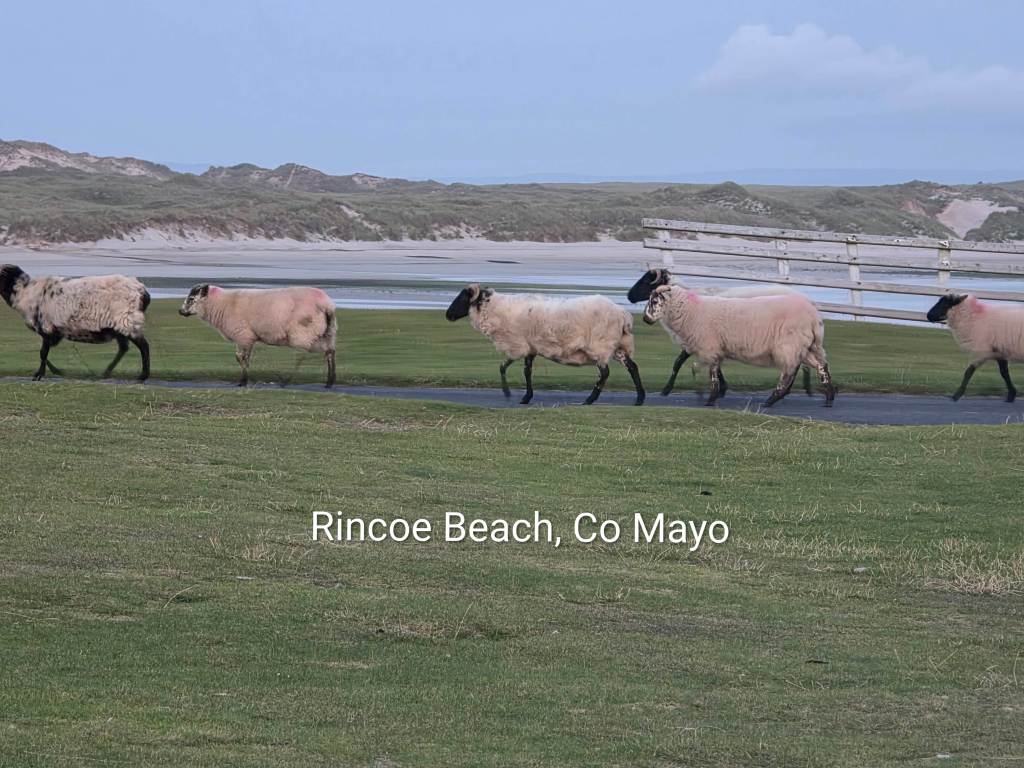
Rincoe Strand was only a ten-minute drive from Portocloy. It looks out across Broadhaven Bay towards the Mullet peninsula with a sandy beach on either side of a small peninsula. There were far more sheep than humans with the sound of bleating mingling with the lapping waves……until two busloads of Irish language students arrived for a swim in the crystal- clear waters… but peace came ebbing back when they scrambled onto their buses after about an hour, leaving a few campervans and the sheep.  We walked uphill past the walled graveyard to Connolly’s Pub (Teach Conghóile), a cosy place with spectacular sea views where a couple of locals were sipping pints. The whole area had a desolate beauty with hardly a tree or bush…it almost felt like we were on an island with the sea and water in every direction. A local man, who now lives in Wexford, told us with nostalgia of the ‘good times’ growing up here, when children ran wild and free, and fishermen travelled to England to find work during the winter months and boys, as young as thirteen, went to Scotland to pick potatoes, known as the tattie hokers.
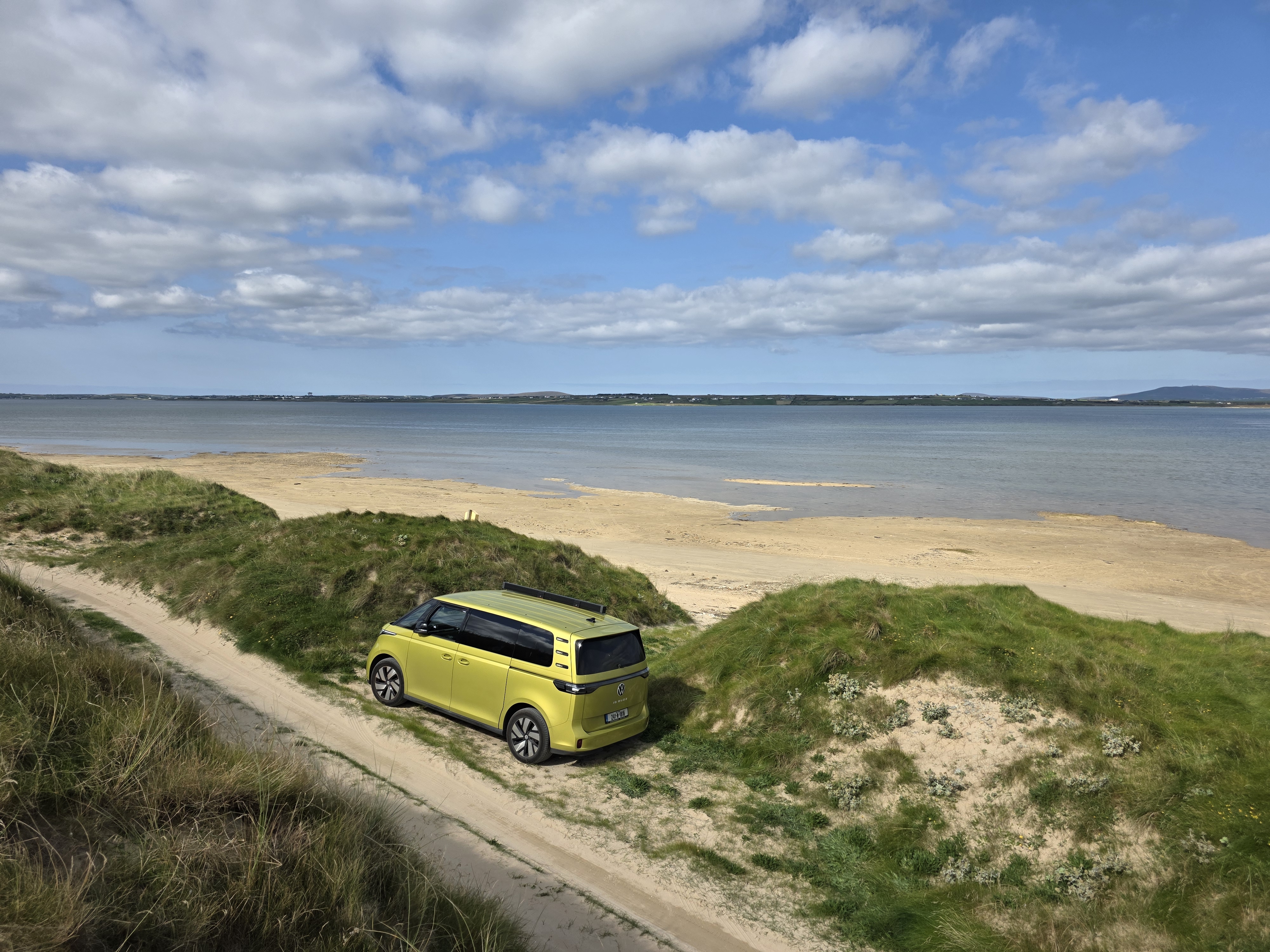
After Rincoe, we headed south along the coast, stopping for lunch in Belmullet before continuing to Claggan Island, Mayo’s newest island, having only being officially declared an island in 1991. The tiny island is situated on the northeastern corner of Blacksod Bay, about 12km from Belmullet. It is linked to the mainland by a narrow, sandy causeway that divides Tramore Bay from Blacksod Bay and it is circled by beautiful sandy beaches in every direction you look with some amazing views of Achill and the Mullet Peninsula. It was easy to spot the first-time visitors…they were the ones driving on the rough sandy road while the locals used the beach.

Driving around the roads of North Mayo, we kept seeing signs for Tír Sáile without knowing what it was. By the time it registered that this was a Sculpture Trail, we had passed most of them. Tír Sáile  originated in 1993 when fourteen site-specific sculptures were installed in spectacular locations around the coast (sáile is seawater). One of the sculpture was on Claggan island, titled ‘Acknowledgment’, a 50m long sculpture of stone and earth, a tribute to the anonymous dead, whose memories have been lost in time. 
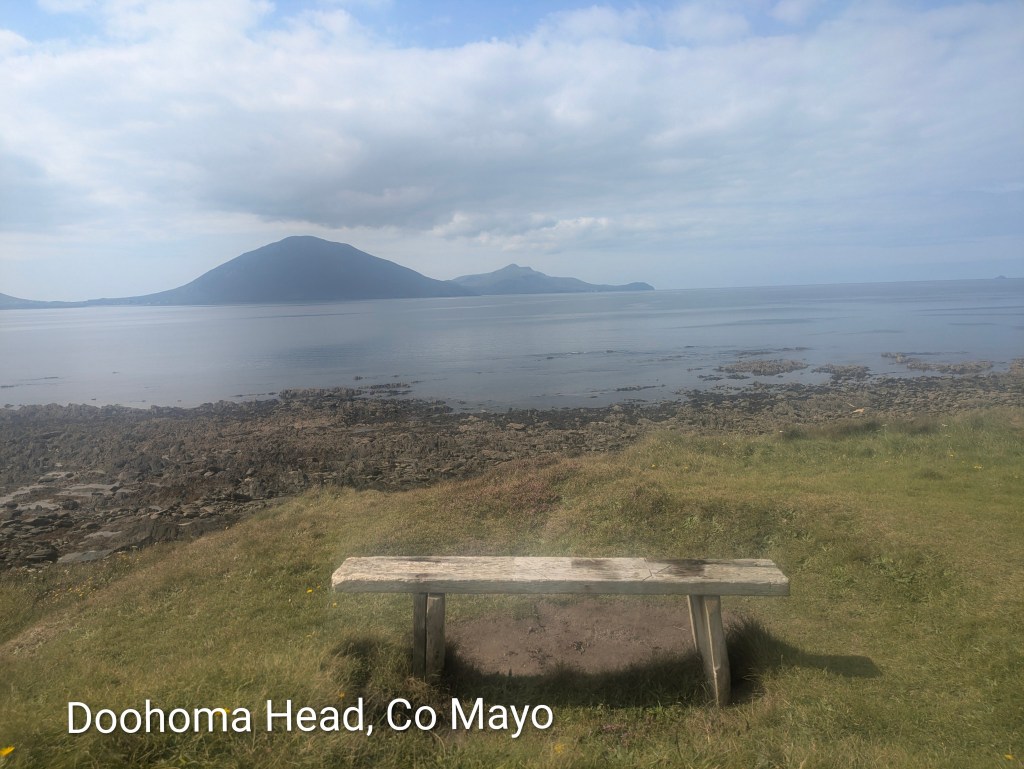
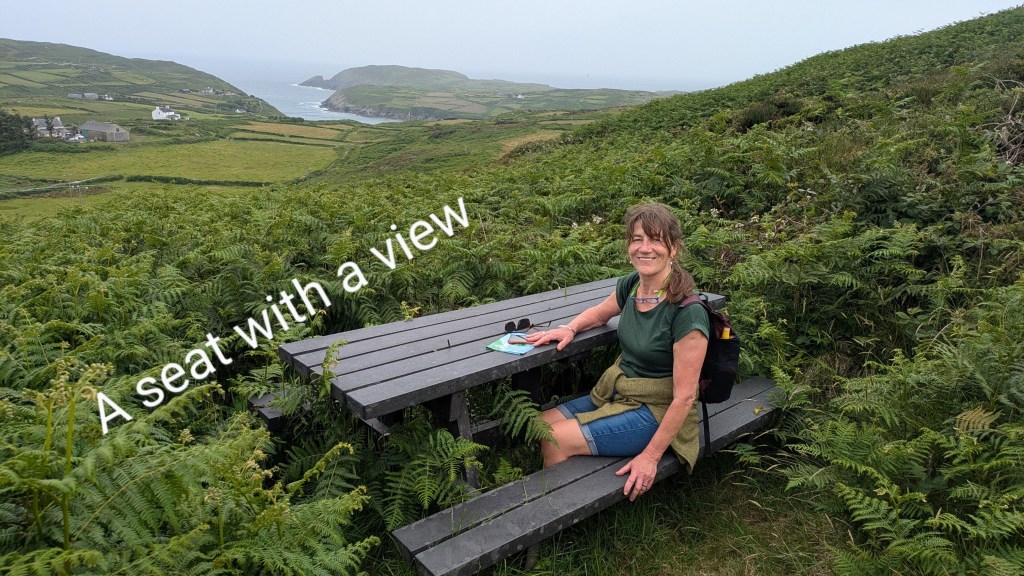
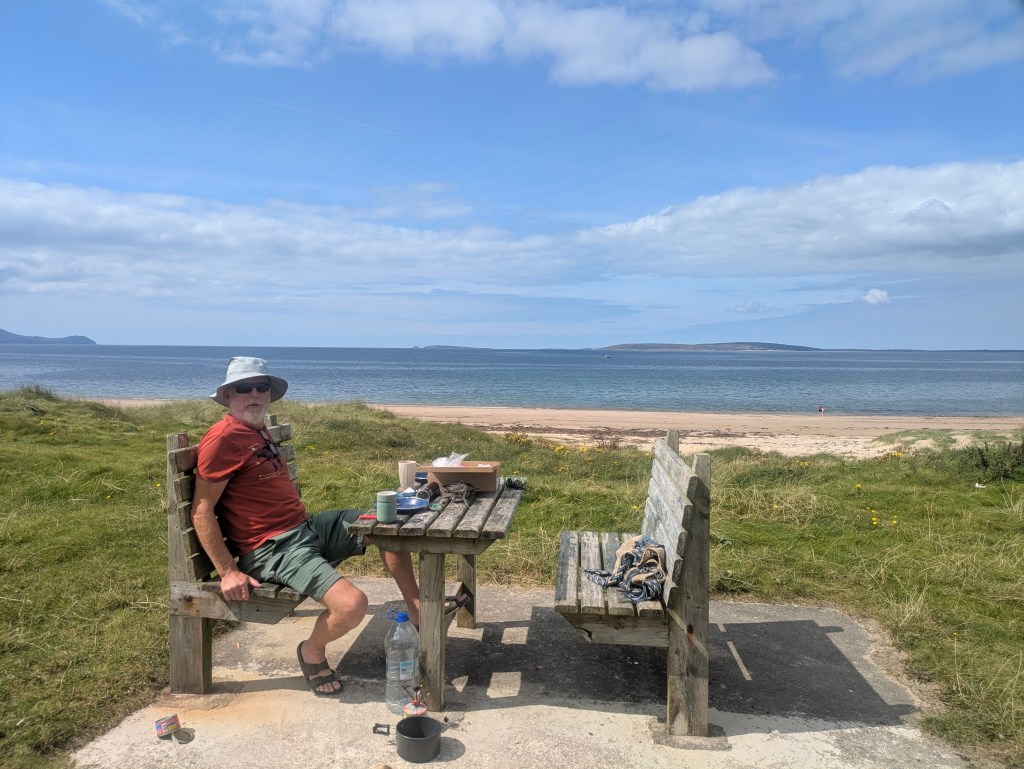
South  of Claggan Island, there seemed to be an unending supply of more white-sand beaches with the distinctive silhouette of Achill Island on the horizon in the distance.  Doolough Beach was empty apart from a man walking five dogs who told us that whales were spotted in the area the day before. Doohoma Head had a wooden seat with a dreamy Achill view but it was time for us to turn inland towards the mountains.

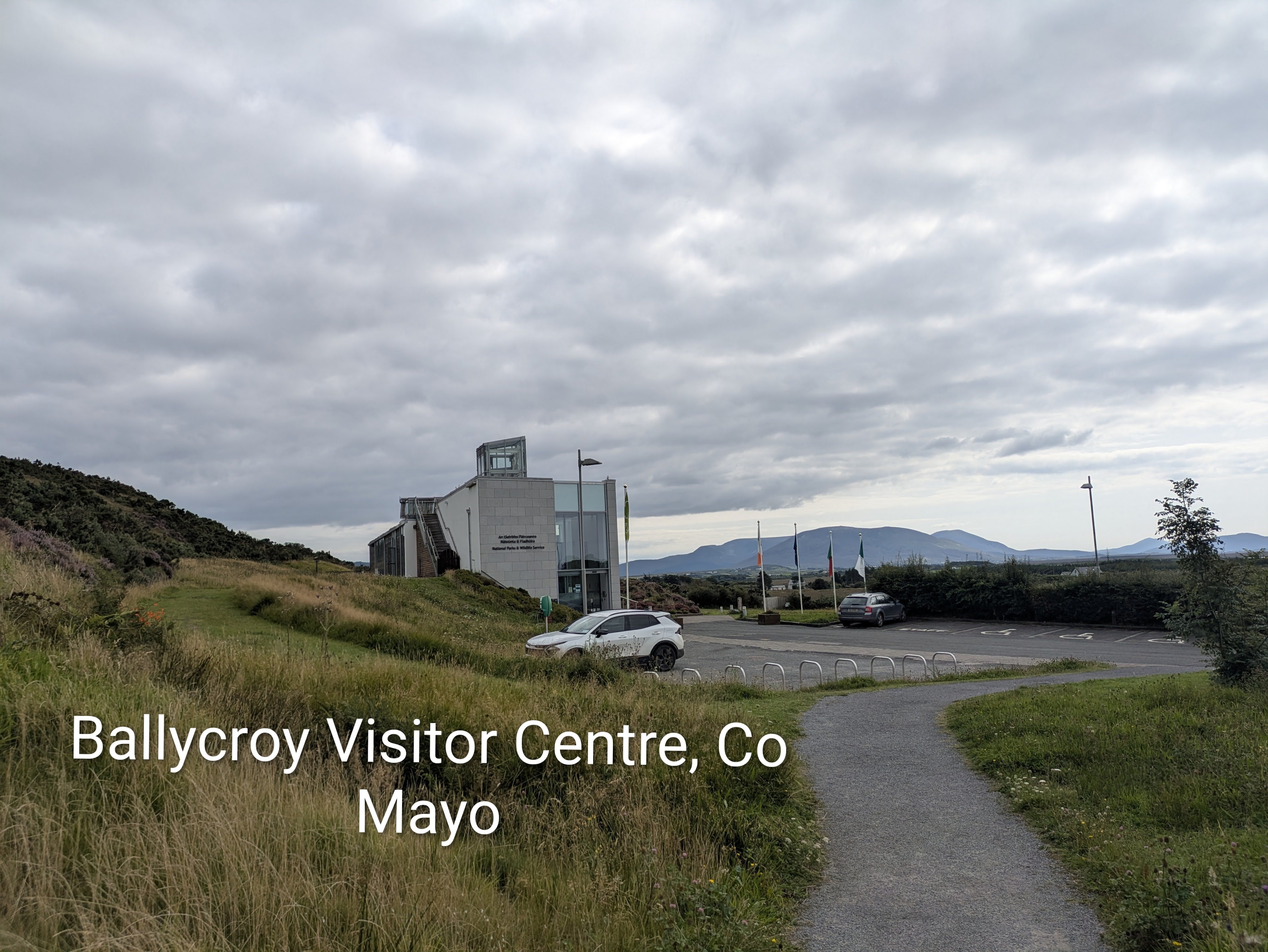
We stopped at the Ballycroy Visitor Centre in Wild Nephin National Park, a modern building full of light and clean lines with knowledgeable, enthusiastic staff and a lovely café. Wild Nephin National Park is huge –  a vast 15,000 hectares of uninhabited and unspoilt wilderness, dominated by the Nephin Beg mountain range and the Owenduff Bog, one of the last intact active blanket bog systems in Western Europe. Martin, who worked in the centre, explained the vision for the future with conservation plans for reforesting the park with native species and  a focus on education.
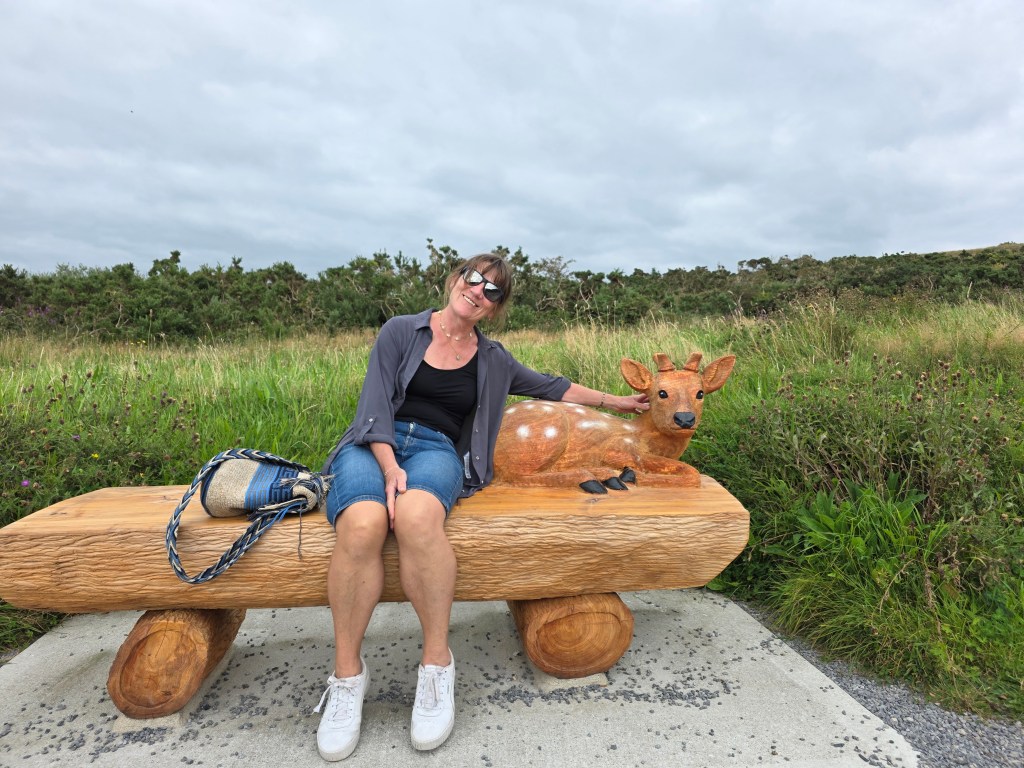
Just inside the visitor centre was a huge star-studded poster with the caption ‘The darkest skies reveal the brightest stars’ because Nephin has some of the darkest, most pristine night skies in the world and is officially certified as a Gold Tier standard International Dark Sky Park.  The Mayo Dark Sky Park extends across the entire National Park….there was even a viewing platform on the grounds of the visitor centre. The best time for star-gazing is the clear crisp winter months but it is possible on any night for visitors to see with the naked eye thousands of twinkling stars, other planets in our solar system, the Milky Way and even meteor showers…if they are lucky.

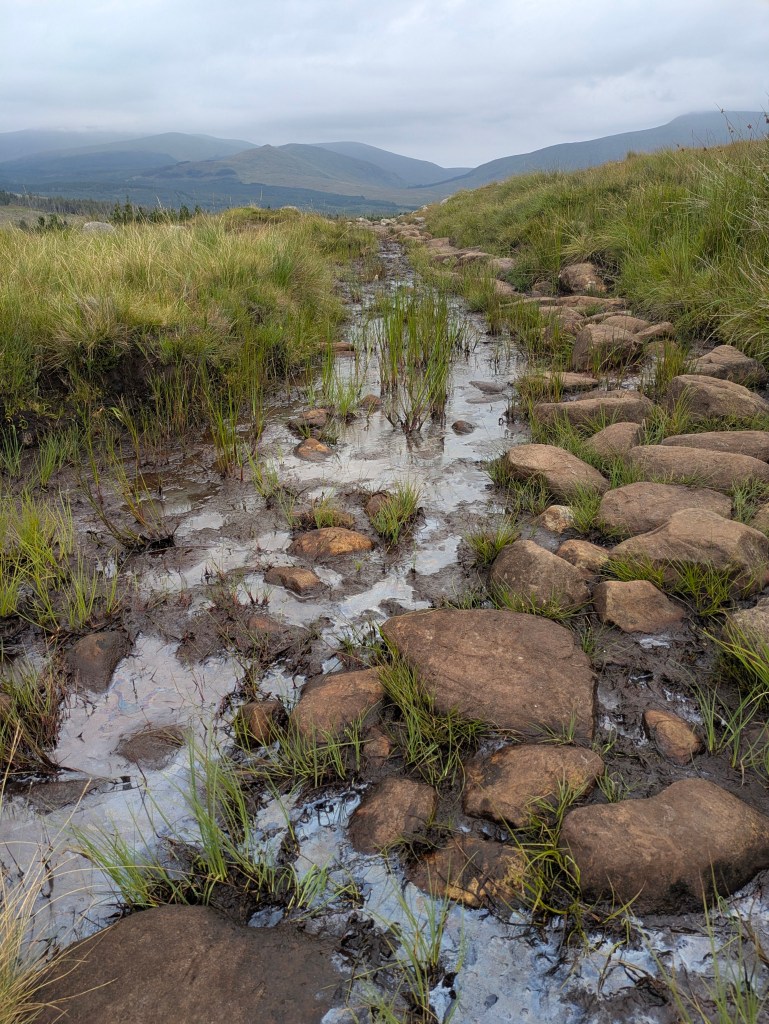
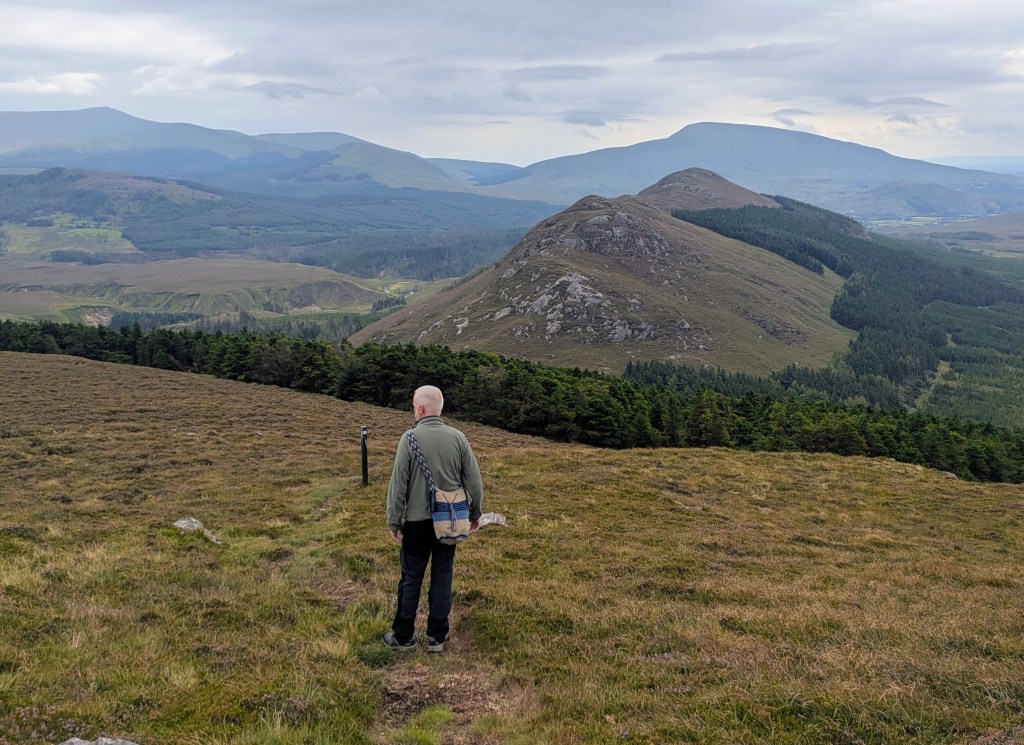
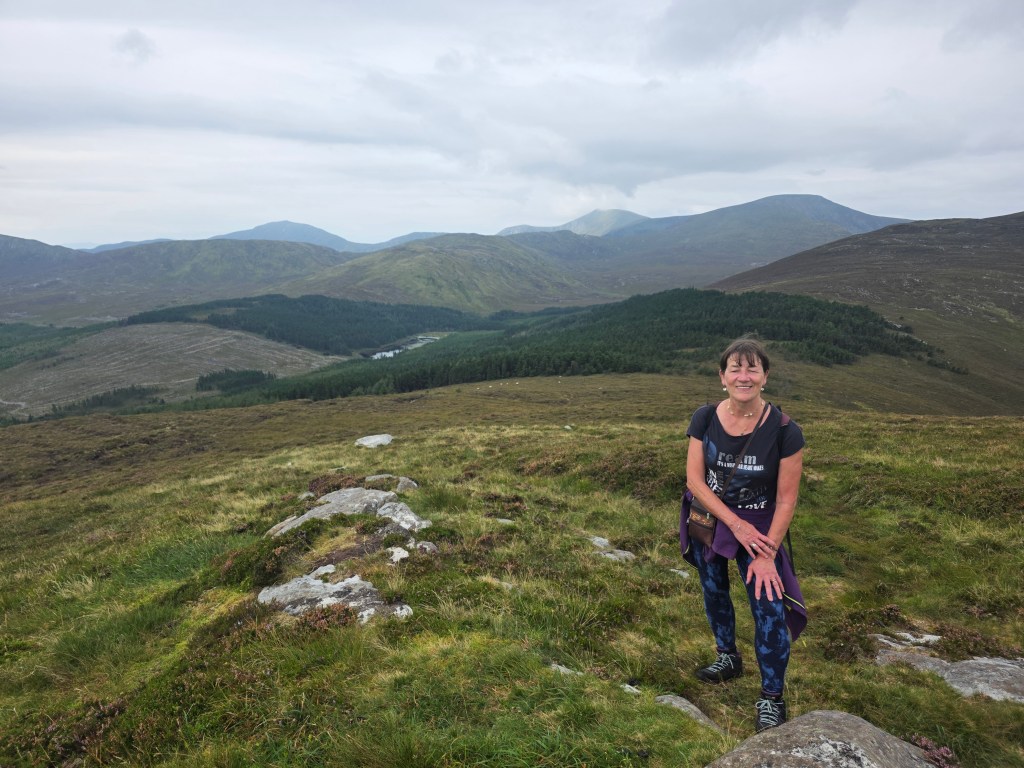
On Martin’s advice we headed to the Letterkeen Trailhead, about a forty minute drive, northeast from the centre,  a trip into wilderness and blizzards of midges at dusk. Unfortunately the skies remained cloudy for us that night with only a smattering of stars but the Letterkeen Loop walk the following morning was gorgeous, with different terrain from stony sheep paths, forest trails to sucking boggy paths where we almost lost a boot. Although the air was thick with moisture, it didn’t actually rain. We enjoyed panoramic views of inky-black lakes, brown streams and a feeling of deep isolation and silence. Nephin has been called ‘the loneliest place in the whole country’ because of the absence of human habitation and mobile coverage is patchy. We didn’t meet a single person on the trail although there were a few cars parked at the trailhead, which also had spotless port-a-loos.  
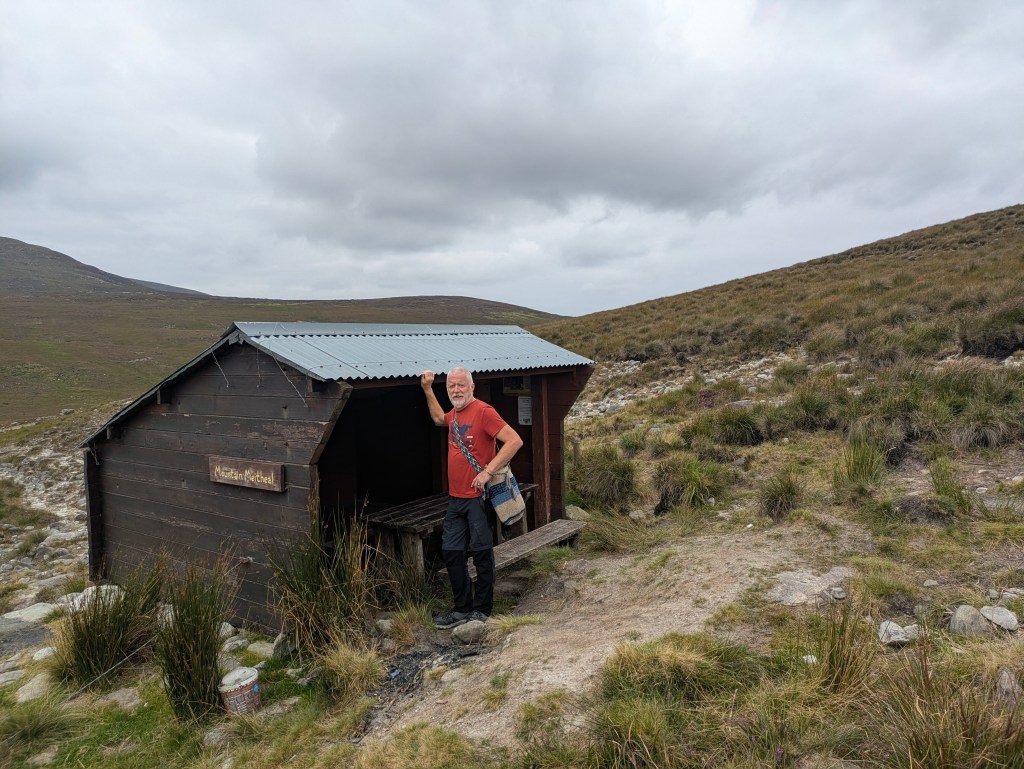
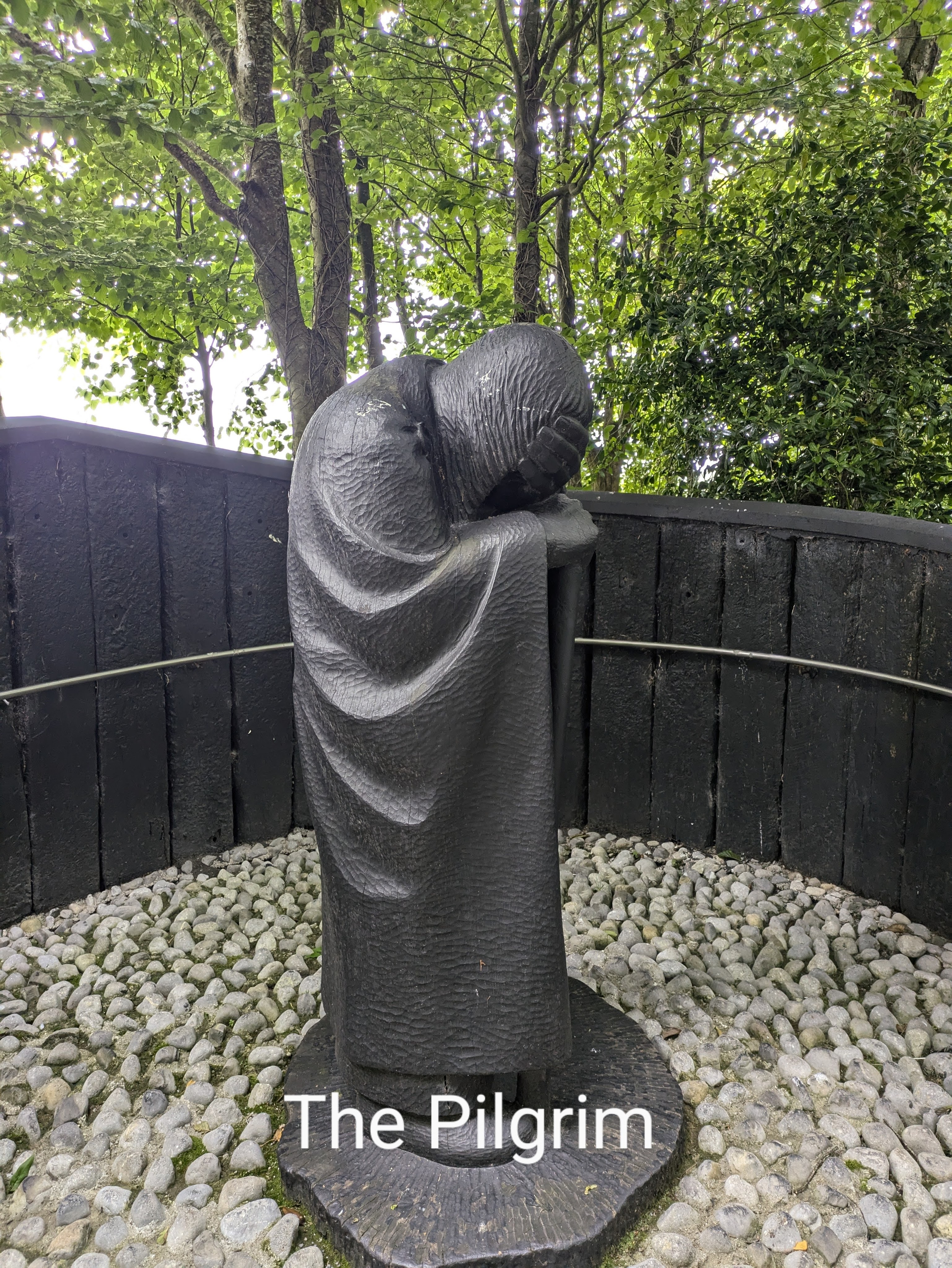
Our next stop was Ballintubber Abbey, founded in 1216 and one of Ireland’s oldest surviving abbeys and the hub of the ‘Irish Camino,’ and one of the five medieval pilgrim paths of Ireland. It is the starting point for Tóchar Phádraig, an ancient pilgrim path that stretches to Crough Patrick.

Tóchar Phádraig predates St. Patrick, originally built about 350AD as a chariot route from Rathcruachan, the seat of the kings and queens of Connacht, to  Cruachan Aille, as Crough Patrick was called in Pre-Christian times, a mountain sacred to our pagan ancestors.

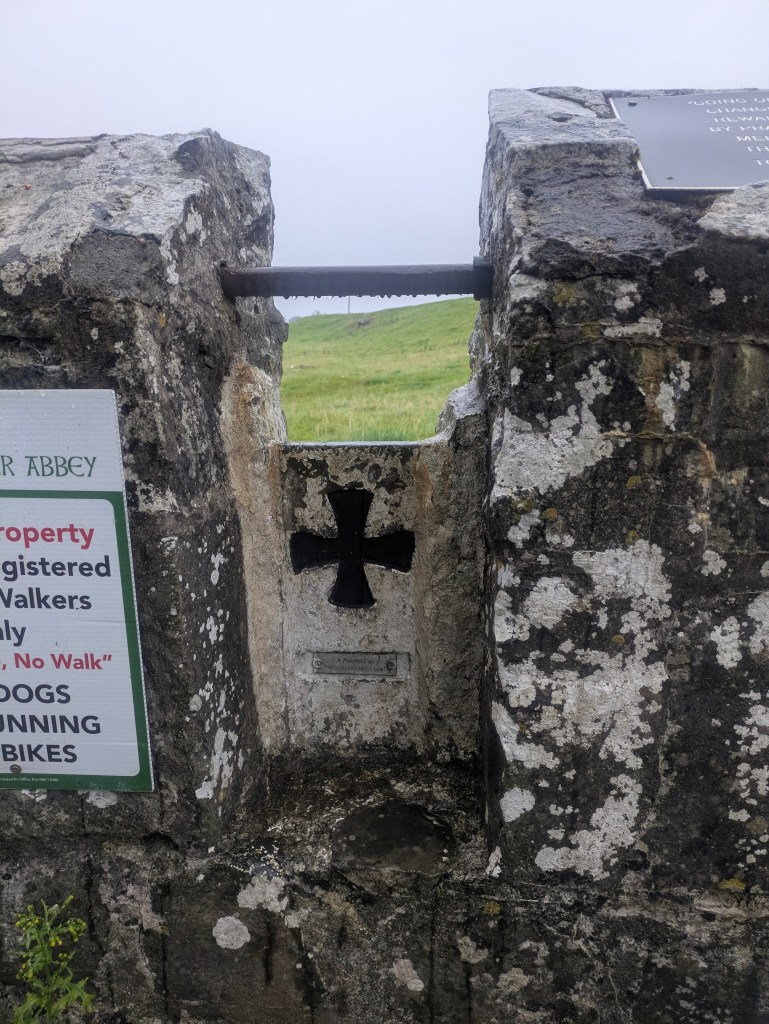
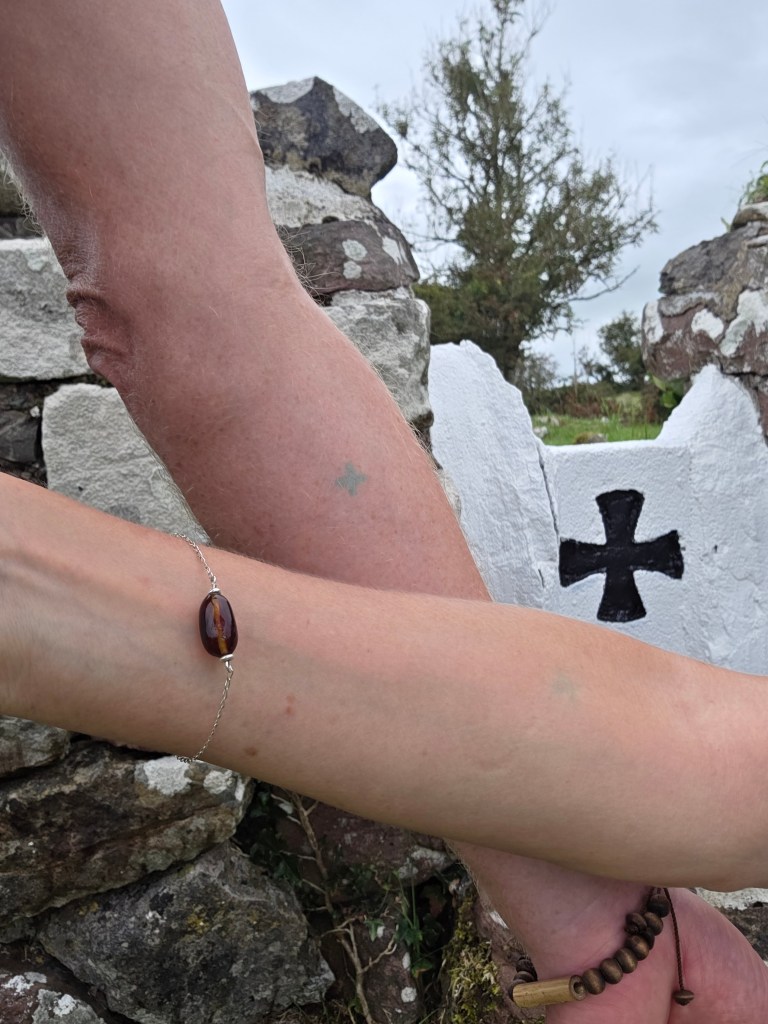
Pilgrims must register in the Abbey before setting out, where they will receive maps, advice and a booklet which gives some information on the many points of interest along the way. We registered on Friday afternoon so that we could get an early start on the 35kms route the following morning as the office opened at 9.30am. The walk can be broken into two parts, the first section to Aghagower with its round tower, and the second section to Crough Patrick but we hoped to complete it in one go.  We were branded on the back of each forearm with a small green cross, evidence that we had registered and paid our dues should any farmer or landowner request proof.

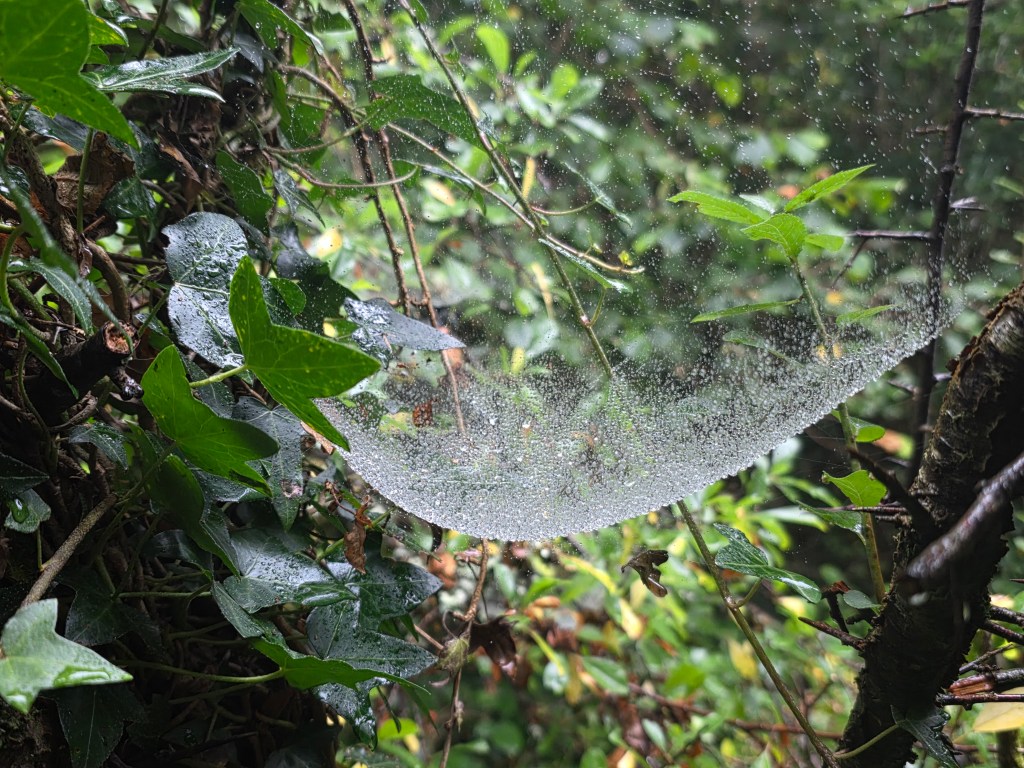
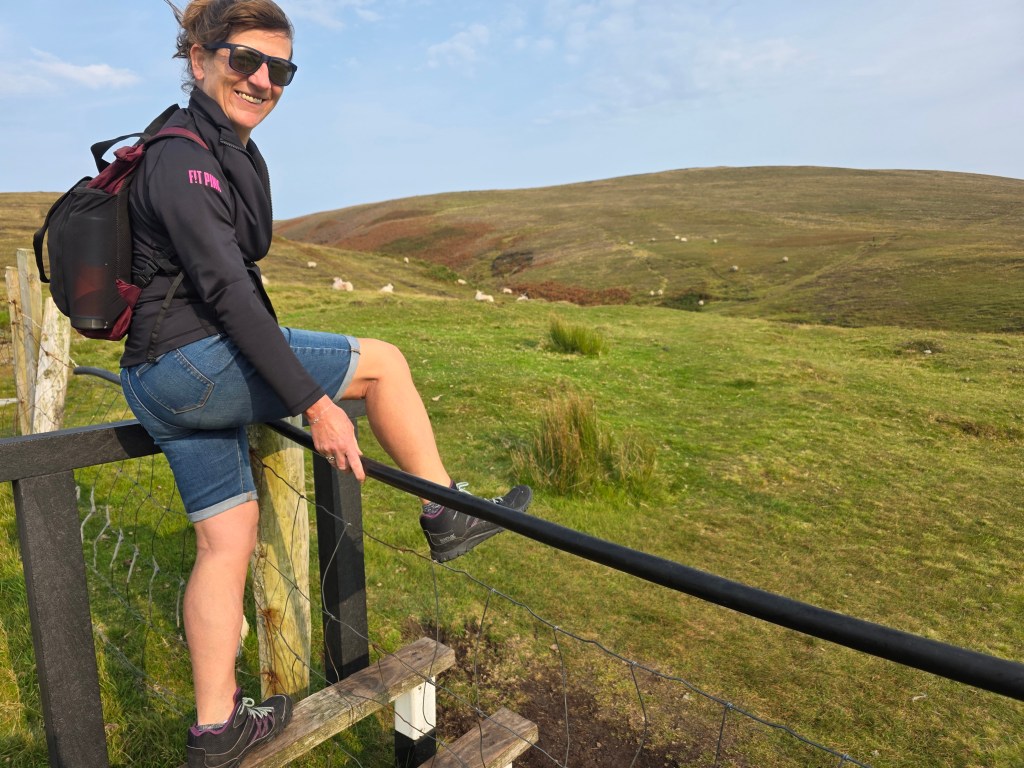
The morning started grey, in a light drizzle, the type of West of Ireland rain that was very wetting but the day cleared after an hour or two. The camino wound its way through open farmland, fields of grazing cattle, sheep and a few horses. We trekked through woodland and forests, stepped over countless stiles with the Tóchar cross sign etched into the stone and tramped along country lanes past hedgerows laden with abundant bounty – blackberries, sloes and haws and moisture drizzled cobwebs.
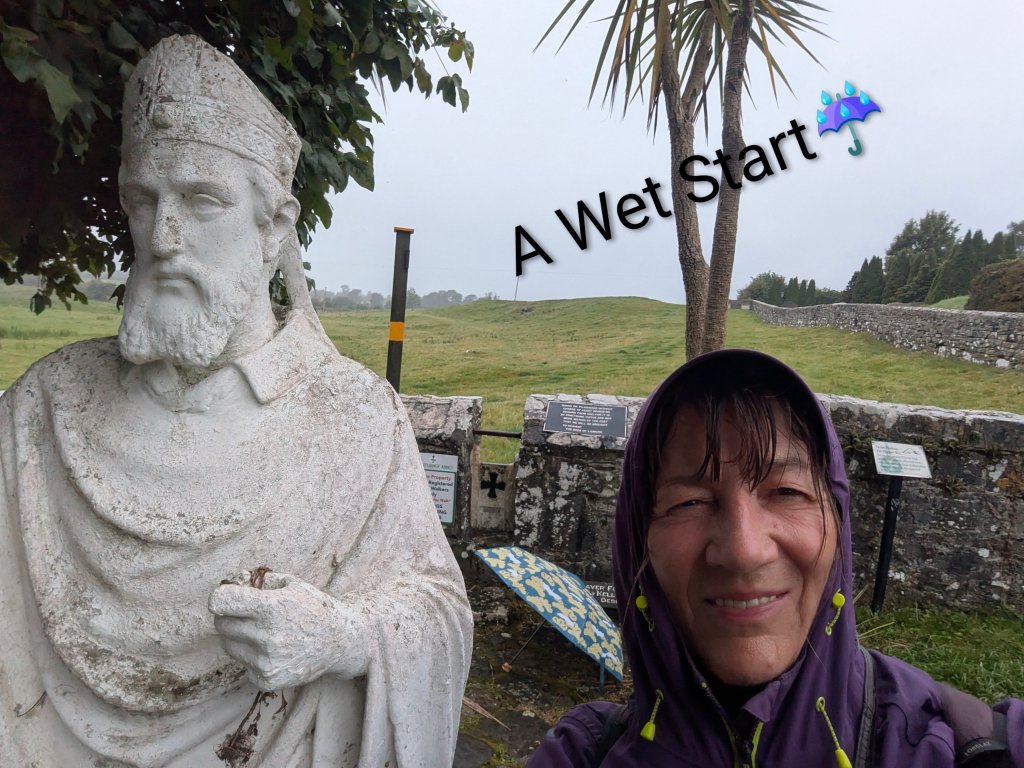
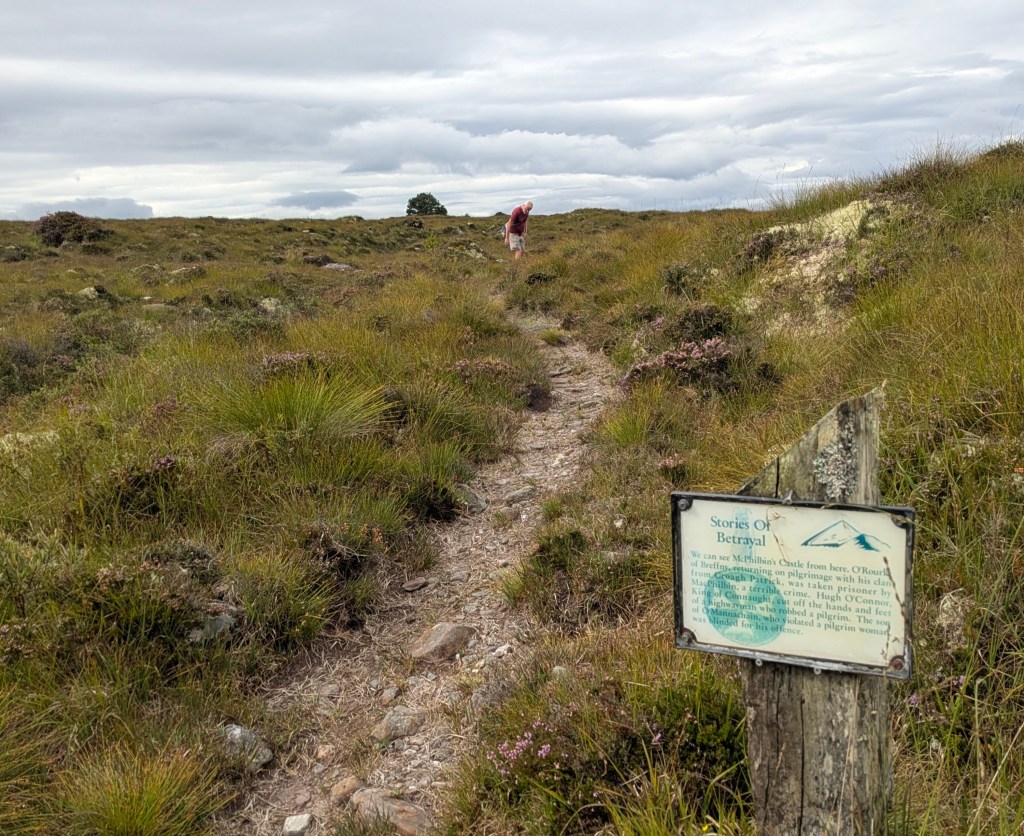
There were numerous storyboards, highlighting points of interest, a welcome opportunity to stop and read. This was not only a spiritual pilgrimage but also a cultural and historical journey through the ages, a fascinating blend of pagan and Christianity, a place of history and pre-history where every tree, stone and rock had a story to tell – mainly of famine, hardship and betrayal but also of healing and goodness. Sometimes in the silence, all I could hear was the beating of my heart and the sound of my boots on the earth. While the first section was predominantly off-road, the second section was mainly on paved country roads and laneways.

With our damp start and the high wet grass, our feet were wet from the very beginning and we contemplated giving up at the halfway point but we persevered. Crough Patrick loomed out of the landscape, a focal point since ancient times,  and seemed to beckon us forward although for long sections, it didn’t seem like  we  were getting any closer as we plodded along. There were signs saying ‘No complaining’ in several places which we tried to obey.

 Although the trail was well-marked, we managed to lose it several times, back-tracking until we picked it up again. There are several guided walks each year, organised by the Abbey, which would be easier as we wouldn’t have to concentrate on finding the markers ourselves but we were a week too early for the August guided pilgramage. We finished with a sense of achievement…. and exhaustion with shrivelled feet… after a long day of blisters and contemplation.

We barely scratched the surface of what North Mayo has to offer but one thing is certain, we will certainly return if we can.  If stunning scenery, amazing deserted beaches, superb hiking  and starry skies are your thing, then Mayo is definitely the place to go. The locals are an added bonus, probably the friendliest people in the whole country and certainly the most talkative.

We had no problem with the electric van, charging it in Ballina and in Westport.  This van trip was so successful that we are considering going further afield. Might it be possible to drive to Istanbul or Casablanca…..and back?

Thanks for reading
Campervanning in North Mayo: A Scenic Adventure

A Tale of Two Islands, Sherkin and Cape Clear

There’s something appealing about visiting islands. Maybe it’s the isolation, the idea of ‘getting away from it all’, the rugged beauty of most islands or the desire to experience  a simpler rhythm of life based on sea and tide. Ireland has a plethora of islands scattered about its coast, more than eighty in total with about twenty of them  inhabited.

A few years ago, we pledged to visit all of them, or at least the inhabited ones, and we have been slowly ticking them off our list.  Last year, we visited Tory, Ireland’s most northerly, inhabited island and last week, we went in the opposite direction towards Sherkin Island and Cape Clear, Ireland’s southernmost inhabited island.

The carpark near the pier in Baltimore was surprisingly full, mainly of small elderly cars. The crew member on the Ferry to Sherkin explained that many islanders keep a car on the pier so that the car park is packed even in the depths of winter when there isn’t a visitor to be seen. The ferries to both islands depart from Baltimore (and during the summer months, there are also sailings from Schull to Cape Clear).

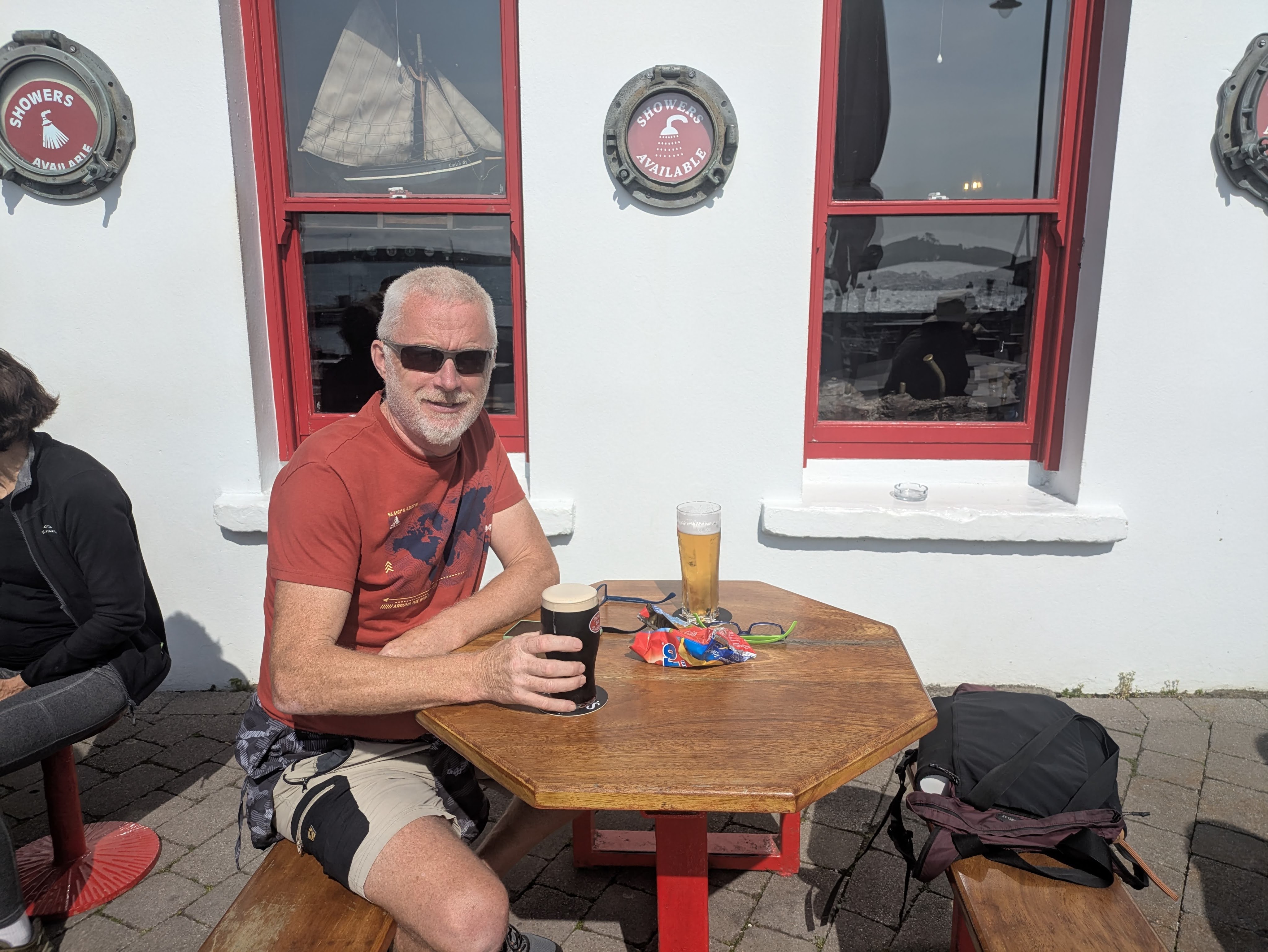
Baltimore is a picturesque village facing a sheltered harbour with pubs, a grocery store, a Michelin restaurant, spotless public toilets and shower facilities but it has a terrifying history. In 1631, Algerian pirates raided this quiet village and carried off about one hundred and forty inhabitants, dragging them from their beds. These poor unfortunates were sold into slavery in the Ottoman Empire. The survivors were so traumatized and frightened that they fled upriver to establish the town of Skibbereen. ( Rte did a fabulous radio documentary on this years ago, From Baltimore to Barbary: The Village that Disappeared). Sipping drinks in glorious sunshine outside Bushe’s pub, this event seems unimaginable.

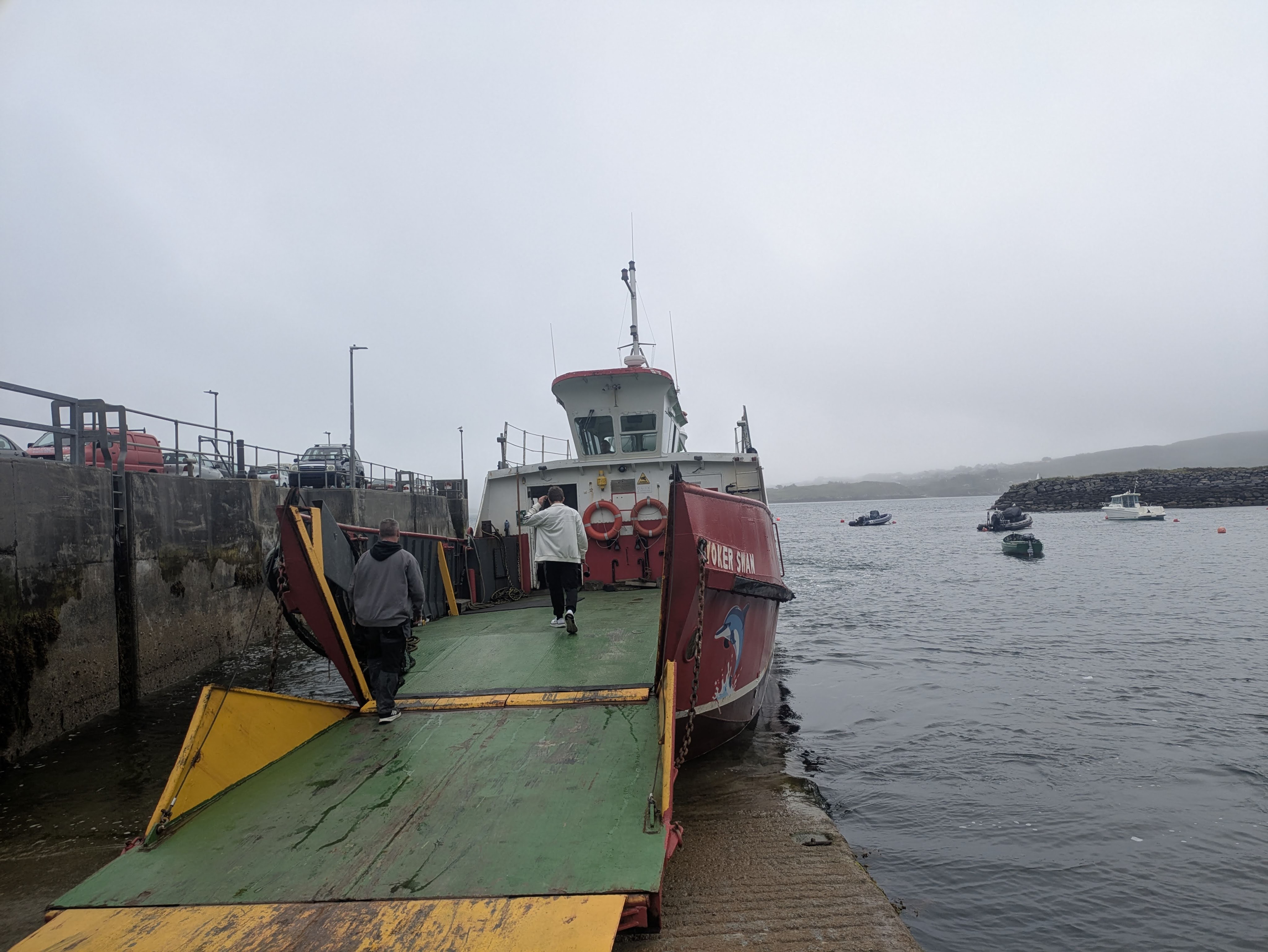
The roll on, roll off cargo ferry to Sherkin was old and rusty but the journey wasn’t long, merely a ten minute trip from Baltimore.  The cost was relatively expensive at €15 a head for a return journey and we discovered later that the price of ferrying a vehicle was an eye-watering €100 with prior booking essential as there is only space for one vehicle at a time.  Apart from us, there was three British sisters and a brother (all in their sixties) who were holidaying in Ireland and visiting a friend on the island for the day, a few other day trippers and two island women with bulging shopping bags, obviously returning from a grocery shop on the mainland as there’s no shops on the island.

The Sherkin Ferry

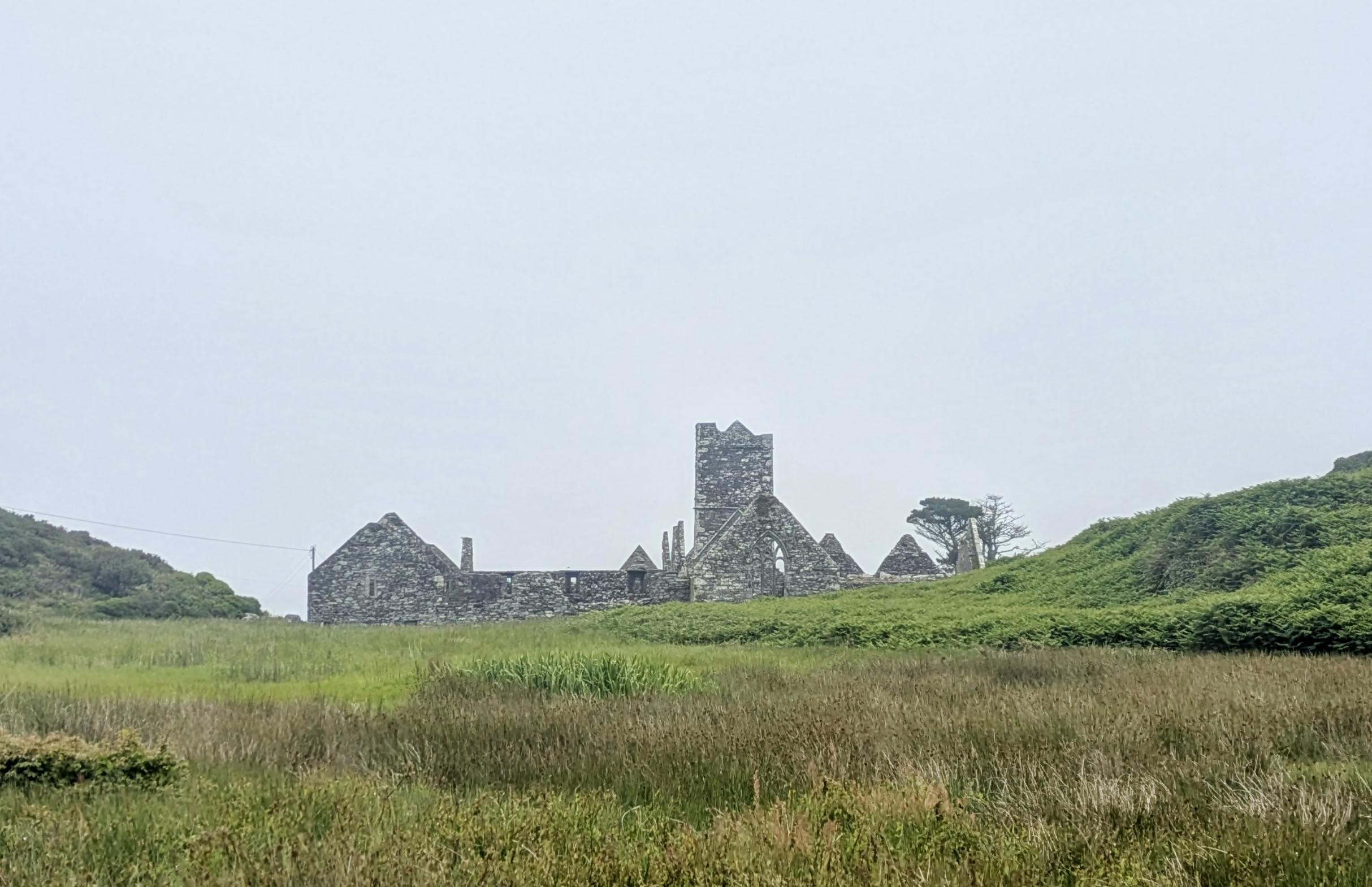
Arriving in Sherkin, we were met by the imposing landmark of the well-preserved ruins of the Franciscan Friary rising out of the mists. It sits on a slight incline overlooking the harbour and was built  back in 1460 by local chieftain Fineen (Florence) O’Driscoll and seems to whisper tales of a bygone era of prayers and bloodshed. In 1537 the citizens of Waterford burned the building in retaliation for acts of piracy (intercepting and stealing boatloads of wine) by the O’Driscolls.  Despite the damage, it continued to function until 1650, when it was confiscated by Cromwellian soldiers. The friary then passed into the hands of the Beecher family, prominent landlords of the island until it was handed over to the OPW in 1895. But the graveyard has remained the traditional burial ground of the island with recent additions among the moss-covered headstones. Quite a few Florence O’Driscoll’s, descendants of the original chieftain, have found their resting place here.
Franciscan Friary

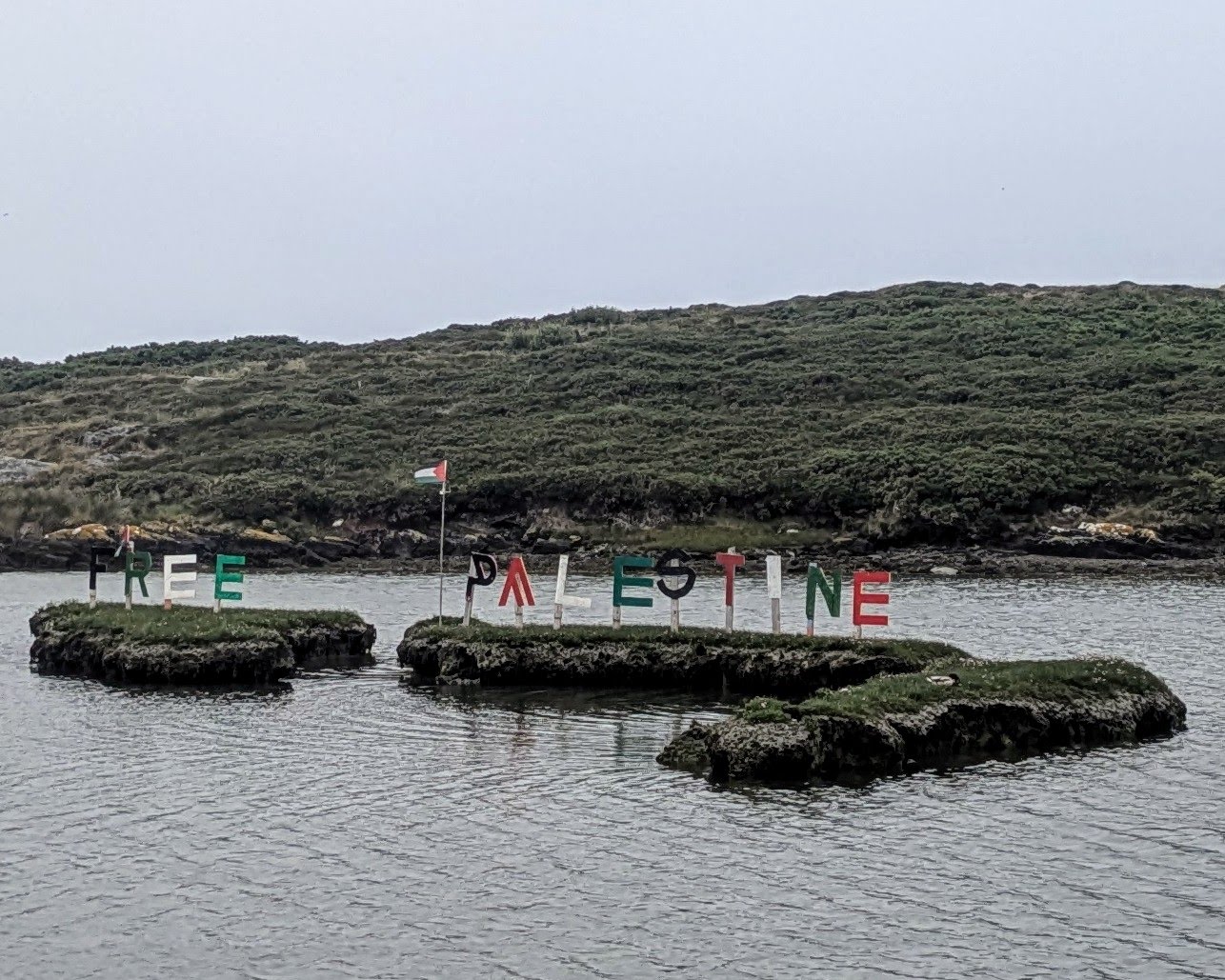
 A small bus meets all the ferries at the pier and we availed of it to take us to our accommodation in North Shore which was only about a forty minute walk away but we were carrying bags for our two-night stay. Sherkin is a small, relatively flat island of narrow, winding roads with verges filled with colourful wildflowers, foxglove, ferns, purple loosestrife and fuchsia. We drove past isolated houses dotted along the landscape, a few herds of cows, a tidal lake with a ‘Free Palestine’ banner, fluttering in the middle and a community centre which housed an impressive art exhibition.

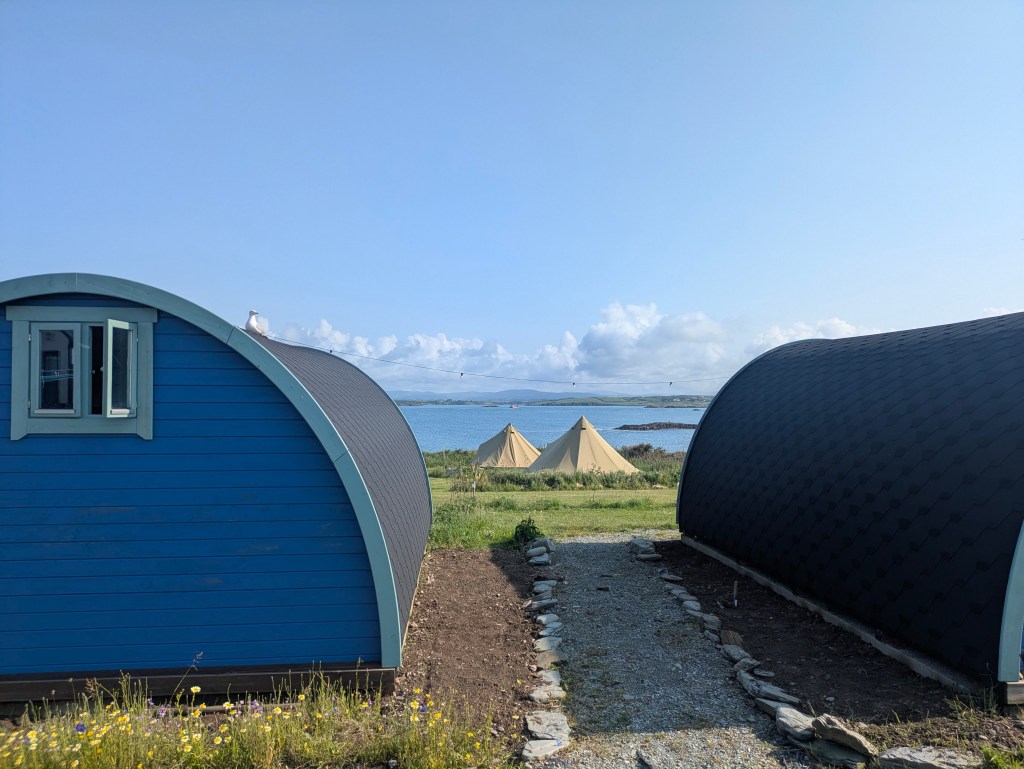
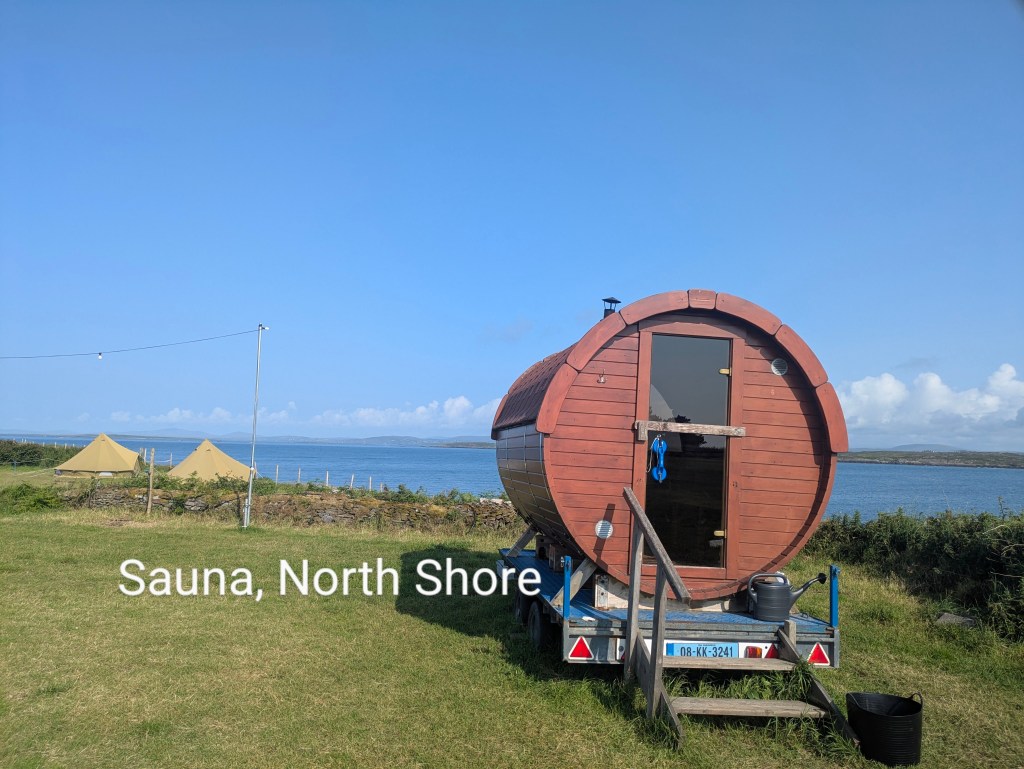
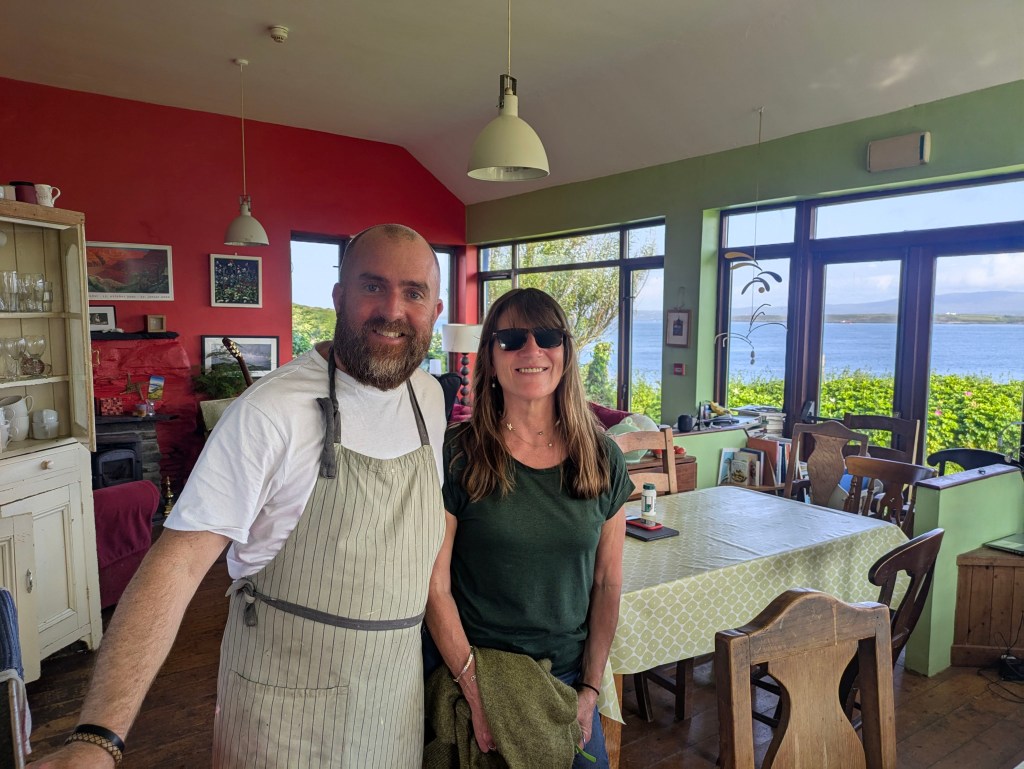
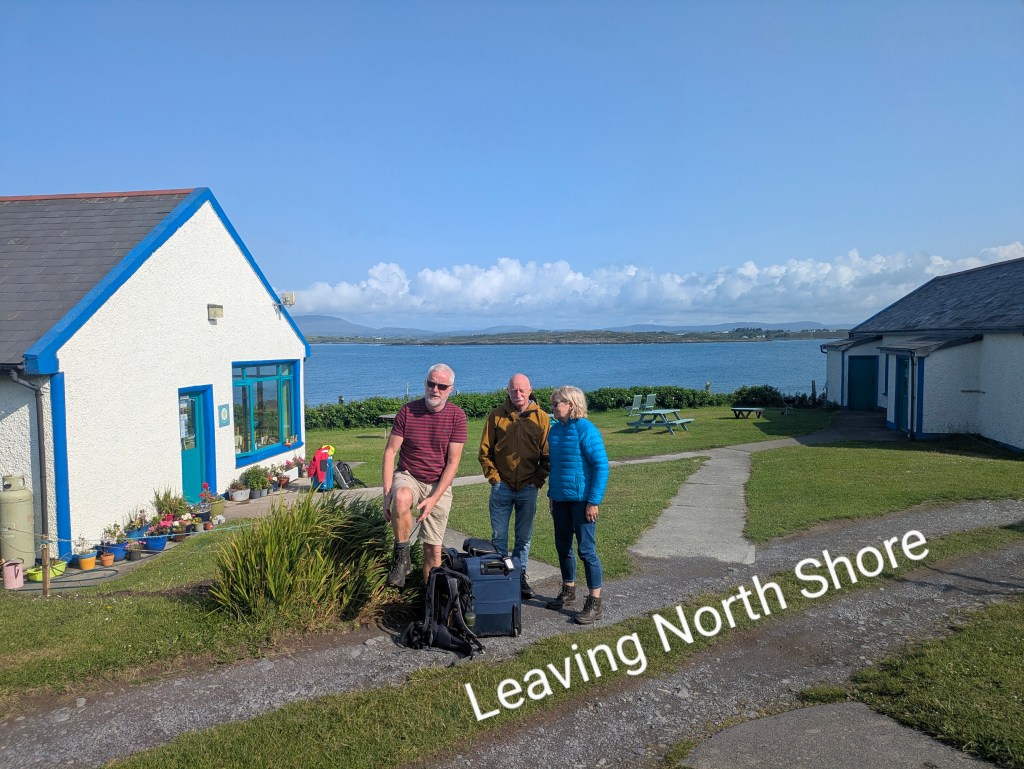
We were welcomed in North Shore with gorgeous sea-views, coffee and delicious homemade brownies by Daniel. The North Shore complex has a huge variety of accommodation – camping, bell tents, glamping pods and cabins. There’s a sauna and a well-equipped communal kitchen.  We stayed in an ensuite room with a bunk bed and a single bed which was quite basic and a shower with scalding hot water, so hot it was almost impossible to stand under.  Apart from a few Airbnb, North Shore is the main place to stay on the island and is the venue for an annual Electronic music festival.  For the last few years, the island hotel has been  occupied by Ukrainians who have been welcomed into the community, swelling the island population from about 110 to 165.

Our Accommodation, North Shore

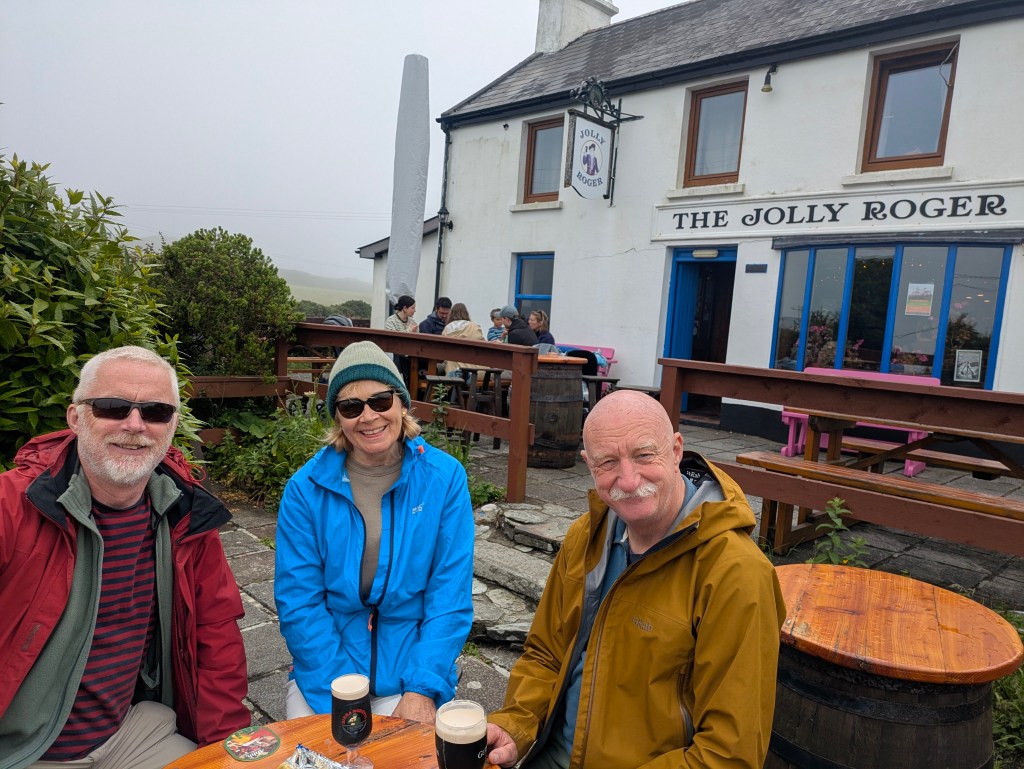
As we hadn’t brought any food supplies with us and there was nowhere to buy anything on the island, we ate our evening meals in North Shore on both evenings. These homecooked meals  were generous, plentiful and delicious. Heaped platters of food were passed around a  table we shared with an American woman travelling around Ireland and a couple of tradesmen from Cork who were doing insulation work on an old island house. Desserts were made by a Ukrainian pastry chef , mouth-watering lemon drizzle cake and baked cheesecake. North Shore does not sell alcohol and as the only pub on the island called the Jolly Rodger, was closed on Tuesdays and Wednesdays, we watched in envy as the Cork tradesmen drank beer with their dinner. They had gone over to Baltimore for some cans having endured a ‘dry’ night the evening before. So take note if you like to have a drink and bring  your own.

Breakfast was equally enjoyable – bowls of fruit, yogurt, smoothies, pancakes, homemade bread and sausages and rashers, enough to fuel us until dinner time. We spent our days  on the island walking and wandering in mild misty conditions, sometimes the sea disappeared completely, hiding in the greyness. The beaches on Sherkin were gorgeous, especially Silver Strand which was sandy,  clear-watered and completely deserted. Everywhere there was the sound of lapping of water and occasionally the hum of the ferry in the distance. A dog on a little rocky inlet wanted us to throw stones into the water for him to fetch. In some ways, it was not really like being on an island because the mainland was so near and  there was a myriad of small islands in every direction.

On our third morning, we awoke to blue skies, birdsong and sunshine. All the greys of the previous days had transformed to bright blues. The waters of Roaring Water Bay were tranquil and quiet as we travelled back to Baltimore to catch a ferry to Cape Clear Island. It isn’t possible to travel directly from Sherkin to Cape Clear.

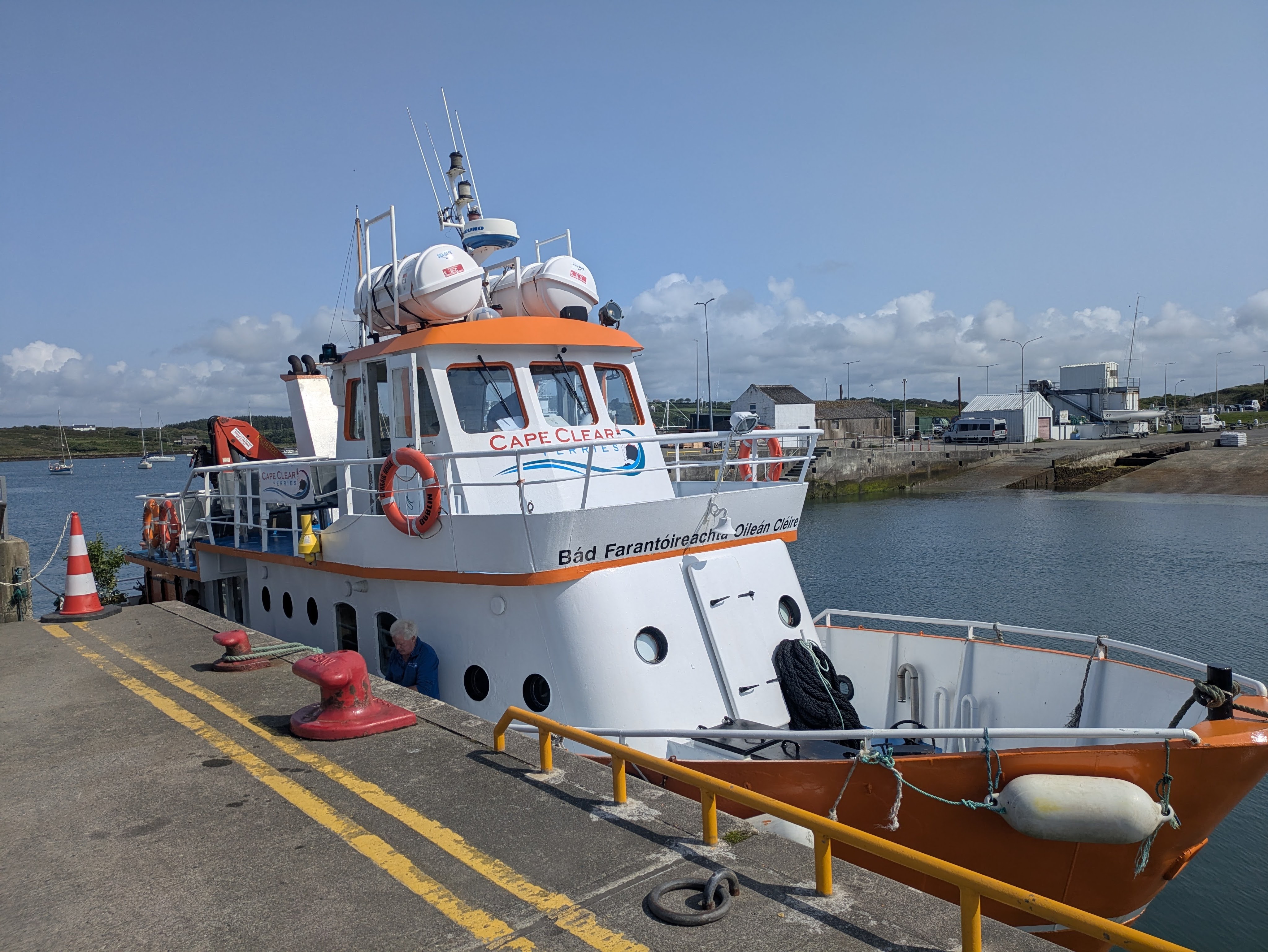
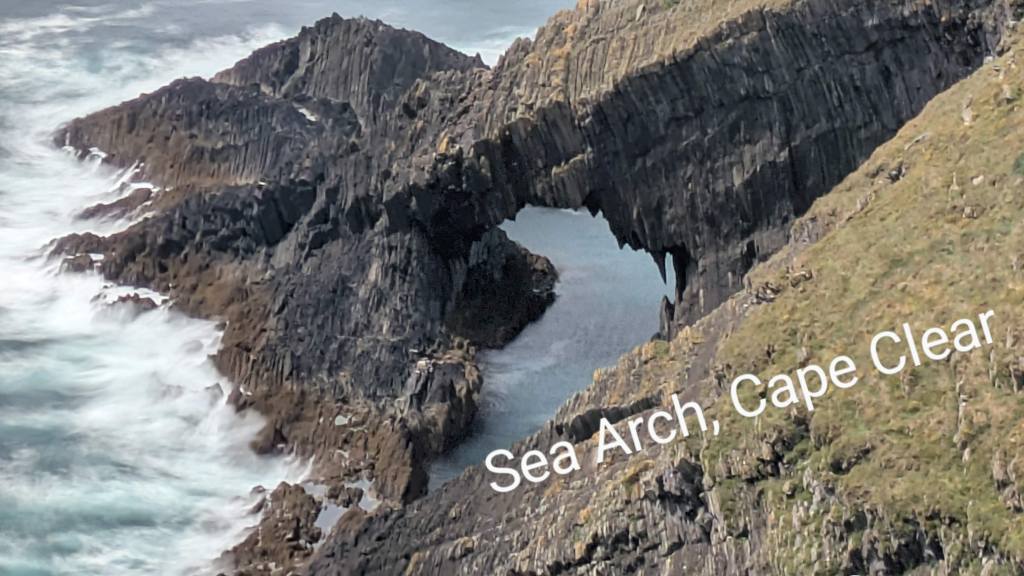
The Cape Clear boat was bigger, newer and shinier than the Sherkin ferry. The thirteen kilometer journey takes about 45 minutes, depending on weather and tide and costs €20 return. Cape Clear Island is slightly larger than Sherkin and although they are alike in many respects and have a similar population, they are also very different – more like cousins than sisters. Cape Clear, or Oileán Chléire is a Gaeltacht area with an Irish College which brings lots of young students during the summer months. It is mountainous with dramatic cliffs and walks that wind through hillsides of gorse and bracken, giving dramatic views of the rocky coastline and the seemingly unending and restless sea.  We could see the white surf swirling around the iconic Fastnet Rock in the distance and would have liked to take a Fastnet Tour but there is a restricted schedule in operation in June and the times didn’t suit us. A little away from the harbour on Cape Clear stood a stone memorial, etched with eighteen names, the victims of the Fastnet Yacht Race in 1979 which ended in such tragic loss of life.

Cape Clear Ferry

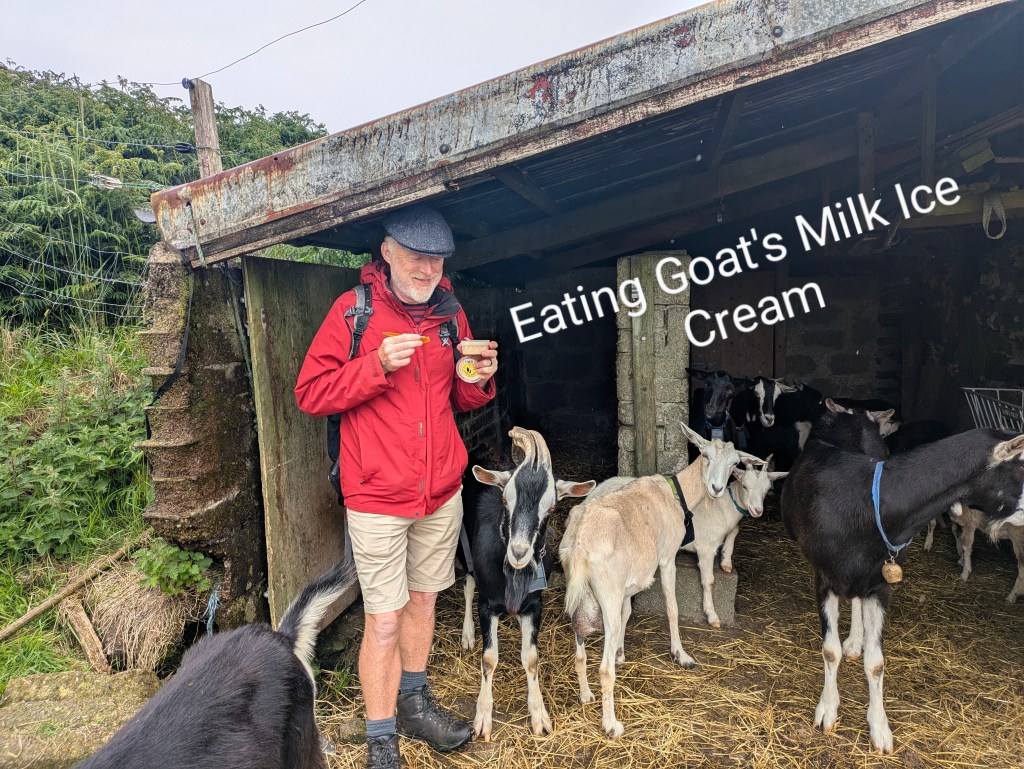
There’s more industry on Cape Clear with three pubs, a grocery shop, a gift shop and a gin factory. A goat farm on an almost vertical hillside sells ice cream and goat burgers while a herd of goats and kids scampered into an open sided shed when the sunshine disappeared and it started to rain.

Our visit to Cape Clear was short, only a day-trip so we didn’t experience any of the accommodation but there were signs for BnB’s, the pub advertised rooms and a hillside was dotted with yurts. We met a retired British couple who were spending their summers sailing around Europe  and a weathered Scottish man from the Hebrides who was sailing a tiny boat. Apparently there is no charge for mooring craft on the island which naturally attracts sailors.

We have really enjoyed ‘our few days of getting away from it all’ and would love to return and do a Fastnet tour sometime. It really was a gorgeous experience, exploring both islands.

A Tale of Two Islands, Sherkin and Cape Clear

Old Rail Trail Greenway – Cycling in the Midlands

The Midlands is an area of Ireland that is seldom a destination in itself, usually it’s just a region to pass through on the way to somewhere more exciting. But the heart of Ireland has a lot to offer as we discovered when we visited the area and cycled the Old Rail Trail Greenway which links the River Shannon in Athlone to the Royal Canal in Mullingar this week.

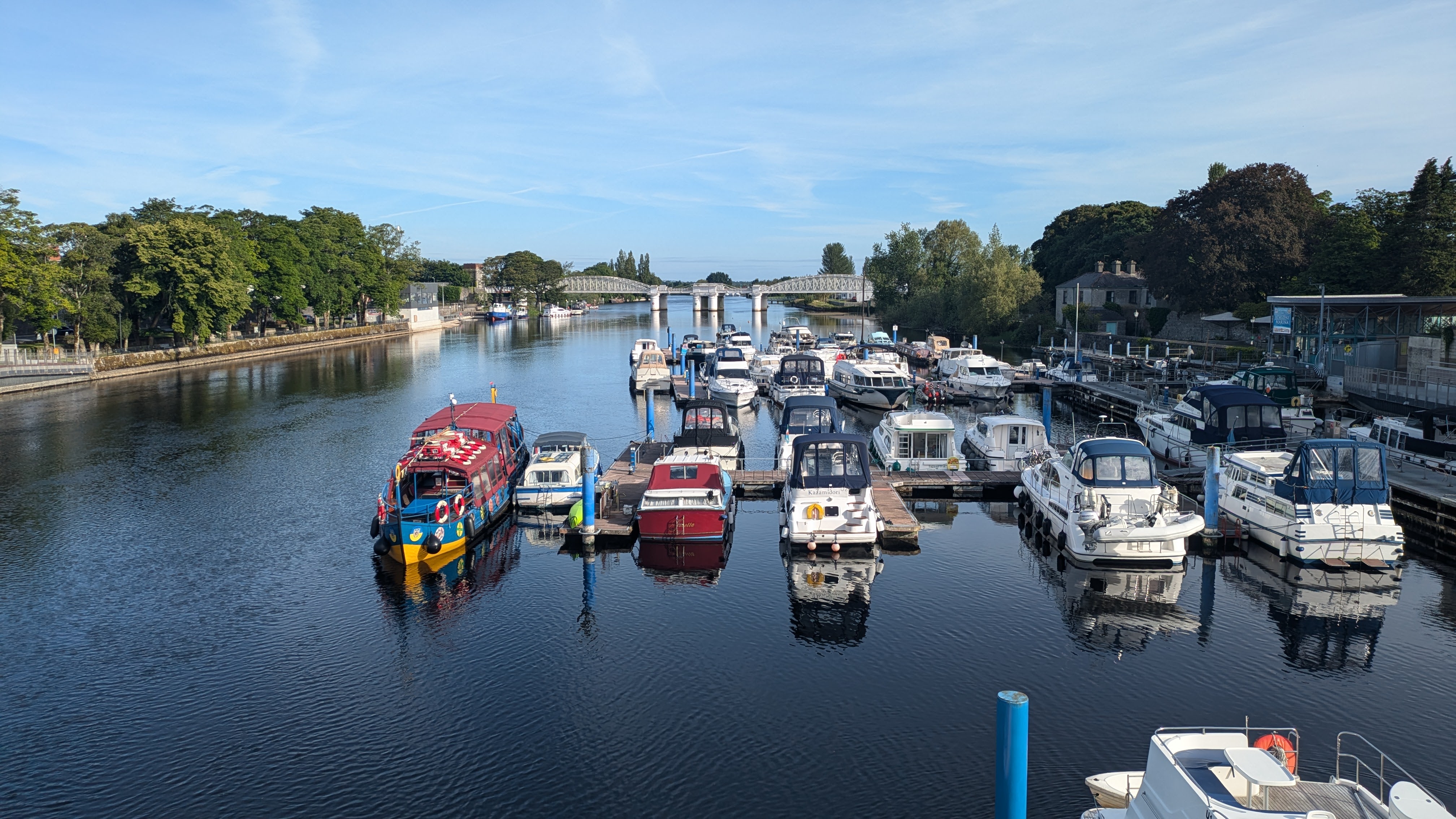
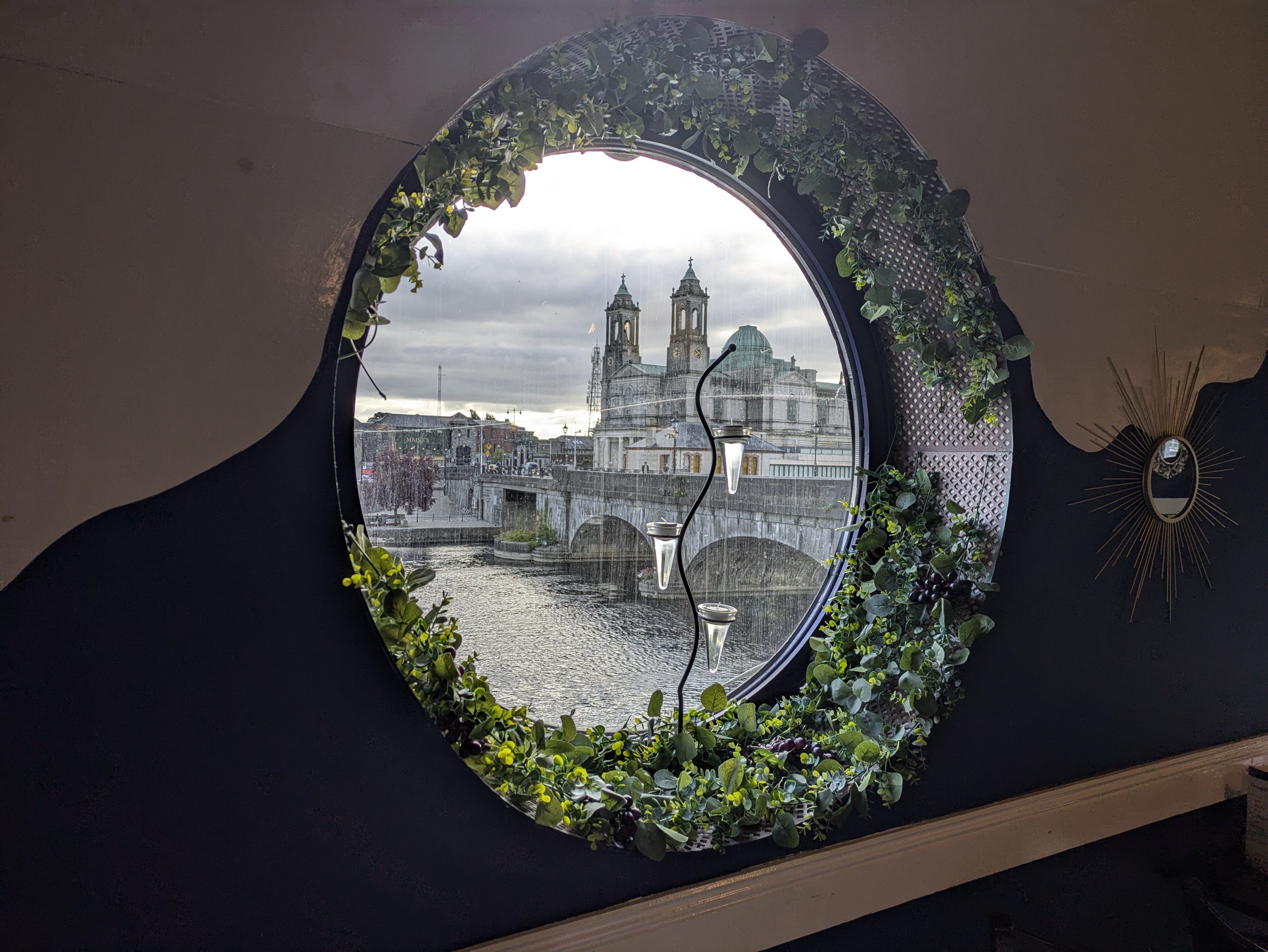
The Shannon, Athlone

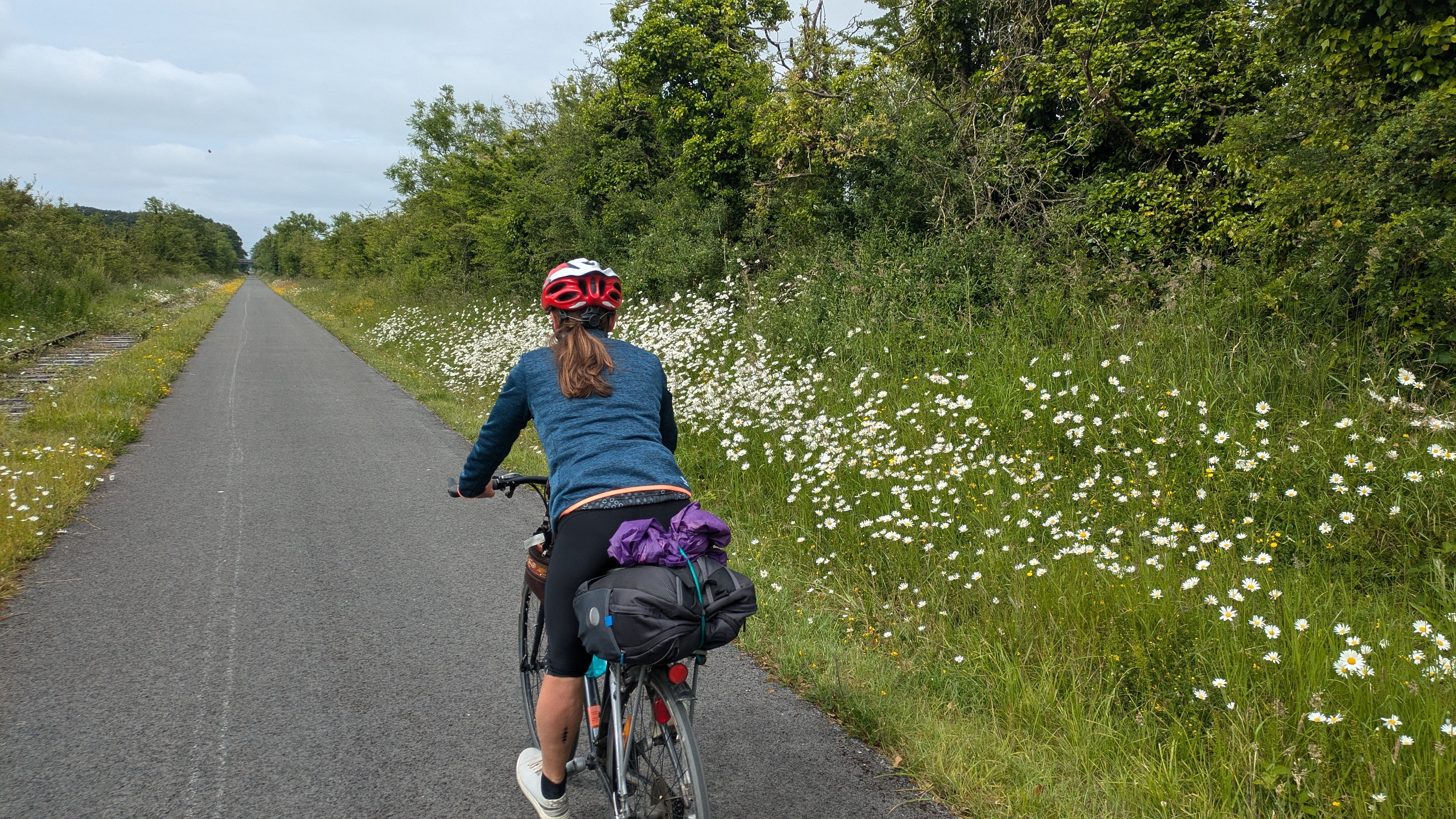
This greenway is 43kms on a flat paved and wide path along a converted stretch of the Midlands Great Western Railway which makes for lovely leisurely cycling or walking and is suitable for everyone. We met a 95 year old local man who walks a couple of kilometres on the Greenway every day and credits this for his good health.  Although I hadn’t been on a bike for about two years, I was pleasantly surprised at how relaxed and easy it was.  

Easy- Riding, Old Rail Greenway

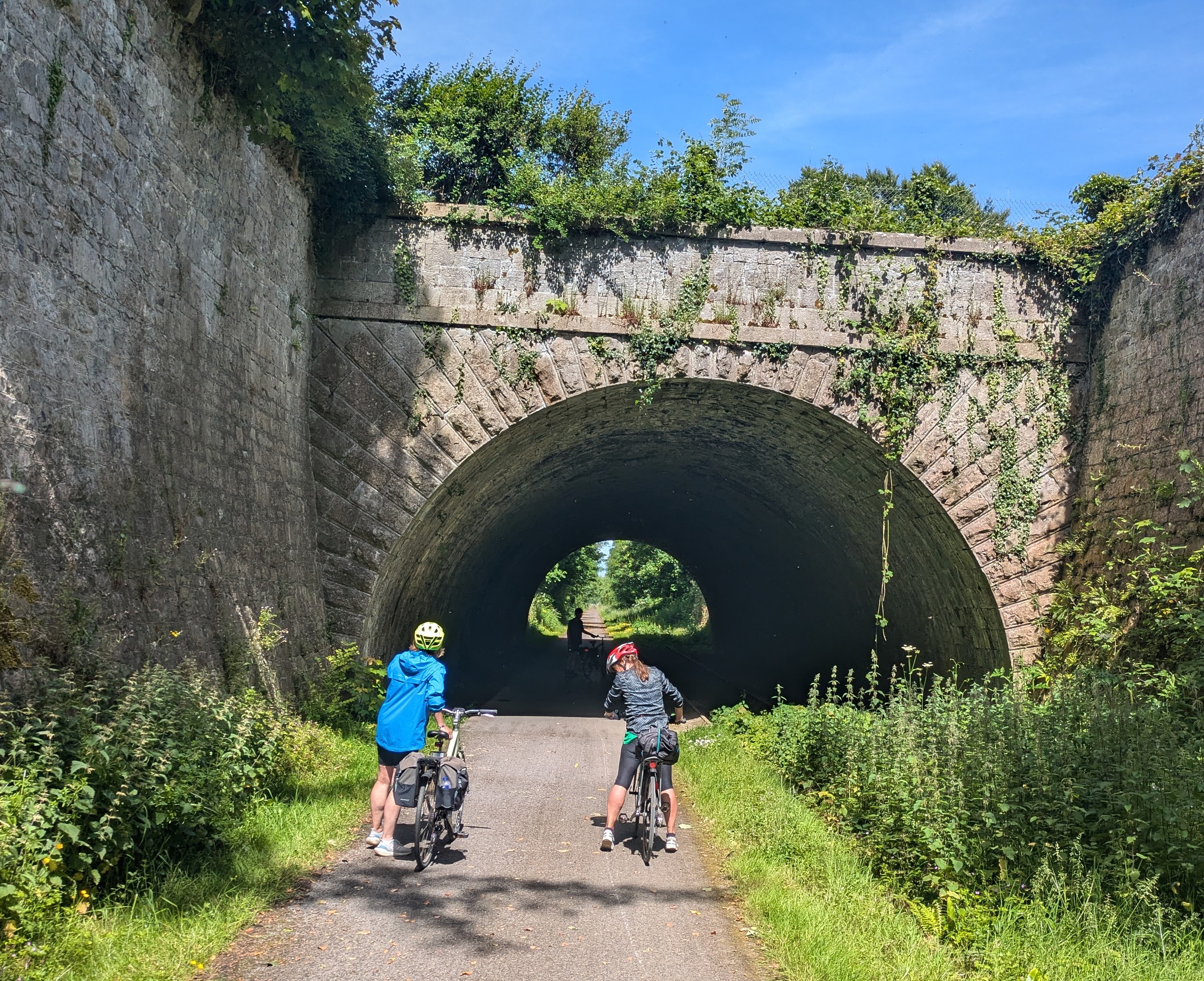
It was very quiet mid-week with just a few other cyclists and the occasional dog-walker.  Most of the time, the only sounds were birdsong, the whirr of our tyres and the infrequent hum of a tractor working in the fields. The verges were full of  perfumed wildflowers, banks of ox-eyed daisies, buttercups, hawksbeards and ferns while elder trees flowered overhead. We cycled under lots of arched stone bridges and along by frequent storyboards telling of the flora, fauna and the history of the area including some complex characters like Sara Kelly, a woman who went from being a destitute unmarried mother to the richest female landowner in the British Isles and who was murdered in Ballinderry, Moate in 1856 probably by some disgruntled tenants that she had evicted.  

We spent our first night in Athlone,  a town on the Shannon that is full of history. It even boasts the oldest pub in Ireland, Sean’s Bar, a low-ceilinged watering hole with lots of snugs and walls adorned with photographs, maps and memorabilia. It claims to be a thousand years old and the barman told us that some tourists visit Athlone solely to have a pint in Sean’s Bar or to drink one of their whiskey blends. Athlone Castle is certainly worth a visit with panoramic views from the top of the castle and interesting interactive displays with tales of bravery and bloodshed especially during the Siege of 1690/1. Across from the Castle is the Cathedral of St Peter and Paul, a colossal basilica with gorgeous stain glass windows from the Harry Clarke Studios.

There’s a lovely tranquil walkway by the Shannon under lots of Horse Chestnut, Sycamore and Oak trees– a great place to watch the action on the water from the riverboats to the birdlife – lots of moorhens, herons and swans. We slept soundly in our  small campervan to the lapping of water from the  narrow Athlone Canal ( and I swear that the visit to Sean’s bar was not responsible).

The first section of the Greenway is from Athlone to Moate (15.5kms) passing by the Crosswood Bog, a protected area because of its biodiversity and natural habitats. Moate is a lovely wide-streeted town with friendly people, especially the staff  in the Tuar Ard Coffee Shop where we stopped twice to refuel, once in either direction, with toasted sandwiches and scones. We also called to the Dun na Si Heritage Park, a large park on the edge of Moate with walkways, playgrounds,  dolmens, stone circles, sculptures and artwork.

Moate Centre
Dun na Si Heritage Park

The middle section runs from Moate to Castletown, (16.3kms) where the old historic railway station is preserved. The Hill of Uisneach is near here, a place that was once the seat of the High Kings of Ireland and which is reputed to be the burial place of the Earth Goddess Eriu and the Sun God Lugh. There are public tours of Uisneach at the weekends but during the week, they have to be arranged privately. We didn’t visit but it sounds like a fascinating place….we may have to return.

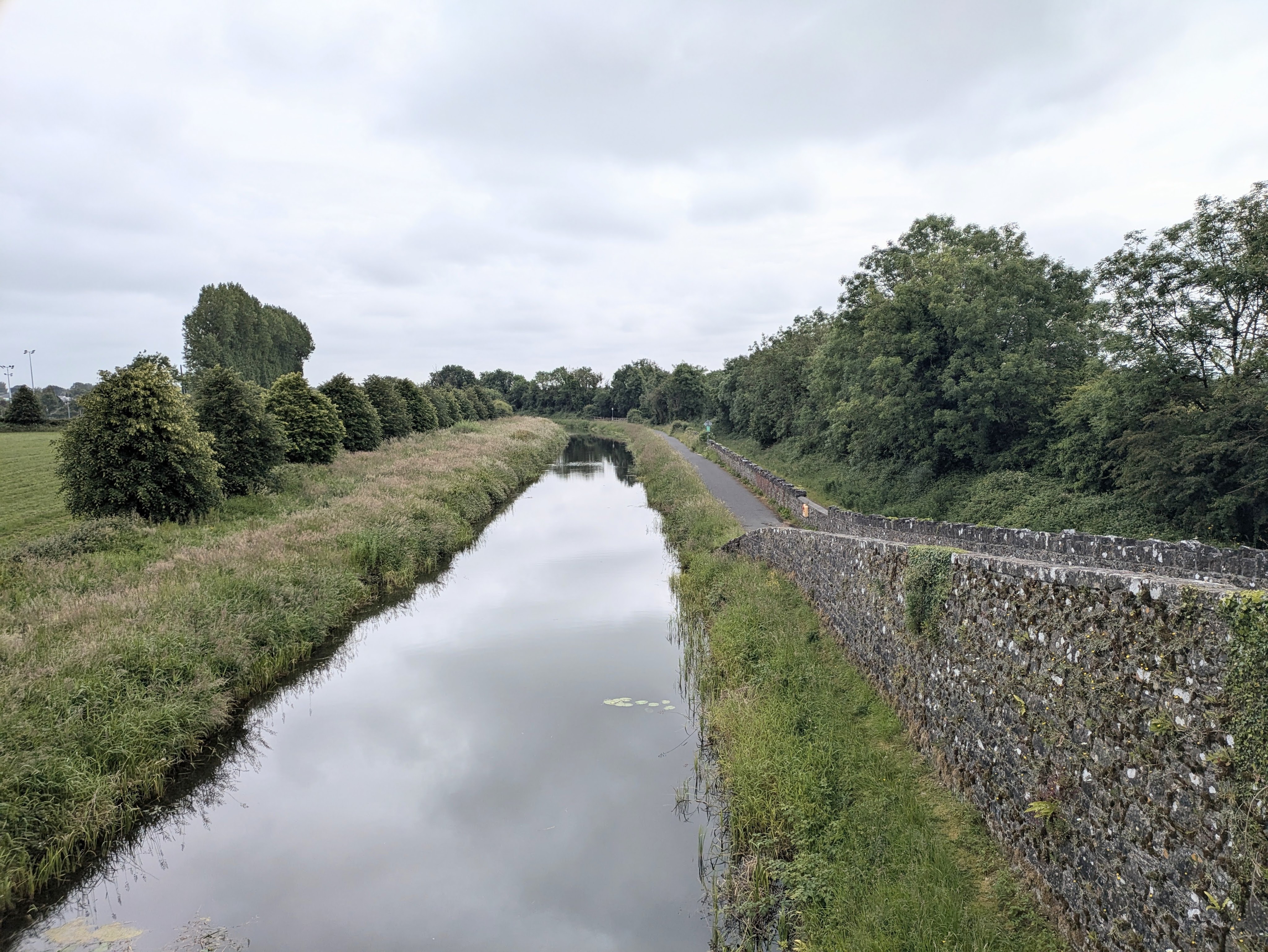
The last section of the Old Rail Greenway goes from Castletown to Mullingar (11.4kms), where it links up with the Royal Canal, so it’s possible to keep going and cycle west to Longford or east to Maynooth. The last few kilometres into Mullingar along by the canal are really gorgeous with swans and fishermen all enjoying the water.

Royal Canal

We spent the second night in Mullingar, a really vibrant town that was looking well in the sunshine. We ate in the Wholefood Kitchen Restaurant, sitting outside under umbrellas eating exceptionally delicious food (great place to eat if you are in the area). We stayed in Kerrigan’s B&B which is close to the centre of town, it’s a B&B over a pub with clean modern rooms and a breakfast of bagels, croissants and fruit pots is included in the Coffee Shop downstairs.

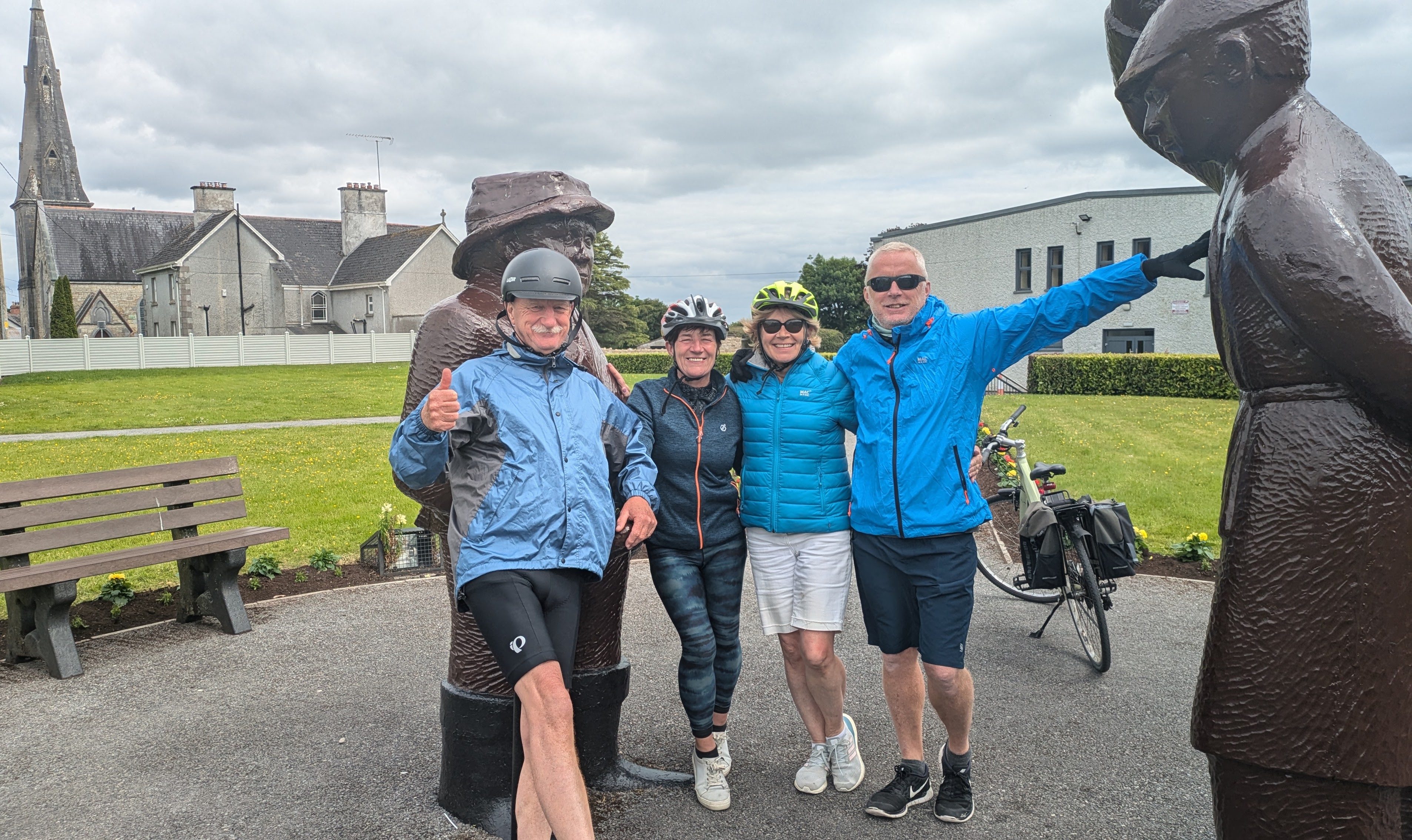
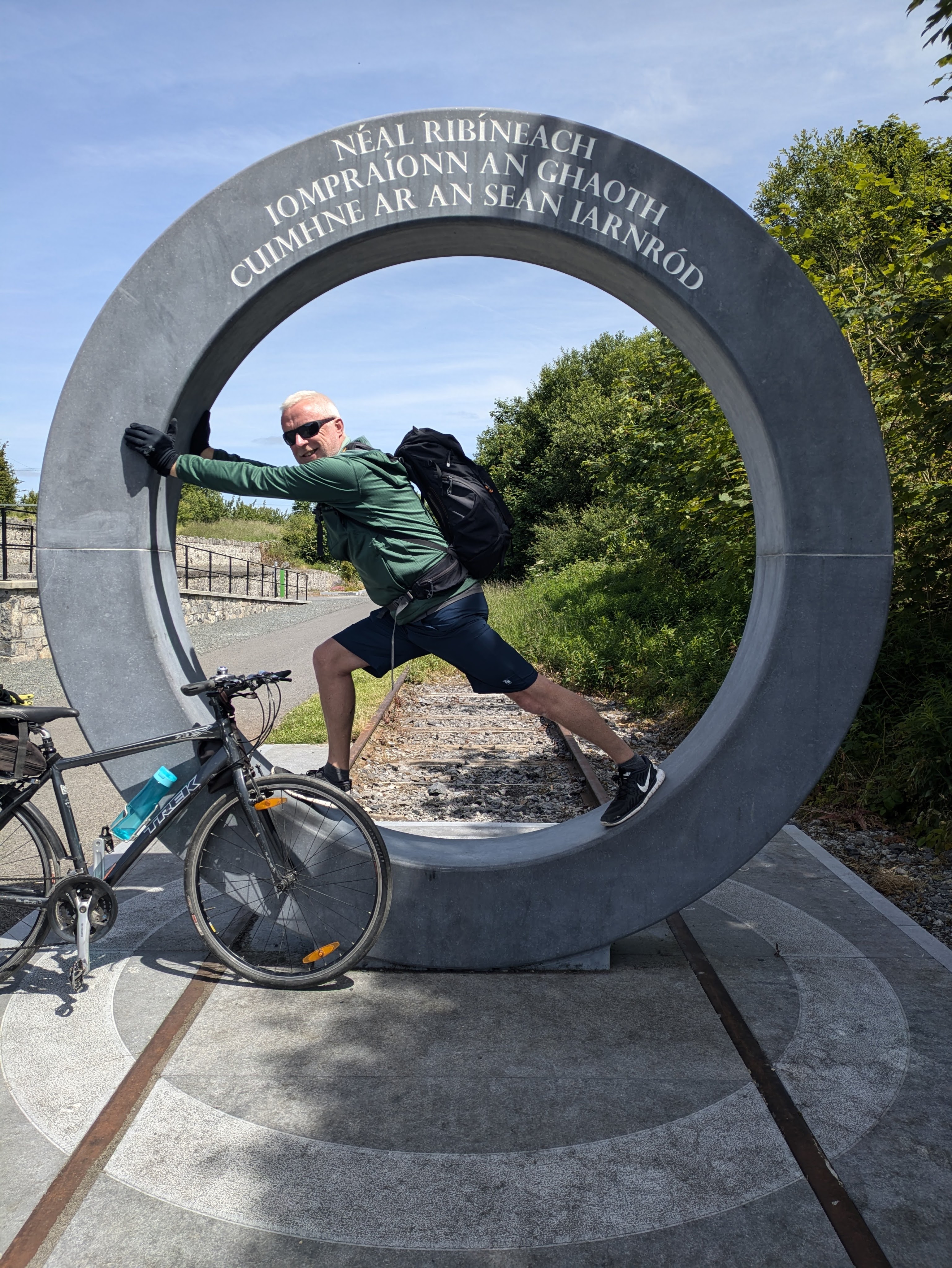
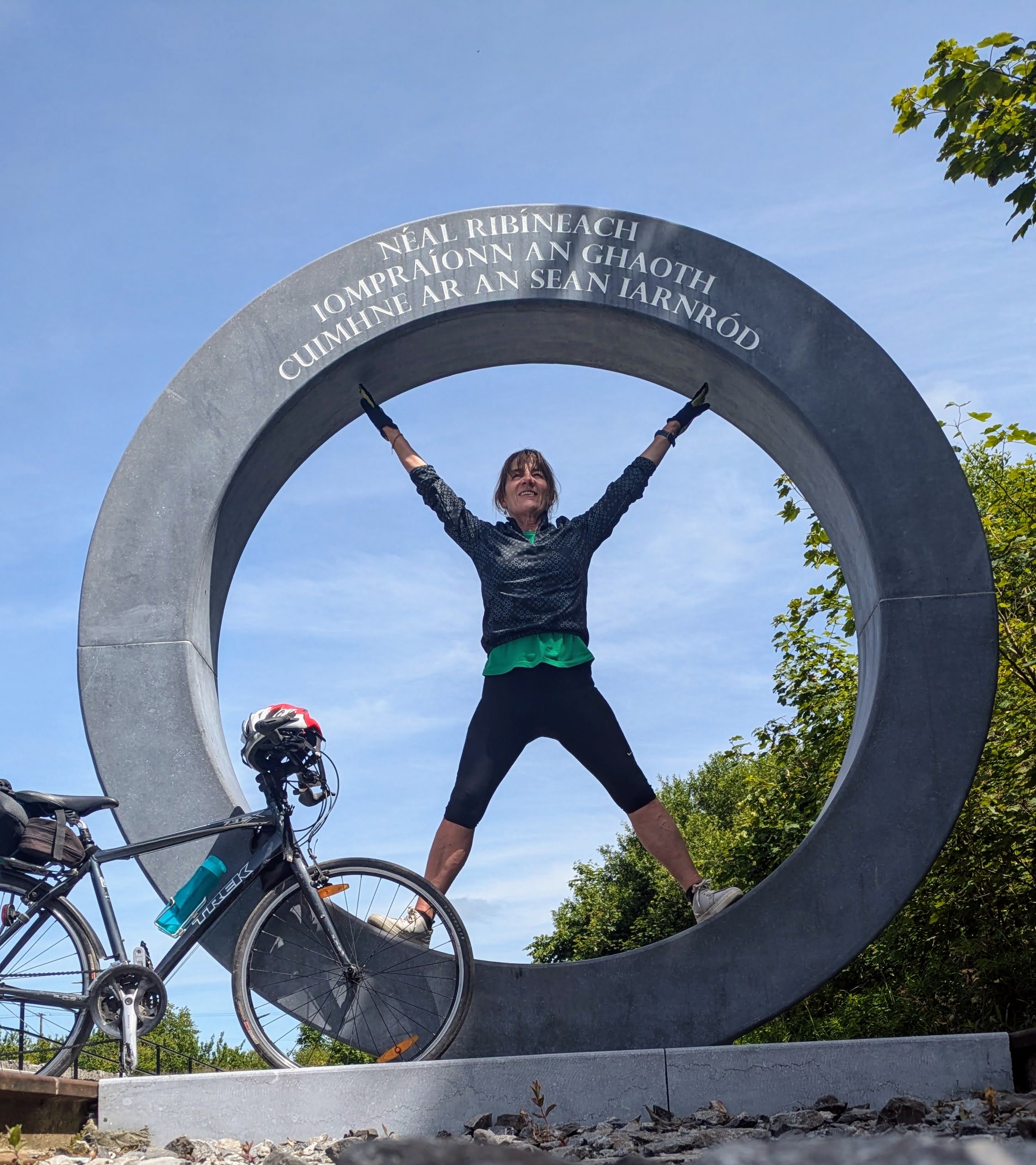
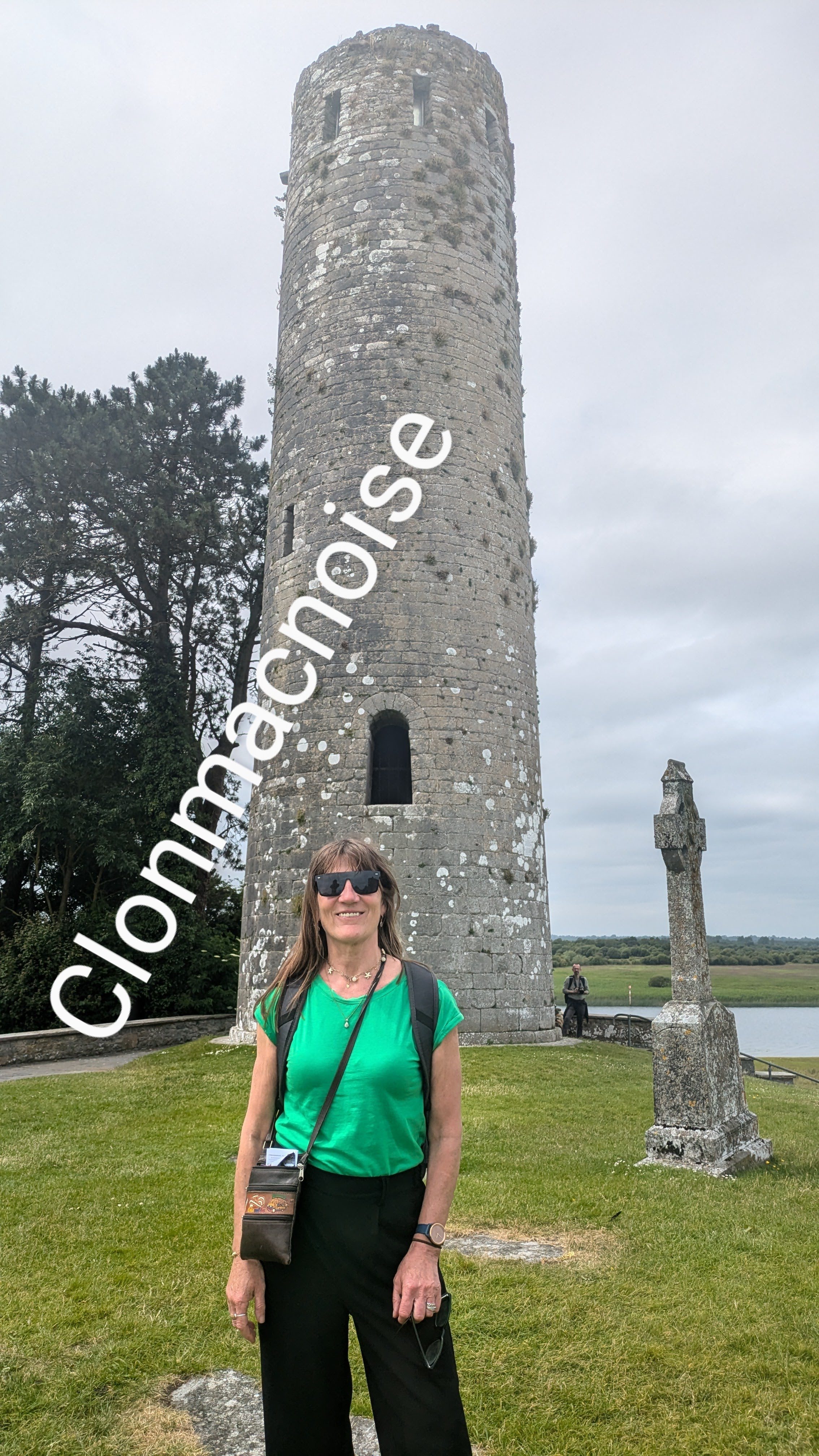
The following morning, we cycled back to collect the cars, stopping at Jack’s Stop in Streamstown along the way, a popular spot with locals, walkers and cyclists and a great time to take some photos – The inscription in the stone circle above translates to ‘Wispy cloud, The wind carries a memory of the Old Railway. We drove home by Clonmacnoise, a monastic site founded by St Ciaran in the 6th century in a beautiful location on the banks of the Shannon and once an important seat of learning and pilgramage. It’s a peaceful place now with beautiful Celtic crosses, two round towers soaring to the sky, numerous ruined churches, an interpretive centre and short guided tours.  Our guide told us that we were literally walking on bones as there were bodies everywhere under our feet.

The heart of Ireland is a wonderful place to visit with family or friends, with canals, rivers, lakes, a rich fascinating history and probably the friendliest people in the country

Sometimes, a person just wants to lie down🙄

Old Rail Trail Greenway – Cycling in the Midlands