Philippines – Mountains of Rice

Our ferry was due to leave Coron for Manila at the very precise time of 11.59pm and lo and behold, before the stroke of midnight, we were on our way. A punctual departure hadn’t seemed likely. The security at the port was tight with much checking of bags for sharp objects and lighters. A mango that Caoimhin had in the side pocket of his backpack was confiscated with no explanation….perhaps the official liked mangoes, as much as we did.


Once we entered the main departure area, all bags had to be placed in a single row on the floor so that a sniffer dog could check them out. The problem was that the single row already snaked down and around a vast hall (the amount of luggage that some people were carrying was staggering) There was much unintelligible shouting and gesticulating by a very officious steward….even the Filipinos didn’t know what was going on. They just shrugged and smiled. We were told that we had to wait and put our bags in a second row once the first row was checked. The dog came, sniffed the first few bags, some ID documents were scrutinised, and the first twenty people were even body searched. Then it all went a bit haywire….more shouting when some people tried to remove their luggage. In the ensuing mayhem, the stewards weren’t sure which bags were checked. We just sneaked out the door and headed for the boat….Caoimhin loves breaking the rules.
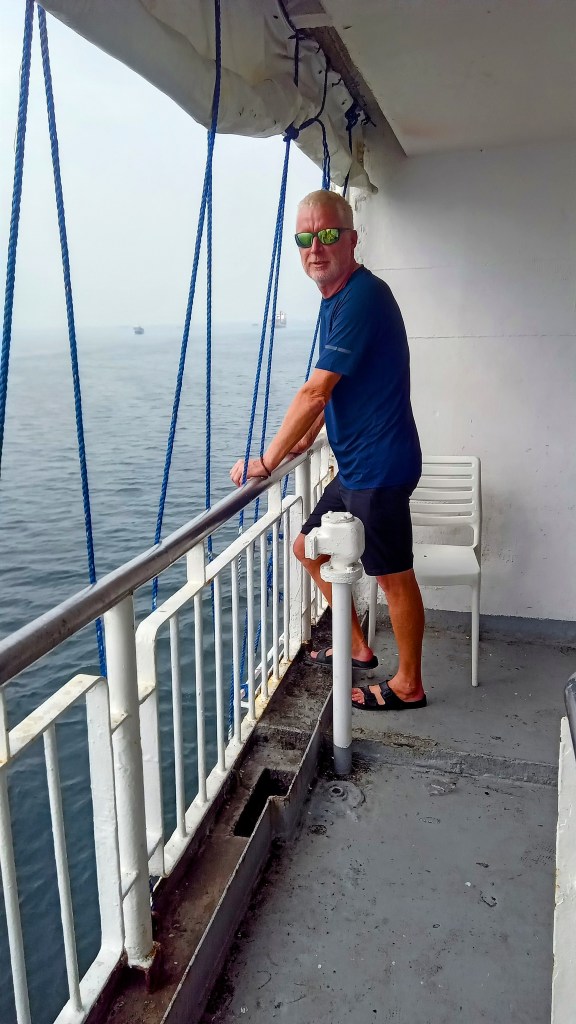

Although we had assigned beds on our tickets, we were told to just take any available bunk. We headed for the open top deck. We are not paranoid, but the safety record on Filipino ferries is appalling and the enclosed air-con tourist class was a little too enclosed for our liking….especially if you had to get out in a hurry. The ferry wasn’t full, and the top deck was virtually empty except for loners and the prudent. The engine noise was loud up there but that was compensated by the lack of human noises. it was a lovely constant noise that lulled us to sleep for a few hours. The crossing was smooth with a light breeze providing natural aircon. This ferry (2Go company) wasn’t fancy, but it was a giant step-up from the other long ferries we have taken. There were life-vests on all the bunks and also in the canteen area, the aisles were clear of crates and boxes, the toilets were (reasonably) clean. The morning dawned hazy and overcast. Meals were included in the ticket price (€54 each), and by 6 am, a long breakfast queue had formed, a bit like a soup kitchen. Everyone was given a plastic plate with a large mound of rice, scrambled egg, and some beef cubes ( the choice was simple – ‘take it or leave it.’ )The process was repeated at midday with rice and battered shrimp smothered in ketchup. Hardly gourmet, but nobody wanted to give up a ‘free’ meal.
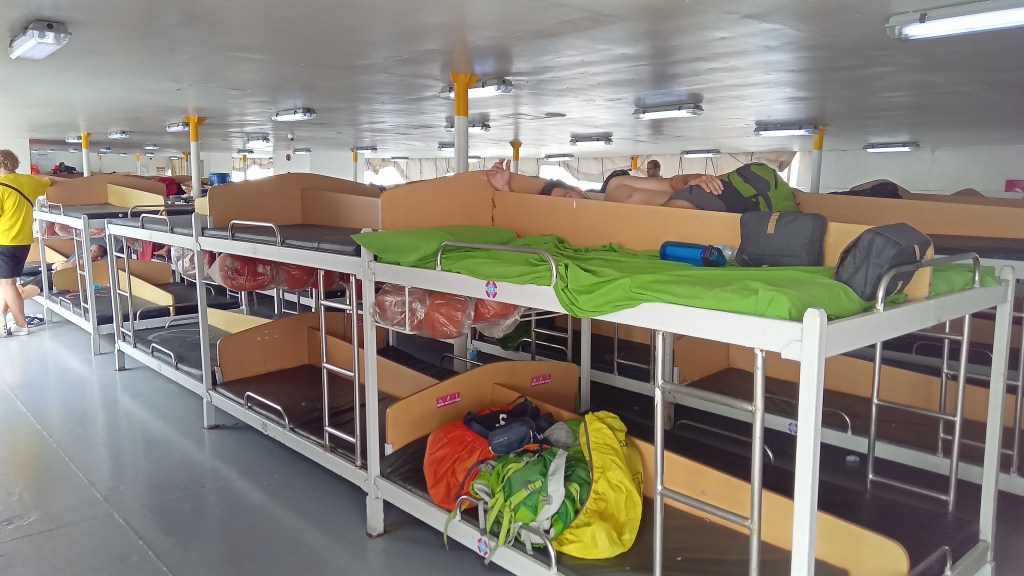
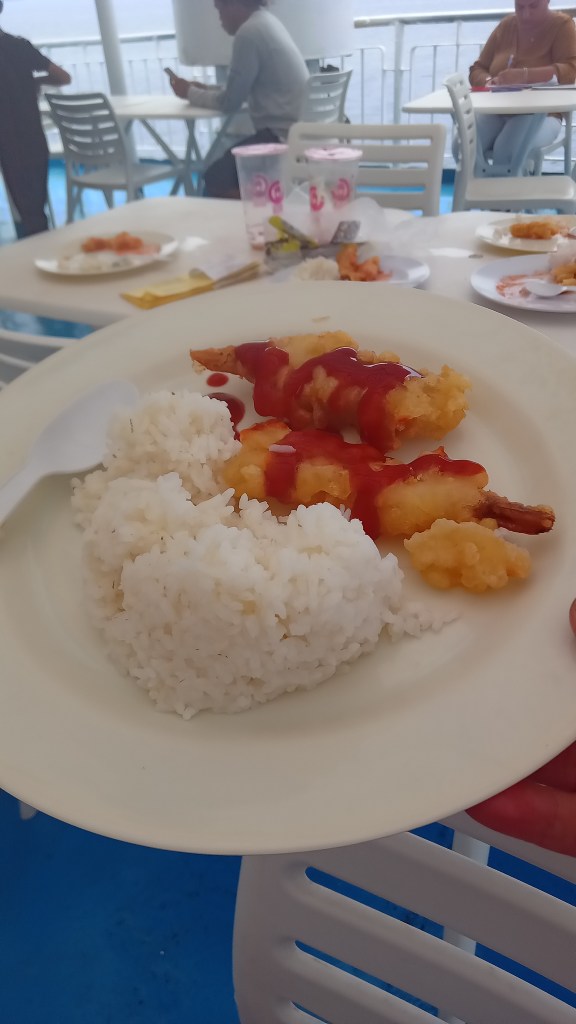
Lunch on the ferry

Karaoke started up on the boat as we approached Manila…maybe to celebrate a safe arrival after 17 hours at sea. Manila port was busy with cargo ships and fishing boats , the water full of floating debris and the odd jumping fish. When we disembarked, the traffic was appalling on that misty overcast Friday. We walked in circles around the stinking streets in the port area looking for a taxi – usually we are pestered with taxi-drivers when we want to walk. Huge lorries barrelled along within inches of our feet. Eventually a man wondered what we were looking for and pointed us in the direction of taxis a couple of streets away. It took more than an hour and a half to drive ten kilometres. When we got to our hotel (RedDoorz near EDSA camp), the room was tiny – we had more space on the boat. There was a pile of festering rubbish on the street corner outside and a woman and baby sleeping on the other corner. So we were thankful that we had a roof over our heads. The area was a bit rough but we stumbled upon a Jazz club down a quiet leafy street (the only leafy one in the area) We counted our blessings, listening to live music and sipping cold beers.
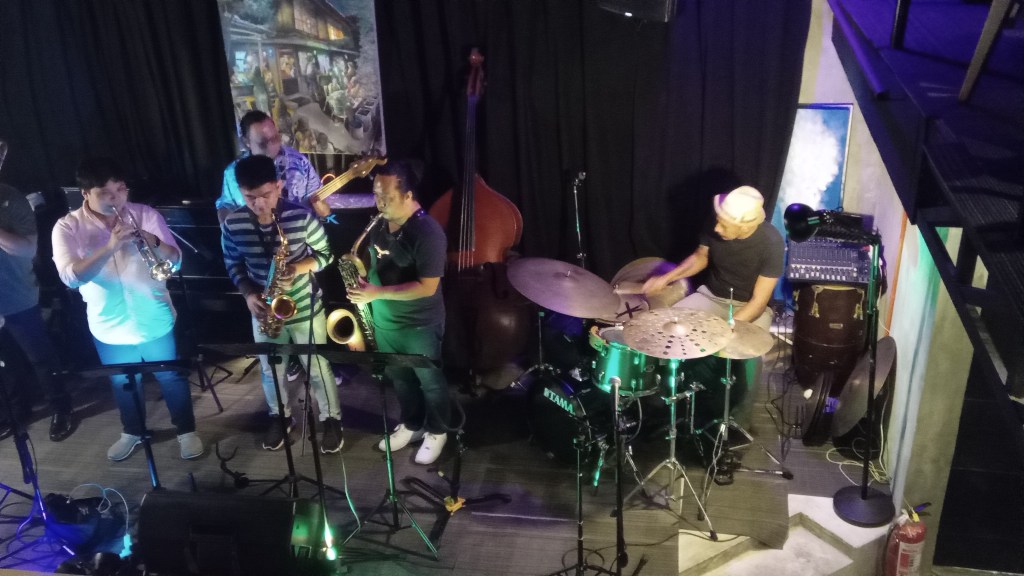
Jazz Club


Rice is more than a food here in the Philippines, it is part of the psyche of the people. No meal is complete without it and we have sometimes eaten it three times a day. There were paddy fields all over the Philippines, but the UNESCO Heritage rice terraces were in the north, a nine hour overnight bus journey from Manila.
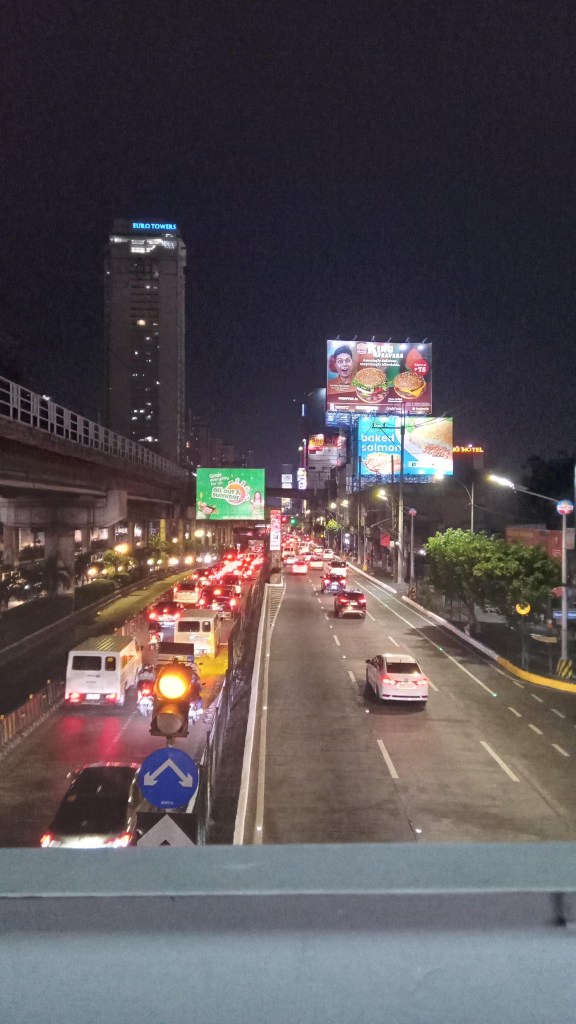
Goodbye, Manilla from an overpass


Manila was hot and sweaty, we weren’t interested in touristy things (we had already seen anything we wanted to see). We wandered around the crowded air-conditioned shopping malls, buying nothing , just watching all the Filipinos doing the same thing. I don’t really want to admit this, but we toured the food courts going from Starbucks to McDonald’s to Jolibees, a Filipino version of KFC on a fast-food binge.
But finally we were on the overnight bus to Banaue in the Cordillera mountains with perishing aircon and corkscrew roads. I regretted our food choices with every bend and curve of the road.


We arrived before 6am in Banaue where the early morning sweeping was in full swing and tendrils of smoke curled upwards from the fires burning rubbish and dead leaves. We were met at the bus stop by a tricycle to bring us to our accommodation, Rice Homestay, a friendly place where there was a whiff of dampness and thick blankets on the bed – we haven’t needed a blanket since we left home. There was a wonderful cool freshness in the air, which was invigorating despite our tiredness.
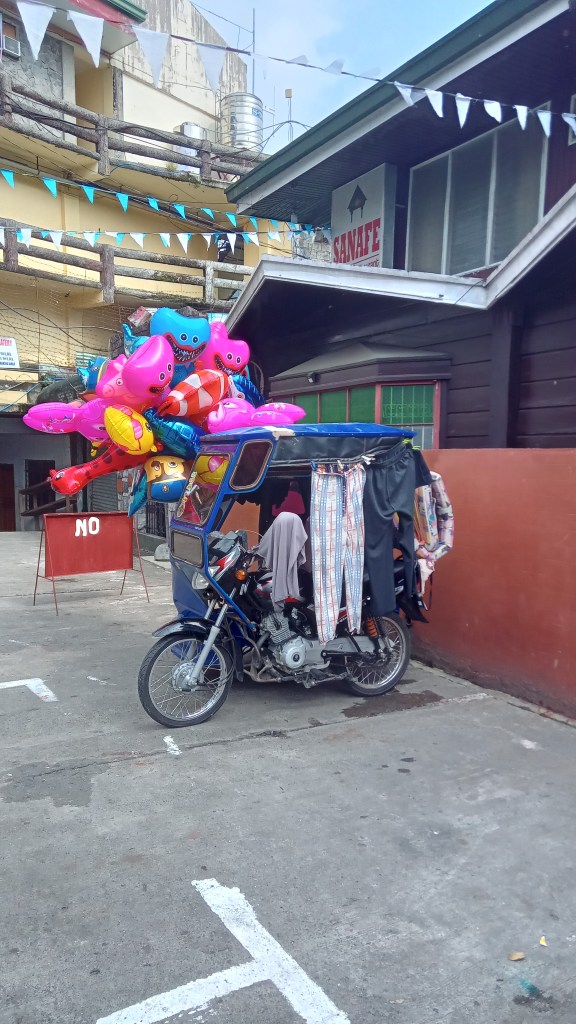
Party Time, Banaue


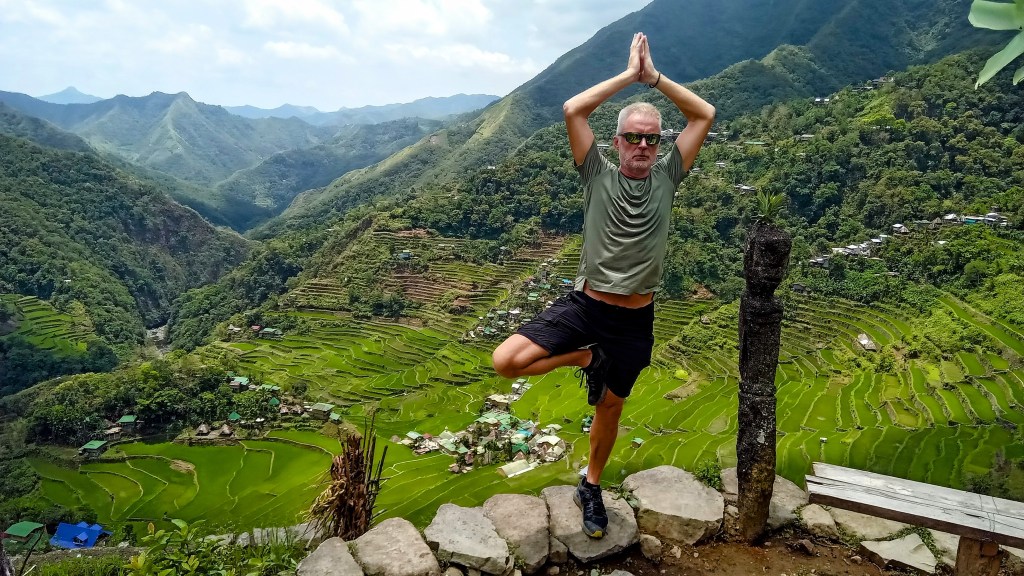
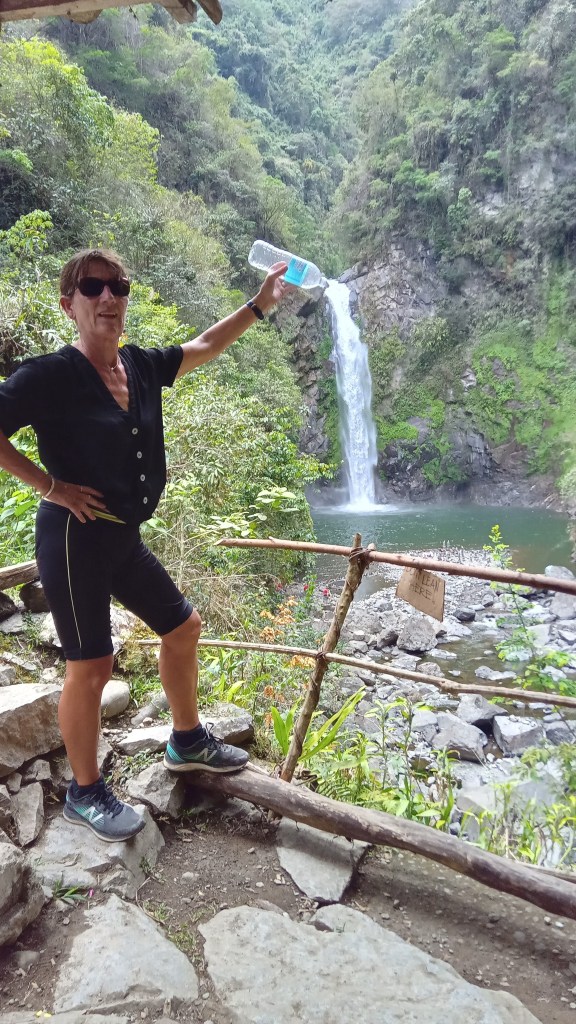
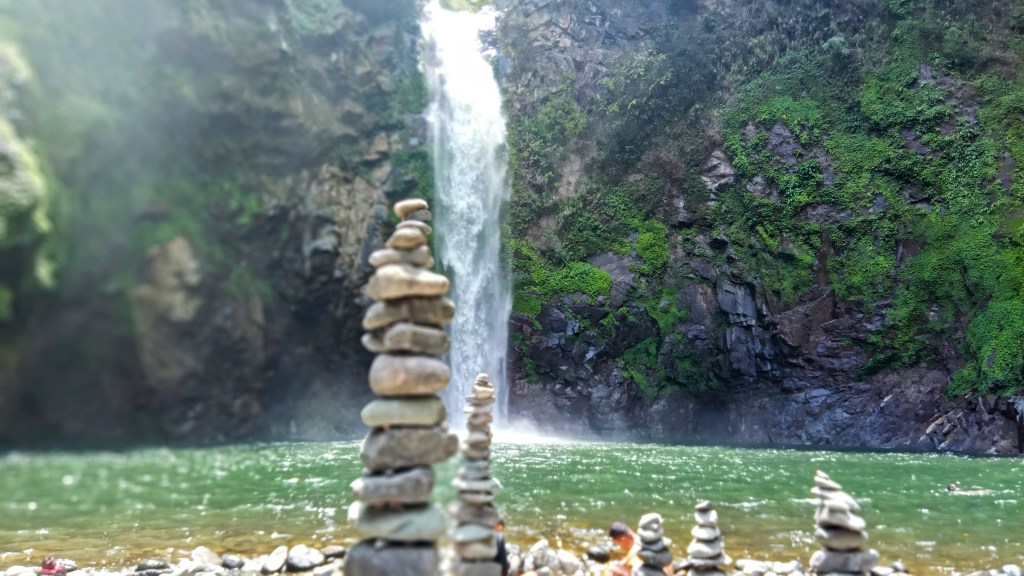
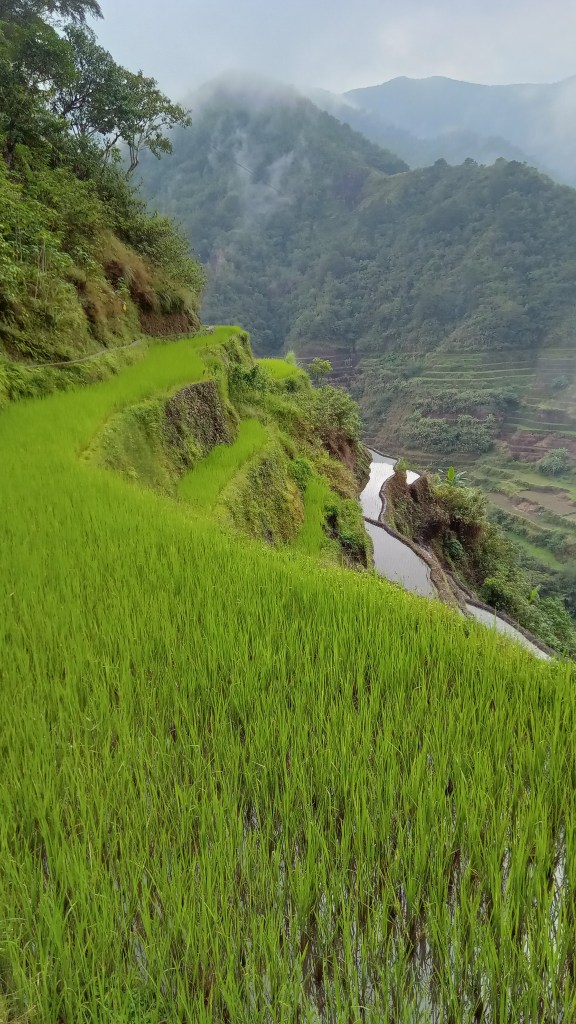
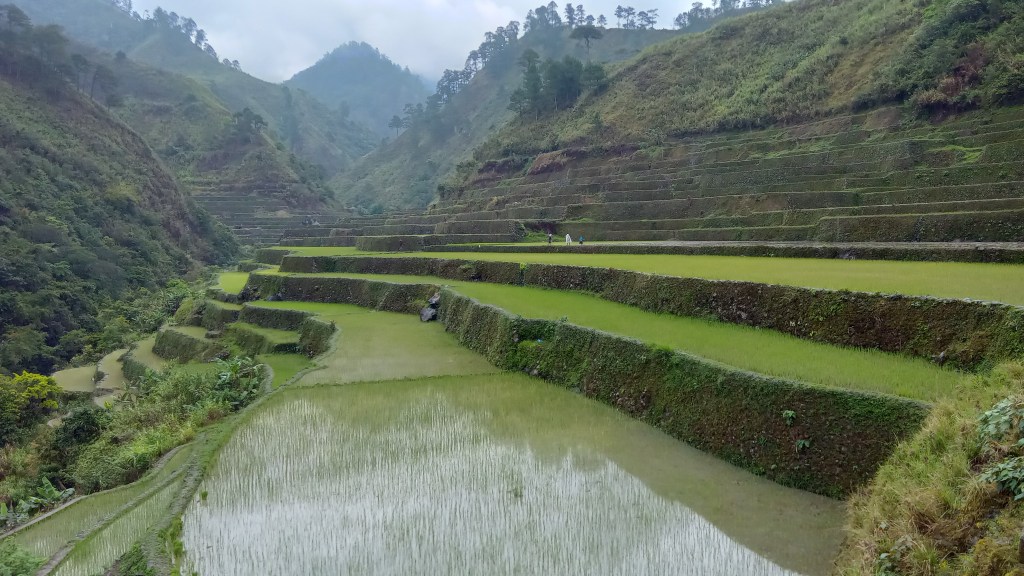
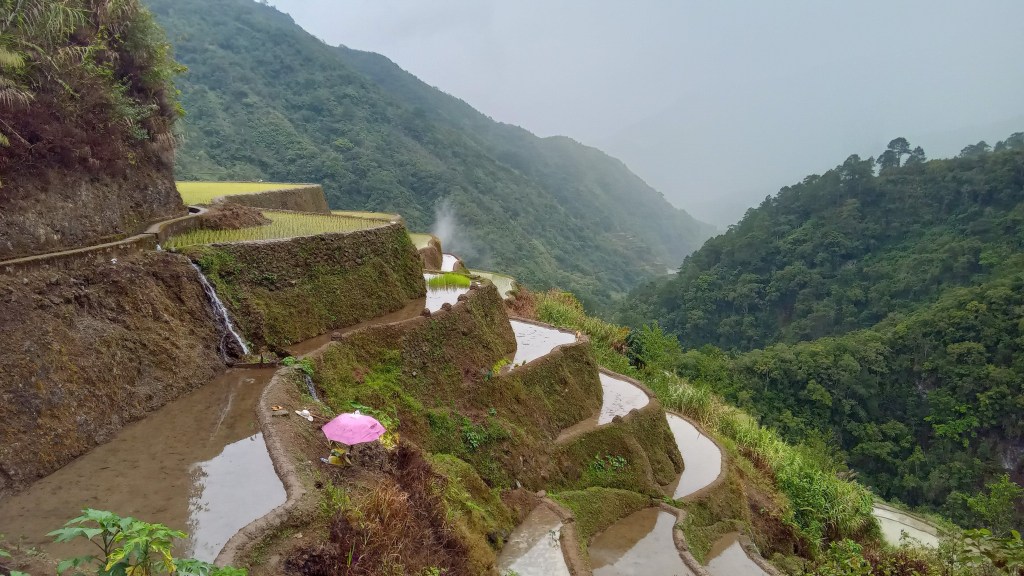
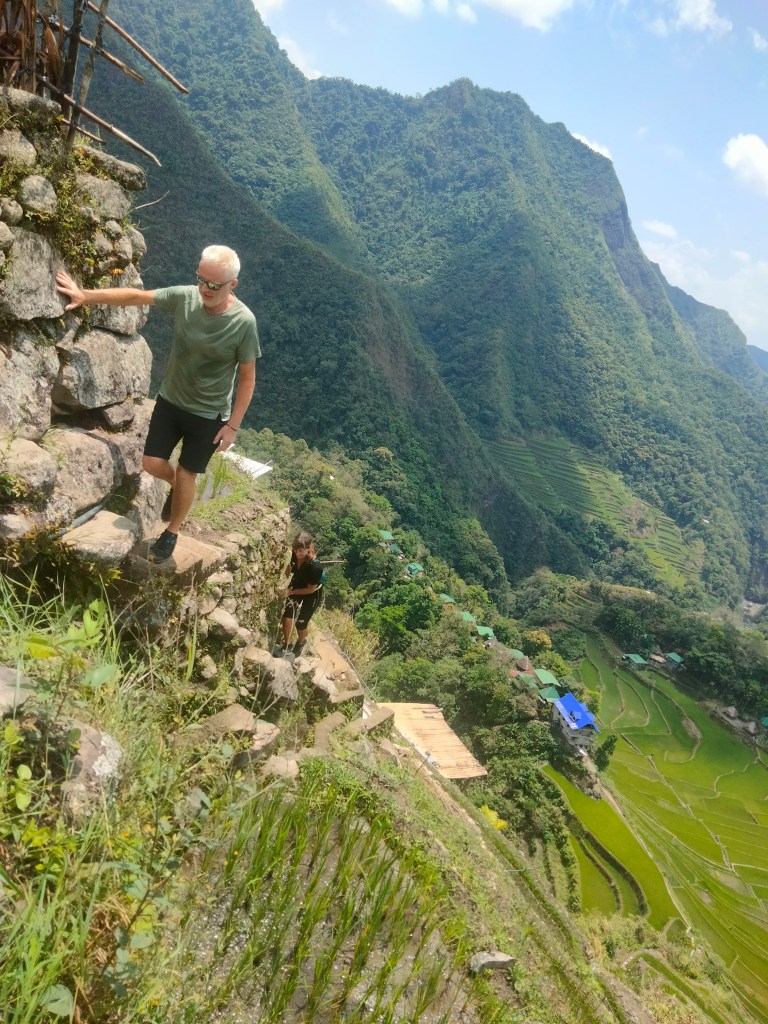
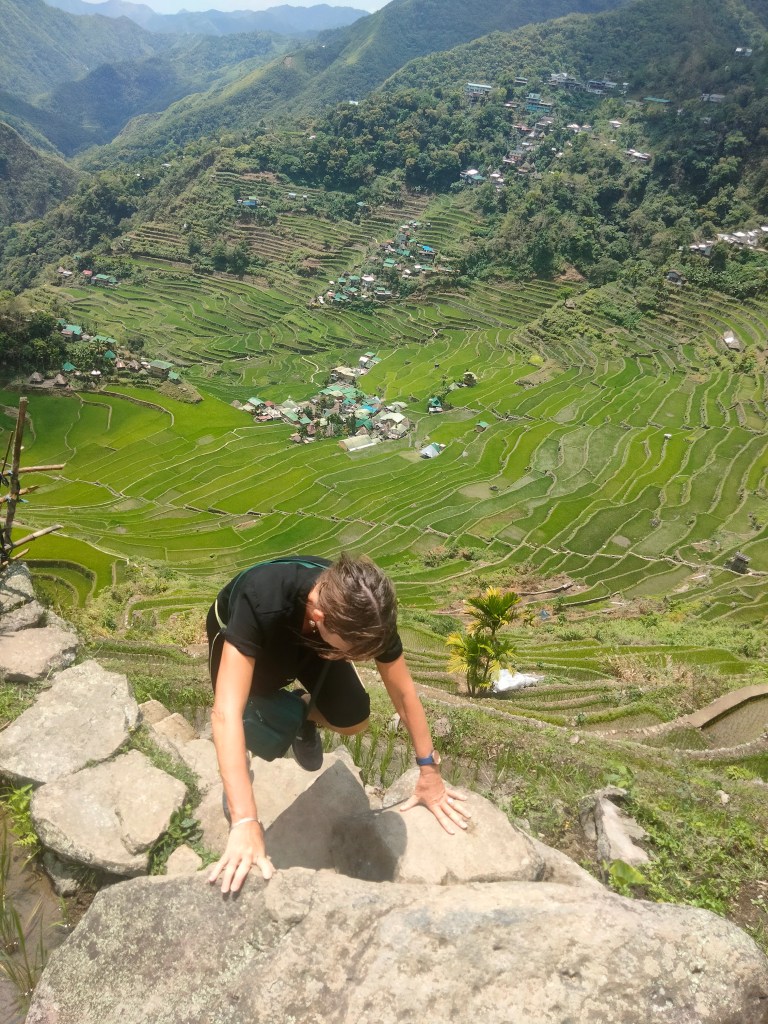
Banaue was a stunning area of natural beauty with deep valleys, waterfalls, rivers traversed by swaying rope bridges, and of course rice terraces. Many of the terraces were two thousand years old and created by the Ifugao people with their own distinct rituals and customs. This was an area that was perfect for hiking along irrigation channels and ancient paths that hugged the contours of the mountains. A head for heights and a sense of balance were certainly an advantage. The terraces were of varying sizes and steepness, sometimes shrouded in cloud and mist, but the vividness of the green rice stalks was incredible, especially after rain as if newly scrubbed. The heavens opened most afternoons in torrential downpours, but even in the rain, it was a pleasent 22 degrees.
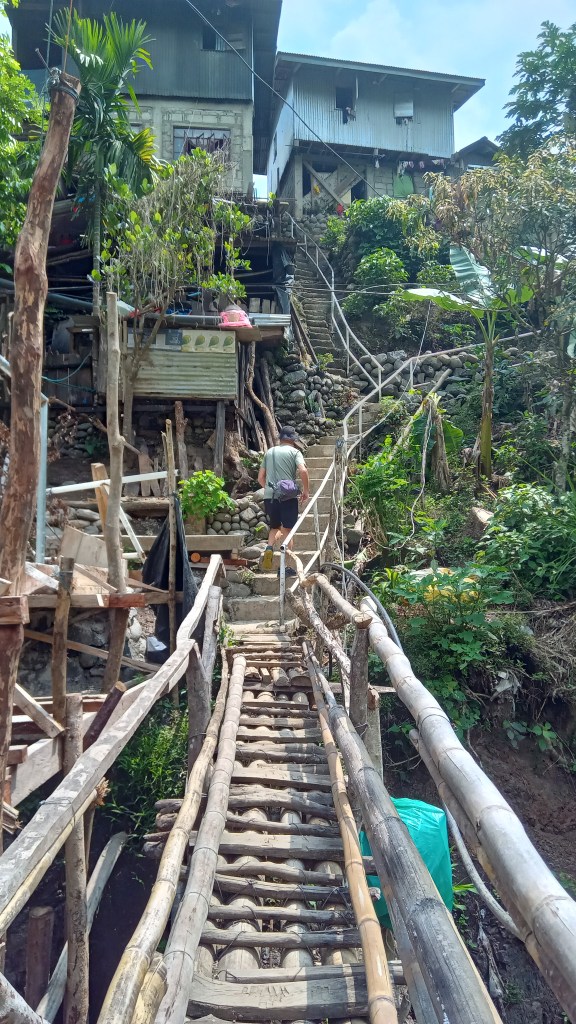
Rickety Bridges

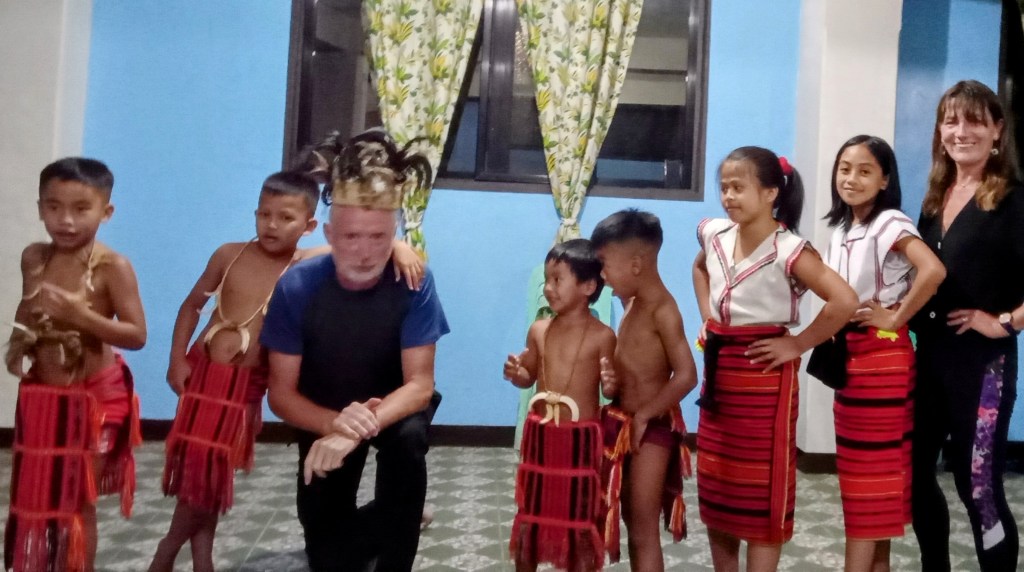
We walked for two days with our guide Feny from village to village. Feny was great company, smart and funny with a big personality. She was one of a handful of female guides. She was local from the Ifugua tribe and was a mine of information. Like most mountain people, she chewed betel nut (called momma here) non-stop, spitting great splashes of blood-like juice along the trail. We stayed for a night in a homestay in Cambula. The houses were spread over the hill in a higgledy- piggedly fashion….no planning permissions needed if it was your land or your ancestors land. The locals kids put on a show for us, singing If you’re happy and you know it . Far more enjoyable was a tribal dance involving a headdress of eagle feathers and much banging of gongs and bamboo sticks.
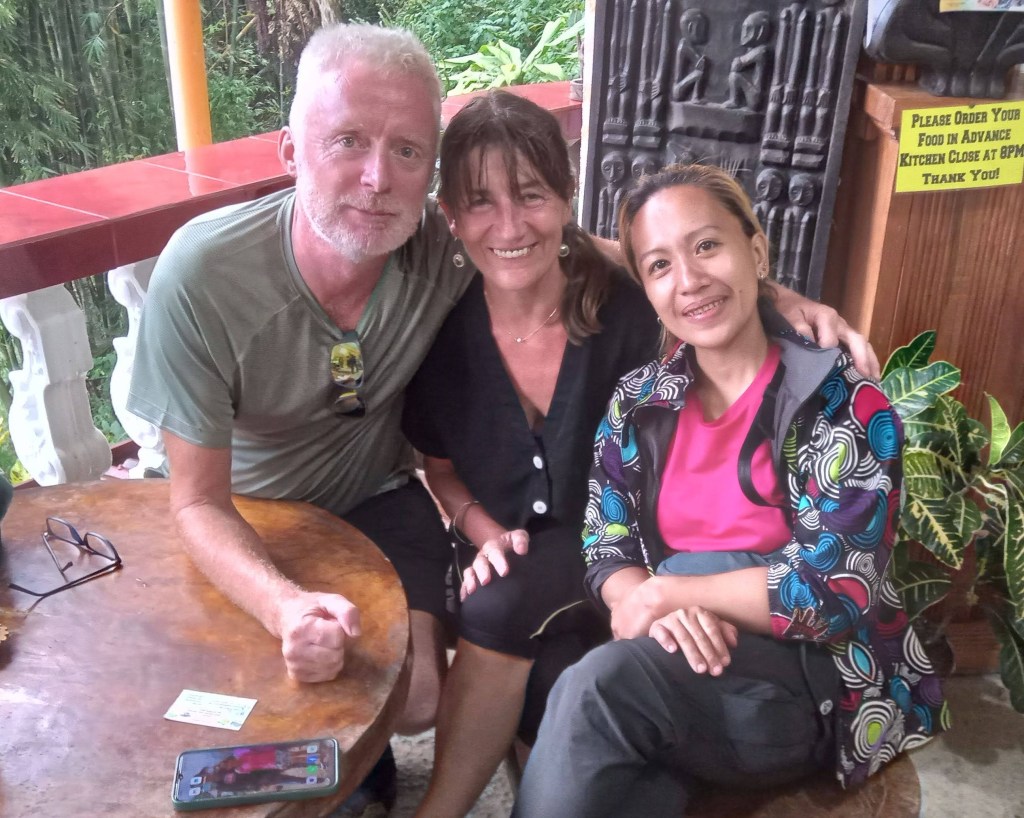
Our Super Guide, Feny
The Entertainment , Cambula


It’s hard to say how many of these children will remain in the village in the future. The children go to elementary school in the villages but then go to high school in the towns where they stay with relatives. Growing rice and maintaining the terraces is labour intensive and incredibly hard work -a long, back-breaking process. The number of older people bent double was alarming and sad. The way of life of the Ifugao People is still ruled by ritual and ceremony. The colours of the traditional clothes denote your caste and how many rice terraces you have. The tribal priests play a big role in life and death. The suitability of a marriage partner may be decided by the examination of the bile of a dead chicken. If the bile is ‘bad’, the union will not be blessed, but Feny said that you could always kill another chicken until you got the ‘right’ result. The celebration of an engagement was also a big event. The bridegroom’s family must bring a pig to the girl’s’ family home. The pig is slaughtered there, and all the neighbours who are present are given a hunk of raw meat.
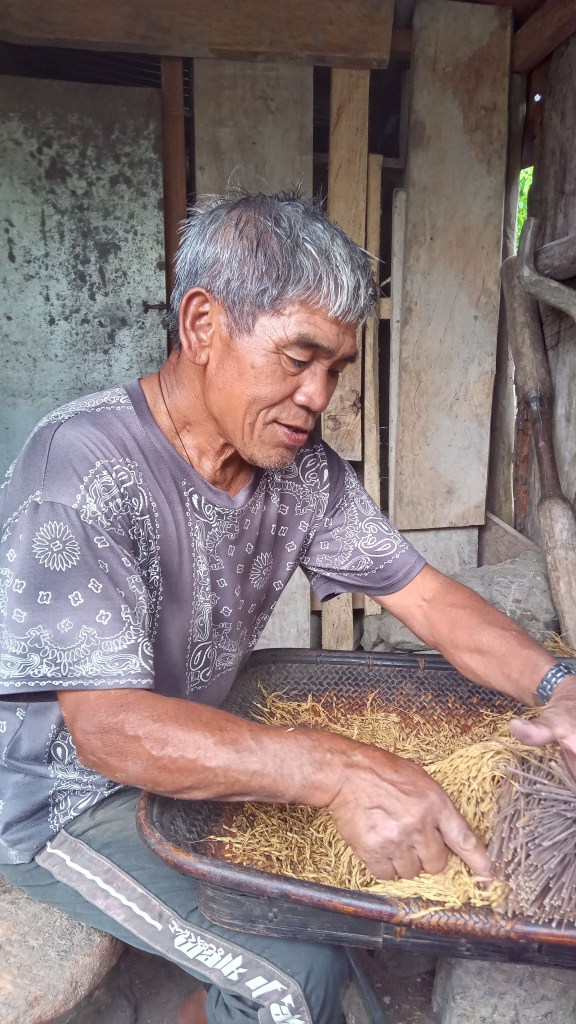
In this part of the Philipines, your dead may be closer than you think, they might be in the house with you. The bodies of the dead are exhumed after two years, the bones are cleaned in a ritual ceremony and kept in a cool place in the house. They are periodically brought out, particularly in times of illness and crisis when there is a ‘showing of the bones’.
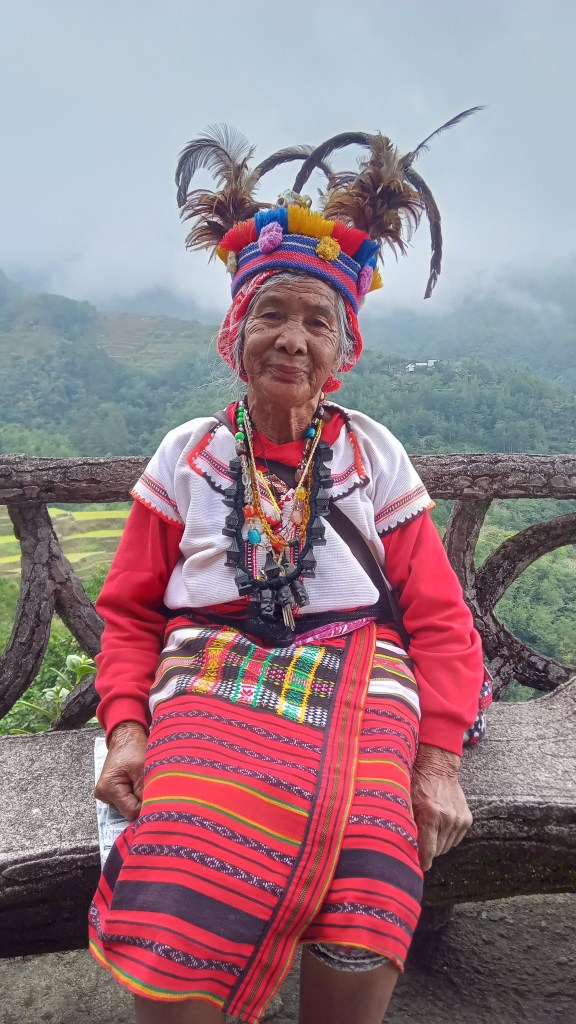
Traditional Dress


But things are changing. Most people carry the outside world in their pockets with mobile phones. One damp afternoon in the middle of nowhere, the sound of Have I told you lately that I love you (the old version by Jim Reeves) reverberated around the terraces from a ghetto blaster, covered with a white plastic sack. A man nearby repaired walls and chewed momma. Both young and old love country music in the hills.

Back in Banaue, the most memorable sound was the heart-rending squealing of pigs , all legs bound with rope, who were being butchered on the street for the harvest festival that was going on. Food here is real, the slaughter of animals is up close and personal, meat isn’t wrapped in plastic on supermarket shelves.


Our next stop is Sagada, another mountain town, famous for the coffins hanging in the surrounding mountains . Hope you can join us there.
Until then….thanks for reading.
Philippines – Mountains of Rice

Philippines- The Lost Week

There’s a reason why some places are so popular. The Philippines is so astonishingly beautiful that we had almost become jaded to beauty, but our first glimpse of the Bacuit Archipelago still managed to take our breath away. We were squashed in a little white van, whose speedometer didn’t work and the driver was cautious on the hills when we saw a dreamy landscape of islands spread before us through the rain splattered, dirt splotched windscreen. It was just a tantalising glimpse through a break in the trees. It reminded me of island-studded Clew Bay, another dreamy landscape, when viewed from the top of Crough Patrick on a mist-shrouded day.

El Nido Town

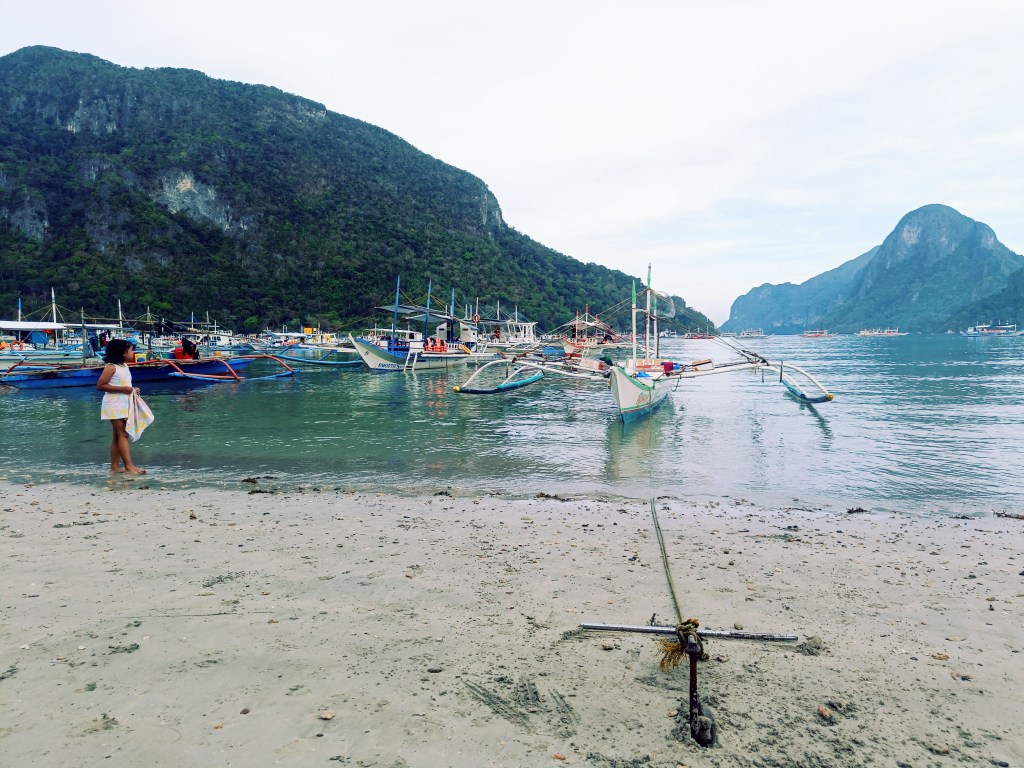
El Nido, the main town for trips around the islands, was everything that people had said – busy with people, traffic and incredibly noisy. Houses, restaurants and bars were built almost directly on the water and obscured all views of the beach from the crowded streets. But it was backed by hulking limestone cliffs, iron grey except where trees and shrubs had taken root on the bare rock. You just have to admire the tenacity of trees to survive and expand. El Nido, which is Spanish for ‘nest’, got its name from the little birds – swifelets- who build their edible nests made from saliva in the limestone karsts.

El Nido Town

When we walked from the street through a narrow passageway (one person wide), there were a hundred tour boats bobbing in the shallow water and hundreds of tiny birds flying overhead, ducking, diving and soaring over the surface of the water. The islands were a constant presence from the waterfront, towering limestone rocks casting shadows in the  jade water, the distant ones shrouded in a blue haze. Splashes of green on the islands  where trees were growing out of the bare rock on them without any obvious soil.

Practically everyone who comes to El Nido, does a tour of the islands. Most tours cost between €20 and €30 for a full day including a sumptuous lunch of seafood, grilled fish, chicken, noodles, rice, salads and fruit. Tourism here was a conveyer belt – we were hustled from our accommodation to the beach where hundreds of tourists were being directed to rent snorkelling gear and then shepherded onto the bobbing boats. Organised chaos …..a scene repeated every morning with a fresh batch of tourists like Groundhog Day. We were separated from our group and sent to another boat because our designated boat was overcrowded. So we were surrounded by Filipinos in holiday mode, who were from the south of Palawan and were on a work outing, courtesy of their employer. Three cooks toiled away at the back of at the boat all morning cooking our lunch on charcoal coals, sweat and heat but delicious smells.  As all  the tour boats left at 9 am and as they basically followed the same route, it was busy of some of the sights, like the Big Lagoon where we kayaked by towering limestone cliffs, the Hidden Beach (not so hidden anymore). The variety of fish and coral was stunning but there were jellyfish floating there too- not the dangerous kind but enough to pack a  mighty tingle –  Caoimhin and I can testify to that as both of us got stung.

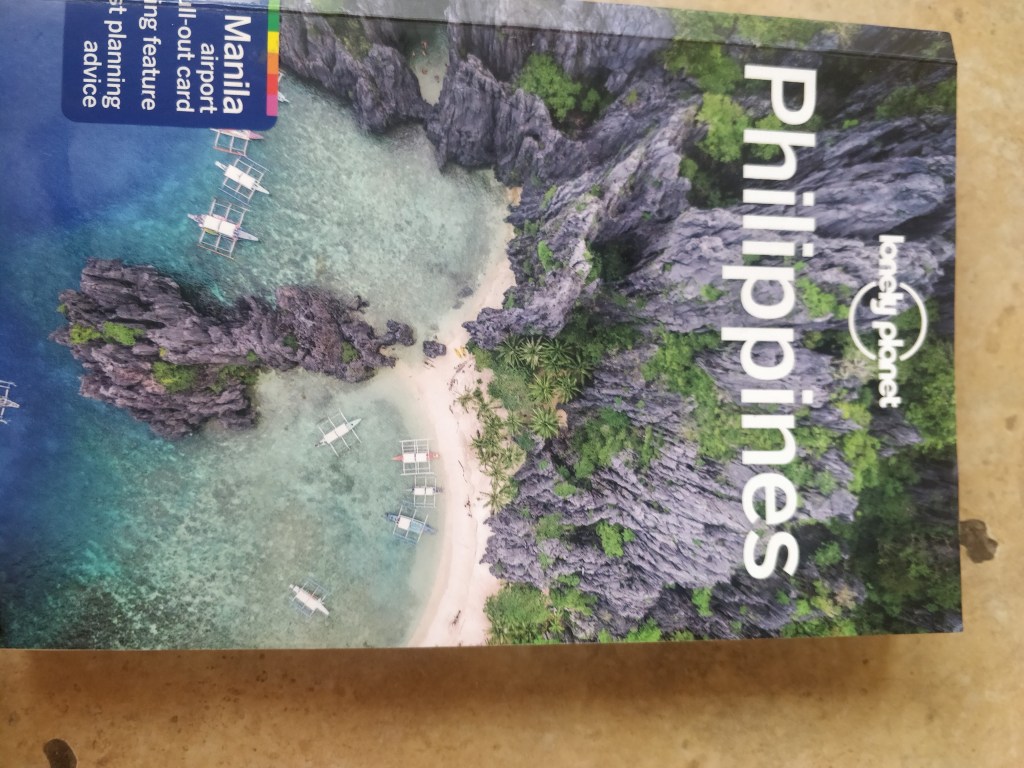
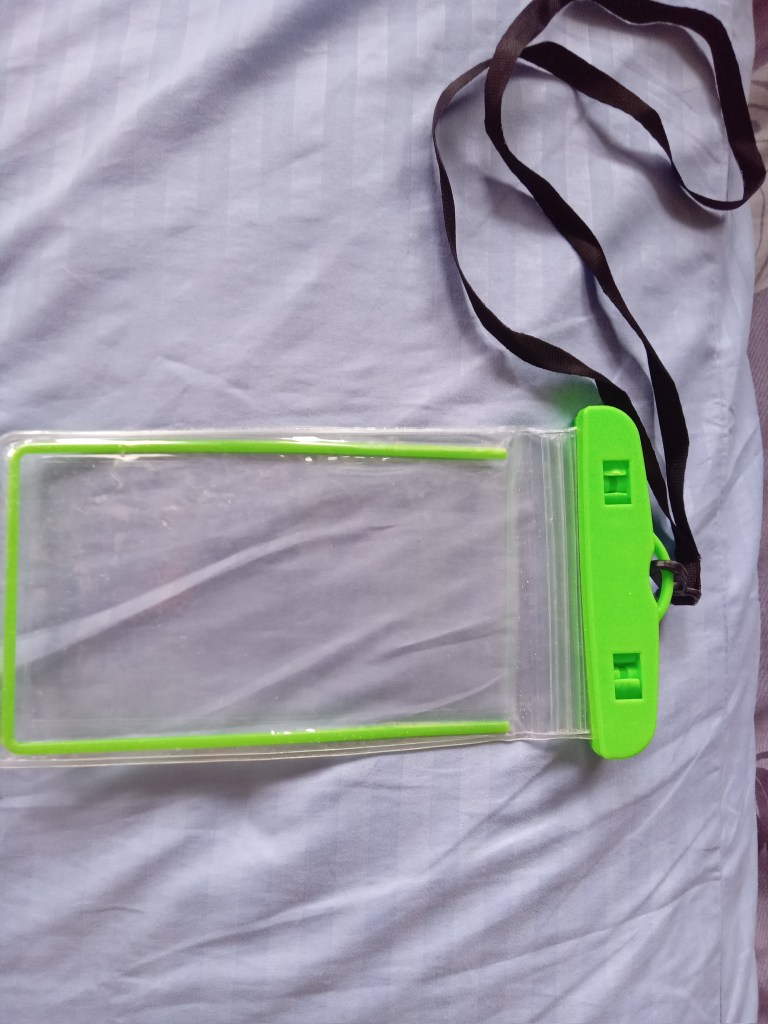
But then the unthinkable happened- both Caoimhin and I got seawater in our phones. It was the last stop in the Secret Beach and Hidden Lagoon – one of the most iconic images in the Philippines and the place that is on the cover of the Lonely Planet Guidebook.  We waded ashore in waist-to-chest deep water and had to climb through a hole in the rock into a ‘hidden’ lagoon,  We brought our phones from the boat in clear plastic waterproof pouches but we had to take them out of the pouches to take photos. Caoimhin was really enthusiastic  about the fabulous photos he was taking. Anyway some water got into the pouches – we put the phones back into the pouches and although I realised almost immediately……it looked like it was too late. The same thing happened to a French guy in the place where we are staying and several other people along the way.

A Scenic Spot for phone immersion 😃

When we went to buy rice from a shop keeper in town who was selling several kinds, his first query was about the size of our phones. No tourist ever bought rice to cook. So the phones went into a bag of rice for three days which is the optimal time needed to dry them out thoroughly. Caoimhin had already researched recovery of a water-damaged phone(due to a phone falling into a hot pool in Albania). At this stage, we were reasonably optimistic…we would never be so unlucky to lose two phones on the same day, would we??  It would be liberating to be without phones for a few days. We would have to ask directions, look at paper maps, take mental pictures of the scenery and not look at everything through the lens of a phone camera. How refreshing!

Beware of these pouches🥲

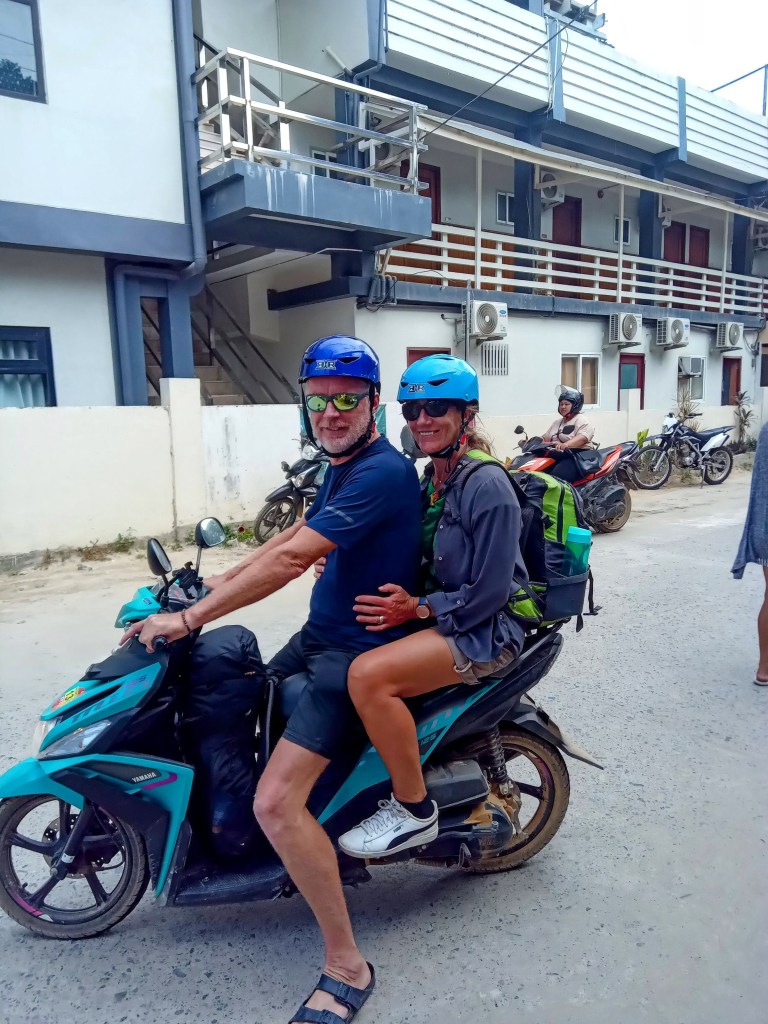
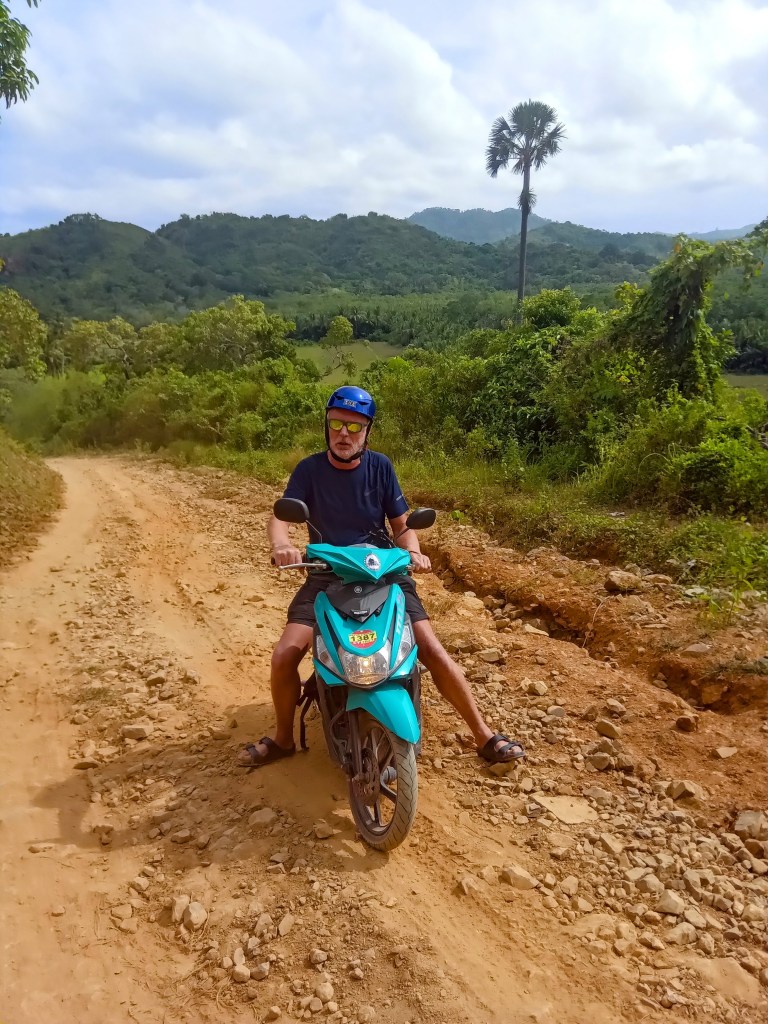
We rented motorbikes and moved south from El Nido town…..with our phones snuggled in rice….. to a place that couldn’t be more different from touristy El Nido although the views of the Bacuit Peninsula were equally stunning. Bebeladan was small dusty fishing village – the last three kilometres were on unpaved roads and probably the bumpiest, most pot-holed piece of dirt track we had been on. There were no restaurants, bars or even much electricity. It was like going back in time…people living in bamboo shacks with  thatch or corrugated roofs, earthen floors. Every second shack was a shop, selling the usual sachets of washing powder, soaps, sweets with a few veg and fruit. Solar panels provided light but there was no aircon or even fridges (really difficult especially when the weather was in the early to mid-thirties). Our accommodation -called Mountainside – was perched in the hill overlooking the village with about a hundred steps leading down. The views from our balcony were sublime – that dreamy landscape again, changing subtly with tide and light and cloud.

Time to cruise🛵🛵

There was a pet monkey chained up outside on a long leash who could reach the edge of our balcony where he begged for food as soon as he saw us. It seemed so cruel to have him chained up all the time but our landlady said that she had inherited him from her uncle. When she tried to let him go free in the forest on an island, he swam after their boat, screaming to go back with them. Our landlady, Christine, was a young woman from Cebu with a Polish boyfriend and a 4 month old baby. She cooked breakfast (fried eggs and garlic rice) for us most mornings and dinner as well (usually rice and vegetables) but her star dish was a squash stewed in coconut milk and spices. Most couples running guesthouses are European men with Filipino girlfriends. The men provide the money for the purchase of the property but it is in the girlfriends name.

🐵Feeding time🐒🐒

 We were back in the land of the rooster, crowing all day and night. We had just missed a big cock-fighting event as part of a festival in the village  by about two days – maybe the roosters left had something to crow about. We walked in the early morning in the hills outside the village where children waved to us but the houses were even more basic, ramshackle and fragile with a few chickens and usually a pig tied up outside, a couple of coconut and banana trees for shade. Cold is never a problem so an ‘airy’ house is a good thing to keep things cool but this is a land that gets a lot of rain and is lashed by typhoons for potentially six months of the year.

We took a boat tour to the islands from the village as well, just a dugout canoe, the two of us and a boatman wearing worn shorts, not many teeth and even fewer English words. But he took us to a small island called the Cathedral, a cave with soaring limestone columns and holes in the rock that let the light filter in like stained-glass windows, something majestic about it that made us talk in whispers even though as we had the place to ourselves. Our boatman kept asking ‘You want photo?’ although we kept telling him that we had no phones.  Tourists without cameras were an anomaly he couldn’t understand.

On Snake Island, the colours of the water were truly amazing, ranging from turquoise to azure to cobalt blue. The island gets its name not from the number of snakes on the island but because a shallow sandy path -walkable at low tide – curved to shore  in the shape of a snake. Truly Instagram-able, if you had a camera,  from the high vantage point on the island.

We delayed checking the phones, living in that zone of hope as long as possible. We tried mine first and although it made some faint buzzing, it was death throes and it refused to charge. Caoimhin’s was next and when his took some charge, hope soared  but then was dashed again when it refused to start. We tried the following day again….and the next day….the liberation of not having phones had worn off. It’s incredible how reliant on the phones we have become, especially when travelling – we use them for booking accommodation, google maps so that we know where we are, transferring money and keeping track of our finances(we can’t even check what’s in our Revolut and N26 accounts),WhatsApp to keep in contact, writing the blog……but they are  also a camera, a torchlight, a calculator. Caoimhin reads on the Kindle app on the phone (I have my Kindle with me). He had also downloaded yoga workouts and Spanish lessons on his phone which were inaccessible without it.

We had the laptop at least –  which we hadn’t been using much because the Wi-Fi in most places wasn’t strong enough to connect. Ironically, the place we are staying in the village had reasonable Wi-Fi but it didn’t have any sockets so we couldn’t charge the laptop….not much electricity in the village. One enterprising couple had extra solar panels on their roof that powered a whole bank of sockets.  In a shack similar to most of the others, a woman, with a kind face and greying hair, watched over a whole bank of phones and laptops as they charged for a small fee.

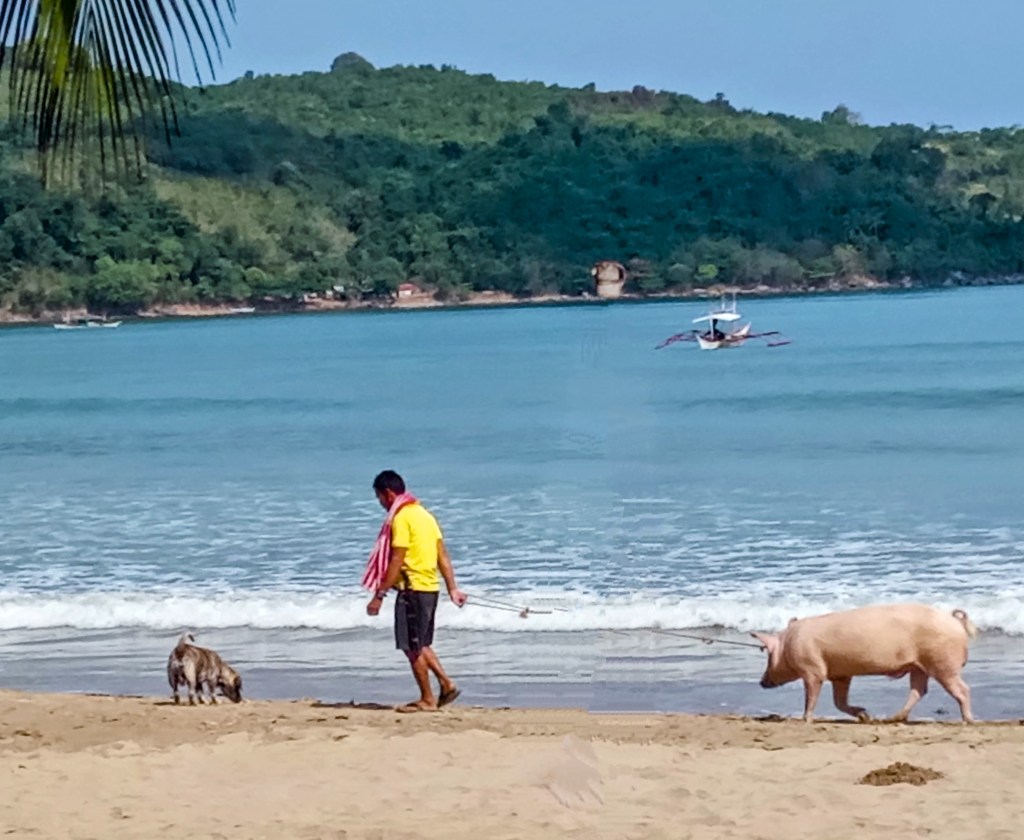
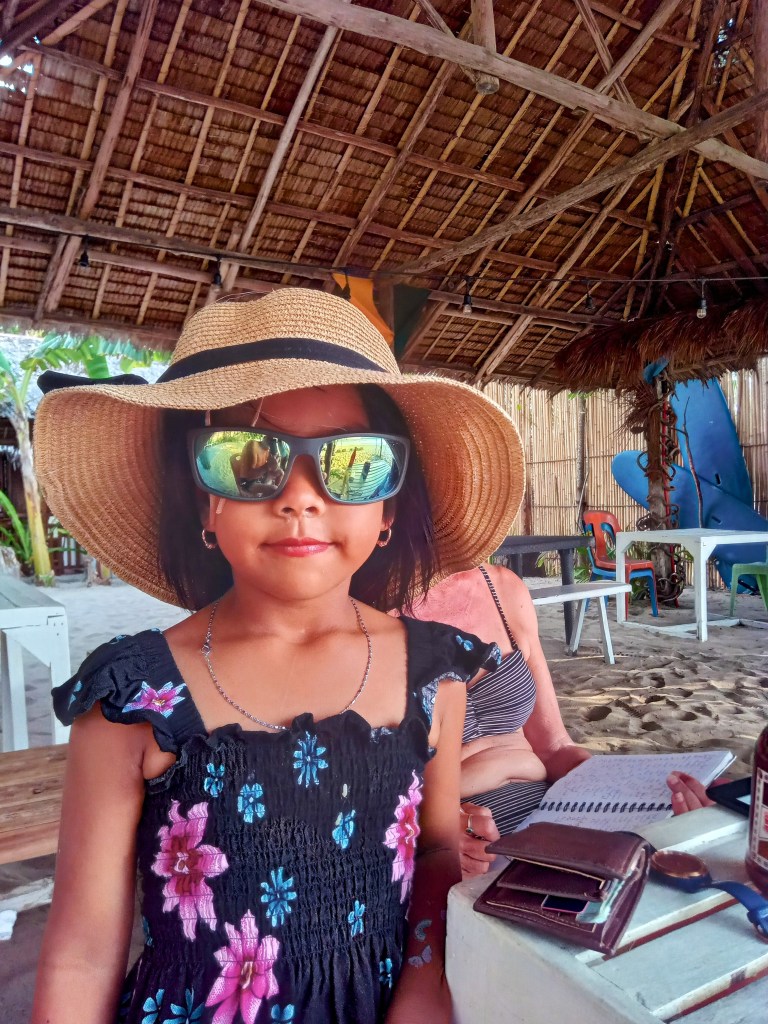
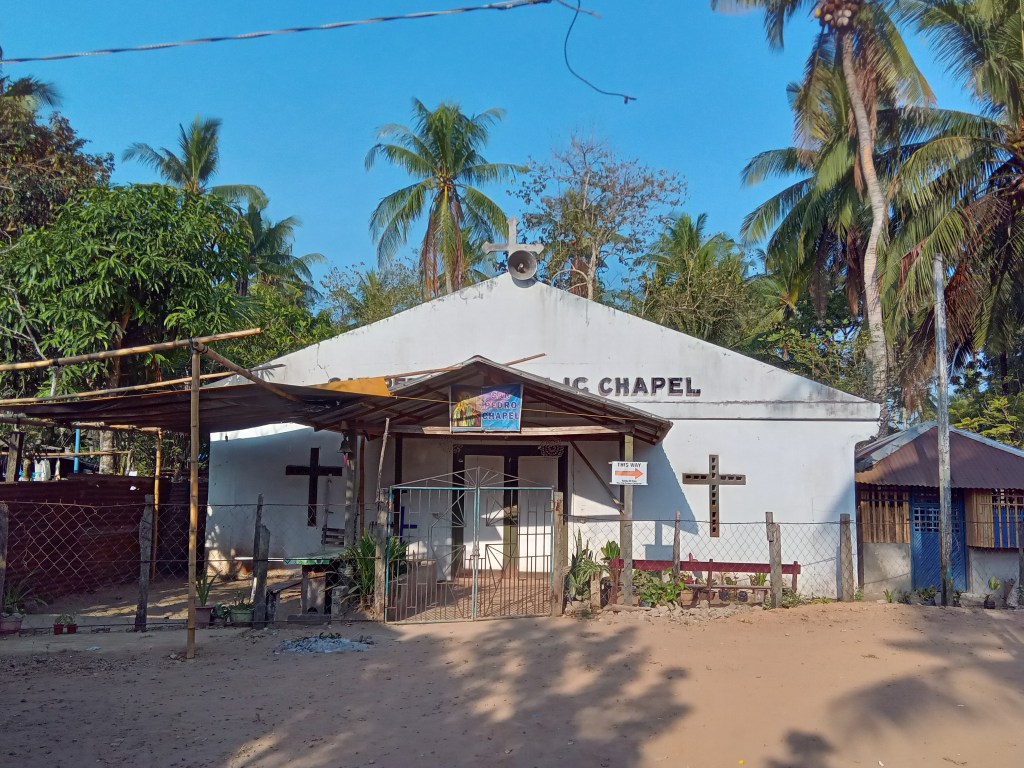
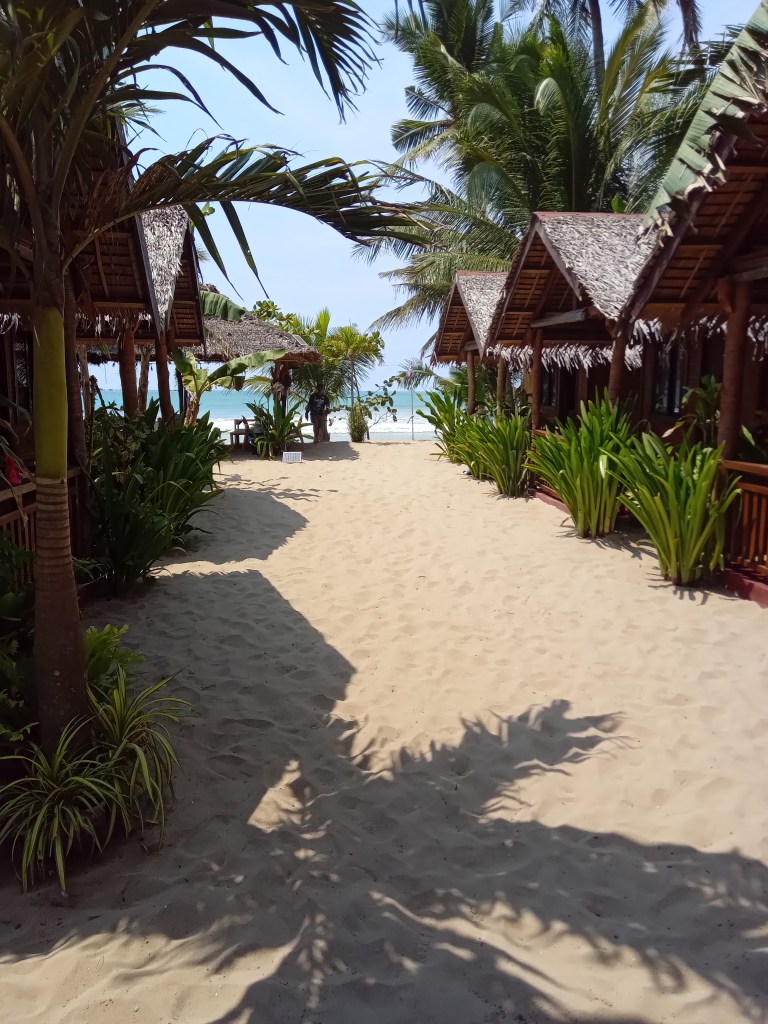
We  tried one more last ditch effort on the phones. We returned To El Nido town on the motorbike and called in to one of the many phone repair shops. If anyone could fix it, there boys could with their vast experience of submerged phones but after a half an hour of cleaning and scraping, they shook their heads. Despite the Easter season, there was no resurrection for our phones. So we bought the best cheapest phones we could find to tide us over and moved north of El Nido to Bucana to a beach-hut which was tranquil, apart from the waves that pounded all night and sounded like they might engulf the hut. It was the sort of place where people took their pigs for a morning walk on the beach and the local children tried on our sunglasses and hats. It was also the sort of place where the Wi-Fi was poor and setting up new phones was almost impossible. On Easter Sunday, we wandered up to the Chapel with the glorious singing from the young choir pulling us in that direction and shared a melted Lindt chocolate bar that I had bought in El Nido.

Beach hut, Bucana

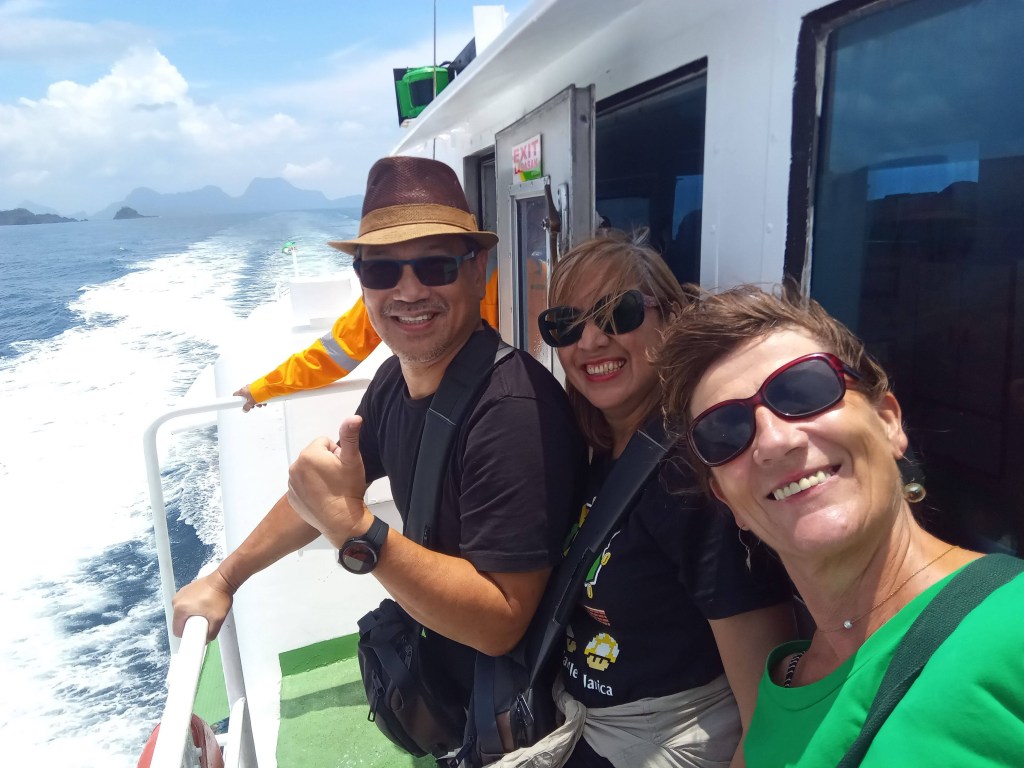
We are now in Coron on  Busuanga Island  where finally we have electricity, Wi Fi and working phones. We took a five hour ferry from El Nido town on Monday, which was fast, comfortable, and uncrowded.  We sat with a friendly Filipino couple who lived in New Zealand now. The boat captain allowed the 4 of us on deck – an exhilarating experience as there was a sheer drop with no safety barrier to get out.

Alfred and Josie on the ferry to Coron

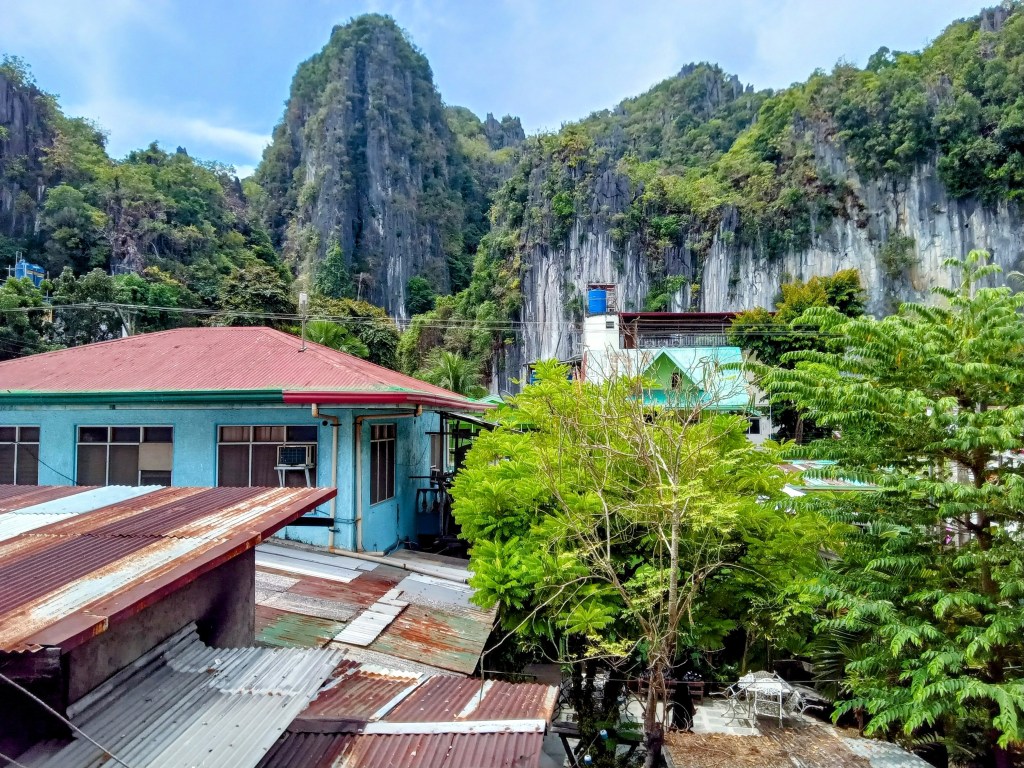
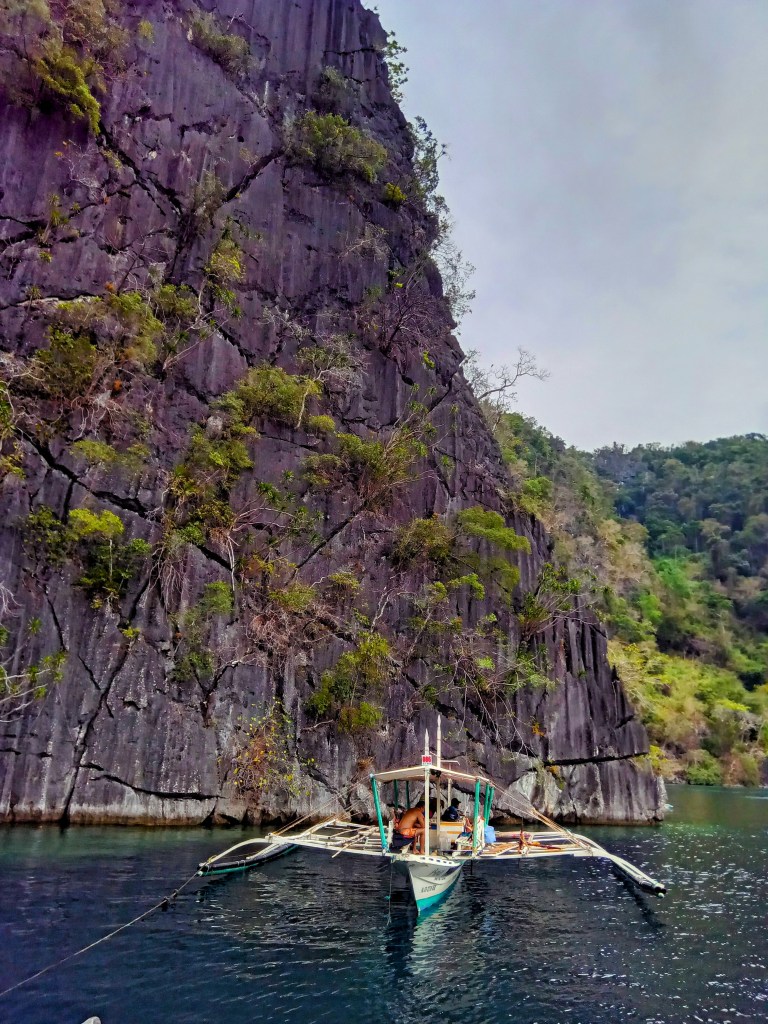
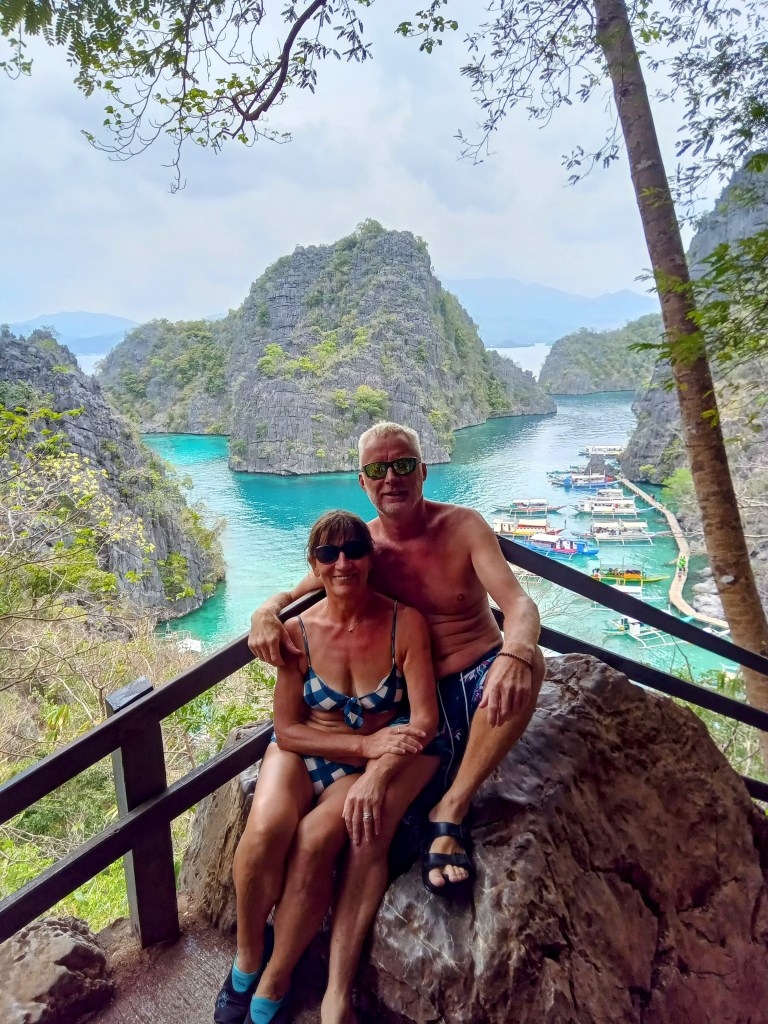
Coron town was a disappointment, noisy, polluted with no beaches. The temperatures have been creeping higher here in April, it was about 30 degrees but now mid -thirties……even the locals collapse in the shade  in the deadness of early afternoons. In Coron, we have had clammy overcast days with high humidity and the threat of thunderstorms that never arrive. If Coron town was a disappointment, the island of Coron, a 30 minute boat-ride away, was incredible with deep lakes, towering jagged cliffs, white sand beaches – a dramatic landscape that should be the movie backdrop to epic tales. Coran town was horrible, but we stayed in a tranquil oasis, Divine Castle, on a quiet street away from the mayhem of the main street. It had hot showers and cold drinking water and aircon. We got a free room upgrade and negotiated a price for two extra nights and got a room with a view of the town, the boats, and Coron Island.

View from our hotel, Coron
Coron Island
Coron Island

Our next stop is Manila. We leave tonight on a 17-hour ferry, fingers crossed that it’s better than our previous long-distance ferry experience😁

Thanks for reading…..till next time,  greetings from the sweltering tropics. Apologies – this post is longer than usual without photos to paint a thousand words 🤣

When the going gets rough…
Philippines- The Lost Week