Mexico: Highlights

Mexico is beautiful, an enormous country (about 23 times the size of Ireland) with something to enchant every visitor – palm-fringed beaches, red-sand deserts,  lush jungles, mountain ranges, coastlines along the turquoise Caribbean Sea, the blue Pacific Ocean and of course the Gulf of Mexico as well as a plethora of archaeological ruins, colourful colonial towns and world-renowned holiday resorts.  

Despite all that, the question that we were asked most often about Mexico, and especially when we said that we were hiring a car and driving around was ‘Is it safe?

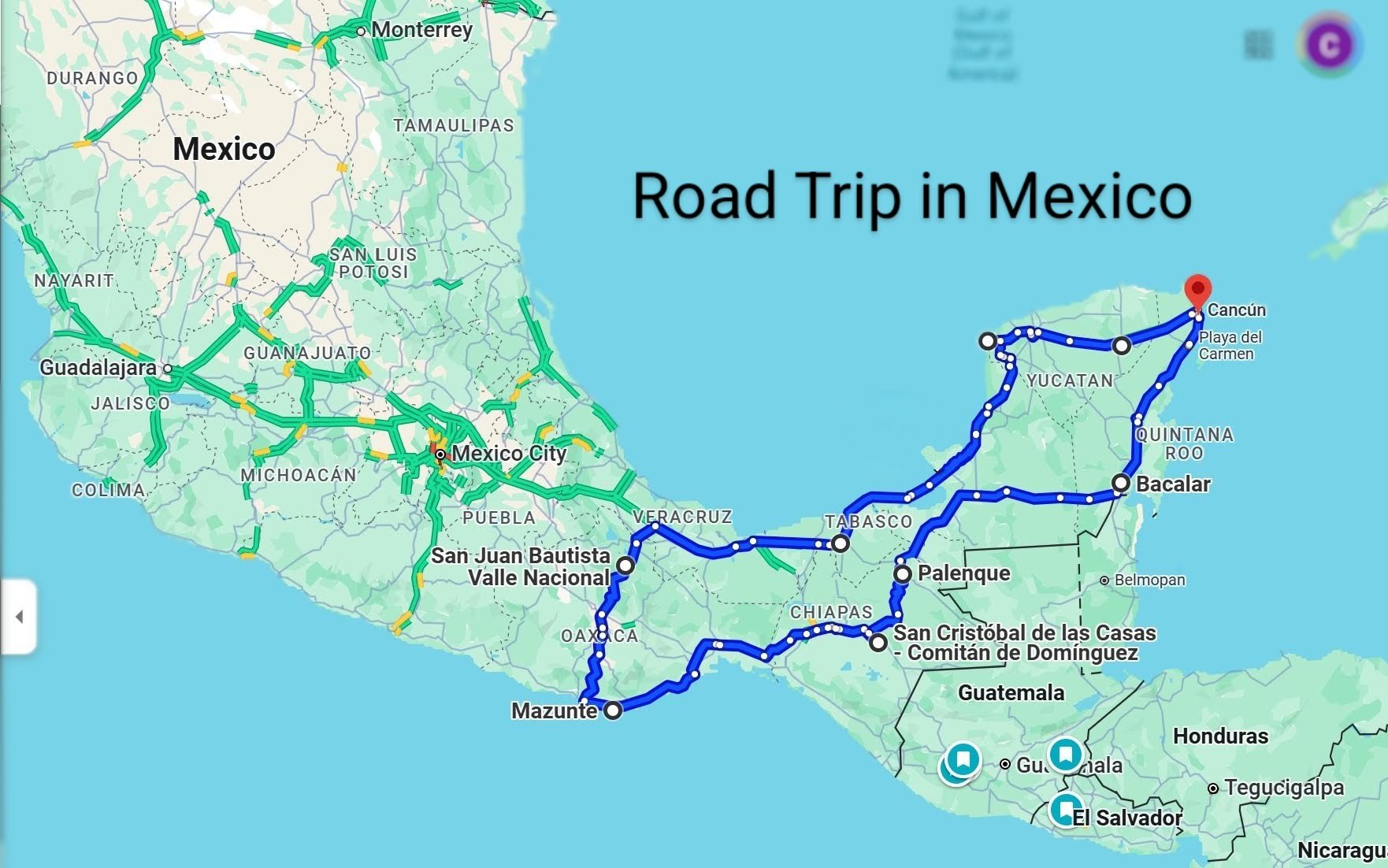
In our five weeks of meandering around the Southern part of Mexico in a big loop through the flat Yucatan Peninsula, mountainous Chiapas and Oaxaca and back along the Gulf Of Mexico to return to Cancun, we never felt unsafe. Along the way, we met three German woman in their seventies who were driving around and their only ‘trouble’ was a puncture when they hit a speed bump.  We chatted to a Dutch retired couple, who were doing a similar loop to ourselves, who told us that one late afternoon, just before dark, their car broke down on a lonely road. They had run out of petrol but they didn’t realise that at first because the petrol gauge was faulty. Locals stopped to help them, figured out what was wrong and refused to take the money as payment for their help.

Mexico was such a riot of colour, sounds and smells that we came away with a dizzying kaleidoscope of images and memories. It’s difficult to whittle down our experiences to a few highlights but here is a selection of the highs…… and lows.
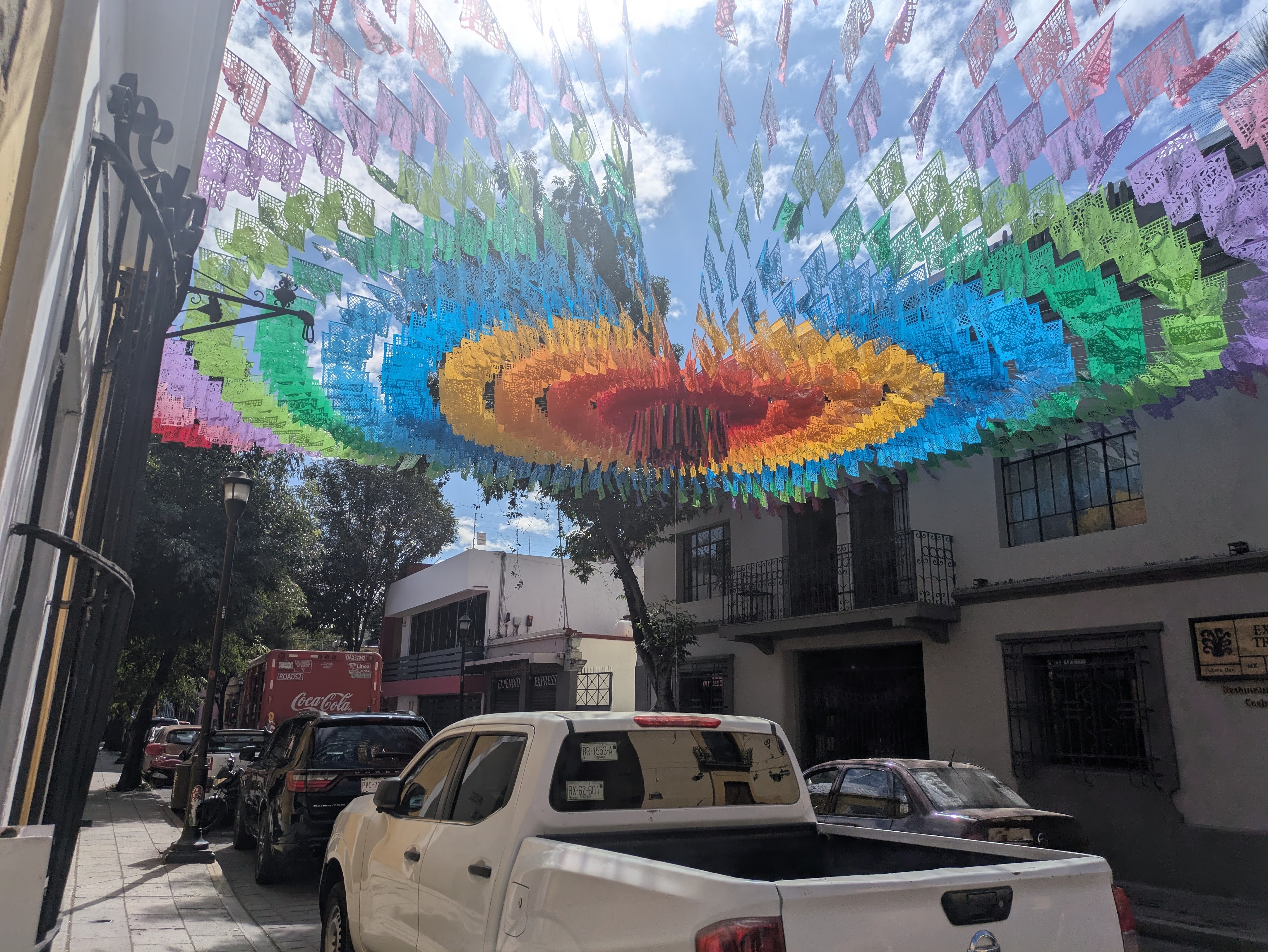
Colour in Oaxaca

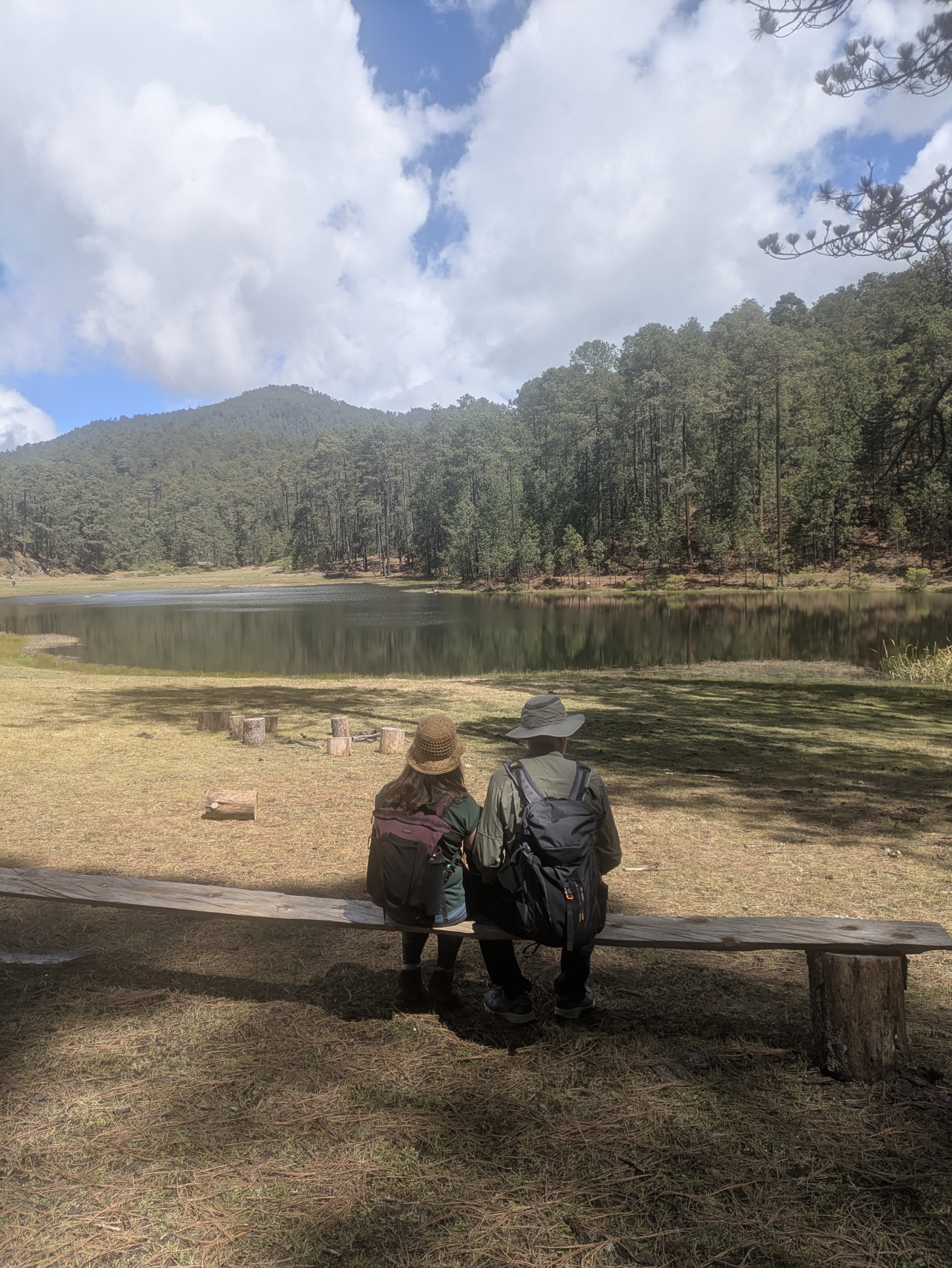
Hiking in the Villages above the Clouds. This was our stand-out experience, partly because of the stunning, high-altitude scenery in the Sierra Norte with caves, canyons and forests of fragrant pine but also because of the friendliness and enterprising nature of the Zapotec, an indigenous people who live there. The villagers came together to form a successful eco-tourism company, Expediciones Sierra Norte, which specialises in guiding visitors along the trails that link these mountain villages. It was a true lesson on the power of community. The villages, although remote, were more prosperous than many others that we have seen in Mexico.
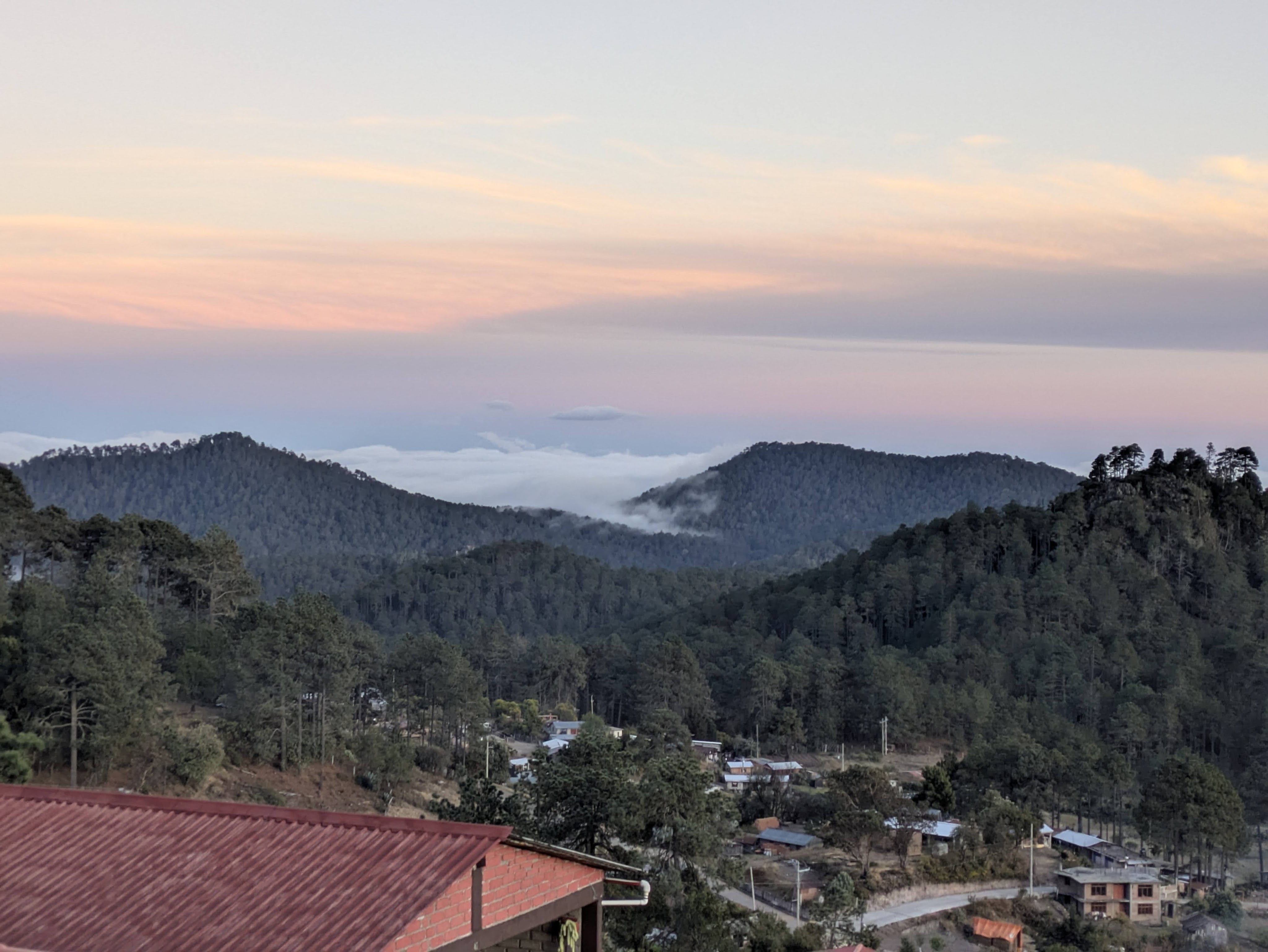
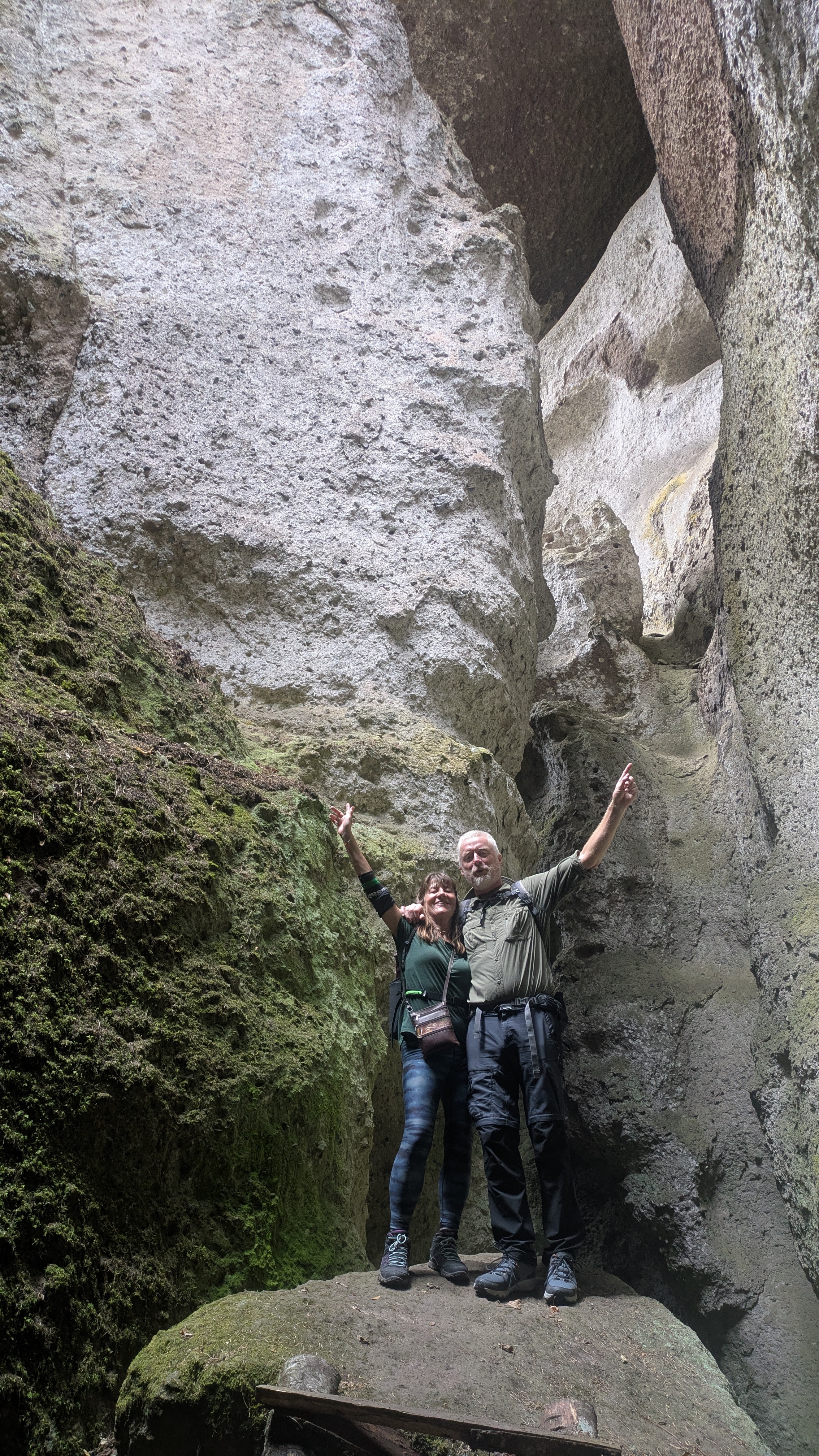
Above the Clouds, Sierra Norte, Oaxaca

Swimming in Cenotes in the Yucatan. We had never heard of cenotes until we arrived in Mexico. They are natural pools formed by the dissolving of the limestone bedrock over time to form a series of caves and sinkholes. The ancient Maya regarded them not only as a source of water but as sacred portals to the underworld. There was certainly something otherworldly about Cenote 7 Bocas (The Seven Mouths) which was our first experience of a cenote. This cenote was a series of underground pools with seven different access points. We swam from cave to cave as the first five caves were connected by tunnels. The water was the most mesmerising shades of jade and turquoise, especially when the sunshine poured in from above, creating rippling shadows on the surface of the water, the roofs of the caves and the many stalagmites and stalactites. Magical.
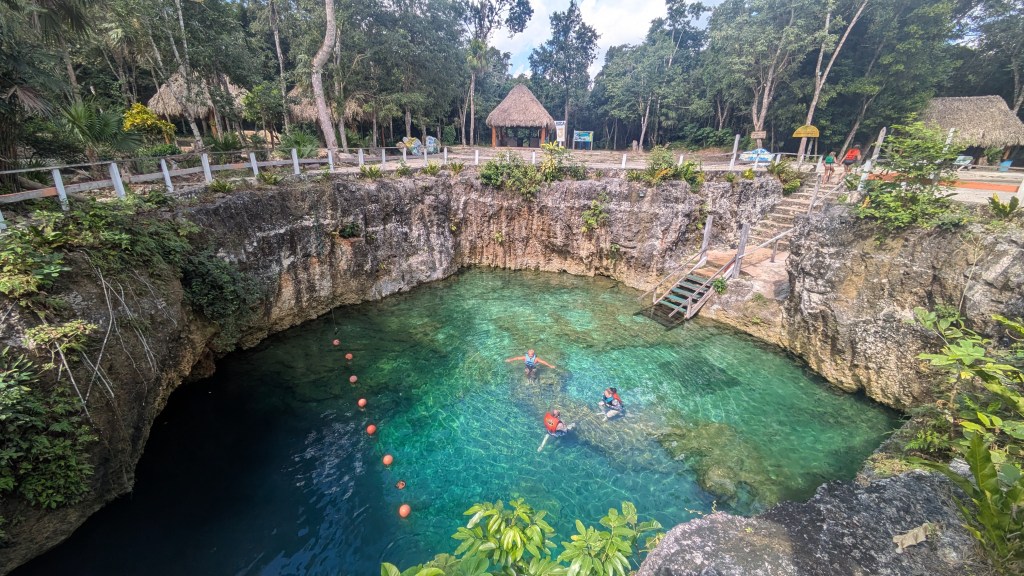
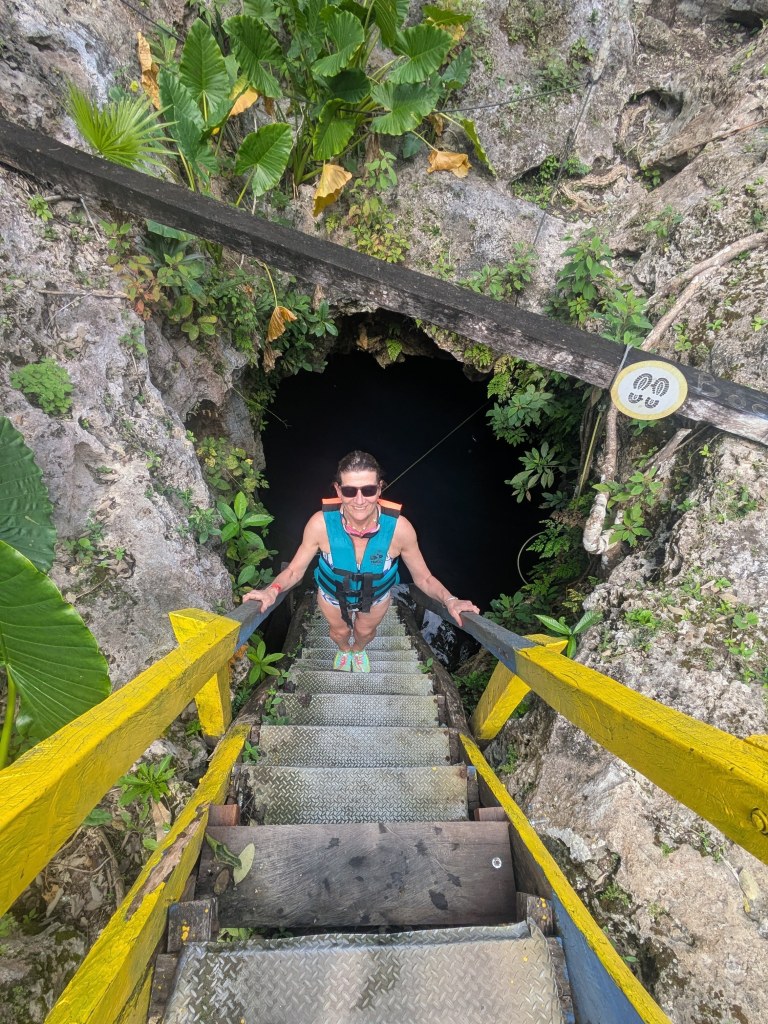
Down into the Cenote

The Warmth of the Weather in February and the first week of March in Southern Mexico was glorious. We got one heavy thunderstorm that lasted about 30 minutes in our first week but apart from that it was wall-to-wall sunshine with daytime temperature of between 30 and 35C and nighttime temperature between 22C and 29C (cooler in the mountains). These are ‘wintertime’ temperatures in Mexico which can begin to climb in April to 40C or more. The rain during the summer months usually  increases the humidity making it feel hot, sticky and uncomfortable. Flying to Mexico via Toronto, we went from cool drizzle at home to a snowy, freezing Toronto onto ‘shorts and T-shirts’ Mexico with blindingly blue skies, lush jungle and the warm turquoise waters of the Caribbean.

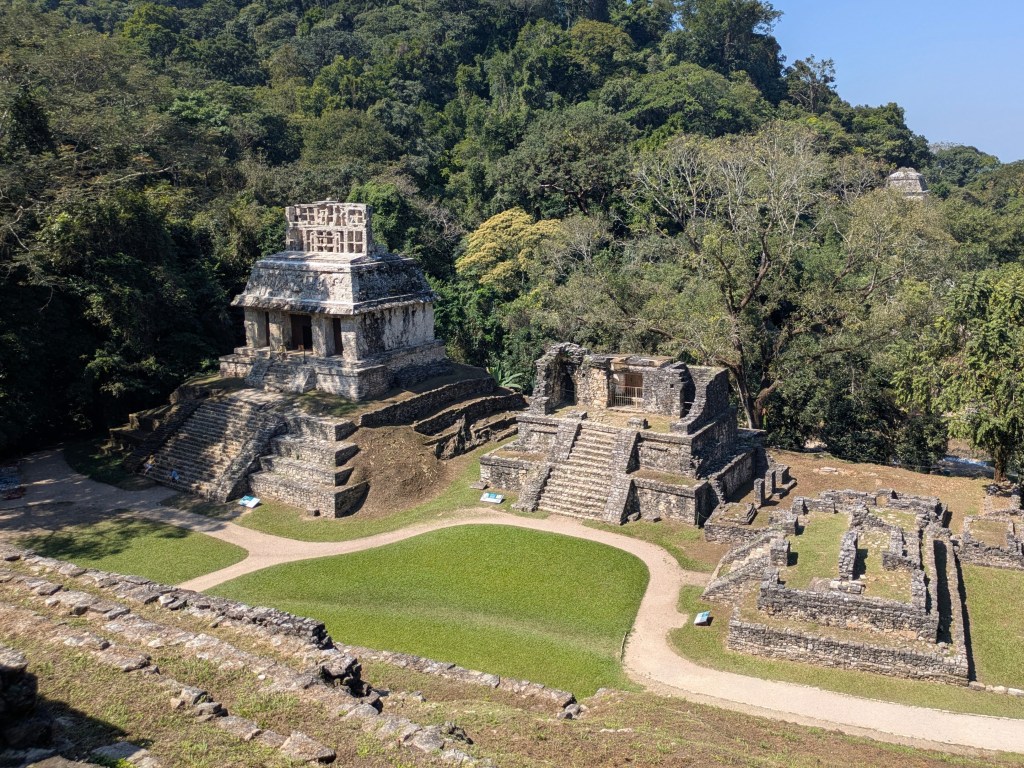
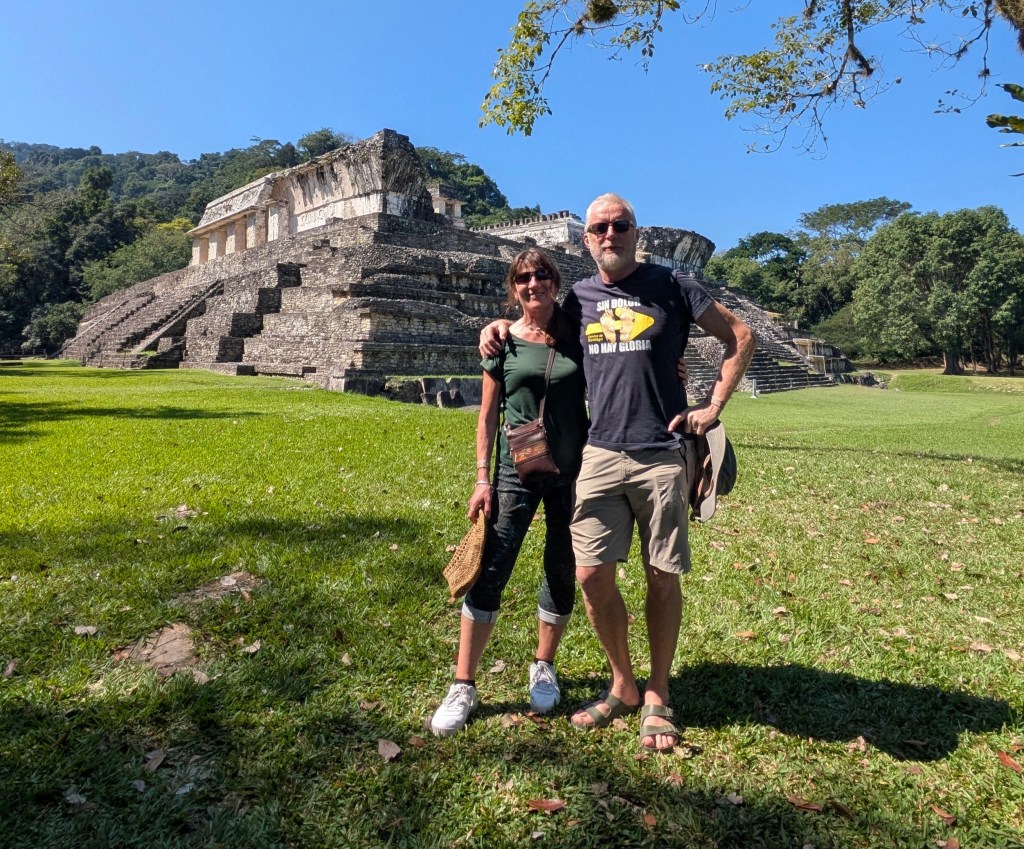
Palenque. In a country where all roads lead to ruin, at least to archaeological ruins, Palenque was our favourite. We walked around the Mayan site in sunshine listening to the howler monkeys (living up to their name in the surrounding jungle), and tried to imagine the building complexes as they would have been fifteen hundred years ago when they were painted a blood-red colour with elaborate red and blue stucco details.

In the excellent museum, we saw a replica of the sarcophagus of the Red Queen which was only discovered in 1994. The Red Queen got her name because of the bright red dust made of cinnabar (a red mineral made of mercury and sulphur) that covered her skeleton when she was discovered.  She was also buried with two servants and copious amounts of jade and pearls.  

Despite all the grandeur, the site was abandoned, possibly due to deforestation and feuds with neighbouring tribes, and soon swallowed by the jungle and concealed for centuries.
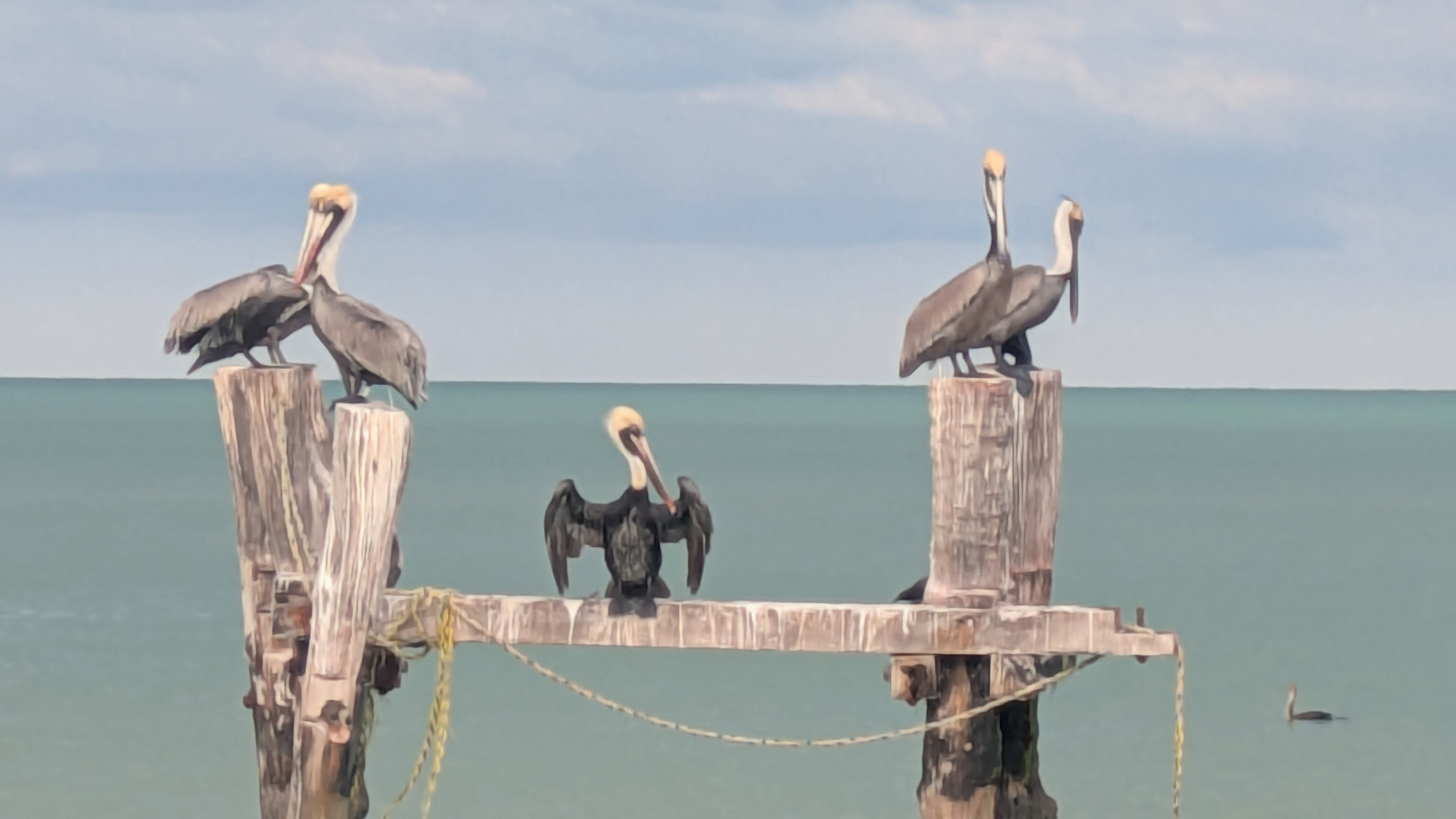
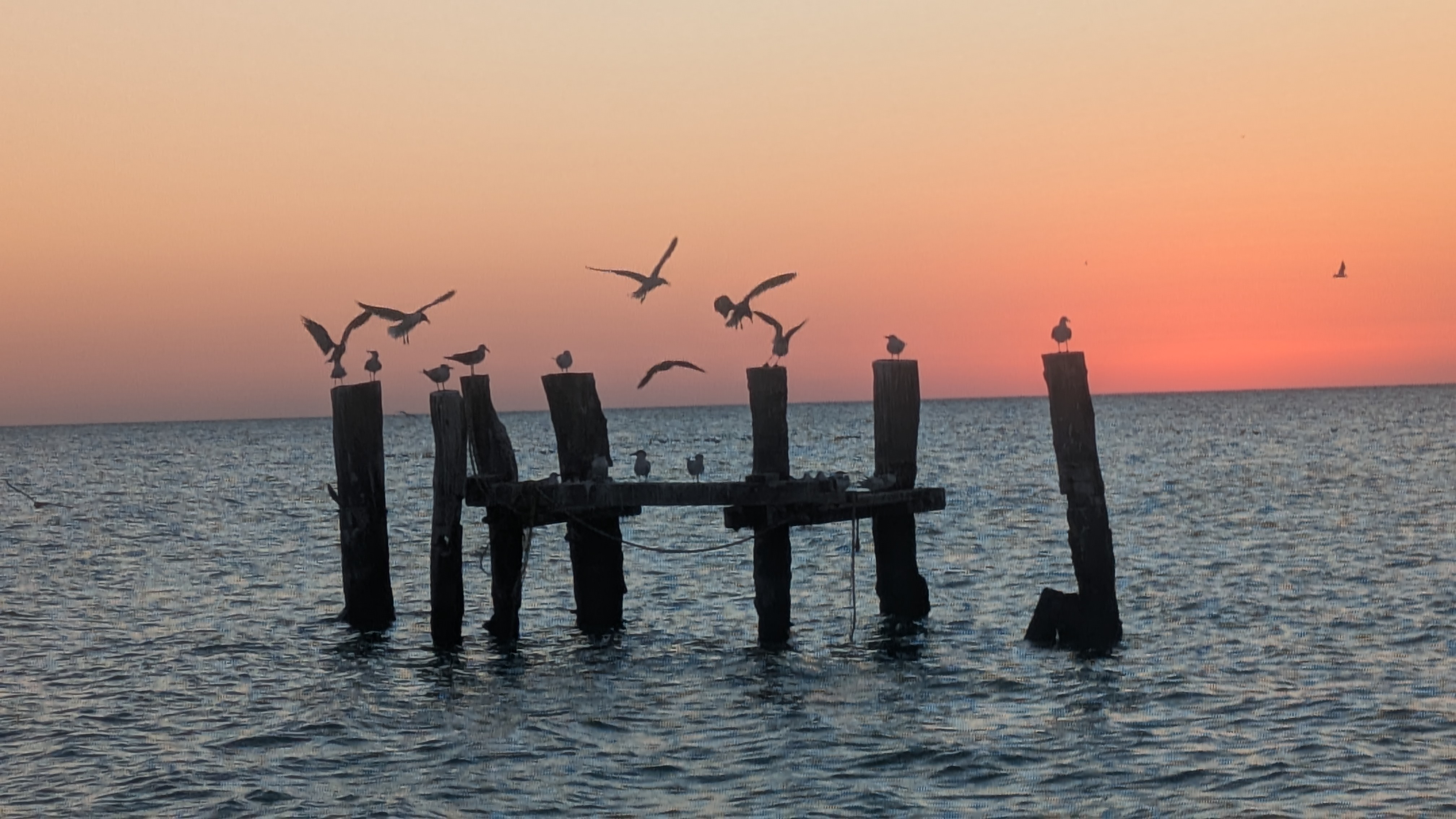
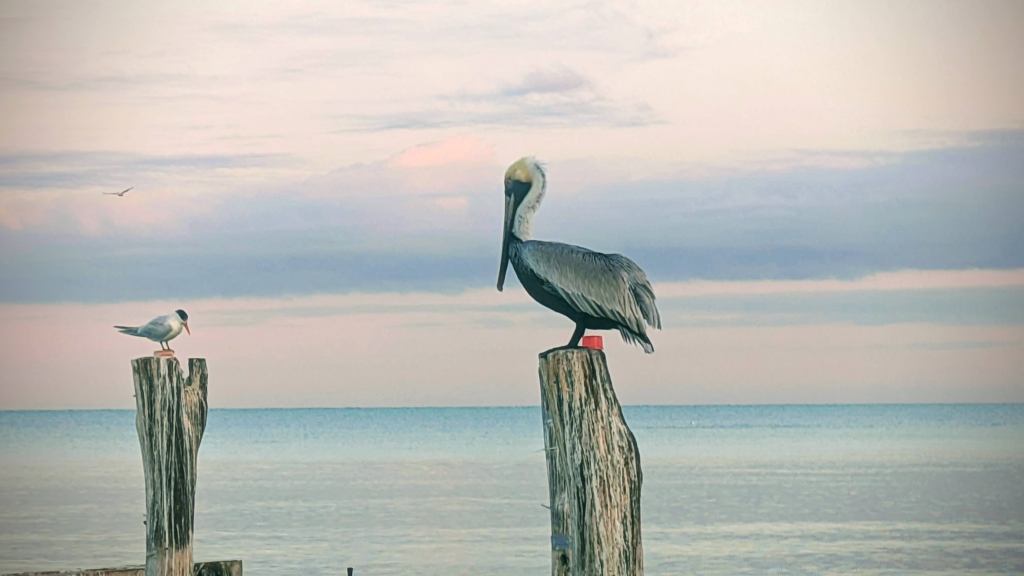
The Birds along the Gulf of Mexico. Driving along by the Gulf, we were accompanied by flocks of pelicans, ducking and diving or sometimes just sitting on the timber poles of jetties, their wings folded and their eyes never still or flying in formation at dusk.

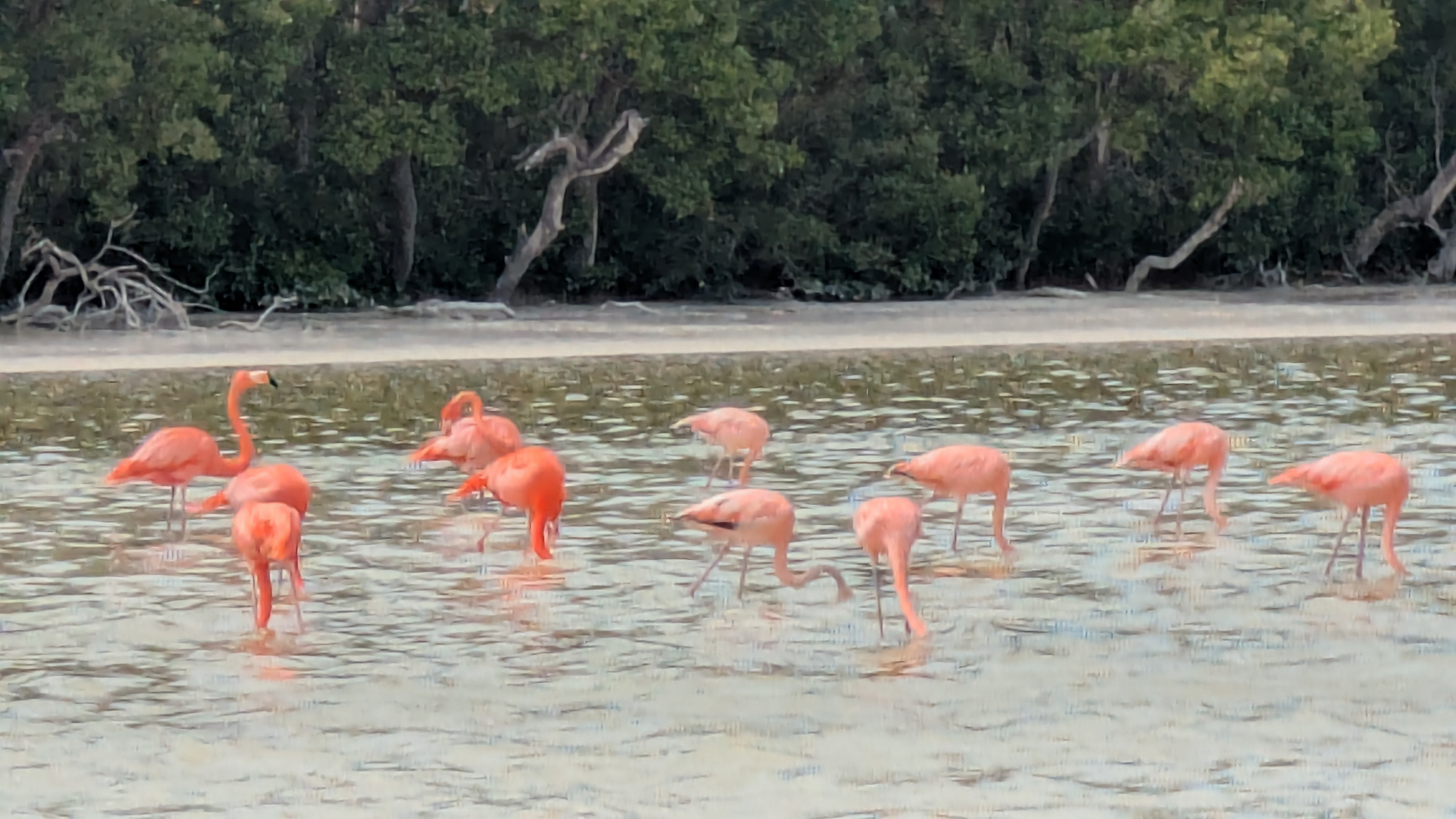
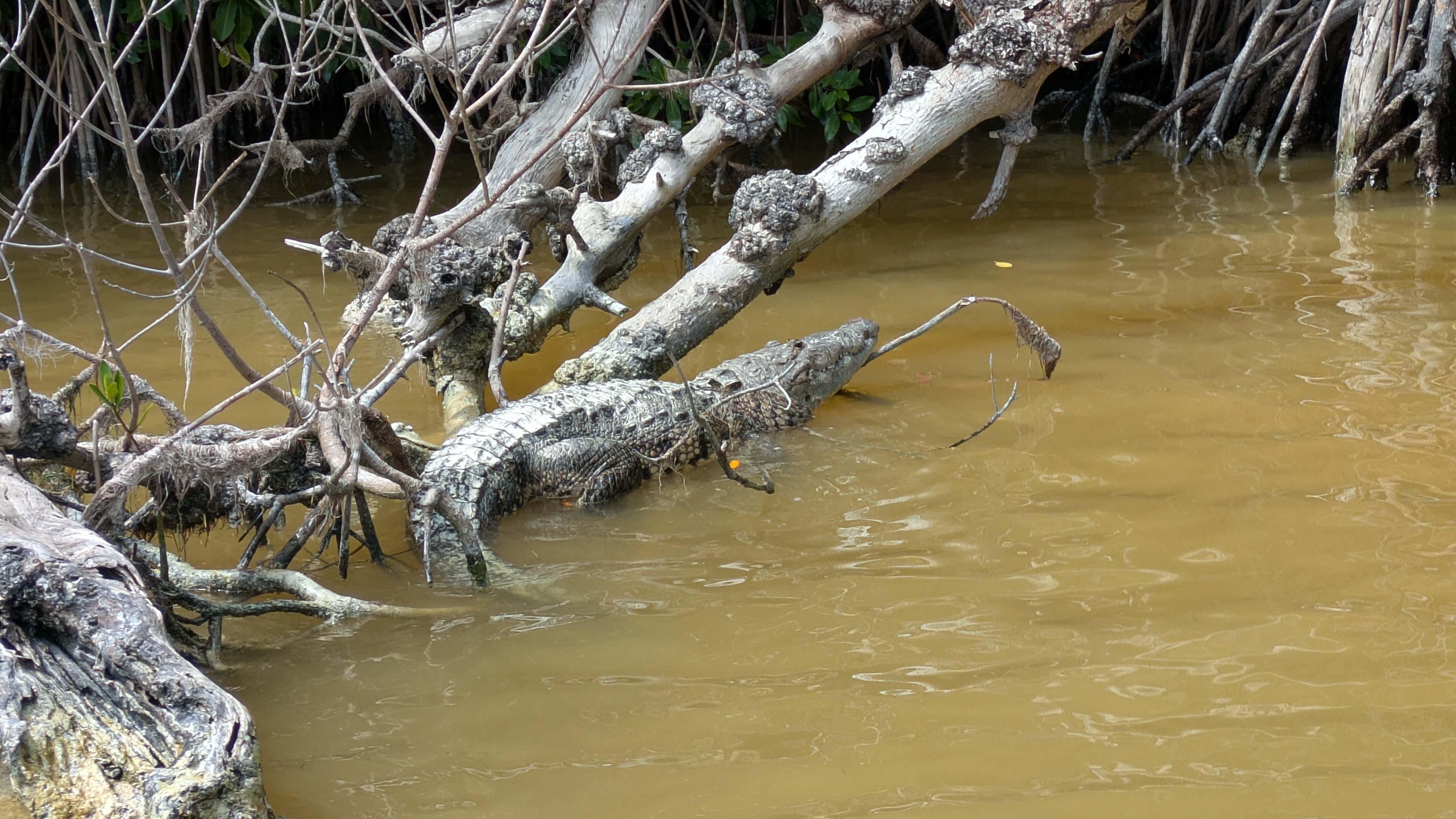
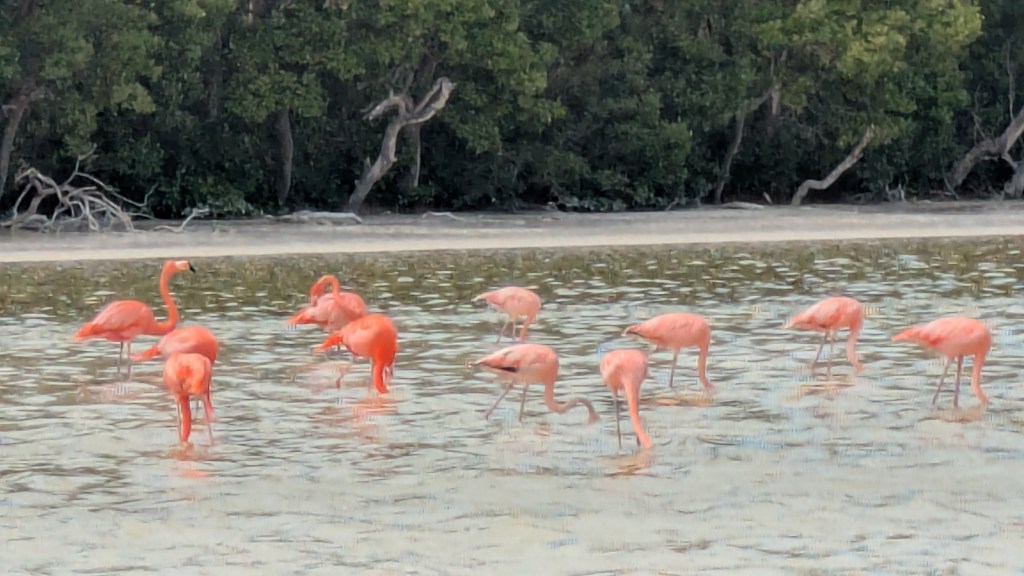
Celestun was mainly a sleepy, sunbaked fishing village, sandwiched between a large lagoon and the turquoise waters of the Gulf of Mexico but it had one great attraction.  The combination of salt water from the Gulf and fresh water from the estuary made it a perfect habitat for flamingos and waterfowl. The flamingos were beautiful blobs of colour, wadding and feeding in the shallow waters. The birds get pinker with age as their plumage turned a bright rose-orange colour from their diet of shrimp, tiny crustaceans and seeds.   Their only predators were the alligators which were plentiful,  snoozing at the water’s edge near the mangroves and doing a great imitation of  fallen logs.
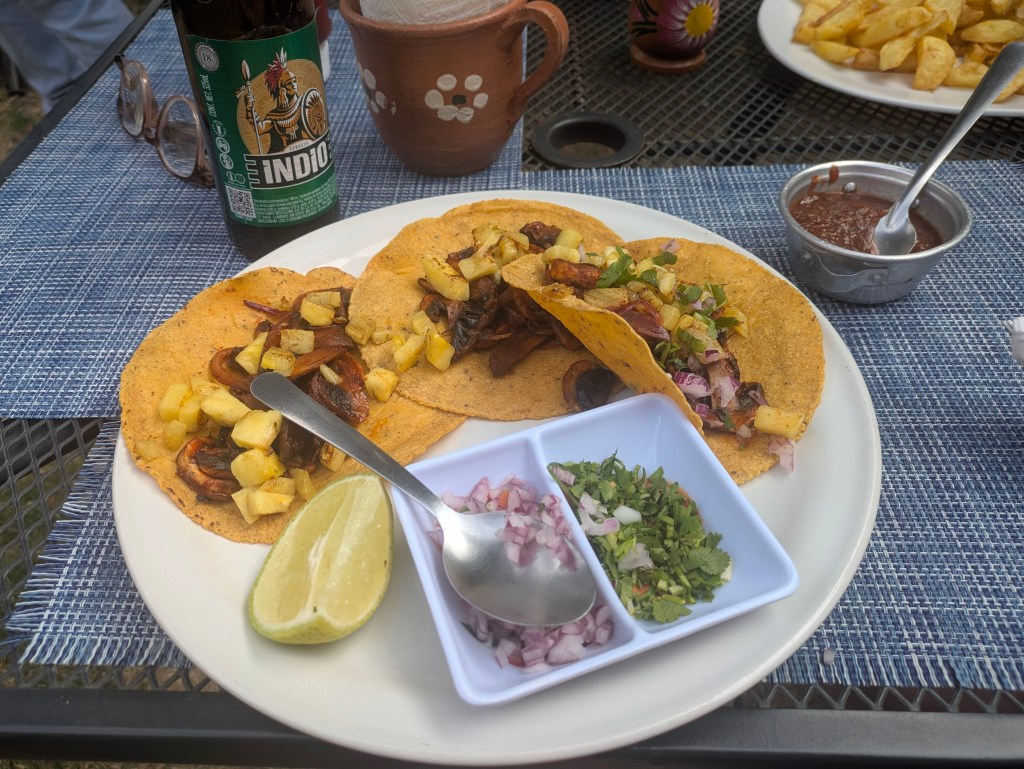
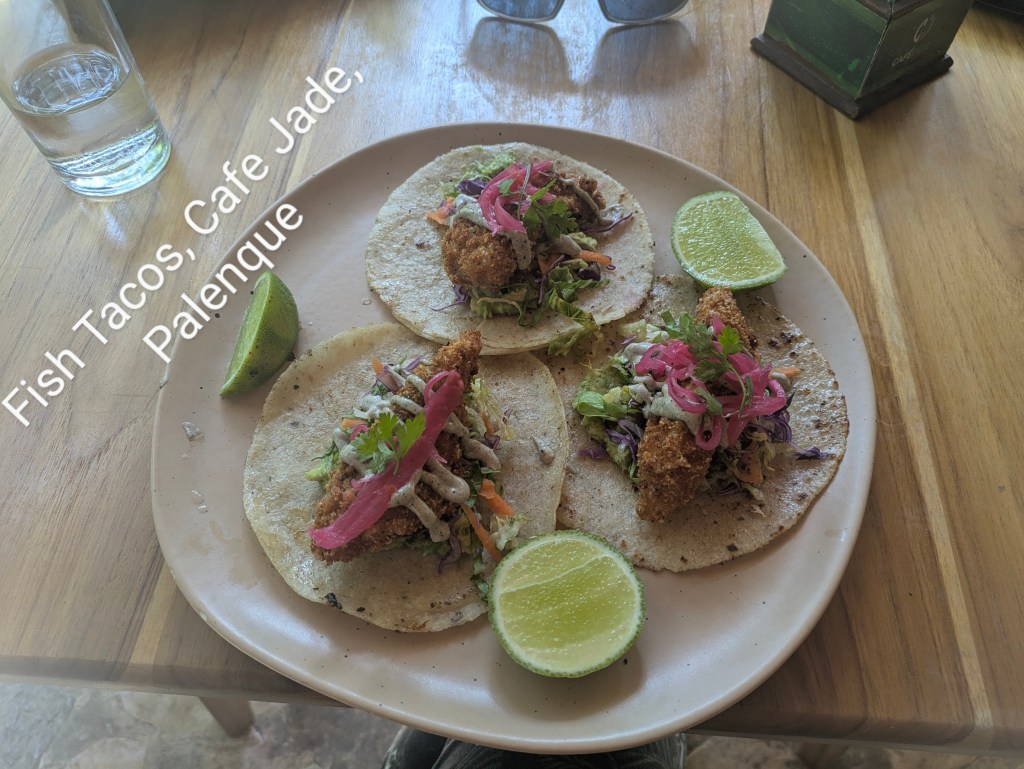
The Food especially the Tacos. Mexico’s cuisine is as vibrant as its scenery, with bold and spicy flavours, the use of fresh ingredients such as avocado, tomatoes, chillies and corn. There was liberal garnishes of coriander (cilantro) and wedges of lime came with everything. We loved the tacos which were cheap , plentiful and widely available and the black bean pastes which were usually accompanied by a crumbly white cheese. In Oaxaca, baskets of roasted grasshoppers were for sale on every street corner, a source of protein since the time of the Aztecs.

San Christobel de Las Casas (San Chris) The drive from Palenque was only about five and a half hours but there were worrying reports online about the safety of the roads leading to the town. The main risk was road closures because the Zapatistas, an indigenous political activist group in the state of Chiapas, sometimes blocked roads to highlight their grievances to the government.  Locals reassured us that the journey was quite safe as long as we drove during daylight hours and we gave ourselves plenty of time.  It was a beautiful drive with stupendous vistas of mountains, houses dotted in the valleys and pretty villages. Soon we were smelling the pine from the towering forests surrounding San Chris, which sits at an altitude of 2200 metres in the Los Altos region of Chiapas. It was a colonial town of cobbled streets, fresh mountain air, church bells and good restaurants….and it was also festooned with hearts and ribbons for Valentine’s Day. We arrived, entirely by accident, in the most romantic town in the whole of Mexico

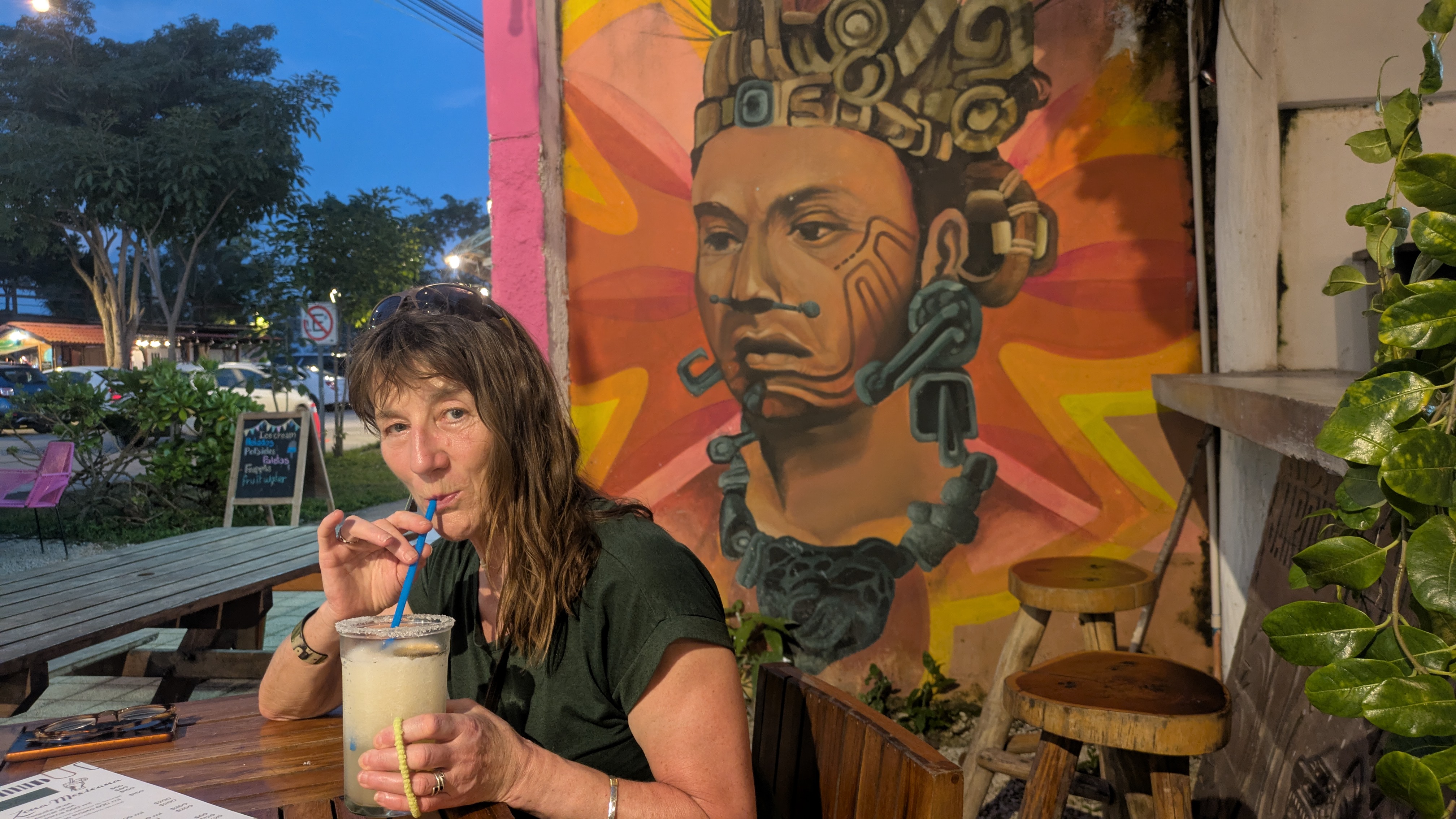
Celebration Margaritas. Mexico is also the salty taste of a margarita cocktail. We drank quite a few but the best was in La Estancia, a hotel in San Chris which had a relaxed elegance and was easily the best ‘value for money’ accommodation on our entire trip. We had to celebrate Valentine’s Day with a margarita toast in one of the hotel’s enclosed courtyards, full of flowering plants and fountains.

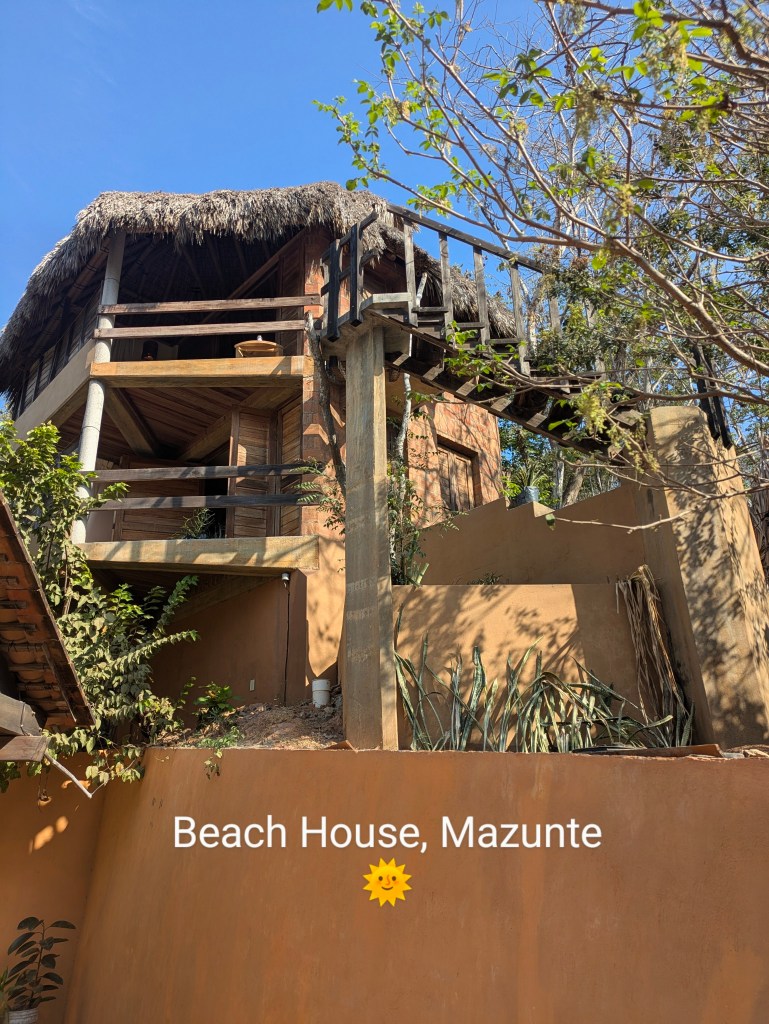
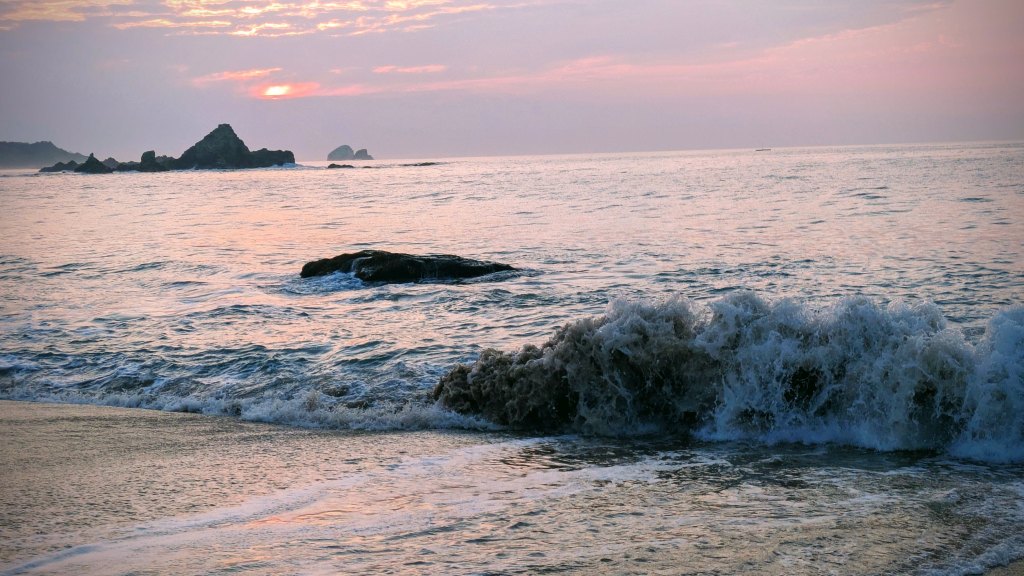
Sunrise Swims in Mazunte. Mazunte was a small seaside town on the Pacific Coast between two beaches, an east facing one for sunrise and the other with spectacular sunsets. Small hotels, bungalows and thatched cabanas stretched up into the hills, half-hidden among the coconut trees and the flowering shrubs.. We stayed in a very unusual place, an architecturally designed cabana, angled to catch the breeze and stay cool without air-con. It had a series of sliding shutters but was open on all sides so we could hear the squirrels scampering in the trees outside and the sound on the waves breaking on the beach down the road. Usually people ambled around in a heat haze but early morning was the special time when the beach was empty except for a few stray dogs, the air was warm, the water turned rose-gold and whales swam past on the horizon.

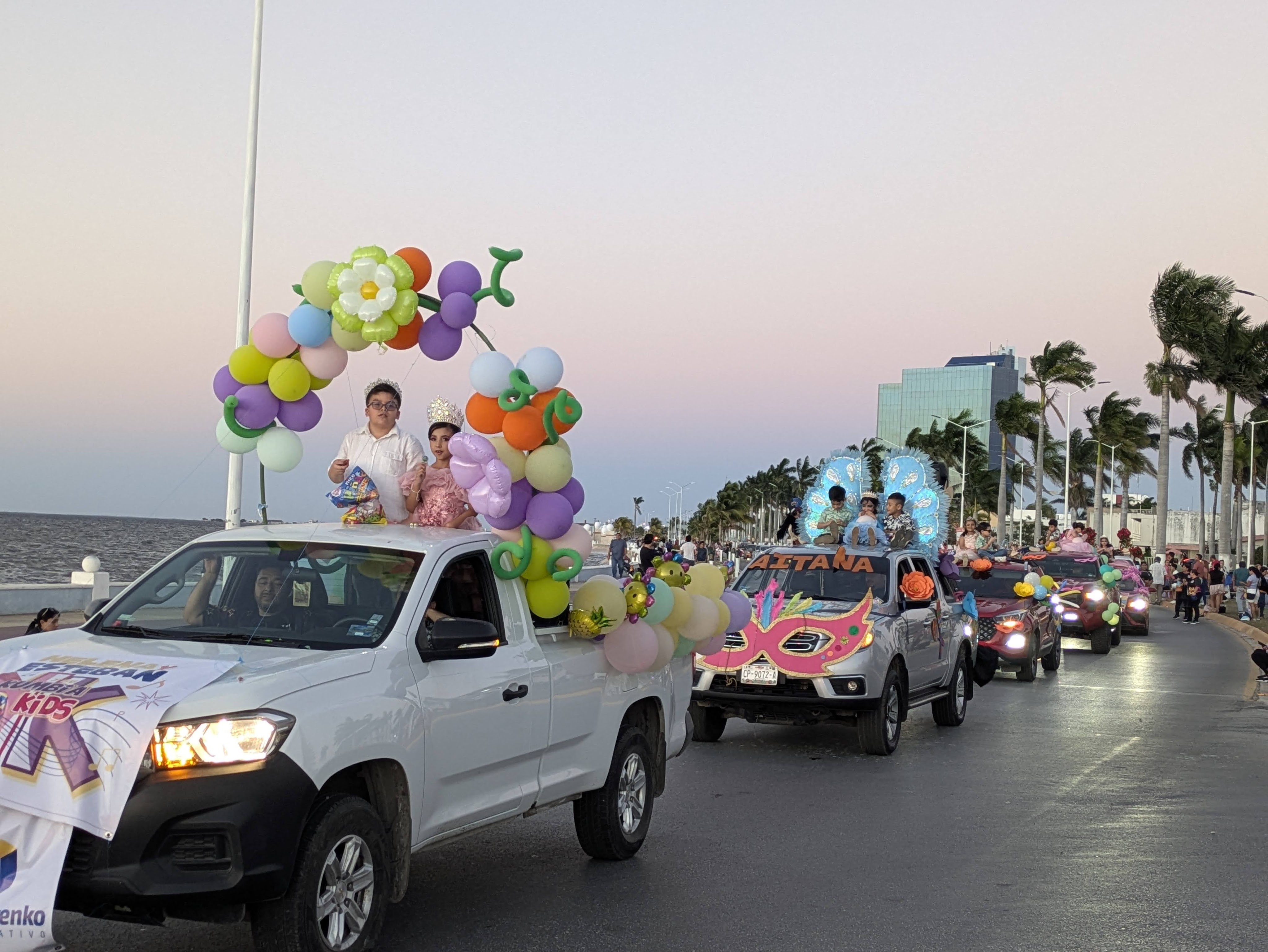
Fiesta Time. Although our time in Mexico didn’t coincide with any major festival, there always seemed to be a celebration going on somewhere, usually with drumming bands, car horns blaring, sequined dancers, clapping and shouting. During the parades, many of the people squashed into the back of jeeps, threw sweets, lollipops and fluorescent crisps to the clapping crowds. Mexicans loved to party and the noisier the better.

And for a few lows……

The Roads. Although many roads in the southern part of Mexico were quite good and there was a phenomenal number of roadworks in progress, there were also pot-holes big enough to swallow a car.  The biggest danger was the  huge number of speed bumps on a lot of roads. Dappled sunlight and shadows made them almost impossible to see during the day and we were airborne a few times. Between the potholes and the speed bumps, driving at night in Mexico is not recommended. In some areas, there can be also at risk of robbery after dark although we did not meet anyone who had been robbed or harmed in any way. 

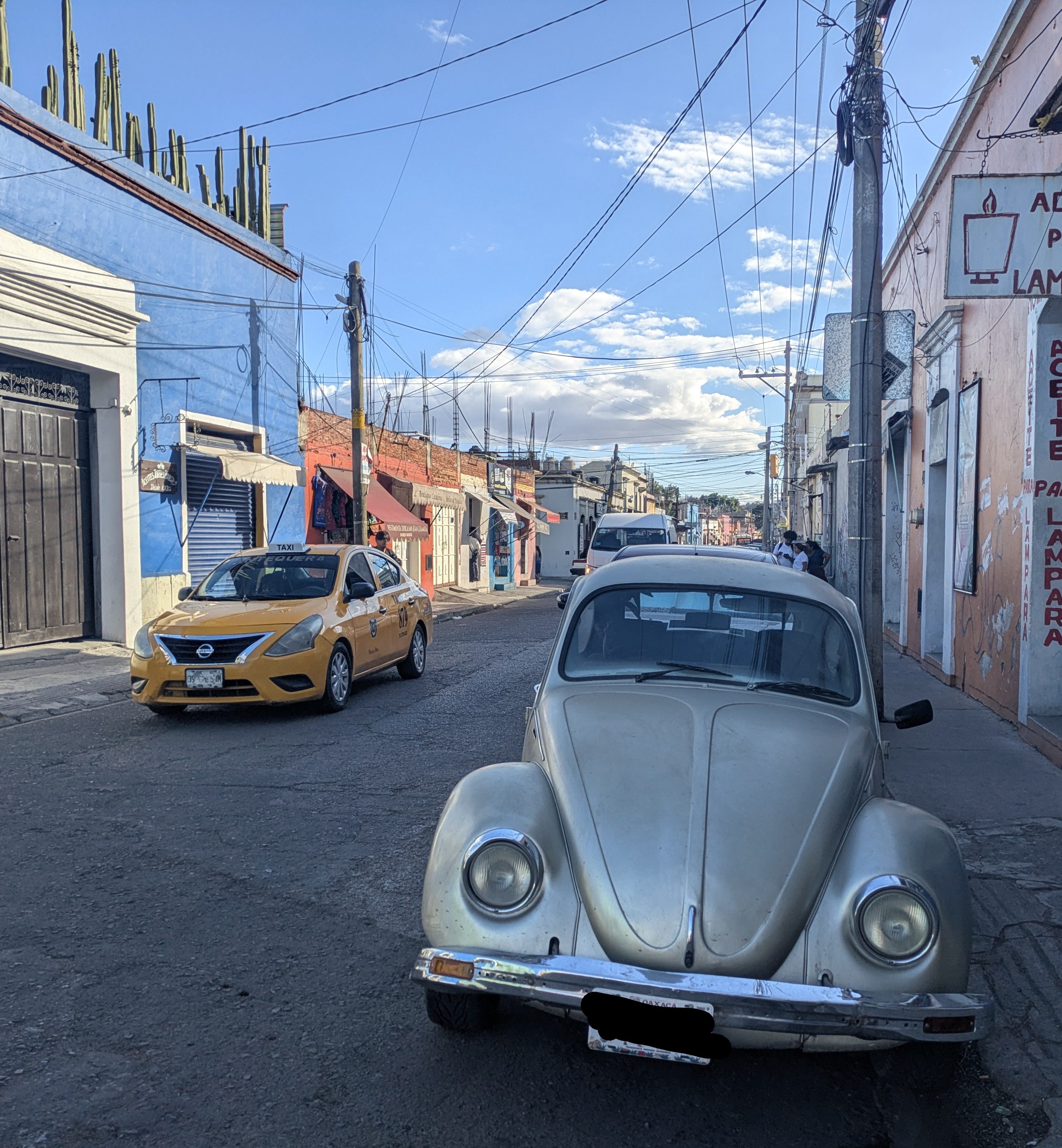
Although there were lots of different cars in Mexico, Volkswagens Beetles were a common sight……the genuinely old ones in all colours and states of repair.

The Snake. Caoimhin had a close encounter with a snake while we were walking in the Sierra Norte. He actually stepped on the snake and I’m not sure which of them got the biggest fright. The snake jumped into the air and disappeared in the scrub, while Caoimhin yelped and also leapt in the air.

The Obesity Problem

It was obvious that Mexico has a severe obesity problem. Ireland has the same issue but it was much worse in Mexico, based on empirical evidence. I don’t know the statistics nor the cause but some parts of Mexico have the distinction of drinking more Cola than anywhere else in the world. It has become so much part of the culture that many life events are celebrated by toasting with Coke Cola and in some of the indigenous ceremonies, it has replaced the original ‘moonshine’ drinks.

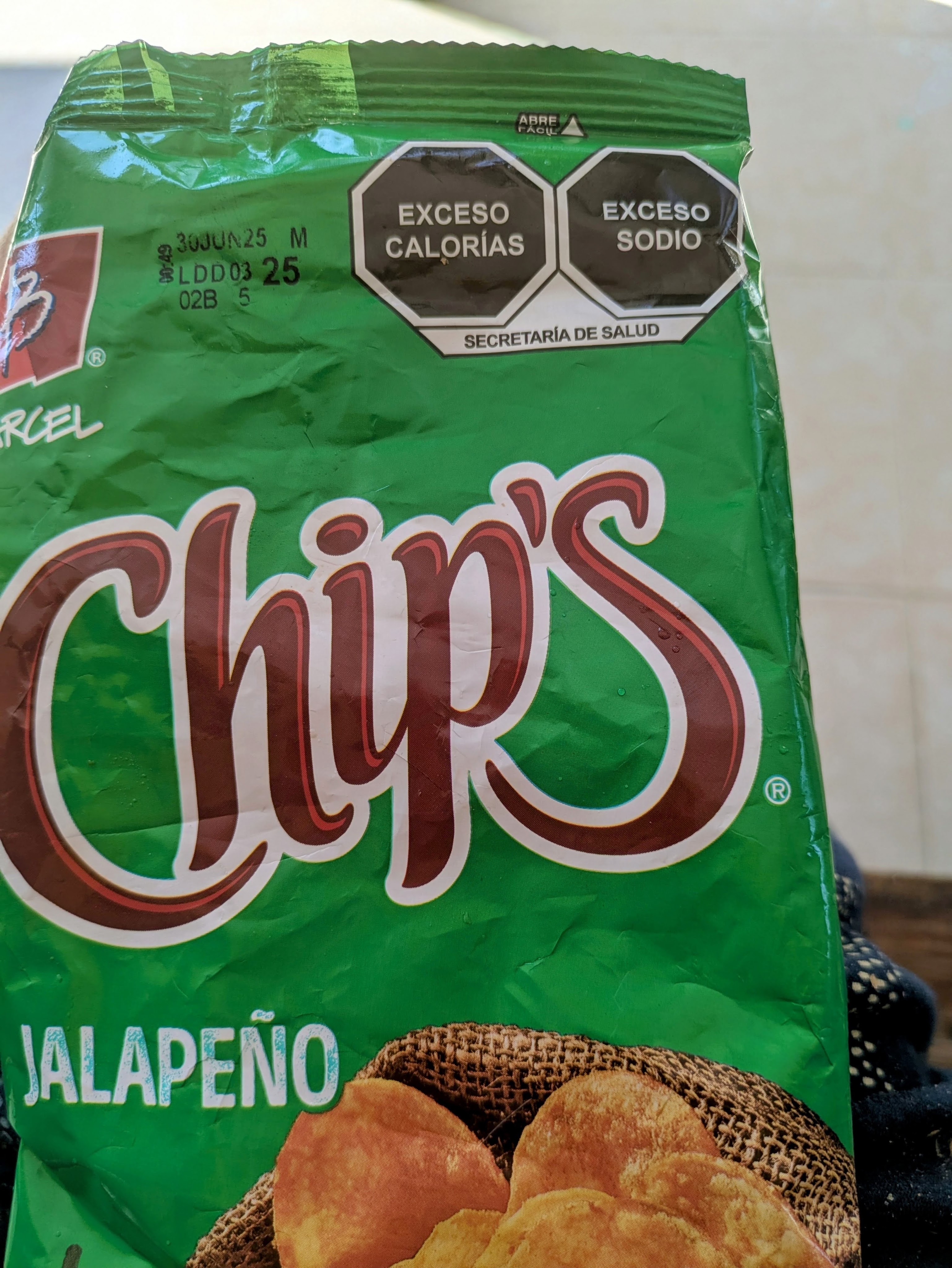
There is an attempt to tackle the problem with food labelling, with crisps and sweets carrying nutritional warnings on the front of the packets.

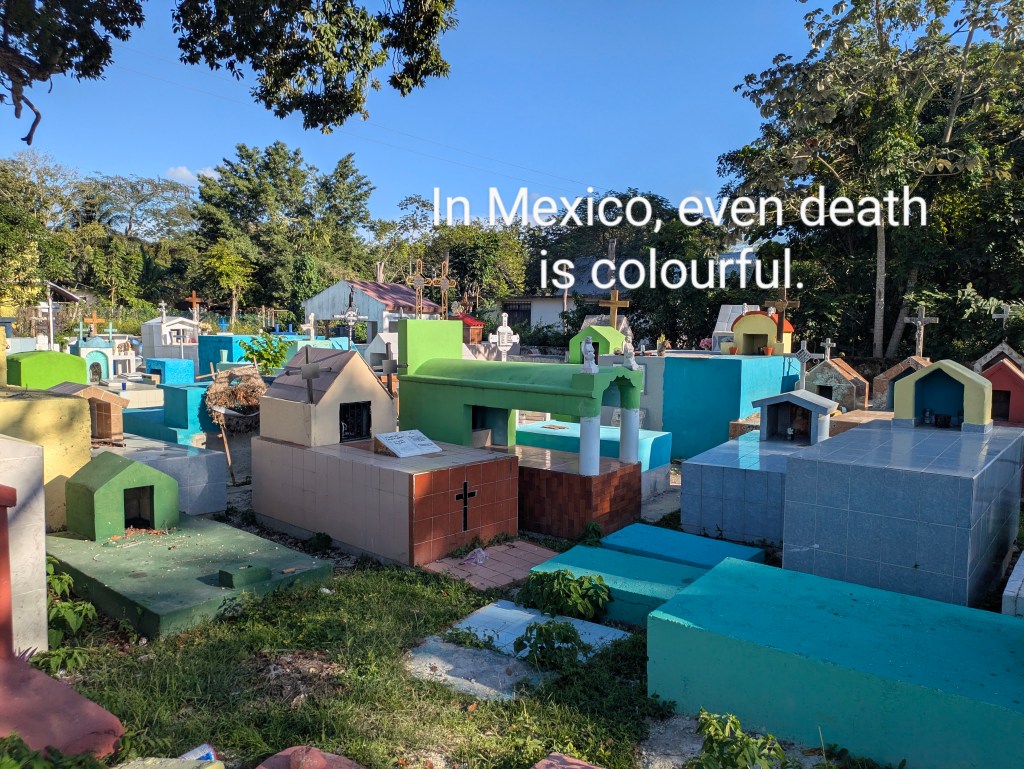
Mexico pulled us in as soon as we arrived with its vibrant intensity, a place with a zest for life and a celebration of death, a place where even the cemeteries are brightly painted and often decorated with flashing fairy lights.

Hasta Luego, Amigos

Thanks for reading🥰🥰🌄

Reflections in the Mountains
Street Art, Bacalar

Mexico: Highlights

Mexico: Driving by the Gulf

Celestun, Gulf of Mexico

Everything was pink, flamingo pink. Flamingoes were painted on the walls, plastic birds lurked in the foliage of gardens and even the bridge into the little town of Celestun was painted a soft dusky pink.  Celestun was mainly a sleepy, dusty fishing village, sunbaked and sandwiched between a large lagoon and the turquoise water of the Gulf of Mexico. The combination of salt water from the Gulf and fresh water from the estuary made it a perfect habitat for flamingoes and waterfowl but the flamingoes were the real attraction. The Reserva de la Biosfera Ría Celestún was  a large coastal wetland reserve and wildlife refuge in the northwestern corner of the Yucatan Peninsula covering 146,000 acres beside the town.

 The breeze was welcome and cooling on our boat tour out on the lagoon, which we shared with two German couples. The air was sulphur-stinky but we didn’t mind. The flamingoes were beautiful blobs of colour, wadding and feeding in the shallow waters. The birds get pinker and more gorgeous with age as their plumage turned a bright rose colour that was almost orange from their diet of shrimp, tiny crustaceans and seeds.  I was so enamored that I even bought a T shirt emblazoned with a flamingo, about the only thing I can fit into my small carry-on backpack.  Their only predators were the alligators which were plentiful,  snoozing at the water’s edge near the mangroves, superbly camouflaged and doing a great imitation of  fallen logs.
Spot the Alligator 😮

There was a carnival parade through the streets on the Sunday night that we were there, People of all ages, dressed in flashing lights and sequins, danced to blaring music and honking horns on the back of  pick-up trucks which were also festooned with balloons and streamers. The people on the trucks threw sweets, lollipops and fluorescent crisps to the clapping crowds. Mexicans love a party, the noisier the better.

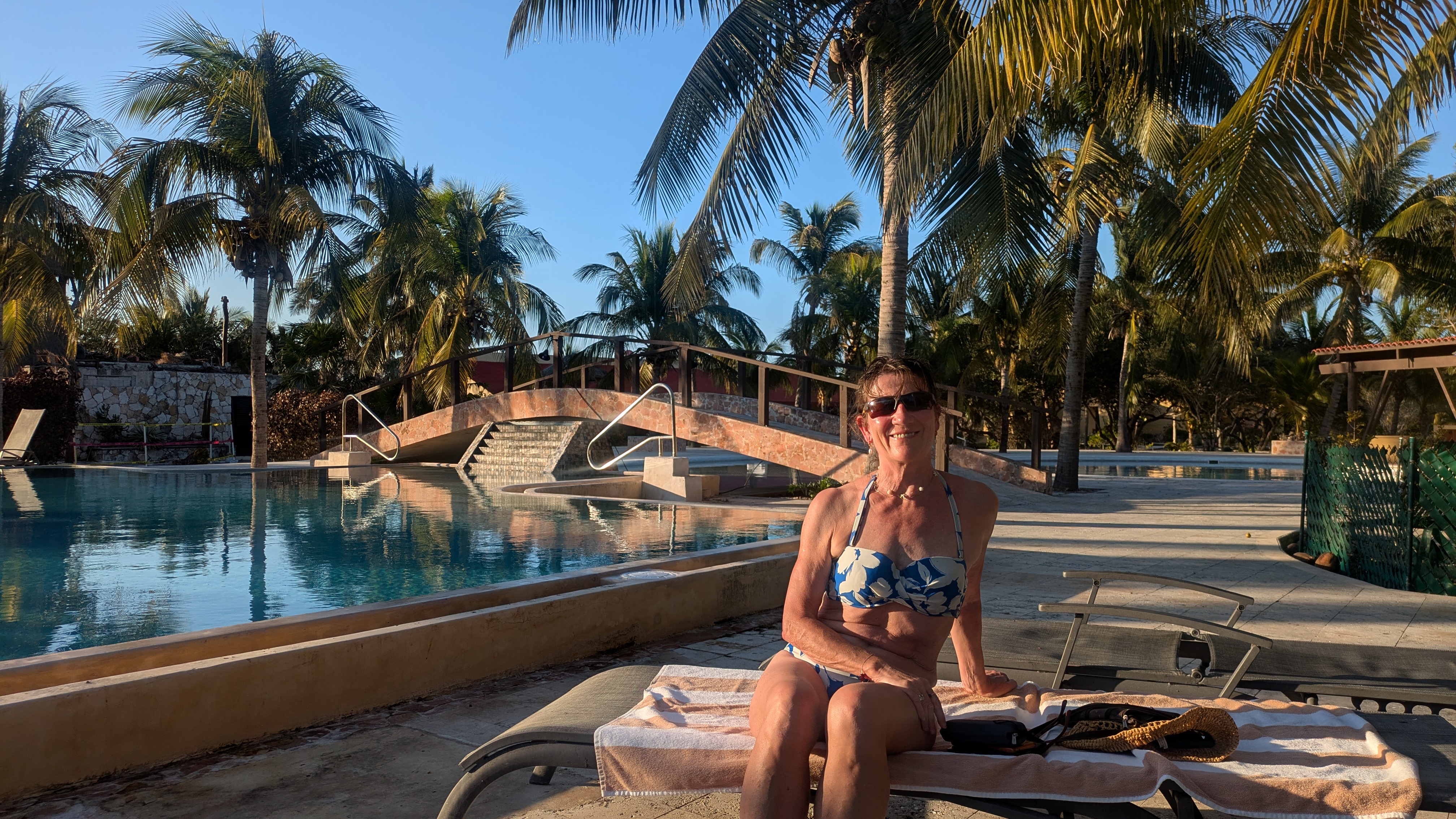
The beaches on the northern side of town were reached along a dry, rutted road but they were  gorgeous, miles of shell-strewn sand, empty except for the many birds. We spent two nights in a beachfront ‘villa’ far from town with a well- equipped kitchen where we rediscovered the joys of cooking after weeks of eating out. It blew out budget but was worth it. We had a large pool outside our front entrance and at the back door, we stepped from a little verandah directly onto white sand, shaded with coconut trees, just a few steps from the water’s edge.  There was nothing to do except take long walks on the beach at sunrise and sunset and watch the birds, pelicans, cormorants, sandpipers and a whole assortment of seagulls flying overhead and vying for space on the wooden poles in the water near our villa. Having driven  the long length of part the Gulf of Mexico over the preceding days , this was certainly a great place to relax.

Pelicans on the Gulf
Our pool at the villa, Celestun 😍

Our guidebook told us that Villahermosa wasn’t anyone’s idea of a ‘beautiful town’ (despite the direct Spanish translation} but we found an excellent, good-value hotel and a place of friendly people. Hotel La Venta  gave us  a spacious room on the fourth floor for €32 in total which included an enormous buffet breakfast.  Villahermosa is the capital of Tabasco State (nothing to do with the fiery tabasco sauce  which is made in Louisiana in the US).

 Tabasco State,  a waterlogged and oil rich place, was full of mangroves and pipelines, most from Pemex (Petroleos Mexicanos). Pemex is the long-time, state owned hydrocarbon company which is being privatized in a bid to make Mexico energy, self-reliant even if that means turning way from focusing on renewables. As we drove around Mexico, we witnessed a huge number of newly-opened Pemex forecourts and others which were in the process of opening for business, complete with identical convenience stores (OXO franchise).    

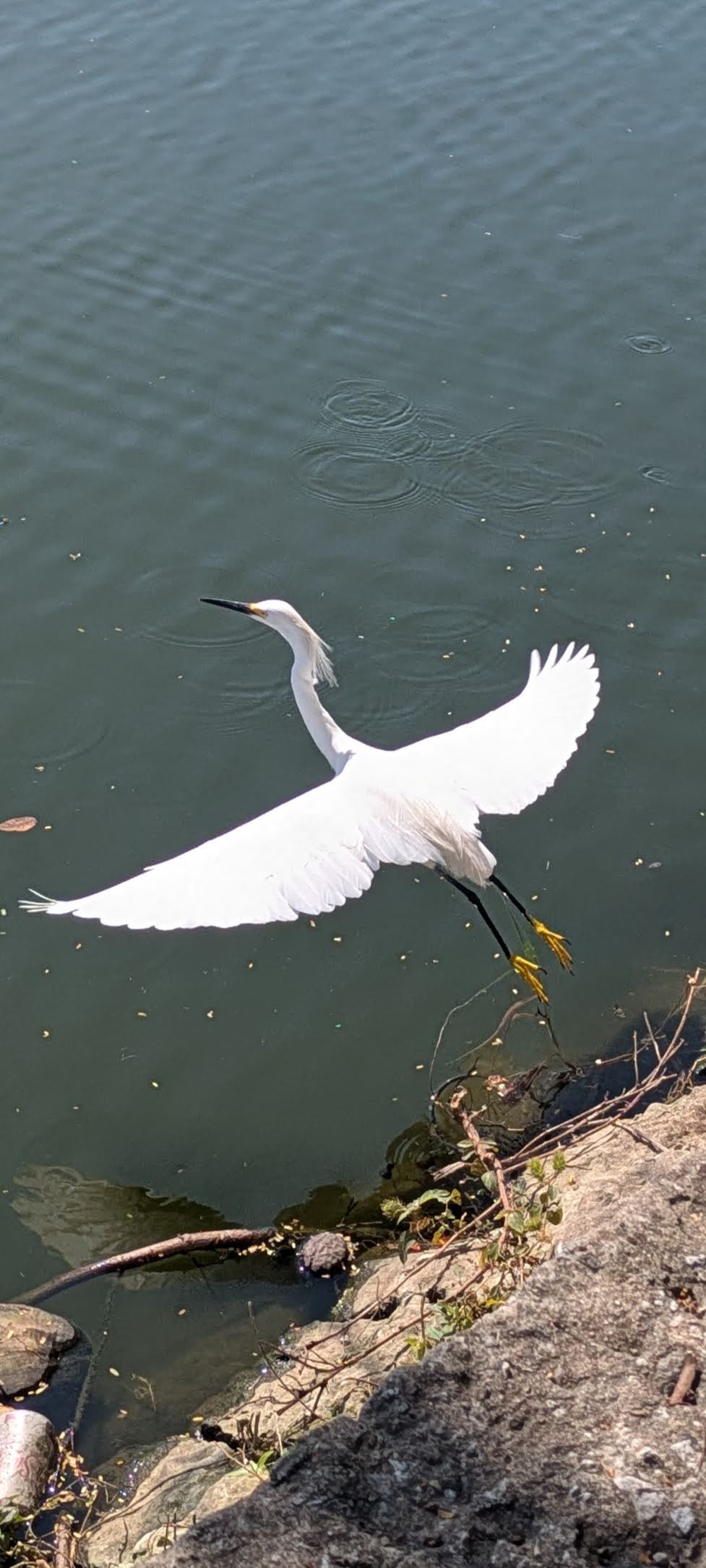
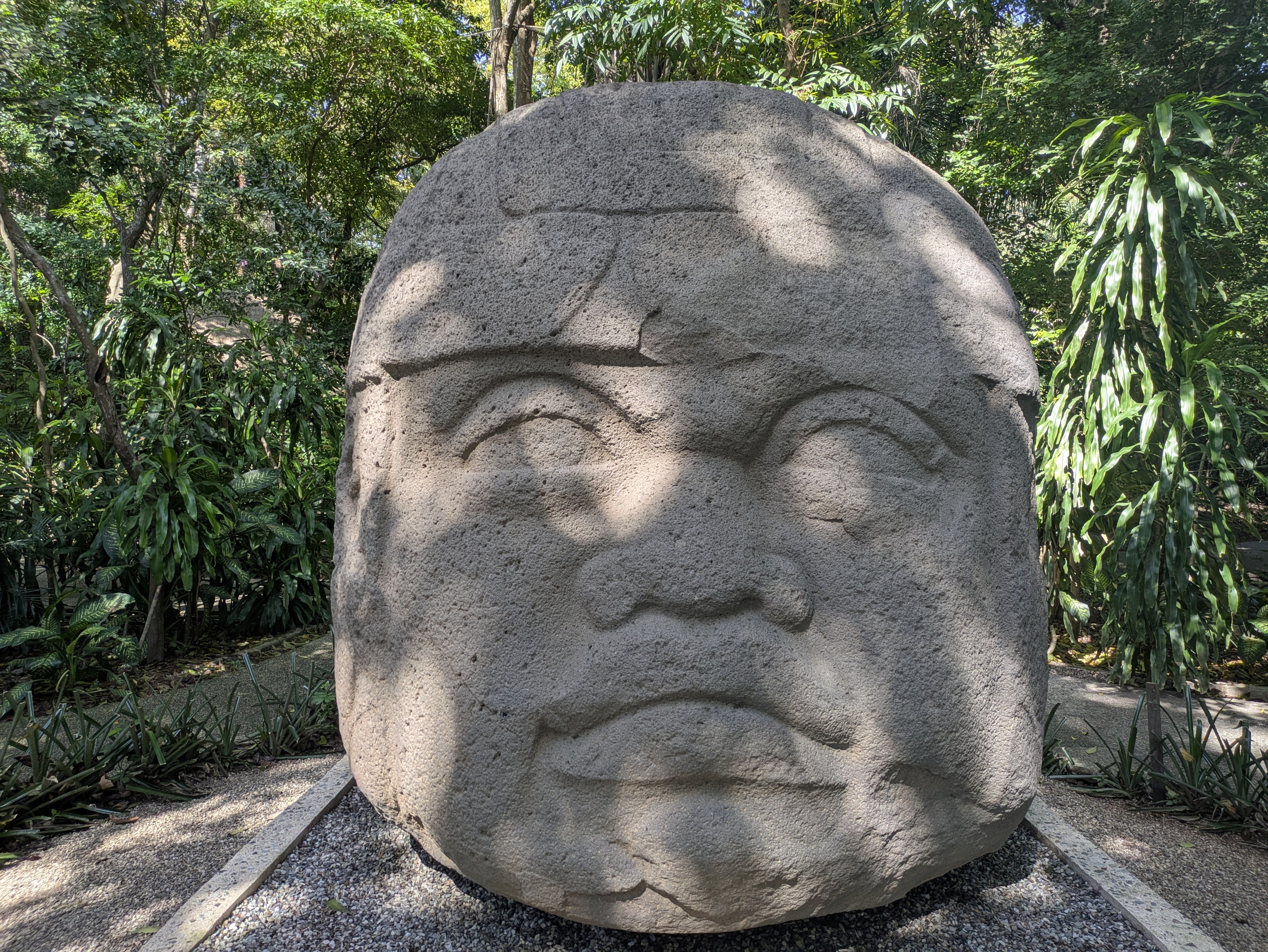
Although Villahermosa was busy with wide lanes of choking traffic, it also had a superb promenade by the wide green Rio Grijalva, an area favoured by elegant egrets and joggers. Our main reason for stopping in the city was to visit La Venta, a pre Columbian archaeological museum  of the Olmec civilization.

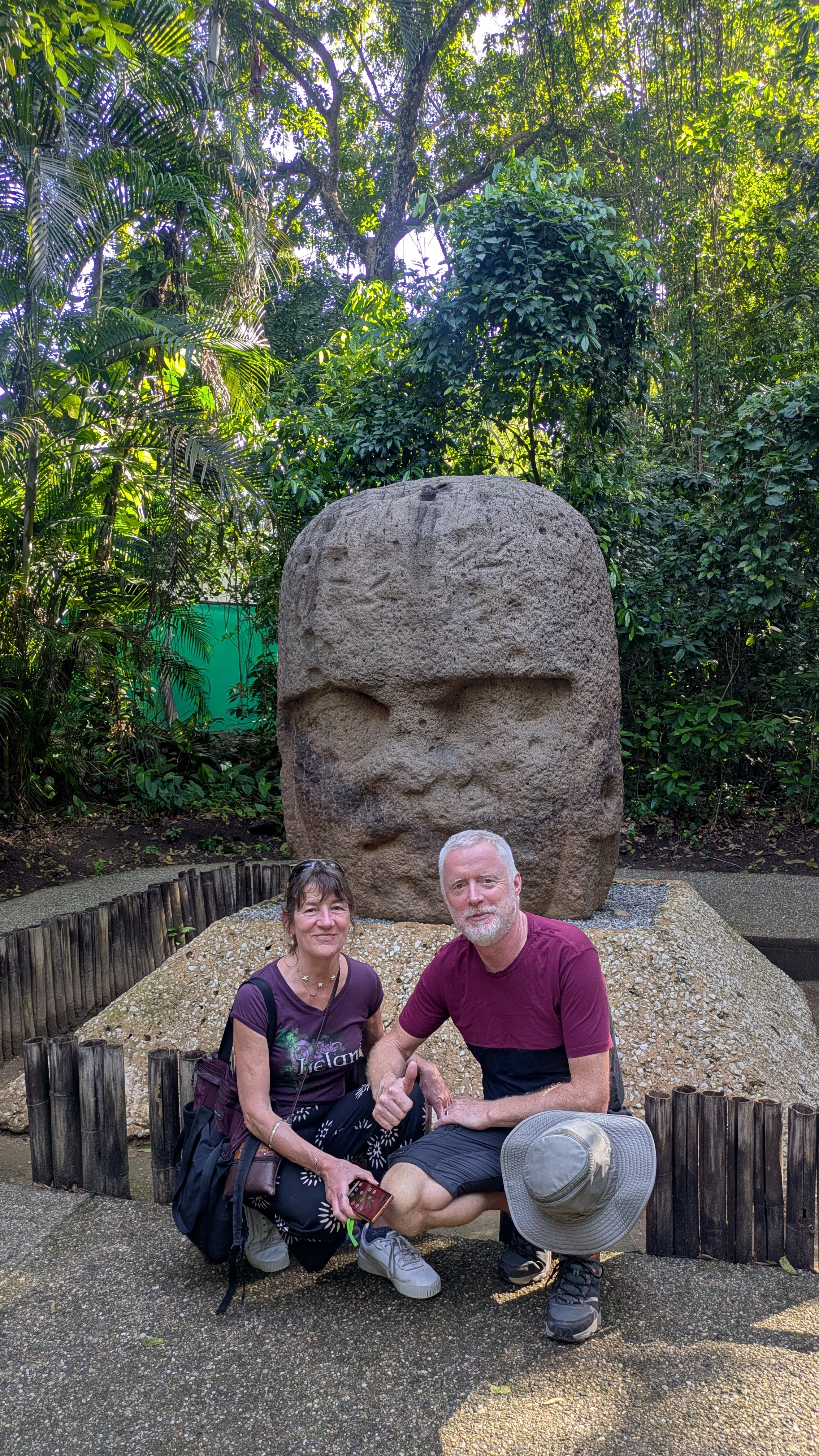
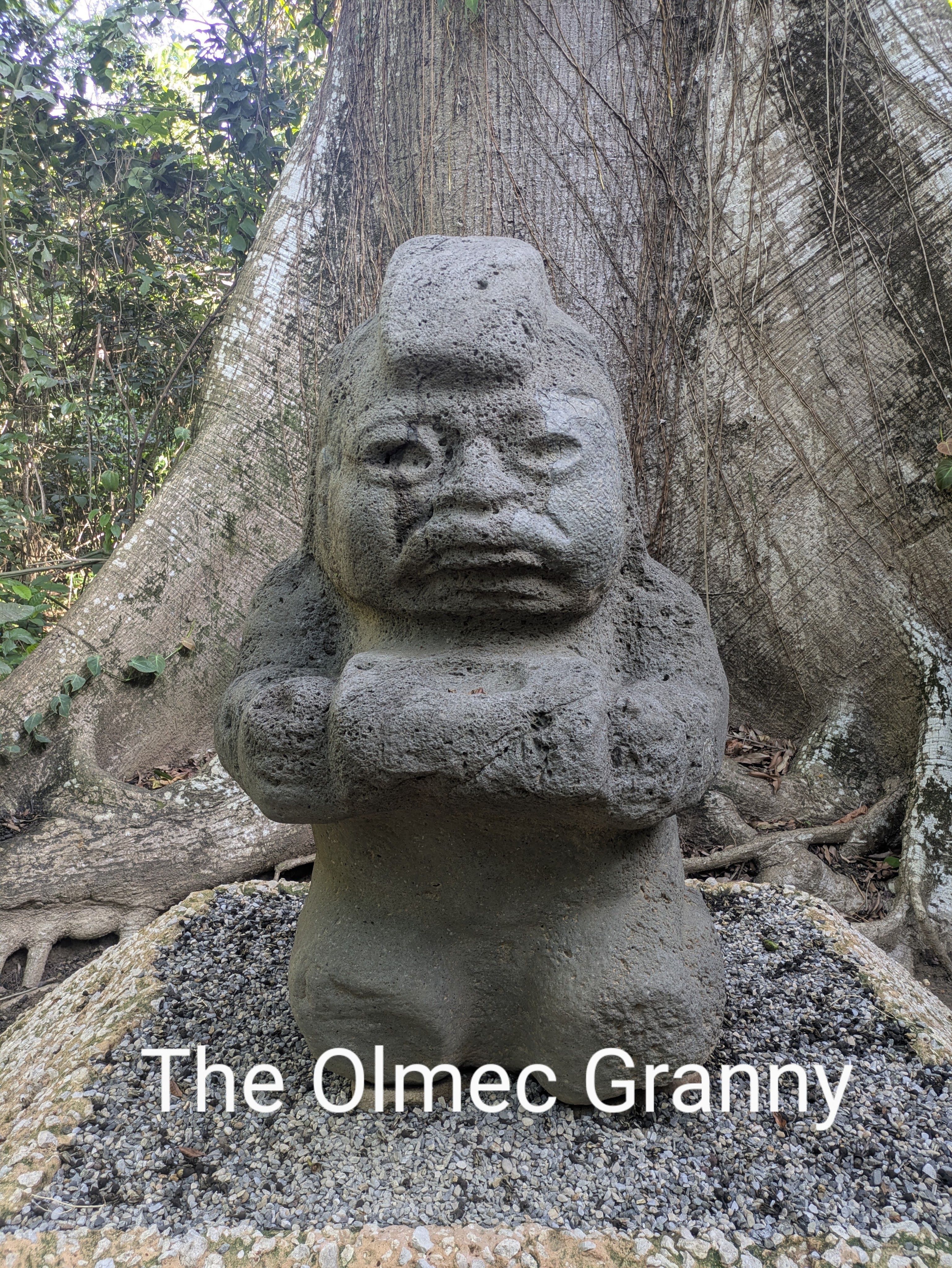
Traffic roared on the highway with fire engines, buses and early morning work-traffic but inside the shady park, all was serene with long-tailed coatis roaming amongst the ancient colossal heads of the Olmecs, who were considered one of the first major cultures of Mesoamerica dating back to 1500BC,  The sculptures were moved from their original location to the open arm museum to make them more accessible. A young archaeology student, called Darek, showed us around. His attitude was refreshing, admitting that most of what was known about the ancient Olmecs, was based on conjecture although it was recognised that they attached a huge importance to their ancestors and that the jaguar was a sacred animal to them. They also had a number system and had the beginnings of scripture, evidenced by marks carved into stone. He may have been looking at Caoimhin and might even have been joking, when he told us with a straight face that the Olmecs didn’t like beards.

Olmec Head in the Background

Leaving Villahermosa behind, we headed for the Gulf coast and got a real impression of just how low-lying Tabasco was, with water in every direction, rivers, lakes, swamps, flooded fields and lagoons. The roads were long, flat and slow-going, busy with huge juggernauts and tailbacks, caused by the frequent roadworks. We crossed bridge after bridge over large stretches of water.  The Gulf was a milky blue on our left hand side, bordered by a line of pylons with oil refineries like a mirage in the distance We stopped at one stage to stretch our legs by a white sandy beach where a mangy, half-starved dog ambled up to us out of a heat haze. He woofed down the crackers we shared with him, eating nervously as if afraid that we might treat him unkindly.

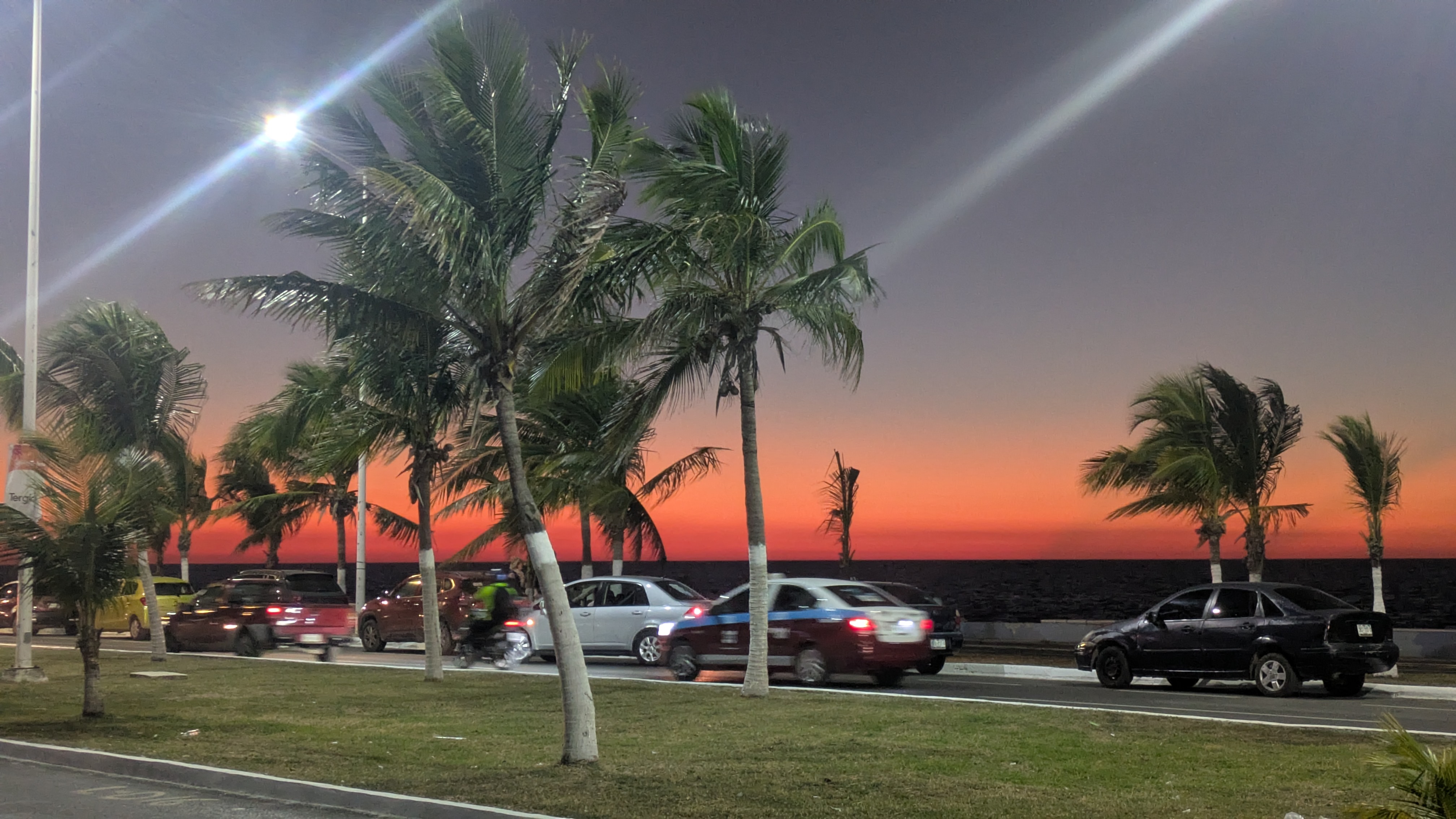
We continue, diverting a few times to nearby towns in the vain hope of finding somewhere  to spend the night but our search continued,  Finally just as dusk was falling, we stopped in Chompoton,  at long stretch of town looking out on the Gulf which should have been idyllic but wasn’t. Traffic roared down the road between the town and the sea, belching fumes and dust, but we ate delicious tacos in a little open-air shack restaurant, popular with the big-bellied truckies, who sat drinking two litre bottles of Coke, Our hotel was relatively expensive (just under €50 for the night) but it had a gorgeous swimming pool and was set back from the road, far enough that the constant traffic was just a bearable hum. The sunsets along the Gulf were really spectacular, a really super intense orange, maybe because of the fumes in the air,

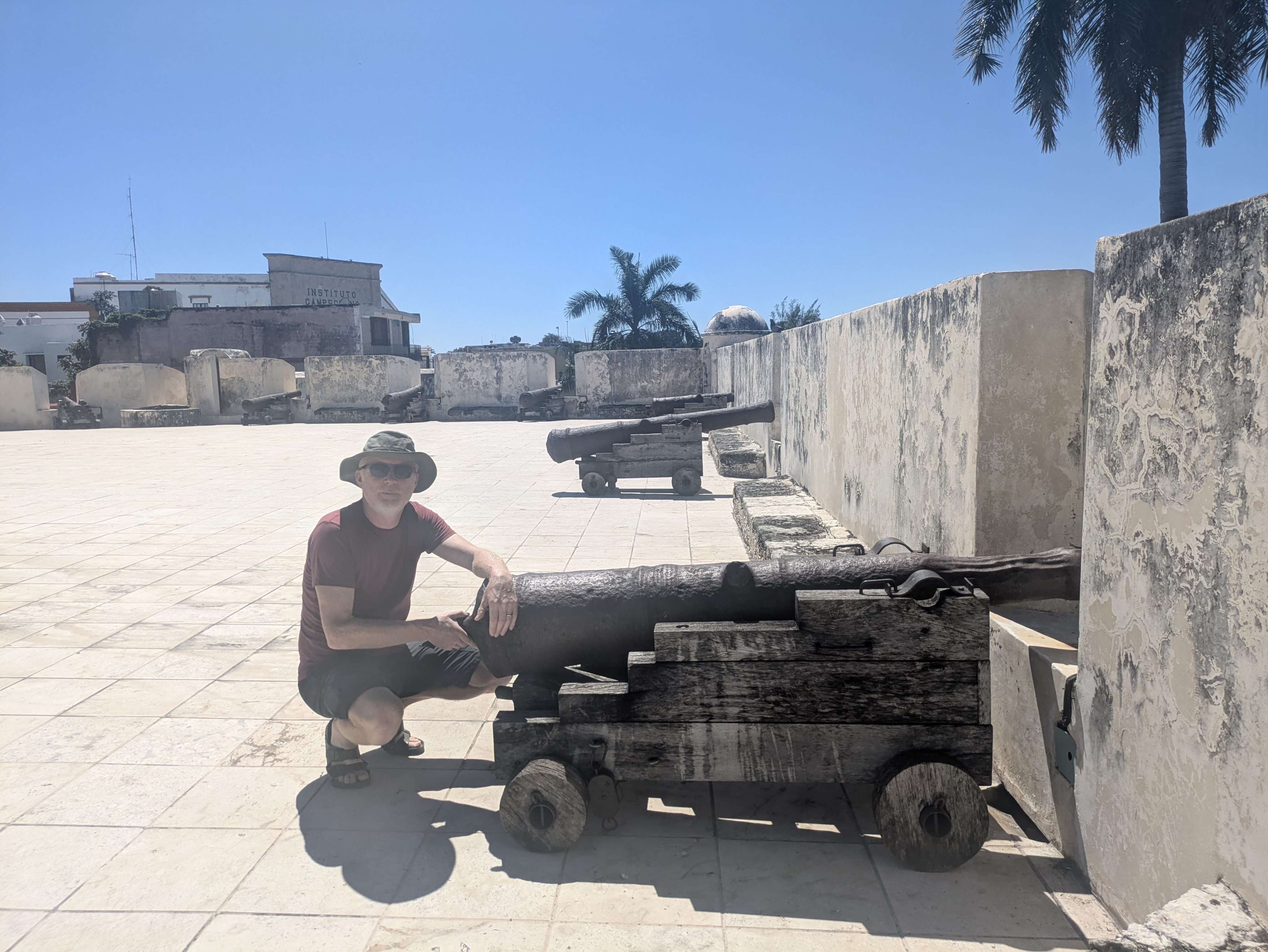
We drove along the Pirates route with fish factories and small, dilapidated towns where the paint on the houses was peeling and blistered. We laughed at a paint shop, which was in dire need of a lick of paint and not much of a advert for its products.  Nowadays, the scourge was not the threat of pirates but the appalling traffic and the relentless sun.

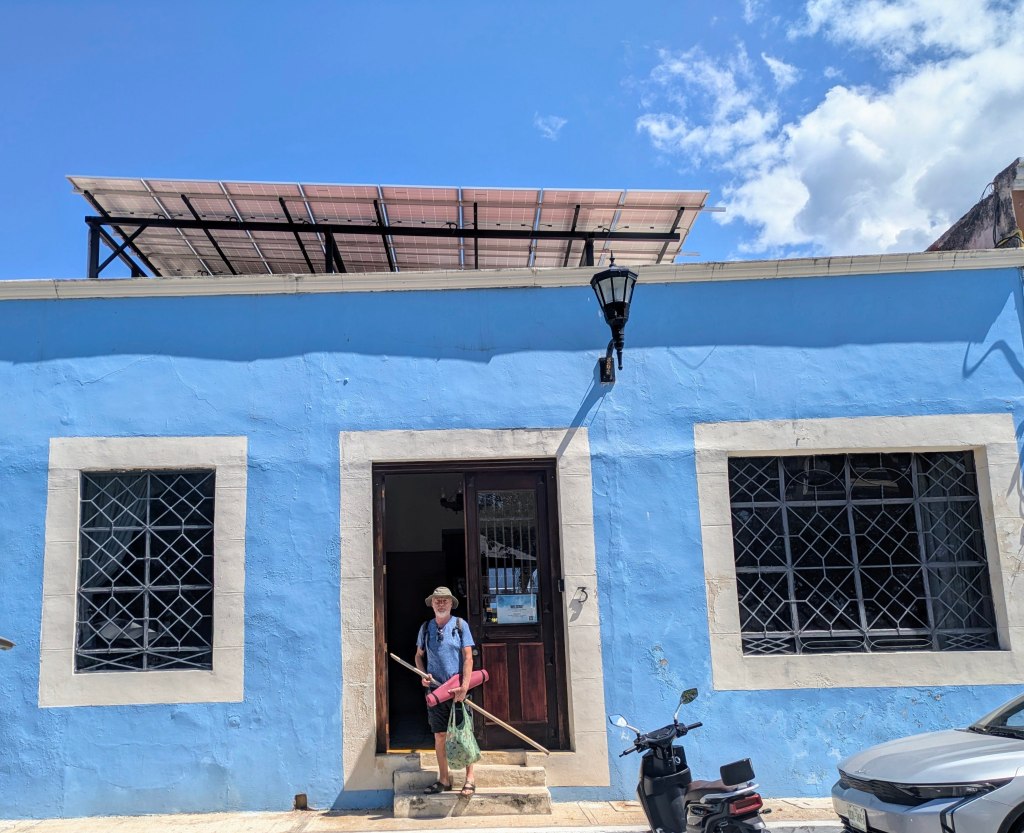
Our next stop was Campeche,  a lovely, colonial town with a siout-walled, historic centre, full of churches and museums. The best part was our accommodation, a haven of serenity with a fountain, shady garden, shared kitchen and free water and coffee. It looked nothing from the outside, a small, blue-painted house, but inside we were greeted with  the smell of flowers and floor polish in the tiled floor and a lovely courtyard. The password was ‘relax’ which was so apt. If you ever find yourself in Campeche, I can recommend Hotel Maculis, situated in a lovely area near the church of the Black Christ(Christo Negro) and beside a park where locals sat out for hours in the balmy evenings and all greeted us with friendliness.

A retired Dutch couple staying at our accommodation were also driving around Mexico for a month doing a similar route to us. They told us that one late afternoon, just before dark, their car broke down. They had run out of petrol but they didn’t realise that at first because the petrol gauge was faulty. People stopped to help them, figured out what was wrong and refused to take the money offered as payment for their help.

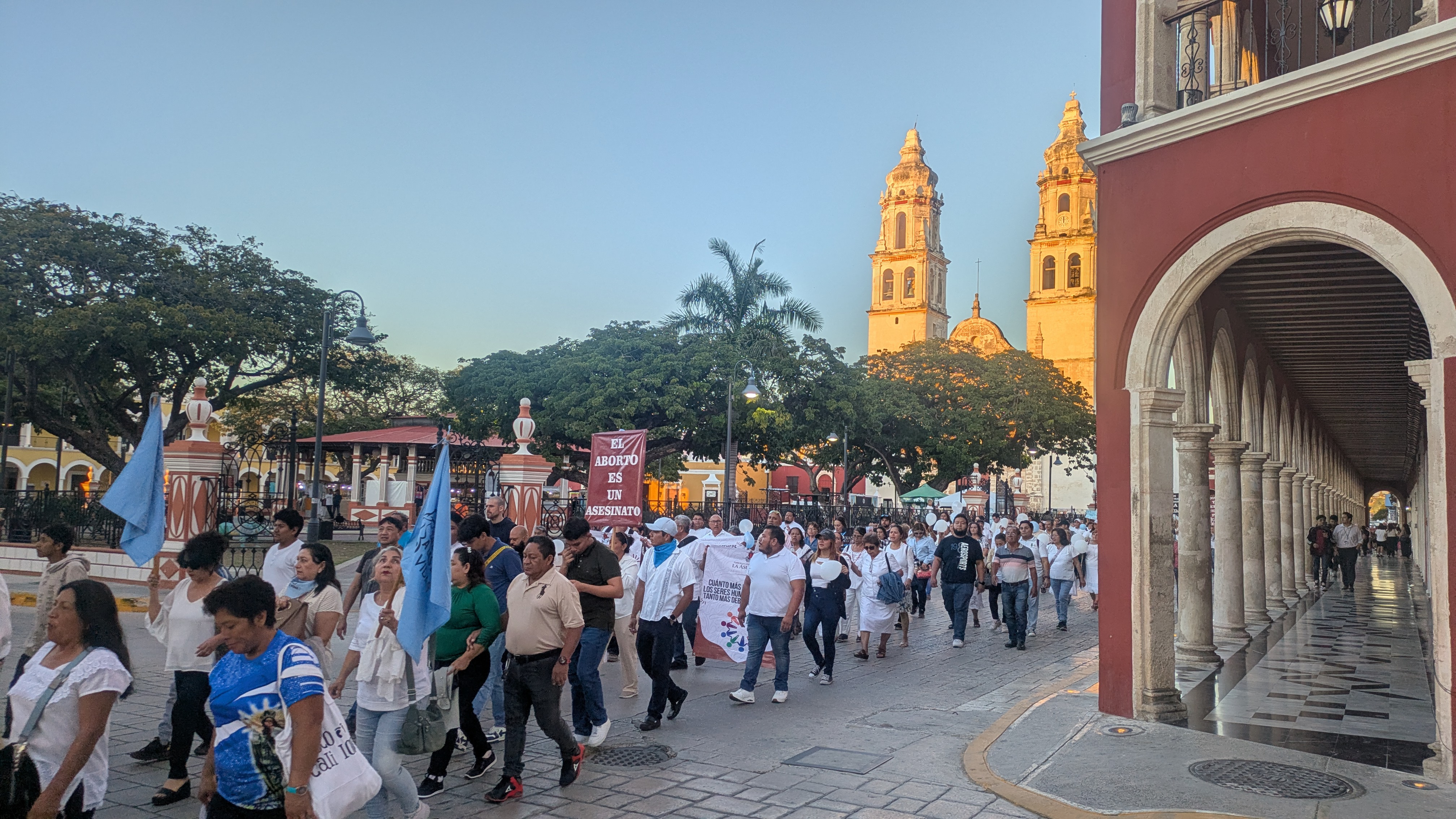
There was a huge demonstration in the streets against abortion with chanting slogans and many dressed in white, which is the colour of mourning here in colourful Mexico. The marchers were mainly women of all ages including schoolgirls and quite a few nuns. Penalising abortion is unconstitutional in Mexico at a federal level since 2021 but abortion access varied from state to state and Campeche was saying a definite ‘no.’

Anti-abortion March, Campeche
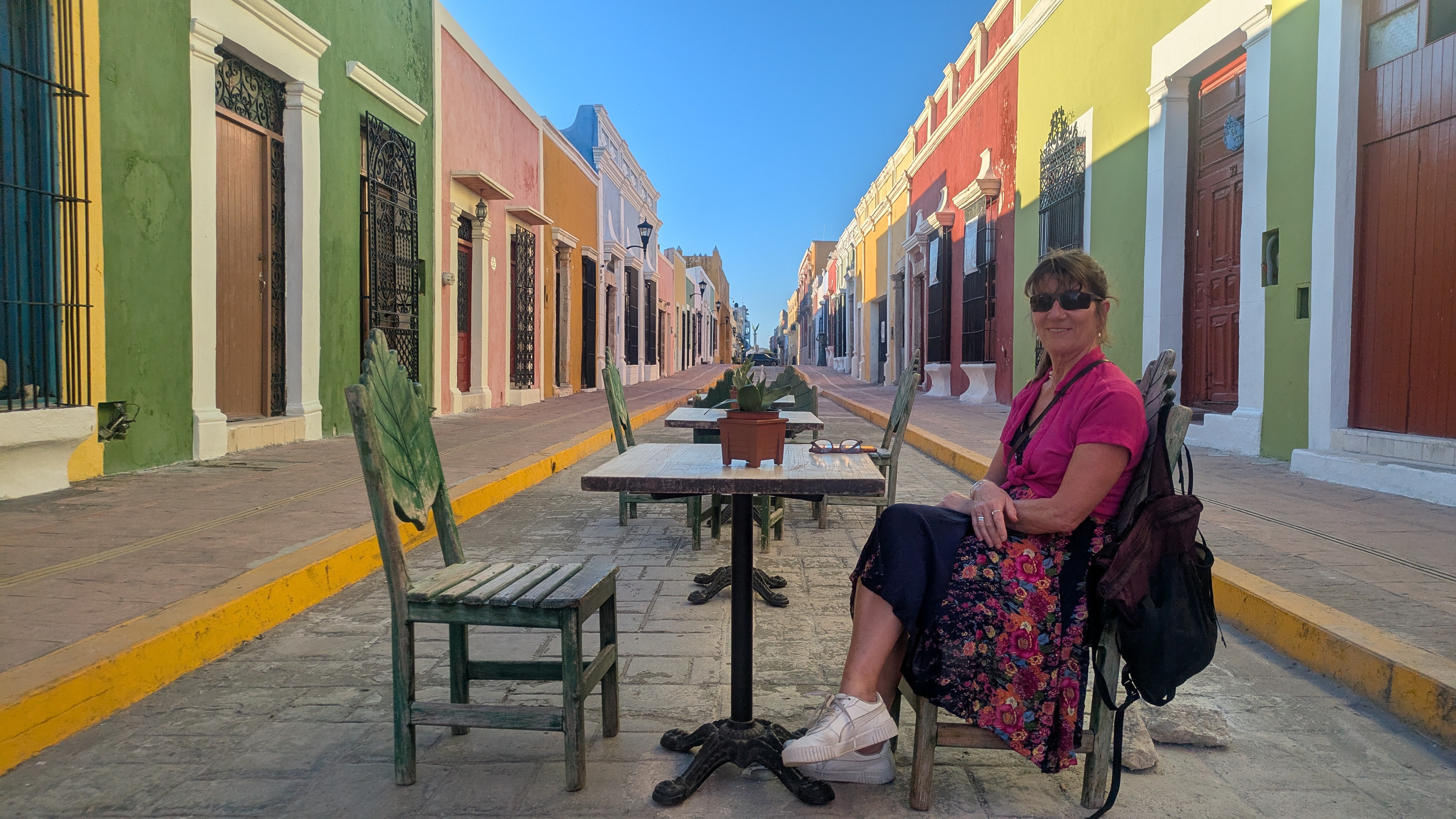
Campeche Street
Campeche Walls

But its time to turn away from the Gulf and turn inland back to Cancun and complete our long loop of only a small part of this huge country(twenty-two times the size of Ireland) which has so much to offer the visitor.

Thanks for reading, amigos

Giant Olmec Head

It’s a Bird’s Life

Mexico: Driving by the Gulf

Colombia – Looking for Paradise

Palomino is a small town on the Colombian Caribbean coast, nestled between two rivers, Rio Palomino and the Rio Salvador. Both rivers flow from the Sierra Nevada mountains to the sea on both sides of the town. It has developed a reputation as a mecca for backpackers with lots of cheap accommodation and good restaurants. It sounded like an ideal spot for some relaxation after our exertions during the Lost City Trek.

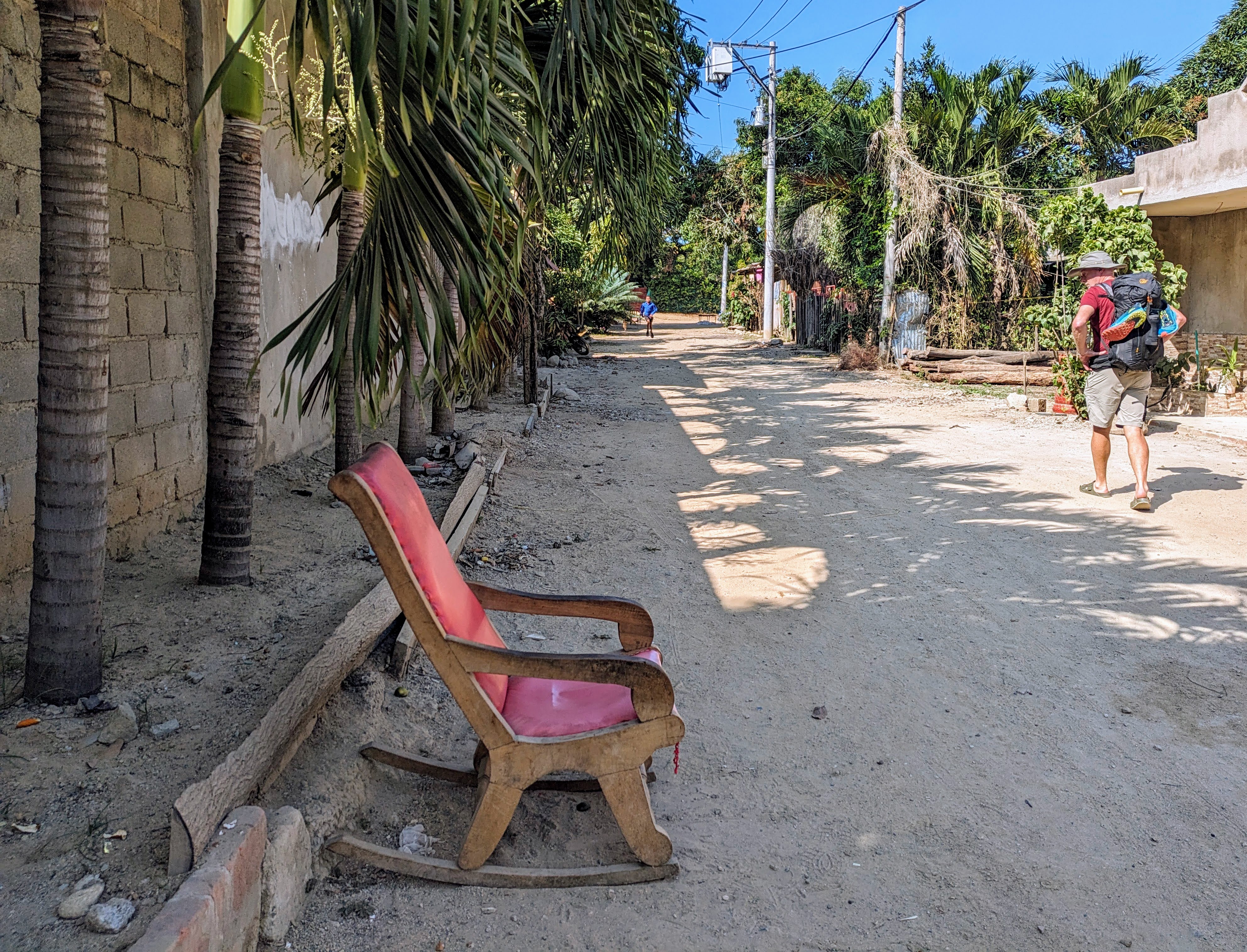
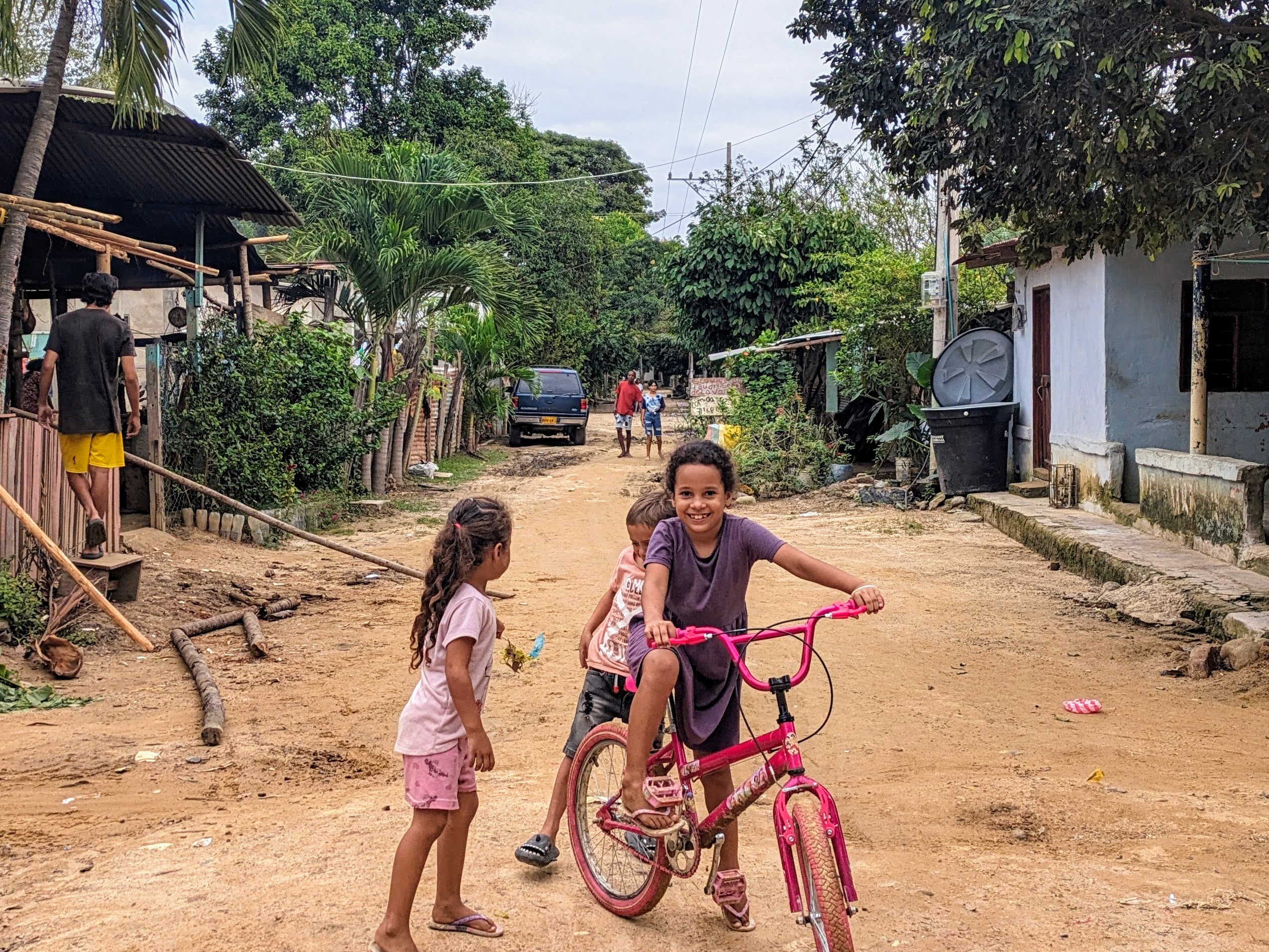
The bus from Santa Marta (two hours away), dropped us on the main road, with roaring traffic, motorbikes, buses, fumes and deafening noise. Palomino itself was just off this paved main road, a series of dusty unpaved roads, lined with low ramshackle, unpretentious houses, a lot of greenery, a few dogs sleeping and hardly a person in sight.  It was early afternoon in a dense humming heat and Palomino did not seem like a mecca for backpackers…..or anybody else.😲

Palomino

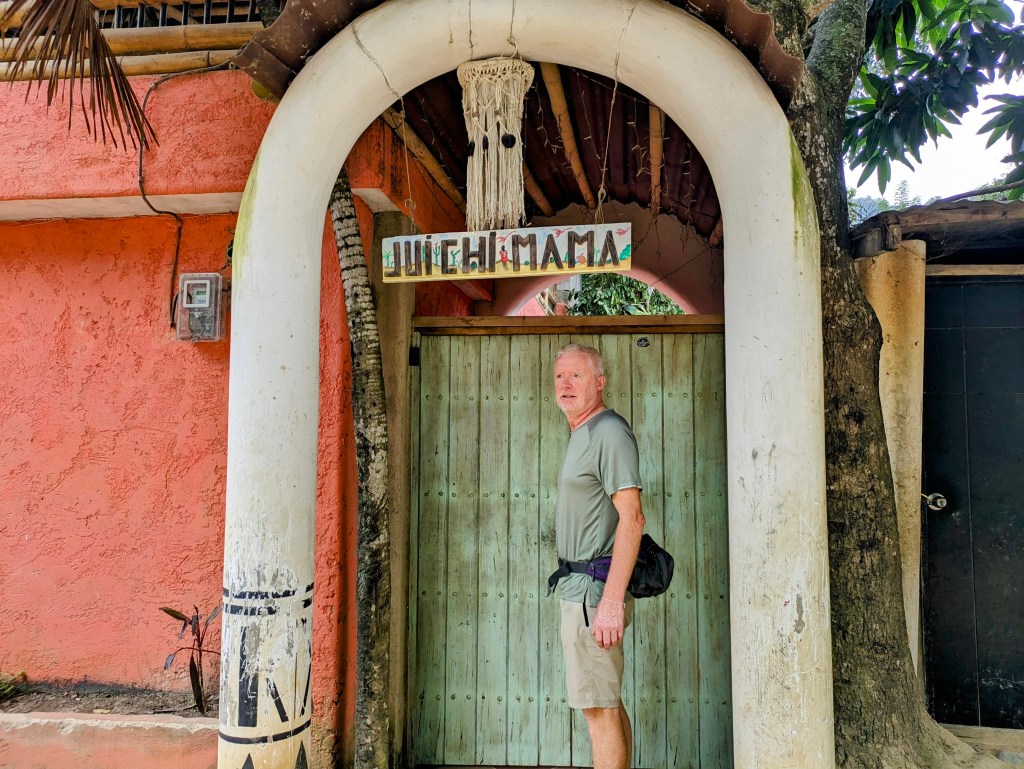
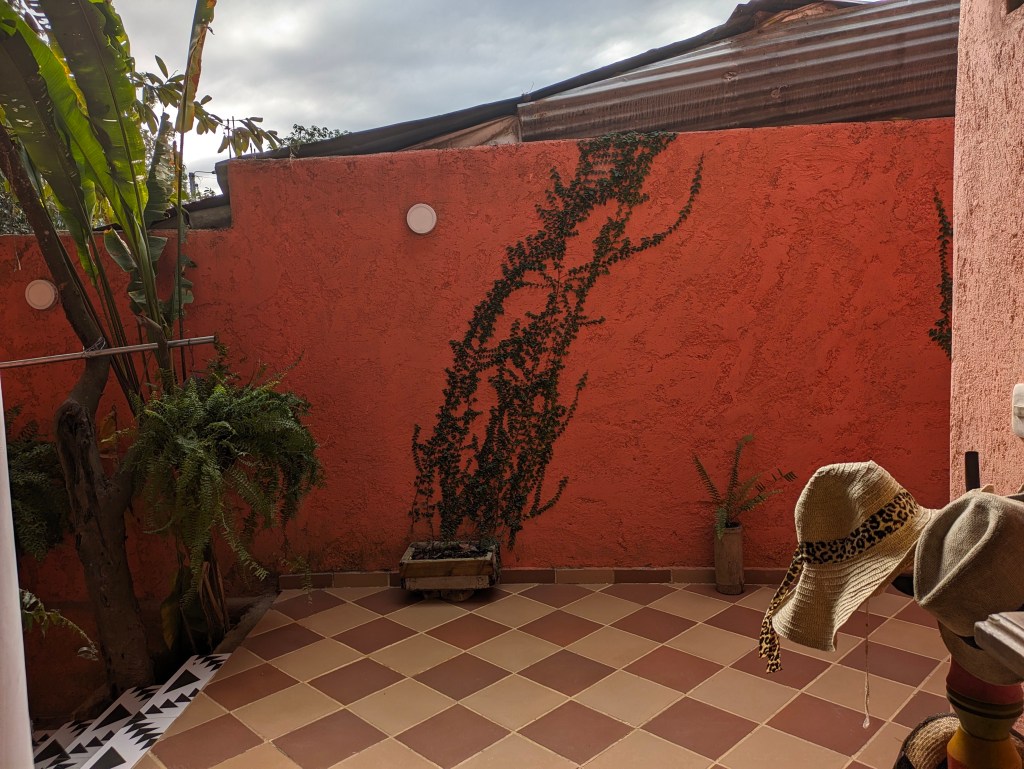
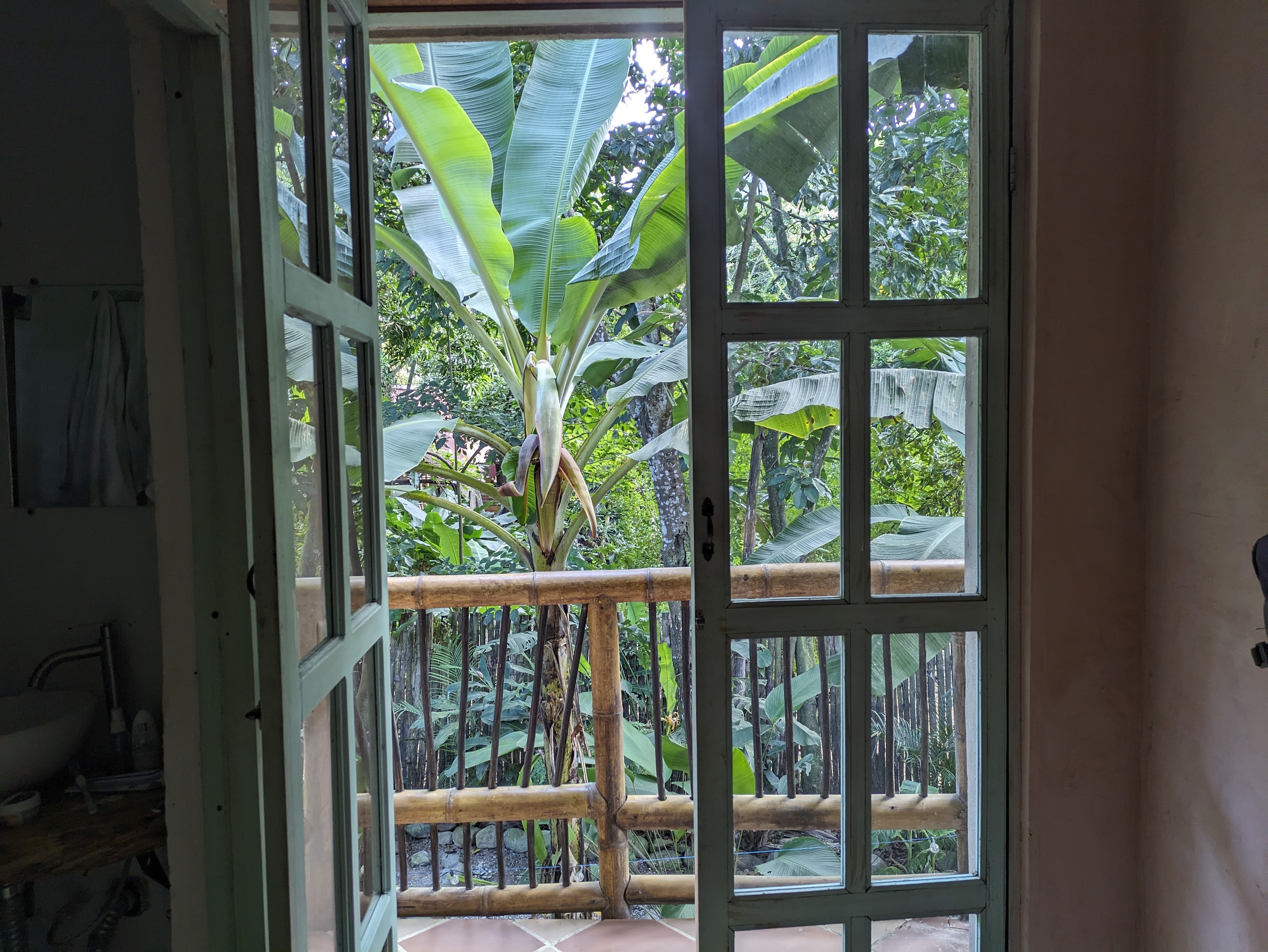
Our accommodation, Jui Chi Mama, was at the edge of the town, a 15-minute walk along more dusty streets. The outside door of our accommodation was faded dirty green, but inside was an oasis of calm and birdsong, an old house set in a huge, lush garden of huge tropical plants, an outdoor kitchen and lots of shady seating areas.

Jui Chi Mama was the sort of relaxing place that put a spell on its guests, a bit like Hotel California, you can check in but you can never leave.😄 Our initial booking was for four nights but we extended that by another four nights and then by another four nights. We weren’t the only ones…an English couple kept extending until they had spent three weeks, a Spanish girl was there for months and so was a German woman. We hope to check out tomorrow……if we can.

Palomino has the feel of a frontier town. Unreliable electricity supply is part of life here and power cuts are routine. A lot of guest houses and businesses have their own generator which unfortunately in our accommodation kept breaking down. We spent one long hot sticky night without a cooling fan, which was very unpleasant.  There are no connected sewage systems (houses have individual septic tanks) but there are plans to change this with diggers doing the preliminary work but not very consistently. Clean drinking water is also an issue and we were advised to use the filtered water available in the kitchen even for cooking.

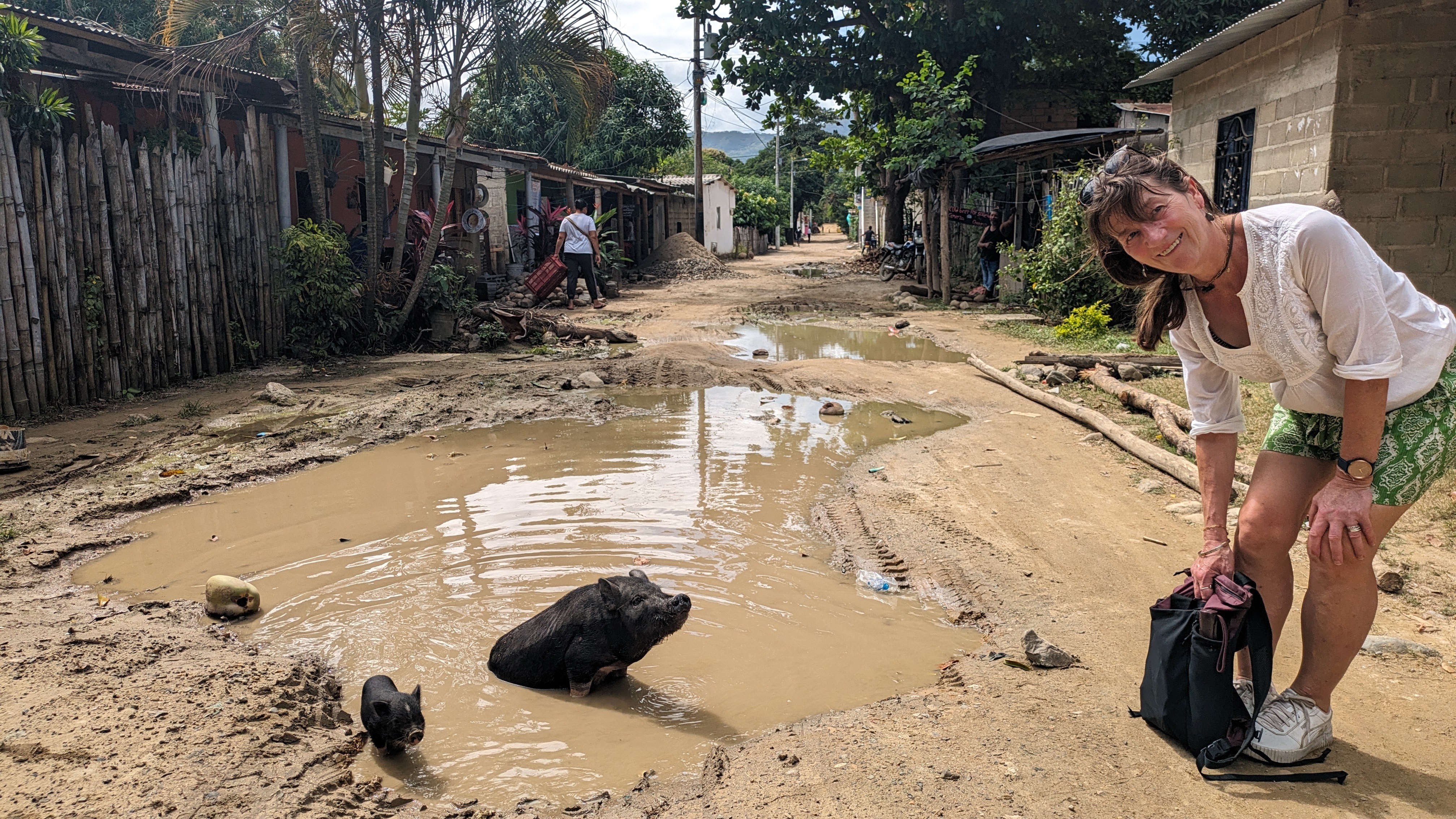
 Heat is also part of life in Palomino with it’s tropical climate.  It’s hot all the time, most days are well over 30C and nights are just under 30C.  When we first arrived and trudged along the dusty streets, we wondered how people got around in the wet season when the dust in the street must turn to mud. February is in the dry season, which runs for six months from December to May.  The weather was cloudy, overcast and very humid. We got a taste a few days later of what Palomino might be like in the wet.  It rained,  just a few showers at first, an afternoon of warm drizzle the next day and then a downpour that felt like it might never end, the skies emptied for about fourteen hours relentlessly. The streets were a quagmire, a slip-sliding mess of oche mud, flowing streams and floating rubbish. We were told that rain like that was very unusual, especially at this time of the year.

Loving the Mud

Palomino had the feel of two separate towns, there was the main strip, really just one street that led to the beach with lots of restaurants, tourist shops, tattoo places and tour operators. This was where most of the visitors hang out and then there was the rest of the town, where we were staying where the children played in the streets, where the front doors were open, where people sat outside their houses and gossiped, where the music coming from the snooker hall was seriously deafening at the weekends.

The Beach was long and sandy, bookended by the two rivers but the sea was surprisingly rough and quite dangerous in places for swimming. It was not the Caribbean of our dreams, the clear calm turquoise waters that we imagined. We dipped in it a couple of times,  like being in a washing machine on a warm cycle, and when it spat us out, we relaxed at one of the beach bars and restaurants,

The Caribbean

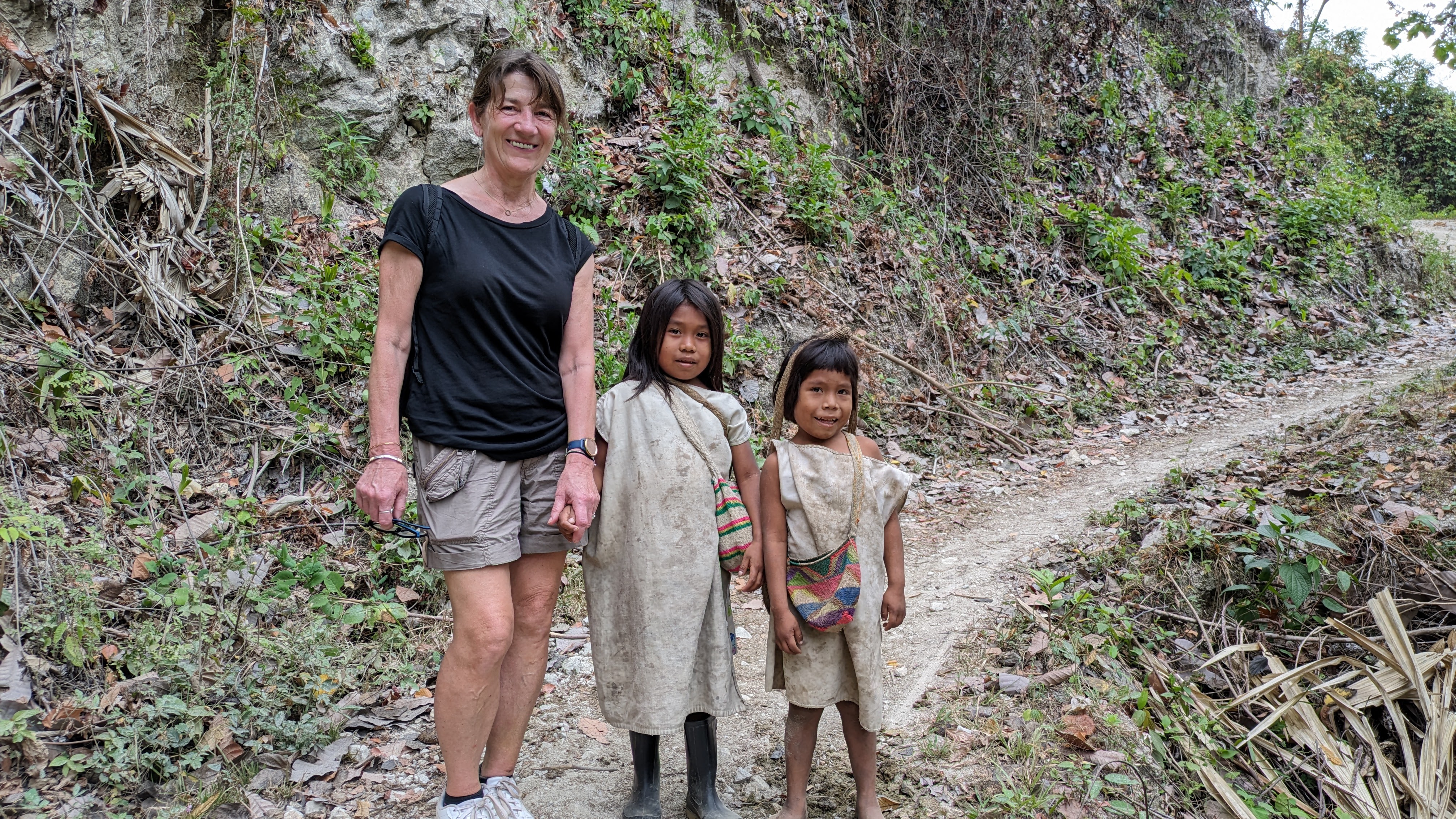
There were interesting trails into the mountains leading to indigenous villages, along paths that climbed high and then descended steeply and repeated over and over through thick vegetation.

Meeting the Indigenous Children

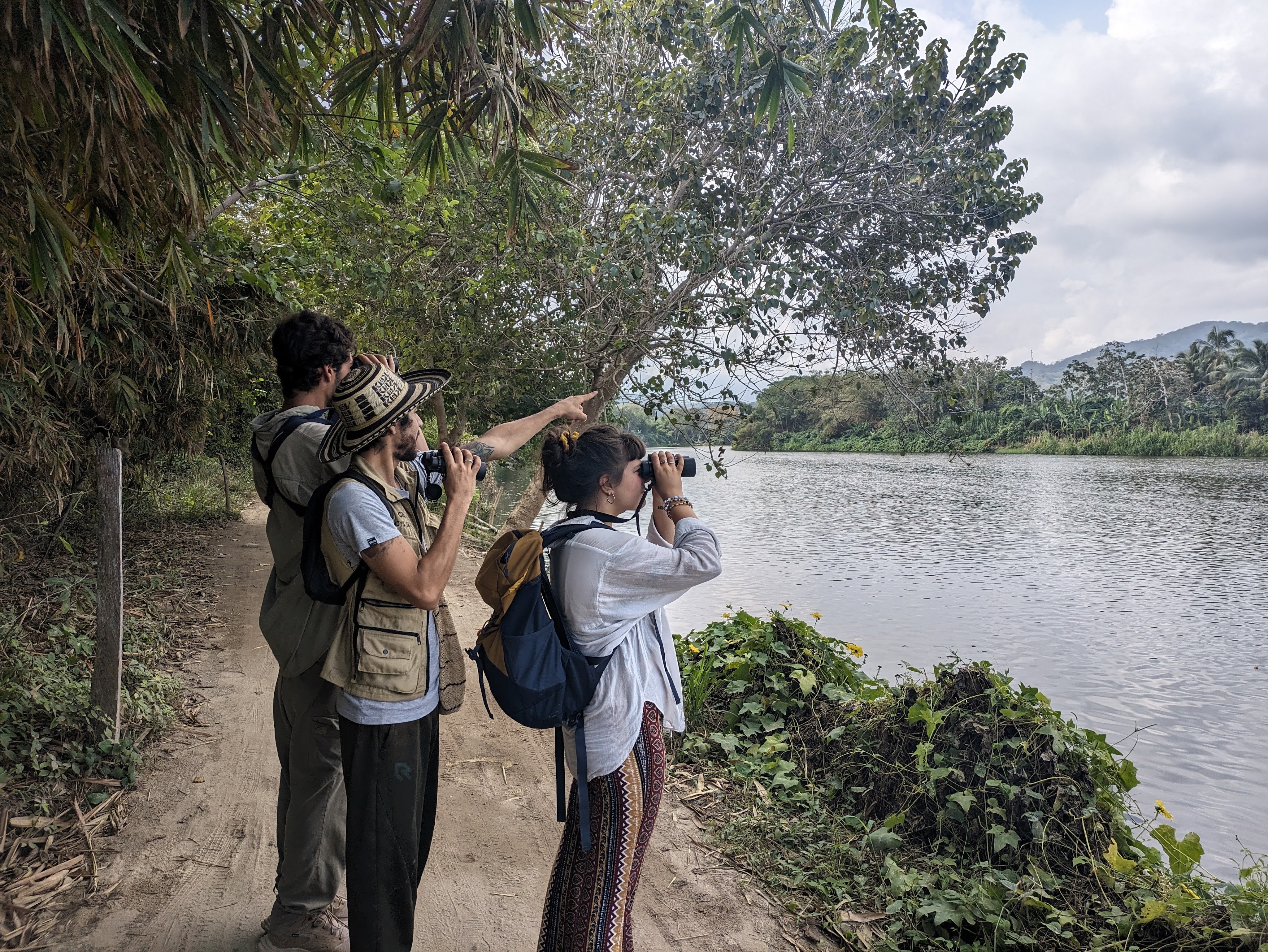
Herman, who runs our guesthouse, was a keen birdwatcher so we booked a birdwatching tour with him, a four-hour walk in the early morning though the town, along by the river and mangroves to the beach. There was a huge variety of birds from tanagers, flycatchers to eagles. Many of the birds were similar to our own but then there are the colourful parrots, the Macaws and the tiny hummingbirds. Over the last six or seven years, a large patch of ground on the edge of town that was used mainly as a dump has been cleared up and is being reclaimed by nature to form new habitats. The growth here is phenomenal….we have watched a bunch of bananas in the tree outside our balcony , increase in size by the hour.

Birdwatching by the Rio Palomino
Lush Growth outside our Balcony

For the last week, we have been taking Spanish classes with the wonderful Christina, just an hour a day, mainly concentrating on conversation. Christina is a native of Bogota who moved to Palomino many years ago and also spent a long time in America so her English is excellent. Our progress is slow but hopefully, one day, it will all fall into place….with perseverance and practice🤞

So tomorrow we check out -if we can- and head further into the La Guajira region towards the desert and the northernmost part of South America

Hasta luego, amigos🥰

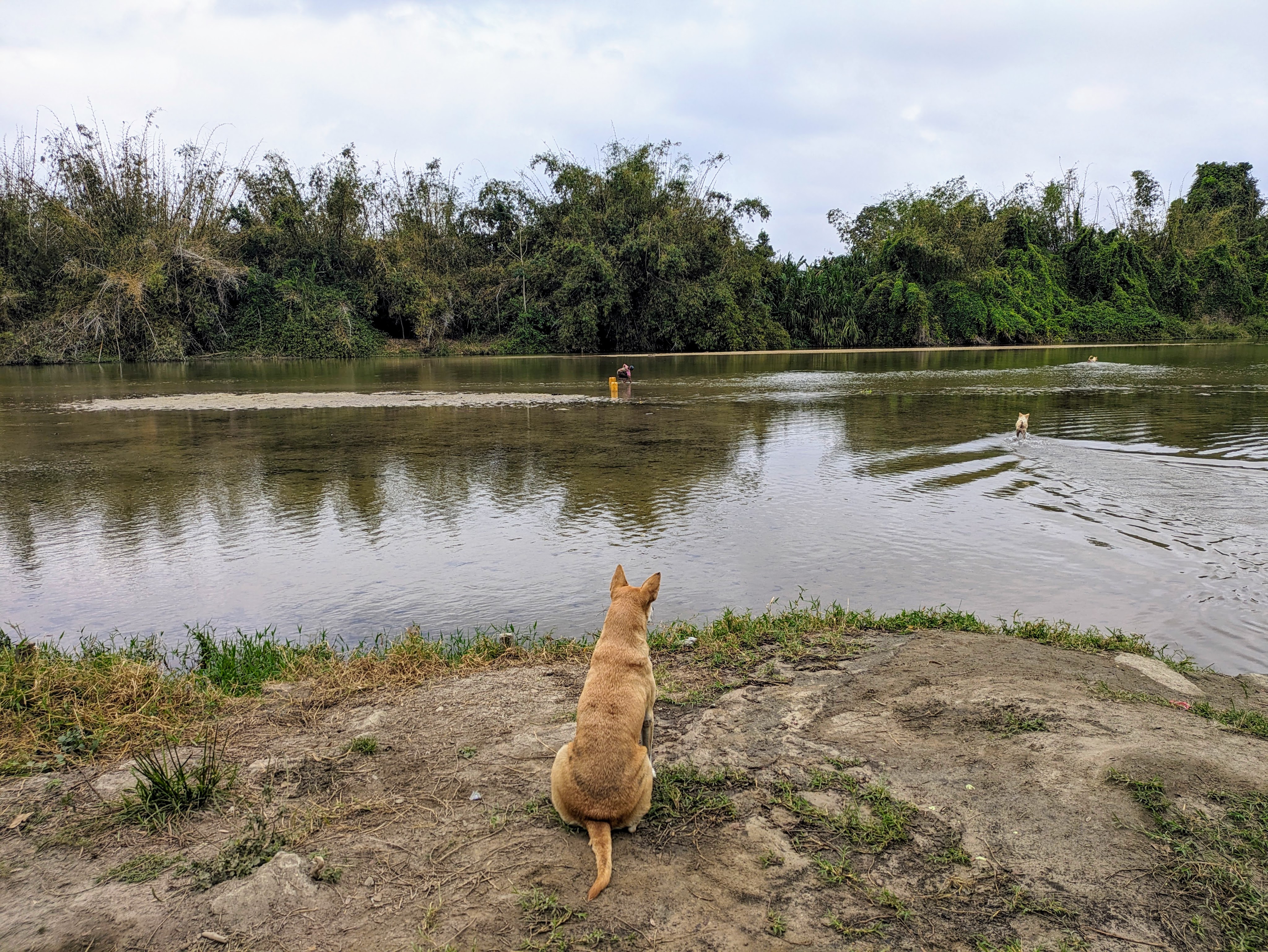
Chilling by the River
Colombia – Looking for Paradise