Electric Travels: Highs and Lows

EV Charging in Spain

The night before we left home for our two-month roadtrip from Ireland to Morocco in our  completely-electric van, I had a dream -more a nightmare – that camels were towing us through the desert because we had run out of charge. Thankfully that didn’t happen…..although at one stage in Central Morocco, it was looking like a very real possibility. But we survived – both us and the van arrived back home, delighted and exhilarated by our travels.
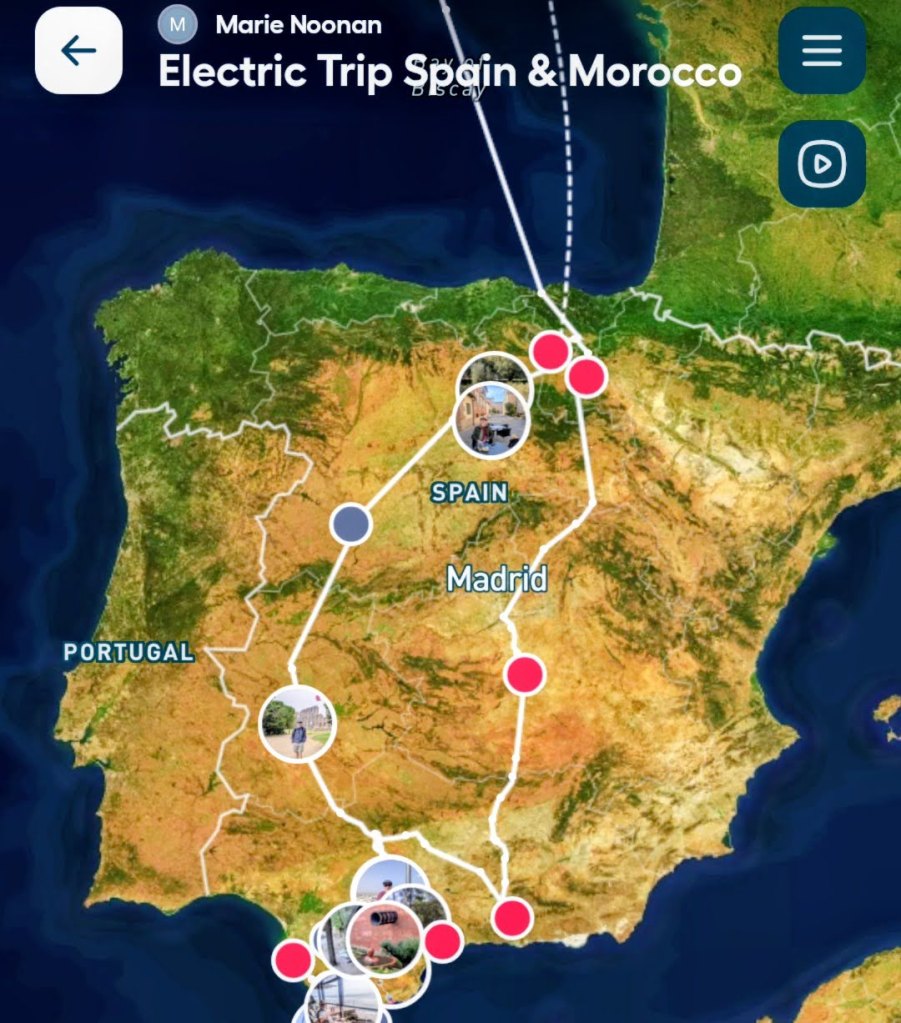
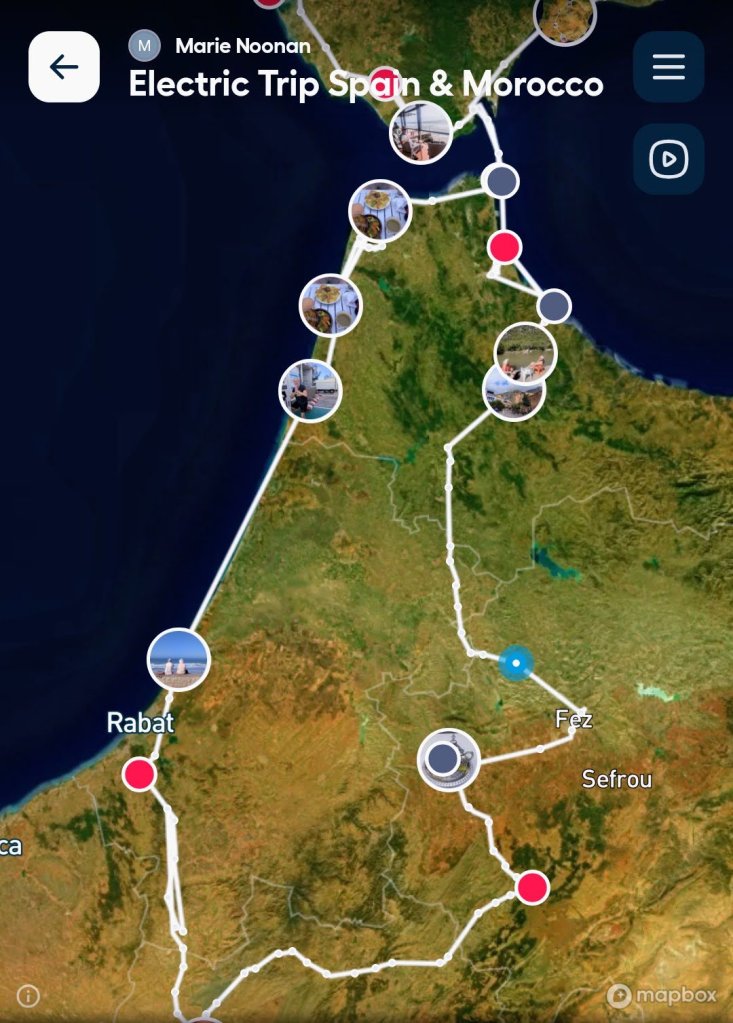
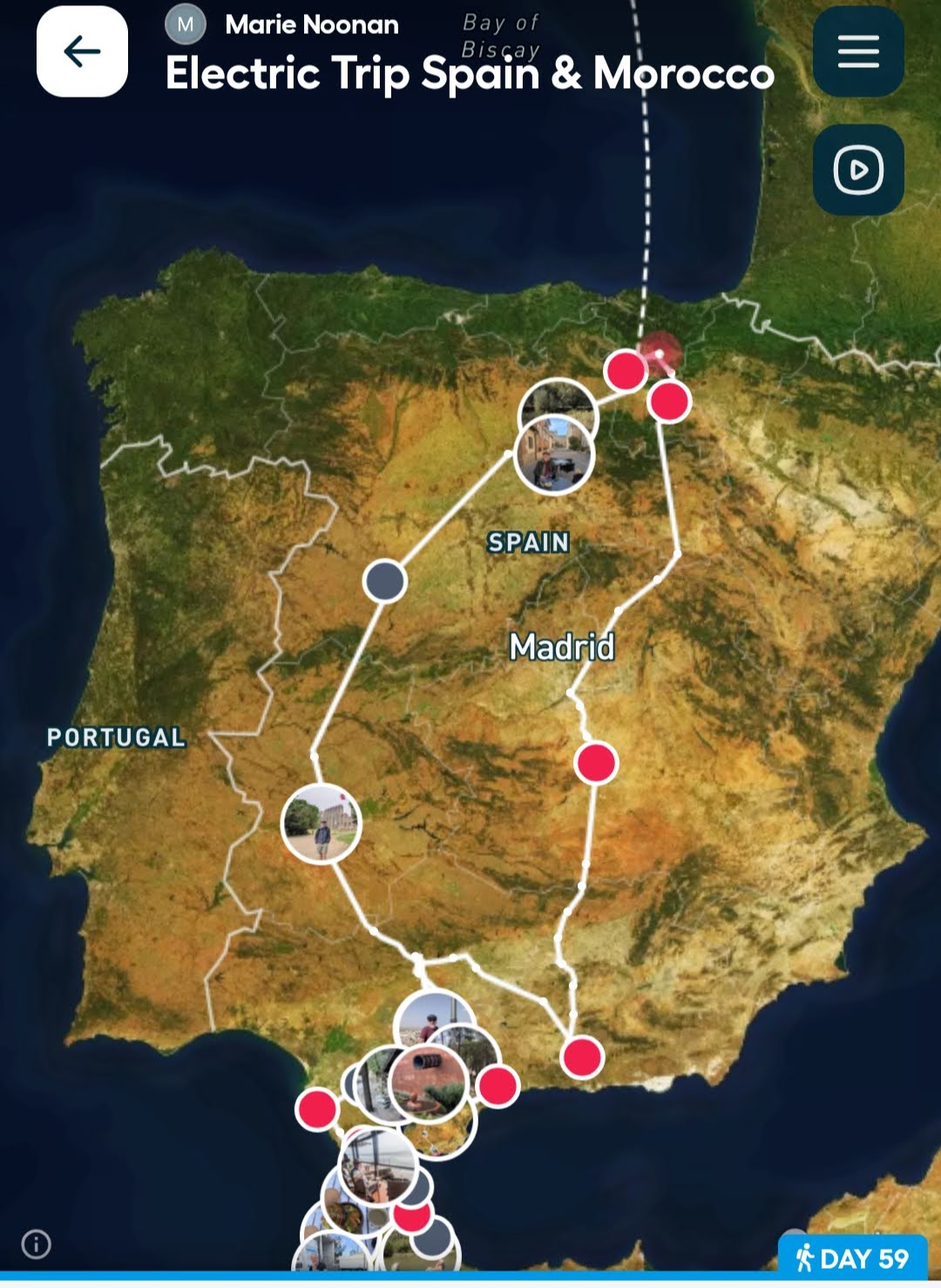
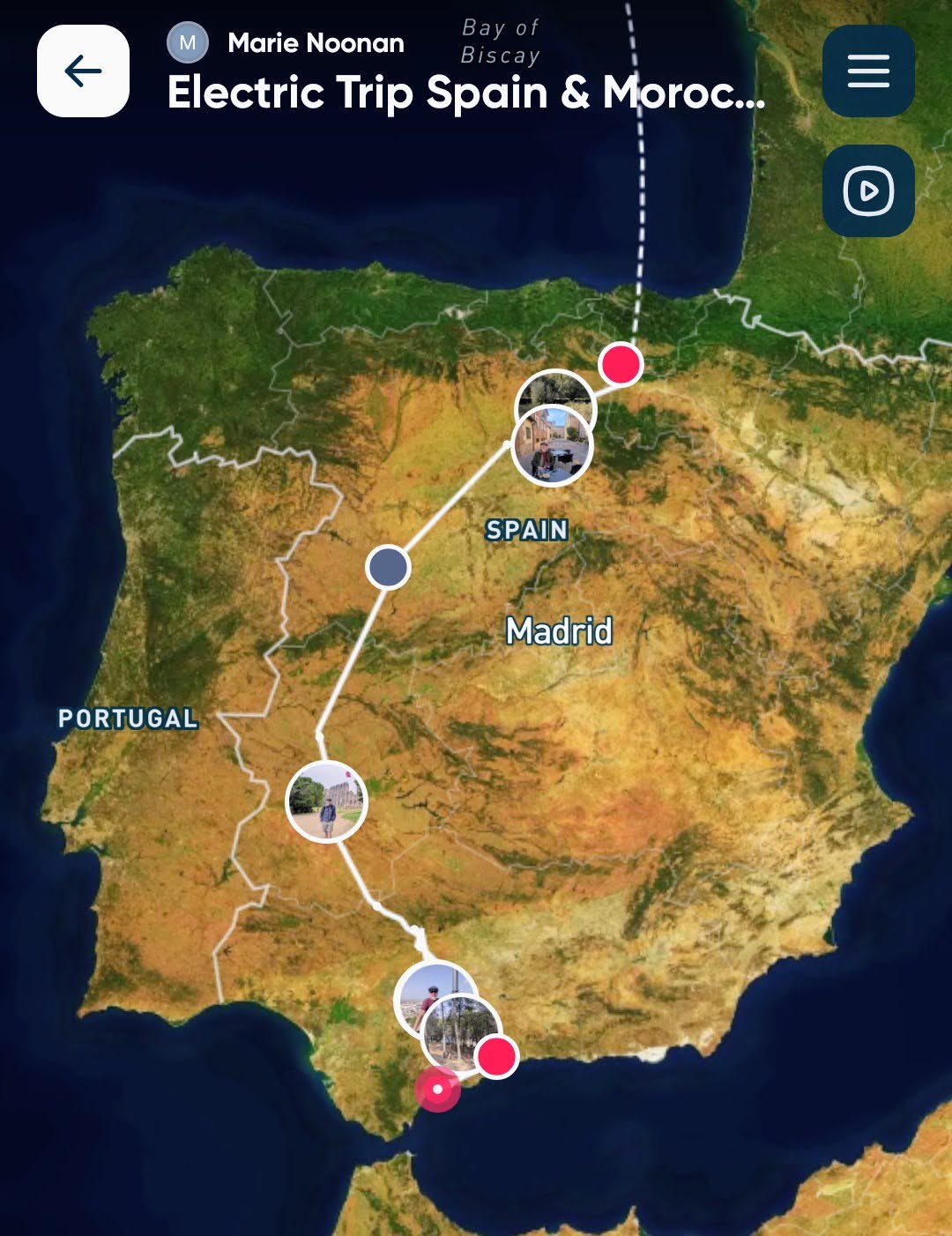
This final post is a brief summary and some trip highlights. We left home on the first of October, sailing with Brittany Ferries boat from Rosslare to Bilbao in Spain – the thirty-hour journey was a wonderfully relaxing way to transition into holiday mode.  We meandered through central Spain to Algeciras in Andalusia, (charging as we went along without issue) where another ferry (only one hour this time) took us across the Strait of Gibraltar to Morocco. Having spent a little over three weeks in Morocco, we returned to Spain and made our way slowly back to Bilbao to return home on December 2.

Our highlights were numerous in both countries so….. here’s just a few in no particular order.

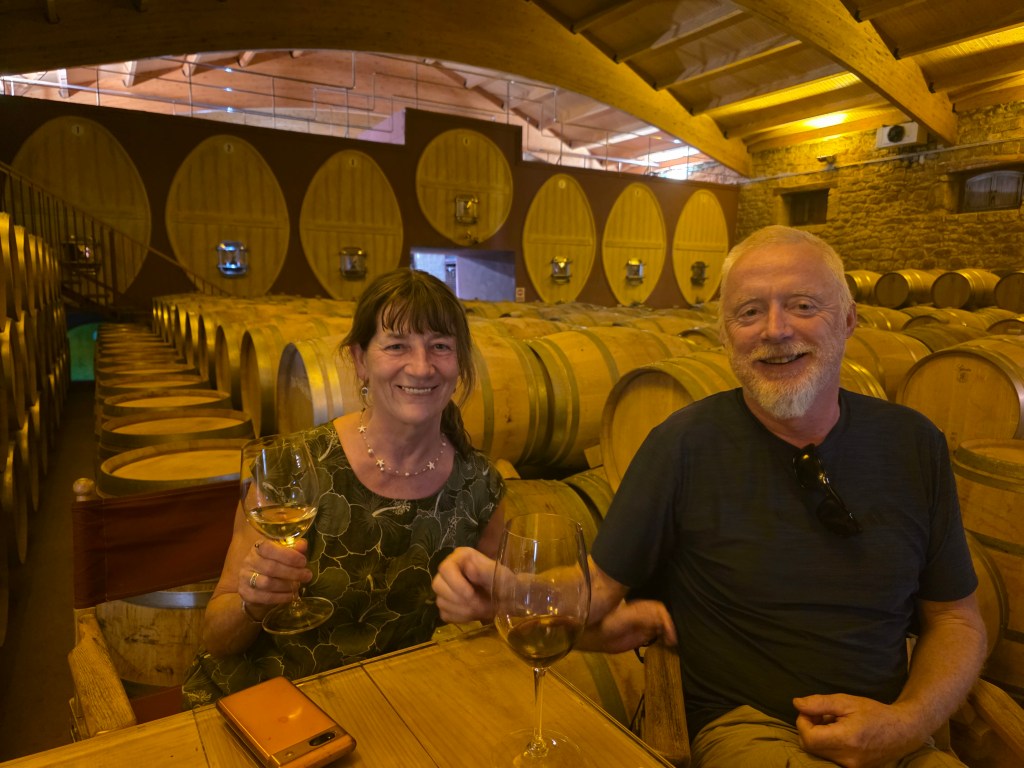
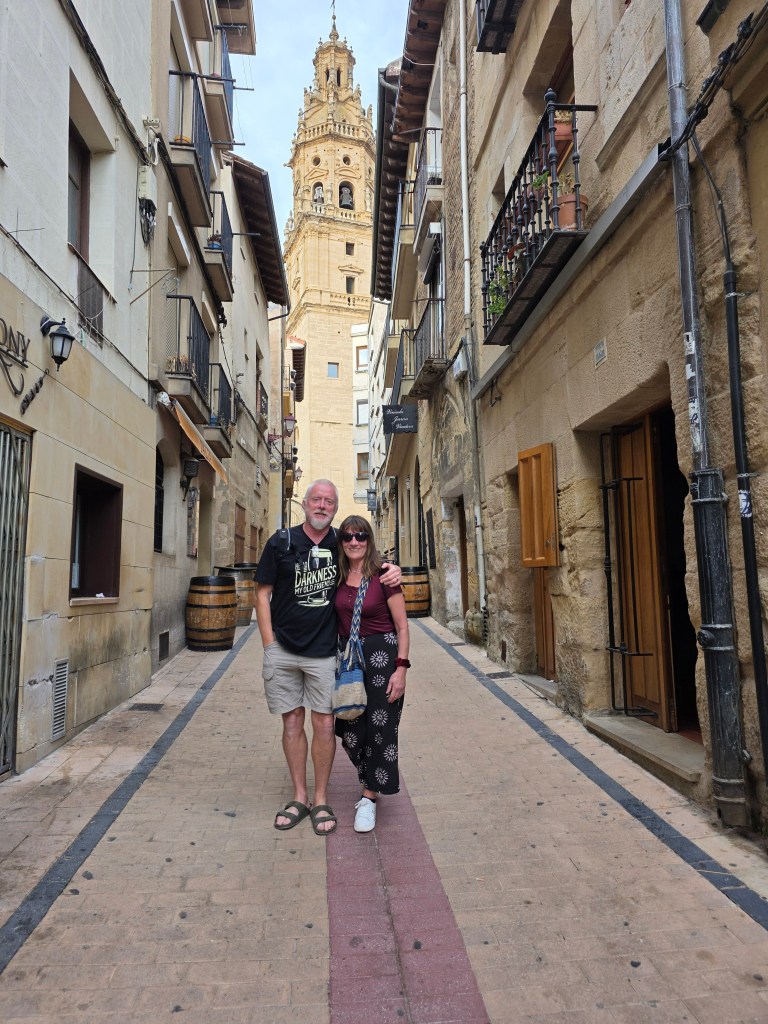
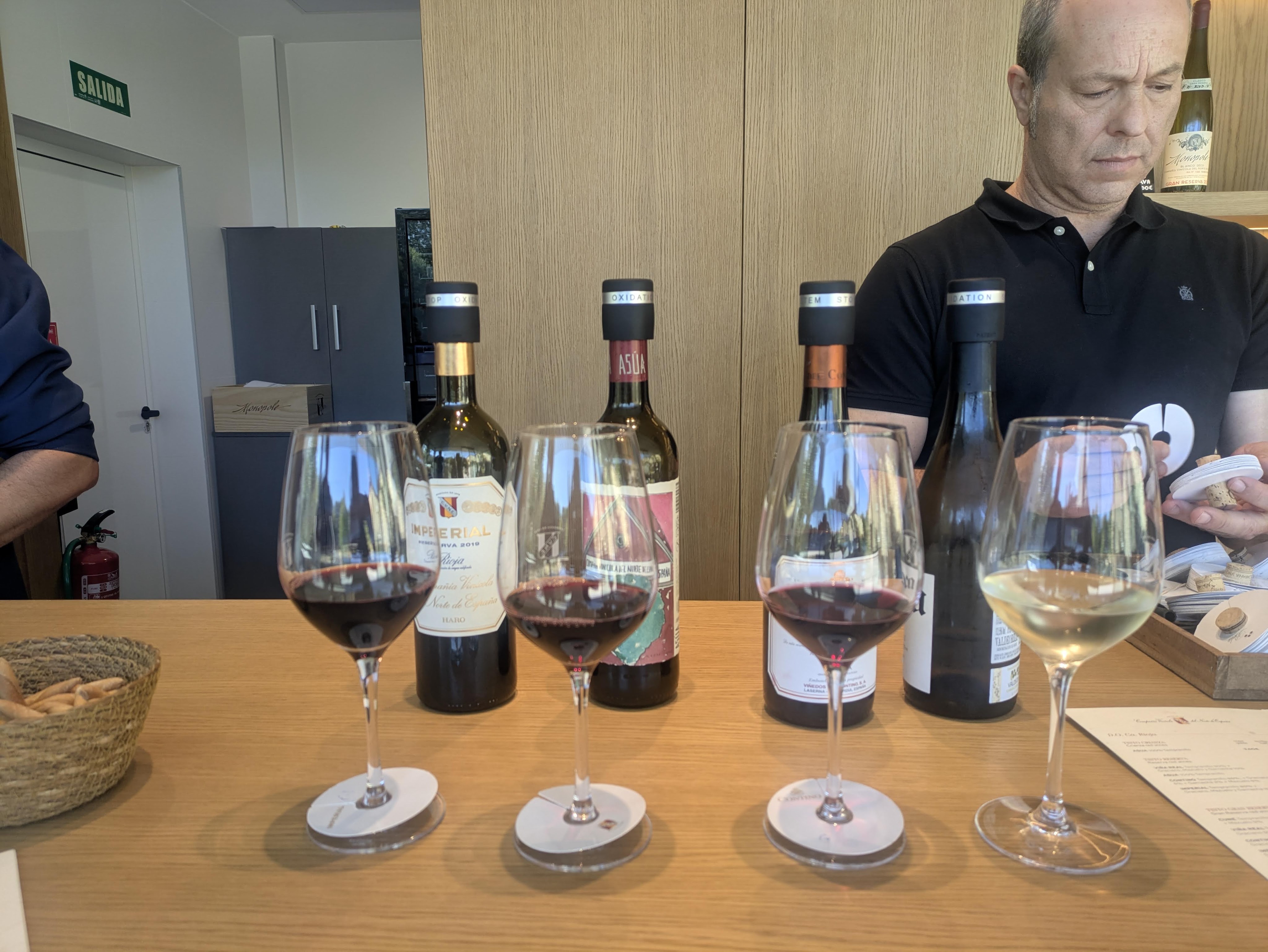
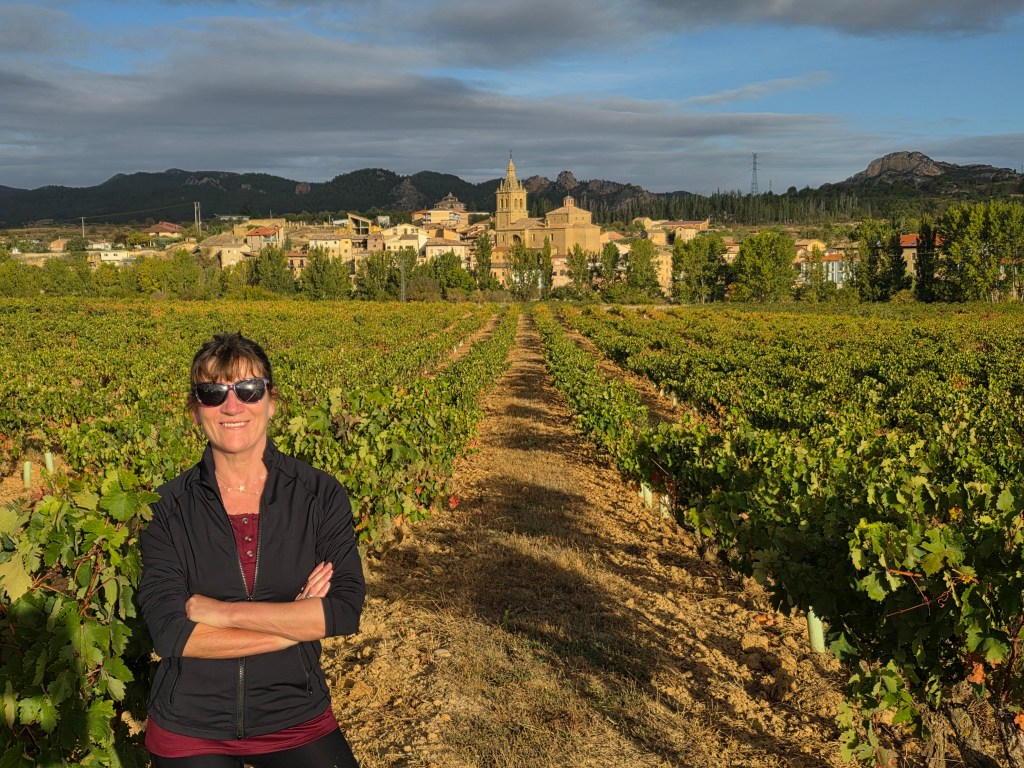
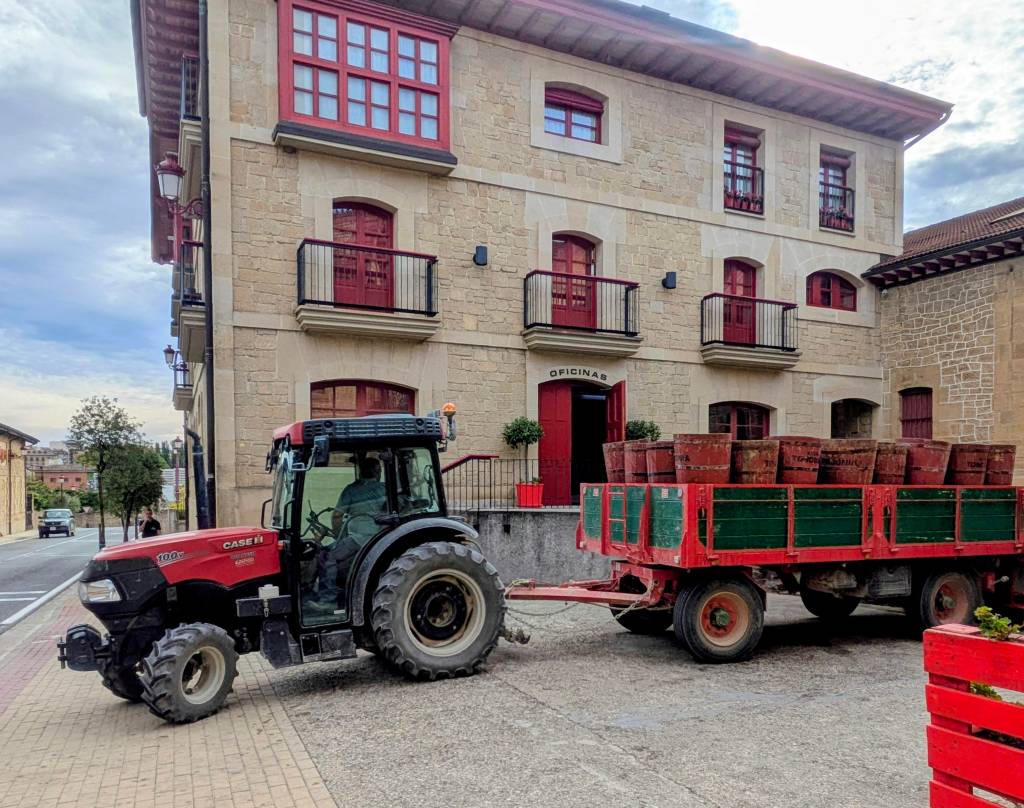
Haro is a small town in the Rioja Region where, in early October, the air was heavy with the tang of fermenting grapes and the hum of tractors pulling heaped trailer-loads to the wineries. The buildings were made of a mellow-yellow stone that seemed to glow in the late afternoon….but that could be just the effect of the wine-tasting. Sipping wine in a two-hundred year old cellar, surrounded by wooden casks which were slowly seeping alcohol into the dim air, was a memorable way to enjoy a tipple…. even if it was barely midday. Most wineries opened at 10am and closed by early afternoon.  This activity also meant that most visitors were never entirely sober. We thoroughly enjoyed ‘The Haro Haze,’  that fuzzy, slightly inebriated state, but after three days, we had to leave or we might have stayed forever.
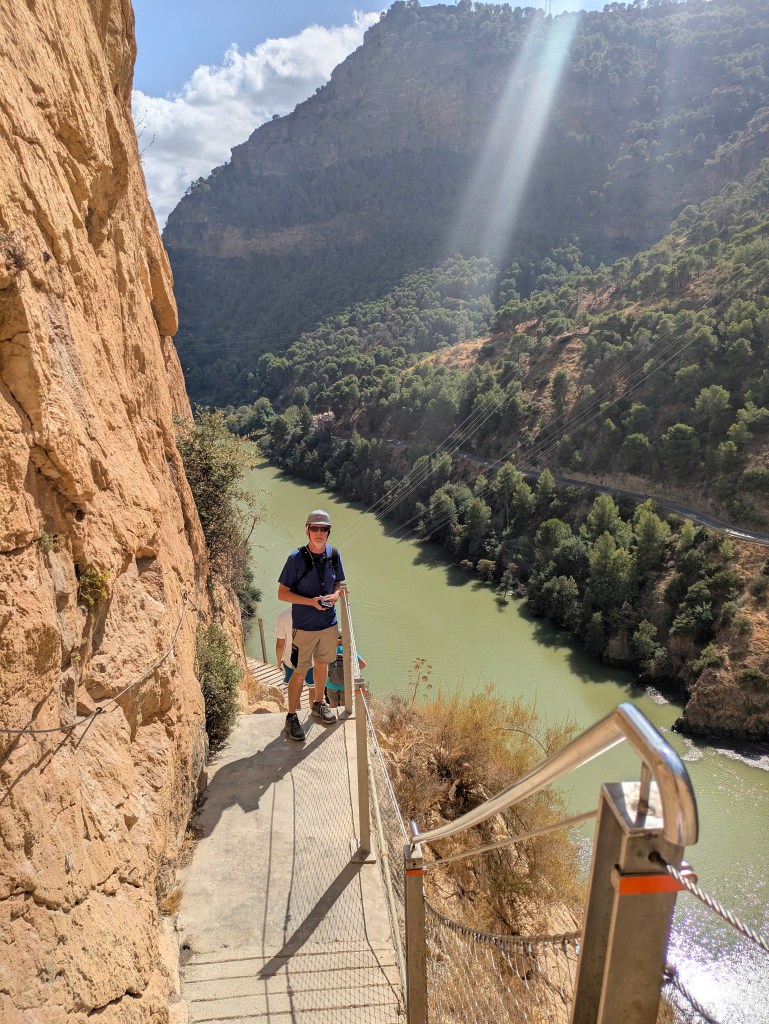
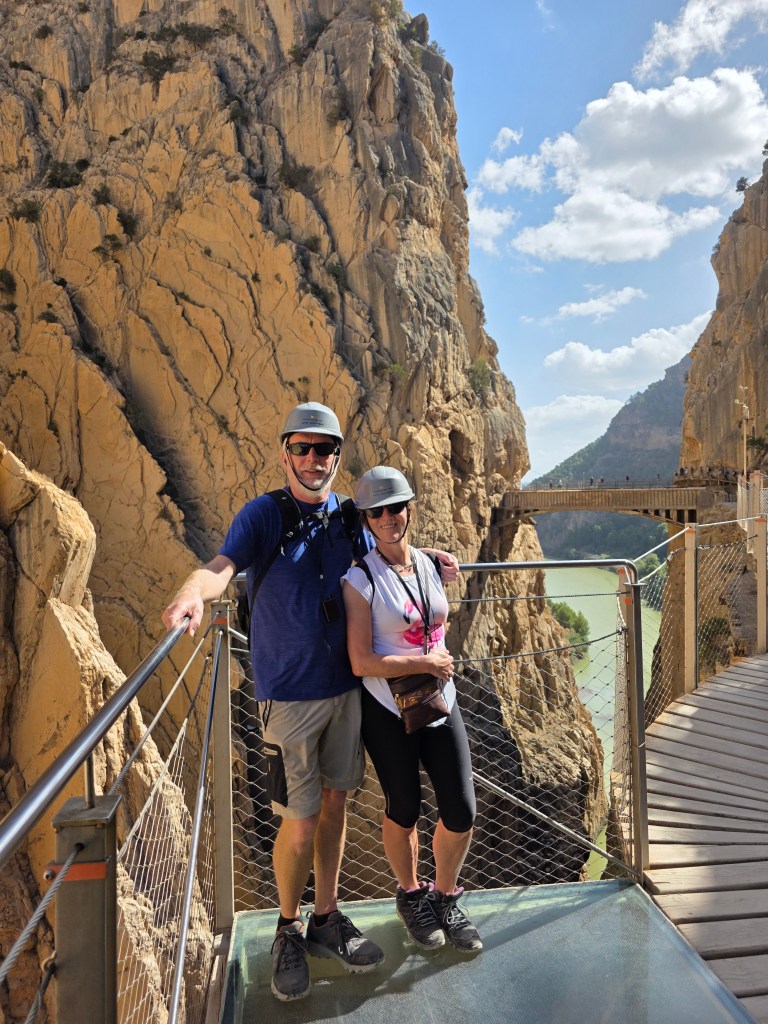
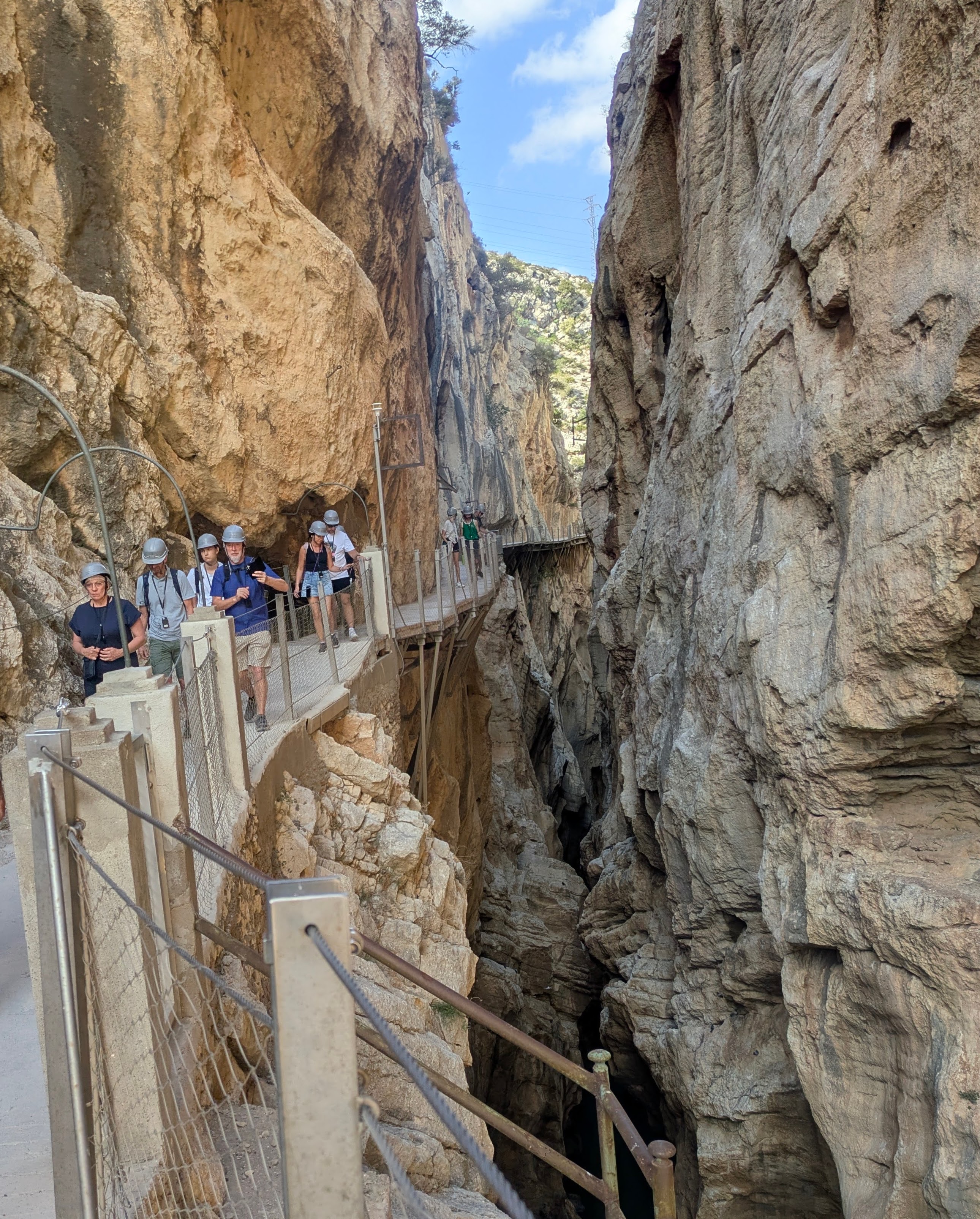
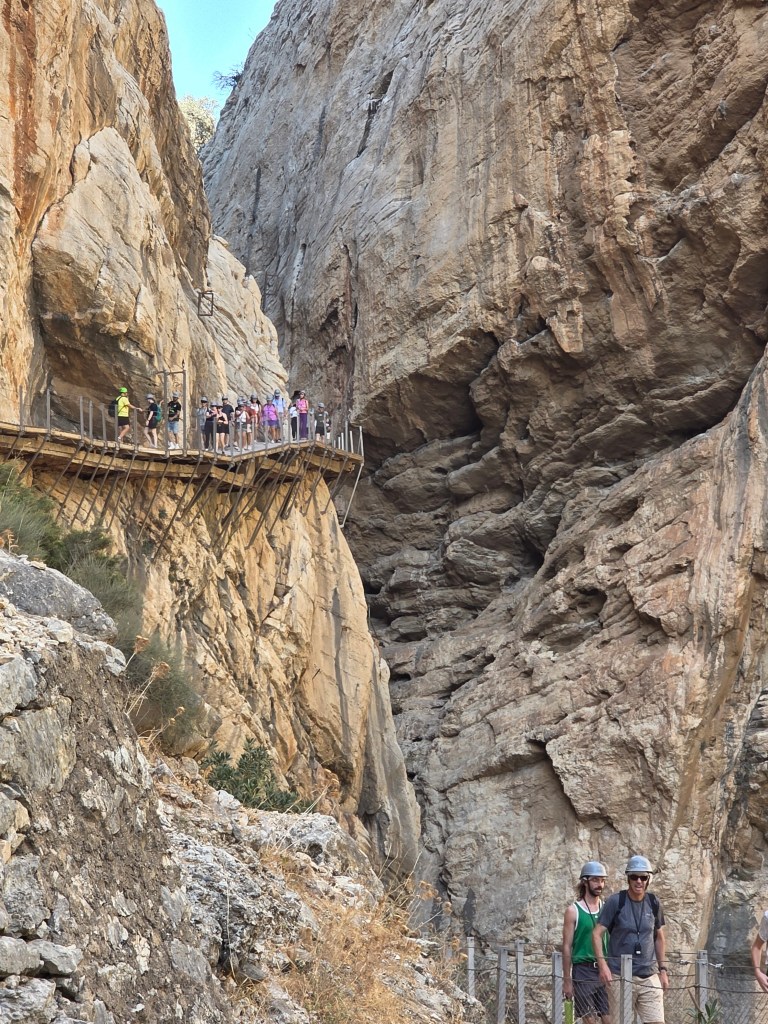
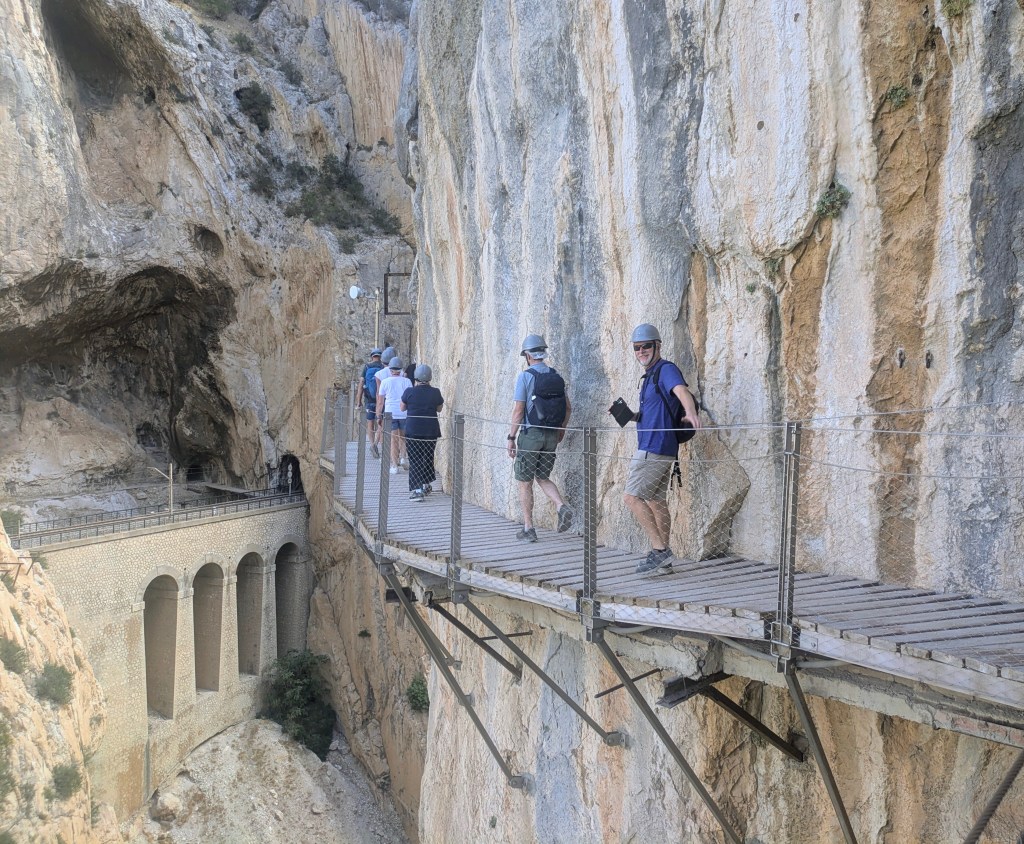
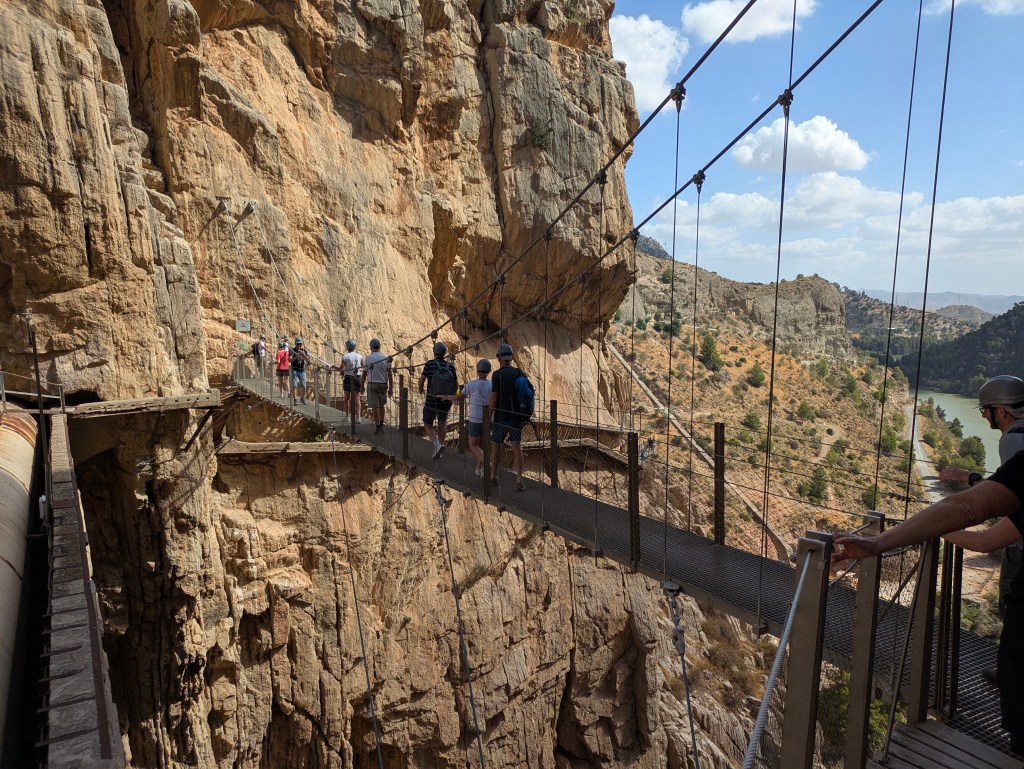
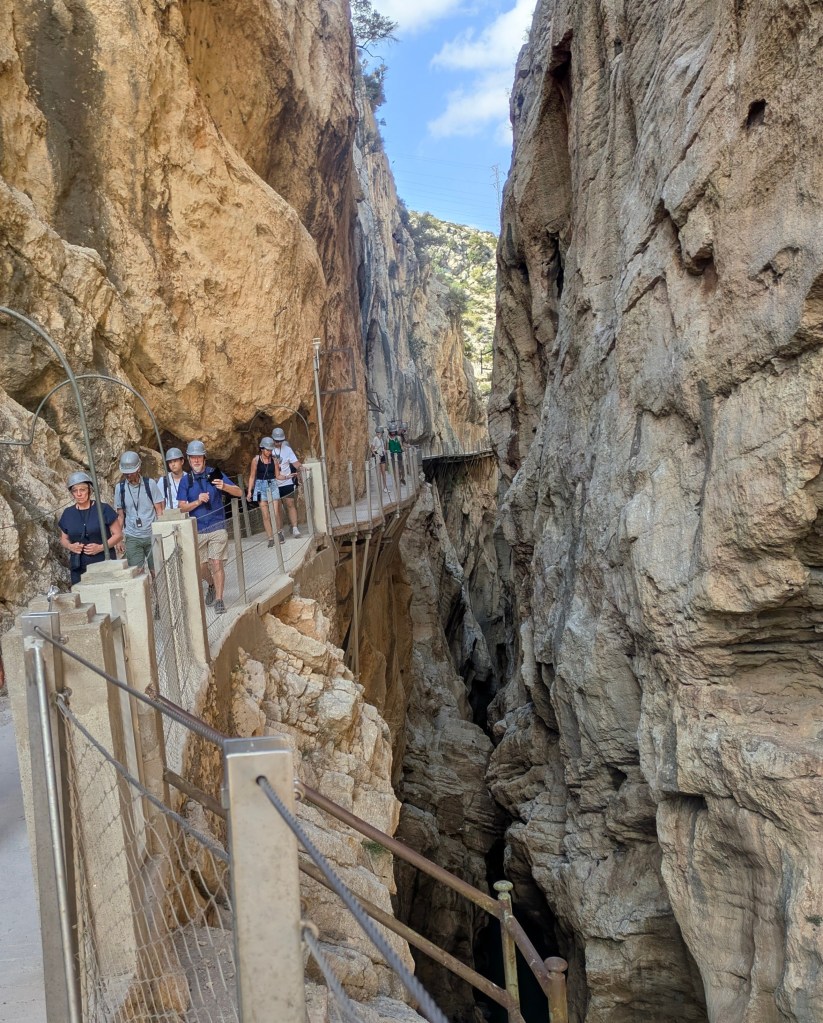
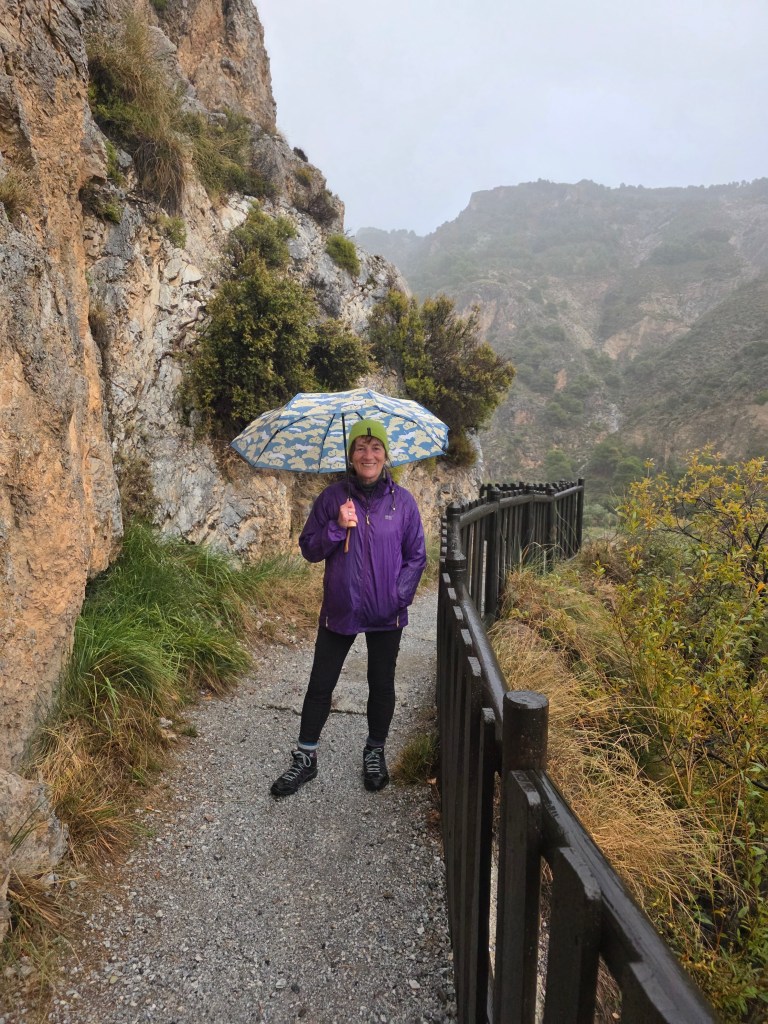
The Caminita del Rey is a trek along narrow walkways, that are pinned along the steep walls of a spectacular gorge in the Malaga region. This was a dramatic walk with stunning views…..and not as scary as the photos might indicate as new reinforced walkways have replaced the original rickety ones. The actual portion of the hike along the gorge is quite short, about 3.5 kms with a couple of kilometres at either end to make up about eight kilometres in total. Its popular and requires prior online booking.
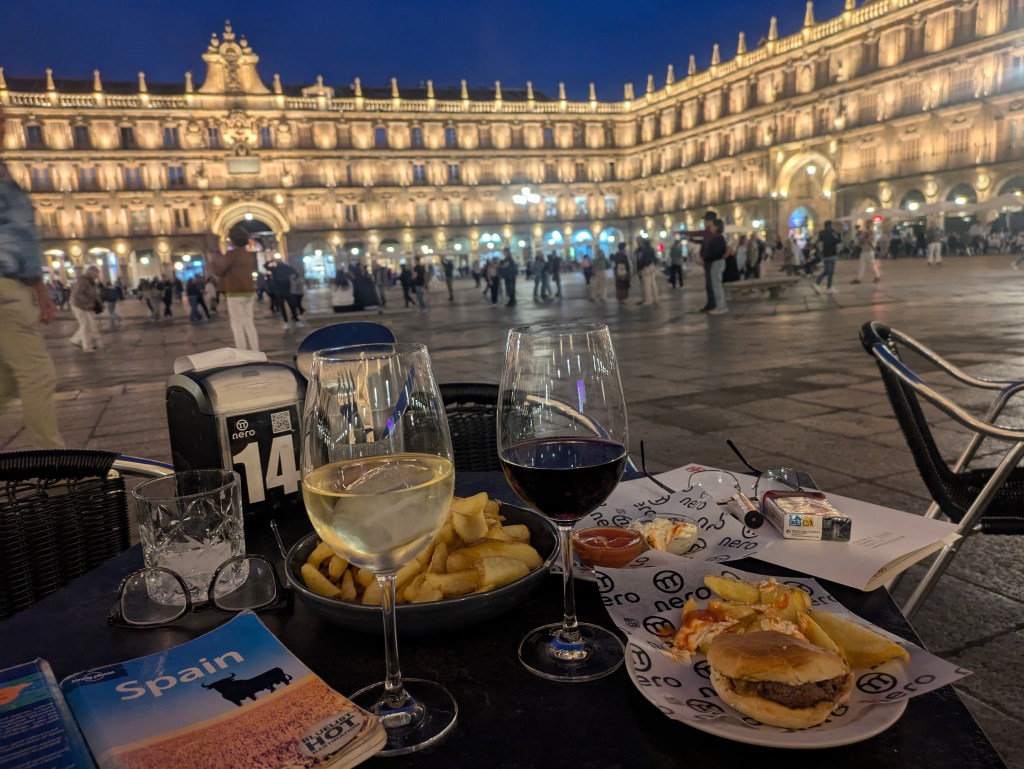
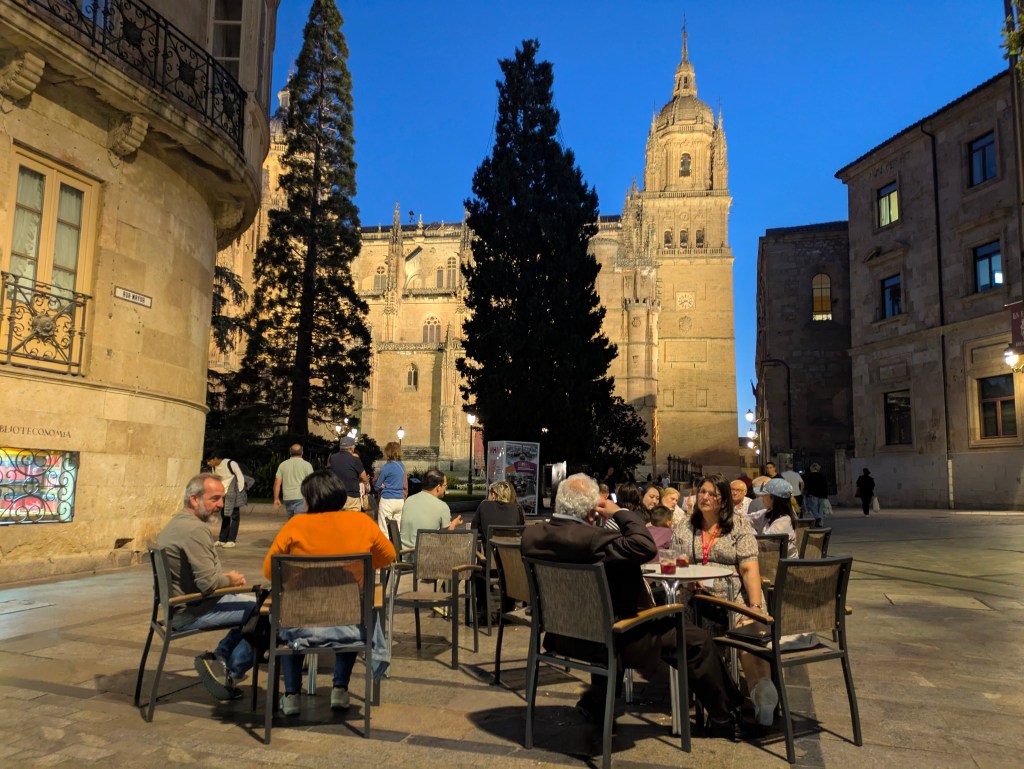
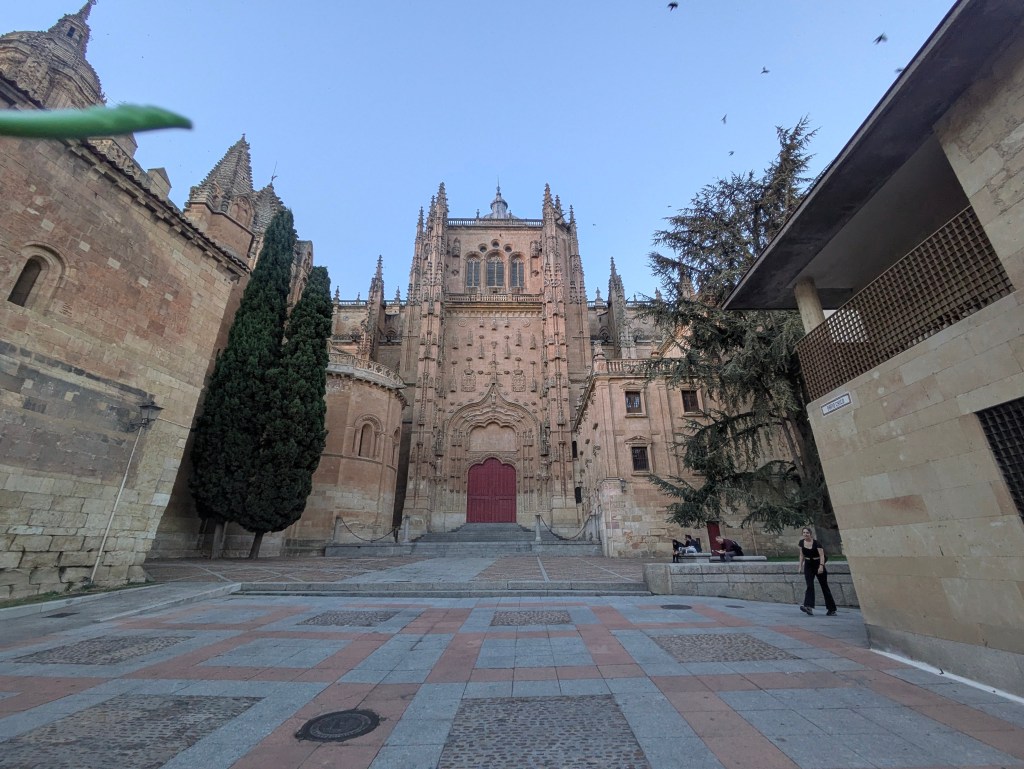
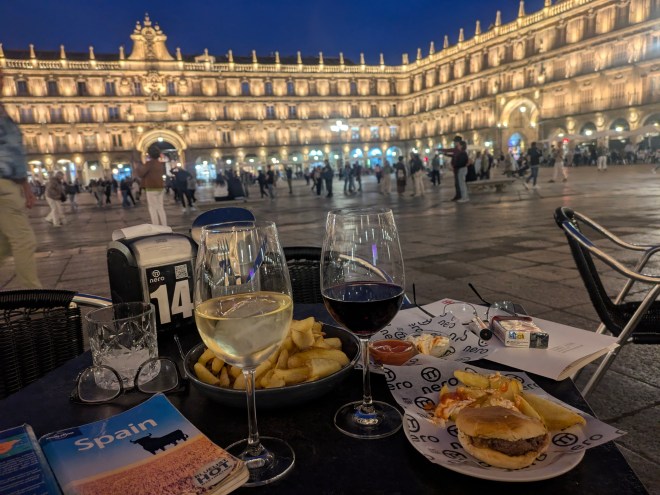
Salamanca. In a country which is choc-o-block with stunning towns,  we were truly dazzled by the scale and mesmerising beauty of the main plaza in the small city of Salamanca. No wonder it is regarded as the most magnificent plaza in all of Spain.  Visitors and locals alike burst into spontaneous applause at dusk when the lights were turned on, enhancing its beauty even more.
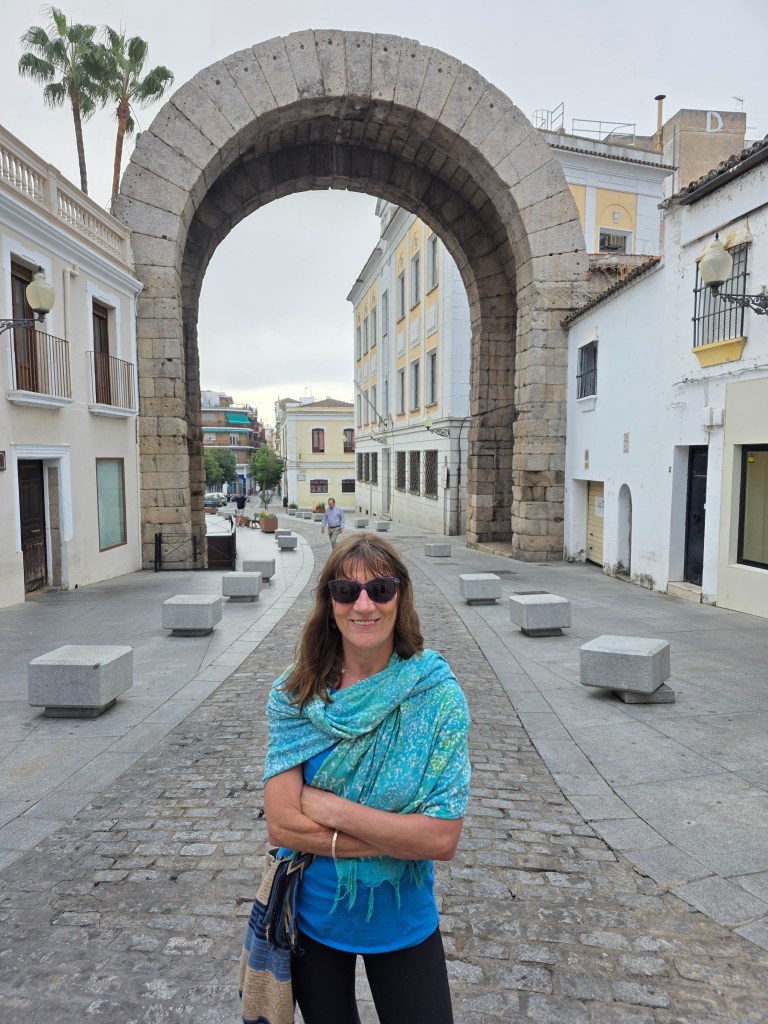
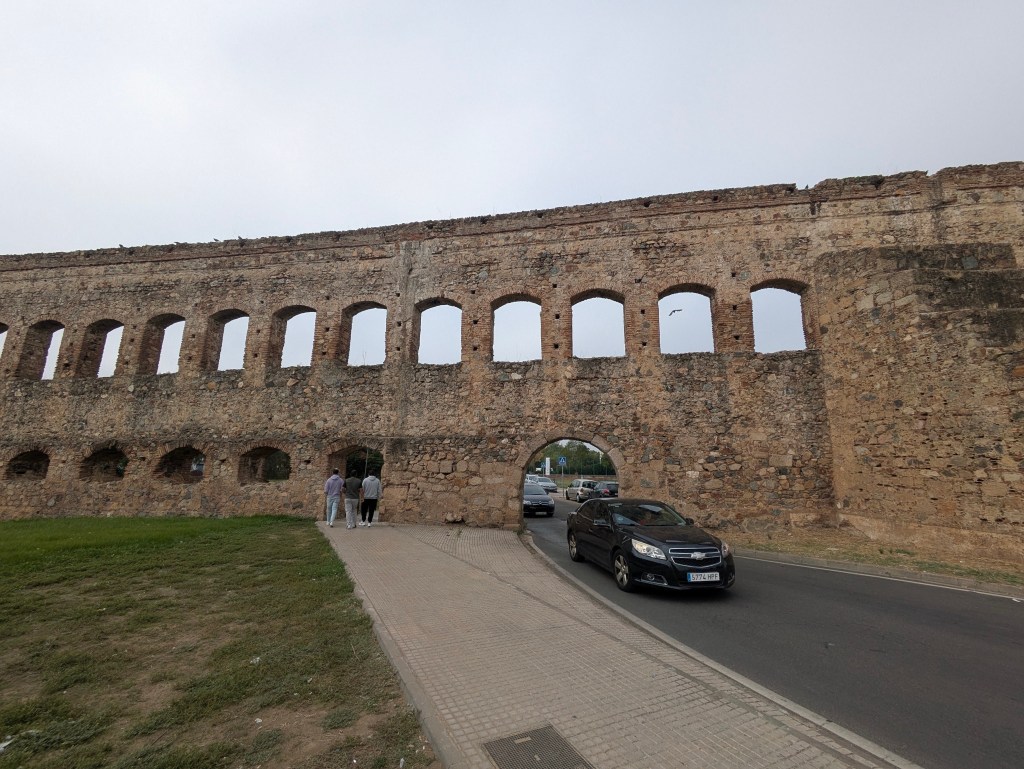
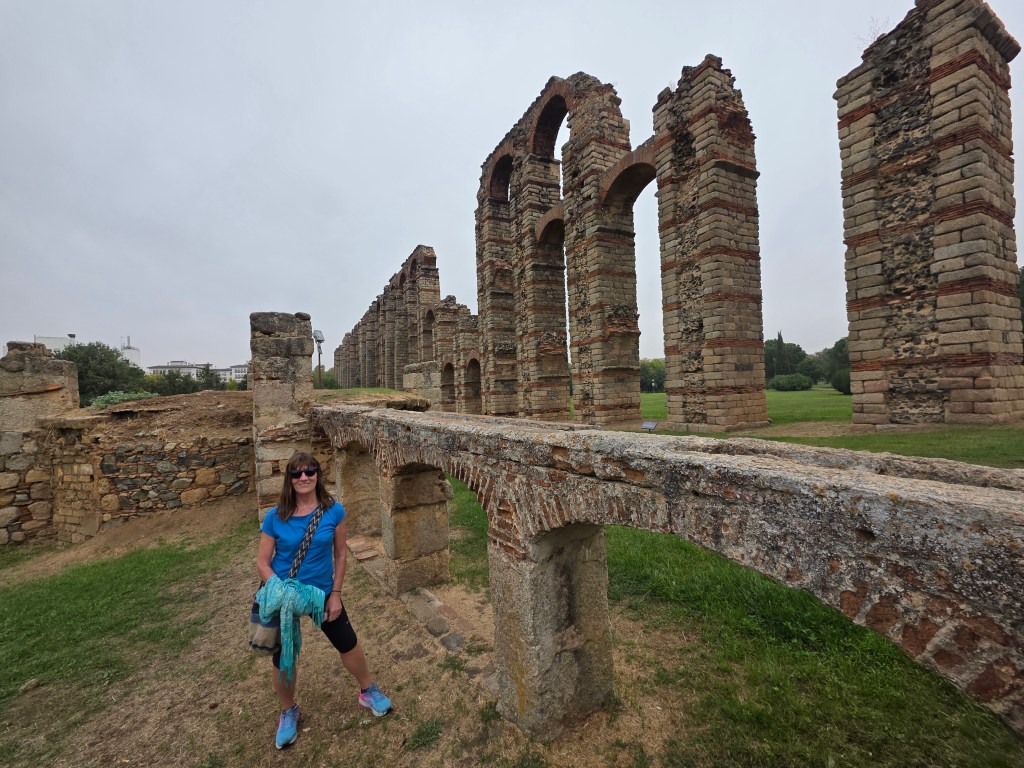
Merida, the capital of western Spain’s Extremadura region was founded by the Romans in the 1st century B.C. It’s a little ramshackle but its Roman origins were evident in the arches, aqueducts and amphitheatre.  Many of the ancient structures were incorporated into modern living – cars drove on paved roads under ancient arches and people strolled over the old Roman Bridge which linked the old town with the new. A friendly place.
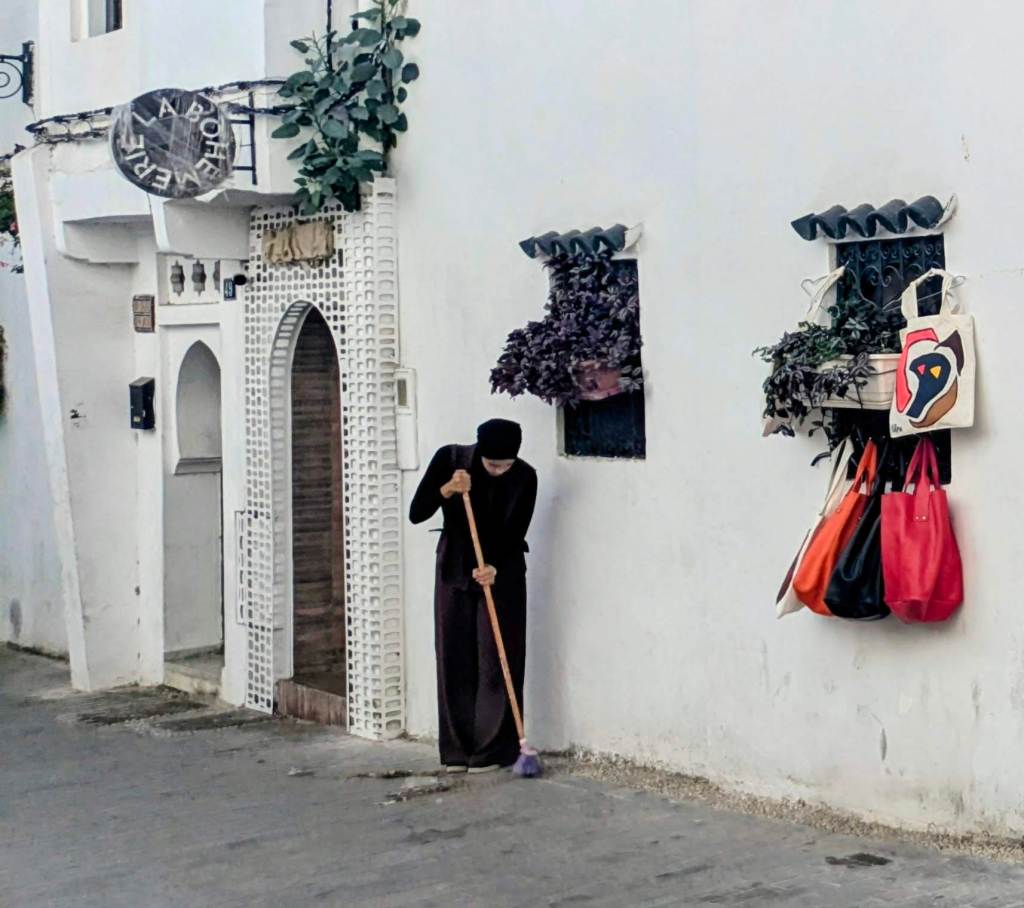
Walking Tour in Tangiers A walking tour of the medina and souk in the old town gave us a flavour of this fascinating city, a place where mosques became churches before changing back again, where being the ‘Gateway to the Mediterranean’ was both a blessing and a curse, a pawn and a prize to be coveted and fought over down the centuries. It was also a place that welcomed artists – Sir John Lavery lived here, so did Tennessee Williams and Jack Kerouac.
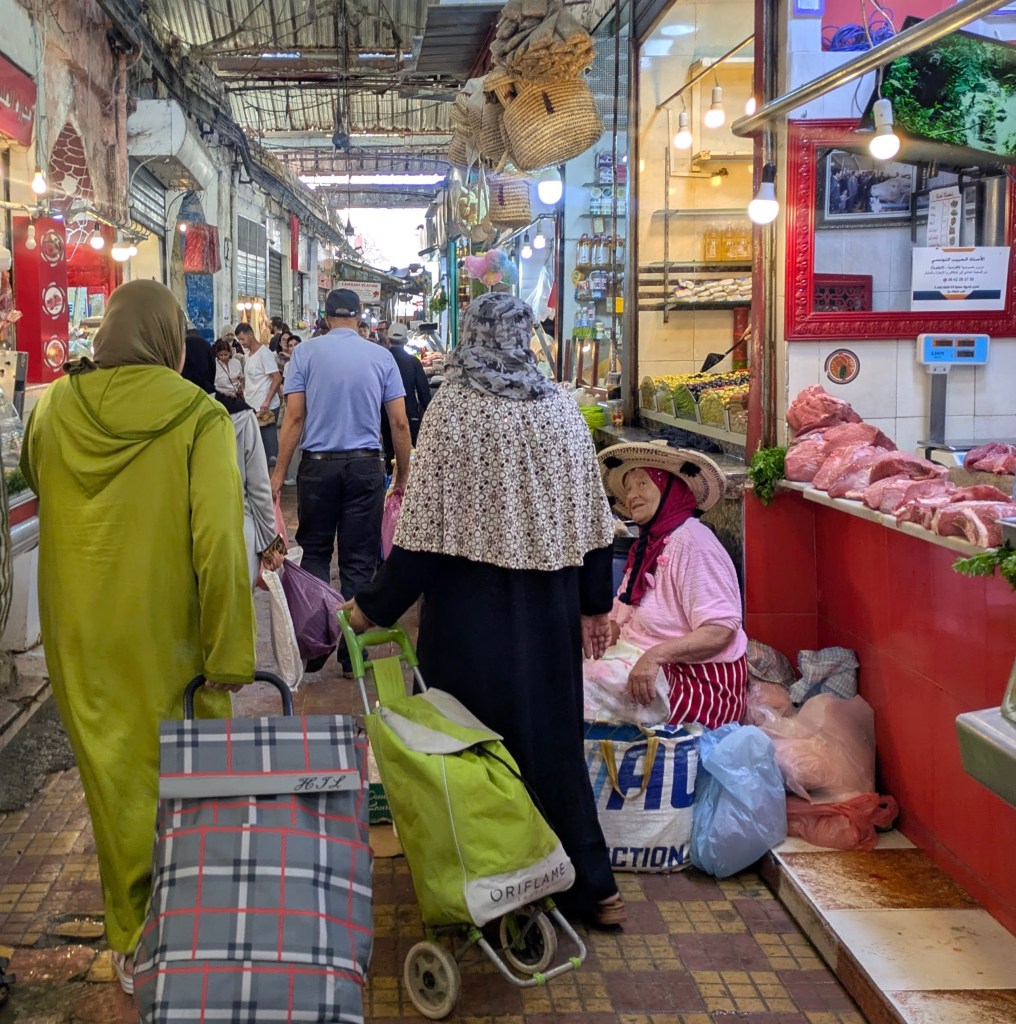
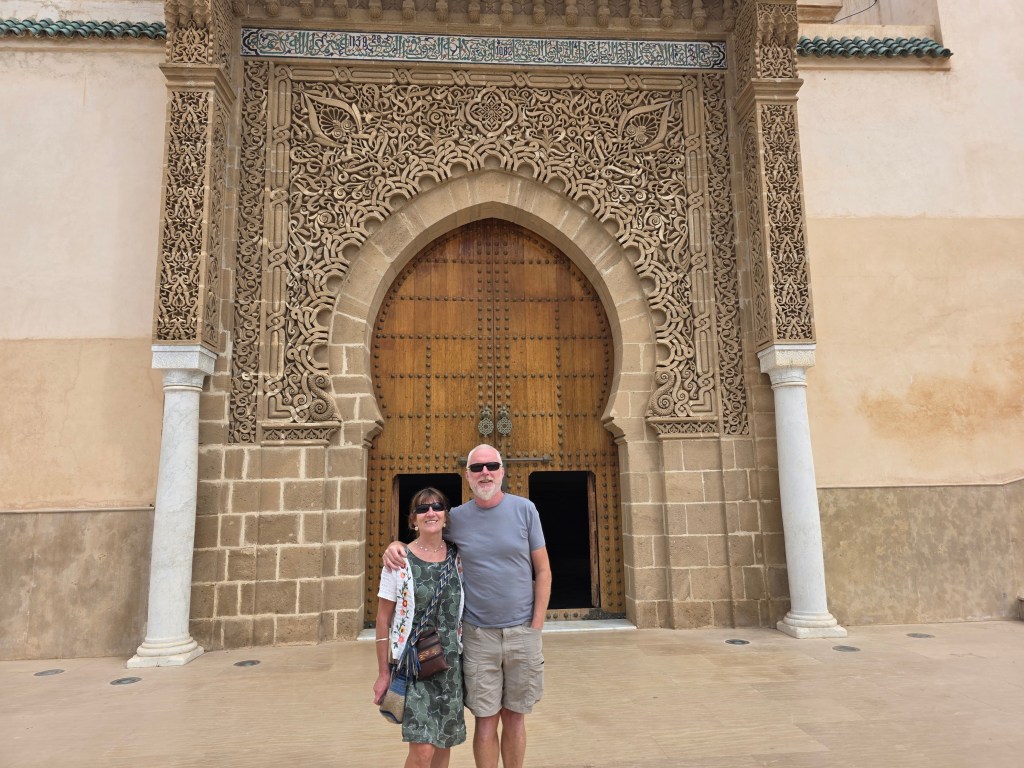
Riad Andalous was hidden away in the medina of the old imperial city of Meknes. Finding it was difficult – we walked  in baffling circles through stalls selling shoes, scarfs and all kinds of food until a couple of young boys led us through a maze of dirty alleys. When we climbed the stairs to enter Riad Andalous, we entered an oasis of calm with tapestries on the walls, ornate ceilings, rug-strewn floors and a sunny rooftop terrace. It even had a little resident tortoise, who slowly followed the sun around the terrace. The price per night for a comfortable ensuite room including a huge breakfast was €28. The only downside was that we were within hearing distant of five different mosques (which weren’t synchronised)  so the early morning call to prayer overlapped and lasted a long time.
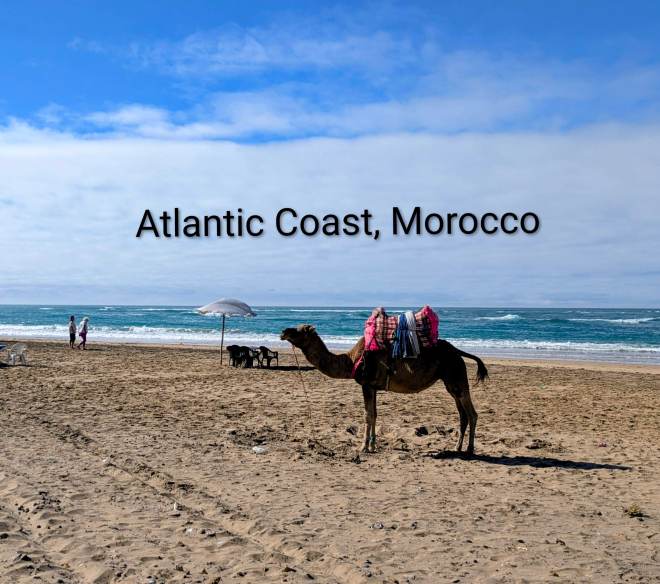
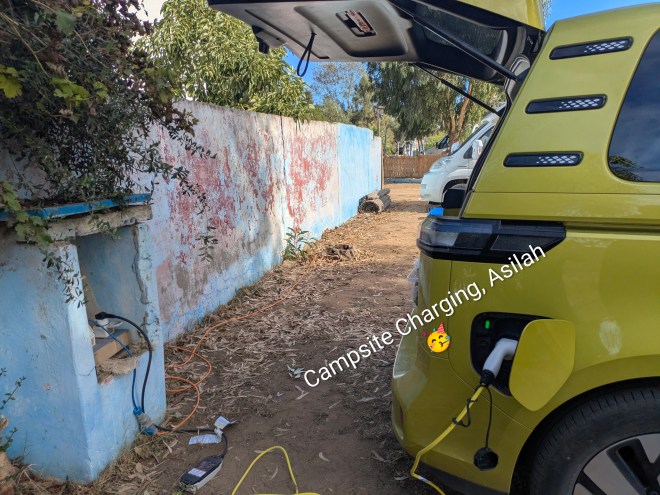
Asilah Campsite Charging  In a dusty campsite in Asilah, a windy town on the Atlantic coast, we plugged the van into a socket with the blessing of the campsite owner who was saying Inshallah.  Lo and behold, the charging light turned green and the Buzz slow-charged all night until it reached 100% by mid- morning the following day. We didn’t know if it was because of the blessing or the lack of safety features and circuit breakers but we were relieved.  Unfortunately it was the only time we managed to charge using a granny cable in Morocco.
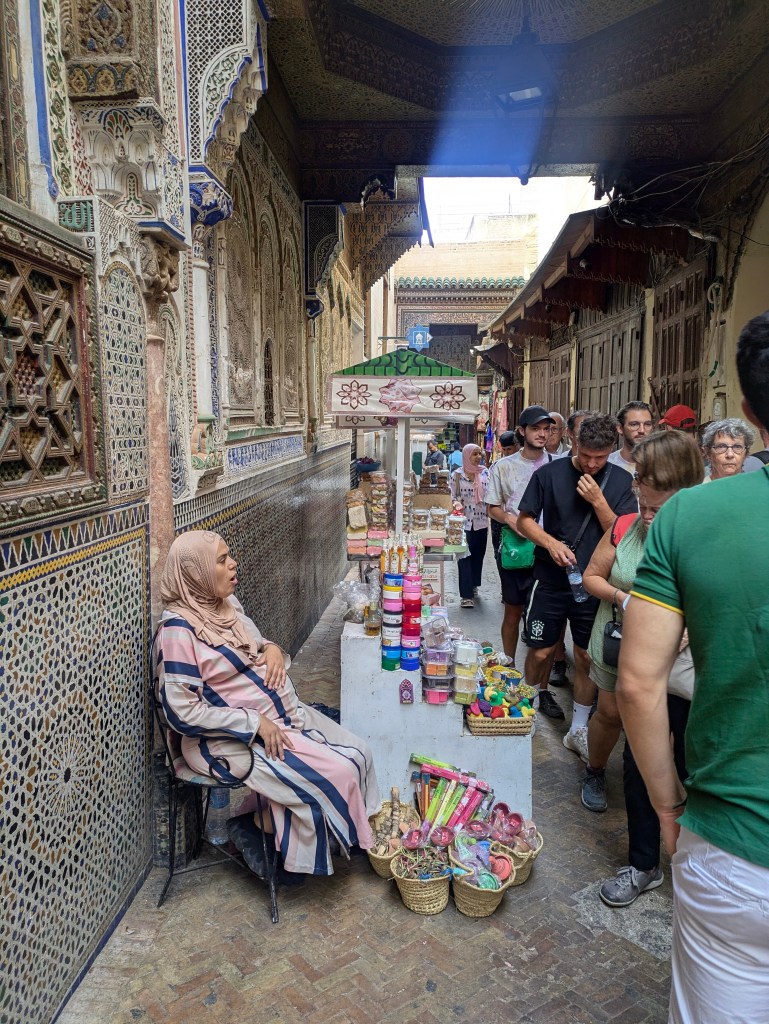
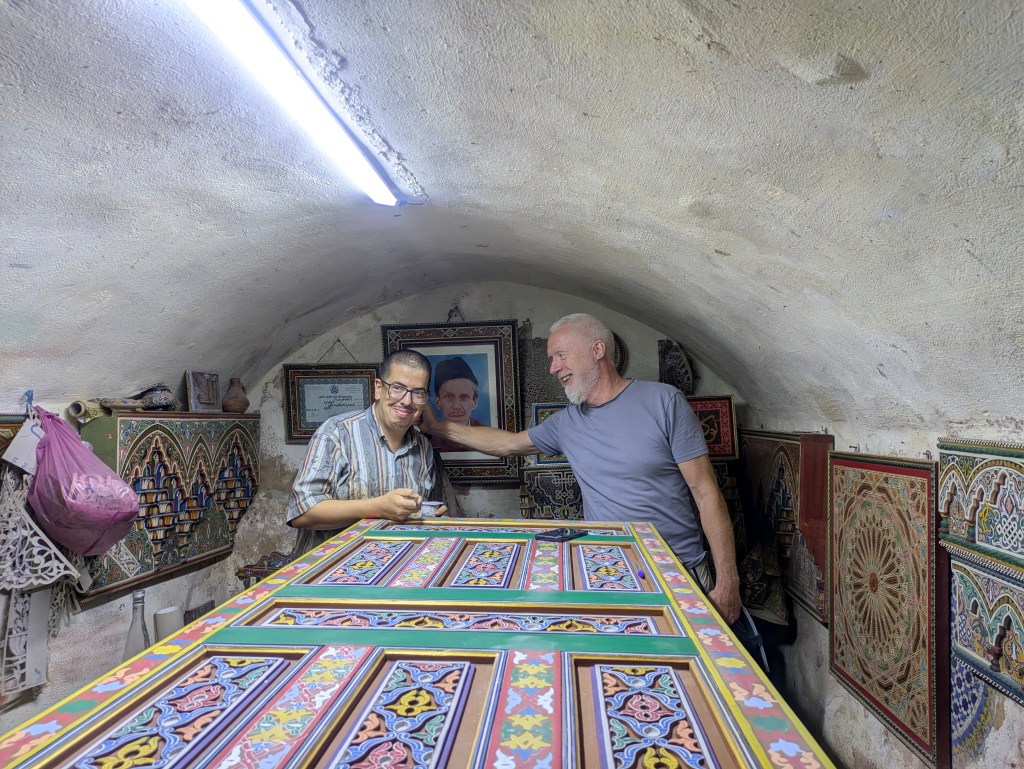
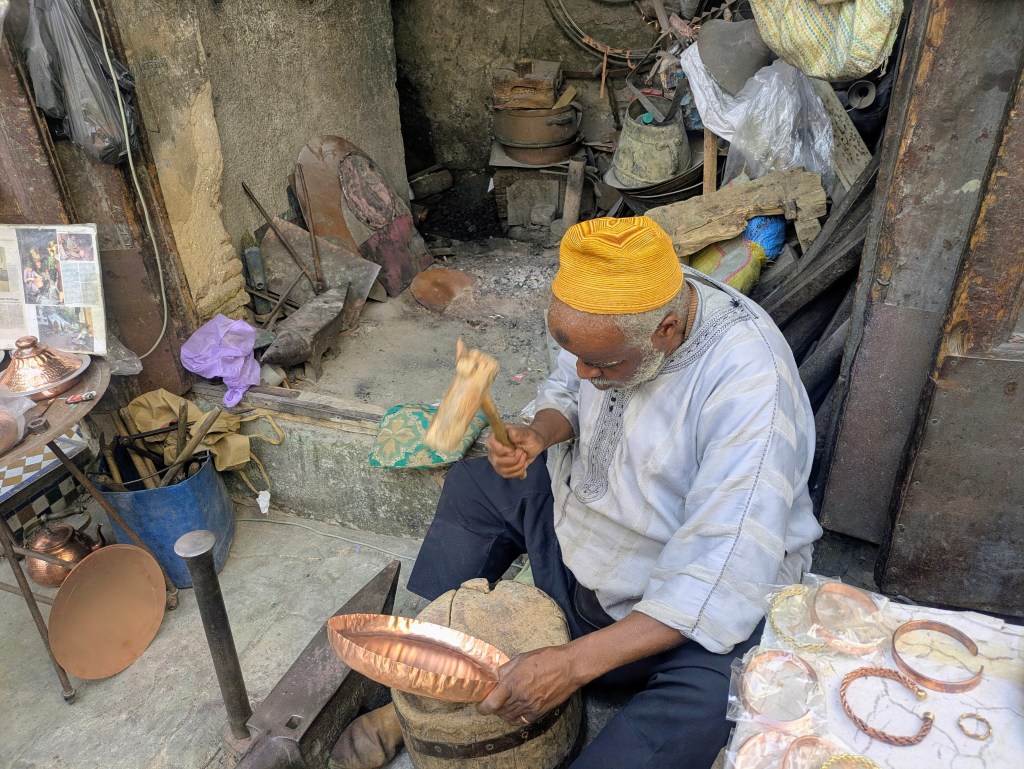
The Wonder of Fez.  The old medina in Fez was a place where little had changed in centuries.  There was the clamour of commence and the rumble of wooden carts being pushed along the narrow ‘streets,’ a maze of over nine-thousand paths and which was reputed to be the largest pedestrianized area in the world. There was the banging of hammers on metal, the soft whoosh of looms, the silent concentration of calligraphy, the slosh of dyeing fabrics and much more. The scent of rosewater and orange blossom mixed with the smell of raw meat, fish, spices and fresh baking. It was like stepping back in time, we ate warm flatbreads directly from the ovens in a family bakery, tasted honey cakes from an old recipe and visited the tannery at the edge of the medina (see lowlights).
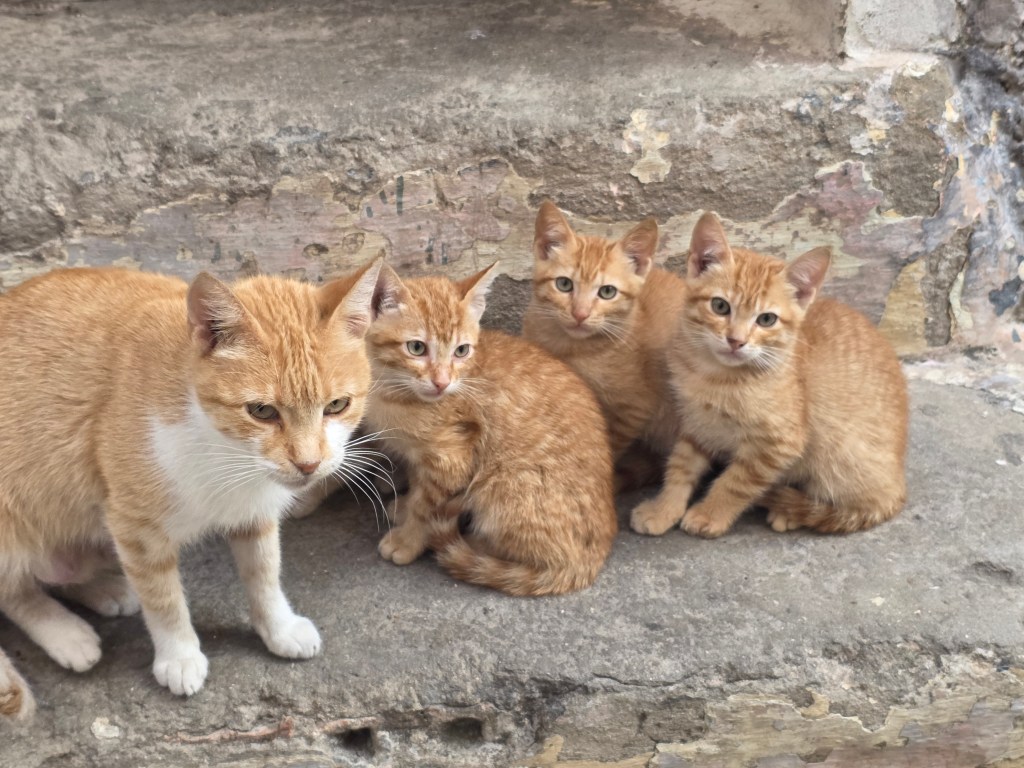
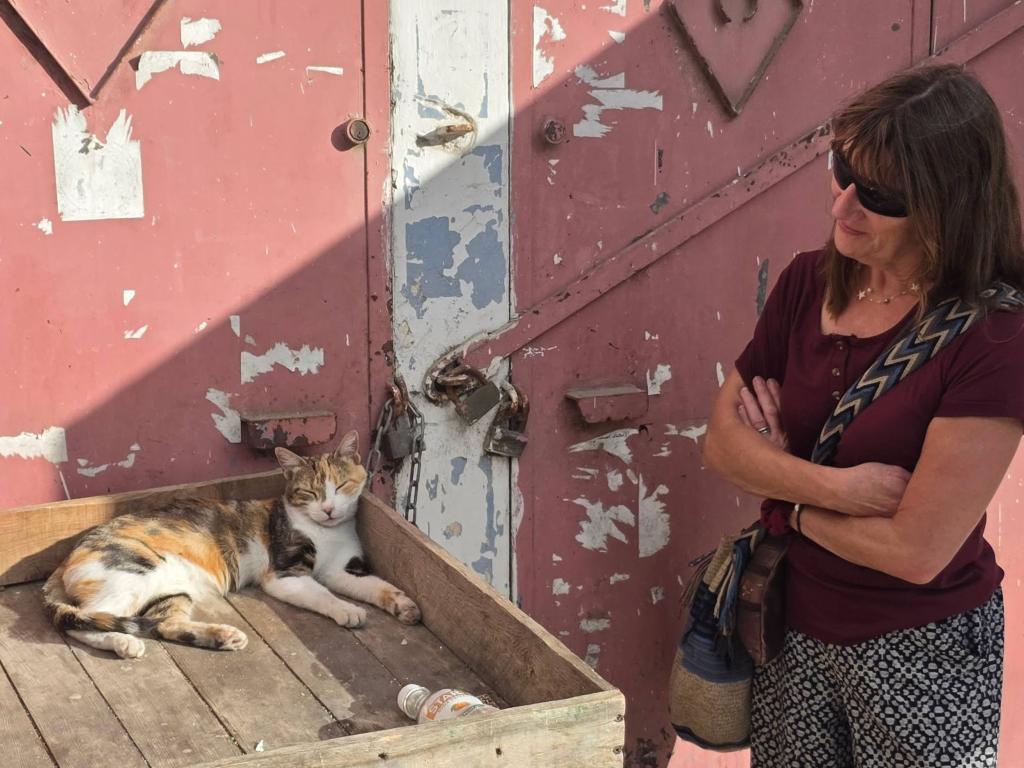
Cats Everywhere, If you have a fondness for cats, you will love Morocco. Did you know that a group of cats is called a clowder? Well, Morocco is definitely ‘clowdered.’ There is a cultural communal reverence for felines, with people leaving out food and water for them. The most basic shop had large displays of tinned cat food.
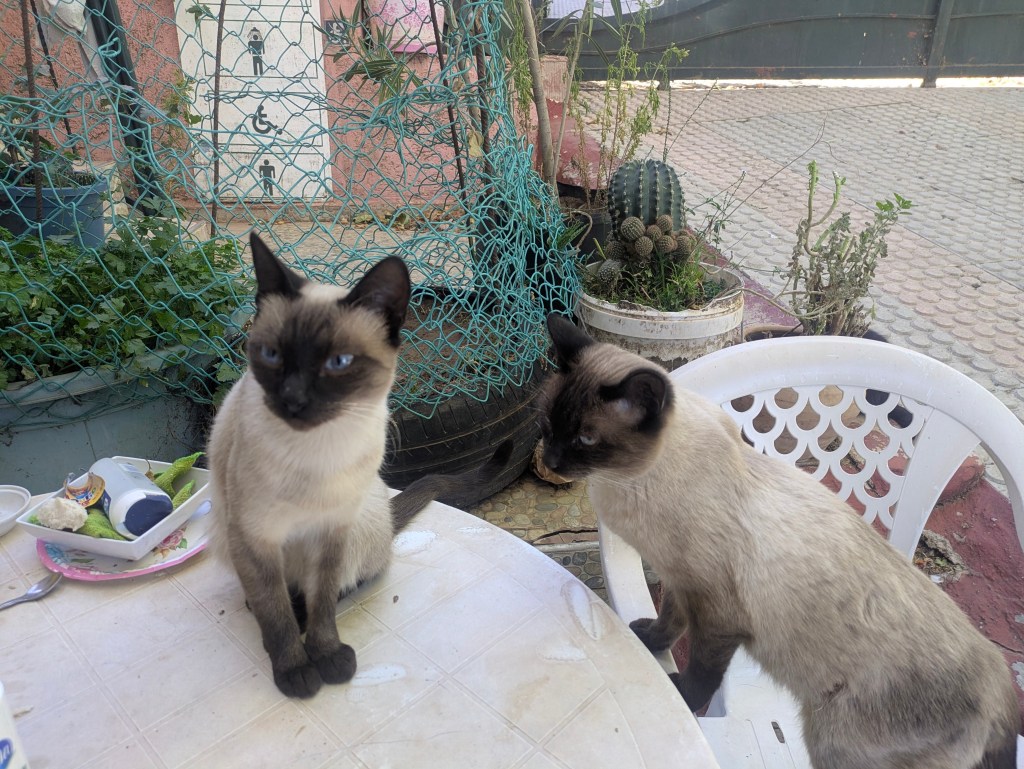
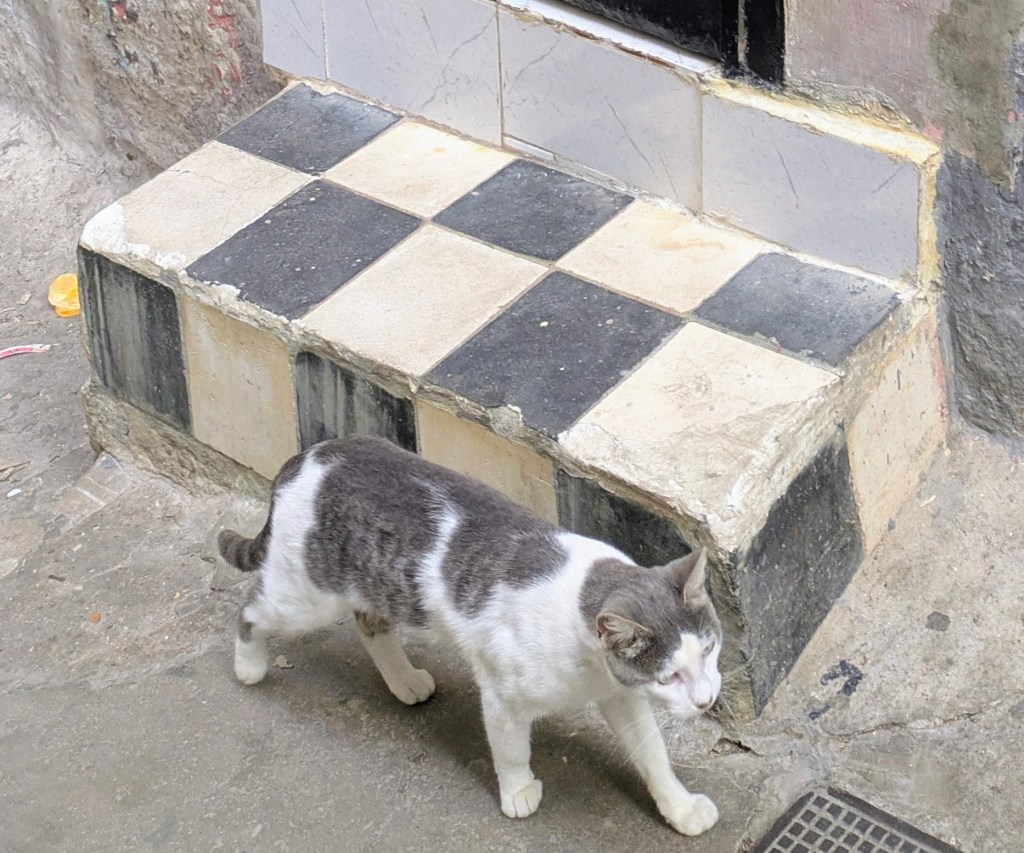
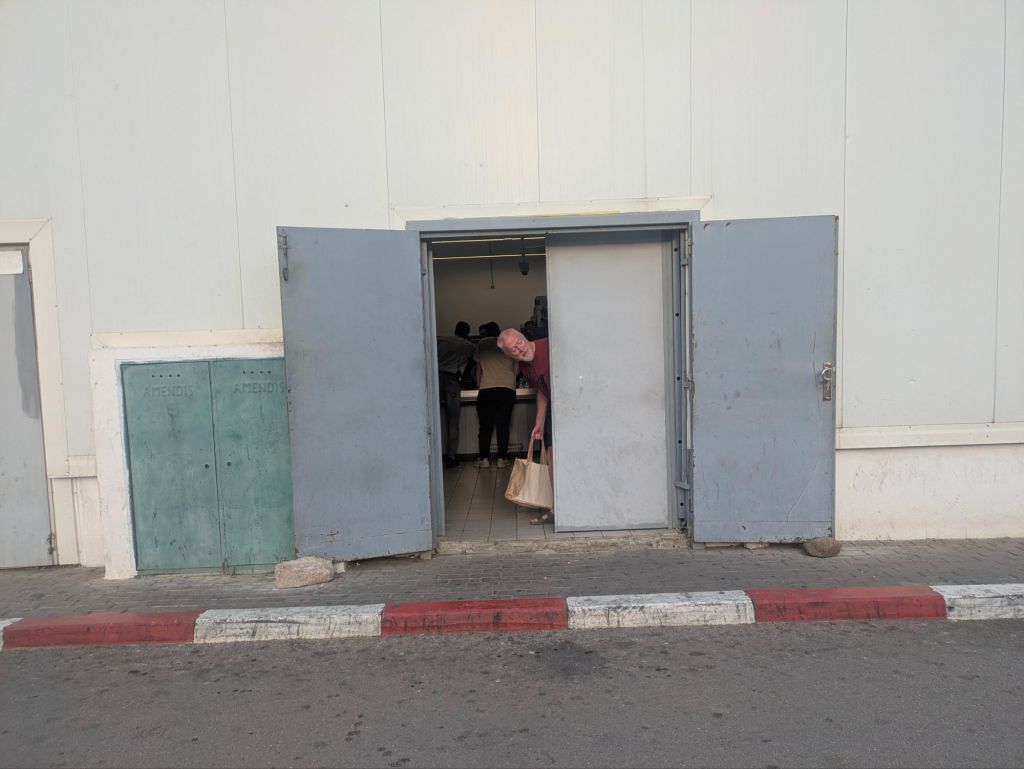
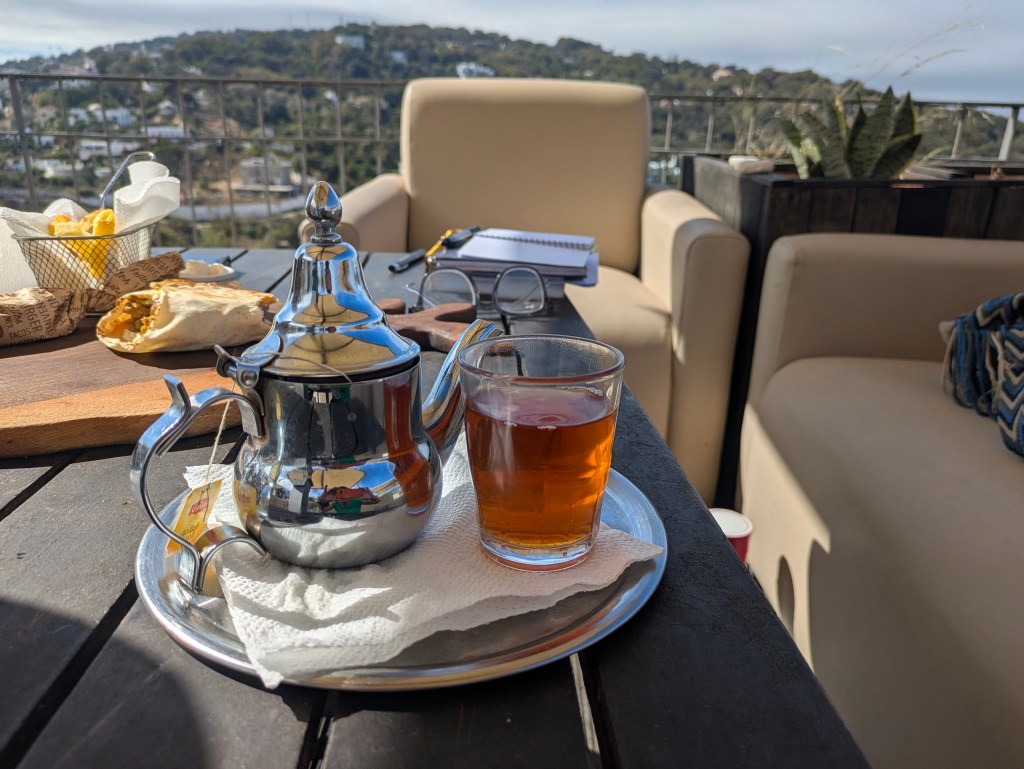
Mint Tea and Other Beverages.  I grew to love the mint tea in Morocco, which was just as well as alcohol was difficult to obtain and expensive. In Tetouan, a city in Northern Morocco,  we couldn’t find the alcohol section in the Carrefour Supermarket. We wandered around and eventually spotted an unmarked grey door on the side of the building. That couldn’t be it, could it? It looked more like a back entrance to some kind of warehouse. We peeked in. The light was dim, the air was stuffy but the interior was teeming with men (it was all men except for the women at the tills). There was the sound of bottles clinking and cans rolling against each other in baskets. The whole enterprise felt furtive, shady and clandestine. We were delighted.   
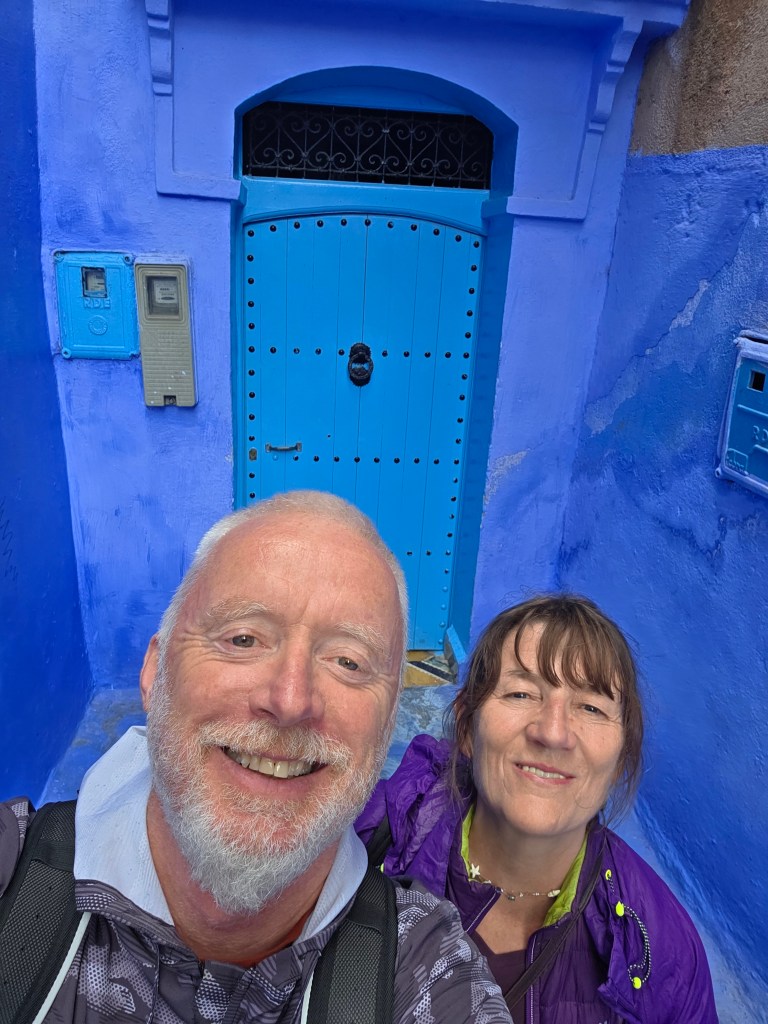
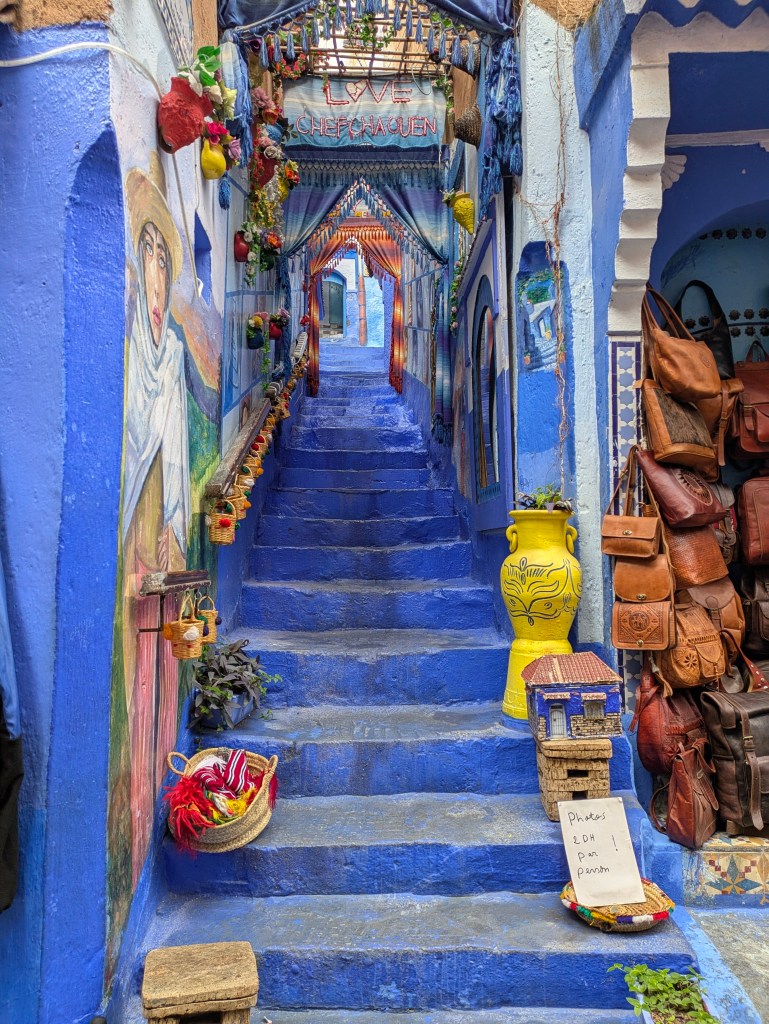
A Blue City. Chefchaouen in Northern Morocco wasn’t looking it’s best under  grey  drizzly skies when we visited but it was still gorgeous. It is famous for its narrow streets with facades painted in different shades of blue.  There are several theories about why the town is painted blue. Some said that the colour blue symbolised the sky and spirituality, that it came from the Sephardic Jews who settled here in the 15th century, others said that blue was a good insect repellent. Whatever the reason, the result is stunning and very photogenic.
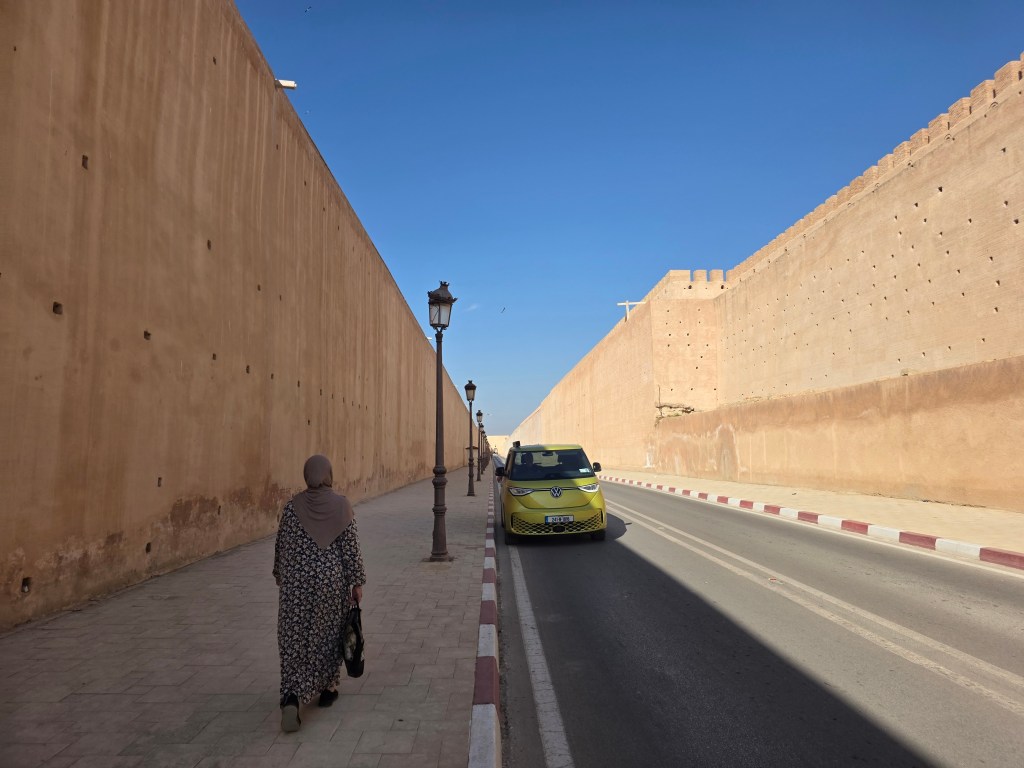
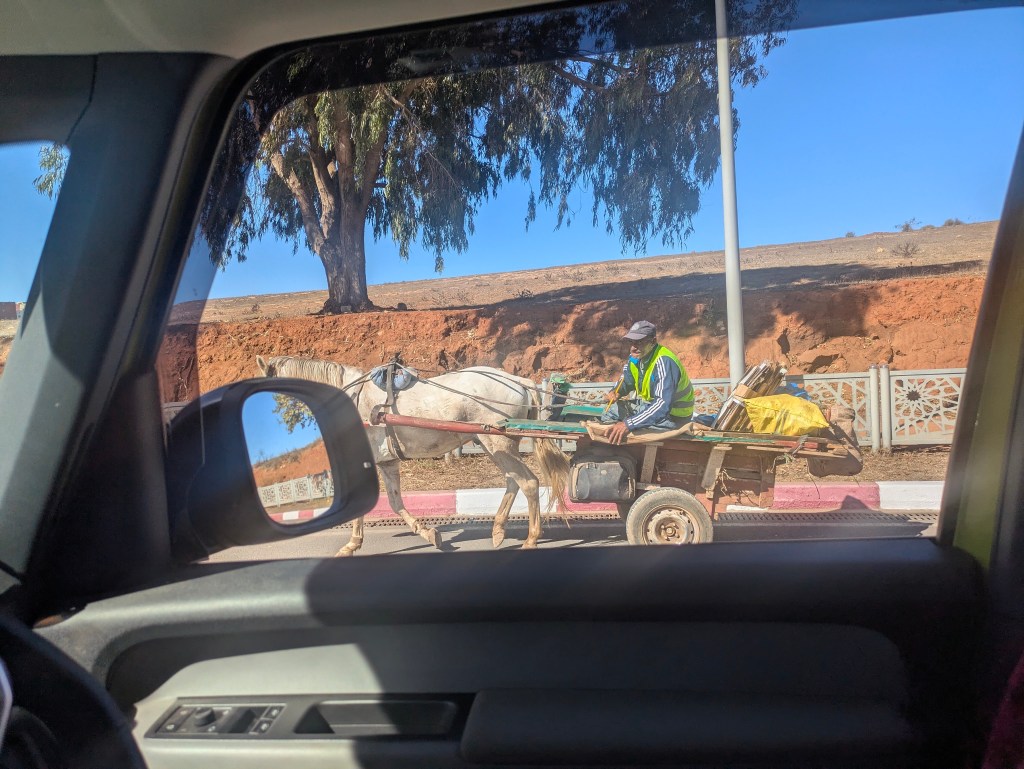
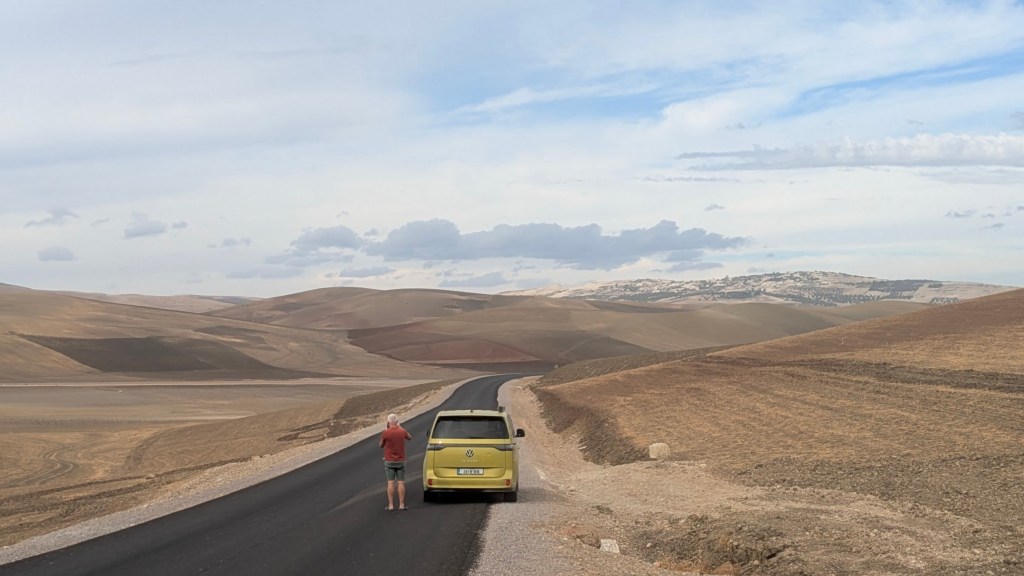
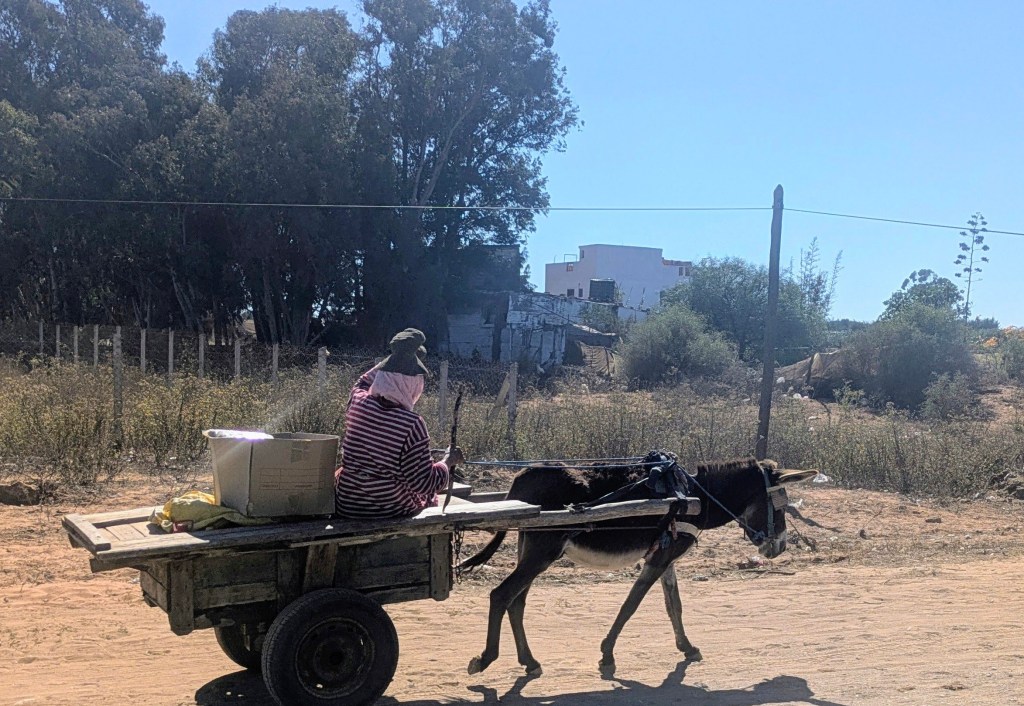
The Roads in Morocco were excellent with a smooth surface, better than a lot of roads in Ireland. There was a surprising amount of donkey and pony traffic particularly when we moved inland. There were also lots of speed checks. If there was only one bush in the distance, it was quite likely that a policeman with a speed-gun was lurking behind it, ready to phone on details to his colleague up the road. We were never stopped as we were driving inside the speed limit to conserve our charge but many others weren’t so compliant.
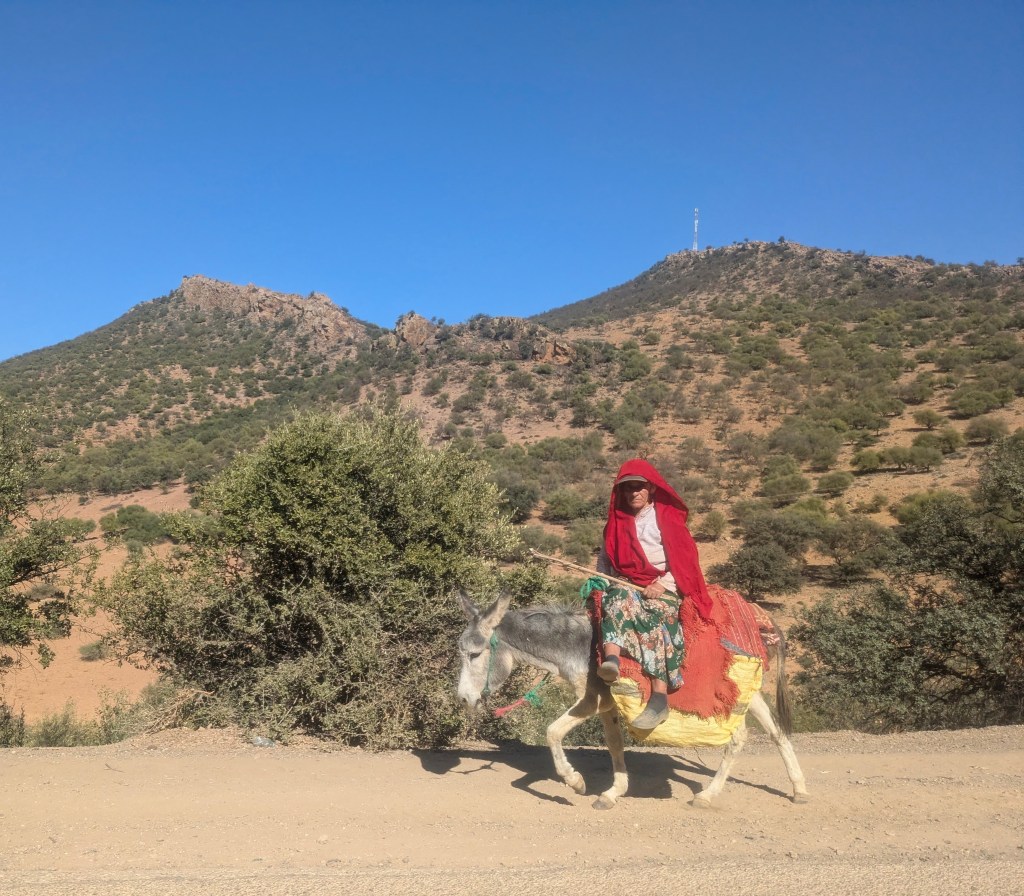
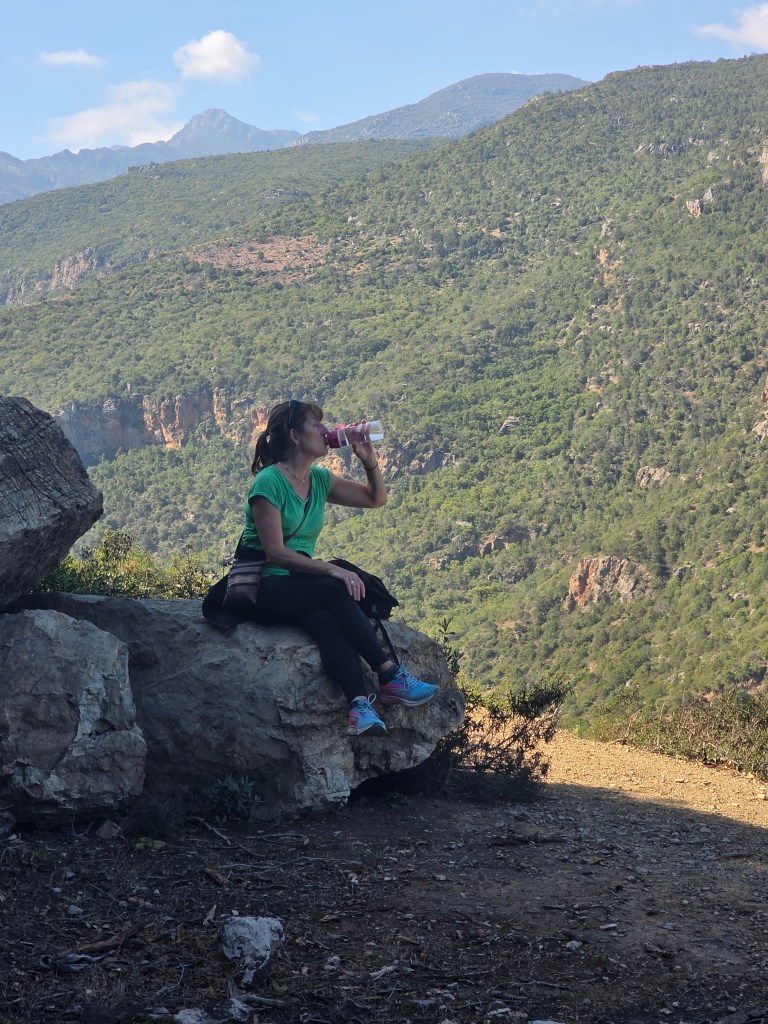
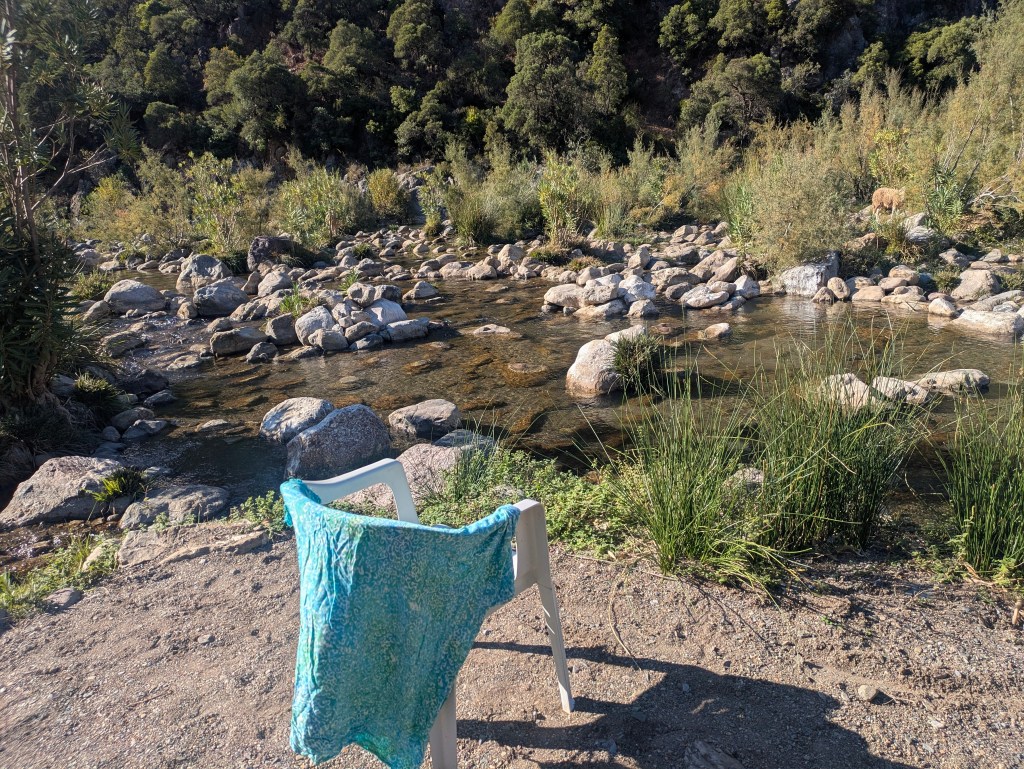
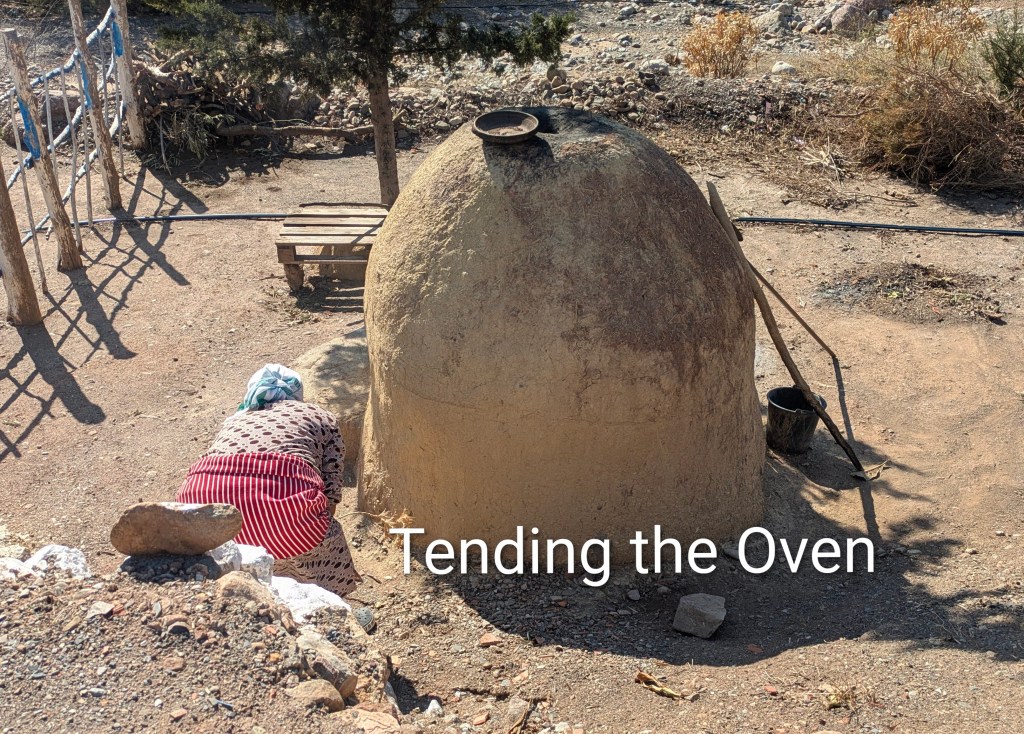
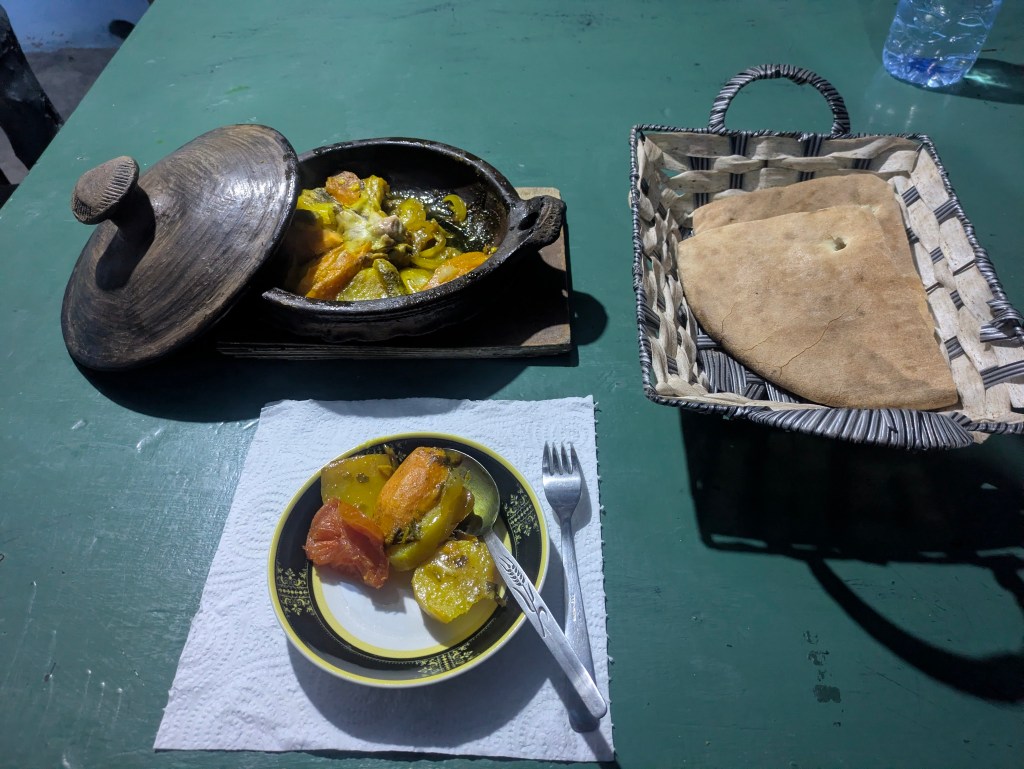
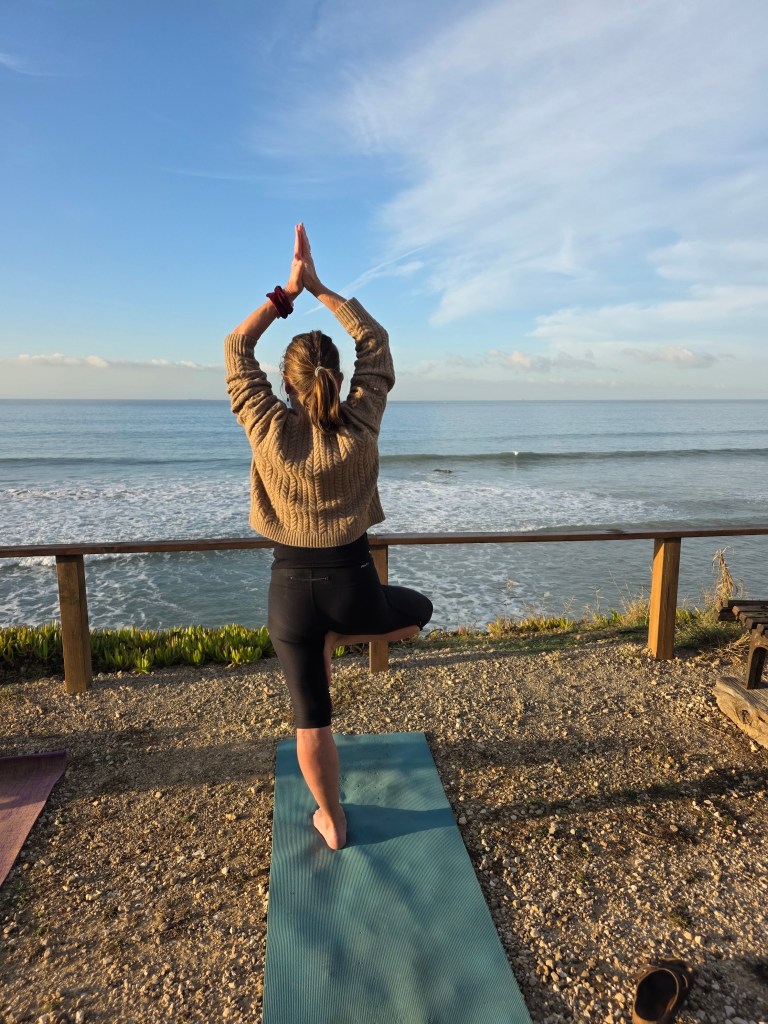
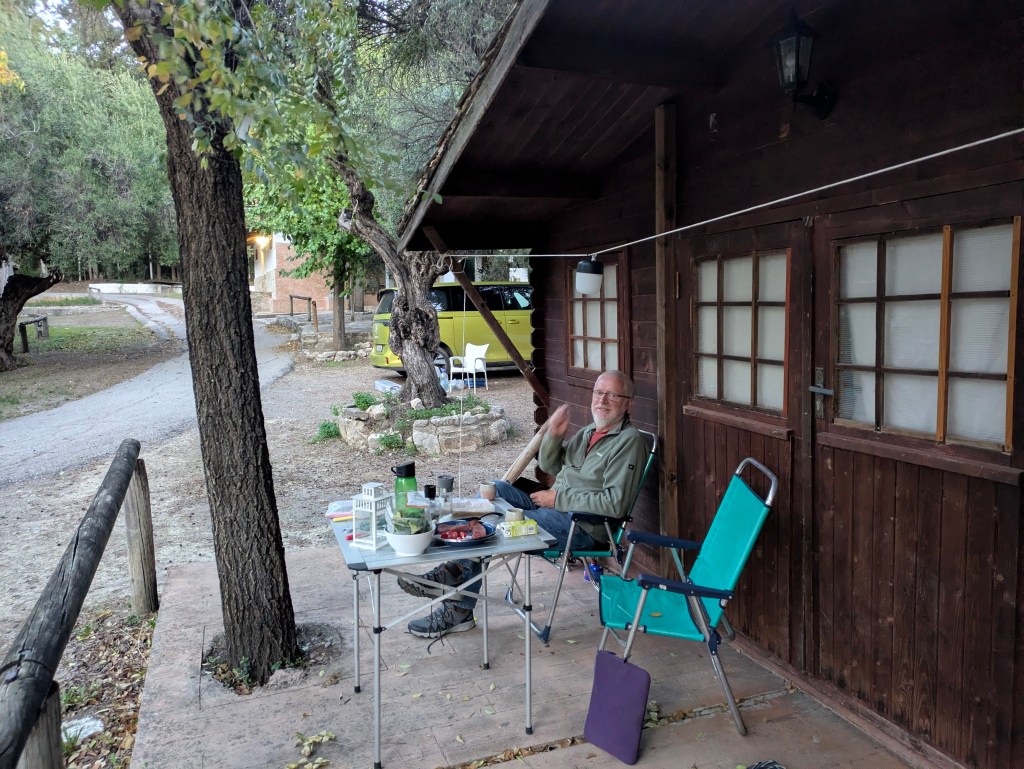
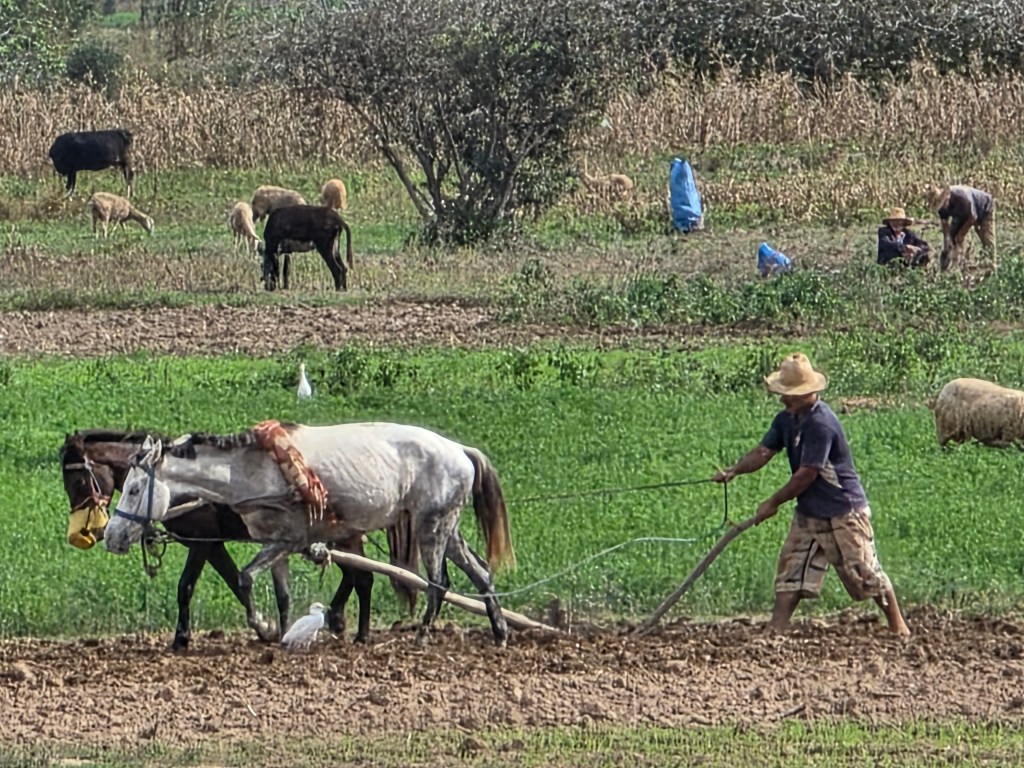
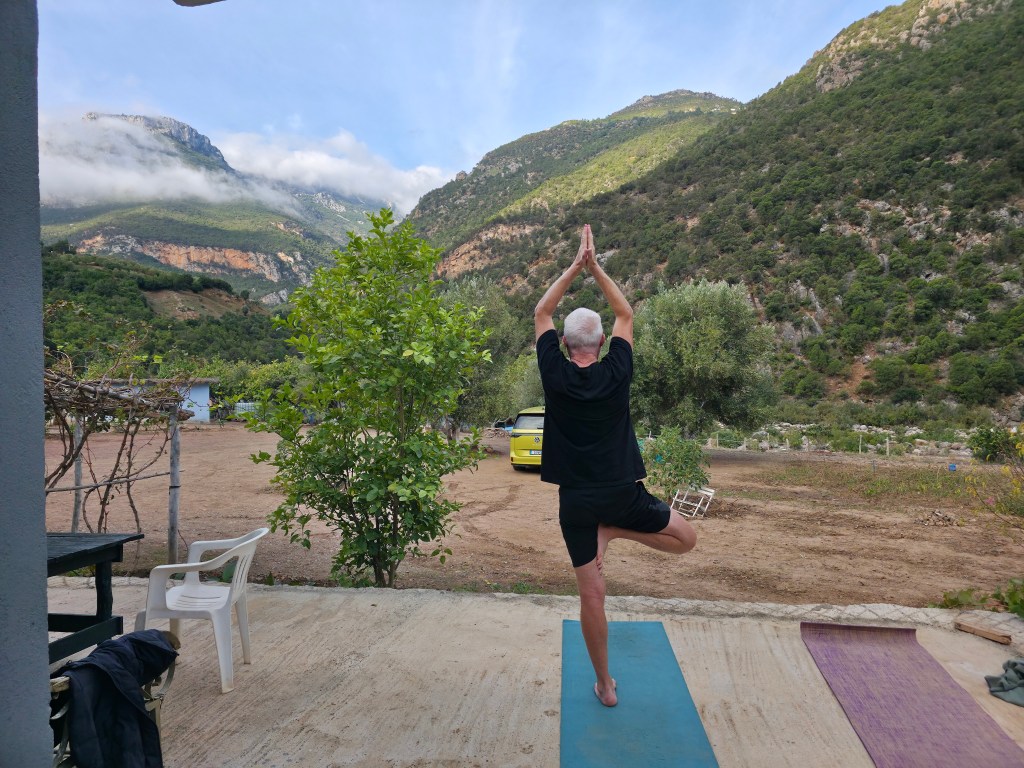
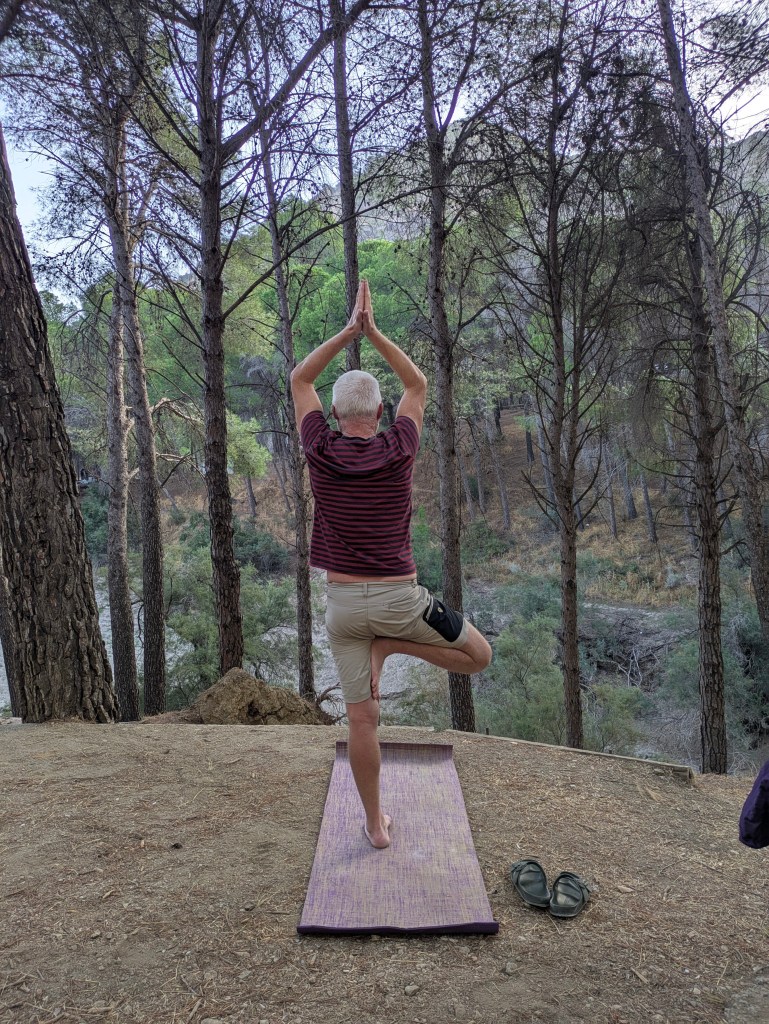
A Slice of Heaven. We found our idea of heaven in a little unpretentious campsite in the Rif mountains, run by a lovely family who baked bread in an outside oven and made the tastiest tagines. There was the babble of a small river, a soft wind in the lemon and avocado trees and the bleating of a few goats. The resident dog befriended us – all it took was a bit of chicken. The days were warm, perfect for hikes, the nights were cool (about 9C), perfect for sleeping. We sat by the river, hiked in the hills, read, did some yoga and watched the morning sun hit the mountain peaks and slowly creep down to warm the valley. This tranquil place put a spell on us, forced us to slow down. It could have been boring….it should have been…but it wasn’t in the slightest. It was our favourite place in Morocco.
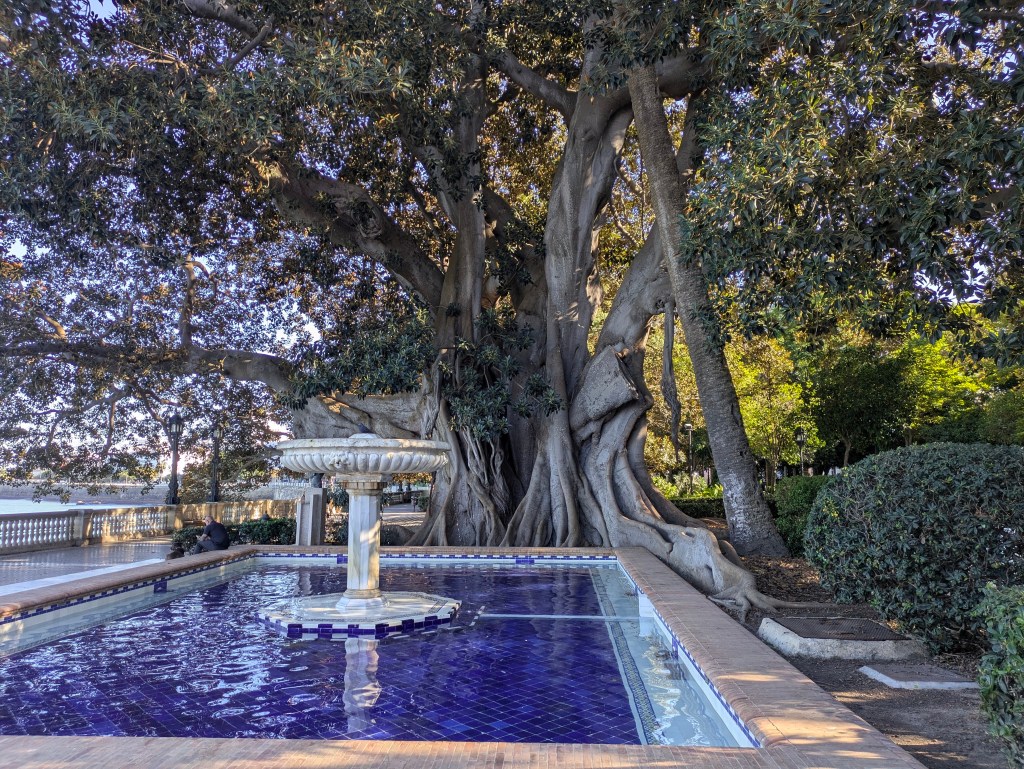
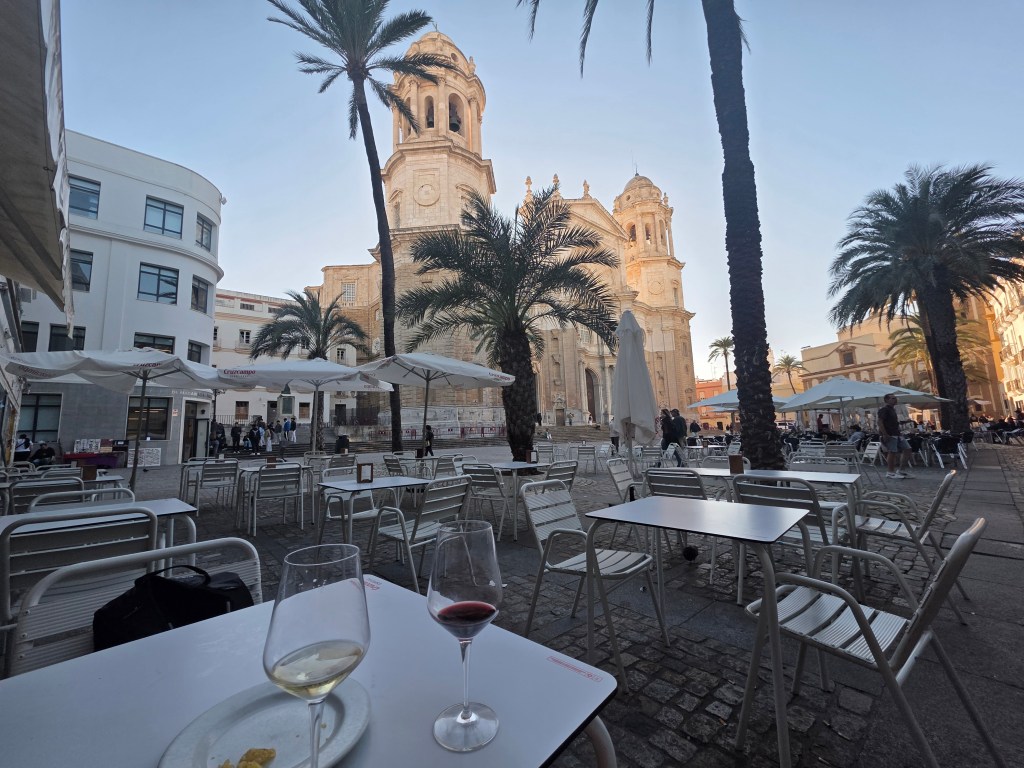
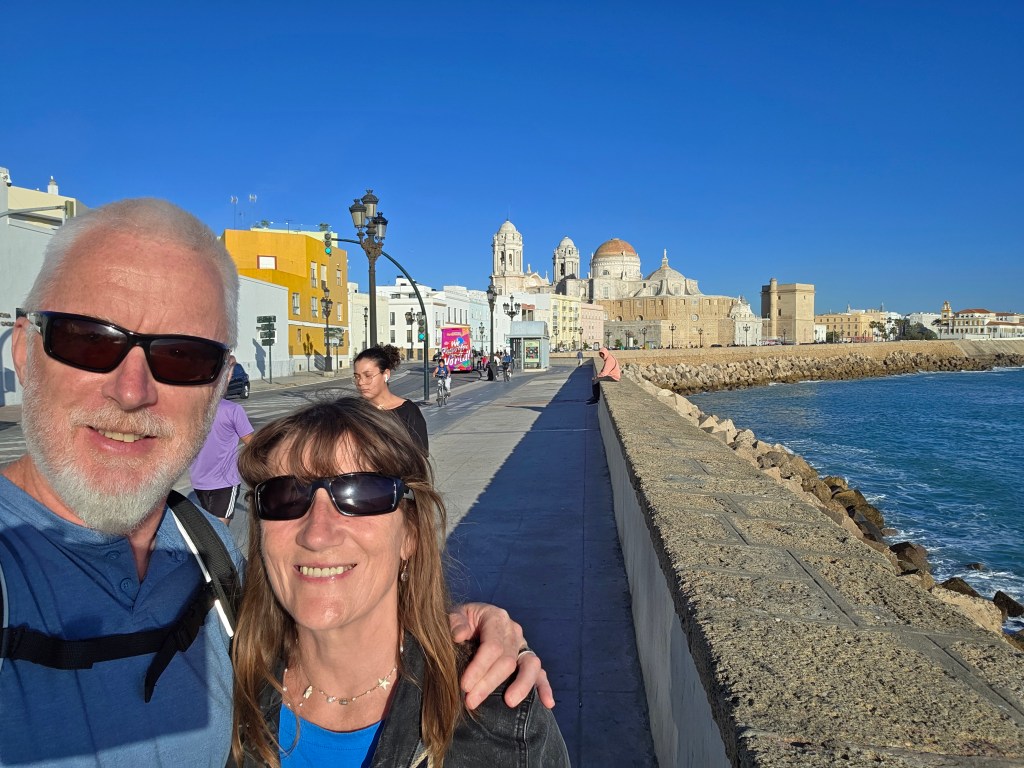
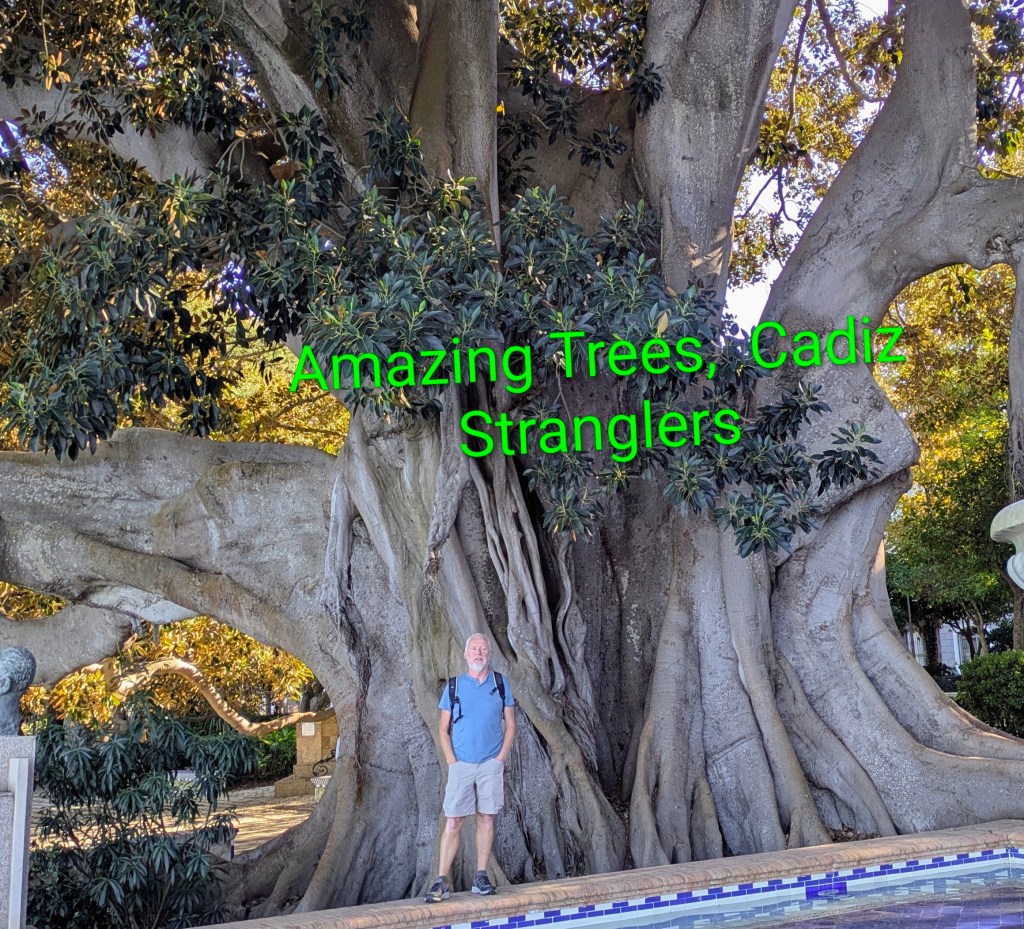
Trees in Cadiz, Spain. Cadiz is a place of narrow lanes, wide plazas, beaches, tapas bars with the aroma of frying fish, and always the sound of the sea which was never far away. The waves crashed or lapped (depending on the wind and side) on the reinforcements that kept the whole place from eroding and dissolving into the sea. But what impressed us most were the trees – dramatic Strangler Figs with enormous umbrellas of leaves and trunks as wide as  a city bus.
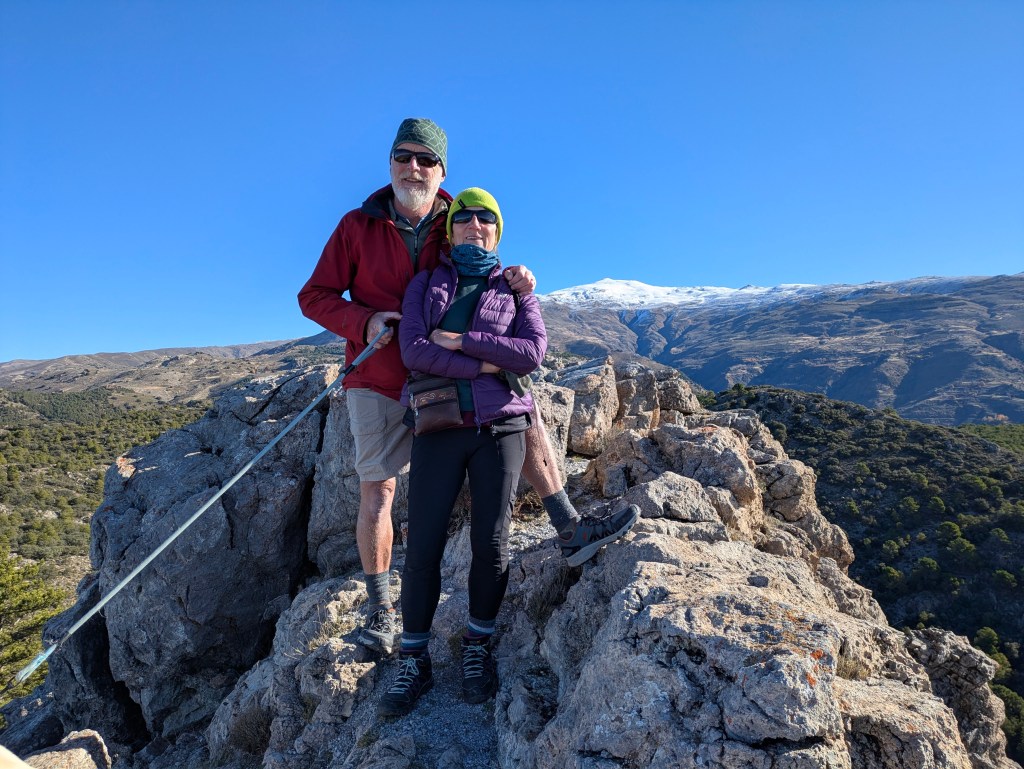
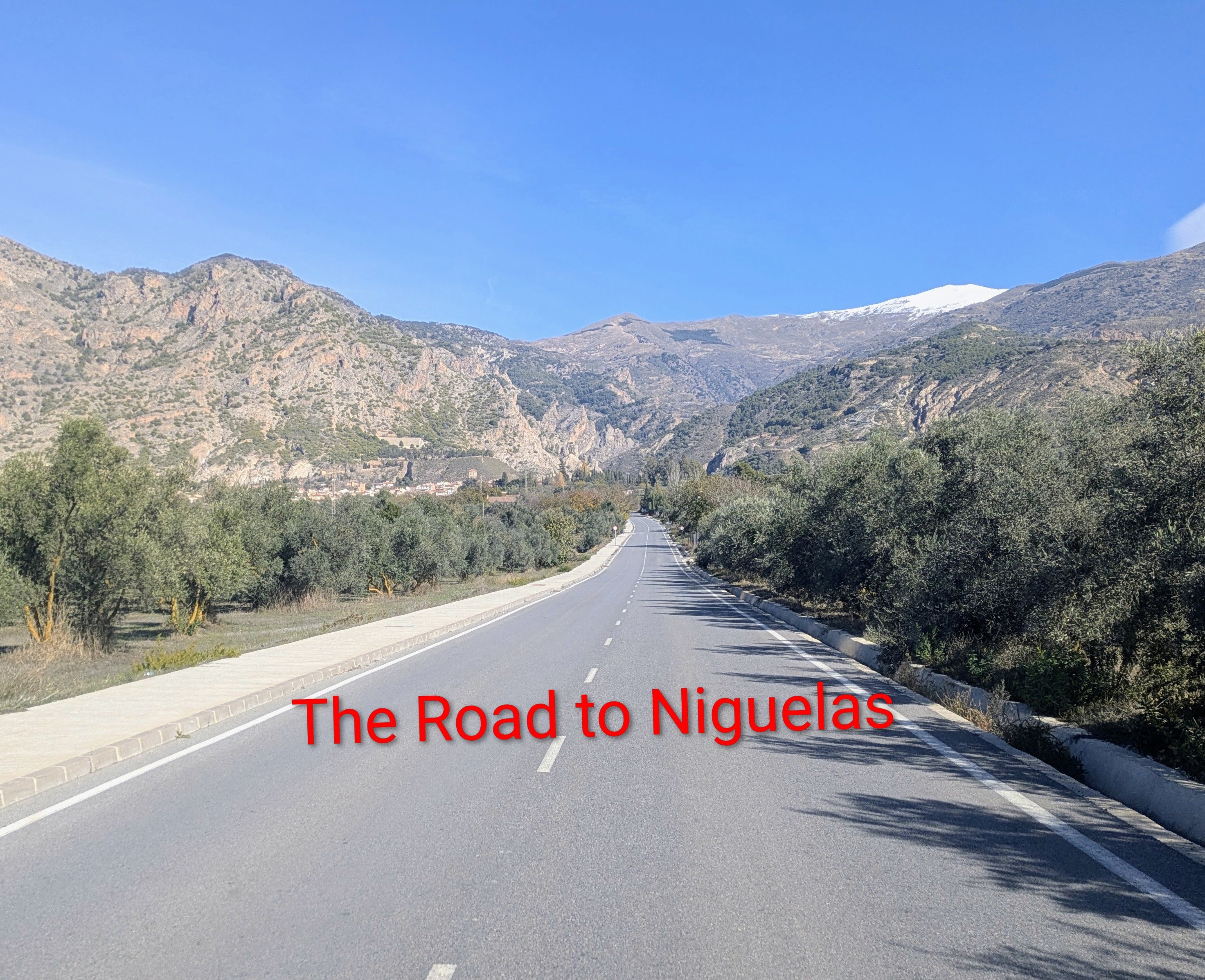
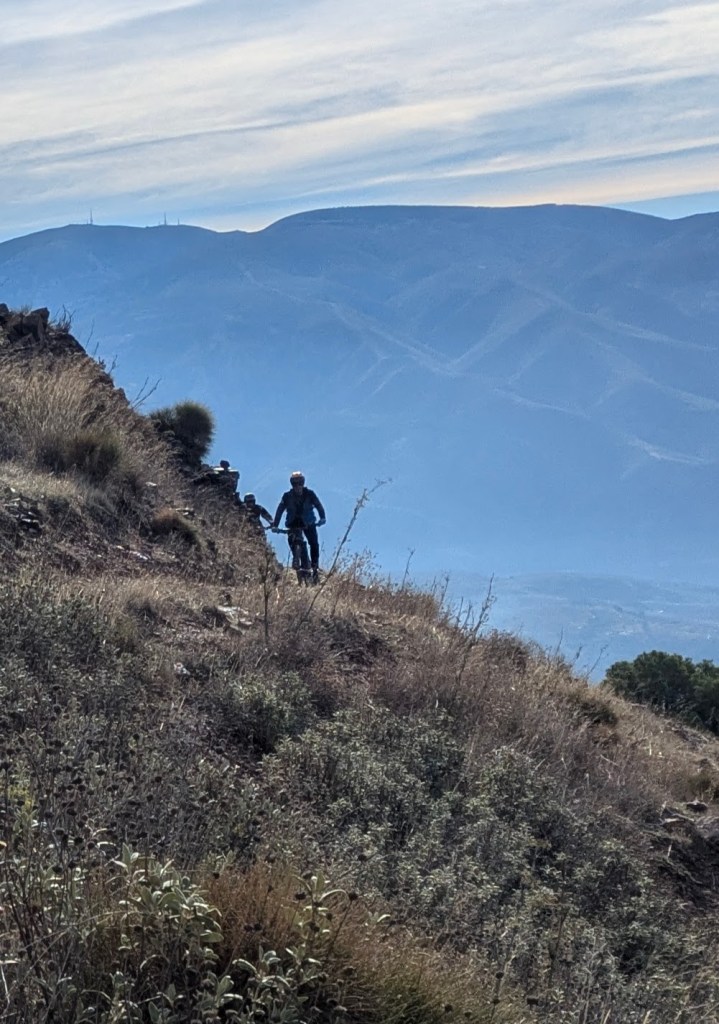
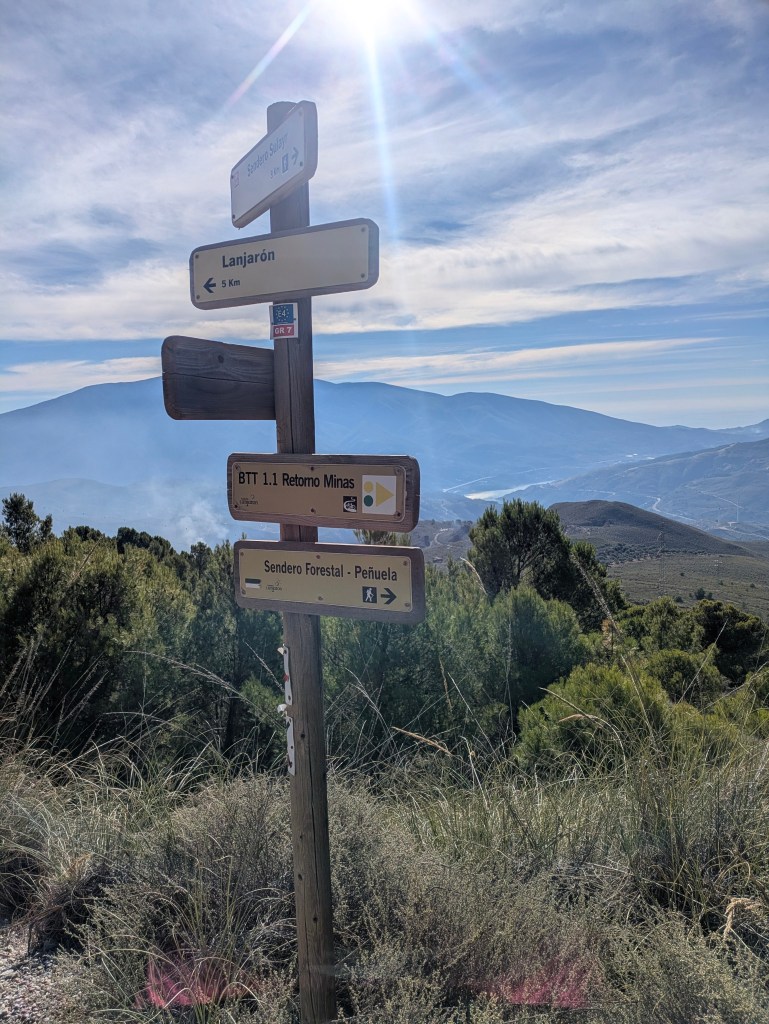
Sierra Nevada We spent eight days in Niguelas, a small village in the Sierra Nevada, about an half-hour drive outside the city of Granada, staying in a little Airbnb apartment on the edge of the village. After seven weeks of constantly moving through Spain and Morocco and sleeping (mainly) in the van, we wanted to pause and stay in one place. The Buzz spent the time parked under an olive tree. The location of Niguelas was jaw-droppingly beautiful with a huge selection of hikes of various lengths and difficulty. This was a week of super hiking and some morning dog walks with our Airbnb host, Tim and his dogs. There were almond orchards, olive groves, Aleppo Pines bright green against the bare rock and the yellow foliage of the walnut trees and poplars.
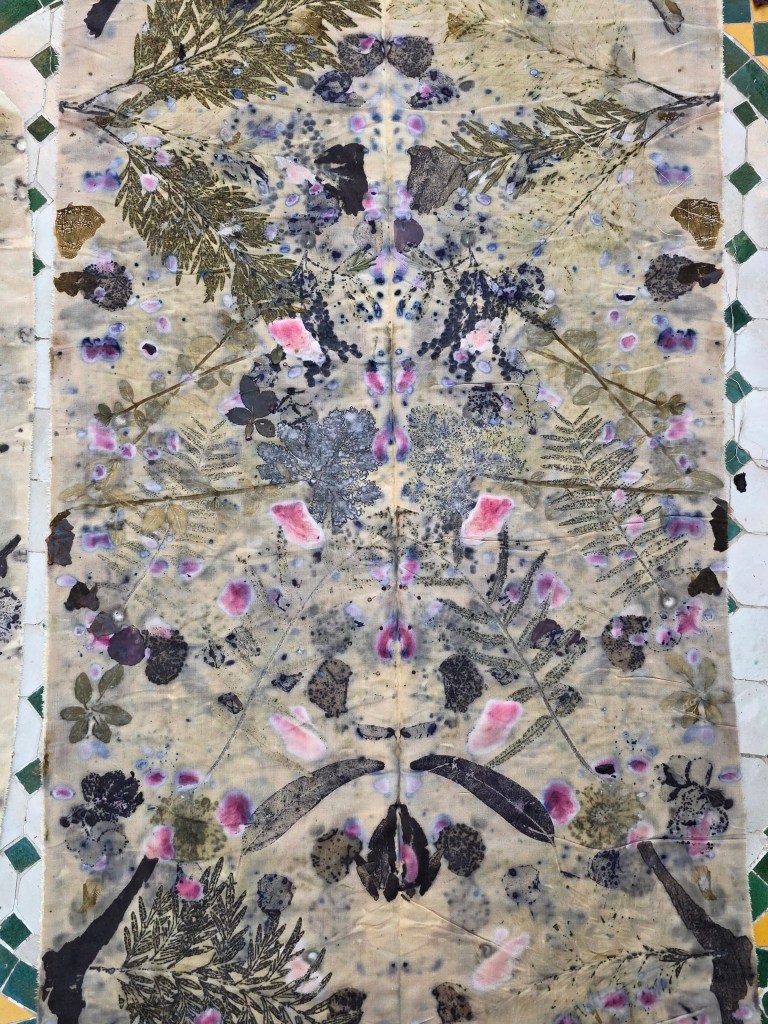
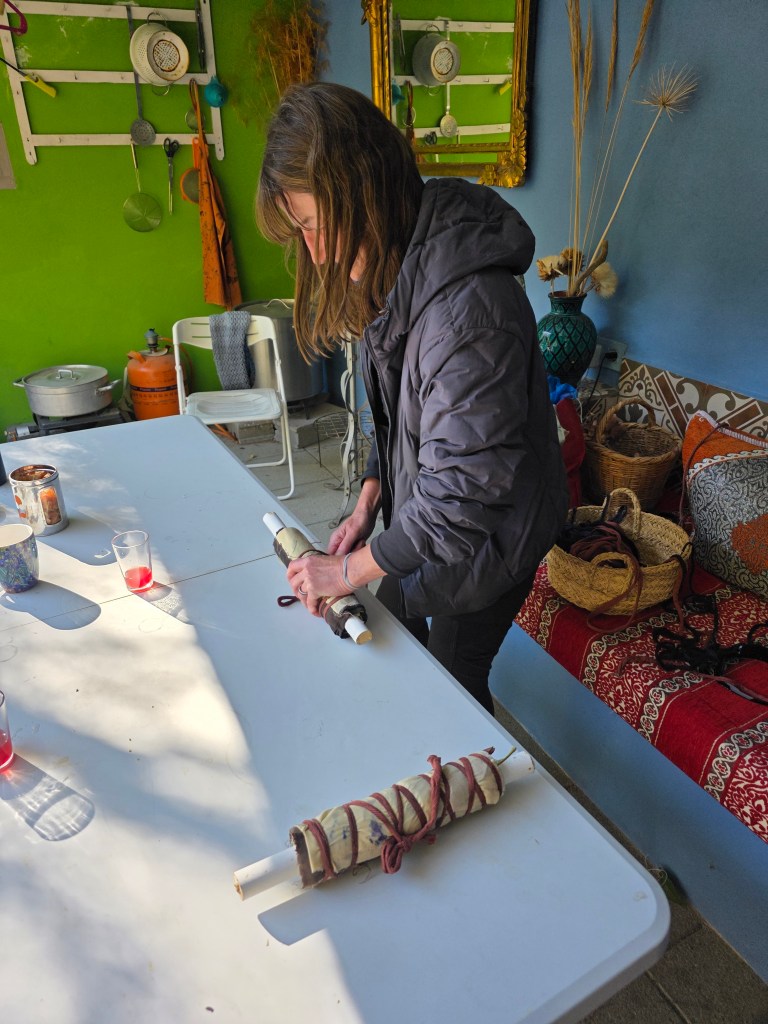
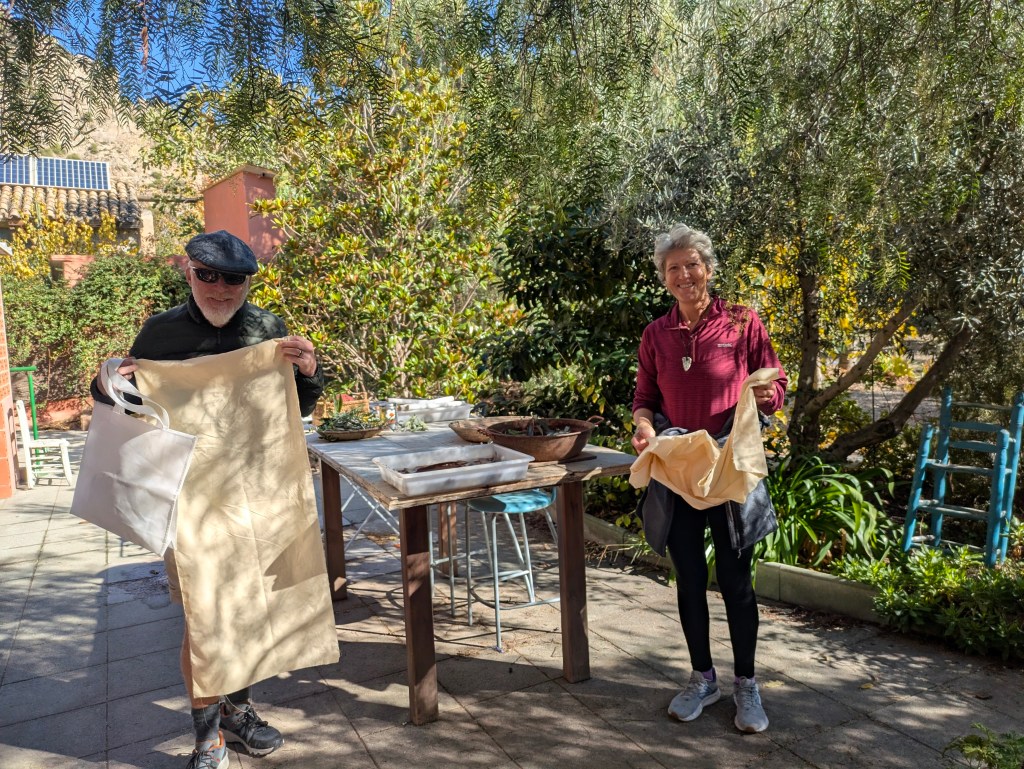
A Flow of Creativity.  In Niguelas, Helga, our Airbnb host, ran courses in felting and eco printing and we both opted to try our hand at eco-printing. This involved picking plants and flowers from the huge selection in the garden and using Helga’s techniques to transfer the images to cloth. It was a really enjoyable experience and our results were satisfying and really much better than we would have hoped. The unrolling of the fabric after the steaming process was greeted by lots of ‘wow.’

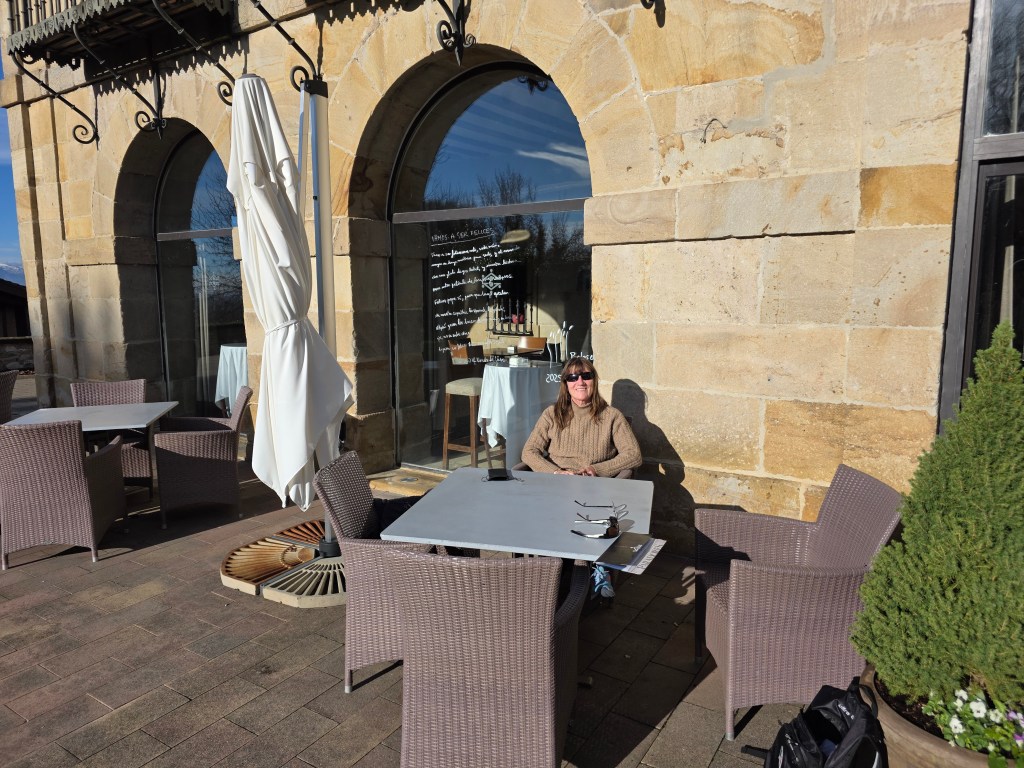
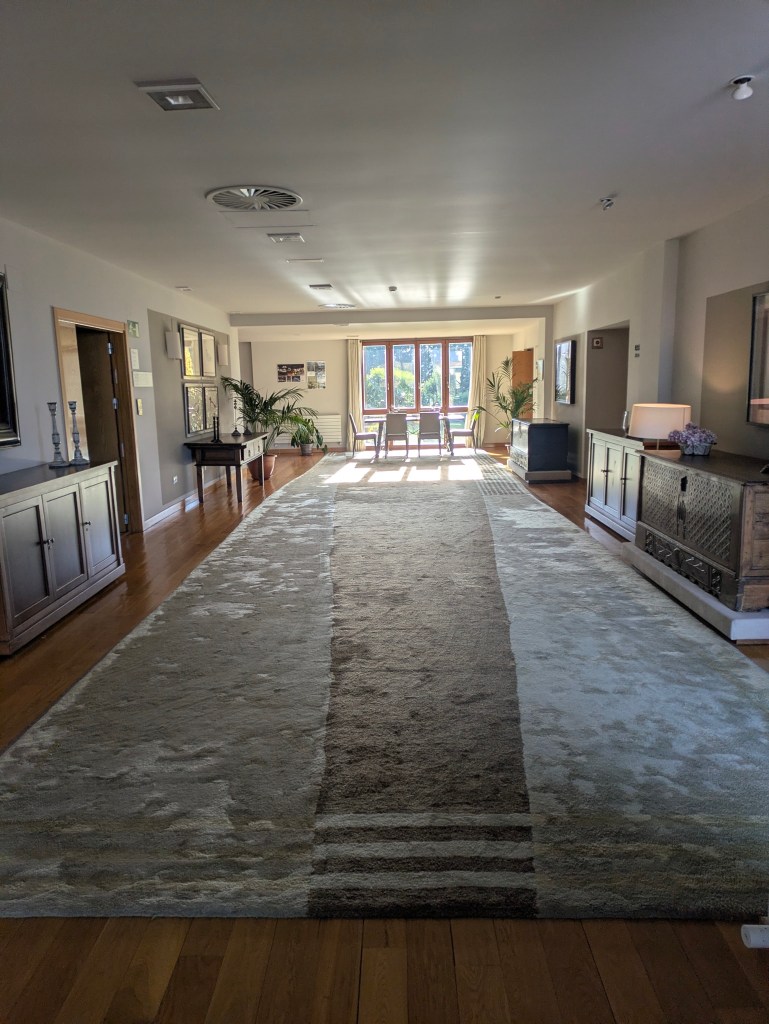
Parador Argomaniz Although we are usually fans of ‘cheap and cheerful,’ we are not adverse to a bit of luxury especially in unique buildings. Paradores in Spain are state-owned luxury hotels, in restored historical buildings, such as palaces, convents, monasteries and castles.  It’s like stepping back into the past but with modern comforts and the hotel profits go to the buildings upkeep. Our last two nights were spent in Parador de Argomaniz which was about an hour south of Bilbao. The building dated back to 1712 and was once a convent, before being converted into a palace, and during the Peninsular Wars was used as a headquarters for French Troops. It even had EV charging points.  If you have never stayed in a parador, I urge you to look them up and give yourself a real treat.

Lowlights

Getting into Morocco. We nearly didn’t get into Morocco. We forgot to bring the documents for the Buzz and only realized this when we were in the border queue. We phoned our wonderful neighbours at home who ran over to our house, photographed our van documents(the Vehicle Registration Document Form) and Whatsapp’ed them to us.   The border officialsweren’t happy -they needed paper documents, it wasn’t the right document, we wouldn’t be allowed in. Eventually a senior official was called, an older man, slightly stooped but mild mannered. He agreed to give us a waiver and signed a piece of paper, necessary to enter Morocco with the van. Four and a half hours after disembarking from the ferry, we were in Morocco….by the skin of our teeth.

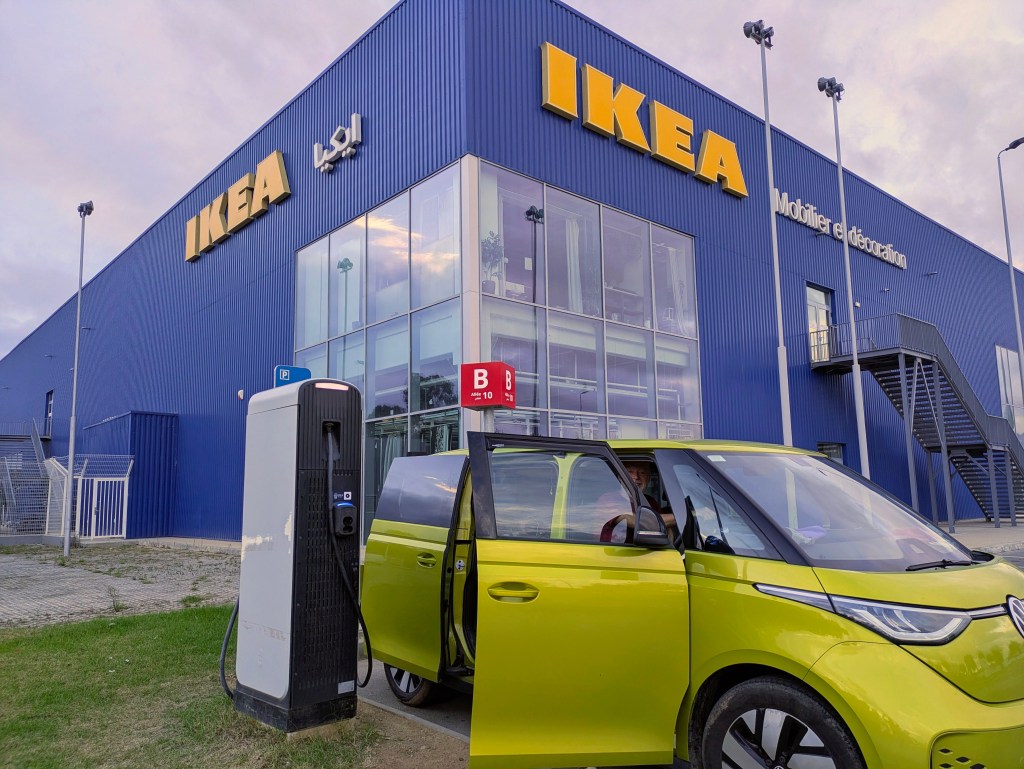
EV Charging in Morocco. Charging the Buzz was an issue in Morocco. Chargers were scarce – a charging map told us that there were forty-one chargers in the whole country, distances were large -Morocco is more than six times the size of Ireland. After getting into Morocco, the first chargers that showed up on our map were Fast Volt, the chargers were in a gleaming forecourt and looked impressive. We were hopeful. The instructions, in French, required us to download the Fast Volt App as charging was only available through the app (and not directly using a bank card). No problem, we thought, until we attempted to download the app and kept  getting the message ‘Unable to download as app not available in your region.’ Catch 22. The Fast Volt were great chargers but we were unable to use them. Meaning that the number of available chargers decreased significantly.

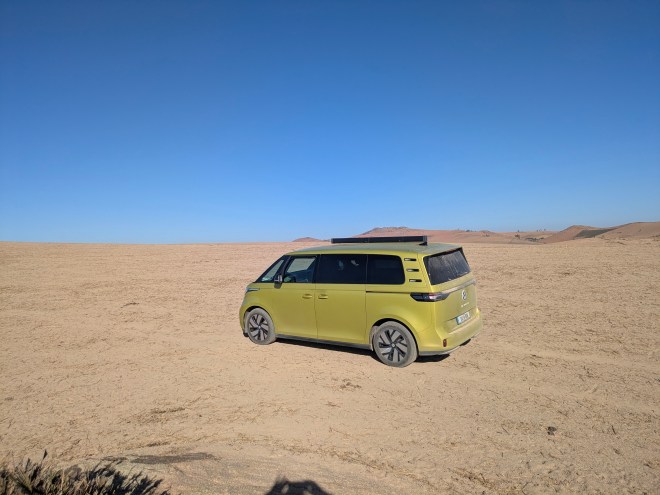
Looking for a Campsite in the Desert Turning inland from the Atlantic Coast in Morocco, the journey was breathtaking with undulating and twisty roads. The countryside was a palette of browns with the occasional green scrub, villages like mirages clung to hillsides and everywhere there were goats, mainly jet-black, like shadows. We were in search of a farm campsite on Google maps which sounded like a place we might be able to charge the Buzz, plug it into a socket…..if there was a socket assuming that was even electricity. The trouble was that we couldn’t find the campsite. We left the tarmac road and followed dusty tracks…. to nowhere. Eventually we turned around and tried to retrace our tyre marks back to the ‘main’ road which was not an easy feat.

You have Arrived????😮

Azrou, a Berber town surrounded by cedar and pine forests with many walking trails and home to troupes of Barbour monkeys in the woods, should have been a highlight but it is here in the lowlights.  It was exactly the type of tranquil place we liked BUT we had a big problem, we couldn’t charge the Buzz, We tried several sockets, the campsite manager, Khalid,  allowed us to plug into the kitchen, he called a mechanic friend, brought us to a garage but the Buzz wasn’t buzzing.

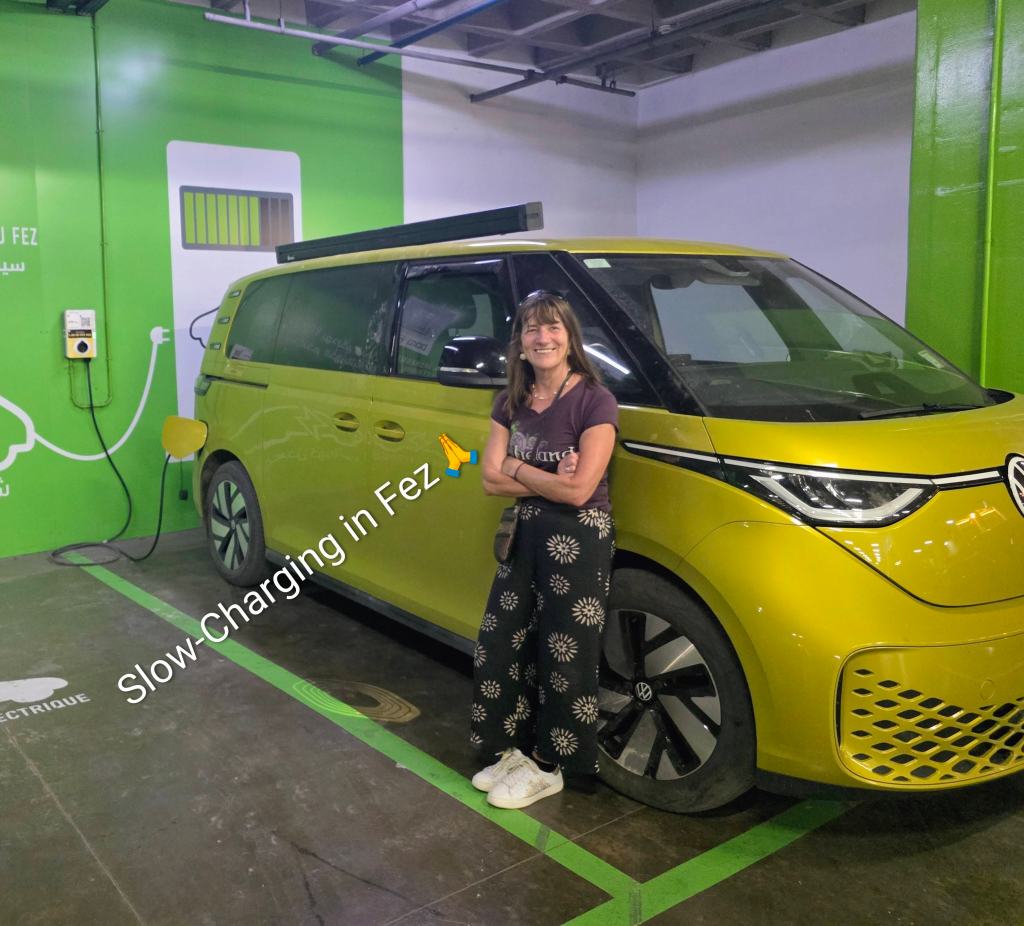
 According to various (unreliable) maps, we thought there were chargers in Fez, which we had intended visiting, or Meknes, which we had never heard of before. Fez was 89kms but Meknes was closer at 65kms but we had a mere 59 kms in the tank.  Would either of them have chargers that worked……even if we got there? Our only hope was altitude – we were in the Middle Atlas mountains so it should be all downhill to either destination.  We decided on Meknes and drove slowly….Khalid gave us his phone number in case we got stuck and said that he would come and rescue us. We made it to Meknes, gaining kilometres on the downhill but it was SO stressful……however the relief was also huge when we managed to plug into a charger (albeit a slow one) in Meknes which was free, like all the chargers we used in Morocco.

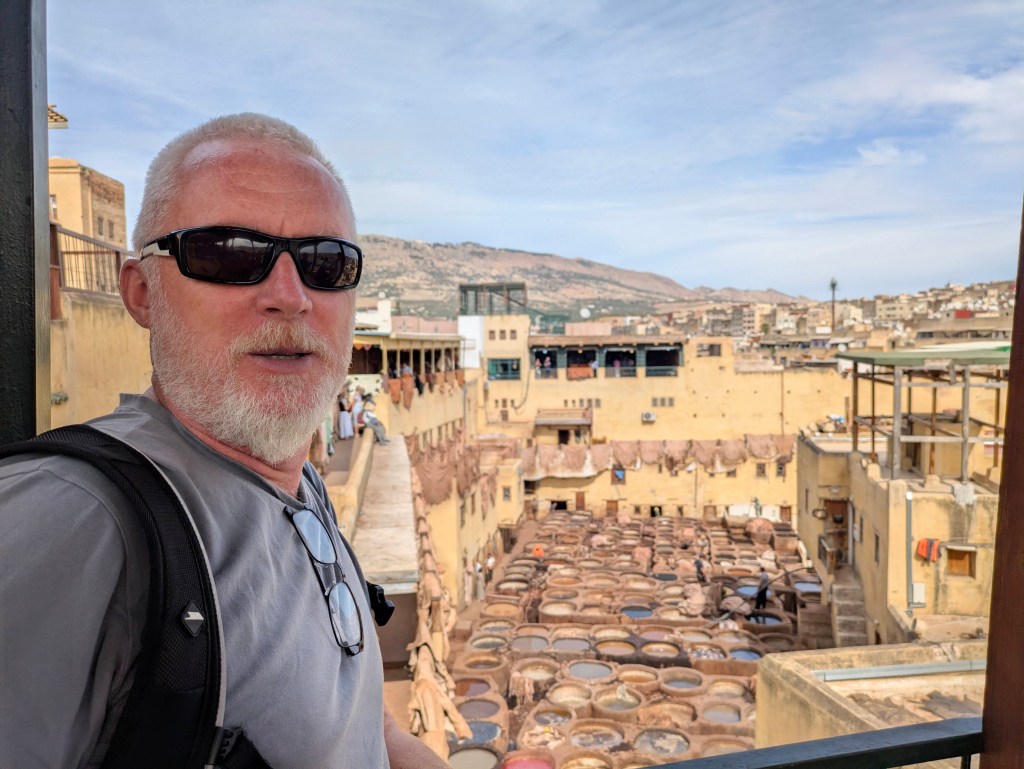
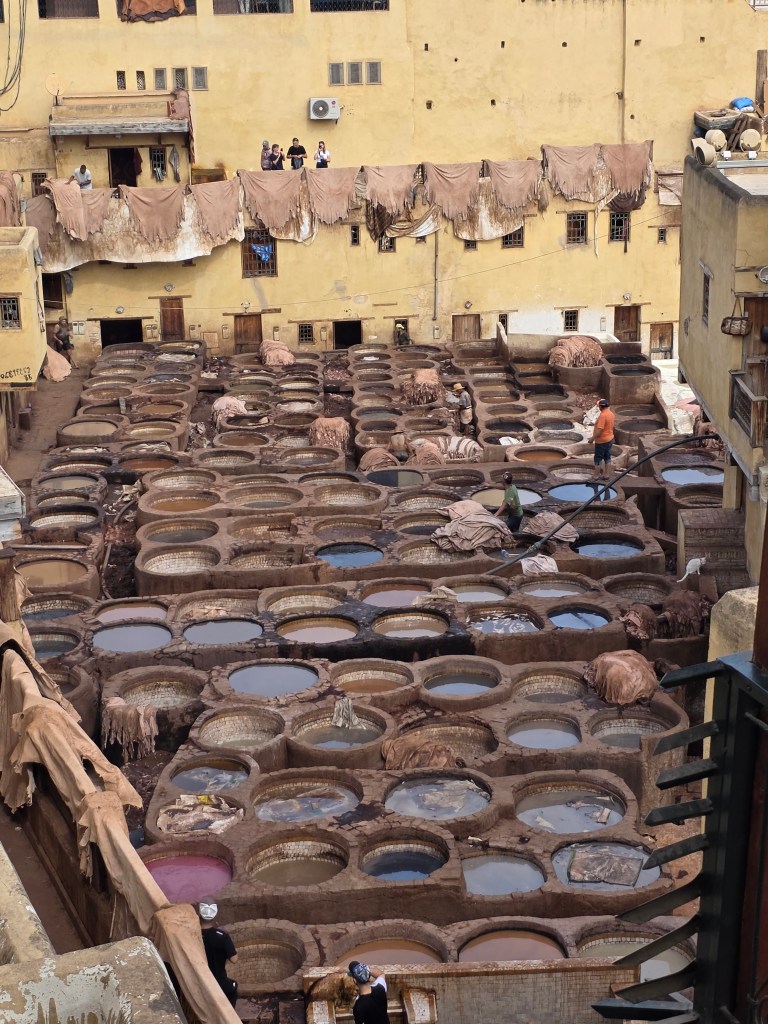
An Unforgettable Smell in Fez.  At the door leading into the Fez tannery, a small man with a face like wrinkled leather pressed a few mint leaves into my palm and gestured that I should hold it to my nose. It didn’t help much – a whole mint bush wouldn’t have disguised the pervasive pungent smell that hung in the air, the smell of blood and chemicals although the tanning was done using old natural methods, many unchanged for a thousand years. The ammonia needed in the process was supplied by pigeon poop, gathered from the town’s buildings and from pigeon fanciers and the red dye came from pomegranate seeds. The recently eaten honey cakes were leaping into my throat as I looked down at a ‘clothes line’ of drying skins, a mixture of goat, cow and camel  and the much-photographed ‘honeycomb’ vats of coloured liquid used in the dying process. The work was intense, the noise unrelenting, the conditions brutal…….and the smell was gut-wrenching.

Despite the difficulty with EV charging, we were charmed by gorgeous Morocco and Moroccans who are probably the most helpful people in the world. Our trip was curtailed somewhat in Morocco by the quest for chargers. This kept us in cities more than we would have liked but on the plus side, we visited Meknes and Rif Mountains which we probably wouldn’t have if charging hadn’t been an issue.

We learned a lot and could have made things a little easier if we had done some research…..although our usual ‘modus operandi’ is to ’wing it.’ We discovered that there are adaptor cable kits (aka Portable EV Charging Station) available to buy online which might have allowed us to charge from a household socket in places like Morocco by some regulation of current/voltage. (Much of our disappointment, our granny cable didn’t work with an adapter plug) This new adaptor kit has gone on our Christmas wish-list  so hopefully in the future there will be no stopping us.

EV charging in Spain was easier than in Ireland with numerous chargers and suppliers. Most could be paid for with a bank card but with a higher tariff – prices were usually cheaper through the relevant app but pricing also depended on the type and speed of the charger. We found Electromaps to be very useful and the most accurate app for finding all chargers and by adding your bank card details to this app, it was possible to pay directly through this app for most chargers in Spain.

Thanks for reading and coming along on our journey.

Wishing you and yours a happy, healthy Christmas x

Central Morocco

Electric Travels: Highs and Lows

Electric Travels: Closing the Loop

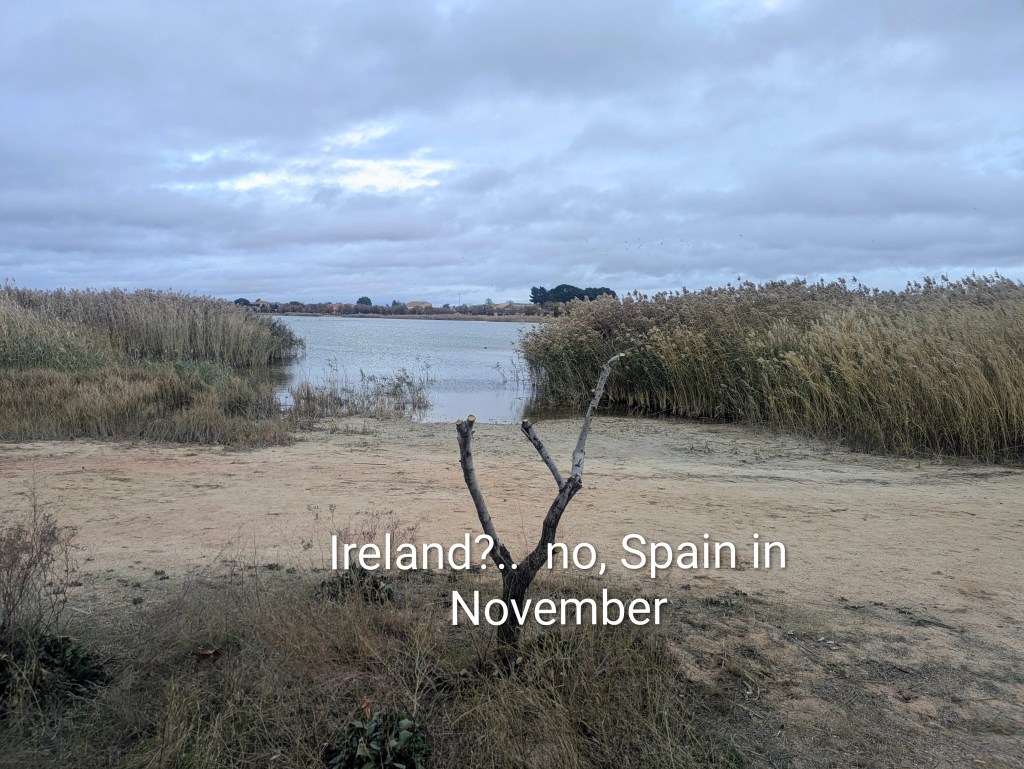
Spain in November was much colder than we expected.

Our week in the Sierra Nevada was gorgeous with mainly bright sunny days and cold nights (as low as 2C), Although the daytime temperatures rarely climbed above 13C, it felt much warmer in the sunshine and it was perfect weather for hiking. As we packed up the van last Monday, there was a change….clouds were dimming the brilliant blue skies of the previous week.

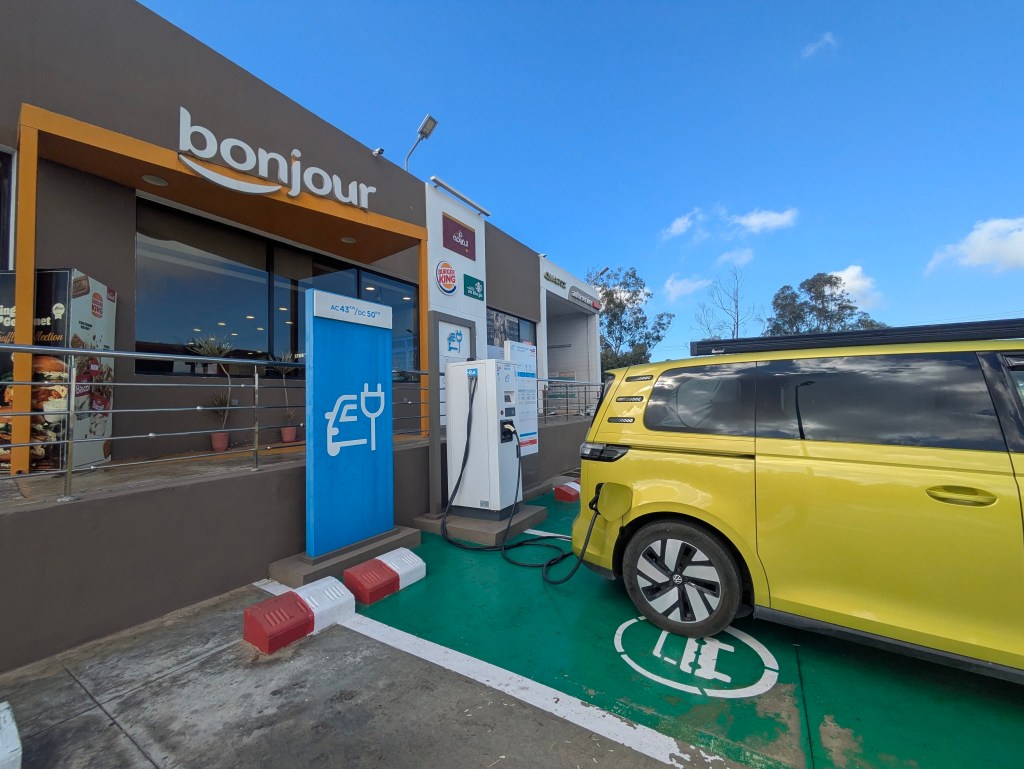
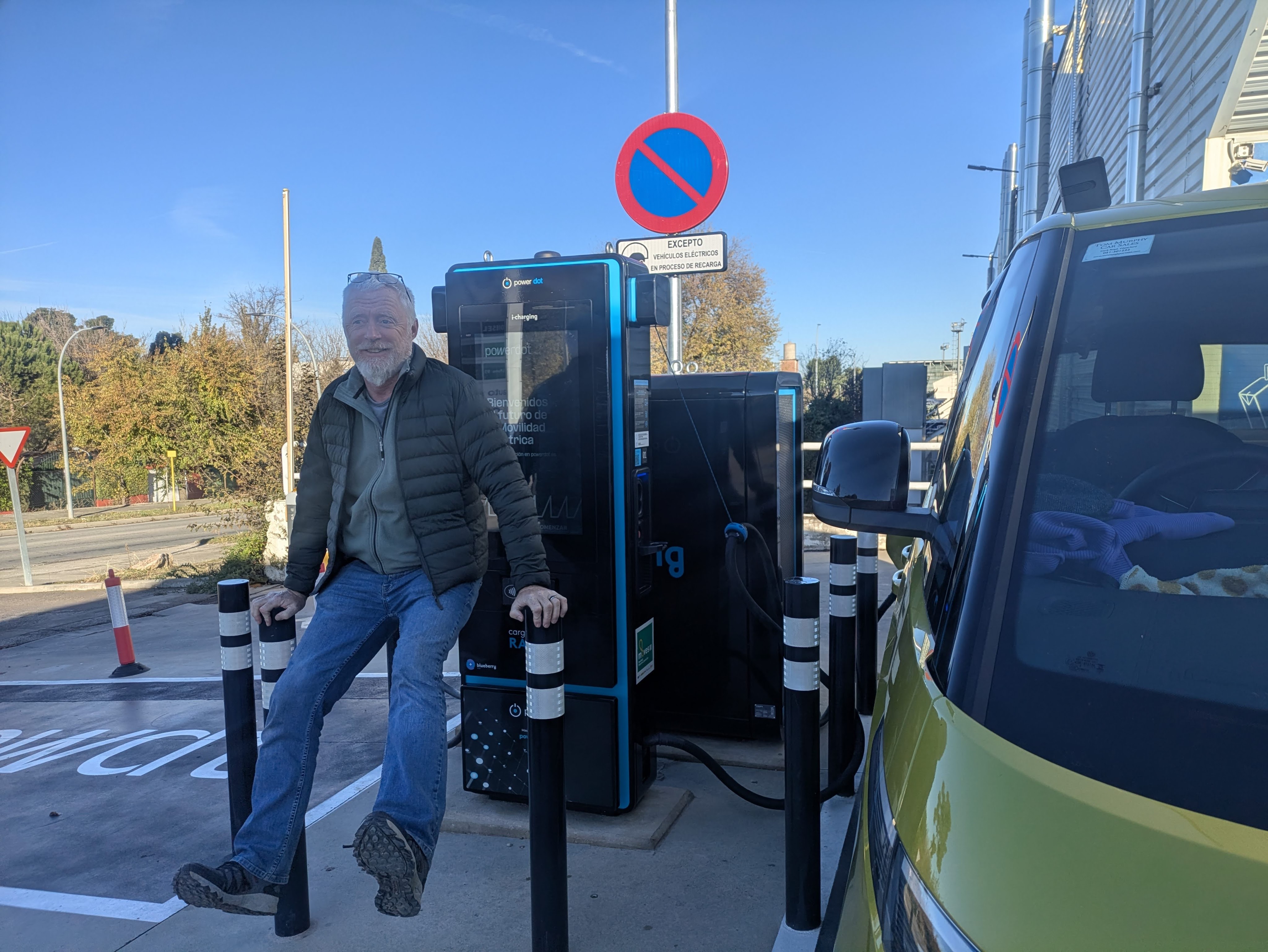
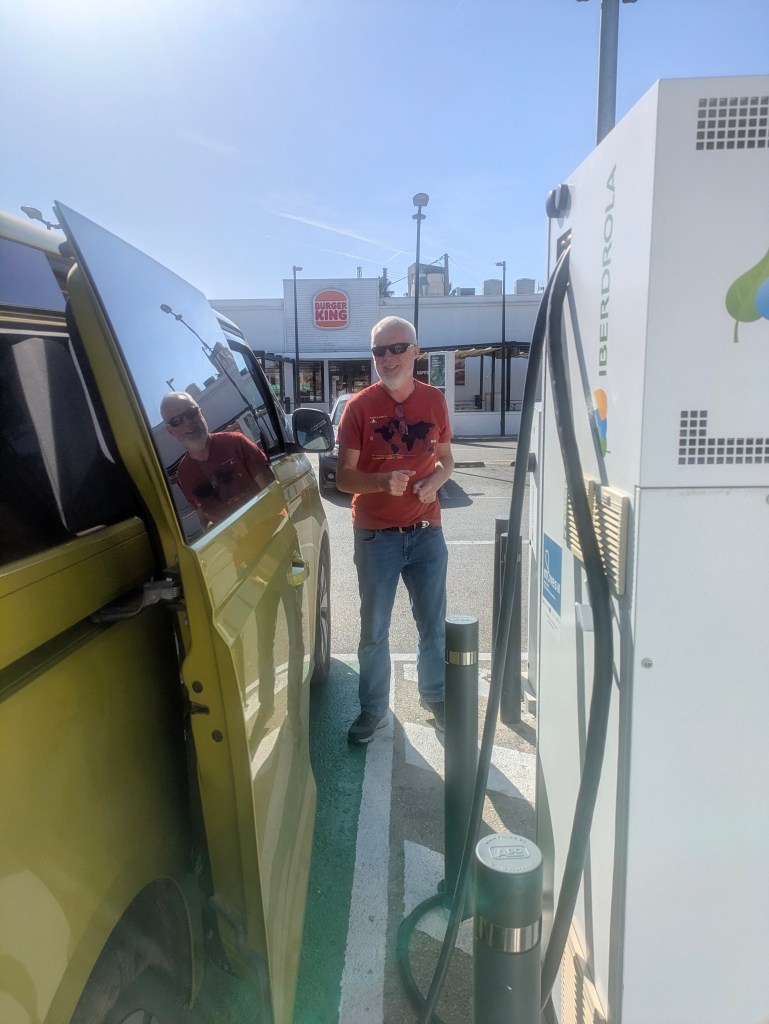
We headed north, skirting around the city of Granada, stopping to charge the van, outside a Burger King with little else around which meant that we felt compelled to eat something there. We had picked a different charger (a super-fast one) but when we got there, it wasn’t operational – one of the few times that this has happened in Spain and unlike in Morrocco, there was more public chargers within a few kilometres.  The downside was that many of them are outside fast-food chains.

Happy Charger

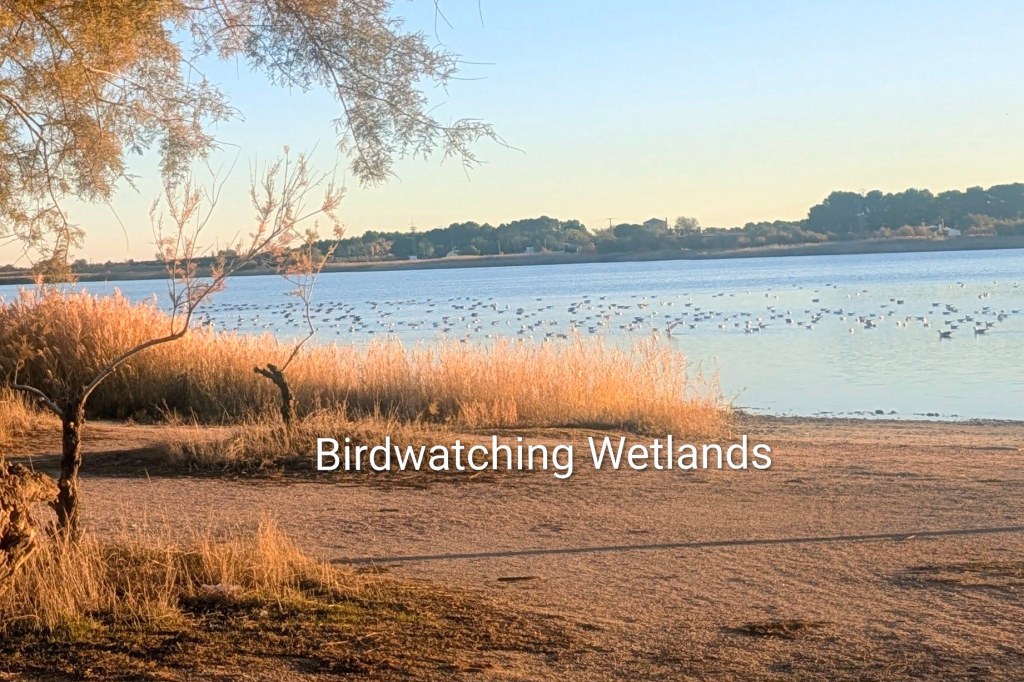
Spanish roads are reasonably good and they are almost all without tolls unlike France or parts of Portugal. We stopped for the night at a small hotel in the Castille-La Mancha region, outside Villafranca de los Caballeros, about an hour or two south of Madrid. The wind whistled through the shuttered bedroom windows and the aircon unit on the wall rattled and coughed but produced little heat. Our phones said the outside temperature was 10C but that it felt  like 3C. The inside temperature wasn’t much higher.  It had seemed a bargain –  a convenient and cheap stop – when we booked it at €31 for the night. It could have been gorgeous but it had a desolate ‘out of season’ feel. There were lake views and an inner courtyard but the wind  raced up the stairs to the upstairs ‘habitaciones’ (bedrooms).  Flocks of migratory birds glittered over the salty waters…..the birds also found it a convenient stop ….but there were very few people. The man on reception was friendly but he was dressed in a padded jacket and woolly hat, and the restaurant and bar were closed. Our room had two single beds….totally by chance I got the comfortable one, Caoimhin’s was lumpy with a huge dip in the centre.

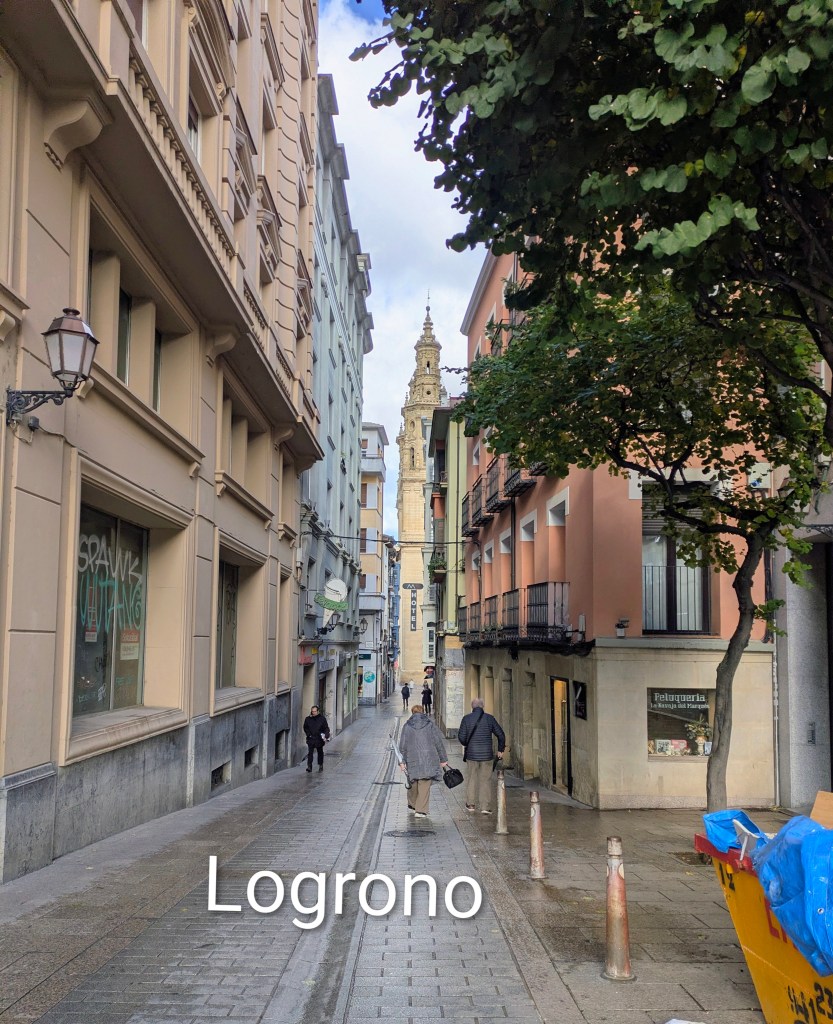
After our ‘ budget experience’ and because the weather was too chilly to sleep in the van, we booked an apartment in Logrono in the Rioja region for three nights, eager to get north  and closer to the Bilbao ferry.  We choose Logrono, simply because we have never been there but getting to Logrono from the lake involved a long drive, over five hours, but we decided that one long hop was preferable to dawdling our way.

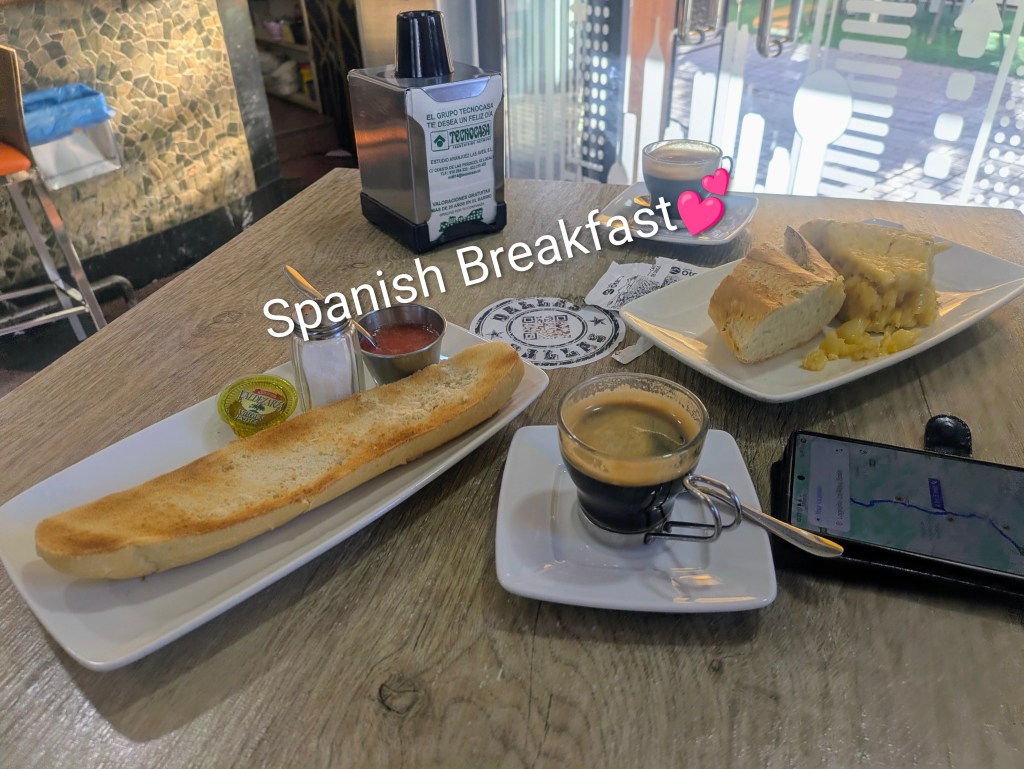
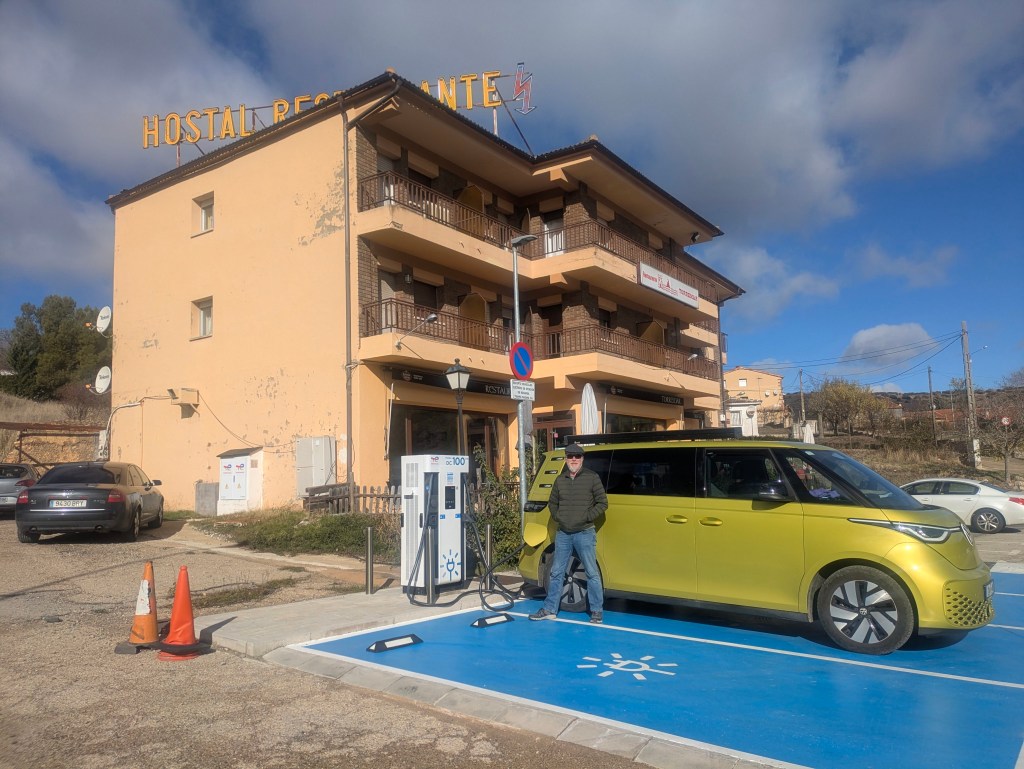
Continuing through Castille-La Mancha, the region is so flat that our eyes had to adjust to the flat plains and the unending horizons, so different to the mountain ranges to the south. A few old fashioned windmills – like the ones that Don Quixote tilted at…were visible in the fields. This time, we charged the van in a town-west of Madrid, Arunjuez, where we had breakfast in a local spot, a huge slab of tortilla omelette for Caoimhin and tostada for me which came with the typical tomato paste, olive oil and salt, washed down with rich café solos. We stopped again for a break and a coffee in a rural spot outside a hostal, favoured by truckers. It was pleasantly warm but things soon changed.

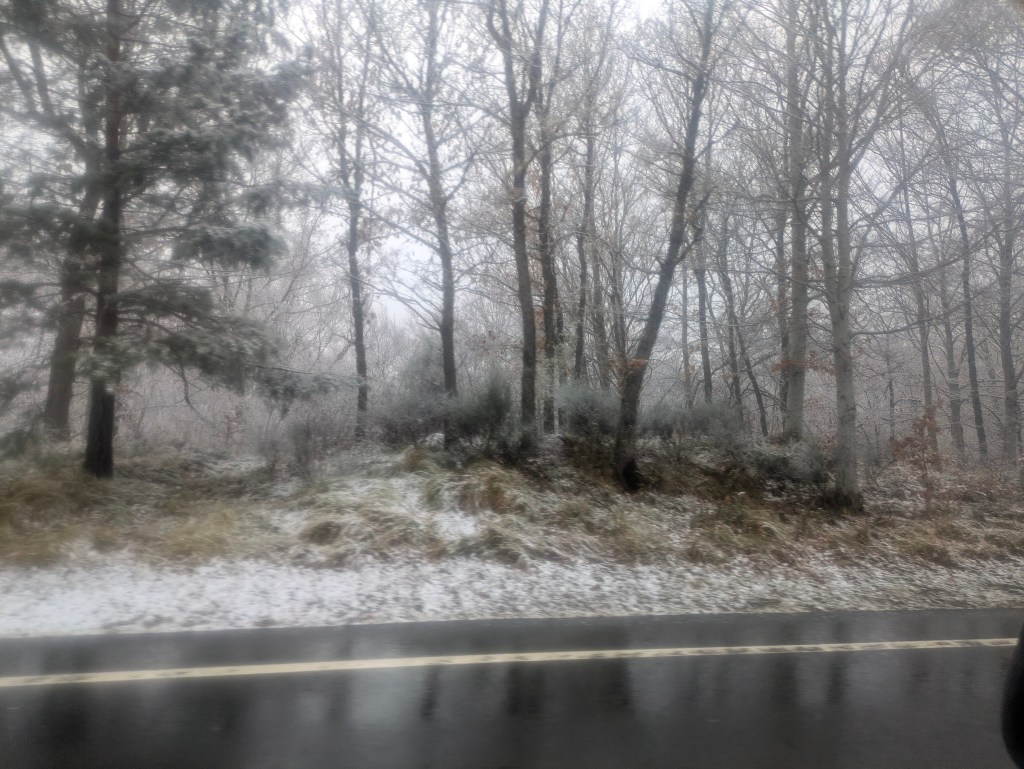
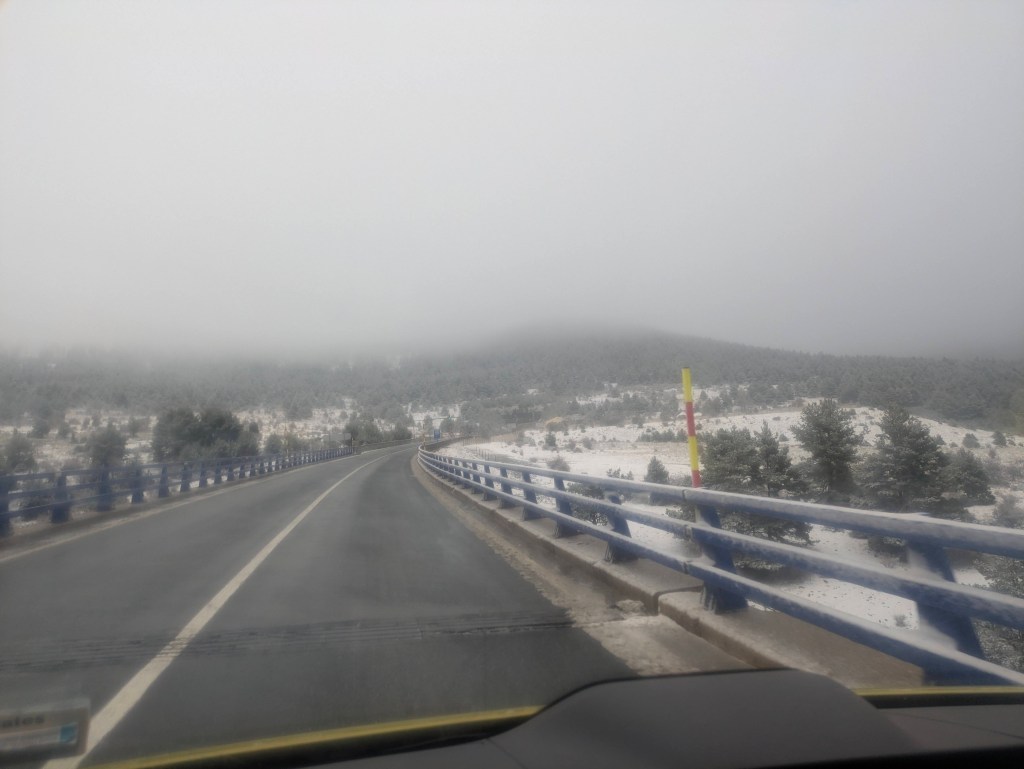
Soon we are in the mountain again, North of Soria, the rain turns to sleet and the temperature gauge drop it 1.5C, hovers there for a bit and then dips to -1,5C. The road was twisty and the surface slippery,  it was only 3pm but the conditions made it feel much later. There was freezing fog and a fleet of snow ploughs already out on the road. We passed through gorgeous villages with stone houses, clinging to cliffsides, but were glad to descend from the Sierra Camero Neuve and the Sierra Camera Viejo to the flat plains around Logrono.

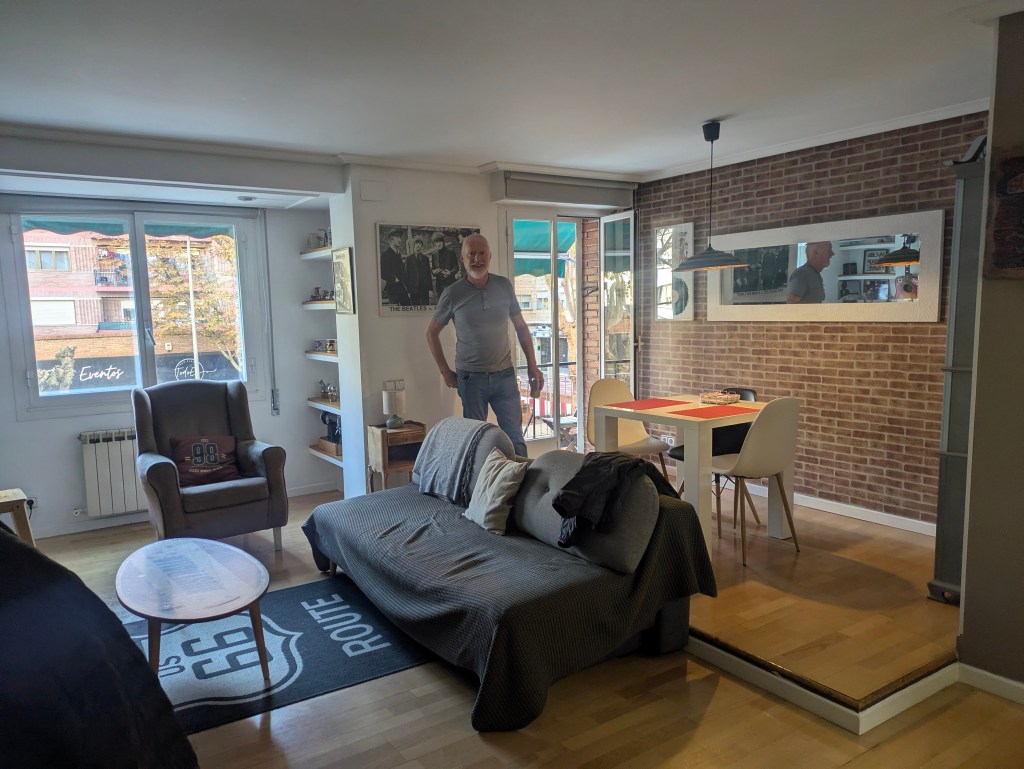
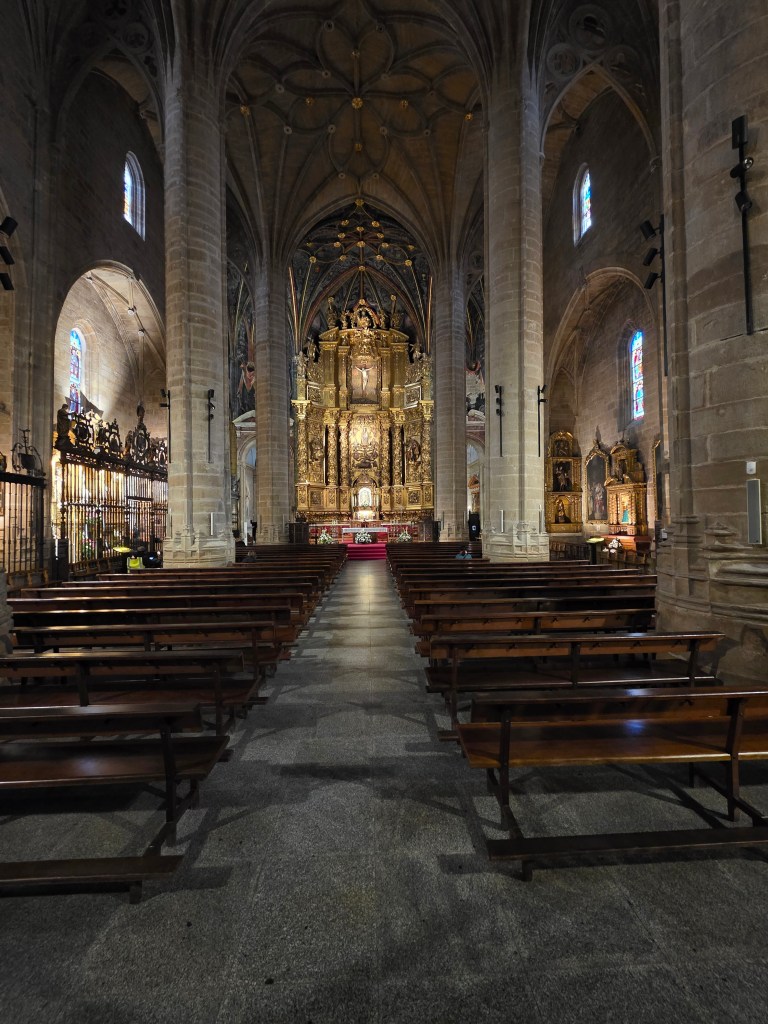
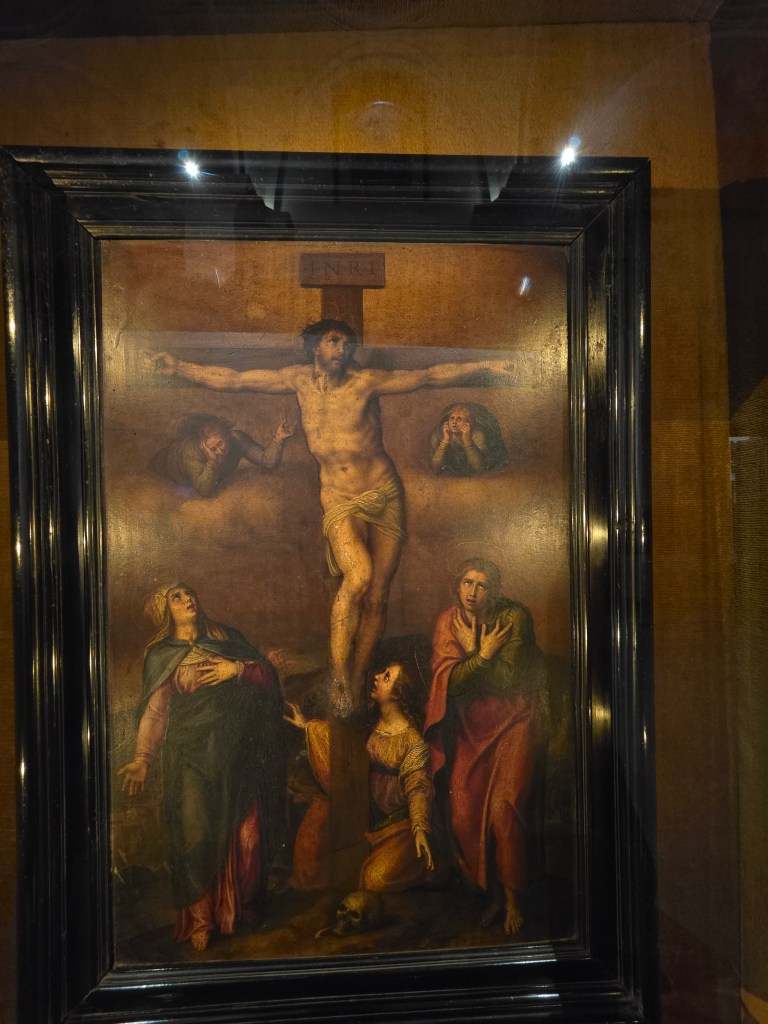
There was welcome blast of heat when we opened the front door of our lovely apartment with a little balcony overlooking the street. It was very central, less than a ten minute walk to the Cathedral, and a bakery next door and a supermarket three doors down. There was also free underground parking.  Logrono doesn’t have a lot of ‘wow’ sights but it’s a friendly place where people smile and ask us where we’re from…..particularly as Caoimhin is walking around in shorts, a rain jacket and a woolly hat. Logrono is on the route of the Camino de Santiago so the shops in the covered arcade around the  Cathedral are full of camino shells and walking sticks although there are no obvious pilgrims. The cathedral from the outside is a mishmash of architectural design but the altar inside is dripping in gold. There’s also a very impressive painting by Michelangelo behind the altar in a secluded alcove. You have to insert a euro coin in a slot to illuminate it for a few minutes…..a shrewd move to both protect the painting and generate cash.

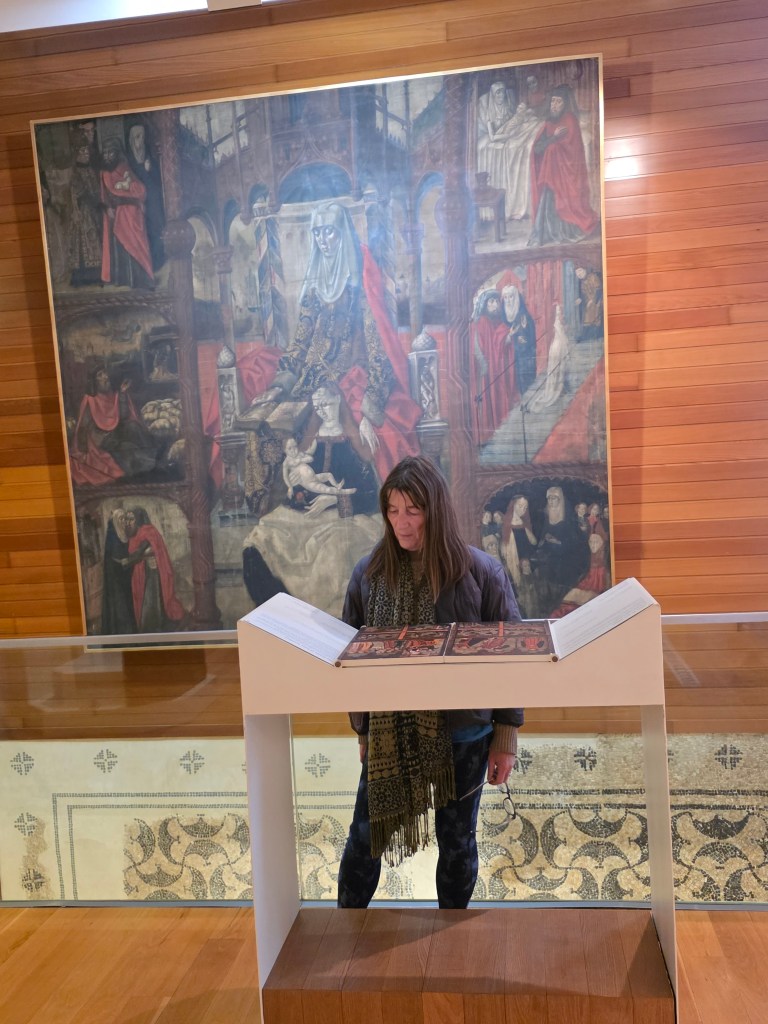
The Museo de Rioja, in a gorgeous baroque 18th century baroque building, is a really superb museum about the history and culture of the region from prehistory to the early twentieth century, stopping just before the Spanish Civil War. All the info is in both Spanish and English and is really well-done.

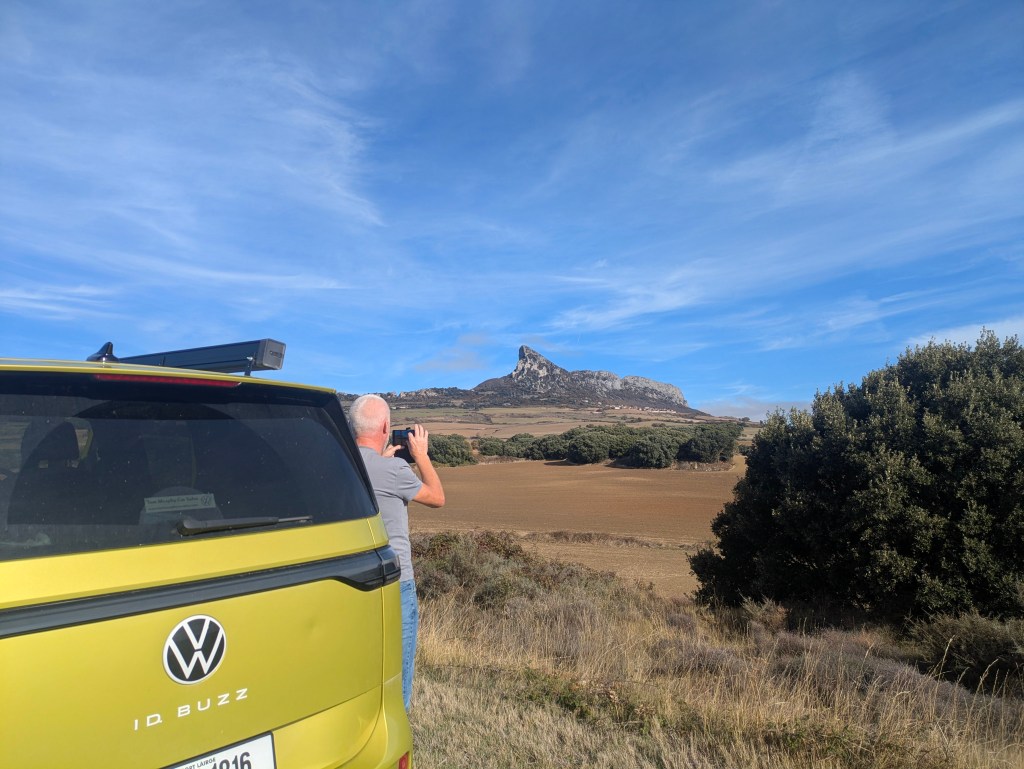
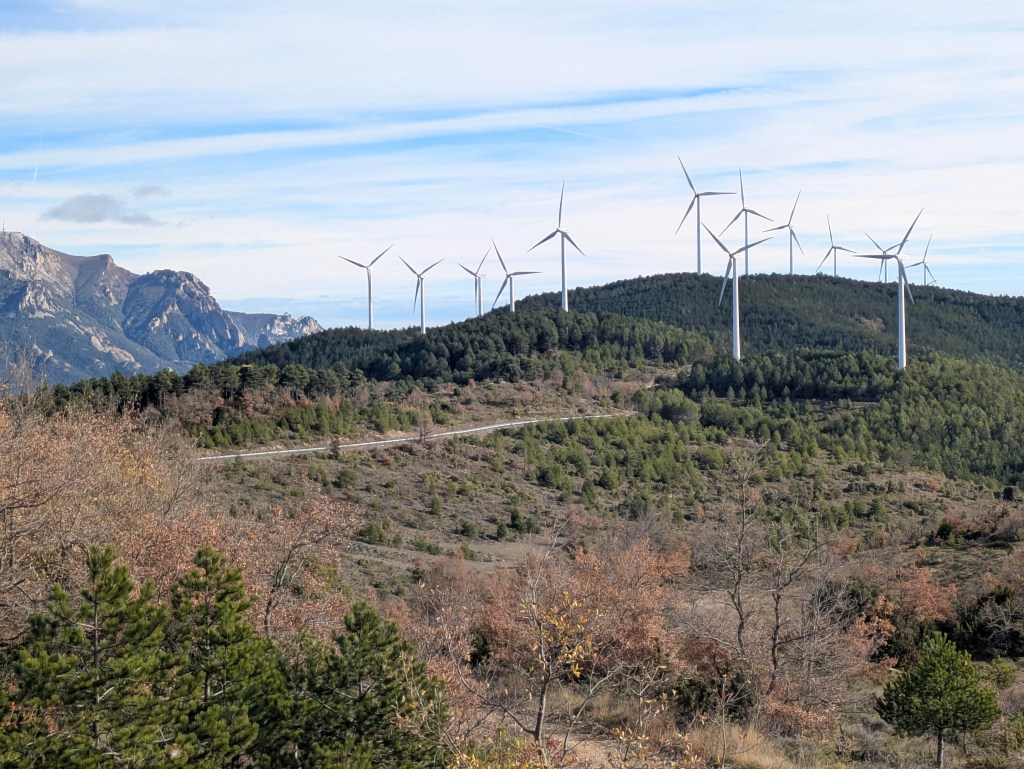
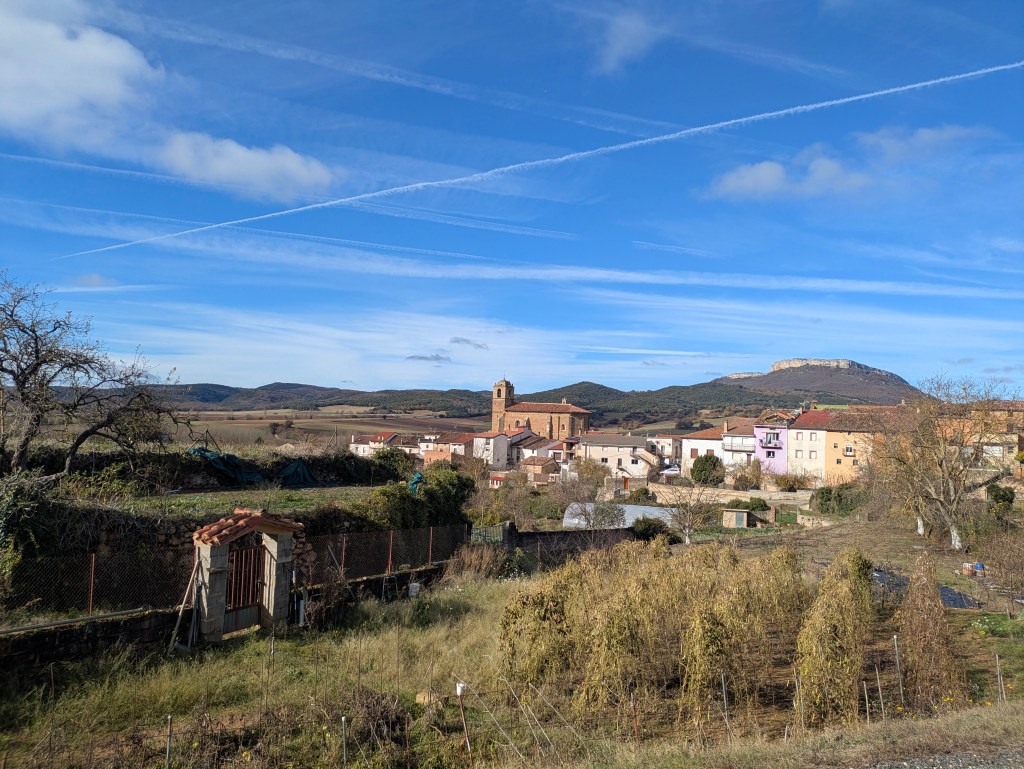
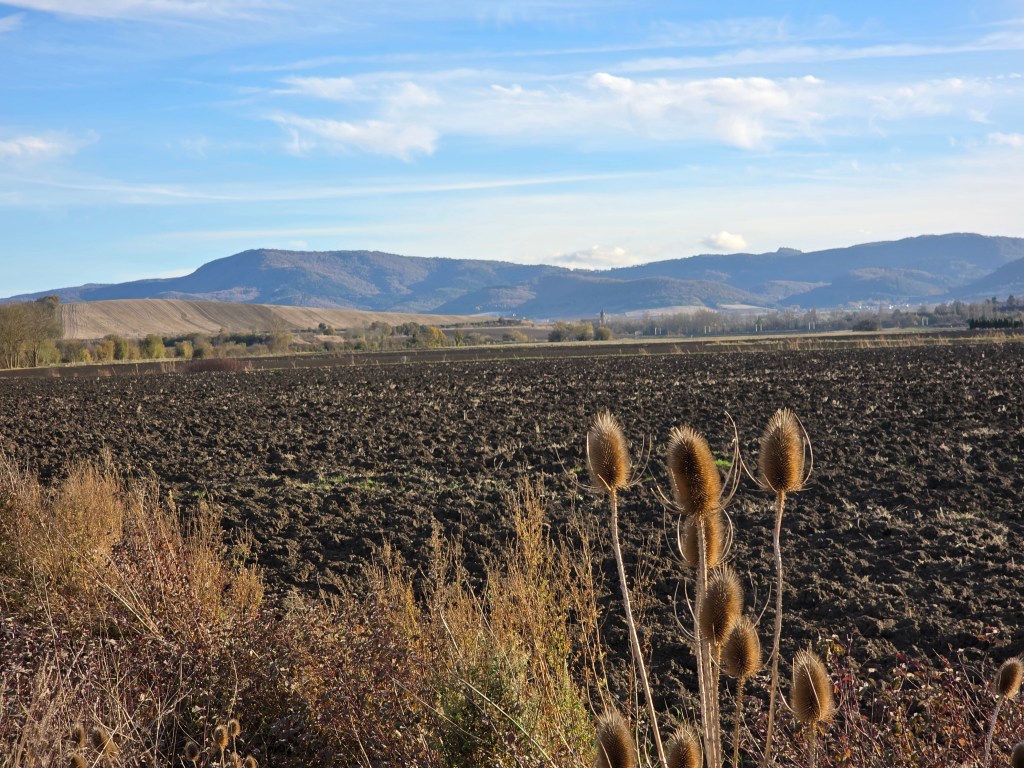
After loading the Buzz with some Rioja wine, we were ready to head onwards. Driving out of Logrono in sunshine to the sound of clinking bottles in the back, we headed for the hills on minor roads through farming countryside, stopping to take photos of the craggy peaks, windmills and villages. Spain is an astonishingly beautiful country with gorgeous diverse landscapes

When we booked our return ferry tickets from Bilbao to Rosslare, Brittany Ferries were offering special deals with the Spanish Paradores, which are a state owned chain of luxury hotels in restored historical buildings, such as palaces, convents, monasteries and castles. The hotel profits go to the upkeep of the buildings and create employment as they are often in rural areas Although we are usually fans of ‘cheap and cheerful,’ we are not adverse to a bit of luxury especially in unique buildings. We love paradors and have stayed in a few of them on our previous trips to Spain…  it’s like stepping back into the past but with modern comforts.  Our last two nights are in Parador de Argomaniz, about an hour south of Bilbao, for the incredible ‘special offer’ price of €50 a night including breakfast. If you have never stayed in a parador, I urge you to look them up and give yourself a real treat.

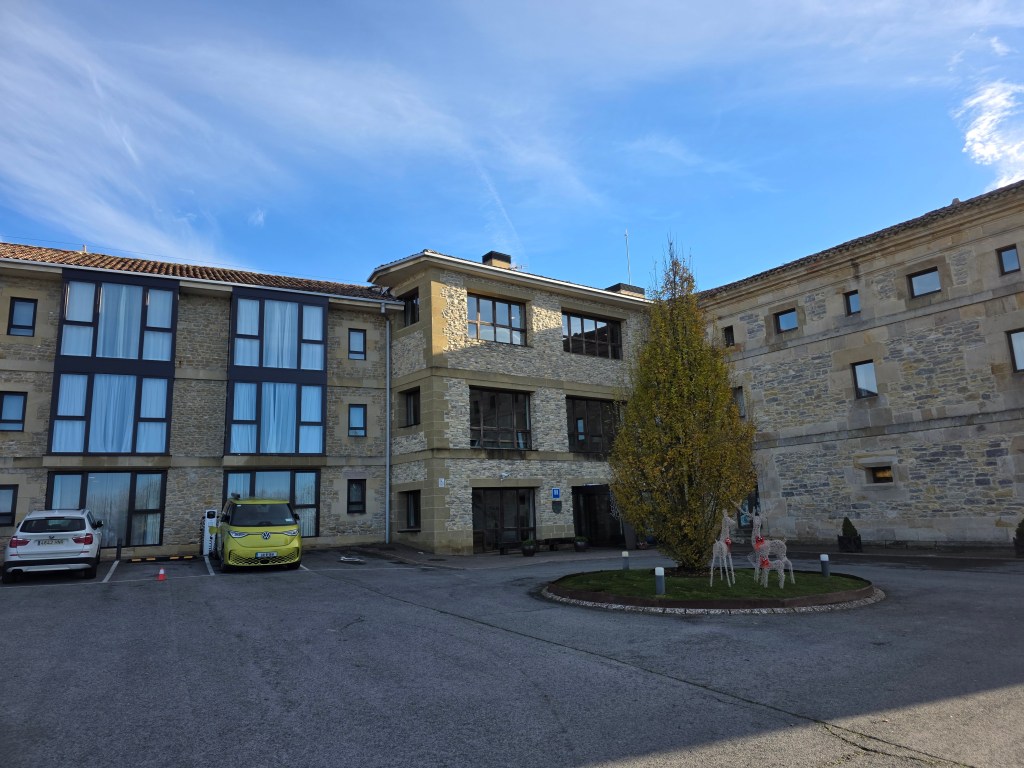
Parador de Argomaniz doesn’t disappoint…..it even has EV charging points. The building dates back to 1712 and was once a convent before being converted into a palace and during the Peninsular Wars was used as a headquarters for French Troops. It is even rumoured that Napolean stayed here and planned his attack on the nearby town of Vitoria from this very place. It’s in the tiny village of Argomaniz with gardens and woods and a renowned restaurant where we plan to have dinner tonight…..our last night……before our thirty-hour ferry tomorrow. A great place to spend our last days in Spain.

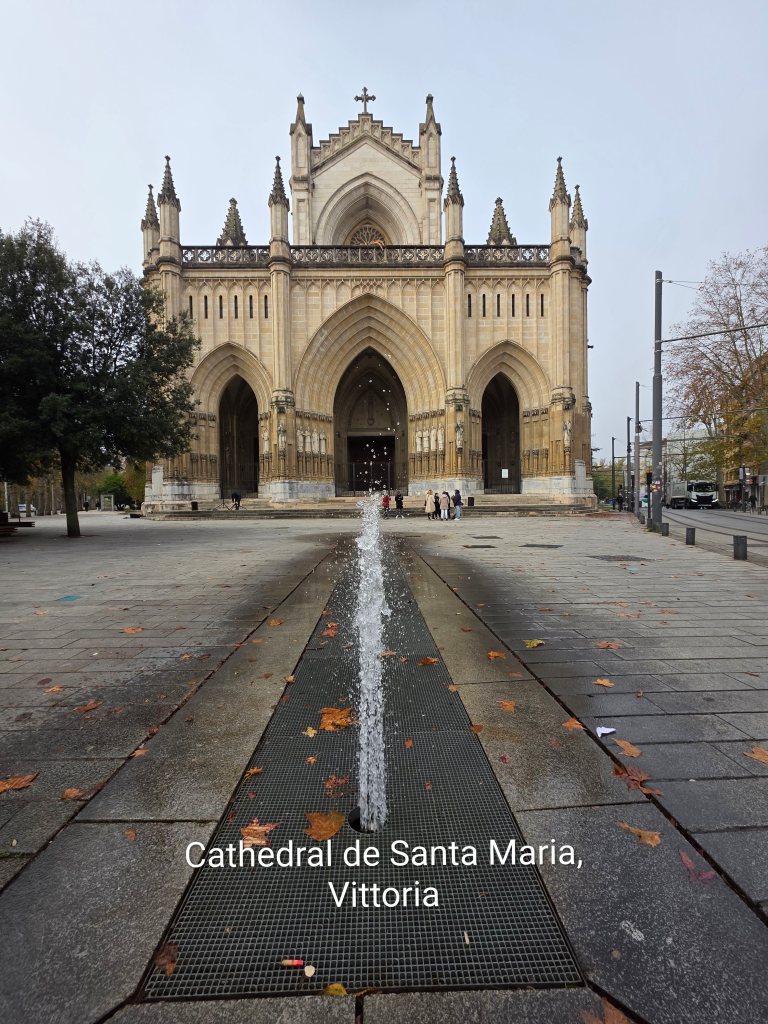
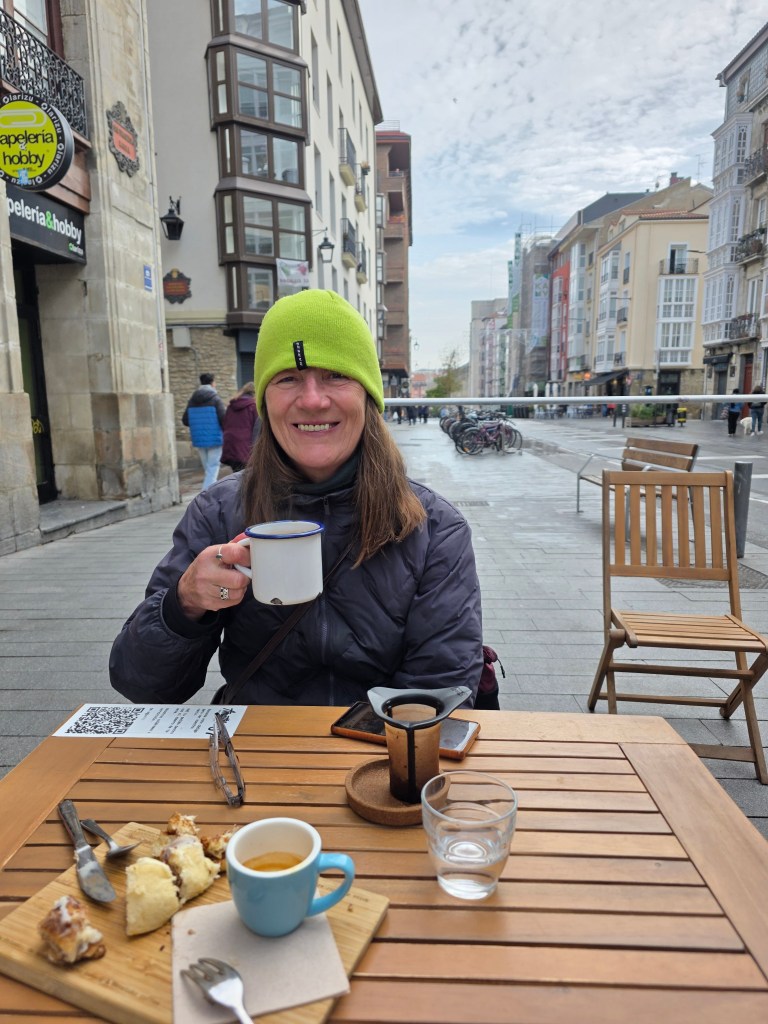
Vitoria- Gasteiz is a beautiful city although we had never heard of it until yesterday. It is the capital of the Basque Country and is a wonderful mixture of medieval buildings, tree-lined plazas, quirky shops with an emphasis on modern sustainability. Since this morning, it may have  become our favourite large unban centre in Spain……we have kept the best until last❤️

It’s been another incredible two month trip from Rosslare to Bilbao to Morocco and back, all in an electric van. We’ve slept in the van and stayed in a palace. There have been many highs and a few lows…..we never suffered ‘range anxiety’ until we went to Morocco.

When we are home, and have time to digest our experiences, I’ll post about the highlights but until then, thanks for reading and coming along on the journey with us.  

Electric Travels: Closing the Loop

Electric Travels: A Pause (paws) in Spain.

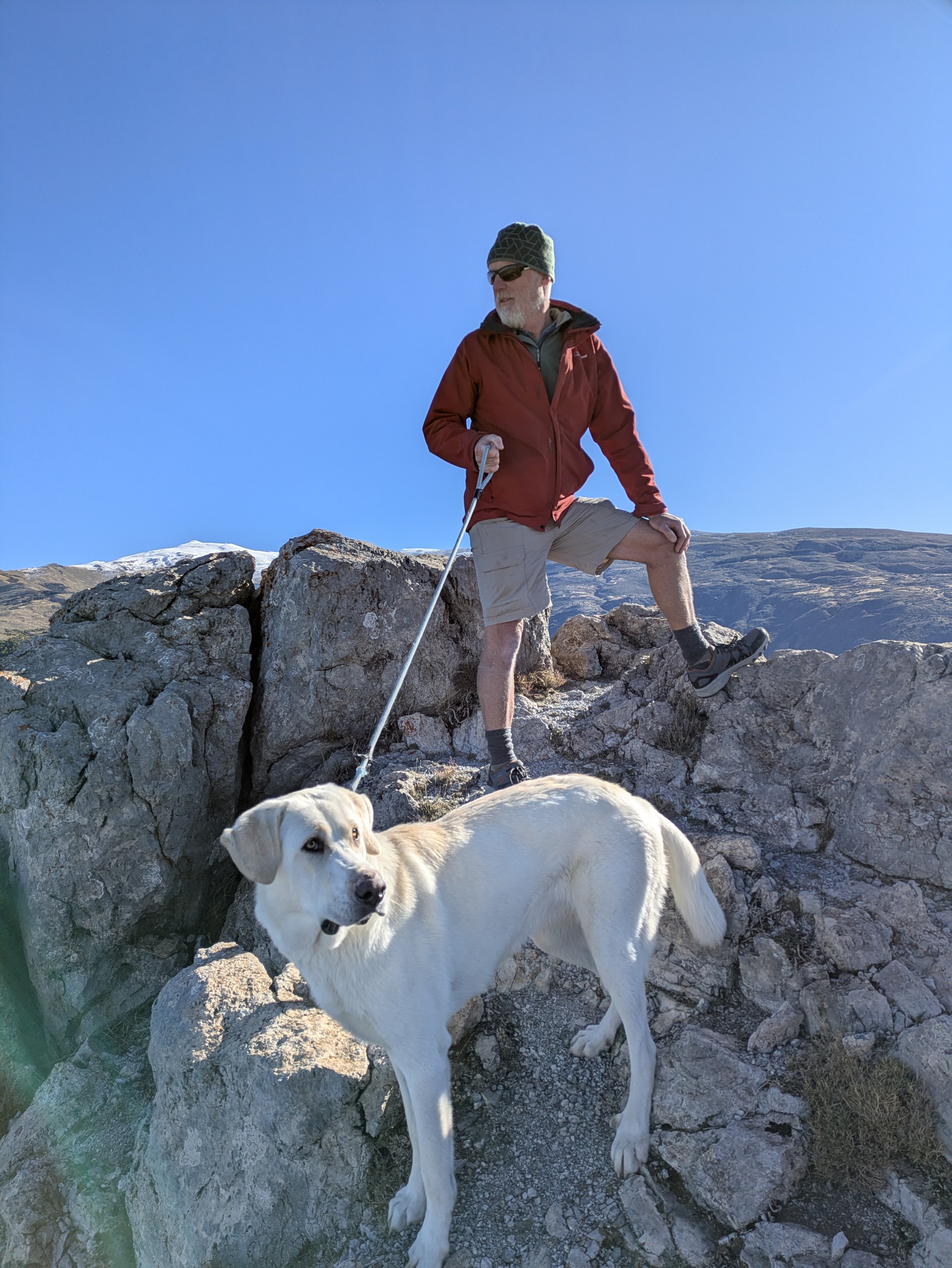
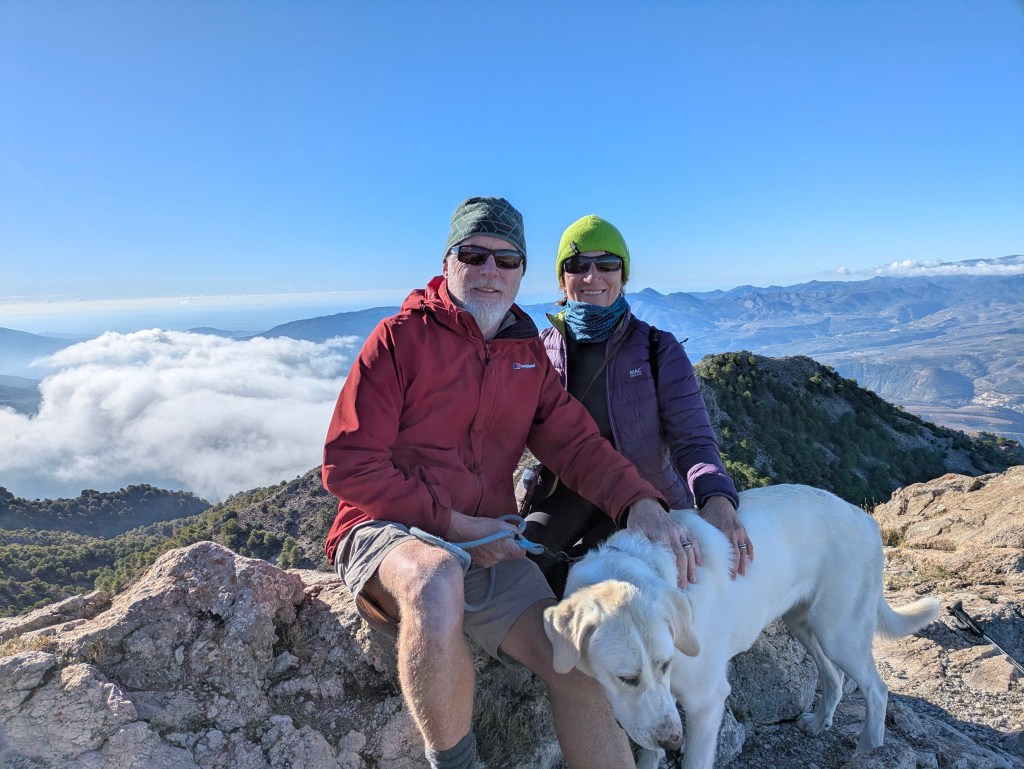
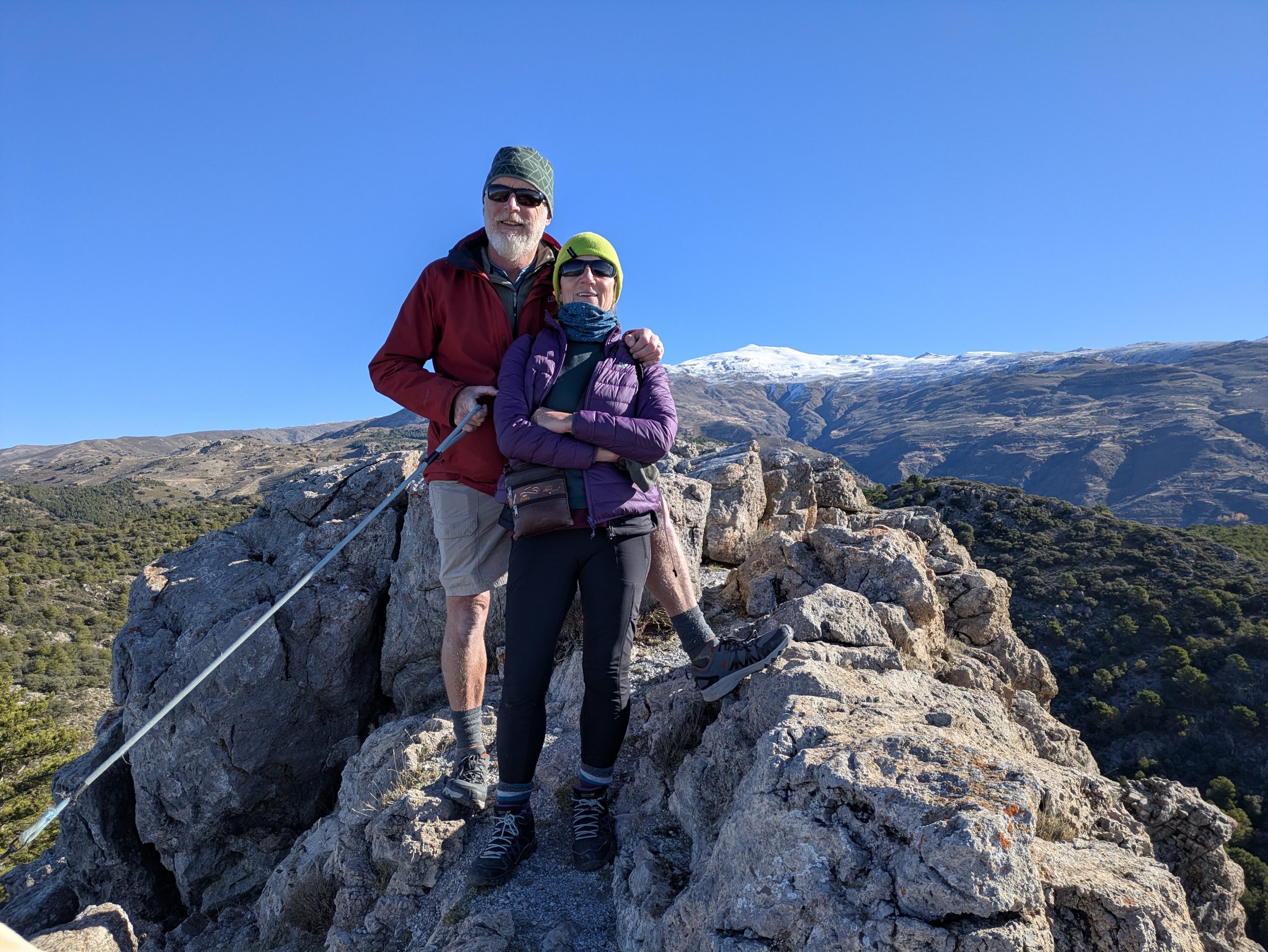
Caoimhin and Dora, Sierra Nevada

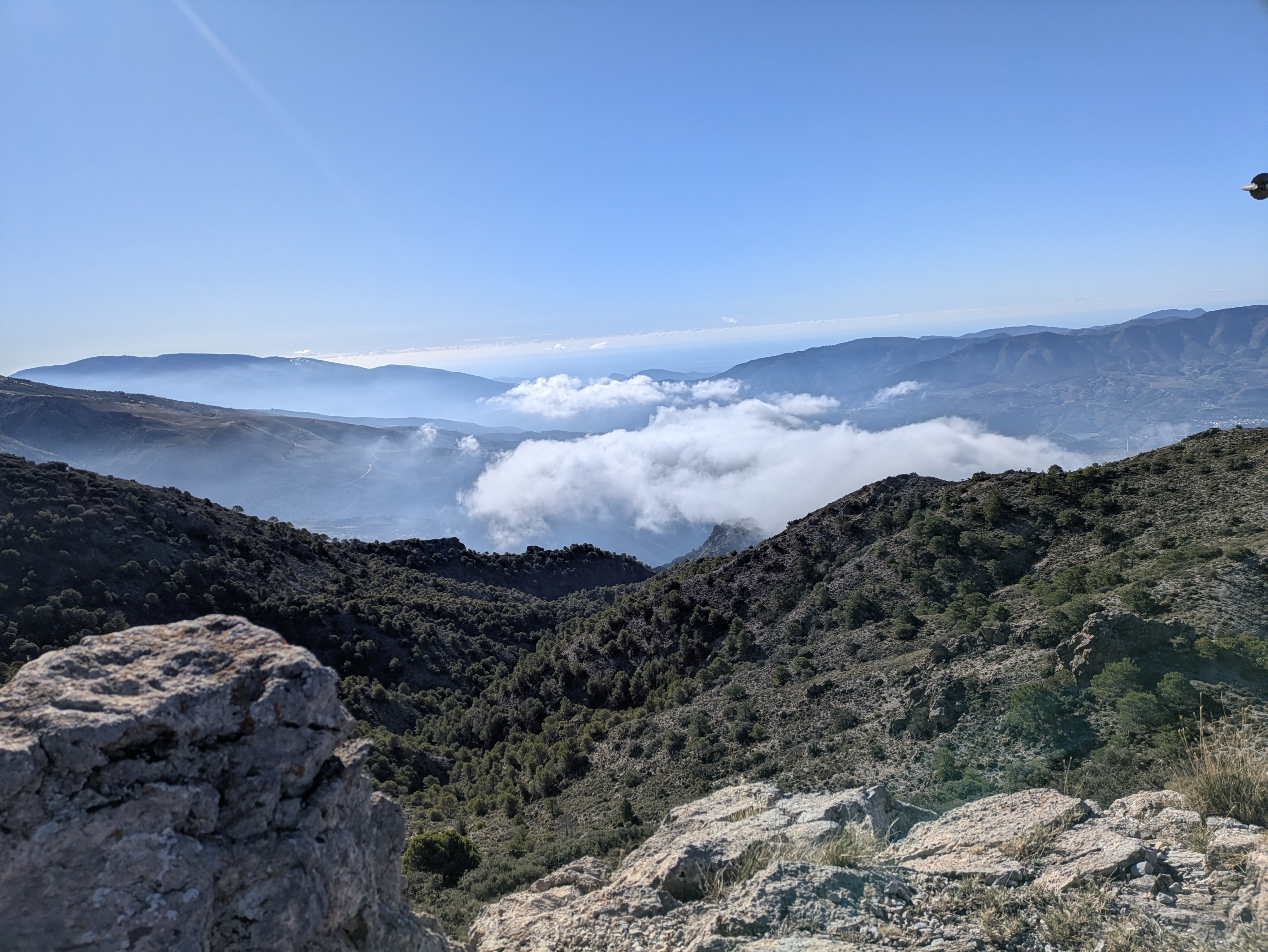
Most days, the air was crisp and clear…except when the locals burnt their mounds of tree clipping , wafting plumes of smoke into the air. The sky was a blinding blue and we were surrounded by a craggy silhouette of mountains in almost every direction. In the distance was the glittering white of the first snows, which had fallen the day before we arrived.

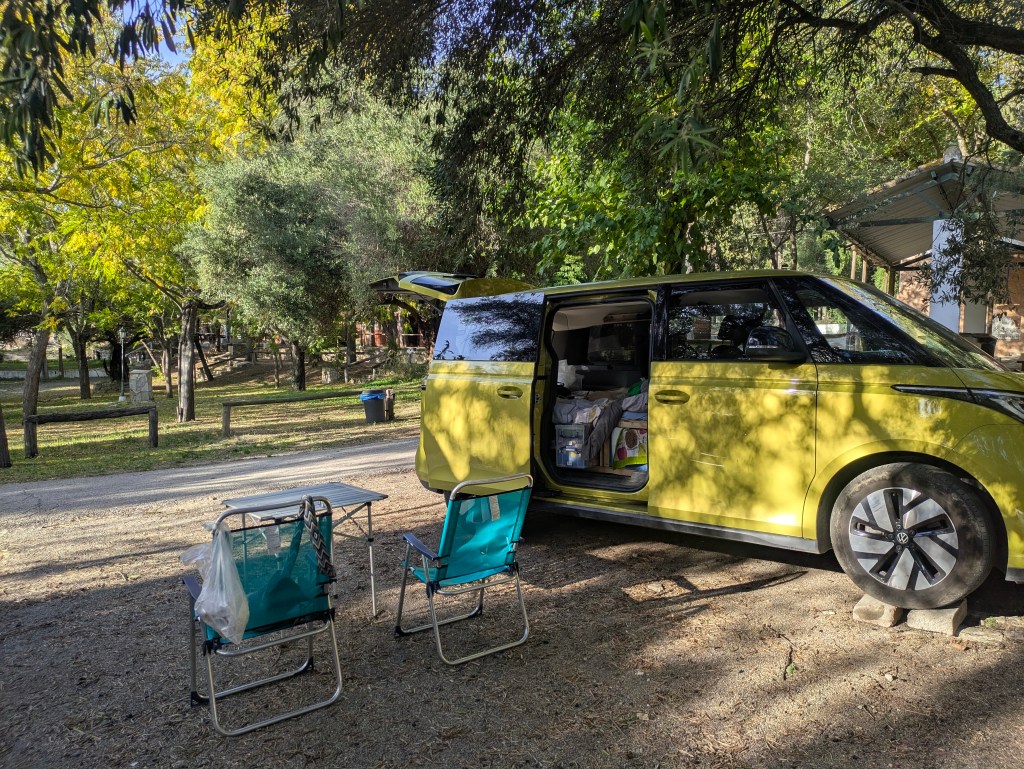
We spent eight days in Niguelas, a small village in the Sierra Nevada, about an half-hour drive outside the city of Granada, staying in a little Airbnb apartment on the edge of the village which we had booked two days in advance. After seven weeks of constantly moving through Spain and Morocco on this trip and sleeping (mainly) in the van, we wanted to pause and stay in one place. The Buzz spent the time parked under an olive tree.

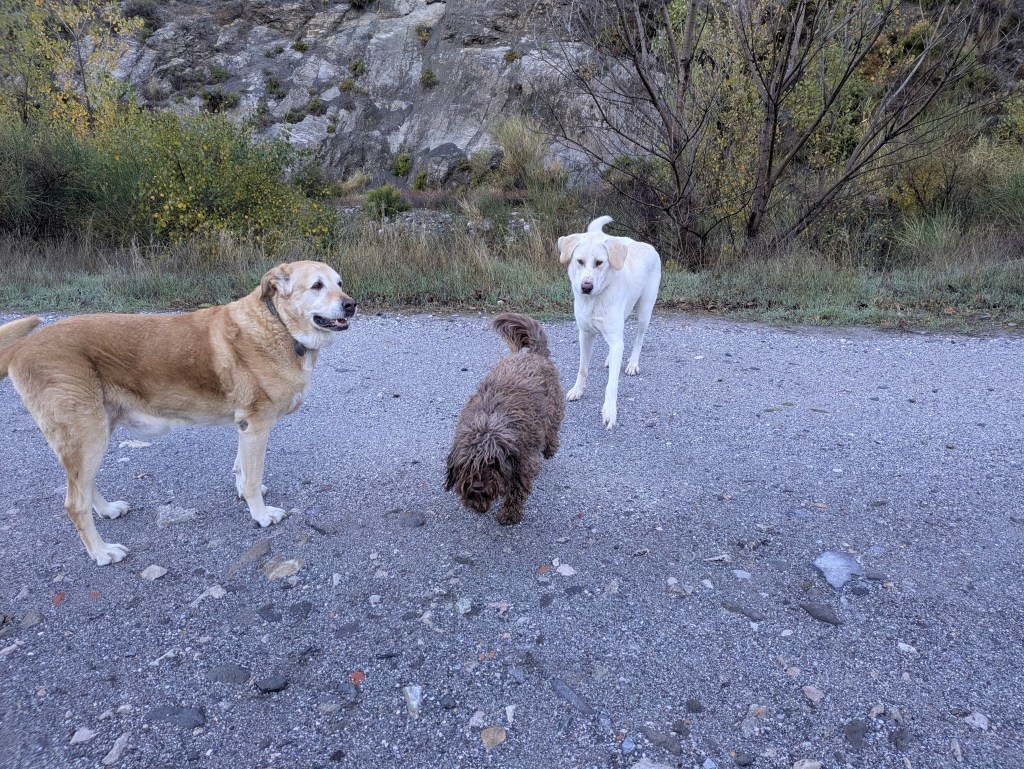
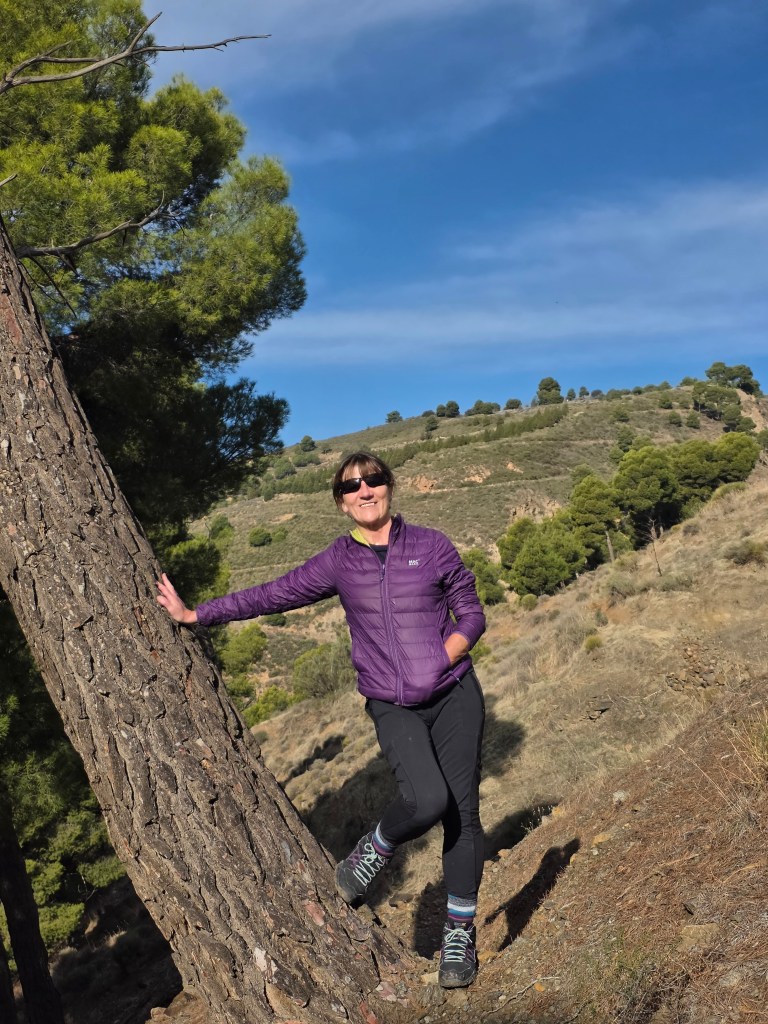
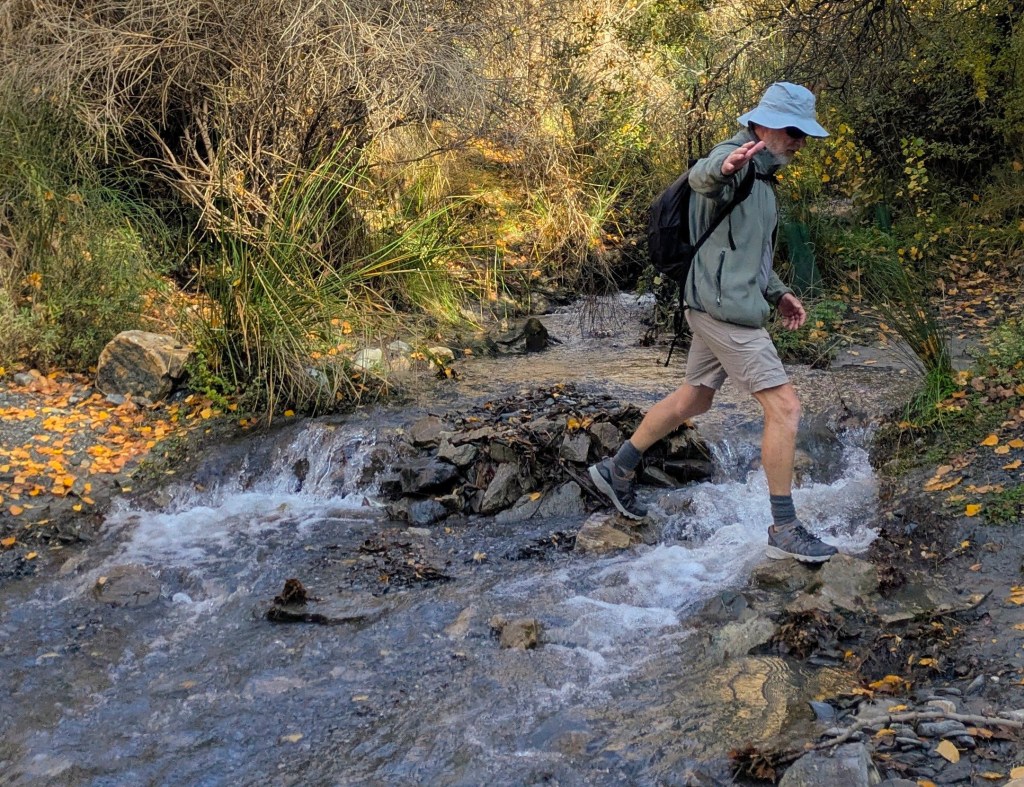
We couldn’t have picked a better spot. Our apartment (Aguas calmas) was warm and cosy, with views of the trees and mountains. It was set in a shady garden with a lovely pool, which would have been perfect in warmer weather.  The location of Niguelas was jaw-droppingly beautiful with a huge selection of hikes of various lengths and difficulty, many directly from our door. Some were marked  but  a hiking app like All Trails was helpful to keep us on track. This was a week of super hiking and some morning dog walks with our Airbnb host, Tim and his dogs, a Spanish Mastiff called Leona, who had liver disease, a nervous rescue lab called Dora and  a neighbour’s dog who liked to come along for the company.

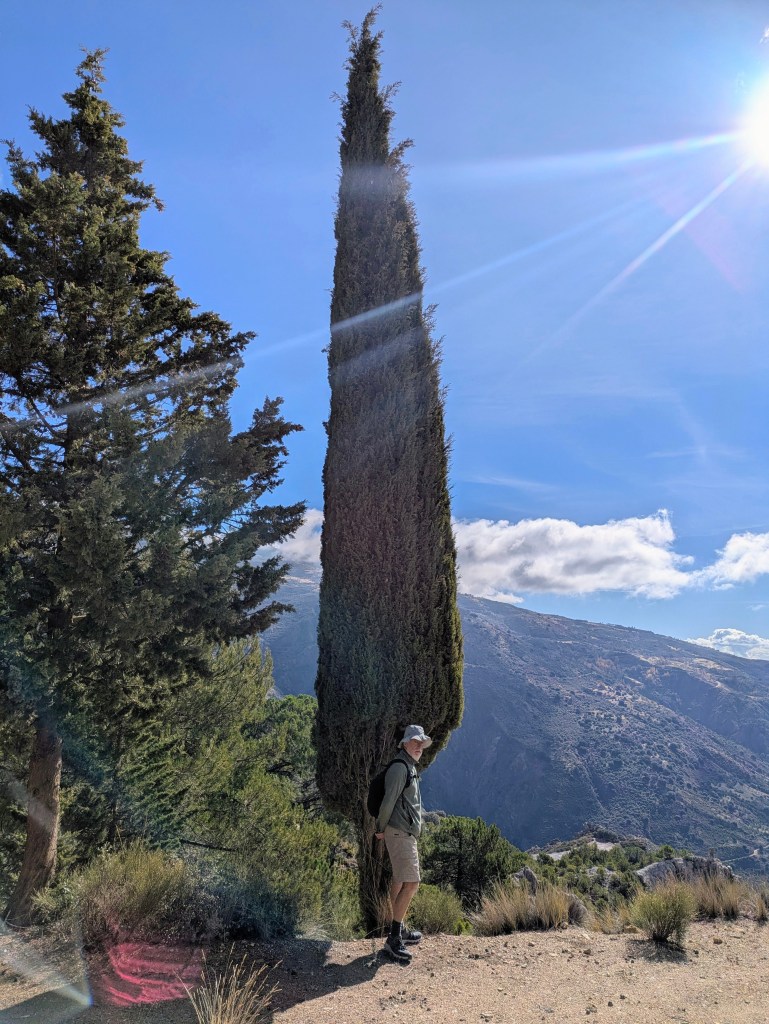
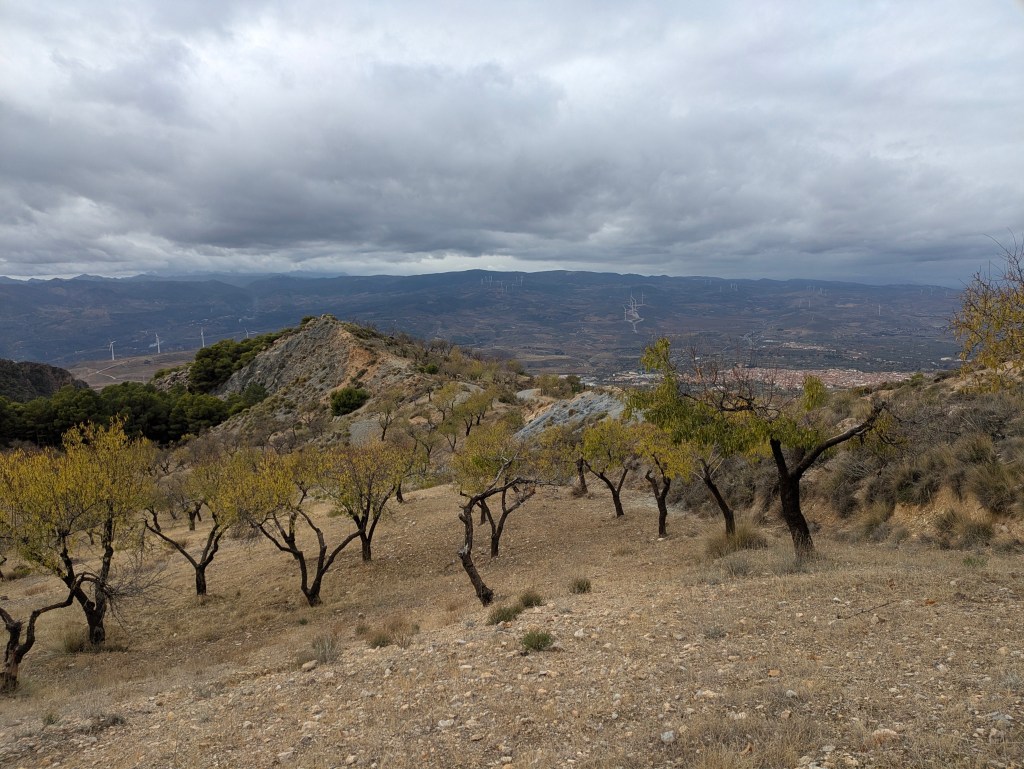
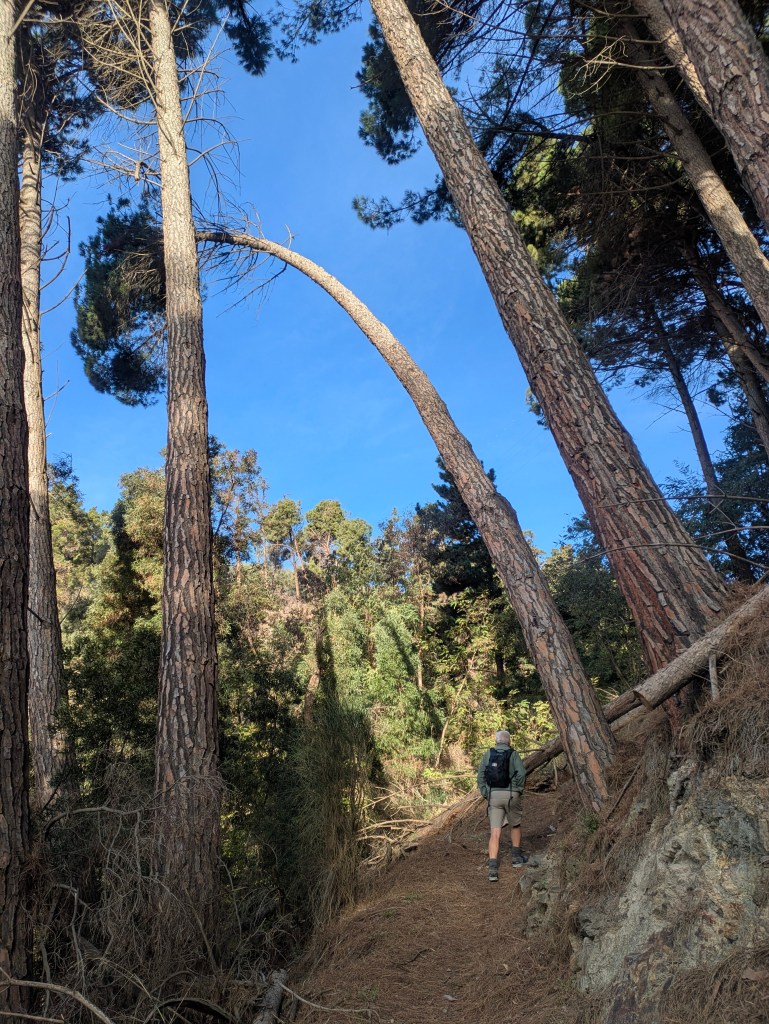
There were almond orchards, olive groves, Aleppo Pines bright green against the bare rock and the yellow foliage of the walnut trees and poplars. Niguelas is also on the GR7, the famous long distance hiking and cycling route which runs all the way from Tarifa, near Gibraltar, through Spain and France to Andorra.
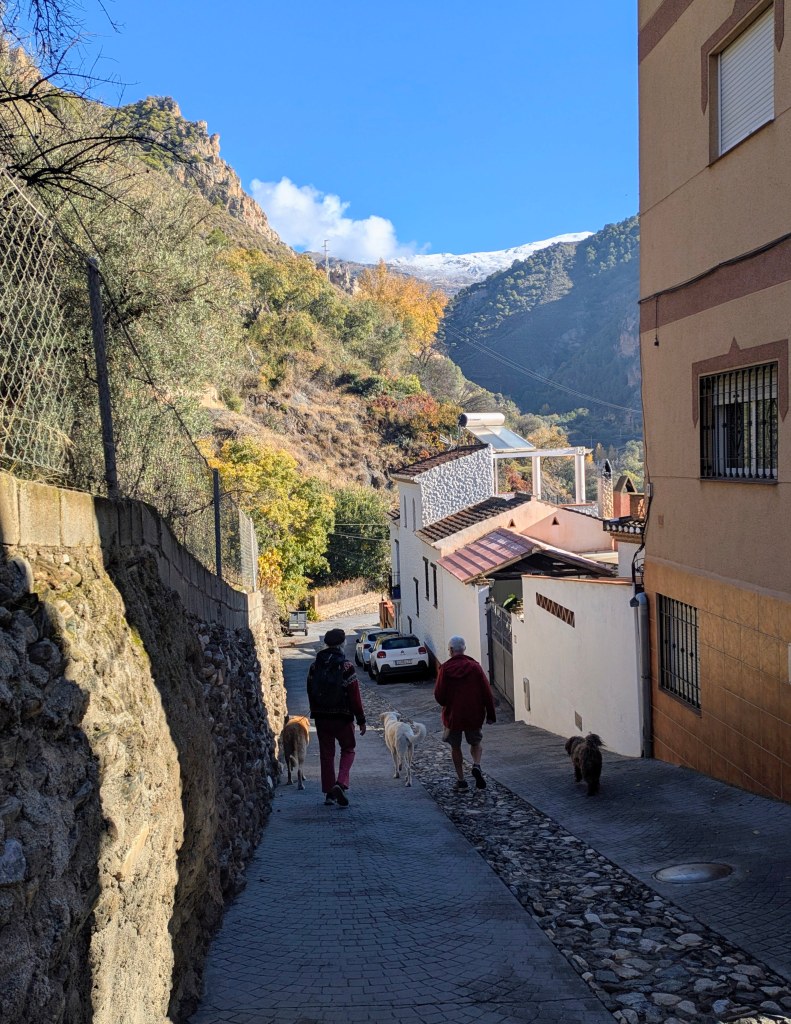
Our days were bright and sunny, with cold nights (sometimes as low as 1C) but there was torrential  rain on our second evening, which flowed down the paved surfaces of the narrow streets like a river. We sloshed around in the dusk looking in vain for an open café or bar but all five of them seemed to be closed….probably because of the weather… but opening hours were ‘flexible’. The village streets were winding and so narrow that many of the walls on the tight corners showed evidence of close encounters with vehicles. Tim told us that some guests arrived shaking and traumatised after the ordeal of driving through the village…. but not Caoimhin.

Despite the one evening of rain, water is rare and very precious here. The area can go months without a drop falling. In the mountains were ancient aquifer systems, which used a network of channels and pipes to divert snowmelt and rainfall, ensuring a water supply for downstream communities during dry months. Some of these originated in Arab times and are considered the oldest managed water recharge system in Europe.

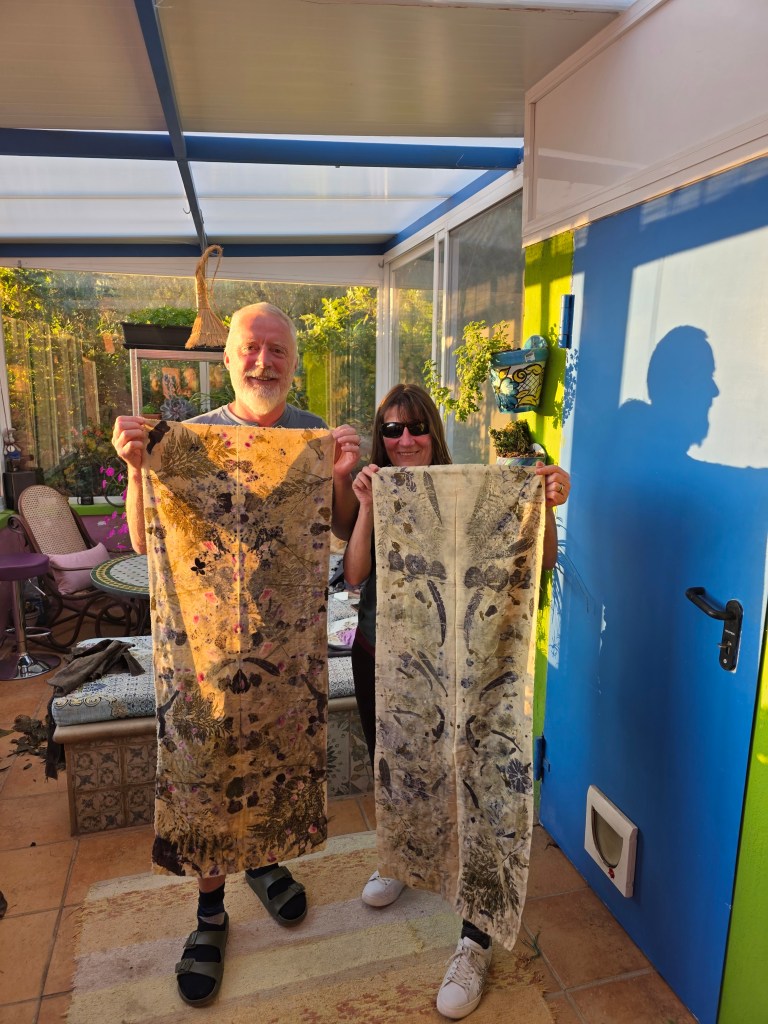
Helga, our Airbnb host, runs felting and eco printing courses so we both opted to try our hand at eco-printing. This involved picking plants and flowers from the huge selection in the garden and using Helga’s techniques to transfer the images to cloth. It was a really enjoyable experience and our results were satisfying and really much better than we would have hoped. The unrolling of the fabric after the steaming process was greeted by lots of ‘wow.’ It is certainly something that we will try at home.
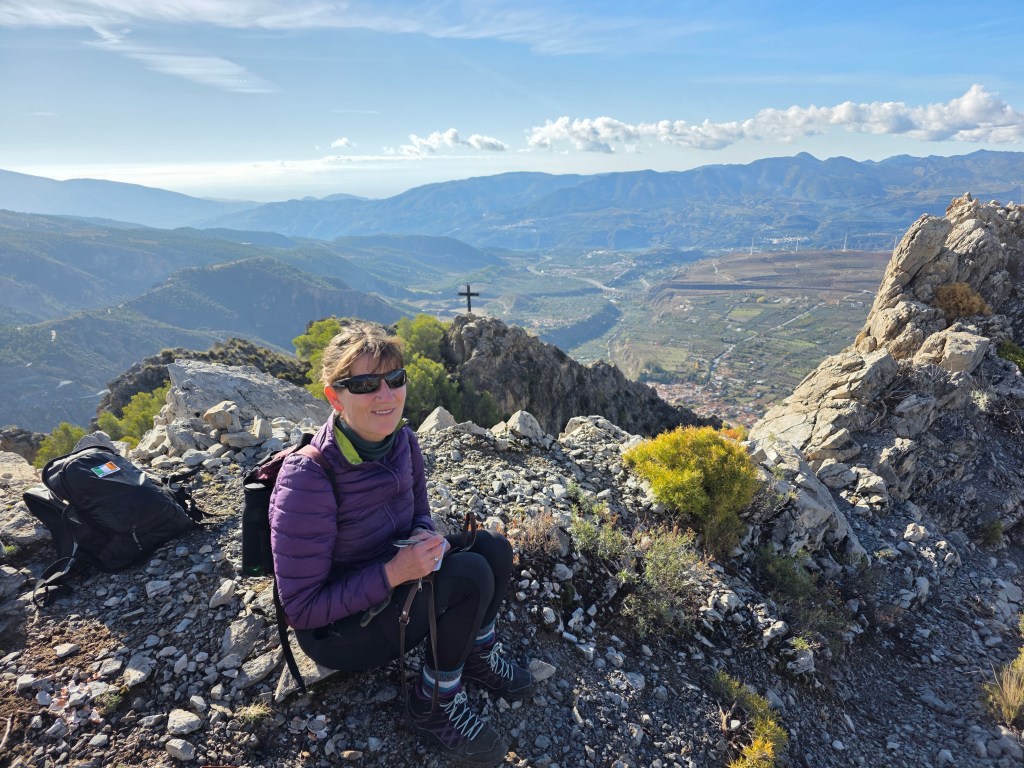
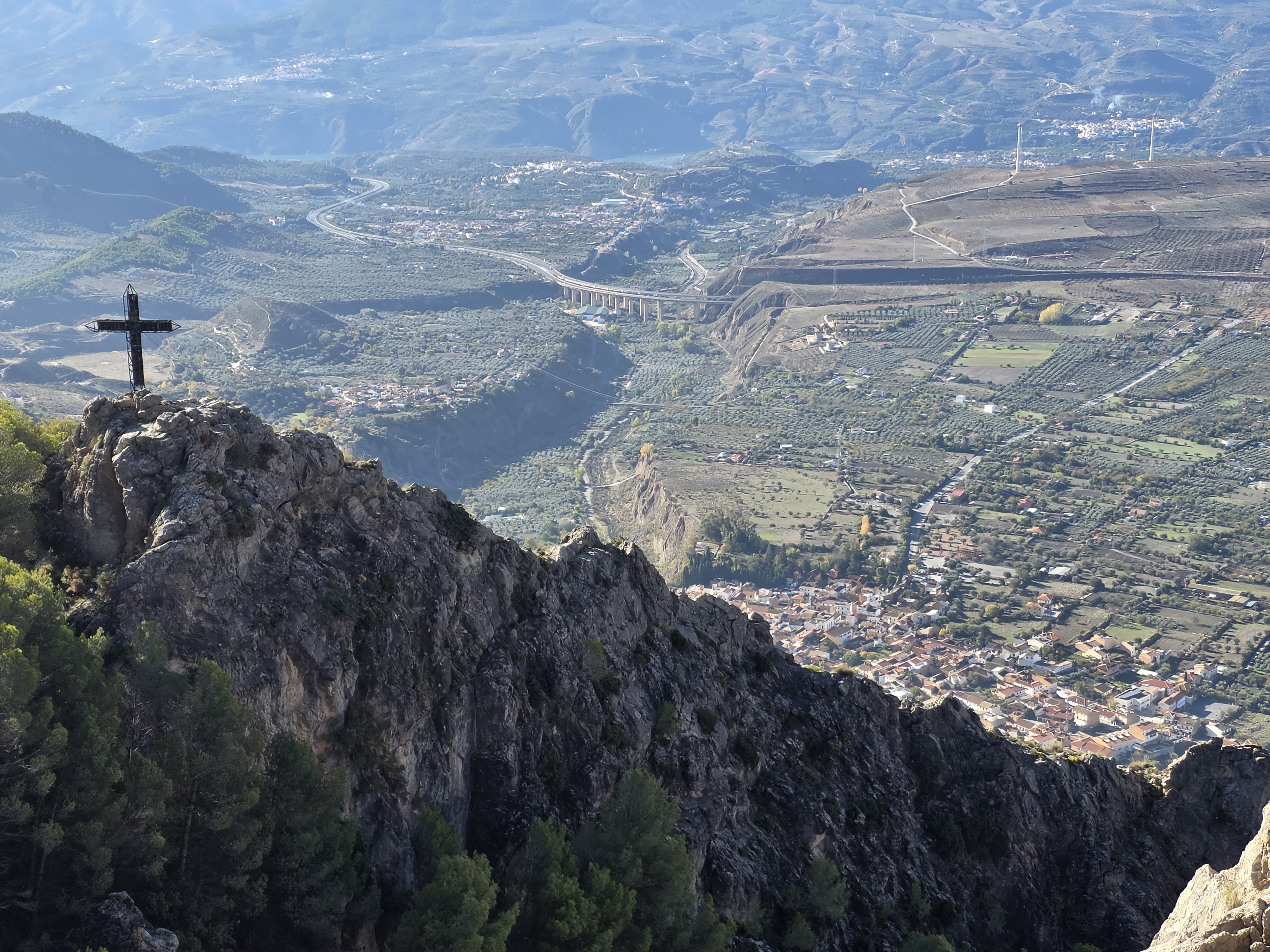
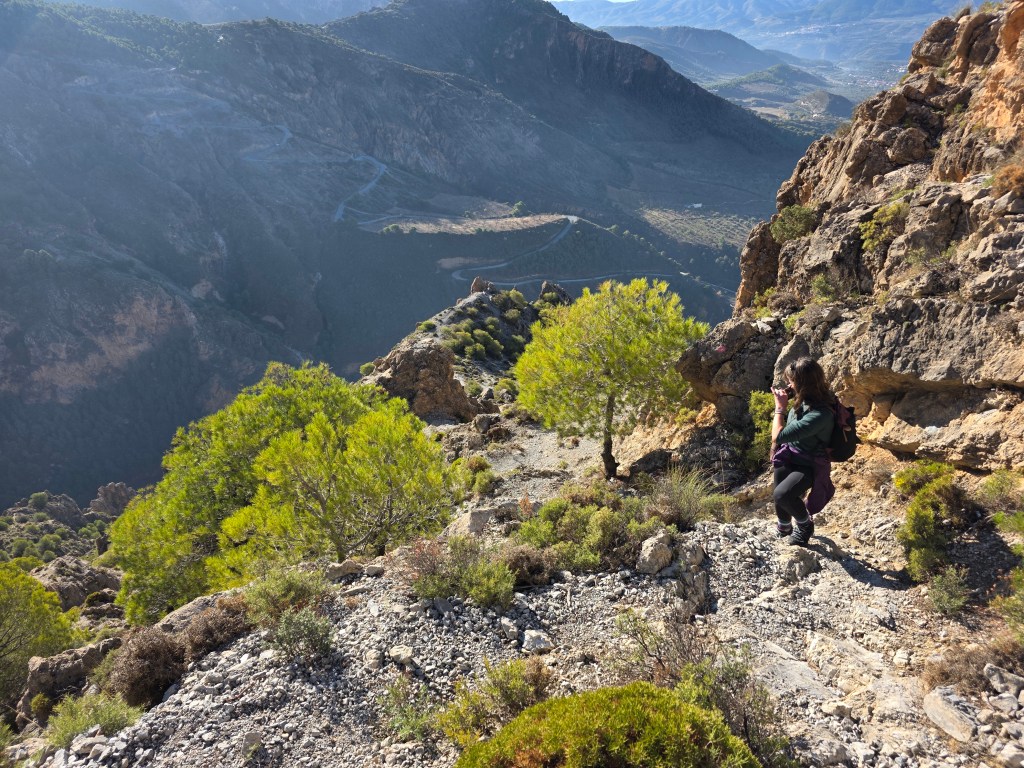
High above the village with a cross, silhouetted against the blue sky. Apparently the village women used to climb up to it on their knees, as a form of penance. We climbed up – not on our knees – and it was a pretty strenuous climb on rough stony surfaces. This is an area that has known conflict and poverty down the ages. It was a key battleground in the Spanish civil war with many atrocities committed against the civilian populations and summary executions in the mountains.

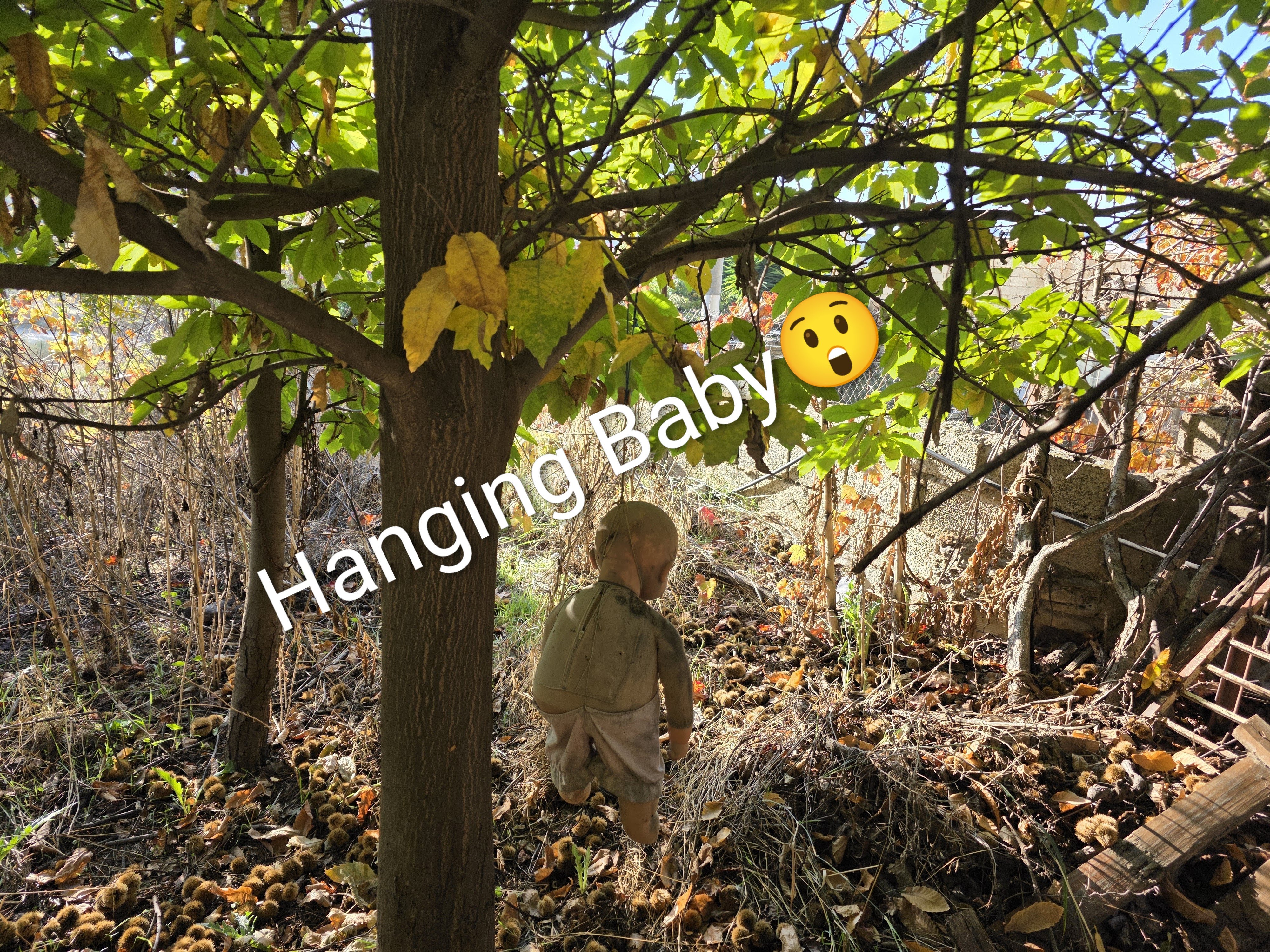
Maybe some of this unease lingers still among the dramatic landscape. In one of the village gardens, hanging from a tree by a noose was a baby doll (the ones that look like a human baby). It was very disturbing sight and had been hanging there for a year. Tim also told us of the local rivalries and neighbourly disputes, of outlaws living in luxurious houses and of a retired priest who set up a refuge for alcoholics, high in the mountains, away from temptation at 2000m……although some ‘escaped’ and made it to the village bars.

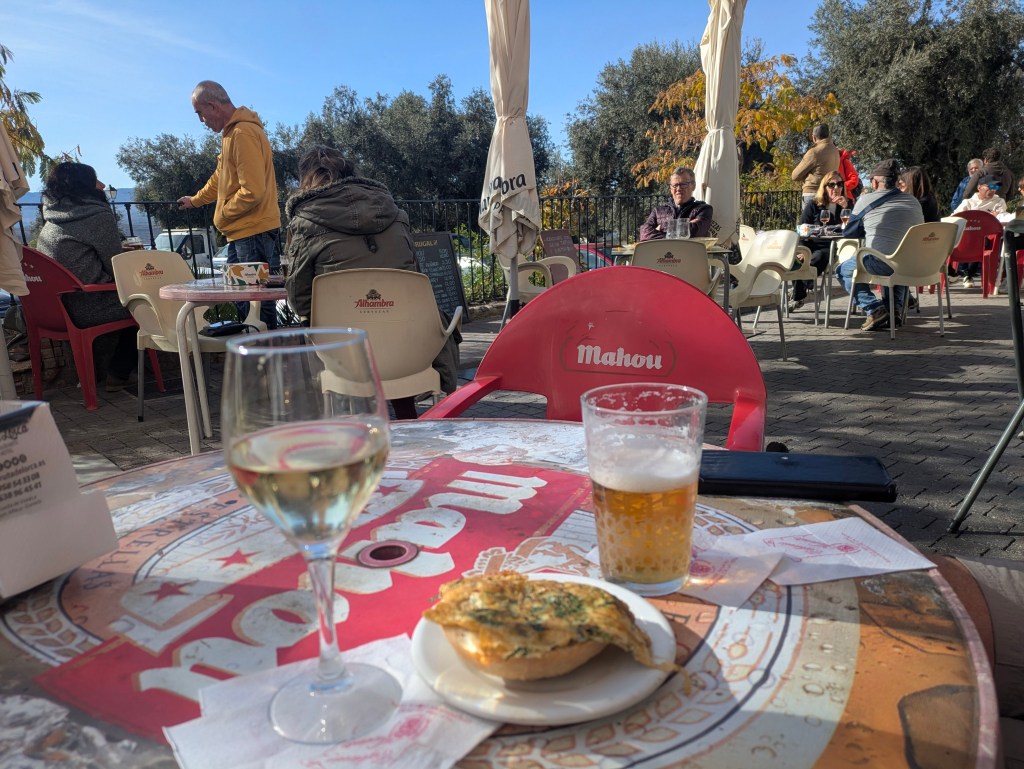
But sitting outside in the November sunshine, inhaling crisp mountain air and eating delicious tapas (that come free with a drink), all these simmering rivalries and tensions were completely invisible to us. We sipped our drinks and thought about how lucky we were, as we waited to attend a dramatization of some of Lorca’s work in the village casa de cultura.

Till next time

Thanks for reading

Stunning Sierra Nevada

Electric Travels: A Pause (paws) in Spain.

Electric Travels: Out of Morocco
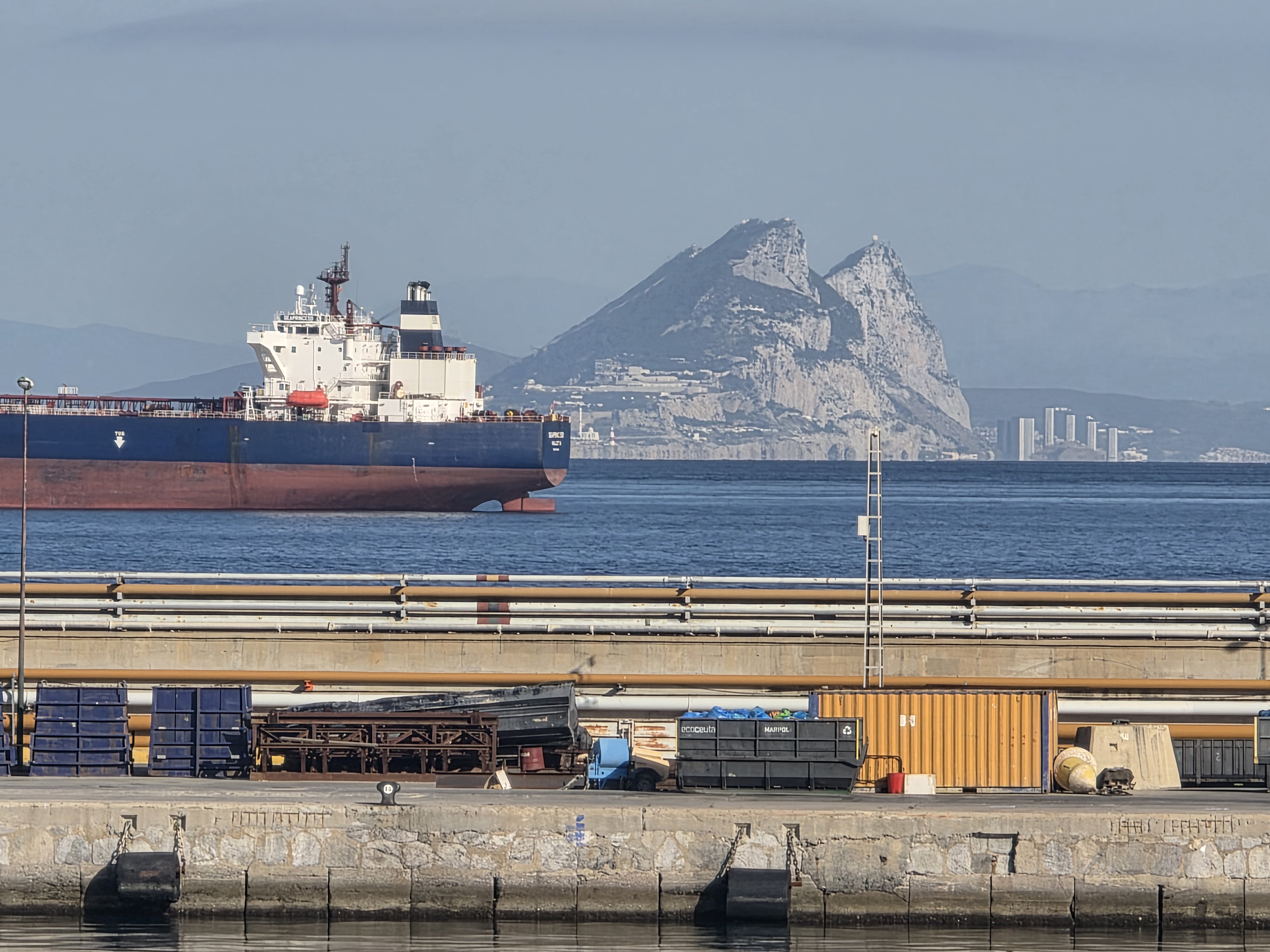
Gibraltar on the Horizon

I was jittery, unable to eat anything. Caoimhin had no such qualms tucking into fried eggs and hunks of bread for breakfast in our little apartment in Cabo Negro, a little seaside town in Morocco on the Mediterranean coast, about thirty minutes from the border. Our entry into Morocco in the opposite direction three weeks previously had been dramatic. At first we were denied entry because we didn’t have the correct paperwork for the Buzz, entirely our fault. It was only after much pleading and several hours that we were allowed to enter by the skin of tour teeth and issued with a little white card with our vehicle details. We were grateful then, but would we be let out now without any more drama? Rationally, I knew that we wouldn’t, couldn’t be detained in Morocco, they had let us in, after all…..but still.
The road to the border passed a few seaside towns, M’diq and Frideq which looked nice, and far cleaner  than other places. An army of litter pickers in hi-vis jackets were out in force, explaining the cleanliness. There has been a lot of investment in this area and a drive to promote tourism along this section of Mediterranean Coast with its pristine sandy beaches, hotels and cafés. Almost before we knew it, we were at the border, with  zigzag of staggered barriers and a large police and army presence. The border was between Morocco and the city of Ceuta, a Spanish enclave although on the African Continent, the only land border between Africa and the EU.
Our passports were looked at and we were waved on with a smile to queue at customs. The sniffer dog sniffed, but didn’t find anything of interest, the officials were relaxed and even chatty, commenting on the electric van. There was more queueing to get our passports stamped with exit visas and phew, we were out of Morocco and nobody had looked for any car documents apart from the little white card we were given on entry.  Now we just had to get into Spain. Five vehicle lanes shemozzled to get into the two lane track for the Spanish border. More passport checking, some fingerprinting (a new addition when entering Europe by land), a quick look inside the van and we were through, driving into Ceuta. The whole process took  less than two hours unlike the almost five hours it had taken us to enter Morocco.
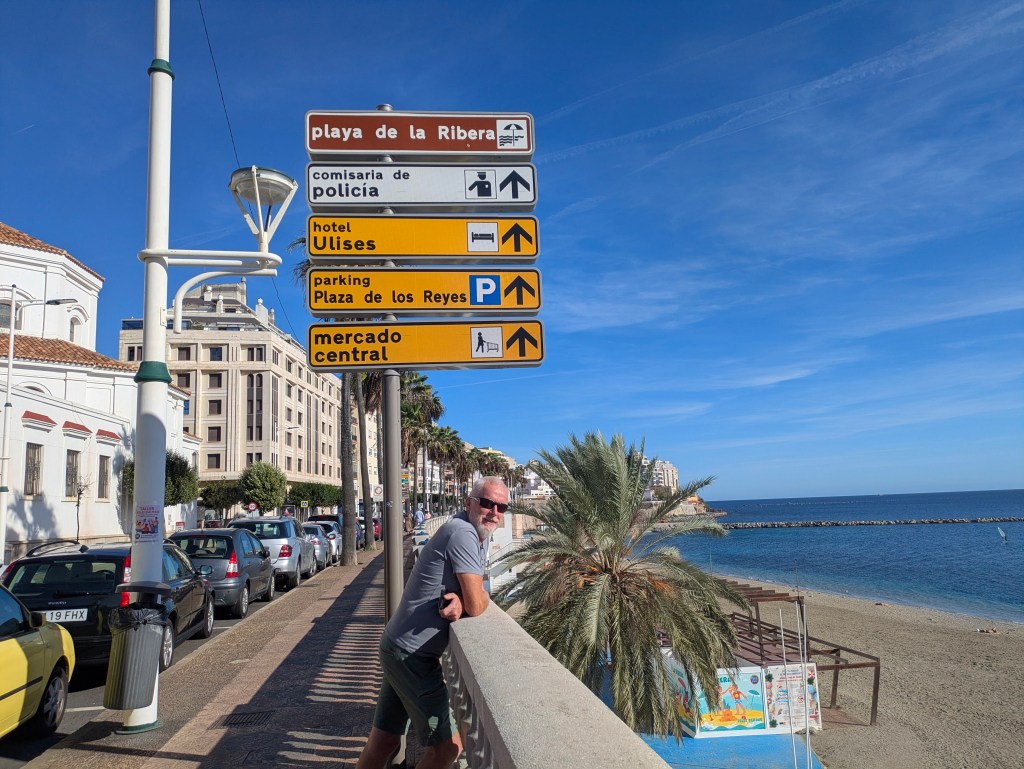
We had changed countries, that was obvious. Although Ceuta was unabashedly Spanish. The bells of a Catholic church rang out, a woman clutching a water bottle, jogged by the waterfront dressed in a tank top and shorts,  a large poster outside a discount store brazenly advertised deals on liquor. All things so normal that we hadn’t even noticed on the way through three weeks ago but which now seemed strange and drew our attention. Ceuta was a handsome place, benefitting a city that was prized and fought over down the centuries. Now it was full of outlet stores, stout Roman fortifications that were beautifully restored, and views of the heavy ferry traffic crossing the Strait of Gibraltar. Lidl was as crowded as if its Christmas Eve with people piling everything from crisps to persimmons which were on offer. There’s no Lidl in Morocco but plenty in Spain so we were unsure of the clientele except that there were plenty of Muslim women,
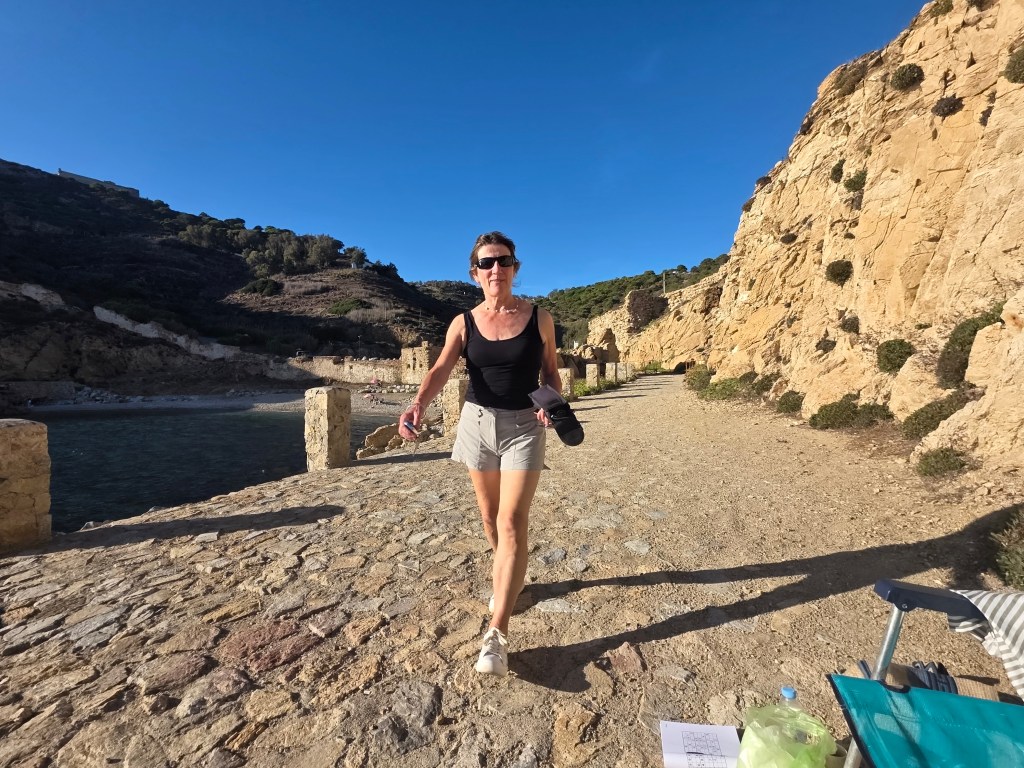
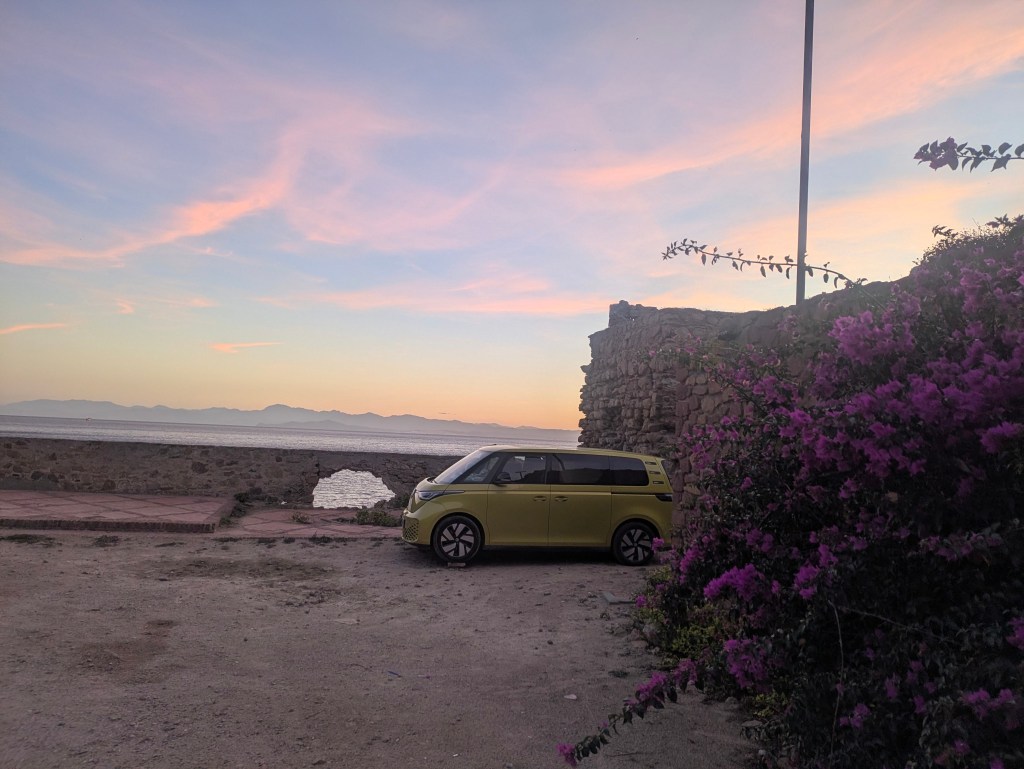
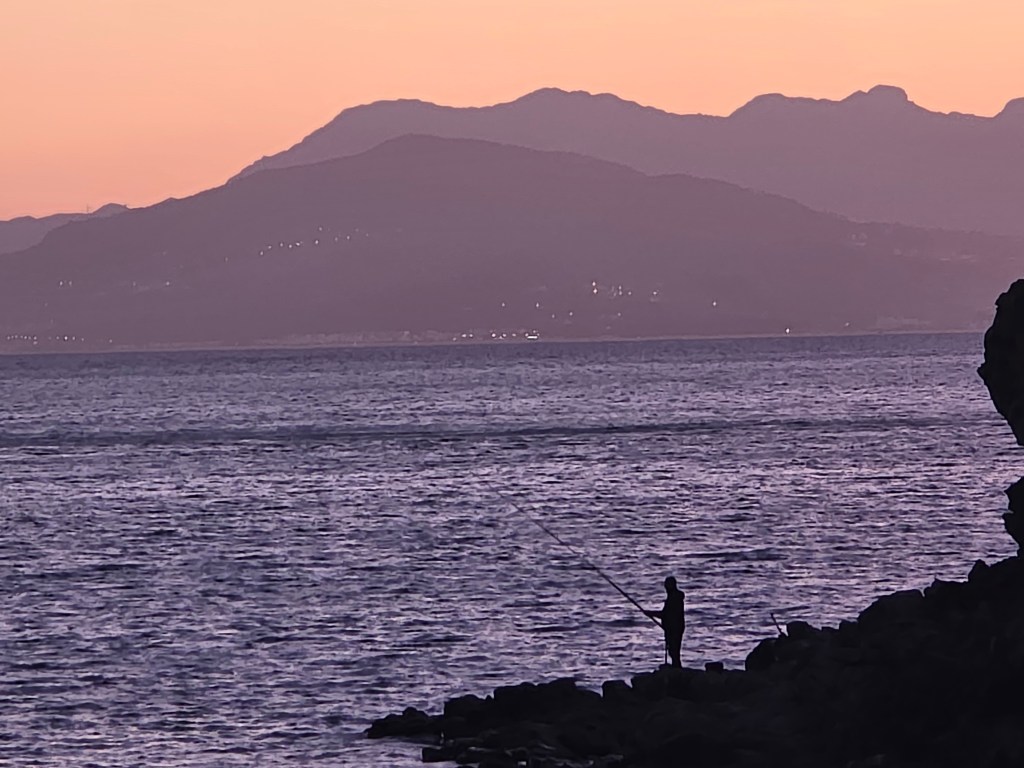
We had booked our ferry back to Algeciras in mainland Spain for the following morning, allowing plenty of time in case of border delays which thankfully hadn’t materialised. We climbed out of the city towards  a cove on the northern end of the promontory, near the lighthouse. On the map it looked like a quiet spot for some wild camping but we had no idea how gorgeous it was until we got there. A winding steep road led down to the glittering sea. A few families sat on the stony beach, a couple of fishermen  cast their lines from the rocks. I changed into shorts (which hadn’t  even come out of my bag in Morocco) and we had a picnic of cheese and olive sandwiches and chilled white wine in the sunshine. simple pleasures in an idyllic spot.

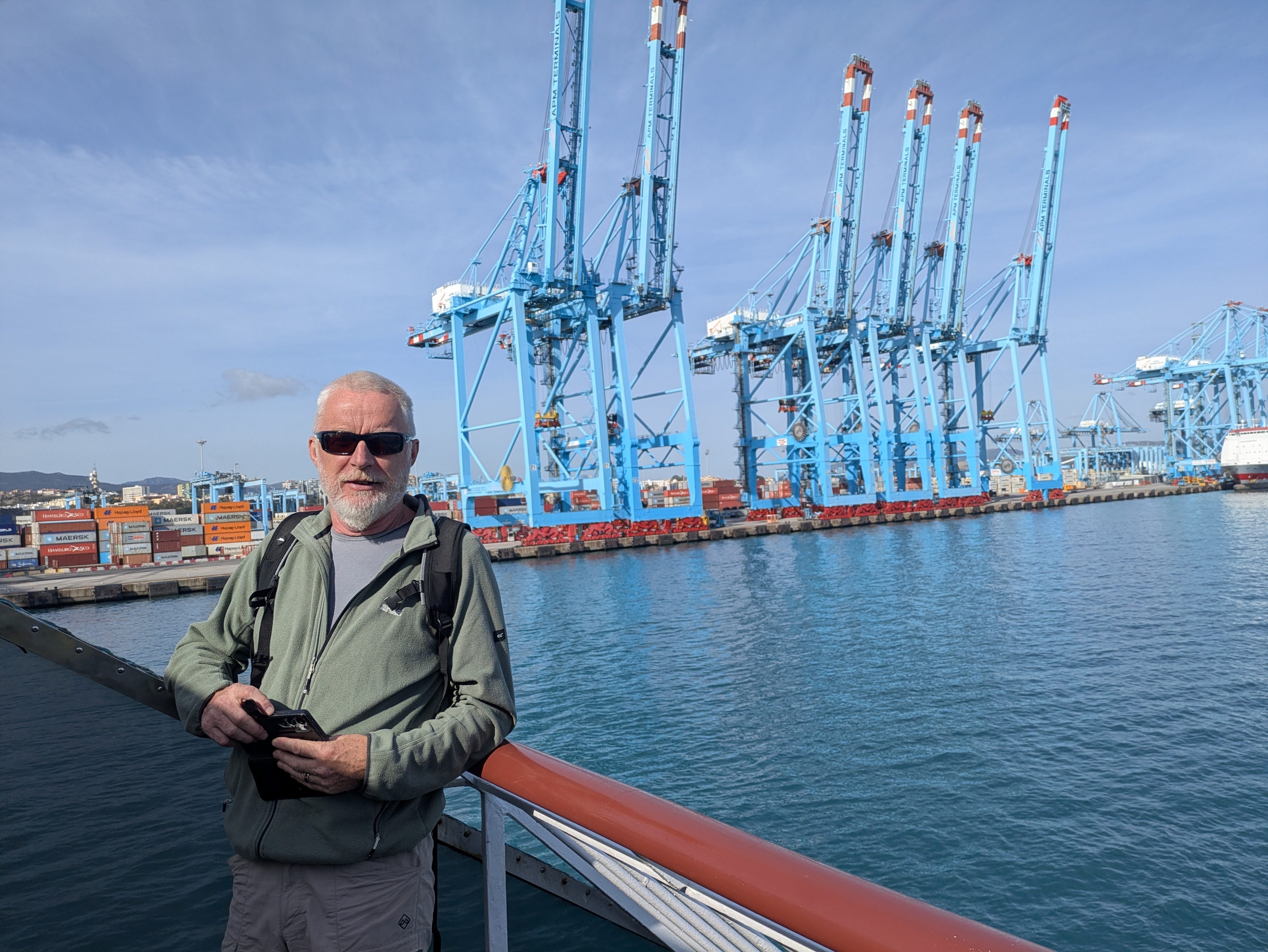
The following morning was cool, a few people came to watch dolphins out in the bay and a couple of spear fishing- guys got all their paraphernalia ready, donned wetsuits, while talking incessantly and headed into the water, armed with their spear guns. No-one disturbed us, the dog walkers waved at us. Our one-hour ferry was calm and uneventful. The port of Algeciras was busy, ports were always fascinating with their cranes for lifting, their lorries and container ships and the buzz of transporting goods.

Arriving in Algeciras

We headed west towards Tariffa and the Costa del Luz. The roads were winding, the countryside parched and at one stage, the blackened evidence of an old hillside fire. We picked a campsite at random – there were loads stretched along the coast but when a bored woman at reception told us it was €27 to park for one night, we were so shocked at the price that we continued on – must be the Morocco effect where everything was so much cheaper (apart from alcohol). We spent the night at another campsite overlooking the Atlantic with crashing waves, kite surfers and even a beach bar set up on the rocks.  This was in danger of being washed away with the exceptionally high tides with the waves crashing over the veranda and foaming under the seats. The campsite was surprisingly busy, full of Germans, many with babies or toddlers or dogs or all three.
Onwards to Cadiz, a place that we had never visited before. The road was wide but bumpy – the road surface in Morocco was much better than Spain. White villages gleamed on the hilltops among pine forests. The approach to Cadiz was flat and marshy, a spaghetti junction of roads, underpasses and roundabouts before crossing over La Pepa Bridge, the longest bridge in Spain, five kilometres with three of those over water.
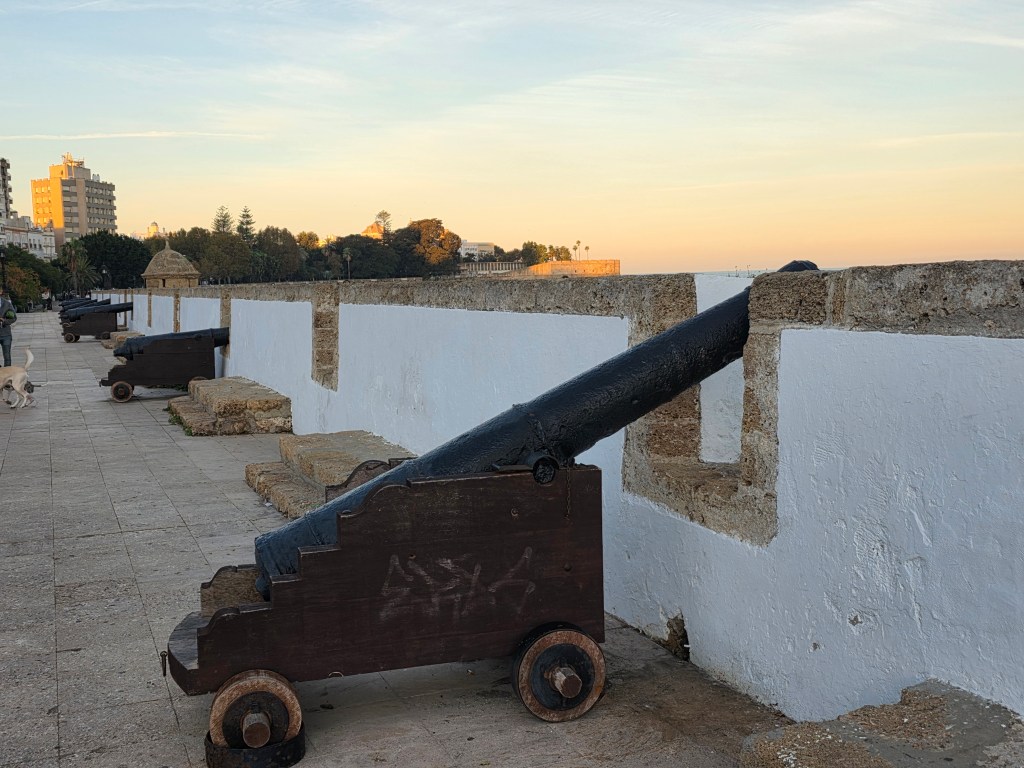
 Cadiz itself is a relatively small oblong-shaped island, squashed in by the Atlantic Ocean. It was a bright sunny, blue-skied day although the port was cast into shadow by two enormous cruise ships, far higher than anything else in the harbour. Car -parking spaces were scarce and expensive.

It was also a place where history was heaped on history, the most ancient still-standing city in Europe, claiming to go back to 1100BC. The Phoenicians were here, so were the Romans, the Moors, the Spanish. Columbus sailed to the Americas from here on two of his voyages, Napoleon laid siege to the city. Rick Stein was even here on a weekend break,

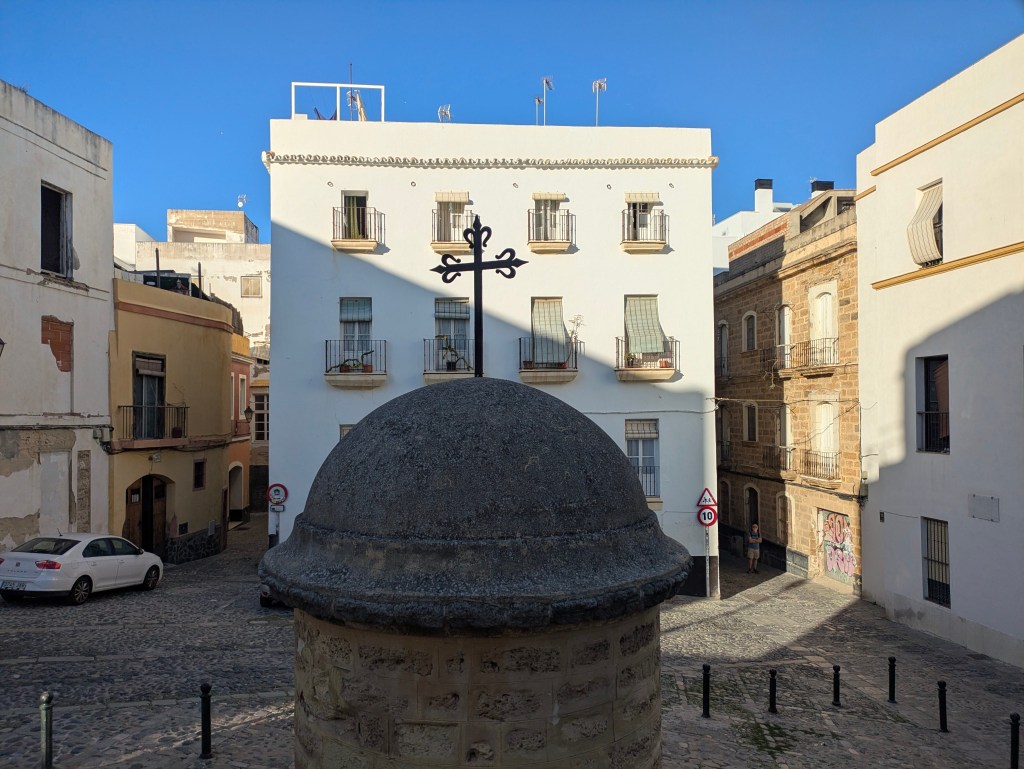
 It was a place of narrow lanes, wide plazas, beaches, tapas bars with the aroma of frying fish and always the sound of the sea which was never far away. The waves crashed or lapped (depending on the wind and side) on the reinforcements that kept the whole place from eroding and dissolving into the sea.

But what impressed us most were the trees – dramatic Strangler Figs with enormous umbrellas of leaves and trunks as wide as  a city bus. These trees get their name from their rapid growth and expansive root systems. Under our feet the tenacious roots were probably playing havoc with the drainage systems while we were wowed by the beauty of what was above ground.

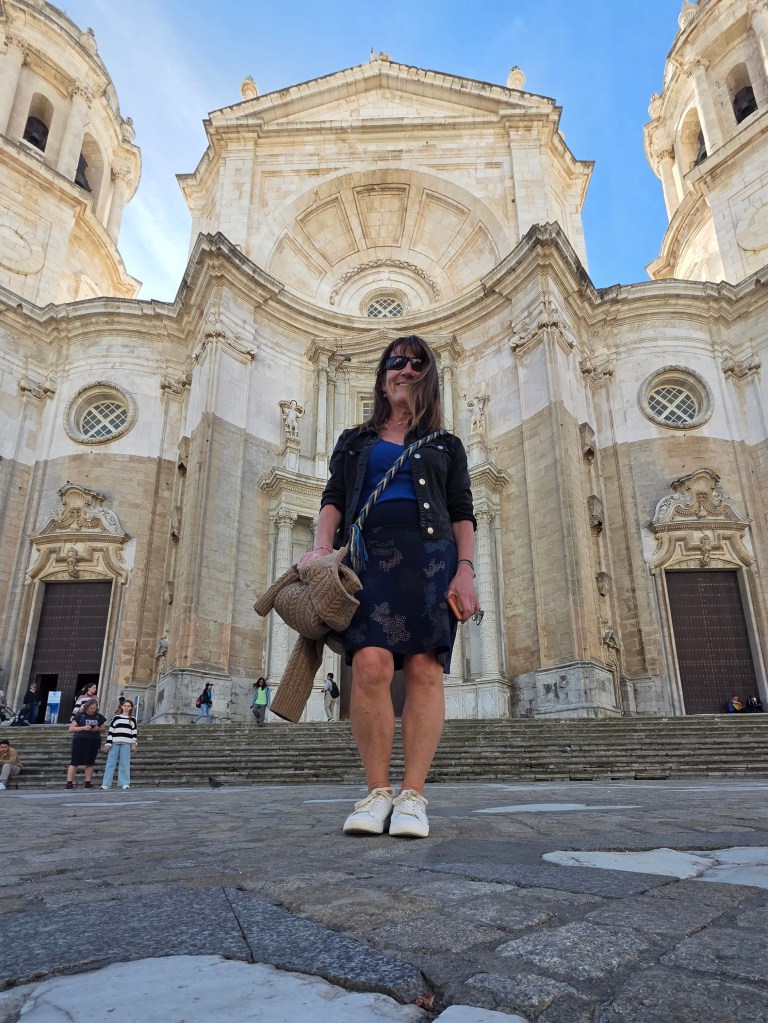
There were also a lot of people sleeping rough in the crevices of the Santa Catalina complex and in the shadows behind the magnificent cathedral. It was also a place that had known tragedy. On a summer evening in 1947, a series of mines and torpedoes, stored in a harbour depot, exploded for unknown reasons, killing 150 people, many of them children and injuring at least 5000. Smiling family photos of some of the victims lined the walls of the remembrance museum.

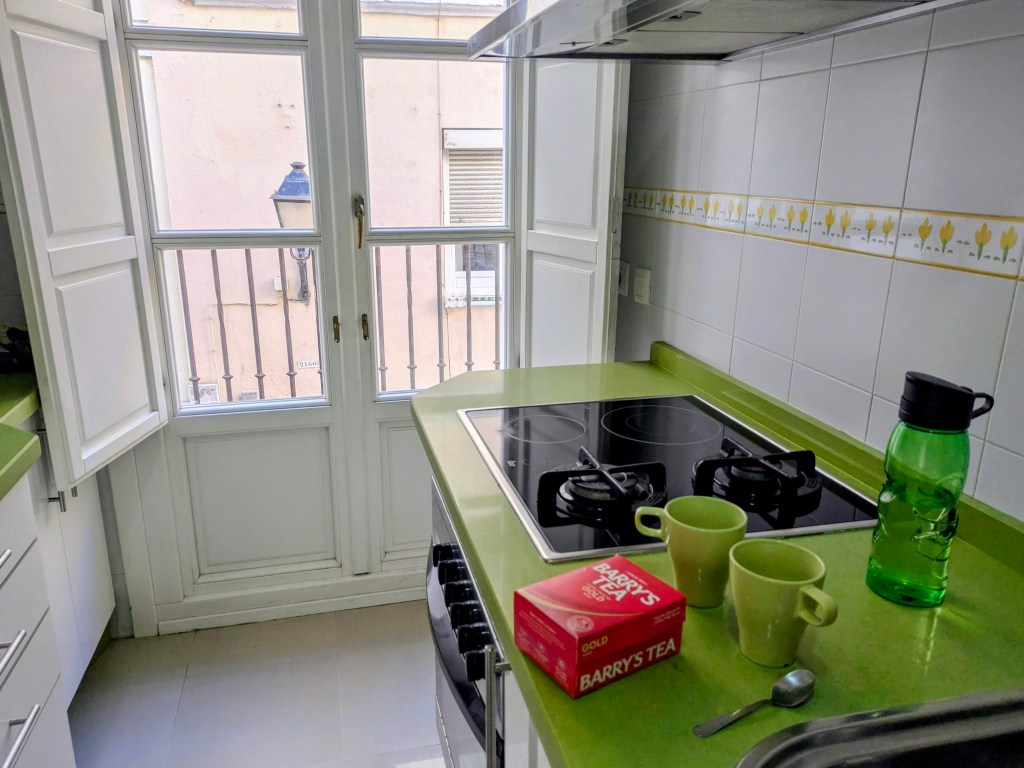
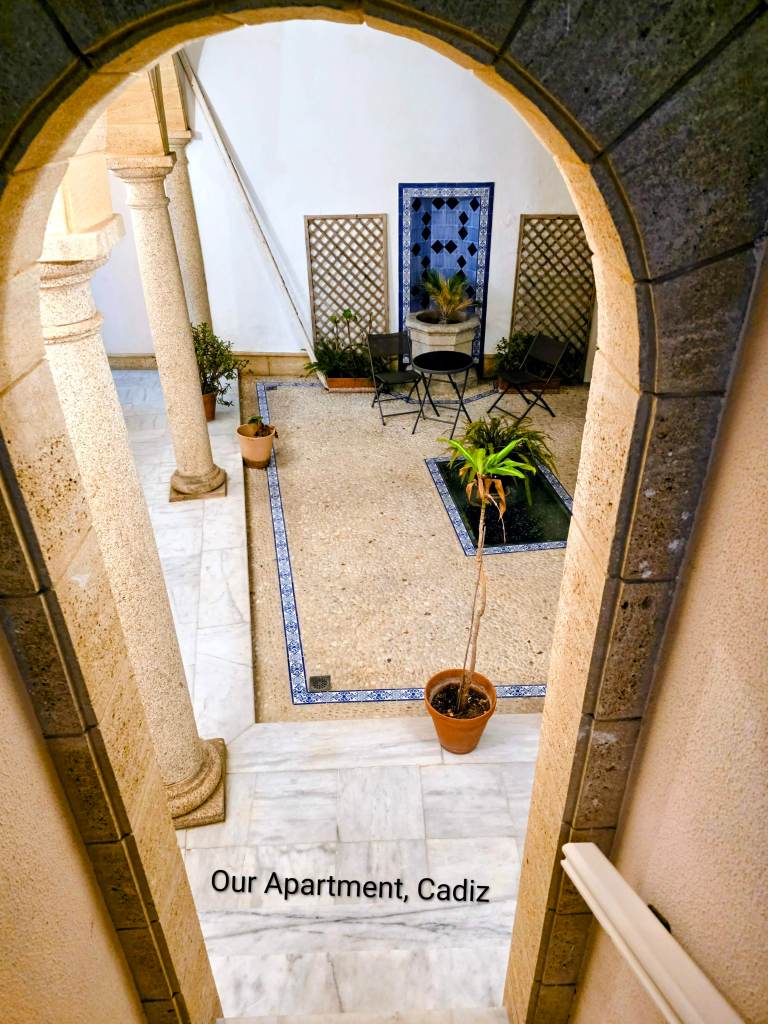
We had booked an apartment on the morning we arrived. It was in the old part of town along one of the many narrow streets and was far nicer and much bigger than expected with a roof terrace, an inner courtyard, a separate kitchen, sitting room and a couple of bedrooms. So much space…after the confinements of the van, it felt like luxury which was nice as we were also celebrating our wedding anniversary (thirty-one years❤️ ). There was even Barry’s tea in the kitchen cupboard, probably left behind from previous Irish visitors. This ‘luxury’ was €118 for two nights which we regarded a celebratatory bargain.

For a place surrounded by sea, there was a surprising lack of seagulls. We soon discovered the reason. The birds had become numerous and aggressive so the city council ordered that their breeding grounds be destroyed, their eggs removed and many were even shot. The pigeons in the plazas must have got the message because they were exceptionally docile and the sparrows kept a low profile.

We charged the Buzz in Arcos de La Frontera, a white village, about forty minutes outside Cadiz, with an impressive hilltop castle. What bliss to have the choice of four different charging stations within three hundred metres of each other,  but the downside was that we had to pay. After charging, we continued on to El Bosque , a village in the gorgeous Sierra de Grazelema in glorious sunshine although the area was reputed to have the highest rainfall in Spain.  The Buzz blended in with the autumn colours in the campsite where we were the only visitors. The weather was dry although the wind became gusty, peppering the roof of the Buzz with leaves and twigs and sending us sheltering on the veranda of an empty cabin. The chomping of the naked sheep (very closely shorn) in the nearby field sounded like raindrops but the rain didn’t come until mid-morning, a persistent soft drizzle, reminiscent of the West of Island.

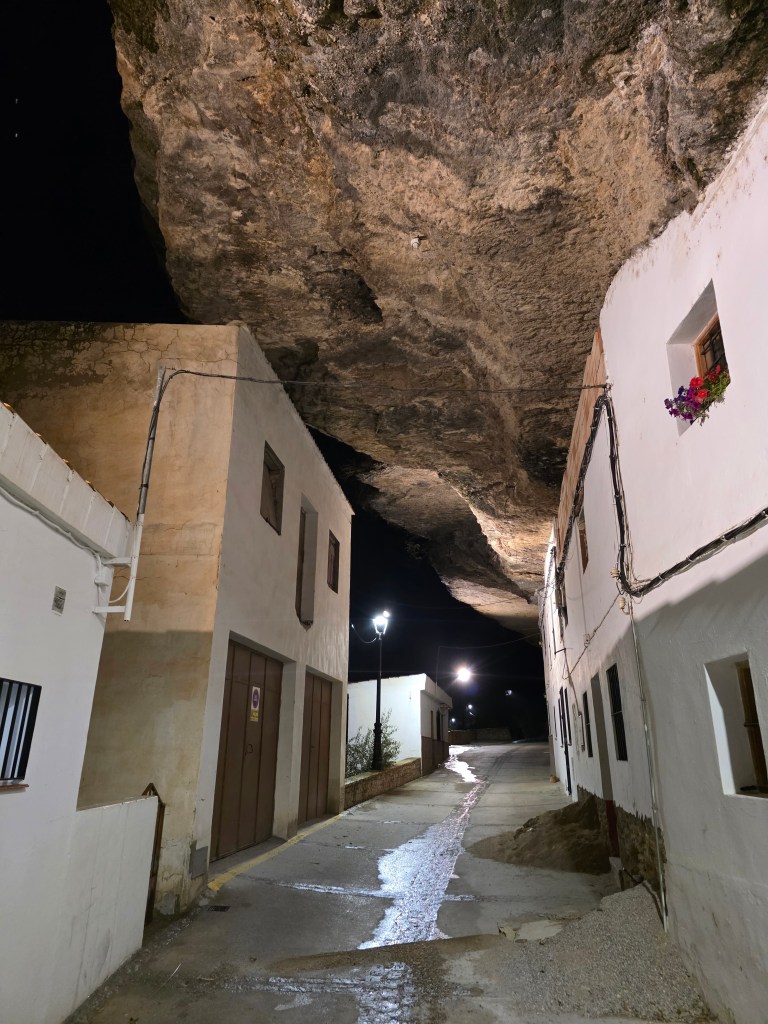
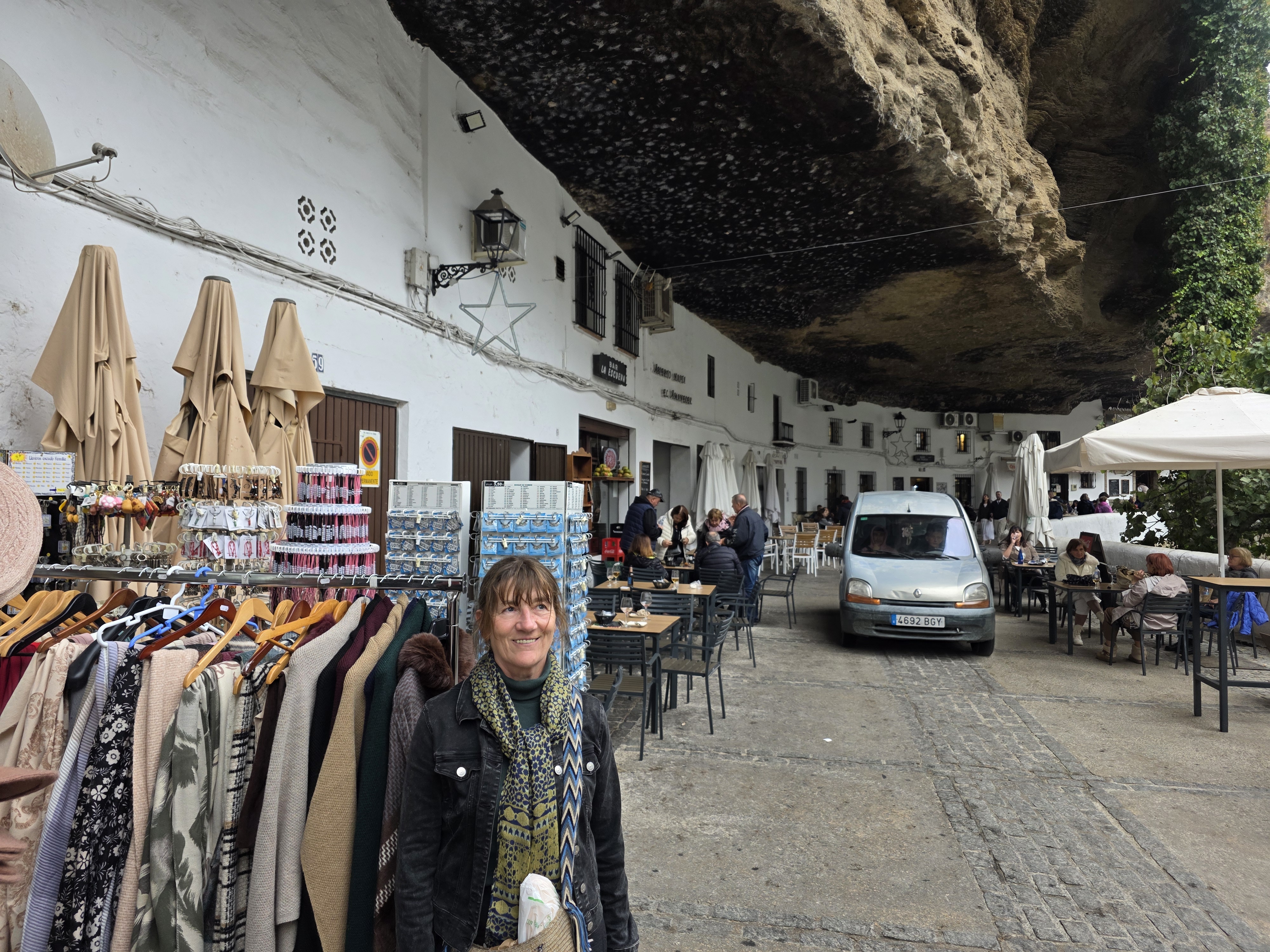
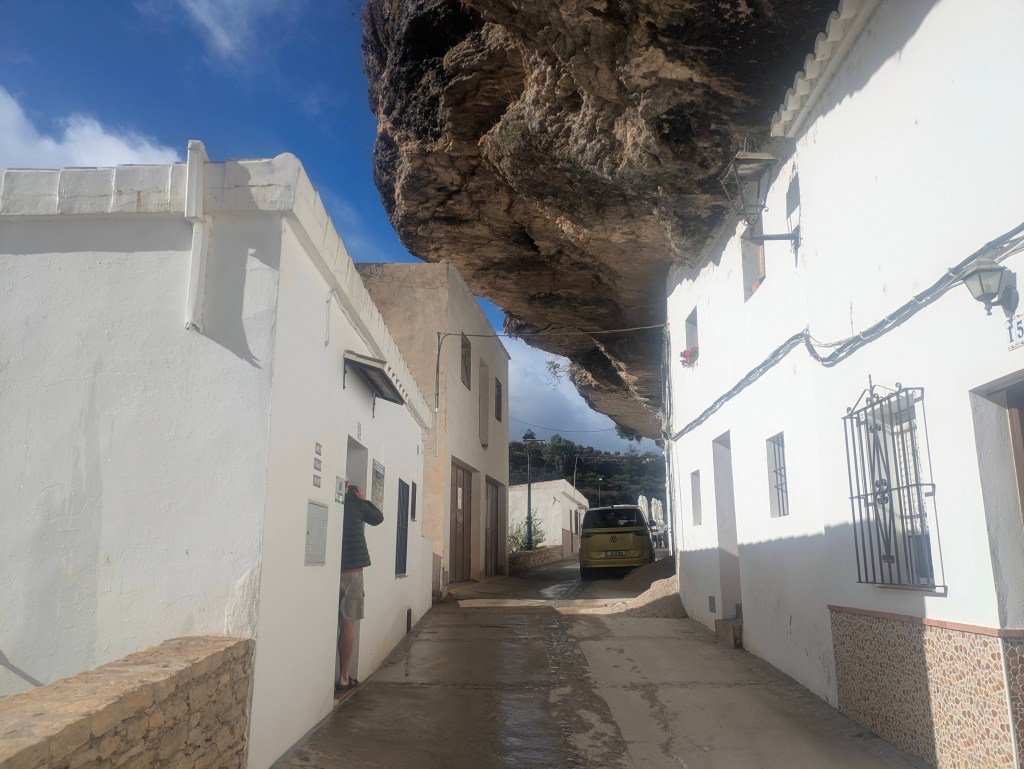
The rain became heavier as we headed to strange village, Sentinil de las Bodegas, where many of the houses were troglodyte, built from caves or snuggled under rocky overhangs and surrounded by olive and almond groves, These rocky overhangs were useful as a natural umbrella from the rain which bucketed down as if it would never stop. The wind tunnelled up the narrow laneways, sending locals and tourists running for shelter. The place has been inhabited for centuries and its topography made it difficult to conquer….it took seven sieges before it fell in Catholic hands in the fifteenth century. The following morning, there was a few blue-skied moments before the skies turned dark again.

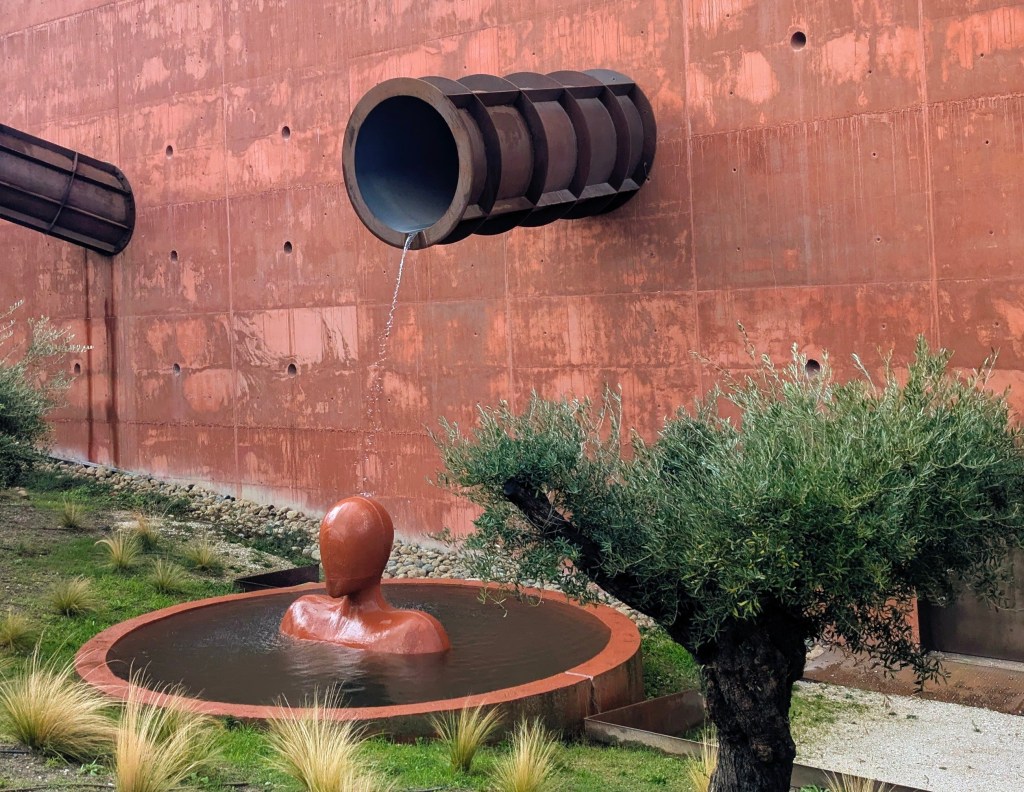
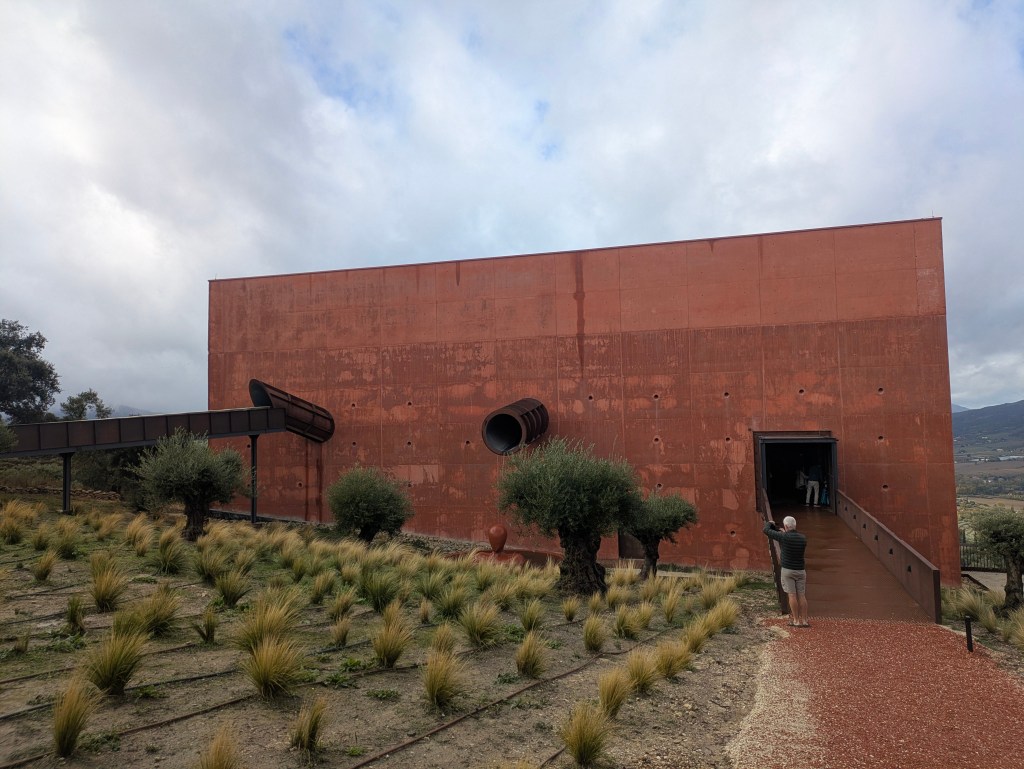
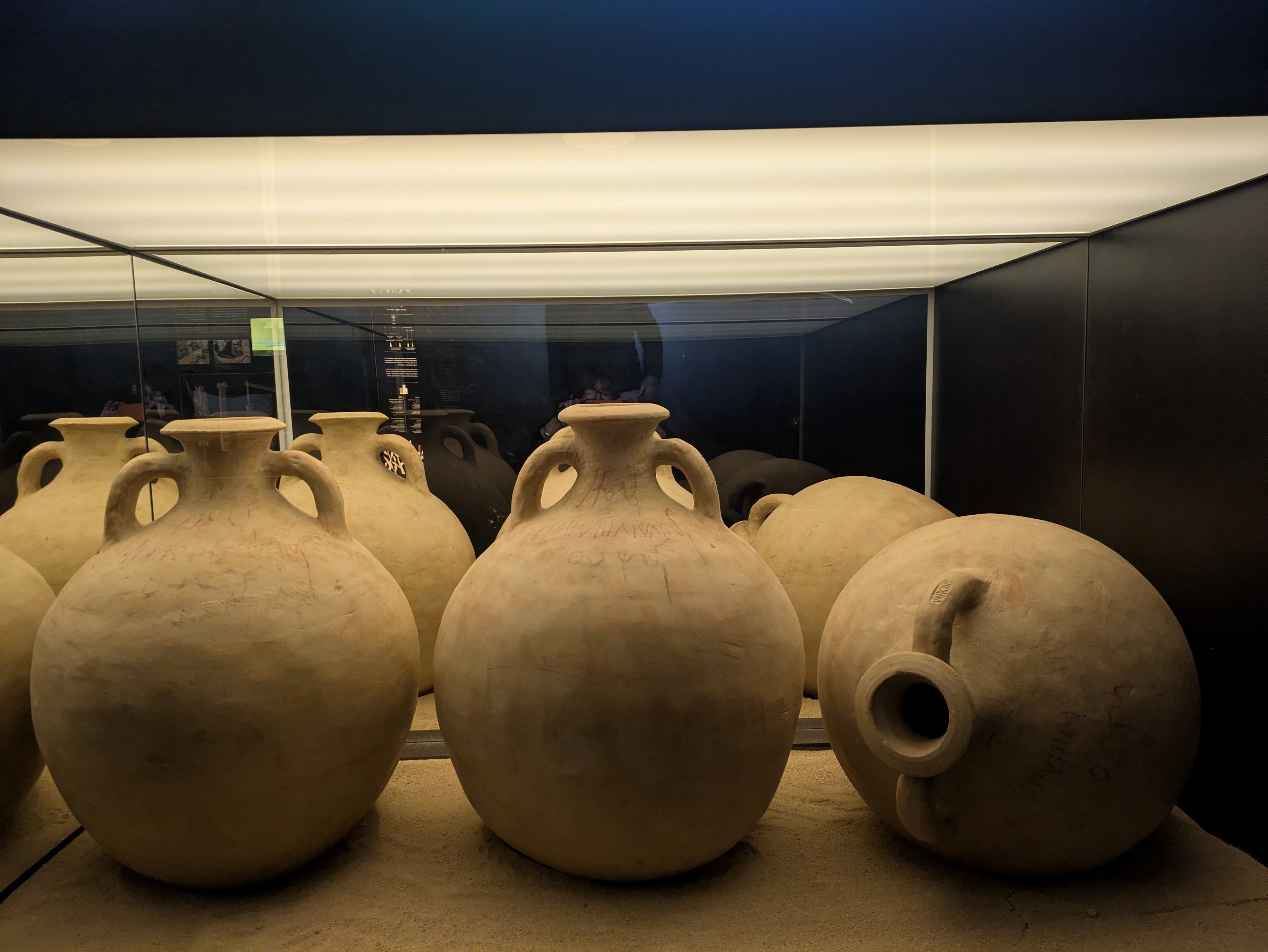
The road to Ronda was shrouded in mist – I’m sure the scenery was gorgeous – but we couldn’t see it,  we could barely see the road. The mist and the fog cleared after a while but the rain continued. We diverted to La Almazara Olive Mill, an impressive, architecturally-designed building, just outside Ronda, to learn more about olive oil and the olive trees that we see everywhere. Spain is the world’s largest producer of olive oil but its strange thing that the olive oil in Spain, even in the supermarkets is far more expensive than at home.  

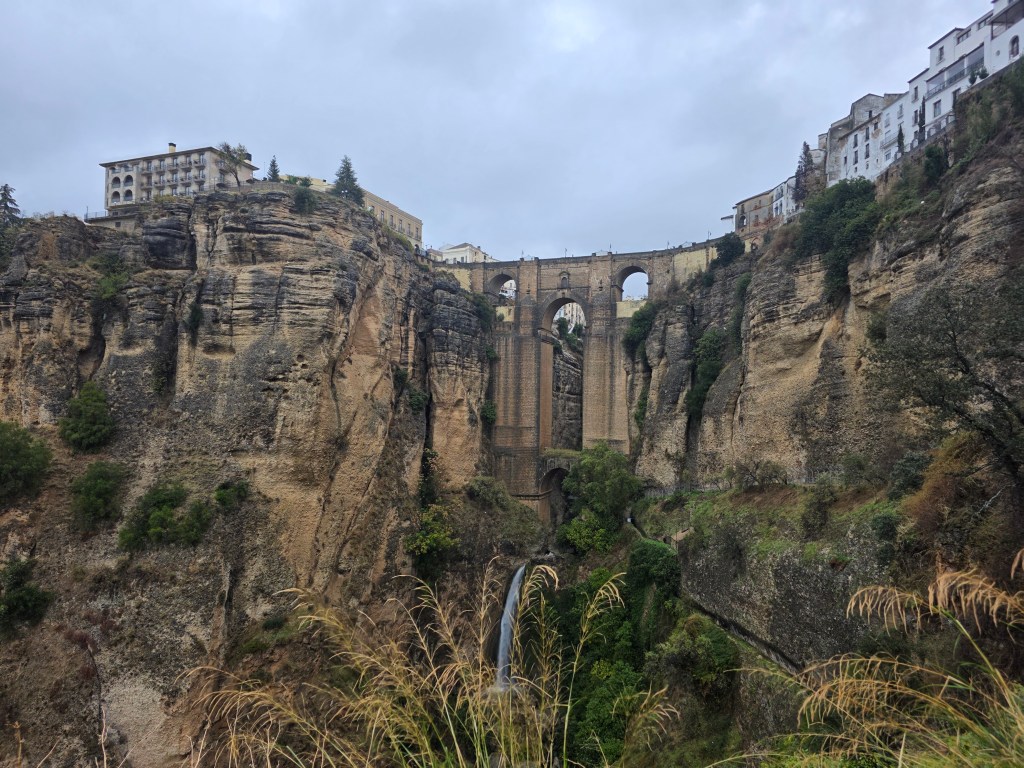
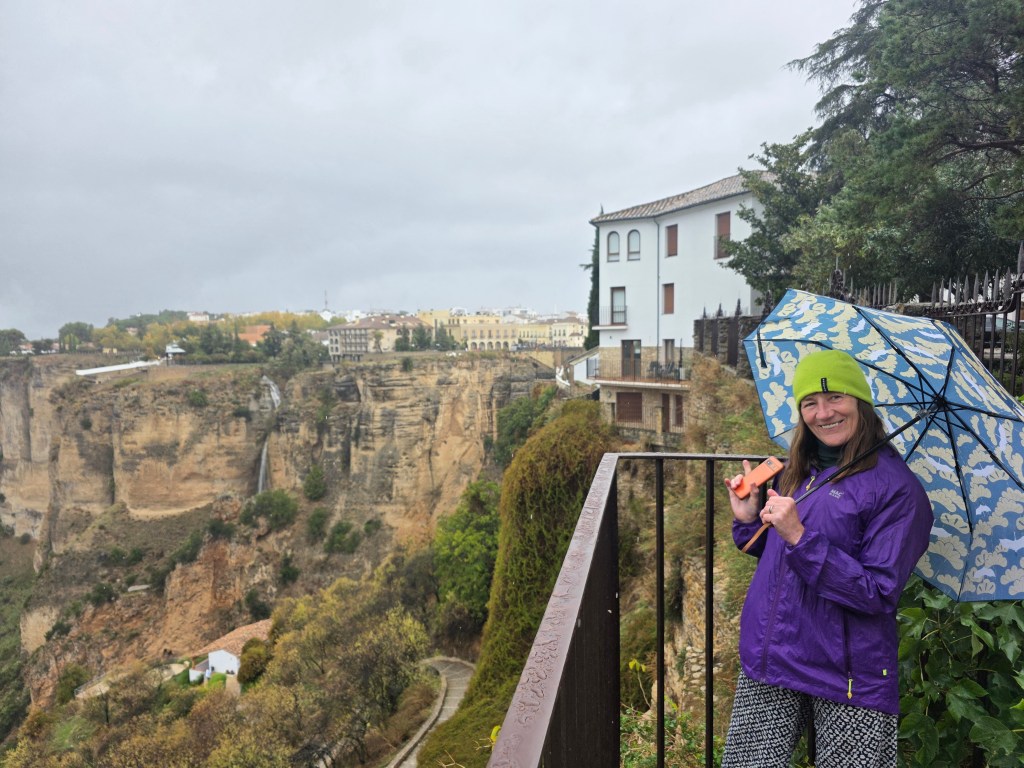
Rivers of water sloshed down the old cobbled streets of Ronda, soaking our shoes and socks, and seeping through my jacket. We splashed through winding streets, trying to find the mirador, the famous view of town, perched on the edge of a high cliff with a 100m chasm and misty views of the Serrania de Ronda. Despite the weather, Ronda looked impressive and we might return sometime.

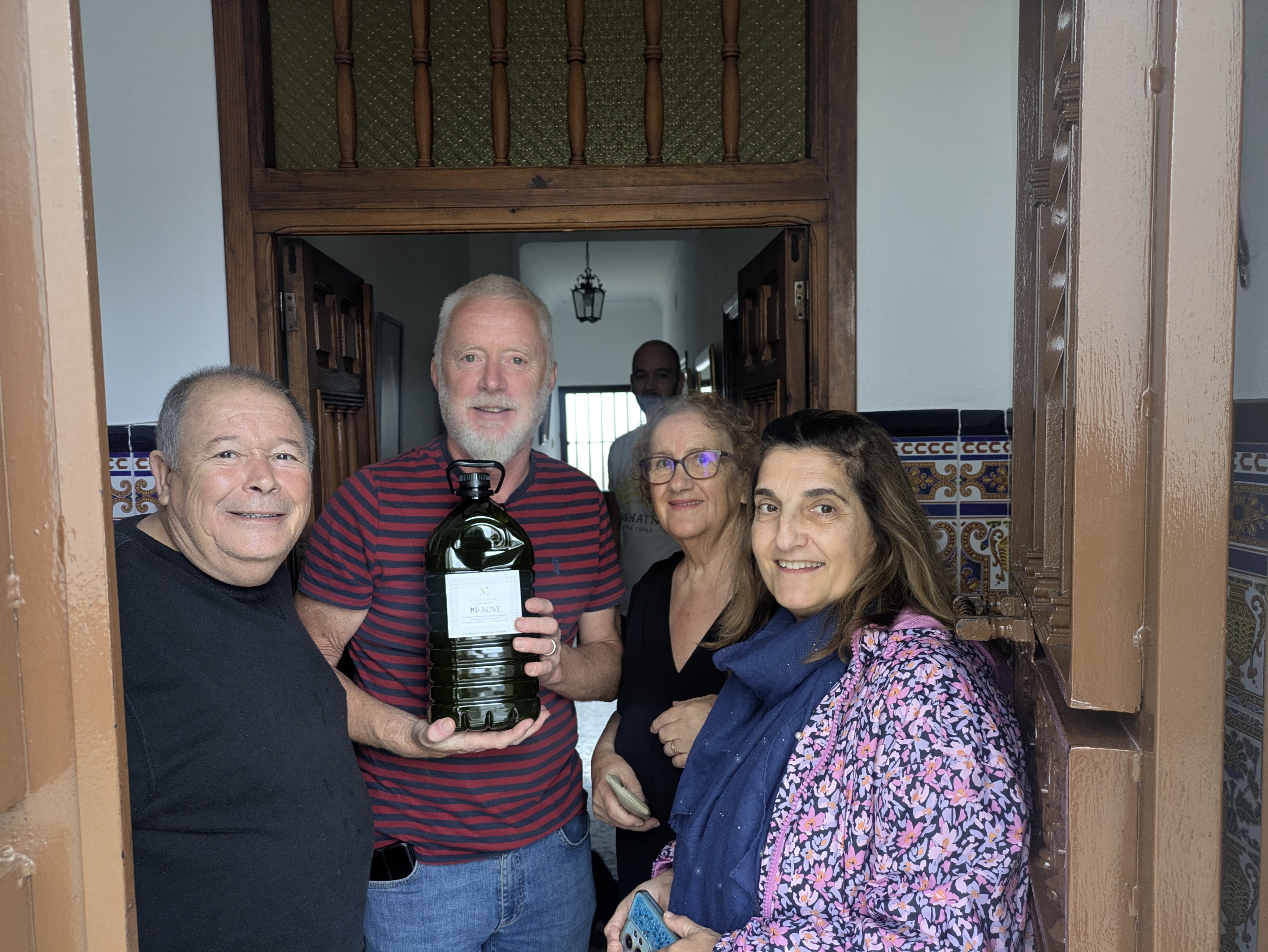
Storm Claudia has a long reach, sweeping from the Mediterranean and Southern Spain all the way to Britain and Ireland. On this very wet Saturday morning in Spain, we are now ensconced in the warmth of Luz and Andreas’s house in Hornochuelos, a little town northeast of Seville. Lucky us! They even managed to source olive oil for us from a lovely, local grower with a passion for olive oil production, producing small quantities of organic oil from her own farm which she delivered to our door with enthusiasm and even photos of the beloved trees. All this love and attention produces oil that tastes rich and creamy, totally superior to anything we buy at home.

Thanks for reading,

Till next time, keep dry…..

Electric Travels: Out of Morocco
Electric Travels: Into the Sun

The days flew by, sun-drowsy, as we made our way south through Spain.

After leaving Salamanca, where we were dazzled by the town’s beauty, not just in the famed main plaza, regarded as the most magnificent in all of Spain, where visitors and locals alike burst into spontaneous applause at dusk when the lights were turned on.  Although the city was full of visitors, it was still possible to find shady corners and quiet courtyards where there was only the chirping of birds, which nested in the nooks and crannies of the sandstone facades of old buildings.

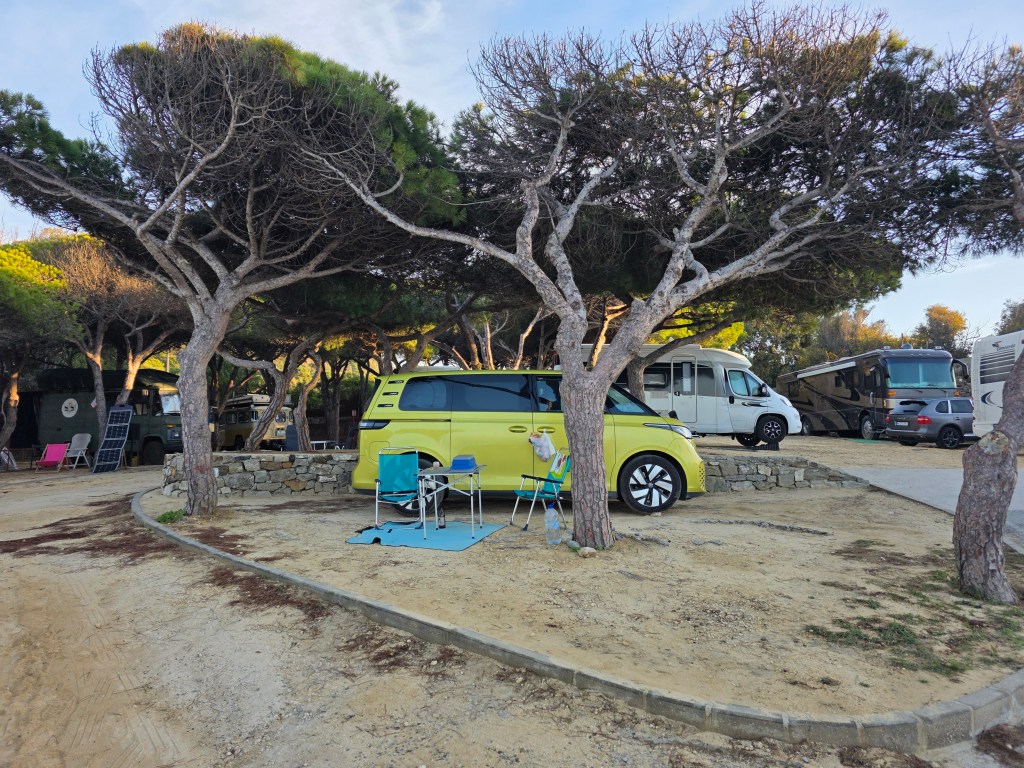
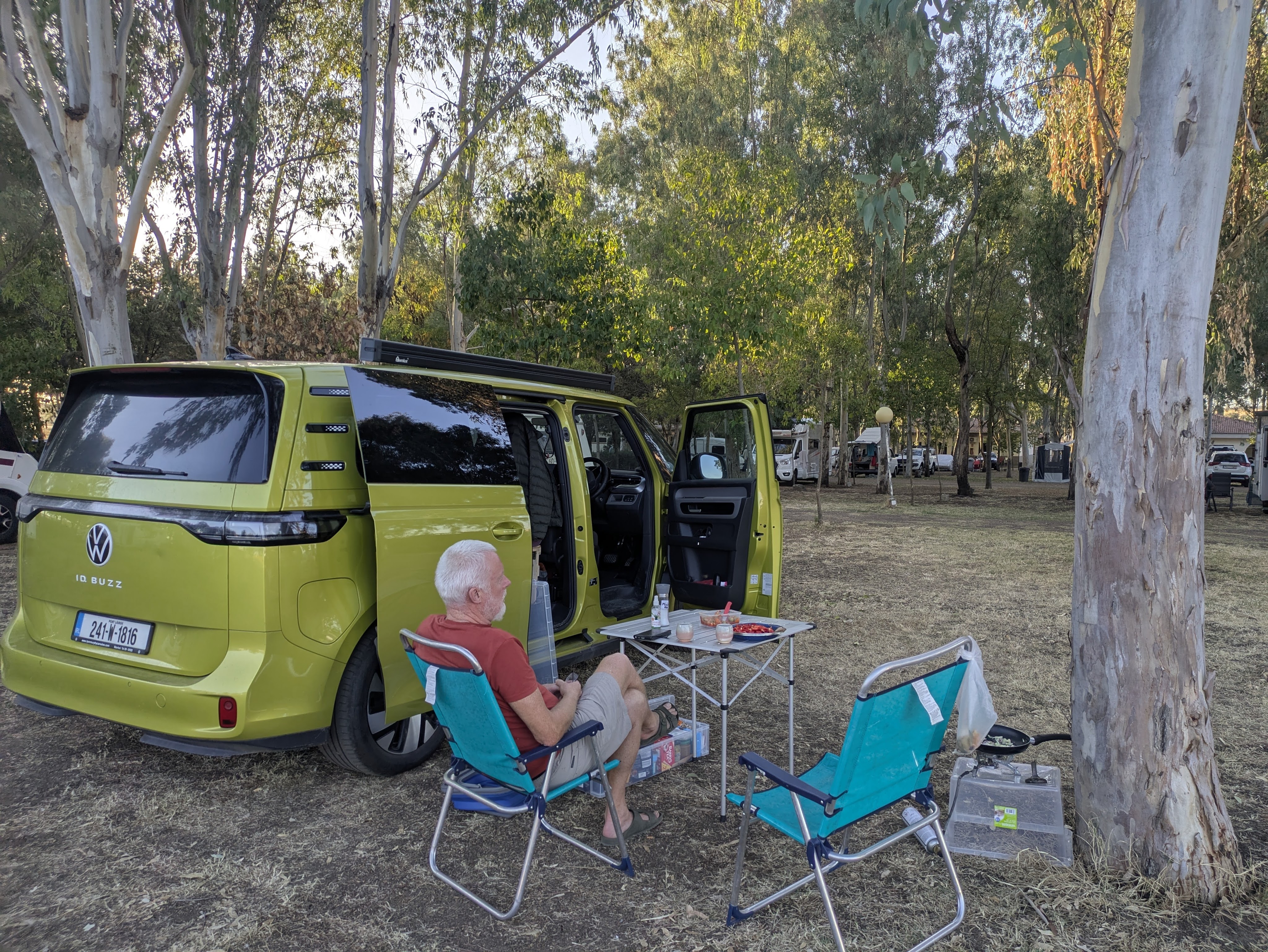
Driving through the Extramadura Region, with views of valleys and mountains, we reached the outskirts of Merida, which was founded by the Romans, two thousand years ago. We set up in the Merida Campsite about four kilometres outside town. It was a bit ramshackle, outdated and cheap (but that’s the way we like it, especially €15/night).  There were stables next door with white horses and a yard with all sorts of fowl, hissing geese, chickens, ducks and a raucous rooster who only crowed during the day. Occasionally all hell broke loose until the pecking order was re-established. There were falling leaves and shade under eucalyptus trees. The only downside was the flies. There weren’t that many but they were really attracted to the Buzz as if it was emitting some fly pheromone.

   A friendly British couple with a motorbike camped in a tiny tent beside us.  They were heading to Morocco, planning to do a huge loop of the country in just fifteen days and then a hurried ride back to Santander for a ferry home. Thankfully, we’re in no such hurry.

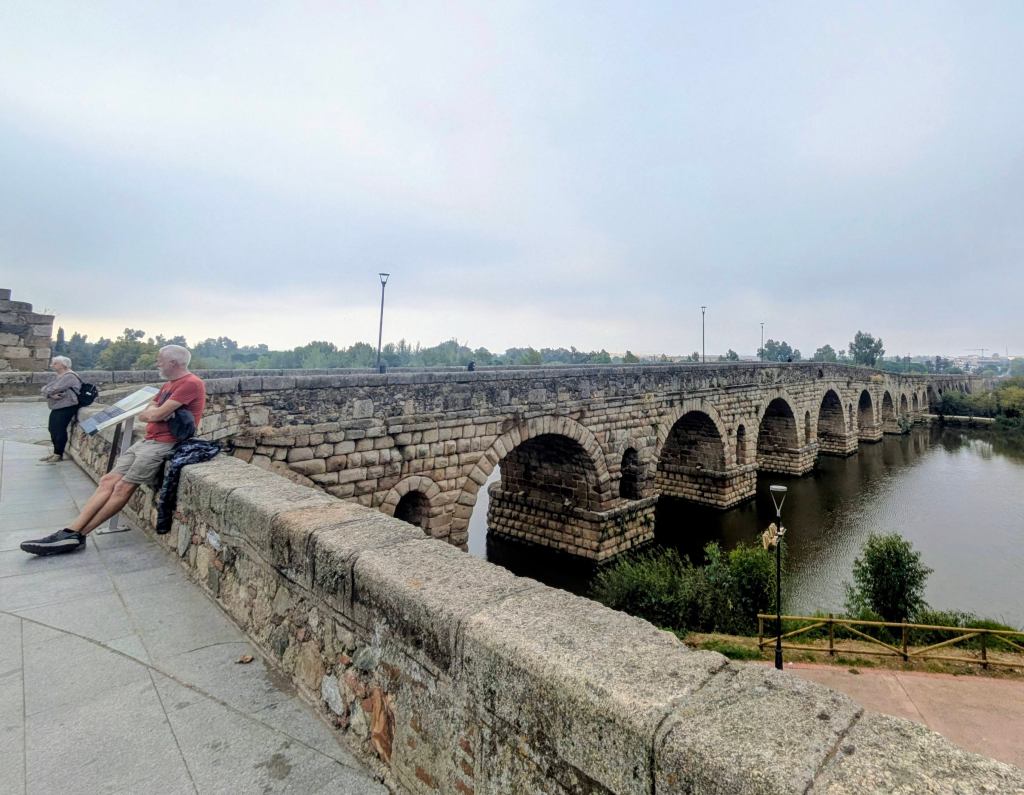
Merida town was also a little ramshackle but its Roman origins were evident in the arches, aqueducts and amphitheatre.  Many of the ancient structures incorporated into modern living – cars drove on paved roads under ancient arches and people strolled over the old Roman Bridge which linked the old town with the new. We found a packed café (Joplin Cafe), whose specially was ‘tostada,’ huge hunks of bread plastered with a savoury tomato paste, topped with thin slices of cured ham, or grilled aubergine, cheese and a fried egg. Two coffees, a tea and two enormous tostadas came to €8.40…no wonder it was packed.

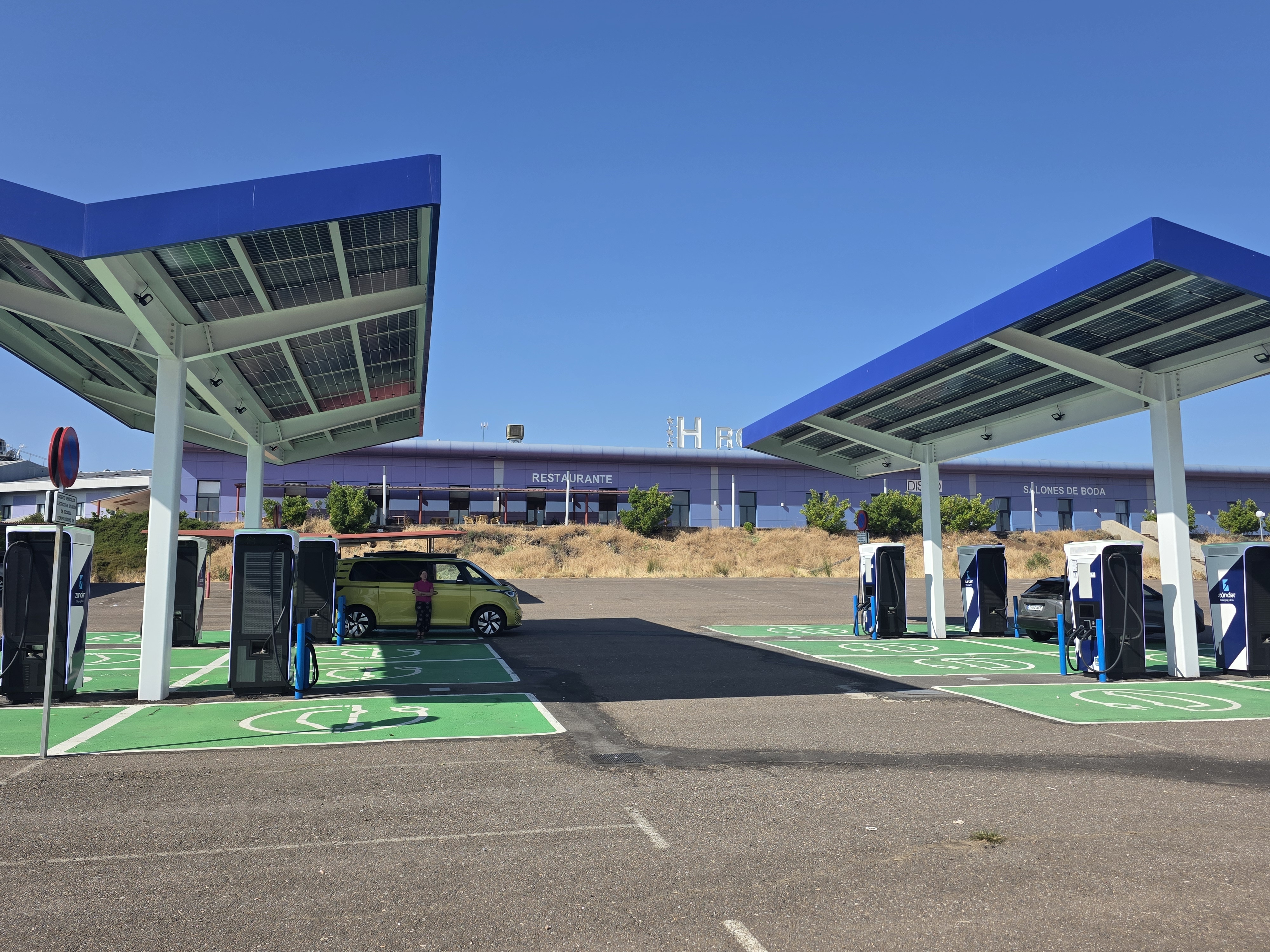
After charging the van at a Zunder EV charging station, where only one other of the sixteen spots available was occupied, we were on our way again. The huge number of charging stations and the lack of queues makes charging in Spain much easier and quicker than in Ireland.

EV Charging Station….no queues, no hassle.

We selected ‘no highways’ in Google maps so we drove through villages and small roads lined with vineyards and olive groves. The hills were topped by  ruined castles or villages of red-tiled white houses as we crossed into Andalusia.

In Alanis, a pretty whitewashed village in the Sierra Norte, surrounded by rivers and pine forests, a crowd of teenagers, disembarking from a school bus, were as mesmerised by the Buzz as the campsite flies.

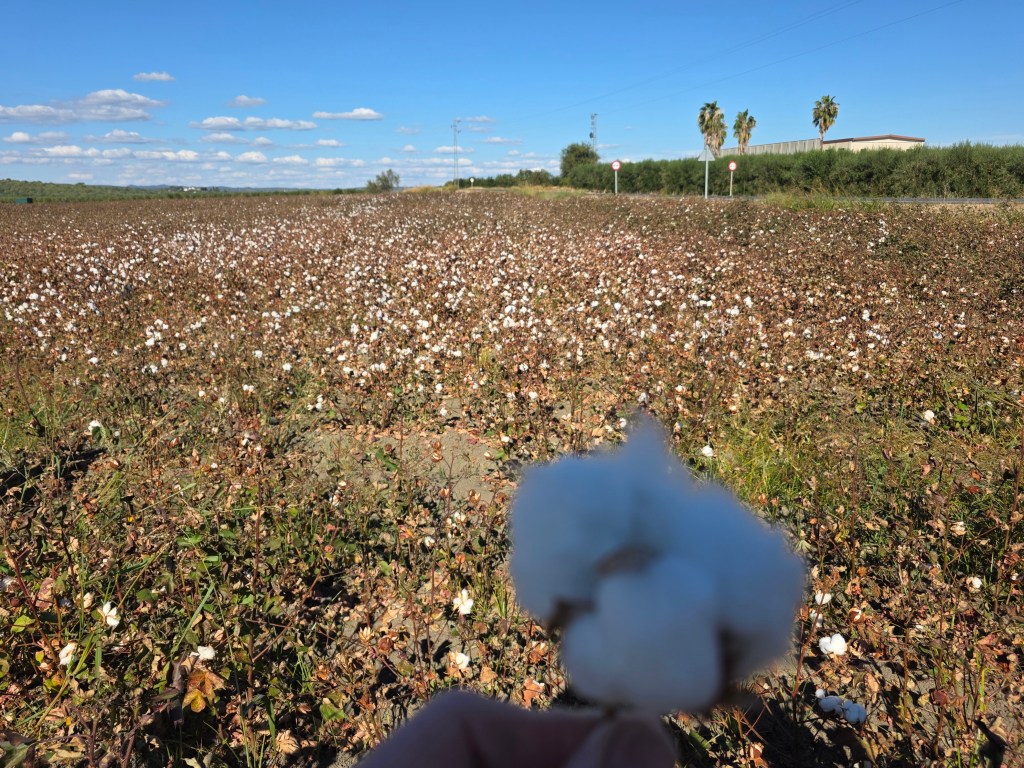
Our next stop was Hornocuelas, a small town in the Sierra Morena in the province of Cordoba where we were welcomed by Luz, my brother in law’s mother and her partner, Andres.  We loved staying for a couple of nights in their comfortable, typically-Spanish townhouse with tiled floors throughout a shuttered windows to keep out the light because here, the sun is the enemy. Although, it was a pleasant 26C in October , the temperatures hit a melting 46 C last August. The town is surrounded by olives groves because olive oil is big business as well as almonds and fields of cotton, full of soft white balls, almost ready for harvesting.

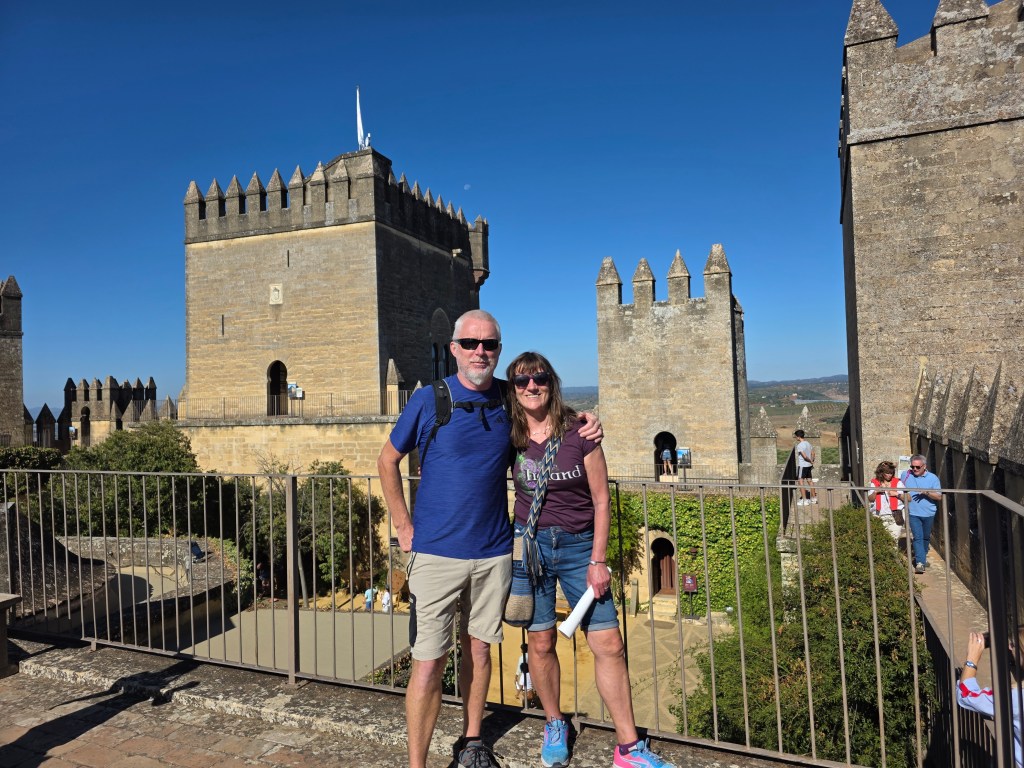
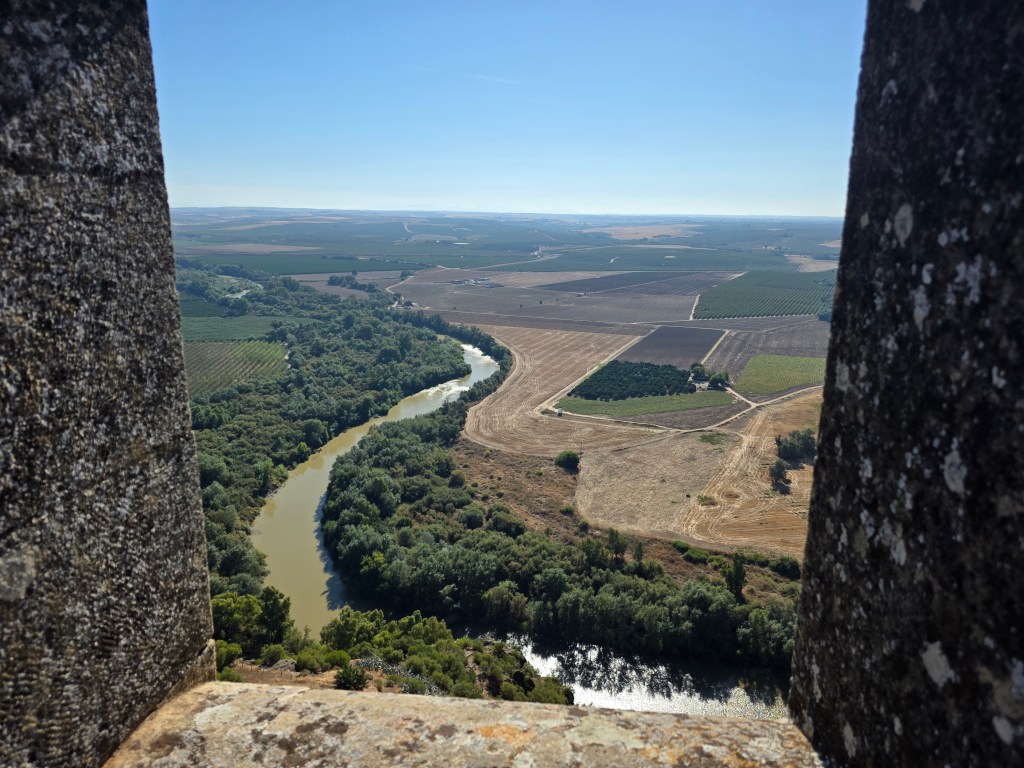
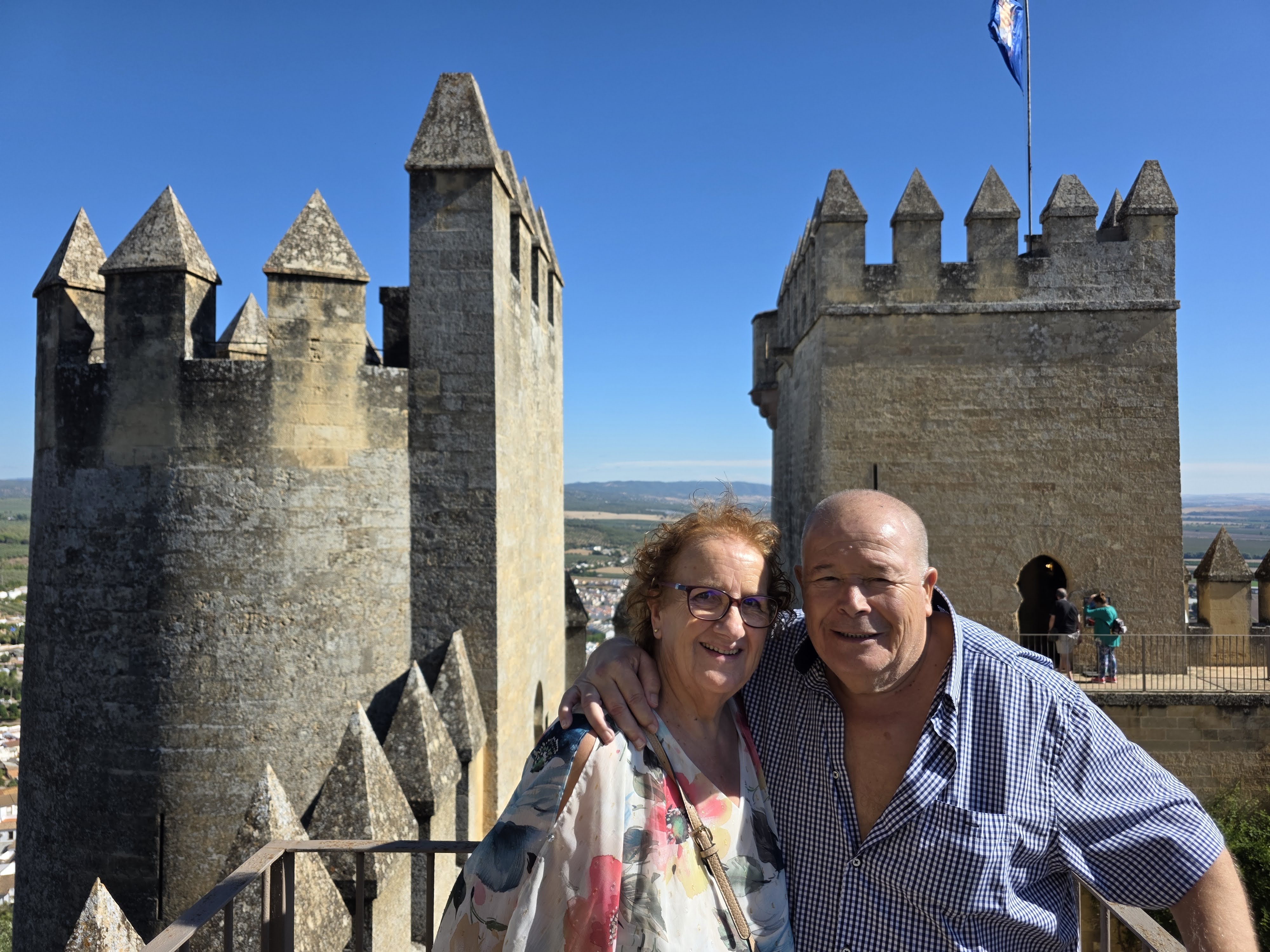
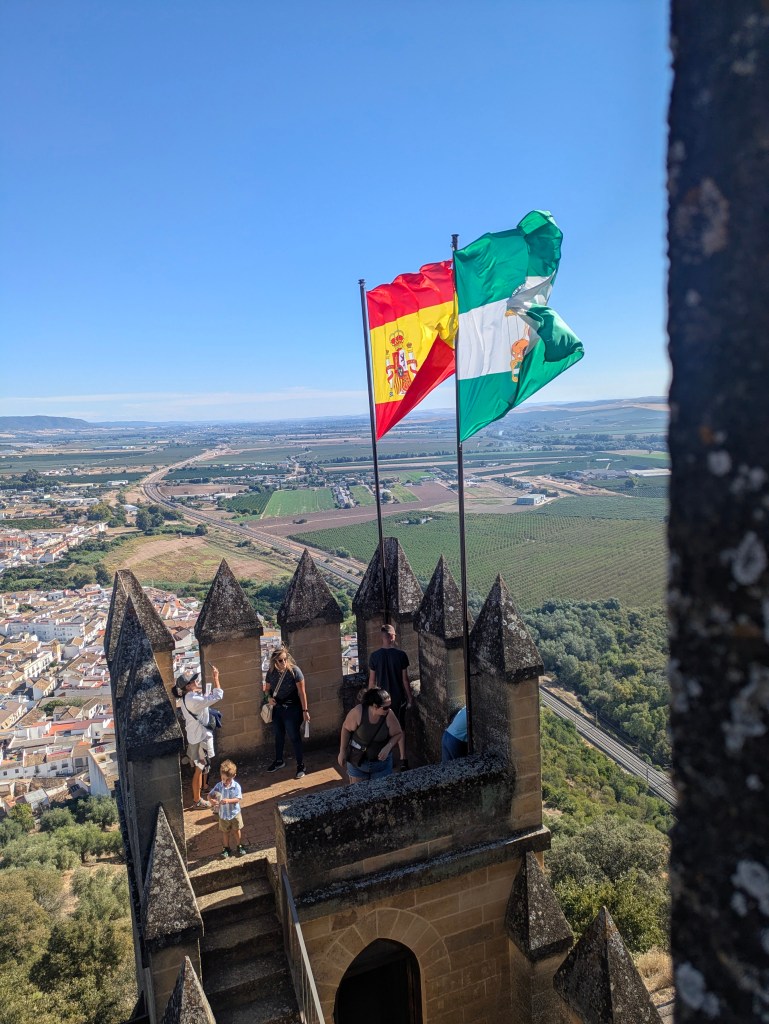
A visit to Almodovar Castle, setting for many Game of Thrones scenes, was a walk through the centuries.  Originally the site of a Roman fort,  a Moorish fortress was built here in the eight century, overlooking the Guadalquivir River, before being taken over by the Christians. It was extended and remodelled over the years with stories lingering between the cracks in the many towers, torture chambers and courtyards. It’s well worth a visit with an excellent audio-guide.

Saying ‘Adios‘ to Luz and Andres, we left loaded with gifts of cheese, honey, wine and homemade ‘angel hair’ pastries (muchas gracias🥰 ) and headed in the direction of the Caminita del Rey, which is a hike near Ardales in the province of Malaga. Numbers are restricted and it’s so popular that it has to be booked in advance. We reserved a spot two weeks ago (before we left home) and were fortunate to get a spot so soon, as it can be booked out months in advance.  

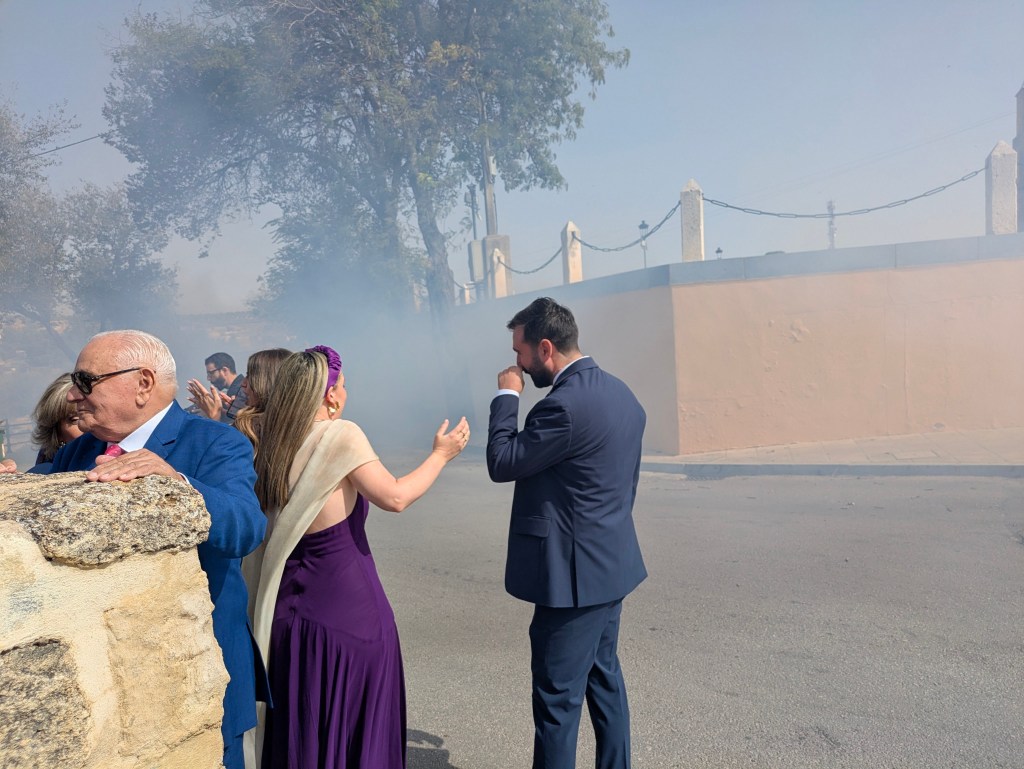
The two hour and a quarter journey from Hornocuelas was mainly through flat, empty countryside. Driving through Osuna, we spotted a large number of cars parked outside the hilltop church overlooking the town. Curiosity made us stop for a look. The church doors opened and wedding guests, as colourful as butterflies,  spilled out. When a vintage car carrying the bride and groom drove up the little side road, there was a lot of yelling before a series of ‘bangers,’ arranged in a long row by the edge of the pavement, detonated in sequence sending black smoke everywhere. This custom certainly starts married life with a bang.

The Caminita del Rey is a trek along narrow walkways that are pinned along the steep walls of a spectacular gorge. These walkways were originally used by the workers in the construction of a hydroelectric power station about a hundred years ago. The company employed quite a few sailors with a head for heights from climbing ship’s masts. This is a spectacular walk with stunning views…..and not as scary as the photos might indicate as new reinforced walkways have replaced the original rickety ones….although not for anyone with vertigo. The actual portion of the hike along the gorge is quite short, about 3.5 kms with a couple of kilometres at either end to make up the total kilometres. Although there is no need for a guide (the path is self-evident), the number of unguided slots is very limited. The advantage of being in a guided group was the people we met, some Aussies and a lovely couple from Oregan, who we shared a cold drink with at the end.

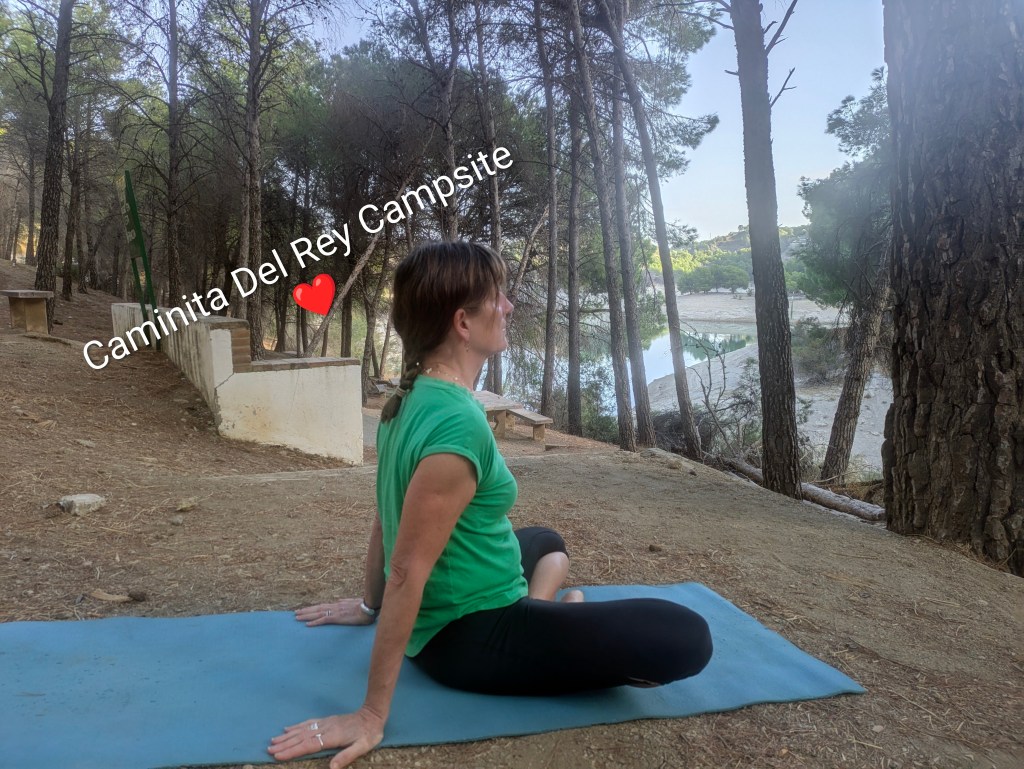
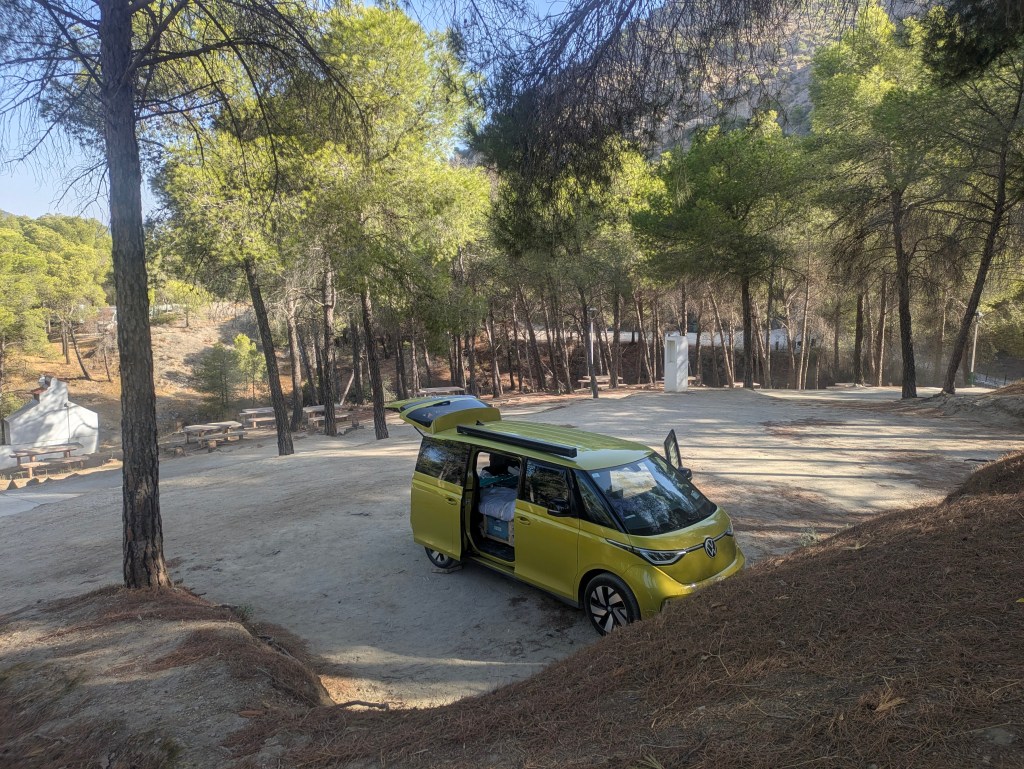
We stayed in a campsite at the northern end of the gorge (€19/night), which was a convenient 500 metres from the tunnel entrance to the starting point.  The 7.8kms hike is one-directional but there are buses at the El Chorro end (finishing point) to drop hikers back to the starting point or to one of the carparks along the route. This all sounds very logical but the website is quite poor and potential hikers found themselves at the wrong end without enough time to get to the start or at the starting end but thinking they should be at the other end. A lesson in confusion! If you are in the area and haven’t made a reservation, at 9am each morning, the first 150 people in the queue are allowed in without a booking…..or so we heard.

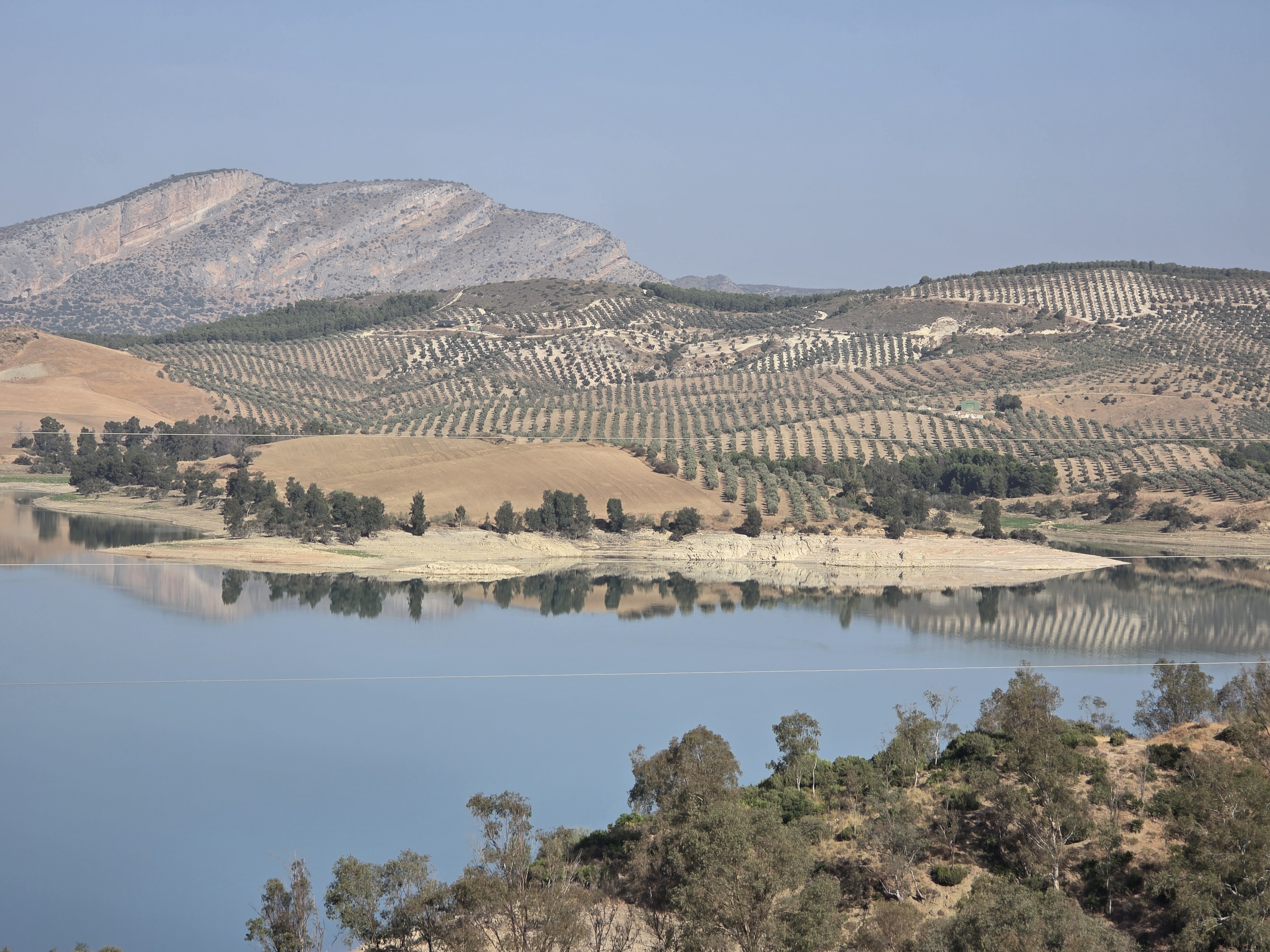
Countryside, north of Malaga, Sun-bleached and dusty, but not barren.

After relaxing in our shady hillside campsite, we journeyed to the city of Malaga through mountains and windmills, reservoirs and dry river beds. Traffic snarled around the city, all roads heading into town were so choked that we headed for a campsite in the hills which had good reviews, and arrived to a dustbowl with no shade, relentless sun, poor facilities (one women’s toilet and one men’s toilet for about forty camping cars) plus an occasional whiff of sewerage. The surprising thing was that it was full, we barely got a spot and it was relatively expensive (€25)….not a promising start to camping along the Costa del Sol.

The following morning, we were up and gone by sunrise……not very early as its dark here until about 8.15 am. We parked in an underground carpark on the edge of the Centro Historico which also had ten EV charging points, convenient for topping up the Buzz although we just made it under the 1.9m barrier, with barely a whisper to spare.

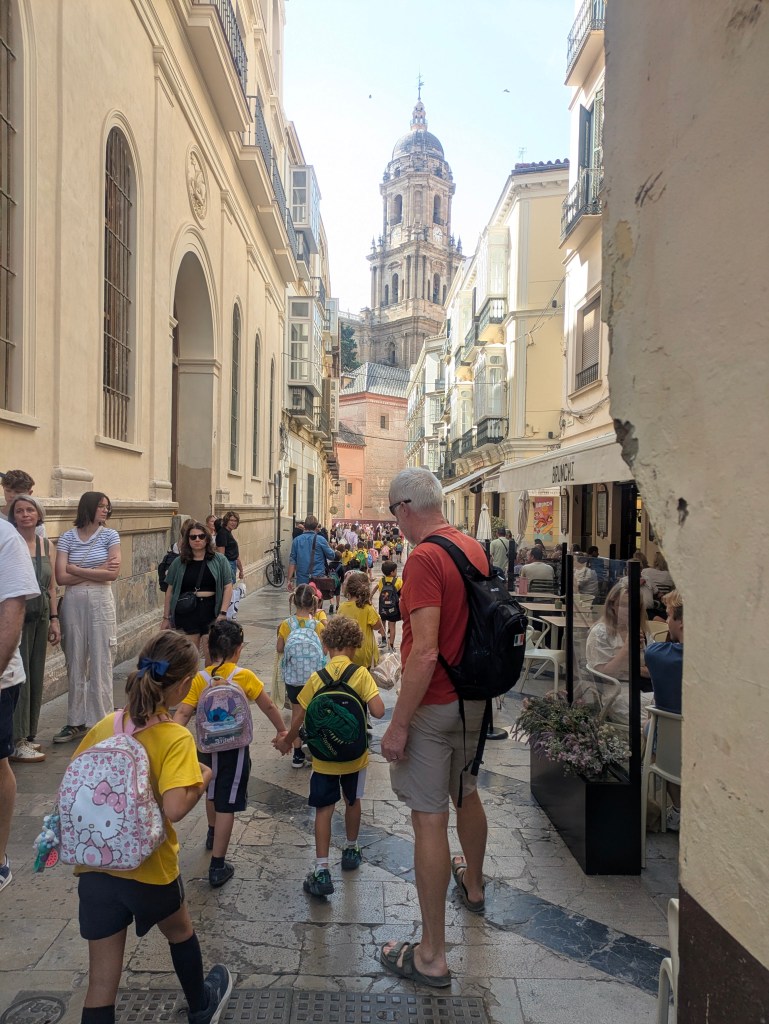
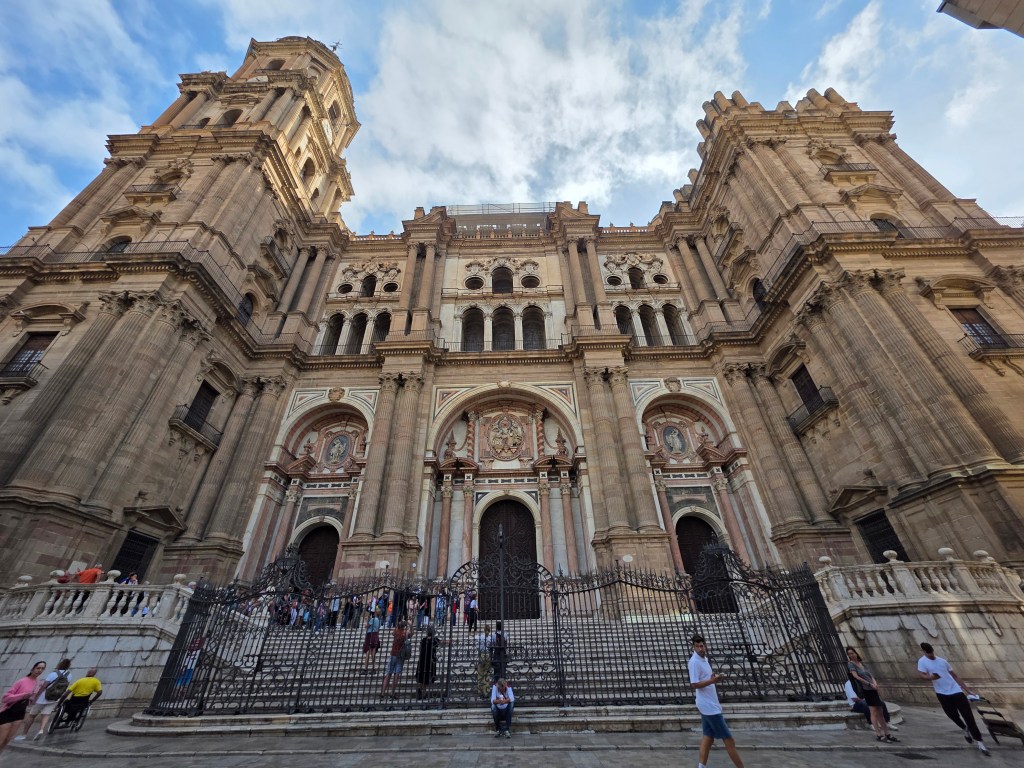
Malaga is truly a gorgeous city, teeming with tourists and with enough museums to rival Waterford. Deciding to go to the Picasso Museum, we discovered that the earliest slot we could get was at midday so we ate breakfast at one of the many cafes, people watching, enjoying the vibrant atmosphere and listening to the squeal of the tyres of delivery vans on the ceramic tiled streets.

Morocco is now firmly in our sights, just a few more hops.
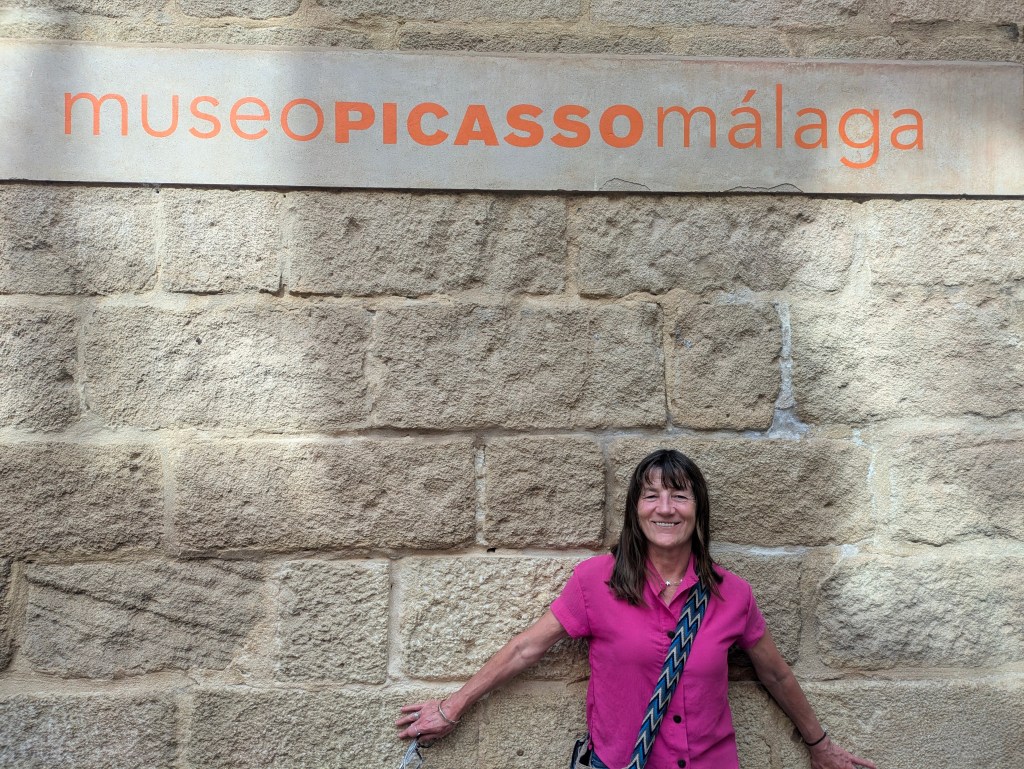
Till next time….hasta luego.

Thanks for reading

Electric Travels: Into the Sun

Electric Road Trip: The Journey Begins

The night before we left home for our nine-week roadtrip from Ireland to Morocco in our all-electric van, I dreamt that camels were towing us through the desert because we had run out of charge. Range anxiety in my dreams…..hopefully not an omen.
Leaving Rosslare

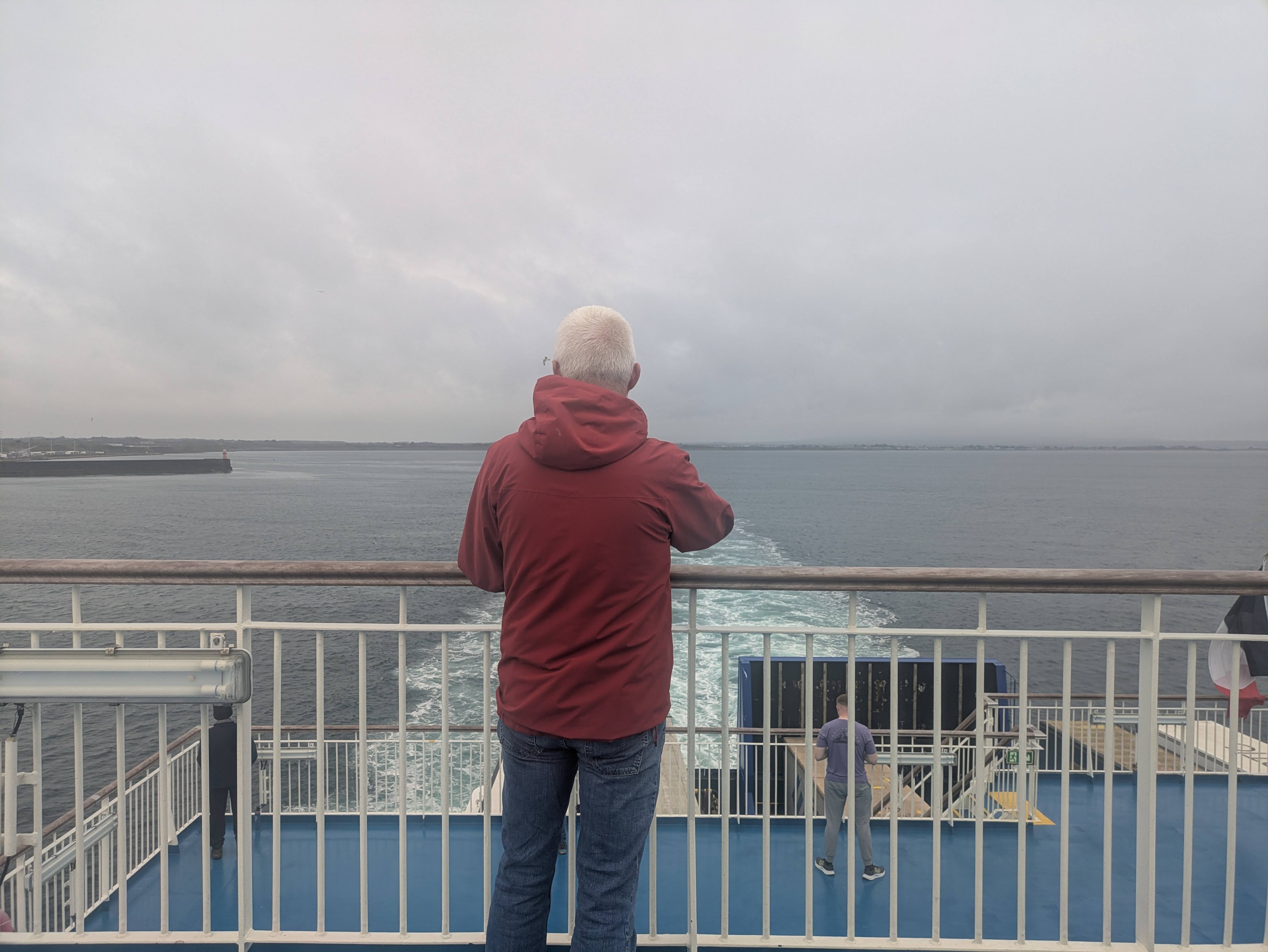
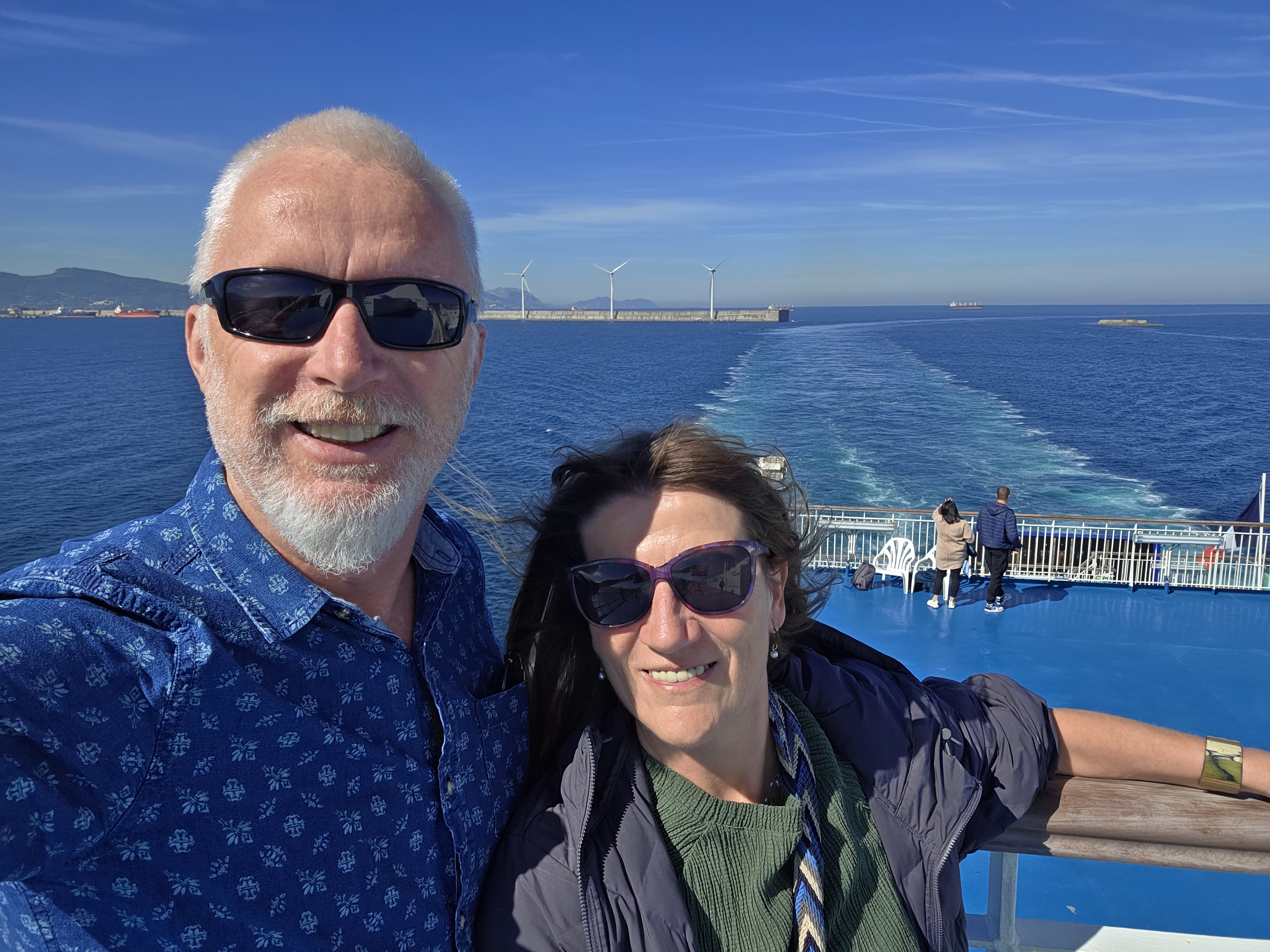
The journey to the ferry port in Rosslare was short and the crossing to Bilbao was smooth.  Taking the ferry was such a comfortable, relaxing way to travel, a slow transitioning to holiday mode. Wi-Fi was only available for a fee and our mobile data only kicked in briefly when we sailed near the tip of England and the French coast with a fleeting flurry of What’s App messages.  We were in a floating cocoon, out of contact with the world.

We were fortunate to sail on Wednesday morning (Oct1), well ahead of Storm Amy. Our original preference was for the Friday crossing but it was full when we tried to book it the previous week, so we opted for the earlier sailing. Sometimes it pays off to be ‘last-minute’ because that Friday evening sailing was cancelled due to the adverse weather conditions.

The thirty-hour journey flew by.  The talk given by the resident on-board conservationist (from the Ocra Charity) about whale identification was really informative and a good initiative on the part of Brittany Ferries.  The breeze on deck was brisk for the whale-watching session, and as the whales refused to turn up, we went down to the bar and marine-watched in comfort through the large windows, accompanied by live music followed by a quiz about French food and drink. It was multiple choice so we guessed most of the answers….. wrongly.   (Sample question: What is Roscoff famous for? Onions apparently.)

There was plenty of other entertainment, Caoimhin did a short course on rope-knots and the whiskey & chocolate tasting in the shop was very popular. There was bingo, more quizzes and dolphins appeared at dusk for a little sunset somersault.

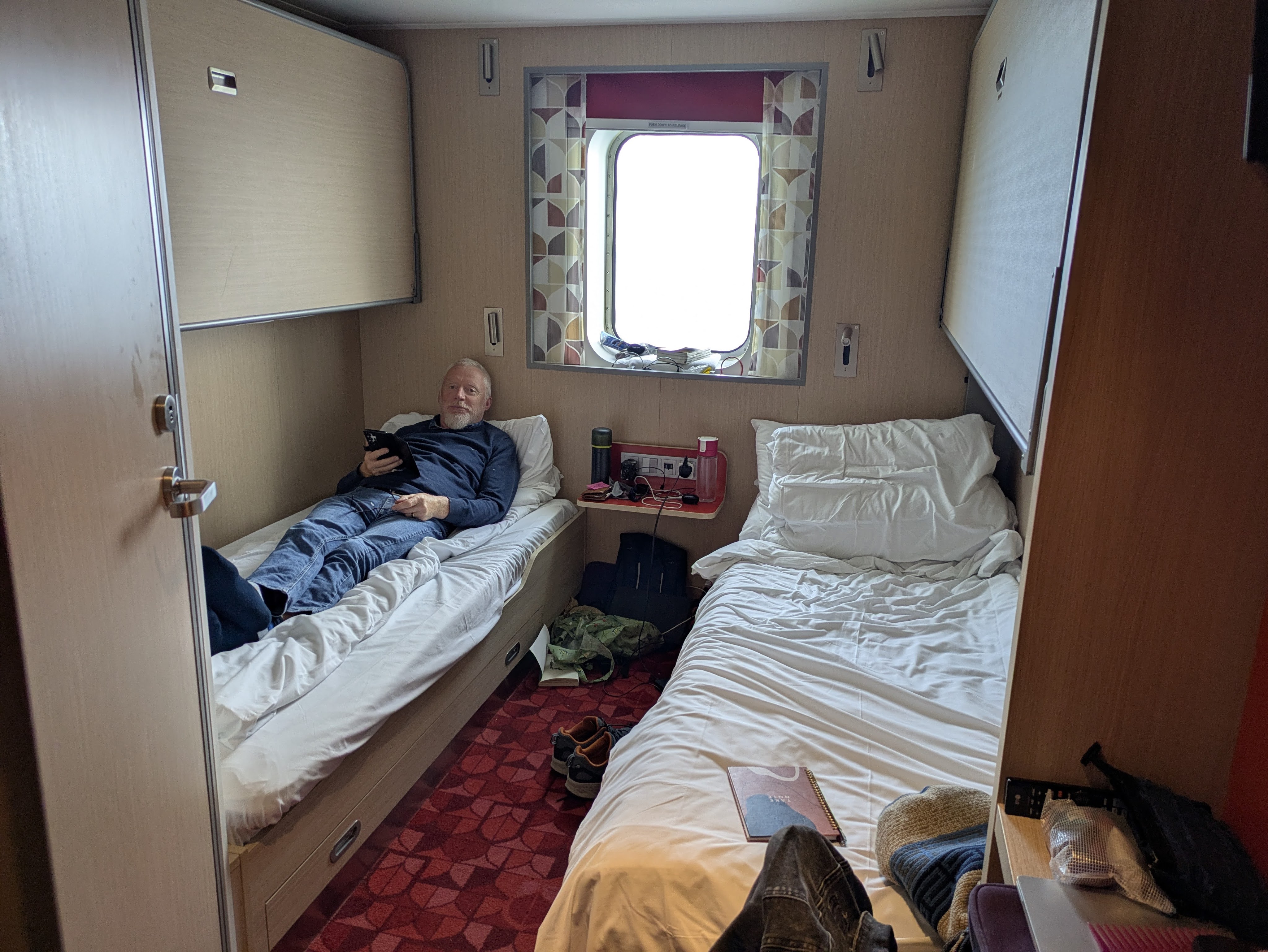
In the cabin, Caoimhin cut my hair, lopped off a couple of inches…. we had been so busy in the run up to our departure that I didn’t have time to visit a hairdresser… and did a good job. Our ensuite cabin was comfortable, the shower was hot and the hum of the engine was so soporific that I slept for ten hours straight, lulled by the gentle swaying motion.

 It was a sunny 25C at 2pm in Bilbao when we emerged from our cocoon. There’s always a bit of tension when driving on the ‘wrong’ side of the road in a new place and trying to figure out Google’s instructions. Taking a wrong roundabout turning, we ended up back in the port where the officials looked at our Irish reg, and sighed before raising the barriers to let us loose …again. But soon we were driving south towards Haro and the Rioja region….this destination was only decided on the ferry when looking at the guidebook. We had never heard of Haro but we like wine and we wanted to head south.

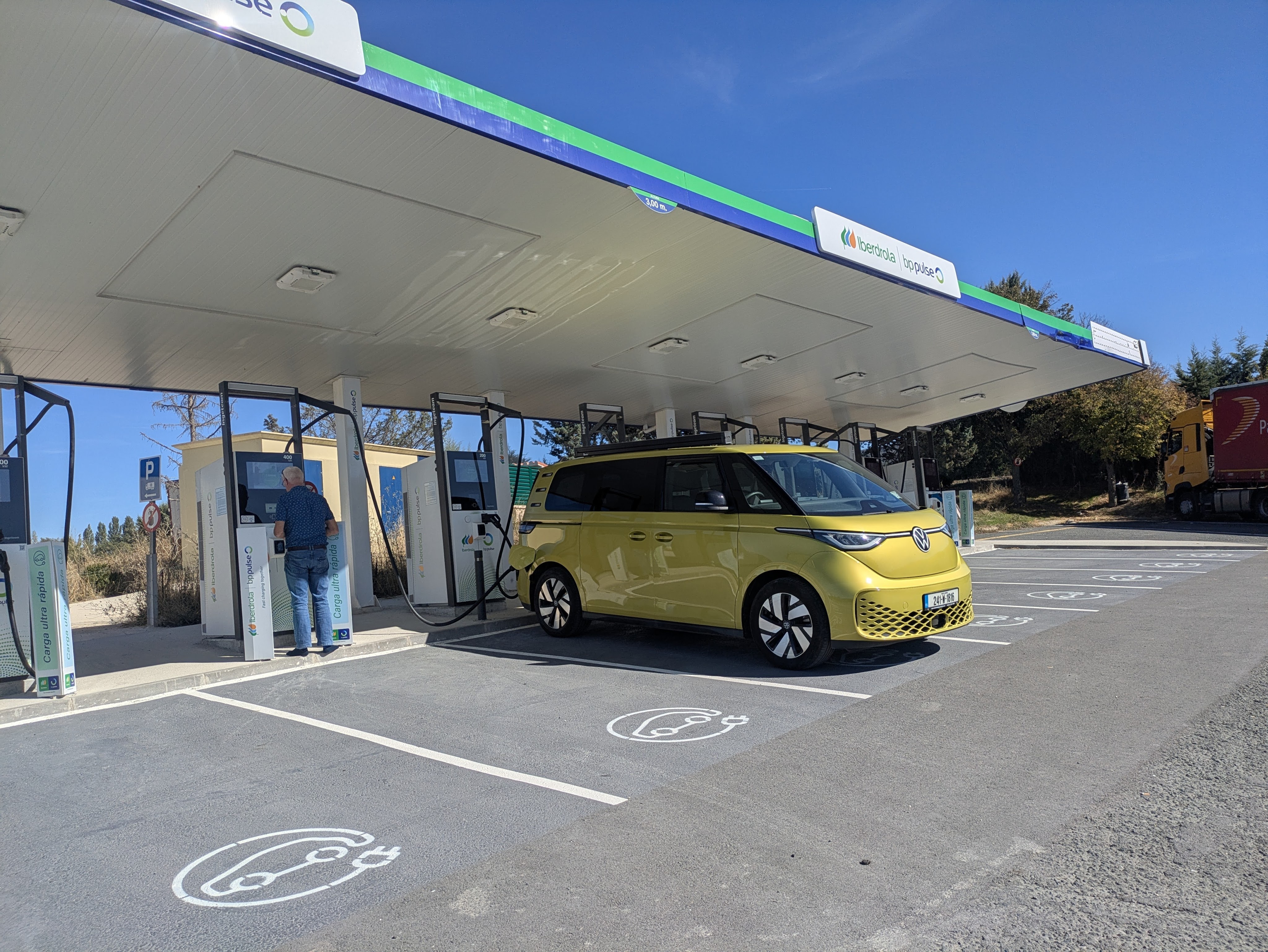
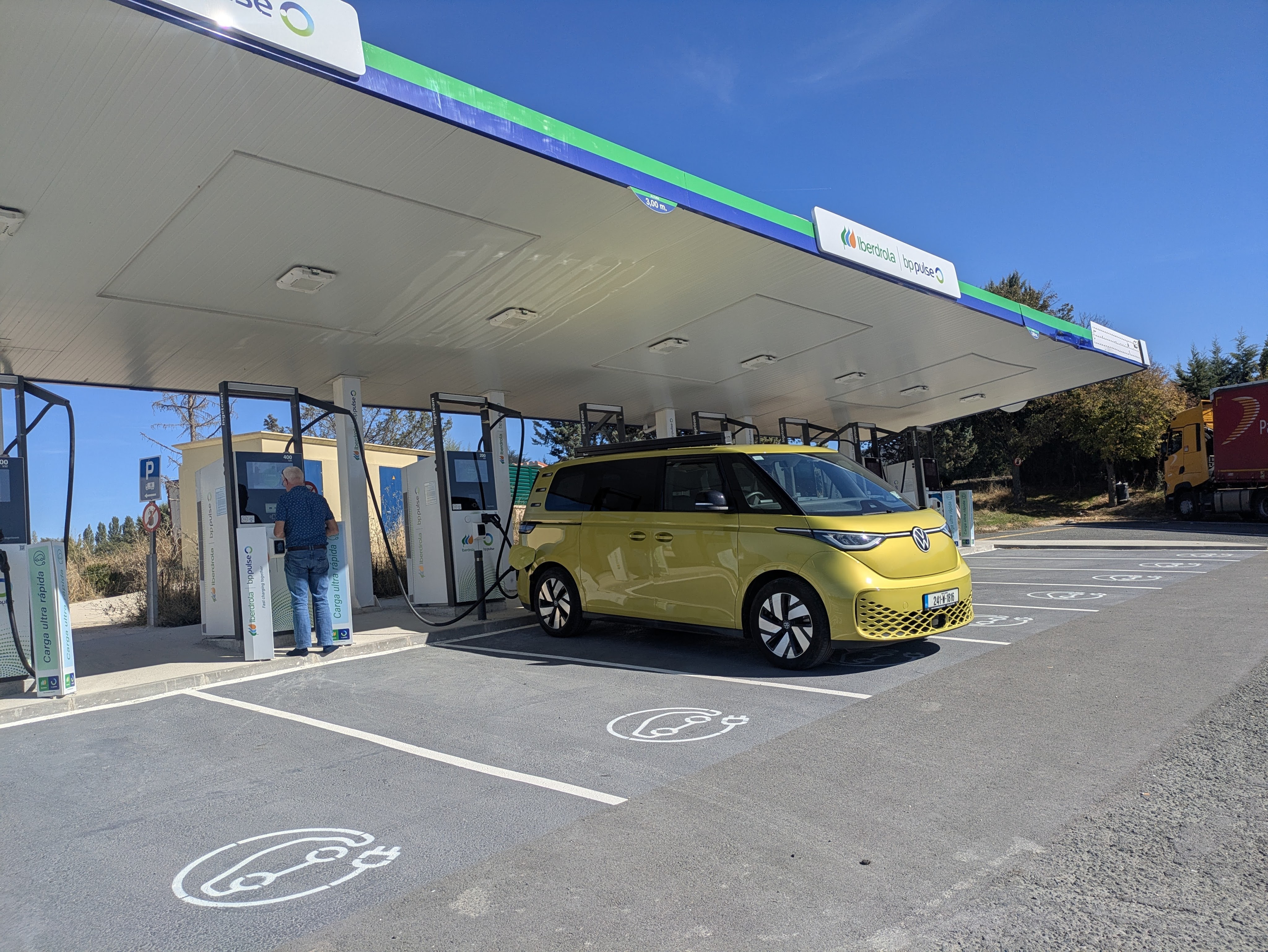
Our next task was to figure out EV charging in Spain before we reached the ‘range anxiety’ stage. Our maps indicated that EV charging stations were plentiful. Although we had 50% in the tank, we stopped at an Iberdrola charging area before any topping-up became critical. Our Buzz was the only vehicle charging at a whole bank of chargers, all fast chargers with a couple of  ultra-fast. It was possible to get instructions in English and pay by  bankcard. It was relatively expensive at 0.70 a Kw, more than we have paid at public chargers in Ireland but at least we know that charging is easy, at least with Iberdrola.

No Queues

Haro proved to be a good choice. It was a town with the tang of fermenting grapes in the air and the hum of tractors pulling trailer-loads of grapes to the wineries; the building were old and made of a golden-yellow stone that glowed in the late afternoon….and the wine was cheap (starting from less than €2 a glass). A perfect combination.

The bodegas opened at 10am, or before, for wine-tasting and closed in the early-afternoon. Sipping wine in a two hundred year old cellar, surrounded by hundreds of wooden casks which were slowly seeping alcohol into the dim air, was a wonderful way to enjoy a tipple even if it was barely midday.  This activity also meant that most of the visitors to this gorgeous little town were never entirely sober. Early morning walks along by the Rio Ebro and through the vineyards went some way to clearing our heads. The mornings were cool – about 10C- but by midday it was a gorgeous sunny 26C until the evenings required a light jacket.

Haro holds an annual festival in late June, Batalla de Vino (Battle of the Wine) where the attendees dress in white tunics and throw thousands of litres of wine at each other, staining their clothes red. A clock in the main plaza was already counting down the days and minutes to next year’s event.

Haro owes its wine success to a plague (phylloxera) in France which ruined the French vineyards in 1863. French wine producers set up storehouse in La Rioja and began to produce Riojan wine with their own techniques which the locals adopted and adapted. Never an ill wind and all that…

As we stayed in a campsite by the river (€28 a night with electricity), Caoimhin had high hopes that we might be able to slow-charge the van onsite using a ‘granny cable.’ When that wasn’t compatible, we dispensed with electricity, and the nightly charge dropped to €21. The campsite was very social and we met several Irish people who were having an unplanned extra week in Spain due to the ferry cancellations and disruptions.

After three days, we felt that we should depart Haro for our livers’ sake. The ‘Haro Effect,’  that continuous hazy, slightly inebriated state, was becoming too seductive so we packed up, with some regret.

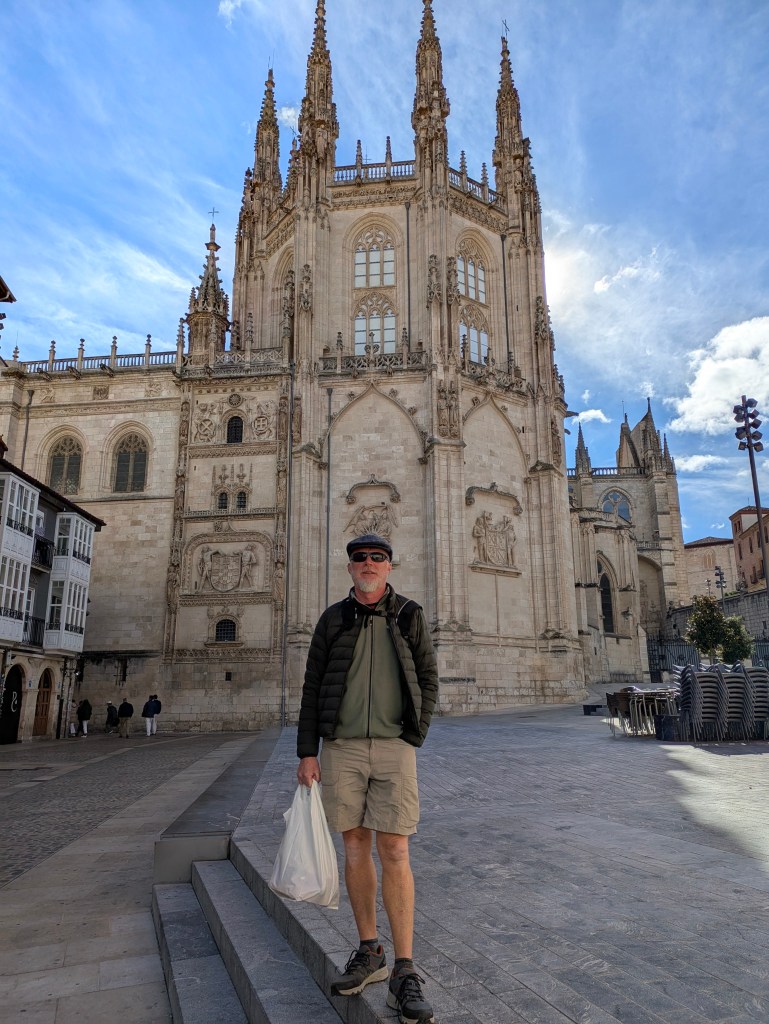
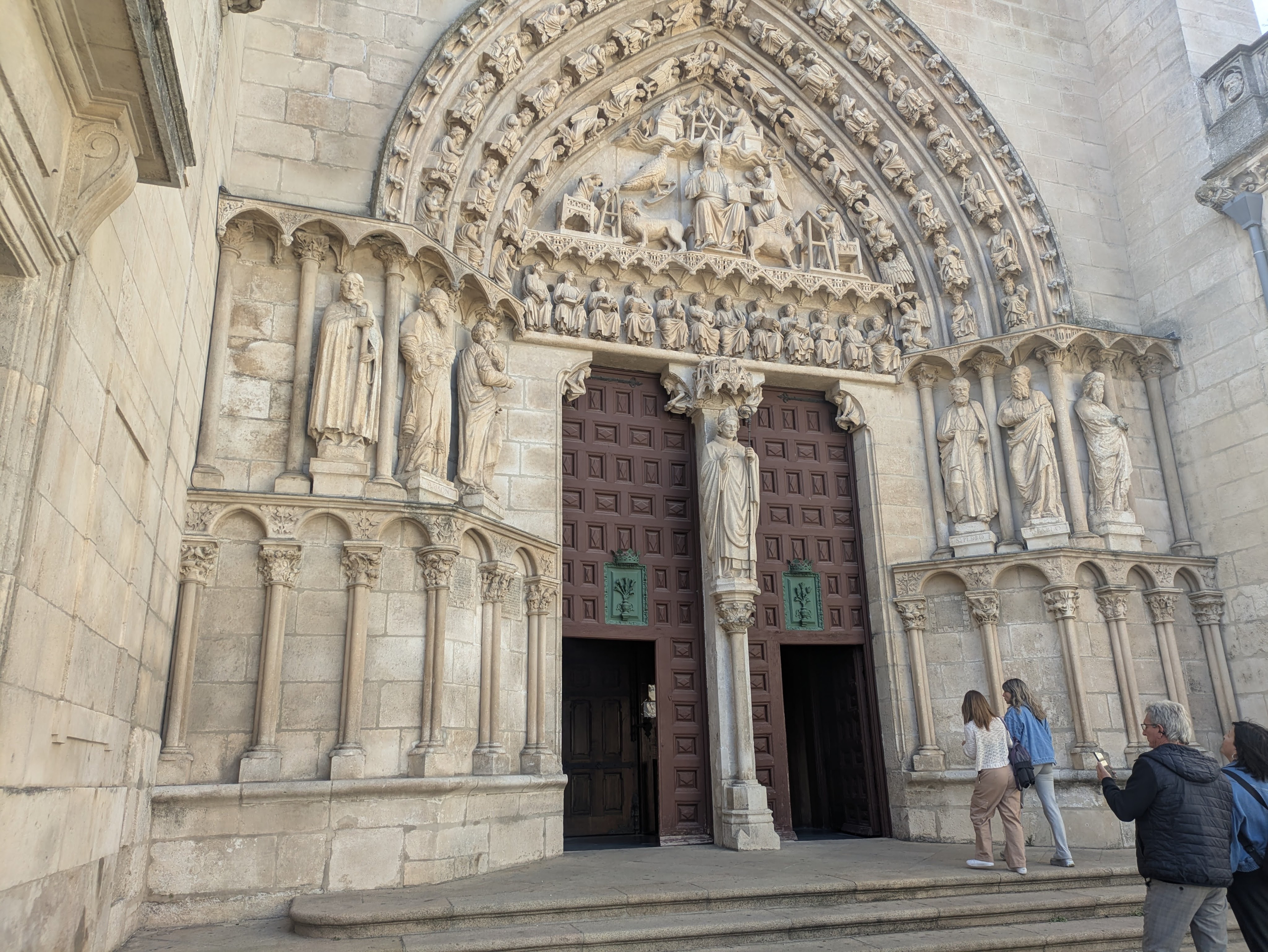
Heading south in the direction of Burgos,  the weather turned cool and cloudy with even a slight hint of rain. We drove by bare fields, shorn of corn and bleached white from the sun and fields of blackened sunflowers, withering on the stalk with drooping heads. The climate in Burgos, like most of central Spain, has been described as ‘nine months of winter and three months of hell(summer).’ It was sunny when we arrived with a stiff easterly breeze keeping the temperature a chilly 13 degrees although the streets were full with lots of people going around in medieval costume. The Cathedral was jaw-dropping, a Gothic Treasure where the concept of ‘Less is More’ was never considered, every available surface was crammed with ornate carvings. After charging in Burgos (Zunder Chargers@ €0.58/kW) and wandering around the Sunday market, we pushed on to Lerma, a pretty town, with a castle, convents and a big Plaza Mayor. We parked in a picnic area on the outskirts of town and settled for the night.

The cold woke us. The temperature had dipped to 1.5 degrees which was unexpected and the coldest it’s been so far. By 9am the following morning, the sun was shining but temperatures were still hovering about 2 degrees. We moved on, before we had to invest in blankets and woolly jumpers.

We are now in Salamanca, staying in a cheap guesthouse (Hispanica Hostal €38 a night) in a basic ensuite- room but it is clean, light-filled, central with free parking. The Plaza Mayor in Salamanca is considered the most beautiful in all of Spain and we believe that claim, having been in the Plaza last night when the lights came to spontaneous clapping. The plaza which was already gorgeous became even more magical when lit up and with a full moon rising over the splendid architecture.

Thanks for Reading

Hasta Luego

Electric Road Trip: The Journey Begins

Camino del Faro- The Lighthouse Way

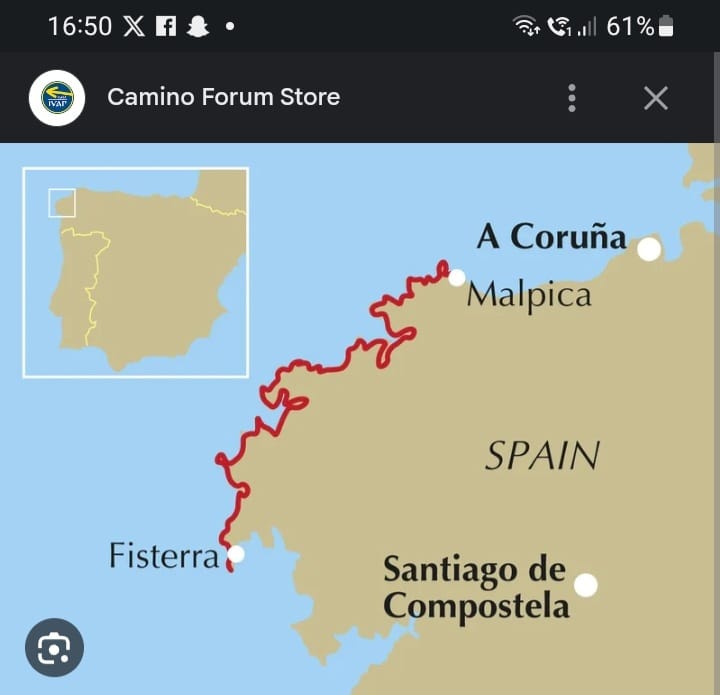
Mention the words ‘Camino’ and ‘Spain’ in the same sentence and most people will think about the Camino de Santiago, the incredibly popular pilgrimage way of St James. But there are others far less trodden paths🥾.  We have just completed the spectacular Camino del Faro (The Lighthouse Way), a 200 Kms trek in Galicia along the Coste del Morte (Death Coast), linking the towns of Malpica and Finisterre and walking from lighthouse to lighthouse.

Camino del Faro (Lighthouse Way)

Our journey began with a late Ryanair flight from Dublin to Santiago de Compostela, arriving at about 11.30pm. Yellow bus signs on the ground at the airport Arrivals directed us to a bus stop outside the terminal where the 6A took us to the centre of town in about 35 minutes for one euro😃. The streets were quiet and shuttered and a couple that we saw in the airport queue, followed us to the same hotel, Hotel Windsor, a no-frills place but very clean, very central with loads of hot water. 

The following morning we discovered that the buses to Malpica, our starting point, were infrequent with just two buses a day…we had  missed the first one and the next one was at 1pm. We wandered around the Cathedral area which was crowded with tourists, walkers,  pilgrims and the ubiquitous shells from jewelry to tablecloths to masonry etchings – pilgrimage is big business in this part of the world. Confessions were available in multiple languages but few were availing of the opportunity.

Malpica♥️

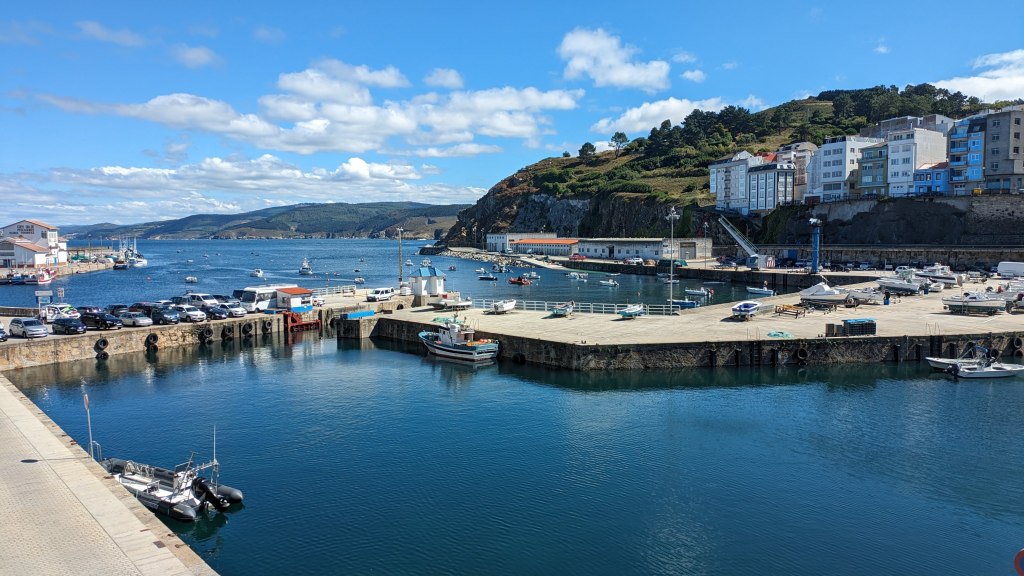
Getting to Malpica involved a change of bus at Carballo but both buses were comfortable, efficient and cheap with the two and a half hour journey costing less than a fiver each and we paid the drivers on the buses.  Malpica was a surprise…a really gorgeous little town that we had never heard of until we investigated this trek, with a prom that curved around s turquoise bay.  We booked into JB Hostal with a large sunny seaview room, 55 euros a night. (In Spain, hostals are guesthouses, different to hostels with dormitories). The seafront was teeming with surfers and little cafes with cold beer and good wine🥂.  The beach was dangerous for swimming so we wandered down to the pretty port area to find the start point of our camino. This  first lighthouse was a disappointment…hardly visible and behind a big seawall with a No Trespassing Sign (in Spanish) – very little English spoken or understood here.

Malpica Port

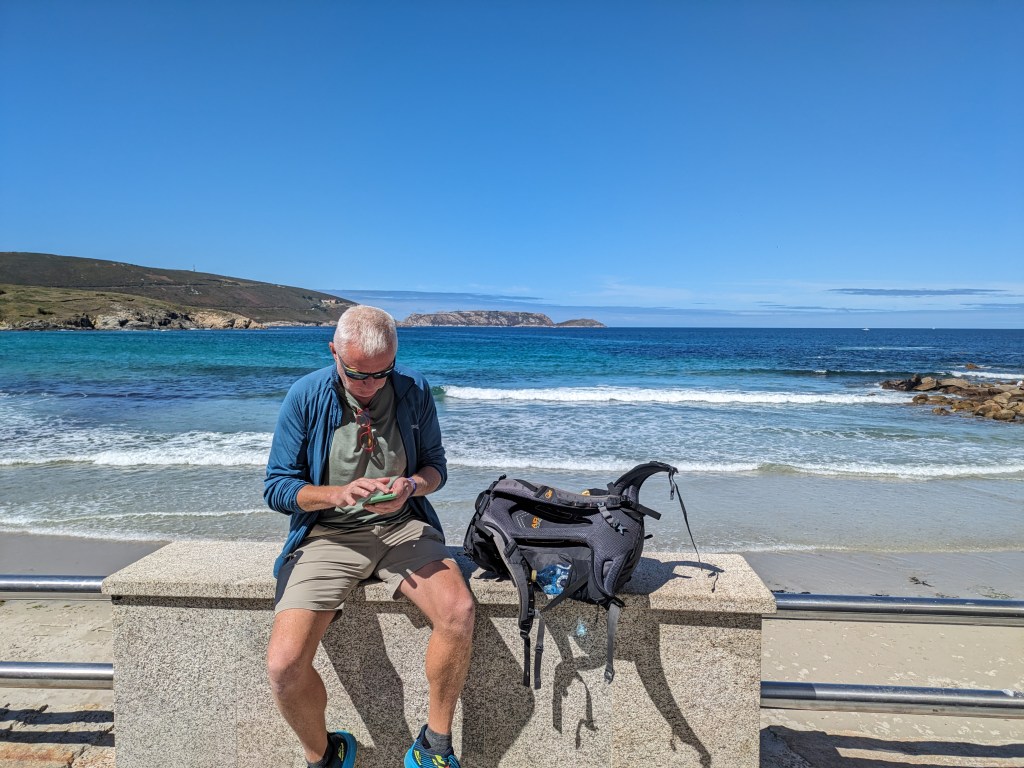
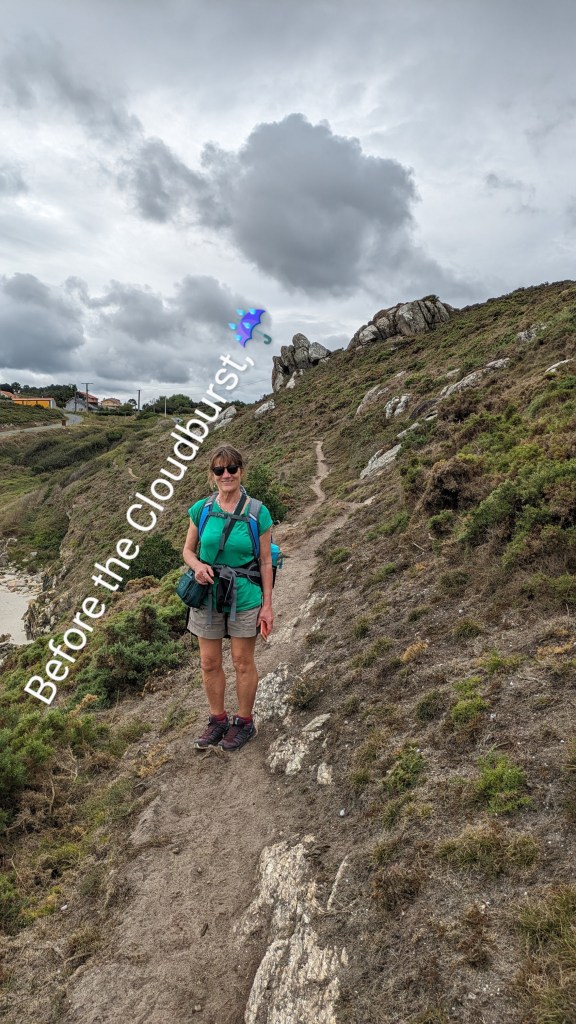
It was barely light when we crept out of our guesthouse at 7.45am without breakfast(not included). We were smothered in sunscreen,dressed in shorts and carrying all our belongings on our backs. Apart from a few dog walkers, the whole town seemed to be sleeping. We passed a holy well, pristine white-sand beaches and a church on a cliff, stark against a backdrop of  barbie- pink heathers. We walked to the incessant sound of the restless sea, relatively benign and blue on this gorgeous early September. day.  The first restaurant we came too -after 3 hours walking – was closed until 1pm. Although we had some stomach rumblings, we pushed on as we didn’t want to hang around for 2 hours until it opened. We didn’t know then that we wouldn’t find another one😬

Leaving Malpica, Day 1
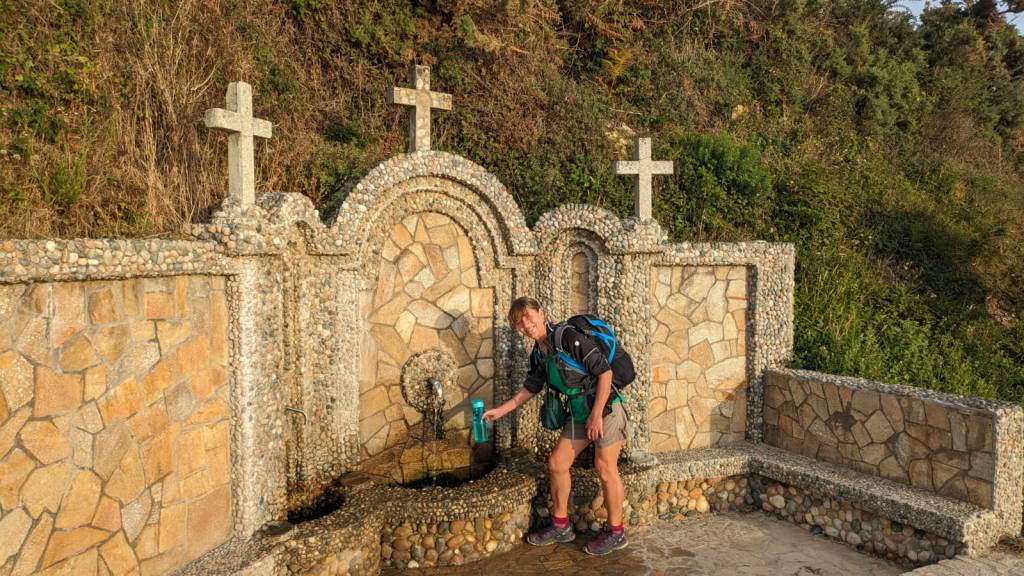
Water along the Way

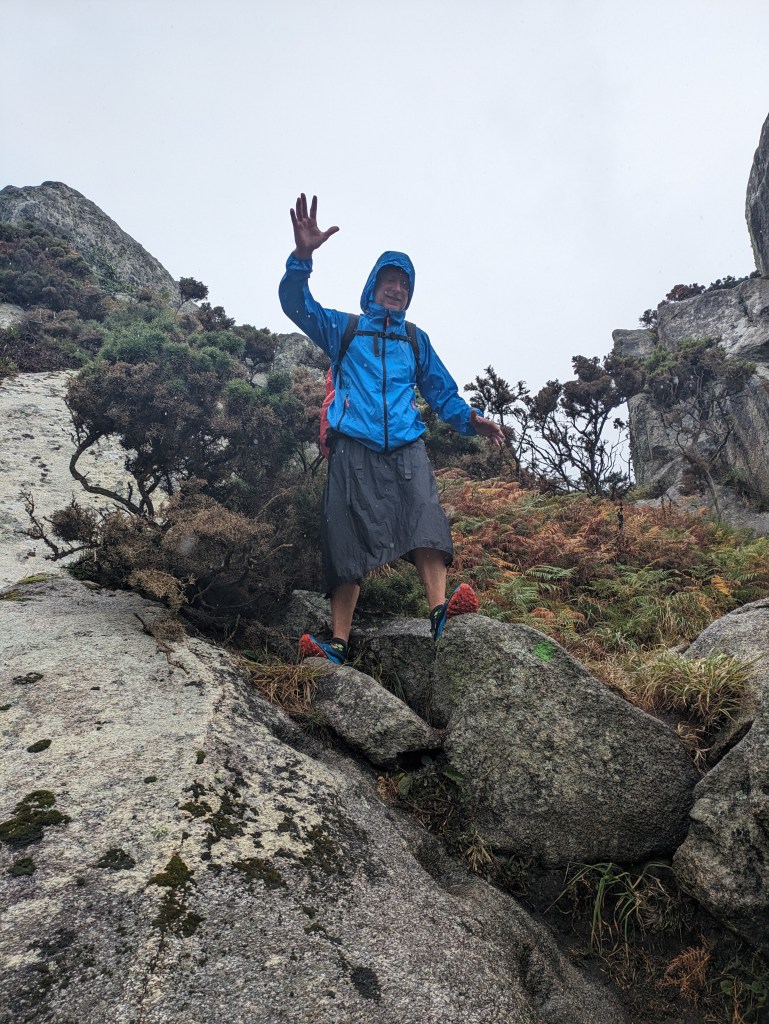
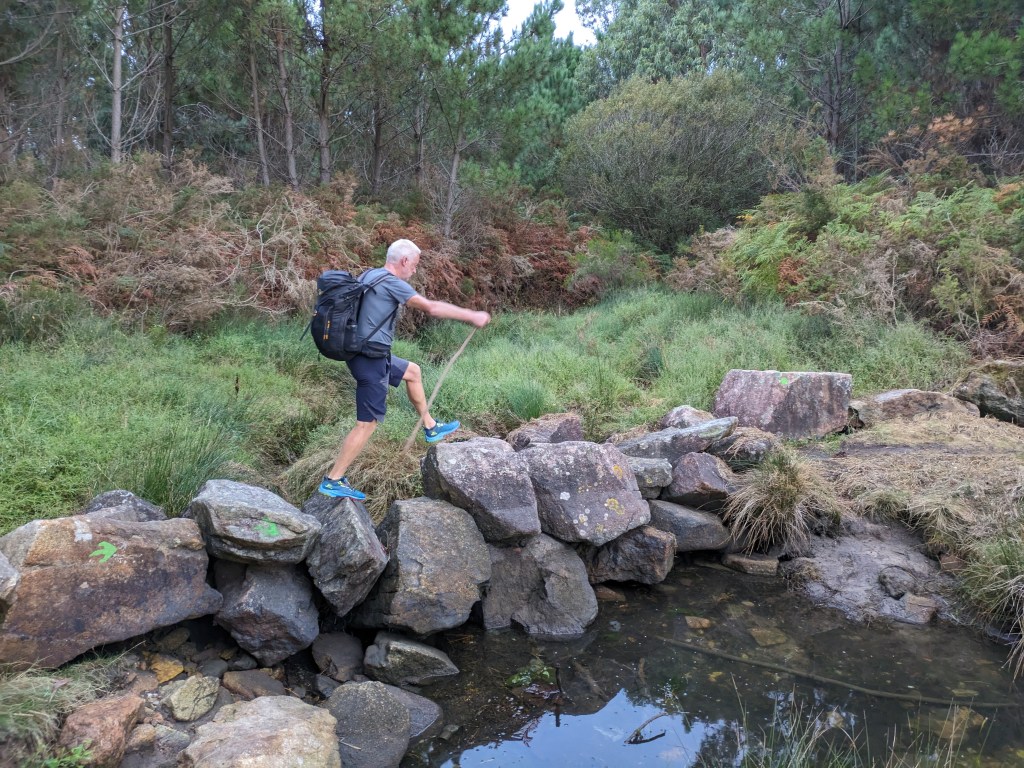
There were chest high ferns and boulders like giant marbles to clamber over in search of the green dot, which denoted our path but which was sometimes quite elusive🟢. At a little port area where we sat to have a meagre snack of nuts and bananas, a light drizzle started, welcome and cooling at first until it got heavier and became  a drenching deluge.  There was neither shade nor shelter. The wind howled around Nariga Lighthouse, tossing rain and foam at us from all directions. We trudged along like drowned rats until we reached Ninons Beach, a secluded remote beach and the end of Day 1. We hadn’t any accommodation booked,  assuming that we would find something along the way but the coast was  isolated…we didn’t meet a soul that first day in 22 Kms of hiking. We decided to call a taxi to take us back to Malpica. That’s when we discovered that there was no signal in Ninons😁 so we squelched another kilometer uphill to make the call. The phone signal kept dropping but a taxi materialized out of the rain…like an apparition because Caoimhin wasn’t sure that he had got the message through. Back in Malpica, our shoes were sodden and everything we were wearing dripped a muddy trail up the stairs. Although we had rain covers for our backpacks, we discovered that  everything in them was also wet.  But after a hot shower, the sun came out, the outside tables were wiped down, the wine was still cheap and I ate a basket of bread and probably the best mussels I have ever tasted😍.

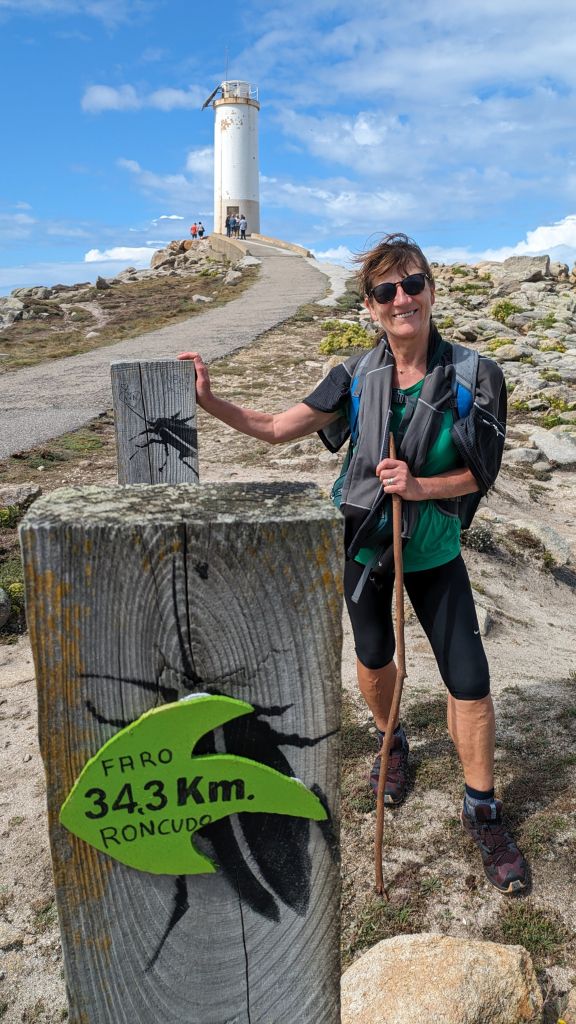
 Day 2 started with wet shoes and damp clothes. We had bought a lavender spray in the Chino shop to mask the stench of damp but it was so synthetic that it smelt almost toxic. Our taxi dropped us back to Ninos Beach where we climbed through gorgeous eucalyptus forests (their scent wasn’t strong enough to mask the lavender 😏). Shining granite rock shimmered in the sunshine along this walk to Ponteceso with many diverse landscapes from rocky cliffs, salt marsh, sand dunes and river estuary, a haven for birds. This stage was beautiful but long (almost 27 Kms). When we came to the seaside town of  Corme at the 17kms mark, we were ready for a break.The first place didn’t do food until evening time so we had a cold beer and moved on to another establishment where we ate fish salad and patatas bravas. Although the sun was hot and relentless for the last stage we still managed to get wet feet, walking on boardwalks submerged by the incoming tide along the estuary. 

Roncudo Lighthouse, Day 2

When we reached the hostel, my feet were shriveled and blistered, I had  a welt on my hand from clutching the walking stick and an ache across my shoulders from the backpack. This Camino began to feel like a pilgrimage of sorts. In a local bar, the friendly owner insisted on plying us with free tapas which we were almost too exhausted to eat. But things improved from this point and day 2 of multi-day hikes is well- known to be the tough one.

We discovered that socks could be dried very effectively by wrapping them around a hairdryer sprout ( if you were fortunate enough to have access to a hairdryer) and stuffing shoes with old newspapers(periodicos viejos) helped a lot. Comped plasters and Vaseline were a balm for feet and a hotel in Laxe with a bath worked magict to ease tired muscles.  The hikes became easier as our bodies – and minds-  adjusted.  We carried food supplies, pockets stuffed with bread and cheese,  a supply of biscuits, bananas, nuts and chocolate and an emergency can of sardines. Most days the only people we saw were solitary locals, clambering over rocks far below us, splashed with foaming water, gathering gooseneck barnacles from the heavily oxygenated waters – a treacherous occupation. We always trekked in hope of a cafe. A local woman, who was hanging out her washing, offered us life-saving coffee  when we were disappointed yet again that a cafe/bakery marked on our map was closed. This lovely woman filled our water bottles and even offered us beer and food. Wonderful hospitality. 

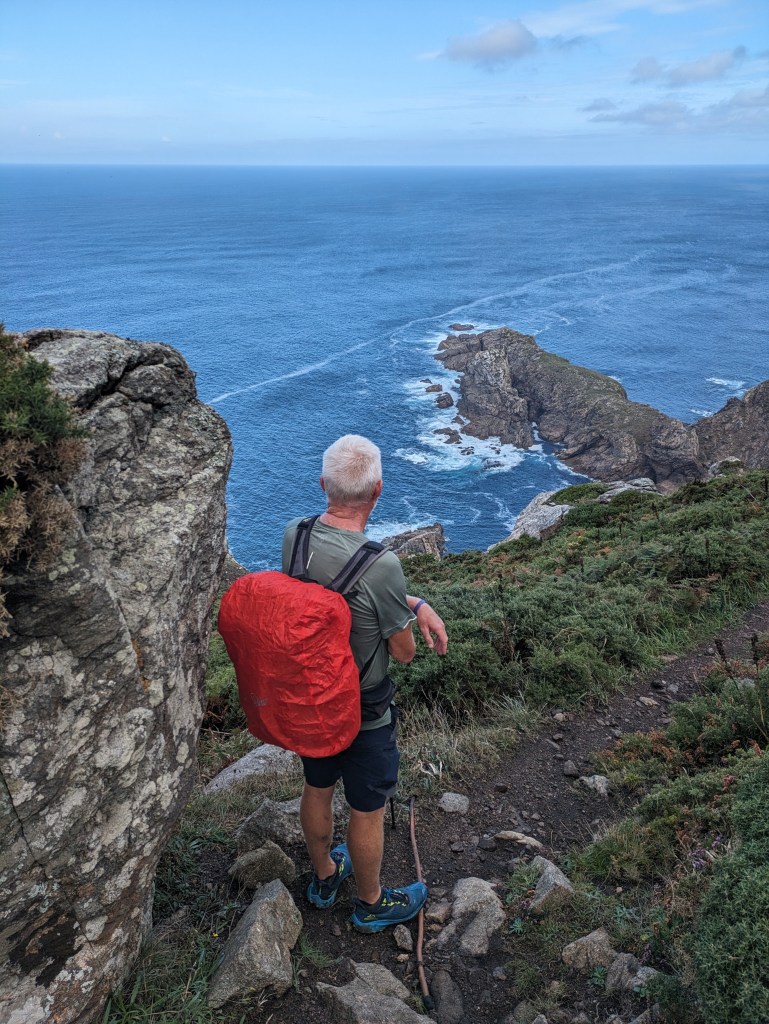
 Sometimes our Camino veered inland where we walked through woodland to the sound of birdsong, hiked by streams where old water mills were covered in moss and past high villages where stone houses looked abandoned surrounded by fields of withering corn and orchards of dripping fruit. But mainly our path hugged the coast faithfully, often just a narrow ribbon clinging to steep cliffs with dizzying drops. 

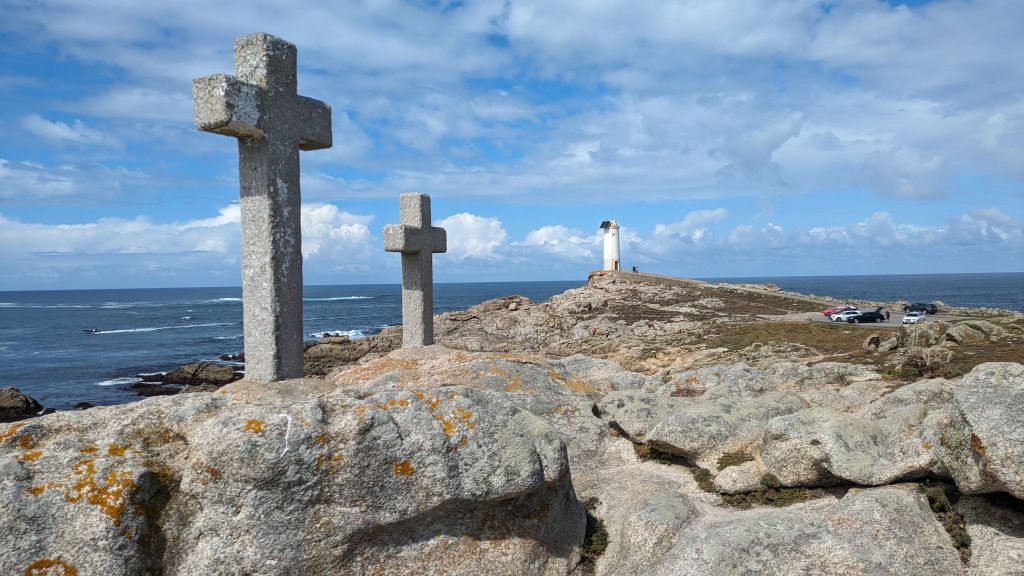
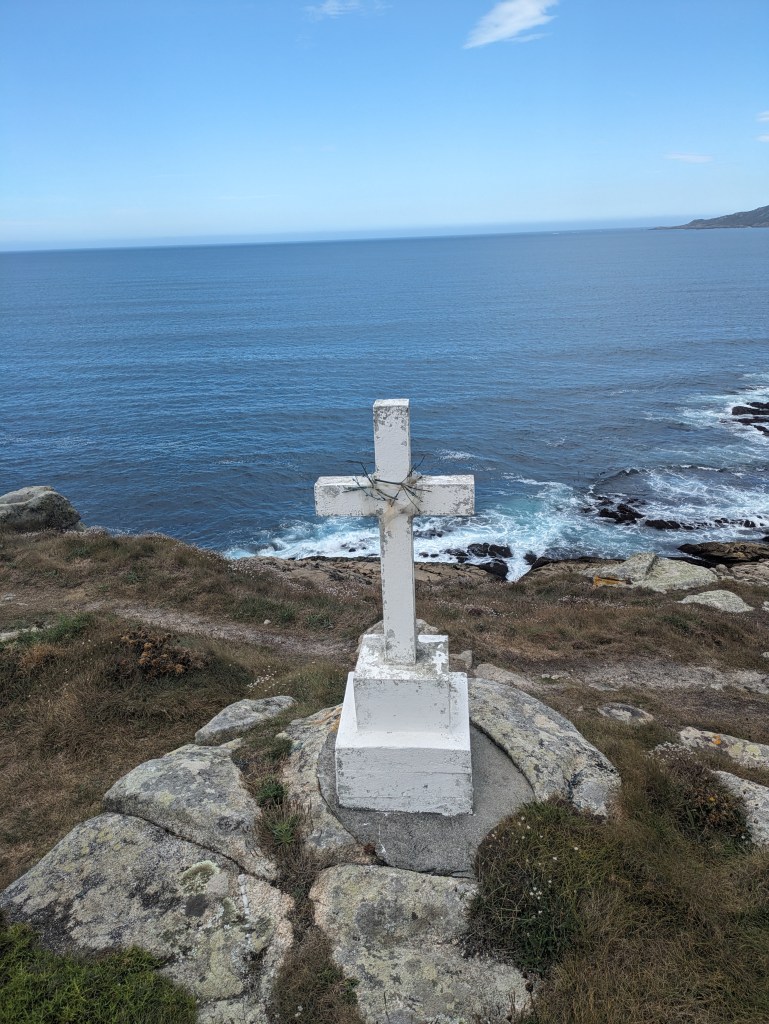
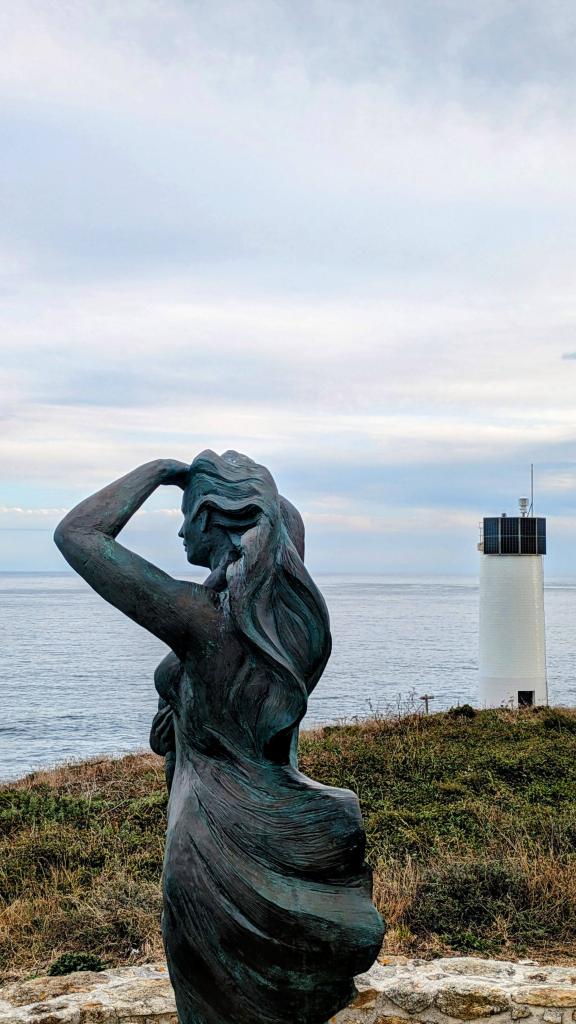
The Costa del Morte is not called the Death Coast for nothing. The coast was littered with stone crosses, bargains made with the heavens or erected as platitudes to the sea, or places to remember the dead. There were  tales of shipwrecks, drownings, smugglers and pirates. On a lonely headland,  the doomed victims of ill-fated ships were buried in a place called the English Graveyard.  A stunning sculpture near the Lake Lighthouse of a woman gazing out to sea, captured the anxiety and agony of waiting. An isolated church on a hilltop was a place where local women used to go in times of storm to pray for a change of wind to bring their men home. 

As we hiked further west, the coast became wilder and even more remote. On our fifth day,  after days of sunshine, the forecast was bad and didn’t disappoint. The cold blue-green of the sea, mesmerizing and dangerous, turned an ominous gray. We watched two surfers paddling on their boards out to churning waves that crashed on jagged rocks and marveled at their stupidity -so small and insignificant. Even the seagulls were sheltering from the elements, hunkering down on the beaches. The wind became ferocious,  the rain came at us sideways and we could barely stand upright but we got a tiny glimpse of what this coast might be like in bad weather and it was awe-inspiring.

After six days walking, we arrived in Muxia, a pretty little town with safe beaches, a lighthouse and a place of legends. It was here that the Virgin Mary arrived in a stone boat to encourage Saint James to continue in his work.  Large stones near the church were reputed  to be part of Mary’s boat and to have magical properties.The Barco festival was starting the following day so we decided to take a rest day and stay an extra night. Muxia  is on the Camino de Santiago so was busier than anywhere else we stayed. We discovered that Spanish festivals only get going around midnight and continue until at least 5am and nobody even thinks of eating until 10pm. Unfortunately, we couldn’t stay awake for much of the festivities🥳. Muxia was badly affected by The Prestige disaster in 2002, which leaked thousands of litres of crude oil into the sea all along the coast here.
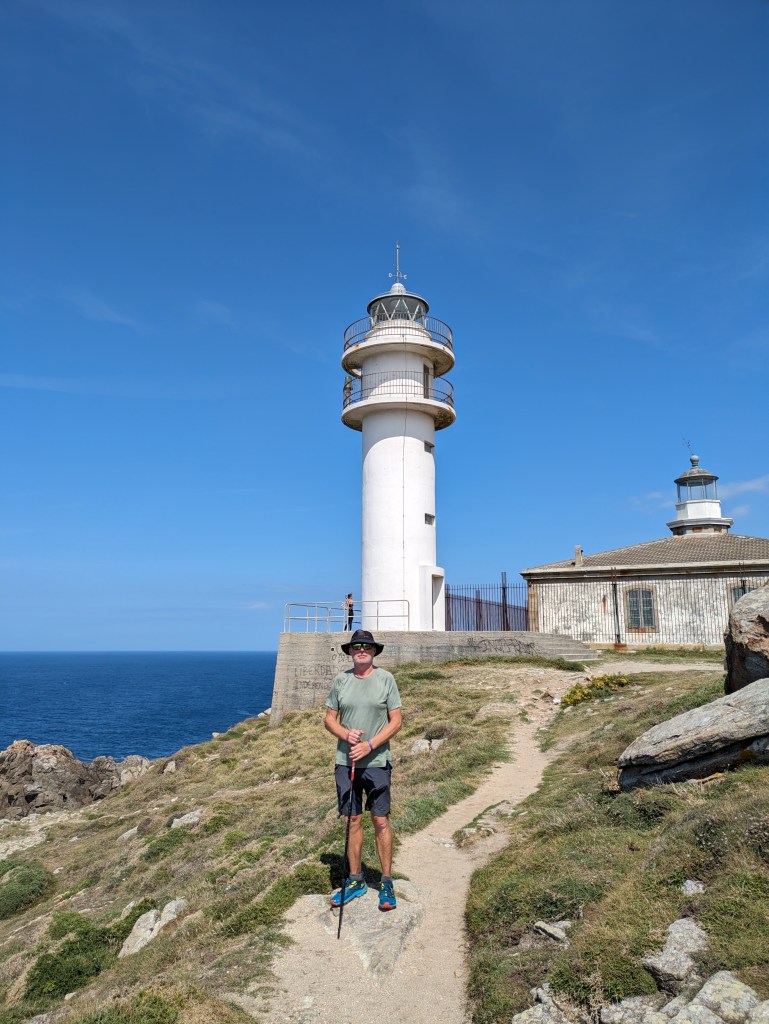
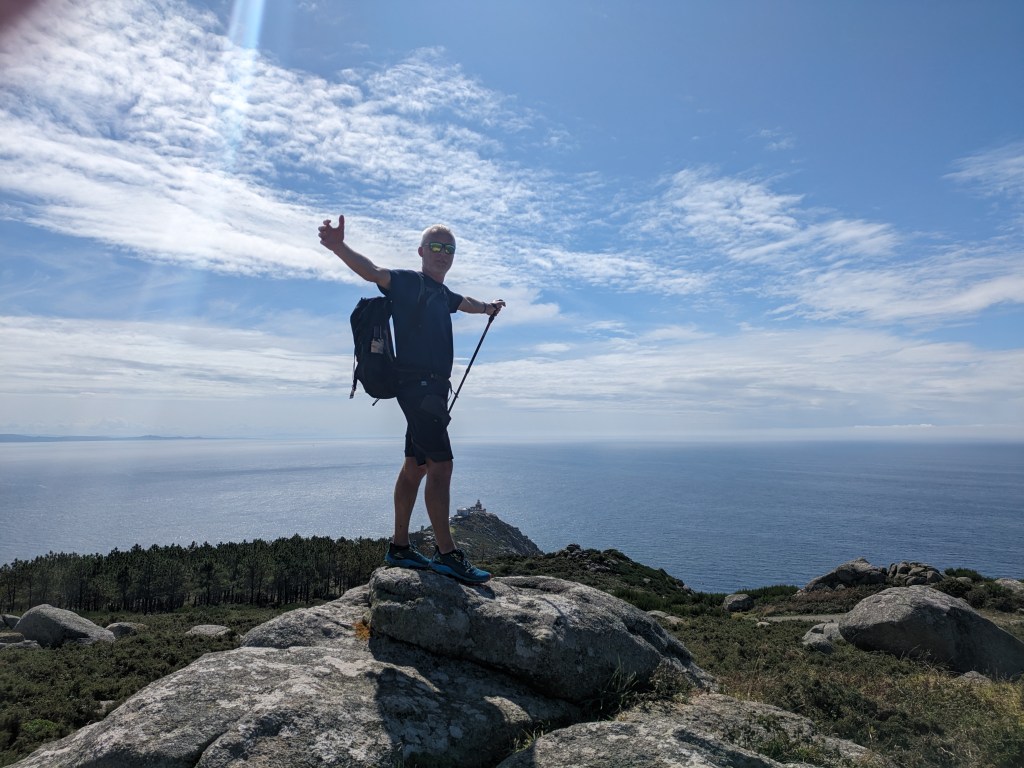
Although it hardly seemed possible, the scenery got even more spectacular as the days progressed. The penultimate day was the ‘queen of the mountain stage’ with steep climbs and stupendous views. We trekked to Tourinan Lighthouse, which was supposedly the most westerly point in Europe and got the last rays of sunlight in the Spring Equinox. On the eighth and final day, it almost felt as if we were in the landscape, part of it and not just looking at it, at one with the sea and the wind (or maybe that was just exhaustion or relief with our end goal within reach 🙏).

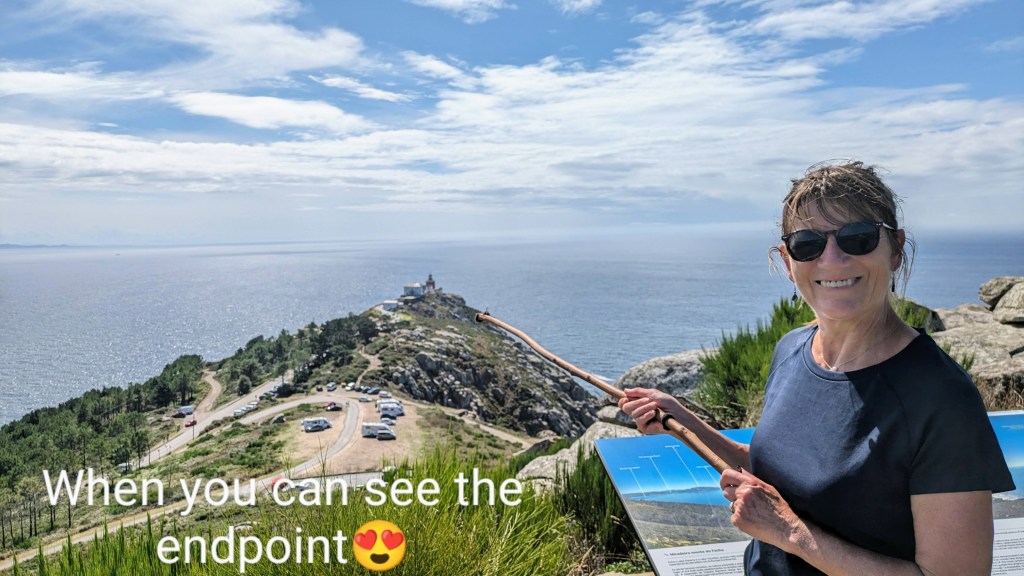
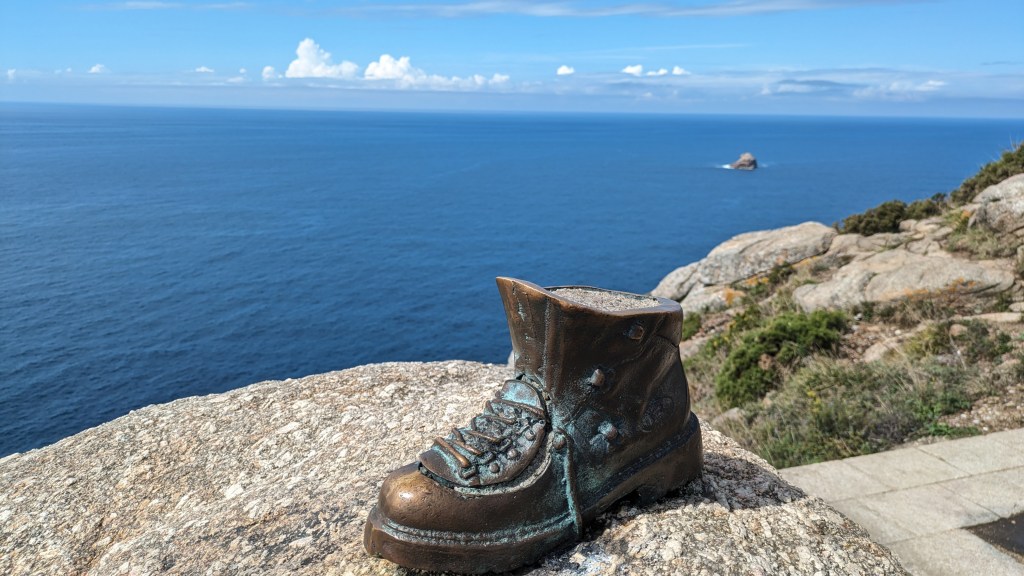
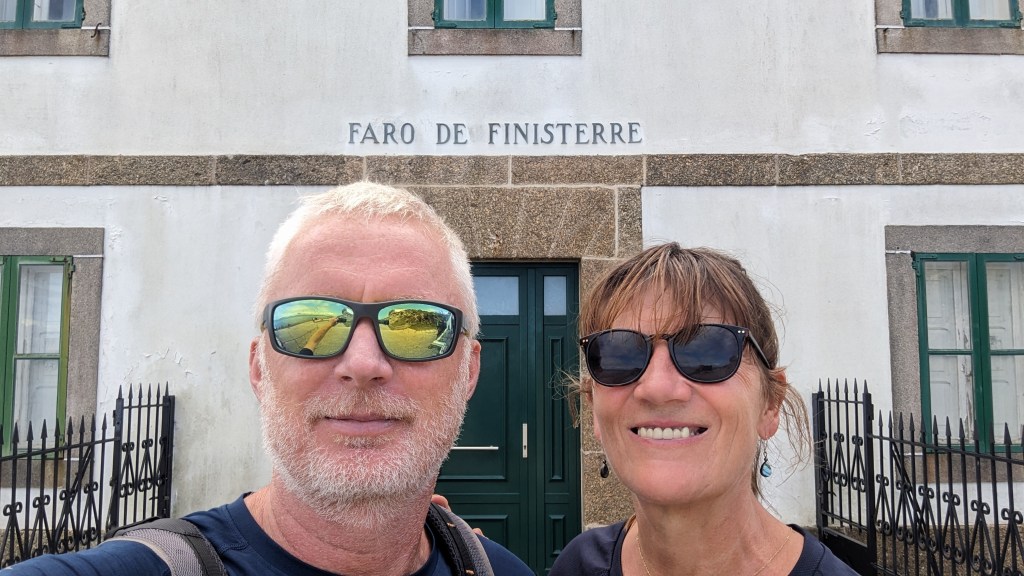
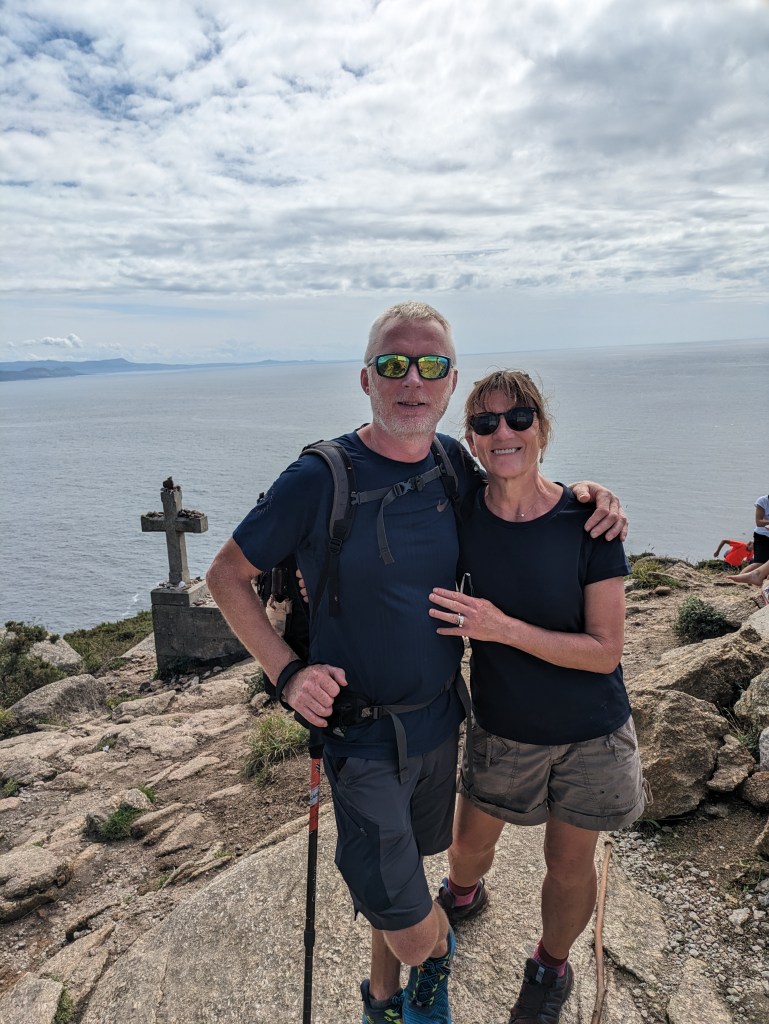
Fisterre, the end of the known world for the Romans, was a strange little town, full of weathered people with walking sticks, limps and flip flops. It was the endpoint for pilgrims on the Camino de Santiago as well so it didn’t have to try very hard to attract visitors. But the landscape around the Finisterre lighthouse, a couple of kilometers hike outside the town, was worth the entire Camino, a fitting place to finish. This was a wild landscape of mysticism, of drowned cities and submerged mountains, of altars to the sun and timeless rituals with tales of sterile couple becoming fertile after sleeping on one of the large rocks on the hill overlooking the sea and healing miracles.

So we made it, 200kms in eight stages. We carried out own packs and booked our accommodation as we went along, usually walking from stage to stage but getting taxis to our accommodation if we couldn’t find anything near the end stage.  The Camino del Faros was probably the most spectacular hike that we have ever done.  It was quite challenging at times (more than we had anticipated but we hadn’t done a lot of training). Each day on its own would not have been difficult but the cumulative nature of hiking relatively long distances day after day exerted a toll.  The bigger the challenge, the greater the reward 🌞 and  the rewards were huge. There were no stamps to collect in a pilgrimage passport, nothing to ‘prove’ that we had trekked along the way. The benefits of this Camino were all internal – solitude,  genuine communing with nature and an appreciation and respect  for the power of the sea -to mould and erode, to give bounty and to take it away. If you like the great outdoors, like to go a little off the beaten track, then this is the hike for you.

The end of the world 🌍
The End – Faro de Finisterre

Link below to a fabulous website with lots of details.

Camino del Faro- The Lighthouse Way

Moving in

It was time to move inland – it was already August 27 – and make our way to the other side of Spain to Catalonia where we had rented a holiday house with Ciaran and Christina, Caoimhin’s brother and wife and Louise, a South African friend of theirs for most of September.

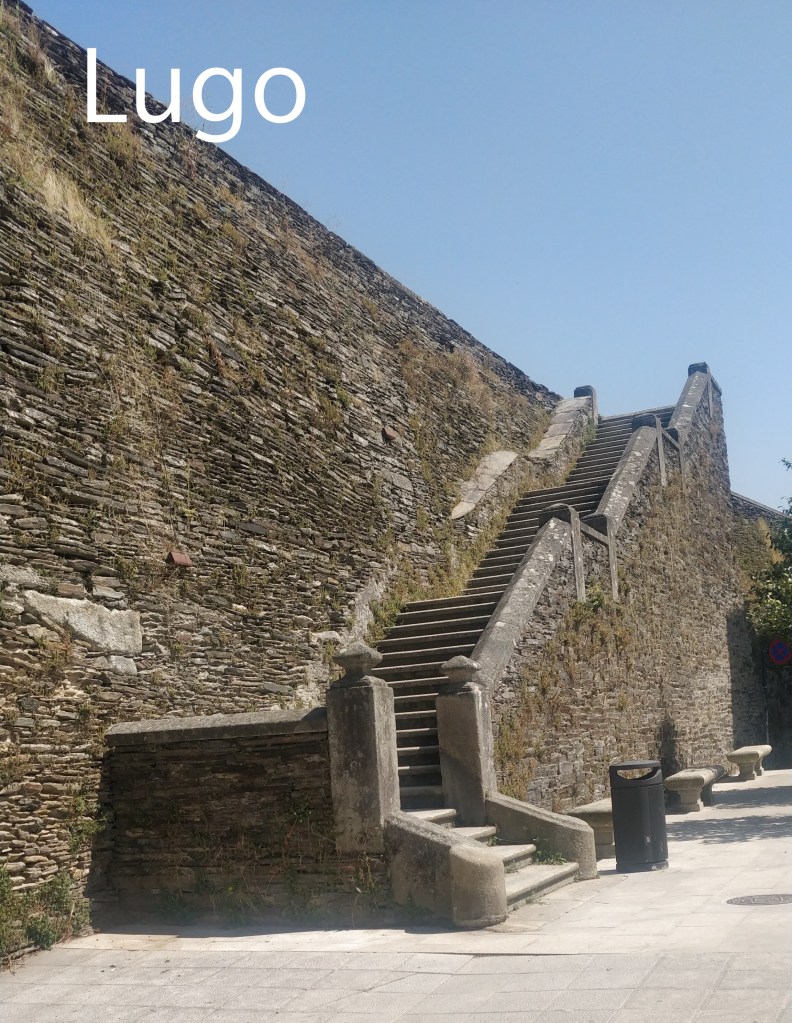
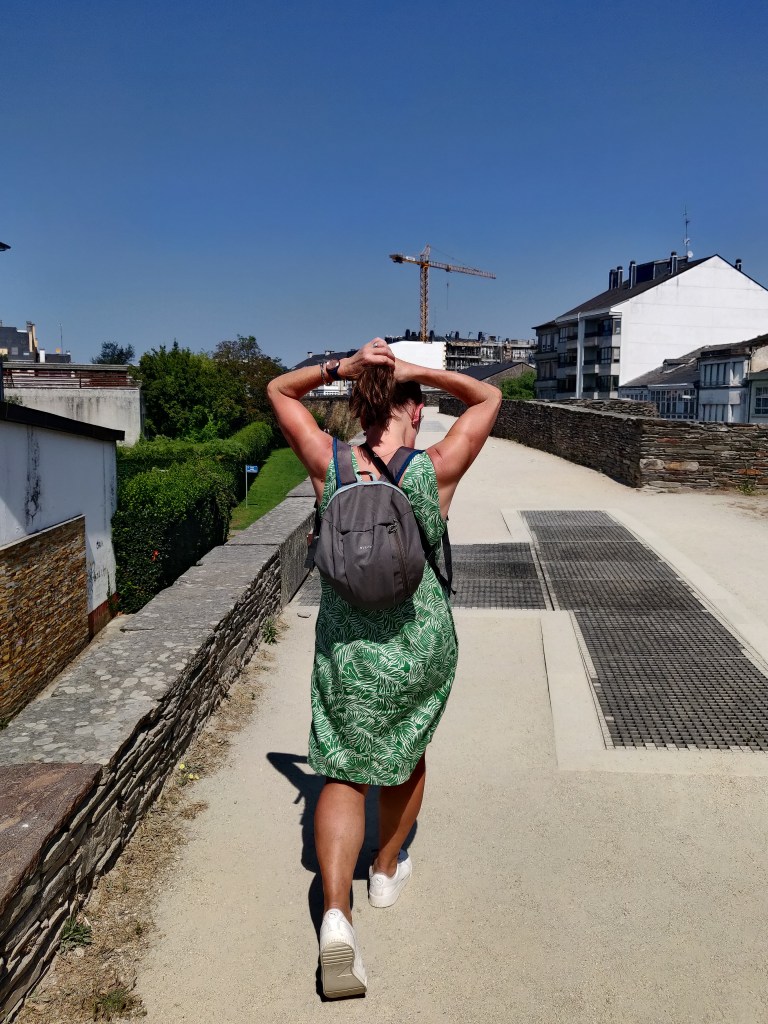
The morning in Galicia was grey and hazy – sea and sky were one – unlike the vivid blues and greens that we were used to and the temperature was a cool (almost goose bumpy) 18 degrees. We packed up the tent and decided to head inland. We stopped in Lugo to look at the impressive Roman walls. We climbed the steps and walked the 2 kms on top of the walls. It would have been a lovely walk at dusk or early morning but at 1 pm in 33 degrees, it was a walk for mad dogs only…..

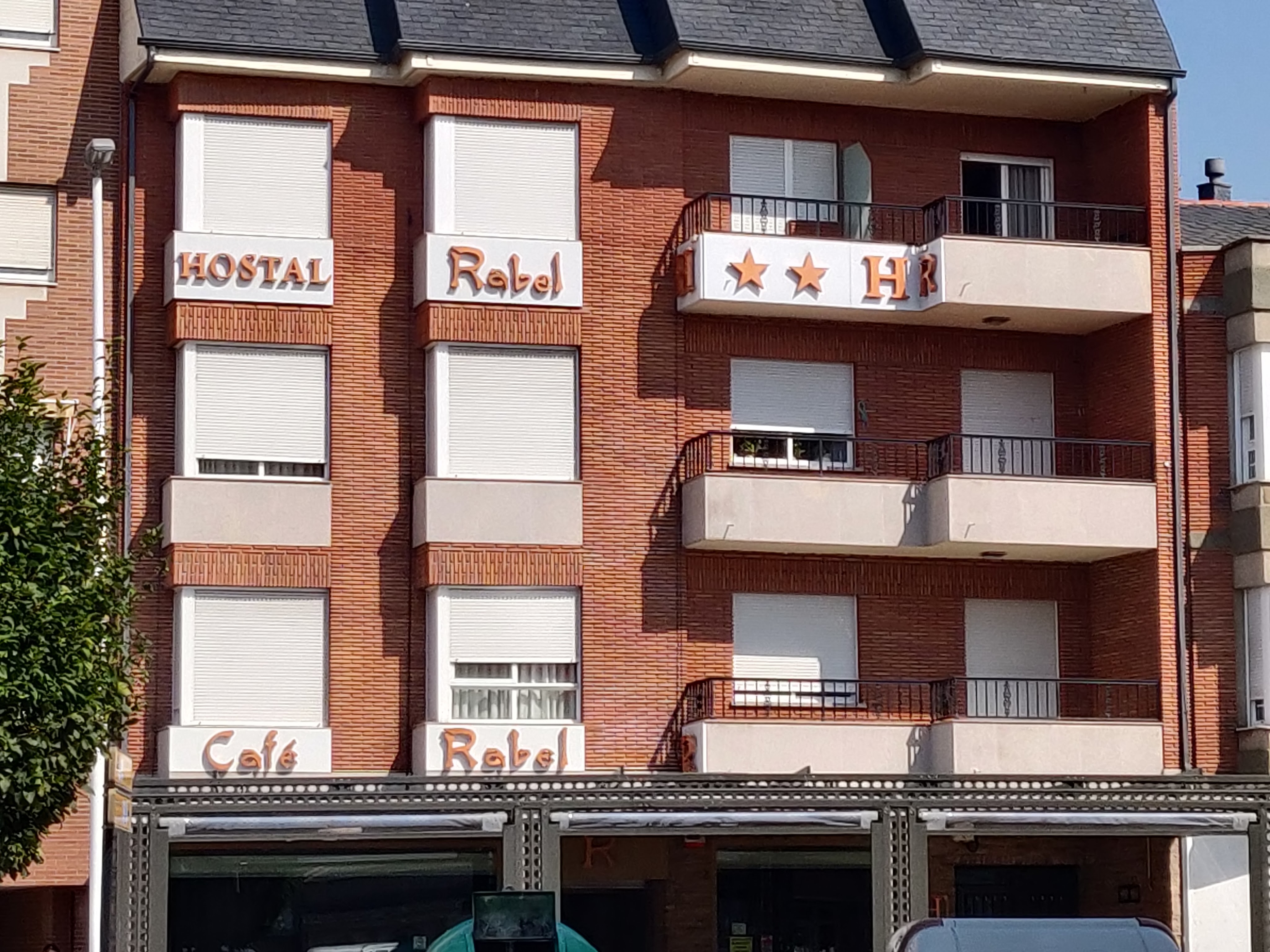
Afterwards while we were hydrating indoors in an air con café in the old town with good WiFi, we decided to give the camping a break. We booked a hostal there and then in Ponteferrada, a town about an hour and a bit away. (Hostals are different to hostels, they are cheap hotels usually two star).It was €50 for an en-suite room including breakfast and free parking so we weren’t sure what to expect. Hostal Rabel didn’t look very promising from the street and was over a little cafe/bar. But we were very pleasantly surprised – it was spotlessly clean inside with thick shutter blinds, crisp white sheets, bedside lamps (a luxury after camping) and wooden floors. It was bliss -cool and quiet with a fantastic shower and oodles of hot water and even complimentary toiletries. It was only a short walk from the old town. and there was even a good vegan restaurant (La Marmita Verde) up the street – we were the only customers in this meat obsessed country.

Hostal Rabel, Ponteferrada

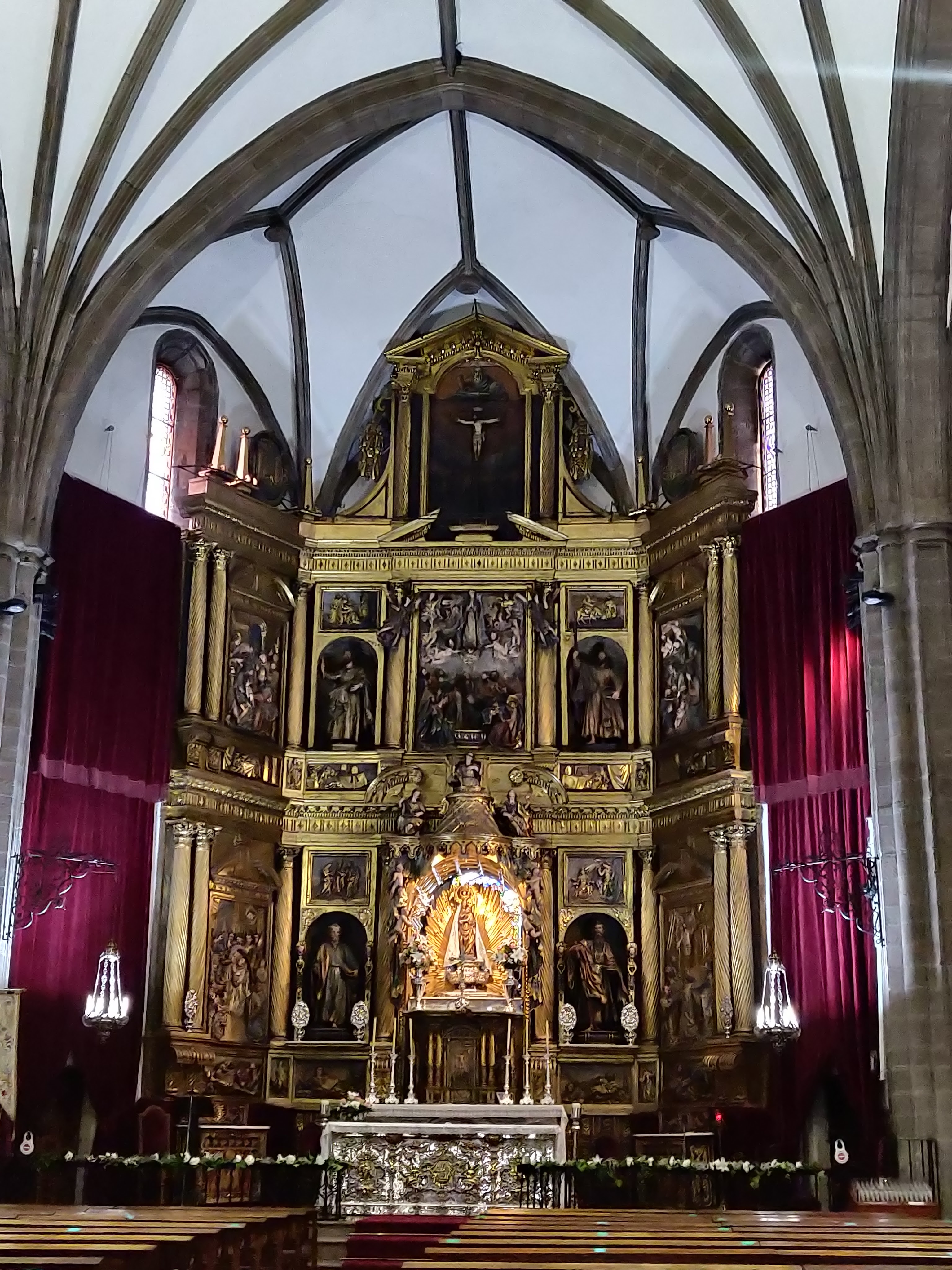
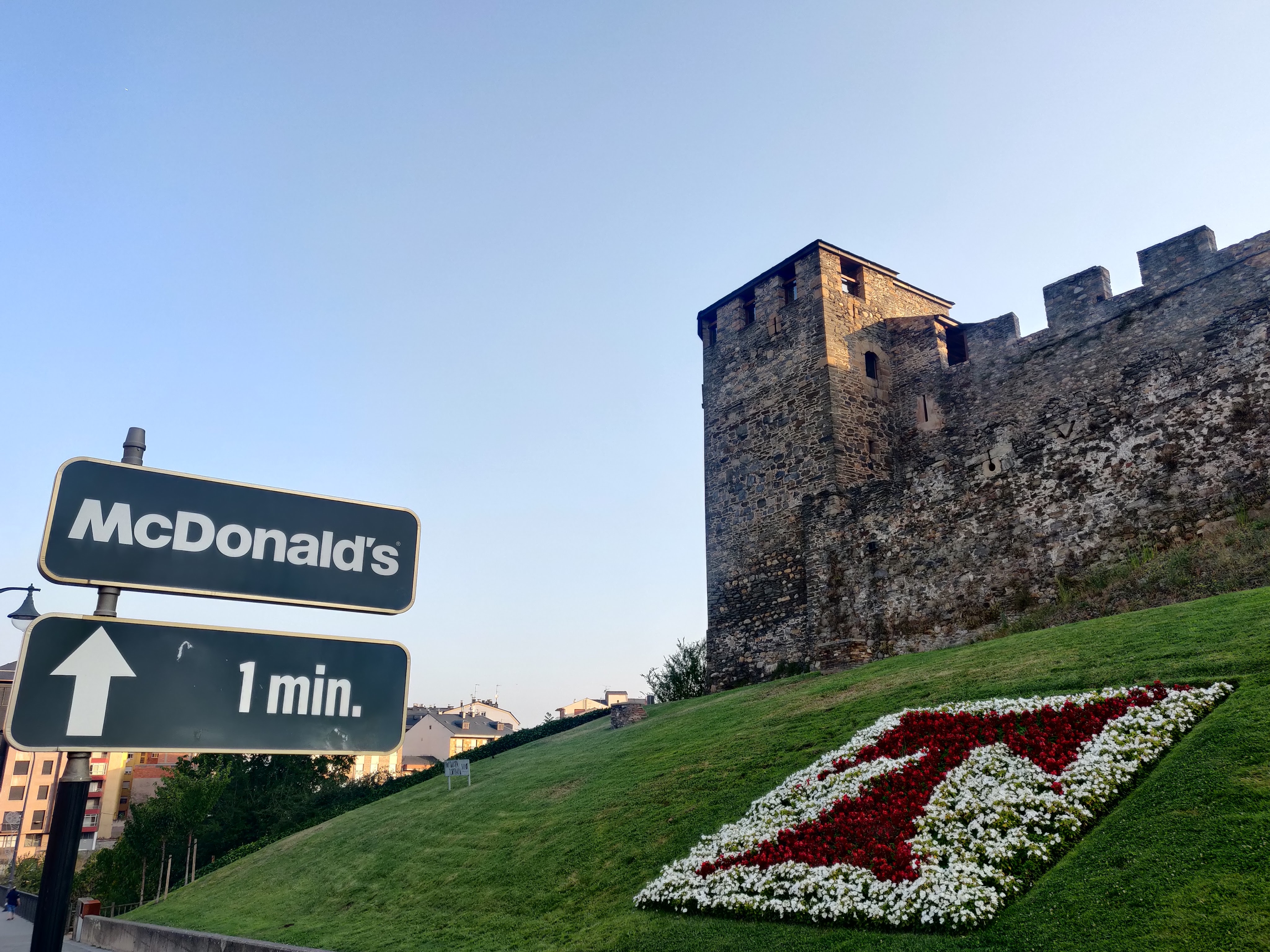
Ponteferrada is a medium sized town in the province of Leon surrounded by mountains and was a major stop for centuries on the French Camino. The old quarter of the town sits below a very imposing castle built by the Knights Templar near the iron bridge crossing the river Sil to protect passing pilgrims on their way to Santiago de Compostela. There were also several churches in the old town. We popped into the Basilica de la Encina where Gregorian chant music was being piped and were awed by the beauty of the building, the ornateness of the decor and the music. The building exuded power. It was actually spine tingling – the pilgrims who walked this route for salvation must have felt the urge to prostate themselves on the ground.

This image has an empty alt attribute; its file name is img_20210828_091304.jpg
Bascilica de la Encina, Pontferrada
The Castle of the Knights Templar, Ponteferrada (and the big ‘M’ – One chain to another))

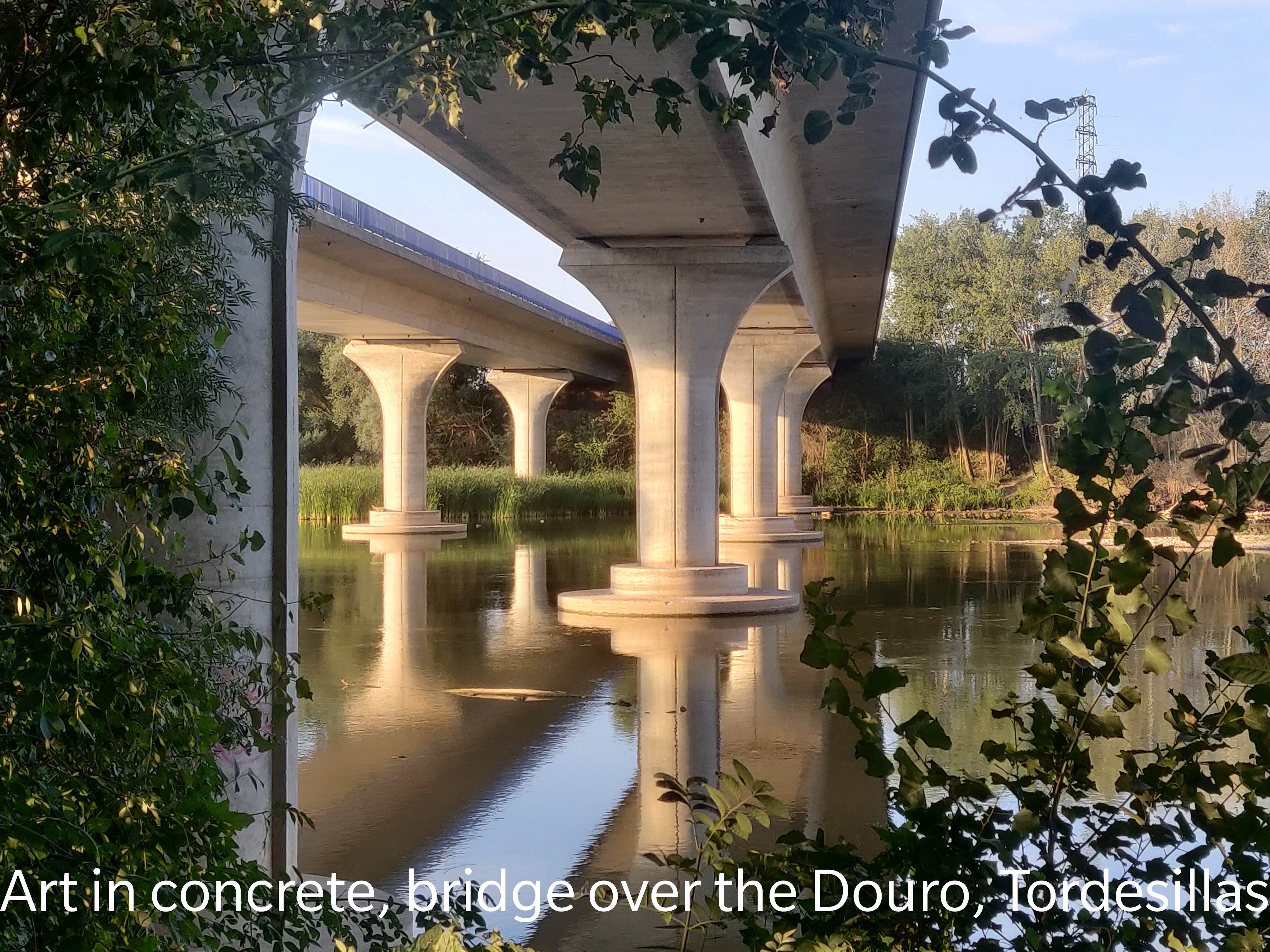
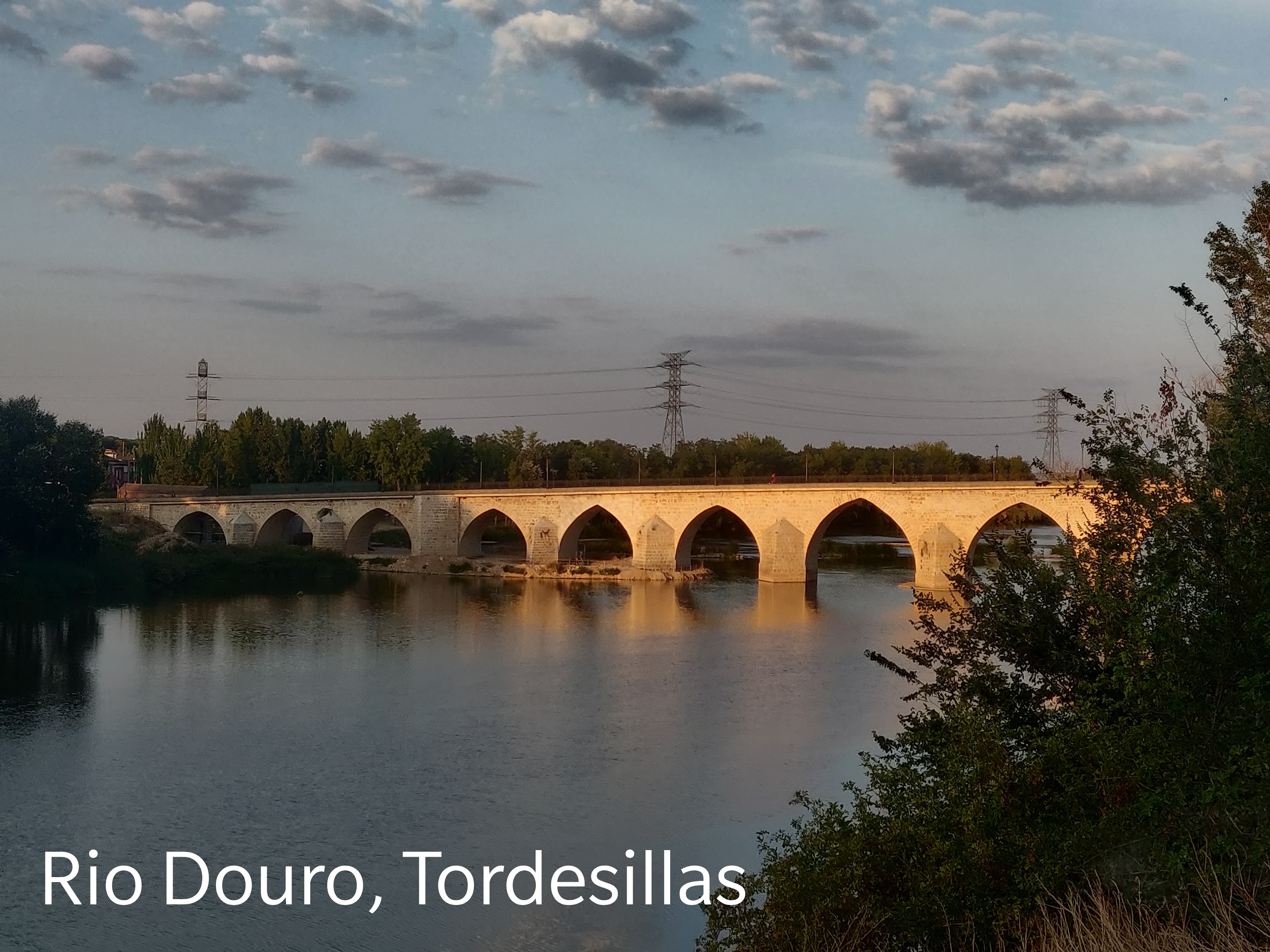
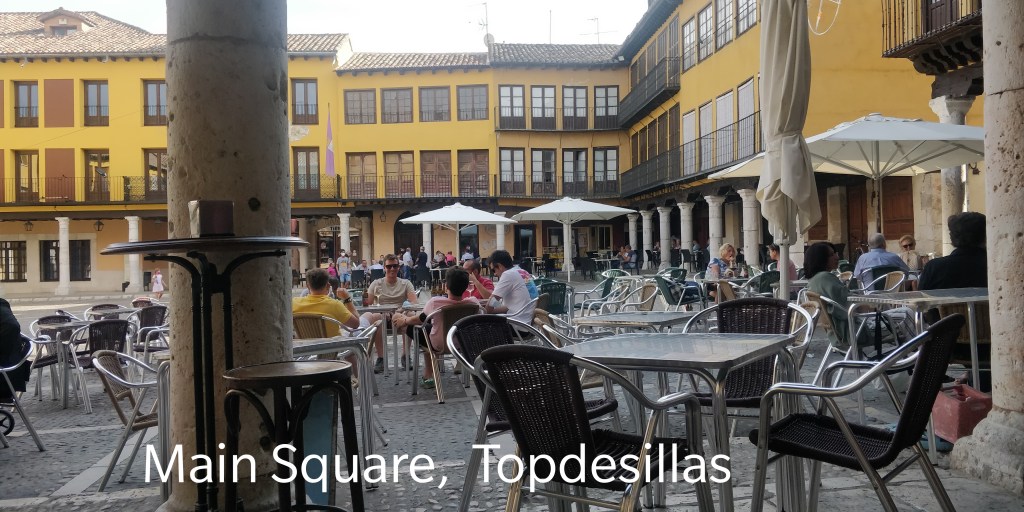
After our very pleasant stop in Ponteferrada, we headed southeast and drove for a couple of hours over dry flat landscape under a baking sun until we got to Tordesillas, a little town with a campsite that had good reviews online. The town didn’t look like much, the camping cost almost as much as our stay in the hostal the night before (€44)and had lots of rules, it was hot and dusty and as we pitched our tent, sweating in the dirt, we were regretting our decision to go there. But that changed when we crossed the bridge over the Douro and climbed the cobble streets of the old town. We had no hint of the treasures waiting up the hill – convents, monasteries, a palace going back to the twelfth century and a beautiful town square. Heat radiated from the stone walls but there was also a cooling breeze and birdsong, hundreds of doves and pigeons flying and an evening wedding in one of the old churches. We people-watched under the vaulted arches of the Square and drank cold beer in the shade. It was like walking through history and what history here – google the Treaty of Tordesillas where the American continent (most yet to be discovered at the time) was carved up between Portugal and Castille to avoid war on the Iberian Peninsula.. And the story of Joan the Mad, daughter of Isabel and Ferdinand who was banished here….who wasn’t ‘mad’ at all.

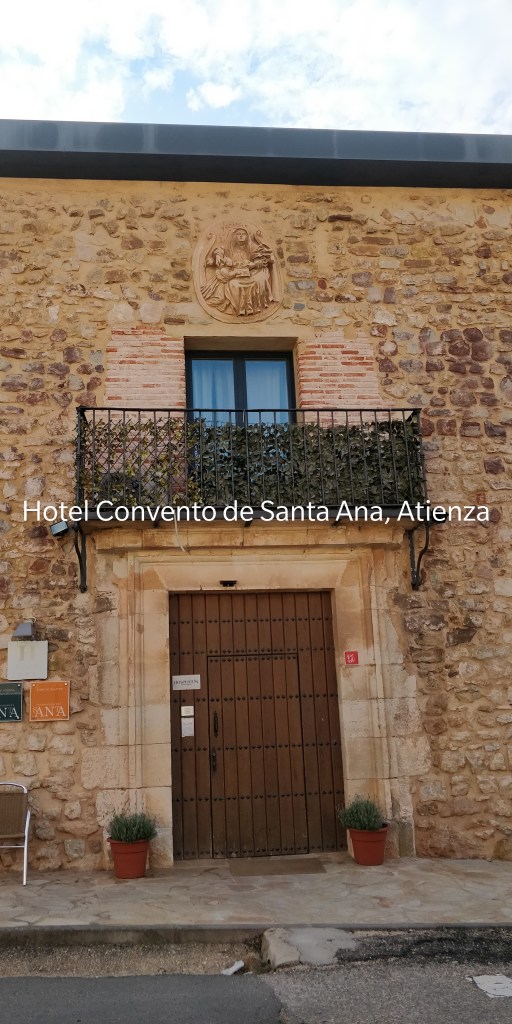
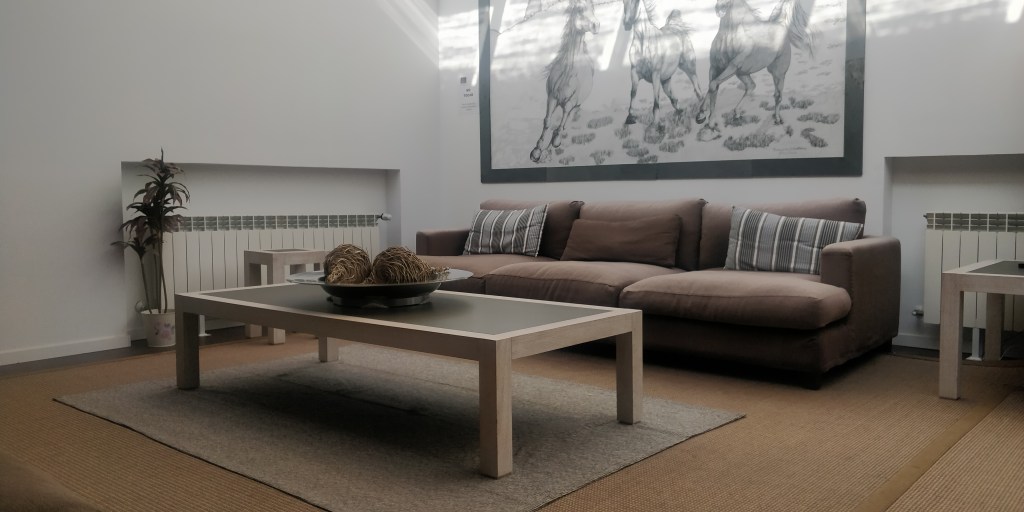
After a morning walk along the Douro under the shade of poplar trees, we drove off still heading east along the fertile Douro valley with its vineyards in the direction of Siguenza where we had booked a parador a few days previously for Monday night. It was now Sunday and we weren’t sure where we would break the journey or if we would camp overnight. We kept driving until we arrived in Atienza, a small village in Guadalajara with a ruined castle on the hilltop overlooking the village and knocked on the stout wooden door of Hotel Convento Santo Ana, a door that looked like it had admitted travelers for centuries. There were rooms available for €49 a night and we were stunned both by the price and by the beauty of the interior design, all muted colours with large sofas and lamps. Incredible value in a beautiful place. We wandered up to the village square where at 7.30 pm, we are too early for dinner anywhere ( a common problem as most restaurants don’t open until 9 pm) and make do with tapas, olives, bread, tortilla, crisps and wine.

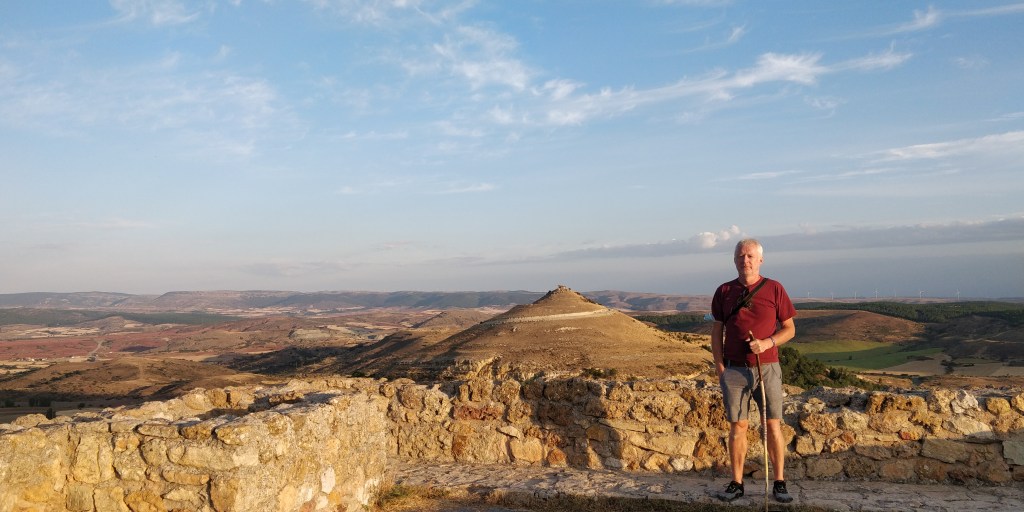
Early the following morning, the smell of baking bread from the village bakery followed us up the hill to the ruins of the castle on the rock, once a very important seat of power and the interface between Christians and Muslims, frequently changing hands between the two. Atienza was part of the Ruta de El Cid (and even Don Quixote)but is now a mere hamlet of a couple of hundred people

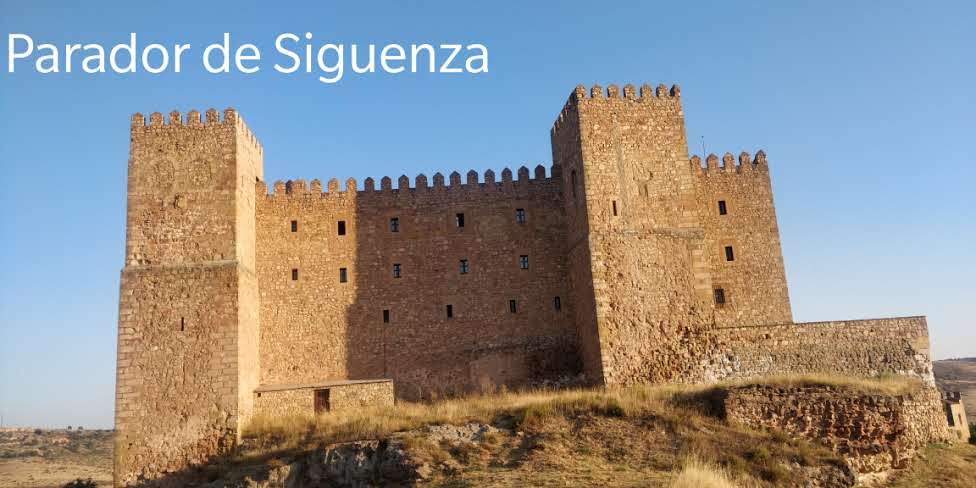
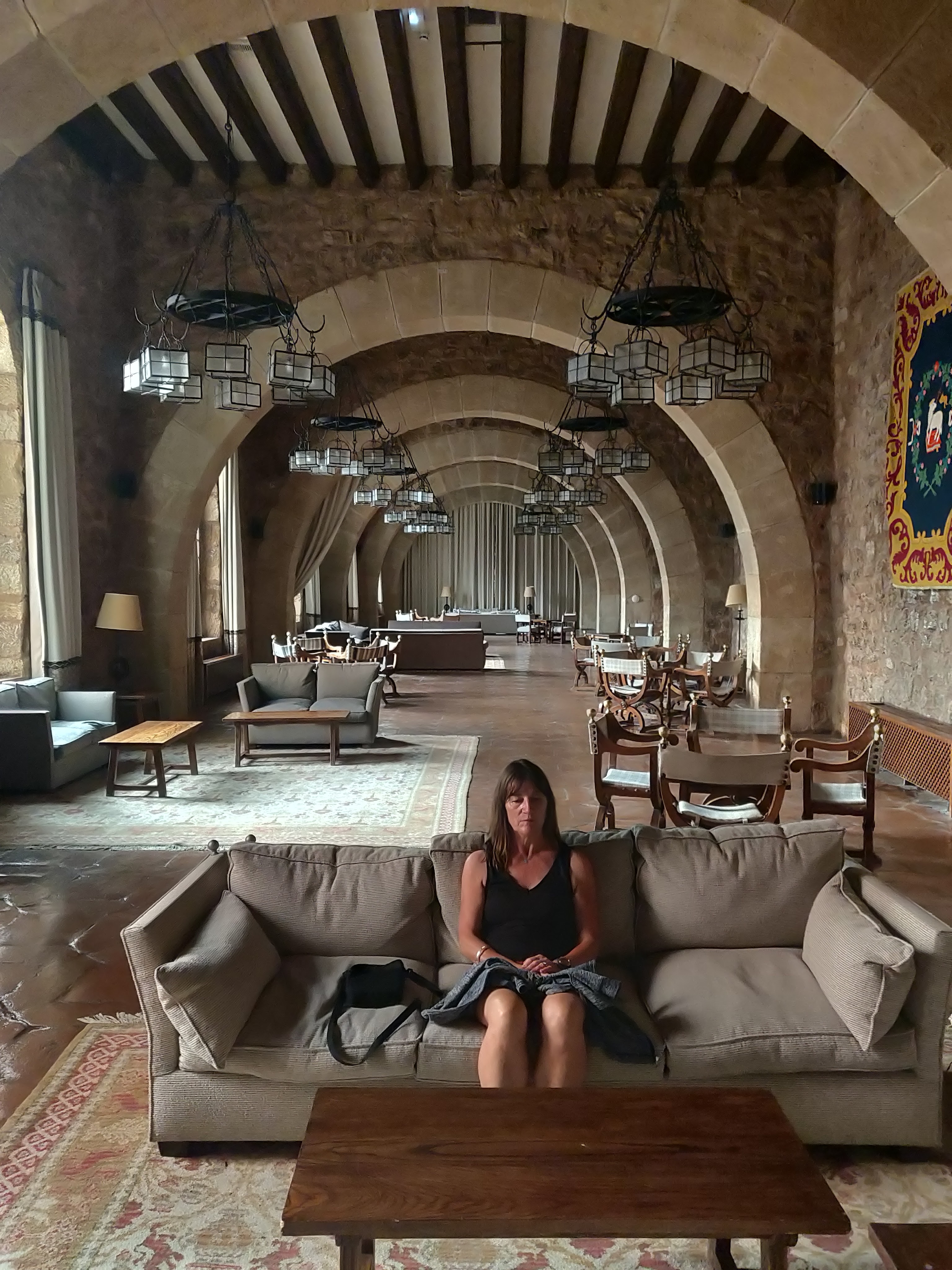
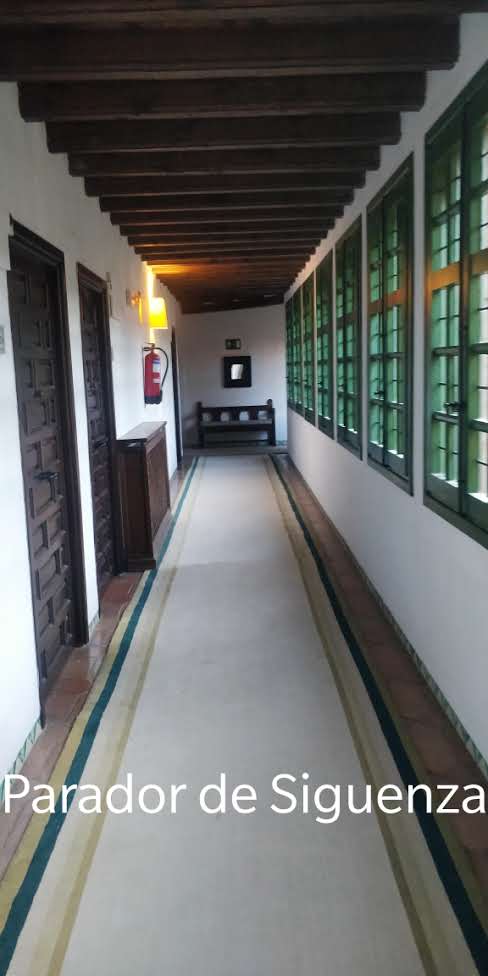
Then it was onward to Siguenza and luxury at the Parador of Siguenza, the Castle of the Bishops, a medieval castle with foundations dating back to the fifth century. Paradores are a group of historical buildings that are state owned and run as upmarket hotels at affordable prices. How could we resist staying in a castle for €140 for the night including a fabulous buffet breakfast? Siguenza is a beautiful little town with a stunning cathedral, narrow cobbled streets where the walls store up the heat of the day and release it in the balmy evening, where the barber was an ex-matador and the walls of his shop were covered with triumphant photos of himself in his heyday and the TV was tuned to some bullfighting event. But he did an excellent job of cutting Caoimhin’s hair. As we creep down the staircase for an early morning walk, the following day we notice lots of birds flying past a window at the end of one of the long corridors. We investigated and opened the window to see thousands of little swallows clinging to the castle walls like leaves and then flying off and landing again. It was a truly remarkable sight.

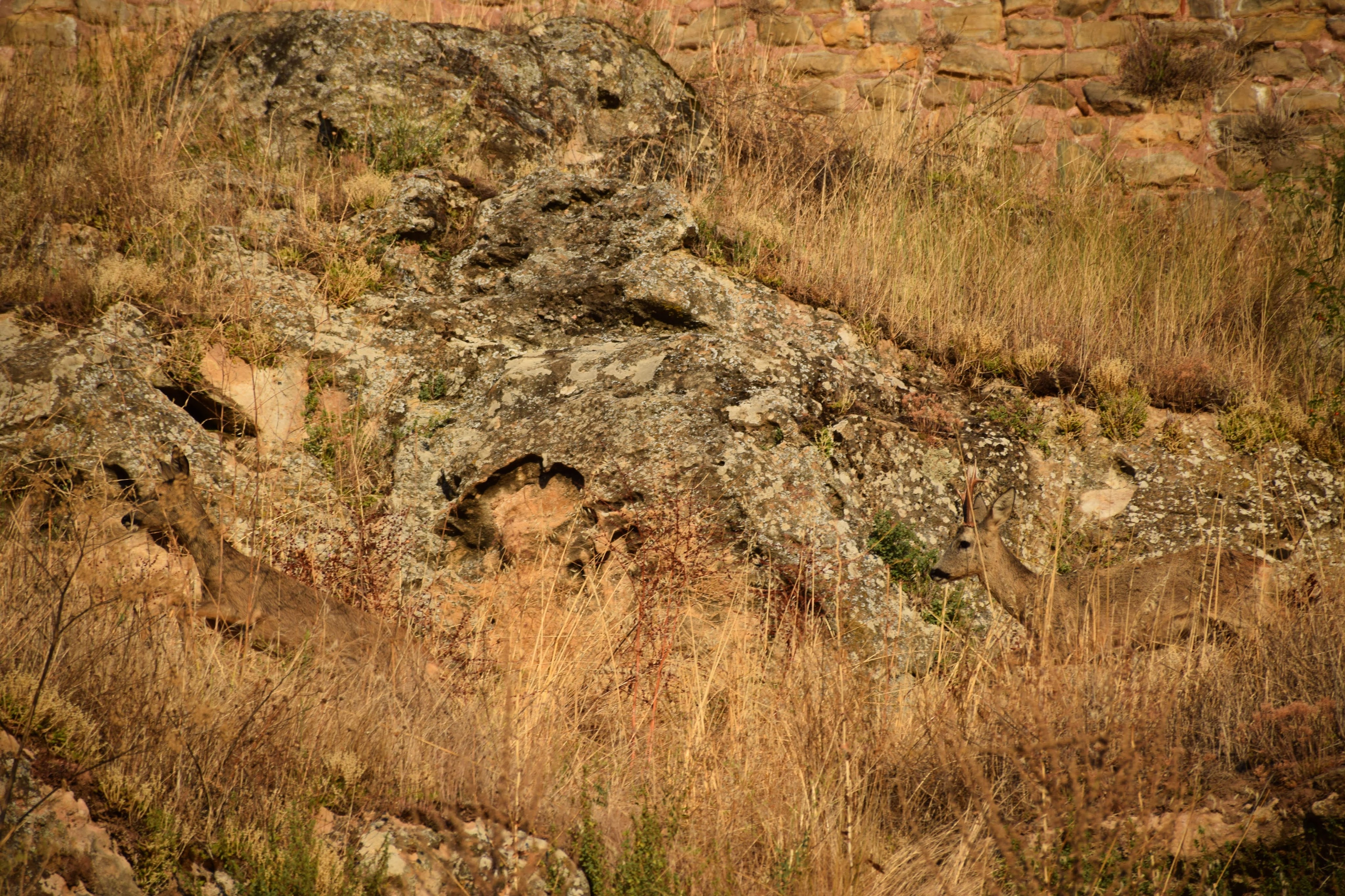
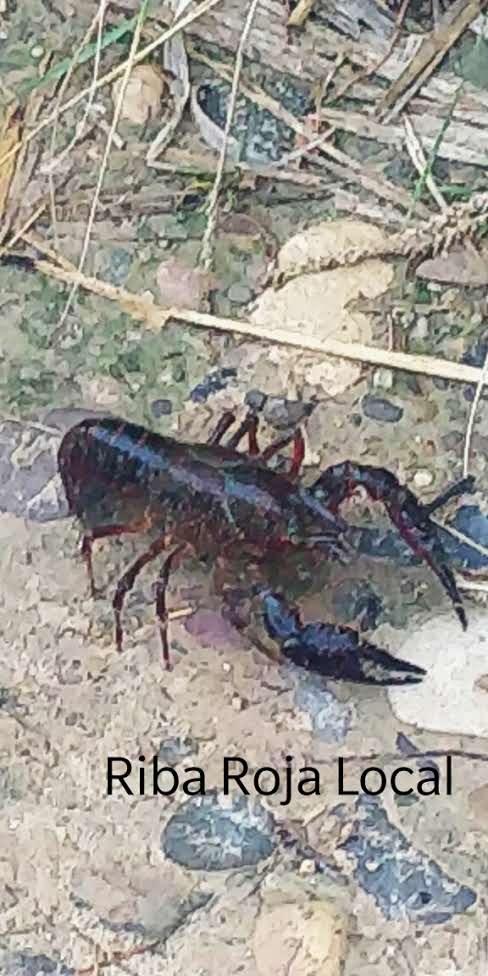
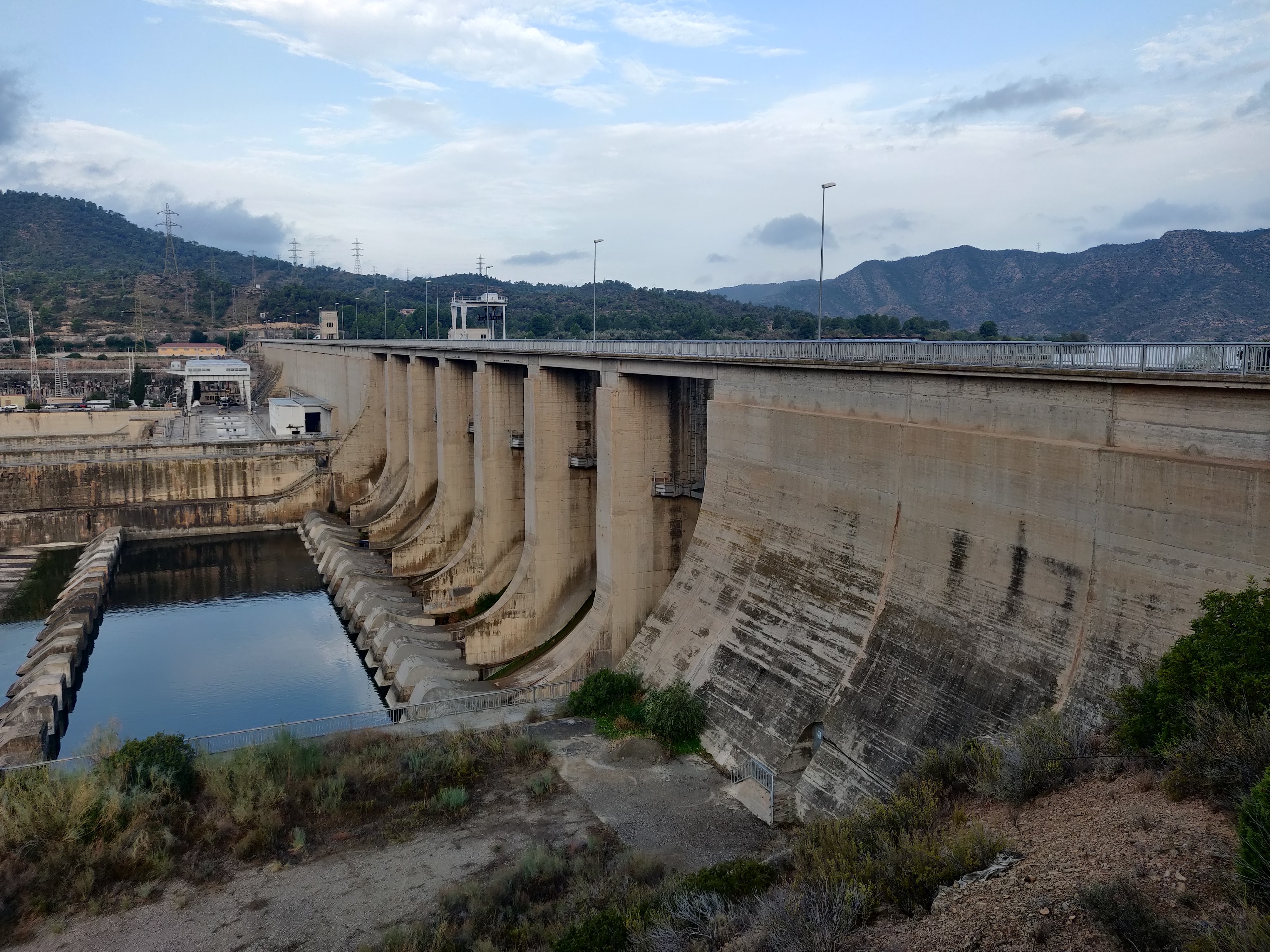
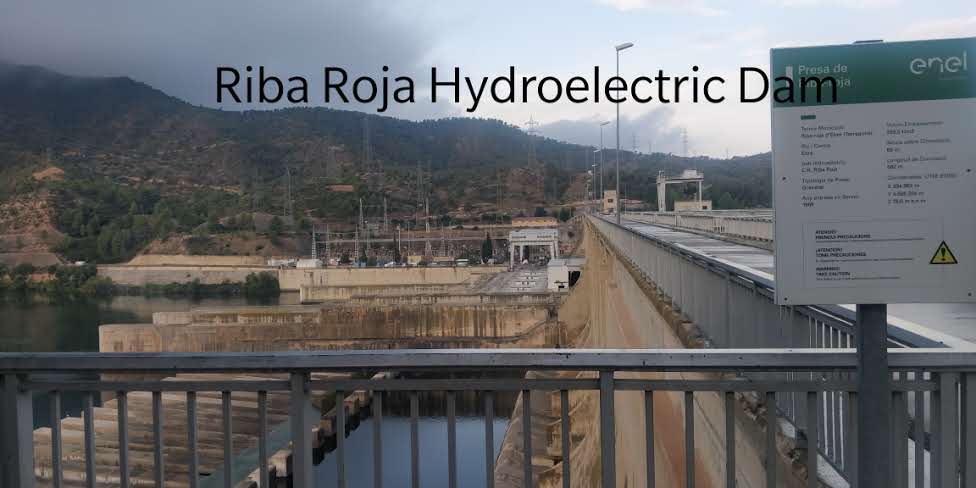
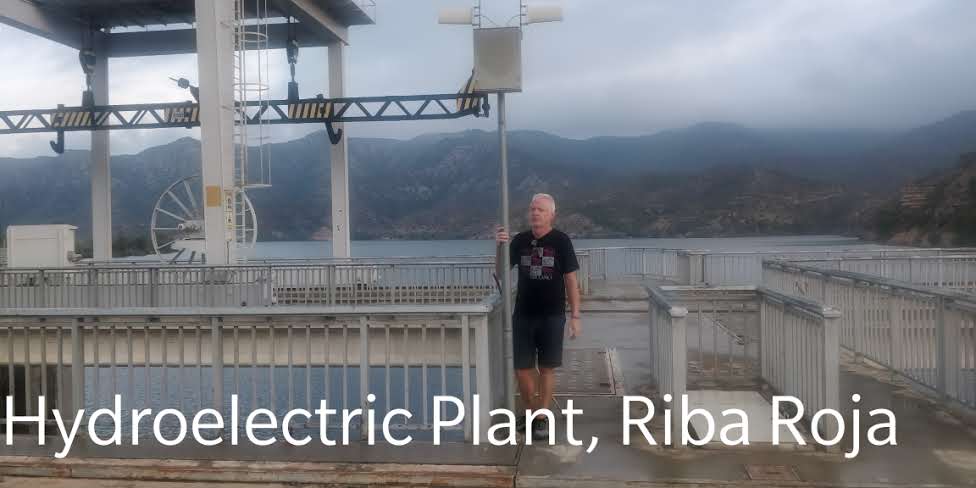
After the luxury of the parador, we come down to earth with a bang. A deer rant out in front of he car and we missed him by a hair’s breath. We had seen some deer in the long pale grasses beneath the castle walls but this was a closer encounter than we wanted. The amount of truck traffic after Zaragoza is incredible – trucks outnumber cars at least ten to one. We cross the border into Catalonia and camp at the Riba Roja campsite which has a disheveled air, dusty and wilted by the heat and with lots of flies. But there were no rules here about where to park or pitch your tent or wash your dishes which is refreshing. It was on the banks of a reservoir made by the impressive dam on the river Ebro for the Riba Roja hydroelectric plant. But there were also thunderstorm warnings and the access road to the campsite was along a narrow road cut into high cliffs which made us (I mean me!) a bit nervous. The pitter- patter of rain on the tent in the early morning had us scrambling to pack up. But the rain which was very light stopped almost as soon as it began so we walked up the road to have a look at the dam and the hydroelectric plant and heading to the Costa Duarada.

Travelling across Spain through the interior has been a revelation – we picked our stopovers at random and without research and could easily have stayed in different places but we were completely awed by the living history, beauty of the old towns and the quality of the accommodation. We traveled all the way on non-toll roads and thankfully no car issues to report!!

Can you see it? There’s a deer or two in this photo!! Great camouflage

Moving in