Japan in a Van

‘Wild’ Camping in Japan

Japan is a country of surprises. We are enthralled by its natural beauty, the tree-clad mountains and the numerous Buddhist temples and Shinto shrines nestling among cedar trees above swirling clouds.

On a much more practical level, we are surprised by the impressive number of public toilets. This abundance of toilets is great for us because our ‘no frills’ camper does not come equipped with one.  They are everywhere – in parks and beaches, by the roadside and in most of the ubiquitous, convenience stores (like 7Elevens and Lawsons.). All these toilets are free, open 24/7 and  spotlessly clean.  Many have  a perplexing control panel to the side of the toilet bowl which is used to heat the toilet seat, tilt the angle of the seat, adjust the pressure of water to wash your bum and…..even simulate the sound of a flushing toilet for ‘privacy’ to camouflage  any embarrassing  noises🙃.

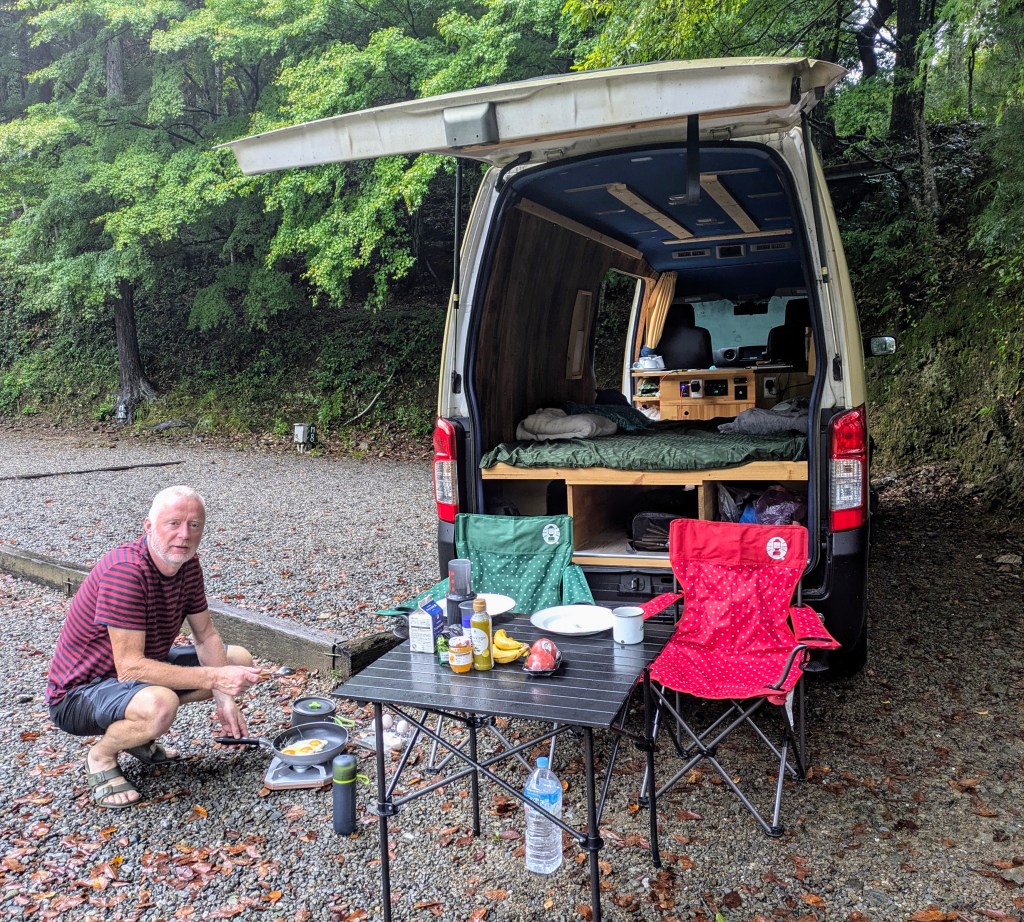
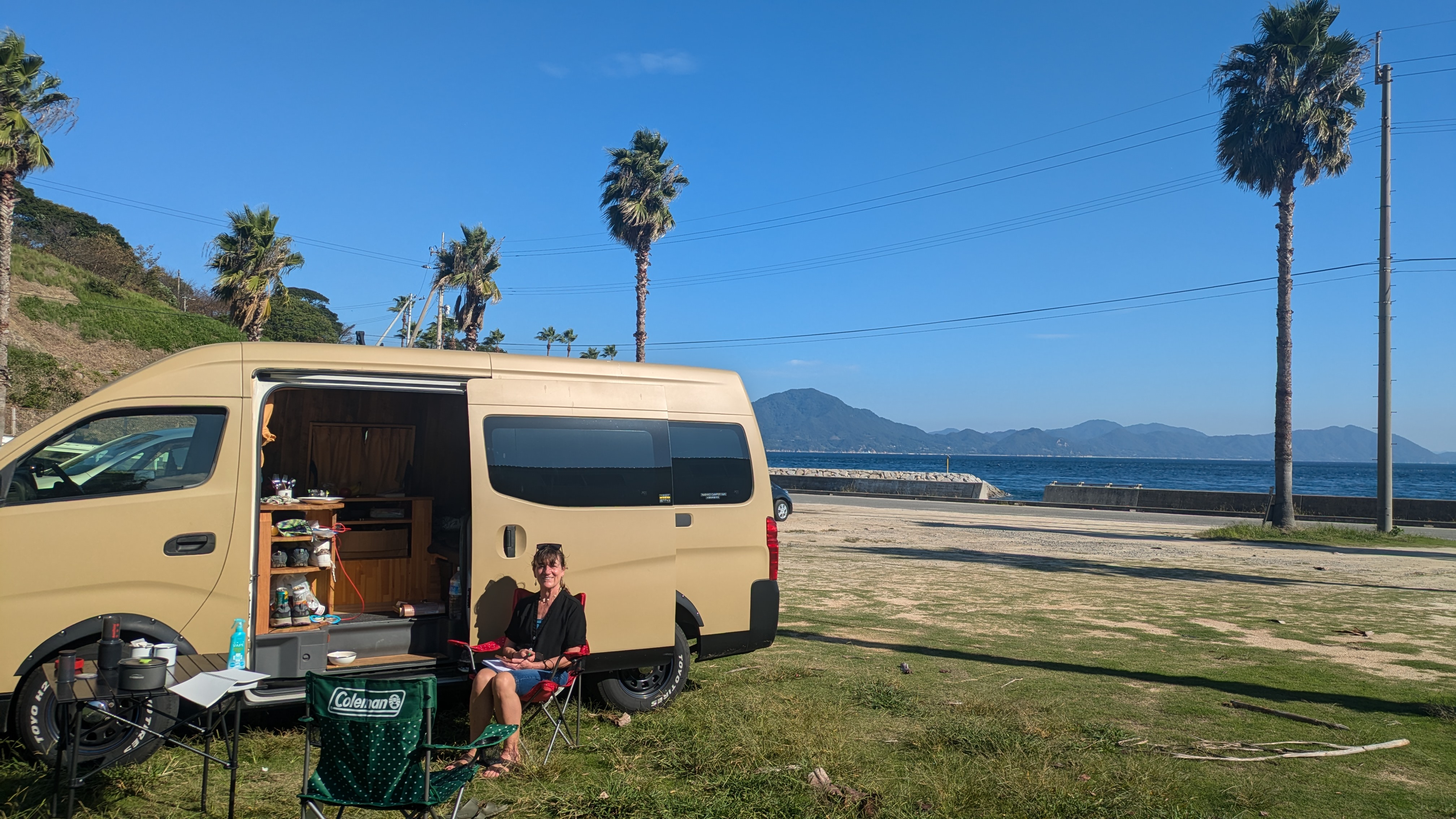
 Travelling around Japan in a camper van  is  surprisingly easy with road signs in both English and Japanese and  plentiful parking areas.  There are three main types of places to stay in a van overnight.  The first is paid campsites which have showers, toilets, laundry facilities,  plug -in electricity points and trash disposal.  Most of these also have bungalows for rent if you don’t have a tent or a van ( about €25 a night for two people in a tent or camper van)  The second is Michi-No-Eki which are free  carparks with access to toilets and usually a restaurant or shop. These are widespread throughout the country and there  is an app to find their locations.   There is no problem parking in them  overnight but it is recommended that you are discreet and do not pull out camping chairs and start cooking on the gas stove. The third option is wild camping spots,  usually found in very scenic areas by the coast or in the countryside . Here you can park and cook/ barbecue to your heart’s content and there is always  access to toilets and perhaps even a shower.

We have used all these options on our journey through Shikoku island.  Our night in the Michi-No-Eki was the least successful  because it was so noisy. A bevy of large trucks parked near us and kept their engines running all night. They weren’t there when we went to sleep but we were surrounded by them in the morning.  Our favourite option, and the one we have been using most often,  is the free wild camping and we have stayed in some idyllic spots.  One evening,  when we parked by a beach in the pouring rain (our only rainy day so far ),  we were intrigued by a tiny tent pitched beside a pick-up truck which had tarpaulin pulled over the back. In the morning, we chatted to the middle-aged occupant who told us that he was camping for a few nights because ‘he had trouble at home.’  This  made us even more curious but language difficulties didn’t allow us to delve any deeper. He donated a bag of coffee to us, waved and drove off. We watched him go and hoped that his home troubles were resolved.

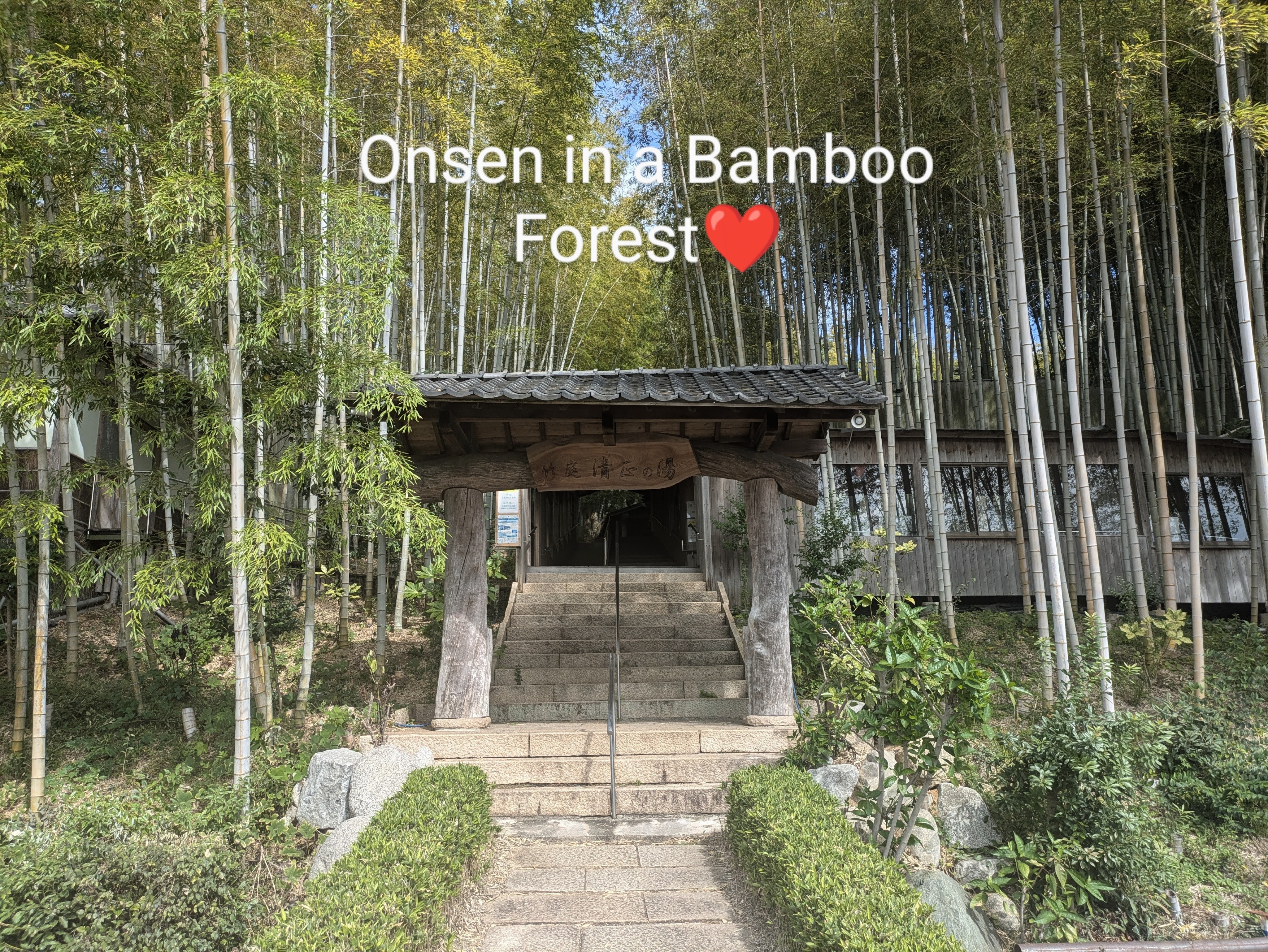
There are onsens, public thermal baths, for a good soak and a cultural experience and launderettes where we can wash and dry for clothes for less than a fiver.
Our only real problem with travelling around Japan in a van is the lack of rubbish bins. Despite this, the country is scrupulously clean with not even a sweet wrapper on the street. Our trash mounts up particularly as everything comes double wrapped in plastic -even carrots are individually wrapped. We were thrilled to find some bins for segregated waste in some of the convenience stores and so we have been getting into the habit of getting rid of our rubbish as we go along.

Eating while walking  on the street is very much frowned upon.  All takeaway food is eaten in the place where it is purchased and the containers disposed  of on the premises. There are vending machines everywhere, even in the remotest of places, mainly selling soft drinks, green teas and plastic bottles of water. These is always a bin beside the machines for disposal of the empty plastic bottles but not for anything else. There is strict adherence to waste segregation, no Japanese person would even attempt to put a glass bottle in a bin for plastic.

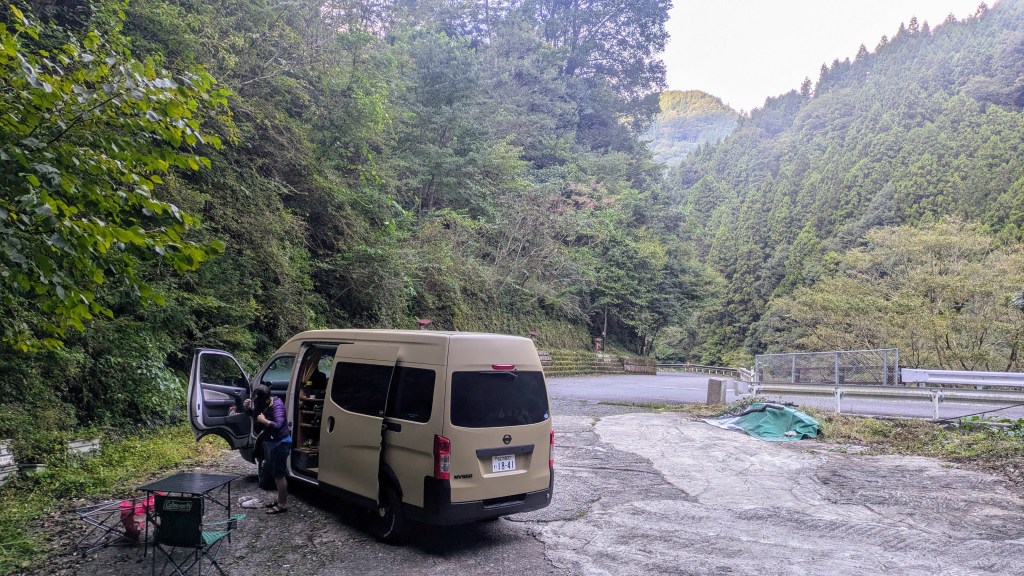
In the rural parts of Shikoku island,  we were  so far off the beaten track that  sometimes  it felt that we were the only two people in Japan. We drove on narrow winding roads past deserted villages and through spectacular canyons with towering, green mountains in a landscape so awe-inspiring that we talked in whispers.

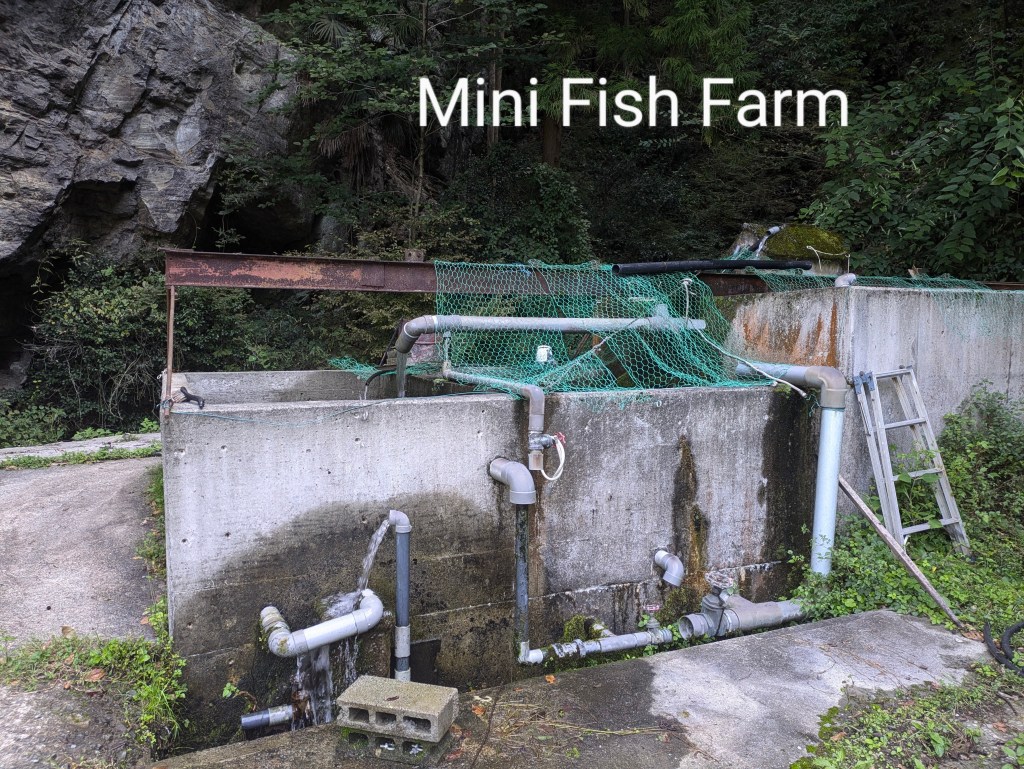
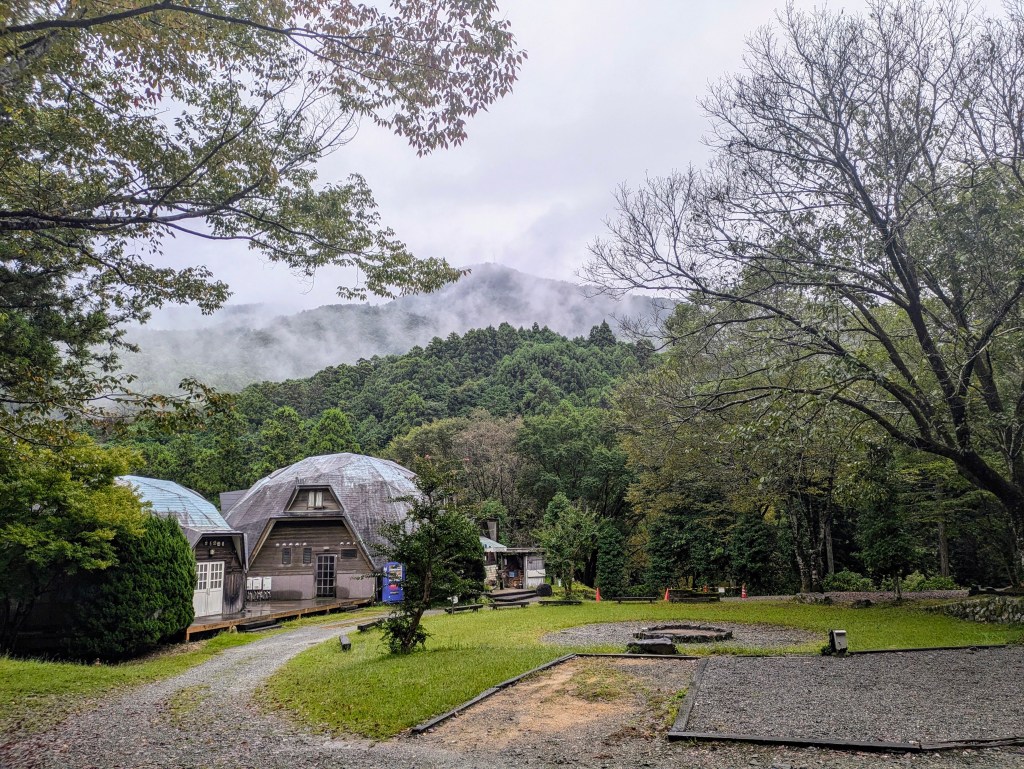
 For a change, we decided to stay in a paid campsite  that we found on Google maps but when we arrived, it was closed.  It looked as if it hadn’t  been in operation for a long time. It was wrapped in damp spongy moss and draped in an impressive array of  spiders’ webs like something out of a fairytale.. There were signs everywhere warning of heavy fines for unauthorised camping so we retreated and  found a spot nearby.  We slept to the sound of gurgling water both from the river and from a running hose pipe attached to a couple of large troughs. The water from the pipe was convenient to fill our water bottles and wash our cooking utensils. Imagine our feelings the following morning when a man came along to feed his fish in the troughs. The clear mountain water that we drank was actually waste water from a mini fish farm.  No ill effects although I keep smelling something  fishy🤞
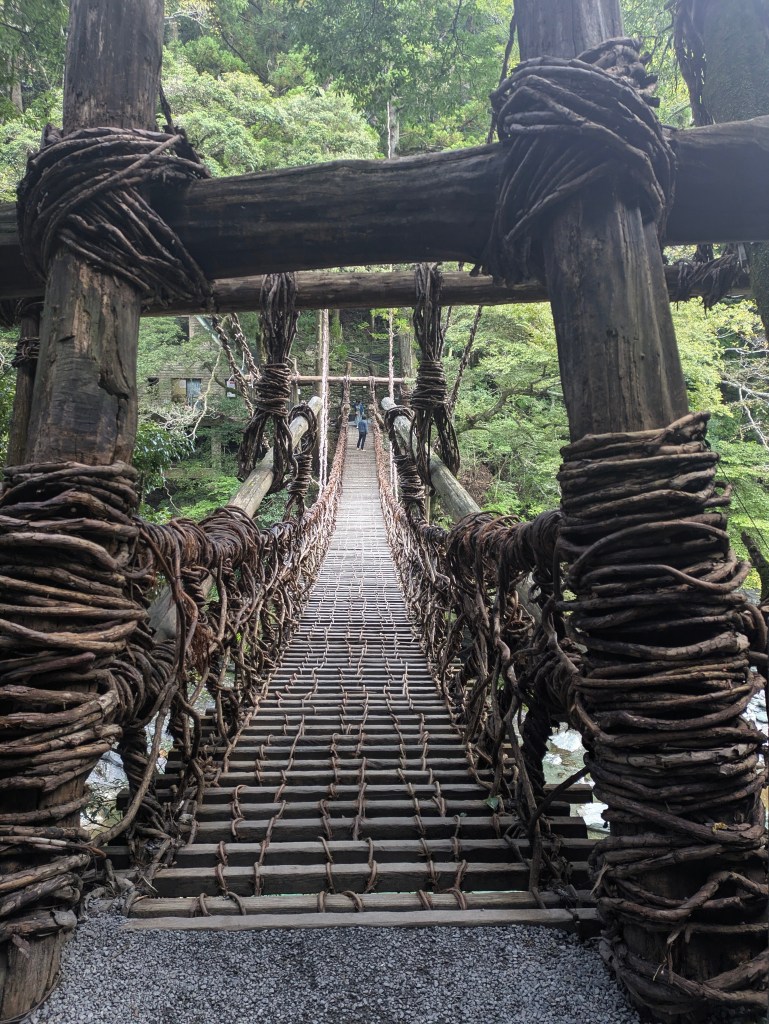
The Iya Valley in the mountainous centre of Shikoku Island was once so remote and inaccessible  that defeated Samurai fled there to hide out and lick their wounds. It is known for  vine bridges which have become a tourist attraction.  As the name suggests, these bridges are made of thick plaited vines and were once the only way to cross the rivers. Although they  looked sturdy, they were quite  shaky to cross  especially with a wind blowing, large gaps between the vines and a long drop to the rocks and river below. I crossed slowly on jelly legs😁.
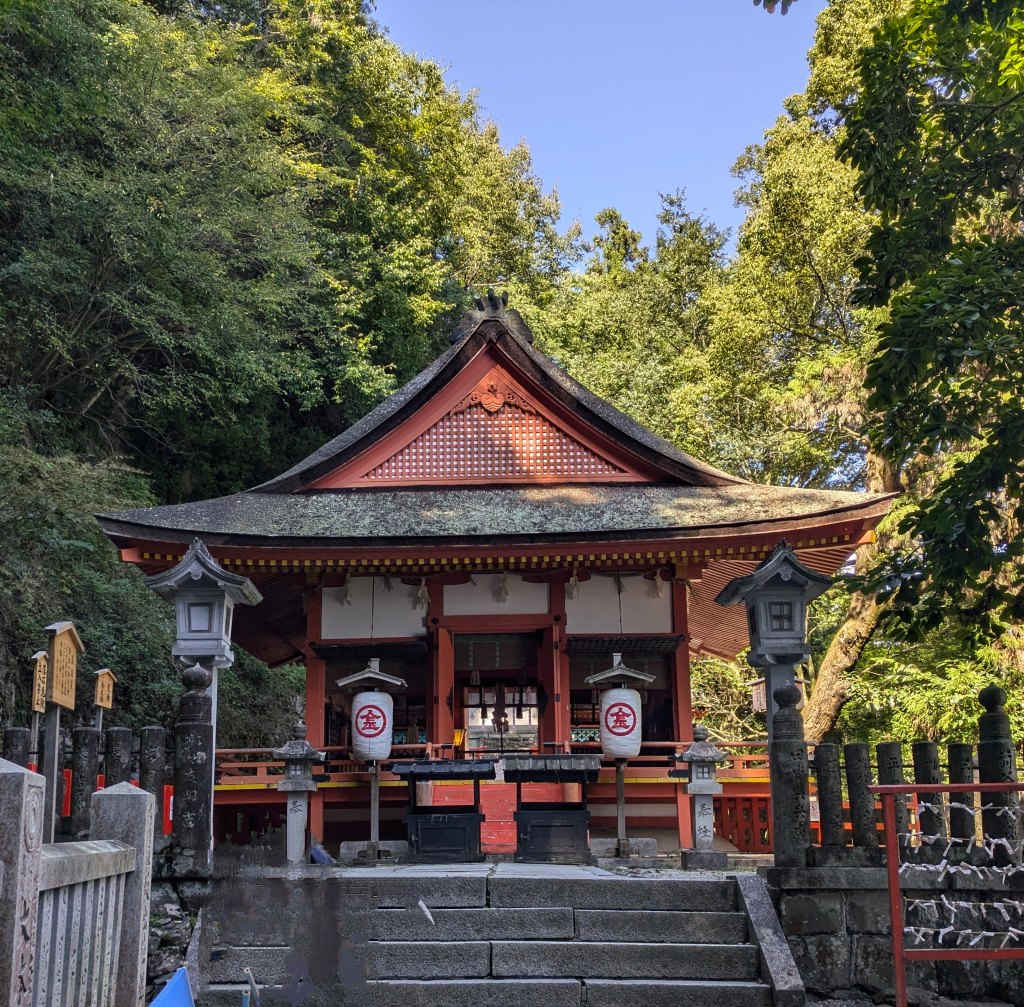
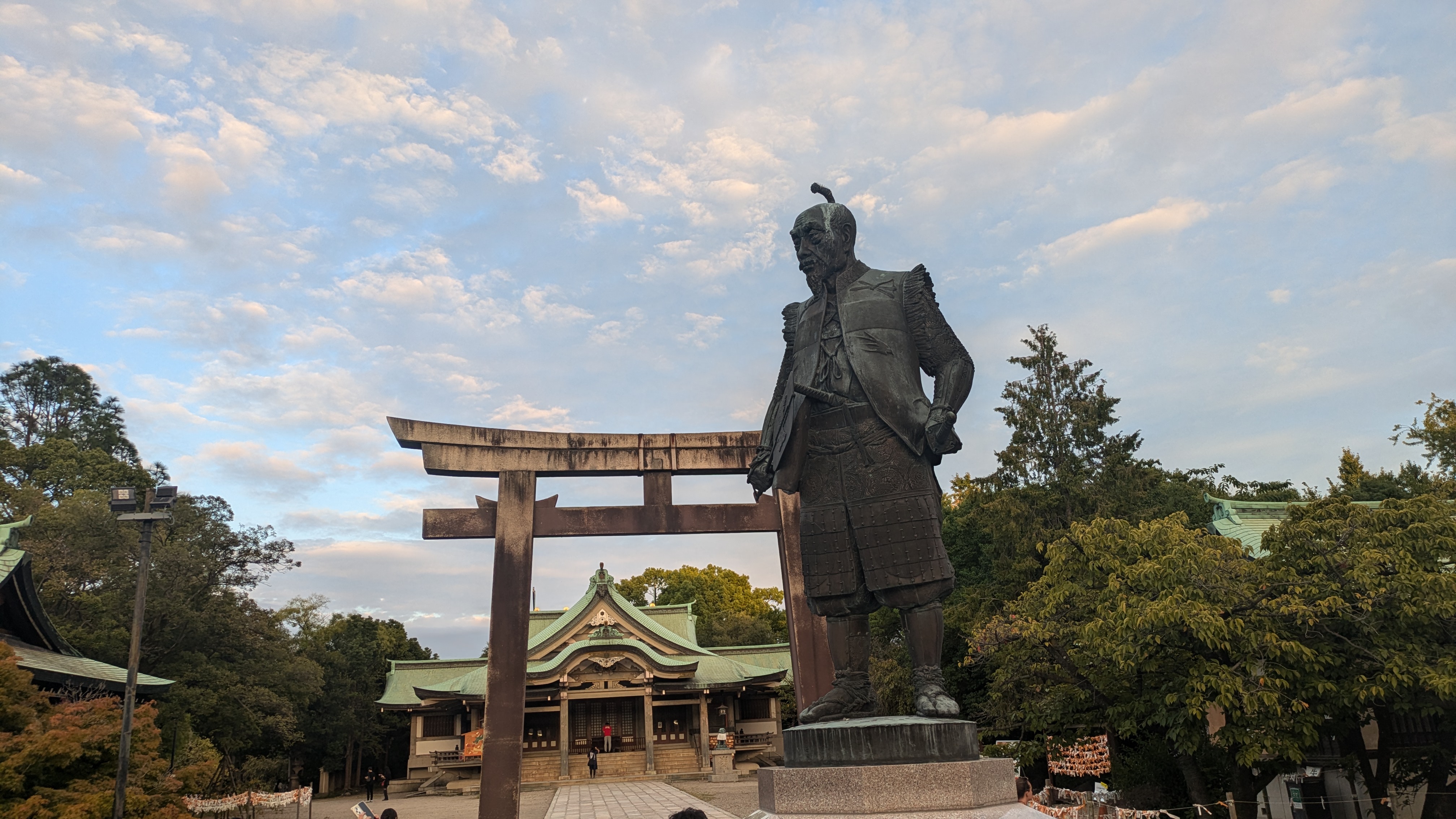
Japan has two main religions, Shinto and Buddhism with a huge number of shrines and temples for both. There is no competition between them as most  Japanese adopt a mixture of the two while professing to have no religion at all.

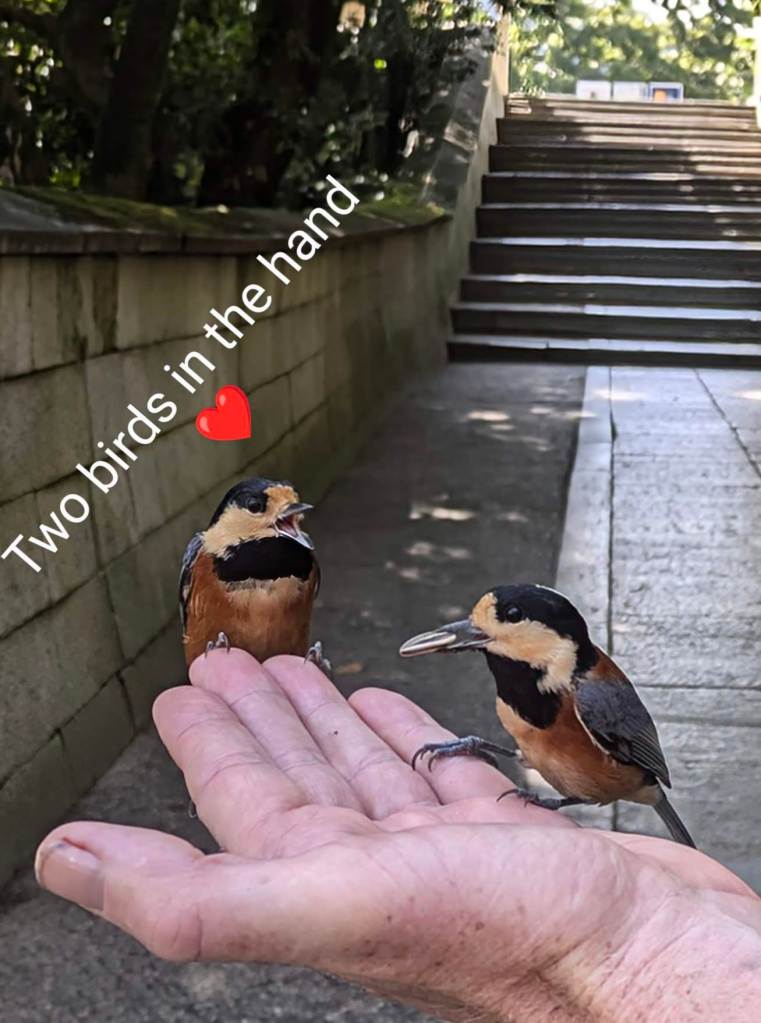
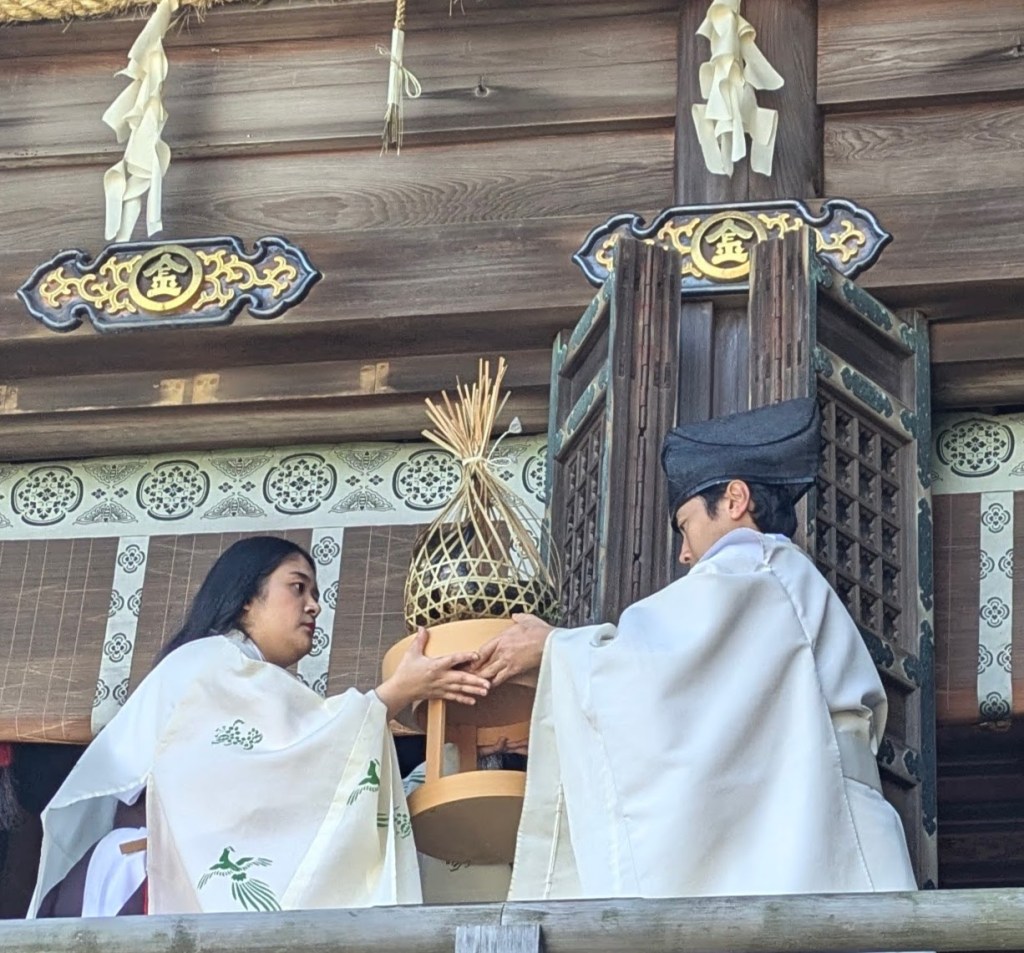
We visited the charming little town of  Kotohira, famous for its proximity to the Shinto shrine, Konpira-san, which is dedicated to sea-farers. In a country of islands, this is a very popular shrine.  It is nestled in the forests of Mt Zozu above the town and requires climbing  a whooping 1340 steps.   Arriving in the early morning,  the numerous  parking lots were empty  and the souvenir shop were still shuttered.  There was an air of serenity , broken only by the clattering on each step by a man wearing wooden clogs.  Little birds chirped and landed on our outstretched hands looking for seeds. We passed a stable of beautiful white horses which are considered so divine that they can only  be ridden by the gods.  The path was adorned with so many shrines and stone carvings, that we hardly noticed the climb. We were lucky to witness an elaborate ceremony at the main  shrine.  By the time we descended, the car parks were full and the souvenir shops were doing a good business.
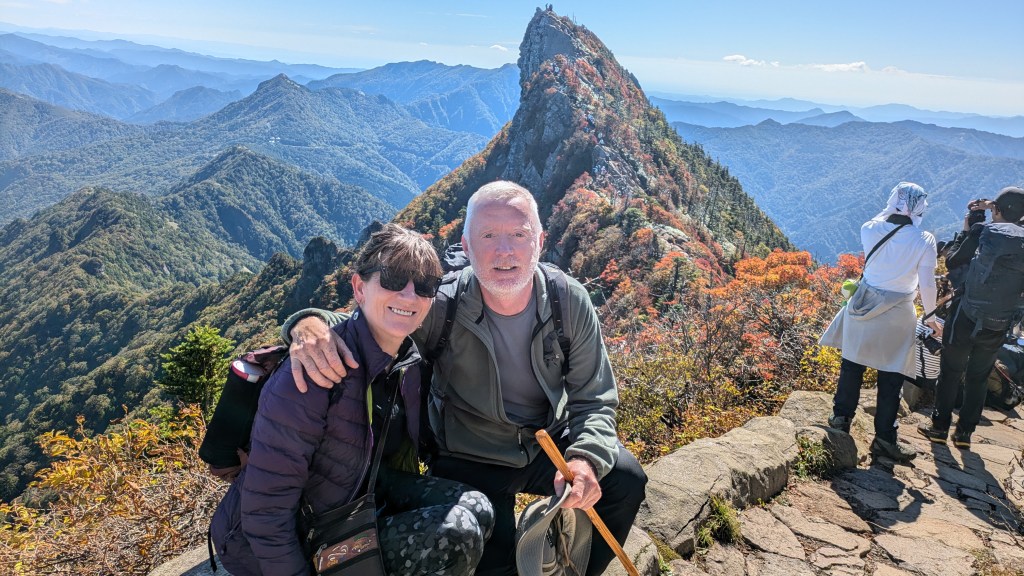
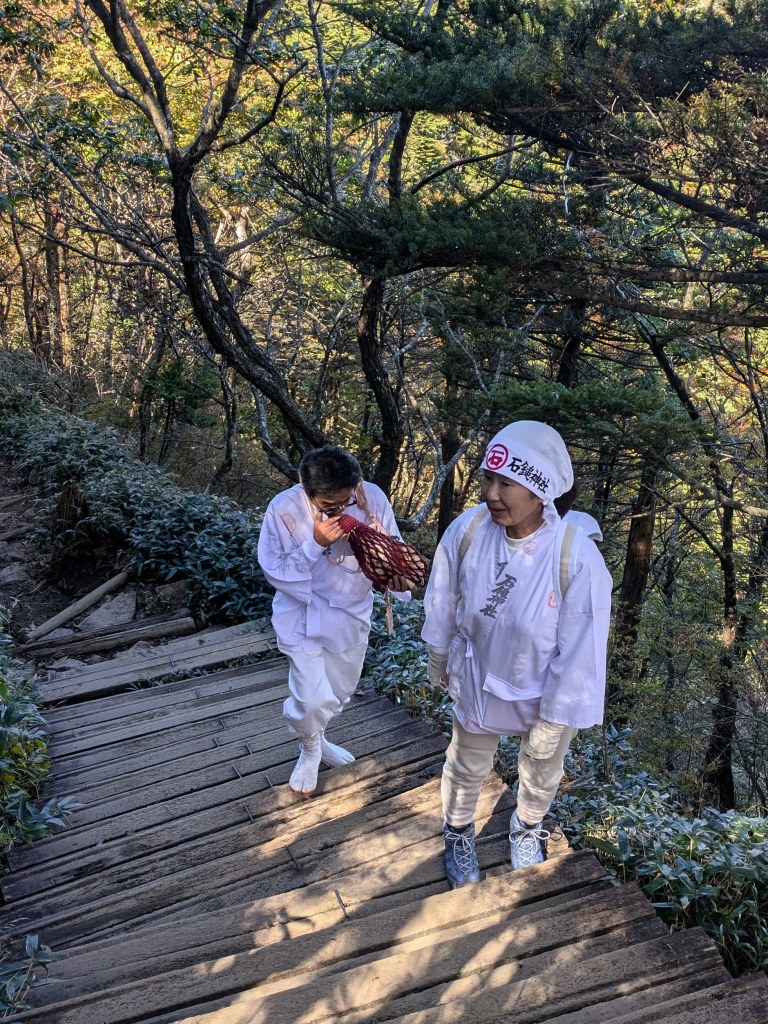
Mount Ishizuchi is the highest mountain on Shikoku Island at 1984m. It’s a popular hike so we weren’t alone when we climbed on a sunny Sunday morning.   It was probably more crowded than usual as it was also a Public Holiday weekend, celebrating Sports Day which promotes an active lifestyle.  There is a Shinto shrine at the top so it is also a pilgrimage route.  We parked the van the night before in the  car park at the base of the mountain where the parking fee (about €3 ) covered the use of showers and  toilets.

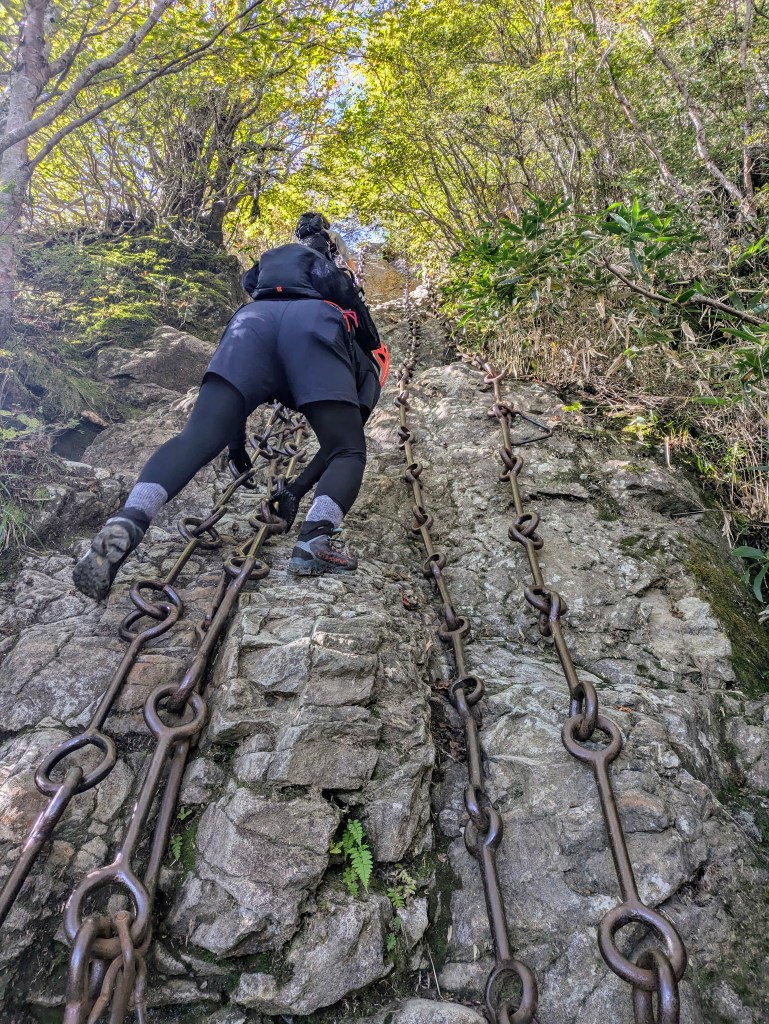
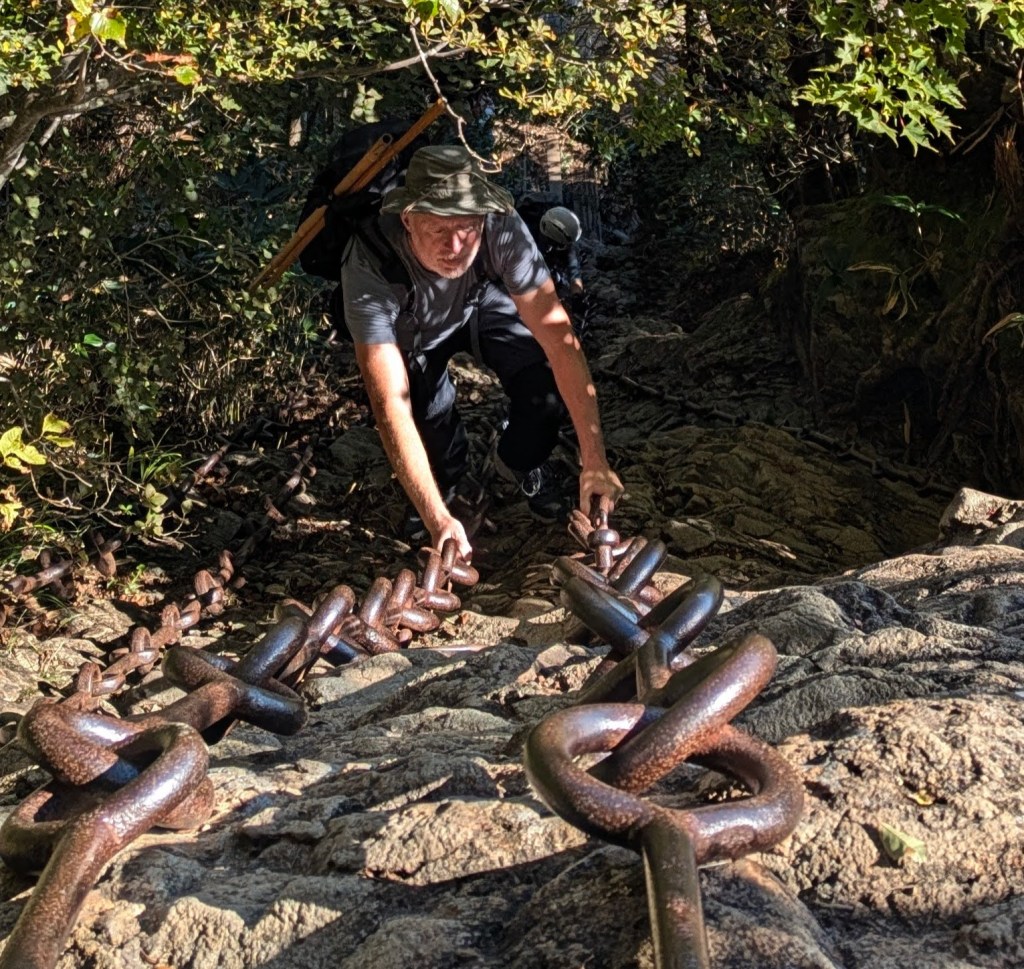
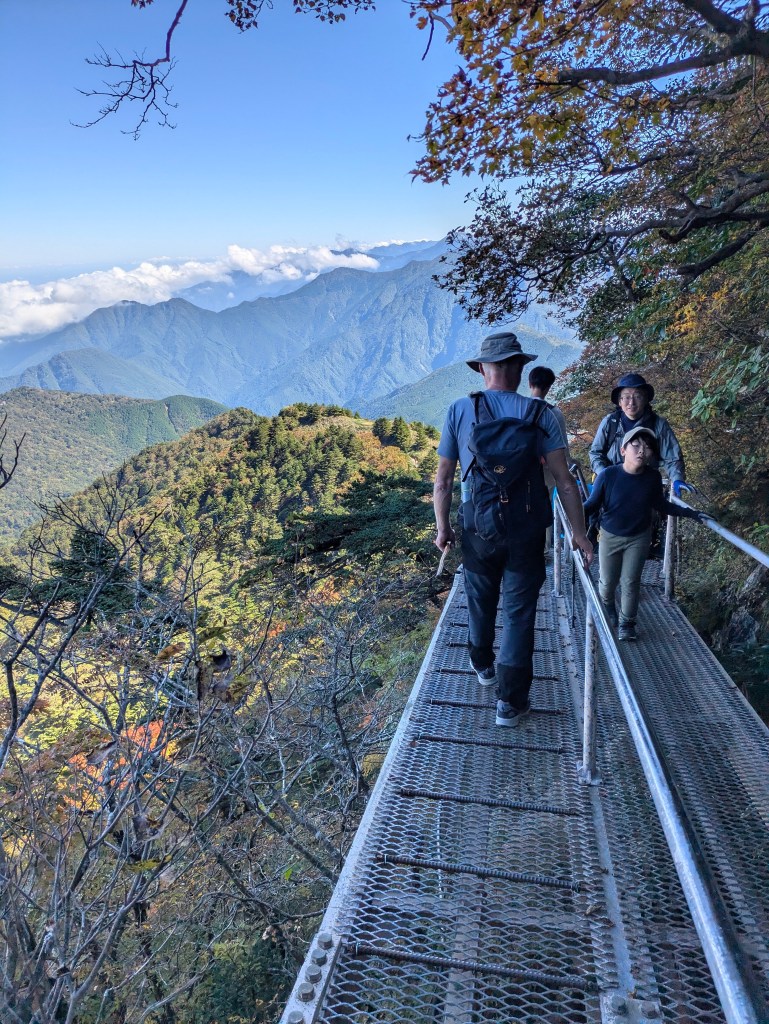
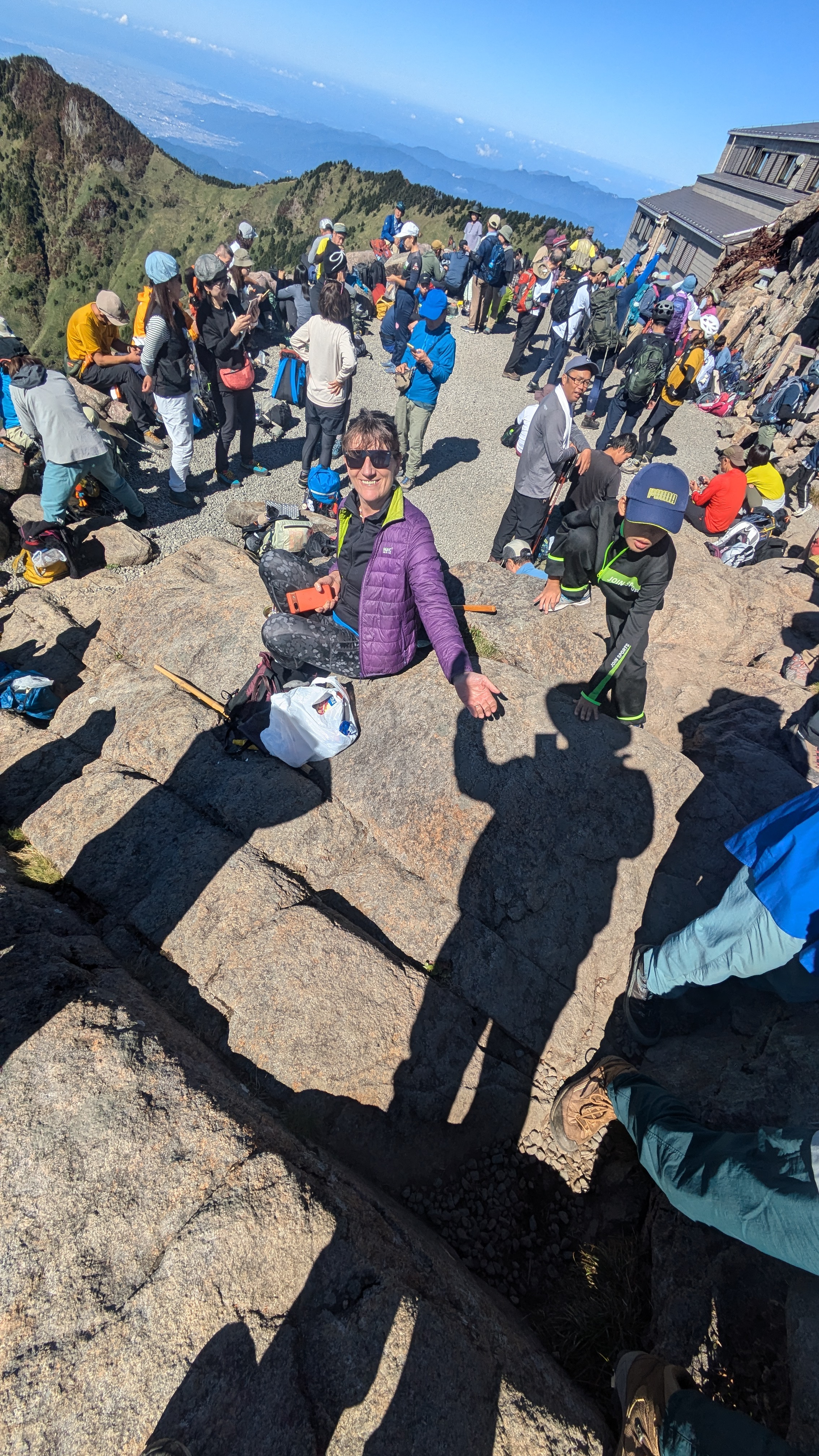
The hike was  a six hour round trip, including a  crammed ride in cable car for the first section. We hiked through maple and bamboo forests, up through cedar and pine with beautiful views of more trees whose leaves were just beginning to show autumn colours.  It started on gradual paths that became steeper, much steeper.  In certain almost vertical sections, steel chains were embedded into the rock as an aid to haul ourselves up . The summit was crowded.  We munched on nuts and egg sandwiches and watched people pulling little stoves from their backpacks to boil up water for their Pot Noodles. We were probably the only Westerners on the mountain that day and everyone greeted us as if  delighted to see us although no-one spoke any English.  Soon our necks ached from bowing but we felt really welcome in this stunning country.
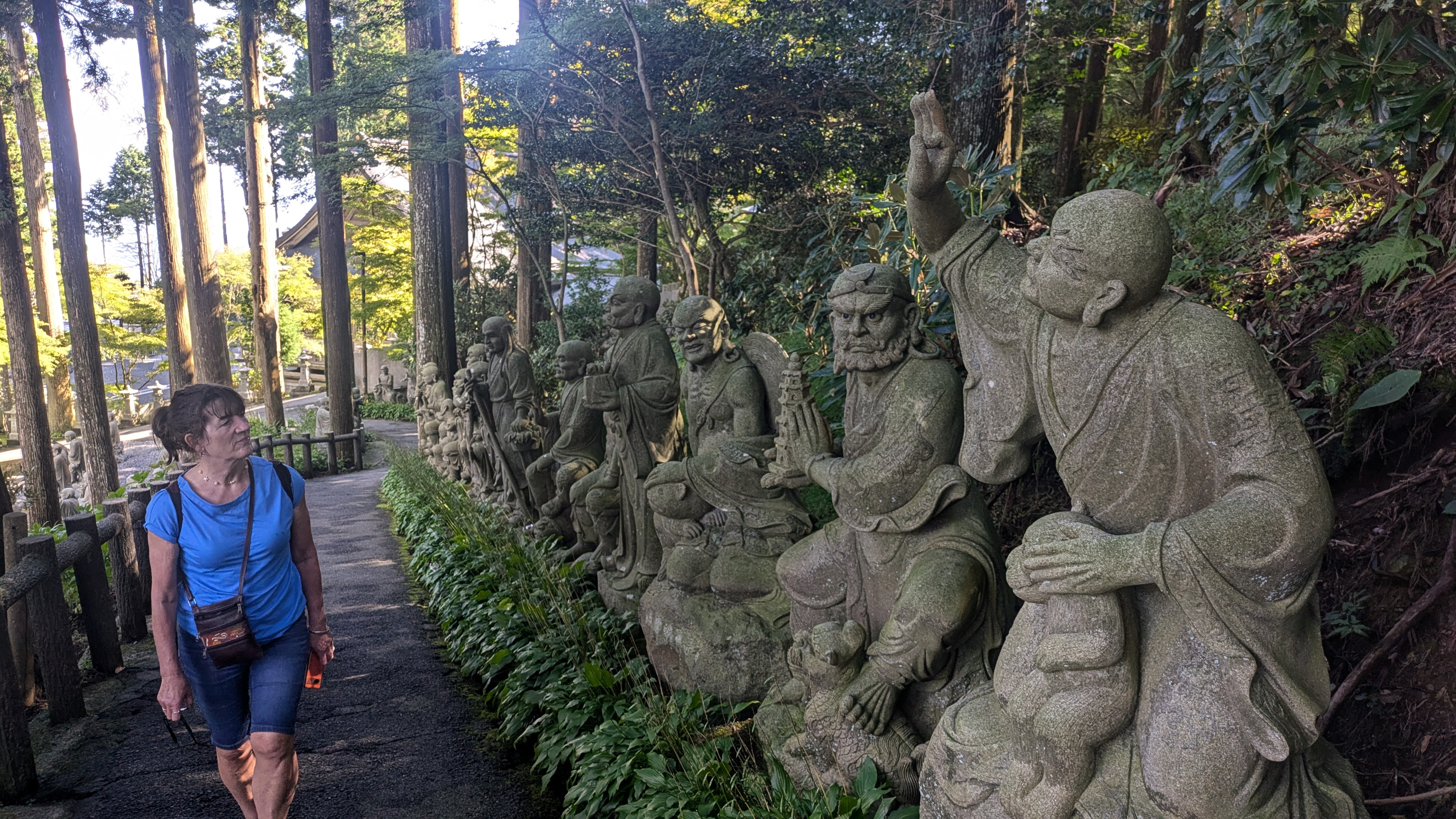
All over Shikoku, we saw pilgrims on the Pilgrimage Trail of the 88 Buddhist Temples. This is a long route, over a thousand kilometres,  which circumnavigates the entire island of Shikoku. Most pilgrims do it in sections but we met a few  who were devoting six to eight weeks to completing the entire pilgrimage in one go. Many had sore feet as the majority of the route is on hard road surfaces. Although we didn’t do the pilgrim’s trail, we visited several of the temples. Our favourite was Unpen-ji, the highest of the 88 temples and often called The Temple in the Clouds but for us, it was the Temple in the Sun. We welcomed the shade of the tall cedars on the approach. Hundreds of life-sized statues of Buddha’s disciplines lined the walkways. It’s said that if you look hard enough, you will find your likeness among them. Although I searched and searched, I couldn’t find mine
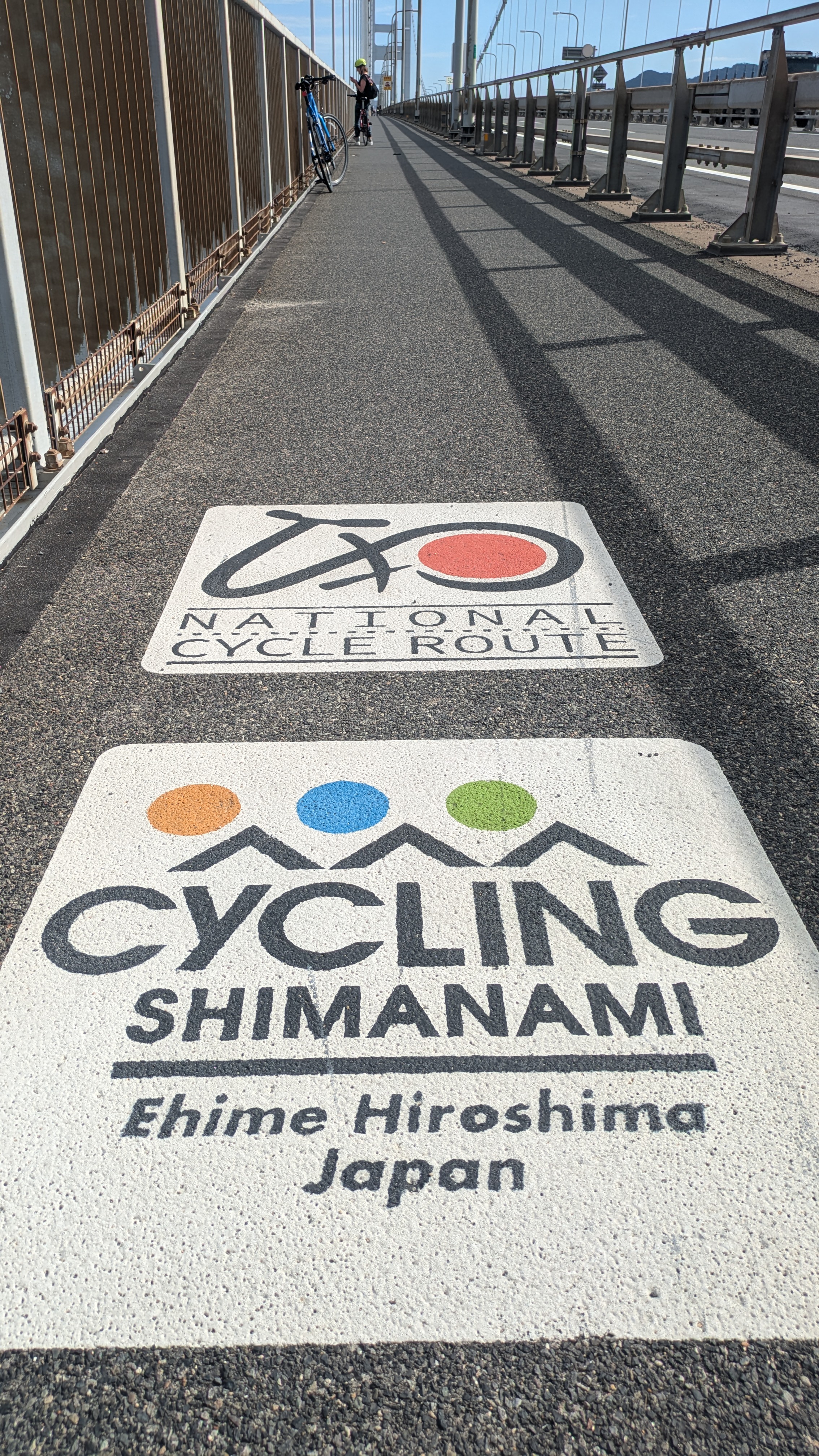
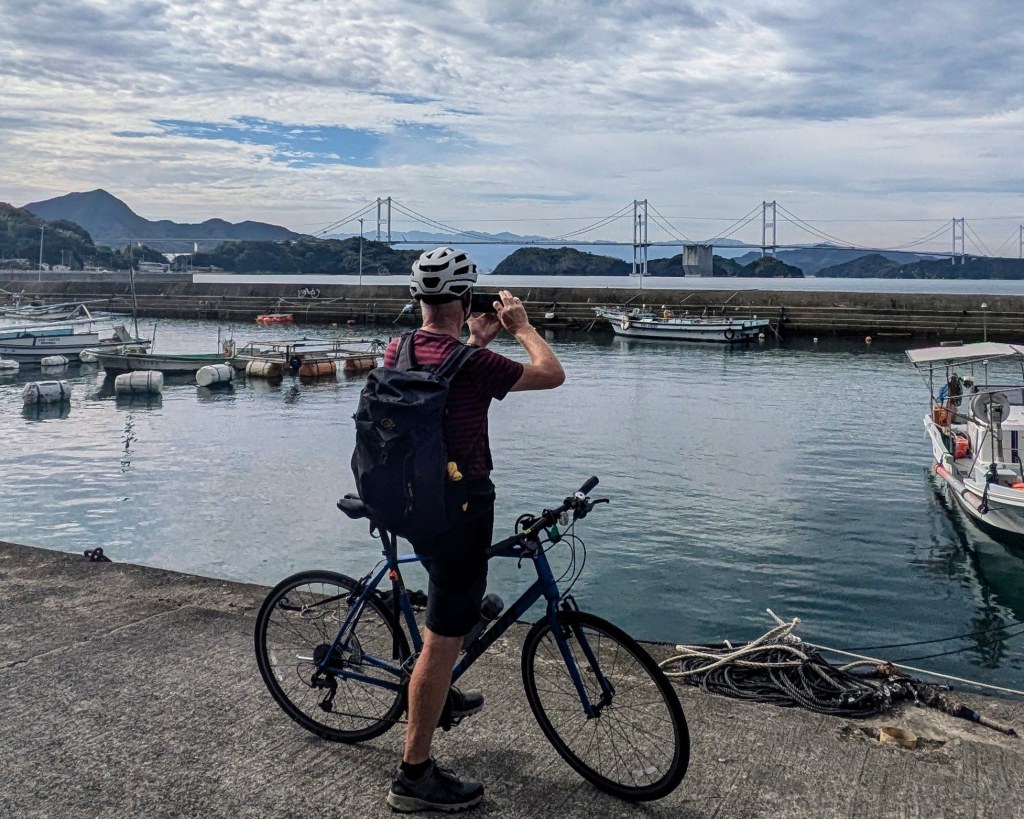
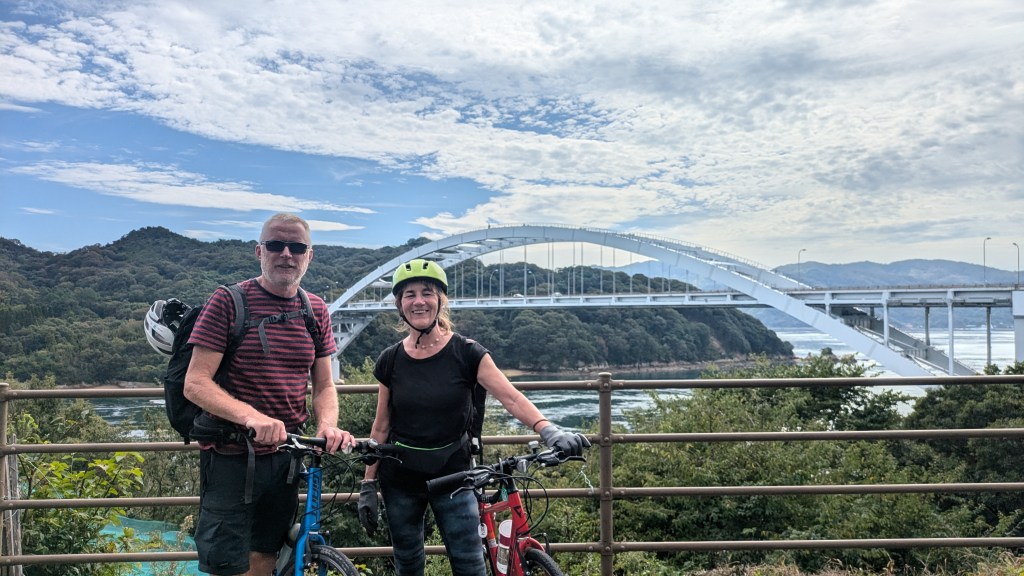
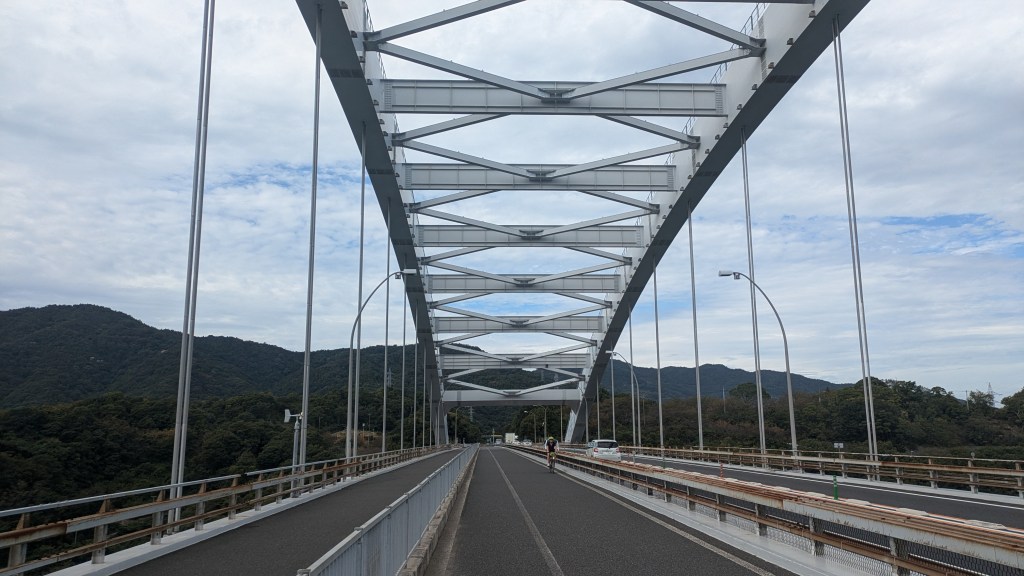
If you only do one thing in Southern Japan, cycle at least part of the Shimanami Cycleway and prepare to be wowed. The entire cycleway is 75kms. It links the town of Imbari in Shikoku Island with the town of Onomiche in Honshu across the inland Seton Sea.  It is an island hopping adventure by bike as the route traverses several smaller islands which are linked by magnificent bridges. Cycling along the Kurushima Bridge which has a span of almost 5 Kms was a memorable experience.  Ships passed in the turbulent  waters beneath us while traffic whizzed by on the bridge but separated from us by a barrier. There were sublime views in every direction of mountains, islands, sea and of the bridge itself.  
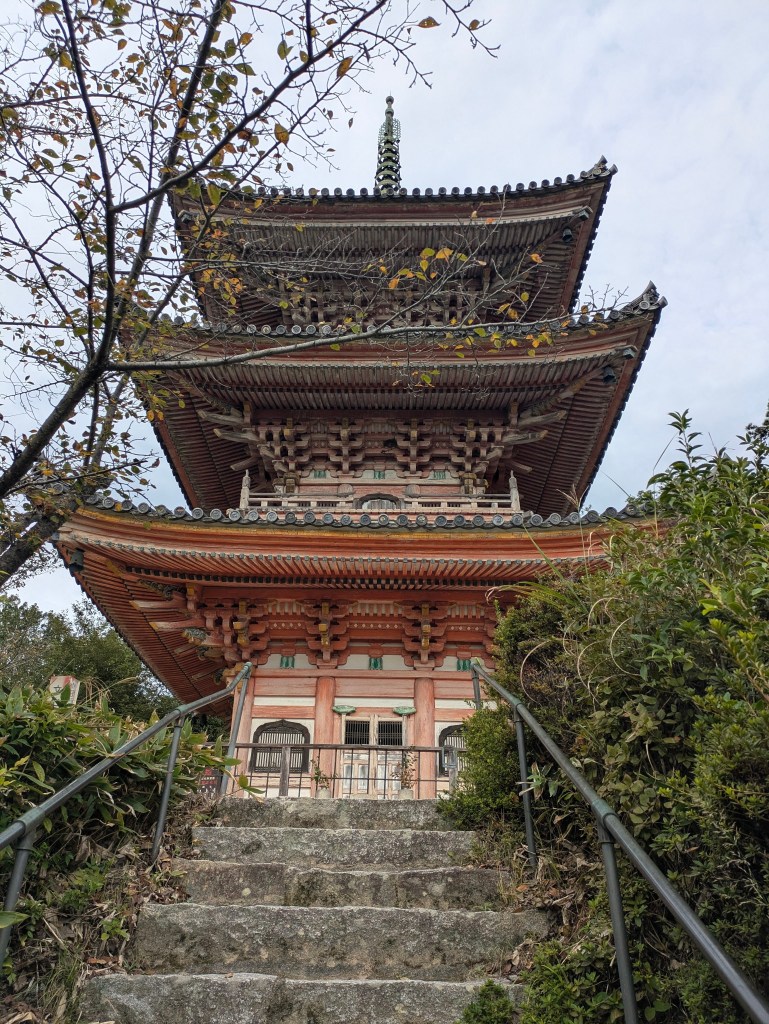
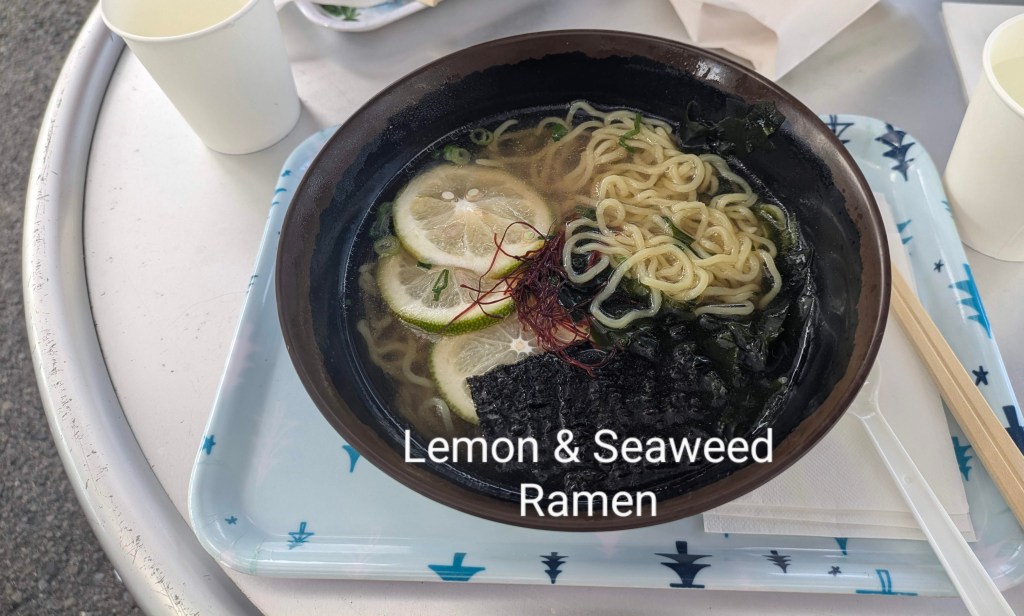
There are lots of bike rental places  -we rented ours for two days from Sunrise Cycles in Imbari for €18 a day. Electric bikes were available for slightly more. It is possible to cycle the whole way or drop off the bikes at lots of points along the route.   We left our van at Sunrise Cycles overnight and cycled about 50 Kms each day, taking some detours through  sleepy villages with traditional houses, small cultivated gardens and fields of solar panels.  The weather was a hot, sticky  28 degrees, feeling even hotter in sunshine with little wind. We stayed in a little guesthouse in  Setoda on Ikuchijima Island, known for it’s lemon  groves and a three tiered pagoda, which is regarded as a National Treasure although it looked a little tired and neglected. All things lemony  were on the menu in the cafes, including a delicious lemon & seaweed ramen. For the first time since we arrived in Japan, we met lots of foreign tourists on the cycle trips and felt that we had returned to the tourist route.
Its time for us to say goodbye to Shikoku. It may be the smallest of the four main islands in Japan but it has so much to offer – pilgrimage trails,  cycling on water, scenery and shrines, outdoor adventures and gorgeous tearooms. We were charmed with a visit to  Ritsurin Gardens in Takamatsu with it’s beautiful teahouse of bamboo, screens and cushions. The windows framed the outside view like serene paintings and we drank tea to the gentle sound of flowing water from the small waterfall outside. In the coolness of the teahouse, we began to appreciate the Japanese fascination with light, shade and symmetry and to understand the philosophy that ‘less is more’
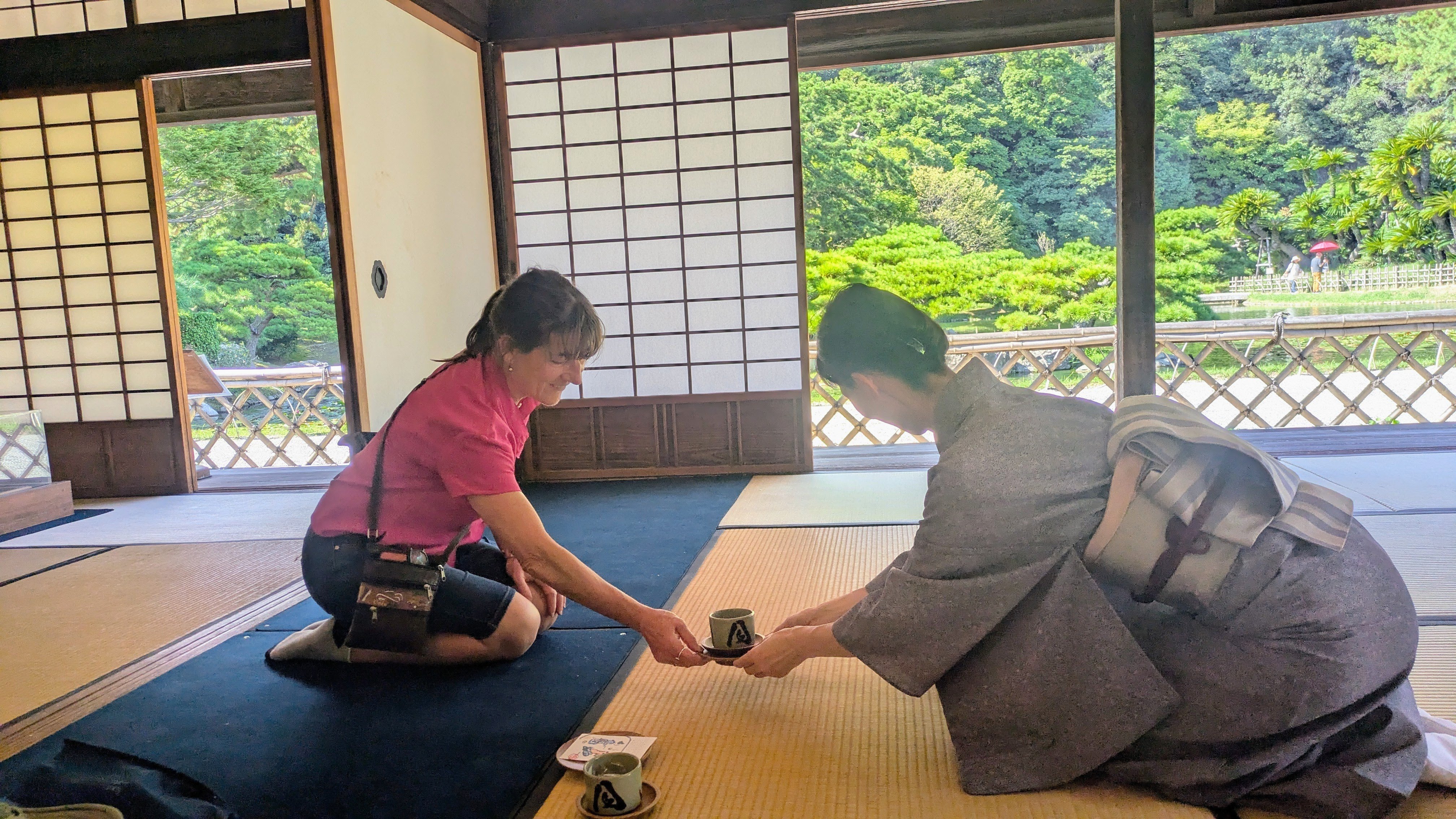
Ritsurin Gardens

We hope to get a ferry tomorrow to the island of Kyushu, which is less visited than other parts of Japan but seems to have  a lot to offer. If our onward journey is half as rewarding and enjoyable as our time in Shikoku, we will be very happy.

Till next time…….Thanks for reading x
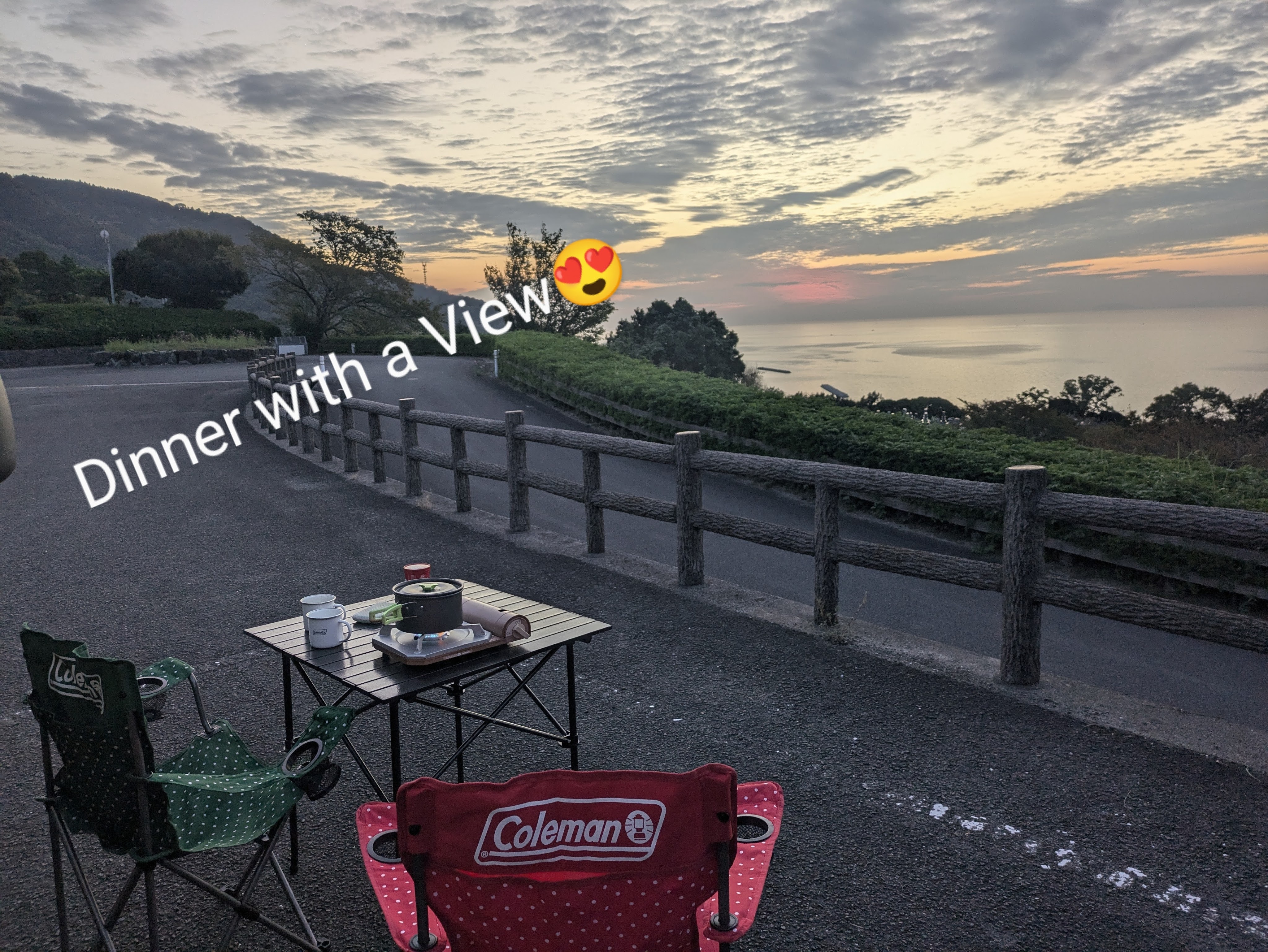
Dinner was an Irish-Japanese fusion of fried fish, mushrooms in garlic and sesame with dried seaweed and boiled spuds😍

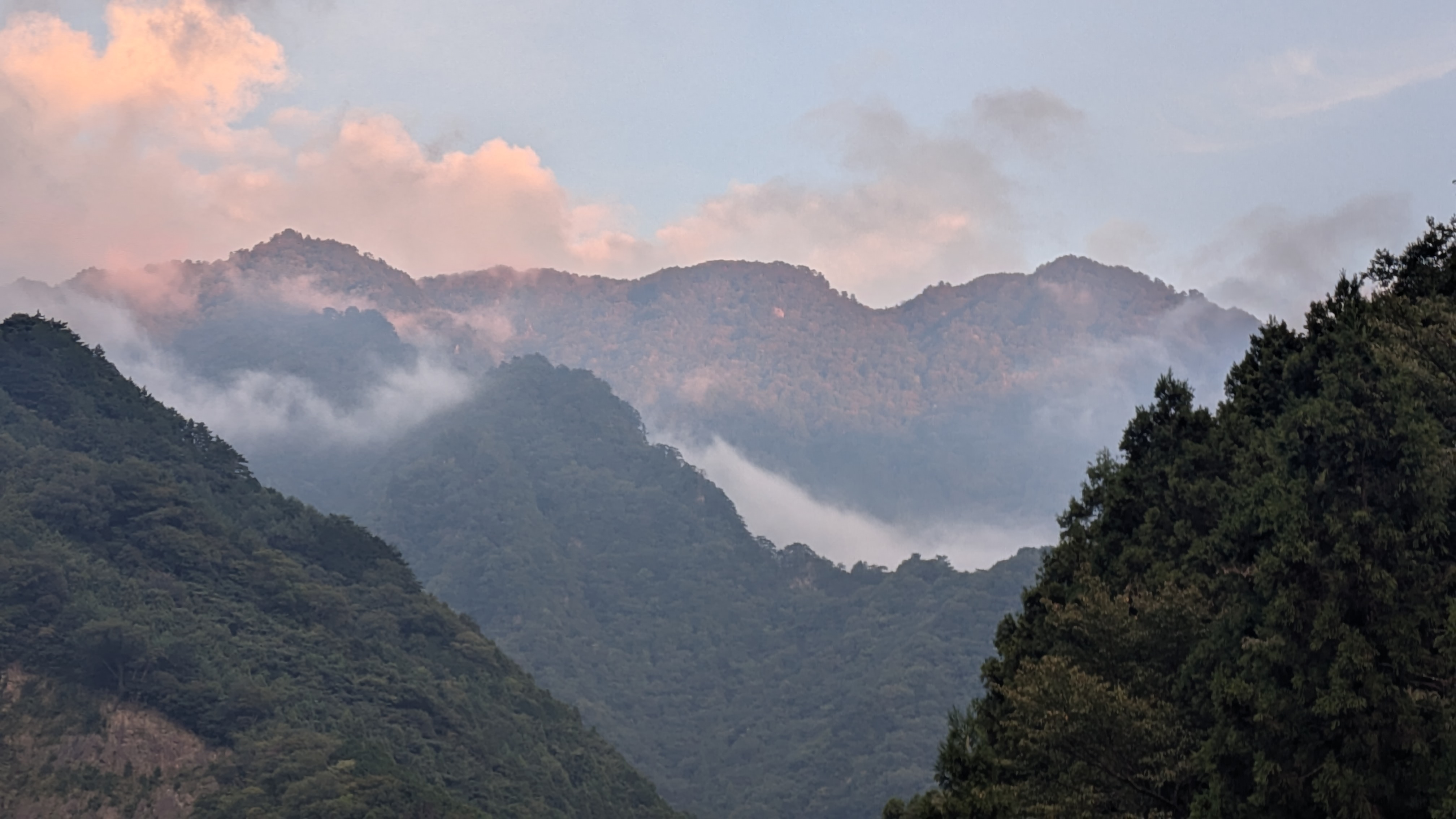
Sunrise in the Mountains, Shikoku
Japan in a Van

Journey to Japan✈️✈️

Our journey was longer than expected. We flew Qatar Airlines from Dublin to Doha (Qatar) and onwards to Osaka in Japan but delays leaving Dublin meant that we missed our connecting flight in Doha.

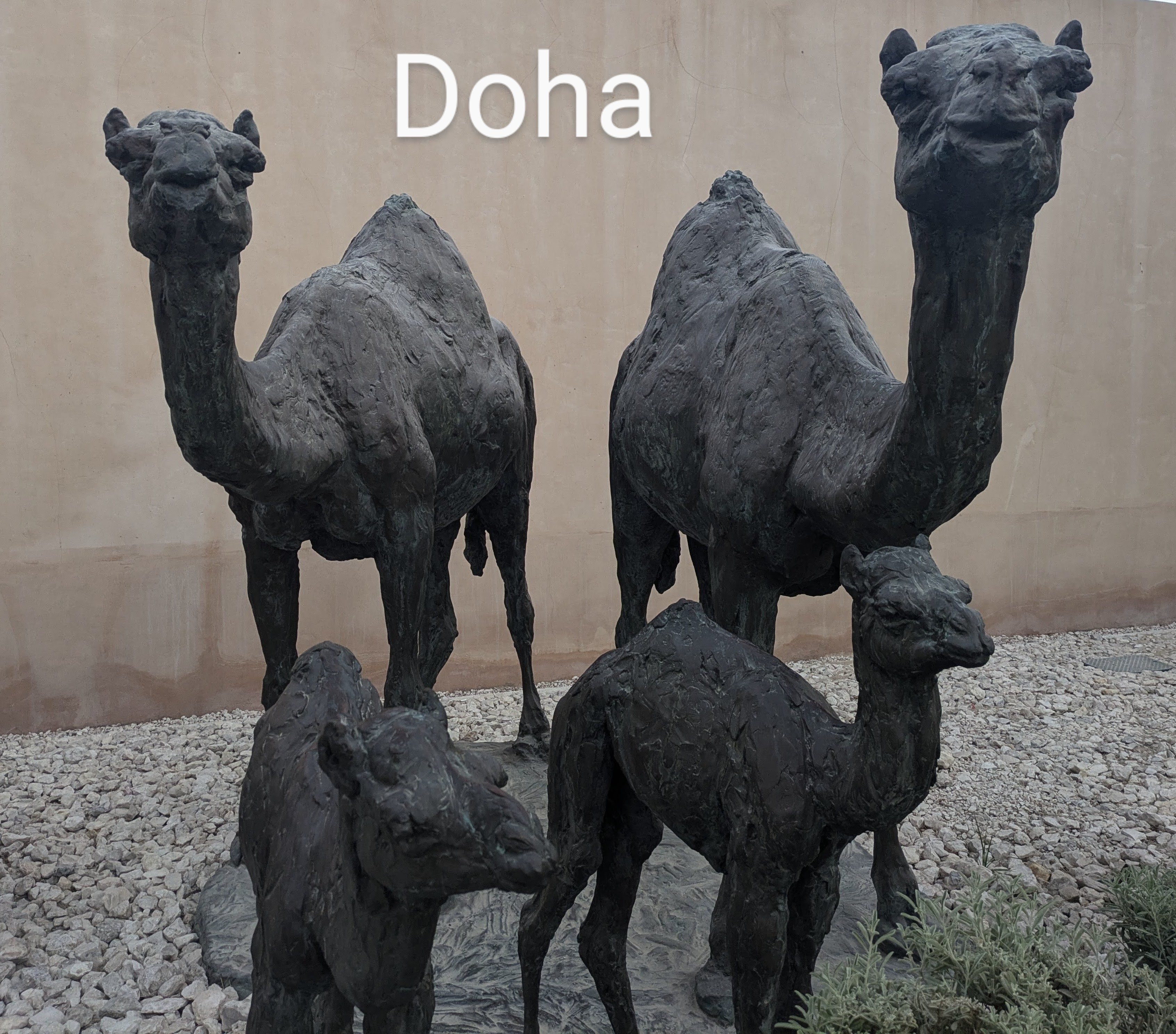
We weren’t the only ones with missed flight connections. The escalating situation and volatile skies over the Middle East meant that lots of flights were delayed, cancelled or diverted. Doha is a big international hub with connecting flights radiating in all directions and that night it was chaotic with hundreds (maybe thousands) of passengers milling around, all wanting to be somewhere else. After queueing for hours at one Transfer Desk, we were moved to another emergency Transfer Desk that was set up in a different part of the airport to cope with the huge numbers of displaced passengers.   Finally we were booked on the next available flight to Japan which was in 24 hours. The  bad news was that there were no hotels available as the allocation for delayed passengers was already filled. Others fared much worse – people going to Auckland were told that that next  available flight for them was in  three days.

Qatar Airline staff advised us to try again later for a hotel  when other passengers might have checked out and in the meantime we were given a meal voucher so that we could ‘rest and replenish’ in the words of the man at the Transfer Desk. There wasn’t much replenishing as the ‘meal’ voucher was valid for tea/coffee and little else. All sandwiches/rice meals were beyond the price range. The staff in the restaurant were very nice, advising us that the best  way to spend our vouchers was to get the ‘specials’ (falafels and soggy chips). They had plenty of experience as the situation had been even more chaotic the night before.

Doha airport is enormous.  The shuttle bus  from the plane took at least 35 minutes to reach the terminal building.  There were people curled up in every corner trying to sleep.  Segregated ‘quiet’ rooms were available with recliners.  Both of us were lucky enough to grab a recliner in our respective male and female rooms but they weren’t really ‘quiet’.  Phones were going off, people were coming and going, there were chatters, snorers, coughers and sneezers.  Plenty of smoking rooms were available for the smokers, segregated prayer rooms for the religious but not a bar in sight for the drinkers🥂

At around 6am, we made our bleary-eyed way to  join another queue for the service desk and after an hour, we were allocated a hotel room but…. we had to join another queue to get the voucher printed. Then more queues for immigration followed by hanging around for a bus to take us to our hotel where our room wasn’t ready for another two hours.

We were delighted to be out of the airport. There was a faint smell of spices, maybe turmeric, in the hot dry air. After the air-conditioned airport, the 39 degree heat was a shock, a solid, shimmering wall in a flat landscape.  Doha looked brand new, as if it was made yesterday with skyscrapers, minarets and new roads rising out of the desert sands.

Our hotel, Hotel Royal Riviera,  was much better than we expected, with a spacious bedroom, hot showers and plentiful tasty food, a buffet breakfast, lunch and dinner. There was an absolutely fabulous selection of dessert cakes at lunch and dinner….the most delicious syrupy orange cake that I have ever tasted and superb chocolate brownies topped with roasted pistachios –  it was so good that if we are delayed in Doha on the return journey home, I won’t mind.

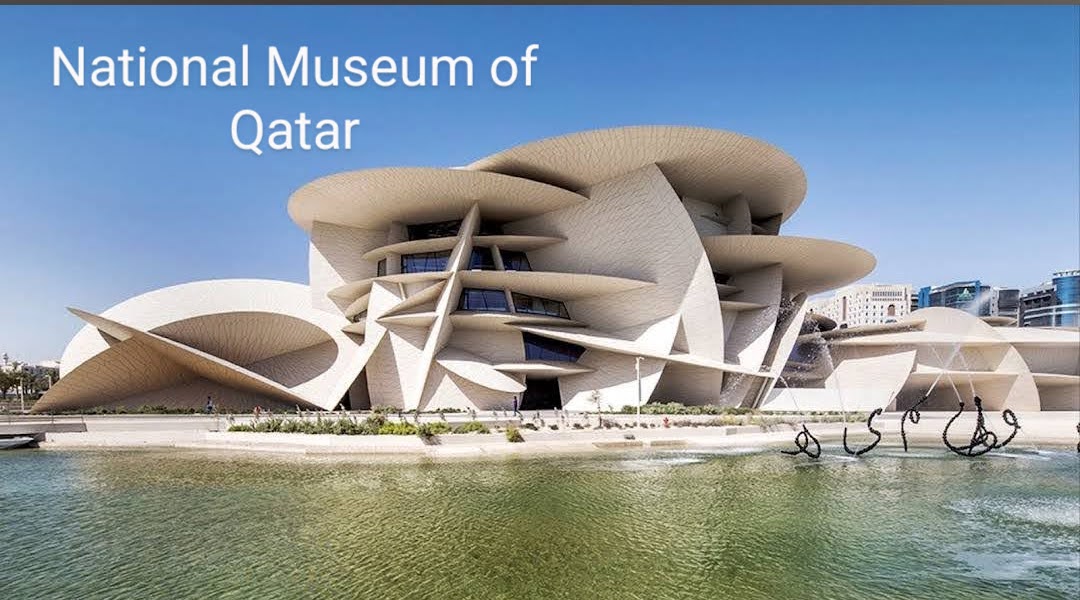
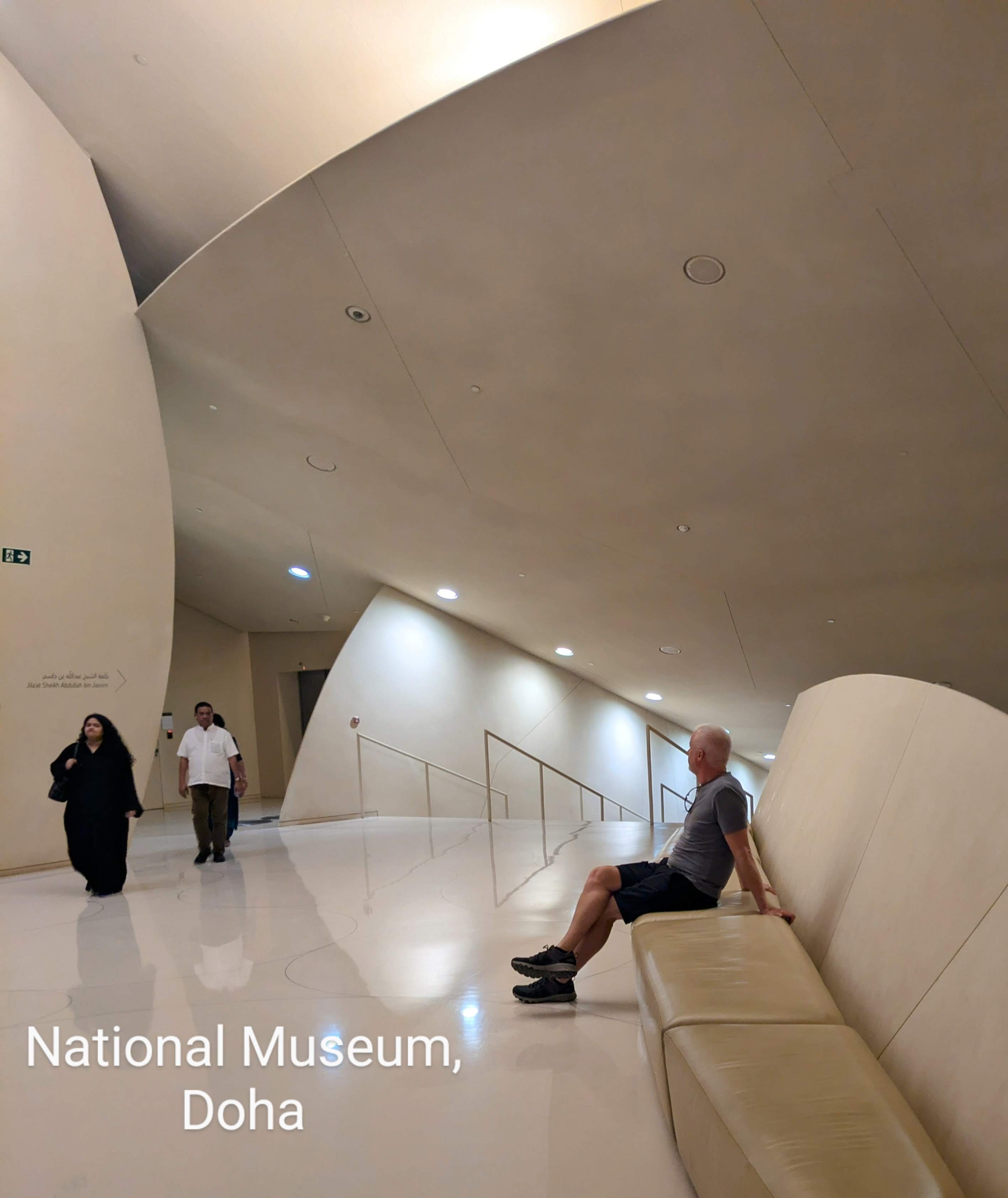
At about 10.30am, we  fell on the  hotel bed into a deep sleep for a few hours, waking in a jet lagged stupor to walk to the National Museum of Qatar.  White taxis kerb- crawled beside us wanting to take us on a city tour which we kept declining. The museum was a breath-taking building with interlocking disc inspired by the desert rose, a geological phenomenon formed by the deposition of minerals in a circular pattern around sand grains Built on the shores of the Arabian Gulf, the museum was as stunningly beautiful inside as it was outside and is well worth a visit…if you ever find yourself stranded in Doha.

Our flight to Japan departed Doha at the ungodly hour of 1.30am. With a nine-hour flight and a six-hour time difference, we arrived with addled body clocks at 5.30pm into a cloudy Osaka (23C). In contrast to Doha, the airport was calm with orderly queues and much bowing by the courteous staff. We were first fingerprinted, then given a 12 week visitor visa  at passport control. After two nights and almost three days, we had arrived.

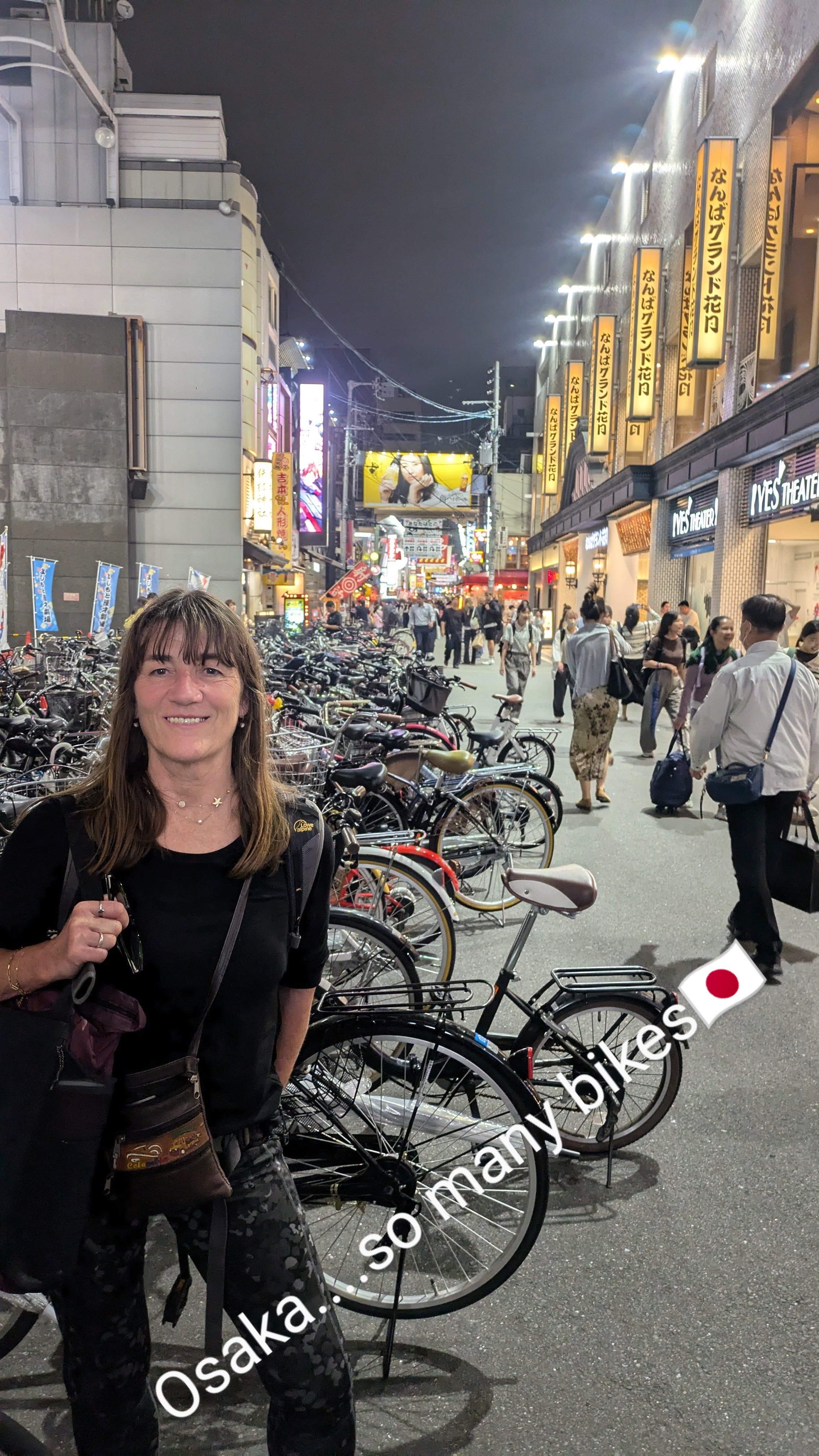
An efficient train brought us directly from the airport to Namba station in the city centre for about €6. Google maps guided us from there to our hotel, through narrow laneways, over humpbacked bridges crossing the canal and then onto wider streets which felt clean, safe and welcoming. We liked Osaka immediately.  The large number of cyclists  surprised us, most of them cycling on the footpath.  Many had small kids on the back carriers and shopping in the baskets on the front. All pedestrians and cyclists stopped on red lights even if nothing was coming from any direction. This adherence to rules was something that Caoimhin found quite a challenge and it’s entirely possible that we will find out what the sanctions for jaywalking are before we leave.

Our hotel, Be-zen Shimanouchi, was on a small, quiet street and had a big,comfortable futon-bed, both a shower and a bath and an incredible number of  complimentary beauty products (even a face mask which was not as rejuvenating as anticipated) all for €64. There was no extra charge for the change of date  from the night before which we really appreciated.  A guest who had come from Tokyo said that his hotel room here was double the size, twice as nice and half the price.

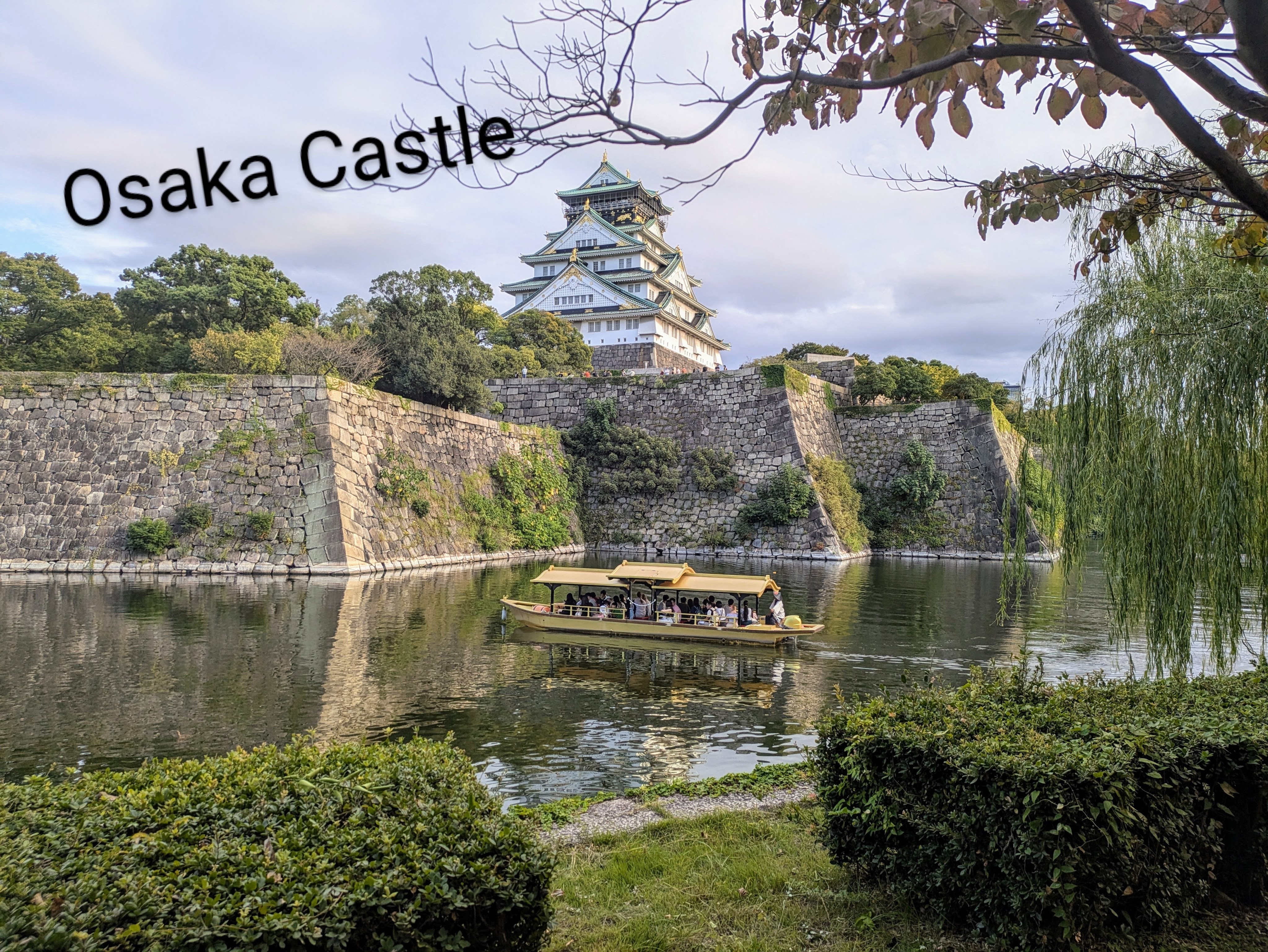
The following morning, it was time to pick up the campervan from Zen Campers. Our van was exactly as shown online, a beige, ‘no-frills’ van conversion which seemed perfectly adequate for us. Deciding to park it up for the night in the Zen office parking lot for free , we explored Osaka.  The city has two main tourist attractions which are very different. One is a crowded street full of towering neon signs and tourist shops,  the other is a spectacular five-story fairytale castle with almost 450 years of history.

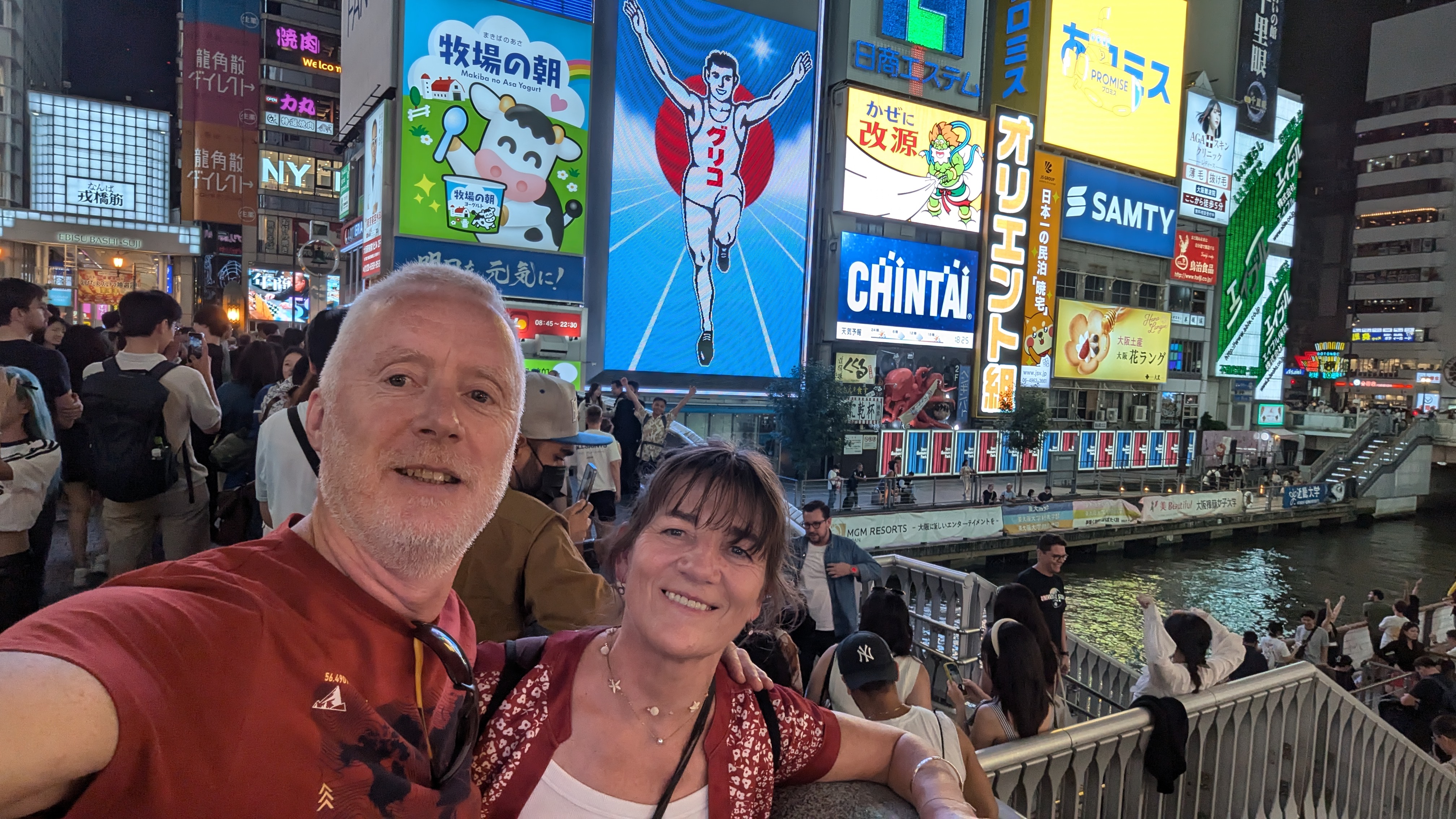
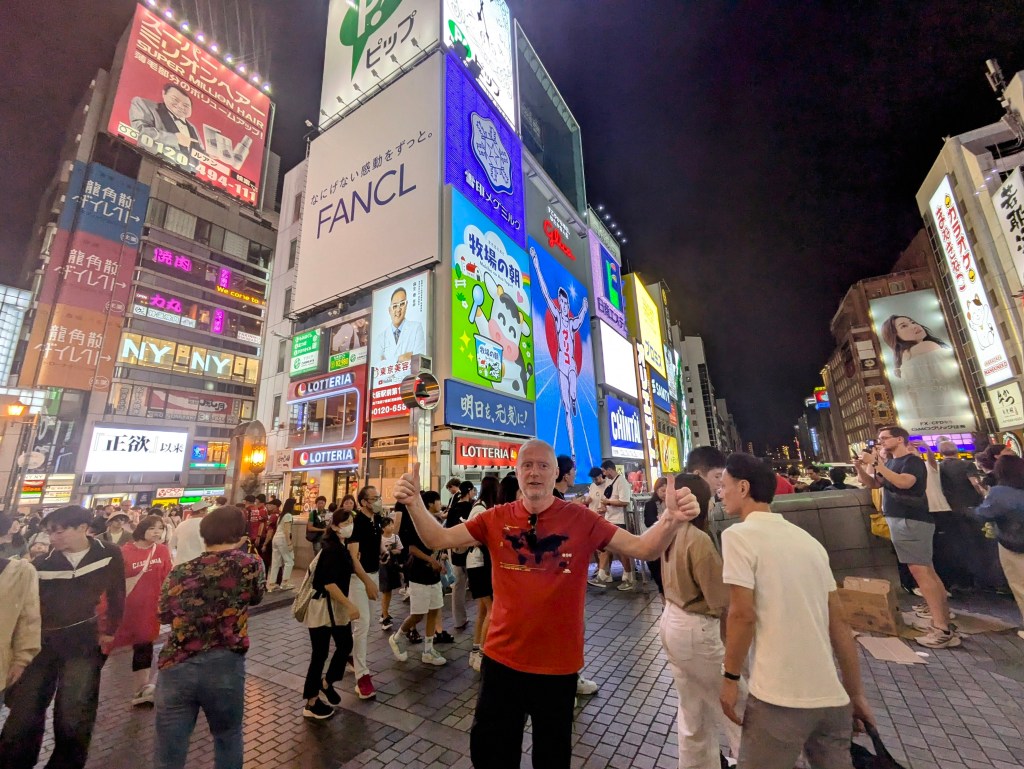
The atmosphere was tranquil as we strolled in sunshine  around the large castle park with gorgeous views of the thick castle walls.  There were  lots of meandering families, bicycles, stalls selling bonsai plants and a violinist playing near an old bridge over the moat. This was in complete contrast to the madness of Dotonbori. This area  was teeming with tourists trying to take photos of flashing billboards, the most famous of the Running Man which has glowed over the area for more than eighty years. We jostled along in the crowds before drinking an overpriced beer in a bar where half the people were smoking inside (that’s a blast from the past).

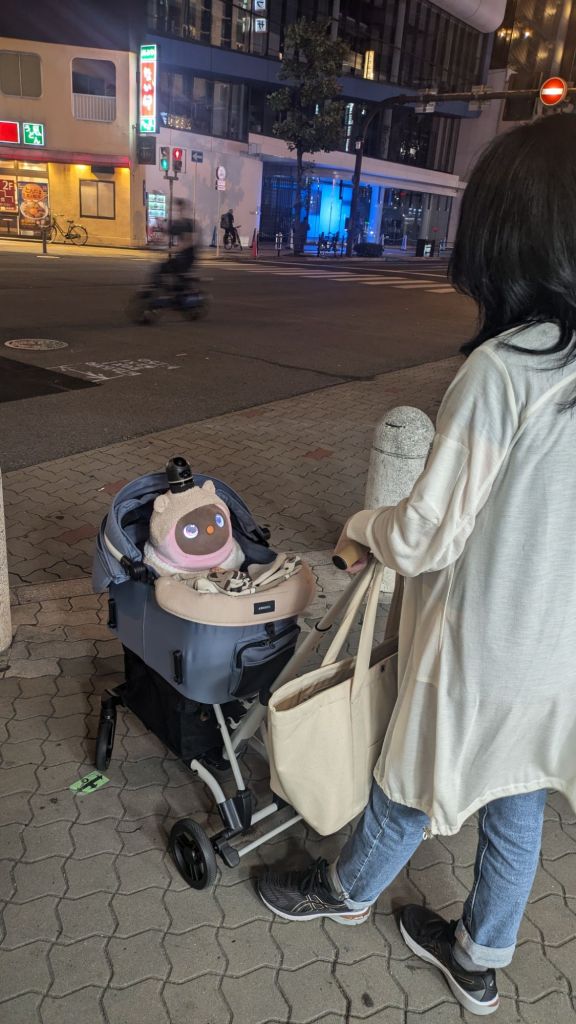
On the way back to our van we walked through quiet, clean streets. Walking past a woman pushing a stroller, we were surprised to see that there was a robot baby in the stroller. I googled the image from the photo we took and the robot is called a Lovot and can be taught to love you.

Lovot Robot
Dotonbori, Osaka

Sunday morning dawned bright, sunny and much warmer than we expected for early October with temperatures of  30C. We wanted to leave Osako but we weren’t sure where to go. On a whim we decided to head south towards the island of Shikoku, the smallest of the four main islands in Japan and to leave a visit to historic Kyoto  until the end of our trip.

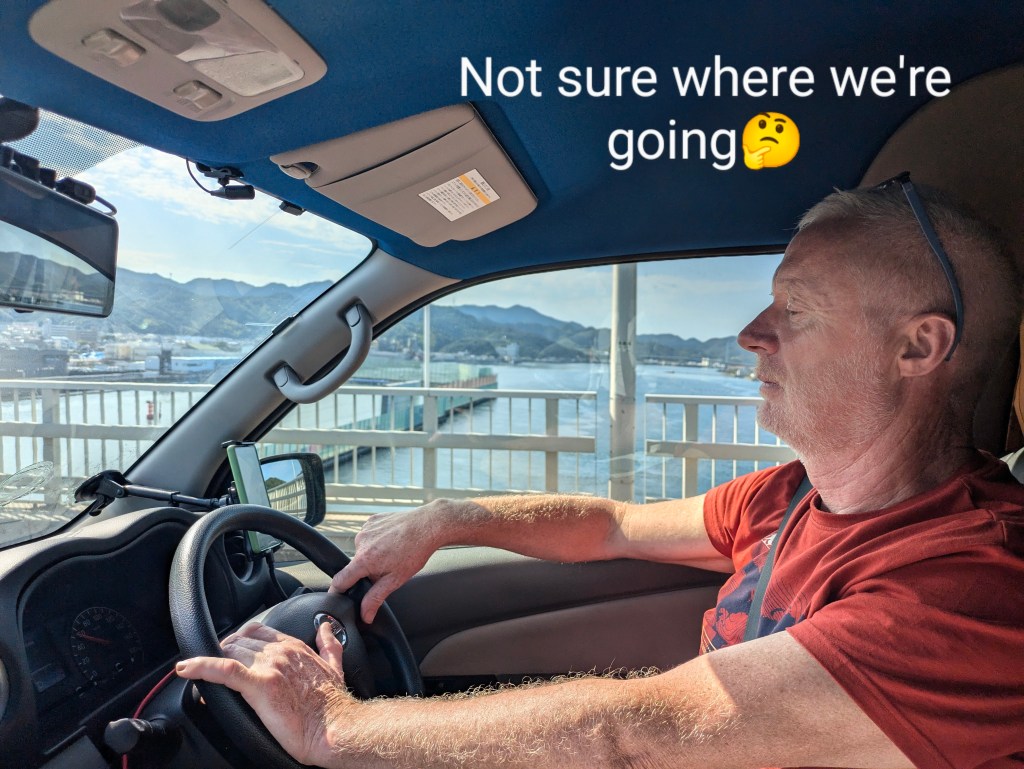
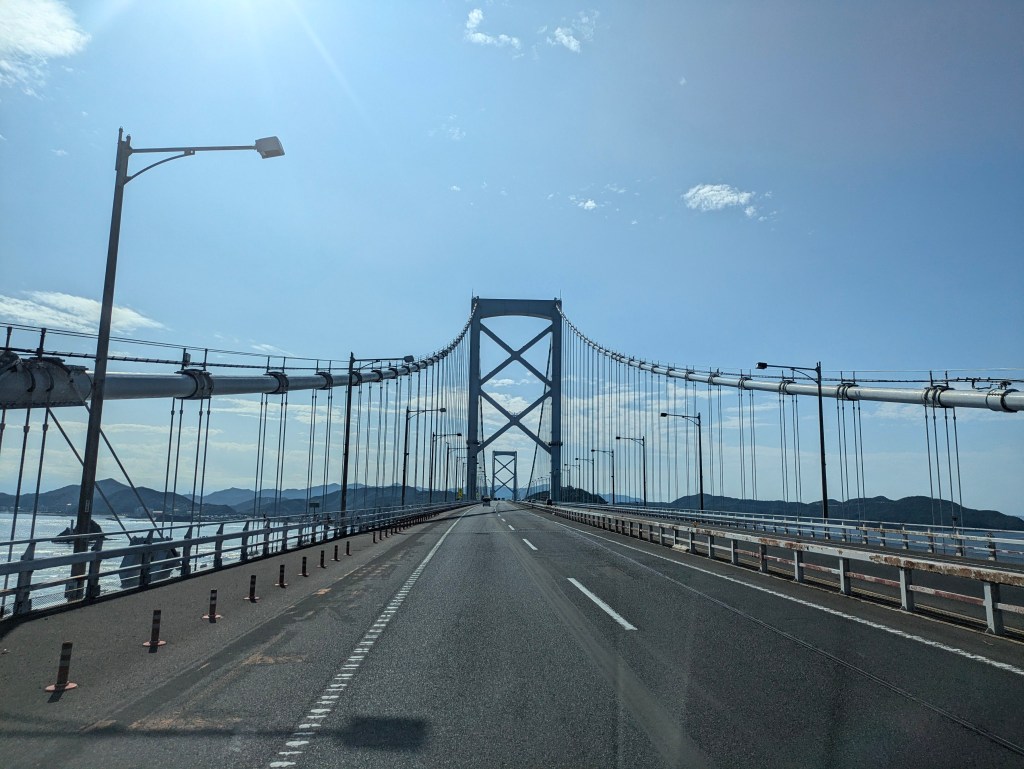
The roads were reasonably busy leaving Osaka but the drivers were courteous. The road signs were in both English lettering and Japanese symbols and best of all, the Japanese drive on the left side on the road, the same as at home. On the highway, one city blended into the next, almost without a pause. There were  some long suspension bridges linking  islands. Japan is a country of islands  and engineering. Although there are only four main islands in Japan, there are hundreds of smaller islands often used as stepping stones to join one with the other. The price for such fantastic infrastructure was pretty hefty tolls (eye-watering at times), some of which could only be paid for with cash or pre-registered toll-cards. It’s essential if you’re even slightly off the beaten track to have some hard cash in your pocket. ATMs are widely available for withdrawing yen  Many of the small family restaurants and even the bakery in Osaka only accepted cash.

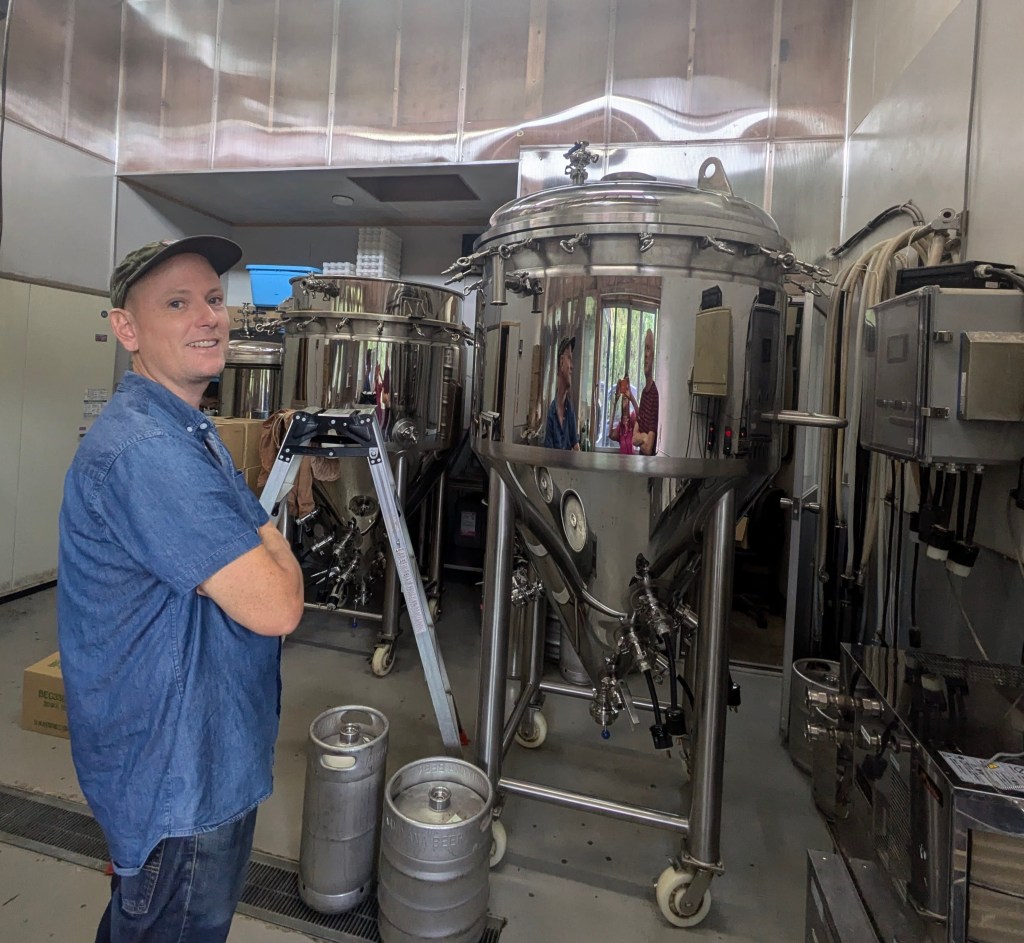
Soon the cities were behind us and we were looking at the green, tree-clad mountains of Shikoku Island. We headed to Kamiyama because we had heard that it was a rural idyll and because a man from Tramore lived there,  the son of a friend of Caoimhin’s and a fellow GiY enthusiast(Grow It Yourself). Manus had set up a small craft brewery in Kamiyama which had won awards and was open on Sundays…..a good enough reason to go in that direction. We found the brewery (Kamiyama Brewery) sampled some really great beers  and although Manus wasn’t there, there was a  campsite nearby in a glorious setting  among tall trees by a river.  We  parked our van, really delighted to be in Kamiyama.
 We met up with Manus the following day at his brewery. He and his wife, Sayaka, a Japanese artist, set up home with their two young children in Kamiyama, a small spread-out town in a valley surrounded by green,forested mountains. It also has an unexpected vibrancy, rural but not sleepily provincial. There was even a bakery selling sourdough baguettes. Manus and Sayaka came about ten years ago to participate in an artist’s hub that was being set up in the town. They were so charmed by the place that they stayed. We could certainly see the appeal.

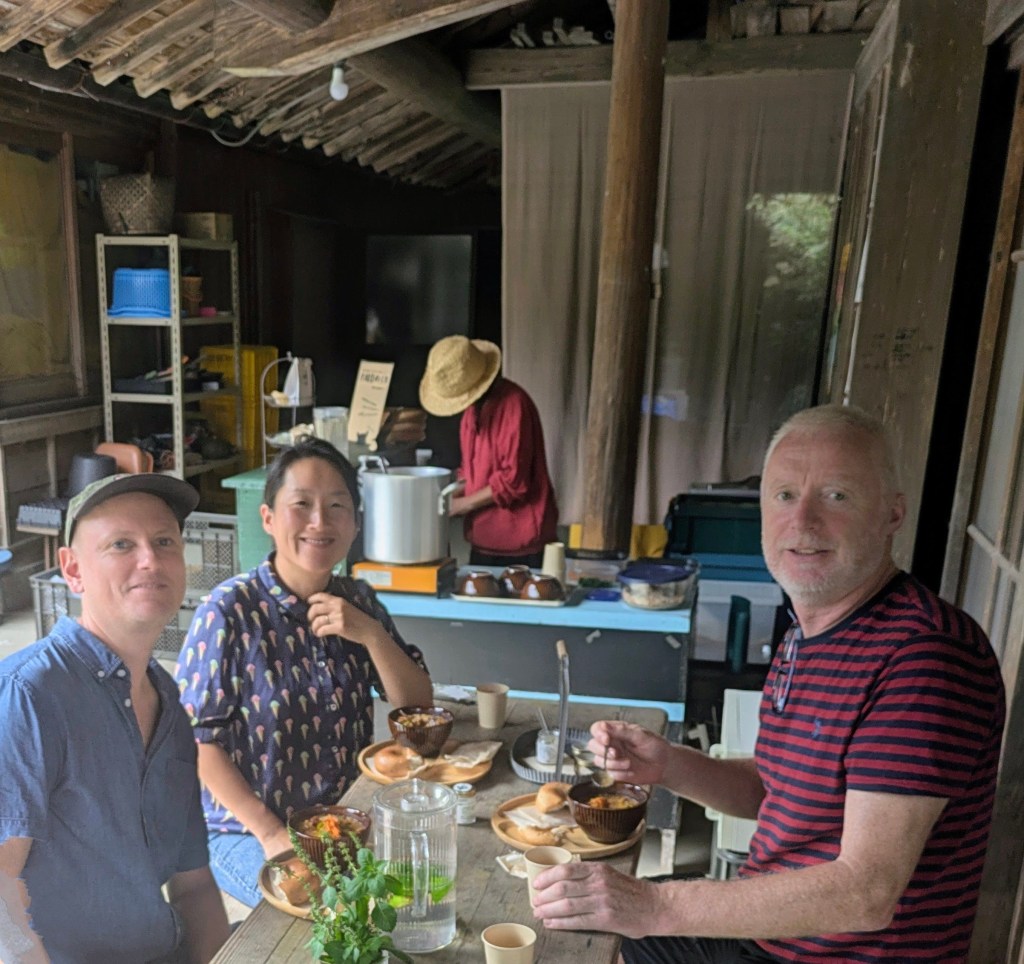
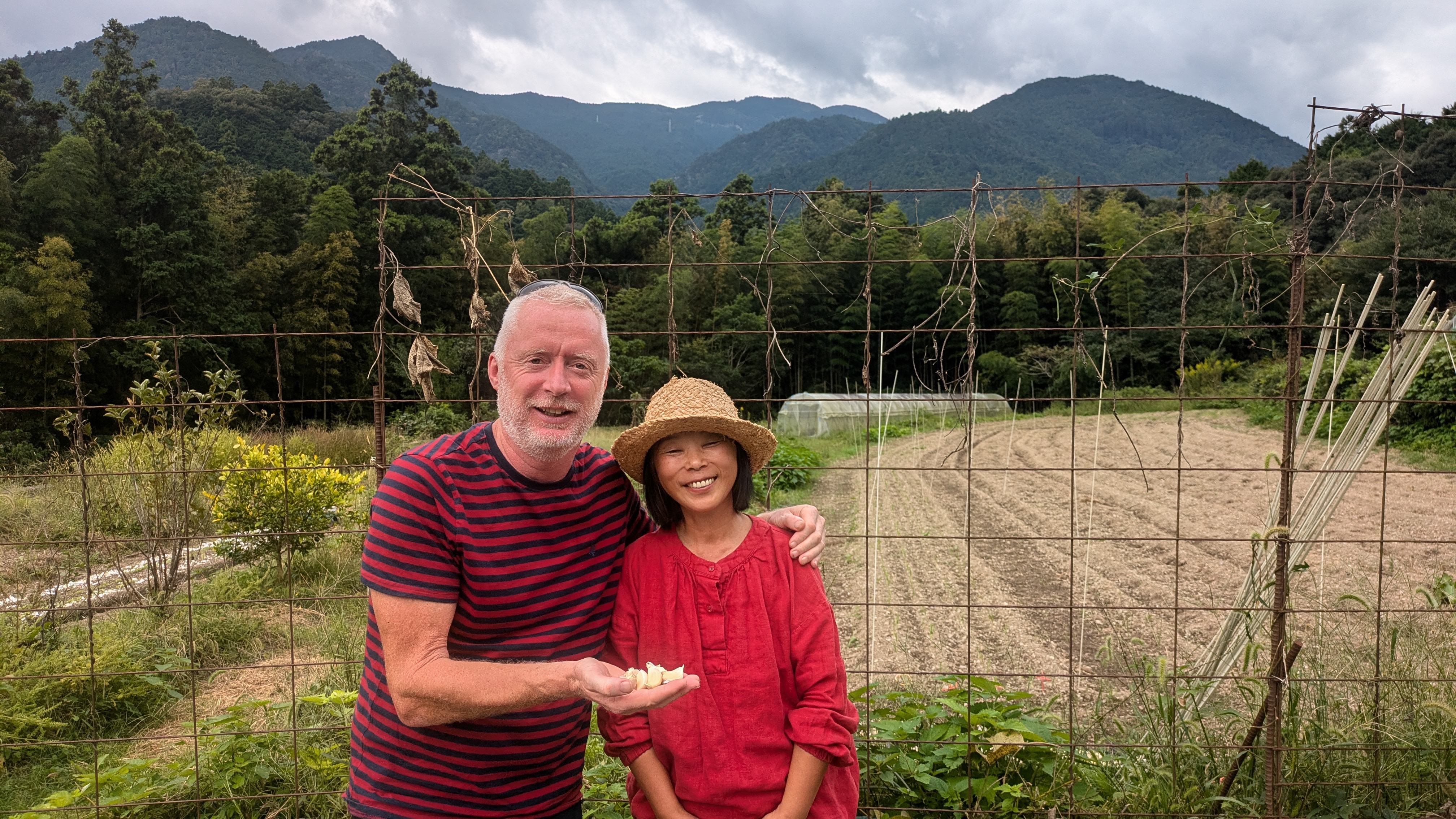
Manus and Sayaka were so lovely,  giving us lots of useful tips for our trip and treating us to lunch at a pop-up restaurant where every Monday, a local organic farmer makes a big pot of curry using her own produce, sets up a table or two outside her house and sells a delicious lunch. The farmer-cook was also funny and charming, and very proud of her home-grown garlic(like Caoimhin). So many Japanese rural towns are dying because of an aging population and a rapidly declining birth rate.  Kamiyama is bucking the trend with an influx of younger people looking for a better, more sustainable way of life.  Many companies based in Tokyo even have an outreach office in thriving Kamiyama, which has  just built a large Polytech school which should encourage more people come and stay in this beautiful area.

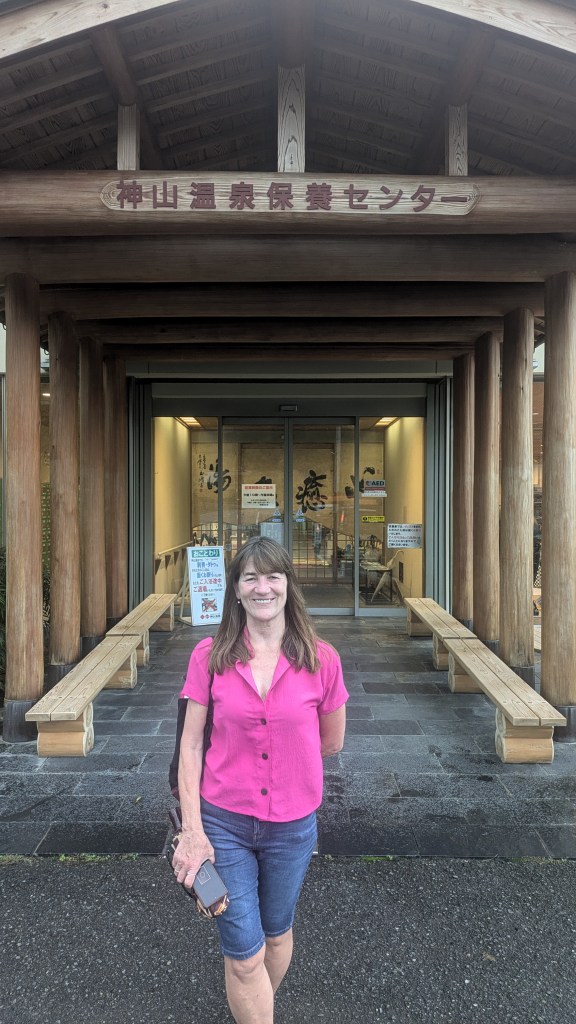
The Japanese love their Onsens, hot spring thermal baths which are found all over the country. These are much more than a place to have a good soak, they are  part of Japanese culture. There was an onsen down the road by the river from our campsite so we decided to visit. At the entrance, there were many signs in Japanese which we didn’t understand  but there was also a drawing of a tattooed torso with a big x through it, informing clients that anyone with tattoos wasn’t welcome. Leaving our shoes in a locker inside the door, we entered a large foyer with a  pale-green carpet and a long counter where we paid the entrance fee (about €3) and rented some tiny white towels. I walked through the red curtain for the women’s section while Caoimhin disappeared behind the blue curtain. It was quite intimidating. I wasn’t quite sure what to do although Manus had given us some instructions.  It was mid-afternoon, a quiet time at the baths,  I was by myself in the large changing room so I couldn’t follow the example of anyone else.

I stripped naked and holding  my little white towel (slightly bigger than a handkerchief) i pushed through the swing door into the onsen. The air was hot, humid and slightly steamy , there were two elderly nude women sitting on chairs inside the door, with the tiny white towels folded into a square on their heads. I knew that it was important to wash before going into the baths and that foreigners are often scrutinised to ensure that they give themselves a thorough soaping and that they rinse off the soap properly. A woman covered in soapy suds sat on a stool in front of a mirror and used a spray-hose to rinse her body. Then she filled a small blue plastic basin with water, stood up and threw the contents on the stool and floor a couple of times before waddling towards one of the bubbling baths with the little towel folded on her head.  I sat on another small stool and did likewise. The little towel is for wiping yourself down after the bath but etiquette demands that  it should never touch the bath water. That’s why it is folded on the head or left on the side of the bath.

The water was hotter than expected when I slid into the bath (no splashing allowed) and it took a while to get used to it  but soon I was relaxed…..and very shrivelled.

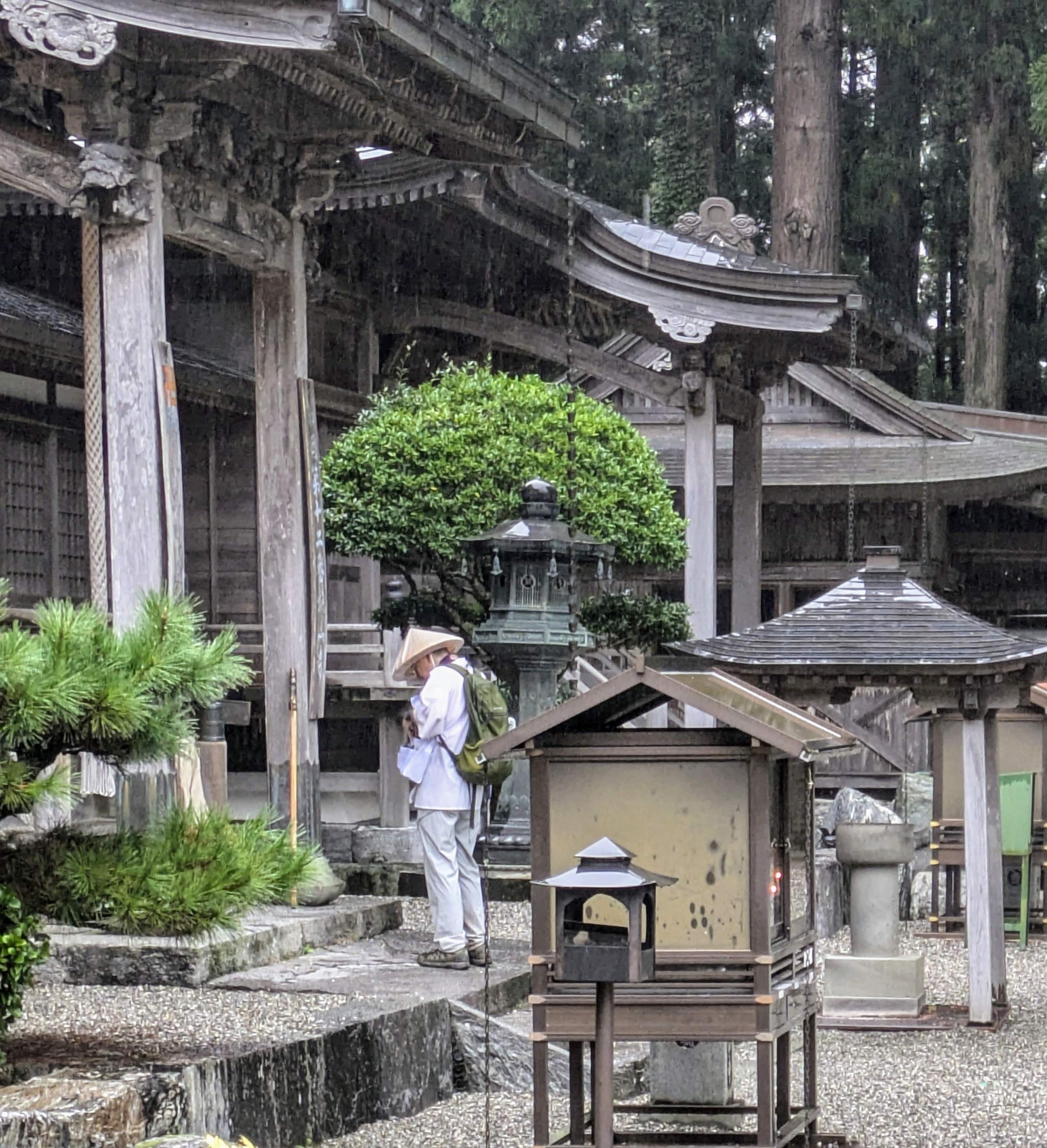
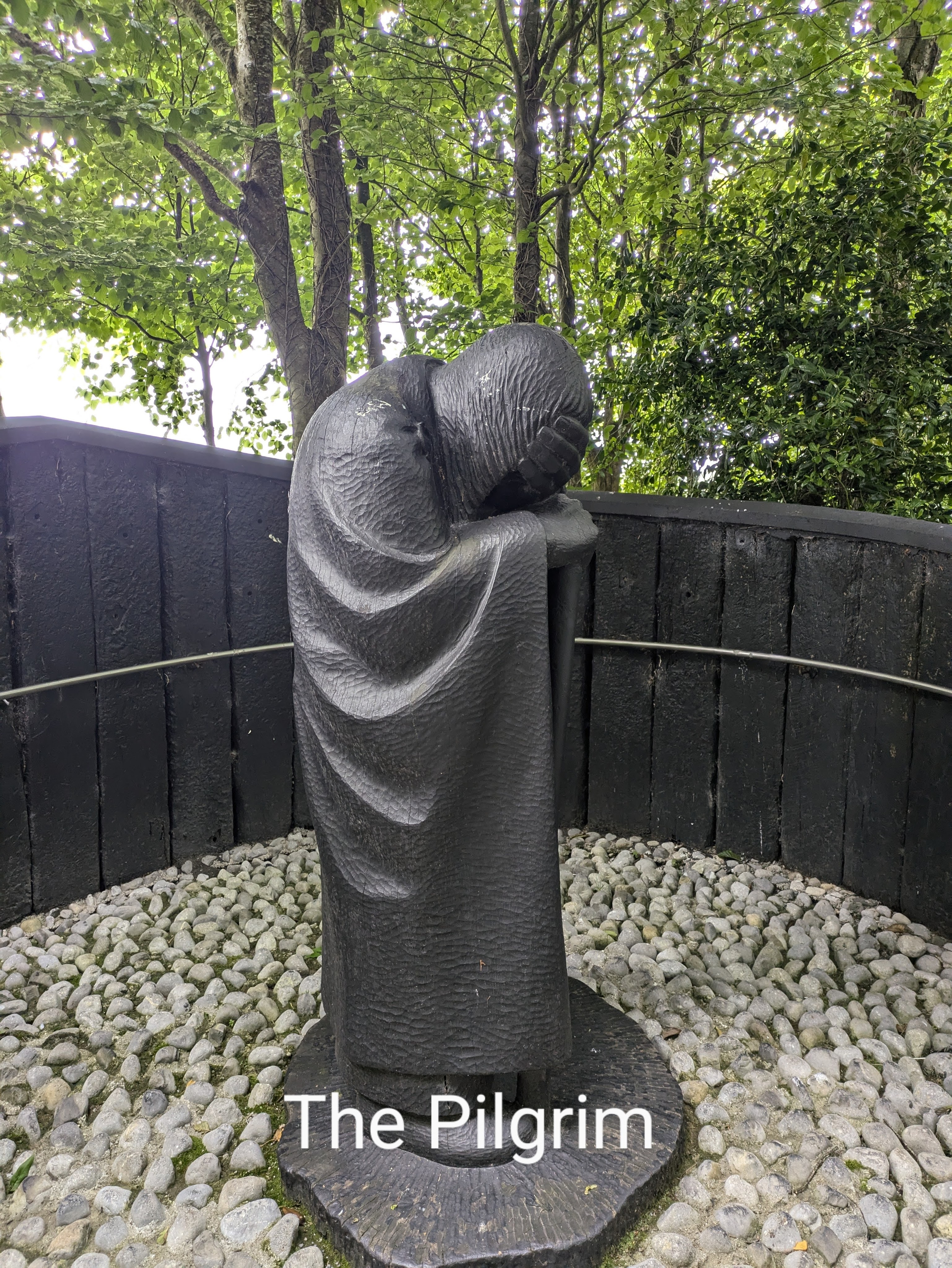
A Pilgrim Prays

Kamiyama also has another attraction. It is on the famous Shikoku pilgrimage of the 88 Buddhist temples. This is a circuitous route, about 1200kms long around the island of Shikoku. Pilgrims are very recognisable by their conical hats, white robes and wooden staffs. We had seen a few walking (and hobbling)  along  the roads. Hopefully in the next week or so, we will visit some of the eighty eight temples either by walking or by campervan and find out more about this ancient pilgrimage
Apologies for such a long post …if you reached this far, thanks for your stamina.

じゃあね。Jāne.

‘Till next time🥰

Journey to Japan✈️✈️

Tory Island – Timeless and Tantalising❤️

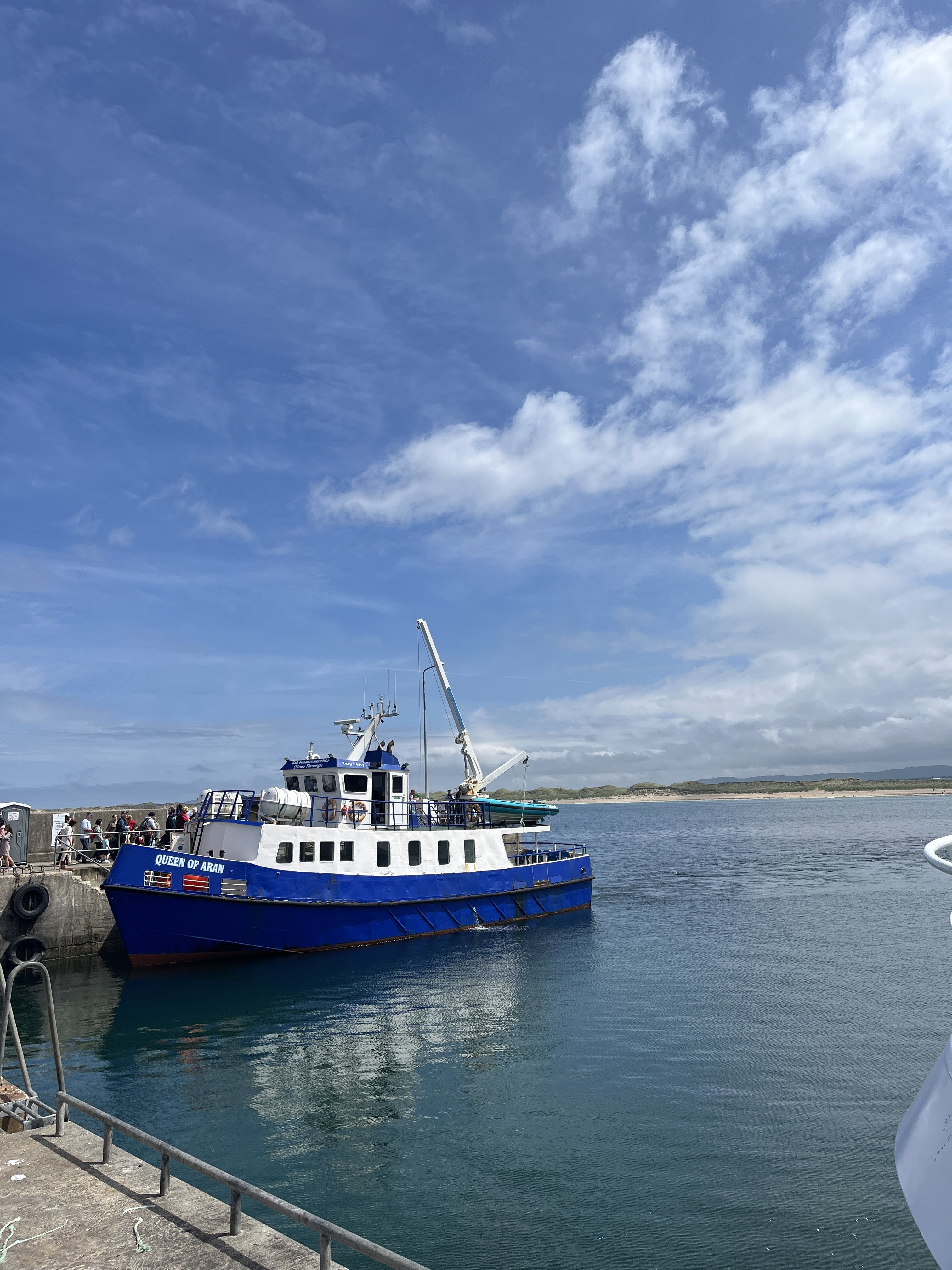
Tory Ferry at Magheroarty

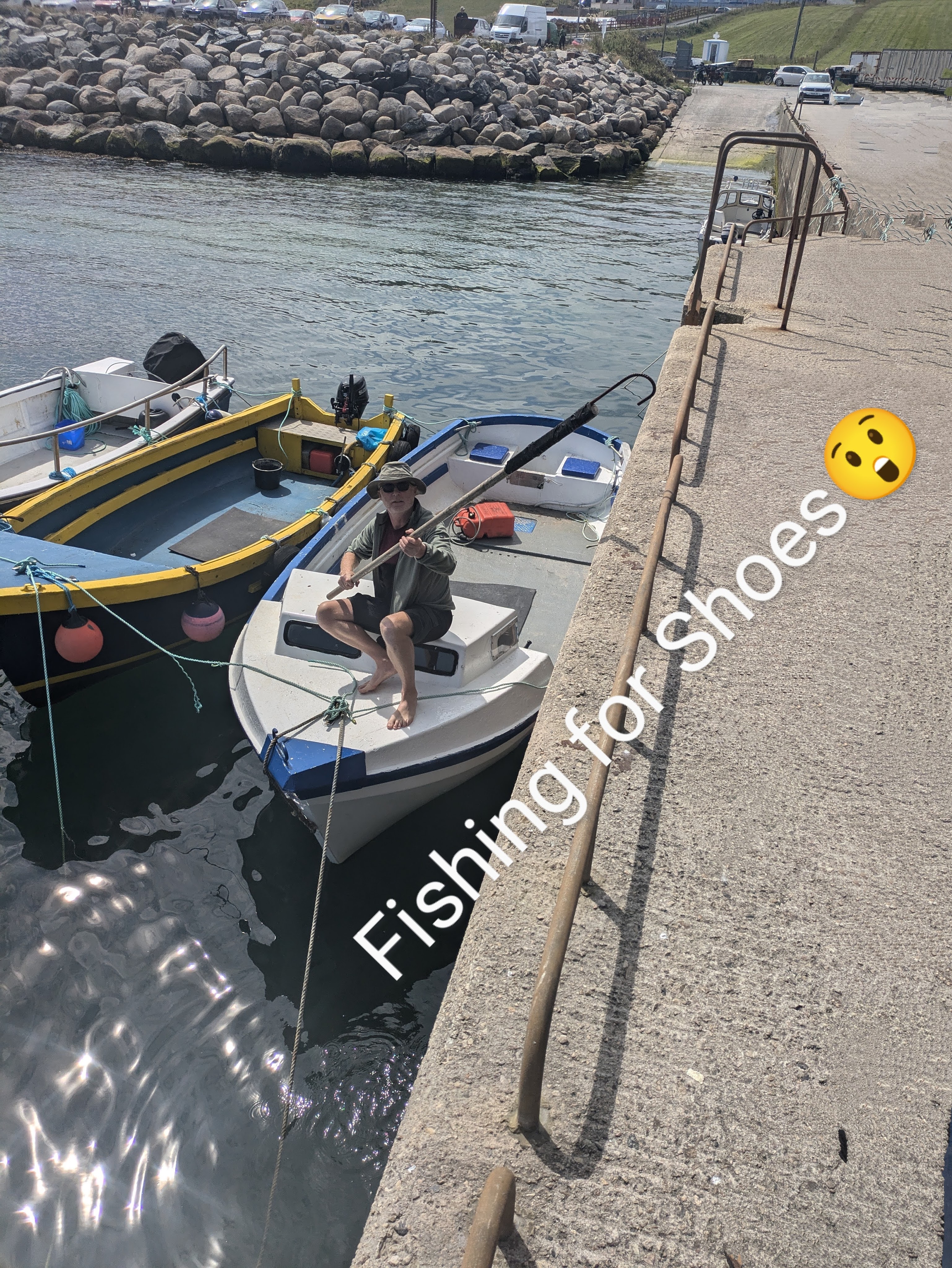
On a sunny July Sunday, we parked our van in Magheroarty in North West Donegal and walked down the pier to the small passenger ferry to take us to Tory Island, the most remote inhabited island off the Irish coast.  We were laden down with bags, mainly of rattling provisions (i.e. wine😀) for our three night/four day stay on the island. Although we had read online that there was a shop on Tory, it was recommended to bring as much as possible with us.  As we walked to the boat, Caoimhin kicked his sandal vigorously to release a pebble lodged under his foot – a little too forcefully because the sandal sailed into the air and landed in the water where it bobbed with the seaweed 😮. He ran down the pier steps to where a small  boat was moored, grabbed a hook and managed….eventually… to fish his footwear out of the water just before the ferry departed.

After that excitement, the boat journey was uneventful. We had booked our ferry tickets online the previous week for the 1pm crossing but we could have bought them at the little office on the pier. There was plenty of space on the boat, the inside seating area was virtually empty, most people opting to sit or stand at the railing outside on the deck. The boatman told us that the first sailing in the morning from the Margheroarty pier and the last sailing in the evening from the island were the busy ones as most visitors were day trippers.  

The  fourteen and a half kilometer journey took forty five minutes and luckily for us, the wind was light and the sea was glass-smooth, not always the case.  There was a time in the 1970s when the island was completely cut off for eight long weeks due to continuous storms and tumultuous seas. Some islanders left after that harsh winter to set up home on the mainland, only the hardiest and most resilient can survive out on the very edge of the world.

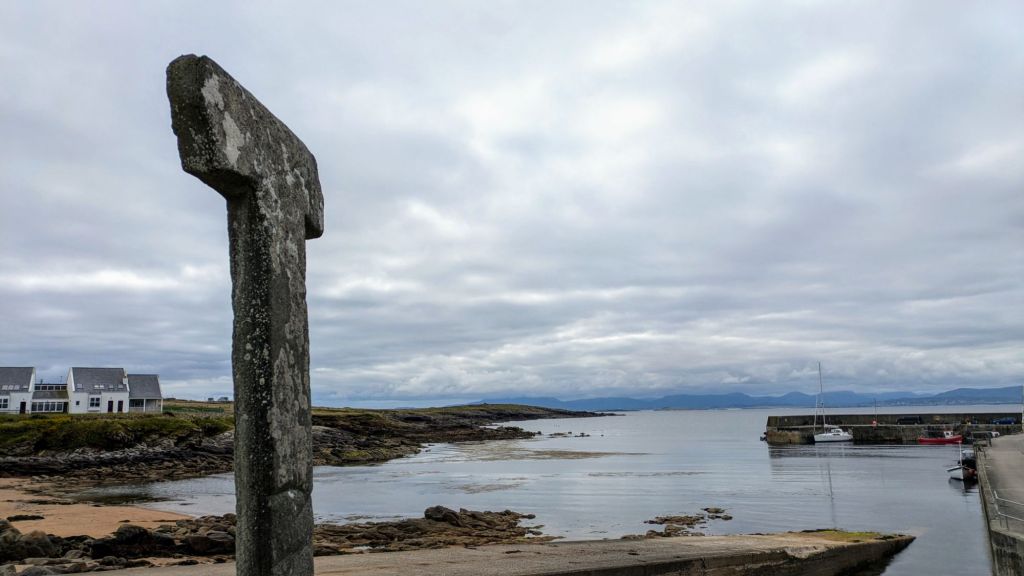
 The Donegal coast was still visible when we disembarked on the island but the mainland felt faraway, as if we had arrived in a remote timeless place. A couple of men were mending fishing nets in the harbor under the shadow of a Tau Cross,  a large ‘T’  shaped structure made of a single slab of mica slate and a form of crucifix  associated with early  Greek Church.  As mica slate is not  found on the island, the cross must have been made elsewhere and brought to the Island sometime during the 12th century. Over the years it has become a symbol of indestructibility and it is the custom to pray to it for protection before heading out to sea.
Silhouetted against the blue sky and visible from the harbor was the round tower, all that remains of the monastery founded by St Colmcille in the 6th century. It was evident that a variety of visitors have been coming to Tory since the earliest times, saints and scholars, pirates and adventurers, artists and fishermen. Although we now regard the offshore islands as very isolated places, in an earlier era when transport was by sea, they were actually the centers of commerce and learning where goods and ideas were traded and it was the mainland that was a forbidding densely-forested, barely penetrable place.

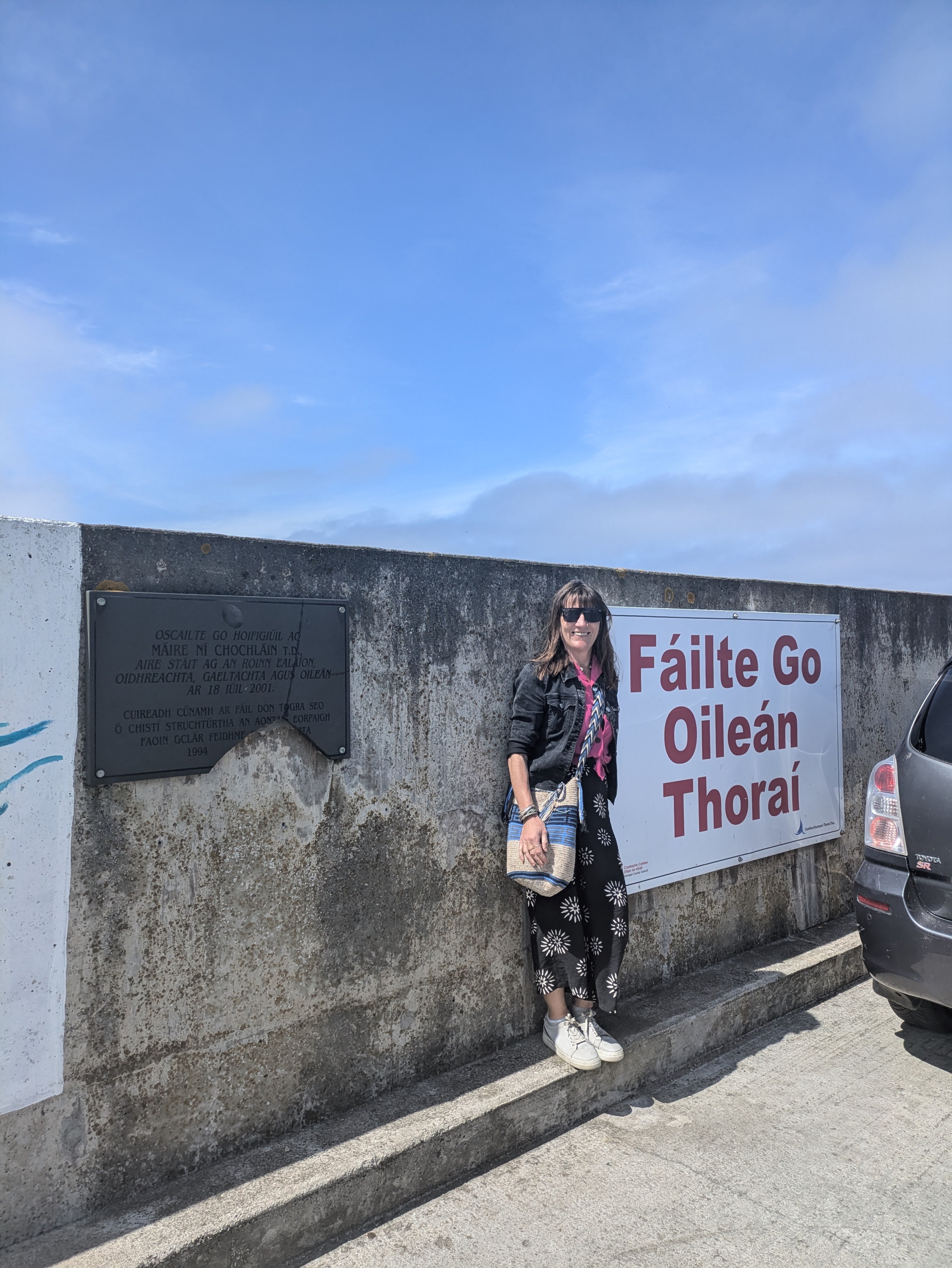
Our Airbnb was a stone’s throw from the slipway where the ferry docked in Baile Thiar (West Town), which was convenient for hauling our heavy bag of clinking luggage.  Our large bedroom window looked out both over the sea and the walled graveyard, nice juxtaposition of life and death. Four of us stayed in the rented house and the other five stayed in the Tory Island Hotel (Óstán Thoraí) which was two minutes’ walk away and overlooked both the pier and a sandy beach.

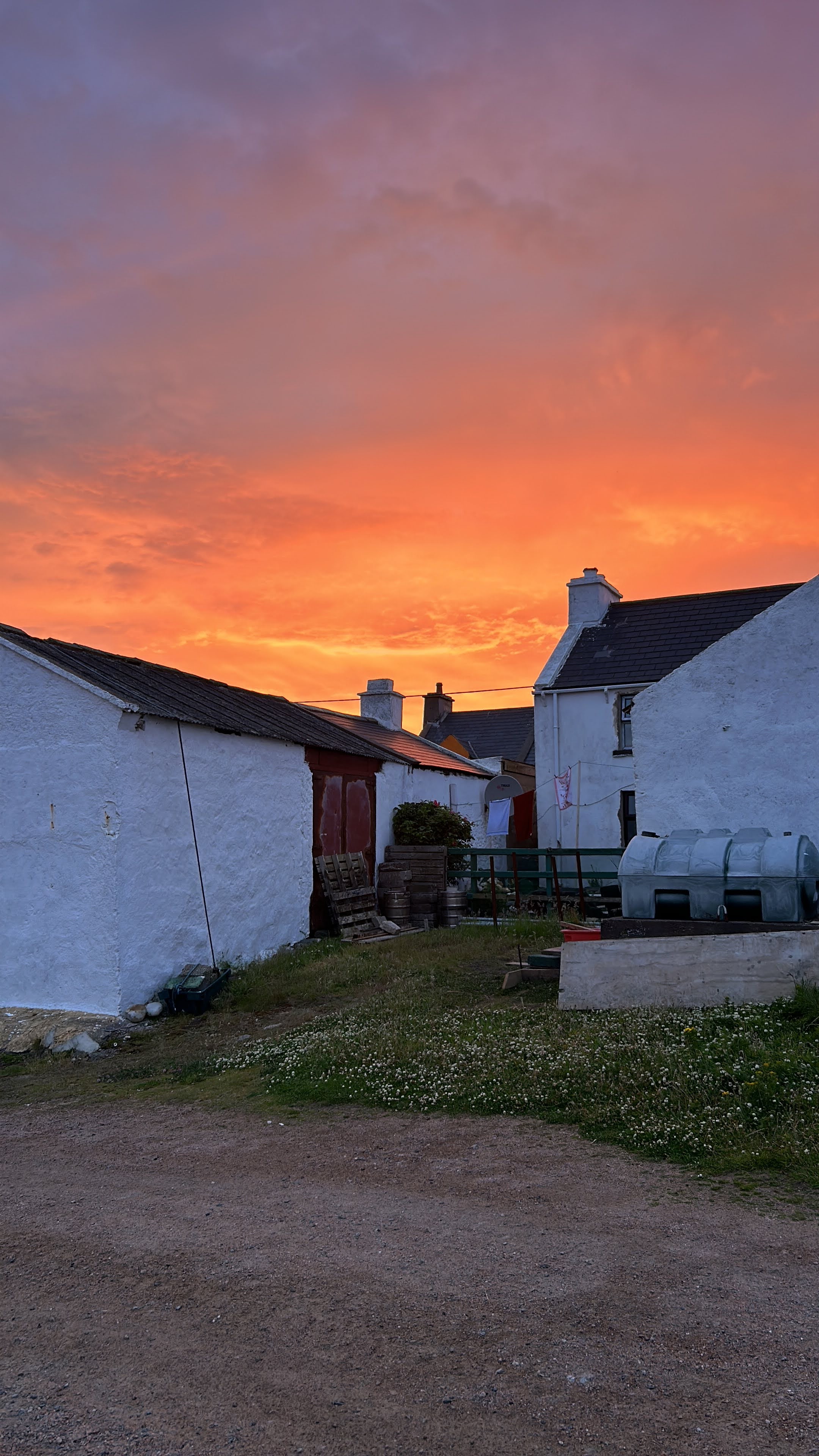
This was the first visit to the island for all nine in our group and we were really lucky with the weather. Locals told us that we had arrived on the first fine day of the year and the sunshine continued during our visit with spectacular sunsets until our last day when clouds rolled in and there was a spattering of rain.

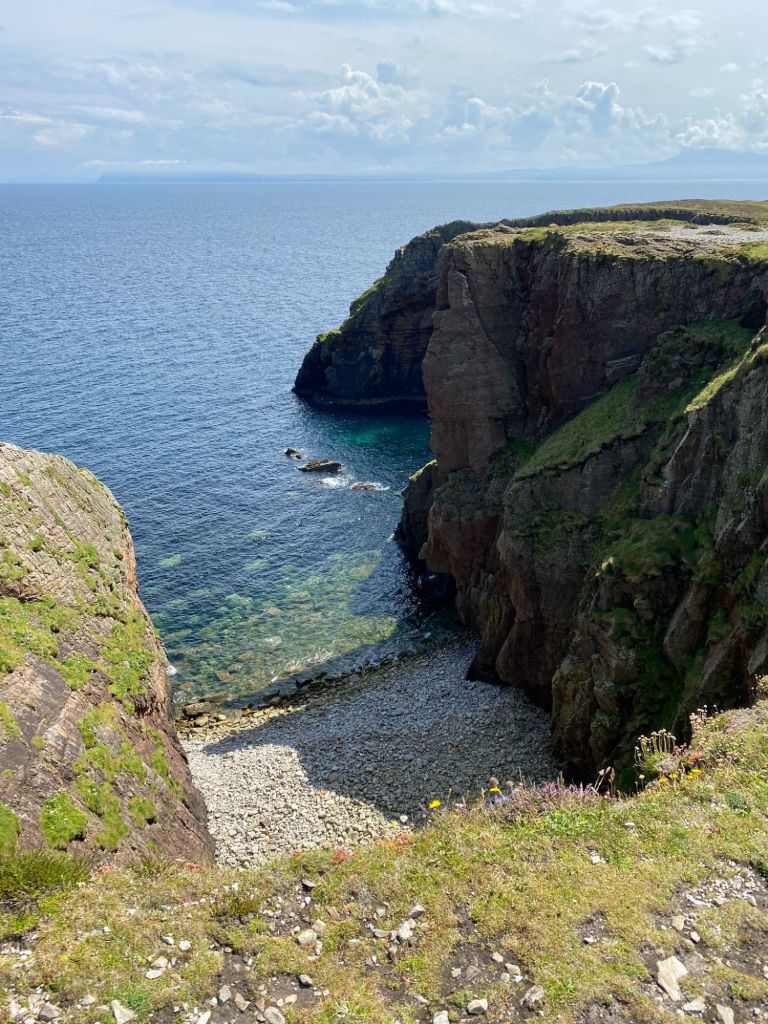
Tory is a small island, about three kilometers long and a kilometer wide flanked by high sea cliffs at the eastern end (Tor Mor) and a lighthouse at the flatter western end. At the last census (2022) the population was 141 but it has a secondary school with a total of five  pupils. An expected intake of four additional pupils in first year this September will be a big boost.  Baile Thiar where we stayed has the largest center of population with the hotel, church, craft shop and a grocery store which  also doubled as the post office. Most other houses are clustered  in Baile Thoir (East Town)with an occasional house dotted around elsewhere.

Tory Island is a paradise for birds and wildlife.  Although it is virtually treeless because of the high winds, there was a myriad of grasses and colorful wildflowers, orchids, heathers and an abundance of biodiversity.  Rabbits scampered in the early morning and evenings, a pair of swans and a raft of ducks swam on the lakes. The human population may be small, but the bird population is huge with large colonies of gulls, terns, pipits and oystercatchers. It is an important breeding ground for corncrakes, from now on I will always associate their distinctive call, so like a creaking door, with Tory.   We could even hear it from our kitchen table and it is a sound which has virtually disappeared from the rest of the country.

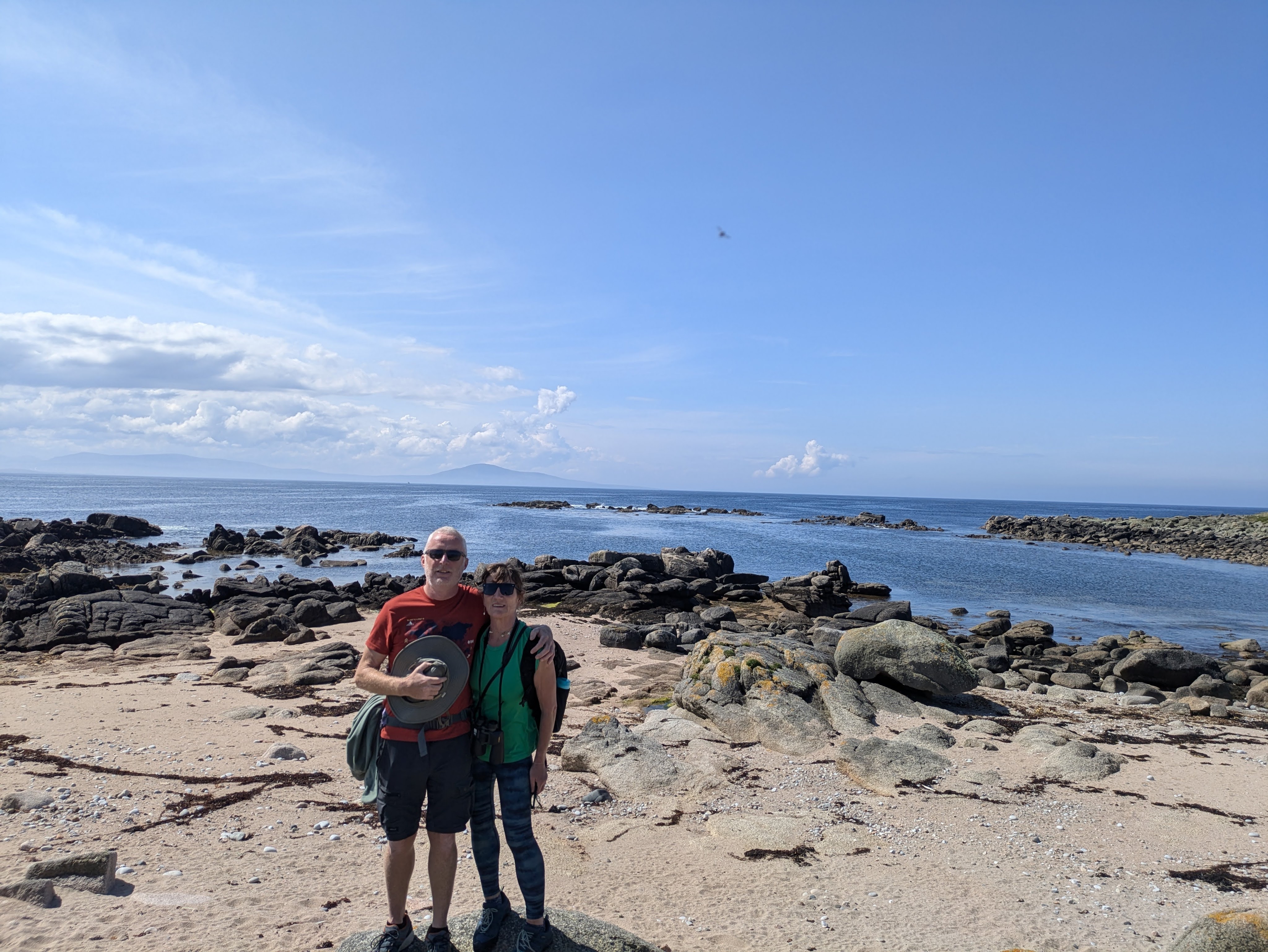
Bird Watching on Tory in Sunshine

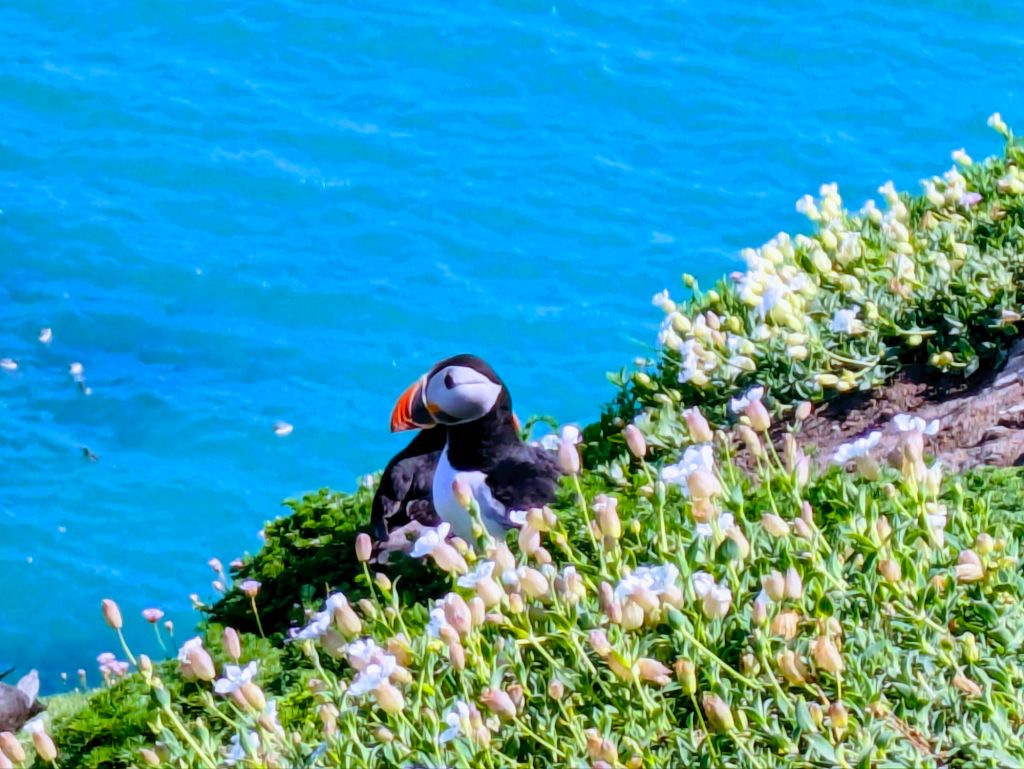
At the eastern end of the island, we spent a couple of hours watching hundreds of puffins on the grassy slopes beyond a rock called the Wishing Stone. It seemed to be  flight school  for the young  pufflings, it was hilarious watching the aborted take-offs and the crash landings on the cliff.

After exploring the island on foot, we took to the seas and hired a boat for a trip around the island which departed from the harbour at West Town. Our captain was also the only farmer on the island, rearing  sheep at the eastern end of the island.  He was accompanied by his two young grandsons, one who attended the island  primary school and the other in secondary school. The family spoke Irish together but switched seamlessly to lilting English when chatting to us.

                 The sheer cliffs were even more majestic when seen from the water  with an incredible diversity of coastal erosion features – sea stacks and arches, sea caves and blow-holes and very long, isolated spurs of rock jutting out into the ocean.  From a distance, some rocky features seemed manmade but the granite outcrops are natural, formed by differential weathering of  the granite bedrock. Many of these have local ‘rock’ names (Tór Mór, The Big Key, The Anvil, The Wishing Stone, Balors Fort, Balors Prison, and The Cave, among others). Some of the names refer to the mythological Balor of the Mighty Blows – a one-eyed king whose eye was so evil that it had to be kept covered.

The seas were teeming with bobbing puffins and a few guillemots and razorbills. Earlier in the year (May and June), there were sightings of basking sharks patrolling the coastline for plankton but we didn’t see any on our trip. Although it was a calm day, the seas were surprisingly rough with surging sea-spray as we rounded the western end near the lighthouse, a tiny taste of what it might be like in stormy weather.

Tory has many swim spots apart from the beach at the harbour. On the east of the island at Port an Duin, right at the end of the road, two green-watered beaches frame the narrow land bridge leading out to Balor’s Fort . On the north side of the island near the hut where the artist Derek Hill painted, there is gorgeous Portín Ghlaí, which has steps cut into the hillside for easy access. Swimming every day in different spots  was ‘refreshing’, an euphemism for very cold. The water was beautifully clear, perfect for trying to avoid the jelly fish who also seemed to love the sea around the island

From our Airbnb near the harbour, we watched the rhythm of the island, the comings and goings of visitors and locals, the ferry bringing in people and supplies, practically everything has to be brought from the mainland. We watched crates of beer and coca cola, vegetables and washing powder, being winched from the ferry by a small crane and deposited on the pier. There is no fuel on the island, the land has long been denuded of turf  and there was little evidence of any cultivation. Fishing, except for lobster, was no longer a profitable practice as fish are relatively scare because of over-fishing in the past. Apart from the hotel which did good food at lunch and dinner time, there was the Club which served basic pub food all day- we can vouched for the pizzas which were delicious.

The King of Tory, Patsy Dan Rogers passed away in October 2018, after a long-term illness aged 74 and is buried in the churchyard. He was known to greet most ferries to personally welcome visitors to the island and is still  greatly missed

Tory is a timeless place, it feels bigger than it actually is, further away from the mainland than it actually is, steeped in history and mythology, attracting people looking for contemplation and solitude, music and art, wildlife and nature.

Truly…. Tory Island is a special place

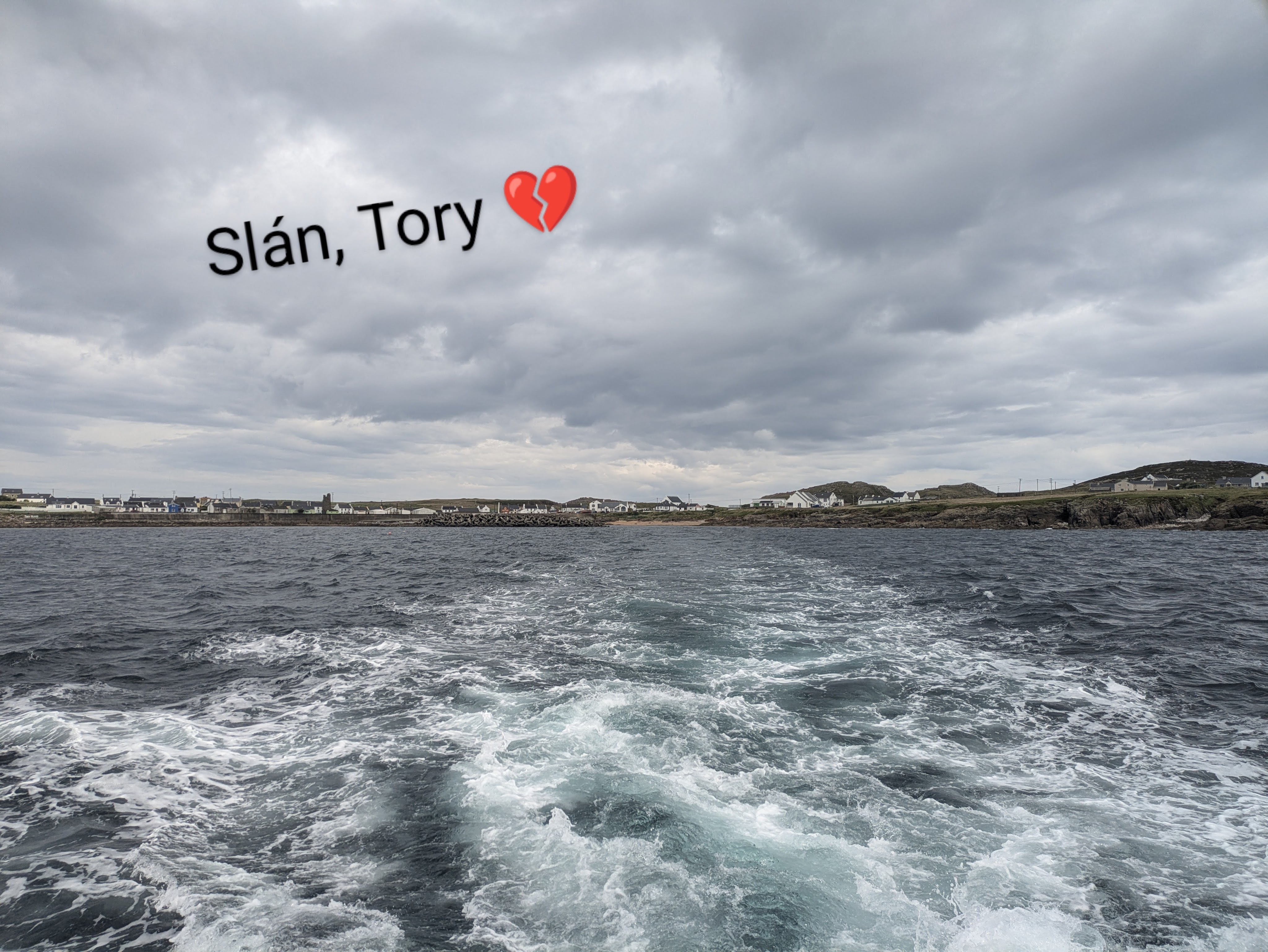
 Slán go fóill,  Toraigh

Sunsets and Corncrakes

Tory Island – Timeless and Tantalising❤️

Old Rail Trail Greenway – Cycling in the Midlands

The Midlands is an area of Ireland that is seldom a destination in itself, usually it’s just a region to pass through on the way to somewhere more exciting. But the heart of Ireland has a lot to offer as we discovered when we visited the area and cycled the Old Rail Trail Greenway which links the River Shannon in Athlone to the Royal Canal in Mullingar this week.

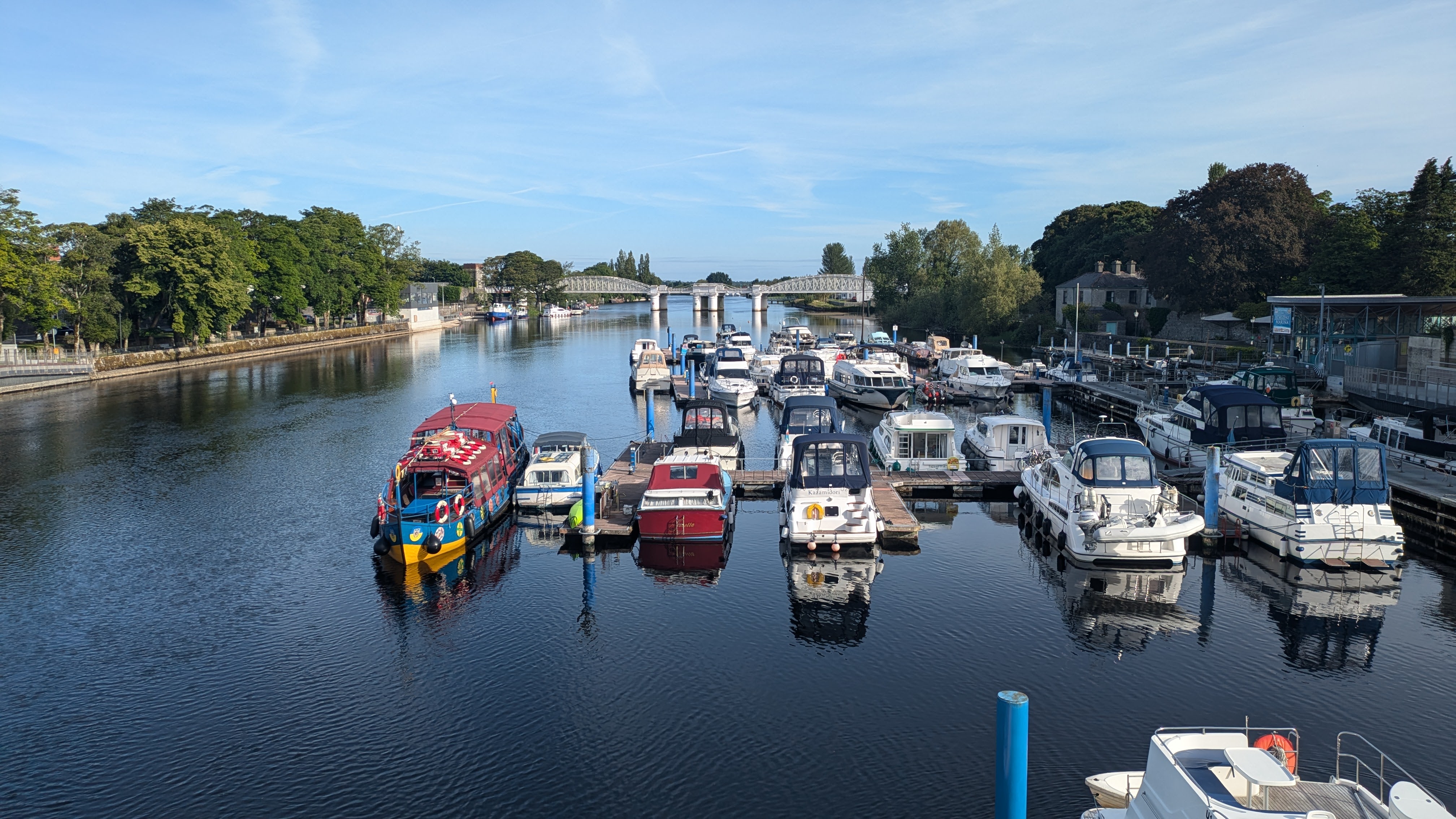
The Shannon, Athlone

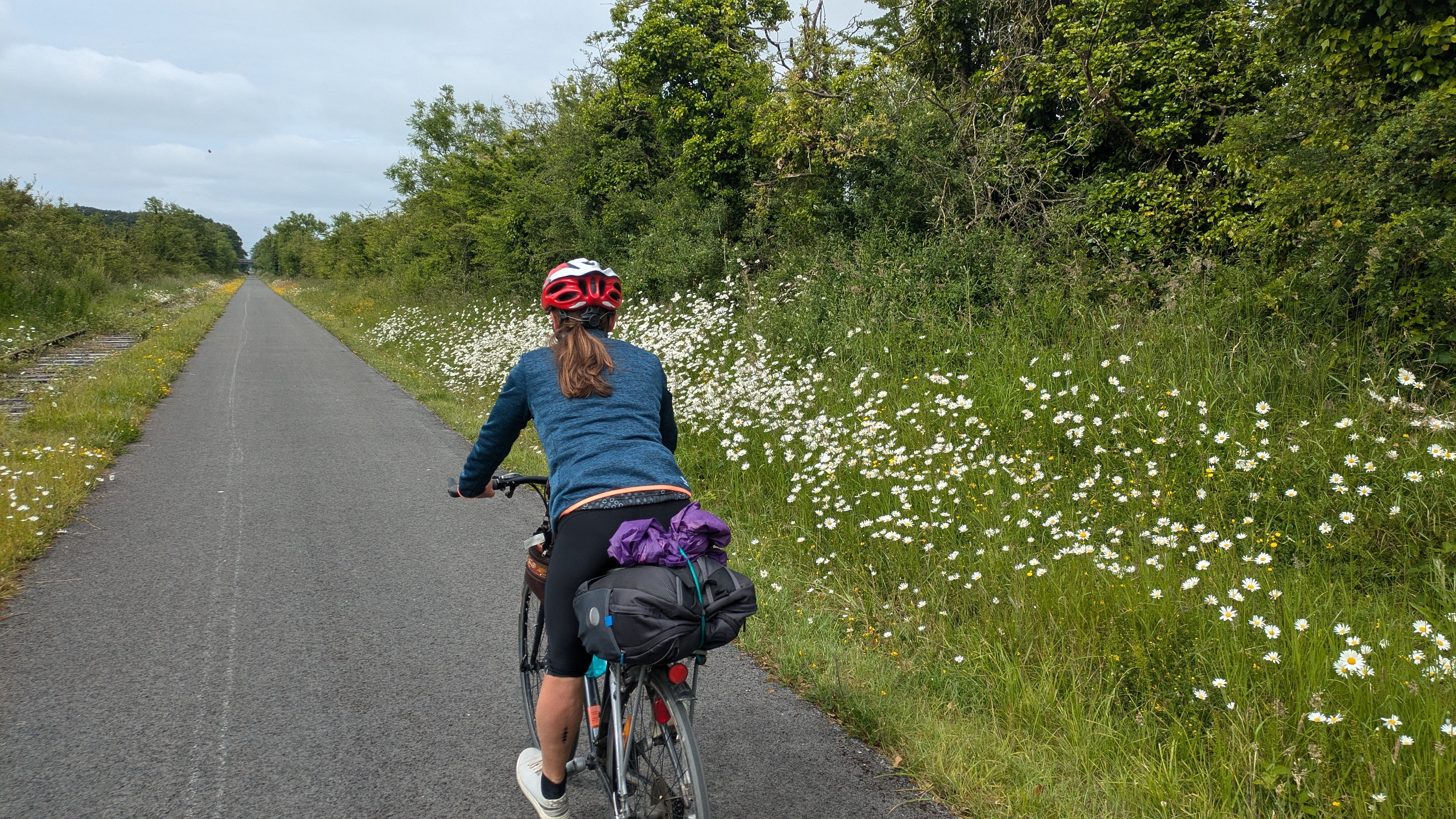
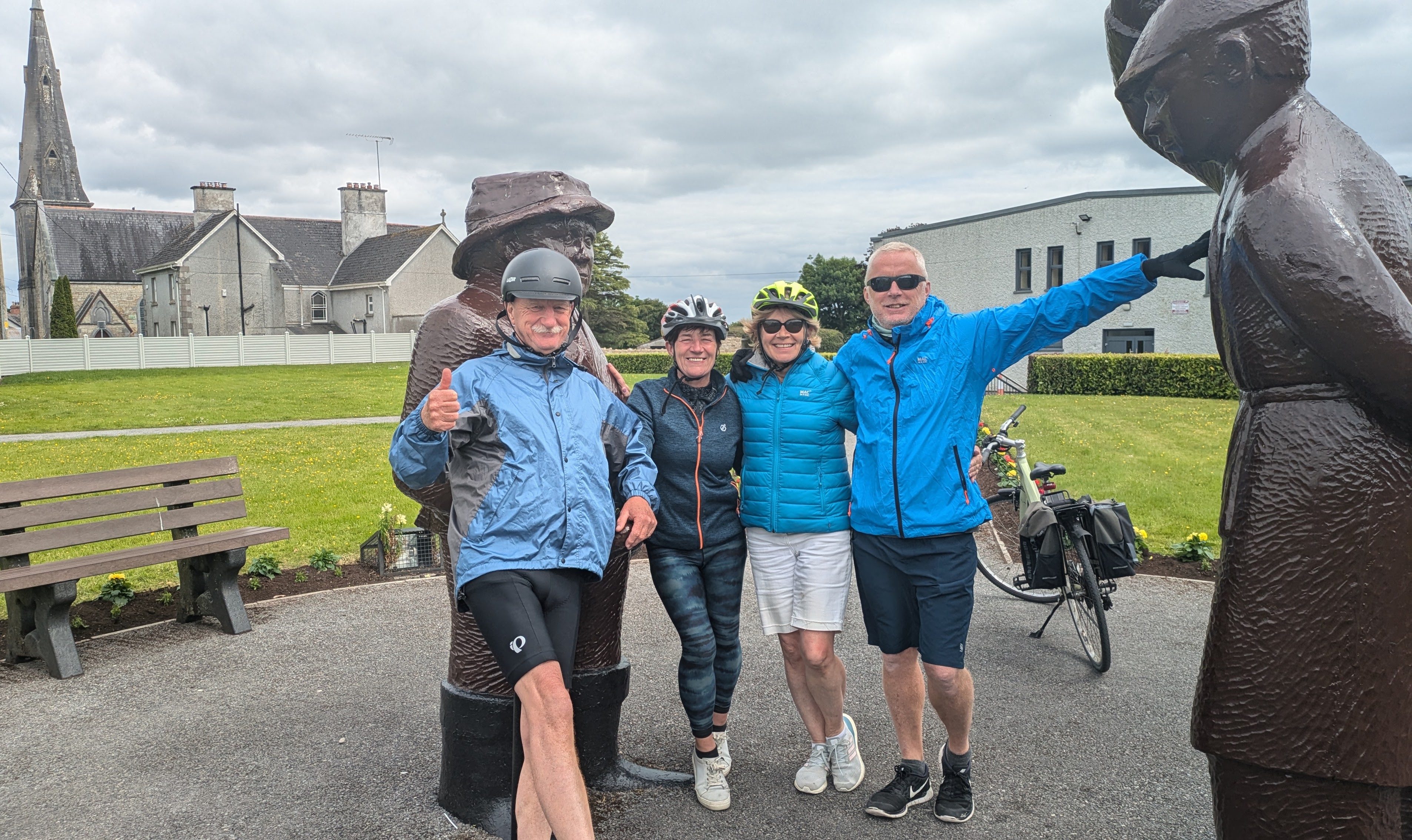
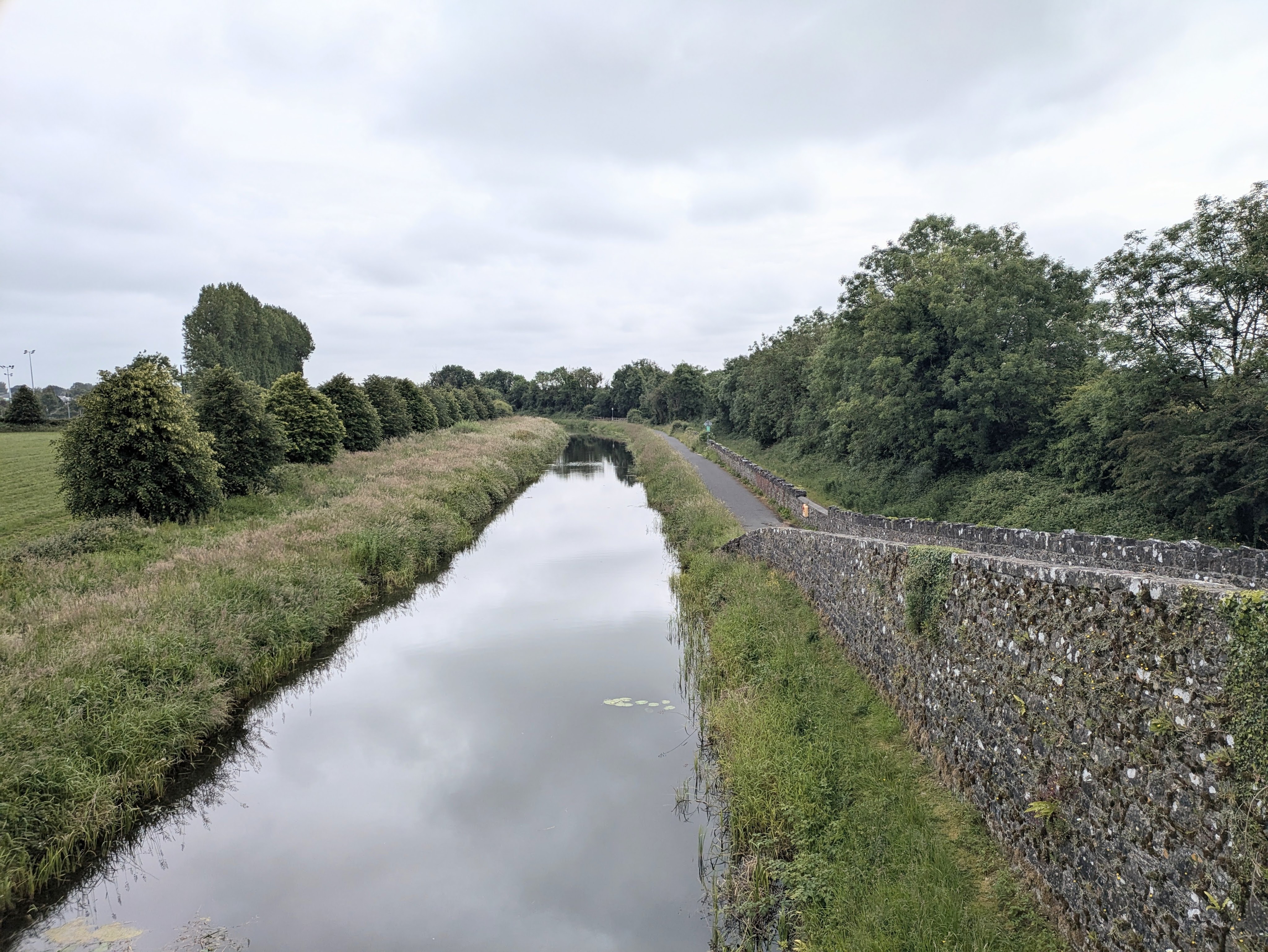
This greenway is 43kms on a flat paved and wide path along a converted stretch of the Midlands Great Western Railway which makes for lovely leisurely cycling or walking and is suitable for everyone. We met a 95 year old local man who walks a couple of kilometres on the Greenway every day and credits this for his good health.  Although I hadn’t been on a bike for about two years, I was pleasantly surprised at how relaxed and easy it was.  

Easy- Riding, Old Rail Greenway

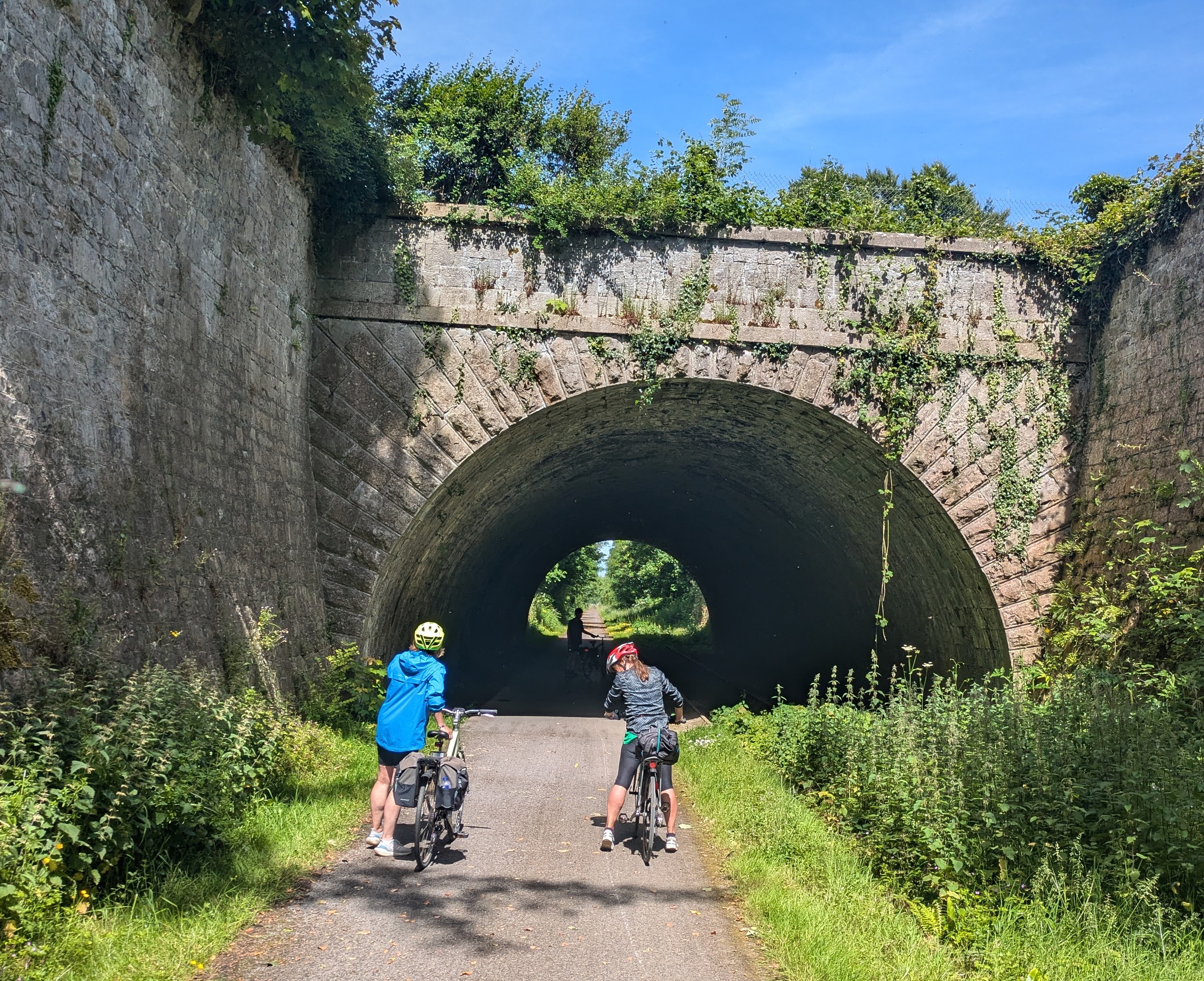
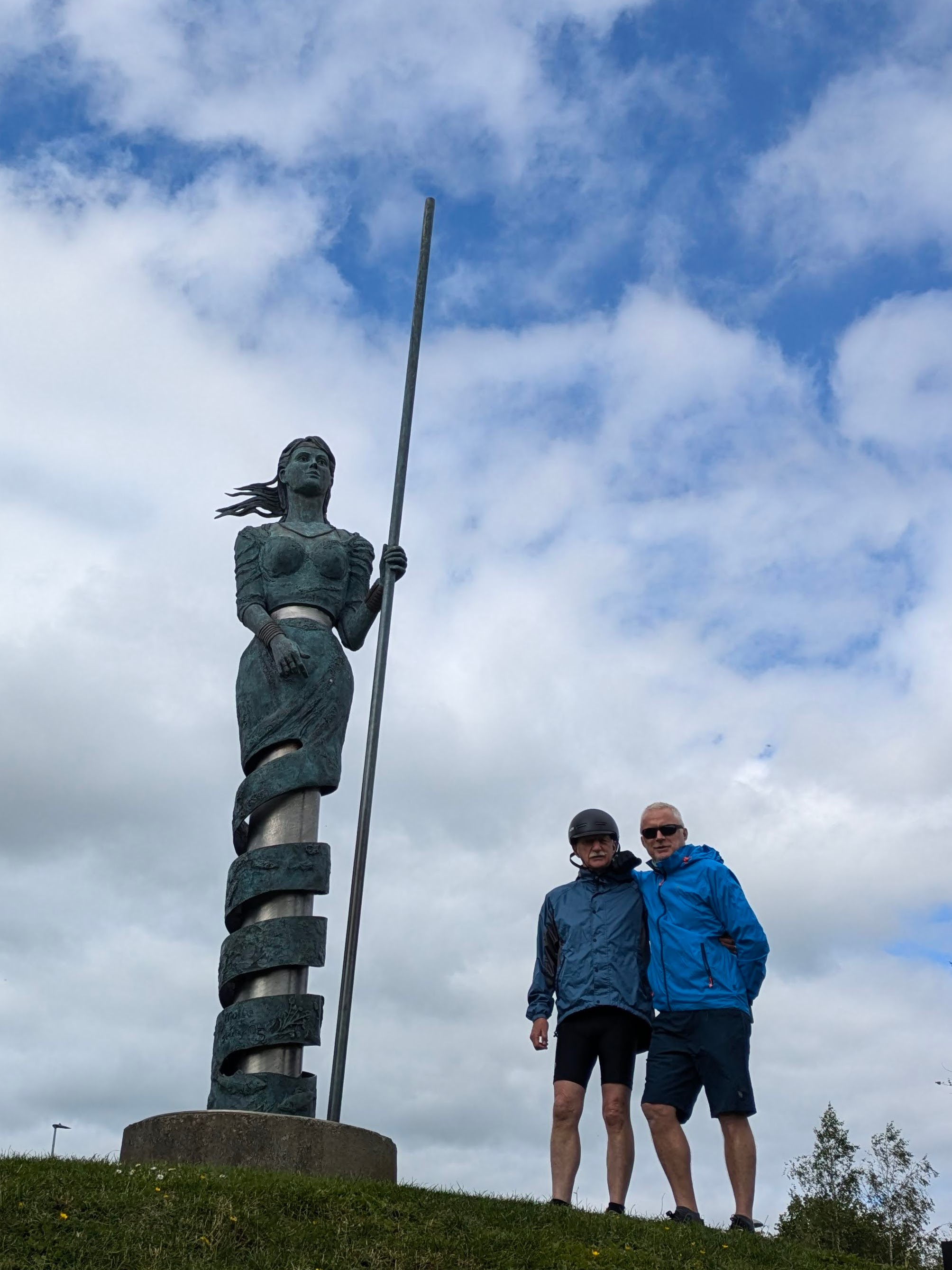
It was very quiet mid-week with just a few other cyclists and the occasional dog-walker.  Most of the time, the only sounds were birdsong, the whirr of our tyres and the infrequent hum of a tractor working in the fields. The verges were full of  perfumed wildflowers, banks of ox-eyed daisies, buttercups, hawksbeards and ferns while elder trees flowered overhead. We cycled under lots of arched stone bridges and along by frequent storyboards telling of the flora, fauna and the history of the area including some complex characters like Sara Kelly, a woman who went from being a destitute unmarried mother to the richest female landowner in the British Isles and who was murdered in Ballinderry, Moate in 1856 probably by some disgruntled tenants that she had evicted.  

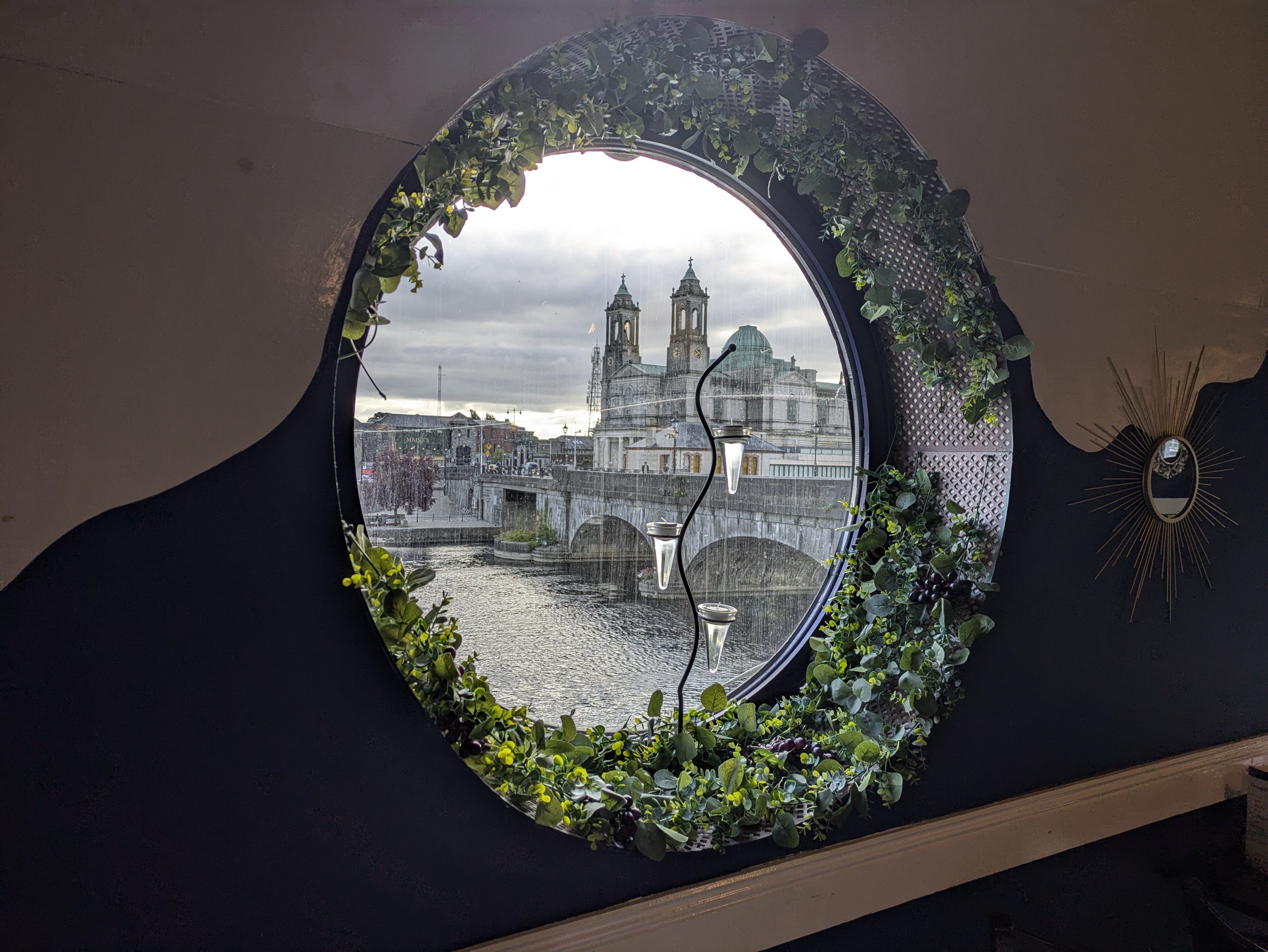
We spent our first night in Athlone,  a town on the Shannon that is full of history. It even boasts the oldest pub in Ireland, Sean’s Bar, a low-ceilinged watering hole with lots of snugs and walls adorned with photographs, maps and memorabilia. It claims to be a thousand years old and the barman told us that some tourists visit Athlone solely to have a pint in Sean’s Bar or to drink one of their whiskey blends. Athlone Castle is certainly worth a visit with panoramic views from the top of the castle and interesting interactive displays with tales of bravery and bloodshed especially during the Siege of 1690/1. Across from the Castle is the Cathedral of St Peter and Paul, a colossal basilica with gorgeous stain glass windows from the Harry Clarke Studios.

There’s a lovely tranquil walkway by the Shannon under lots of Horse Chestnut, Sycamore and Oak trees– a great place to watch the action on the water from the riverboats to the birdlife – lots of moorhens, herons and swans. We slept soundly in our  small campervan to the lapping of water from the  narrow Athlone Canal ( and I swear that the visit to Sean’s bar was not responsible).

The first section of the Greenway is from Athlone to Moate (15.5kms) passing by the Crosswood Bog, a protected area because of its biodiversity and natural habitats. Moate is a lovely wide-streeted town with friendly people, especially the staff  in the Tuar Ard Coffee Shop where we stopped twice to refuel, once in either direction, with toasted sandwiches and scones. We also called to the Dun na Si Heritage Park, a large park on the edge of Moate with walkways, playgrounds,  dolmens, stone circles, sculptures and artwork.

Moate Centre
Dun na Si Heritage Park

The middle section runs from Moate to Castletown, (16.3kms) where the old historic railway station is preserved. The Hill of Uisneach is near here, a place that was once the seat of the High Kings of Ireland and which is reputed to be the burial place of the Earth Goddess Eriu and the Sun God Lugh. There are public tours of Uisneach at the weekends but during the week, they have to be arranged privately. We didn’t visit but it sounds like a fascinating place….we may have to return.

The last section of the Old Rail Greenway goes from Castletown to Mullingar (11.4kms), where it links up with the Royal Canal, so it’s possible to keep going and cycle west to Longford or east to Maynooth. The last few kilometres into Mullingar along by the canal are really gorgeous with swans and fishermen all enjoying the water.

Royal Canal

We spent the second night in Mullingar, a really vibrant town that was looking well in the sunshine. We ate in the Wholefood Kitchen Restaurant, sitting outside under umbrellas eating exceptionally delicious food (great place to eat if you are in the area). We stayed in Kerrigan’s B&B which is close to the centre of town, it’s a B&B over a pub with clean modern rooms and a breakfast of bagels, croissants and fruit pots is included in the Coffee Shop downstairs.

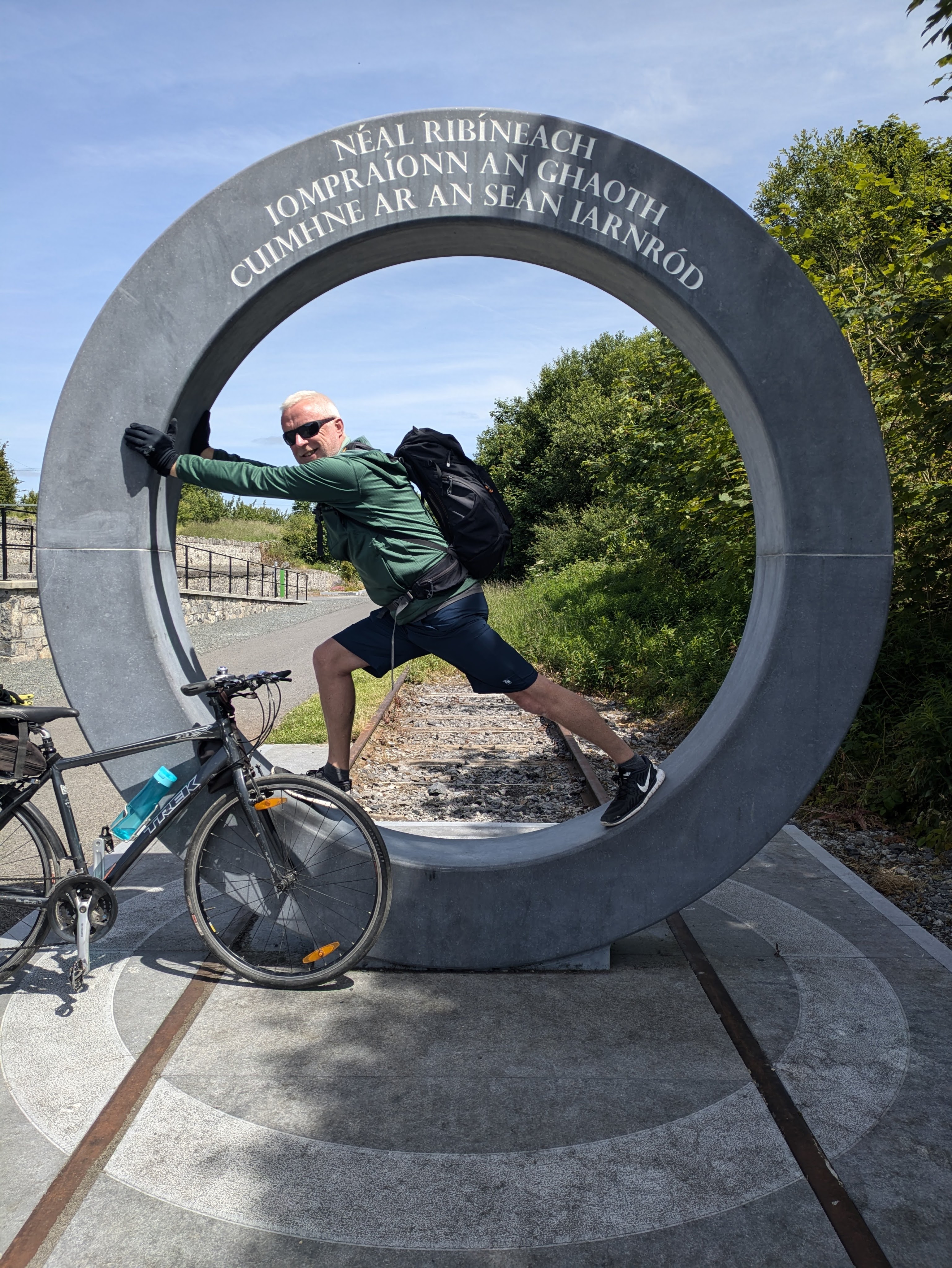
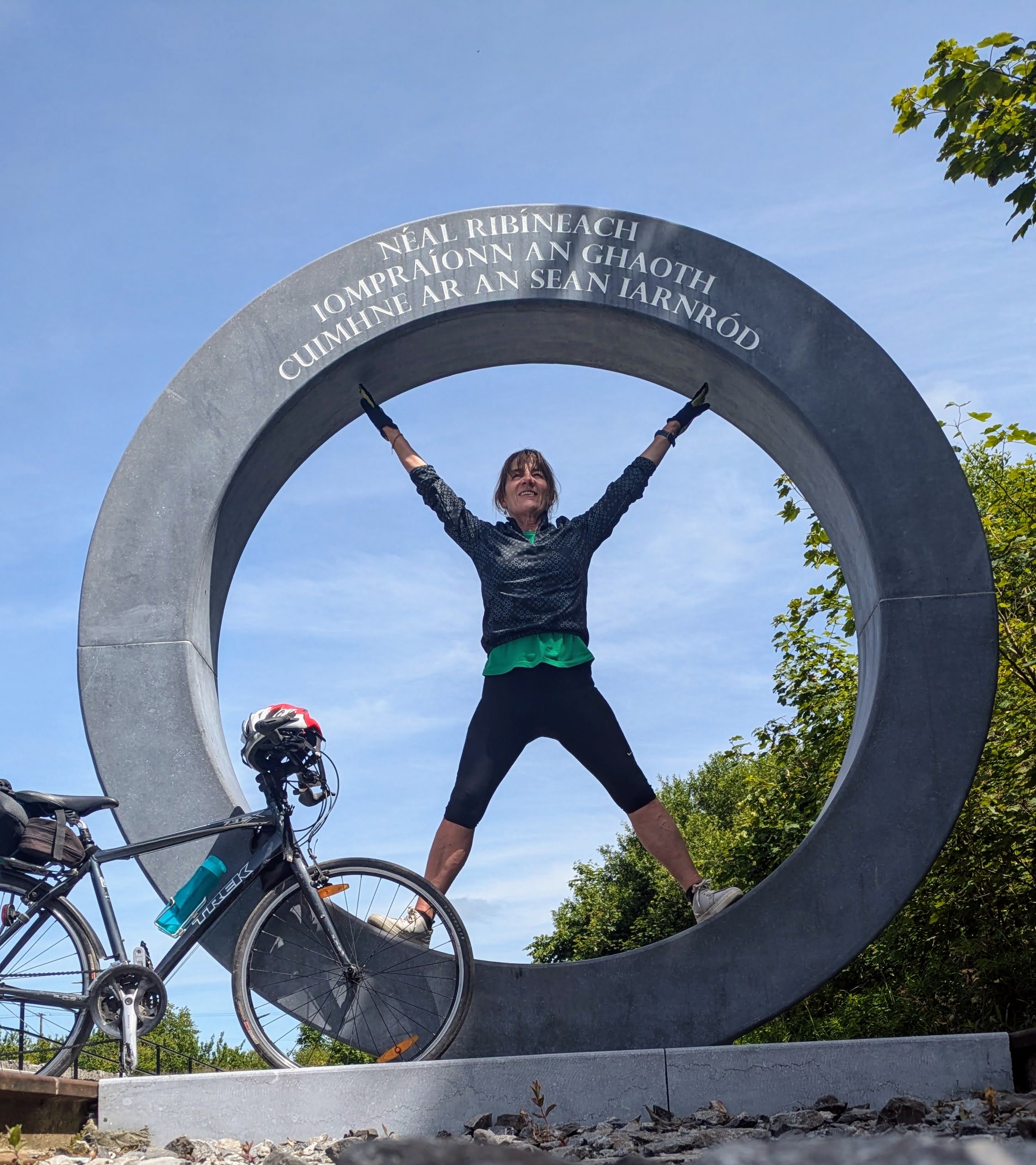
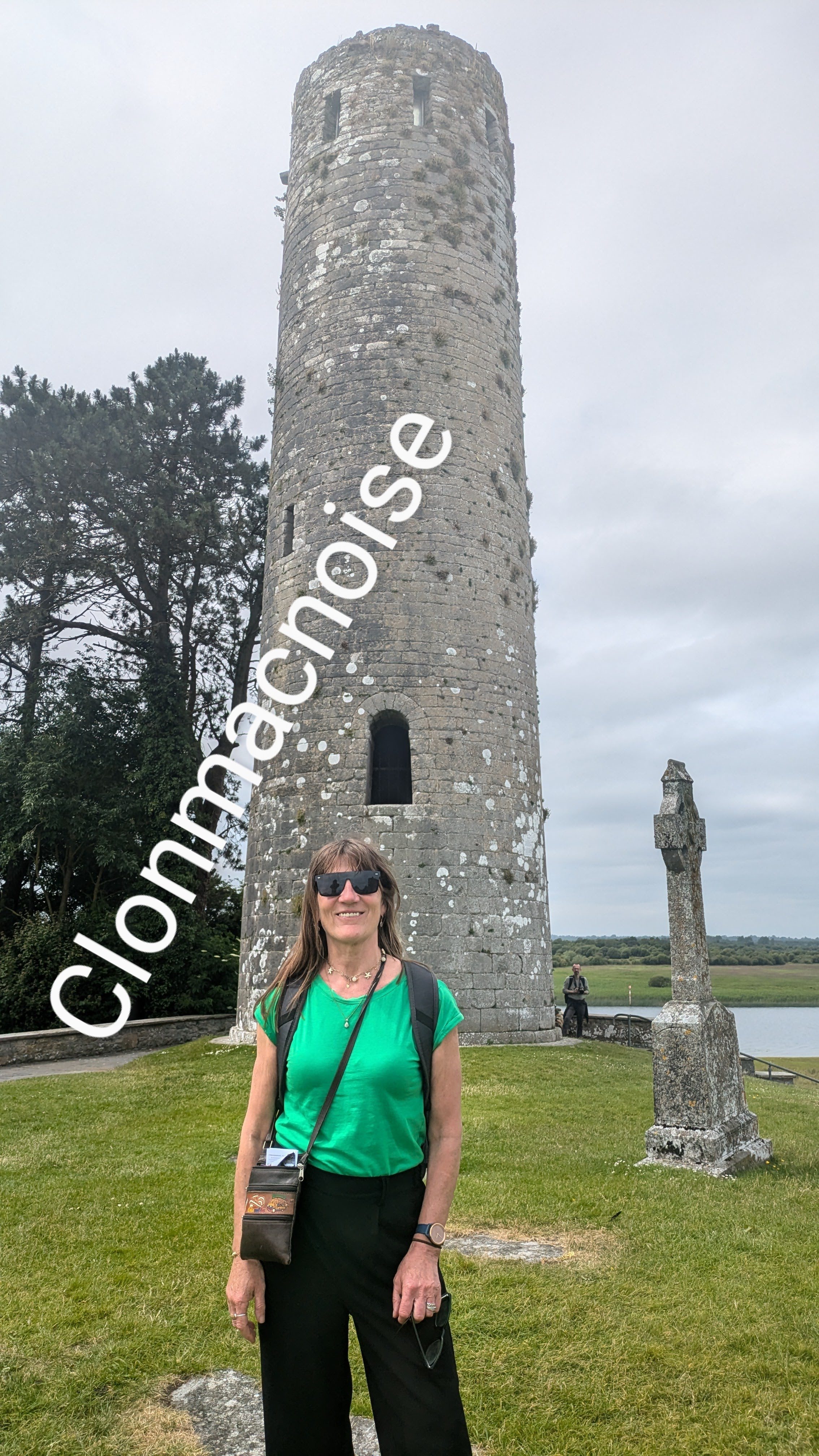
The following morning, we cycled back to collect the cars, stopping at Jack’s Stop in Streamstown along the way, a popular spot with locals, walkers and cyclists and a great time to take some photos – The inscription in the stone circle above translates to ‘Wispy cloud, The wind carries a memory of the Old Railway. We drove home by Clonmacnoise, a monastic site founded by St Ciaran in the 6th century in a beautiful location on the banks of the Shannon and once an important seat of learning and pilgramage. It’s a peaceful place now with beautiful Celtic crosses, two round towers soaring to the sky, numerous ruined churches, an interpretive centre and short guided tours.  Our guide told us that we were literally walking on bones as there were bodies everywhere under our feet.

The heart of Ireland is a wonderful place to visit with family or friends, with canals, rivers, lakes, a rich fascinating history and probably the friendliest people in the country

Sometimes, a person just wants to lie down🙄

Old Rail Trail Greenway – Cycling in the Midlands

Colombia: Highlights❤️

On a High in Colombia🌄

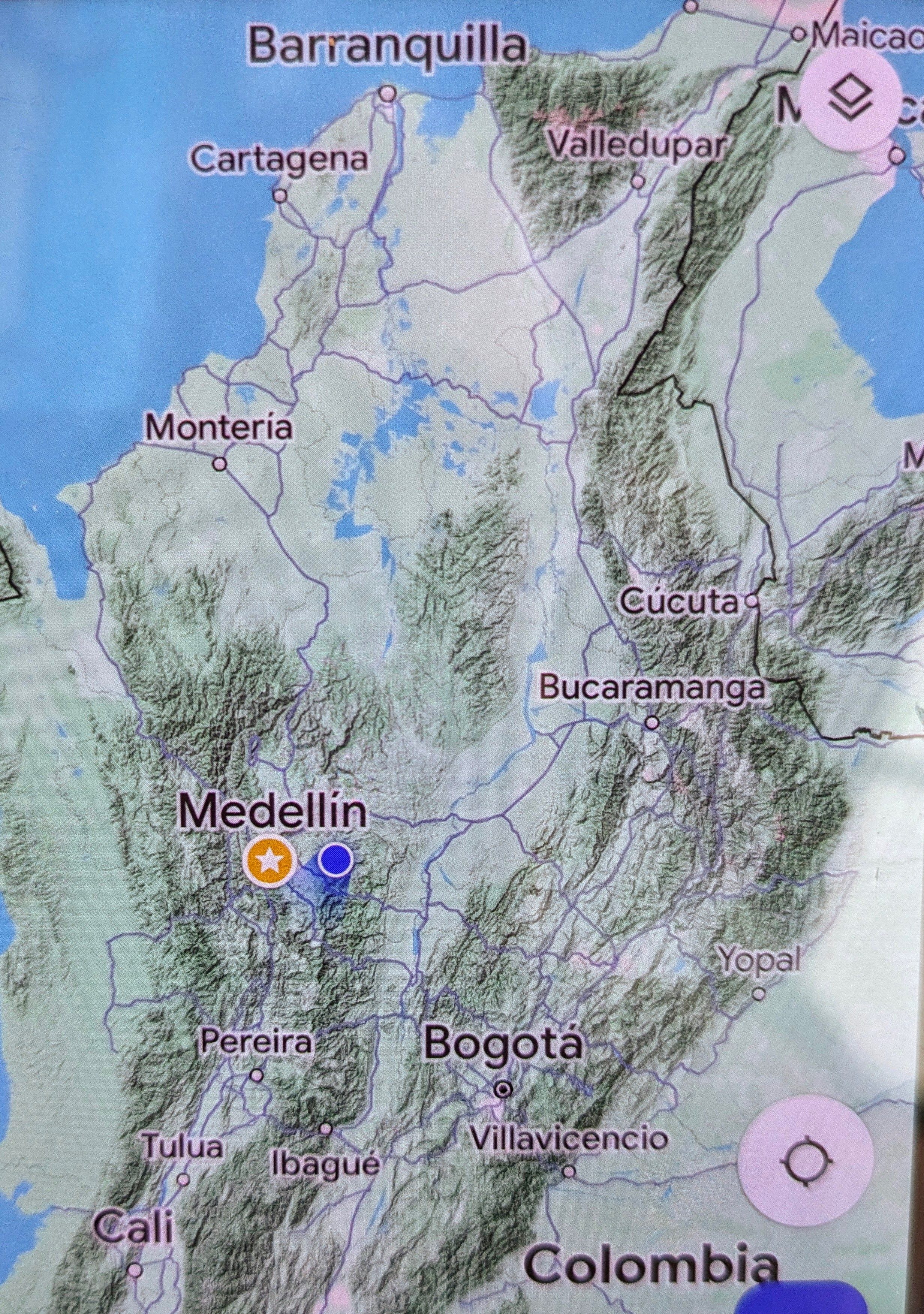
Now that we are back home, it’s time to reflect on our Colombian odyssey and our three months of backpacking around this jaw-droppingly beautiful country. Colombia is a very large country, almost 17 times the size of Ireland (with a population 53 million) so even in three months, we didn’t see it all …or even most of it.  It is also a very varied with  snow-capped mountains, smouldering volcanoes, sweltering jungle, lush rainforest, white-sand beaches on two coastlines (Pacific and Caribbean), lunar-landscape deserts,  coffee plantations, vibrant cities and colourful mountain towns.

For all its beauty, Colombia suffers from an image problem, being synonymous with violence, drugs and corruption and perceived as an unsafe country to visit. However, during our travels, we found a welcoming place with friendly people, good infrastructure and excellent value for money. We never felt under threat and we met quite a few solo women travellers who had no incidents. We meandered independently by bus with no real ‘plan’, booking accommodation as we went along usually the day before or sometimes on the same day, free to stay longer in places we liked…the ideal way to travel.

screenshot_20240408-071617~45583641456892448665.
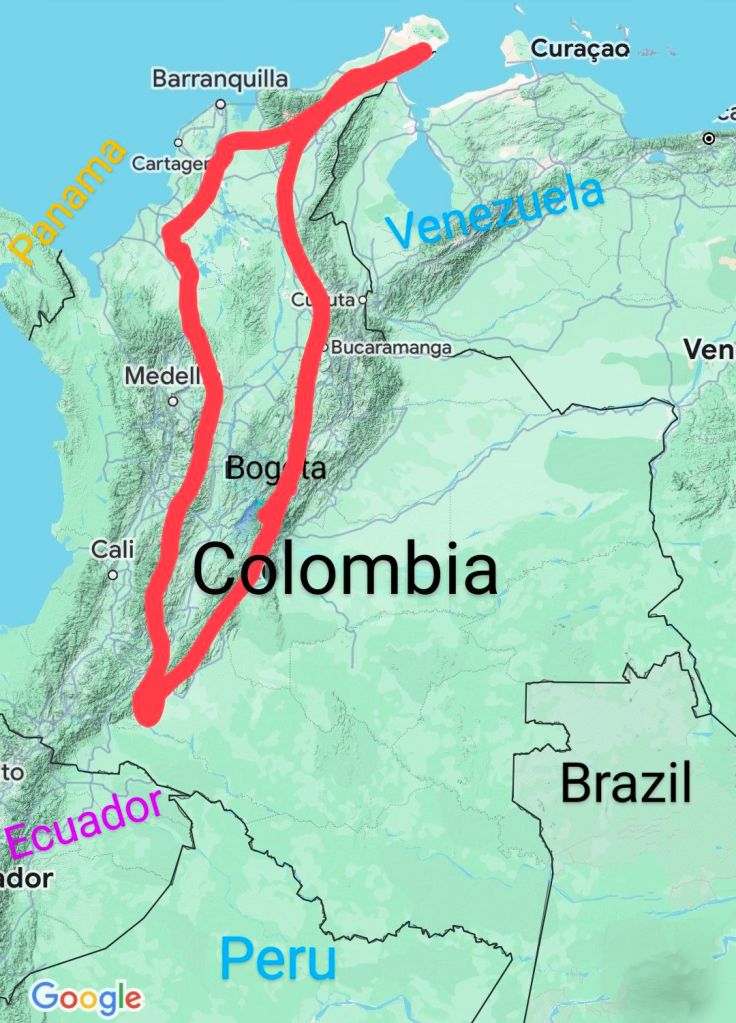
Our Journey (roughly in red)

Favourite Experience The Lost City (Ciudad Perdida)  

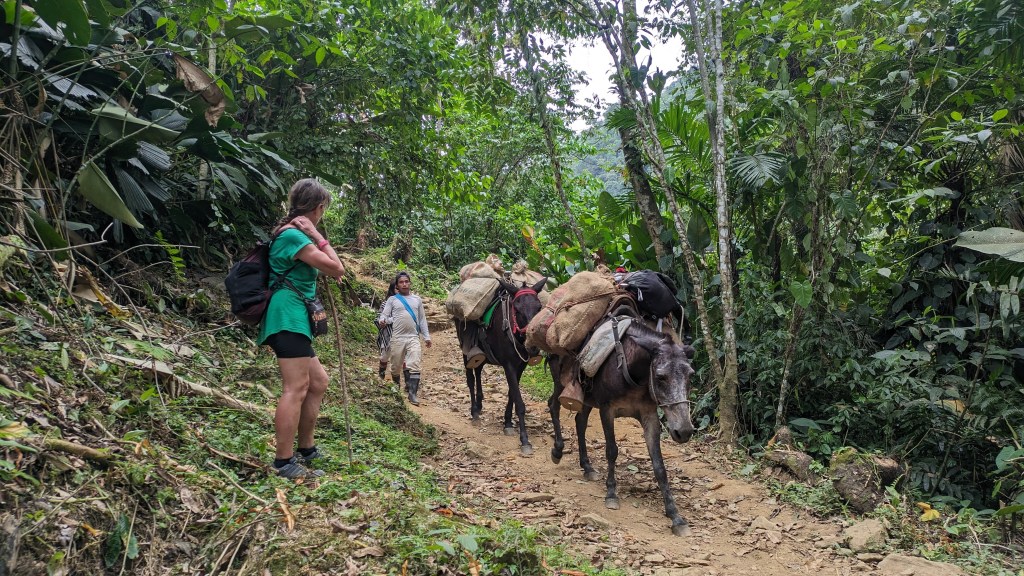
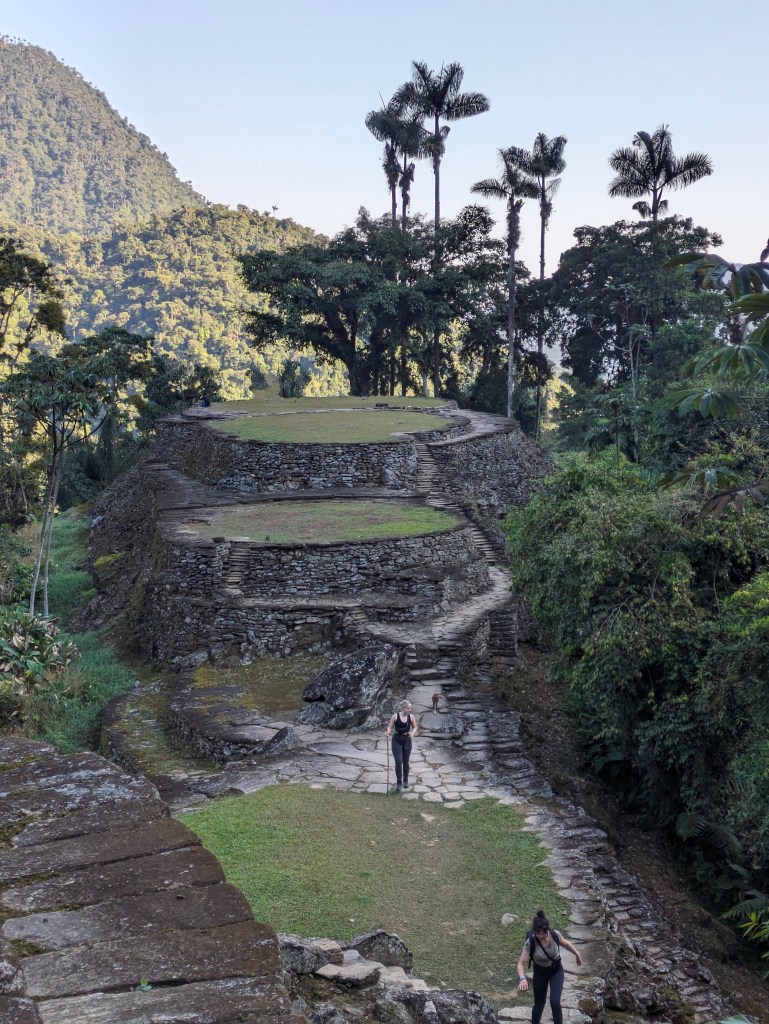
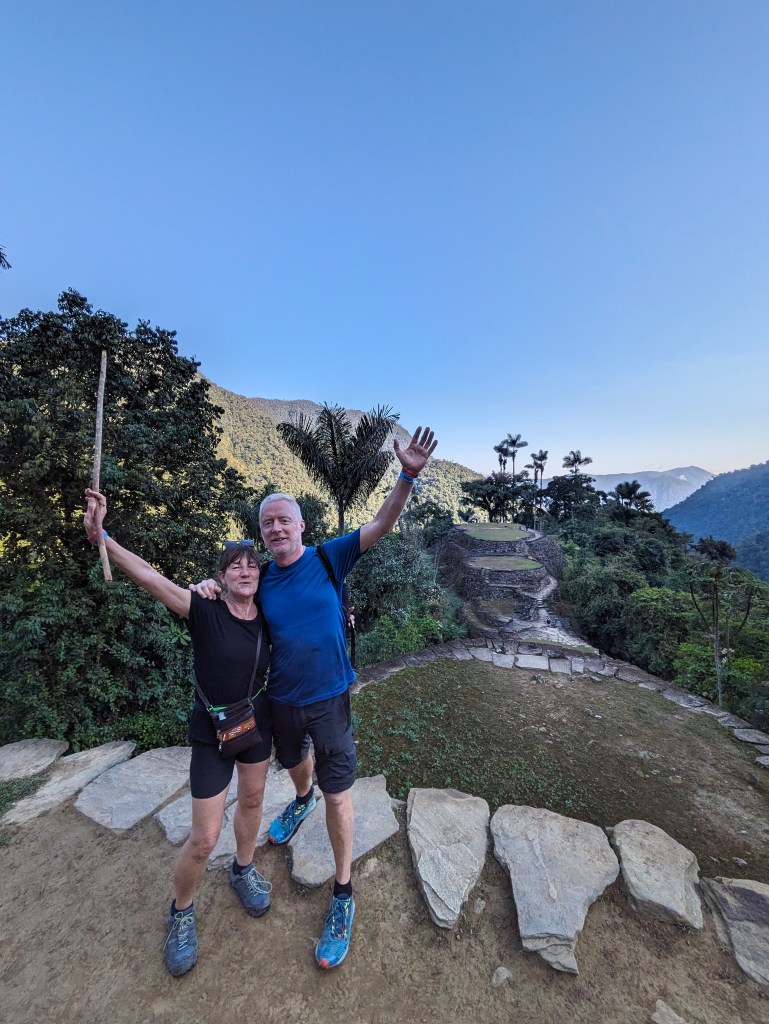
Ciudad Perdida (Lost City) is often billed as Colombia’s answer to Machu Pichu. It is just as spectacular, remote and mysterious but there is only one way to get to the Lost City……and that is, by foot, on ancient paths and tracks hiking through protected indigenous land. It can only be done as part of an organized guided group on a multiday hike, carrying your own luggage. You have to sweat to earn the privilege of visiting the Ciudad Perdida or Teyuna as it is called by the native people. Well worth the effort.

Favourite City Medellin

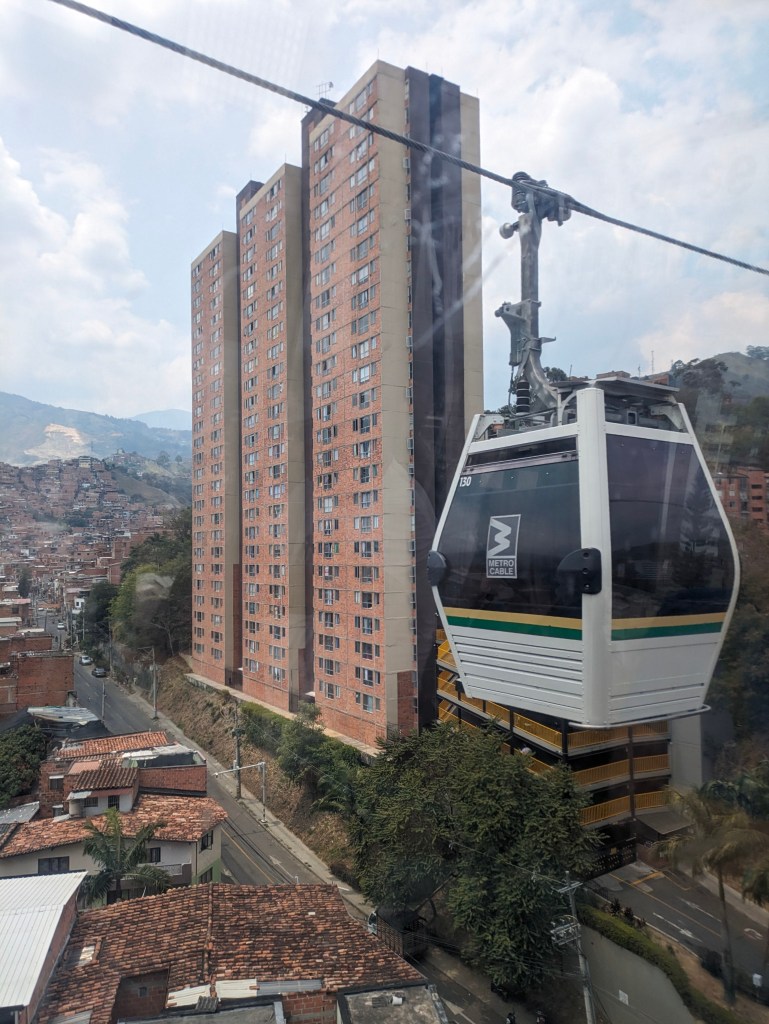
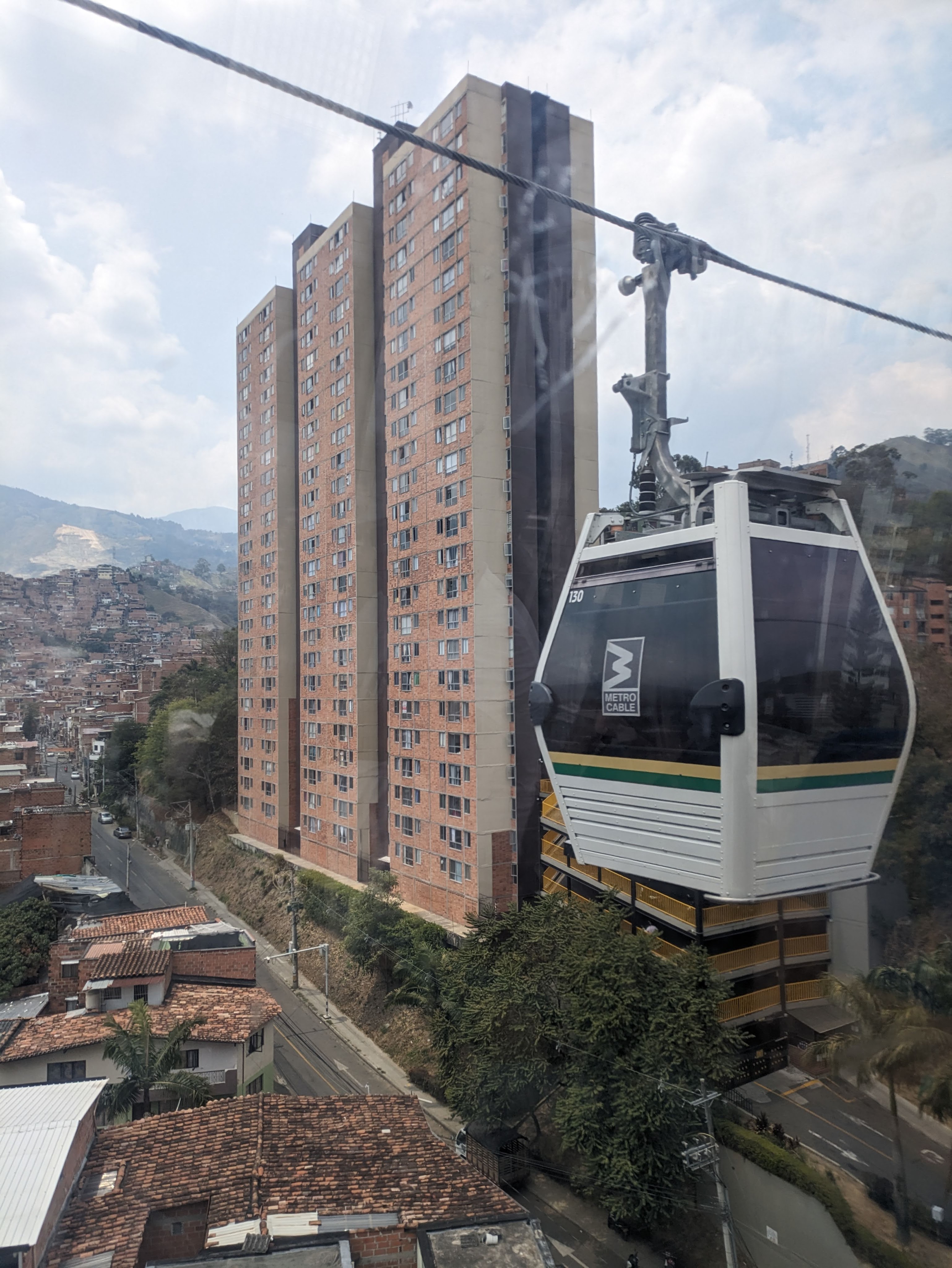
Medellin Cable Car and Red Roofs

Medellin was the most fascinating and interesting city we visited in Colombia. It is also probably the most well-known Colombian city, famous for all the wrong reasons because of the popular Netflix series, Narcos, a story of corruption, violence, and Pablo Escobar.

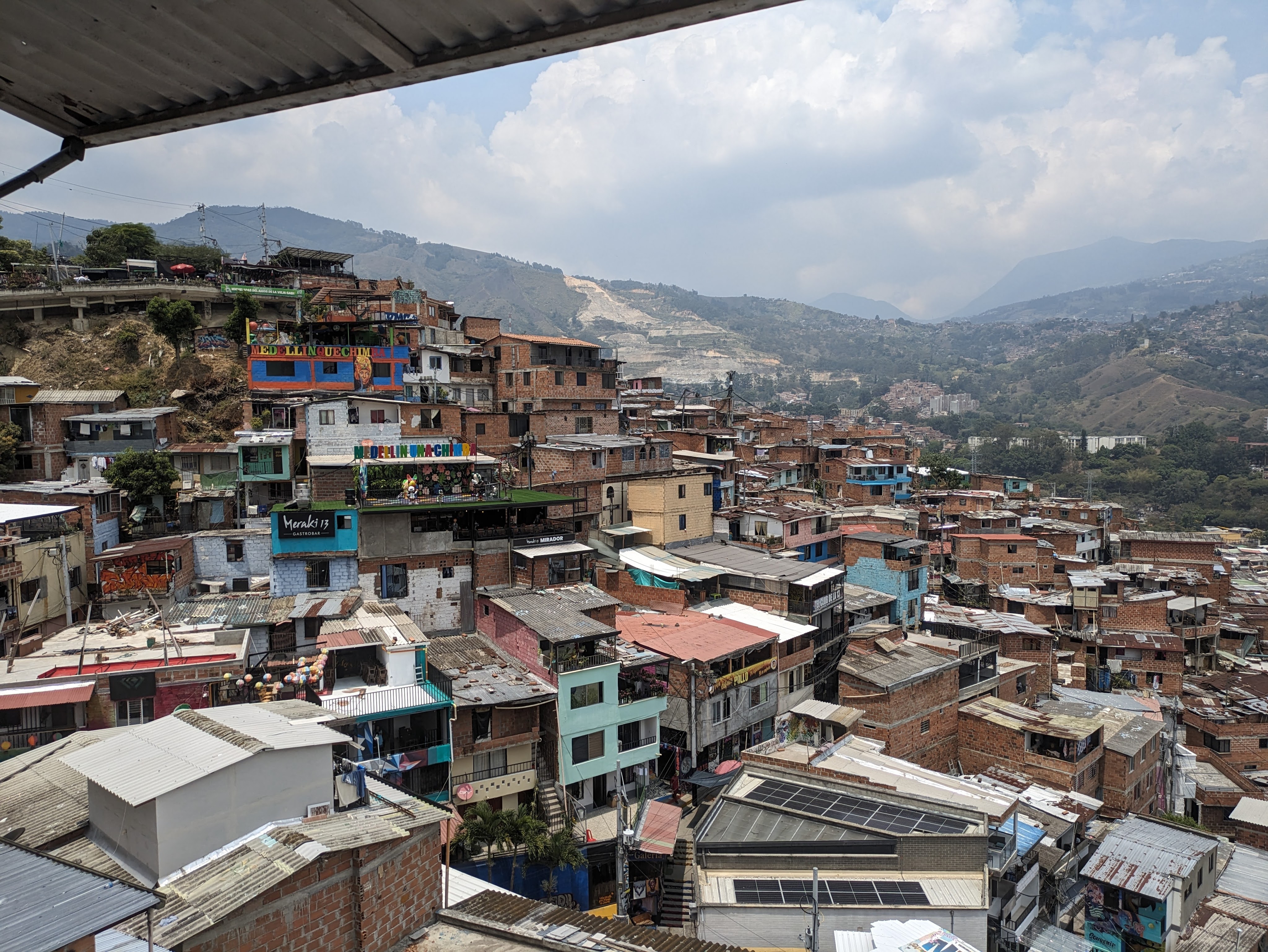
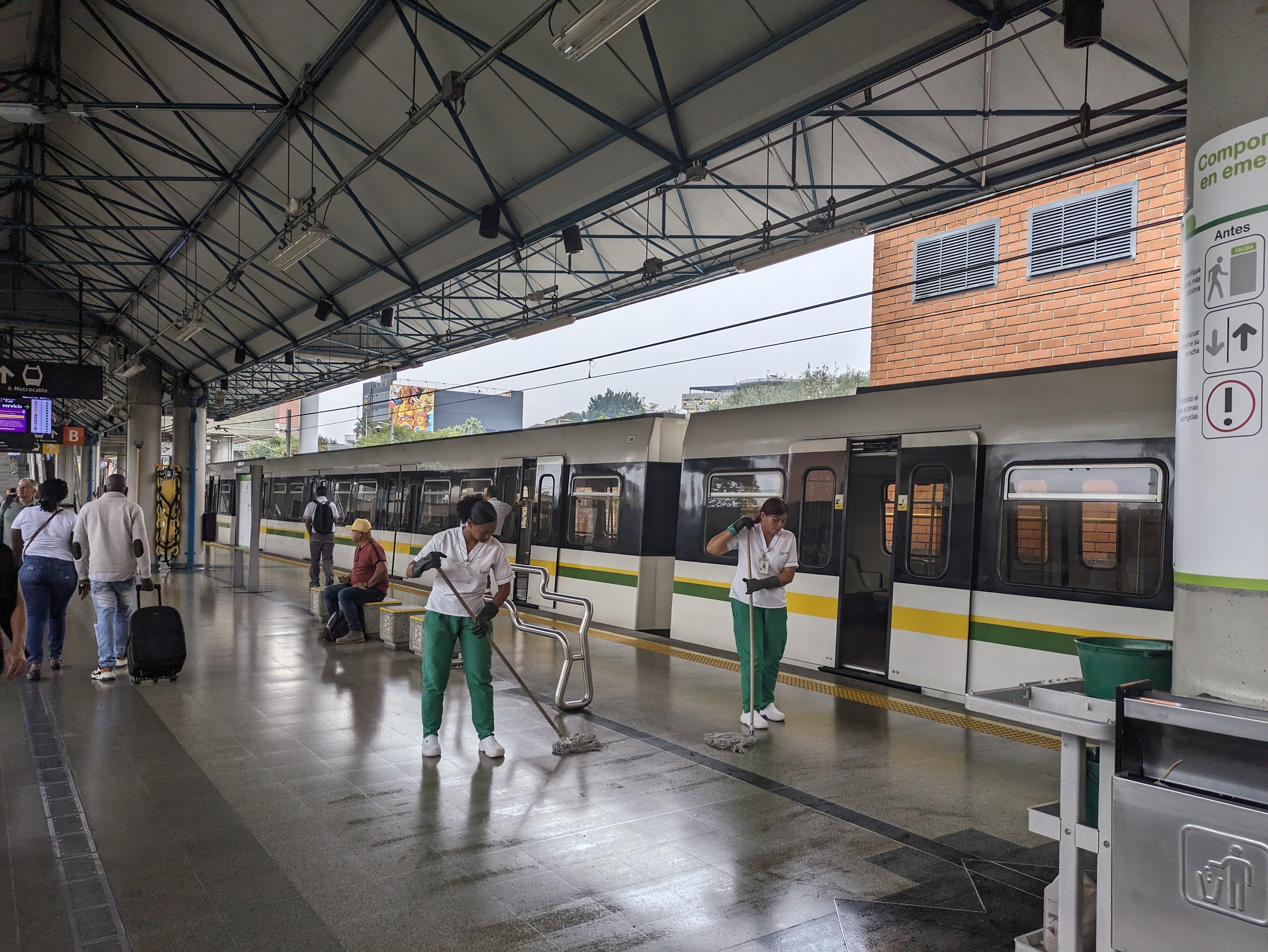
Two words sum up Medellin – tragedy and transformation.  It was once the most dangerous city in the world, topping the tables for the highest rate of murder and kidnappings in the 1980s and 1990’s but now it regarded as the most fashionable Colombian city and the one with the best quality of life, attracting tourists and digital nomads.  The city sprawls along a narrow valley and climbs steeply into the surrounding mountains with a near perfect climate, often called the place of Eternal Spring (in contrast to the sweltering heat of Cartagena or the chilliness of Bogota). It also has  a fabulous transport system with inter-connected metro, cable car and bus.

Best Wildlife Experience….Birdwatching in Camarones

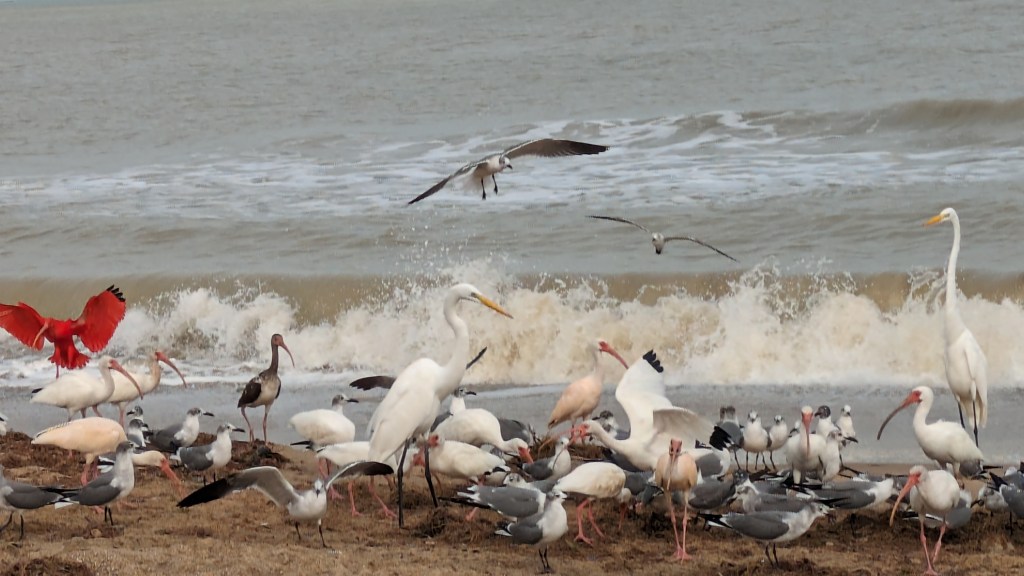
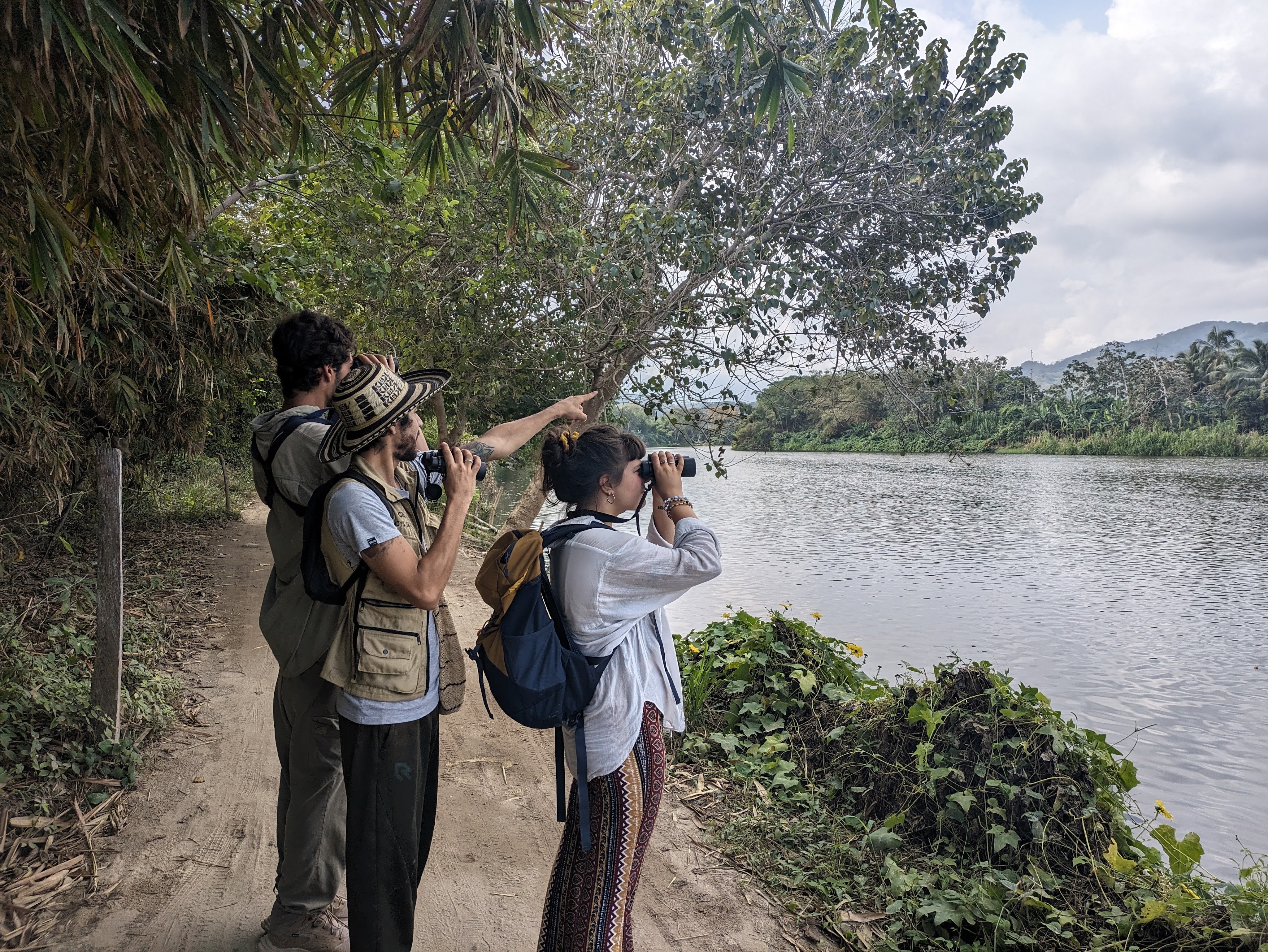
Notice the Scarlet Ibis

Colombia is famous for its birdlife, more species than anywhere else on the planet. We spent a couple of nights in Camarones, a tiny coastal village on the Caribbean and a bird sanctuary. This was an amazing place, very tranquil with a gorgeous beach but the highlight was the birds who put on a dazzling display in the early morning, fishing, feeding and fighting for scraps from the fishermen’s’ nets. The Scarlet Ibis was such a vibrant red that it looked photoshopped.

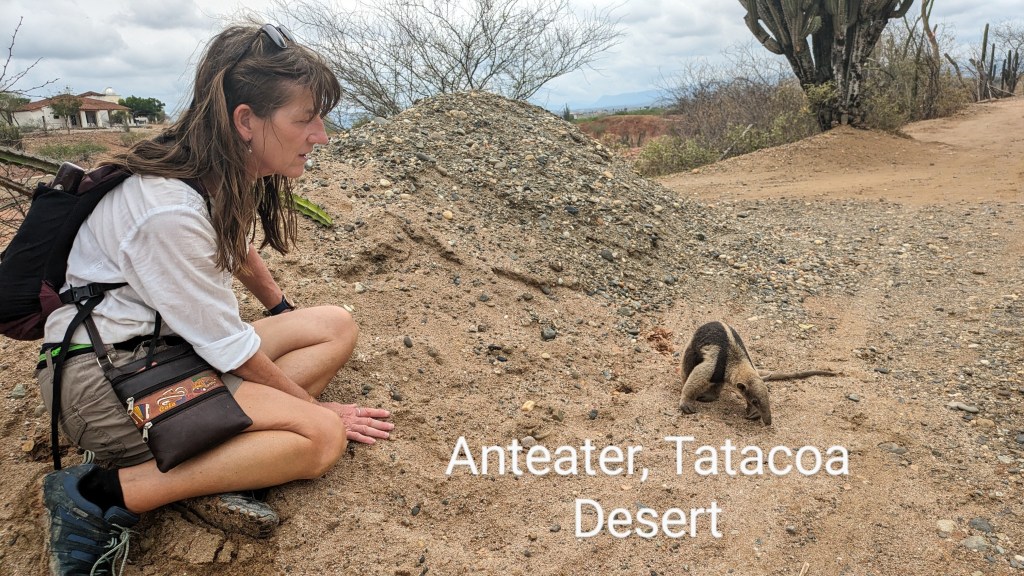
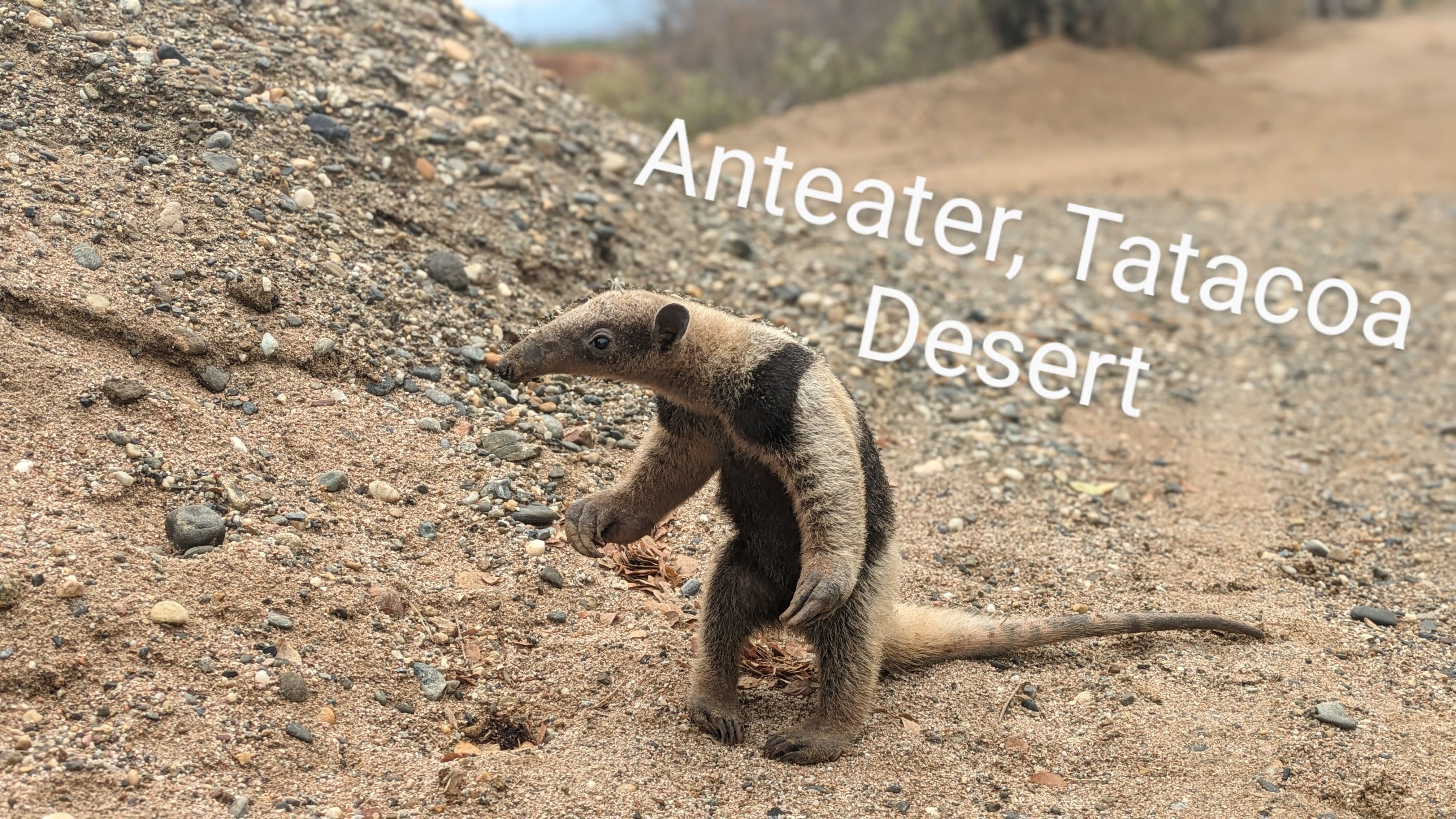
We also had a close encounter with a cute anteater in the Tatacoa Desert and a sighting of a puma on a hike in the Los Nevados National Park near Salento

Best Drink Cocktails in Cartagena.

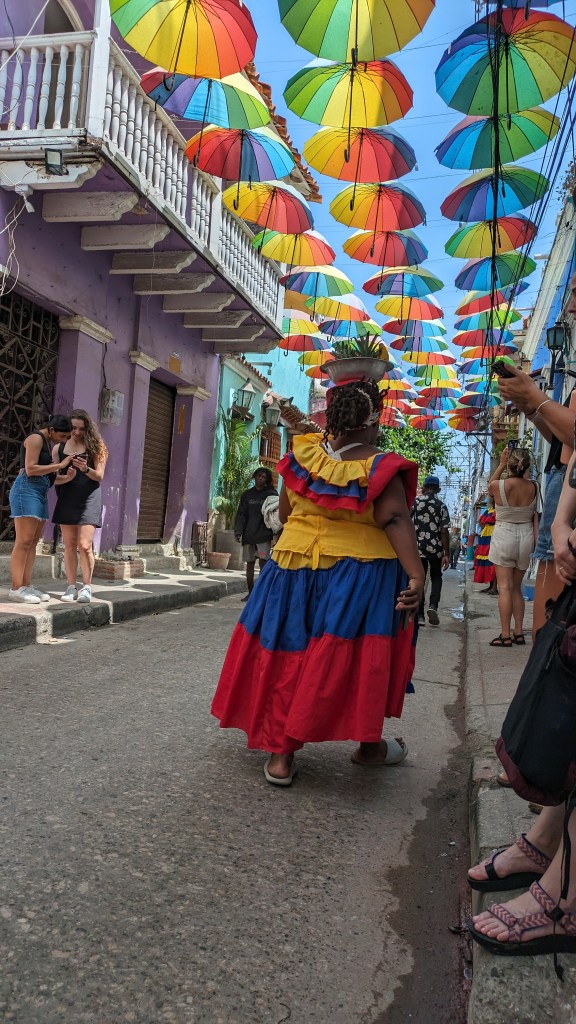
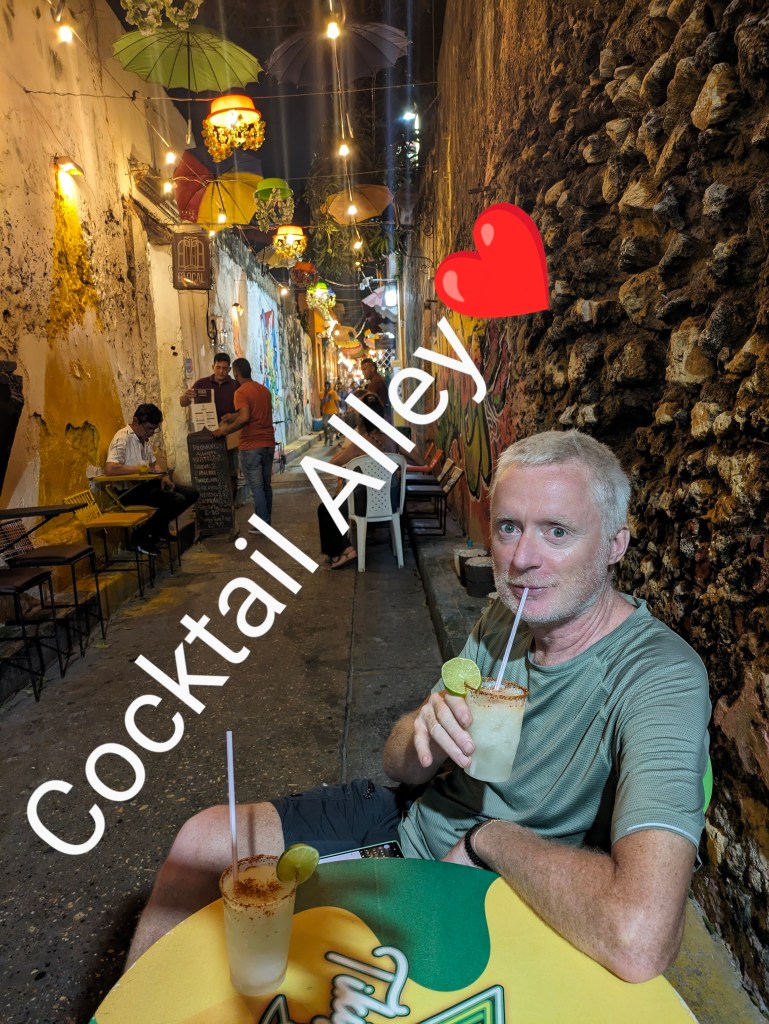
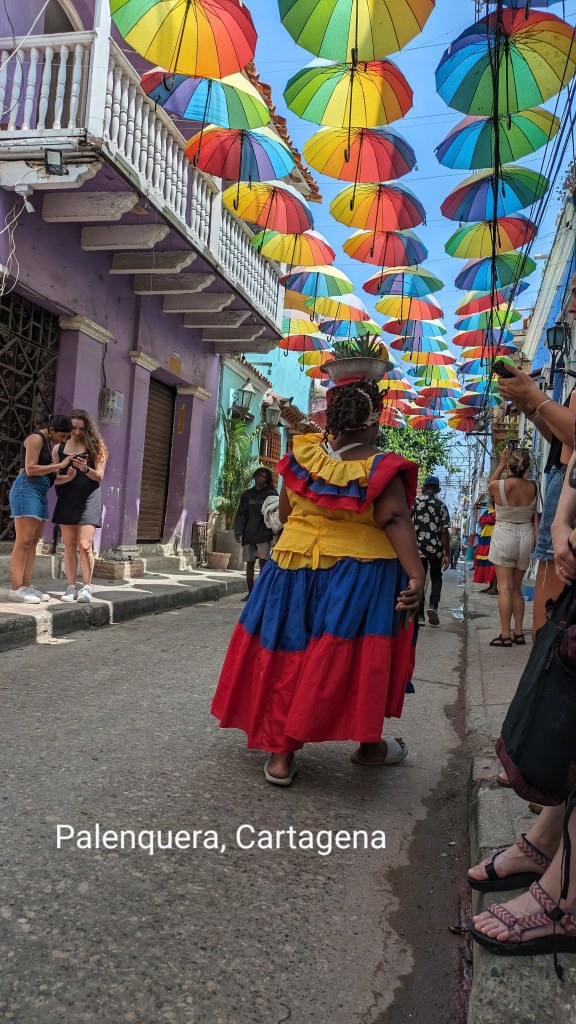
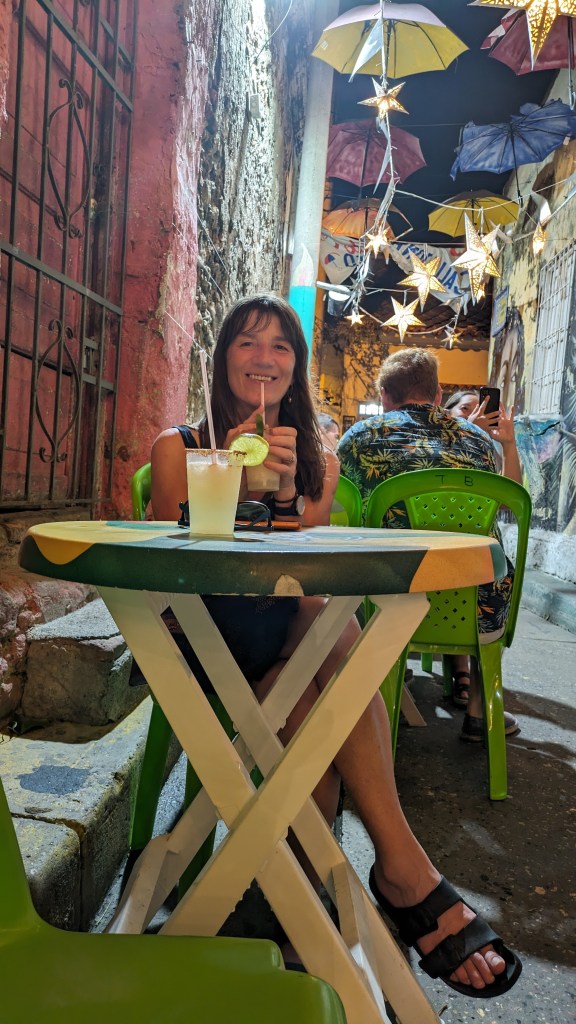
As Colombia is justifiably famous for its coffee, you’d think that our best drinking experience would be coffee-related but alas, no. Most of the best beans are exported leaving the dregs for the home market. But we found something better than coffee in tropical Cartagena  where women with mobile carts served up potent mojitos and margaritas (€5 for two😍) . It was also a place of music and dance of every genre, of eating and drinking outside every evening to the beat of buskers, the click of heels and the passing around of a hat for tips.

Best Meal Ancestral Food in San Augustin

We ate a lot of rice and beans. Lunch is the biggest meal …. Menu del Dia is available everywhere and typically costs about €3.50. It usually consists of a big bowl of soup (usually lentil, veg and bean) followed by a plate of rice, bean (frigoles), salad and chicken/pork/fish and also includes a glass of fruit juice and sometimes an arepa, a cornbread which is eaten at most meals. They will usually throw a fried egg on top instead of meat if you say you are vegetarian.

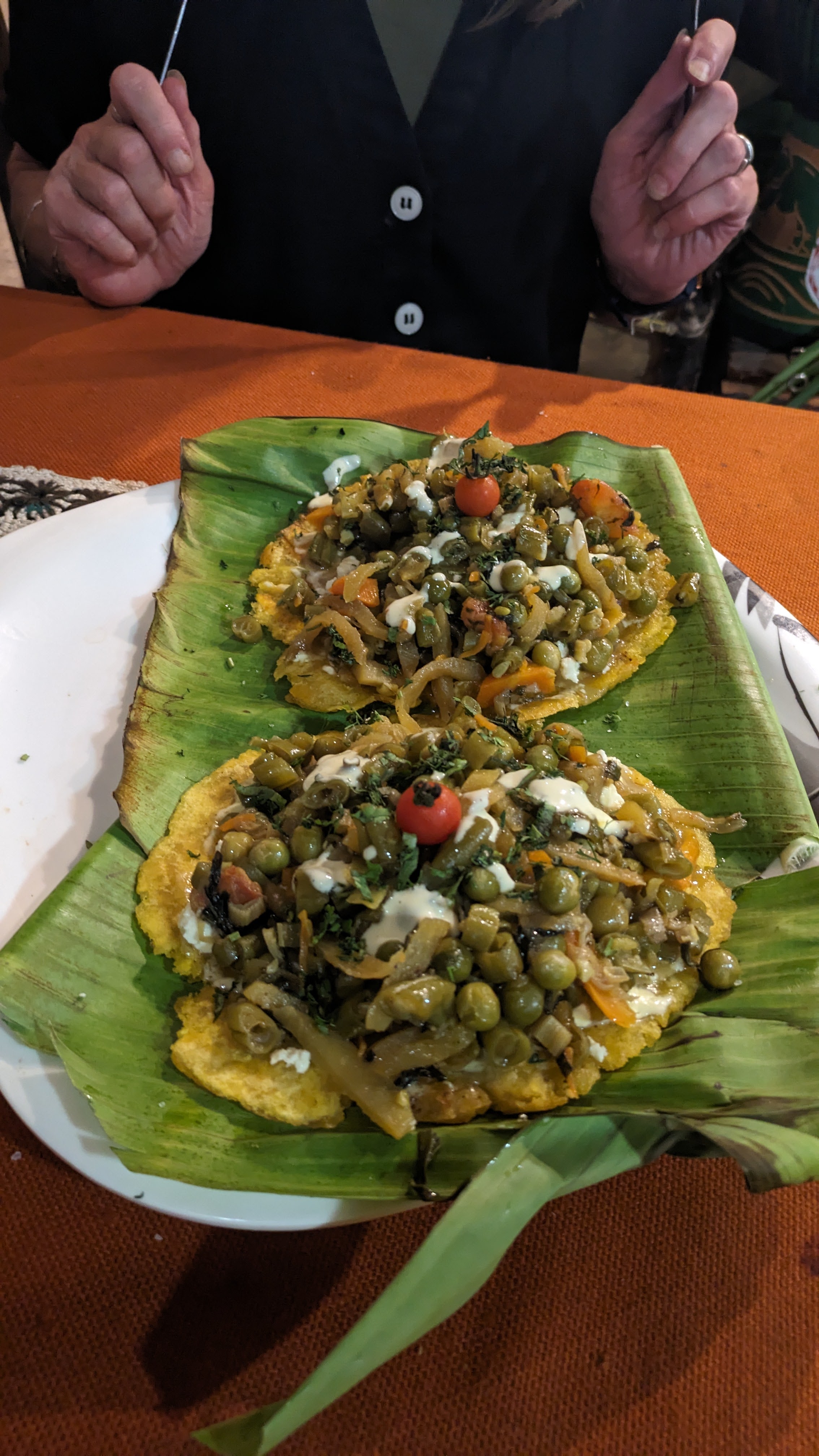
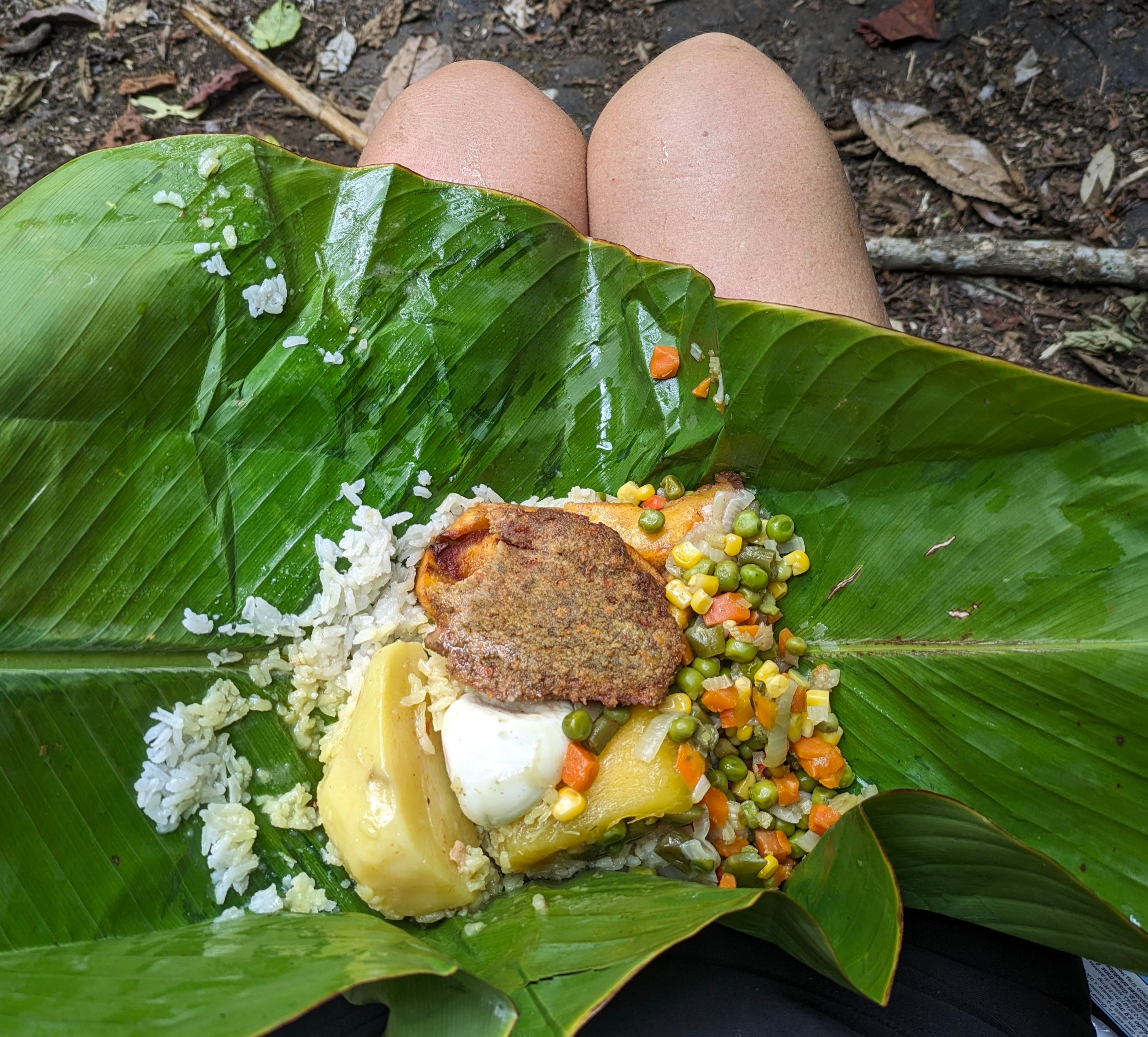
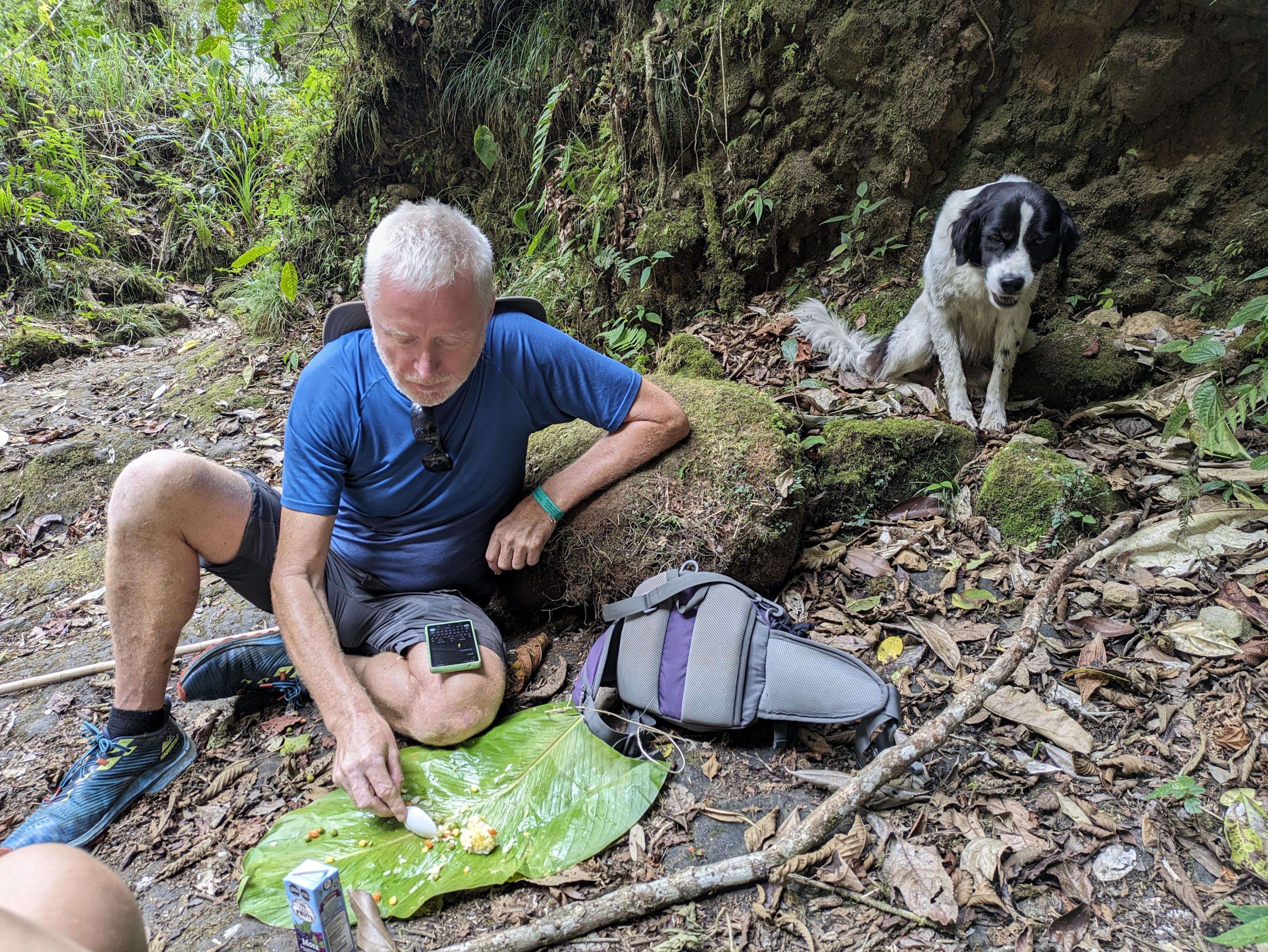
We found good vegetarian restaurants in the big cities and  fish on the Caribbean but mainly the food is fine but not mouthwatering. The best meal we had was in San Agustin at a tiny restaurant run by an indigenous family where the mantra was that ‘food is medicine.’ We ate a meal of local vegetables, freshly cooked and lightly spiced, served on a banana leaf, washed down with aromatic herbal tea  and followed by a nut and passionfruit cake. While we ate, the owner played the flute and drummed to aid digestion. Unique and delicious and it seemed to cure my rumbling stomach issues.

Best Beach: Rincon Del Mar

Rincon del Mar

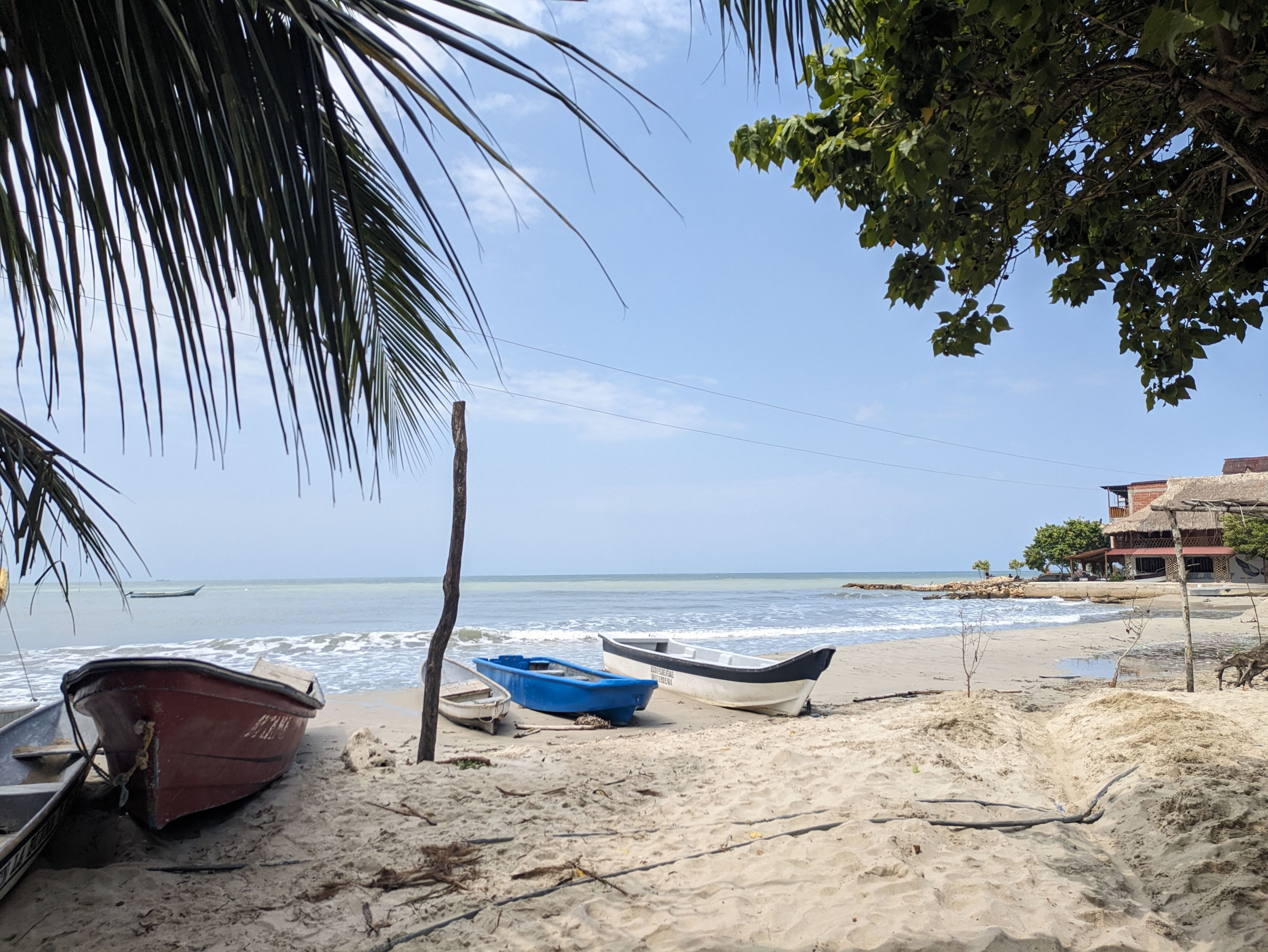
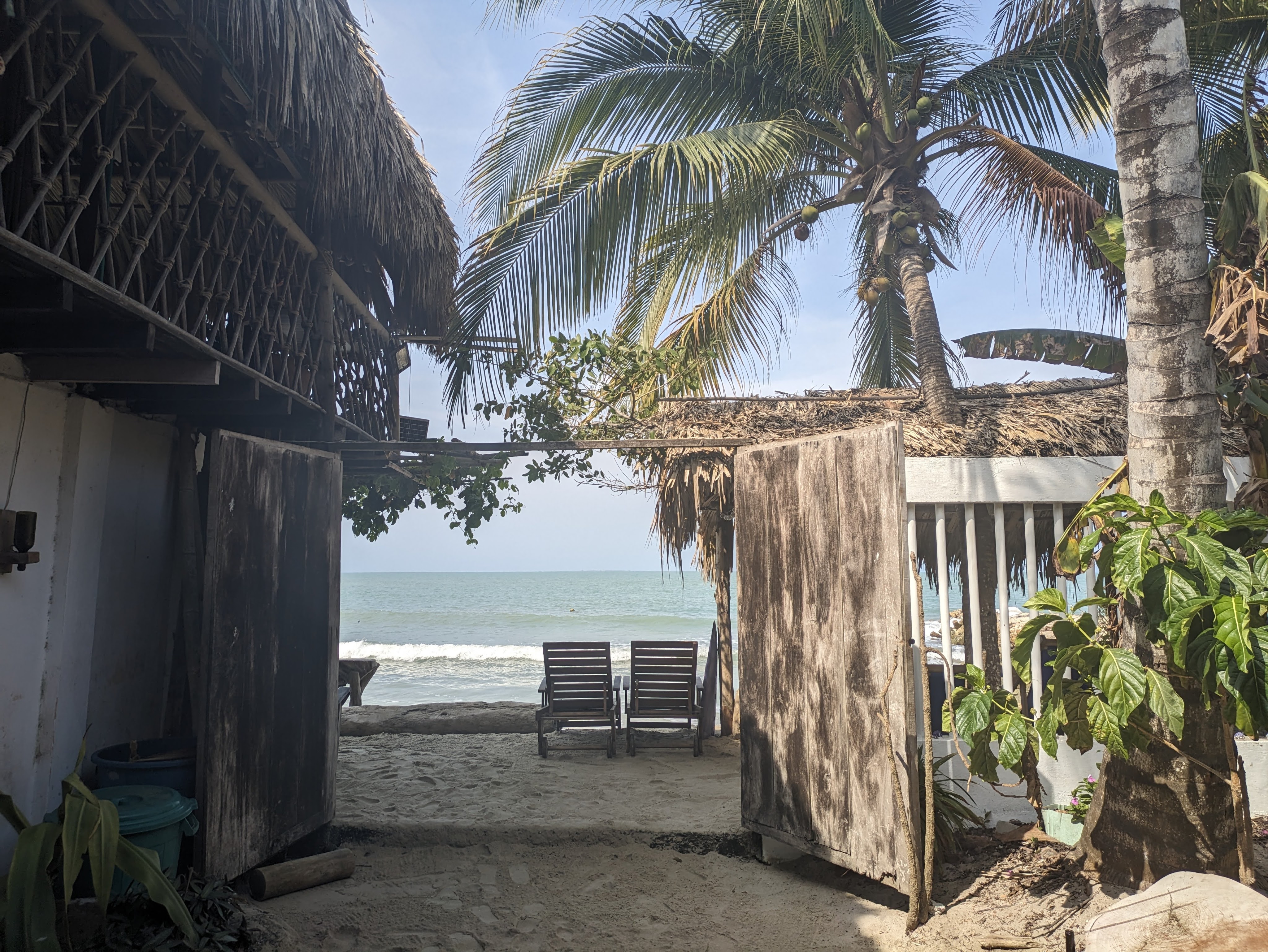
Quiet sleepy Rincan del Mar, a small fishing village on the Caribbean, was our favourite beach. Soft white sand, some shady palms and glorious sunsets

Favourite Water Experience Bioluminescence

The highlight of our week in Rincon del Mar, a small fishing village on the Caribbean, was a sunset boat trip to swim with bioluminescent plankton. As darkness descended, we made our way through a labyrinth of shadowy mangroves into a secluded, almost secret, area of sea. When we jumped into the water from the boat, something magical happened. Each of our movement created a glittery solar glow of bioluminescent plankton. We were shining in the inky darkness of the water as if we were lit from within. (No photos because we don’t take our phones into water any more after our experiences on our last trip to the Philippines 🙄)

Best Sleeping Experience.Hammocks in the Desert/ High-rise Apartment in Bogota

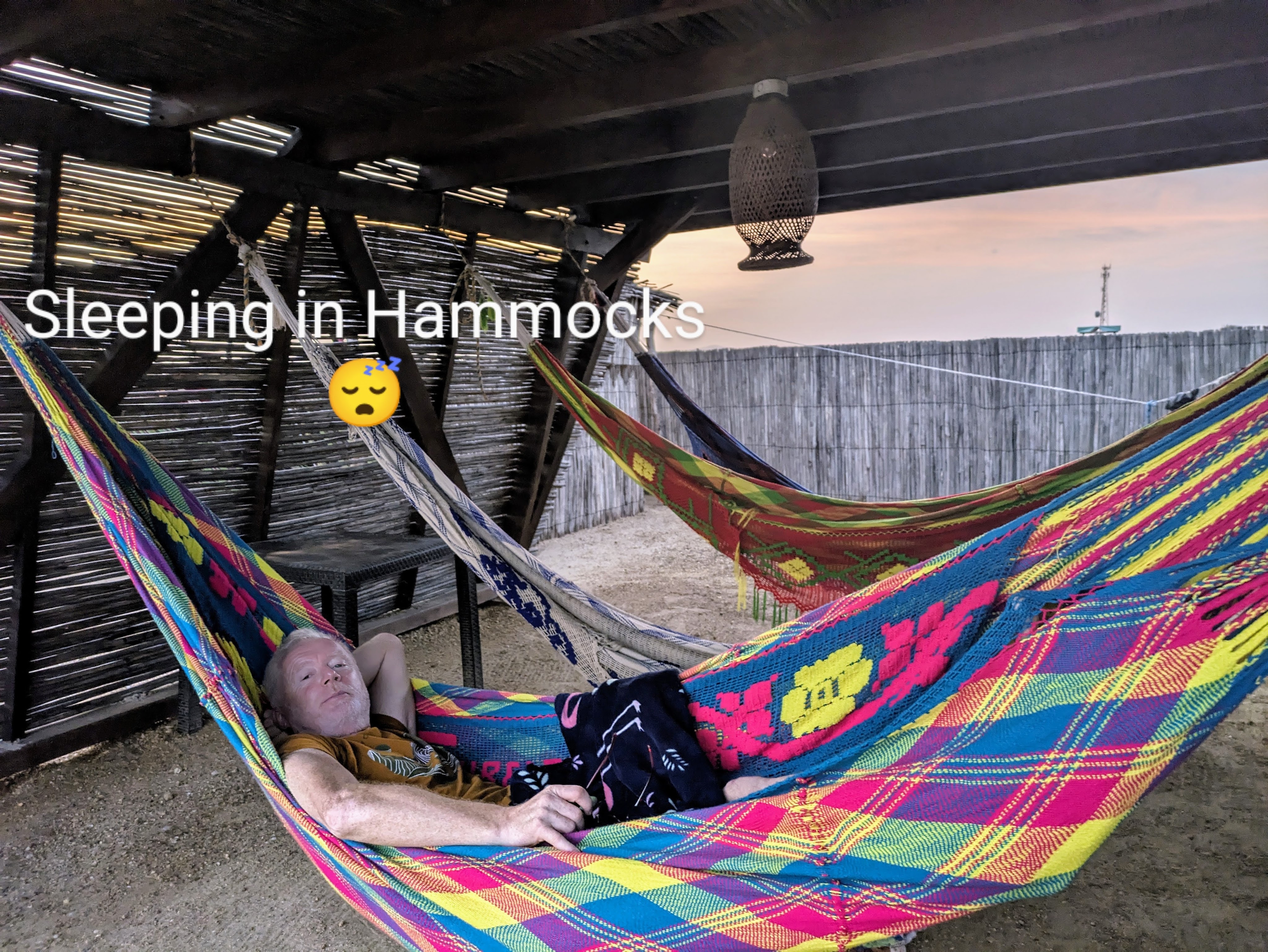
Hammocks in the Desert, La Guajira

We stayed in a wide variety of places and the standard of accommodation was generally very good. In dusty Cabo de la Velo in the northern desert we slept to the sound of the ocean in hammocks, strung up in a breezy open-sided structure, loving the novelty of sleeping in the open-air wrapped up like hibernating animals. The wind blew strongly, swinging the hammocks and there was a desert chill in the depth of the night but it was surprisingly comfortable.

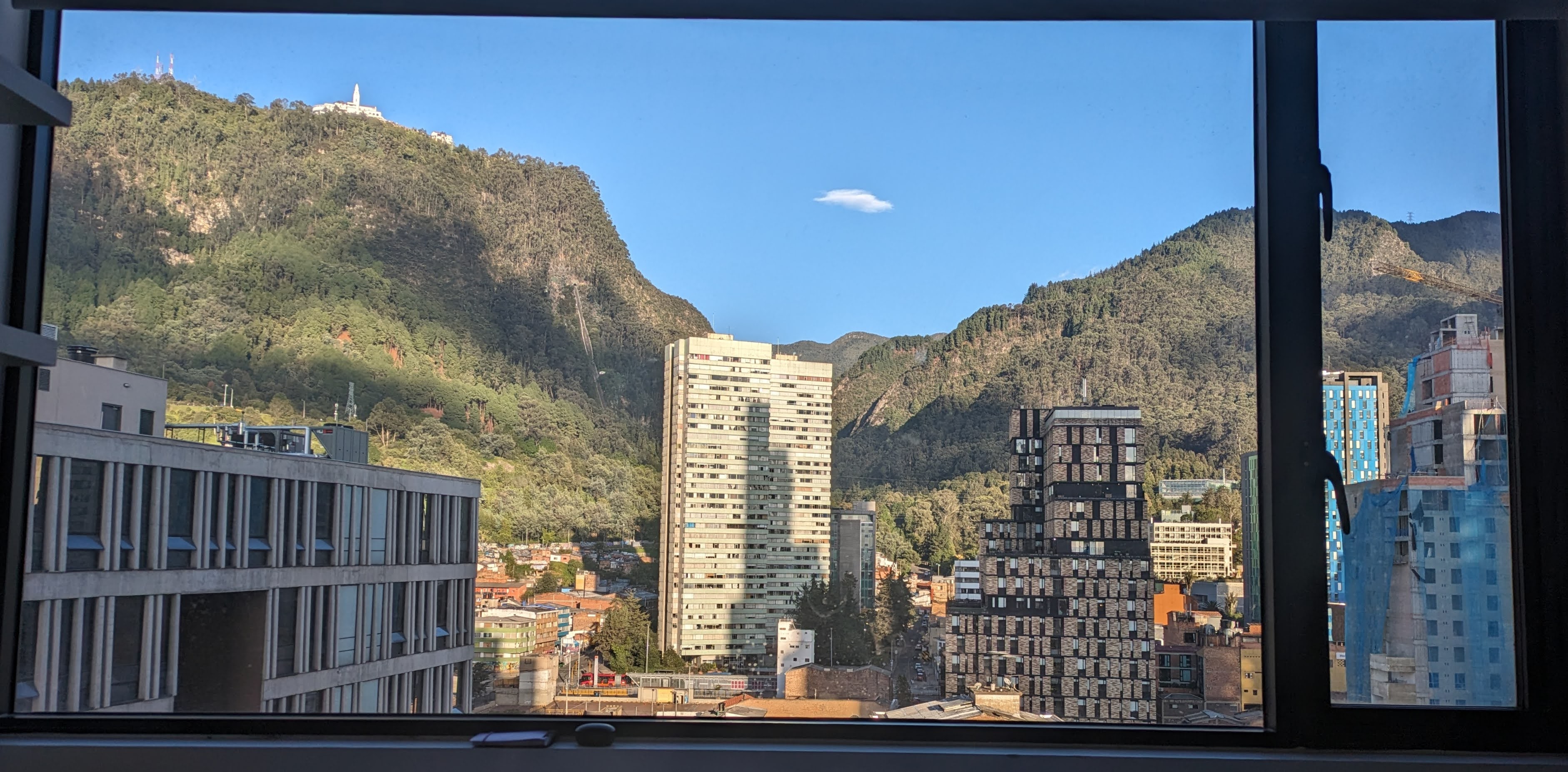
View from Bogota Apartment

For something completely different, we spent our last nights in a small studio apartment in Bogota on the thirteenth floor in the city centre with stunning views of the city and the surrounding hills and a swimming pool and jacuzzi on the roof. (Our most expensive accommodation by far at €37 a night)

Best Homestay ….Homestay in the Mountains

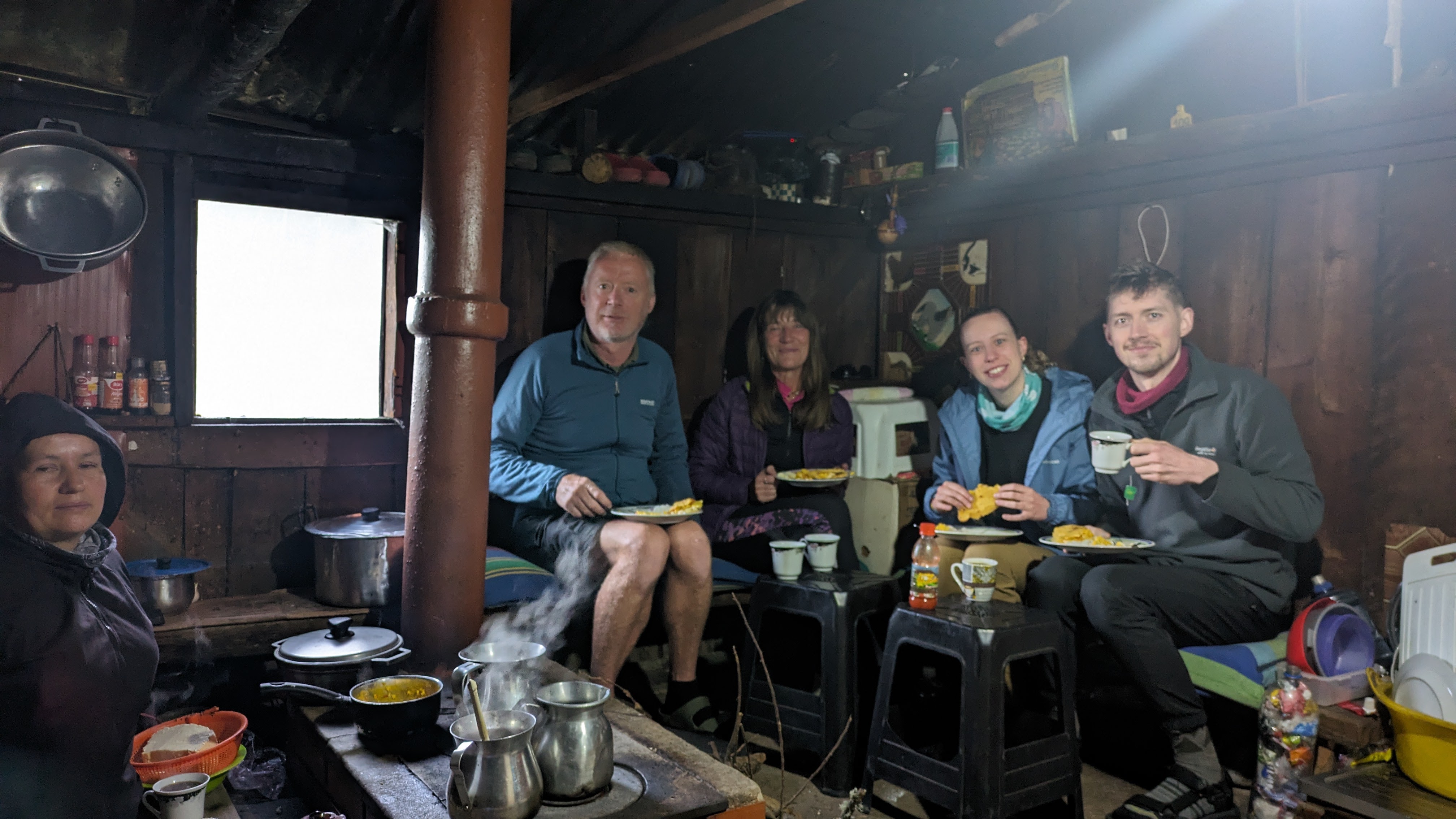
Warm Kitchen, Warm Heart

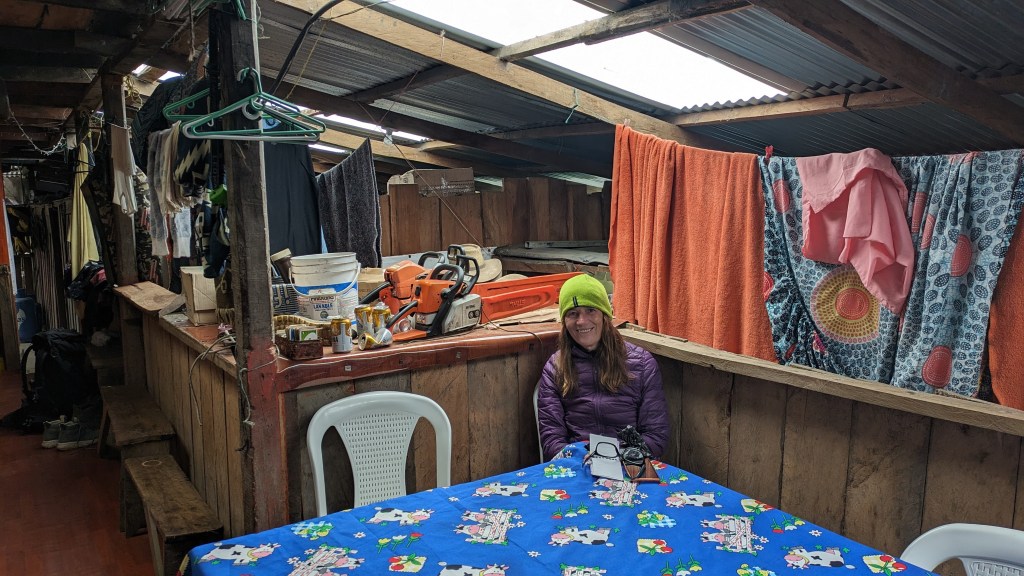
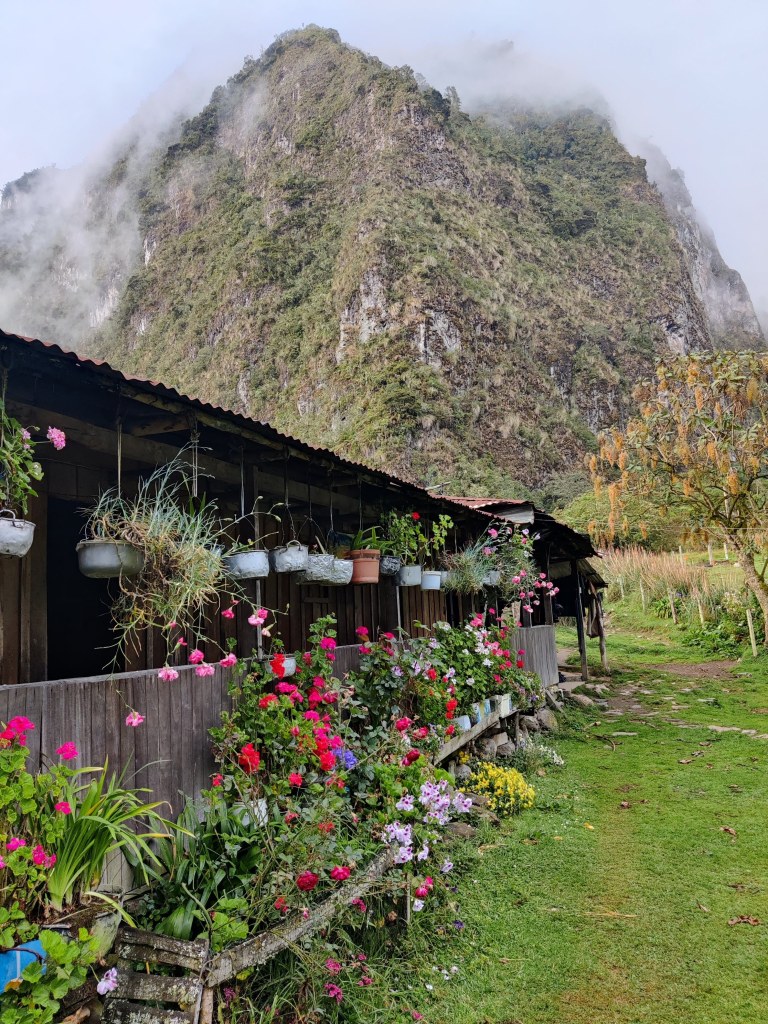
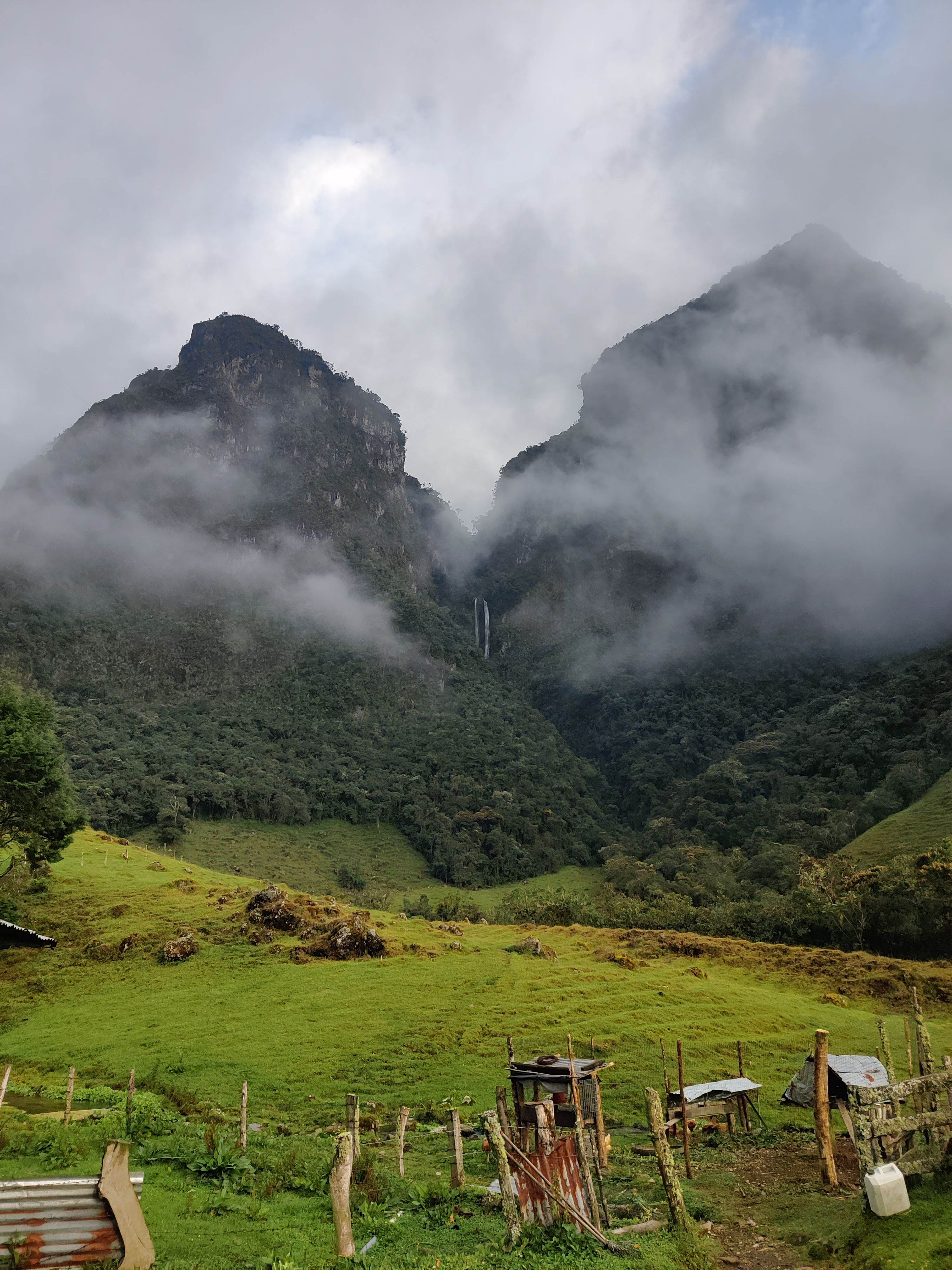
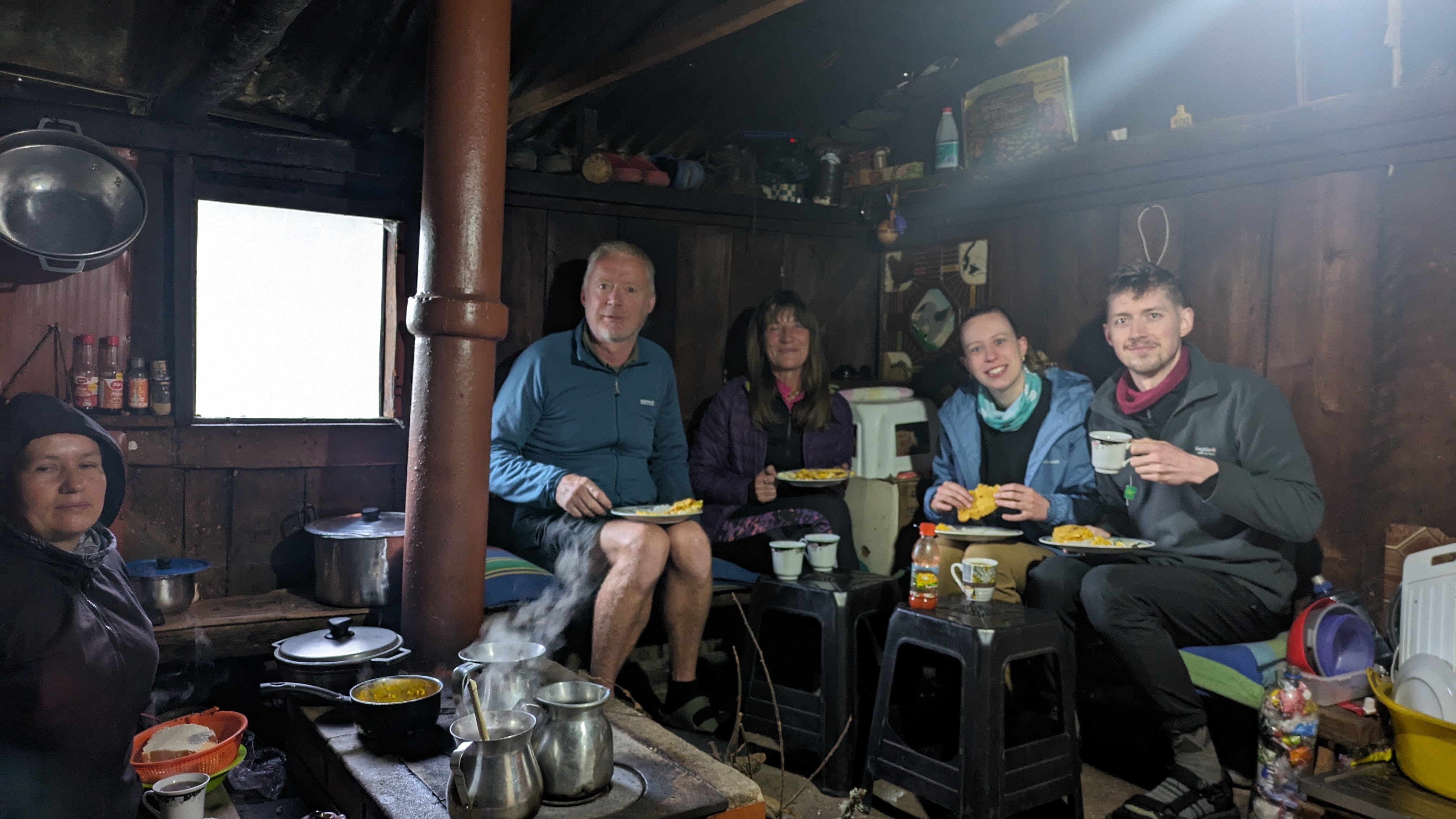
The best hospitality we received was in an isolated farmhouse (Finca Jordan) in the Los Nevados where we stayed on the second night of a 3-day hike. We arrived at about 4pm in heavy fog which lifted almost immediately to reveal the mountains, steep walls of grey rock with a waterfall tumbling down. There was a riot of flowers bedecking the simple house, agapanthus, geraniums, roses, carnations and red-hot pokers. Our quarters were a green and blue shed with an attached bathroom and a shower with hot water (a real novelty). Our host invited us into her warm kitchen, where we sat on a raised platform with our feet level with the stove. She plied us with coffee, tea and hot chocolate and piled our plates high with more food than we could possibly eat, brimming bowls of lentil and veg soup, rice and sliced avocado and vegetables (all of us were vegetarians). She fried long slices of bananas on her stove, covered them with slabs of her own homemade salty cheese, garnished them with spring onions from the garden. Simple but welcoming.

Most thought-provoking Experience…. Jeep tour in La Guajira

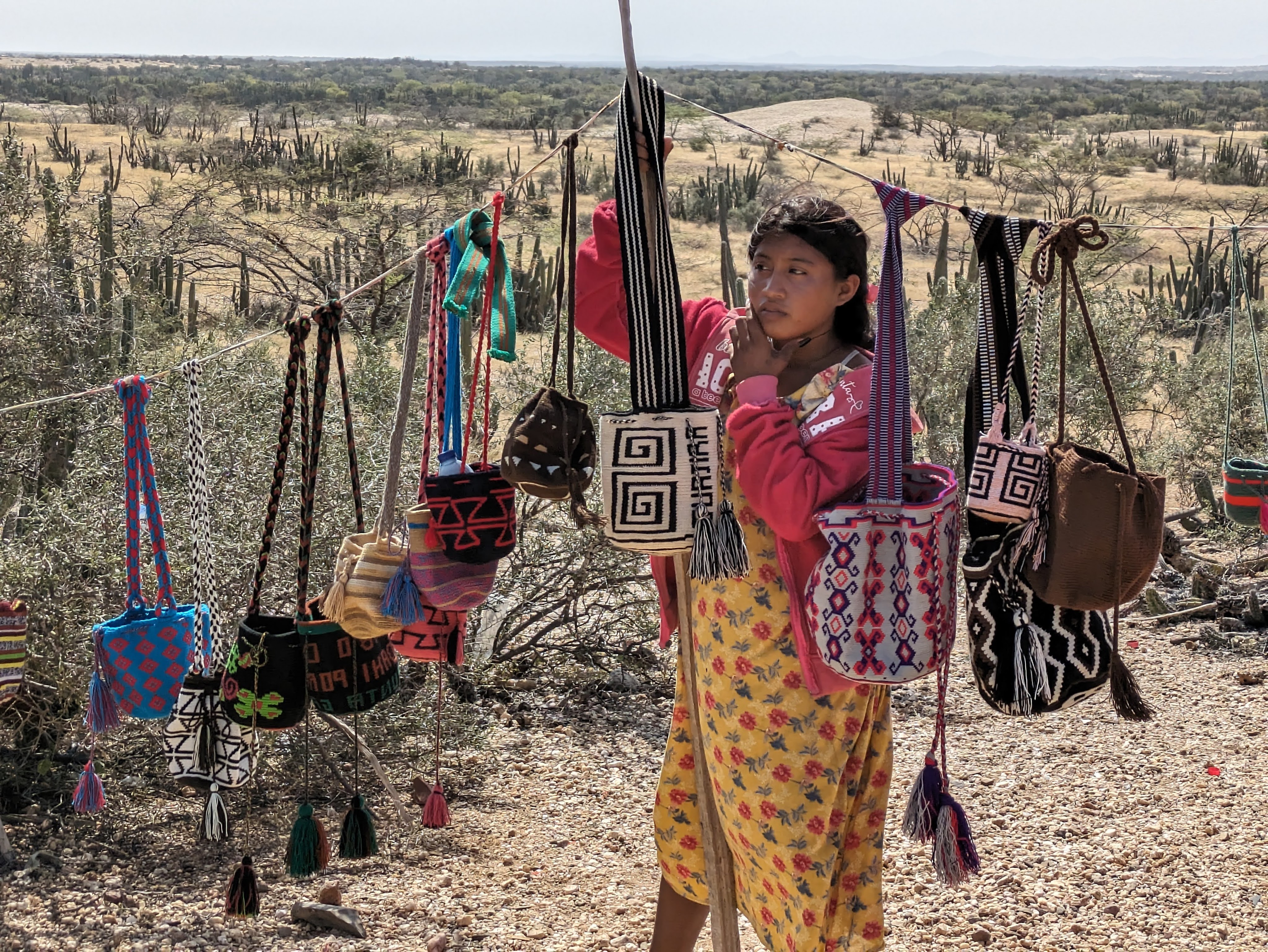
La Guajira is a remote area in the extreme north-east of Colombia, bordered by  the Caribbean Sea on one side and  Venezuela on the other. It is famous for its surreal desert landscapes, beautiful beaches and giant sand dunes. It is home to the indigenous Wayuu people, who have a tradition of weaving, particularly woven bags.

On our 3-day jeep trip, there were frequent ‘road-blocks’, usually a rope strung across the road and manned by children. The ‘tax’ was a small packet of biscuits or  lumps of panela (dehydrated natural cane juice). We had also bought bags of rice as a more healthy alternative to sweet things but what the people really wanted was water. The wild beauty of the area was mesmerizing but it was distressing hearing the kids asking for drinking water. Water has always been a scarce and precious resource here in the desert, even when the sparse rains were reliable and predictable. But prolonged drought has greatly exacerbated the problem as well as the damming of a river in another area and the diversion of water for coal-mining.

Best One Day Hike, Waterfall Hike, Jardin

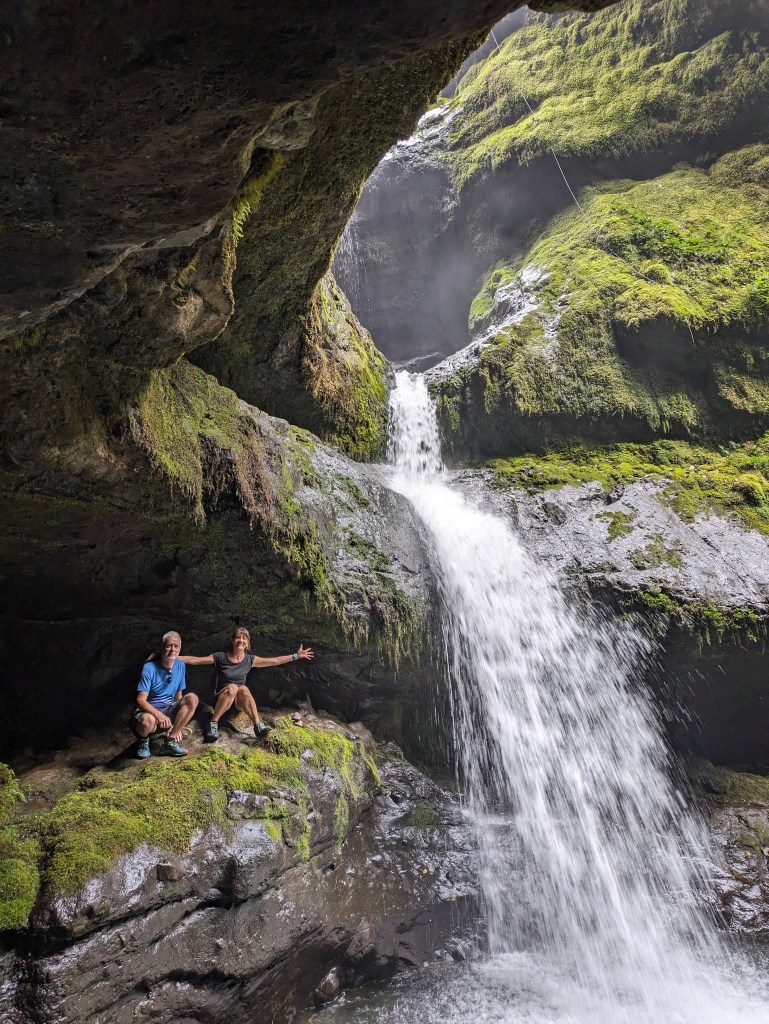
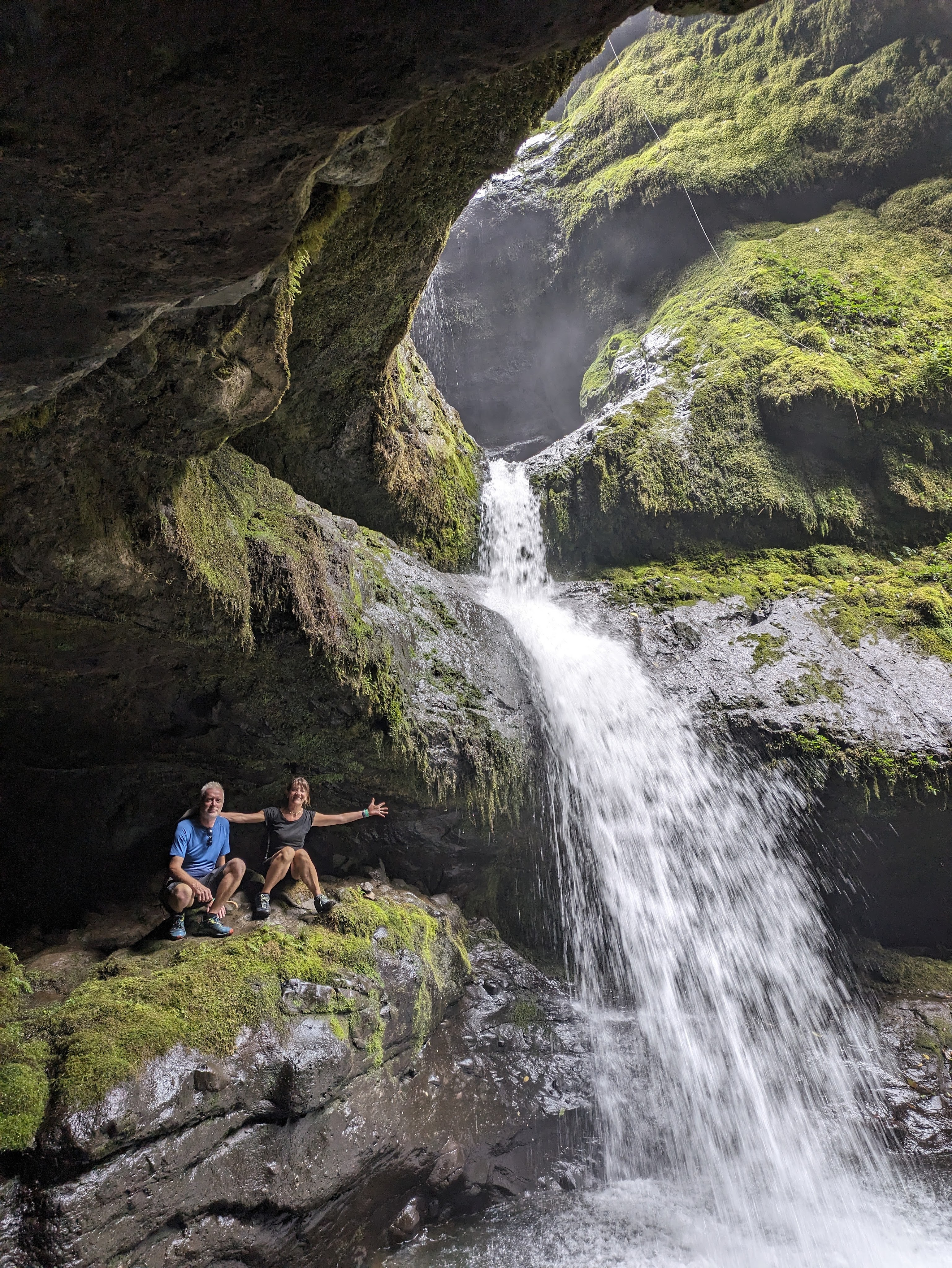
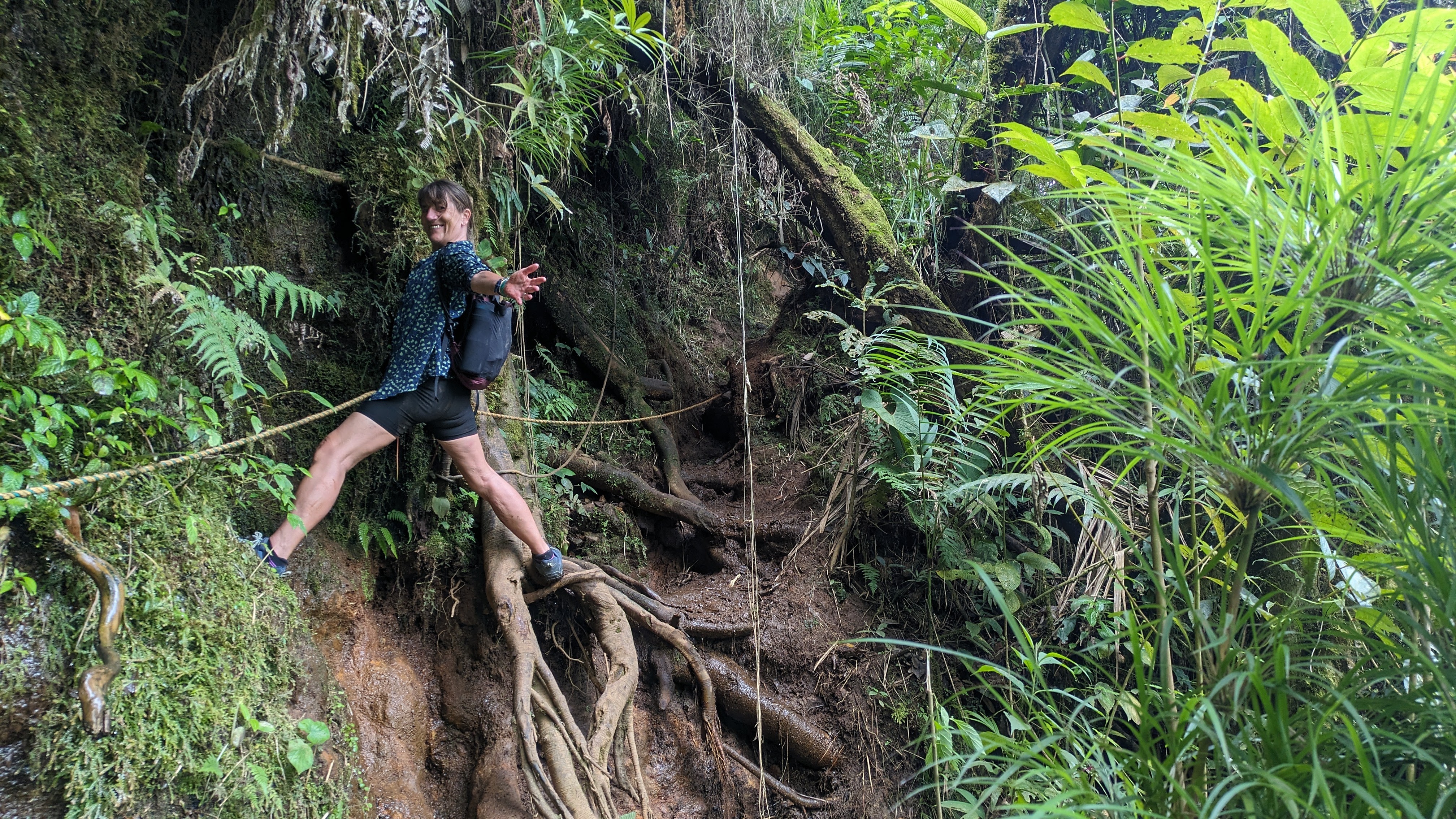
We spent a glorious day chasing waterfalls on the Siete Cascadas Hike (Seven Waterfalls), a looped one-day hike. It was challenging at times with ropes required to haul ourselves up and down some of the steep slippery slopes. It was worth every second for the tranquillity, the bird song and the beauty of the waterfalls that sometimes gushed and other times rippled over green-mossy cliffs.

Most Mysterious Place San Augustin

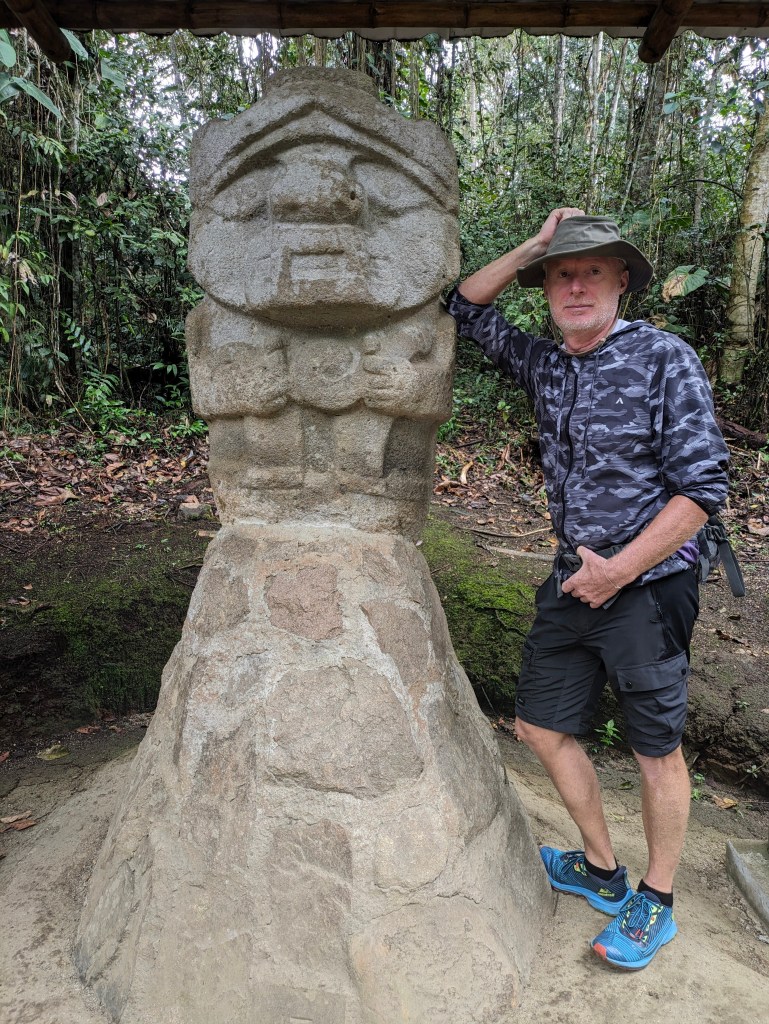
Meeting the Ancestors🤣

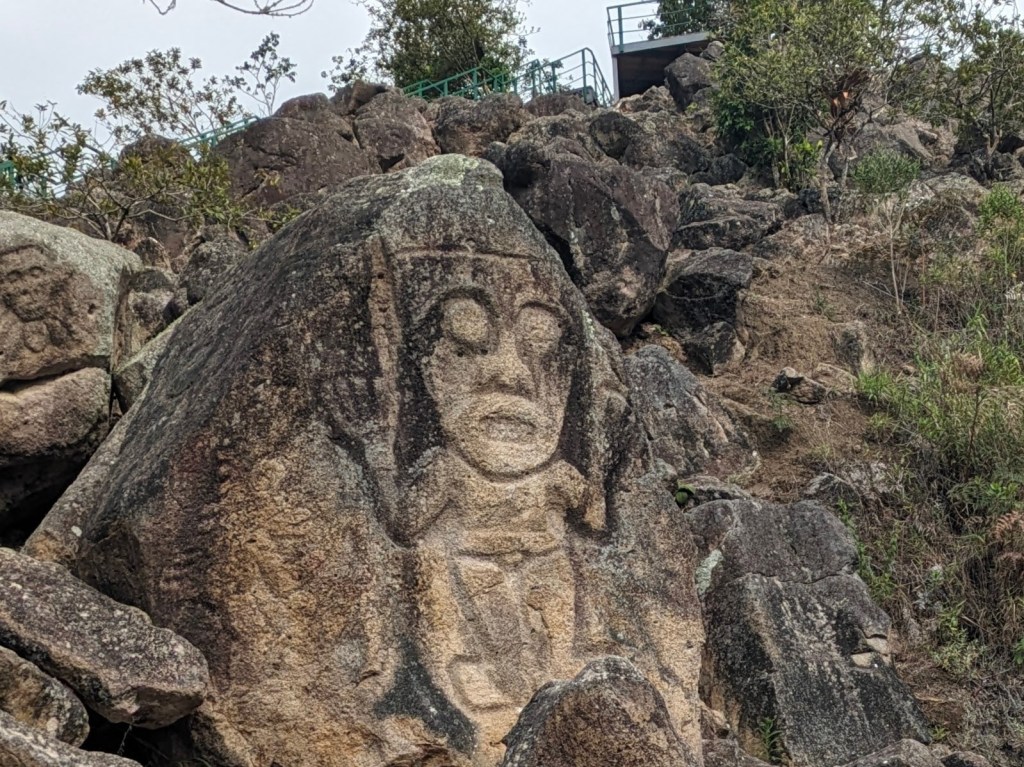
San Augustin’s claim to fame is that it has the largest archaeological site in South America standing in a wild, spectacular landscape overlooking the mighty Magdelana River.  There are imposing stone statues and petroglyphs (stone carvings), a series of burial mounds, cobbled paths and terraces. This is all that remains  of the mysterious civilizations that disappeared long before the arrival of the Spanish. Archaeologists are still puzzling over the nature and symbolism of the hundreds of stone statues scattered over a wide area. Were they making offerings, a form of protection, a bridge to the spirit world or simply pondering on life and the afterlife?

Favourite Architecture Basilica Jardin

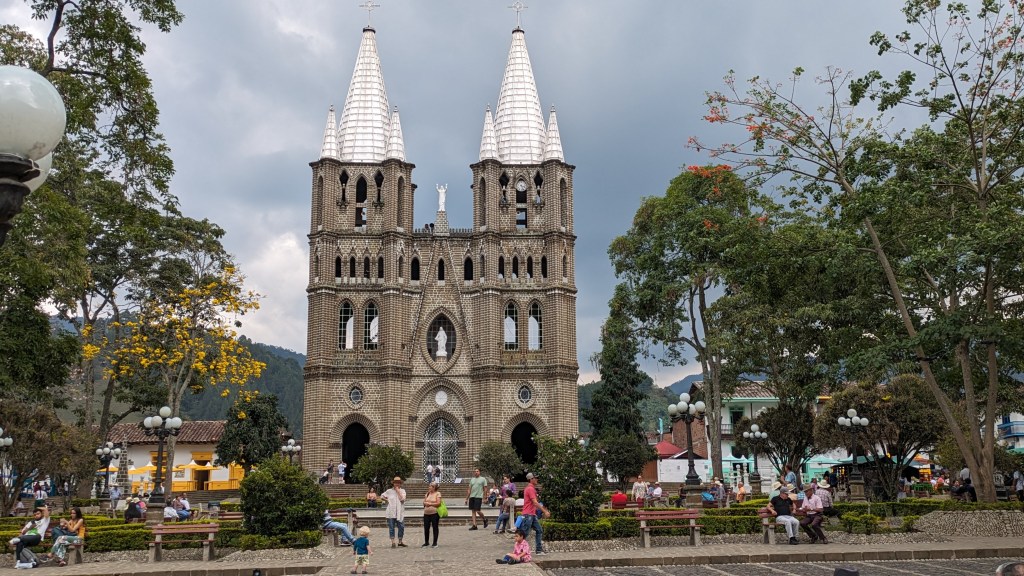
Outside
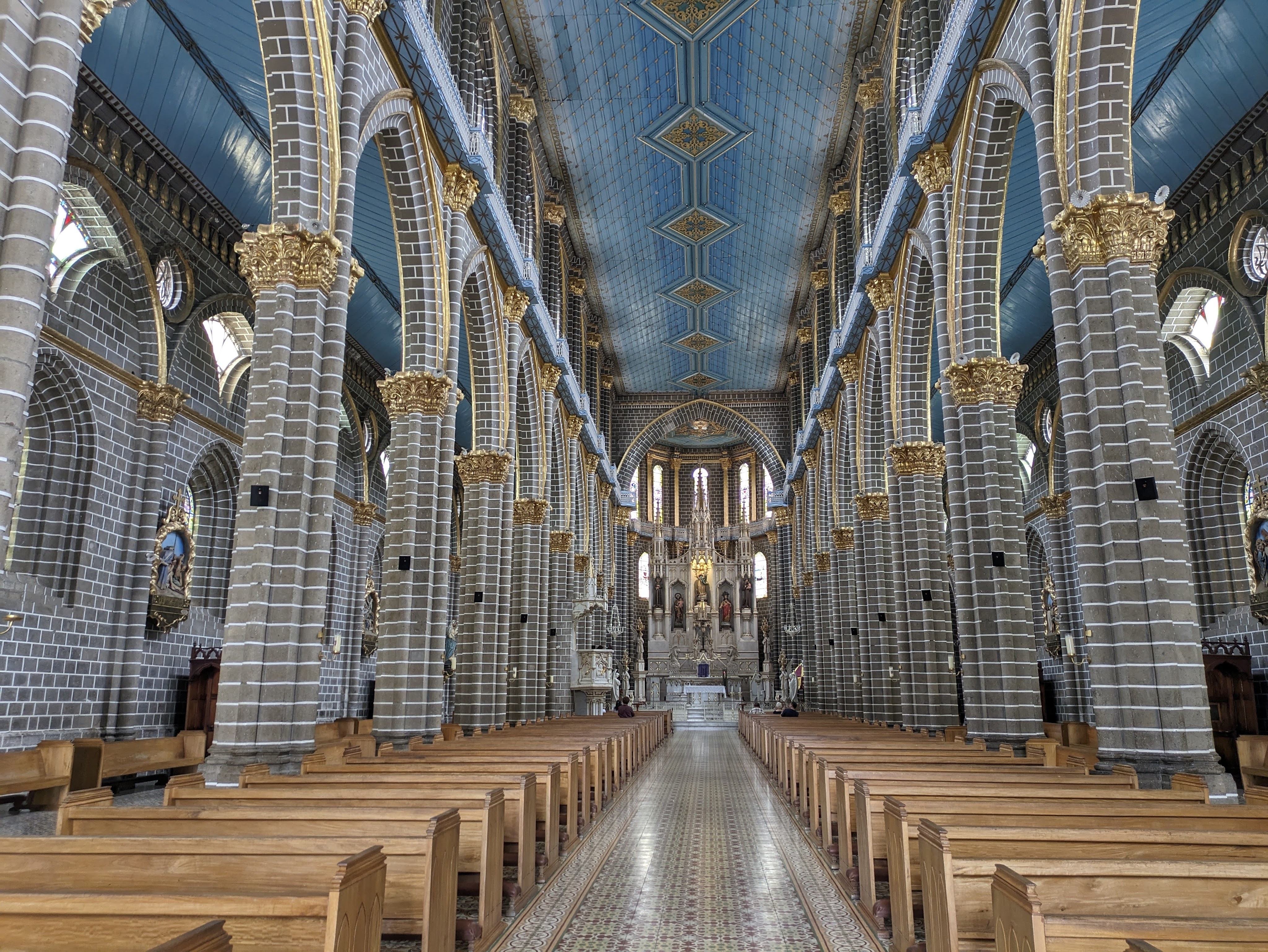
Inside

Colombia is a devout country  and most of its architecture is religious. Its churches and cathedrals are some of its most impressive buildings in every town but they also tell unique stories. Jardin is dominated by an imposing and very beautiful Neo Gothic church, situated in the central plaza, full of food stalls and music in the evenings.  It was built from local stone in 1872 and apparently when it was about to be built, the parish priest asked each of his parishioners to bring a stone equal to the weight of their sins. Obviously a lot of serious sinners in Jardin.

Favourite Art Experience Graffiti Bogota

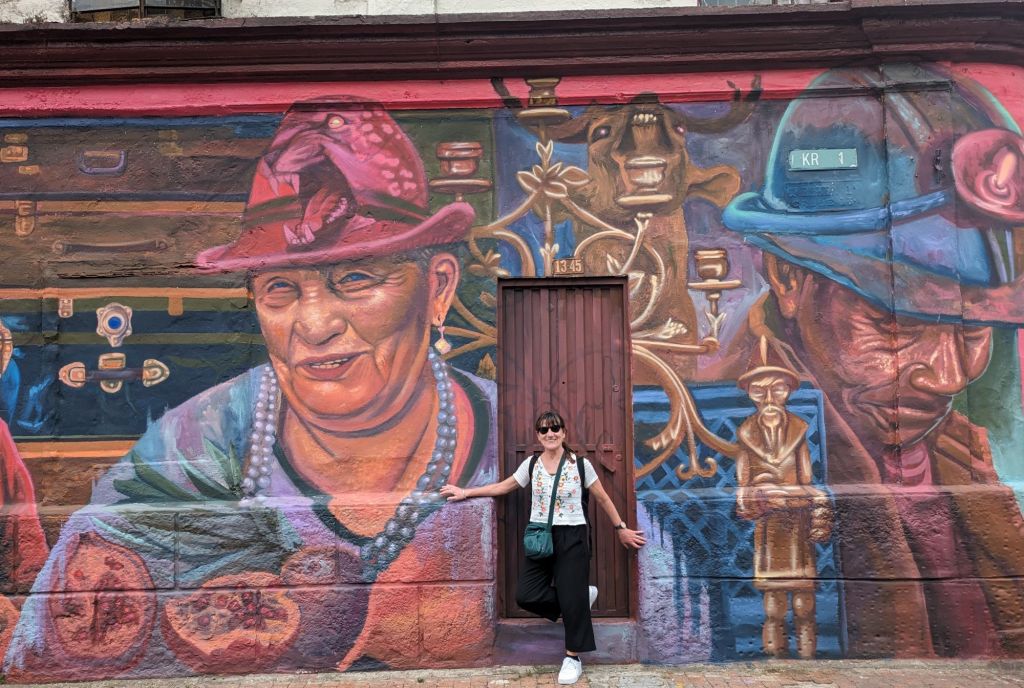
You don’t have to visit art galleries to experience art in Colombia. Graffiti is an integral feature of expression all over the country. Bogota’s walls and buildings are an ever-evolving canvas of brush, paint, marker and stencil, most are spectacularly beautiful, some are political and others are simply art for art’s sake. While Bogota is famous for its graffiti, every town and village that we visited had walls decorated with interesting art.

Favourite Small Town,,,,, Jardin

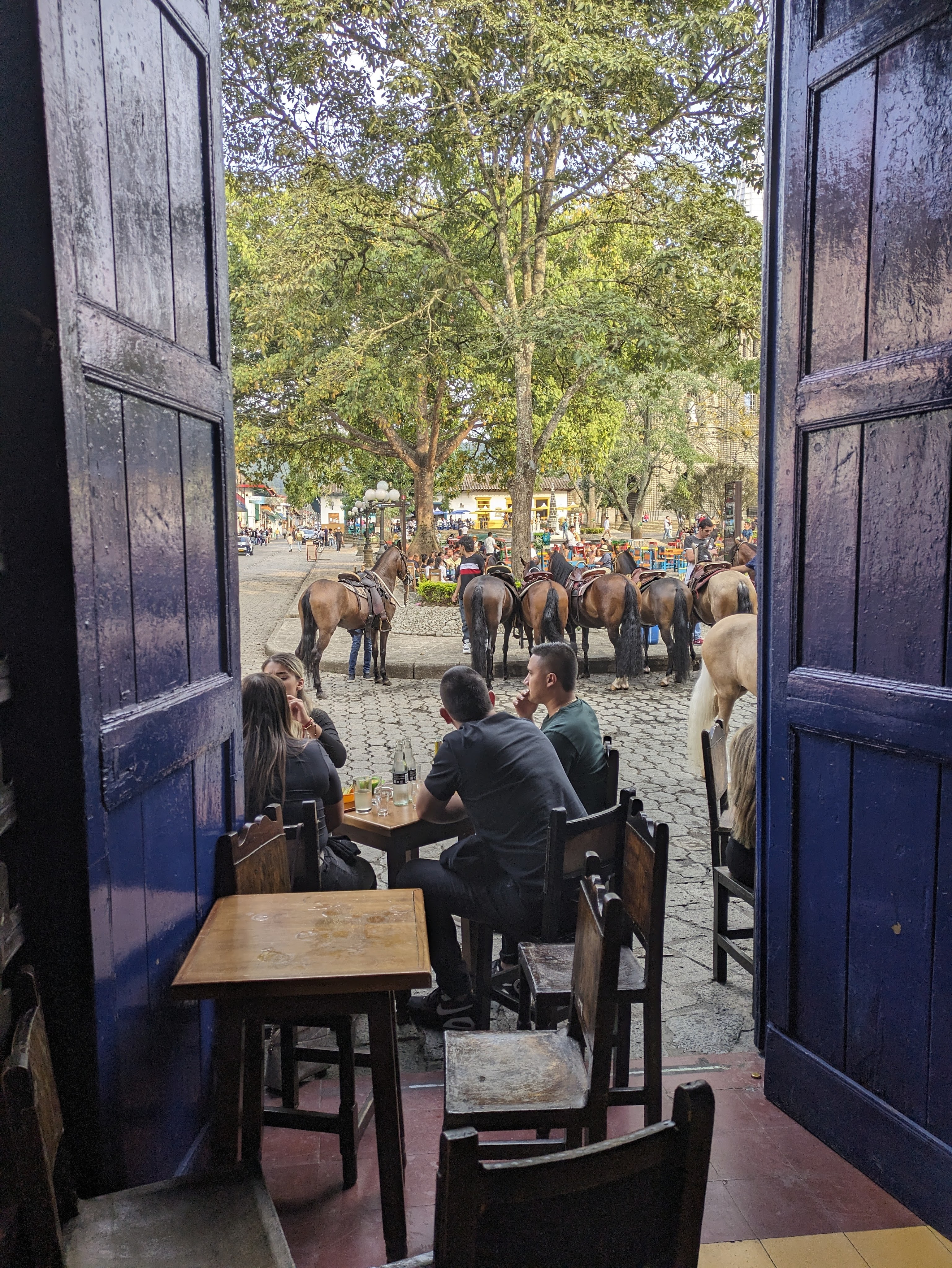
Jardin….Horses and Drinks

This is a difficult one as we loved most of the small towns in the mountains. Its difficult to pick one but I’m going to choose Jardin, which very aptly translates to ‘Garden’. This quiet place was nestled in the mountains amid small coffee plantations, banana trees, rivers, waterfalls and grazing cattle. The town was  brightly painted with a large flower-filled plaza and an enormous neo-Gothic church. Although there were some tourists, it had a lovely laid-back feel with ‘cowboys’ riding into town for a few beers.

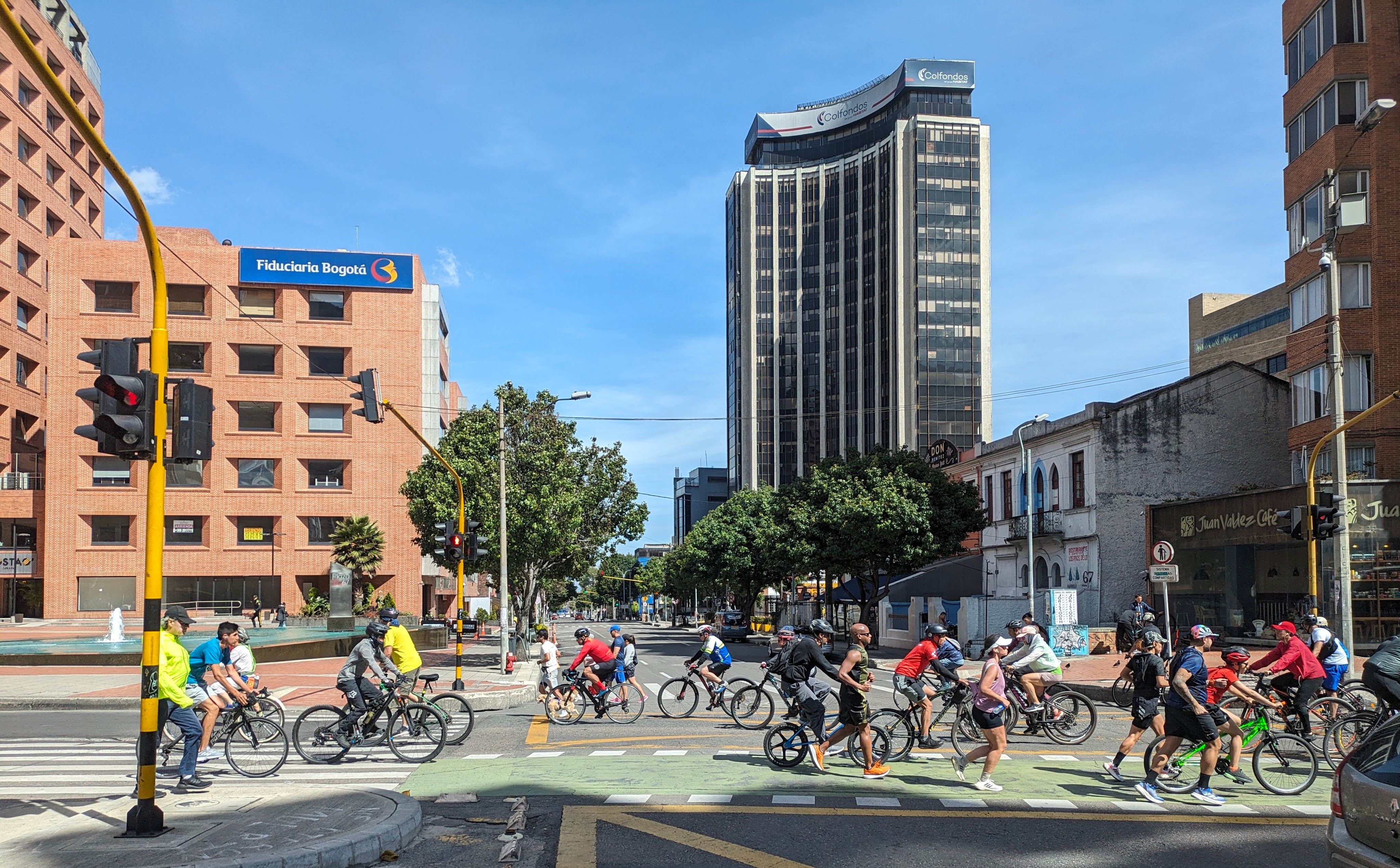
Biggest Surprise Ciclovia

Even Sunday morning, something strange happens in the cities and towns all over Colombia. Large numbers of streets are closed to motorised traffic from 6am to 2pm, leaving the streets free for cyclists, pedestrians and rollerbladers. The people take to the streets in their droves.  Nor is this a new ‘green’ initiative, the first Ciclovia (as it is called) happened in 1974 but it has expanded in the last decade.

Biggest Disappointment  Caribbean Sea

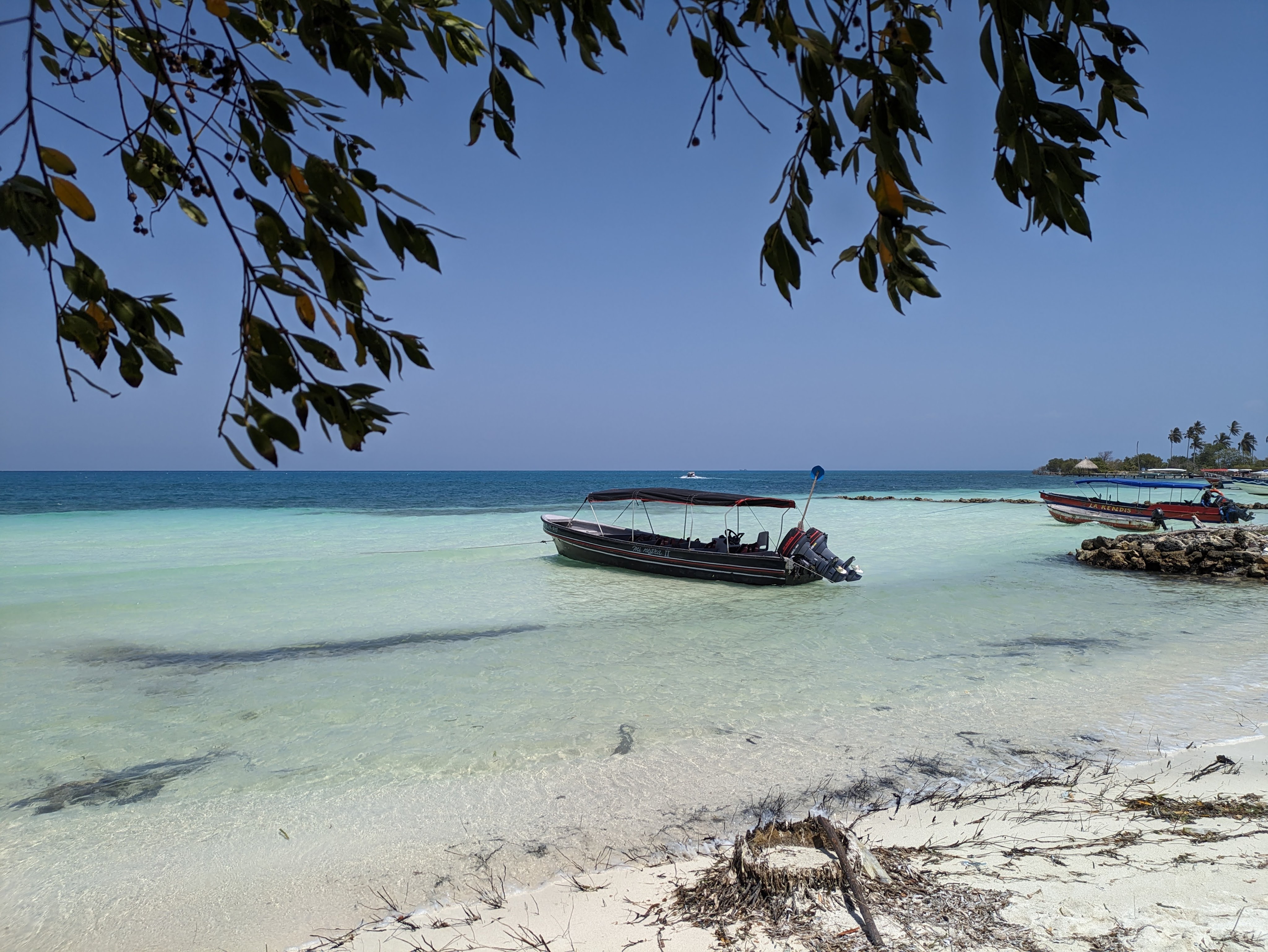
Rare calm conditions on the Caribbean Coast

Apart from the coffee, our biggest disappointment was the turbulence of the Caribbean Sea. We expected calm turquoise waters with crystal-clear water which would be perfect for swimming and snorkelling. Instead we got rough, washing-machine conditions with churning sand which meant that visibility was poor and many of the beaches were unsafe for swimming.  We were on the Caribbean Coast in January and February which is the dry but windy season and we were told by locals that at other times of the year, the waters are indeed turquoise and tranquil. We took a boat trip from Rincon del Mar to do some snorkelling and here far from the coast, the waters were clear and turquoise but the coral was damaged with very few fish. Several islands off the coast, especially the San Andres archipelago, are reputed to be idyllic but as the only means of reaching them was to fly, we didn’t visit them.

Dogs, Dogs, Everywhere

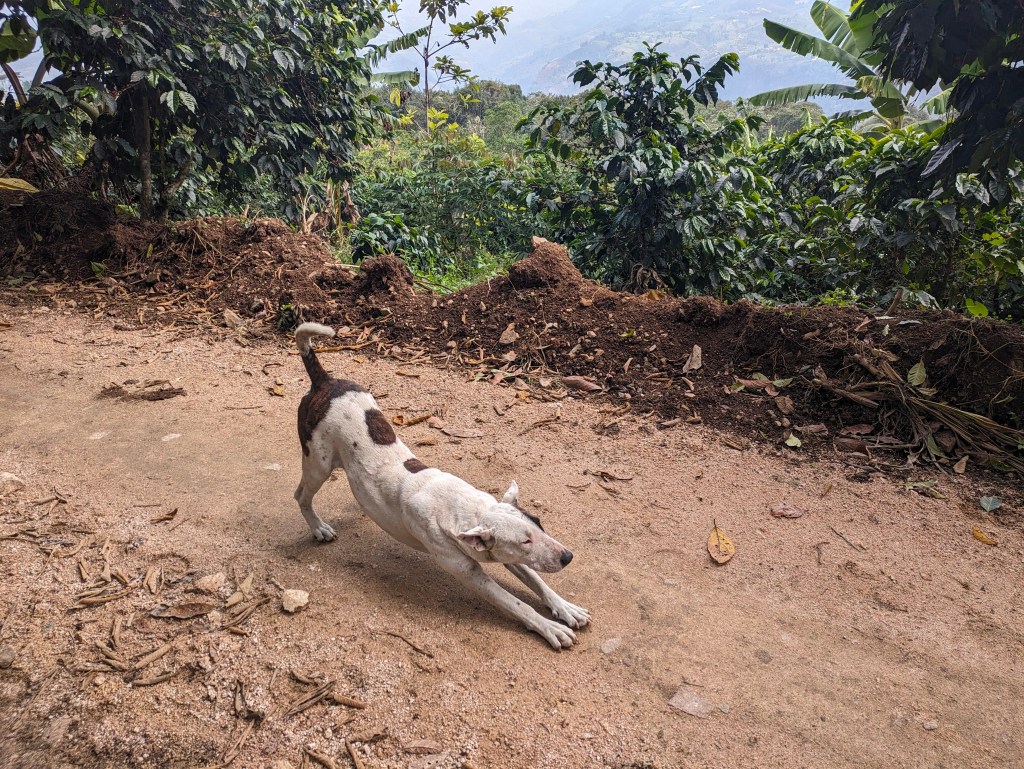
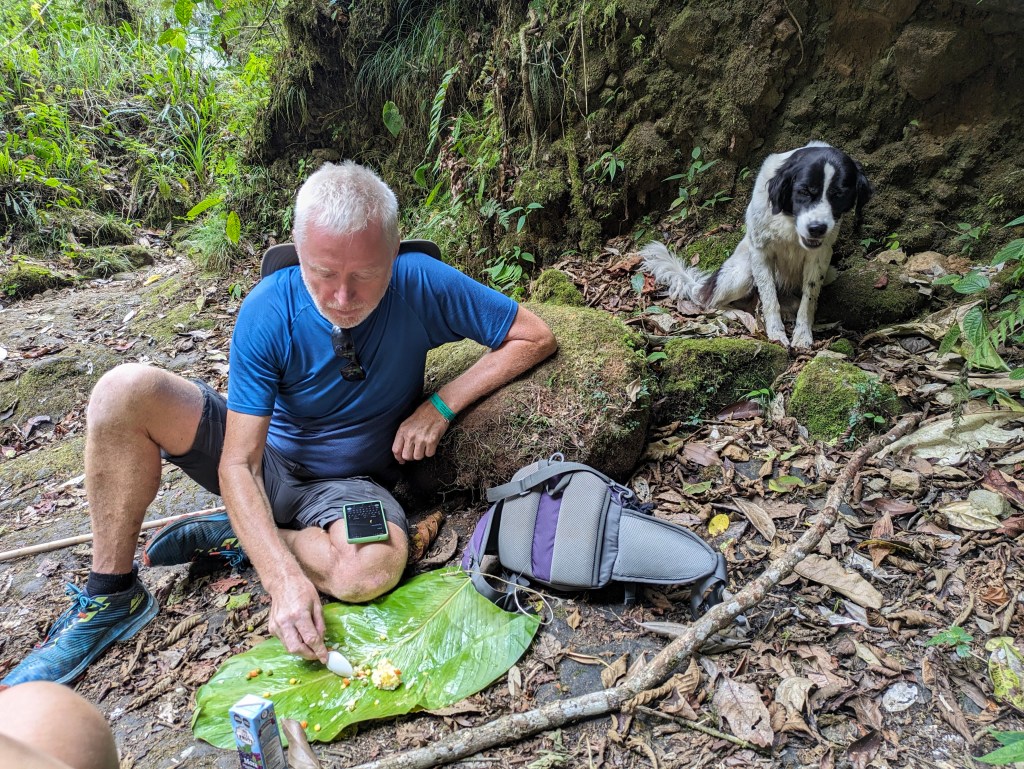
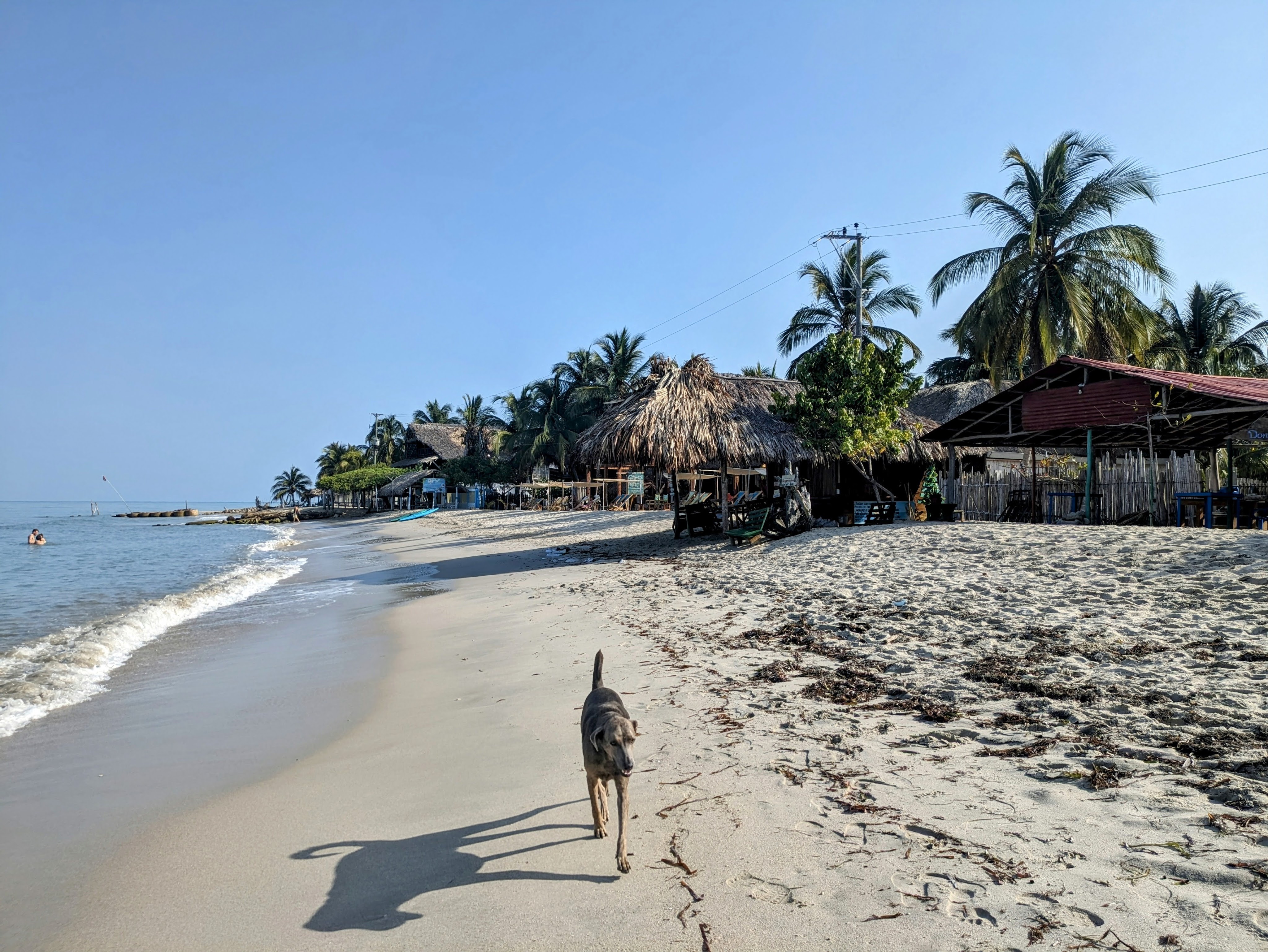
With the death of our beloved Rolo on New Years Eve after his thirteen years of unconditional love, we were particularly susceptible to the charms of the Colombian dogs with their friendly temperaments. We were accompanied by affable dogs on all our hikes and beach walks – self-appointed guide dogs

So another adventure has ended and we avoided a really wet spell of weather in Ireland while we were away. Its always a little sad when a trip comes to an end but the thing that we love about home at this time of year is the gorgeous blossoms and the sense of nature awakening after a long and wet winter and of course the stretching of daylight day by day.  In Colombia with its geographical position (the Equator runs through the southern part of the country) the days are always about twelve hours with dawn at about 6 am and dusk at about 6 pm. Here’s hoping that summer 2024 will be a long sunny one.

Thanks for accompanying us on our travels. It was great to have your company.

Until next time  – adios amigos🥰🥰

Back Home
Colombia: Highlights❤️

Colombia –  Ruins, Rivers and Desert Rain🌵

Sometimes it’s an adventure just getting to a destination.  Popayan, with its many churches and white buildings, was full of religious visitors for the many Pascal processions and Easter ceremonies but we left its busy streets to head to San Agustin, a small town not far from the border with Ecuador.  Why did we want to go to San Augustin, a place that was slightly off the Gringo Trail? Well, a young Swiss couple and an older American couple that we met along our travels, both told us that it was their favorite place in all of Colombia, so we felt that we had to go there.

We had been pleasantly surprised by the level of comfort on most Colombian buses with their  ample legroom and seat allocation ….but not on this journey. We crammed into a small bus with stained green velvet covers and set off on our 130 kms journey south to San Augustin. This bus had all the hallmarks of a well-rattled boneshaker. Caoimhin’s knees were wedged against the seat in front, my elbow was out the window so that we could both fit in the narrow seats. The journey was scheduled to take an optimistic 4 hours, but the bus-driver admitted that the time was variable and depended on road conditions, part of the way took us on dirt roads through the Parque Nacional Natural Purace, with its ring of volcanos and deep canyons.

The windows on the bus were so dirty that they were almost opaque and so the scenery, which was probably spectacular, was just a blurry green. The journey wasn’t too bad for me until we reached the uneven dirt-road part although Caoimhin had almost lost feeling in his legs. It started to rain and the driver danced the bus around the road to avoid potholes regardless of the oncoming traffic and blaring horns😲 Luggage spilled from overhead bags with the constant shuddering, some potatoes rolled down the aisle and a small dog whimpered in the arms of a man in the seat opposite us. We stopped at a roadside restaurant after the dirt road bit so that our generously proportioned driver could munch his way through soup and a hearty portion of rice and goat stew, I managed some water and a bite of cheese empanada (a kind of south American pastry). But after five and three-quarter hours, we arrived in San Agustin and creaked off the bus to make our way to our Airbnb, a steep uphill 1km from town.

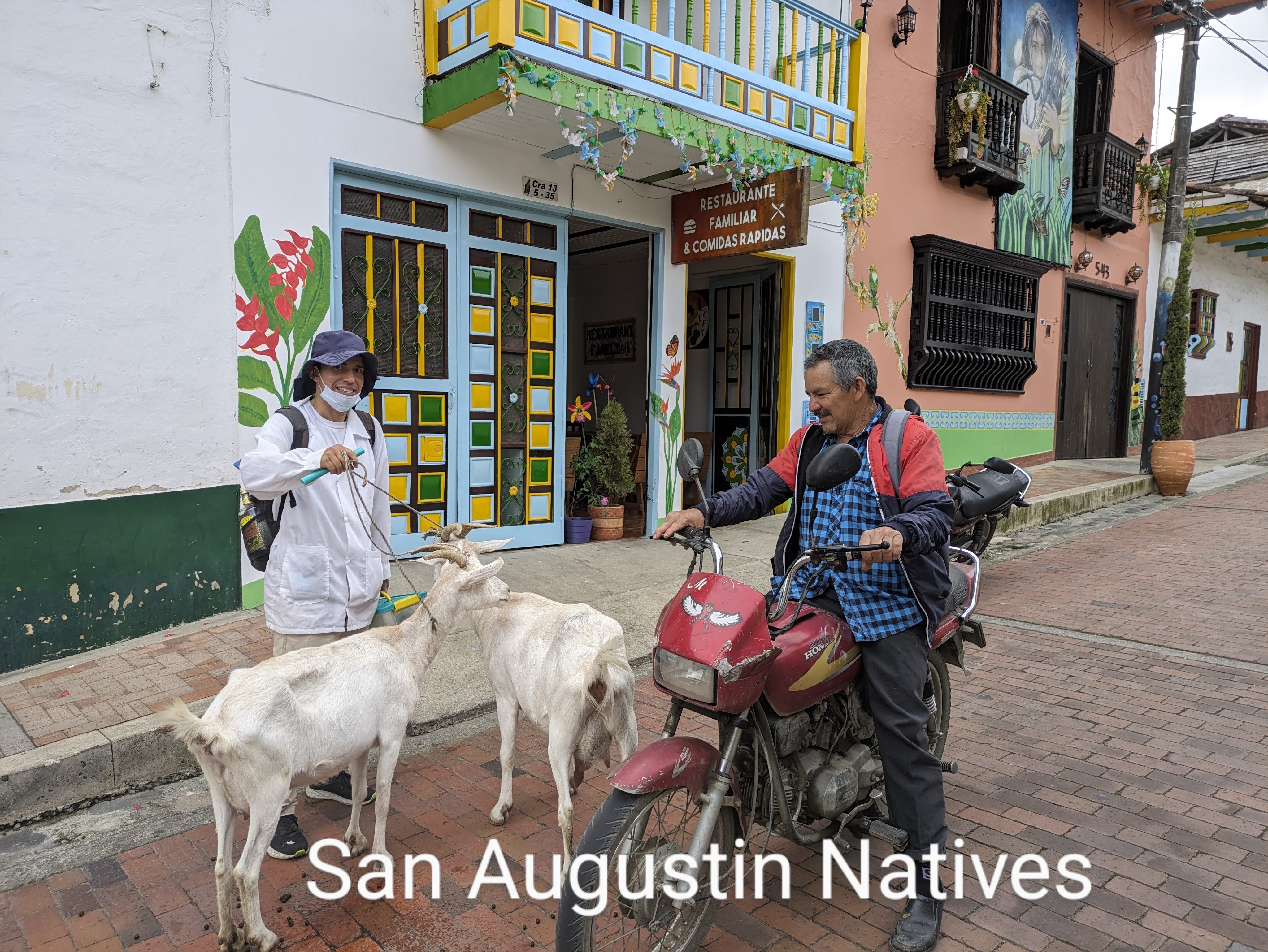
San Agustín was a small traditional place where wandering goats were common in the streets and the houses were brightly painted, where farming was the main occupation…as well as chatting, they were big talkers.  It was deep in the Andes mountains, a place of steep terrain, high peaks, and yawning canyons. In many ways, it had a Garden of Eden feel, papayas fell from the trees outside our accommodation, mangoes were ripening on the bushes, there were oranges, coffee and bananas and a whole host of flowering shrubs There was rain and lots of it every day but there was also heat and sunshine with cool mornings and chilly nights…we even needed a blanket on the bed. We spent six days here and the longer we stayed, the more we liked it.

San Augustin – Goats and Graffiti

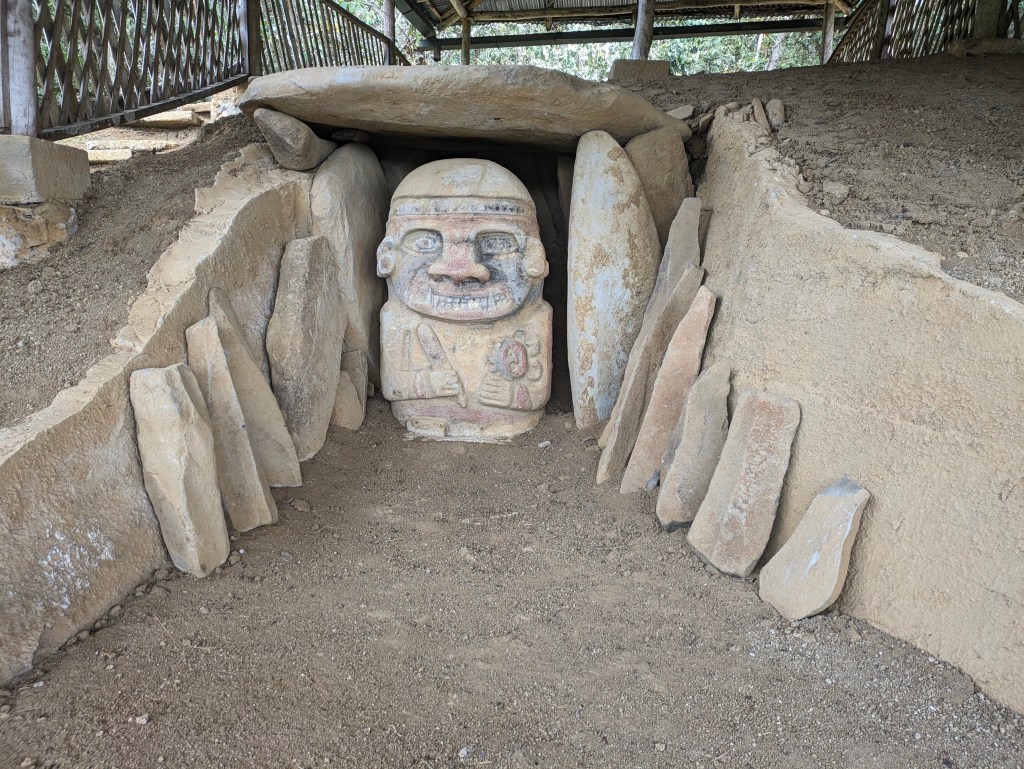
San Augustin’s claim to fame is that it has the largest archaeological area in Colombia with imposing stone statues and petroglyphs (stone carvings) as well as a whole series of burial mounds, cobbled paths and terraces. This is all that remains  of the mysterious civilizations that disappeared long before the arrival of the Spanish. Archaeologists are still puzzling over the nature and symbolism of the hundreds of stone statues scattered over a wide area. Were they making offerings, a form of protection, a bridge to the spirit world or simply pondering on life and the afterlife?

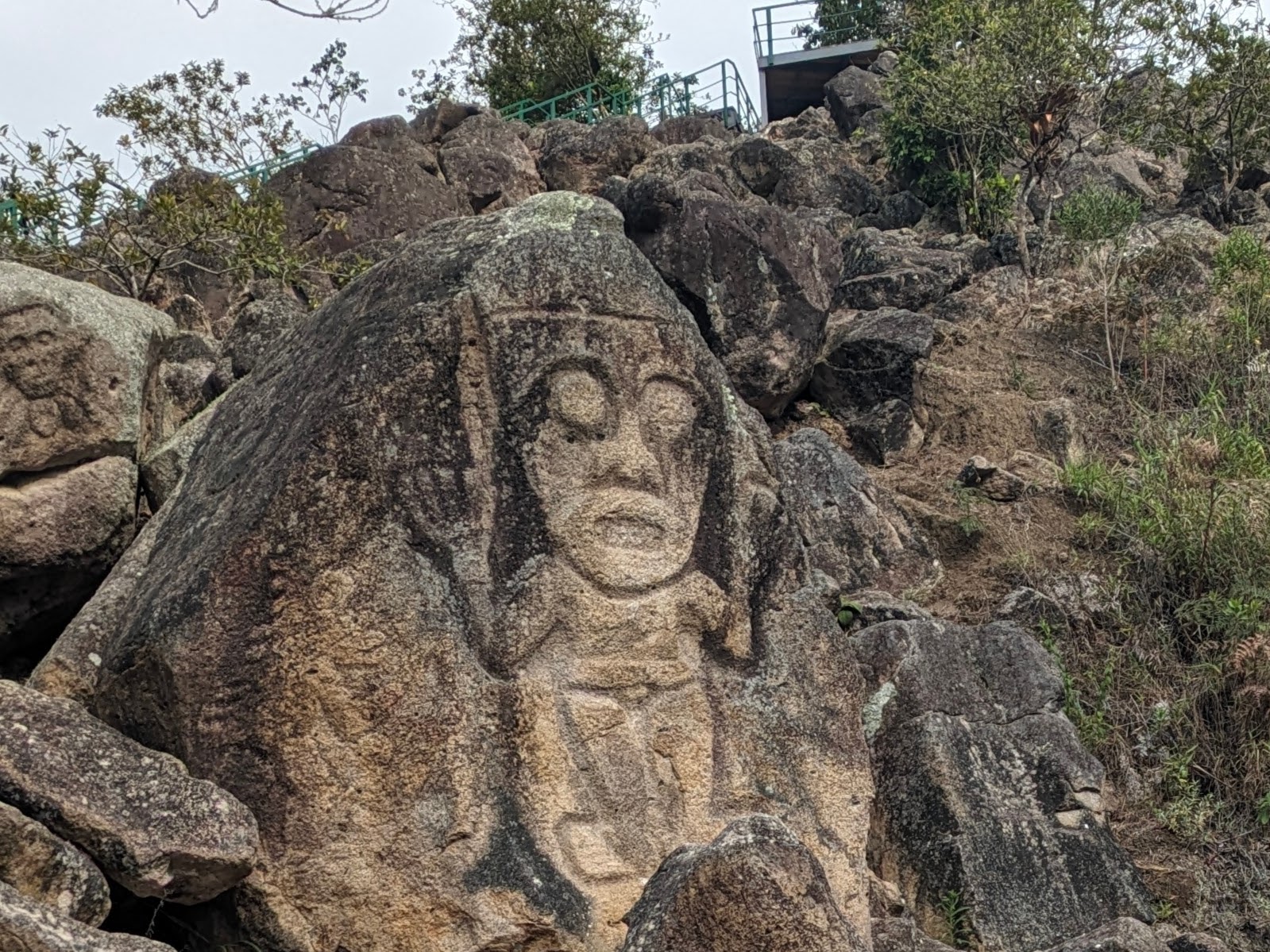
We visited an isolated site on a dramatic hillside overlooking the Magdalena River where a two-thousand-year-old petroglyph stood. Both arms were held up either in wonder at the surrounding beauty or in dismay at the destruction in the world. But when there was only an oral tradition and the original purpose is long-lost in the mists of time, everyone can bring their own interpretations. Centuries from now, will future generations wonder about us when our words are lost on obsolete computer devices?

Two Thousand Year Old Petroglyph, San Augustin.

Given the ferns and grass growing on the stones on the hillside, one has to wonder what other figures may remain hidden away from modern eyes.

One interesting point was that everyday spaces were not separated from the great tombs, people lived around the funeral centers, life and death existed in a state of constant interaction with many rituals for the living and the spirit world.  

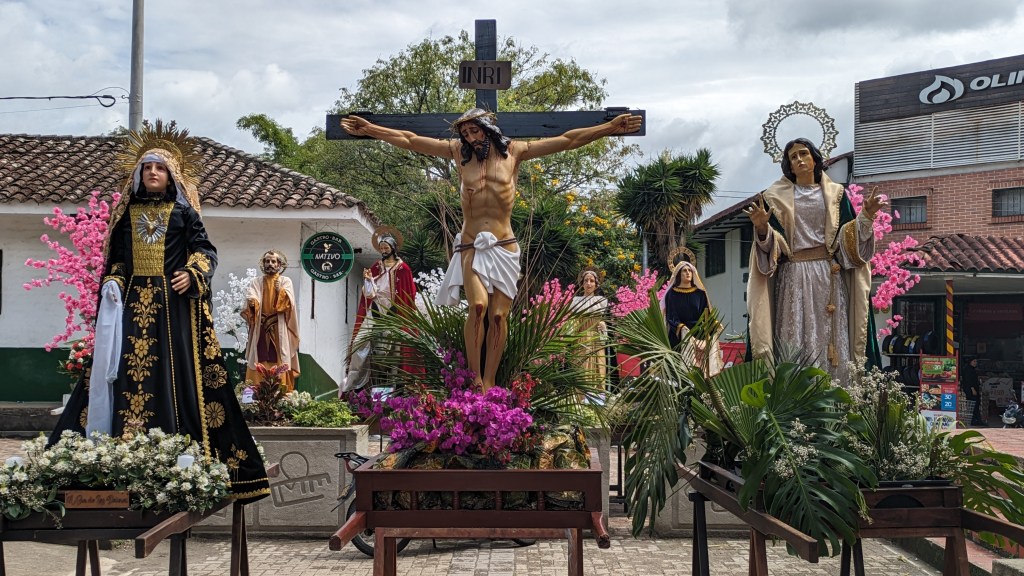
Easter was also a time of ritual and celebration in San Augustin. The beautiful church in the main plaza was not just full on Good Friday and Holy Saturday…..it was overflowing with fold- up chairs arranged in the aisles and in rows outside the church door. A huge screen was set up in the plaza outside the church and the prayers and singing were broadcast to the town during the week. There was a candle-lit procession through the streets on Saturday evening at about 7pm but normal business continued with shops and businesses still open….people were getting their hair cut and eating in restaurants as the banners and statues passed by.

Watching the Easter Processions

This wild dramatic landscape was shaped by stone and water. Five rivers have their birthplace in the region including the mighty Magdelena, the longest river in Columbia which flows north for 1525kms until it reaches the Caribbean. We have crossed and recrossed it many times during this trip but now it was time to get into it. We booked a rafting trip for Easter Sunday to finally get up-close and personal with this important natural phenomenon.

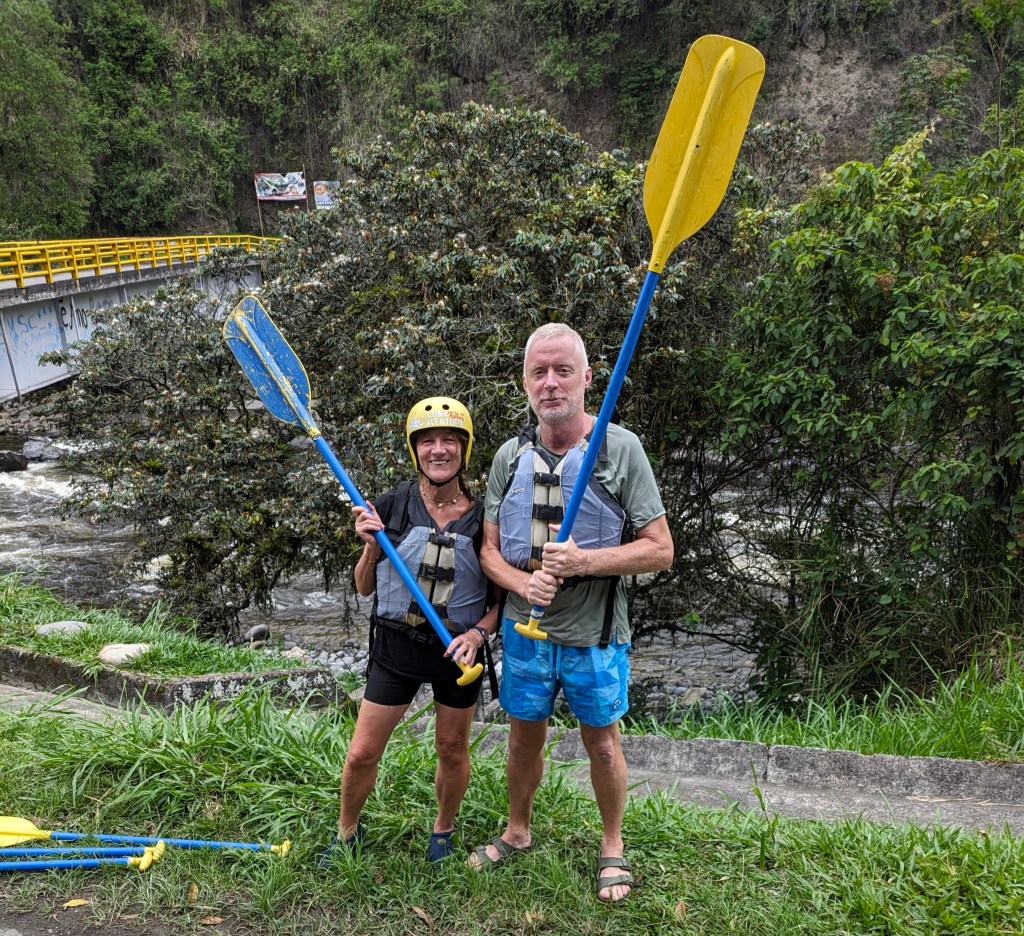
About to get wet, Rio Magdelena

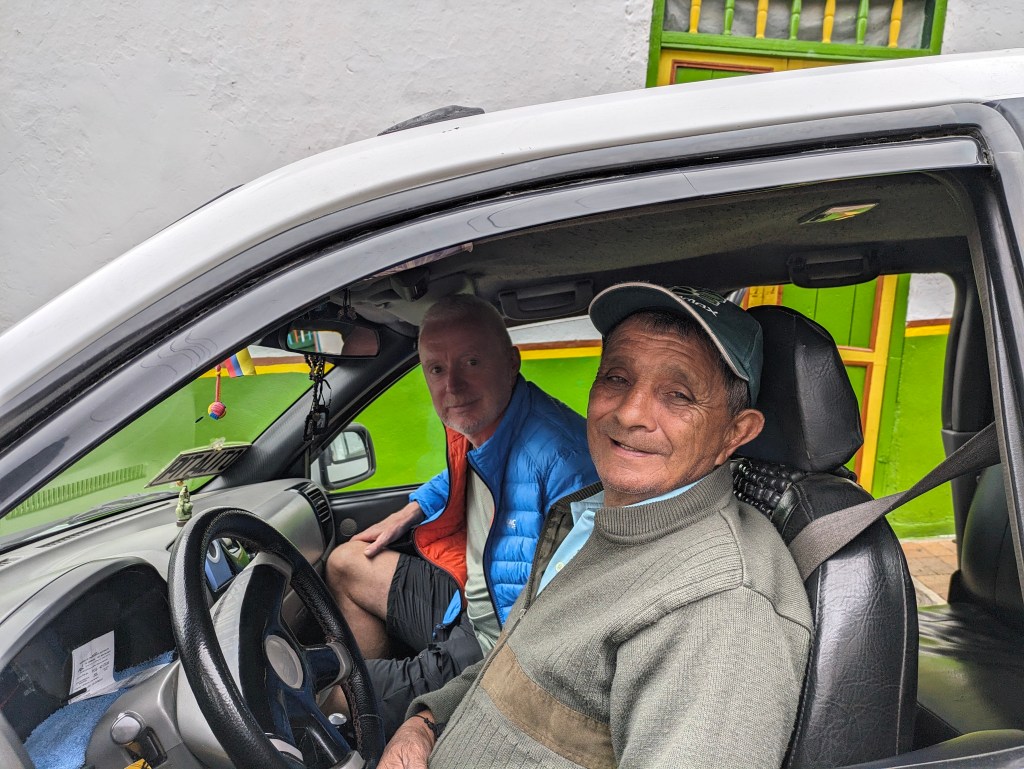
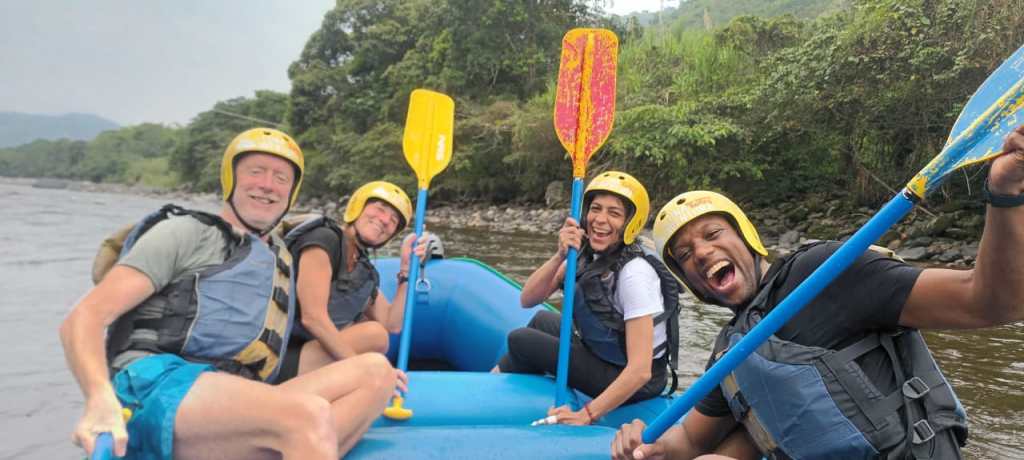
Anvil, another very talkative man, picked us up in his jeep to take us to the river on a cloudy overcast Easter Sunday morning. Our rafting companions were a lovely young Colombian couple. Luis and Dhiana. Luis was big and strong, and looked like someone who could handle the raft single-handedly. I was delighted thinking that I wouldn’t have to pull my weight on the boat but appearances can be deceiving.  Luis feared the water and had only recently begun taking swimming lessons.  He and Caoimhin started as the ‘captains,’ but after we nearly capsized at the first two rapids, Dhiana and I were promoted to the front seats and the lads were demoted and it became a less exciting trip after that as we navigated the rapids without too much incident.  But we had such a great laugh, and it was a thrilling way to view the stunning scenery and watch the flitting birdlife. Tough work on the shoulders, though.

Our next stop was Villavieje, a little town almost at sea level at the edge of the Tatacoa Desert, the second largest arid region in Columbia and a seven-hour journey from San Augustin. We arrived at about 4pm – the last section on the back of a jeep – and stepped into a dense sleepy heat. Immediately we were missing the freshness of the mountains, unused to such energy-sapping conditions after all our weeks at higher altitudes. Fortunately, our hotel had a nice pool (€25 a night including breakfast) where we cooled off with a family from Bogota and their two small boys.

The Tatacoa Desert is famous for its clear skies and is designated a ‘clear skies zone’ with observatories dotted on the landscape. Some give astronomy talks and we jumped at the chance to learn more about the night skies and to look through giant telescopes. Unfortunately, when we arrived at the observatory for the nightly tour, it was closed, maybe because of the gathering clouds and the small distant flashes of lightning.

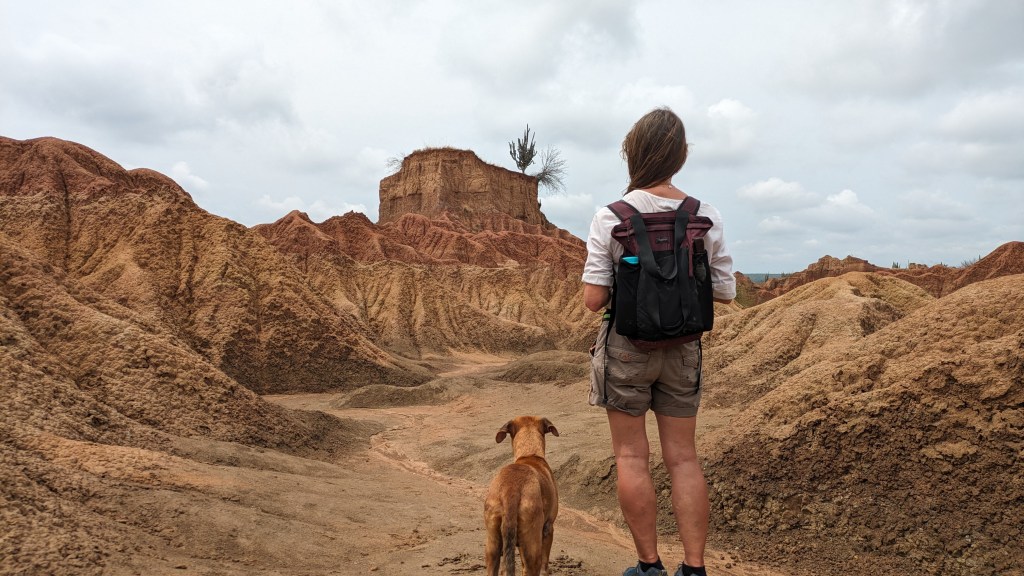
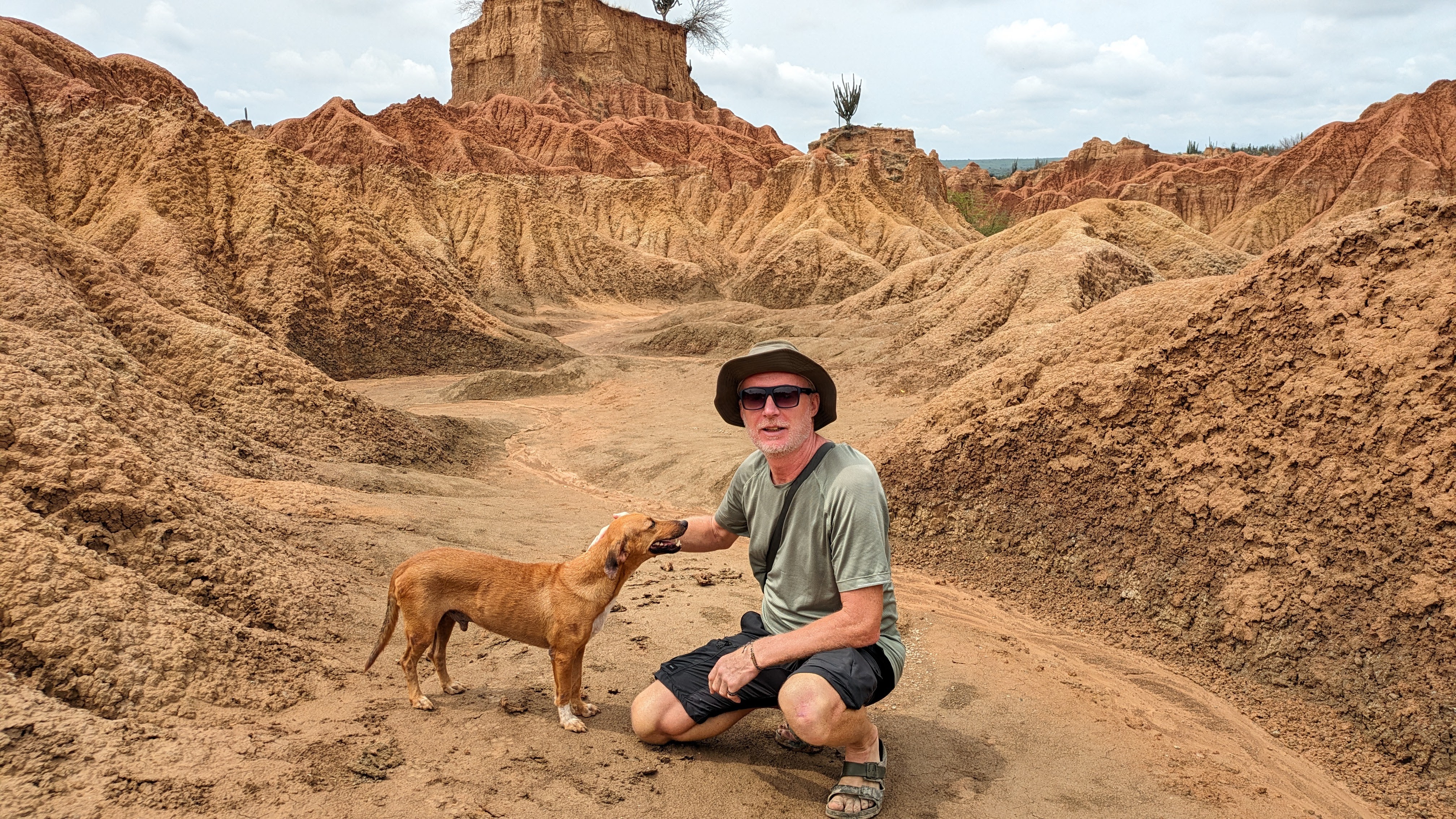
In Colombia, there’s always a dog in camouflage
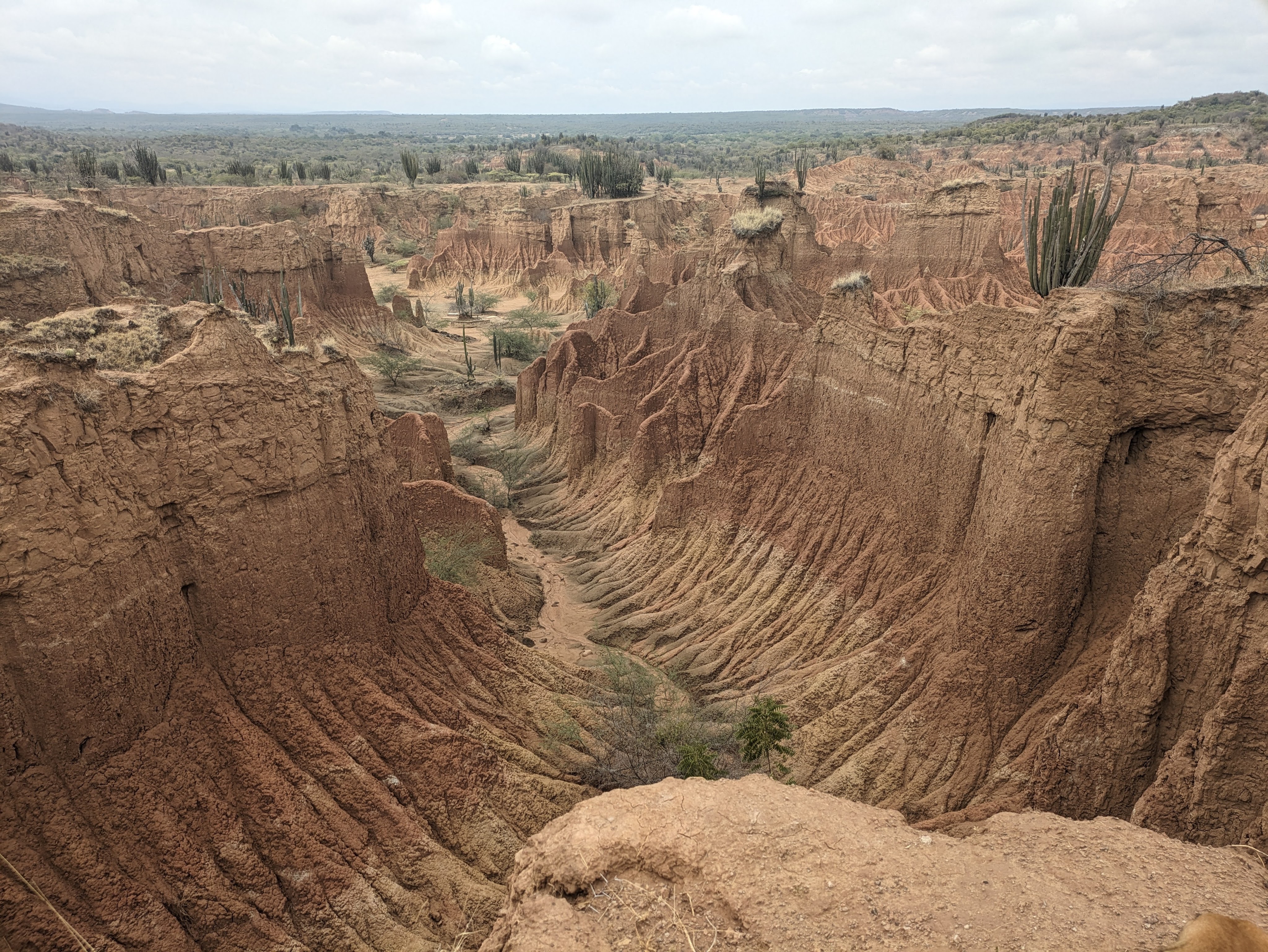
Wrinkled Gullies, Tatacoa Desert
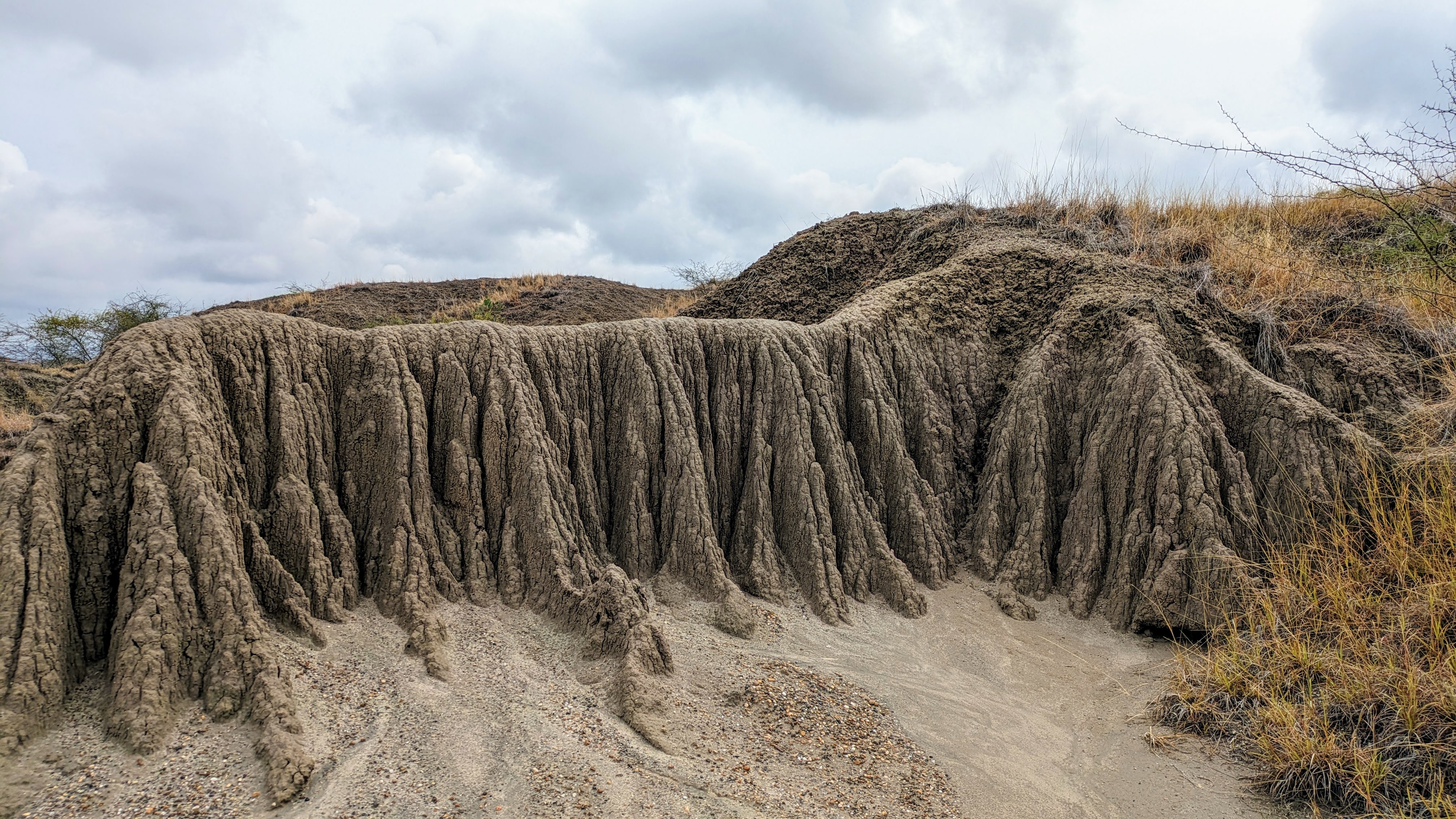
The Grey Desert

I already said that it was one of the most arid regions in Colombia but not while we were there. The rain started at about 8pm, quickly became a downpour that lasted all night with thunder and lightning that blinked the lights several times and finally doused the power altogether. This meant that there was no air conditioning nor fans all night in temperatures that were a windless clammy 30C. It was hot rain in the desert.

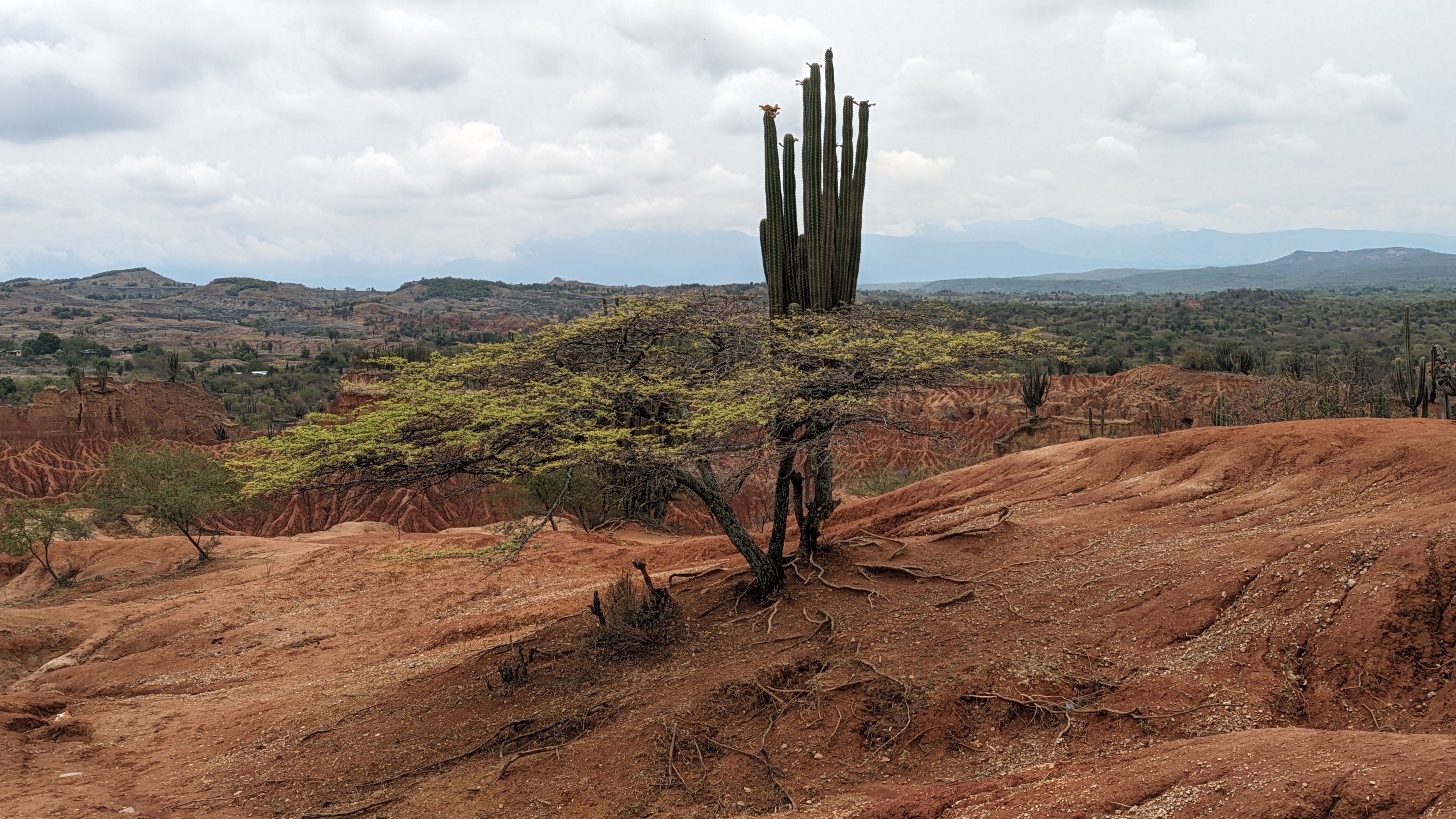
The rain had eased to a drizzle the following morning when Ramiro, a tuk-tuk driver that we hired the night before, pulled up outside our hotel at 7,30am. Breakfast was the usual scrambled eggs and arepas (a corn flatbread which is ubiquitous in Colombia and eaten with every meal).  We set off on our trip to the Tatacoa Desert, which isn’t a true desert – and not just because of the rain we experienced – it is a dry tropical forest of rock with a landscape of canyons forming stunning dry red and grey labyrinths and deep gullies. Ramiro only had two words of English – ‘money’ and ‘Wow’. He loved money and Wow! was what the tourists said when they saw the desert. It was truly an outer worldly place where the red and grey colours were interpersed by the vivid green of giant cacti or other bushes. Its also home to snakes, scorpions and a wide variety of birds. We saw the birds but not the snakes or scorpions but we were delighted to see a very cute anteater.

The rain had turned the clay surface into a slippery sticky mud that caked our shoes so much it was like walking on heavy stilts. On the other hand, the clouds kept the temperatures to a manageable 30C which made walking among the wrinkled lab a more pleasant experience.

Now we have arrived in Bogota in damp drizzle and 17C for our last weekend before leaving for home on Monday evening. We are back to where we started three months ago, having experienced so much in mountain, sea and desert. This time we are staying in the city centre in a thirteenth-floor apartment, with views of the mountains and the city streets. The small apartment is a well designed, insulated box with a rooftop pool, restaurant and jacuzzi (which we haven’t used yet because of the cold and damp but the weather is set to improve tomorrow). It’s the most expensive place we have stayed  at €37 a night but then cool and trendy doesn’t come cheap🙃 It’s  very different to our usual sort of place and we are certainly older, shabbier and more disheveled than most of the young slick clientele but that doesn’t bother us in the least😀

Thanks for sharing the journey with us. Hope you enjoyed it as much as we did.

Hasta luego, amigos , 💕

Colombia –  Ruins, Rivers and Desert Rain🌵

Colombia – Coffee, Clouds and Condors

If you like to wake up and smell the coffee, then the colourful little Colombian town of Salento set amid green Andean mountains and coffee plantations may be your dream destination. Colombia has a reputation for producing excellent coffee and is the third largest grower of coffee after Brazil and Vietnam, so we were surprised to find that drinking coffee in most of the country was a real disappointment.🤨 I must admit that coffee isn’t really my cup of tea but Caoimhin, a coffee connoisseur, was disgusted with the coffee and even switched to drinking tea, water or some of the delicious fresh fruit juices. The reason for this conundrum? Apparently, all the best coffee is exported, leaving the locals with the dregs and it doesn’t help that Colombians like to stew their coffee for hours (or possibly even days) to produce a dark bitter drink called café tinto.  But not so in Salento, which has become a thriving tourist destination for coffee lovers from all over South America and further afield.

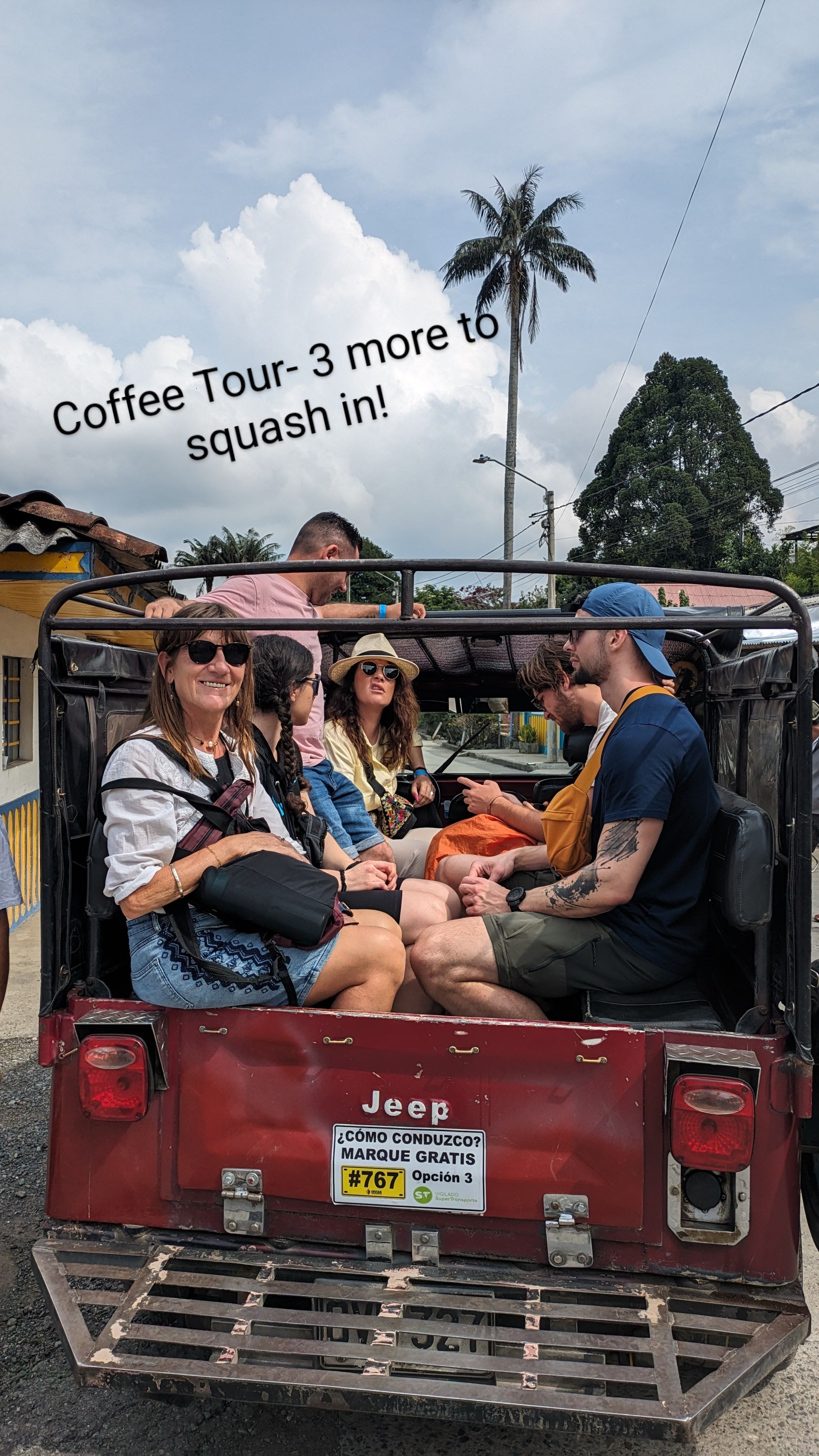
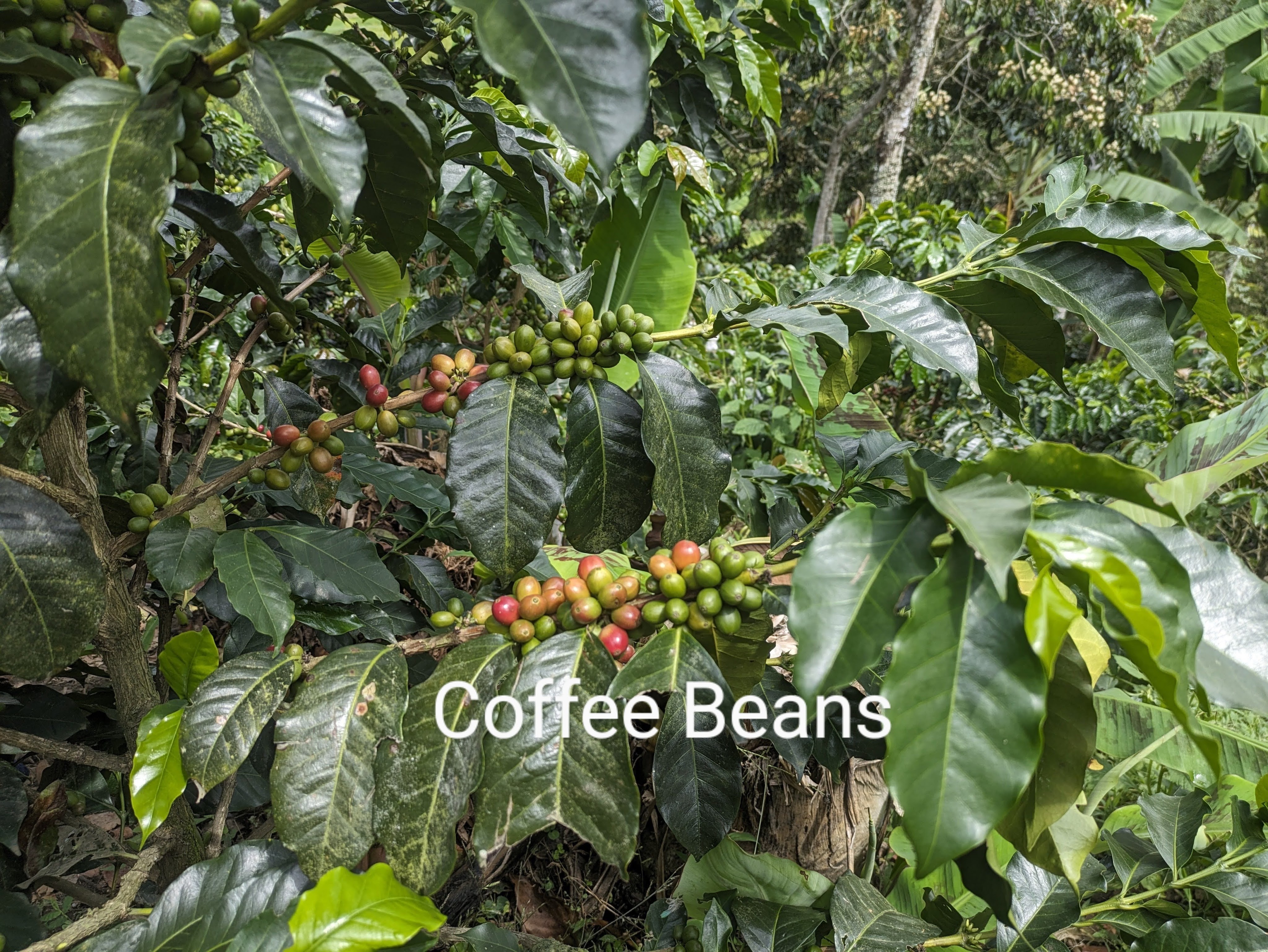
It is almost mandatory to do a coffee tour when in the town, tourists piling into dilapidated jeeps to jolt along dirt tracks to some of the numerous coffee farms doted in the picturesque hills. We opted to visit a small organic farm, Finca Don Ellias, which was both fun and educational.  All the coffee grown in Colombia is arabica, which grows at between 1000 to 2000m above sea level and gives a smooth taste while the other type of bean, robusta, grows at less than 1000m and generally produces a more bitter drink. We walked among coffee plants, their berries turning from green to ruby red, growing on a steep hillside interspersed with banana, avocado and orange trees. These other trees provide shade, absorb water, and attract flies and pests away from the coffee plants. On Don Ellios’s farm, every process was manual from composting to picking to bean separation to roasting which meant that coffee tours were as important as selling the coffee. Did you know that high roasting is often used with poorer quality bean, making coffee that it stronger and more bitter but lacking in subtle complexity? Of course, climate change is an issue here. The two harvests a year in April/May and October/November which used to be as reliable as clockwork have become problematic with changing weather conditions, the coffee berries ripening haphazardly at different times.

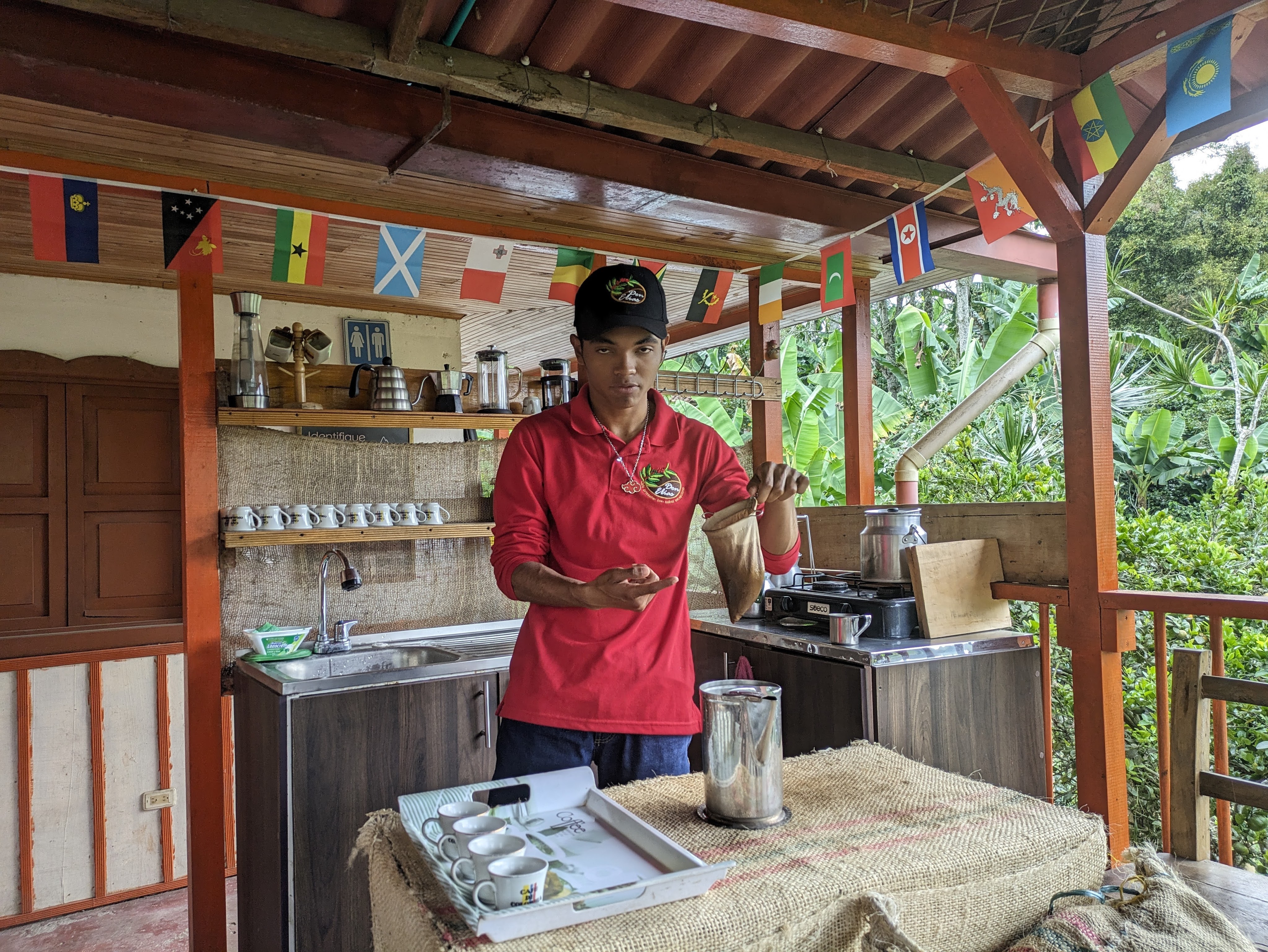
Grandmother’s Sock Coffee😉

 The coffee ceremony which was part of the tour was quite elaborate involving heating cups, slowly adding water which was at 80C (never add boiling water!) to freshly ground coffee placed in a cotton filter known as ‘grandmother’s sock’. After two rounds of slow careful washing and discarding the liquid, our warm cups were filled with rich smooth coffee which smelt gorgeous and tasted pretty good even to my taste buds.

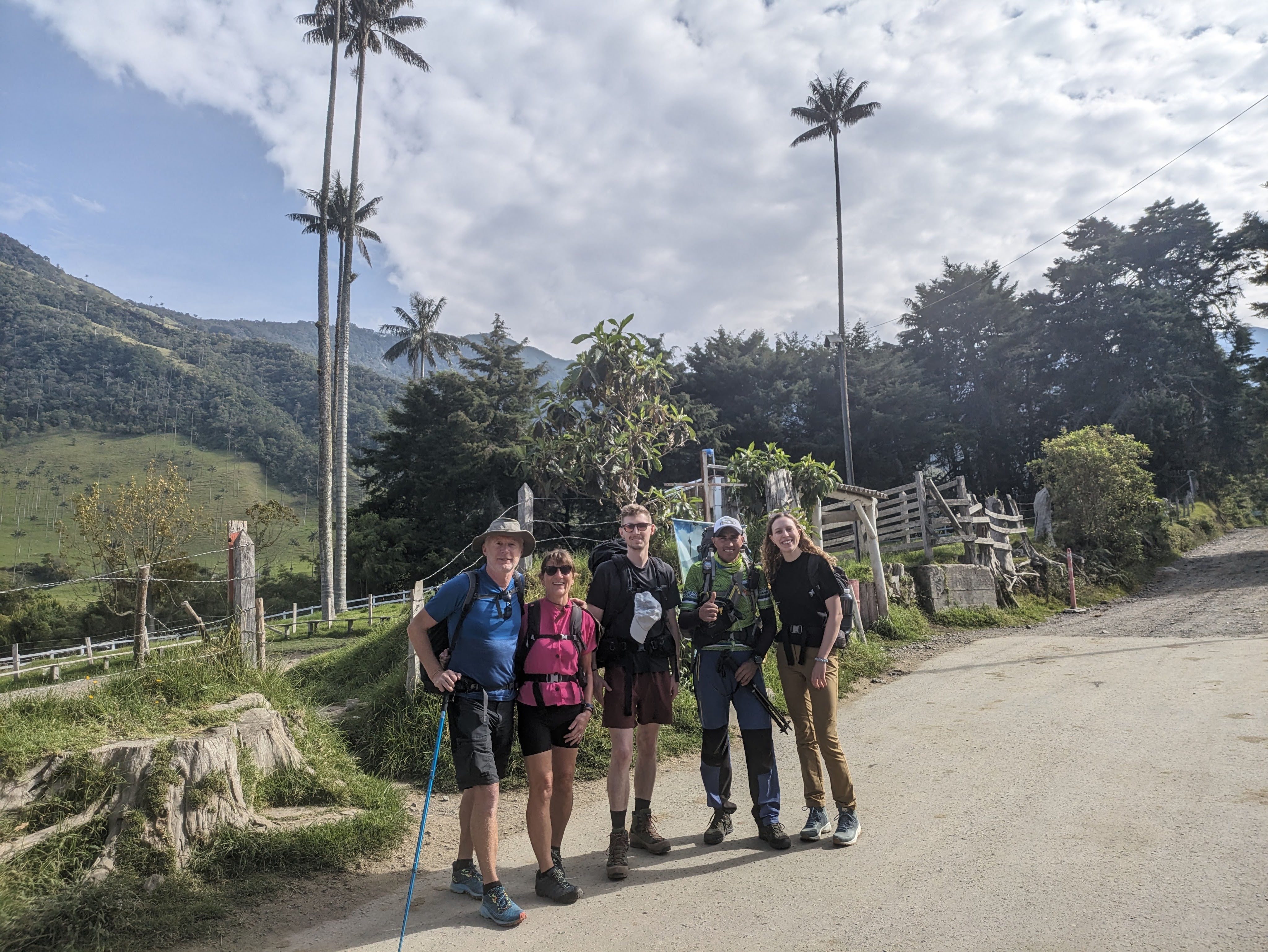
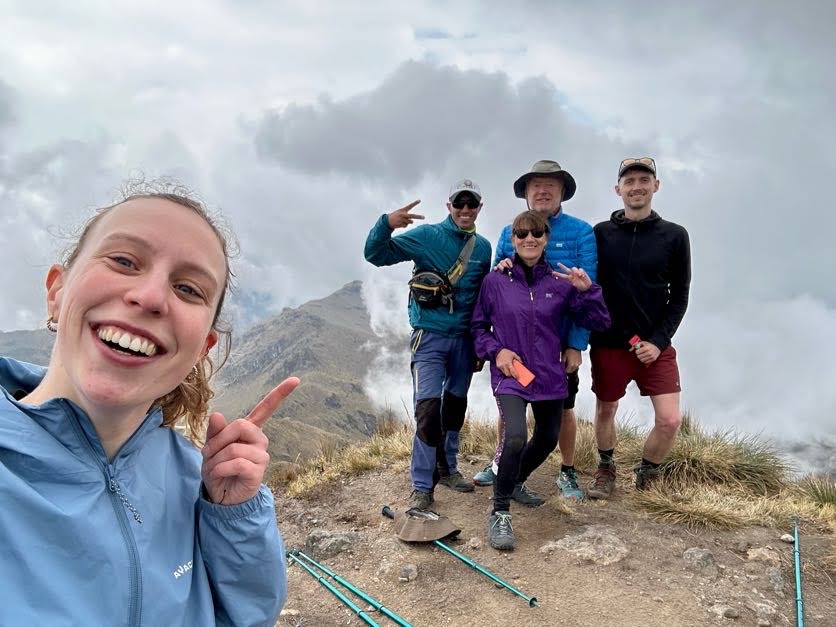
Our Guide, Fernes, and Ben and Dorien, our trekking companians (Waxed Palms in background)

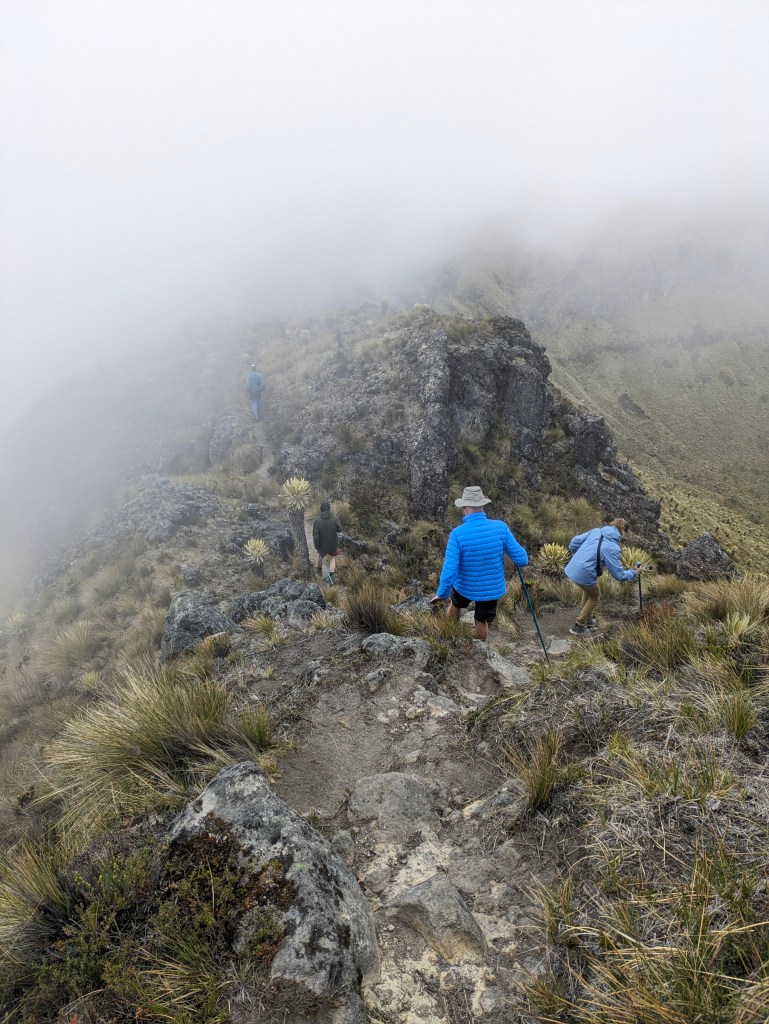
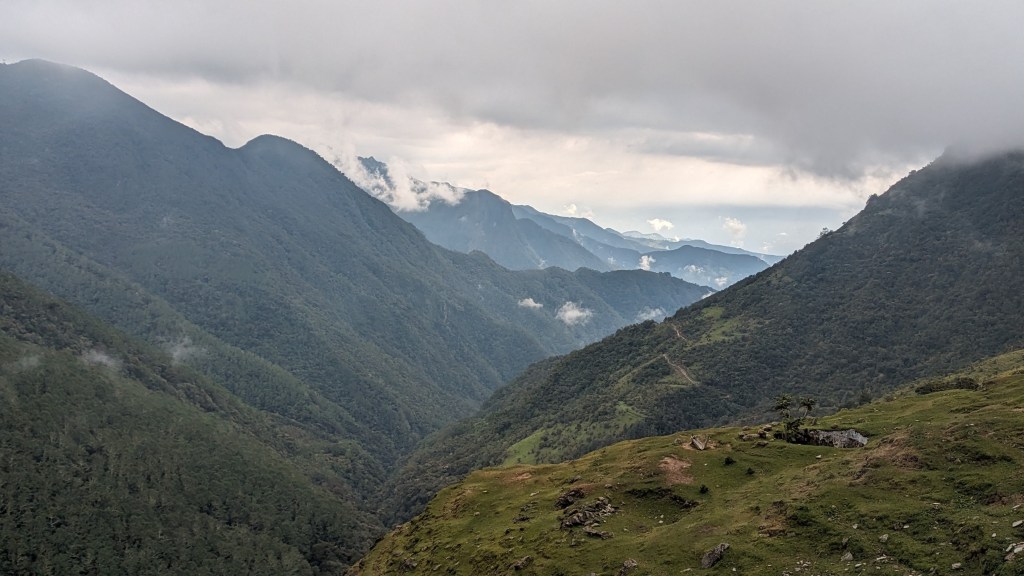
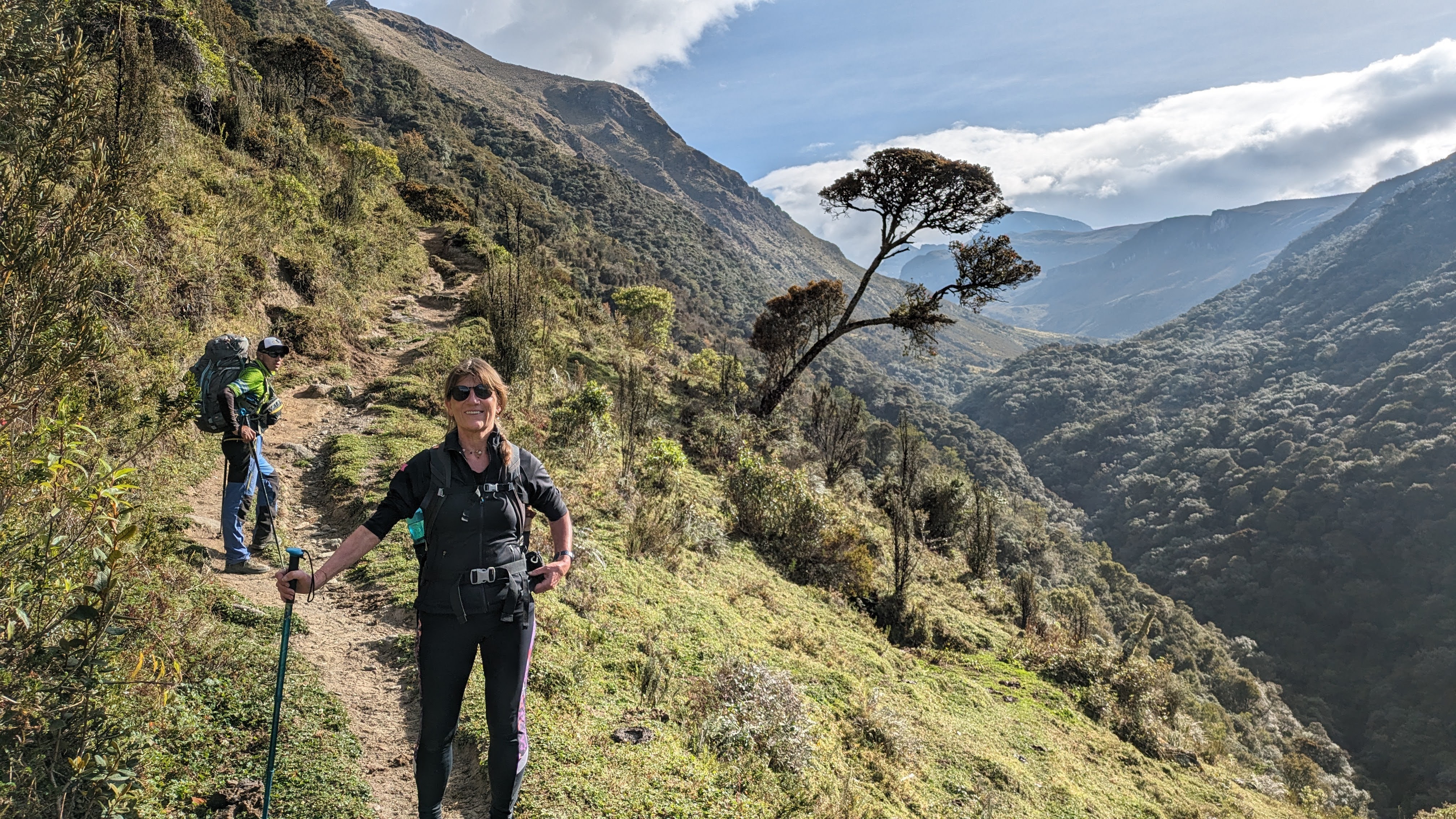
The other reason to visit Salento is to trek in the stunning Valle of Cocora and the Parque National Los Nevados. We went on a three-day hike with Salento Trekking which started in sunshine with a backdrop of spindly wax palms, the national tree of Colombia and the world’s tallest palm-they can reach sixty meters. Our hiking companions were a lovely young Belgian couple from Antwerp and our ‘English speaking’ guide, Fernes, whose grasp of English was probably worse than our Spanish.   Our path took us through jungle with flickering hummingbirds and brightly coloured woodpeckers, up into pine and eucalyptus forest, where the trees groaned and creaked above us as we walked and onwards into cloud forest. We hiked down to the Rio Quindio, and sweated up the other side, crossing and recrossing the same river three times on rickety rope bridges, just a few pieces of wood tied together with a plank or two missing to keep things interesting. Cloud and mist shifted over the mountains in an ever-changing pattern but became denser and damper every afternoon until all views were obscured.

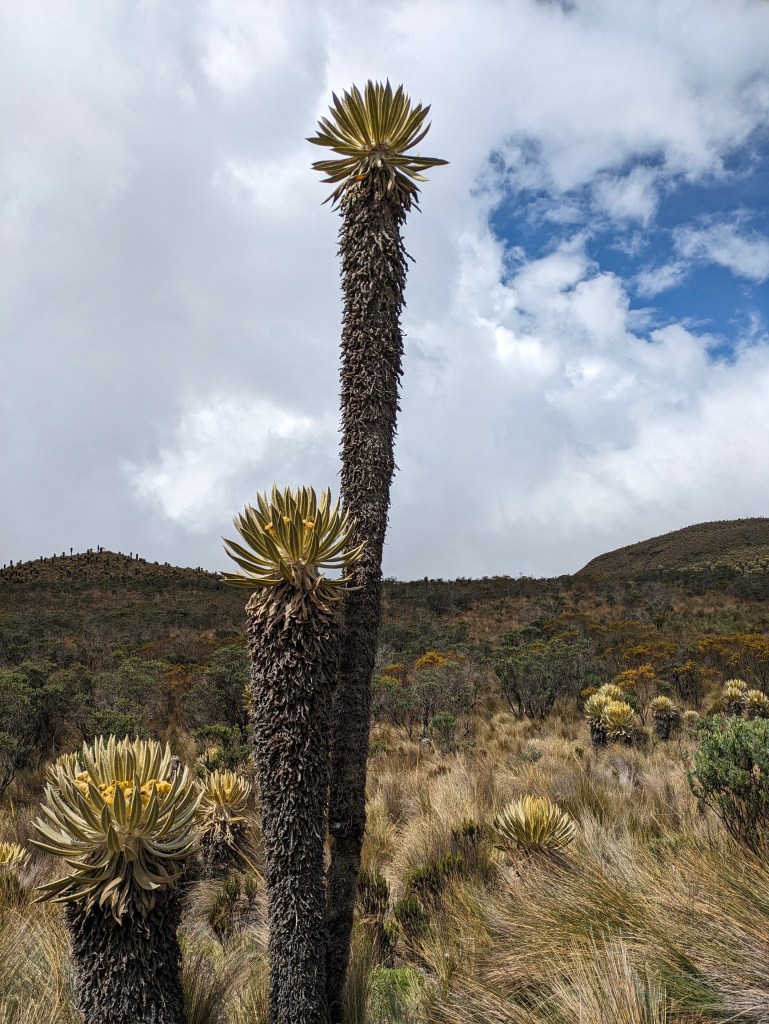
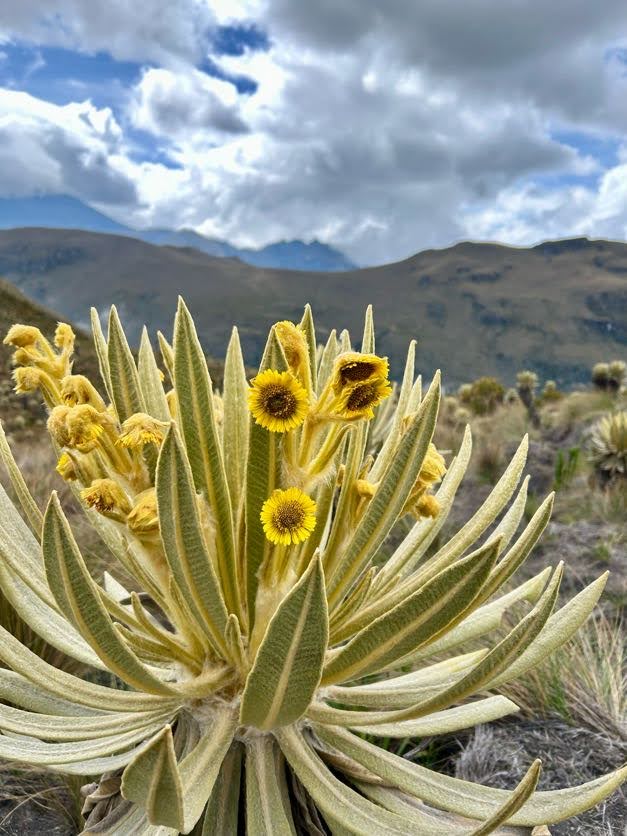
On the second day, we entered the paramo ecosystem, a wildly beautiful area of high-altitude grassland above the tree-line with a host of unique vegetation where the colour palette changed from various greens to honeyed gold. There we found the stunning Frailejones, a shrub that looks like a cactus with a flowering head of miniature sunflowers. Frailejones are extremely slow growing, about a centimeter a year and we were surrounded by plants of all ages but some were at least five hundred years old. We huffed and puffed up to the viewpoint on Cerro Chispas at 4408m and were treated to a vista of cloud and mountain. Then a majestic condor soared overhead with wings spread wide, and almost take our breath away. The beautiful bird symbolises power and grace but also has spiritual significance for the indigenous people who believe that it is the wise grandfather who watches from above, offers protection and regulates the energies of the world.

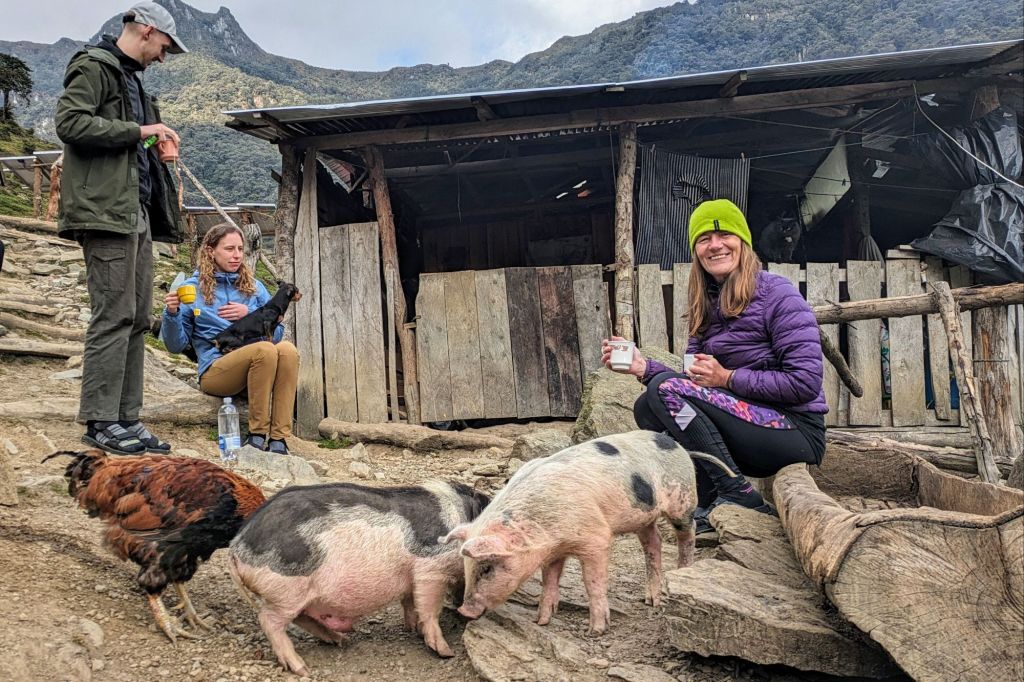
 While the scenery was gorgeous and the various ecosystems were interesting, the fascinating part of trek was staying in the homes of the local people who live in these isolated Andean mountains. On the first night we stayed on a farm at 3500m, Finca Argentina. This simple homestead was merely a few connected windowless sheds where the only light came from some sheets of clear corrugated plastic in the roof. There were horses, pigs, geese, hens and a few sheep but this was an inaccessible  place without roads where the way to get in or out was by narrow mule tracks.

Animal Farm, Finca Argentina

Our welcome was lukewarm, and I can honestly say that it was the coldest house I have ever been in, a virtual wind tunnel where it was warmer to sit outside with the animals, a few pigs, hens, dogs and cats. It was the first time that we were cold since our arrival in Colombia despite wearing all the layers that we had been carrying around in our backpacks for two months.  We arrived in dense fog, cold and damp, and we stayed that way for the evening although the mists cleared and the beauty of the valley revealed itself. The only warm spot was the cozy kitchen, where firewood was burning in a huge range that also served as the cooker, and music played on a radio but the trekkers were banned from there. The cramped bedroom had no electricity and three double-bed bunks which in theory could sleep twelve but our party of five were the only ones to sleep there on lumpy mattresses that night. In fairness there were plenty of thick blankets on the beds whose questionable laundry history didn’t bother us. Caoimhin, who was wearing shorts(that’s another story), took a blanket and draped it over himself in the house but was told that blankets couldn’t be taken out of the bedroom. Dinner was tasty, vegetable soup followed by rice and veg lentil stew, but portions were meager especially for appetites made ravenous by cold, exercise and mountain air. We were all tucked up in bed by 7.30pm for warmth more than tiredness. When Dorien, the Belgian girl, got up during the night to make her way through the house to the toilet using the eerie light of her phone, she found a scene of carnage outside the bedroom door, guts and feathers and a very satisfied fat cat. I was glad that I didn’t need to use the facilities during the night because I would have probably screamed the place down.

Our second night at another farm, Finca Jordan, could not have been more different. We again arrived at about 4pm in heavy fog which lifted almost immediately.  We saw that we were surrounded by mountains, steep walls of grey rock with a waterfall tumbling down and a green field with pigs and hens and an Alsatian dog called Rocky who kept chasing a chicken despite the constant shouting of the woman of the house. There was birdsong and tumbling water and a riot of flowers bedecking the simple house, agapanthus, geraniums, roses, carnations and red-hot pokers. Our quarters were a green and blue shed with an attached bathroom and a shower with hot water…luxury after the previous night.Our host invited us into her kitchen, where we sat on a raised platform with our feet level with the stove. She plied us with coffee, tea and hot chocolate and piled our plates high with more food than we could possibly eat, brimming bowls of lentil and veg soup, rice and sliced avocado and vegetables (all of us were vegetarians). She fried long slices of bananas on her stove, covered them with slabs of her own homemade salty cheese, garnished them with spring onions from the garden. Her husband came in, put on a pair of croc slippers, and helped his wife by slicing a few veg while all the time, she talked without pause. Maybe it was the isolation that made her so chatty or maybe it was just her nature. This finca could also only be accessed by mule track, a four-to-five-hour rough trek down the mountain to get a few basic supplies.

A cosy mountain kitchen, Finca Jordan

After an ample breakfast, we headed off downhill from this haven of hospitality in a truly beautiful spot. On the way, Caoimhin got a rare sighting of a puma who stopped and stared at him on the winding stony path about a hundred meters ahead before disappearing into the trees. I got a mere glimpse of eyes and movement but that was all. The hike was very rewarding but as it was billed as a Mountain Wildlife Trek and we had an English-speaking guide, we expected to learn more about the flora and fauna. Unfortunately, our guide was not very knowledgeable, or interested in nature in any language. He just wanted to get the hike over as quickly as possible while we wanted to enjoy the enchanting scenery and spend as long as possible in nature, especially on the third day which was all downhill.

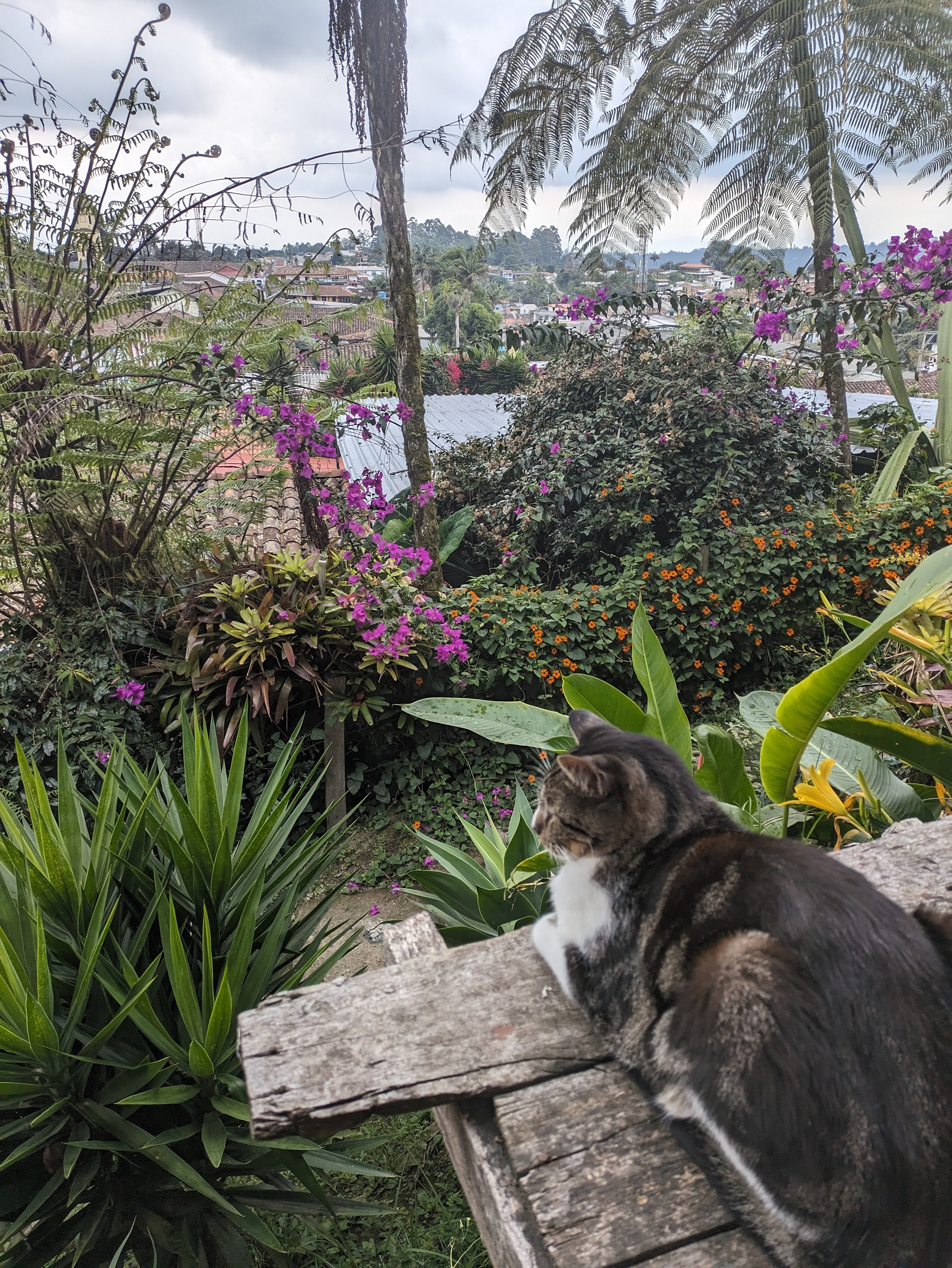
We stayed in two different places in Salento, in Hotel Natura Cocora for a few nights before the trek. This was a lovely rambling place with stunning views, a dusty kilometer and a half uphill from the town where we were welcomed and looked after by the very friendly and talkative Don Hugo, who ran the place almost single-handedly. The cleanliness was a little suspect and the bedroom with its old antique furniture was a little shabby with peeling paint but we loved the friendly atmosphere.   When we came back, we stayed in town at a fabulous hostel, Atardecer de Salento with its cats, breezy wooden balcony and proximity to restaurants and bars.

Its a cat’s life at Atardecer de Salento Hostel

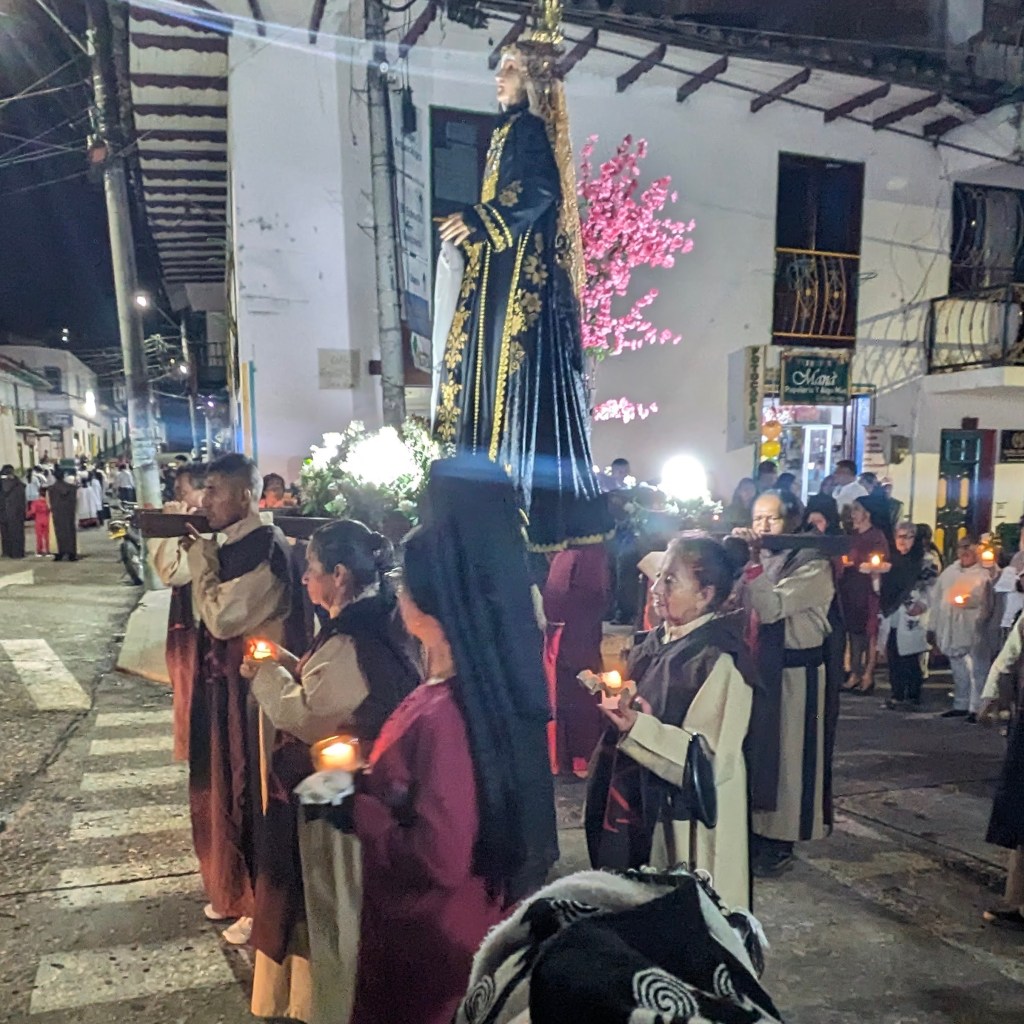
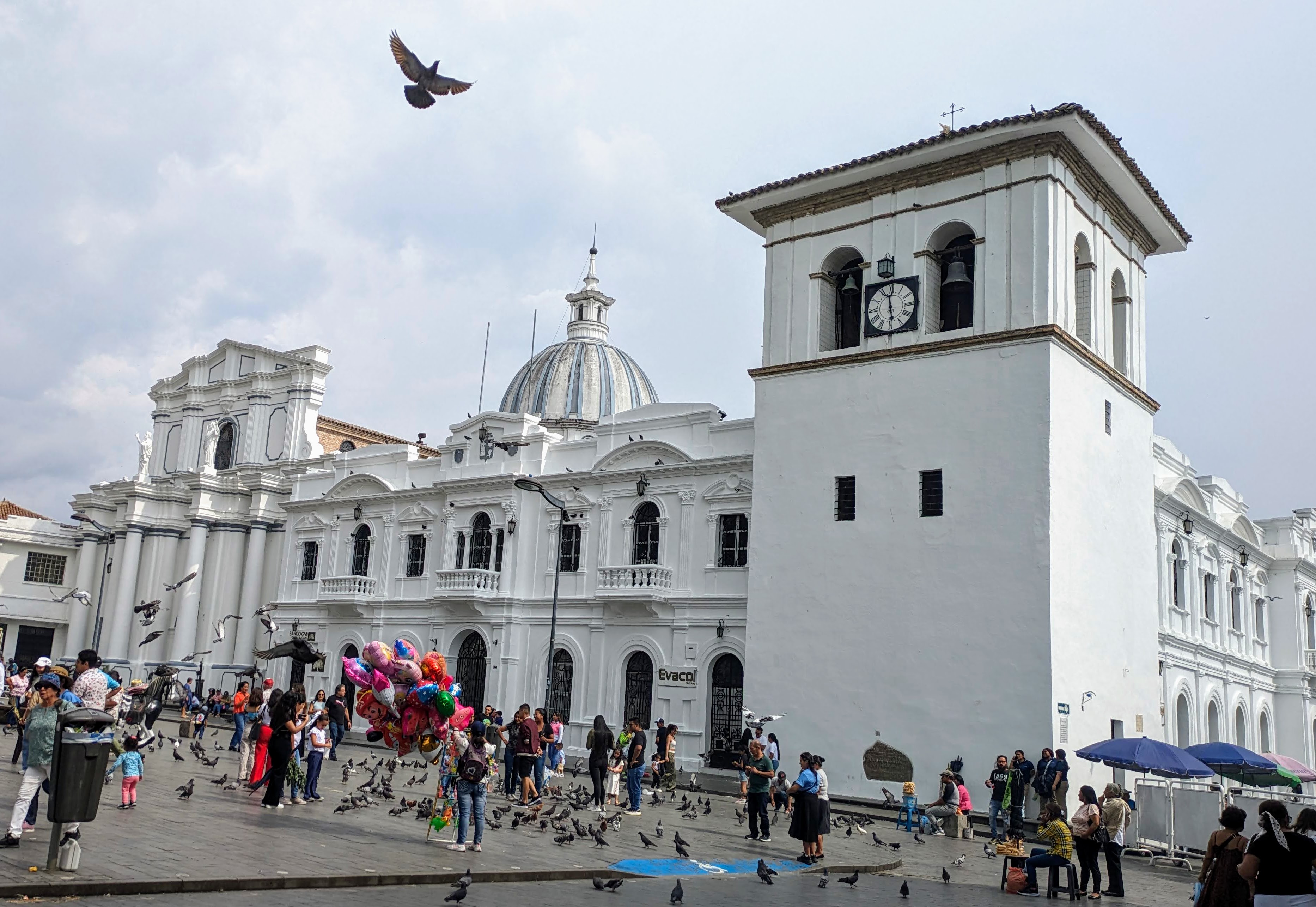
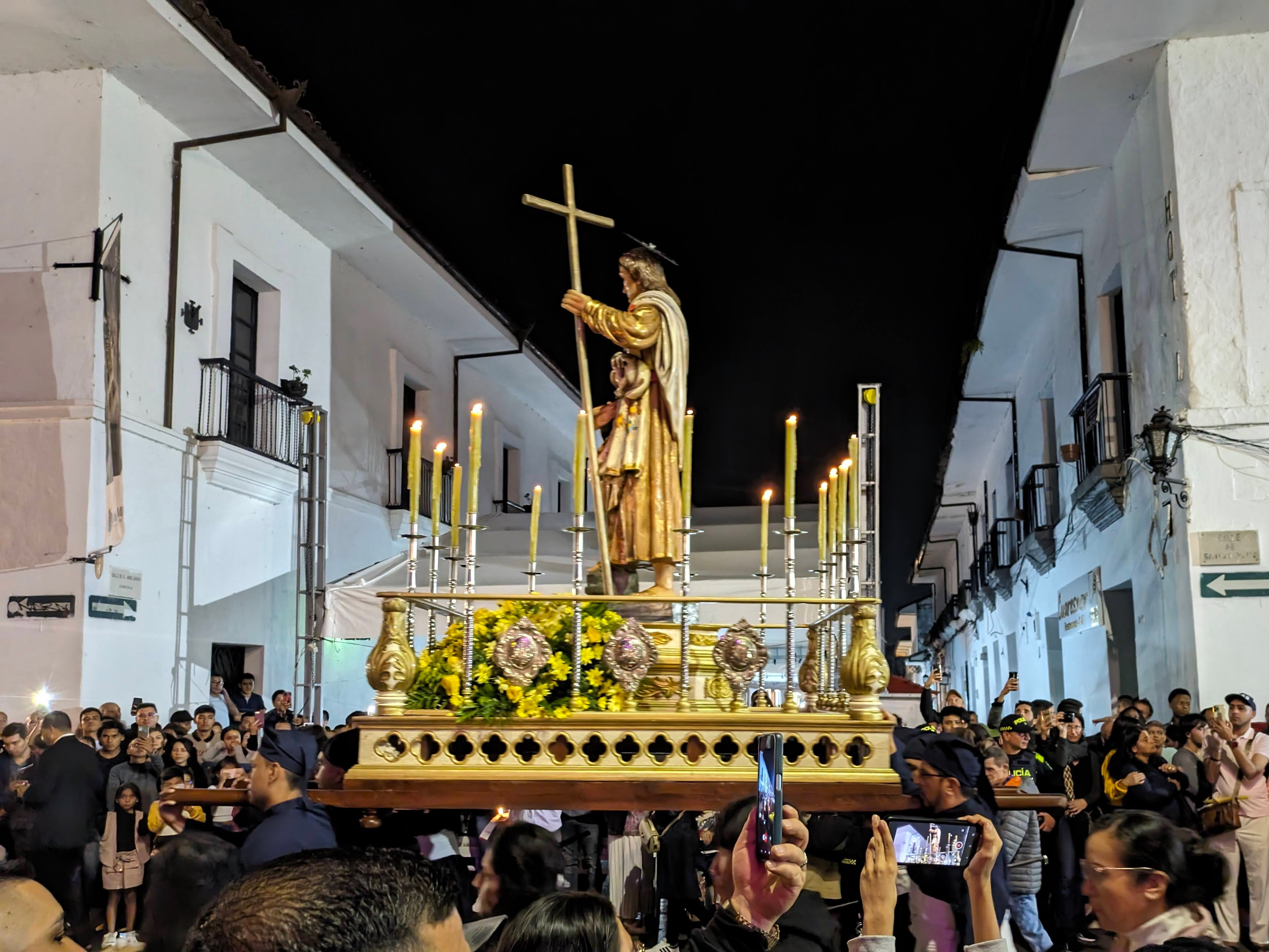
After a final coffee in Salento, we were on our way south, a seven-hour bus journey to Popayan, a colonial city of churches and white buildings. Almost as soon as we stepped off the bus in the late afternoon, we were greeted by the smell of greenery, long green palm fronds and the lingering scent of incense.  We were too late to see the Palm Sunday processions, but Popayan is very popular during Holy Week, Semana Santa. Colombians flock there for the religious ceremonies, the candle-lit possessions that occur every night during Holy Week and the market stalls that are set up on many of the lanes.  On Monday evening, we joined the crowds to watch drumming bands slow- march through the ancient streets followed by numerous wooden platforms of religious icons, carried on the shoulders of men called ‘cargueros.’ The procession was long and slow, following the same route past the many churches in a tradition that has gone on continuously since the sixteenth century. Although there were several thunderstorms in Popayan on Sunday evening and Monday afternoon, the rain held off during the nighttime procession.

Popayan. the White City, La Ciudad Blanca
Holy Monday Procession, Popayan

We are about to hop on another bus to take us on a partly-dirt road to San Augustin, another small town in the Andes which is close to some pre-Columbian Archaeological sites and I’m sure that we will find some more Easter traditions.

Felices Pascuas

Gracias por leer esto

Till next time……have fun xx

A Home in the Mountains – Tranquil Location, Low Maintenance, No Problem with Neighbours😁
Colombia – Coffee, Clouds and Condors

Colombia – Tragedy and Transformation

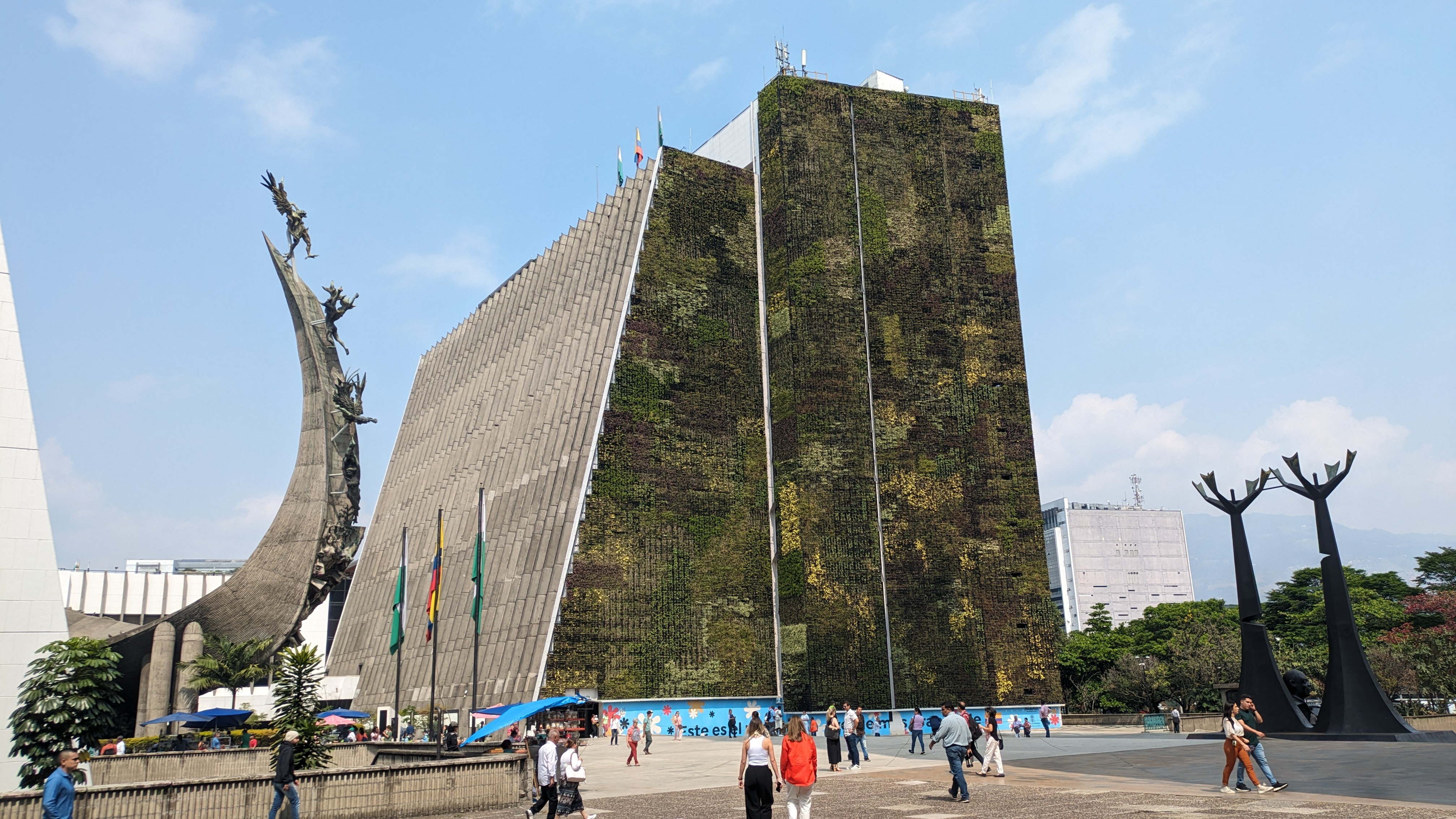
La Alpujarra Administrative Centre, Medellin – with a green planted wall to soften the exterior.

Medellin was the most fascinating and interesting city we visited in Colombia. It is also probably the most well-known Colombian city, famous for all the wrong reasons because of the popular Netflix series, Narcos, a story of corruption, violence, and Pablo Escobar.

 Two words sum up Medellin – tragedy and transformation.  It was once the most dangerous city in the world, topping the tables for the highest rate of murder and kidnappings in the 1980s and 1990’s but now it regarded as the most fashionable Colombian city and the one with the best quality of life, attracting tourists and digital nomads.  The city sprawls along a narrow valley and climbs steeply into the surrounding mountains with a near perfect climate, often called the place of Eternal Spring.

Medellin on Map

The economy of Medellin was founded on coffee, a plant that that was ideally suited to the fertile mountainous hinterland until it was dominated by another plant, the coca plant, which also thrived in the region. Coca leaves have always been grown for small scale local consumption because when the leaves are chewed or brewed into tea, it acts as a mild stimulant which suppresses hunger and fatigue and is helpful in combating altitude sickness. Coca leaves are also the raw product in cocaine production, and this is where the infamous Pablo Escobar and the Medellin Cartel enter the picture. Escobar continues to be a controversial figure to this day, loathed by many but admired by others because of his ‘generosity’ – he gave almost 400 houses to the poor in Medellin.  But he was also directly responsible for an estimated 40,000 deaths, unspeakable violence, fear and mayhem.

We did two walking tours of Medellin, one of the downtown area and one of an district, known as Comuna 13. (There are sixteen comunas, or districts in Medellin. Comuna 13 was once the most violent district in the most dangerous city in the world, a place that was off-limits even for people living in neighboring districts. It endured sustained urban warfare and was plagued by fierce battles between guerillas and paramilitaries.

Comuna 13 sprawls upwards on a sheer hillside, a rabbit warren of narrow streets, steep steps, colorful houses and graffitied walls. Now its narrow streets and alleyways are bustling with little cafes, tourists and tour guides but the past was not forgotten. We stood in a basketball court in the centre of the Comuna where many innocent locals were murdered. Our guide told us that the brown-earth area, visible like a gaping wound on the opposite hillside was reputedly a mass grave where many of the Missing from the city were buried.

Comuna 13 – notice the bare-brown hill opposite

We were entertained by the break-dancing and hip-hop routines of groups of young local men who would probably have been involved in drugs trade in the ‘bad old days’ instead of performing for tourists.  Immersion in arts, music and sport has been one of the pillars in the transformation of Medellin and of course nothing would have been achieved without the desire of the communities to break the cycle of violence.

On a wall in Comuna 13, there was a gorgeous wall mural of a giraffe which our guide said represented the strength and resilience of the people because the giraffe has the stoutest heart of any animal relative to its size.

But how did Medellin become this beacon of hope and renewal? There is no simple answer but this remarkable transformation has included the demobilization of guerilla groups, major policy changes, the addition of social programs, and serious infrastructure investments. Our guide on the walking tour of the downtown area credited social work combined with urban architecture turning negatives spaces into positive, accessible libraries and a redefinition of education.  Places that were a no-go area when he was a teenager (he was 42) have become convivial locations of relaxation and pride with tree planting, play-areas for children, lots of seating attracting coffee-drinkers, shoe-shine boys and buskers. The Parque de las Luces was once a very dangerous area but now 300 illuminated pillars stand in the space, providing shade by day and light by night. Of course, everything isn’t perfect. The lights in the Park of Light (Parque de las Luces) were turned off last year for maintenance and still haven’t been turned on😲🕯️🕯️

One of the most famous sons of Medellin (apart from the obvious one already mentioned) is the artist and sculptor, Fernando Botero, whose distinctive work is very much in evidence around the city especially in Botero Plaza where twenty- three of his sculptures are on display.

Botera Plaza, Medellin

One of the surprises about Medellin was its fantastic public transport system which made travelling around the city so easy. There was a clean efficient modern metro system that was integrated with the bus system and the tramline. There were and cable cars, a gondola lift system that traversed the steep hills called Metro-Cable.  The locals were very proud of their Metro system, the only one in Colombia. Although it was about twenty years old, it looks as pristine as the  day it was introduced with no graffiti, broken seats or even rubbish. (The lack of rubbish was especially remarkable, as Colombians in general will fling their waster with wild abandon everywhere).  We got conflicting answers when we asked about the cleanliness of the Metro, one person told us that it was civic pride that kept it in such good condition, another said it was because there were hefty fines for littering. Whether  the approach was carrot, stick or a mixture of both, it was regularly cleaned and was a pleasure to use. We spent a couple of hours one afternoon just riding up and down on  the cable-cars and getting a bird’s eye view of the city.

Cleaning the Metro
Cable Car Views

And to really complete our enjoyment of Medellin, we found a fantastic vegetarian restaurant, Saludpan, which had European standards but at Colombian prices. This was probably the best vegetarian restaurant we have ever visited anywhere.  While it was primarily vegetarian, it had vegan options and some fish and meat choices. If you ever lucky enough to find yourself in Medellin, I’d highly recommend eating at Saludpan. We ate there each evening on our three nights in the city, breaking our own rule of never returning to the same place.

The popularity of Medellin and its agreeable climate has led to a large influx of Digital Nomads which some are calling a new wave of colonization, a soft invasion by people with computers and money.  Although welcomed by most, the influx is changing the city and driving up rents for apartments in certain areas beyond the means of locals.

Emigration was a fact of life for many Colombians for many years so the problem of mass immigration, particularly of Venezuelans who have come in huge numbers because of their domestic troubles, is a new phenomenon. Ironically, many Colombians fled to Venezuela during the dark period in their own relatively recent history so there is a strong feeling of brotherhood between the two countries.   The Colombian government in 2021 introduced a 10 -year visa for Venezuelans which gives them access to education and employment.

One of the most perplexing things we heard in Medellin was that the amount of cocaine exported from Columbia last year was three times more than it was in any year during the violent eighties and nineties. We had seen the fallow fields in Northern Colombia where once coca plants were grown and thought that this was the case in the rest of Colombia but this was in indigenous land where the Elders was strong in their opposition to coca and the drug trade. The illegal growing coca is still the backbone of many rural economies in other parts, it is lucrative, easy to grow and can produce three to four crops a year. The cartels have been disbanded and the processing and distribution have moved out of Colombia, some to neighboring Ecuador which has seen an eruption of violence this year. The situation is complex but it seems that the drug trade is alive and well in Colombia.

Guatapé, a small town about two hours east of Medellin, was probably the most colorful town we have ever seen. Everything was painted in bright colours and embellished with drawings and artistic designs. The town was on the edge of a man-made lake acting as a reservoir and was overlooked by a huge dome of granite, a landmark for miles around. This rock, called the Piedra del Penol, had an inbuilt staircase of 700 steps which was well worth the puffing for the rewarding views of the surrounding countryside, green lake-water, pine-clad islands and red soil.

Guatape – where even the tuk-tuks are brightly coloured.

The days in Guatapé were warm and overcast but it rained heavily at night turning the road outside our accommodation into a sticky red mess.

A 6-hour bus-ride on two separate buses took us through the Andes with steep drops, twisty roads, trees and flowers until we arrived to the little town of Jardin. This quiet place was nestled in the mountains amid small coffee plantations, banana trees, rivers, waterfalls and grazing cattle. The town was also brightly painted with a large flower-filled plaza and an enormous neo-Gothic church. Although there were some tourists, it had a lovely laid-back feel. We stayed in a hostel, an uphill kilometer out of town where we were woken every morning by birds knocking at the mirrored glass on our balcony door.

Jardin

We wandered around the hills and spent a glorious day chasing waterfalls on the Siete Cascadas Hike (Seven Waterfalls), a loop hike with a guide. It was challenging at times with ropes required to haul ourselves up and down some of the steep slippery slopes. It was worth every second for the tranquility, the bird song and the beauty of the waterfalls that sometimes gushed and sometimes rippled over green-mossy cliffs.

Chasing Waterfalls
A Bit of a Stretch

Lunch came wrapped in a banana leaf with some twine – rice and veg, potatoes and yucca, boiled egg and a veggie patty plus some fried banana. An enormous feast that slowed us our bodies down as we so busy digesting.

Lovely lunch on a gorgeous plate.

We have our bus-tickets booked for our next journey on Monday, a seven-hour trip south through the mountains to Salento and more coffee, where we have already organized t a three-day hike. We are not usually this organized but we are conscious of our dwindling days in this fascinating country.

Muchas gracias por leer

Feliz Dia de San Patricio  Beannachtai na Feile Padraig

Enjoy Paddy’s Day ,💚☘️☘️☘️xx

A Green Colombia ☘️
Where there’s food, there’s a dog……..
Colombia – Tragedy and Transformation

Colombia- Cartagena and Beyond🏖️

Looking for a Beach

Cartagena on the Caribbean coast is the fifth largest city in Colombia with a population of two million. It is also the most touristy and considered the most expensive to visit. We had heard mixed reports before we went there but we enjoyed our visit. We stayed in Getsemani, a lively area of street art, bars and restaurants and near the old walled city.

 The big attraction for tourists is the old quarter which oozes history with gorgeous colonial houses, small shady plazas and a clock tower built in 1601which once had a drawbridge over a moat that connected Getsemani with the walled city. Gold, silver, and other treasures from the South American continent were shipped to Europe from the port of Cartagena. We strolled through a sunny plaza where slaves were once branded and sold by auction.  Cartegena’s history is littered with repeated pirate attacks because of its fabulous wealth.  Sir Francis Drake ransacked the city in 1586, burning down the original cathedral. The city was fortified after that with thick walls to prevent more attacks. We did an excellent 2- hour ‘free’ walking tour, given by a very enthusiastic Cartagenero with a Spanish name but with a mixture of cultures flowing in his veins. The people on the tour given in English were American, Australian, South African, Lebanese, French, German, English and of course, us flying the Irish flag. There was a real ethnic mixture in Cartagena, both with natives and visitors, a true melting pot.

In a small park just outside the old city walls, we saw a family of tamarin monkeys and also some three-toed sloths sleeping in the trees. This wasn’t a zoo; the animals were free to go but seemed quite content to stay, like so many others. Some of the monkeys seemed keen to be photographed and enjoyed the photo-shoot.

 There was a vibrant energy about Cartagena despite the heat with signs of expansion, an impressive high-rise skyline over the river and lots of building works. A new mayor had big plans to improve pavements and parks. Cartagena was home of the hustle. Everyone was selling something. If an unwary tourist walked about without hat or sunglasses, they were immediately mobbed by street vendors selling both.

Cartagena is relatively expensive for most things but not for cocktails🍹especially in Getsemani, where women with mobile carts served up potent mojitos in plastic glasses for the price of €5 for two. It was also a place of music and dance of every genre, of eating outside every evening to the beat of buskers and the click of heels and the passing around of a hat for tips.

Cartagena is surrounded by sea and rivers, but lack of clean water was an enormous problem. We arrived after an 8-hour bus journey from Riohache to find that there was no water in the tap or shower at our accommodation. Our landlady told us that the water had been turned off in the city because of burst pipes. It came back for a few hours the following day but was turned off again. The local shops sold out of large bottles of water, so we had to buy lots of small bottles, creating quite a mountain of plastic😲.  Just breathing in the sticky tropical climate was thirsty work. In a small environmental gesture, we drank cold beer in glass bottles whenever we could. The amount of plastic generated by the huge volume of tourists in Cartagena must be staggering.

Water continued to be an issue when we moved westwards along the Caribbean Coast to Rincon del Mar, a small fishing village without an ATM or a bus link. We had to travel the last leg on the back of motorbikes to reach it.

Transport to Rincon del Mar

We stayed in a breezy cabana with a view of the mangroves on one side and a two- minute walk to the sea on the other side. We had no water😏again for a few days until the water tank on the roof was filled. When we had water, little was wasted. A series of pipes from sink and shower collected wastewater into buckets, so-called ‘grey water’, which was used to flush toilets. When a big tanker lorry rumbled down the sandy streets of the village, the villagers ran to it with basins and buckets to fill them with precious water. There was only one tap in sinks or showers, no such thing as hot and cold taps. Often the water that came out of the tap was hot, heated by the sun but we were grateful just to have water. Maybe it was the heat (ranging from 37C during the day to 27C at night) but more than likely it was the lack of hygiene in the restaurants due to water shortages that led to both of us suffering stomach upsets (mine a particularly long lingering dose.)  

Our Cabana, Rincon del Mar
Water Delivery, Rincon

In Rincon del Mar, the village lifestyle was simple and very communal, with doors always open, children playing in the street, old people sitting in doorways chatting or playing TV bingo.  On weekend nights, boom-boom boxes were set up in the middle of the street and they blared music until five in the morning at an ear-splitting volume. These 3-metre high boxes were so loud that talking was impossible, but most people just sat around drinking beer and occasionally dancing.

Friendly Local in Rincon del Mar
Caoimhin entertaining the kids in local shop
Playtime, Rincon del Mar

The highlight of our week in Rincon del Mar, apart from the glorious sunrises over the mangroves, spectacular sunsets over the ocean and lazy days, was a sunset boat trip to swim with bioluminescent plankton. We first detoured to Bird Island, where thousands of majestic Frigate Birds circled overhead in a blush-pink sky, on their way home to roost for the night on the island. It was a magnificent sight. As darkness descended, we made our way through a labyrinth of shadowy mangroves into a secluded, almost secret, area of sea. When we jumped into the water from the boat, something magical happened. Each of our movement created a glittery solar glow of bioluminescent plankton. We were shining in the inky darkness of the water as if we were lit from within. It felt special, bobbing around in warm water at night, creating our own personal light show. The boat journey back felt long and even cold in our wet swimming togs, but we were still charmed by what we had experienced. We don’t have any photos because we know from experience that phones and salt water is not a great combination.

Boat Trip to the Islands

We also did a boat trip to the San Bernardo Islands, a group of islands about an hour offshore. Some of the boat passengers were staying on the various islands for a few days so the trip felt more like a bus service, dropping off and collecting people. But for the first time on this trip, we saw the calm clear turquoise waters, the Caribbean of tourist brochures. It has been very turbulent and murky up to then due to the strong winds at this time of year, making swimming difficult and snorkeling impossible. Now in crystal-clear waters, we donned our masks and jumped overboard in great anticipation. Unfortunately, we were dismayed by what we saw, a paltry number of pretty fish swimming around dead and broken coral. It was heartbreaking. There may be other areas which are well preserved and protected but it wasn’t the case here. We felt we were swimming in a graveyard.

We moved further along the coast to Covenas, a beach resort town with high-rise beach apartments which was very popular with Columbians. The beach was long, quiet and perfect for walking. We cooked plain food in a little apartment with running water,  which was within spitting distance of the beach. Thankfully our digestive systems began returning to normal.

Covenas, Colombia

One interesting thing about Colombia is the way that processed food is labelled. A packet of Oreo biscuits, for instance, carries three prominent warnings EXCESS Sugar, EXCESS Salt and EXCESS Fat. This isn’t news but seeing it written in black and white on the packet kills the enjoyment a bit. Maybe it’s a better way of labelling processed food.

We’re not sure where we are going next but probably inland to Medellin, a city famous for all the wrong reasons as anyone who has watched Narcos will know.

Muchas gracias por leer esto xx

A Dog called Shadow, Rincon el Mar
Colombia- Cartagena and Beyond🏖️

Colombia – Looking for Paradise

Palomino is a small town on the Colombian Caribbean coast, nestled between two rivers, Rio Palomino and the Rio Salvador. Both rivers flow from the Sierra Nevada mountains to the sea on both sides of the town. It has developed a reputation as a mecca for backpackers with lots of cheap accommodation and good restaurants. It sounded like an ideal spot for some relaxation after our exertions during the Lost City Trek.

The bus from Santa Marta (two hours away), dropped us on the main road, with roaring traffic, motorbikes, buses, fumes and deafening noise. Palomino itself was just off this paved main road, a series of dusty unpaved roads, lined with low ramshackle, unpretentious houses, a lot of greenery, a few dogs sleeping and hardly a person in sight.  It was early afternoon in a dense humming heat and Palomino did not seem like a mecca for backpackers…..or anybody else.😲

Palomino

Our accommodation, Jui Chi Mama, was at the edge of the town, a 15-minute walk along more dusty streets. The outside door of our accommodation was faded dirty green, but inside was an oasis of calm and birdsong, an old house set in a huge, lush garden of huge tropical plants, an outdoor kitchen and lots of shady seating areas.

Jui Chi Mama was the sort of relaxing place that put a spell on its guests, a bit like Hotel California, you can check in but you can never leave.😄 Our initial booking was for four nights but we extended that by another four nights and then by another four nights. We weren’t the only ones…an English couple kept extending until they had spent three weeks, a Spanish girl was there for months and so was a German woman. We hope to check out tomorrow……if we can.

Palomino has the feel of a frontier town. Unreliable electricity supply is part of life here and power cuts are routine. A lot of guest houses and businesses have their own generator which unfortunately in our accommodation kept breaking down. We spent one long hot sticky night without a cooling fan, which was very unpleasant.  There are no connected sewage systems (houses have individual septic tanks) but there are plans to change this with diggers doing the preliminary work but not very consistently. Clean drinking water is also an issue and we were advised to use the filtered water available in the kitchen even for cooking.

 Heat is also part of life in Palomino with it’s tropical climate.  It’s hot all the time, most days are well over 30C and nights are just under 30C.  When we first arrived and trudged along the dusty streets, we wondered how people got around in the wet season when the dust in the street must turn to mud. February is in the dry season, which runs for six months from December to May.  The weather was cloudy, overcast and very humid. We got a taste a few days later of what Palomino might be like in the wet.  It rained,  just a few showers at first, an afternoon of warm drizzle the next day and then a downpour that felt like it might never end, the skies emptied for about fourteen hours relentlessly. The streets were a quagmire, a slip-sliding mess of oche mud, flowing streams and floating rubbish. We were told that rain like that was very unusual, especially at this time of the year.

Loving the Mud

Palomino had the feel of two separate towns, there was the main strip, really just one street that led to the beach with lots of restaurants, tourist shops, tattoo places and tour operators. This was where most of the visitors hang out and then there was the rest of the town, where we were staying where the children played in the streets, where the front doors were open, where people sat outside their houses and gossiped, where the music coming from the snooker hall was seriously deafening at the weekends.

The Beach was long and sandy, bookended by the two rivers but the sea was surprisingly rough and quite dangerous in places for swimming. It was not the Caribbean of our dreams, the clear calm turquoise waters that we imagined. We dipped in it a couple of times,  like being in a washing machine on a warm cycle, and when it spat us out, we relaxed at one of the beach bars and restaurants,

The Caribbean

There were interesting trails into the mountains leading to indigenous villages, along paths that climbed high and then descended steeply and repeated over and over through thick vegetation.

Meeting the Indigenous Children

Herman, who runs our guesthouse, was a keen birdwatcher so we booked a birdwatching tour with him, a four-hour walk in the early morning though the town, along by the river and mangroves to the beach. There was a huge variety of birds from tanagers, flycatchers to eagles. Many of the birds were similar to our own but then there are the colourful parrots, the Macaws and the tiny hummingbirds. Over the last six or seven years, a large patch of ground on the edge of town that was used mainly as a dump has been cleared up and is being reclaimed by nature to form new habitats. The growth here is phenomenal….we have watched a bunch of bananas in the tree outside our balcony , increase in size by the hour.

Birdwatching by the Rio Palomino
Lush Growth outside our Balcony

For the last week, we have been taking Spanish classes with the wonderful Christina, just an hour a day, mainly concentrating on conversation. Christina is a native of Bogota who moved to Palomino many years ago and also spent a long time in America so her English is excellent. Our progress is slow but hopefully, one day, it will all fall into place….with perseverance and practice🤞

So tomorrow we check out -if we can- and head further into the La Guajira region towards the desert and the northernmost part of South America

Hasta luego, amigos🥰

Chilling by the River
Colombia – Looking for Paradise