Colombia – The Lost City

Guardian of the Lost City

Everyone has heard of Machu Picchu in Peru but Ciudad Perdida, the Lost City of Columbia is far less well known despite being 650 years older and also shrouded in mystery.

Unlike Machu  Picchu, Ciudad Perdida does not have a bustling town at the base of the mountain with hotels to suit every taste and a bevy of tour buses to ferry tourists to the entrance. There is only one way to get to the Lost City in Columbia……and that is, by foot on ancient paths and tracks hiking through protected indigenous land…and it can only be done as part of an organized guided group on a multiday hike, carrying your own luggage. You have to sweat to earn the privilege of visiting the Ciudad Perdida or Teyuna as it is called by the native people. The companies offering the trip are all based in Santa Marta, a town on the Caribbean Coast so we headed in that direction.

The temperature on the overnight bus to take us from San Gil to Santa Marta was icy especially when compared with the outside temperature of nudging 30 degrees. Some passengers were draped in blankets and one woman was wearing a wooly hat covering her ears. The journey was supposed to take fourteen and a half hours but although we left San Gill almost an hour behind schedule, we still reached Santa Marta an hour ahead of time😲We were tossed and tilted on our reclining seats and would have certainly landed in the aisle if we didn’t have seat belts especially for the first few hours. Maybe it was a blessing that it was  dark and we couldn’t see the road but overall it was a relatively comfortable if chilly journey at a cost of €25 each but we saved on a night’s accommodation.

Santa Marta is a ramshackle sort of place where the drivers were unusually courteous, stopping to let us cross the road unlike those in San Gil where crossing the street was an adrenaline-fueled adventure. It’s a beach town and a busy port with a huge basilica, the oldest colonial town in Columbia (founded in 1525) and  the place where Simon Bolivar, the Liberator of South America died in 1830 of tuberculosis (although his cause of death is controversial, as most things are in this part of the world). Santa Marta could also be called the windy city, a warm gusty wind blew up in the afternoons and evenings which was quite welcome although it stirred up the rubbish and swayed the trees.

But for us,  Santa Marta was mainly our gateway to the Lost City. There is no competition between the tour companies that organize trips to Ciudad Perdida. They have all got together to form a cartel of sorts, they have the same itinerary and charge the same prices, a whopping 2 million COP per person (€500 ), a price that has doubled in the last year. As the 4 day or 5 day tour cost the same price, we opted for 5 days (we have time on our hands😄), starting the following day. If you book online, its even more expensive.

In the office of Expotours at 8.30am, a motley group of strangers looked around, assessing the people they would share the next 4 or 5 days with.  Caoimhin and I were by far the oldest, most being in their twenties and thirties.

 There were Germans, Canadians, a French woman, two English girls, a Colombian couple with their thirteen year old son but surprisingly the largest representation of any nationality was ….the Irish. There were four lads from Galway who were at the start of a 5 month stint around South America, there was Joe from Belfast and the two of us, the Elder Lemons.

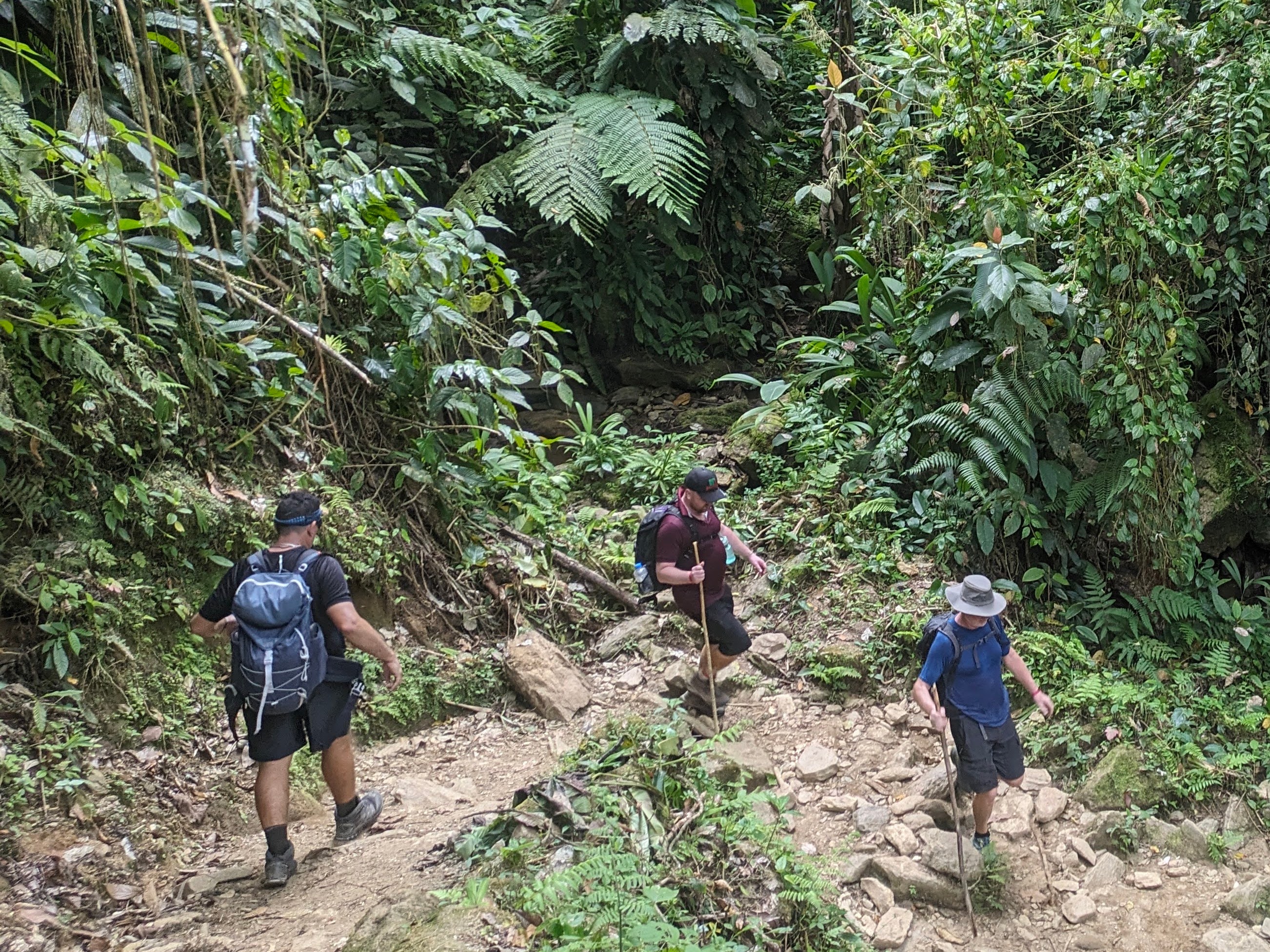
A couple of jeeps took us on a bumpy ride for a couple of hours into the Sierra Nevada de Santa Marta mountains to begin our trek. After a lunch of rice, salad, beans with natural juices and an orientation talk, we were on our way with Spanish speaking guides and English speaking translators. The midday sun beat down on us and  the trail was a mixture of exposed sections where the sweat dripped from us, drenching our t-shirts and welcome shady sections through forest and a canopy of trees where we encountered a dead snake on the path.
The Trail

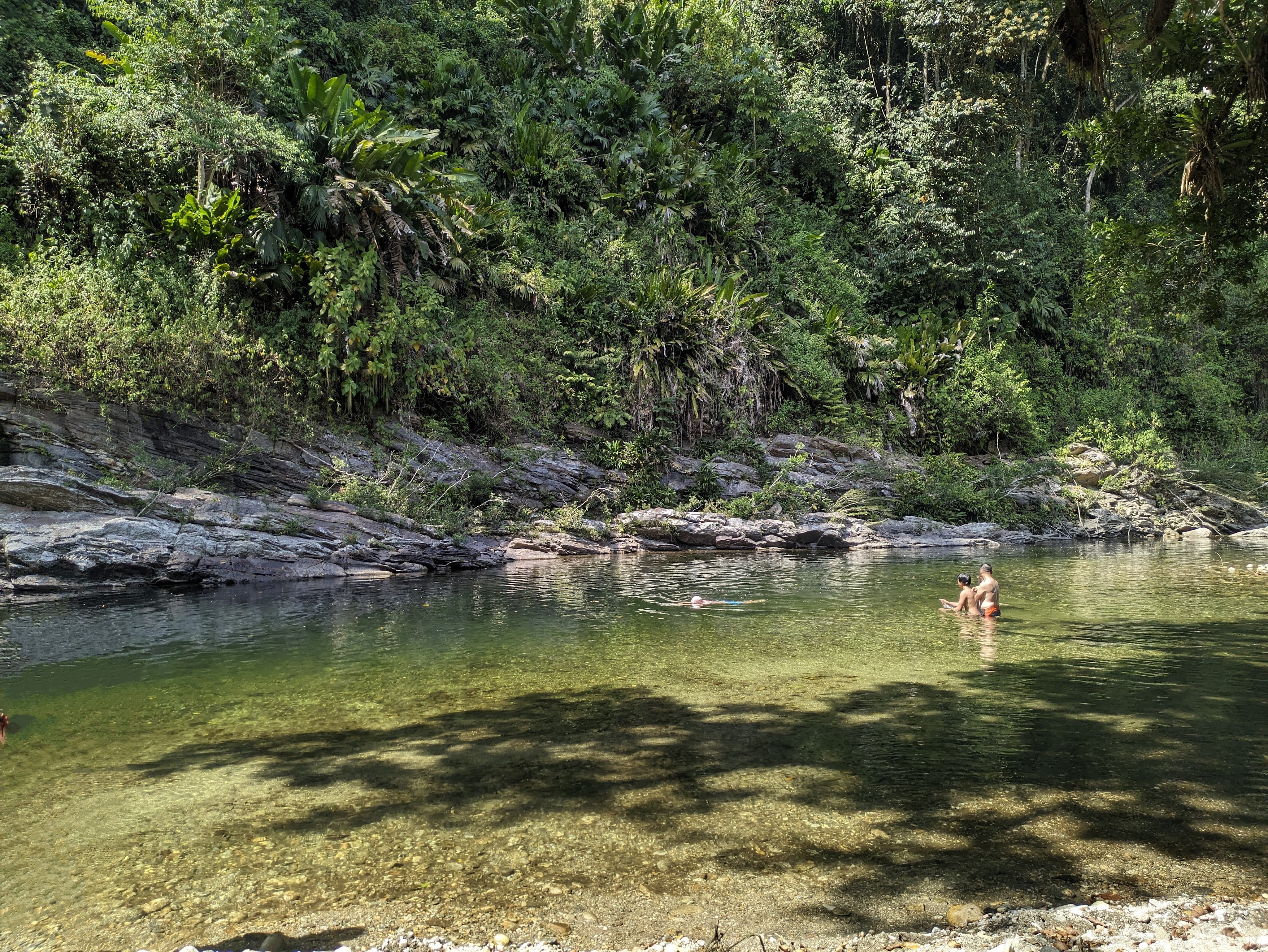
 The 7 Kms on the first afternoon took about three and a half hours including a stop for a swim and another to eat thick slices of  luscious watermelon, the stony paths mainly climbed upwards except the last section which was steeply downhill to our first campsite. This was an open-sided galvanized-roofed building  with a kitchen, rows of long tables for meals, rows of bunk beds, some cold water showers and flush toilets. The river, a faint gurgle from the camp was downhill where we had a swim in a refreshing deep pool before dinner and looked at the huge water spiders (apparently harmless ) which rested on the large mossy rocks.

On that first afternoon a pattern was set that would continue for the following days, the Galway lads who were all GAA players with bulging muscles, set a blistering pace, egging each other on until even the guide was a perspiring heap and the group was stretched across the trail.
Our second day began with a flickering of lights in the dorm at 5am and a lot of groaning. All the damp sweaty clothes from the day before were still wet. It had rained during the night and the air was humid. It was still dark outside and drizzly. Breakfast was papaya and melon, scrambled egg, arepas (a Colombian bread a bit like a Mexican tortilla) and sweet fruit bread.  The Galway lads were in flying form, messing and slagging each other, even at this early hour in pre-dawn darkness, woofing down any leftovers with gusto.
Indigenous People
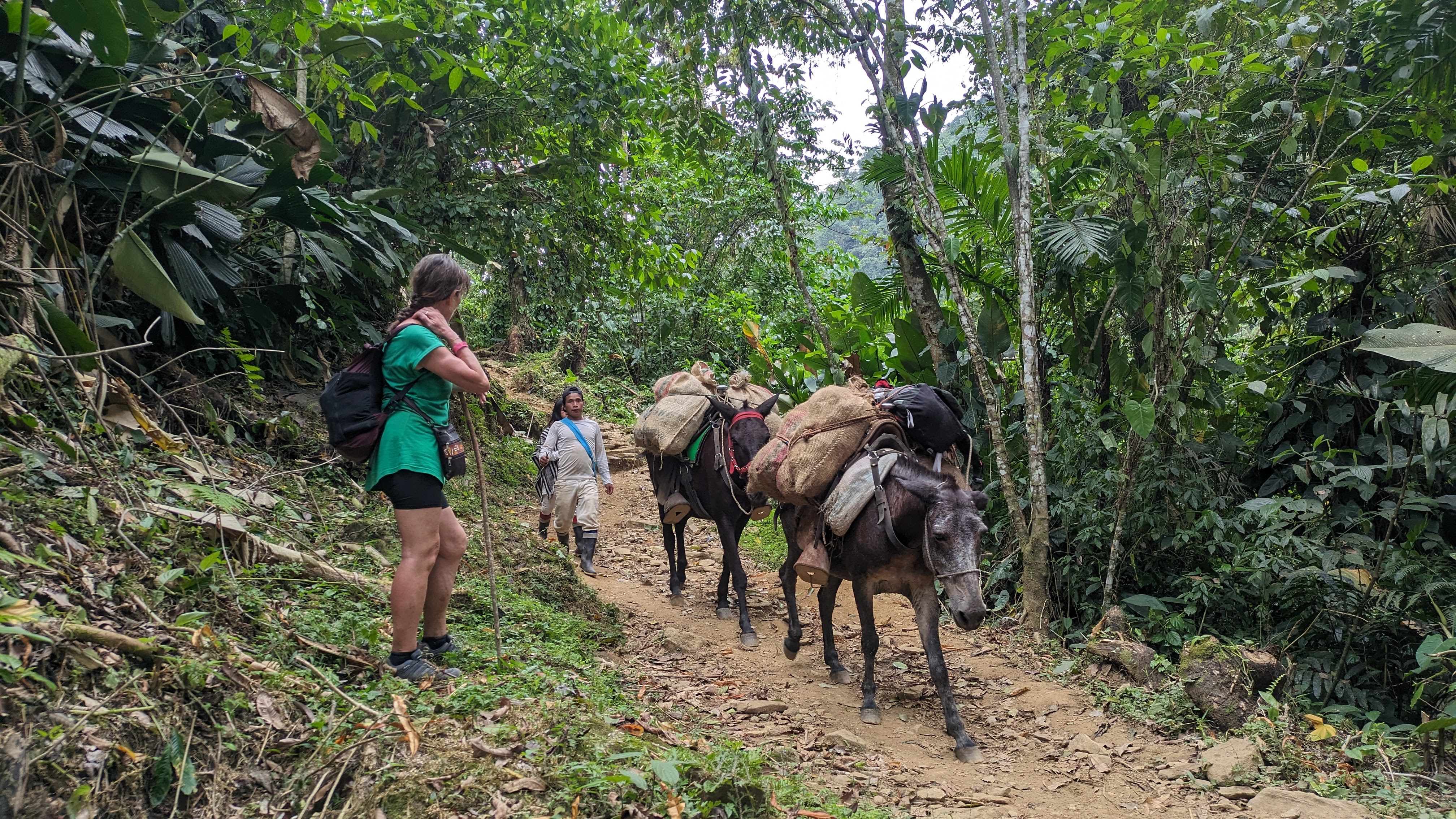
Jungle Etiquette – stand aside for mules

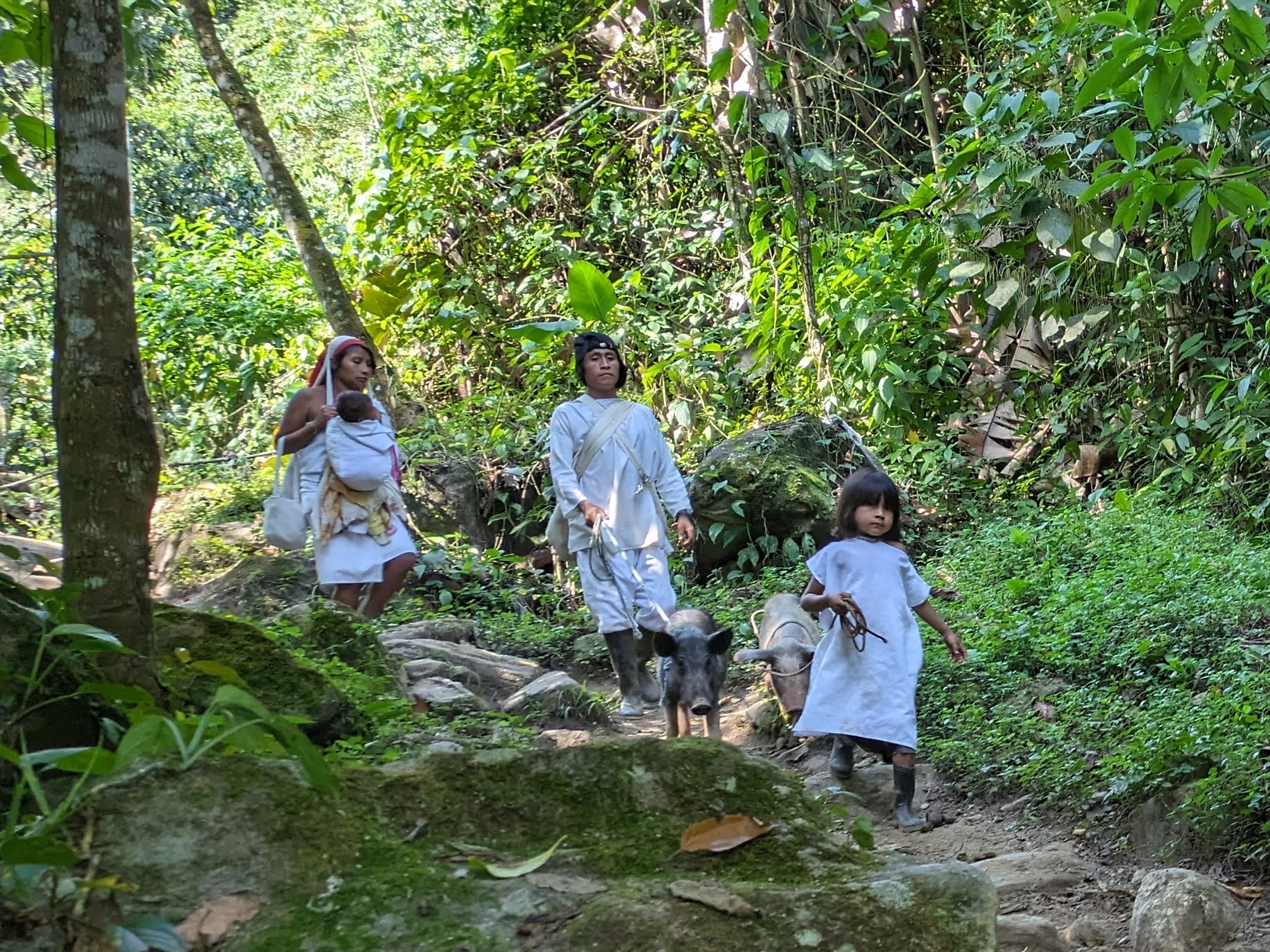
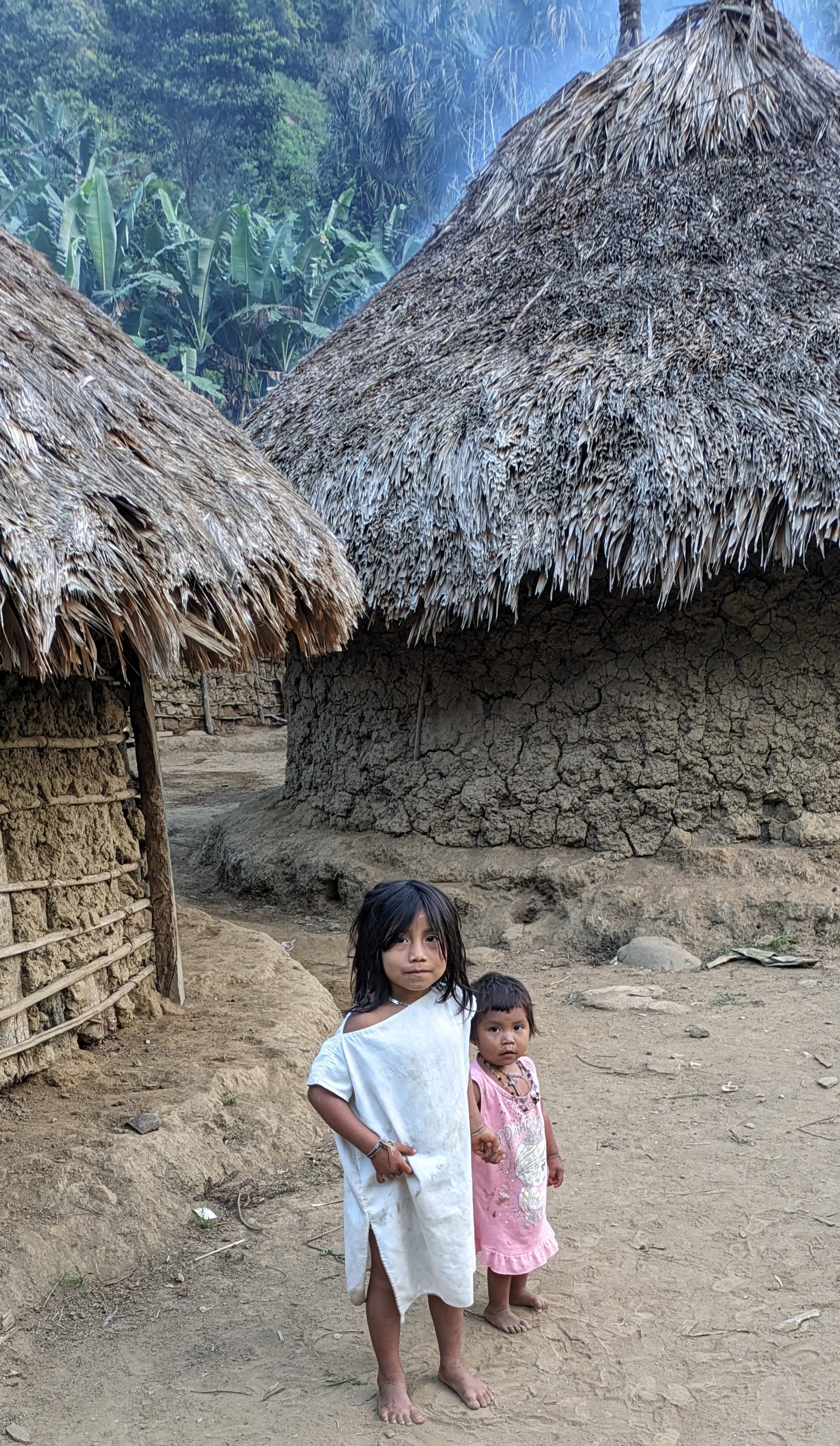
We crossed into indigenous land with thicker jungle and shared the trail with the natives wearing their white traditional dress, often herding a black pig on a leash or accompanied by laden mules. We jumped when a huge jackfruit dropped from a tree and split open with an almighty splat in front of us. We passed a small village of round thatched houses with black haired children playing outside, crossed rivers and streams, swam to cool off in dappled water with leaves constantly falling from the surrounding dense foliage. It felt almost like a different dimension, another world,  with no cell phone or internet coverage – the guides communicated with each other on walkie talkies. ‘Happy Hour’, the name that the guides gave to the intense uphill stretches, began that day after a huge lunch of lentil soup with lumps of corn on the cob floating in it, veg stew (or chicken stew for the carnivores), rice and salad, finished off with a small packet of oreo biscuits. We staggered into our small camp at about 3,30 pm after a long and pretty gruelling 17 kms to be greeted by reviving coffee and hot chocolate and enormous trays of salted popcorn. The food prepared freshly by our cook, Petrona, was tasty, filling, plentiful and very much appreciated.
We slept that night in bunk beds under mosquito nets in another open-sided structure to the sound of gushing water from the river a few meters away. The guide had warned us to shake out all blankets and all clothes before putting them on……just in case. The just in case was left hanging tantalizingly in the air without further explanation.  The following morning, Joe who was in the bunk next to mine, felt something on his back when he was getting dressed. He brushed it away, but it was a scorpion which strung him on the finger. Everyone was shaking out their clothes and checking shoes after that and thankfully Joe was fine, with minor swelling and numbness.
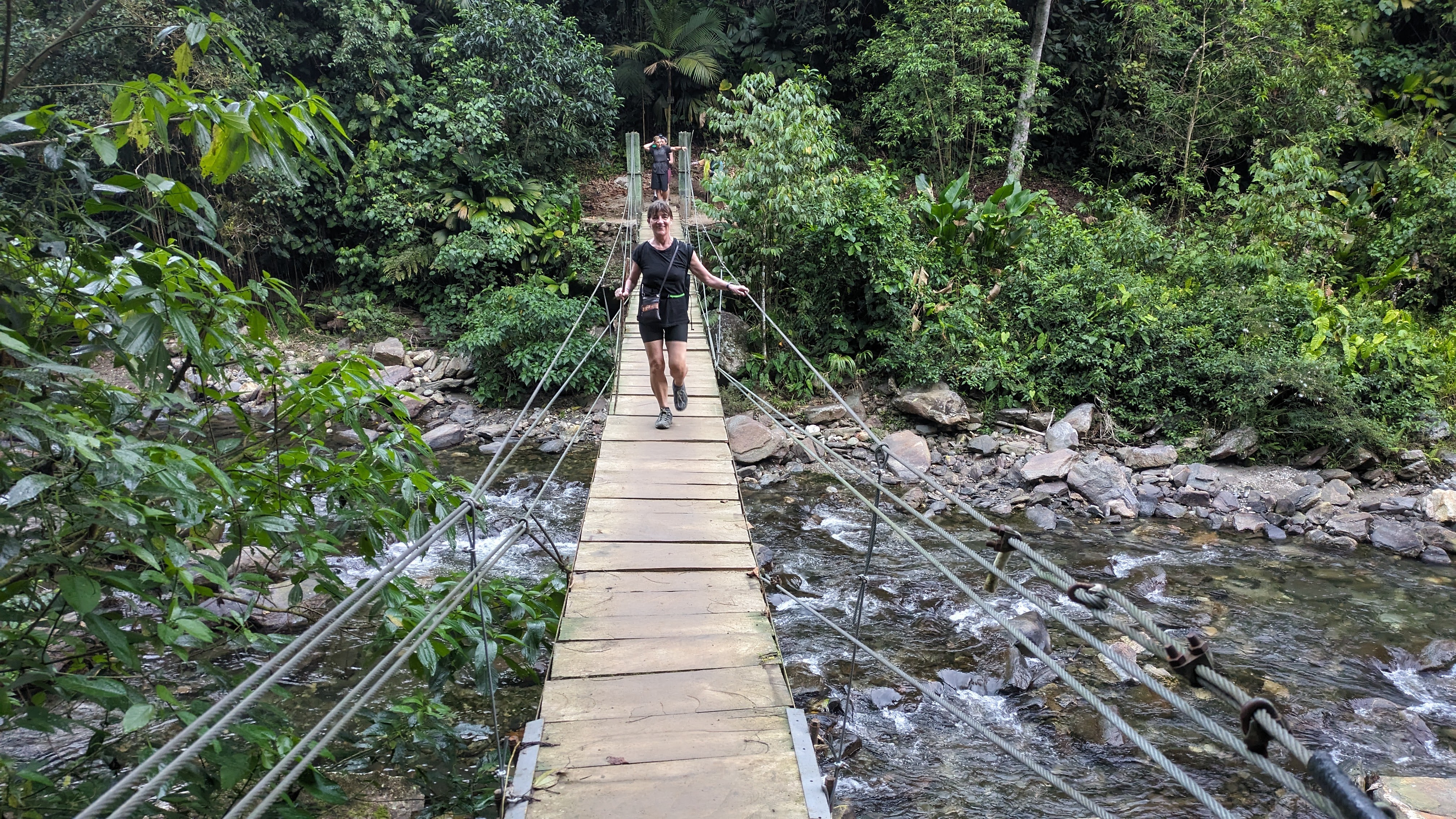
Another Bridge

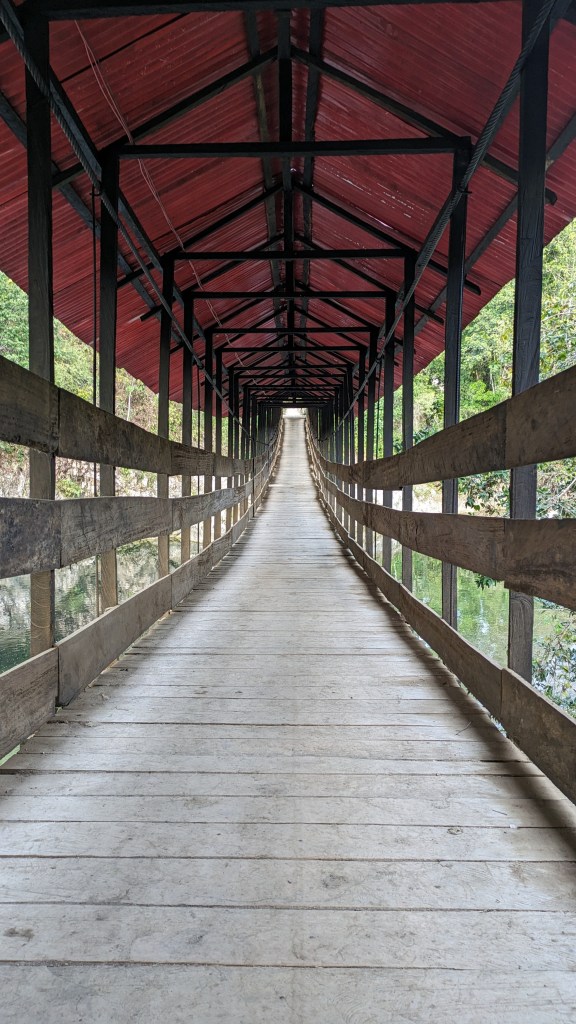
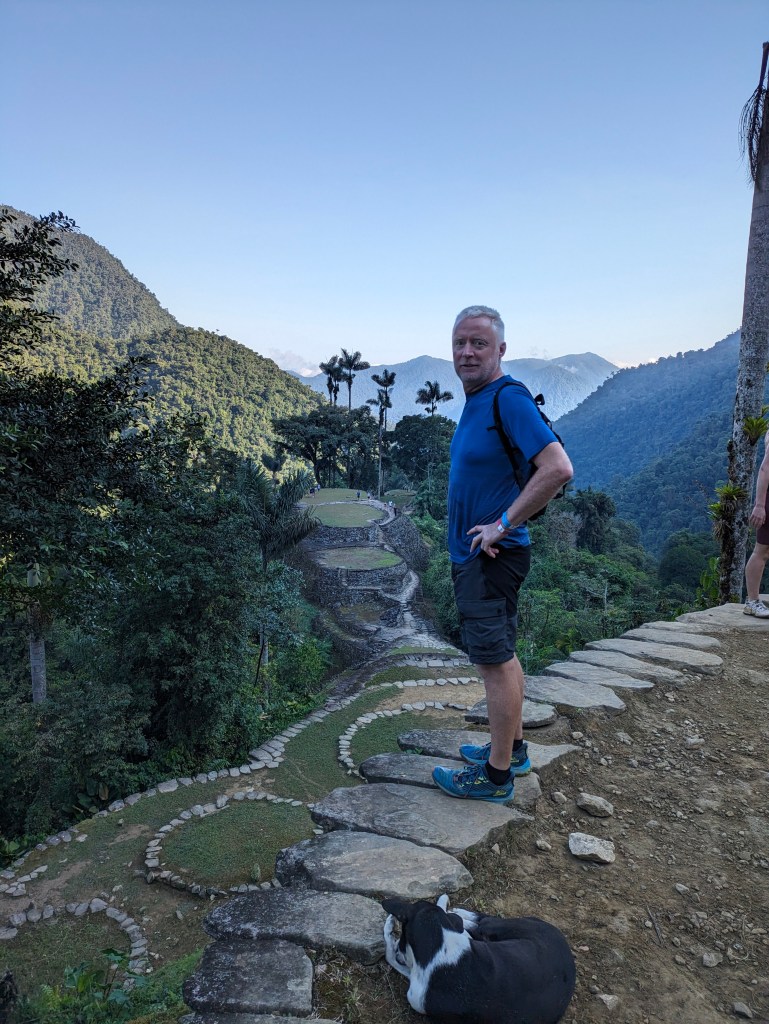
The third morning, we entered the Lost City after clambering over boulders by the river. crossing a rickety rope bridge and climbing 1200 steps to the site which is sacred to the indigenous tribes who close the site to visitors every September for the whole month to perform sacred rituals. It felt like an achievement to be there, a place that was ‘lost’ for so long, abandoned about 400 years ago and swallowed by the rampant growth of the jungle and rediscovered in the 1970s although the indigenous knew of its existence all the time. For many years after that, it was off limits for visitors, too dangerous to visit for this was drug country, an area that has known appalling bloodshed, ruthlessness, and greed. Tourism is an opportunity for change, for a new beginning and for a good livelihood not based on the cultivation and processing of drugs.
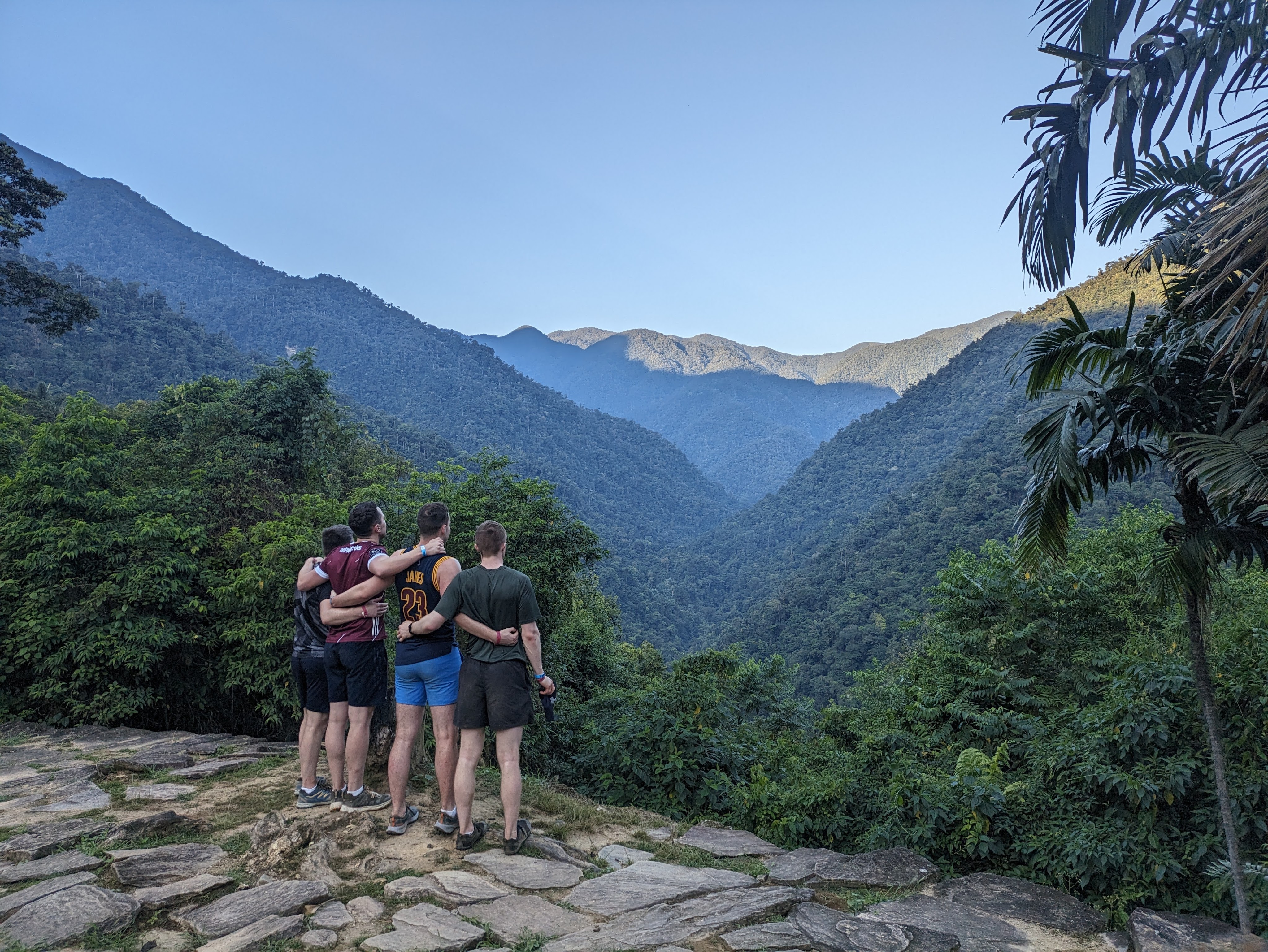
The Galway Men

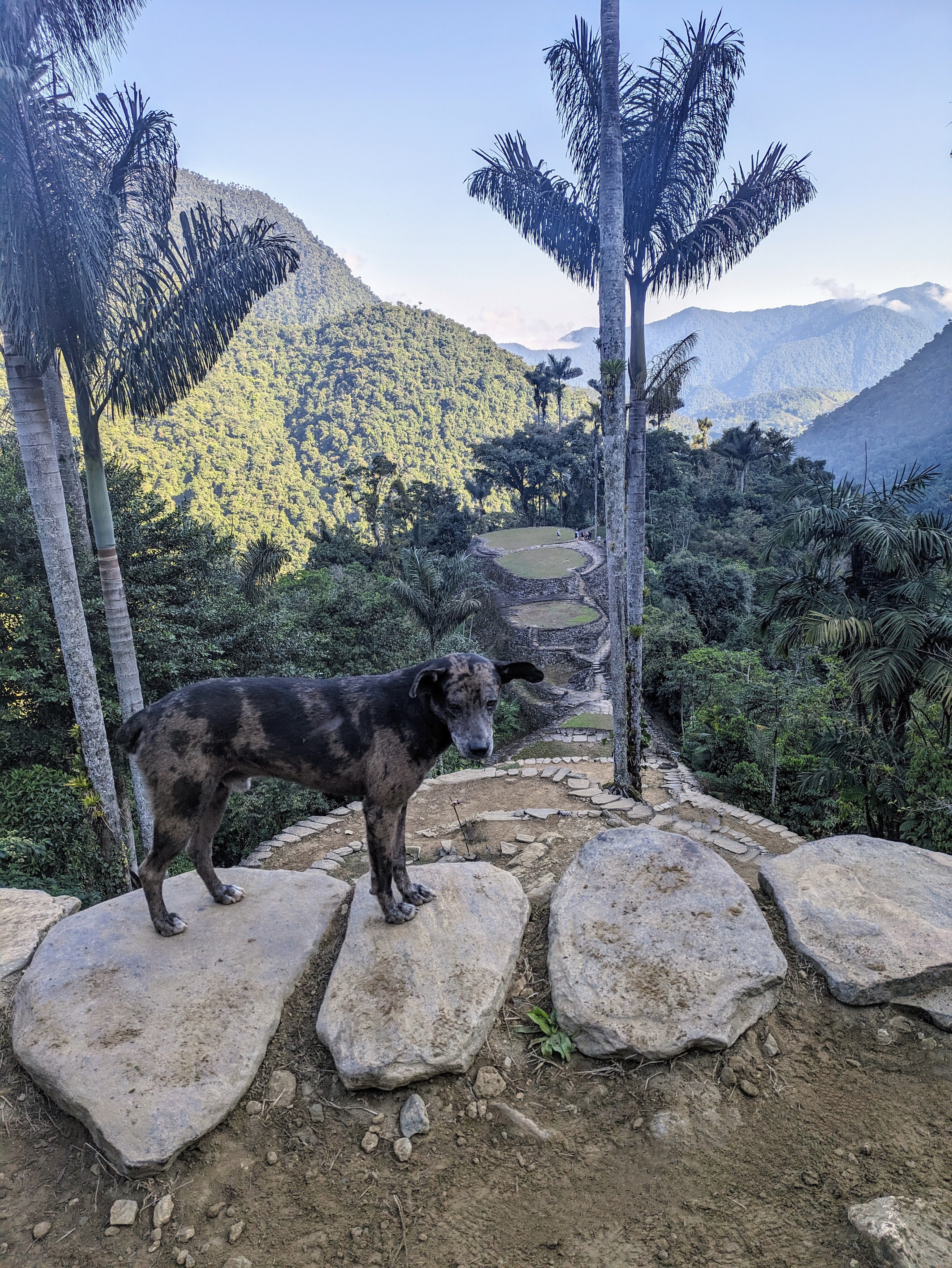
  At the top of the steps, we reached the initial settlement which consisted of several large stone circles with low stone walls and some towering trees reaching to the heavens. There was an air of tranquility in this majestic setting of misty tree-clad mountains, our group were the only people there, except for birds, a trio of dogs and an army of mosquitoes, intent on breakfasting on us despite the copious amount of repellent that wafted off everyone. The site kept unfolding, becoming more impressive the further we walked until we were in front of the giant terraced platforms, that climbed one above the other, concentric circles.  There was the shadow of a huge buzzard overhead, a bird that in indigenous folklore were messengers between the spirit and the human worlds.  The sun slowly rose to warm the site and bathe the stones in warm sunlight. Soon the heat intensified, and it was time to reluctantly retrace our steps. back the way we had come, navigating the 1200 steps which seemed even steeper on the descent.

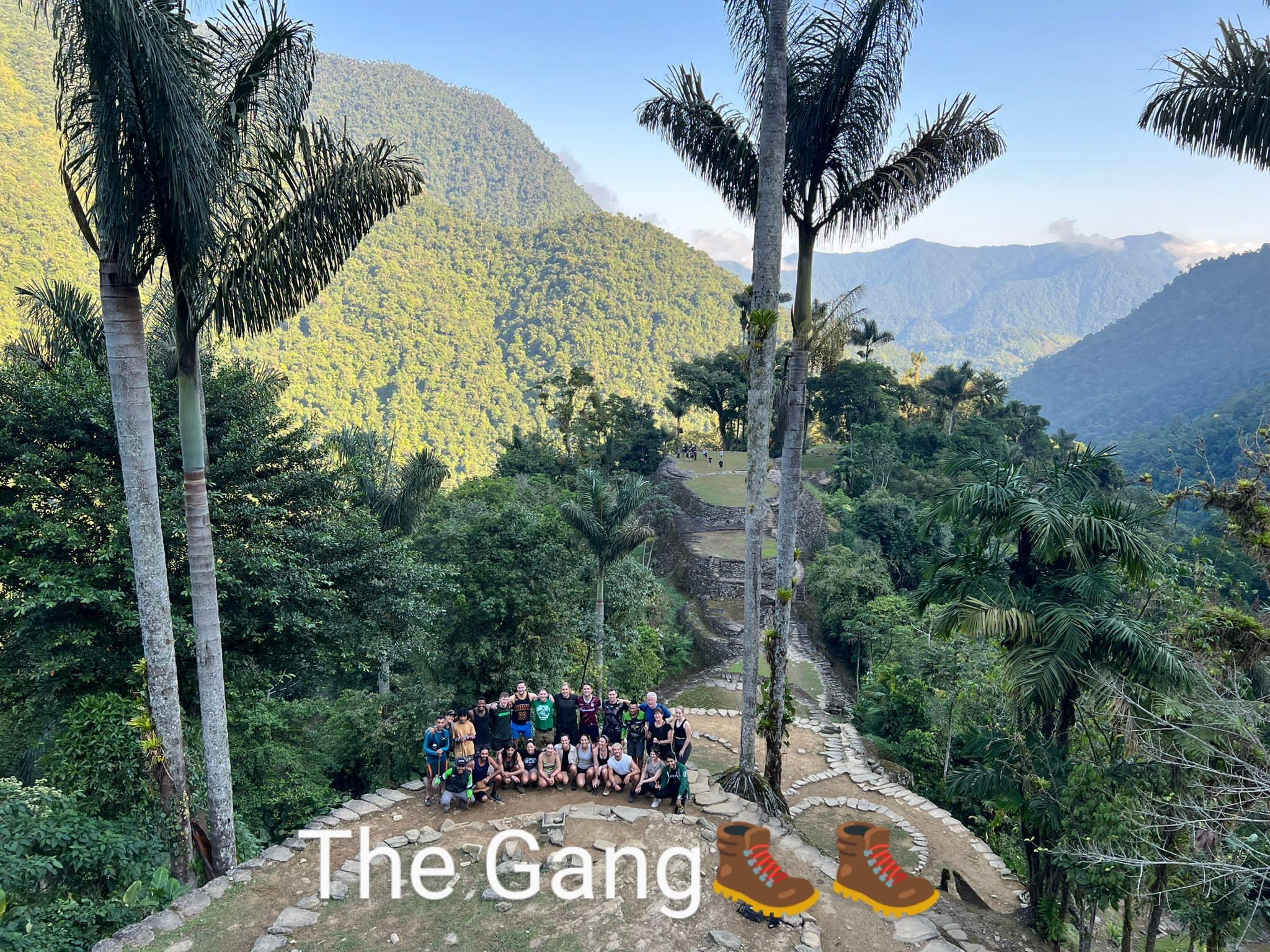
Success

On the fourth morning, the 4-day and 5-day groups parted company. The Galway lads and an Englishman had signed up for the 5-day hike but changed their minds, deciding that they couldn’t take any more with sore muscles and blistered feet.  Caoimhin and I continued for another day with the Colombian family.Our young friends  awarded us ‘warrior status’ for our endurance but the old dog for the hard road.

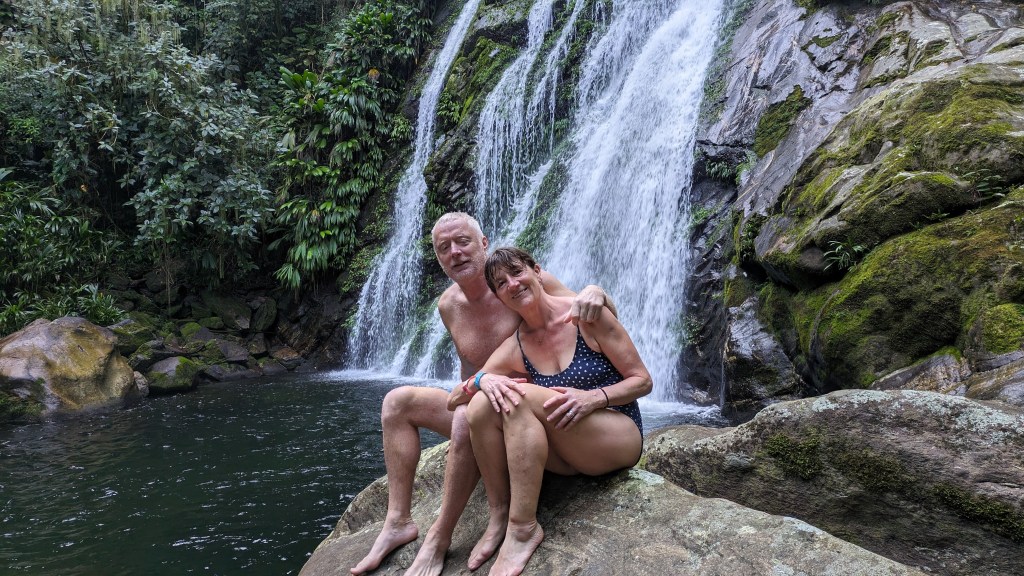
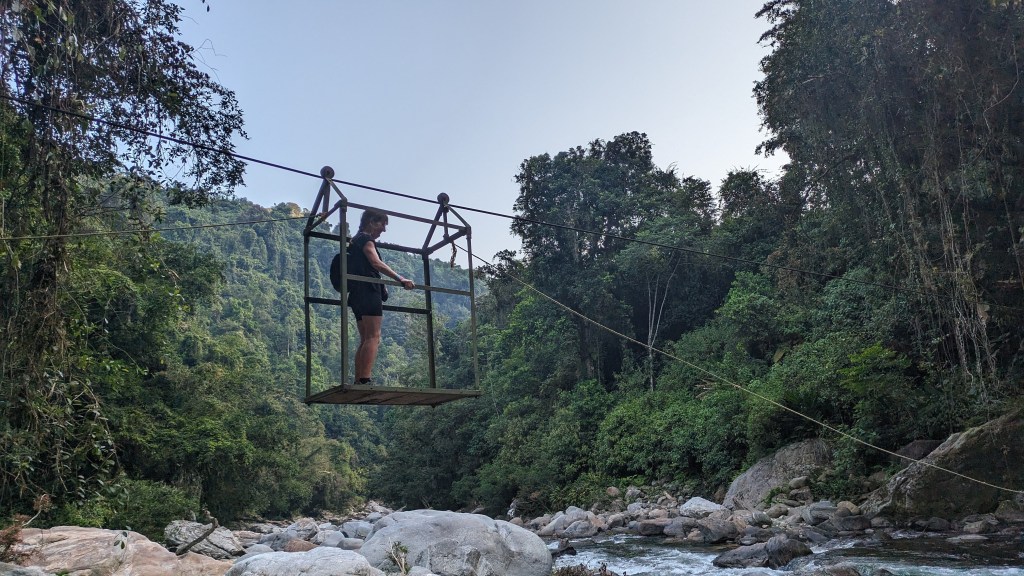
This fourth day with a smaller group was all about rivers and waterfalls of all types, gushing curtains of water, or water falling like gentle white rain watering a wall of exotic green plants. We crossed and recrossed the Rio Buritaca several times, more times than it seemed possible to cross the same river. We crossed with steping stones, rope bridges and once and best of all in a rope pulled ‘cable-car’, standing on a timber plank, swaying above the foaming water. The Columbian family and the guide chatted as we hiked. Although our Spanish is still not good, we can understand more than we can speak. When I couldn’t understand anything, I longed to earwig on conversations and know what people were talking about. We discovered that their chat was almost exclusively about food, what they ate and when and what they would eat again and we thought that we were missing out on deep meaningful conversations or at the very least, a bit of gossip.

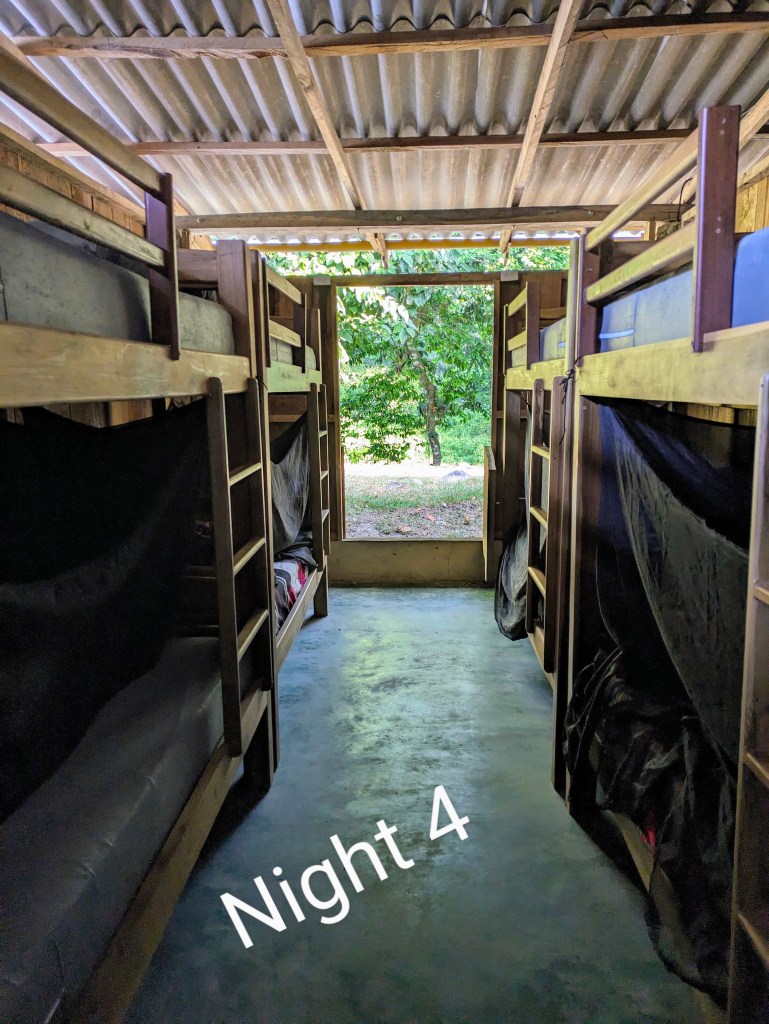
On the fourth night and in a bunk bed in a camp by the Rio Buritaca (yes, that same river), we slept for a solid ten hours, both body and mind in need of rest. Our fifth day was easy, a two-hour hike through former coco plantations back to where we had started walking five days before, but we weren’t the same people, our muscles ached but our heads were full of memories of a mysterious city in the mountains that was lost and found.

What else might be out there waiting to be ‘found’?
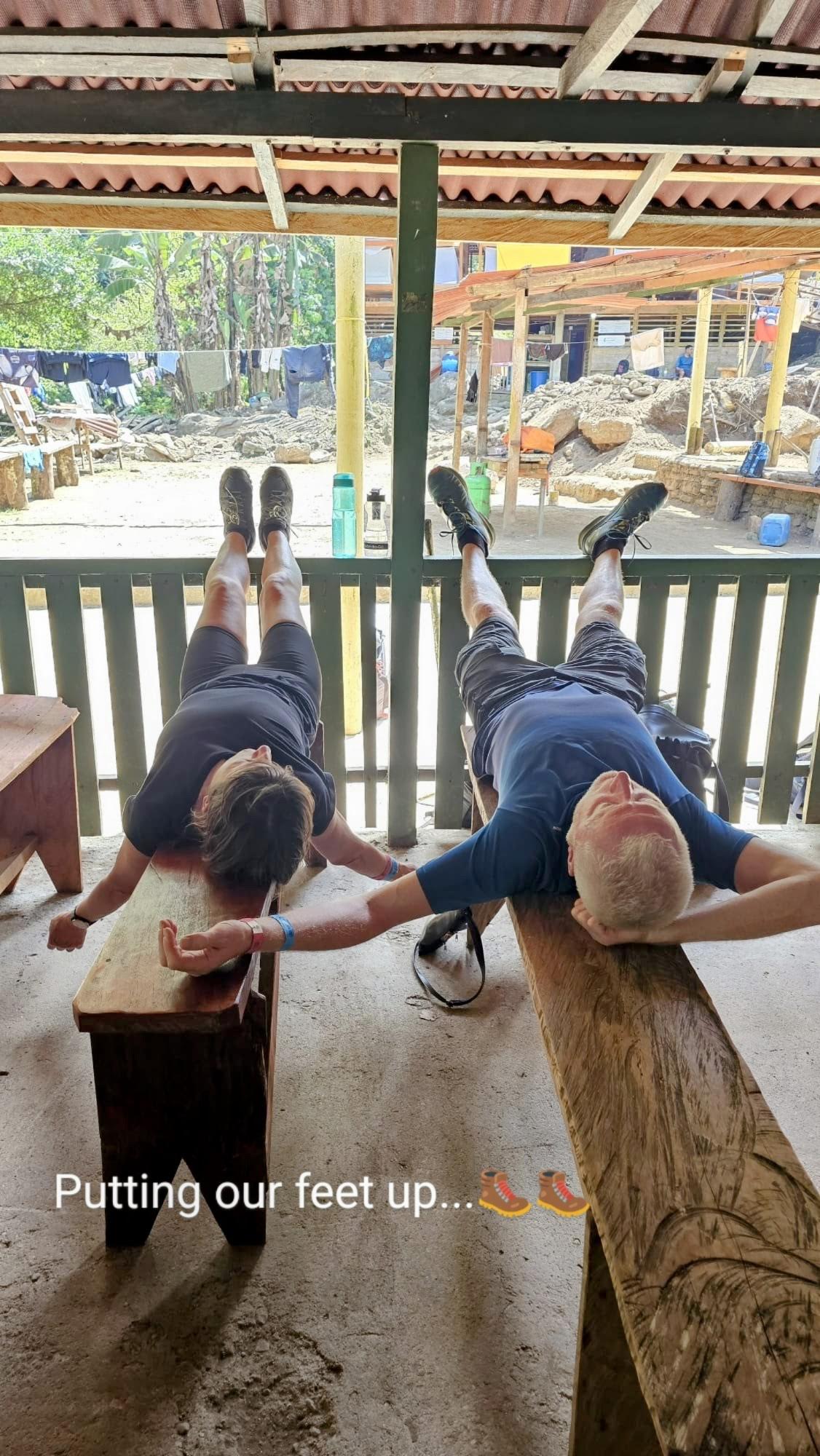
Colombia – The Lost City

Beyond Bogota…the roads less travelled.

Leaving Bogota, we headed for the hills – literally.

Bogota is a huge city, the Uber taking us from the historic district of Candelaria drove nineteen kilometres in relatively heavy traffic to the bus station, Terminal del Norte. The bus to the little town of Ville de Leyva was surprisingly comfortable with assigned seats, plenty of legroom, air-con and phone charging points. Time is elastic here in Colombia – the bus journey was supposed to take a very precise two hours and twenty two minutes, but it was well over three hours before we reached our destination.

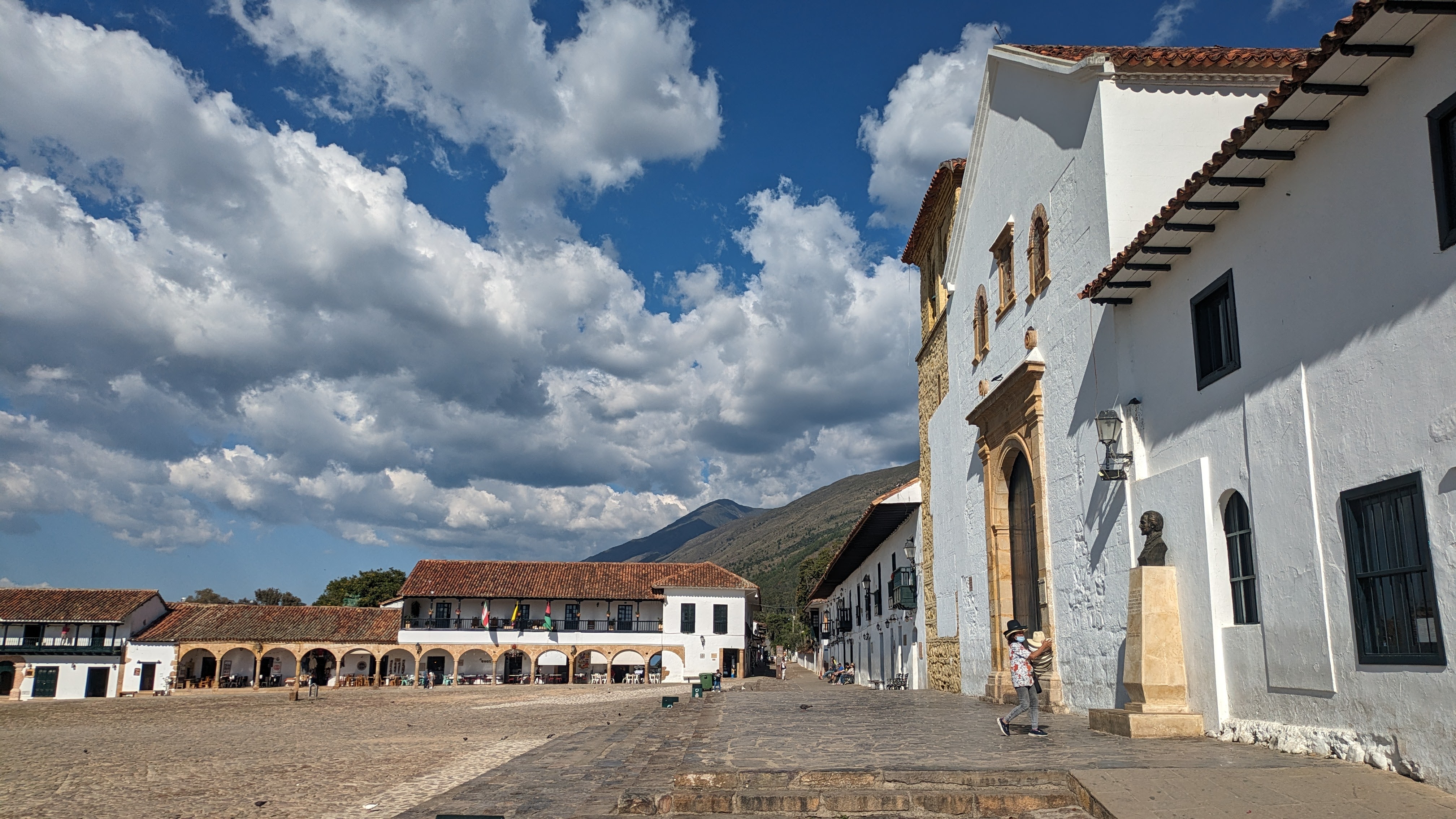
Strong sunshine and mountain air greeted us in Ville de Leyne, reputed to be the oldest colonial town in the country with low whitewashed buildings decorated with wooden balconies against a backdrop of brown hills.  Its claim to fame is a really enormous, cobbled plaza. The local native Indian communities used to gather there in the plaza to gaze at the heavens, a natural astronomical observatory since pre-Columban times.

Central Plaza, Ville de Leyva

We took a journey back further in time when we visited the Palaeontology Museum because Ville de Leyva also has a rich pre-human heritage. The museum recreated a very different world where giant dinosaurs roamed the land, extraordinary sea-going reptiles dominated the sea and the whole area was submerged in a shallow sea. Fossils dating back more than a hundred million years adorned the walls of many houses in the town.

After the damp coolness of Bogota we were sweating in the afternoon heat (about 24C) but many of the locals were dressed in cowboy hats, blue jeans and padded jackets. In the evening, colourful handcrafted ponchos were the clothing of choice…we weren’t temped to buy any as they wouldn’t fit into our small backpacks😁. We stayed in a family-run hostel (Hostel El Pina), great value at less than €10 a night for a room with our own wooden balcony and private bathroom.

In the coolness of the morning, we wandered around dusty roads with fields of goats, sheep, cattle and horses and also large polytunnels growing vegetables for this is agricultural country. We saw the Blue Pools(Pozos Azules)in the distance, blue because of the mineral content of copper and selenium and although not as blue as on Instagram, they were quite striking against the brown-green mountainy landscape. We clambered over barbed wire to get a closer look and after a while, we were accosted by a dodgy man looking for entrance money, Caoimhin requested he show us proof of ID which he didn’t have. A woman in the tourist office had told us that it was free to view the pools – no swimming allowed – but we had jumped over two lots of barbed wire. We turned and ran, back the way we had come, looking over our shoulders to see that he wasn’t following us.

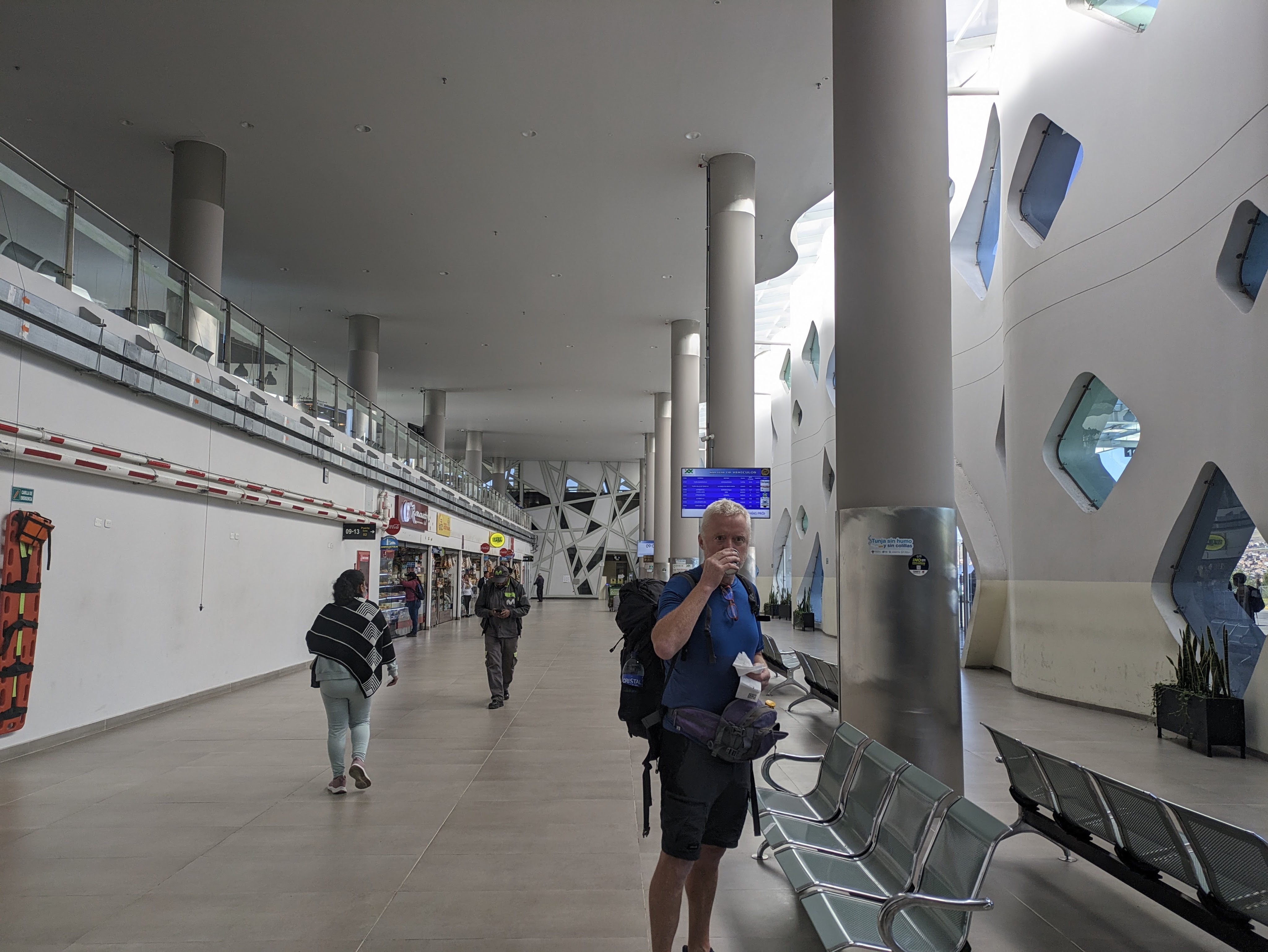
Many of the Bus Terminals in Colombia are large modern buildings that feel like airports with rows of ticket desks, digital displays, cafes and numbered departure gates. There are many different companies with fleets of buses servicing different areas but it can be confusing to know which desk to buy the ticket for your particular destination. Some Spanish is essential as virtually no-one speaks or understands English.  It is SO easy to mispronounce the place names so even though people want to help, nobody knows where you even want to go 😲so make sure you write down the placename.

The Camino Real de Santander was on our radar before we left home. This camino is a network of stone paths, originally built by the indigenous people of the area, the Guane, to link rural villages. Winding through six remote towns & villages, across relatively untouched landscape past cactus groves, tobacco plantations and majestic mountains, it sounded just ‘our cup of tea’, a hike without the need for a guide.

We first made our way north to San Gil, known as the adventure capital of Colombia because of its extreme sports, many based around the rivers that flow both through and around the town. Walking from the bus terminal outside the town to our accommodation (Real Dreams Hostal) felt like an extreme adventure in itself. Trucks roared by in clouds of dust, buses passed within inches of us, the smell of diesel and engine oil from the garages lining the road was nauseating. In town, the footpaths were high, narrow and crowded and although there were some pedestrian crossings, cars and motorbikes didn’t stop at them. The river, Rio Fonce, with steep sides looked dirty with rubbish and very uninviting.

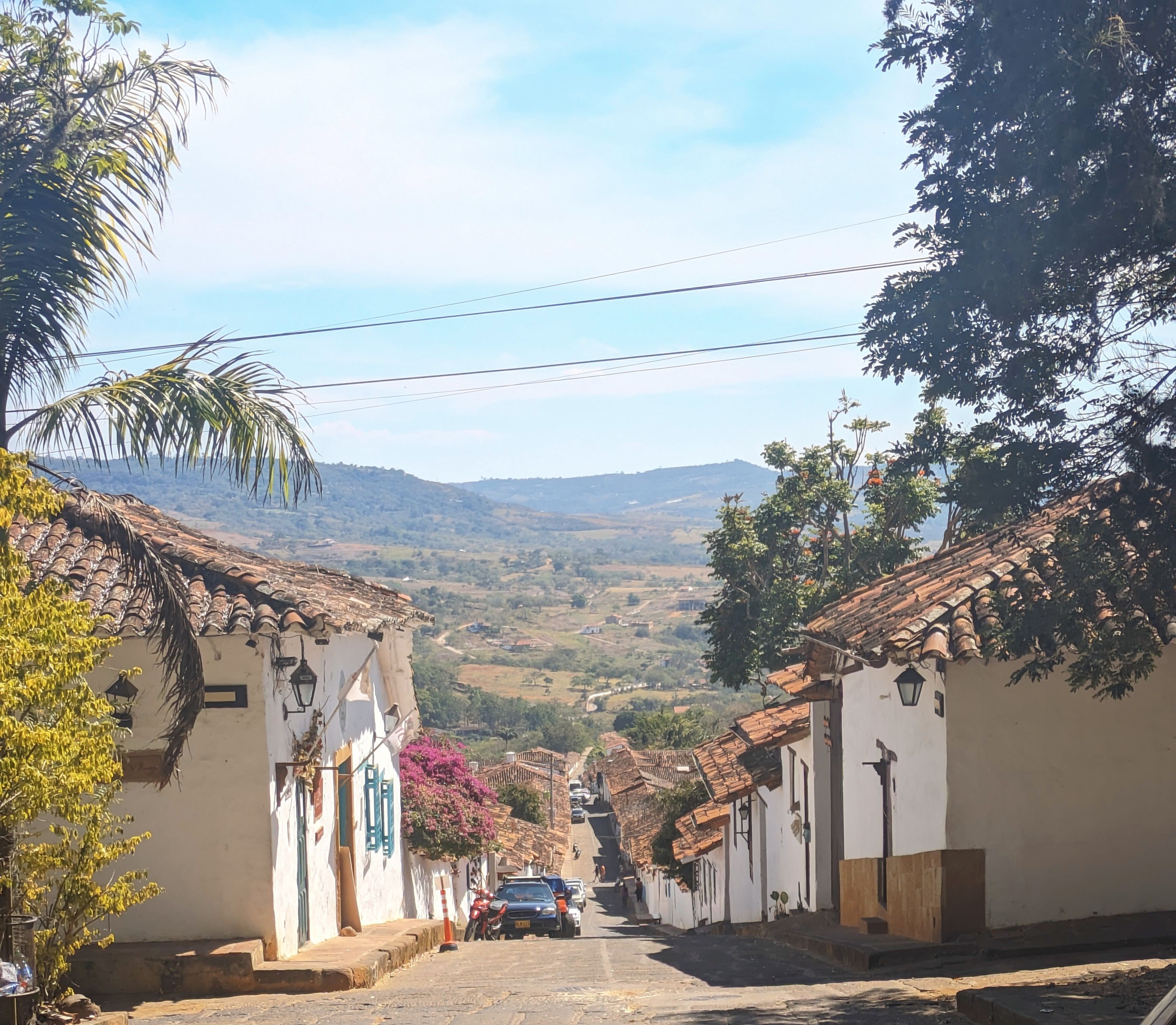
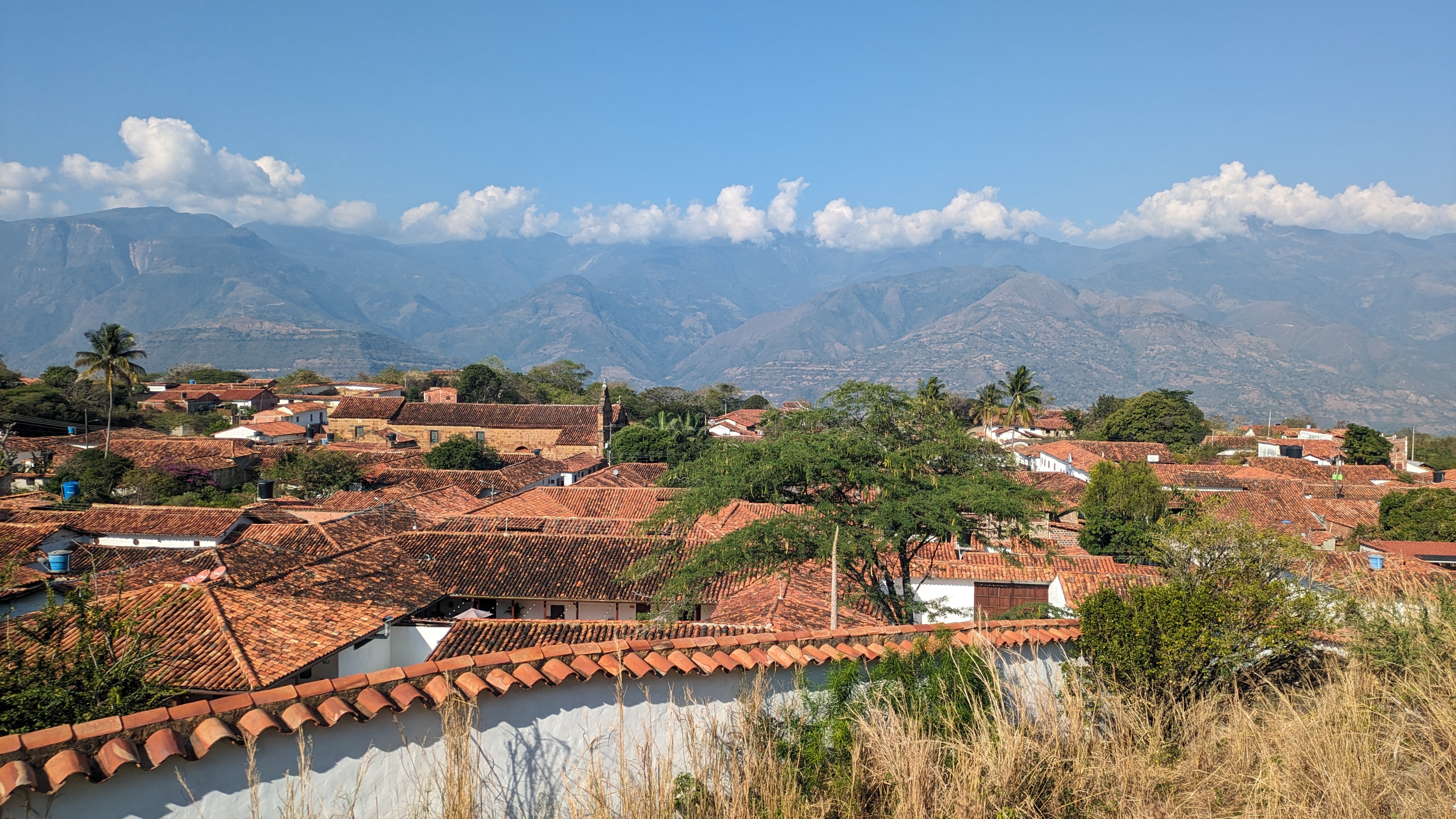
We left the next morning for Barichara, one of the towns on the Camino Real, and often called a filmmaker’s dream with its cobbled sloping streets, whitewashed houses with distinctive burnt orange tiles and tree and flower-filled plaza. It was declared a national monument in 1976 and we instantly loved the bustling but atmospheric feel of the place with the scent of  bougainvillea wafting around.

Barichara

Creeping out of our hotel in Barichara at 6am to start our hike, we were bleary eyed and cranky after a restless night due in part to the monumental snoring of someone who wasn’t even in a room near us….he/she was across the courtyard and on a different floor. I come from a family of snorers, but this was snoring on an epic level, sounding like a mixture of cats wailing , buildings collapsing and waves crashing. We would have felt sorry for him except we were fighting the urge to throttle him. And we had splashed out on a relatively pricey hotel (Hotel Casablanca at €27 for the night including breakfast which we didn’t eat as we left so early.)

Village of Guane

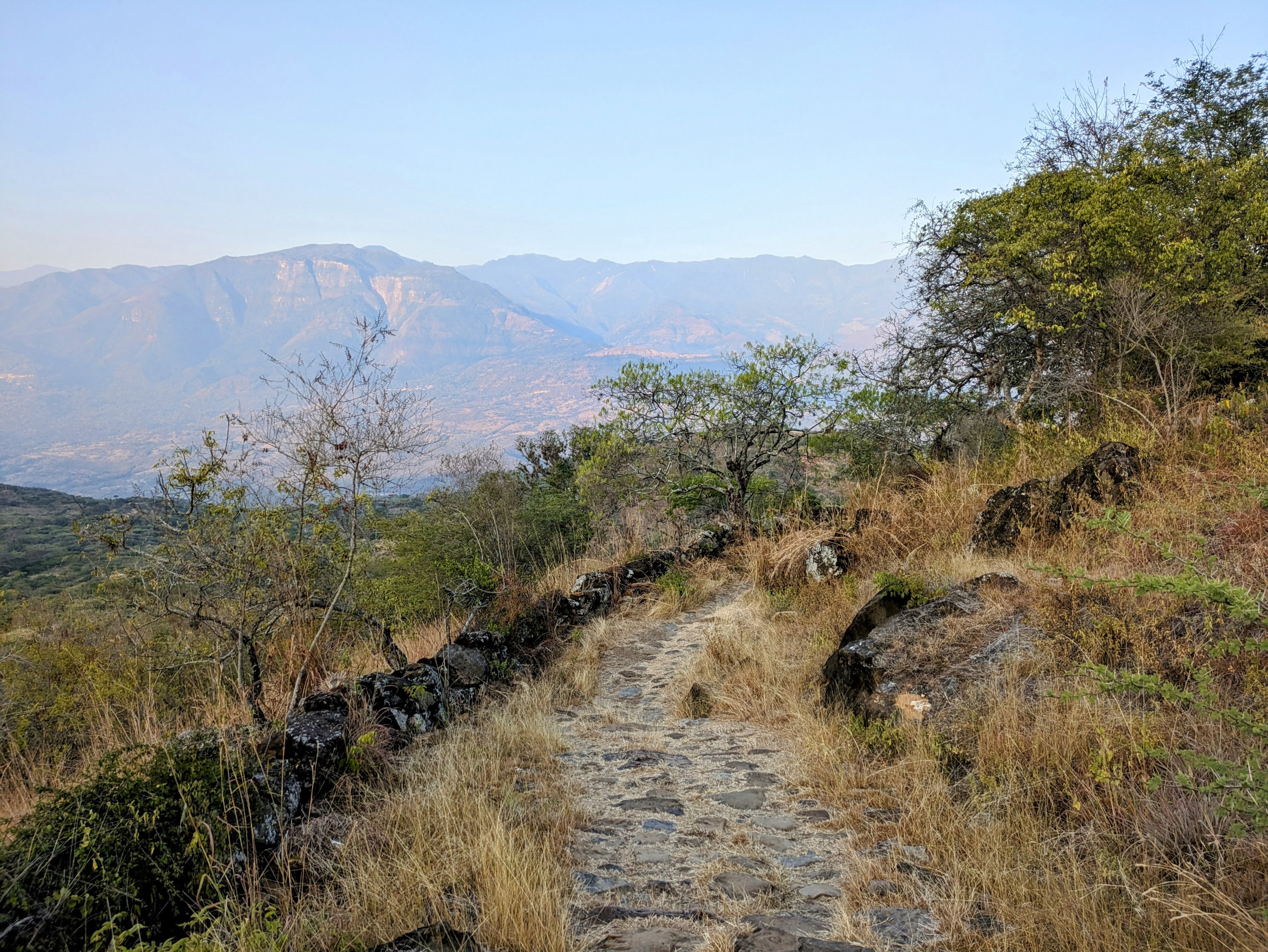
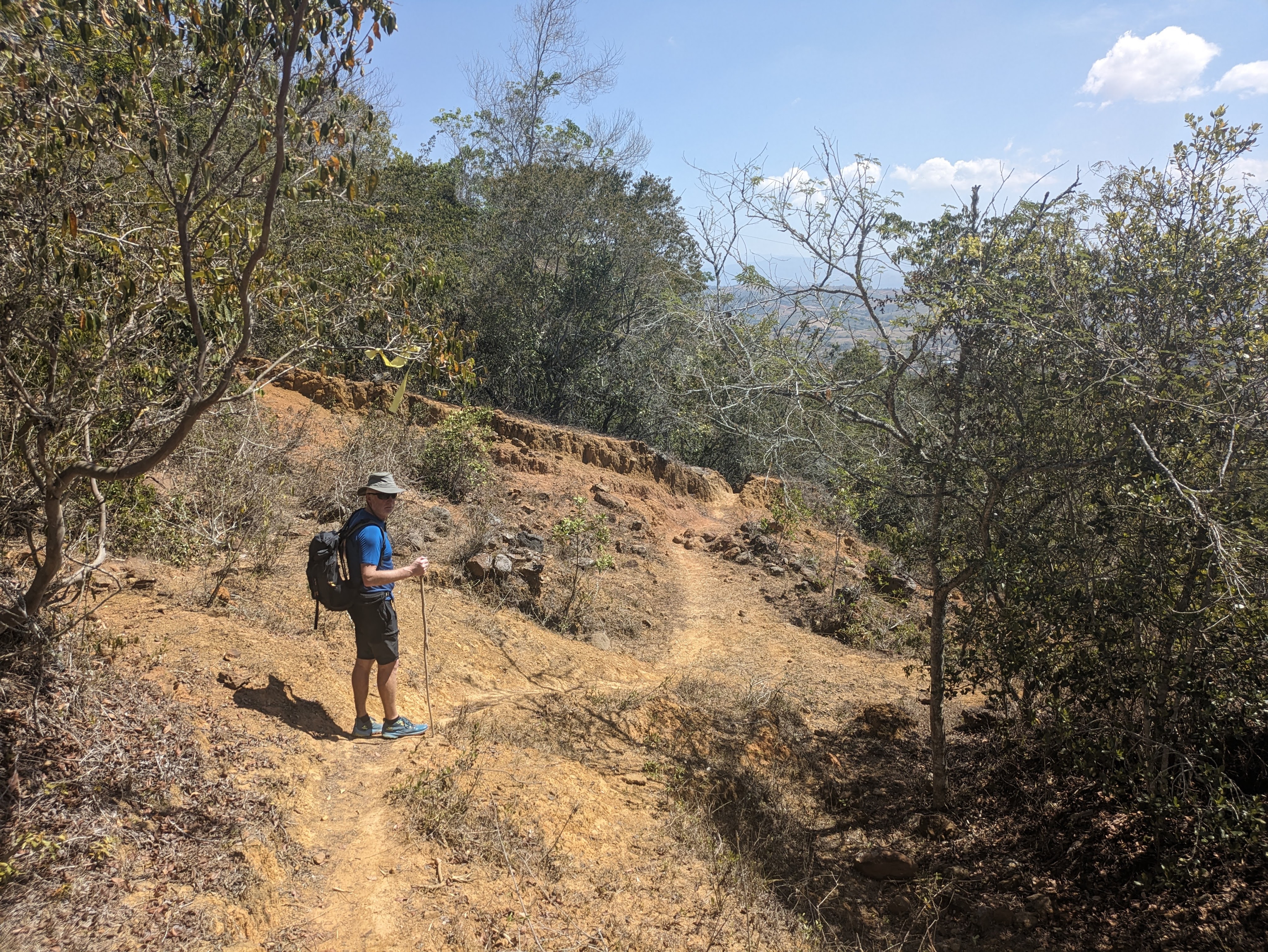
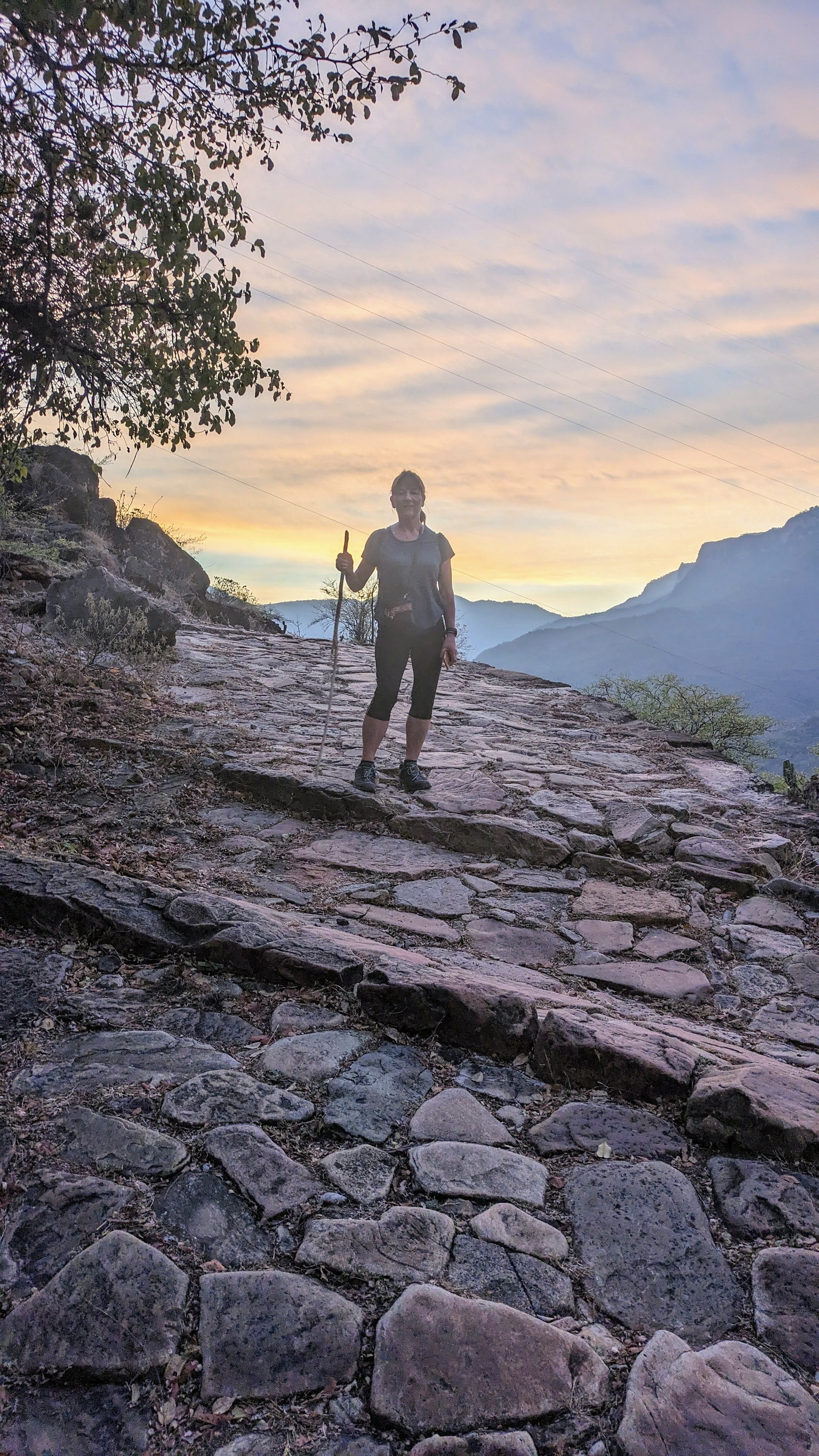
The first stage of our hike on the Camino Real from Barichara to the village of Guane, was gorgeous in soft light and birdsong, walking on a cobbled path, lined with low stone walls and with cattle grazing among the scrub, a gentle up and down walk of about 6 kms. Guane was another picture-postcard place with a central square, lots of trees, benches and sculptures and dominated by the Catholic church. After a breakfast of crispy fried eggs, sweet bread and strong black coffee, potent enough to produce palpitations, we hiked up a steep hill to begin our next leg to the town of Villenueva, past small houses with barking dogs of all shapes and sizes, who announced our presence. At the Mirador de la Virgen there were hazy views over the surrounding countryside but also a welcome breeze. Continuing uphill on dusty roads, we reached a point where we could see the welcome sight of Villanueva spread below us, about 2 kilometres away through a narrow winding path, partially through shaded wood.

Villanueva, as the name suggests, was a relatively new town and lacked the charm of the older towns of Guane and Barichara but we found accommodation in the centre of town, a cheap hotel with a friendly owner. It lacked frills and hot water, but a refreshing cool shower was just what we needed and we were the only guests so no surprise snorers. Villanueva had the usual central plaza with church and cafes and although it was well past the middle of January, the square was festooned with Christmas lights, blinking reindeers and Santa Claus. We were surprised by the number of panderias (bakeries selling breads and cakes) and also by the number of pharmacies…we wondered if there was a correlation. Half the town seemed to be having lunch in a restaurant serving the menu del dia, the usual cheap and copious amounts of food – generally soup (mainly lentil and veg) followed by a plate of rice, beans, fried vegetables and accompanied by a flattened lump of chicken or pork and a jug of juice for about €3 to €4. We joined the locals and tucked in, there was no point in saying that we didn’t want the meat, it always arrived on the plate but there was usually a friendly dog that benefitted🦮

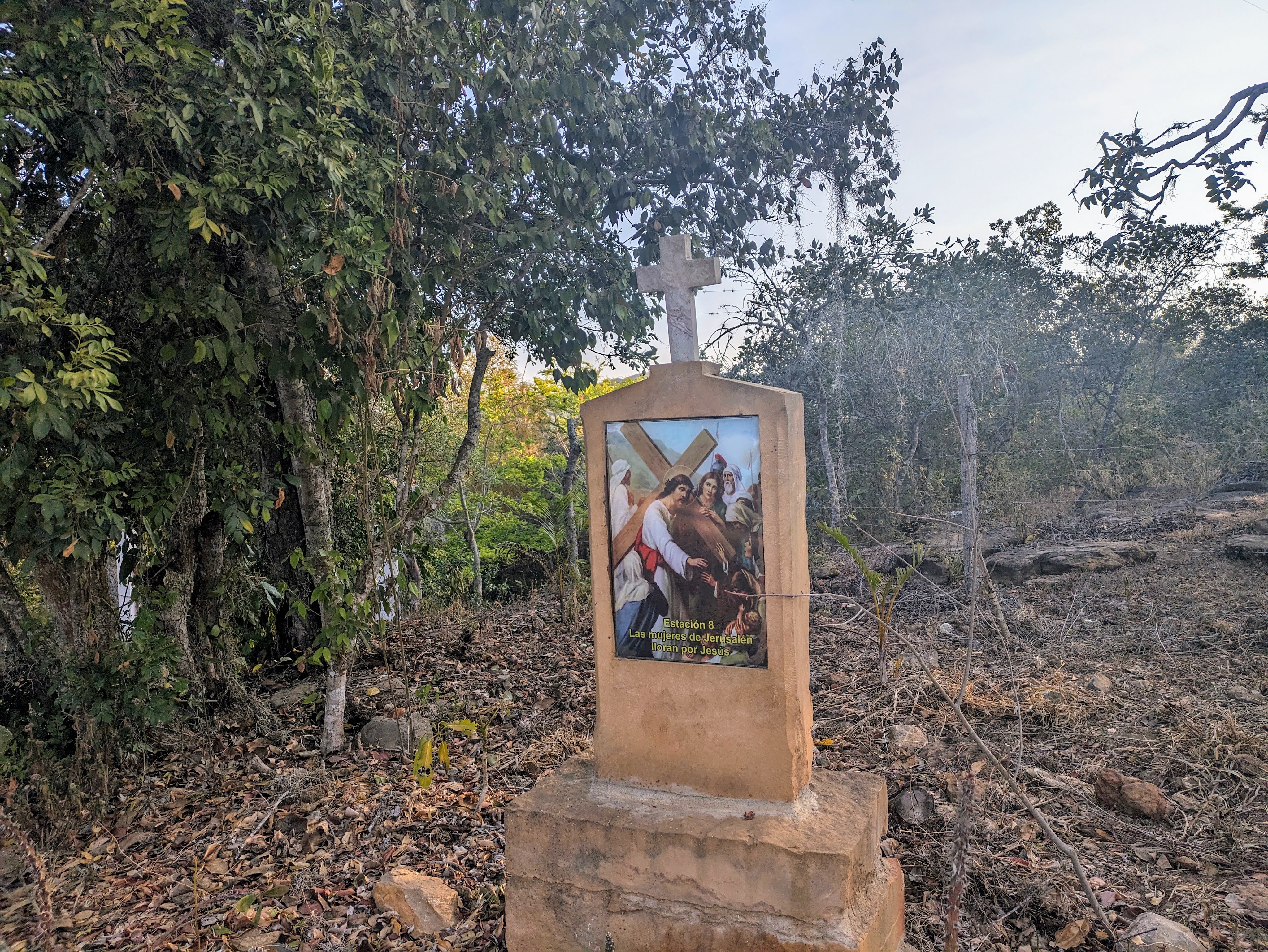
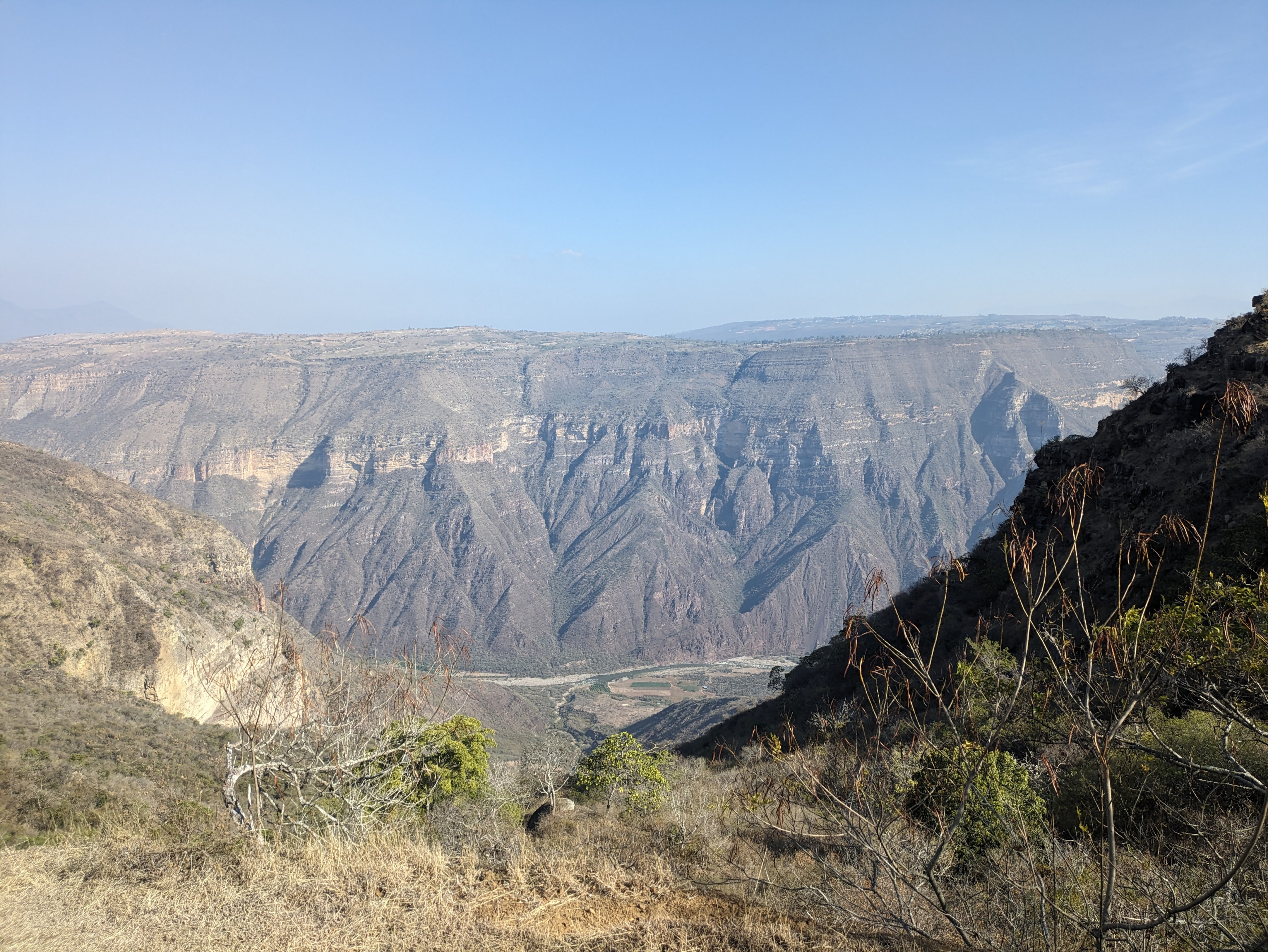
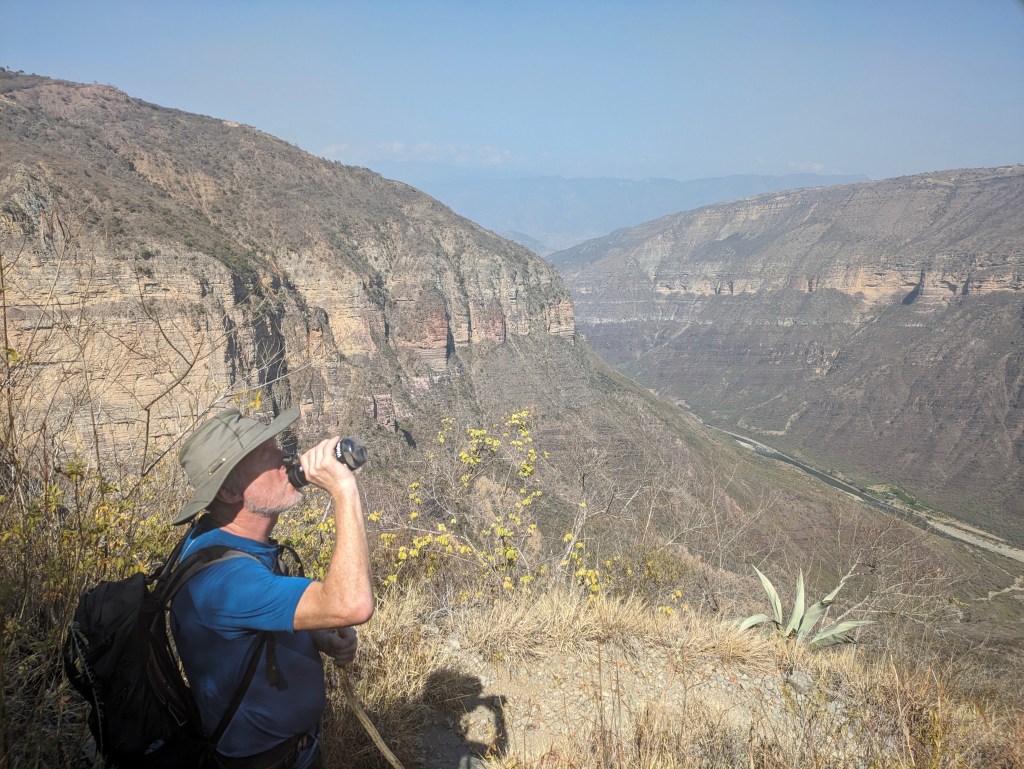
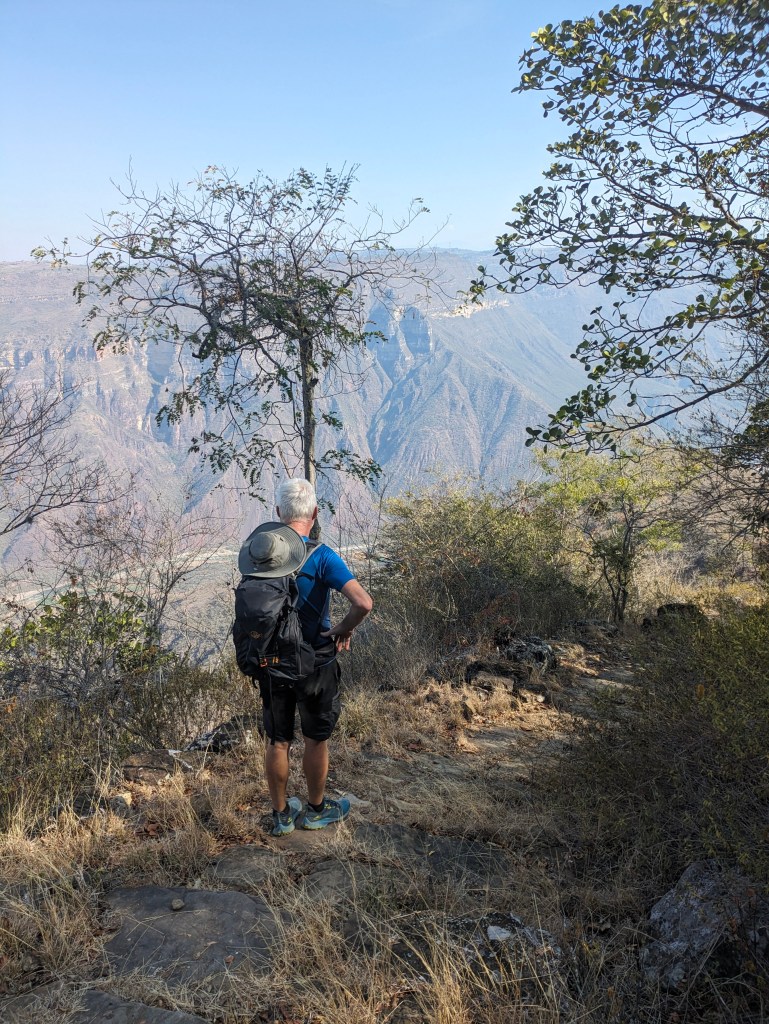
On our second morning, our genial hotel owner was at the door at 6am to wave us off and make sure we took the right track to take us to Jordan, our next overnight stop. Walking east on red and mustard dusty roads towards the rising sun, we were accompanied by a trio of dogs for a couple of kilometres. Music blared from a small house with a couple of cattle in the field outside and a few hens pecking in the dust. In this deeply religious country,  sculptures for the stations of the Cross adorned the side of the track  to the first mirador.  The countryside gradually opened up when we reached the third mirador overlooking the Chicamocha Canyon, formed 46 million years ago.  We were wowed by the sheer majesty and the harsh beauty surrounding us.

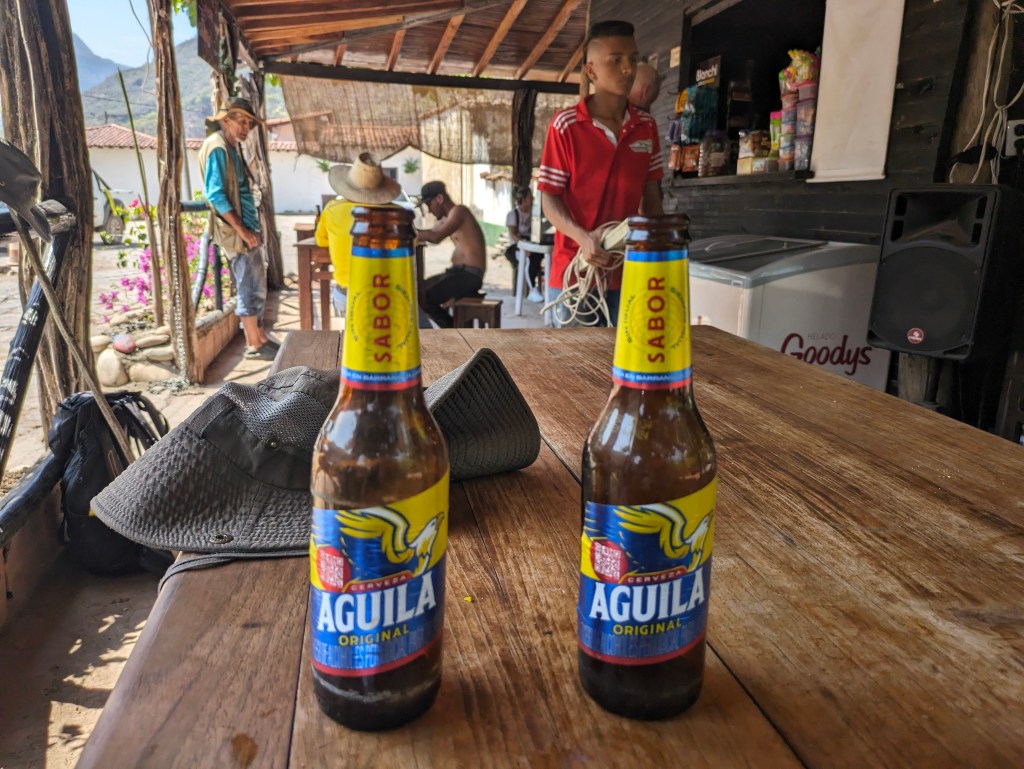
The path from here to the small town of Jordan was all downhill but very steep. We thought that this would be easy but with heat radiating from every stone,  and without a scrap of shade or the hint of a breeze,  it was quite challenging. The surface was slippery with shale and stones and it got hotter with every step we descended until it was a baking 38C degrees on the canyon floor. We trudged on to the tiny town where workmen laying paving stones in the dense heat, were drinking Aquila beer, the same local brand that we like.  The thought of cold beer enticed us to a little restaurant with an awning where we watched a talented little girl draw on a white board and wipe away her masterpiece. The second day was only 17 kilometres, but the heat made it feel like more, much more. Our accommodation was in a small room with a fan swirling hot air all night. A Belgian couple in the hotal were also hiking the camino, the only other walkers that we met over the three days.

Chicamocha Canyon

                The third and last stretch of our hike meant crossing the bridge over the Chicamocha river and climbing up the other steep side of the canyon. It was a mere 5.5 kms but after the day before, we were determined to climb before the heat and were on the trail by 5.30am. It was much easier that expected, it was a well-established and well-maintained track  and the only way of getting between the two towns as there are no roads. We entered  Los Santos, our final destination, after a couple of hours. Los Santos was buzzing at that early hour on a Sunday morning, all shops were open, the streets were crowded and people were hanging around, drinking coffee and beer (mainly beer).

Colombia has the feel of a modern, relatively prosperous country but in one respect, it is still in the Middle Ages. People, particularly men, drink beer instead of water, copious amounts of it at all hours of the day. Beer bottles were even lined up beside workmen, working on the roads. Most of the drinking establishments are groceries as well as bars, selling everything from deodorant to cured ham. Only bottled beer is available with no draft beer, and they often have a urinal in the corner, just a cupboard without a door. I don’t know what the women are supposed to do but I’ll let you know when the need arises.

Geography dictated that the best way to get back from Los Santos to San Gil where we had left our backpacks, was to get a bus to Mesa de Los Santos where a cablecar crossed the canyon to the other side and where we could catch a direct bus to San Gil.

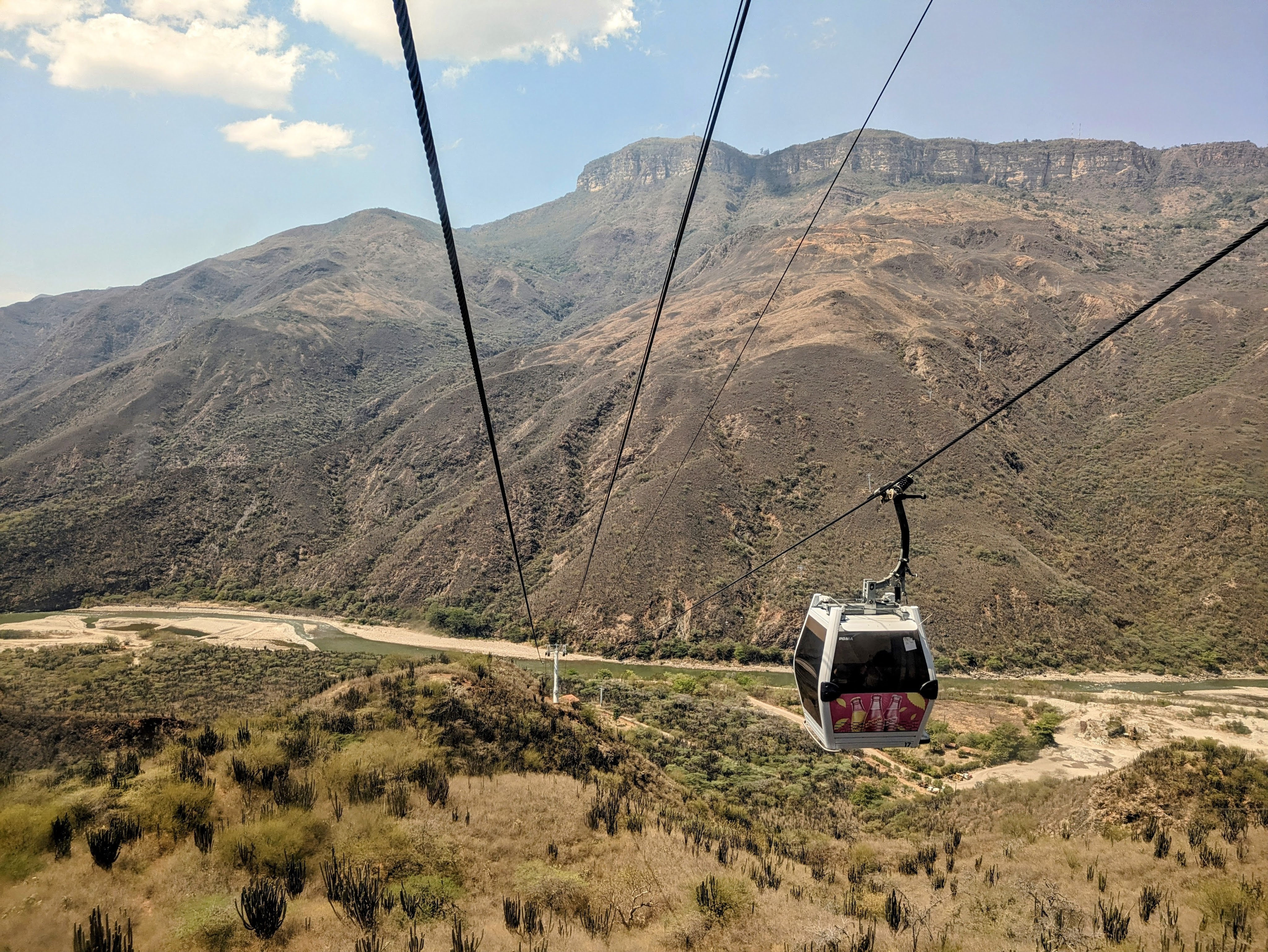
The cable-car ride was amazing. Everything was clearer when seen from above, the perspective of river and rock, land and bush, houses clinging like insects in impossible places, the inter-relationship of everything.  The Chicamocha River wound it’s way  like a velvet green ribbon below us and the canyon sides looked so sheer and stratified.  We had been in that landscape, almost part of it, hiked down one side of the canyon, felt the stones and gravel move under our feet, watched lizards and snakes (just one) slither across our path, felt the heat radiating from each stone, sweated each step. We had walked along the bottom in airless heavy heat, scaled the far side of the canyon at dawn. But seeing it from above, swaying in a cable car, we were truly awestruck by the grandeur of it all.

The span from one side of the canyon to the other was too wide to go directly across so the cablecars went down one side and then climbed up the other side.

I would really recommend this hike but if hiking isn’t your thing and you ever find yourself in Colombia, take the cablecar ride from Mesa de los Santos to Parque National de Chicamocha for an amazing experience…without the sweat 🤩

The Caribbean Coast is calling us now so we have booked an overnight bus tonight to Santa Marta on the coast – supposed to be a 15 hour journey but time will tell.

Thanks for reading and until next time……

Beyond Bogota…the roads less travelled.

Colombia Calling

Colombia, one of the most beautiful and diverse countries in the world,  suffers from an image problem. Mention Colombia and a few people may think ‘coffee’ but most will automatically conjure images of drugs and violence….thanks in part to the series Narcos. While there was  truth  to this,  rumour has it that things have changed in the last decade. Lets hope so as this is our first but long-anticipated visit to Colombia.

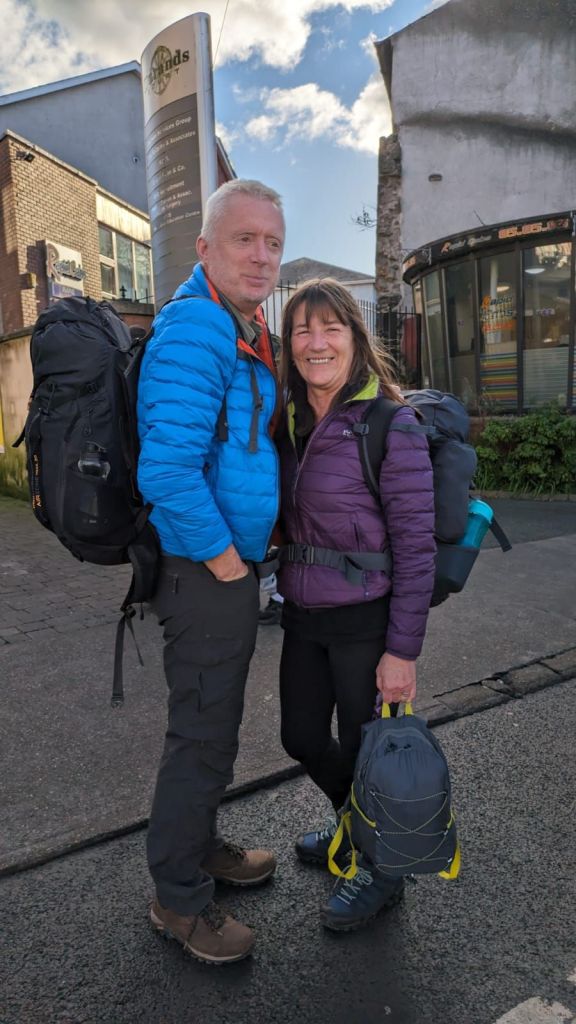
On the move – Leaving Waterford

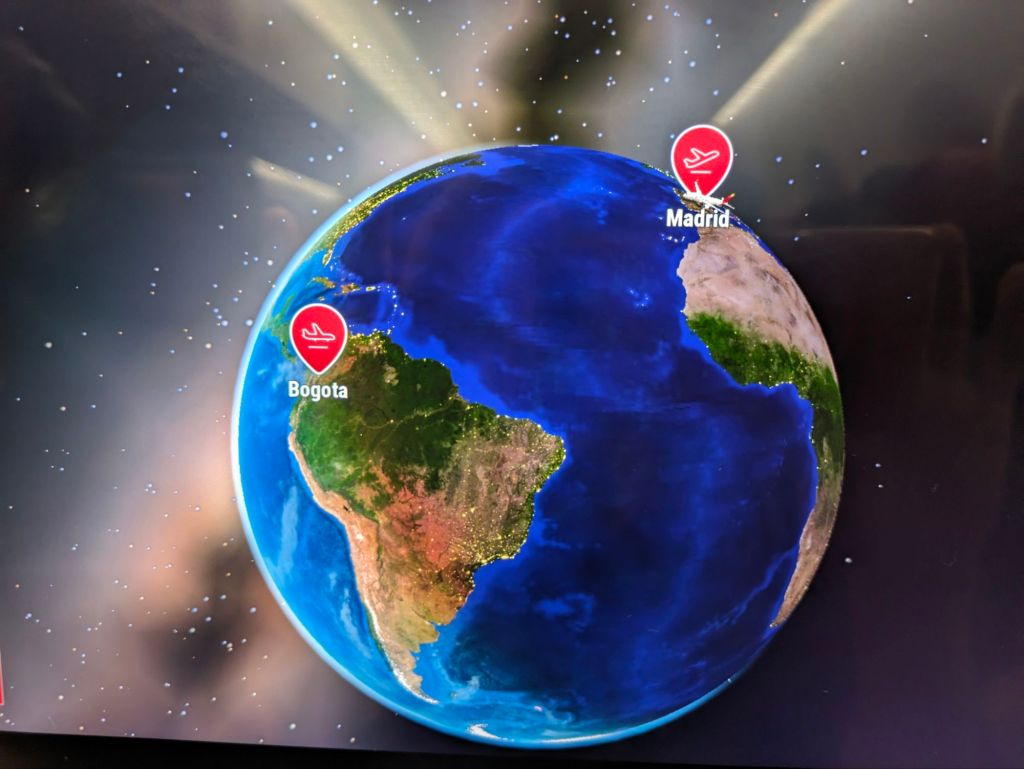
Our Iberian Airline  plane touched down in Bogota El Dorado International Airport at the ungodly hour of  4.30am after a cramped eleven hour flight from Madrid (preceded by  a two and a half hour flight from Dublin). Immigration was straightforward (we had filled in the compulsory  Mig-Check forms online which must be completed between 72 hours and 1 hour before arrival) and a very bored official stamped our passports for ninety days.  We intend to use those ninety days to the full.

Small World

We  trudged into a very quiet Arrivals Hall while most of our fellow passengers  waited to collect luggage…we only travel with small carry-on backpacks. Our first task was to find  an ATM to get some local currency which is the Colombian Peso(COP4,300 =€1).   Bogota is huge, a sprawling city of about 8 million with a comprehensive bus system called the TransMilenio.   We decided to brave the public transport to get to our accommodation, about 15 kilometers from the airport.  Payment on buses is only by a special rechargeable card which we needed to buy. We eventually found the kiosk selling TransMilenio cards and put some money on a card using a mixture of mangled Spanish and gestures.

Google Maps was a life saver, telling  us the  whereabouts of  the bus stop and the number of the appropriate bus. We had also bought phone SIMs at another airport kiosk (we didn’t realize until later that were seriously overcharged) so we had internet on our phones. When the bus arrived, we swiped our TransMillenio  card at the turnstile inside the bus door and we were on, feeling very pleased with ourselves until a woman on the bus warned us to beware of pickpockets.

Candalaria, Bogota

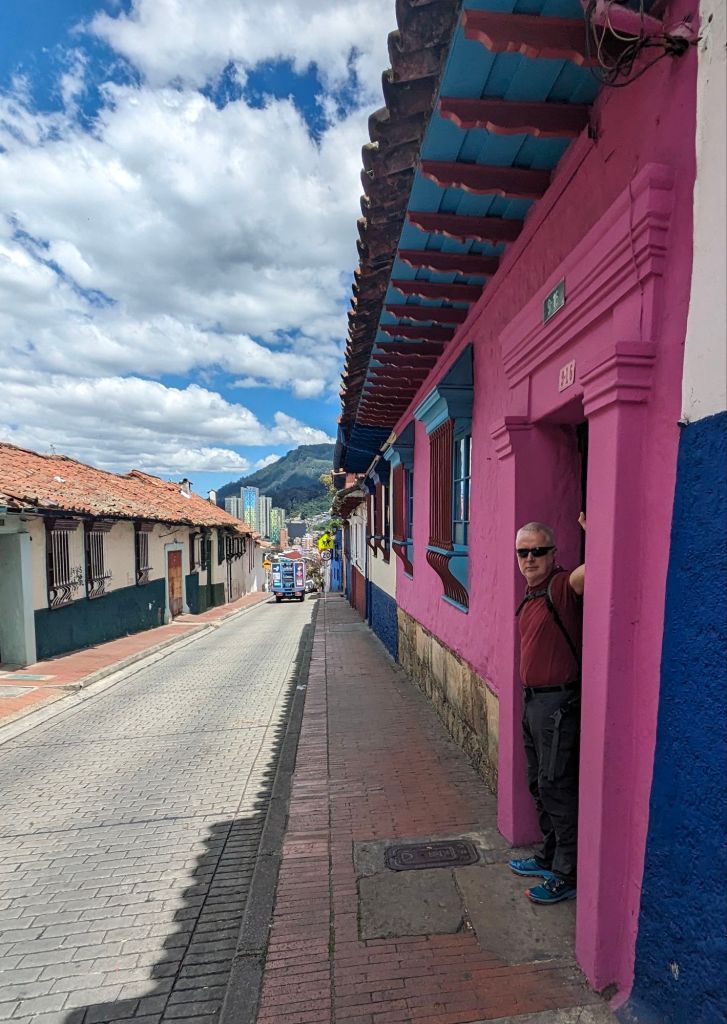
Traversing Bogotá pre rush-hour took at least an hour and involved two buses. We travelled through quiet shopping streets with the usual international stores(like Ikea) past  skyscrapers and parks. A flower market was  just opening it’s stalls and a few homeless were stirring under blankets of cardboard. There was graffiti and wall murals everywhere we looked.  It was a bright chilly morning, about 7C,  and there was a soft light on the green  hills that surround the city….Bogota is built in a valley with buildings spawling up the steep slopes of the hills. Our phones buzzed,  Google Maps telling us where to get off and we stepped bleary-eyed and jetlagged onto the colourful streets of Candalaria, the old historic part of town with its brightly-painted, 300 year old houses, cobbled streets, cafes, churches and…. steep hills. That first morning, we struggled to a lovely apartment that we had booked for three nights((Morph, €33 a night) feeling a little woozy,  gasping from tiredness and altitude….Bogota is at 2600m. But soon we discovered the grocery/bar where the locals hung out and the beer was €0.60 a bottle🍻 There was a strong police presence in the area with officers on many street corners with big muzzled rottweilers. Despite that- or maybe because of it – the area felt calm and safe.

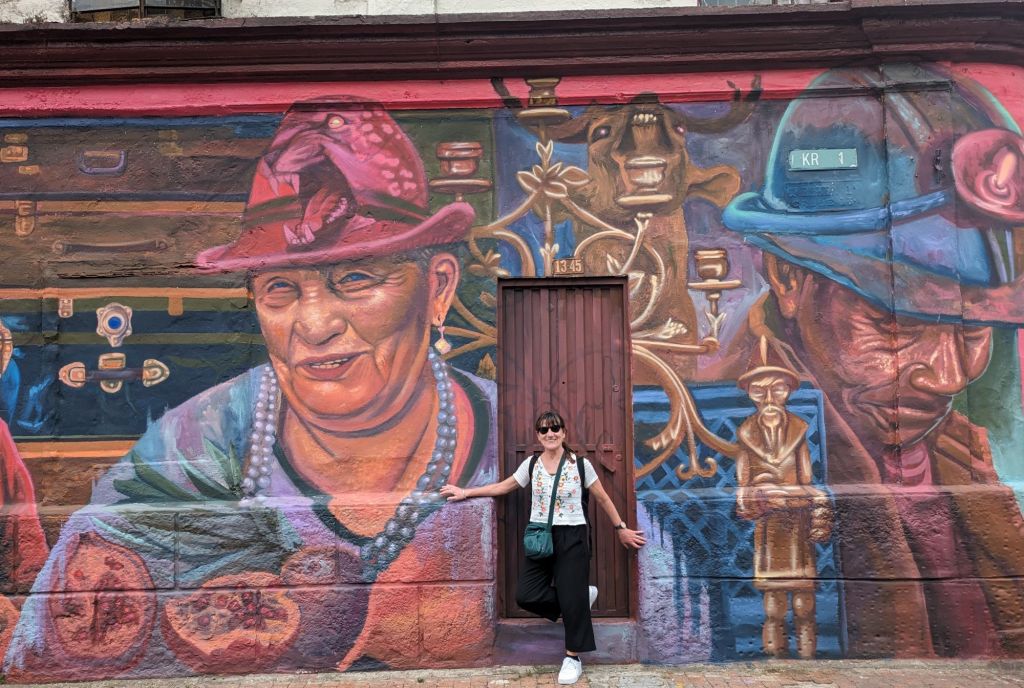
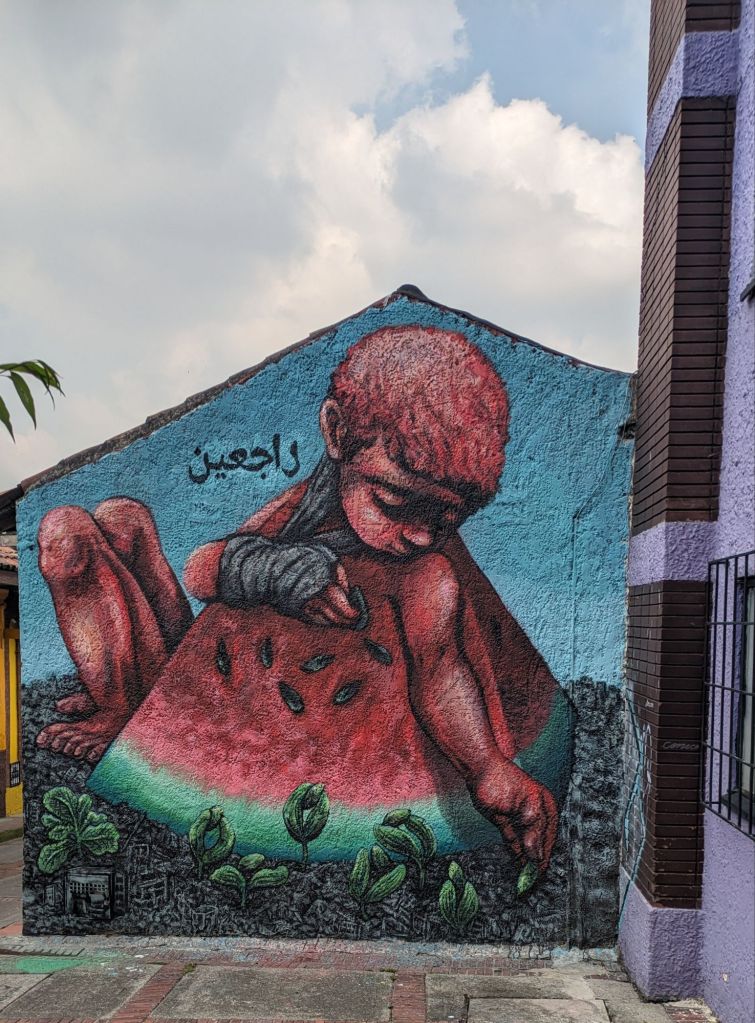
 Graffiti is such an integral part of Bogota that we took a Graffiti walking tour. Graffiti was decriminalized in 2011 and since then,  Bogota’s walls and buildings are an ever-evolving canvas of brush, paint, marker and stencil, most spectacularly beautiful, some political and others simply art for art’s sake. One recent mural of a injured child planting green shoots was a comment on Gaza.

Street Art, Bogota
Gaza Comment

Gold is also a part of Colombia, historically, symbolically and culturally. The indigenous people believed that gold was a gift from the gods and wore it to celebrate the gods, not for personal wealth. The invading Spaniards had other ideas, dazzled by the dripping gold of the natives and driven by insatiable greed, they all but destroyed the native culture.  The legends of El Dorado, the country paved with gold, originated in  Columbia. We visited the Museo del Oro( Gold Museum) four floors of the most gorgeous jewelry and artwork.

In Bogota, the weather is changeable. The clouds can descend on the hills like a veil, hiding the church at the top of Mount Monserrat, a city landmark. In the chilly breeze, we pulled on jackets but the next minute we could be blinded by the blueness of the sky and applying sunscreen.

 On our third morning in Bogota when we were no longer panting going uphill, we decided to hike Monserrat which is at 3150m. We weren’t alone. The steep path was crowded with families, couples, groups of teenage boys playing competing music on their phones and some very fit runners….a very popular activity on a Saturday morning. We required a lot of stops along the way so either we weren’t as acclimated as we thought or maybe not fit .We were greeted with surprisingly hot sunshine at the top. We rested on the steps outside the church until our ears were blasted by more loud music. We went into the church to get away from it…and then realized that it was coming from the church, telling people that Mass was about to begin. The large church was packed, standing room only.

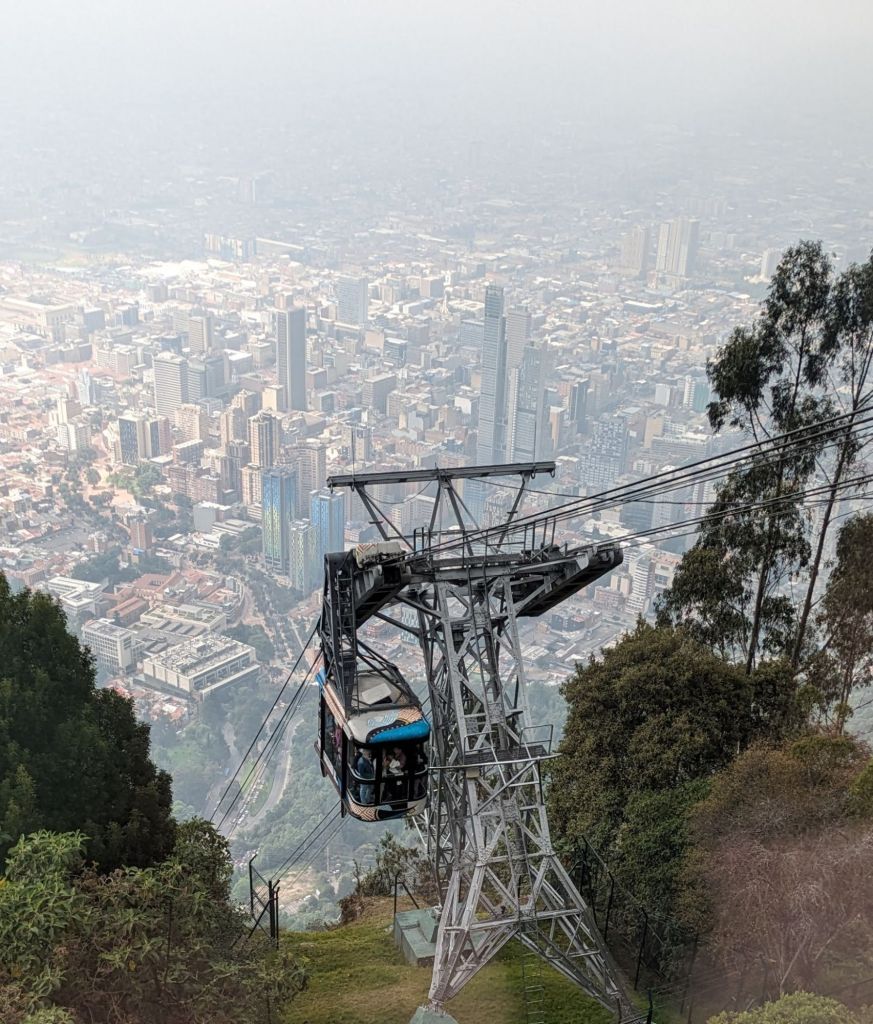
The cable car seemed a good alternative route down for the views. Unfortunately, the cable car was sardine-tin crowded on a Saturday morning and I was squashed behind a party of German giants which gave me VERY limited views but the occasional glimpse of trees was nice.

Cable-car, Monserrst, Bogota.

Did you know that Colombia is famous for cycling? Even more surprising, Bogota closes 100 kms of it’s streets to motorized vehicles  on Sunday mornings,  leaving the street free for cyclists and pedestrians. Nor is this a new ‘green’ initiative, the first ciclovia happened in 1974.
 

As I’m writing this, there’s a band playing on the street outside and a trio of acrobats in the Square. We have just strolled around the Candalaria area with it’s vibrant Sunday afternoon street life, our veins fizzing from strong coffee.

Tomorrow, we will leave Bogota and head north …..not quite sure where yet. Some research needed…..🤔


Thanks for reading. 

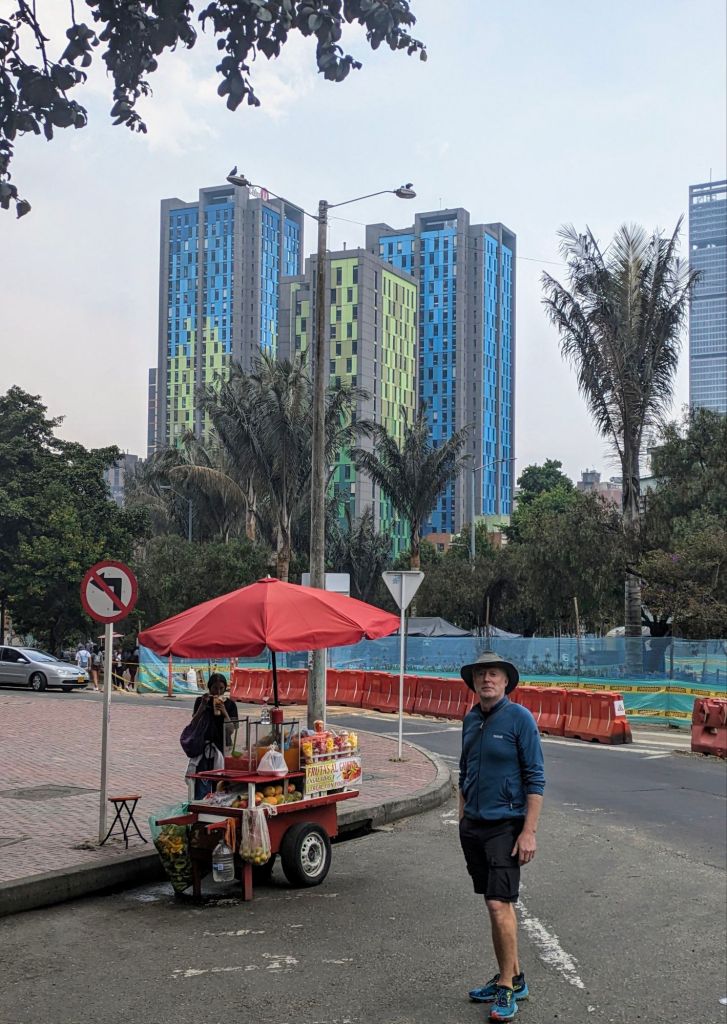
Bogota…where the skyscrapers are colourful.


Colombia Calling

Moving in

It was time to move inland – it was already August 27 – and make our way to the other side of Spain to Catalonia where we had rented a holiday house with Ciaran and Christina, Caoimhin’s brother and wife and Louise, a South African friend of theirs for most of September.

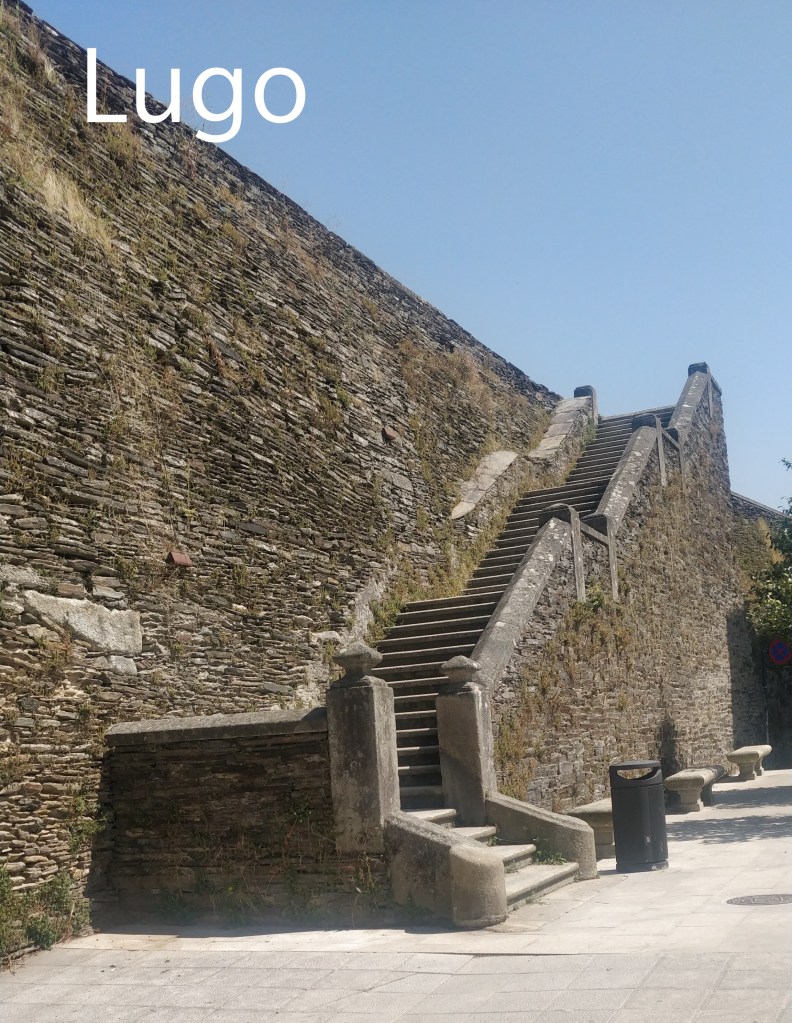
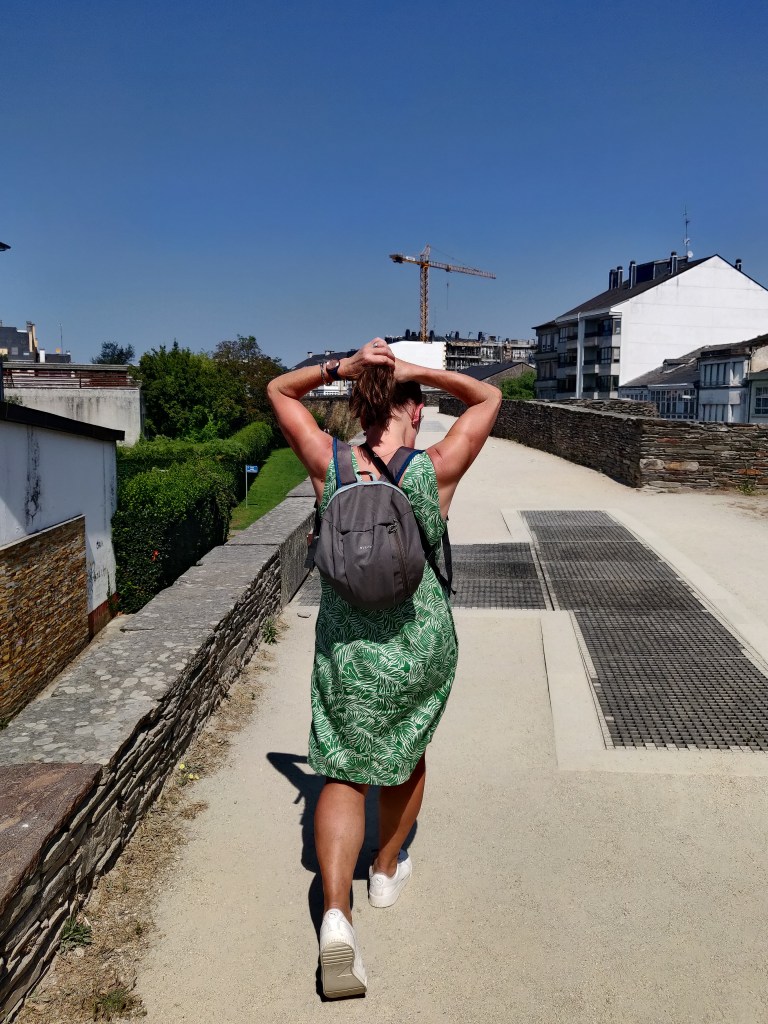
The morning in Galicia was grey and hazy – sea and sky were one – unlike the vivid blues and greens that we were used to and the temperature was a cool (almost goose bumpy) 18 degrees. We packed up the tent and decided to head inland. We stopped in Lugo to look at the impressive Roman walls. We climbed the steps and walked the 2 kms on top of the walls. It would have been a lovely walk at dusk or early morning but at 1 pm in 33 degrees, it was a walk for mad dogs only…..

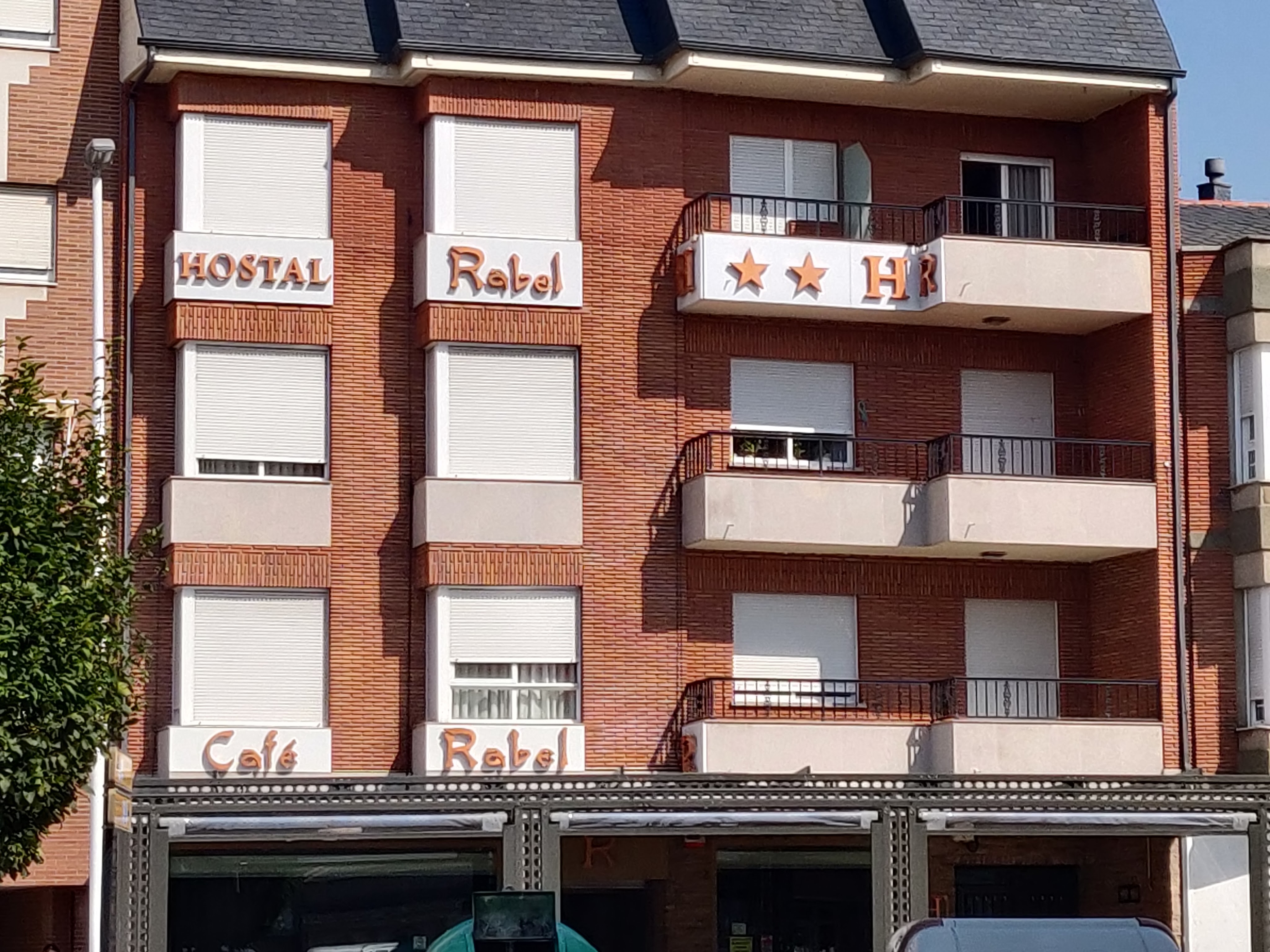
Afterwards while we were hydrating indoors in an air con café in the old town with good WiFi, we decided to give the camping a break. We booked a hostal there and then in Ponteferrada, a town about an hour and a bit away. (Hostals are different to hostels, they are cheap hotels usually two star).It was €50 for an en-suite room including breakfast and free parking so we weren’t sure what to expect. Hostal Rabel didn’t look very promising from the street and was over a little cafe/bar. But we were very pleasantly surprised – it was spotlessly clean inside with thick shutter blinds, crisp white sheets, bedside lamps (a luxury after camping) and wooden floors. It was bliss -cool and quiet with a fantastic shower and oodles of hot water and even complimentary toiletries. It was only a short walk from the old town. and there was even a good vegan restaurant (La Marmita Verde) up the street – we were the only customers in this meat obsessed country.

Hostal Rabel, Ponteferrada

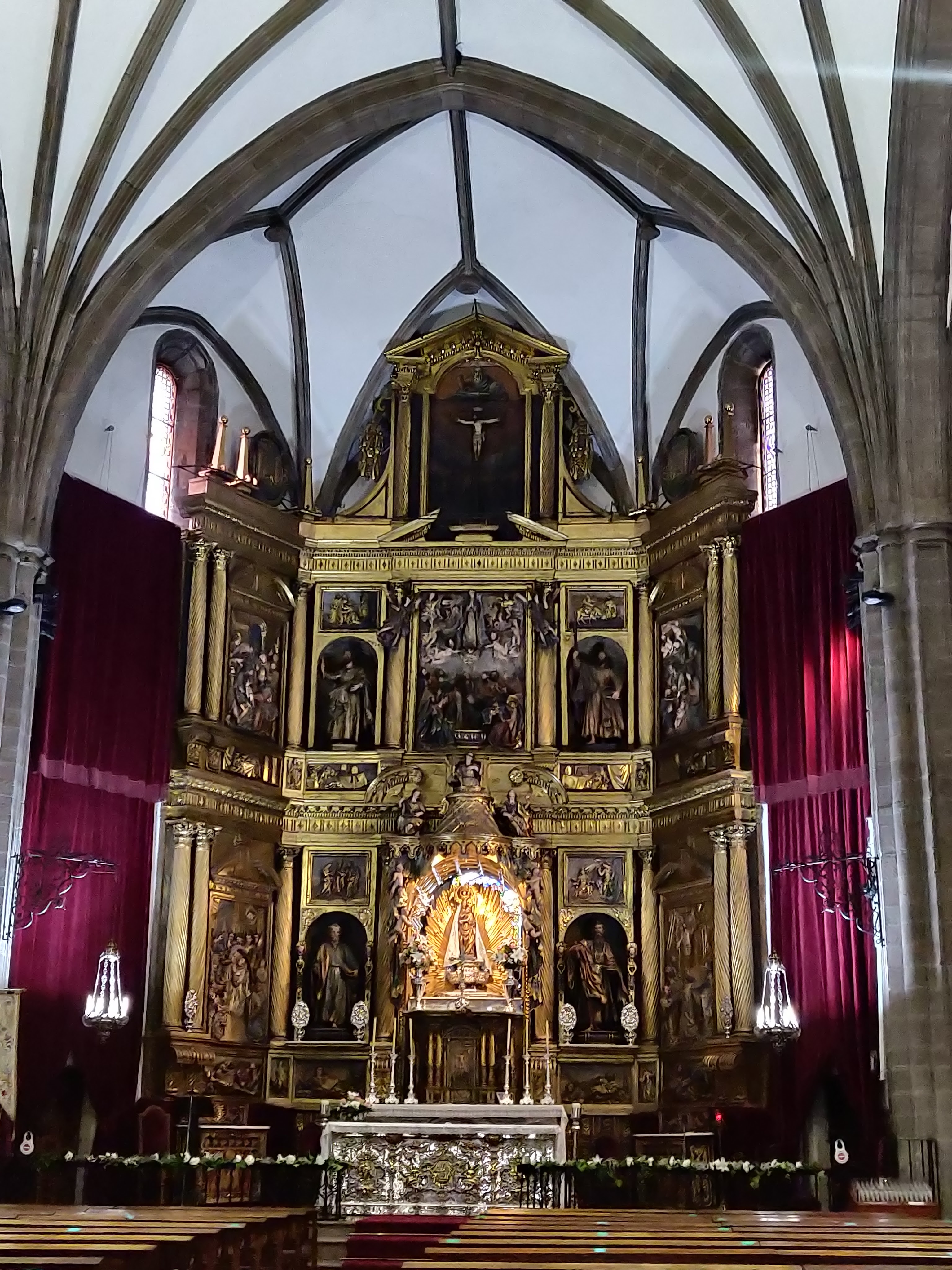
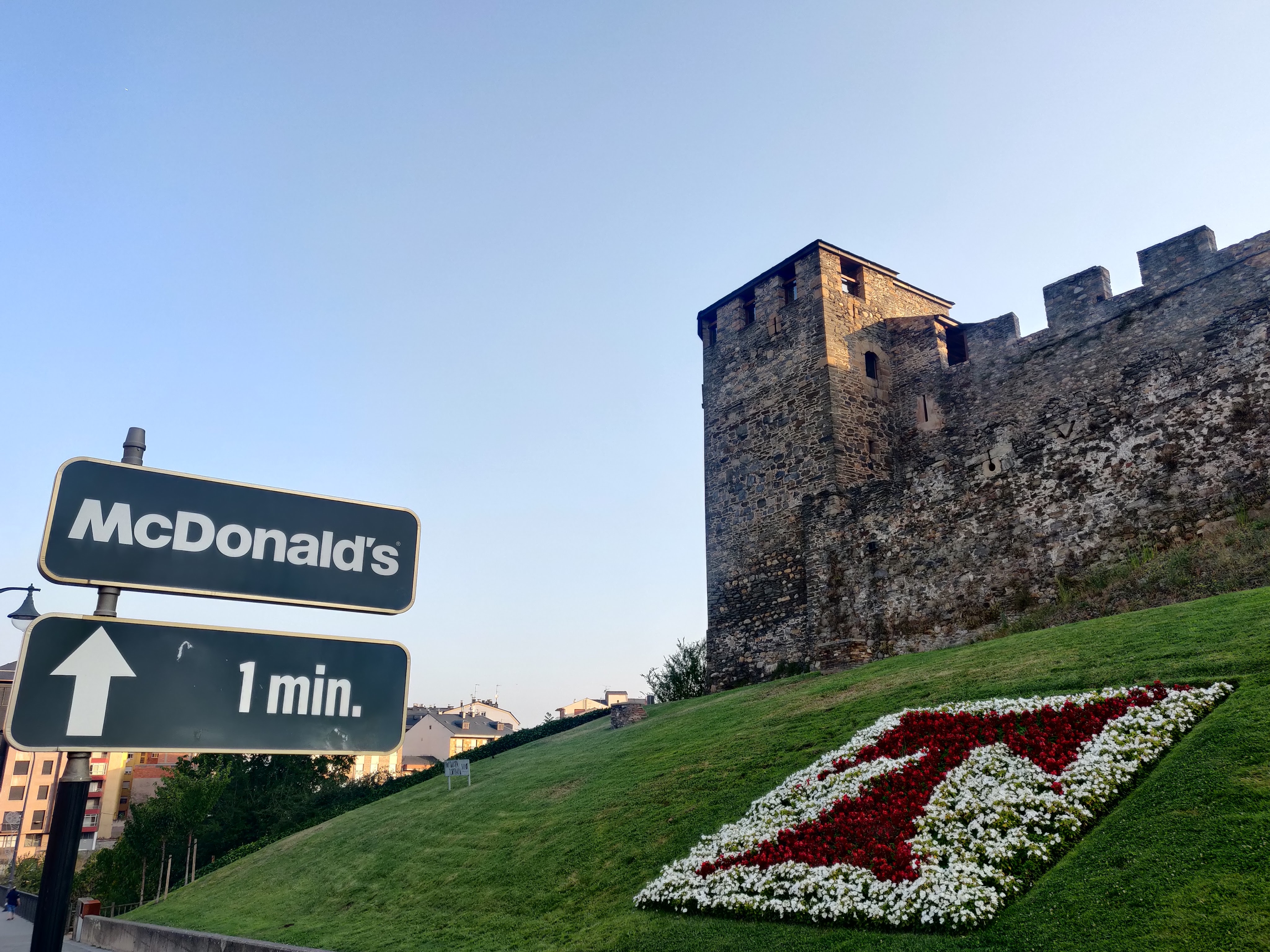
Ponteferrada is a medium sized town in the province of Leon surrounded by mountains and was a major stop for centuries on the French Camino. The old quarter of the town sits below a very imposing castle built by the Knights Templar near the iron bridge crossing the river Sil to protect passing pilgrims on their way to Santiago de Compostela. There were also several churches in the old town. We popped into the Basilica de la Encina where Gregorian chant music was being piped and were awed by the beauty of the building, the ornateness of the decor and the music. The building exuded power. It was actually spine tingling – the pilgrims who walked this route for salvation must have felt the urge to prostate themselves on the ground.

This image has an empty alt attribute; its file name is img_20210828_091304.jpg
Bascilica de la Encina, Pontferrada
The Castle of the Knights Templar, Ponteferrada (and the big ‘M’ – One chain to another))

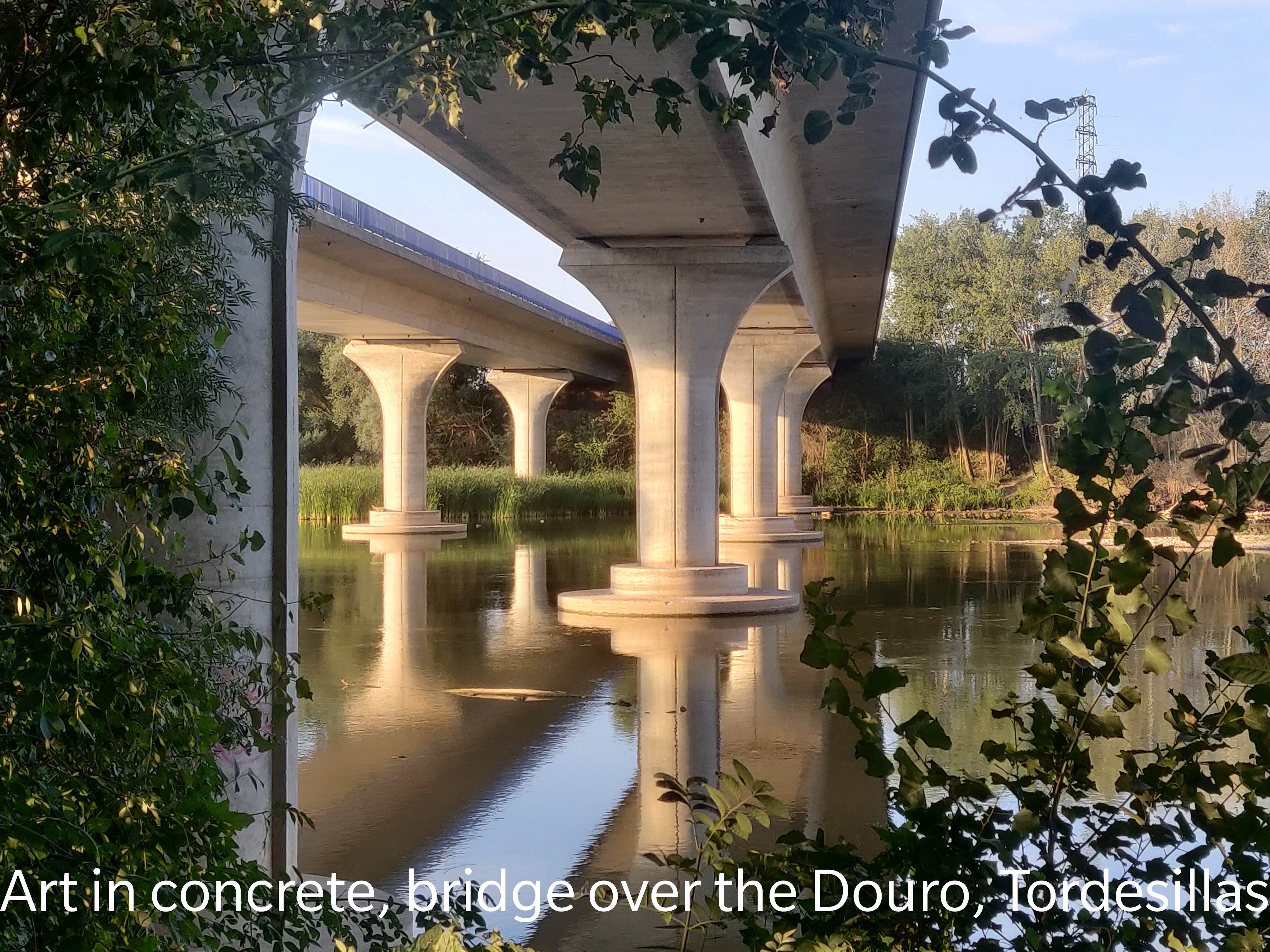
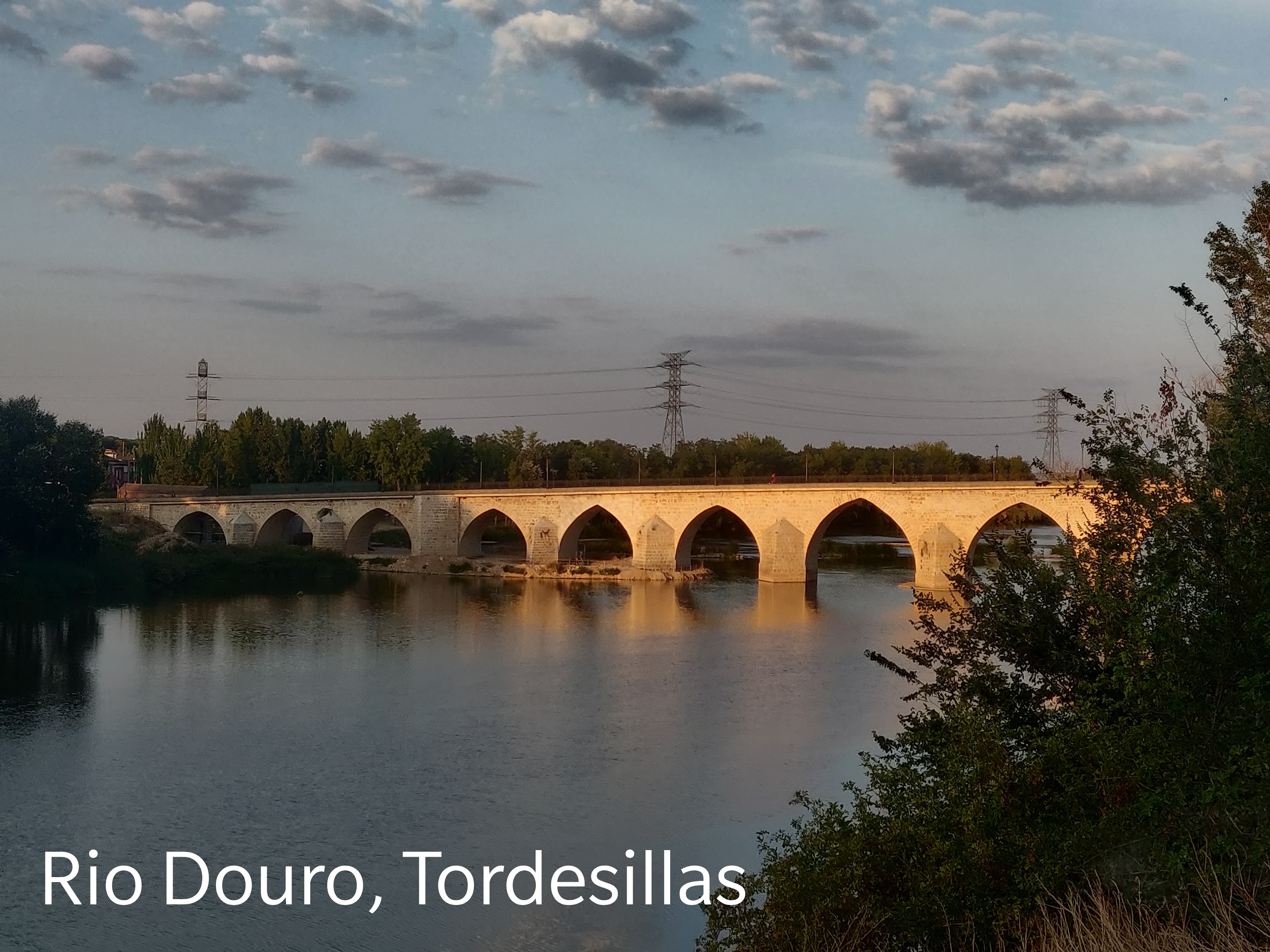
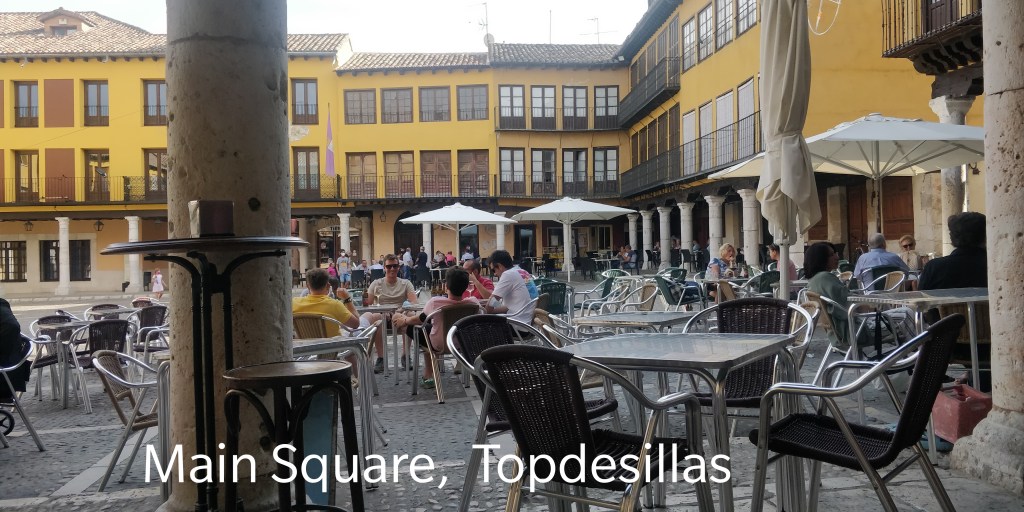
After our very pleasant stop in Ponteferrada, we headed southeast and drove for a couple of hours over dry flat landscape under a baking sun until we got to Tordesillas, a little town with a campsite that had good reviews online. The town didn’t look like much, the camping cost almost as much as our stay in the hostal the night before (€44)and had lots of rules, it was hot and dusty and as we pitched our tent, sweating in the dirt, we were regretting our decision to go there. But that changed when we crossed the bridge over the Douro and climbed the cobble streets of the old town. We had no hint of the treasures waiting up the hill – convents, monasteries, a palace going back to the twelfth century and a beautiful town square. Heat radiated from the stone walls but there was also a cooling breeze and birdsong, hundreds of doves and pigeons flying and an evening wedding in one of the old churches. We people-watched under the vaulted arches of the Square and drank cold beer in the shade. It was like walking through history and what history here – google the Treaty of Tordesillas where the American continent (most yet to be discovered at the time) was carved up between Portugal and Castille to avoid war on the Iberian Peninsula.. And the story of Joan the Mad, daughter of Isabel and Ferdinand who was banished here….who wasn’t ‘mad’ at all.

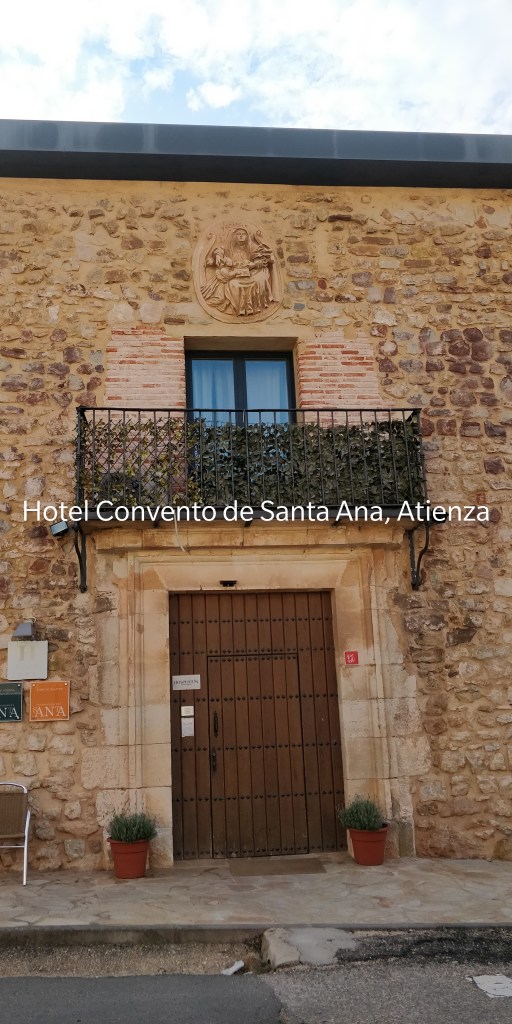
After a morning walk along the Douro under the shade of poplar trees, we drove off still heading east along the fertile Douro valley with its vineyards in the direction of Siguenza where we had booked a parador a few days previously for Monday night. It was now Sunday and we weren’t sure where we would break the journey or if we would camp overnight. We kept driving until we arrived in Atienza, a small village in Guadalajara with a ruined castle on the hilltop overlooking the village and knocked on the stout wooden door of Hotel Convento Santo Ana, a door that looked like it had admitted travelers for centuries. There were rooms available for €49 a night and we were stunned both by the price and by the beauty of the interior design, all muted colours with large sofas and lamps. Incredible value in a beautiful place. We wandered up to the village square where at 7.30 pm, we are too early for dinner anywhere ( a common problem as most restaurants don’t open until 9 pm) and make do with tapas, olives, bread, tortilla, crisps and wine.

Early the following morning, the smell of baking bread from the village bakery followed us up the hill to the ruins of the castle on the rock, once a very important seat of power and the interface between Christians and Muslims, frequently changing hands between the two. Atienza was part of the Ruta de El Cid (and even Don Quixote)but is now a mere hamlet of a couple of hundred people

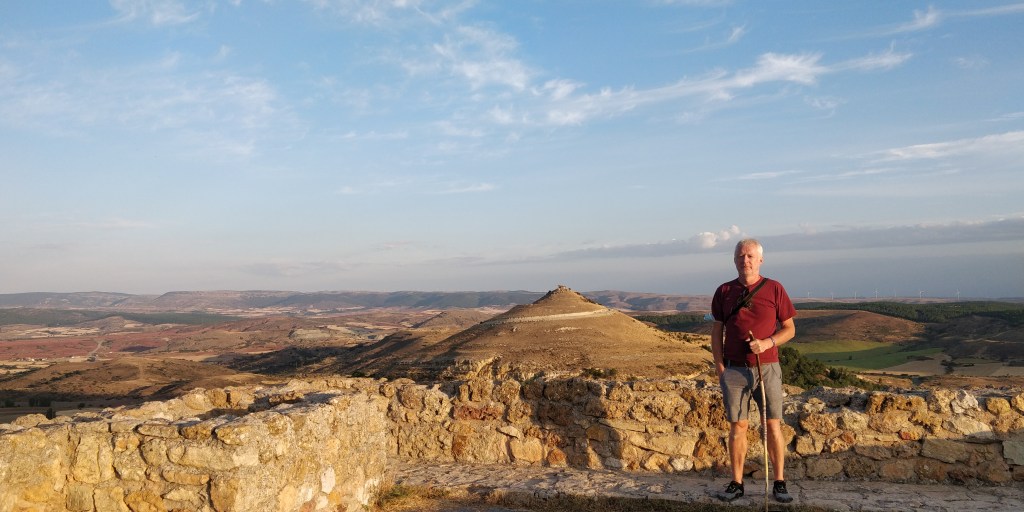
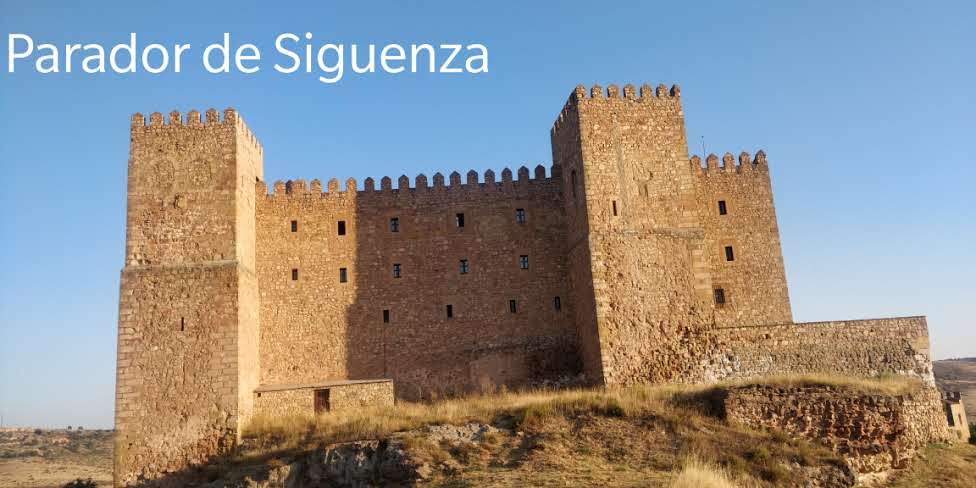
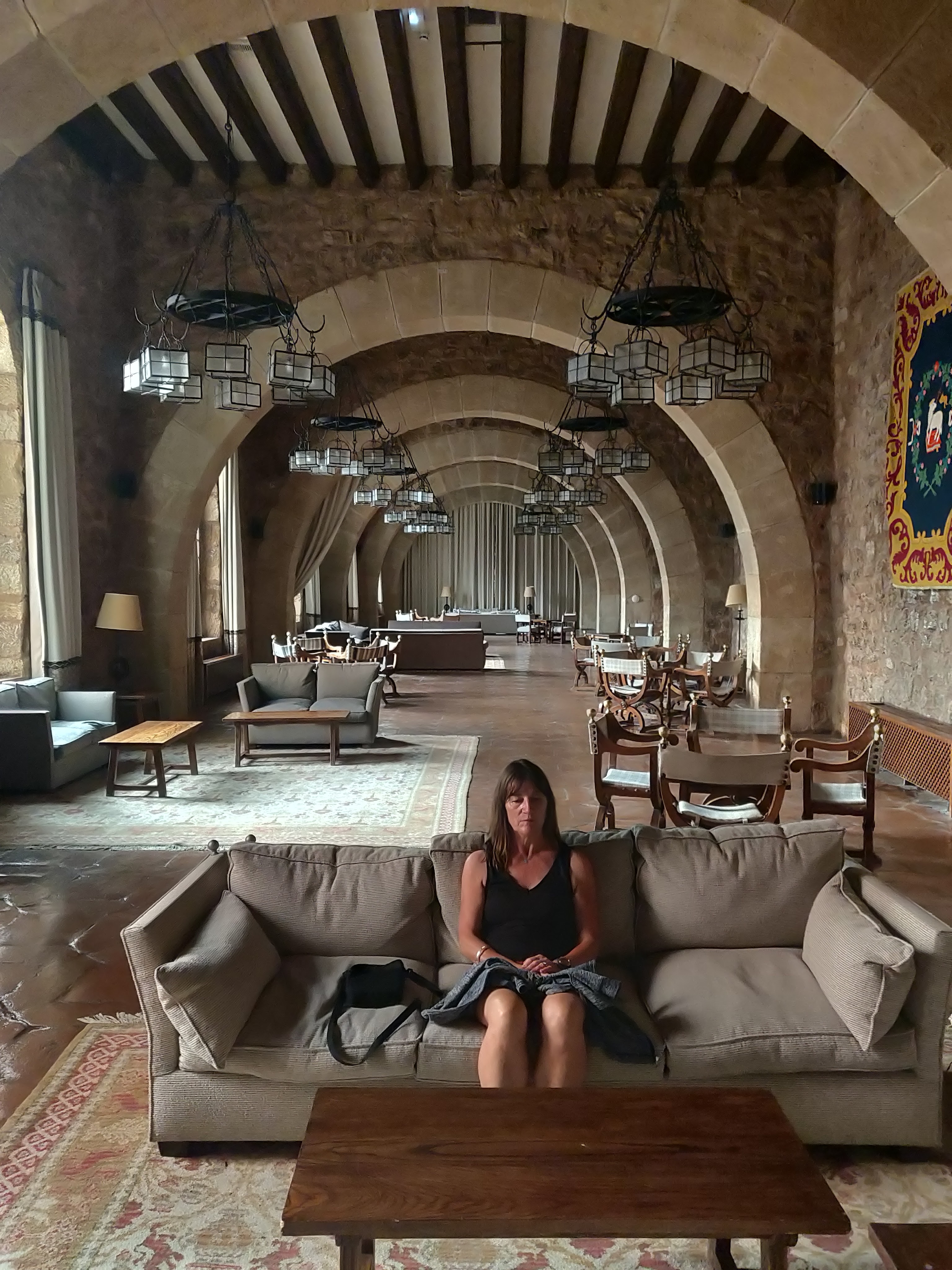
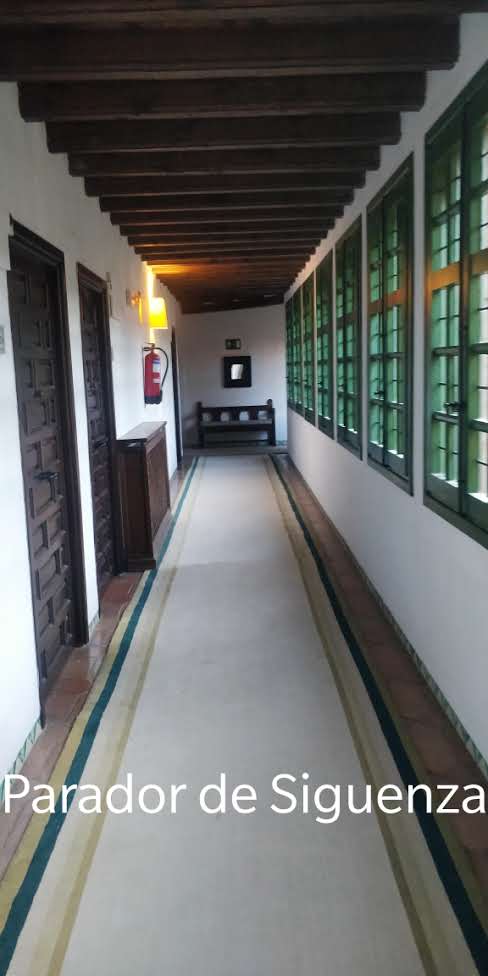
Then it was onward to Siguenza and luxury at the Parador of Siguenza, the Castle of the Bishops, a medieval castle with foundations dating back to the fifth century. Paradores are a group of historical buildings that are state owned and run as upmarket hotels at affordable prices. How could we resist staying in a castle for €140 for the night including a fabulous buffet breakfast? Siguenza is a beautiful little town with a stunning cathedral, narrow cobbled streets where the walls store up the heat of the day and release it in the balmy evening, where the barber was an ex-matador and the walls of his shop were covered with triumphant photos of himself in his heyday and the TV was tuned to some bullfighting event. But he did an excellent job of cutting Caoimhin’s hair. As we creep down the staircase for an early morning walk, the following day we notice lots of birds flying past a window at the end of one of the long corridors. We investigated and opened the window to see thousands of little swallows clinging to the castle walls like leaves and then flying off and landing again. It was a truly remarkable sight.

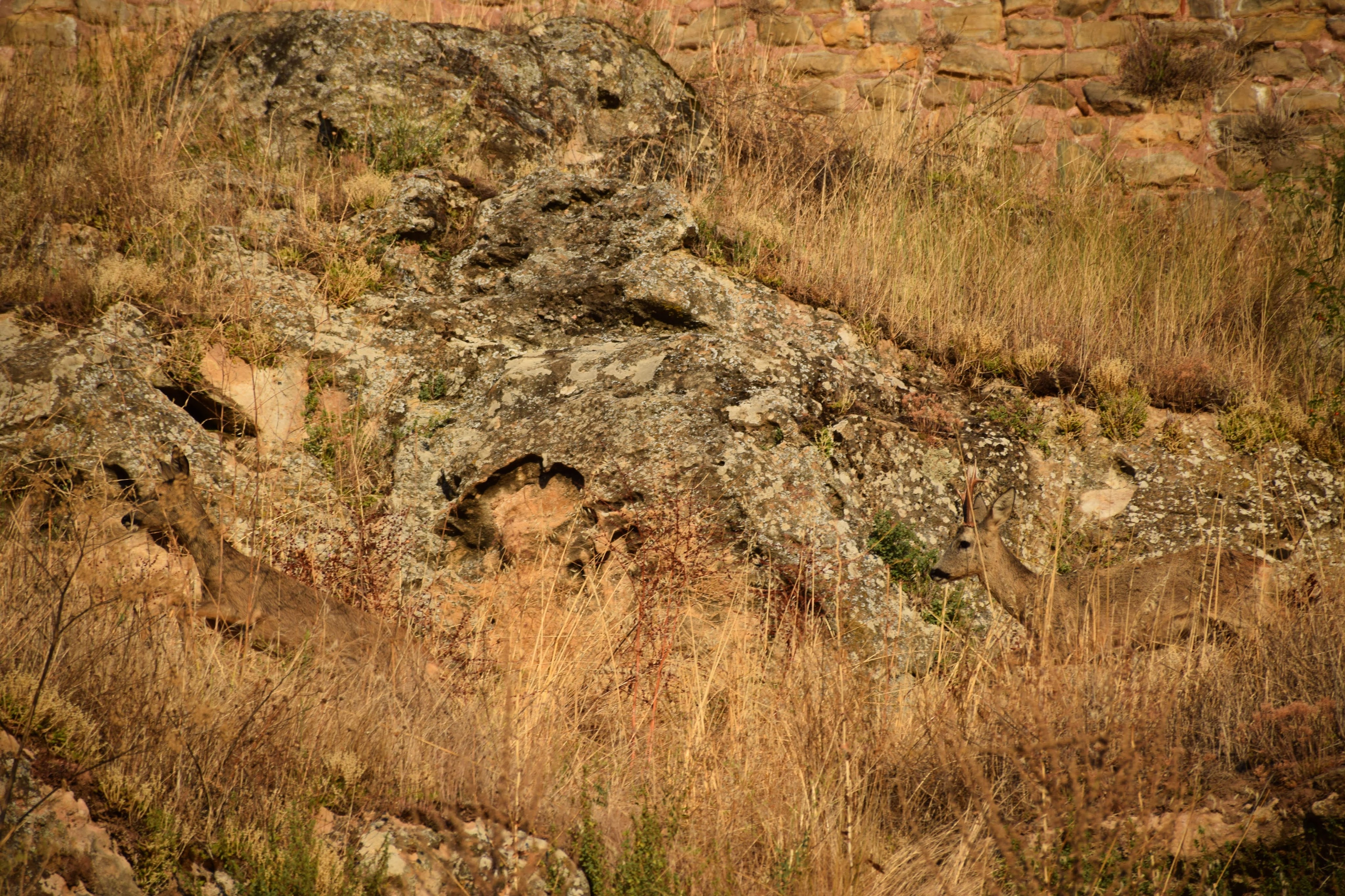
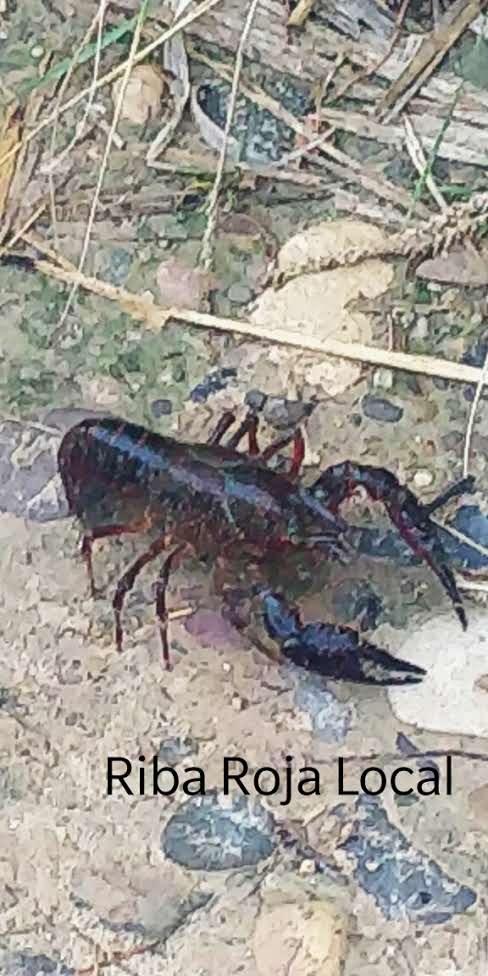
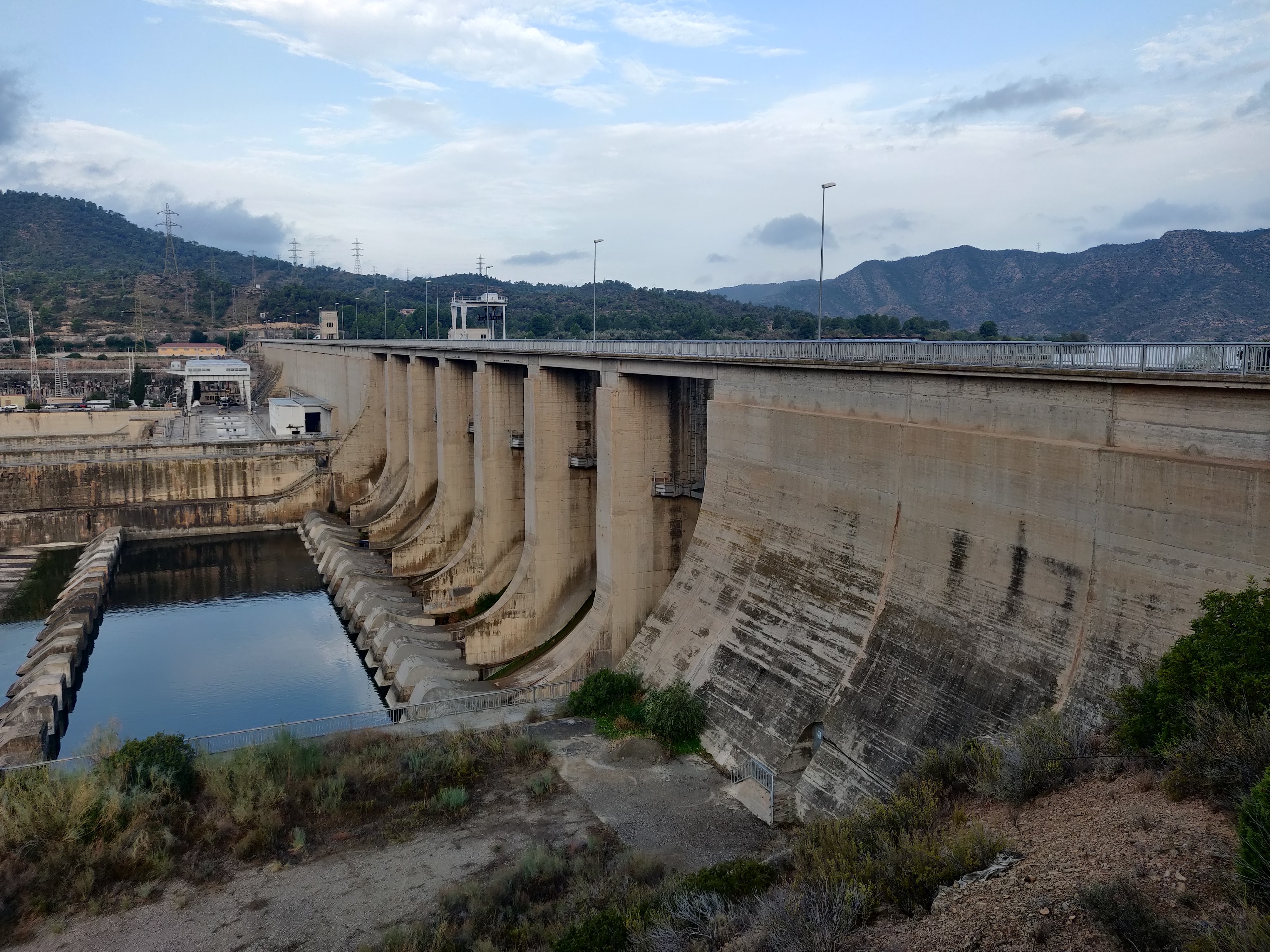
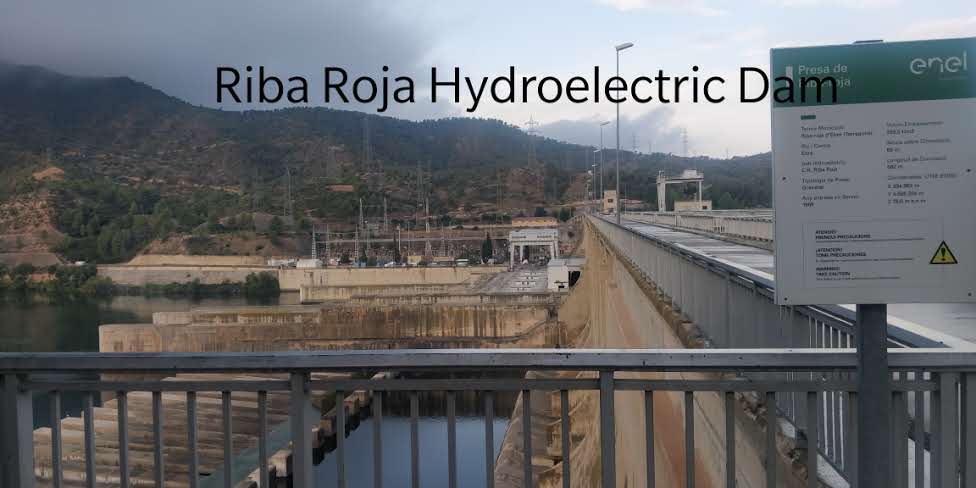
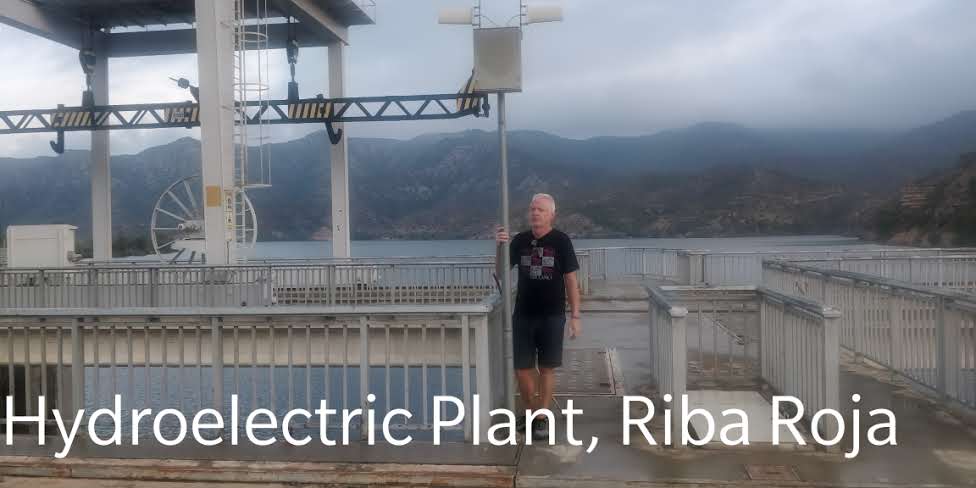
After the luxury of the parador, we come down to earth with a bang. A deer rant out in front of he car and we missed him by a hair’s breath. We had seen some deer in the long pale grasses beneath the castle walls but this was a closer encounter than we wanted. The amount of truck traffic after Zaragoza is incredible – trucks outnumber cars at least ten to one. We cross the border into Catalonia and camp at the Riba Roja campsite which has a disheveled air, dusty and wilted by the heat and with lots of flies. But there were no rules here about where to park or pitch your tent or wash your dishes which is refreshing. It was on the banks of a reservoir made by the impressive dam on the river Ebro for the Riba Roja hydroelectric plant. But there were also thunderstorm warnings and the access road to the campsite was along a narrow road cut into high cliffs which made us (I mean me!) a bit nervous. The pitter- patter of rain on the tent in the early morning had us scrambling to pack up. But the rain which was very light stopped almost as soon as it began so we walked up the road to have a look at the dam and the hydroelectric plant and heading to the Costa Duarada.

Travelling across Spain through the interior has been a revelation – we picked our stopovers at random and without research and could easily have stayed in different places but we were completely awed by the living history, beauty of the old towns and the quality of the accommodation. We traveled all the way on non-toll roads and thankfully no car issues to report!!

Can you see it? There’s a deer or two in this photo!! Great camouflage

Moving in