Japan: Highs and Lows

screenshot_20241130-101223~34194303731757339452.

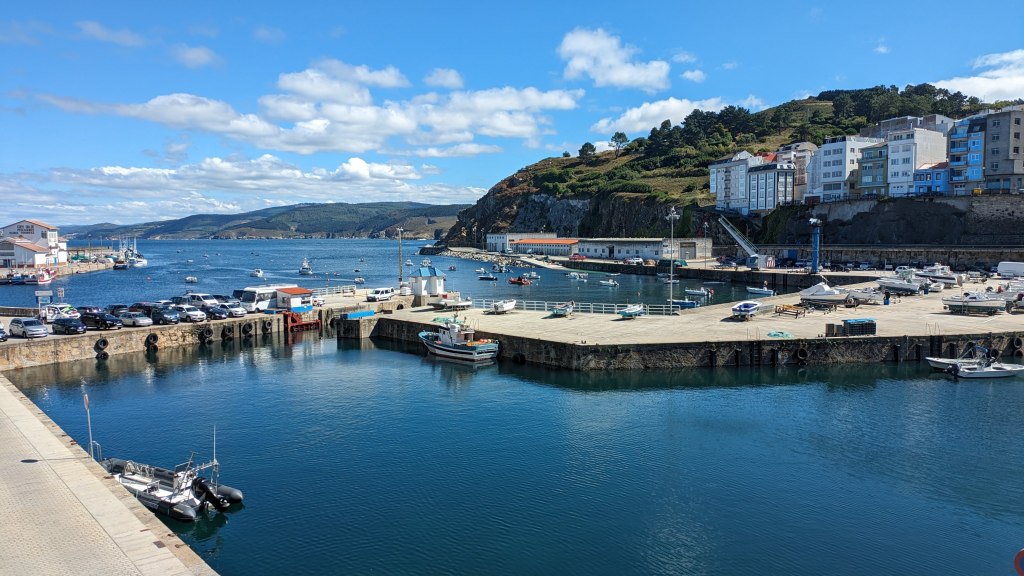
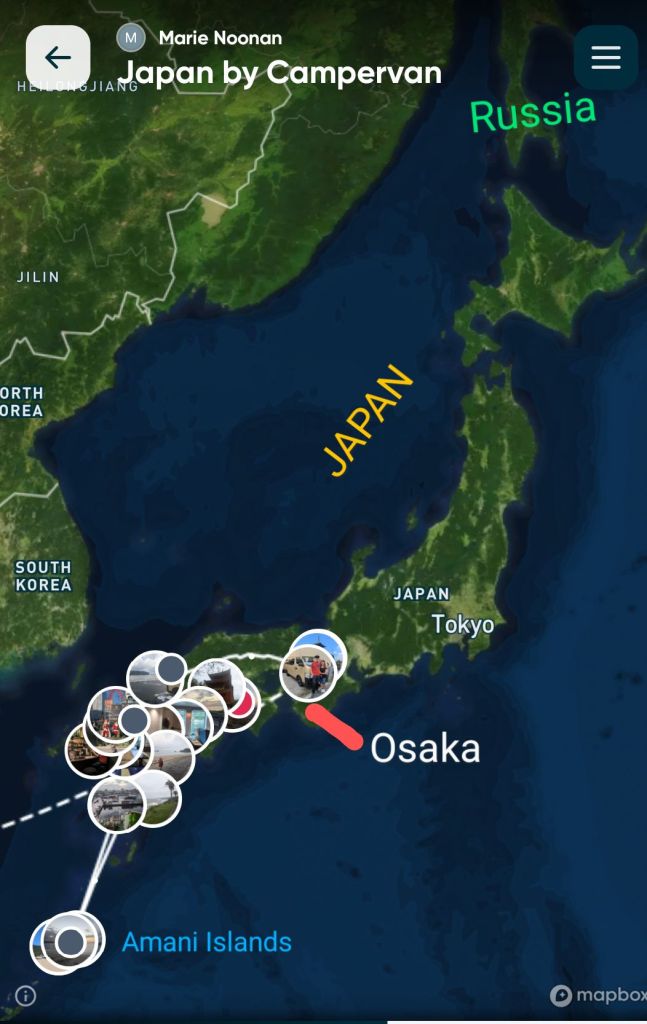
Now that we are back home from our six-week trip in a campervan around fascinating Japan, it’s  time to reflect on our experience. We flew into and out of Osaka and in between travelled a circuitous route in South Western Japan  through the large islands of Sikoku and Kyushu, often changing course because of the weather. Japan is about five and a half times the size of Ireland but feels much bigger, stretching from within touching distance of Russia in the extreme north to islands in the East China Sea that almost nudge Taiwan.

I’ve included a dozen highlights but I could easily have included a dozen more. So here we go…..

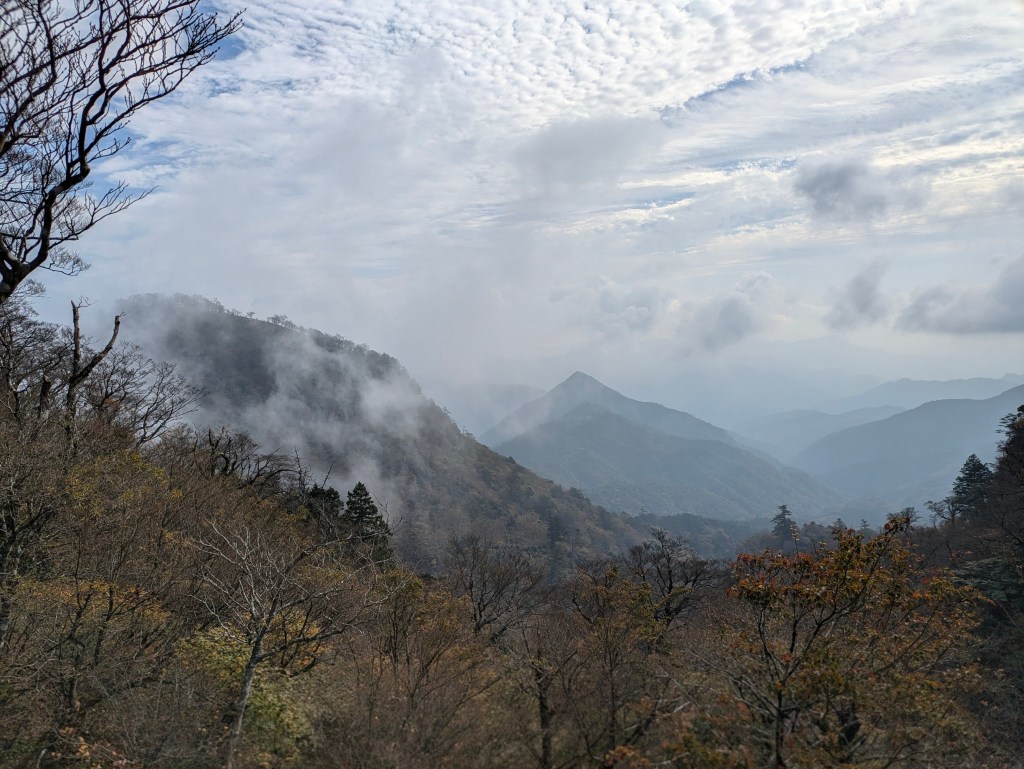
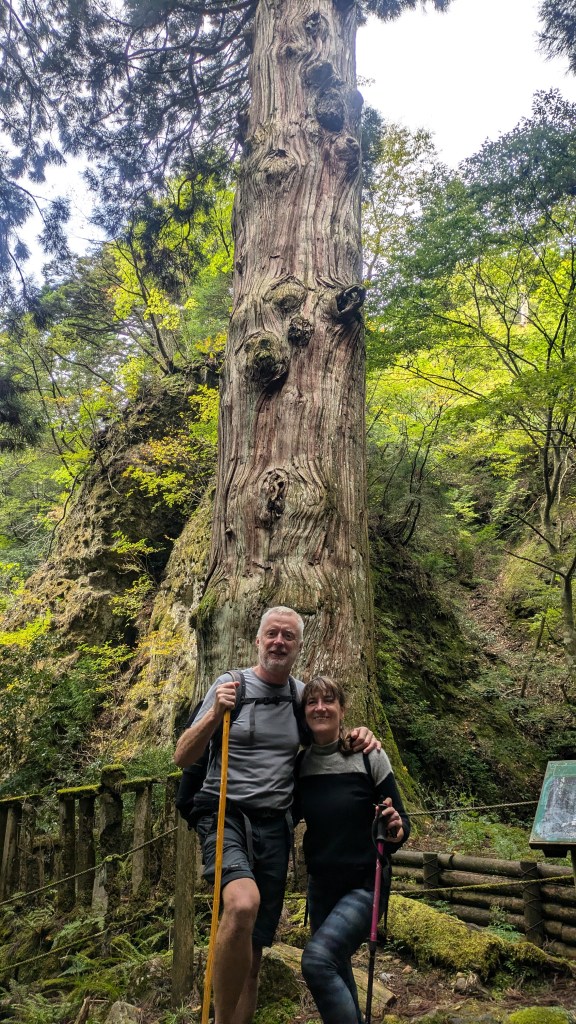
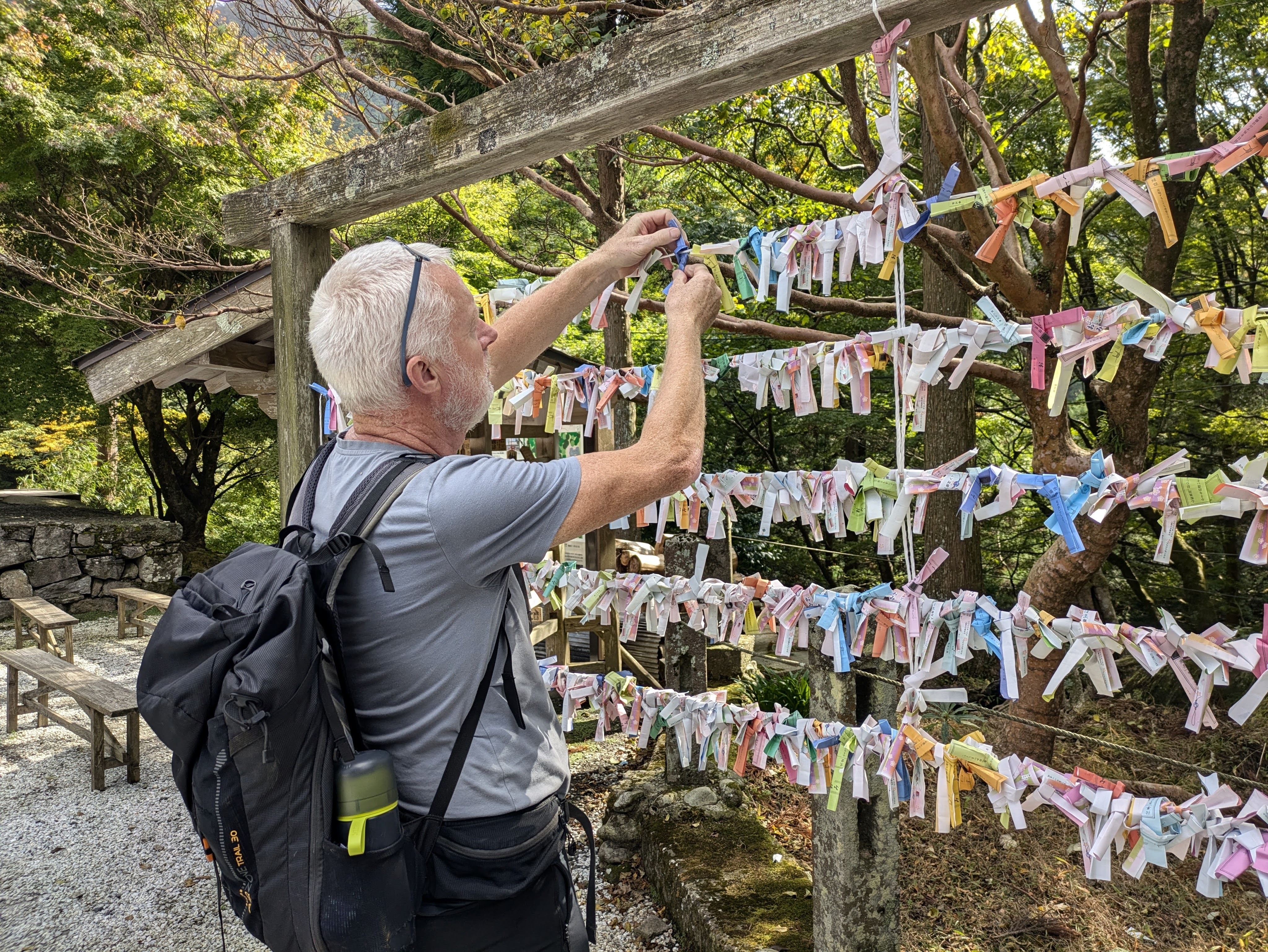
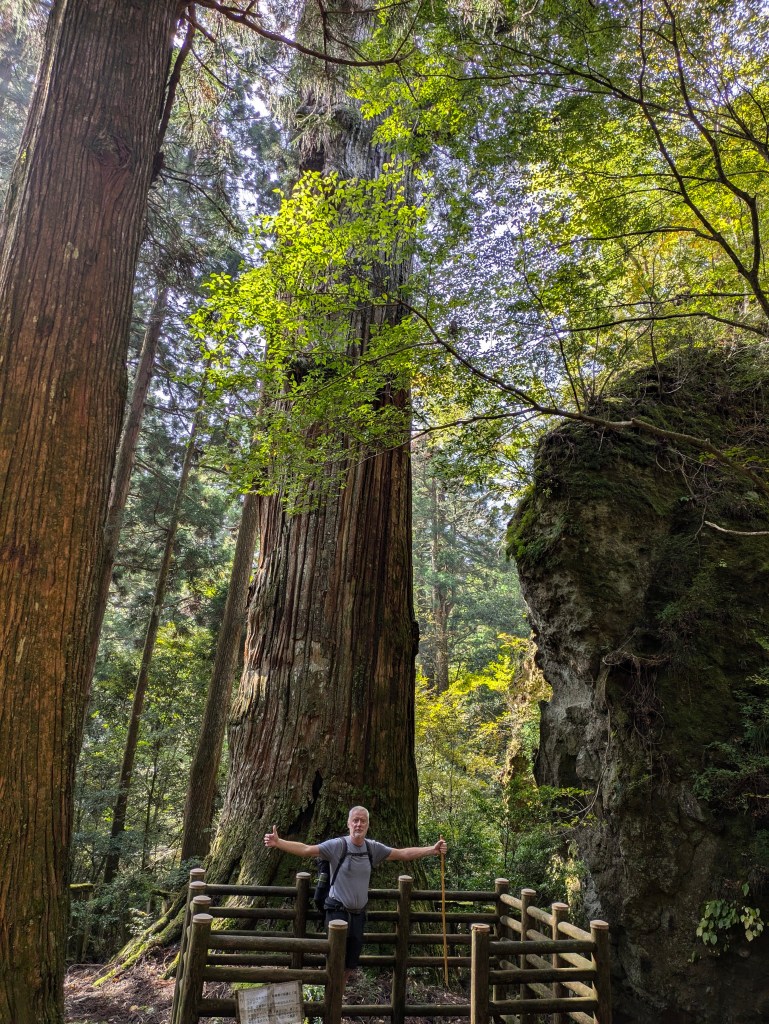
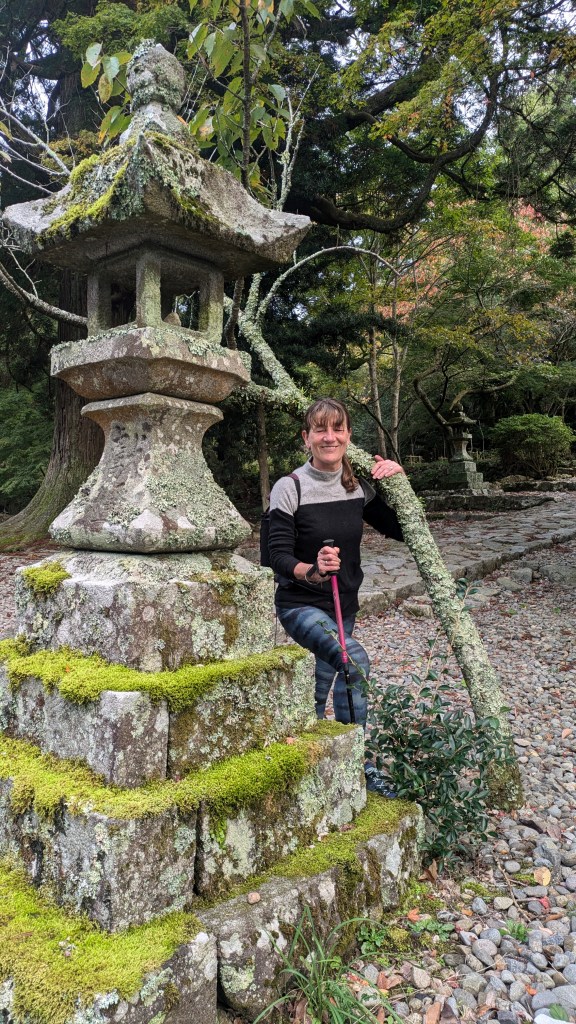
Climbing a Holy Mountain .Japan is a mountainous, heavily-forested country with many sacred mountains but for us, the most special was Mt Hiko in Kyushu, a place where hundreds of years ago, white-clothed monks trained in strenuous physical activity, believing that this was the path to enlightenment. We hiked past countless, moss-shrouded shrines towards misty summits on a glorious Autumn day with the leaves dressed in their burgundy and golden finery. This was truly a spiritual experience especially as we seemed to be the only two people on the mountain. On the way, we also paid homage of the resilience of  Onisugi, a huge cedar tree estimated to be around 1,200 years old.
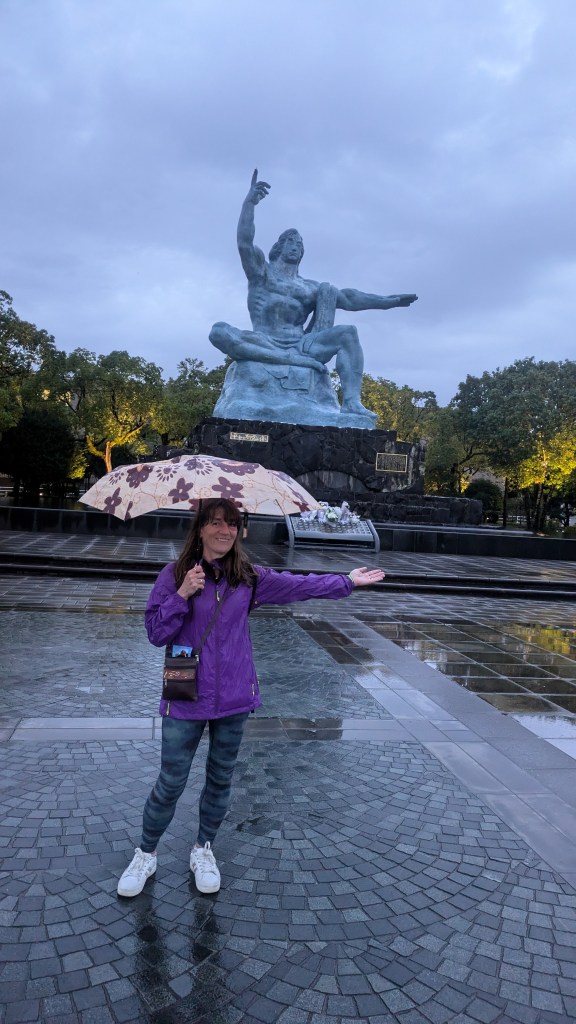
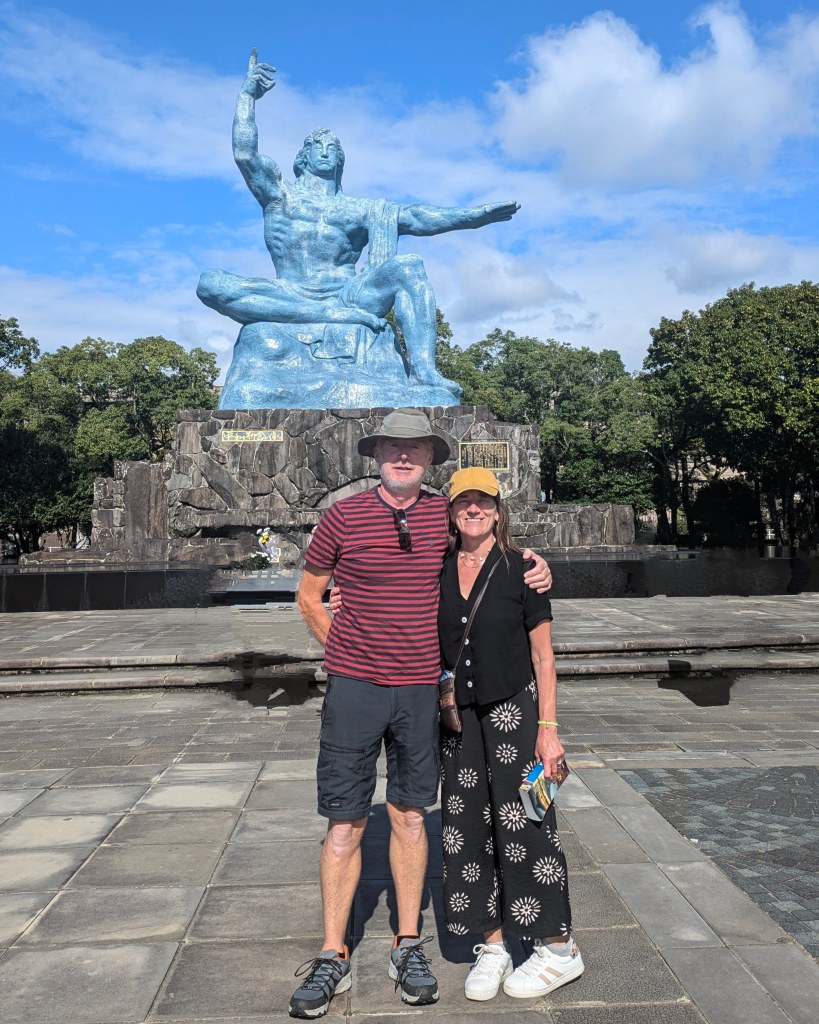
Hell on Earth. Nagasaki could be in the category of lowlights but it belongs here in the highlights. We spent two days here, the first with torrential rain which felt like it might never stop and the second with skies so blue, it almost hurt our eyes.  This was almost a metaphor for Nagasaki, a beautiful city which exuded a firm belief in hope and brighter days after tragedy. Visiting the Atomic Bomb Museum was harrowing, so harrowing that I don’t think our minds were able to comprehend the immensity of it all. I will just copy here an inscription on a bridge near the centre of devastation.

At 11,02am on August 9, 1945, an atomic bomb exploded in the skies over Matsuyama. The stream, Shimonakawa, flowing through the eastern part of the neighbourhood, was soon filled with the corpses of victims who died groping for a drink of water, or mortally burned and wounded, collapsed and perished there. A survivor who witnessed the scene the following day described it as follows. ‘I crossed the half destroyed Maysayama Bridge over Shimonakawa. There were so many corpses under it that they formed a dam in the stream. It was like a vision of the Apocalypse, a living hell on earth. Not a speck of cloud tainted the sky above, but the earth below was a panorama of carnage and destruction.’
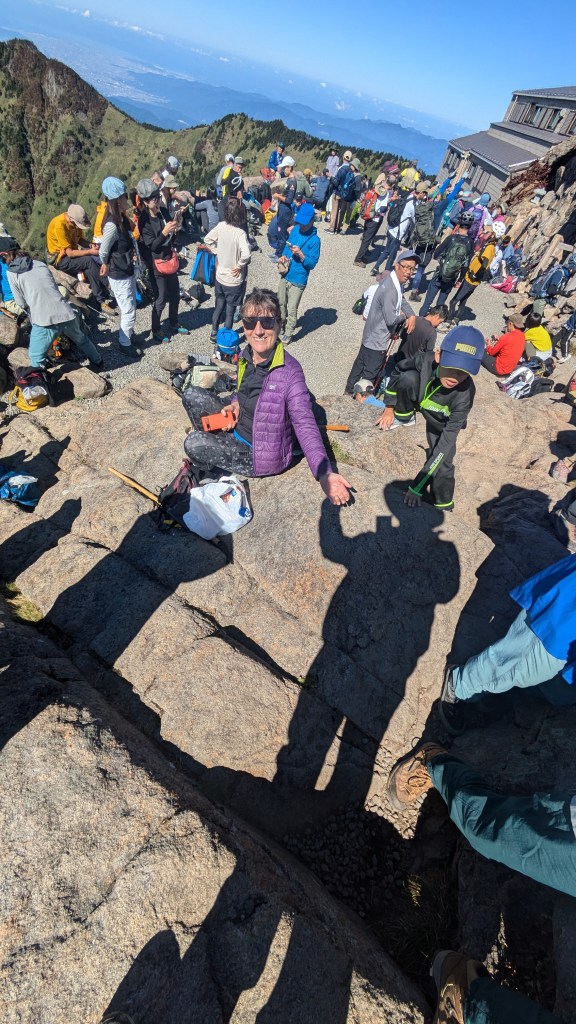
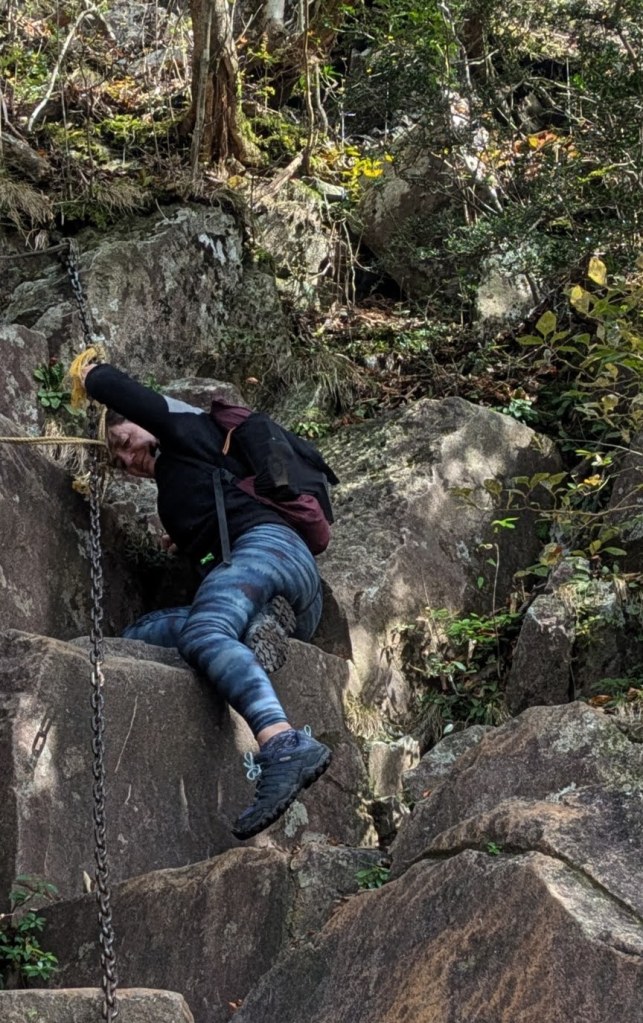
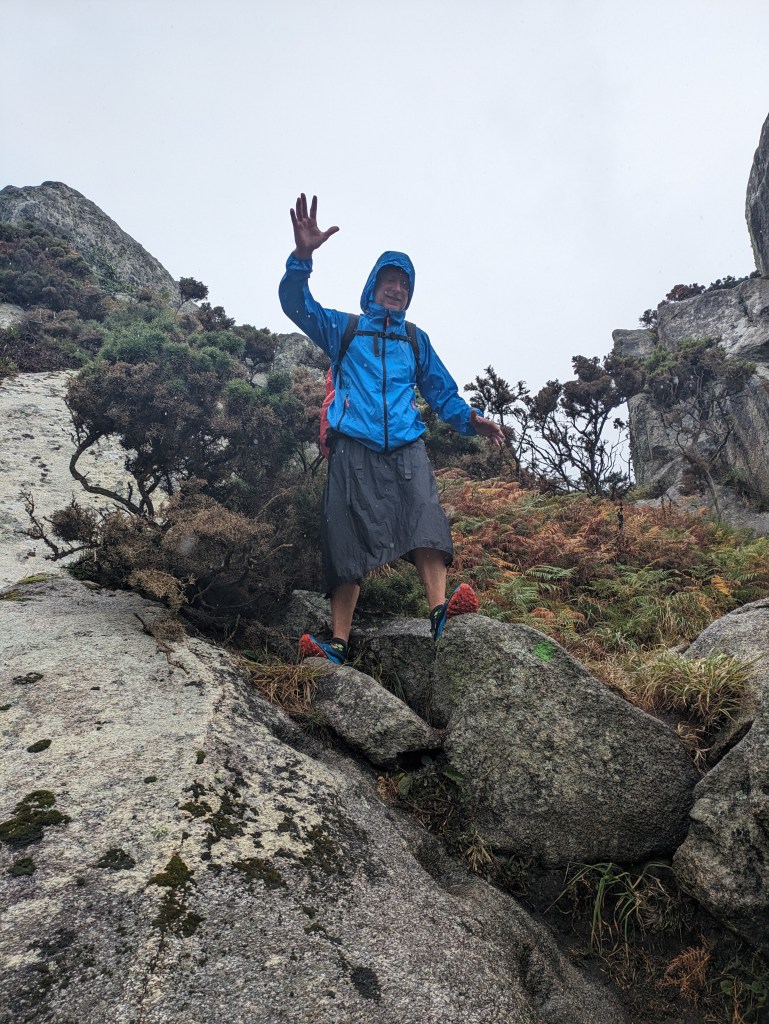
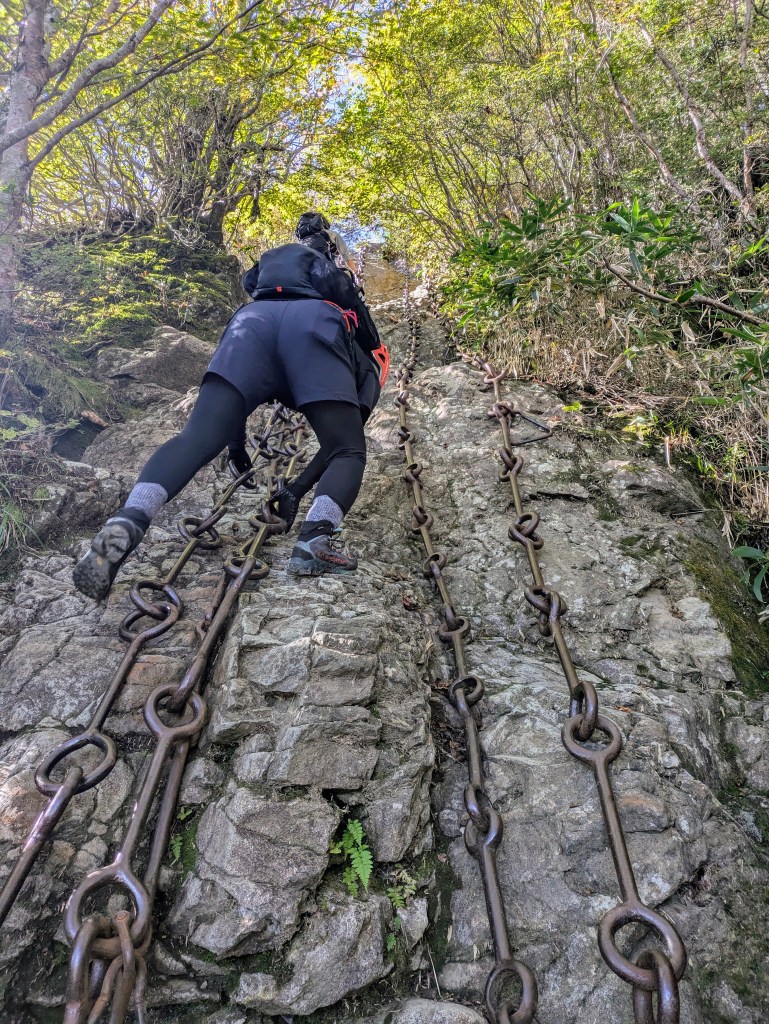
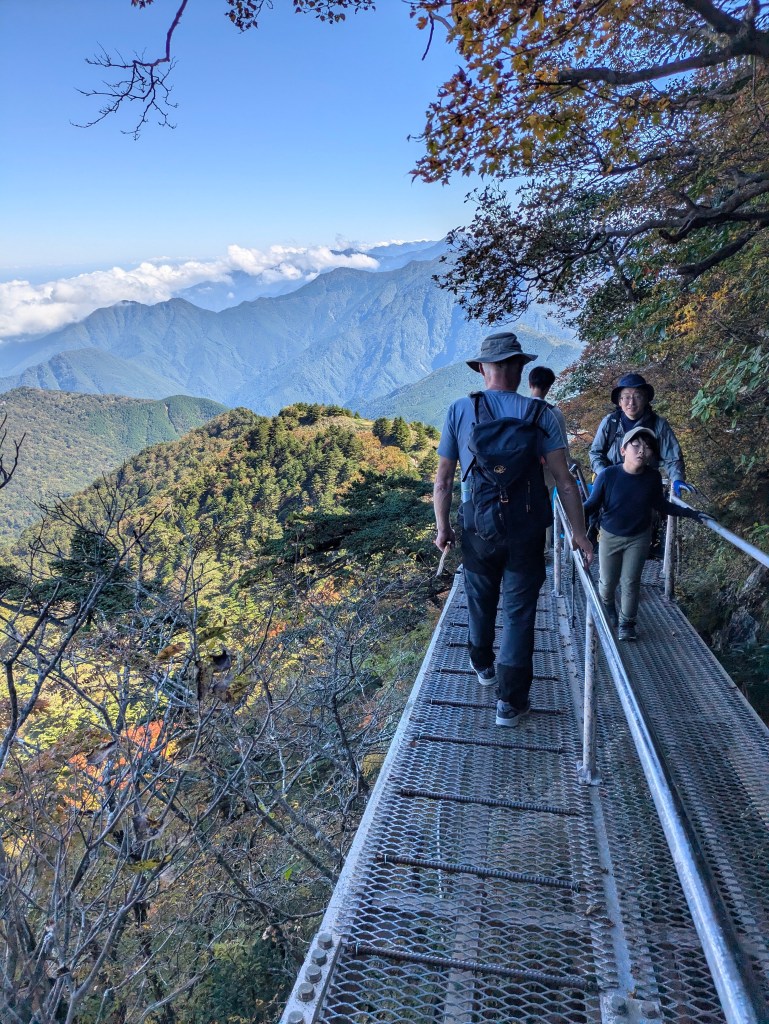
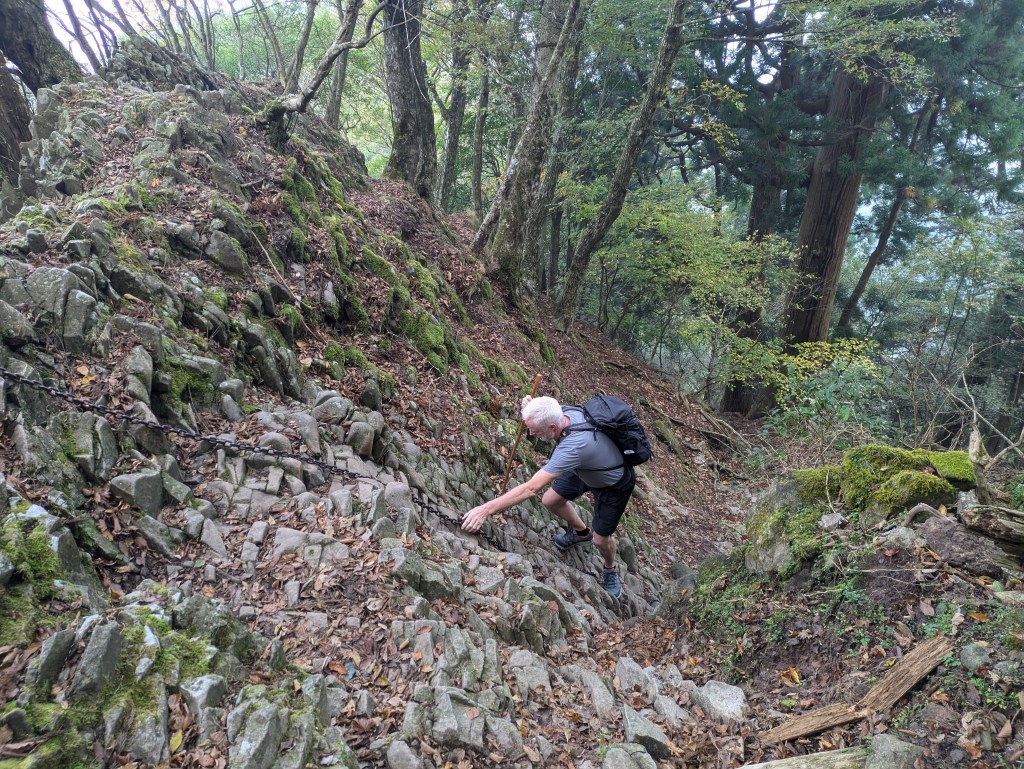
Getting high on Mount Ishizuchi Mount Ishizuchi, the highest mountain in South Western Japan, was an entirely different experience to our Mt Hiko hike. We trekked on a blue-skied Sunday, it was the Sports Day public holiday weekend which promoted an active lifestyle and we weren’t alone. The climb started on gradual paths that became steeper, much steeper.  In some nearly- vertical sections, steel chains were embedded into the rock as an aid to haul ourselves up. It was exhausting but fun, surrounded by many friendly Japanese.
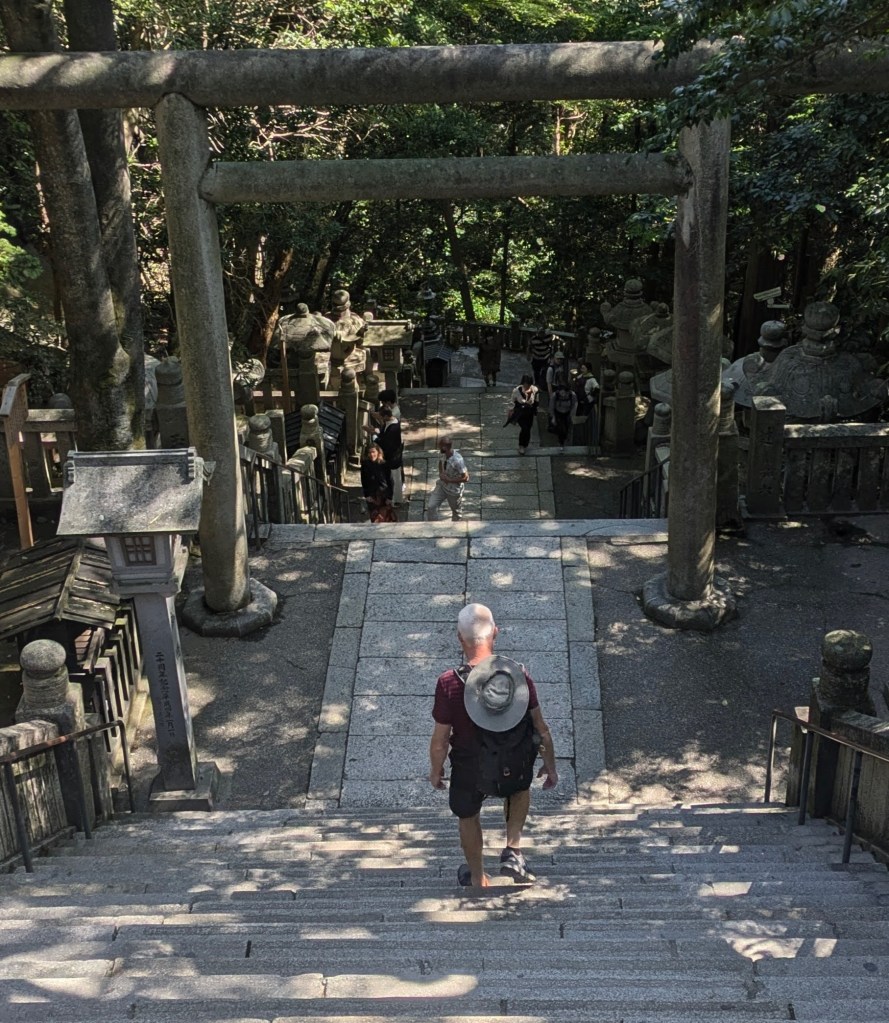
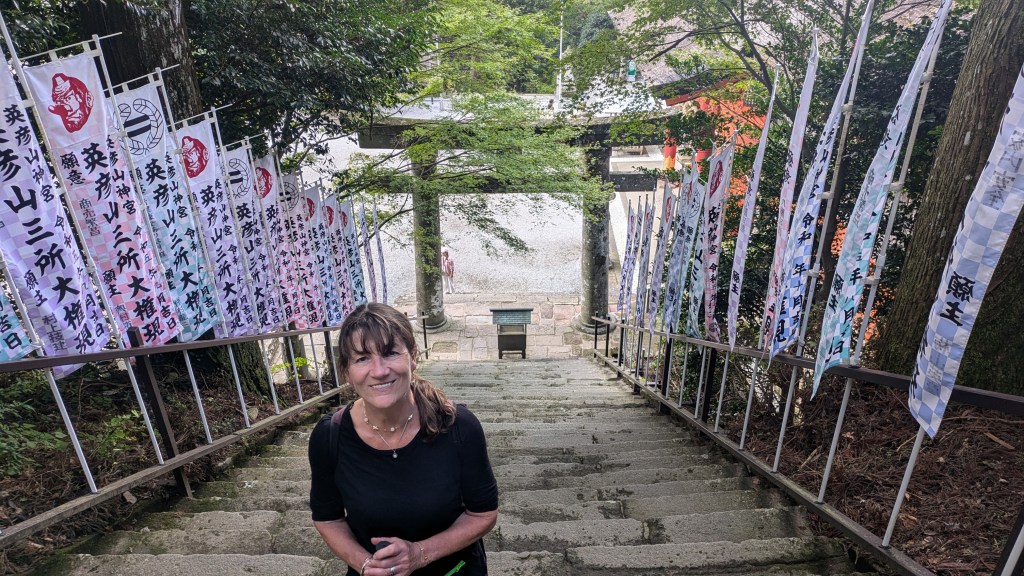
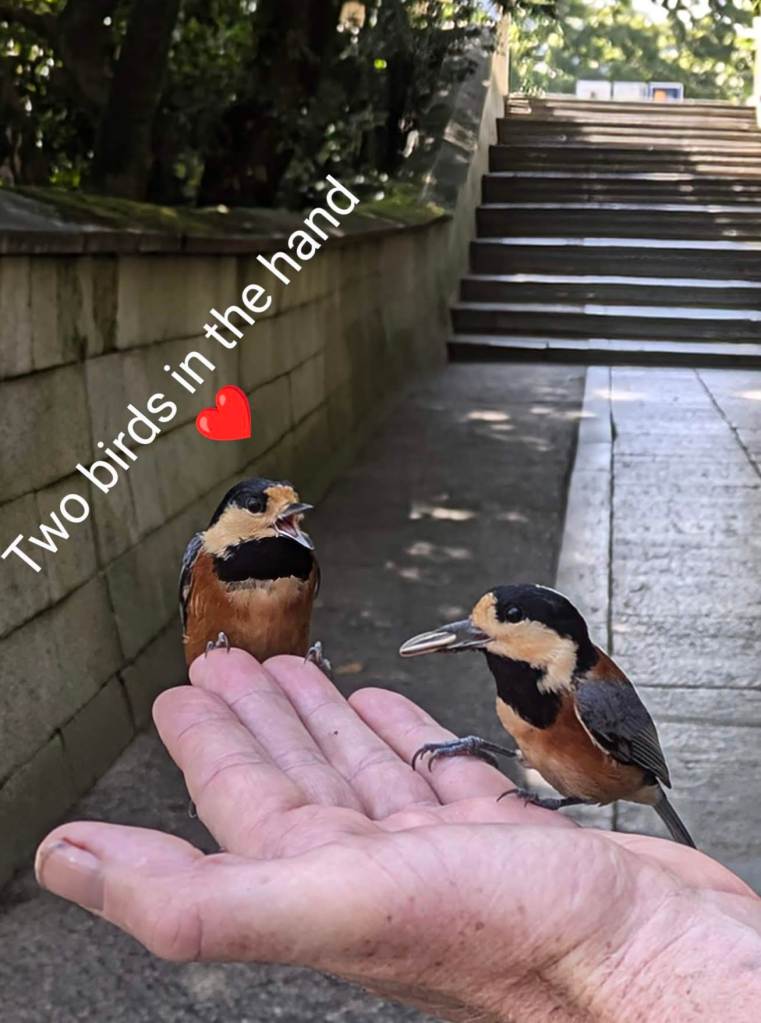
Stairway to Heaven We visited the charming little town of  Kotohira, famous for its proximity to the Shinto shrine, Konpira-san, which is dedicated to sea-farers. In a country of islands, this is a very popular shrine, nestling in the forests of Mt Zozu above the town and requiring a climb  of a whooping 1340 steps.   Arriving in the early morning, there was an air of serenity, broken only by the clattering on each step of a man wearing wooden clogs.  Little birds chirped and landed on our outstretched hands looking for seeds. We passed a stable of beautiful white horses which were considered so divine that they could only  be ridden by the gods.  
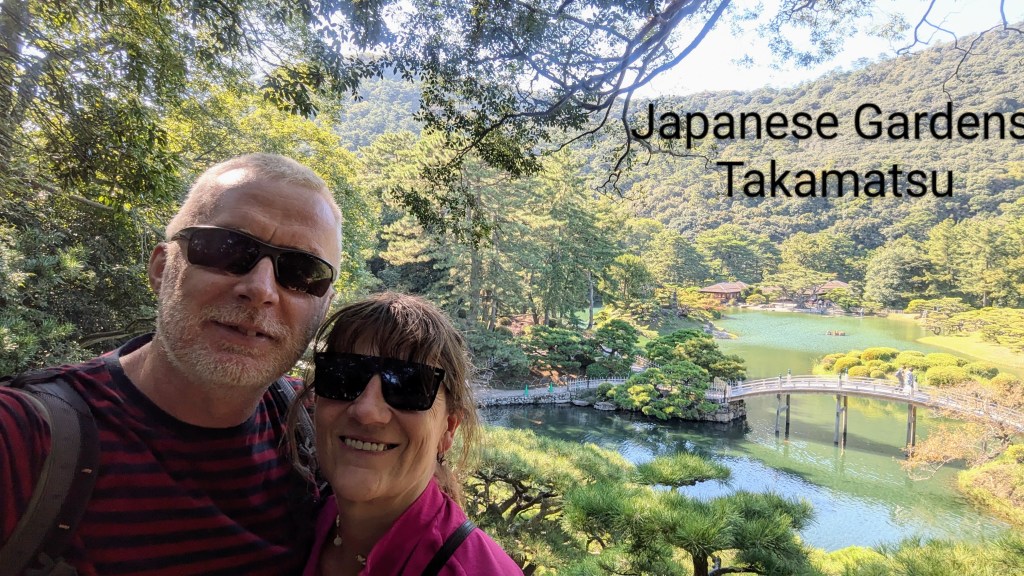
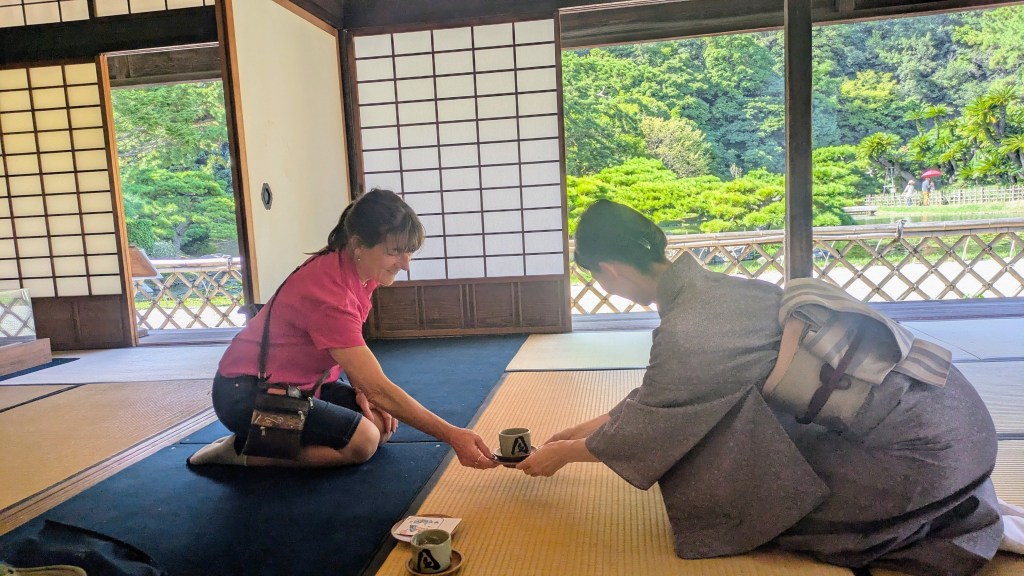
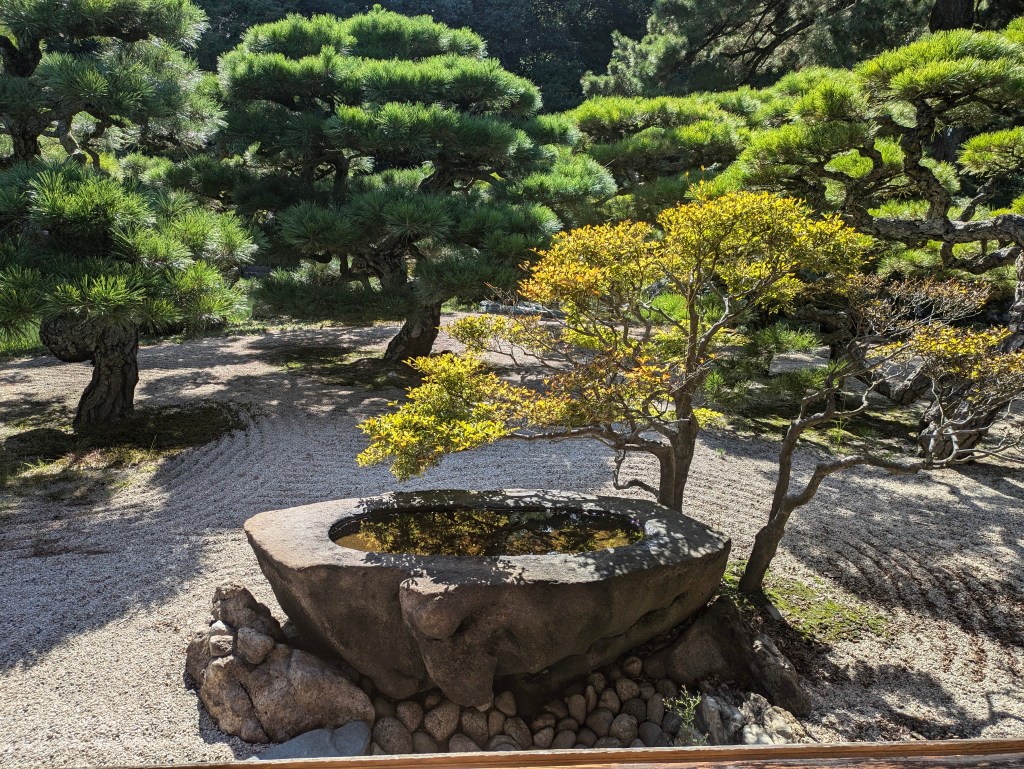
Tea and Shade We were charmed with a visit to  Ritsurin Gardens in Takamatsu with it’s beautiful teahouse of bamboo, screens and cushions. The windows framed the outside view like serene paintings and we drank tea to the gentle sound of flowing water from the small waterfall outside. In the coolness of the teahouse, we began to appreciate the Japanese fascination with light, shade and symmetry and to understand the philosophy that ‘less is more’
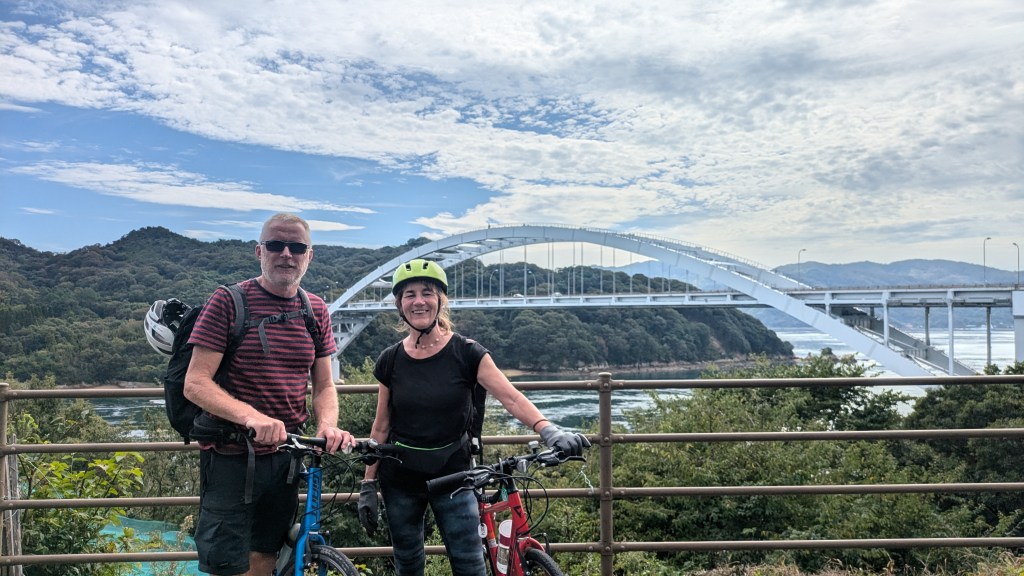
Island Hopping by Bike  The Shimanami Cycleway is an island hopping adventure by bike, traversing several islands in the inland Seto Sea which are linked by magnificent bridges. The 75kms route joins the town of Imbari in Shikoku Island with the town of Onomiche in Honshu. Cycling along the Kurushima Bridge which has a span of almost 5 Kms was a memorable experience.  Ships passed in the turbulent  waters beneath us while traffic whizzed by on the bridge. There were sublime views in every direction of mountains, islands, sea and the bridge itself.  
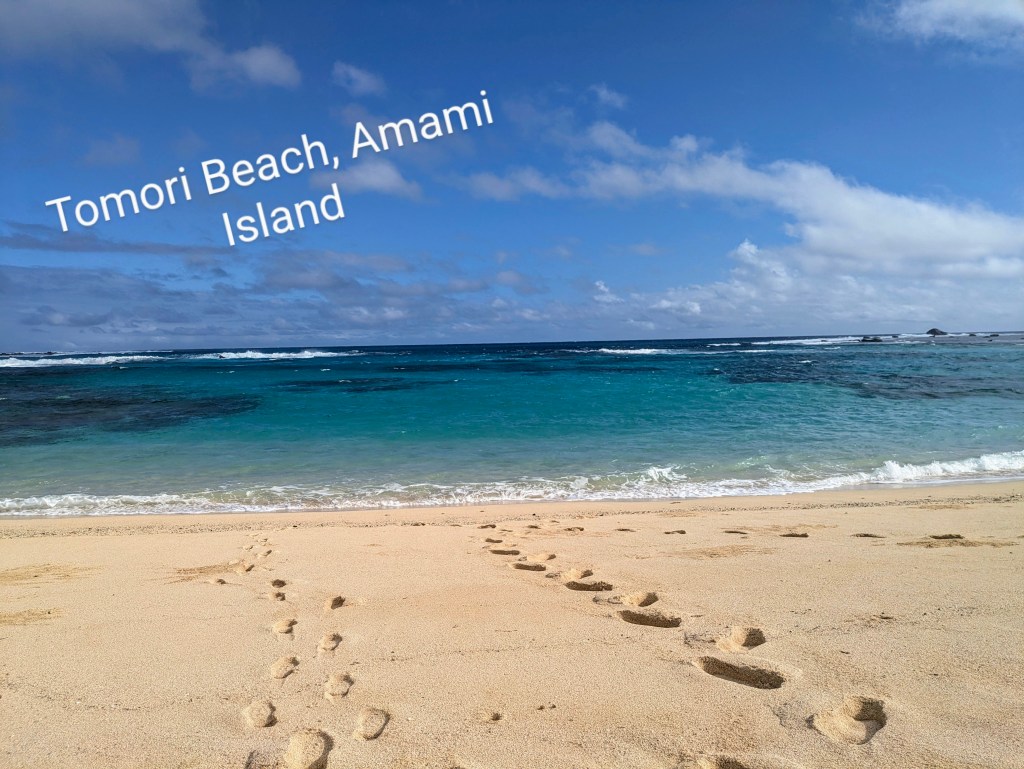
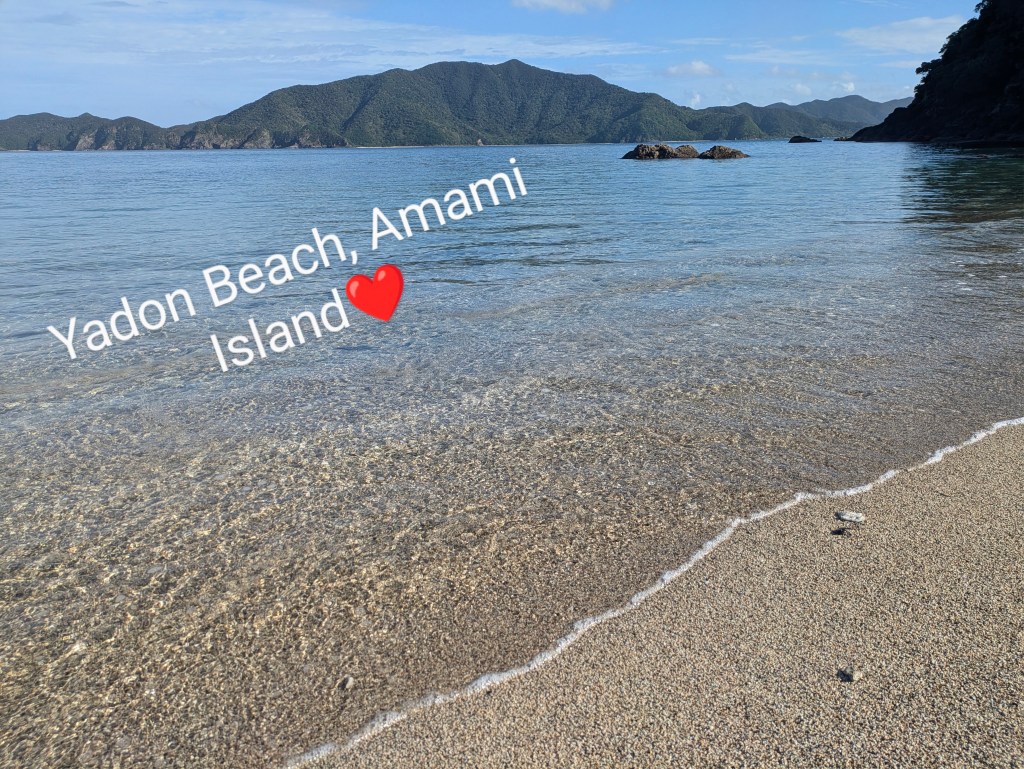
Glorious Beaches of Amami Amami Oshima is the largest of the Amami Island Group, a sub- tropical, nature-lovers’ paradise in the East China Sea, halfway between Okinawa and mainland Japan. Camping by the white-sand beaches here was truly wonderful, topped only by swimming in the clear turquoise water with lots of colourful, flickering fish.
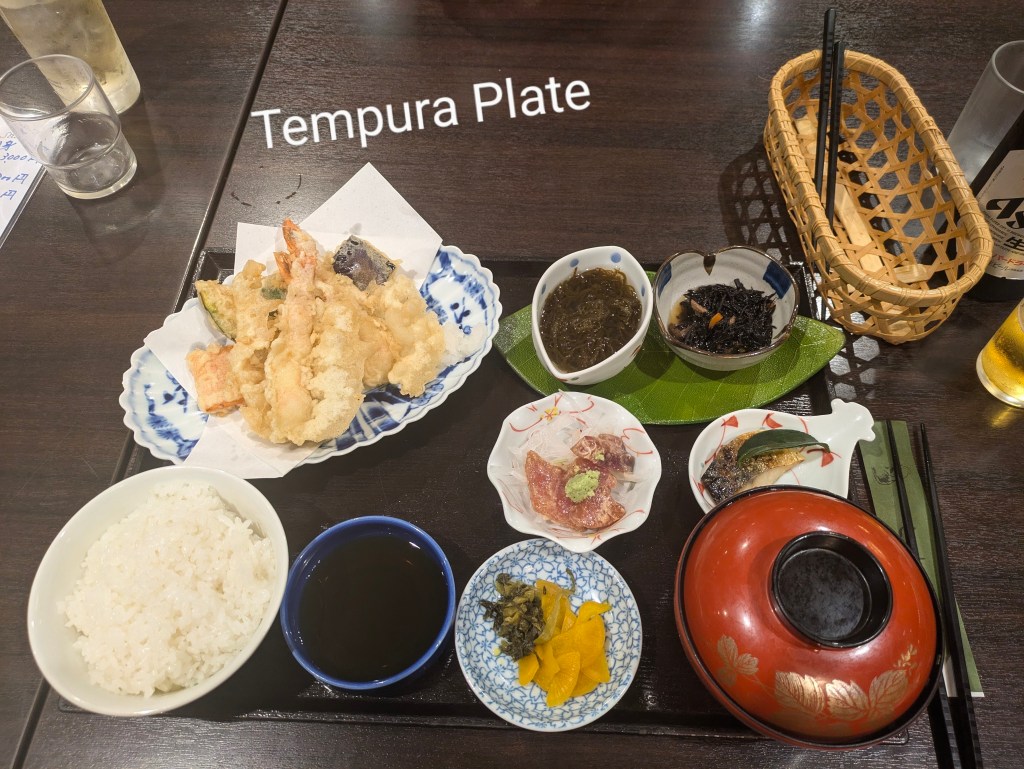
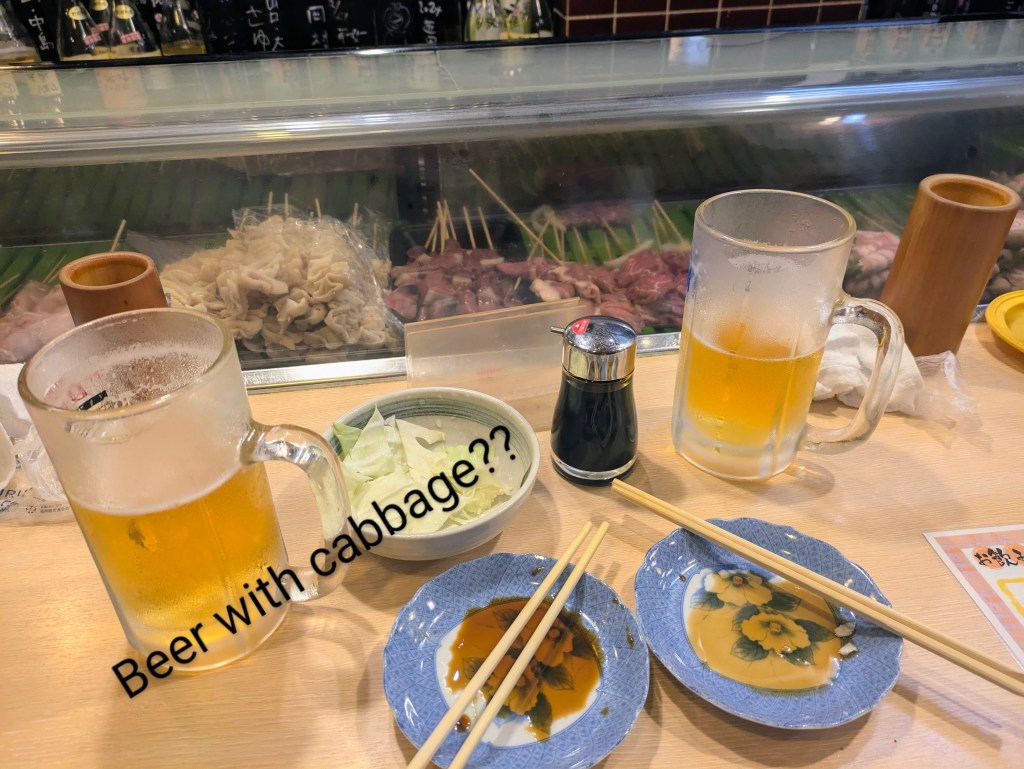
Food, Glorious Food– the food in Japan was a pleasure, a delight and a taste sensation. We had so many gorgeous meals from simple bowls of noodle soup to trays of tempura with a multitude of side garnishes. Good quality ingredients coupled with attention to detail made it special. The Japanese were very proud and fond of their ice-cream which was delicious. However, we were served raw cabbage and soy sauce to go with own beer 😁. It wasn’t as bad as it sounds but it may be an acquired taste.
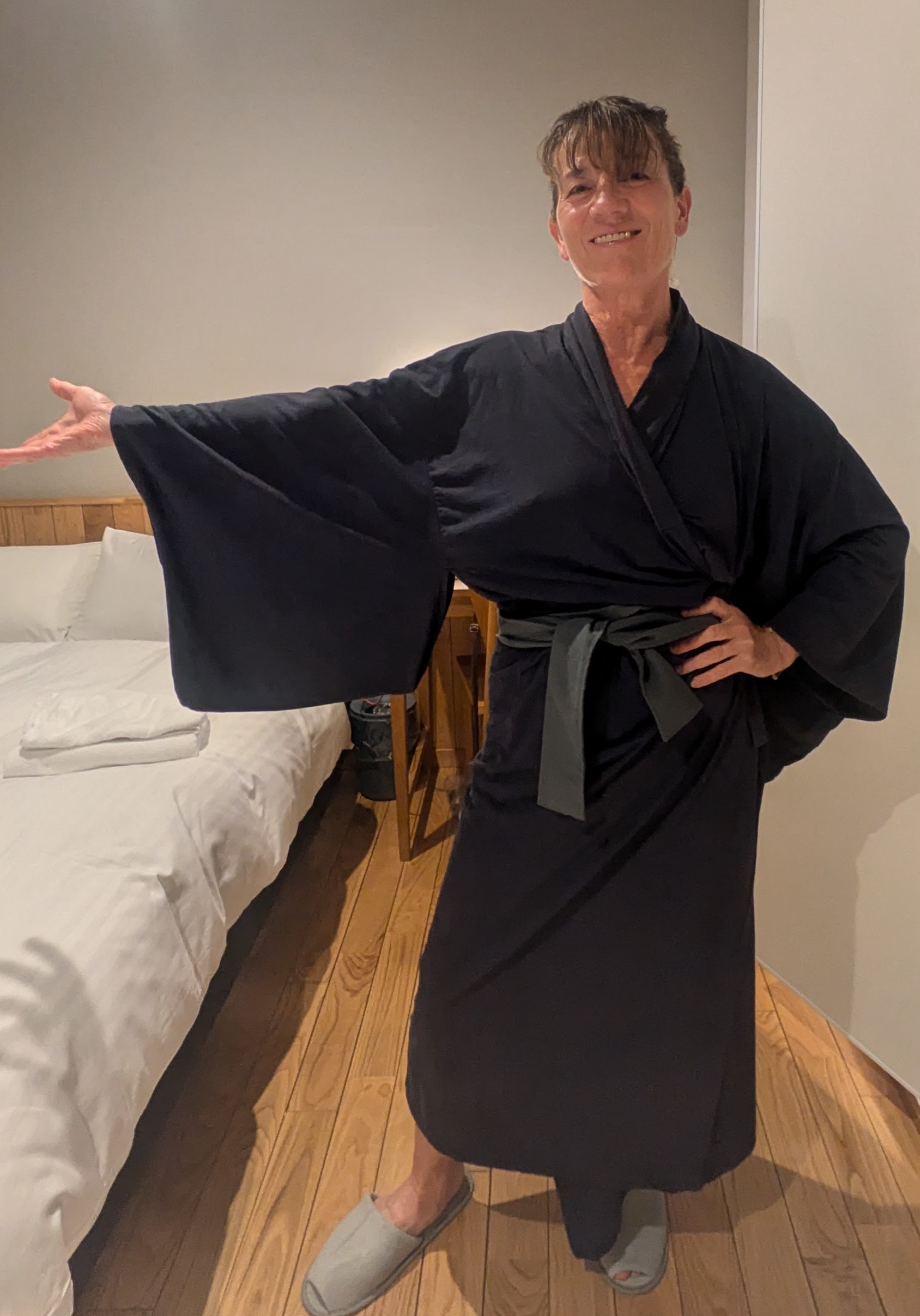
Relaxing Baths Onsens are public thermal baths, which are part of daily life in Japan, a place to cleanse and destress, to socialise and relax. The idea of stripping off and sharing a bath with naked strangers was an intimidating prospect at the beginning but we grew to love our immersions and appreciated their therapeutic power. Our favourite onsen was high in the hills outside Nagasaki with an outside section and gorgeous views over the city. It was so relaxing lying up to my chin in hot water, fanned by a cool breeze, watching leaves drifting down from the trees and trying to process all that we had seen in that lovely, vibrant city which has witnessed so much sorrow. (no cameras allowed inside the onsens for obvious reasons)

Path of Philosophy….Kyoto, the ancient city of history and dreams, was full of national treasures, World Heritage Sites, countless shrines and temples ….. and visitors, lots and lots of visitors. We shuffled along in crowds at most of the attractions except one. The Path of Philosophy in the Northern Higashiyama neighbourhood was tranquil and meditative. The path meanders along by a canal carrying murmuring water from Biwa Lake with the occasional family of paddling ducks and temples peeking through the foliage that borders the path. It’s very popular in spring when the overhanging cherry trees are in blossom but for us, it was blissfully quiet on a chilly November morning. Along the way, we chatted with a lovely Australian couple who enquired if they were actually on the path….none of us knew for sure where the path began or ended but maybe that was the true philosophical question.

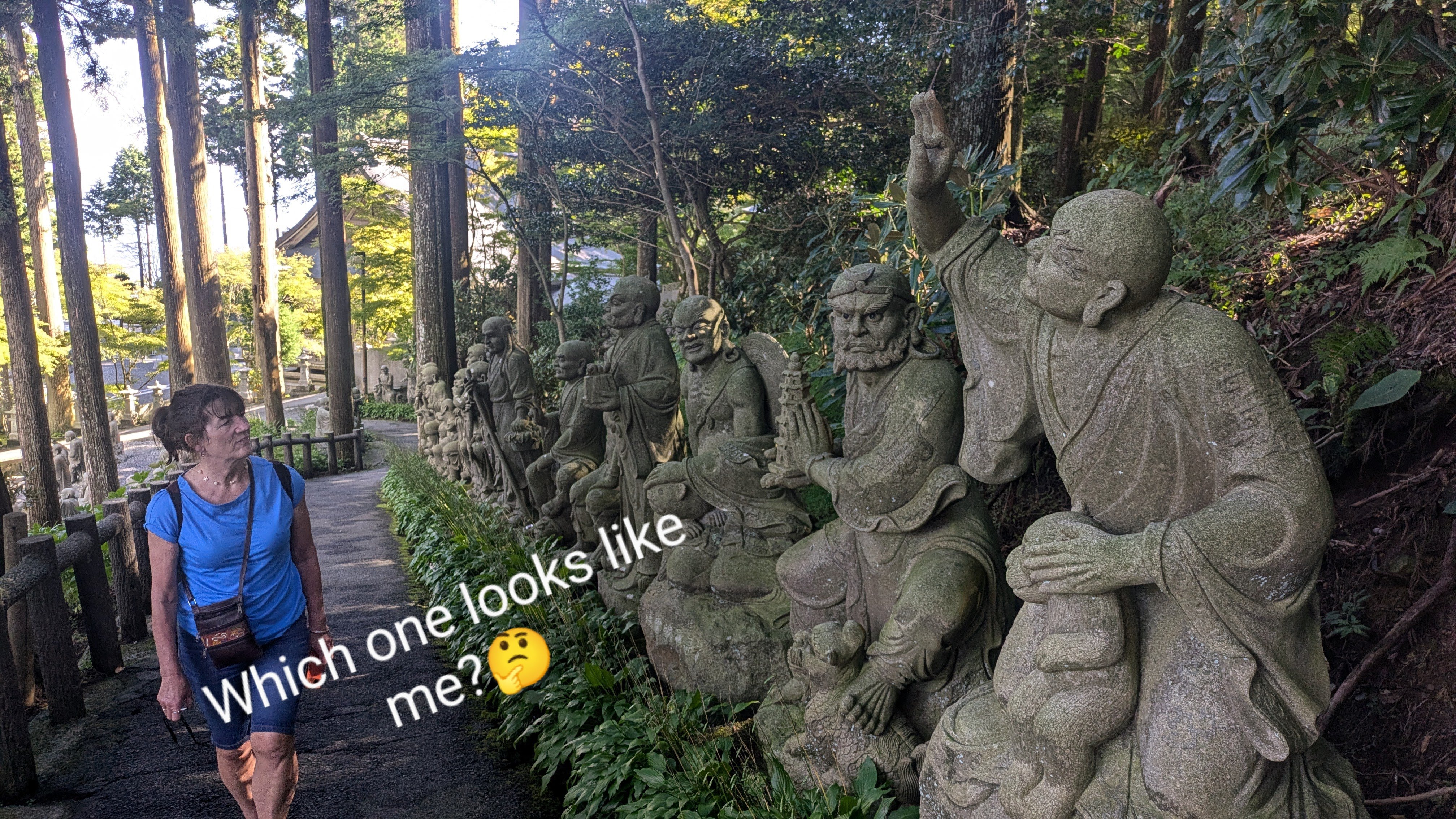
Temple in the Clouds  All over Shikoku, we saw pilgrims on the Pilgrimage Trail of the 88 Buddhist Temples. This is a long route, over twelve hundred kilometres, which circumnavigates the entire island of Shikoku. Most pilgrims do it in sections but we met a few who were devoting six to eight weeks to completing the entire pilgrimage in one go. Many had sore feet as the majority of the route is on hard road surfaces. Although we didn’t do the pilgrim’s trail, we visited several of the temples. Our favourite was Unpen-ji, the highest of the 88 temples and often called The Temple in the Clouds. Hundreds of life-sized statues of Buddha’s disciplines lined the walkways among the cedars. It’s said that if you look hard enough, you will find your likeness among them. Although I searched and searched, I couldn’t find mine
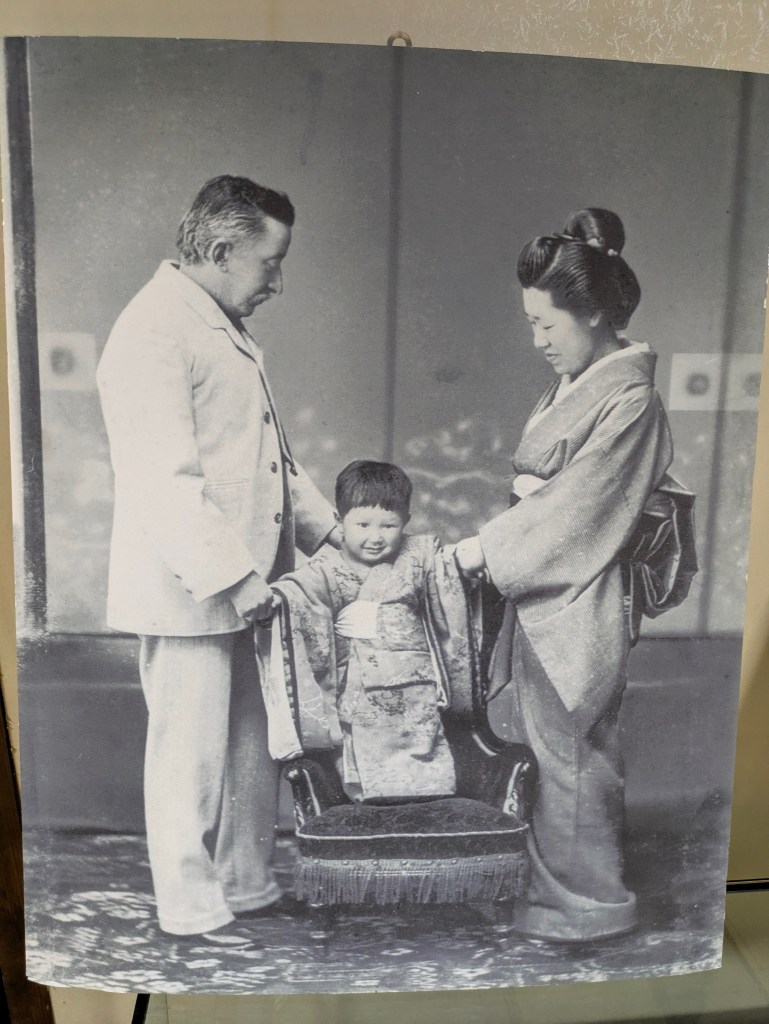
Making Connections  ……No matter where you go in the world there are always connections to home. We visited the Lafcadio Hearn Museum in the city of Kumamoto. In the mid 1800’s having an Irish father and a Greek mother,  Lafcadio spent many boyhood summers in Tramore, Co Waterford just a few miles from our home. The gorgeous Lafcadio Japanese Gardens in Tramore were established in his memory.  He was enthralled by Japan, setting up home there and he is still reversed in his adopted country because of his writings and translations.

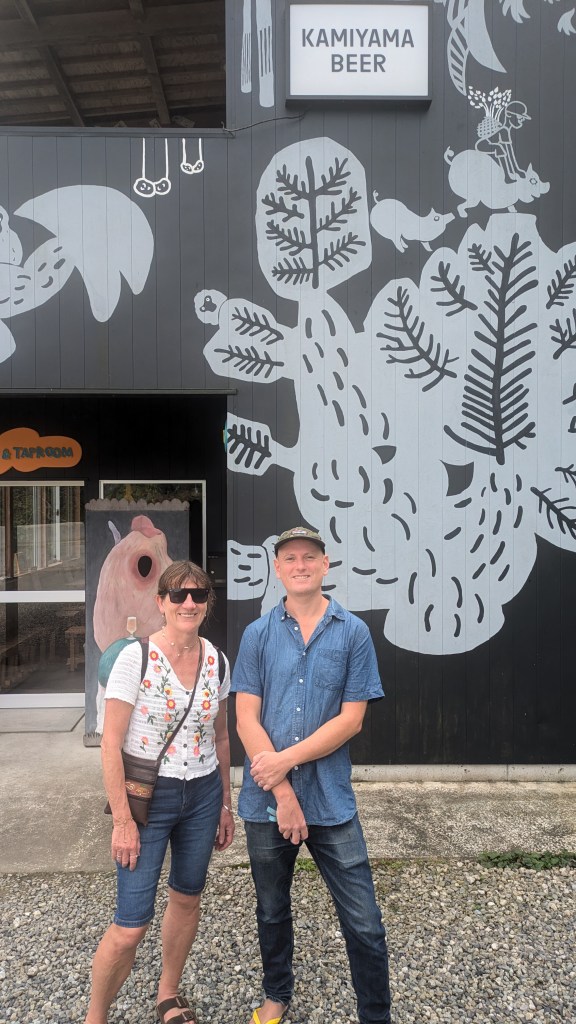
We met another man from Tramore, who has also made Japan his home, making fine craft beer in the beautiful Kamiyama area. We can certainly vouch for the quality of his produce. Manus and his Japanese wife, Sayaka, welcomed us, introduced us to some locals and gave us lots of tips, particularly about the etiquette of using the onsens. Strip completely, wash thoroughly before soaking in a bath, no splashing, no swimming, hair tied up, no tattoos.
LOWS

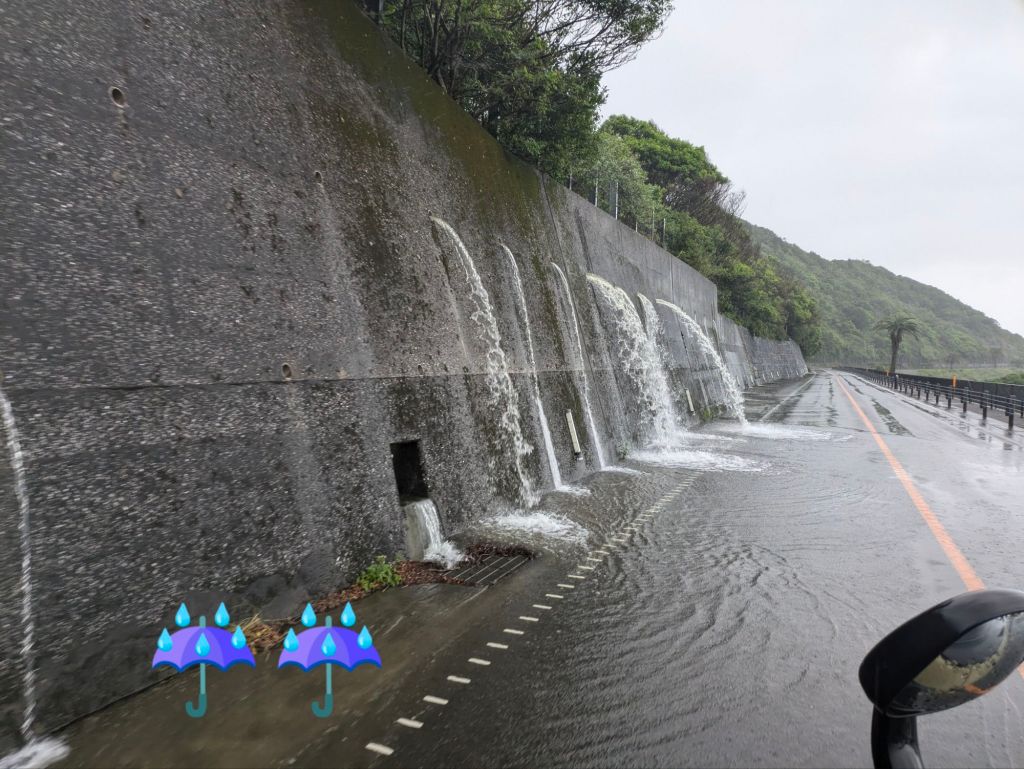
Dramatic Weather –We endured several bouts of torrential rain for days on end each time although it wasn’t the rainy season. Japan is green and gets a lot of rain but this level of rainfall in October and November was unusual. We had numerous phone alerts warning of typhoons, mudslides and flooding.
Packaging The amount of plastic packaging on everything but particularly on food items made us weep. Carrots were individually wrapped in plastic. I know that in Ireland we are guilty of using too much plastic as well but this was a totally different level. All food bought in a convenience store/supermarket/restaurant came with a wet wipe wrapped in plastic and some disposable chopsticks and that’s just for starters.

Disposing of Garbage….The contradiction is that the streets are super-clean with rarely even a scrap of paper on the ground and all this without a trash bin in sight.  Getting rid of our rubbish was certainly an issue until we started discarding it in pieces. When we shopped in supermarkets, we disposed of excess packaging before we left the shop. Convenience stores (konbinnis) had some segregated bins (meant for items bought in the shops) which we used. Motorway stops also had some segregated bins.

Campervan Sulks…. Our van wouldn’t start when we were in the queue to board the ferry to leave Amami. The rain was torrential and we didn’t even know how to open the bonnet. After trying several times, we were getting desperate. One last try and the engine turned over and we got on the overnight ferry. We didn’t have any more trouble.

Parking in Kyoto…..Mainly we availed of free wild camping in scenic spots in the countryside but  in the cities we parked in city centre carparks which usually cost about €5 to €10 for overnight parking. In Kyoto, we misread the tariff board , and  discovered that we could easily have stayed in a nice hotel for the price of the parking charges😲

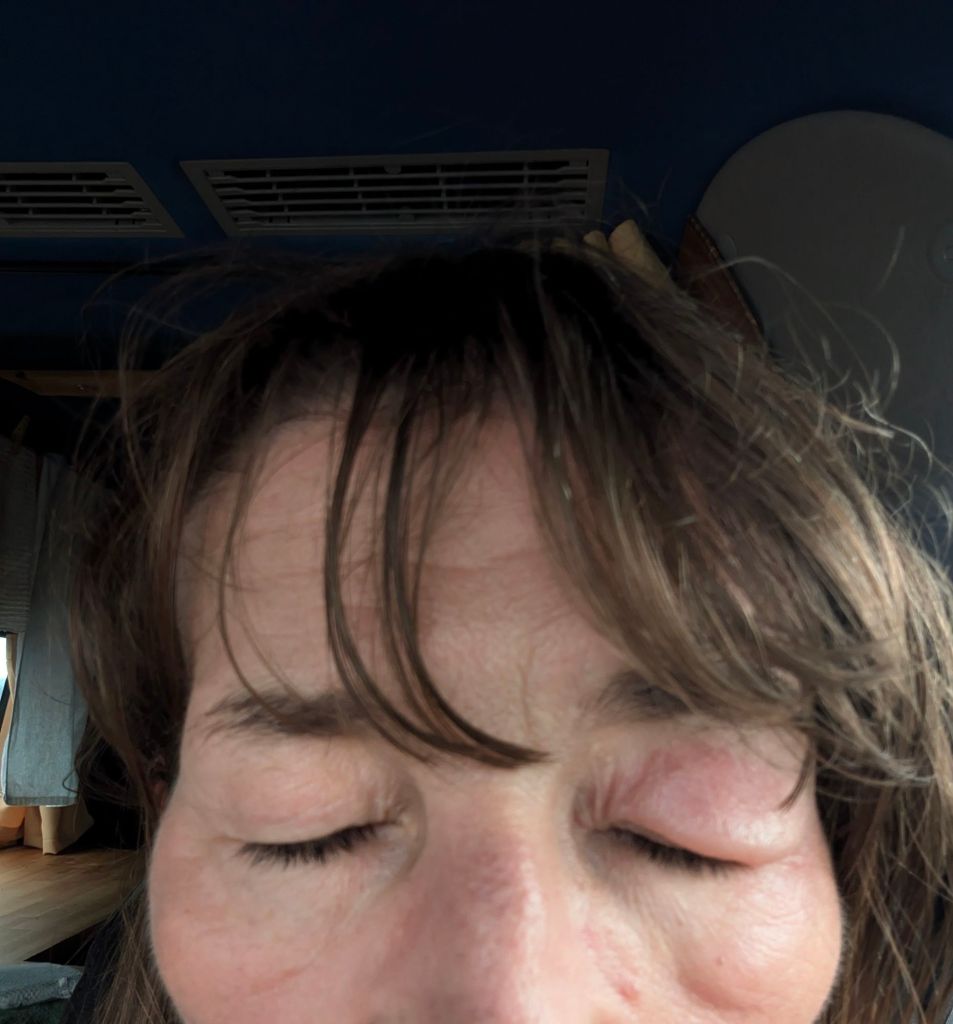
Encounters of a Small Kind Japan is an extremely hygienic place with a huge emphasis on cleanliness , partial to the liberal use of disinfectants and  wearing face masks. Neither of us had any issue with tummy upsets or health concerns. One morning, I woke up in the van feeling like I had a brick over my partially closed left eye. I expected Caoimhin to say it didn’t look too bad but his reaction was one of horror. It took two days to subside. I’m still not sure what caused the spectacular inflammatory reaction but suspect a mosquito.

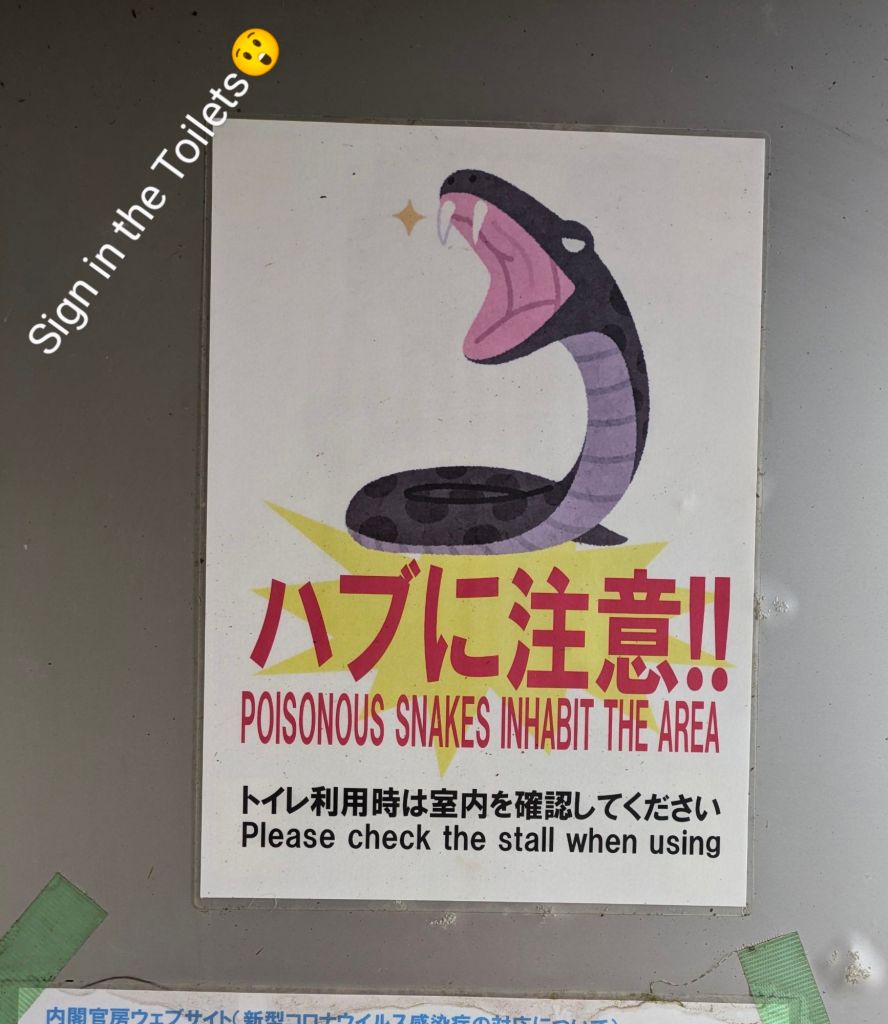
On Amami Island, we were warned about the viper snakes everywhere we went…..by the locals and by the many warning signs. Thankfully we never saw one or heard a slithering sound of one.
So many things surprised us about Japan from practical things like the abundance of public toilets and the people of all ages who use bicycles as a means of getting around to the greenness of the countryside and the enormous number of trees. Most people profess to have no religion but mark key life events with Shinto rituals and visits to Buddhist temples. The people are polite and reserved but welcoming and love to laugh, especially the women, and we gave them plenty of opportunity for amusement.

We covered less than a third of the country, we didn’t go anywhere near the big-ticket tourist items like Tokyo or Mt Fuji and barely scratched the surface of the places we did visit. We came anyway, changed in some indefinable way, fascinated by the blend of traditional and modern, mesmerised by the natural beauty of the country and perplexed by the contradictions. Japan still remains an enigma. We may have to return for a deeper dive, to breathe in the mystery of this fascinating country.
Japan: Highs and Lows

Japan: Holy Mountains and Glorious Gorges

Sandan Gorge, Japan

Our visit to Fukuoka didn’t start well. The traffic was horrendous as we made our way into the city from Nagasaki. Fukuoka is the largest city in Kyushu (one of the main four islands in Japan) and is one of Japan’s ten most populated cities…and it certainly felt like it when we were there.  With its closeness to the Asian mainland (closer to Seoul than to Tokyo), Fukuoka has been an important harbor city for many centuries and was chosen by the Mongol invasion forces as their landing point in the 13th century. It is often called a ‘mini’ Tokyo, it even has a smaller version of Tokyo Tower and as we don’t plan on visiting Tokyo, Fukuoka seemed like a good option.

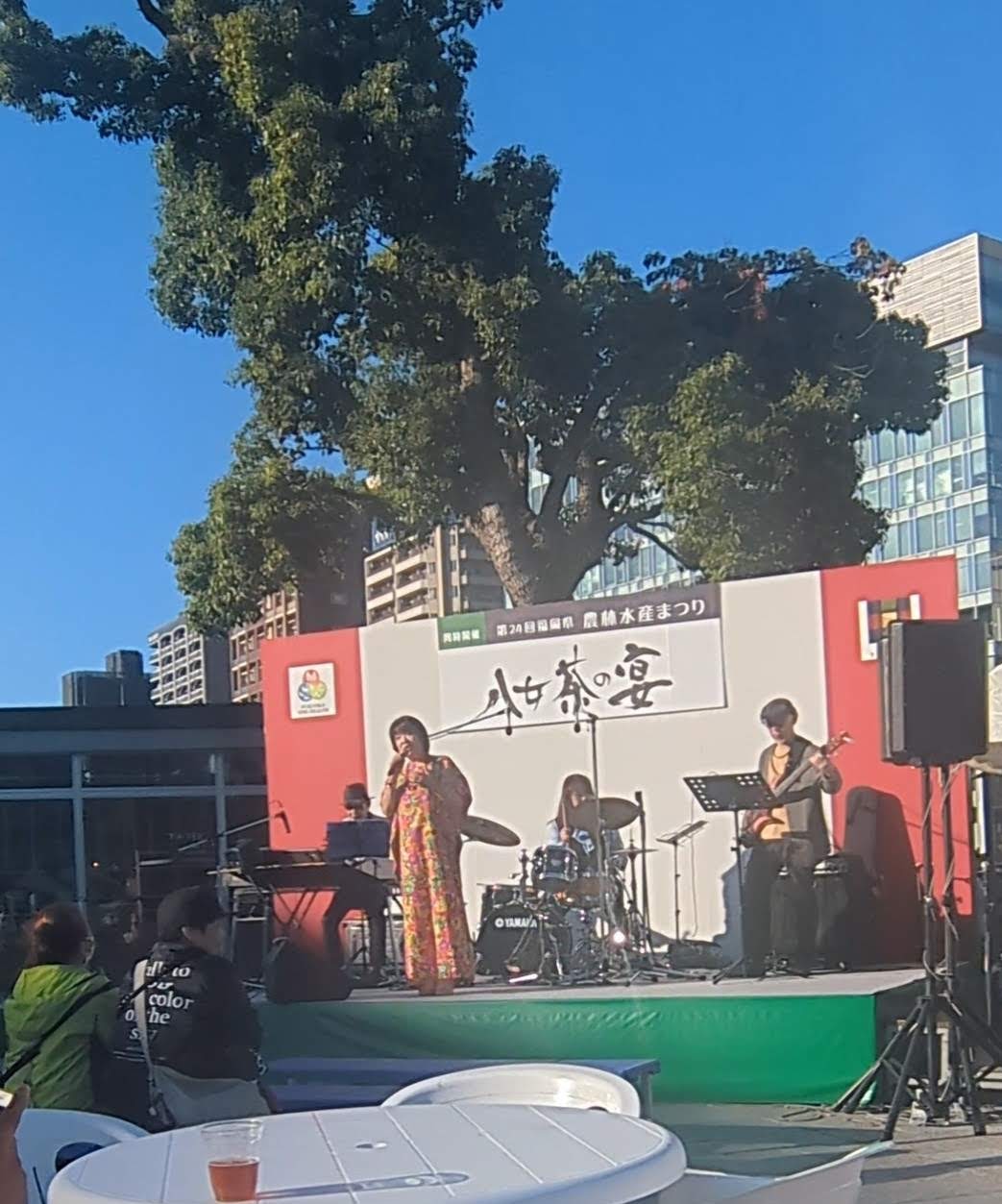
We thought that we might treat ourselves to a hotel but the reasonably-priced hotels/guesthouses were booked out so we resorted to searching for a parking spot close to public loos. In the city centre, we found a possible spot that met our criteria (proximity to toilets) but it was just off the main road with roaring traffic so our search continued. Google directed us to another parking area which involved a heart-stopping lurch across four lanes of traffic into a tiny alleyway. With the van almost touching the sides of the buildings, we prayed that it was one-way system and hoped we wouldn’t encounter anything coming in the opposite direction.  Thankfully, we found ourselves in a little oasis with some free parking spots, quiet but still in the heart of things. There was a little park nearby with public toilets, festival stalls selling food and local produce and best of all, a jazz band playing on a small stage. At one tent, a woman beckoned us over to give us some vouchers (a thousand yen each (about €6)) which could be redeemed  at any of the stalls….a welcoming gesture for foreign visitors. We sent a German man who was cycling around Asia in her direction so that he could get his ‘welcome vouchers.’  The sun was shining, the music was good and we relaxed with some seaweed dumplings and a cold craft-beer. The beer was in plastic glasses…..but hey, you can’t have everything.

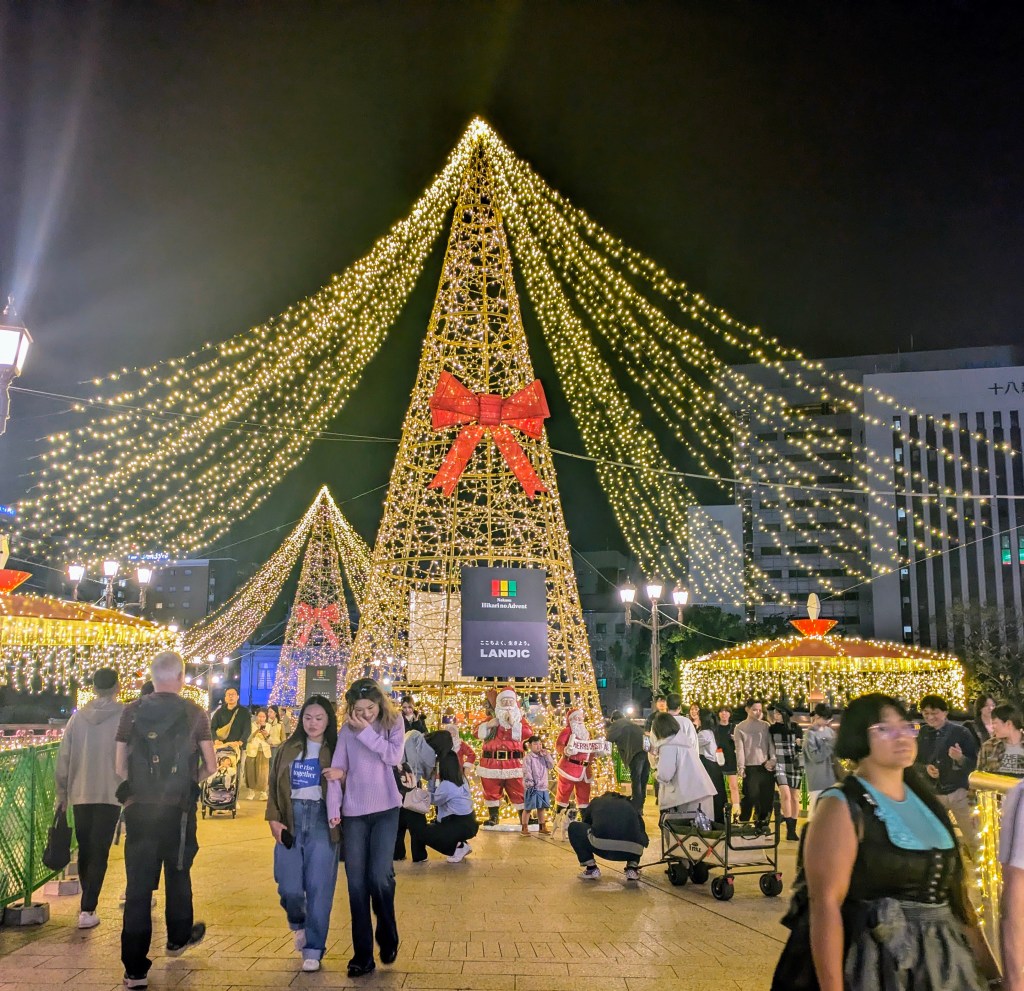
Later we wandered around a crowded Chinatown, and marveled at the long queues outside many of the restaurants and the patience of the Japanese who formed orderly queues, keeping a little distance from each other.  Christmas also came early to Fukuoka with coloured decorations, dancing Santas and flashing lights festooning  the bridges, streets and shopping malls. Christmas is not a public holiday in Japan and less than 1% of the population are Christian but the commercial aspect of the season is enthusiastically embraced. Christmas Eve is regarded as the most romantic night of the year, a bit like our Valentines Day when couples are out and about, love is in the air and not having a date if you’re young requires staying at home to avoid embarrassment.

 Away from the queues and crowds, we found a cellar bar with subdued lighting, soft music where we were the only patrons, the other extreme and not really what we wanted. The bartender gave us soft, hot towels to wipe our hands as soon as we sat down. This wasn’t totally unusual as even the most shabby of establishments hand out wet wipes wrapped in plastic to clean your hands.  Bowls of spicy nuts in dainty porcelain bowls appeared on the table (no raw cabbage and soy sauce in this establishment to munch with your drinks). We should have known that we would pay dearly for such luxuries.  When the cover charge,  was added to our bill (we didn’t even realize that there was a cover charge) our two drinks (one each) cost significantly more than we had paid for dinner! Thank goodness we didn’t opt for a second round.

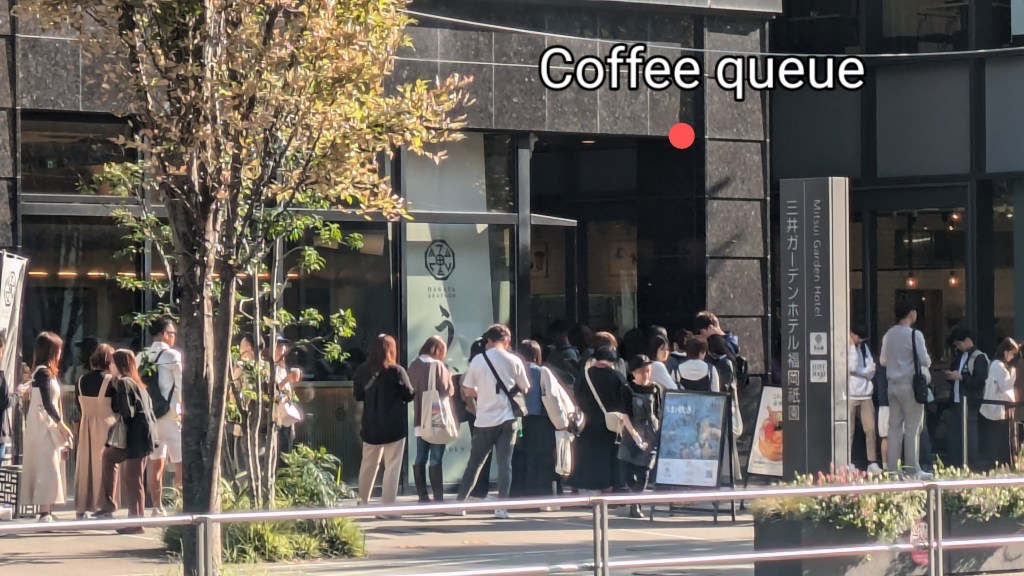
Our quiet oasis turned noisy during the night with garbage trucks collecting trash, vans parking and then moving off, filled with workmen dismantling the festival stalls in the park. In the morning, we went bleary-eyed in search of coffee/tea only to find more orderly queues stretching down the street outside all the open cafes. Although we normally avoid places like Starbucks, this time we were thankful to sit down with coffee and cinnamon buns without any tiresome queueing and avail of their  strong  Wi-Fi where I was able to upload the last blog post with photos. Maybe we should take lessons in patience from the Japanese who queue patiently, mainly in silence, without any visible sign of irritation.

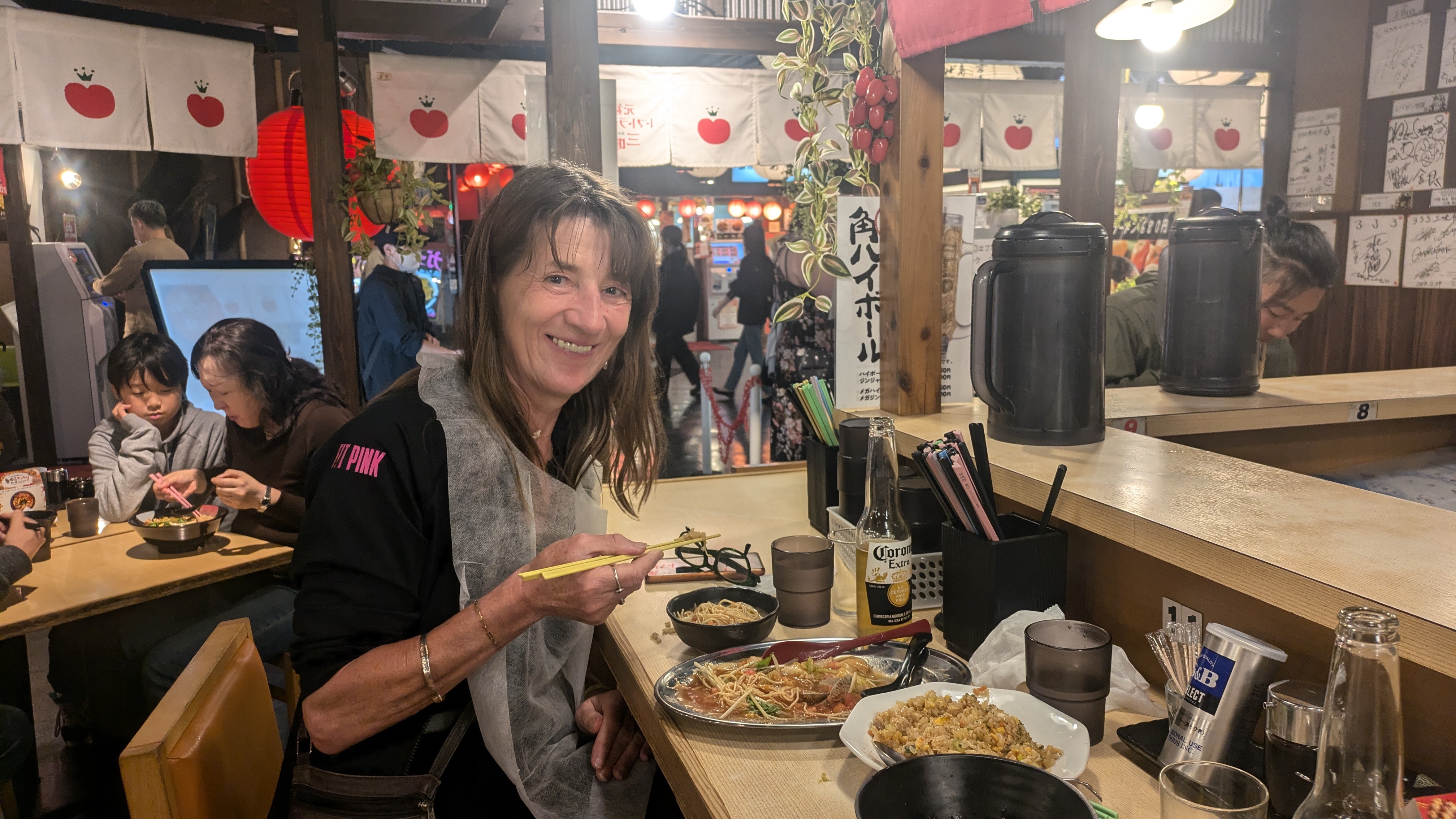
The mountains were calling us and  we felt a strong urge to get out of the city and into the countryside but there was something we had to do before we left. Fukuoka has a reputation for making the best ramen (a noodle soup) in the entire country so we couldn’t leave without sampling some.  There are several traditional recipes but the one that is most prized involves boiling pig bones for hours, maybe days, until the marrow leaks out and becomes a thick cream which is then used as a base for the soup. The ramen was served in big bowls and eating it should be accompanied by loud slurping to show appreciation.  Bibs are provided to protect clothes from the inevitable splashes. Reading the descriptions of the pork-bone soup made me feel queasy so I didn’t ‘pig out’ but opted for a tomato based ramen with seafood which also used a traditional recipe. It was delicious but I have my suspicions that a pig was involved somewhere along the process.

About a hour and a half’s drive outside Fukuoka is a  mountain where over 400 years ago,  white-clothed monks, practitioners of an ancient ascetic religion called Shugendo, chose sacred mountains until they reached their ultimate goal of enlightenment. We were eager to follow in their footsteps and hike the holy mountain to see what  enlightenment and spiritual power it might bestow upon us.

The winding mountain roads coiled through pottery villages with tables of ceramics set up under flame-coloured maple trees and smoke rose from the many kilns. Even before we reached  Mt Hiko, we were enveloped by a sense pf peace mixed with exhaustion from lack of sleep from the night before. We parked by a stream next to toilets at the base of the sacred mountain with nobody else around, cooked up a dinner of potatoes and mushrooms ( the quality and variety of both in the supermarkets was amazing) and watched the stars come out one by one until the sky overhead  was a star- studded canopy, more beautiful that all the twinkling city lights.

The following morning dawned cool and bright as we began hiking past moss-shrouded shrines with birdsong  and the higher peaks still draped in drifting mist.  Maybe it was because we had read the history of the mountain and were open to its power but right from the beginning we felt that we were in a special place. The hiking trails were well-marked with lots of looped walks and decisions to be made about whether to continue, to turn back or to walk in circles. Maybe this was the essence of true enlightenment, that all paths are correct, you just make a decision and accept it.  Mt Hiko really consisted of three peaks and as we neared the first peak there were signs in Japanese that the path was closed and a barrier was pulled halfway across.  It was easy to bypass the obstacle so we continued regardless, we could always plead ignorance if challenged.  As we ascended we heard hammering and saw that there was construction work going on at the summit where the existing shrine was being enlarged. We kept our heads down and skirted around the building works and headed for the adjacent peak with stunning views of the surrounding mountains, dressed in their glorious autumn foliage, vivid hues of red, gold and purple. If the first section was beautiful and easier than expected, the next section was more challenging but truly ‘wow’. There were chains embedded in the rocks in places but they were more as an aid for climbing rather than strictly necessary. We diverted to see an incredible ancient cedar tree named Onisugi, reputed to  be  1200 years old. This was truly a special day, a hike that was good for the soul and we were physically tired but spiritually refreshed after a six hour round trip…..although true enlightenment may require some further strenuous activity.

It was time to leave the large island of Kyushu and head over another long, impressive bridge to Honshu, the second largest and most populated of the Japanese islands. We arrived at dusk at the small town of Hagi and parked up on the north side of town beside a small beach. We didn’t realize how beautiful the spot was until dawn when an early morning trip to the toilet revealed islands, distant mountains, a calm sea and boats moored in a little harbour. But then you’ve guessed it….it began to rain and this time the rain was cool and drizzly.  It was about 12 degrees, the coldest we’ve had in Japan apart from when we were high in the mountains. Hagi is also famous for ceramics which are mainly in delicate pastel shades.

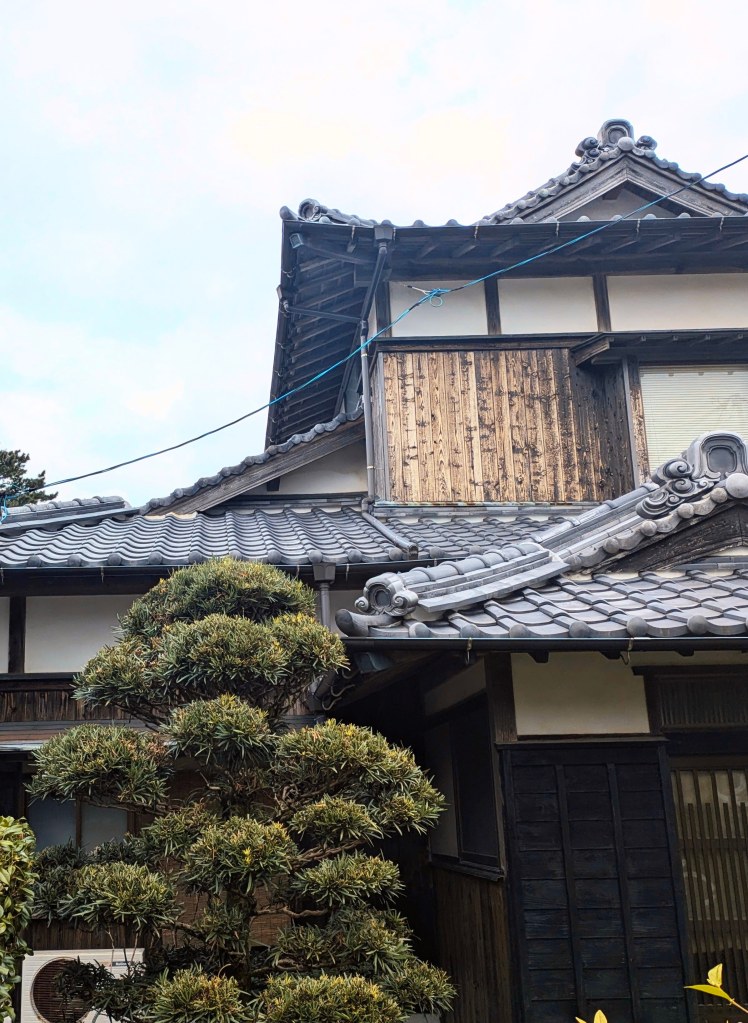
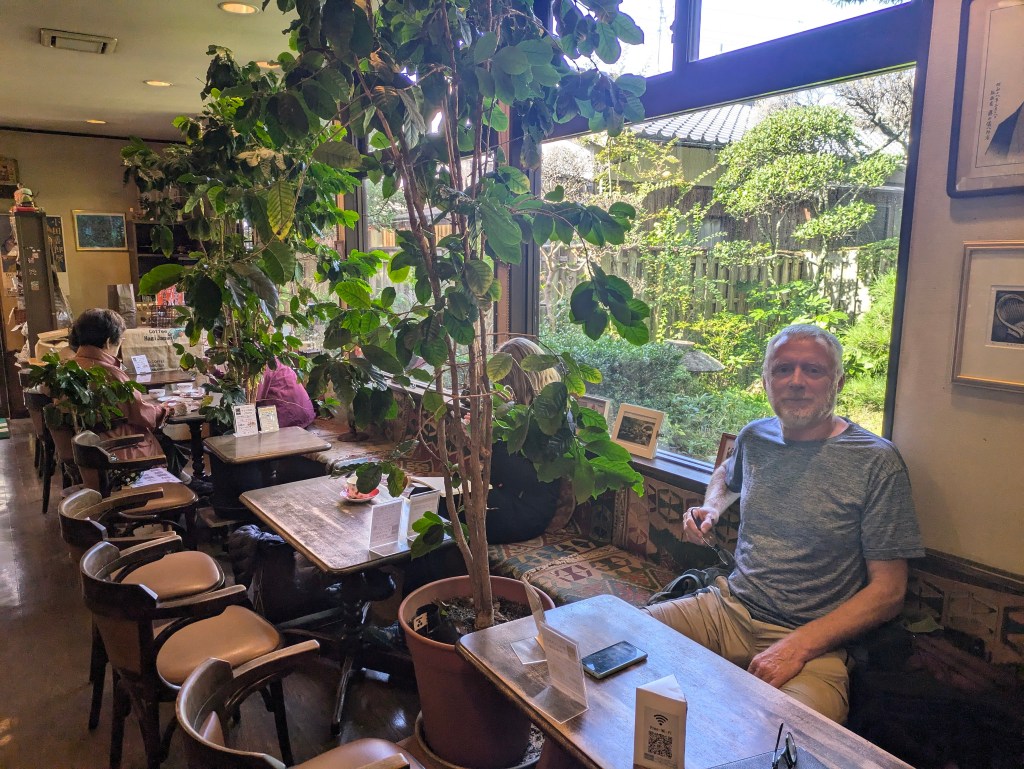
We were in need of a laundromat so while our clothes were whirling in the washing machines, we wandered around town with its wide streets and many traditional buildings, a place little changed from the time of the Samurai. We stumbled across a shop selling clothing for a reasonable price so prompted by the chilly wind, we bought a warm jacket each. We didn’t know it then but the cosiness of the jackets were going to be very welcome in the coming days with a  further dip in temperature. In the meantime we drank tea in a coffee house and eat home-made cake made from locally- grown figs and mandarin oranges, probably the most delicious cake we have eaten on our travels.

Our breaths blew clouds in the cold morning air as we parked at the starting point for the Sandan Gorge, A small man, muffled in a thick coat, was sitting outside the information booth.  He got up on our approach, leaned heavily on a cane, and pointed to a map giving us the bad news that the recent heavy rains had caused landslides and several parts of  the Gorge were closed because of the risks of more rockfalls and mudslides. He told us that he was a guide but he was out of action because of a bad fall a few months previously, that his favourite country was Alaska and that he had once stopped a grizzly bear in his tracks  with his stare. He gave us an example of the ‘stare’ which also involved barring his teeth. Since then, everyone in the village called him Big Bear.

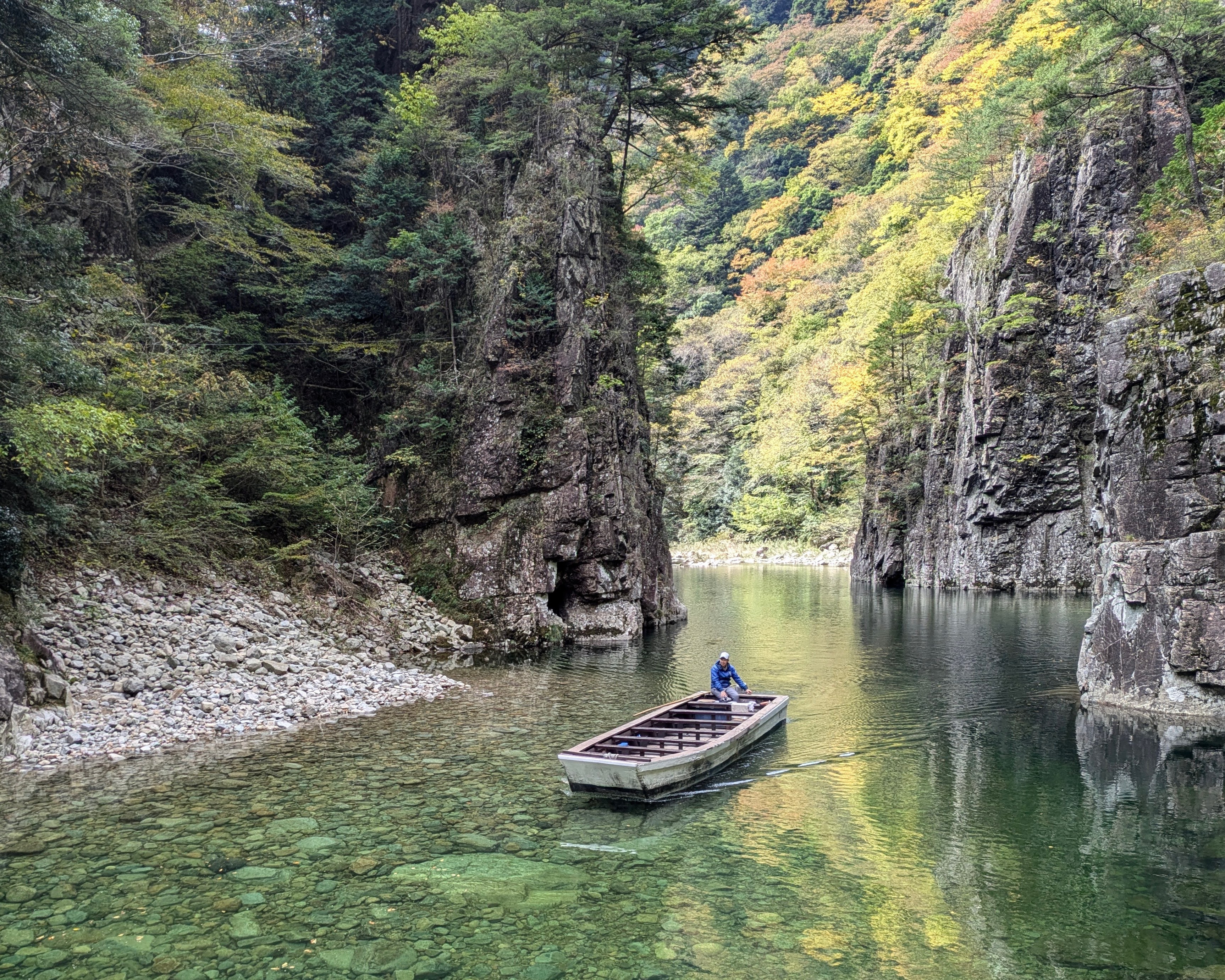
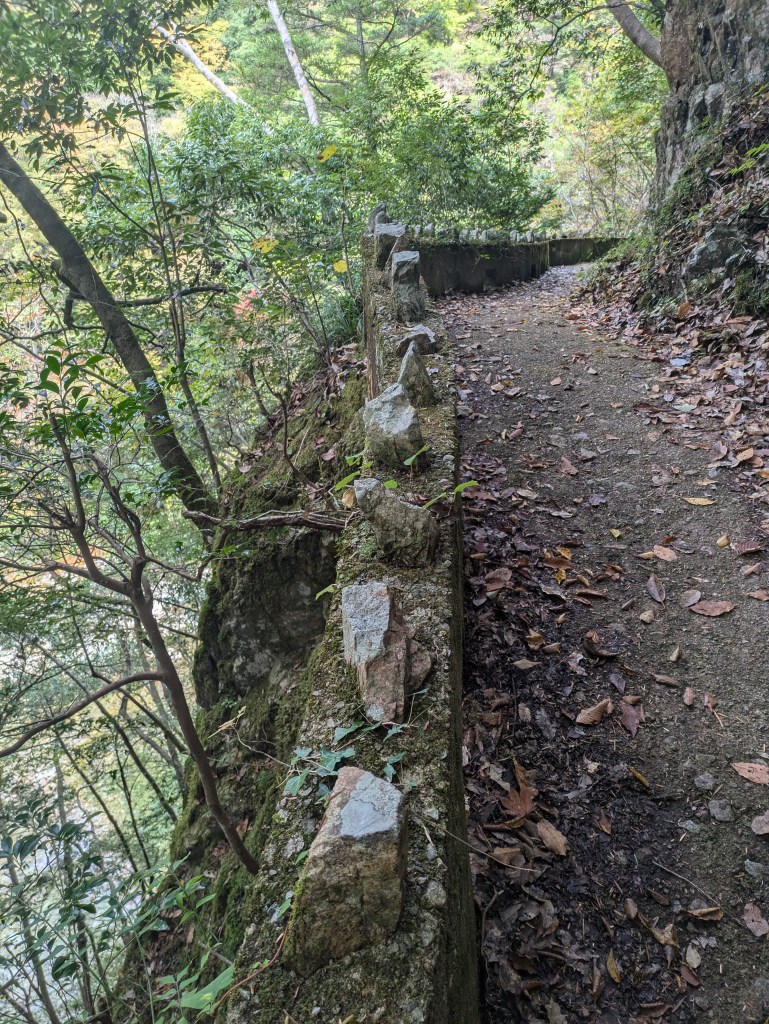
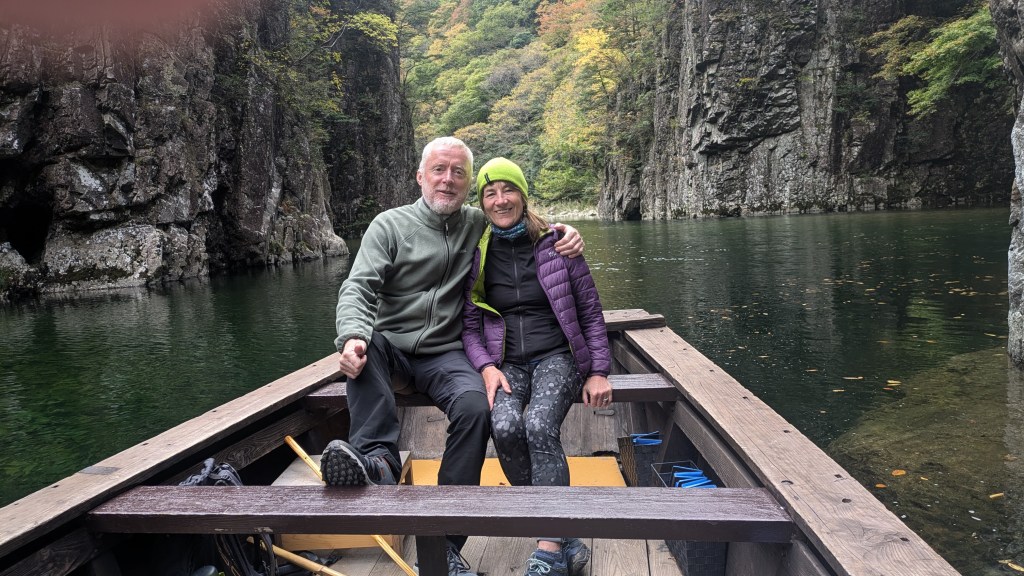
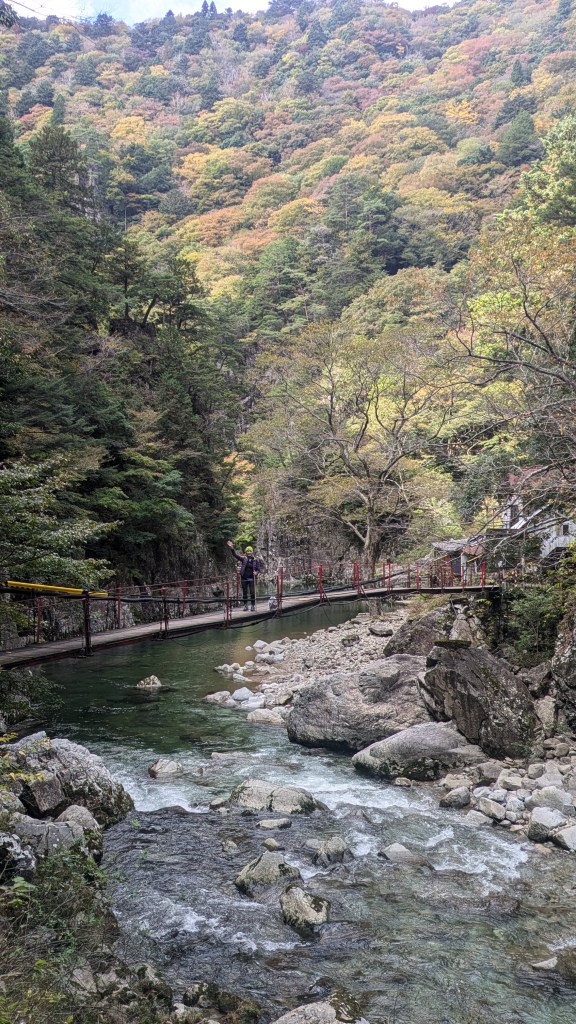
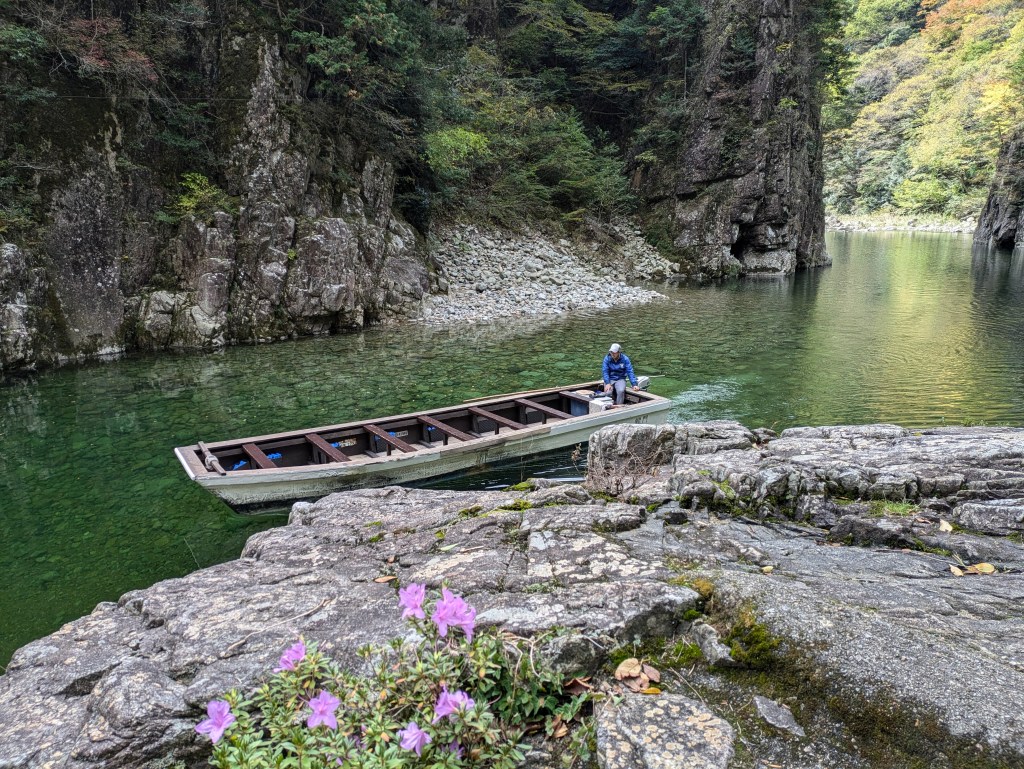
Although our hike was shorter than envisaged it was still worthwhile, true forest-bathing where a  tree lined stony path hugged the side of the ravine before descending to cross the green river on a swaying rope bridge. A short ferry ride gave us an appreciation from the water. Our boatman didn’t quite know what to make of Caoimhin who was singing ‘Don’t pay the ferryman until he gets you to the other side.

But our journey goes onwards, towards historic Kyoto, the city of dreams and the most visited city in all of Japan. Have we left the best until last? Time will tell.

Thanks for reading

Until next time

Japan: Holy Mountains and Glorious Gorges

Colombia – Coffee, Clouds and Condors

If you like to wake up and smell the coffee, then the colourful little Colombian town of Salento set amid green Andean mountains and coffee plantations may be your dream destination. Colombia has a reputation for producing excellent coffee and is the third largest grower of coffee after Brazil and Vietnam, so we were surprised to find that drinking coffee in most of the country was a real disappointment.🤨 I must admit that coffee isn’t really my cup of tea but Caoimhin, a coffee connoisseur, was disgusted with the coffee and even switched to drinking tea, water or some of the delicious fresh fruit juices. The reason for this conundrum? Apparently, all the best coffee is exported, leaving the locals with the dregs and it doesn’t help that Colombians like to stew their coffee for hours (or possibly even days) to produce a dark bitter drink called café tinto.  But not so in Salento, which has become a thriving tourist destination for coffee lovers from all over South America and further afield.

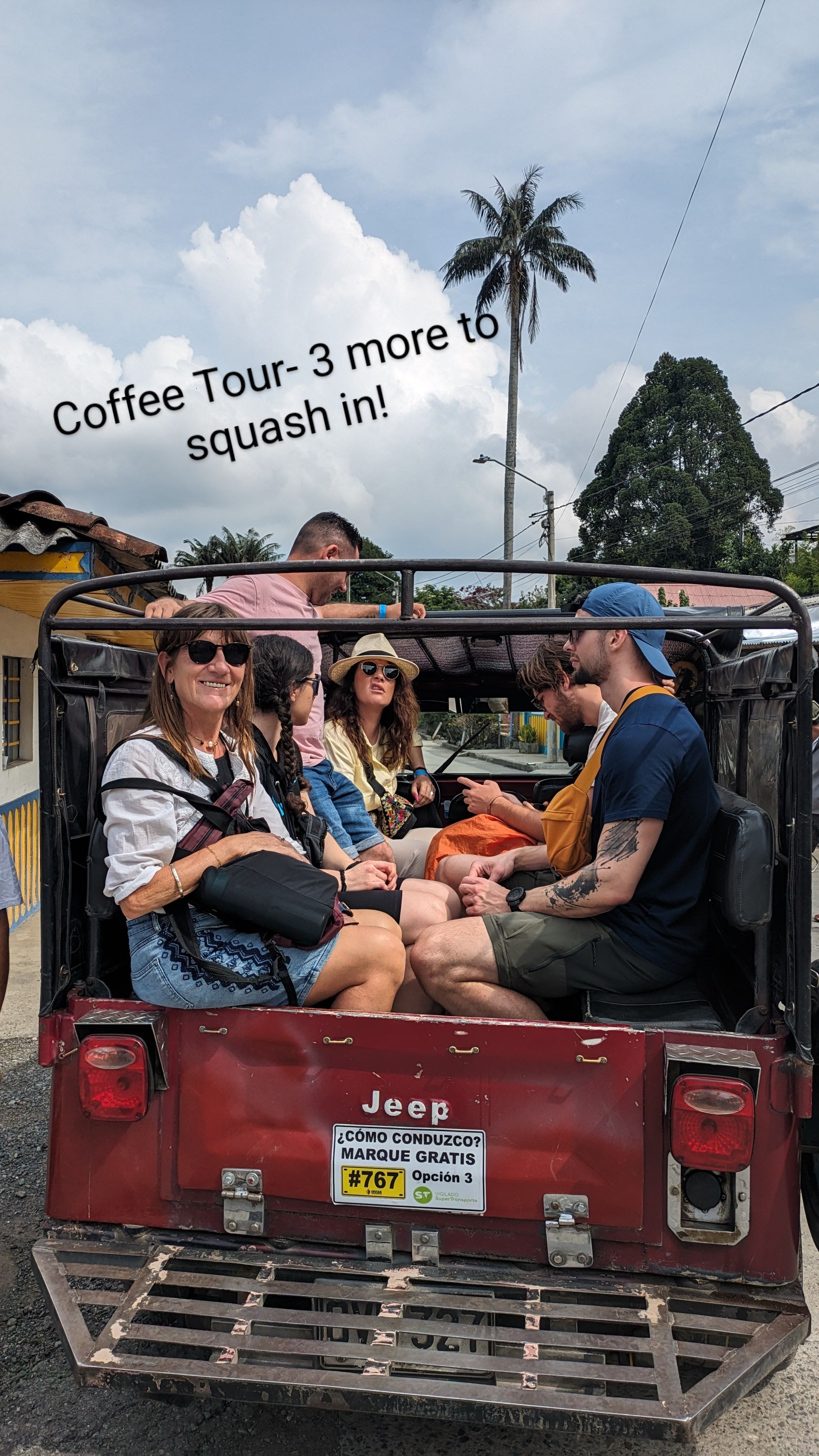
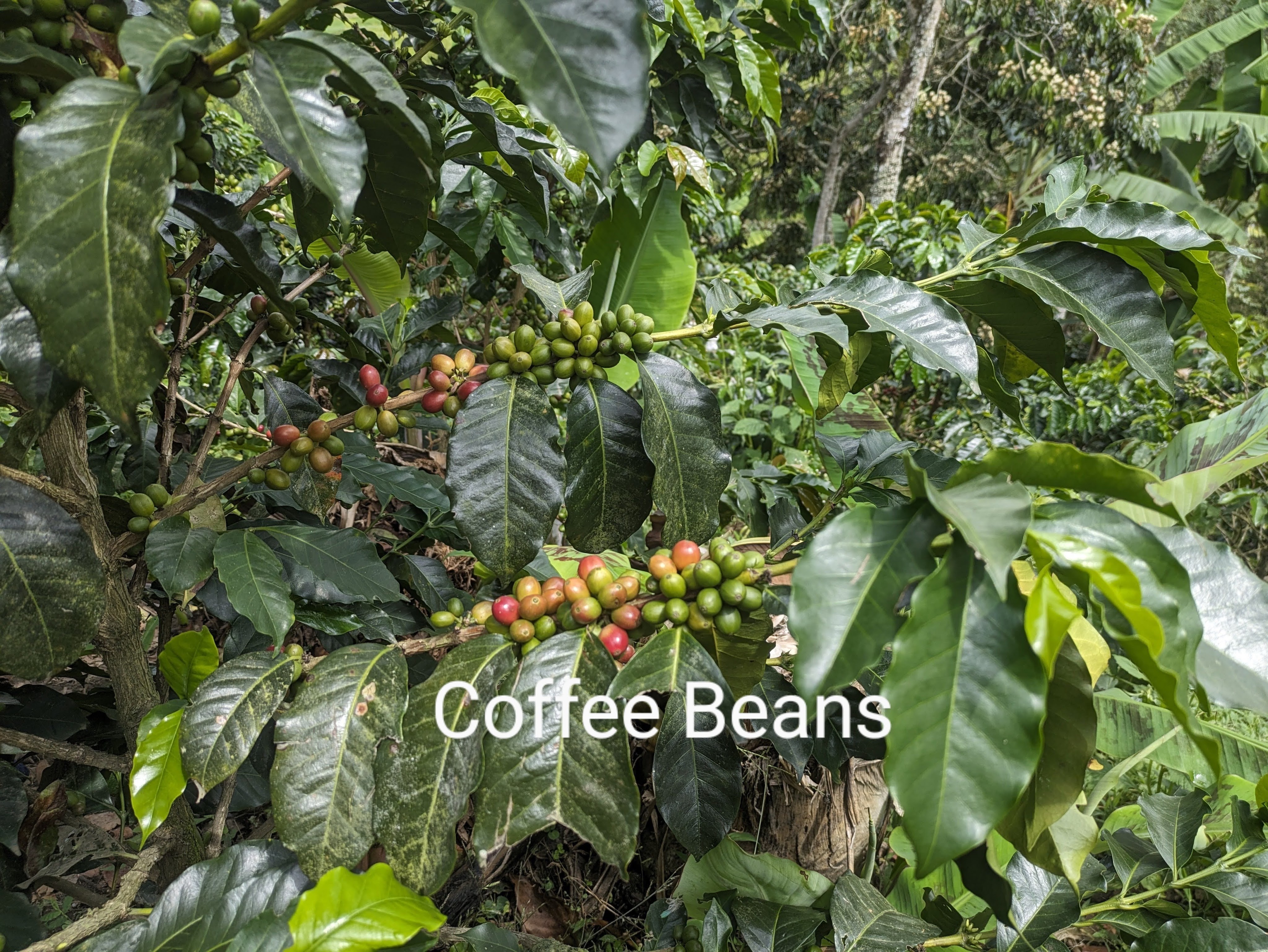
It is almost mandatory to do a coffee tour when in the town, tourists piling into dilapidated jeeps to jolt along dirt tracks to some of the numerous coffee farms doted in the picturesque hills. We opted to visit a small organic farm, Finca Don Ellias, which was both fun and educational.  All the coffee grown in Colombia is arabica, which grows at between 1000 to 2000m above sea level and gives a smooth taste while the other type of bean, robusta, grows at less than 1000m and generally produces a more bitter drink. We walked among coffee plants, their berries turning from green to ruby red, growing on a steep hillside interspersed with banana, avocado and orange trees. These other trees provide shade, absorb water, and attract flies and pests away from the coffee plants. On Don Ellios’s farm, every process was manual from composting to picking to bean separation to roasting which meant that coffee tours were as important as selling the coffee. Did you know that high roasting is often used with poorer quality bean, making coffee that it stronger and more bitter but lacking in subtle complexity? Of course, climate change is an issue here. The two harvests a year in April/May and October/November which used to be as reliable as clockwork have become problematic with changing weather conditions, the coffee berries ripening haphazardly at different times.

Grandmother’s Sock Coffee😉

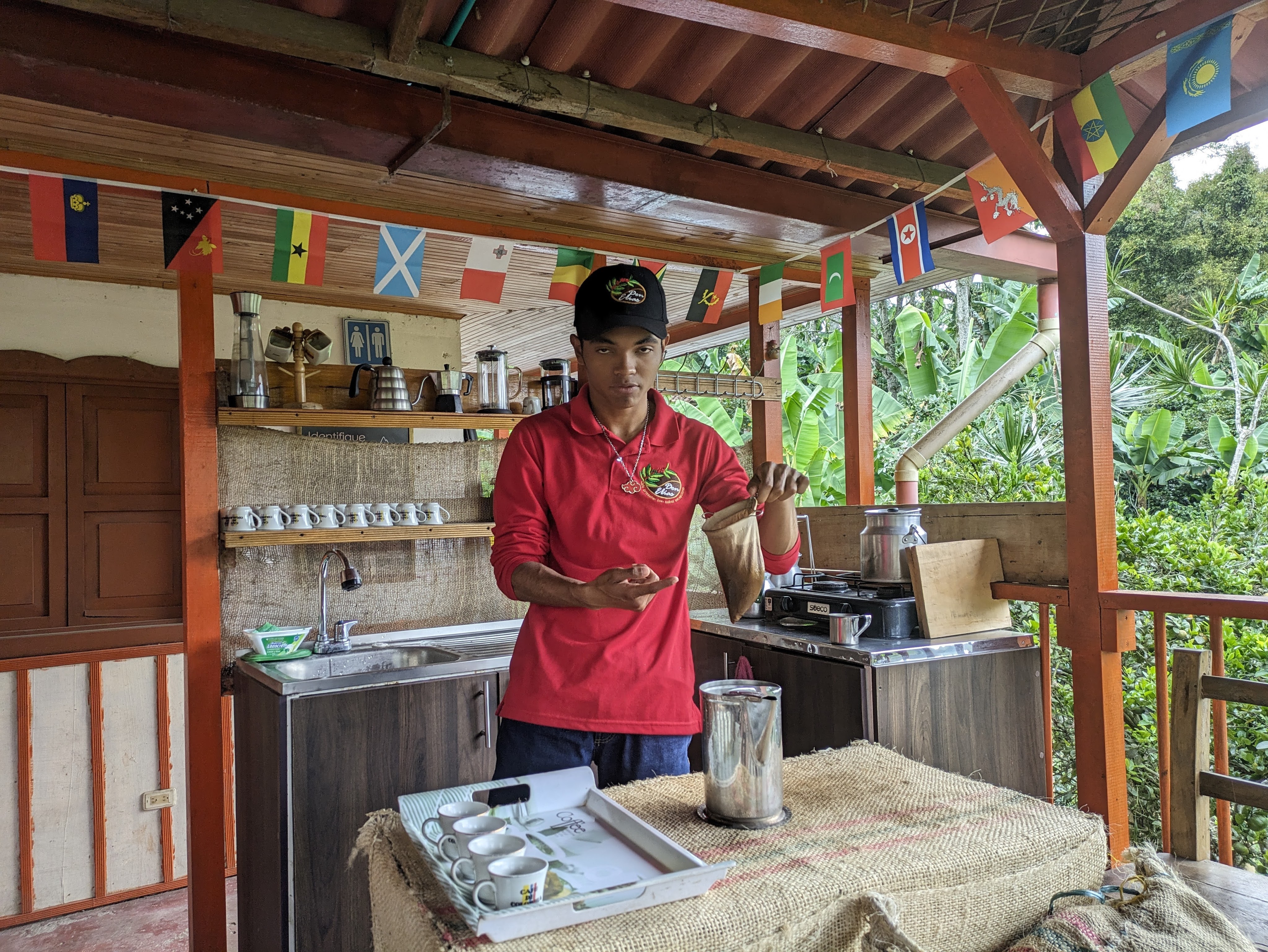
 The coffee ceremony which was part of the tour was quite elaborate involving heating cups, slowly adding water which was at 80C (never add boiling water!) to freshly ground coffee placed in a cotton filter known as ‘grandmother’s sock’. After two rounds of slow careful washing and discarding the liquid, our warm cups were filled with rich smooth coffee which smelt gorgeous and tasted pretty good even to my taste buds.

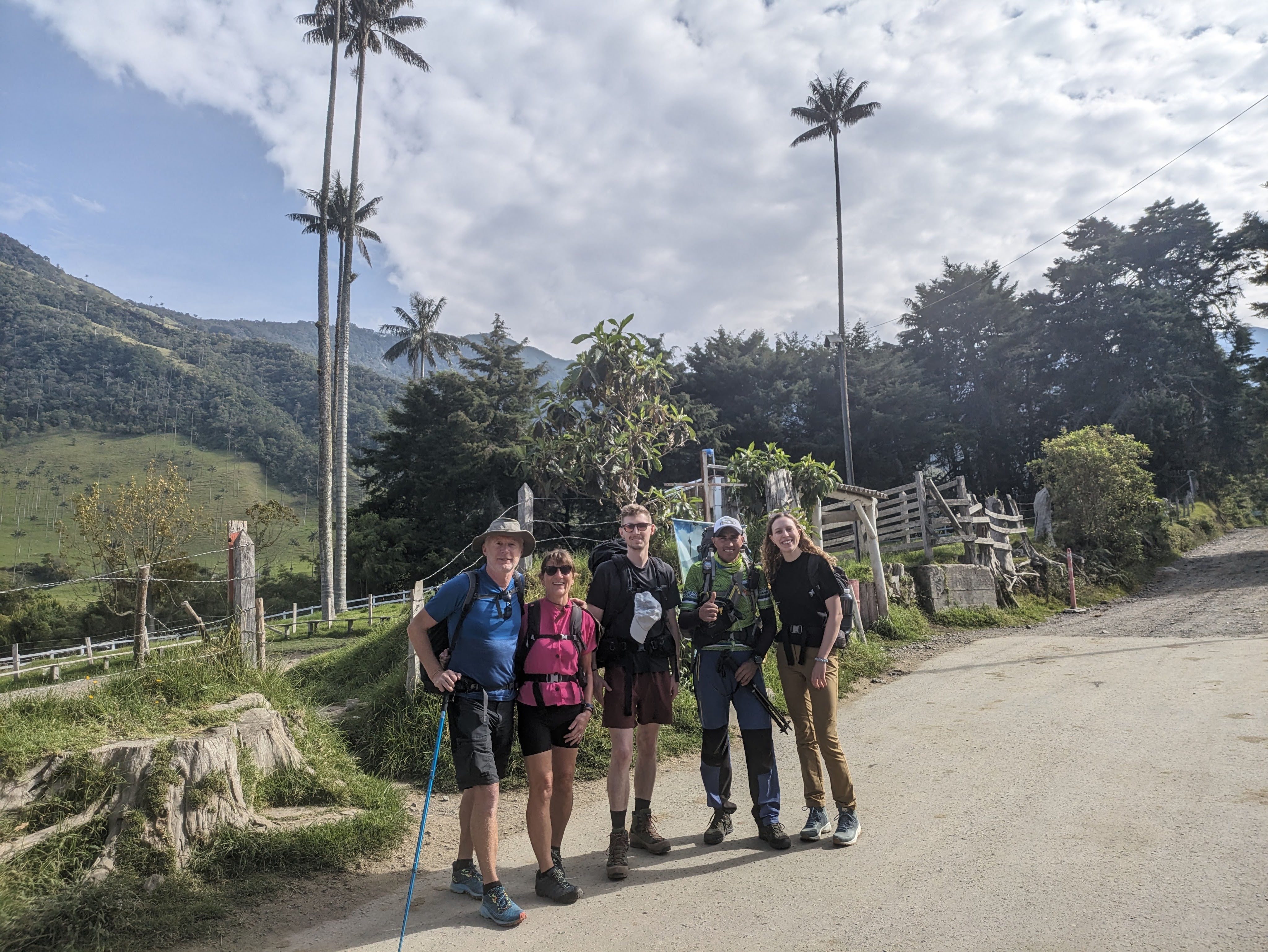
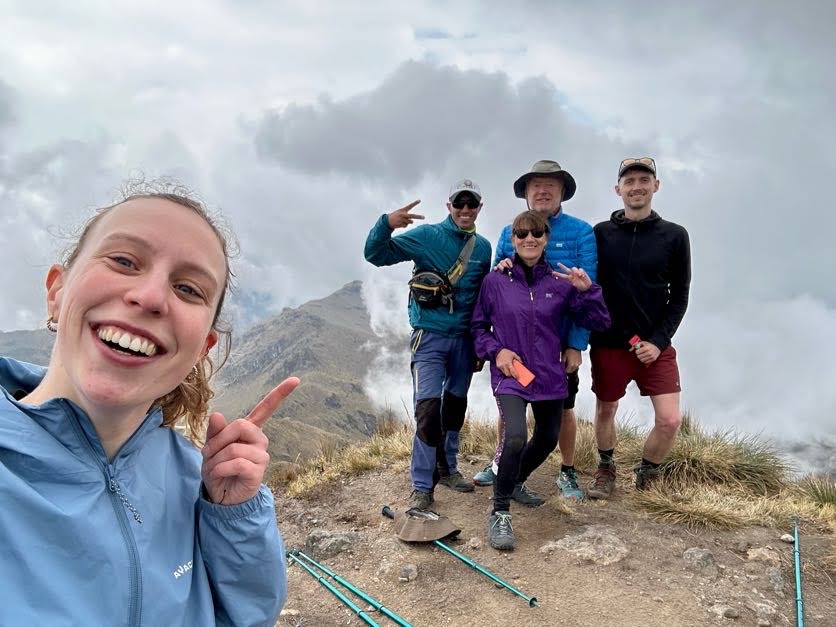
Our Guide, Fernes, and Ben and Dorien, our trekking companians (Waxed Palms in background)

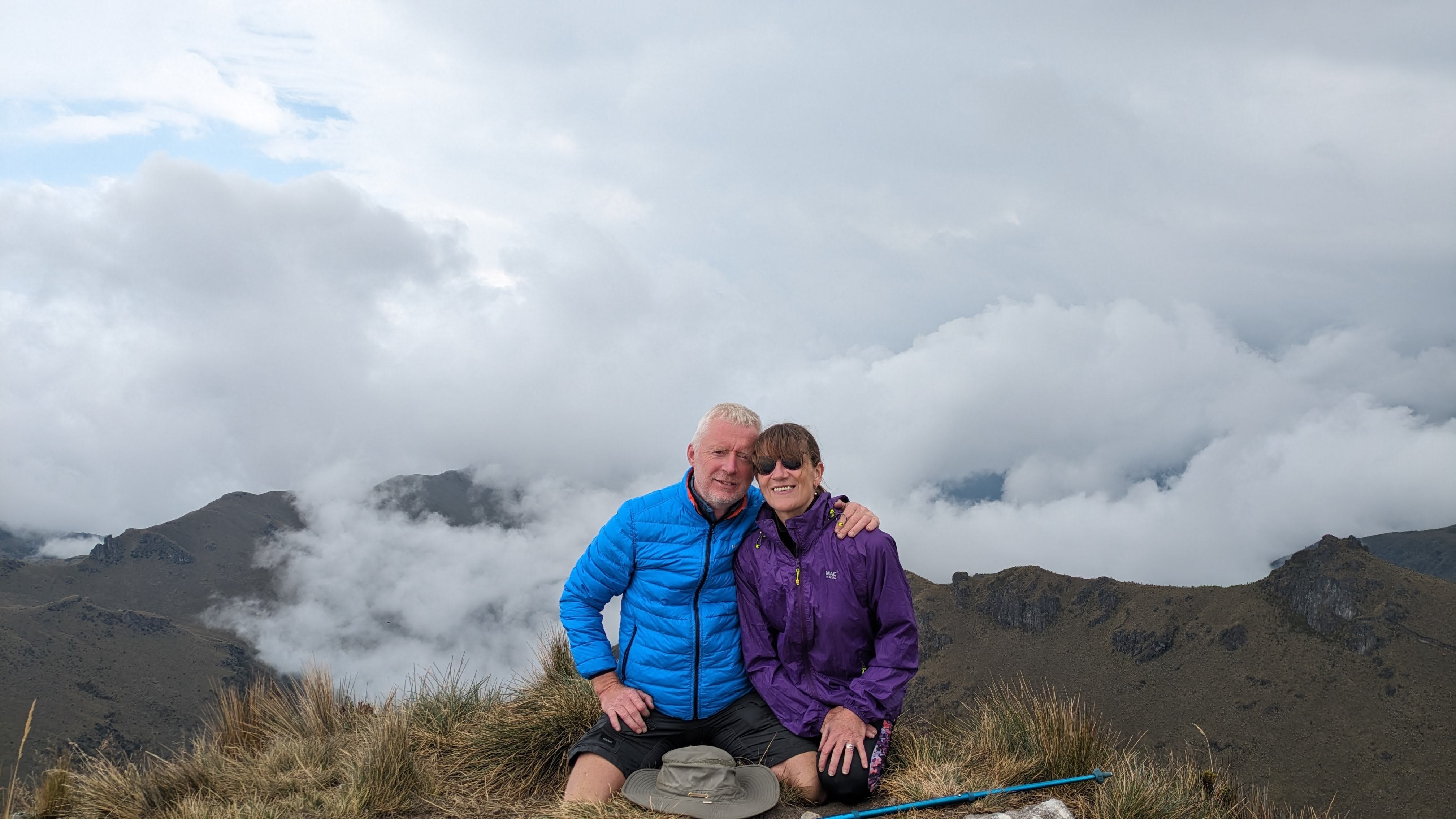
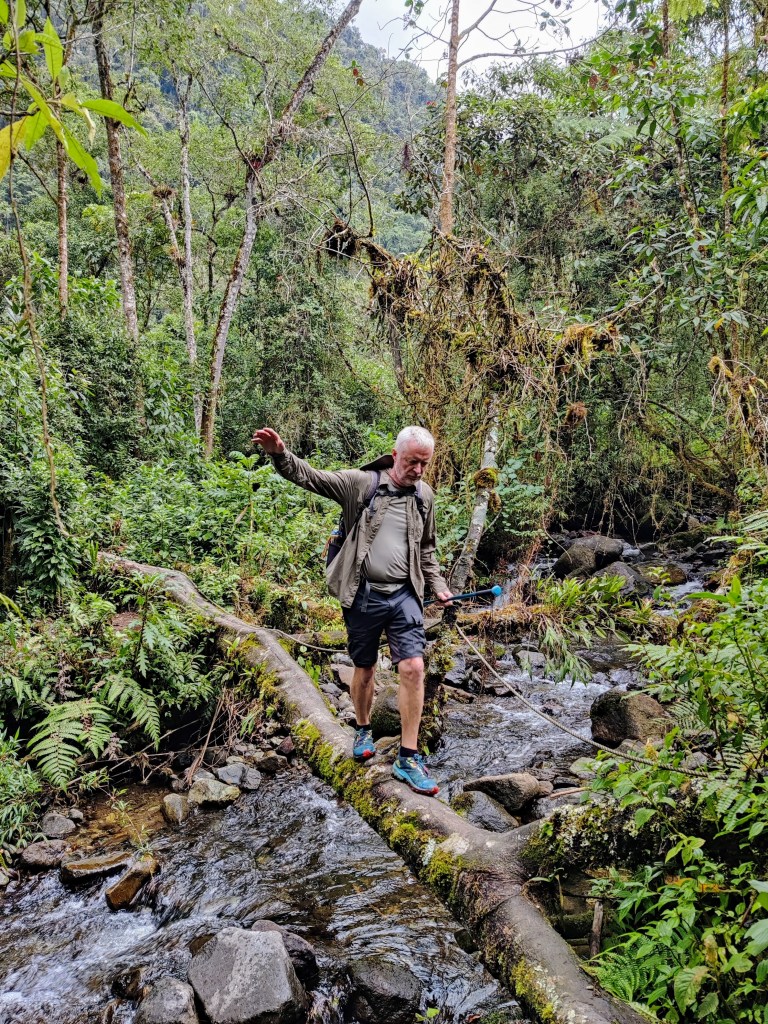
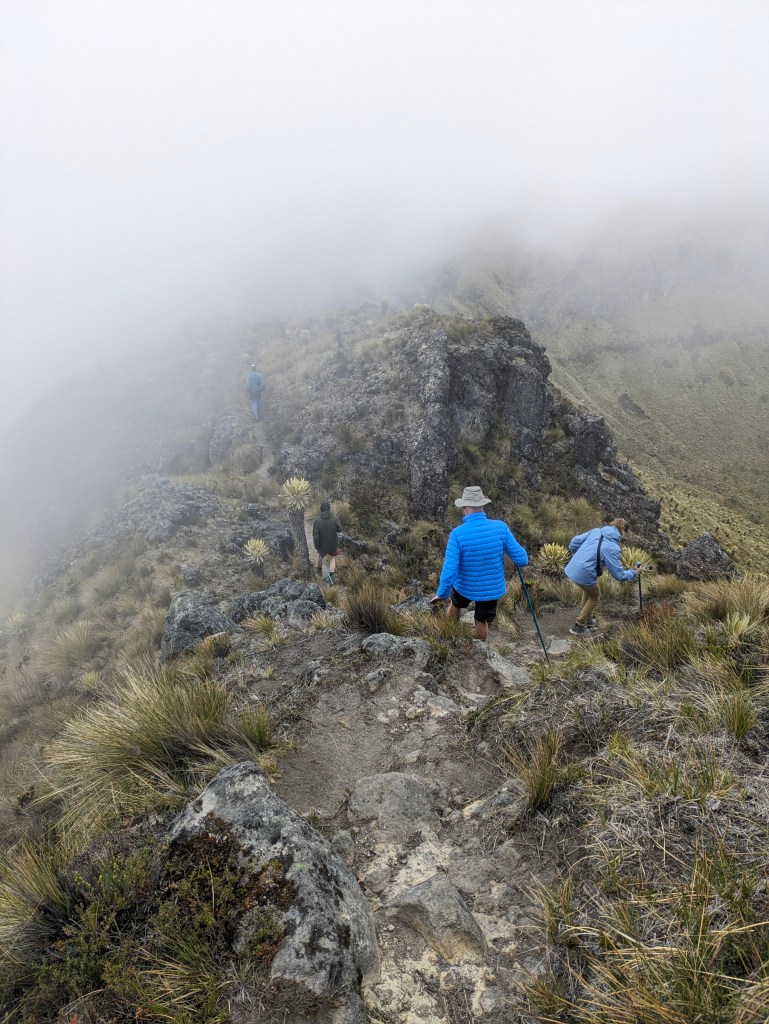
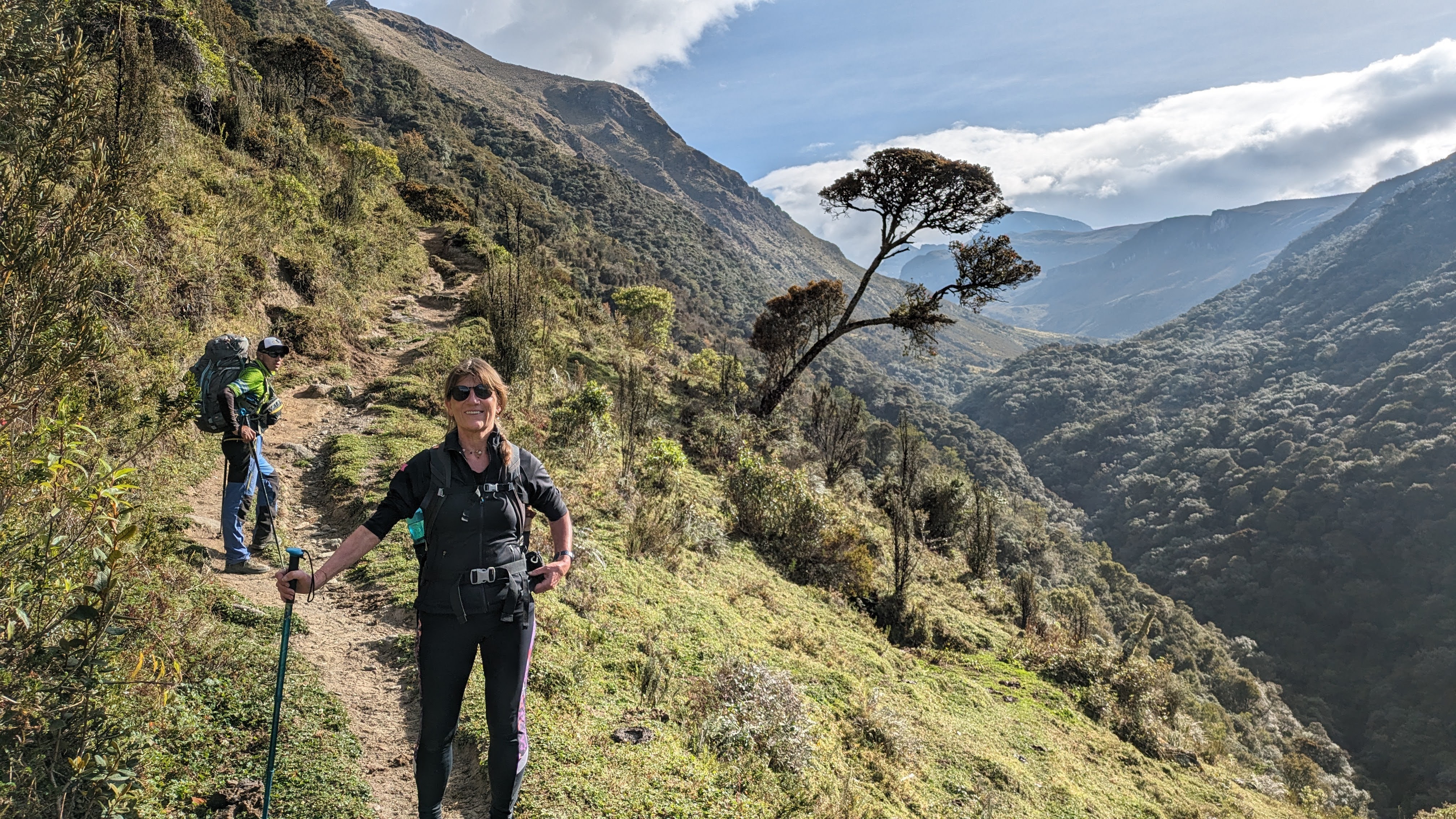
The other reason to visit Salento is to trek in the stunning Valle of Cocora and the Parque National Los Nevados. We went on a three-day hike with Salento Trekking which started in sunshine with a backdrop of spindly wax palms, the national tree of Colombia and the world’s tallest palm-they can reach sixty meters. Our hiking companions were a lovely young Belgian couple from Antwerp and our ‘English speaking’ guide, Fernes, whose grasp of English was probably worse than our Spanish.   Our path took us through jungle with flickering hummingbirds and brightly coloured woodpeckers, up into pine and eucalyptus forest, where the trees groaned and creaked above us as we walked and onwards into cloud forest. We hiked down to the Rio Quindio, and sweated up the other side, crossing and recrossing the same river three times on rickety rope bridges, just a few pieces of wood tied together with a plank or two missing to keep things interesting. Cloud and mist shifted over the mountains in an ever-changing pattern but became denser and damper every afternoon until all views were obscured.

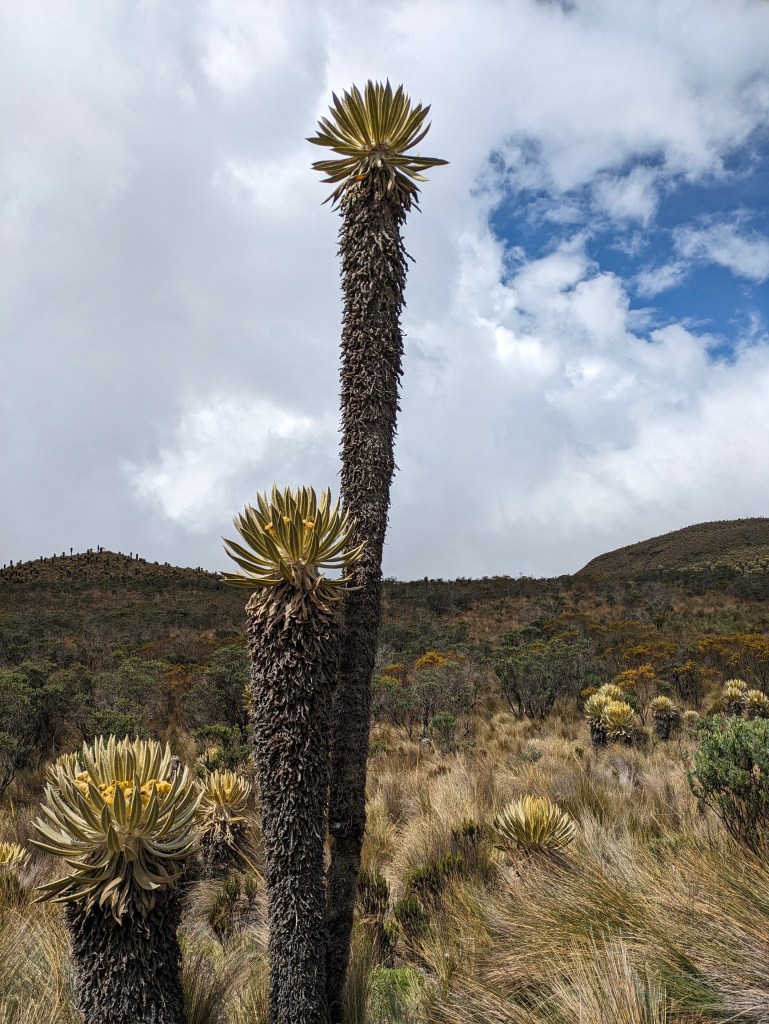
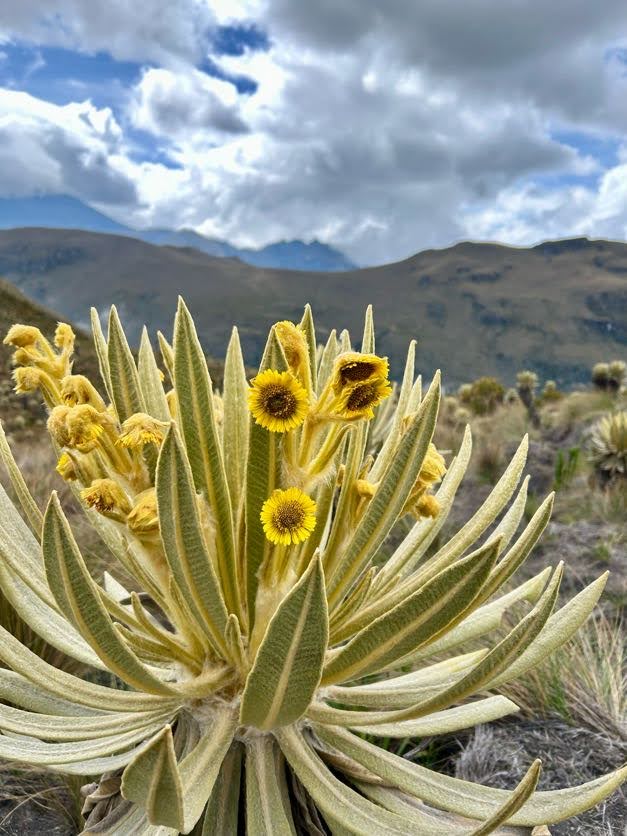
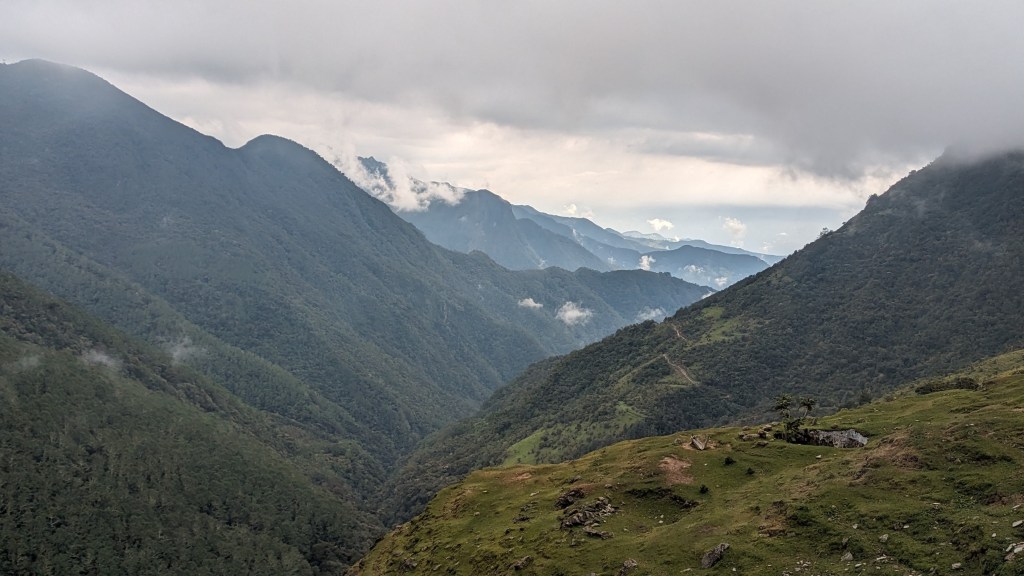
On the second day, we entered the paramo ecosystem, a wildly beautiful area of high-altitude grassland above the tree-line with a host of unique vegetation where the colour palette changed from various greens to honeyed gold. There we found the stunning Frailejones, a shrub that looks like a cactus with a flowering head of miniature sunflowers. Frailejones are extremely slow growing, about a centimeter a year and we were surrounded by plants of all ages but some were at least five hundred years old. We huffed and puffed up to the viewpoint on Cerro Chispas at 4408m and were treated to a vista of cloud and mountain. Then a majestic condor soared overhead with wings spread wide, and almost take our breath away. The beautiful bird symbolises power and grace but also has spiritual significance for the indigenous people who believe that it is the wise grandfather who watches from above, offers protection and regulates the energies of the world.

 While the scenery was gorgeous and the various ecosystems were interesting, the fascinating part of trek was staying in the homes of the local people who live in these isolated Andean mountains. On the first night we stayed on a farm at 3500m, Finca Argentina. This simple homestead was merely a few connected windowless sheds where the only light came from some sheets of clear corrugated plastic in the roof. There were horses, pigs, geese, hens and a few sheep but this was an inaccessible  place without roads where the way to get in or out was by narrow mule tracks.

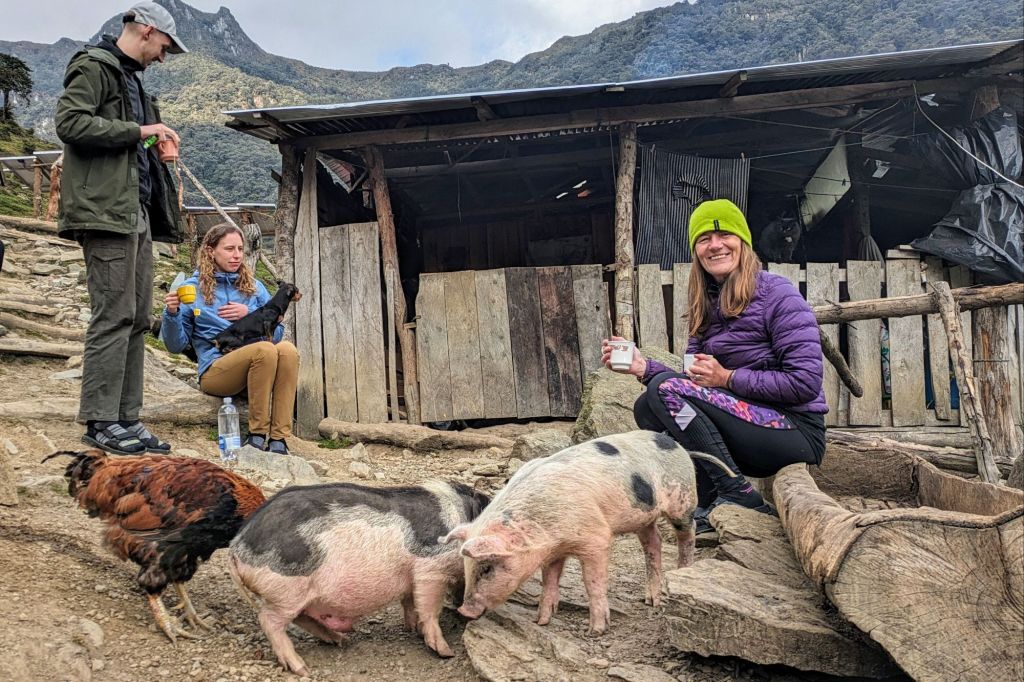
Animal Farm, Finca Argentina

Our welcome was lukewarm, and I can honestly say that it was the coldest house I have ever been in, a virtual wind tunnel where it was warmer to sit outside with the animals, a few pigs, hens, dogs and cats. It was the first time that we were cold since our arrival in Colombia despite wearing all the layers that we had been carrying around in our backpacks for two months.  We arrived in dense fog, cold and damp, and we stayed that way for the evening although the mists cleared and the beauty of the valley revealed itself. The only warm spot was the cozy kitchen, where firewood was burning in a huge range that also served as the cooker, and music played on a radio but the trekkers were banned from there. The cramped bedroom had no electricity and three double-bed bunks which in theory could sleep twelve but our party of five were the only ones to sleep there on lumpy mattresses that night. In fairness there were plenty of thick blankets on the beds whose questionable laundry history didn’t bother us. Caoimhin, who was wearing shorts(that’s another story), took a blanket and draped it over himself in the house but was told that blankets couldn’t be taken out of the bedroom. Dinner was tasty, vegetable soup followed by rice and veg lentil stew, but portions were meager especially for appetites made ravenous by cold, exercise and mountain air. We were all tucked up in bed by 7.30pm for warmth more than tiredness. When Dorien, the Belgian girl, got up during the night to make her way through the house to the toilet using the eerie light of her phone, she found a scene of carnage outside the bedroom door, guts and feathers and a very satisfied fat cat. I was glad that I didn’t need to use the facilities during the night because I would have probably screamed the place down.

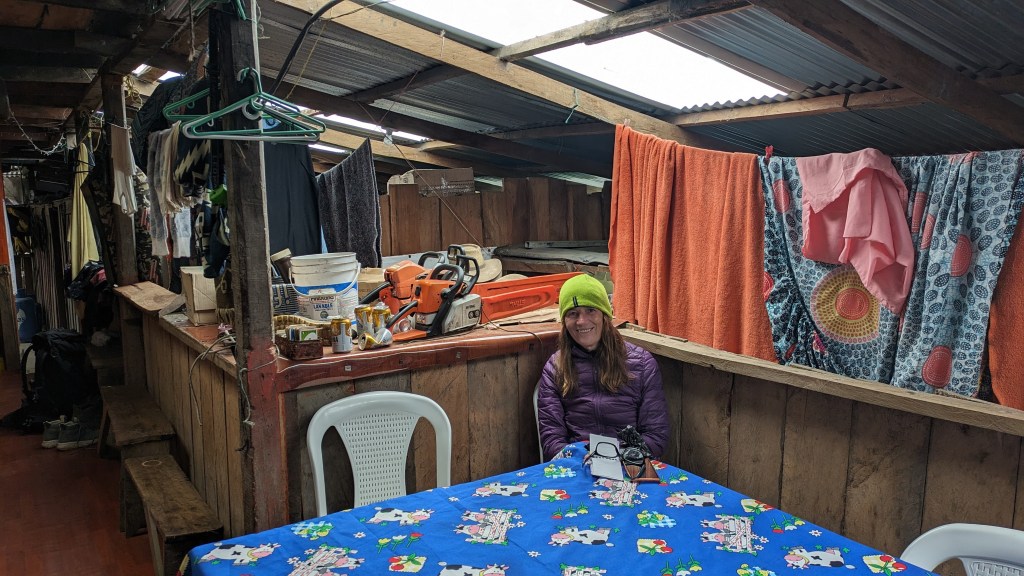
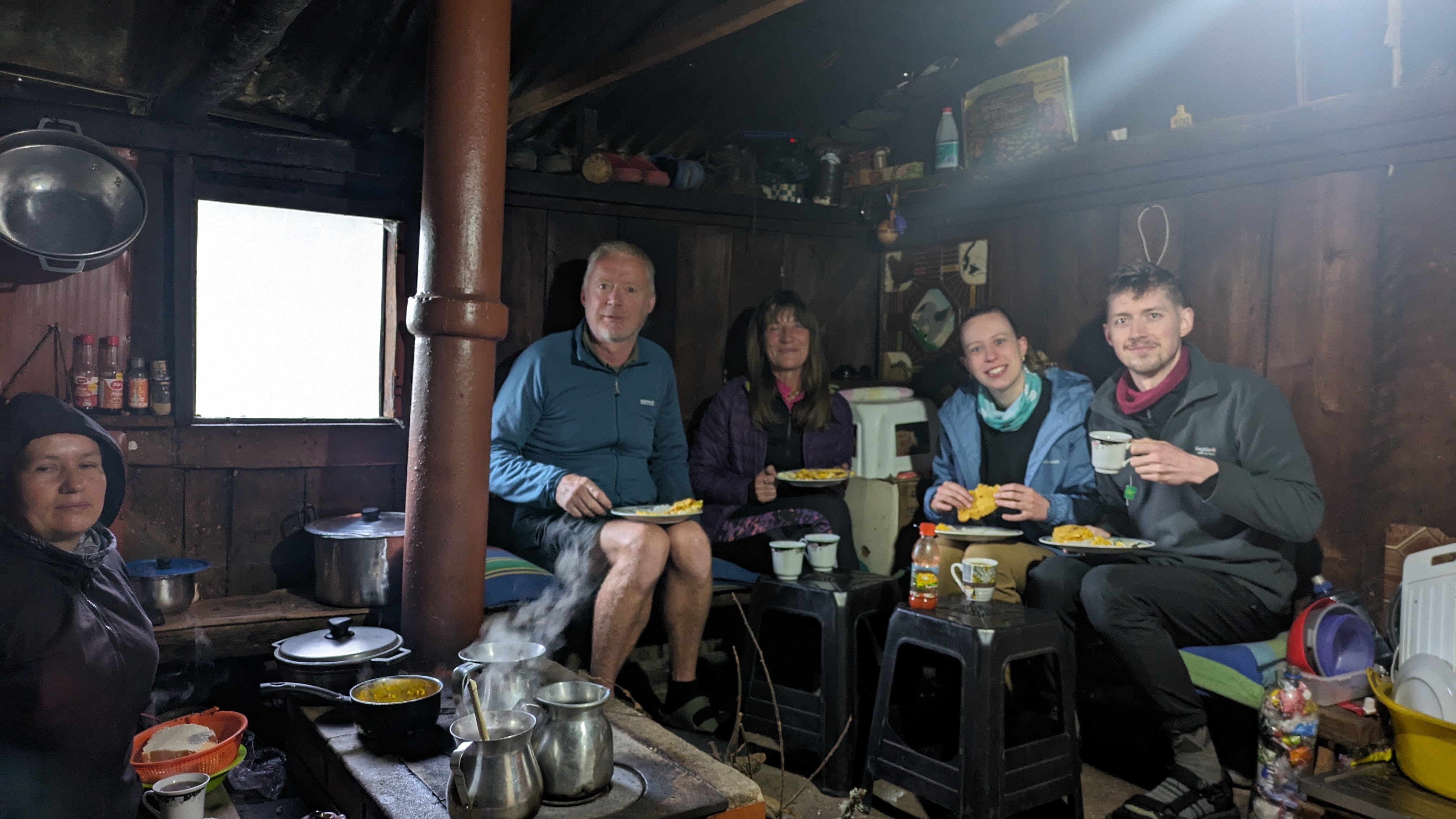
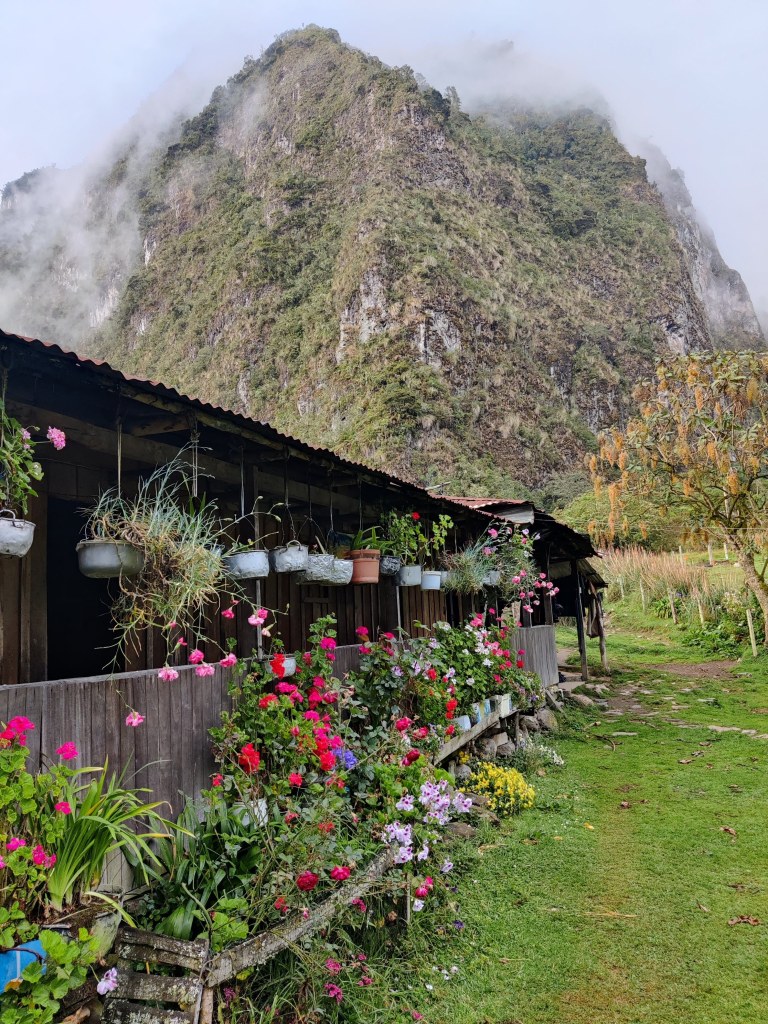
Our second night at another farm, Finca Jordan, could not have been more different. We again arrived at about 4pm in heavy fog which lifted almost immediately.  We saw that we were surrounded by mountains, steep walls of grey rock with a waterfall tumbling down and a green field with pigs and hens and an Alsatian dog called Rocky who kept chasing a chicken despite the constant shouting of the woman of the house. There was birdsong and tumbling water and a riot of flowers bedecking the simple house, agapanthus, geraniums, roses, carnations and red-hot pokers. Our quarters were a green and blue shed with an attached bathroom and a shower with hot water…luxury after the previous night.Our host invited us into her kitchen, where we sat on a raised platform with our feet level with the stove. She plied us with coffee, tea and hot chocolate and piled our plates high with more food than we could possibly eat, brimming bowls of lentil and veg soup, rice and sliced avocado and vegetables (all of us were vegetarians). She fried long slices of bananas on her stove, covered them with slabs of her own homemade salty cheese, garnished them with spring onions from the garden. Her husband came in, put on a pair of croc slippers, and helped his wife by slicing a few veg while all the time, she talked without pause. Maybe it was the isolation that made her so chatty or maybe it was just her nature. This finca could also only be accessed by mule track, a four-to-five-hour rough trek down the mountain to get a few basic supplies.

A cosy mountain kitchen, Finca Jordan

After an ample breakfast, we headed off downhill from this haven of hospitality in a truly beautiful spot. On the way, Caoimhin got a rare sighting of a puma who stopped and stared at him on the winding stony path about a hundred meters ahead before disappearing into the trees. I got a mere glimpse of eyes and movement but that was all. The hike was very rewarding but as it was billed as a Mountain Wildlife Trek and we had an English-speaking guide, we expected to learn more about the flora and fauna. Unfortunately, our guide was not very knowledgeable, or interested in nature in any language. He just wanted to get the hike over as quickly as possible while we wanted to enjoy the enchanting scenery and spend as long as possible in nature, especially on the third day which was all downhill.

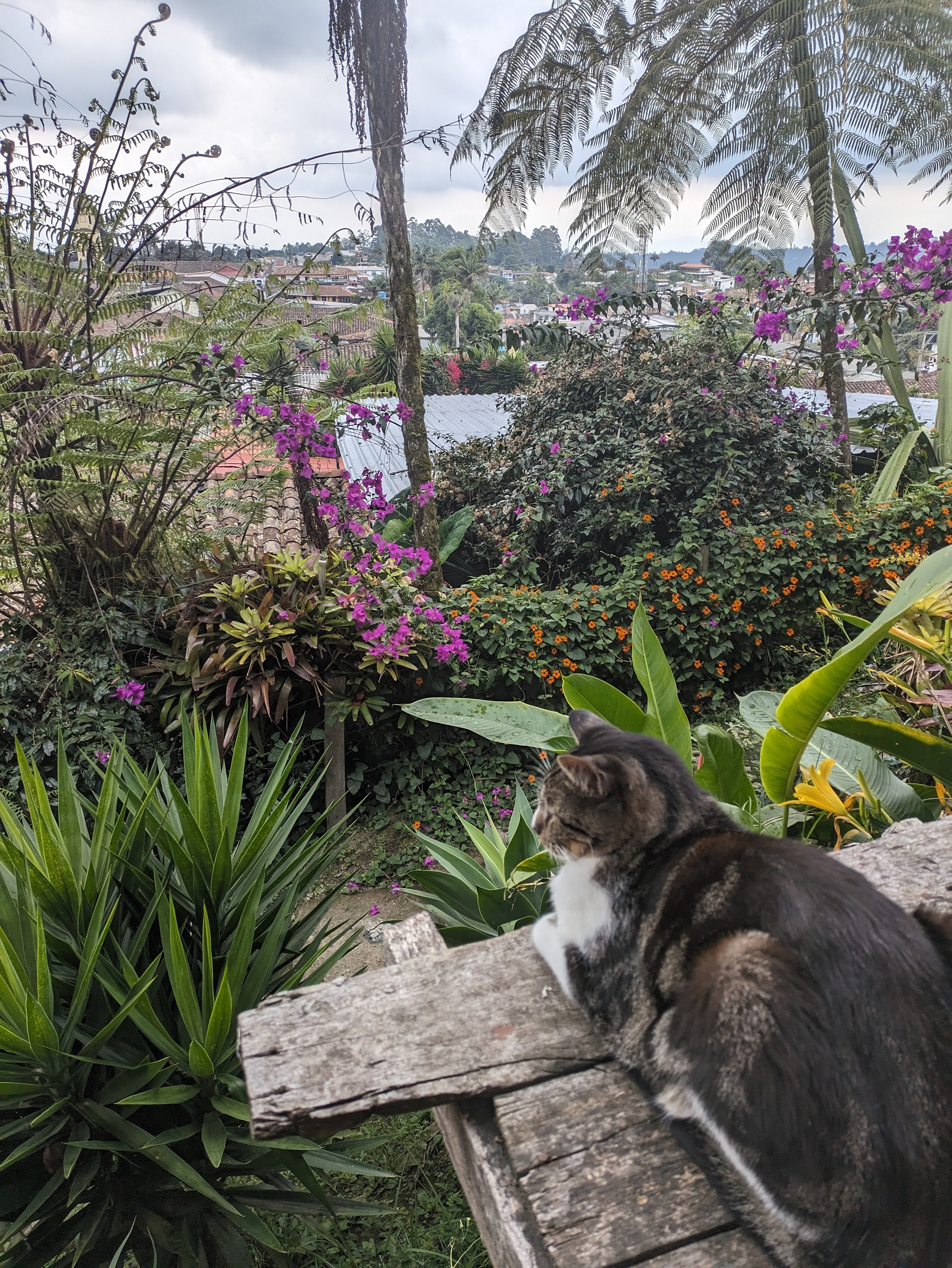
We stayed in two different places in Salento, in Hotel Natura Cocora for a few nights before the trek. This was a lovely rambling place with stunning views, a dusty kilometer and a half uphill from the town where we were welcomed and looked after by the very friendly and talkative Don Hugo, who ran the place almost single-handedly. The cleanliness was a little suspect and the bedroom with its old antique furniture was a little shabby with peeling paint but we loved the friendly atmosphere.   When we came back, we stayed in town at a fabulous hostel, Atardecer de Salento with its cats, breezy wooden balcony and proximity to restaurants and bars.

Its a cat’s life at Atardecer de Salento Hostel

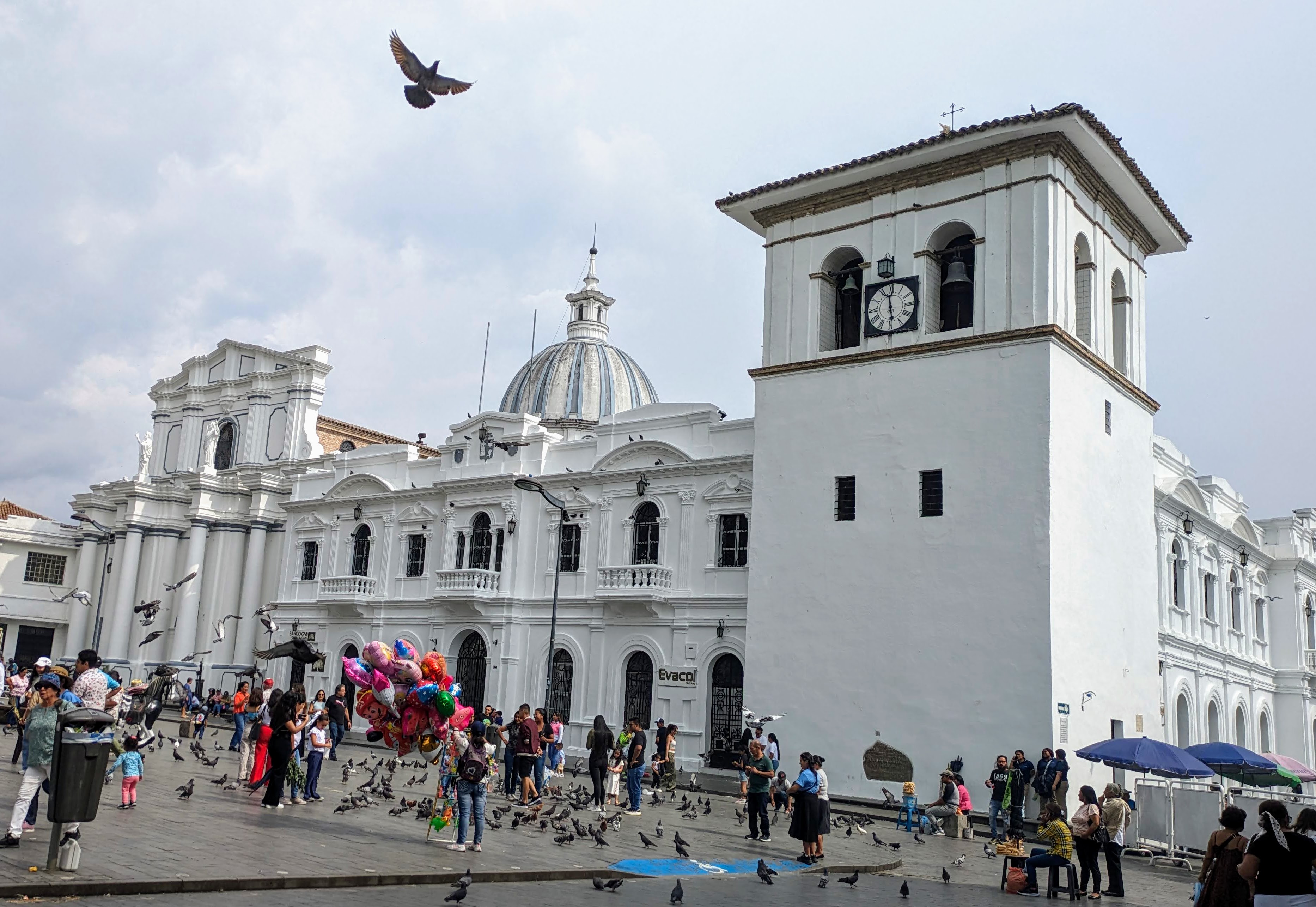
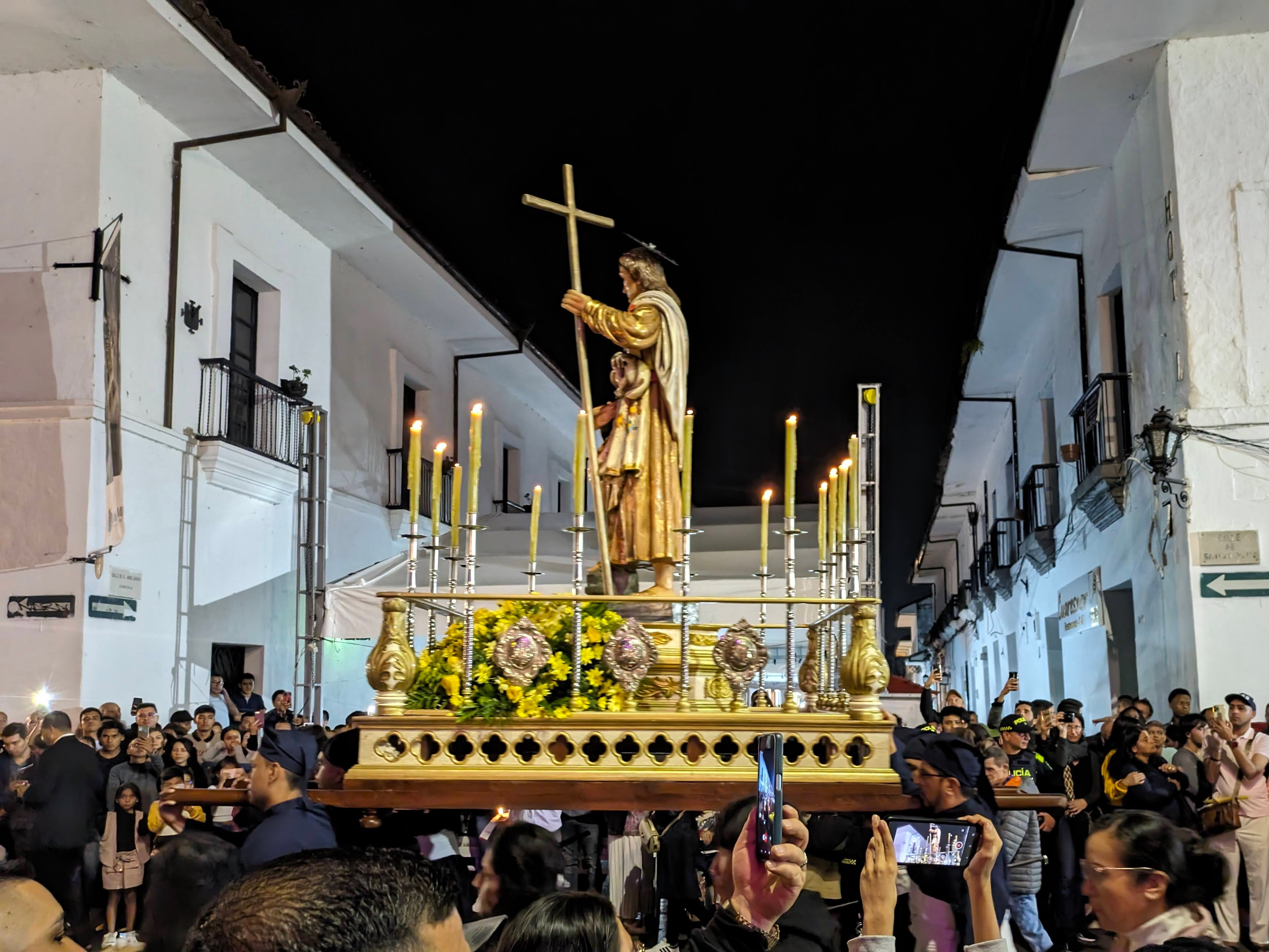
After a final coffee in Salento, we were on our way south, a seven-hour bus journey to Popayan, a colonial city of churches and white buildings. Almost as soon as we stepped off the bus in the late afternoon, we were greeted by the smell of greenery, long green palm fronds and the lingering scent of incense.  We were too late to see the Palm Sunday processions, but Popayan is very popular during Holy Week, Semana Santa. Colombians flock there for the religious ceremonies, the candle-lit possessions that occur every night during Holy Week and the market stalls that are set up on many of the lanes.  On Monday evening, we joined the crowds to watch drumming bands slow- march through the ancient streets followed by numerous wooden platforms of religious icons, carried on the shoulders of men called ‘cargueros.’ The procession was long and slow, following the same route past the many churches in a tradition that has gone on continuously since the sixteenth century. Although there were several thunderstorms in Popayan on Sunday evening and Monday afternoon, the rain held off during the nighttime procession.

Popayan. the White City, La Ciudad Blanca
Holy Monday Procession, Popayan

We are about to hop on another bus to take us on a partly-dirt road to San Augustin, another small town in the Andes which is close to some pre-Columbian Archaeological sites and I’m sure that we will find some more Easter traditions.

Felices Pascuas

Gracias por leer esto

Till next time……have fun xx

A Home in the Mountains – Tranquil Location, Low Maintenance, No Problem with Neighbours😁
Colombia – Coffee, Clouds and Condors

Colombia – Tragedy and Transformation

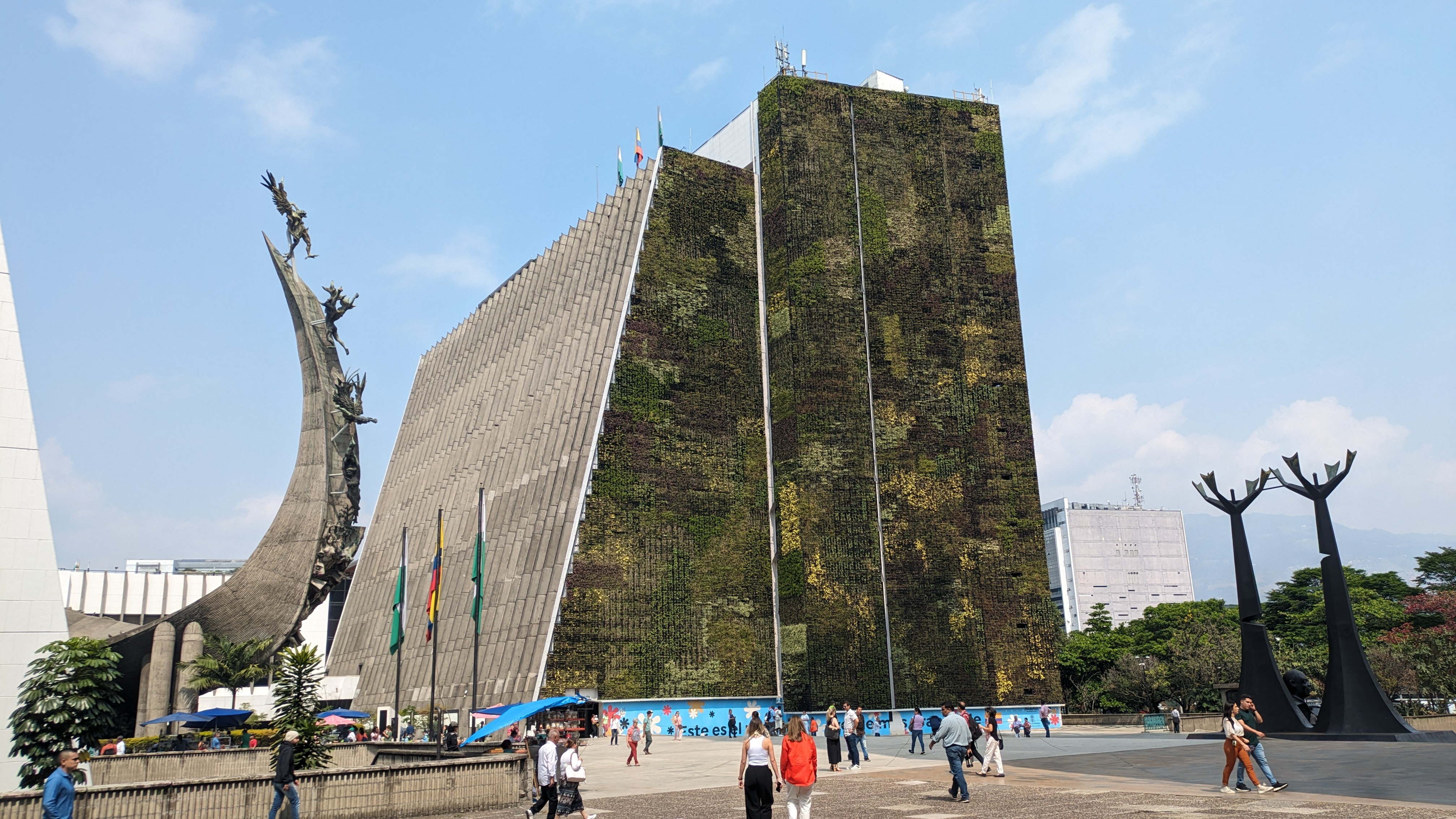
La Alpujarra Administrative Centre, Medellin – with a green planted wall to soften the exterior.

Medellin was the most fascinating and interesting city we visited in Colombia. It is also probably the most well-known Colombian city, famous for all the wrong reasons because of the popular Netflix series, Narcos, a story of corruption, violence, and Pablo Escobar.

 Two words sum up Medellin – tragedy and transformation.  It was once the most dangerous city in the world, topping the tables for the highest rate of murder and kidnappings in the 1980s and 1990’s but now it regarded as the most fashionable Colombian city and the one with the best quality of life, attracting tourists and digital nomads.  The city sprawls along a narrow valley and climbs steeply into the surrounding mountains with a near perfect climate, often called the place of Eternal Spring.

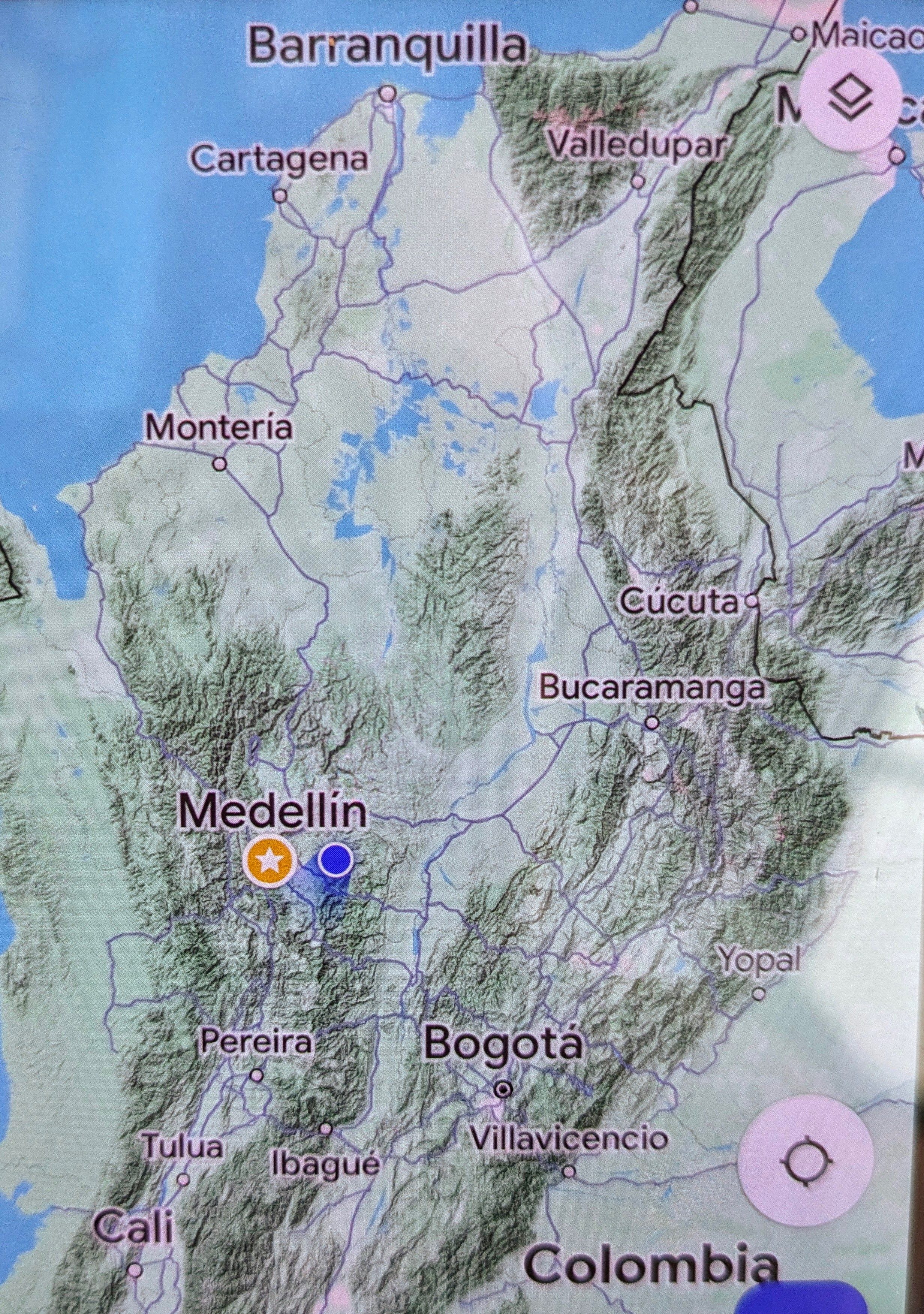
Medellin on Map

The economy of Medellin was founded on coffee, a plant that that was ideally suited to the fertile mountainous hinterland until it was dominated by another plant, the coca plant, which also thrived in the region. Coca leaves have always been grown for small scale local consumption because when the leaves are chewed or brewed into tea, it acts as a mild stimulant which suppresses hunger and fatigue and is helpful in combating altitude sickness. Coca leaves are also the raw product in cocaine production, and this is where the infamous Pablo Escobar and the Medellin Cartel enter the picture. Escobar continues to be a controversial figure to this day, loathed by many but admired by others because of his ‘generosity’ – he gave almost 400 houses to the poor in Medellin.  But he was also directly responsible for an estimated 40,000 deaths, unspeakable violence, fear and mayhem.

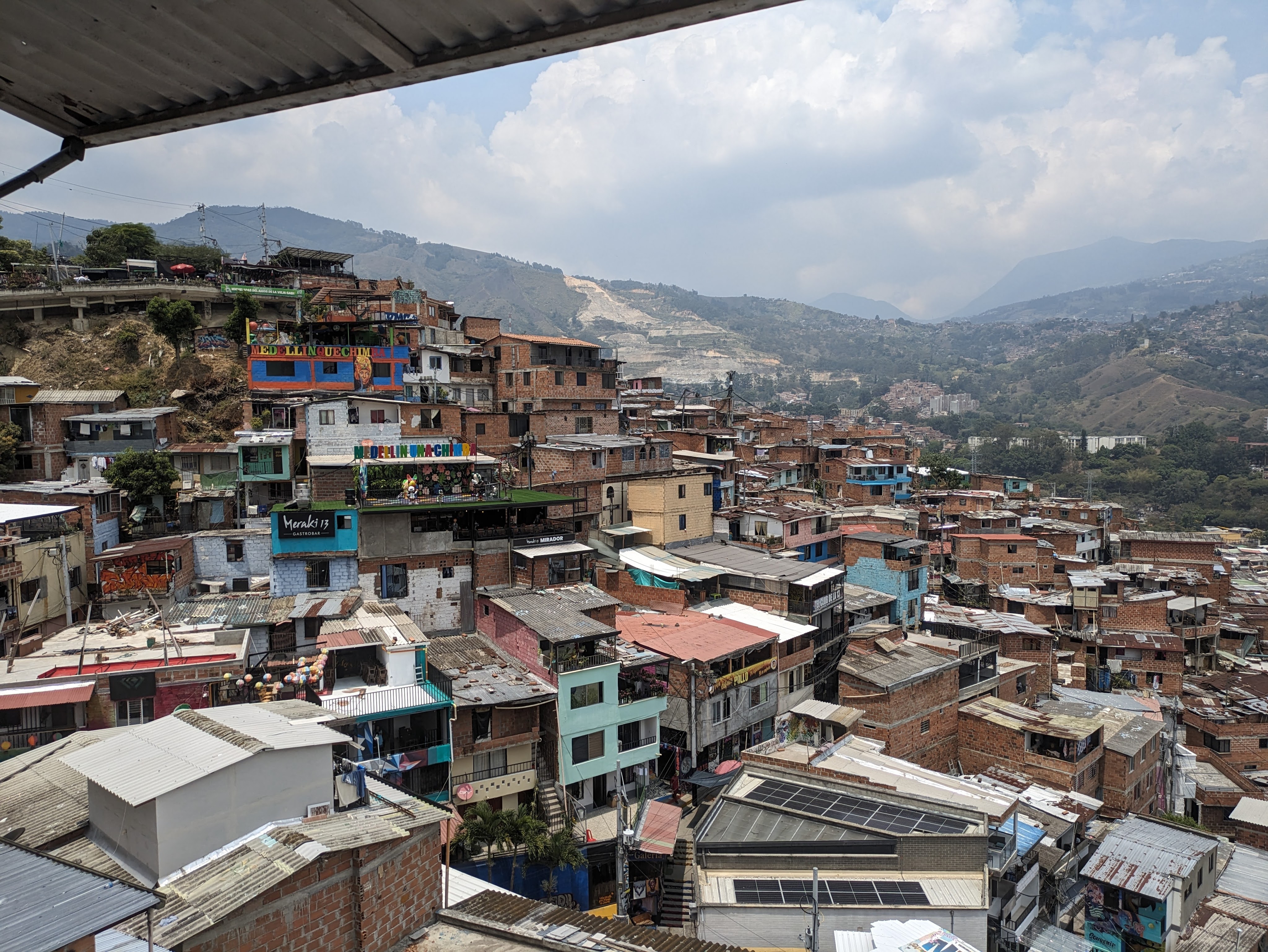
We did two walking tours of Medellin, one of the downtown area and one of an district, known as Comuna 13. (There are sixteen comunas, or districts in Medellin. Comuna 13 was once the most violent district in the most dangerous city in the world, a place that was off-limits even for people living in neighboring districts. It endured sustained urban warfare and was plagued by fierce battles between guerillas and paramilitaries.

Comuna 13 sprawls upwards on a sheer hillside, a rabbit warren of narrow streets, steep steps, colorful houses and graffitied walls. Now its narrow streets and alleyways are bustling with little cafes, tourists and tour guides but the past was not forgotten. We stood in a basketball court in the centre of the Comuna where many innocent locals were murdered. Our guide told us that the brown-earth area, visible like a gaping wound on the opposite hillside was reputedly a mass grave where many of the Missing from the city were buried.

Comuna 13 – notice the bare-brown hill opposite

We were entertained by the break-dancing and hip-hop routines of groups of young local men who would probably have been involved in drugs trade in the ‘bad old days’ instead of performing for tourists.  Immersion in arts, music and sport has been one of the pillars in the transformation of Medellin and of course nothing would have been achieved without the desire of the communities to break the cycle of violence.

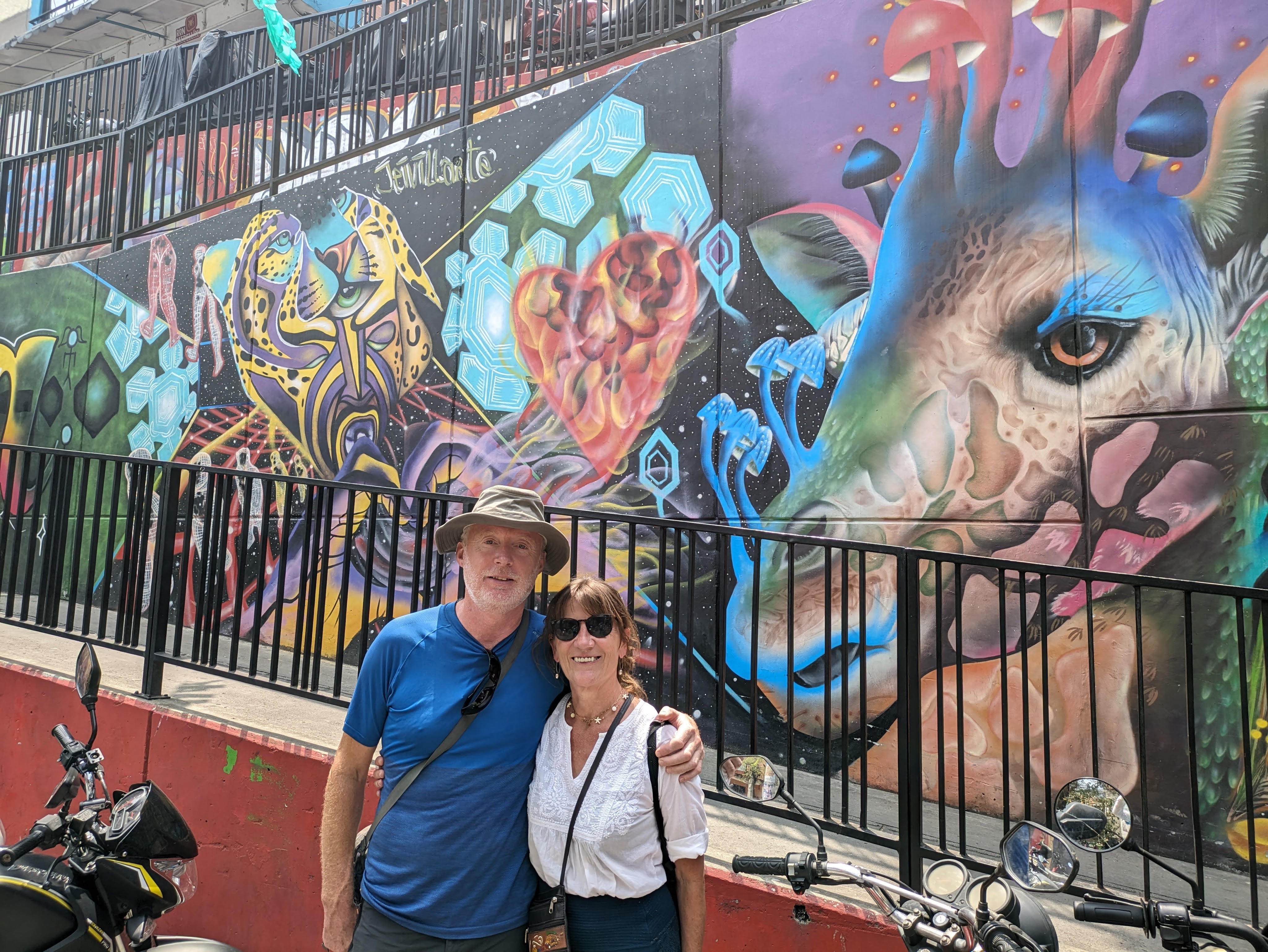
On a wall in Comuna 13, there was a gorgeous wall mural of a giraffe which our guide said represented the strength and resilience of the people because the giraffe has the stoutest heart of any animal relative to its size.

But how did Medellin become this beacon of hope and renewal? There is no simple answer but this remarkable transformation has included the demobilization of guerilla groups, major policy changes, the addition of social programs, and serious infrastructure investments. Our guide on the walking tour of the downtown area credited social work combined with urban architecture turning negatives spaces into positive, accessible libraries and a redefinition of education.  Places that were a no-go area when he was a teenager (he was 42) have become convivial locations of relaxation and pride with tree planting, play-areas for children, lots of seating attracting coffee-drinkers, shoe-shine boys and buskers. The Parque de las Luces was once a very dangerous area but now 300 illuminated pillars stand in the space, providing shade by day and light by night. Of course, everything isn’t perfect. The lights in the Park of Light (Parque de las Luces) were turned off last year for maintenance and still haven’t been turned on😲🕯️🕯️

One of the most famous sons of Medellin (apart from the obvious one already mentioned) is the artist and sculptor, Fernando Botero, whose distinctive work is very much in evidence around the city especially in Botero Plaza where twenty- three of his sculptures are on display.

Botera Plaza, Medellin

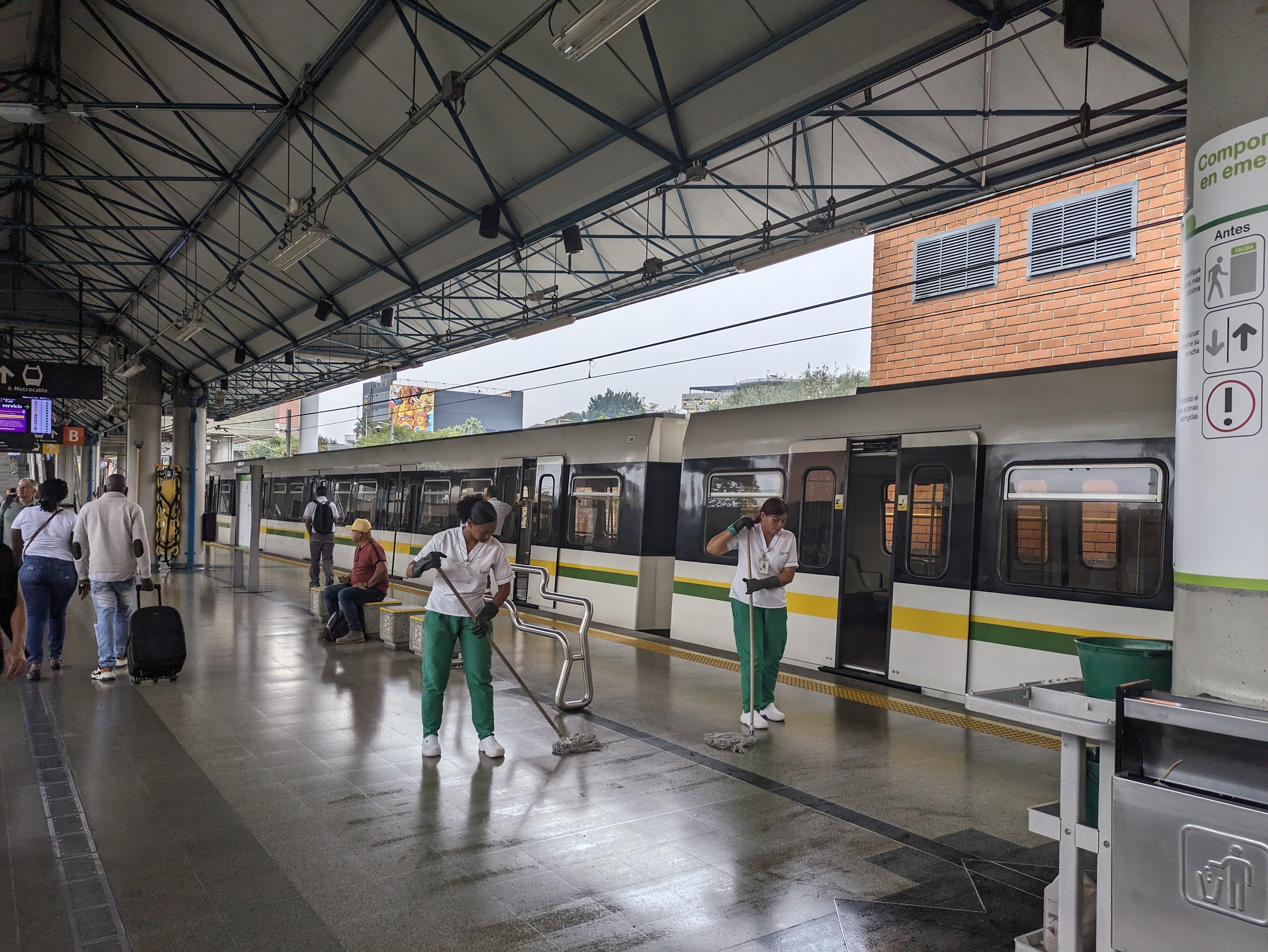
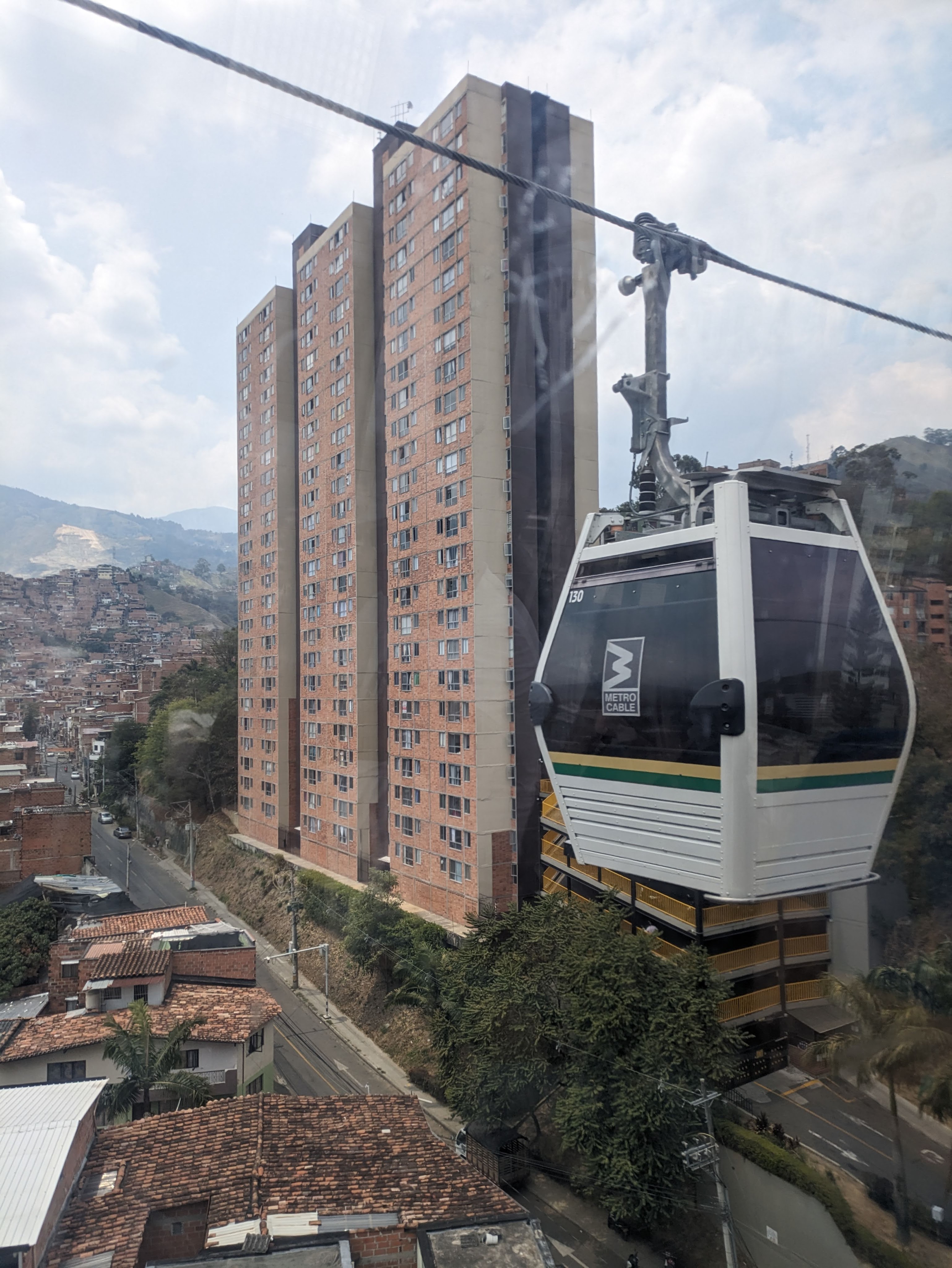
One of the surprises about Medellin was its fantastic public transport system which made travelling around the city so easy. There was a clean efficient modern metro system that was integrated with the bus system and the tramline. There were and cable cars, a gondola lift system that traversed the steep hills called Metro-Cable.  The locals were very proud of their Metro system, the only one in Colombia. Although it was about twenty years old, it looks as pristine as the  day it was introduced with no graffiti, broken seats or even rubbish. (The lack of rubbish was especially remarkable, as Colombians in general will fling their waster with wild abandon everywhere).  We got conflicting answers when we asked about the cleanliness of the Metro, one person told us that it was civic pride that kept it in such good condition, another said it was because there were hefty fines for littering. Whether  the approach was carrot, stick or a mixture of both, it was regularly cleaned and was a pleasure to use. We spent a couple of hours one afternoon just riding up and down on  the cable-cars and getting a bird’s eye view of the city.

Cleaning the Metro
Cable Car Views

And to really complete our enjoyment of Medellin, we found a fantastic vegetarian restaurant, Saludpan, which had European standards but at Colombian prices. This was probably the best vegetarian restaurant we have ever visited anywhere.  While it was primarily vegetarian, it had vegan options and some fish and meat choices. If you ever lucky enough to find yourself in Medellin, I’d highly recommend eating at Saludpan. We ate there each evening on our three nights in the city, breaking our own rule of never returning to the same place.

The popularity of Medellin and its agreeable climate has led to a large influx of Digital Nomads which some are calling a new wave of colonization, a soft invasion by people with computers and money.  Although welcomed by most, the influx is changing the city and driving up rents for apartments in certain areas beyond the means of locals.

Emigration was a fact of life for many Colombians for many years so the problem of mass immigration, particularly of Venezuelans who have come in huge numbers because of their domestic troubles, is a new phenomenon. Ironically, many Colombians fled to Venezuela during the dark period in their own relatively recent history so there is a strong feeling of brotherhood between the two countries.   The Colombian government in 2021 introduced a 10 -year visa for Venezuelans which gives them access to education and employment.

One of the most perplexing things we heard in Medellin was that the amount of cocaine exported from Columbia last year was three times more than it was in any year during the violent eighties and nineties. We had seen the fallow fields in Northern Colombia where once coca plants were grown and thought that this was the case in the rest of Colombia but this was in indigenous land where the Elders was strong in their opposition to coca and the drug trade. The illegal growing coca is still the backbone of many rural economies in other parts, it is lucrative, easy to grow and can produce three to four crops a year. The cartels have been disbanded and the processing and distribution have moved out of Colombia, some to neighboring Ecuador which has seen an eruption of violence this year. The situation is complex but it seems that the drug trade is alive and well in Colombia.

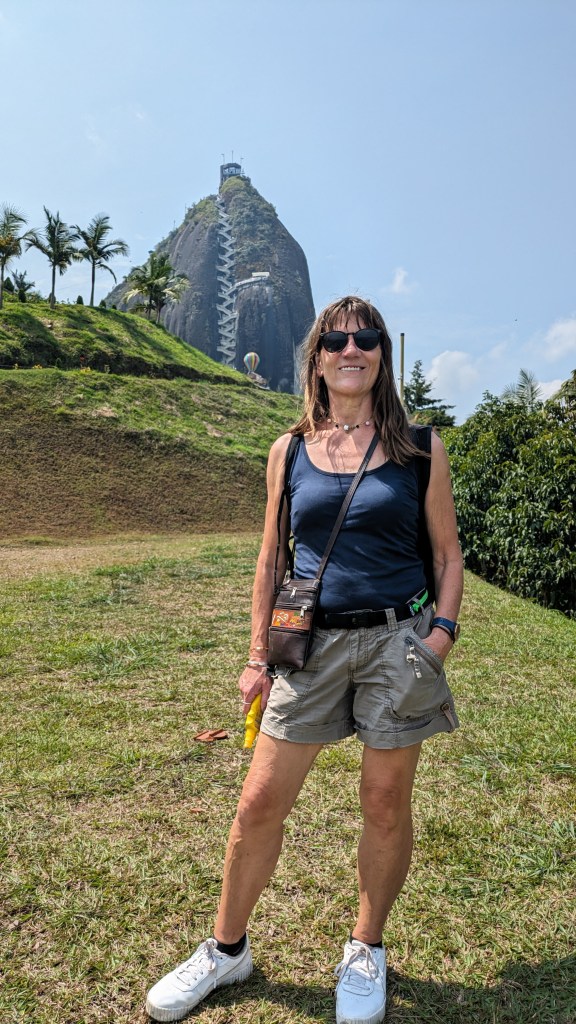
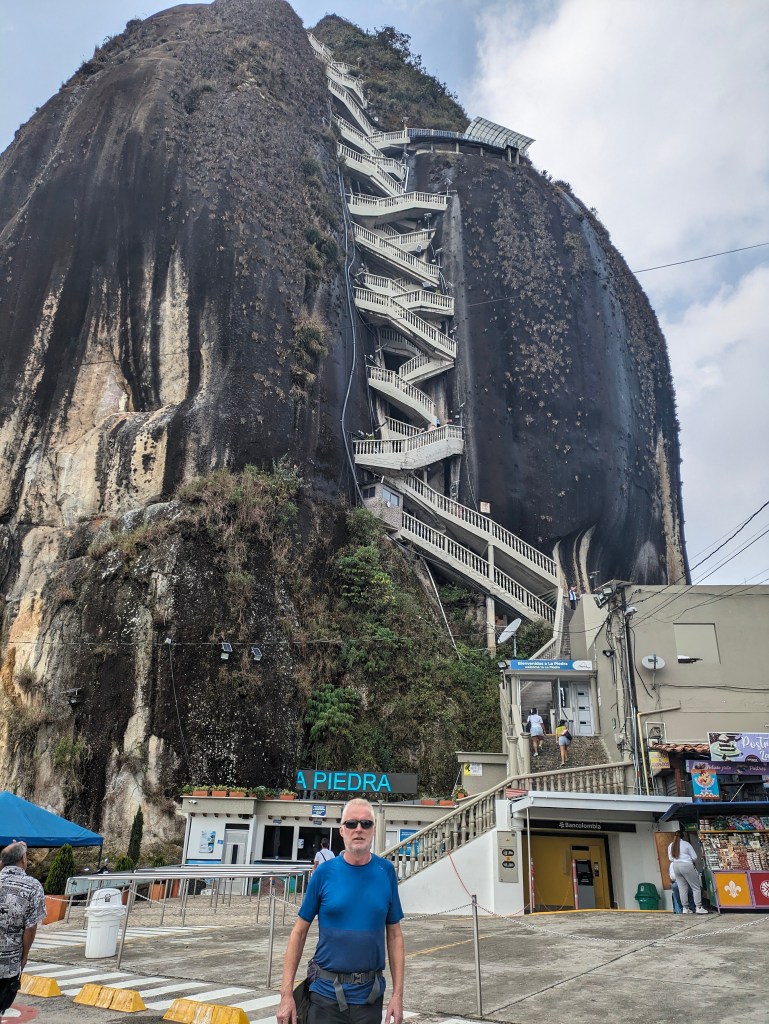
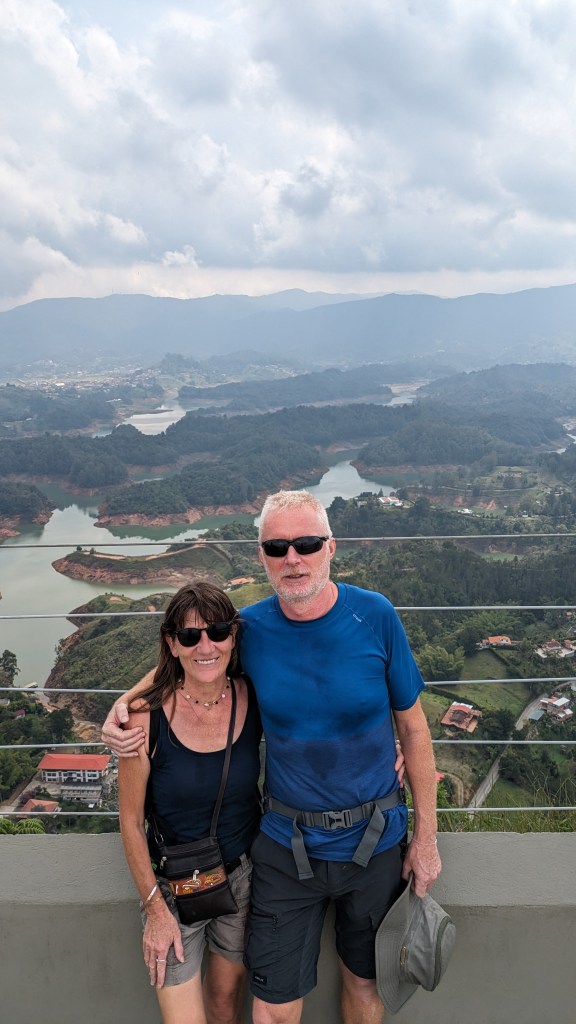
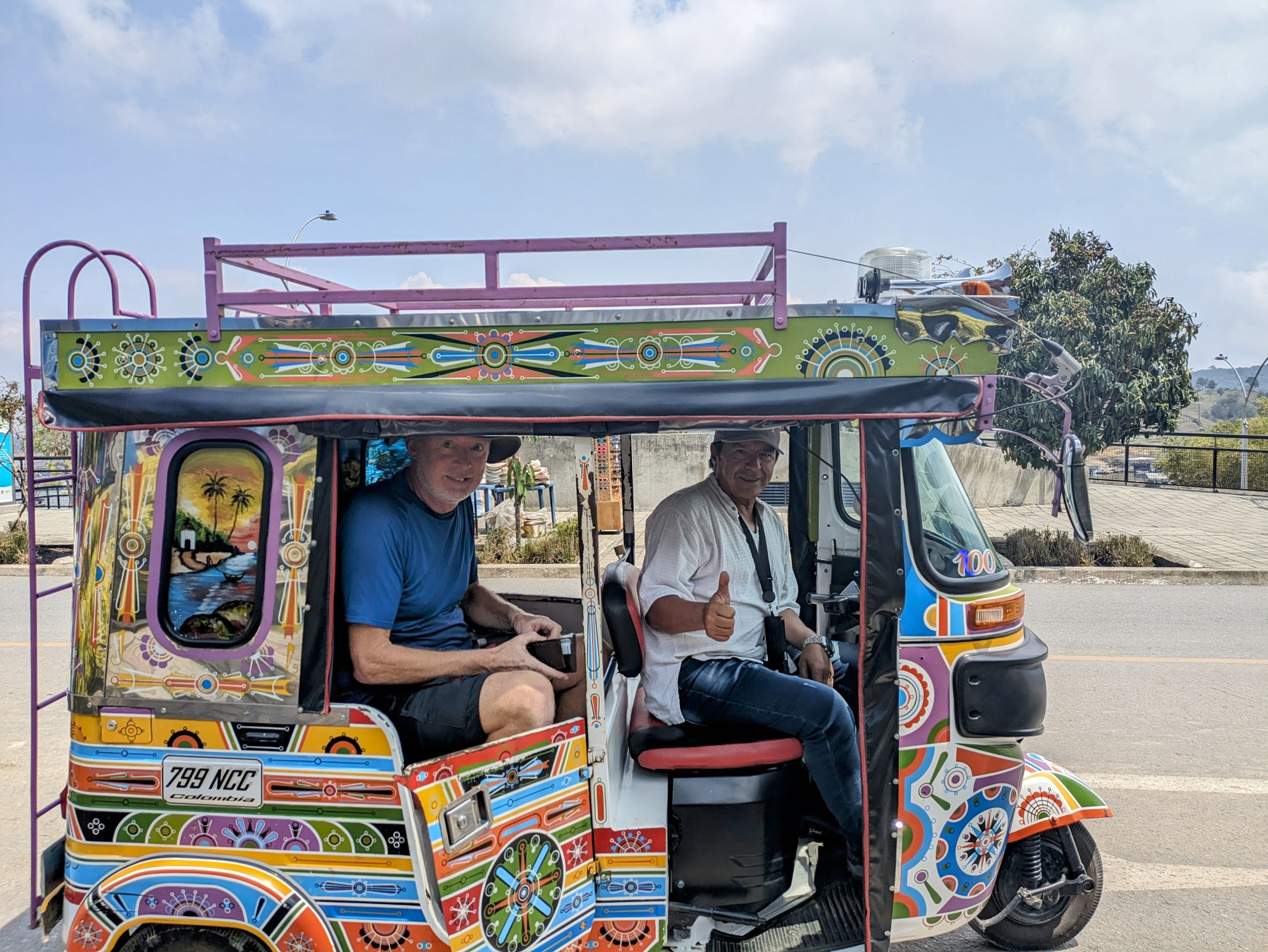
Guatapé, a small town about two hours east of Medellin, was probably the most colorful town we have ever seen. Everything was painted in bright colours and embellished with drawings and artistic designs. The town was on the edge of a man-made lake acting as a reservoir and was overlooked by a huge dome of granite, a landmark for miles around. This rock, called the Piedra del Penol, had an inbuilt staircase of 700 steps which was well worth the puffing for the rewarding views of the surrounding countryside, green lake-water, pine-clad islands and red soil.

Guatape – where even the tuk-tuks are brightly coloured.

The days in Guatapé were warm and overcast but it rained heavily at night turning the road outside our accommodation into a sticky red mess.

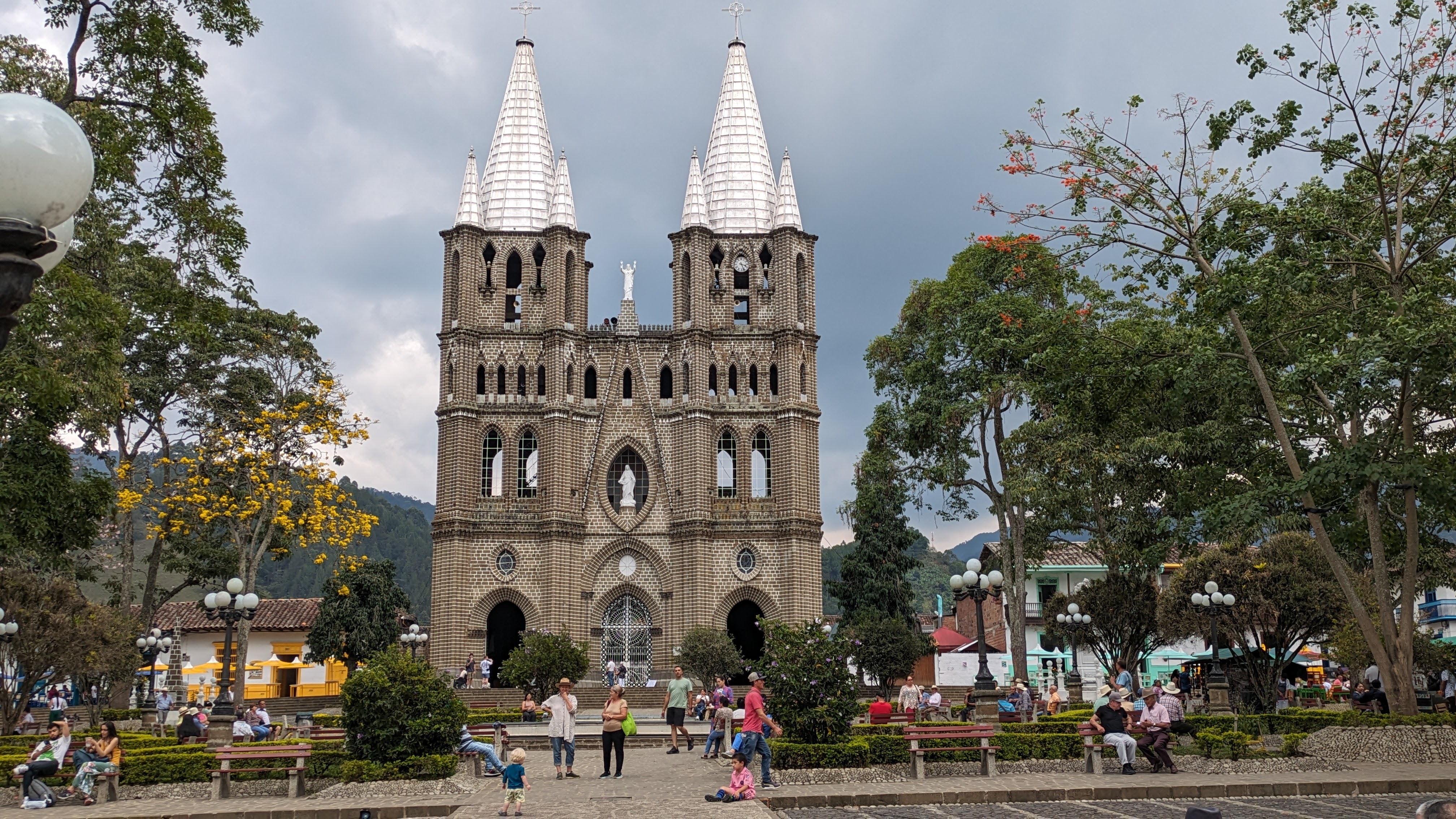
A 6-hour bus-ride on two separate buses took us through the Andes with steep drops, twisty roads, trees and flowers until we arrived to the little town of Jardin. This quiet place was nestled in the mountains amid small coffee plantations, banana trees, rivers, waterfalls and grazing cattle. The town was also brightly painted with a large flower-filled plaza and an enormous neo-Gothic church. Although there were some tourists, it had a lovely laid-back feel. We stayed in a hostel, an uphill kilometer out of town where we were woken every morning by birds knocking at the mirrored glass on our balcony door.

Jardin

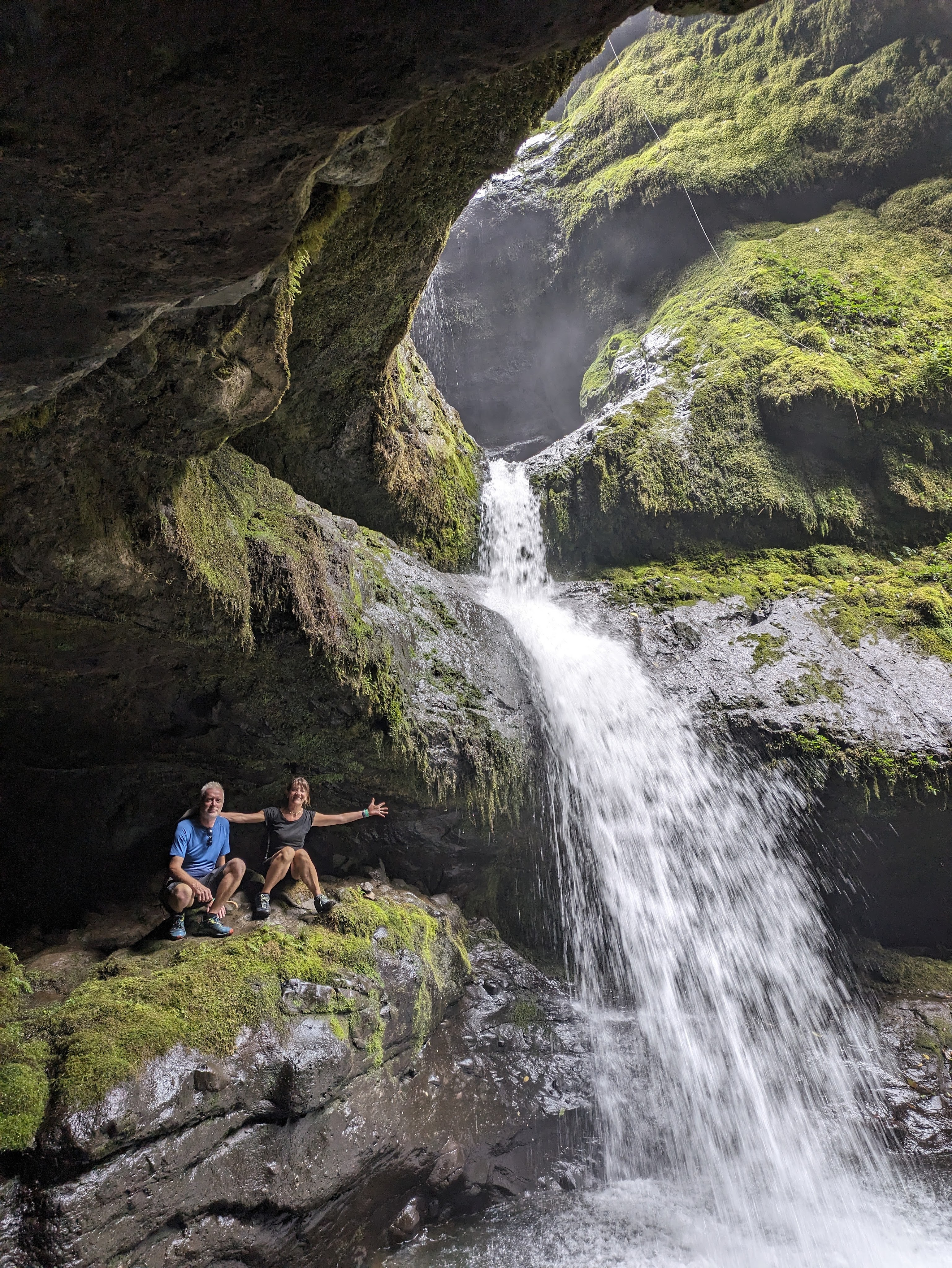
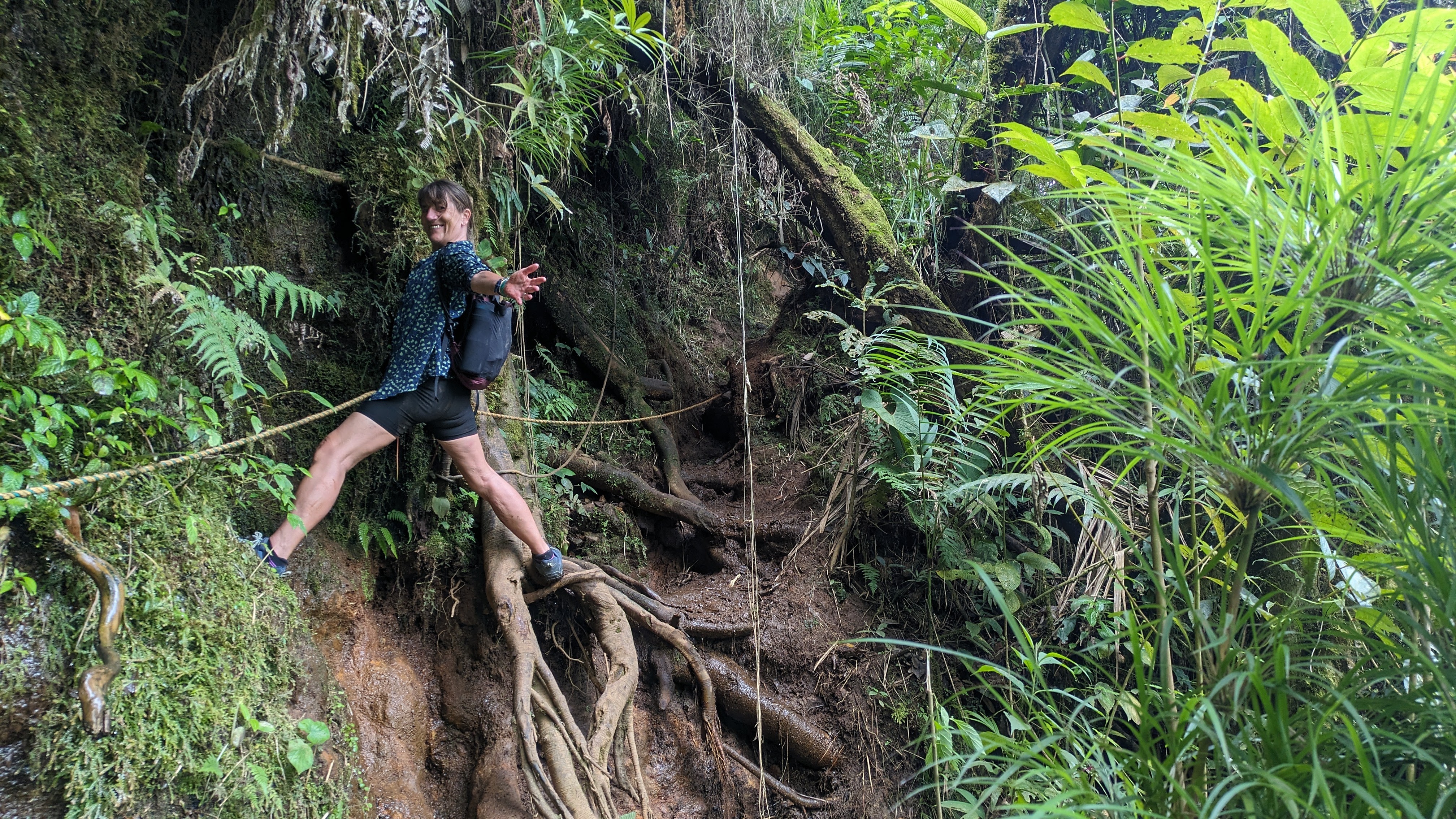
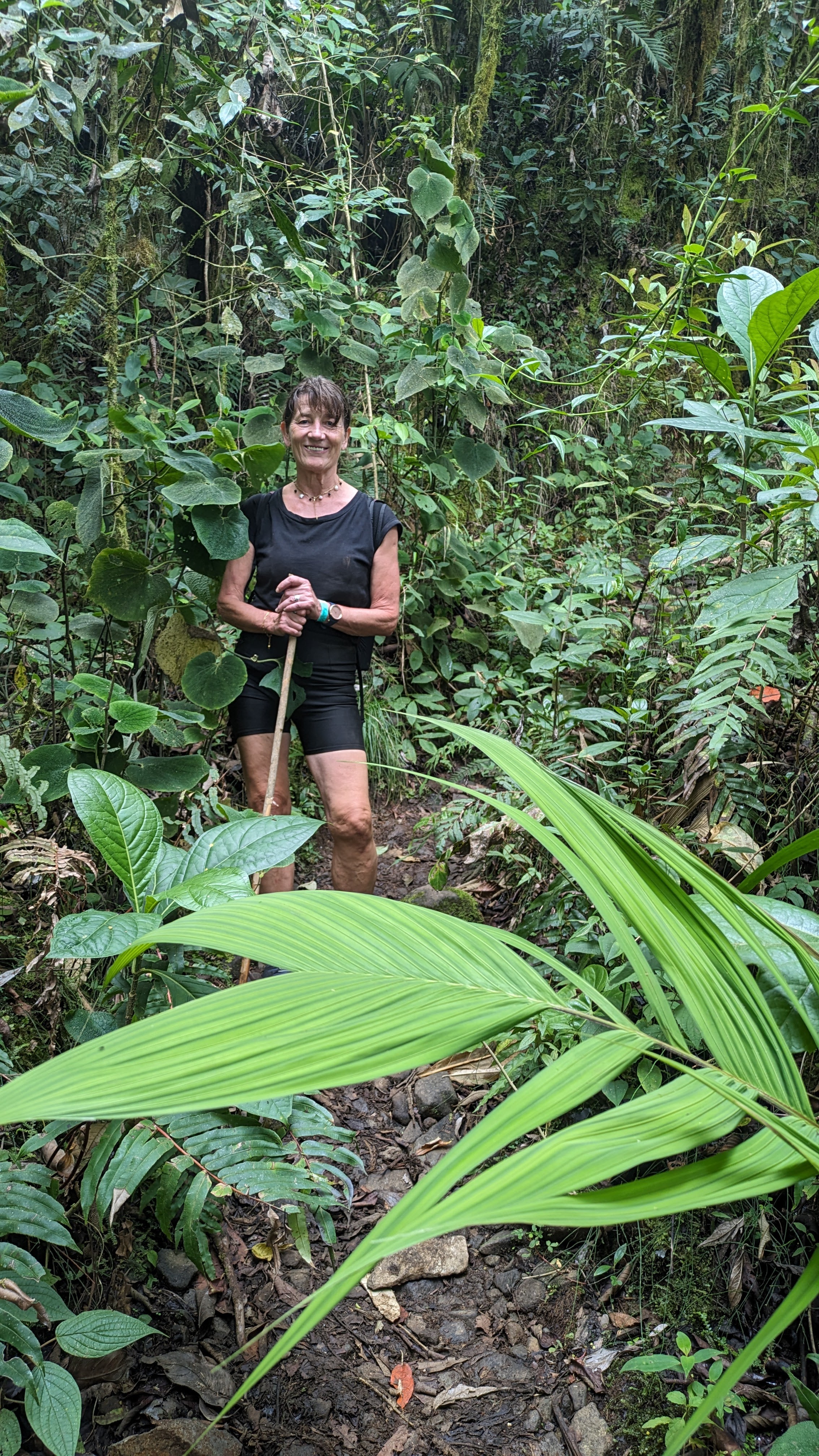
We wandered around the hills and spent a glorious day chasing waterfalls on the Siete Cascadas Hike (Seven Waterfalls), a loop hike with a guide. It was challenging at times with ropes required to haul ourselves up and down some of the steep slippery slopes. It was worth every second for the tranquility, the bird song and the beauty of the waterfalls that sometimes gushed and sometimes rippled over green-mossy cliffs.

Chasing Waterfalls
A Bit of a Stretch

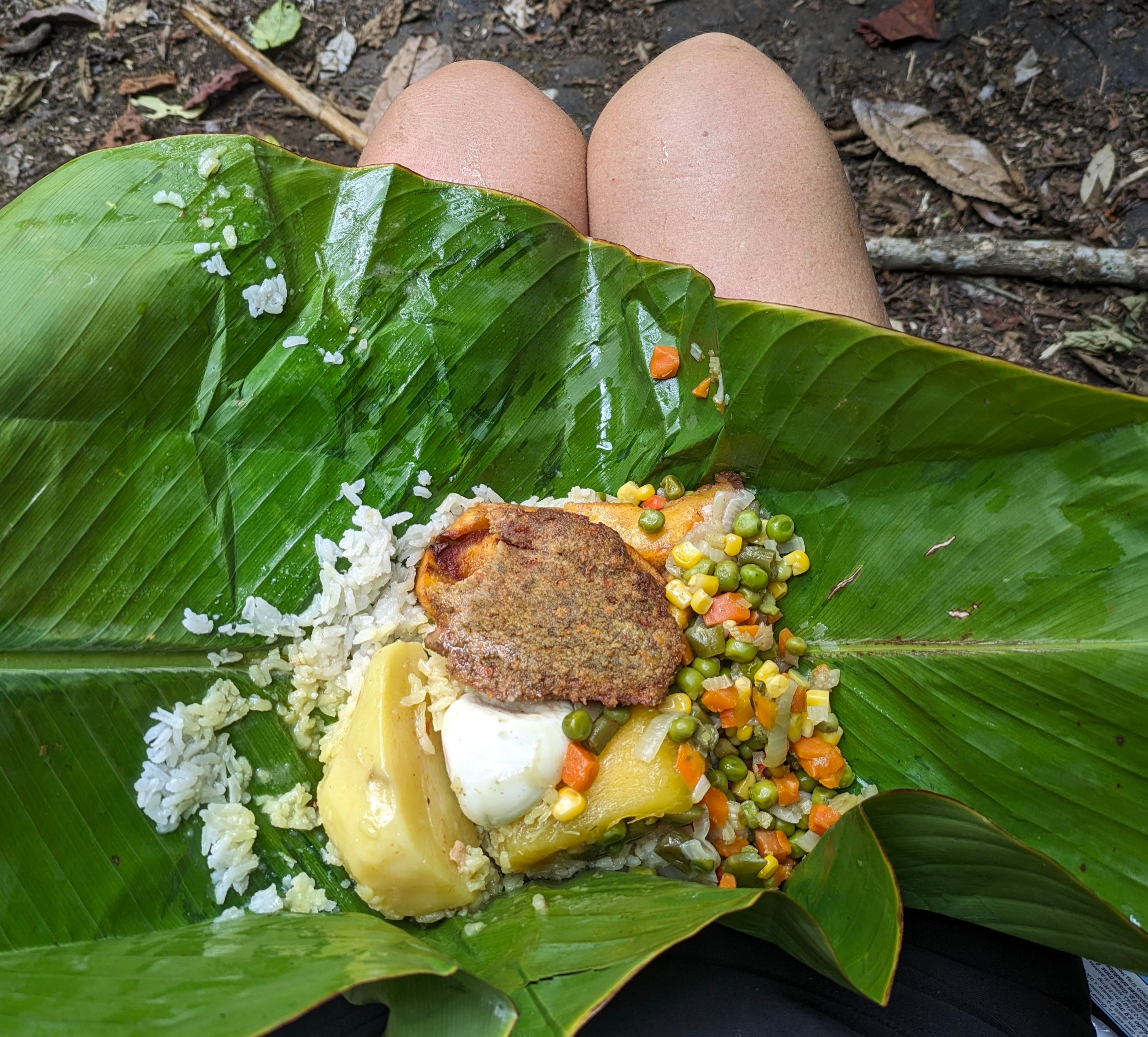
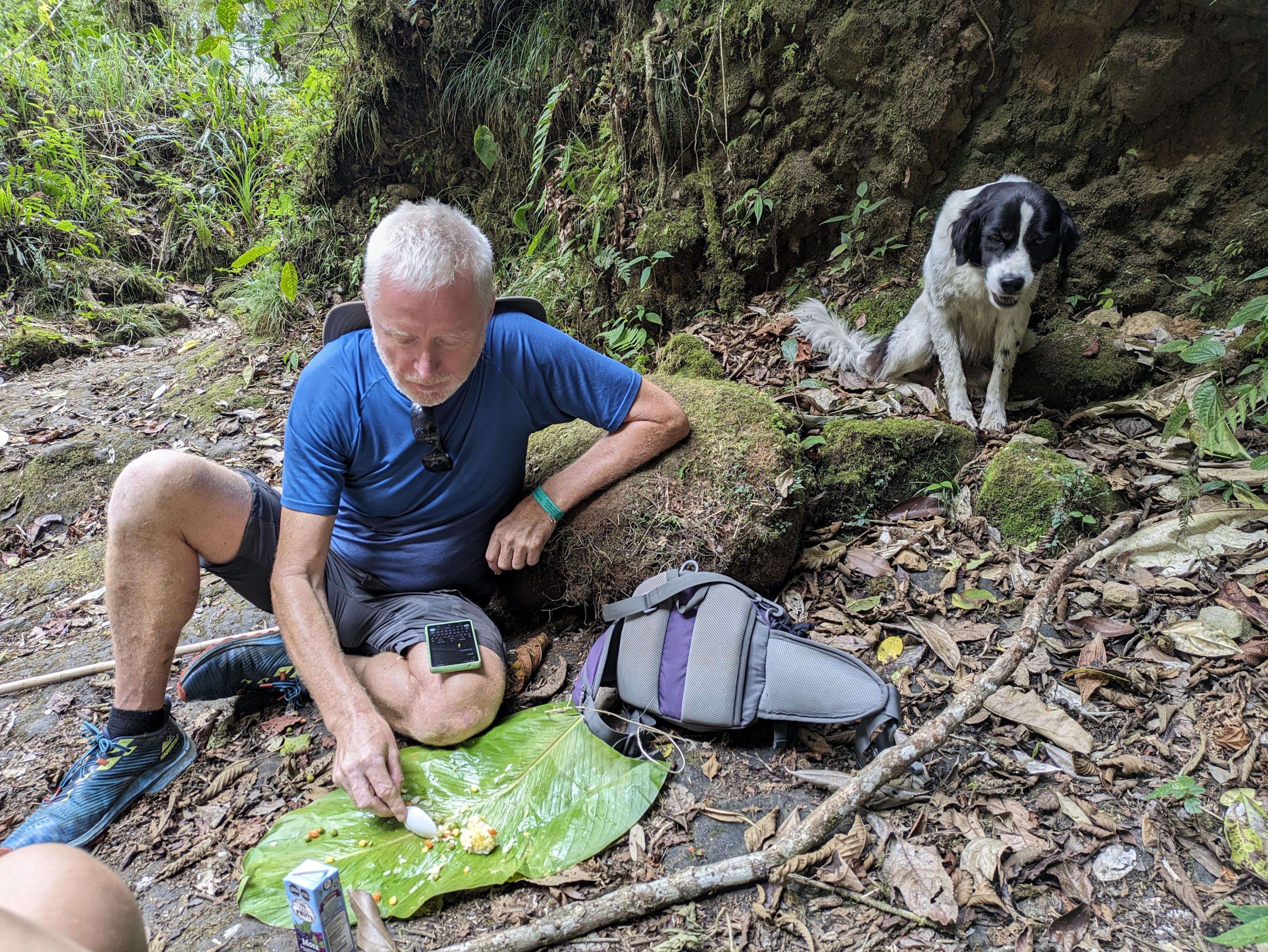
Lunch came wrapped in a banana leaf with some twine – rice and veg, potatoes and yucca, boiled egg and a veggie patty plus some fried banana. An enormous feast that slowed us our bodies down as we so busy digesting.

Lovely lunch on a gorgeous plate.

We have our bus-tickets booked for our next journey on Monday, a seven-hour trip south through the mountains to Salento and more coffee, where we have already organized t a three-day hike. We are not usually this organized but we are conscious of our dwindling days in this fascinating country.
Muchas gracias por leer

Feliz Dia de San Patricio  Beannachtai na Feile Padraig

Enjoy Paddy’s Day ,💚☘️☘️☘️xx

A Green Colombia ☘️
Where there’s food, there’s a dog……..
Colombia – Tragedy and Transformation

Camino del Faro- The Lighthouse Way

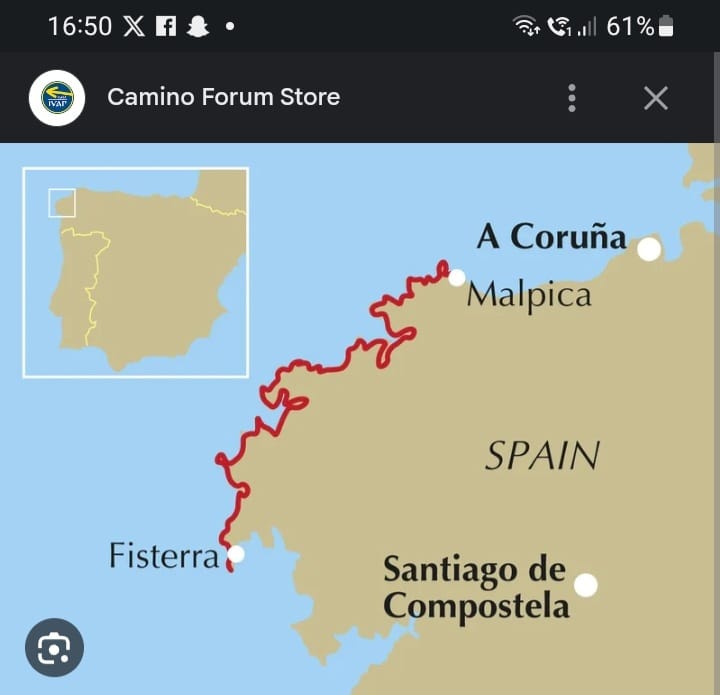
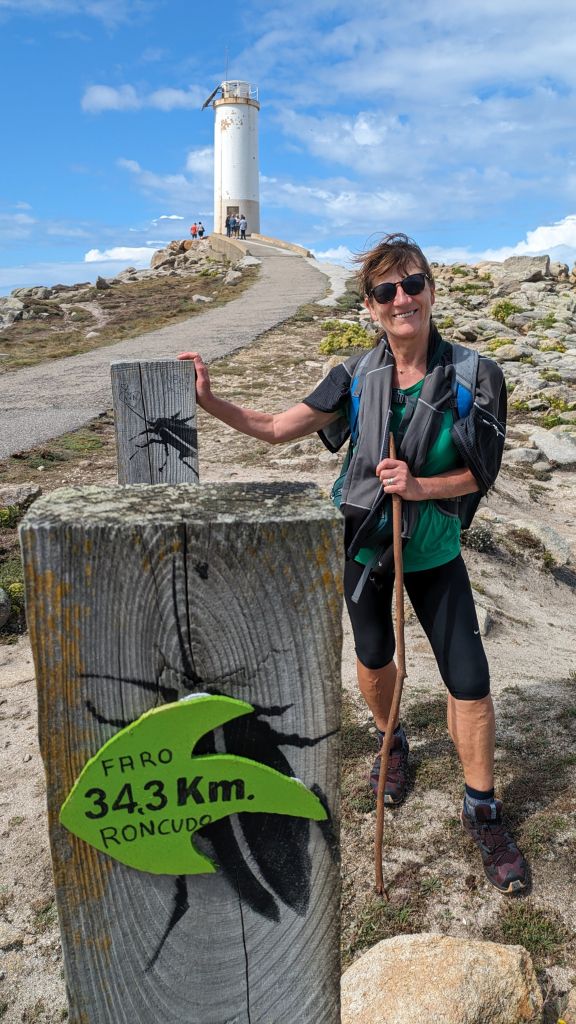
Mention the words ‘Camino’ and ‘Spain’ in the same sentence and most people will think about the Camino de Santiago, the incredibly popular pilgrimage way of St James. But there are others far less trodden paths🥾.  We have just completed the spectacular Camino del Faro (The Lighthouse Way), a 200 Kms trek in Galicia along the Coste del Morte (Death Coast), linking the towns of Malpica and Finisterre and walking from lighthouse to lighthouse.

Camino del Faro (Lighthouse Way)

Our journey began with a late Ryanair flight from Dublin to Santiago de Compostela, arriving at about 11.30pm. Yellow bus signs on the ground at the airport Arrivals directed us to a bus stop outside the terminal where the 6A took us to the centre of town in about 35 minutes for one euro😃. The streets were quiet and shuttered and a couple that we saw in the airport queue, followed us to the same hotel, Hotel Windsor, a no-frills place but very clean, very central with loads of hot water. 

The following morning we discovered that the buses to Malpica, our starting point, were infrequent with just two buses a day…we had  missed the first one and the next one was at 1pm. We wandered around the Cathedral area which was crowded with tourists, walkers,  pilgrims and the ubiquitous shells from jewelry to tablecloths to masonry etchings – pilgrimage is big business in this part of the world. Confessions were available in multiple languages but few were availing of the opportunity.

Malpica♥️

Getting to Malpica involved a change of bus at Carballo but both buses were comfortable, efficient and cheap with the two and a half hour journey costing less than a fiver each and we paid the drivers on the buses.  Malpica was a surprise…a really gorgeous little town that we had never heard of until we investigated this trek, with a prom that curved around s turquoise bay.  We booked into JB Hostal with a large sunny seaview room, 55 euros a night. (In Spain, hostals are guesthouses, different to hostels with dormitories). The seafront was teeming with surfers and little cafes with cold beer and good wine🥂.  The beach was dangerous for swimming so we wandered down to the pretty port area to find the start point of our camino. This  first lighthouse was a disappointment…hardly visible and behind a big seawall with a No Trespassing Sign (in Spanish) – very little English spoken or understood here.

Malpica Port

It was barely light when we crept out of our guesthouse at 7.45am without breakfast(not included). We were smothered in sunscreen,dressed in shorts and carrying all our belongings on our backs. Apart from a few dog walkers, the whole town seemed to be sleeping. We passed a holy well, pristine white-sand beaches and a church on a cliff, stark against a backdrop of  barbie- pink heathers. We walked to the incessant sound of the restless sea, relatively benign and blue on this gorgeous early September. day.  The first restaurant we came too -after 3 hours walking – was closed until 1pm. Although we had some stomach rumblings, we pushed on as we didn’t want to hang around for 2 hours until it opened. We didn’t know then that we wouldn’t find another one😬

Leaving Malpica, Day 1
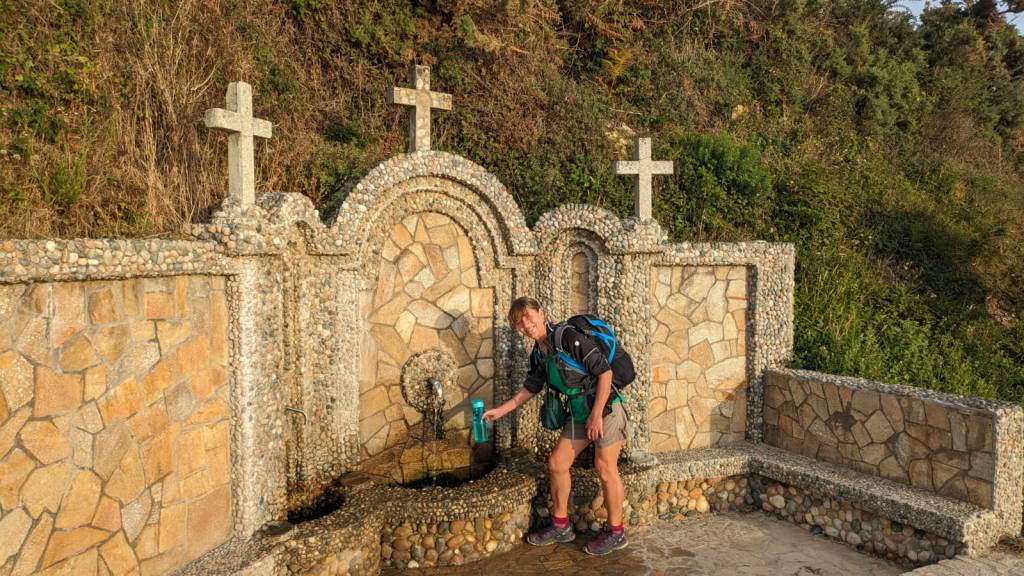
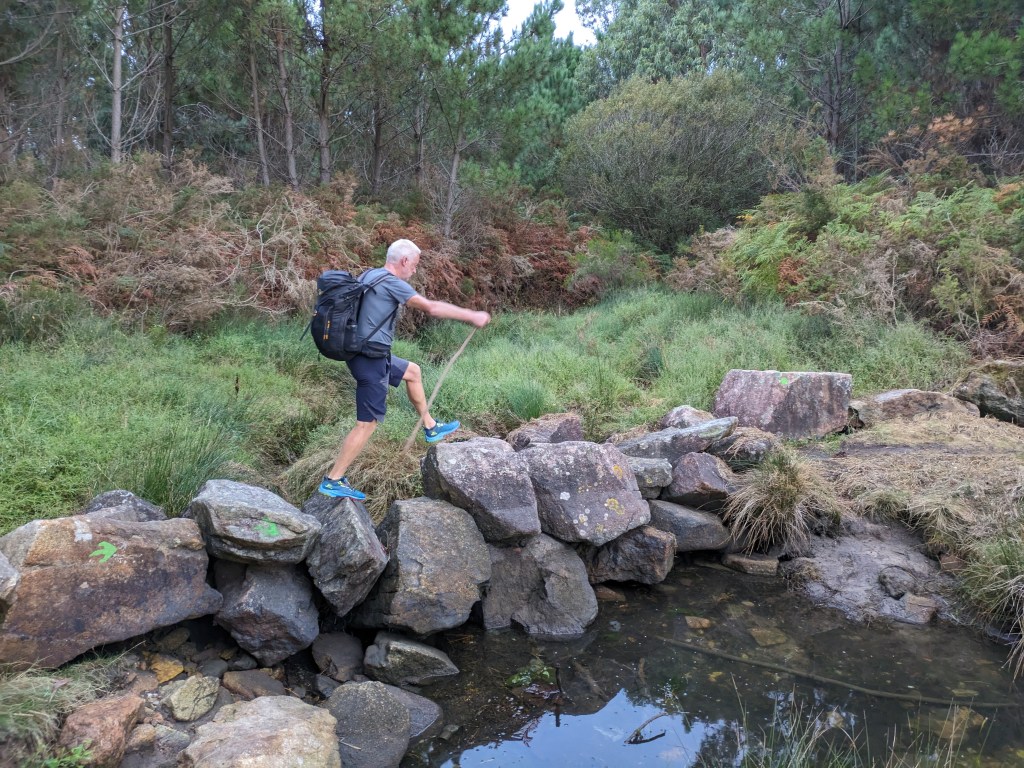
Water along the Way

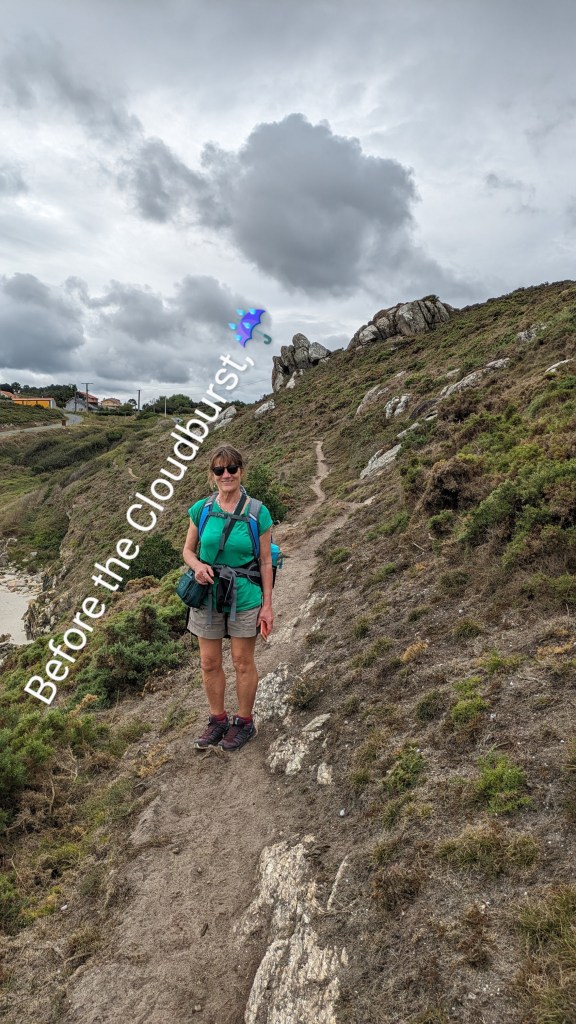
There were chest high ferns and boulders like giant marbles to clamber over in search of the green dot, which denoted our path but which was sometimes quite elusive🟢. At a little port area where we sat to have a meagre snack of nuts and bananas, a light drizzle started, welcome and cooling at first until it got heavier and became  a drenching deluge.  There was neither shade nor shelter. The wind howled around Nariga Lighthouse, tossing rain and foam at us from all directions. We trudged along like drowned rats until we reached Ninons Beach, a secluded remote beach and the end of Day 1. We hadn’t any accommodation booked,  assuming that we would find something along the way but the coast was  isolated…we didn’t meet a soul that first day in 22 Kms of hiking. We decided to call a taxi to take us back to Malpica. That’s when we discovered that there was no signal in Ninons😁 so we squelched another kilometer uphill to make the call. The phone signal kept dropping but a taxi materialized out of the rain…like an apparition because Caoimhin wasn’t sure that he had got the message through. Back in Malpica, our shoes were sodden and everything we were wearing dripped a muddy trail up the stairs. Although we had rain covers for our backpacks, we discovered that  everything in them was also wet.  But after a hot shower, the sun came out, the outside tables were wiped down, the wine was still cheap and I ate a basket of bread and probably the best mussels I have ever tasted😍.

 Day 2 started with wet shoes and damp clothes. We had bought a lavender spray in the Chino shop to mask the stench of damp but it was so synthetic that it smelt almost toxic. Our taxi dropped us back to Ninos Beach where we climbed through gorgeous eucalyptus forests (their scent wasn’t strong enough to mask the lavender 😏). Shining granite rock shimmered in the sunshine along this walk to Ponteceso with many diverse landscapes from rocky cliffs, salt marsh, sand dunes and river estuary, a haven for birds. This stage was beautiful but long (almost 27 Kms). When we came to the seaside town of  Corme at the 17kms mark, we were ready for a break.The first place didn’t do food until evening time so we had a cold beer and moved on to another establishment where we ate fish salad and patatas bravas. Although the sun was hot and relentless for the last stage we still managed to get wet feet, walking on boardwalks submerged by the incoming tide along the estuary. 
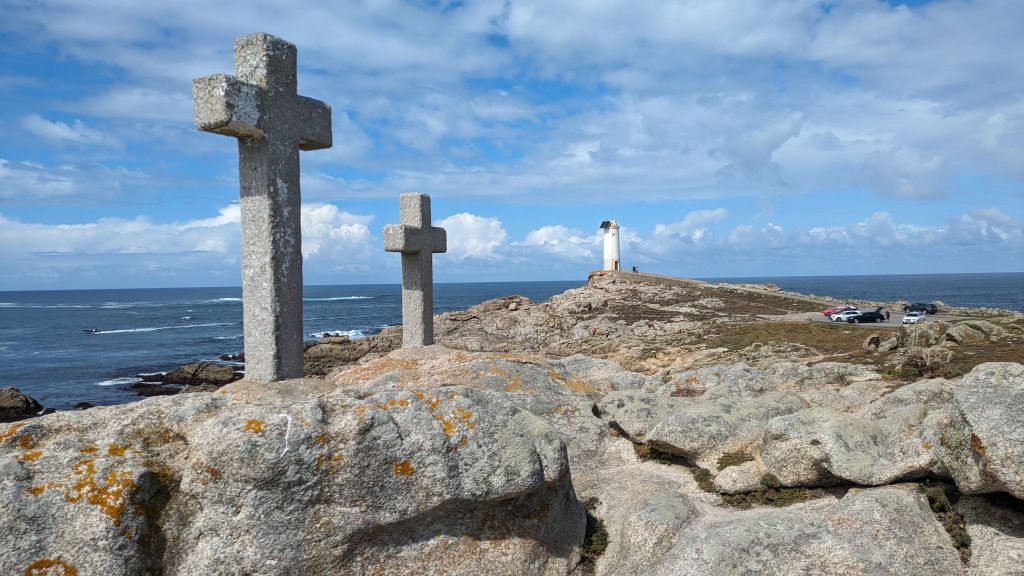
Roncudo Lighthouse, Day 2

When we reached the hostel, my feet were shriveled and blistered, I had  a welt on my hand from clutching the walking stick and an ache across my shoulders from the backpack. This Camino began to feel like a pilgrimage of sorts. In a local bar, the friendly owner insisted on plying us with free tapas which we were almost too exhausted to eat. But things improved from this point and day 2 of multi-day hikes is well- known to be the tough one.

We discovered that socks could be dried very effectively by wrapping them around a hairdryer sprout ( if you were fortunate enough to have access to a hairdryer) and stuffing shoes with old newspapers(periodicos viejos) helped a lot. Comped plasters and Vaseline were a balm for feet and a hotel in Laxe with a bath worked magict to ease tired muscles.  The hikes became easier as our bodies – and minds-  adjusted.  We carried food supplies, pockets stuffed with bread and cheese,  a supply of biscuits, bananas, nuts and chocolate and an emergency can of sardines. Most days the only people we saw were solitary locals, clambering over rocks far below us, splashed with foaming water, gathering gooseneck barnacles from the heavily oxygenated waters – a treacherous occupation. We always trekked in hope of a cafe. A local woman, who was hanging out her washing, offered us life-saving coffee  when we were disappointed yet again that a cafe/bakery marked on our map was closed. This lovely woman filled our water bottles and even offered us beer and food. Wonderful hospitality. 
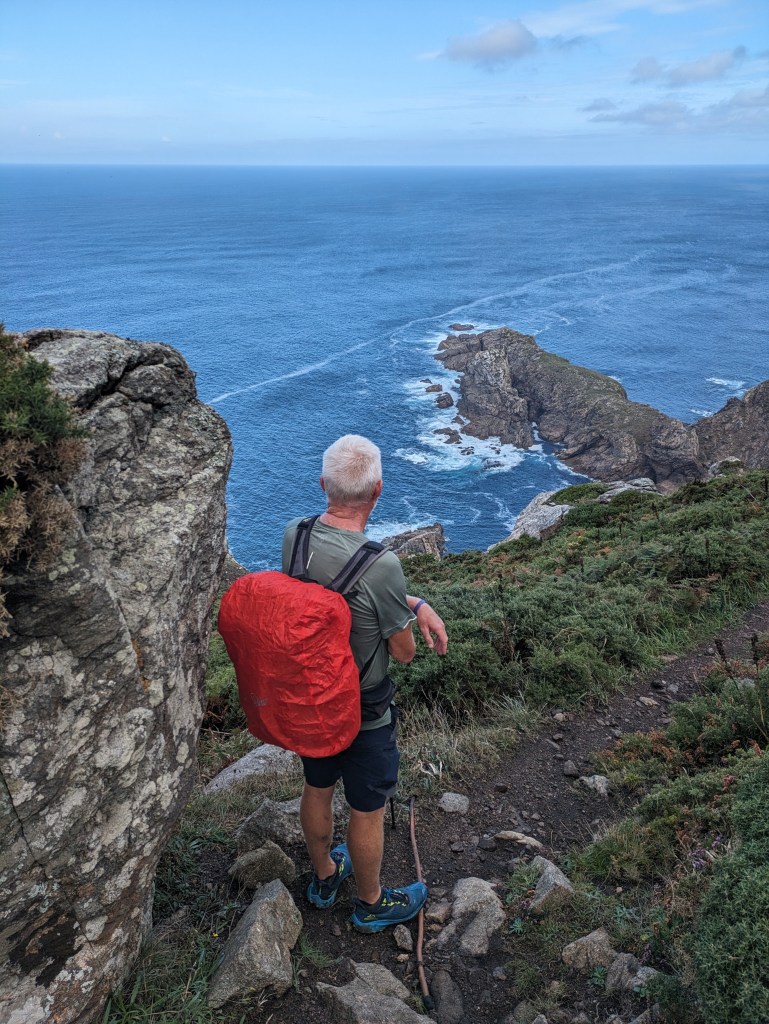
 Sometimes our Camino veered inland where we walked through woodland to the sound of birdsong, hiked by streams where old water mills were covered in moss and past high villages where stone houses looked abandoned surrounded by fields of withering corn and orchards of dripping fruit. But mainly our path hugged the coast faithfully, often just a narrow ribbon clinging to steep cliffs with dizzying drops. 
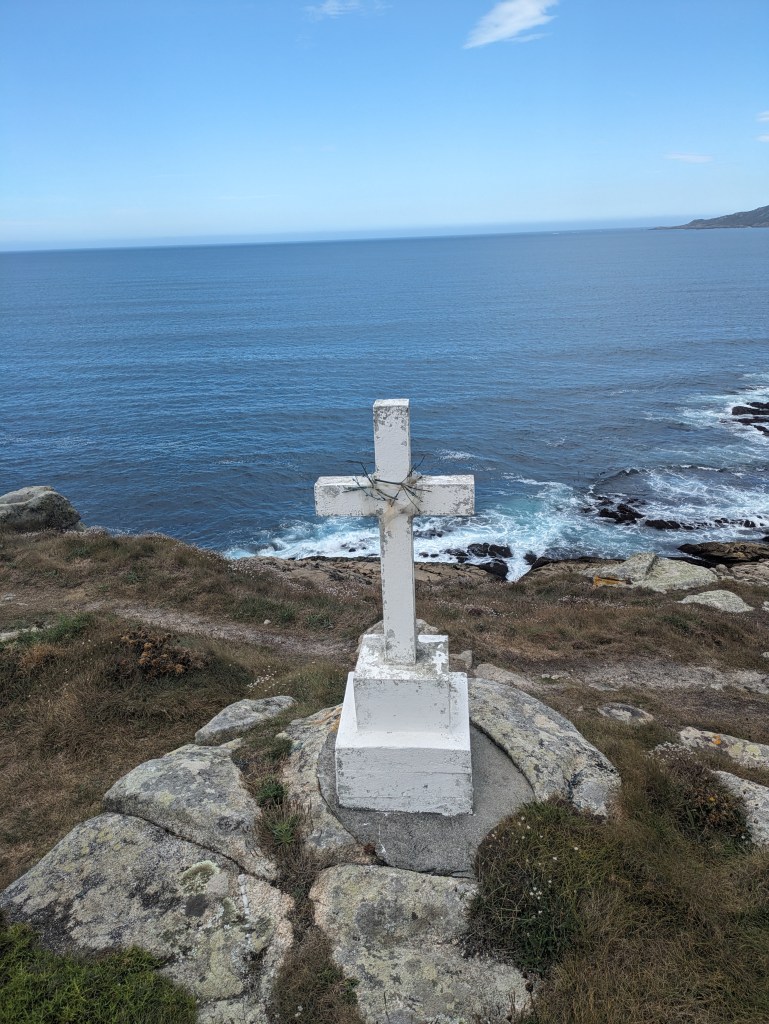
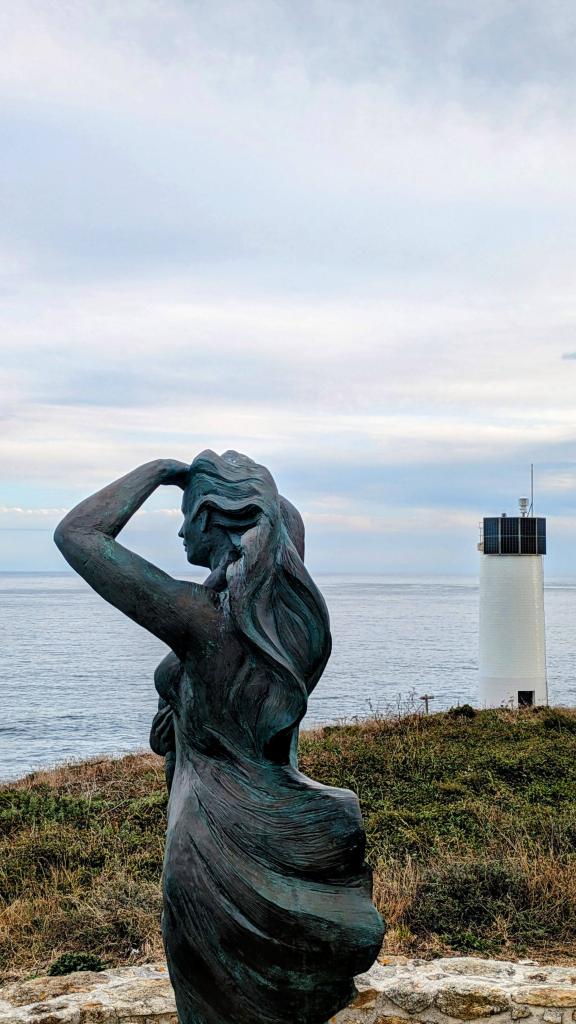
The Costa del Morte is not called the Death Coast for nothing. The coast was littered with stone crosses, bargains made with the heavens or erected as platitudes to the sea, or places to remember the dead. There were  tales of shipwrecks, drownings, smugglers and pirates. On a lonely headland,  the doomed victims of ill-fated ships were buried in a place called the English Graveyard.  A stunning sculpture near the Lake Lighthouse of a woman gazing out to sea, captured the anxiety and agony of waiting. An isolated church on a hilltop was a place where local women used to go in times of storm to pray for a change of wind to bring their men home. 

As we hiked further west, the coast became wilder and even more remote. On our fifth day,  after days of sunshine, the forecast was bad and didn’t disappoint. The cold blue-green of the sea, mesmerizing and dangerous, turned an ominous gray. We watched two surfers paddling on their boards out to churning waves that crashed on jagged rocks and marveled at their stupidity -so small and insignificant. Even the seagulls were sheltering from the elements, hunkering down on the beaches. The wind became ferocious,  the rain came at us sideways and we could barely stand upright but we got a tiny glimpse of what this coast might be like in bad weather and it was awe-inspiring.

After six days walking, we arrived in Muxia, a pretty little town with safe beaches, a lighthouse and a place of legends. It was here that the Virgin Mary arrived in a stone boat to encourage Saint James to continue in his work.  Large stones near the church were reputed  to be part of Mary’s boat and to have magical properties.The Barco festival was starting the following day so we decided to take a rest day and stay an extra night. Muxia  is on the Camino de Santiago so was busier than anywhere else we stayed. We discovered that Spanish festivals only get going around midnight and continue until at least 5am and nobody even thinks of eating until 10pm. Unfortunately, we couldn’t stay awake for much of the festivities🥳. Muxia was badly affected by The Prestige disaster in 2002, which leaked thousands of litres of crude oil into the sea all along the coast here.

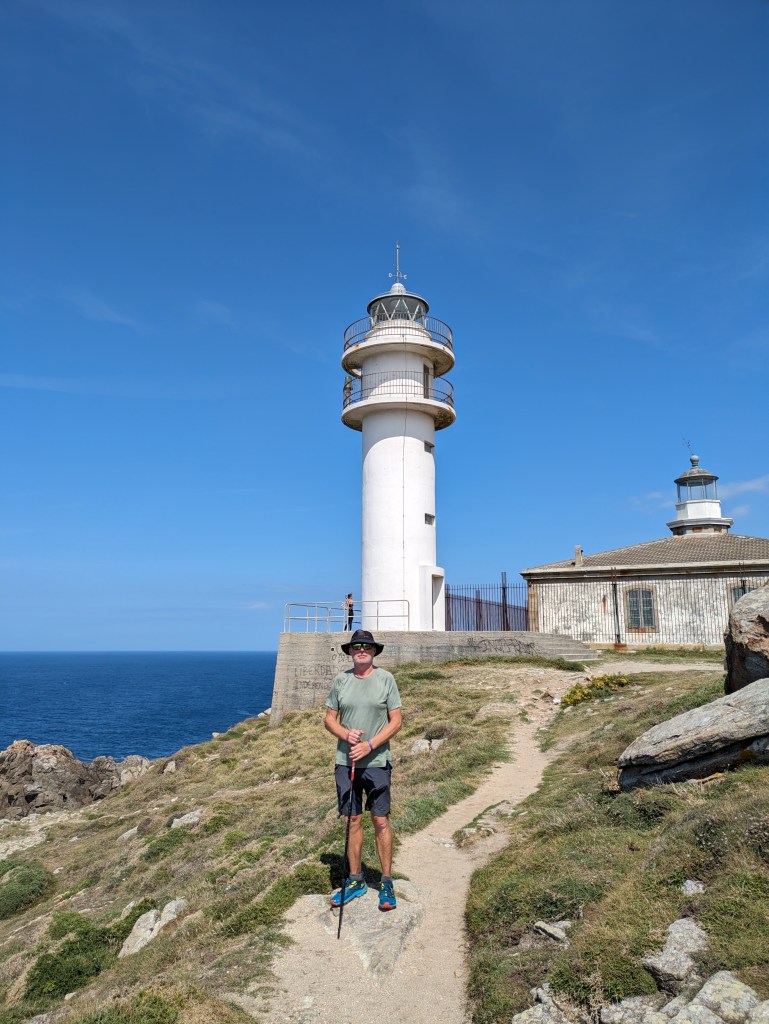
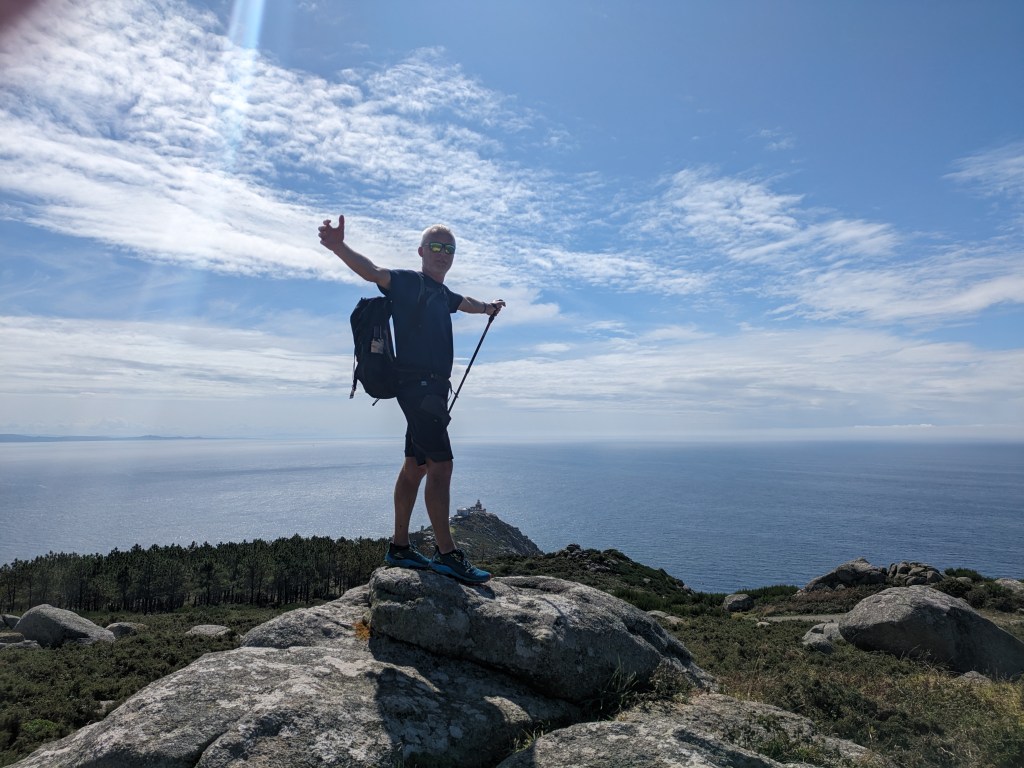
Although it hardly seemed possible, the scenery got even more spectacular as the days progressed. The penultimate day was the ‘queen of the mountain stage’ with steep climbs and stupendous views. We trekked to Tourinan Lighthouse, which was supposedly the most westerly point in Europe and got the last rays of sunlight in the Spring Equinox. On the eighth and final day, it almost felt as if we were in the landscape, part of it and not just looking at it, at one with the sea and the wind (or maybe that was just exhaustion or relief with our end goal within reach 🙏).

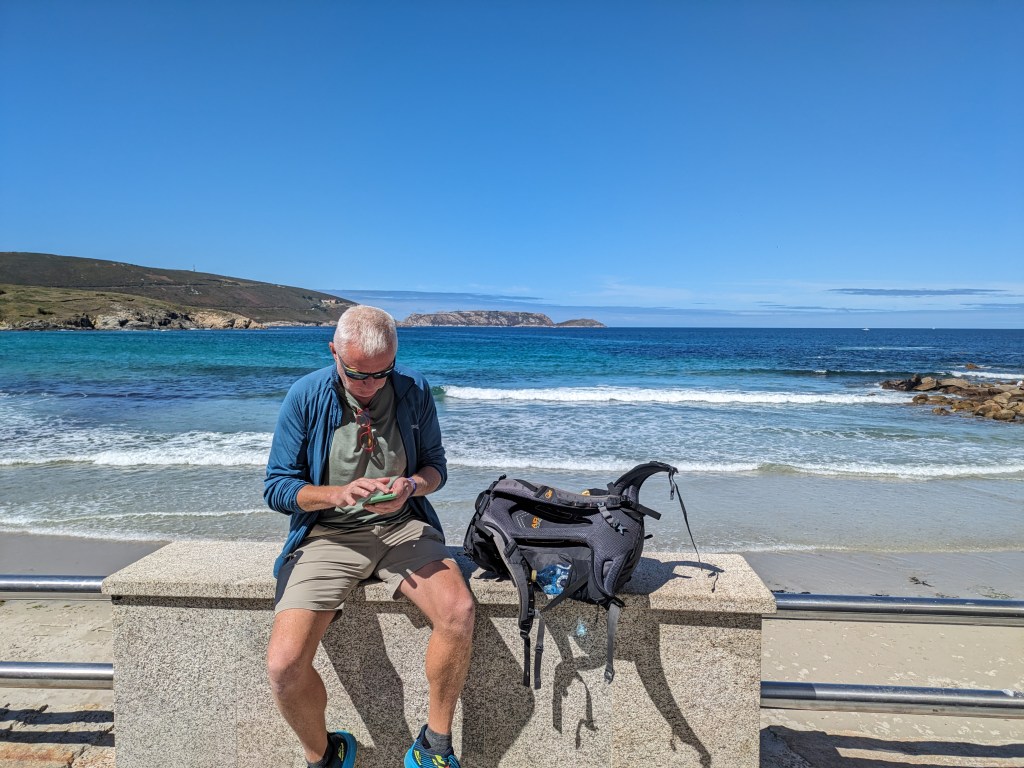
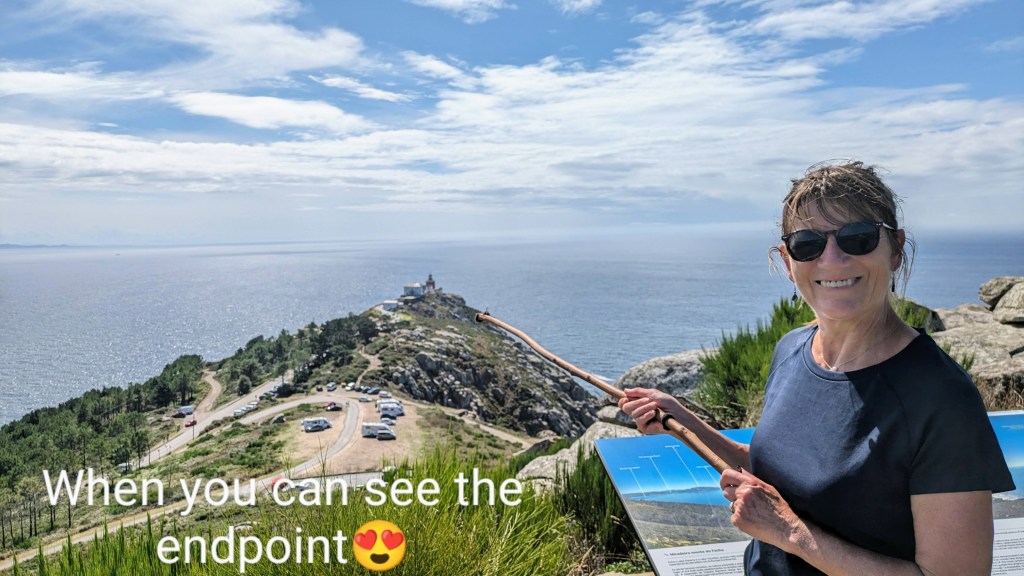
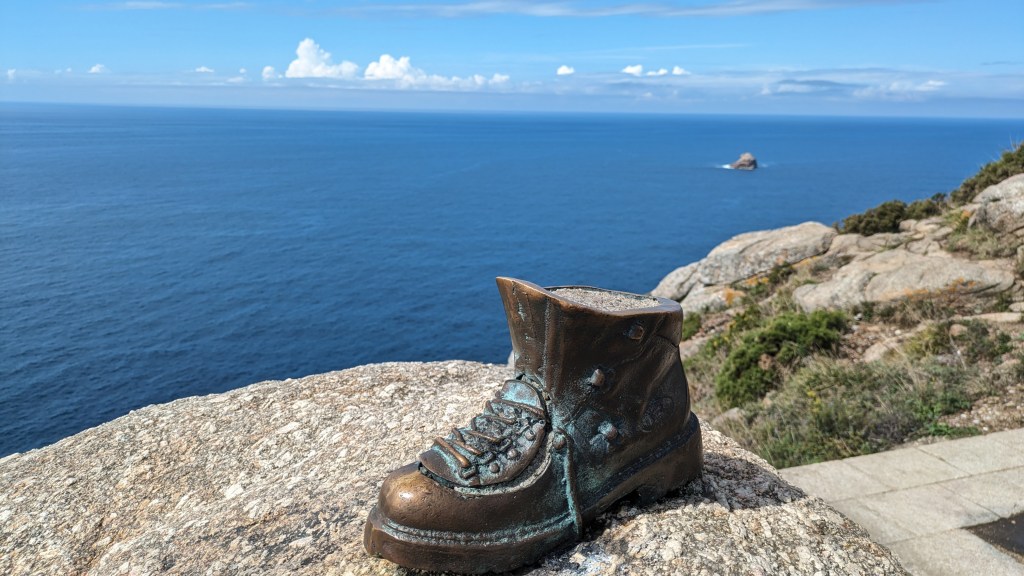
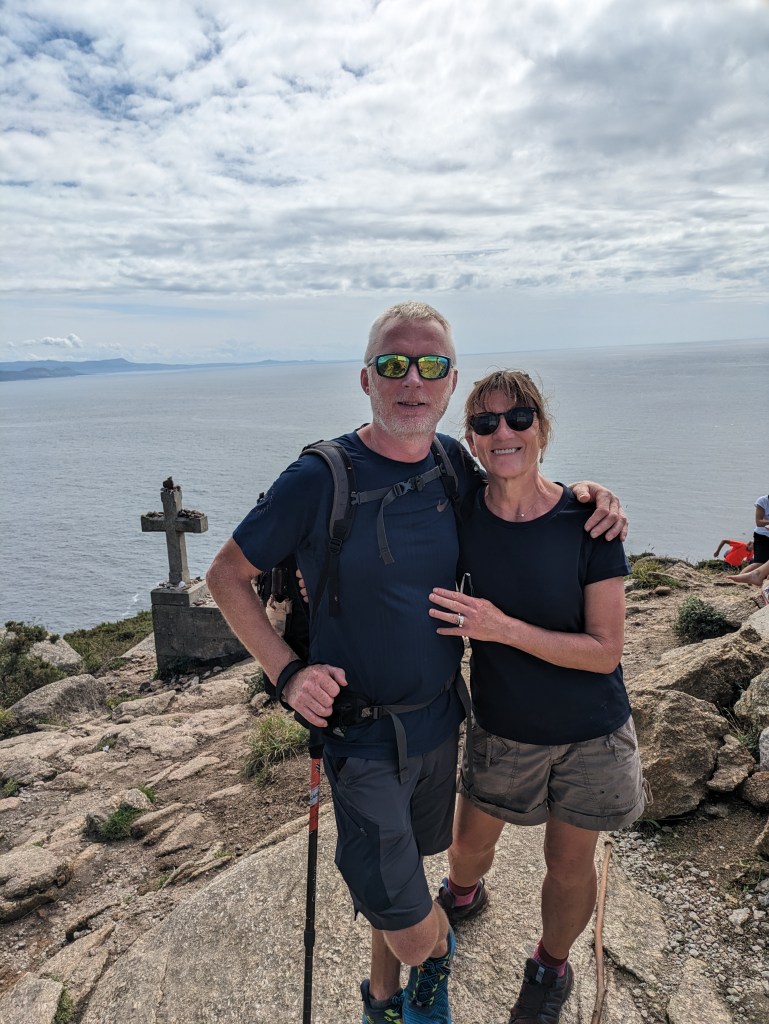
Fisterre, the end of the known world for the Romans, was a strange little town, full of weathered people with walking sticks, limps and flip flops. It was the endpoint for pilgrims on the Camino de Santiago as well so it didn’t have to try very hard to attract visitors. But the landscape around the Finisterre lighthouse, a couple of kilometers hike outside the town, was worth the entire Camino, a fitting place to finish. This was a wild landscape of mysticism, of drowned cities and submerged mountains, of altars to the sun and timeless rituals with tales of sterile couple becoming fertile after sleeping on one of the large rocks on the hill overlooking the sea and healing miracles.

So we made it, 200kms in eight stages. We carried out own packs and booked our accommodation as we went along, usually walking from stage to stage but getting taxis to our accommodation if we couldn’t find anything near the end stage.  The Camino del Faros was probably the most spectacular hike that we have ever done.  It was quite challenging at times (more than we had anticipated but we hadn’t done a lot of training). Each day on its own would not have been difficult but the cumulative nature of hiking relatively long distances day after day exerted a toll.  The bigger the challenge, the greater the reward 🌞 and  the rewards were huge. There were no stamps to collect in a pilgrimage passport, nothing to ‘prove’ that we had trekked along the way. The benefits of this Camino were all internal – solitude,  genuine communing with nature and an appreciation and respect  for the power of the sea -to mould and erode, to give bounty and to take it away. If you like the great outdoors, like to go a little off the beaten track, then this is the hike for you.

The end of the world 🌍
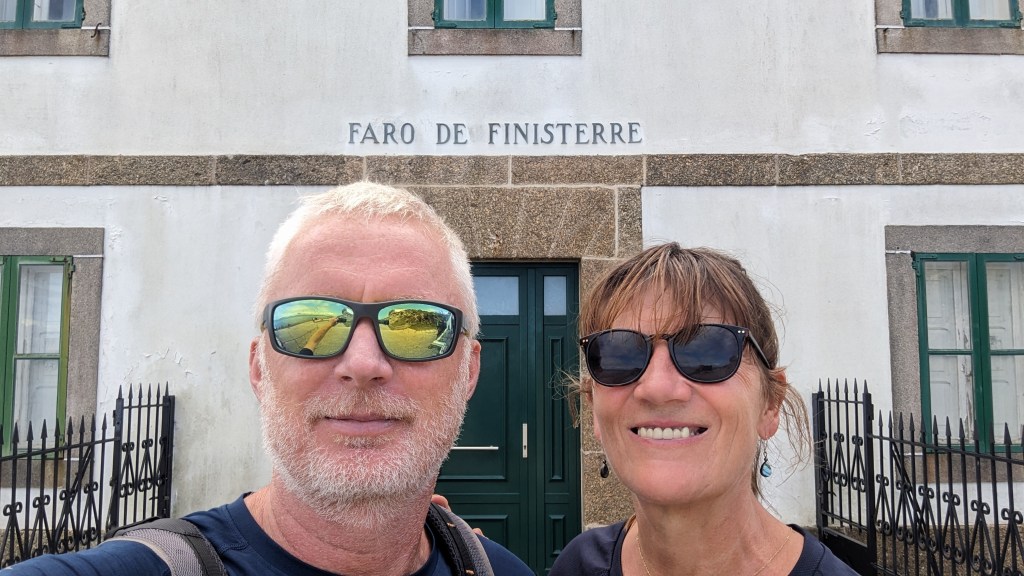
The End – Faro de Finisterre

Link below to a fabulous website with lots of details.

Camino del Faro- The Lighthouse Way

Philippines – Mountains of Rice

Our ferry was due to leave Coron for Manila at the very precise time of 11.59pm and lo and behold, before the stroke of midnight, we were on our way. A punctual departure hadn’t seemed likely. The security at the port was tight with much checking of bags for sharp objects and lighters. A mango that Caoimhin had in the side pocket of his backpack was confiscated with no explanation….perhaps the official liked mangoes, as much as we did.


Once we entered the main departure area, all bags had to be placed in a single row on the floor so that a sniffer dog could check them out. The problem was that the single row already snaked down and around a vast hall (the amount of luggage that some people were carrying was staggering) There was much unintelligible shouting and gesticulating by a very officious steward….even the Filipinos didn’t know what was going on. They just shrugged and smiled. We were told that we had to wait and put our bags in a second row once the first row was checked. The dog came, sniffed the first few bags, some ID documents were scrutinised, and the first twenty people were even body searched. Then it all went a bit haywire….more shouting when some people tried to remove their luggage. In the ensuing mayhem, the stewards weren’t sure which bags were checked. We just sneaked out the door and headed for the boat….Caoimhin loves breaking the rules.


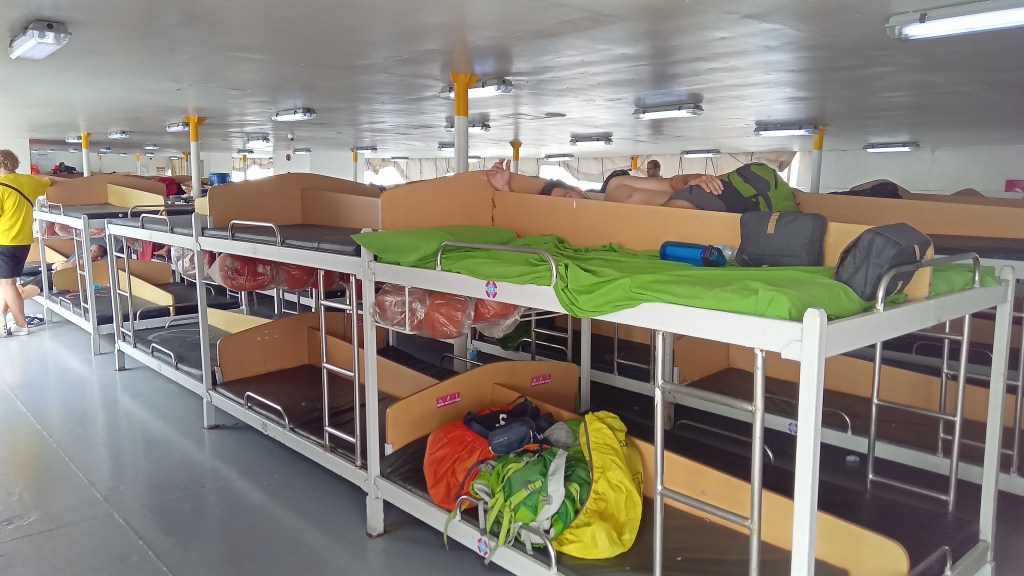
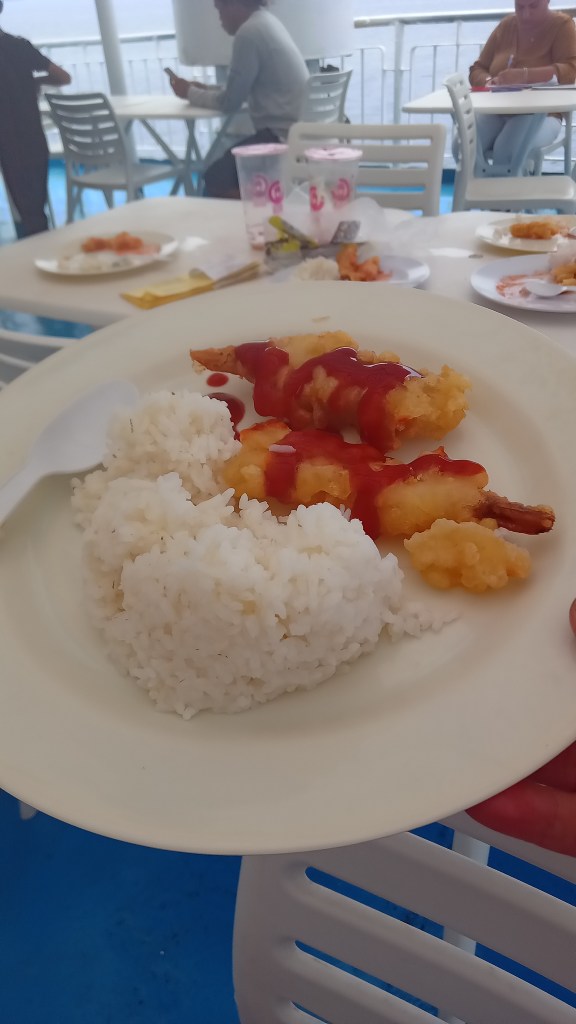
Although we had assigned beds on our tickets, we were told to just take any available bunk. We headed for the open top deck. We are not paranoid, but the safety record on Filipino ferries is appalling and the enclosed air-con tourist class was a little too enclosed for our liking….especially if you had to get out in a hurry. The ferry wasn’t full, and the top deck was virtually empty except for loners and the prudent. The engine noise was loud up there but that was compensated by the lack of human noises. it was a lovely constant noise that lulled us to sleep for a few hours. The crossing was smooth with a light breeze providing natural aircon. This ferry (2Go company) wasn’t fancy, but it was a giant step-up from the other long ferries we have taken. There were life-vests on all the bunks and also in the canteen area, the aisles were clear of crates and boxes, the toilets were (reasonably) clean. The morning dawned hazy and overcast. Meals were included in the ticket price (€54 each), and by 6 am, a long breakfast queue had formed, a bit like a soup kitchen. Everyone was given a plastic plate with a large mound of rice, scrambled egg, and some beef cubes ( the choice was simple – ‘take it or leave it.’ )The process was repeated at midday with rice and battered shrimp smothered in ketchup. Hardly gourmet, but nobody wanted to give up a ‘free’ meal.
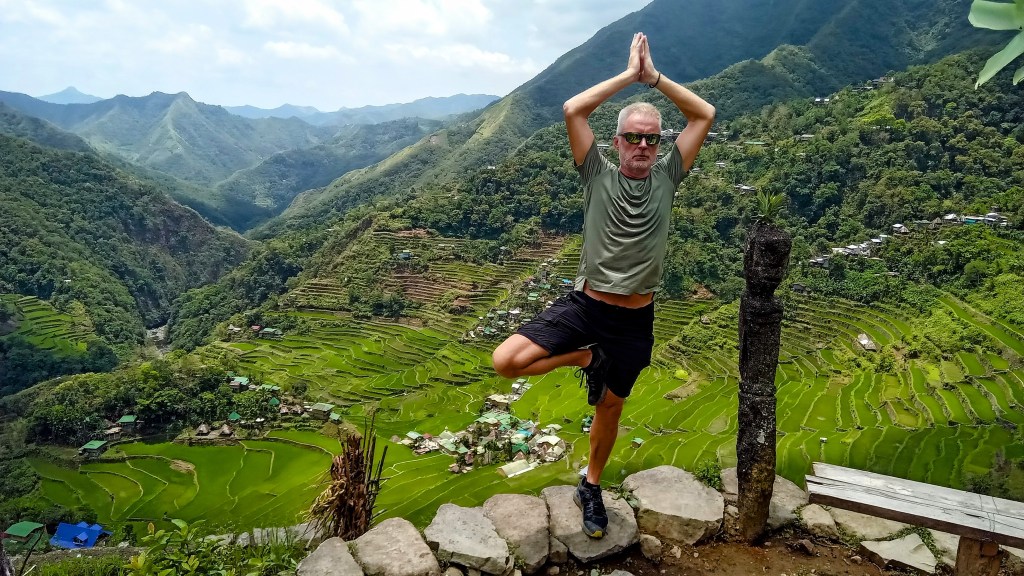
Lunch on the ferry

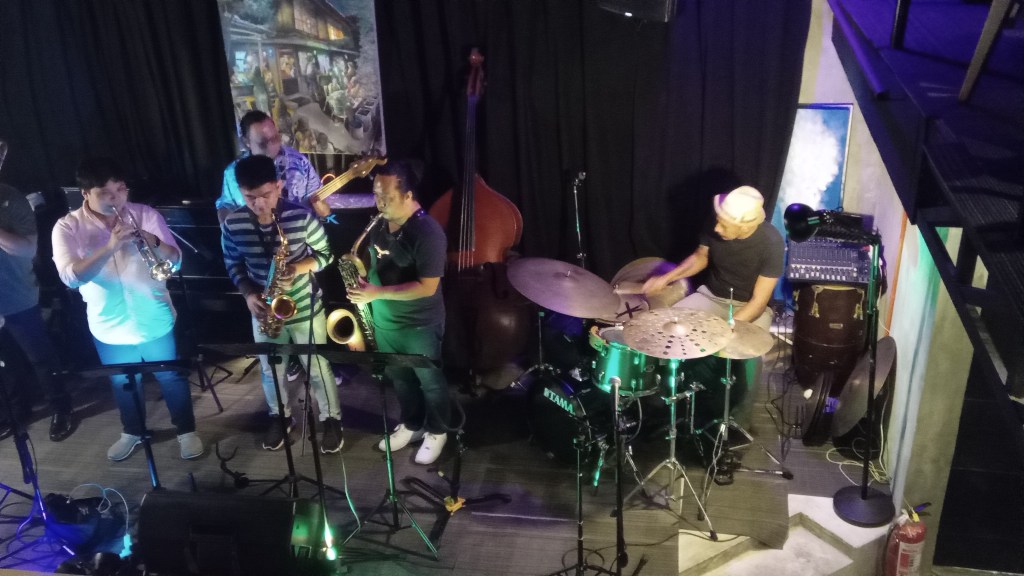
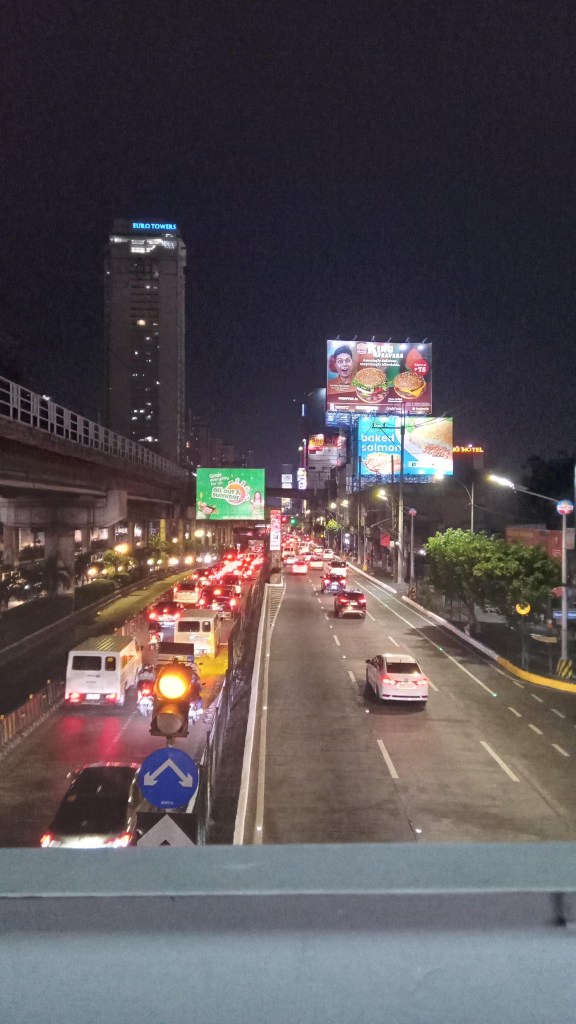
Karaoke started up on the boat as we approached Manila…maybe to celebrate a safe arrival after 17 hours at sea. Manila port was busy with cargo ships and fishing boats , the water full of floating debris and the odd jumping fish. When we disembarked, the traffic was appalling on that misty overcast Friday. We walked in circles around the stinking streets in the port area looking for a taxi – usually we are pestered with taxi-drivers when we want to walk. Huge lorries barrelled along within inches of our feet. Eventually a man wondered what we were looking for and pointed us in the direction of taxis a couple of streets away. It took more than an hour and a half to drive ten kilometres. When we got to our hotel (RedDoorz near EDSA camp), the room was tiny – we had more space on the boat. There was a pile of festering rubbish on the street corner outside and a woman and baby sleeping on the other corner. So we were thankful that we had a roof over our heads. The area was a bit rough but we stumbled upon a Jazz club down a quiet leafy street (the only leafy one in the area) We counted our blessings, listening to live music and sipping cold beers.
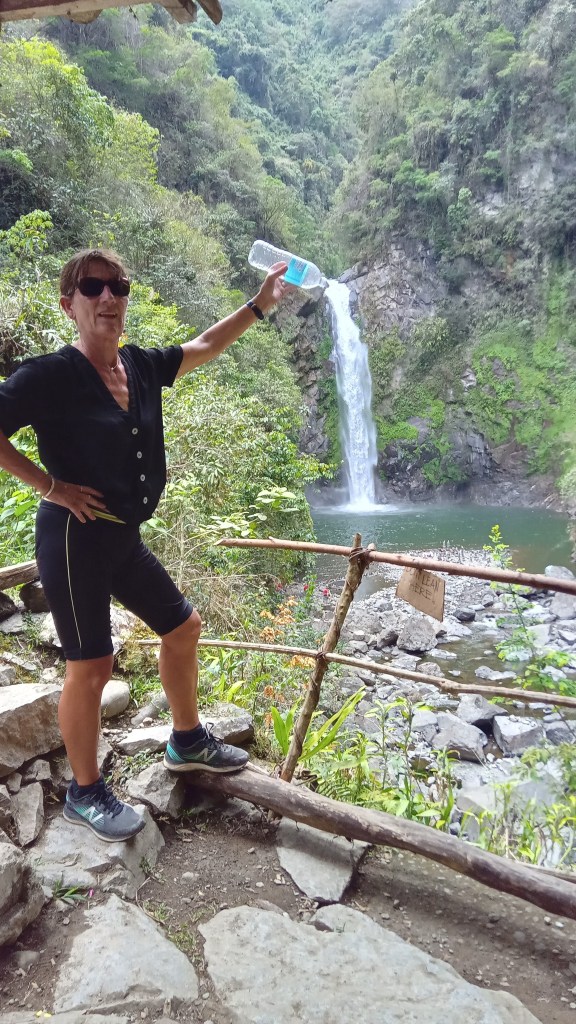
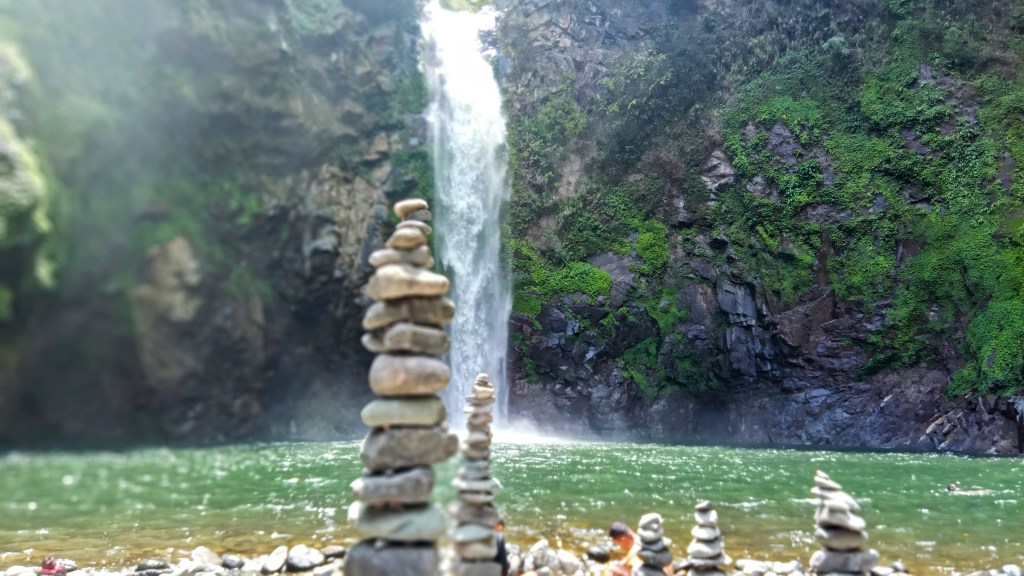
Jazz Club


Rice is more than a food here in the Philippines, it is part of the psyche of the people. No meal is complete without it and we have sometimes eaten it three times a day. There were paddy fields all over the Philippines, but the UNESCO Heritage rice terraces were in the north, a nine hour overnight bus journey from Manila.

Goodbye, Manilla from an overpass


Manila was hot and sweaty, we weren’t interested in touristy things (we had already seen anything we wanted to see). We wandered around the crowded air-conditioned shopping malls, buying nothing , just watching all the Filipinos doing the same thing. I don’t really want to admit this, but we toured the food courts going from Starbucks to McDonald’s to Jolibees, a Filipino version of KFC on a fast-food binge.
But finally we were on the overnight bus to Banaue in the Cordillera mountains with perishing aircon and corkscrew roads. I regretted our food choices with every bend and curve of the road.


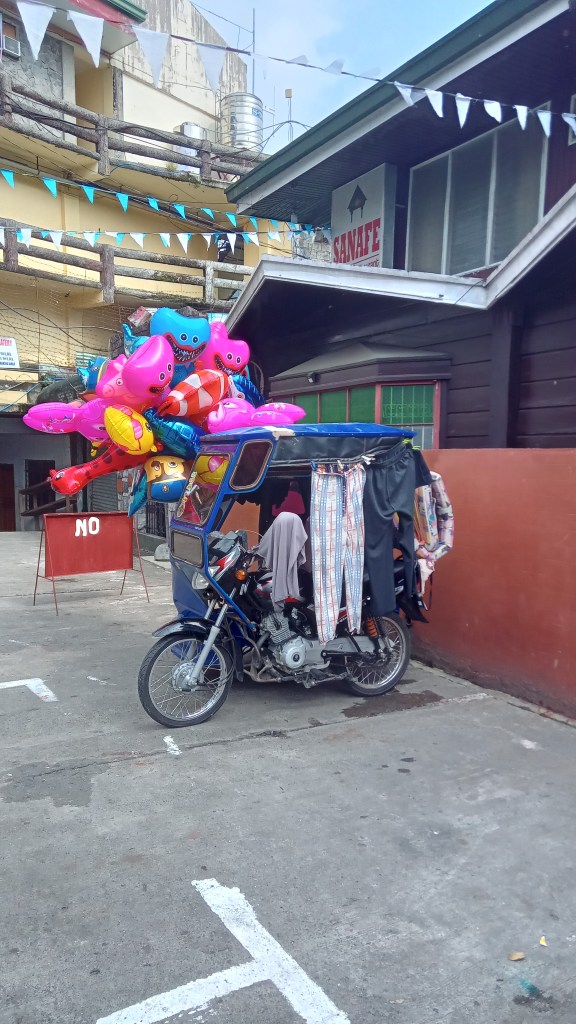
We arrived before 6am in Banaue where the early morning sweeping was in full swing and tendrils of smoke curled upwards from the fires burning rubbish and dead leaves. We were met at the bus stop by a tricycle to bring us to our accommodation, Rice Homestay, a friendly place where there was a whiff of dampness and thick blankets on the bed – we haven’t needed a blanket since we left home. There was a wonderful cool freshness in the air, which was invigorating despite our tiredness.

Party Time, Banaue


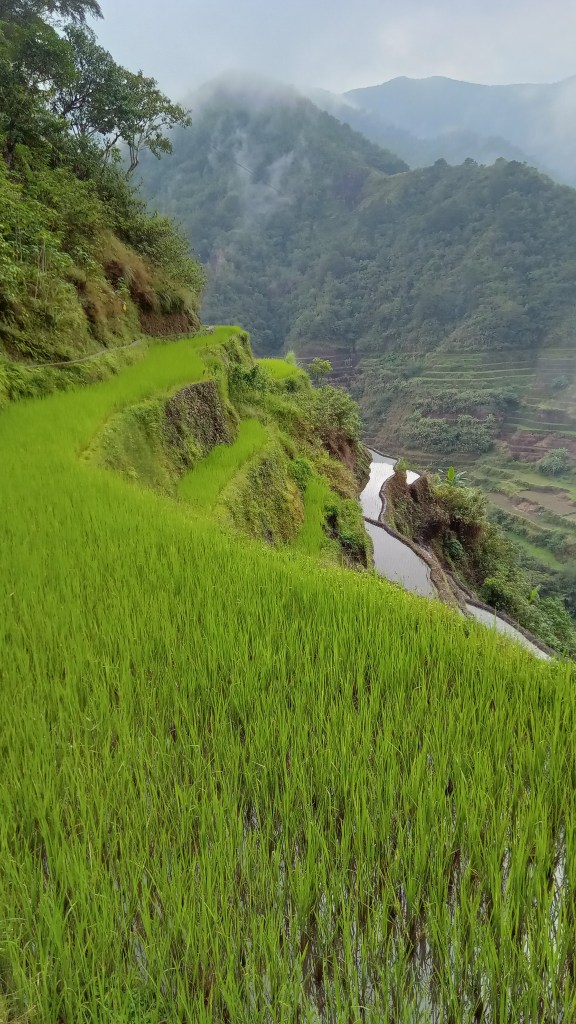
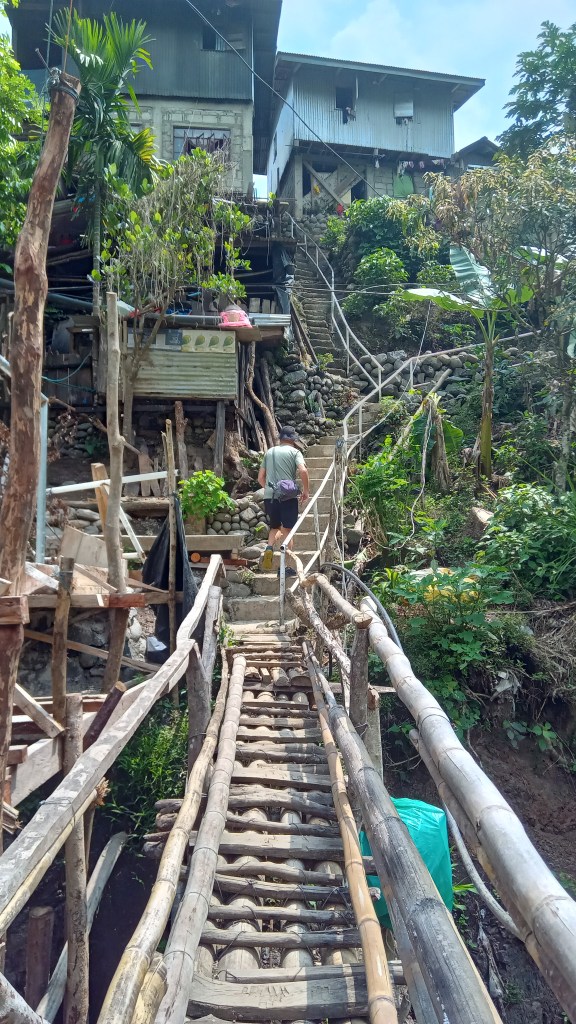
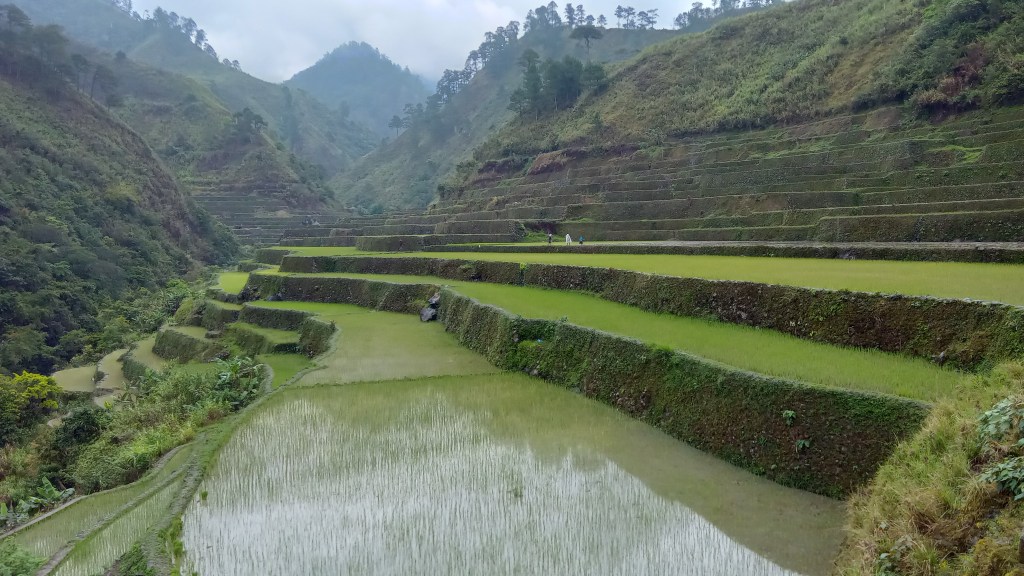
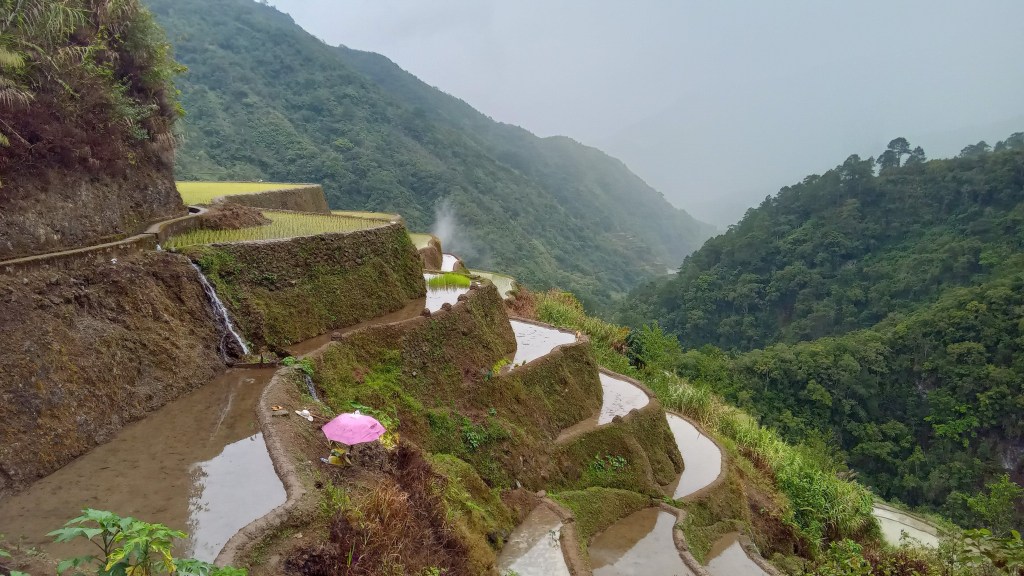
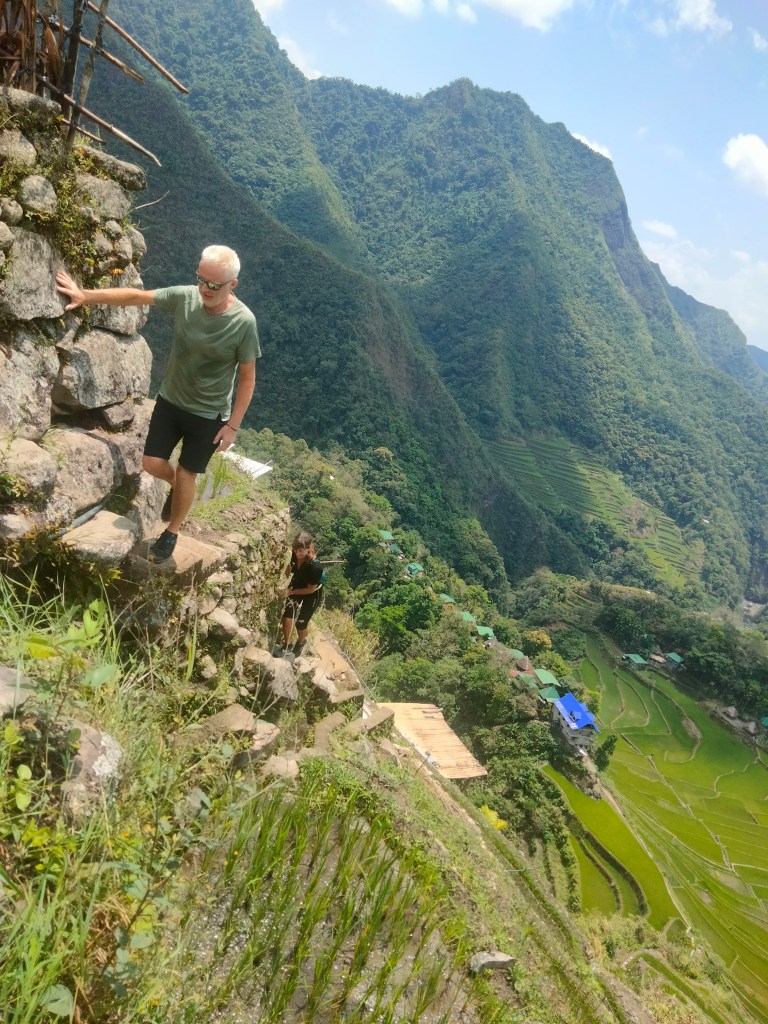
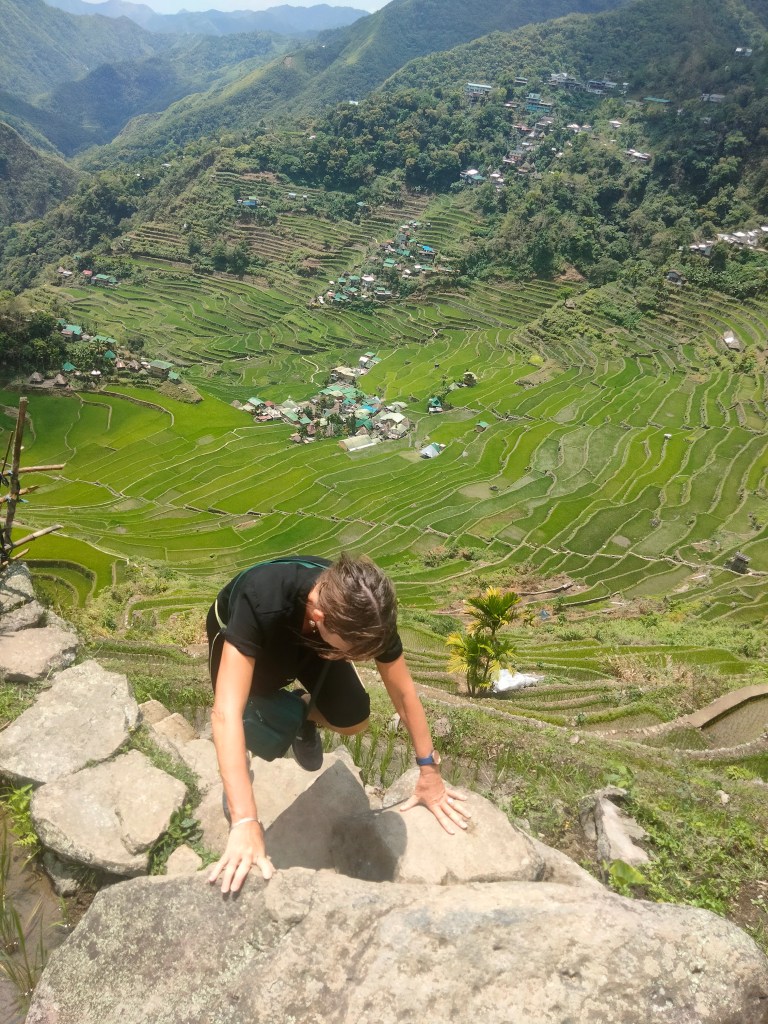
Banaue was a stunning area of natural beauty with deep valleys, waterfalls, rivers traversed by swaying rope bridges, and of course rice terraces. Many of the terraces were two thousand years old and created by the Ifugao people with their own distinct rituals and customs. This was an area that was perfect for hiking along irrigation channels and ancient paths that hugged the contours of the mountains. A head for heights and a sense of balance were certainly an advantage. The terraces were of varying sizes and steepness, sometimes shrouded in cloud and mist, but the vividness of the green rice stalks was incredible, especially after rain as if newly scrubbed. The heavens opened most afternoons in torrential downpours, but even in the rain, it was a pleasent 22 degrees.

Rickety Bridges

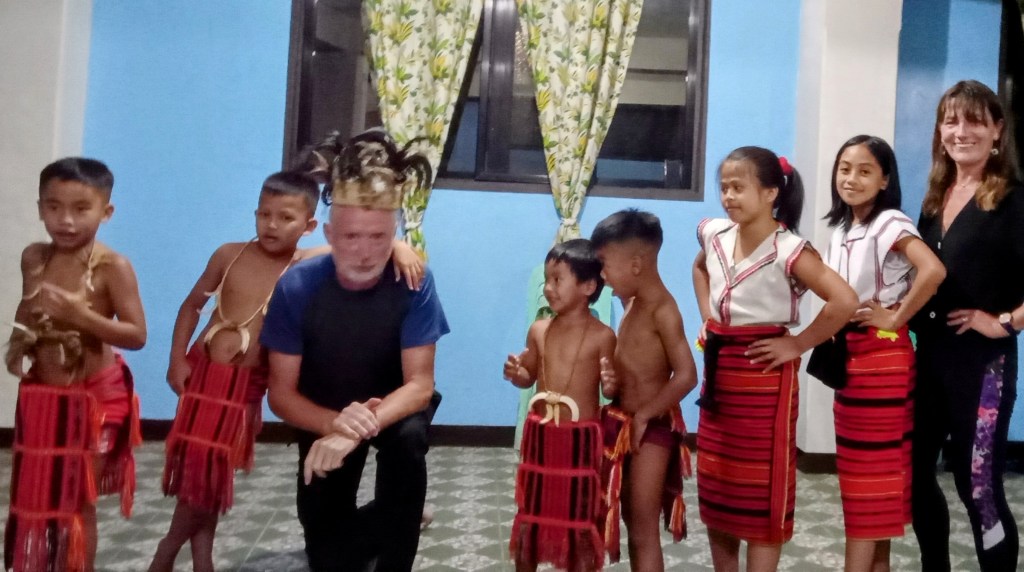
We walked for two days with our guide Feny from village to village. Feny was great company, smart and funny with a big personality. She was one of a handful of female guides. She was local from the Ifugua tribe and was a mine of information. Like most mountain people, she chewed betel nut (called momma here) non-stop, spitting great splashes of blood-like juice along the trail. We stayed for a night in a homestay in Cambula. The houses were spread over the hill in a higgledy- piggedly fashion….no planning permissions needed if it was your land or your ancestors land. The locals kids put on a show for us, singing If you’re happy and you know it . Far more enjoyable was a tribal dance involving a headdress of eagle feathers and much banging of gongs and bamboo sticks.

Our Super Guide, Feny
The Entertainment , Cambula


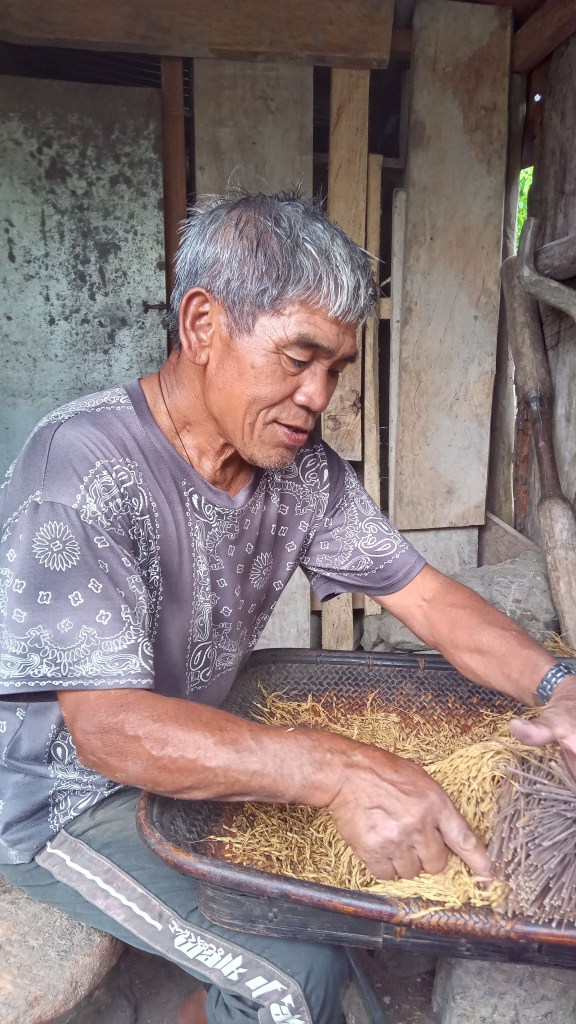
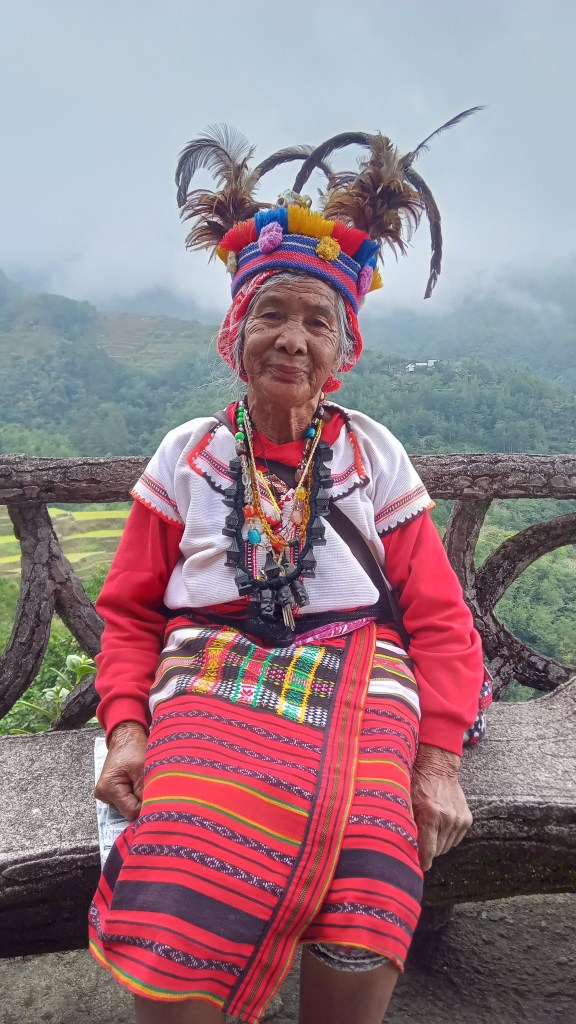
It’s hard to say how many of these children will remain in the village in the future. The children go to elementary school in the villages but then go to high school in the towns where they stay with relatives. Growing rice and maintaining the terraces is labour intensive and incredibly hard work -a long, back-breaking process. The number of older people bent double was alarming and sad. The way of life of the Ifugao People is still ruled by ritual and ceremony. The colours of the traditional clothes denote your caste and how many rice terraces you have. The tribal priests play a big role in life and death. The suitability of a marriage partner may be decided by the examination of the bile of a dead chicken. If the bile is ‘bad’, the union will not be blessed, but Feny said that you could always kill another chicken until you got the ‘right’ result. The celebration of an engagement was also a big event. The bridegroom’s family must bring a pig to the girl’s’ family home. The pig is slaughtered there, and all the neighbours who are present are given a hunk of raw meat.


In this part of the Philipines, your dead may be closer than you think, they might be in the house with you. The bodies of the dead are exhumed after two years, the bones are cleaned in a ritual ceremony and kept in a cool place in the house. They are periodically brought out, particularly in times of illness and crisis when there is a ‘showing of the bones’.

Traditional Dress


But things are changing. Most people carry the outside world in their pockets with mobile phones. One damp afternoon in the middle of nowhere, the sound of Have I told you lately that I love you (the old version by Jim Reeves) reverberated around the terraces from a ghetto blaster, covered with a white plastic sack. A man nearby repaired walls and chewed momma. Both young and old love country music in the hills.

Back in Banaue, the most memorable sound was the heart-rending squealing of pigs , all legs bound with rope, who were being butchered on the street for the harvest festival that was going on. Food here is real, the slaughter of animals is up close and personal, meat isn’t wrapped in plastic on supermarket shelves.


Our next stop is Sagada, another mountain town, famous for the coffins hanging in the surrounding mountains . Hope you can join us there.
Until then….thanks for reading.

Philippines – Mountains of Rice