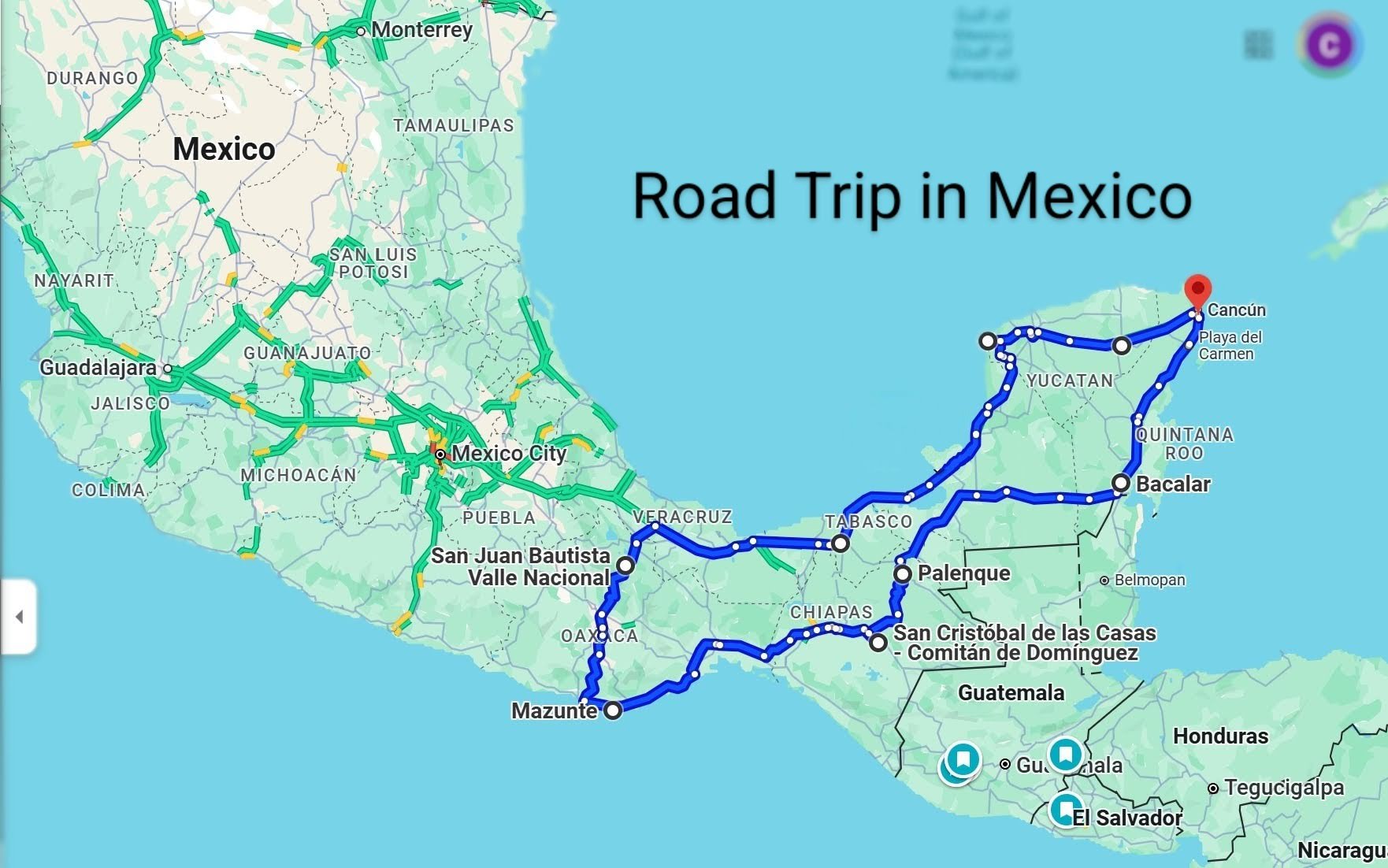
Time in Mexico flew by and we found ourselves back in the Yucatan driving away from the Gulf of Mexico (definitely still called that), heading inland towards Cancun to complete the last part of our large loop.
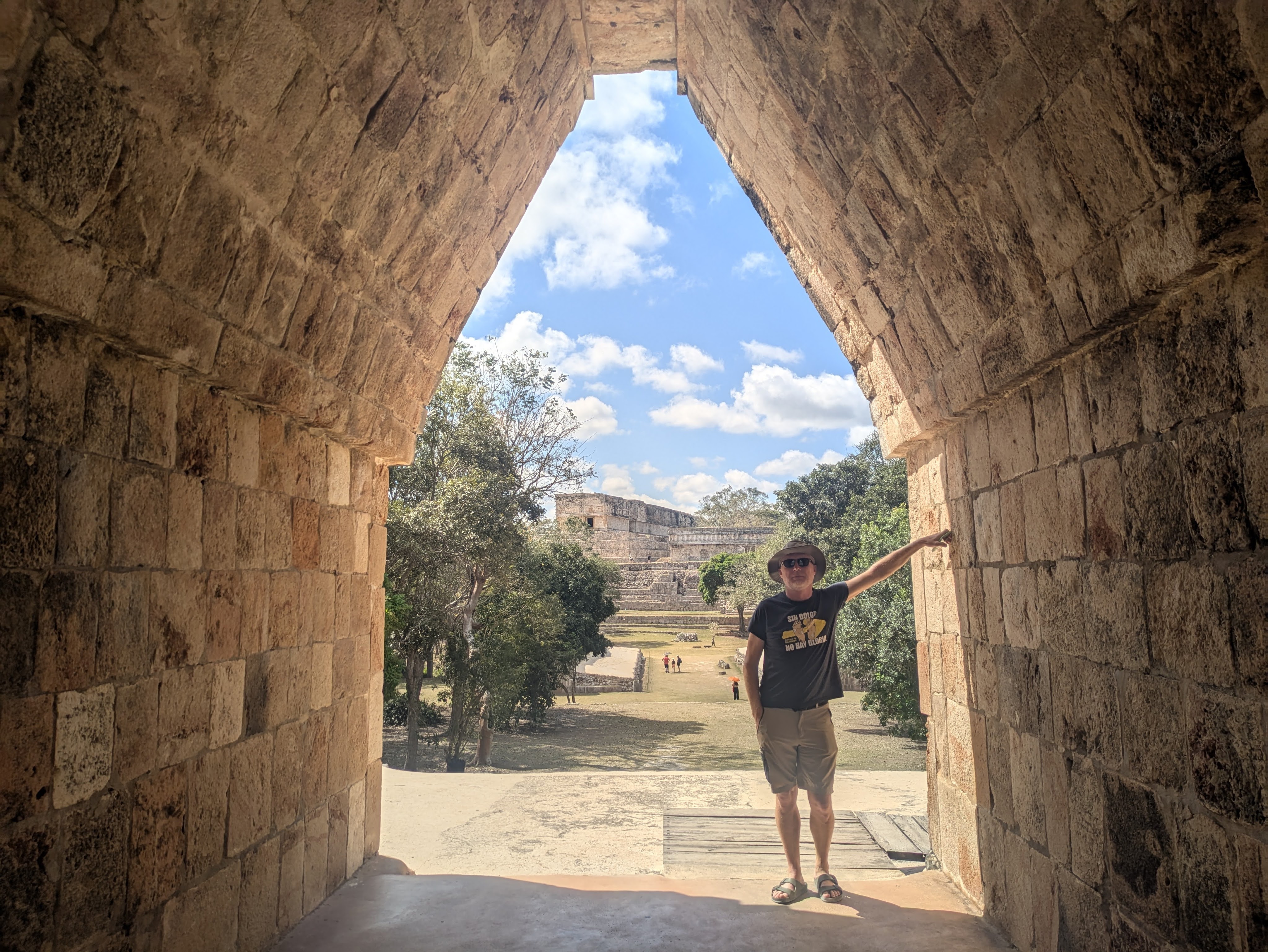
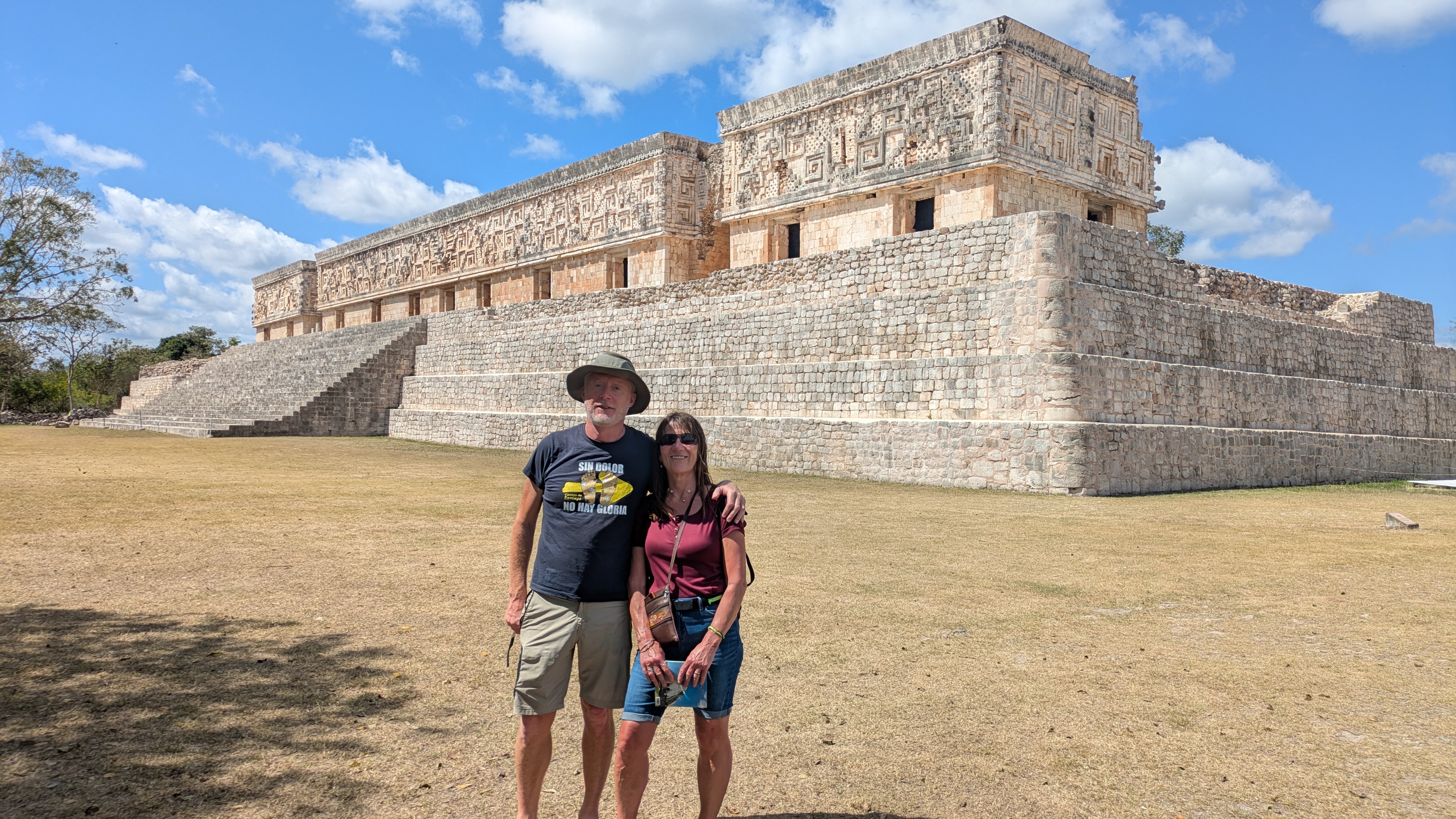
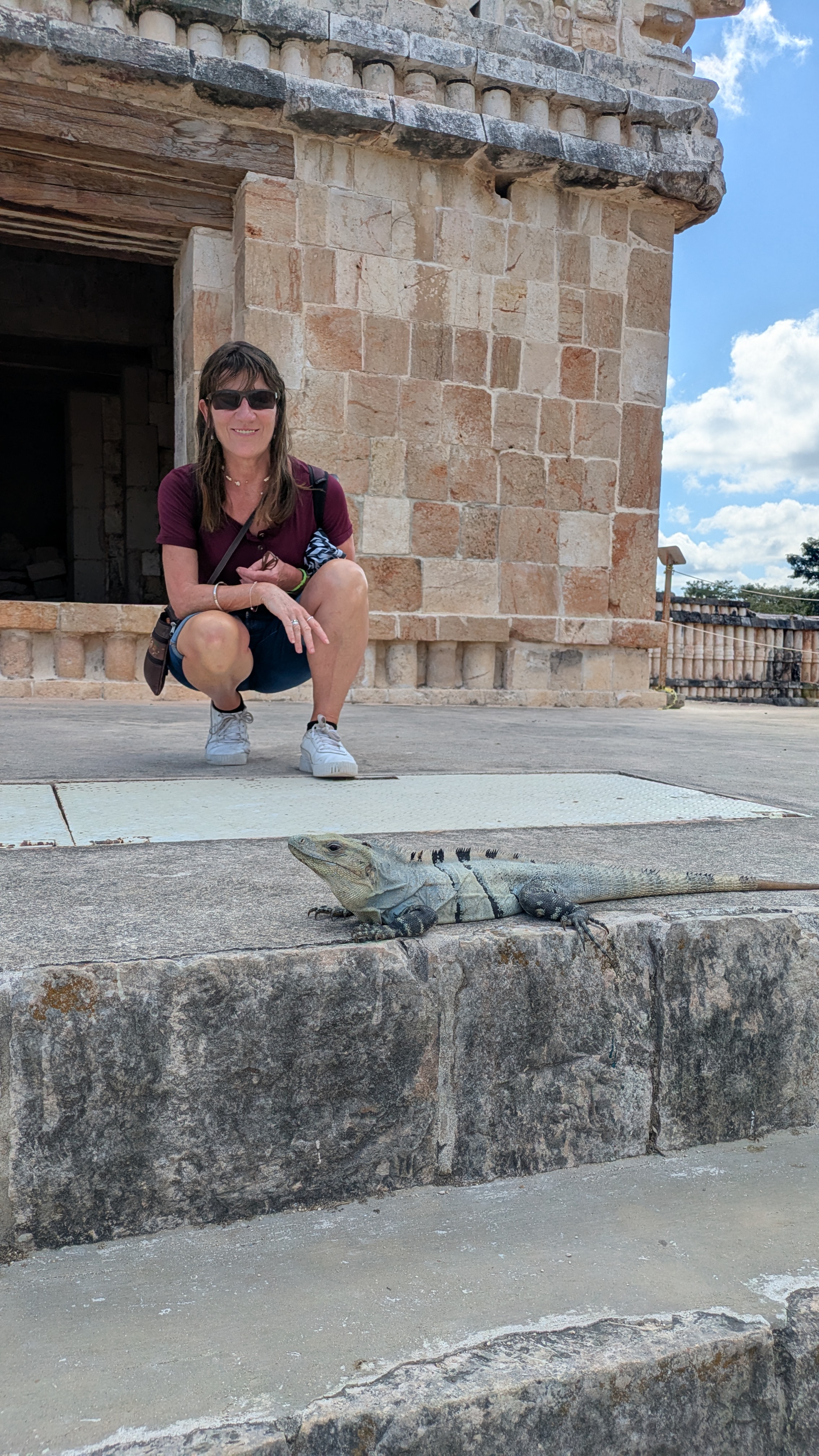
Swallows flew around the quadrangle flanked on all sides by the ruins of ancient monuments. Bats were hanging upside down in the dark recesses of the buildings while giant iguanas snoozed on the hot stones. We were in Uxmal, another archaeological site where most of the buildings dated from the seventh to tenth century AD and were unlike anything that we had seen before now. Many of the buildings were decorated with intricate bas reliefs and were arranged in several quadrangles around immense plazas, some linked by beautiful arched passageways. It had an almost modern feel and was undoubtedly a well-planned city with an orientation along astrological lines.
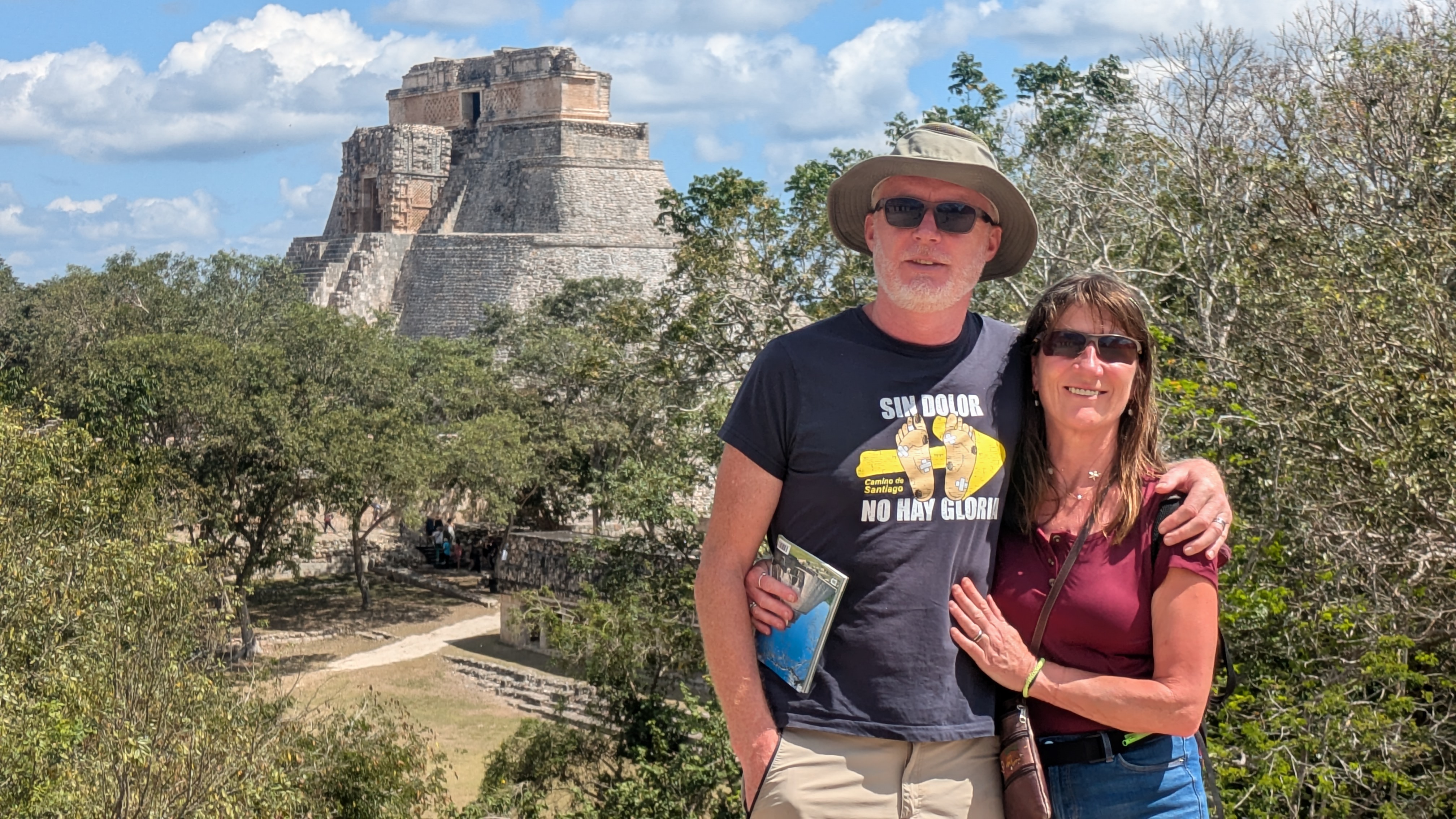
The massive pyramid, known as the Pyramid of the Magician, was really impressive because of its huge size, considerable height and steep slopes but the myth surrounding it was also pretty interesting. Legend told of a magic dwarf, who hatched from a turtle egg and was raised by a childless witch. Through a series of tasks and challenges, the dwarf outwitted and overthrew the sovereign of Uxmal to become the ruler and used his magic to build the massive pyramid as his palace, building it in one night.
Uxmal is in a dry arid region without rivers or springs so its wasn’t surprising that the most revered god was the rain god, Chaac, often depicted with a human body covered in scales and a fac with protruding fangs, He held both a lightening axe and snakes that he threw at the clouds to bring storm and rain. Apparently he had a voracious appetite but could be appeased in times of drought by human sacrifice. Despite the lurid tales, Uxmal was an interesting and meditative place, relatively quiet with just a few people meandering around.
It was a different story when we visited Chichen Itza the following day. In a country with a plethora of archaeological sites, this is one of the ‘big guns’, an UNESCO heritage sire since 1988 and regarded as one of the world’s best preserved archaeological sites. We had been warned to go early as it was really popular. As we approached the site shortly before eight o clock, we were greeted by the strange sight of a long line of people pushing carts loaded with boxes and bags as if they were refugees, fleeing with all their worldly goods. These were just the stall vendors making their way into Chichen Iza for the 8am opening.
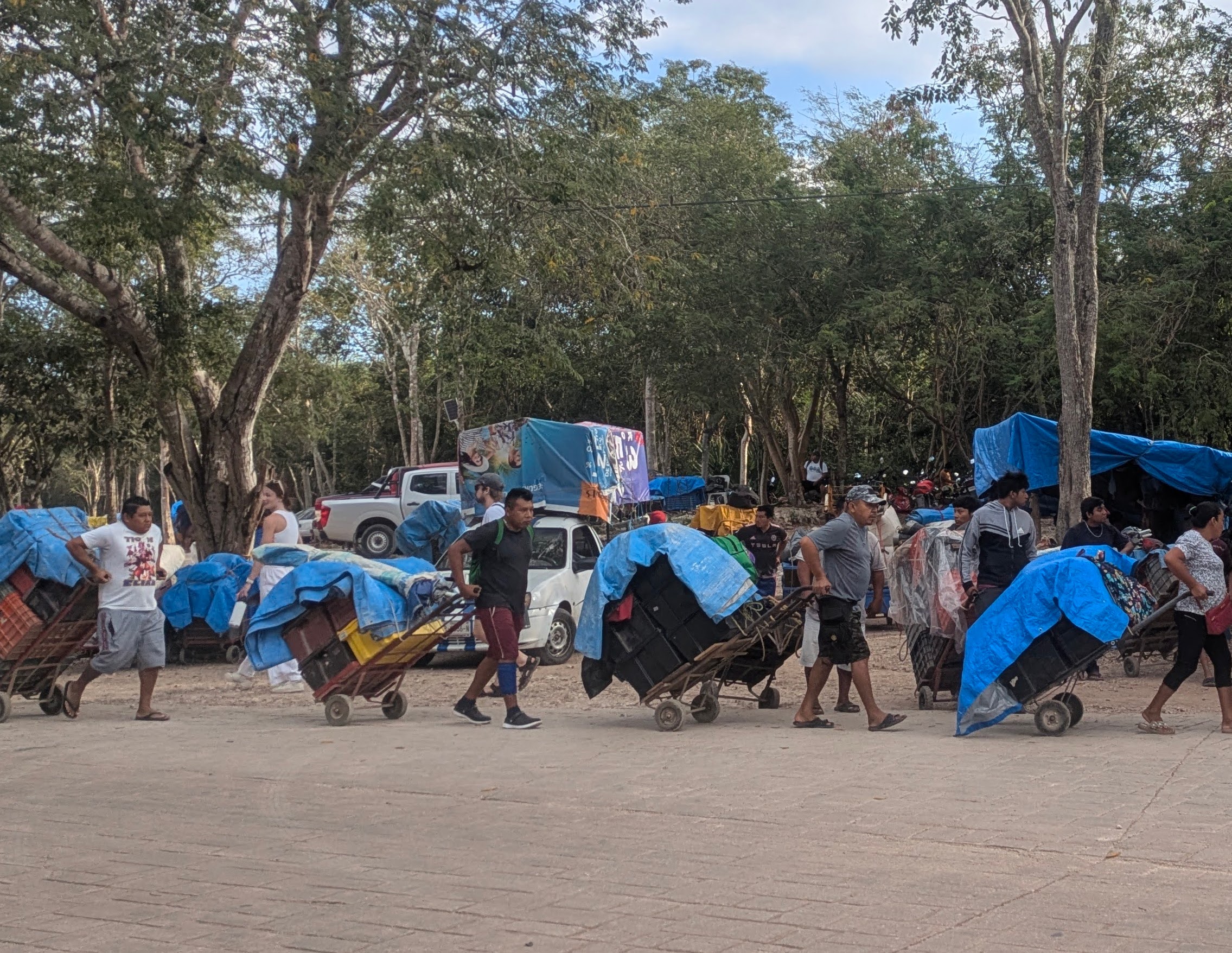
Most of the tour buses hadn’t arrived yet but the queues were long and chaotic and we soon discovered why. The total price was a hefty 671 pesos per person (about €33) but 100 pesos of this was government tax and had to be paid at a separate window which wasn’t clearly marked. Only cash was accepted so people were counting out cash and then leaving the queues to find an ATM when they didn’t have enough.
Chichen Itza was a mixture of fascinating history and commercial tourist trap and definitely the most crowded place that we visited. Hundreds of vendors lined the site selling all sorts of souvenirs, hats, blankets and pyramid replicas as well as jewelry and soft drinks. Just a flicker of an eye in the direction of a stall was enough to make the sellers pounce.
The site was occupied for thousands of years but was a major power between 800 and 1200 AD. The giant pyramid, El Castilla, a huge stepped pyramid dominated the site. At sunrise at the spring and autumn equinox, an interplay of light and shadow gives the impression of the body of a rattlesnake slithering down the giant balustrades of the pyramids, becoming reunited with the stone serpent’s head at the bottom. That must be an extraordinary sight. The Maya were really in tune with the skies, with an extremely accurate solar calendar and their ability to integrate astronomy into the architecture of their temples and monuments.
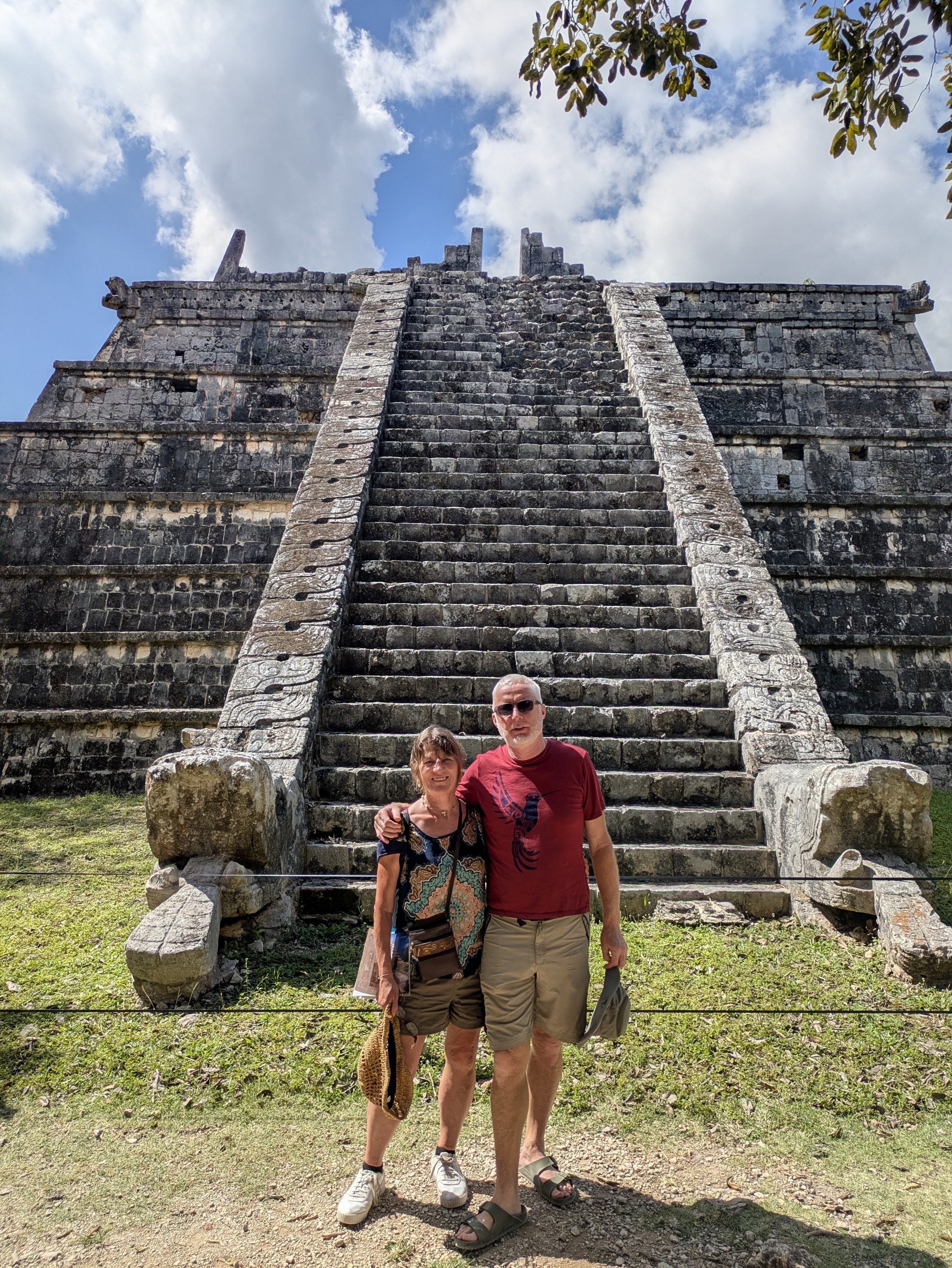
Sweat was dripping down my back and my left arm was turning a tomato shade of red from the sun as we made our way towards the exit after our three hour visit. My right arm ached from carrying an umbrella for shade. A small umbrella is one of the most useful things I pack when we go away, good for sun or rain but the strong sun in Chichen Itza required the shade of a giant parasol. Pushing against the throngs of people arriving, we were glad we had gone there but absolutely delighted to leave this hot, overcrowded World Heritage site.
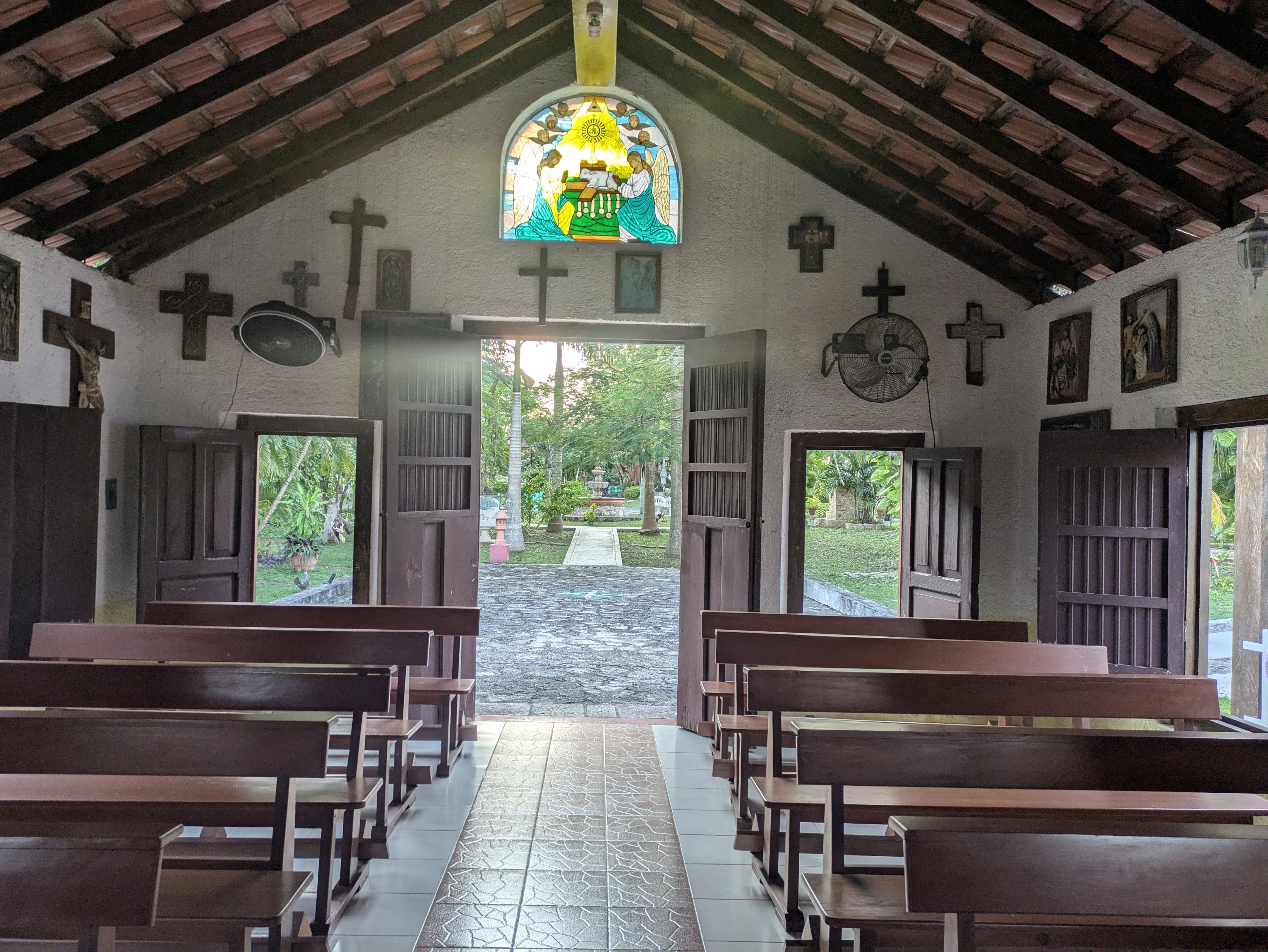
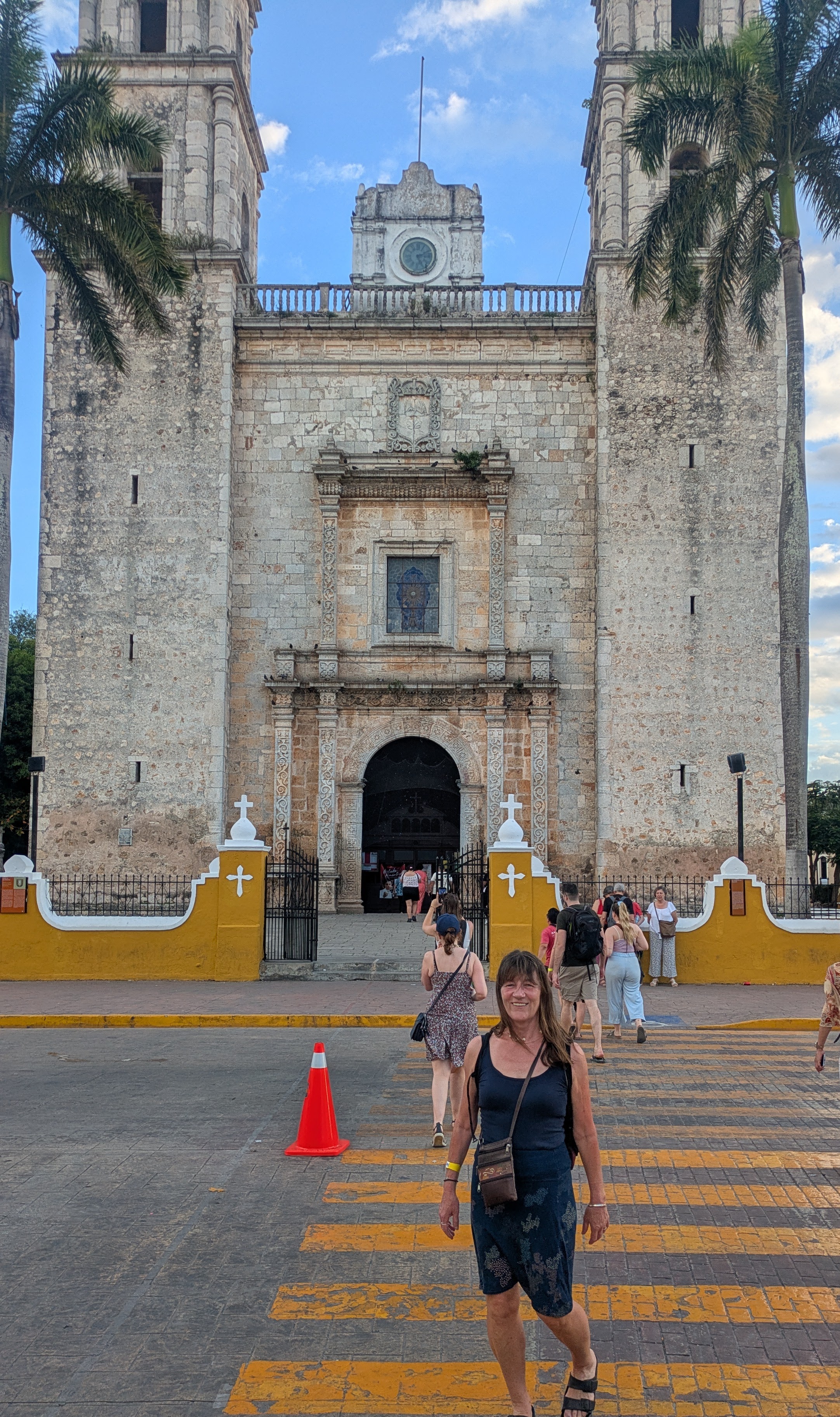
We spent our last few nights in Valladolid, a colonial town of churches and history, about a forty-five minute drive from the madness of Chichen Itza, staying on the outskirts of town, in a hacienda which had a swimming pool and even its own chapel on the grounds. This was a perfect place to escape the heat and relax. We tried not to complain too much about the 35C temperatures as we would soon be at home.
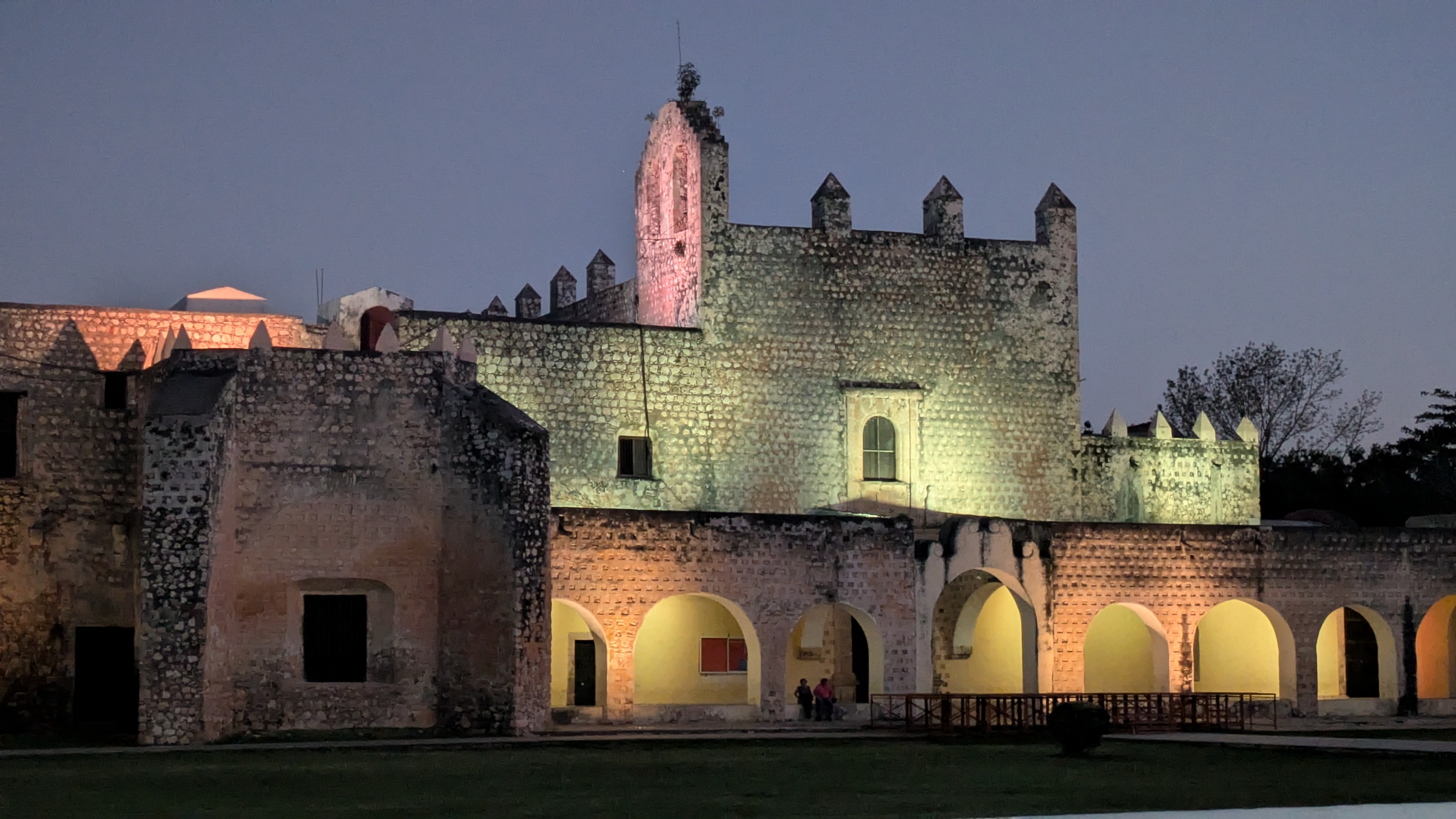
The walking tour of the Valladolid took us from the church in the main plaza to the Convent of San Bernadino, an imposing structure and one of the oldest examples of colonial heritage in the Yucatan. We sat on the stone wall on a balmy evening watching a sound and light show recreate the history of the building and town in a series of images on the stout walls.
Our last night was spent in downtown Cancun. Although we had flown into Cancun almost five weeks previously on a late flight, we had stayed near the airport, which is south of the city, and then continued on further south the following morning. So this was our first visit to Cancun. It was unlike any other place that we had been in Mexico. It was large and sprawling with two distinct areas. A wide six-lane boulevard connected the more traditional downtown with the hotel area (Zona Hotelera,) which looked as if it had been built – or at least expanded – in the last ten years. A long row of palm trees ran down the middle of the boulevard with enormous hotels nestling among trees and flowering bushes on either side. Driving over a causeway, we caught a glimpse of the Caribbean sea and some beaches and understood why it was such a popular destination. The water was a sparkling turquoise and the sand was talcum-powder pale. Rows of gleaming yachts were moored at a jetty. It was a place made for holidaymakers. We stayed in a comfortable but slightly shabby apartment in the downtown area with parking on the street outside and some nice restaurants nearby.
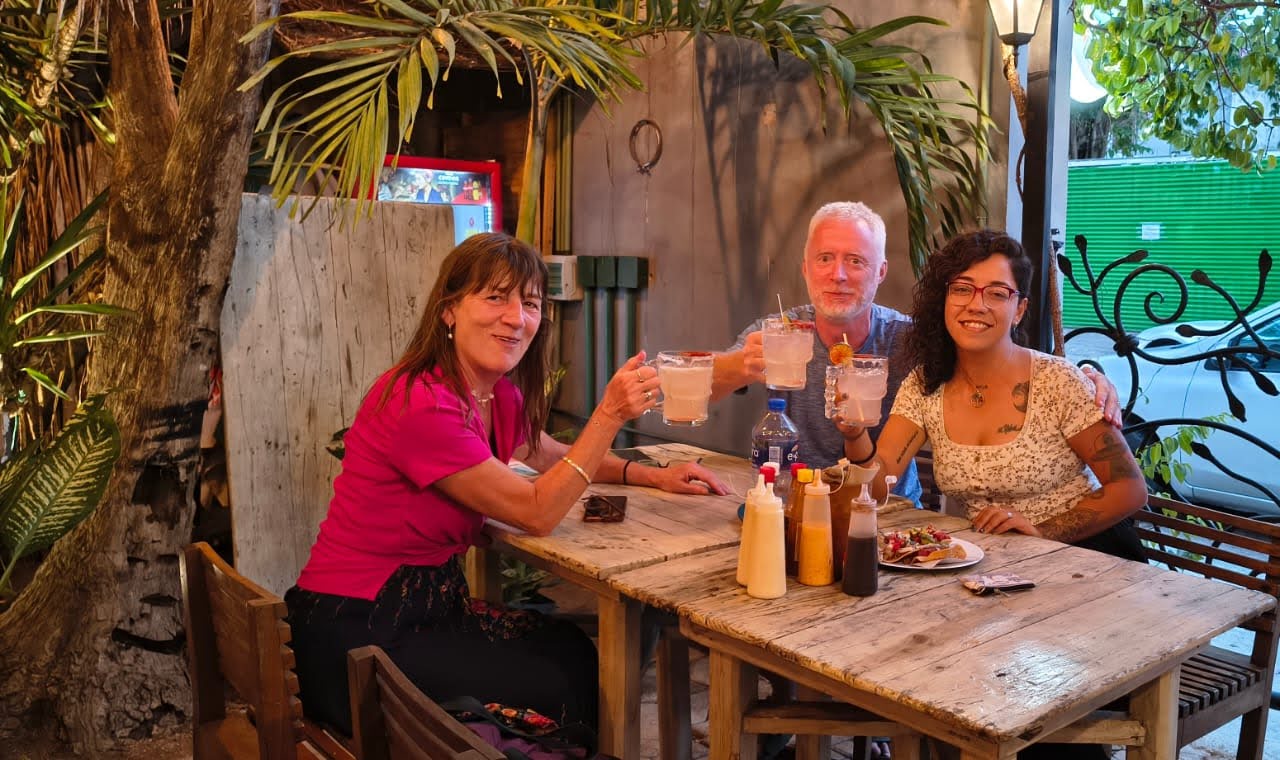
We meet up with a Mexican friend, Diana, who we first met in Colombia this time last year and who visited us in Waterford last July for a few days. It was a lovely evening. Drinking our margaritas and eating our shrimp and veg tacos which were garnished with succulent avocados and sharp limes, in a buzzy local bar, full of noise and music, we knew we were going to miss Mexico.
Our last morning was bright and sunny, another beautiful day. Dropping back the car, we hoped that all would be well. When we had picked up the car, we had gone for the basic mandatory insurance despite the efforts of the person in the Alamo Car Rental Office to persuade us to get a lot more cover. It had been airborne over the dreaded ‘invisible’ speed-bumps a couple of times and it was covered in a fine layer of dust but it passed all checks and our deposit was returned. The cost for thirty-three days was €555 which was pretty good value. We opted for the ‘mystery’ compact model when reserving online and mystery turned out to be a very roomy Nissan X-Trail
The flight from Cancun to Washington was short, less than three hours on United Airways followed by an overnight flight to Dublin, which took about seven hours, arriving on a sunny but cold morning. Five degrees was a shock to our systems.
Thanks to all who came along with us, or dipped in and out….we enjoyed your company.
When we’ve had a chance to think about our dizzying kaleidoscope of memories, I will do another post on the highlights …and low lights ….of our roadtrip around just a small part of this fabulous, energetic country

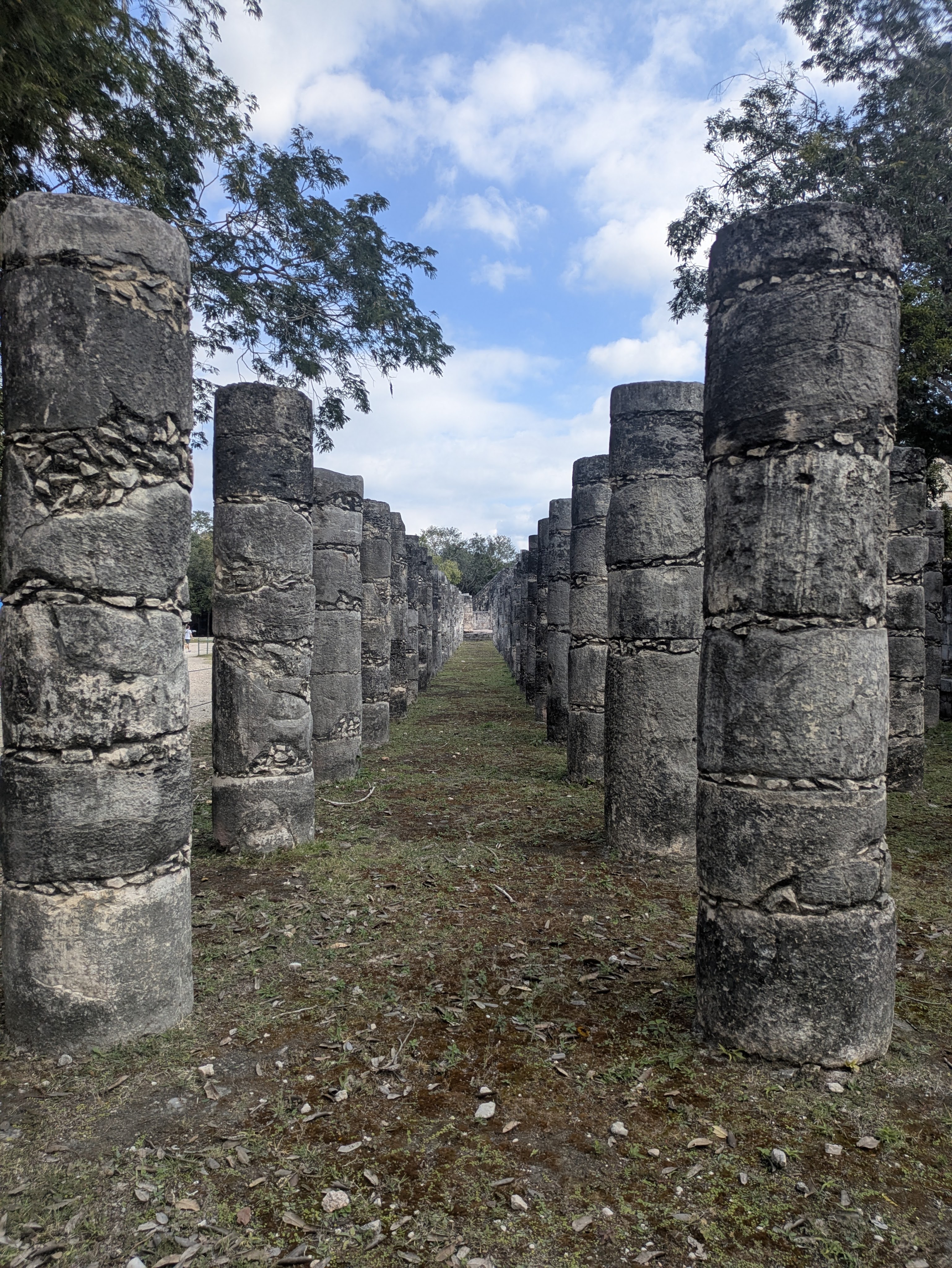
Chichen Itza Pillars
 marienoonanblog