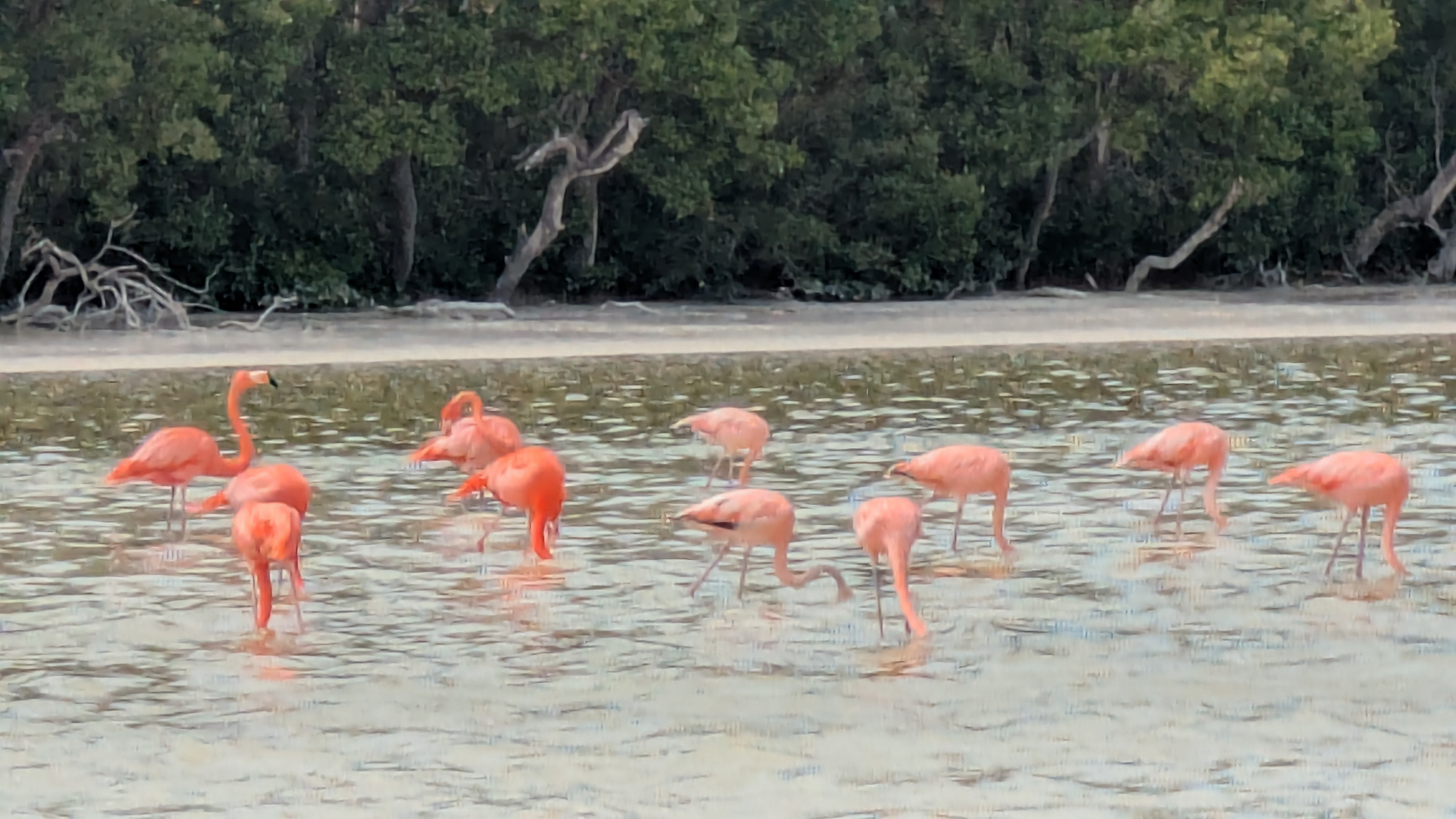
Everything was pink, flamingo pink. Flamingoes were painted on the walls, plastic birds lurked in the foliage of gardens and even the bridge into the little town of Celestun was painted a soft dusky pink. Celestun was mainly a sleepy, dusty fishing village, sunbaked and sandwiched between a large lagoon and the turquoise water of the Gulf of Mexico. The combination of salt water from the Gulf and fresh water from the estuary made it a perfect habitat for flamingoes and waterfowl but the flamingoes were the real attraction. The Reserva de la Biosfera Ría Celestún was a large coastal wetland reserve and wildlife refuge in the northwestern corner of the Yucatan Peninsula covering 146,000 acres beside the town.
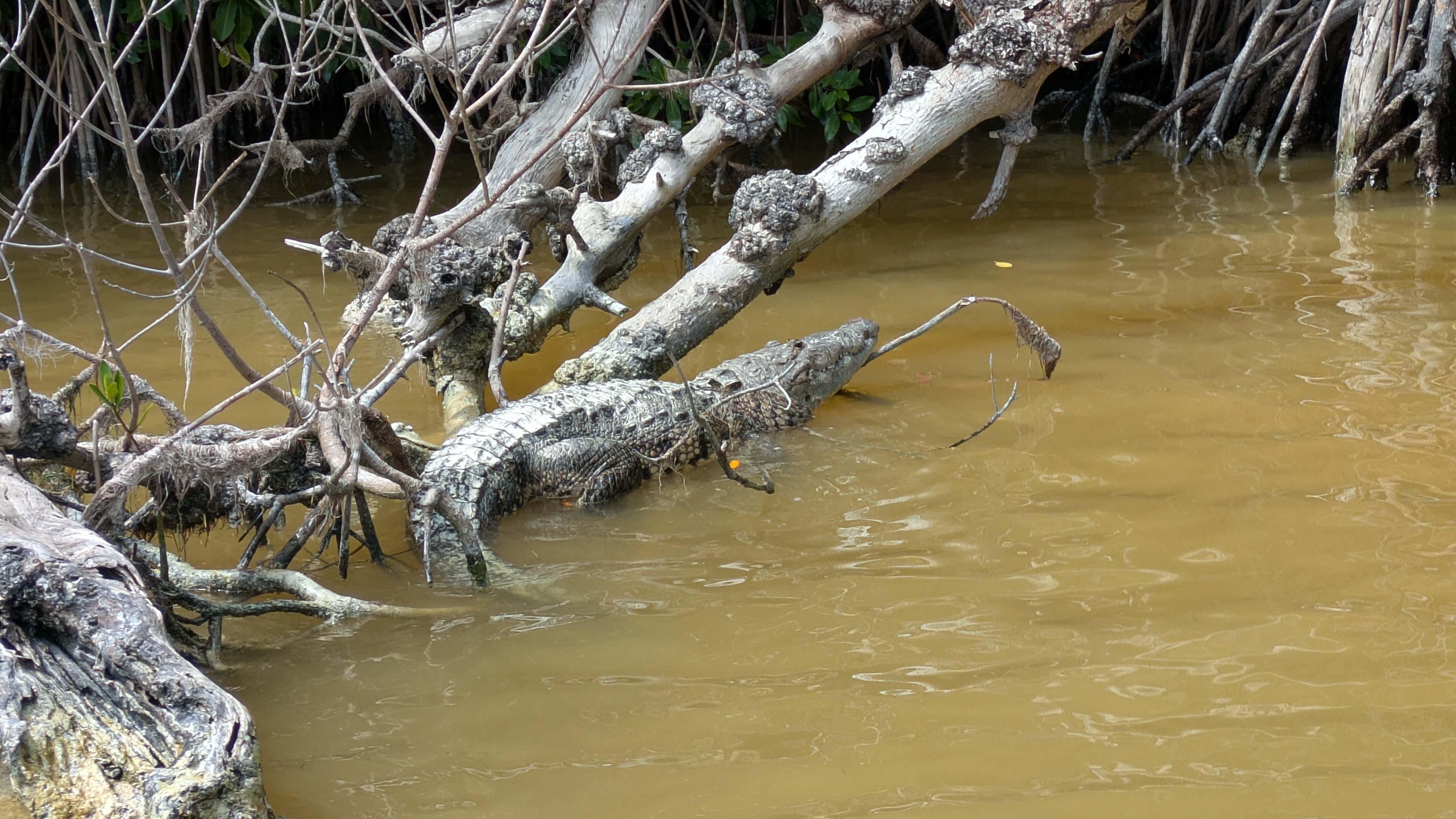
The breeze was welcome and cooling on our boat tour out on the lagoon, which we shared with two German couples. The air was sulphur-stinky but we didn’t mind. The flamingoes were beautiful blobs of colour, wadding and feeding in the shallow waters. The birds get pinker and more gorgeous with age as their plumage turned a bright rose colour that was almost orange from their diet of shrimp, tiny crustaceans and seeds. I was so enamored that I even bought a T shirt emblazoned with a flamingo, about the only thing I can fit into my small carry-on backpack. Their only predators were the alligators which were plentiful, snoozing at the water’s edge near the mangroves, superbly camouflaged and doing a great imitation of fallen logs.
There was a carnival parade through the streets on the Sunday night that we were there, People of all ages, dressed in flashing lights and sequins, danced to blaring music and honking horns on the back of pick-up trucks which were also festooned with balloons and streamers. The people on the trucks threw sweets, lollipops and fluorescent crisps to the clapping crowds. Mexicans love a party, the noisier the better.
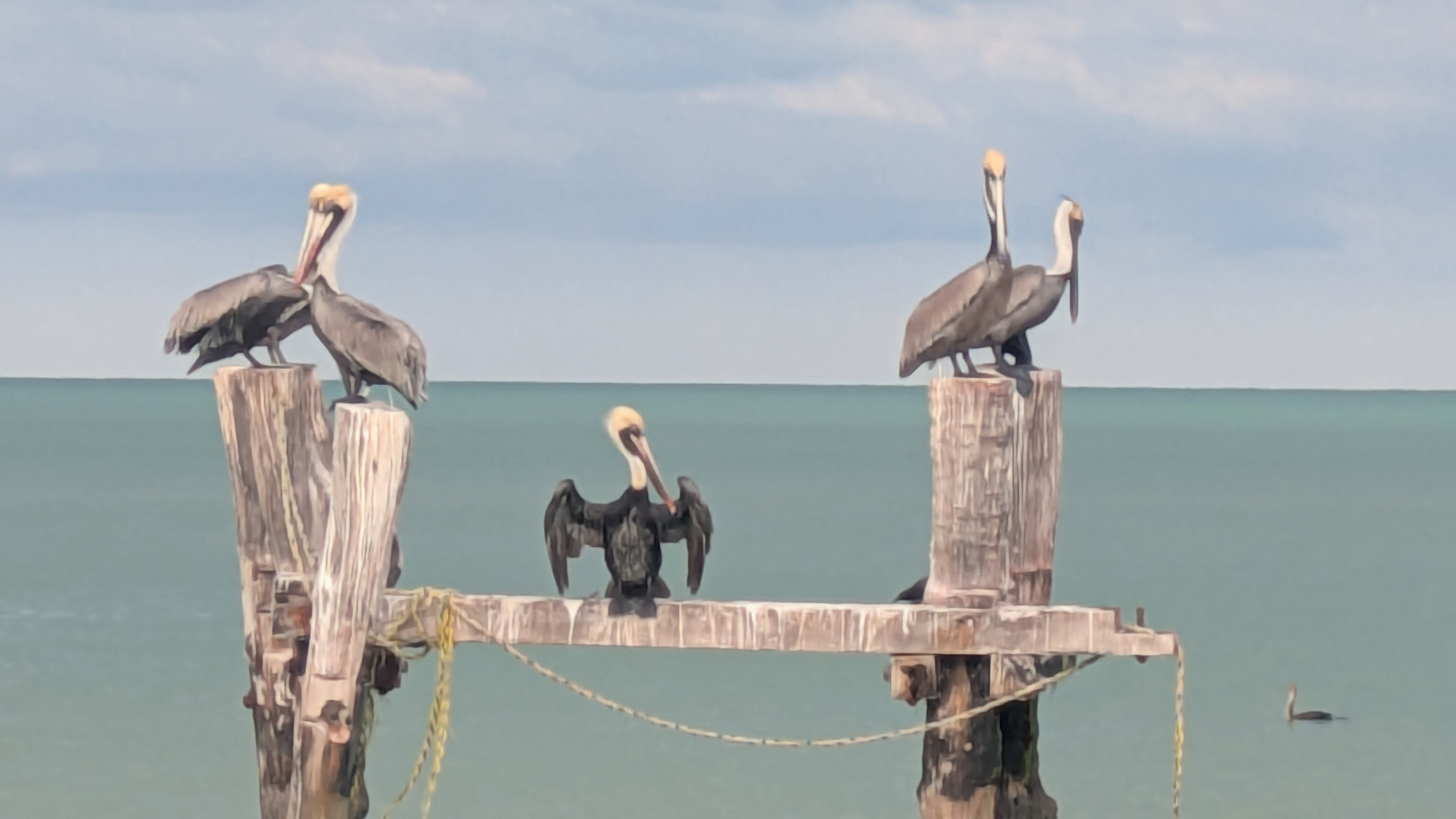
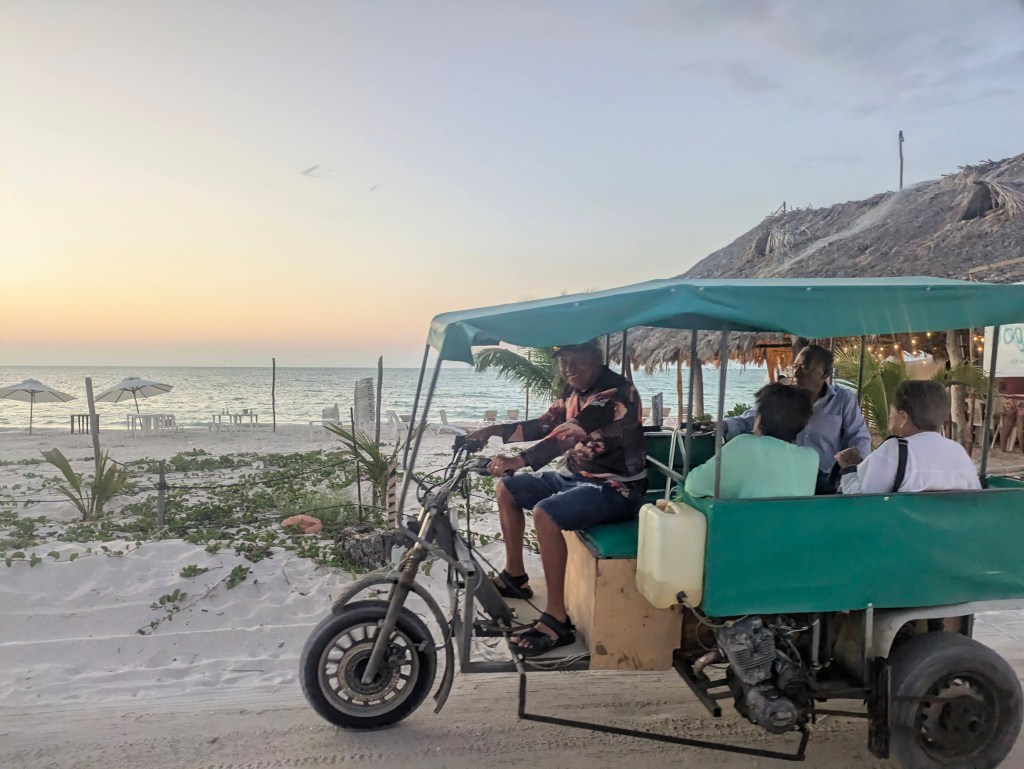
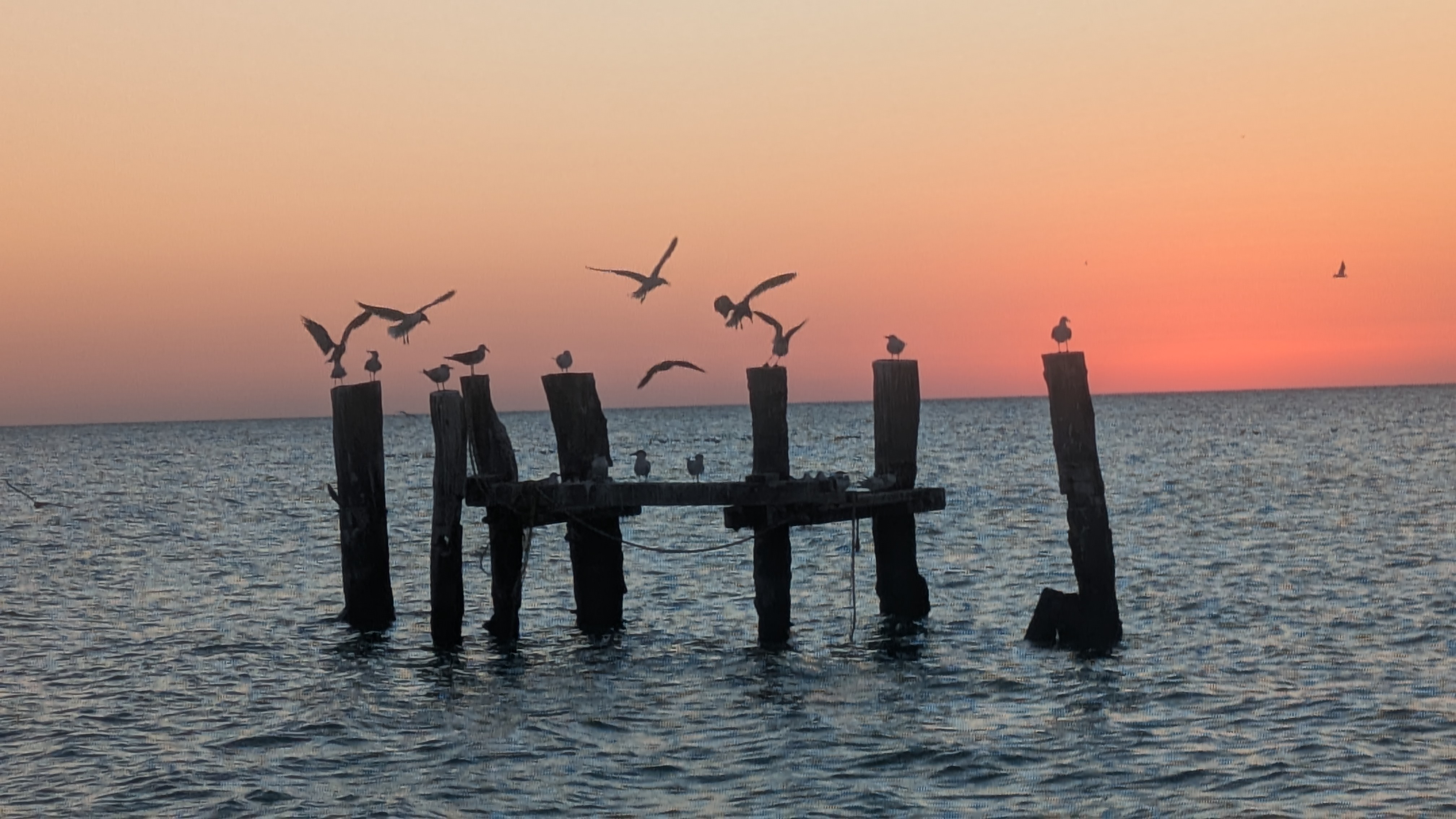
The beaches on the northern side of town were reached along a dry, rutted road but they were gorgeous, miles of shell-strewn sand, empty except for the many birds. We spent two nights in a beachfront ‘villa’ far from town with a well- equipped kitchen where we rediscovered the joys of cooking after weeks of eating out. It blew out budget but was worth it. We had a large pool outside our front entrance and at the back door, we stepped from a little verandah directly onto white sand, shaded with coconut trees, just a few steps from the water’s edge. There was nothing to do except take long walks on the beach at sunrise and sunset and watch the birds, pelicans, cormorants, sandpipers and a whole assortment of seagulls flying overhead and vying for space on the wooden poles in the water near our villa. Having driven the long length of part the Gulf of Mexico over the preceding days , this was certainly a great place to relax.
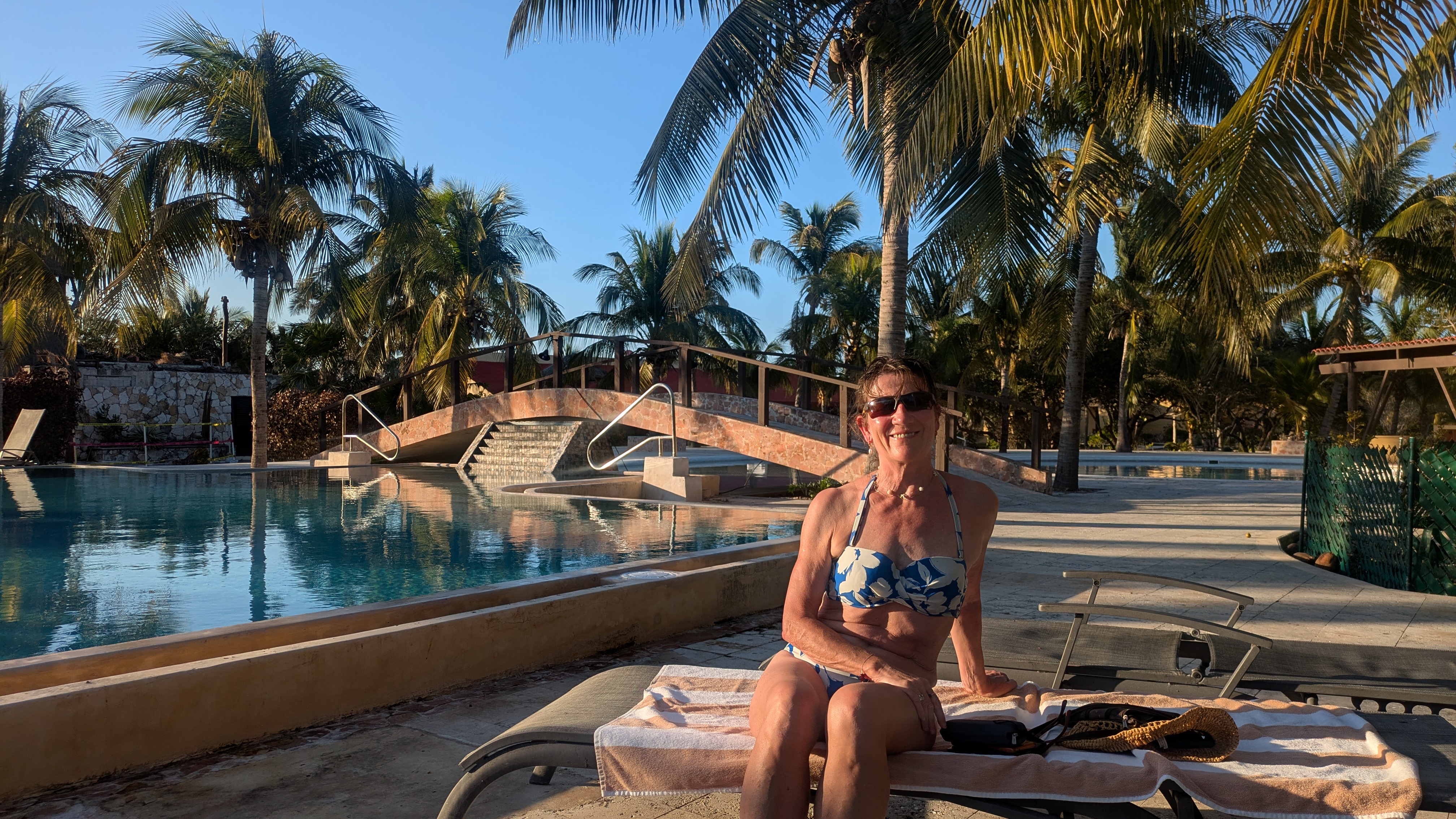
Our guidebook told us that Villahermosa wasn’t anyone’s idea of a ‘beautiful town’ (despite the direct Spanish translation} but we found an excellent, good-value hotel and a place of friendly people. Hotel La Venta gave us a spacious room on the fourth floor for €32 in total which included an enormous buffet breakfast. Villahermosa is the capital of Tabasco State (nothing to do with the fiery tabasco sauce which is made in Louisiana in the US).
Tabasco State, a waterlogged and oil rich place, was full of mangroves and pipelines, most from Pemex (Petroleos Mexicanos). Pemex is the long-time, state owned hydrocarbon company which is being privatized in a bid to make Mexico energy, self-reliant even if that means turning way from focusing on renewables. As we drove around Mexico, we witnessed a huge number of newly-opened Pemex forecourts and others which were in the process of opening for business, complete with identical convenience stores (OXO franchise).
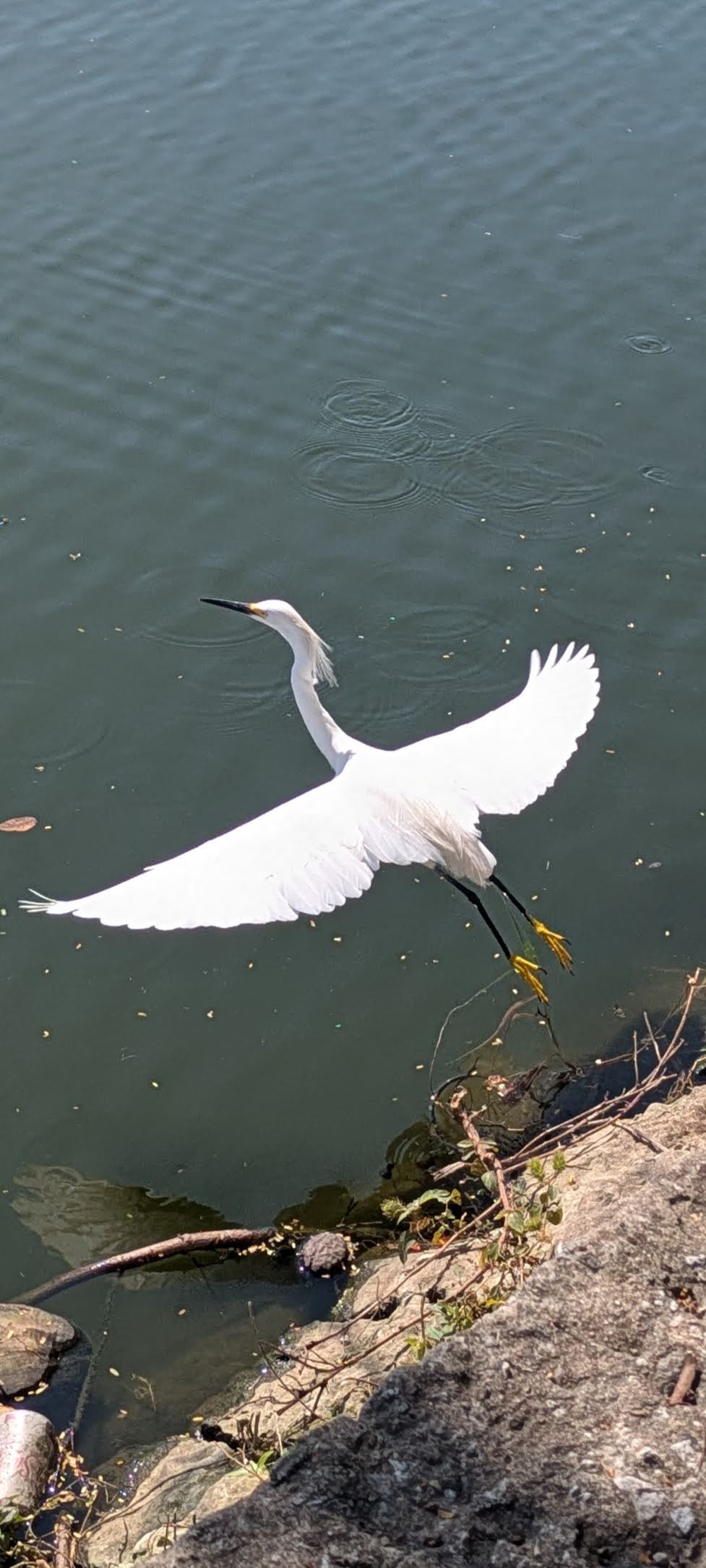
Although Villahermosa was busy with wide lanes of choking traffic, it also had a superb promenade by the wide green Rio Grijalva, an area favoured by elegant egrets and joggers. Our main reason for stopping in the city was to visit La Venta, a pre Columbian archaeological museum of the Olmec civilization.
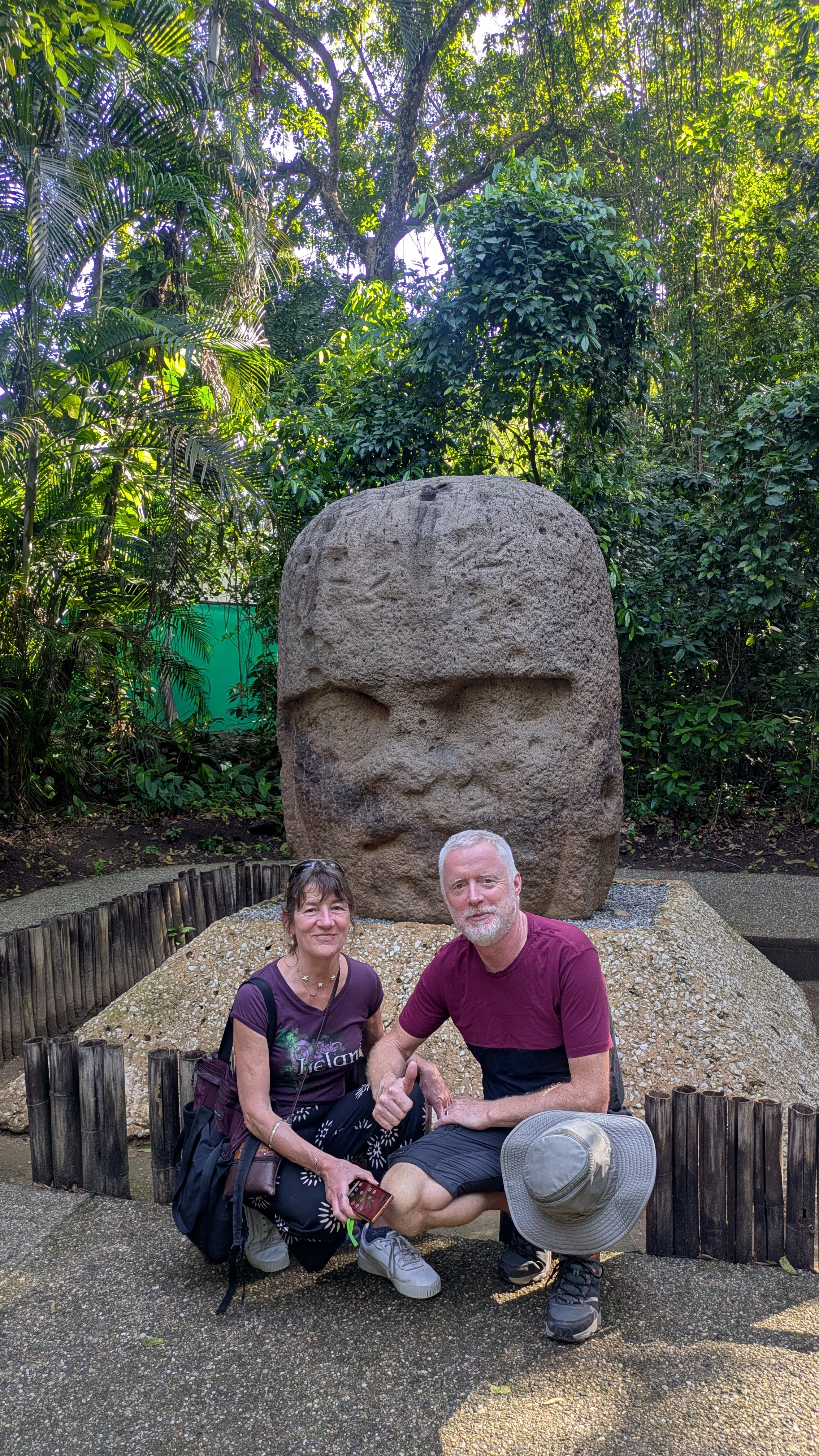
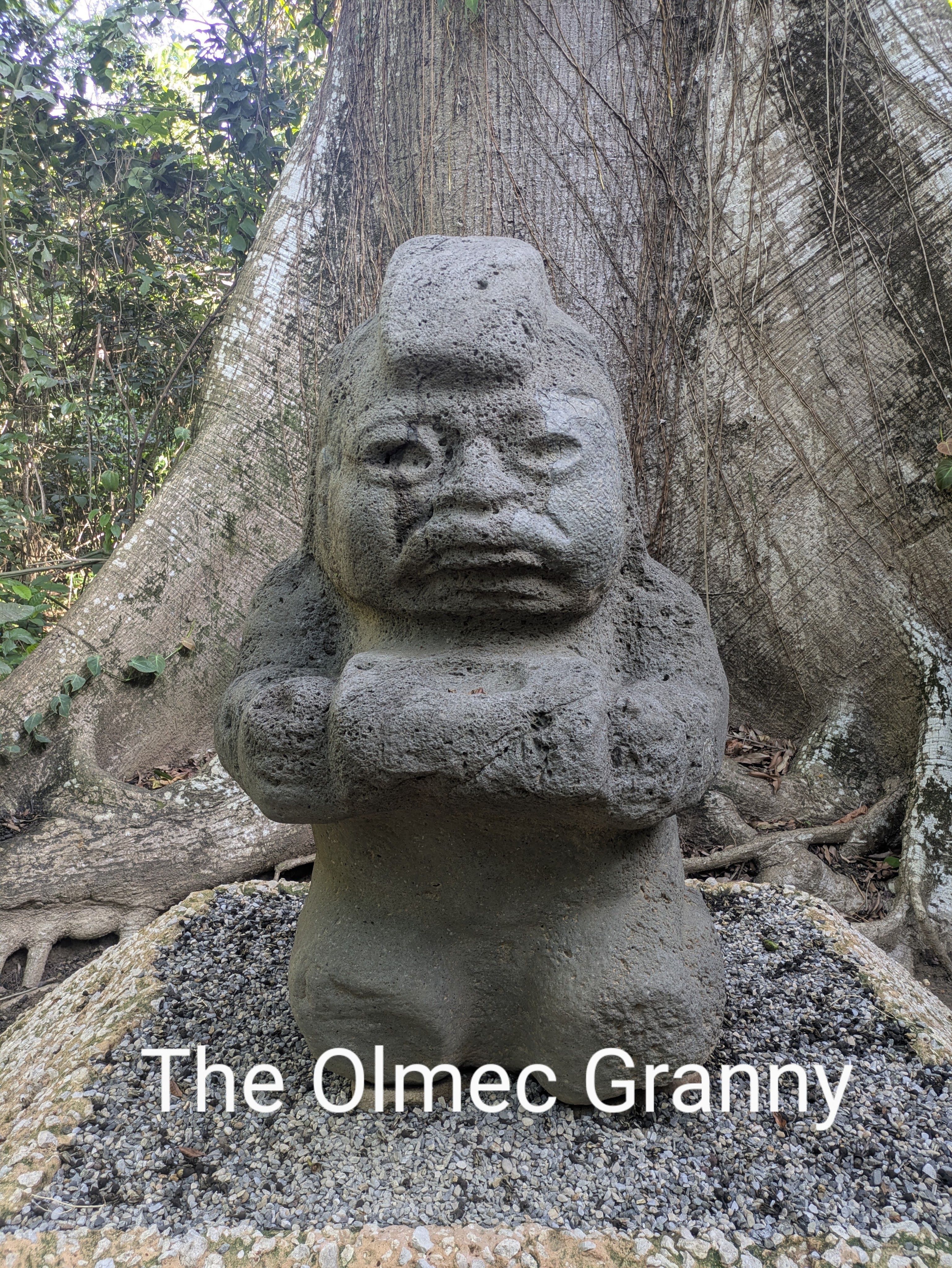
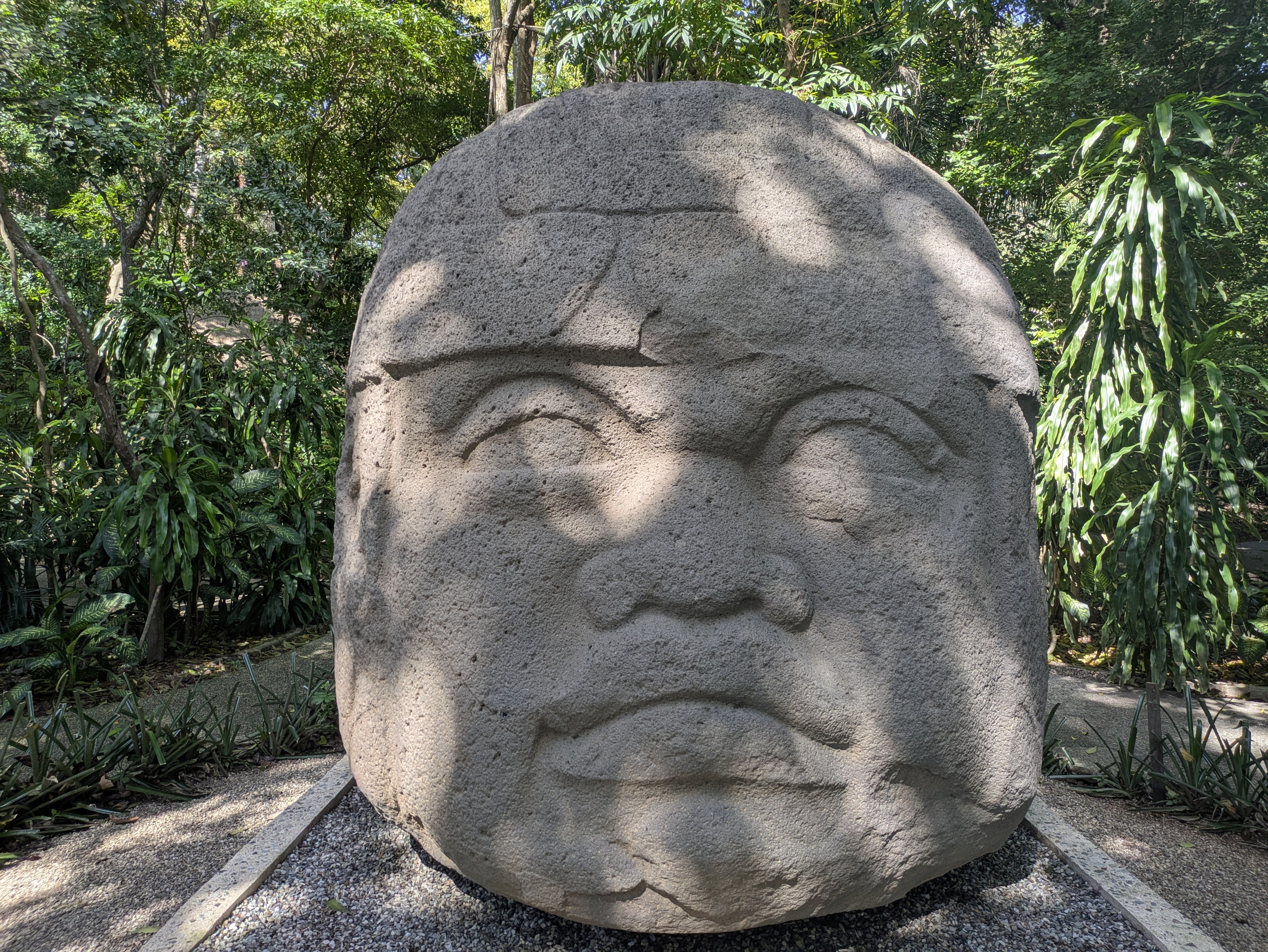
Traffic roared on the highway with fire engines, buses and early morning work-traffic but inside the shady park, all was serene with long-tailed coatis roaming amongst the ancient colossal heads of the Olmecs, who were considered one of the first major cultures of Mesoamerica dating back to 1500BC, The sculptures were moved from their original location to the open arm museum to make them more accessible. A young archaeology student, called Darek, showed us around. His attitude was refreshing, admitting that most of what was known about the ancient Olmecs, was based on conjecture although it was recognised that they attached a huge importance to their ancestors and that the jaguar was a sacred animal to them. They also had a number system and had the beginnings of scripture, evidenced by marks carved into stone. He may have been looking at Caoimhin and might even have been joking, when he told us with a straight face that the Olmecs didn’t like beards.
Leaving Villahermosa behind, we headed for the Gulf coast and got a real impression of just how low-lying Tabasco was, with water in every direction, rivers, lakes, swamps, flooded fields and lagoons. The roads were long, flat and slow-going, busy with huge juggernauts and tailbacks, caused by the frequent roadworks. We crossed bridge after bridge over large stretches of water. The Gulf was a milky blue on our left hand side, bordered by a line of pylons with oil refineries like a mirage in the distance We stopped at one stage to stretch our legs by a white sandy beach where a mangy, half-starved dog ambled up to us out of a heat haze. He woofed down the crackers we shared with him, eating nervously as if afraid that we might treat him unkindly.
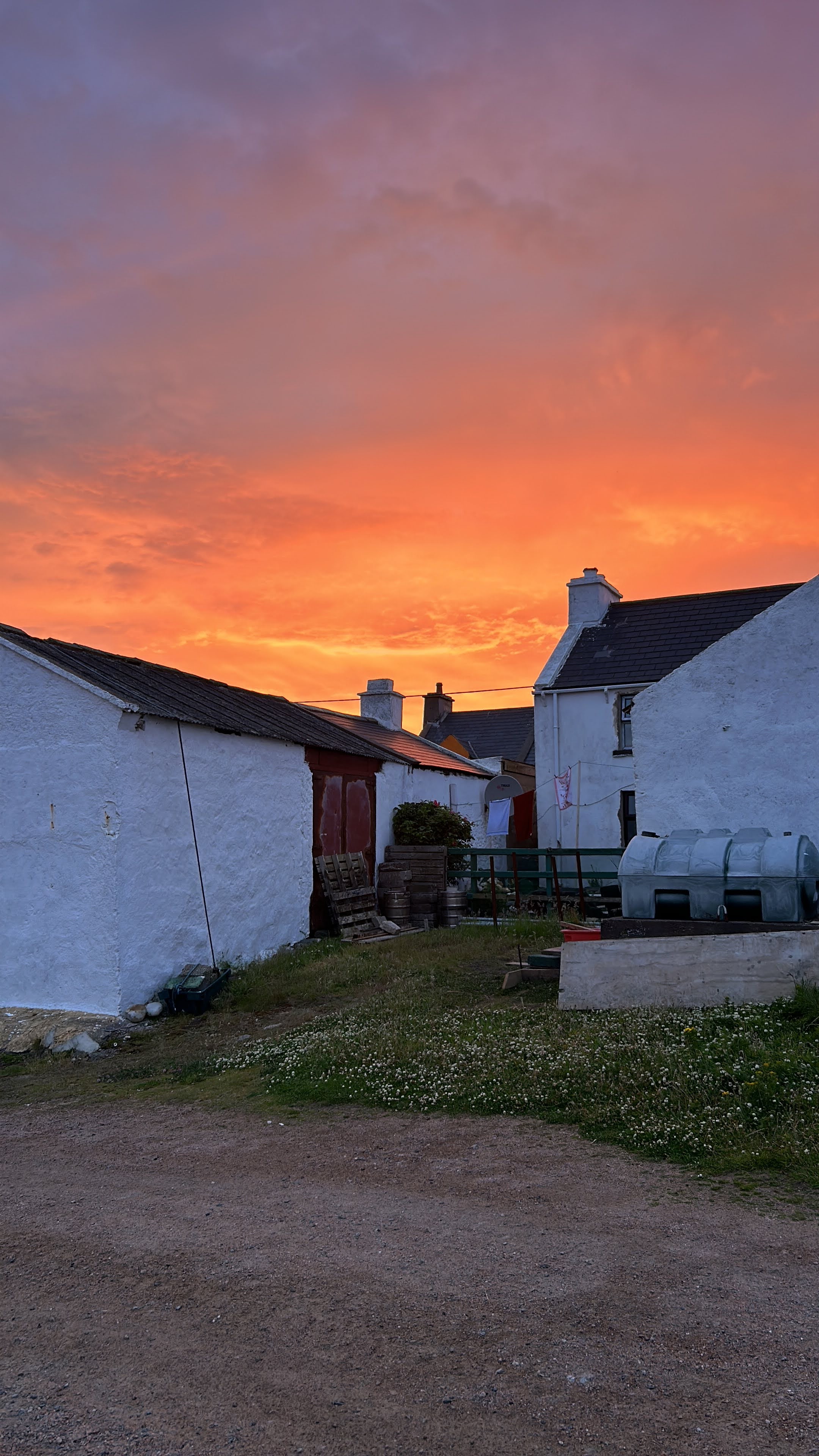
We continue, diverting a few times to nearby towns in the vain hope of finding somewhere to spend the night but our search continued, Finally just as dusk was falling, we stopped in Chompoton, at long stretch of town looking out on the Gulf which should have been idyllic but wasn’t. Traffic roared down the road between the town and the sea, belching fumes and dust, but we ate delicious tacos in a little open-air shack restaurant, popular with the big-bellied truckies, who sat drinking two litre bottles of Coke, Our hotel was relatively expensive (just under €50 for the night) but it had a gorgeous swimming pool and was set back from the road, far enough that the constant traffic was just a bearable hum. The sunsets along the Gulf were really spectacular, a really super intense orange, maybe because of the fumes in the air,
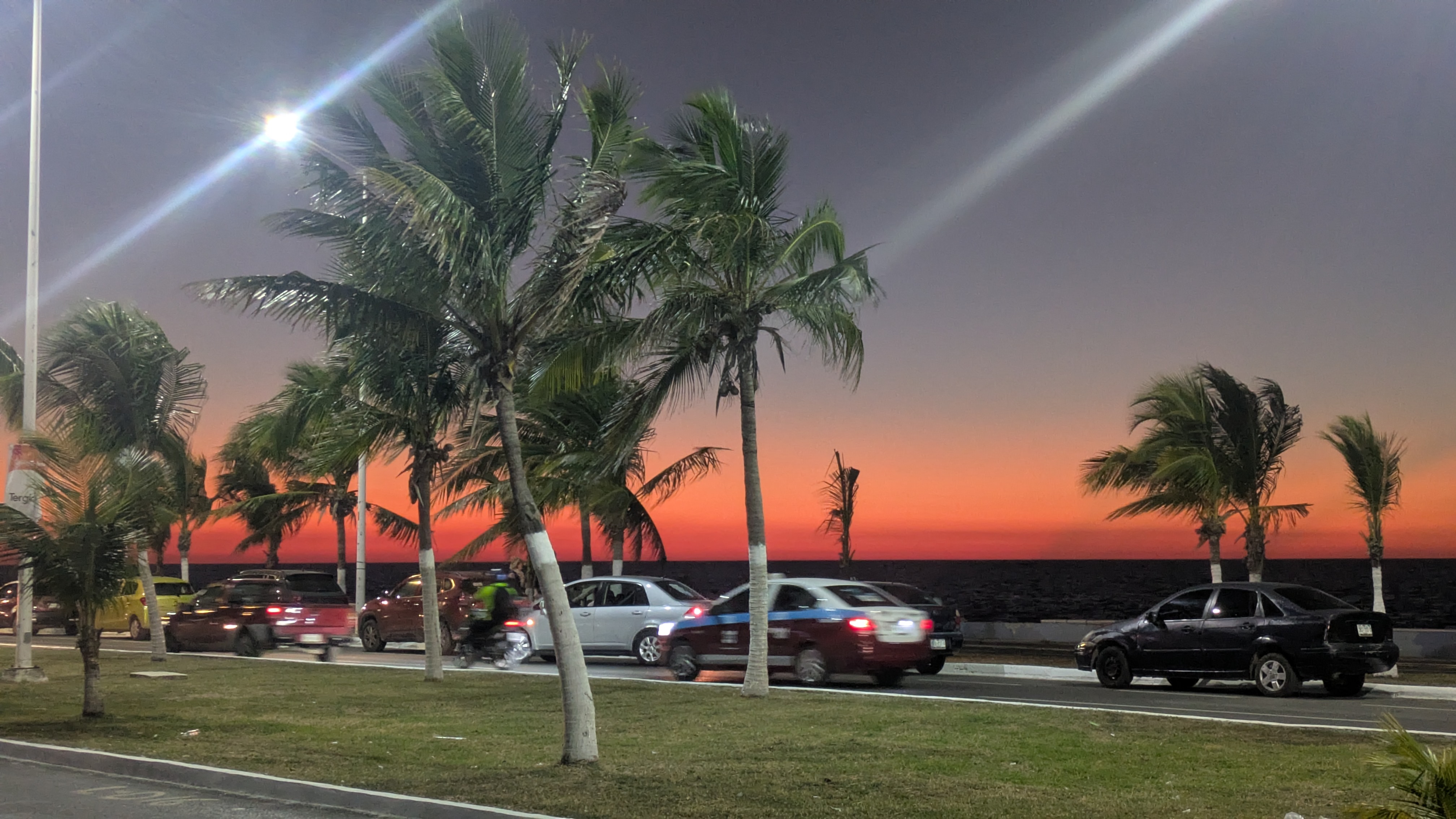
We drove along the Pirates route with fish factories and small, dilapidated towns where the paint on the houses was peeling and blistered. We laughed at a paint shop, which was in dire need of a lick of paint and not much of a advert for its products. Nowadays, the scourge was not the threat of pirates but the appalling traffic and the relentless sun.
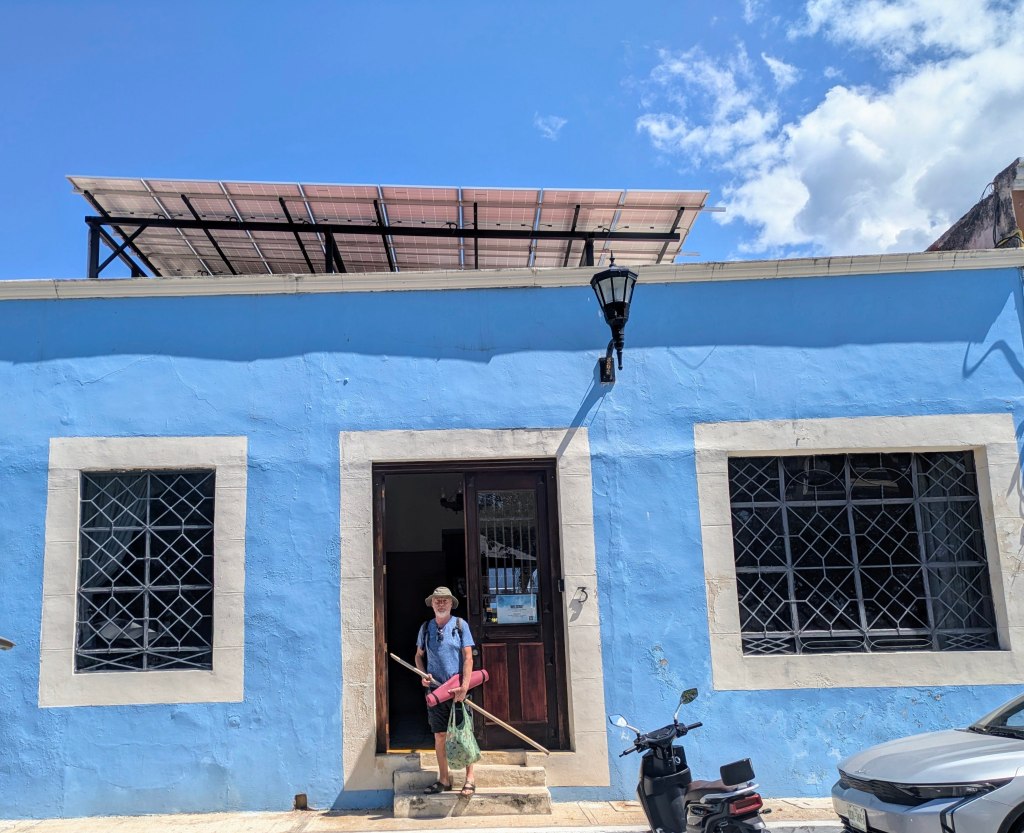
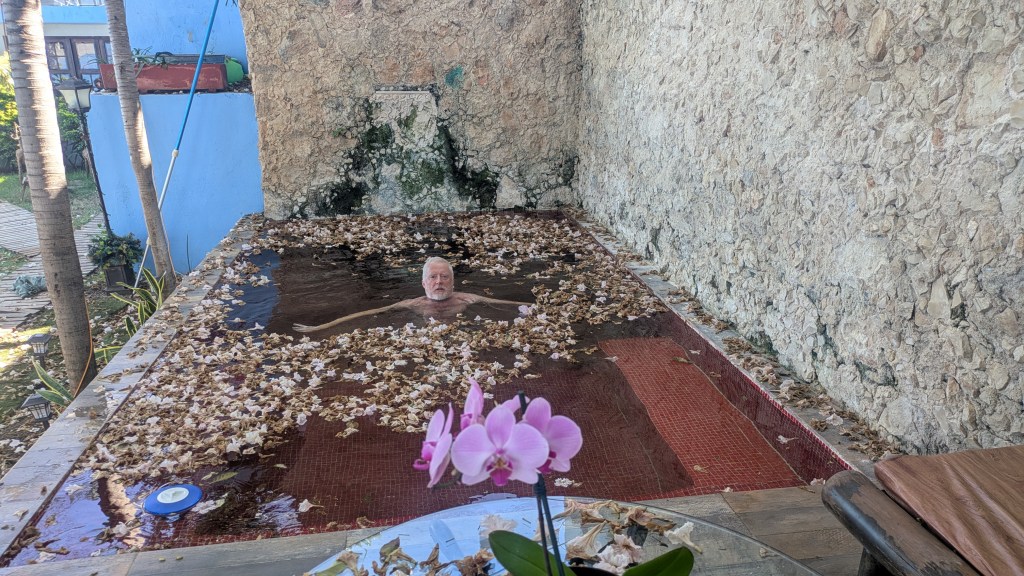
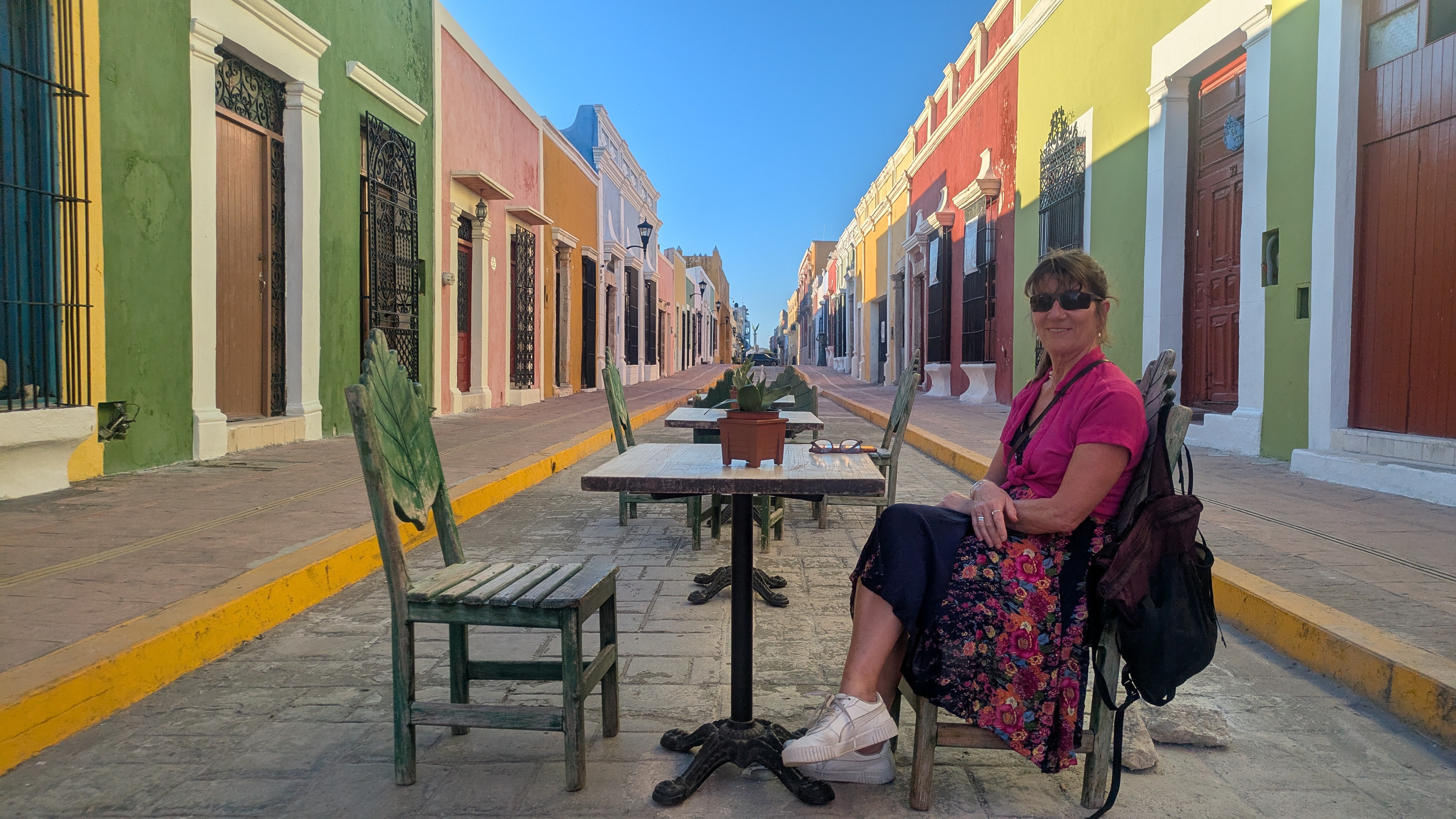
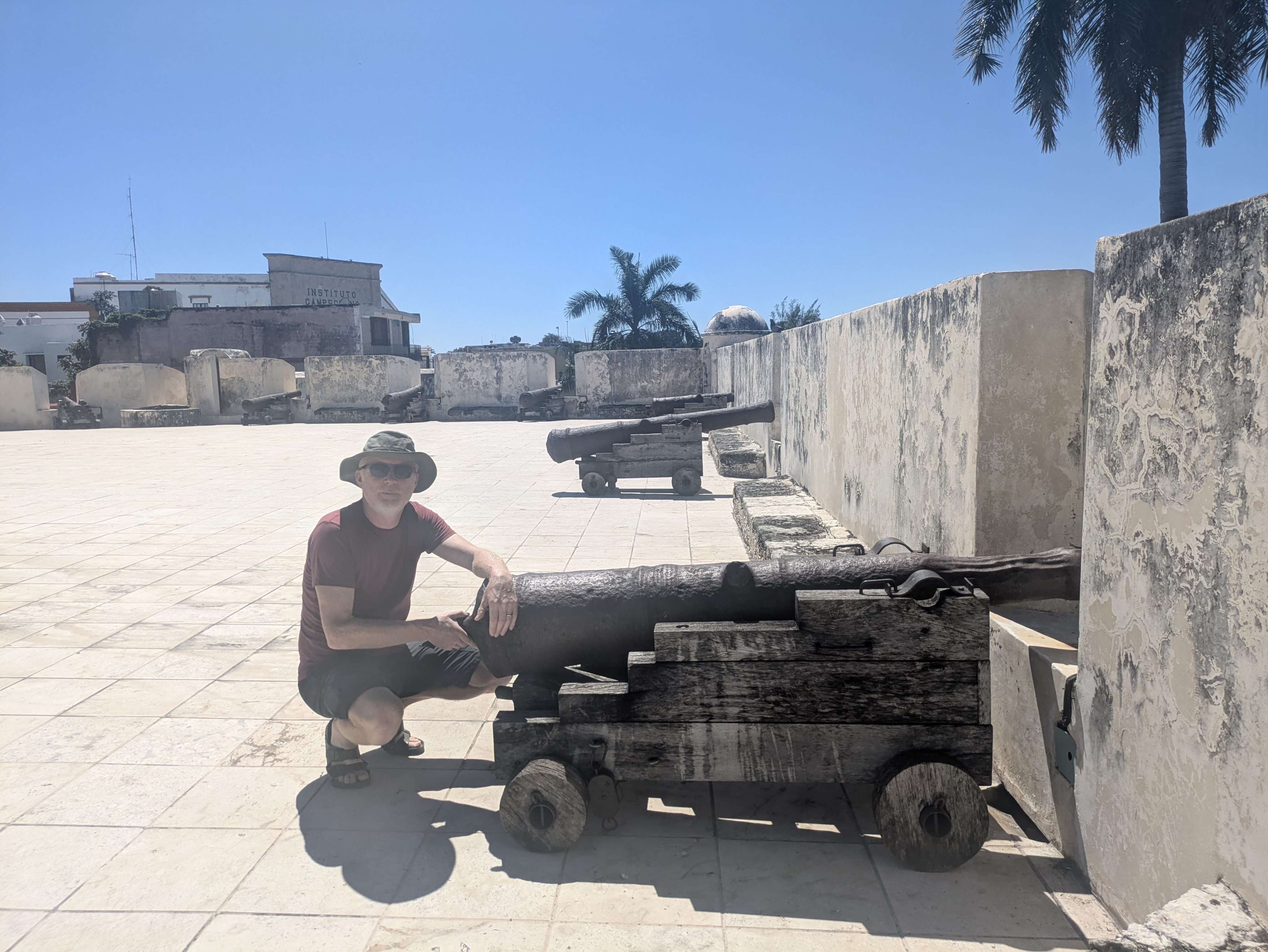
Our next stop was Campeche, a lovely, colonial town with a siout-walled, historic centre, full of churches and museums. The best part was our accommodation, a haven of serenity with a fountain, shady garden, shared kitchen and free water and coffee. It looked nothing from the outside, a small, blue-painted house, but inside we were greeted with the smell of flowers and floor polish in the tiled floor and a lovely courtyard. The password was ‘relax’ which was so apt. If you ever find yourself in Campeche, I can recommend Hotel Maculis, situated in a lovely area near the church of the Black Christ(Christo Negro) and beside a park where locals sat out for hours in the balmy evenings and all greeted us with friendliness.
A retired Dutch couple staying at our accommodation were also driving around Mexico for a month doing a similar route to us. They told us that one late afternoon, just before dark, their car broke down. They had run out of petrol but they didn’t realise that at first because the petrol gauge was faulty. People stopped to help them, figured out what was wrong and refused to take the money offered as payment for their help.
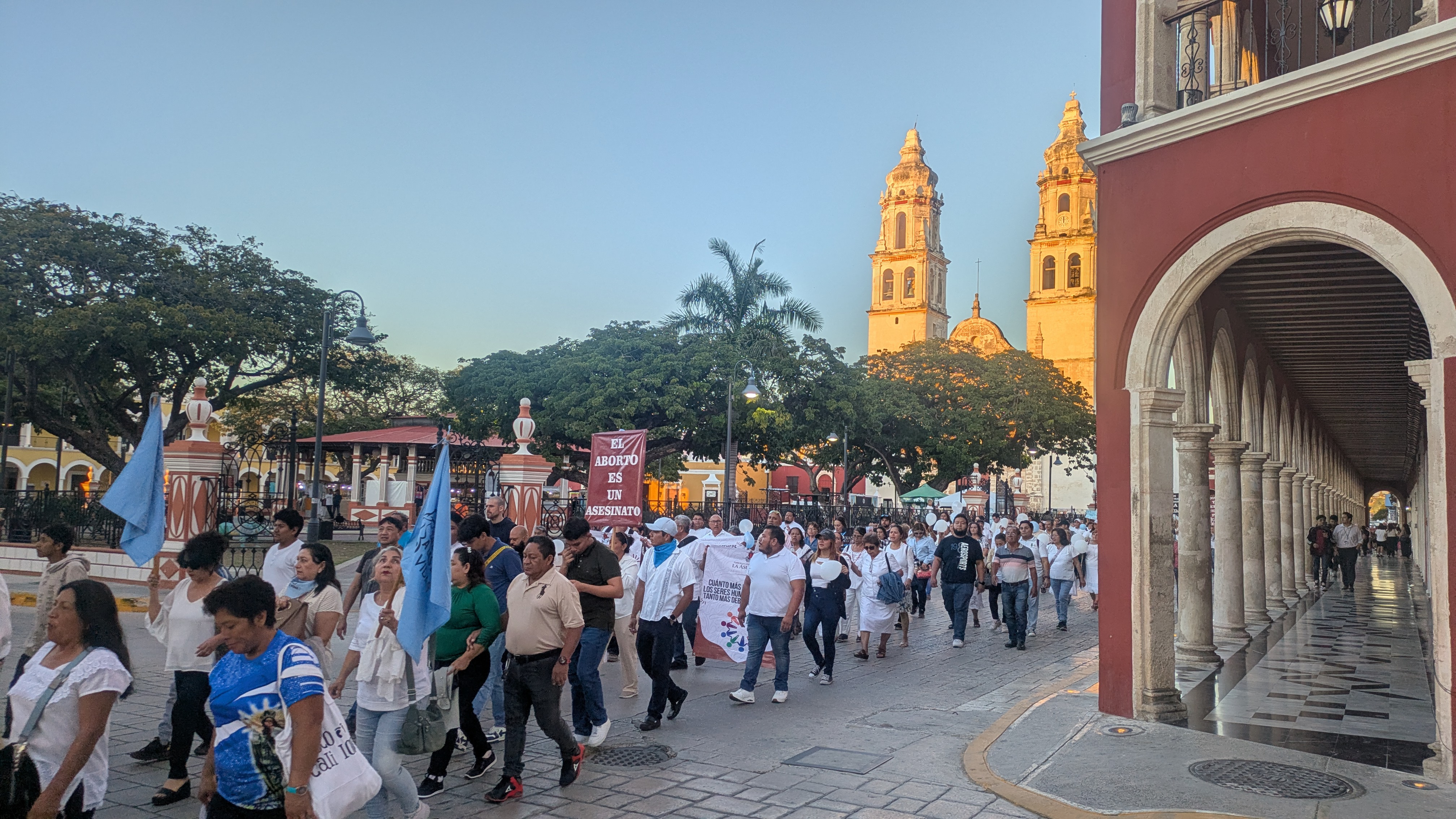
There was a huge demonstration in the streets against abortion with chanting slogans and many dressed in white, which is the colour of mourning here in colourful Mexico. The marchers were mainly women of all ages including schoolgirls and quite a few nuns. Penalising abortion is unconstitutional in Mexico at a federal level since 2021 but abortion access varied from state to state and Campeche was saying a definite ‘no.’
But its time to turn away from the Gulf and turn inland back to Cancun and complete our long loop of only a small part of this huge country(twenty-two times the size of Ireland) which has so much to offer the visitor.
Thanks for reading, amigos
It’s a Bird’s Life
 marienoonanblog