The bus creaked, stalled and missed a gear on the first hill outside Panajachel – not a good start on a nine-hour journey that would take us from the shores of gorgeous Lake Atitlan through the mountainous highlands to Lanquin. We drove through small villages with tiny shops selling everything from crisps to plastic basins, along by tree-clad mountains, fields of cabbages and rows of onions drying on sackcloth outside humble shacks. Everywhere there were chickens crossing the road 🤣and docile dogs that looked half-starved. The road was twisty but the surface was resonable most of the time except where there were mini-landslides and rough patches that five months of rains had worn away. About halfway through the journey, we began driving through mist and cloud that turned to heavy rain.The journey stretched to eleven hours with a few stops along the way, one at McDonalds in Coban, the most modern town that we have seen so far in Guatemala with a shoppping centre and traffic lights. The bus stopped outside Lanquin in the dark and pouring rain at a garage forecourt, very much like the Applegreen service stations at home. The bus couldnt go into Lanquin because there was major roadworks going on. We were picked up at the garage by David from the accommodation we had booked. Despite the rain and darkness, it was quite warm, maybe 23C.
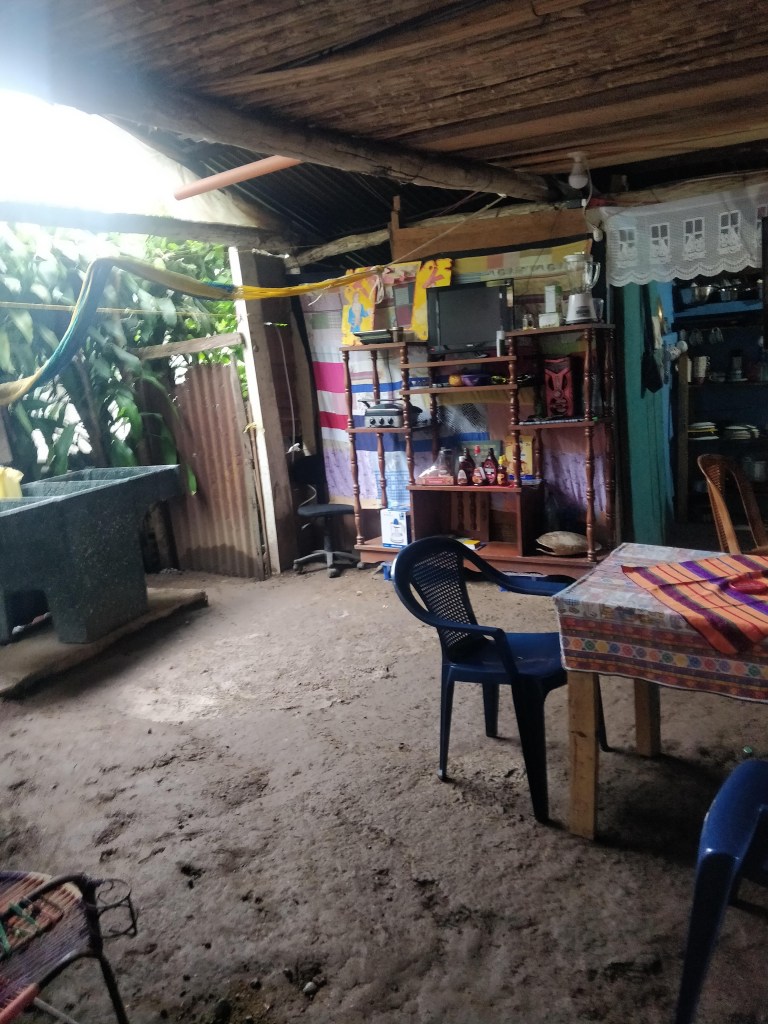
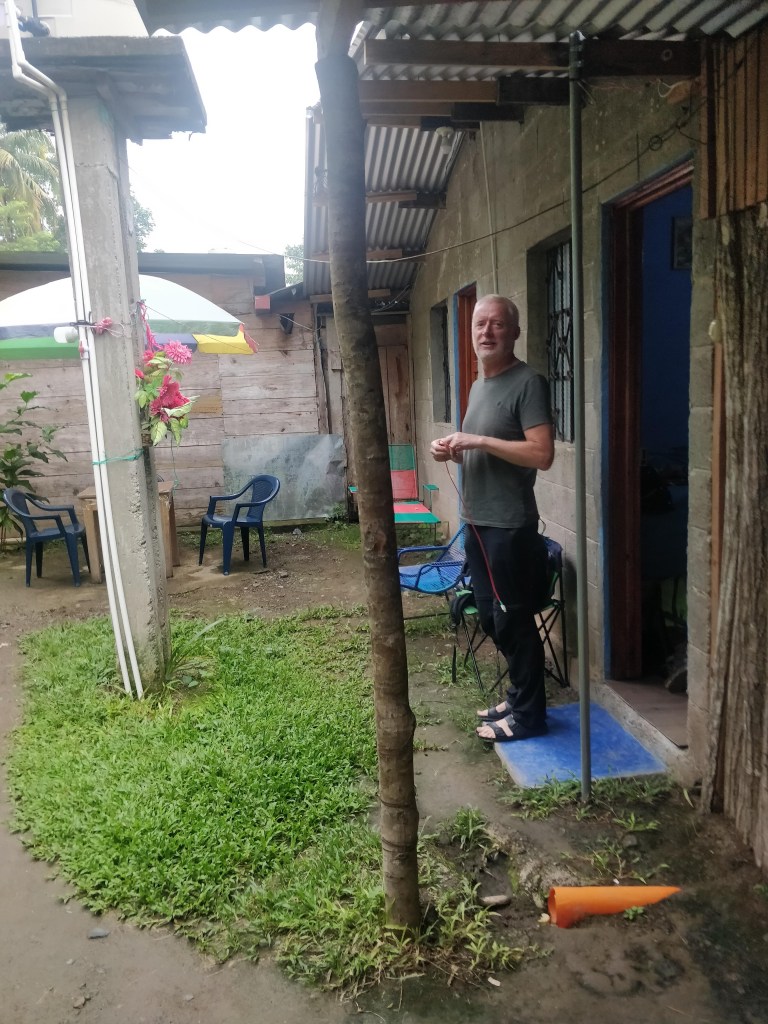
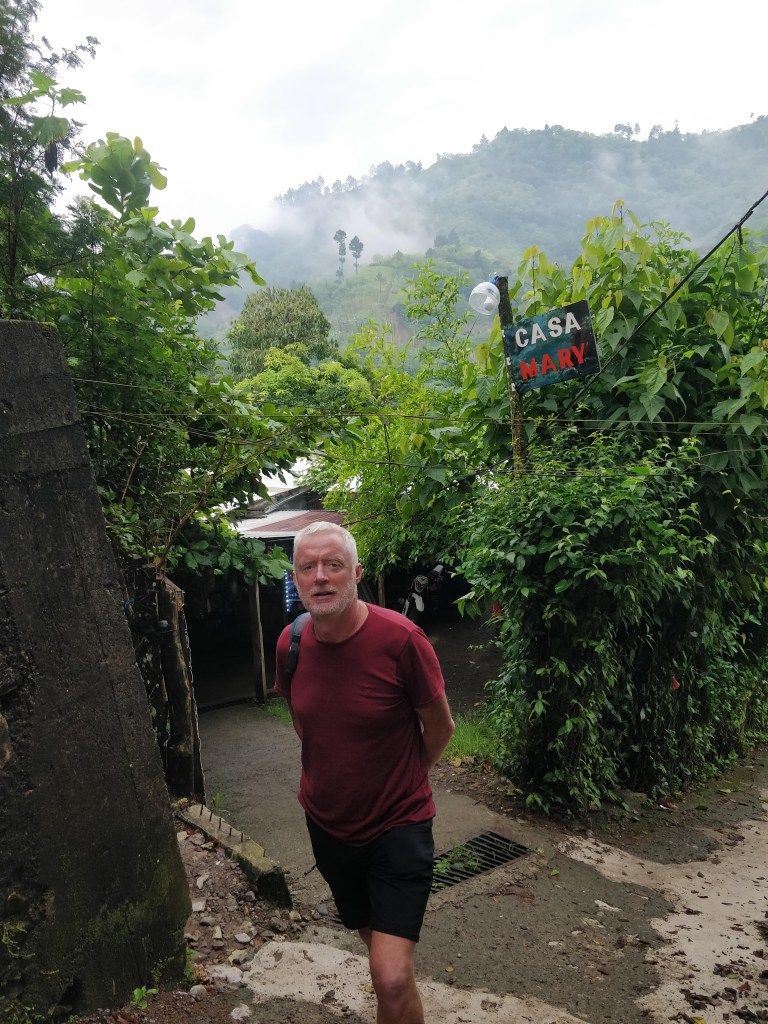
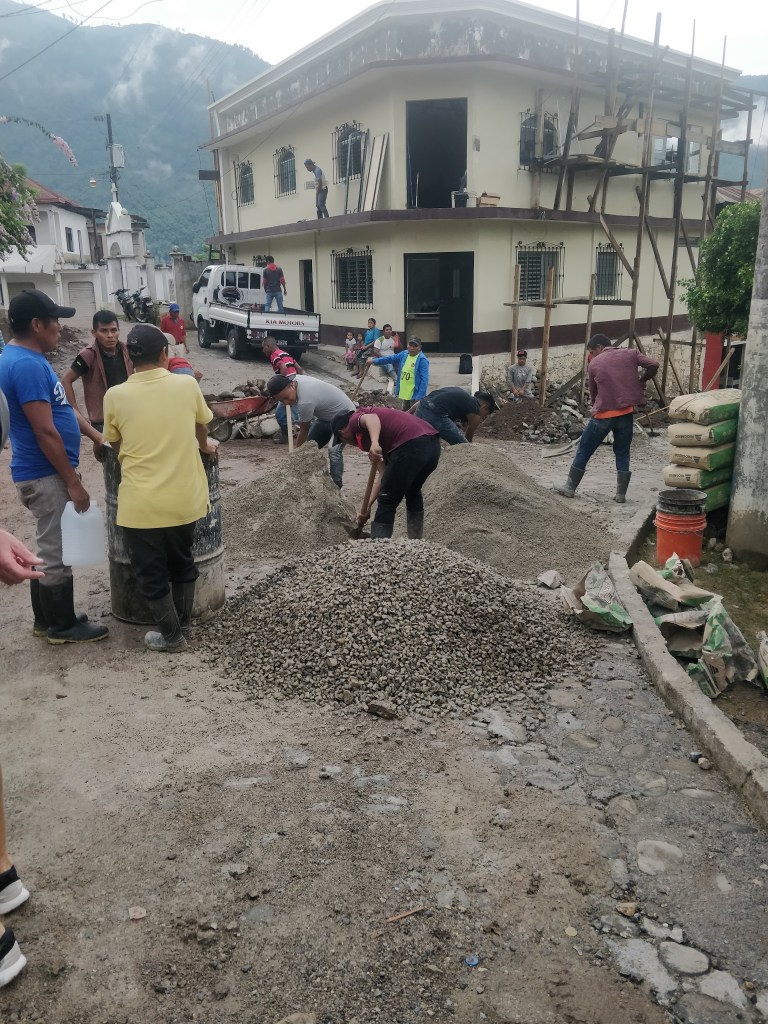
Casa Mary was a family run establishment on a narrowalleyway that rented out four of five rooms to guests, mainly foreign tourists and had a small shop attached. The ‘reception’ area had a mud floor and galvanised roof. The dining area was also mud floor and open on one side and the small garden had bananas and avocado trees and bright umbrellas for shade but which were handy shelter for rain as well. Our small bedroom had a fan, a concrete floor with a large beautifully tiled ensuite bathroom …and not a scorpian in sight. We have taken to checking shoes, bedclothes and shaking out towels at this stage…just to be on the safe side. Our accommodation cost about €23 a night and dinner of quasadillas, salad and chips was about €4. But the welcome and friendliness of the family, especially Mama Mary, was priceless.
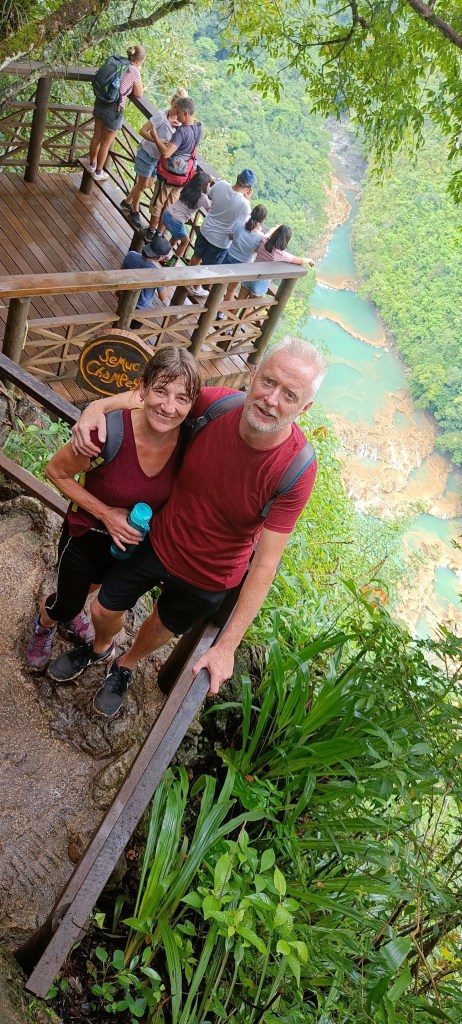
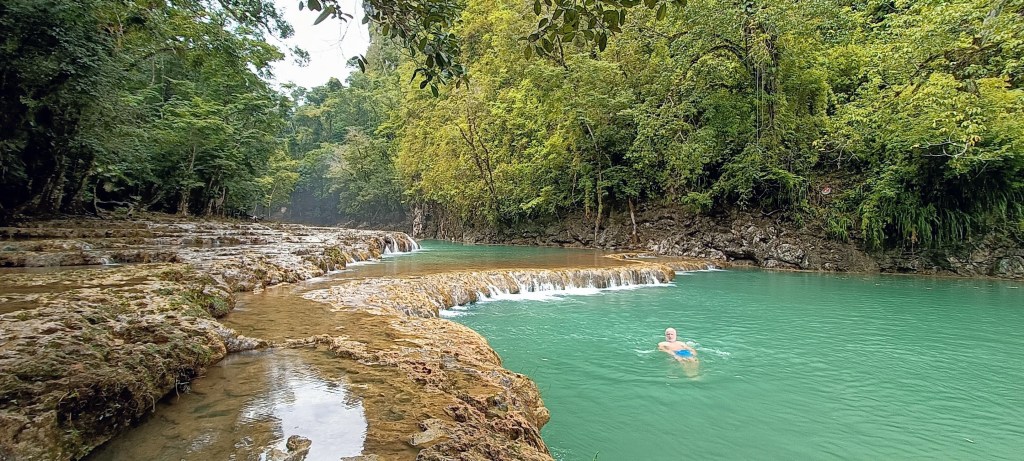
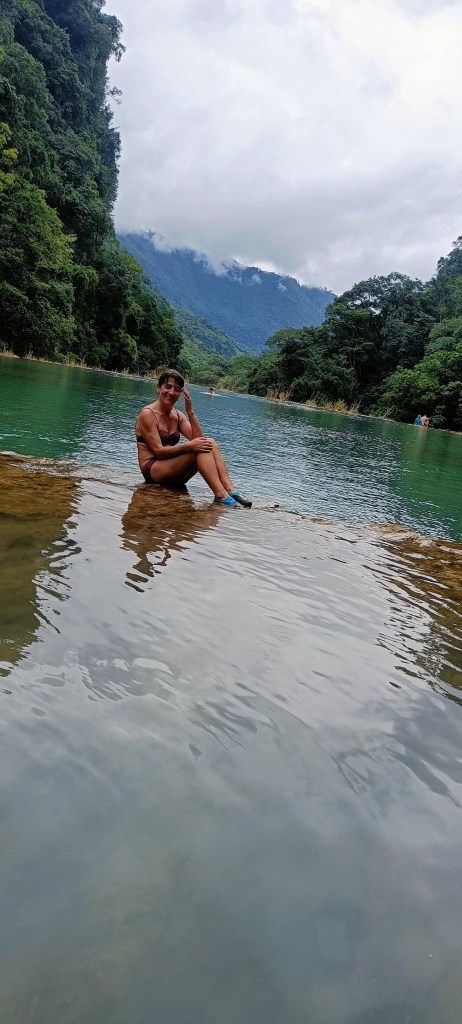
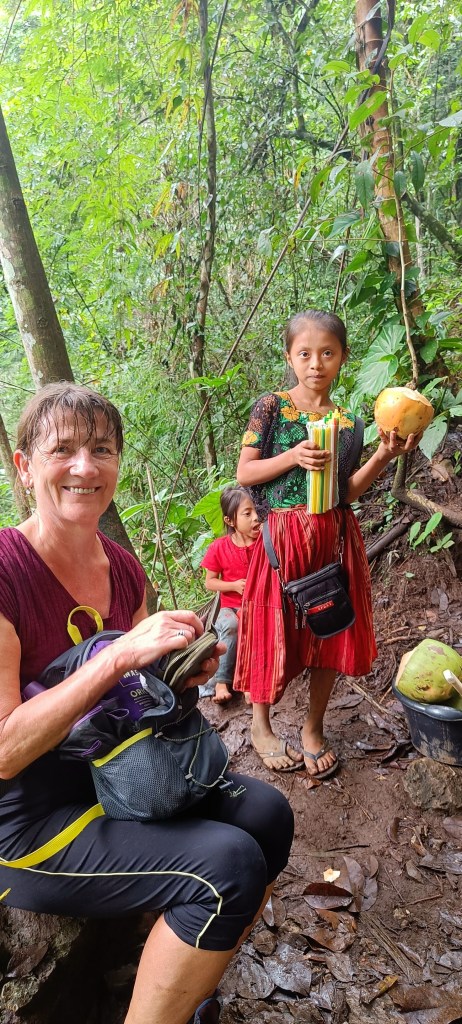
Our main reason for going to Lanquin was its proximity to Semuc Champey, a nature reserve with a limestone bridge and a series of stepped pools of the most stunning turquoise. Half the fun was getting to Semuc Champey from Lanquin and back . The road was narrow, unpaved, rough with huge boulders and the only way to get there (apart from hiring a 4×4 and driver) was standing up in the back of a pick-up truck. The views were incredible of the churning brown-water rivers, the jungle, the ramshackle houses….yes, it was rough and we had to hang on tightly to the bars and duck to avoid being slapped by overhanging branches, but it was also incredibly exerhilating. The pools were every bit as turqoiuse and photogenic as the pictures we had seen on the brochures. We hiked up to El Mirador, a hot sweaty jungle hike, to see the pools in all their glory from a height, stopping on the way down to buy cocunut milk from a little girl, who wielded the axe to behead the cocunut with impressive but slightly alarming dexterity. Then we swam in the waters and dipped under waterfalls, listening to the screeching of birds in the trees and the falling of leaves into the water….truly a special place. Back in Lanquin, we visited a cave outside the town at dusk to watch thousands of bats emerging to feed on the insects and not one got caught in our hair…..a fear that an aunt of mine had and passed onto me. I passed it on to Claudia, a German woman who was tucking her hair inside her sweatshirt in the cave.
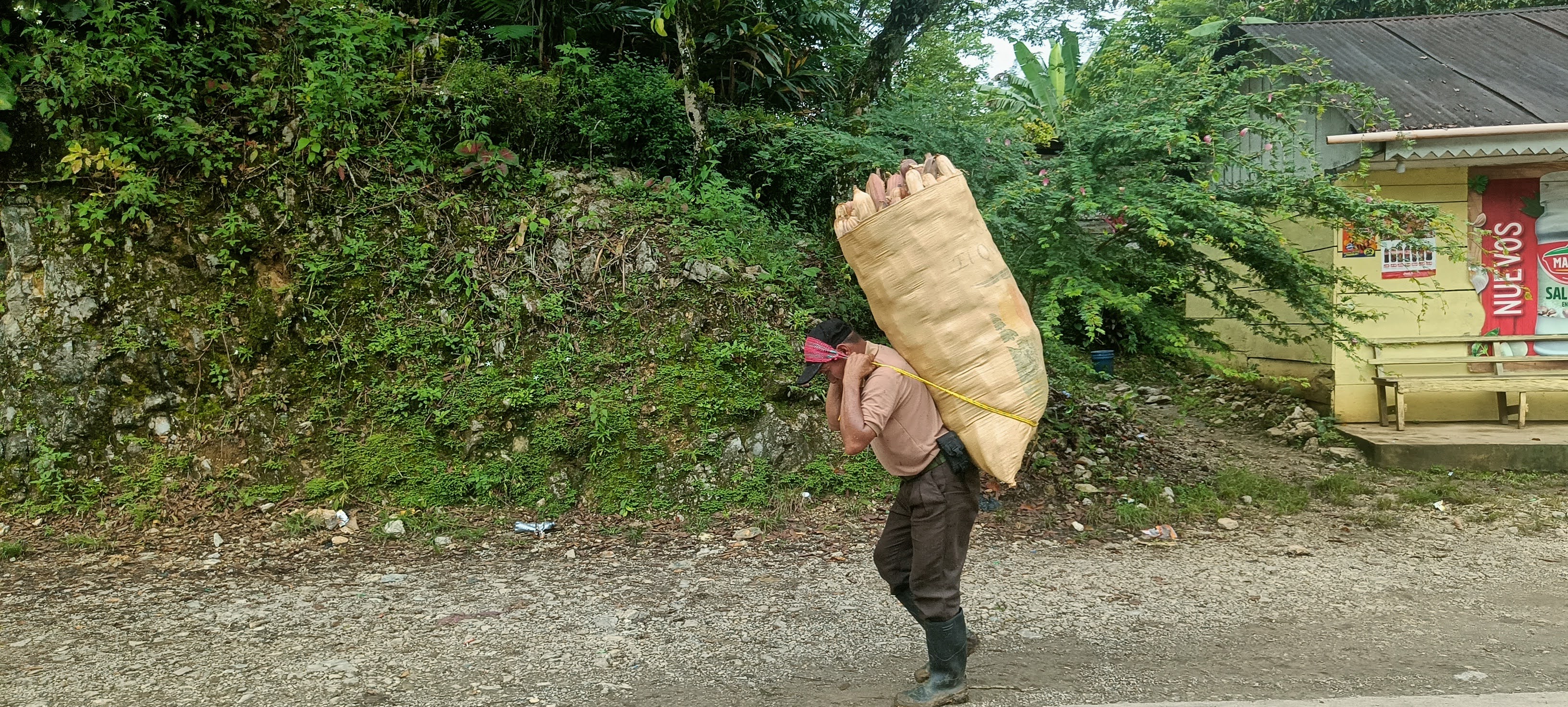
Another long bus journey beckoned to take us from Lanquin to Flores, the island of Flowers which is connected to the mainland by a causeway. The journey started late and stretched to ten hours over hills and into humid lowlands. We crossed the river Rio de la Pasion at Sayaxche on a flimsy ferry, no more than a few planks strapped together and numerous ferry operators clamouring for business. Queues and chaos but eveyone crossed safely. Through the bus window, we watched men carrying incredible burdens on their backs, building materials, sticks and sacks. We didn’t see any mules or donkeys anywhere in Guatemala so far.
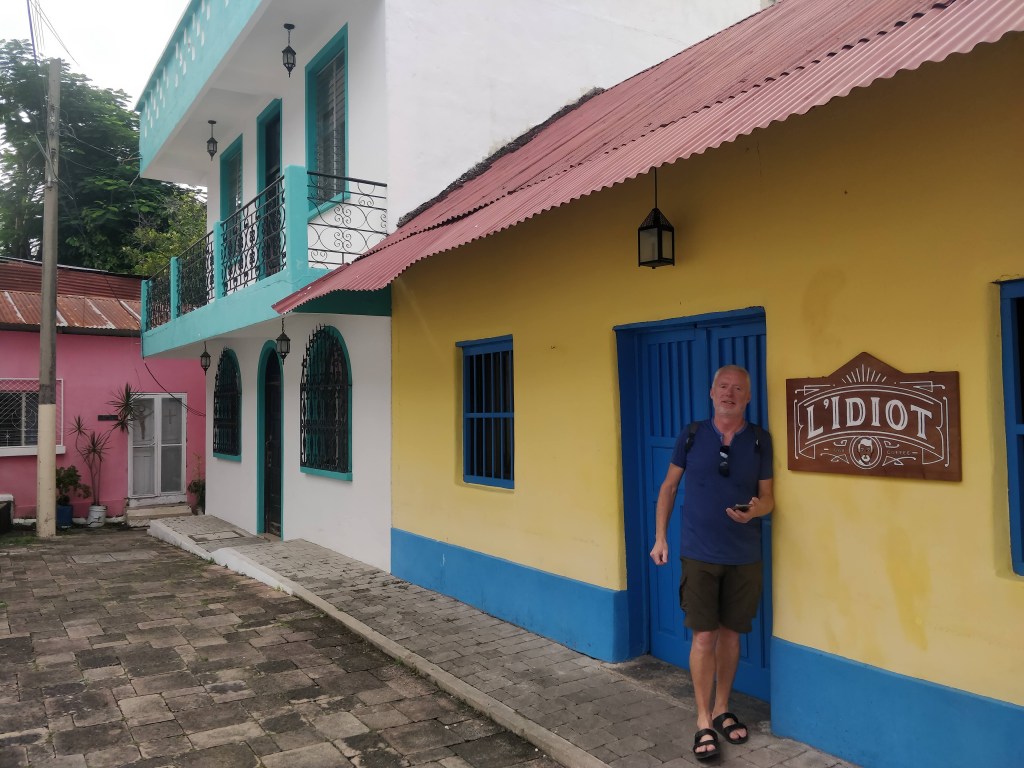
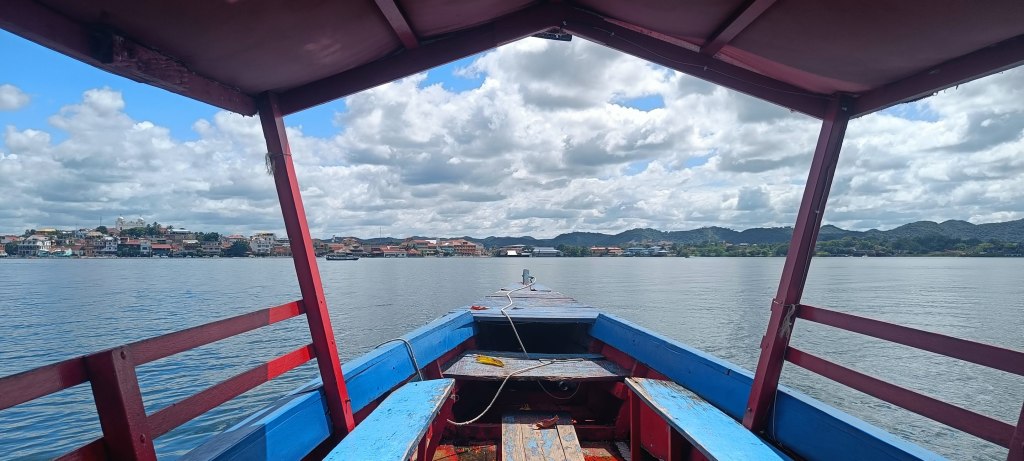
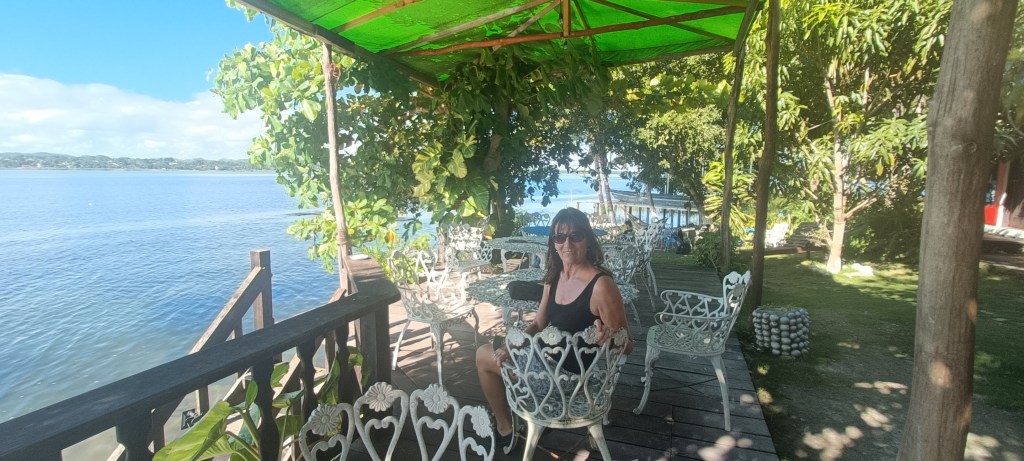
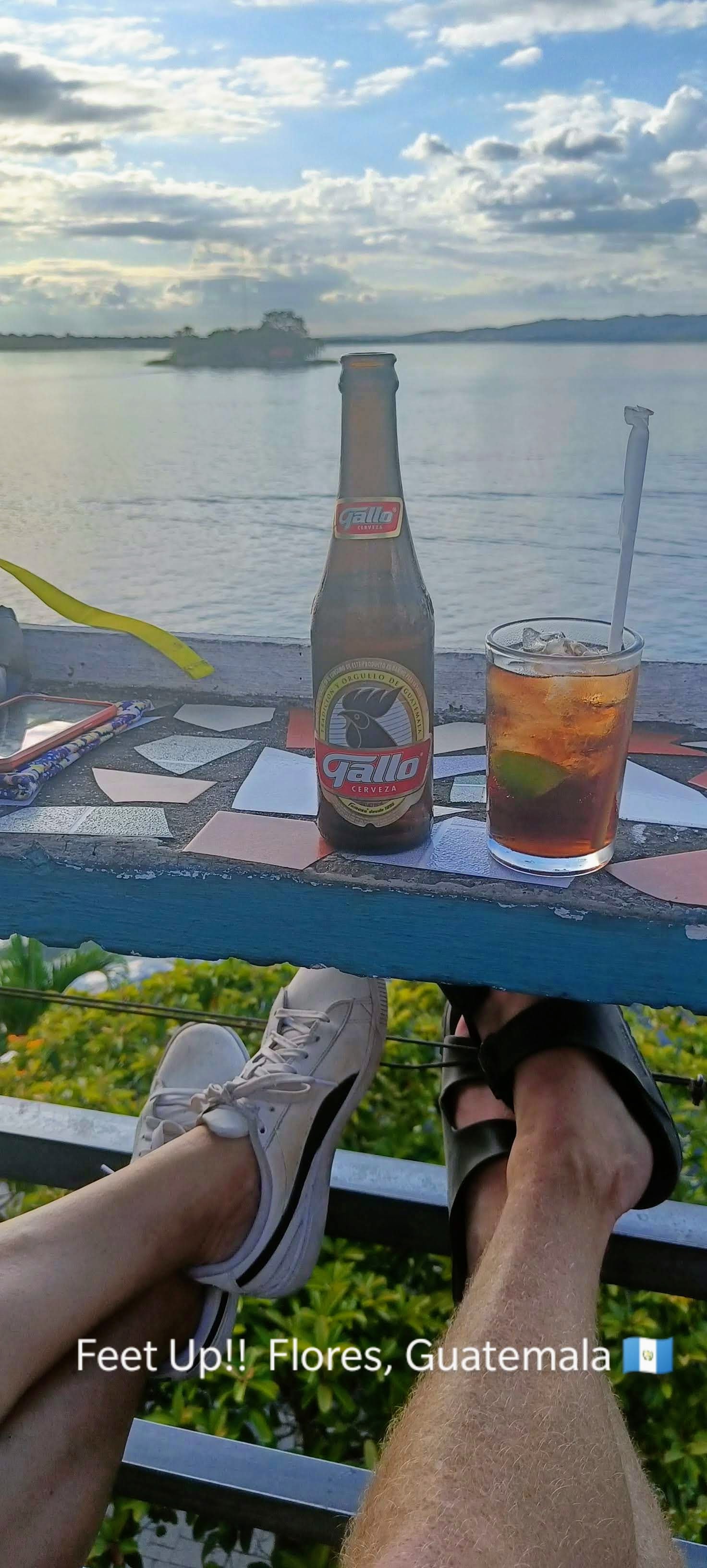
In Flores, we spent a few nights on the far shore of Lago Peten Itza, not on the island proper. There was a courtesy boat to take us to the island anytime we wanted. Flores was a former Mayan capital and the Maya state that held out longest aginst the Spainish invaders. But it was finally conquered and destroyed in 1697. It was peaceful on the edge of the lake, not as dramatic as Lake Atitlan in the south with its towering mountains but here it was all hills, rampant growth and humidity and a heavy sleepiness in the buzzing heat of the afternoon. Flores was a pictureque little town with brightly coloured buildings and with rising lake waters, it was also sinking at the northern end with submerged streets. It is also the gateway to nearby Mayan ruins. The biggest and the most visited of these ruins is Tikal, one of the reasons we wanted to visit Guatemala.
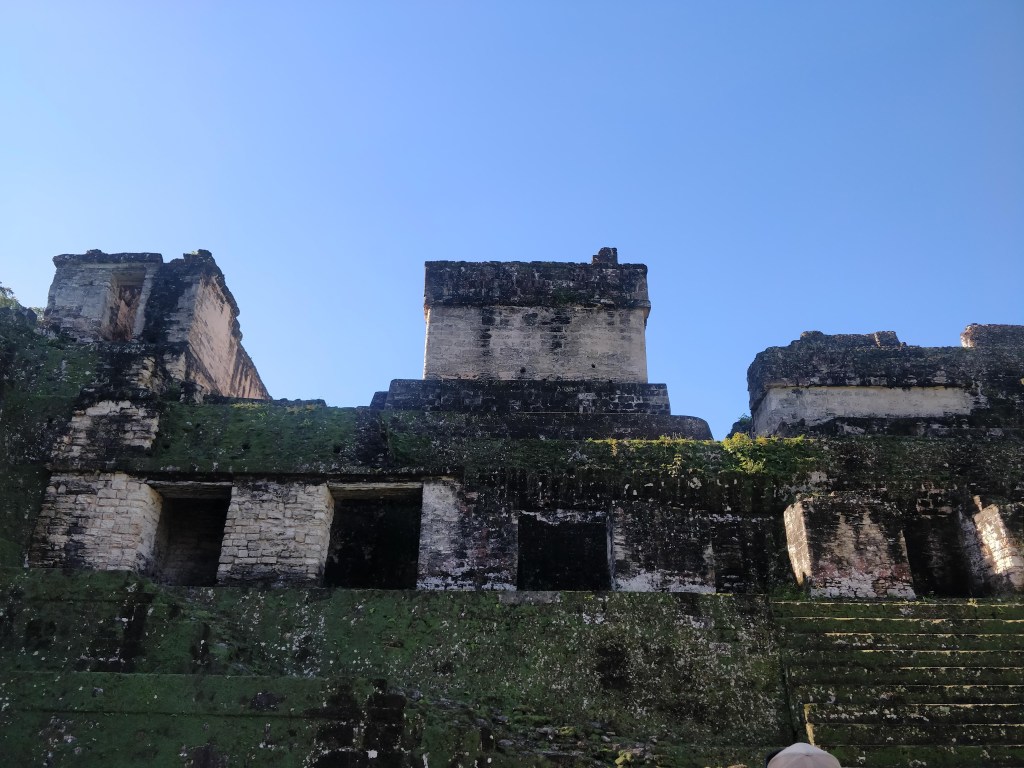
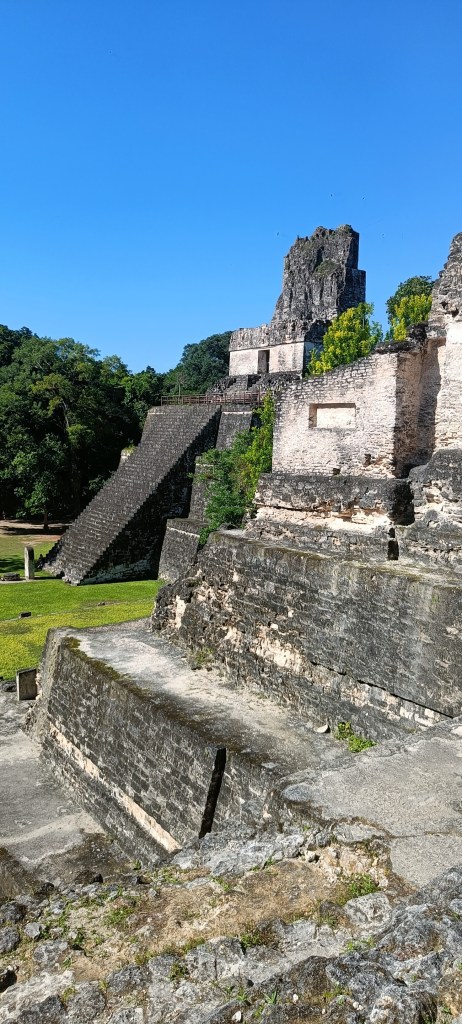
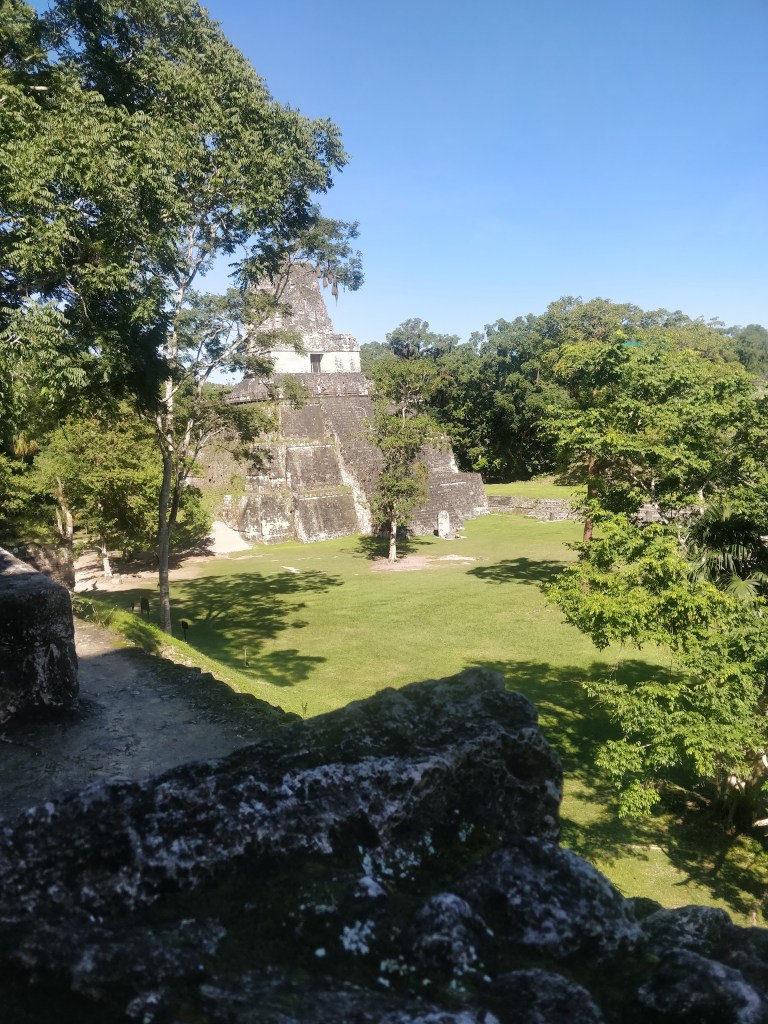
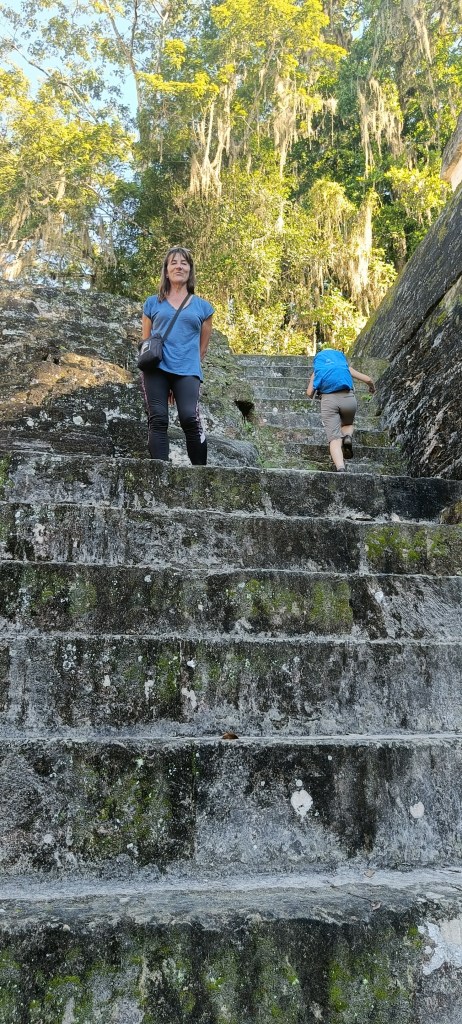
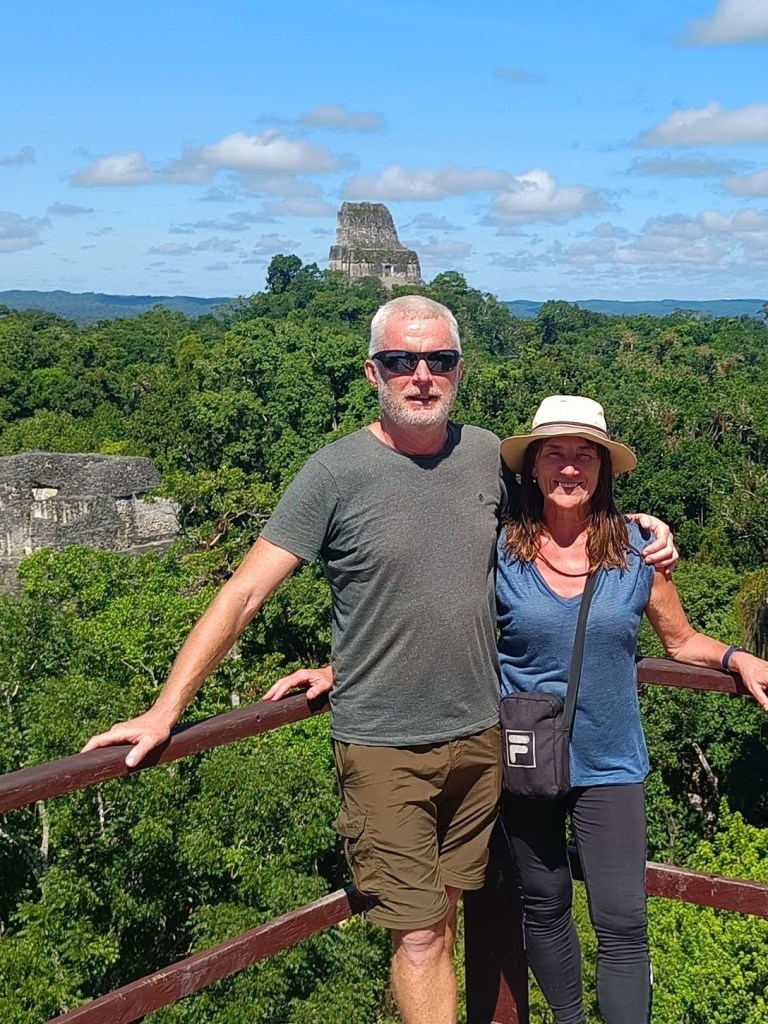
It had seemed like a good idea to start our journey to Tikal at 4.30am, to get there early before the human crowds, when the birds and animals in the park were at their most active and the air was at its freshest. So our alarm went off before 4am. The son of the owner of the hostal was sleeping on an old sofa inside the door but he got up and gave us bread, peanut butter and bananas at that ungodly hour. Walking through silent Flores to get the bus, we thought that we should get up this early in the morning more often – the air was warm, about 24C, but it was soft and energizing, once we had wiped the sleep from our eyes. We arrived at the entrance to Tikal at about 5.45, the office didnt open until 6 am so we were first in the queue. This was just as well as it was a slow process, involving having our passports scutinised, entries made in a big book and tickets issued by a dot matrix printer – the sound sounding like the chattering of some prehistoric bird. We drank black bitter coffee with swirling sediment – only drinkable by dissolving a lot of sugar in it. There was a slight early-morning haze hanging over the jungle, adding to the mystery of Tikal, a Mayan city of pyramids, temples and palaces abandoned around 900AD after 1500 years of habitation. It was swallowed by the jungle until it was ‘discoveded in the 1840s by men climbing tall sapodilla trees to extract gum and glimpsing the tip of stone buildings among the treetops. The grass was damp with dew and the Howler monkeys were doing their thing – howling🤣. A family of wild turkeys, with extraordinaryly iridescent feathers, ran among the trees and pisotes (a type of racoon) ambled about, completely unconcerned by our presence. We clamboured to the top of the temples that we were allowed to climb with the smell of age, dust and damp stone, some of it covered in green moss. The heat and humidity was rising by the minute until we were wet with sweat before 9pm. Nobody knows for sure why this vast complex was abandoned, there are theories of droughts and famine, deforestation and war but all this is conjecture. Human sacrifice was probable and it’s thought that the people to be sacrificed were chosen by competitive ball games where the winner was given the honour of being sacrified. The gods deserved only the best! The towering ruins – some 60 metres high – in such a jungle setting, the effort involved in building them and their abandonment speak poignantly of man’s ability – and folly- and the power of nature to reclaim its territority. What other lost worlds, once full of self-importance, lie hidden in jungles and mountains and beneath the seas?
We had considered visiting Belize, where English is the offical language but we changed our minds deciding that as we will visit El Salvador and Nicaraguay on our way back to Costa Rica, that would be enough countries and border crossings for us on this trip. But we heard such good reports about Belize from other tourists and it seemed very easy to get a bus there from Flores that we changed our minds again. So……… next stop Belize.
We may return to Guatemala again or we might get a boat to Honduras. But as we are about to leave, just a few thoughts on Guatemala. It is a small country (Ireland is about 2/3 the size of Guatemala) but its diverse landscapes from Pacific to Carribean coasts with mountain ranges, active volcanos, highlands, lakes and jungles makes it seem much larger…..and of course at the tail end of the wet season, getting about by road is more difficult. The people have an incredible work ethic and are always busy with practically all tasks – farming, road-building and construction done my hand. We stayed in a lot of modest family-run accomodations and in people’s homes with little sound-proofing and never once did we hear a raised voice, an angry word. I’m sure that people argue – just like anywhere else – but we never witnessed it. Despite our trepidation at the beginning, we never felt unsafe at any point – well, maybe the scorpian in the bathroom gave me a shiver😁 – but in the tourist areas, there was no evidence of corruption, drug mafia or gang brutality nor did we meet anyone that had been robbed or harmed in any way. Everywhere we stayed supplied drinking water in large plastic reusable drums free of charge – this is a fantastic inititive in the fight against the use of single-use plastic bottles. So adios for now but hasta luego, gorgeous Guatemala.
Bienvenido a Belize and until next time, Happy Halloween👻👻👽
 marienoonanblog
Magnificent post, as always, Marie. Your evocative writing brings me along with you. Bon voyages!
LikeLiked by 1 person
Great reading as always thanks Marie.Guatamala looks beautiful,love those turquoise pools.
LikeLiked by 1 person
Thanks for the evocatively descriptive accounts of your travels. It almost feels like being there.
LikeLiked by 1 person
Gosh Marie. Sounds wonderful. Ye are certainly packing in as much as possible. Stunning photos too. Meanwhile it’s colcannon and extra sour jellies here! A far cry from pure coconut milk!! Xx
LikeLiked by 1 person
What an adventure ye are having Marie, I’m looking forward to the next installment!
LikeLiked by 1 person
Hi Marie, So glad you enjoyed Guate , despite your encounter with the scorpion,and that you decided to go to Belize.Enjoy.
LikeLiked by 1 person