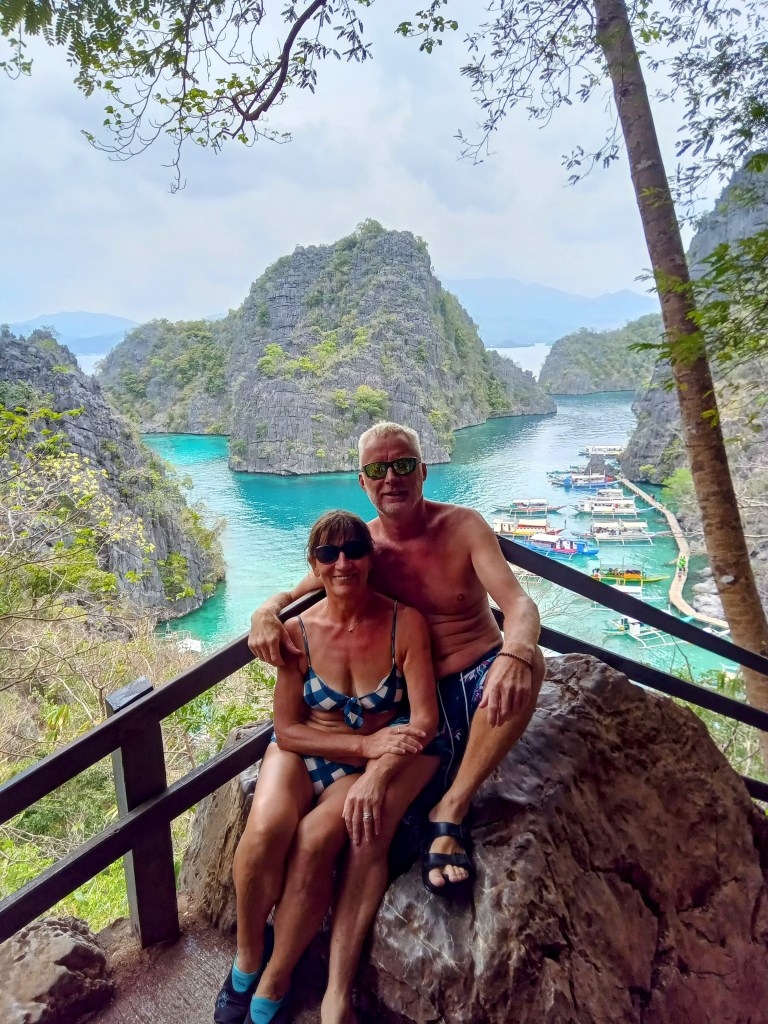
There’s a reason why some places are so popular. The Philippines is so astonishingly beautiful that we had almost become jaded to beauty, but our first glimpse of the Bacuit Archipelago still managed to take our breath away. We were squashed in a little white van, whose speedometer didn’t work and the driver was cautious on the hills when we saw a dreamy landscape of islands spread before us through the rain splattered, dirt splotched windscreen. It was just a tantalising glimpse through a break in the trees. It reminded me of island-studded Clew Bay, another dreamy landscape, when viewed from the top of Crough Patrick on a mist-shrouded day.
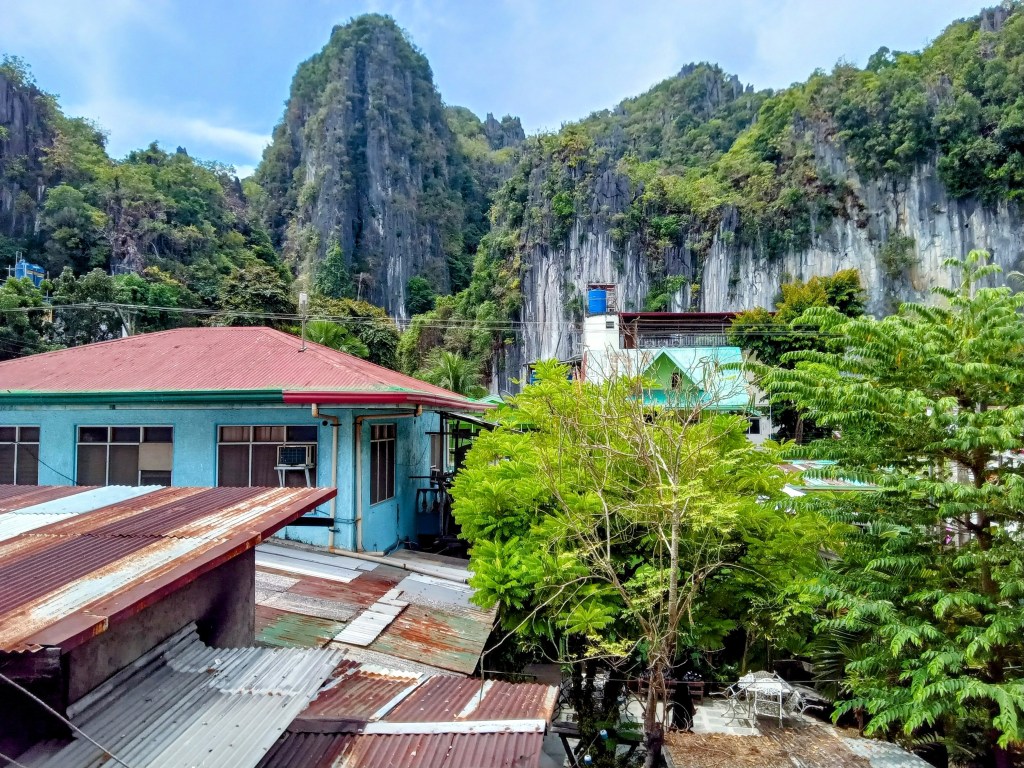
El Nido, the main town for trips around the islands, was everything that people had said – busy with people, traffic and incredibly noisy. Houses, restaurants and bars were built almost directly on the water and obscured all views of the beach from the crowded streets. But it was backed by hulking limestone cliffs, iron grey except where trees and shrubs had taken root on the bare rock. You just have to admire the tenacity of trees to survive and expand. El Nido, which is Spanish for ‘nest’, got its name from the little birds – swifelets- who build their edible nests made from saliva in the limestone karsts.
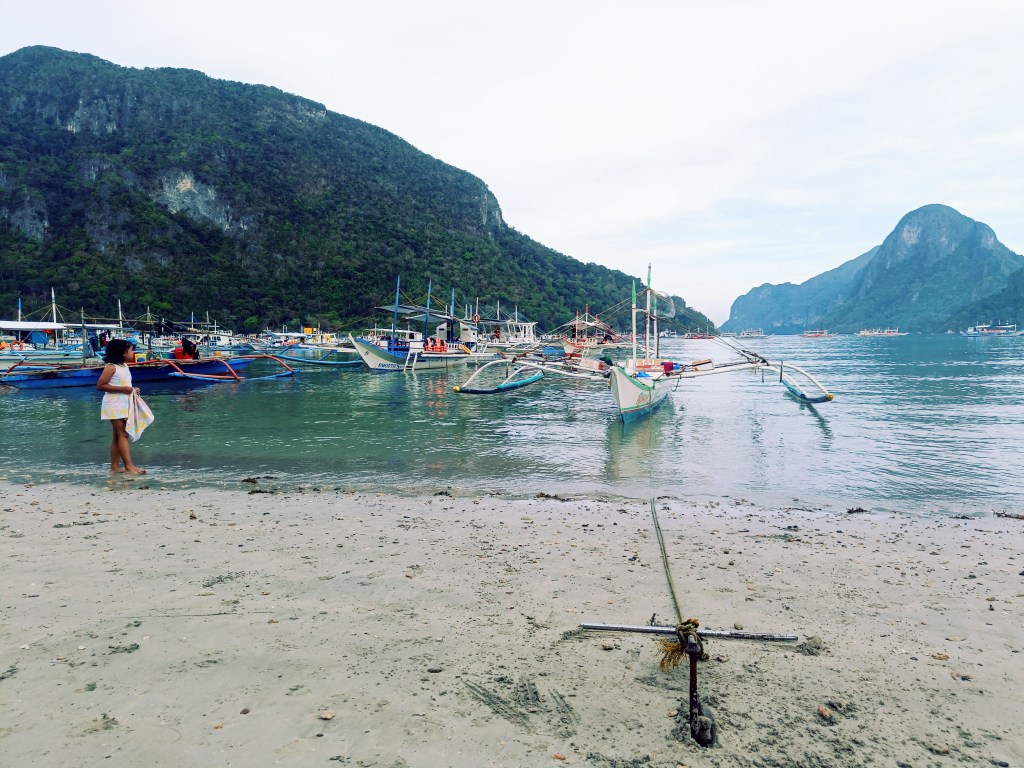
When we walked from the street through a narrow passageway (one person wide), there were a hundred tour boats bobbing in the shallow water and hundreds of tiny birds flying overhead, ducking, diving and soaring over the surface of the water. The islands were a constant presence from the waterfront, towering limestone rocks casting shadows in the jade water, the distant ones shrouded in a blue haze. Splashes of green on the islands where trees were growing out of the bare rock on them without any obvious soil.
Practically everyone who comes to El Nido, does a tour of the islands. Most tours cost between €20 and €30 for a full day including a sumptuous lunch of seafood, grilled fish, chicken, noodles, rice, salads and fruit. Tourism here was a conveyer belt – we were hustled from our accommodation to the beach where hundreds of tourists were being directed to rent snorkelling gear and then shepherded onto the bobbing boats. Organised chaos …..a scene repeated every morning with a fresh batch of tourists like Groundhog Day. We were separated from our group and sent to another boat because our designated boat was overcrowded. So we were surrounded by Filipinos in holiday mode, who were from the south of Palawan and were on a work outing, courtesy of their employer. Three cooks toiled away at the back of at the boat all morning cooking our lunch on charcoal coals, sweat and heat but delicious smells. As all the tour boats left at 9 am and as they basically followed the same route, it was busy of some of the sights, like the Big Lagoon where we kayaked by towering limestone cliffs, the Hidden Beach (not so hidden anymore). The variety of fish and coral was stunning but there were jellyfish floating there too- not the dangerous kind but enough to pack a mighty tingle – Caoimhin and I can testify to that as both of us got stung.
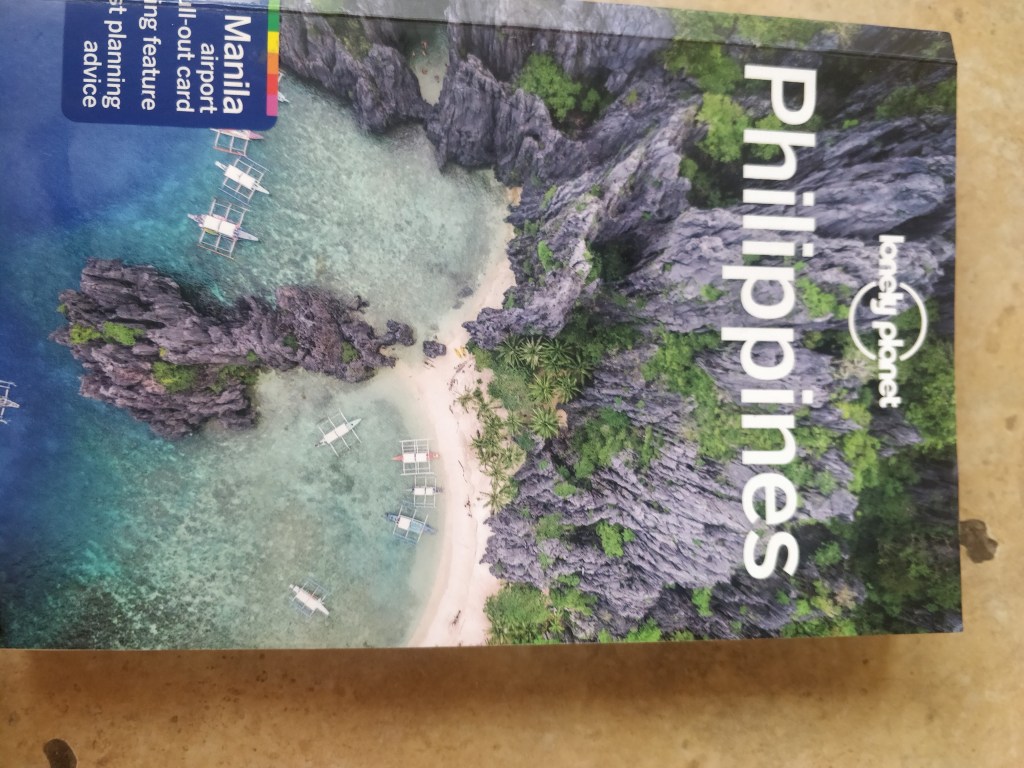
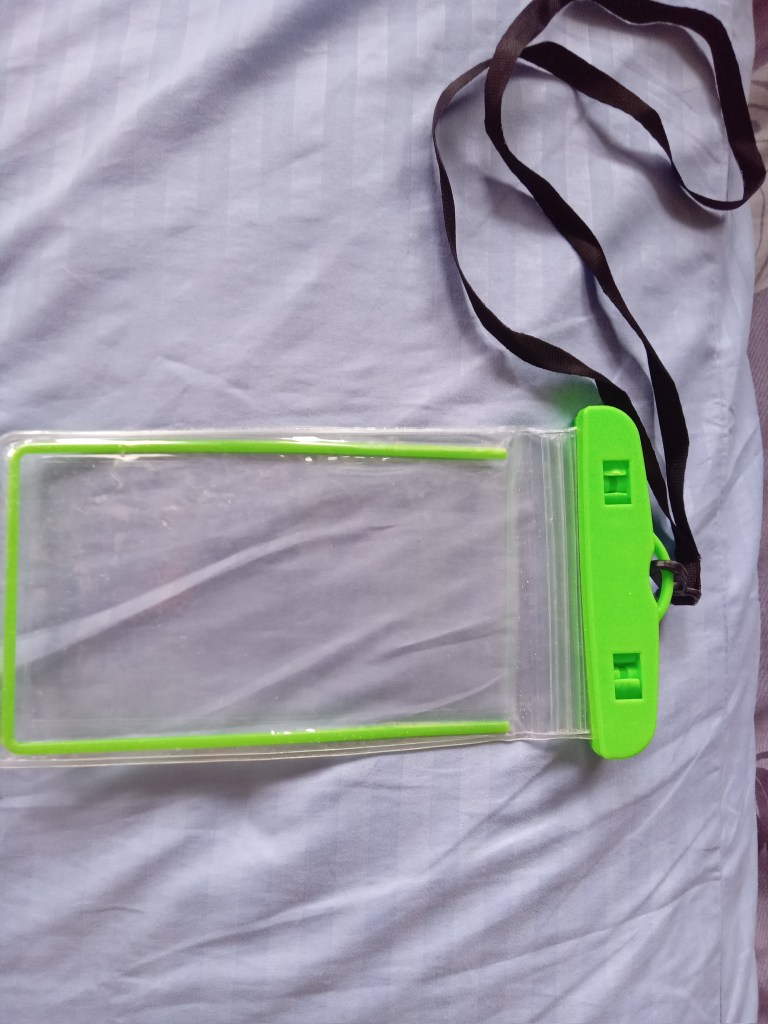
But then the unthinkable happened- both Caoimhin and I got seawater in our phones. It was the last stop in the Secret Beach and Hidden Lagoon – one of the most iconic images in the Philippines and the place that is on the cover of the Lonely Planet Guidebook. We waded ashore in waist-to-chest deep water and had to climb through a hole in the rock into a ‘hidden’ lagoon, We brought our phones from the boat in clear plastic waterproof pouches but we had to take them out of the pouches to take photos. Caoimhin was really enthusiastic about the fabulous photos he was taking. Anyway some water got into the pouches – we put the phones back into the pouches and although I realised almost immediately……it looked like it was too late. The same thing happened to a French guy in the place where we are staying and several other people along the way.
When we went to buy rice from a shop keeper in town who was selling several kinds, his first query was about the size of our phones. No tourist ever bought rice to cook. So the phones went into a bag of rice for three days which is the optimal time needed to dry them out thoroughly. Caoimhin had already researched recovery of a water-damaged phone(due to a phone falling into a hot pool in Albania). At this stage, we were reasonably optimistic…we would never be so unlucky to lose two phones on the same day, would we?? It would be liberating to be without phones for a few days. We would have to ask directions, look at paper maps, take mental pictures of the scenery and not look at everything through the lens of a phone camera. How refreshing!
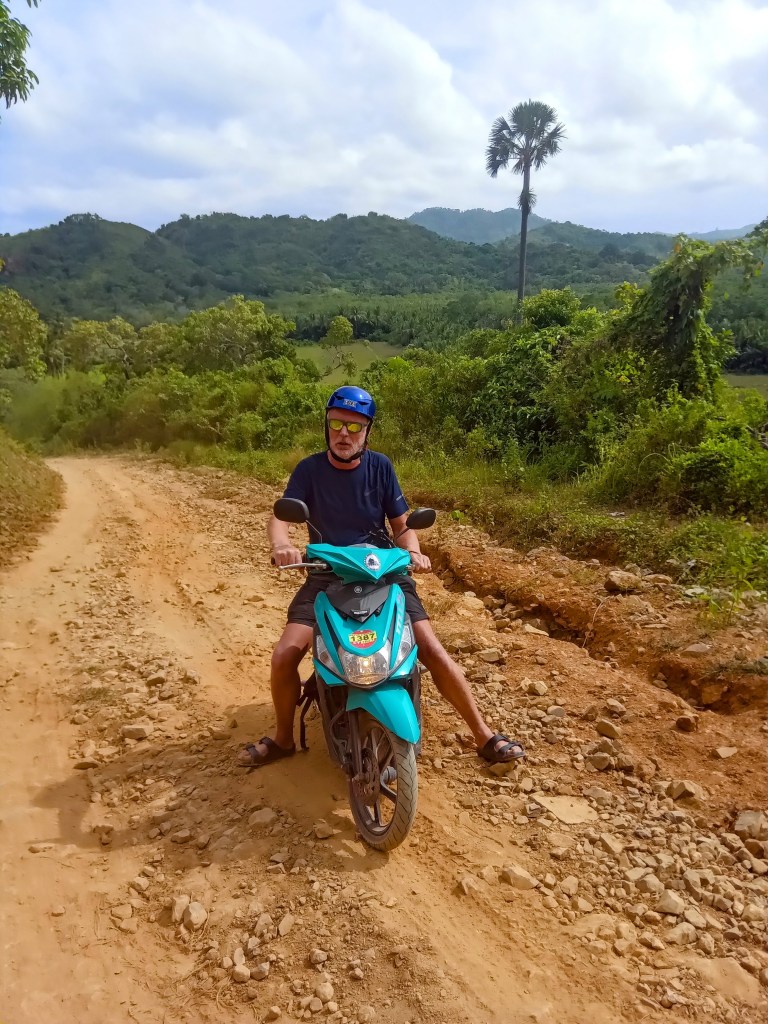
We rented motorbikes and moved south from El Nido town…..with our phones snuggled in rice….. to a place that couldn’t be more different from touristy El Nido although the views of the Bacuit Peninsula were equally stunning. Bebeladan was small dusty fishing village – the last three kilometres were on unpaved roads and probably the bumpiest, most pot-holed piece of dirt track we had been on. There were no restaurants, bars or even much electricity. It was like going back in time…people living in bamboo shacks with thatch or corrugated roofs, earthen floors. Every second shack was a shop, selling the usual sachets of washing powder, soaps, sweets with a few veg and fruit. Solar panels provided light but there was no aircon or even fridges (really difficult especially when the weather was in the early to mid-thirties). Our accommodation -called Mountainside – was perched in the hill overlooking the village with about a hundred steps leading down. The views from our balcony were sublime – that dreamy landscape again, changing subtly with tide and light and cloud.
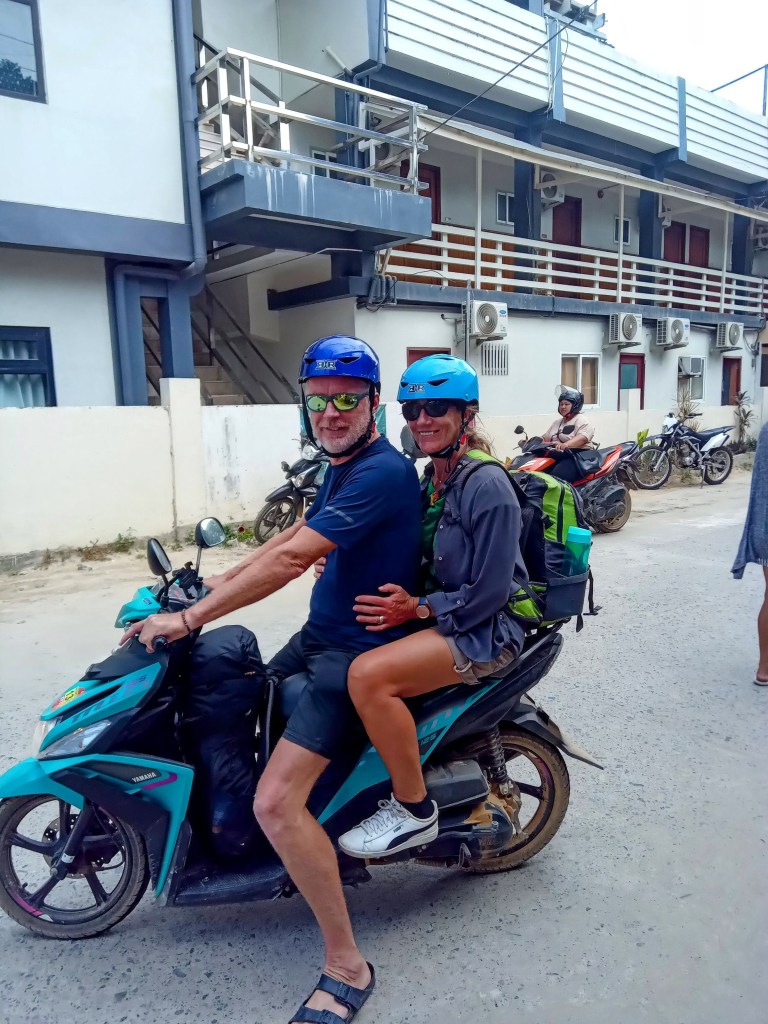
There was a pet monkey chained up outside on a long leash who could reach the edge of our balcony where he begged for food as soon as he saw us. It seemed so cruel to have him chained up all the time but our landlady said that she had inherited him from her uncle. When she tried to let him go free in the forest on an island, he swam after their boat, screaming to go back with them. Our landlady, Christine, was a young woman from Cebu with a Polish boyfriend and a 4 month old baby. She cooked breakfast (fried eggs and garlic rice) for us most mornings and dinner as well (usually rice and vegetables) but her star dish was a squash stewed in coconut milk and spices. Most couples running guesthouses are European men with Filipino girlfriends. The men provide the money for the purchase of the property but it is in the girlfriends name.
We were back in the land of the rooster, crowing all day and night. We had just missed a big cock-fighting event as part of a festival in the village by about two days – maybe the roosters left had something to crow about. We walked in the early morning in the hills outside the village where children waved to us but the houses were even more basic, ramshackle and fragile with a few chickens and usually a pig tied up outside, a couple of coconut and banana trees for shade. Cold is never a problem so an ‘airy’ house is a good thing to keep things cool but this is a land that gets a lot of rain and is lashed by typhoons for potentially six months of the year.
We took a boat tour to the islands from the village as well, just a dugout canoe, the two of us and a boatman wearing worn shorts, not many teeth and even fewer English words. But he took us to a small island called the Cathedral, a cave with soaring limestone columns and holes in the rock that let the light filter in like stained-glass windows, something majestic about it that made us talk in whispers even though as we had the place to ourselves. Our boatman kept asking ‘You want photo?’ although we kept telling him that we had no phones. Tourists without cameras were an anomaly he couldn’t understand.
On Snake Island, the colours of the water were truly amazing, ranging from turquoise to azure to cobalt blue. The island gets its name not from the number of snakes on the island but because a shallow sandy path -walkable at low tide – curved to shore in the shape of a snake. Truly Instagram-able, if you had a camera, from the high vantage point on the island.
We delayed checking the phones, living in that zone of hope as long as possible. We tried mine first and although it made some faint buzzing, it was death throes and it refused to charge. Caoimhin’s was next and when his took some charge, hope soared but then was dashed again when it refused to start. We tried the following day again….and the next day….the liberation of not having phones had worn off. It’s incredible how reliant on the phones we have become, especially when travelling – we use them for booking accommodation, google maps so that we know where we are, transferring money and keeping track of our finances(we can’t even check what’s in our Revolut and N26 accounts),WhatsApp to keep in contact, writing the blog……but they are also a camera, a torchlight, a calculator. Caoimhin reads on the Kindle app on the phone (I have my Kindle with me). He had also downloaded yoga workouts and Spanish lessons on his phone which were inaccessible without it.
We had the laptop at least – which we hadn’t been using much because the Wi-Fi in most places wasn’t strong enough to connect. Ironically, the place we are staying in the village had reasonable Wi-Fi but it didn’t have any sockets so we couldn’t charge the laptop….not much electricity in the village. One enterprising couple had extra solar panels on their roof that powered a whole bank of sockets. In a shack similar to most of the others, a woman, with a kind face and greying hair, watched over a whole bank of phones and laptops as they charged for a small fee.
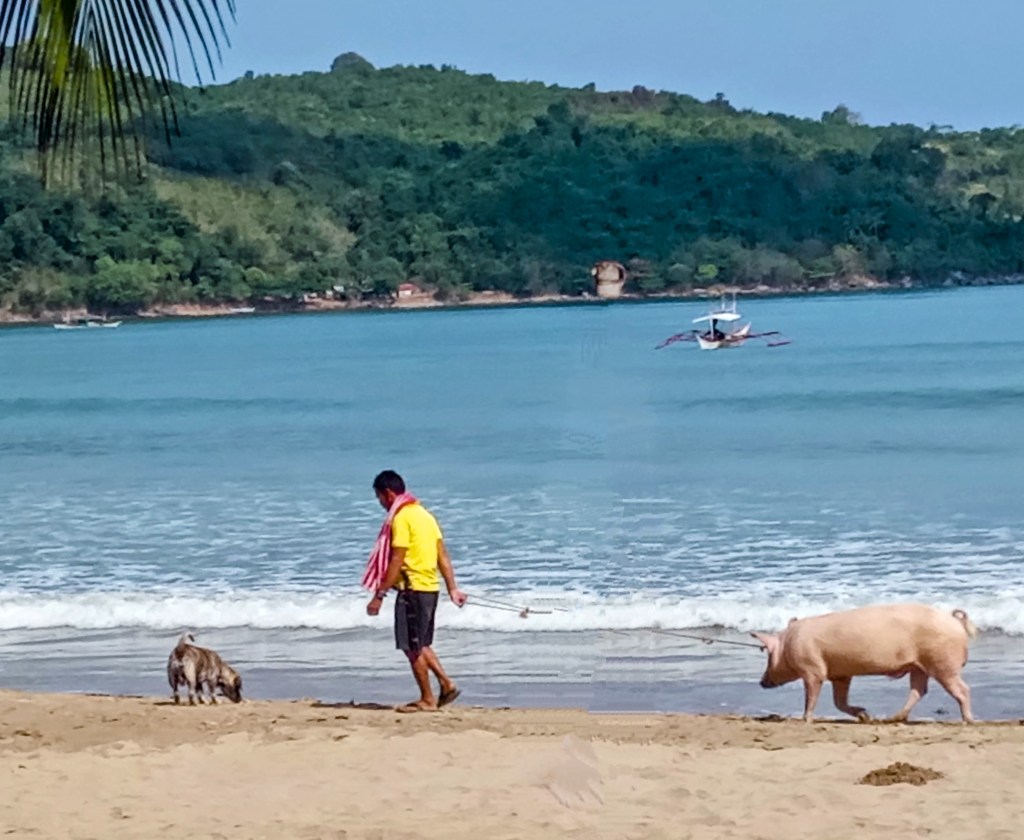
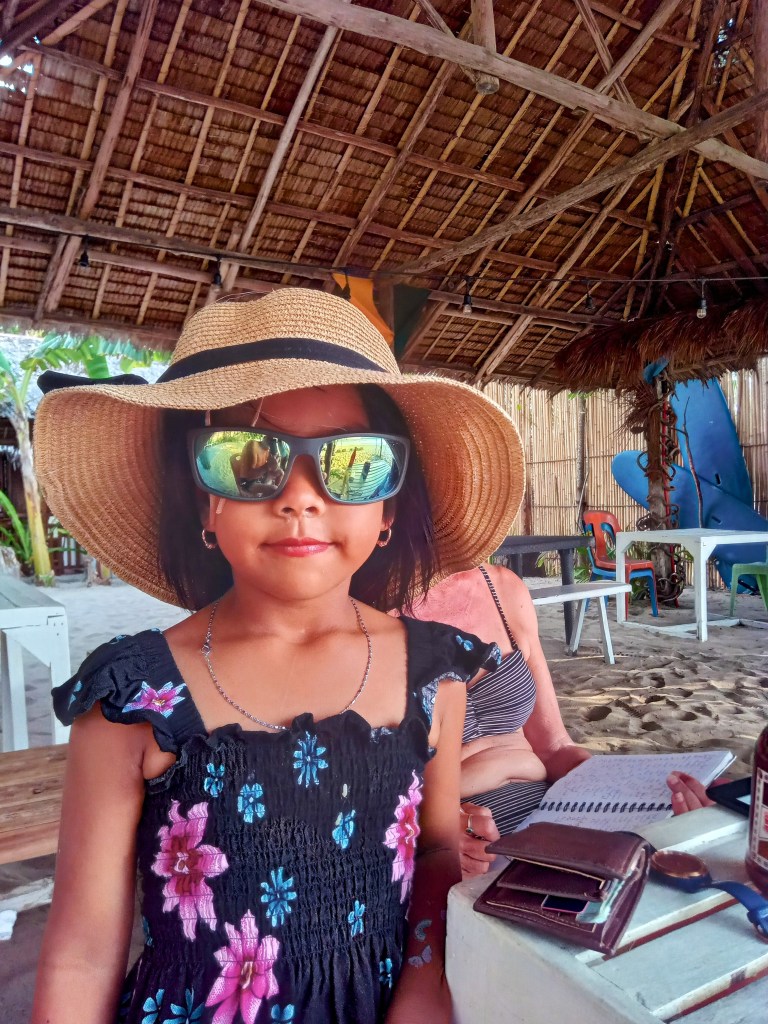
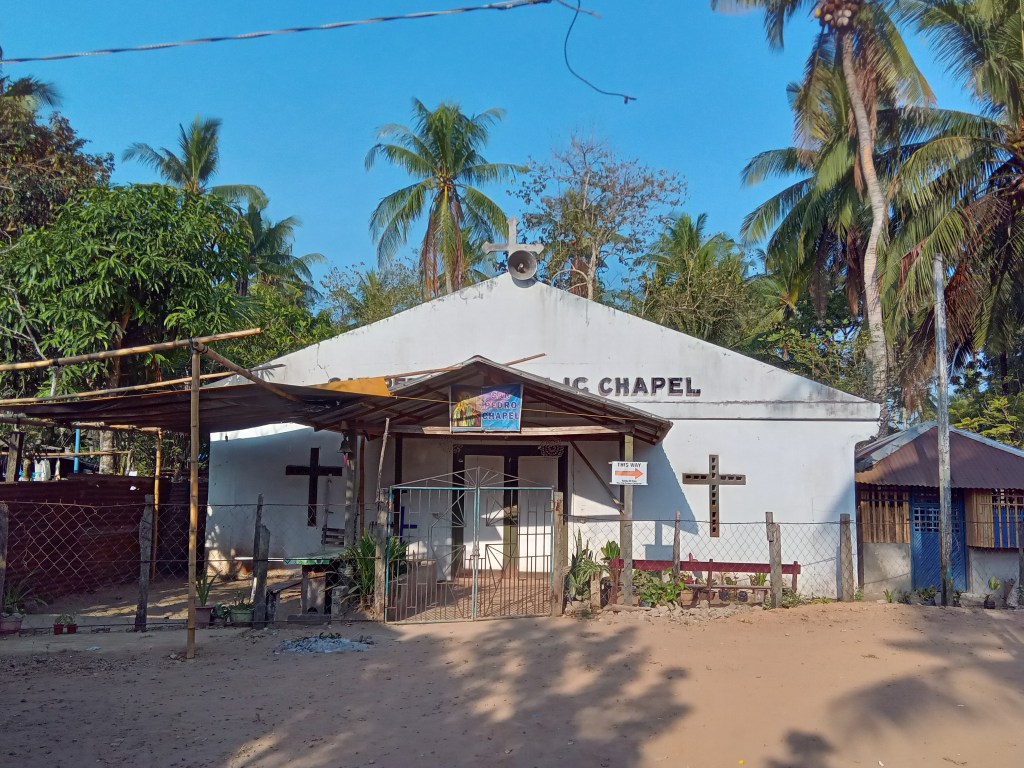
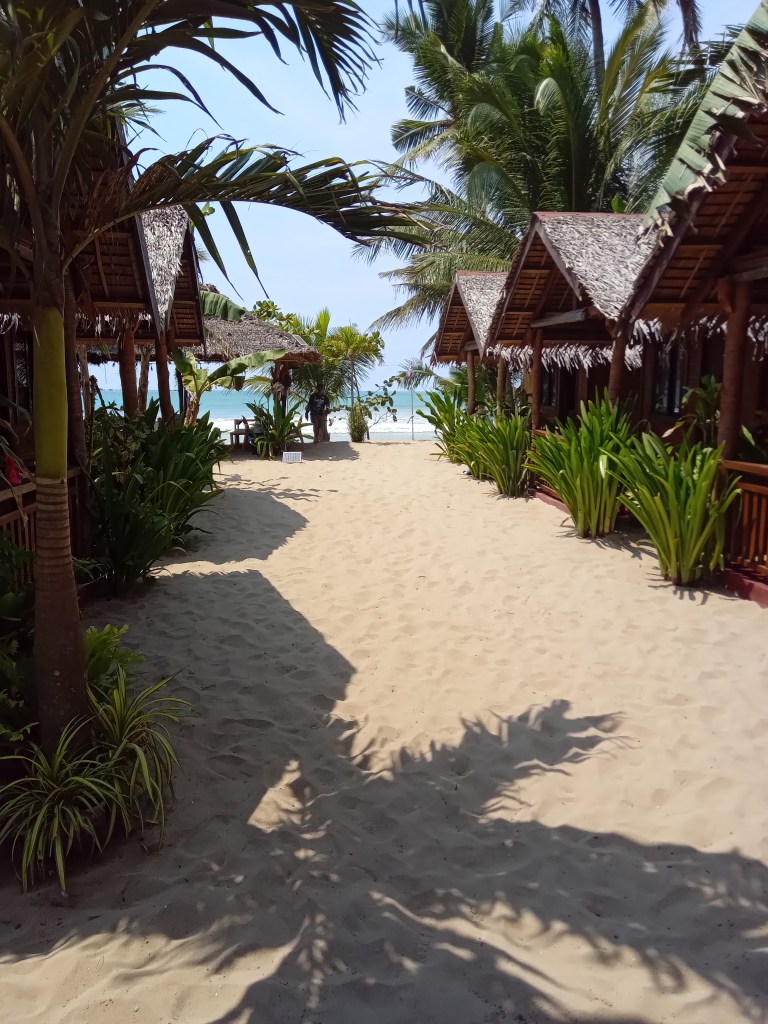
We tried one more last ditch effort on the phones. We returned To El Nido town on the motorbike and called in to one of the many phone repair shops. If anyone could fix it, there boys could with their vast experience of submerged phones but after a half an hour of cleaning and scraping, they shook their heads. Despite the Easter season, there was no resurrection for our phones. So we bought the best cheapest phones we could find to tide us over and moved north of El Nido to Bucana to a beach-hut which was tranquil, apart from the waves that pounded all night and sounded like they might engulf the hut. It was the sort of place where people took their pigs for a morning walk on the beach and the local children tried on our sunglasses and hats. It was also the sort of place where the Wi-Fi was poor and setting up new phones was almost impossible. On Easter Sunday, we wandered up to the Chapel with the glorious singing from the young choir pulling us in that direction and shared a melted Lindt chocolate bar that I had bought in El Nido.
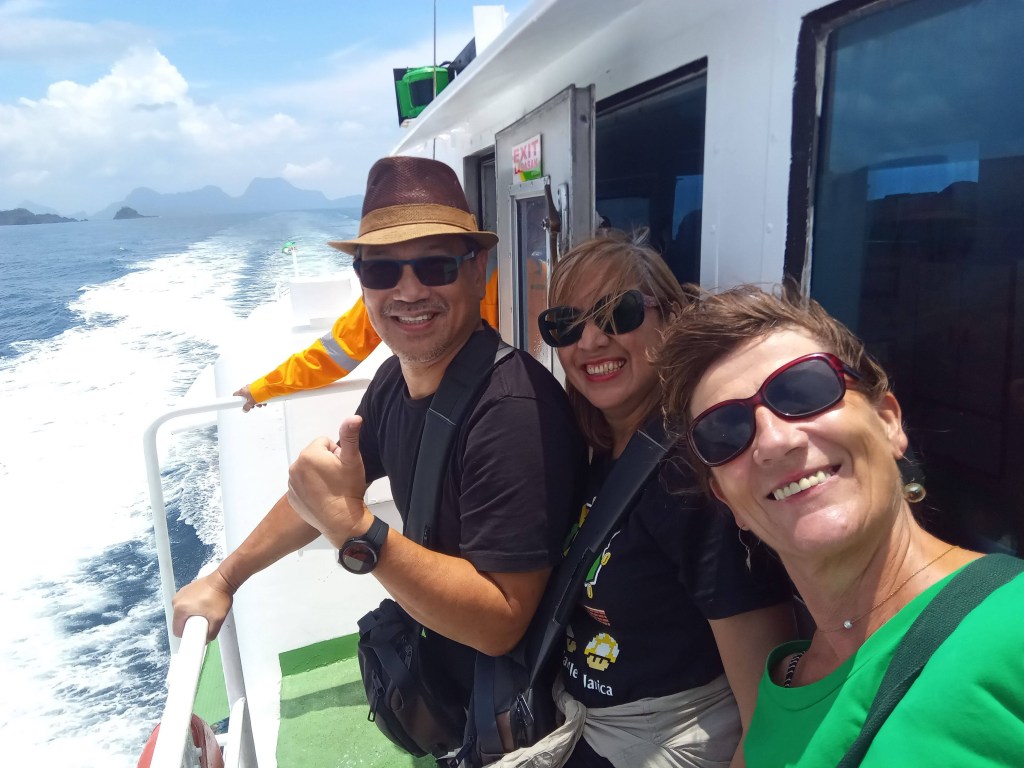
We are now in Coron on Busuanga Island where finally we have electricity, Wi Fi and working phones. We took a five hour ferry from El Nido town on Monday, which was fast, comfortable, and uncrowded. We sat with a friendly Filipino couple who lived in New Zealand now. The boat captain allowed the 4 of us on deck – an exhilarating experience as there was a sheer drop with no safety barrier to get out.
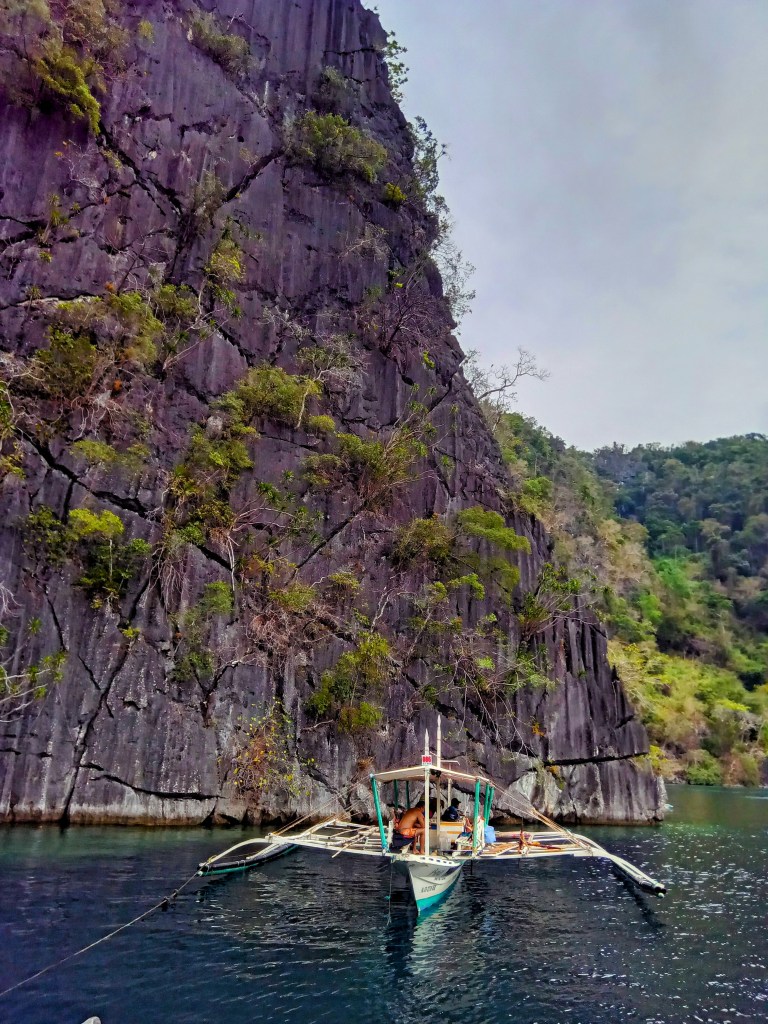
Coron town was a disappointment, noisy, polluted with no beaches. The temperatures have been creeping higher here in April, it was about 30 degrees but now mid -thirties……even the locals collapse in the shade in the deadness of early afternoons. In Coron, we have had clammy overcast days with high humidity and the threat of thunderstorms that never arrive. If Coron town was a disappointment, the island of Coron, a 30 minute boat-ride away, was incredible with deep lakes, towering jagged cliffs, white sand beaches – a dramatic landscape that should be the movie backdrop to epic tales. Coran town was horrible, but we stayed in a tranquil oasis, Divine Castle, on a quiet street away from the mayhem of the main street. It had hot showers and cold drinking water and aircon. We got a free room upgrade and negotiated a price for two extra nights and got a room with a view of the town, the boats, and Coron Island.
Our next stop is Manila. We leave tonight on a 17-hour ferry, fingers crossed that it’s better than our previous long-distance ferry experience😁
Thanks for reading…..till next time, greetings from the sweltering tropics. Apologies – this post is longer than usual without photos to paint a thousand words 🤣
 marienoonanblog
No need to apologise for more texts & less photos Marie. Due to your brilliant description of the places & people, I feel i’m tagging along on the journey without having to actually deal with a phone that isn’t working. Safe travels. Caitlin
LikeLiked by 1 person
Thanks, Caitlín
LikeLike
Cant believe you are heading back towards home. What an adventure though. Will be really looking forward to hearing all. Safe travelling back. Enjoy the last few weeks. Xx
LikeLiked by 1 person
Time is flying…..I want it to slow down!!!!
LikeLike
Really enjoy reading about your adventures along the way Marie.
Enjoy the rest of your journey 😀
Nora
LikeLike
Thanks, Nora….only a few weeks left.
LikeLike
Hi guys – soooo unlucky to lose both phones together but you’ve coped admirably! Your blog just as enjoyable as ever Marie – and the photos are still fab, just love that walking the pig on the beach pic 😅. Getting great insight into Philippines – thanks a mill
LikeLiked by 1 person
Hi Rita, thanks for reading. Such a beautiful and interesting country. On the last leg now🏊♀️🏊♀️🏊♀️😍
LikeLike