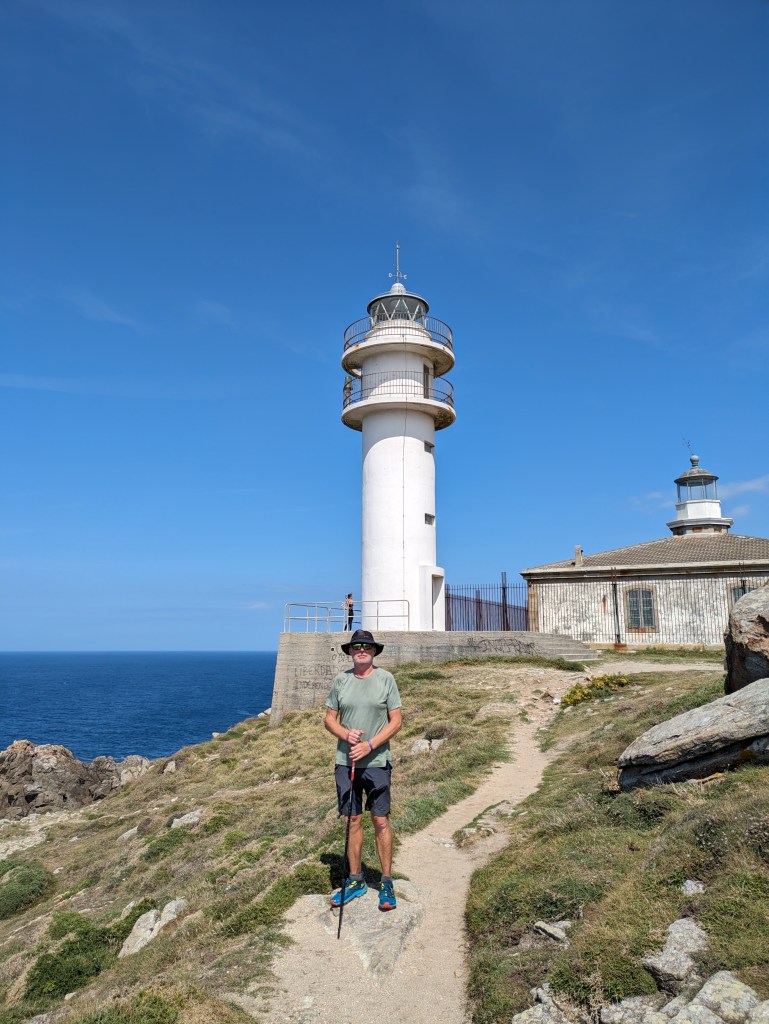
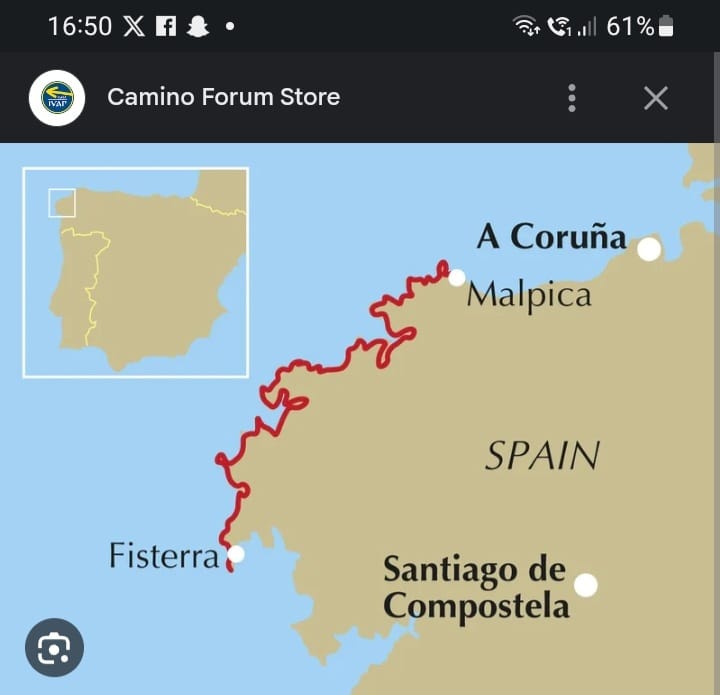
Mention the words ‘Camino’ and ‘Spain’ in the same sentence and most people will think about the Camino de Santiago, the incredibly popular pilgrimage way of St James. But there are others far less trodden paths🥾. We have just completed the spectacular Camino del Faro (The Lighthouse Way), a 200 Kms trek in Galicia along the Coste del Morte (Death Coast), linking the towns of Malpica and Finisterre and walking from lighthouse to lighthouse.
Our journey began with a late Ryanair flight from Dublin to Santiago de Compostela, arriving at about 11.30pm. Yellow bus signs on the ground at the airport Arrivals directed us to a bus stop outside the terminal where the 6A took us to the centre of town in about 35 minutes for one euro😃. The streets were quiet and shuttered and a couple that we saw in the airport queue, followed us to the same hotel, Hotel Windsor, a no-frills place but very clean, very central with loads of hot water.
The following morning we discovered that the buses to Malpica, our starting point, were infrequent with just two buses a day…we had missed the first one and the next one was at 1pm. We wandered around the Cathedral area which was crowded with tourists, walkers, pilgrims and the ubiquitous shells from jewelry to tablecloths to masonry etchings – pilgrimage is big business in this part of the world. Confessions were available in multiple languages but few were availing of the opportunity.
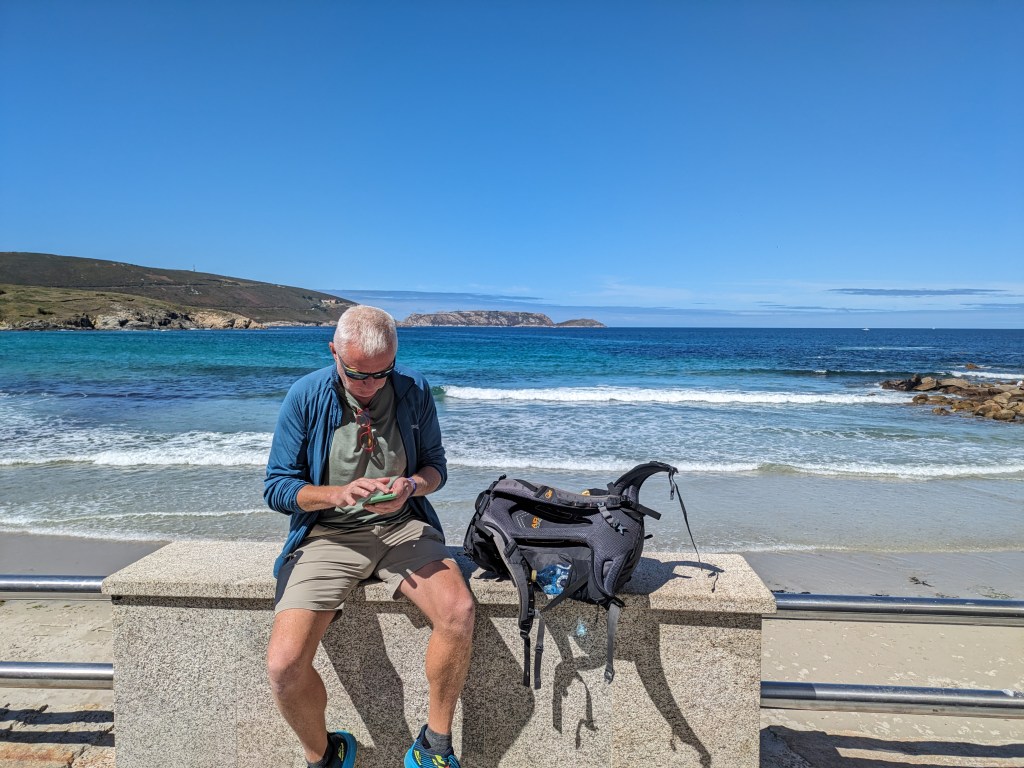
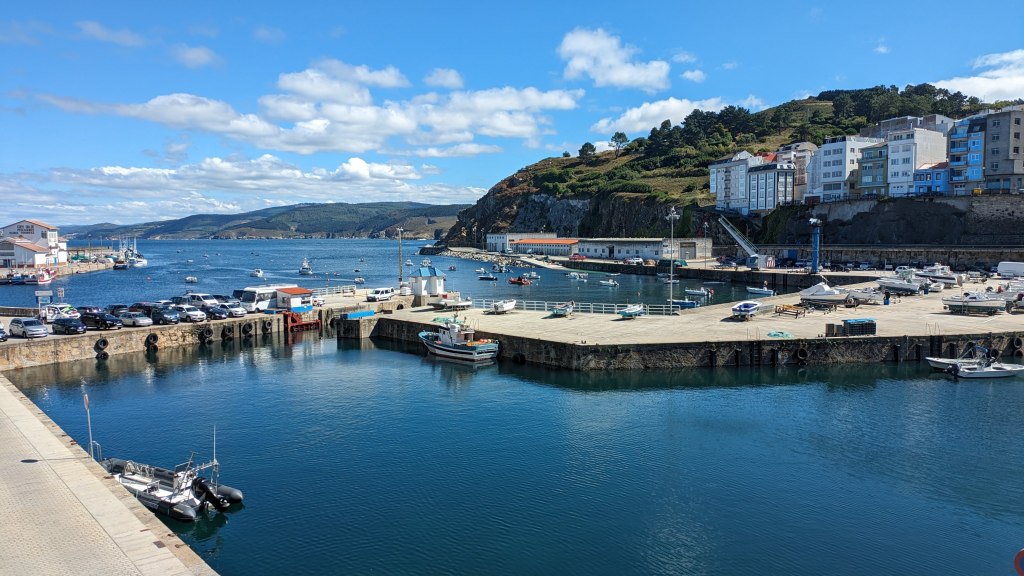
Getting to Malpica involved a change of bus at Carballo but both buses were comfortable, efficient and cheap with the two and a half hour journey costing less than a fiver each and we paid the drivers on the buses. Malpica was a surprise…a really gorgeous little town that we had never heard of until we investigated this trek, with a prom that curved around s turquoise bay. We booked into JB Hostal with a large sunny seaview room, 55 euros a night. (In Spain, hostals are guesthouses, different to hostels with dormitories). The seafront was teeming with surfers and little cafes with cold beer and good wine🥂. The beach was dangerous for swimming so we wandered down to the pretty port area to find the start point of our camino. This first lighthouse was a disappointment…hardly visible and behind a big seawall with a No Trespassing Sign (in Spanish) – very little English spoken or understood here.
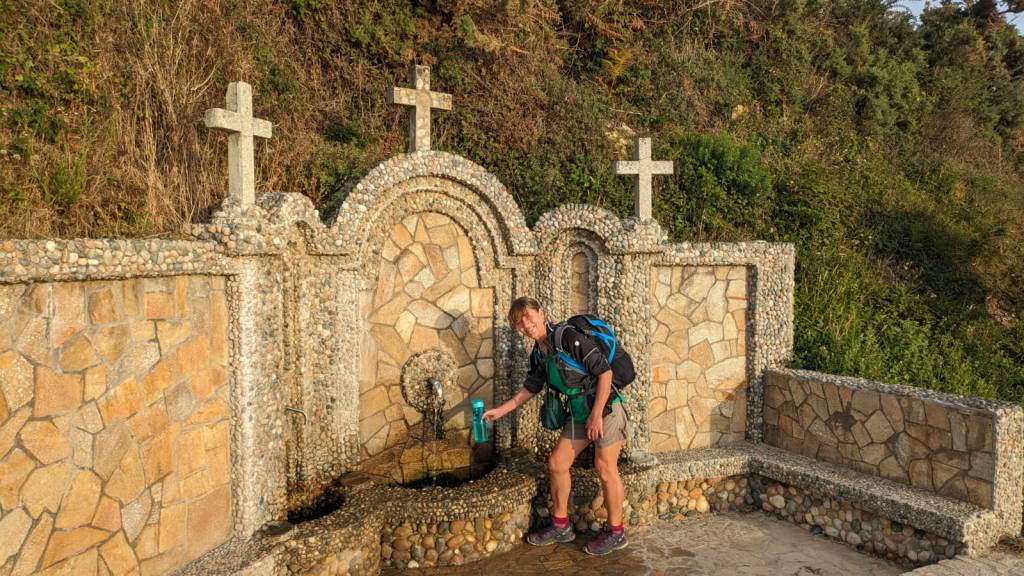
It was barely light when we crept out of our guesthouse at 7.45am without breakfast(not included). We were smothered in sunscreen,dressed in shorts and carrying all our belongings on our backs. Apart from a few dog walkers, the whole town seemed to be sleeping. We passed a holy well, pristine white-sand beaches and a church on a cliff, stark against a backdrop of barbie- pink heathers. We walked to the incessant sound of the restless sea, relatively benign and blue on this gorgeous early September. day. The first restaurant we came too -after 3 hours walking – was closed until 1pm. Although we had some stomach rumblings, we pushed on as we didn’t want to hang around for 2 hours until it opened. We didn’t know then that we wouldn’t find another one😬

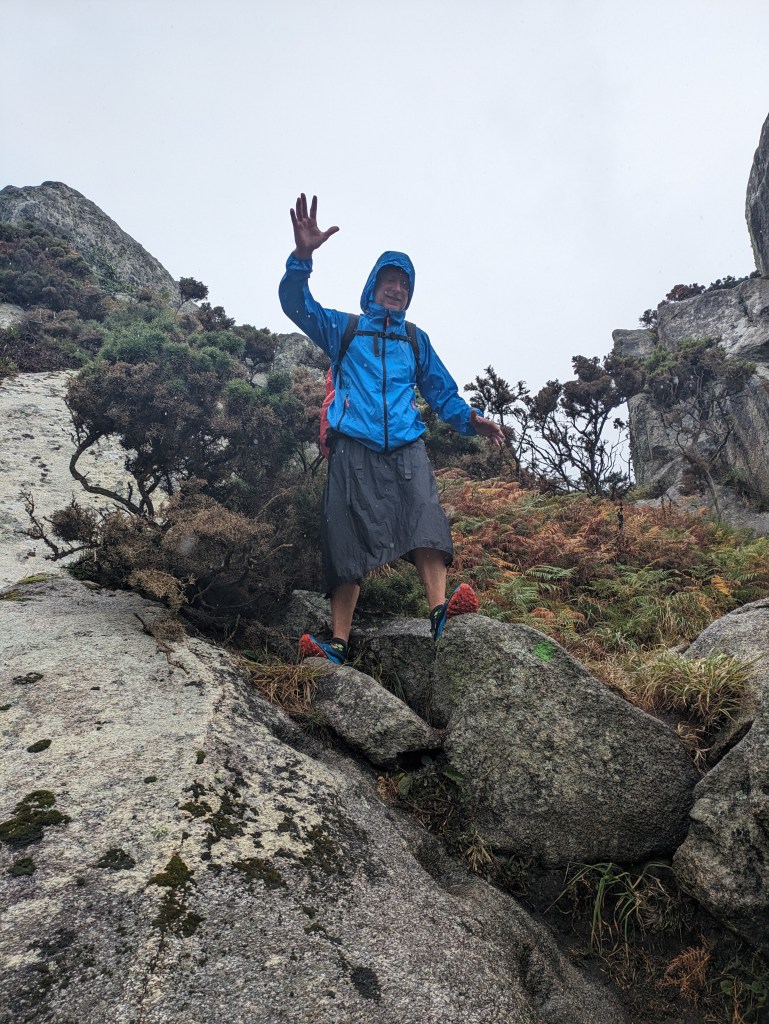
There were chest high ferns and boulders like giant marbles to clamber over in search of the green dot, which denoted our path but which was sometimes quite elusive🟢. At a little port area where we sat to have a meagre snack of nuts and bananas, a light drizzle started, welcome and cooling at first until it got heavier and became a drenching deluge. There was neither shade nor shelter. The wind howled around Nariga Lighthouse, tossing rain and foam at us from all directions. We trudged along like drowned rats until we reached Ninons Beach, a secluded remote beach and the end of Day 1. We hadn’t any accommodation booked, assuming that we would find something along the way but the coast was isolated…we didn’t meet a soul that first day in 22 Kms of hiking. We decided to call a taxi to take us back to Malpica. That’s when we discovered that there was no signal in Ninons😁 so we squelched another kilometer uphill to make the call. The phone signal kept dropping but a taxi materialized out of the rain…like an apparition because Caoimhin wasn’t sure that he had got the message through. Back in Malpica, our shoes were sodden and everything we were wearing dripped a muddy trail up the stairs. Although we had rain covers for our backpacks, we discovered that everything in them was also wet. But after a hot shower, the sun came out, the outside tables were wiped down, the wine was still cheap and I ate a basket of bread and probably the best mussels I have ever tasted😍.
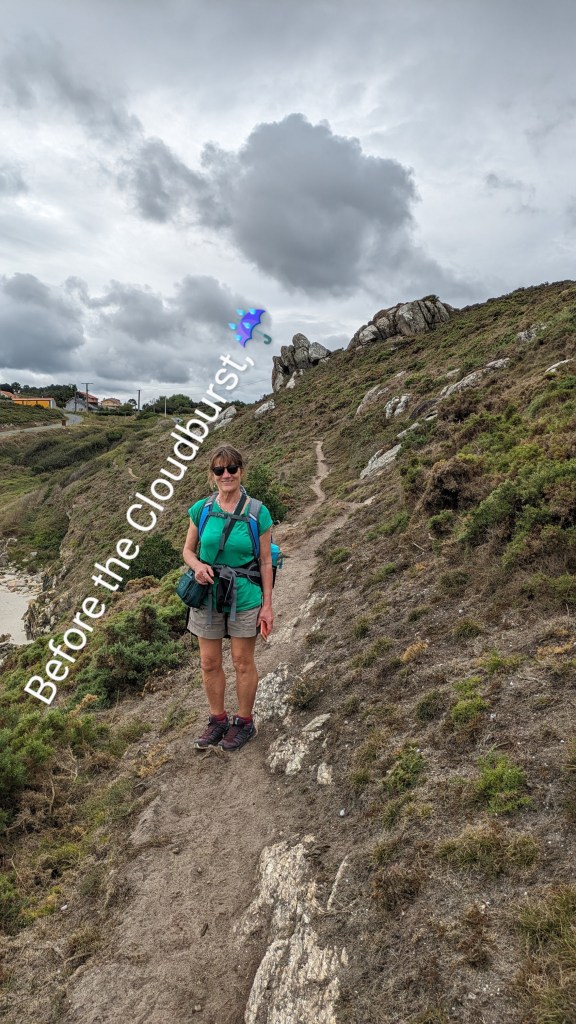
Day 2 started with wet shoes and damp clothes. We had bought a lavender spray in the Chino shop to mask the stench of damp but it was so synthetic that it smelt almost toxic. Our taxi dropped us back to Ninos Beach where we climbed through gorgeous eucalyptus forests (their scent wasn’t strong enough to mask the lavender 😏). Shining granite rock shimmered in the sunshine along this walk to Ponteceso with many diverse landscapes from rocky cliffs, salt marsh, sand dunes and river estuary, a haven for birds. This stage was beautiful but long (almost 27 Kms). When we came to the seaside town of Corme at the 17kms mark, we were ready for a break.The first place didn’t do food until evening time so we had a cold beer and moved on to another establishment where we ate fish salad and patatas bravas. Although the sun was hot and relentless for the last stage we still managed to get wet feet, walking on boardwalks submerged by the incoming tide along the estuary.
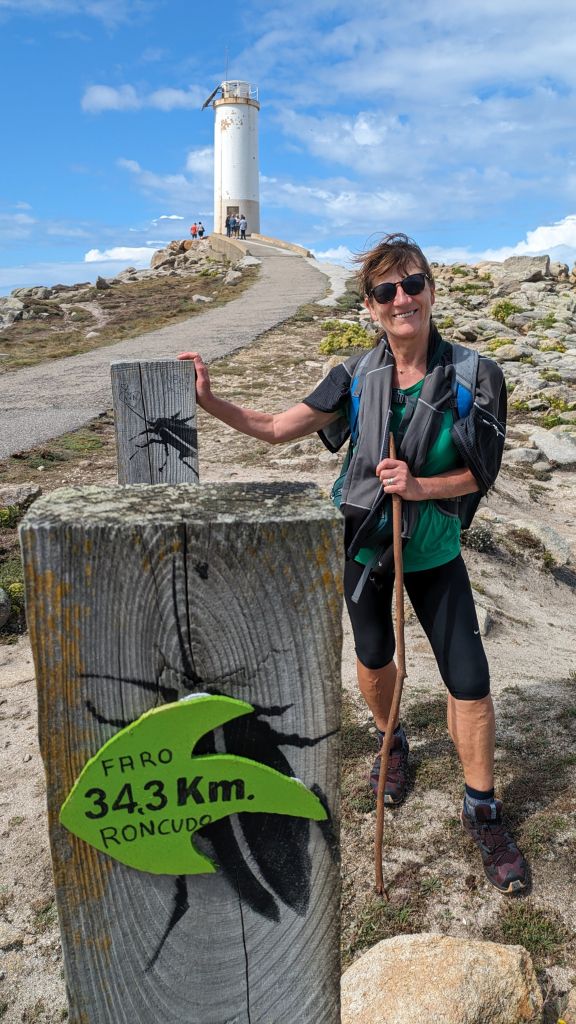
When we reached the hostel, my feet were shriveled and blistered, I had a welt on my hand from clutching the walking stick and an ache across my shoulders from the backpack. This Camino began to feel like a pilgrimage of sorts. In a local bar, the friendly owner insisted on plying us with free tapas which we were almost too exhausted to eat. But things improved from this point and day 2 of multi-day hikes is well- known to be the tough one.
We discovered that socks could be dried very effectively by wrapping them around a hairdryer sprout ( if you were fortunate enough to have access to a hairdryer) and stuffing shoes with old newspapers(periodicos viejos) helped a lot. Comped plasters and Vaseline were a balm for feet and a hotel in Laxe with a bath worked magict to ease tired muscles. The hikes became easier as our bodies – and minds- adjusted. We carried food supplies, pockets stuffed with bread and cheese, a supply of biscuits, bananas, nuts and chocolate and an emergency can of sardines. Most days the only people we saw were solitary locals, clambering over rocks far below us, splashed with foaming water, gathering gooseneck barnacles from the heavily oxygenated waters – a treacherous occupation. We always trekked in hope of a cafe. A local woman, who was hanging out her washing, offered us life-saving coffee when we were disappointed yet again that a cafe/bakery marked on our map was closed. This lovely woman filled our water bottles and even offered us beer and food. Wonderful hospitality.
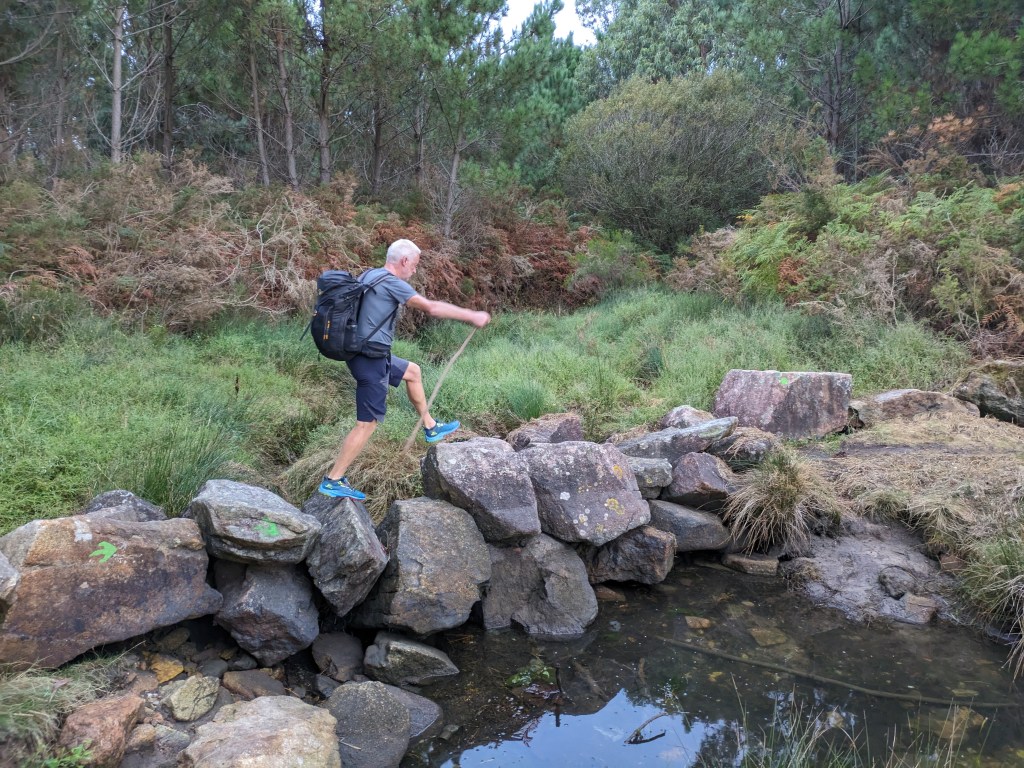
Sometimes our Camino veered inland where we walked through woodland to the sound of birdsong, hiked by streams where old water mills were covered in moss and past high villages where stone houses looked abandoned surrounded by fields of withering corn and orchards of dripping fruit. But mainly our path hugged the coast faithfully, often just a narrow ribbon clinging to steep cliffs with dizzying drops.
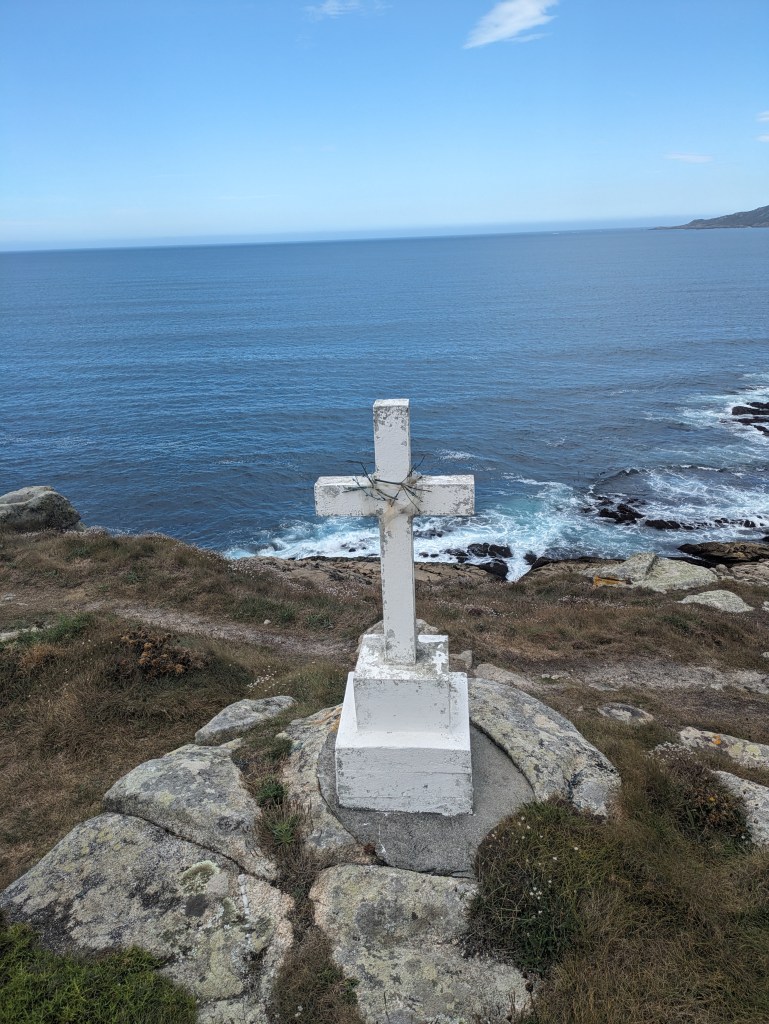
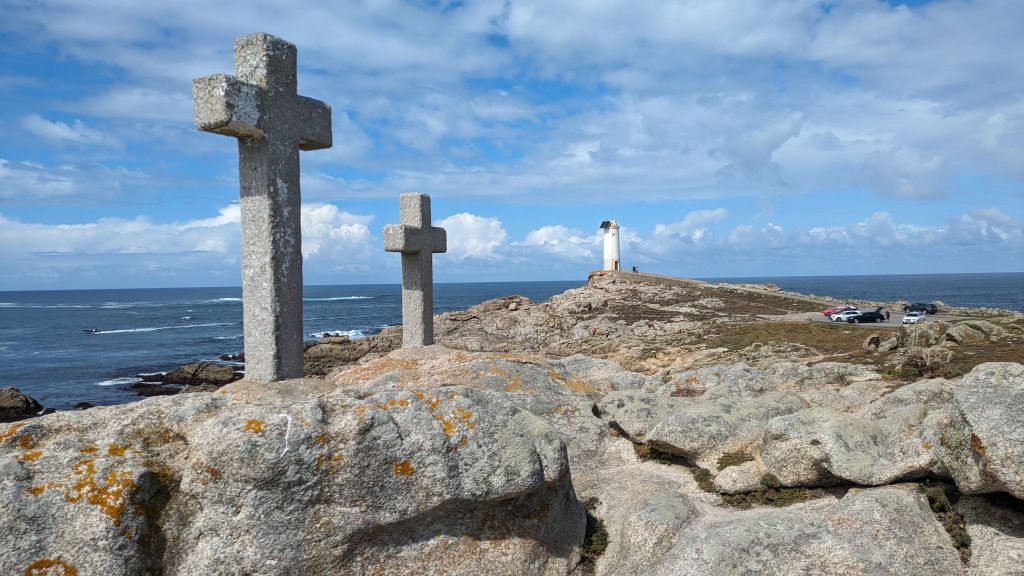
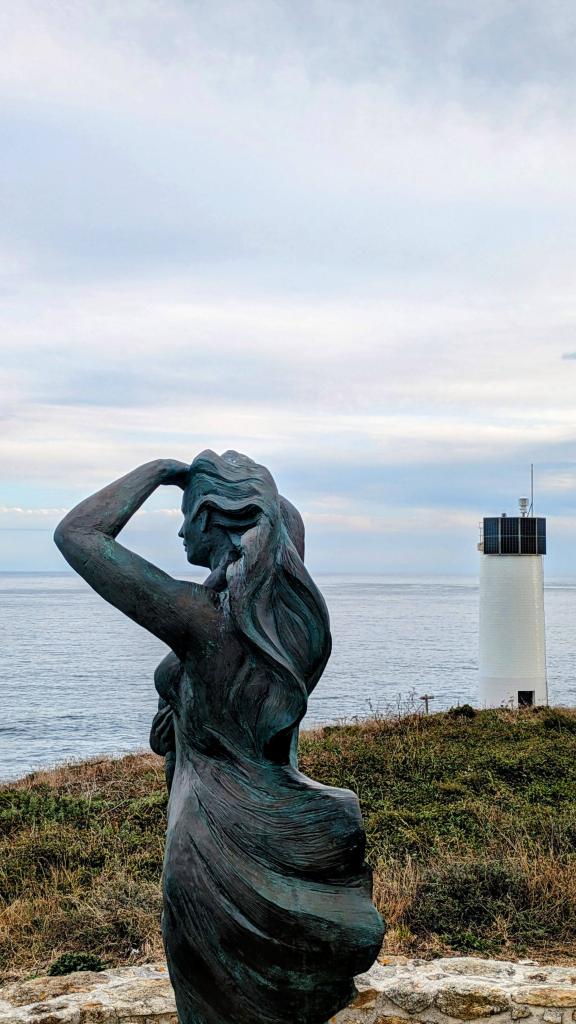
The Costa del Morte is not called the Death Coast for nothing. The coast was littered with stone crosses, bargains made with the heavens or erected as platitudes to the sea, or places to remember the dead. There were tales of shipwrecks, drownings, smugglers and pirates. On a lonely headland, the doomed victims of ill-fated ships were buried in a place called the English Graveyard. A stunning sculpture near the Lake Lighthouse of a woman gazing out to sea, captured the anxiety and agony of waiting. An isolated church on a hilltop was a place where local women used to go in times of storm to pray for a change of wind to bring their men home.
As we hiked further west, the coast became wilder and even more remote. On our fifth day, after days of sunshine, the forecast was bad and didn’t disappoint. The cold blue-green of the sea, mesmerizing and dangerous, turned an ominous gray. We watched two surfers paddling on their boards out to churning waves that crashed on jagged rocks and marveled at their stupidity -so small and insignificant. Even the seagulls were sheltering from the elements, hunkering down on the beaches. The wind became ferocious, the rain came at us sideways and we could barely stand upright but we got a tiny glimpse of what this coast might be like in bad weather and it was awe-inspiring.
After six days walking, we arrived in Muxia, a pretty little town with safe beaches, a lighthouse and a place of legends. It was here that the Virgin Mary arrived in a stone boat to encourage Saint James to continue in his work. Large stones near the church were reputed to be part of Mary’s boat and to have magical properties.The Barco festival was starting the following day so we decided to take a rest day and stay an extra night. Muxia is on the Camino de Santiago so was busier than anywhere else we stayed. We discovered that Spanish festivals only get going around midnight and continue until at least 5am and nobody even thinks of eating until 10pm. Unfortunately, we couldn’t stay awake for much of the festivities🥳. Muxia was badly affected by The Prestige disaster in 2002, which leaked thousands of litres of crude oil into the sea all along the coast here.
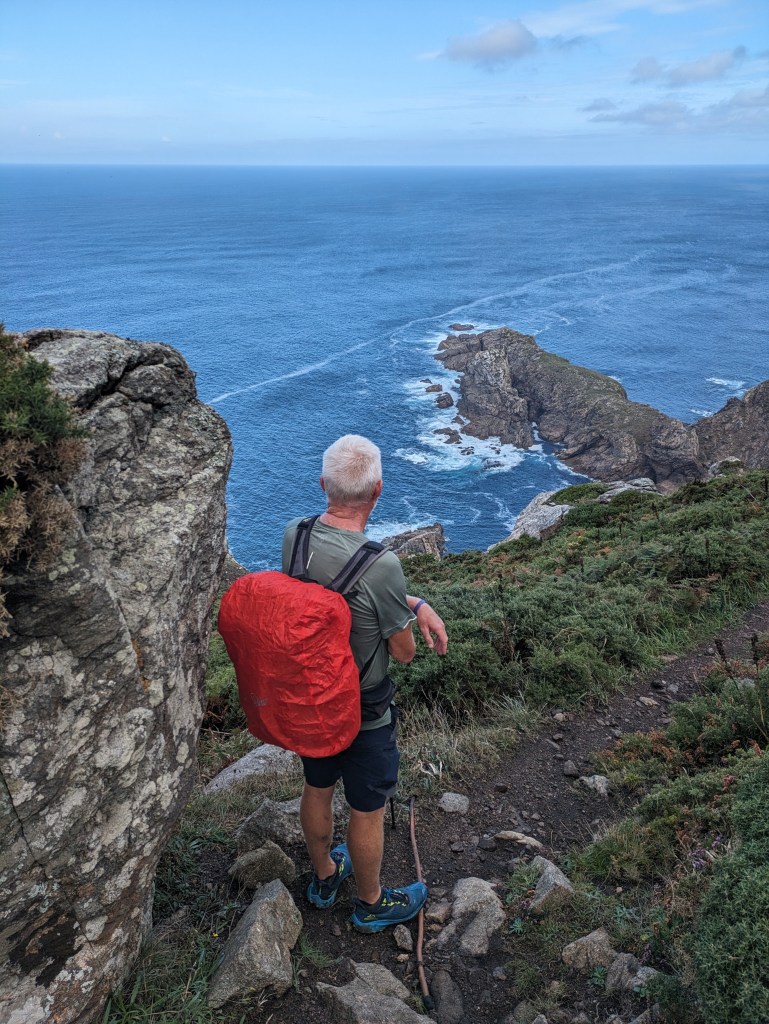
Although it hardly seemed possible, the scenery got even more spectacular as the days progressed. The penultimate day was the ‘queen of the mountain stage’ with steep climbs and stupendous views. We trekked to Tourinan Lighthouse, which was supposedly the most westerly point in Europe and got the last rays of sunlight in the Spring Equinox. On the eighth and final day, it almost felt as if we were in the landscape, part of it and not just looking at it, at one with the sea and the wind (or maybe that was just exhaustion or relief with our end goal within reach 🙏).
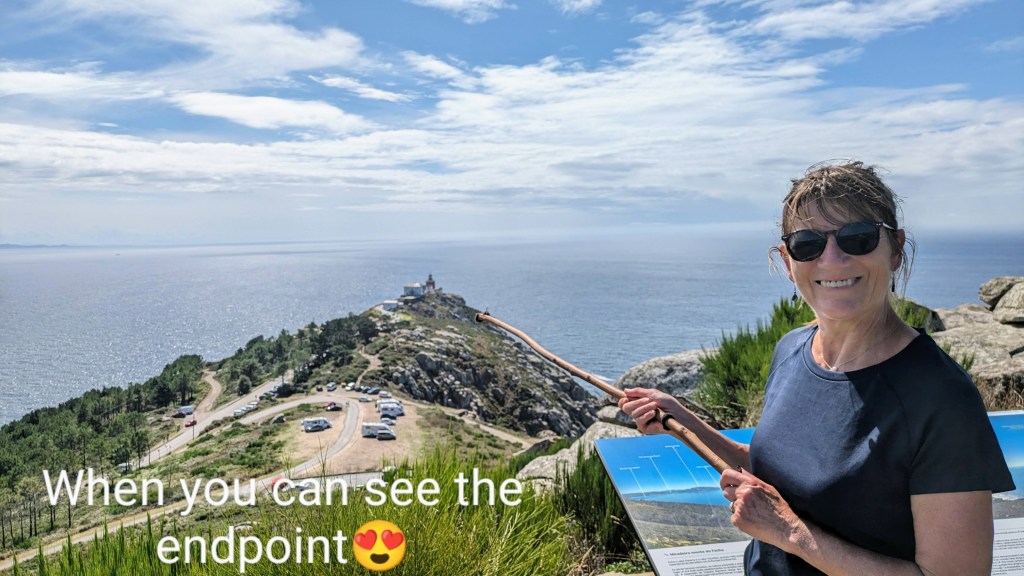
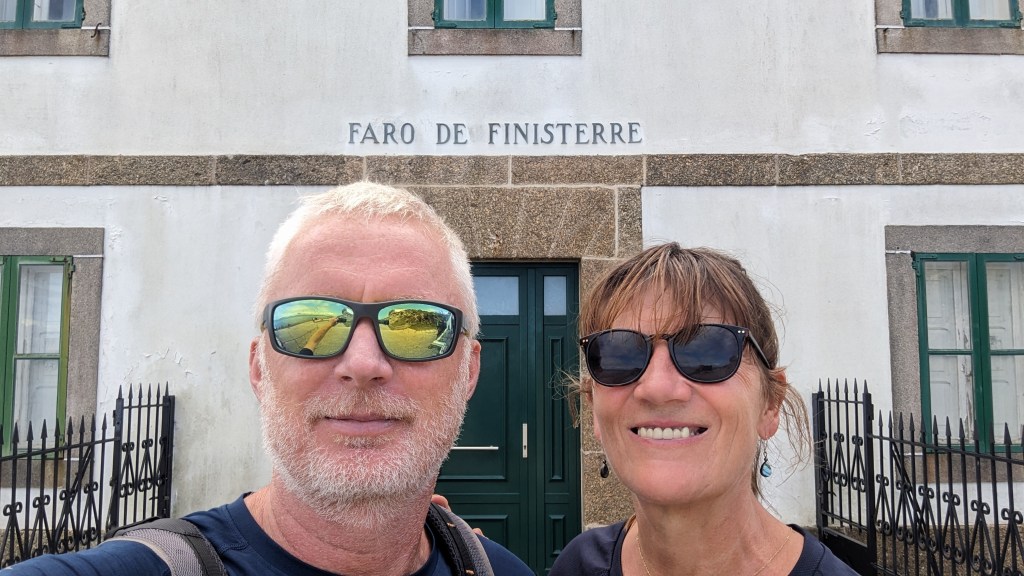
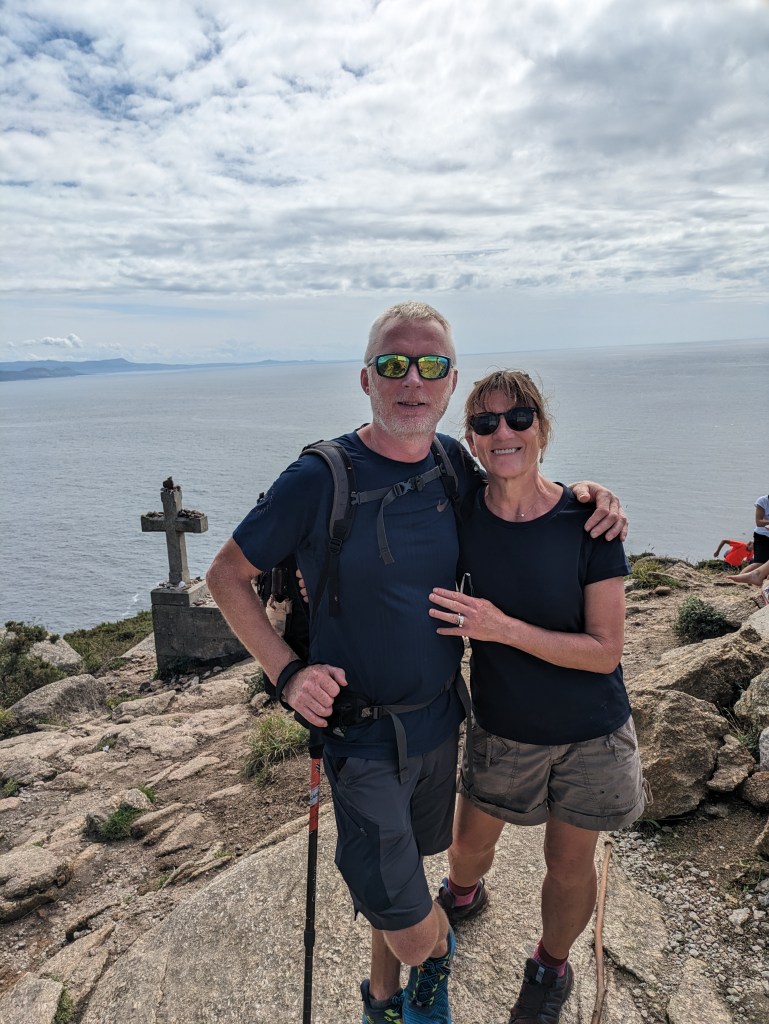
Fisterre, the end of the known world for the Romans, was a strange little town, full of weathered people with walking sticks, limps and flip flops. It was the endpoint for pilgrims on the Camino de Santiago as well so it didn’t have to try very hard to attract visitors. But the landscape around the Finisterre lighthouse, a couple of kilometers hike outside the town, was worth the entire Camino, a fitting place to finish. This was a wild landscape of mysticism, of drowned cities and submerged mountains, of altars to the sun and timeless rituals with tales of sterile couple becoming fertile after sleeping on one of the large rocks on the hill overlooking the sea and healing miracles.
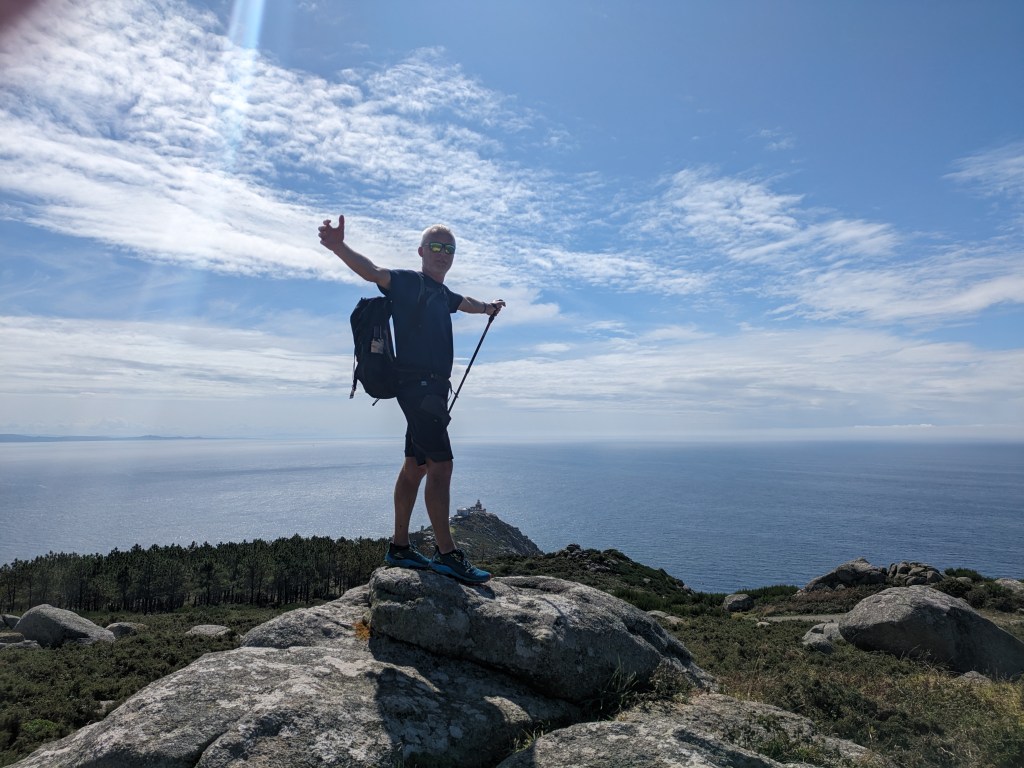
So we made it, 200kms in eight stages. We carried out own packs and booked our accommodation as we went along, usually walking from stage to stage but getting taxis to our accommodation if we couldn’t find anything near the end stage. The Camino del Faros was probably the most spectacular hike that we have ever done. It was quite challenging at times (more than we had anticipated but we hadn’t done a lot of training). Each day on its own would not have been difficult but the cumulative nature of hiking relatively long distances day after day exerted a toll. The bigger the challenge, the greater the reward 🌞 and the rewards were huge. There were no stamps to collect in a pilgrimage passport, nothing to ‘prove’ that we had trekked along the way. The benefits of this Camino were all internal – solitude, genuine communing with nature and an appreciation and respect for the power of the sea -to mould and erode, to give bounty and to take it away. If you like the great outdoors, like to go a little off the beaten track, then this is the hike for you.
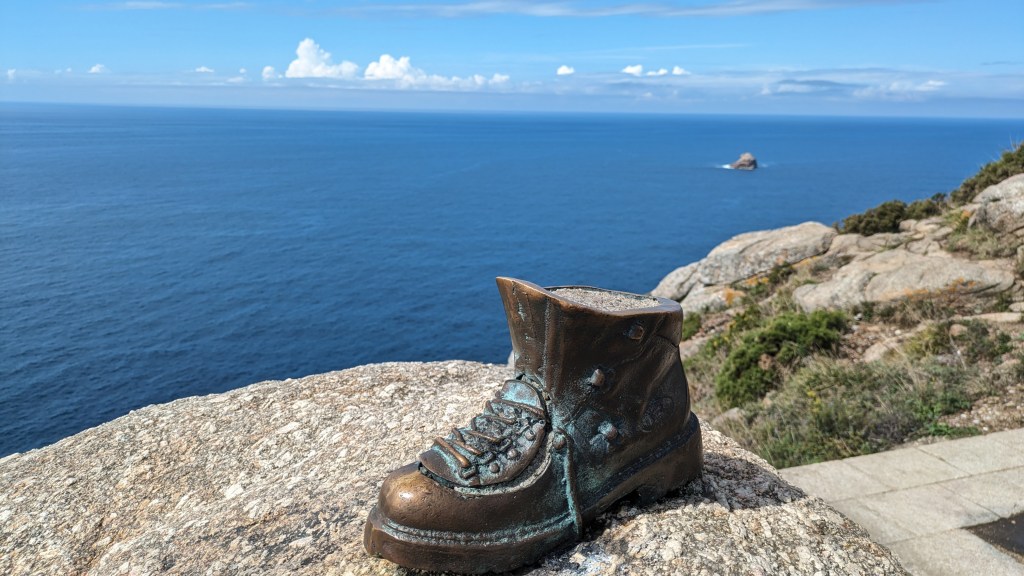
Link below to a fabulous website with lots of details.
 marienoonanblog
Sounds spectacular Marie but not for the faint hearted I’d say. Beautifully written. Well done guys xx
LikeLiked by 1 person
Well done!
LikeLiked by 1 person
Well done
LikeLiked by 1 person
Absolutely beautiful words and pictures Marie.
LikeLiked by 1 person
Well done Marie. Sounds like a great adventure. And another enjoyable read.
Nora
LikeLiked by 2 people
Fab!
LikeLiked by 1 person
Great description of a challenging walk. Fab photos. Thanks to you both. Caitlin
LikeLiked by 1 person