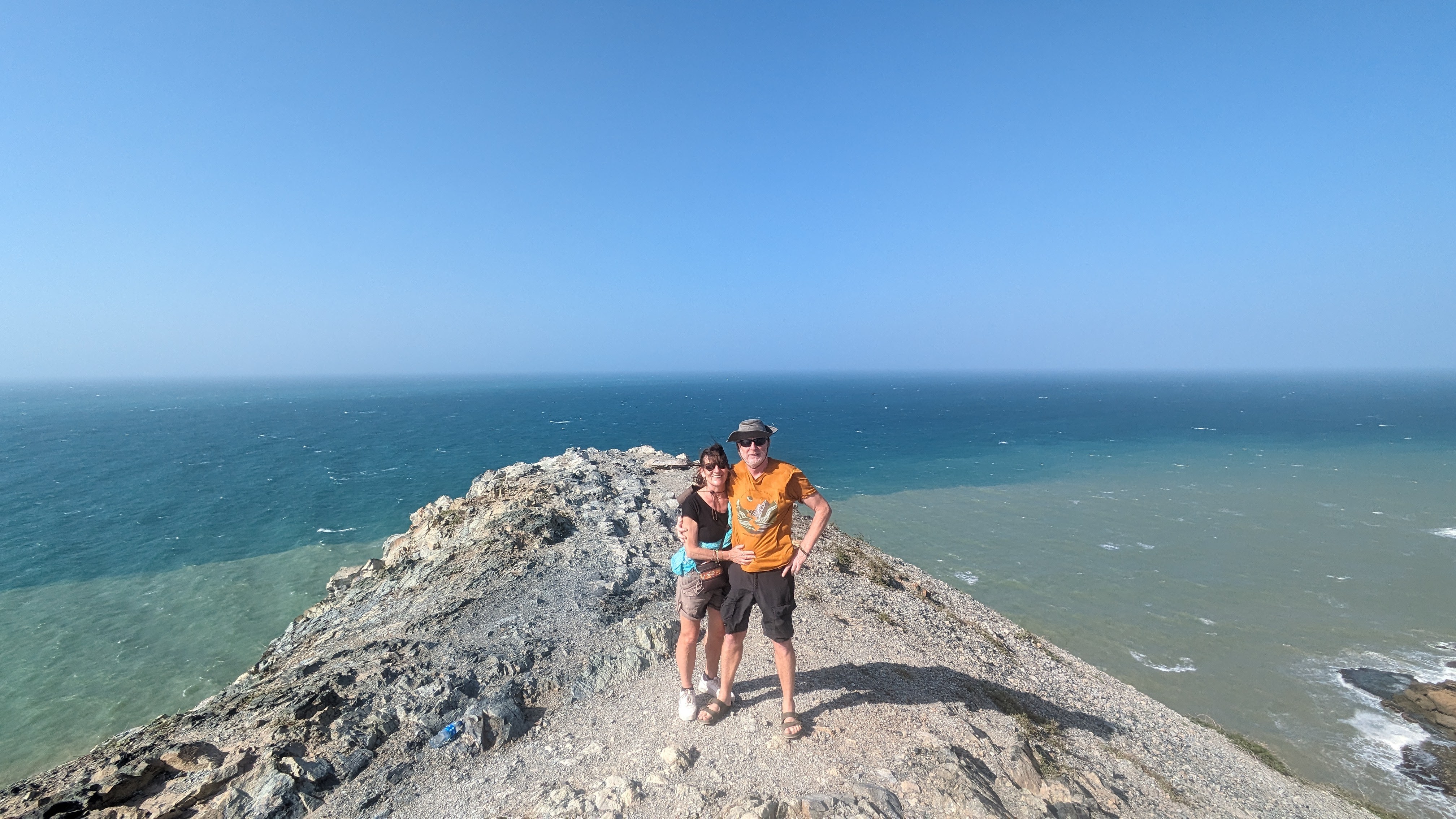
La Guajira is a remote area in the extreme north-east of Colombia, bordered by the Caribbean Sea on one side and Venezuela on the other. It is famous for its surreal desert landscapes, beautiful beaches, giant sand dunes and remote fishing villages of the indigenous Wayuu people. It also boasts the most northerly point in South America, Punta Gallinas. In Riohache, the capital of the region, we signed up for a 3-day, 2 night jeep tour to explore the area although we are not generally fans of organized tours but we thought it might be restful and educational.
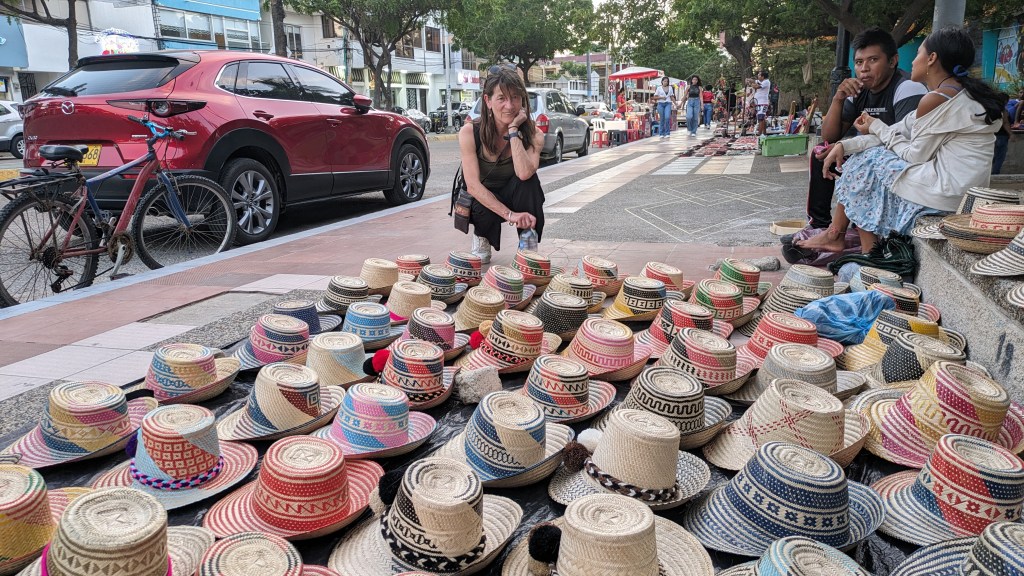
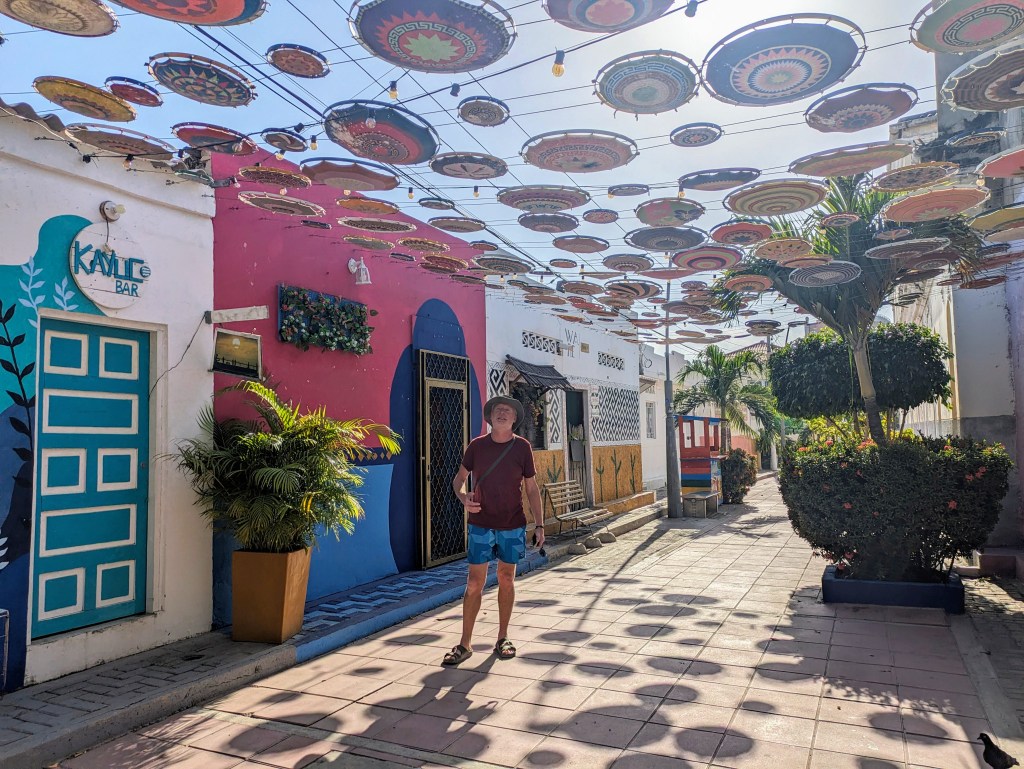
Although Riohache was a small town in the middle of nowhere on the edge of the desert, it was actually quite charming with vibrant murals to rival those of Bogota, a 5km beach and colourful handcraft markets along the promenade. Its climate is hot all year around. The sweet hours here are between 6 am and 8 am, when there was lots of action on the beach, soccer training and athletics, swimming classes and majestic low-flying pelicans, gliding over the water.
The jeep that picked us up at our accommodation was scratched and dented, none of the windows could be rolled down and the lock on the boot was broken. Our driver spoke no English and his t-shirt was fighting a losing battle to contain his ample belly. Our travelling companions were two Colombian couples in their thirties who spoke only Spanish…..so we were forced to put our Spanish to the test.
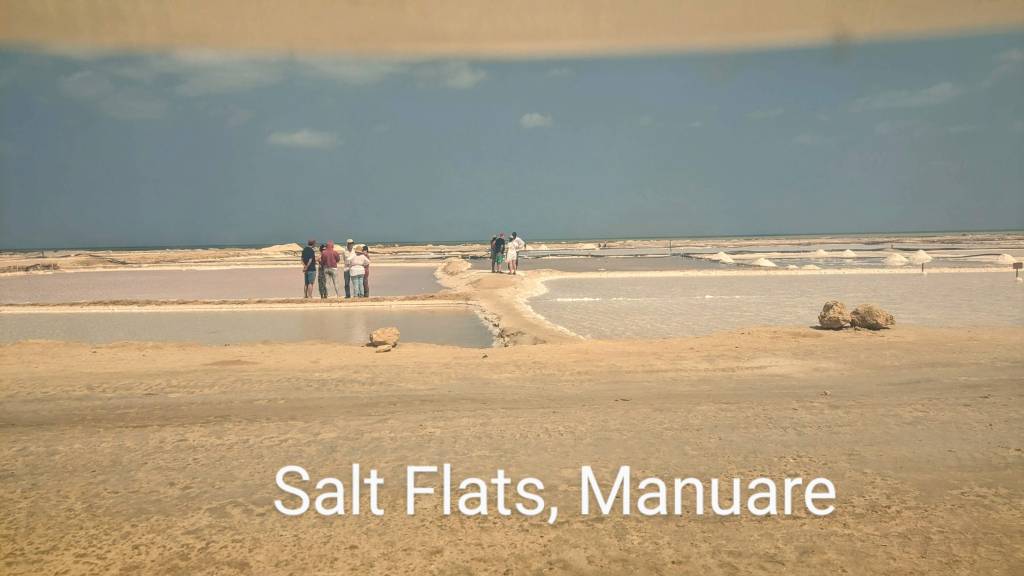
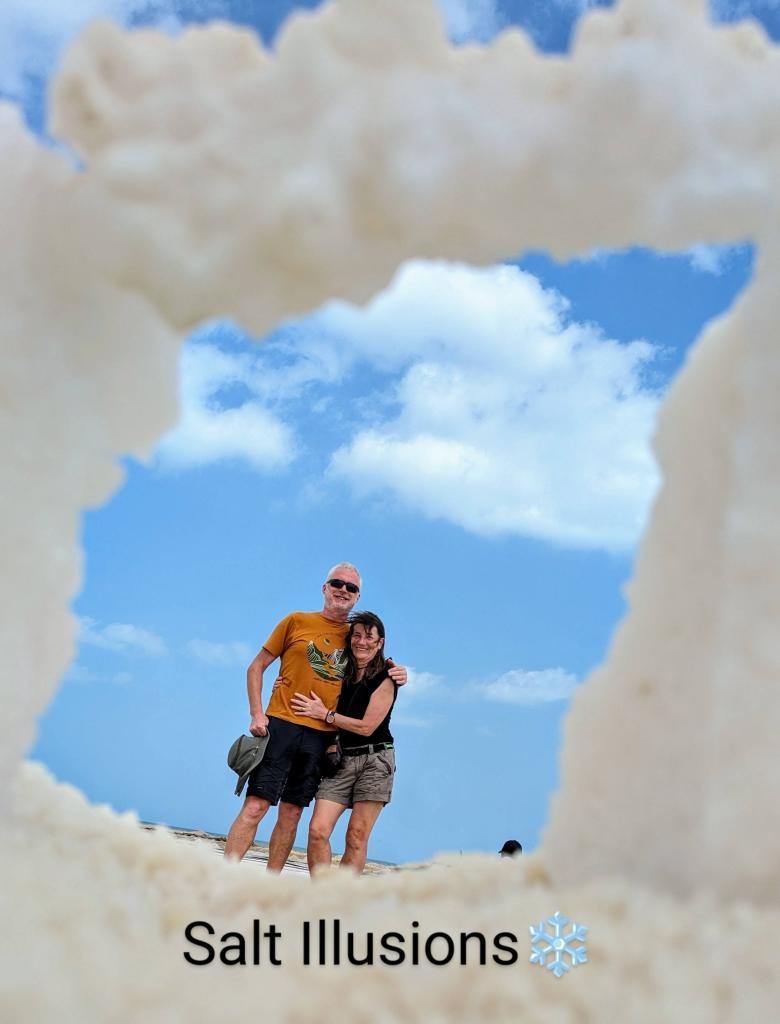
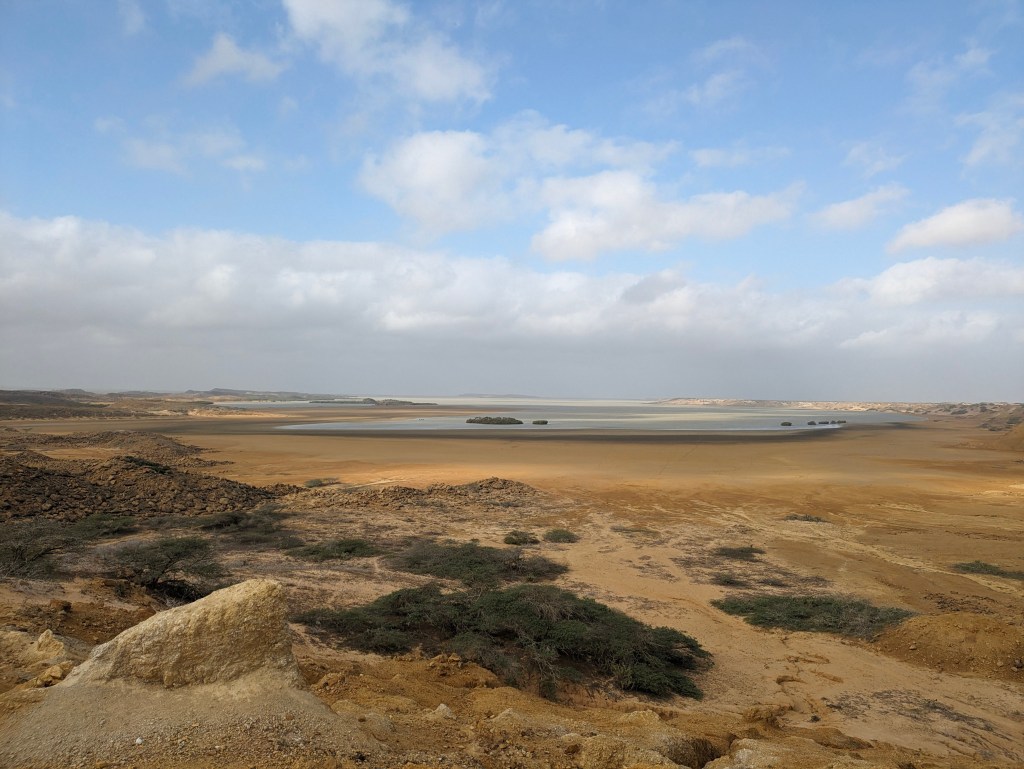
We travelled north, through dusty scrub with goats nibbling whatever they could and thousands of plastic bags stuck on the low thorny bushes like fake flowers. Riohache began to seem like the centre of the universe. Our first stop was the Salt Flats of Manuare, which produces about 70% of Colombia’s salt. The tour was given by an extremely bored girl who delivered it in a rapid Spanish monotone, It wasn’t very enlightening – we got the gist but not the specifics. Yet there was something magical about the interplay of light, sun and wind on the silver crystals of the salt flats.
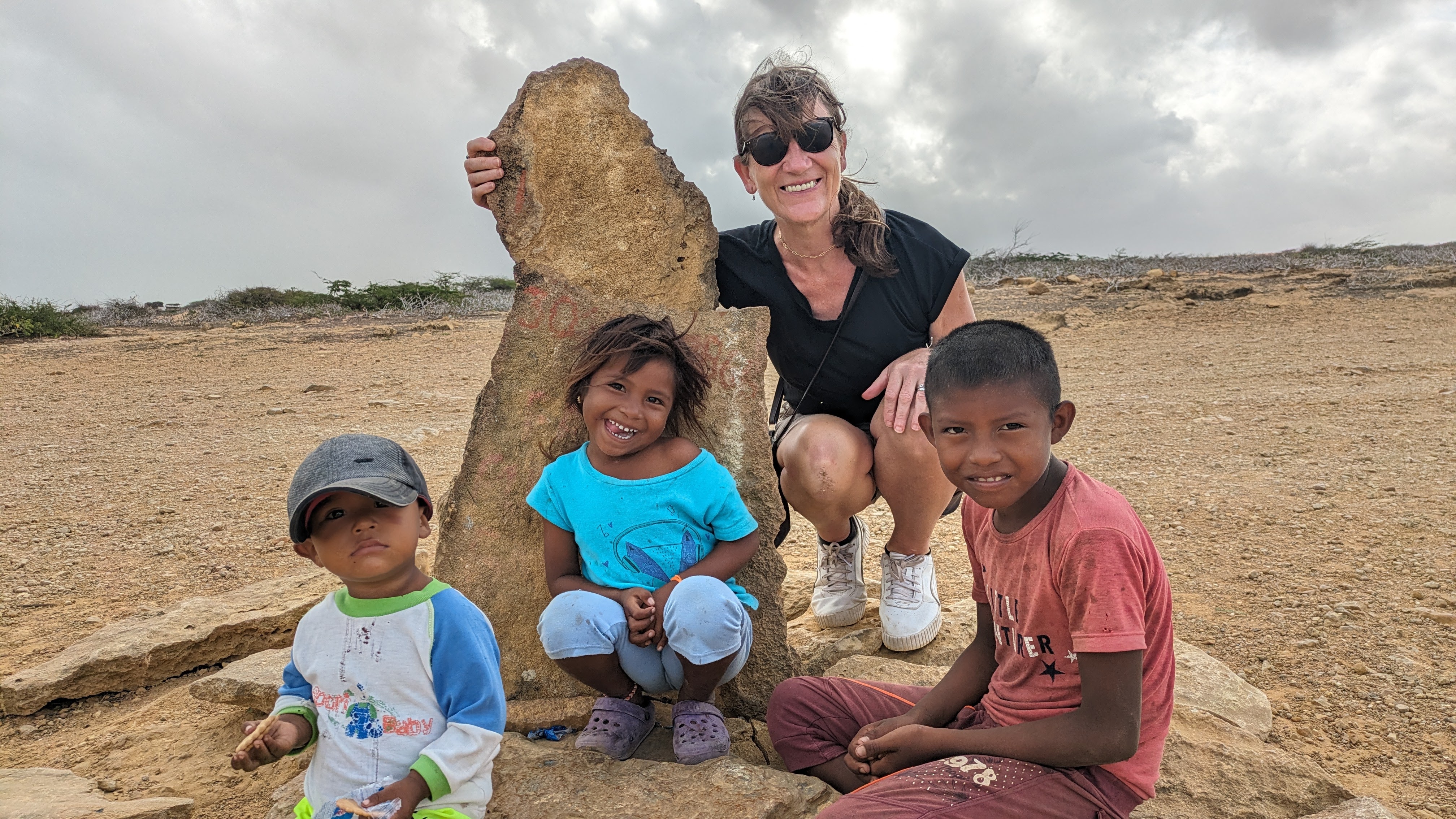
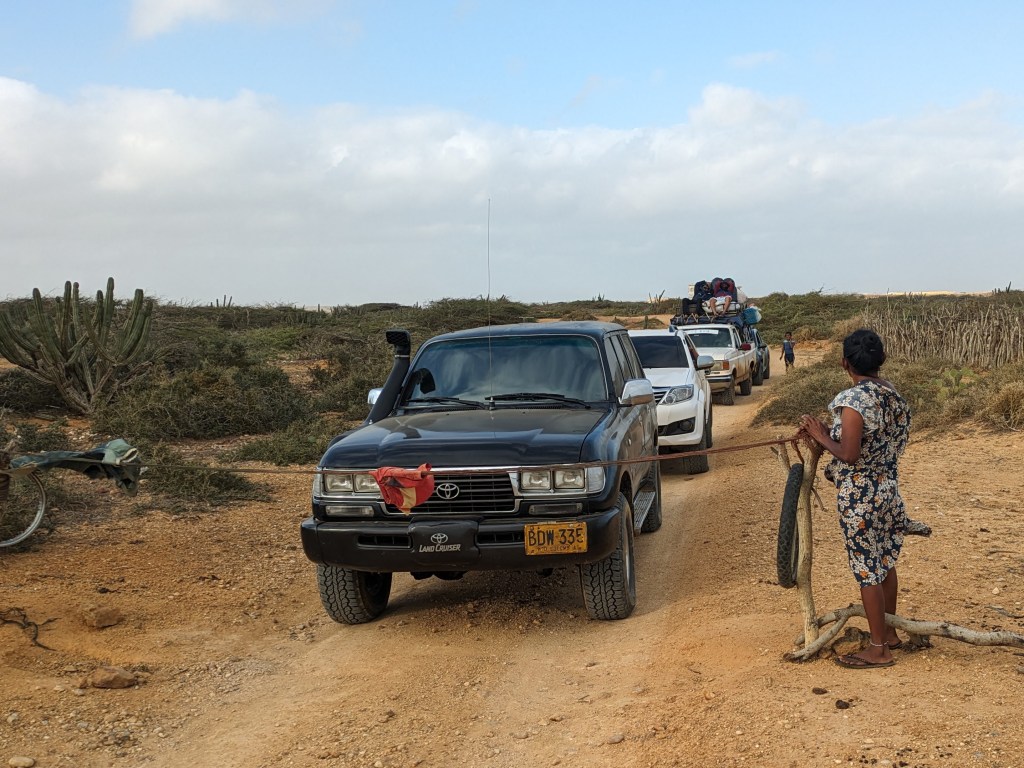
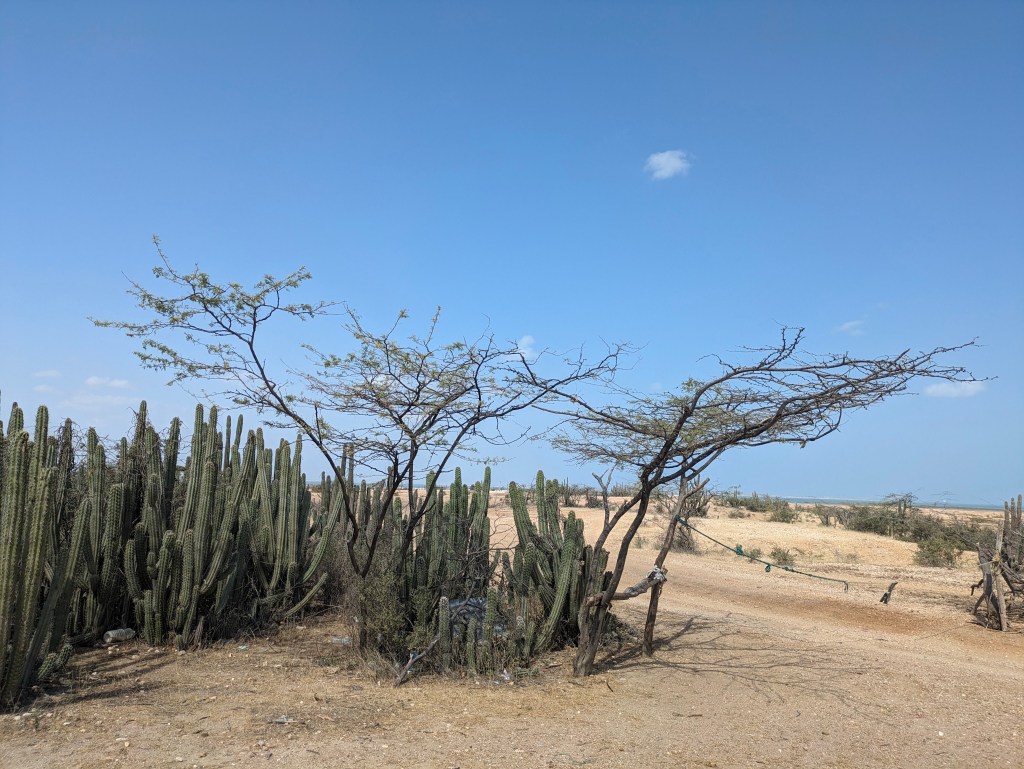
Onwards we went until the roads disappeared, became vague tracks in the sand and stones. The scenery was a colour-palette of grey, brown and ochre. Even the green of the cacti was dimmed by a coating of dust. There were frequent road-blocks, usually a rope strung across the road and manned by children. The ‘tax’ was a small packet of biscuits or lumps of panela (natural cane juice that is dehydrated). We had also bought bags of rice which the driver doled out, which was a more healthy alternative to sweet things. We probably stopped at forty or fifty ‘roadblocks’ and drove through as many more with the driver aggressively driving at the rope until it was dropped or snatched from their fingers. When asked why he gave to some and not to others, he said that they were the same families and had already got their share. At each roadblock, the driver had to open his door to deliver the ‘tax’ because the window couldn’t be rolled down.
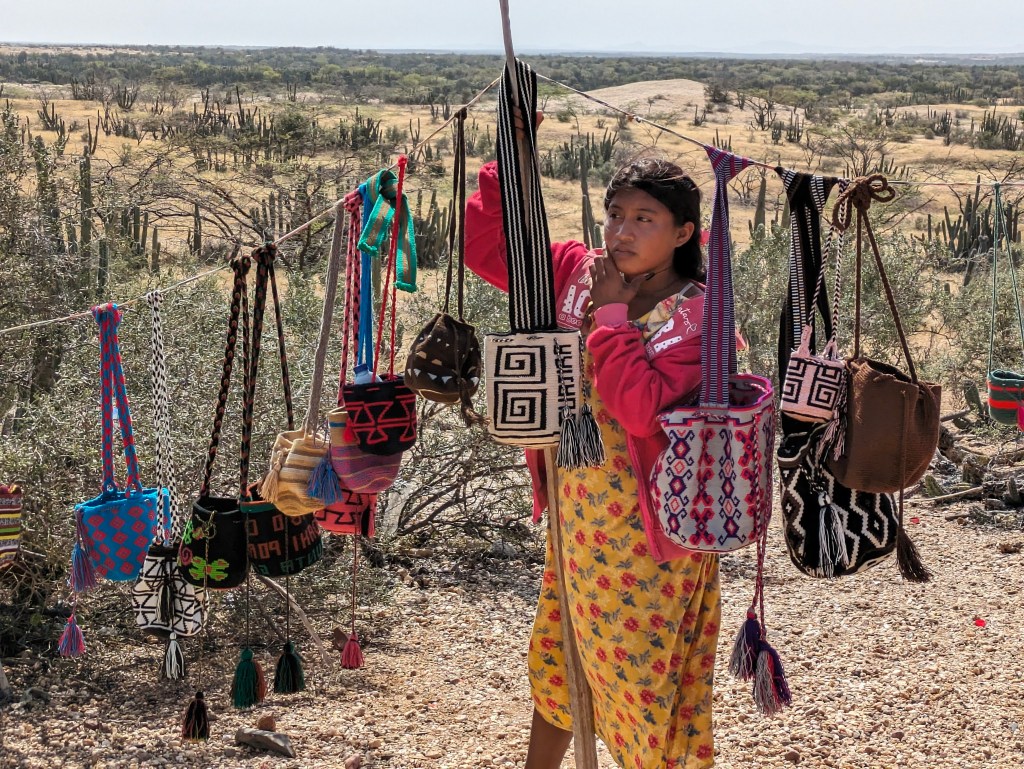
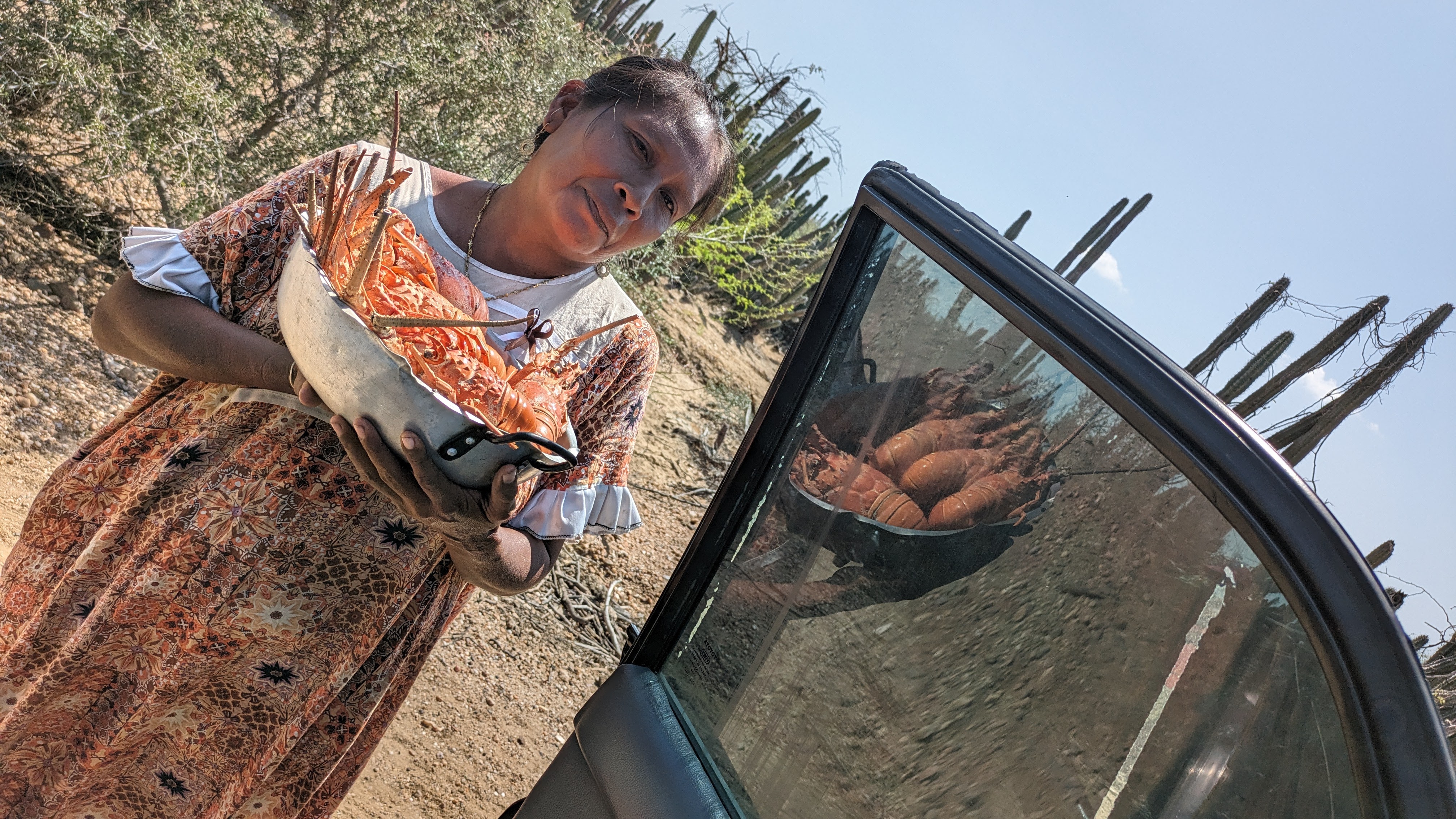
The arid harshness of the environment makes cultivating anything difficult. The people herd goats and a few cattle and there was fishing on the coast with women selling baskets of prawns and lobsters by the roadside. There were many windswept stalls selling handcrafts, particularly woven bags in bright threads and bracelets, which were a splash of colour in the brown landscape. We bought lots of bracelets (the bags were too big to fit into our little backpacks although they were gorgeous and beautifully made. Tradition says that the weaver weaves part of herself and her view of the cosmos into the bag. The wild beauty of the area was mesmerizing but the undeniable poverty of the Wayuu people and the culture of begging (which is essentially what these road blocks are about) was very uncomfortable. It was distressing hearing the kids asking for drinking water. Water has always been a scarce and precious resource here even when the sparse rains were reliable and predictable. Prolonged drought over the past few years has greatly exacerbated the problem as well as the damming of a river in another area and the diversion of water for coal-mining. Then of course, there is the problem of smuggling in this wild frontier area on the edge of the South American continent.
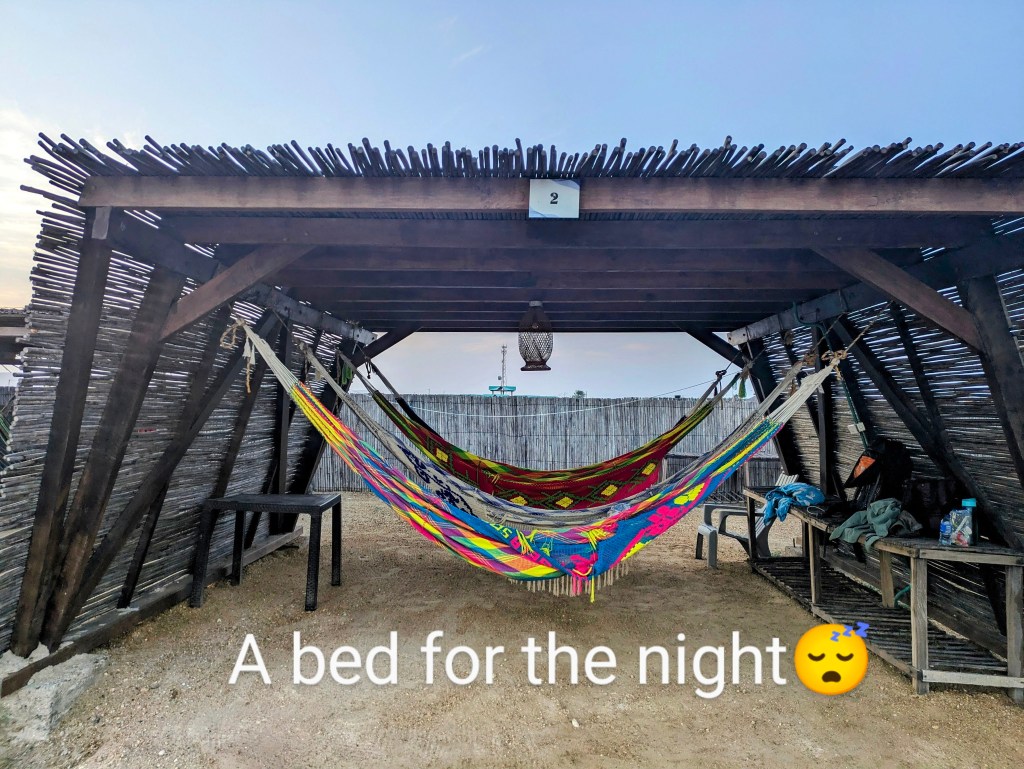
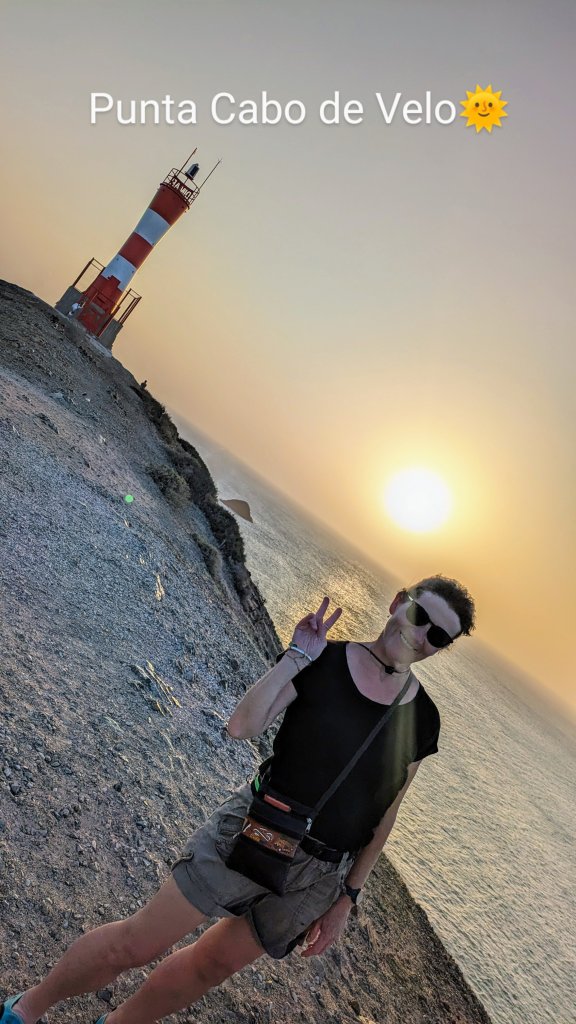
After a long day of sun drenched beaches without shade, a sunset at Punto Cabo de la Velo and a dinner of fish and rice, we were ready for bed. Caoimhin and I slept to the sound of the ocean in hammocks, strung up in a breezy open-sided structure. I found it really comfortable and loved the novelty of it, out in the open-air but wrapped up like a bug or hibernating crystalis. The wind blew strongly, swinging the hammocks and there was a desert chill at around 2am but no biting insects(the advantage of such a dry arid environment).
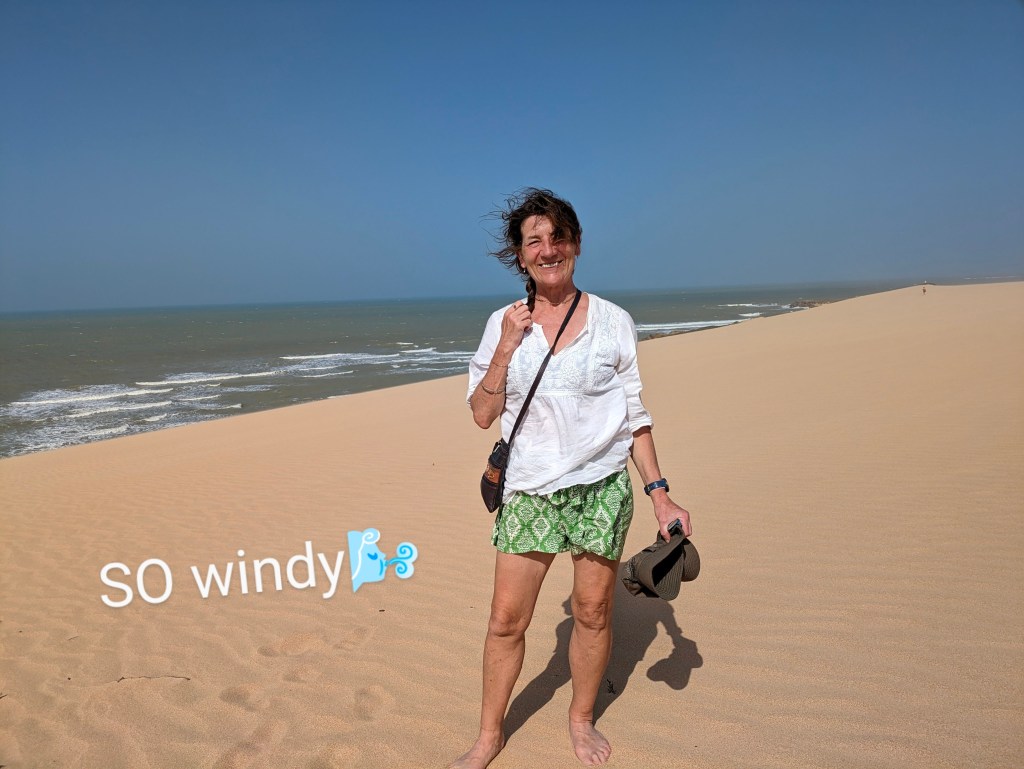
The second day was all about reaching Punta Gallinas, the northernmost point on the mainland of South America. We passed by whirring windmills, the first we had seen in Colombia and it was certainly windy enough to power a nation. The further north we went, the more ferocious the wind became and the more inhospitable the terrain. There were more road-blocks and more ‘tax’ paid. We stopped near a beach for lunch and were sand-blasted without mercy, losing at least a layer of skin. We ran inside the small ‘restaurant’, just some tarpaulin pulled over plastic tables and plastic chairs that we soon sticking to. Soon we were sharing the space with hundreds of flies😲 and eating enormous portions of rice and shrimp…..but at least we were out of the wind.
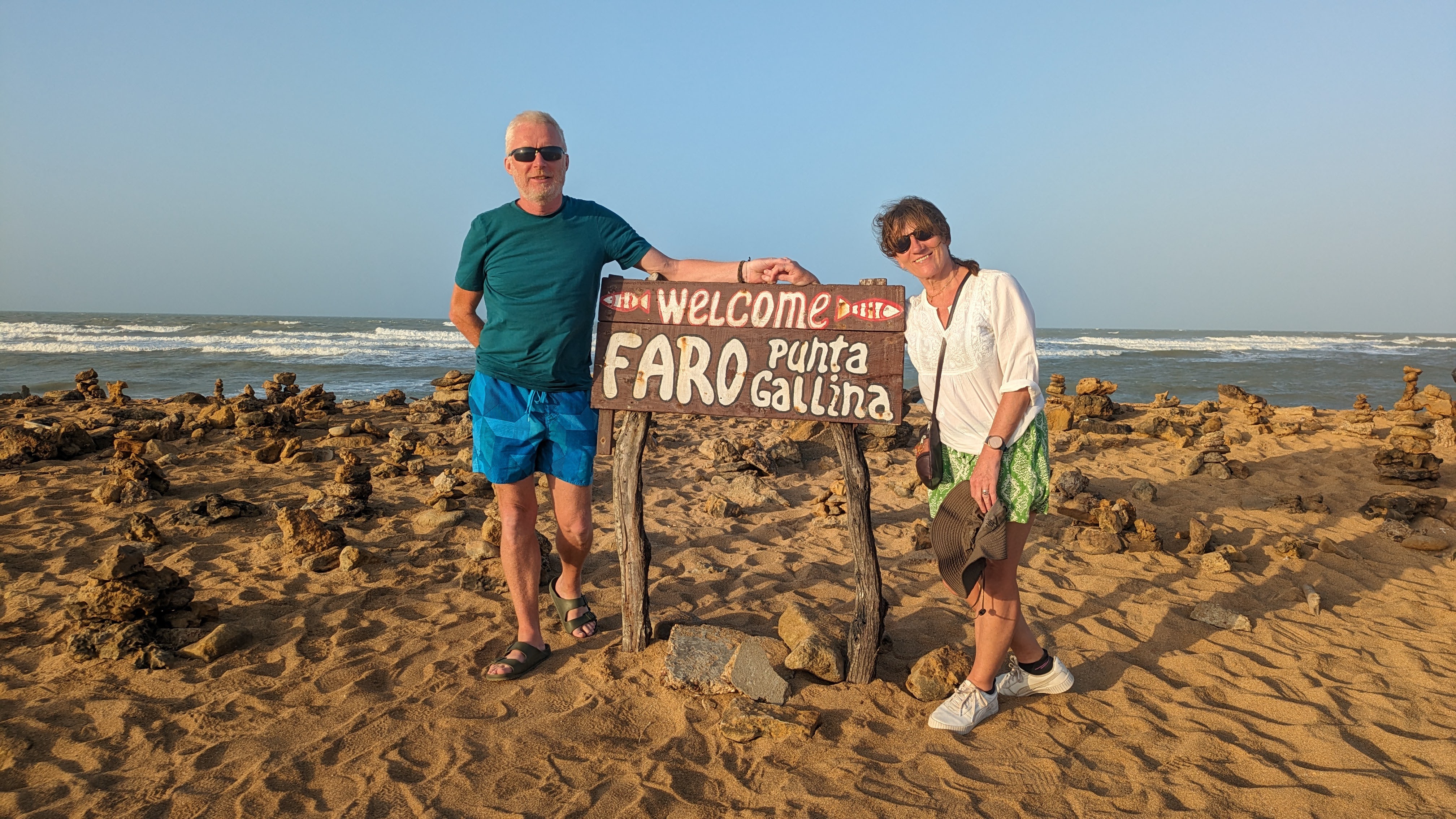
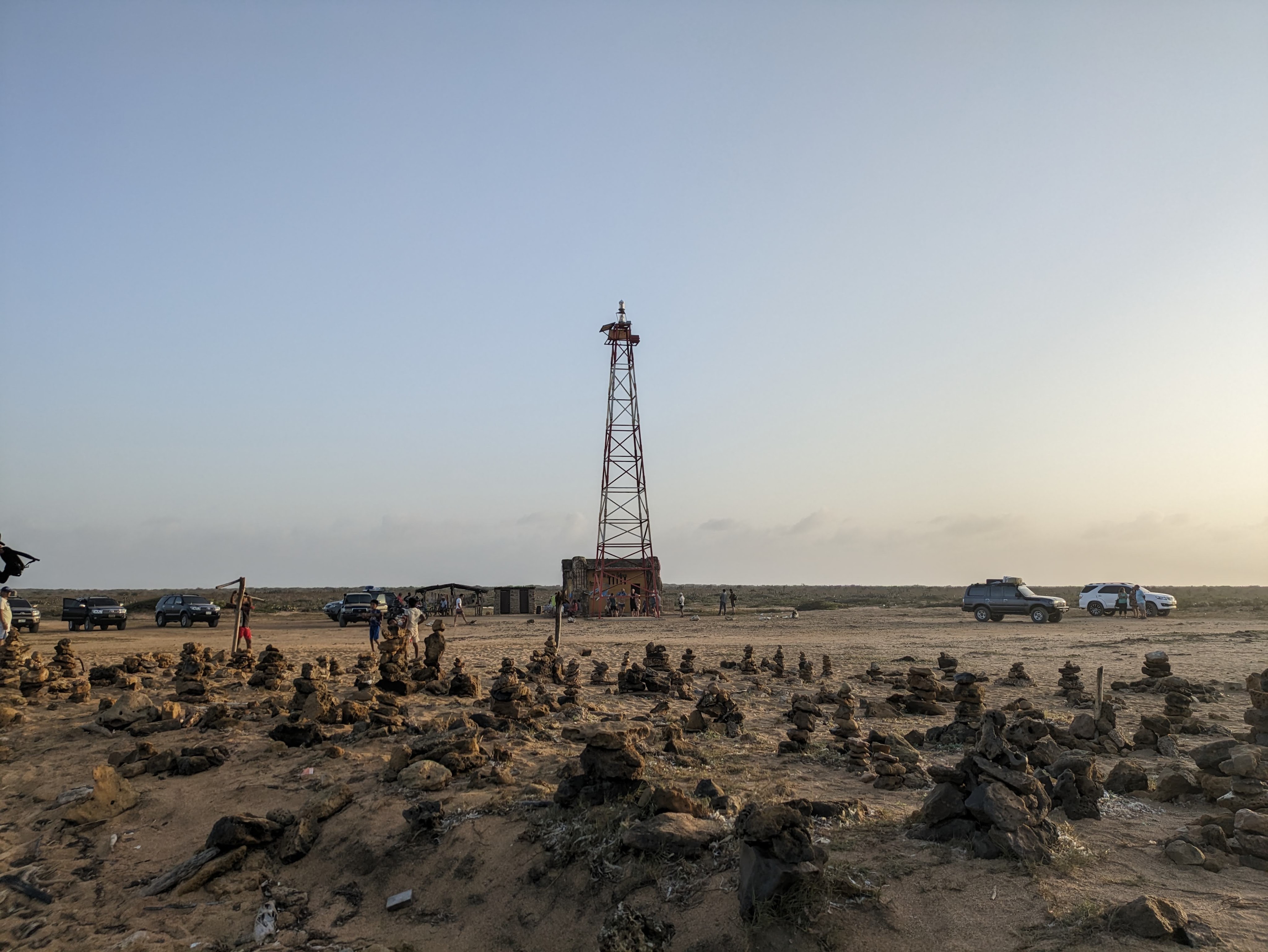
We reached Punta Gallinas at about 5pm. It consisted of a flat piece of land with a small concrete building, a pylon with a light on top, a rough sea and a shoreline littered with brown rocks, many stacked into little piles where people left their burdens behind or made wishes to fly into the ocean. It might be an iconic place but it was a bit disappointing, the culmination of two days driving. The most northerly ‘point’ was only really visible from aerial photos and not really evident from ground level.
Our second night was spent in a bed in a surprisingly large comfortable room with an en-suite bathroom. The shower was only salt water which didn’t help our wrinkles😄 but it was more than we expected. I was a little envious of the people sleeping in the hammocks with their views of the starry skies which were radiant with so little light pollution. But when we spoke to the bleary-eyed hammock-sleepers the following morning, a bed was definitely the better choice. The wind had howled around their hammocks all night and they were pelted by copious amounts of donkey dung that the wind had hardened into missiles and flung at them all night while the donkeys brayed nearby. A lucky escape for us!
The jeeps huddled together like herd animals and travelled in convey most of the time with all the tour companies plying a similar route. The passengers were deposited to take photos or to hike to a mirador(viewpoint) while the drivers sat in the shade ‘having the crack.’ There was very little effort made to convey the history, geography, geology or culture of the area….in any language. Sometimes, it felt like the paying passengers were an inconvenience to the drivers and we spent a lot of time waiting for our driver, who never seemed ready to leave at the time he told us and wondering where we were going. Our fellow passengers, the four Columbians were equally in the dark.
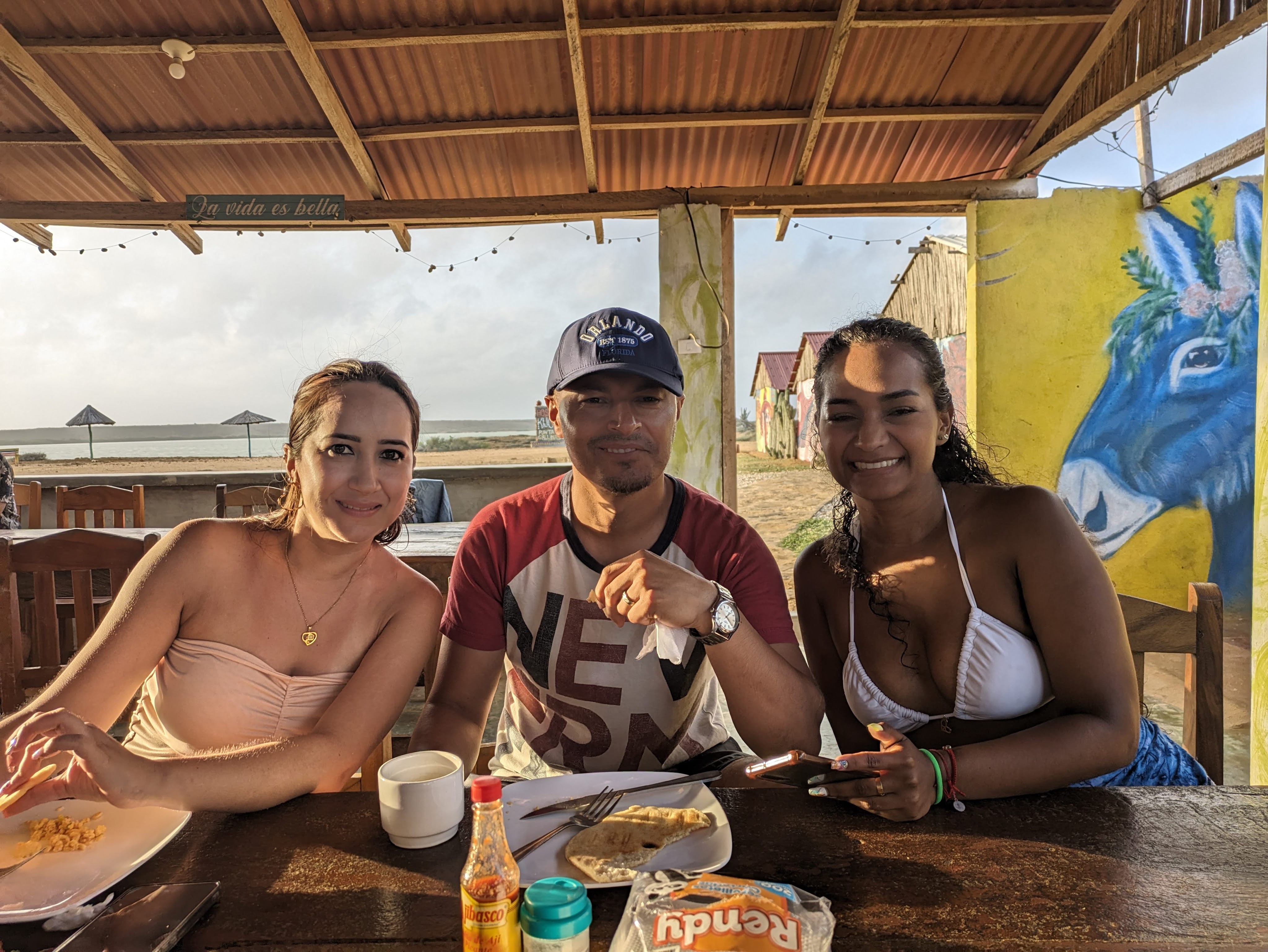
On our third day, we sat into the jeep and drove for seven hours straight until we were almost back where we started. There were a few breakdowns, the rough terrain plus the sand and dust played havoc with the engines. Our driver spent a bit of time under our jeep as there was some issue with a rear wheel but we kept going and even came to the rescue of a local man who was stranded in the sand and towed his jeep for a bumpy hour.
Our backsides were glad to finally get out of the jeep and we decided that we would be very cautious about taking another jeep tour, where everyone is shepherded along and you can leave your brain behind, having everything organized including meals and sleeping arrangements. The harsh beauty of the landscapes was phenomenal, the Wayuu people were lovely but their precarious existence was very difficult to witness. We felt that we didn’t learn as much about the area or the people as we had hoped, mainly because there was no guide, the drivers only concern and expertise was driving.
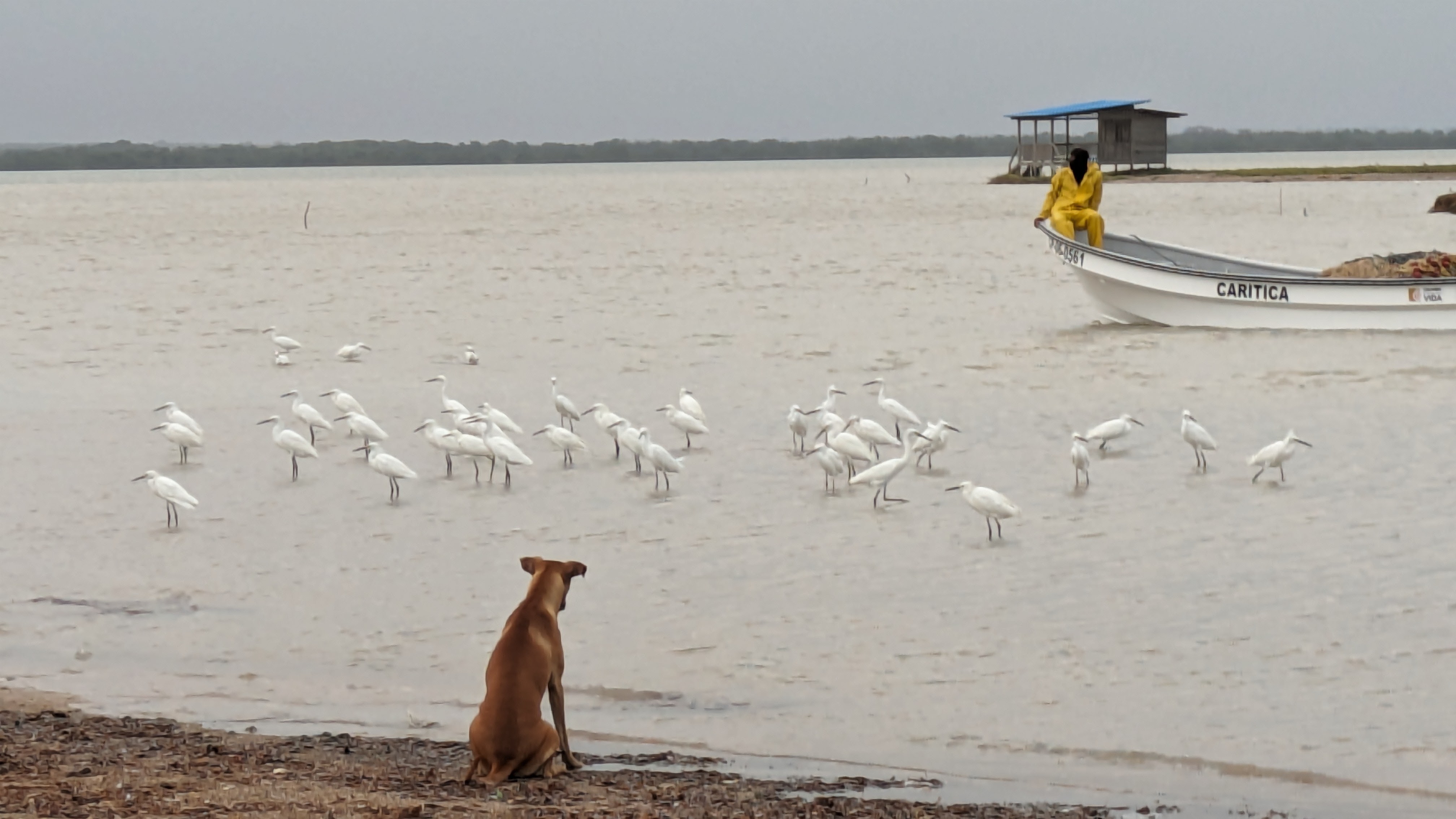
As soon as we got back to Riohache, we headed off to Camarones, a tiny coastal village and a bird sanctuary about 30 minutes out of Riohache. This was an amazing place, very tranquil with a gorgeous beach but the highlight was the birds who put on a dazzling display in the early morning, fishing, feeding and fighting for scraps from the fishermen’s’ nets. The Scarlet Ibis was such a vibrant red that it didn’t look natural (see photo below for proof). Three American birdwatchers, who were staying in the same place as us, told us that the variety of birds in Colombia is the second most diverse in the world in terms of number of species.

We plan to stick to the Caribbean Coast for a while more. Next stop is Caragena, known as the ‘Crown Jewel of Colombia’ but I’ll let you know what glittering delights we find there.
Muchas Gracias por leer🥰
 marienoonanblog
So amazing Marie!
The salt plains looked so cool, it’s sad the tour guides weren’t more passionate about telling you the history. It’s always sad to see an indigenous people in such poverty, but what an experience to see regardless. I’m so jealous of the bird you’re seeing – they look fab! Rest up and can’t wait to read about where you go next!💓
Sent from Outlook for Androidhttps://aka.ms/AAb9ysg
LikeLiked by 1 person
Love the description of the driver and sounds like an amazing experience under the stars in the hammock. Can’t visualize flying donkey dung!!! That would keep you awake alright!!! Xxx
LikeLiked by 1 person
Certainly sounds like an interesting trip hard to imagine the flying donkey dung
LikeLiked by 1 person
Oh Marie! How fabulous! .. waiting for the pic of the two of you up on the back of a camel 🐫🤣
LikeLiked by 1 person
Sad to hear about people and kids being so poor.World so unequal.A great read as always.
LikeLiked by 1 person
Happy Travels!! Dodge the Donkey Dung!
LikeLiked by 1 person