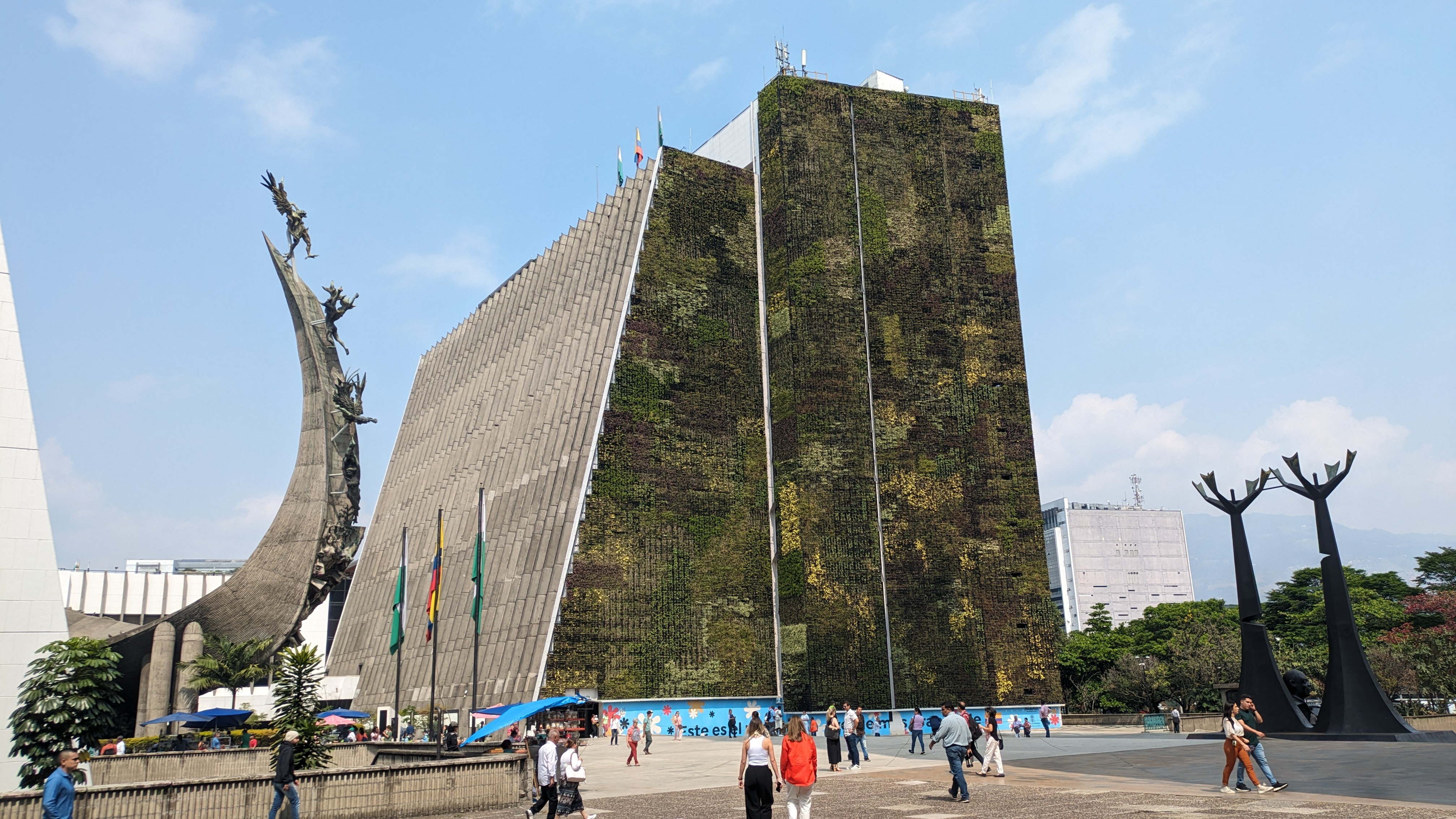
Medellin was the most fascinating and interesting city we visited in Colombia. It is also probably the most well-known Colombian city, famous for all the wrong reasons because of the popular Netflix series, Narcos, a story of corruption, violence, and Pablo Escobar.
Two words sum up Medellin – tragedy and transformation. It was once the most dangerous city in the world, topping the tables for the highest rate of murder and kidnappings in the 1980s and 1990’s but now it regarded as the most fashionable Colombian city and the one with the best quality of life, attracting tourists and digital nomads. The city sprawls along a narrow valley and climbs steeply into the surrounding mountains with a near perfect climate, often called the place of Eternal Spring.
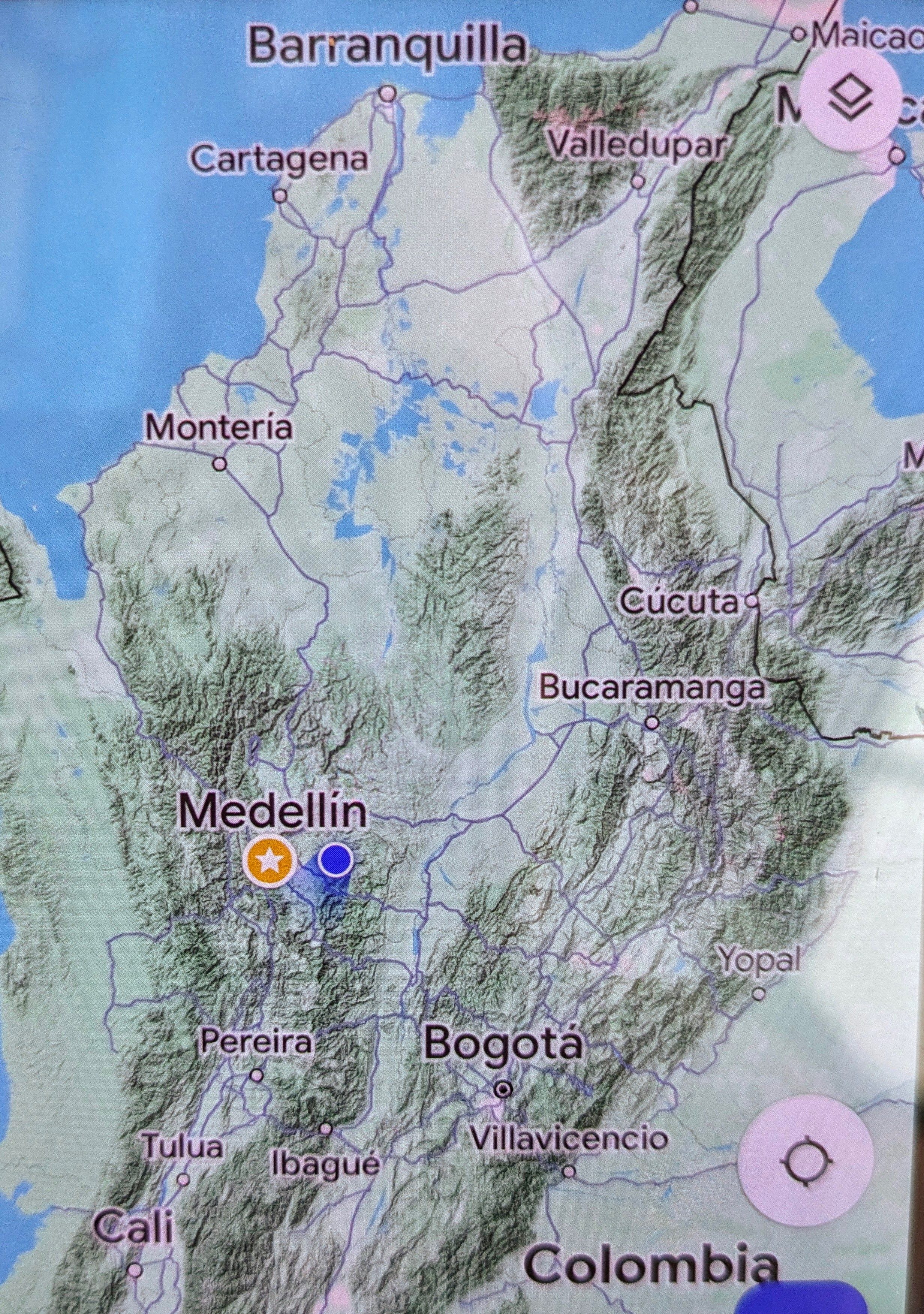
The economy of Medellin was founded on coffee, a plant that that was ideally suited to the fertile mountainous hinterland until it was dominated by another plant, the coca plant, which also thrived in the region. Coca leaves have always been grown for small scale local consumption because when the leaves are chewed or brewed into tea, it acts as a mild stimulant which suppresses hunger and fatigue and is helpful in combating altitude sickness. Coca leaves are also the raw product in cocaine production, and this is where the infamous Pablo Escobar and the Medellin Cartel enter the picture. Escobar continues to be a controversial figure to this day, loathed by many but admired by others because of his ‘generosity’ – he gave almost 400 houses to the poor in Medellin. But he was also directly responsible for an estimated 40,000 deaths, unspeakable violence, fear and mayhem.
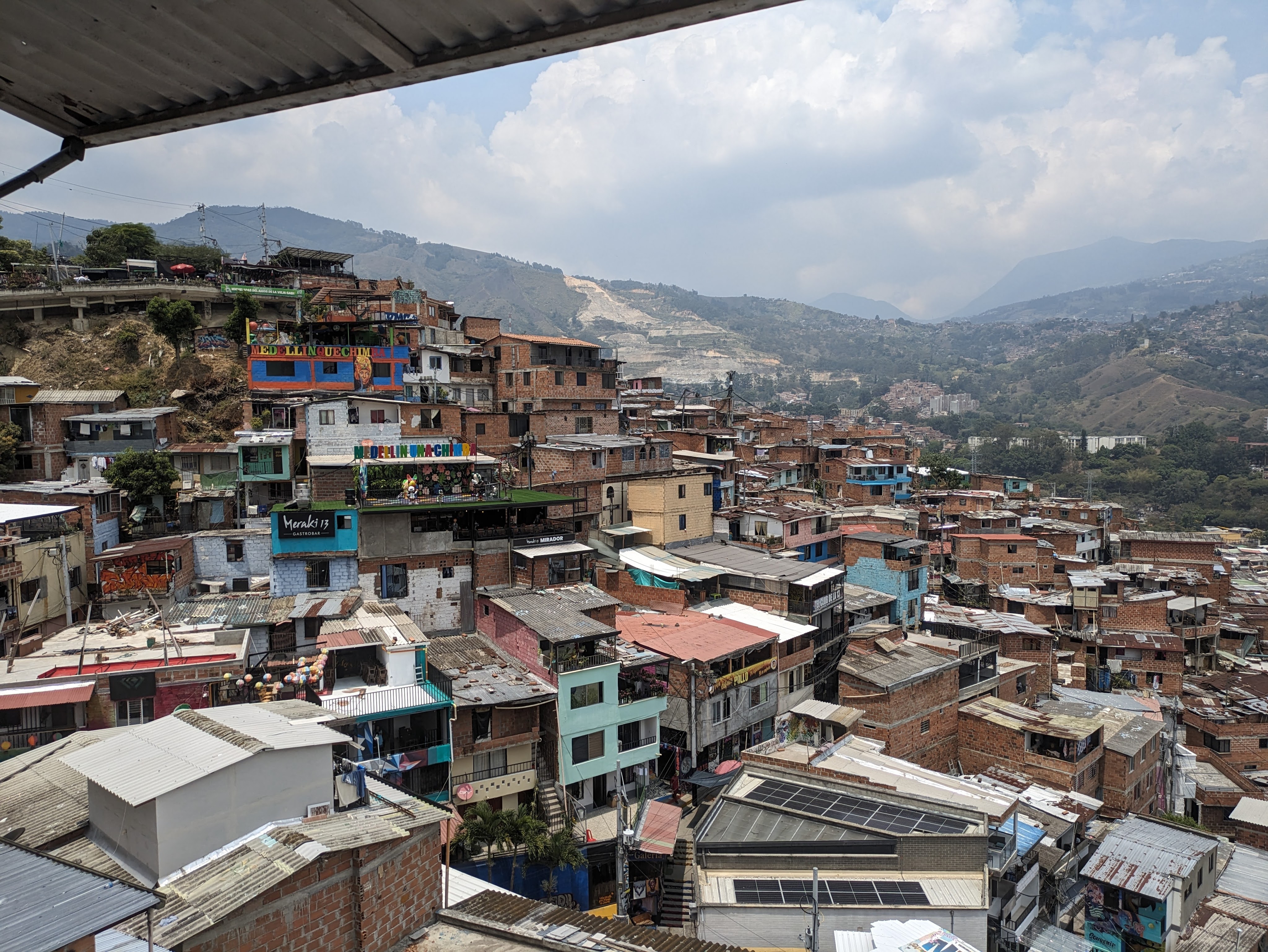
We did two walking tours of Medellin, one of the downtown area and one of an district, known as Comuna 13. (There are sixteen comunas, or districts in Medellin. Comuna 13 was once the most violent district in the most dangerous city in the world, a place that was off-limits even for people living in neighboring districts. It endured sustained urban warfare and was plagued by fierce battles between guerillas and paramilitaries.
Comuna 13 sprawls upwards on a sheer hillside, a rabbit warren of narrow streets, steep steps, colorful houses and graffitied walls. Now its narrow streets and alleyways are bustling with little cafes, tourists and tour guides but the past was not forgotten. We stood in a basketball court in the centre of the Comuna where many innocent locals were murdered. Our guide told us that the brown-earth area, visible like a gaping wound on the opposite hillside was reputedly a mass grave where many of the Missing from the city were buried.
We were entertained by the break-dancing and hip-hop routines of groups of young local men who would probably have been involved in drugs trade in the ‘bad old days’ instead of performing for tourists. Immersion in arts, music and sport has been one of the pillars in the transformation of Medellin and of course nothing would have been achieved without the desire of the communities to break the cycle of violence.
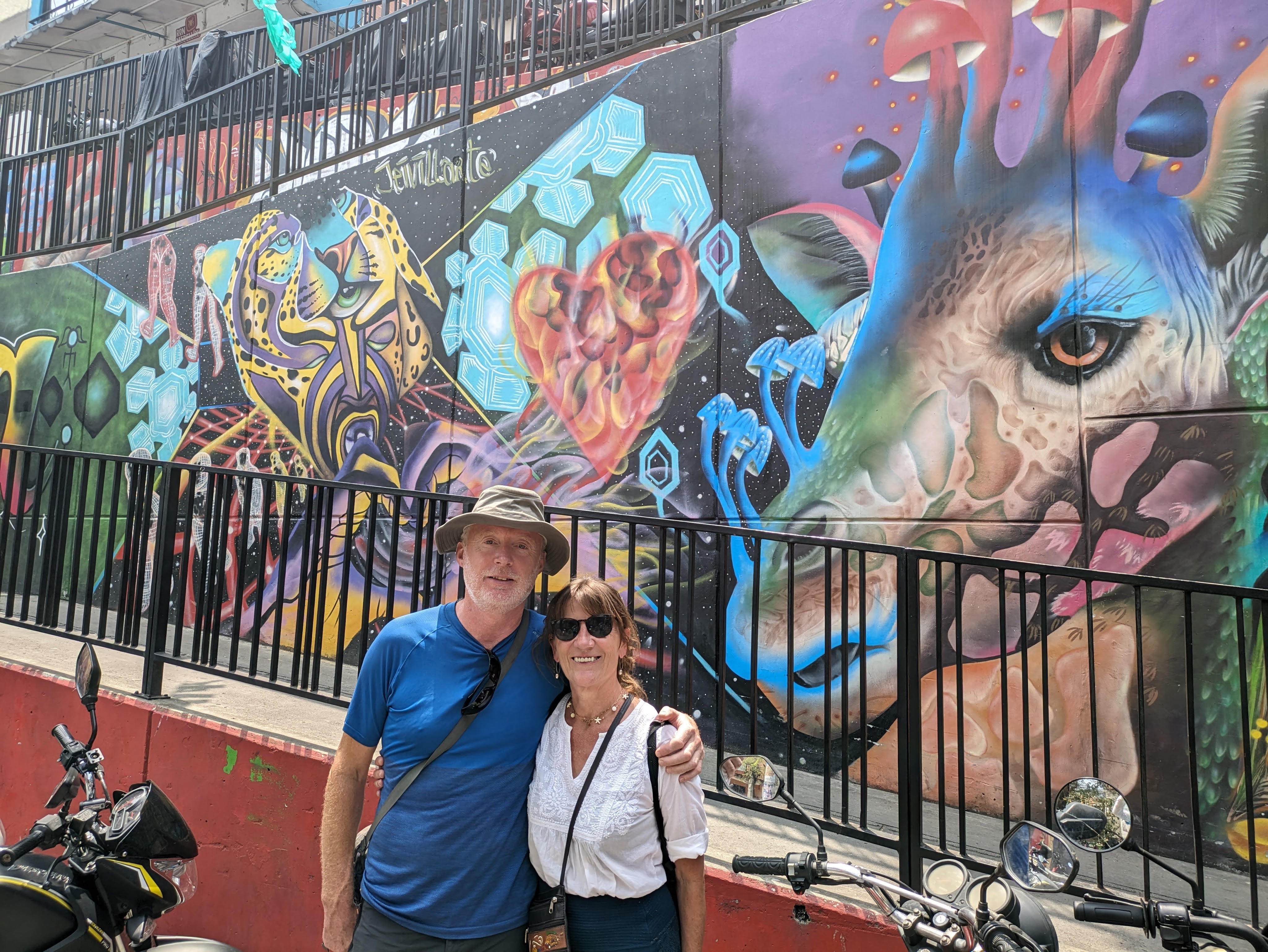
On a wall in Comuna 13, there was a gorgeous wall mural of a giraffe which our guide said represented the strength and resilience of the people because the giraffe has the stoutest heart of any animal relative to its size.
But how did Medellin become this beacon of hope and renewal? There is no simple answer but this remarkable transformation has included the demobilization of guerilla groups, major policy changes, the addition of social programs, and serious infrastructure investments. Our guide on the walking tour of the downtown area credited social work combined with urban architecture turning negatives spaces into positive, accessible libraries and a redefinition of education. Places that were a no-go area when he was a teenager (he was 42) have become convivial locations of relaxation and pride with tree planting, play-areas for children, lots of seating attracting coffee-drinkers, shoe-shine boys and buskers. The Parque de las Luces was once a very dangerous area but now 300 illuminated pillars stand in the space, providing shade by day and light by night. Of course, everything isn’t perfect. The lights in the Park of Light (Parque de las Luces) were turned off last year for maintenance and still haven’t been turned on😲🕯️🕯️
One of the most famous sons of Medellin (apart from the obvious one already mentioned) is the artist and sculptor, Fernando Botero, whose distinctive work is very much in evidence around the city especially in Botero Plaza where twenty- three of his sculptures are on display.

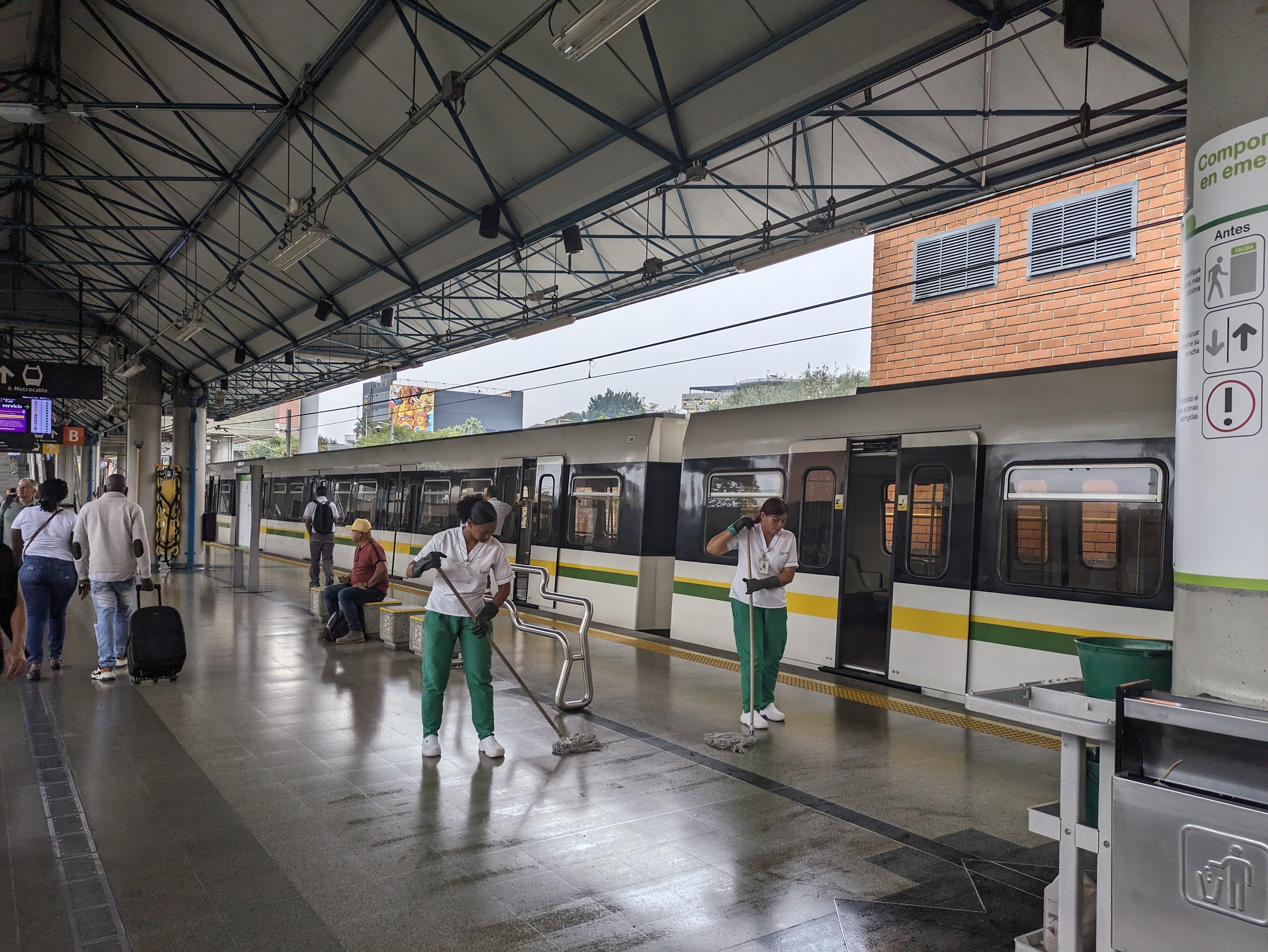
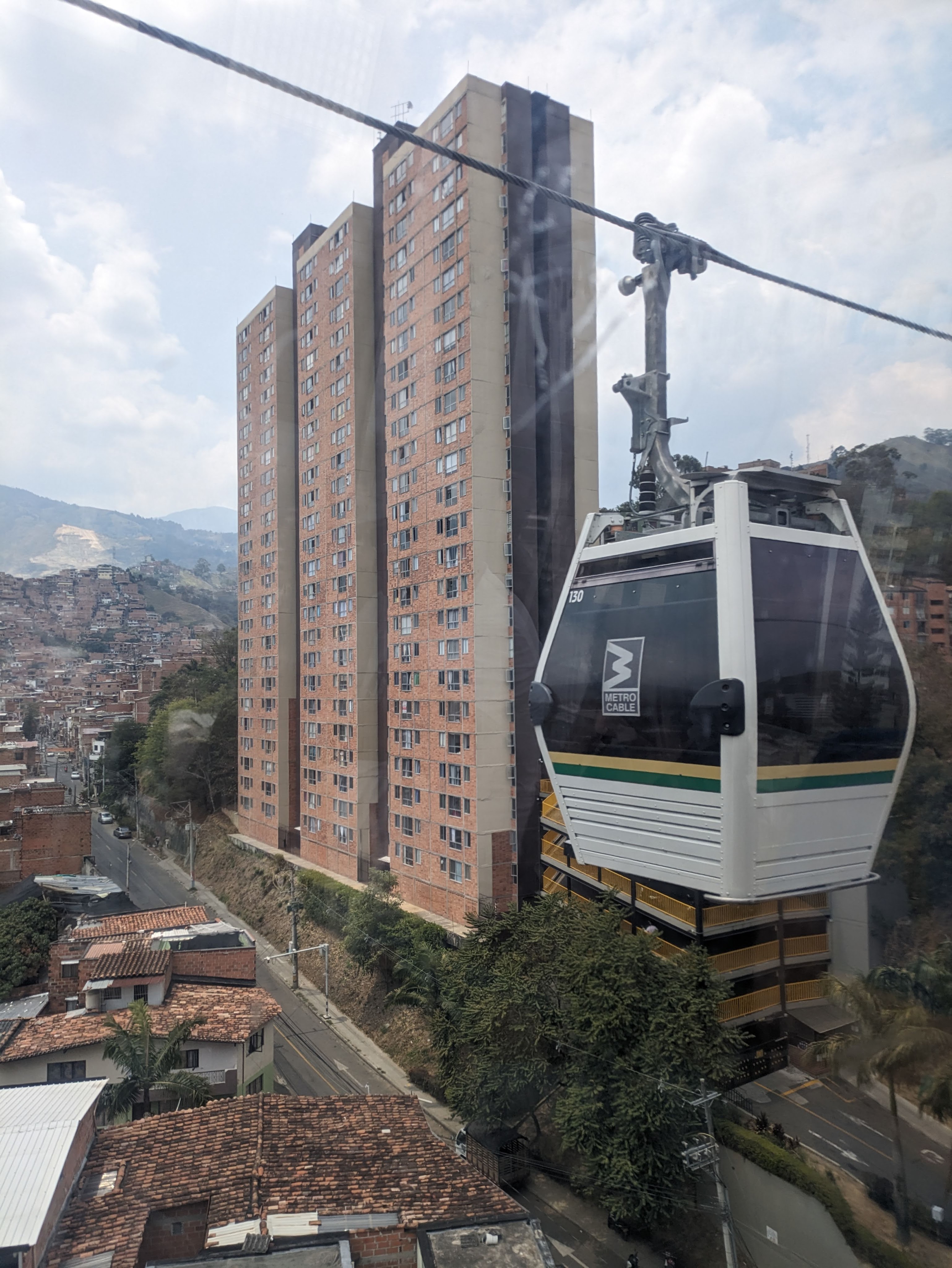
One of the surprises about Medellin was its fantastic public transport system which made travelling around the city so easy. There was a clean efficient modern metro system that was integrated with the bus system and the tramline. There were and cable cars, a gondola lift system that traversed the steep hills called Metro-Cable. The locals were very proud of their Metro system, the only one in Colombia. Although it was about twenty years old, it looks as pristine as the day it was introduced with no graffiti, broken seats or even rubbish. (The lack of rubbish was especially remarkable, as Colombians in general will fling their waster with wild abandon everywhere). We got conflicting answers when we asked about the cleanliness of the Metro, one person told us that it was civic pride that kept it in such good condition, another said it was because there were hefty fines for littering. Whether the approach was carrot, stick or a mixture of both, it was regularly cleaned and was a pleasure to use. We spent a couple of hours one afternoon just riding up and down on the cable-cars and getting a bird’s eye view of the city.
And to really complete our enjoyment of Medellin, we found a fantastic vegetarian restaurant, Saludpan, which had European standards but at Colombian prices. This was probably the best vegetarian restaurant we have ever visited anywhere. While it was primarily vegetarian, it had vegan options and some fish and meat choices. If you ever lucky enough to find yourself in Medellin, I’d highly recommend eating at Saludpan. We ate there each evening on our three nights in the city, breaking our own rule of never returning to the same place.
The popularity of Medellin and its agreeable climate has led to a large influx of Digital Nomads which some are calling a new wave of colonization, a soft invasion by people with computers and money. Although welcomed by most, the influx is changing the city and driving up rents for apartments in certain areas beyond the means of locals.
Emigration was a fact of life for many Colombians for many years so the problem of mass immigration, particularly of Venezuelans who have come in huge numbers because of their domestic troubles, is a new phenomenon. Ironically, many Colombians fled to Venezuela during the dark period in their own relatively recent history so there is a strong feeling of brotherhood between the two countries. The Colombian government in 2021 introduced a 10 -year visa for Venezuelans which gives them access to education and employment.
One of the most perplexing things we heard in Medellin was that the amount of cocaine exported from Columbia last year was three times more than it was in any year during the violent eighties and nineties. We had seen the fallow fields in Northern Colombia where once coca plants were grown and thought that this was the case in the rest of Colombia but this was in indigenous land where the Elders was strong in their opposition to coca and the drug trade. The illegal growing coca is still the backbone of many rural economies in other parts, it is lucrative, easy to grow and can produce three to four crops a year. The cartels have been disbanded and the processing and distribution have moved out of Colombia, some to neighboring Ecuador which has seen an eruption of violence this year. The situation is complex but it seems that the drug trade is alive and well in Colombia.
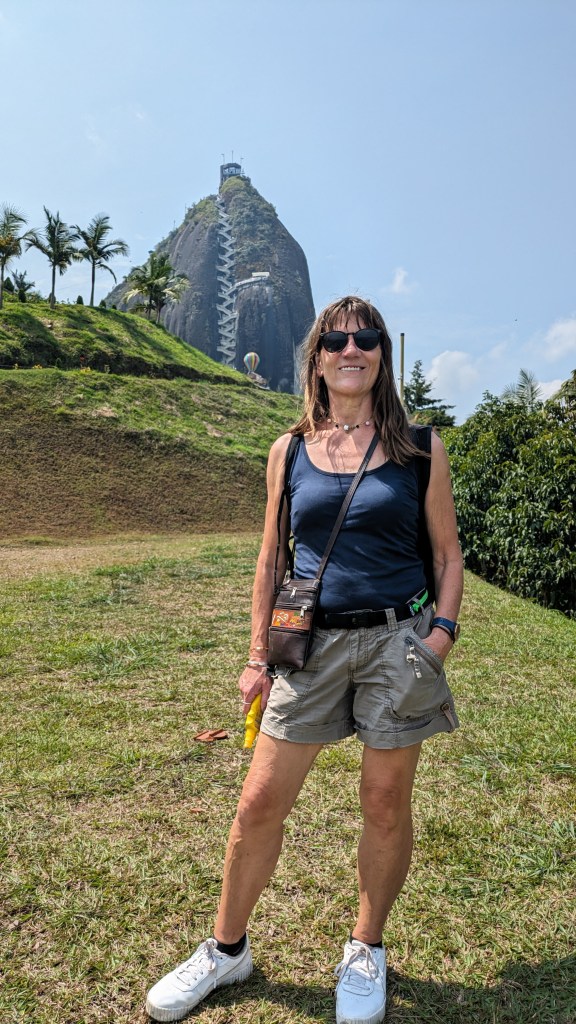
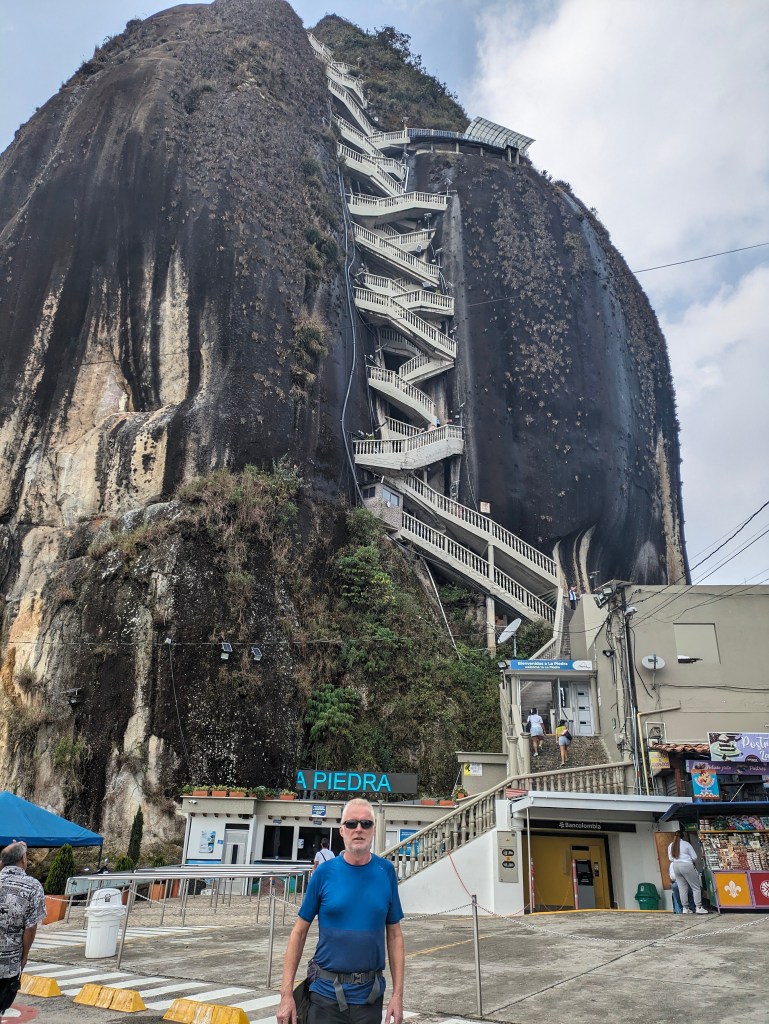
Guatapé, a small town about two hours east of Medellin, was probably the most colorful town we have ever seen. Everything was painted in bright colours and embellished with drawings and artistic designs. The town was on the edge of a man-made lake acting as a reservoir and was overlooked by a huge dome of granite, a landmark for miles around. This rock, called the Piedra del Penol, had an inbuilt staircase of 700 steps which was well worth the puffing for the rewarding views of the surrounding countryside, green lake-water, pine-clad islands and red soil.
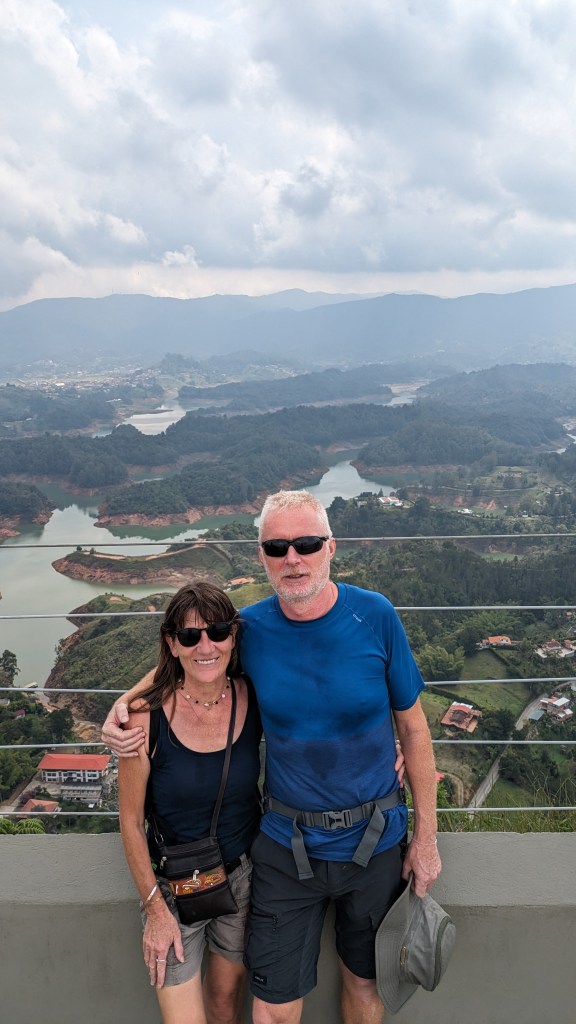
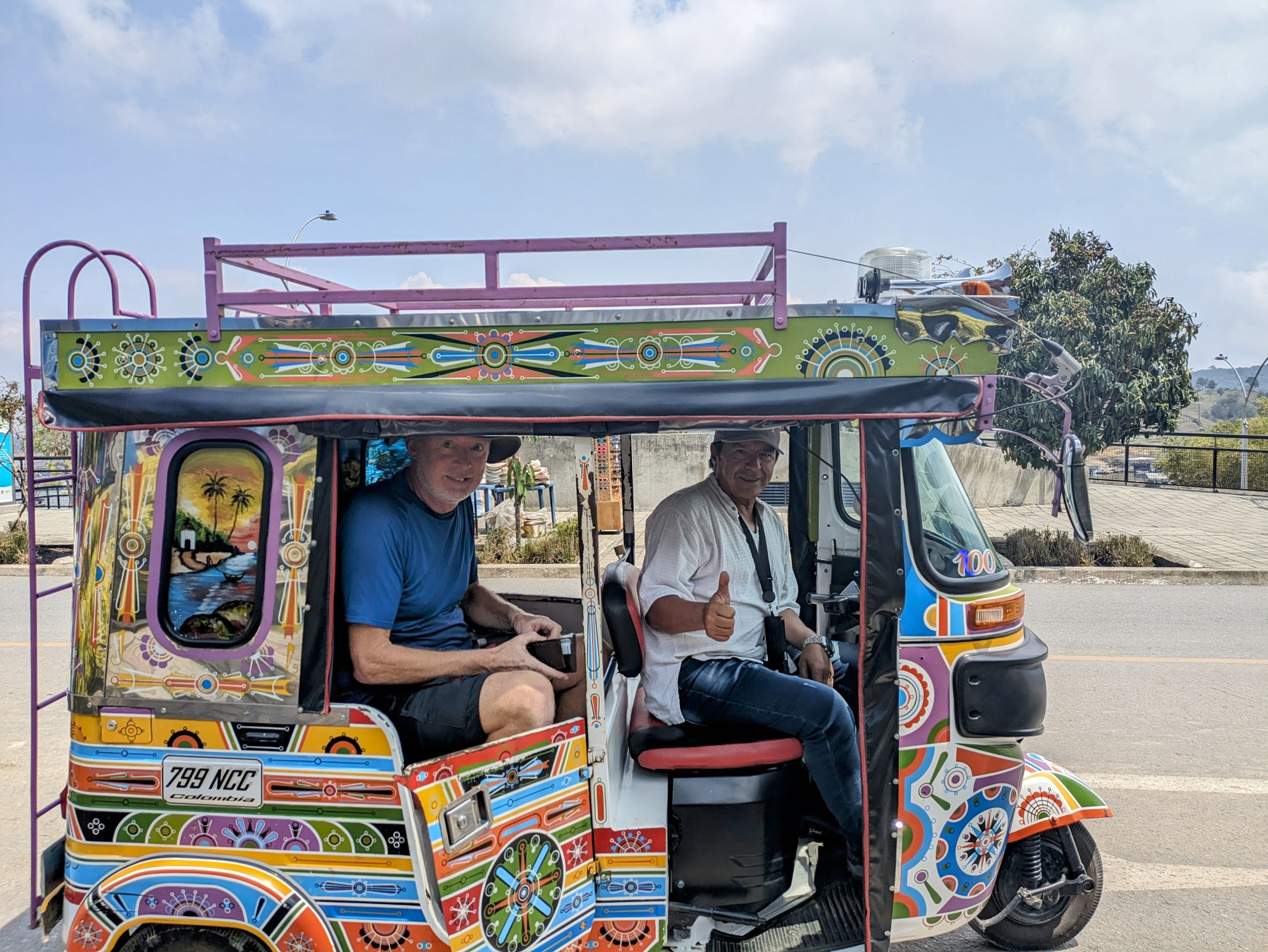
The days in Guatapé were warm and overcast but it rained heavily at night turning the road outside our accommodation into a sticky red mess.
A 6-hour bus-ride on two separate buses took us through the Andes with steep drops, twisty roads, trees and flowers until we arrived to the little town of Jardin. This quiet place was nestled in the mountains amid small coffee plantations, banana trees, rivers, waterfalls and grazing cattle. The town was also brightly painted with a large flower-filled plaza and an enormous neo-Gothic church. Although there were some tourists, it had a lovely laid-back feel. We stayed in a hostel, an uphill kilometer out of town where we were woken every morning by birds knocking at the mirrored glass on our balcony door.
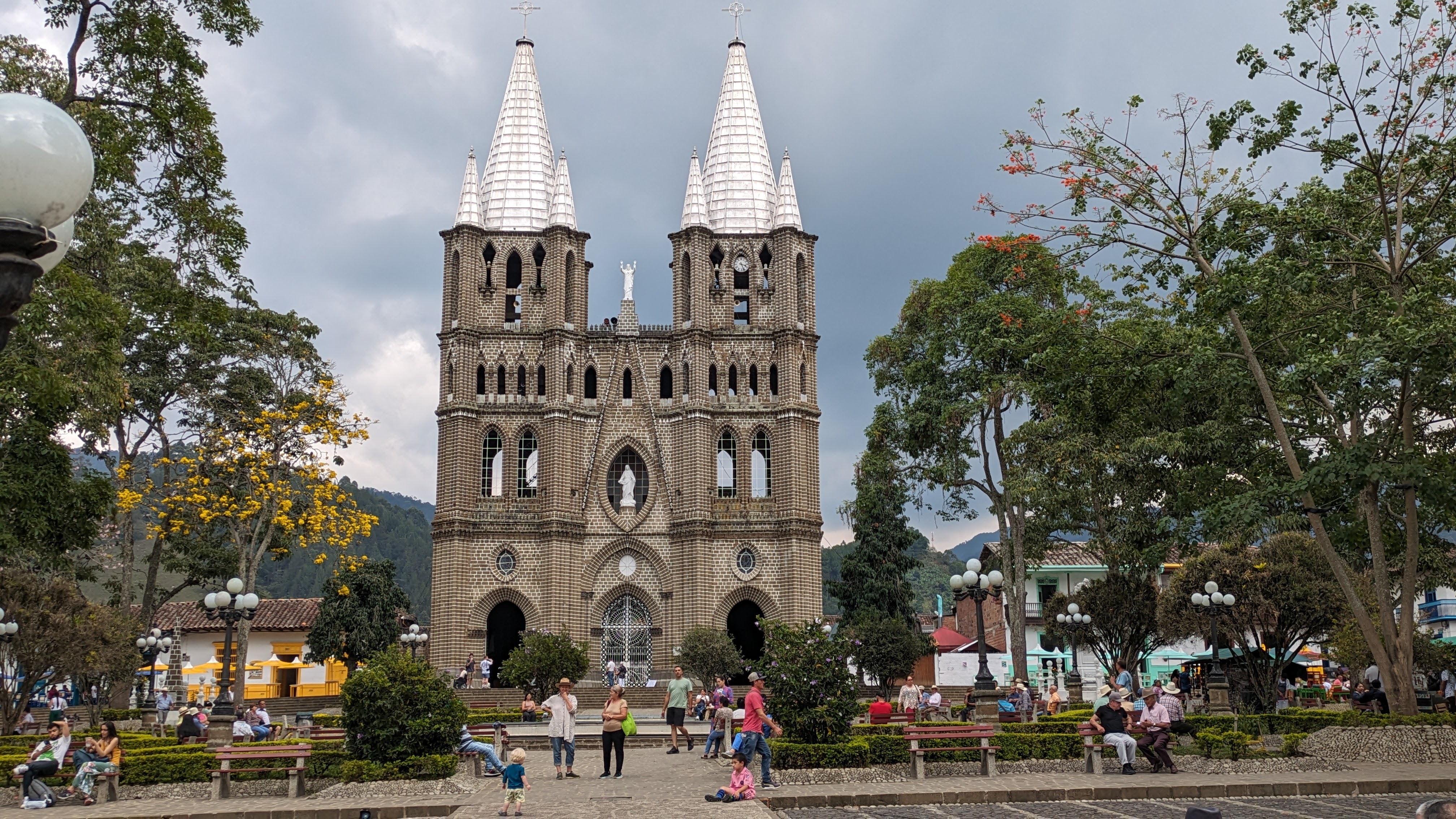
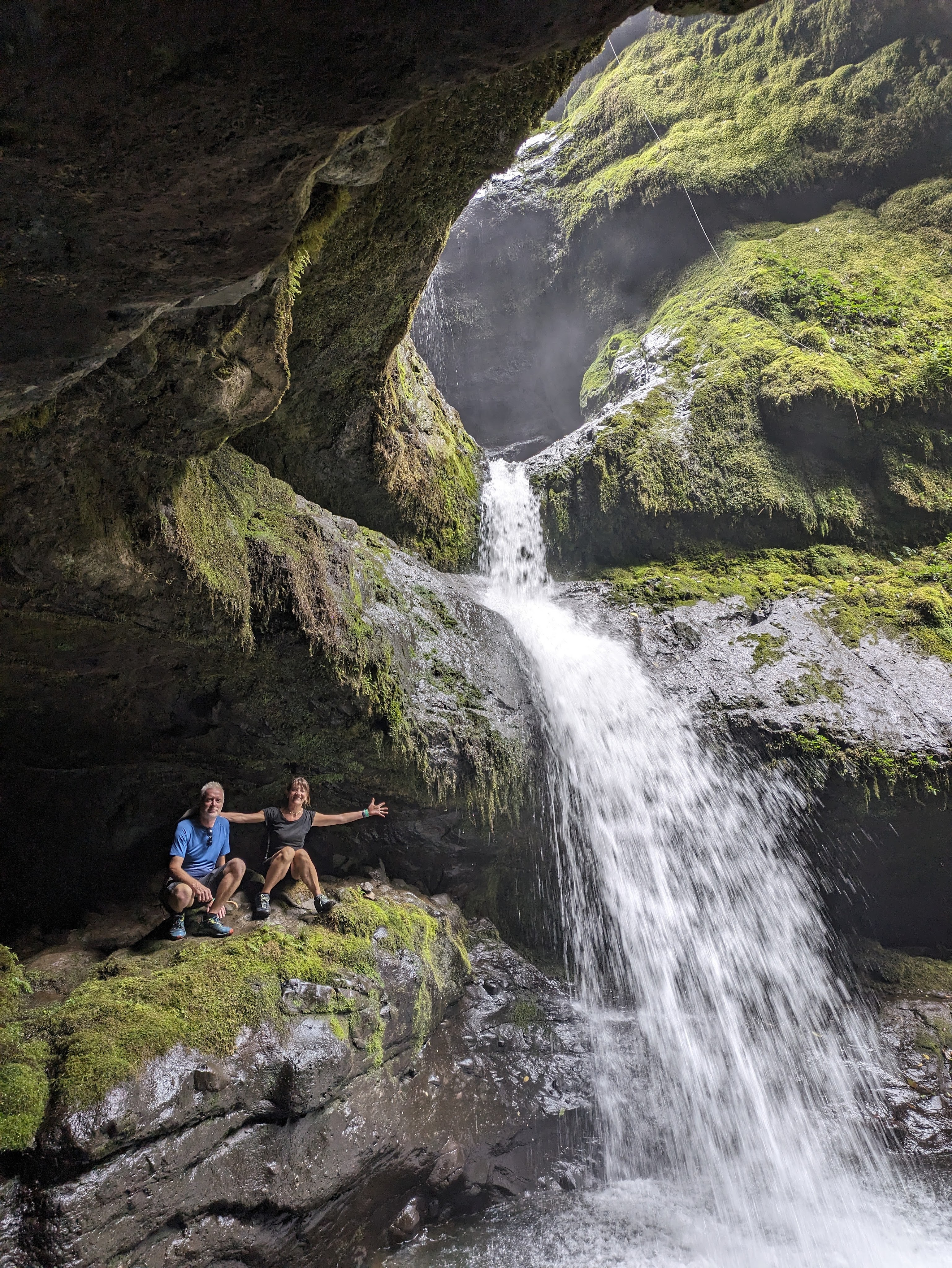
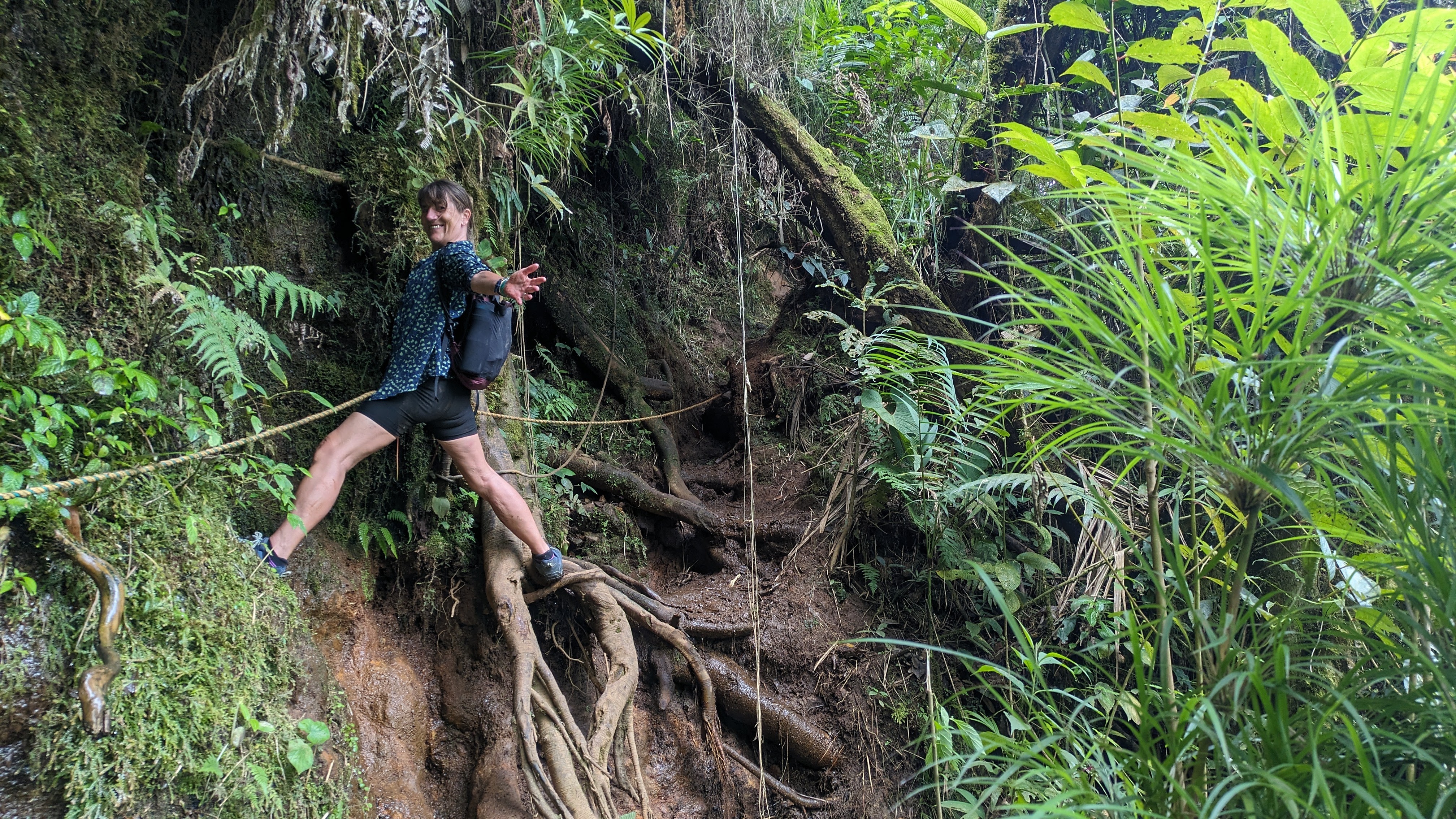
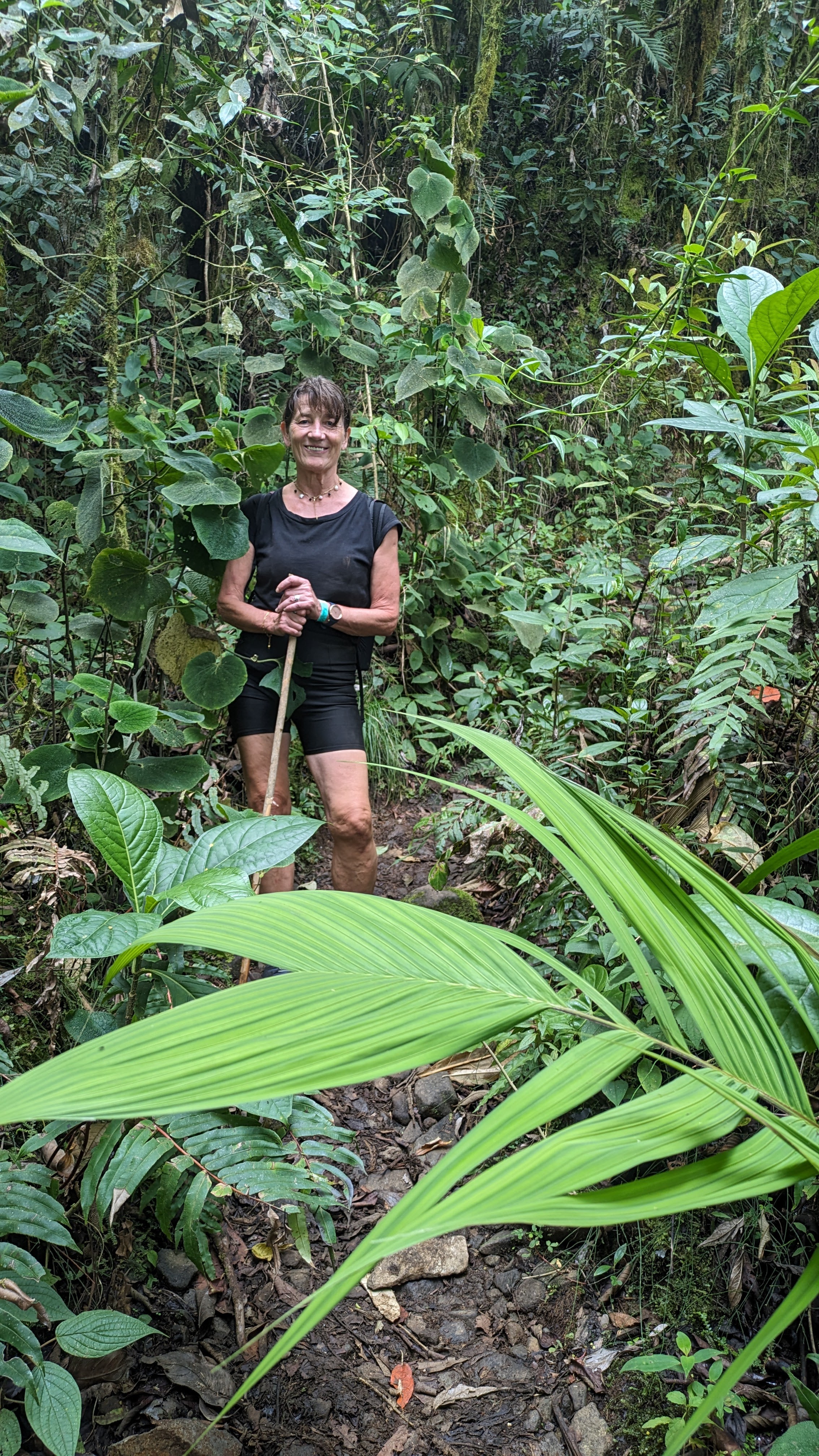
We wandered around the hills and spent a glorious day chasing waterfalls on the Siete Cascadas Hike (Seven Waterfalls), a loop hike with a guide. It was challenging at times with ropes required to haul ourselves up and down some of the steep slippery slopes. It was worth every second for the tranquility, the bird song and the beauty of the waterfalls that sometimes gushed and sometimes rippled over green-mossy cliffs.
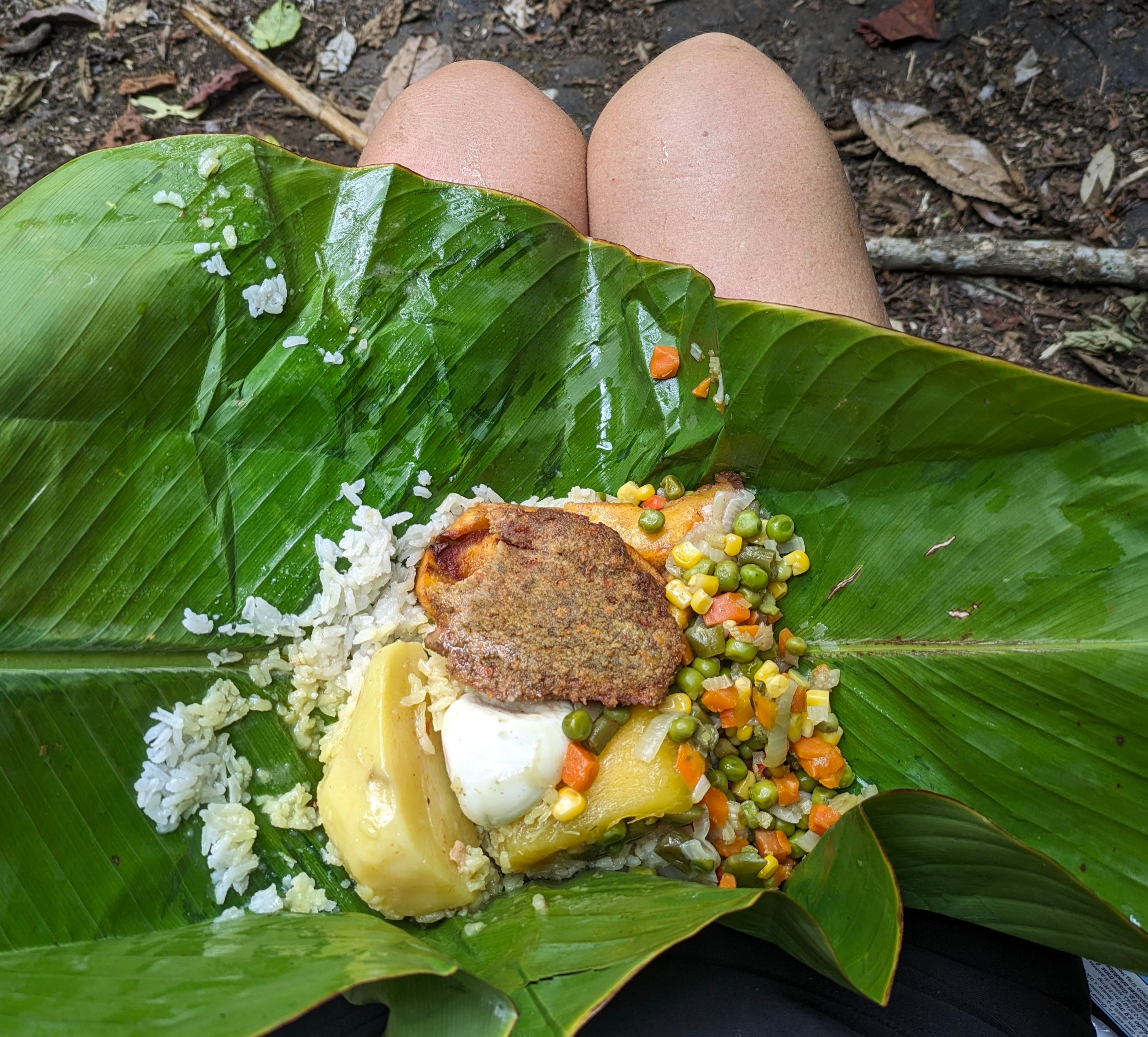
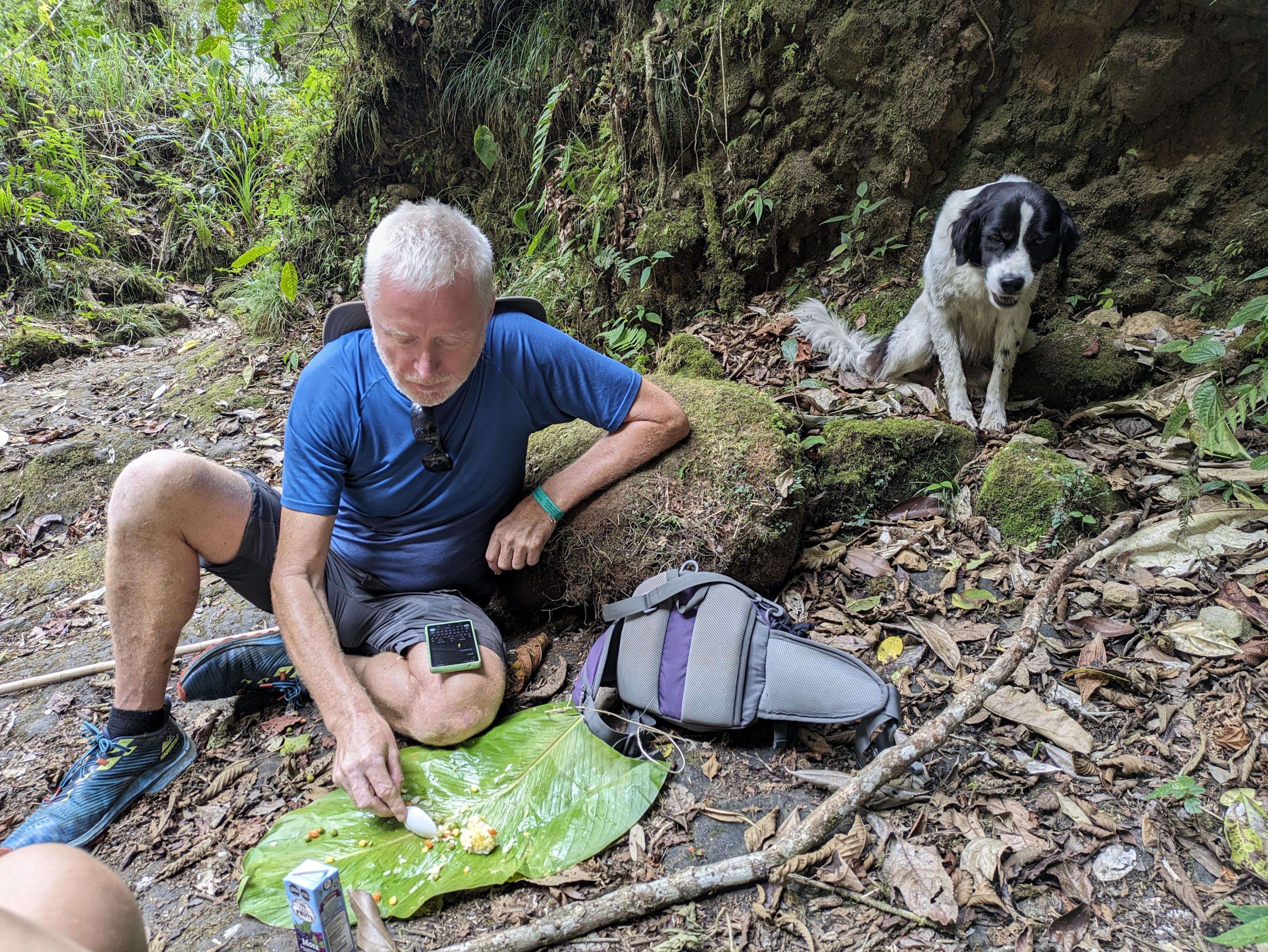
Lunch came wrapped in a banana leaf with some twine – rice and veg, potatoes and yucca, boiled egg and a veggie patty plus some fried banana. An enormous feast that slowed us our bodies down as we so busy digesting.
We have our bus-tickets booked for our next journey on Monday, a seven-hour trip south through the mountains to Salento and more coffee, where we have already organized t a three-day hike. We are not usually this organized but we are conscious of our dwindling days in this fascinating country.
Muchas gracias por leer
Feliz Dia de San Patricio☘️ Beannachtai na Feile Padraig☘️
Enjoy Paddy’s Day ,💚☘️☘️☘️xx
 marienoonanblog
I hope you gave the dog a scrap! Looking very green and festive ☘️ have a great trip onwards…those waterfalls are unforgettable. 💕
LikeLike
Where are ye getting the energy?!? I’m watching Netflix for the last hour and a half and feeling really guilty reading about ye hauling yourselves up with ropes and stuff! Ye’ll have to enter Gladiators when ye get back!! Amazing stuff. Enjoy the last bit. Xxx
LikeLiked by 1 person
Thanks, Ciara. We were a bit tired yesterday……spent a lot of it watching the rugby on our phones. Hope you are having a relaxing Paddy’s Day💚☘️🤸🤸🤸
LikeLike
Wow Marie Colombia sounds amazing.Loved reading as ever.We did a tour of Cahir Castle and Swiss Cottage today we all loved it.Got yummy apples at The Apple Farm too.Not as exotic as ye but we had a fab long weekend.Sun shined on parade in Waterford yesterday which was lovely.
LikeLike
a lucrative well of passionate writing again Marie, your both living well i see. keep well and embrace your final days
LikeLike