We are in the terminal building standing in a queue to buy tickets for the ferry to Beppu in Kyushu when several phones, including Caoimhin’s, start making strange sounds simultaneously. It’s an emergency alert but it doesn’t say what for …more information coming is the ominous text. The noise echoes around the high ceilings of the building. People glance at their phones but nobody seems too bothered and the queue shuffles on as if such alerts are frequent. It’s a reminder that we are in a country where natural disasters are common with a history of typhoons, tsunamis, volcanic eruptions and earthquakes.
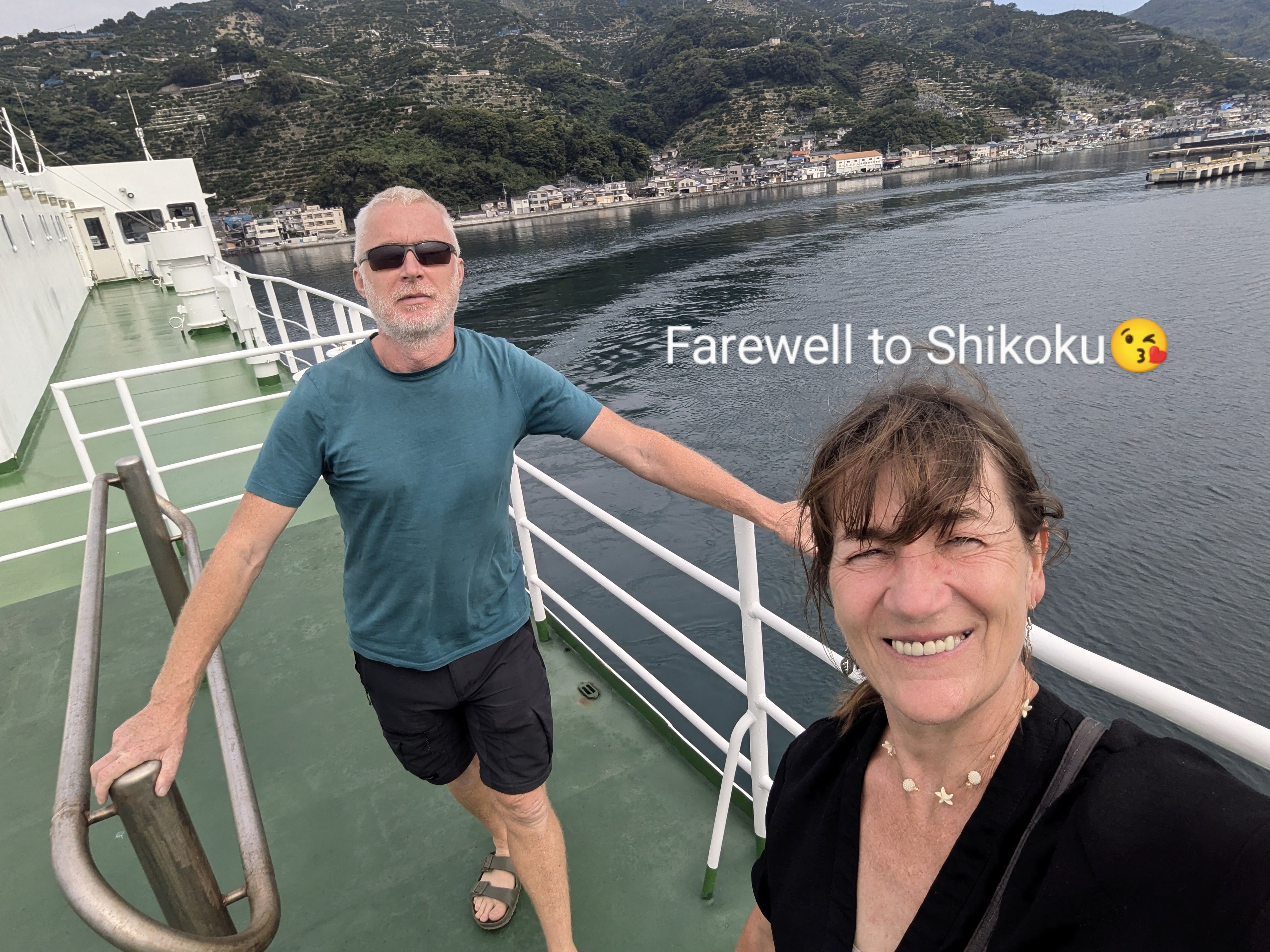
Ferries run several times a day between the two islands (Shikoku and Kyushu). We hadn’t booked a ticket but there wasn’t any problem about buying a fare on the day. The cost for two passengers and the van was €100 for the three hour crossing. There was more alarming phones on the ferry but again nobody took any notice. The ferry was quiet and extremely comfortable…. so comfortable that we were disappointed to arrive early.
Kyushu seemed green and mountainous and a lot like Shikoku with perhaps a little more rice cultivation. It has been a bad year for rice due to the unseasonably high temperatures. Most of the rice cultivation is on small holdings managed by elderly farmers. The average age of an agricultural worker in Japan is 69 years old. Most older people in Japan continue working. At the launderette where we were doing our weekly wash (we pack very lightly), the manager was a sprightly eighty something year old. He was a very chatty man, eager to give us tips about all the places we should visit in the locality. Unfortunately we missed a lot of it as Google Translate couldn’t keep up with him, he talked both too much and too fast for Google.
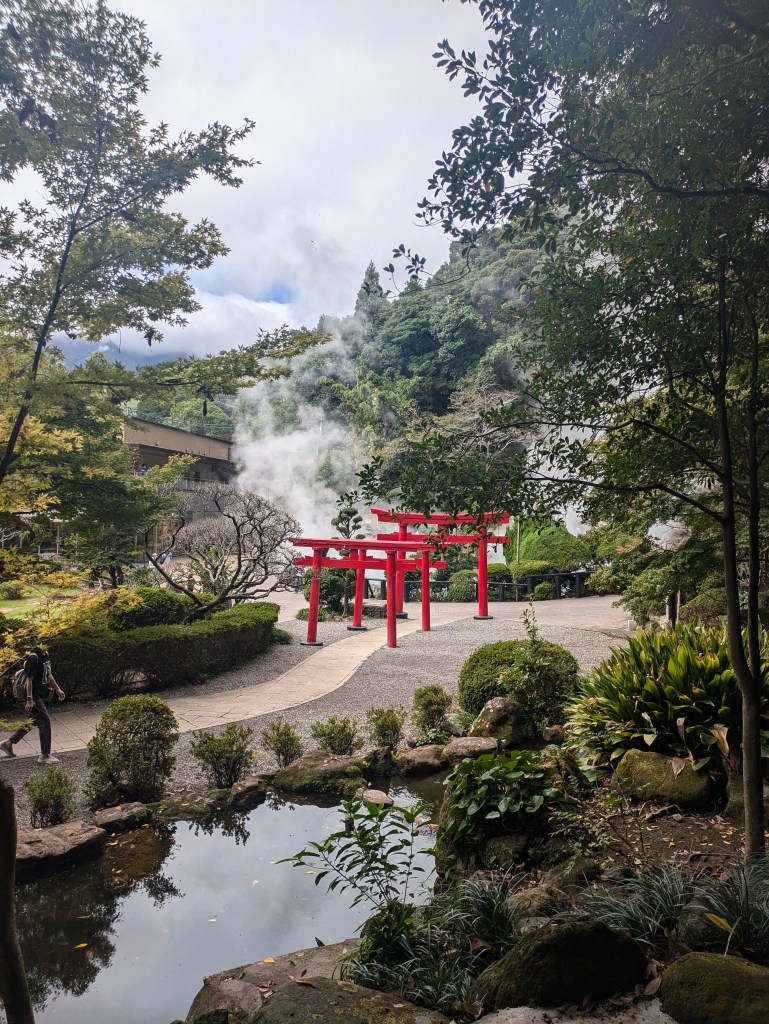
Our first stop in Kyushu was Beppu, a town known for its many onsens (thermal baths). It’s a very seismically active area which explains the many baths. The nearby region of Oita has had nine earthquakes, greater than magnitude seven, since 1900. Beppu is built on a flat plane hemmed in on three sides with mountains. As we approached on a grey, humid 30 degrees afternoon, the plumes of steam rising from the many hot springs and the clouds descending down the mountains intermingled to give an eerie darkness. Maybe it was that our minds were filled with those emergency alerts (that everyone ignored) but we felt a sense of foreboding. It became darker and huge, fat drops of rain splattered the van.
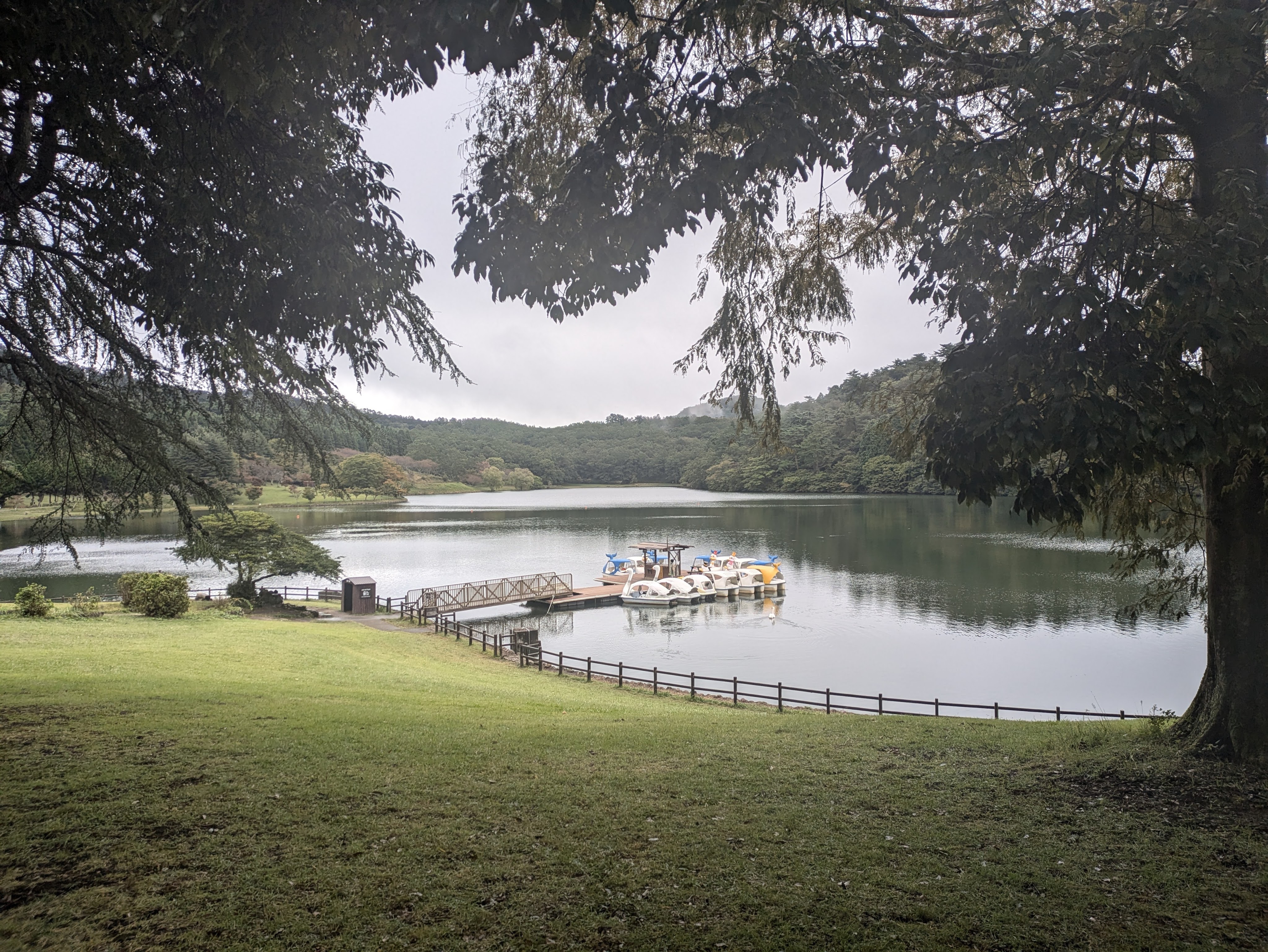
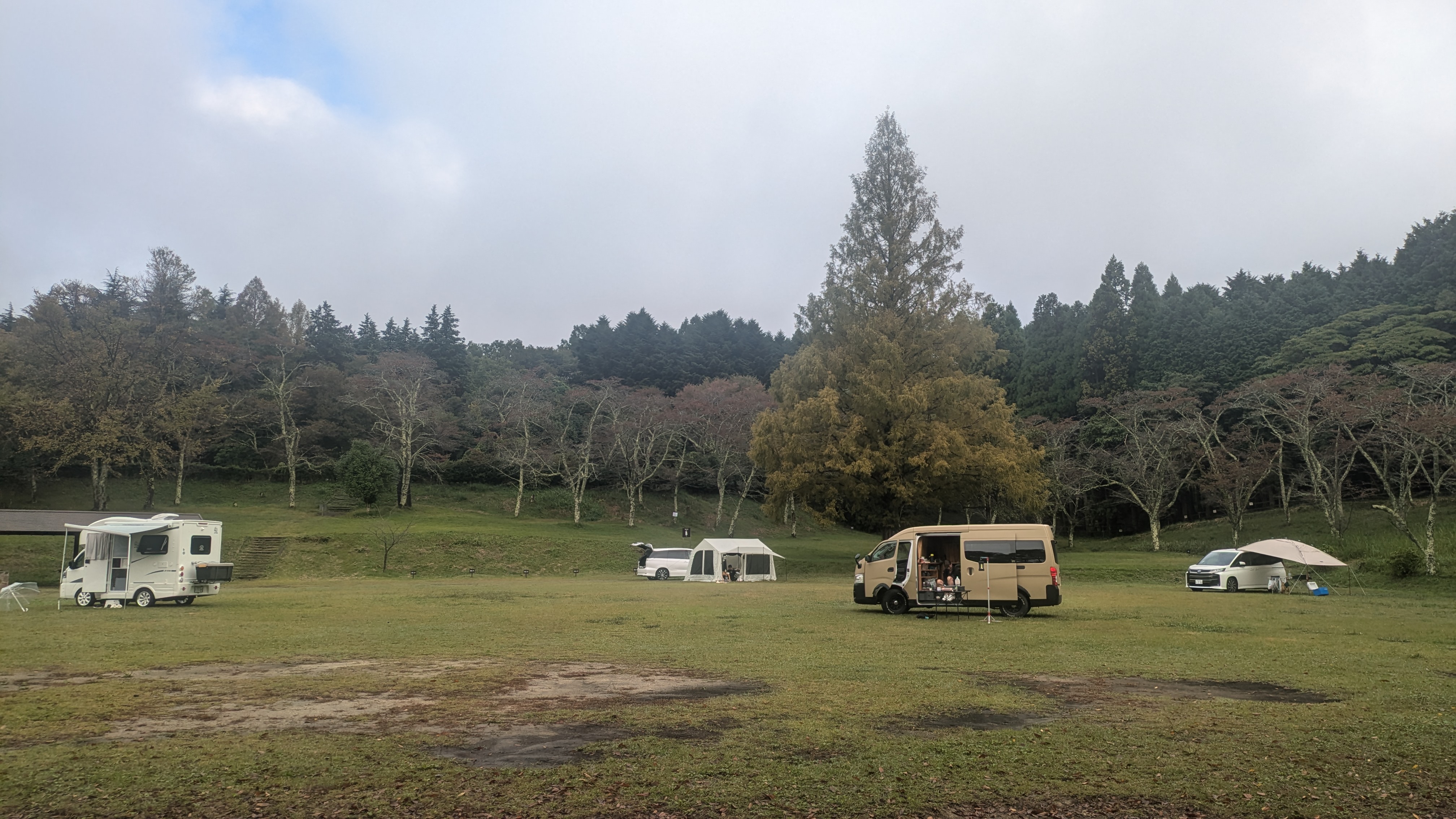
We tried to stay in an RV park in the centre of Beppu but it was closed so we tried a campsite in the hills buts that was boarded up. Our third option was a campsite high above the town in a nature reserve near a lake,. This was open and the rain stopped. Although there were loos, there weren’t any showers and it was prohibited to swim in the lake. Lake Shidaka is supposed to have been made from the accumulated tears of the broken hearted. Nevertheless it was a serene plane where swans floated by and the trees were beautiful. There were only 5 campers/tents in the huge park. There was some damage from a typhoon that had swept through a few months before.
In desperate need of a shower and some Wi-Fi, we searched for a guesthouse in Beppu and found J.Hoppers in the centre of town with parking, Japanese futon beds, our own ensuite bathroom for less than €40 a night. It was fantastic, comfortable and reasonably priced. The luxury of having our own bathroom cannot be underestimated. The owner spoke English with great recommendations for onsens and restaurants. There was also a common area for chatting with other guests, a couple who were cycling to Bhutan, a Kuwaiti guy who described Kuwait as a ‘dreamless sleep’ where people have nothing to do and more money than is good for anyone. If you ever find yourself in Beppu, I’d recommend you stay at Hoppers.
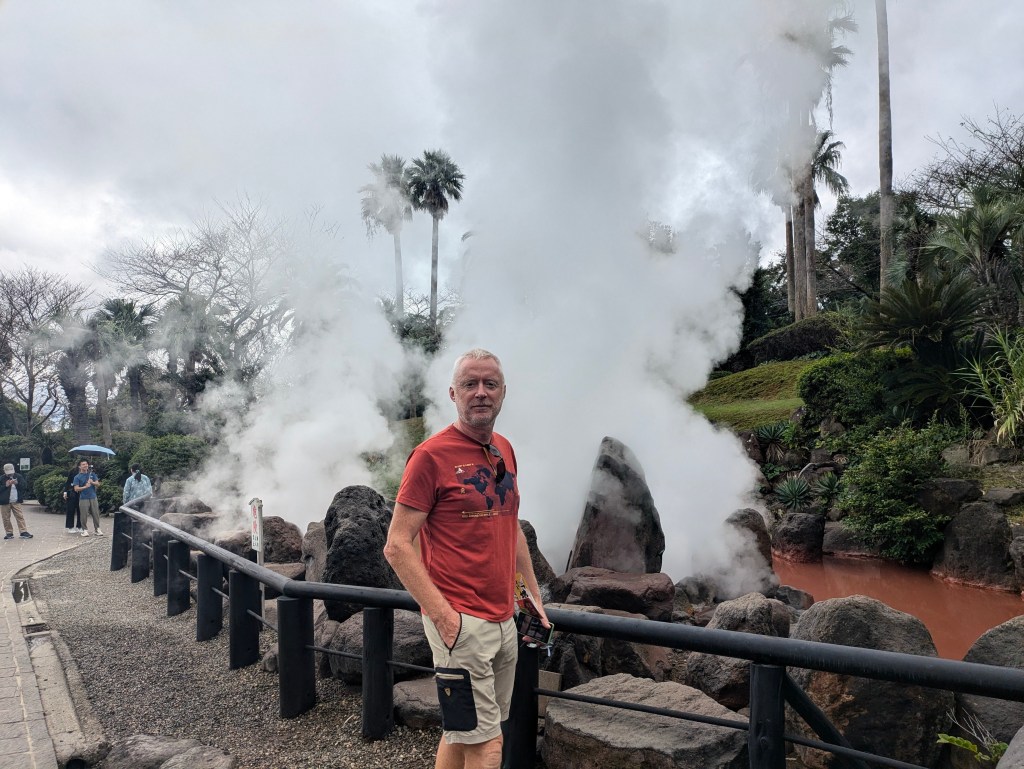
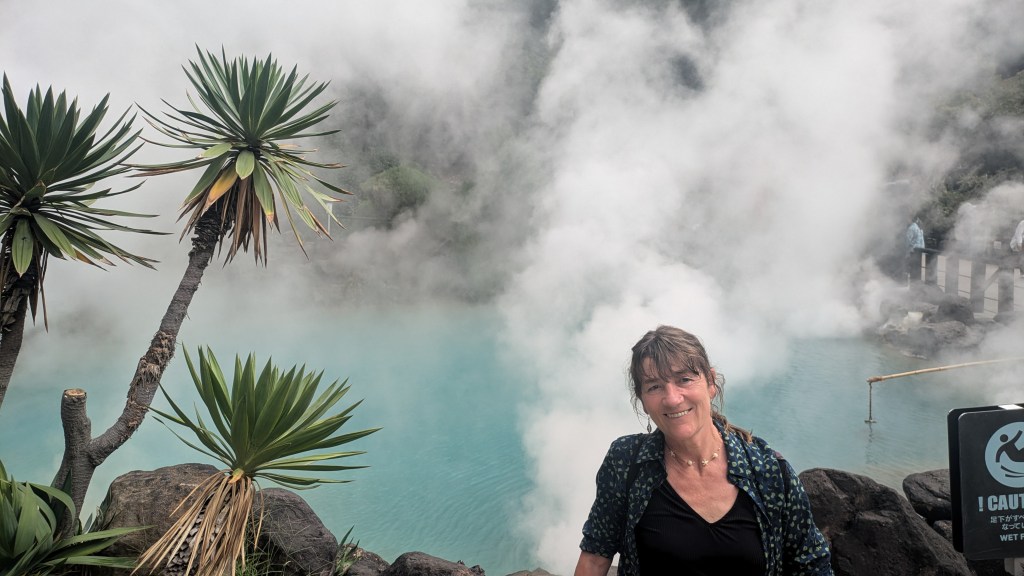
The Hells of Beppu is a series of seven bubbling pools of water and mud with various colours from deep turquoise to flaming red. They are dotted at separate locations around the town. The pools are strictly for viewing and not for bathing (unless you have a wish to be scalded) although there were footbaths at many of the sites to soak your feet. It was probably the most touristy thing that we have done and our first exposure of coachloads of Japanese tourists. The noise, the crowds, the bell-ringing of the tour guide was totally overwhelming especially as the day was hot and the parks were steamy. It truly was ‘hell’.
After our enjoyable stay in Beppu, we headed down the east coast of Kyushu on non-toll roads but even these were very good. There were numerous tunnels cut through the mountains. Sometimes we there were only a couple of hundred metres from the end of one tunnel and the beginning of the next. It was about 20 degrees, a drop of 10 degrees in a couple of days. There were deserted beaches and closed campsites where we parked for the night anyway.
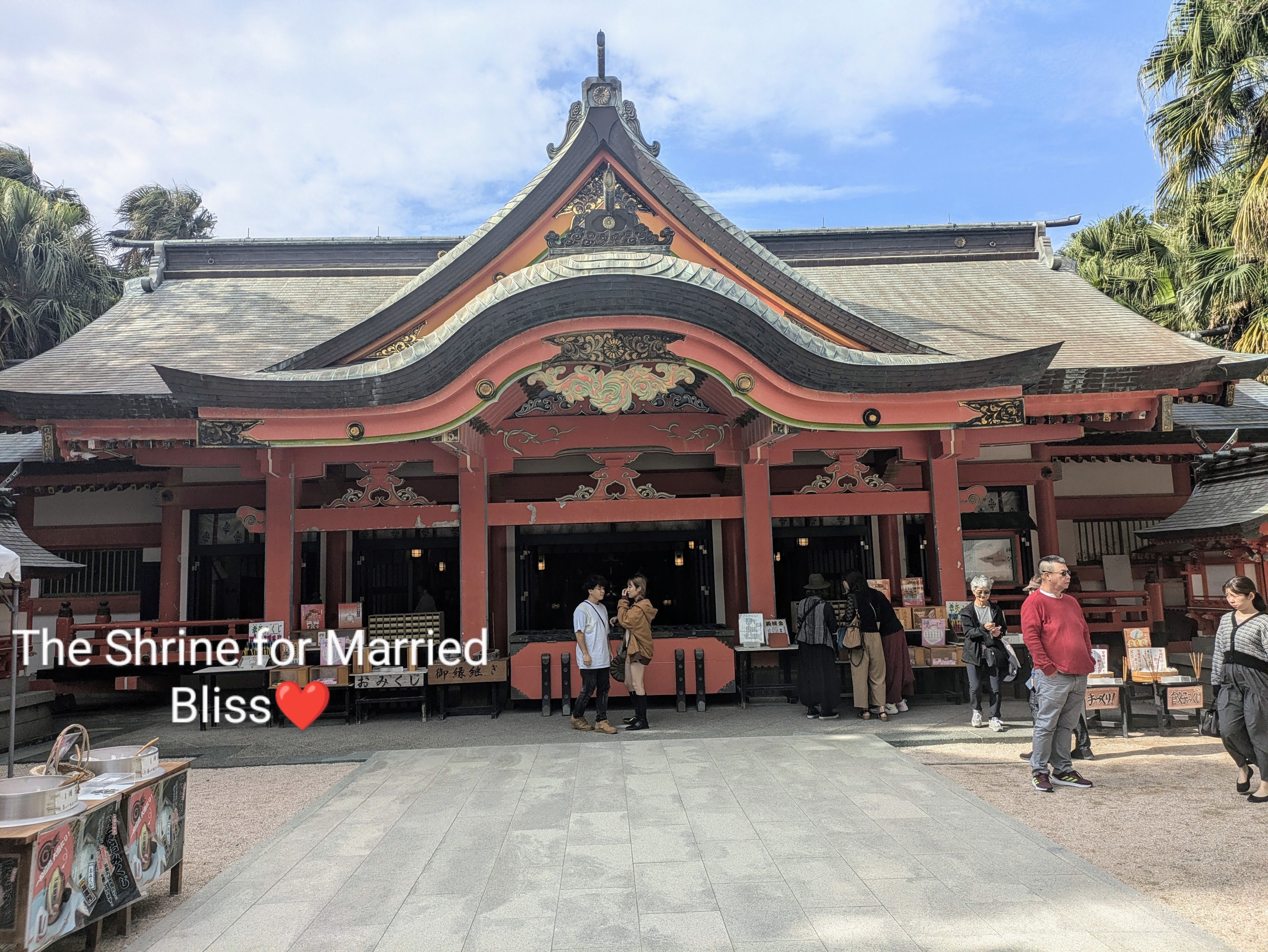
The Nichinan Coast on the eastern side of Kyushu is regarded as one of the most beautiful coastal drives in Japan with many offshore islands, strange rock formation and thundering surf. Down the coast, we visited a shrine for couples, a place that was very popular as a wedding venue. It was quite busy with both the hopeful, the grateful and the desperate.
We pulled in for the night at a scenic spot along the coast overlooking the Pacific. It was sunny and blustery but it began to rain during the night and it didn’t stop. Hours later, we were marooned in the van, there was water leaking in the window onto one of our pillows. The carpark was almost a lake and a trip to the loo was a major expedition. It rains a lot in Japan (evident from the trees and green moss) but the area we were in was regarded as the wettest in the country. We sat in the van, checking weather forecasts and wondering where to go. Although we hadn’t seen the most impressive part of the stunning coast, we decided to abandon that plan. The lure of tropical islands was strong. We investigated ferries and flights to Okinawa and other islands in the East China Sea as rain hammered against the van. We made some coffee which streamed the windows even more and decided to head to Kagoshima Ferry Terminal and investigate ferries to any island. After driving on flooded roads when we feared the van would stall or a river might burst its banks, we diverted to the tolled roads. Hang the expense!
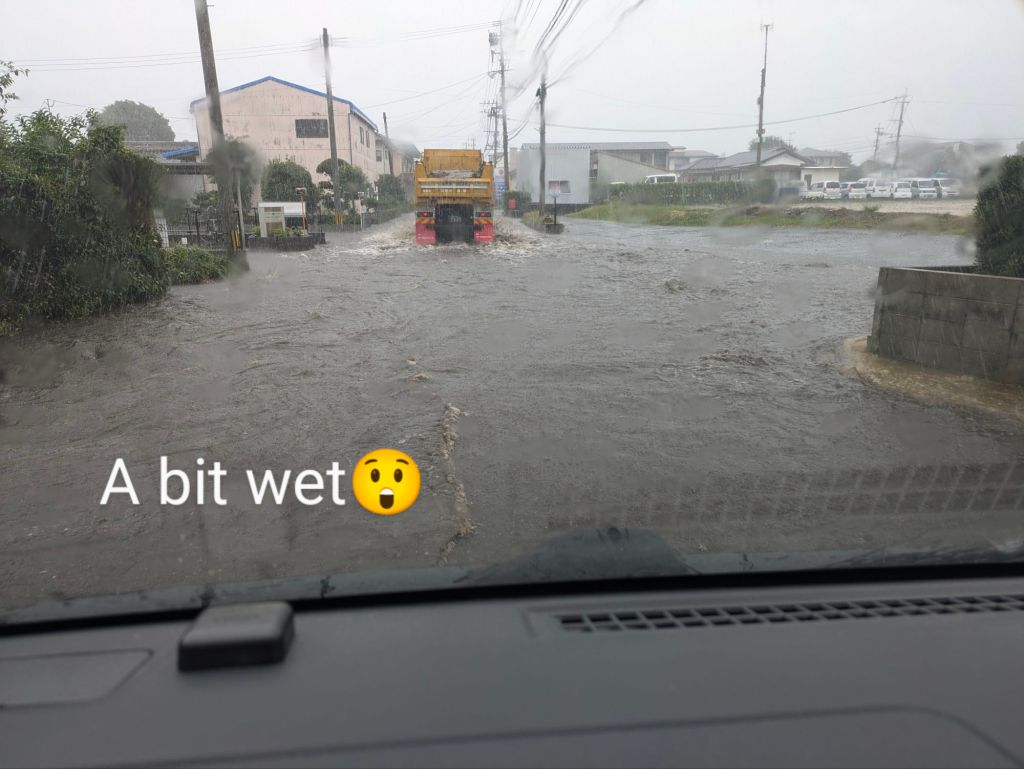
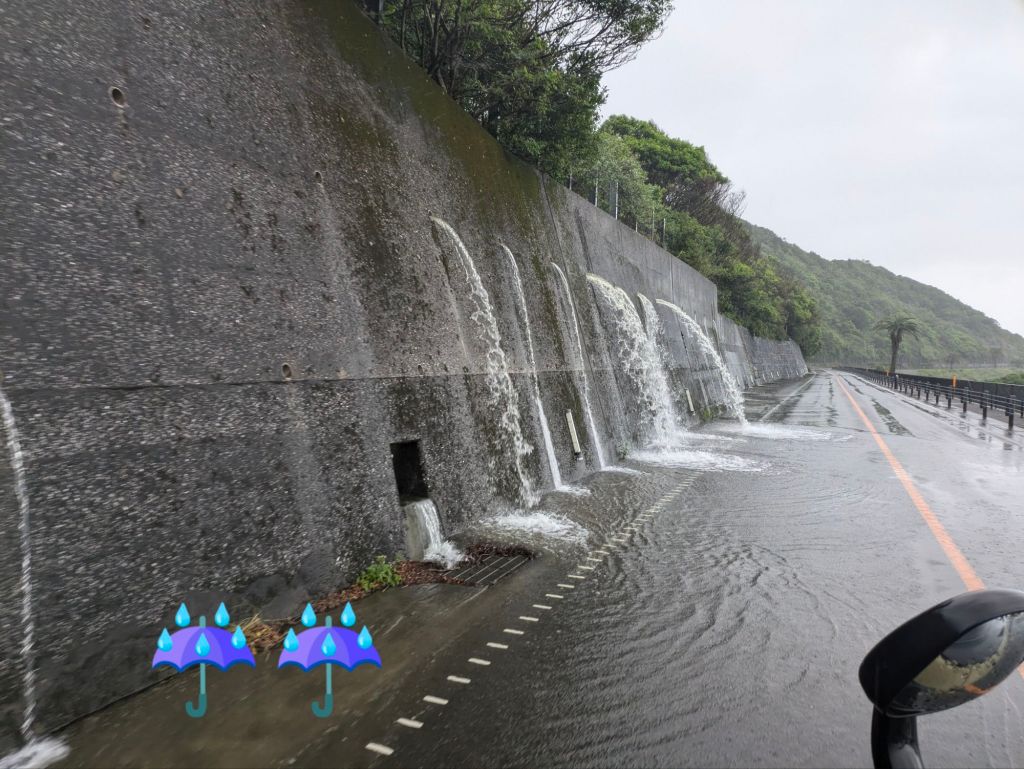
The woman in the ferry terminal office had the patience of a saint as we changed our minds about what we wanted to do, There was no availability for the overnight ferry that evening for a van, mainly because the army were travelling with lots of jeeps and trucks. We decided to go as foot passengers but then changed our mind again when we heard the price of parking the van at the ferry terminal. When we found out the price to travel with the van, we almost called the whole thing off. I’m sure that the woman was inwardly cursing us but she was so helpful, as we debated, dithered and communicated with her by Google Translate. Eventually we came to a decision. We would travel the following day with the van and we would return in eight days. There was some discount for getting a return fare. So we left Kagoshima in the rain but thankfully there was little wind and sailed four hundred kilometres overnight on the East China Sea.
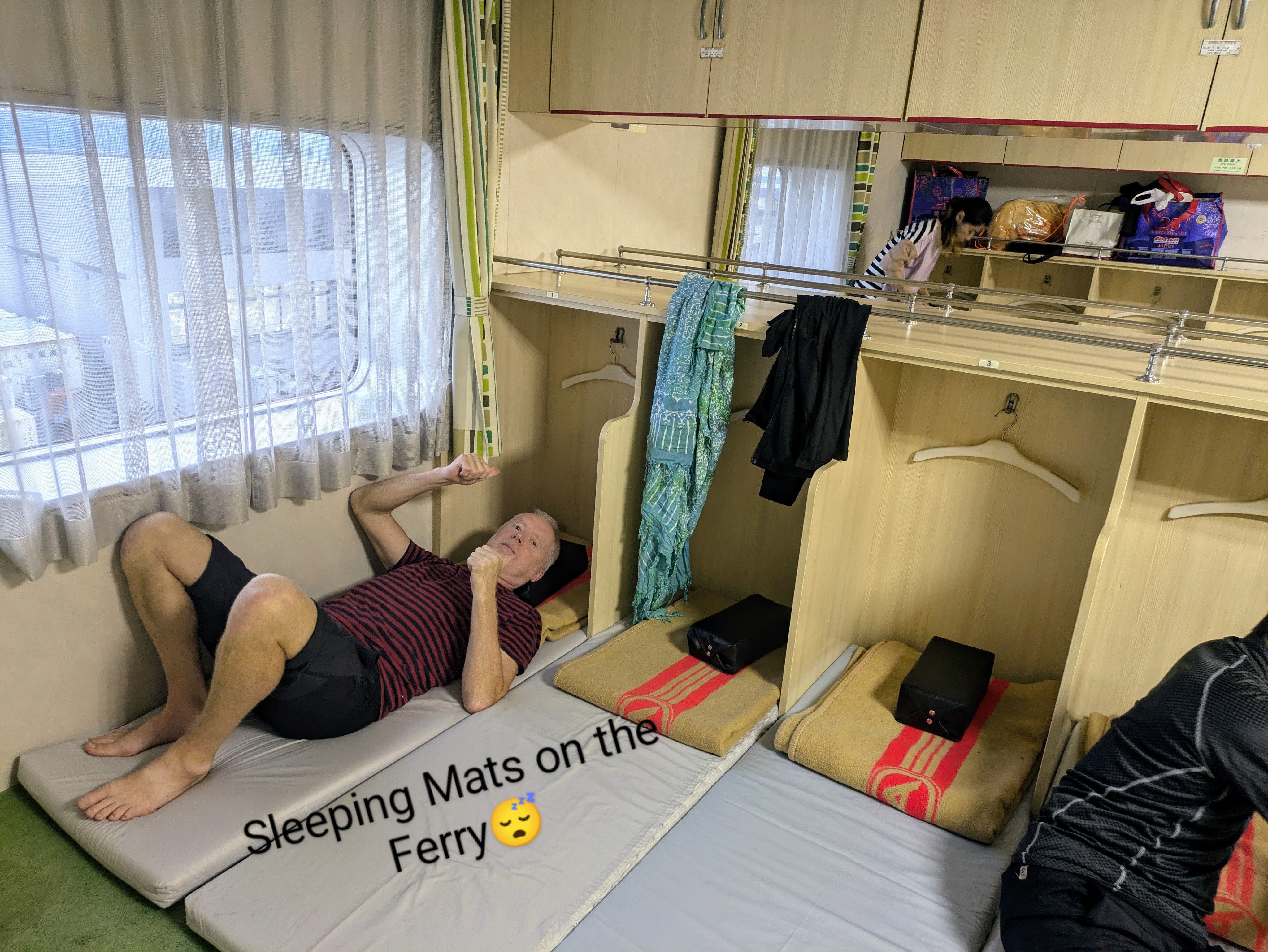
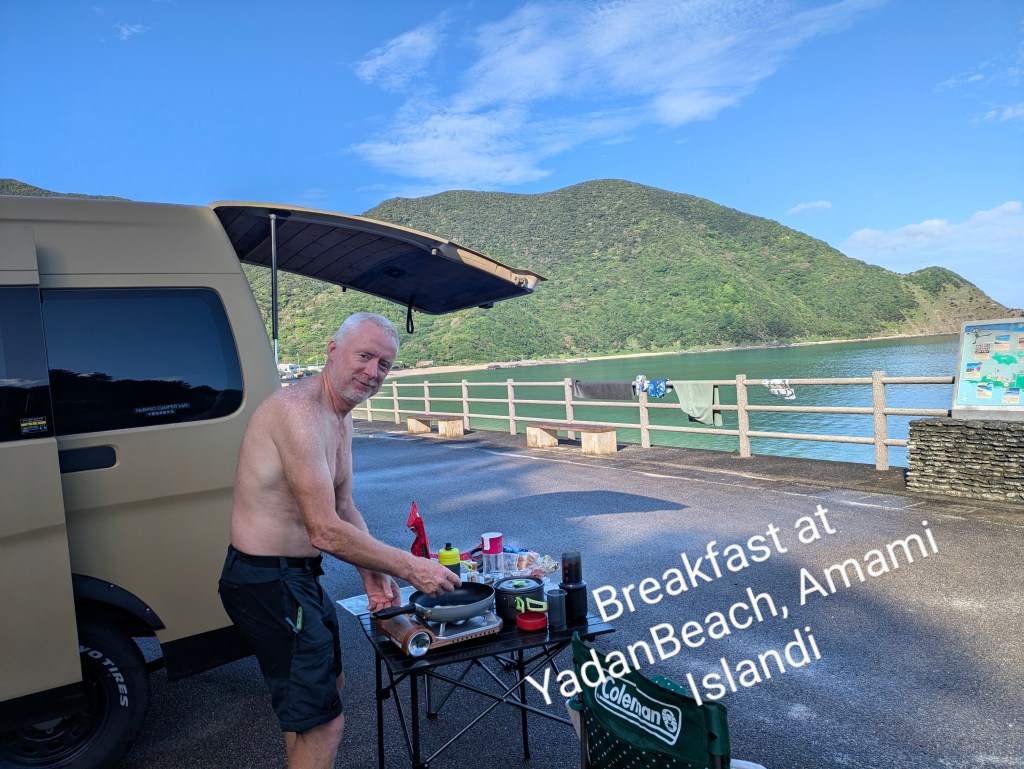
After a night on hard mats in the third class quarters, the ferry arrived in the early morning to a sleeping Amami Island. We parked near the sea, boiled some water on the stove for tea and coffee and waited for the island to wake it while we admired the dawn tranquillity . There was more birdsong than we had heard up to now and the loudest cicadas that we have ever heard.
Mainly there were green, forested hills, rising behind small fishing villages nestled on the shore. With the topography of steep hills coming down to meet the sea, we saw that it was a constant battle to prevent the land sliding into the sea from mudslides and the sea overtaking the land, a constant pull and tug. Driving around the island we witnessed first hand the hills reinforced with concrete and the sea barriers, both requiring constant maintenance.
The Amami islands are halfway between mainland Japan and Okinawa island group and not that far from Taiwan. Amami Oshima, the main island, is sparsely populated, smaller and less touristy than its more well known neighbour, Okinawa. It has a similar climate, warm with plentiful rain and a unique culture with worship of many gods of mountain, sea and forest. Many rituals take place around a lunar calendar and are overseen by an elder female.
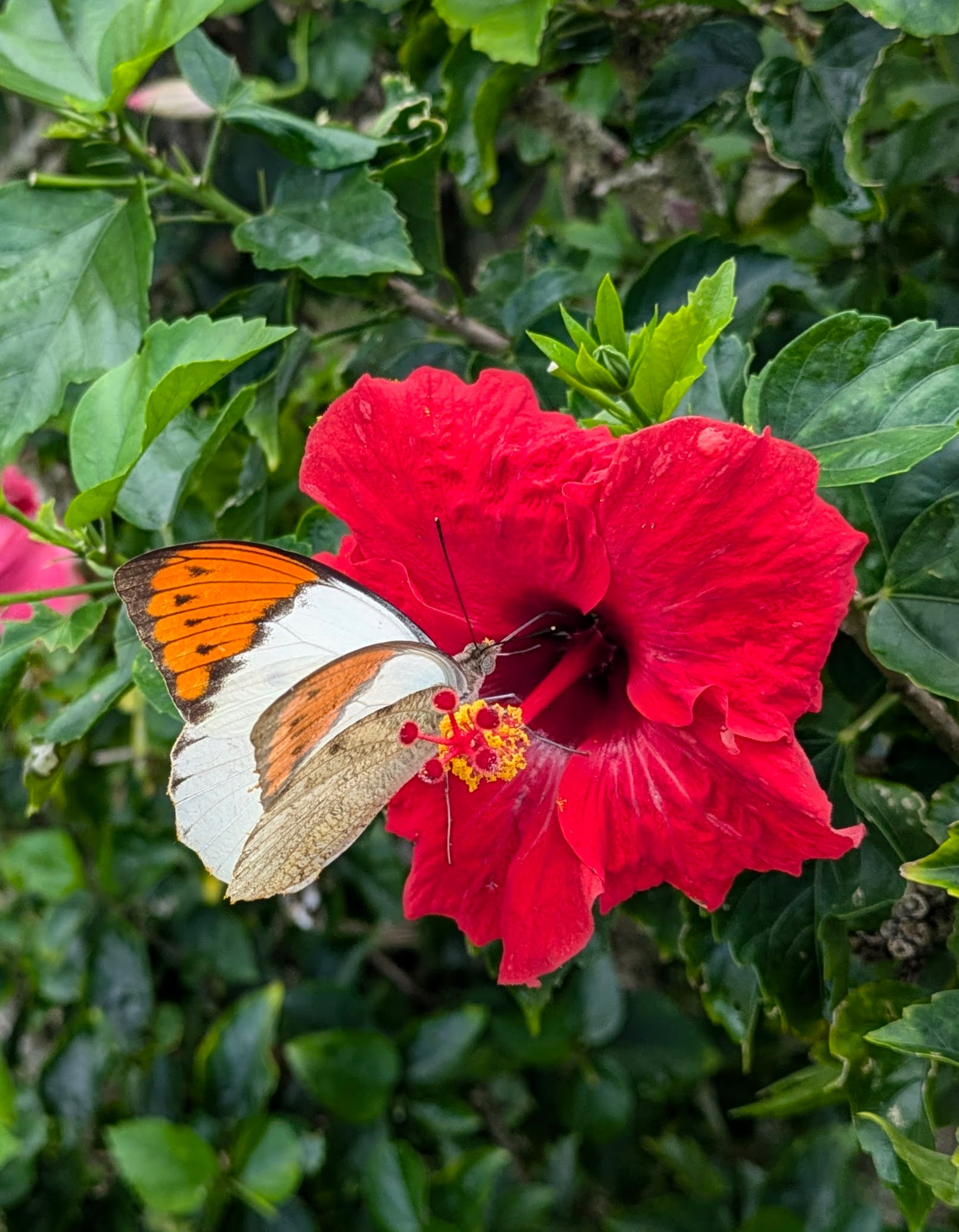
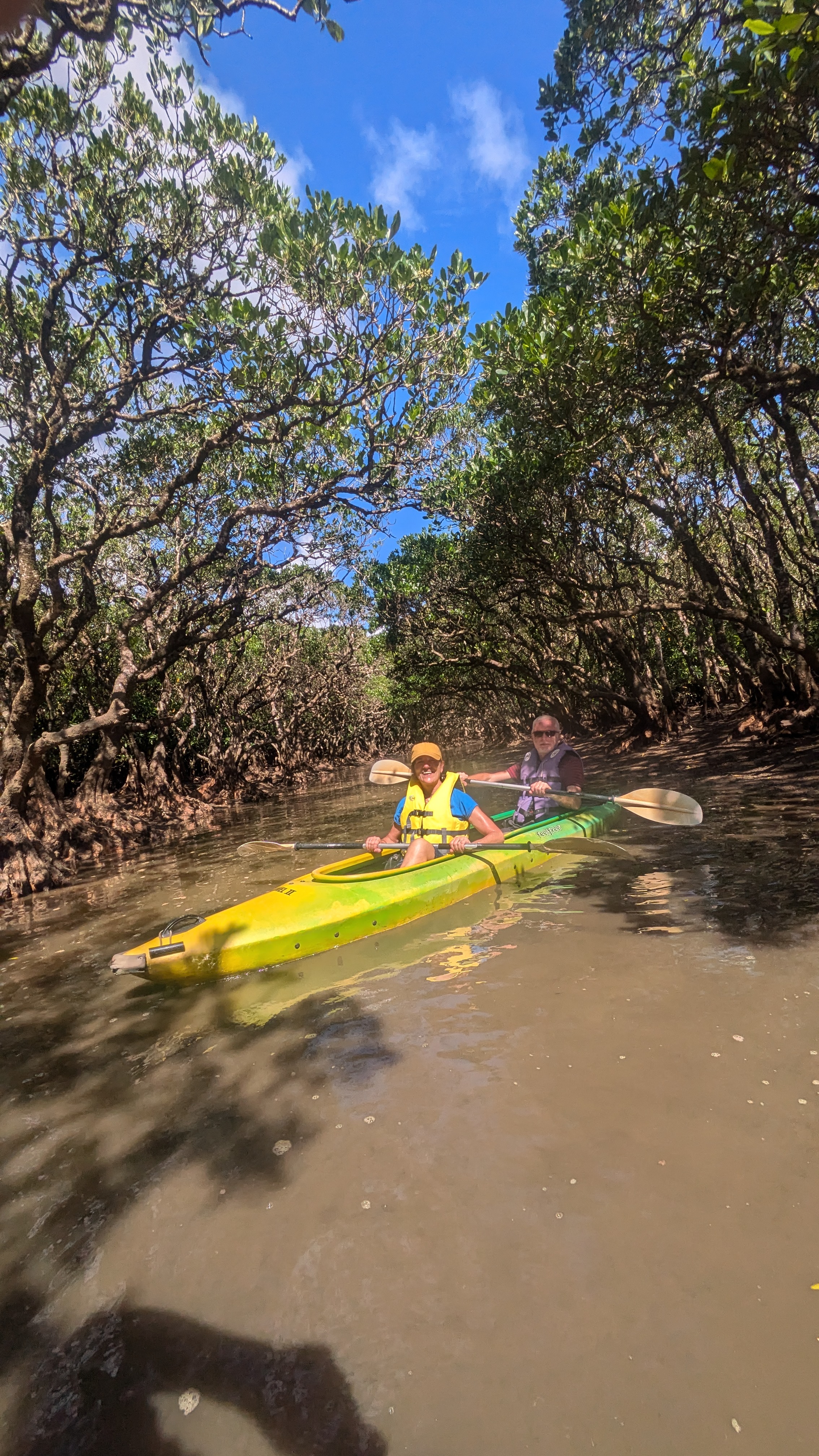
We soon found out how plentiful that rain could be. Although our first day on the island was warm and sunny (about 29C), it began to rain that night and didn’t stop at all for about thirty six hours. The rain wasn’t like rain at home, it was warm but still drenching and it caused more leaky windows. The deluge gave us an opportunity to visit museums, an aquarium and the wildlife conservation centre. Conservation and nature is an important part of Amami with its unique eco-systems of mangroves, forests, seashore and pristine waters. It is a World Heritage Natural Site. There are rare species of plants and animals, unique to the island. Sea turtles come ashore and lay their eggs on many of the beaches between May and July. There were so many butterflies that sometimes it was almost like a blizzard. There are huge efforts in progress to eradicate the mongoose which was introduced to help reduce the number of snakes and rats. The problem was that the mongoose ignored the snakes and rats who were sleeping during the day and found easier prey in the rare species of rabbit and woodcock which have both become endangered as a result. Everywhere we go, there are warnings about the snakes, particularly vipers. So far, we haven’t seen any…..fingers crossed, it stays that way.
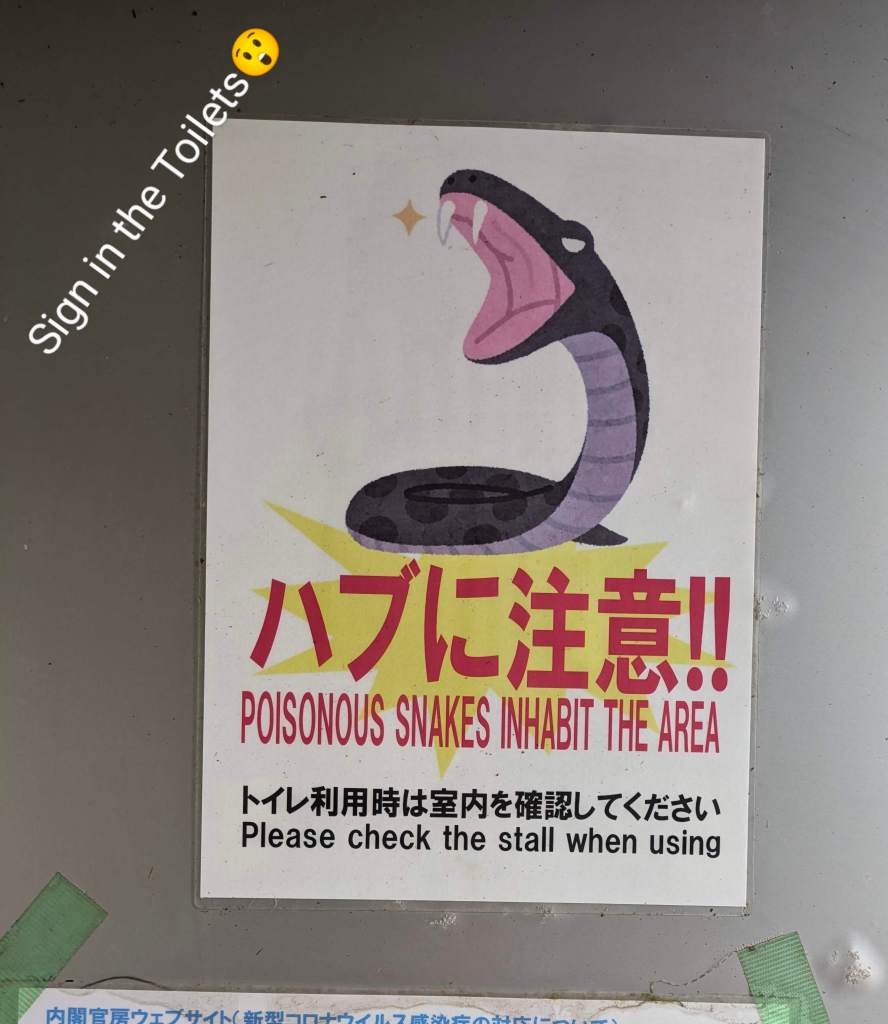
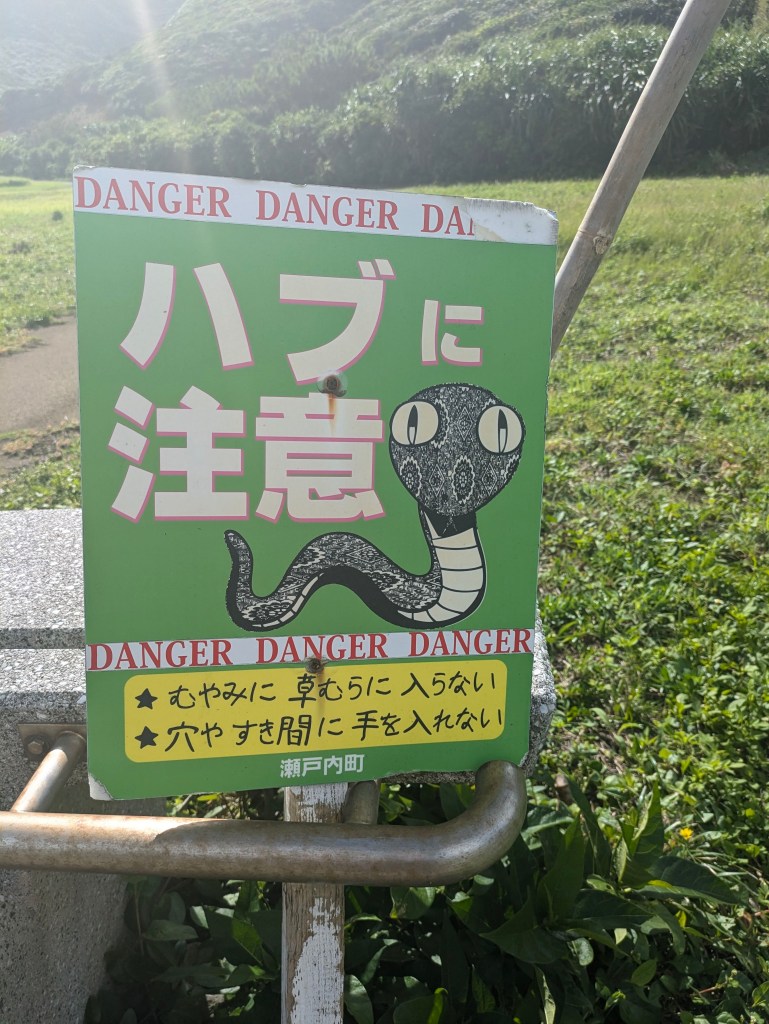
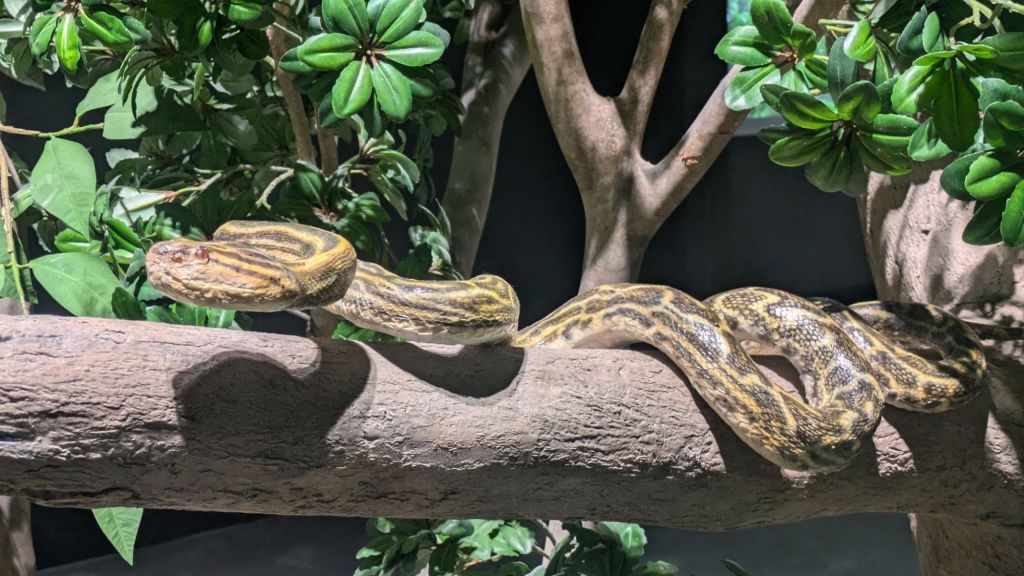
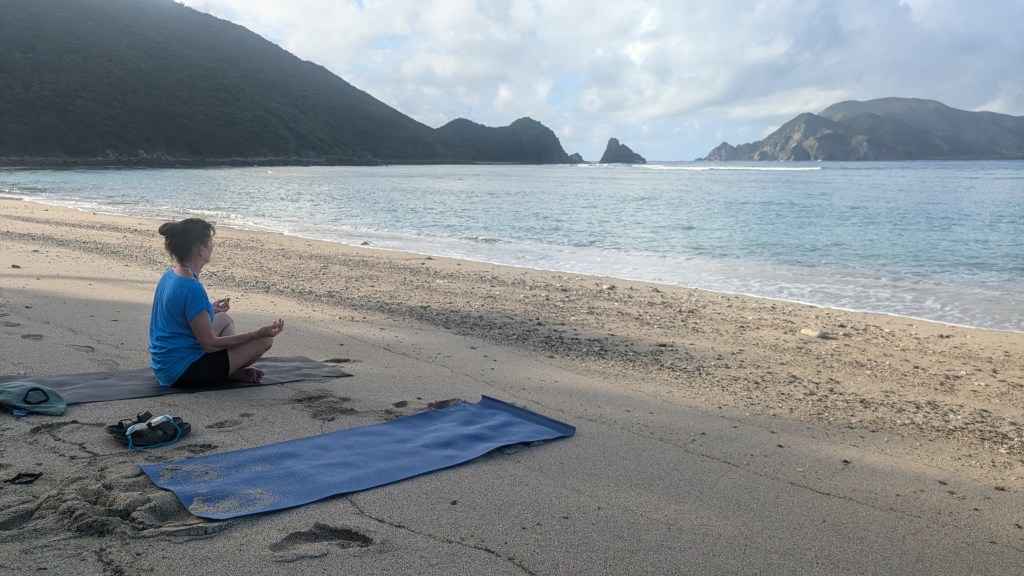
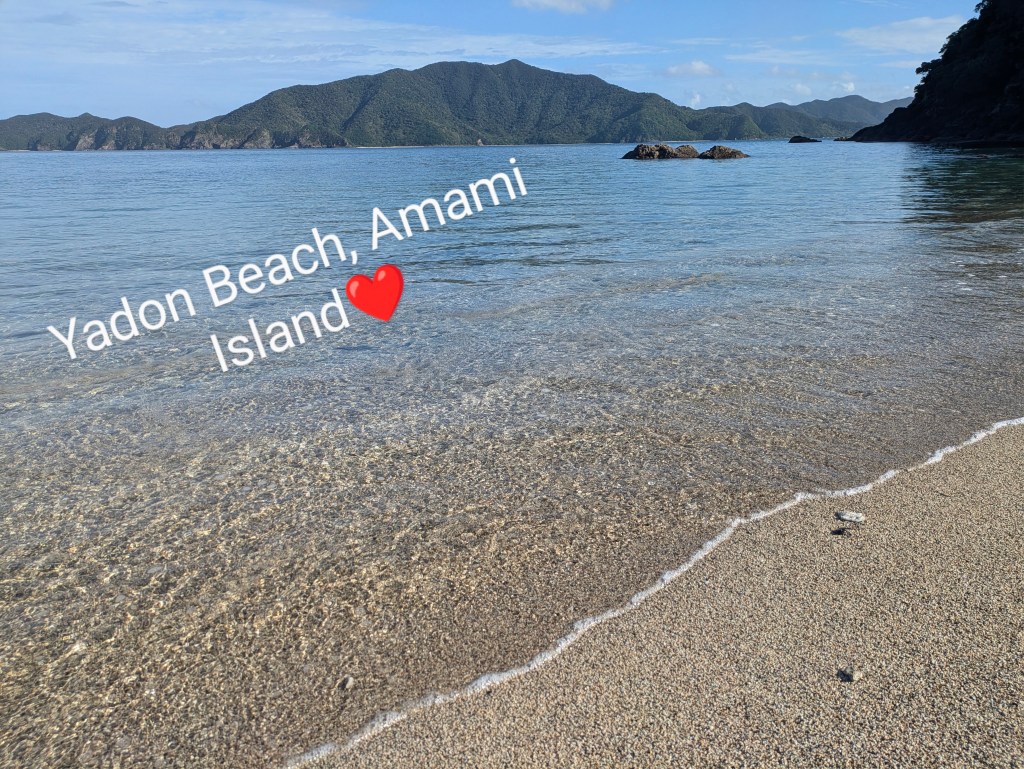
Last night we are parked up by Yadori beach, an idyllic spot on the edge on the forest. The temperature in the soft darkness was about 25C, there was a light breeze and we were enjoying some wine (which is surprisingly cheap in Japan). A man in a jeep stopped beside us to warn us about the danger of snakes in the region(all by Google Translate). That put a little damper on our evening, I even dreamt of snakes slithering in the van window that we had to keep open for some ventilation and I’m not even squeamish about snakes….usually.
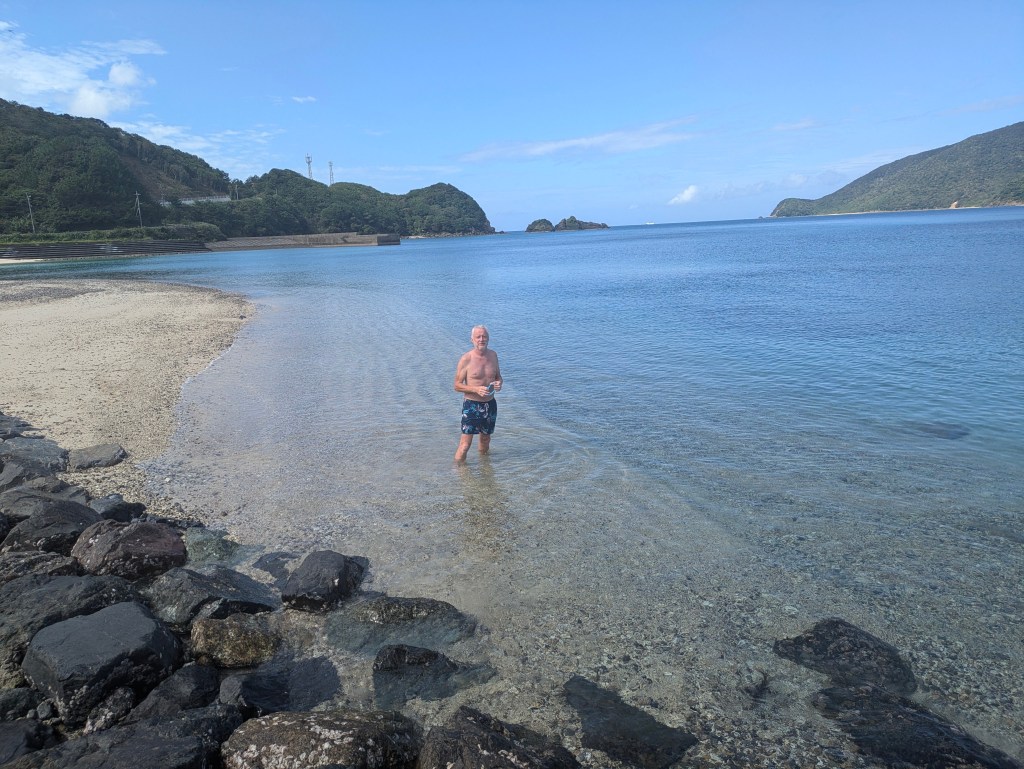
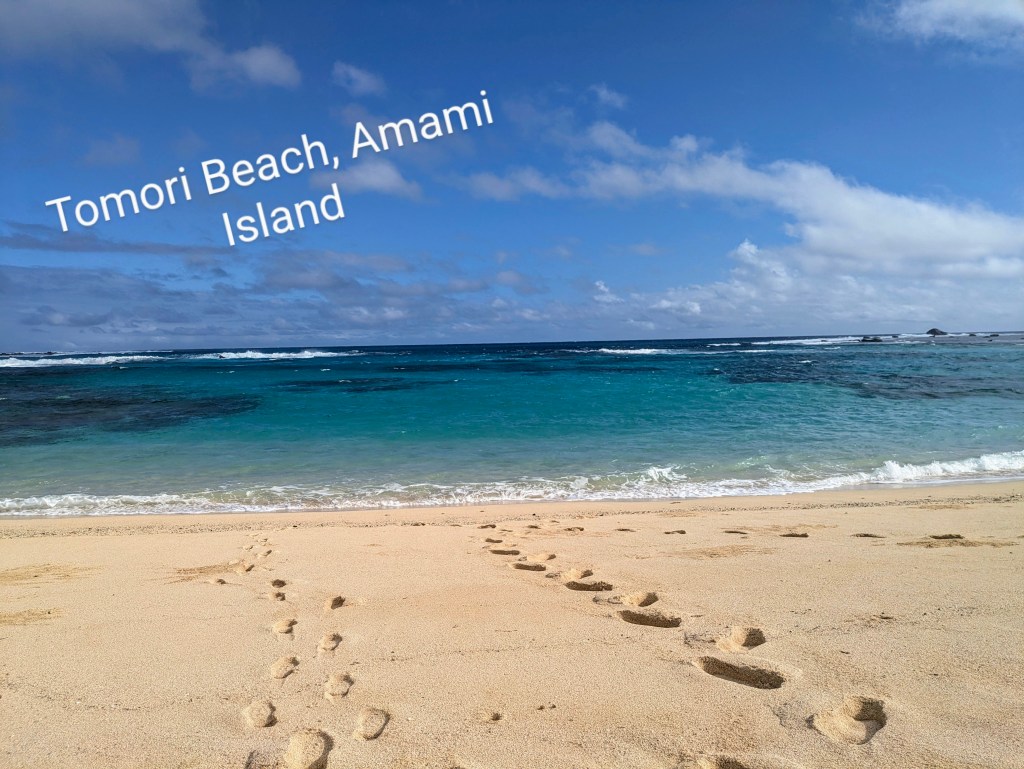
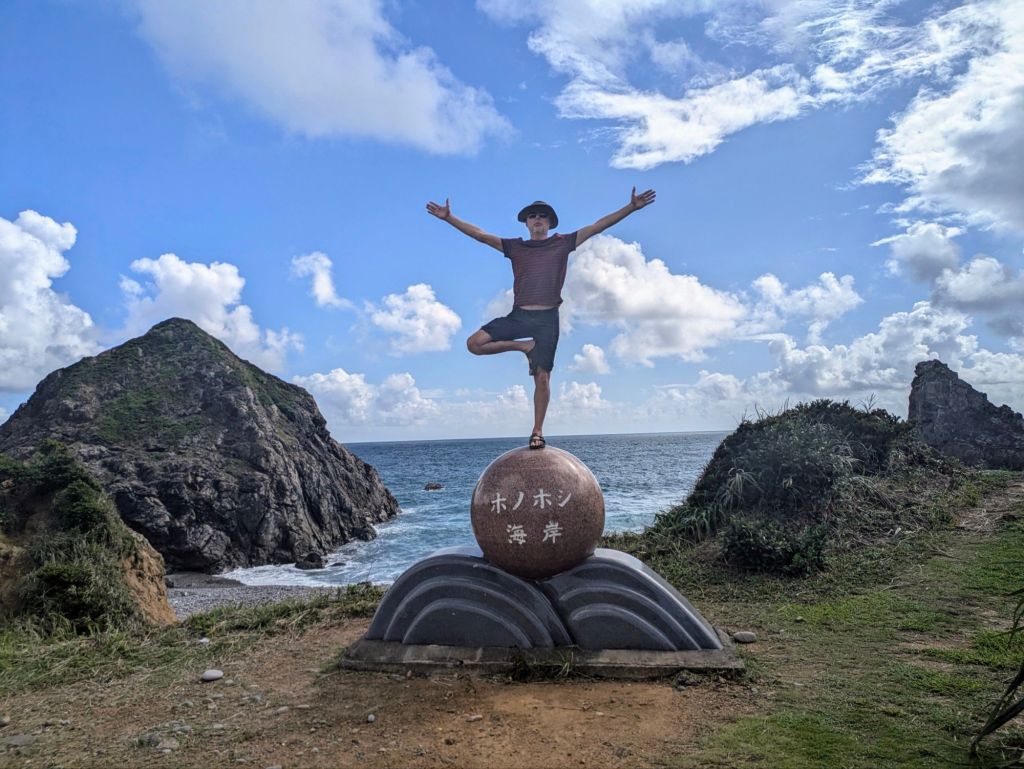
We are so glad that we made the decision to bring the van to the island. It allows us the freedom to travel around as the bus service is not extensive. Amami is an island made for camper vanning with so many beautiful places to park, often with toilets, showers and picnic tables. At the southern end of the island we were spoilt for choice, parking beside gorgeous beaches with crystal clear water where we snorkelled with colourful, flickering fish. Truly a paradise when the sun shines……except for the snakes.
But there’s a typhoon coming and it is predicted to be a strong one. We are going to try and change our ferry tickets so that we can leave a day early…..just in case
Till next time….hope your Bank Holiday weekend is going well
From a sunny, blue-skied Amami,
Mata Ne (またね)
 marienoonanblog
Stay safe lads. Keep us posted. Brilliant blog Marie. So interesting. Xxx
LikeLiked by 1 person
This Kuwaiti guy has been excitedly and eagerly waiting for this post! Meeting you both was definitely a highlight of my Japan trip.
You’re both incredibly inspirational and I’ve talked about your adventures to my parents with the hope of sparking motivation to chase the travel bug themselves, and see more of this breathtaking planet and hopefully meet beautiful people like yourselves. Keep writing, Marie. You’ve gained a fan in me 🙂
LikeLiked by 1 person
Keep Trekking !!! 👏👏👏💕❣️
LikeLiked by 1 person
This Kuwaiti guy has been excitedly and eagerly waiting for this post! Meeting you both was definitely a highlight of my Japan trip.
You’re both incredibly inspirational and I’ve talked about your adventures to my parents with the hope of sparking motivation to chase the travel bug themselves, and see more of this breathtaking planet and hopefully meet beautiful people like yourselves. Keep writing, Marie. You’ve gained a fan in me 🙂
LikeLike
Hi Benjie, great to hear from you. We really enjoyed meeting you too.. Hope that you didn’t have any more experiences where you were in the dark at a dead end near a graveyard in front of a sign telling you that serious crimes have been committed in the area😲. Maybe we will see you in Ireland sometime. Thanks for the lovely comment.
LikeLike