Our visit to Fukuoka didn’t start well. The traffic was horrendous as we made our way into the city from Nagasaki. Fukuoka is the largest city in Kyushu (one of the main four islands in Japan) and is one of Japan’s ten most populated cities…and it certainly felt like it when we were there. With its closeness to the Asian mainland (closer to Seoul than to Tokyo), Fukuoka has been an important harbor city for many centuries and was chosen by the Mongol invasion forces as their landing point in the 13th century. It is often called a ‘mini’ Tokyo, it even has a smaller version of Tokyo Tower and as we don’t plan on visiting Tokyo, Fukuoka seemed like a good option.
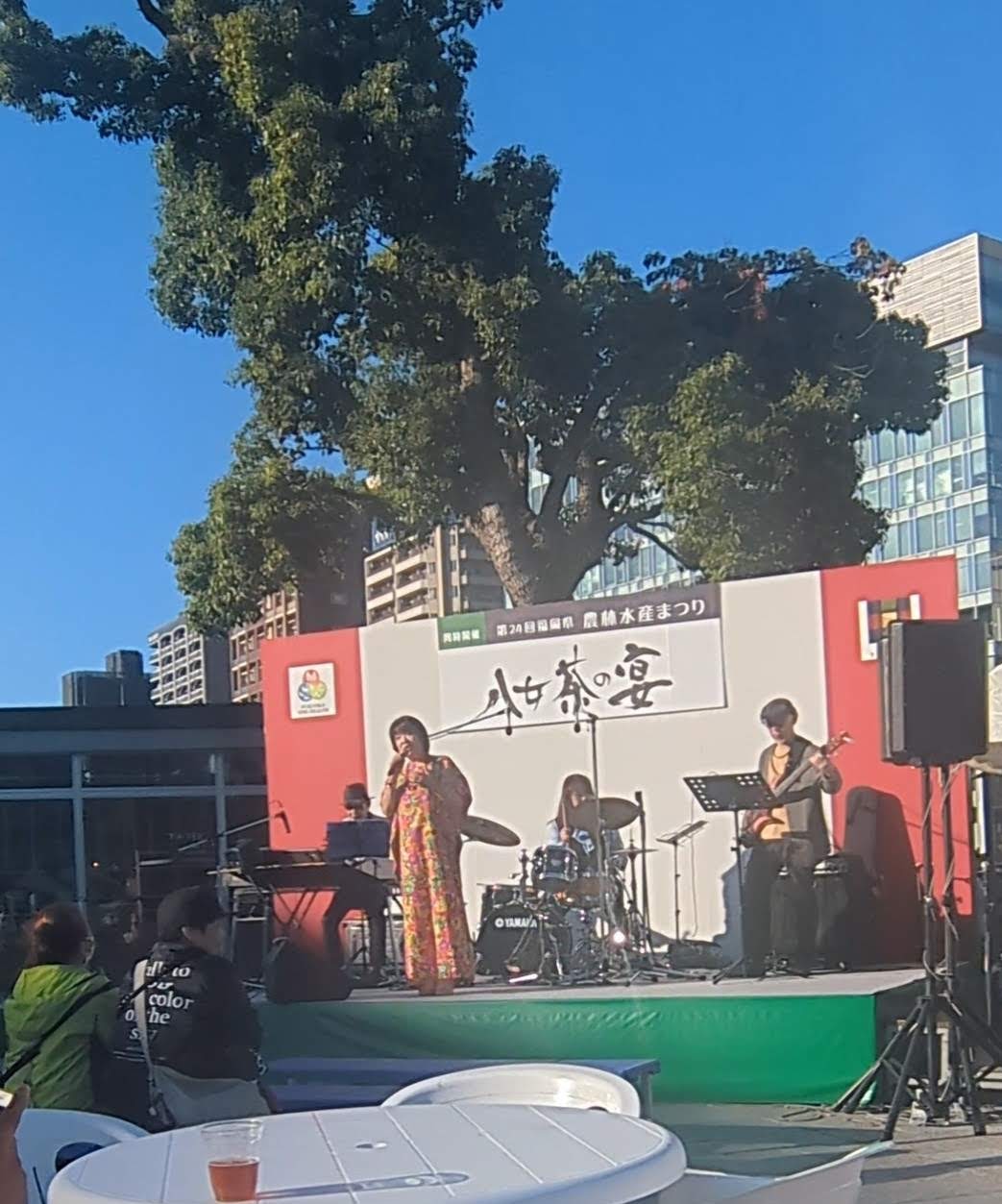
We thought that we might treat ourselves to a hotel but the reasonably-priced hotels/guesthouses were booked out so we resorted to searching for a parking spot close to public loos. In the city centre, we found a possible spot that met our criteria (proximity to toilets) but it was just off the main road with roaring traffic so our search continued. Google directed us to another parking area which involved a heart-stopping lurch across four lanes of traffic into a tiny alleyway. With the van almost touching the sides of the buildings, we prayed that it was one-way system and hoped we wouldn’t encounter anything coming in the opposite direction. Thankfully, we found ourselves in a little oasis with some free parking spots, quiet but still in the heart of things. There was a little park nearby with public toilets, festival stalls selling food and local produce and best of all, a jazz band playing on a small stage. At one tent, a woman beckoned us over to give us some vouchers (a thousand yen each (about €6)) which could be redeemed at any of the stalls….a welcoming gesture for foreign visitors. We sent a German man who was cycling around Asia in her direction so that he could get his ‘welcome vouchers.’ The sun was shining, the music was good and we relaxed with some seaweed dumplings and a cold craft-beer. The beer was in plastic glasses…..but hey, you can’t have everything.
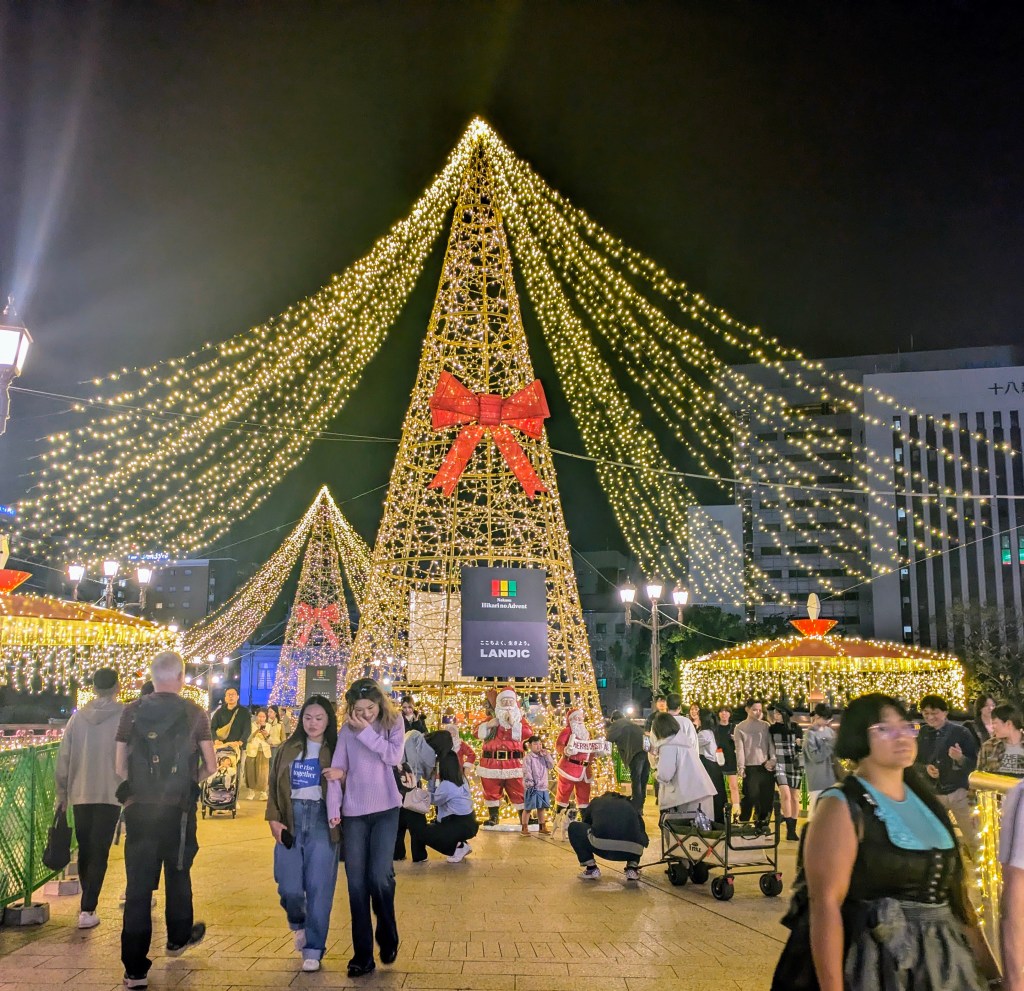
Later we wandered around a crowded Chinatown, and marveled at the long queues outside many of the restaurants and the patience of the Japanese who formed orderly queues, keeping a little distance from each other. Christmas also came early to Fukuoka with coloured decorations, dancing Santas and flashing lights festooning the bridges, streets and shopping malls. Christmas is not a public holiday in Japan and less than 1% of the population are Christian but the commercial aspect of the season is enthusiastically embraced. Christmas Eve is regarded as the most romantic night of the year, a bit like our Valentines Day when couples are out and about, love is in the air and not having a date if you’re young requires staying at home to avoid embarrassment.

Away from the queues and crowds, we found a cellar bar with subdued lighting, soft music where we were the only patrons, the other extreme and not really what we wanted. The bartender gave us soft, hot towels to wipe our hands as soon as we sat down. This wasn’t totally unusual as even the most shabby of establishments hand out wet wipes wrapped in plastic to clean your hands. Bowls of spicy nuts in dainty porcelain bowls appeared on the table (no raw cabbage and soy sauce in this establishment to munch with your drinks). We should have known that we would pay dearly for such luxuries. When the cover charge, was added to our bill (we didn’t even realize that there was a cover charge) our two drinks (one each) cost significantly more than we had paid for dinner! Thank goodness we didn’t opt for a second round.
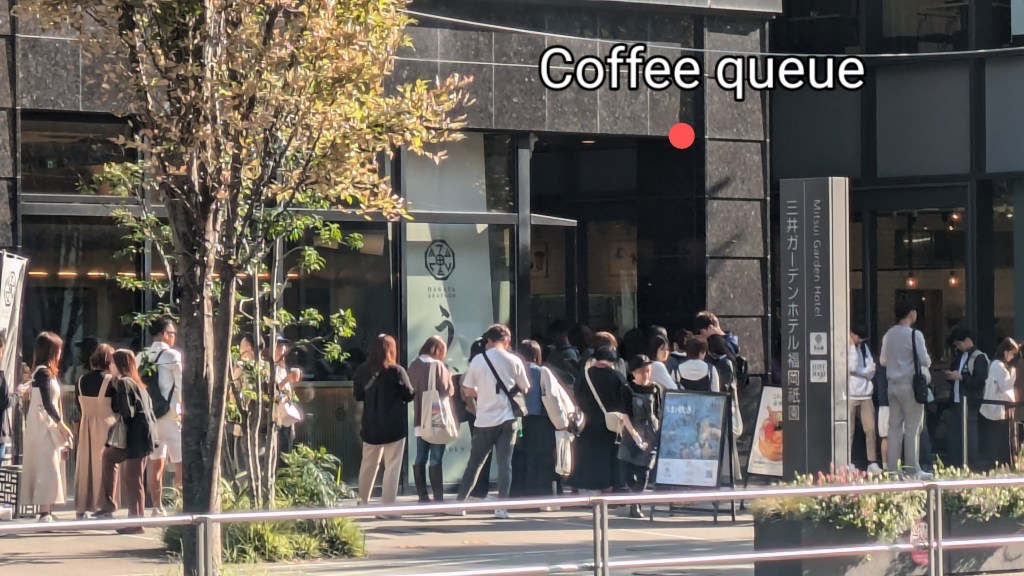
Our quiet oasis turned noisy during the night with garbage trucks collecting trash, vans parking and then moving off, filled with workmen dismantling the festival stalls in the park. In the morning, we went bleary-eyed in search of coffee/tea only to find more orderly queues stretching down the street outside all the open cafes. Although we normally avoid places like Starbucks, this time we were thankful to sit down with coffee and cinnamon buns without any tiresome queueing and avail of their strong Wi-Fi where I was able to upload the last blog post with photos. Maybe we should take lessons in patience from the Japanese who queue patiently, mainly in silence, without any visible sign of irritation.
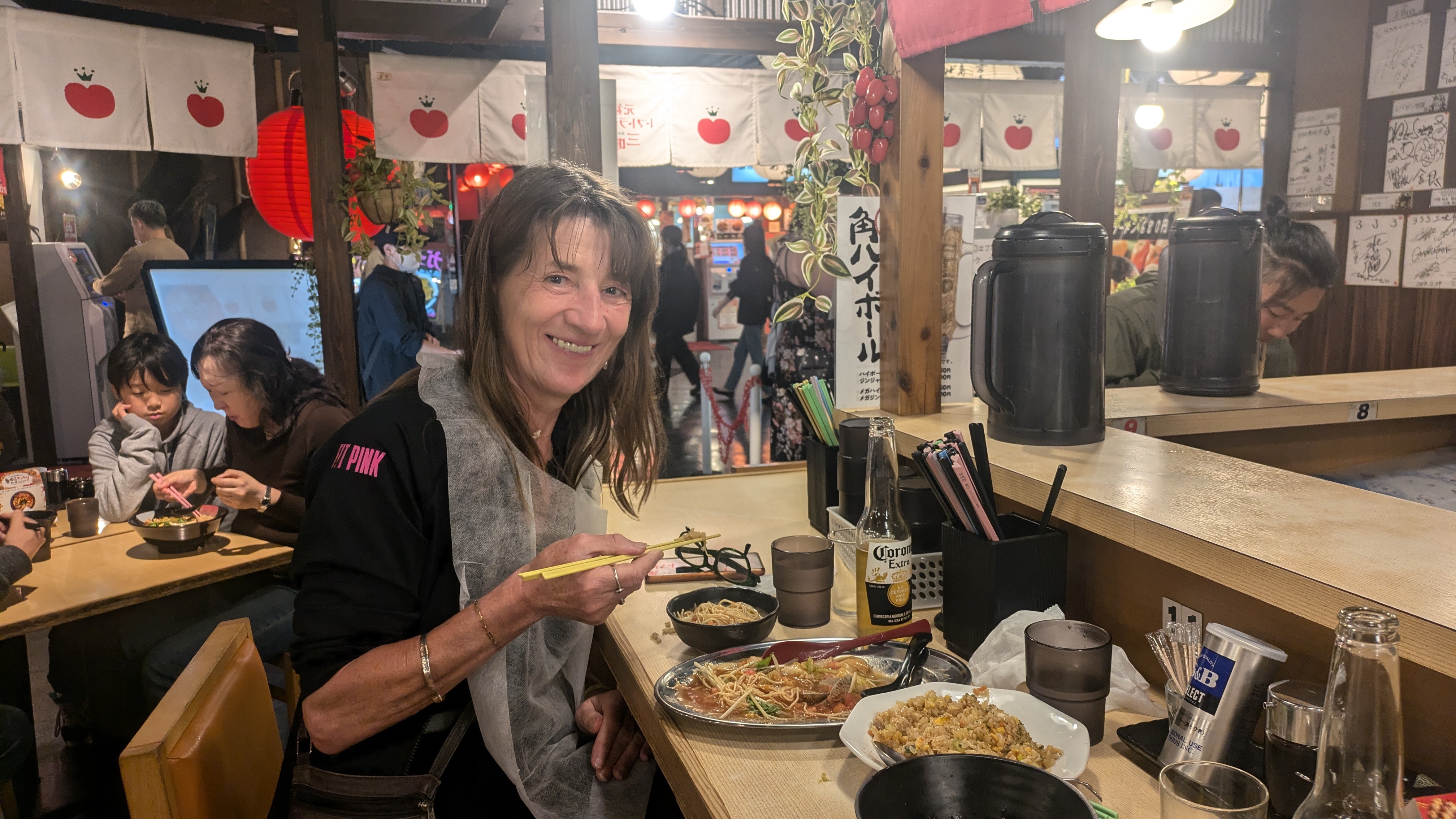
The mountains were calling us and we felt a strong urge to get out of the city and into the countryside but there was something we had to do before we left. Fukuoka has a reputation for making the best ramen (a noodle soup) in the entire country so we couldn’t leave without sampling some. There are several traditional recipes but the one that is most prized involves boiling pig bones for hours, maybe days, until the marrow leaks out and becomes a thick cream which is then used as a base for the soup. The ramen was served in big bowls and eating it should be accompanied by loud slurping to show appreciation. Bibs are provided to protect clothes from the inevitable splashes. Reading the descriptions of the pork-bone soup made me feel queasy so I didn’t ‘pig out’ but opted for a tomato based ramen with seafood which also used a traditional recipe. It was delicious but I have my suspicions that a pig was involved somewhere along the process.
About a hour and a half’s drive outside Fukuoka is a mountain where over 400 years ago, white-clothed monks, practitioners of an ancient ascetic religion called Shugendo, chose sacred mountains until they reached their ultimate goal of enlightenment. We were eager to follow in their footsteps and hike the holy mountain to see what enlightenment and spiritual power it might bestow upon us.
The winding mountain roads coiled through pottery villages with tables of ceramics set up under flame-coloured maple trees and smoke rose from the many kilns. Even before we reached Mt Hiko, we were enveloped by a sense pf peace mixed with exhaustion from lack of sleep from the night before. We parked by a stream next to toilets at the base of the sacred mountain with nobody else around, cooked up a dinner of potatoes and mushrooms ( the quality and variety of both in the supermarkets was amazing) and watched the stars come out one by one until the sky overhead was a star- studded canopy, more beautiful that all the twinkling city lights.
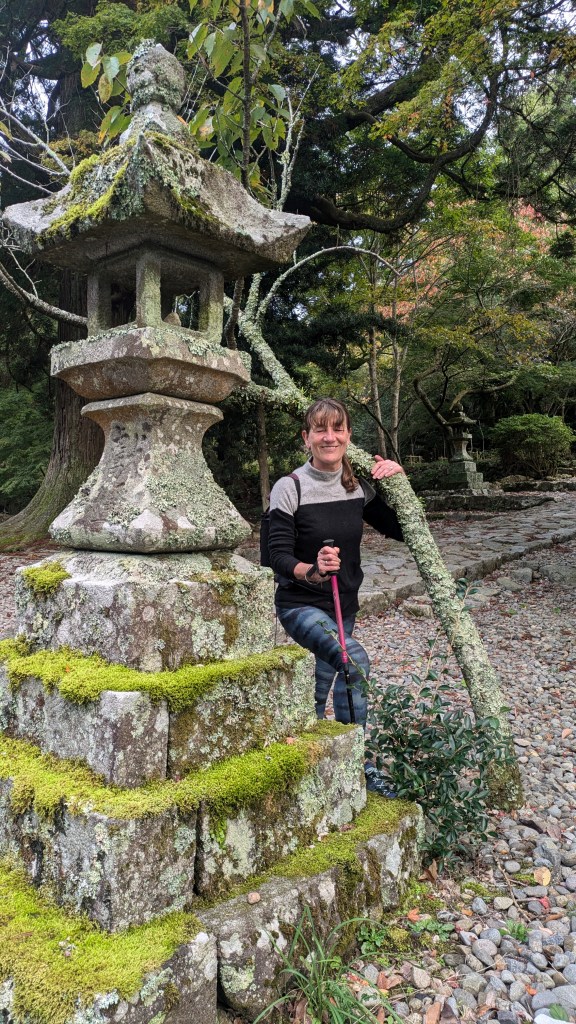
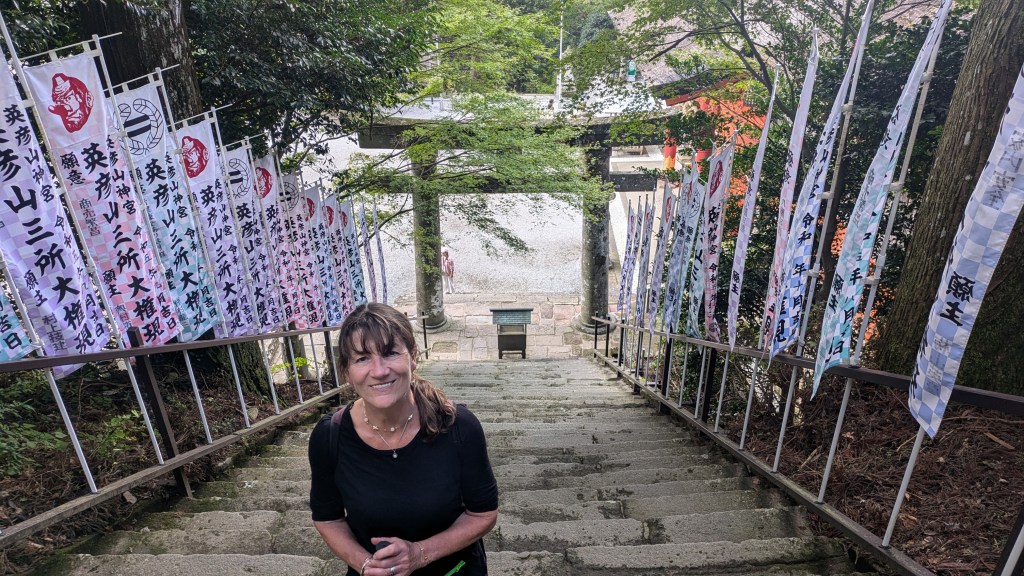
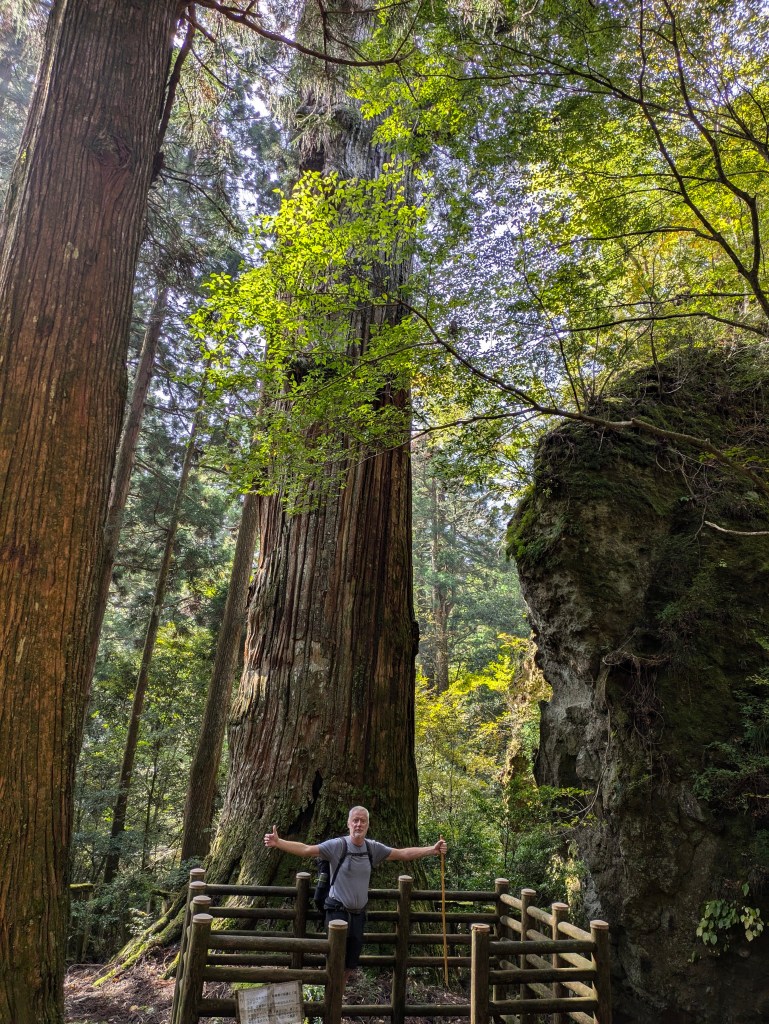
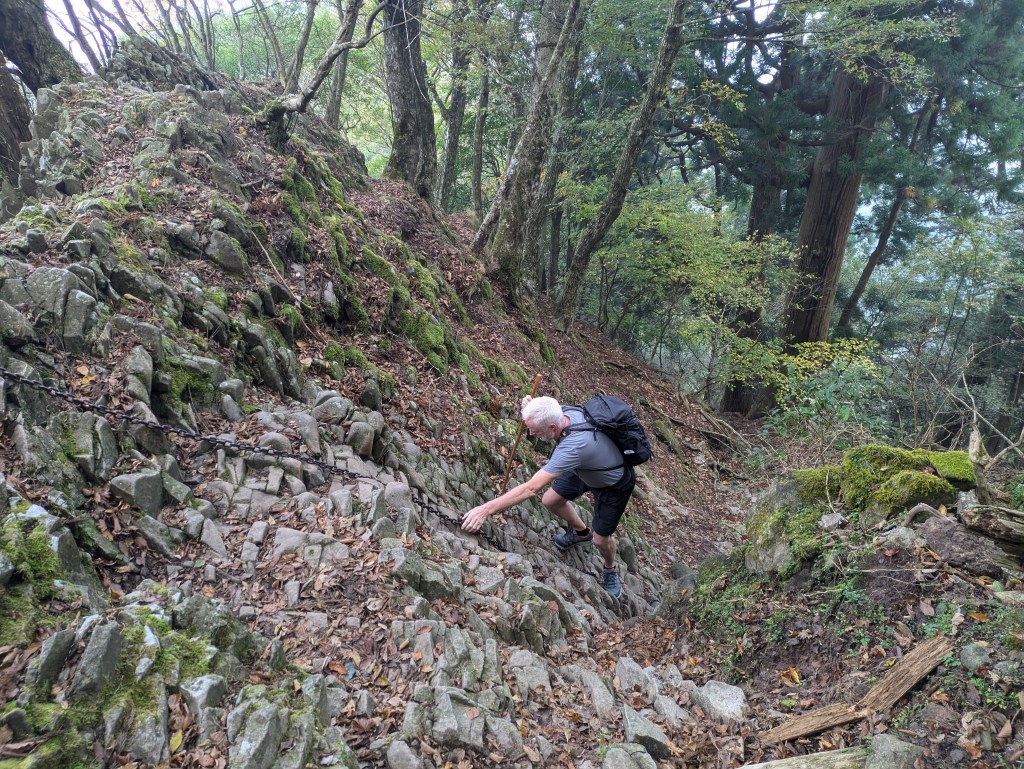
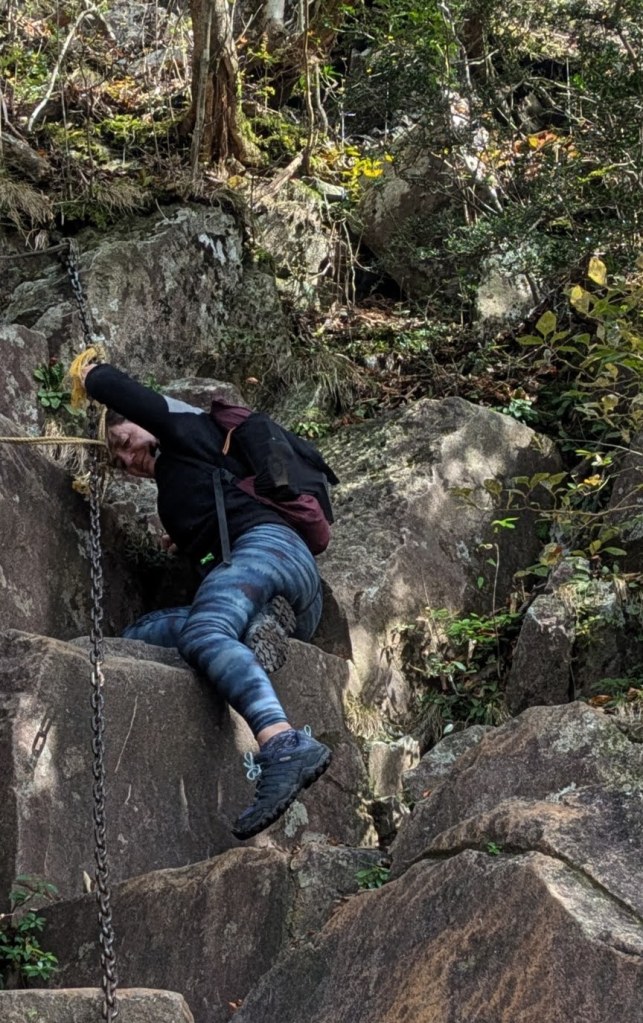
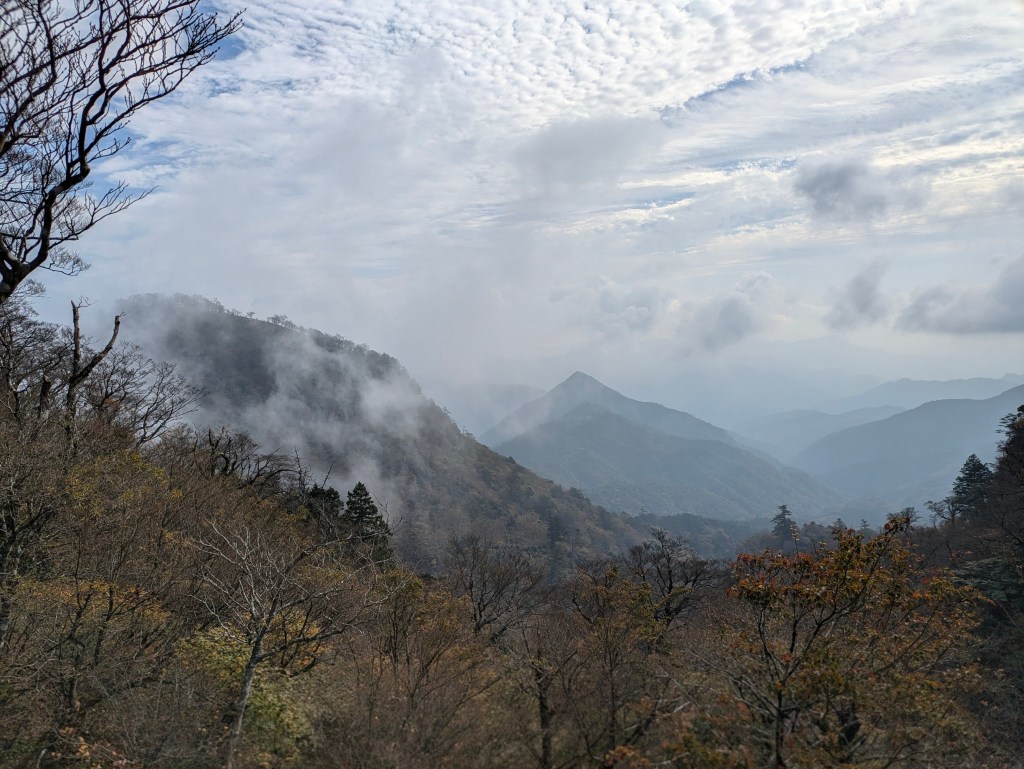
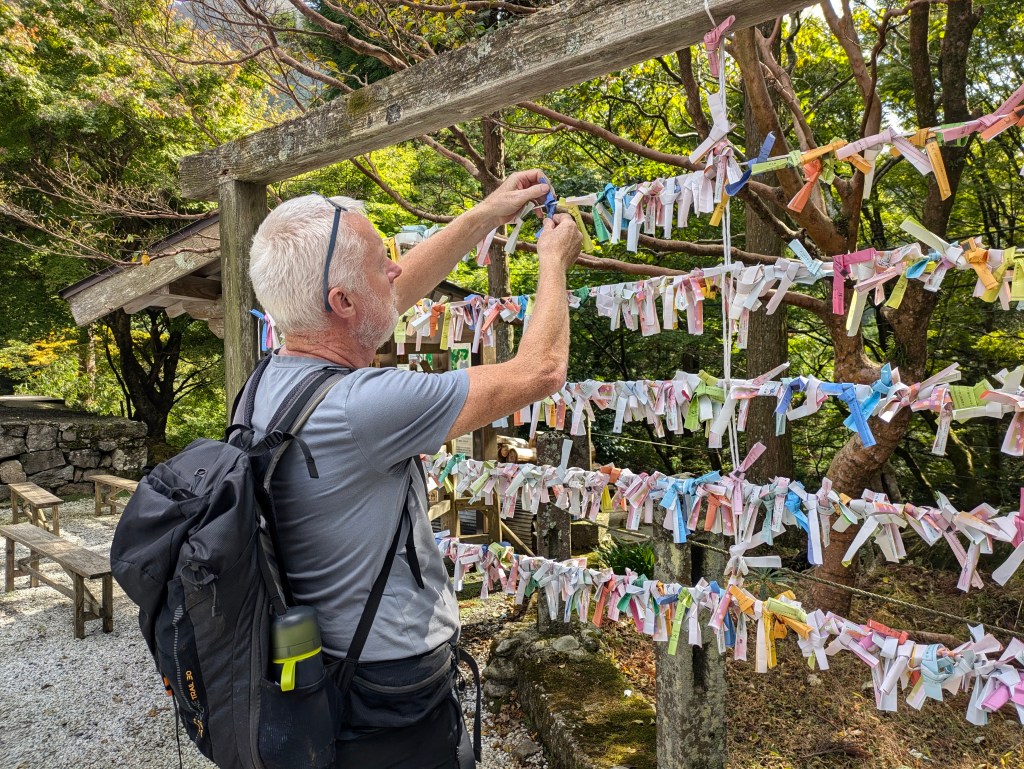
The following morning dawned cool and bright as we began hiking past moss-shrouded shrines with birdsong and the higher peaks still draped in drifting mist. Maybe it was because we had read the history of the mountain and were open to its power but right from the beginning we felt that we were in a special place. The hiking trails were well-marked with lots of looped walks and decisions to be made about whether to continue, to turn back or to walk in circles. Maybe this was the essence of true enlightenment, that all paths are correct, you just make a decision and accept it. Mt Hiko really consisted of three peaks and as we neared the first peak there were signs in Japanese that the path was closed and a barrier was pulled halfway across. It was easy to bypass the obstacle so we continued regardless, we could always plead ignorance if challenged. As we ascended we heard hammering and saw that there was construction work going on at the summit where the existing shrine was being enlarged. We kept our heads down and skirted around the building works and headed for the adjacent peak with stunning views of the surrounding mountains, dressed in their glorious autumn foliage, vivid hues of red, gold and purple. If the first section was beautiful and easier than expected, the next section was more challenging but truly ‘wow’. There were chains embedded in the rocks in places but they were more as an aid for climbing rather than strictly necessary. We diverted to see an incredible ancient cedar tree named Onisugi, reputed to be 1200 years old. This was truly a special day, a hike that was good for the soul and we were physically tired but spiritually refreshed after a six hour round trip…..although true enlightenment may require some further strenuous activity.


It was time to leave the large island of Kyushu and head over another long, impressive bridge to Honshu, the second largest and most populated of the Japanese islands. We arrived at dusk at the small town of Hagi and parked up on the north side of town beside a small beach. We didn’t realize how beautiful the spot was until dawn when an early morning trip to the toilet revealed islands, distant mountains, a calm sea and boats moored in a little harbour. But then you’ve guessed it….it began to rain and this time the rain was cool and drizzly. It was about 12 degrees, the coldest we’ve had in Japan apart from when we were high in the mountains. Hagi is also famous for ceramics which are mainly in delicate pastel shades.
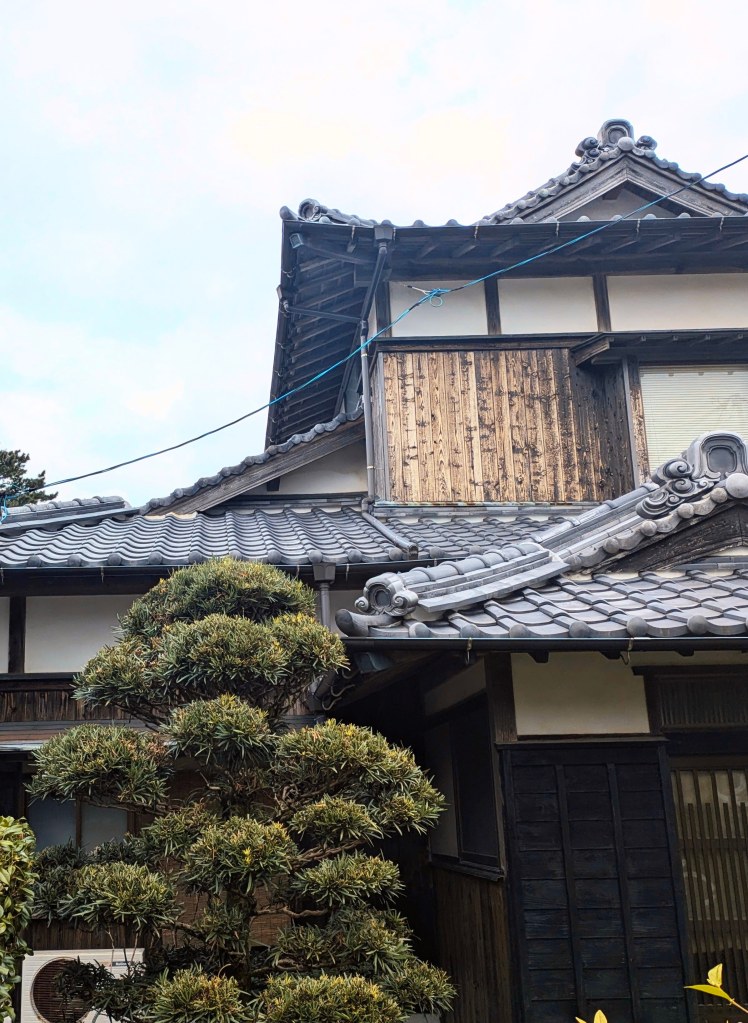
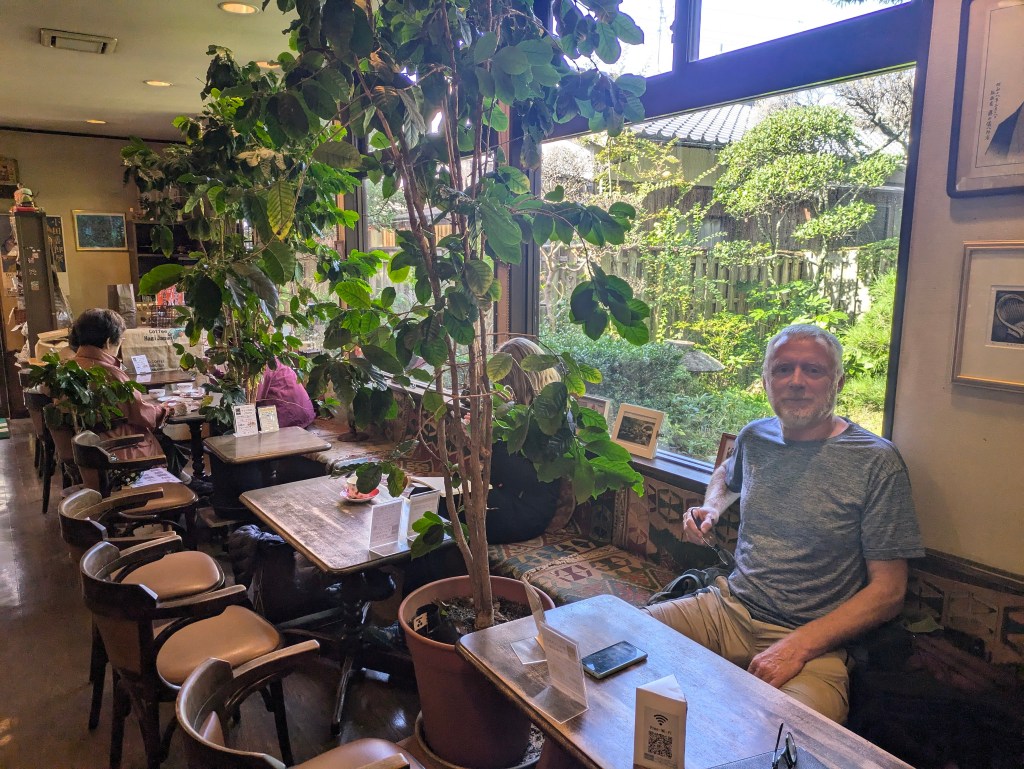
We were in need of a laundromat so while our clothes were whirling in the washing machines, we wandered around town with its wide streets and many traditional buildings, a place little changed from the time of the Samurai. We stumbled across a shop selling clothing for a reasonable price so prompted by the chilly wind, we bought a warm jacket each. We didn’t know it then but the cosiness of the jackets were going to be very welcome in the coming days with a further dip in temperature. In the meantime we drank tea in a coffee house and eat home-made cake made from locally- grown figs and mandarin oranges, probably the most delicious cake we have eaten on our travels.
Our breaths blew clouds in the cold morning air as we parked at the starting point for the Sandan Gorge, A small man, muffled in a thick coat, was sitting outside the information booth. He got up on our approach, leaned heavily on a cane, and pointed to a map giving us the bad news that the recent heavy rains had caused landslides and several parts of the Gorge were closed because of the risks of more rockfalls and mudslides. He told us that he was a guide but he was out of action because of a bad fall a few months previously, that his favourite country was Alaska and that he had once stopped a grizzly bear in his tracks with his stare. He gave us an example of the ‘stare’ which also involved barring his teeth. Since then, everyone in the village called him Big Bear.
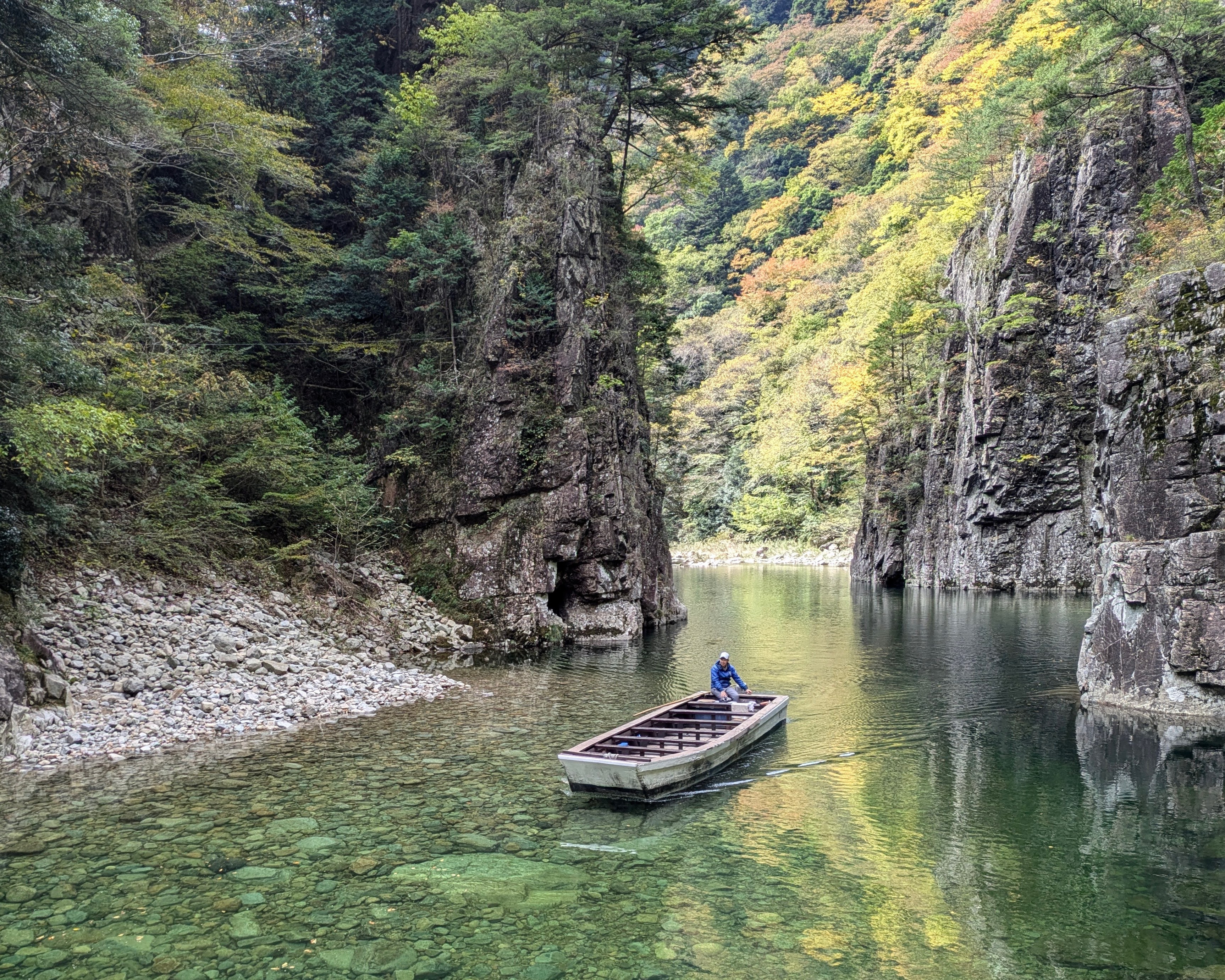
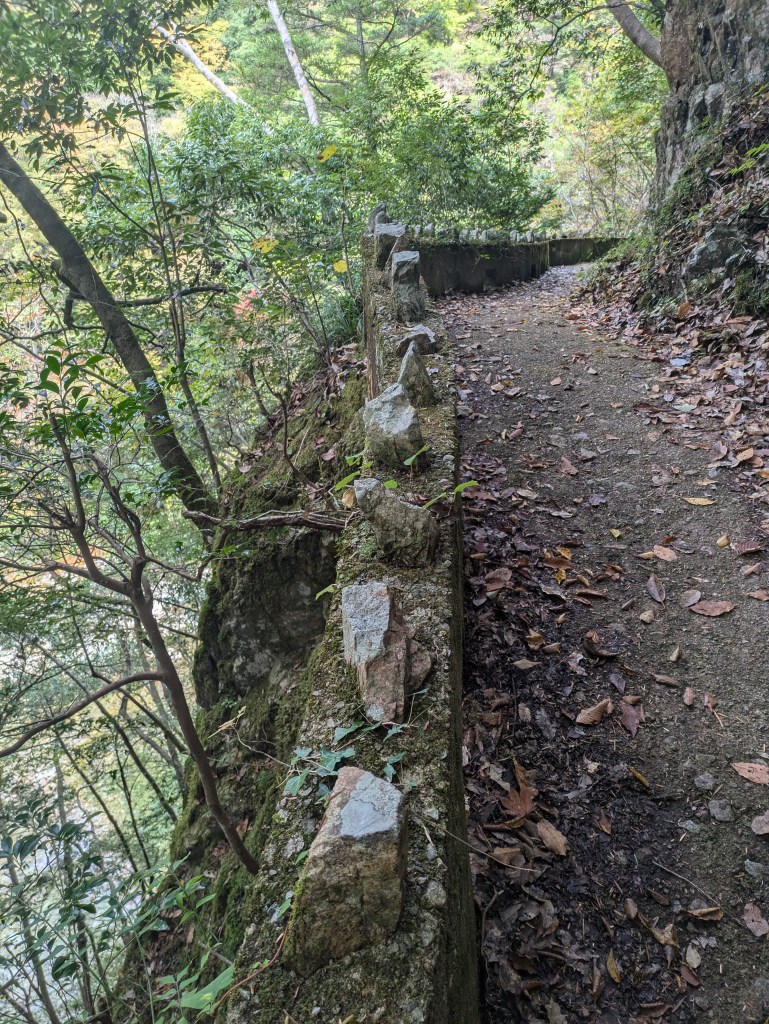
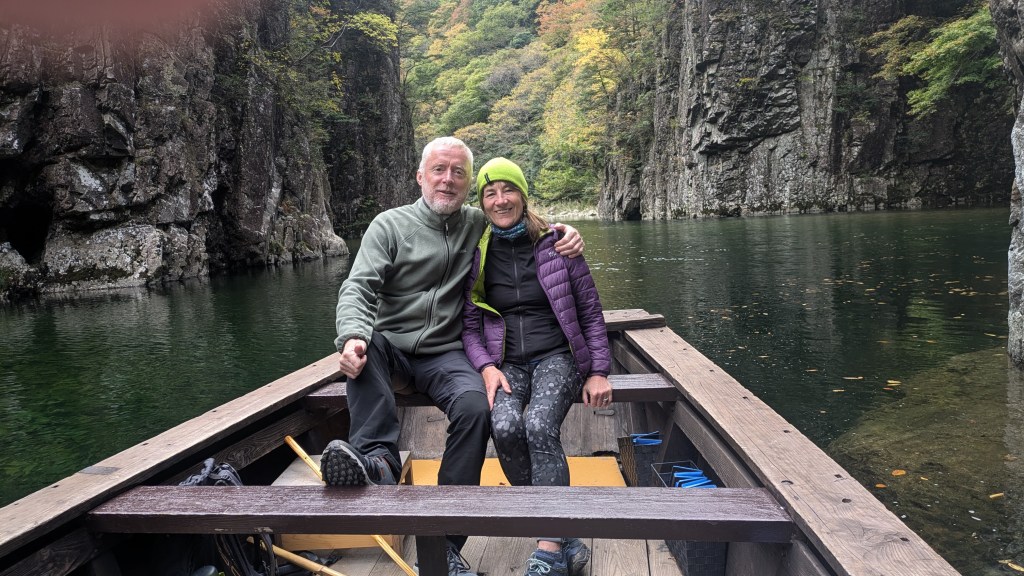
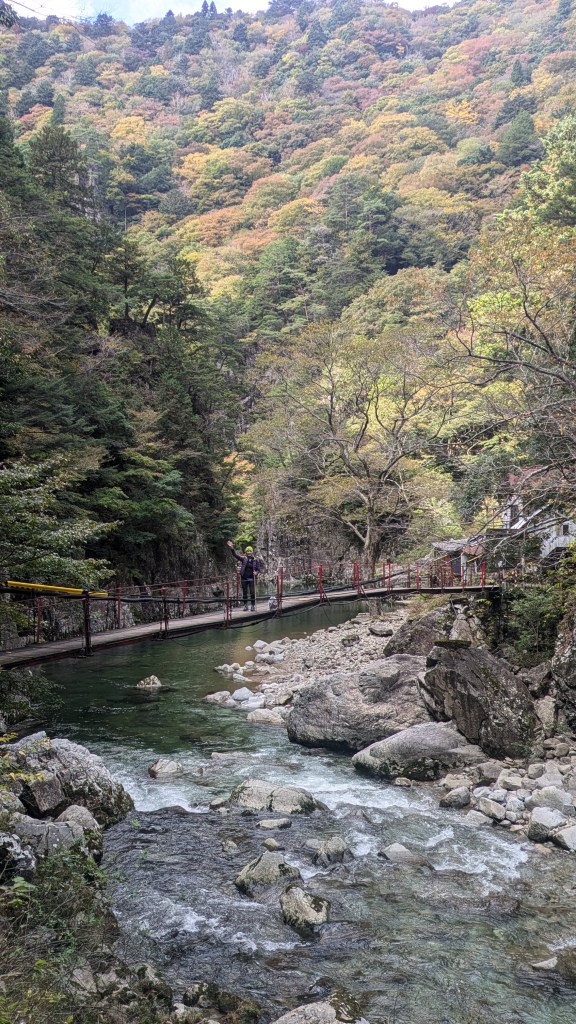
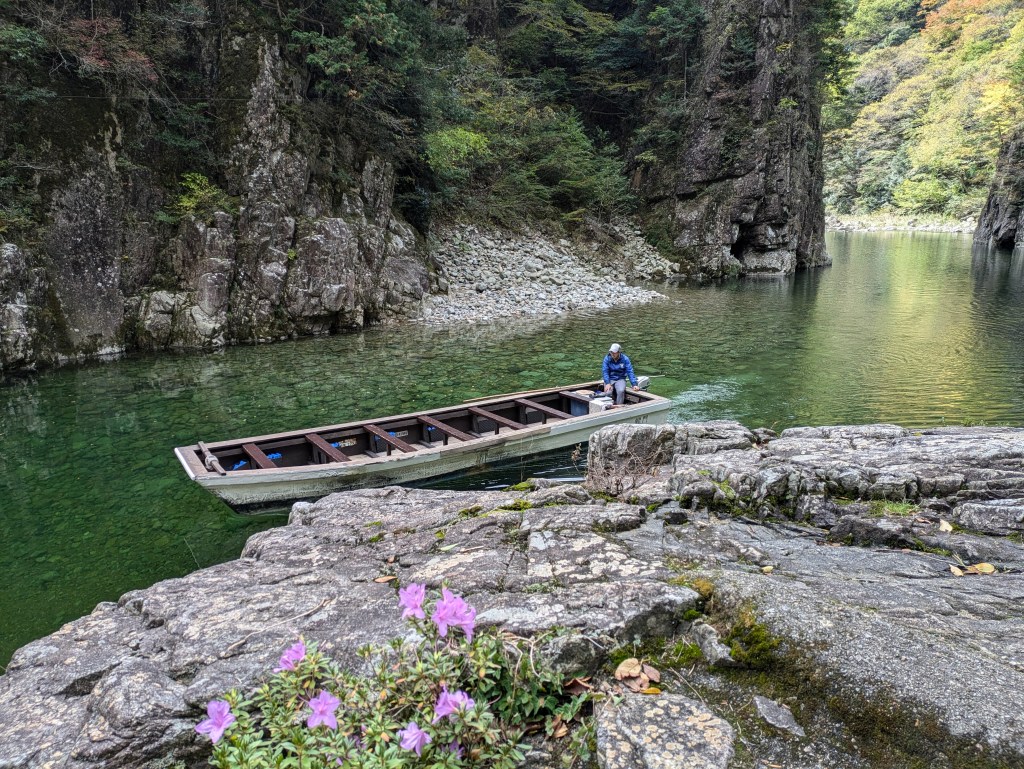
Although our hike was shorter than envisaged it was still worthwhile, true forest-bathing where a tree lined stony path hugged the side of the ravine before descending to cross the green river on a swaying rope bridge. A short ferry ride gave us an appreciation from the water. Our boatman didn’t quite know what to make of Caoimhin who was singing ‘Don’t pay the ferryman until he gets you to the other side.’
But our journey goes onwards, towards historic Kyoto, the city of dreams and the most visited city in all of Japan. Have we left the best until last? Time will tell.
Thanks for reading
Until next time
 marienoonanblog
Marie, you are so lucky getting to experience the real Japan. After reading your blog I’d love to go back there. I hope you enjoy Kyoto.When I was there I visited Mount Koyosan, a Buddhist monastery in the hills near Kyoto. Enjoy every minute.
LikeLiked by 1 person
Loving following your travels in Japan, the highs and lows. You bring us along with you with your wonderful descriptive writing style and photos.
LikeLiked by 1 person
Thanks, Catherine…..delighted that you enjoy it
LikeLike
Another great chapter Marie. Sounds like a wonderful place with lots of variety and experiences. Keep it up and safe travelling. Noel
LikeLiked by 1 person
Thanks, Noel…..a really fascinating country.
LikeLike