We arrived in Kyoto in the dark after a six-hour journey from the Sandan Gorge. We hadn’t planned on such a long drive, thinking that we would stop somewhere along the way but we just kept going. Driving conditions were good (no rain) and the lure of Kyoto, a place that is on the itinerary of every visitor to Japan, enticed us on until we found ourselves in an empty carpark in Arashiyama, a western neighbourhood of Kyoto and near several tourist attractions.
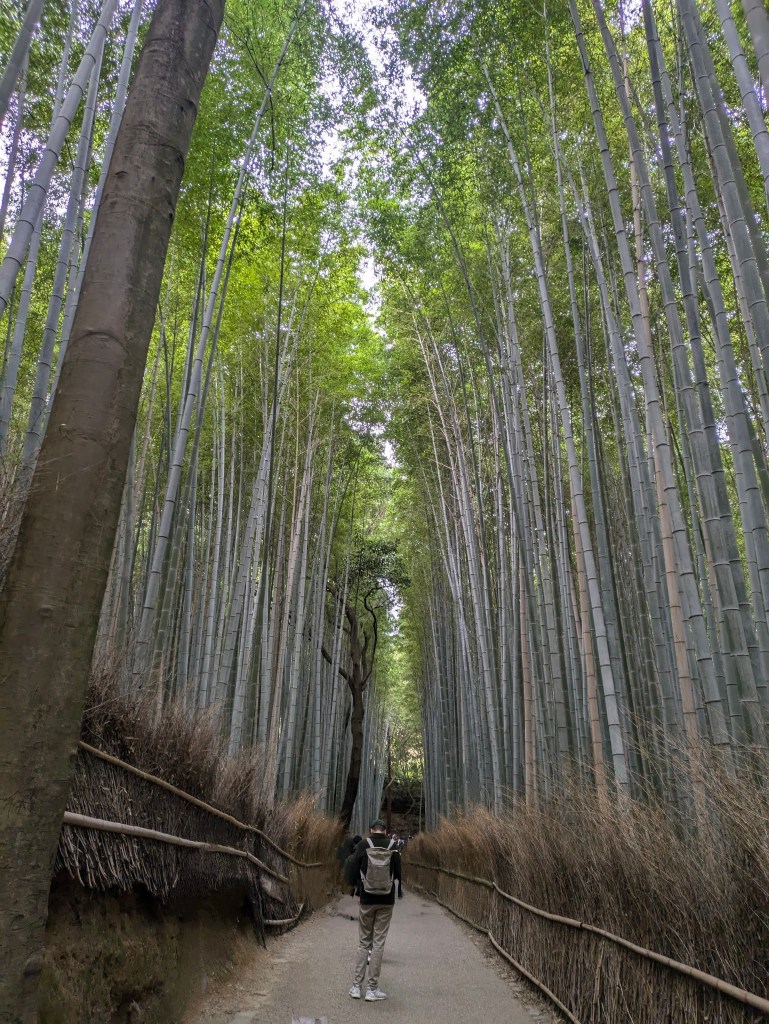
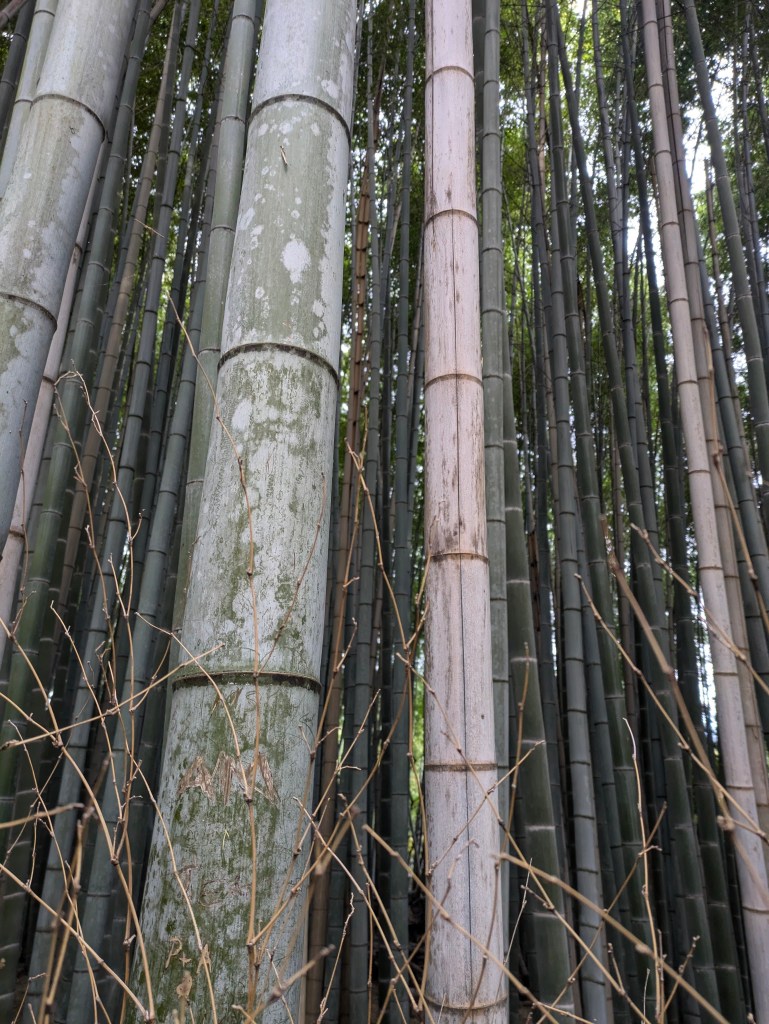
It was a cool, bright morning, just after 7am, as we hurried over the bridge of the wide, Katsura River, where egrets were busy fishing beside some empty tourist barges that were still moored, waiting for the day to begin. We were on our way to see the famous Bamboo Forest and hoped to beat the crowds by our early morning start. It was looking hopeful until we skirted by the side of nearby Tenryu-ji temple (The Temple of the Heavenly Dragon) and saw groups of people coming from both directions, all about to converge in the Bamboo Forest pathways. It wasn’t as crowded as it would become later in the morning but it was certainly busier than we hoped. The towering bamboos were still an enchanting sight with their faint rustling leaves and the morning light peeking through the crown of the trees. There was even a hush in the crowd as people walked slowly, gazing upwards, stopping to allow others to get their photos. As we walked away from the whispering forests, coaches were pulling into the carparks, disgorging noisy passengers, the streets were fulling up and the tourists shops were beginning to open their shutters.
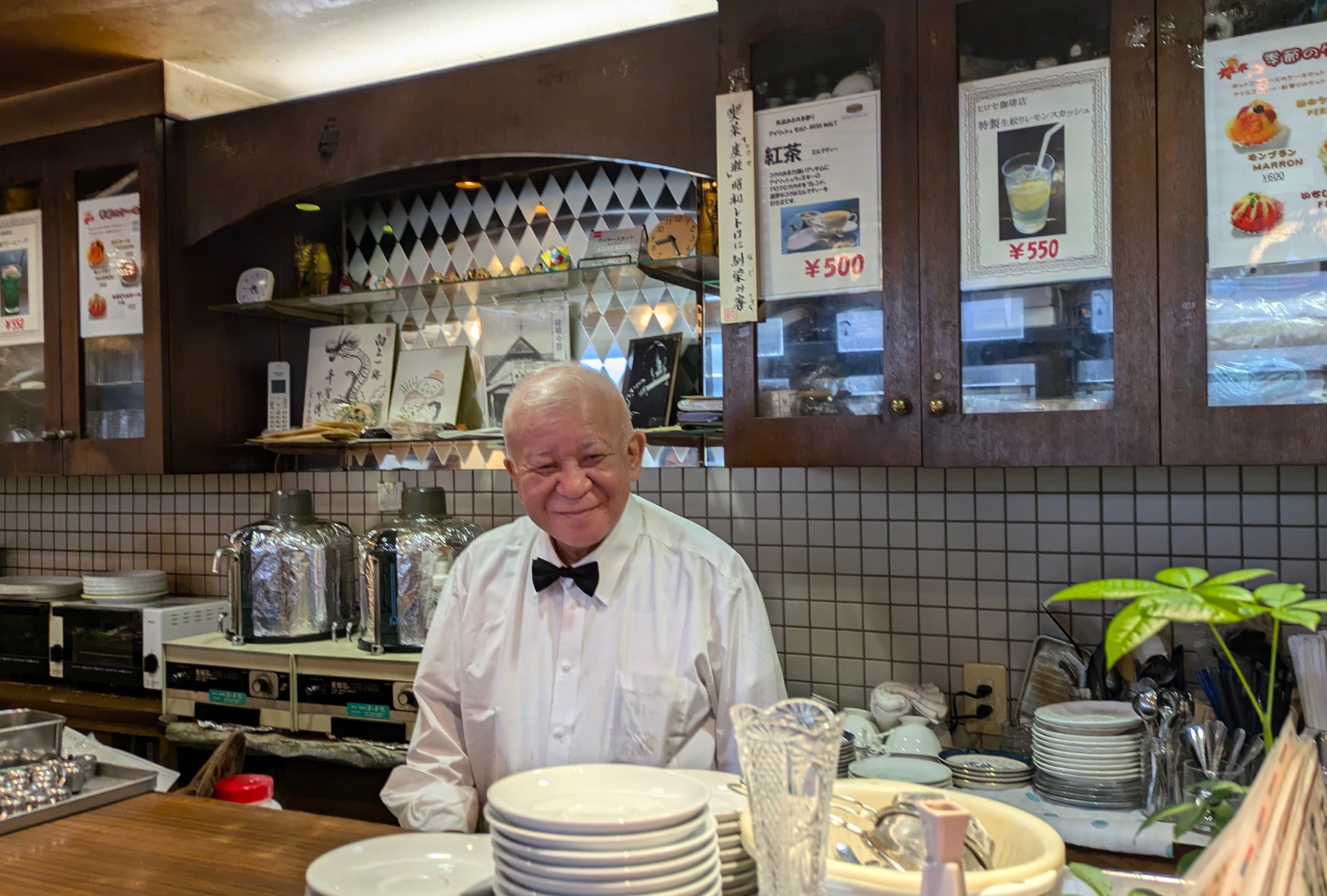
Surprisingly finding an open café at 8.30 am was difficult but eventually we struck gold with a little establishment run by a husband and wife team. He had the calm demeanor of a benign Buddha, she was a masked whirl of energy, reciting the menu, seating people, serving food and settling the bills. The atmosphere was busy, warm and steamy and a welcome place to sit down and escape the chill of the morning (it was about 7 degrees). The menu was simple, toast with butter, toast with jam, toast with cinnamon and the additional option of hard-boiled eggs. We had seen sliced pans of white bread in the supermarkets with various thickness but far thicker than we have at home. Half a sliced pan could contain a mere three or five slabs of bread (calling them ‘slices’ doesn’t do them justice.) Anyway, the toast in this café was made with these thick hunks of processed bread and mine which was smothered in crunchy cinnamon brown sugar tasted divine.
Kyoto has been described as a city of dreams, a place steeped in twelve hundred years of history, built as the capital of Japan in the 8th century and home to the Imperial Court until 1868. It has roughly a quarter of Japan’s national treasures, countless shrines and temples and seventeen sites recognized by UNESCO as World Heritage Sites. It is located in a lovely area with rivers, canals and a backdrop of green mountains. When you walk the streets, the past is a constant presence. There are ancient monuments everywhere, tucked away in Zen gardens, at the end of backstreet alleys or even beside traffic-choked thoroughfares, all bearing witness to more than a thousand years of history. But expect to share it with lots of other visitors, clicking their experiences into the Cloud with smartphones.
In a city crowed with people from all over the world, our major sport was people-watching especially as this was the first time in Japan that we were exposed to such a variety of people. We remembered Fukuoka in Kyushu, where we were given a voucher worth a thousand yen as a welcome gesture to foreign visitors, a group who were so thin on the ground that we were easily identifiable. Kyoto has no need of such inducements, in fact all hotels charge a ‘tourist’ tax. There were English menus, knives and forks and vegetarian (even vegan options) in the restaurants. In one way, it’s the ‘real’ Japan but watered down for Western appetites and sensibilities. Kyoto was easy, almost designed for tourists and I confess to feeling a certain smug superiority. We had already experienced sacred temples and shrines, even trekked holy mountains and through silent forests to reach them, we had struggled with menus using Google Translate and rarely met anyone who spoke English. Of course there’s are good reasons why people gravitate towards Kyoto but the volume of tourists has been steadily increasing especially since covid (and the favourable currency rates is another inducement). Lets hope that it doesn’t become a victim of its own success.
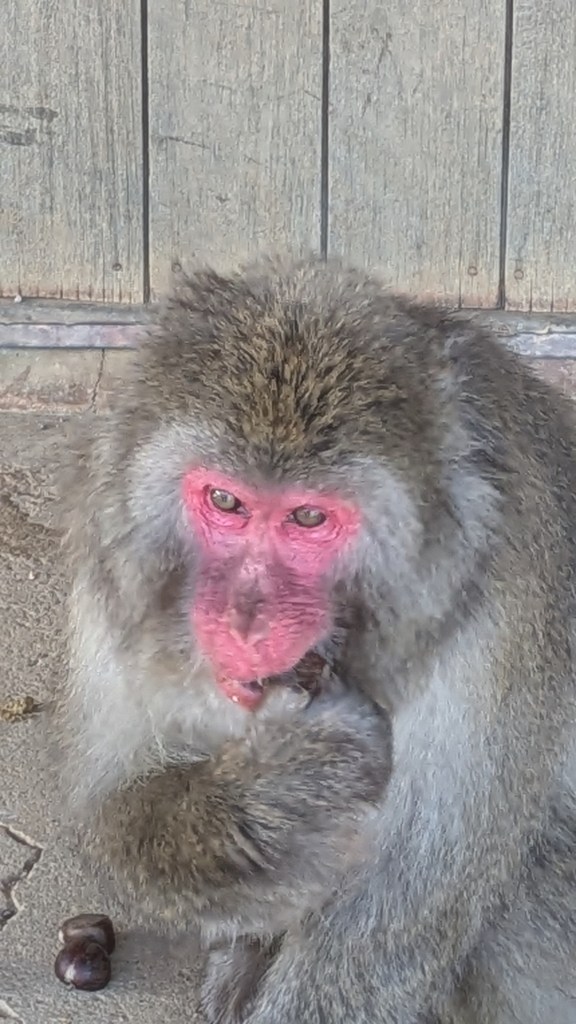
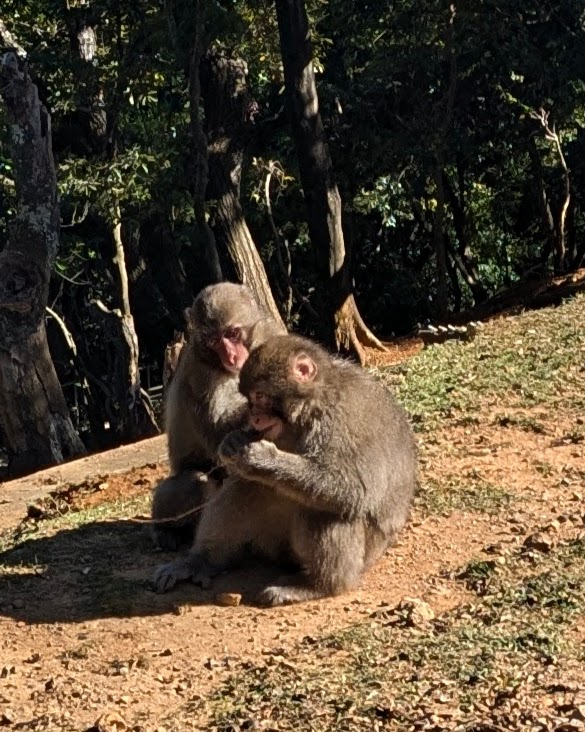
It we were fans of people-watching, we weren’t the only ones. In the monkey sanctuary not far from the Bamboo forest, troupes of macaque monkeys roamed freely and seemed to enjoy looking at all the humans looking at them. Reaching the monkeys involved a twenty minute uphill climb through forests and it could have been a tranquil experience except for constant loudspeakers in several languages issuing a list of instructions, telling visitors not to feed the monkeys, not to display any food, not to stare at them (they don’t like it) and to keep a distance of at least two meters away from. It was difficult to obey the distance rule as one young macaque ran over my shoes. They were adorable, especially the babies, with such expressive faces and they appear to be thriving. Although they are not caged, they only stay in the area because they are fed. These monkeys, often called Snow Monkeys because they have adapted to live in cold climates, usually make their home in the mountains to the far north of Japan and are not endangered. Although, it was dressed up as education and there were lots of interesting facts, it still carried a whiff of exploitation for commercial gain.
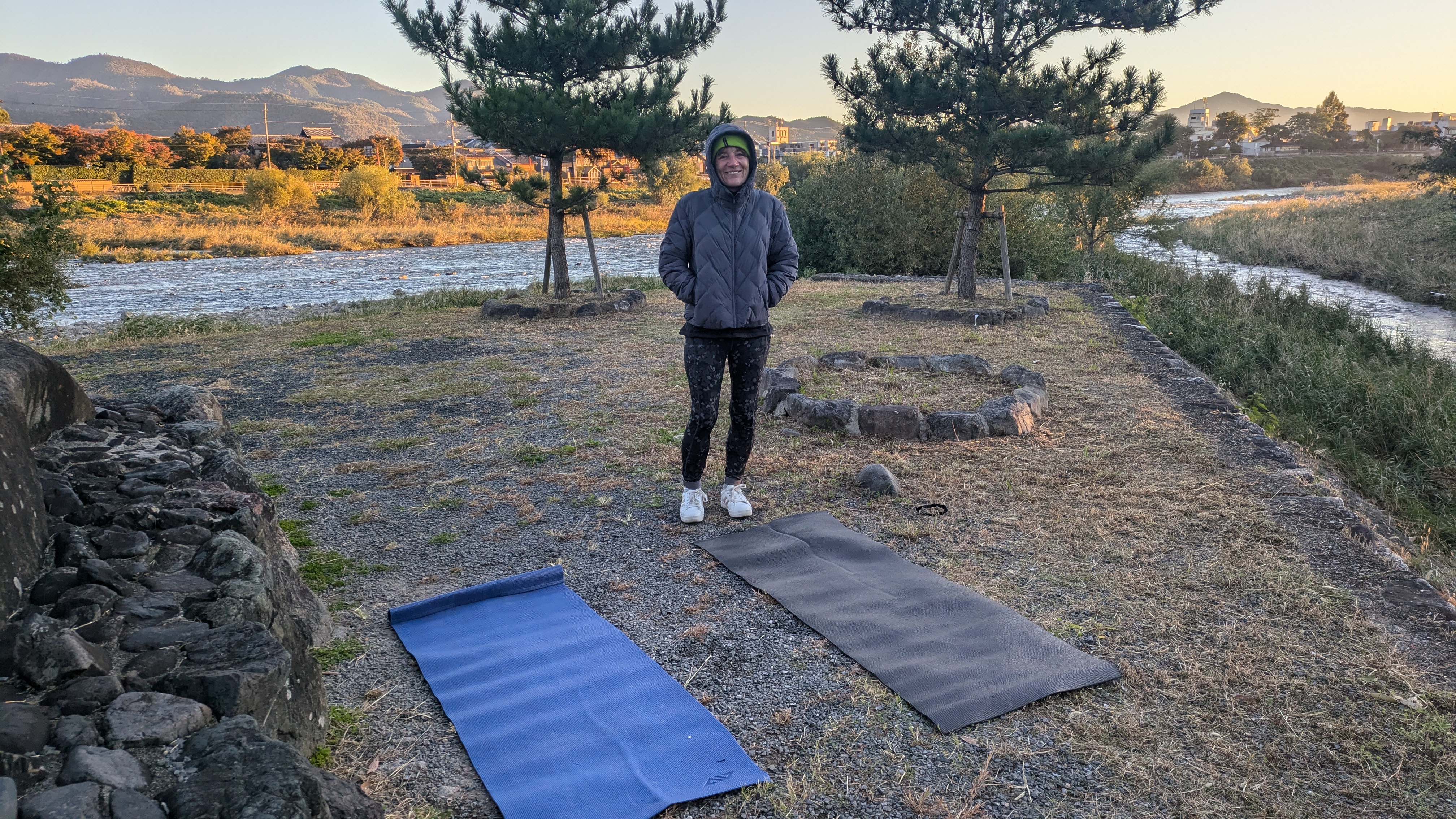
Although Kyoto was crowded, there were still spots where you could sit by the river and listen to birdsong and the flow of the water particularly in Arashiyama which really was a lovely area especially in the evenings when the majority of visitors departed. On our second morning after a particularly cold night in the van when temperatures dipped to 2 degrees, we struggled to the park to do some yoga and straighten out our stiff limbs. It was the first time I did yoga with a coat, hat, gloves and shoes on. A stiff breeze blew off the water, a big crow cawed at us from a treetop as if we had just invaded his territory while a dozen well-muffled senior citizens practiced Tai Chi on the opposite riverbank. A siege of egrets flew over the river to land in the stream near us with the sun turning their wings a glinting silver. Despite the cold, there was something magical (and almost zen) about the setting. The heated toilet seats in the public loos that we had scoffed at the beginning were now really appreciated by our cold bottoms
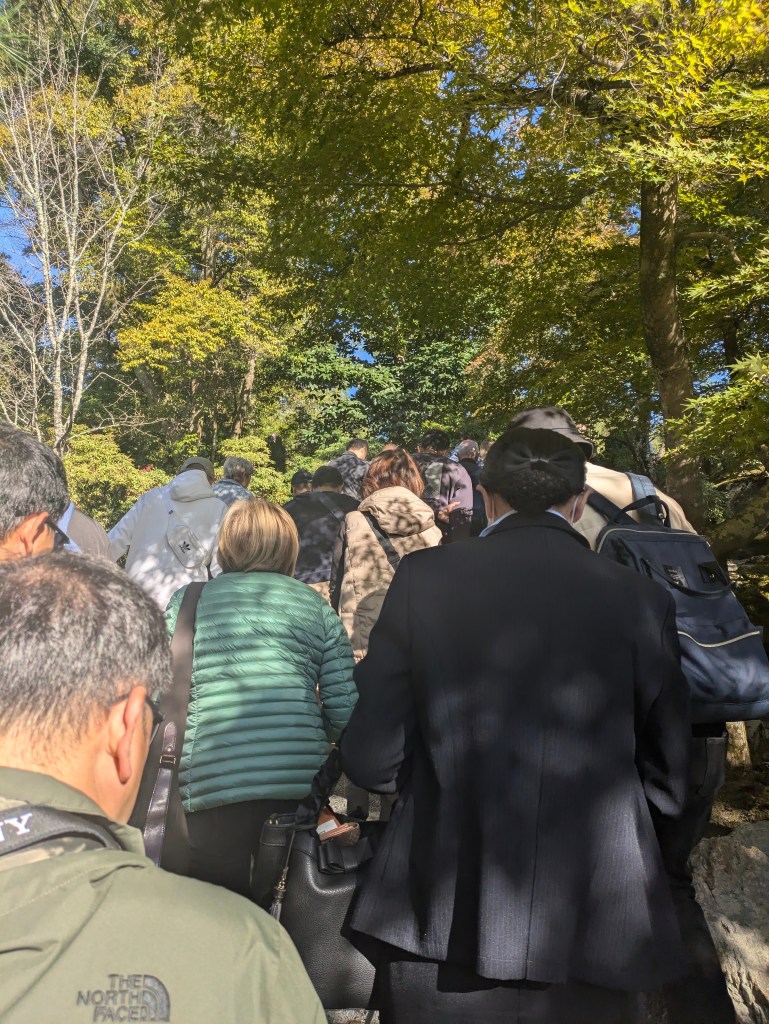
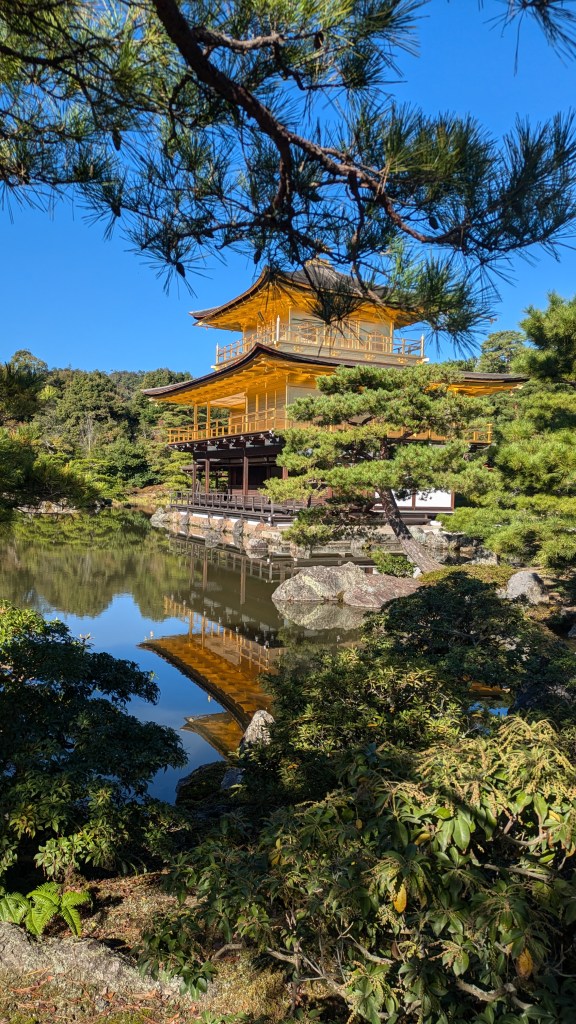
A little later we joined the crowds of mainly tour groups visiting the Golden Pavillion, a Zen temple of Shokoku-ji School of Rinzai Buddhism. We read that it was one of the most important attractions in Kyoto, that visiting Kyoto and not seeing this pavilion was akin to going to Paris and not bothering to visit the Eiffel Tower. Despite the crowds, it didn’t disappoint especially as the sun turned it into a truly golden stupa which reflected off the surrounding lake waters. There was a collective gasp from the crowd as we got the first glimpse just inside the entrance gate before shuffling along in a sea of people.
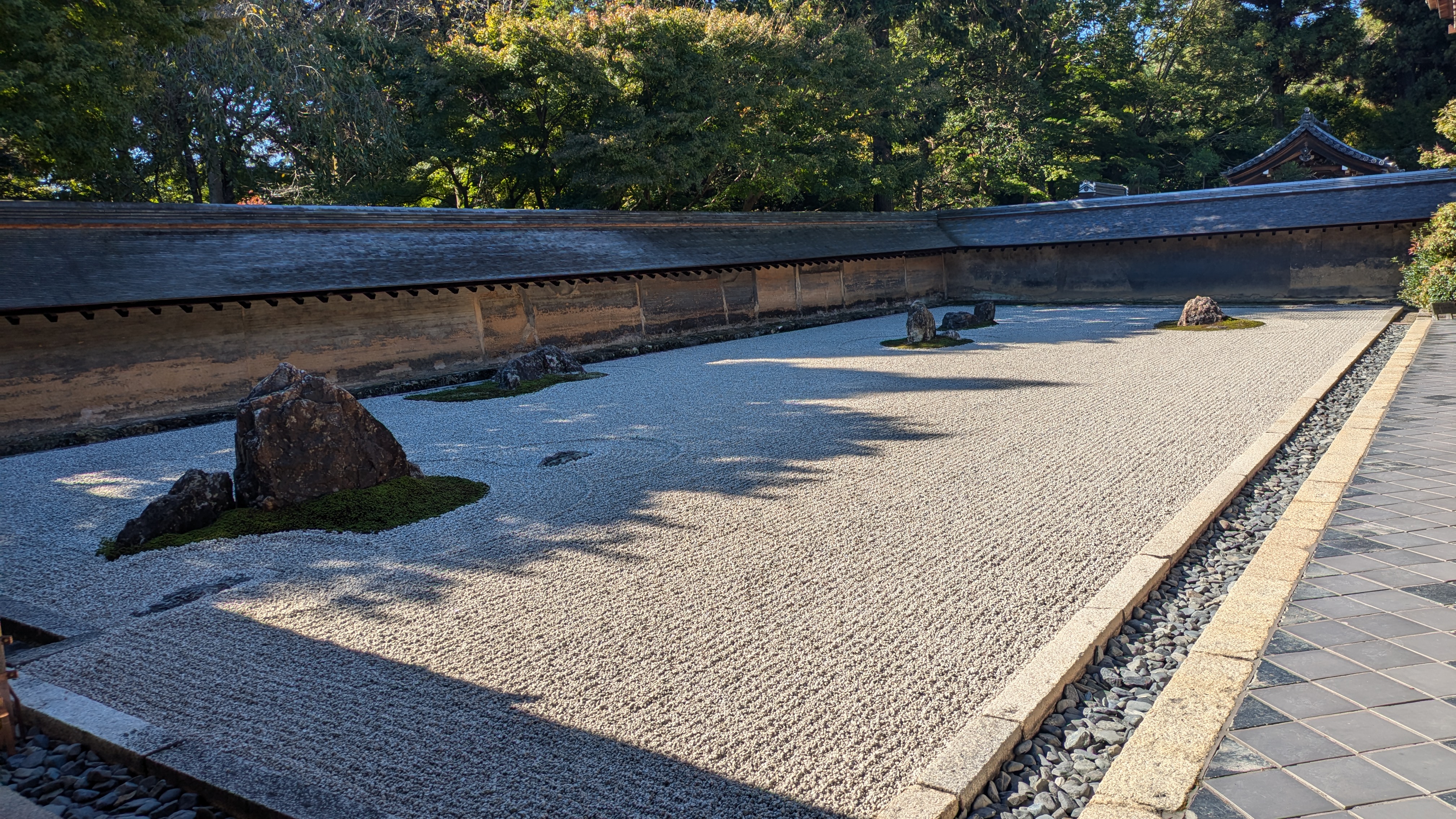
A visit to the nearby Zen gardens of Ryoan-ji, which contains one of the most famous and enigmatic rock gardens in all of Japan, was a less crowded experience. Zen gardens are intended for meditation and contemplation where a special place is given to every plant, rock and grain of sand in an effort to create harmony, tranquility and balance. The small rock garden was created in about 1500 by a revered monk and has been defying attempts to explain it since then. Enclosed by an earthen wall, fifteen carefully placed rocks seem to drift in a sea of naked white sand. The cool of the morning had given way to warm sunshine which cast shadows over the rocks and Caoimhin was scratching his head and wondering what all the fuss was about. But maybe the point is to interpret the garden in an individual way and not to seek the ‘true’ meaning, to look only for your own truth.
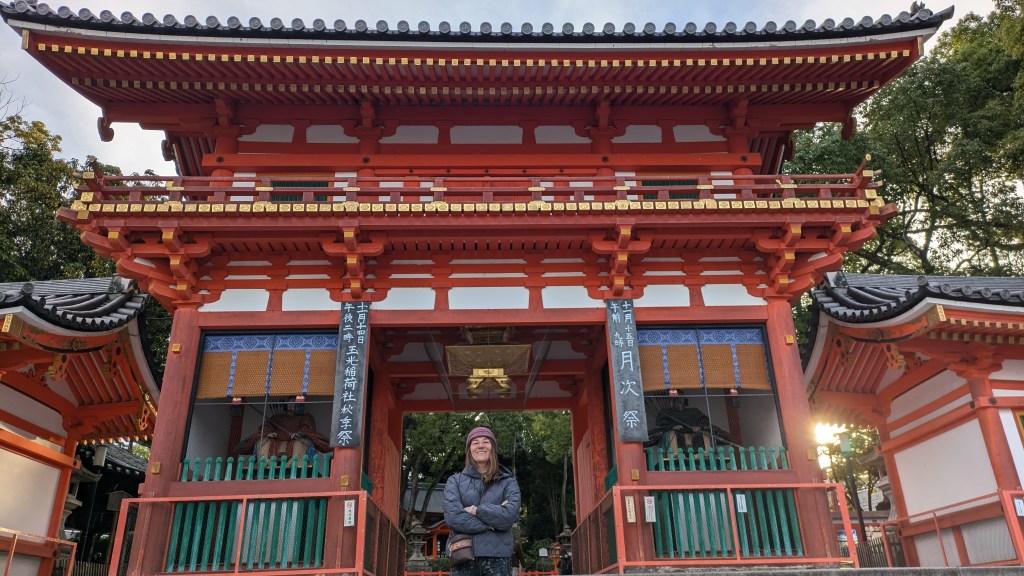
Downtown Kyoto was not very Zen ….crowded with tourists, traffic and tourist shops but in the midst of all this mayhem was Yasaka Shrine, a huge shrine with vermillion gates, regarded as THE place in Kyoto to welcome in the new year with a fire festival where fragrant herbs are burnt. We moved from our little oasis out in Arashiyama and parked overnight near the beating heart of this shrine.
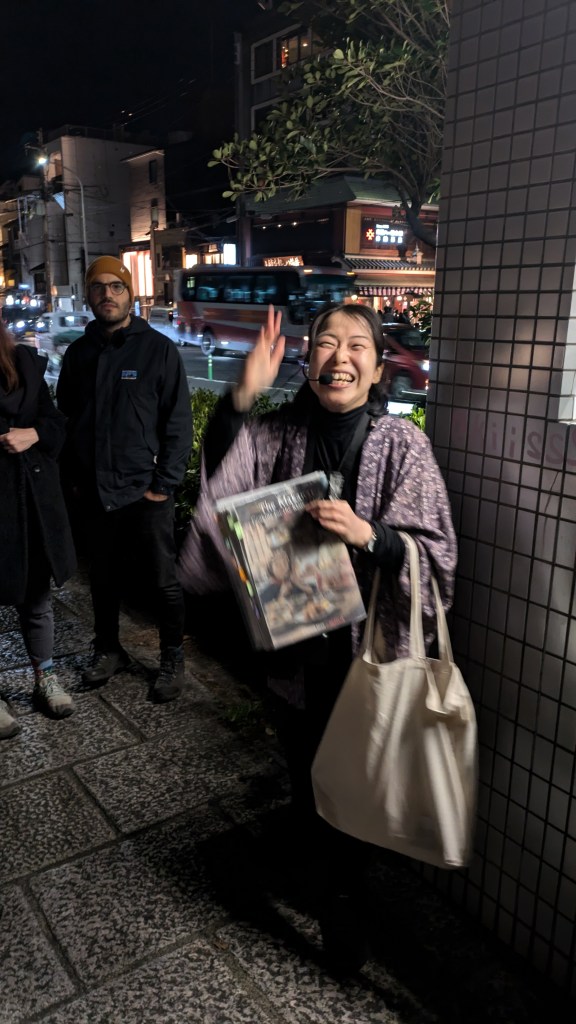
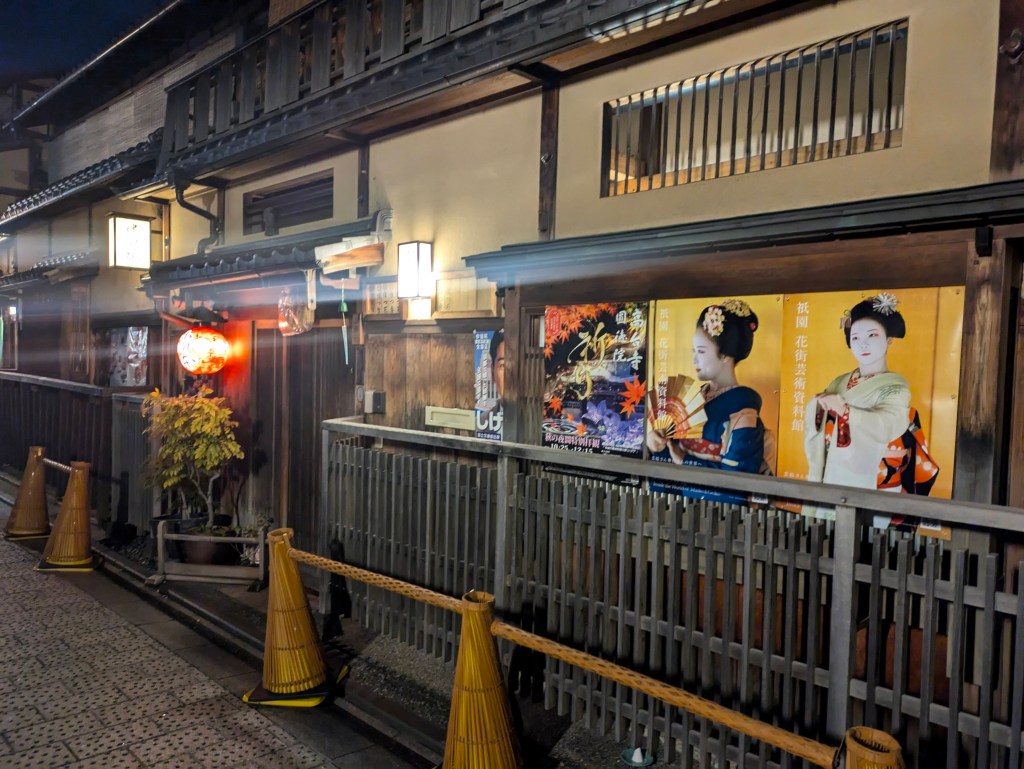
Tourists swanned around Kyoto dressed in kimonos, clattering along in wooden clogs and pretending they were Geishas. We were interested in gaining some insight into the real Geisha culture so we took a night walking tour. Our guide, Saki (not to be confused with sake, the national beverage) was enthusiastic, funny and knowledgeable. Geishas are a declining profession and when Saki explained their vigorous training, it wasn’t so surprising that the numbers are dropping. If a girl wishes to be a Geisha, she must be young, about fifteen to eighteen and she must leave her family and live in one of the special boarding houses in Kyoto. Training takes a minimum of five years and involves classes in etiquette, singing and dancing. The trainees are not paid and cannot have a smartphone or go to McDonalds (Sari’s words.) They are primarily entertainers who work in the teahouses (these are drinking houses where businessmen entertain guests). One can only go to a teahouse by invitation, prices are never discussed but they are calculated on a sliding scale depending on your ability to pay – the richer you are, the more you will be charged. You will receive your bill weeks after when the sense of enjoyment has faded. Entertaining in teahouses was once very much part of Japanese business culture but as Japan’s fortunes have declined so too have the glory days of the teahouses and consequently the Geisha profession. Geishas have to resign if they marry but as the numbers have declined, the rules have relaxed a bit and they are allowed to practice if they divorce and foreign girls are allowed to become Geishas where once it was compulsory to be Japanese.
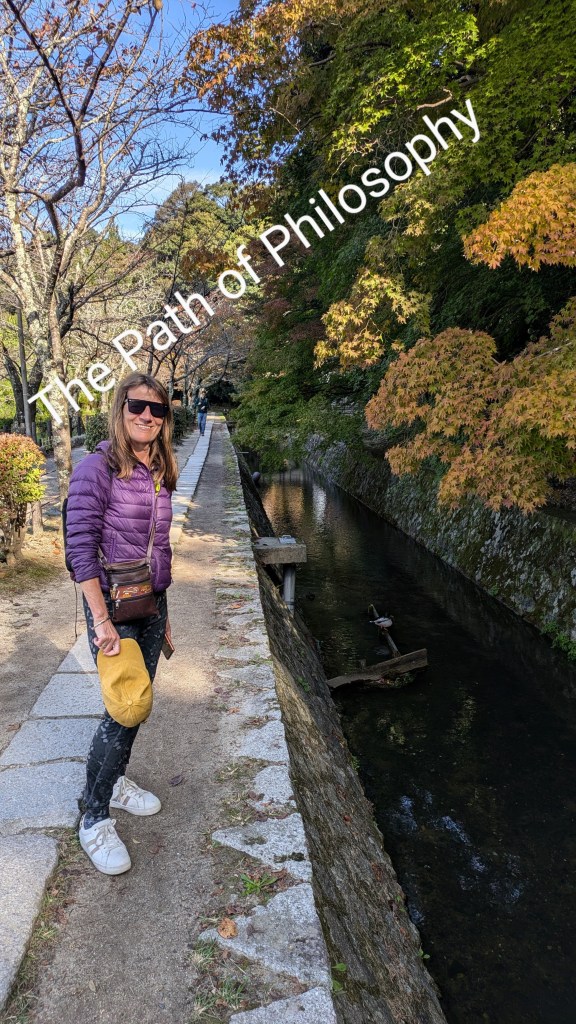
With so many places to visit in Kyoto, it was impossible to fit them all in. Sometimes it was the name of an attraction that caught our attention and so it was with The Path of Philosophy in the Northern Higashiyama neighbourhood of Kyoto. We visited on another early morning where for a change, there were few people. Its very popular when the overhanging cherry trees are in blossom. Along the way, we met a lovely Australian couple who enquired if they were actually on the path….none of us knew where the path began or ended but maybe that was the true philosophical question. When saying goodbye to the Aussies, both Caoimhin and I found ourselves bowing without even realizing it. Maybe we have been too long in Japan😍
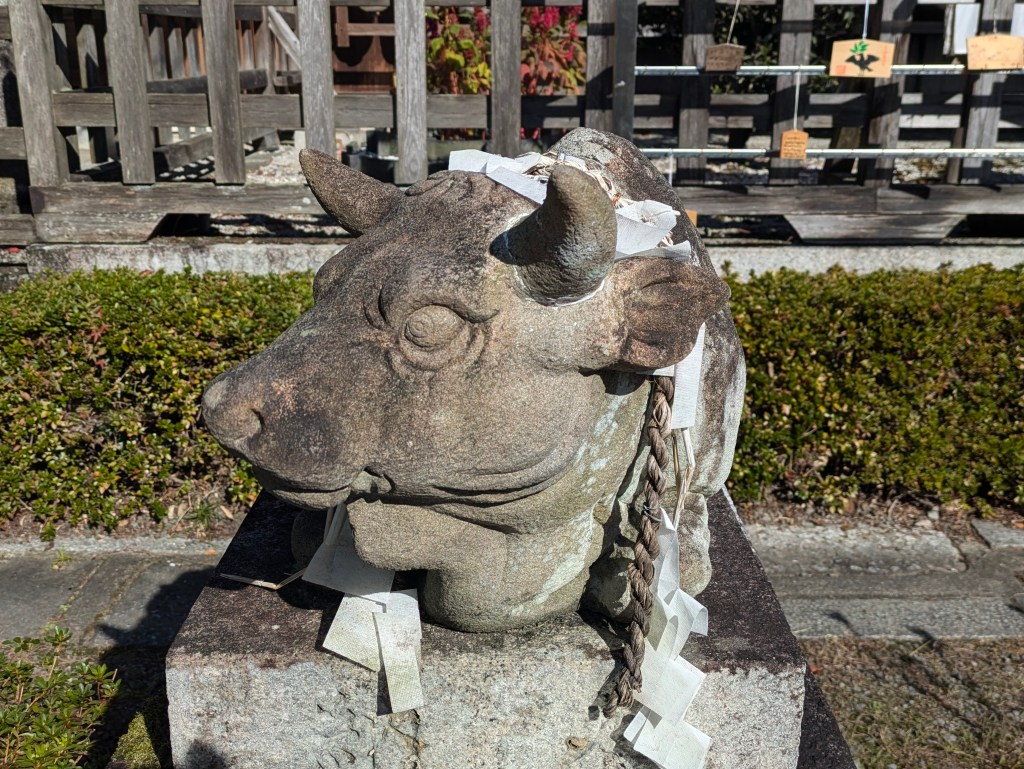
Nevertheless the path was tranquil and meditative, meandering along by a canal carrying gentle, murmuring water from Biwa Lake. There was the occasional duck and lots of temples. We paused at a shrine where a statue of an ox was reputed to have healing powers. If you rubbed the part of your body that was ailing and then rubbed the equivalent part of the sculpture, you would be cured.
With our wedding anniversary approaching and the cold nights, we went on Booking.com to find a hotel or guest house. When looking for hotels in Japan, there are a few things that you need to be aware of, apart from price and location. If it is a contactless check-in, if there is a mention of privacy and sound-proofing and/or it is Adult Only, then you may be about to book into a Love Hotel. They tend to be cheaper than ‘normal’ hotels and could be a real bargain just as long as you know what you’re getting. We read of one man’s hilarious account of inadvertently booking a love hotel for two nights. His first difficulty was actually checking in, as there was no reception desk and he couldn’t locate his room or his keycode. He had some Japanese so he was able to phone an emergency phone number and a person eventually materialized. His next problem was that he kept getting locked out of his room. Everytime he left the room, his keycode was disabled. As he said, these rooms are not really designed for coming and going (so to speak), when you’re done, you’re done. The hotel we found was not a love hotel, the reception was manned by two guys and although it was 2.30pm and check-in was 3pm and all the rooms were ready, there was no possibility of been checked in a minute sooner than the designated time.
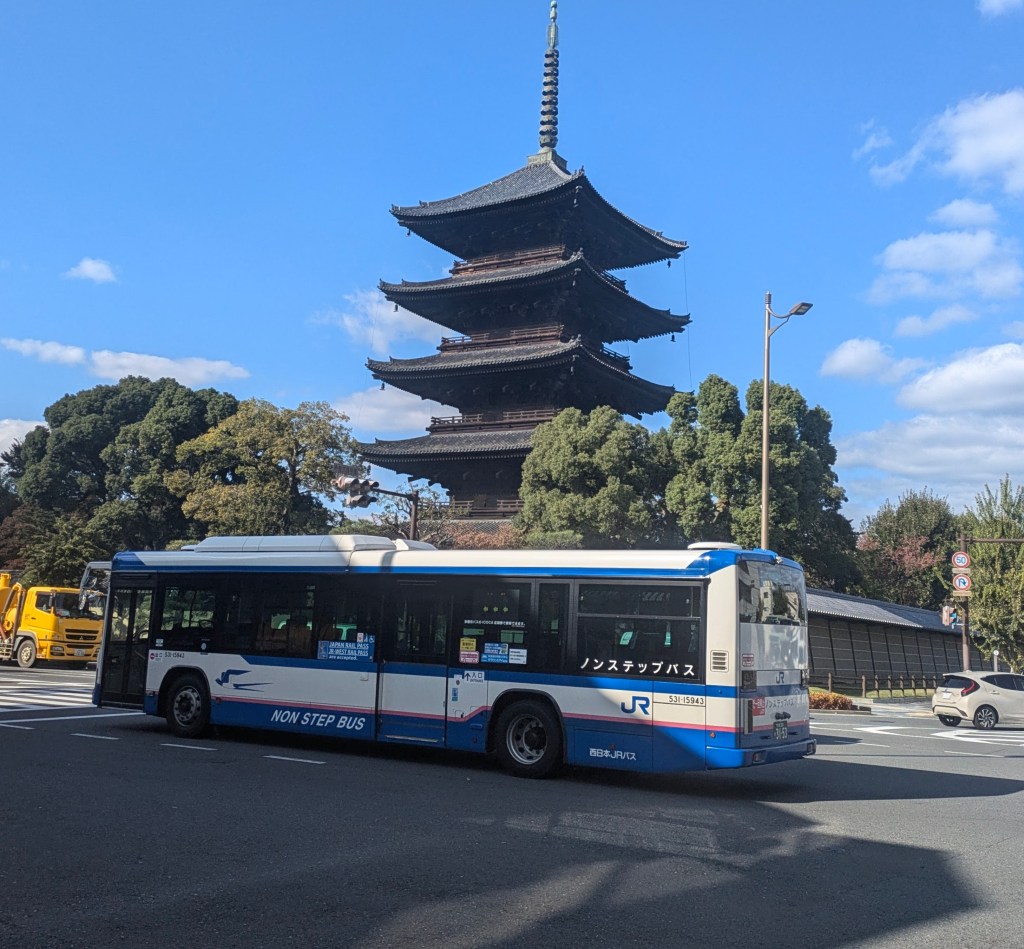
Although our hotel was not in a touristy area, a five storied pagoda which was built in 826 was only a 5 minute walk away. This Toji pagoda stood at 57 meters ,making it the tallest wooden pagoda in Japan. Not only was it a beautiful silhouette against the skyline but it was also earthquake proof and the large roofs were designed to protect the delicate wood underneath from the wetness of rain and snow.
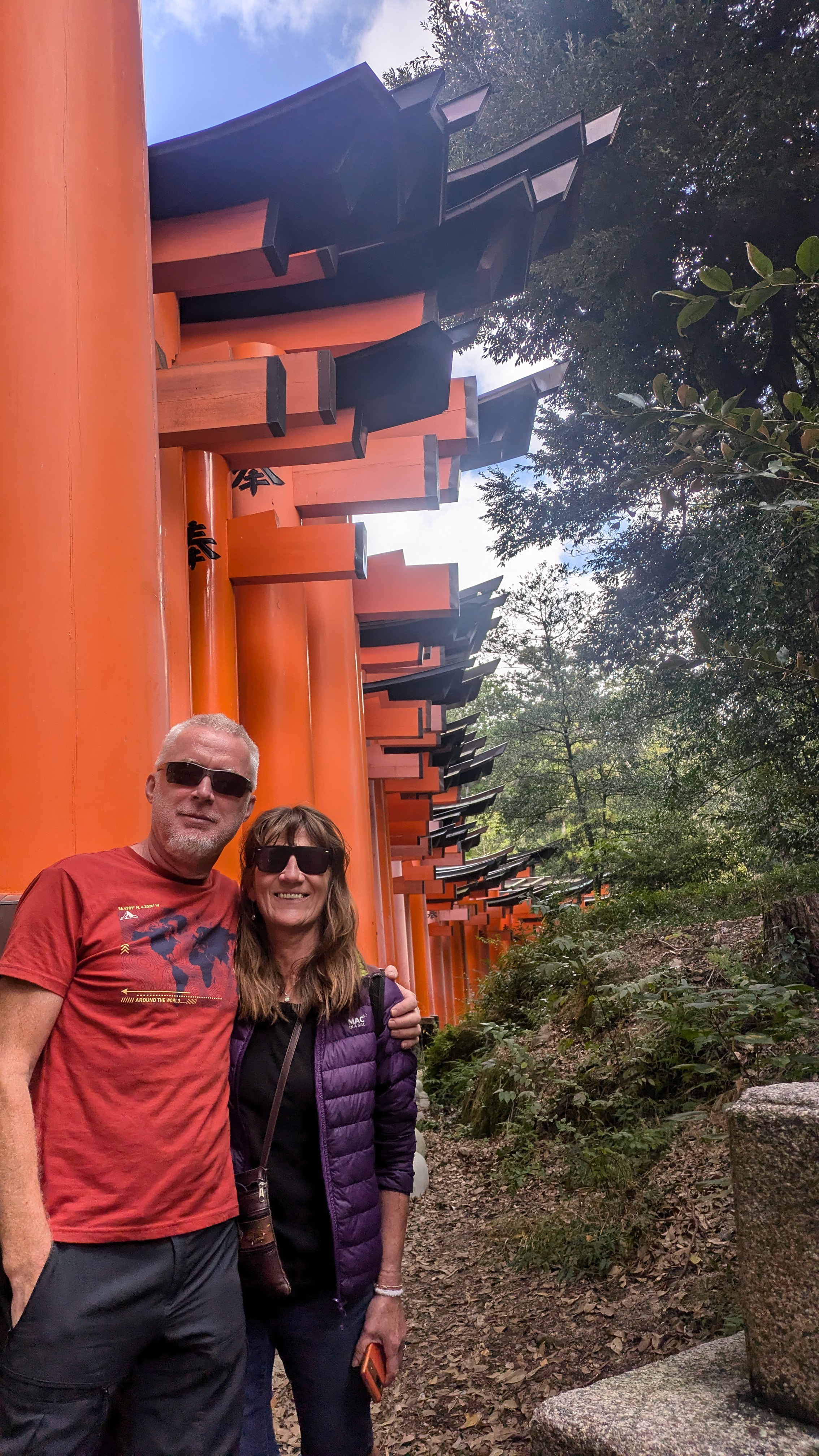
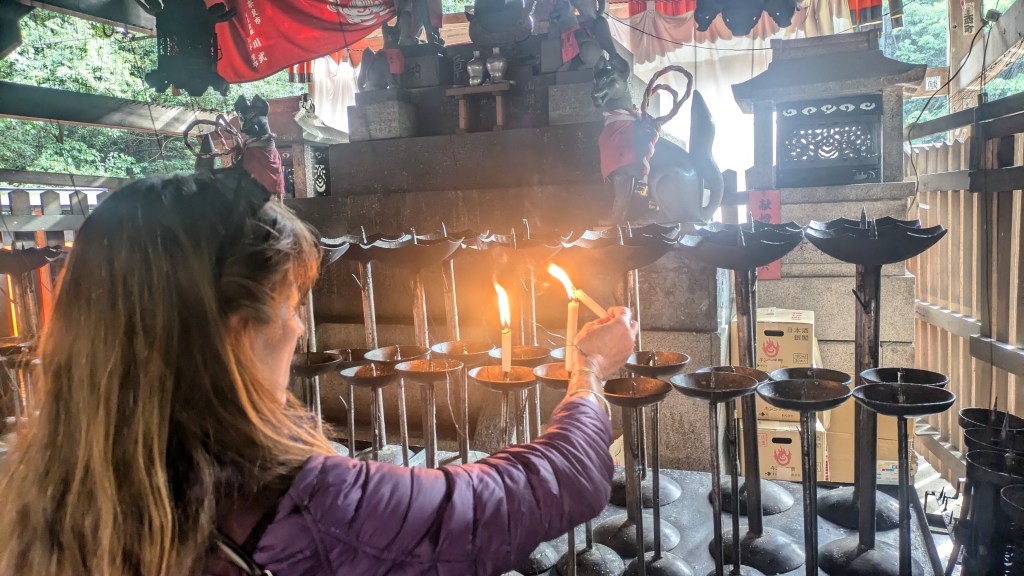
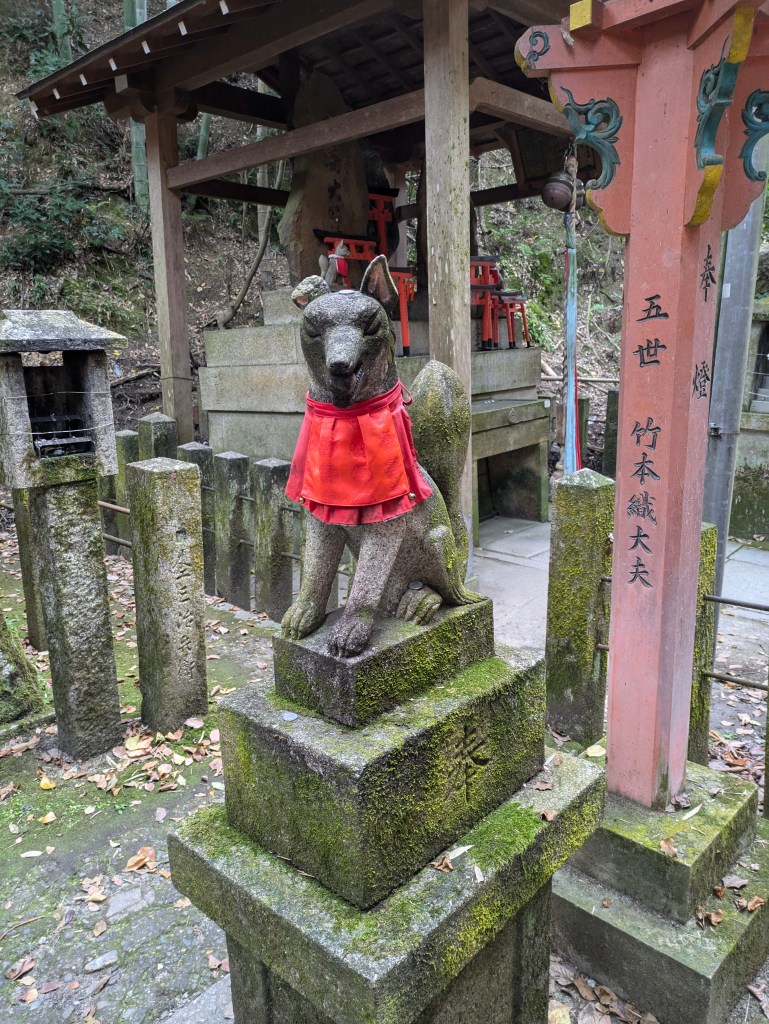
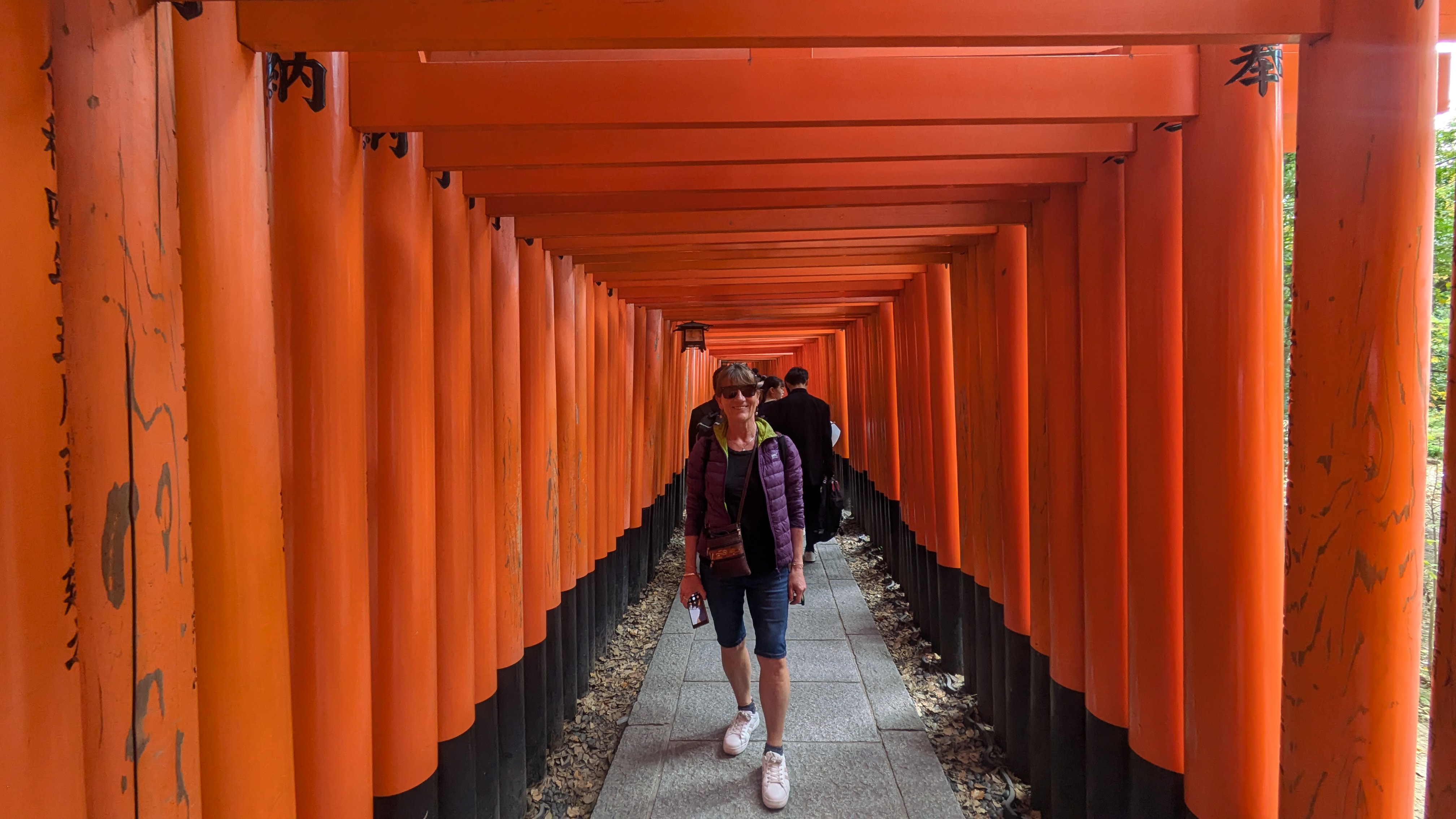
A long tunnel of bright orange gates stretched uphill, mesmerizing and a bit disconcerting, with glimpses of forest and cemeteries in the spaces between the gates, known as torii. This shrine called Fushimi Inori Taisla, at the base of the Inori mountain dates back to 711 and is free to enter and open all day. We visited in the morning but the middle of the night might have been better to avoid the throngs of people. Over the years worshippers have donated gates to express their prayers and their appreciation until at least ten thousand gates stretch up the hillsides making an enthralling spectacle. There were statutes of foxes along the route which is the symbol of the shrine. This was the last shrine we visited in Kyoto before we headed back to Osaka..
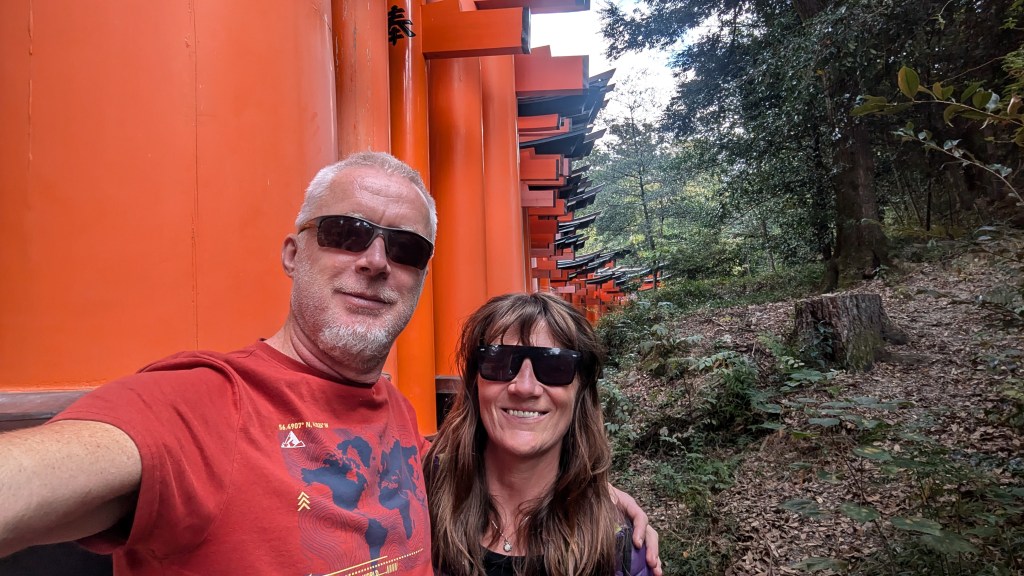
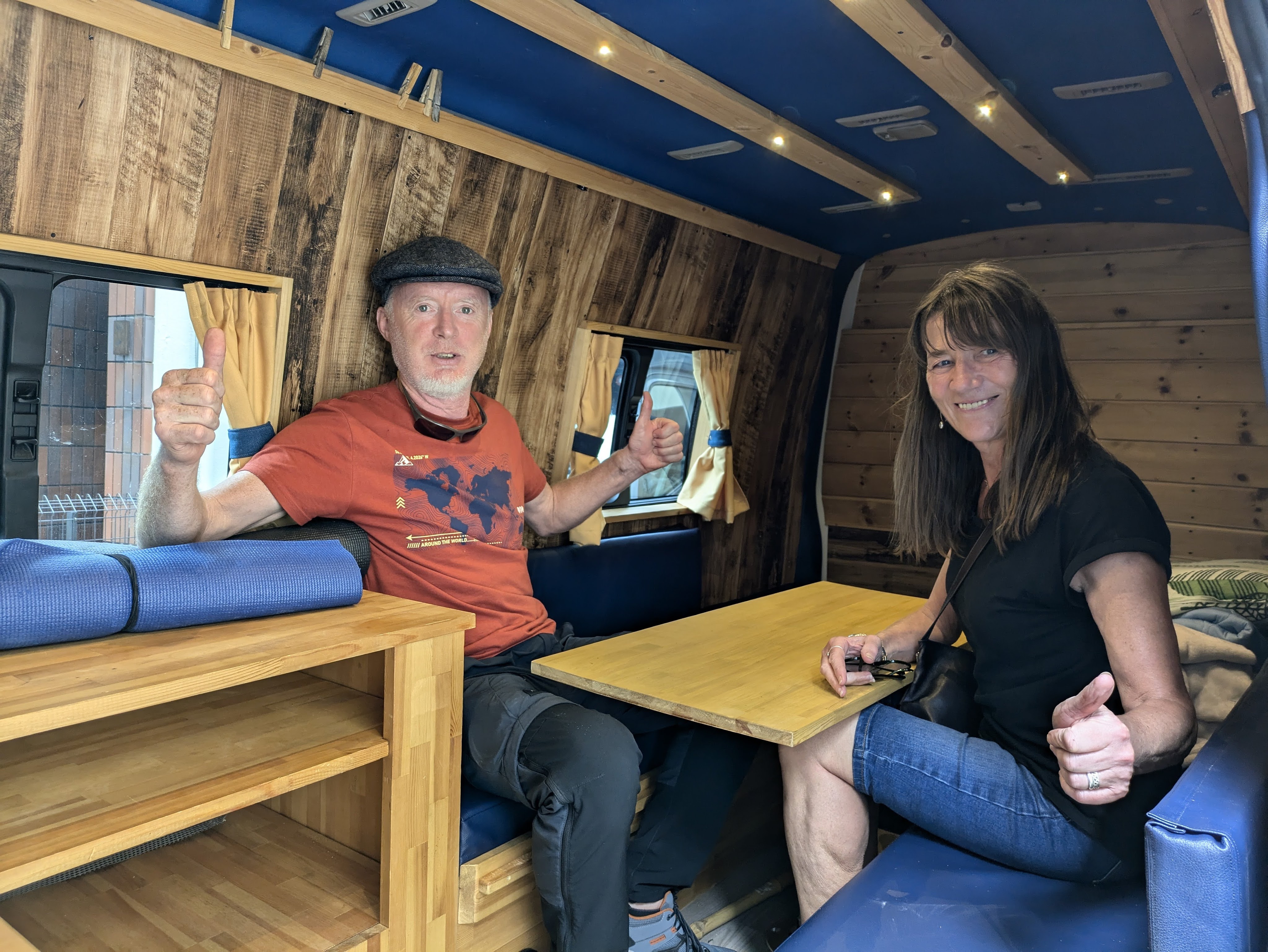
Back to the beginning where we started, almost six weeks ago, we handed back the van which had taken us on our journey through Southern Japan. It has been an amazing round trip from the vibrant city of Osaka, to the island of Amami in the East China sea. We began with unseasonably hot weather, endured torrential rain for days on end, had phone alerts warning of typhoons, mudslides and flooding, slept shivering in the van when the night-time temperature at one point hovered around two degrees. We camped out in forests, at the base of holy mountains and on the shores of deserted beaches. We climbed thousands of steps to reach mist-shrouded temples and shrines, cycled over water as we island-hopped across an inland sea on bridges that at times spanned several kilometres. We have been in places so remote that it felt like we were the only two people left in Japan and we have waded in a sea of people at the popular attractions, particularly in Kyoto. We will always associate Japan with trees, tall majestic cedars, maples in their autumn coats and everything in-between. After six weeks, we realize that we have barely scratched the surface.
Japan remains an enigma. The people are friendly but love silence. Most live in cities but revere nature. The country is industrial but is mainly forests and greener than Ireland. It is very wet even when it isn’t the rainy season. As we turn towards our long journey home, we need time to process our journey and reflect on this fascinating country.
Thanks for reading and for your company along the way
Till next time x
 marienoonanblog
Love it Marie, so beautiful so poetic !!
Michael,
PS- I know yere travelling light, but Cuiv only bring the one T-shirt ??
LikeLiked by 1 person
Thanks for that Marie. Safe journey home.
Tony.
LikeLiked by 1 person
Thanks, Tony…home now, no mishaps/delays on the journey home.
LikeLiked by 1 person