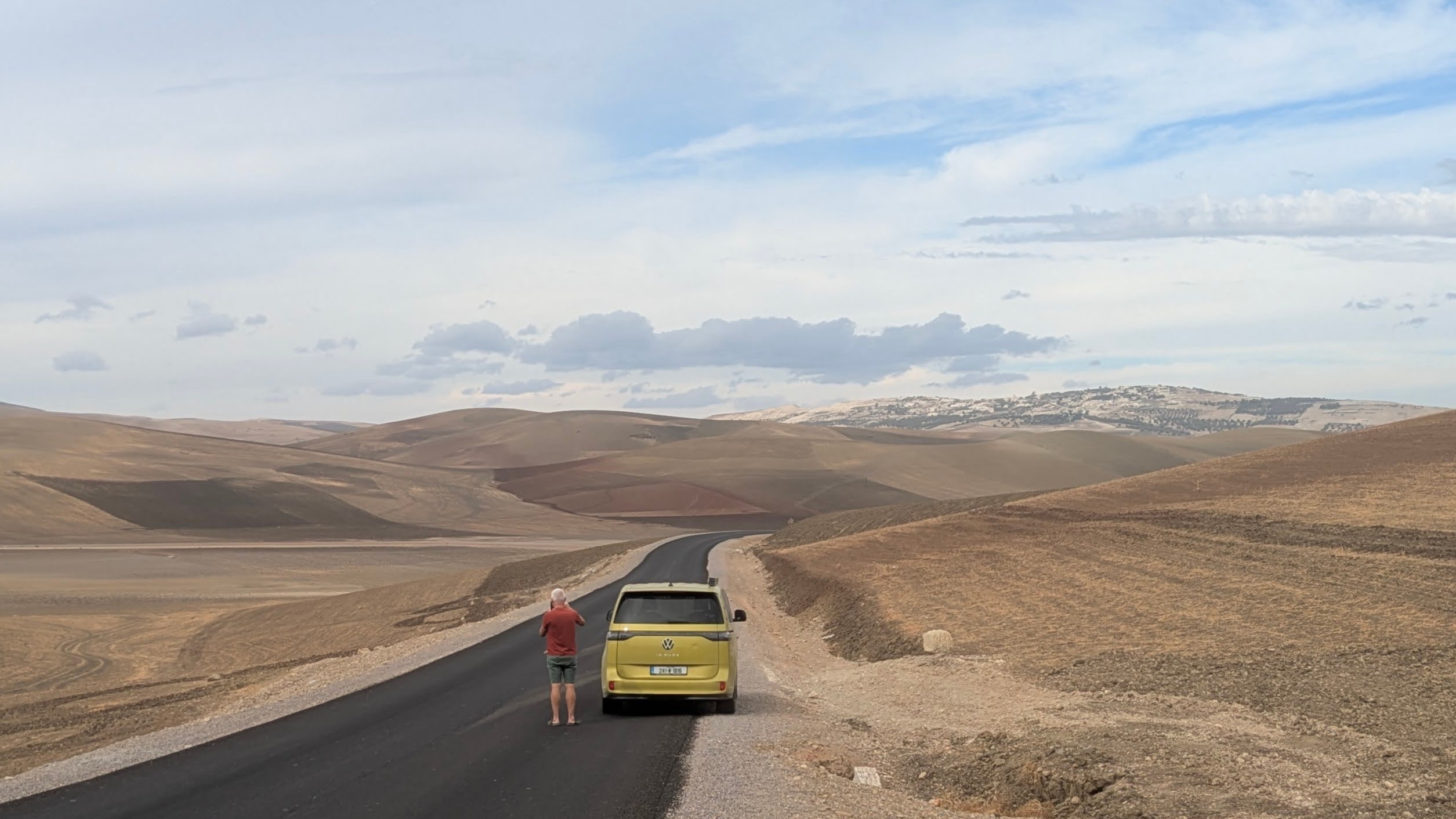
Fes was different, As we drove into the imperial city in the heart of Morocco, our priority was to get the Buzz charged. Following the map directions for a Kilowatt EV charger, a man on a motorbike pulled up beside us in the traffic and, noticing the van’s registration, shouted in English ‘Are you from Ireland?’
We nodded, replying that we were making our way to charge the van. He raced ahead and directed us to the EV chargers on the side of a busy wide street. Unfortunately neither was functioning but our motorbike ‘friend’ was now bombarding us about talk of city and medina tours of the medina for a special price for the Irish. This was our first exposure to touts in Morocco….and he was persistent…but we finally managed to get rid of him.
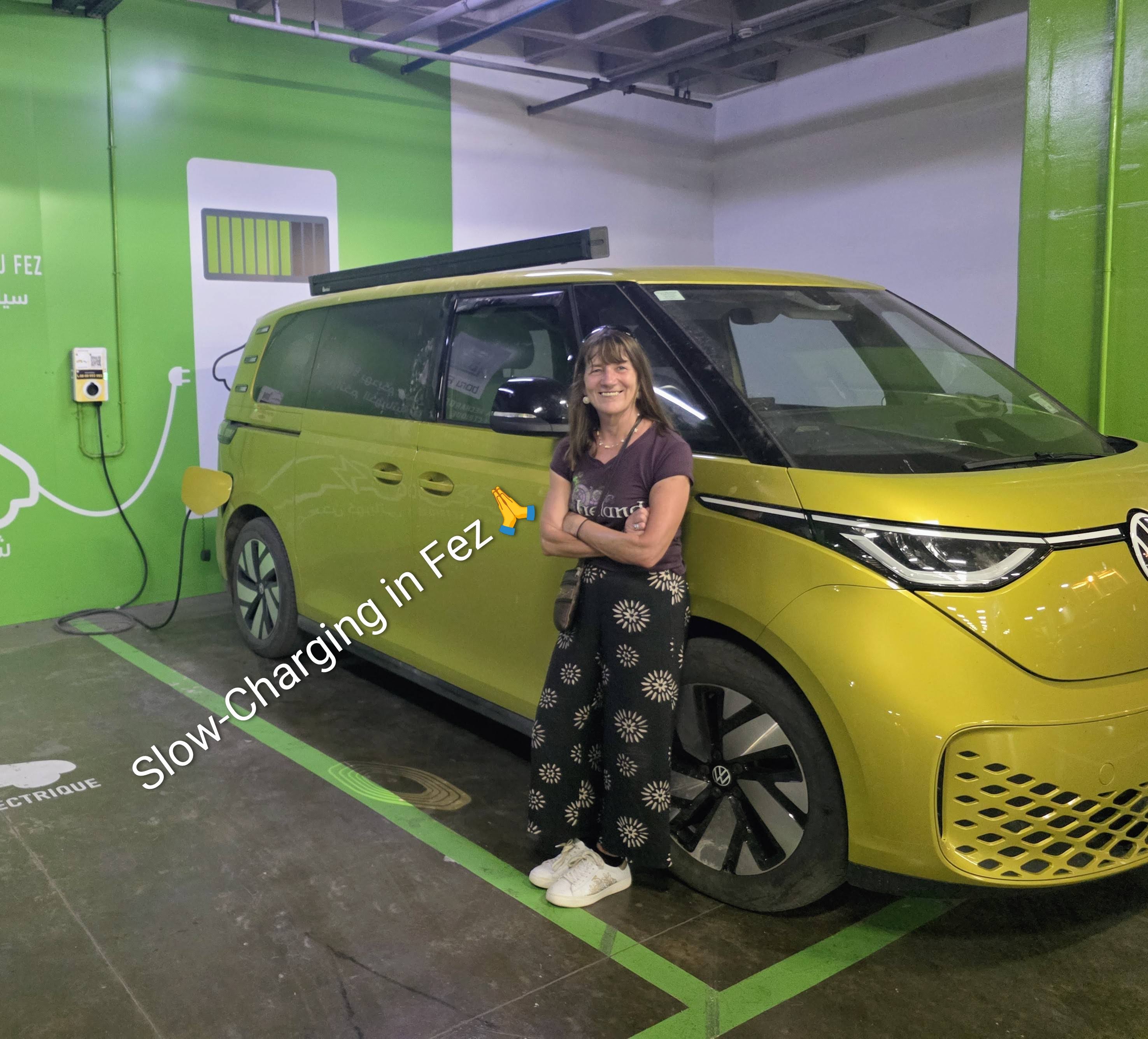
Our next and only option for charging the van in Fes, according to various maps, (Google, Electromaps, Kilowatt and Place to Plug) was a couple of kilometers away at a shopping centre. We located them in the underground carpark of a Carrefour Mall and, thankfully, they worked although they were again slow-chargers and free of charge. When we connected, the Buzz display told us that it would be over five hours before it was 100% charged. We booked a place to stay near the medina and walked the forty minutes there, deciding to return later for the van. Our tolerance for shopping malls, full of the usual designer shops and stuff we don’t need, was always low, but was now hovering below zero although we were grateful that the Buzz was charging.
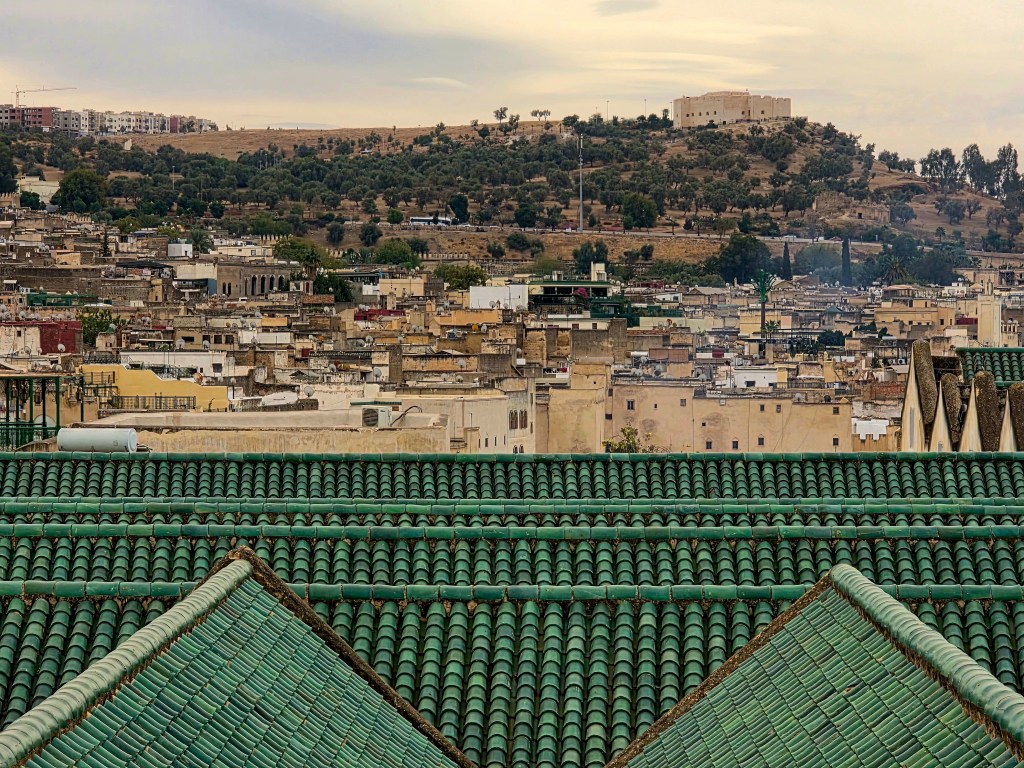
Fez, the oldest of the four Moroccan Imperial cities, was blessed with an abundance of water and surrounded by fertile hills which also supplied defense. It was an important trading post for centuries, strategically placed at the crossroads of major caravan routes (silk, gold, salt and slaves) between sub-Saharan Africa and the Mediterranean. Its wealth also came from its rich natural resources and skilled artisans.
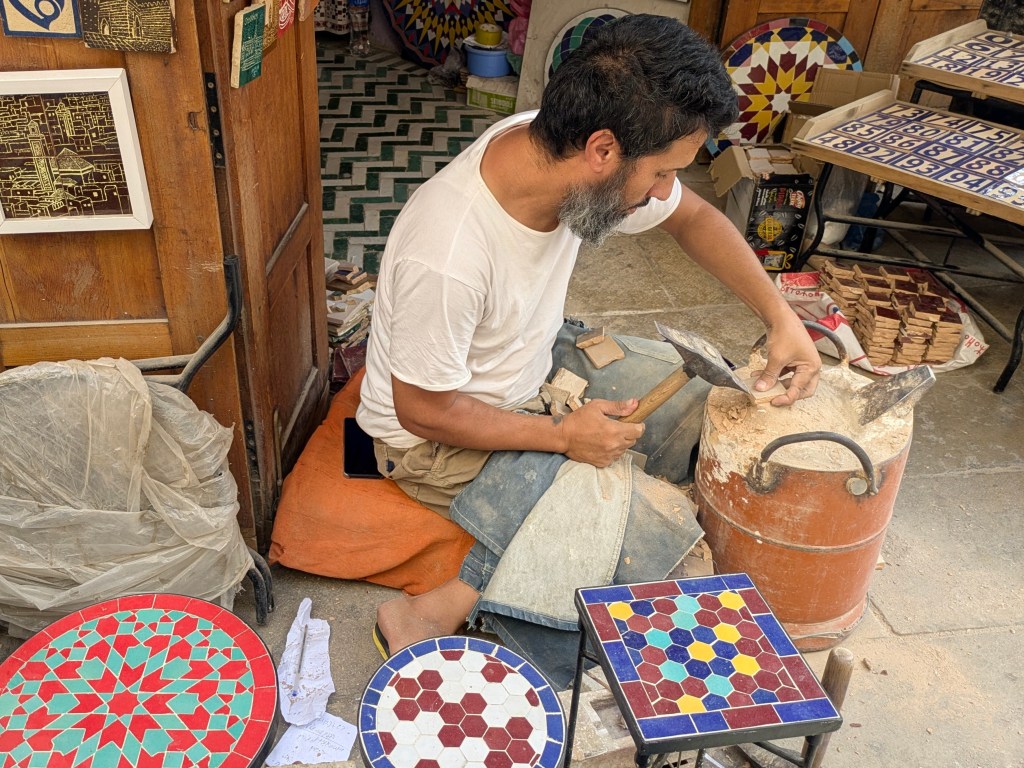
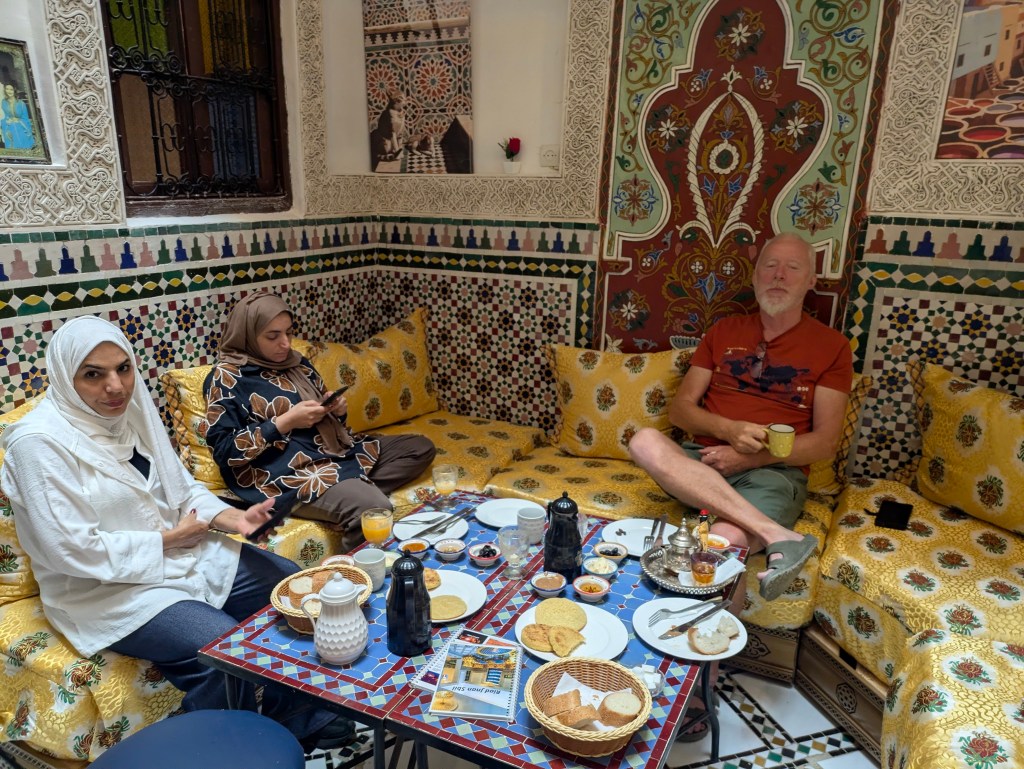
The following morning, wandering around the narrow streets of the medina on a walking tour, it seemed that little had changed. There was the clamor of commence and the rumble of wooden carts being pushed along the narrow ‘streets’, a maze of over nine thousand paths where Google maps didn’t work very well and which was reputed to be the largest pedestrianized area in the world. There was the banging of hammers on metal, the soft whoosh of looms, the silent concentration of calligraphy, the slosh of dyeing fabrics and much more. The scent of rosewater and orange blossom mixed with the smell of raw meat, fish, spices and fresh baking. In many ways, it was like stepping back in time, we ate warm flatbreads directly from the ovens in a family bakery, tasted honey cakes from an old recipe and visited the tannery at the edge of the medina.
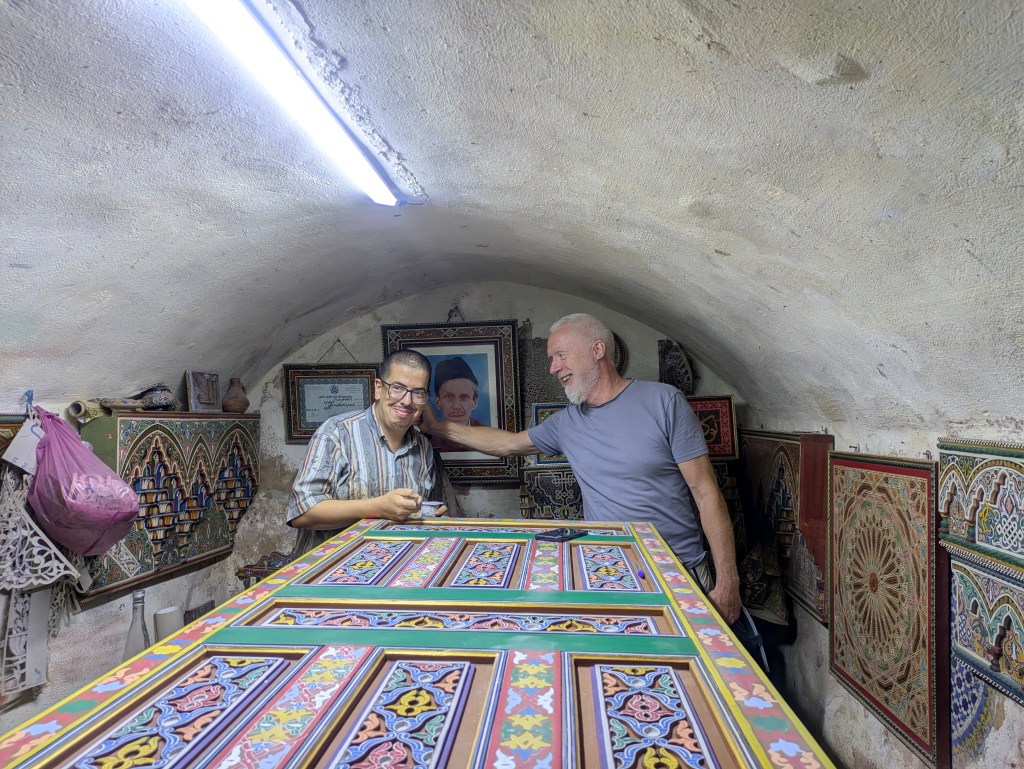
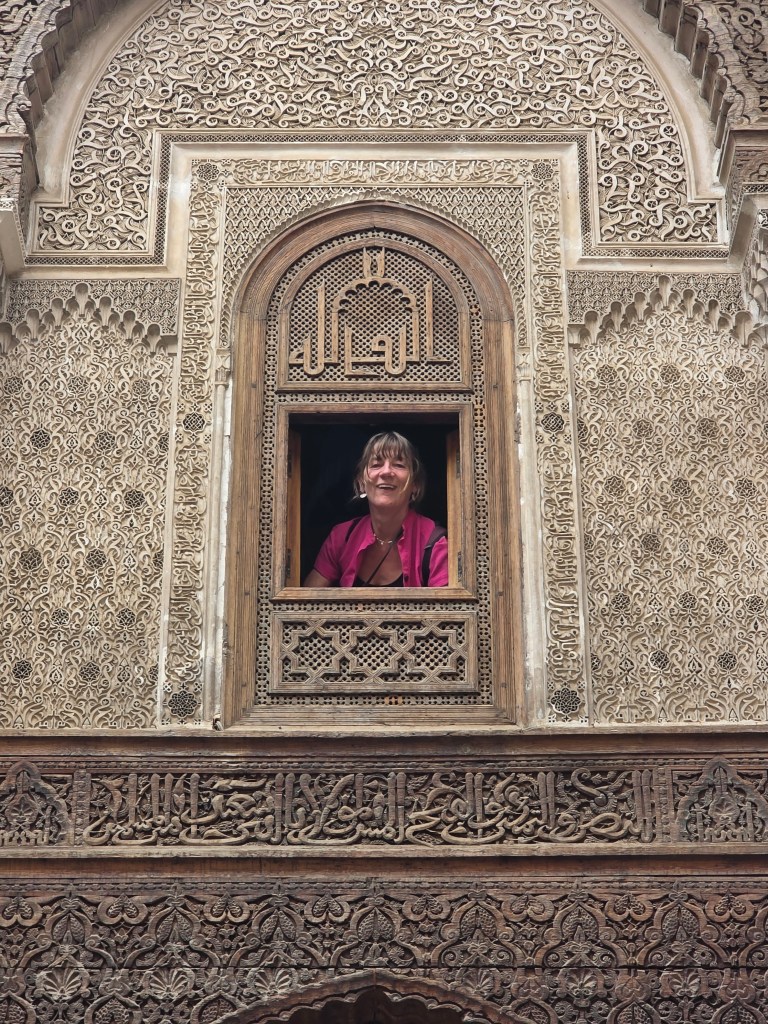
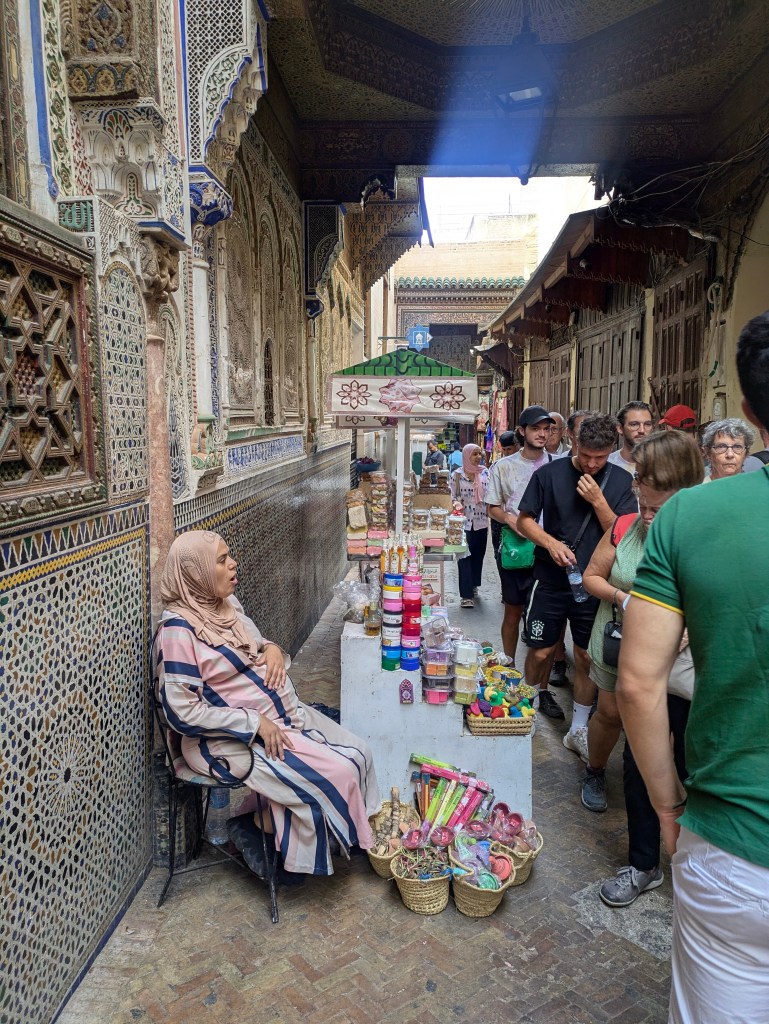
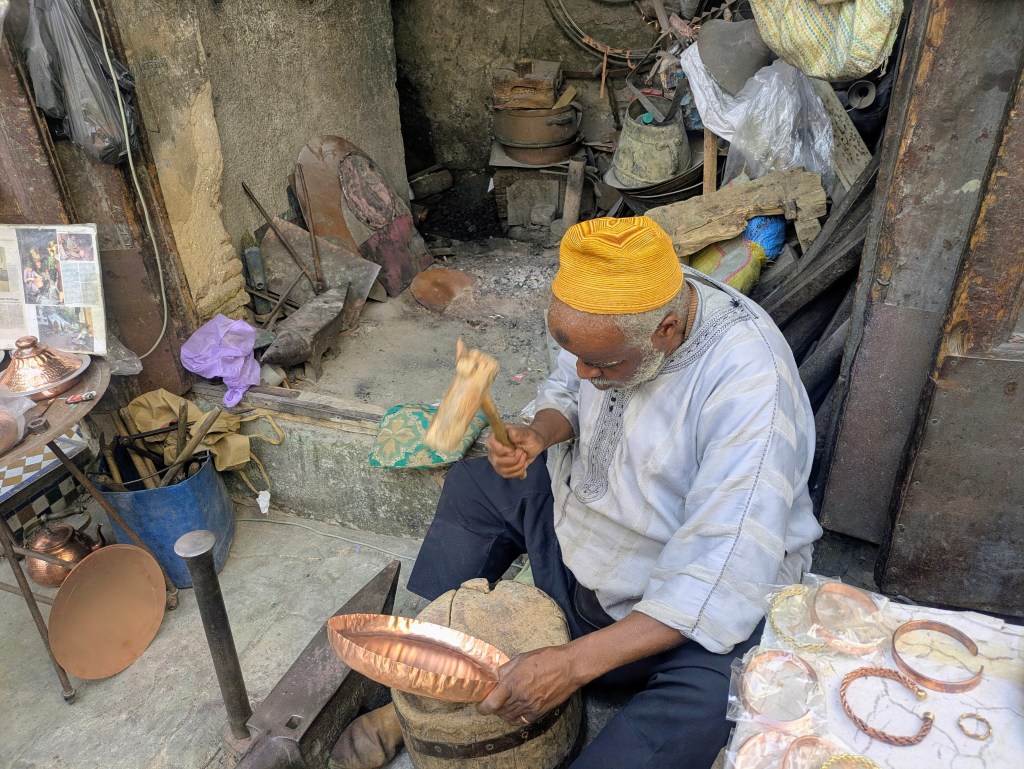
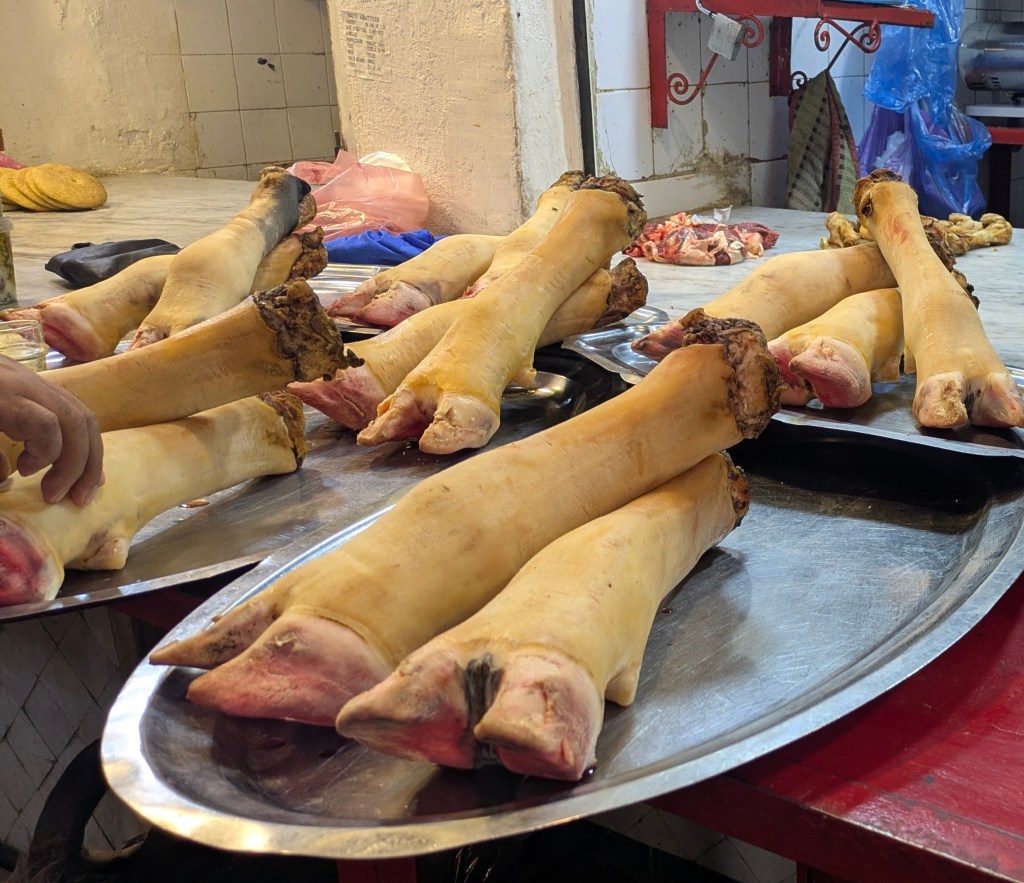
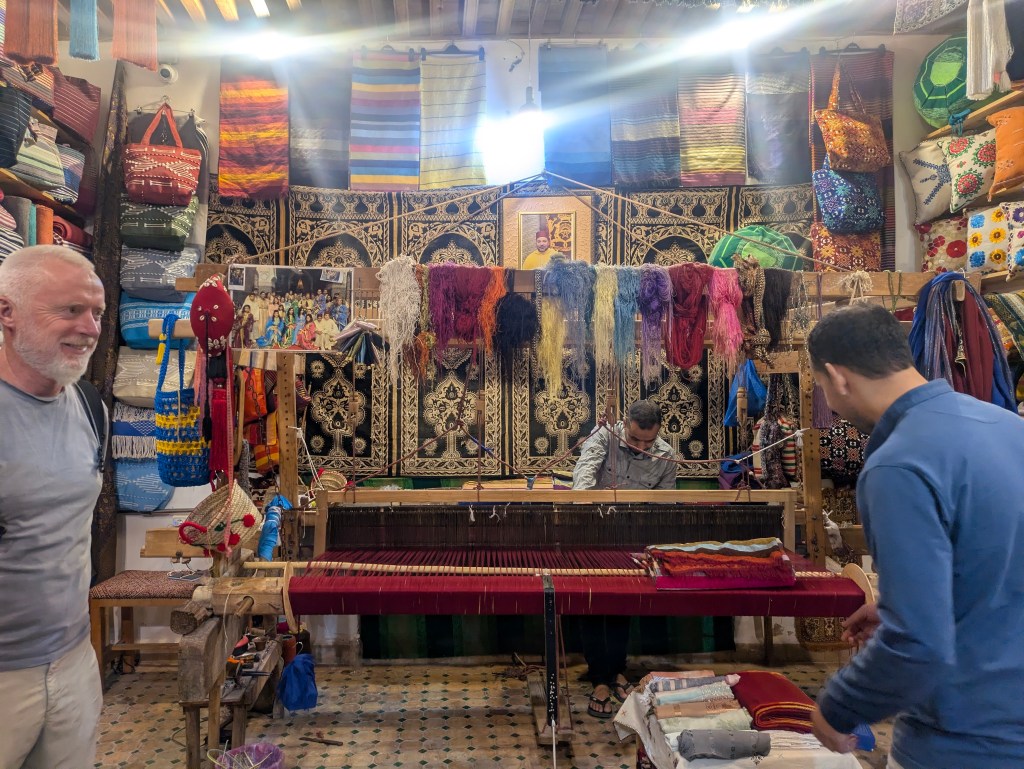
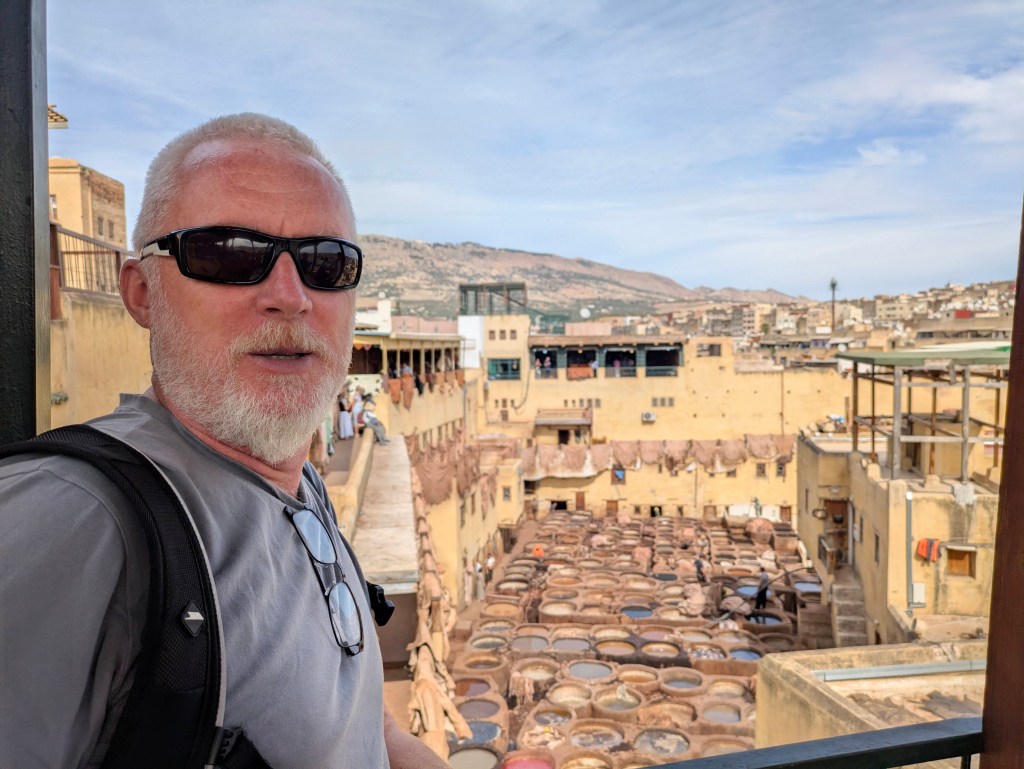
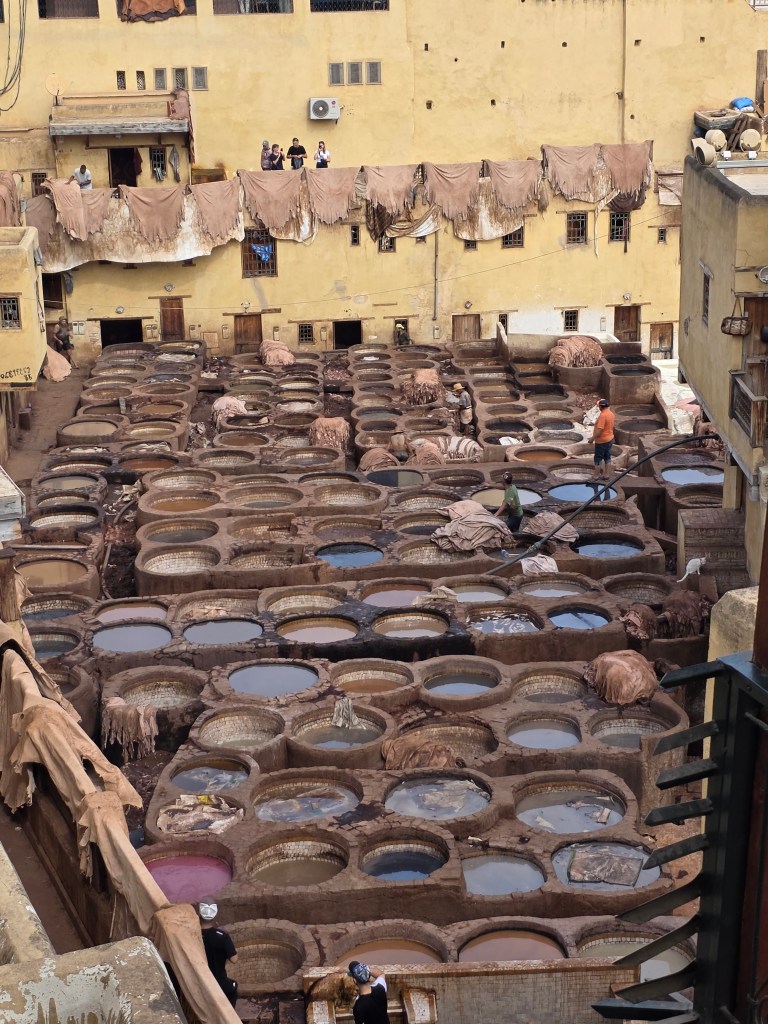
At the door leading into the tannery, a small man with a face like wrinkled leather pressed a few mint leaves into my palm and gestured that I should hold it to my nose. It didn’t help much. A whole mint bush wouldn’t have disguised the pervasive pungent smell that hung in the air, the smell of blood and chemicals although the tanning was done using old natural methods, many unchanged for a thousand years. The ammonia needed in the process was supplied by pigeon poop, gathered from the town’s buildings and from pigeon fanciers and the red dye came from pomegranate seeds. The recently eaten honey cakes were leaping into my throat as we looked down at a ‘clothes line’ of drying skins, a mixture of goat, cow and camel and the much-photographed ‘honeycomb’ vats of coloured liquid used in the dying process. A worker at a tap tried to wash dye from his bare legs, stained a deep burgundy from immersion in one of the vats. The work was intense, the noise unrelenting, the conditions brutal… no wonder the number of workers had dropped dramatically during the last decades. In the heat of summer, the conditions would be even more hellish. The idea of buying a leather bag lost its appeal.
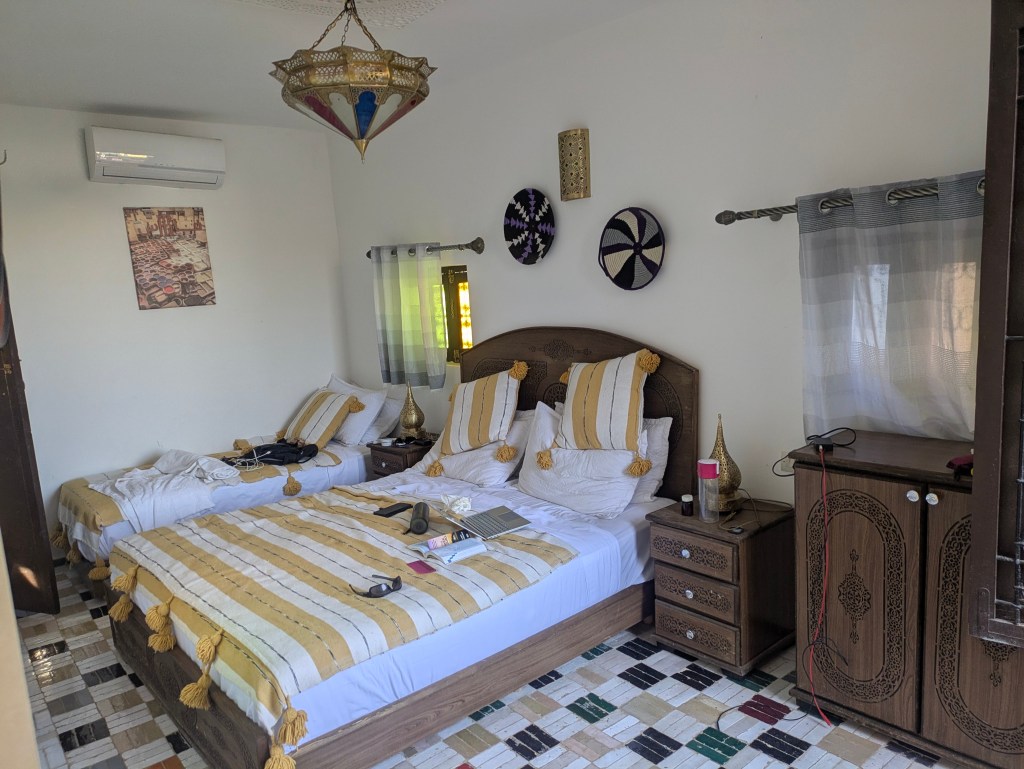
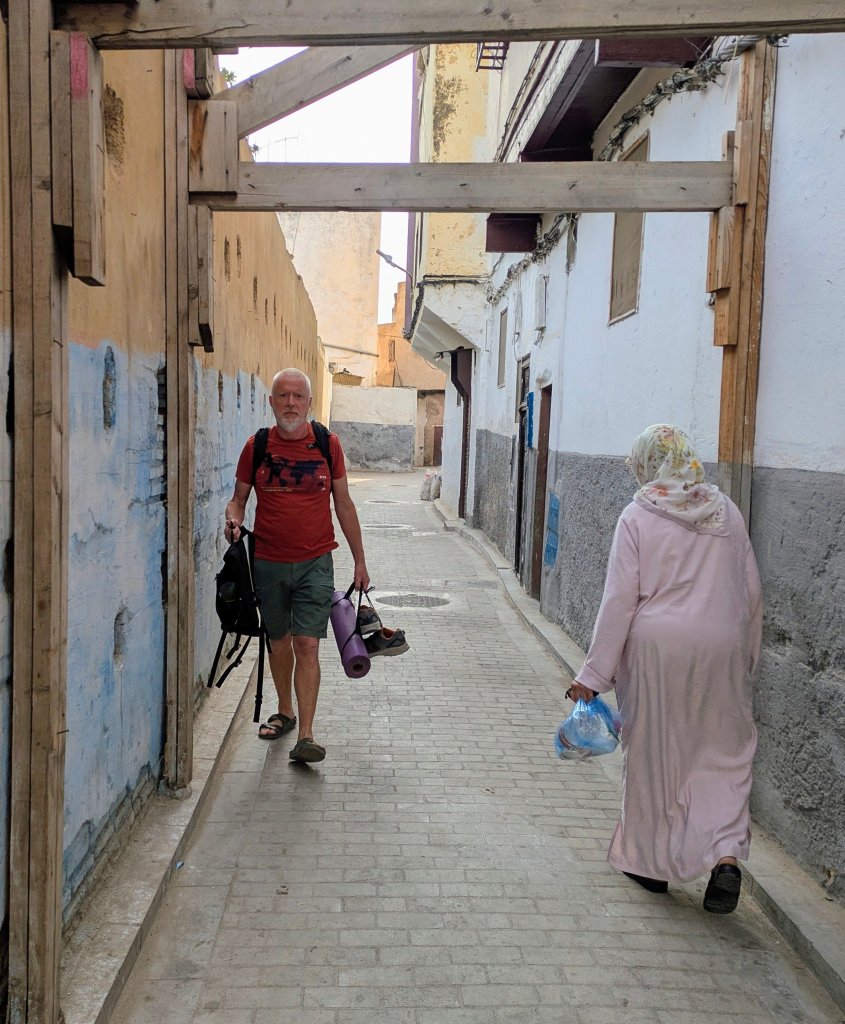
Although our accommodation in Fes was in a narrow laneway, outside the medina, it was an area full of life with playing children, barking dogs and the usual slinking cats, a guy fixed a motorbike puncture in a narrow doorway, another was welding without a mask in a tiny workshop. People lived in very close proximity with their neighbors, the shabby closed doors giving no indication of the beauty inside many of the houses….not everyone here was poor despite external appearances. Washing was always billowing on the flat rooftops, the day punctuated by the call to prayer from the mosques.
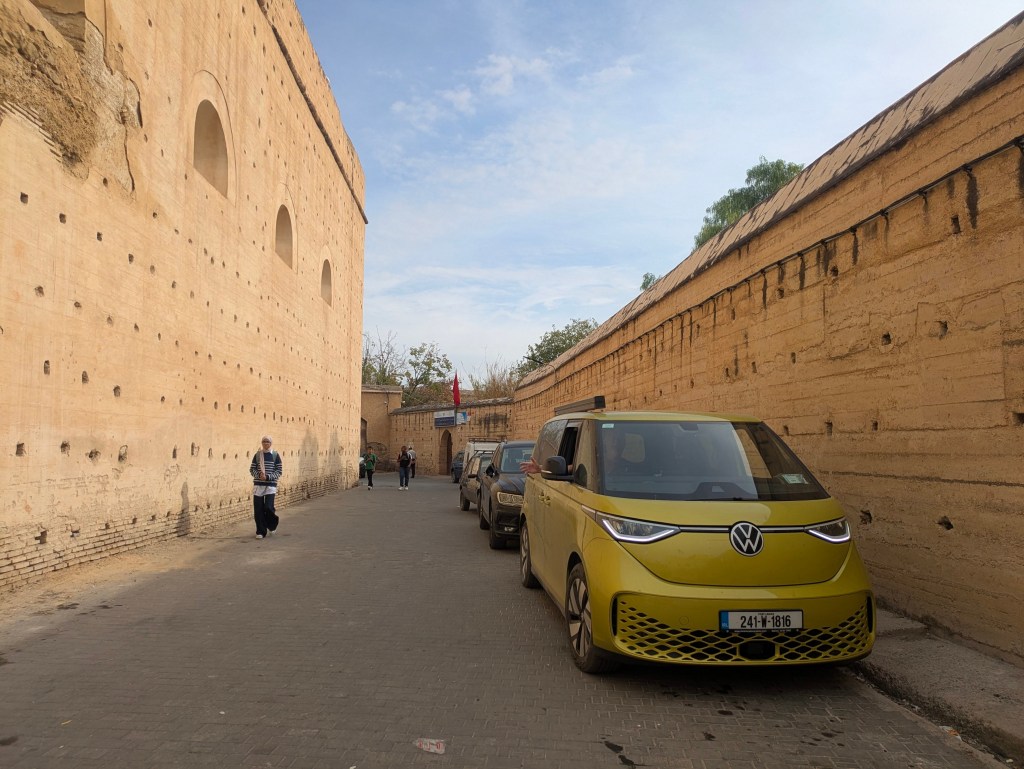
We left Fez with the Buzz 100% charged, thanks to the free (but slowish) charging in Carrefour Shopping Mall. Our kilometer range had reached a new ‘high’ of over 600kms, a consequence of our very ‘conservative driving style.’ At home, a full charge usually gives a range of about 450kms. Of course, fuel consumption in a diesel/petrol car also has direct correlation with how the car is driven but it isn’t as apparent…or as critical when you have numerous options for filling the tank.
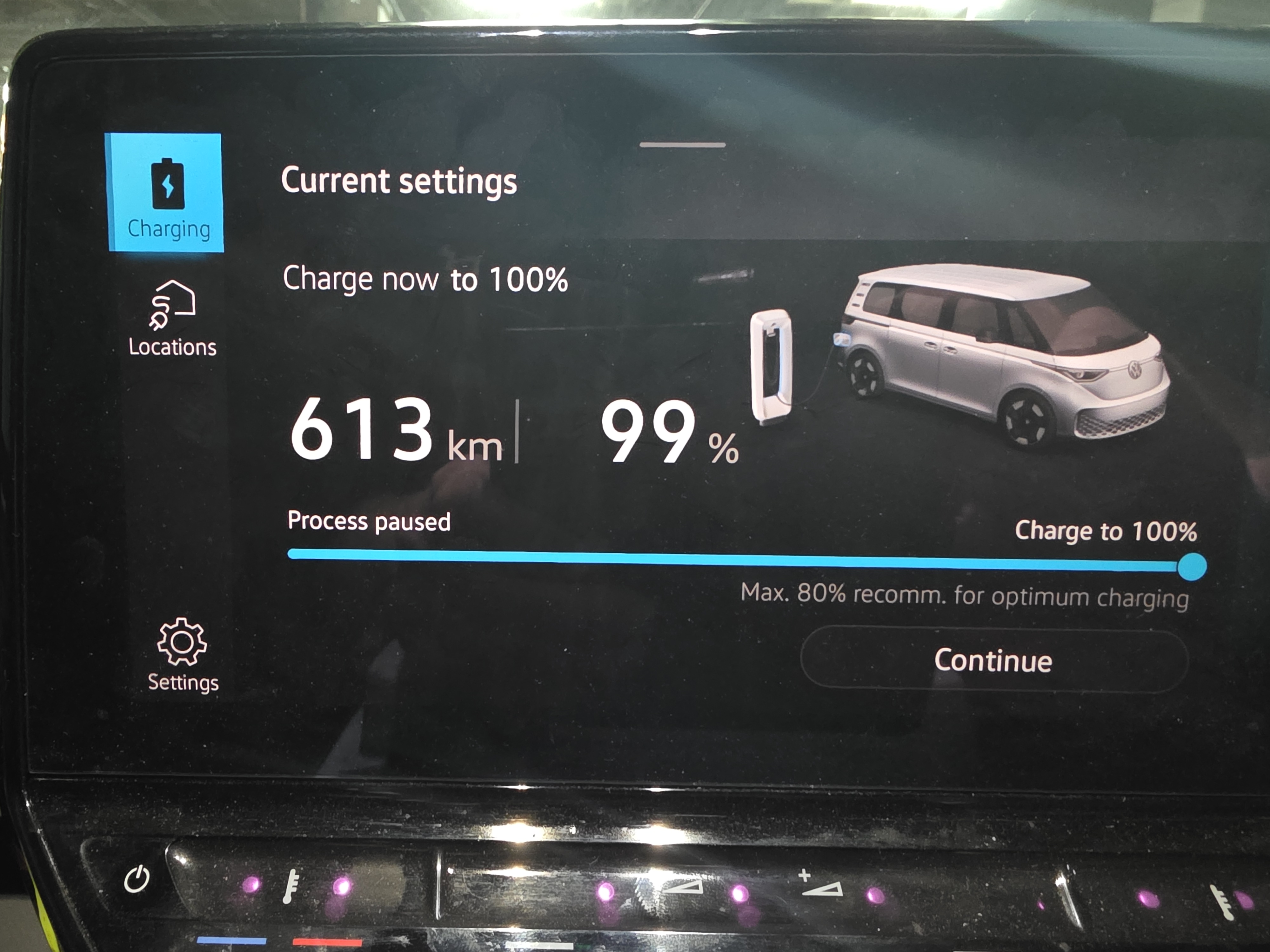
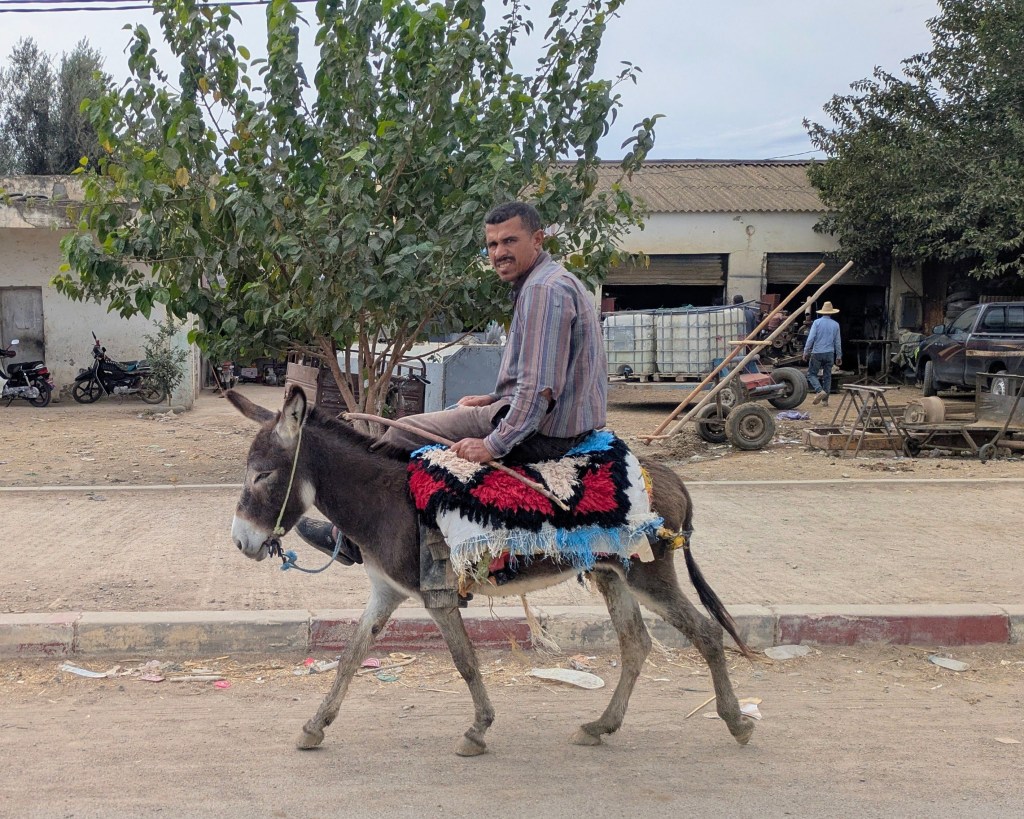
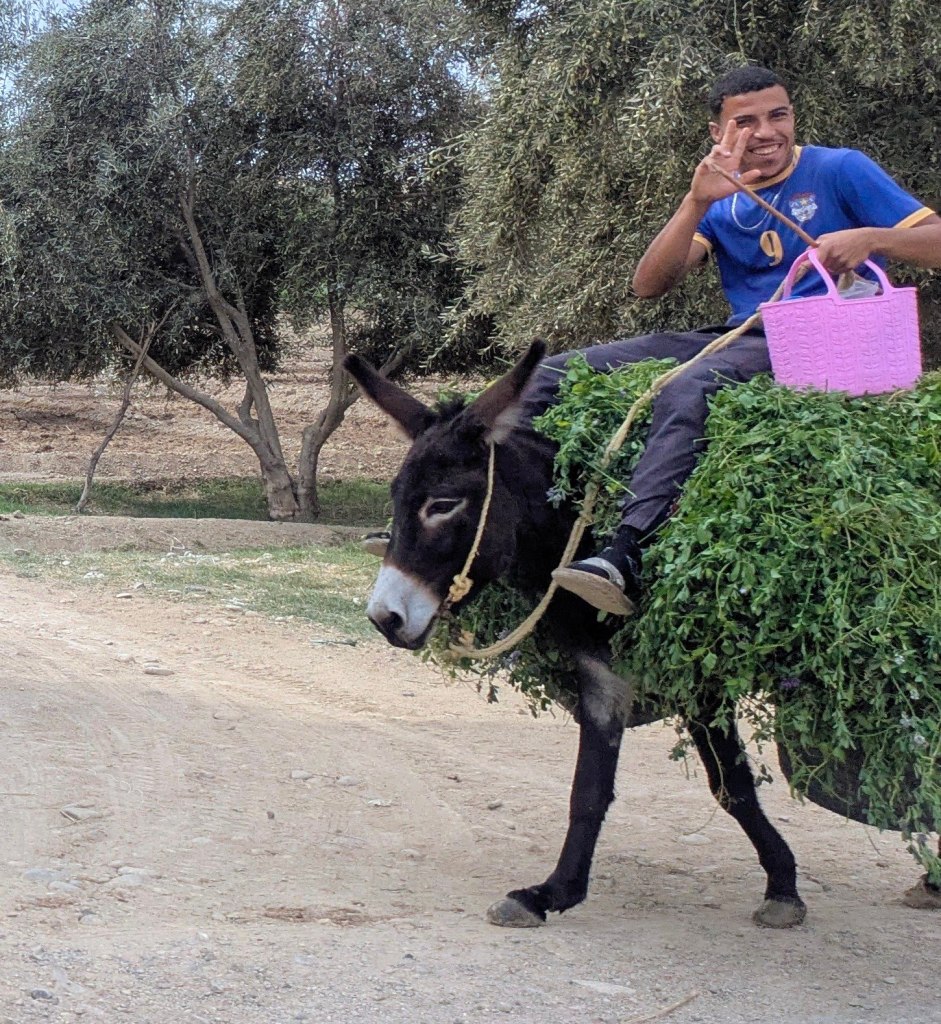
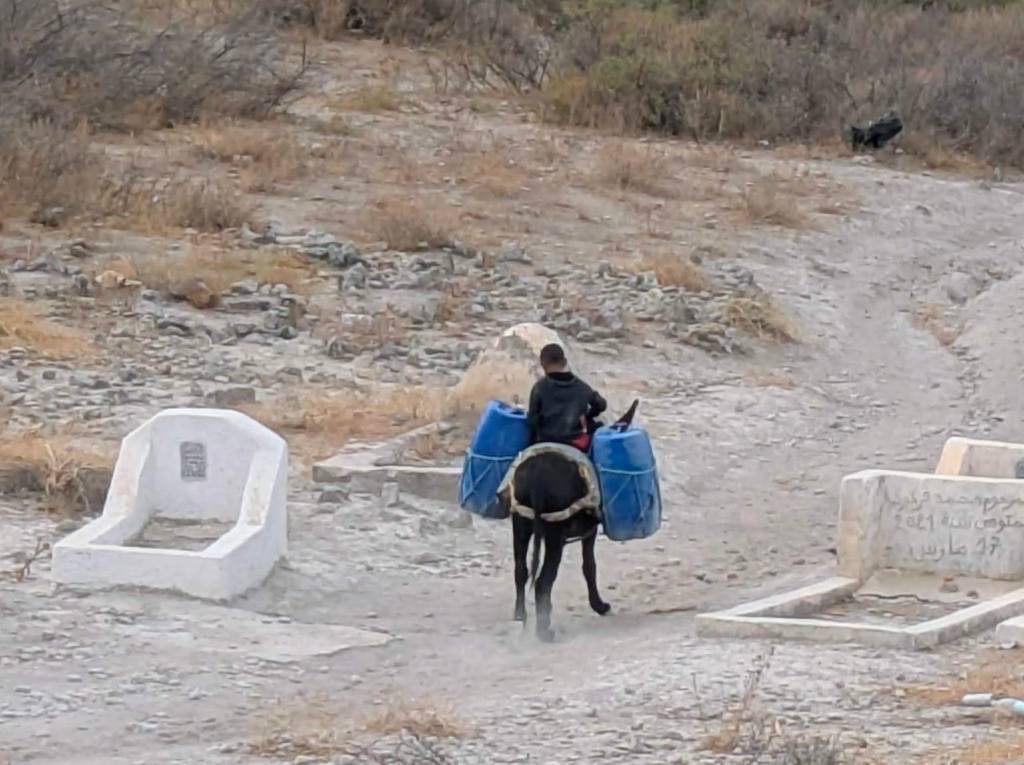
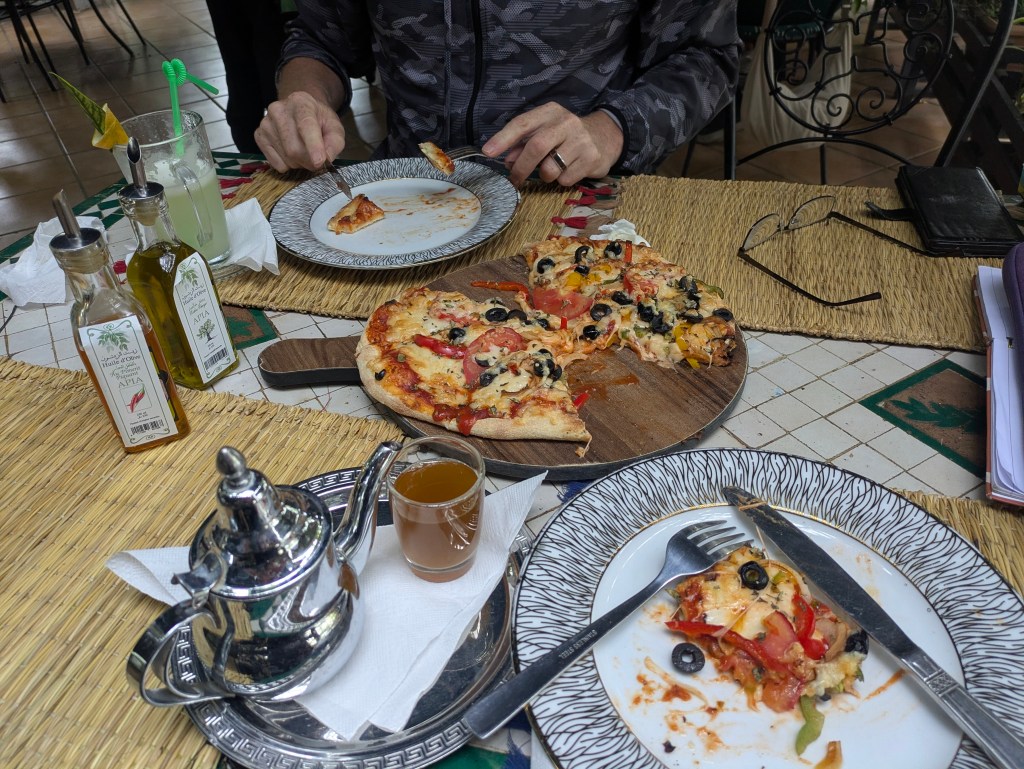
Our next stop was Chefchaouen, supposed to be the ‘prettiest town’ in all of Morocco, a little under 200 kms north and about three and half hours away (depending on driving style). Leaving the fertile plains of Fes, the land got drier and dustier, children waved to us as we passed. At this stage, we had seen so many donkeys that we (almost) no longer reached for our camera. Our maps told us that there was a restaurant with an EV charger about two hours into our journey so we decided to stop there, with no real expectation that the charger would exist or that it would work but, for a change, this was a good charging story. While we were eating delicious pizza with mint tea, (is that Moroccan-Italian fusion?), the Buzz charged to 100% for free.
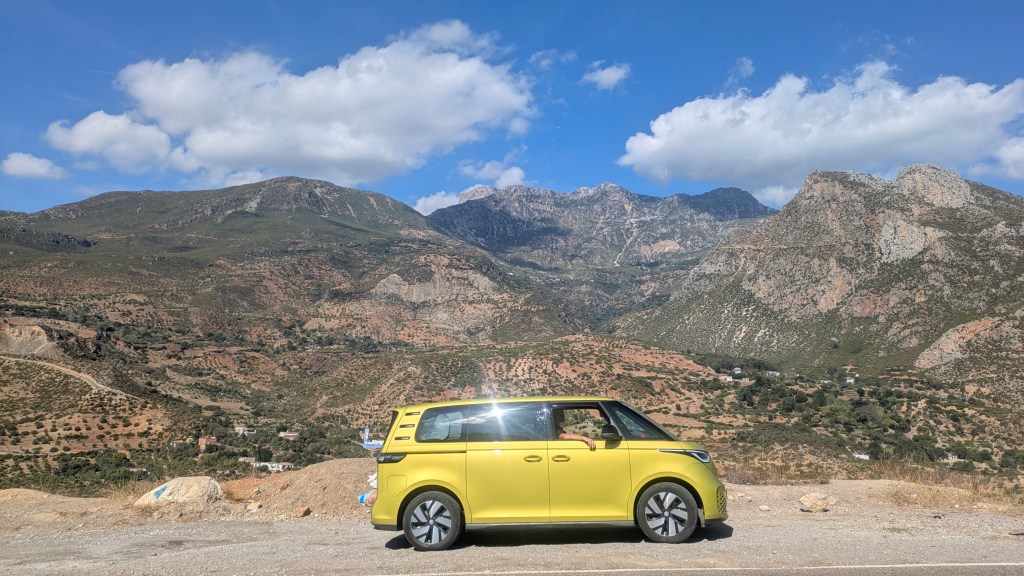
The terrain became greener as we continued on our journey and the temperature dropped from 26C in Fez to about15C. Ominous clouds scudded across a darkening of sky as we headed towards the Rif Mountains. By the time we reached our campsite in the hills above Chefchaouen, the wipers were working at full tilt and the gulleys at the side of the road were overflowing with brown sludgy water. A gusty wind blew the rain sideways but we were thankful that we were sleeping in the van. The canvas on several tents belonging to an Africa Overland Tour were bulging with water in the early evening The tour was only on Day 3 of a forty-five week trip down the west coast of Africa and up the east coast, finishing in Cairo. The biggest surprise was the age profile of participants. Many were in the fifties and quite a few looked a couple of decades older.
It rained all night. The wind blew off our awning, sent it sailing over the van but at least it didn’t collide with a person, tent or camper. The morning was grey and drizzly, the sodden Africa Overlanders, still in good spirits, were up and gone before 8am but many claimed they hadn’t slept at all.
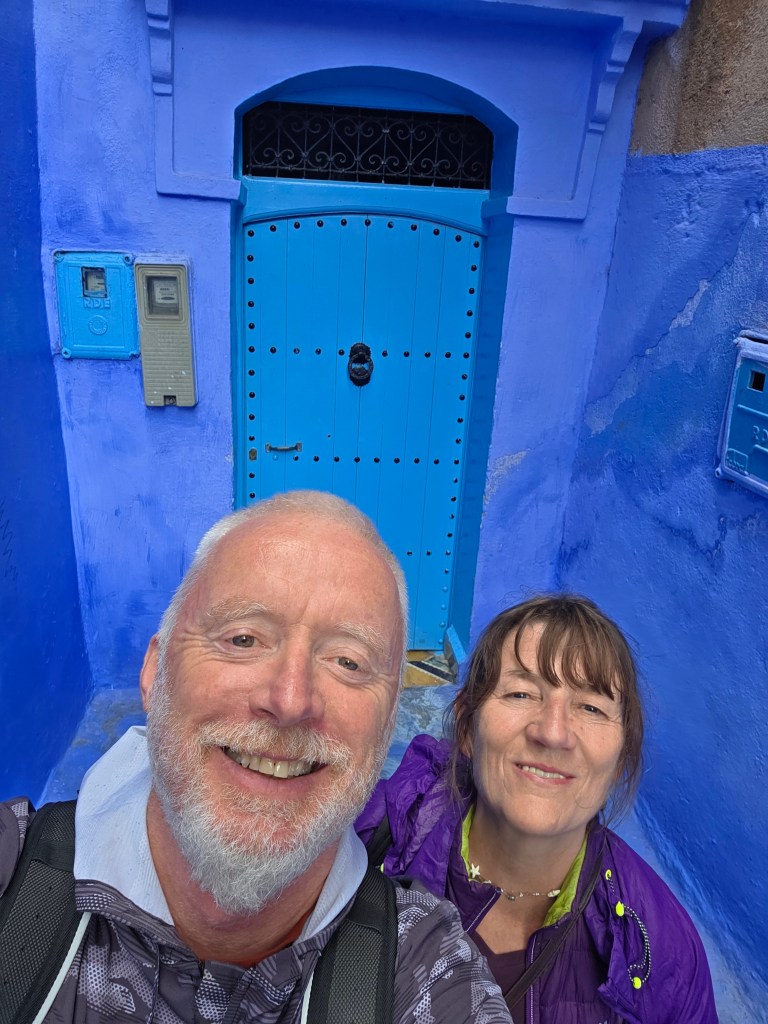
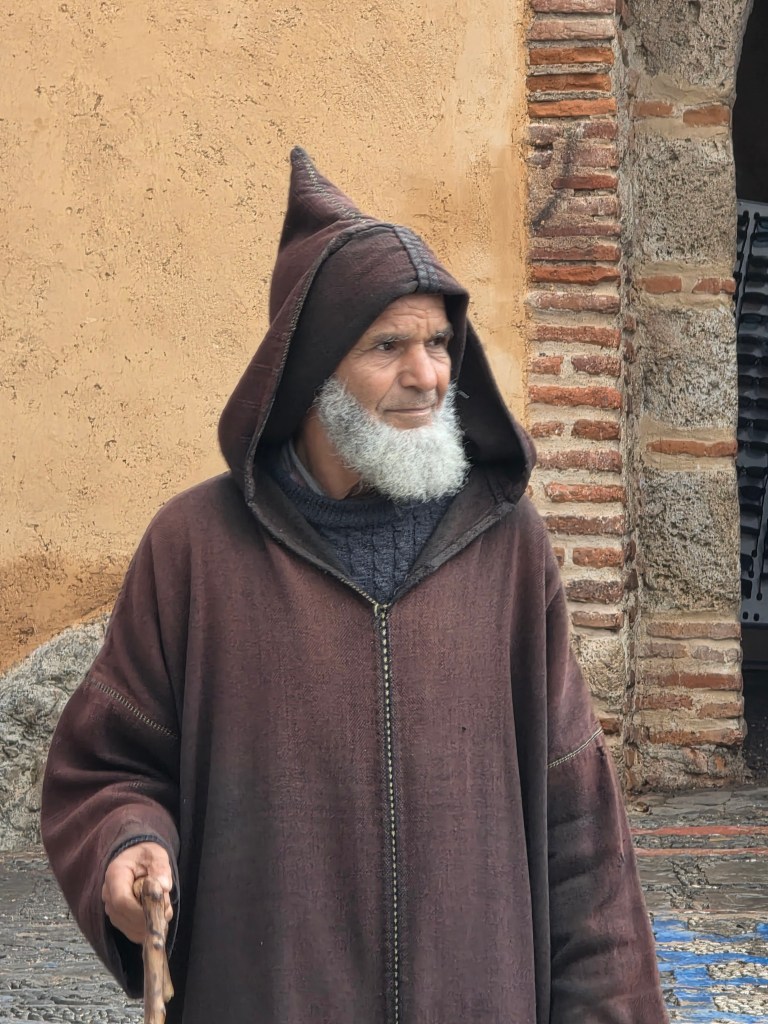
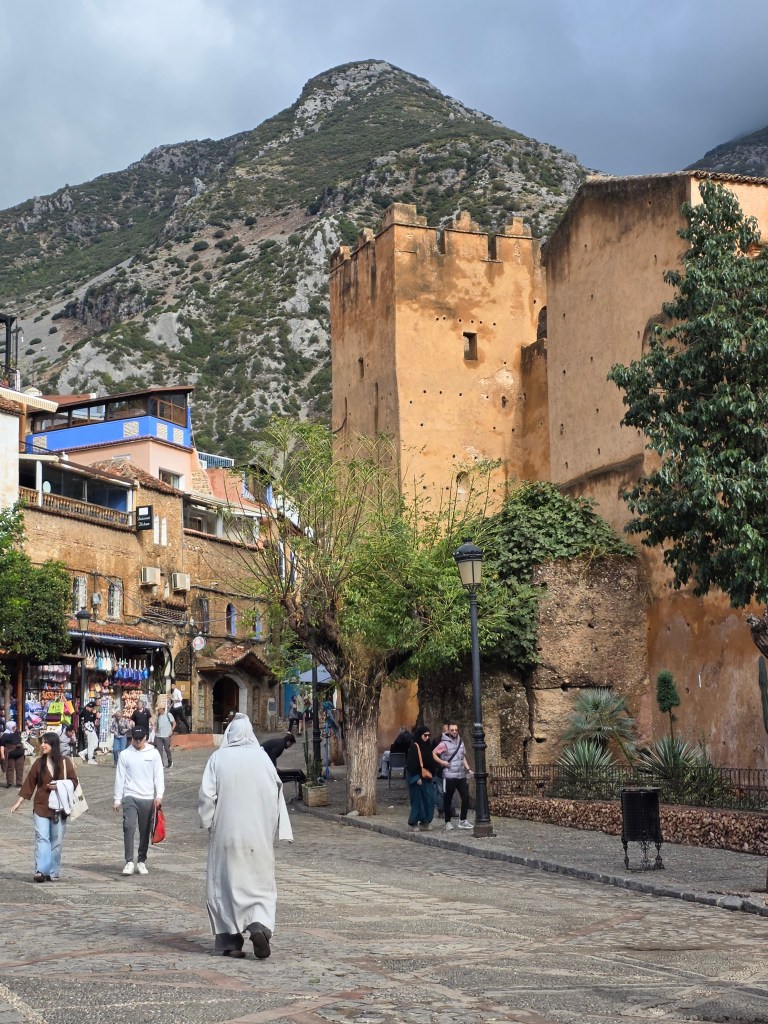
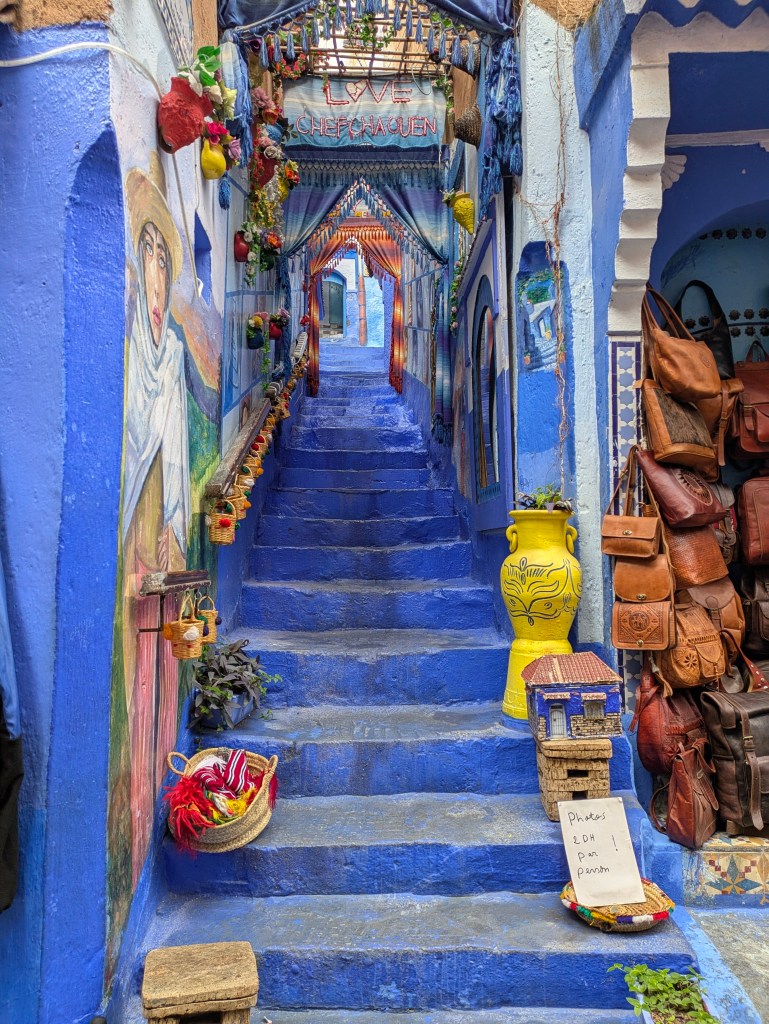
Chefchaouen, famous for its narrow streets with facades painted in different shades of blue, was not looking it’s best under the grey skies. Men walked around with the pointed hoods of their djellabas (long tunics) covering their heads, giving them an old medieval monkish look. Nobody was entirely sure why the town was painted blue but there were several theories. Some said that the colour blue symbolised the sky and spirituality, that it came from the Sephardic Jews who settled here in the 15th century, others said that blue was a good insect repellent. Whatever the reason, the result is stunning and Instagram-able and a tourist magnet. Thankfully, the skies cleared for us and the temperature rose…..just as we were beginning to think we had been hasty in leaving the heat of the desert.
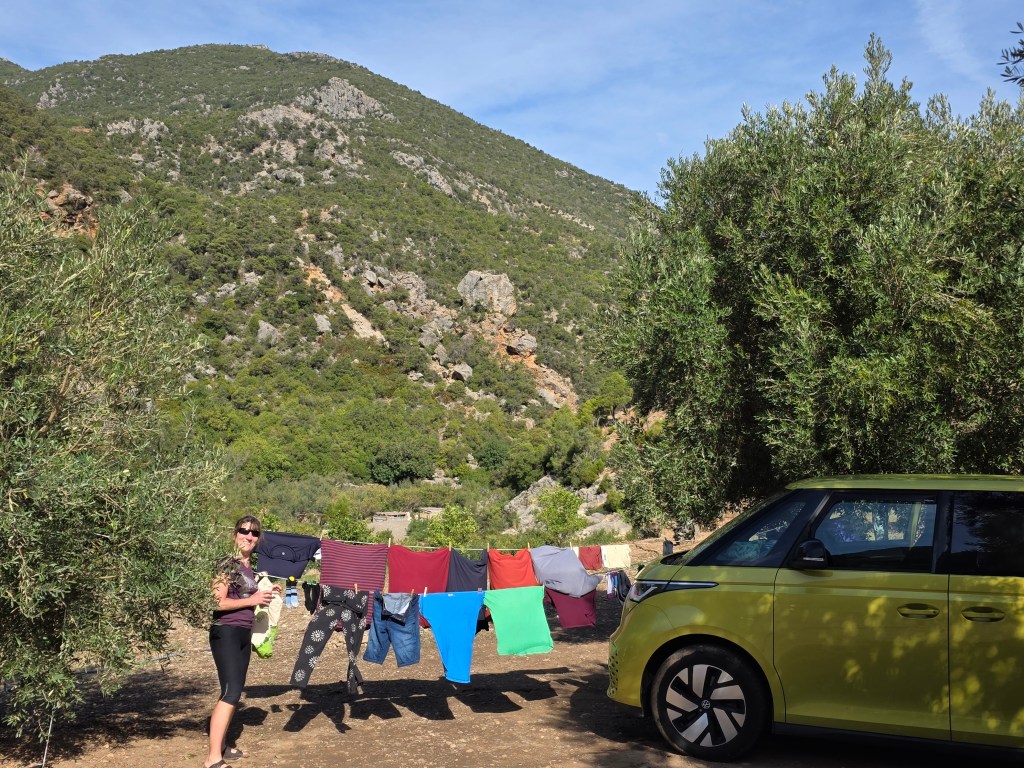
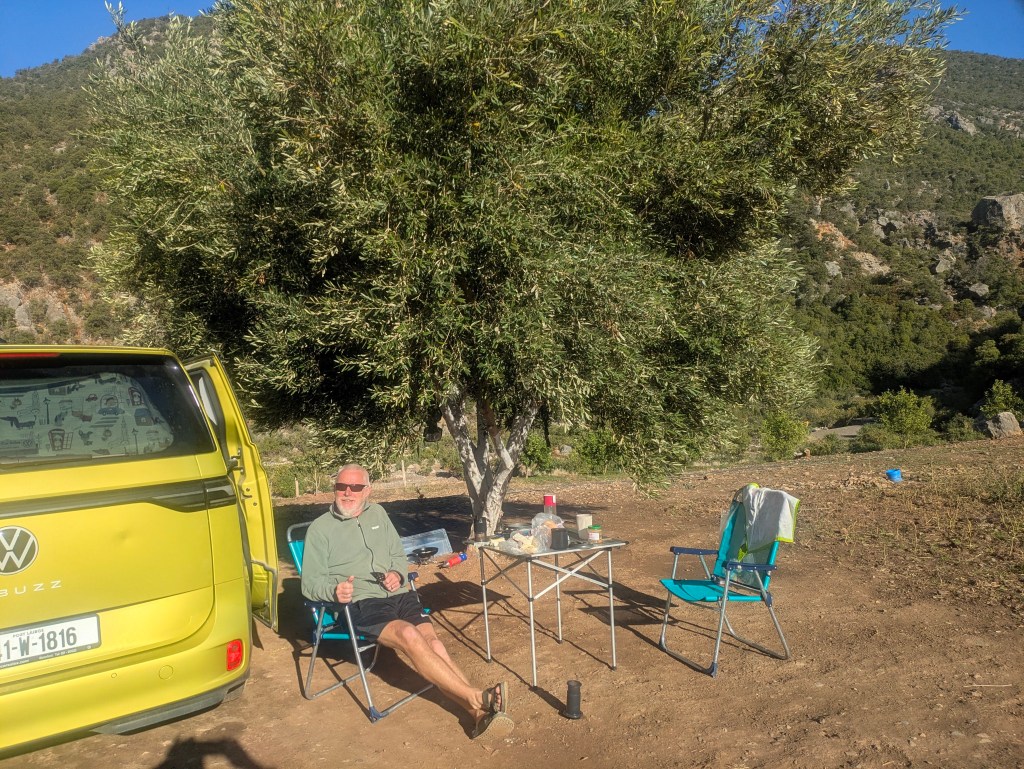
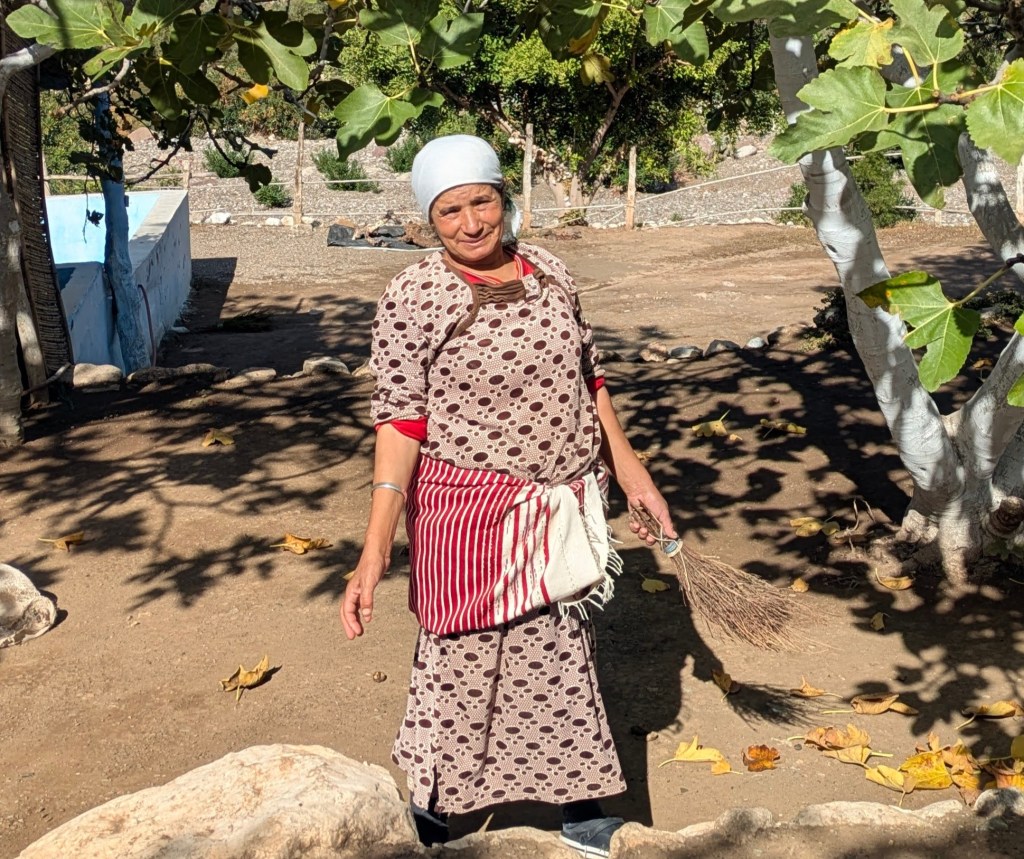
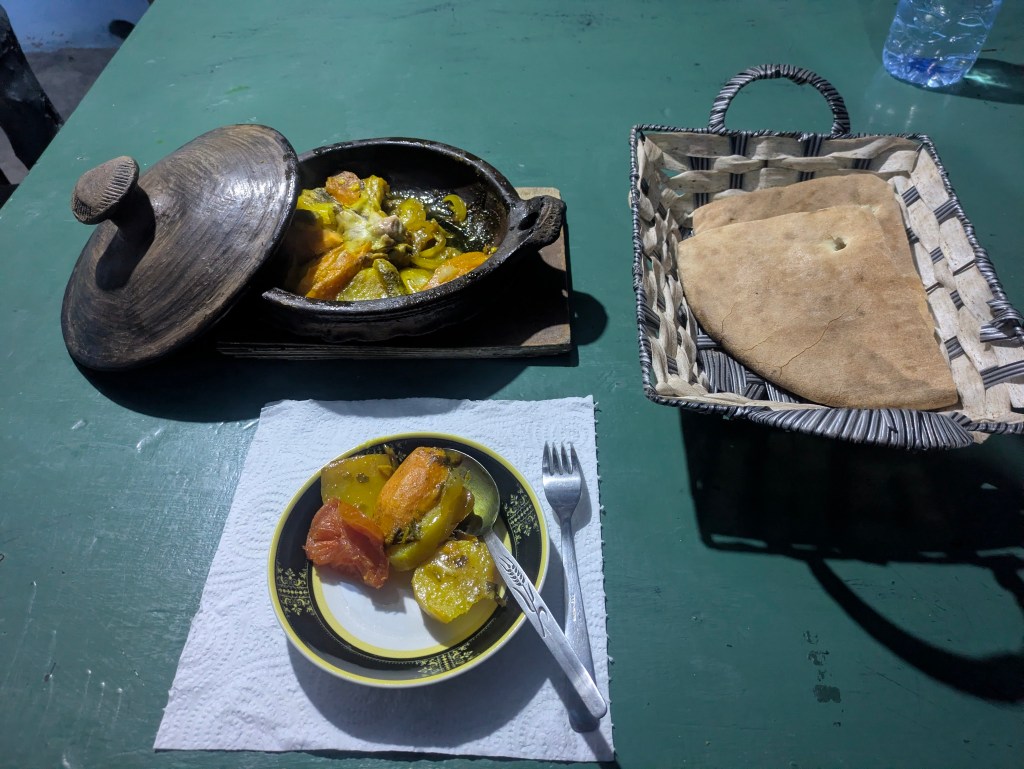
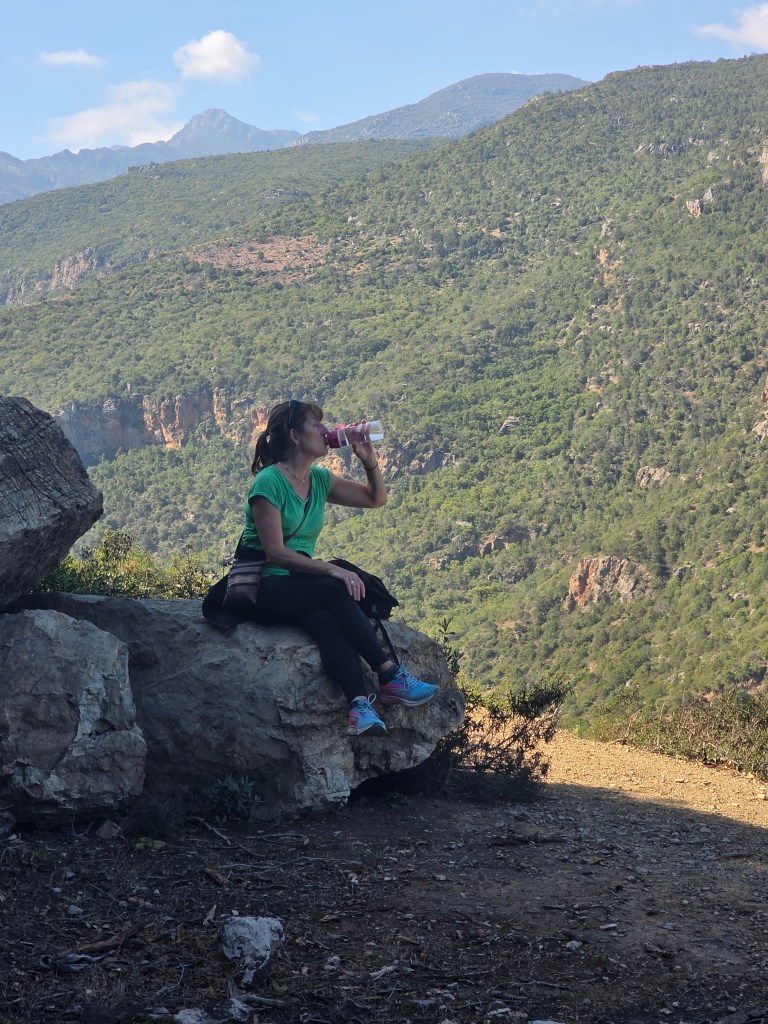
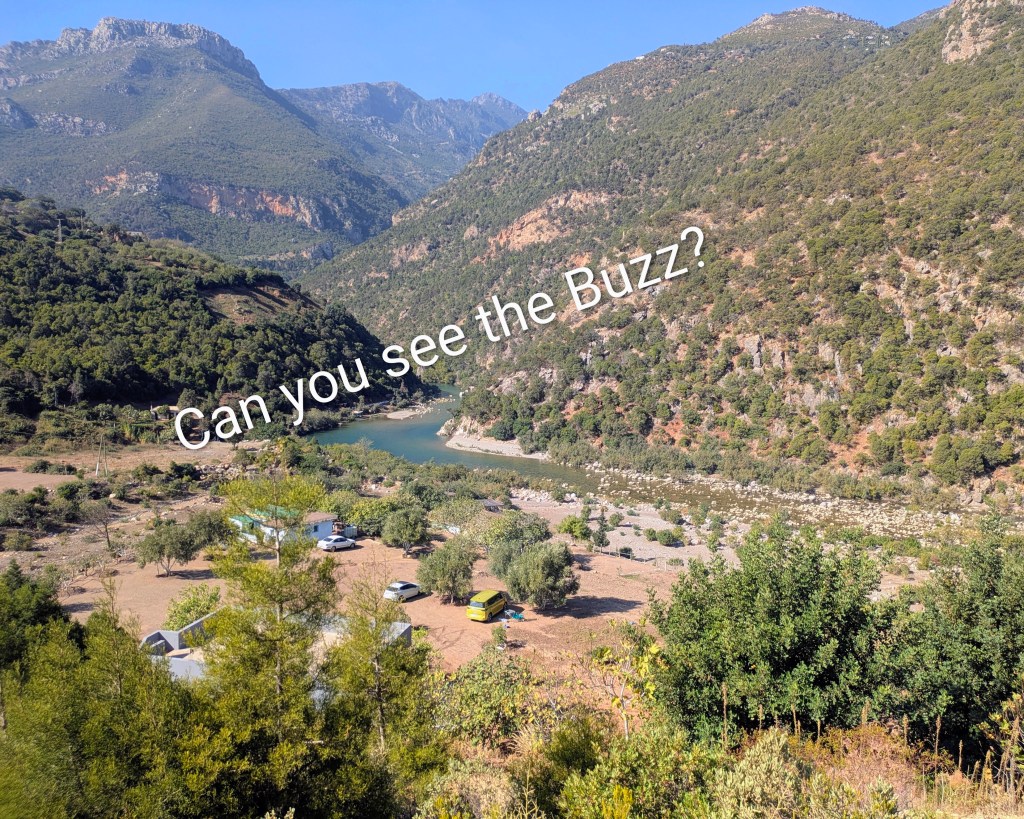
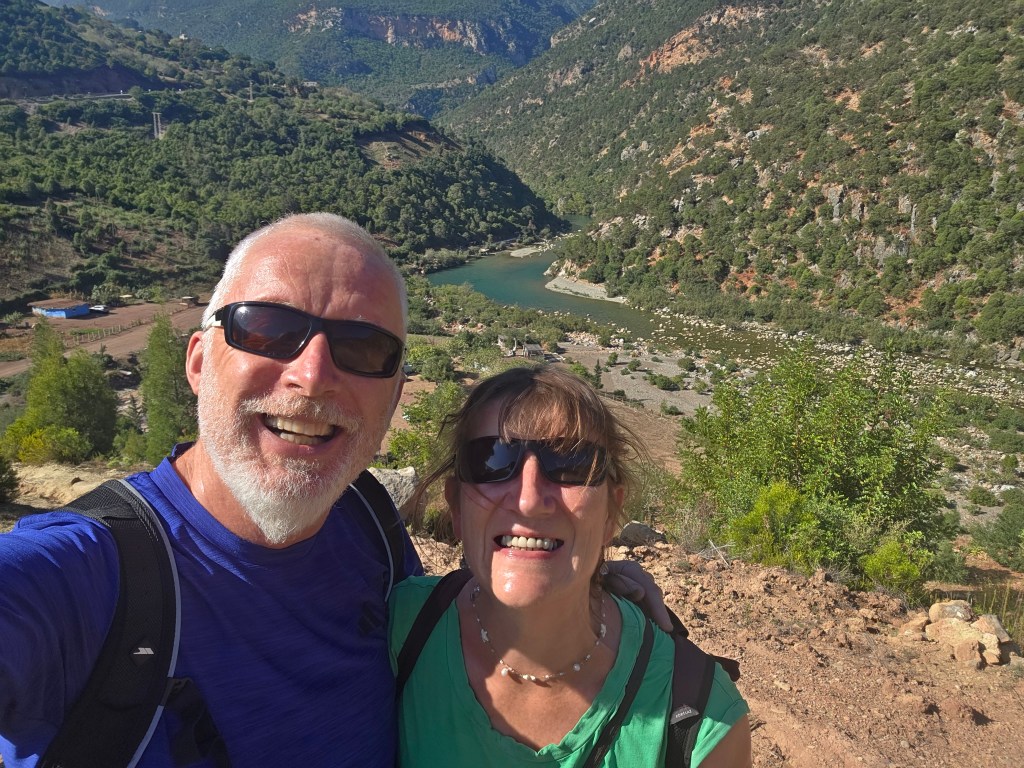
I’m writing this under an olive tree, the sunlight turning the white bark silver. Theres the babble of a small river, a soft wind in the bushes and the bleating of a few goats. We came here after Chefchaouen. The days are warm, perfect for hikes, the nights and early morning are cool (about 10C, perfect for sleeping. This little unpretentious campsite in the Rif mountains is a slice of heaven, run by a lovely family who bake bread in an outside oven and make the tastiest tagines we have eaten. We might never leave.
Thanks for reading,
‘Till next time..
 marienoonanblog
Marie, what a ride! You’ve turned the chaos of charging an EV in Morocco into a full-blown adventure movie — part travelogue, part comedy, part sensory overload. I could almost smell the tannery, feel the dust, and hear those prayer calls echoing through the alleys. Your writing doesn’t just describe places; it transports. Love how you mix curiosity with grit — and the olive tree finale? Pure poetry on four wheels.
LikeLiked by 1 person
Thanks, Berok, for your lovely comments. Really appreciate them, the adventure continues. Love your last line ‘pure poetry on four wheels’ …..I might have to steal that one 😆
LikeLiked by 1 person
Hi Marie, Another wonderful account of your travels in Morocco. I loved the pictures. I arrived in Bangkok about 4 days ago and am loving it. Staying with friends who are introducing me to all their haunts. Enjoy the rest of your stay. Tell Caoimhin I loved his yoga pose in last blog and am very jealous of it! Niamh
LikeLiked by 1 person
Enjoy Thailand, Niamh. We can swap stories when we all get home x
LikeLike